JP7182006B2 - Method and Apparatus for Video Coding Using Uniform Segment Splits in Pictures - Google Patents
Method and Apparatus for Video Coding Using Uniform Segment Splits in Pictures Download PDFInfo
- Publication number
- JP7182006B2 JP7182006B2 JP2021534612A JP2021534612A JP7182006B2 JP 7182006 B2 JP7182006 B2 JP 7182006B2 JP 2021534612 A JP2021534612 A JP 2021534612A JP 2021534612 A JP2021534612 A JP 2021534612A JP 7182006 B2 JP7182006 B2 JP 7182006B2
- Authority
- JP
- Japan
- Prior art keywords
- segment
- dimension
- segments
- size
- picture
- Prior art date
- Legal status (The legal status is an assumption and is not a legal conclusion. Google has not performed a legal analysis and makes no representation as to the accuracy of the status listed.)
- Active
Links
Images




Classifications
-
- H—ELECTRICITY
- H04—ELECTRIC COMMUNICATION TECHNIQUE
- H04N—PICTORIAL COMMUNICATION, e.g. TELEVISION
- H04N19/00—Methods or arrangements for coding, decoding, compressing or decompressing digital video signals
- H04N19/10—Methods or arrangements for coding, decoding, compressing or decompressing digital video signals using adaptive coding
- H04N19/102—Methods or arrangements for coding, decoding, compressing or decompressing digital video signals using adaptive coding characterised by the element, parameter or selection affected or controlled by the adaptive coding
- H04N19/119—Adaptive subdivision aspects, e.g. subdivision of a picture into rectangular or non-rectangular coding blocks
-
- H—ELECTRICITY
- H04—ELECTRIC COMMUNICATION TECHNIQUE
- H04N—PICTORIAL COMMUNICATION, e.g. TELEVISION
- H04N19/00—Methods or arrangements for coding, decoding, compressing or decompressing digital video signals
- H04N19/10—Methods or arrangements for coding, decoding, compressing or decompressing digital video signals using adaptive coding
- H04N19/134—Methods or arrangements for coding, decoding, compressing or decompressing digital video signals using adaptive coding characterised by the element, parameter or criterion affecting or controlling the adaptive coding
- H04N19/157—Assigned coding mode, i.e. the coding mode being predefined or preselected to be further used for selection of another element or parameter
- H04N19/159—Prediction type, e.g. intra-frame, inter-frame or bidirectional frame prediction
-
- H—ELECTRICITY
- H04—ELECTRIC COMMUNICATION TECHNIQUE
- H04N—PICTORIAL COMMUNICATION, e.g. TELEVISION
- H04N19/00—Methods or arrangements for coding, decoding, compressing or decompressing digital video signals
- H04N19/10—Methods or arrangements for coding, decoding, compressing or decompressing digital video signals using adaptive coding
- H04N19/169—Methods or arrangements for coding, decoding, compressing or decompressing digital video signals using adaptive coding characterised by the coding unit, i.e. the structural portion or semantic portion of the video signal being the object or the subject of the adaptive coding
- H04N19/17—Methods or arrangements for coding, decoding, compressing or decompressing digital video signals using adaptive coding characterised by the coding unit, i.e. the structural portion or semantic portion of the video signal being the object or the subject of the adaptive coding the unit being an image region, e.g. an object
- H04N19/172—Methods or arrangements for coding, decoding, compressing or decompressing digital video signals using adaptive coding characterised by the coding unit, i.e. the structural portion or semantic portion of the video signal being the object or the subject of the adaptive coding the unit being an image region, e.g. an object the region being a picture, frame or field
-
- H—ELECTRICITY
- H04—ELECTRIC COMMUNICATION TECHNIQUE
- H04N—PICTORIAL COMMUNICATION, e.g. TELEVISION
- H04N19/00—Methods or arrangements for coding, decoding, compressing or decompressing digital video signals
- H04N19/10—Methods or arrangements for coding, decoding, compressing or decompressing digital video signals using adaptive coding
- H04N19/169—Methods or arrangements for coding, decoding, compressing or decompressing digital video signals using adaptive coding characterised by the coding unit, i.e. the structural portion or semantic portion of the video signal being the object or the subject of the adaptive coding
- H04N19/17—Methods or arrangements for coding, decoding, compressing or decompressing digital video signals using adaptive coding characterised by the coding unit, i.e. the structural portion or semantic portion of the video signal being the object or the subject of the adaptive coding the unit being an image region, e.g. an object
- H04N19/176—Methods or arrangements for coding, decoding, compressing or decompressing digital video signals using adaptive coding characterised by the coding unit, i.e. the structural portion or semantic portion of the video signal being the object or the subject of the adaptive coding the unit being an image region, e.g. an object the region being a block, e.g. a macroblock
-
- H—ELECTRICITY
- H04—ELECTRIC COMMUNICATION TECHNIQUE
- H04N—PICTORIAL COMMUNICATION, e.g. TELEVISION
- H04N19/00—Methods or arrangements for coding, decoding, compressing or decompressing digital video signals
- H04N19/10—Methods or arrangements for coding, decoding, compressing or decompressing digital video signals using adaptive coding
- H04N19/169—Methods or arrangements for coding, decoding, compressing or decompressing digital video signals using adaptive coding characterised by the coding unit, i.e. the structural portion or semantic portion of the video signal being the object or the subject of the adaptive coding
- H04N19/1883—Methods or arrangements for coding, decoding, compressing or decompressing digital video signals using adaptive coding characterised by the coding unit, i.e. the structural portion or semantic portion of the video signal being the object or the subject of the adaptive coding the unit relating to sub-band structure, e.g. hierarchical level, directional tree, e.g. low-high [LH], high-low [HL], high-high [HH]
-
- H—ELECTRICITY
- H04—ELECTRIC COMMUNICATION TECHNIQUE
- H04N—PICTORIAL COMMUNICATION, e.g. TELEVISION
- H04N19/00—Methods or arrangements for coding, decoding, compressing or decompressing digital video signals
- H04N19/70—Methods or arrangements for coding, decoding, compressing or decompressing digital video signals characterised by syntax aspects related to video coding, e.g. related to compression standards
-
- H—ELECTRICITY
- H04—ELECTRIC COMMUNICATION TECHNIQUE
- H04N—PICTORIAL COMMUNICATION, e.g. TELEVISION
- H04N19/00—Methods or arrangements for coding, decoding, compressing or decompressing digital video signals
- H04N19/10—Methods or arrangements for coding, decoding, compressing or decompressing digital video signals using adaptive coding
- H04N19/169—Methods or arrangements for coding, decoding, compressing or decompressing digital video signals using adaptive coding characterised by the coding unit, i.e. the structural portion or semantic portion of the video signal being the object or the subject of the adaptive coding
- H04N19/17—Methods or arrangements for coding, decoding, compressing or decompressing digital video signals using adaptive coding characterised by the coding unit, i.e. the structural portion or semantic portion of the video signal being the object or the subject of the adaptive coding the unit being an image region, e.g. an object
- H04N19/174—Methods or arrangements for coding, decoding, compressing or decompressing digital video signals using adaptive coding characterised by the coding unit, i.e. the structural portion or semantic portion of the video signal being the object or the subject of the adaptive coding the unit being an image region, e.g. an object the region being a slice, e.g. a line of blocks or a group of blocks
-
- H—ELECTRICITY
- H04—ELECTRIC COMMUNICATION TECHNIQUE
- H04N—PICTORIAL COMMUNICATION, e.g. TELEVISION
- H04N19/00—Methods or arrangements for coding, decoding, compressing or decompressing digital video signals
- H04N19/46—Embedding additional information in the video signal during the compression process
- H04N19/463—Embedding additional information in the video signal during the compression process by compressing encoding parameters before transmission
Landscapes
- Engineering & Computer Science (AREA)
- Multimedia (AREA)
- Signal Processing (AREA)
- Compression Or Coding Systems Of Tv Signals (AREA)
Description
本開示はビデオエンコーディングおよびデコーディングに関する。 This disclosure relates to video encoding and decoding.
HEVCおよび次世代ビデオコーディング
高効率ビデオコーディング(HEVC)、別名H.265は、時間予測と空間予測の両方を利用する、ITU-TおよびMPEGによって標準化されたブロックベースのビデオコーデックである。空間予測は、現在ピクチャ内からのイントラ(I)予測を使用して達成される。時間予測は、前に復号された参照ピクチャからのブロックレベルのインター(P)予測または双方向インター(B)予測を使用して達成される。残差(residual)と呼ばれる、元のピクセルデータと予測ピクセルデータとの間の差は、周波数領域に変換され、量子化され、次いで、予測モードおよび動きベクトルなど、同じくエントロピーコーディングされる必要な予測パラメータと一緒に送信される前に、エントロピーコーディングされる。変換された残差を量子化することによって、ビデオのビットレートと品質との間のトレードオフが制御され得る。量子化のレベルは量子化パラメータ(QP)によって決定される。デコーダは、残差を取得するために、エントロピー復号、逆量子化、および逆方向変換(inverse transformation)を実行する。デコーダは、次いで、ピクチャを再構成するためにイントラ予測またはインター予測に残差を加算する。
HEVC and Next Generation Video Coding High Efficiency Video Coding (HEVC), aka H.264. H.265 is a block-based video codec standardized by ITU-T and MPEG that utilizes both temporal and spatial prediction. Spatial prediction is achieved using intra (I) prediction from within the current picture. Temporal prediction is achieved using block-level inter (P) prediction or bidirectional inter (B) prediction from previously decoded reference pictures. The difference between the original pixel data and the predicted pixel data, called the residual, is transformed into the frequency domain, quantized, and then the desired prediction, such as the prediction mode and motion vectors, is also entropy coded. Entropy coded before being sent with the parameters. By quantizing the transformed residual, the trade-off between video bitrate and quality can be controlled. The level of quantization is determined by a quantization parameter (QP). A decoder performs entropy decoding, inverse quantization, and inverse transformation to obtain residuals. The decoder then adds the residual to intra- or inter-prediction to reconstruct the picture.
MPEGおよびITU-Tは、ジョイントビデオエクスプロラトリーチーム(JVET)内でHEVCの後継に関する作業を行っている。開発中のこのビデオコーデックの名称はVCCである。 MPEG and ITU-T are working on a successor to HEVC within the Joint Video Exploratory Team (JVET). The name of this video codec under development is VCC.
スライス
HEVCにおけるスライスの概念は、ピクチャを個々にコーディングされたスライスに分割し、ここで各スライスは、コーディングツリーユニット(CTU)のユニット中でラスタ走査順序で読み取られる。異なるコーディングタイプが同じピクチャのスライスのために使用され得、すなわち、スライスは、Iスライス、PスライスまたはBスライスのいずれかであり得る。スライスの主要な目的は、データ損失の場合に再同期を可能にすることである。
Slices The concept of slices in HEVC divides a picture into individually coded slices, where each slice is read in raster scan order in units of coding tree units (CTUs). Different coding types may be used for slices of the same picture, ie, a slice may be either an I slice, a P slice, or a B slice. The main purpose of slices is to allow resynchronization in case of data loss.
タイル
HEVCビデオコーディング規格は、ピクチャを矩形の空間的に独立した領域に分割する、タイルと呼ばれるツールを含む。タイルを使用すると、HEVCにおけるピクチャは、タイルが行と列との交差部である、サンプルの行と列とに区分され得る。HEVCにおけるタイルはCTU境界と常に整合させられる。
Tiles The HEVC video coding standard includes tools called tiles that divide a picture into rectangular spatially independent regions. Using tiles, a picture in HEVC can be partitioned into rows and columns of samples, where a tile is the intersection of rows and columns. Tiles in HEVC are always aligned with CTU boundaries.
図1は、ピクチャについて合計20個のタイルを生じる、4つのタイル行と5つのタイル列とを使用するタイル区分の例を示す。 FIG. 1 shows an example of tile partitioning using 4 tile rows and 5 tile columns resulting in a total of 20 tiles for the picture.
タイル構造は、行の厚さと列の幅とを指定することによってピクチャパラメータセット(PPS)中でシグナリングされる。個々の行および列は異なるサイズを有することができるが、区分は、それぞれ左から右におよび上部から下部に、常にピクチャ全体にわたって行われる。同じピクチャのタイル間の復号依存性はない。このことは、イントラ予測と、エントロピーコーディングのためのコンテキスト選択と、動きベクトル予測とを含む。1つの例外は、インループ(in-loop)フィルタ処理依存性が一般にタイル間で許容されることである。 The tile structure is signaled in the Picture Parameter Set (PPS) by specifying the row thickness and column width. Individual rows and columns can have different sizes, but the partitioning is always across the picture from left to right and top to bottom, respectively. There are no decoding dependencies between tiles of the same picture. This includes intra prediction, context selection for entropy coding, and motion vector prediction. One exception is that in-loop filtering dependencies are generally allowed between tiles.
HEVCにおけるタイル構造を指定するために使用されるPPSシンタックスは、以下の表1に記載されている。フラグ、たとえばtiles_enabled_flagは、タイルが使用されるか否かを示す。フラグが設定された場合、タイル列およびタイル行の数が指定される。uniform_spacing_flagは、列幅および行高さが明示的にシグナリングされるかどうか、またはタイル境界線を均等に離間させるための事前規定された方法が使用されるべきであるかどうかを指定するフラグである。明示的なシグナリングが示された場合、列幅は1つずつシグナリングされ、その後行高さが1つずつシグナリングされる。そのような列幅および行高さはCTUユニット中でシグナリングされる。loop_filter_across_tiles_enabled_flagフラグは、タイル境界を横断するインループフィルタが、ピクチャ中のすべてのタイル境界についてオンまたはオフにされるかどうかを指定する。

HEVCにおけるタイル構造を指定するためのセマンティクスについて、以下でさらに詳細に説明する。 The semantics for specifying tile structures in HEVC are described in more detail below.
1に等しいtiles_enabled_flagは、PPSを参照する各ピクチャ中に2つ以上のタイルがあることを指定する。0に等しいtiles_enabled_flagは、PPSを参照する各ピクチャ中にただ1つのタイルがあることを指定する。 tiles_enabled_flag equal to 1 specifies that there is more than one tile in each picture that references the PPS. A tiles_enabled_flag equal to 0 specifies that there is only one tile in each picture that references the PPS.
num_tile_columns_minus1+1は、ピクチャを区分するタイル列の数を指定する。num_tile_columns_minus1は、両端値を含む、0からPicWidthInCtbsY-1の範囲内であるとする。存在しないとき、num_tile_columns_minus1の値は0に等しいと推論される。 num_tile_columns_minus1+1 specifies the number of tile columns that partition the picture. Let num_tile_columns_minus1 be in the range 0 to PicWidthInCtbsY-1, inclusive. When absent, the value of num_tile_columns_minus1 is inferred to be equal to zero.
num_tile_rows_minus1+1は、ピクチャを区分するタイル行の数を指定する。num_tile_rows_minus1は、両端値を含む、0からPicHeightInCtbsY-1の範囲内であるとする。存在しないとき、num_tile_rows_minus1の値は0に等しいと推論される。 num_tile_rows_minus1+1 specifies the number of tile rows that partition the picture. Let num_tile_rows_minus1 be in the range 0 to PicHeightInCtbsY-1, inclusive. When absent, the value of num_tile_rows_minus1 is inferred to be equal to zero.
tiles_enabled_flagが1に等しいとき、num_tile_columns_minus1とnum_tile_rows_minus1の両方が0に等しくならないとする。 Let num_tile_columns_minus1 and num_tile_rows_minus1 not both equal 0 when tiles_enabled_flag equals 1.
1に等しいuniform_spacing_flagは、タイル列境界、および同様にタイル行境界がピクチャにわたって均一に分配されることを指定する。0に等しいuniform_spacing_flagは、タイル列境界、および同様にタイル行境界がピクチャにわたって均一に分配されないが、シンタックス要素column_width_minus1[i]およびrow_height_minus1[i]を使用して明示的にシグナリングされることを指定する。存在しないとき、uniform_spacing_flagの値は1に等しいと推論される。 uniform_spacing_flag equal to 1 specifies that tile column boundaries, and similarly tile row boundaries, are uniformly distributed across the picture. uniform_spacing_flag equal to 0 specifies that tile column boundaries, and similarly tile row boundaries, are not uniformly distributed across the picture, but are explicitly signaled using the syntax elements column_width_minus1[i] and row_height_minus1[i]. do. When absent, the value of uniform_spacing_flag is inferred to be equal to one.
column_width_minus1[i]+1はCTBのユニット中のi番目のタイル列の幅を指定する。 column_width_minus1[i]+1 specifies the width of the i-th tile column in units of CTB.
row_height_minus1[i]+1はCTBのユニット中のi番目のタイル行の高さを指定する。 row_height_minus1[i]+1 specifies the height of the ith tile row in units of the CTB.
1に等しいloop_filter_across_tiles_enabled_flagは、インループフィルタ処理演算が、PPSを参照するピクチャ中のタイル境界を横断して実行され得ることを指定する。0に等しいloop_filter_across_tiles_enabled_flagは、インループフィルタ処理演算が、PPSを参照するピクチャ中のタイル境界を横断して実行されないことを指定する。インループフィルタ処理演算は、デブロッキングフィルタ演算と、サンプル適応オフセットフィルタ(sample adaptive offset filter)演算とを含む。存在しないとき、loop_filter_across_tiles_enabled_flagの値は1に等しいと推論される。 loop_filter_across_tiles_enabled_flag equal to 1 specifies that in-loop filtering operations may be performed across tile boundaries in pictures that reference the PPS. loop_filter_across_tiles_enabled_flag equal to 0 specifies that in-loop filtering operations are not performed across tile boundaries in pictures that reference the PPS. In-loop filtering operations include deblocking filter operations and sample adaptive offset filter operations. When absent, the value of loop_filter_across_tiles_enabled_flag is inferred to be equal to one.
VVCは、HEVCの場合と同様に、旧来のスライスを使用しないことが予想される。代わりに、タイルは、VRストリーミングを含む、ビデオサービスからの空間ランダムアクセスの需要の増加により、VVCにおいてより大きい役割を果たすことが予想される。 VVC is expected not to use legacy slices, as HEVC does. Instead, tiles are expected to play a larger role in VVC due to the increasing demand for spatial random access from video services, including VR streaming.
タイルグループの概念は、最近のJVET会議において、現在のVVCドラフト中に含められることが承認された。タイルグループは、各タイルのオーバーヘッドを低減するように複数のタイルをグループ化するために使用される。 The concept of tile groups was approved for inclusion in the current VVC draft at the recent JVET meeting. Tile groups are used to group multiple tiles to reduce the overhead of each tile.
HEVCにおける均一なタイル区分
HEVCタイル区分では、すべてのタイル境界がCTUグリッドと整合させられる必要がある。そのことは、すべてのタイルが完全なCTUからなり、タイル中で許容される不完全なCTUのみが、ピクチャの右縁部または下縁部に位置するタイルであることを意味する。HEVCにおいて、1に等しいシンタックス要素uniform_spacing_flagは、タイル列境界、および同様にタイル行境界がピクチャにわたって均一に分配されることを指定する。しかしながら、この均一性はCTU細分性(granularity)によって制限される。HEVCにおいて、両端値を含む、0からnum_tile_columns_minus1にわたるiについてのリストcolWidth[i]は、コーディングツリーブロック(coding tree block)(CTB)のユニット中のi番目のタイル列の幅を指定し、以下の式(A)のように導出される。

同様の式(B)は、タイル行の高さ(rowHeight[i])を決定するために使用される。

フレキシブルタイルスプリッティング(flexible tile splitting)
JVET-K0155と、その後のJVET-L0359において導入されたフレキシブルタイルスプリッティングは、ピクチャを区分タイルにスプリットする機能を与え、ここで、各タイルの幅または高さは、CTUサイズよりも微細なユニットサイズの倍数である。フレキシブルタイルスプリッティングは、(ピクチャの右縁部および下縁部のみではなく)タイルごとの右縁部および下縁部における不完全なCTUの使用を許容する。図2A~図2Bは、タイルユニットサイズがCTUサイズの1/4である、JVET-L0359の場合と同様にフレキシブルタイルスプリッティングを使用する2×2タイルセグメンテーションについての例を与える。
flexible tile splitting
Flexible tile splitting, introduced in JVET-K0155 and later JVET-L0359, provides the ability to split a picture into partitioned tiles, where the width or height of each tile is a finer unit size than the CTU size. is a multiple of Flexible tile splitting allows the use of incomplete CTUs at the right and bottom edges of each tile (rather than just the right and bottom edges of the picture). Figures 2A-2B give an example for 2x2 tile segmentation using flexible tile splitting as in JVET-L0359, where the tile unit size is 1/4 of the CTU size.
図2A~図2Bでは、タイルは太い黒線によって示されており、CTUは薄い黒線によって示されている。図2Aは、ピクチャ中に20個のCTUがあるHEVC方法を示す。図2Bは、ピクチャ中に24個のCTUがあり、タイルユニットサイズが、破線グレー線によって示されている、CTUサイズの1/4に等しい、JVET-L0359における提案された方法を示す。 In FIGS. 2A-2B, tiles are indicated by thick black lines and CTUs are indicated by thin black lines. FIG. 2A shows the HEVC method with 20 CTUs in the picture. FIG. 2B shows the proposed method in JVET-L0359 where there are 24 CTUs in the picture and the tile unit size is equal to 1/4 of the CTU size indicated by the dashed gray line.
フレキシブルタイルスプリッティングは、負荷分散や、CTUサイズの倍数でないことが望ましいフェイスサイズをもつ360°ビデオなどの適用例のために有用であり得る。 Flexible tile splitting can be useful for applications such as load balancing and 360° video with face sizes that are preferably not multiples of the CTU size.
本開示に関連がある、JVET-L0359からのシンタックスおよびセマンティクスを以下に記載し、ここで、イタリック体の部分は、L0359において提案された、追加されたテキストである。

tile_unit_size_idcは、ルーマサンプル(luma sample)中のタイルユニットブロックのサイズを指定する。変数TileUnitSizeY、変数PicWidthInTileUnitsYおよび変数PicHeightInTileUnitsYは以下のように導出される。

num_tile_columns_minus1+1は、タイルユニットブロックのユニット中のピクチャを区分するタイル列の数を指定する。num_tile_columns_minus1は、両端値を含む、0からPicWidthInTileUnitsY-1の範囲内とする。存在しないとき、num_tile_columns_minus1の値は0に等しいと推論される。 num_tile_columns_minus1+1 specifies the number of tile columns that partition the picture in units of tile unit blocks. num_tile_columns_minus1 shall be in the range 0 to PicWidthInTileUnitsY-1, inclusive. When absent, the value of num_tile_columns_minus1 is inferred to be equal to zero.
num_tile_rows_minus1+1は、タイルユニットブロックのユニット中のピクチャを区分するタイル行の数を指定する。num_tile_rows_minus1は、両端値を含む、0からPicHeightInTileUnitsY-1の範囲内とする。存在しないとき、num_tile_rows_minus1の値は0に等しいと推論される。 num_tile_rows_minus1+1 specifies the number of tile rows that partition the picture in units of tile unit blocks. num_tile_rows_minus1 shall be in the range 0 to PicHeightInTileUnitsY-1, inclusive. When absent, the value of num_tile_rows_minus1 is inferred to be equal to zero.
変数NumTilesInPicは以下のように導出される。

両端値を含む、0からnum_tile_columns_minus1にわたるiについてのリストcolWidth[i]は、タイルユニットブロックのユニット中のi番目のタイル列の幅を指定し、以下のように導出される。

両端値を含む、0からnum_tile_rows_minus1にわたるjについてのリストrowHeight[j]は、タイルユニットブロックのユニット中のj番目のタイル行の高さを指定し、以下のように導出される。

両端値を含む、0からnum_tile_columns_minus1+1にわたるiについてのリストTileColX[i]は、ルーマサンプルのユニット中のi番目のタイル列の左上ルーマサンプルのXロケーションを指定し、以下のように導出される。

両端値を含む、0からnum_tile_rows_minus1+1にわたるjについてのリストTileRowY[j]は、ルーマサンプルのユニット中のj番目のタイル行の左上ルーマサンプルのYロケーションを指定し、以下のように導出される。

セグメントグループ、セグメントおよびユニット
次に、セグメントグループ、セグメント、およびユニットについて説明する。本開示における実施形態は、異なる種類のピクチャ区分方式に適用され得、HEVCおよびVVCドラフトから知られているタイルパーティションに限られないので、セグメントという用語は、タイルよりも一般的な用語として使用される。本開示において、タイルはセグメントの一実施形態であるが、セグメントの他の実施形態もあり得る。
Segment Groups, Segments and Units Segment groups, segments and units are now described. The term segment is used as a more general term than tile because the embodiments in this disclosure can be applied to different types of picture partitioning schemes and are not limited to tile partitions known from HEVC and VVC drafts. be. In this disclosure, tiles are one embodiment of segments, but other embodiments of segments are possible.
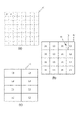
図3は、ビデオストリームのピクチャ10と、ユニット8、セグメント11およびセグメントグループ12へのピクチャの例示的な区分とを示す。図3(a)は、64個のユニット8からなるピクチャ10を示す。図3(b)は、16個のセグメント11からなる、同じピクチャ10のセグメントパーティション構造13を示す。パーティション構造13は一点鎖線によって示されている。各セグメント11はいくつかのユニットからなる。セグメントは、整数個の完全なユニット、または完全なユニットと部分ユニットとの組合せのいずれかからなることができる。いくつかのセグメントがセグメントグループを形成する。図3(c)は、8個のセグメントグループからなる、同じピクチャ10のセグメントグループ区分を示す。セグメントグループはラスタ走査順序のセグメントからなり得る。代替的に、セグメントグループは、一緒に矩形を形成する、セグメントの任意のグループからなり得る。代替的に、セグメントグループはセグメントの任意のサブセットからなり得る。
FIG. 3 shows
図4は、一点鎖線が、ピクチャ10を4つのセグメントに分割するパーティション構造を示す、ピクチャ10を示す。図4はまた、3つのユニット16、17、18を示す。図に示されているように、2つのユニット16、17は1つの現在セグメント15に属し、1つのユニット18は異なる隣接セグメント14に属する。セグメントは他のセグメントに対して独立しており、そのことは、ユニットを復号するときに、セグメント境界がピクチャ境界と同様に処理されることを意味する。このことは、たとえば、イントラ予測モードの導出および量子化パラメータ値の導出など、復号中の要素の導出プロセスに影響を及ぼす。
FIG. 4 shows a
イントラモードは、現在の技術においてよく知られており、サンプル予測のための現在ピクチャの前に復号されたサンプルからの予測のみを使用するユニットのために使用され、シグナリングされる。現在ユニット16におけるイントラ予測モードの導出は、他の隣接ユニット17における前に導出されたイントラ予測モードに依存することが一般的である。セグメントが独立しているので、現在ユニット16におけるイントラ予測モードの導出は、現在セグメント15に属するユニット17における前に導出されたイントラ予測モードのみに依存することがあり、異なるセグメント14に属するいかなるユニット18におけるいかなるイントラ予測モードにも依存することがない。
Intra mode is well known in current technology and is used and signaled for units that only use prediction from samples decoded before the current picture for sample prediction. Derivation of the intra-prediction mode in the
このことは、図4におけるパーティション構造が、異なるセグメント14中のユニット18におけるイントラ予測モードを、現在セグメント15中のユニット16のためのイントラ予測モードの導出のために利用不可能にすることを意味する。異なるセグメント中のあるユニット18と現在セグメント15中のユニット16とが同じセグメントに属していたのであれば、異なるセグメント中のあるユニット18におけるモードは、現在セグメント15中のユニット16におけるイントラ予測モードの導出のために多分に使用されていたであろうことに留意されたい。代わりに、セグメント境界は、現在セグメント15中のユニット16のためのピクチャ境界と同じ効果をイントラモード導出に対して有し得る。
This means that the partition structure in FIG. 4 makes intra-prediction modes in
本開示の文脈では、セグメントはタイルまたはスライスであり得、セグメントグループはタイルグループであり得る。本開示において、「タイル」と「セグメント」という用語は互換的に使用され得る。いくつかの実施形態では、ユニットはCTUと等価であり得る。 In the context of this disclosure, segments may be tiles or slices, and segment groups may be tile groups. In this disclosure, the terms "tile" and "segment" may be used interchangeably. In some embodiments, a unit may be equivalent to a CTU.
HEVC式(A)およびHEVC式(B)によると、タイル列幅(および行高さ)は


表2は、1に等しいuniform_spacing_flagと、PicWidthInCtbsYおよびnum_tile_columns_minus1についての所与の値とをもつHEVCタイル区分を使用して計算されたタイル列幅を示す。colWidth[i]の値におけるリップルは可視である。 Table 2 shows tile column widths calculated using HEVC tile partitions with uniform_spacing_flag equal to 1 and given values for PicWidthInCtbsY and num_tile_columns_minus1. Ripple in the value of colWidth[i] is visible.
最後のタイルサイズにおけるこの不一致は、最後のタイルサイズ値を予測するために入力値およびコードの詳細を調査する必要があるので、望ましくない。リップル問題は水平方向と垂直方向の両方において起こり得る。このことは、詳細を検査することなしに、タイルグリッド中の特定のタイルの正しい水平サイズおよび垂直サイズを決定することをより困難にする。 This discrepancy in the final tile size is undesirable because it requires examining input values and code details to predict the final tile size value. Ripple problems can occur both horizontally and vertically. This makes it more difficult to determine the correct horizontal and vertical size of a particular tile in the tile grid without inspecting the details.
別の問題は、タイルの均一な離間のためのHEVCの現在の実装において、ピクチャ中のタイルのいくつかの行または列が削除された場合、ピクチャの残っている一部の内側のタイル境界が新しいリップルパターンに応じて移動し得ることである。このことは、タイル抽出プロセスにおけるタイルサイズおよびアドレスを再計算することを必要とする。表500として図5に示された例は、uniform_spacing_flagが1に等しいとき、いくつかのタイルが元のピクチャから抽出された場合、HEVC均一タイル間隔(uniform tile spacing)においてタイル列境界、したがってタイルサイズがどのように変化し得るかを示す。元のピクチャ中のタイル境界と比較して、いくつかのタイル列を削除した場合に変化するタイル境界は太線で示されている。 Another problem is that in the current implementation of HEVC for uniform tile spacing, if some rows or columns of tiles in a picture are deleted, some remaining inner tile boundaries of the picture are It is possible to move according to the new ripple pattern. This requires recomputing the tile sizes and addresses in the tile extraction process. The example shown in FIG. 5 as table 500 shows that when uniform_spacing_flag is equal to 1, tile column boundaries, and thus tile size shows how can vary. The tile boundaries that change when deleting some tile columns compared to the tile boundaries in the original picture are shown in bold.
図5における表500は、HEVC均一タイル間隔を使用するタイル境界を示す。内部タイル境界は、元のピクチャと、元のピクチャからいくつかのタイルを削除した後との間で変化する。元のピクチャについてのパラメータは以下のように設定されている。uniform_spacing_flag=1、PicWidthInCtbsY=10、num_tile_columns_minus1=3、num_tile_rows_minus1=1。 Table 500 in FIG. 5 shows tile boundaries using HEVC uniform tile spacing. The internal tile boundaries change between the original picture and after removing some tiles from the original picture. The parameters for the original picture are set as follows. uniform_spacing_flag=1, PicWidthInCtbsY=10, num_tile_columns_minus1=3, num_tile_rows_minus1=1.
JVET-L0359は、(ピクチャの右縁部および下縁部のみではなく)タイルごとの右縁部および下縁部において不完全なCTUを使用する可能性を与えることによって、より微細なタイルユニットサイズ細分性を可能にする、フレキシブルタイルスプリッティングを提案する。図2は、タイルユニットサイズがCTUサイズの1/4であり、uniform_spacing_flagが1に等しい、JVET-L0359の場合と同様にフレキシブルタイルスプリッティングを使用する、2×2タイルセグメンテーションについての例を与える。 JVET-L0359 supports finer tile unit sizes by giving the possibility to use incomplete CTUs at the right and bottom edges of each tile (rather than just the right and bottom edges of the picture). We propose flexible tile splitting, which allows granularity. FIG. 2 gives an example for 2×2 tile segmentation using flexible tile splitting as in JVET-L0359, where the tile unit size is ¼ of the CTU size and the uniform_spacing_flag is equal to 1.
JVET-L0359において提案されているように、uniform_spacing_flagが1に等しい場合、タイル列の幅は以下の式を使用して決定される。

同様の式が、タイル行の高さ(rowHeight[i])を決定するために使用される。 A similar formula is used to determine the tile row height (rowHeight[i]).
上記の実装形態は、JVET-L0359提案についてもリップル問題が存在することを示す。CTU細分性よりも微細な細分性をもつタイルサイズを規定する可能性がもたらされたことにより、ここで説明するように、一貫性のないタイルサイズのまた別のアーティファクトがもたらされる。L0359において提案されたアルゴリズムを使用すると、タイルユニットサイズが、たとえば1/2または1/4に変化したとき、タイル区分は、いくつかのピクチャ幅およびタイルユニットサイズ値について一貫したままではない。理由は、L0359における均一タイルスプリッティングについての提案された式は、異なるタイルユニットサイズを許容するが、タイルグリッド中のわずかにより大きいまたはより小さいタイルの構成を正則化しないことである。以下の表3は、ピクチャサイズが固定され、タイルユニットサイズが変更される、たとえば、L0359において提案されたフレキシブルタイルスプリッティングを使用して1/2または1/4に分割されるケースについてのいくつかの例を示す。最後のタイル列幅は、より大きいタイル幅がピクチャの左側にあるときもあり、ピクチャの右側にあるときもあるようなタイルユニットサイズの変更の結果として、反転する。この予測不可能性は望ましくない。

表3は、uniform_spacing_flagが1に設定されたときに、L0359の場合と同様にフレキシブルタイルスプリッティングを使用して計算されたタイル列幅を示す。 Table 3 shows the tile column widths computed using flexible tile splitting as in L0359 when uniform_spacing_flag is set to 1.
タイルサイズに対する丸め効果の不一致を編成するためのルールにより、コードおよび入力値の詳細な調査の必要なしに、最後のタイルサイズを決定することが容易になると結論することができる。タイルサイズリップルを正則化するためのシステマティックな手法はまた、元のピクチャと、元のピクチャからのタイルのサブセットとについての一貫したタイル区分結果を与える。 It can be concluded that the rules for organizing discrepancies in rounding effects on tile sizes facilitate determining the final tile size without the need for detailed examination of code and input values. A systematic approach to regularizing the tile size ripple also gives consistent tile partitioning results for the original picture and a subset of tiles from the original picture.
分割の制限された細分性に応じて、セグメントサイズが厳密になることができないとき、好ましいオーダーをもつセグメントのサイズでリップルを正則化する実施形態が本明細書で提案されている。提案された実施形態では、丸め効果に応じて、わずかに小さいサイズまたはわずかに大きいサイズをもつタイルが好ましい構成を有する。一実施形態では、左から右の走査方向におけるタイル幅は同じにとどまるか、または減少するのみである。本明細書で開示する、提案された実施形態は、タイルグリッド中のタイル列幅および/またはタイル行高さ、または個々のタイルの幅および高さに適用され得る。一実施形態では、(所与の細分性および丸め効果により)わずかに大きいサイズをもつタイルはピクチャの左上部に位置し、わずかに小さいサイズをもつタイルはピクチャの右下部に位置する。 An embodiment is proposed herein that regularizes the ripple with the size of the segment with a preferred order when the segment size cannot be exact due to the limited granularity of the split. In the proposed embodiment, tiles with slightly smaller or slightly larger sizes have preferred configurations, depending on rounding effects. In one embodiment, the tile width in the left-to-right scan direction remains the same or only decreases. The proposed embodiments disclosed herein may be applied to tile column widths and/or tile row heights in a tile grid, or width and height of individual tiles. In one embodiment, tiles with a slightly larger size (due to a given granularity and rounding effect) are located in the top left of the picture and tiles with a slightly smaller size are located in the bottom right of the picture.
一態様では、ビットストリームからピクチャを復号するための方法が提供される。ピクチャはいくつかのユニットを含み、ピクチャはパーティション構造によっていくつかの空間セグメントに区分され、空間セグメントの数は2以上である。一実施形態では、本方法は、ビットストリーム中の1つまたは複数のコードワードを復号することを含む。本方法はまた、1つまたは複数のコードワードに基づいて、パーティション構造が均一であることを決定することを含む。本方法はまた、1つまたは複数のコードワードに基づいて空間セグメントの数を決定することを含む。本方法はまた、セグメントユニットサイズを決定することを含む。本方法はまた、1つまたは複数のコードワードから、ピクチャ中の空間セグメントについてのサイズおよび/またはロケーションを導出することを含む。ピクチャ中の空間セグメントについてのサイズおよび/またはロケーションを導出するステップは、第1の次元または方向における空間セグメントの数にわたる第1のループを含む。さらに、セグメント化されるべき第1の次元または方向における残っているセグメントユニットの数は第1のループ内で計算される。 In one aspect, a method is provided for decoding pictures from a bitstream. A picture includes several units, the picture is partitioned into several spatial segments by a partition structure, and the number of spatial segments is two or more. In one embodiment, the method includes decoding one or more codewords in the bitstream. The method also includes determining that the partition structure is uniform based on the one or more codewords. The method also includes determining the number of spatial segments based on the one or more codewords. The method also includes determining a segment unit size. The method also includes deriving sizes and/or locations for spatial segments in the picture from one or more codewords. Deriving sizes and/or locations for spatial segments in the picture includes a first loop over the number of spatial segments in a first dimension or direction. Additionally, the number of remaining segment units in the first dimension or direction to be segmented is calculated within the first loop.
一態様では、いくつかのユニットを含むピクチャをビットストリームに符号化するための方法が提供される。ピクチャは、均一なパーティション構造によっていくつかの空間セグメントに区分され、空間セグメントの数は2以上である。本方法は、1つまたは複数のコードワードをビットストリームに符号化することによって、パーティション構造が均一であるという情報を符号化することを含む。本方法はまた、1つまたは複数のコードワードをビットストリームに符号化することによって、空間セグメントの数を符号化することを含む。本方法はまた、セグメントユニットサイズを決定することを含む。本方法はまた、ピクチャ中の空間セグメントについてのサイズおよび/またはロケーションを導出し、それらのサイズおよび/またはロケーションをビットストリームに符号化することを含む。ピクチャ中の空間セグメントについてのサイズおよび/またはロケーションを導出するステップは、第1の次元または方向における空間セグメントの数にわたる第1のループを含む。さらに、セグメント化されるべき第1の次元または方向における残っているセグメントユニットの数は第1のループ内で計算される。 In one aspect, a method is provided for encoding a picture including a number of units into a bitstream. A picture is partitioned into several spatial segments by a uniform partition structure, and the number of spatial segments is two or more. The method includes encoding information that the partition structure is uniform by encoding one or more codewords into the bitstream. The method also includes encoding the number of spatial segments by encoding one or more codewords into the bitstream. The method also includes determining a segment unit size. The method also includes deriving sizes and/or locations for the spatial segments in the picture and encoding those sizes and/or locations into the bitstream. Deriving sizes and/or locations for spatial segments in the picture includes a first loop over the number of spatial segments in a first dimension or direction. Additionally, the number of remaining segment units in the first dimension or direction to be segmented is calculated within the first loop.
一態様では、ピクチャを符号化するための方法が提供され、本方法は、ピクチャをいくつかの均一な空間セグメントに分割するパーティション構造を規定することであって、各空間セグメントが少なくとも1つのユニットを含み、セグメントサイズの導出が、第1の次元または方向における空間セグメントの数にわたる第1のループ、および第2の次元または方向における空間セグメントの数にわたる第2のループ中で実行され、セグメント化されるべき第1の次元または方向における残っているセグメントユニットの数が第1のループ内で計算され、セグメント化されるべき第2の次元または方向における残っているセグメントユニットの数が第2のループ内で計算される、パーティション構造を規定することを含む。本方法はまた、複数のコーディングされた空間セグメントを生成するためのパーティション構造に従って、複数の空間セグメントを符号化することであって、各々のコーディングされた空間セグメントがパーティション構造の空間セグメントのうちの1つに対応し、各々のコーディングされた空間セグメントは独立しており、したがって、第1の空間セグメントの第1のユニットのための任意のイントラ予測モードの導出は、第1の空間セグメントの第2のユニットのための導出されたイントラ予測モードに依存し、パーティション構造の他の空間セグメントのユニットのためのいかなるイントラ予測モードとも無関係である、複数の空間セグメントを符号化することを含む。本方法は、複数のコーディングされた空間セグメントと、ピクチャを複数の空間セグメントに分割するために使用される均一なパーティション構造を示す情報とを含む、ビットストリームを生成することをさらに含む。 In one aspect, a method is provided for encoding a picture, the method comprising defining a partition structure that divides the picture into a number of uniform spatial segments, each spatial segment comprising at least one unit and segment size derivation is performed in a first loop over the number of spatial segments in a first dimension or direction and a second loop over the number of spatial segments in a second dimension or direction, segmenting The number of remaining segment units in the first dimension or direction to be segmented is calculated in the first loop, and the number of remaining segment units in the second dimension or direction to be segmented is calculated in the second loop. Including defining the partition structure, computed in a loop. The method also includes encoding a plurality of spatial segments according to a partition structure to generate a plurality of coded spatial segments, each coded spatial segment being one of the spatial segments of the partition structure. Corresponding to one, each coded spatial segment is independent, so the derivation of any intra-prediction mode for the first unit of the first spatial segment is the first unit of the first spatial segment. encoding a plurality of spatial segments that depend on the derived intra-prediction modes for units of 2 and are independent of any intra-prediction modes for units of other spatial segments of the partition structure. The method further includes generating a bitstream that includes a plurality of coded spatial segments and information indicative of a uniform partition structure used to partition the picture into the plurality of spatial segments.
一態様では、処理回路によって実行されたとき、処理回路に本明細書で開示する方法のうちのいずれか1つを実行させる命令を含む、コンピュータプログラムが提供される。一態様では、コンピュータプログラムを含んでいるキャリアも提供される。キャリアは、電子信号、光信号、無線信号、およびコンピュータ可読記憶媒体のうちの1つである。 In one aspect, a computer program is provided that includes instructions that, when executed by a processing circuit, cause the processing circuit to perform any one of the methods disclosed herein. In one aspect, a carrier containing the computer program is also provided. Carriers are one of electronic signals, optical signals, wireless signals, and computer readable storage media.
別の態様では、ビットストリームからピクチャを復号するための復号装置が提供される。ピクチャはいくつかのユニットを含み、ピクチャはパーティション構造によっていくつかの空間セグメントに区分され、空間セグメントの数は2以上である。本復号装置は、ビットストリーム中の1つまたは複数のコードワードを復号するように設定される。本復号装置はまた、1つまたは複数のコードワードに基づいて、パーティション構造が均一であることを決定するように設定される。本復号装置はまた、1つまたは複数のコードワードに基づいて空間セグメントの数を決定するように設定される。本復号装置はまた、セグメントユニットサイズを決定するように設定される。本復号装置はまた、1つまたは複数のコードワードから、ピクチャ中の空間セグメントについてのサイズおよび/またはロケーションを導出するように設定される。ピクチャ中の空間セグメントについてのサイズおよび/またはロケーションを導出することは、第1の次元または方向における空間セグメントの数にわたる第1のループを含む。さらに、本復号装置は、第1のループ内で、セグメント化されるべき第1の次元または方向における残っているセグメントユニットの数を計算するように設定される。いくつかの実施形態では、本復号装置は、コンピュータ可読記憶媒体と、コンピュータ可読記憶媒体に結合された処理回路とを含み、処理回路は、本復号装置に本明細書で開示するいずれかの復号方法を実行させるように設定される。 In another aspect, a decoding apparatus is provided for decoding pictures from a bitstream. A picture includes several units, the picture is partitioned into several spatial segments by a partition structure, and the number of spatial segments is two or more. The decoding device is configured to decode one or more codewords in the bitstream. The decoding apparatus is also configured to determine, based on one or more codewords, that the partition structure is uniform. The decoding apparatus is also configured to determine the number of spatial segments based on one or more codewords. The decoding device is also arranged to determine the segment unit size. The decoding apparatus is also configured to derive sizes and/or locations for spatial segments in the picture from one or more codewords. Deriving a size and/or location for a spatial segment in a picture includes a first loop over the number of spatial segments in a first dimension or direction. Furthermore, the decoding device is arranged to calculate, within the first loop, the number of remaining segment units in the first dimension or direction to be segmented. In some embodiments, the decoding apparatus includes a computer-readable storage medium and processing circuitry coupled to the computer-readable storage medium, the processing circuitry instructing the decoding apparatus to perform any of the decoding methods disclosed herein. set to run the method.
別の態様では、ピクチャをビットストリームに符号化するための符号化装置が提供される。ピクチャはいくつかのユニットを含み、ピクチャは均一なパーティション構造によっていくつかの空間セグメントに区分され、空間セグメントの数は2以上である。本符号化装置は、1つまたは複数のコードワードをビットストリームに符号化することによって、パーティション構造が均一であるという情報を符号化するように設定される。本符号化装置はまた、1つまたは複数のコードワードをビットストリームに符号化することによって空間セグメントの数を符号化するように設定される。本符号化装置はまた、セグメントユニットサイズを決定するように設定される。本符号化装置は、ピクチャ中の空間セグメントについてのサイズおよび/またはロケーションを導出し、それらのサイズおよび/またはロケーションをビットストリームに符号化するようにさらに設定される。ピクチャ中の空間セグメントについてのサイズおよび/またはロケーションを導出することは、第1の次元または方向における空間セグメントの数にわたる第1のループを含む。さらに、本符号化装置は、第1のループ内で、セグメント化されるべき第1の次元または方向における残っているセグメントユニットの数を計算するようにさらに設定される。 In another aspect, an encoding apparatus is provided for encoding pictures into a bitstream. A picture includes several units, the picture is partitioned into several spatial segments by a uniform partition structure, and the number of spatial segments is two or more. The encoding device is configured to encode the information that the partition structure is uniform by encoding one or more codewords into the bitstream. The encoder is also configured to encode the number of spatial segments by encoding one or more codewords into the bitstream. The encoder is also configured to determine the segment unit size. The encoding apparatus is further configured to derive sizes and/or locations for the spatial segments in the picture and encode those sizes and/or locations into the bitstream. Deriving a size and/or location for a spatial segment in a picture includes a first loop over the number of spatial segments in a first dimension or direction. Moreover, the encoding apparatus is further configured to calculate, within the first loop, the number of remaining segment units in the first dimension or direction to be segmented.
別の態様では、ピクチャを符号化するための符号化装置が提供され、本符号化装置は、ピクチャをいくつかの均一な空間セグメントに分割するパーティション構造を規定するように設定され、各空間セグメントは少なくとも1つのユニットを含み、セグメントサイズの導出は、第1の次元または方向における空間セグメントの数にわたる第1のループおよび第2の次元または方向における空間セグメントの数にわたる第2のループ中で実行され、セグメント化されるべき第1の次元または方向における残っているセグメントユニットの数は第1のループ内で計算され、セグメント化されるべき第2の次元または方向における残っているセグメントユニットの数は第2のループ内で計算される。本符号化装置はまた、複数のコーディングされた空間セグメントを生成するためのパーティション構造に従って、複数の空間セグメントを符号化するように設定され、各々のコーディングされた空間セグメントはパーティション構造の空間セグメントのうちの1つに対応し、各々のコーディングされた空間セグメントは独立しており、したがって、第1の空間セグメントの第1のユニットのための任意のイントラ予測モードの導出は、第1の空間セグメントの第2のユニットのための導出されたイントラ予測モードに依存し、パーティション構造の他の空間セグメントのユニットのためのいかなるイントラ予測モードとも無関係である。本符号化装置は、複数のコーディングされた空間セグメントと、ピクチャを複数の空間セグメントに分割するために使用される均一なパーティション構造を示す情報とを含む、ビットストリームを生成するようにさらに設定される。 In another aspect, an encoding apparatus is provided for encoding a picture, the encoding apparatus configured to define a partition structure dividing the picture into a number of uniform spatial segments, each spatial segment contains at least one unit, and segment size derivation is performed in a first loop over the number of space segments in a first dimension or direction and a second loop over the number of space segments in a second dimension or direction and the number of remaining segment units in the first dimension or direction to be segmented is calculated in a first loop to determine the number of remaining segment units in the second dimension or direction to be segmented. is calculated in the second loop. The encoding apparatus is also configured to encode a plurality of spatial segments according to the partition structure to generate a plurality of coded spatial segments, each coded spatial segment being one of the spatial segments of the partition structure. , each coded spatial segment is independent, so the derivation of any intra-prediction mode for the first unit of the first spatial segment is the same as that of the first spatial segment depends on the derived intra-prediction mode for the second unit of the partition structure and is independent of any intra-prediction modes for units in other spatial segments of the partition structure. The encoding apparatus is further configured to generate a bitstream that includes a plurality of coded spatial segments and information indicative of a uniform partition structure used to divide the picture into the plurality of spatial segments. be.
別の態様では、ピクチャを符号化するための符号化装置が提供され、本符号化装置は、コンピュータ可読記憶媒体と、コンピュータ可読記憶媒体に結合された処理回路とを備える。処理回路は、本符号化装置に本明細書で開示する符号化方法のうちのいずれか1つを実行させるように設定される。 In another aspect, an encoding apparatus is provided for encoding a picture, the encoding apparatus comprising a computer-readable storage medium and processing circuitry coupled to the computer-readable storage medium. The processing circuitry is configured to cause the encoding device to perform any one of the encoding methods disclosed herein.
本開示の実施形態は、現在タイルの幅を前のタイルとは無関係に保つが、残っている数のタイルに区分されることになる(列または行における)残っている数のユニット上でのみである。結果として、タイルの均一な離間のための実施形態は、タイルが抽出された場合に、抽出されたおよび残っているタイルについてタイル区分をそのままに保つ。これにより、ピクチャスプリットまたはタイル抽出の場合にタイルサイズを再計算する必要がなくなる。タイルの均一な離間のためのHEVCの現在の実装では、ピクチャ中のタイルのいくつかの行または列が削除された場合、リップルパターンが変化することがあり、ピクチャの残っている一部の内側のタイル境界が新しいリップルパターンに応じて移動することがある。 Embodiments of the present disclosure keep the width of the current tile independent of the previous tile, but only on the remaining number of units (in columns or rows) that will be partitioned into the remaining number of tiles. is. As a result, embodiments for uniform tile spacing keep tile divisions intact for extracted and remaining tiles when tiles are extracted. This eliminates the need to recalculate the tile size in case of picture splitting or tile extraction. In the current implementation of HEVC for uniform spacing of tiles, if some rows or columns of tiles in a picture are deleted, the ripple pattern may change, and the ripple pattern may change inside the remaining part of the picture. tile boundaries may move according to the new ripple pattern.
一貫性は、実施形態の別の利点である。タイルの均一な離間のための実施形態は、入力パラメータまたはコードの詳細な調査なしに、タイルサイズ(たとえばタイル列幅およびタイル行高さ)を編成し、タイルサイズの最終構成についてのルールを与える。たとえば、一実施形態では、タイルユニットにおけるピクチャ幅/高さがタイル列/行の数によって割り切れないとき、より大きいサイズに丸められたすべてのタイルはピクチャの左/上部に見つけられる。実施形態はまた、タイルユニットサイズの変更の場合、均一タイル間隔におけるタイルサイズのリップルを調整する。 Consistency is another advantage of embodiments. Embodiments for uniform tile spacing organize tile sizes (e.g., tile column widths and tile row heights) and provide rules for the final composition of tile sizes without detailed examination of input parameters or code. . For example, in one embodiment, when the picture width/height in tile units is not divisible by the number of tile columns/rows, all tiles rounded to the larger size are found on the left/top of the picture. Embodiments also adjust for tile size ripple in uniform tile spacing for tile unit size changes.
提案された方法はまた、HEVC、およびJVET-L0359において提案されたフレキシブルタイルスプリットと比較して、複雑さを低減する。提案された方法は、乗算を有さず、タイル列の幅とタイル行の高さとを決定するための繰り返し当たり1回のみの除算を有するが、HEVC方法は、繰り返し当たり2回の乗算と2回の除算とを使用する。 The proposed method also reduces complexity compared to HEVC and flexible tile splitting proposed in JVET-L0359. The proposed method has no multiplications and only one division per iteration to determine the width of the tile column and the height of the tile row, whereas the HEVC method has two multiplications and two divisions per iteration. times division and using.
本明細書に組み込まれ、本明細書の一部を形成する添付の図面は、様々な実施形態を示す。 The accompanying drawings, which are incorporated in and form a part of this specification, illustrate various embodiments.
実施形態について説明するために、以下の用語を使用した。 The following terms have been used to describe the embodiments.
算術演算子「/」は、0に向かう結果の切り捨てがある、整数除算のために使用される。たとえば、7/4および-7/-4は切り捨てられて1になり、-7/4および7/-4は切り捨てられて-1になる。 The arithmetic operator "/" is used for integer division with truncation of the result towards zero. For example, 7/4 and -7/-4 are rounded down to 1, and -7/4 and 7/-4 are rounded down to -1.
算術演算子「÷」は、切り捨てまたは丸めが意図されない、数式における除算のために使用される。 The arithmetic operator "÷" is used for division in mathematical expressions where truncation or rounding is not intended.
Ceil(x)は、xよりも大きいかまたはそれに等しい、最も小さい整数を与える。 Ceil(x) gives the smallest integer greater than or equal to x.
Floor(x)は、xよりも小さいかまたはそれに等しい、最も大きい整数を与える。 Floor(x) gives the largest integer less than or equal to x.
「タイル列幅」という用語と「タイル幅」という用語は互換的に使用され、そのことは、実施形態が、タイル列幅がタイルグリッド中で計算されているとき、または(たとえばタイルグリッドがない場合)タイル幅が個々に計算されているときに適用され得ることを意味する。 The terms "tile column width" and "tile width" are used interchangeably, which means that embodiments can be used when the tile column width is calculated in a tile grid or (e.g., when there is no tile grid) case) means that it can be applied when tile widths are being calculated individually.
「タイル行高さ」という用語と「タイル高さ」という用語は互換的に使用され、そのことは、実施形態が、タイル行高さがタイルグリッド中で計算されているとき、または(たとえばタイルグリッドがない場合)タイル高さが個々に計算されているときに適用され得ることを意味する。 The terms "tile row height" and "tile height" are used interchangeably, which means that an embodiment does not specify when the tile row height is being calculated in a tile grid or (e.g., the tile This means that it can be applied when the tile heights are calculated individually (if there is no grid).
uniform_spacing_flag=1についてのタイルの幅(および同等に高さ)を規定するための実施形態は以下の4つの要素を有する。 An embodiment for defining the width (and equivalently height) of a tile for uniform_spacing_flag=1 has the following four elements.
(1)各タイルの幅を規定するためのループにおいて、タイルの幅は、タイルにまだ割り振られていない行におけるユニットサイズの数を意味する、利用可能な残っているユニットサイズを使用して規定される。 (1) In the loop to define the width of each tile, the width of the tile is defined using the remaining unit sizes available, which means the number of unit sizes in rows not yet allocated to tiles. be done.
(2)残っているユニットサイズの数は、次いで、行における残っているタイルの数によって除算される。 (2) The number of remaining unit sizes is then divided by the number of remaining tiles in the row.
(3)得られたタイルサイズは、タイルの幅を整えるための所与のルールに従って、より大きいまたはより小さい整数(Ceil()関数またはFloor()関数)に向かって丸められる。 (3) The resulting tile size is rounded towards larger or smaller integers (Ceil() function or Floor() function) according to the given rules for trimming tile widths.
(4)各タイルの幅を規定するためのループの繰り返しごとに、残っているユニットサイズ(たとえばCTU)の数を再計算するための随意の要素。 (4) An optional element for recalculating the number of remaining unit sizes (eg, CTUs) each iteration of the loop to define the width of each tile.
同じ要素は、タイルの高さを規定することに適用される。 The same factors apply to defining the height of the tiles.
本明細書で開示する、実施形態は、ビットストリームからのピクチャ10を復号するためのデコーダ方法について説明しており、本方法は、ビットストリームからのピクチャ中のセグメント(たとえば、ピクチャ中のすべてのセグメント)についてのサイズおよび/またはロケーションを導出することを含み、ピクチャ10はいくつかのユニット8からなり、パーティション構造13は、ピクチャを少なくとも2つのセグメント11に区分し、デコーダは、ビットストリーム中の1つまたは複数のコードワードを復号することによって、空間セグメンテーションが均一であることを決定し、デコーダは、ビットストリーム中の1つまたは複数のコードワードを復号することによって、空間セグメントの数を決定し、デコーダはタイルユニットサイズを決定し、セグメントを均一な幅または高さに区分することは、空間セグメントの数とは無関係な固定のリップルパターンに従い、セグメントサイズの導出は、セグメントの数にわたるループ中で行われ、ループ内部で、セグメント化されるべき残っているタイルユニットの数が計算される。残っているセグメントの数もループ内で計算され得る。
Embodiments disclosed herein describe a decoder method for decoding a
一例では、実施形態は、以下のHEVCのライン


提案された方法はまた、HEVC、およびJVET-L0359において提案されたフレキシブルタイルスプリットと比較して、複雑さを低減する。提案された方法は、乗算を有さず、タイル列の幅とタイル行の高さとを決定するための繰り返し当たり1回のみの除算を有するが、HEVC方法は、繰り返し当たり2回の乗算と2回の除算とを使用する。 The proposed method also reduces complexity compared to HEVC and flexible tile splitting proposed in JVET-L0359. The proposed method has no multiplications and only one division per iteration to determine the width of the tile column and the height of the tile row, whereas the HEVC method has two multiplications and two divisions per iteration. times division and using.
実施形態1.単調リップル
一実施形態では、行中のセグメントの幅または列中のセグメントの高さは、事前規定された走査方向に従う昇順でもなく、降順でもない。セグメントはピクチャ中のタイルであり得、したがって、タイルサイズは走査方向において単調である(上昇もせず、下降もしない)。たとえば、タイル幅が左から右の走査方向において上昇しないことは、タイルの幅が、第1のタイルの左側に空間的に位置する同じ行上の別のタイルの幅よりも大きくならないことを意味する。
Embodiment 1. Monotonic Ripple In one embodiment, the widths of segments in rows or the heights of segments in columns are neither ascending nor descending according to a predefined scan direction. A segment can be a tile in a picture, so the tile size is monotonic (neither ascending nor descending) in the scan direction. For example, a tile's width does not rise in the left-to-right scan direction means that the tile's width is no greater than the width of another tile on the same row spatially located to the left of the first tile. do.
第1の実施形態では、HEVCの上の上昇しないタイル列幅(左から右への走査方向)およびタイル行高さ(上から下への走査方向)について、以下のHEVC関数


colWidthリストおよびrowHeightリスト中の得られた値はルーマコーディングツリーブロックの単位である。たとえば、CTUサイズが128×128に等しい場合、値は128個のルーマサンプルの単位であり、したがって、2の値は256個のルーマサンプルを意味する。 The resulting values in the colWidth and rowHeight lists are in units of luma coding treeblocks. For example, if the CTU size is equal to 128×128, the value is in units of 128 luma samples, so a value of 2 means 256 luma samples.
colWidthリストおよびrowHeightリストは、次いで、ピクチャ中のブロックの走査順序を決定するためにデコーダによって使用される。ブロックデータが復号されるとき、ブロックの空間位置はcolWidthリストおよびrowHeightリスト中の値に基づく。デコーダは、colWidthおよびrowHeightの値を使用して、タイル走査アドレスからラスタ走査アドレスへの変換リスト、およびその逆の変換リストを構築し得る。デコーダは、次いで、ブロックの空間位置を決定するために復号中に変換リストを使用し得る。HEVCでは、変換リストが使用され、CtbAddrRsToTsおよびCtbAddrTsToRsと呼ばれる。 The colWidth and rowHeight lists are then used by the decoder to determine the scanning order of blocks in the picture. When the block data is decoded, the block's spatial position is based on the values in the colWidth and rowHeight lists. The decoder may use the colWidth and rowHeight values to build a translation list from tile scan addresses to raster scan addresses and vice versa. A decoder may then use the transform list during decoding to determine the spatial location of the block. In HEVC, transform lists are used, called CtbAddrRsToTs and CtbAddrTsToRs.
図6は、HEVCのためのタイルサイズ割振りと第1の実施形態の上記の例示的な実装形態とを比較する表600を示す。表600に示されているように、実施形態では、タイル列がピクチャの左側もしくは右側または両側から削除されたとき、タイル境界は元のピクチャと同じに保たれる。丸め効果は、タイル列幅を決定するために、タイルにわたるループの繰り返しごとに、Ceil()関数を使用し、残っているタイルユニットの数を再計算して、すべての場合において、ピクチャの左側にわずかに広いタイルを置くように定められる。 FIG. 6 shows a table 600 comparing tile size allocations for HEVC and the above exemplary implementation of the first embodiment. As shown in table 600, in an embodiment, tile boundaries remain the same as in the original picture when tile columns are removed from the left or right or both sides of the picture. The rounding effect is to use the Ceil() function and recalculate the number of tile units remaining for each iteration of the loop over the tiles to determine the tile column widths, in all cases the left side of the picture. is determined to place a slightly wider tile on the
表600は、内部タイル境界がそのままに保たれる間、HEVC均一タイル間隔を使用して元のピクチャからいくつかのタイル列を削除した後に内部タイル境界がどのように変化するかを示す。元のピクチャについてのパラメータは以下のように設定されている。uniform_spacing_flag=1、PicWidthInCtbsY=10、num_tile_columns_minus1=3、num_tile_rows_minus1=1。 Table 600 shows how the internal tile boundaries change after deleting some tile columns from the original picture using HEVC uniform tile spacing, while the internal tile boundaries remain intact. The parameters for the original picture are set as follows. uniform_spacing_flag=1, PicWidthInCtbsY=10, num_tile_columns_minus1=3, num_tile_rows_minus1=1.
以下は、CTUサイズよりも小さいタイルサイズ細分性をサポートする、JVET-L0359において提案された式の上に構築された、第1の実施形態の別の例である。以下の式変更はJVET-L0359の上に提案されており、


colWidthリストおよびrowHeightリスト中の得られた値はルーマタイルユニットの単位である。たとえば、タイルユニットサイズが32×32に等しい場合、値は32個のルーマサンプルの単位であり、したがって、2の値は64個のルーマサンプルを意味する。 The resulting values in the colWidth and rowHeight lists are in units of luma tile units. For example, if the tile unit size is equal to 32×32, the value is in units of 32 luma samples, so a value of 2 means 64 luma samples.
表4は、異なるピクチャ幅値について、JVET-L0359と一実施形態との間でタイルの幅についての結果を比較している。JVET-L0359についての結果は、タイルユニットサイズが変化したときに、タイル列の幅(colWidth[i])の不一致を示すが、その実施形態は、わずかに大きいタイルにピクチャの左側に置かれるように一貫して優先度を付けるので、その実施形態は、タイルユニットサイズが変化したときに、タイル列の一貫した幅(colWidth[i])を与える。

表4は、第1の実施形態と比較してJVET-L0359の場合と同様にフレキシブルタイルスプリッティングを使用して、uniform_spacing_flag=1、num_tile_columns_minus1=1のときに計算されたタイル列幅を示す。 Table 4 shows the tile column widths calculated when uniform_spacing_flag=1, num_tile_columns_minus1=1 using flexible tile splitting as in JVET-L0359 compared to the first embodiment.
第1の実施形態では、デコーダは以下のステップのすべてまたはサブセットを実行し得る。 In a first embodiment, a decoder may perform all or a subset of the following steps.
1.ビットストリーム中の1つまたは複数のシンタックス要素から、1つまたは複数のピクチャが2つ以上のセグメントに区分されるという情報を復号する。シンタックスは、好ましくは、ピクチャパラメータセット中に位置する。シンタックスは、セグメント行の数を示す数Rと、セグメント列の数を示す数Cとを指定し得る。 1. Information is decoded from one or more syntax elements in the bitstream that one or more pictures are partitioned into two or more segments. The syntax is preferably located in the picture parameter set. The syntax may specify a number R indicating the number of segment rows and a number C indicating the number of segment columns.
2.ビットストリーム中の1つまたは複数のシンタックス要素から、空間セグメンテーションが均一であるという情報を復号する。シンタックスは、好ましくは、ピクチャパラメータセット中に位置する。シンタックスは、空間セグメンテーションが均一であるか否かを指定する1ビットフラグからなり得る。 2. Decoding information that the spatial segmentation is uniform from one or more syntax elements in the bitstream. The syntax is preferably located in the picture parameter set. The syntax may consist of a 1-bit flag that specifies whether the spatial segmentation is uniform.
3.1つまたは複数のシンタックス要素から、または事前規定されたセグメントユニットサイズを使用することによって、セグメントユニットサイズSを決定する。事前規定されたユニットサイズが使用される場合、事前規定されたユニットサイズは、CTUのサイズ、または1つの次元におけるCTUのサイズに等しくなり得る。たとえば、CTUサイズが128×128に等しい場合、セグメントユニットサイズSは128(または128×128)に等しくなり得る。 3. Determine the segment unit size S from one or more syntax elements or by using predefined segment unit sizes. If a predefined unit size is used, the predefined unit size can be equal to the size of the CTU, or the size of the CTU in one dimension. For example, if the CTU size equals 128x128, the segment unit size S may equal 128 (or 128x128).
4.セグメントユニットの数におけるピクチャのサイズを計算する。計算は、水平サイズ(HS)が、セグメントユニットサイズSによって除算された、ルーマサンプル中のピクチャ幅に等しく設定されるように、ピクチャの高さと幅とについて別個に行われ得る。垂直サイズ(VS)は、セグメントユニットサイズによって除算された、ルーマサンプル中のピクチャ高さに等しく設定され得る。 4. Compute the size of the picture in number of segment units. The calculation may be done separately for picture height and width such that the horizontal size (HS) is set equal to the picture width in luma samples divided by the segment unit size S. The vertical size (VS) may be set equal to the picture height in luma samples divided by the segment unit size.
5.ピクチャ中のセグメントの数およびセグメントユニットサイズSからセグメント(たとえば、すべてのセグメント)の幅および高さを導出する。導出は、まだセグメント化されていないセグメントの数と、セグメントユニットの数におけるまだセグメント化されていないピクチャのサイズとがループの各繰り返しにおいて更新される、セグメントの数にわたるループ中で行われる。 5. From the number of segments in the picture and the segment unit size S, we derive the width and height of the segments (eg, all segments). The derivation is done in a loop over the number of segments where the number of segments not yet segmented and the size of the not yet segmented picture in number of segment units are updated at each iteration of the loop.
導出は2つの別個のループ中で行われ得る。
a.以下のサブステップによって、タイルユニットの数におけるピクチャ幅およびセグメント列の数Cからセグメント列幅を導出する。
i.まだセグメント化されていないピクチャ幅(A)を値HSに等しく設定する。
ii.まだセグメント化されていないセグメント列の数(B)を値Cに等しく設定する。
iii.繰り返し当たり1つの幅値が導出され、まだセグメント化されていないセグメント列の数(B)とまだセグメント化されていないピクチャ幅(A)の両方が各繰り返し中に更新される、ループ中で列幅を導出する。繰り返しはC回実行され得る。
1.導出された列幅WはCeil(A÷B)に等しく設定され得る。
2.変数Aは、次いで、A-Wに更新され得、変数BはB-1に更新され得る。
b.以下のサブステップによって、タイルユニットの数におけるピクチャ高さおよびセグメント列の数Rからセグメント行高さを導出する。
i.まだセグメント化されていないピクチャ高さ(A)を値VSに等しく設定する。
ii.まだセグメント化されていないセグメント行の数(B)を値Rに等しく設定する。
iii.繰り返し当たり1つの高さ値が導出され、まだセグメント化されていないセグメント行の数(B)とまだセグメント化されていないピクチャ高さ(A)の両方が各繰り返し中に更新される、ループ中で行高さを導出する。繰り返しはR回実行され得る。
1.導出された行高さHはCeil(A÷B)に等しく設定され得る。
2.変数Aは、次いで、A-Hに更新され得、変数BはB-1に更新され得る。
Derivation can be done in two separate loops.
a. Derive the segment column width from the picture width in number of tile units and the number C of segment columns by the following substeps.
i. Set the unsegmented picture width (A) equal to the value HS.
ii. Set the number of unsegmented segment columns (B) equal to the value C.
iii. Columns in a loop where one width value is derived per iteration and both the number of segment columns not yet segmented (B) and the picture width not yet segmented (A) are updated during each iteration. Derive the width. The iteration can be performed C times.
1. The derived column width W can be set equal to Ceil(A÷B).
2. Variable A may then be updated to AW and variable B may be updated to B-1.
b. Derive the segment row height from the picture height in number of tile units and the number R of segment columns by the following substeps.
i. Set the not-yet-segmented picture height (A) equal to the value VS.
ii. Set the number of unsegmented segment rows (B) equal to the value R.
iii. One height value is derived per iteration, and both the number of segment rows not yet segmented (B) and the picture height not yet segmented (A) are updated during each iteration, in a loop to derive the row height. The iteration may be performed R times.
1. The derived row height H can be set equal to Ceil(A÷B).
2. Variable A may then be updated to AH and variable B may be updated to B-1.
6.導出されたセグメント幅および導出されたセグメント高さを使用して、現在ブロックについての空間ロケーションを導出する。 6. The derived segment width and the derived segment height are used to derive the spatial location for the current block.
7.導出された空間ロケーションを使用して現在ブロックを復号する。現在ブロックのための復号されたサンプル値を、導出された空間ロケーションに対応するメモリ位置におけるメモリに記憶する。 7. Decode the current block using the derived spatial location. Store the decoded sample values for the current block in memory at memory locations corresponding to the derived spatial locations.
この実施形態の変形態では、関数Ceil()は、水平方向のみもしくは垂直方向のみ、または両方の方向において関数Floor()によって置き換えられ得る。 In variations of this embodiment, the function Ceil() may be replaced by the function Floor() in only the horizontal direction or only in the vertical direction, or in both directions.
この実施形態の変形態では、フラグは2つの関数Ceil()とFloor()との間で選定し得る。いくつかの実施形態では、水平方向および垂直方向のための2つの独立したフラグがあり得る。 In a variant of this embodiment, the flag can be chosen between two functions Ceil() and Floor(). In some embodiments, there may be two separate flags for horizontal and vertical directions.
実施形態2.指定された順序
第2の実施形態では、行中のセグメントの幅または列中のセグメントの高さは、指定された順序に従う。この指定された順序は、ビットのシーケンスの形態のテンプレートパターンを使用してビットストリーム中でシグナリングされ得る。セグメントはピクチャ中のタイルであり得、したがって、この実施形態では、タイルサイズに関する好ましいリップルの形状が指定される。たとえば、すべてのわずかに広いタイルはピクチャの左側にある。このことは、タイル幅(または高さ)を指定するためにタイルにわたるループの繰り返しごとにCeil()関数またはFloor()関数を指定する、ビットのシーケンスの形態で表現される、テンプレートパターンによって行われ得る。テンプレートビットシーケンス中で、関数Ceil()は1によって表され得、関数Floor()は0によって表され得る。例として、テンプレート110は、タイルサイズを指定するためのループの、最初の2つのタイル中でCeil()関数を指定し、第3の繰り返し中で関数Floor()を指定するであろう。タイルの数がテンプレートビットシーケンスの長さよりも大きい場合、パターンは周期的に繰り返され得る。
Embodiment 2. Specified Order In a second embodiment, the width of segments in rows or the height of segments in columns follows a specified order. This specified order can be signaled in the bitstream using a template pattern in the form of a sequence of bits. A segment can be a tile in a picture, so in this embodiment a preferred ripple shape with respect to the tile size is specified. For example, all slightly wider tiles are on the left side of the picture. This is done by a template pattern, expressed in the form of a sequence of bits that specifies the Ceil() or Floor() function for each iteration of the loop over the tiles to specify the tile width (or height). can break The function Ceil() may be represented by 1 and the function Floor() by 0 in the template bit sequence. As an example, the template 110 would specify the Ceil() function in the first two tiles of the loop to specify the tile size, and the function Floor() in the third iteration. If the number of tiles is greater than the length of the template bit sequence, the pattern may be repeated periodically.
実施形態3.バイナリタイルスプリット(binary tile split)
第3の実施形態では、セグメント幅または高さの明示的な順序付けをもつバイナリセグメントスプリットがピクチャの幅または高さに適用される。セグメントはピクチャ中のタイルであり得、したがって、ピクチャを均一なタイルサイズをもつ2n個のタイルに区分するために、バイナリ区分が使用される。(第2の実施形態の場合と同様の)事前規定されたリップルパターンが、この実施形態と組み合わせて使用され得る。バイナリ区分は、アルゴリズムが、指定された数のセグメントに到達するまで、または規定された数のステップまでのみ、階層的に継続し得、セグメント分割の残りは他の方法によって実行される。例として、合計サイズが第1のステップにおいて2によって除算され、そこで、より小さいまたはより大きいセグメントを左側または右側に割り当てるように指定される。後続のステップの各々において、左側セグメントと右側セグメントの各々は、次のバイナリ区分レベル、およびより小さいまたはより大きい可能性があるセグメントの位置についての指定されたルールを使用して、2つの部分に分割される。
Embodiment 3. binary tile split
In a third embodiment, a binary segment split with explicit ordering of segment width or height is applied to picture width or height. A segment can be a tile in a picture, so binary partitioning is used to partition the picture into 2 n tiles with uniform tile size. A predefined ripple pattern (as in the second embodiment) can be used in combination with this embodiment. Binary segmentation may continue hierarchically until the algorithm reaches a specified number of segments, or only up to a defined number of steps, and the rest of the segmentation is performed by other methods. As an example, the total size is divided by 2 in the first step, where it is specified to assign the smaller or larger segment to the left or right. In each of the subsequent steps, each of the left and right segments is split into two parts using the next binary partition level and specified rules for the position of potentially smaller or larger segments. split.
実施形態4.リップルのデフォルト順序付け
第4の実施形態では、ピクチャの行中のセグメントの幅または列中のセグメントの高さは、セグメントの幅または高さのための指定されたデフォルト順序に従う。セグメントはピクチャ中のタイルであり得、したがって、セグメントサイズにおけるリップルを管理するためのデフォルトの好ましい順序付けが規定される。デフォルトリップルパターンはビットストリーム中でシグナリングされ得る。この実施形態の変形態では、デフォルトパターンは上書きされ得る。この実施形態の別の変形態では、フラグは、デフォルト順序付けが使用されているか、または別の指定された順序付けが使用されているかを指定することができる。
Embodiment 4. Ripple Default Ordering In a fourth embodiment, the widths of segments in rows or the heights of segments in columns of a picture follow a specified default order for segment widths or heights. A segment can be a tile in a picture, so a default preferred ordering is defined to manage ripples in the segment size. A default ripple pattern may be signaled in the bitstream. In variations of this embodiment, the default pattern may be overridden. In another variation of this embodiment, the flag may specify whether the default ordering is used or another specified ordering is used.
図7は、一実施形態による、プロセス700を示すフローチャートである。プロセス700は、ビットストリームから、いくつかのユニット8を含むピクチャ10を復号するための方法であり、ピクチャはパーティション構造13によって少なくとも2つの空間セグメント11に区分される。プロセス700はステップ710において開始し得る。ステップ710は、ビットストリーム中の1つまたは複数のコードワードを復号することを含む。ステップ720は、1つまたは複数のコードワードに基づいて、パーティション構造が均一であることを決定することを含む。ステップ730は、1つまたは複数のコードワードに基づいて空間セグメントの数を決定することを含む。ステップ740は、セグメントユニットサイズを決定することを含む。ステップ750は、1つまたは複数のコードワードから、ピクチャ中の空間セグメントについてのサイズおよび/またはロケーションを導出することを含む。一実施形態では、ピクチャ中の空間セグメントについてのサイズおよび/またはロケーションを導出することは、第1の次元または方向における空間セグメントの数にわたる第1のループを含み、セグメント化されるべき第1の次元または方向における残っているセグメントユニットの数は第1のループ内で計算される。いくつかの実施形態では、第1の次元における残っているセグメントの数は第1のループ内で計算される。
FIG. 7 is a
いくつかの実施形態では、セグメントサイズおよび/またはロケーションの導出は、第1の次元または方向以外の第2の次元または方向における空間セグメントの数にわたる第2のループを含み、セグメント化されるべき第2の次元または方向における残っているセグメントユニットの数は第2のループ内で計算される。いくつかの実施形態では、第2の次元または方向における残っているセグメントの数は、第2のループ内で計算される。 In some embodiments, segment size and/or location derivation includes a second loop over the number of spatial segments in a second dimension or direction other than the first dimension or direction, The number of remaining segment units in two dimensions or directions is calculated in a second loop. In some embodiments, the number of remaining segments in a second dimension or direction is calculated in a second loop.
いくつかの実施形態では、第1の次元または方向は水平の次元または方向であり、第2の次元または方向は垂直の次元または方向である。 In some embodiments, the first dimension or direction is a horizontal dimension or direction and the second dimension or direction is a vertical dimension or direction.
いくつかの実施形態では、行中のセグメントの幅または列中のセグメントの高さは、指定された順序に従う。 In some embodiments, the width of segments in rows or the height of segments in columns follows a specified order.
いくつかの実施形態では、行中のセグメントの幅または列中のセグメントの高さは昇順でもなく、降順でもない。 In some embodiments, the width of segments in rows or the height of segments in columns is neither ascending nor descending.
いくつかの実施形態では、セグメント幅または高さの明示的な順序付けをもつバイナリセグメントスプリットがピクチャの幅または高さに適用される。 In some embodiments, binary segment splits with explicit ordering of segment widths or heights are applied to picture widths or heights.
いくつかの実施形態では、ピクチャの行中のセグメントの幅または列中のセグメントの高さは、セグメントの幅または高さのための指定されたデフォルト順序に従う。 In some embodiments, the width of segments in rows or the height of segments in columns of a picture follows a specified default order for segment widths or heights.
いくつかの実施形態では、セグメントユニットサイズはコーディングツリーユニット(CTU)のサイズに等しい。 In some embodiments, the segment unit size is equal to the coding tree unit (CTU) size.
いくつかの実施形態では、セグメントユニットサイズはコーディングツリーユニット(CTU)のサイズよりも小さい。いくつかの実施形態では、セグメントユニットサイズはCTUのサイズよりも大きい。いくつかの実施形態では、セグメントがタイルである。 In some embodiments, the segment unit size is smaller than the coding tree unit (CTU) size. In some embodiments, the segment unit size is larger than the CTU size. In some embodiments the segments are tiles.
いくつかの実施形態では、サイズを導出することは、
A=PicWidthInSegmentUnits
B=NumberOfSegmentColumns
for(i=0;i<NumberOfSegmentColumns;i++){
Sizes[i]=Round(A÷B)
A=A-Sizes[i]
B=B-1
}
としてリストSizes[]を導出することを含み、
ここで、NumberOfSegmentColumnsはセグメント列の数であり、PicWidthInSegmentUnitsはセグメントユニットにおけるピクチャの幅であり、Round()はFloor()関数またはCeil()関数のいずれかであり、÷は切り捨てまたは丸めなしの除算である。
In some embodiments, deriving the size includes:
A = PicWidthInSegmentUnits
B = NumberOfSegmentColumns
for (i=0; i<NumberOfSegmentColumns; i++) {
Sizes[i]=Round(A÷B)
A=A−Sizes[i]
B = B - 1
}
including deriving the list Sizes[ ] as
where NumberOfSegmentColumns is the number of segment columns, PicWidthInSegmentUnits is the width of the picture in segment units, Round() is either the Floor() or Ceil() function, and ÷ is division without truncation or rounding. is.
いくつかの実施形態では、サイズを導出することは、
A=PicHeightInSegmentUnits
B=NumberOfSegmentRows
for(i=0;i<NumberOfSegmentRows;i++){
Sizes[i]=Round(A÷B)
A=A-Sizes[i]
B=B-1
}
としてリストSizes[]を導出することを含み、
ここで、NumberOfSegmentRowsはセグメント行の数であり、PicHeightInSegmentUnitsはセグメントユニットにおけるピクチャの高さであり、Round()はFloor()関数またはCeil()関数のいずれかであり、÷は切り捨てまたは丸めなしの除算である。
In some embodiments, deriving the size includes:
A = PicHeightInSegmentUnits
B = Number Of Segment Rows
for (i=0; i<NumberOfSegmentRows; i++) {
Sizes[i]=Round(A÷B)
A=A−Sizes[i]
B = B - 1
}
including deriving the list Sizes[ ] as
where NumberOfSegmentRows is the number of segment rows, PicHeightInSegmentUnits is the height of the picture in segment units, Round() is either the Floor() function or the Ceil() function, and ÷ is the number of truncation or no rounding. division.
いくつかの実施形態では、セグメント11は他のセグメント11に対して独立しており、したがって、現在セグメント15中の任意のユニット16のための任意のイントラ予測モードの導出は、現在セグメント15に属するユニット17における前に導出されたイントラ予測モードのみに依存し、異なるセグメント14に属するいかなるユニット18におけるいかなるイントラ予測モードにも依存しない。
In some embodiments, a
いくつかの実施形態では、本方法は、空間セグメントの数とは無関係な固定のリップルパターンに従う、セグメントを均一な幅または高さに区分するさらなるステップを含む。 In some embodiments, the method includes the further step of partitioning the segments into uniform widths or heights following a fixed ripple pattern independent of the number of spatial segments.
図8は、一実施形態による、プロセス800を示すフローチャートである。プロセス800は、いくつかのユニット8を含むピクチャ10をビットストリームに符号化するための方法であり、ピクチャは、均一なパーティション構造13によって少なくとも2つの空間セグメント11に区分される。本方法は、1つまたは複数のコードワードをビットストリームに符号化することによって、パーティション構造13が均一であるという情報を符号化すること(ステップ810)と、1つまたは複数のコードワードをビットストリームに符号化することによって空間セグメントの数を符号化すること(ステップ820)と、セグメントユニットサイズを決定すること(ステップ830)と、ピクチャ中のすべての空間セグメントについてのサイズおよび/またはロケーションを導出し、それらのサイズおよび/またはロケーションをビットストリームに符号化すること(ステップ840)とを含み、セグメントサイズの導出は、第1の次元または方向における空間セグメントの数にわたる第1のループを含み、セグメント化されるべき第1の次元または方向における残っているセグメントユニットの数は第1のループ内で計算される。いくつかの実施形態では、第1の次元または方向における残っているセグメントの数も第1のループ内で計算される。
FIG. 8 is a
いくつかの実施形態では、セグメントサイズおよび/またはロケーションの導出は、第1の次元または方向以外の第2の次元または方向における空間セグメントの数にわたる第2のループを含み、セグメント化されるべき第2の次元または方向における残っているセグメントユニットの数は第2のループ内で計算される。いくつかの実施形態では、第2の次元または方向における残っているセグメントの数も第2のループ内で計算される。 In some embodiments, segment size and/or location derivation includes a second loop over the number of spatial segments in a second dimension or direction other than the first dimension or direction, The number of remaining segment units in two dimensions or directions is calculated in a second loop. In some embodiments, the number of remaining segments in a second dimension or direction is also calculated within the second loop.
いくつかの実施形態では、第1の次元または方向は水平の次元または方向であり、第2の次元または方向は垂直の次元または方向である。 In some embodiments, the first dimension or direction is a horizontal dimension or direction and the second dimension or direction is a vertical dimension or direction.
図9は、いくつかの実施形態による、デコーダ902の機能ユニットを示すダイヤグラムである。図9に示されているように、デコーダ902は、ビットストリーム中の1つまたは複数のコードワードを復号するための復号ユニット904と、1つまたは複数のコードワードに基づいて、パーティション構造が均一であることを決定するための第1の決定ユニット906と、1つまたは複数のコードワードに基づいて空間セグメントの数を決定するための第2の決定ユニット908と、セグメントユニットサイズを決定するための第3の決定ユニット910と、1つまたは複数のコードワードから、ピクチャ中のすべての空間セグメントについてのサイズおよび/またはロケーションを導出するための導出ユニット912とを含み、セグメントサイズおよび/またはロケーションの導出は、第1の次元における空間セグメントの数にわたる第1のループと、第2の次元における空間セグメントの数にわたる第2のループとを含み、セグメント化されるべき第1の次元における残っているセグメントユニットの数は第1のループ内で計算され、セグメント化されるべき第2の次元における残っているセグメントユニットの数、および第2の次元における残っているセグメントの数は第2のループ内で計算される。いくつかの実施形態では、第1の次元における残っているセグメントの数も第1のループ内で計算され、第2の次元における残っているセグメントの数も第2のループ内で計算される。
FIG. 9 is a diagram illustrating functional units of
図10は、いくつかの実施形態による、エンコーダ1002の機能ユニットを示すダイヤグラムである。図10に示されているように、エンコーダ1002は、1つまたは複数のコードワードをビットストリームに符号化することによって、パーティション構造13が均一であるという情報を符号化するための第1の符号化ユニット1004と、1つまたは複数のコードワードをビットストリームに符号化することによって空間セグメントの数を符号化するための第2の符号化ユニット1006と、セグメントユニットサイズを決定するための決定ユニット1008と、ピクチャ中のすべての空間セグメントについてのサイズおよび/またはロケーションを導出し、それらのサイズおよび/またはロケーションをビットストリームに符号化するための導出ユニット1010とを含み、セグメントサイズの導出は、第1の次元における空間セグメントの数にわたる第1のループと、第2の次元における空間セグメントの数にわたる第2のループとを含み、セグメント化されるべき、第1の次元における残っているセグメントユニットの数は、第1のループ内で計算され、セグメント化されるべき、第2の次元における残っているセグメントユニットの数は、第2のループ内で計算される。
FIG. 10 is a diagram illustrating functional units of
いくつかの実施形態では、エンコーダは、ピクチャをいくつかの均一な空間セグメントに分割することであって、各空間セグメントは少なくとも1つのユニットを含み、セグメントサイズの導出は、第1の次元における空間セグメントの数にわたる第1のループ、および第2の次元における空間セグメントの数にわたる第2のループ中で実行され、セグメント化されるべき、第1の次元における残っているセグメントユニットの数は、第1のループ内で計算され、セグメント化されるべき、第2の次元における残っているセグメントユニットの数は、第2のループ内で計算される、ピクチャをいくつかの均一な空間セグメントに分割することと、複数のコーディングされた空間セグメントを生成するためのパーティション構造に従って複数の空間セグメントを符号化することであって、各々のコーディングされた空間セグメントはパーティション構造の空間セグメントのうちの1つに対応し、各々のコーディングされた空間セグメントは独立しており、したがって、第1の空間セグメントの第1のユニットのための任意のイントラ予測モードの導出は、第1の空間セグメントの第2のユニットのための導出されたイントラ予測モードに依存し、パーティション構造の他の空間セグメントのユニットのためのいかなるイントラ予測モードとも無関係である、複数の空間セグメントを符号化することと、複数のコーディングされた空間セグメントと、ピクチャを複数の空間セグメントに分割するために使用される均一なパーティション構造を示す情報とを含むビットストリームを生成することとを行う、パーティション構造を規定するように設定される。 In some embodiments, the encoder divides the picture into a number of uniform spatial segments, each spatial segment containing at least one unit, and the segment size derivation is spatial Executed in a first loop over the number of segments and a second loop over the number of spatial segments in the second dimension, the number of remaining segment units in the first dimension to be segmented is Calculated in one loop, the number of remaining segment units in the second dimension to be segmented divides the picture into a number of uniform spatial segments, calculated in a second loop. and encoding the plurality of spatial segments according to a partition structure to generate a plurality of coded spatial segments, each coded spatial segment to one of the spatial segments of the partition structure. Correspondingly, each coded spatial segment is independent, so the derivation of any intra-prediction mode for the first unit of the first spatial segment is the second unit of the first spatial segment. encoding a plurality of spatial segments that depend on the derived intra-prediction mode for and are independent of any intra-prediction modes for units of other spatial segments of the partition structure; generating a bitstream containing spatial segments and information indicative of a uniform partition structure used to divide the picture into multiple spatial segments;
図11は、いくつかの実施形態による、デコーダ902および/またはエンコーダ1002を実装するための装置1100のブロック図である。装置1100がデコーダ902を実装するとき、装置1100は「復号装置1100」と呼ばれることがあり、装置1100がエンコーダ1002を実装するとき、装置1100は「符号化装置1100」と呼ばれることがある。図11に示されているように、装置1100(別名「ノード」)は、1つまたは複数のプロセッサ(P)1155(たとえば、汎用マイクロプロセッサ、および/または特定用途向け集積回路(ASIC)、フィールドプログラマブルゲートアレイ(FPGA)など、1つまたは複数の他のプロセッサ)を含み得る、処理回路(PC)1102と、装置1100が、ネットワークインターフェース1148が接続されたネットワーク1110(たとえばインターネットプロトコル(IP)ネットワーク)に接続された他のノードにデータを送信し、それらのノードからデータを受信することを可能にするための送信機(Tx)1145と受信機(Rx)1147とを含む、ネットワークインターフェース1148と、1つまたは複数の不揮発性記憶デバイスおよび/または1つまたは複数の揮発性記憶デバイスを含み得る、ローカルストレージユニット(別名、「データ記憶システム」)1108とを備え得る。PC1102がプログラマブルプロセッサを含む実施形態では、コンピュータプログラム製品(CPP)1141が提供され得る。CPP1141は、コンピュータ可読命令(CRI)1144を含むコンピュータプログラム(CP)1143を記憶するコンピュータ可読媒体(CRM)1142を含む。CRM1142は、磁気媒体(たとえばハードディスク)、光媒体、メモリデバイス(たとえば、ランダムアクセスメモリ、フラッシュメモリ)など、非一時的コンピュータ可読媒体であり得る。いくつかの実施形態では、コンピュータプログラム1143のCRI1144は、PC1102によって実行されたとき、CRIが装置1100に本明細書で説明されたステップ(たとえば、フローチャートを参照して本明細書で説明されたステップ)を実行させるように設定される。他の実施形態では、装置1100は、コードの必要なしに、本明細書で説明されるステップを実行するように設定され得る。すなわち、たとえば、PC1102は1つまたは複数のASICのみからなり得る。したがって、本明細書で説明された実施形態の特徴はハードウェアおよび/またはソフトウェアにおいて実装され得る。
FIG. 11 is a block diagram of an
様々な実施形態の概要
A1a.ビットストリームから、いくつかのユニット8を含むピクチャ10を復号するための方法700であって、ピクチャはパーティション構造13によっていくつかの空間セグメント11に区分され、空間セグメントの数は2以上であり、本方法は、ビットストリーム中の1つまたは複数のコードワードを復号すること710と、1つまたは複数のコードワードに基づいて、パーティション構造が均一であることを決定すること720と、1つまたは複数のコードワードに基づいて空間セグメントの数を決定すること730と、セグメントユニットサイズを決定すること740と、1つまたは複数のコードワードから、ピクチャ中の空間セグメントについてのサイズおよび/またはロケーションを導出すること750とを含み、ピクチャ中の空間セグメントについてのサイズおよび/またはロケーションを導出することが、第1の次元または方向における空間セグメントの数にわたる第1のループを含み、セグメント化されるべき第1の次元または方向における残っているセグメントユニットの数が第1のループ内で計算される、方法700。
Summary of Various Embodiments A1a. A
Alb.空間セグメントの数にわたる第1のループが、第1の次元または方向におけるセグメントサイズに等しいサイズをもつ空間セグメントの数にわたる第1のループを含む、実施形態A1aに記載の方法。 Alb. The method of embodiment A1a, wherein the first loop over the number of spatial segments comprises a first loop over the number of spatial segments having a size equal to the segment size in the first dimension or direction.
A2a.サイズおよび/またはロケーションを導出することが、第1の次元または方向以外の第2の次元または方向における空間セグメントの数にわたる第2のループをさらに含み、セグメント化されるべき第2の次元または方向における残っているセグメントユニットの数が第2のループ内で計算される、実施形態A1aまたはA1bに記載の方法。 A2a. Deriving the size and/or location further comprises a second loop over the number of spatial segments in a second dimension or direction other than the first dimension or direction, wherein the second dimension or direction to be segmented The method of embodiment A1a or A1b, wherein the number of remaining segment units in is calculated in a second loop.
A2b.第1の次元または方向におけるセグメントサイズが行中のセグメントの幅であり、第2の次元または方向におけるセグメントサイズが列中のセグメントの高さであるか、または、第1の次元または方向におけるセグメントサイズが列中のセグメントの高さであり、第2の次元または方向におけるセグメントサイズが行中のセグメントの幅である、実施形態A2aに記載の方法。 A2b. The segment size in the first dimension or direction is the width of the segment in the row and the segment size in the second dimension or direction is the height of the segment in the column, or the segment in the first dimension or direction The method of embodiment A2a, wherein the size is the height of the segment in the column and the segment size in the second dimension or direction is the width of the segment in the row.
A2c.空間セグメントの数にわたる第2のループが、第2の次元または方向におけるセグメントサイズに等しいサイズをもつ空間セグメントの数にわたる第2のループを含む、実施形態A2aまたはA2bに記載の方法。 A2c. The method of embodiment A2a or A2b, wherein the second loop over the number of spatial segments comprises a second loop over the number of spatial segments having a size equal to the segment size in the second dimension or direction.
A3.第1の次元または方向が水平の次元または方向であり、第2の次元または方向が垂直の次元または方向であるか、または第1の次元または方向が垂直の次元または方向であり、第2の次元または方向が水平の次元または方向である、実施形態A2a、A2bまたはA2cに記載の方法。 A3. The first dimension or direction is a horizontal dimension or direction and the second dimension or direction is a vertical dimension or direction, or the first dimension or direction is a vertical dimension or direction and the second The method of embodiment A2a, A2b, or A2c, wherein the dimension or direction is a horizontal dimension or direction.
A4.行中のセグメントの幅または列中のセグメントの高さが、指定された順序に従う、実施形態A1aからA3のいずれか1つに記載の方法。 A4. The method of any one of embodiments A1a-A3, wherein the widths of the segments in rows or the heights of the segments in columns follow a specified order.
A5.行中のセグメントの幅または列中のセグメントの高さが昇順でもなく、降順でもない、実施形態A1aからA4のいずれか1つに記載の方法。 A5. The method of any one of embodiments A1a-A4, wherein the widths of the segments in rows or the heights of the segments in columns are neither ascending nor descending.
A6.セグメント幅または高さの明示的な順序付けをもつバイナリセグメントスプリットがピクチャの幅または高さに適用される、実施形態A1aからA5のいずれか1つに記載の方法。 A6. The method as in any one of embodiments A1a-A5, wherein a binary segment split with explicit ordering of segment widths or heights is applied to picture widths or heights.
A7.ピクチャの行中のセグメントの幅または列中のセグメントの高さが、セグメントの幅または高さのための指定されたデフォルト順序に従う、実施形態A1aからA6のいずれか1つに記載の方法。 A7. The method of any one of embodiments Ala-A6, wherein the widths of the segments in rows or the heights of the segments in columns of the picture follow a specified default order for segment widths or heights.
A8.セグメントユニットサイズがコーディングツリーユニット(CTU)のサイズに等しい、実施形態A1aからA7のいずれか1つに記載の方法。 A8. The method as in any one of embodiments Ala-A7, wherein the segment unit size equals the size of a coding tree unit (CTU).
A9.セグメントユニットサイズがコーディングツリーユニット(CTU)のサイズよりも小さい、実施形態A1aからA7のいずれか1つに記載の方法。 A9. The method as in any one of embodiments Ala-A7, wherein the segment unit size is smaller than the size of a coding tree unit (CTU).
A10.セグメントユニットサイズがCTUのサイズよりも大きい、実施形態A1aからA7のいずれか1つに記載の方法。 A10. The method of any one of embodiments Ala-A7, wherein the segment unit size is larger than the size of the CTU.
A11.セグメントがタイルである、実施形態A1aからA10のいずれか1つに記載の方法。 A11. The method of any one of embodiments A1a-A10, wherein the segments are tiles.
A12.サイズを導出することは、
A=PicWidthInSegmentUnits
B=NumberOfSegmentColumns
for(i=0;i<NumberOfSegmentColumns;i++){
Sizes[i]=Round(A÷B)
A=A-Sizes[i]
B=B-1
}
としてリストSizes[]を導出することを含み、
ここで、NumberOfSegmentColumnsはセグメント列の数であり、PicWidthInSegmentUnitsはセグメントユニットにおけるピクチャの幅であり、Round()はFloor()関数またはCeil()関数のいずれかであり、÷は切り捨てまたは丸めなしの除算である、実施形態A1aからA11のいずれか1つに記載の方法。
A12. Deriving the size is
A = PicWidthInSegmentUnits
B = NumberOfSegmentColumns
for (i=0; i<NumberOfSegmentColumns; i++) {
Sizes[i]=Round(A÷B)
A=A−Sizes[i]
B = B - 1
}
including deriving the list Sizes[ ] as
where NumberOfSegmentColumns is the number of segment columns, PicWidthInSegmentUnits is the width of the picture in segment units, Round() is either the Floor() or Ceil() function, and ÷ is division without truncation or rounding. The method of any one of embodiments A1a through A11, wherein
A13.サイズを導出することは、
A=PicHeightInSegmentUnits
B=NumberOfSegmentRows
for(i=0;i<NumberOfSegmentRows;i++){
Sizes[i]=Round(A÷B)
A=A-Sizes[i]
B=B-1
}
としてリストSizes[]を導出することを含み、
ここで、NumberOfSegmentRowsはセグメント行の数であり、PicHeightInSegmentUnitsはセグメントユニットにおけるピクチャの高さであり、Round()はFloor()関数またはCeil()関数のいずれかであり、÷は切り捨てまたは丸めなしの除算である、実施形態A1aからA12のいずれか1つに記載の方法。
A13. Deriving the size is
A = PicHeightInSegmentUnits
B = Number Of Segment Rows
for (i=0; i<NumberOfSegmentRows; i++) {
Sizes[i]=Round(A÷B)
A=A−Sizes[i]
B = B - 1
}
including deriving the list Sizes[ ] as
where NumberOfSegmentRows is the number of segment rows, PicHeightInSegmentUnits is the height of the picture in segment units, Round() is either the Floor() function or the Ceil() function, and ÷ is the number of truncation or no rounding. The method of any one of embodiments A1a through A12, which is division.
A14.セグメント11が他のセグメント11に対して独立しており、したがって、現在セグメント15中の任意のユニット16のための任意のイントラ予測モードの導出は、現在セグメント15に属するユニット17における前に導出されたイントラ予測モードのみに依存し、異なるセグメント14に属するいかなるユニット18におけるいかなるイントラ予測モードにも依存しない、実施形態A1aからA13のいずれか1つに記載の方法。
A14. A
A15.本方法は、空間セグメントの数とは無関係な固定のリップルパターンに従う、セグメントを均一な幅または高さに区分することをさらに含む、実施形態A1aからA14のいずれか1つに記載の方法。 A15. The method of any one of embodiments Ala-A14, wherein the method further comprises partitioning the segments into uniform widths or heights according to a fixed ripple pattern independent of the number of spatial segments.
A16.第2の次元または方向における残っているセグメントの数が第2のループ内で計算される、実施形態A2aからA15のいずれか1つに記載の方法。 A16. The method of any one of embodiments A2a-A15, wherein the number of remaining segments in the second dimension or direction is calculated in the second loop.
A17.第1の次元または方向における残っているセグメントの数が第1のループ内で計算される、実施形態A1aからA16のいずれか1つに記載の方法。 A17. The method of any one of embodiments A1a-A16, wherein the number of remaining segments in the first dimension or direction is calculated in the first loop.
B1a.いくつかのユニット8を含むピクチャ10をビットストリームに符号化するための方法800であって、ピクチャは均一なパーティション構造13によっていくつかの空間セグメント11に区分され、空間セグメントの数は2以上であり、本方法は、1つまたは複数のコードワードをビットストリームに符号化することによって、パーティション構造13が均一であるという情報を符号化すること810と、1つまたは複数のコードワードをビットストリームに符号化することによって、空間セグメントの数を符号化すること820と、セグメントユニットサイズを決定すること830と、ピクチャ中の空間セグメントについてのサイズおよび/またはロケーションを導出し、それらのサイズおよび/またはロケーションをビットストリームに符号化すること840とを含み、ピクチャ中の空間セグメントについてのサイズおよび/またはロケーションを導出することは、第1の次元または方向における空間セグメントの数にわたる第1のループを含み、セグメント化されるべき第1の次元または方向における残っているセグメントユニットの数が第1のループ内で計算される、方法800。
B1a. A
B1b.空間セグメントの数にわたる第1のループが、第1の次元または方向におけるセグメントサイズに等しいサイズをもつ空間セグメントの数にわたる第1のループを含む、実施形態B1aに記載の方法。 B1b. The method of embodiment B1a, wherein the first loop over the number of spatial segments comprises a first loop over the number of spatial segments having a size equal to the segment size in the first dimension or direction.
B2a.セグメントサイズおよび/またはロケーションの導出が、第1の次元または方向以外の第2の次元または方向における空間セグメントの数にわたる第2のループを含み、セグメント化されるべき第2の次元または方向における残っているセグメントユニットの数が第2のループ内で計算される、実施形態B1aまたはB1bに記載の方法。 B2a. Where the segment size and/or location derivation includes a second loop over the number of spatial segments in a second dimension or direction other than the first dimension or direction, and the remainder in the second dimension or direction to be segmented. The method of embodiment B1a or B1b, wherein the number of segment units remaining is calculated in the second loop.
B2b.第1の次元または方向におけるセグメントサイズが行中のセグメントの幅であり、第2の次元または方向におけるセグメントサイズが列中のセグメントの高さであるか、または、第1の次元または方向におけるセグメントサイズが列中のセグメントの高さであり、第2の次元または方向におけるセグメントサイズが行中のセグメントの幅である、実施形態B2aに記載の方法。 B2b. The segment size in the first dimension or direction is the width of the segment in the row and the segment size in the second dimension or direction is the height of the segment in the column, or the segment in the first dimension or direction The method of embodiment B2a, wherein the size is the height of the segment in the column and the segment size in the second dimension or direction is the width of the segment in the row.
B2c.空間セグメントの数にわたる第2のループが、第2の次元または方向におけるセグメントサイズに等しいサイズをもつ空間セグメントの数にわたる第2のループを含む、実施形態B2aまたはB2bに記載の方法。 B2c. The method of embodiment B2a or B2b, wherein the second loop over the number of spatial segments comprises a second loop over the number of spatial segments having a size equal to the segment size in the second dimension or direction.
B3.第1の次元または方向が水平の次元または方向であり、第2の次元または方向が垂直の次元または方向であるか、または第1の次元または方向が垂直の次元または方向であり、第2の次元または方向が水平の次元または方向である、実施形態B2a、B2bまたはB2cに記載の方法。 B3. The first dimension or direction is a horizontal dimension or direction and the second dimension or direction is a vertical dimension or direction, or the first dimension or direction is a vertical dimension or direction and the second The method of embodiment B2a, B2b, or B2c, wherein the dimension or direction is a horizontal dimension or direction.
B4.第2の次元または方向における残っているセグメントの数が第2のループ内で計算される、実施形態B2a、B2b、B2CまたはB3に記載の方法。 B4. The method of embodiment B2a, B2b, B2C or B3, wherein the number of remaining segments in the second dimension or direction is calculated in the second loop.
B5.第1の次元または方向における残っているセグメントの数が第1のループ内で計算される、実施形態B1aからB4のいずれか1つに記載の方法。 B5. The method of any one of embodiments B1a-B4, wherein the number of remaining segments in the first dimension or direction is calculated in the first loop.
C1.ピクチャ10を符号化するための方法1200であって、本方法は、ピクチャ10をいくつかの均一な空間セグメントに分割するパーティション構造を規定すること1210であって、各空間セグメントが少なくとも1つのユニットを含み、セグメントサイズの導出が、第1の次元または方向における空間セグメントの数にわたる第1のループ、および第2の次元または方向における空間セグメントの数にわたる第2のループ中で実行され、セグメント化されるべき第1の次元または方向における残っているセグメントユニットの数が第1のループ内で計算され、セグメント化されるべき第2の次元または方向における残っているセグメントユニットの数が第2のループ内で計算される、パーティション構造を規定すること1210と、複数のコーディングされた空間セグメントを生成するためのパーティション構造に従って、複数の空間セグメントを符号化すること1220であって、各々のコーディングされた空間セグメントがパーティション構造の空間セグメントのうちの1つに対応し、各々のコーディングされた空間セグメントは独立しており、したがって、第1の空間セグメントの第1のユニットのための任意のイントラ予測モードの導出は、第1の空間セグメントの第2のユニットのための導出されたイントラ予測モードに依存し、パーティション構造の他の空間セグメントのユニットのためのいかなるイントラ予測モードとも無関係である、複数の空間セグメントを符号化すること1220と、複数のコーディングされた空間セグメントと、ピクチャを複数の空間セグメントに分割するために使用される均一なパーティション構造を示す情報とを含む、ビットストリームを生成すること1230とを含む、方法1200。
C1. A
D1.処理回路1102によって実行されたとき、処理回路1102に実施形態A1aからC1のいずれか1つに記載の方法を実行させる命令1144を含む、コンピュータプログラム1143。
D1. A
D2.実施形態D1に記載のコンピュータプログラムを含んでいるキャリアであって、本キャリアは、電子信号、光信号、無線信号、およびコンピュータ可読記憶媒体1142のうちの1つである、キャリア。
D2. A carrier containing the computer program of embodiment D1, wherein the carrier is one of an electronic signal, an optical signal, a radio signal, and a computer-
E1.ビットストリームから、いくつかのユニット8を含むピクチャ10を復号するための復号装置1100であって、ピクチャはパーティション構造13によっていくつかの空間セグメント11に区分され、空間セグメントの数は2以上であり、本復号装置1100は、ビットストリーム中の1つまたは複数のコードワードを復号することと、1つまたは複数のコードワードに基づいて、パーティション構造が均一であることを決定することと、1つまたは複数のコードワードに基づいて空間セグメントの数を決定することと、セグメントユニットサイズを決定することと、1つまたは複数のコードワードから、ピクチャ中の空間セグメントについてのサイズおよび/またはロケーションを導出することとを行うように設定され、ピクチャ中の空間セグメントについてのサイズおよび/またはロケーションを導出することは、第1の次元または方向における空間セグメントの数にわたる第1のループを含み、本復号装置は、第1のループ内で、セグメント化されるべき第1の次元または方向における残っているセグメントユニットの数を計算するように設定された、復号装置1100。
E1. A
E2.本復号装置1100は、実施形態A2からA17のいずれか1つに記載の方法を実行するようにさらに設定された、実施形態E1に記載の復号装置1100。
E2. The
F1.ピクチャ10を復号するための復号装置1100であって、本復号装置1100は、コンピュータ可読記憶媒体1142と、コンピュータ可読記憶媒体に結合された処理回路1102とを備え、処理回路は、本復号装置1100に実施形態A1aからA17のいずれか1つに記載の方法を実行させるように設定された、復号装置1100。
F1. A
G1.いくつかのユニット8を含むピクチャ10をビットストリームに符号化するための符号化装置1100であって、ピクチャは均一なパーティション構造13によっていくつかの空間セグメント11に区分され、空間セグメントの数は2以上であり、本符号化装置1100は、1つまたは複数のコードワードをビットストリームに符号化することによって、パーティション構造13が均一であるという情報を符号化することと、1つまたは複数のコードワードをビットストリームに符号化することによって空間セグメントの数を符号化することと、セグメントユニットサイズを決定することと、ピクチャ中の空間セグメントについてのサイズおよび/またはロケーションを導出し、それらのサイズおよび/またはロケーションをビットストリームに符号化することとを行うように設定され、ピクチャ中の空間セグメントについてのサイズおよび/またはロケーションを導出することは、第1の次元または方向における空間セグメントの数にわたる第1のループを含み、本符号化装置は、第1のループ内で、セグメント化されるべき第1の次元または方向における残っているセグメントユニットの数を計算するようにさらに設定された、符号化装置1100。
G1. An
G2.本符号化装置1100は、実施形態B2からB5のいずれか1つに記載の方法を実行するようにさらに設定された、実施形態G1に記載の符号化装置1100。
G2. The
H1.ピクチャ10を符号化するための符号化装置1100であって、本符号化装置1100は、ピクチャをいくつかの均一な空間セグメントに分割するパーティション構造を規定することであって、各空間セグメントが少なくとも1つのユニットを含み、セグメントサイズの導出が、第1の次元または方向における空間セグメントの数にわたる第1のループ、および第2の次元または方向における空間セグメントの数にわたる第2のループ中で実行され、セグメント化されるべき第1の次元または方向における残っているセグメントユニットの数が第1のループ内で計算され、セグメント化されるべき第2の次元または方向における残っているセグメントユニットの数が第2のループ内で計算される、パーティション構造を規定することと、複数のコーディングされた空間セグメントを生成するためのパーティション構造に従って、複数の空間セグメントを符号化することであって、各々のコーディングされた空間セグメントがパーティション構造の空間セグメントのうちの1つに対応し、各々のコーディングされた空間セグメントは独立しており、したがって、第1の空間セグメントの第1のユニットのための任意のイントラ予測モードの導出は、第1の空間セグメントの第2のユニットのための導出されたイントラ予測モードに依存し、パーティション構造の他の空間セグメントのユニットのためのいかなるイントラ予測モードとも無関係である、複数の空間セグメントを符号化することと、複数のコーディングされた空間セグメントと、ピクチャを複数の空間セグメントに分割するために使用される均一なパーティション構造を示す情報とを含む、ビットストリームを生成することとを行うように設定された、符号化装置1100。
H1. An
I1.ピクチャ10を符号化するための符号化装置1100であって、本符号化装置1100は、コンピュータ可読記憶媒体1142と、コンピュータ可読記憶媒体に結合された処理回路1102とを備え、処理回路は、本符号化装置1100に実施形態B1からB5のいずれか1つまたは実施形態C1に記載の方法を実行させるように設定された、符号化装置1100。
I1. An
PA1.ビットストリームから、いくつかのユニット8を含むピクチャ10を復号するための方法であって、ピクチャはパーティション構造13によって少なくとも2つの空間セグメント11に区分され、本方法は、ビットストリーム中の1つまたは複数のコードワードを復号することと、1つまたは複数のコードワードに基づいて、パーティション構造が均一であることを決定することと、1つまたは複数のコードワードに基づいて空間セグメントの数を決定することと、セグメントユニットサイズを決定することと、1つまたは複数のコードワードから、ピクチャ中のすべての空間セグメントについてのサイズおよび/またはロケーションを導出することとを含み、セグメントサイズおよび/またはロケーションの導出は、第1の次元または方向における空間セグメントの数にわたる第1のループを含み、セグメント化されるべき第1の次元または方向における残っているセグメントユニットの数、および第1の次元または方向における残っているセグメントの数が第1のループ内で計算される、方法。
PA1. A method for decoding a
PA2.セグメントサイズおよび/またはロケーションの導出が、第1の次元または方向以外の第2の次元または方向における空間セグメントの数にわたる第2のループを含み、セグメント化されるべき第2の次元または方向における残っているセグメントユニットの数、および第2の次元または方向における残っているセグメントの数が第2のループ内で計算される、実施形態PA1に記載の方法。 PA2. Where the segment size and/or location derivation includes a second loop over the number of spatial segments in a second dimension or direction other than the first dimension or direction, and the remainder in the second dimension or direction to be segmented. The method of embodiment PA1, wherein the number of segment units remaining and the number of remaining segments in the second dimension or direction are calculated in a second loop.
PA3.第1の次元または方向が水平の次元または方向であり、第2の次元または方向が垂直の次元または方向である、実施形態PA2に記載の方法。 PA3. The method of embodiment PA2, wherein the first dimension or direction is a horizontal dimension or direction and the second dimension or direction is a vertical dimension or direction.
PA4.行中のセグメントの幅または列中のセグメントの高さが、指定された順序に従う、実施形態PA1からPA3のいずれか1つに記載の方法。 PA4. The method of any one of embodiments PA1-PA3, wherein the widths of the segments in rows or the heights of the segments in columns follow a specified order.
PA5.行中のセグメントの幅または列中のセグメントの高さが昇順でもなく、降順でもない、実施形態PA1からPA3のいずれか1つに記載の方法。 PA5. The method of any one of embodiments PA1-PA3, wherein the widths of the segments in rows or the heights of the segments in columns are neither ascending nor descending.
PA6.セグメント幅または高さの明示的な順序付けをもつバイナリセグメントスプリットがピクチャの幅または高さに適用される、実施形態PA1からPA3のいずれか1つに記載の方法。 PA6. The method as in any one of embodiments PA1-PA3, wherein a binary segment split with explicit ordering of segment widths or heights is applied to picture widths or heights.
PA7.ピクチャの行中のセグメントの幅または列中のセグメントの高さが、セグメントの幅または高さのための指定されたデフォルト順序に従う、実施形態PA1からPA3のいずれか1つに記載の方法。 PA7. The method of any one of embodiments PA1-PA3, wherein the widths of the segments in rows or the heights of the segments in columns of the picture follow a specified default order for segment widths or heights.
PA8.セグメントユニットサイズがコーディングツリーユニット(CTU)のサイズに等しい、実施形態PA1からPA7のいずれか1つに記載の方法。 PA8. The method as in any one of embodiments PA1-PA7, wherein the segment unit size is equal to the size of a coding tree unit (CTU).
PA9.セグメントユニットサイズがコーディングツリーユニット(CTU)のサイズよりも小さい、実施形態PA1からPA8のいずれか1つに記載の方法。 PA9. The method as in any one of embodiments PA1-PA8, wherein the segment unit size is smaller than the size of a coding tree unit (CTU).
PA10.セグメントユニットサイズがCTUのサイズよりも大きい、実施形態PA1からPA8のいずれか1つに記載の方法。 PA10. The method of any one of embodiments PA1-PA8, wherein the segment unit size is larger than the size of the CTU.
PA11.任意のセグメントがタイルである、実施形態PA1からPA10のいずれか1つに記載の方法。 PA11. The method as in any one of embodiments PA1-PA10, wherein any segment is a tile.
PA12.サイズを導出することは、
A=PicWidthInTileUnits
B=NumberOfSegmentColumns
for(i=0;i<NumberOfSegmentColumns;i++){
Sizes[i]=Round(A÷B)
A=A-Sizes[i]
B=B-1
}
としてリストSizes[]を導出することを含み、
ここで、NumberOfSegmentColumnsはセグメント列の数であり、PicWidthInTileUnitsはタイルユニットにおけるピクチャの幅であり、Round()はFloor()関数またはCeil()関数のいずれかであり、÷は切り捨てまたは丸めなしの除算である、実施形態PA1からPA11のいずれか1つに記載の方法。
PA12. Deriving the size is
A = PicWidthInTileUnits
B = NumberOfSegmentColumns
for (i=0; i<NumberOfSegmentColumns; i++) {
Sizes[i]=Round(A÷B)
A=A−Sizes[i]
B = B - 1
}
including deriving the list Sizes[ ] as
where NumberOfSegmentColumns is the number of segment columns, PicWidthInTileUnits is the width of the picture in tile units, Round() is either the Floor() or Ceil() function, and ÷ is division without truncation or rounding. The method of any one of embodiments PA1 through PA11, wherein:
PA13.サイズを導出することは、
A=PicHeightInTileUnits
B=NumberOfSegmentRows
for(i=0;i<NumberOfSegmentRows;i++){
Sizes[i]=Round(A÷B)
A=A-Sizes[i]
B=B-1
}
としてリストSizes[]を導出することを含み、
ここで、NumberOfSegmentRowsはセグメント行の数であり、PicHeightInTileUnitsはタイルユニットにおけるピクチャの高さであり、Round()はFloor()関数またはCeil()関数のいずれかであり、÷は切り捨てまたは丸めなしの除算である、実施形態PA1からPA12のいずれか1つに記載の方法。
PA13. Deriving the size is
A = PicHeightInTileUnits
B = Number Of Segment Rows
for (i=0; i<NumberOfSegmentRows; i++) {
Sizes[i]=Round(A÷B)
A=A−Sizes[i]
B = B - 1
}
including deriving the list Sizes[ ] as
where NumberOfSegmentRows is the number of segment rows, PicHeightInTileUnits is the height of the picture in tile units, Round() is either the Floor() function or the Ceil() function, and ÷ is the number of truncation or no rounding. The method of any one of embodiments PA1 through PA12, which is division.
PA14.セグメント11は他のセグメント11に対して独立しており、したがって、現在セグメント15中の任意のユニット16のための任意のイントラ予測モードの導出は、現在セグメント15に属するユニット17における前に導出されたイントラ予測モードのみに依存し、異なるセグメント14に属するいかなるユニット18におけるいかなるイントラ予測モードにも依存しない、実施形態PA1からPA13のいずれか1つに記載の方法。
PA14. A
PA15.本方法は、空間セグメントの数とは無関係な固定のリップルパターンに従う、セグメントを均一な幅または高さに区分することをさらに含む、実施形態PA1からPA14のいずれか1つに記載の方法。 PA15. The method of any one of embodiments PA1 through PA14, wherein the method further comprises partitioning the segments into uniform widths or heights according to a fixed ripple pattern independent of the number of spatial segments.
PB1.いくつかのユニット8を含むピクチャ10をビットストリームに符号化するための方法であって、ピクチャは均一なパーティション構造13によって少なくとも2つの空間セグメント11に区分され、本方法は、1つまたは複数のコードワードをビットストリームに符号化することによって、パーティション構造13が均一であるという情報を符号化することと、1つまたは複数のコードワードをビットストリームに符号化することによって空間セグメントの数を符号化することと、セグメントユニットサイズを決定することと、ピクチャ中のすべての空間セグメントについてのサイズおよび/またはロケーションを導出し、それらのサイズおよび/またはロケーションをビットストリームに符号化することとを含み、セグメントサイズの導出は、第1の次元または方向における空間セグメントの数にわたる第1のループを含み、セグメント化されるべき第1の次元または方向における残っているセグメントユニットの数、および第1の次元または方向における残っているセグメントの数が第1のループ内で計算される、方法。
PB1. A method for encoding a
PB2.セグメントサイズおよび/またはロケーションの導出が、第1の次元または方向以外の第2の次元または方向における空間セグメントの数にわたる第2のループを含み、セグメント化されるべき第2の次元または方向における残っているセグメントユニットの数、および第2の次元または方向における残っているセグメントの数が第2のループ内で計算される、実施形態PB1に記載の方法。 PB2. Where the segment size and/or location derivation includes a second loop over the number of spatial segments in a second dimension or direction other than the first dimension or direction, and the remainder in the second dimension or direction to be segmented. The method of embodiment PB1, wherein the number of segment units remaining and the number of segments remaining in the second dimension or direction are calculated in the second loop.
PB3.第1の次元または方向が水平の次元または方向であり、第2の次元または方向が垂直の次元または方向である、実施形態PB2に記載の方法。 PB3. The method of embodiment PB2, wherein the first dimension or direction is a horizontal dimension or direction and the second dimension or direction is a vertical dimension or direction.
PC1.ピクチャをいくつかの均一な空間セグメントに分割するパーティション構造を規定することであって、各空間セグメントが少なくとも1つのユニットを含み、セグメントサイズの導出は、第1の次元における空間セグメントの数にわたる第1のループ、および第2の次元における空間セグメントの数にわたる第2のループ中で実行され、セグメント化されるべき第1の次元における残っているセグメントユニットの数、および第1の次元における残っているセグメントの数が第1のループ内で計算され、セグメント化されるべき第2の次元における残っているセグメントユニットの数、および第2の次元における残っているセグメントの数が第2のループ内で計算される、パーティション構造を規定することと、複数のコーディングされた空間セグメントを生成するためのパーティション構造に従って、複数の空間セグメントを符号化することであって、各々のコーディングされた空間セグメントがパーティション構造の空間セグメントのうちの1つに対応し、各々のコーディングされた空間セグメントは独立しており、したがって、第1の空間セグメントの第1のユニットのための任意のイントラ予測モードの導出は、第1の空間セグメントの第2のユニットのための導出されたイントラ予測モードに依存し、パーティション構造の他の空間セグメントのユニットのためのいかなるイントラ予測モードとも無関係である、複数の空間セグメントを符号化することと、複数のコーディングされた空間セグメントと、ピクチャを複数の空間セグメントに分割するために使用される均一なパーティション構造を示す情報とを含む、ビットストリームを生成することとを行うように設定された、エンコーダ回路。 PC1. Defining a partition structure that divides a picture into a number of uniform spatial segments, each spatial segment containing at least one unit, and deriving the segment size is the number of spatial segments in the first dimension. 1 and in a second loop over the number of spatial segments in the second dimension, the number of remaining segment units in the first dimension to be segmented and the number of remaining segment units in the first dimension The number of segments remaining is calculated in a first loop, the number of remaining segment units in the second dimension to be segmented, and the number of remaining segments in the second dimension are calculated in a second loop. and encoding a plurality of spatial segments according to the partition structure to generate a plurality of coded spatial segments, each coded spatial segment being Corresponding to one of the spatial segments of the partition structure, each coded spatial segment is independent, so the derivation of any intra-prediction mode for the first unit of the first spatial segment is , depending on the derived intra-prediction mode for the second unit of the first spatial segment and independent of any intra-prediction modes for the units of the other spatial segments of the partition structure. and generating a bitstream that includes a plurality of coded spatial segments and information indicative of a uniform partition structure used to divide the picture into the plurality of spatial segments. Encoder circuit set to .
様々な実施形態について本明細書(もしあれば、付属書類を含む)で説明したが、それらの実施形態は限定ではなく、例としてのみ提示されていることを理解されたい。したがって、本開示の広さおよび範囲は、上記で説明した例示的な実施形態のいずれかによって限定されるべきでない。その上、上記で説明した要素のすべての可能な変形形態におけるそれらの要素の任意の組合せは、本明細書で別段に示されていない限り、またはさもなければ、文脈によって明らかに否定されない限り、本開示によって包含される。 While various embodiments have been described herein (including appendices, if any), it should be understood that they have been presented by way of example only, and not limitation. Accordingly, the breadth and scope of the present disclosure should not be limited by any of the illustrative embodiments described above. Moreover, any combination of the above-described elements in all possible variations thereof unless otherwise indicated herein or otherwise clearly contradicted by context. encompassed by the present disclosure.
さらに、上記で説明され、図面に示されたプロセスはステップのシーケンスとして示されているが、このことは例示のために行われたに過ぎない。したがって、いくつかのステップは追加され得、いくつかのステップは省略され得、ステップの順序は並べ替えられ得、いくつかのステップは並行して実行され得ることが企図される。
Additionally, while the processes described above and illustrated in the drawings are shown as a sequence of steps, this was done for illustrative purposes only. Thus, it is contemplated that some steps may be added, some steps may be omitted, the order of steps may be rearranged, and some steps may be performed in parallel.
Claims (22)
前記ビットストリーム中の1つまたは複数のコードワードを復号すること(710)と、
前記1つまたは複数のコードワードに基づいて、前記パーティション構造が均一であることを決定すること(720)と、
前記1つまたは複数のコードワードに基づいて空間セグメントの前記数を決定すること(730)と、
セグメントユニットサイズを決定すること(740)と、
前記1つまたは複数のコードワードから、前記ピクチャ中の空間セグメントについてのサイズおよび/またはロケーションを導出すること(750)と
を含み、
前記ピクチャ中の空間セグメントについての前記サイズおよび/またはロケーションを導出することが、第1の次元または方向における空間セグメントの数にわたる第1のループを含み、
セグメント化されるべき前記第1の次元または方向における残っているセグメントユニットの数が前記第1のループ内で計算される、方法(700)。 A method (700) for decoding a picture (10) comprising a number of units (8) from a bitstream, said picture being partitioned into a number of spatial segments (11) by a partition structure (13). , the number of spatial segments is two or more, the method comprising:
decoding (710) one or more codewords in the bitstream;
determining (720) that the partition structure is uniform based on the one or more codewords;
determining (730) the number of spatial segments based on the one or more codewords;
determining (740) a segment unit size;
deriving (750) sizes and/or locations for spatial segments in the picture from the one or more codewords;
deriving the size and/or location for a spatial segment in the picture comprises a first loop over a number of spatial segments in a first dimension or direction;
The method (700) wherein the number of remaining segment units in the first dimension or direction to be segmented is calculated within the first loop.
前記第1の次元または方向におけるセグメントサイズが列中のセグメントの高さであり、前記第2の次元または方向におけるセグメントサイズが行中のセグメントの幅である、請求項3に記載の方法。 the segment size in the first dimension or direction is the width of a segment in a row and the segment size in the second dimension or direction is the height of a segment in a column; or
4. The method of claim 3, wherein the segment size in the first dimension or direction is the height of segments in columns and the segment size in the second dimension or direction is the width of segments in rows.
前記第1の次元または方向が垂直の次元または方向であり、前記第2の次元または方向が水平の次元または方向である、請求項3から5のいずれか一項に記載の方法。 said first dimension or direction is a horizontal dimension or direction and said second dimension or direction is a vertical dimension or direction, or said first dimension or direction is a vertical dimension or direction; 6. A method according to any one of claims 3 to 5, wherein said second dimension or direction is the horizontal dimension or direction.
1つまたは複数のコードワードを前記ビットストリームに符号化することによって、前記パーティション構造(13)が均一であるという情報を符号化すること(810)と、
1つまたは複数のコードワードを前記ビットストリームに符号化することによって、空間セグメントの前記数を符号化すること(820)と、
セグメントユニットサイズを決定すること(830)と、
前記ピクチャ中の空間セグメントについてのサイズおよび/またはロケーションを導出し、それらのサイズおよび/またはロケーションを前記ビットストリームに符号化すること(840)と
を含み、
前記ピクチャ中の空間セグメントについての前記サイズおよび/またはロケーションを導出することが、第1の次元または方向における空間セグメントの数にわたる第1のループを含み、
セグメント化されるべき前記第1の次元または方向における残っているセグメントユニットの数が前記第1のループ内で計算される、方法(800)。 A method (800) for encoding a picture (10) comprising a number of units (8) into a bitstream, said picture being divided into a number of spatial segments (11) by a uniform partition structure (13). partitioned and the number of spatial segments is two or more, the method comprising:
encoding (810) information that the partition structure (13) is uniform by encoding one or more codewords into the bitstream;
encoding (820) the number of spatial segments by encoding one or more codewords into the bitstream;
determining (830) a segment unit size;
deriving sizes and/or locations for spatial segments in the picture and encoding (840) those sizes and/or locations into the bitstream;
deriving the size and/or location for a spatial segment in the picture comprises a first loop over a number of spatial segments in a first dimension or direction;
The method (800) wherein the number of remaining segment units in the first dimension or direction to be segmented is calculated within the first loop.
前記第1の次元または方向におけるセグメントサイズが列中のセグメントの高さであり、前記第2の次元または方向におけるセグメントサイズが行中のセグメントの幅である、請求項15に記載の方法。 the segment size in the first dimension or direction is the width of a segment in a row and the segment size in the second dimension or direction is the height of a segment in a column; or
16. The method of claim 15 , wherein the segment size in the first dimension or direction is the height of segments in columns and the segment size in the second dimension or direction is the width of segments in rows.
前記第1の次元または方向が垂直の次元または方向であり、前記第2の次元または方向が水平の次元または方向である、請求項15から17のいずれか一項に記載の方法。 said first dimension or direction is a horizontal dimension or direction and said second dimension or direction is a vertical dimension or direction, or said first dimension or direction is a vertical dimension or direction; 18. A method according to any one of claims 15 to 17 , wherein said second dimension or direction is a horizontal dimension or direction.
コンピュータ可読記憶媒体(1142)と、
前記コンピュータ可読記憶媒体に結合された処理回路(1102)と
を備え、前記処理回路は、前記復号装置(1100)に請求項1から12のいずれか一項に記載の方法を実行させるように設定された、復号装置(1100)。 A decoding device (1100) for decoding a picture (10), said decoding device (1100) comprising:
a computer readable storage medium (1142);
and processing circuitry (1102) coupled to said computer readable storage medium, said processing circuitry configured to cause said decoding device (1100) to perform the method of any one of claims 1 to 12 . a decoding device (1100).
コンピュータ可読記憶媒体(1142)と、
前記コンピュータ可読記憶媒体に結合された処理回路(1102)と
を備え、前記処理回路は、前記符号化装置(1100)に請求項13から19のいずれか一項に記載の方法を実行させるように設定された、符号化装置(1100)。 An encoding device (1100) for encoding a picture (10), said encoding device (1100) comprising:
a computer readable storage medium (1142);
a processing circuit (1102) coupled to said computer readable storage medium, said processing circuit for causing said encoding device (1100) to perform the method of any one of claims 13 to 19 . Encoding device (1100) set.
Applications Claiming Priority (3)
| Application Number | Priority Date | Filing Date | Title |
|---|---|---|---|
| US201862782571P | 2018-12-20 | 2018-12-20 | |
| US62/782,571 | 2018-12-20 | ||
| PCT/SE2019/051323 WO2020130925A1 (en) | 2018-12-20 | 2019-12-19 | Method and apparatus for video coding using uniform segment split in pictures |
Publications (2)
| Publication Number | Publication Date |
|---|---|
| JP2022514558A JP2022514558A (en) | 2022-02-14 |
| JP7182006B2 true JP7182006B2 (en) | 2022-12-01 |
Family
ID=71101464
Family Applications (1)
| Application Number | Title | Priority Date | Filing Date |
|---|---|---|---|
| JP2021534612A Active JP7182006B2 (en) | 2018-12-20 | 2019-12-19 | Method and Apparatus for Video Coding Using Uniform Segment Splits in Pictures |
Country Status (7)
| Country | Link |
|---|---|
| US (3) | US11606555B2 (en) |
| EP (1) | EP3900338B1 (en) |
| JP (1) | JP7182006B2 (en) |
| CN (1) | CN113196757B (en) |
| BR (1) | BR112021012126A2 (en) |
| ES (1) | ES3047387T3 (en) |
| WO (1) | WO2020130925A1 (en) |
Families Citing this family (3)
| Publication number | Priority date | Publication date | Assignee | Title |
|---|---|---|---|---|
| JP7182006B2 (en) * | 2018-12-20 | 2022-12-01 | テレフオンアクチーボラゲット エルエム エリクソン(パブル) | Method and Apparatus for Video Coding Using Uniform Segment Splits in Pictures |
| PL4221213T3 (en) * | 2019-01-09 | 2024-11-18 | Huawei Technologies Co., Ltd. | A video encoder, a video decoder and corresponding methods |
| JP7285857B2 (en) | 2019-01-16 | 2023-06-02 | テレフオンアクチーボラゲット エルエム エリクソン(パブル) | Video coding with uniform tile splits with reminders |
Citations (1)
| Publication number | Priority date | Publication date | Assignee | Title |
|---|---|---|---|---|
| WO2015053287A1 (en) | 2013-10-08 | 2015-04-16 | シャープ株式会社 | Image decoder, image encoder, and encoded data converter |
Family Cites Families (37)
| Publication number | Priority date | Publication date | Assignee | Title |
|---|---|---|---|---|
| US6561278B2 (en) | 2001-02-20 | 2003-05-13 | Henry L. Restarick | Methods and apparatus for interconnecting well tool assemblies in continuous tubing strings |
| EP2339471A4 (en) * | 2008-08-17 | 2013-10-23 | Kousokuya Inc | STORAGE REGION MANAGEMENT METHOD, STORAGE REGION ALLOCATION METHOD, AND PROGRAM |
| JP5340091B2 (en) | 2008-12-19 | 2013-11-13 | キヤノン株式会社 | Image coding apparatus and control method thereof |
| US9060174B2 (en) | 2010-12-28 | 2015-06-16 | Fish Dive, Inc. | Method and system for selectively breaking prediction in video coding |
| EP2533537A1 (en) | 2011-06-10 | 2012-12-12 | Panasonic Corporation | Transmission of picture size for image or video coding |
| JP5893346B2 (en) | 2011-11-07 | 2016-03-23 | キヤノン株式会社 | Image encoding device, image encoding method and program, image decoding device, image decoding method and program |
| CN108471535A (en) | 2011-11-08 | 2018-08-31 | 三星电子株式会社 | Method for being decoded to video |
| US10244246B2 (en) * | 2012-02-02 | 2019-03-26 | Texas Instruments Incorporated | Sub-pictures for pixel rate balancing on multi-core platforms |
| EP2838259A4 (en) | 2012-04-13 | 2015-12-16 | Mitsubishi Electric Corp | ANIMATED IMAGE ENCODING DEVICE, ANIMATED IMAGE DECODING DEVICE, ANIMATED IMAGE ENCODING METHOD, AND ANIMATED IMAGE DECODING METHOD |
| RS64003B1 (en) * | 2012-04-13 | 2023-03-31 | Ge Video Compression Llc | Low delay picture coding |
| IN2014DN07859A (en) * | 2012-04-16 | 2015-04-24 | Ericsson Telefon Ab L M | |
| US9189394B2 (en) * | 2012-08-08 | 2015-11-17 | Wisconsin Alumni Research Foundation | Memory-link compression for graphic processor unit |
| US9161039B2 (en) | 2012-09-24 | 2015-10-13 | Qualcomm Incorporated | Bitstream properties in video coding |
| KR101786276B1 (en) | 2012-10-12 | 2017-11-15 | 캐논 가부시끼가이샤 | Method for streaming data, method for providing data, method for obtaining data, computer-readable storage medium, server device, and client device |
| WO2014087860A1 (en) | 2012-12-06 | 2014-06-12 | ソニー株式会社 | Decoding device, decoding method, and program |
| CN116320392A (en) * | 2013-01-04 | 2023-06-23 | Ge视频压缩有限责任公司 | Efficient Scalable Coding Concept |
| US9648335B2 (en) | 2013-07-12 | 2017-05-09 | Qualcomm Incorporated | Bitstream restrictions on picture partitions across layers |
| CN105981386B (en) | 2013-12-06 | 2019-02-26 | 华为技术有限公司 | Image decoding device, image encoding device, and encoded data conversion device |
| GB201322919D0 (en) | 2013-12-23 | 2014-02-12 | Agco Int Gmbh | Brake arrangement |
| US11284103B2 (en) | 2014-01-17 | 2022-03-22 | Microsoft Technology Licensing, Llc | Intra block copy prediction with asymmetric partitions and encoder-side search patterns, search ranges and approaches to partitioning |
| EP3162074A1 (en) | 2014-06-27 | 2017-05-03 | Koninklijke KPN N.V. | Determining a region of interest on the basis of a hevc-tiled video stream |
| US10506244B2 (en) | 2015-03-06 | 2019-12-10 | Qualcomm Incorporated | Method and apparatus for video coding using adaptive tile sizes |
| WO2016204374A1 (en) | 2015-06-18 | 2016-12-22 | 엘지전자 주식회사 | Image filtering method and device in image coding system |
| JP6675475B2 (en) | 2015-08-20 | 2020-04-01 | コニンクリーケ・ケイピーエヌ・ナムローゼ・フェンノートシャップ | Formation of tiled video based on media stream |
| KR101915037B1 (en) | 2016-07-01 | 2018-11-06 | 에스케이 텔레콤주식회사 | Method and Apparatus for Generating Video Bit Stream for Streaming High Resolution Video |
| US10827186B2 (en) | 2016-08-25 | 2020-11-03 | Intel Corporation | Method and system of video coding with context decoding and reconstruction bypass |
| WO2018160034A1 (en) * | 2017-03-03 | 2018-09-07 | 에스케이텔레콤 주식회사 | Apparatus and method for image encoding or decoding |
| US10587800B2 (en) * | 2017-04-10 | 2020-03-10 | Intel Corporation | Technology to encode 360 degree video content |
| JP2019021968A (en) | 2017-07-11 | 2019-02-07 | キヤノン株式会社 | Image coding apparatus and control method thereof |
| WO2019047763A1 (en) | 2017-09-08 | 2019-03-14 | Mediatek Inc. | Methods and apparatuses of processing pictures in an image or video coding system |
| US10511842B2 (en) * | 2017-10-06 | 2019-12-17 | Qualcomm Incorporated | System and method for foveated compression of image frames in a system on a chip |
| KR20190133465A (en) * | 2018-05-23 | 2019-12-03 | 삼성전자주식회사 | Method of processing data for dynamic image sensor, dynamic image sensor performing the same and electronic device including the same |
| CN112585970B (en) * | 2018-06-21 | 2024-07-09 | 瑞典爱立信有限公司 | Flexible tile partitioning |
| US10701363B2 (en) * | 2018-11-13 | 2020-06-30 | Seagate Technology Llc | Determining redundancy in transformed sensor data |
| JP7182006B2 (en) * | 2018-12-20 | 2022-12-01 | テレフオンアクチーボラゲット エルエム エリクソン(パブル) | Method and Apparatus for Video Coding Using Uniform Segment Splits in Pictures |
| WO2021061826A1 (en) * | 2019-09-24 | 2021-04-01 | Futurewei Technologies, Inc. | Filter flags for subpicture deblocking |
| US11539982B2 (en) * | 2019-11-01 | 2022-12-27 | Qualcomm Incorporated | Merge estimation region for multi-type-tree block structure |
-
2019
- 2019-12-19 JP JP2021534612A patent/JP7182006B2/en active Active
- 2019-12-19 EP EP19901129.7A patent/EP3900338B1/en active Active
- 2019-12-19 ES ES19901129T patent/ES3047387T3/en active Active
- 2019-12-19 US US17/415,131 patent/US11606555B2/en active Active
- 2019-12-19 BR BR112021012126-9A patent/BR112021012126A2/en unknown
- 2019-12-19 CN CN201980083905.0A patent/CN113196757B/en active Active
- 2019-12-19 WO PCT/SE2019/051323 patent/WO2020130925A1/en not_active Ceased
-
2023
- 2023-03-07 US US18/118,481 patent/US12192458B2/en active Active
-
2024
- 2024-11-26 US US18/960,050 patent/US20250159157A1/en active Pending
Patent Citations (1)
| Publication number | Priority date | Publication date | Assignee | Title |
|---|---|---|---|---|
| WO2015053287A1 (en) | 2013-10-08 | 2015-04-16 | シャープ株式会社 | Image decoder, image encoder, and encoded data converter |
Non-Patent Citations (1)
| Title |
|---|
| Yukinobu Yasugi et al.,AHG12: Flexible Tile Partitioning,JVET-K0155-v1,2018年07月 |
Also Published As
| Publication number | Publication date |
|---|---|
| EP3900338B1 (en) | 2025-10-15 |
| BR112021012126A2 (en) | 2021-09-08 |
| CN113196757A (en) | 2021-07-30 |
| ES3047387T3 (en) | 2025-12-03 |
| CN113196757B (en) | 2024-04-26 |
| US11606555B2 (en) | 2023-03-14 |
| US12192458B2 (en) | 2025-01-07 |
| EP3900338A1 (en) | 2021-10-27 |
| US20220053187A1 (en) | 2022-02-17 |
| EP3900338C0 (en) | 2025-10-15 |
| EP3900338A4 (en) | 2022-12-28 |
| WO2020130925A1 (en) | 2020-06-25 |
| JP2022514558A (en) | 2022-02-14 |
| US20250159157A1 (en) | 2025-05-15 |
| US20230283774A1 (en) | 2023-09-07 |
Similar Documents
| Publication | Publication Date | Title |
|---|---|---|
| JP6931690B2 (en) | How to encode content and arithmetic units | |
| CN110622511B (en) | Image encoding/decoding method and apparatus thereof | |
| US20220224929A1 (en) | Encoding method and apparatus therefor, and decoding method and apparatus therefor | |
| US20250159157A1 (en) | Uniform segment split | |
| WO2018184499A1 (en) | Noise suppression filter | |
| TW202304207A (en) | Partitioned intra coding concept | |
| JP7285857B2 (en) | Video coding with uniform tile splits with reminders | |
| HK40039978A (en) | Video coding comprising uniform tile split with remainder | |
| HK40039978B (en) | Video coding comprising uniform tile split with remainder | |
| OA20342A (en) | Video coding comprising uniform tile split with remainder. | |
| BR112020022109B1 (en) | METHOD FOR DECODING A FIGURE, COMPUTER-READABLE NON-TRANSITORY STORAGE MEDIA, AND DECODING APPARATUS FOR DECODING A FIGURE |
Legal Events
| Date | Code | Title | Description |
|---|---|---|---|
| A521 | Request for written amendment filed |
Free format text: JAPANESE INTERMEDIATE CODE: A523 Effective date: 20210903 |
|
| A621 | Written request for application examination |
Free format text: JAPANESE INTERMEDIATE CODE: A621 Effective date: 20210903 |
|
| A977 | Report on retrieval |
Free format text: JAPANESE INTERMEDIATE CODE: A971007 Effective date: 20221025 |
|
| TRDD | Decision of grant or rejection written | ||
| A01 | Written decision to grant a patent or to grant a registration (utility model) |
Free format text: JAPANESE INTERMEDIATE CODE: A01 Effective date: 20221115 |
|
| A61 | First payment of annual fees (during grant procedure) |
Free format text: JAPANESE INTERMEDIATE CODE: A61 Effective date: 20221118 |
|
| R150 | Certificate of patent or registration of utility model |
Ref document number: 7182006 Country of ref document: JP Free format text: JAPANESE INTERMEDIATE CODE: R150 |
|
| R250 | Receipt of annual fees |
Free format text: JAPANESE INTERMEDIATE CODE: R250 |