JP6902049B2 - Automatic correction of loudness level of audio signals including utterance signals - Google Patents
Automatic correction of loudness level of audio signals including utterance signals Download PDFInfo
- Publication number
- JP6902049B2 JP6902049B2 JP2018556359A JP2018556359A JP6902049B2 JP 6902049 B2 JP6902049 B2 JP 6902049B2 JP 2018556359 A JP2018556359 A JP 2018556359A JP 2018556359 A JP2018556359 A JP 2018556359A JP 6902049 B2 JP6902049 B2 JP 6902049B2
- Authority
- JP
- Japan
- Prior art keywords
- channel
- signal
- gain
- audio input
- utterance
- Prior art date
- Legal status (The legal status is an assumption and is not a legal conclusion. Google has not performed a legal analysis and makes no representation as to the accuracy of the status listed.)
- Active
Links
Images






Classifications
-
- G—PHYSICS
- G10—MUSICAL INSTRUMENTS; ACOUSTICS
- G10L—SPEECH ANALYSIS TECHNIQUES OR SPEECH SYNTHESIS; SPEECH RECOGNITION; SPEECH OR VOICE PROCESSING TECHNIQUES; SPEECH OR AUDIO CODING OR DECODING
- G10L21/00—Speech or voice signal processing techniques to produce another audible or non-audible signal, e.g. visual or tactile, in order to modify its quality or its intelligibility
- G10L21/02—Speech enhancement, e.g. noise reduction or echo cancellation
- G10L21/0316—Speech enhancement, e.g. noise reduction or echo cancellation by changing the amplitude
- G10L21/0324—Details of processing therefor
- G10L21/034—Automatic adjustment
-
- H—ELECTRICITY
- H03—ELECTRONIC CIRCUITRY
- H03G—CONTROL OF AMPLIFICATION
- H03G3/00—Gain control in amplifiers or frequency changers
- H03G3/20—Automatic control
- H03G3/22—Automatic control in amplifiers having discharge tubes
- H03G3/24—Control dependent upon ambient noise level or sound level
-
- H—ELECTRICITY
- H03—ELECTRONIC CIRCUITRY
- H03G—CONTROL OF AMPLIFICATION
- H03G3/00—Gain control in amplifiers or frequency changers
- H03G3/20—Automatic control
- H03G3/30—Automatic control in amplifiers having semiconductor devices
- H03G3/3005—Automatic control in amplifiers having semiconductor devices in amplifiers suitable for low-frequencies, e.g. audio amplifiers
-
- H—ELECTRICITY
- H03—ELECTRONIC CIRCUITRY
- H03G—CONTROL OF AMPLIFICATION
- H03G7/00—Volume compression or expansion in amplifiers
- H03G7/002—Volume compression or expansion in amplifiers in untuned or low-frequency amplifiers, e.g. audio amplifiers
-
- H—ELECTRICITY
- H03—ELECTRONIC CIRCUITRY
- H03G—CONTROL OF AMPLIFICATION
- H03G9/00—Combinations of two or more types of control, e.g. gain control and tone control
- H03G9/02—Combinations of two or more types of control, e.g. gain control and tone control in untuned amplifiers
- H03G9/025—Combinations of two or more types of control, e.g. gain control and tone control in untuned amplifiers frequency-dependent volume compression or expansion, e.g. multiple-band systems
-
- H—ELECTRICITY
- H04—ELECTRIC COMMUNICATION TECHNIQUE
- H04R—LOUDSPEAKERS, MICROPHONES, GRAMOPHONE PICK-UPS OR LIKE ACOUSTIC ELECTROMECHANICAL TRANSDUCERS; ELECTRIC HEARING AIDS; PUBLIC ADDRESS SYSTEMS
- H04R3/00—Circuits for transducers
-
- H—ELECTRICITY
- H04—ELECTRIC COMMUNICATION TECHNIQUE
- H04S—STEREOPHONIC SYSTEMS
- H04S3/00—Systems employing more than two channels, e.g. quadraphonic
- H04S3/008—Systems employing more than two channels, e.g. quadraphonic in which the audio signals are in digital form, i.e. employing more than two discrete digital channels
-
- H—ELECTRICITY
- H04—ELECTRIC COMMUNICATION TECHNIQUE
- H04W—WIRELESS COMMUNICATION NETWORKS
- H04W4/00—Services specially adapted for wireless communication networks; Facilities therefor
- H04W4/30—Services specially adapted for particular environments, situations or purposes
- H04W4/40—Services specially adapted for particular environments, situations or purposes for vehicles, e.g. vehicle-to-pedestrians [V2P]
- H04W4/48—Services specially adapted for particular environments, situations or purposes for vehicles, e.g. vehicle-to-pedestrians [V2P] for in-vehicle communication
-
- G—PHYSICS
- G10—MUSICAL INSTRUMENTS; ACOUSTICS
- G10L—SPEECH ANALYSIS TECHNIQUES OR SPEECH SYNTHESIS; SPEECH RECOGNITION; SPEECH OR VOICE PROCESSING TECHNIQUES; SPEECH OR AUDIO CODING OR DECODING
- G10L19/00—Speech or audio signals analysis-synthesis techniques for redundancy reduction, e.g. in vocoders; Coding or decoding of speech or audio signals, using source filter models or psychoacoustic analysis
- G10L19/008—Multichannel audio signal coding or decoding using interchannel correlation to reduce redundancy, e.g. joint-stereo, intensity-coding or matrixing
-
- H—ELECTRICITY
- H04—ELECTRIC COMMUNICATION TECHNIQUE
- H04R—LOUDSPEAKERS, MICROPHONES, GRAMOPHONE PICK-UPS OR LIKE ACOUSTIC ELECTROMECHANICAL TRANSDUCERS; ELECTRIC HEARING AIDS; PUBLIC ADDRESS SYSTEMS
- H04R2499/00—Aspects covered by H04R or H04S not otherwise provided for in their subgroups
- H04R2499/10—General applications
- H04R2499/13—Acoustic transducers and sound field adaptation in vehicles
-
- H—ELECTRICITY
- H04—ELECTRIC COMMUNICATION TECHNIQUE
- H04S—STEREOPHONIC SYSTEMS
- H04S2400/00—Details of stereophonic systems covered by H04S but not provided for in its groups
- H04S2400/05—Generation or adaptation of centre channel in multi-channel audio systems
-
- H—ELECTRICITY
- H04—ELECTRIC COMMUNICATION TECHNIQUE
- H04S—STEREOPHONIC SYSTEMS
- H04S2400/00—Details of stereophonic systems covered by H04S but not provided for in its groups
- H04S2400/13—Aspects of volume control, not necessarily automatic, in stereophonic sound systems
Landscapes
- Engineering & Computer Science (AREA)
- Multimedia (AREA)
- Physics & Mathematics (AREA)
- Signal Processing (AREA)
- Acoustics & Sound (AREA)
- Computational Linguistics (AREA)
- Audiology, Speech & Language Pathology (AREA)
- Human Computer Interaction (AREA)
- Health & Medical Sciences (AREA)
- Quality & Reliability (AREA)
- Mathematical Physics (AREA)
- Computer Networks & Wireless Communication (AREA)
- Tone Control, Compression And Expansion, Limiting Amplitude (AREA)
- Stereophonic System (AREA)
- Circuit For Audible Band Transducer (AREA)
Description
本出願は、異なる信号レベル範囲を有する少なくとも2つの異なるトラックを含み、潜在的な発話信号成分を含む、Nチャネルオーディオ入力信号のゲインの適応方法に関する。さらに、そのための対応するシステムが提供される。 The present application relates to a method of adapting the gain of an N-channel audio input signal, comprising at least two different tracks having different signal level ranges and including potential spoken signal components. In addition, a corresponding system is provided for that purpose.
音楽及び/または発話を含むオーディオ信号の多くの異なるソースが技術的に知られている。音楽信号は、CD、DVDまたは任意の他の記憶媒体上に記憶することができる。特に、MPEG等の新規の圧縮方式の開発に伴い、異なるジャンル及びアーティストのオーディオ信号が記憶媒体上に記憶され、ユーザに送出されるプレイリストに組み合わされてもよい。特に、車両環境において、乗客によって知覚されるオーディオ信号は、オーディオ信号自体ならびに、ロードタイヤの騒音、空気力学的騒音及びエンジンの騒音を含む。異なるオーディオソースの異なるオーディオ信号はしばしば、異なる信号及びダイナミクス圧縮レベルを有する。しばしば、オーディオ出力信号の異なるトラックは、ユーザによって異なるラウドネスレベルで知覚される、異なる信号レベル範囲を有する。特に、車両環境において、受信されるオーディオ信号はユーザに知覚可能であるべきであり、それはすなわち、車両内に存在する騒音を超えなければならないことを意味する。同時に、全体のオーディオ信号レベルは、聴力を損ない得る、または知覚がユーザにとって苦痛である特定のレベルを超えるべきではない。 Many different sources of audio signals, including music and / or utterances, are technically known. The music signal can be stored on a CD, DVD or any other storage medium. In particular, with the development of a new compression method such as MPEG, audio signals of different genres and artists may be stored on the storage medium and combined with a playlist sent to the user. Especially in the vehicle environment, the audio signal perceived by the passenger includes the audio signal itself, as well as road tire noise, aerodynamic noise and engine noise. Different audio signals from different audio sources often have different signal and dynamics compression levels. Often, different tracks of audio output signals have different signal level ranges that are perceived by the user at different loudness levels. Especially in a vehicle environment, the received audio signal should be perceptible to the user, which means that it must exceed the noise present in the vehicle. At the same time, the overall audio signal level should not exceed a certain level that can be deafening or perceptually painful to the user.
車両環境において動画をマルチチャンネルオーディオにて再生する際、中央チャネルは発話及び対話を再生している。しかし、発話素材の知覚されるラウドネスはしばしば、ユーザが対話を適切に知覚することができるほど十分でない。 When playing a video with multi-channel audio in a vehicle environment, the central channel is playing utterances and dialogues. However, the perceived loudness of the speech material is often not sufficient to allow the user to properly perceive the dialogue.
したがって、特に騒音環境下において、オーディオ信号内に存在する発話信号の良好な知覚を維持しながら、オーディオ信号のラウドネスレベルの動的自動修正を可能にする必要がある。 Therefore, it is necessary to enable dynamic automatic correction of the loudness level of the audio signal while maintaining good perception of the utterance signal existing in the audio signal, especially in a noisy environment.
この必要性は、独立請求項の特徴により、充足される。従属請求項において、本発明の好ましい実施形態が例示される。 This need is met by the characteristics of the independent claims. In the dependent claims, preferred embodiments of the present invention are exemplified.
第1の態様によると、Nチャネルオーディオ出力信号を生成するために、Nチャネルオーディオ入力信号内に存在する場合に発話信号成分が存在する発話入力チャネルをNチャネルオーディオ入力信号が含む、Nチャネルオーディオ入力信号のゲインの適応方法が提供される。Nチャネルオーディオ入力信号は、他のオーディオ入力チャネルをさらに含む。本方法の1つのステップによると、Nチャネルオーディオ入力信号の知覚されるラウドネスは動的に決定される。さらに、発話信号成分が発話入力チャネル内に存在するか否かが判定される。発話信号成分が発話入力チャネル内に存在する場合、第1のゲイン制御ユニットから出力される他のオーディオ出力チャネルの少なくとも2つの連続するトラックが事前に定義された信号レベルの範囲または事前に定義されたラウドネス範囲に限定されるように、第1のゲインパラメータにより、Nチャネルオーディオ入力信号の判定された知覚されるラウドネスに基づき、他のオーディオ入力チャネルのゲインが第1のゲイン制御ユニットにおいて動的に適応される。第2のゲイン制御ユニットから出力される発話出力チャネルの少なくとも2つの連続するトラックが事前に定義された信号レベルの範囲またはラウドネス範囲に限定されるように、第2のゲインパラメータにより、Nチャネルオーディオ入力信号の判定されたラウドネスに基づき、発話入力チャネルのゲインが第2のゲイン制御ユニットにおいて動的に適応される。これにより、第2のゲインパラメータは、第1のパラメータとは異なる。 According to the first aspect, in order to generate an N-channel audio output signal, the N-channel audio input signal includes an utterance input channel in which a utterance signal component is present when present in the N-channel audio input signal. A method of adapting the gain of the input signal is provided. The N-channel audio input signal further includes other audio input channels. According to one step of the method, the perceived loudness of the N-channel audio input signal is dynamically determined. Further, it is determined whether or not the utterance signal component exists in the utterance input channel. When the utterance signal component is present in the utterance input channel, at least two consecutive tracks of the other audio output channels output from the first gain control unit are in a predefined range of signal levels or predefined. Due to the first gain parameter, the gains of the other audio input channels are dynamic in the first gain control unit based on the determined perceived loudness of the N-channel audio input signal so that it is limited to the loudness range. Adapted to. The second gain parameter allows N-channel audio so that at least two consecutive tracks of the speech output channel output from the second gain control unit are limited to a predefined signal level range or loudness range. Based on the determined loudness of the input signal, the gain of the speech input channel is dynamically applied in the second gain control unit. As a result, the second gain parameter is different from the first parameter.
さらに、Nチャネルオーディオ入力信号のゲインを適応させるよう構成された、対応するシステムが提供される。本システムは、Nチャネルオーディオ入力信号の知覚されるラウドネスを判定するよう構成された、ラウドネス判定ユニットを含む。さらに、発話信号成分が発話入力チャネル内に存在するか否かを判定するよう構成された、発話検出ユニットが提供される。第1のゲイン制御ユニットが提供されて他のオーディオ入力チャネルのゲインを制御するよう構成され、発話入力チャネルのゲインを制御するよう構成された、第2のゲイン制御ユニットが提供される。発話信号成分が発話入力信号内に存在する場合、第1のゲイン制御ユニットから出力される他のオーディオ出力チャネルの少なくとも2つの連続するトラックが事前に定義された信号レベルの範囲または事前に定義されたラウドネス範囲に限定されるように、第1のゲインパラメータにより、Nチャネルオーディオ入力信号の判定された知覚されるラウドネスに基づき、第1のゲイン制御ユニットは、他のオーディオ入力チャネルのゲインを動的に適応させる。第2のゲイン制御ユニットから出力される発話出力チャネルの少なくとも2つの連続するトラックが事前に定義された信号レベルの範囲またはラウドネス範囲に限定されるように、第2のゲインパラメータにより、Nチャネルオーディオ入力信号の判定されたラウドネスに基づき、第2のゲイン制御ユニットは発話入力チャネルのゲインを動的に適応させる。第1のゲイン制御ユニット及び第2のゲイン制御ユニットは、異なるゲインパラメータが異なるように、第1のゲイン及び第2のゲインを判定する。 In addition, a corresponding system is provided that is configured to adapt the gain of the N-channel audio input signal. The system includes a loudness determination unit configured to determine the perceived loudness of an N-channel audio input signal. Further, an utterance detection unit configured to determine whether or not the utterance signal component is present in the utterance input channel is provided. A first gain control unit is provided to provide a second gain control unit configured to control the gain of other audio input channels and to control the gain of the speech input channel. When the utterance signal component is present in the utterance input signal, at least two consecutive tracks of the other audio output channels output from the first gain control unit are in a predefined range of signal levels or predefined. Based on the determined perceived loudness of the N-channel audio input signal by the first gain parameter, the first gain control unit drives the gains of the other audio input channels so that it is limited to the loudness range. Adapt to. The second gain parameter allows N-channel audio so that at least two consecutive tracks of the speech output channel output from the second gain control unit are limited to a predefined signal level range or loudness range. Based on the determined loudness of the input signal, the second gain control unit dynamically adapts the gain of the utterance input channel. The first gain control unit and the second gain control unit determine the first gain and the second gain so that different gain parameters are different.
発話成分の明瞭度を向上させるために、発話入力チャネルのゲインが、他のオーディオ入力チャネルのゲインと比較して高く増大する可能性がある。例えば、発話入力信号の信号レベルの発話出力信号の信号レベルに対する比率が、他のオーディオ入力チャネルの信号レベルの他のオーディオ出力チャネルの信号レベルに対する比率より小さいように、第1のゲインパラメータ及び第2のゲインパラメータが決定されてもよい。言い換えれば、他のオーディオ入力チャネルと比較してより高いゲインが発話入力チャネルに適応される。 In order to improve the intelligibility of the speech component, the gain of the speech input channel may be increased higher than the gain of other audio input channels. For example, the first gain parameter and the first gain parameter so that the ratio of the signal level of the spoken input signal to the signal level of the spoken output signal is smaller than the ratio of the signal level of the other audio input channel to the signal level of the other audio output channel. The gain parameter of 2 may be determined. In other words, a higher gain is applied to the speech input channel compared to other audio input channels.
さらなる例として、第2のゲインパラメータによって、発話入力信号の信号レベルが、第1のゲインパラメータによって増大される他のオーディオ入力チャネルの信号レベルと比較してより高く増大されるように、第1のゲインパラメータ及び第2のゲインパラメータが決定される。 As a further example, the first gain parameter increases the signal level of the spoken input signal higher than the signal levels of the other audio input channels increased by the first gain parameter. Gain parameter and second gain parameter are determined.
事前に定義された信号レベルの範囲内に信号レベルを保つためにNチャネルオーディオ入力信号の信号レベルが低減される場合、第2のゲインパラメータによって、発話入力信号の信号レベルが、第1のゲインパラメータによって低減される他のオーディオ入力チャネルの信号レベルと比較してより小さく低減されるように、第1のゲインパラメータ及び第2のゲインパラメータが決定される可能性がある。 If the signal level of the N-channel audio input signal is reduced to keep the signal level within the predefined signal level range, the second gain parameter causes the signal level of the spoken input signal to be the first gain. The first gain parameter and the second gain parameter may be determined so that they are reduced less than the signal levels of the other audio input channels that are reduced by the parameters.
上述の特徴または以下に説明する特徴は、表されるそれぞれの組み合わせのみではなく、本発明の範囲を逸脱することなく、他の組み合わせで、または分離して用いることが可能であることが理解される。上述の態様の実施形態の特徴は、別段の明示的な記載がない限り、他の実施形態において互いに組み合わせされてもよい。
本発明は、例えば、以下を提供する。
(項目1)
Nチャネルオーディオ出力信号を生成するためのNチャネルオーディオ入力信号のゲインの適応方法であって、前記Nチャネルオーディオ入力信号が、前記Nチャネルオーディオ入力信号内に存在する場合に発話信号成分が存在する発話入力チャネル(21)を含み、他のオーディオ入力チャネル(20)を含む方法であって、
前記Nチャネルオーディオ入力信号の知覚されるラウドネスを動的に判定することと、
発話信号成分が前記発話入力チャネル(21)内に存在するか否かを判定することと、
発話信号成分が前記発話入力チャネル(21)内に存在する場合に、
第1のゲイン制御ユニット(43)から出力される他のオーディオ出力チャネル(45)の少なくとも2つの連続するトラックが事前に定義された信号レベルの範囲または事前に定義されたラウドネス範囲に限定されるように、第1のゲインパラメータ(39)により、前記Nチャネルオーディオ入力信号の前記判定された知覚されるラウドネスに基づき、前記第1のゲイン制御ユニット(43)において前記他のオーディオ入力チャネル(20)のゲインを動的に適応させることと、
第2のゲイン制御ユニット(44)から出力される発話出力チャネル(46)の少なくとも2つの連続するトラックが前記事前に定義された信号レベルの範囲またはラウドネス範囲に限定されるように、第2のゲインパラメータ(38)により、前記Nチャネルオーディオ入力信号の前記判定されたラウドネスに基づき、前記発話入力チャネル(21)のゲインを前記第2のゲイン制御ユニット(44)において動的に適応させることであって、前記第2のゲインパラメータ(38)が前記第1のゲインパラメータ(39)とは異なる、前記適応させることと、
を含む、前記方法。
(項目2)
前記発話入力信号(21)の前記信号レベルの前記発話出力信号(52)の前記信号レベルに対する比率が、前記他のオーディオ入力チャネル(20)の前記信号レベルの前記他のオーディオ出力チャネル(51)の前記信号レベルに対する比率より小さいように、前記第1のゲインパラメータ(39)及び前記第2のゲインパラメータ(38)が決定される、項目1に記載の方法。
(項目3)
前記第2のゲインパラメータ(38)によって、前記発話入力信号の前記信号レベルが、前記第1のゲインパラメータ(39)によって増大される前記他のオーディオ出力チャネルの前記信号レベルと比較してより高く増大されるように、前記第1のゲインパラメータ(39)及び前記第2のゲインパラメータ(38)が決定される、前記項目1または2に記載の方法。
(項目4)
前記第2のゲインパラメータによって、前記発話入力信号(21)の前記信号レベルが、前記第1のゲインパラメータ(39)によって低減される前記他のオーディオ入力チャネルの前記信号レベルと比較してより小さく低減されるように、前記第1のゲインパラメータ(39)及び前記第2のゲインパラメータ(38)が決定される、先行項目のいずれか1項に記載の方法。
(項目5)
全てのNチャネル合計のために、前記Nチャネルオーディオ入力信号に対する前記知覚されるラウドネスが判定される、先行項目のいずれか1項に記載の方法。
(項目6)
前記Nチャネルオーディオ入力信号の別個のグループのために、前記知覚されるラウドネスが個別に判定される、項目1から4のいずれかに記載の方法。
(項目7)
発話信号成分が前記発話入力チャネル(21)内に存在するか否かを判定することが、
オーディオフレームに前記発話入力チャネルを分離すること、
フレームごとに特徴抽出を実行すること、
特徴空間において、前記抽出された特徴をクラスタリングすること、
のステップを含む、
先行項目のいずれか1項に記載の方法。
(項目8)
前記Nチャネルオーディオ入力信号が出力される空間において周辺騒音を推定することのステップであって、前記推定された周辺騒音を考慮して前記他のオーディオ入力チャネルの前記ゲイン及び前記発話入力チャネルが適応される前記ステップをさらに含む、先行項目のいずれか1項に記載の方法。
(項目9)
前記Nチャネルオーディオ入力信号が車両内部に出力され、前記周辺騒音を推定することが、車両速度を判定することと、前記判定された車両速度に基づいて前記周辺騒音を判定することを含む、項目8に記載の方法。
(項目10)
前記発話入力チャネル内に発話信号成分が一切存在しない場合に、前記オーディオ入力チャネル(20)及び前記発話入力チャネル(21)が同じゲインによって適応される、先行項目のいずれか1項に記載の方法。
(項目11)
Nチャネルオーディオ出力信号を生成するためにNチャネルオーディオ入力信号のゲインを適応させるよう構成されたシステムであって、前記Nチャネルオーディオ入力信号が、前記Nチャネルオーディオ入力信号内に存在する場合に発話信号成分が存在する発話入力チャネル(21)を含み、他のオーディオ入力チャネル(20)を含むシステムであって、
前記Nチャネルオーディオ入力信号の知覚されるラウドネスを判定するよう構成された、ラウドネス判定ユニット(31)と、
発話信号成分が前記発話入力チャネル(21)内に存在するか否かを判定するよう構成された、発話検出ユニット(37)と、
前記他のオーディオ入力チャネル(20)のゲインを制御するよう構成された、第1のゲイン制御ユニット(43)と、
前記発話入力チャネル(20)のゲインを制御するよう構成された、第2のゲイン制御ユニット(44)と、
前記発話入力信号内に発話信号成分が存在すると前記発話検出ユニットが検出する場合に、
前記第1のゲイン制御ユニット(43)から出力される他のオーディオ出力チャネル(51)の少なくとも2つの連続するトラックが事前に定義された信号レベルの範囲または事前に定義されたラウドネス範囲に限定されるように、前記第1のゲインパラメータ(39)により、前記Nチャネルオーディオ入力信号の前記判定された知覚されるラウドネスに基づき、前記他のオーディオ入力チャネル(20)の前記ゲインを動的に適応させる前記第1のゲイン制御ユニット(43)と、
第2のゲイン制御ユニット(44)から出力される発話出力チャネル(52)の少なくとも2つの連続するトラックが前記事前に定義された信号レベルの範囲またはラウドネス範囲に限定されるように、第2のゲインパラメータ(38)により、前記Nチャネルオーディオ入力信号の前記判定されたラウドネスに基づき、前記発話入力チャネル(21)の前記ゲインを動的に適応させる前記第2のゲイン制御ユニット(44)であって、前記第2のゲインパラメータが前記第1のゲインパラメータとは異なる、前記第2のゲイン制御ユニット(44)と、
を含む、前記システム。
(項目12)
前記発話入力信号(21)の前記信号レベルの前記発話出力信号(52)の前記信号レベルに対する比率が、前記他のオーディオ入力チャネル(20)の前記信号レベルの前記他のオーディオ出力チャネル(51)の前記信号レベルに対する比率より小さいように、前記第1の制御ユニット(43)及び前記第2のゲイン制御ユニット(44)が、前記第1のゲインパラメータ及び前記第2のゲインパラメータを決定する、項目11に記載のシステム。
(項目13)
前記第2のゲインパラメータによって、前記発話入力信号の前記信号レベルが、前記第1のゲインパラメータによって増大される前記他のオーディオ出力チャネルの前記信号レベルよりも高く増大されるように、前記第1のゲイン制御ユニット(43)及び前記第2のゲイン制御ユニット(44)が前記第1のゲインパラメータ及び前記第2のゲインパラメータを決定する、前記項目11または12に記載のシステム。
(項目14)
前記第2のゲインパラメータによって、前記発話入力信号(21)の前記信号レベルが、前記第1のゲインパラメータによって低減される前記他のオーディオ入力チャネルの前記信号レベルよりも小さく低減されるように、前記第1のゲイン制御ユニット(43)及び前記第2のゲイン制御ユニット(44)が前記第1のゲインパラメータ及び前記第2のゲインパラメータを決定する、項目11から13のいずれか1項に記載のシステム。
(項目15)
前記ラウドネス判定ユニット(31)が、組み合わせられたラウドネスレベルとしての全てのNチャネル合計のために、前記Nチャネルオーディオ入力信号のための前記知覚されるラウドネスを判定するよう構成される、項目11から14のいずれか1項に記載のシステム。
(項目16)
前記ラウドネス判定ユニット(31)が、前記Nチャネルオーディオ入力信号の別個のグループのために、前記知覚されるラウドネスを個別に判定するように構成される、項目11から14のいずれかに記載のシステム。
(項目17)
オーディオフレームに前記発話入力チャネルを分離すること、
フレームごとに特徴抽出を実行すること、
特徴空間において、前記抽出された特徴をクラスタリングすること、
を含むステップに基づき、発話信号成分が前記発話入力チャネル内に存在するか否かを判定するよう前記発話検出ユニット(37)が構成される、項目11から16のいずれか1項に記載のシステム。
(項目18)
前記Nチャネルオーディオ入力信号が出力される空間において周辺騒音を推定する騒音推定器(50)をさらに含み、前記推定された周辺騒音を考慮して前記他のオーディオ入力チャネルの前記ゲイン及び前記発話入力チャネルを適応させるよう第1のゲイン制御ユニット(43)及び第2のゲイン制御ユニット(44)が構成される、項目11から17のいずれか1項に記載のシステム。
(項目19)
前記Nチャネルオーディオ入力信号が車両内部に出力され、車両速度を判定し、前記判定された車両速度に基づいて前記周辺雑音を判定するよう前記雑音推定器が構成される、項目11から18のいずれかに記載のシステム。
(項目20)
Nチャネルオーディオ出力信号を生成するためにNチャネルオーディオ入力信号のゲインを適応させるよう構成されたシステムであって、前記Nチャネルオーディオ入力信号が、前記Nチャネルオーディオ入力信号内に存在する場合に発話信号成分が存在する発話入力チャネルを含み、他のオーディオ入力チャネルを含むシステム(400)であって、
少なくとも1つのプロセッサ(420)と、
前記少なくとも1つのプロセッサによって実行可能な命令を含むメモリ(430)を含み、項目1から10のいずれかに記載の方法を実行するよう前記システムが操作可能である、
前記システム(400)。
It is understood that the features described above or described below can be used not only in each of the combinations represented, but also in other combinations or in isolation without departing from the scope of the invention. To. The features of the embodiments of the above embodiments may be combined with each other in other embodiments, unless otherwise explicitly stated.
The present invention provides, for example,:
(Item 1)
A method of adapting the gain of an N-channel audio input signal to generate an N-channel audio output signal, wherein the spoken signal component is present when the N-channel audio input signal is present in the N-channel audio input signal. A method that includes a speech input channel (21) and another audio input channel (20).
Dynamically determining the perceived loudness of the N-channel audio input signal and
Determining whether or not the utterance signal component exists in the utterance input channel (21), and
When the utterance signal component is present in the utterance input channel (21),
At least two consecutive tracks of the other audio output channel (45) output from the first gain control unit (43) are limited to a predefined signal level range or a predefined loudness range. Thus, according to the first gain parameter (39), the other audio input channel (20) in the first gain control unit (43) is based on the determined perceived loudness of the N-channel audio input signal. ) To dynamically adapt and
A second so that at least two consecutive tracks of the speech output channel (46) output from the second gain control unit (44) are limited to the predefined signal level range or loudness range. The gain of the speech input channel (21) is dynamically adapted by the second gain control unit (44) based on the determined loudness of the N-channel audio input signal according to the gain parameter (38) of the above. The second gain parameter (38) is different from the first gain parameter (39).
The method described above.
(Item 2)
The ratio of the signal level of the utterance input signal (21) to the signal level of the utterance output signal (52) is the ratio of the signal level of the other audio input channel (20) to the other audio output channel (51). The method according to
(Item 3)
The second gain parameter (38) causes the signal level of the spoken input signal to be higher than the signal level of the other audio output channel increased by the first gain parameter (39). The method of
(Item 4)
The second gain parameter causes the signal level of the spoken input signal (21) to be smaller than the signal level of the other audio input channel reduced by the first gain parameter (39). The method according to any one of the preceding items, wherein the first gain parameter (39) and the second gain parameter (38) are determined so as to be reduced.
(Item 5)
The method of any one of the preceding items, wherein the perceived loudness for the N-channel audio input signal is determined for the sum of all N-channels.
(Item 6)
The method of any of
(Item 7)
Determining whether or not the utterance signal component is present in the utterance input channel (21) can be determined.
Separating the utterance input channel into an audio frame,
Performing feature extraction on a frame-by-frame basis,
Clustering the extracted features in the feature space,
Including the steps of
The method according to any one of the preceding items.
(Item 8)
It is a step of estimating the ambient noise in the space where the N-channel audio input signal is output, and the gain of the other audio input channel and the speech input channel are adapted in consideration of the estimated ambient noise. The method according to any one of the preceding items, further comprising said step.
(Item 9)
An item in which the N-channel audio input signal is output to the inside of the vehicle and the estimation of the ambient noise includes determining the vehicle speed and determining the ambient noise based on the determined vehicle speed. 8. The method according to 8.
(Item 10)
The method according to any one of the preceding items, wherein the audio input channel (20) and the utterance input channel (21) are applied with the same gain when there is no utterance signal component in the utterance input channel. ..
(Item 11)
A system configured to adapt the gain of an N-channel audio input signal to generate an N-channel audio output signal, uttered when the N-channel audio input signal is present within the N-channel audio input signal. A system that includes a speech input channel (21) in which a signal component is present and another audio input channel (20).
A loudness determination unit (31) configured to determine the perceived loudness of the N-channel audio input signal, and
An utterance detection unit (37) configured to determine whether or not the utterance signal component is present in the utterance input channel (21).
A first gain control unit (43) configured to control the gain of the other audio input channel (20).
A second gain control unit (44) configured to control the gain of the utterance input channel (20), and
When the utterance detection unit detects that the utterance signal component is present in the utterance input signal,
At least two consecutive tracks of the other audio output channel (51) output from the first gain control unit (43) are limited to a predefined signal level range or a predefined loudness range. As such, the first gain parameter (39) dynamically adapts the gain of the other audio input channel (20) based on the determined perceived loudness of the N-channel audio input signal. The first gain control unit (43) to be made to be
A second so that at least two consecutive tracks of the speech output channel (52) output from the second gain control unit (44) are limited to the predefined signal level range or loudness range. In the second gain control unit (44) that dynamically adapts the gain of the speech input channel (21) based on the determined loudness of the N-channel audio input signal according to the gain parameter (38) of. The second gain control unit (44), wherein the second gain parameter is different from the first gain parameter.
The system including.
(Item 12)
The ratio of the signal level of the utterance input signal (21) to the signal level of the utterance output signal (52) is the ratio of the signal level of the other audio input channel (20) to the other audio output channel (51). The first control unit (43) and the second gain control unit (44) determine the first gain parameter and the second gain parameter so as to be smaller than the ratio of the above to the signal level. The system according to
(Item 13)
The first gain parameter increases the signal level of the spoken input signal higher than the signal level of the other audio output channel increased by the first gain parameter. The system according to
(Item 14)
The second gain parameter reduces the signal level of the spoken input signal (21) to be less than the signal level of the other audio input channel reduced by the first gain parameter. The item according to any one of
(Item 15)
From
(Item 16)
The system according to any one of
(Item 17)
Separating the utterance input channel into an audio frame,
Performing feature extraction on a frame-by-frame basis,
Clustering the extracted features in the feature space,
The system according to any one of
(Item 18)
A noise estimator (50) that estimates ambient noise in the space where the N-channel audio input signal is output is further included, and the gain and speech input of the other audio input channel are taken into consideration in consideration of the estimated ambient noise. The system according to any one of
(Item 19)
Any of
(Item 20)
A system configured to adapt the gain of an N-channel audio input signal to generate an N-channel audio output signal, uttered when the N-channel audio input signal is present within the N-channel audio input signal. A system (400) that includes a speech input channel in which a signal component is present and includes other audio input channels.
With at least one processor (420)
The system comprises a memory (430) containing instructions that can be executed by the at least one processor and is operable to perform the method according to any of items 1-10.
The system (400).
本発明の前述のおよび追加的な特徴ならびに効果は、同様の参照番号が同様の要素を指す添付図面と併せ読むことにより、以下の詳細な説明から明らかである。 The aforementioned and additional features and effects of the present invention will be apparent from the following detailed description by reading in conjunction with the accompanying drawings in which similar reference numbers refer to similar elements.
本発明の実施形態について、添付図面を参照しながら以下に説明する。実施形態の以下の説明は限定的な意味では解釈されるべきものではないことが理解される。本発明の範囲は、例証の目的のために解釈され、以下に説明する実施形態または図面に限定されるものではない。 Embodiments of the present invention will be described below with reference to the accompanying drawings. It is understood that the following description of the embodiments should not be construed in a limited sense. The scope of the present invention has been construed for purposes of illustration and is not limited to the embodiments or drawings described below.
図面は表現として見なされるべきであり、図面内の例示される要素は必ずしも原寸に比例しているわけではない。むしろ、様々な要素は、それらの機能及び一般的目的が当業者に明らかとなるように表現される。図面に示される、または本明細書に記載される機能ブロック、装置、構成要素または物理的機能単位間の任意の接続または結合が、間接的な接続または結合によって実行されてもよい。構成要素間の結合は、有線または無線接続を通して確立されてもよい。さらに、機能ブロックは、ハードウェア、ソフトウェア、ファームウェアまたはその組み合わせにおいて実行されてもよい。 The drawing should be considered as a representation and the illustrated elements in the drawing are not necessarily proportional to their actual size. Rather, the various elements are expressed so that their function and general purpose will be apparent to those skilled in the art. Any connection or combination between functional blocks, devices, components or physical functional units shown in the drawings or described herein may be made by indirect connection or combination. The coupling between the components may be established through a wired or wireless connection. Further, functional blocks may be executed in hardware, software, firmware or a combination thereof.
図1において、Nチャネルオーディオ入力信号のラウドネスを適応させることができるシステムが示される。Nチャネルオーディオ入力信号は、5.1.または7.1.オーディオ信号とすることができ、CD、DVDまたは、ハードディスク等の任意の他の記憶媒体上に記憶されてもよい。Nチャネルオーディオ入力信号は、入力信号内に存在する場合に発話信号成分が存在する、発話入力チャネル21を含む。5.1.または7.1.オーディオ信号において、発話入力チャネルは中央チャネルとすることができる。さらに、Nチャネルオーディオ入力チャネルは、他のオーディオ入力チャネル20を含む。
FIG. 1 shows a system capable of adapting the loudness of an N-channel audio input signal. The N-channel audio input signal is 5.1. Or 7.1. It can be an audio signal and may be stored on any other storage medium such as a CD, DVD or hard disk. The N-channel audio input signal includes an
示されるシステムは特に、人間の聴覚の心理音響定位モデルを利用して、また、信号統計を利用して、チャネルオーディオ入力信号のラウドネスが判定されるオーディオ信号分析ユニット30を含む。
The system shown particularly includes an audio
信号分析ユニット30において、人間の聴覚の心理音響モデルに基づき、また、信号統計に基づき、ラウドネスが判定される。以下にさらに詳細に説明するように、音の定位のためにラウドネスを推定する目的で、また、オーディオ入力信号内に主要な要因として、例えば、ポーズ中に、または2つのトラック間に、騒音が存在するか否かを判定するために、心理音響モデルが利用される。信号統計は、ラウドネスを判定するか、または推定するための、また、オーディオ信号内に騒音のあるポーズが存在するか否かを判定するための、第2の根拠である。例として、娯楽用オーディオ信号の信号強度を判定することができる。以下にさらに説明するように、心理音響モデルのみに基づいて、または、統計的信号モデルと組み合わせて、適応可能な時定数を動的に判定することによって、ラウドネス適応が判定される。
In the
図2において、オーディオ信号分析ユニット30のより詳細な図が示される。
オーディオ信号分析ユニット30において、Nチャネルオーディオ入力信号は、ダウンミキシングユニット36におけるダウンミックスの対象となる。本例において、ダウンミキシングは、Nチャネルオーディオ入力信号において、異なるチャネルが信号分析ユニット30にて個別に分析されるか否か、または、オーディオ信号の特定のグループが生成されるか否かがダウンミキシングユニットにて判定されることを意味する。例として、5.1サラウンド信号の前方信号チャネルがともにあるグループか、または前方信号チャネル及び中央チャネルにグループ分けされてもよく、一方で、後方チャネルまたはサラウンドチャネルが別のグループにグループ分けされてもよい。したがって、ダウンミキシングユニットにおいて、オーディオ入力信号の異なる入力チャネルがどのグループにおいて処理されるか、または、全てのチャネルが個別に処理されるか否かが判定される。発話入力チャネル20はさらに、発話成分が発話入力チャネル内に存在するか否かが検出される判定発話検出ユニット37に供給される。対話等の発話信号成分がNチャネルオーディオ入力信号内に存在する場合、それらは発話入力チャネル内に存在する。他のオーディオ入力チャネル20は、発話入力成分を含まない。発話検出ユニットについては、図5を参照しながら以下にさらに詳細に説明する。
FIG. 2 shows a more detailed view of the audio
In the audio
オーディオ信号分析ユニットはさらに、受信されたオーディオ入力信号のラウドネスを推定するラウドネス判定ユニット31を含む。ラウドネス判定ユニット31は、当該技術分野で既知の、特にITU−R BS1770−1に説明される方法でラウドネスを判定してもよい。Nチャネルオーディオ入力信号の定位及び、ラウドネスの判定のさらなる詳細のために、同様に、2003年10月の115th Convention、Audio Engineering Society Convention Paper 5864における、Wolfgang Hess他による「Acoustical Evaluation of Virtual Rooms by Means of Binaural Activity Patterns」、1986年12月のJournal of Acoustic Society of Americaの1608〜1622ページ、Vol.80(6)における、W.Lindemannの「Extension of a Binaural Cross−Correlation Model by Contralateral Inhibition.I.Simulation of Lateralization for Stationary Signals」、及び、ITU−R BS 1770−1を参照する。しかし、当該技術分野で既知の、オーディオ信号のラウドネスを判定するための任意の他の方法が利用されてもよいことは言及されるべきである。
The audio signal analysis unit further includes a
ラウドネス判定ユニット31はさらに、ラウドネスを判定するために、また、入力信号20及び21を聞き取る際に、その信号がユーザによって定位され得るか否か、ならびにその場所を判定するために、人間の聴覚の両耳聴モデルを利用してもよい。両耳聴モデルは、オーディオ入力信号の空間的知覚をシミュレーションし、オーディオ入力信号が主に騒音または音楽もしくは発話等の任意の他の入力信号のいずれを含むかを判定することを可能にする。オーディオ入力信号の定位について、本出願に上述した文書において、または、EP 1 522 868A1にて記載されているように、W.Lindemannの文書において、または、上述のAudio Engineering Society Convention Paper 5864において、より詳細に説明される。定位技術により、他の音声信号から騒音を識別し、オーディオ入力信号において騒音のみが検出される場合に、増大したゲインによってこの騒音が出力されることを回避することが可能になる。また、ポーズが検出された際に、時定数生成ユニット32によって生成された適応可能な時定数をリセットすることが可能になる。ラウドネス判定ユニット31は、人間の聴覚の心理音響定位モデルを利用して、オーディオ入力信号のラウドネスを推定する。2つの連続するトラック間のポーズの検出が、ポーズ検出ユニット33によって、概略的に示される。
The
さらに、ラウドネス判定ユニット31は、オーディオ入力信号のラウドネスを推定するために、または、信号のポーズを検出するために、統計的信号処理を付加的に利用することができる。オーディオ入力信号の統計的分析において、オーディオ入力信号の異なるサンプルの実際の信号レベルが判定される。例えば、入力信号のいくつかの連続するサンプルがガウス分布に従う場合、処理されたサンプルが騒音を含むが、他のオーディオ信号は一切含まないものと推定され得る。
Further, the
オーディオ信号分析ユニットはその後、オーディオ入力信号20及び21に導入する時定数を算出するために、ラウドネス推定の結果を利用する。図2において、時定数の算出が時定数生成器32によってシンボル化される。図6に関連して詳細に説明するように、時定数により、ゲインが適応される。
The audio signal analysis unit then uses the results of loudness estimation to calculate the time constants to be introduced into the audio input signals 20 and 21. In FIG. 2, the time constant calculation is symbolized by the time
オーディオ信号分析ユニット30はさらに、発話入力チャネル21の、また、他のオーディオ入力チャネル20のゲインを適応させる、ゲイン判定ユニット35を含む。ラウドネス判定ユニット31は、dBラウドネス同等物(dBLEQ)を発することにより、音楽入力信号の特定の部分、例えば、いくつかのサンプルを含むブロックに関して、ラウドネスを提供する。ゲイン判定ユニット35は、例えば、図7及び8において示されるように、図の下部における−12dB、または、任意の他の信号レベル閾値等の、オーディオ信号の出力時に満たされるべき事前に定義された信号レベルを有する。ゲイン判定ユニット35において、判定されたラウドネスは、ゲインを算出するために取得される平均信号レベルから減算される。例えば、判定されたラウドネスが、−5dBに対応する場合、また、目標が−12dBフルスケールである場合、約−12dBの平均信号レベルを有するためにゲインを低減することによって、ゲインは適宜、適応されなければならない。ゲイン判定ユニットは、他のオーディオ入力チャネル20のために第1のゲインパラメータを判定し、発話入力チャネル21のために第2のゲインパラメータを判定する。図6に関連して説明するように、ゲイン判定ユニットは、ゲインを適応させるために利用される時定数を算出する。
The audio
ゲイン判定ユニットは、発話入力チャネルに存在する対話がユーザによってより良好に知覚されることができるような方法で、発話入力チャネルの、また、他のオーディオ入力チャネルのゲインを適応させるよう構成される。 The gain determination unit is configured to adapt the gain of the speech input channel and of other audio input channels in such a way that the dialogue present in the speech input channel can be better perceived by the user. ..
例えば、全体の信号レベルが増大する際に、第2のゲインパラメータによって増大される発話入力信号の信号レベルは、第1のゲインパラメータによって増大される他のオーディオ入力チャネルの信号レベルと比較してより高く増大されてもよい。言い換えれば、発話入力信号の信号レベルの発話出力信号の信号レベルに対する比率が、他のオーディオ入力チャネルの信号レベルの他のオーディオ出力チャネルの信号レベルに対する比率より小さいように、第1のゲインパラメータ及び第2のパラメータが決定される。 For example, as the overall signal level increases, the signal level of the spoken input signal increased by the second gain parameter is compared to the signal levels of the other audio input channels increased by the first gain parameter. It may be increased higher. In other words, the first gain parameter and so that the ratio of the signal level of the spoken input signal to the signal level of the spoken output signal is less than the ratio of the signal level of the other audio input channel to the signal level of the other audio output channel. The second parameter is determined.
しかし、特定の範囲内に信号レベルを保つためにオーディオ信号の合計信号レベルは低減されるべきである場合、第2のゲインパラメータによって低減される発話入力信号の信号レベルが、第1のゲインパラメータによって低減される他のオーディオ入力チャネルの信号レベルと比較してより小さく低減されるように、発話入力信号の信号レベルが低減されるべく、第1のゲインパラメータ及び第2のゲインパラメータが決定されてもよい。 However, if the total signal level of the audio signal should be reduced to keep the signal level within a certain range, the signal level of the spoken input signal reduced by the second gain parameter is the first gain parameter. A first gain parameter and a second gain parameter are determined to reduce the signal level of the spoken input signal so that it is reduced to a smaller value compared to the signal levels of the other audio input channels reduced by. You may.
車両環境において、利用される車両に応じて、異なる周囲騒音が車両の乗員によって知覚される。車両音声信号は、騒音成分及びオーディオ信号成分を含む。騒音信号成分は、ロードタイヤの騒音、空気力学的騒音またはエンジンの騒音に起因し得る。騒音は、60dB SPL(信号圧力レベル)と85dB SPLとの間の値を有し得る。聴覚痛閾値は120dB SPL程度であるため、オーディオ信号成分の範囲は20〜40dB SPL内にある。 In the vehicle environment, different ambient noises are perceived by the vehicle occupants, depending on the vehicle used. The vehicle audio signal includes a noise component and an audio signal component. The noise signal component can result from road tire noise, aerodynamic noise or engine noise. Noise can have a value between 60 dB SPL (signal pressure level) and 85 dB SPL. Since the hearing pain threshold is about 120 dB SPL, the range of the audio signal component is within 20 to 40 dB SPL.
図1を再び参照すると、発話入力チャネルのためのオーディオ信号分析ユニットの信号出力38及び他のオーディオ入力チャネルのための信号出力39が、信号制御ユニット40に入力される。時定数の形式でゲイン適応を説明する信号出力38がゲイン制御ユニット44に供給され、一方、信号出力39がゲイン制御ユニット43に供給される。他のオーディオ入力チャネル21は、第1の遅延要素41に入力される。遅延要素は、とりわけ、信号分析ユニットにおけるゲインの判定のため、また、潜在的な発話信号成分の検出のために必要な遅延を入力信号20に導入する。遅延要素により、時定数判定の目的であったオーディオ信号に対応する正確な時定数を用いて、信号分析ユニット30によって処理される信号が実際に制御されることが保証される。同じ方法で、発話入力信号21が、対応する遅延が発話入力信号に導入される第2の遅延ユニット42に供給される。示される実施形態において、2つの異なる遅延ユニット41及び42が提供されるが、信号20及び21に導入される遅延が好ましくは同じであるため、単一の遅延ユニットが利用されてもよい。
Referring again to FIG. 1, the
信号制御ユニット40はさらに、他のオーディオ入力チャネルのためのゲイン制御ユニット43及び、発話入力チャネル21のためのゲイン制御ユニット44を含む。ゲイン制御ユニット35によって判定されるゲインが実際に、ゲイン制御ユニット43から出力される他のオーディオ出力チャネル45の、または、ゲイン制御ユニット44から出力される発話出力チャネル46の信号出力レベルに影響を与える量が、ゲイン制御ユニット43、44により判定される。このために、オーディオ信号分析ユニット30によるゲイン修正が出力に利用されるパーセンテージをユーザが示すことができるユーザインターフェース(図示せず)が提供されてもよい。組み合わせられた出力信号60内に存在するように、ゲインの100%が出力されるべきである場合、ゲイン判定ユニット35によって判定される値が引き継がれる。しかし、例えばユーザが1曲内においてラウドネス変化を維持したい等、ユーザがゲイン適応を望まない可能性もある。この例において、ゲイン制御ユニット43内でユーザがゲイン適応を0%に設定する、すなわち、ユニット30において判定される修正が出力に一切利用されない可能性がある。ゲイン制御ユニット43において、例えば、0%と100%の間に要因を設定することによって、ゲイン修正量を判定することができる。要因が0%に設定される場合、時定数に影響なくゲインが判定される。
The
ユーザインターフェースに加えて、または、ユーザインターフェースの代わりに、車両室内の周辺騒音を推定する騒音推定器50を提供することができる。上述のように、車両速度は車両室内の騒音に強く影響を与える。車両が非常に低速で移動しているか、静止している場合、ゲイン判定ユニットによって判定されるゲイン適応は必要であると見なされなくてもよい。出力信号60がゲイン制御ユニットに一切影響されるべきでない、すなわち、ユニット30において判定される修正が出力に一切利用されない場合、ゲイン制御ユニットは、出力信号がユニット30において実行される算出に影響される要因を0%に設定することができる。騒音推定器50は、車両速度を受信することができ、また、車両速度と騒音との間の関係が提供される表51にアクセスすることができる。この表は、車両製造社によって設定された、事前に定義された表であってもよい。通常、表51において与えられた値を適応させることを運転者に可能にするべきではない。しかし、表において与えられた値は、例えば、音声設定を調整することができるソフトウェアツールによって変更されてもよい。車両速度がより速い場合、周辺騒音もまた、80dB(A)にであってもよい。この例では、105dB(A)の閾値が超えられるべきでない場合、25dB(A)のみに留まる。周辺騒音が80dB(A)である場合、上述のように、ゲイン判定ユニットによってオーディオ出力信号のラウドネスが動的に判定されてもよい。ゲイン判定ユニットは周辺騒音に基づいて0%と100%との間で要因を判定することができ、このパーセンテージは、上述のように、ラウドネスが適応されるべき量を示す。示される実施形態において、車両速度は周辺騒音を判定するための唯一の変数である。しかし、他の要因が単独で、または、マイクロフォン(図示せず)によって判定されるような周辺騒音等の車両速度と組み合わせて利用されてもよい。
In addition to or instead of the user interface, a
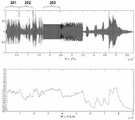
図3の上部において、オーディオ入力信号の信号レベルがフルスケールで示される。すなわち、0dBフルスケール(0dBFS)が、デジタル領域における最大の潜在的な信号レベルに割り当てられる。dBフルスケールとは、フルスケールに対するデシベルを意味する。図3の上部から分かるように、信号レベル、したがって同様に、ユーザによって知覚される信号に対応するラウドネスレベルが大幅に変化する。図3の下部において、信号入力レベルから対応するラウドネスが推定された。ラウドネス推定の1つの可能性が、Recommendation ITU−R BS.1770−1(「Algorithms to Measure Audio Program Loudness and to a Peak Audio Level」)において説明される。本出願において、ラウドネスは両耳聴定位モデルを通じて推定されてもよい。図3に示す音声信号が車両内のユーザに再生される場合、オーディオ信号の一部が不快なラウドネスで知覚されてもよく、一方で、オーディオ信号の他の部分がユーザによって正確に知覚されるには低すぎると見なされてもよい。図4において、図3の信号の理想的に調整されたレベルが示される。例えば、範囲201における信号サンプルはより低い信号レベルに適応されるべきであり、一方で、範囲202における信号は、ユーザによる良好な知覚のために、より高い信号レベルに適応されるべきである。同様に、範囲203における信号は、強く低減された信号レベルで出力されるべきである。
At the top of FIG. 3, the signal level of the audio input signal is shown in full scale. That is, 0 dB full scale (0 dBFS) is assigned to the highest potential signal level in the digital domain. dB full scale means decibels for full scale. As can be seen from the top of FIG. 3, the signal level, and thus the loudness level corresponding to the signal perceived by the user, varies significantly. At the bottom of FIG. 3, the corresponding loudness was estimated from the signal input level. One possibility of loudness estimation is Recognition ITU-R BS. 1770-1 ("Algorithms to Measure Audio Program Loudness and to a Peak Audio Level"). In this application, loudness may be estimated through a binaural localization model. When the audio signal shown in FIG. 3 is reproduced by a user in a vehicle, part of the audio signal may be perceived with unpleasant loudness, while other parts of the audio signal are perceived accurately by the user. May be considered too low. In FIG. 4, ideally tuned levels of the signal of FIG. 3 are shown. For example, the signal sample in
図4の下部において、上部において理想的に調整されたレベルの対応する推定されたラウドネスが示される。図2の下部を図4の下部と比較すると、図4に示されるラウドネス評価が図3に示されるラウドネス評価よりも好ましいと推定され得る。図4のラウドネス評価は、図3のラウドネス評価よりも良好に知覚されることができる。ここでは、平滑化された、比較的一定なラウドネスに達し、それが視覚化される。 In the lower part of FIG. 4, the corresponding estimated loudness of the ideally adjusted level is shown in the upper part. Comparing the lower part of FIG. 2 with the lower part of FIG. 4, it can be estimated that the loudness evaluation shown in FIG. 4 is preferable to the loudness evaluation shown in FIG. The loudness assessment of FIG. 4 can be perceived better than the loudness assessment of FIG. Here, a smoothed, relatively constant loudness is reached, which is visualized.
図5は、発話検出ユニットの部分のより詳細な図を示す。発話検出ユニットは、発話入力信号が発話成分を含むか否かを判定しなければならない。このために、発話入力信号は、分割ユニット370において定義された長さのフレーム、例えば、2秒に分離されてもよく、特徴抽出ユニット371において、フレームごとに特徴が算出され、抽出されてもよい。したがって、発話入力信号がフレームに分割され、特徴抽出のためにバッファに入力され、バッファ内容ごとに、特徴抽出が実行される。ユニット372において、抽出された特徴に基づき、分類が実行される。例えば、平均値及び標準偏差が算出されてもよい。最終的に、ユニット373において、クラスタリングが実行される。このクラスタリングユニット373において、特徴空間におけるクラスタリング中心を判定し、各特徴ベクトルを最も近い中心に割り当てるために、フレームごとにクラスラベルの発見が試みられる。例として、K平均アルゴリズムが利用されてもよい。
FIG. 5 shows a more detailed view of the portion of the utterance detection unit. The utterance detection unit must determine whether the utterance input signal contains a utterance component. For this purpose, the utterance input signal may be separated into frames of the length defined in the
ユニット371における抽出特徴は、合計スペクトルパワー、零交差率または、メル周波数ケプストラム係数(MFCCs)等の特徴を含んでもよい。
Extraction features in
発話入力信号内の発話信号成分を検出するために、当該技術分野で既知の任意の他の方法が利用され得ることを理解すべきである。発話検出は特に、曲内に発生する発話及びテキストを識別するよう構成されるべきである。ゲイン判定ユニットによってこれらの成分に、Nチャネルオーディオ入力信号における他の非発話成分と比較して異なる処理を行うために、発話言語の発話成分のみが検出されるべきである。 It should be understood that any other method known in the art can be utilized to detect the utterance signal component in the utterance input signal. Utterance detection should specifically be configured to identify utterances and text that occur within the song. Only the spoken component of the spoken language should be detected in order for the gain determination unit to process these components differently than the other non-spoken components in the N-channel audio input signal.
発話検出ユニットの出力は、0%から100%の間の確率とすることができる。確率が特定のレベルを上回る場合、発話検出ユニットは発話入力チャネル内に発話が存在すると仮定してもよく、ゲイン判定ユニットがオーディオ入力チャネルと比較して異なる方法で発話入力チャネルを制御することができるように、ゲイン判定ユニットに情報を適宜伝達してもよい。発話入力チャネル内に発話が一切存在しないと発話検出ユニットが仮定する場合、発話入力チャネル及び他のオーディオ入力チャネルの両方を、同様に適応させることができる。 The output of the utterance detection unit can have a probability between 0% and 100%. If the probabilities exceed a certain level, the utterance detection unit may assume that the utterance is within the utterance input channel, and the gain determination unit may control the utterance input channel differently than the audio input channel. Information may be appropriately transmitted to the gain determination unit so as to be possible. If the utterance detection unit assumes that there is no utterance in the utterance input channel, both the utterance input channel and the other audio input channels can be adapted as well.
図6において、発話出力チャネル46の1つの異なるサンプル61から63が、異なる時定数71から73によって個別に示される。時定数71から73は、1つのサンプルから次のサンプルにラウドネスがどのように適応されるかを示す。時定数は、上昇する時定数または下降する時定数とすることができる。上昇する時定数は1つのサンプルから次のサンプルに信号ゲインがどのように増大されるかを示し、一方で、下降する時定数は1つのサンプルから次のサンプルへのゲインの低減を示す。時定数71から73は、上昇する時定数が下降する時定数よりもはるかに迅速に適応され得るように判定される。例えば、2つのトラック間またはトラック内で信号ポーズが判定される場合、騒音の増幅を回避するために、オーディオ信号レベルは増大されるべきではない。新規トラックが開始する際、非常に低い信号レベルの直後に、高い信号レベルが発生してもよい。ラウドネス推定の上昇する時定数は、新規トラック開始時の信号レベルが大幅に増大することを回避するために、適宜に適応されるべきである。オーディオ信号レベルの低減の場合の下降する時定数のみにより、増大に比較して、信号レベルのより緩やかな低減が可能である。さらに、時定数は、適応可能な時定数である。すなわち、トラックが長いほど、時定数の反応は緩やかである。平滑化されたラウドネス推定もまた、人間がラウドネスを知覚するのと同様の方法でのラウドネス推定を保証する。ピーク及びディップは、人間の聴覚システムによって平滑化される。オーディオトラックの増大時間とともに時定数がより緩やかに変化するという事実により、オーディオ信号のダイナミクスが維持される。しかしまた、音楽信号の長いランタイムに達する際、増大するラウドネスのより短い反応時間により、迅速な信号増大への適切な反応が保証される。さらに、時定数は、発話出力チャネルにおける発話を含む成分が、他のオーディオ出力チャネルの成分と比較して異なる方法で適応されるものである。図6の上部はさらに、異なる時定数91から93によって分離された他のオーディオ出力チャネル45の異なるサンプルを示す。
In FIG. 6, one different sample 61-63 of the
図6の下部において、出力信号45及び46についてのゲイン増大及びゲイン低減が時間の経過とともに示される。音楽サンプルの第1のブロック64に関して、第1のゲイン75が示されるように判定される。続く信号ブロック65に関して増大されたゲインが判定され、信号ブロック66がわずかに低減したゲインとともにそれに続き、ゲイン低減は76によってシンボル化されるように適応される。時定数を利用したラウドネス適応に基づき、ブロックごとのゲイン、すなわち、ブロックごとの目標ゲインが判定される。ブロックnの目標ゲインはその後、前のブロックn−1の目標ゲインから開始する線形ランプにて達成される。下部に示される例において、対応するゲイン95及び96を有する異なるサンプル84から86を含む発話出力チャネルについてのゲイン増大及びゲイン低減が示される。ブロック64の終端で発話が検知されると仮定される。さらに、発話信号成分は、発話成分の明瞭度を向上させるために、他の成分と比較して増大されるべきであると仮定される。ゲイン75をゲイン95と比較すると、発話出力チャネル46は、他のオーディオ出力チャネル45と比較して、より強い増大を受けたものと推定され得る。
At the bottom of FIG. 6, gain gains and gains decrease for the output signals 45 and 46 are shown over time. For the
トラック内の、または2つのトラック間のポーズが判定される場合、時定数がリセットされてもよい。図2の信号分析ユニット30において実行されるポーズ検出またはトラック検出が、ポーズ検出ユニット33及びトラック検出ユニット34によってシンボル化される。図2の実施形態において、ラウドネス判定ユニット31、時定数生成ユニット32、ポーズ及びトラック検出ユニット33及び34、ゲイン判定ユニット35、ダウンミックスユニット36ならびに発話検出ユニット37が別個のユニットとして示される。しかし、異なるユニットがより少ないユニットに組み込まれてもよいこと、また、ユニットがいくつかのユニットまたは1つのユニットにさえ組み合わせられてもよいことが当業者に明らかとなるだろう。さらに、信号分析ユニットは、ハードウェア要素によって、またはソフトウェア要素によって、または、ハードウェアとソフトウェアとの組み合わせによって、設計されてもよい。
The time constant may be reset if the pose within the track or between the two tracks is determined. The pose detection or track detection performed in the
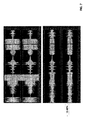
図7において、自動ラウドネス適応の第1の例が示される。図7の上部において、ラウドネス推定前のオーディオ入力信号が示される。オーディオ入力信号の2つのチャネルから分かるように、入力信号は異なる入力レベル範囲を包含する。最大インプットレベルは0dBフルスケールであってもよい。図7の下部において、ラウドネス推定後のオーディオ出力信号19及びゲイン適応が示される。図7の上部から分かるように、平均信号レベルは−12dBフルスケールに設定される。同時に、オーディオ信号の動的構造が維持される。 FIG. 7 shows a first example of automatic loudness adaptation. At the top of FIG. 7, the audio input signal before loudness estimation is shown. As can be seen from the two channels of the audio input signal, the input signal covers different input level ranges. The maximum input level may be 0 dB full scale. At the bottom of FIG. 7, the audio output signal 19 and gain adaptation after loudness estimation are shown. As can be seen from the top of FIG. 7, the average signal level is set to -12 dB full scale. At the same time, the dynamic structure of the audio signal is maintained.
図8において、入力レベルが−20dBフルスケールの最大入力レベルを有する別の例が示される。図8の下部において、ラウドネス推定後のオーディオ出力信号19及びゲイン適応が示される。再び動的構造が維持され、平均信号レベルは再び−12dBフルスケールになる。図7及び8の上部において示される入力信号がユーザに出力された場合、不快に高い信号レベルを回避し、信号レベルが聴くには低すぎるオーディオ信号の部分についての信号を増大させるために、ユーザは音量を頻繁に調整しなければならない。 In FIG. 8, another example is shown in which the input level has a maximum input level of −20 dB full scale. At the bottom of FIG. 8, the audio output signal 19 and gain adaptation after loudness estimation are shown. The dynamic structure is maintained again and the average signal level is again at -12 dB full scale. When the input signal shown in the upper part of FIGS. 7 and 8 is output to the user, the user avoids an unpleasantly high signal level and increases the signal for a portion of the audio signal whose signal level is too low to hear. Must adjust the volume frequently.
図9は、システム400の概略的なアーキテクチャビューを示す。システム400は、他の図に関連して上述した全てのステップを実行するよう構成することができる。システム400は、詳細には図示されない入力ユニット及び出力ユニットを有するインターフェース410を含む。図1に示す組み合わせられた出力信号60の出力のためにインターフェースが提供される。図1に関連して上述したように、インターフェースは、異なる入力信号20、21を受信するように、さらに構成される。
FIG. 9 shows a schematic architectural view of the
さらに、システム400の操作を担当する処理ユニット420が提供される。例えば、デジタル信号処理装置(DSP)等の1つまたは複数の処理装置を含む処理ユニット420は、メモリ430上で命令を実行することができ、メモリは、読み出し専用メモリ、ランダムアクセスメモリ、マスストレージ等を含んでもよい。メモリはさらに、図1から8に関連して上述したように、発話信号成分がNチャネルオーディオ入力信号の他のオーディオ入力チャネルと比較して異なる方法で適応される、システムの上述の機能を実行するために、処理ユニット420によって実行される好適なプログラムコードを含むことができる。
Further, a
本出願により、システムがラウドネスを推定し、出力前にゲインを自動的かつ動的に揃えるため、ユーザによる頻繁な音量調整が必要なくなる。さらに、Nチャネル信号内に存在する発話成分をよりよく理解することができるように、異なる成分のゲインが適応される。
This application eliminates the need for frequent user volume adjustments as the system estimates loudness and automatically and dynamically aligns the gain before output. In addition, the gains of the different components are adapted so that the speech components present in the N-channel signal can be better understood.
Claims (16)
前記Nチャネルオーディオ入力信号の知覚されるラウドネスを動的に判定することと、
発話信号成分が前記発話入力チャネル(21)内に存在するか否かを判定することと、
発話信号成分が前記発話入力チャネル(21)内に存在する場合に、
第1のゲイン制御ユニット(43)から出力される他のオーディオ出力チャネル(45)の少なくとも2つの連続するトラックが事前に定義された信号レベルの範囲または事前に定義されたラウドネス範囲に限定されるように、第1のゲインパラメータ(39)により、前記Nチャネルオーディオ入力信号の前記判定された知覚されるラウドネスに基づき、前記第1のゲイン制御ユニット(43)において前記他のオーディオ入力チャネル(20)のゲインを動的に適応させることと、
第2のゲイン制御ユニット(44)から出力される発話出力チャネル(46)の少なくとも2つの連続するトラックが前記事前に定義された信号レベルの範囲またはラウドネス範囲に限定されるように、第2のゲインパラメータ(38)により、前記Nチャネルオーディオ入力信号の前記判定されたラウドネスに基づき、前記発話入力チャネル(21)のゲインを前記第2のゲイン制御ユニット(44)において動的に適応させることであって、前記第2のゲインパラメータ(38)が前記第1のゲインパラメータ(39)とは異なる、ことと、
を含み、
発話信号成分が前記発話入力チャネル(21)内に存在するか否かを判定することが、
オーディオフレームに前記発話入力チャネルを分離するステップと、
フレームごとに特徴抽出を実行するステップと、
特徴空間において、前記抽出された特徴をクラスタリングするステップと
を含み、
前記Nチャネルオーディオ入力信号のNチャネルの別個のグループの各々に対して、前記知覚されるラウドネスが判定される、方法。 A method of adapting the gain of an N-channel audio input signal for generating an N-channel audio output signal, wherein the N-channel audio input signal includes a speech input channel (21) and the speech signal component is the N-channel. If present in the audio input signal, it is present in the speech input channel, the N-channel audio input signal includes another audio input channel (20), the method.
Dynamically determining the perceived loudness of the N-channel audio input signal and
Determining whether or not the utterance signal component exists in the utterance input channel (21), and
When the utterance signal component is present in the utterance input channel (21),
At least two consecutive tracks of the other audio output channel (45) output from the first gain control unit (43) are limited to a predefined signal level range or a predefined loudness range. As described above, the other audio input channel (20) in the first gain control unit (43) is based on the determined perceived loudness of the N-channel audio input signal by the first gain parameter (39). ) To dynamically adapt and
A second so that at least two consecutive tracks of the speech output channel (46) output from the second gain control unit (44) are limited to the predefined signal level range or loudness range. The gain of the speech input channel (21) is dynamically adapted by the second gain control unit (44) based on the determined loudness of the N-channel audio input signal according to the gain parameter (38) of the above. The second gain parameter (38) is different from the first gain parameter (39).
Including
Determining whether or not the utterance signal component is present in the utterance input channel (21) can be determined.
The step of separating the utterance input channel into the audio frame,
Steps to perform feature extraction on a frame-by-frame basis
In feature space, it viewed including the step of clustering the extracted features,
A method in which the perceived loudness is determined for each of the separate groups of N channels of the N channel audio input signal.
前記Nチャネルオーディオ入力信号の知覚されるラウドネスを動的に判定することと、
発話信号成分が前記発話入力チャネル(21)内に存在するか否かを判定することと、
発話信号成分が前記発話入力チャネル(21)内に存在する場合に、
第1のゲイン制御ユニット(43)から出力される他のオーディオ出力チャネル(45)の少なくとも2つの連続するトラックが事前に定義された信号レベルの範囲または事前に定義されたラウドネス範囲に限定されるように、第1のゲインパラメータ(39)により、前記Nチャネルオーディオ入力信号の前記判定された知覚されるラウドネスに基づき、前記第1のゲイン制御ユニット(43)において前記他のオーディオ入力チャネル(20)のゲインを動的に適応させることと、
第2のゲイン制御ユニット(44)から出力される発話出力チャネル(46)の少なくとも2つの連続するトラックが前記事前に定義された信号レベルの範囲またはラウドネス範囲に限定されるように、第2のゲインパラメータ(38)により、前記Nチャネルオーディオ入力信号の前記判定されたラウドネスに基づき、前記発話入力チャネル(21)のゲインを前記第2のゲイン制御ユニット(44)において動的に適応させることであって、前記第2のゲインパラメータ(38)が前記第1のゲインパラメータ(39)とは異なる、ことと、
を含み、
発話信号成分が前記発話入力チャネル(21)内に存在するか否かを判定することが、
オーディオフレームに前記発話入力チャネルを分離するステップと、
フレームごとに特徴抽出を実行するステップと、
特徴空間において、前記抽出された特徴をクラスタリングするステップと
を含み、
前記発話入力チャネル内に発話信号成分が一切存在しない場合に、前記他のオーディオ入力チャネル(20)及び前記発話入力チャネル(21)が同じゲインによって適応される、方法。 A method of adapting the gain of an N-channel audio input signal for generating an N-channel audio output signal, wherein the N-channel audio input signal includes a speech input channel (21) and the speech signal component is the N-channel. If present in the audio input signal, it is present in the speech input channel, the N-channel audio input signal includes another audio input channel (20), the method.
Dynamically determining the perceived loudness of the N-channel audio input signal and
Determining whether or not the utterance signal component exists in the utterance input channel (21), and
When the utterance signal component is present in the utterance input channel (21),
At least two consecutive tracks of the other audio output channel (45) output from the first gain control unit (43) are limited to a predefined signal level range or a predefined loudness range. Thus, according to the first gain parameter (39), the other audio input channel (20) in the first gain control unit (43) is based on the determined perceived loudness of the N-channel audio input signal. ) To dynamically adapt and
A second so that at least two consecutive tracks of the speech output channel (46) output from the second gain control unit (44) are limited to the predefined signal level range or loudness range. The gain of the speech input channel (21) is dynamically adapted by the second gain control unit (44) based on the determined loudness of the N-channel audio input signal according to the gain parameter (38) of the above. The second gain parameter (38) is different from the first gain parameter (39).
Including
Determining whether or not the utterance signal component is present in the utterance input channel (21) can be determined.
The step of separating the utterance input channel into the audio frame,
Steps to perform feature extraction on a frame-by-frame basis
With the step of clustering the extracted features in the feature space
Including
Wherein when the speech signal component in the speech input in the channel does not exist at all, the other audio input channels (20) and the speech input channel (21) is adapted by the same gain, Methods.
前記Nチャネルオーディオ入力信号の知覚されるラウドネスを判定するよう構成された、ラウドネス判定ユニット(31)と、
発話信号成分が前記発話入力チャネル(21)内に存在するか否かを判定するよう構成された、発話検出ユニット(37)と、
前記他のオーディオ入力チャネル(20)のゲインを制御するよう構成された、第1のゲイン制御ユニット(43)と、
前記発話入力チャネル(20)のゲインを制御するよう構成された、第2のゲイン制御ユニット(44)と
を含み、
前記発話入力信号内に発話信号成分が存在すると前記発話検出ユニットが検出する場合に、
前記第1のゲイン制御ユニット(43)は、前記第1のゲイン制御ユニット(43)から出力される他のオーディオ出力チャネル(51)の少なくとも2つの連続するトラックが事前に定義された信号レベルの範囲または事前に定義されたラウドネス範囲に限定されるように、第1のゲインパラメータ(39)により、前記Nチャネルオーディオ入力信号の前記判定された知覚されるラウドネスに基づき、前記他のオーディオ入力チャネル(20)の前記ゲインを動的に適応させ、
前記第2のゲイン制御ユニット(44)は、前記第2のゲイン制御ユニット(44)から出力される発話出力チャネル(52)の少なくとも2つの連続するトラックが前記事前に定義された信号レベルの範囲またはラウドネス範囲に限定されるように、第2のゲインパラメータ(38)により、前記Nチャネルオーディオ入力信号の前記判定されたラウドネスに基づき、前記発話入力チャネル(21)の前記ゲインを動的に適応させ、前記第2のゲインパラメータが前記第1のゲインパラメータとは異なり、
オーディオフレームに前記発話入力チャネルを分離すること、
フレームごとに特徴抽出を実行すること、
特徴空間において、前記抽出された特徴をクラスタリングすること、
を含むステップに基づき、発話信号成分が前記発話入力チャネル内に存在するか否かを判定するよう前記発話検出ユニット(37)が構成され、
前記Nチャネルオーディオ入力信号のNチャネルの別個のグループの各々に対して、前記知覚されるラウドネスが判定される、システム。 A system configured to adapt the gain of an N-channel audio input signal to generate an N-channel audio output signal, wherein the N-channel audio input signal includes an utterance input channel (21), and the utterance signal component is The N-channel audio input signal is present in the speech input channel when present in the N-channel audio input signal, and the N-channel audio input signal includes another audio input channel (20).
A loudness determination unit (31) configured to determine the perceived loudness of the N-channel audio input signal, and
An utterance detection unit (37) configured to determine whether or not the utterance signal component is present in the utterance input channel (21).
A first gain control unit (43) configured to control the gain of the other audio input channel (20).
It includes a second gain control unit (44) configured to control the gain of the utterance input channel (20).
When the utterance detection unit detects that the utterance signal component is present in the utterance input signal,
The first gain control unit (43) has at least two contiguous tracks of other audio output channels (51) output from the first gain control unit (43) at a predefined signal level. The other audio input channel is based on the determined perceived loudness of the N-channel audio input signal by a first gain parameter (39) so as to be limited to a range or a predefined loudness range. Dynamically adapting the gain of (20)
The second gain control unit (44) has at least two consecutive tracks of the speech output channel (52) output from the second gain control unit (44) at the predefined signal level. The second gain parameter (38) dynamically increases the gain of the speech input channel (21) based on the determined loudness of the N-channel audio input signal so that it is limited to a range or loudness range. Adapted, the second gain parameter is different from the first gain parameter.
Separating the utterance input channel into an audio frame,
Performing feature extraction on a frame-by-frame basis,
Clustering the extracted features in the feature space,
The utterance detection unit (37) is configured to determine whether or not the utterance signal component is present in the utterance input channel based on the step including .
A system in which the perceived loudness is determined for each of the separate groups of N channels of the N channel audio input signal.
少なくとも1つのプロセッサ(420)と、
前記少なくとも1つのプロセッサによって実行可能な命令を含むメモリ(430)と
を含み、請求項1〜9のいずれか1項に記載の方法を実行するよう前記システムが操作可能である、システム(400)。 A system configured to adapt the gain of an N-channel audio input signal to generate an N-channel audio output signal, wherein the N-channel audio input signal includes an utterance input channel and the utterance signal component is the N. The system is present in the speech input channel when present in the channel audio input signal, the N-channel audio input signal includes other audio input channels, and the system.
With at least one processor (420)
A system (400) that includes a memory (430) containing instructions that can be executed by the at least one processor and is capable of operating the system to perform the method of any one of claims 1-9. ..
Applications Claiming Priority (1)
| Application Number | Priority Date | Filing Date | Title |
|---|---|---|---|
| PCT/EP2016/065661 WO2018006927A1 (en) | 2016-07-04 | 2016-07-04 | Automatic correction of loudness level in audio signals containing speech signals |
Publications (2)
| Publication Number | Publication Date |
|---|---|
| JP2019525213A JP2019525213A (en) | 2019-09-05 |
| JP6902049B2 true JP6902049B2 (en) | 2021-07-14 |
Family
ID=56360391
Family Applications (1)
| Application Number | Title | Priority Date | Filing Date |
|---|---|---|---|
| JP2018556359A Active JP6902049B2 (en) | 2016-07-04 | 2016-07-04 | Automatic correction of loudness level of audio signals including utterance signals |
Country Status (6)
| Country | Link |
|---|---|
| US (1) | US10861481B2 (en) |
| EP (1) | EP3479378B1 (en) |
| JP (1) | JP6902049B2 (en) |
| KR (1) | KR102622459B1 (en) |
| CN (1) | CN109643555B (en) |
| WO (1) | WO2018006927A1 (en) |
Families Citing this family (6)
| Publication number | Priority date | Publication date | Assignee | Title |
|---|---|---|---|---|
| FR3073694B1 (en) * | 2017-11-16 | 2019-11-29 | Augmented Acoustics | METHOD FOR LIVE SOUNDING, IN THE HELMET, TAKING INTO ACCOUNT AUDITIVE PERCEPTION CHARACTERISTICS OF THE AUDITOR |
| KR102522567B1 (en) * | 2018-09-03 | 2023-04-18 | 삼성전자주식회사 | Electronic apparatus and operating method for the same |
| EP4128226B1 (en) * | 2020-03-27 | 2024-08-28 | Dolby Laboratories Licensing Corporation | Automatic leveling of speech content |
| JP7505830B2 (en) * | 2020-10-22 | 2024-06-25 | ガウディオ・ラボ・インコーポレイテッド | Audio signal processing device including multiple signal components using machine learning model |
| US11595730B2 (en) * | 2021-03-08 | 2023-02-28 | Tencent America LLC | Signaling loudness adjustment for an audio scene |
| CN113345447B (en) * | 2021-08-09 | 2021-10-29 | 北京百瑞互联技术有限公司 | Audio coding and decoding method, system, transmitter and receiver for preventing advertisement interference |
Family Cites Families (15)
| Publication number | Priority date | Publication date | Assignee | Title |
|---|---|---|---|---|
| JP4321049B2 (en) * | 2002-07-29 | 2009-08-26 | パナソニック電工株式会社 | Automatic gain controller |
| US7551745B2 (en) * | 2003-04-24 | 2009-06-23 | Dolby Laboratories Licensing Corporation | Volume and compression control in movie theaters |
| ATE502311T1 (en) | 2003-10-10 | 2011-04-15 | Harman Becker Automotive Sys | SYSTEM AND METHOD FOR DETERMINING THE POSITION OF A SOUND SOURCE |
| TWI517562B (en) * | 2006-04-04 | 2016-01-11 | 杜比實驗室特許公司 | Method, apparatus, and computer program for scaling the overall perceived loudness of a multichannel audio signal by a desired amount |
| CN101154379B (en) * | 2006-09-27 | 2011-11-23 | 夏普株式会社 | Method and device for locating keywords in voice and voice recognition system |
| JP4844622B2 (en) | 2008-12-05 | 2011-12-28 | ソニー株式会社 | Volume correction apparatus, volume correction method, volume correction program, electronic device, and audio apparatus |
| KR101068227B1 (en) * | 2009-06-23 | 2011-09-28 | 주식회사 더바인코퍼레이션 | Clarity Improvement Device and Voice Output Device Using the Same |
| EP2367286B1 (en) * | 2010-03-12 | 2013-02-20 | Harman Becker Automotive Systems GmbH | Automatic correction of loudness level in audio signals |
| US9424743B2 (en) * | 2012-10-12 | 2016-08-23 | Tata Consultancy Services Limited | Real-time traffic detection |
| US9413322B2 (en) | 2012-11-19 | 2016-08-09 | Harman International Industries, Incorporated | Audio loudness control system |
| US9135920B2 (en) | 2012-11-26 | 2015-09-15 | Harman International Industries, Incorporated | System for perceived enhancement and restoration of compressed audio signals |
| CA3262089A1 (en) * | 2013-10-22 | 2025-03-25 | Fraunhofer-Gesellschaft Zur Foerderung Der Angewandten Forschung E.V. | Concept for combined dynamic range compression and guided clipping prevention for audio devices |
| US9520851B2 (en) * | 2014-06-26 | 2016-12-13 | Kirusa, Inc. | Predictive automatic gain control in a media processing system |
| JP6594721B2 (en) * | 2015-09-28 | 2019-10-23 | アルパイン株式会社 | Speech recognition system, gain setting system, and computer program |
| CN105448290B (en) * | 2015-11-16 | 2019-03-01 | 南京邮电大学 | A kind of audio feature extraction methods becoming frame per second |
-
2016
- 2016-07-04 JP JP2018556359A patent/JP6902049B2/en active Active
- 2016-07-04 KR KR1020187032335A patent/KR102622459B1/en active Active
- 2016-07-04 WO PCT/EP2016/065661 patent/WO2018006927A1/en not_active Ceased
- 2016-07-04 US US16/312,778 patent/US10861481B2/en active Active
- 2016-07-04 CN CN201680086918.XA patent/CN109643555B/en active Active
- 2016-07-04 EP EP16735637.7A patent/EP3479378B1/en active Active
Also Published As
| Publication number | Publication date |
|---|---|
| US10861481B2 (en) | 2020-12-08 |
| EP3479378A1 (en) | 2019-05-08 |
| KR20190025816A (en) | 2019-03-12 |
| KR102622459B1 (en) | 2024-01-08 |
| CN109643555B (en) | 2024-01-30 |
| CN109643555A (en) | 2019-04-16 |
| JP2019525213A (en) | 2019-09-05 |
| EP3479378B1 (en) | 2023-05-24 |
| WO2018006927A1 (en) | 2018-01-11 |
| US20190362735A1 (en) | 2019-11-28 |
Similar Documents
| Publication | Publication Date | Title |
|---|---|---|
| EP2367286B1 (en) | Automatic correction of loudness level in audio signals | |
| JP6902049B2 (en) | Automatic correction of loudness level of audio signals including utterance signals | |
| JP5530720B2 (en) | Speech enhancement method, apparatus, and computer-readable recording medium for entertainment audio | |
| JPWO2010131470A1 (en) | Gain control device, gain control method, and audio output device | |
| US9571055B2 (en) | Level adjustment device and method | |
| US9219455B2 (en) | Peak detection when adapting a signal gain based on signal loudness |
Legal Events
| Date | Code | Title | Description |
|---|---|---|---|
| A521 | Request for written amendment filed |
Free format text: JAPANESE INTERMEDIATE CODE: A523 Effective date: 20190703 |
|
| A621 | Written request for application examination |
Free format text: JAPANESE INTERMEDIATE CODE: A621 Effective date: 20190703 |
|
| A977 | Report on retrieval |
Free format text: JAPANESE INTERMEDIATE CODE: A971007 Effective date: 20200716 |
|
| A131 | Notification of reasons for refusal |
Free format text: JAPANESE INTERMEDIATE CODE: A131 Effective date: 20200729 |
|
| A521 | Request for written amendment filed |
Free format text: JAPANESE INTERMEDIATE CODE: A523 Effective date: 20201020 |
|
| A02 | Decision of refusal |
Free format text: JAPANESE INTERMEDIATE CODE: A02 Effective date: 20201215 |
|
| A521 | Request for written amendment filed |
Free format text: JAPANESE INTERMEDIATE CODE: A523 Effective date: 20210319 |
|
| C60 | Trial request (containing other claim documents, opposition documents) |
Free format text: JAPANESE INTERMEDIATE CODE: C60 Effective date: 20210319 |
|
| A911 | Transfer to examiner for re-examination before appeal (zenchi) |
Free format text: JAPANESE INTERMEDIATE CODE: A911 Effective date: 20210330 |
|
| C21 | Notice of transfer of a case for reconsideration by examiners before appeal proceedings |
Free format text: JAPANESE INTERMEDIATE CODE: C21 Effective date: 20210331 |
|
| TRDD | Decision of grant or rejection written | ||
| A01 | Written decision to grant a patent or to grant a registration (utility model) |
Free format text: JAPANESE INTERMEDIATE CODE: A01 Effective date: 20210524 |
|
| A61 | First payment of annual fees (during grant procedure) |
Free format text: JAPANESE INTERMEDIATE CODE: A61 Effective date: 20210618 |
|
| R150 | Certificate of patent or registration of utility model |
Ref document number: 6902049 Country of ref document: JP Free format text: JAPANESE INTERMEDIATE CODE: R150 |
|
| R250 | Receipt of annual fees |
Free format text: JAPANESE INTERMEDIATE CODE: R250 |
|
| R250 | Receipt of annual fees |
Free format text: JAPANESE INTERMEDIATE CODE: R250 |