JP5770614B2 - Cement material and cement composition - Google Patents
Cement material and cement composition Download PDFInfo
- Publication number
- JP5770614B2 JP5770614B2 JP2011268130A JP2011268130A JP5770614B2 JP 5770614 B2 JP5770614 B2 JP 5770614B2 JP 2011268130 A JP2011268130 A JP 2011268130A JP 2011268130 A JP2011268130 A JP 2011268130A JP 5770614 B2 JP5770614 B2 JP 5770614B2
- Authority
- JP
- Japan
- Prior art keywords
- cement
- alkyl
- vinyl
- polymerization
- mol
- Prior art date
- Legal status (The legal status is an assumption and is not a legal conclusion. Google has not performed a legal analysis and makes no representation as to the accuracy of the status listed.)
- Expired - Fee Related
Links
Landscapes
- Aftertreatments Of Artificial And Natural Stones (AREA)
- Curing Cements, Concrete, And Artificial Stone (AREA)
- Addition Polymer Or Copolymer, Post-Treatments, Or Chemical Modifications (AREA)
Description
本発明は、セメント用材料及びセメント組成物に関する。 The present invention relates to a cement material and a cement composition.
従来より、セメント成形物の機械的諸特性を改良する目的で、ビニルアルコール系重合体(以下、「PVA」ということもある。)、メチルセルロース等の水溶性高分子や高分子エマルジョン等がセメント用材料として用いられている。これらのセメント用材料は、混和材として水硬性物質に混和して用いられたり、セメント構造体にセメントを打ち継ぐ際の打継ぎ材としてセメント構造体表面に塗布して用いられる。 Conventionally, water-soluble polymers such as vinyl alcohol polymers (hereinafter also referred to as “PVA”), methylcellulose, polymer emulsions, and the like are used for cement for the purpose of improving various mechanical properties of cement moldings. It is used as a material. These cement materials are used as an admixture mixed with a hydraulic substance, or applied to the cement structure surface as a joint material when the cement is handed over to the cement structure body.
上記混和材には、水や水硬性物質等の他の成分との混和状態が安定的に保たれ、少ない添加量でセメント成形物に高い強度が発現されること等が求められる。そこで、強度の向上を目的とした混和材として、各種変性されたPVAの開発がなされている(特開2001−172066号公報、特開平11−71150号公報参照)。しかし、これらのPVAを用いた混和材においても、強度の向上能が十分であるとは言えない。また、これらのPVAは、混和安定性を高めることを図ったものではない。 The admixture is required to be stably mixed with other components such as water and a hydraulic substance, and to exhibit high strength in the cement molded product with a small addition amount. Therefore, various modified PVAs have been developed as admixtures for the purpose of improving strength (see Japanese Patent Application Laid-Open Nos. 2001-172066 and 11-71150). However, even in these admixtures using PVA, it cannot be said that the ability to improve strength is sufficient. Further, these PVAs are not intended to increase the mixing stability.
一方、上記打継ぎ材においては、打ち継いだセメントに含まれる水分がセメント構造体に移行する、いわゆるドライアウトと呼ばれる現象に起因した界面での剥離の発生を防ぐことが必要とされる。そこで、このドライアウトの発生を抑制し、界面における接着力を高めることを目的として、エチレン変性されたPVAを分散剤として含み、高い保水性を有する打継ぎ材も提案されている(特開平8−81249号公報)。しかし、このような従来の打継ぎ材においても、接着強度が十分とは言えない。 On the other hand, in the above-mentioned joining material, it is necessary to prevent the occurrence of peeling at the interface due to a phenomenon called so-called dryout in which moisture contained in the joined cement is transferred to the cement structure. Therefore, for the purpose of suppressing the occurrence of this dry-out and increasing the adhesive strength at the interface, a jointing material containing ethylene-modified PVA as a dispersant and having high water retention has been proposed (Japanese Patent Laid-Open No. Hei 8). -81249). However, even such a conventional joint material cannot be said to have sufficient adhesive strength.
本発明は、上述のような事情に基づいてなされたものであり、混和安定性に優れ、セメントへの混和材や打継ぎ材として用いた際に、高い強度を有する成形物を得ることができるセメント用材料、及びこれを用いたセメント組成物を提供することを目的とする。 The present invention has been made based on the circumstances as described above, and has excellent mixing stability, and when used as an admixture or joint material to cement, a molded product having high strength can be obtained. An object of the present invention is to provide a cement material and a cement composition using the same.
上記課題を解決するためになされた発明は、
アルキル変性ビニルアルコール系重合体を含有し、
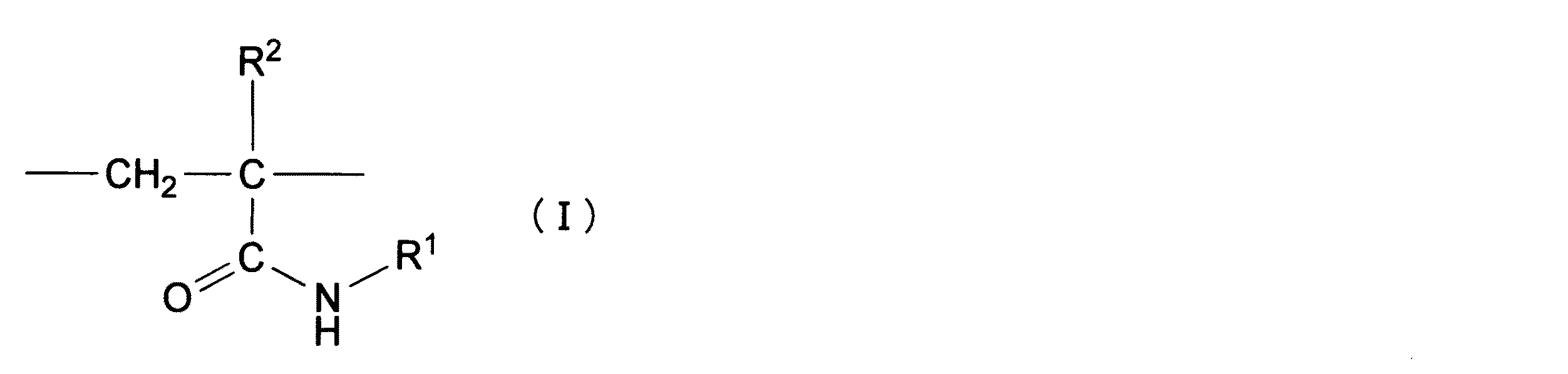
このアルキル変性ビニルアルコール系重合体が、下記一般式(I)で表される単量体単位(a)を含み、粘度平均重合度が200以上5,000以下、けん化度が20モル%以上99.99モル%以下、上記単量体単位(a)の含有率が0.05モル%以上5モル%以下であるセメント用材料である。
Containing an alkyl-modified vinyl alcohol polymer,
This alkyl-modified vinyl alcohol polymer contains a monomer unit (a) represented by the following general formula (I), has a viscosity average polymerization degree of 200 or more and 5,000 or less, and a saponification degree of 20 mol% or more and 99. .99 mol% or less, and the content of the monomer unit (a) is 0.05 mol% or more and 5 mol% or less.
当該セメント用材料は、上記特定のアルキル変性PVAを含有するため、混和安定性、保水性等に優れ、セメントへの混和材や打継ぎ材として用いた際に、高い強度を有する成形物を得ることができる。 Since the cement material contains the above-mentioned specific alkyl-modified PVA, it has excellent mixing stability, water retention, and the like, and when used as an admixture or jointing material for cement, a molded product having high strength is obtained. be able to.
当該セメント用材料は、混和材又は打継ぎ材として好適に用いることができる。 The cement material can be suitably used as an admixture or a joining material.
本発明のセメント組成物は、水硬性物質と当該セメント用材料とを含む。当該セメント組成物は、当該セメント用材料を含むため、混和安定性等に優れ、高い強度を有する成形物を得ることができる。 The cement composition of the present invention includes a hydraulic substance and the cement material. Since the cement composition contains the cement material, it is possible to obtain a molded article having excellent mixing stability and high strength.
以上説明したように、本発明のセメント用材料によれば、水硬性物質等に対する混和安定性に優れる。従って、当該セメント用材料は、セメント、好ましくはセメントモルタルへの混和材や打継ぎ材として用いた際に、高い強度を有する成形物を容易かつ確実に得ることができる。当該セメント用材料を含むセメント組成物も、混和安定性等に優れ、高い強度を有する成形物を得ることができる。 As described above, according to the cement material of the present invention, the mixing stability with respect to a hydraulic substance or the like is excellent. Therefore, when the cement material is used as an admixture or a joining material for cement, preferably cement mortar, a molded product having high strength can be obtained easily and reliably. A cement composition containing the cement material can also be used to obtain a molded article having excellent mixing stability and high strength.
以下、本発明のセメント用材料及びセメント組成物の実施の形態を詳説する。 Hereinafter, embodiments of the cement material and the cement composition of the present invention will be described in detail.
<セメント用材料>
本発明のセメント用材料は、特定のアルキル変性PVAを含有する。当該セメント用材料は、その他の成分を含有することができる。以下、各成分について詳説する。
<Cement materials>
The cement material of the present invention contains a specific alkyl-modified PVA. The cement material can contain other components. Hereinafter, each component will be described in detail.
<アルキル変性PVA>
上記アルキル変性PVAは、下記一般式(I)で表される単量体単位(a)を含有する。すなわち、上記アルキル変性PVAは、上記単量体単位(a)と、ビニルアルコール単量体単位(−CH2−CHOH−)との共重合体であり、さらに他の単量体単位を有していてもよい。但し、上記単量体単位(a)の作用を効果的に発現させるためには、上記アルキル変性PVAは、上記単量体単位(a)、ビニルアルコール単位及び残存するビニルエステル単位のみからなる共重合体であることが好ましい。
<Alkyl-modified PVA>
The alkyl-modified PVA contains a monomer unit (a) represented by the following general formula (I). That is, the alkyl-modified PVA is a copolymer of the monomer unit (a) and a vinyl alcohol monomer unit (—CH 2 —CHOH—), and further has other monomer units. It may be. However, in order to effectively express the action of the monomer unit (a), the alkyl-modified PVA is a co-polymer consisting only of the monomer unit (a), the vinyl alcohol unit and the remaining vinyl ester unit. A polymer is preferred.
式(I)中、R1は、炭素数8〜29の直鎖状又は分岐状アルキル基を表す。R2は、水素原子又は炭素数1〜8のアルキル基を表す。なお、上記R1及びR2は、本発明の効果が損なわれない範囲であれば、ハロゲン原子等の置換基を有していてもよいが、これらの置換基を有していないことが好ましい。 In formula (I), R 1 represents a linear or branched alkyl group having 8 to 29 carbon atoms. R 2 represents a hydrogen atom or an alkyl group having 1 to 8 carbon atoms. The R 1 and R 2 may have a substituent such as a halogen atom as long as the effect of the present invention is not impaired, but preferably does not have these substituents. .
上記R1で表される直鎖状又は分岐状のアルキル基に含まれる炭素数は8以上29以下であるが、10以上28以下が好ましく、12以上27以下がより好ましく、15以上26以下がさらに好ましく、17以上24以下が特に好ましい。R1がこのような長鎖アルキル基であることで、アルキル基同士の適度な相互作用が発現し、混和安定性、保水性等に優れ、セメントへの混和材や打継ぎ材として用いた際に、高い強度を有する成形物を得ることができる。この炭素数が8未満の場合、上記アルキル変性PVAにおけるアルキル基同士の相互作用が発現しないため、混和安定性や保水性等が十分に発現されない。逆に、この炭素数が29を超える場合、上記アルキル変性PVAの水溶性等が低下することなどにより、混和安定性等が低下する。 The linear or branched alkyl group represented by R 1 has 8 to 29 carbon atoms, preferably 10 to 28, more preferably 12 to 27, and 15 to 26. More preferably, 17 or more and 24 or less are particularly preferable. When R 1 is such a long-chain alkyl group, an appropriate interaction between the alkyl groups is manifested, excellent in mixing stability, water retention, etc., and when used as an admixture or jointing material for cement. In addition, a molded product having high strength can be obtained. When the number of carbon atoms is less than 8, the interaction between the alkyl groups in the alkyl-modified PVA is not expressed, so that the mixing stability and water retention are not sufficiently expressed. On the other hand, when the number of carbon atoms exceeds 29, the mixing stability and the like decrease due to a decrease in water solubility and the like of the alkyl-modified PVA.
上記R2は、水素原子又は炭素数1〜8のアルキル基であるが、合成の容易性等の点から、水素原子又はメチル基が好ましい。 R 2 is a hydrogen atom or an alkyl group having 1 to 8 carbon atoms, and a hydrogen atom or a methyl group is preferable from the viewpoint of ease of synthesis.
上記アルキル変性PVAにおける上記単量体単位(a)の含有率は、0.05モル%以上5モル%以下である。さらに、この含有率は、0.1モル%以上が好ましく、0.2モル%以上がより好ましい。また、この含有率は、2モル%以下が好ましく、1モル%以下がより好ましい。なお、この単量体単位(a)の含有率とは、アルキル変性PVAを構成する全構造単位に占める上記式(I)で表される単量体単位(a)の含有率である。また、当該アルキル変性PVAが、上記式(I)で表される単量体単位(a)以外に他のアルキル変性単量体単位を含まない場合、この単量体単位(a)の含有率が、いわゆるアルキル変性率となる。 The content of the monomer unit (a) in the alkyl-modified PVA is 0.05 mol% or more and 5 mol% or less. Further, the content is preferably 0.1 mol% or more, and more preferably 0.2 mol% or more. Further, the content is preferably 2 mol% or less, and more preferably 1 mol% or less. In addition, the content rate of this monomer unit (a) is a content rate of the monomer unit (a) represented by the said Formula (I) which occupies for all the structural units which comprise the alkyl-modified PVA. When the alkyl-modified PVA does not contain any other alkyl-modified monomer unit other than the monomer unit (a) represented by the above formula (I), the content of the monomer unit (a) Is the so-called alkyl modification rate.
この単量体単位(a)の含有率が5モル%を超えると、アルキル変性PVA一分子あたりに含まれる疎水基の割合が高くなり、このアルキル変性PVAの水溶性、混和安定性、保水性等が低下する。一方、この単量体単位(a)の含有率が0.05モル%未満の場合、アルキル変性PVAの水溶性は優れているものの、このアルキル変性PVA中に含まれるアルキルユニットの数が少ないため、混和安定性等のアルキル変性に基づく物性が十分に発現しない。 When the content of the monomer unit (a) exceeds 5 mol%, the proportion of hydrophobic groups contained in one molecule of the alkyl-modified PVA increases, and the water-solubility, mixing stability, and water retention of the alkyl-modified PVA are increased. Etc. decreases. On the other hand, when the content of the monomer unit (a) is less than 0.05 mol%, the water content of the alkyl-modified PVA is excellent, but the number of alkyl units contained in the alkyl-modified PVA is small. In addition, physical properties based on alkyl modification such as mixing stability are not sufficiently exhibited.
この単量体単位(a)の含有率は、上記アルキル変性PVAから求めてもよく、その前駆体であるアルキル変性ビニルエステル系重合体から求めてもよく、いずれもプロトンNMRから求めることができる。例えば、アルキル変性ビニルエステル系重合体から求める場合、具体的には、n−ヘキサン/アセトンでアルキル変性ビニルエステル系重合体の再沈精製を3回以上十分に行った後、50℃の減圧下で乾燥を2日間行い、分析用のサンプルを作製する。このサンプルをCDCl3に溶解させ、プロトンNMRを用いて室温で測定する。 The content of the monomer unit (a) may be obtained from the alkyl-modified PVA or may be obtained from an alkyl-modified vinyl ester polymer that is a precursor thereof, and both can be obtained from proton NMR. . For example, when obtaining from an alkyl-modified vinyl ester polymer, specifically, after reprecipitation and purification of the alkyl-modified vinyl ester polymer with n-hexane / acetone three or more times sufficiently, under reduced pressure at 50 ° C. Dry for 2 days to prepare a sample for analysis. This sample is dissolved in CDCl 3 and measured at room temperature using proton NMR.
この際、例えば、上記単量体単位(a)以外のアルキル変性単量体単位を含まず、R1が直鎖状であり、さらにR2が水素原子である場合、以下の方法にて算出できる。すなわち、アルキル変性ビニルエステル系重合体の主鎖メチンに由来するピークα(4.7〜5.2ppm)とアルキル基R1の末端メチル基に由来するピークβ(0.8〜1.0ppm)とから、下記式を用いて、単量体単位(a)の含有率Sを算出する。
S(モル%)
={(βのプロトン数/3)/(αのプロトン数+(βのプロトン数/3))}×100
In this case, for example, when the alkyl-modified monomer unit other than the monomer unit (a) is not included, R 1 is linear, and R 2 is a hydrogen atom, the calculation is performed by the following method. it can. That is, the peak α (4.7 to 5.2 ppm) derived from the main chain methine of the alkyl-modified vinyl ester polymer and the peak β (0.8 to 1.0 ppm) derived from the terminal methyl group of the alkyl group R 1 From the above, the content S of the monomer unit (a) is calculated using the following formula.
S (mol%)
= {(Number of protons of β / 3) / (number of protons of α + (number of protons of β / 3))} × 100
上記アルキル変性PVAの粘度平均重合度は200以上5,000以下であり、500以上3,000以下が好ましい。なお、粘度平均重合度を単に重合度と呼ぶことがある。この重合度が5,000を超えると、水に溶かした際の粘性が高まりすぎて、取扱性や混和安定性等が低下する。逆に、この重合度が200未満の場合は、増粘性、保水性等の上記アルキル変性PVAの各特性が十分に発揮されない。 The alkyl-modified PVA has a viscosity average degree of polymerization of 200 to 5,000, preferably 500 to 3,000. The viscosity average degree of polymerization may be simply referred to as the degree of polymerization. When this polymerization degree exceeds 5,000, the viscosity at the time of dissolving in water will increase too much, and handling property, mixing stability, etc. will fall. On the other hand, when the degree of polymerization is less than 200, the properties of the alkyl-modified PVA such as thickening and water retention are not sufficiently exhibited.
この粘度平均重合度(P)は、JIS−K6726に準じて測定される。すなわち、アルキル変性PVAを再けん化し、精製した後、30℃の水中で測定した極限粘度[η](単位:デシリットル/g)から次式により求められる。
P=([η]×103/8.29)(1/0.62)
This viscosity average degree of polymerization (P) is measured according to JIS-K6726. That is, after re-saponifying and purifying the alkyl-modified PVA, it is obtained by the following formula from the intrinsic viscosity [η] (unit: deciliter / g) measured in water at 30 ° C.
P = ([η] × 10 3 /8.29) (1 / 0.62)
上記アルキル変性PVAのけん化度は、20モル%以上99.99モル%以下であり、60モル%以上99.9モル%以下が好ましく、88モル%以上99.9モル%以下がさらに好ましい。 The saponification degree of the alkyl-modified PVA is 20 mol% or more and 99.99 mol% or less, preferably 60 mol% or more and 99.9 mol% or less, and more preferably 88 mol% or more and 99.9 mol% or less.
このけん化度が20モル%未満の場合には、上記アルキル変性PVAの水溶性、混和安定性、接着強度等が低下する。逆に、このけん化度が99.99モル%を超えると、アルキル変性PVAの生産が困難になるので実用的でない。なお、上記アルキル変性PVAのけん化度は、JIS−K6726に準じて測定し得られる値である。 When this saponification degree is less than 20 mol%, the water solubility, mixing stability, adhesive strength, etc. of the alkyl-modified PVA are lowered. On the contrary, if the degree of saponification exceeds 99.99 mol%, production of alkyl-modified PVA becomes difficult, which is not practical. The saponification degree of the alkyl-modified PVA is a value that can be measured according to JIS-K6726.
当該セメント用材料は、上記アルキル変性PVAを含有し、このアルキル変性PVAは、上述のように、上記単量体単位(a)が有する疎水性のR1及び親水性のアミド結合の存在により、水溶性を維持しつつ、優れた混和安定性や保水性等を発揮することができる。従って、当該セメント用材料は、上記アルキル変性PVAを含むことで、セメントへの混和材や打継ぎ材として用いた際に、高い強度を有する成形物を得ることができる。 The cement material contains the alkyl-modified PVA. As described above, the alkyl-modified PVA is formed by the presence of the hydrophobic R 1 and the hydrophilic amide bond of the monomer unit (a). It can exhibit excellent mixing stability and water retention while maintaining water solubility. Therefore, when the cement material contains the alkyl-modified PVA, a molded product having high strength can be obtained when used as an admixture or a joint material to cement.
<アルキル変性PVAの製造方法>
上記アルキル変性PVAを製造する方法は特に制限されないが、下記一般式(II)で表される不飽和単量体とビニルエステル系単量体との共重合を行い、得られたアルキル変性ビニルエステル系重合体をけん化する方法が好ましい。ここで、上記の共重合はアルコール系溶媒中又は無溶媒で行うことが好適である。
<Method for producing alkyl-modified PVA>
The method for producing the alkyl-modified PVA is not particularly limited, but the alkyl-modified vinyl ester obtained by copolymerizing an unsaturated monomer represented by the following general formula (II) with a vinyl ester monomer. A method of saponifying the polymer is preferred. Here, the above copolymerization is preferably performed in an alcohol solvent or without a solvent.
式(II)中、R1及びR2の定義は上記式(I)と同様である。 In the formula (II), the definitions of R 1 and R 2 are the same as in the above formula (I).
上記式(II)で表される不飽和単量体として具体的には、N−オクチルアクリルアミド、N−デシルアクリルアミド、N−ドデシルアクリルアミド、N−オクタデシルアクリルアミド、N−ヘキサコシルアクリルアミド、N−オクチルメタクリルアミド、N−デシルメタクリルアミド、N−ドデシルメタクリルアミド、N−オクタデシルメタクリルアミド、N−ヘキサコシルメタクリルアミド等が挙げられる。これらの中でも、N−オクタデシルアクリルアミド、N−オクチルメタクリルアミド、N−デシルメタクリルアミド、N−ドデシルメタクリルアミド、N−オクタデシルメタクリルアミド、及びN−ヘキサコシルメタクリルアミドが好ましく、N−オクタデシルアクリルアミド、N−ドデシルメタクリルアミド及びN−オクタデシルメタクリルアミドがより好ましく、N−オクタデシルアクリルアミド及びN−オクタデシルメタクリルアミドがさらに好ましい。 Specific examples of the unsaturated monomer represented by the above formula (II) include N-octylacrylamide, N-decylacrylamide, N-dodecylacrylamide, N-octadecylacrylamide, N-hexacosylacrylamide, and N-octyl. Examples include methacrylamide, N-decyl methacrylamide, N-dodecyl methacrylamide, N-octadecyl methacrylamide, N-hexacosyl methacrylamide and the like. Among these, N-octadecylacrylamide, N-octylmethacrylamide, N-decylmethacrylamide, N-dodecylmethacrylamide, N-octadecylmethacrylamide, and N-hexacosylmethacrylamide are preferable, and N-octadecylacrylamide, N -Dodecyl methacrylamide and N-octadecyl methacrylamide are more preferable, and N-octadecyl acrylamide and N-octadecyl methacrylamide are more preferable.
上記ビニルエステル系単量体としては、ギ酸ビニル、酢酸ビニル、プロピオン酸ビニル、酪酸ビニル、イソ酪酸ビニル、ピバリン酸ビニル、バーサチック酸ビニル、カプロン酸ビニル、カプリル酸ビニル、ラウリン酸ビニル、パルミチン酸ビニル、ステアリン酸ビニル、オレイン酸ビニル、安息香酸ビニル等が挙げられるが、これら中でも酢酸ビニルが好ましい。 Examples of the vinyl ester monomers include vinyl formate, vinyl acetate, vinyl propionate, vinyl butyrate, vinyl isobutyrate, vinyl pivalate, vinyl versatate, vinyl caproate, vinyl caprylate, vinyl laurate, and vinyl palmitate. , Vinyl stearate, vinyl oleate, vinyl benzoate and the like, among which vinyl acetate is preferred.
一般式(II)で表される不飽和単量体とビニルエステル系単量体との共重合に際して、本発明の主旨を損なわない範囲で他の単量体を共重合しても差し支えない。使用しうる単量体としては、例えば、
エチレン、プロピレン、n−ブテン、イソブチレン等のα−オレフィン;
メチルビニルエーテル、エチルビニルエーテル、n−プロピルビニルエーテル、i−プロピルビニルエーテル、n−ブチルビニルエーテル、i−ブチルビニルエーテル、t−ブチルビニルエーテル、2,3−ジアセトキシ−1−ビニルオキシプロパン等のビニルエーテル類;
アクリロニトリル、メタクリロニトリル等のニトリル類;
塩化ビニル、フッ化ビニル等のハロゲン化ビニル類;
塩化ビニリデン、フッ化ビニリデン等のハロゲン化ビニリデン類;
酢酸アリル、2,3−ジアセトキシ−1−アリルオキシプロパン、塩化アリル等のアリル化合物;
ビニルトリメトキシシラン等のビニルシリル化合物;
酢酸イソプロペニル
等が挙げられる。
When the unsaturated monomer represented by the general formula (II) and the vinyl ester monomer are copolymerized, other monomers may be copolymerized within a range not impairing the gist of the present invention. Examples of monomers that can be used include:
Α-olefins such as ethylene, propylene, n-butene, isobutylene;
Vinyl ethers such as methyl vinyl ether, ethyl vinyl ether, n-propyl vinyl ether, i-propyl vinyl ether, n-butyl vinyl ether, i-butyl vinyl ether, t-butyl vinyl ether, 2,3-diacetoxy-1-vinyloxypropane;
Nitriles such as acrylonitrile and methacrylonitrile;
Vinyl halides such as vinyl chloride and vinyl fluoride;
Vinylidene halides such as vinylidene chloride and vinylidene fluoride;
Allyl compounds such as allyl acetate, 2,3-diacetoxy-1-allyloxypropane, allyl chloride;
Vinylsilyl compounds such as vinyltrimethoxysilane;
And isopropenyl acetate.
また、一般式(II)で表される不飽和単量体とビニルエステル系単量体との共重合に際し、得られる共重合体の重合度を調節すること等を目的として、本発明の主旨を損なわない範囲で連鎖移動剤の存在下で共重合を行っても差し支えない。この連鎖移動剤としては、
アセトアルデヒド、プロピオンアルデヒド等のアルデヒド類;
アセトン、メチルエチルケトン等のケトン類;
2−ヒドロキシエタンチオール等のメルカプタン類;
トリクロロエチレン、パークロロエチレン等のハロゲン化炭化水素類;
ホスフィン酸ナトリウム1水和物等のホスフィン酸塩類
等が挙げられ、これらの中でもアルデヒド類およびケトン類が好適に用いられる。
In addition, in the copolymerization of the unsaturated monomer represented by the general formula (II) and the vinyl ester monomer, the purpose of the present invention is to adjust the degree of polymerization of the obtained copolymer. Copolymerization may be carried out in the presence of a chain transfer agent within a range that does not impair. As this chain transfer agent,
Aldehydes such as acetaldehyde and propionaldehyde;
Ketones such as acetone and methyl ethyl ketone;
Mercaptans such as 2-hydroxyethanethiol;
Halogenated hydrocarbons such as trichlorethylene and perchlorethylene;
Examples thereof include phosphinic acid salts such as sodium phosphinate monohydrate, among which aldehydes and ketones are preferably used.
上記連鎖移動剤の添加量は、添加する連鎖移動剤の連鎖移動定数及び目的とするアルキル変性ビニルエステル系重合体の重合度に応じて決定することができるが、一般にビニルエステル系単量体に対して0.1〜10質量%が好ましい。 The amount of the chain transfer agent added can be determined according to the chain transfer constant of the chain transfer agent to be added and the degree of polymerization of the target alkyl-modified vinyl ester polymer. 0.1-10 mass% is preferable with respect to it.
一般式(II)で表される不飽和単量体とビニルエステル系単量体との共重合を行う際に採用される温度は0〜200℃が好ましく、30〜140℃がより好ましい。共重合を行う温度が0℃より低い場合は、十分な重合速度が得られにくい。また、重合を行う温度が200℃より高い場合、本発明で規定する単量体単位(a)の含有率を満足するアルキル変性PVAを得られにくい。共重合を行う際に採用される温度を0〜200℃に制御する方法としては、例えば、重合速度を制御することで、重合により生成する発熱と反応器の表面からの放熱とのバランスをとる方法や、適当な熱媒を用いた外部ジャケットにより制御する方法等が挙げられるが、安全性の面からは後者の方法が好ましい。 The temperature employed when copolymerizing the unsaturated monomer represented by the general formula (II) and the vinyl ester monomer is preferably 0 to 200 ° C, more preferably 30 to 140 ° C. When the copolymerization temperature is lower than 0 ° C., it is difficult to obtain a sufficient polymerization rate. Moreover, when the temperature which superposes | polymerizes is higher than 200 degreeC, it is difficult to obtain the alkyl modified PVA which satisfies the content rate of the monomer unit (a) prescribed | regulated by this invention. As a method for controlling the temperature employed in the copolymerization to 0 to 200 ° C., for example, by controlling the polymerization rate, the heat generated by the polymerization is balanced with the heat released from the surface of the reactor. Examples thereof include a method and a method of controlling by an external jacket using an appropriate heat medium, but the latter method is preferable from the viewpoint of safety.
一般式(II)で表される不飽和単量体とビニルエステル系単量体との共重合を行うのに採用される重合方式としては、回分重合、半回分重合、連続重合、半連続重合のいずれでもよい。重合方法としては、塊状重合法、溶液重合法、懸濁重合法、乳化重合法等公知の任意の方法を採用することができる。これらの中でも、無溶媒又はアルコール系溶媒中で重合を行う塊状重合法や溶液重合法が好適に採用され、高重合度の共重合体の製造を目的とする場合は乳化重合法が採用される。 The polymerization method employed for the copolymerization of the unsaturated monomer represented by the general formula (II) and the vinyl ester monomer is batch polymerization, semi-batch polymerization, continuous polymerization, or semi-continuous polymerization. Either of these may be used. As the polymerization method, any known method such as a bulk polymerization method, a solution polymerization method, a suspension polymerization method, or an emulsion polymerization method can be employed. Among these, a bulk polymerization method or a solution polymerization method in which polymerization is performed in a solvent-free or alcohol-based solvent is preferably employed, and an emulsion polymerization method is employed for the purpose of producing a copolymer having a high degree of polymerization. .
上記アルコール系溶媒としては、メタノール、エタノール、n−プロパノール等を用いることができるが、これらに限定されるものではない。また、これらの溶媒は2種類又はそれ以上の種類を混合して用いることができる。 Examples of the alcohol solvent include methanol, ethanol, n-propanol, and the like, but are not limited thereto. Moreover, these solvents can be used by mixing two or more kinds.
共重合に使用される開始剤としては、重合方法に応じて従来公知のアゾ系開始剤、過酸化物系開始剤、レドックス系開始剤等が適宜選ばれる。アゾ系開始剤としては、2,2’−アゾビスイソブチロニトリル、2,2’−アゾビス(2,4−ジメチルバレロニトリル)、2,2’−アゾビス(4−メトキシ−2,4−ジメチルバレロニトリル)等が挙げられ、過酸化物系開始剤としては、ジイソプロピルパーオキシジカーボネート、ジ−2−エチルヘキシルパーオキシジカーボネート、ジエトキシエチルパーオキシジカーボネート等のパーカーボネート化合物;t−ブチルパーオキシネオデカネート、α−クミルパーオキシネオデカネート、t−ブチルパーオキシデカネート等のパーエステル化合物;アセチルシクロヘキシルスルホニルパーオキシド;2,4,4−トリメチルペンチル−2−パーオキシフェノキシアセテート等が挙げられる。さらには、上記開始剤に過硫酸カリウム、過硫酸アンモニウム、過酸化水素等を組み合わせて開始剤とすることもできる。また、レドックス系開始剤としては、上記の過酸化物と亜硫酸水素ナトリウム、炭酸水素ナトリウム、酒石酸、L−アスコルビン酸、ロンガリット等の還元剤とを組み合わせたものが挙げられる。 As the initiator used for copolymerization, conventionally known azo initiators, peroxide initiators, redox initiators and the like are appropriately selected according to the polymerization method. As the azo initiator, 2,2′-azobisisobutyronitrile, 2,2′-azobis (2,4-dimethylvaleronitrile), 2,2′-azobis (4-methoxy-2,4- Dimethyl valeronitrile) and the like, and peroxide initiators include perisopropyl compounds such as diisopropyl peroxydicarbonate, di-2-ethylhexyl peroxydicarbonate and diethoxyethyl peroxydicarbonate; t-butyl Perester compounds such as peroxyneodecanate, α-cumylperoxyneodecanate, and t-butylperoxydecanate; acetylcyclohexylsulfonyl peroxide; 2,4,4-trimethylpentyl-2-peroxyphenoxyacetate, etc. Is mentioned. Furthermore, the initiator can be combined with potassium persulfate, ammonium persulfate, hydrogen peroxide, or the like to form an initiator. Moreover, as a redox-type initiator, what combined said peroxide and reducing agents, such as sodium hydrogen sulfite, sodium hydrogencarbonate, tartaric acid, L-ascorbic acid, Rongalite, is mentioned.
なお、一般式(II)で示される不飽和単量体とビニルエステル系単量体との共重合を高い温度で行った場合、ビニルエステル系単量体の分解に起因するアルキル変性PVAの着色等が見られることがある。この場合には、着色防止の目的で重合系に酒石酸のような酸化防止剤をビニルエステル系単量体に対して1〜100ppm程度添加することはなんら差し支えない。 In addition, when copolymerization of the unsaturated monomer represented by the general formula (II) and the vinyl ester monomer is performed at a high temperature, the coloring of the alkyl-modified PVA caused by the decomposition of the vinyl ester monomer Etc. may be seen. In this case, an antioxidant such as tartaric acid may be added to the polymerization system in an amount of about 1 to 100 ppm based on the vinyl ester monomer for the purpose of preventing coloring.
上記共重合により得られたアルキル変性ビニルエステル系重合体のけん化反応には、水酸化ナトリウム、水酸化カリウム、ナトリウムメトキシド等の塩基性触媒又はp−トルエンスルホン酸等の酸性触媒を用いた公知の加アルコール分解反応又は加水分解反応を適用することができる。この反応に使用しうる溶媒としては、メタノール、エタノール等のアルコール類;酢酸メチル、酢酸エチル等のエステル類;アセトン、メチルエチルケトン等のケトン類;ベンゼン、トルエン等の芳香族炭化水素等が挙げられ、これらは単独で、又は2種以上を組み合わせて用いることができる。これらの中でも、メタノール又はメタノール/酢酸メチル混合溶液を溶媒とし、水酸化ナトリウムを触媒に用いてけん化反応を行うのが簡便であり好ましい。 The saponification reaction of the alkyl-modified vinyl ester polymer obtained by the above copolymerization is publicly known using a basic catalyst such as sodium hydroxide, potassium hydroxide or sodium methoxide or an acidic catalyst such as p-toluenesulfonic acid. An alcoholysis reaction or a hydrolysis reaction can be applied. Examples of the solvent that can be used in this reaction include alcohols such as methanol and ethanol; esters such as methyl acetate and ethyl acetate; ketones such as acetone and methyl ethyl ketone; aromatic hydrocarbons such as benzene and toluene; These can be used alone or in combination of two or more. Among these, it is simple and preferable to perform the saponification reaction using methanol or a methanol / methyl acetate mixed solution as a solvent and sodium hydroxide as a catalyst.
<状態及び他の成分等>
当該セメント用材料は、上記アルキル変性PVAのみ、又は上記アルキル変性PVAとその他の固形分のみからなる固体状であってもよいし、水等の溶媒に溶解された水溶液状や、上記アルキル変性PVAを分散剤として用いた水性エマルジョンであってもよい。
<State and other ingredients>
The cement material may be the above-mentioned alkyl-modified PVA alone, or may be a solid consisting of only the above-mentioned alkyl-modified PVA and other solid components, or an aqueous solution dissolved in a solvent such as water, or the above-mentioned alkyl-modified PVA. It may be an aqueous emulsion using as a dispersant.
(分散質)
当該セメント用材料が水性エマルジョンである場合、分散質としては、例えば以下の不飽和単量体の(共)重合体を挙げることができる。
エチレン、プロピレン、イソブチレンなどのオレフィン;
塩化ビニル、フッ化ビニル、ビニリデンクロリド、ビニリデンフルオリドなどのハロゲン化オレフィン;
ギ酸ビニル、酢酸ビニル、プロピオン酸ビニル、バーサチック酸ビニルなどのビニルエステル;
アクリル酸、メタクリル酸、アクリル酸メチル、アクリル酸エチル、アクリル酸ブチル、アクリル酸2−エチルヘキシル、アクリル酸ドデシル、アクリル酸2−ヒドロキシエチルなどのアクリル酸エステル;
メタクリル酸メチル、メタクリル酸エチル、メタクリル酸ブチル、メタクリル酸2−エチルヘキシル、メタクリル酸ドデシル、メタクリル酸2−ヒドロキシエチルなどのメタクリル酸エステル;
アクリル酸ジメチルアミノエチル、メタクリル酸ジメチルアミノエチル及びこれらの四級化物、さらには、アクリルアミド、メタクリルアミド、N−メチロールアクリルアミド、N,N−ジメチルアクリルアミド、アクリルアミド−2−メチルプロパンスルホン酸及びそのナトリウム塩などのアクリルアミド系単量体;
スチレン、α−メチルスチレン、p−スチレンスルホン酸及びナトリウム塩、カリウム塩などのスチレン系単量体;
ブタジエン、イソプレン、クロロプレンなどのジエン系単量体;
その他N−ビニルピロリドンなど。これらは1種又は2種以上を混合して用いることができる。
(Dispersoid)
When the cement material is an aqueous emulsion, examples of the dispersoid include the following (co) polymers of unsaturated monomers.
Olefins such as ethylene, propylene, isobutylene;
Halogenated olefins such as vinyl chloride, vinyl fluoride, vinylidene chloride, vinylidene fluoride;
Vinyl esters such as vinyl formate, vinyl acetate, vinyl propionate, vinyl versatate;
Acrylic esters such as acrylic acid, methacrylic acid, methyl acrylate, ethyl acrylate, butyl acrylate, 2-ethylhexyl acrylate, dodecyl acrylate, 2-hydroxyethyl acrylate;
Methacrylic acid esters such as methyl methacrylate, ethyl methacrylate, butyl methacrylate, 2-ethylhexyl methacrylate, dodecyl methacrylate, 2-hydroxyethyl methacrylate;
Dimethylaminoethyl acrylate, dimethylaminoethyl methacrylate and quaternized products thereof, acrylamide, methacrylamide, N-methylolacrylamide, N, N-dimethylacrylamide, acrylamide-2-methylpropanesulfonic acid and sodium salt thereof Acrylamide monomers such as;
Styrene monomers such as styrene, α-methylstyrene, p-styrenesulfonic acid and sodium salt, potassium salt;
Diene monomers such as butadiene, isoprene and chloroprene;
Others such as N-vinyl pyrrolidone. These may be used alone or in combination of two or more.
上記分散質は、例えば、上記アルキル変性PVAの水溶液を分散剤に用いて、重合開始剤の存在下に、上記不飽和単量体を一時又は連続的に添加し、上記不飽和単量体を乳化重合することにより得られる。また、上記アルキル変性PVA水溶液を用いて上記不飽和単量体を予め乳化したものを、連続的に重合反応系に添加する乳化重合法も採用できる。 The dispersoid is, for example, using the aqueous solution of the alkyl-modified PVA as a dispersant, adding the unsaturated monomer temporarily or continuously in the presence of a polymerization initiator, and adding the unsaturated monomer. Obtained by emulsion polymerization. Further, an emulsion polymerization method in which the unsaturated monomer previously emulsified using the alkyl-modified PVA aqueous solution is continuously added to the polymerization reaction system can also be employed.
(その他の添加剤)
当該セメント用材料には、さらに、界面活性剤、可塑剤又は造膜助剤、フィラー、増量剤、防腐剤、防製材、pH調整剤等の添加剤が含有されていてもよい。
(Other additives)
The cement material may further contain additives such as surfactants, plasticizers or film-forming aids, fillers, extenders, preservatives, anti-proofing materials, and pH adjusters.
(界面活性剤)
上記界面活性剤としては、特に限定されず、例えば、
オレイン酸カリウム、ヒマシ油カリウム、半硬化牛脂脂肪酸ナトリウム、半硬化牛脂脂肪酸カリウム、ラウリル硫酸ナトリウム、ラウリル硫酸トリエタノールアミン、ラウリル硫酸アンモニウム、ドデシルベンゼンスルホン酸ナトリウム、アルキルナフタレンスルホン酸ナトリウム、アルキルジフェニルエーテルジスルホン酸ナトリウム、アルキルリン酸カリウム、β−ナフタレンスルホン酸ホルマリン縮合物のナトリウム塩、芳香族スルホン酸ホルマリン縮合物のナトリウム塩、ポリオキシエチレンラウリルエーテル硫酸ナトリウム、ポリオキシエチレンアルキルフェニルエーテル硫酸ナトリウム、ビストリデシルスルホコハク酸ナトリウム、ジオクチルスルホコハク酸ナトリウム、ジヘキシルスルホコハク酸ナトリウム、ジシクロヘキシルスルホコハク酸ナトリウム、ジアミルスルホコハク酸ナトリウム、ジイソブチルスルホコハク酸ナトリウム、イソデシルスルホコハク酸ナトリウム、スルホコハク酸ジナトリウムエトキシ化アルコール半エステル、スルホコハク酸ジナトリウムエトキシ化ノニルフェニル半エステル、N−(1,2−ジカルボキシエチル)−N−オクタデシルスルホコハク酸アミドテトラナトリウム、N−オクタデシルスルホコハク酸アミドジナトリウム、ジイソプロピルナフタレンスルホン酸ナトリウム、トリポリリン酸ナトリウム、ヘキサメタリン酸ナトリウムなどのアニオン性界面活性剤;
ステアリルアミンアセテート、ラウリルトリメチルアンモニウムクロライド、ステアリルトリメチルアンモニウムクロライド、ジステアリルジメチルアンモニウムクロライド、アルキルアミングアニジンポリオキシエタノール、アルキルベンジルジメチルアンモニウムクロライドなどのカチオン性界面活性剤;
ラウリルベタイン、ステアリルベタイン、ラウリルジメチルアミンオキサイド、ラウリルカルボキシメチルヒドロキシエチルイミダゾリニウムベタインなどの両性界面活性剤;
ポリオキシエチレンラウリルエーテル、ポリオキシエチレンセチルエーテル、ポリオキシエチレンステアリルエーテル、ポリオキシエチレンオレイルエーテル、ポリオキシエチレンオクチルフェニルエーテル、ポリオキシエチレンノニルフェニルエーテル、オキシエチレン−オキシプロピレンブロックポリマー、ソルビタン脂肪酸エステル、ポリオキシエチレンソルビタン脂肪酸エステル、脂肪酸モノグリセライド、ポリエチレングリコール脂肪酸エステル、ポリオキシエチレンラウリルアミン、ポリオキシエチレンステアリルアミンなどのノニオン性界面活性剤等を挙げることができる。
(Surfactant)
The surfactant is not particularly limited. For example,
Potassium oleate, potassium castor oil, sodium semi-cured tallow fatty acid, potassium semi-cured tallow fatty acid, sodium lauryl sulfate, triethanolamine lauryl sulfate, ammonium lauryl sulfate, sodium dodecylbenzenesulfonate, sodium alkylnaphthalenesulfonate, sodium alkyldiphenylether disulfonate , Potassium alkyl phosphate, sodium salt of β-naphthalenesulfonic acid formalin condensate, sodium salt of aromatic sulfonic acid formalin condensate, sodium polyoxyethylene lauryl ether sulfate, sodium polyoxyethylene alkylphenyl ether sulfate, bistridecyl sulfosuccinic acid Sodium, sodium dioctyl sulfosuccinate, sodium dihexyl sulfosuccinate, dicyclohexyl Sodium sulfosuccinate, sodium diamylsulfosuccinate, sodium diisobutylsulfosuccinate, sodium isodecyl sulfosuccinate, disodium sulfosuccinate ethoxylated alcohol half ester, disodium sulfosuccinate ethoxylated nonylphenyl half ester, N- (1,2-di Anionic surfactants such as carboxyethyl) -N-octadecyl sulfosuccinamide tetrasodium, N-octadecyl sulfosuccinamide disodium, sodium diisopropylnaphthalene sulfonate, sodium tripolyphosphate, sodium hexametaphosphate;
Cationic surfactants such as stearylamine acetate, lauryltrimethylammonium chloride, stearyltrimethylammonium chloride, distearyldimethylammonium chloride, alkylamminganidin polyoxyethanol, alkylbenzyldimethylammonium chloride;
Amphoteric surfactants such as lauryl betaine, stearyl betaine, lauryl dimethylamine oxide, lauryl carboxymethyl hydroxyethyl imidazolinium betaine;
Polyoxyethylene lauryl ether, polyoxyethylene cetyl ether, polyoxyethylene stearyl ether, polyoxyethylene oleyl ether, polyoxyethylene octyl phenyl ether, polyoxyethylene nonyl phenyl ether, oxyethylene-oxypropylene block polymer, sorbitan fatty acid ester, Nonionic surfactants such as polyoxyethylene sorbitan fatty acid ester, fatty acid monoglyceride, polyethylene glycol fatty acid ester, polyoxyethylene lauryl amine, polyoxyethylene stearyl amine and the like can be mentioned.
(可塑剤又は造膜助剤)
可塑剤又は造膜助剤としては、特に限定されず、例えば、ジメチルフタレート、ジエチルフタレート、ジアミルフタレート、ジブチルフタレート(DBP)、アセチルクエン酸トリブチル、アジピン酸ジイソブチル、セバチン酸ジブチル、ジメチルグリコールアジペート、ジエチルグリコールアジペート、ジブチルグリコールアジペート、ジメチルグリコールセバテート、ジエチルグリコールセバテート、ジメチルグリコールフタレート、ジエチルグリコールフタレート、ジブチルグリコールフタレート、トリクレシルホスフェート、ジオクチルフタレート、テキサノール、ポリエチレングリコールモノフェニルエーテル、ポリプロピレングリコールモノフェニルエーテル、ベンジルアルコール、ブチルカービトールアセテート、ブチルカービトール、3−メチル−3−メトキシブタノール、エチレングリコール、アセチレングリコールブチルセロソルブ、エチレンセロソルブ、塩化ビフェニール等を挙げることができる。
(Plasticizer or film-forming aid)
The plasticizer or film-forming aid is not particularly limited. For example, dimethyl phthalate, diethyl phthalate, diamyl phthalate, dibutyl phthalate (DBP), tributyl acetyl citrate, diisobutyl adipate, dibutyl sebacate, dimethyl glycol adipate, Diethyl glycol adipate, dibutyl glycol adipate, dimethyl glycol sebate, diethyl glycol sebate, dimethyl glycol phthalate, diethyl glycol phthalate, dibutyl glycol phthalate, tricresyl phosphate, dioctyl phthalate, texanol, polyethylene glycol monophenyl ether, polypropylene glycol monophenyl Ether, benzyl alcohol, butyl carbitol acetate, butyl car Tall, 3-methyl-3-methoxybutanol, ethylene glycol, acetylene glycol butyl cellosolve, ethylene cellosolve, can be mentioned biphenyl chloride.
(フィラー)
フィラーとしては、特に限定されず、例えば、炭酸カルシウム、カオリンクレー、ロウ石クレー、タルク、酸化チタン、酸化鉄、パルプ、各種樹脂粉末、マイカ、セリサイト、ベントナイト、アスベスト、けい酸カルシウム、けい酸アルミニウム、けいそう土、けい石、無水ケイ酸、含水ケイ酸、炭酸マグネシウム、水酸化アルミニウム、硫酸バリウム、硫酸カルシウム、カーボンブラック等を挙げることができる。
(Filler)
The filler is not particularly limited. For example, calcium carbonate, kaolin clay, wax stone clay, talc, titanium oxide, iron oxide, pulp, various resin powders, mica, sericite, bentonite, asbestos, calcium silicate, silicic acid. Examples thereof include aluminum, diatomaceous earth, silica, anhydrous silicic acid, hydrous silicic acid, magnesium carbonate, aluminum hydroxide, barium sulfate, calcium sulfate, and carbon black.
(増量剤)
増量剤としては、特に限定されず、例えば、カゼイン、グルー、ゼラチン、グルテン、大豆蛋白、アルギン酸アンモニウム、アルギン酸カリウム、アルギン酸ナトリウム、アラビヤゴム、トラガカントガム、カラヤガム、グアールガム、ローカストビーンガム、アイリッシュモス、大豆レシチン、ペクチン酸、澱粉、寒天、ベントナイトクレー、ポリアクリル酸アンモニウム、ポリアクリル酸ナトリウム、ポリアクリル酸、ポリメタクリル酸アンモニウム、ポリビニルアルコール、変性ポリ(ビニルメチルエーテル/無水マレイン酸)、ポリビニルピロリドン、ポリアクリルアミド、ポリエチレンオキシド、カルボキシル化メチルセルロース、メチルセルロース、ヒドロキシプロピルメチルセルロース、ヒドロキシエチルセルロース、キサントゲン酸セルロース、カルボキシル化澱粉、オレイン酸アンモニウム、けい酸ナトリウム等を挙げることができる。
(Bulking agent)
The bulking agent is not particularly limited. , Pectic acid, starch, agar, bentonite clay, ammonium polyacrylate, sodium polyacrylate, polyacrylic acid, polyammonium methacrylate, polyvinyl alcohol, modified poly (vinyl methyl ether / maleic anhydride), polyvinyl pyrrolidone, polyacrylamide , Polyethylene oxide, carboxylated methylcellulose, methylcellulose, hydroxypropylmethylcellulose, hydroxyethylcellulose, xanthone Gen acid cellulose, carboxylation starch, ammonium oleate, and sodium silicate and the like.
<混和材>
当該セメント用材料は、混和材として、水硬性物質や水等に混和させて用いることができる。当該セメント用材料は、上記アルキル変性PVAを含むため、セメント、好ましくはセメントモルタル用の混和材として用いることで、優れた強度を有するセメント成形物を得ることができる。
<Admixture>
The cement material can be used as an admixture mixed with a hydraulic substance or water. Since the cement material contains the alkyl-modified PVA, a cement molded product having excellent strength can be obtained by using it as an admixture for cement, preferably cement mortar.
上記水硬性物質としては、例えば、ポルトランドセメント、アルミナセメント、スラグセメント、フライアッシュセメントなどの水硬セメント、石膏などのセメント以外の水硬性材料等を挙げることができる。 Examples of the hydraulic substance include hydraulic cements such as Portland cement, alumina cement, slag cement and fly ash cement, and hydraulic materials other than cement such as gypsum.
当該セメント用材料(混和材)の添加方法としては、特に制限されず、水溶液として添加する方法や、粉末状の当該セメント用材料をセメント粉末とドライブレンドしておく方法などが挙げられる。 The method for adding the cement material (admixture) is not particularly limited, and examples thereof include a method of adding as an aqueous solution and a method of dry blending the powdered cement material with cement powder.
当該セメント用材料の添加量(混和量)としては、特に制限されないが、上記水硬性物質100質量部に対して、上記アルキル変性PVAの量として、1質量部以上50質量部以下が好ましく、5質量部以上20質量部以下がより好ましい。添加量が上記下限未満の場合は、当該セメント用材料の効果が十分に発現できない場合がある。逆に、添加量が上記上限を超える場合は、強度が飽和する場合があるだけでなく、セメントの流動性が低下する場合などがある。 The addition amount (mixing amount) of the cement material is not particularly limited, but the amount of the alkyl-modified PVA is preferably 1 part by mass or more and 50 parts by mass or less with respect to 100 parts by mass of the hydraulic substance. More preferred is 20 parts by mass or more. When the addition amount is less than the lower limit, the effect of the cement material may not be sufficiently exhibited. On the contrary, when the addition amount exceeds the above upper limit, not only the strength may be saturated, but also the fluidity of the cement may be lowered.
<打継ぎ材>
当該セメント材料は、セメント構造体にセメント、好ましくはセメントモルタルを打ち継ぐ際、打継ぎ材としてセメント構造体表面に塗布して用いることができる。当該セメント材料は、上記アルキル変性PVAを含むため、被膜形成性や被膜を形成した際の保水性などに優れる。従って、当該セメント材料を打継ぎ材として用いると、ドライアウトの発生を抑制し、強固な打継ぎを行うことができる。
<Joint material>
The cement material can be applied to the cement structure surface as a joint material when cement, preferably cement mortar, is handed over to the cement structure. Since the cement material contains the alkyl-modified PVA, the cement material is excellent in film formability and water retention when a film is formed. Therefore, when the cement material is used as a joining material, it is possible to suppress the occurrence of dry-out and perform a firm joining.
当該セメント材料は、打継ぎ材として用いる場合、通常、水溶液又は水系エマルジョンの状態で使用する。この際、上記塗工液の濃度としては、各種の状況に応じて適宜定めれば良いが、通常は10〜60質量%(固形分濃度)であり、好ましくは15〜50質量%(固形分濃度)である。 When the cement material is used as a joining material, it is usually used in the form of an aqueous solution or an aqueous emulsion. At this time, the concentration of the coating solution may be appropriately determined according to various situations, but is usually 10 to 60% by mass (solid content concentration), preferably 15 to 50% by mass (solid content). Density).
また、当該セメント材料(打継ぎ材)の塗布量としては、特に制限はないが、固形分として10〜100g/m2の範囲が好ましい。 Moreover, there is no restriction | limiting in particular as an application quantity of the said cement material (joining material), However, The range of 10-100 g / m < 2 > is preferable as solid content.
<セメント組成物>
本発明のセメント組成物は、水硬性物質と当該セメント用材料とを含む。当該セメント組成物は、当該セメント用材料を含むため、混和安定性等に優れ、高い強度を有する成形物を得ることができる。
<Cement composition>
The cement composition of the present invention includes a hydraulic substance and the cement material. Since the cement composition contains the cement material, it is possible to obtain a molded article having excellent mixing stability and high strength.
上記硬化性物質の例示及びセメント用材料の含有量(添加量)は、混和材として上述したとおりである。 The example of the said sclerosing | hardenable substance and content (addition amount) of the material for cement are as having mentioned above as an admixture.
当該セメント組成物には、通常、水が加えられる。この水の量としては、セメント組成物の配合比や成形物の強度、耐久性等から設定され、水/水硬性物質比が0.1〜2の範囲で使用されるのが一般的であり、0.2〜0.7の範囲が好ましい。 Water is usually added to the cement composition. The amount of water is set based on the blending ratio of the cement composition, the strength of the molded product, durability, and the like, and is generally used within a water / hydraulic substance ratio of 0.1 to 2. The range of 0.2 to 0.7 is preferable.
当該セメント組成物には、さらに、砂利、砂、砕石などの骨材、シリカ質粉末、補強繊維、消泡剤、保水剤、流動性改質剤、空気連行剤、減水剤、防錆剤、着色剤、凍結防止剤、可塑剤などを含有することができる。なお、当該セメント組成物は、砂利、砕石などの粗骨材を含有しないセメントモルタル組成物である場合、混和安定性や得られる強度等の本発明の効果をより享受できる。 The cement composition further includes aggregates such as gravel, sand and crushed stone, siliceous powder, reinforcing fibers, antifoaming agent, water retention agent, fluidity modifier, air entraining agent, water reducing agent, rust preventive agent, Coloring agents, antifreezing agents, plasticizers and the like can be contained. In addition, when the said cement composition is a cement mortar composition which does not contain coarse aggregates, such as gravel and crushed stone, the effect of this invention, such as mixing stability and the intensity | strength obtained, can be enjoyed more.
当該セメント組成物を用いたセメント成形物の成形方法には制限はなく、例えば、抄造法、押出法、フローオン法、鋳込み法等で成形できる。また、養生方法にも特に制限はなく、例えば、自然養生法、水中養生法、スチーム養生法、オートクレーブ養生法等が採用される。 There is no restriction | limiting in the shaping | molding method of the cement molding using the said cement composition, For example, it can shape | mold by a papermaking method, an extrusion method, a flow-on method, a casting method etc. Moreover, there is no restriction | limiting in particular also in a curing method, For example, a natural curing method, an underwater curing method, a steam curing method, an autoclave curing method etc. are employ | adopted.
以下、実施例によって本発明をさらに詳細に説明するが、本発明はこれらの実施例に限定されるものではない。以下の実施例及び比較例において、「部」及び「%」は、特に断りのない限り質量基準を意味する。 EXAMPLES Hereinafter, although an Example demonstrates this invention further in detail, this invention is not limited to these Examples. In the following examples and comparative examples, “parts” and “%” mean mass basis unless otherwise specified.
なお、得られたPVA(アルキル変性PVA及び無変性PVA)の評価は以下の方法に従って行った。 The obtained PVA (alkyl-modified PVA and non-modified PVA) was evaluated according to the following method.
[変性率]
PVAにおける式(I)で表される単量体単位(a)の含有率(変性率)は、上述したプロトンNMRを用いた方法に準じて求めた。なお、プロトンNMRは、500MHzのJEOL GX−500を用いた。
[Modification rate]
The content rate (modification rate) of the monomer unit (a) represented by the formula (I) in PVA was determined according to the above-described method using proton NMR. For proton NMR, 500 MHz JEOL GX-500 was used.
[重合度]
PVAの重合度は、JIS−K6726に記載の方法により求めた。
[Degree of polymerization]
The degree of polymerization of PVA was determined by the method described in JIS-K6726.
[けん化度]
PVAのけん化度は、JIS−K6726に記載の方法により求めた。
[Saponification degree]
The degree of saponification of PVA was determined by the method described in JIS-K6726.
<PVAの製造>
製造例1(PVA1の製造)
撹拌機、還流冷却管、窒素導入管、コモノマー滴下口及び開始剤の添加口を備えた3Lの反応器に、酢酸ビニル750g、メタノール250g及びN−オクタデシルメタクリルアミド1.1gを仕込み、窒素バブリングをしながら30分間系内を窒素置換した。また、ディレー溶液としてN−オクタデシルメタクリルアミドをメタノールに溶解して濃度5%としたコモノマー溶液を調製し、窒素ガスのバブリングにより窒素置換した。反応器の昇温を開始し、内温が60℃となったところで、2,2’−アゾビスイソブチロニトリル(AIBN)0.25gを添加し重合を開始した。ディレー溶液を滴下して重合溶液中のモノマー組成(酢酸ビニルとN−オクタデシルメタクリルアミドの比率)が一定となるようにしながら、60℃で3時間重合した後冷却して重合を停止した。重合を停止するまで加えたコモノマーの総量は4.8gであった。また重合停止時の固形分濃度は29.9%であった。続いて30℃、減圧下でメタノールを時々添加しながら未反応の酢酸ビニルモノマーの除去を行い、アルキル変性酢酸ビニル系重合体(アルキル変性PVAc)のメタノール溶液(濃度35%)を得た。さらに、これにメタノールを加えて調製したアルキル変性PVAcのメタノール溶液771.4g(溶液中のアルキル変性PVAc200.0g)に、27.9gのアルカリ溶液(水酸化ナトリウムの10%メタノール溶液)を添加してけん化を行った。ここで、けん化溶液におけるアルキル変性PVAc濃度は25%、アルキル変性PVAc中の酢酸ビニルユニットに対する水酸化ナトリウムのモル比は0.03であった。アルカリ溶液を添加後約1分でゲル状物が生成したので、これを粉砕器にて粉砕し、40℃で1時間放置してけん化を進行させた後、酢酸メチル500gを加えて残存するアルカリを中和した。フェノールフタレイン指示薬を用いて中和が終了したことを確認した後、濾別して白色固体を得、これにメタノール2,000gを加えて室温で3時間放置洗浄した。上記の洗浄操作を3回繰り返した後、遠心脱液して得られた白色固体を乾燥機中65℃で2日間放置してアルキル変性PVA(PVA1)を得た。PVA1の重合度は1,700、けん化度は98.5モル%、アルキル変性量(上記単量体単位(a)の含有率)は0.4モル%であった。
<Manufacture of PVA>
Production Example 1 (Production of PVA1)
A 3 L reactor equipped with a stirrer, reflux condenser, nitrogen inlet, comonomer dropping port and initiator addition port was charged with 750 g of vinyl acetate, 250 g of methanol and 1.1 g of N-octadecyl methacrylamide and bubbling nitrogen. Then, the system was purged with nitrogen for 30 minutes. Further, a comonomer solution in which N-octadecylmethacrylamide was dissolved in methanol to a concentration of 5% was prepared as a delay solution, and nitrogen substitution was performed by bubbling nitrogen gas. The temperature of the reactor was increased, and when the internal temperature reached 60 ° C., 0.25 g of 2,2′-azobisisobutyronitrile (AIBN) was added to initiate polymerization. The delay solution was added dropwise to polymerize at 60 ° C. for 3 hours, and the polymerization was stopped while the monomer composition (ratio of vinyl acetate and N-octadecylmethacrylamide) in the polymerization solution was kept constant. The total amount of comonomer added until the polymerization was stopped was 4.8 g. The solid content concentration when the polymerization was stopped was 29.9%. Subsequently, unreacted vinyl acetate monomer was removed while occasionally adding methanol under reduced pressure at 30 ° C. to obtain a methanol solution (concentration 35%) of an alkyl-modified vinyl acetate polymer (alkyl-modified PVAc). Furthermore, 27.9 g of an alkali solution (10% methanol solution of sodium hydroxide) was added to 771.4 g of an alkyl-modified PVAc methanol solution prepared by adding methanol thereto (200.0 g of alkyl-modified PVAc in the solution). Saponification was performed. Here, the alkyl-modified PVAc concentration in the saponification solution was 25%, and the molar ratio of sodium hydroxide to vinyl acetate units in the alkyl-modified PVAc was 0.03. A gel-like product was formed in about 1 minute after the addition of the alkaline solution. This was pulverized with a pulverizer and allowed to stand at 40 ° C. for 1 hour to proceed with saponification, and then 500 g of methyl acetate was added to leave the remaining alkali. Neutralized. After confirming that the neutralization was completed using a phenolphthalein indicator, a white solid was obtained by filtration, 2,000 g of methanol was added thereto, and the mixture was allowed to stand and washed at room temperature for 3 hours. After the above washing operation was repeated three times, the white solid obtained by centrifugal drainage was left in a dryer at 65 ° C. for 2 days to obtain alkyl-modified PVA (PVA1). The polymerization degree of PVA1 was 1,700, the saponification degree was 98.5 mol%, and the alkyl modification amount (content of the monomer unit (a)) was 0.4 mol%.
製造例2〜18(PVA2〜18の製造)
酢酸ビニル及びメタノールの仕込み量、重合時に使用するアルキル基を有する不飽和単量体の種類や添加量等の重合条件、けん化時におけるアルキル変性PVAcの濃度、酢酸ビニルユニットに対する水酸化ナトリウムのモル比等のけん化条件を表1に示すように変更した以外は、製造例1と同様の方法により各種のアルキル変性PVA(PVA2〜18)を製造した。なお、表1中の不飽和単量体は、上記式(II)で表される化合物であり、式(II)中のR1及びR2を表1に示す。
Production Examples 2 to 18 (Production of PVA 2 to 18)
Charge amount of vinyl acetate and methanol, polymerization conditions such as kind and addition amount of unsaturated monomer having alkyl group used during polymerization, concentration of alkyl-modified PVAc during saponification, molar ratio of sodium hydroxide to vinyl acetate unit Various alkyl-modified PVAs (PVA2-18) were produced in the same manner as in Production Example 1 except that the saponification conditions such as those were changed as shown in Table 1. The unsaturated monomer in Table 1 is a compound represented by the above formula (II), and Table 1 shows R 1 and R 2 in the formula (II).
製造例19(PVA19の製造)
撹拌機、還流冷却管、窒素導入管及び開始剤の添加口を備えた3Lの反応器に、酢酸ビニル750g、メタノール250gを仕込み、窒素バブリングをしながら30分間系内を窒素置換した。反応器の昇温を開始し、内温が60℃となったところで、2,2’−アゾビスイソブチロニトリル(AIBN)0.5gを添加し重合を開始し、60℃で3時間重合した後冷却して重合を停止した。重合停止時の固形分濃度は31.4%であった。続いて30℃、減圧下でメタノールを時々添加しながら未反応の酢酸ビニルモノマーの除去を行い、ポリ酢酸ビニル(PVAc)のメタノール溶液(濃度30%)を得た。さらに、これにメタノールを加えて調製したPVAcのメタノール溶液772.1g(溶液中のPVAc200.0g)に、27.9gのアルカリ溶液(水酸化ナトリウムの10%メタノール溶液)を添加してけん化を行った(けん化溶液のPVAc濃度25%、PVAc中の酢酸ビニルユニットに対する水酸化ナトリウムのモル比0.03)。アルカリ溶液を添加後約1分でゲル状物が生成したので、これを粉砕器にて粉砕し、40℃で1時間放置してけん化を進行させた後、酢酸メチル500gを加えて残存するアルカリを中和した。フェノールフタレイン指示薬を用いて中和が終了したことを確認した後、濾別して白色固体を得、これにメタノール2,000gを加えて室温で3時間放置洗浄した。上記の洗浄操作を3回繰り返した後、遠心脱液して得られた白色固体を乾燥機中65℃で2日間放置して無変性PVA(PVA19)を得た。PVA19の重合度は1,700、けん化度は98.5モル%であった。
Production Example 19 (Production of PVA19)
750 g of vinyl acetate and 250 g of methanol were charged into a 3 L reactor equipped with a stirrer, a reflux condenser, a nitrogen inlet, and an initiator addition port, and the system was purged with nitrogen for 30 minutes while bubbling nitrogen. The temperature of the reactor was increased, and when the internal temperature reached 60 ° C., 0.5 g of 2,2′-azobisisobutyronitrile (AIBN) was added to start polymerization, and polymerization was performed at 60 ° C. for 3 hours. After cooling, the polymerization was stopped. The solid content concentration when the polymerization was stopped was 31.4%. Subsequently, unreacted vinyl acetate monomer was removed while sometimes adding methanol under reduced pressure at 30 ° C. to obtain a methanol solution (concentration 30%) of polyvinyl acetate (PVAc). Furthermore, saponification was performed by adding 27.9 g of an alkaline solution (sodium hydroxide in 10% methanol) to 772.1 g of PVAc methanol solution prepared by adding methanol thereto (200.0 g of PVAc in the solution). (PVAc concentration of saponification solution 25%, molar ratio of sodium hydroxide to vinyl acetate units in PVAc 0.03). A gel-like product was formed in about 1 minute after the addition of the alkaline solution. This was pulverized with a pulverizer and allowed to stand at 40 ° C. for 1 hour to proceed with saponification, and then 500 g of methyl acetate was added to leave the remaining alkali. Neutralized. After confirming that the neutralization was completed using a phenolphthalein indicator, a white solid was obtained by filtration, 2,000 g of methanol was added thereto, and the mixture was allowed to stand and washed at room temperature for 3 hours. After repeating the above washing operation three times, the white solid obtained by centrifugal drainage was left in a dryer at 65 ° C. for 2 days to obtain unmodified PVA (PVA19). The polymerization degree of PVA19 was 1,700, and the saponification degree was 98.5 mol%.
[実施例1〜14及び比較例1〜5]
得られた各PVAを混和材及び打継ぎ材として用い、以下の評価を行った。各評価結果を表2に示す。
[Examples 1-14 and Comparative Examples 1-5]
The obtained PVA was used as an admixture and a joint material, and the following evaluation was performed. Each evaluation result is shown in Table 2.
[混和材としての評価]
水硬性物質(ポルトランドセメント)、表2に記載の各PVA、砂及び水を
水硬性物質:PVA:砂:水=1.0:0.1:3.0:0.7の質量比で混練し、セメント組成物を得た。
<混和安定性:ブリージング量>
200ccのメスシリンダーへ、セメント組成物を150cc加え、ゴム栓をした。60分静置後の水面とモルタル面との差から、ブリージング量(cc)を測定した。ブリージング量が大きいものは、混和安定性が悪い。
<混和安定性:フロー値>
セメント組成物作成直後、及び作成から60分後のフロー値(JIS−R5201に準じる)を測定した。この値が小さいものや、60分後の低下が大きいものは、混和安定性が悪い。
<接着強度>
JIS−R5201に準じて、オープンタイム0分、30分及び60分それぞれにおける接着強度(kg/m2)を測定した。
[Evaluation as admixture]
Hydraulic substance (Portland cement), each PVA described in Table 2, sand and water are kneaded at a mass ratio of hydraulic substance: PVA: sand: water = 1.0: 0.1: 3.0: 0.7 As a result, a cement composition was obtained.
<Mixing stability: breathing amount>
150 cc of the cement composition was added to a 200 cc graduated cylinder and a rubber stopper was attached. The breathing amount (cc) was measured from the difference between the water surface and the mortar surface after standing for 60 minutes. When the amount of breathing is large, the mixing stability is poor.
<Mixing stability: Flow value>
The flow value (according to JIS-R5201) was measured immediately after the cement composition was created and 60 minutes after the creation. When this value is small or when the decrease after 60 minutes is large, the mixing stability is poor.
<Adhesive strength>
According to JIS-R5201, the adhesive strength (kg / m < 2 >) in each of open time 0 minute, 30 minutes, and 60 minutes was measured.
[打継ぎ材としての評価]
<接着強度>
以下の方法にて、接着強度(kg/m2)を測定した。
(1)セメントはJIS−R5210(ポルトランドセメント)に規定される普通ポルトランドセメントとし、骨材はJIS−R5210の9.2に規定される豊浦標準砂を用いた。
(2)試験用基板
試験に用いるコンクリート基板は、水−セメント比60%の建築における標準的な調合とし、コンクリートを練り混ぜた後、合板型枠で300mm×300mm×厚さ50mmの大きさに打設して、試験室(温度20℃、相対湿度(RH)65%)中で28日間養生したものを用いた。
(3)塗り付けモルタル
試験に用いる塗り付けモルタルの調合は、質量比でセメント1、標準砂2とし、フロー値が170±5となるように水−セメント比を調整して、JIS−R5201の9.4の規定に準拠して練り混ぜた。
(4)試験体の作製
打継ぎ材としての各PVAの水溶液を、上記(2)の試験用基板の表面に刷毛で均一に塗り付け、24時間、湿度20℃、65%RHの雰囲気下に放置した。なお、打継ぎ材の塗布量は、固形分として50g/m2とした。次に、上記(3)に規定したモルタルを厚さ6mmに金ゴテで塗り付けて、48時間、20℃、80%RH以上の雰囲気下で養生後、さらに試験室中で26日間養生して試験体とした。
(5)接着強度試験
上記(4)で作成した試験体のモルタル面を、寸法40mm×90mmに基板に達するまで切り込んだ後、JIS−A6916の5.6に規定する試験方法に準じて接着強度試験を行い、5箇所の測定値の平均値を求めた。
[Evaluation as joining material]
<Adhesive strength>
The adhesive strength (kg / m 2 ) was measured by the following method.
(1) The cement used was ordinary Portland cement specified in JIS-R5210 (Portland cement), and the aggregate used was Toyoura standard sand specified in 9.2 of JIS-R5210.
(2) Test substrate The concrete substrate used for the test is a standard composition in a building with a water-cement ratio of 60%. After concrete is mixed, the plywood mold forms 300mm x 300mm x 50mm in thickness. It was cast and cured for 28 days in a test room (temperature 20 ° C., relative humidity (RH) 65%).
(3) Coated mortar The composition of the coated mortar used in the test is cement 1 and standard sand 2 in mass ratio, and the water-cement ratio is adjusted so that the flow value becomes 170 ± 5. Kneaded according to 9.4 regulations.
(4) Preparation of test body An aqueous solution of each PVA as a joining material was evenly applied to the surface of the test substrate of (2) with a brush and kept in an atmosphere of humidity 20 ° C. and 65% RH for 24 hours. I left it alone. The application amount of the joining material was 50 g / m 2 as a solid content. Next, apply the mortar specified in (3) above to a thickness of 6 mm with a gold trowel, cure for 48 hours in an atmosphere of 20 ° C. and 80% RH or more, and then cure in a test room for 26 days. A test body was obtained.
(5) Adhesive strength test After the mortar surface of the test specimen prepared in (4) above was cut into a size of 40 mm x 90 mm until reaching the substrate, the adhesive strength was determined according to the test method specified in 5.6 of JIS-A6916. The test was performed and the average value of the measured values at five locations was obtained.
上記表2に示されるように、本発明のセメント用材料は、混和安定性に優れ、混和材及び打継ぎ材として用いることで、高い強度でセメントを接着させることができることがわかる。 As shown in Table 2 above, it can be seen that the cement material of the present invention has excellent mixing stability, and can be used for adhering cement with high strength when used as an admixture and a joint material.
以上説明したように、本発明のセメント用材料は、セメント用の混和材や打継ぎ材として好適に用いることができる。 As described above, the cement material of the present invention can be suitably used as a cement admixture or joint material.
Claims (4)
このアルキル変性ビニルアルコール系重合体が、下記一般式(I)で表される単量体単位(a)を含み、粘度平均重合度が200以上5,000以下、けん化度が20モル%以上99.99モル%以下、上記単量体単位(a)の含有率が0.05モル%以上5モル%以下であるセメント用材料。
This alkyl-modified vinyl alcohol polymer contains a monomer unit (a) represented by the following general formula (I), has a viscosity average polymerization degree of 200 or more and 5,000 or less, and a saponification degree of 20 mol% or more and 99. .99 mol% or less and a cement material having a content of the monomer unit (a) of 0.05 mol% or more and 5 mol% or less.
Priority Applications (1)
| Application Number | Priority Date | Filing Date | Title |
|---|---|---|---|
| JP2011268130A JP5770614B2 (en) | 2011-12-07 | 2011-12-07 | Cement material and cement composition |
Applications Claiming Priority (1)
| Application Number | Priority Date | Filing Date | Title |
|---|---|---|---|
| JP2011268130A JP5770614B2 (en) | 2011-12-07 | 2011-12-07 | Cement material and cement composition |
Publications (2)
| Publication Number | Publication Date |
|---|---|
| JP2013119497A JP2013119497A (en) | 2013-06-17 |
| JP5770614B2 true JP5770614B2 (en) | 2015-08-26 |
Family
ID=48772323
Family Applications (1)
| Application Number | Title | Priority Date | Filing Date |
|---|---|---|---|
| JP2011268130A Expired - Fee Related JP5770614B2 (en) | 2011-12-07 | 2011-12-07 | Cement material and cement composition |
Country Status (1)
| Country | Link |
|---|---|
| JP (1) | JP5770614B2 (en) |
Families Citing this family (4)
| Publication number | Priority date | Publication date | Assignee | Title |
|---|---|---|---|---|
| EP3415482A1 (en) * | 2017-06-16 | 2018-12-19 | Nederlandse Organisatie voor toegepast- natuurwetenschappelijk onderzoek TNO | Dry premixture for flexible concrete and method for its preparation and use thereof |
| KR101991840B1 (en) * | 2018-11-29 | 2019-06-24 | (주)씨앤비 | Composition of elastic seal material for expansion joint and construction method of expansion joint using the same |
| CN111471128B (en) * | 2020-06-04 | 2021-02-02 | 甘肃省公路交通建设集团有限公司酒泉路衍产业开发分公司 | Water-based acrylic elastic emulsion, preparation method thereof and application thereof in asphalt pavement |
| JP7594934B2 (en) * | 2021-02-22 | 2024-12-05 | デンカ株式会社 | Mortar Composition |
Family Cites Families (1)
| Publication number | Priority date | Publication date | Assignee | Title |
|---|---|---|---|---|
| WO2011155546A1 (en) * | 2010-06-09 | 2011-12-15 | 株式会社クラレ | Alkyl-modified vinyl alcohol polymer, and composition, thickener, coating material for paper, coated paper, adhesive and film that contain same |
-
2011
- 2011-12-07 JP JP2011268130A patent/JP5770614B2/en not_active Expired - Fee Related
Also Published As
| Publication number | Publication date |
|---|---|
| JP2013119497A (en) | 2013-06-17 |
Similar Documents
| Publication | Publication Date | Title |
|---|---|---|
| RU2434894C2 (en) | Method of preparing cation-stabilised and water-redispersible polymer powder compositions | |
| US9334388B2 (en) | Dispersion powder compositions comprising gemini surfactants | |
| CN101687952B (en) | Water-based synthetic resin emulsion for cement mortar admixture, re-emulsifiable water-based synthetic resin emulsion powder for cement mortar admixture, and cement mortar admixture using the same | |
| US8217109B2 (en) | Protective-colloid-stabilized polymers in the form of their aqueous dispersions or of their water-redispersible powders | |
| JP2006523594A (en) | Use of redispersed powder compositions having a setting-promoting action | |
| US20080293884A1 (en) | Synthetic resin emulsion powder | |
| JP5770614B2 (en) | Cement material and cement composition | |
| US9567261B2 (en) | Low formaldehyde vinyl ester/ethylene emulsion copolymers | |
| CN101356198B (en) | Silane-modified dispersion powder | |
| WO2013187443A1 (en) | Re-emulsifiable synthetic resin powder composition for polymer cement and polymer cement mortar formed using same | |
| US9926232B2 (en) | Process for producing water-redispersible polymer powder compositions having cationic functionality | |
| JP6163122B2 (en) | Emulsion polymerization stabilizer and process for producing the same | |
| CN103906807B (en) | Alkyl modified vinyl alcohol polymer solution | |
| US11339228B2 (en) | Dispersion powder composition containing vinyl alcohol copolymerisate | |
| JP4071182B2 (en) | Admixture or joint material for synthetic resin powder and hydraulic material | |
| JPH0397644A (en) | Hydraulic composition | |
| JP5548676B2 (en) | Dispersion stabilizer for aqueous emulsion and aqueous emulsion | |
| JP5370801B2 (en) | Aqueous synthetic resin emulsion for cement mortar admixture, re-emulsifiable aqueous synthetic resin emulsion powder for cement mortar admixture, and cement mortar admixture using the same | |
| JP5892835B2 (en) | Re-emulsifiable synthetic resin powder composition for polymer cement, and polymer cement mortar using the same | |
| JP5143777B2 (en) | Synthetic resin emulsion powder and method for producing the same | |
| JP4997489B2 (en) | Cement mortar admixture | |
| JP4574143B2 (en) | Admixtures and joints for hydraulic materials | |
| JP5557222B2 (en) | Cation polymer-containing aqueous emulsion, cationic polymer-containing aqueous emulsion powder, and cement mortar admixture using the same | |
| JP3342428B2 (en) | Hydraulic molding | |
| EP2935357B1 (en) | Use of polyvinyl-alcohol-stabilised polymerisates in mineral construction materials |
Legal Events
| Date | Code | Title | Description |
|---|---|---|---|
| A621 | Written request for application examination |
Free format text: JAPANESE INTERMEDIATE CODE: A621 Effective date: 20140701 |
|
| A977 | Report on retrieval |
Free format text: JAPANESE INTERMEDIATE CODE: A971007 Effective date: 20150304 |
|
| A131 | Notification of reasons for refusal |
Free format text: JAPANESE INTERMEDIATE CODE: A131 Effective date: 20150407 |
|
| A521 | Request for written amendment filed |
Free format text: JAPANESE INTERMEDIATE CODE: A523 Effective date: 20150526 |
|
| TRDD | Decision of grant or rejection written | ||
| A01 | Written decision to grant a patent or to grant a registration (utility model) |
Free format text: JAPANESE INTERMEDIATE CODE: A01 Effective date: 20150616 |
|
| A61 | First payment of annual fees (during grant procedure) |
Free format text: JAPANESE INTERMEDIATE CODE: A61 Effective date: 20150625 |
|
| R150 | Certificate of patent or registration of utility model |
Ref document number: 5770614 Country of ref document: JP Free format text: JAPANESE INTERMEDIATE CODE: R150 |
|
| LAPS | Cancellation because of no payment of annual fees |