JP5151984B2 - Video encoding device - Google Patents
Video encoding device Download PDFInfo
- Publication number
- JP5151984B2 JP5151984B2 JP2008537357A JP2008537357A JP5151984B2 JP 5151984 B2 JP5151984 B2 JP 5151984B2 JP 2008537357 A JP2008537357 A JP 2008537357A JP 2008537357 A JP2008537357 A JP 2008537357A JP 5151984 B2 JP5151984 B2 JP 5151984B2
- Authority
- JP
- Japan
- Prior art keywords
- picture
- dummy
- encoding
- header
- pictures
- Prior art date
- Legal status (The legal status is an assumption and is not a legal conclusion. Google has not performed a legal analysis and makes no representation as to the accuracy of the status listed.)
- Expired - Fee Related
Links
Images




Classifications
-
- H—ELECTRICITY
- H04—ELECTRIC COMMUNICATION TECHNIQUE
- H04N—PICTORIAL COMMUNICATION, e.g. TELEVISION
- H04N19/00—Methods or arrangements for coding, decoding, compressing or decompressing digital video signals
- H04N19/50—Methods or arrangements for coding, decoding, compressing or decompressing digital video signals using predictive coding
- H04N19/503—Methods or arrangements for coding, decoding, compressing or decompressing digital video signals using predictive coding involving temporal prediction
- H04N19/51—Motion estimation or motion compensation
- H04N19/577—Motion compensation with bidirectional frame interpolation, i.e. using B-pictures
-
- H—ELECTRICITY
- H04—ELECTRIC COMMUNICATION TECHNIQUE
- H04N—PICTORIAL COMMUNICATION, e.g. TELEVISION
- H04N19/00—Methods or arrangements for coding, decoding, compressing or decompressing digital video signals
- H04N19/10—Methods or arrangements for coding, decoding, compressing or decompressing digital video signals using adaptive coding
- H04N19/102—Methods or arrangements for coding, decoding, compressing or decompressing digital video signals using adaptive coding characterised by the element, parameter or selection affected or controlled by the adaptive coding
- H04N19/103—Selection of coding mode or of prediction mode
- H04N19/107—Selection of coding mode or of prediction mode between spatial and temporal predictive coding, e.g. picture refresh
-
- H—ELECTRICITY
- H04—ELECTRIC COMMUNICATION TECHNIQUE
- H04N—PICTORIAL COMMUNICATION, e.g. TELEVISION
- H04N19/00—Methods or arrangements for coding, decoding, compressing or decompressing digital video signals
- H04N19/10—Methods or arrangements for coding, decoding, compressing or decompressing digital video signals using adaptive coding
- H04N19/102—Methods or arrangements for coding, decoding, compressing or decompressing digital video signals using adaptive coding characterised by the element, parameter or selection affected or controlled by the adaptive coding
- H04N19/132—Sampling, masking or truncation of coding units, e.g. adaptive resampling, frame skipping, frame interpolation or high-frequency transform coefficient masking
-
- H—ELECTRICITY
- H04—ELECTRIC COMMUNICATION TECHNIQUE
- H04N—PICTORIAL COMMUNICATION, e.g. TELEVISION
- H04N19/00—Methods or arrangements for coding, decoding, compressing or decompressing digital video signals
- H04N19/10—Methods or arrangements for coding, decoding, compressing or decompressing digital video signals using adaptive coding
- H04N19/134—Methods or arrangements for coding, decoding, compressing or decompressing digital video signals using adaptive coding characterised by the element, parameter or criterion affecting or controlling the adaptive coding
- H04N19/136—Incoming video signal characteristics or properties
- H04N19/14—Coding unit complexity, e.g. amount of activity or edge presence estimation
-
- H—ELECTRICITY
- H04—ELECTRIC COMMUNICATION TECHNIQUE
- H04N—PICTORIAL COMMUNICATION, e.g. TELEVISION
- H04N19/00—Methods or arrangements for coding, decoding, compressing or decompressing digital video signals
- H04N19/10—Methods or arrangements for coding, decoding, compressing or decompressing digital video signals using adaptive coding
- H04N19/134—Methods or arrangements for coding, decoding, compressing or decompressing digital video signals using adaptive coding characterised by the element, parameter or criterion affecting or controlling the adaptive coding
- H04N19/146—Data rate or code amount at the encoder output
- H04N19/149—Data rate or code amount at the encoder output by estimating the code amount by means of a model, e.g. mathematical model or statistical model
-
- H—ELECTRICITY
- H04—ELECTRIC COMMUNICATION TECHNIQUE
- H04N—PICTORIAL COMMUNICATION, e.g. TELEVISION
- H04N19/00—Methods or arrangements for coding, decoding, compressing or decompressing digital video signals
- H04N19/10—Methods or arrangements for coding, decoding, compressing or decompressing digital video signals using adaptive coding
- H04N19/134—Methods or arrangements for coding, decoding, compressing or decompressing digital video signals using adaptive coding characterised by the element, parameter or criterion affecting or controlling the adaptive coding
- H04N19/156—Availability of hardware or computational resources, e.g. encoding based on power-saving criteria
-
- H—ELECTRICITY
- H04—ELECTRIC COMMUNICATION TECHNIQUE
- H04N—PICTORIAL COMMUNICATION, e.g. TELEVISION
- H04N19/00—Methods or arrangements for coding, decoding, compressing or decompressing digital video signals
- H04N19/10—Methods or arrangements for coding, decoding, compressing or decompressing digital video signals using adaptive coding
- H04N19/134—Methods or arrangements for coding, decoding, compressing or decompressing digital video signals using adaptive coding characterised by the element, parameter or criterion affecting or controlling the adaptive coding
- H04N19/164—Feedback from the receiver or from the transmission channel
-
- H—ELECTRICITY
- H04—ELECTRIC COMMUNICATION TECHNIQUE
- H04N—PICTORIAL COMMUNICATION, e.g. TELEVISION
- H04N19/00—Methods or arrangements for coding, decoding, compressing or decompressing digital video signals
- H04N19/10—Methods or arrangements for coding, decoding, compressing or decompressing digital video signals using adaptive coding
- H04N19/169—Methods or arrangements for coding, decoding, compressing or decompressing digital video signals using adaptive coding characterised by the coding unit, i.e. the structural portion or semantic portion of the video signal being the object or the subject of the adaptive coding
- H04N19/17—Methods or arrangements for coding, decoding, compressing or decompressing digital video signals using adaptive coding characterised by the coding unit, i.e. the structural portion or semantic portion of the video signal being the object or the subject of the adaptive coding the unit being an image region, e.g. an object
- H04N19/176—Methods or arrangements for coding, decoding, compressing or decompressing digital video signals using adaptive coding characterised by the coding unit, i.e. the structural portion or semantic portion of the video signal being the object or the subject of the adaptive coding the unit being an image region, e.g. an object the region being a block, e.g. a macroblock
-
- H—ELECTRICITY
- H04—ELECTRIC COMMUNICATION TECHNIQUE
- H04N—PICTORIAL COMMUNICATION, e.g. TELEVISION
- H04N19/00—Methods or arrangements for coding, decoding, compressing or decompressing digital video signals
- H04N19/50—Methods or arrangements for coding, decoding, compressing or decompressing digital video signals using predictive coding
- H04N19/503—Methods or arrangements for coding, decoding, compressing or decompressing digital video signals using predictive coding involving temporal prediction
- H04N19/51—Motion estimation or motion compensation
-
- H—ELECTRICITY
- H04—ELECTRIC COMMUNICATION TECHNIQUE
- H04N—PICTORIAL COMMUNICATION, e.g. TELEVISION
- H04N19/00—Methods or arrangements for coding, decoding, compressing or decompressing digital video signals
- H04N19/60—Methods or arrangements for coding, decoding, compressing or decompressing digital video signals using transform coding
- H04N19/61—Methods or arrangements for coding, decoding, compressing or decompressing digital video signals using transform coding in combination with predictive coding
Landscapes
- Engineering & Computer Science (AREA)
- Multimedia (AREA)
- Signal Processing (AREA)
- Computing Systems (AREA)
- Theoretical Computer Science (AREA)
- Physics & Mathematics (AREA)
- Algebra (AREA)
- General Physics & Mathematics (AREA)
- Mathematical Analysis (AREA)
- Mathematical Optimization (AREA)
- Pure & Applied Mathematics (AREA)
- Compression Or Coding Systems Of Tv Signals (AREA)
Description
本発明は、動画像を符号化する装置に係わり、特に、動き補償を利用する動画像符号化においてピクチャを間引く技術に係わる。 The present invention relates to an apparatus for encoding a moving image, and more particularly to a technique for thinning pictures in moving image encoding using motion compensation.
動画像情報を伝送する際、伝送データのビットレートが伝送システムの能力を超える場合には、ピクチャ(または、フレーム)を間引く必要が生じる。すなわち、コマ落としを行う必要が生じる。また、リアルタイム符号化の処理量が符号化装置の能力を超える場合も同様である。 When transmitting moving picture information, if the bit rate of transmission data exceeds the capacity of the transmission system, it is necessary to thin out pictures (or frames). That is, it is necessary to drop frames. The same applies when the processing amount of real-time encoding exceeds the capacity of the encoding device.
他方、動画像情報と共に文字情報などの付加情報が伝送されることがある。例えば、テレビ放送中に臨時ニュースのための文字情報が伝送されることがある。そして、付加情報は、基本的に、対応するピクチャに付随して伝送される。図1に示す例では、連続するピクチャP1、P2、P3、P4にそれぞれ付加情報Aが付加されている。 On the other hand, additional information such as character information may be transmitted together with moving image information. For example, text information for extraordinary news may be transmitted during television broadcasting. The additional information is basically transmitted along with the corresponding picture. In the example shown in FIG. 1, the additional information A is added to each of the consecutive pictures P1, P2, P3, and P4.
このように、動画像情報と共に付加情報が伝送される場合は、付加情報は対応するピクチャに付随して伝送されるので、付加情報が付随するピクチャを間引くことは好ましくない。このため、付加情報が付随するピクチャを間引く必要が生じた場合には、そのピクチャの代わりにダミーピクチャを挿入する必要がある。図1に示す例では、ピクチャP3が間引かれる場合において、そのピクチャP3の代わりにダミーピクチャPdが挿入されている。そして、付加情報Aは、ピクチャP1、P2、Pd、P4にそれぞれ付加されて伝送される。なお、ダミーピクチャの情報量は、可能な限り少ないことが好ましい。また、ダミーピクチャを生成するために要する符号化装置の処理量も、可能な限り少ないことが好ましい。 As described above, when the additional information is transmitted together with the moving image information, the additional information is transmitted along with the corresponding picture. Therefore, it is not preferable to thin out the picture accompanied with the additional information. For this reason, when it is necessary to thin out a picture accompanied by additional information, it is necessary to insert a dummy picture instead of the picture. In the example shown in FIG. 1, when a picture P3 is thinned out, a dummy picture Pd is inserted instead of the picture P3. The additional information A is transmitted by being added to the pictures P1, P2, Pd, and P4, respectively. Note that the amount of information of the dummy picture is preferably as small as possible. Also, it is preferable that the processing amount of the encoding device required for generating the dummy picture is as small as possible.
ところで、近年の動画像符号化装置は、一般に、各ピクチャデータを符号化する際に他のピクチャを参照することによって情報量を圧縮する機能を備えている。この機能は、符号化対象ピクチャと参照ピクチャとの間の動き情報および誤差に基づいて符号化データを生成する処理を含んでいる。このため、対象ピクチャを符号化する際にその対象ピクチャが他のピクチャを参照する場合には、その符号化データの中に参照ピクチャを識別する情報が含まれる。したがって、対象ピクチャをダミーピクチャに置き換える際に、その対象ピクチャが他のピクチャを参照する場合には、ダミーピクチャの符号化データもその参照ピクチャを識別する情報を含んでいる必要がある。 Incidentally, recent moving picture encoding apparatuses generally have a function of compressing the amount of information by referring to other pictures when encoding each picture data. This function includes processing for generating encoded data based on motion information and an error between the encoding target picture and the reference picture. For this reason, when the target picture refers to another picture when the target picture is encoded, information for identifying the reference picture is included in the encoded data. Therefore, when the target picture refers to another picture when the target picture is replaced with a dummy picture, the encoded data of the dummy picture needs to include information for identifying the reference picture.
ここで、MPEG2などの従来の動画像符号化方式においては、参照ピクチャの自由度が低く(すなわち、参照可能なピクチャの数が少ない)、符号化対象ピクチャと参照ピクチャとの間の対応関係が単純である。よって、ピクチャ間引きのためにダミーピクチャを予め用意しておく構成において、必要なダミーピクチャの数は少なかった。 Here, in a conventional moving picture coding scheme such as MPEG2, the degree of freedom of a reference picture is low (that is, the number of pictures that can be referred to is small), and there is a correspondence between a picture to be coded and a reference picture. Simple. Therefore, in the configuration in which dummy pictures are prepared in advance for thinning out pictures, the number of necessary dummy pictures is small.
しかし、MPEG2よりもさらに高い符号化効率を提供するH.264では、参照ピクチャの自由度が高い(すなわち、参照可能なピクチャの数が多い)。また、H.264では、ピクチャを構成する各ブロックがそれぞれ1または複数の異なるピクチャを参照することができる。このため、ピクチャ間引きのためにダミーピクチャを予め用意しておく構成においては、必要なダミーピクチャの数が多くなる。具体的には、参照可能なピクチャの数と同数の互いに異なるダミーデータを用意する必要がある。したがって、ダミーピクチャを予め作成して記憶領域に格納する構成を考えると、その記憶領域が大きくなってしまう。図2に示す例では、記憶領域にダミーピクチャd1、d2、d3、...が格納されており、その中からダミーピクチャd2が読み出されて使用されている。 However, H.264 provides higher encoding efficiency than MPEG2. In H.264, the degree of freedom of reference pictures is high (that is, the number of pictures that can be referred to is large). H. In H.264, each block constituting a picture can refer to one or a plurality of different pictures. For this reason, in the configuration in which dummy pictures are prepared in advance for thinning out pictures, the number of necessary dummy pictures increases. Specifically, it is necessary to prepare the same number of different dummy data as the number of referable pictures. Therefore, considering a configuration in which dummy pictures are created in advance and stored in the storage area, the storage area becomes large. In the example shown in FIG. 2, dummy pictures d1, d2, d3,. . . Are stored, and the dummy picture d2 is read out and used.
関連する技術として、特許文献1には、映像内容に応じてフレーム間引きを行う画像符号化データ作成装置が記載されている。この装置は、フレーム内の符号化データを映像領域の符号化データと字幕領域の符号化データとに分離し、映像領域の符号化データを間引きした後に字幕領域の符号化データとマージする機能を備える。
As a related technique,
関連する他の技術として、特許文献2には、符号化すべき情報を有していない領域を検出し、全体として符号化すべき情報量を削減する技術が記載されている。
本発明の課題は、動き補償を利用して動画像を符号化する動画像符号化装置において、符号化データの情報量を押さえながら、間引きされるピクチャの代わりに挿入されるダミーピクチャが所望のピクチャを参照できるようにすることである。 An object of the present invention is to provide a moving picture encoding apparatus that encodes a moving picture using motion compensation, while a dummy picture inserted instead of a thinned picture is desired while suppressing an information amount of encoded data. It is to be able to refer to the picture.
本発明の動画像符号化装置は、動き補償を利用して動画像を符号化する動画像符号化装置であって、各ブロックが同じピクチャを参照するダミーピクチャの符号化データを格納する格納手段と、符号化対象ピクチャが参照すべきピクチャを選択する選択手段と、前記ダミーピクチャが参照するピクチャと前記選択手段により選択されたピクチャの対応関係を表す情報を含むヘッダを生成するヘッダ生成手段と、前記符号化対象ピクチャを間引く際に、前記ダミーピクチャの符号化データに前記ヘッダ生成手段により生成されたヘッダを付与して出力する出力手段、を有する。 The moving picture coding apparatus of the present invention is a moving picture coding apparatus for coding a moving picture using motion compensation, and stores storage means for storing coded data of dummy pictures in which each block refers to the same picture Selection means for selecting a picture to be referred to by the encoding target picture, and header generation means for generating a header including information indicating a correspondence relationship between the picture referred to by the dummy picture and the picture selected by the selection means; Output means for adding the header generated by the header generation means to the encoded data of the dummy picture and outputting it when the picture to be encoded is thinned out.
上記発明によれば、ダミーピクチャの符号化データにおいてある1つの参照ピクチャが指定されるが、そのピクチャに付与されるヘッダにおいて、ダミーピクチャの参照ピクチャと選択手段により選択されたピクチャの対応関係を表す情報が設定されるので、ダミーピクチャは任意のピクチャを参照することができる。すなわち、上記対応関係の設定に応じて、復号装置において所望のピクチャを参照するピクチャを得ることができる。 According to the above invention, one reference picture is specified in the encoded data of the dummy picture. In the header given to the picture, the correspondence between the reference picture of the dummy picture and the picture selected by the selection unit is shown. Since the information to represent is set, the dummy picture can refer to any picture. That is, a picture that refers to a desired picture can be obtained in the decoding device in accordance with the setting of the correspondence relationship.
ダミーピクチャの各ブロックの予測誤差は、それぞれゼロとしてもよい。また、ダミーピクチャの各ブロックの動きベクトルは、それぞれゼロとしてもよい。この場合、ダミーピクチャのデータ量が小さくなる。 The prediction error of each block of the dummy picture may be zero. Also, the motion vector of each block of the dummy picture may be zero. In this case, the data amount of the dummy picture is reduced.
本発明によれば、間引かれたピクチャの代わりに挿入されるダミーピクチャが所望のピクチャを参照できるので、ピクチャが間引かれた場合の画像の劣化を抑えることができる。また、ダミーピクチャを予め作成して記憶しておく構成においては、記憶領域を小さくできる。 According to the present invention, since a dummy picture inserted instead of a thinned picture can refer to a desired picture, it is possible to suppress image degradation when a picture is thinned. Further, in the configuration in which the dummy picture is created and stored in advance, the storage area can be reduced.
図3は、本発明の実施形態の動画像符号化装置の構成を示す図である。ここでは、符号化方式は、H.264であるものとする。また、この動画像符号化装置は、図1に示すダミーピクチャを生成する機能を備えている。 FIG. 3 is a diagram showing the configuration of the moving picture coding apparatus according to the embodiment of the present invention. Here, the encoding method is H.264. 264. In addition, this moving picture encoding apparatus has a function of generating a dummy picture shown in FIG.
図3において、符号化回路1は、入力される動画像をH.264に従って符号化し、符号化データを出力する。符号化回路1は、公知の技術により実現されるものであり、その構成例を図4に示す。
In FIG. 3, the
符号化制御部11は、フレーム単位あるいはブロック単位で符号化モードを決定し、符号化回路1を構成する各回路要素に必要な指示を与える。フレーム内予測部12は、1つのフレーム内のブロック間の差分に基づいて予測誤差データを生成する。変換部13は、フレーム内予測部12により得られる予測誤差データまたは後述するフレーム間予測により得られる予測誤差データに対して離散コサイン変換(DCT)を実行し、画素領域データを周波数領域データに変換する。これにより、予測誤差についてのDCT係数データが得られる。なお、変換部13は、他の変換方式(例えば、Integer Transform)を採用してもよい。また、変換部13は、量子化機能も備えているものとする。
The
逆変換部14は、変換部13により得られるDCT係数データを逆変換する。これにより、変換部13による変換前の画素領域データが得られる。なお、逆変換部14は、逆量子化機能も備えている。フィルタ15は、デブロッキングフィルタであり、ブロックノイズを低減する。なお、PピクチャまたはBピクチャの再構成時には、重み付き予測部19の出力データもフィルタ15に入力される。フレームメモリ16は、フレームデータを格納する。
The
動き予測部17は、フレームメモリ16に格納されているフレームと新たに入力されるフレームとを対比することにより、ブロック毎に動きベクトルを計算する。動き補償部18は、フレームメモリ16に格納されているフレームデータおよび動き予測部17により得られた動きベクトルに基づいて予測画像を生成する。重み付き予測部19は、動き補償部18により得られる予測画像に対して適応的に重み係数をかけて画像の明るさ等を調整する。そして、入力画像と重み付き予測部19から出力される予測画像との差分情報がフレーム間予測による予測誤差データとして変換部13に送られる。
The
エントロピー符号化部20は、変換部13により得られるDCT係数データおよび動き予測部17により得られる動きベクトルデータの情報量をエントロピー符号により削減する。エントロピー符号は、CAVLC(Context-Adaptive Variable Length Coding)またはCABAC(Context-Adaptive Binary Arithmetic Coding)を採用してもよい。
The
上記構成の符号化回路1において、Iピクチャ(Intra Picture)を生成する際には、フレーム内予測部12によって得られる予測誤差データが選択される。一方、Pピクチャ(Predictive Picture)またはBピクチャ(Bi-directional Predictive Picture)を生成する場合には、フレーム間予測により得られる予測誤差データが選択される。
When the
図5は、PピクチャおよびBピクチャについて説明する図である。ここでは、連続する5枚のピクチャP1〜P5が描かれている。Pピクチャを生成する際には、過去の任意の1枚のピクチャを参照する。図5に示す例では、ピクチャP3を符号化する際にピクチャP2が参照されている。この場合、ピクチャP2およびP3に基づいて動きベクトルが算出される。そして、この動きベクトルを利用してピクチャP3についての予測画像(すなわち、Pピクチャ)が生成される。なお、復号装置においては、基本的に、ピクチャP2および動きベクトルを利用してピクチャP3を再生することができる。 FIG. 5 is a diagram for explaining a P picture and a B picture. Here, five consecutive pictures P1 to P5 are drawn. When generating a P picture, an arbitrary past picture is referred to. In the example shown in FIG. 5, the picture P2 is referred to when the picture P3 is encoded. In this case, a motion vector is calculated based on the pictures P2 and P3. Then, using this motion vector, a predicted image (that is, a P picture) for the picture P3 is generated. Note that the decoding apparatus can basically reproduce the picture P3 using the picture P2 and the motion vector.
Bピクチャは、1枚または2枚のピクチャを参照して生成される。図5に示す例では、ピクチャP3を符号化する際に、ピクチャP2、P4が参照されている。すなわち、過去のピクチャおよび未来のピクチャがそれぞれ1枚ずつ参照されている。この場合、ピクチャP2、P3から動きベクトルが算出されると共に、ピクチャP3、P4から動きベクトルが算出される。図5に示す他の例では、ピクチャP3を符号化する際に、ピクチャP1、P2が参照されている。すなわち、過去の2枚のピクチャが参照されている。なお、特に図示しないが、未来の2枚のピクチャを参照してBピクチャを生成することもできる。そして、いずれの場合も、算出される動きベクトルを利用してピクチャP3についての予測画像(すなわち、Bピクチャ)が生成される。 A B picture is generated with reference to one or two pictures. In the example shown in FIG. 5, when the picture P3 is encoded, the pictures P2 and P4 are referred to. That is, one past picture and one future picture are referenced. In this case, a motion vector is calculated from the pictures P2 and P3, and a motion vector is calculated from the pictures P3 and P4. In another example shown in FIG. 5, when the picture P3 is encoded, the pictures P1 and P2 are referred to. That is, the past two pictures are referenced. Although not particularly illustrated, a B picture can be generated by referring to two future pictures. In any case, a predicted image (that is, a B picture) for the picture P3 is generated using the calculated motion vector.
PピクチャまたはBピクチャを生成する際に参照することができるピクチャは、予め決められている。Pピクチャを生成する際には、過去のピクチャを参照することができる。図6Aに示す例では、ピクチャP6を符号化する際に、ピクチャP1〜P5を参照することが可能である。一方、Bピクチャを生成する際には、過去のピクチャおよび未来のピクチャを参照することができる。図6Bに示す例では、ピクチャP4を符号化する際に、ピクチャP1〜P3、P5、P6を参照することが可能である。なお、参照可能ピクチャの枚数は、予め決められているものとする。図6Aおよび図6Bでは、参照可能ピクチャはそれぞれ5枚である。 Pictures that can be referred to when generating a P picture or a B picture are determined in advance. When generating a P picture, a past picture can be referred to. In the example illustrated in FIG. 6A, when the picture P6 is encoded, it is possible to refer to the pictures P1 to P5. On the other hand, when generating a B picture, a past picture and a future picture can be referred to. In the example illustrated in FIG. 6B, when the picture P4 is encoded, it is possible to refer to the pictures P1 to P3, P5, and P6. It is assumed that the number of referable pictures is determined in advance. In FIG. 6A and FIG. 6B, there are five referable pictures.
参照可能ピクチャは、「リスト」により管理される。このリスト上では、各参照可能ピクチャは「参照ピクチャインデックス(ref_idx)」により識別される。ここで、参照ピクチャインデックスの割り当て方法は、図6Aおよび図6Bに示すように、予め決められている。なお、この参照ピクチャインデックスを利用して符号化データを生成する方法については、後で説明する。 Referenceable pictures are managed by a “list”. On this list, each referenceable picture is identified by “reference picture index (ref_idx)”. Here, the reference picture index assignment method is predetermined as shown in FIGS. 6A and 6B. Note that a method of generating encoded data using this reference picture index will be described later.
Bピクチャは、上述したように、1枚の参照ピクチャまたは2枚の参照ピクチャを利用して生成される。よって、Bピクチャに対しては、2つのリスト(L0、L1)が存在し得る。そして、Bピクチャは、基本的には、L0予測、L1予測、または双予測により生成される。ここで、L0予測は、L0の動き情報のみを利用する片方向予測(主に、前方向予測)であり、L1予測は、L1の動き情報のみを利用する片方向予測(主に、後方向予測)である。さらに、双予測は、L0およびL1の動き情報を利用する。 As described above, the B picture is generated using one reference picture or two reference pictures. Therefore, two lists (L0, L1) can exist for the B picture. A B picture is basically generated by L0 prediction, L1 prediction, or bi-prediction. Here, L0 prediction is unidirectional prediction (mainly forward prediction) using only the L0 motion information, and L1 prediction is unidirectional prediction (mainly backward) using only the L1 motion information. Prediction). Furthermore, bi-prediction uses the motion information of L0 and L1.
図7は、図4に示す符号化回路により生成される符号化データの構造を示す図である。符号化データは、シーケンスヘッダSHおよびGOP(Group of Pictures)から構成される。GOPは、複数のピクチャ(例えば、15枚)から構成される。各ピクチャは、それぞれ1または複数のスライスから構成される。スライスは、符号化の基本単位である。そして、各スライスは、それぞれスライスヘッダおよび複数のマクロブロックMBから構成される。なお、H.264においては、各マクロブロックはそれぞれさらに小さなブロックに分割され得るが、ここでは省略する。また、以下の説明では、マクロブロックMBのことを単にブロックと呼ぶことがある。 FIG. 7 is a diagram showing a structure of encoded data generated by the encoding circuit shown in FIG. The encoded data is composed of a sequence header SH and a GOP (Group of Pictures). The GOP is composed of a plurality of pictures (for example, 15 pictures). Each picture is composed of one or a plurality of slices. A slice is a basic unit of encoding. Each slice includes a slice header and a plurality of macroblocks MB. H. In H.264, each macroblock can be divided into smaller blocks, which are omitted here. In the following description, the macro block MB may be simply referred to as a block.
図8は、各マクロブロックのデータ構造を示す図である。図8において、マクロブロックタイプ(mb_type)は、動き補償のブロックサイズおよび符号化モードを識別する。ブロックサイズとしては「16×16」「8×16」「16×8」「8×8」が用意されている。また、符号化モードとしては「フレーム内符号」「L0予測」「L1予測」「双予測」「ダイレクトモード」が提供される。参照ピクチャインデックス(ref_idx)は、参照ピクチャを識別する。ここで、Pピクチャの場合は1つの参照ピクチャインデックスが設定され、Bピクチャの場合は1または2つの参照ピクチャインデックスが設定される。また、参照ピクチャは、図6Aまたは図6Bに示す参照ピクチャインデックスにより表される。例えば、図6Bに示す例おいて、L0予測でピクチャP3を参照するものとすると、参照ピクチャインデックスとして「ref_idx_0=0」が設定される。あるいは、双予測でL0においてピクチャP2を参照し、且つL1においてピクチャP3を参照する場合には、参照ピクチャインデックスとして「ref_idx_0=1」および「ref_idx_1=2」が設定される。 FIG. 8 shows the data structure of each macroblock. In FIG. 8, the macroblock type (mb_type) identifies the block size and coding mode of motion compensation. As the block size, “16 × 16”, “8 × 16”, “16 × 8”, and “8 × 8” are prepared. As the encoding mode, “intra-frame code”, “L0 prediction”, “L1 prediction”, “bi-prediction”, and “direct mode” are provided. The reference picture index (ref_idx) identifies a reference picture. Here, one reference picture index is set for the P picture, and one or two reference picture indexes are set for the B picture. The reference picture is represented by the reference picture index shown in FIG. 6A or 6B. For example, in the example illustrated in FIG. 6B, when the picture P3 is referred to in the L0 prediction, “ref_idx — 0 = 0” is set as the reference picture index. Alternatively, when bi-prediction refers to picture P2 at L0 and picture P3 at L1, “ref_idx_0 = 1” and “ref_idx_1 = 2” are set as reference picture indexes.
動きベクトル(mv)は、それぞれ参照ピクチャに対応する動きベクトルを表す。CBP(Coded Block Pattern)は、有効なDCT係数が存在するか否かを表す。DCT係数は、変換部13により得られるDCT係数データである。なお、DCT係数は、予測誤差の符号化データである。また、スキップフラグは、後述するスキップトマクロブロックを実施するか否かを識別する。
Each motion vector (mv) represents a motion vector corresponding to the reference picture. CBP (Coded Block Pattern) indicates whether or not a valid DCT coefficient exists. The DCT coefficient is DCT coefficient data obtained by the
このように、各ブロックの符号化データは、基本的に、参照ピクチャインデックスデータ、動きベクトルデータ、DCT係数データを含んで構成される。なお、H.264においては、一般に、ブロック毎に異なるピクチャを参照することができる。すなわち、参照ピクチャインデックスとしては、ブロック毎にそれぞれ対応する値が書き込まれる。 As described above, the encoded data of each block basically includes reference picture index data, motion vector data, and DCT coefficient data. H. In H.264, generally, different pictures can be referenced for each block. That is, as the reference picture index, a value corresponding to each block is written.
図3に戻る。間引き判定部2は、ピクチャを間引く必要があるか否かを判定する。ここで、符号化データのビットレートが伝送システムの能力を超えている場合、或いはリアルタイム符号化の処理量が符号化装置の能力を超える場合には、ピクチャを間引く必要があると判定される。選択部3は、間引き判定部2による判定結果に従って制御される。すなわち、選択部3は、ピクチャを間引かないときは、符号化回路1により得られる符号化データを選択し、ピクチャを間引くきは、後述するダミーデータを選択する。そして、選択されたデータ(符号化データまたはダミーデータ)は、必要に応じて付加情報が付加されて出力される。なお、付加情報は、例えば、文字情報である。
Returning to FIG. The thinning
ダミーピクチャ記憶装置4には、PピクチャのダミーピクチャおよびBピクチャのダミーピクチャがそれぞれ1つずつ格納されている。これらのダミーピクチャは、例えば、予め作成してダミーピクチャ記憶装置4に保存される。なお、ダミーピクチャは、画素データではなく、PピクチャまたはBピクチャのダミーピクチャの符号化データである。
The dummy
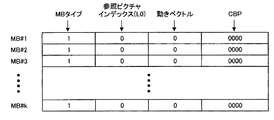
図9Aは、Pピクチャのダミーピクチャの実施例である。ここでは、1スライス分のデータが描かれている。また、スライスデータは、k個のマクロブロックから構成されているものとする。さらに、スキップフラグは省略されている。 FIG. 9A is an example of a dummy picture of a P picture. Here, data for one slice is drawn. The slice data is assumed to be composed of k macroblocks. Further, the skip flag is omitted.
ダミーピクチャは、MBタイプデータ、参照ピクチャインデックスデータ、動きベクトルデータ、CBPデータから構成される。MBタイプデータは、すべてのブロックにおいて「0」である。Pピクチャにおいて、「MBタイプ=0(P_L0_16×16)」は、ブロックタイプが16×16であり、且つ、符号化モードがL0予測であることを意味する。参照ピクチャインデックスは、すべてのブロックにおいて「0」である。「参照ピクチャインデックス=0」は、符号化対象ピクチャの直前のピクチャを参照することを意味する。すなわち、すべてのブロックが同一のピクチャを参照する。動きベクトルデータは、すべてのブロックにおいて「0」である。「動きベクトル=0」は、参照ピクチャ内の対応するブロックを移動することなくそのままコピーすることを意味する。CBPデータは、すべてのブロックにおいて「0000」である。「CBP=0000」は、DCT係数がゼロであることを意味する。よって、すべてのブロックにおいてDCT係数データは付与されていない。 The dummy picture is composed of MB type data, reference picture index data, motion vector data, and CBP data. The MB type data is “0” in all blocks. In the P picture, “MB type = 0 (P_L0 — 16 × 16)” means that the block type is 16 × 16 and the encoding mode is L0 prediction. The reference picture index is “0” in all blocks. “Reference picture index = 0” means that the picture immediately before the encoding target picture is referred to. That is, all blocks refer to the same picture. The motion vector data is “0” in all blocks. “Motion vector = 0” means that the corresponding block in the reference picture is copied as it is without moving. The CBP data is “0000” in all blocks. “CBP = 0000” means that the DCT coefficient is zero. Therefore, DCT coefficient data is not assigned to all blocks.
図9Bは、Bピクチャのダミーピクチャの実施例である。Bピクチャのダミーピクチャは、基本的に、Pピクチャのダミーピクチャと同じである。ただし、Bピクチャのダミーピクチャにおいては、MBタイプデータは、すべてのブロックにおいて「1」である。Bピクチャにおいて、「MBタイプ=1(B_L0_16×16)」は、ブロックタイプが16×16であり、且つ、符号化モードがL0予測であることを表す。 FIG. 9B is an example of a dummy picture of a B picture. The dummy picture of the B picture is basically the same as the dummy picture of the P picture. However, in the dummy picture of the B picture, the MB type data is “1” in all blocks. In the B picture, “MB type = 1 (B_L0 — 16 × 16)” represents that the block type is 16 × 16 and the encoding mode is L0 prediction.
このように、ダミーピクチャは、すべてのブロックが同じピクチャを参照する。このとき、参照ピクチャは、「参照ピクチャインデックス=0」により識別されるピクチャである。また、すべてのブロックにおいて動きベクトルがゼロである。さらに、すべてのブロックにおいて予測誤差のDCT係数がゼロである。よって、このダミーピクチャは、実質的に、「参照ピクチャインデックス=0」により識別されるピクチャと同じピクチャを再生することを指示する情報に相当する。すなわち、復号装置においてこのダミーピクチャを再生すると、「参照ピクチャインデックス=0」により識別されるピクチャと同じピクチャが得られることになる。 Thus, the dummy picture refers to the same picture in all blocks. At this time, the reference picture is a picture identified by “reference picture index = 0”. Also, the motion vector is zero in all blocks. Furthermore, the DCT coefficient of prediction error is zero in all blocks. Therefore, this dummy picture substantially corresponds to information instructing to reproduce the same picture as the picture identified by “reference picture index = 0”. That is, when this dummy picture is reproduced in the decoding device, the same picture as the picture identified by “reference picture index = 0” is obtained.
なお、参照ピクチャインデックスが「0」であることを表す2値列のデータ長は、参照ピクチャインデックスが他の値であるときと比べて短くなる。また、動きベクトルがゼロである場合の2値列のデータ長は、動きベクトルがゼロでない場合と比べて短くなる。さらに、ダミーピクチャはDCT係数データを有していない。したがって、ダミーピクチャの情報量は、通常のPピクチャまたはBピクチャと比較して少なくなる。 Note that the data length of the binary string indicating that the reference picture index is “0” is shorter than that when the reference picture index is another value. Further, the data length of the binary string when the motion vector is zero is shorter than that when the motion vector is not zero. Furthermore, the dummy picture has no DCT coefficient data. Therefore, the information amount of the dummy picture is smaller than that of a normal P picture or B picture.
図3に戻る。参照ピクチャ選択部5は、複数の参照可能ピクチャの中から参照ピクチャを選択する。このとき、参照ピクチャとしては、例えば、符号化対象ピクチャおよび各参照可能ピクチャに基づいて、復号時に視覚的に最もスムーズな動画像が得られるようなピクチャが選択される。なお、参照ピクチャ選択部5は、図4に示す符号化制御部11の機能を利用して実現されてもよい。
Returning to FIG. The reference
リスト生成部6は、参照ピクチャ選択部5により選択された参照ピクチャと、ダミーピクチャ記憶装置4に格納されているダミーピクチャの参照ピクチャの対応関係を表すリスト情報を生成する。ここで、ダミーピクチャ記憶装置4に格納されているダミーピクチャの参照ピクチャは、「参照ピクチャインデックス=0」により指定される。したがって、例えば、参照ピクチャ選択部5により選択された参照ピクチャの参照ピクチャインデックスが「0」であれば、リスト情報「0/0」を生成する。あるいは、参照ピクチャ選択部5により選択された参照ピクチャの参照ピクチャインデックスが「1」であれば、リスト情報「0/1」を生成する。
The
ヘッダ生成部7は、ダミーピクチャに付与すべきヘッダを生成する。「ヘッダ」とは、ここでは、符号化データを復号するために必要な制御情報を意味する。ただし、実施形態の動画像符号化装置の動作に直接的に係わる情報は、主にスライスヘッダである。
The
図10は、ヘッダ生成部7の動作を示すフローチャートである。このフローチャートの処理は、例えば、間引き判定部2によりピクチャを間引く必要があると判定されたときに実行される。あるいは、符号化回路1が各ピクチャを符号化するごとに実行するようにしてもよい。
FIG. 10 is a flowchart showing the operation of the
ステップS1では、デフォルトヘッダを作成する。デフォルトヘッダは、予め決められた最も標準的な値を設定したスライスヘッダを意味する。なお、デフォルトヘッダは、既存の符号化回路においても作成されている。すなわち、デフォルトヘッダは、図3に示す例では、符号化回路1において作成することもできる。よって、この場合、ヘッダ作成部7は、符号化回路1からデフォルトヘッダを取得するようにしてもよい。下記にスライスヘッダが備えるコードを示す。
first_mb_in_slice
slice_type
pic_parameter_set_id
frame_num
field_pic_flag
bottom_field_flag
idr_pic_id
pic_order_cnt_lsd
delta_pic_order_cntZ_bottom
delta_pic_order_cnt
redundant_pic_cnt
direct_spatial_mv_pred_flag
num_ref_idx_active_override_flag
num_ref_idx_l0_active_minus1
num_ref_idx_l1_active_minus1
ref_pic_list_reordering()
pred_weight_table()
dec_ref_marking()
cabac_init_idc
slice_qp_delta
sp_for_switch_flag
slice_qs_delta
disable_deblocking_filter_idc
slice_alpha_c0_offset_div2
slice_beta_offset_div2
slice_group_change_cycle
ステップS2では、最大参照インデックス値を設定することにより、参照可能ピクチャの数を指定する。即ち、「num_ref_idx_active_override_flag」に「1」を書き込む。そうすると、「num_ref_idx_l0_active_minus1」「num_ref_idx_l1_active_minus1」の更新が可能となる。そして、「num_ref_idx_l0_active_minus1」に「0」を書き込む。同様に、「num_ref_idx_l1_active_minus1」にも「0」を書き込む。これにより、リストL0およびリストL1における参照可能ピクチャは、それぞれ1枚に制限される。In step S1, a default header is created. The default header means a slice header in which a predetermined standard value is set. Note that the default header is also created in the existing encoding circuit. That is, the default header can also be created in the
first_mb_in_slice
slice_type
pic_parameter_set_id
frame_num
field_pic_flag
bottom_field_flag
idr_pic_id
pic_order_cnt_lsd
delta_pic_order_cntZ_bottom
delta_pic_order_cnt
redundant_pic_cnt
direct_spatial_mv_pred_flag
num_ref_idx_active_override_flag
num_ref_idx_l0_active_minus1
num_ref_idx_l1_active_minus1
ref_pic_list_reordering ()
pred_weight_table ()
dec_ref_marking ()
cabac_init_idc
slice_qp_delta
sp_for_switch_flag
slice_qs_delta
disable_deblocking_filter_idc
slice_alpha_c0_offset_div2
slice_beta_offset_div2
slice_group_change_cycle
In step S2, the number of referable pictures is specified by setting a maximum reference index value. That is, “1” is written in “num_ref_idx_active_override_flag”. Then, “num_ref_idx_l0_active_minus1” and “num_ref_idx_l1_active_minus1” can be updated. Then, “0” is written in “num_ref_idx_l0_active_minus1”. Similarly, “0” is also written to “num_ref_idx_l1_active_minus1”. Thereby, the referenceable pictures in the list L0 and the list L1 are limited to one each.
ステップS3では、リスト生成部6からリスト情報を受け取る。ステップS4では、参照ピクチャ選択部5により選択された参照ピクチャの参照ピクチャインデックスが「0」であるか否かをチェックする。そして、そのインデックスが「0」であったときは、ダミーピクチャが参照するピクチャと、参照ピクチャ選択部5により選択されたピクチャが一致するので、ステップS5の処理をスキップする。一方、そのインデックスが「0」でなかったときは、ダミーピクチャが参照するピクチャと、参照ピクチャ選択部5により選択されたピクチャとを一致させるためにステップS5の処理を実行する。
In step S3, list information is received from the
ステップS5では、「ref_pic_list_reordering()」を利用して参照ピクチャリストのインデックスを並べ替える。インデックスの並べ替えの実施例について図11を参照しながら説明する。 In step S5, the index of the reference picture list is rearranged using “ref_pic_list_reordering ()”. An example of index rearrangement will be described with reference to FIG.
ここでは、図11に示すように、連続するピクチャP1〜P5においてピクチャP3を符号化するものとする。符号化モードとしては、ダミーピクチャのMBタイプデータにおいて、L0予測が設定されている。よって、この場合、参照ピクチャインデックスは、ピクチャP1、P2、P4、P5に対してそれぞれ「1」「0」「3」「4」が割り当てられている。 Here, as shown in FIG. 11, it is assumed that picture P3 is encoded in consecutive pictures P1 to P5. As the encoding mode, L0 prediction is set in the MB type data of the dummy picture. Therefore, in this case, “1”, “0”, “3”, and “4” are assigned to the pictures P1, P2, P4, and P5, respectively.
上記状況において、参照ピクチャ選択部5は、符号化対象ピクチャが参照すべきピクチャを選択する。図11に示す例では、ピクチャP3が参照すべきピクチャとしてピクチャP1が選択されている。ここで、このピクチャP1には、参照ピクチャインデックスとして「1」が割り当てられている。一方、ダミーピクチャに設定されている参照ピクチャインデックスは「0」である。このため、スライスヘッダが更新されていない状態でダミーピクチャを復号すると、ピクチャP2が得られることになる。
In the above situation, the reference
そこで、ヘッダ生成部7は、図11に示すように、ダミーピクチャに設定されている参照ピクチャインデックスに対して、選択されたピクチャP1を割り当てる。すなわち、スライスヘッダの「ref_pic_list_reordering()」を利用して参照ピクチャリストのインデックスを並べ替える。具体的には、参照ピクチャインデックス「0」に対してピクチャP1が割り当てられる。
Therefore, as shown in FIG. 11, the
ステップS6において、生成したスライスヘッダを出力する。このスライスヘッダは、図12に示すように、ダミーピクチャ記憶装置4から抽出されるダミーピクチャに付与される。このとき、Pピクチャが間引かれた場合は、Pピクチャ用のダミーピクチャが抽出され、Bピクチャが間引かれた場合は、Bピクチャ用のダミーピクチャが抽出される。そして、このダミーピクチャにさらに付加情報Aが付与され、動画像の符号化データとして出力される。上記符号化データを受信した動画像復号装置は、付加情報Aを分離すると共に、ヘッダ情報を利用してピクチャを再生する。
In step S6, the generated slice header is output. This slice header is given to the dummy picture extracted from the dummy
このように、実施形態の動画像符号化装置においては、任意のピクチャを間引いたときに、ダミーピクチャが出力される。ここで、このダミーピクチャは、予め決められた参照ピクチャインデックス(実施例では、「0」)で指定されるピクチャを参照する。ところが、上述したように、このダミーピクチャに付与されるヘッダにおいて、参照ピクチャインデックスの参照関係を変更することができる。すなわち、ダミーピクチャは、所望のピクチャを参照することができる。よって、ダミーピクチャは、復号時に視覚的に最もスムーズな動画像が得られるようなピクチャを参照することができる。この結果、復号時において、ダミーピクチャの代わりに視覚的に最もスムーズな動画像が得られるようなピクチャが出力されることになるので、好適な動画像が再生される。 As described above, in the moving picture encoding apparatus of the embodiment, a dummy picture is output when an arbitrary picture is thinned out. Here, this dummy picture refers to a picture specified by a predetermined reference picture index (“0” in the embodiment). However, as described above, the reference relationship of the reference picture index can be changed in the header given to the dummy picture. That is, the dummy picture can refer to a desired picture. Therefore, the dummy picture can refer to a picture that provides a visually smoothest moving image at the time of decoding. As a result, at the time of decoding, a picture that provides the visually smoothest moving image is output instead of the dummy picture, so that a suitable moving image is reproduced.
また、実施形態の動画像符号化装置は、ダミーピクチャが所望のピクチャを参照できるが構成であるにもかかわらず、ダミーピクチャ記憶装置4に予め保持してあるダミーピクチャは、図12に示すように、PピクチャおよびBピクチャのためにそれぞれ1枚だけである。よって、ダミーピクチャを保持するための記憶領域を小さくすることができる。
The moving picture coding apparatus according to the embodiment has a configuration in which a dummy picture can refer to a desired picture, but the dummy pictures stored in advance in the dummy
<他の実施形態1>
図3に示す実施形態では、ダミーピクチャは、予め作成されて記憶装置に格納されている。これに対して、図13に示す実施形態では、ダミーピクチャ生成部11を備え、ピクチャが間引かれたときにダミーピクチャを生成して出力する。このとき、ダミーピクチャ生成部11が生成するダミーピクチャは、図3に示す実施形態においてダミーピクチャ記憶装置4に格納されているダミーピクチャと同じである。この構成によれば、動画像符号化装置の記憶領域を削減できる。<
In the embodiment shown in FIG. 3, the dummy picture is created in advance and stored in the storage device. On the other hand, the embodiment shown in FIG. 13 includes a dummy
<他の実施形態2>
図14Aおよび図14Bは、他の実施形態のダミーピクチャの実施例である。図14AがPピクチャのダミーピクチャの実施例であり、図14BがBピクチャのダミーピクチャの実施例である。<
FIG. 14A and FIG. 14B are examples of dummy pictures of other embodiments. FIG. 14A shows an example of a dummy picture of a P picture, and FIG. 14B shows an example of a dummy picture of a B picture.
この実施形態のダミーピクチャの先頭ブロックは、基本的に、図9Aおよび図9Bに示すダミーピクチャと同じである。すなわち、参照ピクチャインデックスとして「0」が設定され、動きベクトルとして「0」が設定される。また、DCT係数データは存在しない。ただし、Bピクチャのダミーピクチャにおいては、ダイレクトモードを指定するために、図14Bに示すように「MBタイプ=0(B_Direct_16×16)」が設定される。 The first block of the dummy picture in this embodiment is basically the same as the dummy picture shown in FIGS. 9A and 9B. That is, “0” is set as the reference picture index, and “0” is set as the motion vector. Also, there is no DCT coefficient data. However, in the dummy picture of the B picture, “MB type = 0 (B_Direct — 16 × 16)” is set as shown in FIG. 14B in order to specify the direct mode.
ダイレクトモードとは、符号化対象ブロックの動き情報を符号化ずみの他のブロックの動き情報から予測して生成する符号化モードであり、H.264では、時間ダイレクトおよび空間ダイレクトが用意されている。そして、この実施形態では、後述するが、スライスヘッダにおいて空間ダイレクトが指定される。 The direct mode is a coding mode in which motion information of a block to be coded is predicted and generated from motion information of another block that has been coded. In H.264, time direct and space direct are prepared. In this embodiment, as described later, spatial direct is specified in the slice header.
2番目以降のブロックについては、スキップフラグが設定される。すなわち、2番目以降のブロックにおいては、スキップトマクロブロック(skip_MB)が指定される。スキップトマクロブロックとは、当該ブロックの情報を全く送らずに、復号装置は、参照ブロックの対応する位置のブロックの情報をそのまま利用するモードである。この場合、2番目以降のブロックは、先頭ブロックと同じピクチャを参照し、その参照ピクチャの対応する位置のブロックの情報をそのままコピーすることになる。 A skip flag is set for the second and subsequent blocks. That is, in the second and subsequent blocks, a skipped macroblock (skip_MB) is designated. The skipped macroblock is a mode in which the decoding apparatus uses the information of the block at the corresponding position of the reference block as it is without sending the information of the block at all. In this case, the second and subsequent blocks refer to the same picture as the first block, and the information of the block at the corresponding position of the reference picture is copied as it is.
なお、H.264のデフォルト設定では、スキップマクロブロックが指定されたブロックには双方向予測が適用され、直前のピクチャと直後のピクチャの平均により予測ピクチャが得られる。しかし、実施形態の動画像符号化においては、ダミーピクチャの参照ピクチャを1枚に制限している。すなわち、すべてのブロックにおいて同じ1枚のピクチャを参照するように制限されている。よって、上述したように、先頭ブロックにおいて参照ピクチャインデックスを1つ(実施例では、L0)だけ指定する。そうすると、スキップマクロブロックが設定されている以降のブロックにおいては、先頭ブロックと同じピクチャを参照するので、すべてのブロックが同一の1枚のピクチャのみを参照することが可能になる。 H. In the default setting of H.264, bi-directional prediction is applied to a block for which a skip macroblock is specified, and a predicted picture is obtained by averaging the immediately preceding picture and the immediately following picture. However, in the moving picture coding of the embodiment, the reference picture of the dummy picture is limited to one. In other words, all blocks are limited to refer to the same picture. Therefore, as described above, only one reference picture index (L0 in the embodiment) is designated in the first block. Then, in the blocks after the skip macroblock is set, the same picture as that of the first block is referred to, so that all the blocks can refer to only the same picture.
また、H.264では、ダイレクトモードとして時間ダイレクトを選択すると、スキップマクロブロックが指定されているブロックの動きベクトルがL1(後ろ方向の参照リスト)の参照ピクチャのベクトルに依存する。この場合、符号化対象ブロックの動きベクトルがゼロでなくなる可能性がある。そこで、実施形態の動画像符号化においては、ダイレクトモードとして空間ダイレクトを選択する。空間ダイレクトにおいては、各ブロックの動きベクトルは、同一ピクチャ内の隣接ブロックの動きベクトルから算出される。したがって、先頭ブロックの動きベクトルをゼロとすると、スキップマクロブロックが設定されている以降のブロックの動きベクトルは、先頭ブロックと同じになるので、すべてのブロックの動きベクトルがゼロになる。なお、ダイレクトモードとして空間ダイレクトを選択するためには、スライスヘッダの「direct_spatial_mv_pred_flag」に「1」を設定すればよい。 H. In H.264, when temporal direct is selected as the direct mode, the motion vector of the block for which the skip macroblock is specified depends on the reference picture vector of L1 (backward reference list). In this case, there is a possibility that the motion vector of the encoding target block is not zero. Therefore, in the moving picture coding of the embodiment, spatial direct is selected as the direct mode. In spatial direct, the motion vector of each block is calculated from the motion vectors of adjacent blocks in the same picture. Therefore, if the motion vector of the first block is set to zero, the motion vectors of the blocks after the skip macroblock are set are the same as the first block, so the motion vectors of all the blocks are zero. In order to select spatial direct as the direct mode, “1” may be set in “direct_spatial_mv_pred_flag” of the slice header.
このように、この実施形態では、スキップマクロブロックおよび空間ダイレクトを利用することで、ダミーピクチャの符号化データの情報量が大幅に削減される。よって、ダミーピクチャを格納する記憶領域を小さくできる。 As described above, in this embodiment, the information amount of the encoded data of the dummy picture is significantly reduced by using the skip macroblock and the spatial direct. Therefore, the storage area for storing the dummy picture can be reduced.
<他の実施形態3>
図3に示す動画像符号化装置において、参照ピクチャ選択部5は、間引かれるピクチャに時間的に最も近いピクチャを選択する。図15を参照しながら一例を示す。なお、図15に示す例では、各フレームがそれぞれトップピクチャおよびボトムピクチャから構成されている。例えば、ピクチャP3(Top)およびピクチャP3(Btm)は、1枚のフレームを構成する1組のピクチャである。なお、トップピクチャは、インターレース画像のトップフィールドから構成されるピクチャであり、ボトムピクチャは、ボトムフィールドから構成されるピクチャである。<
In the moving picture coding apparatus shown in FIG. 3, the reference
図15においてピクチャP3(Btm)が間引かれるものとする。ここで、ピクチャP3(Btm)に時間的に最も近いピクチャは、ピクチャP3(Top)である。よって、この場合、参照ピクチャ選択部5は、ピクチャP3(Btm)のダミーピクチャの参照ピクチャとして、ピクチャP3(Top)を選択する。
In FIG. 15, a picture P3 (Btm) is thinned out. Here, the picture temporally closest to the picture P3 (Btm) is the picture P3 (Top). Therefore, in this case, the reference
ピクチャP3(Btm)が間引かれる際に、ピクチャP3(Top)が参照可能ピクチャでなかったものとすると、ピクチャP3(Btm)に時間的に最も近いピクチャが2枚(すなわち、P2(Top)、P2(Btm))存在する。この場合、参照ピクチャ選択部5は、間引かれるピクチャと同じ属性(トップ/ボトム)を持つピクチャを選択する。すなわち、ピクチャP3(Btm)のダミーピクチャの参照ピクチャとしてピクチャP2(Btm)が選択される。
When the picture P3 (Btm) is thinned out, if the picture P3 (Top) is not a referenceable picture, two pictures that are closest in time to the picture P3 (Btm) (that is, P2 (Top)) , P2 (Btm)). In this case, the reference
なお、実施形態の動画像符号化装置では、ダミーデータが予め用意されており、参照ピクチャインデックスとして「0」が指定されている。よって、上述のようにして選択されたピクチャの参照ピクチャインデックスがダミーピクチャの参照ピクチャインデックスと異なっている場合には、スライスヘッダの「ref_pic_list_reordering()」を利用してその対応関係を定義する必要がある。 In the moving picture encoding apparatus of the embodiment, dummy data is prepared in advance, and “0” is designated as the reference picture index. Therefore, when the reference picture index of the picture selected as described above is different from the reference picture index of the dummy picture, it is necessary to define the correspondence using the “ref_pic_list_reordering ()” of the slice header. is there.
<他の実施形態4>
図16は、符号化データストリームをネットワークへ配信する措置の構成を示す図である。符号化データストリームは、動画像をH.264で符号化することにより得られるH264ストリームであるものとする。また、ダミーピクチャ記憶装置4、参照ピクチャ選択部5、リスト生成部6、ヘッダ生成部7の構成または動作は、図3を参照しがなら説明した通りである。そして、この配信装置では、符号化データストリームのビットレートがネットワークの伝送レートを超えると、ピクチャが間引かれるものとする。<
FIG. 16 is a diagram illustrating a configuration of a measure for distributing an encoded data stream to a network. The encoded data stream is an H.264 video. It is assumed that it is an H264 stream obtained by encoding with H.264. Further, the configurations or operations of the dummy
ヘッダ解析部21は、H264ストリームのNAL(Network Abstraction Layer)ヘッダを解析する。NALヘッダは、各ピクチャが参照ピクチャであるか非参照ピクチャであるかを表す情報(nal_ref_idc)を含んでいる。そして、ヘッダ解析部21は、ピクチャを間引く必要があると判断され、且つ、そのピクチャが非参照ピクチャである場合に、ピクチャ間引き処理の実行を指示する。ピクチャ間引き処理は、図3に示す動画像符号化装置の動作として説明した通りである。
The
また、ヘッダ解析部21は、符号化データストリームからスライスヘッダ(および、スライスデータ)を抽出して解析する機能を備える。この機能により、間引かれるピクチャの参照可能ピクチャが検出される。そして、参照ピクチャ選択部5は、検出された参照可能ピクチャの中から参照ピクチャを選択する。また、ヘッダ生成部7は、ヘッダ解析部21により抽出されたスライスヘッダに基づいて、或いは、ヘッダ解析部21により抽出されたスライスヘッダを更新することにより、ダミーピクチャに付与すべきスライスヘッダを生成する。
The
このように、この配信装置では、ピクチャを間引く必要が生じたときに、ダミーピクチャに置きかえられるピクチャは非参照ピクチャである。よって、配信される符号化データが復号されたときに、画質の劣化が抑えられる。 As described above, in this distribution apparatus, when a picture needs to be thinned out, a picture that is replaced with a dummy picture is a non-reference picture. Therefore, when the encoded data to be distributed is decoded, deterioration in image quality is suppressed.
ダミーピクチャは、条件1〜4のもとで下記の通り作成される。
条件1:SliceQPy=51
条件2:num_refl0_active_idx_minus1=0
条件3:num_refl1_active_idx_minus1=0
条件4:cabac_init_idc=0
各ブロックの動きベクトルは、X成分およびY成分ともにゼロ
各ブロックの参照ピクチャリストは、L0のみ
各ブロックの参照ピクチャインデックス(refidx)は、「0」
各ブロックのDCT係数は、ゼロ
上記ダミーピクチャに付与されるスライスヘッダは、以下の通りである。
SliceQPy=51
Direct_mv_spatial_flag=1
num_refl0_active_idx_minus1=0
num_refl1_active_idx_minus1=0
cabac_init_idc=0
「ref_pic_list_reordering()」を利用して、リストL0の「refidx0」に対して、間引かれるピクチャに時間的に最も近いピクチャを割り当てるThe dummy picture is created as follows under
Condition 1: SliceQPy = 51
Condition 2: num_refl0_active_idx_minus1 = 0
Condition 3: num_refl1_active_idx_minus1 = 0
Condition 4: cabac_init_idc = 0
The motion vector of each block is zero for both the X component and the Y component. The reference picture list of each block is L0 only, the reference picture index (refidx) of each block is “0”
The DCT coefficient of each block is zero. The slice header given to the dummy picture is as follows.
SliceQPy = 51
Direct_mv_spatial_flag = 1
num_refl0_active_idx_minus1 = 0
num_refl1_active_idx_minus1 = 0
cabac_init_idc = 0
Using “ref_pic_list_reordering ()”, a picture that is temporally closest to the picture to be thinned out is assigned to “refidx0” in the list L0
Claims (11)
各ブロックが同じ参照ピクチャインデックスを有するダミーピクチャの符号化データを格納する格納手段と、
符号化対象ピクチャの符号化データとしてダミーピクチャが出力される場合に、前記符号化対象ピクチャが参照可能な複数の参照可能ピクチャの中から前記符号化対象ピクチャが参照すべきピクチャを選択する選択手段と、
前記ダミーピクチャが参照するピクチャと前記選択手段により選択されたピクチャの対応関係を表す情報を含むヘッダを生成するヘッダ生成手段と、
前記符号化対象ピクチャを間引く際に、前記ダミーピクチャの符号化データに前記ヘッダ生成手段により生成されたヘッダを付与して出力する出力手段、
を有する動画像符号化装置。A moving image encoding apparatus that encodes a moving image using motion compensation,
Storage means for storing encoded data of dummy pictures in which each block has the same reference picture index ;
Selection means for selecting a picture to be referred to by the encoding target picture from a plurality of referenceable pictures that can be referred to by the encoding target picture when a dummy picture is output as encoded data of the encoding target picture When,
Header generating means for generating a header including information indicating a correspondence relationship between a picture referred to by the dummy picture and a picture selected by the selecting means;
An output means for adding and outputting the header generated by the header generation means to the encoded data of the dummy picture when thinning out the encoding target picture;
A moving picture encoding apparatus having:
前記ダミーピクチャの各ブロックの予測誤差は、それぞれゼロである
ことを特徴とする動画像符号化装置。The moving image encoding device according to claim 1,
The moving picture coding apparatus, wherein the prediction error of each block of the dummy picture is zero.
前記ダミーピクチャの各ブロックの動きベクトルは、それぞれゼロである
ことを特徴とする動画像符号化装置。The moving image encoding device according to claim 1,
The moving picture coding apparatus, wherein the motion vector of each block of the dummy picture is zero.
前記ダミーピクチャの先頭ブロックを含む所定数のブロックにおいて参照ピクチャが指定されており、
前記ダミーピクチャの他のブロックには、前記所定数のブロックの情報を引き継ぐことを指示する情報が設定されている
ことを特徴とする動画像符号化装置。The moving image encoding device according to claim 1,
Reference pictures are designated in a predetermined number of blocks including the first block of the dummy picture,
Information for instructing to take over the information of the predetermined number of blocks is set in the other blocks of the dummy picture.
当該動画像符号化装置の符号化方式がH.264であり、
前記ヘッダ生成手段は、符号化モードとして空間ダイレクトを指定する情報を前記ヘッダに設定する
ことを特徴とする動画像符号化装置。The moving image encoding device according to claim 4,
The encoding method of the moving image encoding apparatus is H.264. H.264,
The moving picture encoding apparatus, wherein the header generation unit sets information specifying a spatial direct as an encoding mode in the header.
当該動画像符号化装置の符号化方式がH.264であり、
前記ダミーピクチャの各ブロックにおいて参照ピクチャを指示する参照ピクチャインデックスとして「0」が設定されている
ことを特徴とする動画像符号化装置。The moving image encoding device according to claim 1,
The encoding method of the moving image encoding apparatus is H.264. H.264,
“0” is set as a reference picture index indicating a reference picture in each block of the dummy picture.
前記選択手段は、符号化対象ピクチャが参照すべきピクチャとして、その符号化対象ピクチャに時間的に最も近いピクチャを選択する
ことを特徴とする動画像符号化装置。The moving image encoding device according to claim 1,
The moving picture coding apparatus, wherein the selecting means selects a picture temporally closest to the encoding target picture as a picture to be referred to by the encoding target picture.
当該動画像符号化装置は、動画像を構成する各フレームから得られる複数のピクチャをそれぞれ符号化する構成であり、
前記選択手段は、符号化対象ピクチャに時間的に最も近いピクチャが2枚以上存在する場合には、その符号化対象ピクチャと同じ属性のピクチャを選択する
ことを特徴とする動画像符号化装置。The moving image encoding device according to claim 7,
The moving image encoding device is configured to encode each of a plurality of pictures obtained from each frame constituting a moving image,
The moving picture encoding apparatus, wherein when there are two or more pictures temporally closest to the encoding target picture, the selection means selects a picture having the same attribute as the encoding target picture.
各ブロックが同じ参照ピクチャインデックスを有するダミーピクチャの符号化データを生成するダミーピクチャ生成手段と、
符号化対象ピクチャの符号化データとしてダミーピクチャが出力される場合に、前記符号化対象ピクチャが参照可能な複数の参照可能ピクチャの中から前記符号化対象ピクチャが参照すべきピクチャを選択する選択手段と、
前記ダミーピクチャが参照するピクチャと前記選択手段により選択されたピクチャの対応関係を表す情報を含むヘッダを生成するヘッダ生成手段と、
前記符号化対象ピクチャを間引く際に、前記ダミーピクチャの符号化データに前記ヘッダ生成手段により生成されたヘッダを付与して出力する出力手段、
を有する動画像符号化装置。A moving image encoding apparatus that encodes a moving image using motion compensation,
Dummy picture generating means for generating encoded data of dummy pictures in which each block has the same reference picture index ;
Selection means for selecting a picture to be referred to by the encoding target picture from a plurality of referenceable pictures that can be referred to by the encoding target picture when a dummy picture is output as encoded data of the encoding target picture When,
Header generating means for generating a header including information indicating a correspondence relationship between a picture referred to by the dummy picture and a picture selected by the selecting means;
An output means for adding and outputting the header generated by the header generation means to the encoded data of the dummy picture when thinning out the encoding target picture;
A moving picture encoding apparatus having:
各ブロックが同じ参照ピクチャインデックスを有するダミーピクチャの符号化データを格納する格納手段と、
符号化対象ピクチャの符号化データとしてダミーピクチャが出力される場合に、前記符号化データストリーム内の符号化対象ピクチャが参照可能な複数の参照可能ピクチャの中から前記対象ピクチャが参照すべきピクチャを選択する選択手段と、
前記ダミーピクチャが参照するピクチャと前記選択手段により選択されたピクチャの対応関係を表す情報を含むヘッダを生成するヘッダ生成手段と、
前記符号化対象ピクチャを間引く際に、前記ダミーピクチャの符号化データに前記ヘッダ手段により生成されたヘッダを付与して出力する出力手段、
を有する配信装置。A distribution device that distributes an encoded data stream obtained by encoding a moving image using motion compensation,
Storage means for storing encoded data of dummy pictures in which each block has the same reference picture index ;
When a dummy picture is output as encoded data of an encoding target picture, a picture to be referred to by the target picture is selected from a plurality of referenceable pictures that can be referred to by the encoding target picture in the encoded data stream. A selection means to select;
Header generating means for generating a header including information indicating a correspondence relationship between a picture referred to by the dummy picture and a picture selected by the selecting means;
An output means for adding and outputting a header generated by the header means to the encoded data of the dummy picture when thinning out the encoding target picture;
A distribution device having:
各ブロックが同じ参照ピクチャインデックスを有するダミーピクチャの符号化データを用意し、
符号化対象ピクチャの符号化データとしてダミーピクチャが出力される場合に、前記符号化対象ピクチャが参照可能な複数の参照可能ピクチャの中から前記符号化対象ピクチャが参照すべきピクチャを選択し、
前記ダミーピクチャが参照するピクチャと前記選択されたピクチャの対応関係を表す情報を含むヘッダを生成し、
前記符号化対象ピクチャを間引く際に、前記ダミーピクチャの符号化データに生成されたヘッダを付与して出力する、
ことを特徴とする動画像符号化方法。A moving picture coding method for coding a moving picture using motion compensation,
Prepare encoded data of dummy pictures in which each block has the same reference picture index ,
When a dummy picture is output as encoded data of an encoding target picture, a picture to be referred to by the encoding target picture is selected from a plurality of referenceable pictures that can be referred to by the encoding target picture;
Generating a header including information indicating a correspondence relationship between the picture referred to by the dummy picture and the selected picture;
When thinning out the encoding target picture, a header generated to the encoded data of the dummy picture is added and output,
A video encoding method characterized by the above.
Applications Claiming Priority (1)
| Application Number | Priority Date | Filing Date | Title |
|---|---|---|---|
| PCT/JP2006/319578 WO2008041300A1 (en) | 2006-09-29 | 2006-09-29 | Dynamic image encoding device |
Publications (2)
| Publication Number | Publication Date |
|---|---|
| JPWO2008041300A1 JPWO2008041300A1 (en) | 2010-01-28 |
| JP5151984B2 true JP5151984B2 (en) | 2013-02-27 |
Family
ID=39268166
Family Applications (1)
| Application Number | Title | Priority Date | Filing Date |
|---|---|---|---|
| JP2008537357A Expired - Fee Related JP5151984B2 (en) | 2006-09-29 | 2006-09-29 | Video encoding device |
Country Status (3)
| Country | Link |
|---|---|
| US (1) | US8767819B2 (en) |
| JP (1) | JP5151984B2 (en) |
| WO (1) | WO2008041300A1 (en) |
Families Citing this family (27)
| Publication number | Priority date | Publication date | Assignee | Title |
|---|---|---|---|---|
| US8416859B2 (en) | 2006-11-13 | 2013-04-09 | Cisco Technology, Inc. | Signalling and extraction in compressed video of pictures belonging to interdependency tiers |
| US20090180546A1 (en) | 2008-01-09 | 2009-07-16 | Rodriguez Arturo A | Assistance for processing pictures in concatenated video streams |
| US8875199B2 (en) | 2006-11-13 | 2014-10-28 | Cisco Technology, Inc. | Indicating picture usefulness for playback optimization |
| US8958486B2 (en) | 2007-07-31 | 2015-02-17 | Cisco Technology, Inc. | Simultaneous processing of media and redundancy streams for mitigating impairments |
| US8804845B2 (en) | 2007-07-31 | 2014-08-12 | Cisco Technology, Inc. | Non-enhancing media redundancy coding for mitigating transmission impairments |
| JP5078852B2 (en) * | 2007-12-06 | 2012-11-21 | キヤノン株式会社 | Moving picture coding apparatus and moving picture coding method |
| US8718388B2 (en) | 2007-12-11 | 2014-05-06 | Cisco Technology, Inc. | Video processing with tiered interdependencies of pictures |
| US8416858B2 (en) | 2008-02-29 | 2013-04-09 | Cisco Technology, Inc. | Signalling picture encoding schemes and associated picture properties |
| WO2009152450A1 (en) | 2008-06-12 | 2009-12-17 | Cisco Technology, Inc. | Picture interdependencies signals in context of mmco to assist stream manipulation |
| US8971402B2 (en) | 2008-06-17 | 2015-03-03 | Cisco Technology, Inc. | Processing of impaired and incomplete multi-latticed video streams |
| US8699578B2 (en) | 2008-06-17 | 2014-04-15 | Cisco Technology, Inc. | Methods and systems for processing multi-latticed video streams |
| US8705631B2 (en) | 2008-06-17 | 2014-04-22 | Cisco Technology, Inc. | Time-shifted transport of multi-latticed video for resiliency from burst-error effects |
| US8259817B2 (en) | 2008-11-12 | 2012-09-04 | Cisco Technology, Inc. | Facilitating fast channel changes through promotion of pictures |
| JP5116704B2 (en) | 2009-02-02 | 2013-01-09 | パナソニック株式会社 | Image coding apparatus and image coding method |
| US8326131B2 (en) | 2009-02-20 | 2012-12-04 | Cisco Technology, Inc. | Signalling of decodable sub-sequences |
| JP2010239288A (en) * | 2009-03-30 | 2010-10-21 | Sony Corp | Information processing apparatus and method |
| US8782261B1 (en) | 2009-04-03 | 2014-07-15 | Cisco Technology, Inc. | System and method for authorization of segment boundary notifications |
| US8949883B2 (en) | 2009-05-12 | 2015-02-03 | Cisco Technology, Inc. | Signalling buffer characteristics for splicing operations of video streams |
| US8279926B2 (en) * | 2009-06-18 | 2012-10-02 | Cisco Technology, Inc. | Dynamic streaming with latticed representations of video |
| US20110109721A1 (en) * | 2009-11-06 | 2011-05-12 | Sony Corporation | Dynamic reference frame reordering for frame sequential stereoscopic video encoding |
| JP5691374B2 (en) * | 2010-10-14 | 2015-04-01 | 富士通株式会社 | Data compression device |
| CN107454419B (en) | 2010-12-13 | 2020-12-29 | 韩国电子通信研究院 | A method for decoding video signals based on inter-frame prediction |
| US9955155B2 (en) | 2010-12-31 | 2018-04-24 | Electronics And Telecommunications Research Institute | Method for encoding video information and method for decoding video information, and apparatus using same |
| US9154158B2 (en) * | 2011-01-13 | 2015-10-06 | Texas Instruments Incorporated | Macro-block encoding of skipped video frames |
| WO2012177052A2 (en) * | 2011-06-21 | 2012-12-27 | 한국전자통신연구원 | Inter-prediction method and apparatus for same |
| JP6422011B2 (en) | 2012-05-11 | 2018-11-14 | サン パテント トラスト | Moving picture encoding method, moving picture decoding method, moving picture encoding apparatus, and moving picture decoding apparatus |
| US11924437B2 (en) * | 2022-03-28 | 2024-03-05 | Bitmovin Gmbh | Variable framerate encoding using content-aware framerate prediction for high framerate videos |
Citations (12)
| Publication number | Priority date | Publication date | Assignee | Title |
|---|---|---|---|---|
| JPH036184A (en) * | 1989-06-02 | 1991-01-11 | Nec Corp | Inter-frame predictive encoding system |
| JPH1042295A (en) * | 1996-07-19 | 1998-02-13 | Sony Corp | Video signal encoding method and video signal encoding device |
| JPH10336670A (en) * | 1997-04-04 | 1998-12-18 | Sony Corp | Image transmission apparatus, image transmission method, and providing medium |
| JPH11177986A (en) * | 1997-12-08 | 1999-07-02 | Nippon Telegr & Teleph Corp <Ntt> | MPEG video information providing method |
| JP2000032448A (en) * | 1998-07-15 | 2000-01-28 | Nippon Telegr & Teleph Corp <Ntt> | Image encoded data creation device |
| JP2000278692A (en) * | 1999-03-25 | 2000-10-06 | Victor Co Of Japan Ltd | Compressed data processing method, processor and recording and reproducing system |
| JP2001008212A (en) * | 1999-06-18 | 2001-01-12 | Hitachi Ltd | Image transmission method |
| JP2001326940A (en) * | 2000-05-16 | 2001-11-22 | Matsushita Electric Ind Co Ltd | Encoded video bitstream processing method and apparatus, and recording medium storing encoded video bitstream processing program |
| JP2002027469A (en) * | 2000-07-05 | 2002-01-25 | Matsushita Electric Ind Co Ltd | Bitstream conversion method, bitstream conversion device, and program recording medium |
| JP2002281508A (en) * | 2001-03-19 | 2002-09-27 | Kddi Corp | Skip region detection type moving picture coding apparatus and recording medium |
| JP2002330441A (en) * | 2001-05-01 | 2002-11-15 | Sony Corp | Encoding method, encoding method program, recording medium recording encoding method program, and encoding device |
| JP2004274732A (en) * | 2003-02-19 | 2004-09-30 | Matsushita Electric Ind Co Ltd | Video encoding method and video decoding method |
Family Cites Families (3)
| Publication number | Priority date | Publication date | Assignee | Title |
|---|---|---|---|---|
| US5121202A (en) * | 1989-05-12 | 1992-06-09 | Nec Corporation | Adaptive interframe prediction coded video communications system |
| US6157675A (en) * | 1997-04-04 | 2000-12-05 | Sony Corporation | Image transmission device and image transmission method |
| US8194751B2 (en) * | 2003-02-19 | 2012-06-05 | Panasonic Corporation | Moving picture coding method and moving picture decoding method |
-
2006
- 2006-09-29 JP JP2008537357A patent/JP5151984B2/en not_active Expired - Fee Related
- 2006-09-29 WO PCT/JP2006/319578 patent/WO2008041300A1/en not_active Ceased
-
2009
- 2009-03-20 US US12/407,924 patent/US8767819B2/en not_active Expired - Fee Related
Patent Citations (12)
| Publication number | Priority date | Publication date | Assignee | Title |
|---|---|---|---|---|
| JPH036184A (en) * | 1989-06-02 | 1991-01-11 | Nec Corp | Inter-frame predictive encoding system |
| JPH1042295A (en) * | 1996-07-19 | 1998-02-13 | Sony Corp | Video signal encoding method and video signal encoding device |
| JPH10336670A (en) * | 1997-04-04 | 1998-12-18 | Sony Corp | Image transmission apparatus, image transmission method, and providing medium |
| JPH11177986A (en) * | 1997-12-08 | 1999-07-02 | Nippon Telegr & Teleph Corp <Ntt> | MPEG video information providing method |
| JP2000032448A (en) * | 1998-07-15 | 2000-01-28 | Nippon Telegr & Teleph Corp <Ntt> | Image encoded data creation device |
| JP2000278692A (en) * | 1999-03-25 | 2000-10-06 | Victor Co Of Japan Ltd | Compressed data processing method, processor and recording and reproducing system |
| JP2001008212A (en) * | 1999-06-18 | 2001-01-12 | Hitachi Ltd | Image transmission method |
| JP2001326940A (en) * | 2000-05-16 | 2001-11-22 | Matsushita Electric Ind Co Ltd | Encoded video bitstream processing method and apparatus, and recording medium storing encoded video bitstream processing program |
| JP2002027469A (en) * | 2000-07-05 | 2002-01-25 | Matsushita Electric Ind Co Ltd | Bitstream conversion method, bitstream conversion device, and program recording medium |
| JP2002281508A (en) * | 2001-03-19 | 2002-09-27 | Kddi Corp | Skip region detection type moving picture coding apparatus and recording medium |
| JP2002330441A (en) * | 2001-05-01 | 2002-11-15 | Sony Corp | Encoding method, encoding method program, recording medium recording encoding method program, and encoding device |
| JP2004274732A (en) * | 2003-02-19 | 2004-09-30 | Matsushita Electric Ind Co Ltd | Video encoding method and video decoding method |
Non-Patent Citations (1)
| Title |
|---|
| JPN6011059031; Thomas Wiegand: 'Joint Committee Draft (CD)' Joint Video Team (JVT) of ISO/IEC MPEG and ITU-T VCEG 3rd Meeting: Fairfax, Virginia, Document JVT-C , 200205, ITU-T * |
Also Published As
| Publication number | Publication date |
|---|---|
| US8767819B2 (en) | 2014-07-01 |
| WO2008041300A1 (en) | 2008-04-10 |
| US20090190655A1 (en) | 2009-07-30 |
| JPWO2008041300A1 (en) | 2010-01-28 |
Similar Documents
| Publication | Publication Date | Title |
|---|---|---|
| JP5151984B2 (en) | Video encoding device | |
| JP6896903B2 (en) | Video coding with large macroblocks | |
| KR102545525B1 (en) | Conditional signalling of reference picture list modification information | |
| KR101435095B1 (en) | Video encoder, video decoder, video encoding method, video decoding method, and computer readable information recording medium storing program | |
| US9838685B2 (en) | Method and apparatus for efficient slice header processing | |
| CN100508609C (en) | Moving picture decoding method and device | |
| US20130051472A1 (en) | Quality Scalable Video Data Stream | |
| KR20110037853A (en) | Image processing apparatus, image processing method and program | |
| KR20140120891A (en) | Method and apparatus for efficient transform unit encoding | |
| KR20110063855A (en) | Video coding with large macroblocks | |
| BRPI0919839B1 (en) | METHOD, APPARATUS AND COMPUTER-READABLE NON TRANSIENT STORAGE MEDIA FOR VIDEO ENCODING WITH LARGE MACROBLOCKS | |
| JP2007508737A (en) | Video data encoding system and decoding system | |
| US20130322542A1 (en) | Video encoding device, video decoding device, video encoding method, video decoding method, and program | |
| JP3940657B2 (en) | Moving picture encoding method and apparatus and moving picture decoding method and apparatus | |
| WO2012098845A1 (en) | Image encoding method, image encoding device, image decoding method, and image decoding device | |
| WO2005117449A1 (en) | Method and device for encoding digital video data | |
| EP1833256B1 (en) | Selection of encoded data, setting of encoded data, creation of recoded data, and recoding method and device | |
| US7840083B2 (en) | Method of encoding flag, method of decoding flag, and apparatus thereof | |
| JP2025516419A (en) | Method, computing system, and computer program for video coding - Patents.com | |
| JP2024508303A (en) | Method and electronic device for decoding inter-predicted video blocks of a video stream | |
| JP4357560B2 (en) | Moving picture coding apparatus, moving picture coding method, and moving picture coding program | |
| JPH07131793A (en) | Video signal high efficiency encoder | |
| JP2005303487A (en) | Moving image decoding apparatus and moving image decoding program | |
| JP3147636B2 (en) | Video data arranging method and its encoding device and decoding device | |
| JP6874844B2 (en) | Moving image coding device, moving image coding method, and moving image coding program |
Legal Events
| Date | Code | Title | Description |
|---|---|---|---|
| A131 | Notification of reasons for refusal |
Free format text: JAPANESE INTERMEDIATE CODE: A131 Effective date: 20111115 |
|
| A521 | Request for written amendment filed |
Free format text: JAPANESE INTERMEDIATE CODE: A523 Effective date: 20120116 |
|
| A131 | Notification of reasons for refusal |
Free format text: JAPANESE INTERMEDIATE CODE: A131 Effective date: 20120807 |
|
| A521 | Request for written amendment filed |
Free format text: JAPANESE INTERMEDIATE CODE: A523 Effective date: 20121004 |
|
| TRDD | Decision of grant or rejection written | ||
| A01 | Written decision to grant a patent or to grant a registration (utility model) |
Free format text: JAPANESE INTERMEDIATE CODE: A01 Effective date: 20121106 |
|
| A61 | First payment of annual fees (during grant procedure) |
Free format text: JAPANESE INTERMEDIATE CODE: A61 Effective date: 20121119 |
|
| FPAY | Renewal fee payment (event date is renewal date of database) |
Free format text: PAYMENT UNTIL: 20151214 Year of fee payment: 3 |
|
| R150 | Certificate of patent or registration of utility model |
Ref document number: 5151984 Country of ref document: JP Free format text: JAPANESE INTERMEDIATE CODE: R150 Free format text: JAPANESE INTERMEDIATE CODE: R150 |
|
| LAPS | Cancellation because of no payment of annual fees |