JP2024519538A - Compounds as BCR-ABL Inhibitors - Google Patents
Compounds as BCR-ABL Inhibitors Download PDFInfo
- Publication number
- JP2024519538A JP2024519538A JP2023572243A JP2023572243A JP2024519538A JP 2024519538 A JP2024519538 A JP 2024519538A JP 2023572243 A JP2023572243 A JP 2023572243A JP 2023572243 A JP2023572243 A JP 2023572243A JP 2024519538 A JP2024519538 A JP 2024519538A
- Authority
- JP
- Japan
- Prior art keywords
- group
- compound
- preparation
- alkyl
- membered
- Prior art date
- Legal status (The legal status is an assumption and is not a legal conclusion. Google has not performed a legal analysis and makes no representation as to the accuracy of the status listed.)
- Pending
Links
Classifications
-
- A—HUMAN NECESSITIES
- A61—MEDICAL OR VETERINARY SCIENCE; HYGIENE
- A61K—PREPARATIONS FOR MEDICAL, DENTAL OR TOILETRY PURPOSES
- A61K31/00—Medicinal preparations containing organic active ingredients
- A61K31/33—Heterocyclic compounds
- A61K31/395—Heterocyclic compounds having nitrogen as a ring hetero atom, e.g. guanethidine or rifamycins
- A61K31/41—Heterocyclic compounds having nitrogen as a ring hetero atom, e.g. guanethidine or rifamycins having five-membered rings with two or more ring hetero atoms, at least one of which being nitrogen, e.g. tetrazole
-
- C—CHEMISTRY; METALLURGY
- C07—ORGANIC CHEMISTRY
- C07D—HETEROCYCLIC COMPOUNDS
- C07D401/00—Heterocyclic compounds containing two or more hetero rings, having nitrogen atoms as the only ring hetero atoms, at least one ring being a six-membered ring with only one nitrogen atom
- C07D401/14—Heterocyclic compounds containing two or more hetero rings, having nitrogen atoms as the only ring hetero atoms, at least one ring being a six-membered ring with only one nitrogen atom containing three or more hetero rings
-
- A—HUMAN NECESSITIES
- A61—MEDICAL OR VETERINARY SCIENCE; HYGIENE
- A61P—SPECIFIC THERAPEUTIC ACTIVITY OF CHEMICAL COMPOUNDS OR MEDICINAL PREPARATIONS
- A61P35/00—Antineoplastic agents
-
- A—HUMAN NECESSITIES
- A61—MEDICAL OR VETERINARY SCIENCE; HYGIENE
- A61K—PREPARATIONS FOR MEDICAL, DENTAL OR TOILETRY PURPOSES
- A61K31/00—Medicinal preparations containing organic active ingredients
- A61K31/33—Heterocyclic compounds
- A61K31/395—Heterocyclic compounds having nitrogen as a ring hetero atom, e.g. guanethidine or rifamycins
- A61K31/40—Heterocyclic compounds having nitrogen as a ring hetero atom, e.g. guanethidine or rifamycins having five-membered rings with one nitrogen as the only ring hetero atom, e.g. sulpiride, succinimide, tolmetin, buflomedil
- A61K31/407—Heterocyclic compounds having nitrogen as a ring hetero atom, e.g. guanethidine or rifamycins having five-membered rings with one nitrogen as the only ring hetero atom, e.g. sulpiride, succinimide, tolmetin, buflomedil condensed with other heterocyclic ring systems, e.g. ketorolac, physostigmine
-
- A—HUMAN NECESSITIES
- A61—MEDICAL OR VETERINARY SCIENCE; HYGIENE
- A61K—PREPARATIONS FOR MEDICAL, DENTAL OR TOILETRY PURPOSES
- A61K31/00—Medicinal preparations containing organic active ingredients
- A61K31/33—Heterocyclic compounds
- A61K31/395—Heterocyclic compounds having nitrogen as a ring hetero atom, e.g. guanethidine or rifamycins
- A61K31/435—Heterocyclic compounds having nitrogen as a ring hetero atom, e.g. guanethidine or rifamycins having six-membered rings with one nitrogen as the only ring hetero atom
-
- A—HUMAN NECESSITIES
- A61—MEDICAL OR VETERINARY SCIENCE; HYGIENE
- A61K—PREPARATIONS FOR MEDICAL, DENTAL OR TOILETRY PURPOSES
- A61K31/00—Medicinal preparations containing organic active ingredients
- A61K31/33—Heterocyclic compounds
- A61K31/395—Heterocyclic compounds having nitrogen as a ring hetero atom, e.g. guanethidine or rifamycins
- A61K31/435—Heterocyclic compounds having nitrogen as a ring hetero atom, e.g. guanethidine or rifamycins having six-membered rings with one nitrogen as the only ring hetero atom
- A61K31/44—Non condensed pyridines; Hydrogenated derivatives thereof
- A61K31/4427—Non condensed pyridines; Hydrogenated derivatives thereof containing further heterocyclic ring systems
- A61K31/4439—Non condensed pyridines; Hydrogenated derivatives thereof containing further heterocyclic ring systems containing a five-membered ring with nitrogen as a ring hetero atom, e.g. omeprazole
-
- A—HUMAN NECESSITIES
- A61—MEDICAL OR VETERINARY SCIENCE; HYGIENE
- A61K—PREPARATIONS FOR MEDICAL, DENTAL OR TOILETRY PURPOSES
- A61K31/00—Medicinal preparations containing organic active ingredients
- A61K31/33—Heterocyclic compounds
- A61K31/395—Heterocyclic compounds having nitrogen as a ring hetero atom, e.g. guanethidine or rifamycins
- A61K31/435—Heterocyclic compounds having nitrogen as a ring hetero atom, e.g. guanethidine or rifamycins having six-membered rings with one nitrogen as the only ring hetero atom
- A61K31/44—Non condensed pyridines; Hydrogenated derivatives thereof
- A61K31/4427—Non condensed pyridines; Hydrogenated derivatives thereof containing further heterocyclic ring systems
- A61K31/444—Non condensed pyridines; Hydrogenated derivatives thereof containing further heterocyclic ring systems containing a six-membered ring with nitrogen as a ring heteroatom, e.g. amrinone
-
- A—HUMAN NECESSITIES
- A61—MEDICAL OR VETERINARY SCIENCE; HYGIENE
- A61K—PREPARATIONS FOR MEDICAL, DENTAL OR TOILETRY PURPOSES
- A61K31/00—Medicinal preparations containing organic active ingredients
- A61K31/33—Heterocyclic compounds
- A61K31/395—Heterocyclic compounds having nitrogen as a ring hetero atom, e.g. guanethidine or rifamycins
- A61K31/495—Heterocyclic compounds having nitrogen as a ring hetero atom, e.g. guanethidine or rifamycins having six-membered rings with two or more nitrogen atoms as the only ring heteroatoms, e.g. piperazine or tetrazines
- A61K31/50—Pyridazines; Hydrogenated pyridazines
- A61K31/501—Pyridazines; Hydrogenated pyridazines not condensed and containing further heterocyclic rings
-
- A—HUMAN NECESSITIES
- A61—MEDICAL OR VETERINARY SCIENCE; HYGIENE
- A61K—PREPARATIONS FOR MEDICAL, DENTAL OR TOILETRY PURPOSES
- A61K31/00—Medicinal preparations containing organic active ingredients
- A61K31/33—Heterocyclic compounds
- A61K31/395—Heterocyclic compounds having nitrogen as a ring hetero atom, e.g. guanethidine or rifamycins
- A61K31/495—Heterocyclic compounds having nitrogen as a ring hetero atom, e.g. guanethidine or rifamycins having six-membered rings with two or more nitrogen atoms as the only ring heteroatoms, e.g. piperazine or tetrazines
- A61K31/505—Pyrimidines; Hydrogenated pyrimidines, e.g. trimethoprim
- A61K31/506—Pyrimidines; Hydrogenated pyrimidines, e.g. trimethoprim not condensed and containing further heterocyclic rings
-
- A—HUMAN NECESSITIES
- A61—MEDICAL OR VETERINARY SCIENCE; HYGIENE
- A61K—PREPARATIONS FOR MEDICAL, DENTAL OR TOILETRY PURPOSES
- A61K31/00—Medicinal preparations containing organic active ingredients
- A61K31/33—Heterocyclic compounds
- A61K31/395—Heterocyclic compounds having nitrogen as a ring hetero atom, e.g. guanethidine or rifamycins
- A61K31/495—Heterocyclic compounds having nitrogen as a ring hetero atom, e.g. guanethidine or rifamycins having six-membered rings with two or more nitrogen atoms as the only ring heteroatoms, e.g. piperazine or tetrazines
- A61K31/505—Pyrimidines; Hydrogenated pyrimidines, e.g. trimethoprim
- A61K31/513—Pyrimidines; Hydrogenated pyrimidines, e.g. trimethoprim having oxo groups directly attached to the heterocyclic ring, e.g. cytosine
-
- A—HUMAN NECESSITIES
- A61—MEDICAL OR VETERINARY SCIENCE; HYGIENE
- A61K—PREPARATIONS FOR MEDICAL, DENTAL OR TOILETRY PURPOSES
- A61K31/00—Medicinal preparations containing organic active ingredients
- A61K31/33—Heterocyclic compounds
- A61K31/395—Heterocyclic compounds having nitrogen as a ring hetero atom, e.g. guanethidine or rifamycins
- A61K31/495—Heterocyclic compounds having nitrogen as a ring hetero atom, e.g. guanethidine or rifamycins having six-membered rings with two or more nitrogen atoms as the only ring heteroatoms, e.g. piperazine or tetrazines
- A61K31/505—Pyrimidines; Hydrogenated pyrimidines, e.g. trimethoprim
- A61K31/519—Pyrimidines; Hydrogenated pyrimidines, e.g. trimethoprim ortho- or peri-condensed with heterocyclic rings
-
- A—HUMAN NECESSITIES
- A61—MEDICAL OR VETERINARY SCIENCE; HYGIENE
- A61K—PREPARATIONS FOR MEDICAL, DENTAL OR TOILETRY PURPOSES
- A61K31/00—Medicinal preparations containing organic active ingredients
- A61K31/33—Heterocyclic compounds
- A61K31/395—Heterocyclic compounds having nitrogen as a ring hetero atom, e.g. guanethidine or rifamycins
- A61K31/535—Heterocyclic compounds having nitrogen as a ring hetero atom, e.g. guanethidine or rifamycins having six-membered rings with at least one nitrogen and one oxygen as the ring hetero atoms, e.g. 1,2-oxazines
- A61K31/5375—1,4-Oxazines, e.g. morpholine
- A61K31/5377—1,4-Oxazines, e.g. morpholine not condensed and containing further heterocyclic rings, e.g. timolol
-
- A—HUMAN NECESSITIES
- A61—MEDICAL OR VETERINARY SCIENCE; HYGIENE
- A61K—PREPARATIONS FOR MEDICAL, DENTAL OR TOILETRY PURPOSES
- A61K31/00—Medicinal preparations containing organic active ingredients
- A61K31/33—Heterocyclic compounds
- A61K31/395—Heterocyclic compounds having nitrogen as a ring hetero atom, e.g. guanethidine or rifamycins
- A61K31/535—Heterocyclic compounds having nitrogen as a ring hetero atom, e.g. guanethidine or rifamycins having six-membered rings with at least one nitrogen and one oxygen as the ring hetero atoms, e.g. 1,2-oxazines
- A61K31/5375—1,4-Oxazines, e.g. morpholine
- A61K31/5383—1,4-Oxazines, e.g. morpholine ortho- or peri-condensed with heterocyclic ring systems
-
- A—HUMAN NECESSITIES
- A61—MEDICAL OR VETERINARY SCIENCE; HYGIENE
- A61K—PREPARATIONS FOR MEDICAL, DENTAL OR TOILETRY PURPOSES
- A61K31/00—Medicinal preparations containing organic active ingredients
- A61K31/33—Heterocyclic compounds
- A61K31/395—Heterocyclic compounds having nitrogen as a ring hetero atom, e.g. guanethidine or rifamycins
- A61K31/535—Heterocyclic compounds having nitrogen as a ring hetero atom, e.g. guanethidine or rifamycins having six-membered rings with at least one nitrogen and one oxygen as the ring hetero atoms, e.g. 1,2-oxazines
- A61K31/5375—1,4-Oxazines, e.g. morpholine
- A61K31/5386—1,4-Oxazines, e.g. morpholine spiro-condensed or forming part of bridged ring systems
-
- A—HUMAN NECESSITIES
- A61—MEDICAL OR VETERINARY SCIENCE; HYGIENE
- A61K—PREPARATIONS FOR MEDICAL, DENTAL OR TOILETRY PURPOSES
- A61K31/00—Medicinal preparations containing organic active ingredients
- A61K31/33—Heterocyclic compounds
- A61K31/395—Heterocyclic compounds having nitrogen as a ring hetero atom, e.g. guanethidine or rifamycins
- A61K31/54—Heterocyclic compounds having nitrogen as a ring hetero atom, e.g. guanethidine or rifamycins having six-membered rings with at least one nitrogen and one sulfur as the ring hetero atoms, e.g. sulthiame
- A61K31/541—Non-condensed thiazines containing further heterocyclic rings
-
- A—HUMAN NECESSITIES
- A61—MEDICAL OR VETERINARY SCIENCE; HYGIENE
- A61P—SPECIFIC THERAPEUTIC ACTIVITY OF CHEMICAL COMPOUNDS OR MEDICINAL PREPARATIONS
- A61P35/00—Antineoplastic agents
- A61P35/02—Antineoplastic agents specific for leukemia
-
- C—CHEMISTRY; METALLURGY
- C07—ORGANIC CHEMISTRY
- C07D—HETEROCYCLIC COMPOUNDS
- C07D213/00—Heterocyclic compounds containing six-membered rings, not condensed with other rings, with one nitrogen atom as the only ring hetero atom and three or more double bonds between ring members or between ring members and non-ring members
- C07D213/02—Heterocyclic compounds containing six-membered rings, not condensed with other rings, with one nitrogen atom as the only ring hetero atom and three or more double bonds between ring members or between ring members and non-ring members having three double bonds between ring members or between ring members and non-ring members
- C07D213/04—Heterocyclic compounds containing six-membered rings, not condensed with other rings, with one nitrogen atom as the only ring hetero atom and three or more double bonds between ring members or between ring members and non-ring members having three double bonds between ring members or between ring members and non-ring members having no bond between the ring nitrogen atom and a non-ring member or having only hydrogen or carbon atoms directly attached to the ring nitrogen atom
- C07D213/60—Heterocyclic compounds containing six-membered rings, not condensed with other rings, with one nitrogen atom as the only ring hetero atom and three or more double bonds between ring members or between ring members and non-ring members having three double bonds between ring members or between ring members and non-ring members having no bond between the ring nitrogen atom and a non-ring member or having only hydrogen or carbon atoms directly attached to the ring nitrogen atom with hetero atoms or with carbon atoms having three bonds to hetero atoms with at the most one bond to halogen, e.g. ester or nitrile radicals, directly attached to ring carbon atoms
- C07D213/78—Carbon atoms having three bonds to hetero atoms, with at the most one bond to halogen, e.g. ester or nitrile radicals
- C07D213/81—Amides; Imides
- C07D213/82—Amides; Imides in position 3
-
- C—CHEMISTRY; METALLURGY
- C07—ORGANIC CHEMISTRY
- C07D—HETEROCYCLIC COMPOUNDS
- C07D401/00—Heterocyclic compounds containing two or more hetero rings, having nitrogen atoms as the only ring hetero atoms, at least one ring being a six-membered ring with only one nitrogen atom
- C07D401/02—Heterocyclic compounds containing two or more hetero rings, having nitrogen atoms as the only ring hetero atoms, at least one ring being a six-membered ring with only one nitrogen atom containing two hetero rings
-
- C—CHEMISTRY; METALLURGY
- C07—ORGANIC CHEMISTRY
- C07D—HETEROCYCLIC COMPOUNDS
- C07D401/00—Heterocyclic compounds containing two or more hetero rings, having nitrogen atoms as the only ring hetero atoms, at least one ring being a six-membered ring with only one nitrogen atom
- C07D401/02—Heterocyclic compounds containing two or more hetero rings, having nitrogen atoms as the only ring hetero atoms, at least one ring being a six-membered ring with only one nitrogen atom containing two hetero rings
- C07D401/04—Heterocyclic compounds containing two or more hetero rings, having nitrogen atoms as the only ring hetero atoms, at least one ring being a six-membered ring with only one nitrogen atom containing two hetero rings directly linked by a ring-member-to-ring-member bond
-
- C—CHEMISTRY; METALLURGY
- C07—ORGANIC CHEMISTRY
- C07D—HETEROCYCLIC COMPOUNDS
- C07D403/00—Heterocyclic compounds containing two or more hetero rings, having nitrogen atoms as the only ring hetero atoms, not provided for by group C07D401/00
- C07D403/02—Heterocyclic compounds containing two or more hetero rings, having nitrogen atoms as the only ring hetero atoms, not provided for by group C07D401/00 containing two hetero rings
-
- C—CHEMISTRY; METALLURGY
- C07—ORGANIC CHEMISTRY
- C07D—HETEROCYCLIC COMPOUNDS
- C07D403/00—Heterocyclic compounds containing two or more hetero rings, having nitrogen atoms as the only ring hetero atoms, not provided for by group C07D401/00
- C07D403/14—Heterocyclic compounds containing two or more hetero rings, having nitrogen atoms as the only ring hetero atoms, not provided for by group C07D401/00 containing three or more hetero rings
-
- C—CHEMISTRY; METALLURGY
- C07—ORGANIC CHEMISTRY
- C07D—HETEROCYCLIC COMPOUNDS
- C07D405/00—Heterocyclic compounds containing both one or more hetero rings having oxygen atoms as the only ring hetero atoms, and one or more rings having nitrogen as the only ring hetero atom
- C07D405/02—Heterocyclic compounds containing both one or more hetero rings having oxygen atoms as the only ring hetero atoms, and one or more rings having nitrogen as the only ring hetero atom containing two hetero rings
-
- C—CHEMISTRY; METALLURGY
- C07—ORGANIC CHEMISTRY
- C07D—HETEROCYCLIC COMPOUNDS
- C07D405/00—Heterocyclic compounds containing both one or more hetero rings having oxygen atoms as the only ring hetero atoms, and one or more rings having nitrogen as the only ring hetero atom
- C07D405/02—Heterocyclic compounds containing both one or more hetero rings having oxygen atoms as the only ring hetero atoms, and one or more rings having nitrogen as the only ring hetero atom containing two hetero rings
- C07D405/10—Heterocyclic compounds containing both one or more hetero rings having oxygen atoms as the only ring hetero atoms, and one or more rings having nitrogen as the only ring hetero atom containing two hetero rings linked by a carbon chain containing aromatic rings
-
- C—CHEMISTRY; METALLURGY
- C07—ORGANIC CHEMISTRY
- C07D—HETEROCYCLIC COMPOUNDS
- C07D405/00—Heterocyclic compounds containing both one or more hetero rings having oxygen atoms as the only ring hetero atoms, and one or more rings having nitrogen as the only ring hetero atom
- C07D405/14—Heterocyclic compounds containing both one or more hetero rings having oxygen atoms as the only ring hetero atoms, and one or more rings having nitrogen as the only ring hetero atom containing three or more hetero rings
-
- C—CHEMISTRY; METALLURGY
- C07—ORGANIC CHEMISTRY
- C07D—HETEROCYCLIC COMPOUNDS
- C07D413/00—Heterocyclic compounds containing two or more hetero rings, at least one ring having nitrogen and oxygen atoms as the only ring hetero atoms
- C07D413/02—Heterocyclic compounds containing two or more hetero rings, at least one ring having nitrogen and oxygen atoms as the only ring hetero atoms containing two hetero rings
-
- C—CHEMISTRY; METALLURGY
- C07—ORGANIC CHEMISTRY
- C07D—HETEROCYCLIC COMPOUNDS
- C07D413/00—Heterocyclic compounds containing two or more hetero rings, at least one ring having nitrogen and oxygen atoms as the only ring hetero atoms
- C07D413/02—Heterocyclic compounds containing two or more hetero rings, at least one ring having nitrogen and oxygen atoms as the only ring hetero atoms containing two hetero rings
- C07D413/10—Heterocyclic compounds containing two or more hetero rings, at least one ring having nitrogen and oxygen atoms as the only ring hetero atoms containing two hetero rings linked by a carbon chain containing aromatic rings
-
- C—CHEMISTRY; METALLURGY
- C07—ORGANIC CHEMISTRY
- C07D—HETEROCYCLIC COMPOUNDS
- C07D413/00—Heterocyclic compounds containing two or more hetero rings, at least one ring having nitrogen and oxygen atoms as the only ring hetero atoms
- C07D413/14—Heterocyclic compounds containing two or more hetero rings, at least one ring having nitrogen and oxygen atoms as the only ring hetero atoms containing three or more hetero rings
-
- C—CHEMISTRY; METALLURGY
- C07—ORGANIC CHEMISTRY
- C07D—HETEROCYCLIC COMPOUNDS
- C07D417/00—Heterocyclic compounds containing two or more hetero rings, at least one ring having nitrogen and sulfur atoms as the only ring hetero atoms, not provided for by group C07D415/00
- C07D417/14—Heterocyclic compounds containing two or more hetero rings, at least one ring having nitrogen and sulfur atoms as the only ring hetero atoms, not provided for by group C07D415/00 containing three or more hetero rings
-
- C—CHEMISTRY; METALLURGY
- C07—ORGANIC CHEMISTRY
- C07D—HETEROCYCLIC COMPOUNDS
- C07D471/00—Heterocyclic compounds containing nitrogen atoms as the only ring hetero atoms in the condensed system, at least one ring being a six-membered ring with one nitrogen atom, not provided for by groups C07D451/00 - C07D463/00
- C07D471/02—Heterocyclic compounds containing nitrogen atoms as the only ring hetero atoms in the condensed system, at least one ring being a six-membered ring with one nitrogen atom, not provided for by groups C07D451/00 - C07D463/00 in which the condensed system contains two hetero rings
- C07D471/04—Ortho-condensed systems
-
- C—CHEMISTRY; METALLURGY
- C07—ORGANIC CHEMISTRY
- C07D—HETEROCYCLIC COMPOUNDS
- C07D487/00—Heterocyclic compounds containing nitrogen atoms as the only ring hetero atoms in the condensed system, not provided for by groups C07D451/00 - C07D477/00
- C07D487/02—Heterocyclic compounds containing nitrogen atoms as the only ring hetero atoms in the condensed system, not provided for by groups C07D451/00 - C07D477/00 in which the condensed system contains two hetero rings
-
- C—CHEMISTRY; METALLURGY
- C07—ORGANIC CHEMISTRY
- C07D—HETEROCYCLIC COMPOUNDS
- C07D487/00—Heterocyclic compounds containing nitrogen atoms as the only ring hetero atoms in the condensed system, not provided for by groups C07D451/00 - C07D477/00
- C07D487/02—Heterocyclic compounds containing nitrogen atoms as the only ring hetero atoms in the condensed system, not provided for by groups C07D451/00 - C07D477/00 in which the condensed system contains two hetero rings
- C07D487/04—Ortho-condensed systems
-
- C—CHEMISTRY; METALLURGY
- C07—ORGANIC CHEMISTRY
- C07D—HETEROCYCLIC COMPOUNDS
- C07D491/00—Heterocyclic compounds containing in the condensed ring system both one or more rings having oxygen atoms as the only ring hetero atoms and one or more rings having nitrogen atoms as the only ring hetero atoms, not provided for by groups C07D451/00 - C07D459/00, C07D463/00, C07D477/00 or C07D489/00
- C07D491/02—Heterocyclic compounds containing in the condensed ring system both one or more rings having oxygen atoms as the only ring hetero atoms and one or more rings having nitrogen atoms as the only ring hetero atoms, not provided for by groups C07D451/00 - C07D459/00, C07D463/00, C07D477/00 or C07D489/00 in which the condensed system contains two hetero rings
- C07D491/04—Ortho-condensed systems
- C07D491/044—Ortho-condensed systems with only one oxygen atom as ring hetero atom in the oxygen-containing ring
- C07D491/048—Ortho-condensed systems with only one oxygen atom as ring hetero atom in the oxygen-containing ring the oxygen-containing ring being five-membered
-
- C—CHEMISTRY; METALLURGY
- C07—ORGANIC CHEMISTRY
- C07D—HETEROCYCLIC COMPOUNDS
- C07D491/00—Heterocyclic compounds containing in the condensed ring system both one or more rings having oxygen atoms as the only ring hetero atoms and one or more rings having nitrogen atoms as the only ring hetero atoms, not provided for by groups C07D451/00 - C07D459/00, C07D463/00, C07D477/00 or C07D489/00
- C07D491/02—Heterocyclic compounds containing in the condensed ring system both one or more rings having oxygen atoms as the only ring hetero atoms and one or more rings having nitrogen atoms as the only ring hetero atoms, not provided for by groups C07D451/00 - C07D459/00, C07D463/00, C07D477/00 or C07D489/00 in which the condensed system contains two hetero rings
- C07D491/08—Bridged systems
-
- C—CHEMISTRY; METALLURGY
- C07—ORGANIC CHEMISTRY
- C07D—HETEROCYCLIC COMPOUNDS
- C07D491/00—Heterocyclic compounds containing in the condensed ring system both one or more rings having oxygen atoms as the only ring hetero atoms and one or more rings having nitrogen atoms as the only ring hetero atoms, not provided for by groups C07D451/00 - C07D459/00, C07D463/00, C07D477/00 or C07D489/00
- C07D491/02—Heterocyclic compounds containing in the condensed ring system both one or more rings having oxygen atoms as the only ring hetero atoms and one or more rings having nitrogen atoms as the only ring hetero atoms, not provided for by groups C07D451/00 - C07D459/00, C07D463/00, C07D477/00 or C07D489/00 in which the condensed system contains two hetero rings
- C07D491/10—Spiro-condensed systems
-
- C—CHEMISTRY; METALLURGY
- C07—ORGANIC CHEMISTRY
- C07D—HETEROCYCLIC COMPOUNDS
- C07D491/00—Heterocyclic compounds containing in the condensed ring system both one or more rings having oxygen atoms as the only ring hetero atoms and one or more rings having nitrogen atoms as the only ring hetero atoms, not provided for by groups C07D451/00 - C07D459/00, C07D463/00, C07D477/00 or C07D489/00
- C07D491/02—Heterocyclic compounds containing in the condensed ring system both one or more rings having oxygen atoms as the only ring hetero atoms and one or more rings having nitrogen atoms as the only ring hetero atoms, not provided for by groups C07D451/00 - C07D459/00, C07D463/00, C07D477/00 or C07D489/00 in which the condensed system contains two hetero rings
- C07D491/10—Spiro-condensed systems
- C07D491/107—Spiro-condensed systems with only one oxygen atom as ring hetero atom in the oxygen-containing ring
-
- C—CHEMISTRY; METALLURGY
- C07—ORGANIC CHEMISTRY
- C07D—HETEROCYCLIC COMPOUNDS
- C07D498/00—Heterocyclic compounds containing in the condensed system at least one hetero ring having nitrogen and oxygen atoms as the only ring hetero atoms
- C07D498/02—Heterocyclic compounds containing in the condensed system at least one hetero ring having nitrogen and oxygen atoms as the only ring hetero atoms in which the condensed system contains two hetero rings
- C07D498/04—Ortho-condensed systems
-
- C—CHEMISTRY; METALLURGY
- C07—ORGANIC CHEMISTRY
- C07D—HETEROCYCLIC COMPOUNDS
- C07D498/00—Heterocyclic compounds containing in the condensed system at least one hetero ring having nitrogen and oxygen atoms as the only ring hetero atoms
- C07D498/02—Heterocyclic compounds containing in the condensed system at least one hetero ring having nitrogen and oxygen atoms as the only ring hetero atoms in which the condensed system contains two hetero rings
- C07D498/08—Bridged systems
-
- C—CHEMISTRY; METALLURGY
- C07—ORGANIC CHEMISTRY
- C07D—HETEROCYCLIC COMPOUNDS
- C07D519/00—Heterocyclic compounds containing more than one system of two or more relevant hetero rings condensed among themselves or condensed with a common carbocyclic ring system not provided for in groups C07D453/00 or C07D455/00
Landscapes
- Chemical & Material Sciences (AREA)
- Organic Chemistry (AREA)
- Health & Medical Sciences (AREA)
- General Health & Medical Sciences (AREA)
- Public Health (AREA)
- Veterinary Medicine (AREA)
- Medicinal Chemistry (AREA)
- Animal Behavior & Ethology (AREA)
- Life Sciences & Earth Sciences (AREA)
- Pharmacology & Pharmacy (AREA)
- Epidemiology (AREA)
- Nuclear Medicine, Radiotherapy & Molecular Imaging (AREA)
- Chemical Kinetics & Catalysis (AREA)
- General Chemical & Material Sciences (AREA)
- Oncology (AREA)
- Hematology (AREA)
- Pharmaceuticals Containing Other Organic And Inorganic Compounds (AREA)
- Acyclic And Carbocyclic Compounds In Medicinal Compositions (AREA)
Abstract

BCR-ABL阻害剤としての化合物、即ち、式(I)の化合物、又は薬学的に許容されるその塩、その製造方法、当該化合物を含有する医薬組成物を提供し、BCR-ABL関連疾患を治療する薬物の製造におけるその用途に関する。

The present invention relates to a compound as a BCR-ABL inhibitor, i.e., a compound of formula (I), or a pharma- ceutically acceptable salt thereof, a process for its preparation, a pharmaceutical composition containing said compound, and its use in the manufacture of a medicament for treating a BCR-ABL-associated disease.
Description
関連出願の相互参照
本願は、2021年5月28日、2021年9月17日及び2021年12月31日に中国国家知識産権局に提出された、出願番号が202110592542.2、202111094508.9及び202111661984.4である中国発明特許出願の権利及び優先権を主張し、それらの全ての内容がここで参照により全体として本明細書に組み込まれる。
CROSS-REFERENCE TO RELATED APPLICATIONS This application claims the benefit of and priority to Chinese invention patent applications bearing application numbers 202110592542.2, 202111094508.9 and 202111661984.4, filed with the China State Intellectual Property Office on May 28, 2021, September 17, 2021 and December 31, 2021, the entire contents of which are hereby incorporated by reference in their entirety into this specification.
本願は、医薬品化学の分野に属し、BCR-ABL阻害剤としての化合物及びその製造方法、当該化合物を含有する医薬組成物を提供し、BCR-ABL関連疾患を治療する薬物の製造におけるその用途に関する。 This application belongs to the field of medicinal chemistry and provides a compound as a BCR-ABL inhibitor, a method for producing the same, a pharmaceutical composition containing the compound, and its use in the production of a drug for treating a BCR-ABL-related disease.
慢性骨髄性白血病(CML)は、我が国における慢性白血病の主なタイプであり、慢性白血病の約70%を占めている。当該疾患の症例で90%以上に染色体の異常があり、主に9番及び22番の染色体の長腕転座により、p-210タンパク質を発現するBcr-Abl融合遺伝子が形成される。P-210のチロシンキナーゼ活性がp-150(正常
なc-Abl遺伝子の発現産物)をはるかに上回ることから、造血幹細胞の増殖及び分化の異常が引き起こされ、最終的にCMLが引き起こされる。
Chronic myeloid leukemia (CML) is the main type of chronic leukemia in Japan, accounting for approximately 70% of chronic leukemia cases. More than 90% of cases of this disease have chromosomal abnormalities, mainly resulting from translocation of the long arms of chromosomes 9 and 22, resulting in the formation of the Bcr-Abl fusion gene that expresses the p-210 protein. The tyrosine kinase activity of p-210 far exceeds that of p-150 (the expression product of the normal c-Abl gene), causing abnormalities in the proliferation and differentiation of hematopoietic stem cells, ultimately resulting in CML.
イマチニブは、市販された初めてのBcr-Abl標的治療薬であり、現在、ファーストライン治療薬として各段階のCMLの治療に用いられている。ニロチニブ、ダサチニブ及びボスチニブ(第2世代Bcr-Abl阻害剤)は、イマチニブ耐性又は忍容性のないCMLの治療に承認されている。第2世代Bcr-Abl阻害剤は薬効が軒並みイマチニブより優れており、且つ、ほぼ全てのイマチニブ耐性変異のタイプに有効であるが、T315I(gatekeeper、ゲートキーパー)の変異耐性の問題がまだ解決されていない。第1、第2世代のBcr-Abl阻害剤耐性の患者では、T315I変異が約20%を占め、ポナチニブ(第3世代Bcr-Abl阻害剤)の市販がT315I耐性変異患者への治療薬のない状況を緩和しており、第1、第2世代のBcr-Abl阻害剤治療が失敗した患者の唯一の選択となっている。 Imatinib was the first commercially available Bcr-Abl targeted drug and is currently used as a first-line treatment for all stages of CML. Nilotinib, dasatinib, and bosutinib (second-generation Bcr-Abl inhibitors) are approved for the treatment of imatinib-resistant or intolerant CML. Second-generation Bcr-Abl inhibitors are all more effective than imatinib and are effective against almost all types of imatinib-resistant mutations, but the problem of T315I (gatekeeper) mutation resistance has not yet been resolved. In patients with resistance to first- and second-generation Bcr-Abl inhibitors, the T315I mutation accounts for approximately 20% of cases, and the commercial availability of ponatinib (a third-generation Bcr-Abl inhibitor) has alleviated the lack of a treatment for patients with T315I resistance mutations, making it the only option for patients who have failed first- and second-generation Bcr-Abl inhibitor treatment.
ABL001は、ノバルティス社によって開発されたBcr-Ablアロステリック阻害剤であり、特許文献1に開示されており、現在III相臨床研究にある。ABL001は、T315Iなど、殆どの変異型に活性を有する効果的で、選択的なBCR-ABL阻害剤である(非特許文献1)。

現在、市販されているBCR-ABLアロステリック阻害剤がまだないため、臨床上、T315Iに効果的かつ効率的で、低毒性のBcr-Abl阻害剤が早急に求められ、新しいBCR-ABLアロステリック阻害剤をさらに開発する必要がある。 Currently, there are no commercially available BCR-ABL allosteric inhibitors, so there is an urgent need for clinically effective and efficient Bcr-Abl inhibitors with low toxicity for T315I, and there is a need to further develop new BCR-ABL allosteric inhibitors.
一態様では、本願は、式(I)の化合物又は薬学的に許容されるその塩を提供し、

式中、
Qは、N又はCHから選ばれ、
R1は、

から選ばれ、ここで前記

は、任意選択的に、1つ又は複数のRa’によって置換され、
X、Y及びZは、それぞれ、CH又はNから独立的に選ばれ、且つ、X、Y及びZのうちの少なくとも1つは、CHから選ばれ、
環Aは、N、O又はS原子から選ばれる1つ~3つのヘテロ原子を含有する5員ヘテロアリール基から選ばれ、
環Bは、N、O若しくはS原子から選ばれる1つ~3つのヘテロ原子を含有する5~10員ヘテロシクリル基、又はN、O若しくはS原子から選ばれる1つ~3つのヘテロ原子を含有する5~8員ヘテロアリール基から選ばれ、
R2は、水素、アミノ基、C1~6アルキル基、C1~6アルコキシ基、アミノ-C1~6アルキル-、3~10員ヘテロシクリル基又は5若しくは6員ヘテロアリール基から選ばれ、ここで前記アミノ基、C1~6アルキル基、C1~6アルコキシ基、アミノ-C1~6アルキル-、3~10員ヘテロシクリル基又は5若しくは6員ヘテロアリール基は、任意選択的に、1つ又は複数のRbによって置換され、
R3は、-OCF2Hから選ばれ、ここで前記-OCF2Hは、任意選択的にハロゲンによって置換され、
Ra及びRa’は、それぞれ、ヒドロキシ基、アミノ基、シアノ基、ハロゲン、

C1~6アルキル基、3~8員シクロアルキル基、3~8員ヘテロシクロアルキル基、3~8員シクロアルキル-C1~6アルキル-、3~8員ヘテロシクロアルキル-C1~6アルキル-又は1つ若しくは複数のヒドロキシ基若しくはハロゲンによって置換されたC1~6アルキル基から独立的に選ばれ、
Rbは、ヒドロキシ基、アミノ基、シアノ基、ハロゲン、

C1~6アルキル基、C1~6アルコキシ基、C1~6アルコキシ-C1~6アルキル-、C1~6アルキル-C(O)-NH-又は1つ若しくは複数のヒドロキシ基若しくはハロゲンによって置換されたC1~6アルキル基から選ばれる。
In one aspect, the present application provides a compound of formula (I) or a pharma- ceutically acceptable salt thereof:
In the formula,
Q is selected from N or CH;
R1 is
wherein said
is optionally substituted by one or more R a′ ;
X, Y and Z are each independently selected from CH or N, and at least one of X, Y and Z is selected from CH;
Ring A is selected from 5-membered heteroaryl groups containing 1 to 3 heteroatoms selected from N, O or S atoms;
Ring B is selected from a 5- to 10-membered heterocyclyl group containing 1 to 3 heteroatoms selected from N, O or S atoms, or a 5- to 8-membered heteroaryl group containing 1 to 3 heteroatoms selected from N, O or S atoms;
R 2 is selected from hydrogen, an amino group, a C 1-6 alkyl group, a C 1-6 alkoxy group, an amino-C 1-6 alkyl-, a 3- to 10-membered heterocyclyl group, or a 5- or 6-membered heteroaryl group, wherein said amino group, C 1-6 alkyl group, C 1-6 alkoxy group, amino-C 1-6 alkyl-, a 3- to 10-membered heterocyclyl group, or a 5- or 6-membered heteroaryl group is optionally substituted by one or more R b ;
R 3 is selected from -OCF 2 H, wherein said -OCF 2 H is optionally substituted by halogen;
R a and R a′ each represent a hydroxy group, an amino group, a cyano group, a halogen atom,
independently selected from a C 1-6 alkyl group, a 3- to 8-membered cycloalkyl group, a 3- to 8-membered heterocycloalkyl group, a 3- to 8-membered cycloalkyl-C 1-6 alkyl-, a 3- to 8-membered heterocycloalkyl-C 1-6 alkyl- or a C 1-6 alkyl group substituted by one or more hydroxy groups or halogens;
R b is a hydroxy group, an amino group, a cyano group, a halogen atom,
It is selected from a C 1-6 alkyl group, a C 1-6 alkoxy group, a C 1-6 alkoxy-C 1-6 alkyl-, a C 1-6 alkyl-C(O)—NH— or a C 1-6 alkyl group substituted by one or more hydroxy groups or halogens.
いくつかの実施形態では、式(I)の化合物又は薬学的に許容されるその塩は、式(II)の化合物又は薬学的に許容されるその塩から選ばれ、

式中、
R1は、

から選ばれ、ここで前記

は、任意選択的に、1つ又は複数のRa’によって置換され、
X、Y及びZは、それぞれ、CH又はNから独立的に選ばれ、且つ、X、Y及びZのうちの少なくとも1つは、CHから選ばれ、
環Aは、N、O又はS原子から選ばれる1つ~3つのヘテロ原子を含有する5員ヘテロアリール基から選ばれ、
環Bは、N、O若しくはS原子から選ばれる1つ~3つのヘテロ原子を含有する5~10員ヘテロシクリル基、又はN、O若しくはS原子から選ばれる1つ~3つのヘテロ原子
を含有する5~8員ヘテロアリール基から選ばれ、
R2は、水素、アミノ基、C1~6アルキル基、C1~6アルコキシ基、アミノ-C1~6アルキル-、3~10員ヘテロシクリル基又は5若しくは6員ヘテロアリール基から選ばれ、ここで前記アミノ基、C1~6アルキル基、C1~6アルコキシ基、アミノ-C1~6アルキル-、3~10員ヘテロシクリル基又は5若しくは6員ヘテロアリール基は、任意選択的に、1つ又は複数のRbによって置換され、
R3は、-OCF2Hから選ばれ、ここで前記-OCF2Hは、任意選択的にハロゲンによって置換され、
Ra及びRa’は、それぞれ、ヒドロキシ基、アミノ基、シアノ基、ハロゲン、

C1~6アルキル基、3~8員シクロアルキル基、3~8員ヘテロシクロアルキル基、3~8員シクロアルキル-C1~6アルキル-、3~8員ヘテロシクロアルキル-C1~6アルキル-又は1つ若しくは複数のヒドロキシ基若しくはハロゲンによって置換されたC1~6アルキル基から独立的に選ばれ、
Rbは、ヒドロキシ基、アミノ基、シアノ基、ハロゲン、

C1~6アルキル基、C1~6アルコキシ基、C1~6アルコキシ-C1~6アルキル-、C1~6アルキル-C(O)-NH-又は1つ若しくは複数のヒドロキシ基若しくはハロゲンによって置換されたC1~6アルキル基から選ばれる。
In some embodiments, the compound of formula (I), or a pharma- ceutically acceptable salt thereof, is selected from a compound of formula (II), or a pharma- ceutically acceptable salt thereof:
In the formula,
R1 is
wherein said
is optionally substituted by one or more R a′ ;
X, Y and Z are each independently selected from CH or N, and at least one of X, Y and Z is selected from CH;
Ring A is selected from 5-membered heteroaryl groups containing 1 to 3 heteroatoms selected from N, O or S atoms;
Ring B is selected from a 5- to 10-membered heterocyclyl group containing 1 to 3 heteroatoms selected from N, O or S atoms, or a 5- to 8-membered heteroaryl group containing 1 to 3 heteroatoms selected from N, O or S atoms;
R 2 is selected from hydrogen, an amino group, a C 1-6 alkyl group, a C 1-6 alkoxy group, an amino-C 1-6 alkyl-, a 3- to 10-membered heterocyclyl group, or a 5- or 6-membered heteroaryl group, wherein said amino group, C 1-6 alkyl group, C 1-6 alkoxy group, amino-C 1-6 alkyl-, a 3- to 10-membered heterocyclyl group, or a 5- or 6-membered heteroaryl group is optionally substituted by one or more R b ;
R 3 is selected from -OCF 2 H, wherein said -OCF 2 H is optionally substituted by halogen;
R a and R a′ each represent a hydroxy group, an amino group, a cyano group, a halogen atom,
independently selected from a C 1-6 alkyl group, a 3- to 8-membered cycloalkyl group, a 3- to 8-membered heterocycloalkyl group, a 3- to 8-membered cycloalkyl-C 1-6 alkyl-, a 3- to 8-membered heterocycloalkyl-C 1-6 alkyl- or a C 1-6 alkyl group substituted by one or more hydroxy groups or halogens;
R b is a hydroxy group, an amino group, a cyano group, a halogen atom,
It is selected from a C 1-6 alkyl group, a C 1-6 alkoxy group, a C 1-6 alkoxy-C 1-6 alkyl-, a C 1-6 alkyl-C(O)—NH— or a C 1-6 alkyl group substituted by one or more hydroxy groups or halogens.
いくつかの実施形態では、
R1は、

から選ばれ、ここで前記

は、任意選択的に、1つ又は複数のRa’によって置換され、
X、Y及びZは、それぞれ、CH又はNから独立的に選ばれ、且つ、X、Y及びZのうちの少なくとも1つは、CHから選ばれ、
R2は、水素又は3~10員ヘテロシクリル基から選ばれ、ここで前記3~10員ヘテロシクリル基は、任意選択的に、1つ又は複数のRbによって置換され、
R3は、-OCF2Hから選ばれ、ここで前記-OCF2Hは、任意選択的にハロゲンによって置換され、
Ra及びRa’は、それぞれ、ヒドロキシ基、アミノ基、シアノ基、ハロゲン、C1~6アルキル基、3~8員シクロアルキル基、3~8員ヘテロシクロアルキル基、又は1つ若しくは複数のヒドロキシ基若しくはハロゲンによって置換されたC1~6アルキル基から独立的に選ばれ、
Rbは、ヒドロキシ基、アミノ基、シアノ基、ハロゲン、

C1~6アルキル基、C1~6アルコキシ基、又は1つ若しくは複数のヒドロキシ基若しくはハロゲンによって置換されたC1~6アルキル基から選ばれる。
In some embodiments,
R1 is
wherein said
is optionally substituted by one or more R a′ ;
X, Y and Z are each independently selected from CH or N, and at least one of X, Y and Z is selected from CH;
R 2 is selected from hydrogen or a 3- to 10-membered heterocyclyl group, wherein said 3- to 10-membered heterocyclyl group is optionally substituted by one or more R b ;
R 3 is selected from -OCF 2 H, wherein said -OCF 2 H is optionally substituted by halogen;
R a and R a' are each independently selected from a hydroxy group, an amino group, a cyano group, a halogen, a C 1-6 alkyl group, a 3- to 8-membered cycloalkyl group, a 3- to 8-membered heterocycloalkyl group, or a C 1-6 alkyl group substituted by one or more hydroxy groups or halogens;
R b is a hydroxy group, an amino group, a cyano group, a halogen atom,
It is selected from a C 1-6 alkyl group, a C 1-6 alkoxy group, or a C 1-6 alkyl group substituted by one or more hydroxy groups or halogens.
いくつかの実施形態では、前記ヘテロシクリル基又はヘテロシクロアルキル基は、それぞれ、-O-、-NH-、-S-又はNから独立的に選ばれる1つ、2つ、3つ又は4つのヘテロ原子又はヘテロ原子団を含み、他の変数は、本願で定義されるとおりである。いくつかの実施形態では、前記ヘテロシクリル基又はヘテロシクロアルキル基は、それぞれ、-O-、-NH-又はNから独立的に選ばれる1つ、2つ、3つ又は4つのヘテロ原子又はヘテロ原子団を含み、他の変数は、本願で定義されるとおりである。いくつかの実施形態では、前記ヘテロシクリル基又はヘテロシクロアルキル基は、それぞれ、-O-、-NH-又はNから独立的に選ばれる1つ又は2つのヘテロ原子又はヘテロ原子団を含み、他の変数は、本願で定義されるとおりである。 In some embodiments, the heterocyclyl or heterocycloalkyl group contains one, two, three, or four heteroatoms or heteroatomic groups, respectively, independently selected from -O-, -NH-, -S-, or N, and the other variables are as defined herein. In some embodiments, the heterocyclyl or heterocycloalkyl group contains one, two, three, or four heteroatoms or heteroatomic groups, respectively, independently selected from -O-, -NH-, or N, and the other variables are as defined herein. In some embodiments, the heterocyclyl or heterocycloalkyl group contains one or two heteroatoms or heteroatomic groups, respectively, independently selected from -O-, -NH-, or N, and the other variables are as defined herein.
いくつかの実施形態では、前記R2、Ra又はRa’で言及されているヘテロシクリル基又はヘテロシクロアルキル基は、それぞれ、-O-、-NH-、-S-又はNから独立的に選ばれる1つ、2つ、3つ又は4つのヘテロ原子又はヘテロ原子団を含み、他の変数は、本願で定義されるとおりである。いくつかの実施形態では、前記R2、Ra又はRa’で言及されているヘテロシクリル基又はヘテロシクロアルキル基は、それぞれ、-O-、-NH-又はNから独立的に選ばれる1つ、2つ、3つ又は4つのヘテロ原子又はヘテロ原子団を含み、他の変数は、本願で定義されるとおりである。いくつかの実施形態では、前記R2、Ra又はRa’で言及されているヘテロシクリル基又はヘテロシクロアルキル基は、それぞれ、-O-、-NH-又はNから独立的に選ばれる1つ又は2つのヘテロ原子又はヘテロ原子団を含み、他の変数は、本願で定義されるとおりである。 In some embodiments, the heterocyclyl or heterocycloalkyl groups referred to in R 2 , R a or R a′ each contain 1, 2, 3 or 4 heteroatoms or heteroatomic groups independently selected from —O—, —NH—, —S— or N, and the other variables are as defined herein. In some embodiments, the heterocyclyl or heterocycloalkyl groups referred to in R 2 , R a or R a′ each contain 1, 2, 3 or 4 heteroatoms or heteroatomic groups independently selected from —O—, —NH— or N, and the other variables are as defined herein. In some embodiments, the heterocyclyl or heterocycloalkyl groups referred to in R 2 , R a or R a′ each contain 1 or 2 heteroatoms or heteroatomic groups independently selected from —O—, —NH— or N, and the other variables are as defined herein.
いくつかの実施形態では、Qは、Nから選ばれ、他の変数は、本願で定義されるとおりである。いくつかの実施形態では、Qは、CHから選ばれ、他の変数は、本願で定義されるとおりである。 In some embodiments, Q is selected from N, and the other variables are as defined herein. In some embodiments, Q is selected from CH, and the other variables are as defined herein.
いくつかの実施形態では、Qは、CHから選ばれ、
R1は、

から選ばれ、ここで前記

は、任意選択的に、1つ又は複数のRa’によって置換され、Ra’は、ハロゲン、

C1~6アルキル基若しくは3~6員シクロアルキル基から選ばれ、又は、Ra’は、フッ素、塩素、

メチル基、エチル基、イソプロピル基若しくはシクロプロピル基から選ばれ、
R2は、

から選ばれ、ここで前記

は、任意選択的に、1つ、2つ又は3つのRbによって置換され、Rbは、ヒドロキシ基又はC1~4アルキル基から選ばれ、
R3は、-OCF2Hから選ばれ、ここで前記-OCF2Hは、任意選択的にハロゲンによって置換される。
In some embodiments, Q is selected from CH;
R1 is
wherein said
is optionally substituted by one or more R a′ , where R a′ is halogen,
R a' is selected from a C 1-6 alkyl group or a 3-6 membered cycloalkyl group, or R a' is selected from fluorine, chlorine,
selected from a methyl group, an ethyl group, an isopropyl group, or a cyclopropyl group;
R2 is
wherein said
is optionally substituted by one, two or three R b , where R b is selected from a hydroxy group or a C 1-4 alkyl group;
R 3 is selected from --OCF 2 H, wherein said --OCF 2 H is optionally substituted by halogen.
いくつかの実施形態では、Qは、CHから選ばれ、
R1は、

から選ばれ、
R2は、

から選ばれ、
R3は、-OCF2Hから選ばれ、ここで前記-OCF2Hは、任意選択的に、塩素によって置換される。
In some embodiments, Q is selected from CH;
R1 is
Selected from
R2 is
Selected from
R 3 is selected from --OCF 2 H, wherein said --OCF 2 H is optionally substituted by chlorine.
いくつかの実施形態では、X、Y及びZは、いずれもCHから選ばれ、他の変数は、本願で定義されるとおりである。いくつかの実施形態では、X、Y及びZのうちの1つは、Nから選ばれ、他は、CHから選ばれ、他の変数は、本願で定義されるとおりである。いくつかの実施形態では、Xは、Nから選ばれ、Y及びZは、CHから選ばれ、他の変数は、本願で定義されるとおりである。いくつかの実施形態では、Yは、Nから選ばれ、X及びZは、CHから選ばれ、他の変数は、本願で定義されるとおりである。いくつかの実施形態では、Zは、Nから選ばれ、X及びYは、CHから選ばれ、他の変数は、本願で定義されるとおりである。いくつかの実施形態では、X、Y及びZのうちの1つは、CHから選ばれ、他は、Nから選ばれ、他の変数は、本願で定義されるとおりである。 In some embodiments, X, Y, and Z are all selected from CH, and other variables are as defined herein. In some embodiments, one of X, Y, and Z is selected from N, and the others are selected from CH, and other variables are as defined herein. In some embodiments, X is selected from N, Y, and Z are selected from CH, and other variables are as defined herein. In some embodiments, Y is selected from N, X, and Z are selected from CH, and other variables are as defined herein. In some embodiments, Z is selected from N, X, and Y are selected from CH, and other variables are as defined herein. In some embodiments, one of X, Y, and Z is selected from CH, and the others are selected from N, and other variables are as defined herein.
いくつかの実施形態では、環Aは、N、O又はS原子から選ばれる1つ又は2つのヘテロ原子を含有する5員ヘテロアリール基から選ばれ、他の変数は、本願で定義されるとおりである。 In some embodiments, ring A is selected from a 5-membered heteroaryl group containing one or two heteroatoms selected from N, O, or S atoms, and the other variables are as defined herein.
いくつかの実施形態では、環Aは、N又はO原子から選ばれる1つ又は2つのヘテロ原子を含有する5員ヘテロアリール基から選ばれ、他の変数は、本願で定義されるとおりである。 In some embodiments, ring A is selected from a 5-membered heteroaryl group containing one or two heteroatoms selected from N or O atoms, and the other variables are as defined herein.
いくつかの実施形態では、環Aは、ピロリル基、ピラゾリル基、イミダゾリル基、フリル基、チエニル基、チアゾリル基、オキサゾリル基又はイソオキサゾリル基から選ばれ、他の変数は、本願で定義されるとおりである。いくつかの実施形態では、環Aは、ピロリル基、ピラゾリル基、イミダゾリル基又はフリル基から選ばれ、他の変数は、本願で定義されるとおりである。 In some embodiments, ring A is selected from a pyrrolyl group, a pyrazolyl group, an imidazolyl group, a furyl group, a thienyl group, a thiazolyl group, an oxazolyl group, or an isoxazolyl group, and the other variables are as defined herein. In some embodiments, ring A is selected from a pyrrolyl group, a pyrazolyl group, an imidazolyl group, or a furyl group, and the other variables are as defined herein.
いくつかの実施形態では、環Bは、N若しくはO原子から選ばれる1つ~3つのヘテロ原子を含有する5~8員ヘテロシクロアルキル基、又はN若しくはO原子から選ばれる1
つ~3つのヘテロ原子を含有する5~8員ヘテロアリール基から選ばれ、他の変数は、本願で定義されるとおりである。
In some embodiments, Ring B is a 5-8 membered heterocycloalkyl group containing 1 to 3 heteroatoms selected from N or O atoms, or
The heteroaryl group is selected from 5-8 membered heteroaryl groups containing from one to three heteroatoms, and the other variables are as defined herein.
いくつかの実施形態では、環Bは、N若しくはO原子から選ばれる1つ若しくは2つのヘテロ原子を含有する5員若しくは6員ヘテロシクロアルキル基、又はN若しくはO原子から選ばれる1つ若しくは2つのヘテロ原子を含有する5員若しくは6員ヘテロアリール基から選ばれ、他の変数は、本願で定義されるとおりである。 In some embodiments, Ring B is selected from a 5- or 6-membered heterocycloalkyl group containing 1 or 2 heteroatoms selected from N or O atoms, or a 5- or 6-membered heteroaryl group containing 1 or 2 heteroatoms selected from N or O atoms, and the other variables are as defined herein.
いくつかの実施形態では、環Bは、N若しくはO原子から選ばれる1つ若しくは2つのヘテロ原子を含有する5員若しくは6員ヘテロシクロアルキル基、又は1つ若しくは2つのN原子を含有する5員ヘテロアリール基から選ばれ、他の変数は、本願で定義されるとおりである。 In some embodiments, Ring B is selected from a 5- or 6-membered heterocycloalkyl group containing 1 or 2 heteroatoms selected from N or O atoms, or a 5-membered heteroaryl group containing 1 or 2 N atoms, and the other variables are as defined herein.
いくつかの実施形態では、環Bは、テトラヒドロピロリジニル基、ピペリジニル基、ピペラジニル基、モルホリニル基、イミダゾリル基又はピラゾリル基から選ばれ、他の変数は、本願で定義されるとおりである。いくつかの実施形態では、環Bは、テトラヒドロピロリジニル基、ピペリジニル基、モルホリニル基又はイミダゾリル基から選ばれ、他の変数は、本願で定義されるとおりである。 In some embodiments, Ring B is selected from a tetrahydropyrrolidinyl group, a piperidinyl group, a piperazinyl group, a morpholinyl group, an imidazolyl group, or a pyrazolyl group, and the other variables are as defined herein. In some embodiments, Ring B is selected from a tetrahydropyrrolidinyl group, a piperidinyl group, a morpholinyl group, or an imidazolyl group, and the other variables are as defined herein.
いくつかの実施形態では、R1は、

から選ばれ、ここで前記

は、任意選択的に、1つ又は複数のRa’によって置換され、他の変数は、本願で定義されるとおりである。
In some embodiments, R 1 is
wherein said
is optionally substituted by one or more R a' , and the other variables are as defined herein.
いくつかの実施形態では、R1は、

から選ばれ、ここで前記

は、任意選択的に、1つ又は複数のRa’によって置換され、他の変数は、本願で定義されるとおりである。
In some embodiments, R 1 is
wherein said
is optionally substituted by one or more R a' , and the other variables are as defined herein.
いくつかの実施形態では、R1は、

から選ばれ、ここで前記

は、任意選択的に、1つ又は複数のRa’によって置換され、他の変数は、本願で定義されるとおりである。
In some embodiments, R 1 is
wherein said
is optionally substituted by one or more R a' , and the other variables are as defined herein.
いくつかの実施形態では、R1は、

から選ばれ、ここで前記

は、任意選択的に、1つ又は複数のRa’によって置換され、他の変数は、本願で定義されるとおりである。
In some embodiments, R 1 is
wherein said
is optionally substituted by one or more R a' , and the other variables are as defined herein.
いくつかの実施形態では、R1は、

から選ばれ、ここで前記

は、任意選択的に、1つ又は複数のRa’によって置換され、他の変数は、本願で定義されるとおりである。
In some embodiments, R 1 is
wherein said
is optionally substituted by one or more R a' , and the other variables are as defined herein.
いくつかの実施形態では、R1は、

から選ばれ、ここで前記

は、任意選択的に、1つ又は複数のRa’によって置換され、他の変数は、本願で定義されるとおりである。
In some embodiments, R 1 is
wherein said
is optionally substituted by one or more R a' , and the other variables are as defined herein.
いくつかの実施形態では、R1は、

から選ばれ、ここで前記

は、任意選択的に、1つ又は複数のRa’によって置換され、他の変数は、本願で定義されるとおりである。
In some embodiments, R 1 is
wherein said
is optionally substituted by one or more R a' , and the other variables are as defined herein.
いくつかの実施形態では、R1は、

から選ばれ、ここで前記

は、任意選択的に、1つ又は複数のRa’によって置換され、他の変数は、本願で定義されるとおりである。
In some embodiments, R 1 is
wherein said
is optionally substituted by one or more R a' , and the other variables are as defined herein.
いくつかの実施形態では、R1は、

から選ばれ、ここで前記

は、任意選択的に、1つ又は複数のRa’によって置換され、他の変数は、本願で定義されるとおりである。
In some embodiments, R 1 is
wherein said
is optionally substituted by one or more R a' , and the other variables are as defined herein.
いくつかの実施形態では、R1は、

から選ばれ、ここで前記

は、任意選択的に、1つ又は複数のRa’によって置換され、他の変数は、本願で定義されるとおりである。
In some embodiments, R 1 is
wherein said
is optionally substituted by one or more R a' , and the other variables are as defined herein.
いくつかの実施形態では、R1は、

から選ばれ、ここで前記

は、任意選択的に、1つ又は複数のRa’によって置換され、他の変数は、本願で定義されるとおりである。
In some embodiments, R 1 is
wherein said
is optionally substituted by one or more R a' , and the other variables are as defined herein.
いくつかの実施形態では、R1は、

から選ばれ、ここで前記

は、任意選択的に、1つ又は複数のRa’によって置換され、他の変数は、本願で定義されるとおりである。
In some embodiments, R 1 is
wherein said
is optionally substituted by one or more R a' , and the other variables are as defined herein.
いくつかの実施形態では、R1は、

から選ばれ、ここで前記

は、任意選択的に、1つ又は複数のRa’によって置換され、他の変数は、本願で定義されるとおりである。
In some embodiments, R 1 is
wherein said
is optionally substituted by one or more R a' , and the other variables are as defined herein.
いくつかの実施形態では、R1は、

から選ばれ、ここで前記

は、任意選択的に、1つのRa’によって置換され、他の変数は、本願で定義されるとおりである。
In some embodiments, R 1 is
wherein said
is optionally substituted by one R a' , and the other variables are as defined herein.
いくつかの実施形態では、R1は、

から選ばれ、他の変数は、本願で定義されるとおりである。
In some embodiments, R 1 is
and other variables are as defined herein.
いくつかの実施形態では、Ra及びRa’は、それぞれ、ハロゲン、

C1~6アルキル基、3~6員シクロアルキル基、3~8員ヘテロシクロアルキル-C1~6アルキル-又は1つ、2つ若しくは3つのヒドロキシ基によって置換されたC1~6アルキル基から独立的に選ばれ、他の変数は、本願で定義されるとおりである。
In some embodiments, R a and R a′ are each halogen,
and each independently is selected from a C 1-6 alkyl group, a 3- to 6-membered cycloalkyl group, a 3- to 8-membered heterocycloalkyl-C 1-6 alkyl-, or a C 1-6 alkyl group substituted by one, two, or three hydroxy groups, and the other variables are as defined herein.
いくつかの実施形態では、Ra及びRa’は、それぞれ、ハロゲン、

C1~4アルキル基、3~6員シクロアルキル基、3~6員ヘテロシクロアルキル-C1~4アルキル-又は1つ、2つ若しくは3つのヒドロキシ基によって置換されたC1~4アルキル基から独立的に選ばれ、他の変数は、本願で定義されるとおりである。
In some embodiments, R a and R a′ are each halogen,
are independently selected from a C 1-4 alkyl group, a 3- to 6-membered cycloalkyl group, a 3- to 6-membered heterocycloalkyl-C 1-4 alkyl- or a C 1-4 alkyl group substituted by one, two or three hydroxy groups, and the other variables are as defined herein.
いくつかの実施形態では、Ra及びRa’は、それぞれ、ヒドロキシ基、アミノ基、シアノ基、ハロゲン、C1~6アルキル基、3~8員シクロアルキル基、3~8員ヘテロシクロアルキル基、又は1つ若しくは複数のヒドロキシ基若しくはハロゲンによって置換されたC1~6アルキル基から独立的に選ばれ、他の変数は、本願で定義されるとおりである。 In some embodiments, R a and R a' are each independently selected from a hydroxy group, an amino group, a cyano group, a halogen, a C 1-6 alkyl group, a 3-8 membered cycloalkyl group, a 3-8 membered heterocycloalkyl group, or a C 1-6 alkyl group substituted with one or more hydroxy groups or halogens, and the other variables are as defined herein.
いくつかの実施形態では、Ra及びRa’は、それぞれ、ハロゲン、C1~6アルキル基、3~6員シクロアルキル基又は1つ、2つ若しくは3つのヒドロキシ基によって置換されたC1~6アルキル基から独立的に選ばれ、他の変数は、本願で定義されるとおりである。 In some embodiments, R a and R a' are each independently selected from a halogen, a C 1-6 alkyl group, a 3- to 6-membered cycloalkyl group, or a C 1-6 alkyl group substituted with 1, 2, or 3 hydroxy groups, and the other variables are as defined herein.
いくつかの実施形態では、Ra及びRa’は、それぞれ、ヒドロキシ基、アミノ基、シ
アノ基、ハロゲン、C1~4アルキル基、3~6員シクロアルキル基、3~6員ヘテロシクロアルキル基、又は1つ若しくは複数のヒドロキシ基若しくはハロゲンによって置換されたC1~4アルキル基から独立的に選ばれ、他の変数は、本願で定義されるとおりである。
In some embodiments, R a and R a' are each independently selected from a hydroxy group, an amino group, a cyano group, a halogen, a C 1-4 alkyl group, a 3-6 membered cycloalkyl group, a 3-6 membered heterocycloalkyl group, or a C 1-4 alkyl group substituted with one or more hydroxy groups or halogens, and the other variables are as defined herein.
いくつかの実施形態では、Ra及びRa’は、それぞれ、ハロゲン、C1~4アルキル基、3~6員シクロアルキル基又は1つ、2つ若しくは3つのヒドロキシ基によって置換されたC1~4アルキル基から独立的に選ばれ、他の変数は、本願で定義されるとおりである。 In some embodiments, R a and R a' are each independently selected from a halogen, a C 1-4 alkyl group, a 3- to 6-membered cycloalkyl group, or a C 1-4 alkyl group substituted with 1, 2, or 3 hydroxy groups, and the other variables are as defined herein.
いくつかの実施形態では、Raは、C1~4アルキル基、3~6員シクロアルキル基、3~6員ヘテロシクロアルキル-C1~4アルキル-又は1つ、2つ若しくは3つのヒドロキシ基によって置換されたC1~4アルキル基から選ばれ、他の変数は、本願で定義されるとおりである。 In some embodiments, R a is selected from a C 1-4 alkyl group, a 3- to 6-membered cycloalkyl group, a 3- to 6-membered heterocycloalkyl-C 1-4 alkyl-, or a C 1-4 alkyl group substituted with 1, 2, or 3 hydroxy groups, and the other variables are as defined herein.
いくつかの実施形態では、Raは、メチル基、エチル基、シクロプロピル基、2-ヒドロキシエチル基又は

から選ばれ、他の変数は、本願で定義されるとおりである。
In some embodiments, R a is a methyl group, an ethyl group, a cyclopropyl group, a 2-hydroxyethyl group, or
and other variables are as defined herein.
いくつかの実施形態では、Raは、C1~4アルキル基、3~6員シクロアルキル基又は1つ、2つ若しくは3つのヒドロキシ基によって置換されたC1~4アルキル基から選ばれ、他の変数は、本願で定義されるとおりである。 In some embodiments, R a is selected from a C 1-4 alkyl group, a 3- to 6-membered cycloalkyl group, or a C 1-4 alkyl group substituted with 1, 2, or 3 hydroxy groups, and the other variables are as defined herein.
いくつかの実施形態では、Raは、メチル基、エチル基、シクロプロピル基又は2-ヒドロキシエチル基から選ばれ、他の変数は、本願で定義されるとおりである。 In some embodiments, R a is selected from a methyl group, an ethyl group, a cyclopropyl group, or a 2-hydroxyethyl group, and all other variables are as defined herein.
いくつかの実施形態では、Raは、メチル基から選ばれ、他の変数は、本願で定義されるとおりである。 In some embodiments, R a is selected from a methyl group, and the other variables are as defined herein.
いくつかの実施形態では、Ra’は、ヒドロキシ基、アミノ基、シアノ基、ハロゲン、

C1~4アルキル基又は3~6員シクロアルキル基から選ばれ、他の変数は、本願で定義されるとおりである。
In some embodiments, R a′ is a hydroxy group, an amino group, a cyano group, a halogen,
It is selected from a C 1-4 alkyl group or a 3-6 membered cycloalkyl group, and the other variables are as defined herein.
いくつかの実施形態では、Ra’は、ハロゲン、

C1~4アルキル基又は3~6員シクロアルキル基から選ばれ、他の変数は、本願で定義
されるとおりである。
In some embodiments, R a′ is halogen,
It is selected from a C 1-4 alkyl group or a 3-6 membered cycloalkyl group, and the other variables are as defined herein.
いくつかの実施形態では、Ra’は、フッ素、塩素、臭素、ヨウ素、

メチル基、エチル基、イソプロピル基又はシクロプロピル基から選ばれ、他の変数は、本願で定義されるとおりである。
In some embodiments, R a′ is fluorine, chlorine, bromine, iodine,
It is selected from a methyl group, an ethyl group, an isopropyl group, or a cyclopropyl group, and the other variables are as defined herein.
いくつかの実施形態では、Ra’は、フッ素、塩素、

メチル基、エチル基又はシクロプロピル基から選ばれ、他の変数は、本願で定義されるとおりである。
In some embodiments, R a′ is fluorine, chlorine,
It is selected from a methyl group, an ethyl group, or a cyclopropyl group, and the other variables are as defined herein.
いくつかの実施形態では、Ra’は、ヒドロキシ基、アミノ基、シアノ基又はハロゲンから選ばれ、他の変数は、本願で定義されるとおりである。 In some embodiments, R a′ is selected from a hydroxy group, an amino group, a cyano group, or a halogen, and the other variables are as defined herein.
いくつかの実施形態では、Ra’は、ハロゲンから選ばれ、他の変数は、本願で定義されるとおりである。 In some embodiments, R a′ is selected from halogen, and the other variables are as defined herein.
いくつかの実施形態では、Ra’は、フッ素又は塩素から選ばれ、他の変数は、本願で定義されるとおりである。 In some embodiments, R a' is selected from fluorine or chlorine, and the other variables are as defined herein.
いくつかの実施形態では、R1は、

から選ばれ、他の変数は、本願で定義されるとおりである。
In some embodiments, R 1 is
and other variables are as defined herein.
いくつかの実施形態では、R1は、

から選ばれ、他の変数は、本願で定義されるとおりである。
In some embodiments, R 1 is
and other variables are as defined herein.
いくつかの実施形態では、R2は、水素、アミノ基、C1~4アルコキシ基、アミノ-C1~4アルキル-、3~10員ヘテロシクロアルキル基又は5若しくは6員ヘテロアリール基から選ばれ、ここで前記アミノ基、C1~4アルコキシ基、アミノ-C1~4アルキル-、3~10員ヘテロシクロアルキル基又は5若しくは6員ヘテロシクロアリール基は、任意選択的に、1つ又は複数のRbによって置換され、他の変数は、本願で定義されるとおりである。 In some embodiments, R 2 is selected from hydrogen, an amino group, a C 1-4 alkoxy group, an amino-C 1-4 alkyl-, a 3- to 10-membered heterocycloalkyl group, or a 5- or 6-membered heteroaryl group, wherein said amino group, C 1-4 alkoxy group, amino-C 1-4 alkyl-, a 3- to 10-membered heterocycloalkyl group, or a 5- or 6-membered heterocycloaryl group is optionally substituted by one or more R b , and the other variables are as defined herein.
いくつかの実施形態では、R2は、水素、アミノ基、C1~4アルコキシ基、アミノ-C1~4アルキル-、4~6員モノヘテロシクロアルキル基、6~9員架橋ヘテロシクロアルキル基、7~9員スピロヘテロシクロアルキル基又は5若しくは6員ヘテロアリール
基から選ばれ、ここで前記アミノ基、C1~4アルコキシ基、アミノ-C1~4アルキル-、4~6員モノヘテロシクロアルキル基、6~9員架橋ヘテロシクロアルキル基、7~9員スピロヘテロシクロアルキル基又は5若しくは6員ヘテロアリール基は、任意選択的に、1つ又は複数のRbによって置換され、他の変数は、本願で定義されるとおりである。
In some embodiments, R 2 is selected from hydrogen, an amino group, a C 1-4 alkoxy group, an amino-C 1-4 alkyl-, a 4- to 6-membered monoheterocycloalkyl group, a 6- to 9-membered bridged heterocycloalkyl group, a 7- to 9-membered spiroheterocycloalkyl group, or a 5- or 6-membered heteroaryl group, wherein said amino group, C 1-4 alkoxy group, amino-C 1-4 alkyl-, a 4- to 6-membered monoheterocycloalkyl group, a 6- to 9-membered bridged heterocycloalkyl group, a 7- to 9-membered spiroheterocycloalkyl group, or a 5- or 6-membered heteroaryl group is optionally substituted by one or more R b , and the other variables are as defined herein.
いくつかの実施形態では、R2は、アミノ基、C1~3アルコキシ基、アミノ-C1~3アルキル-、4員、5員若しくは6員モノヘテロシクロアルキル基、6員、7員若しくは8員架橋ヘテロシクロアルキル基、7員、8員若しくは9員スピロヘテロシクロアルキル基、又は5員ヘテロアリール基から選ばれ、ここで前記アミノ基、C1~3アルコキシ基、アミノ-C1~3アルキル-、4員、5員若しくは6員モノヘテロシクロアルキル基、6員、7員若しくは8員架橋ヘテロシクロアルキル基、7員、8員若しくは9員スピロヘテロシクロアルキル基、又は5員ヘテロアリール基は、任意選択的に、1つ又は複数(例えば、1つ、2つ又は3つ)のRbによって置換され、他の変数は、本願で定義されるとおりである。 In some embodiments, R 2 is selected from an amino group, a C 1-3 alkoxy group, an amino-C 1-3 alkyl-, a 4-, 5-, or 6-membered monoheterocycloalkyl group, a 6-, 7-, or 8-membered bridged heterocycloalkyl group, a 7-, 8-, or 9-membered spiroheterocycloalkyl group, or a 5-membered heteroaryl group, wherein said amino group, C 1-3 alkoxy group, amino-C 1-3 alkyl-, a 4-, 5-, or 6-membered monoheterocycloalkyl group, a 6-, 7-, or 8-membered bridged heterocycloalkyl group, a 7-, 8-, or 9-membered spiroheterocycloalkyl group, or a 5-membered heteroaryl group is optionally substituted by one or more (e.g., one, two, or three) R b , and the other variables are as defined herein.
いくつかの実施形態では、R2は、水素又は3~10員ヘテロシクリル基から選ばれ、ここで前記3~10員ヘテロシクリル基は、任意選択的に、1つ又は複数のRbによって置換され、他の変数は、本願で定義されるとおりである。 In some embodiments, R 2 is selected from hydrogen or a 3- to 10-membered heterocyclyl group, wherein the 3- to 10-membered heterocyclyl group is optionally substituted by one or more R b , and the other variables are as defined herein.
いくつかの実施形態では、R2は、水素又は3~10員ヘテロシクロアルキル基から選ばれ、ここで前記3~10員ヘテロシクロアルキル基は、任意選択的に、1つ又は複数のRbによって置換され、他の変数は、本願で定義されるとおりである。 In some embodiments, R 2 is selected from hydrogen or a 3- to 10-membered heterocycloalkyl group, wherein the 3- to 10-membered heterocycloalkyl group is optionally substituted by one or more R b , and the other variables are as defined herein.
いくつかの実施形態では、R2は、アミノ基又は3~10員ヘテロシクロアルキル基から選ばれ、ここで前記アミノ基又は3~10員ヘテロシクロアルキル基は、任意選択的に、1つ又は複数のRbによって置換され、他の変数は、本願で定義されるとおりである。 In some embodiments, R 2 is selected from an amino group or a 3- to 10-membered heterocycloalkyl group, wherein the amino group or the 3- to 10-membered heterocycloalkyl group is optionally substituted by one or more R b , and the other variables are as defined herein.
いくつかの実施形態では、前記ヘテロシクロアルキル基は、それぞれ、-O-、-NH-、-S-又はNから独立的に選ばれる1つ、2つ、3つ又は4つのヘテロ原子又はヘテロ原子団を含み、他の変数は、本願で定義されるとおりである。いくつかの実施形態では、前記ヘテロシクロアルキル基は、それぞれ、-O-、-NH-又はNから独立的に選ばれる1つ、2つ、3つ又は4つのヘテロ原子又はヘテロ原子団を含み、他の変数は、本願で定義されるとおりである。いくつかの実施形態では、前記ヘテロシクロアルキル基は、それぞれ、-O-、-NH-又はNから独立的に選ばれる1つ又は2つのヘテロ原子又はヘテロ原子団を含み、他の変数は、本願で定義されるとおりである。 In some embodiments, the heterocycloalkyl group contains one, two, three, or four heteroatoms or heteroatomic groups, each independently selected from -O-, -NH-, -S-, or N, and the other variables are as defined herein. In some embodiments, the heterocycloalkyl group contains one, two, three, or four heteroatoms or heteroatomic groups, each independently selected from -O-, -NH-, or N, and the other variables are as defined herein. In some embodiments, the heterocycloalkyl group contains one or two heteroatoms or heteroatomic groups, each independently selected from -O-, -NH-, or N, and the other variables are as defined herein.
いくつかの実施形態では、前記R2、Ra又はRa’で言及されているヘテロシクロアルキル基は、それぞれ、-O-、-NH-、-S-又はNから独立的に選ばれる1つ、2つ、3つ又は4つのヘテロ原子又はヘテロ原子団を含み、他の変数は、本願で定義されるとおりである。いくつかの実施形態では、前記R2、Ra又はRa’で言及されているヘテロシクロアルキル基は、それぞれ、-O-、-NH-又はNから独立的に選ばれる1つ、2つ、3つ又は4つのヘテロ原子又はヘテロ原子団を含み、他の変数は、本願で定義されるとおりである。いくつかの実施形態では、前記R2、Ra又はRa’で言及されているヘテロシクロアルキル基は、それぞれ、-O-、-NH-又はNから独立的に選ばれる1つ又は2つのヘテロ原子又はヘテロ原子団を含み、他の変数は、本願で定義されるとおりである。いくつかの実施形態では、R2は、水素、4~6員モノヘテロシクリル基、6~9員架橋ヘテロシクリル基又は7~9員スピロヘテロシクリル基から選ばれ、ここで前記4~6員モノヘテロシクリル基、6~9員架橋ヘテロシクリル基又は7~9員スピロヘテロシクリル基は、任意選択的に、1つ又は複数のRbによって置換され、他の変数は、
本願で定義されるとおりである。
In some embodiments, the heterocycloalkyl groups referred to in R 2 , R a or R a' each contain 1, 2, 3 or 4 heteroatoms or heteroatomic groups independently selected from -O-, -NH-, -S- or N, and the other variables are as defined herein. In some embodiments, the heterocycloalkyl groups referred to in R 2 , R a or R a' each contain 1, 2, 3 or 4 heteroatoms or heteroatomic groups independently selected from -O-, -NH- or N, and the other variables are as defined herein. In some embodiments, the heterocycloalkyl groups referred to in R 2 , R a or R a' each contain 1 or 2 heteroatoms or heteroatomic groups independently selected from -O-, -NH- or N, and the other variables are as defined herein. In some embodiments, R 2 is selected from hydrogen, a 4- to 6-membered monoheterocyclyl group, a 6- to 9-membered bridged heterocyclyl group, or a 7- to 9-membered spiroheterocyclyl group, wherein said 4- to 6-membered monoheterocyclyl group, 6- to 9-membered bridged heterocyclyl group, or 7- to 9-membered spiroheterocyclyl group is optionally substituted by one or more R b , and the other variables are
As defined herein.
いくつかの実施形態では、R2は、水素、4~6員モノヘテロシクロアルキル基、6~9員架橋ヘテロシクロアルキル基又は7~9員スピロヘテロシクロアルキル基から選ばれ、ここで前記4~6員モノヘテロシクロアルキル基、6~9員架橋ヘテロシクロアルキル基又は7~9員スピロヘテロシクロアルキル基は、任意選択的に、1つ又は複数のRbによって置換され、他の変数は、本願で定義されるとおりである。 In some embodiments, R 2 is selected from hydrogen, a 4- to 6-membered monoheterocycloalkyl group, a 6- to 9-membered bridged heterocycloalkyl group, or a 7- to 9-membered spiroheterocycloalkyl group, wherein said 4- to 6-membered monoheterocycloalkyl group, 6- to 9-membered bridged heterocycloalkyl group, or 7- to 9-membered spiroheterocycloalkyl group is optionally substituted by one or more R b , and the other variables are as defined herein.
いくつかの実施形態では、R2は、水素ではなく、他の変数は、本願で定義されるとおりである。 In some embodiments, R 2 is not hydrogen, and the other variables are as defined herein.
いくつかの実施形態では、R2は、4員、5員若しくは6員モノヘテロシクロアルキル基、6員、7員若しくは8員架橋ヘテロシクロアルキル基又は7員、8員若しくは9員スピロヘテロシクロアルキル基から選ばれ、ここで前記4員、5員若しくは6員モノヘテロシクロアルキル基、6員、7員若しくは8員架橋ヘテロシクロアルキル基又は7員、8員若しくは9員スピロヘテロシクロアルキル基は、任意選択的に、1つ又は複数(例えば、1つ、2つ又は3つ)のRbによって置換され、他の変数は、本願で定義されるとおりである。 In some embodiments, R2 is selected from a 4-, 5-, or 6-membered monoheterocycloalkyl group, a 6-, 7-, or 8-membered bridged heterocycloalkyl group, or a 7-, 8-, or 9-membered spiroheterocycloalkyl group, wherein the 4-, 5-, or 6-membered monoheterocycloalkyl group, the 6-, 7-, or 8-membered bridged heterocycloalkyl group, or the 7-, 8-, or 9-membered spiroheterocycloalkyl group is optionally substituted by one or more (e.g., one, two, or three) Rb , and the other variables are as defined herein.
いくつかの実施形態では、R2は、アミノ基、メトキシ基、エトキシ基、アミノメチル基、ピロリジニル基、オキサゾリジニル基、イソオキサゾリジニル基、モルホリニル基、チオモルホリニル基、1,4-ジオキサン基、アゼチジニル基、ピペラジニル基、ピペリジニル基、1,2,3,6-テトラヒドロピリジニル基、テトラヒドロピラニル基、3,4-ジヒドロピラニル基、3,6-ジヒドロピラニル基、6-オキサ-3-アザビシクロ[3.1.1]ヘプチル基、3-オキサ-6-アザビシクロ[3.1.1]ヘプチル基、3-オキサ-8-アザビシクロ[3.2.1]オクチル基、8-オキサ-3-アザビシクロ[3.2.1]オクチル基、2-オキサ-5-アザビシクロ[2.2.1]ヘプタン、3-アザビシクロ[3.1.0]ヘキシル基、2-オキサ-6-アザスピロ[3.4]オクチル基、2-オキサ-7-アザスピロ[3.5]ノニル基、2-オキサ-6-アザスピロ[3.3]ヘプチル基、ピラゾリル基又はイミダゾリル基から選ばれ、ここで前記アミノ基、メトキシ基、エトキシ基、アミノメチル基、ピロリジニル基、オキサゾリジニル基、イソオキサゾリジニル基、モルホリニル基、チオモルホリニル基、1,4-ジオキサン基、アゼチジニル基、ピペラジニル基、ピペリジニル基、1,2,3,6-テトラヒドロピリジニル基、テトラヒドロピラニル基、3,4-ジヒドロピラニル基、3,6-ジヒドロピラニル基、6-オキサ-3-アザビシクロ[3.1.1]ヘプチル基、3-オキサ-6-アザビシクロ[3.1.1]ヘプチル基、3-オキサ-8-アザビシクロ[3.2.1]オクチル基、8-オキサ-3-アザビシクロ[3.2.1]オクチル基、2-オキサ-5-アザビシクロ[2.2.1]ヘプタン、3-アザビシクロ[3.1.0]ヘキシル基、2-オキサ-6-アザスピロ[3.4]オクチル基、2-オキサ-7-アザスピロ[3.5]ノニル基、2-オキサ-6-アザスピロ[3.3]ヘプチル基、ピラゾリル基又はイミダゾリル基は、任意選択的に、1つ又は複数のRbによって置換され、他の変数は、本願で定義されるとおりである。 In some embodiments, R2 is an amino group, a methoxy group, an ethoxy group, an aminomethyl group, a pyrrolidinyl group, an oxazolidinyl group, an isoxazolidinyl group, a morpholinyl group, a thiomorpholinyl group, a 1,4-dioxane group, an azetidinyl group, a piperazinyl group, a piperidinyl group, a 1,2,3,6-tetrahydropyridinyl group, a tetrahydropyranyl group, a 3,4-dihydropyranyl group, a 3,6-dihydropyranyl group, a 6-oxa-3-azabicyclo[3.1.1]heptyl group, a 3-oxa-6 ... azabicyclo[3.1.1]heptyl group, 3-oxa-8-azabicyclo[3.2.1]octyl group, 8-oxa-3-azabicyclo[3.2.1]octyl group, 2-oxa-5-azabicyclo[2.2.1]heptane, 3-azabicyclo[3.1.0]hexyl group, 2-oxa-6-azaspiro[3.4]octyl group, 2-oxa-7-azaspiro[3.5]nonyl group, 2-oxa-6-azaspiro[3.3]heptyl group, pyrazolyl group or imidazolyl group, amino group, methoxy group, ethoxy group, aminomethyl group, pyrrolidinyl group, oxazolidinyl group, isoxazolidinyl group, morpholinyl group, thiomorpholinyl group, 1,4-dioxane group, azetidinyl group, piperazinyl group, piperidinyl group, 1,2,3,6-tetrahydropyridinyl group, tetrahydropyranyl group, 3,4-dihydropyranyl group, 3,6-dihydropyranyl group, 6-oxa-3-azabicyclo[3.1.1]heptyl group, 3-oxa-6-azabicyclo[3.1 .1]heptyl, 3-oxa-8-azabicyclo[3.2.1]octyl, 8-oxa-3-azabicyclo[3.2.1]octyl, 2-oxa-5-azabicyclo[2.2.1]heptane, 3-azabicyclo[3.1.0]hexyl, 2-oxa-6-azaspiro[3.4]octyl, 2-oxa-7-azaspiro[3.5]nonyl, 2-oxa-6-azaspiro[3.3]heptyl, pyrazolyl or imidazolyl groups are optionally substituted by one or more R b , and the other variables are as defined herein.
いくつかの実施形態では、R2は、アミノ基、メトキシ基、エトキシ基、アミノメチル基、ピロリジニル基、イソオキサゾリジニル基、ピペリジニル基、モルホリニル基、チオモルホリニル基、1,4-ジオキサン基、アゼチジニル基、6-オキサ-3-アザビシクロ[3.1.1]ヘプチル基、3-オキサ-6-アザビシクロ[3.1.1]ヘプチル基、3-オキサ-8-アザビシクロ[3.2.1]オクチル基、8-オキサ-3-アザビシクロ[3.2.1]オクチル基、2-オキサ-5-アザビシクロ[2.2.1]ヘプタン、3-アザビシクロ[3.1.0]ヘキシル基、2-オキサ-6-アザスピロ[3.4]
オクチル基、2-オキサ-7-アザスピロ[3.5]ノニル基、2-オキサ-6-アザスピロ[3.3]ヘプチル基、ピラゾリル基又はイミダゾリル基から選ばれ、ここで前記アミノ基、メトキシ基、エトキシ基、アミノメチル基、ピロリジニル基、イソオキサゾリジニル基、ピペリジニル基、モルホリニル基、チオモルホリニル基、1,4-ジオキサン基、アゼチジニル基、6-オキサ-3-アザビシクロ[3.1.1]ヘプチル基、3-オキサ-6-アザビシクロ[3.1.1]ヘプチル基、3-オキサ-8-アザビシクロ[3.2.1]オクチル基、8-オキサ-3-アザビシクロ[3.2.1]オクチル基、2-オキサ-5-アザビシクロ[2.2.1]ヘプタン、3-アザビシクロ[3.1.0]ヘキシル基、2-オキサ-6-アザスピロ[3.4]オクチル基、2-オキサ-7-アザスピロ[3.5]ノニル基、2-オキサ-6-アザスピロ[3.3]ヘプチル基、ピラゾリル基又はイミダゾリル基は、任意選択的に、1つ又は複数のRbによって置換され、他の変数は、本願で定義されるとおりである。
In some embodiments, R2 is an amino group, a methoxy group, an ethoxy group, an aminomethyl group, a pyrrolidinyl group, a isoxazolidinyl group, a piperidinyl group, a morpholinyl group, a thiomorpholinyl group, a 1,4-dioxane group, an azetidinyl group, a 6-oxa-3-azabicyclo[3.1.1]heptyl group, a 3-oxa-6-azabicyclo[3.1.1]heptyl group, a 3-oxa-8-azabicyclo[3.2.1]octyl group, a 8-oxa-3-azabicyclo[3.2.1]octyl group, a 2-oxa-5-azabicyclo[2.2.1]heptane, a 3-azabicyclo[3.1.0]hexyl group, a 2-oxa-6-azaspiro[3.4]
octyl group, 2-oxa-7-azaspiro[3.5]nonyl group, 2-oxa-6-azaspiro[3.3]heptyl group, pyrazolyl group or imidazolyl group, wherein the amino group, methoxy group, ethoxy group, aminomethyl group, pyrrolidinyl group, isoxazolidinyl group, piperidinyl group, morpholinyl group, thiomorpholinyl group, 1,4-dioxane group, azetidinyl group, 6-oxa-3-azabicyclo[3.1.1]heptyl group, 3-oxa-6-azabicyclo[3. 1.1]heptyl, 3-oxa-8-azabicyclo[3.2.1]octyl, 8-oxa-3-azabicyclo[3.2.1]octyl, 2-oxa-5-azabicyclo[2.2.1]heptane, 3-azabicyclo[3.1.0]hexyl, 2-oxa-6-azaspiro[3.4]octyl, 2-oxa-7-azaspiro[3.5]nonyl, 2-oxa-6-azaspiro[3.3]heptyl, pyrazolyl or imidazolyl groups are optionally substituted by one or more R b , and the other variables are as defined herein.
いくつかの実施形態では、R2は、ピロリジニル基、イソオキサゾリジニル基、モルホリニル基、アゼチジニル基、ピペラジニル基、ピペリジニル基、1,2,3,6-テトラヒドロピリジニル基、テトラヒドロピラニル基、3,4-ジヒドロピラニル基、3,6-ジヒドロピラニル基、6-オキサ-3-アザビシクロ[3.1.1]ヘプチル基、3-オキサ-6-アザビシクロ[3.1.1]ヘプチル基、3-オキサ-8-アザビシクロ[3.2.1]オクチル基、8-オキサ-3-アザビシクロ[3.2.1]オクチル基、2-オキサ-5-アザビシクロ[2.2.1]ヘプタン、3-アザビシクロ[3.1.0]ヘキシル基、2-オキサ-6-アザスピロ[3.4]オクチル基、2-オキサ-7-アザスピロ[3.5]ノニル基又は2-オキサ-6-アザスピロ[3.3]ヘプチル基から選ばれ、ここで前記ピロリジニル基、イソオキサゾリジニル基、モルホリニル基、アゼチジニル基、ピペラジニル基、ピペリジニル基、1,2,3,6-テトラヒドロピリジニル基、テトラヒドロピラニル基、3,4-ジヒドロピラニル基、3,6-ジヒドロピラニル基、6-オキサ-3-アザビシクロ[3.1.1]ヘプチル基、3-オキサ-6-アザビシクロ[3.1.1]ヘプチル基、3-オキサ-8-アザビシクロ[3.2.1]オクチル基、8-オキサ-3-アザビシクロ[3.2.1]オクチル基、2-オキサ-5-アザビシクロ[2.2.1]ヘプタン、3-アザビシクロ[3.1.0]ヘキシル基、2-オキサ-6-アザスピロ[3.4]オクチル基、2-オキサ-7-アザスピロ[3.5]ノニル基又は2-オキサ-6-アザスピロ[3.3]ヘプチル基は、任意選択的に、1つ又は複数のRbによって置換され、他の変数は、本願で定義されるとおりである。 In some embodiments, R 2 is a pyrrolidinyl group, an isoxazolidinyl group, a morpholinyl group, an azetidinyl group, a piperazinyl group, a piperidinyl group, a 1,2,3,6-tetrahydropyridinyl group, a tetrahydropyranyl group, a 3,4-dihydropyranyl group, a 3,6-dihydropyranyl group, a 6-oxa-3-azabicyclo[3.1.1]heptyl group, a 3-oxa-6-azabicyclo[3.1.1]heptyl group, a 3-oxa-8-azabicyclo[3.1.1]heptyl group, a 3-oxa-1-azabicyclo[3.1.1]heptyl group, a 3-oxa-2-azabicyclo[3.1.1]heptyl group, a 3-oxa-3-azabicyclo[3.1.1]heptyl group, a 3-oxa-4-azabicyclo[3.1.1]heptyl group, a 3-oxa-5-azabicyclo[3.1.1]heptyl group, a 3-oxa-6-azabicyclo[3.1.1]heptyl group, a 3-oxa-8-azabicyclo[3.1.1]heptyl group, a 3-oxa-1-azabicyclo[3.1.1]heptyl group, a 3-oxa-2-azabicyclo[3.1.1]heptyl group, a 3-oxa-1-azabicyclo[3.1.1]heptyl group, a 3-oxa-2-azabicyclo[3.1.1]heptyl group, a 3-oxa-3 ... -azabicyclo[3.2.1]octyl group, 8-oxa-3-azabicyclo[3.2.1]octyl group, 2-oxa-5-azabicyclo[2.2.1]heptane, 3-azabicyclo[3.1.0]hexyl group, 2-oxa-6-azaspiro[3.4]octyl group, 2-oxa-7-azaspiro[3.5]nonyl group or 2-oxa-6-azaspiro[3.3]heptyl group, azalic acid group, an isoxazolidinyl group, a morpholinyl group, an azetidinyl group, a piperazinyl group, a piperidinyl group, a 1,2,3,6-tetrahydropyridinyl group, a tetrahydropyranyl group, a 3,4-dihydropyranyl group, a 3,6-dihydropyranyl group, a 6-oxa-3-azabicyclo[3.1.1]heptyl group, a 3-oxa-6-azabicyclo[3.1.1]heptyl group, a 3-oxa-8-azabicyclo[3.1.1]heptyl group, The cyclo[3.2.1]octyl, 8-oxa-3-azabicyclo[3.2.1]octyl, 2-oxa-5-azabicyclo[2.2.1]heptane, 3-azabicyclo[3.1.0]hexyl, 2-oxa-6-azaspiro[3.4]octyl, 2-oxa-7-azaspiro[3.5]nonyl or 2-oxa-6-azaspiro[3.3]heptyl groups are optionally substituted by one or more R b , and the other variables are as defined herein.
いくつかの実施形態では、R2は、ピロリジニル基、イソオキサゾリジニル基、モルホリニル基、アゼチジニル基、6-オキサ-3-アザビシクロ[3.1.1]ヘプチル基、3-オキサ-6-アザビシクロ[3.1.1]ヘプチル基、3-オキサ-8-アザビシクロ[3.2.1]オクチル基、8-オキサ-3-アザビシクロ[3.2.1]オクチル基、2-オキサ-5-アザビシクロ[2.2.1]ヘプタン、3-アザビシクロ[3.1.0]ヘキシル基、2-オキサ-6-アザスピロ[3.4]オクチル基、2-オキサ-7-アザスピロ[3.5]ノニル基又は2-オキサ-6-アザスピロ[3.3]ヘプチル基から選ばれ、ここで前記ピロリジニル基、イソオキサゾリジニル基、モルホリニル基、アゼチジニル基、6-オキサ-3-アザビシクロ[3.1.1]ヘプチル基、3-オキサ-6-アザビシクロ[3.1.1]ヘプチル基、3-オキサ-8-アザビシクロ[3.2.1]オクチル基、8-オキサ-3-アザビシクロ[3.2.1]オクチル基、2-オキサ-5-アザビシクロ[2.2.1]ヘプタン、3-アザビシクロ[3.1.0]ヘキシル基、2-オキサ-6-アザスピロ[3.4]オクチル基、2-オキサ-7-アザスピロ[3.5]ノニル基又は2-オキサ-6-アザスピロ[3.3]ヘプチル基は、任意選択的に、1つ又は複数のRbによって置換され、他の変数は、本願で定義されるとおりである。 In some embodiments, R2 is selected from pyrrolidinyl, isoxazolidinyl, morpholinyl, azetidinyl, 6-oxa-3-azabicyclo[3.1.1]heptyl, 3-oxa-6-azabicyclo[3.1.1]heptyl, 3-oxa-8-azabicyclo[3.2.1]octyl, 8-oxa-3-azabicyclo[3.2.1]octyl, 2-oxa-5-azabicyclo[2.2.1]heptane, 3-azabicyclo[3.1.0]hexyl, 2-oxa-6-azaspiro[3.4]octyl, 2-oxa-7-azaspiro[3.5]nonyl, or 2-oxa-6-azaspiro[3.3]heptyl, The rolidinyl, isoxazolidinyl, morpholinyl, azetidinyl, 6-oxa-3-azabicyclo[3.1.1]heptyl, 3-oxa-6-azabicyclo[3.1.1]heptyl, 3-oxa-8-azabicyclo[3.2.1]octyl, 8-oxa-3-azabicyclo[3.2.1]octyl, 2-oxa-5-azabicyclo[2.2.1]heptane, 3-azabicyclo[3.1.0]hexyl, 2-oxa-6-azaspiro[3.4]octyl, 2-oxa-7-azaspiro[3.5]nonyl or 2-oxa-6-azaspiro[3.3]heptyl groups are optionally substituted by one or more R b , and the other variables are as defined herein.
いくつかの実施形態では、R2は、アミノ基、メトキシ基、エトキシ基、アミノメチル
基、

から選ばれ、ここで前記アミノ基、メトキシ基、エトキシ基、アミノメチル基、

は、任意選択的に、1つ、2つ又は3つのRbによって置換され、他の変数は、本願で定義されるとおりである。
In some embodiments, R2 is an amino group, a methoxy group, an ethoxy group, an aminomethyl group,
wherein the amino group, the methoxy group, the ethoxy group, the aminomethyl group,
is optionally substituted by 1, 2 or 3 R b , and the other variables are as defined herein.
いくつかの実施形態では、R2は、

から選ばれ、ここで前記

は、任意選択的に、1つ、2つ又は3つのRbによって置換され、他の変数は、本願で定義されるとおりである。
In some embodiments, R2 is
wherein said
is optionally substituted by 1, 2 or 3 R b , and the other variables are as defined herein.
いくつかの実施形態では、Rbは、ヒドロキシ基、シアノ基、ハロゲン、

C1~4アルキル基、C1~4アルコキシ基、C1~4アルコキシ-C1~4アルキル-、C1~4アルキル-C(O)-NH-又は1つ若しくは複数のヒドロキシ基若しくはハロゲンによって置換されたC1~4アルキル基から選ばれ、他の変数は、本願で定義されるとおりである。
In some embodiments, R b is a hydroxy group, a cyano group, a halogen,
is selected from a C 1-4 alkyl group, a C 1-4 alkoxy group, a C 1-4 alkoxy-C 1-4 alkyl-, a C 1-4 alkyl-C(O)—NH— or a C 1-4 alkyl group substituted by one or more hydroxy groups or halogens, and the other variables are as defined herein.
いくつかの実施形態では、Rbは、ヒドロキシ基、シアノ基、フッ素、塩素、

メチル基、メトキシ基、ヒドロキシメチル基、メトキシエチル基又はアセチルアミノ基から選ばれ、他の変数は、本願で定義されるとおりである。
In some embodiments, R b is a hydroxy group, a cyano group, a fluorine group, a chlorine group,
The group is selected from a methyl group, a methoxy group, a hydroxymethyl group, a methoxyethyl group, or an acetylamino group, and the other variables are as defined herein.
いくつかの実施形態では、Rbは、ヒドロキシ基、アミノ基、シアノ基、ハロゲン、

C1~6アルキル基、C1~6アルコキシ基、又は1つ若しくは複数のヒドロキシ基若しくはハロゲンによって置換されたC1~6アルキル基から選ばれ、他の変数は、本願で定義されるとおりである。
In some embodiments, R b is a hydroxy group, an amino group, a cyano group, a halogen,
It is selected from a C 1-6 alkyl group, a C 1-6 alkoxy group, or a C 1-6 alkyl group substituted with one or more hydroxy groups or halogens, and the other variables are as defined herein.
いくつかの実施形態では、Rbは、ヒドロキシ基、シアノ基、ハロゲン、

C1~6アルキル基、C1~6アルコキシ基、又は1つ若しくは複数のヒドロキシ基若しくはハロゲンによって置換されたC1~6アルキル基から選ばれ、他の変数は、本願で定義されるとおりである。
In some embodiments, R b is a hydroxy group, a cyano group, a halogen,
It is selected from a C 1-6 alkyl group, a C 1-6 alkoxy group, or a C 1-6 alkyl group substituted with one or more hydroxy groups or halogens, and the other variables are as defined herein.
いくつかの実施形態では、Rbは、ヒドロキシ基、シアノ基、ハロゲン、

C1~4アルキル基、C1~4アルコキシ基、又は1つ、2つ若しくは3つのヒドロキシ
基によって置換されたC1~3アルキル基から選ばれ、他の変数は、本願で定義されるとおりである。
In some embodiments, R b is a hydroxy group, a cyano group, a halogen,
It is selected from a C 1-4 alkyl group, a C 1-4 alkoxy group, or a C 1-3 alkyl group substituted with one, two or three hydroxy groups, and the other variables are as defined herein.
いくつかの実施形態では、Rbは、ヒドロキシ基、シアノ基、ハロゲン、

C1~3アルキル基、C1~3アルコキシ基、又は1つのヒドロキシ基によって置換されたC1~3アルキル基から選ばれ、他の変数は、本願で定義されるとおりである。
In some embodiments, R b is a hydroxy group, a cyano group, a halogen,
It is selected from a C 1-3 alkyl group, a C 1-3 alkoxy group, or a C 1-3 alkyl group substituted with one hydroxy group, and the other variables are as defined herein.
いくつかの実施形態では、Rbは、ヒドロキシ基、シアノ基、フッ素、塩素、

メチル基、メトキシ基又はヒドロキシメチル基から選ばれ、他の変数は、本願で定義されるとおりである。
In some embodiments, R b is a hydroxy group, a cyano group, a fluorine group, a chlorine group,
It is selected from a methyl group, a methoxy group, or a hydroxymethyl group, and the other variables are as defined herein.
いくつかの実施形態では、R2は、ピロリジニル基、イソオキサゾリジニル基、モルホリニル基、アゼチジニル基、6-オキサ-3-アザビシクロ[3.1.1]ヘプチル基、3-オキサ-6-アザビシクロ[3.1.1]ヘプチル基、3-オキサ-8-アザビシクロ[3.2.1]オクチル基、8-オキサ-3-アザビシクロ[3.2.1]オクチル基、2-オキサ-5-アザビシクロ[2.2.1]ヘプタン、3-アザビシクロ[3.1.0]ヘキシル基、2-オキサ-6-アザスピロ[3.4]オクチル基、2-オキサ-7-アザスピロ[3.5]ノニル基又は2-オキサ-6-アザスピロ[3.3]ヘプチル基から選ばれ、ここで前記ピロリジニル基は、任意選択的に、1つ又は2つのヒドロキシ基、シアノ基、フッ素、塩素又はメトキシ基によって置換され、ここで前記アゼチジニル基は、任意選択的に、1つ又は2つのヒドロキシ基、シアノ基、フッ素、メチル基又はヒドロキシメチル基によって置換され、ここで前記2-オキサ-6-アザスピロ[3.4]オクチル基は、任意選択的に、1つの

によって置換され、他の変数は、本願で定義されるとおりである。
In some embodiments, R 2 is selected from the group consisting of pyrrolidinyl, isoxazolidinyl, morpholinyl, azetidinyl, 6-oxa-3-azabicyclo[3.1.1]heptyl, 3-oxa-6-azabicyclo[3.1.1]heptyl, 3-oxa-8-azabicyclo[3.2.1]octyl, 8-oxa-3-azabicyclo[3.2.1]octyl, 2-oxa-5-azabicyclo[2.2.1]heptane, 3-azabicyclo[3.1.0]hexyl, 2-oxa-6-azaspiro[3.4]octyl, 2-oxa-5-azabicyclo[2.2.1]heptane, 3-azabicyclo[3.1.0]hexyl, 2-oxa-6-azaspiro[3.4]octyl, 2-oxa-6-azabicyclo[3.4]octyl, 2-oxa-5-azabicyclo[2.2.1]heptane, 3-azabicyclo[3.1.0]hexyl, 2-oxa-6-azabicyclo[3.4]oct ... oxa-7-azaspiro[3.5]nonyl or 2-oxa-6-azaspiro[3.3]heptyl, wherein the pyrrolidinyl group is optionally substituted by one or two hydroxy, cyano, fluorine, chlorine or methoxy groups, wherein the azetidinyl group is optionally substituted by one or two hydroxy, cyano, fluorine, methyl or hydroxymethyl groups, and wherein the 2-oxa-6-azaspiro[3.4]octyl group is optionally substituted by one
and other variables are as defined herein.
いくつかの実施形態では、R2は、アミノ基、メトキシ基、エトキシ基、アミノメチル基、ピロリジニル基、イソオキサゾリジニル基、ピペリジニル基、モルホリニル基、チオモルホリニル基、1,4-ジオキサン基、アゼチジニル基、6-オキサ-3-アザビシクロ[3.1.1]ヘプチル基、3-オキサ-6-アザビシクロ[3.1.1]ヘプチル基、3-オキサ-8-アザビシクロ[3.2.1]オクチル基、8-オキサ-3-アザビシクロ[3.2.1]オクチル基、2-オキサ-5-アザビシクロ[2.2.1]ヘプタン、3-アザビシクロ[3.1.0]ヘキシル基、2-オキサ-6-アザスピロ[3.4]オクチル基、2-オキサ-7-アザスピロ[3.5]ノニル基、2-オキサ-6-アザスピロ[3.3]ヘプチル基、ピラゾリル基又はイミダゾリル基から選ばれ、ここで前記アミノ基は、任意選択的に、1つ又は2つのメチル基、メトキシエチル基によって置換され、ここで前記エトキシ基は、任意選択的に、1つのメトキシ基によって置換され、ここで
前記アミノメチル基は、任意選択的に、1つ又は2つのメチル基又はメトキシ基によって置換され、ここで前記ピロリジニル基は、任意選択的に、1つ又は2つのヒドロキシ基、シアノ基、フッ素、塩素、メトキシ基、ヒドロキシメチル基又はアセチルアミノ基によって置換され、ここで前記アゼチジニル基は、任意選択的に、1つ又は2つのヒドロキシ基、シアノ基、フッ素、メチル基又はヒドロキシメチル基によって置換され、ここで前記2-オキサ-6-アザスピロ[3.4]オクチル基は、任意選択的に、1つの

によって置換され、他の変数は、本願で定義されるとおりである。
In some embodiments, R2 is an amino group, a methoxy group, an ethoxy group, an aminomethyl group, a pyrrolidinyl group, a isoxazolidinyl group, a piperidinyl group, a morpholinyl group, a thiomorpholinyl group, a 1,4-dioxane group, an azetidinyl group, a 6-oxa-3-azabicyclo[3.1.1]heptyl group, a 3-oxa-6-azabicyclo[3.1.1]heptyl group, a 3-oxa-8-azabicyclo[3.2]heptyl group, a 3-oxa-8-azabicyclo[3.2]heptyl group, a 3-oxa-9-azabicyclo[3.2]heptyl group, a 3-oxa-10-azabicyclo[3.1.1]heptyl group, a 3-oxa-11-azabicyclo[3.1.1]heptyl group, a 3-oxa-12-azabicyclo[3.1.1]heptyl group, a 3-oxa-13-azabicyclo[3.1.1]heptyl group, a 3-oxa-14-azabicyclo[3.1.1]heptyl group, a 3-oxa-15-azabicyclo[3.1.1]heptyl group, a 3-oxa-16-azabicyclo[3.1.1]heptyl group, a 3-oxa-17-azabicyclo[3.1.1]heptyl group, a 3-oxa-18-azabicyclo[3.2]heptyl group, a 3-oxa-19-azabicyclo[3.2 ...9-azabicyclo[3.2]hept .1]octyl group, 8-oxa-3-azabicyclo[3.2.1]octyl group, 2-oxa-5-azabicyclo[2.2.1]heptane, 3-azabicyclo[3.1.0]hexyl group, 2-oxa-6-azaspiro[3.4]octyl group, 2-oxa-7-azaspiro[3.5]nonyl group, 2-oxa-6-azaspiro[3.3]heptyl group, pyrazolyl group or imidazolyl group. wherein the amino group is optionally substituted by one or two methyl groups, methoxyethyl groups, wherein the ethoxy group is optionally substituted by one methoxy group, wherein the aminomethyl group is optionally substituted by one or two methyl or methoxy groups, wherein the pyrrolidinyl group is optionally substituted by one or two hydroxy groups, cyano groups, fluorine, chlorine, methoxy groups, hydroxymethyl groups or acetylamino groups, wherein the azetidinyl group is optionally substituted by one or two hydroxy groups, cyano groups, fluorine, methyl groups or hydroxymethyl groups, wherein the 2-oxa-6-azaspiro[3.4]octyl group is optionally substituted by one
and other variables are as defined herein.
いくつかの実施形態では、R2は、メトキシ基、メトキシエトキシ基、メチルアミノ基、ジメチルアミノ基、
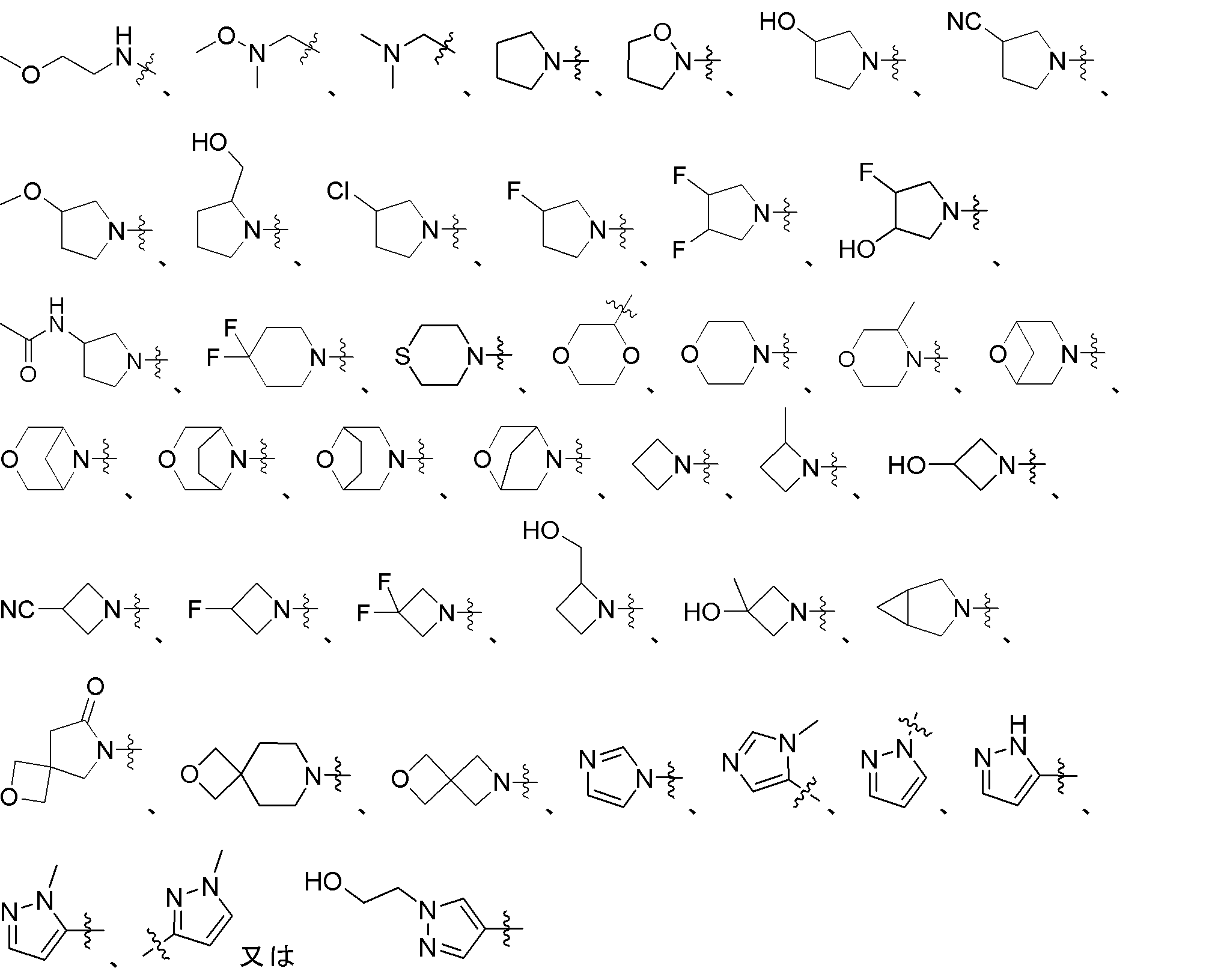
から選ばれ、他の変数は、本願で定義されるとおりである。
In some embodiments, R2 is a methoxy group, a methoxyethoxy group, a methylamino group, a dimethylamino group,
and other variables are as defined herein.
いくつかの実施形態では、R2は、

から選ばれ、他の変数は、本願で定義されるとおりである。
In some embodiments, R2 is
and other variables are as defined herein.
いくつかの実施形態では、R2は、メトキシ基、メトキシエトキシ基、メチルアミノ基、ジメチルアミノ基、

から選ばれ、他の変数は、本願で定義されるとおりである。
In some embodiments, R2 is a methoxy group, a methoxyethoxy group, a methylamino group, a dimethylamino group,
and other variables are as defined herein.
いくつかの実施形態では、R2は、

から選ばれ、他の変数は、本願で定義されるとおりである。
In some embodiments, R2 is
and other variables are as defined herein.
いくつかの実施形態では、R3は、-OCF2Hから選ばれ、ここで前記-OCF2Hは、任意選択的にハロゲンによって置換され、他の変数は、本願で定義されるとおりである。 In some embodiments, R 3 is selected from --OCF 2 H, wherein said --OCF 2 H is optionally substituted with halogen, and other variables are as defined herein.
いくつかの実施形態では、R3は、-OCF2Hから選ばれ、ここで前記-OCF2Hは、任意選択的に、フッ素、塩素、臭素、ヨウ素によって置換され、他の変数は、本願で定義されるとおりである。例えば、R3は、-OCF2Cl、-OCF2Br、-OCF2I、-OCF3から選ばれる。 In some embodiments, R 3 is selected from -OCF 2 H, where said -OCF 2 H is optionally substituted with fluorine, chlorine, bromine, or iodine, and other variables are as defined herein, for example, R 3 is selected from -OCF 2 Cl, -OCF 2 Br, -OCF 2 I, or -OCF 3 .
いくつかの実施形態では、R3は、-OCF2Clから選ばれ、他の変数は、本願で定義されるとおりである。 In some embodiments, R 3 is selected from --OCF 2 Cl, and the other variables are as defined herein.
いくつかの実施形態では、
R1は、

から選ばれ、ここで前記

は、任意選択的に、1つ又は複数のRa’によって置換され、
環Aは、N又はO原子から選ばれる1つ又は2つのヘテロ原子を含有する5員ヘテロアリール基から選ばれ、
環Bは、N若しくはO原子から選ばれる1つ若しくは2つのヘテロ原子を含有する5員若しくは6員ヘテロシクロアルキル基、又は1つ若しくは2つのN原子を含有する5員ヘテロアリール基から選ばれ、
R2は、3~10員ヘテロシクロアルキル基から選ばれ、ここで前記3~10員ヘテロシクロアルキル基は、任意選択的に、1つ又は複数のRbによって置換され、前記ヘテロシクロアルキル基は、-O-、-NH-又はNから独立的に選ばれる1つ、2つ、3つ又は4つのヘテロ原子又はヘテロ原子団を含み、
R3は、-OCF2Clから選ばれ、
Ra’は、

C1~6アルキル基、3~8員シクロアルキル基又は1つ若しくは複数のヒドロキシ基若しくはハロゲンによって置換されたC1~6アルキル基から選ばれ、
Rbは、ヒドロキシ基、アミノ基、シアノ基、ハロゲン、

C1~6アルキル基、C1~6アルコキシ基又は1つ若しくは複数のヒドロキシ基若しくはハロゲンによって置換されたC1~6アルキル基から選ばれる。
In some embodiments,
R1 is
wherein said
is optionally substituted by one or more R a′ ;
Ring A is selected from 5-membered heteroaryl groups containing 1 or 2 heteroatoms selected from N or O atoms;
Ring B is selected from a 5- or 6-membered heterocycloalkyl group containing 1 or 2 heteroatoms selected from N or O atoms, or a 5-membered heteroaryl group containing 1 or 2 N atoms;
R 2 is selected from a 3- to 10-membered heterocycloalkyl group, wherein said 3- to 10-membered heterocycloalkyl group is optionally substituted by one or more R b , and said heterocycloalkyl group contains 1, 2, 3 or 4 heteroatoms or heteroatomic groups independently selected from -O-, -NH- or N;
R3 is selected from -OCF2Cl ;
R a′ is
selected from a C1-6 alkyl group, a 3- to 8-membered cycloalkyl group, or a C1-6 alkyl group substituted by one or more hydroxy groups or halogens;
R b is a hydroxy group, an amino group, a cyano group, a halogen atom,
It is selected from a C 1-6 alkyl group, a C 1-6 alkoxy group, or a C 1-6 alkyl group substituted by one or more hydroxy groups or halogens.
いくつかの実施形態では、
R1は、

から選ばれ、ここで前記

は、任意選択的に、1つ又は複数のRa’によって置換され、
X、Y及びZは、それぞれ、CH又はNから独立的に選ばれ、且つ、X、Y及びZのうちの少なくとも1つは、CHから選ばれ、
R2は、3~10員ヘテロシクロアルキル基から選ばれ、ここで前記3~10員ヘテロシクロアルキル基は、任意選択的に、1つ又は複数のRbによって置換され、
R3は、-OCF2Clから選ばれ、
Ra及びRa’は、それぞれ、ハロゲン、C1~6アルキル基、3~6員シクロアルキル基又は1つ、2つ若しくは3つのヒドロキシ基によって置換されたC1~6アルキル基
から独立的に選ばれ、
Rbは、ヒドロキシ基、シアノ基、ハロゲン、

C1~6アルキル基、C1~6アルコキシ基、又は1つ若しくは複数のヒドロキシ基若しくはハロゲンによって置換されたC1~6アルキル基から選ばれ、
前記ヘテロシクロアルキル基は、それぞれ、-O-、-NH-又はNから独立的に選ばれる1つ、2つ、3つ又は4つのヘテロ原子又はヘテロ原子団を含む。
In some embodiments,
R1 is
wherein said
is optionally substituted by one or more R a′ ;
X, Y and Z are each independently selected from CH or N, and at least one of X, Y and Z is selected from CH;
R 2 is selected from a 3- to 10-membered heterocycloalkyl group, wherein said 3- to 10-membered heterocycloalkyl group is optionally substituted by one or more R b ;
R3 is selected from -OCF2Cl ;
R a and R a' are each independently selected from a halogen, a C 1-6 alkyl group, a 3- to 6-membered cycloalkyl group, or a C 1-6 alkyl group substituted by one, two or three hydroxy groups;
R b is a hydroxy group, a cyano group, a halogen,
selected from a C1-6 alkyl group, a C1-6 alkoxy group, or a C1-6 alkyl group substituted by one or more hydroxy groups or halogens;
The heterocycloalkyl groups contain 1, 2, 3 or 4 heteroatoms or heteroatomic groups independently selected from -O-, -NH- or N, respectively.
いくつかの実施形態では、前記「1つ又は複数」は、1つ、2つ、3つ、4つ、5つ又は6つから選ばれる。いくつかの実施形態では、前記「1つ又は複数」は、1つ、2つ又は3つから選ばれる。いくつかの実施形態では、前記「1つ又は複数」は、1つ又は2つから選ばれる。 In some embodiments, the "one or more" is selected from one, two, three, four, five, or six. In some embodiments, the "one or more" is selected from one, two, or three. In some embodiments, the "one or more" is selected from one or two.
また、本願のいくつかの実施形態は、上記の各変数を自由に組み合わせたものである。 In addition, some embodiments of the present application are any combination of the above variables.
別の態様では、本願は、式(III)の化合物、式(IV)の化合物又は薬学的に許容されるその塩を提供し、

式中、
R1及びR2の定義は、上述したとおりである。
In another aspect, the present application provides a compound of formula (III), a compound of formula (IV), or a pharma- ceutically acceptable salt thereof:
In the formula,
The definitions of R1 and R2 are as described above.
別の態様では、本願は、式(III-A)の化合物、式(III-B)の化合物、式(IV-A)の化合物又は薬学的に許容されるその塩を提供し、

式中、

は、任意選択的に、1つのRa’によって置換され、

は、任意選択的に、1つの又は2つのRa’によって置換され、
R2、Ra、Ra’、X、Y、Z、環A及び環Bの定義は、上述したとおりである。
In another aspect, the present application provides a compound of formula (III-A), a compound of formula (III-B), a compound of formula (IV-A), or a pharma- ceutically acceptable salt thereof:
In the formula,
is optionally substituted by one R a′ ;
is optionally substituted by one or two R a′ ;
The definitions of R 2 , R a , R a′ , X, Y, Z, ring A and ring B are as described above.
いくつかの実施形態では、

の定義は、それぞれ、上記のR1の定義のとおりである。
In some embodiments,
are each defined as R1 above.
別の態様では、本願は、式(V)の化合物、式(VI)の化合物、式(VII)の化合物、式(VIII)の化合物、式(IX)の化合物、式(X)の化合物又は薬学的に許容されるその塩を提供し、

式中、
R2、Ra、Ra’及び環Bの定義は、上述したとおりである。
In another aspect, the present application provides a compound of formula (V), a compound of formula (VI), a compound of formula (VII), a compound of formula (VIII), a compound of formula (IX), a compound of formula (X), or a pharma- ceutically acceptable salt thereof;
In the formula,
The definitions of R 2 , R a , R a′ and ring B are as defined above.
別の態様では、本願は、以下の化合物又は薬学的に許容されるその塩を提供する。


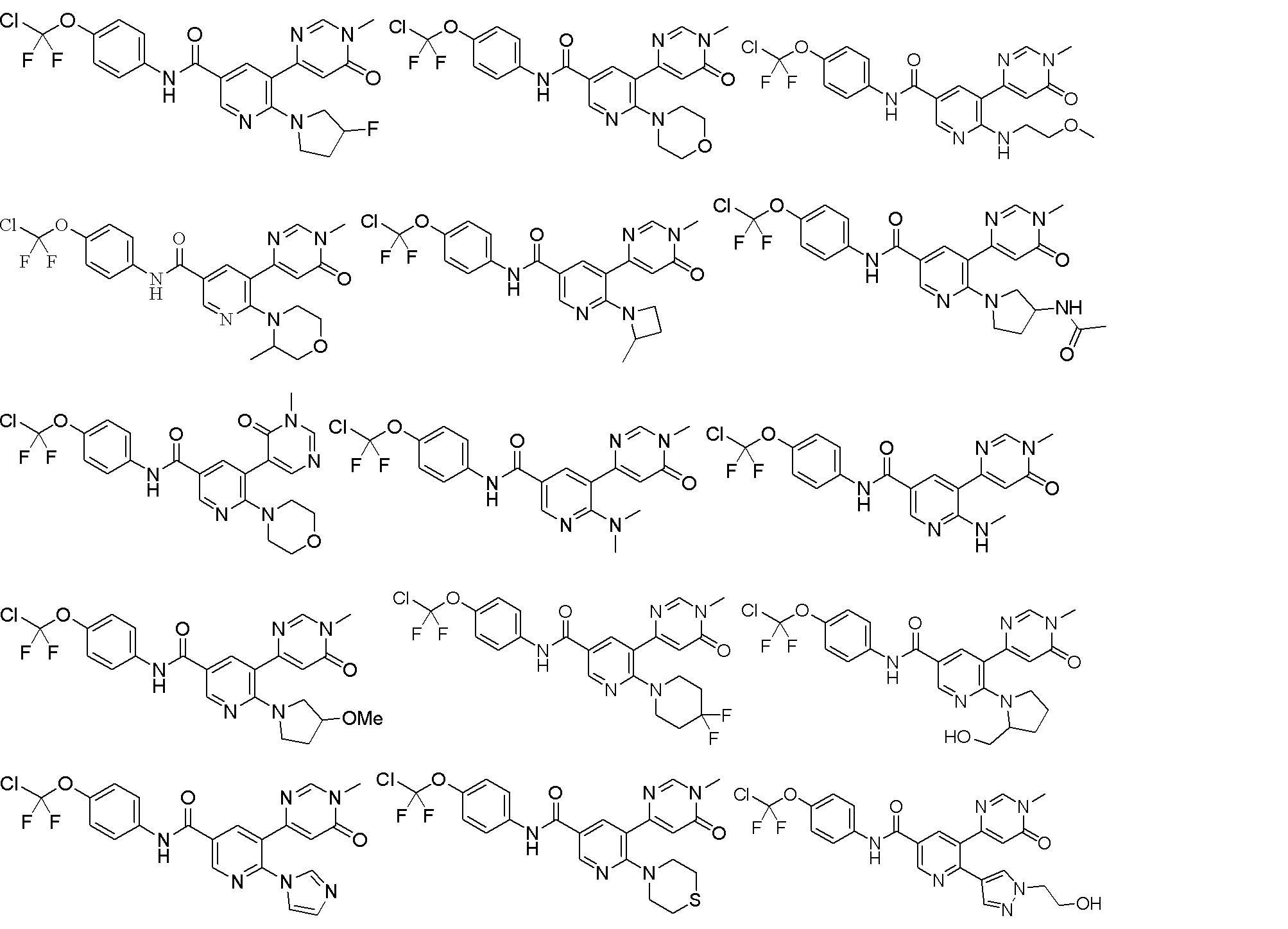


別の態様では、本願は、以下の化合物又は薬学的に許容されるその塩を提供する。


別の態様では、本願は、また、本願の上記の化合物又は薬学的に許容されるその塩を含む医薬組成物を提供する。いくつかの実施形態では、本願の医薬組成物は、薬学的に許容される添加物をさらに含む。 In another aspect, the present application also provides a pharmaceutical composition comprising the compound of the present application or a pharma- ceutically acceptable salt thereof. In some embodiments, the pharmaceutical composition of the present application further comprises a pharma- ceutically acceptable excipient.
別の態様では、本願は、また、治療を必要とする哺乳動物(好ましくは、ヒト)に治療有効量の本願の上記の化合物若しくは薬学的に許容されるその塩、又はその医薬組成物を投与することを含む、BCR-ABL関連疾患を治療及び/又は予防する方法を提供する。 In another aspect, the present application also provides a method for treating and/or preventing a BCR-ABL-associated disease, comprising administering to a mammal (preferably a human) in need of such treatment a therapeutically effective amount of the compound of the present application or a pharma- ceutically acceptable salt thereof, or a pharmaceutical composition thereof.
別の態様では、本願は、また、BCR-ABL関連疾患を治療及び/又は予防する薬物の製造における本願の上記の化合物若しくは薬学的に許容されるその塩、又はその医薬組成物の用途を提供する。 In another aspect, the present application also provides a use of the above-mentioned compound of the present application or a pharma- ceutically acceptable salt thereof, or a pharmaceutical composition thereof in the manufacture of a medicament for treating and/or preventing a BCR-ABL-associated disease.
別の態様では、本願は、また、BCR-ABL関連疾患の治療及び/又は予防における本願の上記の化合物若しくは薬学的に許容されるその塩、又はその医薬組成物の用途を提供する。 In another aspect, the present application also provides the use of the above-mentioned compound of the present application or a pharma- ceutically acceptable salt thereof, or a pharmaceutical composition thereof in the treatment and/or prevention of a BCR-ABL-associated disease.
別の態様では、本願は、また、BCR-ABL関連疾患を治療及び/又は予防するための本願の上記の化合物、薬学的に許容されるその塩、又はその医薬組成物を提供する。 In another aspect, the present application also provides the above-mentioned compound of the present application, a pharma- ceutically acceptable salt thereof, or a pharmaceutical composition thereof for treating and/or preventing a BCR-ABL-associated disease.
いくつかの実施形態では、前記BCR-ABL関連疾患は、がんから、例えば、慢性骨髄性白血病から選ばれる。 In some embodiments, the BCR-ABL-associated disease is selected from cancer, e.g., chronic myeloid leukemia.
本願の化合物は、良好な細胞増殖阻害活性(K562細胞及びT315I変異細胞を含む)、良好なインビボ薬物動態特性を備え、且つ低毒性であり、hERGカリウムチャネルに対する阻害効果が非常に弱く、良い安全性を有する。 The compounds of the present application have good cell proliferation inhibitory activity (including K562 cells and T315I mutant cells), good in vivo pharmacokinetic properties, low toxicity, very weak inhibitory effect on the hERG potassium channel, and good safety.
(定義)
特に説明がない限り、本願で使用する下記の用語は次の意味を有する。特定の用語は、特に定義がなければ、確定しないもの又は不明瞭なものとしてではなく、本分野の通常の意味で理解する。本明細書で商品名が記載される場合は、対応する商品又はその有効成分を指す。
(Definition)
Unless otherwise specified, the following terms used in this application have the following meanings: Certain terms are to be understood in their ordinary sense in the art, and not as open ended or unclear, unless otherwise defined. When trade names are mentioned in this specification, they refer to the corresponding products or their active ingredients.
本願では、特定の構造単位又は基で共有結合が特定の原子に接続されていない場合は、当該共有結合は当該構造単位又は基のいずれの原子とも接続できることを表し、ただし、原子価結合法に反しないことが前提である。 For the purposes of this application, when a covalent bond is not connected to a specific atom in a particular structural unit or group, it represents that the covalent bond can be connected to any atom in that structural unit or group, provided that the valence bond principle is not violated.
用語「置換された」とは、特定の原子の原子価が正常であり、且つ置換後の化合物が安定的なものでさえあれば、当該原子上のいずれか1つ又は複数の水素原子が置換基によって置換されることを指す。置換基が酸素置換(=O)である場合は、2つの水素原子が置換されることになる。酸素置換はアリール基に起こらない。 The term "substituted" refers to the replacement of any one or more hydrogen atoms on a particular atom by a substituent, provided that the valence of that atom is normal and the resulting compound is stable. When the substituent is an oxygen substituent (=O), two hydrogen atoms are replaced. Oxygen substitution does not occur in aryl groups.
用語「任意選択の」又は「任意選択的に」とは、続いて記述される事項又は状況は生じてもよいし生じなくてもよいことを指し、当該記述には前記事項又は状況が生じる場合及び前記事項又は状況が生じない場合が含まれる。「任意選択的に置換された」は、置換された又は置換されていないことを表し、例えば、エチル基が「任意選択的に」ハロゲンによって置換されるとは、エチル基は置換されなくてもよいし(CH2CH3)、単置換されてもよいし(例えば、CH2CH2F)、多置換されてもよいし(例えば、CHFCH2F、CH2CHF2など)又は完全に置換されてもよい(例えば、CF2CF3)。当業者が理解したように、1つ又は複数の置換基を含む基には、空間的に存在し得ない且つ/又は合成できない置換又は置換形態が認められない。 The term "optional" or "optionally" refers to the fact that the subsequently described item or circumstance may or may not occur, including the occurrence of said item or circumstance and the absence of said item or circumstance. "Optionally substituted" refers to substituted or unsubstituted, for example, an ethyl group being "optionally" substituted by a halogen means that the ethyl group may be unsubstituted (CH 2 CH 3 ), monosubstituted (e.g., CH 2 CH 2 F), polysubstituted (e.g., CHFCH 2 F, CH 2 CHF 2 , etc.), or fully substituted (e.g., CF 2 CF 3 ). As understood by those skilled in the art, a group containing one or more substituents does not allow for substitution or substitution forms that are not spatially possible and/or cannot be synthesized.
本明細書でCm~nとは、当該部分が所定の範囲m~n中の整数個の炭素原子を有することを指す。例えば、「C1~6」とは、対象基が1つの炭素原子、2つの炭素原子、3つの炭素原子、4つの炭素原子、5つの炭素原子又は6つの炭素原子を有してもよいことを指す。例えば、C1~3とは、当該対象基が1つの炭素原子、2つの炭素原子、3つの炭素原子を有してもよいことを指す。 As used herein, C m-n means that the moiety has an integer number of carbon atoms in the specified range m to n. For example, "C 1-6 " means that the group in question may have 1 carbon atom, 2 carbon atoms, 3 carbon atoms, 4 carbon atoms, 5 carbon atoms, or 6 carbon atoms. For example, C 1-3 means that the group in question may have 1 carbon atom, 2 carbon atoms, or 3 carbon atoms.
化合物の組成又は構造で特定の変数(例えば、R)が1回以上出現した場合は、出現するたびに独立的に定義される。したがって、例えば、対象基が2つのRによって置換される場合は、各Rは独立的に選択される。 When a particular variable (e.g., R) occurs more than once in a compound composition or structure, each occurrence is independently defined. Thus, for example, if a subject group is substituted with two R, each R is independently selected.
1つの置換基の結合が1つの環の2つの原子を接続させる結合と交差して接続される場合は、このような置換基は当該環のいずれの原子とも結合することができる。例えば、構造単位

の場合は、シクロヘキシル基又はシクロヘキサジエンのいかなる位置で置換してもよいことを表す。
When a bond of a substituent is connected across a bond connecting two atoms of a ring, such substituent can be bonded to any atom of the ring. For example, the structural unit
In the case of the formula (I), it means that the substitution may be performed at any position of the cyclohexyl group or cyclohexadiene.
用語「ハロ」又は「ハロゲン」とは、フッ素、塩素、臭素及びヨウ素を指す。 The term "halo" or "halogen" refers to fluorine, chlorine, bromine and iodine.
用語「ヒドロキシ基」とは、-OH基を指す。 The term "hydroxy group" refers to an -OH group.
用語「アミノ基」とは、-NH2基を指す。 The term "amino group" refers to the -NH2 group.
用語「シアノ基」とは、-CN基を指す。 The term "cyano group" refers to the -CN group.
用語「アルキル基」とは、CnH2n+1を一般式とする炭化水素基を指す。当該アルキル基は、直鎖でもよいし分岐鎖でもよい。例えば、用語「C1~6アルキル基」とは、1つ~6つの炭素原子を含むアルキル基(例えば、メチル基、エチル基、n-プロピル基、イソプロピル基、n-ブチル基、イソブチル基、sec-ブチル基、tert-ブチル基、n-ペンチル基、1-メチルブチル基、2-メチルブチル基、3-メチルブチル基、ネオペンチル基、ヘキシル基、2-メチルペンチル基など)を指す。同様に、アルコキシ基、アルキルアミノ基、ジアルキルアミノ基、アルキルスルホニル基及びアルキルチオ基のアルキル基部分(即ちアルキル基)には上記と同じ定義が適用される。また、例えば、用語「C1~3アルキル基」とは、1つ~3つの炭素原子を含むアルキル基(例えば、メチル基、エチル基、プロピル基、イソプロピル基)を指す。 The term "alkyl group" refers to a hydrocarbon group having the general formula C n H 2n+1 . The alkyl group may be linear or branched. For example, the term "C 1-6 alkyl group" refers to an alkyl group containing 1 to 6 carbon atoms (e.g., methyl, ethyl, n-propyl, isopropyl, n-butyl, isobutyl, sec-butyl, tert-butyl, n-pentyl, 1-methylbutyl, 2-methylbutyl, 3-methylbutyl, neopentyl, hexyl, 2-methylpentyl, etc.). Similarly, the alkyl group moiety (i.e., alkyl group) of an alkoxy group, an alkylamino group, a dialkylamino group, an alkylsulfonyl group, and an alkylthio group has the same definition as above. Also, for example, the term "C 1-3 alkyl group" refers to an alkyl group containing 1 to 3 carbon atoms (e.g., methyl, ethyl, propyl, isopropyl).
用語「アルコキシ基」とは、-O-アルキル基を指す。 The term "alkoxy group" refers to an -O-alkyl group.
用語「シクロアルキル基」とは、完全飽和で且つ単環、架橋環又はスピロ環として存在し得る炭素環を指す。特に規定がない限り、当該炭素環は一般に3~10員環である。シクロアルキル基の非限定的な例は、シクロプロピル基、シクロブチル基、シクロペンチル基、シクロヘキシル基、ノルボルニル基(ビシクロ[2.2.1]ヘプチル基)、ビシクロ[2.2.2]オクチル基、アダマンタニル基、ビシクロ[1.1.1]ペント-1-イルなどを含み、ただしそれらに限定されない。例えば、C3又は4シクロアルキル基は、シクロプロピル基、シクロブチル基を含む。 The term "cycloalkyl group" refers to a carbocycle that is fully saturated and can exist as a monocyclic, bridged, or spirocyclic ring. Unless otherwise specified, such carbocycles typically have from 3 to 10 members. Non-limiting examples of cycloalkyl groups include, but are not limited to, cyclopropyl, cyclobutyl, cyclopentyl, cyclohexyl, norbornyl (bicyclo[2.2.1]heptyl), bicyclo[2.2.2]octyl, adamantanyl, bicyclo[1.1.1]pent-1-yl, and the like. For example, C3 or C4 cycloalkyl groups include cyclopropyl, cyclobutyl.
用語「ヘテロシクリル基」とは、完全飽和又は一部不飽和で(ただし完全不飽和のヘテロアリール基ではない)且つ単環、架橋環又はスピロ環として存在し得る非芳香族環を指す。特に規定がない限り、当該複素環は一般に、硫黄、酸素及び/又は窒素から独立的に選ばれる1つ~3つ(好ましくは1つ又は2つ)のヘテロ原子を含有する3~10員環、又は4~6員環である。ヘテロシクリル基の非限定的な例は、オキシラニル基、テトラヒドロフリル基、ジヒドロフリル基、3,4-ジヒドロピラニル基、3,6-ジヒドロピラニル基、ピロリジニル基、N-メチルピロリジニル基、ジヒドロピロリル基、ピペリジニル基、ピペラジニル基、ピラゾリジニル基、4H-ピラニル基、モルホリニル基、チオモルホリニル基、テトラヒドロチエニル基、2-オキサ-7-アザスピロ[3.5]ノニル基、2-オキサ-6-アザスピロ[3.3]ヘプチル基、3-アザビシクロ[3.1.0]ヘキシル基などを含み、ただしそれらに限定されない。 The term "heterocyclyl group" refers to a non-aromatic ring that may be fully saturated or partially unsaturated (but not fully unsaturated heteroaryl groups) and may exist as a monocyclic, bridged, or spirocyclic ring. Unless otherwise specified, the heterocyclic ring is generally a 3- to 10-membered, or 4- to 6-membered ring containing 1 to 3 (preferably 1 or 2) heteroatoms independently selected from sulfur, oxygen, and/or nitrogen. Non-limiting examples of heterocyclyl groups include, but are not limited to, oxiranyl, tetrahydrofuryl, dihydrofuryl, 3,4-dihydropyranyl, 3,6-dihydropyranyl, pyrrolidinyl, N-methylpyrrolidinyl, dihydropyrrolyl, piperidinyl, piperazinyl, pyrazolidinyl, 4H-pyranyl, morpholinyl, thiomorpholinyl, tetrahydrothienyl, 2-oxa-7-azaspiro[3.5]nonyl, 2-oxa-6-azaspiro[3.3]heptyl, 3-azabicyclo[3.1.0]hexyl, and the like.
用語「ヘテロシクロアルキル基」とは、完全飽和で且つ単環、架橋環又はスピロ環として存在し得る環状基を指す。特に規定がない限り、当該複素環は一般に、硫黄、酸素及び/又は窒素から独立的に選ばれる1つ~3つ(好ましくは1つ又は2つ)のヘテロ原子を含有する3~10員環、又は4~6員環である。3員ヘテロシクロアルキル基の例は、オキシラニル基、チイラニル基、アジリジニル基を含み、ただしそれらに限定されず、4員ヘテロシクロアルキル基の非限定的な例は、アゼチジニル基、オキセタニル基、チエタニル基を含み、ただしそれらに限定されず、5員ヘテロシクロアルキル基の例は、テトラヒドロフリル基、テトラヒドロチエニル基、ピロリジニル基、イソオキサゾリジニル基、オキサゾリジニル基、イソチアゾリジニル基、チアゾリジニル基、イミダゾリジニル基、テ
トラヒドロピラゾリル基を含み、ただしそれらに限定されず、6員ヘテロシクロアルキル基の例は、ピペリジニル基、テトラヒドロピラニル基、テトラヒドロチオピラニル基、モルホリニル基、ピペラジニル基、1,4-チオキサニル基、1,4-ジオキサン基、チオモルホリニル基、1,3-ジチアニル基、1,4-ジチアニル基を含み、ただしそれらに限定されず、7員ヘテロシクロアルキル基の例は、アゼパニル基、オキセパニル基、チエパニル基を含み、ただしそれらに限定されない。好ましくは、4つ、5つ又は6つの環原子を有する単環式ヘテロシクロアルキル基である。
The term "heterocycloalkyl group" refers to a cyclic group that is fully saturated and can exist as a monocyclic, bridged, or spirocyclic ring. Unless otherwise specified, the heterocycle is generally a 3- to 10-membered, or 4- to 6-membered ring containing from 1 to 3 (preferably 1 or 2) heteroatoms independently selected from sulfur, oxygen, and/or nitrogen. Examples of 3-membered heterocycloalkyl groups include, but are not limited to, oxiranyl, thiiranyl, and aziridinyl groups; non-limiting examples of 4-membered heterocycloalkyl groups include, but are not limited to, azetidinyl, oxetanyl, and thietanyl groups; examples of 5-membered heterocycloalkyl groups include, but are not limited to, tetrahydrofuryl, tetrahydrothienyl, pyrrolidinyl, isoxazolidinyl, oxazolidinyl, isothiazolidinyl, thiazolidinyl, imidazolidinyl ... thiazolidinyl, thiazolidinyl, thiazolidinyl, thiazolidinyl, thiazolidinyl, thiazolidinyl, thiazolidinyl, thiazolidinyl, thiazolidinyl, thiazolidinyl, thiazolidinyl, thiazolidinyl, thiazolidinyl, Examples of 6-membered heterocycloalkyl groups include, but are not limited to, piperidinyl, tetrahydropyranyl, tetrahydrothiopyranyl, morpholinyl, piperazinyl, 1,4-thioxanyl, 1,4-dioxane, thiomorpholinyl, 1,3-dithianyl, 1,4-dithianyl, and examples of 7-membered heterocycloalkyl groups include, but are not limited to, azepanyl, oxepanyl, and thiepanyl. Preferred are monocyclic heterocycloalkyl groups having 4, 5, or 6 ring atoms.
用語「モノヘテロシクリル基」とは、完全飽和又は一部不飽和で(ただし完全不飽和のヘテロアリール基ではない)且つ1つの環だけとして存在する非芳香族環を指す。特に規定がない限り、当該複素環は一般に、硫黄、酸素及び/又は窒素から独立的に選ばれる1つ~3つ(好ましくは1つ又は2つ)のヘテロ原子を含有する3~10員環、又は4~6員環である。モノヘテロシクリル基の非限定的な例は、オキシラニル基、テトラヒドロフリル基、ジヒドロフリル基、3,4-ジヒドロピラニル基、3,6-ジヒドロピラニル基、ピロリジニル基、N-メチルピロリジニル基、ジヒドロピロリル基、ピペリジニル基、ピペラジニル基、ピラゾリジニル基、4H-ピラニル基、モルホリニル基、チオモルホリニル基、テトラヒドロチエニル基などを含み、ただしそれらに限定されない。 The term "monoheterocyclyl group" refers to a non-aromatic ring that is fully saturated or partially unsaturated (but not fully unsaturated heteroaryl groups) and exists as only one ring. Unless otherwise specified, the heterocycle is generally a 3- to 10-membered, or 4- to 6-membered ring containing 1 to 3 (preferably 1 or 2) heteroatoms independently selected from sulfur, oxygen, and/or nitrogen. Non-limiting examples of monoheterocyclyl groups include, but are not limited to, oxiranyl, tetrahydrofuryl, dihydrofuryl, 3,4-dihydropyranyl, 3,6-dihydropyranyl, pyrrolidinyl, N-methylpyrrolidinyl, dihydropyrrolyl, piperidinyl, piperazinyl, pyrazolidinyl, 4H-pyranyl, morpholinyl, thiomorpholinyl, tetrahydrothienyl, and the like.
用語「モノヘテロシクロアルキル基」とは、完全飽和のモノヘテロシクリル基を指す。 The term "monoheterocycloalkyl group" refers to a fully saturated monoheterocyclyl group.
用語「架橋ヘテロシクリル基」とは、完全飽和又は一部不飽和で、且つ2つの環が2つ以上の原子を共有する5~14員の多環を指し、1つ又は複数の二重結合を含有してもよいが、完全共役なπ電子系を有する環は1つもなく、そのうち、1つ又は複数の環原子はN、O、S(O)n(ここで、nは0、1又は2)から選ばれるヘテロ原子であり、残りの環原子は炭素である。好ましくは、6~14員であり、より好ましくは、6~10員である。構成環の数によって二環式、三環式、四環式、多環式の架橋複素環に分けられ、好ましくは、二環式又は三環式であり、より好ましくは、二環式である。架橋複素環の非限定的な例は、

などを含む。
The term "bridged heterocyclyl group" refers to a 5-14 membered polycyclic ring that is fully saturated or partially unsaturated and in which two rings share two or more atoms, and may contain one or more double bonds, but none of the rings has a completely conjugated pi-electron system, in which one or more ring atoms are heteroatoms selected from N, O, S(O) n (where n is 0, 1 or 2), and the remaining ring atoms are carbon. It is preferably 6-14 membered, more preferably 6-10 membered. Depending on the number of constituent rings, it can be divided into bicyclic, tricyclic, tetracyclic and polycyclic bridged heterocycles, preferably bicyclic or tricyclic, more preferably bicyclic. Non-limiting examples of bridged heterocycles are:
etc.
用語「架橋ヘテロシクロアルキル基」とは、完全飽和の架橋ヘテロシクリル基を指す。 The term "bridged heterocycloalkyl group" refers to a fully saturated bridged heterocyclyl group.
用語「スピロヘテロシクリル基」とは、完全飽和又は一部不飽和の(ただし完全不飽和ではない)スピロ環で1つ又は複数の環原子は硫黄、酸素及び/又は窒素から選ばれるヘテロ原子であり(好ましくは、1つ又は2つのヘテロ原子であり)、残りの環原子は炭素であるものを指す。好ましくは、6~14員であり、より好ましくは、6~10員である。環同士で共有されるスピロ原子の数によってスピロ複素環は、モノスピロ複素環、ビススピロ複素環又はポリスピロ複素環に分けられ、好ましくは、モノスピロ複素環又はビススピロ複素環であり、より好ましくは、4員/4員、4員/5員、4員/6員、5員/5
員又は5員/6員のモノスピロ複素環である。スピロ複素環の非限定的な例は、

などを含む。
The term "spiroheterocyclyl group" refers to a fully saturated or partially unsaturated (but not fully unsaturated) spiro ring in which one or more ring atoms are heteroatoms selected from sulfur, oxygen and/or nitrogen (preferably one or two heteroatoms) and the remaining ring atoms are carbon. It is preferably 6-14 membered, more preferably 6-10 membered. Depending on the number of spiro atoms shared between the rings, spiroheterocycles are divided into monospiroheterocycles, bisspiroheterocycles and polyspiroheterocycles, preferably monospiroheterocycles or bisspiroheterocycles, more preferably 4-membered/4-membered, 4-membered/5-membered, 4-membered/6-membered, 5-membered/5 ...
Non-limiting examples of spiro heterocycles are:
etc.
用語「スピロヘテロシクロアルキル基」とは、完全飽和のスピロヘテロシクリル基を指す。 The term "spiroheterocycloalkyl group" refers to a fully saturated spiroheterocyclyl group.
用語「ヘテロアリール基」とは、N、O、Sから選ばれる環原子を少なくとも1つ含有し、残りの環原子がCであり、且つ少なくとも1つの芳香環を有する単環式又は縮合多環式の環系を指す。ヘテロアリール基として好ましいのは、5~8員環を1つ、又は6つ~14個、特に6つ~10個の環原子を含む複数の縮合環を有する。ヘテロアリール基の非限定的な例は、ピロリル基、フリル基、チエニル基、イミダゾリル基、オキサゾリル基、ピラゾリル基、ピリジニル基、ピリミジニル基、ピラジニル基、キノリニル基、イソキノリニル基、テトラゾリル基、トリアゾリル基、トリアジニル基、ベンゾフリル基、ベンゾチエニル基、インドリル基、イソインドリル基などを含み、ただしそれらに限定されない。 The term "heteroaryl group" refers to a monocyclic or fused polycyclic ring system containing at least one ring atom selected from N, O, and S, the remaining ring atoms being C, and at least one aromatic ring. Preferred heteroaryl groups have one 5-8 membered ring or multiple fused rings containing 6-14, especially 6-10, ring atoms. Non-limiting examples of heteroaryl groups include, but are not limited to, pyrrolyl, furyl, thienyl, imidazolyl, oxazolyl, pyrazolyl, pyridinyl, pyrimidinyl, pyrazinyl, quinolinyl, isoquinolinyl, tetrazolyl, triazolyl, triazinyl, benzofuryl, benzothienyl, indolyl, isoindolyl, and the like.
本願では、基

は、環Aと環Bが共有結合によって二環構造を形成させたものを表し、ここで共有結合は単結合であってもよいし、二重結合であってもよい。
In this application,
represents a bicyclic structure formed by a covalent bond between ring A and ring B, where the covalent bond may be a single bond or a double bond.
用語「治療」とは、疾患又は前記疾患に関連する1つ又は複数の症状を改善又は解消するために、本願に記載の化合物又は製剤を投与することを意味し、且つ、
(i)疾患又は疾患の状態を抑え、即ちその進行を抑えること、
(ii)疾患又は疾患の状態を緩和し、即ち当該疾患又は疾患の状態を解消させることを含む。
The term "treatment" refers to the administration of a compound or formulation described herein to improve or eliminate a disease or one or more symptoms associated with said disease, and
(i) arresting the disease or disease state, i.e. arresting its progression;
(ii) Alleviating the disease or disease state, i.e. causing the disease or disease state to be eliminated.
用語「予防」とは、疾患又は前記疾患に関連する1つ又は複数の症状を予防するために、本願に記載の化合物又は製剤を投与することを意味し、且つ、哺乳動物における疾患又は疾患の状態の出現を予防することであって、特に当該疾患の状態になりやすい哺乳動物が、当該疾患の状態と診断されていない時の予防を含む。 The term "prevention" refers to the administration of a compound or formulation described herein to prevent a disease or one or more symptoms associated with said disease, and includes preventing the appearance of a disease or disease state in a mammal, particularly when a mammal susceptible to the disease state has not been diagnosed with the disease state.
用語「治療有効量」とは、(i)特定の疾患、病状若しくは障害を治療又は予防すること、(ii)特定の疾患、病状又は障害の1種若しくは複数種の症状を軽減、改善若しくは解消すること、又は(iii)本明細書に記載の特定の疾患、病状若しくは障害の1種若しくは複数種の症状の発生を予防若しくは遅延させる、本願の化合物の用量を指す。本願の化合物に係る「治療有効量」は、当該化合物、病状とその重症度、投与方式及び被治
療哺乳動物の年齢によって変わるものであるが、当業者はその知識と本開示の内容に基づいて決定することができる。
The term "therapeutically effective amount" refers to a dose of a compound of the present application that (i) treats or prevents a particular disease, condition, or disorder, (ii) reduces, ameliorates, or eliminates one or more symptoms of a particular disease, condition, or disorder, or (iii) prevents or delays the onset of one or more symptoms of a particular disease, condition, or disorder described herein. The "therapeutically effective amount" of a compound of the present application will vary depending on the compound, the condition and its severity, the mode of administration, and the age of the mammal to be treated, but can be determined by one of skill in the art based on their knowledge and the contents of this disclosure.
用語「薬学的に許容される」とは、人間又は動物の組織に接触して使用するのに適し、毒性又は刺激性はなく、アレルギー反応、その他の問題又は合併症を引き起こさないと医学的に判断され、利益対リスクが合理的である化合物、材料、組成物及び/又は剤形に対して使用される。 The term "pharmacologically acceptable" refers to compounds, materials, compositions, and/or dosage forms that are medically determined to be suitable for use in contact with human or animal tissue, not toxic or irritating, and not likely to cause an allergic reaction or other problem or complication, and for which the benefit-risk ratio is reasonable.
薬学的に許容される塩としては、例えば、金属塩、アンモニウム塩、有機塩基と形成した塩、無機酸と形成した塩、有機酸と形成した塩、塩基性又は酸性のアミノ酸と形成した塩などが挙げられる。 Examples of pharma- ceutically acceptable salts include metal salts, ammonium salts, salts formed with organic bases, salts formed with inorganic acids, salts formed with organic acids, and salts formed with basic or acidic amino acids.
用語「医薬組成物」とは、1種又は複数種の本願の化合物又はその塩と薬学的に許容される添加物とからなる混合物を指す。医薬組成物は、本願の化合物を生体に投与しやすくするためのものである。 The term "pharmaceutical composition" refers to a mixture of one or more compounds of the present application or salts thereof and pharma- ceutical acceptable excipients. The pharmaceutical composition is intended to facilitate administration of the compounds of the present application to a living body.
用語「薬学的に許容される添加物」とは、生体に明らかな刺激はなく、且つ、活性化合物の生物学的活性及び特性を損なわない添加物を指す。適切な添加物としての、例えば、炭水化物、ワックス、水溶性及び/又は水膨潤性ポリマー、親水性若しくは疎水性材料、ゼラチン、油、溶媒、水などは当業者に熟知される。 The term "pharmaceutical acceptable additive" refers to an additive that is not obviously irritating to the living body and does not impair the biological activity and properties of the active compound. Suitable additives, such as carbohydrates, waxes, water-soluble and/or water-swellable polymers, hydrophilic or hydrophobic materials, gelatin, oils, solvents, water, etc., are well known to those skilled in the art.
用語「含む(comprise)」及び類する用語、例えば、英語の表現comprises又はcomprisingは、「…を含み、ただしそれらに限定されない」と、開放的で非排他的な意味で理解される。 The term "comprise" and similar terms, such as the English expressions "comprises" or "comprising," are to be understood in an open and non-exclusive sense, including, but not limited to, "..."
本発明の化合物には特定の幾何異性体又は立体異性体の形態が存在してもよい。本発明で想定されるこのような化合物には、シス及びトランス異性体、(-)-及び(+)-エナンチオマー、(R)-及び(S)-エナンチオマー、ジアステレオマー、(D)-異性体、(L)-異性体、並びにラセミ混合物及びその他の混合物、例えば、エナンチオマー又はジアステレオマーを豊富に含有する混合物を含み、これらの混合物がいずれも本発明の範囲に含まれる。アルキル基などの置換基には別の不斉炭素原子が存在してもよい。これらの異性体及びそれらの混合物は全て本発明の範囲に含まれる。 The compounds of the invention may exist in particular geometric or stereoisomeric forms. Such compounds contemplated by the invention include cis and trans isomers, (-)- and (+)-enantiomers, (R)- and (S)-enantiomers, diastereomers, (D)-isomers, (L)-isomers, as well as racemic and other mixtures, e.g., mixtures enriched in an enantiomer or diastereomer, all of which are within the scope of the invention. Additional asymmetric carbon atoms may be present in substituents such as alkyl groups. All of these isomers and mixtures thereof are within the scope of the invention.
特に説明がない限り、「(D)」又は「(+)」は右旋性を、「(L)」又は「(-)」は左旋性を、「(DL)」又は「(±)」はラセミ体を表す。 Unless otherwise specified, "(D)" or "(+)" denotes dextrorotatory, "(L)" or "(-)" denotes levorotatory, and "(DL)" or "(±)" denotes racemic.
特に説明がない限り、くさび形の実線結合(

)とくさび形の破線結合(

)でキラル中心の絶対配置を表し、直線形の実線結合(


)でキラル中心の相対配置を表し、波線(

)でくさび形の実線結合(

)若しくはくさび形の破線結合(

)を表し、又は波線(

)で直線形の実線結合(

)と直線形の破線結合(

)を表す。
Unless otherwise stated, solid wedge bonds (
) and the wedge-shaped dashed bond (
) represents the absolute configuration of the chiral center, and the linear solid bond (
) indicates the relative configuration of the chiral centers, and the wavy line (
) with a solid wedge-shaped connection (
) or wedge-shaped dashed bond (
) or a wavy line (
) with a straight solid line connection (
) and linear dashed bond (
)
不斉合成、不斉試薬又はその他の通常の技術で、光学活性を備える(R)-と(S)-異性体、及びDとL異性体を製造することができる。本発明の特定の化合物のエナンチオマーを得るには、不斉合成又は不斉助剤の誘導で製造してもよい。生成物のジアステレオマー混合物を分離させ、且つ補助的な基を脱去させることで所望の純粋なエナンチオマーを得る。又は、分子に塩基性官能基(例えば、アミノ基)若しくは酸性官能基(例えば、カルボキシ基)が含まれる場合は、光学活性を備える適切な酸又は塩基とジアステレオマーの塩を形成させた後、当分野で周知される通常の方法でジアステレオマーを分割し、その後、回収して純粋なエナンチオマーを得る。また、エナンチオマーとジアステレオマーの分離は一般にクロマトグラフィーによって実行され、クロマトグラフィーではキラルな固定相が用いられ、任意選択的に化学的誘導法と組み合わせる(例えば、アミンからのカルバメート生成)。 Asymmetric synthesis, chiral reagents, or other conventional techniques can be used to prepare optically active (R)- and (S)-isomers, as well as D- and L-isomers. Enantiomers of certain compounds of the invention may be prepared by asymmetric synthesis or derivatization with chiral auxiliaries. The diastereomeric mixture of products is separated and the auxiliary groups are removed to obtain the desired pure enantiomers. Alternatively, if the molecule contains basic (e.g., amino) or acidic (e.g., carboxy) functional groups, the diastereomeric salts are formed with suitable optically active acids or bases, and the diastereomers are then separated and recovered to obtain the pure enantiomers by conventional methods known in the art. Separation of enantiomers and diastereomers is also commonly performed by chromatography, using chiral stationary phases, optionally combined with chemical derivatization (e.g., carbamate formation from amines).
本発明の化合物は、当該化合物を構成する1つ又は複数の原子に非天然的な割合で同原
子の同位体が含まれてもよい。例えば、三重水素(3H)、ヨウ素-125(125I)又は炭素-14(14C)などの放射性同位体で化合物を標識することができる。又は、重水素で水素を置換して重水素化薬物を生成させてもよく、例えば、d3-メチル基は、メチル基の3つの水素原子が全て重水素原子によって置換されたものを表し、重水素と炭素によって構成された結合は水素と炭素によって構成された通常の結合よりも堅牢で、非重水素化薬物と比べて、重水素化薬物は毒性と副作用が軽減され、薬物安定性と治療効果が向上し、薬物の生物学的半減期が延長されるなどの利点を有する。本発明の化合物の同位体を含むバリアントの全ては、放射性があるかどうかに関らず、いずれも本発明の範囲に含まれる。
The compound of the present invention may contain an isotope of one or more atoms constituting the compound in an unnatural ratio. For example, the compound may be labeled with a radioactive isotope such as tritium ( 3 H), iodine-125 ( 125 I) or carbon-14 ( 14 C). Alternatively, deuterium may be substituted for hydrogen to produce a deuterated drug, for example, d 3 -methyl group represents a methyl group in which all three hydrogen atoms are substituted with deuterium atoms, and the bond formed by deuterium and carbon is stronger than the normal bond formed by hydrogen and carbon, and compared with non-deuterated drugs, deuterated drugs have the advantages of reduced toxicity and side effects, improved drug stability and therapeutic effect, and extended biological half-life of drugs. All isotopic variants of the compounds of the present invention, whether radioactive or not, are within the scope of the present invention.
本願には、本明細書に記載の化合物と同じで、なおかつ1つ又は複数の原子が、原子量又は質量数が自然に存在する通常の原子量又は質量数と異なる原子によって置換された、即ち同位体で標識された本願の化合物をさらに含む。本願の化合物に結合できる同位体の例としては水素、炭素、窒素、酸素、リン、硫黄、フッ素、ヨウ素及び塩素の同位体が挙げられ、例えば、それぞれが2H、3H、11C、13C、14C、13N、15N、15O、17O、18O、31P、32P、35S、18F、123I、125I、36Clなどである。 The present application further includes compounds of the present application that are the same as the compounds described herein, but in which one or more atoms have been replaced by an atom whose atomic mass or mass number differs from the normal atomic mass or mass number occurring in nature, i.e., isotopically labeled. Examples of isotopes that can be attached to the compounds of the present application include isotopes of hydrogen, carbon, nitrogen, oxygen, phosphorus, sulfur, fluorine, iodine, and chlorine, such as 2H , 3H , 11C , 13C , 14C , 13N , 15N , 15O , 17O , 18O , 31P , 32P , 35S , 18F , 123I , 125I , 36Cl , etc.
特定の同位体で標識された本願の化合物(例えば、3H、14Cで標識されたそれら)は、化合物及び/又は基質の組織分布分析に用いることができる。三重水素化(即ち、3H)、炭素-14(即ち、14C)は得やすく検出できるため特に好ましい。陽電子放出性同位体、例えば、15O、13N、11C、18Fは陽電子放出断層撮影(PET)研究で基質の占有率を測定するために利用できる。一般には、同位体で標識された本願の化合物は、次に開示される技術案及び/又は実施例に類似する手順により、同位体標識試薬を用いて同位体で標識されていない試薬を置換して製造することができる。 Certain isotopically labeled compounds of the present application (e.g., those labeled with 3 H, 14 C) can be used in tissue distribution analysis of compounds and/or substrates. Tritiated (i.e., 3 H) and carbon-14 (i.e., 14 C) isotopes are particularly preferred due to their ease of availability and detection. Positron emitting isotopes, e.g., 15 O, 13 N, 11 C, 18 F, can be used to measure substrate occupancy in positron emission tomography (PET) studies. In general, isotopically labeled compounds of the present application can be prepared by substituting an isotopically labeled reagent for a non-isotopically labeled reagent by procedures similar to the techniques and/or examples disclosed below.
また、質量数が大きい同位体(例えば、重水素(即ち、2H))で置換することで、より高い代謝安定性から得られる治療上の利点(例えば、インビボ半減期の延長又は用量の低減など)が得られるため、場合によっては好ましい。ただし、重水素置換は部分置換であってもよいし完全置換であってもよく、部分重水素置換とは、少なくとも1つの水素が少なくとも1つの重水素によって置換されることを指す。そのような化合物の全てが、本願の範囲に含まれる。 Substitution with a higher mass isotope, such as deuterium (i.e., 2H ), may be preferred in some cases due to therapeutic advantages resulting from greater metabolic stability (e.g., increased in vivo half-life or reduced doses). However, deuterium substitution may be partial or complete, with partial deuterium substitution referring to the replacement of at least one hydrogen with at least one deuterium. All such compounds are within the scope of the present application.
本明細書では、文脈で特に明確な規定がない限り、単数形の用語は複数の指示対象をカバーしており、逆の場合は同じである。同様に、文脈で特に明確な指示がない限り、用語「又は」には「及び」を含むことが意図される。 As used herein, singular terms cover plural referents, and vice versa, unless the context clearly indicates otherwise. Similarly, the word "or" is intended to include "and" unless the context clearly indicates otherwise.
特に説明がない限り、本明細書では、パラメータの値は用語「約」によって修飾されるように理解すべきである。本願のパラメータを用語「約」をつけて記述する場合は、用語「約」は誤差値が存在することを表し、例えば、特定の値の±5%、例えば、±1%又は±0.1%の範囲内で変化することを表す。 Unless otherwise specified, the values of parameters herein should be understood to be modified by the term "about." When a parameter in the present application is described with the term "about," the term "about" indicates that an error value exists, for example, within a range of ±5%, for example ±1% or ±0.1% of a particular value.
本明細書では記述と開示の目的で、全ての特許、特許出願及び他のすでに確定した刊行物を参照して明確に組み込む。それらの刊行物は本願の出願日前に公開されているため提供できる。それらの書類の開示日に関する声明又はその内容の記載は出願人の知り得た情報に基づくもので、それらの書類の開示日又はその内容が正しいと承諾するものではない。しかも全ての対象国において、本明細書へのそれらの刊行物の参照で当該刊行物は当分野で周知される常識になると認めるものではない。 This specification expressly incorporates by reference all patents, patent applications, and other established publications, which are provided because they were made public prior to the filing date of this application. Any statement as to the disclosure date of such documents or representation of the contents thereof is based on the information known to the applicants and does not constitute an admission that the disclosure date of such documents or the contents thereof are correct, nor does the reference to such publications in this specification constitute common general knowledge in the art in any applicable country.
本願の化合物は、例えば、1つ又は複数の立体異性体を有するなど、非対称のものであ
ってもよい。特に説明がない限り、エナンチオマー、ジアステレオマーなど全ての立体異性体が含まれる。本願で非対称炭素原子を含む化合物は光学的に純粋な形態又はラセミ体の形態として分離させることができる。光学的に純粋な形態は、ラセミ混合物から分割してもよいし、又は不斉原材料若しくは不斉試薬を使用して合成してもよい。
The compounds of the present application may be asymmetric, e.g., have one or more stereoisomers. Unless otherwise specified, all stereoisomers, such as enantiomers and diastereomers, are included. Compounds containing asymmetric carbon atoms in the present application can be isolated in optically pure or racemic forms. Optically pure forms may be resolved from racemic mixtures or synthesized using asymmetric raw materials or reagents.
本願の医薬組成物は、本願の化合物と薬学的に許容される適切な添加物とを組み合わせて製造してもよく、例えば、固体、半固体、液体又は気体の製剤として製造することができ、例えば、錠剤、丸薬、カプセル、粉剤、顆粒、軟膏、エマルジョン、懸濁剤、坐剤、注射剤、吸入剤、ゲル剤、ミクロスフェア、エアロゾルなどである。 The pharmaceutical compositions of the present application may be prepared by combining the compounds of the present application with suitable pharma- ceutically acceptable additives, and may be prepared, for example, as solid, semi-solid, liquid, or gaseous preparations, such as tablets, pills, capsules, powders, granules, ointments, emulsions, suspensions, suppositories, injections, inhalants, gels, microspheres, aerosols, etc.
本願の化合物又は薬学的に許容されるその塩又はその医薬組成物の典型的な投与経路は、経口、経直腸、局所、吸入、非経口、舌下、膣内、鼻腔内、眼内、腹腔内、筋肉内、皮下、静脈内を含み、ただしそれらに限定されない。 Typical routes of administration of the compounds of the present application or pharma- ceutically acceptable salts thereof or pharmaceutical compositions thereof include, but are not limited to, oral, rectal, topical, inhalation, parenteral, sublingual, intravaginal, intranasal, intraocular, intraperitoneal, intramuscular, subcutaneous, and intravenous.
本願の医薬組成物は、当分野で周知される手法、例えば、混合、溶解、造粒、糖衣錠法、粉砕、乳化、凍結乾燥などの通常の方法で製造してもよい。 The pharmaceutical compositions of the present application may be prepared by conventional methods well known in the art, such as mixing, dissolving, granulating, dragee-coating, pulverizing, emulsifying, lyophilizing, etc.
本願の化合物の治療用量は、例えば、治療上の具体的な用途、化合物の投与方式、患者の健康状態、処方を下す医師の判断などから定められてもよい。医薬組成物における本願の化合物の割合又は濃度は必ずしも一定とは限らず、用量、化学的特性(例えば、疎水性)、投与経路など様々な要因から決定される。本願の化合物は、例えば、約0.1~10%w/vの当該化合物を含むリン酸緩衝生理食塩水で非経口投与のために提供されてもよい。いくつかの典型的な用量範囲は約1μg/kg~約1g/kg体重/日である。いくつかの実施形態では、用量範囲は約0.01mg/kg~約100mg/kg体重/日である。用量は、疾患又は病状の種類及びその進行の程度、特定の患者の一般的な健康状態、選択された化合物の相対的な生物学的利用能、賦形剤の配合及びその投与経路などの変数から決定される可能性がある。インビトロ又は動物モデル試験系から導出された用量-反応曲線に対して外挿して、有効用量を得てもよい。 The therapeutic dose of the compounds of the present application may be determined, for example, from the specific therapeutic application, the mode of administration of the compound, the health of the patient, and the judgment of the prescribing physician. The proportion or concentration of the compounds of the present application in a pharmaceutical composition is not necessarily constant and is determined by a variety of factors, including dose, chemical properties (e.g., hydrophobicity), and route of administration. The compounds of the present application may be provided for parenteral administration, for example, in phosphate buffered saline containing about 0.1-10% w/v of the compound. Some typical dose ranges are about 1 μg/kg to about 1 g/kg body weight/day. In some embodiments, the dose range is about 0.01 mg/kg to about 100 mg/kg body weight/day. The dose may be determined from variables such as the type of disease or condition and its progression, the general health of the particular patient, the relative bioavailability of the selected compound, the excipient formulation, and its route of administration. Effective doses may be obtained by extrapolation to dose-response curves derived from in vitro or animal model test systems.
本願の化合物は当業者の熟知する様々な合成方法で製造してもよく、前記方法は、以下に列挙される特定の実施形態、他の化学的合成方法と組み合わせてなる実施形態及び当業者の熟知する同等な代替形態を含み、好ましい実施形態は、本願の実施例を含み、ただしそれらに限定されない。 The compounds of the present application may be prepared by a variety of synthetic methods familiar to those of skill in the art, including the specific embodiments listed below, embodiments in combination with other chemical synthetic methods, and equivalent alternatives familiar to those of skill in the art, and preferred embodiments include, but are not limited to, the examples of the present application.
本願の特定の実施形態の化学反応は適切な溶媒において行われ、前記溶媒は本願の化学的変化及び使用する試薬と原料に適合するものでなければならない。本願の化合物を得るために、場合によっては当業者が既存の実施形態に基づいて合成ステップ又は反応プロセスについて変更又は選択する必要がある。 The chemical reactions of certain embodiments of the present application are carried out in a suitable solvent, which must be compatible with the chemical transformations of the present application and the reagents and raw materials used. In some cases, the skilled artisan may need to modify or select synthetic steps or reaction processes based on existing embodiments to obtain the compounds of the present application.
当分野では合成経路の計画で考慮すべき1つの大きな要因が反応性官能基(例えば、本願のアミノ基)への適切な保護基の選択である。これに関しては、例えば、「Greene’s Protective Groups in Organic Synthesis(4th Ed).Hoboken,New Jersey:John Wiley
& Sons,Inc」を参照する。
In the art, one of the major factors to be considered in planning a synthetic route is the selection of an appropriate protecting group for a reactive functional group (e.g., an amino group in the present application). In this regard, for example, "Greene's Protective Groups in Organic Synthesis (4th Ed.) Hoboken, New Jersey: John Wiley & Sons, 1999;
& Sons, Inc.
本願の式(I)の化合物は、有機合成分野の技術者が次の経路で製造してもよい。

式中、
R1、R2及びR3の定義は、上記のしたとおりであり、且つ、R2は、水素ではない。
The compounds of formula (I) of the present application may be prepared by one skilled in the art of organic synthesis by the following route.
In the formula,
The definitions of R 1 , R 2 and R 3 are as defined above, and R 2 is not hydrogen.
本願では、次の略号を使用する。SOCl2は、塩化チオニルを表し、TEAは、トリエチルアミンを表し、DMSOは、ジメチルスルホキシドを表し、THFは、テトラヒドロフランを表す。 The following abbreviations are used in this application: SOCl2 stands for thionyl chloride, TEA stands for triethylamine, DMSO stands for dimethylsulfoxide, and THF stands for tetrahydrofuran.
以下、本発明が一層明瞭になるよう、実施例を用いて更なる説明を行い、ただし本願の範囲がこれらの実施例に限定されない。当業者にとって、本発明の趣旨と範囲を逸脱することなく本発明の特定の実施形態に様々な変形と改善を行ってもよいということは自明である。本願で使用される試薬は全て市販品であり、精製をしなくても使用できる。 The present invention will be further described below using examples to make the present invention clearer, but the scope of the present application is not limited to these examples. It will be obvious to those skilled in the art that various modifications and improvements may be made to the specific embodiments of the present invention without departing from the spirit and scope of the present invention. All reagents used in the present application are commercially available and can be used without purification.
実施例1:化合物1の製造

ステップA:化合物1-1の製造
500mLの三口フラスコにトルエン(300mL)、5-ブロモ-6-クロロニコチン酸(15.0g)をこの順に加え、続いて室温でこの系に塩化チオニル(14.79g)を滴加し、完了したら、70~80℃に上げて4時間反応させ、反応を停止させ、減圧下で濃縮した後に褐色の油状物を得て、それにジクロロメタン(300mL)を加え、撹拌を開始して系に4-(クロロジフルオロメトキシ)アニリン(12.28g)を滴加し、完了したら、トリエチルアミン(12.58g)を滴加し、完了したら、室温で4時間反応させた。反応終了後、上記の反応液に飽和炭酸水素ナトリウム水溶液(100mL)
を加え、10分間撹拌した後に濾過してケーキを回収し、母液を分液した後に有機相を得て、飽和塩化ナトリウム水溶液(100mL)を加えて撹拌した後に分液し、有機相を得て、ケーキを有機相に加えて一緒に減圧下で濃縮して残留物を得て、シリカゲルカラムクロマトグラフィーによって精製して、20.44gの化合物1-1を得た。
Step A: Preparation of Compound 1-1 To a 500 mL three-neck flask, add toluene (300 mL) and 5-bromo-6-chloronicotinic acid (15.0 g) in this order, then add thionyl chloride (14.79 g) dropwise to the system at room temperature, and when complete, raise the temperature to 70-80 ° C. and react for 4 hours, stop the reaction, and concentrate under reduced pressure to obtain a brown oil, which is added with dichloromethane (300 mL), start stirring and add 4-(chlorodifluoromethoxy)aniline (12.28 g) dropwise to the system, and when complete, add triethylamine (12.58 g) dropwise, and when complete, react at room temperature for 4 hours. After the reaction is completed, add saturated aqueous sodium bicarbonate solution (100 mL) to the above reaction solution.
The mixture was stirred for 10 minutes and then filtered to recover a cake. The mother liquor was separated to obtain an organic phase. A saturated aqueous sodium chloride solution (100 mL) was added and stirred, followed by separation to obtain an organic phase. The cake was added to the organic phase and concentrated together under reduced pressure to obtain a residue. The residue was purified by silica gel column chromatography to obtain 20.44 g of compound 1-1.
ステップB:化合物1-2の製造
50mLの封管にイソプロパノール(10mL)、上記のステップAで得た化合物1-1(1.0g)、(S)-3-メトキシピロリジン塩酸塩(0.334g)、N,N-ジイソプロピルエチルアミン(1.004g)、撹拌子をこの順に加え、封口した後に封管をマイクロ波反応装置に入れて140℃で1.5時間反応させた。室温に下がると、反応液に酢酸エチル(15mL)及び飽和塩化ナトリウム水溶液(15mL)を加えて撹拌して洗浄した後に分液し、有機相を回収して、無水硫酸ナトリウムで乾燥し、吸引濾過して、減圧下で濃縮し、シリカゲルカラムクロマトグラフィーによって精製して、0.8gの化合物1-2を得た。MS(ESI,[M-H]-)m/z:474.0.
Step B: Preparation of Compound 1-2 In a 50 mL sealed tube, isopropanol (10 mL), compound 1-1 (1.0 g) obtained in step A above, (S)-3-methoxypyrrolidine hydrochloride (0.334 g), N,N-diisopropylethylamine (1.004 g), and a stirrer were added in this order, and the sealed tube was then sealed and placed in a microwave reactor to react at 140° C. for 1.5 hours. When the temperature was lowered to room temperature, ethyl acetate (15 mL) and a saturated aqueous sodium chloride solution (15 mL) were added to the reaction solution, which was stirred and washed, and then separated. The organic phase was collected, dried over anhydrous sodium sulfate, suction filtered, concentrated under reduced pressure, and purified by silica gel column chromatography to obtain 0.8 g of compound 1-2. MS (ESI, [M-H] − ) m/z: 474.0.
ステップC:化合物1-3の製造
100mLの三口フラスコに4-ブロモピリジン-2(1H)-オン(2.0g)、無水THF(20mL)をこの順に加え、氷浴で0℃に冷却した後に数回に分けて60%の水素化ナトリウム(0.919g)を加え、窒素で3回置換した後に室温に移して1時間撹拌した。氷浴で反応液にヨードメタン(3.26g)をゆっくりと加え、室温で一晩反応させた。反応液に水(10mL)を加えて反応をクエンチし、酢酸エチル(40mL)を加えて抽出し、有機層を分離して、水層を酢酸エチル(20mL)で2回抽出した。有機層を合わせ、飽和塩化ナトリウムで洗浄して、無水硫酸ナトリウムで乾燥した。減圧蒸留で溶媒を除去して、化合物1-3(1.82g)を得た。MS(ESI,[M+H]+)m/z:188.0.
Step C: Preparation of Compound 1-3 4-Bromopyridin-2(1H)-one (2.0 g) and anhydrous THF (20 mL) were added in this order to a 100 mL three-neck flask, cooled to 0° C. in an ice bath, and then 60% sodium hydride (0.919 g) was added in several portions. After purging with nitrogen three times, the mixture was transferred to room temperature and stirred for 1 hour. Iodomethane (3.26 g) was slowly added to the reaction solution in an ice bath, and the reaction was allowed to proceed overnight at room temperature. Water (10 mL) was added to the reaction solution to quench the reaction, and ethyl acetate (40 mL) was added for extraction. The organic layer was separated, and the aqueous layer was extracted twice with ethyl acetate (20 mL). The organic layers were combined, washed with saturated sodium chloride, and dried over anhydrous sodium sulfate. The solvent was removed by distillation under reduced pressure to obtain compound 1-3 (1.82 g). MS (ESI, [M+H] + ) m/z: 188.0.
ステップD:化合物1-4の製造
10mLの導波管に1,4-ジオキサン(5mL)、上記のステップCで得た化合物1-3(142mg)、ビス(ピナコラト)ジボロン(160mg)、酢酸カリウム(124mg)、[1,1’-ビス(ジフェニルホスフィノ)フェロセン]パラジウム(II)ジクロリド(31mg)をこの順に加え、完了したら、窒素で置換した後に90℃に上げて4時間反応させ、反応を停止させて室温に下げ、得られた反応液は分離精製をせず、そのまま次のステップの反応に使用した。
Step D: Preparation of Compound 1-4 In a 10 mL waveguide, 1,4-dioxane (5 mL), compound 1-3 (142 mg) obtained in step C above, bis(pinacolato)diboron (160 mg), potassium acetate (124 mg), and [1,1'-bis(diphenylphosphino)ferrocene]palladium(II) dichloride (31 mg) were added in this order, and when the reaction was completed, the atmosphere was replaced with nitrogen, and the temperature was raised to 90°C and reacted for 4 hours. The reaction was stopped and the temperature was lowered to room temperature, and the resulting reaction liquid was used as it was in the next step reaction without separation and purification.
ステップE:化合物1の製造
上記のステップDで得た反応液に、化合物1-2(200mg)、炭酸カリウム(174mg)、脱イオン水(1mL)、テトラキス(トリフェニルホスフィン)パラジウム(0)(48mg)をこの順に加え、完了したら、窒素で置換した後に導波管を封口して、マイクロ波反応装置の中に置き、140℃に上げて1.5時間反応させた。室温に下がると上記の反応液を濾過して、母液を回収し、シリカゲルカラムクロマトグラフィーによって精製して、123mgの化合物1を得た。
1H NMR(500MHz,DMSO-d6)δ(ppm) 10.20(s,1H),8.75(d,J=2.3Hz,1H),8.06(d,J=2.3Hz,1H),7.87(d,J=8.9Hz,2H),7.75(d,J=6.9Hz,1H),7.34(d,J=8.6Hz,2H),6.39(s,1H),6.28(dd,J=7.0,2.0Hz,1H),3.96(dd,J=5.6,3.0Hz,1H),3.54-3.41(m,5H),3.37-3.34(m,1H),3.26(d,J=12.0Hz,1H),3.20(s,3H),2.03-1.94(m,1H),1.94-1.85(m,1H). MS(ESI,[M+H]+)m/z:505.0.
Step E: Preparation of Compound 1 To the reaction solution obtained in Step D above, compound 1-2 (200 mg), potassium carbonate (174 mg), deionized water (1 mL), and tetrakis(triphenylphosphine)palladium(0) (48 mg) were added in this order, and when complete, the waveguide was sealed after replacing with nitrogen, placed in a microwave reaction apparatus, and reacted for 1.5 hours at 140° C. After cooling to room temperature, the reaction solution was filtered, and the mother liquor was collected and purified by silica gel column chromatography to obtain 123 mg of compound 1.
1 H NMR (500 MHz, DMSO-d 6 ) δ (ppm) 10.20 (s, 1H), 8.75 (d, J = 2.3 Hz, 1H), 8.06 (d, J = 2.3 Hz, 1H), 7.87 (d, J = 8.9 Hz, 2H), 7.75 (d, J = 6.9 Hz, 1H), 7.34 (d, J = 8.6 Hz, 2H), 6.39 (s, 1H), 6.28 (dd, J = 7. 0, 2.0 Hz, 1H), 3.96 (dd, J = 5.6, 3.0 Hz, 1H), 3.54-3.41 (m, 5H), 3.37-3.34 (m, 1H), 3.26 (d, J = 12.0 Hz, 1H), 3.20 (s, 3H), 2.03-1.94 (m, 1H), 1.94-1.85 (m, 1H). MS (ESI, [M+H] + ) m/z: 505.0.
実施例2:化合物2の製造

ステップA:化合物2-1の製造
実施例1のステップBの製造方法を参照し、化合物1-1と(R)-3-メトキシピロリジン塩酸塩を反応させて中間体化合物2-1を得た。MS(ESI,[M+H]+)m/z:476.1.
Step A: Preparation of Compound 2-1 Referring to the preparation method in Step B of Example 1, compound 1-1 was reacted with (R)-3-methoxypyrrolidine hydrochloride to obtain intermediate compound 2-1. MS (ESI, [M+H] + ) m/z: 476.1.
ステップB:化合物2の製造
実施例1のステップEの製造方法を参照し、上記のステップAで製造した化合物2-1を化合物1-4の反応液に加え、反応させて化合物2を得た。
1H NMR(500MHz,DMSO-d6)δ(ppm)10.20(s,1H),8.75(d,J=2.3Hz,1H),8.06(d,J=2.3Hz,1H),7.91-7.82(m,2H),7.75(d,J=6.9Hz,1H),7.35(d,J=8.6Hz,2H),6.40(d,J=2.0Hz,1H),6.28(dd,J=6.9,2.0Hz,1H),4.01-3.93(m,1H),3.54-3.40(m,5H),3.26(d,J=12.0Hz,1H),3.37-3.34(m,1H),3.20(s,3H),2.03-1.95(m,1H),1.95-1.85(m,1H). MS(ESI,[M+H]+)m/z:505.1.
Step B: Preparation of Compound 2 Referring to the preparation method in Step E of Example 1, compound 2-1 prepared in the above Step A was added to the reaction solution of compound 1-4 and reacted to obtain compound 2.
1 H NMR (500 MHz, DMSO-d 6 ) δ (ppm) 10.20 (s, 1H), 8.75 (d, J = 2.3 Hz, 1H), 8.06 (d, J = 2.3 Hz, 1H), 7.91-7.82 (m, 2H), 7.75 (d, J = 6.9 Hz, 1H), 7.35 (d, J = 8.6 Hz, 2H), 6.40 (d, J = 2.0 Hz, 1H), 6. 28 (dd, J = 6.9, 2.0 Hz, 1H), 4.01-3.93 (m, 1H), 3.54-3.40 (m, 5H), 3.26 (d, J = 12.0 Hz, 1H), 3.37-3.34 (m, 1H), 3.20 (s, 3H), 2.03-1.95 (m, 1H), 1.95-1.85 (m, 1H). MS (ESI, [M+H] <+> ) m/z: 505.1.
実施例3:化合物3の製造

ステップA:化合物3-1の製造
実施例1のステップBの製造方法を参照し、化合物1-1とアゼチジン塩酸塩を反応させて中間体化合物3-1を得た。MS(ESI,[M+H]+)m/z:431.9.
Step A: Preparation of Compound 3-1 Referring to the preparation method in Step B of Example 1, compound 1-1 was reacted with azetidine hydrochloride to obtain intermediate compound 3-1. MS (ESI, [M+H] + ) m/z: 431.9.
ステップB:化合物3の製造
実施例1のステップEの製造方法を参照し、上記のステップAで製造した化合物3-1を化合物1-4の反応液に加え、反応させて化合物3を得た。
1H NMR(500MHz,DMSO-d6)δ 10.22(s,1H),8.75(d,J=2.0Hz,1H),8.02(d,J=2.0Hz,1H),7.86(d,J=9.0Hz,2H),7.75(d,J=9.0Hz,1H),7.34(d,J=9.0Hz,2H),6.42(d,J=1.0Hz,1H),6.32(m,1H),3.89(t,J=7.5Hz,4H),3.47(s,3H),2.22(m,2H). HRMS(ESI,[M+H]+)m/z:461.12323.
Step B: Preparation of Compound 3 Referring to the preparation method in Step E of Example 1, compound 3-1 prepared in the above Step A was added to the reaction solution of compound 1-4 and reacted to obtain compound 3.
1H NMR (500MHz, DMSO- d6 ) δ 10.22 (s, 1H), 8.75 (d, J = 2.0 Hz, 1H), 8.02 (d, J = 2.0 Hz, 1H), 7.86 (d, J = 9.0 Hz, 2H), 7.75 (d, J = 9.0 Hz, 1H), 7.34 (d, J = 9.0 Hz, 2H), 6.42 (d, J = 1.0 Hz, 1H), 6.32 (m, 1H), 3.89 (t, J = 7.5 Hz, 4H), 3.47 (s, 3H), 2.22 (m, 2H). HRMS (ESI, [M+H] + ) m/z: 461.12323.
実施例4:化合物4の製造

ステップA:化合物4-1の製造
実施例1のステップBの製造方法を参照し、化合物1-1と(S)-3-クロロピロリジン塩酸塩を反応させて中間体化合物4-1を得た。MS(ESI,[M+H]+)m/z:480.00.
Step A: Preparation of Compound 4-1 Referring to the preparation method in Step B of Example 1, compound 1-1 was reacted with (S)-3-chloropyrrolidine hydrochloride to obtain intermediate compound 4-1. MS (ESI, [M+H] + ) m/z: 480.00.
ステップB:化合物4の製造
実施例1のステップEの製造方法を参照し、上記のステップAで製造した化合物4-1を化合物1-4の反応液に加え、反応させて化合物4を得た。
1H NMR(500MHz,DMSO-d6)δ 10.24(s,1H),8.77(d,J=2.5Hz,1H),8.09(d,J=2.5Hz,1H),7.87(m,2H),7.77(d,J=7.0Hz,1H),7.34(d,J=9.0Hz,2H),6.43(s,1H),6.30(dd,J=2.0Hz,7.0Hz,1H),4.80(t,J=2.0Hz,1H),3.84(dd,J=4.5Hz,13.0Hz,1H),3.68(m,1H),3.50(s,3H),3.41(m,2H),2.34(m,1H),2.11(m,1H). HRMS(ESI,[M+H]+)m/z:509.10003.
Step B: Preparation of Compound 4 Referring to the preparation method in Step E of Example 1, compound 4-1 prepared in the above Step A was added to the reaction solution of compound 1-4 and reacted to obtain compound 4.
1 H NMR (500 MHz, DMSO-d 6 ) δ 10.24 (s, 1H), 8.77 (d, J = 2.5 Hz, 1H), 8.09 (d, J = 2.5 Hz, 1H), 7.87 (m, 2H), 7.77 (d, J = 7.0 Hz, 1H), 7.34 (d, J = 9.0 Hz, 2H), 6.43 (s, 1H), 6.30 (dd, J = 2.0 Hz, 7.0 Hz, 1H), 4.80 (t, J = 2.0 Hz, 1H), 3.84 (dd, J = 4.5 Hz, 13.0 Hz, 1H), 3.68 (m, 1H), 3.50 (s, 3H), 3.41 (m, 2H), 2.34 (m, 1H), 2.11 (m, 1H). HRMS (ESI, [M+H] + ) m/z: 509.10003.
実施例5:化合物5の製造

ステップA:化合物5-1の製造
実施例1のステップBの製造方法を参照し、化合物1-1と2-オキサ-6-アザスピロ[3.3]ヘプタン塩酸塩を反応させて中間体化合物5-1を得た。MS(ESI,[M+H]+)m/z:474.1.
Step A: Preparation of Compound 5-1 Referring to the preparation method in Step B of Example 1, compound 1-1 was reacted with 2-oxa-6-azaspiro[3.3]heptane hydrochloride to obtain intermediate compound 5-1. MS (ESI, [M+H] + ) m/z: 474.1.
ステップB:化合物5の製造
実施例1のステップEの製造方法を参照し、上記のステップAで製造した化合物5-1を化合物1-4の反応液に加え、反応させて化合物5を得た。
1H NMR(500MHz,DMSO-d6)δ 10.22(s,1H),8.76(d,J=2.5Hz,1H),8.03(d,J=2.0Hz,1H),7.86(d,J=9.5Hz,2H),7.76(d,J=7.0Hz,1H),7.35(d,J=9.0Hz,2H),6.42(d,J=1.5Hz,1H),6.30(m,1H),4.64(s,4H),4.07(s,4H),3.49(s,3H). HRMS(ESI,[M+H]+)m/z:503.13412.
Step B: Preparation of Compound 5 Referring to the preparation method in Step E of Example 1, compound 5-1 prepared in the above Step A was added to the reaction solution of compound 1-4 and reacted to obtain compound 5.
1H NMR (500MHz, DMSO- d6 ) δ 10.22 (s, 1H), 8.76 (d, J = 2.5 Hz, 1H), 8.03 (d, J = 2.0 Hz, 1H), 7.86 (d, J = 9.5 Hz, 2H), 7.76 (d, J = 7.0 Hz, 1H), 7.35 (d, J = 9.0 Hz, 2H), 6.42 (d, J = 1.5 Hz, 1H), 6.30 (m, 1H), 4.64 (s, 4H), 4.07 (s, 4H), 3.49 (s, 3H). HRMS (ESI, [M+H] + ) m/z: 503.13412.
実施例6:化合物6の製造

ステップA:化合物6-1の製造
実施例1のステップBの製造方法を参照し、化合物1-1と3-フルオロアゼチジン塩酸塩を反応させて中間体化合物6-1を得た。MS(ESI,[M+H]+)m/z:450.0.
Step A: Preparation of Compound 6-1 Referring to the preparation method in Step B of Example 1, compound 1-1 was reacted with 3-fluoroazetidine hydrochloride to obtain intermediate compound 6-1. MS (ESI, [M+H] + ) m/z: 450.0.
ステップB:化合物6の製造
実施例1のステップEの製造方法を参照し、上記のステップAで製造した化合物6-1を化合物1-4の反応液に加え、反応させて化合物6を得た。
1H NMR(500MHz,DMSO-d6)δ 10.27(s,1H),8.78(s,1H),8.09(s,1H),7.86(d,J=9.1Hz,2H),7.79(d,J=6.9Hz,1H),7.35(d,J=9.0Hz,2H),6.46(s,1H),6.34(d,J=8.9Hz,1H),5.38(d,J=55.1Hz,1H),4.18-4.25(m,2H),3.93-3.98(m,2H),3.48(s,3H). HRMS(ESI,[M+H]+)m/z:479.11256.
Step B: Preparation of Compound 6 Referring to the preparation method in Step E of Example 1, compound 6-1 prepared in the above Step A was added to the reaction solution of compound 1-4 and reacted to obtain compound 6.
1H NMR (500MHz, DMSO- d6 ) δ 10.27 (s, 1H), 8.78 (s, 1H), 8.09 (s, 1H), 7.86 (d, J = 9.1 Hz, 2H), 7.79 (d, J = 6.9 Hz, 1H), 7.35 (d, J = 9.0 Hz, 2H), 6.46 (s, 1H), 6.34 (d, J = 8.9 Hz, 1H), 5.38 (d, J = 55.1 Hz, 1H), 4.18-4.25 (m, 2H), 3.93-3.98 (m, 2H), 3.48 (s, 3H). HRMS (ESI, [M+H] + ) m/z: 479.11256.
実施例7:化合物7の製造

ステップA:化合物7-1の製造
実施例1のステップBの製造方法を参照し、化合物1-1とモルホリンを反応させて中間体化合物7-1を得た。MS(ESI,[M+H]+)m/z:462.0.
Step A: Preparation of Compound 7-1 Referring to the preparation method in Step B of Example 1, compound 1-1 was reacted with morpholine to obtain intermediate compound 7-1. MS (ESI, [M+H] + ) m/z: 462.0.
ステップB:化合物7の製造
実施例1のステップEの製造方法を参照し、化合物7-1を化合物1-4の反応液に加え、反応させて化合物7を得た。
1H NMR(500MHz,DMSO-d6)δ(ppm) 10.37(s,1H),8.80(d,J=2.3Hz,1H),8.17(d,J=2.3Hz,1H),7.91-7.85(m,2H),7.78(d,J=7.0Hz,1H),7.36(d,J=8.6Hz,2H),6.68(d,J=1.9Hz,1H),6.52(dd,J=7.0,2.0Hz,1H),3.67-3.58(m,4H),3.47(s,3H),3.28(t,J=4.6Hz,4H). MS(ESI,[M+H]+)m/z:491.1.
Step B: Preparation of Compound 7 Referring to the preparation method of Step E of Example 1, compound 7-1 was added to the reaction solution of compound 1-4 and reacted to obtain compound 7.
1H NMR (500MHz, DMSO- d6 ) δ (ppm) 10.37 (s, 1H), 8.80 (d, J = 2.3 Hz, 1H), 8.17 (d, J = 2.3 Hz, 1H), 7.91-7.85 (m, 2H), 7.78 (d, J = 7.0 Hz, 1H), 7.36 (d, J = 8.6 Hz, 2H), 6.68 (d, J = 1.9 Hz, 1H), 6.52 (dd, J = 7.0, 2.0 Hz, 1H), 3.67-3.58 (m, 4H), 3.47 (s, 3H), 3.28 (t, J = 4.6 Hz, 4H). MS (ESI, [M+H] <+> ) m/z: 491.1.
実施例8:化合物8の製造

ステップA:化合物8-1の製造
実施例1のステップCの製造方法を参照し、4-ブロモピリジン-2(1H)-オンと2-ヨードエタン-1-オールを反応させて中間体化合物8-1を得た。
1H NMR(500MHz,DMSO-d6)δ 7.57(d,J=7.2Hz,1H),6.70(d,J=2.1Hz,1H),6.43(d,J=7.2Hz,1H),4.88(t,J=5.4Hz,1H),3.91(t,J=5.4Hz,2H),3.59(q,J=5.4Hz,2H). MS(ESI,[M+H]+)m/z:218.03.
Step A: Preparation of Compound 8-1 Referring to the preparation method in Step C of Example 1, 4-bromopyridin-2(1H)-one was reacted with 2-iodoethan-1-ol to obtain intermediate compound 8-1.
1H NMR (500MHz, DMSO- d6 ) δ 7.57 (d, J = 7.2 Hz, 1H), 6.70 (d, J = 2.1 Hz, 1H), 6.43 (d, J = 7.2 Hz, 1H), 4.88 (t, J = 5.4 Hz, 1H), 3.91 (t, J = 5.4 Hz, 2H), 3.59 (q, J = 5.4 Hz, 2H). MS (ESI, [M+H] + ) m/z: 218.03.
ステップB:化合物8-2の製造
実施例1のステップDの製造方法を参照し、化合物8-1とビス(ピナコラト)ジボロンを反応させて中間体化合物8-2の反応液を得て、分離精製をせず、そのまま次のステップの反応に使用した。
Step B: Preparation of Compound 8-2 Referring to the preparation method in Step D of Example 1, compound 8-1 was reacted with bis(pinacolato)diboron to obtain a reaction solution of intermediate compound 8-2, which was used in the reaction of the next step without separation and purification.
ステップC:化合物8の製造
実施例1のステップEの製造方法を参照し、化合物7-1を化合物8-2の反応液に加え、反応させて化合物8を得た。
1H NMR(500MHz,DMSO-d6)δ 10.33(s,1H),8.79(d,J=2.2Hz,1H),8.17(d,J=2.2Hz,1H),7.87(d,J=9.0Hz,2H),7.68(d,J=7.0Hz,1H),7.36(d,J=8.8Hz,2H),6.70-6.61(m,1H),6.55-6.45(m,1H),4.89(t,J=5.3Hz,1H),3.98(t,J=5.4Hz,2H),3.70-3.65(m,2H),3.64-3.60(m,4H),3.28(t,J=4.5Hz,4H). HRMS(ESI,[M+H]+)m/z:521.1423.
Step C: Preparation of Compound 8 Referring to the preparation method of Step E of Example 1, compound 7-1 was added to the reaction solution of compound 8-2 and reacted to obtain compound 8.
1H NMR (500MHz, DMSO- d6 ) δ 10.33 (s, 1H), 8.79 (d, J = 2.2 Hz, 1H), 8.17 (d, J = 2.2 Hz, 1H), 7.87 (d, J = 9.0 Hz, 2H), 7.68 (d, J = 7.0 Hz, 1H), 7.36 (d, J = 8.8 Hz, 2H), 6.70-6.61 (m, 1H), 6.55-6.45 (m, 1H), 4.89 (t, J = 5.3 Hz, 1H), 3.98 (t, J = 5.4 Hz, 2H), 3.70-3.65 (m, 2H), 3.64-3.60 (m, 4H), 3.28 (t, J = 4.5 Hz, 4H). HRMS (ESI, [M+H] + ) m/z: 521.1423.
実施例9:化合物9の製造

ステップA:化合物9-1の製造
100mLの三口フラスコに4-ブロモピリジン-2(1H)-オン(500mg)、無水テトラヒドロフラン(10mL)をこの順に加え、氷浴で0℃に冷却した後、数回に分けて60%の水素化ナトリウム(230mg)を加え、窒素で3回置換した後に室温に移して1時間撹拌した。氷浴で反応液にヨードエタン(896mg)をゆっくりと加え、油浴で70℃に上げて、6時間反応させた。反応液に水(10mL)を加えて反応をクエンチし、酢酸エチル(15mL)を加えて抽出し、有機層を分離して、水層を酢酸エチル(15mL×2)で抽出した。有機層を合わせ、飽和塩化ナトリウムで洗浄して、無水硫酸ナトリウムで乾燥した。減圧蒸留で溶媒を除去して、化合物9-1(200mg)を得た。MS(ESI,[M+H]+)m/z:202.0.
Step A: Preparation of Compound 9-1 4-Bromopyridin-2(1H)-one (500 mg) and anhydrous tetrahydrofuran (10 mL) were added in this order to a 100 mL three-neck flask, cooled to 0° C. in an ice bath, and then 60% sodium hydride (230 mg) was added in several portions. After replacing with nitrogen three times, the mixture was transferred to room temperature and stirred for 1 hour. Iodoethane (896 mg) was slowly added to the reaction solution in an ice bath, and the temperature was raised to 70° C. in an oil bath and reacted for 6 hours. Water (10 mL) was added to the reaction solution to quench the reaction, ethyl acetate (15 mL) was added for extraction, the organic layer was separated, and the aqueous layer was extracted with ethyl acetate (15 mL x 2). The organic layers were combined, washed with saturated sodium chloride, and dried over anhydrous sodium sulfate. The solvent was removed by distillation under reduced pressure to obtain compound 9-1 (200 mg). MS (ESI, [M+H] + ) m/z: 202.0.
ステップB:化合物9-2の製造
実施例1のステップDの製造方法を参照し、化合物9-1とビス(ピナコラト)ジボロンを反応させて中間体化合物9-2を得て、分離精製をせず、そのまま次のステップの反応に使用した。
Step B: Preparation of Compound 9-2 Referring to the preparation method in Step D of Example 1, compound 9-1 was reacted with bis(pinacolato)diboron to obtain intermediate compound 9-2, which was used in the next step reaction as it was without separation and purification.
ステップC:化合物9の製造
実施例1のステップEの製造方法を参照し、化合物7-1を化合物9-2の反応液に加え、反応させて化合物9を得た。
1H NMR(500MHz,DMSO-d6)δ 10.32(s,1H),8.79(d,J=2.3Hz,1H),8.17(d,J=2.4Hz,1H),7.91-7.84(m,2H),7.78(d,J=7.0Hz,1H),7.36(d,J=8.7Hz,2H),6.66(d,J=2.1Hz,1H),6.53(dd,J=7.0,2.0Hz,1H),3.99-3.91(m,2H),3.68-3.58(m,4H),3.28(t,J=4.6Hz,4H),1.24(t,J=7.1Hz,3H). MS(ESI,[M+H]+)m/z:505.3.
Step C: Preparation of Compound 9 Referring to the preparation method of Step E of Example 1, compound 7-1 was added to the reaction solution of compound 9-2 and reacted to obtain compound 9.
1H NMR (500MHz, DMSO- d6 ) δ 10.32 (s, 1H), 8.79 (d, J = 2.3 Hz, 1H), 8.17 (d, J = 2.4 Hz, 1H), 7.91-7.84 (m, 2H), 7.78 (d, J = 7.0 Hz, 1H), 7.36 (d, J = 8.7 Hz, 2H), 6.66 (d, J = 2.1 Hz, 1H), 6.53 (dd, J = 7.0, 2.0 Hz, 1H), 3.99-3.91 (m, 2H), 3.68-3.58 (m, 4H), 3.28 (t, J = 4.6 Hz, 4H), 1.24 (t, J = 7.1 Hz, 3H). MS (ESI, [M+H] <+> ) m/z: 505.3.
実施例10:化合物10の製造

ステップA:化合物10-1の製造
50mLのナスフラスコに4-ブロモピリジン-2(1H)-オン4-ブロモ-2-ヒドロキシピリジン(500mg)、シクロプロピルボロン酸(494mg)、ピリジン(1137mg)、酢酸銅(522mg)、炭酸セシウム(936mg)、トルエン(10mL)をこの順に加え、空気の中で、油浴で95℃に上げて一晩反応させた。翌日に、酢酸エチル(10mL)で反応液を希釈して、珪藻土で吸引濾過し、濾液を水で2回洗浄した後に飽和塩化ナトリウムで洗浄して、無水硫酸ナトリウムで乾燥した。減圧蒸留で溶媒を除去して、残留物をシリカゲルカラムクロマトグラフィーによって分離精製して、化合
物10-1(61mg)を得た。MS(ESI,[M+H]+)m/z:214.0.
Step A: Preparation of Compound 10-1 4-Bromopyridin-2(1H)-one 4-bromo-2-hydroxypyridine (500 mg), cyclopropylboronic acid (494 mg), pyridine (1137 mg), copper acetate (522 mg), cesium carbonate (936 mg), and toluene (10 mL) were added in this order to a 50 mL eggplant flask, and the mixture was reacted overnight in air at 95° C. in an oil bath. The next day, the reaction solution was diluted with ethyl acetate (10 mL), suction filtered through diatomaceous earth, and the filtrate was washed twice with water, then washed with saturated sodium chloride, and dried over anhydrous sodium sulfate. The solvent was removed by distillation under reduced pressure, and the residue was separated and purified by silica gel column chromatography to obtain compound 10-1 (61 mg). MS (ESI, [M+H] + ) m/z: 214.0.
ステップB:化合物10-2の製造
実施例1のステップDの製造方法を参照し、化合物1-3を上記のステップで製造した化合物10-1に置き換え、反応させて化合物10-2の反応液を得て、そのまま次のステップの反応に使用した。
Step B: Preparation of Compound 10-2 Referring to the preparation method in Step D of Example 1, compound 1-3 was replaced with compound 10-1 prepared in the above step, and reacted to obtain a reaction solution of compound 10-2, which was used as it is in the next step of the reaction.
ステップC:化合物10の製造
実施例1のステップEの製造方法を参照し、化合物7-1を化合物10-2の反応液に加え、反応させて化合物10を得た。
1H NMR(500MHz,DMSO-d6)δ 10.33(s,1H),8.78(s,1H),8.16(s,1H),7.86(d,J=8.6Hz,2H),7.61(d,J=7.2Hz,1H),7.36(d,J=8.6Hz,2H),6.65(s,1H),6.48(d,J=7.3Hz,1H),3.70-3.57(m,4H),3.38(s,1H),3.27(s,4H),1.11-0.95(m,2H),0.93-0.79(m,2H). HRMS(ESI,[M+H]+)m/z:517.1451.
Step C: Preparation of Compound 10 Referring to the preparation method of Step E of Example 1, compound 7-1 was added to the reaction solution of compound 10-2 and reacted to obtain compound 10.
1H NMR (500MHz, DMSO- d6 ) δ 10.33 (s, 1H), 8.78 (s, 1H), 8.16 (s, 1H), 7.86 (d, J = 8.6 Hz, 2H), 7.61 (d, J = 7.2 Hz, 1H), 7.36 (d, J = 8.6 Hz, 2H), 6.65 (s, 1H), 6.48 (d, J = 7.3 Hz, 1H), 3.70-3.57 (m, 4H), 3.38 (s, 1H), 3.27 (s, 4H), 1.11-0.95 (m, 2H), 0.93-0.79 (m, 2H). HRMS (ESI, [M+H] + ) m/z: 517.1451.
実施例11:化合物11の製造

ステップA:化合物11-1の製造
実施例1のステップBの製造方法を参照し、化合物1-1と(R)-ピロリジン-3-オール塩酸塩を反応させて中間体化合物11-1を得た。
Step A: Preparation of Compound 11-1 Referring to the preparation method in Step B of Example 1, compound 1-1 was reacted with (R)-pyrrolidin-3-ol hydrochloride to obtain intermediate compound 11-1.
ステップB:化合物11の製造
実施例1のステップEの製造方法を参照し、上記のステップAで製造した化合物11-1を化合物1-4の反応液に加え、反応させて化合物11を得た。
1H NMR(500MHz,DMSO-d6)δ 10.20(s,1H),8.75(s,1H),8.05(d,J=5.0Hz,1H),8.86(d,J=10.0Hz,2H),7.75(d,J=5.0Hz,1H),7.34(d,J=10.0Hz,2H),6.38(s,1H),6.28-6.27(m,1H),4.91(s,1H),4.26(s,1H),3.57-3.56(m,1H),3.47(s,3H),3.44-3.41(m,1H),3.36-3.35(m,1H),3.06(d,J=10.0Hz,1H)1.92-1.85(m,1H),1.80-1.77(m,1H). HRMS(ESI,[M+H]+)m/z:491.1302.
Step B: Preparation of Compound 11 Referring to the preparation method in Step E of Example 1, compound 11-1 prepared in the above Step A was added to the reaction solution of compound 1-4 and reacted to obtain compound 11.
1H NMR (500MHz, DMSO- d6 ) δ 10.20 (s, 1H), 8.75 (s, 1H), 8.05 (d, J = 5.0 Hz, 1H), 8.86 (d, J = 10.0 Hz, 2H), 7.75 (d, J = 5.0 Hz, 1H), 7.34 (d, J = 10.0 Hz, 2H), 6.38 (s, 1H), 6.28-6.27 (m, 1H), 4. 91 (s, 1H), 4.26 (s, 1H), 3.57-3.56 (m, 1H), 3.47 (s, 3H), 3.44-3.41 (m, 1H), 3.36-3.35 (m, 1H), 3.06 (d, J=10.0 Hz, 1H) 1.92-1.85 (m, 1H), 1.80-1.77 (m, 1H). HRMS (ESI, [M+H] + ) m/z: 491.1302.
実施例12:化合物12の製造

ステップA:化合物12-1の製造
実施例1のステップDの製造方法を参照し、4-ブロモピリジン-2(1H)-オンとビス(ピナコラト)ジボロンを反応させて中間体化合物12-1の反応液を得て、そのまま次のステップの反応に使用した。
Step A: Preparation of Compound 12-1 Referring to the preparation method in Step D of Example 1, 4-bromopyridin-2(1H)-one was reacted with bis(pinacolato)diboron to obtain a reaction solution of intermediate compound 12-1, which was used as it was in the next step.
ステップB:化合物12の製造
実施例1のステップEの製造方法を参照し、化合物11-1を化合物12-1の反応液に加え、反応させて化合物12を得た。
1H NMR(500MHz,DMSO-d6)δ 11.21(br,1H),10.20(s,1H),8.75(s,1H),8.05(s,1H),7.87-7.86(m,2H),7.42(d,J=10.0Hz,1H),7.34(d,J=10.0Hz,2H),6.31(s,1H),6.22(d,J=6.6Hz,1H),4.92(s,1H),4.26(s,1H),3.60-3.54(m,1H),3.50-3.43(m,1H),3.42-3.40(m,1H),3.06(d,J=10.0Hz,1H),1.91-1.87(m,1H),1.80-1.78(m,1H).
HRMS(ESI,[M+H]+)m/z:477.1139.
Step B: Preparation of Compound 12 Referring to the preparation method of Step E of Example 1, compound 11-1 was added to the reaction solution of compound 12-1 and reacted to obtain compound 12.
1H NMR (500MHz, DMSO- d6 ) δ 11.21 (br, 1H), 10.20 (s, 1H), 8.75 (s, 1H), 8.05 (s, 1H), 7.87-7.86 (m, 2H), 7.42 (d, J = 10.0 Hz, 1H), 7.34 (d, J = 10.0 Hz, 2H), 6.31 (s, 1H), 6.22 (d, J = 6.6H z, 1H), 4.92 (s, 1H), 4.26 (s, 1H), 3.60-3.54 (m, 1H), 3.50-3.43 (m, 1H), 3.42-3.40 (m, 1H), 3.06 (d, J=10.0 Hz, 1H), 1.91-1.87 (m, 1H), 1.80-1.78 (m, 1H).
HRMS (ESI, [M+H] + ) m/z: 477.1139.
実施例13及び14:化合物13及び14の製造

ステップA:化合物13-1の製造
実施例1のステップBの製造方法を参照し、化合物1-1とアゼチジン-2-イルメタノール塩酸塩を反応させて化合物13-1を得た。MS(ESI,[M-H]-)m/z:460.0.
Step A: Preparation of Compound 13-1 Compound 13-1 was obtained by reacting compound 1-1 with azetidin-2-ylmethanol hydrochloride according to the preparation method of Step B of Example 1. MS (ESI, [M−H] − ) m/z: 460.0.
ステップB:化合物13-2の製造
実施例1のステップEの製造方法を参照し、上記のステップAで製造した化合物13-1を化合物1-4の反応液に加え、反応させて化合物13-2を得た。
Step B: Preparation of Compound 13-2 Referring to the preparation method in Step E of Example 1, compound 13-1 prepared in the above Step A was added to the reaction solution of compound 1-4 and reacted to obtain compound 13-2.
ステップC:化合物13及び14の製造
化合物13-2を超臨界流体クロマトグラフ(型番:waters SFC150G)によって分割し、分離カラムは、CHIRALART Cellulose(セルロース)-SCカラムであり、移動相は、25vol%のエタノール及び75vol%の二酸化炭素であり、流速は、60mL/分であり、tR=5.484分の化合物13を得た。
1H NMR(500MHz,DMSO-d6)δ 10.23(s,1H),8.74(d,1H),8.04(d,J=2.2Hz,1H),7.86(d,J=9.1Hz,2H),7.76(d,J=6.9Hz,1H),7.35(d,J=8.9Hz,2H),6.46(s,1H),6.39(dd,J=6.9,1.7Hz,1H),4.88(t,J=5.8Hz,1H),4.60-4.43(m,1H),3.86-3.75(m,1H),3.73-3.65(m,1H),3.63-3.54(m,1H),3.48(s,3H),3.44-3.37(m,1H),2.28-2.10(m,2H). HRMS(ESI,[M+H]+)m/z:491.12806.
Step C: Preparation of Compounds 13 and 14 Compound 13-2 was separated by a supercritical fluid chromatograph (model: Waters SFC150G), the separation column was a CHIRALART Cellulose-SC column, the mobile phase was 25 vol% ethanol and 75 vol% carbon dioxide, the flow rate was 60 mL/min, and compound 13 was obtained with t R =5.484 min.
1H NMR (500MHz, DMSO- d6 ) δ 10.23 (s, 1H), 8.74 (d, 1H), 8.04 (d, J = 2.2 Hz, 1H), 7.86 (d, J = 9.1 Hz, 2H), 7.76 (d, J = 6.9 Hz, 1H), 7.35 (d, J = 8.9 Hz, 2H), 6.46 (s, 1H), 6.39 (dd, J = 6.9, 1.7 Hz, 1H), 4.88 (t, J = 5.8 Hz, 1H), 4.60-4.43 (m, 1H), 3.86-3.75 (m, 1H), 3.73-3.65 (m, 1H), 3.63-3.54 (m, 1H), 3.48 (s, 3H), 3.44-3.37 (m, 1H), 2.28-2.10 (m, 2H). HRMS (ESI, [M+H] + ) m/z: 491.12806.
且つ、tR=9.467分の化合物14を得た。
1H NMR(500MHz,DMSO-d6)δ 10.23(s,1H),8.74(d,1H),8.04(d,J=2.2Hz,1H),7.86(d,J=9.1Hz,2H),7.76(d,J=6.9Hz,1H),7.35(d,J=8.9Hz,2H),6.46(s,1H),6.39(dd,J=6.9,1.7Hz,1H),4.88(t,J=5.8Hz,1H),4.60-4.43(m,1H),3.86-3.75(m,1H),3.73-3.65(m,1H),3.63-3.54(m,1H),3.48(s,3H),3.44-3.37(m,1H),2.28-2.10(m,2H). HRMS(ESI,[M+H]+)m/z:491.12806.
Compound 14 was obtained with t R =9.467 min.
1H NMR (500MHz, DMSO- d6 ) δ 10.23 (s, 1H), 8.74 (d, 1H), 8.04 (d, J = 2.2 Hz, 1H), 7.86 (d, J = 9.1 Hz, 2H), 7.76 (d, J = 6.9 Hz, 1H), 7.35 (d, J = 8.9 Hz, 2H), 6.46 (s, 1H), 6.39 (dd, J = 6.9, 1.7 Hz, 1H), 4.88 (t, J = 5.8 Hz, 1H), 4.60-4.43 (m, 1H), 3.86-3.75 (m, 1H), 3.73-3.65 (m, 1H), 3.63-3.54 (m, 1H), 3.48 (s, 3H), 3.44-3.37 (m, 1H), 2.28-2.10 (m, 2H). HRMS (ESI, [M+H] + ) m/z: 491.12806.
実施例15:化合物15の製造

ステップA:化合物15-1の製造
実施例1のステップBの製造方法を参照し、化合物1-1とテトラヒドロピロールを反応させて中間体化合物15-1を得た。
Step A: Preparation of Compound 15-1 Referring to the preparation method in Step B of Example 1, compound 1-1 was reacted with tetrahydropyrrole to obtain intermediate compound 15-1.
ステップB:化合物15の製造
実施例1のステップEの製造方法を参照し、上記のステップAで製造した化合物15-1を化合物1-4の反応液に加え、反応させて化合物15を得た。
1H NMR(500MHz,DMSO-d6)δ 10.19(s,1H),8.75(d,J=2.1Hz,1H),8.04(d,J=2.1Hz,1H),7.86(d,J=9.0Hz,2H),7.73(d,J=6.9Hz,1H),7.34(d,J=8.8Hz,2H),6.39(d,J=1.3Hz,1H),6.32-6.21(m,1H),3.47(s,3H),3.31(s,4H),1.82(s,4H).
HRMS(ESI,[M+H]+)m/z:475.13331.
Step B: Preparation of Compound 15 Referring to the preparation method in Step E of Example 1, compound 15-1 prepared in the above Step A was added to the reaction solution of compound 1-4 and reacted to obtain compound 15.
1H NMR (500MHz, DMSO- d6 ) δ 10.19 (s, 1H), 8.75 (d, J = 2.1 Hz, 1H), 8.04 (d, J = 2.1 Hz, 1H), 7.86 (d, J = 9.0 Hz, 2H), 7.73 (d, J = 6.9 Hz, 1H), 7.34 (d, J = 8.8 Hz, 2H), 6.39 (d, J = 1.3 Hz, 1H), 6.32-6.21 (m, 1H), 3.47 (s, 3H), 3.31 (s, 4H), 1.82 (s, 4H).
HRMS (ESI, [M+H] + ) m/z: 475.13331.
実施例16:化合物16の製造

ステップA:化合物16-1の製造
実施例1のステップBの製造方法を参照し、化合物1-1と(R)-3-フルオロピロリジン塩酸塩を反応させて化合物16-1を得た。MS(ESI,[M+H]+)m/z:464.02.
Step A: Preparation of Compound 16-1 Compound 16-1 was obtained by reacting compound 1-1 with (R)-3-fluoropyrrolidine hydrochloride according to the preparation method of Step B of Example 1. MS (ESI, [M+H] + ) m/z: 464.02.
ステップB:化合物16の製造
実施例1のステップEの製造方法を参照し、上記のステップAで製造した化合物16-1を化合物1-4の反応液に加え、反応させて化合物16を得た。
1H NMR(500MHz,DMSO-d6)δ 10.23(s,1H),8.77(d,J=2.3Hz,1H),8.08(d,J=2.3Hz,1H),7.87(d,J=9.1Hz,2H),7.76(d,J=6.9Hz,1H),7.35(d,J=8.9Hz,2H),6.43(s,1H),6.29(dt,J=10.9,5.4Hz,1H),5.35(d,J=53.4Hz,1H),3.76-3.62(m,1H),3.54(tt,J=13.9,6.9Hz,1H),3.48(s,3H),3.43(dt,J=19.2,6.0Hz,2H),2.22-1.95(m,2H). MS(ESI,[M+H]+)m/z:493.29
Step B: Preparation of Compound 16 Referring to the preparation method in Step E of Example 1, compound 16-1 prepared in the above Step A was added to the reaction solution of compound 1-4 and reacted to obtain compound 16.
1 H NMR (500 MHz, DMSO-d 6 ) δ 10.23 (s, 1H), 8.77 (d, J = 2.3 Hz, 1H), 8.08 (d, J = 2.3 Hz, 1H), 7.87 (d, J = 9.1 Hz, 2H), 7.76 (d, J = 6.9 Hz, 1H), 7.35 (d, J = 8.9 Hz, 2H), 6.43 (s, 1H), 6.29 (dt, J = 10.9, 5.4 Hz, 1H), 5.35 (d, J = 53.4 Hz, 1H), 3.76-3.62 (m, 1H), 3.54 (tt, J = 13.9, 6.9 Hz, 1H), 3.48 (s, 3H), 3.43 (dt, J = 19.2, 6.0 Hz, 2H), 2.22-1.95 (m, 2H). MS (ESI, [M+H] + ) m/z: 493.29
実施例17:化合物17の製造

ステップA:化合物17-1の製造
実施例1のステップBの製造方法を参照し、化合物1-1と(S)-3-フルオロピロリジン塩酸塩を反応させて化合物17-1を得た。MS(ESI,[M+H]+)m/z:464.02.
Step A: Preparation of Compound 17-1 Compound 17-1 was obtained by reacting compound 1-1 with (S)-3-fluoropyrrolidine hydrochloride according to the preparation method of Step B of Example 1. MS (ESI, [M+H] + ) m/z: 464.02.
ステップB:化合物17の製造
実施例1のステップEの製造方法を参照し、上記のステップAで製造した化合物17-1を化合物1-4の反応液に加え、反応させて化合物17を得た。
1H NMR(500MHz,DMSO-d6)δ 10.23(s,1H),8.77(d,J=2.3Hz,1H),8.08(d,J=2.3Hz,1H),7.87(d,J=9.1Hz,2H),7.76(d,J=6.9Hz,1H),7.35(d,J=8.9Hz,2H),6.43(s,1H),6.29(dt,J=10.9,5.4Hz,1H),5.35(d,J=53.4Hz,1H),3.76-3.62(m,1H),3.54(tt,J=13.9,6.9Hz,1H),3.48(s,3H),3.43(dt,J=19.2,6.0Hz,2H),2.22-1.95(m,2H). MS(ESI,[M+H]+)m/z:493.20.
Step B: Preparation of Compound 17 Referring to the preparation method in Step E of Example 1, compound 17-1 prepared in the above Step A was added to the reaction solution of compound 1-4 and reacted to obtain compound 17.
1 H NMR (500 MHz, DMSO-d 6 ) δ 10.23 (s, 1H), 8.77 (d, J = 2.3 Hz, 1H), 8.08 (d, J = 2.3 Hz, 1H), 7.87 (d, J = 9.1 Hz, 2H), 7.76 (d, J = 6.9 Hz, 1H), 7.35 (d, J = 8.9 Hz, 2H), 6.43 (s, 1H), 6.29 (dt, J = 10.9, 5.4 Hz, 1H), 5.35 (d, J = 53.4 Hz, 1H), 3.76-3.62 (m, 1H), 3.54 (tt, J = 13.9, 6.9 Hz, 1H), 3.48 (s, 3H), 3.43 (dt, J = 19.2, 6.0 Hz, 2H), 2.22-1.95 (m, 2H). MS (ESI, [M+H] + ) m/z: 493.20.
実施例18:化合物18の製造

ステップA:化合物18-1の製造
実施例1のステップBの製造方法を参照し、化合物1-1と(R)-3-クロロピロリジン塩酸塩を反応させて化合物18-1を得た。MS(ESI,[M+H]+)m/z:479.98.
Step A: Preparation of Compound 18-1 Compound 18-1 was obtained by reacting compound 1-1 with (R)-3-chloropyrrolidine hydrochloride according to the preparation method of Step B of Example 1. MS (ESI, [M+H] + ) m/z: 479.98.
ステップB:化合物18の製造
実施例1のステップEの製造方法を参照し、上記のステップAで製造した化合物18-1を化合物1-4の反応液に加え、反応させて化合物18を得た。
1H NMR(500MHz,DMSO-d6)δ 10.24(s,1H),8.81(d,J=2.0Hz,1H),8.13(d,J=2.0Hz,1H),7.92(d,J=9.0Hz,2H),7.78(d,J=6.9Hz,1H),7.34(d,J=8.7Hz,2H),6.45(s,1H),6.31(d,J=6.7Hz,1H),4.80(s,1H),3.90(dd,J=12.7,4.3Hz,1H),3.71(dt,J=38.1,19.1Hz,1H),3.51(s,3H),3.46(dd,J=22.1,11.0Hz,2H),2.36(dt,J=13.2,11.4Hz,1H),2.15-1.97(m,1H). HRMS(ESI,[M+H]+)m/z:509.09537.
Step B: Preparation of Compound 18 Referring to the preparation method in Step E of Example 1, compound 18-1 prepared in the above Step A was added to the reaction solution of compound 1-4 and reacted to obtain compound 18.
1 H NMR (500 MHz, DMSO-d 6 ) δ 10.24 (s, 1H), 8.81 (d, J = 2.0 Hz, 1H), 8.13 (d, J = 2.0 Hz, 1H), 7.92 (d, J = 9.0 Hz, 2H), 7.78 (d, J = 6.9 Hz, 1H), 7.34 (d, J = 8.7 Hz, 2H), 6.45 (s, 1H), 6.31 (d, J = 6.7 Hz, 1H), 4. 80 (s, 1H), 3.90 (dd, J = 12.7, 4.3 Hz, 1H), 3.71 (dt, J = 38.1, 19.1 Hz, 1H), 3.51 (s, 3H), 3.46 (dd, J = 22.1, 11.0 Hz, 2H), 2.36 (dt, J = 13.2, 11.4 Hz, 1H), 2.15-1.97 (m, 1H). HRMS (ESI, [M+H] + ) m/z: 509.09537.
実施例19:化合物19の製造

ステップA:化合物19-1の製造
実施例1のステップCの方法を参照し、化合物4-ブロモ-3-フルオロピリジン-2(1H)-オンとヨードメタンを反応させて化合物19-1を得た。MS(ESI,[M+H]+)m/z:208.02.
Step A: Preparation of Compound 19-1 Compound 19-1 was obtained by reacting compound 4-bromo-3-fluoropyridin-2(1H)-one with iodomethane according to the method of Step C of Example 1. MS (ESI, [M+H] + ) m/z: 208.02.
ステップB:化合物19-2の製造
実施例1のステップDの製造方法を参照し、化合物19-1を使用してビス(ピナコラト)ジボロンと反応させて化合物19-2の反応液を得て、精製をせず、そのまま次のステップの反応に使用した。
Step B: Preparation of Compound 19-2 Referring to the preparation method in Step D of Example 1, compound 19-1 was reacted with bis(pinacolato)diboron to obtain a reaction solution of compound 19-2, which was used in the next step without purification.
ステップC:化合物19の製造
実施例1のステップEの製造方法を参照し、化合物7-1を上記のステップBで製造した化合物19-2の反応液に加え、反応させて化合物19を得た。
1H NMR(500MHz,DMSO-d6)δ 10.31(s,1H),8.83(d,J=2.3Hz,1H),8.10(dd,J=24.6,4.1Hz,2H),7.86(d,J=9.1Hz,2H),7.36(d,J=8.9Hz,2H),6.63(d,J=7.1Hz,1H),3.66-3.54(m,4H),3.44(d,J=8.9Hz,3H),3.39-3.34(m,4H). HRMS(ESI,[M+H]+)m/z:509.12021.
Step C: Preparation of Compound 19 Referring to the preparation method in Step E of Example 1, compound 7-1 was added to the reaction solution of compound 19-2 prepared in the above Step B, and reacted to obtain compound 19.
1 H NMR (500 MHz, DMSO-d 6 ) δ 10.31 (s, 1H), 8.83 (d, J = 2.3 Hz, 1H), 8.10 (dd, J = 24.6, 4.1 Hz, 2H), 7.86 (d, J = 9.1 Hz, 2H), 7.36 (d, J = 8.9 Hz, 2H), 6.63 (d, J = 7.1 Hz, 1H), 3.66-3.54 (m, 4H), 3.44 (d, J = 8.9 Hz, 3H), 3.39-3.34 (m, 4H). HRMS (ESI, [M+H] + ) m/z: 509.12021.
実施例20:化合物20の製造

ステップA:化合物20-1の製造
実施例1のステップBの製造方法を参照し、化合物1-1と3-オキサ-6-アザビシクロ[3.1.1]ヘプタン塩酸塩を反応させて化合物20-1を得た。MS(ESI,[M+H]+)m/z:474.02.
Step A: Preparation of Compound 20-1 Compound 20-1 was obtained by reacting compound 1-1 with 3-oxa-6-azabicyclo[3.1.1]heptane hydrochloride according to the preparation method of Step B of Example 1. MS (ESI, [M+H] + ) m/z: 474.02.
ステップB:化合物20の製造
実施例1のステップEの製造方法を参照し、上記のステップAで製造した化合物20-1を化合物1-4の反応液に加え、反応させて化合物20を得た。
1H NMR(500MHz,DMSO-d6)δ 10.27(d,J=25.5Hz,1H),8.79(d,J=2.3Hz,1H),8.05(t,J=5.5Hz,1H),7.90-7.80(m,2H),7.75(d,J=7.0Hz,1H),7.35(d,J=9.0Hz,2H),6.51(d,J=1.7Hz,1H),6.36(dd,J=6.9,1.9Hz,1H),4.19(s,2H),3.97(s,2H),3.64(d,J=10.1Hz,2H),3.45(s,3H),2.66(dd,J=13.8,6.6Hz,1H),1.73(d,J=8.1Hz,1H). HRMS(ESI,[M+H]+)m/z:503.12935.
Step B: Preparation of Compound 20 Referring to the preparation method in Step E of Example 1, compound 20-1 prepared in the above Step A was added to the reaction solution of compound 1-4 and reacted to obtain compound 20.
1 H NMR (500 MHz, DMSO-d 6 ) δ 10.27 (d, J = 25.5 Hz, 1H), 8.79 (d, J = 2.3 Hz, 1H), 8.05 (t, J = 5.5 Hz, 1H), 7.90-7.80 (m, 2H), 7.75 (d, J = 7.0 Hz, 1H), 7.35 (d, J = 9.0 Hz, 2H), 6.51 (d, J = 1.7 Hz, 1H), 6.36 (dd, J = 6.9, 1.9 Hz, 1H), 4.19 (s, 2H), 3.97 (s, 2H), 3.64 (d, J = 10.1 Hz, 2H), 3.45 (s, 3H), 2.66 (dd, J = 13.8, 6.6 Hz, 1H), 1.73 (d, J = 8.1 Hz, 1H). HRMS (ESI, [M+H] + ) m/z: 503.12935.
実施例21:化合物21の製造

ステップA:化合物21-1の製造
実施例1のステップBの製造方法を参照し、化合物1-1と(1R,4R)-2-オキサ-5-アザビシクロ[2.2.1]ヘプタン塩酸塩を反応させて化合物21-1を得た。MS(ESI,[M+H]+)m/z:474.03.
Step A: Preparation of Compound 21-1 Compound 21-1 was obtained by reacting compound 1-1 with (1R,4R)-2-oxa-5-azabicyclo[2.2.1]heptane hydrochloride according to the preparation method of Step B of Example 1. MS (ESI, [M+H] + ) m/z: 474.03.
ステップB:化合物21の製造
実施例1のステップEの製造方法を参照し、上記のステップAで製造した化合物21-1を化合物1-4の反応液に加え、反応させて化合物21を得た。
1H NMR(500MHz,DMSO-d6)δ 10.25(s,1H),8.75(s,1H),8.07(s,1H),7.86(d,J=8.6Hz,2H),7.73(d,J=6.7Hz,1H),7.35(d,J=8.3Hz,2H),6.51-6.22(m,2H),4.92(s,1H),4.53(s,1H),3.77(s,2H),3.46(s,3H),3.30(s,1H),2.80(d,J=10.1Hz,1H),1.83(q,J=9.3Hz,2H). HRMS(ESI,[M+H]+)m/z:503.12954.
Step B: Preparation of Compound 21 Referring to the preparation method in Step E of Example 1, compound 21-1 prepared in the above Step A was added to the reaction solution of compound 1-4 and reacted to obtain compound 21.
1H NMR (500MHz, DMSO- d6 ) δ 10.25 (s, 1H), 8.75 (s, 1H), 8.07 (s, 1H), 7.86 (d, J = 8.6 Hz, 2H), 7.73 (d, J = 6.7 Hz, 1H), 7.35 (d, J = 8.3 Hz, 2H), 6.51-6.22 (m, 2H), 4.92 (s, 1H), 4.53 (s, 1H), 3.77 (s, 2H), 3.46 (s, 3H), 3.30 (s, 1H), 2.80 (d, J = 10.1 Hz, 1H), 1.83 (q, J = 9.3 Hz, 2H). HRMS (ESI, [M+H] + ) m/z: 503.12954.
実施例22:化合物22の製造

ステップA:化合物22-1の製造
実施例1のステップBの製造方法を参照し、化合物1-1と(1S,4S)-2-オキサ-5-アザビシクロ[2.2.1]ヘプタン塩酸塩を反応させて化合物22-1を得た。MS(ESI,[M+H]+)m/z:474.03.
Step A: Preparation of Compound 22-1 Compound 22-1 was obtained by reacting compound 1-1 with (1S,4S)-2-oxa-5-azabicyclo[2.2.1]heptane hydrochloride in accordance with the preparation method in Step B of Example 1. MS (ESI, [M+H] + ) m/z: 474.03.
ステップB:化合物22の製造
実施例1のステップEの製造方法を参照し、上記のステップAで製造した化合物22-1を化合物1-4の反応液に加え、反応させて化合物22を得た。
1H NMR(500MHz,DMSO-d6)δ 10.25(s,1H),8.75(d,J=2.3Hz,1H),8.07(d,J=2.3Hz,1H),7.87(t,J=9.1Hz,2H),7.73(d,J=6.9Hz,1H),7.35(d,J=8.9Hz,2H),6.45(s,1H),6.31(dd,J=6.9,1.5Hz,1H),4.92(s,1H),4.53(s,1H),3.77(s,2H),3.47(d,J=9.4Hz,3H),3.30(d,J=3.4Hz,1H),2.80(d,J=10.2Hz,1H),1.91-1.70(m,2H). HRMS(ESI,[M+H]+)m/z:503.12949.
Step B: Preparation of Compound 22 Referring to the preparation method in Step E of Example 1, compound 22-1 prepared in the above Step A was added to the reaction solution of compound 1-4 and reacted to obtain compound 22.
1 H NMR (500 MHz, DMSO-d 6 ) δ 10.25 (s, 1H), 8.75 (d, J = 2.3 Hz, 1H), 8.07 (d, J = 2.3 Hz, 1H), 7.87 (t, J = 9.1 Hz, 2H), 7.73 (d, J = 6.9 Hz, 1H), 7.35 (d, J = 8.9 Hz, 2H), 6.45 (s, 1H), 6.31 (dd, J = 6.9, 1.5 Hz, 1H), 4.92 (s, 1H), 4.53 (s, 1H), 3.77 (s, 2H), 3.47 (d, J = 9.4 Hz, 3H), 3.30 (d, J = 3.4 Hz, 1H), 2.80 (d, J = 10.2 Hz, 1H), 1.91-1.70 (m, 2H). HRMS (ESI, [M+H] + ) m/z: 503.12949.
実施例23:化合物23の製造

ステップA:化合物23-1の製造
実施例1のステップBの製造方法を参照し、化合物1-1と6-オキサ-3-アザ-ビシクロ[3.1.1]ヘプタン塩酸塩を反応させて化合物23-1を得た。MS(ESI
,[M+H]+)m/z:474.06.
Step A: Preparation of Compound 23-1 Referring to the preparation method in Step B of Example 1, compound 1-1 was reacted with 6-oxa-3-aza-bicyclo[3.1.1]heptane hydrochloride to obtain compound 23-1. MS (ESI
, [M+H] + ) m/z: 474.06.
ステップB:化合物23の製造
実施例1のステップEの製造方法を参照し、上記のステップAで製造した化合物23-1を化合物1-4の反応液に加え、反応させて化合物23を得た。
1H NMR(500MHz,DMSO-d6)δ 10.26(s,1H),8.79(d,J=2.3Hz,1H),8.08(d,J=2.3Hz,1H),7.96-7.79(m,2H),7.74(d,J=7.0Hz,1H),7.35(d,J=9.0Hz,2H),6.52(d,J=1.8Hz,1H),6.34(dd,J=6.9,2.0Hz,1H),4.57(d,J=6.3Hz,2H),3.80(d,J=12.8Hz,2H),3.60(d,J=12.7Hz,2H),3.46(s,3H),3.07-2.93(m,1H),1.79(d,J=8.6Hz,1H). HRMS(ESI,[M+H]+)m/z:503.12984.
Step B: Preparation of Compound 23 Referring to the preparation method in Step E of Example 1, compound 23-1 prepared in the above Step A was added to the reaction solution of compound 1-4 and reacted to obtain compound 23.
1 H NMR (500 MHz, DMSO-d 6 ) δ 10.26 (s, 1H), 8.79 (d, J = 2.3 Hz, 1H), 8.08 (d, J = 2.3 Hz, 1H), 7.96-7.79 (m, 2H), 7.74 (d, J = 7.0 Hz, 1H), 7.35 (d, J = 9.0 Hz, 2H), 6.52 (d, J = 1.8 Hz, 1H), 6.34 (dd, J = 6.9, 2.0 Hz, 1H), 4.57 (d, J = 6.3 Hz, 2H), 3.80 (d, J = 12.8 Hz, 2H), 3.60 (d, J = 12.7 Hz, 2H), 3.46 (s, 3H), 3.07-2.93 (m, 1H), 1.79 (d, J = 8.6 Hz, 1H). HRMS (ESI, [M+H] + ) m/z: 503.12984.
実施例24:化合物24の製造

ステップA:化合物24-1の製造
実施例1のステップBの製造方法を参照し、化合物1-1及び2-オキサ-7-アザスピロ[3.5]ノナンを原料として化合物24-1を製造した。MS(ESI,[M+H]+)m/z:502.10.
Step A: Preparation of Compound 24-1 Compound 24-1 was prepared using compound 1-1 and 2-oxa-7-azaspiro[3.5]nonane as starting materials, with reference to the preparation method in Step B of Example 1. MS (ESI, [M+H] + ) m/z: 502.10.
ステップB:化合物24の製造
実施例1のステップEの製造方法を参照し、上記のステップAで製造した化合物24-1を化合物1-4の反応液に加え、反応させて化合物24を得た。
1H NMR(500MHz,DMSO-d6)δ 10.29(s,1H),8.76(d,J=2.3Hz,1H),8.12(d,J=2.3Hz,1H),7.86(d,J=9.1Hz,2H),7.76(d,J=7.0Hz,1H),7.35(d,J=8.8Hz,2H),6.65(d,J=1.6Hz,1H),6.45(dd,J=7.0,1.8Hz,1H),4.31(s,4H),3.47(s,3H),3.26-3.17(m,4H),1.84-1.76(m,4H). HRMS(ESI,[M+H]+)m/z:531.1332.
Step B: Preparation of Compound 24 Referring to the preparation method in Step E of Example 1, compound 24-1 prepared in the above Step A was added to the reaction solution of compound 1-4 and reacted to obtain compound 24.
1H NMR (500MHz, DMSO- d6 ) δ 10.29 (s, 1H), 8.76 (d, J = 2.3 Hz, 1H), 8.12 (d, J = 2.3 Hz, 1H), 7.86 (d, J = 9.1 Hz, 2H), 7.76 (d, J = 7.0 Hz, 1H), 7.35 (d, J = 8.8 Hz, 2H), 6.65 (d, J = 1.6 Hz, 1H), 6.45 (dd, J = 7.0, 1.8 Hz, 1H), 4.31 (s, 4H), 3.47 (s, 3H), 3.26-3.17 (m, 4H), 1.84-1.76 (m, 4H). HRMS (ESI, [M+H] + ) m/z: 531.1332.
実施例25:化合物25の製造

ステップA:化合物25-1の製造
実施例1のステップBの製造方法を参照し、化合物1-1及び3-アセトニトリルシクロブチルアミンを原料として化合物25-1を製造した。MS(ESI,[M+H]+)m/z:457.02.
Step A: Preparation of Compound 25-1 Compound 25-1 was prepared using compound 1-1 and 3-acetonitrilecyclobutylamine as starting materials by referring to the preparation method in Step B of Example 1. MS (ESI, [M+H] + ) m/z: 457.02.
ステップB:化合物25の製造
実施例1のステップEの製造方法を参照し、上記のステップAで製造した化合物25-1を化合物1-4の反応液に加え、反応させて化合物25を得た。
1H NMR(500MHz,DMSO-d6)δ 10.29(s,1H),8.79(d,J=2.2Hz,1H),8.09(d,J=2.3Hz,1H),7.86(d,J=9.1Hz,2H),7.80(d,J=6.9Hz,1H),7.35(d,J=9.0Hz,2H),6.46(d,J=1.8Hz,1H),6.34(dd,J=6.9,1.9Hz,1H),4.17(t,J=8.9Hz,2H),4.03(dd,J=8.8,5.9Hz,2H),3.77(tt,J=9.0,5.9Hz,1H),3.48(s,3H). HRMS(ESI,[M+H]+)m/z:486.1140.
Step B: Preparation of Compound 25 Referring to the preparation method in Step E of Example 1, compound 25-1 prepared in the above Step A was added to the reaction solution of compound 1-4 and reacted to obtain compound 25.
1H NMR (500MHz, DMSO- d6 ) δ 10.29 (s, 1H), 8.79 (d, J = 2.2 Hz, 1H), 8.09 (d, J = 2.3 Hz, 1H), 7.86 (d, J = 9.1 Hz, 2H), 7.80 (d, J = 6.9 Hz, 1H), 7.35 (d, J = 9.0 Hz, 2H), 6.46 (d, J = 1.8 Hz, 1H), 6.34 (dd, J = 6.9, 1.9 Hz, 1H), 4.17 (t, J = 8.9 Hz, 2H), 4.03 (dd, J = 8.8, 5.9 Hz, 2H), 3.77 (tt, J = 9.0, 5.9 Hz, 1H), 3.48 (s, 3H). HRMS (ESI, [M+H] + ) m/z: 486.1140.
実施例26:化合物26の製造

ステップA:化合物26-1の製造
実施例1のステップBの製造方法を参照し、化合物1-1及び3-メチル-3-アクリジノールを原料として化合物26-1を製造した。MS(ESI,[M+H]+)m/z:462.02.
Step A: Preparation of Compound 26-1 Compound 26-1 was prepared using compound 1-1 and 3-methyl-3-acridinol as starting materials by referring to the preparation method in Step B of Example 1. MS (ESI, [M+H] + ) m/z: 462.02.
ステップB:化合物26の製造
実施例1のステップEの製造方法を参照し、上記のステップAで製造した化合物26-1を化合物1-4の反応液に加え、反応させて化合物26を得た。
1H NMR(500MHz,DMSO-d6)δ 10.22(s,1H),8.76(d,J=2.3Hz,1H),8.04(d,J=2.3Hz,1H),7.90-7.83(m,2H),7.77(d,J=6.9Hz,1H),7.35(d,J=9.0Hz,2H),6.43(d,J=1.9Hz,1H),6.32(dd,J=6.9,2.0Hz,1H),5.51(s,1H),3.75(s,4H),3.48(s,3H),1.34(s,3H). HRMS(ESI,[M+H]+)m/z:491.1298.
Step B: Preparation of Compound 26 Referring to the preparation method in Step E of Example 1, compound 26-1 prepared in the above Step A was added to the reaction solution of compound 1-4 and reacted to obtain compound 26.
1H NMR (500MHz, DMSO- d6 ) δ 10.22 (s, 1H), 8.76 (d, J = 2.3 Hz, 1H), 8.04 (d, J = 2.3 Hz, 1H), 7.90-7.83 (m, 2H), 7.77 (d, J = 6.9 Hz, 1H), 7.35 (d, J = 9.0 Hz, 2H), 6.43 (d, J = 1.9 Hz, 1H), 6.32 (dd, J = 6.9, 2.0 Hz, 1H), 5.51 (s, 1H), 3.75 (s, 4H), 3.48 (s, 3H), 1.34 (s, 3H). HRMS (ESI, [M+H] + ) m/z: 491.1298.
実施例27:化合物27の製造

ステップA:化合物27-1の製造
実施例1のステップBの製造方法を参照し、化合物1-1及び(3S,4S)-4-フルオロピロリジン-3-オール塩酸塩を反応させて化合物27-1を得た。MS(ESI,[M+H]+)m/z:480.02.
Step A: Preparation of Compound 27-1 Compound 27-1 was obtained by reacting compound 1-1 with (3S,4S)-4-fluoropyrrolidin-3-ol hydrochloride according to the preparation method of Step B of Example 1. MS (ESI, [M+H] + ) m/z: 480.02.
ステップB:化合物27の製造
実施例1のステップEの製造方法を参照し、上記のステップAで製造した化合物27-1を化合物1-4の反応液に加え、反応させて化合物27を得た。
1H NMR(500MHz,DMSO-d6)δ 10.23(s,1H),8.83-8.70(m,1H),8.14-8.04(m,1H),7.86(d,J=8.9Hz,2H),7.77(d,J=6.9Hz,1H),7.34(d,J=8.6Hz,2H),6.43(s,1H),6.28(d,J=6.4Hz,1H),5.49(d,J=3.1Hz,1H),4.98(d,J=51.4Hz,1H),4.23(s,1H),3.83(dd,J=42.0,13.4Hz,1H),3.62(d,J=11.7Hz,1H),3.54-3.39(m,4H),3.18(d,J=12.0Hz,1H). HRMS(ESI,[M+H]+)m/z:509.1248.
Step B: Preparation of Compound 27 Referring to the preparation method in Step E of Example 1, compound 27-1 prepared in the above Step A was added to the reaction solution of compound 1-4 and reacted to obtain compound 27.
1H NMR (500MHz, DMSO- d6 ) δ 10.23 (s, 1H), 8.83-8.70 (m, 1H), 8.14-8.04 (m, 1H), 7.86 (d, J = 8.9 Hz, 2H), 7.77 (d, J = 6.9 Hz, 1H), 7.34 (d, J = 8.6 Hz, 2H), 6.43 (s, 1H), 6.28 (d, J = 6.4 Hz, 1H), 5.49 (d, J = 3.1 Hz, 1H), 4.98 (d, J = 51.4 Hz, 1H), 4.23 (s, 1H), 3.83 (dd, J = 42.0, 13.4 Hz, 1H), 3.62 (d, J = 11.7 Hz, 1H), 3.54-3.39 (m, 4H), 3.18 (d, J = 12.0 Hz, 1H). HRMS (ESI, [M+H] + ) m/z: 509.1248.
実施例28:化合物28の製造

ステップA:化合物28-1の製造
実施例1のステップBの製造方法を参照し、化合物1-1と3-アザビシクロ[3.1.0]ヘキサン塩酸塩を反応させて化合物28-1を得た。MS(ESI,[M+H]+)m/z:458.06.
Step A: Preparation of Compound 28-1 Compound 28-1 was obtained by reacting compound 1-1 with 3-azabicyclo[3.1.0]hexane hydrochloride according to the preparation method of Step B of Example 1. MS (ESI, [M+H] + ) m/z: 458.06.
ステップB:化合物28の製造
実施例1のステップEの製造方法を参照し、上記のステップAで製造した化合物28-1を化合物1-4の反応液に加え、反応させて化合物28を得た。
1H NMR(500MHz,DMSO-d6)δ 10.19(s,1H),8.71(d,J=2.3Hz,1H),8.01(d,J=2.3Hz,1H),7.85(d,J=9.1Hz,2H),7.73(d,J=6.9Hz,1H),7.34(d,J=8.9Hz,2H),6.43(d,J=1.8Hz,1H),6.25(dd,J=6.9,1.9Hz,1H),3.67(d,J=10.9Hz,2H),3.47(s,3H),3.34(d,J=11.0Hz,2H),1.60-1.50(m,2H),0.58(td,J=7.6,4.6Hz,1H),0.05(q,J=4.0Hz,1H). HRMS(ESI,[M+H]+)m/z:487.1385.
Step B: Preparation of Compound 28 Referring to the preparation method in Step E of Example 1, compound 28-1 prepared in the above Step A was added to the reaction solution of compound 1-4 and reacted to obtain compound 28.
1 H NMR (500 MHz, DMSO-d 6 ) δ 10.19 (s, 1H), 8.71 (d, J = 2.3 Hz, 1H), 8.01 (d, J = 2.3 Hz, 1H), 7.85 (d, J = 9.1 Hz, 2H), 7.73 (d, J = 6.9 Hz, 1H), 7.34 (d, J = 8.9 Hz, 2H), 6.43 (d, J = 1.8 Hz, 1H), 6.25 (dd, J = 6.9, 1.9 Hz, 1H), 3.67 (d, J = 10.9 Hz, 2H), 3.47 (s, 3H), 3.34 (d, J = 11.0 Hz, 2H), 1.60-1.50 (m, 2H), 0.58 (td, J = 7.6, 4.6 Hz, 1H), 0.05 (q, J = 4.0 Hz, 1H). HRMS (ESI, [M+H] + ) m/z: 487.1385.
実施例29:化合物29の製造

ステップA:化合物29-1の製造
実施例1のステップBの製造方法を参照し、化合物1-1とイソオキサゾリジン塩酸塩を反応させて化合物29-1を得た。MS(ESI,[M+H]+)m/z:448.03.
Step A: Preparation of Compound 29-1 Compound 29-1 was obtained by reacting compound 1-1 with isoxazolidine hydrochloride according to the preparation method of Step B of Example 1. MS (ESI, [M+H] + ) m/z: 448.03.
ステップB:化合物29の製造
実施例1のステップDで得た化合物1-4の反応液に、上記のステップAで得た化合物29-1(500mg)、リン酸カリウム(710mg)、脱イオン水(3mL)、[1,1’-ビス(ジ-tert-ブチルホスフィノ)フェロセン]パラジウム(II)ジクロリド(73mg)をこの順に加え、完了したら、窒素で置換した後、室温で6時間反応させた。反応液を濾過して、母液を回収し、酢酸エチル(30mL)を加えて撹拌して洗浄した後に分液し、有機相を得て、飽和塩化ナトリウム水溶液(30mL)を加えて撹拌して洗浄した後に分液し、シリカゲルカラムクロマトグラフィーによって精製して、合計で280mgの化合物29を得た。
1H NMR(500MHz,DMSO-d6)δ 10.42(s,1H),8.81(d,J=2.2Hz,1H),8.18(d,J=2.2Hz,1H),7.86(d,J=9.1Hz,2H),7.67(d,J=7.0Hz,1H),7.36(d,J=9.0Hz,2H),6.54(d,J=1.8Hz,1H),6.42(dd,J=7.0,1.9Hz,1H),3.78-3.73(m,2H),3.68(t,J=7.3Hz,2H),3.45(s,3H),2.13(p,J=7.3Hz,2H).
HRMS(ESI,[M+H]+)m/z:477.1177.
Step B: Preparation of Compound 29 To the reaction solution of compound 1-4 obtained in step D of Example 1, compound 29-1 obtained in step A above (500 mg), potassium phosphate (710 mg), deionized water (3 mL), and [1,1'-bis(di-tert-butylphosphino)ferrocene]palladium(II) dichloride (73 mg) were added in this order, and after completion, the atmosphere was replaced with nitrogen and reacted at room temperature for 6 hours. The reaction solution was filtered, the mother liquor was recovered, ethyl acetate (30 mL) was added, stirred and washed, and then separated to obtain an organic phase, which was added with a saturated aqueous sodium chloride solution (30 mL), stirred and washed, and then separated. The mixture was purified by silica gel column chromatography to obtain a total of 280 mg of compound 29.
1H NMR (500MHz, DMSO- d6 ) δ 10.42 (s, 1H), 8.81 (d, J = 2.2 Hz, 1H), 8.18 (d, J = 2.2 Hz, 1H), 7.86 (d, J = 9.1 Hz, 2H), 7.67 (d, J = 7.0 Hz, 1H), 7.36 (d, J = 9.0 Hz, 2H), 6.54 (d, J = 1.8 Hz, 1H), 6.42 (dd, J = 7.0, 1.9 Hz, 1H), 3.78-3.73 (m, 2H), 3.68 (t, J = 7.3 Hz, 2H), 3.45 (s, 3H), 2.13 (p, J = 7.3 Hz, 2H).
HRMS (ESI, [M+H] + ) m/z: 477.1177.
実施例30:化合物30の製造

ステップA:化合物30-1の製造
実施例1のステップBの製造方法を参照し、化合物1-1と(S)-ピロリジン-3-カルボニトリル塩酸塩を反応させて化合物30-1を得た。MS(ESI,[M+H]+)m/z:471.1.
Step A: Preparation of Compound 30-1 Compound 30-1 was obtained by reacting compound 1-1 with (S)-pyrrolidine-3-carbonitrile hydrochloride according to the preparation method of Step B of Example 1. MS (ESI, [M+H] + ) m/z: 471.1.
ステップB:化合物30の製造
実施例1のステップEの製造方法を参照し、上記のステップAで製造した化合物30-1を化合物1-4の反応液に加え、反応させて化合物30を得た。
1H NMR(500MHz,DMSO-d6)δ 10.25(s,1H),8.7
8(d,J=1.9Hz,1H),8.16-8.03(m,1H),7.87(d,J=8.9Hz,2H),7.77(d,J=6.9Hz,1H),7.35(d,J=8.7Hz,2H),6.44(s,1H),6.30(dd,J=6.9,2.1Hz,1H),3.73-3.64(m,1H),3.59-3.52(m,1H),3.48(s,3H),3.47-3.42(m,2H),3.42-3.36(m,1H),2.27-2.19(m,1H),2.19-2.09(m,1H). HRMS(ESI,[M+H]+)m/z:500.1312.
Step B: Preparation of Compound 30 Referring to the preparation method in Step E of Example 1, compound 30-1 prepared in the above Step A was added to the reaction solution of compound 1-4 and reacted to obtain compound 30.
1H NMR (500MHz, DMSO- d6 ) δ 10.25 (s, 1H), 8.7
8 (d, J = 1.9 Hz, 1H), 8.16-8.03 (m, 1H), 7.87 (d, J = 8.9 Hz, 2H), 7.77 (d, J = 6.9 Hz, 1H), 7.35 (d, J = 8.7 Hz, 2H), 6.44 (s, 1H), 6.30 (dd, J = 6.9, 2.1 Hz, 1H), 3.73-3.64 (m, 1H), 3.59-3.52 (m, 1H), 3.48 (s, 3H), 3.47-3.42 (m, 2H), 3.42-3.36 (m, 1H), 2.27-2.19 (m, 1H), 2.19-2.09 (m, 1H). HRMS (ESI, [M+H] + ) m/z: 500.1312.
実施例31:化合物31の製造

ステップA:化合物31-1の製造
実施例1のステップBの製造方法を参照し、化合物1-1と(R)-3-フルオロピロリジン塩酸塩を反応させて化合物31-1を得た。MS(ESI,[M+H]+)m/z:471.1.
Step A: Preparation of Compound 31-1 Compound 31-1 was obtained by reacting compound 1-1 with (R)-3-fluoropyrrolidine hydrochloride according to the preparation method of Step B of Example 1. MS (ESI, [M+H] + ) m/z: 471.1.
ステップB:化合物31の製造
実施例1のステップEの製造方法を参照し、上記のステップAで製造した化合物31-1を化合物1-4の反応液に加え、反応させて化合物31を得た。
1H NMR(500MHz,DMSO-d6)δ 10.25(s,1H),8.78(d,J=2.2Hz,1H),8.10(d,J=2.2Hz,1H),7.87(d,J=9.0Hz,2H),7.77(d,J=6.9Hz,1H),7.35(d,J=8.8Hz,2H),6.44(d,J=1.5Hz,1H),6.30(dd,J=6.9,1.8Hz,1H),3.71-3.64(m,1H),3.59-3.52(m,1H),3.48(s,3H),3.47-3.43(m,2H),3.42-3.36(m,1H),2.29-2.20(m,1H),2.19-2.10(m,1H). HRMS(ESI,[M+H]+)m/z:500.1321.
Step B: Preparation of Compound 31 Referring to the preparation method in Step E of Example 1, compound 31-1 prepared in the above Step A was added to the reaction solution of compound 1-4 and reacted to obtain compound 31.
1 H NMR (500 MHz, DMSO-d 6 ) δ 10.25 (s, 1H), 8.78 (d, J = 2.2 Hz, 1H), 8.10 (d, J = 2.2 Hz, 1H), 7.87 (d, J = 9.0 Hz, 2H), 7.77 (d, J = 6.9 Hz, 1H), 7.35 (d, J = 8.8 Hz, 2H), 6.44 (d, J = 1.5 Hz, 1H), 6.30 (dd, J = 6.9, 1.8 Hz, 1H), 3.71-3.64 (m, 1H), 3.59-3.52 (m, 1H), 3.48 (s, 3H), 3.47-3.43 (m, 2H), 3.42-3.36 (m, 1H), 2.29-2.20 (m, 1H), 2.19-2.10 (m, 1H). HRMS (ESI, [M+H] + ) m/z: 500.1321.
実施例32:化合物32の製造

ステップA:化合物32-1の製造
35mLの導波管にジオキサン(15mL)、化合物1-1(1g)、2-オキサ-6-アザスピロ[3.4]オクト-7-オン(0.309g)、4,5-ビスジフェニルホスフィン-9,9-ジメチルキサンテン(0.140g)、トリス(ジベンジリデンアセトン)ジパラジウム(0)(0.111g)、リン酸三カリウム(1.030g)をこの順に加え、窒素保護下で、マイクロ波反応装置に入れて、140℃に加熱して4時間反応させた。室温に下がると上記のように得た反応液を濾過して、母液を回収し、シリカゲル
カラムクロマトグラフィーによって精製して、220mgの化合物32-1を得た。MS(ESI,[M+H]+)m/z:501.99.
Step A: Preparation of Compound 32-1 Dioxane (15 mL), Compound 1-1 (1 g), 2-oxa-6-azaspiro[3.4]oct-7-one (0.309 g), 4,5-bisdiphenylphosphine-9,9-dimethylxanthene (0.140 g), tris(dibenzylideneacetone)dipalladium(0) (0.111 g), and tripotassium phosphate (1.030 g) were added in this order to a 35 mL waveguide, and the mixture was placed in a microwave reactor under nitrogen protection, heated to 140° C., and reacted for 4 hours. When the mixture was cooled to room temperature, the reaction solution obtained as above was filtered, and the mother liquor was collected and purified by silica gel column chromatography to obtain 220 mg of Compound 32-1. MS (ESI, [M+H] + ) m/z: 501.99.
ステップB:化合物32の製造
実施例1のステップEの製造方法を参照し、上記のステップAで製造した化合物32-1を化合物1-4の反応液に加え、反応させて化合物32を得た。
1H NMR(500MHz,DMSO-d6)δ 10.62(s,1H),8.99(d,J=2.3Hz,1H),8.38(d,J=2.3Hz,1H),7.88(d,J=9.0Hz,2H),7.69(d,J=7.0Hz,1H),7.39(d,J=8.5Hz,2H),6.54(d,J=2.1Hz,1H),6.23(dd,J=7.1,2.1Hz,1H),4.71(d,J=6.1Hz,2H),4.57(d,J=6.1Hz,2H),4.35(s,2H),3.44(s,3H),2.74(s,2H). MS(ESI,[M+H]+)m/z:531.12415.
Step B: Preparation of Compound 32 Referring to the preparation method in Step E of Example 1, compound 32-1 prepared in the above Step A was added to the reaction solution of compound 1-4 and reacted to obtain compound 32.
1H NMR (500MHz, DMSO- d6 ) δ 10.62 (s, 1H), 8.99 (d, J = 2.3 Hz, 1H), 8.38 (d, J = 2.3 Hz, 1H), 7.88 (d, J = 9.0 Hz, 2H), 7.69 (d, J = 7.0 Hz, 1H), 7.39 (d, J = 8.5 Hz, 2H), 6.54 (d, J = 2.1 Hz, 1H), 6.23 (dd, J = 7.1, 2.1 Hz, 1H), 4.71 (d, J = 6.1 Hz, 2H), 4.57 (d, J = 6.1 Hz, 2H), 4.35 (s, 2H), 3.44 (s, 3H), 2.74 (s, 2H). MS (ESI, [M+H] + ) m/z: 531.12415.
実施例33:化合物33の製造

ステップA:化合物33-1の製造
25mLの一口フラスコに精製水(8mL)、4-ブロモ-5-クロロピリジン-2-アミノ(500mg)をこの順に加え、撹拌して、0~5℃に下げて系に98%w/wの濃硫酸水溶液(1mL)をゆっくりと滴加し、完了したら、5分間撹拌した後に系に亜硝酸ナトリウムの水溶液(1mL、319mg/mL)を滴加し、保温して30分間反応させ、濾過して、ケーキに精製水を加えて洗い流し(10mL×2)、ケーキを回収して、真空乾燥オーブンに入れて50℃で恒量になるまで乾燥して、420mgの化合物33-1を得た。MS(ESI,[M-H]-)m/z:205.9.
Step A: Preparation of Compound 33-1 In a 25 mL one-neck flask, add purified water (8 mL) and 4-bromo-5-chloropyridine-2-amino (500 mg) in this order, stir, lower the temperature to 0-5° C., slowly add 98% w/w concentrated sulfuric acid aqueous solution (1 mL) dropwise to the system, and after completion, stir for 5 minutes, then add sodium nitrite aqueous solution (1 mL, 319 mg/mL) dropwise to the system, keep warm and react for 30 minutes, filter, add purified water to the cake to wash (10 mL x 2), collect the cake, and dry it in a vacuum drying oven at 50° C. until it reaches a constant weight, obtaining 420 mg of Compound 33-1. MS (ESI, [M-H] − ) m/z: 205.9.
ステップB:化合物33-2の製造
25mLの一口フラスコにN,N-ジメチルホルムアミド(5mL)、上記のステップAで得た化合物33-1(200mg)、無水炭酸カリウム(199mg)をこの順に加え、撹拌して、0~5℃に下げて系に無水N,N-ジメチルホルムアミドのヨードメタン(1mL、136mg)溶液をゆっくりと滴加し、完了したら、保温して2時間反応させ、前記系にジクロロメタン(20mL)及び精製水(10mL)を加え、撹拌した後に分液して有機相を得て、無水硫酸ナトリウムで乾燥し、濾過して、減圧下で濃縮して160mgの化合物33-2を得た。MS(ESI,[M+H]+)m/z:222.0.
Step B: Preparation of Compound 33-2 In a 25mL one-neck flask, add N,N-dimethylformamide (5mL), compound 33-1 obtained in step A above (200mg), and anhydrous potassium carbonate (199mg) in this order, stir, lower the temperature to 0-5°C, slowly add anhydrous N,N-dimethylformamide in iodomethane (1mL, 136mg) solution to the system, keep warm and react for 2 hours, add dichloromethane (20mL) and purified water (10mL) to the system, stir, separate to obtain an organic phase, dry with anhydrous sodium sulfate, filter, and concentrate under reduced pressure to obtain 160mg of compound 33-2. MS (ESI, [M+H] + ) m/z: 222.0.
ステップC:化合物33-3の製造
35mLの導波管に1,4-ジオキサン(10mL)、化合物1-1(500mg)、ビス(ピナコラト)ジボロン(367mg)、酢酸カリウム(236mg)、[1,1’-ビス(ジフェニルホスフィノ)フェロセン]パラジウム(II)ジクロリド(88mg
)をこの順に加え、完了したら、窒素で置換した後に140℃に上げて2時間反応させ、反応を停止させて室温に下げ、分離精製をせず、そのまま次のステップの反応に使用した。
Step C: Preparation of Compound 33-3 In a 35 mL waveguide, 1,4-dioxane (10 mL), compound 1-1 (500 mg), bis(pinacolato)diboron (367 mg), potassium acetate (236 mg), and [1,1′-bis(diphenylphosphino)ferrocene]palladium(II) dichloride (88 mg) were added.
) were added in this order, and when the reaction was completed, the mixture was purged with nitrogen, then the temperature was raised to 140° C. and the reaction was carried out for 2 hours. The reaction was then stopped and the temperature was lowered to room temperature, and the mixture was used in the next step of reaction without separation and purification.
ステップD:化合物33-4の製造
上記のステップCで得た反応液に化合物33-2(282mg)、リン酸三カリウム(639mg)、[1,1’-ビス(ジ-tert-ブチルホスフィノ)フェロセン]パラジウム(II)ジクロリド(78mg)、精製水(2mL)をこの順に加え、完了したら、窒素で置換して室温で4時間反応させ、系に酢酸エチル(20mL)を加えて撹拌して洗浄した後に分液し、有機相を回収して、無水硫酸ナトリウムで乾燥し、吸引濾過して、減圧下で濃縮して残留物を得て、シリカゲルカラムクロマトグラフィーによって精製して300mgの化合物33-4を得た。MS(ESI,[M-H]-)m/z:472.0.
Step D: Preparation of Compound 33-4 Compound 33-2 (282 mg), tripotassium phosphate (639 mg), [1,1'-bis(di-tert-butylphosphino)ferrocene]palladium(II) dichloride (78 mg), purified water (2 mL) were added in this order to the reaction solution obtained in step C above, and when complete, the mixture was replaced with nitrogen and reacted at room temperature for 4 hours, ethyl acetate (20 mL) was added to the system, stirred and washed, and then separated, the organic phase was collected, dried over anhydrous sodium sulfate, suction filtered, and concentrated under reduced pressure to obtain a residue, which was purified by silica gel column chromatography to obtain 300 mg of compound 33-4. MS (ESI, [M-H] - ) m/z: 472.0.
ステップE:化合物33の製造
35mLの導波管に上記のステップDで得た化合物33-4(200mg)、モルホリン(44.1mg)、N,N-ジイソプロピルエチルアミン(82mg)、N-メチルピロリドン(5mL)をこの順に加え、窒素で液面をしばらくパージした後にキャップをつけて密封し、マイクロ波反応装置を利用して160℃に上げて2時間反応させ、反応液が冷却した後に系に酢酸エチル(10mL)を加えて希釈し、水(10mL)を加えて撹拌して洗浄した後に分液し、有機層を回収して、無水硫酸ナトリウムで乾燥し、吸引濾過して、減圧下で濃縮して残留物を得て、シリカゲルカラムクロマトグラフィーによって精製して20mgの化合物33を得た。
1H NMR(500MHz,DMSO-d6)δ 10.29(s,1H),8.82(d,J=2.4Hz,1H),8.16(s,1H),8.02(d,J=2.3Hz,1H),7.90-7.81(m,2H),7.35(d,J=8.7Hz,2H),6.64(s,1H),3.66-3.53(m,4H),3.46-3.36(m,4H),3.48(s,3H). MS(ESI,[M-H]-)m/z:523.1.
Step E: Preparation of Compound 33 Compound 33-4 (200 mg) obtained in step D above, morpholine (44.1 mg), N,N-diisopropylethylamine (82 mg), and N-methylpyrrolidone (5 mL) were added in this order to a 35 mL waveguide, the liquid surface was purged with nitrogen for a while, and then the tube was sealed with a cap. The temperature was raised to 160° C. using a microwave reactor for 2 hours to react. After the reaction liquid was cooled, ethyl acetate (10 mL) was added to the system to dilute it, water (10 mL) was added, and the mixture was stirred and washed, followed by separation. The organic layer was collected, dried over anhydrous sodium sulfate, suction filtered, and concentrated under reduced pressure to obtain a residue, which was purified by silica gel column chromatography to obtain 20 mg of compound 33.
1H NMR (500MHz, DMSO- d6 ) δ 10.29 (s, 1H), 8.82 (d, J = 2.4 Hz, 1H), 8.16 (s, 1H), 8.02 (d, J = 2.3 Hz, 1H), 7.90-7.81 (m, 2H), 7.35 (d, J = 8.7 Hz, 2H), 6.64 (s, 1H), 3.66-3.53 (m, 4H), 3.46-3.36 (m, 4H), 3.48 (s, 3H). MS (ESI, [M−H] − ) m/z: 523.1.
実施例34:化合物34の製造

ステップA:化合物4-1の製造
実施例1のステップBの製造方法を参照し、化合物1-1と8-オキサ-3-アザビシクロ[3.2.1]オクタン塩酸塩を反応させて中間体化合物34-1を得た。MS(ESI,[M+H]+)m/z:488.04.
Step A: Preparation of Compound 4-1 Referring to the preparation method in Step B of Example 1, compound 1-1 was reacted with 8-oxa-3-azabicyclo[3.2.1]octane hydrochloride to obtain intermediate compound 34-1. MS (ESI, [M+H] + ) m/z: 488.04.
ステップB:化合物34の製造
実施例1のステップEの製造方法を参照し、上記のステップAで製造した化合物34-1を化合物1-4の反応液に加え、反応させて化合物34を得た。
1H NMR(500MHz,DMSO-d6)δ 10.31(s,1H),8.77(d,J=2.3Hz,1H),8.10(d,J=2.3Hz,1H),7.86(d,J=9.1Hz,2H),7.80(d,J=7.0Hz,1H),7.35(d,J=8.9Hz,2H),6.57(d,J=1.6Hz,1H),6.37(m,J=6.9,1.8Hz,1H),4.29(s,2H),3.48(d,J=10.9Hz
,5H),3.04(d,J=11.4Hz,2H),1.76(m,J=11.0,8.0Hz,4H). HRMS(ESI,[M-H]-)m/z:517.1452.
Step B: Preparation of Compound 34 Referring to the preparation method in Step E of Example 1, compound 34-1 prepared in the above Step A was added to the reaction solution of compound 1-4 and reacted to obtain compound 34.
1H NMR (500MHz, DMSO- d6 ) δ 10.31 (s, 1H), 8.77 (d, J = 2.3 Hz, 1H), 8.10 (d, J = 2.3 Hz, 1H), 7.86 (d, J = 9.1 Hz, 2H), 7.80 (d, J = 7.0 Hz, 1H), 7.35 (d, J = 8.9 Hz, 2H), 6.57 (d, J = 1.6 Hz, 1H), 6.37 (m, J = 6.9, 1.8 Hz, 1H), 4.29 (s, 2H), 3.48 (d, J = 10.9 Hz
, 5H), 3.04 (d, J=11.4 Hz, 2H), 1.76 (m, J=11.0, 8.0 Hz, 4H). HRMS (ESI, [M−H] − ) m/z: 517.1452.
実施例35:化合物35の製造

ステップA:化合物35-1の製造
実施例1のステップBの製造方法を参照し、化合物1-1と3-オキサ-8-アザビシクロ[3.2.1]オクタン塩酸塩を反応させて中間体化合物35-1を得た。MS(ESI,[M+H]+)m/z:488.1.
Step A: Preparation of Compound 35-1 Referring to the preparation method in Step B of Example 1, compound 1-1 was reacted with 3-oxa-8-azabicyclo[3.2.1]octane hydrochloride to obtain intermediate compound 35-1. MS (ESI, [M+H] + ) m/z: 488.1.
ステップB:化合物35の製造
実施例1のステップEの製造方法を参照し、上記のステップAで製造した化合物35-1を化合物1-4の反応液に加え、反応させて化合物35を得た。
1H NMR(500MHz,DMSO-d6)δ 10.31(s,1H),8.76(d,J=2.2Hz,1H),8.11(d,J=2.2Hz,1H),7.86(d,J=9.0Hz,2H),7.77(d,J=7.0Hz,1H),7.35(d,J=8.8Hz,2H),6.64(d,J=1.5Hz,1H),6.55-6.41(m,1H),4.19(s,2H),3.66(d,J=10.6Hz,2H),3.55-3.41(m,5H),1.98-1.64(m,4H). HRMS(ESI,[M+H]+)m/z:517.1452.
Step B: Preparation of Compound 35 Referring to the preparation method in Step E of Example 1, compound 35-1 prepared in the above Step A was added to the reaction solution of compound 1-4 and reacted to obtain compound 35.
1H NMR (500MHz, DMSO- d6 ) δ 10.31 (s, 1H), 8.76 (d, J = 2.2 Hz, 1H), 8.11 (d, J = 2.2 Hz, 1H), 7.86 (d, J = 9.0 Hz, 2H), 7.77 (d, J = 7.0 Hz, 1H), 7.35 (d, J = 8.8 Hz, 2H), 6.64 (d, J = 1.5 Hz, 1H), 6.55-6.41 (m, 1H), 4.19 (s, 2H), 3.66 (d, J = 10.6 Hz, 2H), 3.55-3.41 (m, 5H), 1.98-1.64 (m, 4H). HRMS (ESI, [M+H] + ) m/z: 517.1452.
実施例36:化合物36の製造

ステップA:化合物36-1の製造
250mLの三口フラスコにアセトニトリル(80mL)、4-ブロモ-1H-ピラゾール(10g)、炭酸セシウム(44.3g)をこの順に加え、窒素で保護して、反応系を氷塩浴に移し替えて0℃に下げ、(2-ブロモエトキシ)(tert-ブチル)ジメチルシラン(19.53g)をアセトニトリル(40mL)に溶解して、上記の反応系にゆっくりと滴加し、完了したら、反応系が自ずと温度が上がり、室温で一晩撹拌した。反応系に酢酸エチル(50mL)及び水(20mL)を加え、分液して有機相を回収し、無水硫酸ナトリウムで乾燥し、吸引濾過して、減圧下で濃縮し、シリカゲルカラムクロマトグラフィーによって精製して13gの化合物36-1を得た。
1H NMR(500MHz,DMSO-d6)δ 7.98(s,1H),7.62(s,1H),4.27(t,J=5.0Hz,2H),3.96(t,J=5.0Hz,2H),0.89(s,9H),0.00(s,6H). MS(ESI,[M-(CH3)3C]+)m/z:247.
Step A: Preparation of Compound 36-1 Acetonitrile (80mL), 4-bromo-1H-pyrazole (10g), and cesium carbonate (44.3g) were added in this order to a 250mL three-neck flask, protected with nitrogen, and the reaction system was transferred to an ice-salt bath to cool to 0°C, and (2-bromoethoxy)(tert-butyl)dimethylsilane (19.53g) was dissolved in acetonitrile (40mL) and slowly added dropwise to the above reaction system. Upon completion, the reaction system was allowed to naturally rise in temperature and stirred at room temperature overnight. Ethyl acetate (50mL) and water (20mL) were added to the reaction system, and the organic phase was separated and collected, dried over anhydrous sodium sulfate, suction filtered, concentrated under reduced pressure, and purified by silica gel column chromatography to obtain 13g of compound 36-1.
1H NMR (500MHz, DMSO- d6 ) δ 7.98 (s, 1H), 7.62 (s, 1H), 4.27 (t, J = 5.0 Hz, 2H), 3.96 (t, J = 5.0 Hz, 2H), 0.89 (s, 9H), 0.00 (s, 6H). MS (ESI, [M-( CH3 ) 3C ] + ) m/z: 247.
ステップB:化合物36-2の製造
250mLの三口フラスコにジイソプロピルアミン(3.98g)、無水テトラヒドロフラン(20mL)をこの順に加え、窒素で保護した。反応系を-80℃の低温槽に移し替えて、反応系に1.6Mのn-ブチルリチウムのn-ヘキサン溶液(23mL)を滴加し、完了したら、-80℃で30分間撹拌した。化合物36-1(7.5g)を無水テトラヒドロフラン(15mL)に溶解して、上記の反応系にゆっくりと滴加し、完了したら、-80℃で30分間撹拌した。N,N-ジメチルホルムアミド(3.23g)を無水テトラヒドロフラン(8mL)に溶解して、上記の反応系にゆっくりと滴加し、完了したら、反応系を-80℃で3時間撹拌した。反応系にイソプロパノール(5mL)を加えて反応をクエンチし、反応系を室温に移し替えて撹拌した。反応液に飽和塩化アンモニウム溶液(40mL)及び酢酸エチル(100mL)を加え、分液して有機相を回収し、有機相を無水硫酸ナトリウムで乾燥し、吸引濾過して、減圧下で濃縮し、シリカゲルカラムクロマトグラフィーによって精製して6gの化合物36-2を得た。MS(ESI,[M+H]+)m/z:333.1.
Step B: Preparation of Compound 36-2 Diisopropylamine (3.98 g), anhydrous tetrahydrofuran (20 mL) were added in this order to a 250 mL three-neck flask and protected with nitrogen. The reaction was transferred to a cryostat at -80°C and 1.6 M n-butyllithium in n-hexane (23 mL) was added dropwise to the reaction, and upon completion, the reaction was stirred at -80°C for 30 minutes. Compound 36-1 (7.5 g) was dissolved in anhydrous tetrahydrofuran (15 mL) and slowly added dropwise to the above reaction, and upon completion, the reaction was stirred at -80°C for 30 minutes. N,N-dimethylformamide (3.23 g) was dissolved in anhydrous tetrahydrofuran (8 mL) and slowly added dropwise to the above reaction, and upon completion, the reaction was stirred at -80°C for 3 hours. Isopropanol (5 mL) was added to the reaction to quench the reaction, and the reaction was transferred to room temperature and stirred. Saturated ammonium chloride solution (40 mL) and ethyl acetate (100 mL) were added to the reaction solution, and the organic phase was collected by separation, dried over anhydrous sodium sulfate, suction filtered, concentrated under reduced pressure, and purified by silica gel column chromatography to obtain 6 g of compound 36-2. MS (ESI, [M+H] + ) m/z: 333.1.
ステップC:化合物36-3の製造
100mLの一口フラスコに化合物36-2(4.8g)、2-メチルテトラヒドロフラン(10mL)、水(10mL)、トリフルオロ酢酸(18mL)をこの順に加え、室温で30分間撹拌した。飽和炭酸水素ナトリウム水溶液で系のpHを中性に調整して、大量のガスが生成した。反応系にジクロロメタン(100mL)を加え、分液して有機相を回収し、有機相を無水硫酸ナトリウムで乾燥し、吸引濾過して、減圧下で濃縮して3.8gの化合物36-3を得た。GCMS(EI,[M-e]+)m/z:218.
Step C: Preparation of Compound 36-3 Compound 36-2 (4.8 g), 2-methyltetrahydrofuran (10 mL), water (10 mL), and trifluoroacetic acid (18 mL) were added to a 100 mL one-neck flask in this order, and stirred at room temperature for 30 minutes. The pH of the system was adjusted to neutral with saturated aqueous sodium bicarbonate, and a large amount of gas was generated. Dichloromethane (100 mL) was added to the reaction system, and the organic phase was recovered by liquid separation. The organic phase was dried over anhydrous sodium sulfate, suction filtered, and concentrated under reduced pressure to obtain 3.8 g of compound 36-3. GCMS (EI, [M-e] + ) m/z: 218.
ステップD:化合物36-4の製造
250mLの三口フラスコにジクロロメタン(90mL)、化合物36-3(3.8g)をこの順に加え、反応系を氷塩浴で0℃に下げ、滴下漏斗でトリエチルシラン(6.05g)、トリフルオロ酢酸(11.87g)をこの順に滴加し、反応系を室温で一晩撹拌した。飽和炭酸水素ナトリウム水溶液で系のpHを中性に調整した。反応系にジクロロメタン(100mL)を加え、分液して有機相を回収し、有機相を無水硫酸ナトリウムで乾燥し、吸引濾過して、減圧下で濃縮し、シリカゲルカラムクロマトグラフィーによって精製して2.4gの化合物36-4を得た。
1H NMR(500MHz,DMSO-d6)δ 7.57(s,1H),4.71(s,2H),4.08(m,4H). GCMS(EI,[M-e]+)m/z:202.
Step D: Preparation of Compound 36-4 Dichloromethane (90 mL) and compound 36-3 (3.8 g) were added in this order to a 250 mL three-neck flask, the reaction system was cooled to 0° C. in an ice-salt bath, triethylsilane (6.05 g) and trifluoroacetic acid (11.87 g) were added dropwise in this order using a dropping funnel, and the reaction system was stirred at room temperature overnight. The pH of the system was adjusted to neutral with a saturated aqueous sodium bicarbonate solution. Dichloromethane (100 mL) was added to the reaction system, and the organic phase was recovered by liquid separation. The organic phase was dried over anhydrous sodium sulfate, suction filtered, concentrated under reduced pressure, and purified by silica gel column chromatography to obtain 2.4 g of compound 36-4.
1 H NMR (500 MHz, DMSO-d 6 ) δ 7.57 (s, 1H), 4.71 (s, 2H), 4.08 (m, 4H). GCMS (EI, [Me] + ) m/z: 202.
ステップE:化合物36-5の製造
25mLの一口フラスコに1,4-ジオキサン(10mL)、化合物36-4(165mg)、ビス(ピナコラト)ジボロン(247mg)、酢酸カリウム(159mg)、[1,1’-ビス(ジフェニルホスフィノ)フェロセン]パラジウム(II)ジクロリドジクロロメタン錯体(40mg)をこの順に加え、完了したら、窒素で置換した後に90℃に上げて2時間反応させ、反応を停止させて室温に下げ、分離精製をせず、そのまま次のステップの反応に使用した。
Step E: Preparation of Compound 36-5 In a 25 mL one-neck flask, 1,4-dioxane (10 mL), compound 36-4 (165 mg), bis(pinacolato)diboron (247 mg), potassium acetate (159 mg), and [1,1'-bis(diphenylphosphino)ferrocene]palladium(II) dichloride dichloromethane complex (40 mg) were added in this order. Upon completion, the mixture was purged with nitrogen and then heated to 90°C for reaction for 2 hours. The reaction was stopped and cooled to room temperature. The mixture was used in the next step without separation or purification.
ステップF:化合物36の製造
上記のステップEで得た反応液を35mLの導波管に移し替え、導波管に化合物11-
1(250mg)、炭酸カリウム(224mg)、テトラキス(トリフェニルホスフィン)パラジウム(0)(62.4mg)、水(2.5mL)をこの順に加え、完了したら、窒素で保護した後に密封してマイクロ波反応装置に入れ、マイクロ波反応の条件は、150℃、1時間であった。反応液を珪藻土で濾過して、濾液を回収し、濾液に酢酸エチル(50mL)及び飽和食塩水(25mL)を加えて洗浄した後に分液し、有機相を回収して、シリカゲルカラムクロマトグラフィーによって精製して、40mgの化合物36を得た。
1H NMR(500MHz,DMSO-d6)δ 10.14(s,1H),8.68(s,1H),7.90(m,3H),7.59(s,1H),7.33(s,2H),4.85(s,1H),4.62(m,2H),4.14(m,5H),3.24(s,3H),2.96(s,1H),1.80(m,2H). HRMS(ESI,[M+H]+)m/z:506.1413.
Step F: Preparation of Compound 36 The reaction solution obtained in Step E above was transferred to a 35 mL waveguide, and Compound 11-
1 (250 mg), potassium carbonate (224 mg), tetrakis(triphenylphosphine)palladium(0) (62.4 mg), and water (2.5 mL) were added in this order, and when complete, the mixture was protected with nitrogen, sealed, and placed in a microwave reactor, and the microwave reaction conditions were 150° C. and 1 hour. The reaction solution was filtered through diatomaceous earth, and the filtrate was collected. The filtrate was washed with ethyl acetate (50 mL) and saturated saline (25 mL), and then separated. The organic phase was collected and purified by silica gel column chromatography to obtain 40 mg of compound 36.
1H NMR (500MHz, DMSO- d6 ) δ 10.14 (s, 1H), 8.68 (s, 1H), 7.90 (m, 3H), 7.59 (s, 1H), 7.33 (s, 2H), 4.85 (s, 1H), 4.62 (m, 2H), 4.14 (m, 5H), 3.24 (s, 3H), 2.96 (s, 1H), 1.80 (m, 2H). HRMS (ESI, [M+H] + ) m/z: 506.1413.
実施例37:化合物37の製造

ステップA:化合物37-1の製造
実施例1のステップBの方法を参照し、化合物1-1及び3-オキサ-8-アザビシクロ[3.2.1]オクタン塩酸塩を使用して化合物37-1を製造した。
Step A: Preparation of Compound 37-1 Referring to the method of Step B of Example 1, compound 37-1 was prepared using compound 1-1 and 3-oxa-8-azabicyclo[3.2.1]octane hydrochloride.
ステップB:化合物37の製造
実施例1のステップHの方法を参照し、化合物37-1及び化合物36-5を使用して化合物37を製造した。
1H NMR(500MHz,DMSO-d6)δ 10.29(s,1H),8.70(d,J=2.2Hz,1H),7.94(d,J=2.2Hz,1H),7.86(d,J=9.0Hz,2H),7.71(s,1H),7.35(d,J=8.8Hz,2H),4.81(s,2H),4.19(t,J=4.9Hz,2H),4.10(dd,J=15.8,9.5Hz,4H),3.62(d,J=10.6Hz,2H),3.43(d,J=10.4Hz,2H),1.88-1.81(m,2H),1.80-1.71(m,2H). HRMS(ESI,[M+H]+)m/z:532.15650.
Step B: Preparation of Compound 37 Compound 37 was prepared by following the method of Step H in Example 1 and using compound 37-1 and compound 36-5.
1H NMR (500MHz, DMSO- d6 ) δ 10.29 (s, 1H), 8.70 (d, J = 2.2 Hz, 1H), 7.94 (d, J = 2.2 Hz, 1H), 7.86 (d, J = 9.0 Hz, 2H), 7.71 (s, 1H), 7.35 (d, J = 8.8 Hz, 2H), 4.81 (s, 2H), 4.19 (t, J = 4.9 Hz, 2H), 4.10 (dd, J = 15.8, 9.5 Hz, 4H), 3.62 (d, J = 10.6 Hz, 2H), 3.43 (d, J = 10.4 Hz, 2H), 1.88-1.81 (m, 2H), 1.80-1.71 (m, 2H). HRMS (ESI, [M+H] + ) m/z: 532.15650.
実施例38:化合物38の製造

ステップA:化合物38-1の製造
実施例1のステップBの方法を参照し、化合物1-1及び(1R,4R)-2-オキサ
-5-アザビシクロ[2.2.1]ヘプタン塩酸塩を使用して化合物38-1を製造した。
Step A: Preparation of Compound 38-1 Referring to the method of Step B of Example 1, compound 38-1 was prepared using compound 1-1 and (1R,4R)-2-oxa-5-azabicyclo[2.2.1]heptane hydrochloride.
ステップB:化合物38の製造
実施例1のステップHの方法を参照し、化合物38-1及び化合物36-5を使用して化合物38を製造した。
1H NMR(500MHz,DMSO-d6)δ 10.21(s,1H),8.68(d,J=2.4Hz,1H),7.96(d,J=2.4Hz,1H),7.89-7.84(m,2H),7.61(s,1H),7.37-7.31(m,2H),4.85(s,1H),4.68-4.62(m,1H),4.60-4.53(m,1H),4.47(d,J=2.3Hz,1H),4.20-4.14(m,2H),4.12-4.05(m,2H),3.83-3.78(m,1H),3.78-3.72(m,1H),2.93-2.86(m,1H),2.64-2.59(m,1H),1.88-1.82(m,1H),1.81-1.74(m,1H). MS(ESI,[M-H]-)m/z:516.1/518.1.
Step B: Preparation of Compound 38 Compound 38 was prepared by following the method of Step H in Example 1 and using compound 38-1 and compound 36-5.
1H NMR (500MHz, DMSO- d6 ) δ 10.21 (s, 1H), 8.68 (d, J = 2.4 Hz, 1H), 7.96 (d, J = 2.4 Hz, 1H), 7.89-7.84 (m, 2H), 7.61 (s, 1H), 7.37-7.31 (m, 2H), 4.85 (s, 1H), 4.68-4.62 (m, 1H), 4.60-4.53 (m, 1H), 4.47 ( d, J = 2.3 Hz, 1H), 4.20-4.14 (m, 2H), 4.12-4.05 (m, 2H), 3.83-3.78 (m, 1H), 3.78-3.72 (m, 1H), 2.93-2.86 (m, 1H), 2.64-2.59 (m, 1H), 1.88-1.82 (m, 1H), 1.81-1.74 (m, 1H). MS (ESI, [M−H] − ) m/z: 516.1/518.1.
実施例39:化合物39の製造

ステップA:化合物39-1の製造
実施例1のステップBの製造方法を参照し、化合物1-1及び6-オキサ-3-アザ-ビシクロ[3.1.1]ヘプタン塩酸塩を原料として化合物39-1を製造した。MS(ESI,[M+H]+)m/z:474.04/476.06.
Step A: Preparation of Compound 39-1 Compound 39-1 was prepared using compound 1-1 and 6-oxa-3-aza-bicyclo[3.1.1]heptane hydrochloride as starting materials, following the preparation method of step B in Example 1. MS (ESI, [M+H] + ) m/z: 474.04/476.06.
ステップB:化合物39の製造
実施例1のステップHの方法を参照し、化合物39-1及び化合物36-5を使用して化合物39を製造した。
1H NMR(500MHz,DMSO-d6)δ 10.25(s,1H),8.74(d,J=2.2Hz,1H),7.97(d,J=2.2Hz,1H),7.87(d,J=9.0Hz,2H),7.63(s,1H),7.34(d,J=8.8Hz,2H),4.69(s,2H),4.53(d,J=6.2Hz,2H),4.18(t,J=4.8Hz,2H),4.09(t,J=5.0Hz,2H),3.66(d,J=12.8Hz,2H),3.46(d,J=12.8Hz,2H),3.07-2.96(m,1H),1.80(d,J=8.6Hz,1H). HRMS(ESI,[M+H]+)m/z:518.1400.
Step B: Preparation of Compound 39 Compound 39 was prepared by following the method of Step H in Example 1 and using compound 39-1 and compound 36-5.
1 H NMR (500 MHz, DMSO-d 6 ) δ 10.25 (s, 1H), 8.74 (d, J = 2.2 Hz, 1H), 7.97 (d, J = 2.2 Hz, 1H), 7.87 (d, J = 9.0 Hz, 2H), 7.63 (s, 1H), 7.34 (d, J = 8.8 Hz, 2H), 4.69 (s, 2H), 4.53 (d, J = 6.2 Hz, 2H), 4.18 (t, J = 4.8 Hz, 2H), 4.09 (t, J = 5.0 Hz, 2H), 3.66 (d, J = 12.8 Hz, 2H), 3.46 (d, J = 12.8 Hz, 2H), 3.07-2.96 (m, 1H), 1.80 (d, J = 8.6 Hz, 1H). HRMS (ESI, [M+H] + ) m/z: 518.1400.
実施例40:化合物40の製造

ステップA:化合物40-1の製造
実施例1のステップBの製造方法を参照し、化合物1-1及び(1S,4S)-2-オキサ-5-アザビシクロ[2.2.1]ヘプタン塩酸塩を原料として化合物40-1を製造した。MS(ESI,[M+H]+)m/z:474.06/476.09.
Step A: Preparation of Compound 40-1 Compound 40-1 was prepared using compound 1-1 and (1S,4S)-2-oxa-5-azabicyclo[2.2.1]heptane hydrochloride as starting materials, with reference to the preparation method in Step B of Example 1. MS (ESI, [M+H] + ) m/z: 474.06/476.09.
ステップB:化合物40の製造
実施例1のステップHの方法を参照し、化合物40-1及び化合物36-5を使用して化合物40を製造した。
1H NMR(500MHz,DMSO-d6)δ 10.21(s,1H),8.69(d,J=2.3Hz,1H),7.96(d,J=2.3Hz,1H),7.86(d,J=9.1Hz,2H),7.62(s,1H),7.34(d,J=8.9Hz,2H),4.86(s,1H),4.70-4.61(m,1H),4.61-4.53(m,1H),4.47(s,1H),4.17(t,J=4.9Hz,2H),4.09(t,J=5.5Hz,2H),3.84-3.74(m,2H),2.90(d,J=9.3Hz,1H),2.61(d,J=10.2Hz,1H),1.85(d,J=9.7Hz,1H),1.79(d,J=9.8Hz,1H). HRMS(ESI,[M+H]+)m/z:518.1405.
Step B: Preparation of Compound 40 Compound 40 was prepared by following the method of Step H in Example 1 using compound 40-1 and compound 36-5.
1H NMR (500MHz, DMSO- d6 ) δ 10.21 (s, 1H), 8.69 (d, J = 2.3 Hz, 1H), 7.96 (d, J = 2.3 Hz, 1H), 7.86 (d, J = 9.1 Hz, 2H), 7.62 (s, 1H), 7.34 (d, J = 8.9 Hz, 2H), 4.86 (s, 1H), 4.70-4.61 (m, 1H), 4.61-4.53 (m, 1H), 4.47 (s, 1H), 4.17 (t, J = 4.9 Hz, 2H), 4.09 (t, J = 5.5 Hz, 2H), 3.84-3.74 (m, 2H), 2.90 (d, J = 9.3 Hz, 1H), 2.61 (d, J = 10.2 Hz, 1H), 1.85 (d, J = 9.7 Hz, 1H), 1.79 (d, J = 9.8 Hz, 1H). HRMS (ESI, [M+H] + ) m/z: 518.1405.
実施例41:化合物41の製造

ステップA:化合物41-1の製造
実施例1のステップBの方法を参照し、化合物1-1及び(R)-3-メトキシピロリジン塩酸塩を使用して化合物41-1を製造した。
Step A: Preparation of Compound 41-1 Compound 41-1 was prepared by following the method of Step B of Example 1 and using compound 1-1 and (R)-3-methoxypyrrolidine hydrochloride.
ステップB:化合物41の製造
実施例1のステップHの方法を参照し、化合物41-1及び化合物36-5を使用して化合物41を製造した。
1H NMR(500MHz,DMSO-d6)δ(ppm) 10.16(s,1H),8.68(d,J=2.4Hz,1H),7.94(d,J=2.4Hz,1H),7.90-7.82(m,2H),7.60(s,1H),7.33(d,J=8.6Hz,2H),4.69-4.53(m,2H),4.21-4.15(m,2H),4.11-4.05(m,2H),3.95-3.91(m,1H),3.31-3.24(m,2H),3.22-3.13(m,5H),2.01-1.83(m,2H). MS(ESI,[M+H]+)m/z:520.2.
Step B: Preparation of Compound 41 Compound 41 was prepared by following the method of Step H of Example 1 and using compound 41-1 and compound 36-5.
1H NMR (500MHz, DMSO- d6 ) δ (ppm) 10.16 (s, 1H), 8.68 (d, J = 2.4 Hz, 1H), 7.94 (d, J = 2.4 Hz, 1H), 7.90-7.82 (m, 2H), 7.60 (s, 1H), 7.33 (d, J = 8.6 Hz, 2H), 4.69-4.53 (m, 2H), 4.21-4.15 (m, 2H), 4.11-4.05 (m, 2H), 3.95-3.91 (m, 1H), 3.31-3.24 (m, 2H), 3.22-3.13 (m, 5H), 2.01-1.83 (m, 2H). MS (ESI, [M+H] <+> ) m/z: 520.2.
実施例42:化合物42の製造

ステップA:化合物42の製造
実施例1のステップHの方法を参照し、化合物15-1及び化合物36-5を使用して化合物42を製造した。
1H NMR(500MHz,DMSO-d6)δ(ppm) 10.14(s,1H),8.68(d,J=2.4Hz,1H),7.92(d,J=2.4Hz,1H),7.89-7.82(m,2H),7.58(s,1H),7.33(d,J=8.6Hz,2H),4.62(s,2H),4.17(t,J=5.1Hz,2H),4.09(t,J=5.3Hz,2H),3.23-3.11(m,4H),1.85-1.71(m,4H). MS(ESI,[M+H]+)m/z:490.1.
Step A: Preparation of Compound 42 Compound 42 was prepared by following the method of Step H in Example 1 and using compound 15-1 and compound 36-5.
1H NMR (500MHz, DMSO- d6 ) δ (ppm) 10.14 (s, 1H), 8.68 (d, J = 2.4 Hz, 1H), 7.92 (d, J = 2.4 Hz, 1H), 7.89-7.82 (m, 2H), 7.58 (s, 1H), 7.33 (d, J = 8.6 Hz, 2H), 4.62 (s, 2H), 4.17 (t, J = 5.1 Hz, 2H), 4.09 (t, J = 5.3 Hz, 2H), 3.23-3.11 (m, 4H), 1.85-1.71 (m, 4H). MS (ESI, [M+H] <+> ) m/z: 490.1.
実施例43:化合物43の製造

ステップA:化合物43-1の製造
実施例1のステップBの方法を参照し、化合物1-1を使用してモルホリンと反応させて化合物43-1を製造した。
Step A: Preparation of Compound 43-1 Referring to the method of Step B of Example 1, compound 1-1 was used to react with morpholine to prepare compound 43-1.
ステップB:化合物43の製造
実施例1のステップHの方法を参照し、化合物43-1及び化合物36-5を使用して化合物43を製造した。
1H NMR(500MHz,DMSO-d6)δ 10.31(s,1H),8.73(s,1H),7.97(s,1H),7.87(d,J=10.0Hz,2H),7.80(s,1H),7.36(d,J=10.0Hz,2H),4.83(s,2H),4.20-4.12(m,4H),3.63(t,J=5.0Hz,4H),3.14(t,J=5.0,4H). HRMS(ESI,[M+H]+)m/z:506.1605.
Step B: Preparation of Compound 43 Compound 43 was prepared by following the method of Step H in Example 1 using compound 43-1 and compound 36-5.
1H NMR (500MHz, DMSO- d6 ) δ 10.31 (s, 1H), 8.73 (s, 1H), 7.97 (s, 1H), 7.87 (d, J = 10.0 Hz, 2H), 7.80 (s, 1H), 7.36 (d, J = 10.0 Hz, 2H), 4.83 (s, 2H), 4.20-4.12 (m, 4H), 3.63 (t, J = 5.0 Hz, 4H), 3.14 (t, J = 5.0, 4H). HRMS (ESI, [M+H] + ) m/z: 506.1605.
実施例44:化合物44の製造

ステップA:化合物44-1の製造
実施例1のステップBの方法を参照し、化合物1-1及び8-オキサ-3-アザビシクロ[3.2.1]オクタン塩酸塩を使用して化合物44-1を製造した。
Step A: Preparation of Compound 44-1 Referring to the method of Step B of Example 1, compound 44-1 was prepared using compound 1-1 and 8-oxa-3-azabicyclo[3.2.1]octane hydrochloride.
ステップB:化合物44の製造
実施例1のステップHの方法を参照し、化合物44-1及び化合物36-5を使用して化合物44を製造した。
1H NMR(500MHz,DMSO-d6)δ 10.28(s,1H),8.71(d,J=2.4Hz,1H),7.92(d,J=2.4Hz,1H),7.88-7.83(m,2H),7.66(s,1H),7.35(d,J=9.0Hz,2H),4.74(s,2H),4.25(s,2H),4.19(t,J=5.1Hz,2H),4.11(t,J=5.1Hz,2H),3.37(d,J=12.3Hz,2H),2.95(d,J=11.0Hz,2H),1.73(s,4H). HRMS(ESI,[M+H]+)m/z:532.15643.
Step B: Preparation of Compound 44 Compound 44 was prepared by following the method of Step H of Example 1 and using compound 44-1 and compound 36-5.
1H NMR (500MHz, DMSO- d6 ) δ 10.28 (s, 1H), 8.71 (d, J = 2.4 Hz, 1H), 7.92 (d, J = 2.4 Hz, 1H), 7.88-7.83 (m, 2H), 7.66 (s, 1H), 7.35 (d, J = 9.0 Hz, 2H), 4.74 (s, 2H), 4.25 (s, 2H), 4.19 (t, J = 5.1 Hz, 2H), 4.11 (t, J = 5.1 Hz, 2H), 3.37 (d, J = 12.3 Hz, 2H), 2.95 (d, J = 11.0 Hz, 2H), 1.73 (s, 4H). HRMS (ESI, [M+H] + ) m/z: 532.15643.
実施例45:化合物45の製造


ステップA:化合物45-1の製造
100mLの三口フラスコに6-ブロモピリミジン-4(3H)-オン(2.0g)、N,N-ジメチルホルムアミド(20mL)、ヨードメタン(3.24g)、炭酸カリウム(4.74g)をこの順に加え、窒素で保護して、反応系を50℃に加熱して3時間反応させた。反応液に水(10mL)を加えて反応をクエンチし、酢酸エチル(40mL)を加えて抽出し、有機層を分離して、水層を酢酸エチルで抽出した(20mL×2)。有機層を合わせ、飽和塩化ナトリウムで洗浄して、無水硫酸ナトリウムで乾燥し、吸引濾過して、減圧下で濃縮し、シリカゲルカラムクロマトグラフィーによって精製して1.4gの化合物45-1を得た。MS(ESI,[M+H]+)m/z:189.01.
Step A: Preparation of Compound 45-1 6-Bromopyrimidin-4(3H)-one (2.0 g), N,N-dimethylformamide (20 mL), iodomethane (3.24 g), and potassium carbonate (4.74 g) were added in this order to a 100 mL three-neck flask, and the reaction system was protected with nitrogen and heated to 50° C. for 3 hours. Water (10 mL) was added to the reaction solution to quench the reaction, and ethyl acetate (40 mL) was added for extraction. The organic layer was separated, and the aqueous layer was extracted with ethyl acetate (20 mL x 2). The organic layers were combined, washed with saturated sodium chloride, dried over anhydrous sodium sulfate, suction filtered, concentrated under reduced pressure, and purified by silica gel column chromatography to obtain 1.4 g of compound 45-1. MS (ESI, [M+H] + ) m/z: 189.01.
ステップB:化合物45-2の製造
25mLの一口フラスコに1,4-ジオキサン(10mL)、化合物45-2(127mg)、ビス(ピナコラト)ジボロン(205mg)、酢酸カリウム(132mg)、[1,1’-ビス(ジフェニルホスフィノ)フェロセン]パラジウム(II)ジクロリド(33mg)をこの順に加え、完了したら、窒素で置換した後に90℃に上げて2時間反応させ、反応を停止させて室温に下げ、得られた反応液は分離精製をせず、そのまま次のステップの反応に使用した。
Step B: Preparation of Compound 45-2 In a 25 mL one-neck flask, 1,4-dioxane (10 mL), compound 45-2 (127 mg), bis(pinacolato)diboron (205 mg), potassium acetate (132 mg), and [1,1'-bis(diphenylphosphino)ferrocene]palladium(II) dichloride (33 mg) were added in this order. Upon completion, the mixture was purged with nitrogen and then heated to 90°C for reaction for 2 hours. The reaction was stopped and cooled to room temperature. The resulting reaction solution was used as it was in the next step without separation or purification.
ステップC:化合物45の製造
上記のステップBで得た反応液を35mLの導波管に移し替え、導波管に化合物15-1(200mg)、炭酸セシウム(146mg)、[2’-(アミノ)[1,1’-ビフェニル]-2-イル][[2’,6’-ビス(1-メチルエトキシ)[1,1’-ビフェニル]-2-イル]ジシクロヘキシルホスフィン]塩化パラジウム(35mg)、2-ジシクロヘキシルホスフィン-2’,6’-ジイソプロポキシ-1,1’-ビフェニル(21mg)、水(2.5mL)をこの順に加え、完了したら、窒素で保護した後に密封してマイクロ波反応装置に入れ、マイクロ波反応の条件は、140℃、2時間であった。反応液を珪藻土で濾過して、濾液を回収し、濾液に酢酸エチル(50mL)及び飽和食塩水(25mL)を加えて洗浄した後に分液し、有機相を回収して、シリカゲルカラムクロマトグラフィーによって精製して、15mgの化合物45を得た。
1H NMR(500MHz,DMSO-d6)δ 10.21(s,1H),8.77(d,J=2.0Hz,1H),8.53(s,1H),8.17(d,J=2.0Hz,1H),7.86(d,J=9.5Hz,2H),7.34(d,J=9.0Hz,2H),6.47(s,1H),3.46(s,3H),3.32(s,4H),1.83(m,4H). HRMS(ESI,[M+H]+)m/z:476.13469.
Step C: Preparation of Compound 45 The reaction solution obtained in Step B above was transferred to a 35 mL waveguide, and Compound 15-1 (200 mg), cesium carbonate (146 mg), [2'-(amino)[1,1'-biphenyl]-2-yl][[2',6'-bis(1-methylethoxy)[1,1'-biphenyl]-2-yl]dicyclohexylphosphine]palladium chloride (35 mg), 2-dicyclohexylphosphine-2',6'-diisopropoxy-1,1'-biphenyl (21 mg), and water (2.5 mL) were added to the waveguide in this order. Upon completion, the mixture was protected with nitrogen, sealed, and placed in a microwave reaction apparatus, and the microwave reaction conditions were 140°C and 2 hours. The reaction mixture was filtered through diatomaceous earth, and the filtrate was collected. The filtrate was washed with ethyl acetate (50 mL) and saturated saline (25 mL), and then separated. The organic phase was collected and purified by silica gel column chromatography to obtain 15 mg of compound 45.
1H NMR (500MHz, DMSO- d6 ) δ 10.21 (s, 1H), 8.77 (d, J = 2.0 Hz, 1H), 8.53 (s, 1H), 8.17 (d, J = 2.0 Hz, 1H), 7.86 (d, J = 9.5 Hz, 2H), 7.34 (d, J = 9.0 Hz, 2H), 6.47 (s, 1H), 3.46 (s, 3H), 3.32 (s, 4H), 1.83 (m, 4H). HRMS (ESI, [M+H] + ) m/z: 476.13469.
実施例46:化合物46の製造

ステップA:化合物46の製造
実施例45のステップCの製造方法を参照し、化合物11-1を使用して化合物45-2と反応させて、化合物46を得た。
1H NMR(500MHz,DMSO-d6)δ 10.21(s,1H),8.77(d,J=2.3Hz,1H),8.54(s,1H),8.17(d,J=2.3Hz,1H),7.92-7.78(m,2H),7.34(d,J=8.9Hz,2H),6.47(s,1H),4.90(d,J=3.2Hz,1H),4.28(d,J=1.9Hz,1H),3.66-3.53(m,1H),3.47(s,3H),3.44(d,J=4.3Hz,1H),3.41-3.34(m,1H),3.08(d,J=11.7Hz,1H),1.98-1.73(m,2H). HRMS(ESI,[M+H]+)m/z:492.1247.
Step A: Preparation of Compound 46 Referring to the preparation method of Step C of Example 45, compound 46 was obtained by reacting compound 11-1 with compound 45-2.
1 H NMR (500 MHz, DMSO-d 6 ) δ 10.21 (s, 1H), 8.77 (d, J = 2.3 Hz, 1H), 8.54 (s, 1H), 8.17 (d, J = 2.3 Hz, 1H), 7.92-7.78 (m, 2H), 7.34 (d, J = 8.9 Hz, 2H), 6.47 (s, 1H), 4.90 (d, J = 3.2 Hz, 1H), 4.28 (d, J = 1.9 Hz, 1H), 3.66-3.53 (m, 1H), 3.47 (s, 3H), 3.44 (d, J = 4.3 Hz, 1H), 3.41-3.34 (m, 1H), 3.08 (d, J = 11.7 Hz, 1H), 1.98-1.73 (m, 2H). HRMS (ESI, [M+H] + ) m/z: 492.1247.
実施例47:化合物47の製造

ステップA:化合物47-1の製造
50mLの一口フラスコにN-メチルピロリドン(30mL)、4,5-ジブロモピリダジン-3-オン(4.0g)、炭酸セシウム(7.62g)をこの順に加え、撹拌して、室温で系に臭化ベンジル(2.72g)をゆっくりと滴加し、完了したら、4時間反応させ、濾過して、濾液を回収し、それに酢酸エチル(30mL)及び精製水(20mL)を加え、撹拌して洗浄した後に分液し、有機相を回収して、減圧下で濃縮して残留物を得て、シリカゲルカラムクロマトグラフィーによって精製して4.7gの化合物47-1を得た。MS(ESI,[M+H]+)m/z:342.9.
Step A: Preparation of Compound 47-1 In a 50mL one-neck flask, add N-methylpyrrolidone (30mL), 4,5-dibromopyridazin-3-one (4.0g), and cesium carbonate (7.62g) in this order, stir, slowly add benzyl bromide (2.72g) dropwise to the system at room temperature, react for 4 hours after completion, filter, collect the filtrate, add ethyl acetate (30mL) and purified water (20mL) thereto, stir and wash, then separate, collect the organic phase, and concentrate under reduced pressure to obtain a residue, which was purified by silica gel column chromatography to obtain 4.7g of Compound 47-1. MS (ESI, [M+H] + ) m/z: 342.9.
ステップB:化合物47-2の製造
50mLの一口フラスコに無水テトラヒドロフラン(30mL)、上記のステップAで得た化合物47-1(4.7g)をこの順に加え、撹拌を開始し、-20℃に下げた後に系に2Mのn-ブチルマグネシウムクロリドのテトラヒドロフラン溶液(6.9mL)をゆっくりと滴加し、完了したら、温度を制御して5分間反応させ、上記の反応液を飽和塩化アンモニウム水溶液(20mL)に注いで反応をクエンチし、酢酸エチルを加えて抽出し(20mL×2)、有機相を合わせ、飽和食塩水で撹拌して洗浄した後に分液して有機相を得て、減圧下で濃縮して残留物を得て、シリカゲルカラムクロマトグラフィーによって精製した後に1.05gの化合物47-2を得た。
1H NMR(500MHz,DMSO-d6)δ 8.14(d,J=2.3Hz,1H),7.48(d,J=2.3Hz,1H),7.37-7.30(m,2H),7.31-7.25(m,3H),5.22(s,2H). MS(ESI,[M+H]+)m/z:264.97.
Step B: Preparation of compound 47-2 In a 50mL one-neck flask, add anhydrous tetrahydrofuran (30mL) and compound 47-1 (4.7g) obtained in step A above in this order, start stirring, cool to -20°C, slowly add 2M n-butylmagnesium chloride tetrahydrofuran solution (6.9mL) to the system, control the temperature and react for 5 minutes after completion, pour the above reaction liquid into saturated ammonium chloride aqueous solution (20mL) to quench the reaction, add ethyl acetate for extraction (20mL x 2), combine the organic phase, stir and wash with saturated saline, then separate to obtain the organic phase, concentrate under reduced pressure to obtain the residue, and obtain 1.05g of compound 47-2 after purification by silica gel column chromatography.
1 H NMR (500 MHz, DMSO-d 6 ) δ 8.14 (d, J=2.3 Hz, 1H), 7.48 (d, J=2.3 Hz, 1H), 7.37-7.30 (m, 2H), 7.31-7.25 (m, 3H), 5.22 (s, 2H). MS (ESI, [M+H] + ) m/z: 264.97.
ステップC:化合物47-3の製造
50mLの一口フラスコにトルエン(20mL)、上記のステップBで得た化合物47-2(800mg)、塩化アルミニウム(2028mg)をこの順に加え、撹拌を開始し、窒素で置換した後油浴で70℃に上げて2時間反応させ、系に飽和炭酸水素ナトリウム水溶液(30mL)を加えて反応をクエンチし、酢酸エチルを加えて抽出し(30mL×2)、分液して有機相を得て、それに飽和塩化ナトリウム水溶液(20mL)を加えて撹拌して洗浄した後に分液し、有機相を得て、減圧下で濃縮して残留物を得て、シリカゲルカラムクロマトグラフィーによって精製して300mgの化合物47-3を得た。MS(ESI,[M-H]-)m/z:173.0.
Step C: Preparation of Compound 47-3 Toluene (20 mL), compound 47-2 (800 mg) obtained in step B above, and aluminum chloride (2028 mg) were added in this order to a 50 mL one-neck flask, stirring was started, and after replacing with nitrogen, the temperature was raised to 70° C. in an oil bath and reacted for 2 hours, a saturated aqueous sodium bicarbonate solution (30 mL) was added to the system to quench the reaction, ethyl acetate was added for extraction (30 mL x 2), and the organic phase was obtained by separation, a saturated aqueous sodium chloride solution (20 mL) was added thereto, stirred and washed, and then separated to obtain an organic phase, which was concentrated under reduced pressure to obtain a residue, which was purified by silica gel column chromatography to obtain 300 mg of compound 47-3. MS (ESI, [M-H] - ) m/z: 173.0.
ステップD:化合物47-4の製造
50mLの一口フラスコにN,N-ジメチルホルムアミド(10mL)、上記のステップCで得た化合物47-3(300mg)、炭酸セシウム(838mg)をこの順に加え、撹拌して、室温で系に2mLの無水N,N-ジメチルホルムアミドで希釈したヨードメタン(257mg)をゆっくりと滴加し、完了したら、室温で4時間反応させ、系に精製
水(10mL)、酢酸エチル(30mL)をこの順に加え、撹拌して洗浄した後に分液し、有機相を回収して、減圧下で濃縮して残留物を得て、シリカゲルカラムクロマトグラフィーによって精製して250mgの化合物47-4を得た。MS(ESI,[M+H]+)m/z:189.0.
Step D: Preparation of Compound 47-4 In a 50mL one-neck flask, add N,N-dimethylformamide (10mL), compound 47-3 obtained in step C above (300mg), and cesium carbonate (838mg) in this order, stir, slowly add iodomethane (257mg) diluted with 2mL of anhydrous N,N-dimethylformamide to the system at room temperature, react for 4 hours at room temperature, add purified water (10mL) and ethyl acetate (30mL) in this order to the system, stir and wash, then separate, collect the organic phase, and concentrate under reduced pressure to obtain a residue, which was purified by silica gel column chromatography to obtain 250mg of compound 47-4. MS (ESI, [M+H] + ) m/z: 189.0.
ステップE:化合物47-5の製造
35mLの導波管に1,4-ジオキサン(15mL)、上記のステップDで得た化合物47-4(93mg)、ビス(ピナコラト)ジボロン(136mg)、酢酸カリウム(110mg)、[1,1’-ビス(ジフェニルホスフィノ)フェロセン]パラジウム(II)ジクロリド(25mg)をこの順に加え、完了したら、窒素で置換した後に90℃に上げて2時間反応させ、反応を停止させて室温に下げ、分離精製をせず、そのまま次のステップの反応に使用した。
Step E: Preparation of Compound 47-5 In a 35 mL waveguide, 1,4-dioxane (15 mL), compound 47-4 (93 mg) obtained in step D above, bis(pinacolato)diboron (136 mg), potassium acetate (110 mg), and [1,1'-bis(diphenylphosphino)ferrocene]palladium(II) dichloride (25 mg) were added in this order, and upon completion, the mixture was substituted with nitrogen and then heated to 90°C for reaction for 2 hours. The reaction was stopped and cooled to room temperature, and the mixture was used in the next step without separation or purification.
ステップF:化合物47の製造
上記のステップEで得た反応液に、化合物15-1(200mg)、炭酸カリウム(154mg)、脱イオン水(1mL)、テトラキス(トリフェニルホスフィン)パラジウム(0)(30mg)をこの順に加え、完了したら、窒素で置換した後に導波管を封口して、マイクロ波反応装置の中に置き、140℃に上げて1.5時間反応させた。室温に下がると上記の反応液を濾過して、母液を回収し、シリカゲルカラムクロマトグラフィーによって精製して、170mgの化合物47を得た。
1H NMR(500MHz,DMSO-d6)δ 10.17(s,1H),8.78(d,J=2.3Hz,1H),8.13(d,J=2.3Hz,1H),8.02(d,J=2.2Hz,1H),7.89-7.83(m,2H),7.38-7.31(m,2H),6.90(d,J=2.2Hz,1H),3.70(s,3H),3.30-3.25(m,4H),1.88-1.79(m,4H). MS(ESI,[M-H]-)m/z:474.09/475.99.
Step F: Preparation of Compound 47 Compound 15-1 (200 mg), potassium carbonate (154 mg), deionized water (1 mL), and tetrakis(triphenylphosphine)palladium(0) (30 mg) were added in this order to the reaction solution obtained in Step E above, and when complete, the waveguide was sealed after replacing with nitrogen, placed in a microwave reactor, and reacted for 1.5 hours at 140° C. After cooling to room temperature, the reaction solution was filtered, and the mother liquor was collected and purified by silica gel column chromatography to obtain 170 mg of Compound 47.
1H NMR (500MHz, DMSO- d6 ) δ 10.17 (s, 1H), 8.78 (d, J = 2.3 Hz, 1H), 8.13 (d, J = 2.3 Hz, 1H), 8.02 (d, J = 2.2 Hz, 1H), 7.89-7.83 (m, 2H), 7.38-7.31 (m, 2H), 6.90 (d, J = 2.2 Hz, 1H), 3.70 (s, 3H), 3.30-3.25 (m, 4H), 1.88-1.79 (m, 4H). MS (ESI, [M−H] − ) m/z: 474.09/475.99.
実施例48:化合物48の製造

ステップA:化合物48-1の製造
35mLの封管にイソプロパノール(10mL)、化合物1-1(1.0g)、3-ヒドロキシアゼチジン塩酸塩(0.32g)、N,N-ジイソプロピルエチルアミン(1.004g)、撹拌子をこの順に加え、封口した後に封管をマイクロ波反応装置に入れて140℃で1.5時間反応させた。室温に下がると、反応液に酢酸エチル(15mL)及び飽和塩化ナトリウム水溶液(15mL)を加えて撹拌して洗浄した後に分液し、有機相を回収して、無水硫酸ナトリウムで乾燥し、吸引濾過して、減圧下で濃縮し、シリカゲルカラムクロマトグラフィーによって精製して、0.8gの化合物48-1を得た。MS(ESI,[M+H]+)m/z:447.98.
Step A: Preparation of Compound 48-1 In a 35 mL sealed tube, isopropanol (10 mL), compound 1-1 (1.0 g), 3-hydroxyazetidine hydrochloride (0.32 g), N,N-diisopropylethylamine (1.004 g), and a stir bar were added in this order, and the sealed tube was then sealed and placed in a microwave reactor for reaction at 140° C. for 1.5 hours. When the temperature was lowered to room temperature, ethyl acetate (15 mL) and a saturated aqueous sodium chloride solution (15 mL) were added to the reaction solution, which was stirred and washed, and then separated. The organic phase was collected, dried over anhydrous sodium sulfate, suction filtered, concentrated under reduced pressure, and purified by silica gel column chromatography to obtain 0.8 g of compound 48-1. MS (ESI, [M+H] + ) m/z: 447.98.
ステップB:化合物48の製造
35mLの導波管に化合物45-2、化合物48-1(500mg)、炭酸カリウム(424mg)、[2’-(アミノ)[1,1’-ビフェニル]-2-イル][[2’,6
’-ビス(1-メチルエトキシ)[1,1’-ビフェニル]-2-イル]ジシクロヘキシルホスフィン]塩化パラジウム(80mg)、2-ジシクロヘキシルホスフィン-2’,6’-ジイソプロポキシ-1,1’-ビフェニル(48mg)、水(2mL)をこの順に加え、完了したら、窒素保護下でマイクロ波反応装置に入れ、マイクロ波反応の条件は、140℃、2時間であった。反応液を珪藻土で濾過して、濾液を回収し、濾液に酢酸エチル(50mL)及び飽和食塩水(25mL)を加えて洗浄した後に分液し、有機相を回収して、シリカゲルカラムクロマトグラフィーによって精製して、100mgの化合物48を得た。
1H NMR(500MHz,DMSO-d6)δ 10.26(s,1H),8.78(d,J=2.2Hz,1H),8.56(s,1H),8.20(d,J=2.2Hz,1H),7.86(d,J=9.1Hz,2H),7.34(d,J=8.8Hz,2H),6.48(s,1H),5.63(d,J=6.4Hz,1H),4.46(h,J=6.5Hz,1H),4.16-4.05(m,2H),3.69(dd,J=9.7,4.2Hz,2H),3.47(s,3H). HRMS(ESI,[M+H]+)m/z:478.10934.
Step B: Preparation of Compound 48 In a 35 mL waveguide, compound 45-2, compound 48-1 (500 mg), potassium carbonate (424 mg), [2'-(amino)[1,1'-biphenyl]-2-yl][[2',6
'-Bis(1-methylethoxy)[1,1'-biphenyl]-2-yl]dicyclohexylphosphine]palladium chloride (80 mg), 2-dicyclohexylphosphine-2',6'-diisopropoxy-1,1'-biphenyl (48 mg), and water (2 mL) were added in this order, and when complete, the mixture was placed in a microwave reactor under nitrogen protection, and the microwave reaction conditions were 140°C and 2 hours. The reaction solution was filtered through diatomaceous earth, the filtrate was collected, and the filtrate was washed with ethyl acetate (50 mL) and saturated saline (25 mL), followed by separation, and the organic phase was collected and purified by silica gel column chromatography to obtain 100 mg of compound 48.
1H NMR (500MHz, DMSO- d6 ) δ 10.26 (s, 1H), 8.78 (d, J = 2.2 Hz, 1H), 8.56 (s, 1H), 8.20 (d, J = 2.2 Hz, 1H), 7.86 (d, J = 9.1 Hz, 2H), 7.34 (d, J = 8.8 Hz, 2H), 6.48 (s, 1H), 5.63 (d, J = 6.4 Hz, 1H), 4.46 (h, J = 6.5 Hz, 1H), 4.16-4.05 (m, 2H), 3.69 (dd, J = 9.7, 4.2 Hz, 2H), 3.47 (s, 3H). HRMS (ESI, [M+H] + ) m/z: 478.10934.
実施例49:化合物49の製造

実施例48のステップBの製造方法を参照し、化合物45-2を使用して化合物35-1と反応させて化合物49を得た。
1H NMR(500MHz,DMSO-d6)δ 10.34(s,1H),8.78(d,J=2.1Hz,1H),8.58(s,1H),8.28(d,J=2.1Hz,1H),7.86(d,J=9.0Hz,2H),7.35(d,J=8.7Hz,2H),6.79(s,1H),4.22(s,2H),3.65(d,J=10.7Hz,2H),3.50(d,J=10.5Hz,2H),3.45(s,3H),1.83(dd,J=45.3,5.8Hz,4H). HRMS(ESI,[M+H]+)m/z:518.14078.
Example 49: Preparation of Compound 49
Referring to the preparation method of Example 48, Step B, compound 45-2 was used to react with compound 35-1 to give compound 49.
1H NMR (500MHz, DMSO- d6 ) δ 10.34 (s, 1H), 8.78 (d, J = 2.1 Hz, 1H), 8.58 (s, 1H), 8.28 (d, J = 2.1 Hz, 1H), 7.86 (d, J = 9.0 Hz, 2H), 7.35 (d, J = 8.7 Hz, 2H), 6.79 (s, 1H), 4.22 (s, 2H), 3.65 (d, J = 10.7 Hz, 2H), 3.50 (d, J = 10.5 Hz, 2H), 3.45 (s, 3H), 1.83 (dd, J = 45.3, 5.8 Hz, 4H). HRMS (ESI, [M+H] + ) m/z: 518.14078.
実施例50:化合物50の製造

実施例48のステップBの製造方法を参照し、化合物45-2を使用して化合物34-1と反応させて化合物50を得た。
1H NMR(500MHz,DMSO-d6)δ 10.32(s,1H),8.77(d,J=2.3Hz,1H),8.59(s,1H),8.25(d,J=2.3H
z,1H),7.86(d,J=9.1Hz,2H),7.35(d,J=8.8Hz,2H),6.63(s,1H),4.29(s,2H),3.58(d,J=12.6Hz,2H),3.46(s,3H),3.08(d,J=11.6Hz,2H),1.73(s,4H). HRMS(ESI,[M+H]+)m/z:518.14054.
Example 50: Preparation of Compound 50
Referring to the preparation method of Example 48, Step B, compound 45-2 was used to react with compound 34-1 to give compound 50.
1H NMR (500MHz, DMSO- d6 ) δ 10.32 (s, 1H), 8.77 (d, J=2.3Hz, 1H), 8.59 (s, 1H), 8.25 (d, J=2.3H
z, 1H), 7.86 (d, J = 9.1 Hz, 2H), 7.35 (d, J = 8.8 Hz, 2H), 6.63 (s, 1H), 4.29 (s, 2H), 3.58 (d, J = 12.6 Hz, 2H), 3.46 (s, 3H), 3.08 (d, J = 11.6 Hz, 2H), 1.73 (s, 4H). HRMS (ESI, [M+H] + ) m/z: 518.14054.
実施例51:化合物51の製造

実施例48のステップBの製造方法を参照し、化合物45-2を使用して化合物21-1と反応させて化合物51を得た。
1H NMR(500MHz,DMSO-d6)δ 10.27(s,1H),8.78(s,1H),8.53(s,1H),8.19(s,1H),7.86-7.87(m,2H),7.34-7.35(m,2H),6.52(s,1H),4.94(s,1H),4.55(s,1H),3.74-3.79(m,2H),3.45(s,3H),3.36(s,1H),2.80-2.82(m,1H),1.81-1.87(m,2H). HRMS(ESI,[M+H]+)m/z:504.12678.
Example 51: Preparation of Compound 51
Referring to the preparation method of Example 48, Step B, compound 45-2 was used to react with compound 21-1 to give compound 51.
1H NMR (500MHz, DMSO- d6 ) δ 10.27 (s, 1H), 8.78 (s, 1H), 8.53 (s, 1H), 8.19 (s, 1H), 7.86-7.87 (m, 2H), 7.34-7.35 (m, 2H), 6.52 (s, 1H), 4.94 (s, 1H), 4.55 (s, 1H), 3.74-3.79 (m, 2H), 3.45 (s, 3H), 3.36 (s, 1H), 2.80-2.82 (m, 1H), 1.81-1.87 (m, 2H). HRMS (ESI, [M+H] + ) m/z: 504.12678.
実施例52:化合物52の製造

実施例48のステップBの製造方法を参照し、化合物45-2を使用して化合物23-1と反応させて化合物52を得た。
1H NMR(500MHz,DMSO-d6)δ 10.26(s,1H),8.80(d,J=2.3Hz,1H),8.52(s,1H),8.17(d,J=2.4Hz,1H),7.92-7.79(m,2H),7.34(d,J=8.7Hz,2H),6.63(d,J=0.8Hz,1H),4.57(d,J=6.4Hz,2H),3.81(d,J=12.8Hz,2H),3.64(d,J=12.8Hz,2H),3.45(s,3H),3.08-2.98(m,1H),1.74(d,J=8.6Hz,1H). HRMS(ESI,[M+H]+)m/z:504.12424.
Example 52: Preparation of Compound 52
Referring to the preparation method of Example 48, Step B, compound 45-2 was used to react with compound 23-1 to give compound 52.
1H NMR (500MHz, DMSO- d6 ) δ 10.26 (s, 1H), 8.80 (d, J = 2.3 Hz, 1H), 8.52 (s, 1H), 8.17 (d, J = 2.4 Hz, 1H), 7.92-7.79 (m, 2H), 7.34 (d, J = 8.7 Hz, 2H), 6.63 (d, J = 0.8 Hz, 1H), 4.57 (d, J = 6.4 Hz, 2H), 3.81 (d, J = 12.8 Hz, 2H), 3.64 (d, J = 12.8 Hz, 2H), 3.45 (s, 3H), 3.08-2.98 (m, 1H), 1.74 (d, J = 8.6 Hz, 1H). HRMS (ESI, [M+H] + ) m/z: 504.12424.
実施例53:化合物53の製造

実施例48のステップBの製造方法を参照し、化合物45-2を使用して化合物16-1と反応させて化合物53を得た。
1H NMR(500MHz,DMSO-d6)δ 10.24(s,1H),8.79(d,J=2.2Hz,1H),8.55(s,1H),8.19(d,J=2.2Hz,1H),7.87(d,J=9.1Hz,2H),7.34(d,J=8.8Hz,2H),6.54(s,1H),5.54-5.17(m,1H),3.81-3.63(m,1H),3.63-3.48(m,2H),3.47(s,3H),3.45-3.40(m,1H),2.21-1.97(m,2H). HRMS(ESI,[M+H]+)m/z:494.1202.
Example 53: Preparation of Compound 53
Referring to the preparation method of Example 48, Step B, compound 45-2 was used to react with compound 16-1 to give compound 53.
1H NMR (500MHz, DMSO- d6 ) δ 10.24 (s, 1H), 8.79 (d, J = 2.2 Hz, 1H), 8.55 (s, 1H), 8.19 (d, J = 2.2 Hz, 1H), 7.87 (d, J = 9.1 Hz, 2H), 7.34 (d, J = 8.8 Hz, 2H), 6.54 (s, 1H), 5.54-5.17 (m, 1H), 3.81-3.63 (m, 1H), 3.63-3.48 (m, 2H), 3.47 (s, 3H), 3.45-3.40 (m, 1H), 2.21-1.97 (m, 2H). HRMS (ESI, [M+H] + ) m/z: 494.1202.
実施例54:化合物54の製造

実施例48のステップBの製造方法を参照し、化合物45-2を使用して化合物7-1と反応させて化合物54を得た。
1H NMR(500MHz,DMSO-d6)δ 10.36(s,1H),8.80(d,J=2.3Hz,1H),8.60(s,1H),8.35(d,J=2.3Hz,1H),7.87(d,J=9.0Hz,2H),7.35(d,J=8.8Hz,2H),6.83(s,1H),3.67-3.59(m,4H),3.46(s,3H),3.40-3.33(m,4H). HRMS(ESI,[M+H]+)m/z:492.1249.
Example 54: Preparation of Compound 54
Referring to the preparation method of Example 48, Step B, compound 45-2 was used to react with compound 7-1 to give compound 54.
1H NMR (500MHz, DMSO- d6 ) δ 10.36 (s, 1H), 8.80 (d, J = 2.3 Hz, 1H), 8.60 (s, 1H), 8.35 (d, J = 2.3 Hz, 1H), 7.87 (d, J = 9.0 Hz, 2H), 7.35 (d, J = 8.8 Hz, 2H), 6.83 (s, 1H), 3.67-3.59 (m, 4H), 3.46 (s, 3H), 3.40-3.33 (m, 4H). HRMS (ESI, [M+H] + ) m/z: 492.1249.
実施例55:化合物55の製造

ステップA:化合物55-1の製造
実施例48のステップAの製造方法を参照し、化合物1-1と2-メトキシエタン-1-アミンを反応させて化合物55-1を得た。MS(ESI,[M-H]-)m/z:448.01.
Step A: Preparation of Compound 55-1 Compound 55-1 was obtained by reacting compound 1-1 with 2-methoxyethan-1-amine according to the preparation method of Step A in Example 48. MS (ESI, [M−H] − ) m/z: 448.01.
ステップB:化合物55の製造
実施例48のステップBの製造方法を参照し、化合物45-2を使用して化合物55-1と反応させて化合物55を得た。
1H NMR(500MHz,DMSO-d6)δ 10.19(s,1H),8.89(s,1H),8.75(s,1H),8.64(s,1H),8.44(s,1H),7.94-7.79(m,2H),7.43-7.29(m,2H),7.01(s,1H),3.76-3.60(m,2H),3.60-3.51(m,2H),3.48(s,3H),3.30(s,3H). HRMS(ESI,[M+H]+)m/z:480.12468.
Step B: Preparation of Compound 55 Referring to the preparation method of Step B of Example 48, compound 55 was obtained by reacting compound 45-2 with compound 55-1.
1H NMR (500MHz, DMSO- d6 ) δ 10.19 (s, 1H), 8.89 (s, 1H), 8.75 (s, 1H), 8.64 (s, 1H), 8.44 (s, 1H), 7.94-7.79 (m, 2H), 7.43-7.29 (m, 2H), 7.01 (s, 1H), 3.76-3.60 (m, 2H), 3.60-3.51 (m, 2H), 3.48 (s, 3H), 3.30 (s, 3H). HRMS (ESI, [M+H] + ) m/z: 480.12468.
実施例56:化合物56の製造

ステップA:化合物56-1の製造
実施例48のステップAの製造方法を参照し、化合物1-1と(R)-3-メチルモルホリン塩酸塩を反応させて化合物56-1を得た。MS(ESI,[M+H]+)m/z:476.04.
Step A: Preparation of Compound 56-1 Compound 56-1 was obtained by reacting compound 1-1 with (R)-3-methylmorpholine hydrochloride according to the preparation method of Step A of Example 48. MS (ESI, [M+H] + ) m/z: 476.04.
ステップB:化合物56の製造
実施例48のステップBの製造方法を参照し、化合物45-2を使用して化合物56-1と反応させて化合物56を得た。
1H NMR(500MHz,DMSO-d6)δ 10.36(s,1H),8.80(d,J=2.4Hz,1H),8.59(s,1H),8.32(d,J=2.4Hz,1H),7.90-7.83(m,2H),7.35(d,J=8.6Hz,2H),6.81(s,1H),4.09(d,J=6.4Hz,1H),3.78(d,J=11.2Hz,1H),3.62-3.55(m,2H),3.50-3.42(m,4H),3.39-3.33(m,1H),3.31-3.24(m,1H),1.14(d,J=6.7Hz,3H). HRMS(ESI,[M+H]+)m/z:506.1398.
Step B: Preparation of Compound 56 Referring to the preparation method of Step B of Example 48, compound 56 was obtained by reacting compound 45-2 with compound 56-1.
1H NMR (500MHz, DMSO- d6 ) δ 10.36 (s, 1H), 8.80 (d, J = 2.4 Hz, 1H), 8.59 (s, 1H), 8.32 (d, J = 2.4 Hz, 1H), 7.90-7.83 (m, 2H), 7.35 (d, J = 8.6 Hz, 2H), 6.81 (s, 1H), 4.09 (d, J = 6.4 Hz, 1H), 3.78 (d, J = 11.2 Hz, 1H), 3.62-3.55 (m, 2H), 3.50-3.42 (m, 4H), 3.39-3.33 (m, 1H), 3.31-3.24 (m, 1H), 1.14 (d, J = 6.7 Hz, 3H). HRMS (ESI, [M+H] + ) m/z: 506.1398.
実施例57:化合物57の製造

ステップA:化合物57-1の製造
実施例48のステップAの製造方法を参照し、化合物1-1と(S)-3-メチルモルホリン塩酸塩を反応させて化合物57-1を得た。MS(ESI,[M+H]+)m/z:476.04.
Step A: Preparation of Compound 57-1 Compound 57-1 was obtained by reacting compound 1-1 with (S)-3-methylmorpholine hydrochloride according to the preparation method of Step A of Example 48. MS (ESI, [M+H] + ) m/z: 476.04.
ステップB:化合物57の製造
実施例48のステップBの製造方法を参照し、化合物45-2を使用して化合物57-1と反応させて化合物57を得た。
1H NMR(500MHz,DMSO-d6)δ 10.36(s,1H),8.80(d,J=2.4Hz,1H),8.59(s,1H),8.32(d,J=2.4Hz,1H),7.87(d,J=9.0Hz,2H),7.35(d,J=8.6Hz,2H),6.81(s,1H),4.09(d,J=6.6Hz,1H),3.78(d,J=11.1Hz,1H),3.63-3.53(m,2H),3.52-3.40(m,4H),3.31-3.24(m,2H),1.14(d,J=6.6Hz,3H). HRMS(ESI,[M+H]+)m/z:506.1404.
Step B: Preparation of Compound 57 Referring to the preparation method of Step B of Example 48, compound 57 was obtained by reacting compound 45-2 with compound 57-1.
1H NMR (500MHz, DMSO- d6 ) δ 10.36 (s, 1H), 8.80 (d, J = 2.4 Hz, 1H), 8.59 (s, 1H), 8.32 (d, J = 2.4 Hz, 1H), 7.87 (d, J = 9.0 Hz, 2H), 7.35 (d, J = 8.6 Hz, 2H), 6.81 (s, 1H), 4.09 (d, J = 6.6 Hz, 1H), 3.78 (d, J = 11.1 Hz, 1H), 3.63-3.53 (m, 2H), 3.52-3.40 (m, 4H), 3.31-3.24 (m, 2H), 1.14 (d, J = 6.6 Hz, 3H). HRMS (ESI, [M+H] + ) m/z: 506.1404.
実施例58:化合物58の製造

ステップA:化合物58-1の製造
実施例48のステップAの方法を参照し、化合物1-1及び(S)-2-メチルアゼチジン塩酸塩を使用して化合物58-1を製造した。MS(ESI,[M+H]+)m/z:446.02.
Step A: Preparation of Compound 58-1 Compound 58-1 was prepared using compound 1-1 and (S)-2-methylazetidine hydrochloride according to the method of Step A of Example 48. MS (ESI, [M+H] + ) m/z: 446.02.
ステップB:化合物58の製造
実施例48のステップBの製造方法を参照し、化合物45-2を使用して化合物58-1と反応させて化合物58を得た。
1H NMR(500MHz,CDCl3)δ 8.78(d,J=2.2Hz,1H),8.25-8.09(m,2H),7.97(s,1H),7.69(d,J=8.9Hz,2H),7.23(d,J=8.7Hz,2H),6.53(s,1H),4.66-4.56(m,1H),4.16-4.02(m,1H),3.57(s,3H),3.45(dd,J=15.3,8.8Hz,1H),2.51-2.39(m,1H),2.01-1.87(m,1H),1.38(d,J=6.2Hz,3H). HRMS(ESI,[M+H]+)m/z:476.1314.
Step B: Preparation of Compound 58 Referring to the preparation method of Step B of Example 48, compound 58 was obtained by reacting compound 45-2 with compound 58-1.
1H NMR (500MHz, CDCl3 ) δ 8.78 (d, J = 2.2 Hz, 1H), 8.25-8.09 (m, 2H), 7.97 (s, 1H), 7.69 (d, J = 8.9 Hz, 2H), 7.23 (d, J = 8.7 Hz, 2H), 6.53 (s, 1H), 4.66-4.56 (m, 1H), 4.16-4.02 (m, 1H), 3.57 (s, 3H), 3.45 (dd, J = 15.3, 8.8 Hz, 1H), 2.51-2.39 (m, 1H), 2.01-1.87 (m, 1H), 1.38 (d, J = 6.2 Hz, 3H). HRMS (ESI, [M+H] + ) m/z: 476.1314.
実施例59:化合物59の製造

ステップA:化合物59-1の製造
実施例48のステップAの製造方法を参照し、化合物1-1と(S)-ピロリジン-3-イルカルバミン酸tert-ブチルを反応させて化合物59-1を得た。MS(ESI,[M+H]+)m/z:561.09.
Step A: Preparation of Compound 59-1 Compound 59-1 was obtained by reacting compound 1-1 with tert-butyl (S)-pyrrolidin-3-ylcarbamate according to the preparation method of Step A of Example 48. MS (ESI, [M+H] + ) m/z: 561.09.
ステップB:化合物59-2の製造
50mLのナスフラスコに、化合物59-1(1g)、ジクロロメタン(6mL)、トリフルオロ酢酸(4.00mL)をこの順に加え、得られた混合物を室温で反応させた。完全に反応すると、減圧下で濃縮して溶媒を除去した。残留物にジクロロメタン(10mL)を加え、1Mの水酸化ナトリウム水溶液を使用してpHを8に調整し、分液して、有機相を回収した。水相を酢酸エチル(20mL)で2回抽出し、有機相を回収して、無水硫酸ナトリウムで乾燥し、濾過し、濃縮して720mgの化合物59-2を得た。MS(ESI,[M+H]+)m/z:461.04.
Step B: Preparation of Compound 59-2 Compound 59-1 (1 g), dichloromethane (6 mL), and trifluoroacetic acid (4.00 mL) were added to a 50 mL eggplant flask in this order, and the resulting mixture was allowed to react at room temperature. Upon complete reaction, the solvent was removed by concentrating under reduced pressure. Dichloromethane (10 mL) was added to the residue, and the pH was adjusted to 8 using 1 M aqueous sodium hydroxide solution, and the organic phase was collected by separation. The aqueous phase was extracted twice with ethyl acetate (20 mL), and the organic phase was collected, dried over anhydrous sodium sulfate, filtered, and concentrated to give 720 mg of compound 59-2. MS (ESI, [M+H] + ) m/z: 461.04.
ステップC:化合物59-3の製造
50mLのナスフラスコに、化合物59-2(0.7g)、N,N-ジイソプロピルエチルアミン(0.588g)、ジクロロメタン(6mL)をこの順に加え、窒素保護下で、アセチルクロリド(0.238g)を加え、得られた混合物を室温で一晩反応させた。シリカゲルカラムクロマトグラフィーによって精製して、610mgの化合物59-3を得た。MS(ESI,[M+H]+)m/z:503.05.
Step C: Preparation of Compound 59-3 Compound 59-2 (0.7 g), N,N-diisopropylethylamine (0.588 g), and dichloromethane (6 mL) were added in this order to a 50 mL recovery flask, and acetyl chloride (0.238 g) was added under nitrogen protection, and the resulting mixture was reacted at room temperature overnight. Purification by silica gel column chromatography gave 610 mg of compound 59-3. MS (ESI, [M+H] + ) m/z: 503.05.
ステップD:化合物59の製造
実施例48のステップBの製造方法を参照し、化合物45-2を使用して化合物59-3と反応させて化合物59を得た。
1H NMR(500MHz,DMSO-d6)δ 10.22(s,1H),8.79(s,1H),8.54(s,1H),8.19(s,1H),8.07(d,J=6.0Hz,1H),7.87(d,J=8.8Hz,2H),7.34(d,J=8.5Hz,2H),6.47(s,1H),4.20(s,1H),3.43-3.53(m,6H),3.11-3.13(m,1H),2.05(s,1H),1.78(s,4H). HRMS(ESI,[M+H]+)m/z:533.15133.
Step D: Preparation of Compound 59 Referring to the preparation method of Step B of Example 48, compound 59 was obtained by reacting compound 45-2 with compound 59-3.
1H NMR (500MHz, DMSO- d6 ) δ 10.22 (s, 1H), 8.79 (s, 1H), 8.54 (s, 1H), 8.19 (s, 1H), 8.07 (d, J = 6.0 Hz, 1H), 7.87 (d, J = 8.8 Hz, 2H), 7.34 (d, J = 8.5 Hz, 2H), 6.47 (s, 1H), 4.20 (s, 1H), 3.43-3.53 (m, 6H), 3.11-3.13 (m, 1H), 2.05 (s, 1H), 1.78 (s, 4H). HRMS (ESI, [M+H] + ) m/z: 533.15133.
実施例60:化合物60の製造

ステップA:化合物60-1の製造
50mLの反応フラスコに、5-ブロモピリミジン-4-オン(1g)をテトラヒドロフラン(10mL)で溶解して、0℃に下げ、数回に分けて水素化ナトリウム(0.457g)を加えた。完了したら、窒素で3回置換した。1時間反応させた。氷浴において注射器を用いて反応液にヨードメタン(1.622g)を滴加し、完了したら引き続き一晩反応させた。氷浴において水(10mL)を滴加して反応をクエンチし、酢酸エチル(15mL)を加えて分液し、酢酸エチル(10mL)で2回抽出し、有機相を合わせて、無水硫酸ナトリウムで乾燥し、濾過して回転蒸発して0.8gの化合物60-1を得た。MS(ESI,[M+H]+)m/z:188.96.
Step A: Preparation of Compound 60-1 In a 50 mL reaction flask, 5-bromopyrimidin-4-one (1 g) was dissolved in tetrahydrofuran (10 mL), cooled to 0° C., and sodium hydride (0.457 g) was added in portions. Upon completion, the mixture was flushed with nitrogen three times. The reaction was allowed to proceed for 1 hour. Iodomethane (1.622 g) was added dropwise to the reaction solution using a syringe in an ice bath, and upon completion, the reaction was continued overnight. The reaction was quenched by adding water (10 mL) dropwise in an ice bath, separated with ethyl acetate (15 mL), extracted twice with ethyl acetate (10 mL), and the organic phases were combined, dried over anhydrous sodium sulfate, filtered, and rotary evaporated to give 0.8 g of compound 60-1. MS (ESI, [M+H] + ) m/z: 188.96.
ステップB:化合物60-2の製造
実施例45のステップBの製造方法を参照し、化合物60-1とビス(ピナコラト)ジボロンを反応させて化合物60-2を得て、分離精製をせず、そのまま次のステップの反応に使用した。
Step B: Preparation of Compound 60-2 Referring to the preparation method in Step B of Example 45, compound 60-1 was reacted with bis(pinacolato)diboron to obtain compound 60-2, which was used in the next step without separation and purification.
ステップD:化合物60の製造
実施例48のステップBの製造方法を参照し、化合物7-1を使用して化合物60-2と反応させて化合物60を得た。
1H NMR(500MHz,DMSO-d6)δ 10.28(s,1H),8.78(s,1H),8.54(s,1H),8.15(s,1H),8.06(s,1H),7.85-7.87(m,2H),7.34-7.35(m,2H),3.55-3.56(m,4H),3.51(s,3H),3.28-3.29(m,4H). HRMS(ESI,[M+H]+)m/z:492.12730.
Step D: Preparation of Compound 60 Referring to the preparation method of Step B of Example 48, compound 60 was obtained by reacting compound 7-1 with compound 60-2.
1H NMR (500MHz, DMSO- d6 ) δ 10.28 (s, 1H), 8.78 (s, 1H), 8.54 (s, 1H), 8.15 (s, 1H), 8.06 (s, 1H), 7.85-7.87 (m, 2H), 7.34-7.35 (m, 2H), 3.55-3.56 (m, 4H), 3.51 (s, 3H), 3.28-3.29 (m, 4H). HRMS (ESI, [M+H] + ) m/z: 492.12730.
実施例61:化合物61の製造

ステップA:化合物61-1の製造
実施例48のステップAの方法を参照し、化合物1-1及びジメチルアミン塩酸塩を使用して化合物61-1を製造した。MS(ESI,[M+H]+)m/z:420.00.
Step A: Preparation of Compound 61-1 Compound 61-1 was prepared using compound 1-1 and dimethylamine hydrochloride according to the method of Step A of Example 48. MS (ESI, [M+H] + ) m/z: 420.00.
ステップB:化合物61の製造
実施例48のステップBの製造方法を参照し、化合物45-2を使用して化合物61-1と反応させて化合物61を得た。
1H NMR(500MHz,DMSO-d6)δ 10.25(s,1H),8.76(d,J=2.3Hz,1H),8.56(s,1H),8.27(d,J=2.3Hz,1H),7.87(d,J=9.0Hz,2H),7.34(d,J=8.8Hz,2H),6.56(s,1H),3.46(s,3H),2.94(s,6H). HRMS(ESI,[M+H]+)m/z:450.1141.
Step B: Preparation of Compound 61 Referring to the preparation method of Step B of Example 48, compound 61 was obtained by reacting compound 45-2 with compound 61-1.
1H NMR (500MHz, DMSO- d6 ) δ 10.25 (s, 1H), 8.76 (d, J = 2.3 Hz, 1H), 8.56 (s, 1H), 8.27 (d, J = 2.3 Hz, 1H), 7.87 (d, J = 9.0 Hz, 2H), 7.34 (d, J = 8.8 Hz, 2H), 6.56 (s, 1H), 3.46 (s, 3H), 2.94 (s, 6H). HRMS (ESI, [M+H] + ) m/z: 450.1141.
実施例62:化合物62の製造

ステップA:化合物62-1の製造
実施例48のステップAの方法を参照し、化合物1-1及びメチルアミン塩酸塩を使用して化合物62-1を製造した。MS(ESI,[M+H]+)m/z:406.04.
Step A: Preparation of Compound 62-1 Compound 62-1 was prepared using compound 1-1 and methylamine hydrochloride according to the method of Step A of Example 48. MS (ESI, [M+H] + ) m/z: 406.04.
ステップB:化合物62-2の製造
15mLの導波管に1,4-ジオキサン(4mL)、化合物62-1(240mg)、ビス(ネオペンチルグリコラト)ジボロン(200mg)、酢酸カリウム(174mg)、ビス(トリフェニルホスフィン)パラジウム(II)ジクロリド(41.5mg)をこの順に加え、完了したら、窒素保護下で、マイクロ波反応装置において120℃で1時間反応させ、反応を停止させて室温に下げ、分離精製をせず、そのまま次のステップの反応に使用した。
Step B: Preparation of Compound 62-2 In a 15 mL waveguide, 1,4-dioxane (4 mL), Compound 62-1 (240 mg), bis(neopentylglycolato)diboron (200 mg), potassium acetate (174 mg), and bis(triphenylphosphine)palladium(II) dichloride (41.5 mg) were added in this order, and upon completion, the reaction was carried out in a microwave reactor at 120° C. for 1 hour under nitrogen protection, and the reaction was stopped and cooled to room temperature, and the reaction was used in the next step reaction without separation and purification.
ステップC:化合物62の製造
上記のステップBで得た反応液に化合物45-1(145mg)、無水炭酸カリウム(245mg)、テトラキス(トリフェニルホスフィン)パラジウム(0)(68mg)、水(1mL)をこの順に加え、完了したら、窒素で保護した後に密封してマイクロ波反応装置に入れ、マイクロ波反応の条件は、140℃、1.5時間であった。濾液に酢酸エチル(50mL)及び飽和食塩水(25mL)を加えて洗浄した後に分液し、有機相を回収して、シリカゲルカラムクロマトグラフィーによって精製して、60mgの化合物62を得た。
1H NMR(500MHz,DMSO-d6)δ 10.18(s,1H),8.77(d,J=2.2Hz,1H),8.61(s,1H),8.52-8.48(m,1H),8.39(d,J=2.2Hz,1H),7.86(d,J=9.1Hz,2H),7.35(d,J=8.9Hz,2H),6.96(s,1H),3.48(s,3H),2.99(d,J=4.7Hz,3H). HRMS(ESI,[M+H]+)m/z:436.1336.
Step C: Preparation of Compound 62 Compound 45-1 (145 mg), anhydrous potassium carbonate (245 mg), tetrakis(triphenylphosphine)palladium(0) (68 mg), and water (1 mL) were added in this order to the reaction solution obtained in step B above, and when complete, the reaction solution was protected with nitrogen, sealed, and placed in a microwave reaction apparatus, and the microwave reaction conditions were 140° C. and 1.5 hours. The filtrate was washed with ethyl acetate (50 mL) and saturated saline (25 mL), and then separated. The organic phase was collected and purified by silica gel column chromatography to obtain 60 mg of compound 62.
1H NMR (500MHz, DMSO- d6 ) δ 10.18 (s, 1H), 8.77 (d, J = 2.2 Hz, 1H), 8.61 (s, 1H), 8.52-8.48 (m, 1H), 8.39 (d, J = 2.2 Hz, 1H), 7.86 (d, J = 9.1 Hz, 2H), 7.35 (d, J = 8.9 Hz, 2H), 6.96 (s, 1H), 3.48 (s, 3H), 2.99 (d, J = 4.7 Hz, 3H). HRMS (ESI, [M+H] + ) m/z: 436.1336.
実施例63:化合物63の製造

ステップA:化合物63-1の製造
実施例62のステップBの方法を参照し、化合物2-1及びビス(ネオペンチルグリコラト)ジボロンを使用して化合物63-1を製造した。反応液を処理せず、そのまま次のステップの反応に使用した。
Step A: Preparation of Compound 63-1 Compound 63-1 was prepared using compound 2-1 and bis(neopentylglycolato)diboron by referring to the method of Step B of Example 62. The reaction solution was used in the next step without any treatment.
ステップB:化合物63の製造
実施例62のステップCの方法を参照し、化合物63-1及び化合物45-1を使用して化合物63を製造した。
1H NMR(500MHz,DMSO-d6)δ 10.21(s,1H),8.77(d,J=2.4Hz,1H),8.54(s,1H),8.17(d,J=2.4Hz,1H),7.89-7.83(m,2H),7.38-7.30(m,2H),6.49(d,J=0.9Hz,1H),4.00-3.94(m,1H),3.55-3.44(m,5H),3.37-3.33(m,1H),3.27(d,J=12.2Hz,1H),3.20(s,3H),1.99(s,1H),1.94-1.86(m,1H). HRMS(ESI,[M+H]+)m/z:506.1471.
Step B: Preparation of Compound 63 Compound 63 was prepared by following the method of Step C of Example 62 using compound 63-1 and compound 45-1.
1H NMR (500MHz, DMSO- d6 ) δ 10.21 (s, 1H), 8.77 (d, J = 2.4 Hz, 1H), 8.54 (s, 1H), 8.17 (d, J = 2.4 Hz, 1H), 7.89-7.83 (m, 2H), 7.38-7.30 (m, 2H), 6.49 (d, J = 0.9 Hz, 1H), 4.00-3.94 (m, 1H), 3.55-3.44 (m, 5H), 3.37-3.33 (m, 1H), 3.27 (d, J = 12.2 Hz, 1H), 3.20 (s, 3H), 1.99 (s, 1H), 1.94-1.86 (m, 1H). HRMS (ESI, [M+H] + ) m/z: 506.1471.
実施例64:化合物64の製造

ステップA:化合物64-1の製造
35mLの導波管に1,4-ジオキサン(15mL)、化合物1-1(400mg)、ビス(ピナコラト)ジボロン(370mg)、酢酸カリウム(191mg)、[1,1’-ビス(ジフェニルホスフィノ)フェロセン]パラジウム(II)ジクロリド(79mg)をこの順に加え、完了したら、窒素保護下で、マイクロ波反応装置において140℃で1.5時間反応させ、反応を停止させて室温に下げ、分離精製をせず、そのまま次のステップの反応に使用した。
Step A: Preparation of Compound 64-1 In a 35 mL waveguide, 1,4-dioxane (15 mL), compound 1-1 (400 mg), bis(pinacolato)diboron (370 mg), potassium acetate (191 mg), and [1,1′-bis(diphenylphosphino)ferrocene]palladium(II) dichloride (79 mg) were added in this order, and upon completion, the reaction was carried out under nitrogen protection in a microwave reactor at 140° C. for 1.5 hours, and the reaction was stopped and cooled to room temperature, and was used in the next step reaction as it was without separation and purification.
ステップB:化合物64-2の製造
上記のステップAで得た反応液に化合物45-1(150mg)、無水炭酸カリウム(90mg)、テトラキス(トリフェニルホスフィン)パラジウム(0)(57mg)、水(2mL)をこの順に加え、完了したら、窒素で保護して70℃で5時間反応させた。反応液に酢酸エチル(50mL)及び飽和食塩水(25mL)を加えて洗浄した後に分液し
、有機相を回収して、シリカゲルカラムクロマトグラフィーによって精製して、150mgの化合物64-2を得た。MS(ESI,[M+H]+)m/z:441.02.
Step B: Preparation of Compound 64-2 Compound 45-1 (150 mg), anhydrous potassium carbonate (90 mg), tetrakis(triphenylphosphine)palladium(0) (57 mg), and water (2 mL) were added to the reaction solution obtained in Step A above in this order, and upon completion, the reaction was carried out at 70° C. for 5 hours under nitrogen protection. The reaction solution was washed with ethyl acetate (50 mL) and saturated saline (25 mL), and then separated. The organic phase was collected and purified by silica gel column chromatography to obtain 150 mg of compound 64-2. MS (ESI, [M+H] + ) m/z: 441.02.
ステップC:化合物64の製造
35mLの導波管に、化合物64-2(100mg)、4,4-ジフルオロピペリジン(30mg)、N,N-ジイソプロピルエチルアミン(64mg)、N-メチルピロリドン(10mL)をこの順に加え、180℃でマイクロ波下2時間反応させた。反応液に酢酸エチル(50mL)及び飽和食塩水(25mL)を加えて洗浄した後に分液し、有機相を回収して、シリカゲルカラムクロマトグラフィーによって精製して、75mgの化合物64を得た。
1H NMR(500MHz,DMSO-d6)δ 10.38(s,1H),8.81(d,J=2.4Hz,1H),8.62(s,1H),8.37(d,J=2.4Hz,1H),7.91-7.84(m,2H),7.36(d,J=8.7Hz,2H),6.85(s,1H),3.53-3.43(m,7H),2.03(td,J=13.6,6.4Hz,4H). HRMS(ESI,[M+H]+)m/z:526.1279.
Step C: Preparation of Compound 64 Compound 64-2 (100 mg), 4,4-difluoropiperidine (30 mg), N,N-diisopropylethylamine (64 mg), and N-methylpyrrolidone (10 mL) were added to a 35 mL waveguide in this order, and reacted for 2 hours under microwaves at 180° C. The reaction solution was washed with ethyl acetate (50 mL) and saturated saline (25 mL), and then separated. The organic phase was recovered and purified by silica gel column chromatography to obtain 75 mg of compound 64.
1H NMR (500MHz, DMSO- d6 ) δ 10.38 (s, 1H), 8.81 (d, J = 2.4 Hz, 1H), 8.62 (s, 1H), 8.37 (d, J = 2.4 Hz, 1H), 7.91-7.84 (m, 2H), 7.36 (d, J = 8.7 Hz, 2H), 6.85 (s, 1H), 3.53-3.43 (m, 7H), 2.03 (td, J = 13.6, 6.4 Hz, 4H). HRMS (ESI, [M+H] + ) m/z: 526.1279.
実施例65:化合物65の製造

実施例64のステップCの方法を参照し、化合物64-2及びR-プロリノールを使用して化合物65を製造した。
1H NMR(500MHz,DMSO-d6)δ 10.26(s,1H),8.77(d,J=2.4Hz,1H),8.55(s,1H),8.27(d,J=2.4Hz,1H),7.91-7.83(m,2H),7.34(d,J=8.8Hz,2H),6.42(d,J=0.8Hz,1H),4.74(t,J=5.5Hz,1H),4.47-4.39(m,1H),3.69-3.62(m,1H),3.61-3.51(m,1H),3.30-3.21(m,1H),2.85-2.74(m,1H),2.03-1.95(m,1H),1.94-1.84(m,2H),1.71-1.55(m,1H). HRMS(ESI,[M+H]+)m/z:506.1407.
Example 65: Preparation of Compound 65
Following the procedure of Step C of Example 64, compound 65 was prepared using compound 64-2 and R-prolinol.
1H NMR (500MHz, DMSO- d6 ) δ 10.26 (s, 1H), 8.77 (d, J = 2.4 Hz, 1H), 8.55 (s, 1H), 8.27 (d, J = 2.4 Hz, 1H), 7.91-7.83 (m, 2H), 7.34 (d, J = 8.8 Hz, 2H), 6.42 (d, J = 0.8 Hz, 1H), 4.74 (t, J = 5.5 Hz, 1H). H), 4.47-4.39 (m, 1H), 3.69-3.62 (m, 1H), 3.61-3.51 (m, 1H), 3.30-3.21 (m, 1H), 2.85-2.74 (m, 1H), 2.03-1.95 (m, 1H), 1.94-1.84 (m, 2H), 1.71-1.55 (m, 1H). HRMS (ESI, [M+H] + ) m/z: 506.1407.
実施例66:化合物66の製造

15mLの導波管に化合物64-2(100mg)、イミダゾール(30.9mg)、カリウムtert-ブトキシド(76mg)及びジメチルスルホキシド(4mL)を加えた。窒素保護下で、マイクロ波下で反応させ、120℃で15分間反応させた。反応系に酢酸エチル(50mL)及び飽和食塩水(25mL)を加えて洗浄した後に分液し、有機相を回収して、シリカゲルカラムクロマトグラフィーによって精製して、50mgの化合
物66を得た。
1H NMR(500MHz,DMSO-d6)δ 10.75(s,1H),9.14(s,1H),8.66(s,1H),8.53(s,1H),7.96(s,1H),7.91(d,J=9.1Hz,2H),7.42(d,J=21.3Hz,3H),7.05(s,1H),6.56(s,1H),3.45(s,3H). HRMS(ESI,[M+H]+)m/z:473.09304.
Example 66: Preparation of Compound 66
Compound 64-2 (100 mg), imidazole (30.9 mg), potassium tert-butoxide (76 mg) and dimethylsulfoxide (4 mL) were added to a 15 mL waveguide. The reaction was carried out under nitrogen protection and microwave conditions at 120° C. for 15 minutes. The reaction system was washed with ethyl acetate (50 mL) and saturated saline (25 mL), and then separated. The organic phase was collected and purified by silica gel column chromatography to obtain 50 mg of compound 66.
1H NMR (500MHz, DMSO- d6 ) δ 10.75(s,1H), 9.14(s,1H), 8.66(s,1H), 8.53(s,1H), 7.96(s,1H), 7.91(d,J=9.1Hz,2H), 7.42(d,J=21.3Hz,3H), 7.05(s,1H), 6.56(s,1H), 3.45(s,3H). HRMS (ESI, [M+H] + ) m/z: 473.09304.
実施例67:化合物67の製造

実施例64のステップCの方法を参照し、化合物64-2及びチオモルホリンを使用して化合物67を製造した。
1H NMR(500MHz,DMSO-d6)δ 10.37(s,1H),8.80(d,J=2.3Hz,1H),8.61(s,1H),8.34(d,J=2.3Hz,1H),7.87(d,J=9.1Hz,2H),7.35(d,J=8.9Hz,2H),6.80(s,1H),3.68-3.57(m,4H),3.46(s,3H),2.69-2.59(m,4H). HRMS(ESI,[M+H]+)m/z:508.1188.
Example 67: Preparation of Compound 67
Following the procedure of Example 64, Step C, compound 67 was prepared using compound 64-2 and thiomorpholine.
1H NMR (500MHz, DMSO- d6 ) δ 10.37 (s, 1H), 8.80 (d, J = 2.3 Hz, 1H), 8.61 (s, 1H), 8.34 (d, J = 2.3 Hz, 1H), 7.87 (d, J = 9.1 Hz, 2H), 7.35 (d, J = 8.9 Hz, 2H), 6.80 (s, 1H), 3.68-3.57 (m, 4H), 3.46 (s, 3H), 2.69-2.59 (m, 4H). HRMS (ESI, [M+H] + ) m/z: 508.1188.
実施例68:化合物68の製造

35mLの導波管に、化合物64-2(150mg)、ジオキサン(10mL)、2-(4-(4,4,5,5-テトラメチル-1,3,2-ジオキサボロラン-2-イル)-1H-ピラゾール-1-イル)エタン-1-オール(97mg)、無水炭酸カリウム(94mg)、テトラキス(トリフェニルホスフィン)パラジウム(0)(59mg)、水(1mL)をこの順に加えた。完了したら、窒素で保護した後にマイクロ波反応装置に入れ、マイクロ波反応の条件は、140℃、1.5時間であった。反応液に酢酸エチル(50mL)及び飽和食塩水(25mL)を加えて洗浄した後に分液し、有機相を回収して、シリカゲルカラムクロマトグラフィーによって精製して、100mgの化合物68を得た。
1H NMR(500MHz,DMSO-d6)δ10.58(s,1H),9.12(d,J=2.2Hz,1H),8.57(s,1H),8.25(d,J=2.2Hz,1H),7.97(s,1H),7.93-7.86(m,2H),7.60(s,1H),7.38(d,J=9.0Hz,2H),6.64(s,1H),4.90(t,J=5.2Hz,1H),4.15(t,J=5.6Hz,2H),3.72(q,J=5.5Hz,2H),3.51(d,J=7.6Hz,3H). HRMS(ESI,[M+H]+)m/z:517.1368.
Example 68: Preparation of Compound 68
Compound 64-2 (150 mg), dioxane (10 mL), 2-(4-(4,4,5,5-tetramethyl-1,3,2-dioxaborolan-2-yl)-1H-pyrazol-1-yl)ethan-1-ol (97 mg), anhydrous potassium carbonate (94 mg), tetrakis(triphenylphosphine)palladium(0) (59 mg), and water (1 mL) were added in this order to a 35 mL waveguide. Upon completion, the mixture was protected with nitrogen and then placed in a microwave reactor. The microwave reaction conditions were 140° C. and 1.5 hours. The reaction mixture was washed with ethyl acetate (50 mL) and saturated saline (25 mL), then separated. The organic phase was collected and purified by silica gel column chromatography to obtain 100 mg of compound 68.
1H NMR (500MHz, DMSO- d6 ) δ 10.58 (s, 1H), 9.12 (d, J = 2.2 Hz, 1H), 8.57 (s, 1H), 8.25 (d, J = 2.2 Hz, 1H), 7.97 (s, 1H), 7.93-7.86 (m, 2H), 7.60 (s, 1H), 7.38 (d, J = 9.0 Hz, 2H), 6.64 (s, 1H), 4.90 (t, J = 5.2 Hz, 1H), 4.15 (t, J = 5.6 Hz, 2H), 3.72 (q, J = 5.5 Hz, 2H), 3.51 (d, J = 7.6 Hz, 3H). HRMS (ESI, [M+H] + ) m/z: 517.1368.
実施例69:化合物69の製造

ステップA:化合物69-1の製造
実施例68の製造方法を参照し、化合物64-2と1-(2-テトラヒドロピラニル)-1H-ピラゾール-5-ボロン酸ピナコールエステルを反応させて化合物69-1を得た。MS(ESI,[M-H]-)m/z:555.14.
Step A: Preparation of Compound 69-1 Compound 69-1 was obtained by reacting compound 64-2 with 1-(2-tetrahydropyranyl)-1H-pyrazole-5-boronic acid pinacol ester according to the preparation method of Example 68. MS (ESI, [M−H] − ) m/z: 555.14.
ステップB:化合物69の製造
25mLのナスフラスコに、化合物69-1(330mg)、ジクロロメタン(10mL)をこの順に加え、トリフルオロ酢酸(3mL)をフラスコにゆっくりと滴加し、完了したら、室温で2時間反応させた。反応液を濃縮して溶媒を除去し、ジクロロメタン(10mL)を加えて再溶解し、シリカゲルカラムクロマトグラフィーによって精製して、30mgの化合物69を得た。
1H NMR(500MHz,DMSO-d6)δ 13.05(s,1H),10.68(s,1H),9.19(d,J=2.1Hz,1H),8.52(s,1H),8.36(d,J=2.1Hz,1H),7.91(d,J=9.1Hz,2H),7.70(s,1H),7.39(d,J=8.9Hz,2H),6.58(d,J=76.3Hz,2H),3.46(s,3H). HRMS(ESI,[M+H]+)m/z:473.09353.
Step B: Preparation of Compound 69 Compound 69-1 (330 mg) and dichloromethane (10 mL) were added in this order to a 25 mL eggplant flask, trifluoroacetic acid (3 mL) was slowly added dropwise to the flask, and upon completion, the reaction was allowed to proceed at room temperature for 2 hours. The reaction solution was concentrated to remove the solvent, and dichloromethane (10 mL) was added to redissolve the reaction mixture, which was then purified by silica gel column chromatography to obtain 30 mg of Compound 69.
1H NMR (500MHz, DMSO- d6 ) δ 13.05 (s, 1H), 10.68 (s, 1H), 9.19 (d, J = 2.1 Hz, 1H), 8.52 (s, 1H), 8.36 (d, J = 2.1 Hz, 1H), 7.91 (d, J = 9.1 Hz, 2H), 7.70 (s, 1H), 7.39 (d, J = 8.9 Hz, 2H), 6.58 (d, J = 76.3 Hz, 2H), 3.46 (s, 3H). HRMS (ESI, [M+H] + ) m/z: 473.09353.
実施例70:化合物70の製造

ステップA:化合物70-1の製造
実施例48のステップAの製造方法を参照し、化合物1-1とエチレングリコールモノメチルエーテルを反応させて化合物70-1を得た。MS(ESI,[M+H]+)m/z:450.98.
Step A: Preparation of Compound 70-1 Compound 70-1 was obtained by reacting compound 1-1 with ethylene glycol monomethyl ether according to the preparation method of Step A in Example 48. MS (ESI, [M+H] + ) m/z: 450.98.
ステップB:化合物70の製造
実施例48のステップBの製造方法を参照し、化合物45-2を使用して化合物70-1と反応させて化合物70を得た。
1H NMR(500MHz,DMSO-d6)δ 10.59(s,1H),8.96(d,J=2.5Hz,1H),8.85(d,J=2.5Hz,1H),8.61(s,1H),7.89(d,J=9.1Hz,2H),7.37(d,J=9.0Hz,2H),7.27(s,1H),4.66-4.61(m,2H),3.80-3.73(m,2H),3.46(s,3H),3.34(s,3H). HRMS(ESI,[
M+H]+)m/z:481.10819.
Step B: Preparation of Compound 70 Referring to the preparation method of Step B of Example 48, compound 70 was obtained by reacting compound 45-2 with compound 70-1.
1H NMR (500MHz, DMSO- d6 ) δ 10.59 (s, 1H), 8.96 (d, J = 2.5 Hz, 1H), 8.85 (d, J = 2.5 Hz, 1H), 8.61 (s, 1H), 7.89 (d, J = 9.1 Hz, 2H), 7.37 (d, J = 9.0 Hz, 2H), 7.27 (s, 1H), 4.66-4.61 (m, 2H), 3.80-3.73 (m, 2H), 3.46 (s, 3H), 3.34 (s, 3H). HRMS (ESI, [
M+H] + ) m/z: 481.10819.
実施例71:化合物71の製造

ステップA:化合物71-1の製造
50mLの反応フラスコに化合物1-1(0.6g)、水酸化カリウム(245mg)、メタノール(20mL)をこの順に加え、窒素で3回置換した後にマイクロ波下60℃で6時間反応させた。反応液を濃縮して、酢酸エチル(60mL)を加えて抽出し、有機層を分離して、水層を酢酸エチル(40mL)で2回抽出した。有機層を合わせ、飽和塩化ナトリウム水溶液で洗浄して、無水硫酸ナトリウムで乾燥した。減圧蒸留で溶媒を除去して、シリカゲルカラムクロマトグラフィーにかけて0.5gの化合物71-1を得た。MS(ESI,[M+H]+)m/z:406.9.
Step A: Preparation of Compound 71-1 Compound 1-1 (0.6 g), potassium hydroxide (245 mg), and methanol (20 mL) were added in this order to a 50 mL reaction flask, and the mixture was purged with nitrogen three times, after which it was reacted at 60° C. under microwave for 6 hours. The reaction solution was concentrated, and ethyl acetate (60 mL) was added for extraction, the organic layer was separated, and the aqueous layer was extracted twice with ethyl acetate (40 mL). The organic layers were combined, washed with a saturated aqueous sodium chloride solution, and dried over anhydrous sodium sulfate. The solvent was removed by distillation under reduced pressure, and 0.5 g of compound 71-1 was obtained by silica gel column chromatography. MS (ESI, [M+H] + ) m/z: 406.9.
ステップB:化合物71の製造
実施例48のステップBの製造方法を参照し、化合物1-4を使用して化合物25-1と反応させて化合物71を得た。
1H NMR(500MHz,DMSO-d6)δ 10.60(s,1H),8.93(d,J=2.3Hz,1H),8.88(d,J=2.4Hz,1H),8.61(s,1H),7.90(d,J=9.0Hz,2H),7.38(d,J=8.8Hz,2H),7.17(s,1H),4.09(s,3H),3.46(s,3H). HRMS(ESI,[M+H]+)m/z:437.08180.
Step B: Preparation of Compound 71 Referring to the preparation method of Step B of Example 48, compound 71 was obtained by reacting compound 25-1 with compound 1-4.
1H NMR (500MHz, DMSO- d6 ) δ 10.60 (s, 1H), 8.93 (d, J = 2.3 Hz, 1H), 8.88 (d, J = 2.4 Hz, 1H), 8.61 (s, 1H), 7.90 (d, J = 9.0 Hz, 2H), 7.38 (d, J = 8.8 Hz, 2H), 7.17 (s, 1H), 4.09 (s, 3H), 3.46 (s, 3H). HRMS (ESI, [M+H] + ) m/z: 437.08180.
実施例72:化合物72の製造

ステップA:化合物72-1の製造
実施例48のステップAの製造方法を参照し、化合物1-1と3,3-ジフルオロアゼチジン塩酸塩を反応させて化合物72-1を得た。MS(ESI,[M+H]+)m/z:467.91.
Step A: Preparation of Compound 72-1 Compound 72-1 was obtained by reacting compound 1-1 with 3,3-difluoroazetidine hydrochloride according to the preparation method of Step A of Example 48. MS (ESI, [M+H] + ) m/z: 467.91.
ステップB:化合物72-2の製造
実施例62のステップBの製造方法を参照し、化合物72-1を使用してビス(ネオペンチルグリコラト)ジボロンと反応させて化合物72-2の反応液を得て、精製をせず、そのまま次のステップの反応に使用した。
Step B: Preparation of Compound 72-2 Referring to the preparation method of Step B of Example 62, compound 72-1 was reacted with bis(neopentylglycolato)diboron to obtain a reaction solution of compound 72-2, which was used in the next step without purification.
ステップC:化合物72の製造
実施例62のステップCの製造方法を参照し、上記のステップBで得た化合物72-2の反応液を使用して化合物45-1と反応させて化合物72を得た。
1H NMR(500MHz,DMSO-d6)δ 10.36(s,1H),8.84(s,1H),8.57(s,1H),8.28(s,1H),7.87(d,J=8.7Hz,2H),7.36(d,J=8.4Hz,2H),6.61(s,1H),4.35(t,J=12.4Hz,4H),3.47(s,3H). HRMS(ESI,[M+H]+)m/z:498.0951.
Step C: Preparation of Compound 72 Referring to the preparation method of Step C of Example 62, compound 72 was obtained by reacting compound 45-1 with the reaction solution of compound 72-2 obtained in Step B above.
1H NMR (500MHz, DMSO- d6 ) δ 10.36 (s, 1H), 8.84 (s, 1H), 8.57 (s, 1H), 8.28 (s, 1H), 7.87 (d, J = 8.7 Hz, 2H), 7.36 (d, J = 8.4 Hz, 2H), 6.61 (s, 1H), 4.35 (t, J = 12.4 Hz, 4H), 3.47 (s, 3H). HRMS (ESI, [M+H] + ) m/z: 498.0951.
実施例73:化合物73の製造

50mLのナスフラスコに、化合物64-2(330mg)、1,4-ジオキサン(20mL)、1-メチル-1H-ピラゾール-5-ボロン酸ピナコールエステル(171mg)、炭酸カリウム(310mg)、脱イオン水(2mL)、ビス(トリフェニルホスフィン)パラジウム(II)ジクロリド(53mg)をこの順に加え、窒素で3回置換し、反応液を油浴タンクに入れて100℃に上げて8時間反応させた。室温に下がると上記の反応液を濾過して、母液を回収し、反応液を減圧下で濃縮して、茶褐色の残留物を得て、酢酸エチル(50mL)及び水(30mL)を加え、撹拌して洗浄した後に分液し、有機相を得て飽和塩化ナトリウム水溶液(30mL)を加えて撹拌して洗浄した後に分液し、シリカゲルカラムクロマトグラフィーによって精製して、合計で43mgの化合物73を得た。
1H NMR(500MHz,DMSO-d6)δ 10.78(s,1H),9.27(d,J=2.1Hz,1H),8.55(d,J=2.1Hz,1H),8.52(s,1H),7.92(d,J=9.0Hz,2H),7.45-7.37(m,3H),6.46(s,1H),6.19(d,J=1.8Hz,1H),3.86(s,3H),3.42(s,3H). HRMS(ESI,[M+H]+)m/z:487.10835.
Example 73: Preparation of Compound 73
Compound 64-2 (330 mg), 1,4-dioxane (20 mL), 1-methyl-1H-pyrazole-5-boronic acid pinacol ester (171 mg), potassium carbonate (310 mg), deionized water (2 mL), and bis(triphenylphosphine)palladium(II) dichloride (53 mg) were added in this order to a 50 mL eggplant flask, and the mixture was replaced with nitrogen three times. The reaction solution was placed in an oil bath tank and heated to 100 ° C. for 8 hours. When the temperature was lowered to room temperature, the reaction solution was filtered, the mother liquor was collected, and the reaction solution was concentrated under reduced pressure to obtain a brown residue. Ethyl acetate (50 mL) and water (30 mL) were added, stirred and washed, and then separated. The organic phase was obtained, and a saturated aqueous sodium chloride solution (30 mL) was added, stirred and washed, and then separated. The mixture was purified by silica gel column chromatography to obtain a total of 43 mg of compound 73.
1H NMR (500MHz, DMSO- d6 ) δ 10.78 (s, 1H), 9.27 (d, J = 2.1 Hz, 1H), 8.55 (d, J = 2.1 Hz, 1H), 8.52 (s, 1H), 7.92 (d, J = 9.0 Hz, 2H), 7.45-7.37 (m, 3H), 6.46 (s, 1H), 6.19 (d, J = 1.8 Hz, 1H), 3.86 (s, 3H), 3.42 (s, 3H). HRMS (ESI, [M+H] + ) m/z: 487.10835.
実施例74:化合物74の製造

30mLの封管に化合物64-2(250mg)、N,N-ジメチルホルムアミド(10mL)、1-メチル-5-(トリ-n-ブチルスズ)イミダゾール(275mg)、[1,1’-ビス(ジフェニルホスフィノ)フェロセン]パラジウム(II)ジクロリド(45mg)をこの順に加え、封口した後に封管をマイクロ波反応装置に入れて135℃で2時間反応させた。室温に下がると上記の反応液を濾過して、母液を回収し、反応液を減
圧下で濃縮して、茶褐色の残留物を得て、酢酸エチル(50mL)及び水(30mL)を加え、撹拌して洗浄した後に分液し、有機相を得て飽和塩化ナトリウム水溶液(30mL)を加えて撹拌して洗浄した後に分液し、シリカゲルカラムクロマトグラフィーによって精製して、合計で160mgの化合物74を得た。
1H NMR(500MHz,DMSO-d6)δ 10.70(s,1H),9.23(d,J=2.2Hz,1H),8.54(s,1H),8.45(d,J=2.2Hz,1H),7.91(d,J=9.1Hz,2H),7.79(s,1H),7.39(d,J=8.9Hz,2H),6.84(s,1H),6.54(s,1H),3.79(s,3H),3.45(s,3H). HRMS(ESI,[M+H]+)m/z:487.1080.
Example 74: Preparation of Compound 74
Compound 64-2 (250 mg), N,N-dimethylformamide (10 mL), 1-methyl-5-(tri-n-butyltin)imidazole (275 mg), [1,1'-bis(diphenylphosphino)ferrocene]palladium(II) dichloride (45 mg) were added in this order to a 30 mL sealed tube, and the sealed tube was placed in a microwave reactor and reacted at 135 ° C. for 2 hours. When the temperature was lowered to room temperature, the reaction solution was filtered, the mother liquor was collected, and the reaction solution was concentrated under reduced pressure to obtain a brown residue, ethyl acetate (50 mL) and water (30 mL) were added, stirred and washed, and then separated, and the organic phase was obtained, and a saturated aqueous sodium chloride solution (30 mL) was added, stirred and washed, and then separated, and purified by silica gel column chromatography to obtain a total of 160 mg of compound 74.
1H NMR (500MHz, DMSO- d6 ) δ 10.70 (s, 1H), 9.23 (d, J = 2.2 Hz, 1H), 8.54 (s, 1H), 8.45 (d, J = 2.2 Hz, 1H), 7.91 (d, J = 9.1 Hz, 2H), 7.79 (s, 1H), 7.39 (d, J = 8.9 Hz, 2H), 6.84 (s, 1H), 6.54 (s, 1H), 3.79 (s, 3H), 3.45 (s, 3H). HRMS (ESI, [M+H] + ) m/z: 487.1080.
実施例75:化合物75の製造

35mLの導波管に、化合物64-2(400mg)、炭酸セシウム(591mg)、N,N-ジメチル-1-(トリフルオロ-λ4-ボラニル)メチルアミンカリウム塩(194mg)、メタンスルホン酸(2-ジシクロヘキシルホスフィノ-2’,6’-ジイソプロポキシ-1,1’-ビフェニル)(2-アミノ-1,1’-ビフェニル-2-イル)パラジウム(II)(76mg)、2-ジシクロヘキシルホスフィン-2’,6’-ジイソプロポキシ-1,1’-ビフェニル(85mg)、ジオキサン(10mL)、水(1mL)をこの順に加えた。完了したら、窒素で30秒間パージした。反応系をマイクロ波反応装置の中に置き、マイクロ波条件は、120℃、90分であった。反応が完了した。珪藻土で吸引濾過して、シリカゲルカラムクロマトグラフィーによって精製して50mgの化合物75を得た。
1H NMR(500MHz,DMSO-d6)δ 10.68(s,1H),9.09(d,J=2.0Hz,1H),8.61(s,1H),8.42(d,J=2.0Hz,1H),7.90(d,J=9.0Hz,2H),7.39(d,J=8.8Hz,2H),6.98(s,1H),3.77(s,2H),3.49(s,3H),2.13(s,6H). HRMS(ESI,[M+H]+)m/z:464.1294.
Example 75: Preparation of Compound 75
Compound 64-2 (400 mg), cesium carbonate (591 mg), N,N-dimethyl-1-(trifluoro- λ 4 -boranyl)methylamine potassium salt (194 mg), (2-dicyclohexylphosphino-2′,6′-diisopropoxy-1,1′-biphenyl)(2-amino-1,1′-biphenyl-2-yl)palladium(II) methanesulfonate (76 mg), 2-dicyclohexylphosphine-2′,6′-diisopropoxy-1,1′-biphenyl (85 mg), dioxane (10 mL), and water (1 mL) were added in this order to a 35 mL waveguide. Upon completion, the reaction was purged with nitrogen for 30 seconds. The reaction was placed in a microwave reactor and the microwave conditions were 120° C., 90 minutes. The reaction was complete. It was filtered through diatomaceous earth and purified by silica gel column chromatography to give 50 mg of compound 75.
1H NMR (500MHz, DMSO- d6 ) δ 10.68(s,1H), 9.09(d,J=2.0Hz,1H), 8.61(s,1H), 8.42(d,J=2.0Hz,1H), 7.90(d,J=9.0Hz,2H), 7.39(d,J=8.8Hz,2H), 6.98(s,1H), 3.77(s,2H), 3.49(s,3H), 2.13(s,6H). HRMS (ESI, [M+H] + ) m/z: 464.1294.
実施例76:化合物76の製造
ステップA:化合物76-1の製造
実施例48のステップAの方法を参照し、化合物1-1及び2-メチルアゼチジン塩酸塩を使用して化合物76-1を製造した。MS(ESI,[M+H]+)m/z:446.02.
Step A: Preparation of Compound 76-1 Compound 76-1 was prepared using compound 1-1 and 2-methylazetidine hydrochloride according to the method of Step A of Example 48. MS (ESI, [M+H] + ) m/z: 446.02.
ステップB:化合物76-2の製造
実施例48のステップBの製造方法を参照し、化合物45-2を使用して化合物76-1と反応させて化合物76-2を得た。MS(ESI,[M+H]+)m/z:476.15.
Step B: Preparation of Compound 76-2 Referring to the preparation method of Step B of Example 48, compound 45-2 was used to react with compound 76-1 to obtain compound 76-2. MS (ESI, [M+H] + ) m/z: 476.15.
ステップC:化合物76の製造
化合物76-2に対してキラル分割し、YMC高圧分取クロマトグラフを使用し(CHIRALART Cellulose(セルロース)-SCカラムであり、流速は、40mL/分であり、移動相は、(エタノール:n-ヘキサン=2:3)であった)、最終的に化合物76を得た。
1H NMR(500MHz,DMSO-d6)δ 10.28(s,1H),8.80(d,J=2.3Hz,1H),8.57(s,1H),8.23(d,J=2.3Hz,1H),7.87(d,J=9.1Hz,2H),7.34(d,J=8.9Hz,2H),6.47(s,1H),4.57-4.44(m,1H),4.01-3.87(m,1H),3.50-3.47(m,1H),3.46(s,3H),2.45-2.36(m,1H),1.93-1.84(m,1H),1.34(d,J=6.2Hz,3H). HRMS(ESI,[M+H]+)m/z:476.13008.
Step C: Preparation of Compound 76 Compound 76-2 was subjected to chiral resolution using a YMC high pressure preparative chromatograph (CHIRALART Cellulose-SC column, flow rate was 40 mL/min, mobile phase was (ethanol: n-hexane = 2:3)) to finally obtain compound 76.
1H NMR (500MHz, DMSO- d6 ) δ 10.28 (s, 1H), 8.80 (d, J = 2.3 Hz, 1H), 8.57 (s, 1H), 8.23 (d, J = 2.3 Hz, 1H), 7.87 (d, J = 9.1 Hz, 2H), 7.34 (d, J = 8.9 Hz, 2H), 6.47 (s, 1H), 4.57-4.44 (m, 1H), 4.01-3.87 (m, 1H), 3.50-3.47 (m, 1H), 3.46 (s, 3H), 2.45-2.36 (m, 1H), 1.93-1.84 (m, 1H), 1.34 (d, J = 6.2 Hz, 3H). HRMS (ESI, [M+H] + ) m/z: 476.13008.
実施例77:化合物77の製造

10mLの導波管に化合物64-2(150mg)、ジメチルスルホキシド(5mL)、カリウムtert-ブトキシド(114mg)、ピラゾール(35mg)をこの順に加え、完了したら、窒素で保護して、マイクロ波反応装置において120℃で30分間反応させ、反応液に酢酸エチル(50mL)及び飽和食塩水溶液(25mL)を加えて洗浄した後に分液し、有機相を回収して、シリカゲルカラムクロマトグラフィーによって精製して、70mgの化合物77を得た。
1H NMR(500MHz,DMSO-d6)δ 10.73(s,1H),9.10(d,J=2.2Hz,1H),8.61(d,J=2.2Hz,1H),8.51-8.43(m,2H),7.96-7.88(m,2H),7.69(d,J=1.0Hz,1H),7.41(d,J=8.9Hz,2H),6.59-6.50(m,1H),6.39(s,1H),3.44(s,3H). HRMS(ESI,[M+H]+)m/z:473.09397.
Example 77: Preparation of Compound 77
Compound 64-2 (150 mg), dimethyl sulfoxide (5 mL), potassium tert-butoxide (114 mg), and pyrazole (35 mg) were added in this order to a 10 mL waveguide. Upon completion, the mixture was protected with nitrogen and reacted in a microwave reactor at 120° C. for 30 minutes. The reaction mixture was washed with ethyl acetate (50 mL) and saturated saline solution (25 mL), then separated. The organic phase was collected and purified by silica gel column chromatography to obtain 70 mg of compound 77.
1H NMR (500MHz, DMSO- d6 ) δ 10.73 (s, 1H), 9.10 (d, J = 2.2 Hz, 1H), 8.61 (d, J = 2.2 Hz, 1H), 8.51-8.43 (m, 2H), 7.96-7.88 (m, 2H), 7.69 (d, J = 1.0 Hz, 1H), 7.41 (d, J = 8.9 Hz, 2H), 6.59-6.50 (m, 1H), 6.39 (s, 1H), 3.44 (s, 3H). HRMS (ESI, [M+H] + ) m/z: 473.09397.
実施例78:化合物78の製造

ステップA:化合物78-1の製造
実施例45のステップAの製造方法を参照し、6-ブロモピリミジン-4(3H)-オンと4-ヨードメチルテトラヒドロピランを反応させて化合物78-1を得た。MS(ESI,[M+H]+)m/z:273.04.
Step A: Preparation of Compound 78-1 Compound 78-1 was obtained by reacting 6-bromopyrimidin-4(3H)-one with 4-iodomethyltetrahydropyran according to the preparation method of Step A of Example 45. MS (ESI, [M+H] + ) m/z: 273.04.
ステップB:化合物78-2の製造
実施例62のステップBの製造方法を参照し、化合物61-1を使用してビス(ネオペンチルグリコラト)ジボロンと反応させて化合物78-2の反応液を得て、精製をせず、そのまま次のステップの反応に使用した。
Step B: Preparation of Compound 78-2 Referring to the preparation method of Step B of Example 62, compound 61-1 was reacted with bis(neopentylglycolato)diboron to obtain a reaction solution of compound 78-2, which was used in the next step without purification.
ステップC:化合物78の製造
実施例62のステップCの製造方法を参照し、上記のステップBで得た化合物78-2の反応液を使用してステップAで得た化合物78-1と反応させて化合物78を得た。
1H NMR(500MHz,DMSO-d6)δ 10.27(s,1H),8.81(d,J=30.3Hz,2H),8.31(s,1H),7.87(d,J=8.0Hz,2H),7.35(d,J=7.5Hz,2H),7.11(s,1H),4.27(d,J=5.5Hz,2H),3.88(d,J=8.6Hz,2H),2.87(s,6H),2.06(s,1H),1.67(d,J=11.7Hz,2H),1.46-1.23(m,2H). HRMS(ESI,[M+H]+)m/z:534.17145.
Step C: Preparation of Compound 78 Referring to the preparation method of Step C of Example 62, the reaction solution of compound 78-2 obtained in Step B above was reacted with compound 78-1 obtained in Step A to obtain compound 78.
1H NMR (500MHz, DMSO- d6 ) δ 10.27 (s, 1H), 8.81 (d, J = 30.3 Hz, 2H), 8.31 (s, 1H), 7.87 (d, J = 8.0 Hz, 2H), 7.35 (d, J = 7.5 Hz, 2H), 7.11 (s, 1H), 4.27 (d, J = 5.5 Hz, 2H), 3.88 (d, J = 8.6 Hz, 2H), 2.87 (s, 6H), 2.06 (s, 1H), 1.67 (d, J = 11.7 Hz, 2H), 1.46-1.23 (m, 2H). HRMS (ESI, [M+H] + ) m/z: 534.17145.
実施例79:化合物79の製造

実施例64のステップCの方法を参照し、化合物64-2及び(3R,4R)-3,4-ジフルオロピロリジン塩酸塩を使用して化合物79を製造した。
1H NMR(500MHz,DMSO-d6)δ 10.29(s,1H),8.81(d,J=2.1Hz,1H),8.57(s,1H),8.22(d,J=2.1Hz,1H),7.87(d,J=9.0Hz,2H),7.35(d,J=8.8Hz,2H),6.63(s,1H),5.51-5.39(m,1H),5.38-5.27(m,1H),3.96-3.84(m,1H),3.83-3.73(m,1H),3.61(dd,J=26.2,14.1Hz,2H),3.47(s,3H). HRMS(ESI,[M+H]+)m/z:512.11122.
Example 79: Preparation of Compound 79
Following the procedure of Step C of Example 64, compound 79 was prepared using compound 64-2 and (3R,4R)-3,4-difluoropyrrolidine hydrochloride.
1H NMR (500MHz, DMSO- d6 ) δ 10.29 (s, 1H), 8.81 (d, J = 2.1 Hz, 1H), 8.57 (s, 1H), 8.22 (d, J = 2.1 Hz, 1H), 7.87 (d, J = 9.0 Hz, 2H), 7.35 (d, J = 8.8 Hz, 2H), 6.63 (s, 1H), 5.51-5.39 (m, 1H), 5.38-5.27 (m, 1H), 3.96-3.84 (m, 1H), 3.83-3.73 (m, 1H), 3.61 (dd, J = 26.2, 14.1 Hz, 2H), 3.47 (s, 3H). HRMS (ESI, [M+H] + ) m/z: 512.11122.
実施例80:化合物80の製造

ステップA:化合物80-1の製造
実施例48のステップAの方法を参照し、化合物1-1及びイソオキサゾリジン塩酸塩
を使用して化合物80-1を製造した。
Step A: Preparation of Compound 80-1 Compound 80-1 was prepared by following the method of Step A of Example 48 using compound 1-1 and isoxazolidine hydrochloride.
ステップB:化合物80の製造
実施例48のステップBの製造方法を参照し、化合物45-2を使用して化合物80-1と反応させて化合物80を得た。
1H NMR(500MHz,DMSO-d6)δ 10.49(s,1H),8.85(s,1H),8.55(s,1H),8.35(s,1H),7.88(d,J=8.9Hz,2H),7.37(d,J=8.6Hz,2H),6.67(s,1H),3.80-3.83(m,2H),3.68-3.70(m,2H),3.47(s,3H),2.13-2.18(m,2H). HRMS(ESI,[M+H]+)m/z:478.10924.
Step B: Preparation of Compound 80 Referring to the preparation method of Step B of Example 48, compound 80 was obtained by reacting compound 45-2 with compound 80-1.
1H NMR (500MHz, DMSO- d6 ) δ 10.49 (s, 1H), 8.85 (s, 1H), 8.55 (s, 1H), 8.35 (s, 1H), 7.88 (d, J = 8.9 Hz, 2H), 7.37 (d, J = 8.6 Hz, 2H), 6.67 (s, 1H), 3.80-3.83 (m, 2H), 3.68-3.70 (m, 2H), 3.47 (s, 3H), 2.13-2.18 (m, 2H). HRMS (ESI, [M+H] + ) m/z: 478.10924.
実施例81:化合物81の製造

10mLの導波管に、化合物64-2(150mg)、1,4-ジオキサン(4mL)、ジメチルヒドロキシアミン塩酸塩(663mg)をこの順に加えた。窒素で液面をしばらくパージした後にキャップをつけて密封し、マイクロ波下で反応させ、140℃で6時間反応させた。シリカゲルカラムによって精製して化合物81を得た。
1H NMR(500MHz,DMSO-d6)δ 10.45(s,1H),8.85(s,1H),8.55(s,1H),8.16(s,1H),7.87(d,J=9.0Hz,2H),7.36(d,J=8.8Hz,2H),6.52(s,1H),3.47(s,3H),3.35(s,3H),3.19(s,3H). HRMS(ESI,[M+H]+)m/z:466.1083.
Example 81: Preparation of Compound 81
Compound 64-2 (150 mg), 1,4-dioxane (4 mL), and dimethylhydroxyamine hydrochloride (663 mg) were added in this order to a 10 mL waveguide. After purging the liquid surface with nitrogen for a while, the tube was sealed with a cap and reacted under microwaves at 140° C. for 6 hours. Compound 81 was obtained by purging using a silica gel column.
1H NMR (500MHz, DMSO- d6 ) δ 10.45(s,1H), 8.85(s,1H), 8.55(s,1H), 8.16(s,1H), 7.87(d,J=9.0Hz,2H), 7.36(d,J=8.8Hz,2H), 6.52(s,1H), 3.47(s,3H), 3.35(s,3H), 3.19(s,3H). HRMS (ESI, [M+H] + ) m/z: 466.1083.
実施例82:化合物82の製造

ステップA:化合物82-1の製造
50mLの一口フラスコにN,N-ジメチルホルムアミド(10mL)、5-ブロモピラジン-2(1H)-オン(500mg)、炭酸セシウム(1369mg)をこの順に加え、完了したら、撹拌を開始し、室温で系にN,N-ジメチルホルムアミドで希釈したヨードメタン(419mg/2mL)をゆっくりと滴加し、完了したら、室温で4時間反応させ、系に精製水(10mL)及び酢酸エチル(30mL)を加え、撹拌して洗浄した後に分液し、続いて水相に酢酸エチル(20mL)を加えて1回抽出し、有機相を合わせ、精製水(20mL)、次に飽和食塩水溶液(20mL)で各2回撹拌して洗浄し、分液して有機相を得て減圧下で濃縮し、得られた粗生成物をシリカゲルカラムクロマトグラフィーにかけて120mgの化合物82-1を得た。MS(ESI,[M+H]+)m/z:
188.97.
Step A: Preparation of Compound 82-1 In a 50 mL one-neck flask, add N,N-dimethylformamide (10 mL), 5-bromopyrazin-2(1H)-one (500 mg), and cesium carbonate (1369 mg) in this order. When complete, start stirring, slowly add iodomethane (419 mg/2 mL) diluted with N,N-dimethylformamide to the system at room temperature, and when complete, react at room temperature for 4 hours, add purified water (10 mL) and ethyl acetate (30 mL) to the system, stir and wash, and then separate. Then add ethyl acetate (20 mL) to the aqueous phase and extract once, combine the organic phase, stir and wash twice with purified water (20 mL) and then saturated saline solution (20 mL), separate to obtain the organic phase, and concentrate under reduced pressure. The resulting crude product was subjected to silica gel column chromatography to obtain 120 mg of compound 82-1. MS (ESI, [M+H] + ) m/z:
188.97.
ステップB:化合物82-2の製造
実施例1のステップDの方法を参照し、化合物82-1を使用してビス(ピナコラト)ジボロンと反応させて化合物82-2を含む反応液を製造し、室温に下げて、分離精製をせず、そのまま後の反応に使用した。
Step B: Preparation of Compound 82-2 Referring to the method of Step D in Example 1, compound 82-1 was reacted with bis(pinacolato)diboron to prepare a reaction solution containing compound 82-2. The reaction solution was cooled to room temperature and used in the subsequent reaction as it was without separation or purification.
ステップC:化合物82の製造
実施例48のステップBの方法を参照し、化合物7-1を使用して化合物82-2と反応させて化合物82を得た。
1H NMR(500MHz,DMSO-d6)δ 10.39(s,1H),8.77(d,J=2.3Hz,1H),8.25(d,J=2.4Hz,1H),8.22(d,J=1.1Hz,1H),8.14(d,J=1.1Hz,1H),7.92-7.83(m,2H),7.41-7.29(m,2H),3.64(t,J=4.5Hz,4H),3.53(s,3H),3.27(t,J=4.6Hz,4H). HRMS(ESI,[M+H]+)m/z:492.12502.
Step C: Preparation of Compound 82 Referring to the method of Step B of Example 48, compound 82 was obtained by reacting compound 7-1 with compound 82-2.
1H NMR (500MHz, DMSO- d6 ) δ 10.39 (s, 1H), 8.77 (d, J = 2.3 Hz, 1H), 8.25 (d, J = 2.4 Hz, 1H), 8.22 (d, J = 1.1 Hz, 1H), 8.14 (d, J = 1.1 Hz, 1H), 7.92-7.83 (m, 2H), 7.41-7.29 (m, 2H), 3.64 (t, J = 4.5 Hz, 4H), 3.53 (s, 3H), 3.27 (t, J = 4.6 Hz, 4H). HRMS (ESI, [M+H] + ) m/z: 492.12502.
実施例83:化合物83の製造

実施例48のステップBの方法を参照し、化合物23-1を使用して化合物47-5と反応させて化合物83を得た。
1H NMR(500MHz,DMSO-d6)δ 10.25(s,1H),8.83(d,J=2.3Hz,1H),8.16(d,J=2.4Hz,1H),8.09(d,J=2.1Hz,1H),7.89-7.82(m,2H),7.40-7.30(m,2H),7.05(d,J=2.2Hz,1H),4.57(d,J=6.3Hz,2H),3.78(d,J=12.7Hz,2H),3.70(s,3H),3.64-3.56(m,2H),3.08-2.99(m,1H),1.78(d,J=8.7Hz,1H). HRMS(ESI,[M+H]+)m/z:504.12506.
Example 83: Preparation of Compound 83
Referring to the method of Example 48, Step B, compound 23-1 was used to react with compound 47-5 to give compound 83.
1H NMR (500MHz, DMSO- d6 ) δ 10.25 (s, 1H), 8.83 (d, J = 2.3 Hz, 1H), 8.16 (d, J = 2.4 Hz, 1H), 8.09 (d, J = 2.1 Hz, 1H), 7.89-7.82 (m, 2H), 7.40-7.30 (m, 2H), 7.05 (d, J = 2.2 Hz, 1H), 4.57 (d, J = 6.3 Hz, 2H), 3.78 (d, J = 12.7 Hz, 2H), 3.70 (s, 3H), 3.64-3.56 (m, 2H), 3.08-2.99 (m, 1H), 1.78 (d, J = 8.7 Hz, 1H). HRMS (ESI, [M+H] + ) m/z: 504.12506.
実施例84:化合物84の製造

ステップA:化合物84-1の製造
実施例1のステップDの製造方法を参照し、5-ブロモ-1-メチルピリジン-2(1H)-オンを使用してビス(ピナコラト)ジボロンと反応させて化合物84-1の反応液を得て、分離精製をせず、そのまま次のステップの反応に使用した。
Step A: Preparation of Compound 84-1 Referring to the preparation method in Step D of Example 1, 5-bromo-1-methylpyridin-2(1H)-one was reacted with bis(pinacolato)diboron to obtain a reaction solution of Compound 84-1, which was used in the next step without separation and purification.
ステップB:化合物84の製造
実施例48のステップBの製造方法を参照し、化合物84-1の反応液を使用して化合物7-1と反応させて化合物84を得た。
1H NMR(500MHz,DMSO-d6)δ 10.36(s,1H),8.75(s,1H),8.06(d,J=14.7Hz,2H),7.88(d,J=8.6Hz,2H),7.79(d,J=8.8Hz,1H),7.36(d,J=8.4Hz,2H),6.50(d,J=9.4Hz,1H),3.63(s,4H),3.51(s,3H),3.21(s,4H). HRMS(ESI,[M+H]+)m/z:491.1295.
Step B: Preparation of Compound 84 Referring to the preparation method in Step B of Example 48, compound 84 was obtained by reacting compound 7-1 with the reaction solution of compound 84-1.
1H NMR (500MHz, DMSO- d6 ) δ 10.36 (s, 1H), 8.75 (s, 1H), 8.06 (d, J = 14.7 Hz, 2H), 7.88 (d, J = 8.6 Hz, 2H), 7.79 (d, J = 8.8 Hz, 1H), 7.36 (d, J = 8.4 Hz, 2H), 6.50 (d, J = 9.4 Hz, 1H), 3.63 (s, 4H), 3.51 (s, 3H), 3.21 (s, 4H). HRMS (ESI, [M+H] + ) m/z: 491.1295.
実施例85:化合物85の製造

ステップA:化合物85-1の製造
実施例82のステップAの方法を参照し、6-ブロモピリダジン-3(2H)-オンを使用してヨードメタンと反応させて化合物85-1を得た。MS(ESI,[M+H]+)m/z:189.0.
Step A: Preparation of Compound 85-1 Referring to the method of Step A of Example 82, 6-bromopyridazin-3(2H)-one was used to react with iodomethane to give compound 85-1. MS (ESI, [M+H] + ) m/z: 189.0.
ステップB:化合物85-2の製造
実施例1のステップDの製造方法を参照し、化合物85-1を使用してビス(ピナコラト)ジボロンと反応させて化合物85-2の反応液を得て、分離精製をせず、そのまま次のステップの反応に使用した。
Step B: Preparation of Compound 85-2 Referring to the preparation method in Step D of Example 1, compound 85-1 was reacted with bis(pinacolato)diboron to obtain a reaction solution of compound 85-2, which was used in the next step reaction as it was without separation and purification.
ステップC:化合物85の製造
実施例48のステップBの製造方法を参照し、化合物85-2の反応液を使用して化合物7-1と反応させて化合物85を得た。
1H NMR(500MHz,DMSO-d6)δ 10.43(s,1H),8.86(d,J=2.4Hz,1H),8.25(d,J=2.4Hz,1H),7.91-7.84(m,3H),7.42-7.32(m,2H),7.05(d,J=9.6Hz,1H),3.75(s,3H),3.67-3.60(m,4H),3.26-3.20(m,4H). HRMS(ESI,[M+H]+)m/z:492.12480.
Step C: Preparation of Compound 85 Referring to the preparation method of Step B of Example 48, compound 85 was obtained by reacting compound 7-1 with the reaction solution of compound 85-2.
1 H NMR (500 MHz, DMSO-d 6 ) δ 10.43 (s, 1H), 8.86 (d, J=2.4 Hz, 1H), 8.25 (d, J=2.4 Hz, 1H), 7.91-7.84 (m, 3H), 7.42-7.32 (m, 2H), 7.05 (d, J=9.6 Hz, 1H), 3.75 (s, 3H), 3.67-3.60 (m, 4H), 3.26-3.20 (m, 4H). HRMS (ESI, [M+H] + ) m/z: 492.12480.
実施例86:化合物86の製造

ステップA:化合物86-1の製造
実施例1のステップCの方法を参照し、3-ブロモピリジン-2(1H)-オンを使用
してヨードメタンと反応させて化合物86-1を得た。
1H NMR(500MHz,DMSO-d6)δ 7.90(dd,J=7.3,1.8Hz,1H),7.77(dd,J=6.7,1.8Hz,1H),6.17(t,J=7.0Hz,1H),3.50(s,3H). MS(ESI,[M+H]+)m/z:187.99.
Step A: Preparation of Compound 86-1 Referring to the method of Step C of Example 1, 3-bromopyridin-2(1H)-one was used to react with iodomethane to give compound 86-1.
1H NMR (500MHz, DMSO- d6 ) δ 7.90 (dd, J = 7.3, 1.8Hz, 1H), 7.77 (dd, J = 6.7, 1.8Hz, 1H), 6.17 (t, J = 7.0Hz, 1H), 3.50 (s, 3H). MS (ESI, [M+H] + ) m/z: 187.99.
ステップB:化合物86-2の製造
実施例1のステップDの製造方法を参照し、化合物86-1を使用してビス(ピナコラト)ジボロンと反応させて化合物86-2を含む反応液を得て、精製をせず、そのまま次のステップの製造に使用した。
Step B: Preparation of Compound 86-2 Referring to the preparation method of Step D of Example 1, compound 86-1 was reacted with bis(pinacolato)diboron to obtain a reaction solution containing compound 86-2, which was used in the preparation of the next step without purification.
ステップC:化合物86の製造
実施例48のステップBの製造方法を参照し、化合物86-2を含む反応液を使用して化合物7-1と反応させて化合物86を得た。
1H NMR(500MHz,DMSO-d6)δ 10.28(s,1H),8.74(d,J=2.2Hz,1H),8.05(d,J=2.2Hz,1H),7.87(d,J=9.0Hz,2H),7.79(dd,J=6.7,1.7Hz,1H),7.63(dd,J=6.9,1.7Hz,1H),7.34(d,J=8.8Hz,2H),6.35(t,J=6.8Hz,1H),3.59-3.54(m,4H),3.53(s,3H),3.29-3.23(m,4H). HRMS(ESI,[M+H]+)m/z:491.1307.
Step C: Preparation of Compound 86 Referring to the preparation method in Step B of Example 48, compound 86 was obtained by reacting compound 7-1 with a reaction solution containing compound 86-2.
1H NMR (500MHz, DMSO- d6 ) δ 10.28 (s, 1H), 8.74 (d, J = 2.2 Hz, 1H), 8.05 (d, J = 2.2 Hz, 1H), 7.87 (d, J = 9.0 Hz, 2H), 7.79 (dd, J = 6.7, 1.7 Hz, 1H), 7.63 (dd, J = 6.9, 1.7 Hz, 1H), 7.34 (d, J = 8.8 Hz, 2H), 6.35 (t, J = 6.8 Hz, 1H), 3.59-3.54 (m, 4H), 3.53 (s, 3H), 3.29-3.23 (m, 4H). HRMS (ESI, [M+H] + ) m/z: 491.1307.
実施例87:化合物87の製造

ステップA:化合物87-1の製造
実施例1のステップAの製造方法を参照し、5-ブロモニコチン酸を使用して4-(クロロジフルオロメトキシ)アニリンと反応させて化合物87-1を得た。MS(ESI,[M+H]+)m/z:377.0.
Step A: Preparation of Compound 87-1 Referring to the preparation method of Step A of Example 1, 5-bromonicotinic acid was used to react with 4-(chlorodifluoromethoxy)aniline to obtain compound 87-1. MS (ESI, [M+H] + ) m/z: 377.0.
ステップB:化合物87-2の製造
実施例1のステップEの製造方法を参照し、化合物87-1を使用して化合物1-4と反応させて化合物87-2を得た。MS(ESI,[M+H]+)m/z:406.17.
Step B: Preparation of Compound 87-2 Referring to the preparation method of Step E of Example 1, compound 87-1 was used to react with compound 1-4 to obtain compound 87-2. MS (ESI, [M+H] + ) m/z: 406.17.
ステップC:化合物87の製造
導波管に化合物87-2(100mg)、過酸化ベンゾイル(103mg)、トリフルオロ酢酸(36mg)、ジオキサン(8mL)をこの順に加え、完了したら、窒素で保護した後に密封して、マイクロ波反応装置に入れ、マイクロ波反応の条件は、100℃、2時間であった。反応液を珪藻土で濾過して、濾液を回収し、濾液に酢酸エチル(50mL)及び飽和食塩水溶液(25mL)を加えて洗浄した後に分液し、有機相を回収して、シリカゲルカラムクロマトグラフィーによって精製して、26mgの化合物87を得た。
1H NMR(500MHz,DMSO-d6)δ 10.69(s,1H),9.16(s,1H),8.70(s,1H),8.26(s,1H),7.90(d,J=8.3Hz,2H),7.81(d,J=6.6Hz,1H),7.36(d,J=8.1Hz,2H),6.20(d,J=6.6Hz,1H),4.60(d,J=9.3Hz,1H),3.97-3.82(m,1H),3.76-3.63(m,1H),3.56-3.53(m,1H),3.50(s,3H),3.47-3.40(m,1H),3.37-3.20(m,2H). HRMS(ESI,[M+H]+)m/z:492.11330.
Step C: Preparation of Compound 87 Compound 87-2 (100 mg), benzoyl peroxide (103 mg), trifluoroacetic acid (36 mg), and dioxane (8 mL) were added to a waveguide in this order, and when complete, the waveguide was protected with nitrogen, sealed, and placed in a microwave reactor, and the microwave reaction conditions were 100° C. and 2 hours. The reaction solution was filtered through diatomaceous earth, and the filtrate was collected. The filtrate was washed with ethyl acetate (50 mL) and saturated saline solution (25 mL), and then separated. The organic phase was collected and purified by silica gel column chromatography to obtain 26 mg of compound 87.
1H NMR (500MHz, DMSO- d6 ) δ 10.69 (s, 1H), 9.16 (s, 1H), 8.70 (s, 1H), 8.26 (s, 1H), 7.90 (d, J = 8.3 Hz, 2H), 7.81 (d, J = 6.6 Hz, 1H), 7.36 (d, J = 8.1 Hz, 2H), 6.20 (d, J = 6.6 Hz, 1H), 4.60 (d, J = 9.3 Hz, 1H), 3.97-3.82 (m, 1H), 3.76-3.63 (m, 1H), 3.56-3.53 (m, 1H), 3.50 (s, 3H), 3.47-3.40 (m, 1H), 3.37-3.20 (m, 2H). HRMS (ESI, [M+H] + ) m/z: 492.11330.
実施例88:化合物88の製造

ステップA:化合物88-1の製造
実施例64のステップBの製造方法を参照し、化合物64-1を使用して化合物47-4と反応させて化合物88-1を得た。MS(ESI,[M+H]+)m/z:441.05.
Step A: Preparation of Compound 88-1 Referring to the preparation method in Step B of Example 64, compound 64-1 was used to react with compound 47-4 to obtain compound 88-1. MS (ESI, [M+H] + ) m/z: 441.05.
ステップB:化合物88の製造
実施例64のステップCの方法を参照し、化合物88-1及び(1R,4R)-2-オキサ-5-アザビシクロ[2.2.1]ヘプタン塩酸塩を使用して化合物88を製造した。
1H NMR(500MHz,DMSO-d6)δ 10.24(s,1H),8.79(d,J=1.9Hz,1H),8.17(d,J=1.9Hz,1H),8.07-7.99(m,1H),7.86(d,J=9.0Hz,2H),7.35(d,J=8.7Hz,2H),6.98(s,1H),4.95(s,1H),4.55(s,1H),3.79(s,2H),3.70(s,3H),3.23(d,J=9.6Hz,1H),2.81(d,J=9.9Hz,1H),1.90(d,J=8.8Hz,1H),1.82(d,J=9.8Hz,1H). HRMS(ESI,[M+H]+)m/z:504.12449.
Step B: Preparation of Compound 88 Referring to the method of Step C of Example 64, compound 88 was prepared using compound 88-1 and (1R,4R)-2-oxa-5-azabicyclo[2.2.1]heptane hydrochloride.
1 H NMR (500 MHz, DMSO-d 6 ) δ 10.24 (s, 1H), 8.79 (d, J = 1.9 Hz, 1H), 8.17 (d, J = 1.9 Hz, 1H), 8.07-7.99 (m, 1H), 7.86 (d, J = 9.0 Hz, 2H), 7.35 (d, J = 8.7 Hz, 2H), 6.98 (s, 1H), 4.95 (s, 1H), 4.55 (s, 1H), 3.79 (s, 2H), 3.70 (s, 3H), 3.23 (d, J = 9.6 Hz, 1H), 2.81 (d, J = 9.9 Hz, 1H), 1.90 (d, J = 8.8 Hz, 1H), 1.82 (d, J = 9.8 Hz, 1H). HRMS (ESI, [M+H] + ) m/z: 504.12449.
実施例89:化合物89の製造

実施例64のステップCの方法を参照し、化合物88-1及び3-オキサ-8-アザビシクロ[3.2.1]オクタン塩酸塩を使用して化合物89を製造した。
1H NMR(500MHz,DMSO-d6)δ 10.32(s,1H),8.81(d,J=2.2Hz,1H),8.20(dd,J=10.7,2.1Hz,2H),7.86(d,J=9.0Hz,2H),7.36(d,J=8.8Hz,2H),7.18(d,J=2.0Hz,1H),4.15(s,2H),3.69(s,3H),3.66(d,J=10.7Hz,2H),3.50(d,J=10.4Hz,2H),
1.89-1.82(m,2H),1.79(dd,J=13.8,8.8Hz,2H). HRMS(ESI,[M+H]+)m/z:518.14261.
Example 89: Preparation of Compound 89
Following the procedure of Example 64, Step C, compound 89 was prepared using compound 88-1 and 3-oxa-8-azabicyclo[3.2.1]octane hydrochloride.
1H NMR (500MHz, DMSO- d6 ) δ 10.32 (s, 1H), 8.81 (d, J = 2.2 Hz, 1H), 8.20 (dd, J = 10.7, 2.1 Hz, 2H), 7.86 (d, J = 9.0 Hz, 2H), 7.36 (d, J = 8.8 Hz, 2H), 7.18 (d, J = 2.0 Hz, 1H), 4.15 (s, 2H), 3.69 (s, 3H), 3.66 (d, J = 10.7 Hz, 2H), 3.50 (d, J = 10.4 Hz, 2H),
1.89-1.82 (m, 2H), 1.79 (dd, J=13.8, 8.8 Hz, 2H). HRMS (ESI, [M+H] + ) m/z: 518.14261.
実施例90:化合物90の製造

35mLの導波管に、化合物88-1(200mg)、1-メチル-4-(4,4,5,5-テトラメチル-1,3,2-ジオキサボロラン-2-イル)-1H-ピラゾール(113mg)、炭酸カリウム(63mg)、テトラキス(トリフェニルホスフィン)パラジウム(0)(20mL)、ジオキサン(15mL)をこの順に加え、完了したら、窒素で保護した後に密封してマイクロ波反応装置に入れ、マイクロ波反応の条件は、140℃、2時間であった。反応液を珪藻土で濾過して、濾液を回収し、濾液に酢酸エチル(50mL)及び飽和食塩水溶液(25mL)を加えて洗浄した後に分液し、有機相を回収して、シリカゲルカラムクロマトグラフィーによって精製して、100mgの化合物90を得た。
1H NMR(500MHz,CDCl3)δ 9.06(s,1H),8.41(s,1H),8.19(s,1H),8.12(s,1H),7.80(s,1H),7.71(d,J=8.7Hz,2H),7.40(s,1H),7.26(d,J=6.6Hz,2H),6.58(s,1H),3.88(s,3H),3.57(s,3H).
HRMS(ESI,[M+H]+)m/z:487.10909.
Example 90: Preparation of Compound 90
Compound 88-1 (200 mg), 1-methyl-4-(4,4,5,5-tetramethyl-1,3,2-dioxaborolan-2-yl)-1H-pyrazole (113 mg), potassium carbonate (63 mg), tetrakis(triphenylphosphine)palladium(0) (20 mL), and dioxane (15 mL) were added in this order to a 35 mL waveguide, and when complete, the tube was sealed and placed in a microwave reactor after protection with nitrogen, and the microwave reaction conditions were 140° C. and 2 hours. The reaction solution was filtered through diatomaceous earth, the filtrate was collected, and the filtrate was washed with ethyl acetate (50 mL) and saturated saline solution (25 mL), and then separated, and the organic phase was collected and purified by silica gel column chromatography to obtain 100 mg of compound 90.
1H NMR (500MHz, CDCl3 ) δ 9.06(s,1H), 8.41(s,1H), 8.19(s,1H), 8.12(s,1H), 7.80(s,1H), 7.71(d,J=8.7Hz,2H), 7.40(s,1H), 7.26(d,J=6.6Hz,2H), 6.58(s,1H), 3.88(s,3H), 3.57(s,3H).
HRMS (ESI, [M+H] + ) m/z: 487.10909.
実施例91:化合物91の製造

実施例64のステップCの方法を参照し、化合物88-1及び8-オキソ-3-アザビシクロ[3.2.1]オクタン塩酸塩を使用して化合物91を製造した。
1H NMR(500MHz,DMSO-d6)δ 10.31(s,1H),8.82(d,J=2.2Hz,1H),8.20(d,J=2.2Hz,1H),8.09(d,J=2.0Hz,1H),7.86(d,J=9.0Hz,2H),7.36(d,J=8.8Hz,2H),7.11(d,J=2.0Hz,1H),4.30(s,2H),3.71(s,3H),3.45(d,J=12.4Hz,2H),3.08(d,J=11.6Hz,2H),1.74(s,4H). HRMS(ESI,[M+H]+)m/z:518.1404.
Example 91: Preparation of Compound 91
Following the procedure of Example 64, Step C, compound 91 was prepared using compound 88-1 and 8-oxo-3-azabicyclo[3.2.1]octane hydrochloride.
1H NMR (500MHz, DMSO- d6 ) δ 10.31 (s, 1H), 8.82 (d, J = 2.2 Hz, 1H), 8.20 (d, J = 2.2 Hz, 1H), 8.09 (d, J = 2.0 Hz, 1H), 7.86 (d, J = 9.0 Hz, 2H), 7.36 (d, J = 8.8 Hz, 2H), 7.11 (d, J = 2.0 Hz, 1H), 4.30 (s, 2H), 3.71 (s, 3H), 3.45 (d, J = 12.4 Hz, 2H), 3.08 (d, J = 11.6 Hz, 2H), 1.74 (s, 4H). HRMS (ESI, [M+H] + ) m/z: 518.1404.
実施例92:化合物92の製造

実施例48のステップBの製造方法を参照し、化合物20-1を使用して化合物36-5と反応させて化合物92を得た。
1H NMR(500MHz,DMSO-d6)δ 10.26(s,1H),8.72(d,J=2.3Hz,1H),7.95(d,J=2.3Hz,1H),7.90-7.82(m,2H),7.66(s,1H),7.39-7.26(m,2H),4.69(s,2H),4.21-4.14(m,2H),4.13-4.06(m,2H),4.03-3.85(m,4H),3.61-3.51(m,2H),2.70-2.60(m,1H),1.70(d,J=8.1Hz,1H). HRMS(ESI,[M+H]+)m/z:518.14062.
Example 92: Preparation of Compound 92
Referring to the preparation method of Example 48, Step B, compound 20-1 was used to react with compound 36-5 to give compound 92.
1H NMR (500MHz, DMSO- d6 ) δ 10.26 (s, 1H), 8.72 (d, J = 2.3 Hz, 1H), 7.95 (d, J = 2.3 Hz, 1H), 7.90-7.82 (m, 2H), 7.66 (s, 1H), 7.39-7.26 (m, 2H), 4.69 (s, 2H), 4.21-4.14 (m, 2H), 4.13-4.06 (m, 2H), 4.03-3.85 (m, 4H), 3.61-3.51 (m, 2H), 2.70-2.60 (m, 1H), 1.70 (d, J = 8.1 Hz, 1H). HRMS (ESI, [M+H] + ) m/z: 518.14062.
実施例93:化合物93の製造

ステップA:化合物93の製造
実施例48のステップBの製造方法を参照し、化合物56-1を使用して化合物36-5と反応させて化合物93を得た。
1H NMR(500MHz,DMSO-d6)δ 10.35(s,1H),8.74(d,J=2.3Hz,1H),7.97(d,J=2.3Hz,1H),7.87(d,J=9.1Hz,2H),7.79(s,1H),7.35(d,J=8.9Hz,2H),5.01(d,J=15.1Hz,1H),4.68(d,J=15.1Hz,1H),4.23-4.06(m,4H),3.77-3.64(m,2H),3.62(dd,J=11.2,2.8Hz,1H),3.58-3.50(m,1H),3.46(dd,J=11.3,3.4Hz,1H),3.21(ddd,J=12.7,9.6,3.0Hz,1H),3.10(d,J=13.4Hz,1H),0.99(d,J=6.5Hz,3H). HRMS(ESI,[M+H]+)m/z:520.15643.
Step A: Preparation of Compound 93 Referring to the preparation method of Step B of Example 48, compound 93 was obtained by reacting compound 36-5 with compound 56-1.
1 H NMR (500 MHz, DMSO-d 6 ) δ 10.35 (s, 1H), 8.74 (d, J = 2.3 Hz, 1H), 7.97 (d, J = 2.3 Hz, 1H), 7.87 (d, J = 9.1 Hz, 2H), 7.79 (s, 1H), 7.35 (d, J = 8.9 Hz, 2H), 5.01 (d, J = 15.1 Hz, 1H), 4.68 (d, J = 15.1 Hz, 1H), 4.23-4.06 (m, 4H ), 3.77-3.64 (m, 2H), 3.62 (dd, J = 11.2, 2.8 Hz, 1H), 3.58-3.50 (m, 1H), 3.46 (dd, J = 11.3, 3.4 Hz, 1H), 3.21 (ddd, J = 12.7, 9.6, 3.0 Hz, 1H), 3.10 (d, J = 13.4 Hz, 1H), 0.99 (d, J = 6.5 Hz, 3H). HRMS (ESI, [M+H] + ) m/z: 520.15643.
実施例94:化合物94の製造

ステップA:化合物94-1の製造
100mLの一口フラスコに、2-イソシアノ酢酸エチル(1g)、無水ジオキサン(10mL)、N-Boc-3-ブチン-1-アミン(2.24g)、炭酸銀(0.25g)をこの順に加え、窒素で保護して、得られた混合物を油浴で80℃に加熱して一晩反応させた。反応が終了すると、反応液に酢酸エチル(50mL)及び飽和食塩水溶液(25mL)を加えて洗浄した後に分液し、有機相を回収して、シリカゲルカラムクロマトグラフィーによって精製して、1gの化合物94-1を得た。MS(ESI,[M+Na]+)m/z:305.14.
Step A: Preparation of Compound 94-1 Ethyl 2-isocyanoacetate (1 g), anhydrous dioxane (10 mL), N-Boc-3-butyn-1-amine (2.24 g), and silver carbonate (0.25 g) were added in this order to a 100 mL one-neck flask, and the mixture was protected with nitrogen and heated to 80° C. in an oil bath to react overnight. After the reaction was completed, the reaction solution was washed with ethyl acetate (50 mL) and saturated saline solution (25 mL), and then separated. The organic phase was collected and purified by silica gel column chromatography to obtain 1 g of compound 94-1. MS (ESI, [M+Na] + ) m/z: 305.14.
ステップB:化合物94-2の製造
50mLの一口フラスコに、化合物94-1(1.2g)、メタノール(10mL)、2Mの水酸化リチウム水溶液(5mL)をこの順に加え、50℃の油浴下で一晩反応させた。完全に反応すると、2Mの希塩酸を使用してpHを3~4に調整して、反応液に酢酸エチル(50mL)及び飽和食塩水溶液(25mL)を加えて洗浄した後に分液し、有機相を回収して、無水硫酸ナトリウムで乾燥し、濾過し、濃縮して0.6gの化合物94-2を得た。MS(ESI,[M-H]-)m/z:253.13.
Step B: Preparation of Compound 94-2 Compound 94-1 (1.2 g), methanol (10 mL), and 2M lithium hydroxide aqueous solution (5 mL) were added in this order to a 50 mL one-neck flask, and reacted overnight in an oil bath at 50° C. When the reaction was complete, the pH was adjusted to 3-4 using 2M dilute hydrochloric acid, and the reaction solution was washed with ethyl acetate (50 mL) and saturated saline solution (25 mL), and then separated. The organic phase was collected, dried over anhydrous sodium sulfate, filtered, and concentrated to obtain 0.6 g of compound 94-2. MS (ESI, [M-H] − ) m/z: 253.13.
ステップC:化合物94-3の製造
50mLの一口フラスコに、化合物94-2(0.47g)、ジクロロメタン(10mL)をこの順に加え、塩化チオニル(0.27g)をゆっくりと滴加し、完了したら、室温で2時間撹拌した。完全に反応すると、飽和炭酸ナトリウム水溶液を使用してpHをアルカリ性に調整し、酢酸エチル(100mL)で5回抽出し、有機相を合わせて、無水硫酸ナトリウムで乾燥し、濾過し、濃縮して0.25gの化合物94-3を得た。MS(ESI,[M+H]+)m/z:137.1.
Step C: Preparation of Compound 94-3 In a 50 mL single neck flask, compound 94-2 (0.47 g), dichloromethane (10 mL) were added in that order, thionyl chloride (0.27 g) was slowly added dropwise, and upon completion, the mixture was stirred at room temperature for 2 hours. Upon complete reaction, the pH was adjusted to alkaline using saturated aqueous sodium carbonate solution, extracted five times with ethyl acetate (100 mL), the organic phases were combined, dried over anhydrous sodium sulfate, filtered, and concentrated to give 0.25 g of compound 94-3. MS (ESI, [M+H] + ) m/z: 137.1.
ステップD:化合物94-4の製造
100mLの一口フラスコに、化合物94-3(0.22g)、ジクロロメタン(10mL)、トリエチルアミン(0.33g)、二炭酸ジ-tert-ブチル(0.36g)、4-ジメチルアミノピリジン(10mg)をこの順に加え、窒素で保護して、混合物を室温で2時間撹拌した。反応が終了すると、反応液に酢酸エチル(50mL)及び飽和食塩水溶液(25mL)を加えて洗浄した後に分液し、有機相を回収して、シリカゲルカラムクロマトグラフィーによって精製して、0.13gの化合物94-4を得た。MS(ESI,[M+H-C(CH3)3]+)m/z:181.10.
Step D: Preparation of Compound 94-4 Compound 94-3 (0.22 g), dichloromethane (10 mL), triethylamine (0.33 g), di-tert-butyl dicarbonate (0.36 g), and 4-dimethylaminopyridine (10 mg) were added in this order to a 100 mL one-neck flask, and the mixture was stirred at room temperature for 2 hours under nitrogen protection. Upon completion of the reaction, the reaction solution was washed with ethyl acetate (50 mL) and saturated saline solution (25 mL), and then separated. The organic phase was collected and purified by silica gel column chromatography to obtain 0.13 g of compound 94-4. MS (ESI, [M+H-C(CH 3 ) 3 ] + ) m/z: 181.10.
ステップE:化合物94-5の製造
50mLの一口フラスコに、化合物94-4(0.1g)、アセトニトリル(10mL)、ヨードメタン(0.1g)、炭酸セシウム(0.28g)をこの順に加え、窒素で保護して、得られた混合物を80℃の油浴において一晩反応させた。反応が終了すると、反応液に酢酸エチル(50mL)及び飽和食塩水溶液(25mL)を加えて洗浄した後に分液し、有機相を回収して、シリカゲルカラムクロマトグラフィーによって精製して、69mgの化合物94-5を得た。MS(ESI,[M+H-C(CH3)3]+)m/z:195.10.
Step E: Preparation of Compound 94-5 Compound 94-4 (0.1 g), acetonitrile (10 mL), iodomethane (0.1 g), and cesium carbonate (0.28 g) were added in this order to a 50 mL one-neck flask, and the mixture was reacted overnight in an oil bath at 80° C. under nitrogen protection. Upon completion of the reaction, the reaction solution was washed with ethyl acetate (50 mL) and saturated saline solution (25 mL), and then separated. The organic phase was collected and purified by silica gel column chromatography to obtain 69 mg of compound 94-5. MS (ESI, [M+H-C(CH 3 ) 3 ] + ) m/z: 195.10.
ステップF:化合物94-6の製造
50mLの一口フラスコに、化合物94-5(1g)、2Mの塩酸-ジオキサン溶液(10mL)をこの順に加え、窒素で保護して、混合物を室温で2時間撹拌した。反応が終了すると、反応系にトリエチルアミン(5mL)を加えてpHをアルカリ性に調整し、反応液に酢酸エチル(50mL)及び飽和食塩水溶液(25mL)を加えて洗浄した後に分液し、有機相を回収して、シリカゲルカラムクロマトグラフィーによって精製して、0.5gの化合物94-6を得た。MS(ESI,[M+H]+)m/z:151.06.
Step F: Preparation of Compound 94-6 Compound 94-5 (1 g) and 2M hydrochloric acid-dioxane solution (10 mL) were added in this order to a 50 mL one-neck flask, and the mixture was stirred at room temperature for 2 hours under nitrogen protection. When the reaction was completed, triethylamine (5 mL) was added to the reaction system to adjust the pH to alkaline, and the reaction solution was washed with ethyl acetate (50 mL) and saturated saline solution (25 mL) and then separated. The organic phase was recovered and purified by silica gel column chromatography to obtain 0.5 g of compound 94-6. MS (ESI, [M+H] + ) m/z: 151.06.
ステップG:化合物94-7の製造
50mLの一口フラスコに、化合物94-6(0.1g)、無水テトラヒドロフラン(10mL)、ビス(ピナコラト)ジボロン(0.25g)、3,4,7,8-テトラメチル-1,10-フェナントロリン(10mg)、メトキシ(シクロオクタジエン)イリジウム(I)二量体(25mg)をこの順に加え、窒素で保護して、得られた混合物を油浴
で70℃に加熱して4時間還流させた。反応が完了すると、減圧下で濃縮して溶媒を除去した。分離精製をせず、直ちに次のステップの反応に使用した。MS(ESI,[M+H]+)m/z:277.18.
Step G: Preparation of Compound 94-7 Compound 94-6 (0.1 g), anhydrous tetrahydrofuran (10 mL), bis(pinacolato)diboron (0.25 g), 3,4,7,8-tetramethyl-1,10-phenanthroline (10 mg), and methoxy(cyclooctadiene)iridium(I) dimer (25 mg) were added in this order to a 50 mL one-neck flask, and the mixture was heated to 70° C. in an oil bath under nitrogen protection and refluxed for 4 hours. When the reaction was completed, the solvent was removed by concentration under reduced pressure. The product was used immediately in the next step without separation and purification. MS (ESI, [M+H] + ) m/z: 277.18.
ステップH:化合物94の製造
50mLの一口フラスコに、化合物11-1(100mg)、ジオキサン(10mL)、化合物94-7(72mg)、無水炭酸カリウム(30mg)、テトラキス(トリフェニルホスフィン)パラジウム(0)(30mg)、水(1mL)をこの順に加えた。完了したら、窒素で保護した後に油浴において100℃で一晩反応させた。反応液に酢酸エチル(50mL)及び飽和食塩水溶液(25mL)を加えて洗浄した後に分液し、有機相を回収して、シリカゲルカラムクロマトグラフィーによって精製して、30mgの化合物94を得た。
1H NMR(500MHz,DMSO-d6)δ 11.80(d,J=1.6Hz,1H),10.14(s,1H),8.71(d,J=2.4Hz,1H),8.05(d,J=2.4Hz,1H),7.93-7.84(m,2H),7.33(d,J=9.0Hz,2H),6.01(d,J=2.0Hz,1H),4.87(d,J=3.4Hz,1H),4.22(d,J=2.4Hz,1H),3.58-3.49(m,2H),3.49-3.41(m,1H),3.30(dd,J=6.9,4.5Hz,2H),2.99(d,J=11.7Hz,1H),2.93(s,3H),2.78(t,J=6.9Hz,2H),1.84(ddd,J=12.6,8.6,4.3Hz,1H),1.78-1.70(m,1H). HRMS(ESI,[M+H]+)m/z:532.15638.
Step H: Preparation of Compound 94 Compound 11-1 (100 mg), dioxane (10 mL), compound 94-7 (72 mg), anhydrous potassium carbonate (30 mg), tetrakis(triphenylphosphine)palladium(0) (30 mg), and water (1 mL) were added in this order to a 50 mL one-neck flask. After completion, the reaction was carried out overnight at 100° C. in an oil bath after protecting with nitrogen. The reaction solution was washed with ethyl acetate (50 mL) and saturated saline solution (25 mL), then separated, and the organic phase was collected and purified by silica gel column chromatography to obtain 30 mg of compound 94.
1 H NMR (500 MHz, DMSO-d 6 ) δ 11.80 (d, J = 1.6 Hz, 1H), 10.14 (s, 1H), 8.71 (d, J = 2.4 Hz, 1H), 8.05 (d, J = 2.4 Hz, 1H), 7.93-7.84 (m, 2H), 7.33 (d, J = 9.0 Hz, 2H), 6.01 (d, J = 2.0 Hz, 1H), 4.87 (d, J = 3.4 Hz, 1H), 4.22 (d, J = 2.4 Hz , 1H), 3.58-3.49 (m, 2H), 3.49-3.41 (m, 1H), 3.30 (dd, J = 6.9, 4.5 Hz, 2H), 2.99 (d, J = 11.7 Hz, 1H), 2.93 (s, 3H), 2.78 (t, J = 6.9 Hz, 2H), 1.84 (ddd, J = 12.6, 8.6, 4.3 Hz, 1H), 1.78-1.70 (m, 1H). HRMS (ESI, [M+H] + ) m/z: 532.15638.
実施例95:化合物95の製造

ステップA:化合物95-1の製造
250mLの一口フラスコに無水N,N-ジメチルホルムアミド(150mL)を加え、撹拌を開始し、続いて系に4-メチル-5-イミダゾールカルボン酸エチル(10.0g)を加え、0℃に下がると系に数回に分けて水素化ナトリウム(3.11g、含有量が60%w/wになるまで)を加え、完了したら、保温して30分間撹拌した後に系に2-(トリメチルシリル)エトキシメチルクロリド(12.98g)を滴加し、完了したら、室温に上げて4時間反応させた。それに酢酸エチル(100mL)及び飽和塩化アンモニウム水溶液(100mL)を加え、撹拌して洗浄した後に分液し、続いて水相に酢酸エチル(100mL)を加えて1回抽出し、有機相を合わせ、それに飽和塩化ナトリウム水溶液(150mL)を加えて撹拌して洗浄した後に分液し、有機相を減圧下で濃縮して残留物を得て、シリカゲルカラムクロマトグラフィーによって精製して13.18gの化合物95-1を得た。MS(ESI,[M+H]+)m/z:285.20.
Step A: Preparation of Compound 95-1 Anhydrous N,N-dimethylformamide (150mL) was added to a 250mL one-neck flask, stirring was started, and then ethyl 4-methyl-5-imidazolecarboxylate (10.0g) was added to the system. When the temperature dropped to 0°C, sodium hydride (3.11g, until the content reached 60% w/w) was added to the system in several portions. When the temperature dropped to 0°C, the system was kept warm and stirred for 30 minutes, and then 2-(trimethylsilyl)ethoxymethyl chloride (12.98g) was added dropwise to the system. When the temperature was raised to room temperature and reacted for 4 hours, ethyl acetate (100mL) and saturated aqueous ammonium chloride solution (100mL) were added thereto, and the mixture was stirred and washed, and then the mixture was separated. Then, ethyl acetate (100mL) was added to the aqueous phase and extracted once, and the organic phase was combined, and saturated aqueous sodium chloride solution (150mL) was added thereto, and the mixture was stirred and washed, and then the mixture was separated. The organic phase was concentrated under reduced pressure to obtain a residue, which was purified by silica gel column chromatography to obtain 13.18g of compound 95-1. MS (ESI, [M+H] + ) m/z: 285.20.
ステップB:化合物95-2の製造
250mLの一口フラスコに1,2-ジクロロエタン(100mL)、化合物95-1(4.98g)、N-ブロモスクシンイミド(6.48g)、アゾビスイソブチロニトリル(0.257g)をこの順に加え、完了したら、窒素で置換した後に70~80℃に上げて6時間反応させた。室温に下がると反応液を濾過し、濾液を減圧下で濃縮して残留物を得て、シリカゲルカラムクロマトグラフィーによって精製して2.20gの化合物95-2を得た。MS(ESI,[M+Na]+)m/z:463.03.
Step B: Preparation of Compound 95-2 In a 250 mL one-neck flask, 1,2-dichloroethane (100 mL), compound 95-1 (4.98 g), N-bromosuccinimide (6.48 g), and azobisisobutyronitrile (0.257 g) were added in this order, and upon completion, the mixture was purged with nitrogen and then heated to 70-80° C. for 6 hours. Upon cooling to room temperature, the reaction solution was filtered, and the filtrate was concentrated under reduced pressure to obtain a residue, which was purified by silica gel column chromatography to obtain 2.20 g of compound 95-2. MS (ESI, [M+Na] + ) m/z: 463.03.
ステップC:化合物95-3の製造
100mLの一口フラスコに無水エタノール(50mL)、メチルアミン塩酸塩(1.527g)、N,N-ジイソプロピルエチルアミン(5.85g)をこの順に加え、完了したら30分間撹拌し、続いて系に上記のステップBで得た化合物95-2(2.0g)を加え、完了したら室温で一晩反応させ、反応液を減圧下で濃縮して、得られた残留物をシリカゲルカラムクロマトグラフィーにかけて570mgの化合物95-3を得た。MS(ESI,[M+H]+)m/z:392.05.
Step C: Preparation of Compound 95-3 Anhydrous ethanol (50 mL), methylamine hydrochloride (1.527 g), and N,N-diisopropylethylamine (5.85 g) were added in this order to a 100 mL one-neck flask, and the mixture was stirred for 30 minutes after completion. Compound 95-2 (2.0 g) obtained in Step B above was then added to the system, and the mixture was reacted overnight at room temperature after completion. The reaction solution was concentrated under reduced pressure, and the residue obtained was subjected to silica gel column chromatography to obtain 570 mg of Compound 95-3. MS (ESI, [M+H] + ) m/z: 392.05.
ステップD:化合物95-4の製造
100mLの一口フラスコにメタノール(30mL)を加え、撹拌を開始し、続いて系に上記のステップCで得た化合物95-3(570mg)、水酸化リチウム(0.311
g)、精製水(10mL)をこの順に加え、完了したら室温で3時間反応させ、系を減圧下で濃縮し、得られた残留物に酢酸エチル(20mL)及び精製水(10mL)を加え、続いて系に1Mの塩酸水溶液を滴加してpHを6~7に調整し、系が濁って固体が析出し、濾過し、ケーキを精製水(5mL)、次に酢酸エチル(5mL)で洗い流し、ケーキを回収して真空乾燥オーブンに入れ、50℃で恒量になるまで真空乾燥して、390mgの化合物95-4を得た。MS(ESI,[M+H]+)m/z:364.2.
Step D: Preparation of Compound 95-4 Methanol (30 mL) was added to a 100 mL one-neck flask, stirring was started, and the system was then charged with Compound 95-3 (570 mg) obtained in Step C above, lithium hydroxide (0.311 mg), and ethyl acetate (0.01 mg).
g), purified water (10 mL) were added in this order, and after completion, the mixture was reacted at room temperature for 3 hours, the system was concentrated under reduced pressure, and ethyl acetate (20 mL) and purified water (10 mL) were added to the obtained residue, and then 1M aqueous hydrochloric acid was added dropwise to the system to adjust the pH to 6-7, the system became cloudy and solids precipitated, and the mixture was filtered, and the cake was washed with purified water (5 mL) and then ethyl acetate (5 mL), and the cake was collected and placed in a vacuum drying oven and dried under vacuum at 50° C. until a constant weight was obtained, yielding 390 mg of compound 95-4. MS (ESI, [M+H] + ) m/z: 364.2.
ステップE:化合物95-5の製造
25mLの一口フラスコにN,N-ジメチルホルムアミド(10mL)を加え、撹拌を開始し、系に2-(7-アザベンゾトリアゾール)-N,N,N’,N’-テトラメチルウロニウムヘキサフルオロホスフェート(488mg)、N,N-ジイソプロピルエチルアミン(415mg)をこの順に加え、5分間撹拌した後に系に、N,N-ジメチルホルムアミド(5mL)で溶解した、上記のステップDで得た化合物95-4(390mg)のN,N-ジメチルホルムアミド溶液を滴加し、完了したら室温で1時間反応させ、系に酢酸エチル(30mL)及び精製水(10mL)を加え、撹拌して洗浄した後に分液し、有機相を回収して、水相に酢酸エチル(10mL)を加えて2回抽出し、有機相を合わせ、それぞれ、精製水(15mL)、飽和塩化ナトリウム水溶液(15mL)を加えて各2回撹拌して洗浄し、分液して有機相を回収し、減圧下で濃縮し、得られた残留物をシリカゲルカラムクロマトグラフィーにかけて200mgの化合物95-5を得た。MS(ESI,[M+H]+)m/z:346.1.
Step E: Preparation of Compound 95-5 In a 25 mL one-neck flask, add N,N-dimethylformamide (10 mL), start stirring, add 2-(7-azabenzotriazole)-N,N,N',N'-tetramethyluronium hexafluorophosphate (488 mg) and N,N-diisopropylethylamine (415 mg) in this order to the system, stir for 5 minutes, and then add the N,N-dimethylformamide solution of compound 95-4 (390 mg) obtained in step D above, dissolved in N,N-dimethylformamide (5 mL), to the system. After completion, the mixture was reacted at room temperature for 1 hour, ethyl acetate (30 mL) and purified water (10 mL) were added to the system, which was stirred and washed, and then separated. The organic phase was collected, and ethyl acetate (10 mL) was added to the aqueous phase for extraction twice. The organic phases were combined, and purified water (15 mL) and saturated aqueous sodium chloride solution (15 mL) were added, each of which was stirred and washed twice, and the organic phase was collected by separation. The organic phase was concentrated under reduced pressure, and the resulting residue was subjected to silica gel column chromatography to obtain 200 mg of compound 95-5. MS (ESI, [M+H] + ) m/z: 346.1.
ステップF:化合物95-6の製造
実施例62のステップBの方法を参照し、化合物11-1を使用してビス(ネオペンチルグリコラト)ジボロンと反応させて化合物95-6を製造した。反応生成物を処理せず、そのまま次のステップの反応に使用した。
Step F: Preparation of Compound 95-6 Referring to the method of Step B of Example 62, compound 11-1 was reacted with bis(neopentylglycolato)diboron to prepare compound 95-6. The reaction product was not treated and was used directly in the next step of the reaction.
ステップG:化合物95-7の製造
実施例62のステップCの製造方法を参照し、化合物95-6を使用して化合物95-5と反応させて化合物95-7を得た。MS(ESI,[M-H]-)m/z:647.3.
Step G: Preparation of Compound 95-7 Referring to the preparation method of Step C of Example 62, compound 95-6 was used to react with compound 95-5 to obtain compound 95-7. MS (ESI, [M−H] − ) m/z: 647.3.
ステップH:化合物95の製造
25mLの一口フラスコにジクロロメタン(10mL)を加え、撹拌を開始し、系に上記のステップGで得た化合物95-7(90mg)、トリフルオロ酢酸(4467mg)をこの順に加え、完了したら室温で2時間反応させ、反応液を減圧下で濃縮して、得られた残留物に酢酸エチル(15mL)及び飽和炭酸水素ナトリウム水溶液(10mL)を加えて撹拌して洗浄した後に分液し、有機相を得て、続いて飽和塩化ナトリウム水溶液(10mL)を加えて撹拌して洗浄した後に分液し、有機相を回収して減圧下で濃縮して濃縮物を得て、逆相クロマトグラフィーによって精製して化合物95(20mg)を得た。
1H NMR(500MHz,DMSO-d6)δ 13.09(d,J=115.1Hz,1H),10.23(d,J=8.5Hz,1H),8.98-8.68(m,1H),8.19(d,J=2.5Hz,1H),7.87(d,J=8.7Hz,2H),7.33(d,J=8.6Hz,2H),4.89(d,J=3.2Hz,1H),4.33(t,J=49.6Hz,3H),3.50-3.39(m,1H),3.27(s,1H),3.03(d,J=11.5Hz,3H),2.92(d,J=11.8Hz,1H),1.95-1.68(m,2H). HRMS(ESI,[M+H]+)m/z:519.13584.
Step H: Preparation of Compound 95 Dichloromethane (10 mL) was added to a 25 mL one-neck flask, stirring was started, and compound 95-7 (90 mg) obtained in step G above and trifluoroacetic acid (4467 mg) were added to the system in this order. Upon completion, the reaction was allowed to proceed at room temperature for 2 hours, the reaction solution was concentrated under reduced pressure, ethyl acetate (15 mL) and a saturated aqueous sodium bicarbonate solution (10 mL) were added to the resulting residue, which was stirred and washed, and then separated to obtain an organic phase. Saturated aqueous sodium chloride solution (10 mL) was then added, stirred and washed, and then separated. The organic phase was collected and concentrated under reduced pressure to obtain a concentrate, which was purified by reverse phase chromatography to obtain compound 95 (20 mg).
1 H NMR (500 MHz, DMSO-d 6 ) δ 13.09 (d, J = 115.1 Hz, 1H), 10.23 (d, J = 8.5 Hz, 1H), 8.98-8.68 (m, 1H), 8.19 (d, J = 2.5 Hz, 1H), 7.87 (d, J = 8.7 Hz, 2H), 7.33 (d, J = 8.6 Hz, 2H), 4.89 (d, J = 3.2 Hz, 1H), 4.33 (t, J = 49.6 Hz, 3H), 3.50-3.39 (m, 1H), 3.27 (s, 1H), 3.03 (d, J = 11.5 Hz, 3H), 2.92 (d, J = 11.8 Hz, 1H), 1.95-1.68 (m, 2H). HRMS (ESI, [M+H] + ) m/z: 519.13584.
実施例96:化合物96の製造

ステップA:化合物96-1の製造
実施例94のステップAの方法を参照し、2-イソシアノ酢酸エチルを使用してN-Boc-プロパルギルアミンと反応させて化合物96-1を製造した。MS(ESI,[M+Na-Boc]+)m/z:191.1.
Step A: Preparation of Compound 96-1 Following the procedure of Step A of Example 94, compound 96-1 was prepared by reacting ethyl 2-isocyanoacetate with N-Boc-propargylamine. MS (ESI, [M+Na-Boc] + ) m/z: 191.1.
ステップB:化合物96-2の製造
実施例94のステップBの方法を参照し、化合物96-1を使用してアルカリ性条件下で化合物96-2を製造した。MS(ESI,[M-H]-)m/z:239.214.
Step B: Preparation of Compound 96-2 Compound 96-2 was prepared under alkaline conditions using compound 96-1 according to the method of Step B of Example 94. MS (ESI, [M−H] − ) m/z: 239.214.
ステップC:化合物96-3の製造
実施例94のステップCの方法を参照し、化合物96-2を使用して塩化チオニルと反応させて化合物96-3を製造した。MS(ESI,[M+H]+)m/z:123.06.
Step C: Preparation of Compound 96-3 Following the procedure of Step C of Example 94, compound 96-2 was used to react with thionyl chloride to prepare compound 96-3. MS (ESI, [M+H] + ) m/z: 123.06.
ステップD:化合物96-4の製造
実施例94のステップGの方法を参照し、化合物96-3を使用してビス(ピナコラト)ジボロンと反応させて化合物96-4を製造した。MS(ESI,[M+H]+)m/z:249.23.
Step D: Preparation of Compound 96-4 Following the method of Step G of Example 94, compound 96-3 was used to react with bis(pinacolato)diboron to prepare compound 96-4. MS (ESI, [M+H] + ) m/z: 249.23.
ステップE:化合物96の製造
実施例94のステップHの方法を参照し、化合物7-1を使用して化合物96-4と反応させて化合物96を製造した。
1H NMR(500MHz,DMSO-d6)δ 11.99(s,1H),10.35(s,1H),8.72(d,J=1.8Hz,1H),8.22(d,J=1.8Hz,1H),8.06-7.74(m,3H),7.36(d,J=8.7Hz,2H),6.52(s,1H),4.15(s,2H),3.65(s,4H),3.17(s,4H). HRMS(ESI,[M+H]+)m/z:504.12491.
Step E: Preparation of Compound 96 Following the method of Step H of Example 94, compound 96 was prepared by reacting compound 7-1 with compound 96-4.
1H NMR (500MHz, DMSO- d6 ) δ 11.99(s,1H), 10.35(s,1H), 8.72(d,J=1.8Hz,1H), 8.22(d,J=1.8Hz,1H), 8.06-7.74(m,3H), 7.36(d,J=8.7Hz,2H), 6.52(s,1H), 4.15(s,2H), 3.65(s,4H), 3.17(s,4H). HRMS (ESI, [M+H] + ) m/z: 504.12491.
実施例97:化合物97の製造

ステップA:化合物97-1の製造
実施例94のステップGの方法を参照し、化合物94-3を使用してビス(ピナコラト)ジボロンと反応させて化合物97-1を製造した。MS(ESI,[M+H]+)m/
z:263.23.
Step A: Preparation of Compound 97-1 Referring to the method of Step G of Example 94, compound 97-1 was prepared by reacting compound 94-3 with bis(pinacolato)diboron. MS (ESI, [M+H] + ) m/
z:263.23.
ステップB:化合物97の製造
実施例94のステップHの方法を参照し、化合物7-1を使用して化合物97-1と反応させて化合物97を製造した。
1H NMR(500MHz,DMSO-d6)δ 11.82(s,1H),10.32(s,1H),8.69(d,J=2.2Hz,1H),8.26(d,J=2.2Hz,1H),7.88(d,J=9.1Hz,2H),7.36(d,J=8.8Hz,2H),7.21(s,1H),6.44(d,J=1.8Hz,1H),3.90-3.55(m,4H),3.43-3.35(m,2H),3.21-3.13(m,4H),2.71(t,J=6.8Hz,2H). HRMS(ESI,[M+H]+)m/z:518.14061.
Step B: Preparation of Compound 97 Following the method of Step H of Example 94, compound 97 was prepared by reacting compound 7-1 with compound 97-1.
1H NMR (500MHz, DMSO- d6 ) δ 11.82 (s, 1H), 10.32 (s, 1H), 8.69 (d, J = 2.2 Hz, 1H), 8.26 (d, J = 2.2 Hz, 1H), 7.88 (d, J = 9.1 Hz, 2H), 7.36 (d, J = 8.8 Hz, 2H), 7.21 (s, 1H), 6.44 (d, J = 1.8 Hz, 1H), 3.90-3.55 (m, 4H), 3.43-3.35 (m, 2H), 3.21-3.13 (m, 4H), 2.71 (t, J = 6.8 Hz, 2H). HRMS (ESI, [M+H] + ) m/z: 518.14061.
実施例98:化合物98の製造

ステップA:化合物98の製造
実施例94のステップHの方法を参照し、化合物48-1を使用して化合物97-1と反応させて化合物98を製造した。
1H NMR(500MHz,DMSO-d6)δ 11.82(s,1H),10.17(s,1H),8.70(d,J=2.2Hz,1H),8.08(d,J=2.2Hz,1H),7.87(d,J=9.1Hz,2H),7.34(d,J=8.8Hz,2H),7.17(s,1H),6.07(d,J=1.5Hz,1H),5.55(d,J=5.8Hz,1H),4.42(dd,J=10.7,5.1Hz,1H),4.01-3.89(m,2H),3.57(dd,J=9.6,4.4Hz,2H),3.39(dd,J=6.5,4.7Hz,2H),2.70(t,J=6.7Hz,2H). HRMS(ESI,[M+H]+)m/z:504.12481.
Step A: Preparation of Compound 98 Following the method of Step H of Example 94, compound 98 was prepared by reacting compound 48-1 with compound 97-1.
1 H NMR (500 MHz, DMSO-d 6 ) δ 11.82 (s, 1H), 10.17 (s, 1H), 8.70 (d, J = 2.2 Hz, 1H), 8.08 (d, J = 2.2 Hz, 1H), 7.87 (d, J = 9.1 Hz, 2H), 7.34 (d, J = 8.8 Hz, 2H), 7.17 (s, 1H), 6.07 (d, J = 1.5 Hz, 1H), 5.55 (d, J = 5.8 Hz, 1H), 4.42 (dd, J = 10.7, 5.1 Hz, 1H), 4.01-3.89 (m, 2H), 3.57 (dd, J = 9.6, 4.4 Hz, 2H), 3.39 (dd, J = 6.5, 4.7 Hz, 2H), 2.70 (t, J = 6.7 Hz, 2H). HRMS (ESI, [M+H] + ) m/z: 504.12481.
実施例99:化合物99の製造

ステップA:化合物99の製造
実施例94のステップHの方法を参照し、化合物11-1を使用して化合物97-1と反応させて化合物99を製造した。
1H NMR(500MHz,DMSO-d6)δ 11.80(s,1H),10.14(s,1H),8.71(d,J=2.0Hz,1H),8.06(d,J=2.0Hz,1H),7.87(d,J=9.0Hz,2H),7.33(d,J=8.7Hz,2H),7.13(s,1H),6.03(s,1H),4.88(d,J=3.2H
z,1H),4.23(s,1H),3.47(dd,J=17.5,9.7Hz,1H),3.39(t,J=5.6Hz,2H),3.31(d,J=5.2Hz,2H),2.99(d,J=11.6Hz,1H),2.70(t,J=6.7Hz,2H),1.89-1.79(m,1H),1.76(d,J=3.5Hz,1H). HRMS(ESI,[M+H]+)m/z:518.14020.
Step A: Preparation of Compound 99 Following the method of Step H of Example 94, compound 99 was prepared by reacting compound 11-1 with compound 97-1.
1H NMR (500MHz, DMSO- d6 ) δ 11.80 (s, 1H), 10.14 (s, 1H), 8.71 (d, J = 2.0 Hz, 1H), 8.06 (d, J = 2.0 Hz, 1H), 7.87 (d, J = 9.0 Hz, 2H), 7.33 (d, J = 8.7 Hz, 2H), 7.13 (s, 1H), 6.03 (s, 1H), 4.88 (d, J = 3.2 Hz, 2H)
z, 1H), 4.23 (s, 1H), 3.47 (dd, J=17.5, 9.7 Hz, 1H), 3.39 (t, J=5.6 Hz, 2H), 3.31 (d, J=5.2 Hz, 2H), 2.99 (d, J=11.6 Hz, 1H), 2.70 (t, J=6.7 Hz, 2H), 1.89-1.79 (m, 1H), 1.76 (d, J=3.5 Hz, 1H). HRMS (ESI, [M+H] + ) m/z: 518.14020.
実施例100:化合物100の製造

ステップA:化合物100-1の製造
反応系A:-30℃で、窒素保護下、カリウムtert-ブトキシド(3.50g)を3-(tert-ブトキシ)-3-オキソプロピオン酸(5g)及び塩化マグネシウム(2.97g)のテトラヒドロフラン(200mL)撹拌液にゆっくりと加え、30分で滴加を完了し、得られた混合物を室温で撹拌しながら5時間反応させた。反応系B:-30℃で、窒素保護下、N,N’-カルボニルジイミダゾール(4.56g)を(tert-ブトキシカルボニル)グリシン(4.37g)のテトラヒドロフラン(200mL)撹拌液に加え、滴加が完了したら、得られた混合物を室温で撹拌しながら3時間反応させた。0℃で、反応系Bを反応系Aに滴加し、滴加を完了した後に反応系を室温に移し替えて2日間撹拌した。反応系に酢酸エチル(500mL)を加えて抽出し、有機相を1Mの塩酸(200mL)、飽和炭酸水素ナトリウム水溶液(200mL)、次に水(200mL)で洗浄した。有機相を無水硫酸ナトリウムで乾燥した後、減圧蒸留で溶媒を除去して8gの化合物100-1を得た。MS(ESI,[M+Na]+)m/z:296.21.
Step A: Preparation of Compound 100-1 Reaction System A: At -30°C, under nitrogen protection, potassium tert-butoxide (3.50 g) was slowly added to a stirred solution of 3-(tert-butoxy)-3-oxopropionic acid (5 g) and magnesium chloride (2.97 g) in tetrahydrofuran (200 mL), the dropwise addition was completed in 30 minutes, and the resulting mixture was reacted at room temperature with stirring for 5 hours. Reaction System B: At -30°C, under nitrogen protection, N,N'-carbonyldiimidazole (4.56 g) was added to a stirred solution of (tert-butoxycarbonyl)glycine (4.37 g) in tetrahydrofuran (200 mL), and after the dropwise addition was completed, the resulting mixture was reacted at room temperature with stirring for 3 hours. At 0°C, reaction system B was added dropwise to reaction system A, and after the dropwise addition was completed, the reaction system was transferred to room temperature and stirred for 2 days. The reaction system was extracted with ethyl acetate (500 mL), and the organic phase was washed with 1 M hydrochloric acid (200 mL), saturated aqueous sodium bicarbonate (200 mL), and then with water (200 mL). The organic phase was dried over anhydrous sodium sulfate, and the solvent was removed by distillation under reduced pressure to obtain 8 g of compound 100-1. MS (ESI, [M+Na] + ) m/z: 296.21.
ステップB:化合物100-2の製造
50mLの一口フラスコに、化合物100-1(7g)、メタノール(6mL)、アンモニア水(4.36g)、酢酸アンモニウム(19.74g)、2-クロロアセトアルデヒド(20.10g)をこの順に加え、窒素保護下で、混合物を50℃に加熱して3時間反応させた。撹拌を停止し、反応液をシリカゲルカラムクロマトグラフィーによって精製して6.5gの化合物100-2を得た。MS(ESI,[M+Na]+)m/z:319.25.
Step B: Preparation of Compound 100-2 Compound 100-1 (7 g), methanol (6 mL), aqueous ammonia (4.36 g), ammonium acetate (19.74 g), and 2-chloroacetaldehyde (20.10 g) were added in this order to a 50 mL one-neck flask, and the mixture was heated to 50° C. under nitrogen protection to react for 3 hours. Stirring was stopped, and the reaction solution was purified by silica gel column chromatography to obtain 6.5 g of compound 100-2. MS (ESI, [M+Na] + ) m/z: 319.25.
ステップC:化合物100-3の製造
0℃で、窒素保護下、ナトリウムtert-ブトキシド(4.22g)を化合物100-2(6.5g)のテトラヒドロフラン(10mL)撹拌液にゆっくりと加え、完了した後、得られた混合物を室温で撹拌しながら1時間反応させた。0℃で4-p-トルエンスルホニルクロリド(5.02g)のテトラヒドロフラン(10mL)溶液をゆっくりと滴加し、10分間で滴加を完了し、混合物を室温に戻して、撹拌しながら一晩反応させた。撹拌を停止し、反応液に飽和塩化アンモニウム溶液(50mL)を加えてクエンチし、酢
酸エチル(200mL)及び水(200mL)を加えて抽出し、有機相を分離して、水相を酢酸エチル(50mL)で2回抽出し、有機相を合わせ、飽和食塩水溶液(300mL)で洗浄して、無水硫酸ナトリウムで乾燥し、濾過し、濾液をシリカゲルカラムクロマトグラフィーによって精製して8.5gの化合物100-3を得た。MS(ESI,[M+Na]+)m/z:473.3.
Step C: Preparation of Compound 100-3 Under nitrogen protection at 0° C., sodium tert-butoxide (4.22 g) was slowly added to a stirred solution of compound 100-2 (6.5 g) in tetrahydrofuran (10 mL), and after completion, the resulting mixture was reacted at room temperature with stirring for 1 hour. At 0° C., a solution of 4-p-toluenesulfonyl chloride (5.02 g) in tetrahydrofuran (10 mL) was slowly added dropwise, and the addition was completed in 10 minutes, and the mixture was returned to room temperature and reacted overnight with stirring. Stirring was stopped, and the reaction solution was quenched by adding saturated ammonium chloride solution (50 mL), and extracted by adding ethyl acetate (200 mL) and water (200 mL), the organic phase was separated, and the aqueous phase was extracted twice with ethyl acetate (50 mL), the organic phase was combined, washed with saturated saline solution (300 mL), dried over anhydrous sodium sulfate, filtered, and the filtrate was purified by silica gel column chromatography to obtain 8.5 g of compound 100-3. MS (ESI, [M+Na] + ) m/z: 473.3.
ステップD:化合物100-4の製造
50mLのナスフラスコに、化合物100-3(8.5g)、ジクロロメタン(10mL)をこの順に加え、窒素保護下で、トリフルオロ酢酸(10mL)を加え、混合物を室温で一晩反応させた。撹拌を停止し、反応系から減圧蒸留で溶媒を除去して5.6gの化合物100-4を得た。MS(ESI,[M+H]+)m/z:295.11.
Step D: Preparation of Compound 100-4 Compound 100-3 (8.5 g) and dichloromethane (10 mL) were added in this order to a 50 mL recovery flask, and trifluoroacetic acid (10 mL) was added under nitrogen protection, and the mixture was reacted at room temperature overnight. Stirring was stopped, and the solvent was removed from the reaction system by distillation under reduced pressure to obtain 5.6 g of compound 100-4. MS (ESI, [M+H] + ) m/z: 295.11.
ステップE:化合物100-5の製造
50mLの一口フラスコに、テトラヒドロフラン(5mL)、N,N-ジイソプロピルエチルアミン(4.61g)、化合物100-4(3.5g)をこの順に加え、0℃で1-プロピルホスホン酸無水物(4.54g)を滴加し、窒素保護下で、混合物を室温で3時間反応させた。シリカゲルカラムクロマトグラフィーによって精製して3gの化合物100-5を得た。MS(ESI,[M+H]+)m/z:277.13.
Step E: Preparation of Compound 100-5 In a 50 mL one-neck flask, tetrahydrofuran (5 mL), N,N-diisopropylethylamine (4.61 g), and compound 100-4 (3.5 g) were added in this order, and 1-propylphosphonic anhydride (4.54 g) was added dropwise at 0° C., and the mixture was reacted at room temperature for 3 hours under nitrogen protection. Purification was performed by silica gel column chromatography to obtain 3 g of compound 100-5. MS (ESI, [M+H] + ) m/z: 277.13.
ステップF:化合物100-6の製造
50mLの一口フラスコに、メタノール(5mL)、化合物100-5(1g)、炭酸カリウム(1.501g)をこの順に加え、窒素保護下で、混合物を室温で一晩反応させた。減圧下で濃縮乾固し、白い固体の粗生成物を得て、酢酸エチル(50mL)を加えて前記粗生成物を希釈し、さらに水(30mL)を加えて洗浄し、有機相を飽和塩化ナトリウムで洗浄して、300mgの化合物100-6を得た。MS(ESI,[M+H]+)m/z:123.04.
Step F: Preparation of Compound 100-6 Methanol (5 mL), compound 100-5 (1 g), and potassium carbonate (1.501 g) were added in this order to a 50 mL one-neck flask, and the mixture was reacted at room temperature overnight under nitrogen protection. Concentration to dryness under reduced pressure gave a white solid crude product, which was diluted with ethyl acetate (50 mL), washed with water (30 mL), and the organic phase was washed with saturated sodium chloride to give 300 mg of compound 100-6. MS (ESI, [M+H] + ) m/z: 123.04.
ステップG:化合物100-7の製造
25mLの一口フラスコに、テトラヒドロフラン(100mL)、化合物100-6(200mg)をこの順に加え、完了したら、撹拌しながら窒素で置換した後に-80℃に下げ、N-ブロモスクシンイミド(357mg)を加え、30分間撹拌した。反応が終了し、反応系に1滴の水を滴加し、エタノール(5mL)を加えて、反応系をシリカゲルカラムクロマトグラフィーによって精製して200mgの化合物100-7を得た。MS(ESI,[M+H]+)m/z:201.06.
Step G: Preparation of Compound 100-7 In a 25 mL one-neck flask, tetrahydrofuran (100 mL) and compound 100-6 (200 mg) were added in this order. After completion, the mixture was replaced with nitrogen while stirring, and then cooled to -80°C. N-bromosuccinimide (357 mg) was added and stirred for 30 minutes. After the reaction was completed, one drop of water was added to the reaction system, and ethanol (5 mL) was added. The reaction system was purified by silica gel column chromatography to obtain 200 mg of compound 100-7. MS (ESI, [M+H] + ) m/z: 201.06.
ステップH:化合物100の製造
実施例62のステップCの製造方法を参照し、化合物95-6を使用して化合物100-7と反応させて化合物100を得た。
1H NMR(500MHz,DMSO-d6)δ11.73(s,1H),10.18(s,1H),8.74(s,1H),8.08(s,1H),7.88(d,J=8.8Hz,2H),7.54(s,1H),7.33(d,J=8.6Hz,2H),6.17(s,1H),4.87(s,1H),4.23(s,3H),3.46-3.51(m,1H),3.30-3.31(m,2H),3.01-3.04(m,1H),1.76-1.86(m,2H). HRMS(ESI,[M+H]+)m/z:504.12477.
Step H: Preparation of Compound 100 Referring to the preparation method of Step C of Example 62, compound 100 was obtained by reacting compound 95-6 with compound 100-7.
1H NMR (500MHz, DMSO- d6 ) δ 11.73 (s, 1H), 10.18 (s, 1H), 8.74 (s, 1H), 8.08 (s, 1H), 7.88 (d, J = 8.8 Hz, 2H), 7.54 (s, 1H), 7.33 (d, J = 8.6 Hz, 2H), 6.17 (s, 1H), 4.87 (s, 1H), 4.23 (s, 3H), 3.46-3.51 (m, 1H), 3.30-3.31 (m, 2H), 3.01-3.04 (m, 1H), 1.76-1.86 (m, 2H). HRMS (ESI, [M+H] + ) m/z: 504.12477.
実施例101:化合物101の製造

ステップA:化合物101-1の製造
0℃で、窒素保護下、2-クロロアセトアルデヒド(24.53g)を1,3-アセトンジカルボン酸ジエチル(31.6g)のアセトニトリル(80mL)撹拌液にゆっくりと加え、完了した後に混合物を50℃で撹拌しながら3時間反応させた。撹拌を停止し、反応液に飽和塩化アンモニウム溶液(50mL)を加えて反応をクエンチし、酢酸エチル(200mL)及び水(200mL)を加えて抽出し、有機相を分離して、水相を酢酸エチル(50mL)で2回抽出し、有機相を合わせた後に飽和食塩水溶液(300mL)で洗浄して、無水硫酸ナトリウムで乾燥し、濾過し、濾液をシリカゲルカラムクロマトグラフィーによって精製して22.6gの化合物101-1を得た。MS(ESI,[M+H]+)m/z:227.2.
Step A: Preparation of Compound 101-1 At 0°C, under nitrogen protection, 2-chloroacetaldehyde (24.53 g) was slowly added to a stirred solution of 1,3-acetonedicarboxylate diethyl (31.6 g) in acetonitrile (80 mL), and after completion, the mixture was reacted at 50°C for 3 hours with stirring. Stirring was stopped, and saturated ammonium chloride solution (50 mL) was added to the reaction solution to quench the reaction, and ethyl acetate (200 mL) and water (200 mL) were added for extraction, the organic phase was separated, and the aqueous phase was extracted twice with ethyl acetate (50 mL). The organic phase was combined and washed with saturated saline solution (300 mL), dried over anhydrous sodium sulfate, filtered, and the filtrate was purified by silica gel column chromatography to obtain 22.6 g of Compound 101-1. MS (ESI, [M+H] + ) m/z: 227.2.
ステップB:化合物101-2の製造
50mLの一口フラスコに、アセトニトリル(400mL)、化合物101-1(22g)をこの順に加えた。完了したら、系を0℃に下げ、N-ブロモスクシンイミド(21.19g)を加え、窒素で置換した後に室温に上げて反応させた。濾過して、母液を回収し、シリカゲルカラムクロマトグラフィーによって精製して25gの化合物101-2を得た。MS(ESI,[M+H]+)m/z:305.1.
Step B: Preparation of Compound 101-2 Acetonitrile (400 mL) and Compound 101-1 (22 g) were added in this order to a 50 mL one-neck flask. Upon completion, the system was cooled to 0° C., N-bromosuccinimide (21.19 g) was added, and the mixture was purged with nitrogen and then warmed to room temperature for reaction. The mother liquor was collected by filtration and purified by silica gel column chromatography to obtain 25 g of Compound 101-2. MS (ESI, [M+H] + ) m/z: 305.1.
ステップC:化合物101-3の製造
50mLの一口フラスコに、化合物101-2(24g)、エタノール(20mL)をこの順に加え、温度を氷浴ほどに下げ、続いて水素化ホウ素ナトリウム(8.93g)を加え、混合物を室温で3時間撹拌した。反応系に飽和塩化アンモニウム水溶液(100mL)を加えて反応をクエンチし、酢酸エチル(50mL)を加えて抽出し、有機相を酢酸エチル(50mL)で2回抽出し、有機相を合わせ、シリカゲルカラムクロマトグラフィーによって精製して7gの化合物101-3を得た。MS(ESI,[M+H]+)m/z:263.02.
Step C: Preparation of Compound 101-3 Compound 101-2 (24 g) and ethanol (20 mL) were added in this order to a 50 mL one-neck flask, the temperature was lowered to the level of an ice bath, sodium borohydride (8.93 g) was added, and the mixture was stirred at room temperature for 3 hours. A saturated aqueous solution of ammonium chloride (100 mL) was added to the reaction system to quench the reaction, ethyl acetate (50 mL) was added for extraction, the organic phase was extracted twice with ethyl acetate (50 mL), the organic phases were combined, and purified by silica gel column chromatography to obtain 7 g of compound 101-3. MS (ESI, [M+H] + ) m/z: 263.02.
ステップD:化合物101-4の製造
50mLの三口フラスコに、化合物101-3(6.5g)、フタルイミド(4.36g)、トリフェニルホスフィン(9.72g)、テトラヒドロフラン(10mL)をこの順に加え、窒素保護下、0℃でそれにアゾジカルボン酸ジイソプロピル(7.49g)を滴加し、滴加を完了した後に室温に移して撹拌しながら一晩反応させた。反応液に水及び酢酸エチルを加えて、抽出して分液した。有機相を、それぞれ、水、飽和食塩水で洗浄し、無水硫酸ナトリウムで乾燥し、シリカゲルカラムクロマトグラフィーによって精製して
8.5gの化合物101-4を得た。MS(ESI,[M+H]+)m/z:392.14.
Step D: Preparation of Compound 101-4 Compound 101-3 (6.5 g), phthalimide (4.36 g), triphenylphosphine (9.72 g), and tetrahydrofuran (10 mL) were added in this order to a 50 mL three-neck flask, and diisopropyl azodicarboxylate (7.49 g) was added dropwise thereto at 0° C. under nitrogen protection. After the dropwise addition was completed, the mixture was transferred to room temperature and reacted overnight with stirring. Water and ethyl acetate were added to the reaction solution, followed by extraction and separation. The organic phase was washed with water and saturated saline, respectively, dried over anhydrous sodium sulfate, and purified by silica gel column chromatography to obtain 8.5 g of compound 101-4. MS (ESI, [M+H] + ) m/z: 392.14.
ステップE:化合物101-5の製造
200mLの三口フラスコに、化合物101-4(8g)、エタノール(600mL)をこの順に加え、0℃でヒドラジン水和物(2.403g)を加え、完了したら、混合物を50℃に加熱して一晩反応させ、シリカゲルカラムクロマトグラフィーによって精製して5gの化合物101-5を得た。MS(ESI,[M+H]+)m/z:262.09.
Step E: Preparation of Compound 101-5 In a 200 mL three-neck flask, compound 101-4 (8 g), ethanol (600 mL) were added in that order, and hydrazine hydrate (2.403 g) was added at 0° C., upon completion, the mixture was heated to 50° C. to react overnight, and purified by silica gel column chromatography to obtain 5 g of compound 101-5. MS (ESI, [M+H] + ) m/z: 262.09.
ステップF:化合物101-6の製造
50mLの反応フラスコに、化合物101-5(1g)、1,5,7-トリアザビシクロ[4.4.0]デカ-5-エン(0.159g)、テトラヒドロフラン(5mL)をこの順に加え、得られた混合物を75℃で撹拌しながら30分間反応させ、シリカゲルカラムクロマトグラフィーによって精製して600mgの化合物101-6を得た。MS(ESI,[M+H]+)m/z:216.03.
Step F: Preparation of Compound 101-6 Compound 101-5 (1 g), 1,5,7-triazabicyclo[4.4.0]dec-5-ene (0.159 g), and tetrahydrofuran (5 mL) were added in this order to a 50 mL reaction flask, and the resulting mixture was reacted at 75° C. for 30 minutes with stirring, and purified by silica gel column chromatography to obtain 600 mg of compound 101-6. MS (ESI, [M+H] + ) m/z: 216.03.
ステップG:化合物101-7の製造
実施例60のステップAの製造方法を参照し、化合物101-6を使用してヨードメタンと反応させて化合物101-7を得た。MS(ESI,[M+H]+)m/z:230.0.
Step G: Preparation of Compound 101-7 Referring to the preparation method of Step A of Example 60, compound 101-6 was used to react with iodomethane to give compound 101-7. MS (ESI, [M+H] + ) m/z: 230.0.
ステップH:化合物101の製造
実施例62のステップCの製造方法を参照し、化合物95-6を使用して化合物101-7と反応させて化合物101を得た。
1H NMR(500MHz,DMSO-d6)δ 11.73(s,1H),10.18(s,1H),8.74(s,1H),8.08(s,1H),7.88(d,J=8.8Hz,2H),7.54(s,1H),7.33(d,J=8.6Hz,2H),6.17(s,1H),4.87(s,1H),4.23(s,3H),3.46-3.51(m,1H),3.30-3.31(m,2H),3.01-3.04(m,1H),1.76-1.86(m,2H). HRMS(ESI,[M+H]+)m/z:533.14074.
Step H: Preparation of Compound 101 Referring to the preparation method of Step C of Example 62, compound 95-6 was used to react with compound 101-7 to give compound 101.
1H NMR (500MHz, DMSO- d6 ) δ 11.73 (s, 1H), 10.18 (s, 1H), 8.74 (s, 1H), 8.08 (s, 1H), 7.88 (d, J = 8.8 Hz, 2H), 7.54 (s, 1H), 7.33 (d, J = 8.6 Hz, 2H), 6.17 (s, 1H), 4.87 (s, 1H), 4.23 (s, 3H), 3.46-3.51 (m, 1H), 3.30-3.31 (m, 2H), 3.01-3.04 (m, 1H), 1.76-1.86 (m, 2H). HRMS (ESI, [M+H] + ) m/z: 533.14074.
実施例102:化合物102の製造

ステップA:化合物102-1の製造
100mLの一口フラスコにN,N-ジメチルホルムアミド(50mL)、3-ブロモ-1H-ピラゾール-5-アミン(3.0g)、炭酸セシウム(9.05g)、ブロモア
セトアルデヒドジエチルアセタール(4.01g)を加え、完了したら、窒素で保護して、100℃に上げて、一晩反応させた。室温に下がると系に酢酸エチル(50mL)及び精製水(50mL)を加え、撹拌して洗浄した後に分液し、有機相を回収し、続いて水相に酢酸エチル(50mL)を加えて2回抽出し、有機相を合わせ、精製水(50mL)及び飽和塩化ナトリウム水溶液(50mL)を加えて各2回撹拌して洗浄し、分液して有機相を回収し、減圧下で濃縮して残留物を得て、シリカゲルカラムクロマトグラフィーによって精製して、3.15gの化合物102-1を得た。MS(ESI,[M+H]+)m/z:278.1.
Step A: Preparation of Compound 102-1 In a 100 mL one-neck flask, add N,N-dimethylformamide (50 mL), 3-bromo-1H-pyrazol-5-amine (3.0 g), cesium carbonate (9.05 g), and bromoacetaldehyde diethyl acetal (4.01 g). Once complete, protect with nitrogen, raise the temperature to 100° C., and react overnight. When cooled to room temperature, add ethyl acetate (50 mL) and purified water (50 mL) to the system, stir and wash, then separate, and collect the organic phase. Then add ethyl acetate (50 mL) to the aqueous phase and extract twice. Combine the organic phases, add purified water (50 mL) and saturated aqueous sodium chloride (50 mL), stir and wash twice each, separate, collect the organic phase, concentrate under reduced pressure to obtain a residue, and purify by silica gel column chromatography to obtain 3.15 g of compound 102-1. MS (ESI, [M+H] <+> ) m/z: 278.1.
ステップB:化合物102-2の製造
100mLの一口フラスコに無水エタノール(50mL)、化合物102-1(3.0g)、1Mの硫酸水溶液(7.5mL)を加え、完了したら、窒素で保護して、80℃に上げて、4時間反応させた。室温に下がると系を減圧下で濃縮し、得られた残留物にジクロロメタン(20mL)及び飽和炭酸水素ナトリウム溶液(10mL)を加え、撹拌して洗浄した後に分液し、有機相を得て飽和塩化ナトリウム溶液(10mL)を加え、撹拌して洗浄した後に分液して有機相を回収し、減圧下で濃縮して残留物を得て、シリカゲルカラムクロマトグラフィーによって精製して、500mgの化合物102-2を得た。MS(ESI,[M+H]+)m/z:186.0.
Step B: Preparation of Compound 102-2 Add absolute ethanol (50 mL), compound 102-1 (3.0 g), and 1M aqueous sulfuric acid (7.5 mL) to a 100 mL single-neck flask, and when complete, protect with nitrogen, raise the temperature to 80° C., and react for 4 hours. When cooled to room temperature, the system was concentrated under reduced pressure, and dichloromethane (20 mL) and saturated sodium bicarbonate solution (10 mL) were added to the resulting residue, which was stirred and washed, then separated to obtain an organic phase, and saturated sodium chloride solution (10 mL) was added, which was stirred and washed, then separated to obtain an organic phase, which was concentrated under reduced pressure to obtain a residue, which was purified by silica gel column chromatography to obtain 500 mg of compound 102-2. MS (ESI, [M+H] + ) m/z: 186.0.
ステップC:化合物102-3の製造
50mLの一口フラスコにジクロロメタン(10mL)、化合物102-3(200mg)、二炭酸ジ-tert-ブチル(258mg)、N,N-ジイソプロピルエチルアミン(208mg)、4-ジメチルアミノピリジン(15mg)をこの順に加え、完了したら、室温で2時間反応させ、系に1mol/Lの塩酸水溶液(10mL)を加えて2回撹拌して洗浄し、次に飽和塩化ナトリウム水溶液を加えて1回撹拌して洗浄し、分液し、有機相を回収して、減圧下で濃縮して残留物を得て、シリカゲルカラムクロマトグラフィーによって精製して200mgの化合物102-3を得た。MS(ESI,[M+H]+)m/z:285.9.
Step C: Preparation of Compound 102-3 In a 50mL one-neck flask, add dichloromethane (10mL), compound 102-3 (200mg), di-tert-butyl dicarbonate (258mg), N,N-diisopropylethylamine (208mg), 4-dimethylaminopyridine (15mg) in this order, and when complete, react at room temperature for 2 hours, add 1mol/L hydrochloric acid aqueous solution (10mL) to the system and stir and wash twice, then add saturated sodium chloride aqueous solution and stir and wash once, separate, collect the organic phase, and concentrate under reduced pressure to obtain the residue, which was purified by silica gel column chromatography to obtain 200mg of compound 102-3. MS (ESI, [M+H] + ) m/z: 285.9.
ステップD:化合物102の製造
実施例62のステップCの製造方法を参照し、化合物95-6を使用して化合物102-3と反応させて化合物102を得た。
1H NMR(500MHz,DMSO-d6)δ 11.09(s,1H),10.16(s,1H),8.72(d,J=2.4Hz,1H),8.08(d,J=2.5Hz,1H),7.97-7.81(m,2H),7.53(d,J=2.2Hz,1H),7.32(d,J=8.7Hz,2H),7.18(d,J=2.2Hz,1H),5.79(s,1H),4.81(d,J=3.3Hz,1H),4.25-4.11(m,1H),3.56-3.45(m,1H),3.08-2.97(m,1H),1.88-1.77(m,1H),1.77-1.64(m,1H). HRMS(ESI,[M+H]+)m/z:489.12628.
Step D: Preparation of Compound 102 Referring to the preparation method of Step C of Example 62, compound 102 was obtained by reacting compound 95-6 with compound 102-3.
1 H NMR (500 MHz, DMSO-d 6 ) δ 11.09 (s, 1H), 10.16 (s, 1H), 8.72 (d, J = 2.4 Hz, 1H), 8.08 (d, J = 2.5 Hz, 1H), 7.97-7.81 (m, 2H), 7.53 (d, J = 2.2 Hz, 1H), 7.32 (d, J = 8.7 Hz, 2H), 7.18 (d, J = 2.2 Hz, 1H), 5.79 (s, 1H), 4.81 (d, J = 3.3 Hz, 1H), 4.25-4.11 (m, 1H), 3.56-3.45 (m, 1H), 3.08-2.97 (m, 1H), 1.88-1.77 (m, 1H), 1.77-1.64 (m, 1H). HRMS (ESI, [M+H] + ) m/z: 489.12628.
実施例103:化合物103の製造

ステップA:化合物103-1の製造
実施例62のステップBの製造方法を参照し、化合物48-1を使用してビス(ネオペンチルグリコラト)ジボロンと反応させて化合物103-1を得た。
Step A: Preparation of Compound 103-1 Referring to the preparation method of Step B of Example 62, compound 48-1 was used to react with bis(neopentylglycolato)diboron to obtain compound 103-1.
ステップB:化合物103の製造
実施例62のステップCの製造方法を参照し、化合物103-1を使用して化合物102-3と反応させて化合物103を得た。
1H NMR(500MHz,DMSO-d6)δ 11.10(s,1H),10.22(s,1H),8.71(d,J=2.3Hz,1H),8.11(d,J=2.4Hz,1H),7.92-7.84(m,2H),7.56(d,J=1.8Hz,1H),7.36-7.29(m,2H),7.20(t,J=2.4Hz,1H),5.82(s,1H),5.48(d,J=5.9Hz,1H),4.41-4.34(m,1H),4.04-3.97(m,2H),3.63-3.55(m,2H). HRMS(ESI,[M+H]+)m/z:475.10915.
Step B: Preparation of Compound 103 Referring to the preparation method of Step C of Example 62, compound 103 was obtained by reacting compound 102-3 with compound 103-1.
1H NMR (500MHz, DMSO- d6 ) δ 11.10 (s, 1H), 10.22 (s, 1H), 8.71 (d, J = 2.3 Hz, 1H), 8.11 (d, J = 2.4 Hz, 1H), 7.92-7.84 (m, 2H), 7.56 (d, J = 1.8 Hz, 1H), 7.36-7.29 (m, 2H), 7.20 (t, J = 2.4 Hz, 1H), 5.82 (s, 1H), 5.48 (d, J = 5.9 Hz, 1H), 4.41-4.34 (m, 1H), 4.04-3.97 (m, 2H), 3.63-3.55 (m, 2H). HRMS (ESI, [M+H] + ) m/z: 475.10915.
実施例104:化合物104の製造

実施例94のステップHの製造方法を参照し、化合物48-1を使用して化合物96-4と反応させて化合物104を得た。
1H NMR(500MHz,DMSO-d6)δ 11.94(s,1H),10.21(s,1H),8.73(d,J=1.9Hz,1H),8.08(d,J=1.8Hz,1H),7.87(d,J=9.0Hz,2H),7.82(s,1H),7.34(d,J=8.7Hz,2H),6.19(s,1H),5.55(d,J=5.7Hz,1H),4.48-4.34(m,1H),4.15(s,2H),4.02-3.88(m,2H),3.57(dd,J=9.4,4.3Hz,2H). HRMS(ESI,[M-H]-)m/z:488.09439.
Example 104: Preparation of Compound 104
Referring to the preparation method of Example 94, Step H, compound 48-1 was used to react with compound 96-4 to give compound 104.
1H NMR (500MHz, DMSO- d6 ) δ 11.94 (s, 1H), 10.21 (s, 1H), 8.73 (d, J = 1.9 Hz, 1H), 8.08 (d, J = 1.8 Hz, 1H), 7.87 (d, J = 9.0 Hz, 2H), 7.82 (s, 1H), 7.34 (d, J = 8.7 Hz, 2H), 6.19 (s, 1H), 5.55 (d, J = 5.7 Hz, 1H), 4.48-4.34 (m, 1H), 4.15 (s, 2H), 4.02-3.88 (m, 2H), 3.57 (dd, J = 9.4, 4.3 Hz, 2H). HRMS (ESI, [M−H] − ) m/z: 488.09439.
実施例105:化合物105の製造

ステップA:化合物105-1の製造
35mLの導波管に、化合物96-3(0.1g)、無水テトラヒドロフラン(10mL)、ビス(ピナコラト)ジボロン(0.25g)、3,4,7,8-テトラメチル-1,10-フェナントロリン(10mg)、メトキシ(シクロオクタジエン)イリジウム(I)二量体(25mg)をこの順に加え、窒素で保護して、混合物をマイクロ波反応装置
に入れ、マイクロ波条件は、100℃、2時間であった。反応が完了すると、減圧下で濃
縮して溶媒を除去した。反応では化合物96-4及び化合物105-1が同時に生成した。得られた混合物は分離精製をせず、直ちに次のステップの反応に使用した。
Step A: Preparation of Compound 105-1 Compound 96-3 (0.1 g), anhydrous tetrahydrofuran (10 mL), bis(pinacolato)diboron (0.25 g), 3,4,7,8-tetramethyl-1,10-phenanthroline (10 mg), and methoxy(cyclooctadiene)iridium(I) dimer (25 mg) were added in this order to a 35 mL waveguide, and the mixture was placed in a microwave reactor under nitrogen protection, with microwave conditions of 100° C. and 2 hours. When the reaction was completed, the solvent was removed by concentration under reduced pressure. Compound 96-4 and compound 105-1 were produced simultaneously in the reaction. The resulting mixture was used immediately in the next step without separation and purification.
ステップB:化合物105の製造
実施例94のステップHの製造方法を参照し、化合物48-1を使用して上記のステップAで得た化合物105-1を含む混合物と反応させ、同時に化合物104と化合物105の混合物を得て、YMC高圧分取クロマトグラフ(Ultimate XB-Phenylカラムであり、流速は、40mL/分であり、移動相は、純水:アセトニトリル=13:7であった)を使用して分離させ、最終的に化合物105を得た。
1H NMR(500MHz,DMSO-d6)δ 11.89(s,1H),10.20(s,1H),8.66(s,1H),8.01(s,1H),7.94-7.82(m,3H),7.34(d,J=8.1Hz,2H),7.25(s,1H),5.50(d,J=5.4Hz,1H),4.39(s,1H),4.09(s,2H),3.97-3.74(m,2H),3.50(d,J=4.7Hz,2H). HRMS(ESI,[M-H]-)m/z:488.09448.
Step B: Preparation of Compound 105 Referring to the preparation method of Step H of Example 94, compound 48-1 was used to react with the mixture containing compound 105-1 obtained in the above Step A, and a mixture of compound 104 and compound 105 was obtained at the same time. The mixture was separated using a YMC high pressure preparative chromatograph (Ultimate XB-Phenyl column, flow rate was 40 mL/min, and mobile phase was pure water:acetonitrile=13:7), and finally compound 105 was obtained.
1H NMR (500MHz, DMSO- d6 ) δ 11.89 (s, 1H), 10.20 (s, 1H), 8.66 (s, 1H), 8.01 (s, 1H), 7.94-7.82 (m, 3H), 7.34 (d, J = 8.1 Hz, 2H), 7.25 (s, 1H), 5.50 (d, J = 5.4 Hz, 1H), 4.39 (s, 1H), 4.09 (s, 2H), 3.97-3.74 (m, 2H), 3.50 (d, J = 4.7 Hz, 2H). HRMS (ESI, [M−H] − ) m/z: 488.09448.
実施例106:化合物106の製造

実施例94のステップHの製造方法を参照し、化合物11-1を使用して化合物96-4と反応させて化合物106を得た。
1H NMR(500MHz,DMSO-d6)δ 11.90(s,1H),10.17(s,1H),8.74(d,J=2.4Hz,1H),8.08(d,J=2.4Hz,1H),7.90-7.85(m,2H),7.79(s,1H),7.33(d,J=9.0Hz,2H),6.16(d,J=1.2Hz,1H),4.88(d,J=3.1Hz,1H),4.22(s,1H),4.14(s,2H),3.47(dt,J=9.4,7.3Hz,1H),3.32-3.26(m,2H),3.05-2.94(m,1H),1.85(ddd,J=12.7,11.9,7.7Hz,1H),1.80-1.71(m,1H). HRMS(ESI,[M+H]+)m/z:504.12506.
Example 106: Preparation of Compound 106
Referring to the preparation method of Example 94, Step H, compound 11-1 was used to react with compound 96-4 to give compound 106.
1H NMR (500MHz, DMSO- d6 ) δ 11.90 (s, 1H), 10.17 (s, 1H), 8.74 (d, J = 2.4 Hz, 1H), 8.08 (d, J = 2.4 Hz, 1H), 7.90-7.85 (m, 2H), 7.79 (s, 1H), 7.33 (d, J = 9.0 Hz, 2H), 6.16 (d, J = 1.2 Hz, 1H), 4.88 (d, J = 3.1 Hz, 1H), 4.22 (s, 1H), 4.14 (s, 2H), 3.47 (dt, J = 9.4, 7.3 Hz, 1H), 3.32-3.26 (m, 2H), 3.05-2.94 (m, 1H), 1.85 (ddd, J = 12.7, 11.9, 7.7 Hz, 1H), 1.80-1.71 (m, 1H). HRMS (ESI, [M+H] + ) m/z: 504.12506.
実施例107:化合物107の製造

実施例94のステップHの製造方法を参照し、化合物48-1を使用して化合物94-7と反応させて化合物107を得た。
1H NMR(500MHz,DMSO-d6)δ 11.82(s,1H),10.18(s,1H),8.69(d,J=2.0Hz,1H),8.07(d,J=1.9Hz,1H),7.87(d,J=9.0Hz,2H),7.34(d,J=8.7Hz
,2H),6.05(s,1H),5.54(d,J=5.5Hz,1H),4.47-4.35(m,1H),4.01-3.90(m,2H),3.62-3.49(m,4H),2.94(s,3H),2.79(t,J=6.8Hz,2H). HRMS(ESI,[M+H]+)m/z:518.1399.
Example 107: Preparation of Compound 107
Referring to the preparation method of Example 94, Step H, compound 48-1 was used to react with compound 94-7 to give compound 107.
1H NMR (500MHz, DMSO- d6 ) δ 11.82 (s, 1H), 10.18 (s, 1H), 8.69 (d, J = 2.0 Hz, 1H), 8.07 (d, J = 1.9 Hz, 1H), 7.87 (d, J = 9.0 Hz, 2H), 7.34 (d, J = 8.7 Hz
, 2H), 6.05 (s, 1H), 5.54 (d, J=5.5 Hz, 1H), 4.47-4.35 (m, 1H), 4.01-3.90 (m, 2H), 3.62-3.49 (m, 4H), 2.94 (s, 3H), 2.79 (t, J=6.8 Hz, 2H). HRMS (ESI, [M+H] + ) m/z: 518.1399.
実施例108:化合物108の製造

ステップA:化合物108-1の製造
実施例105のステップAの製造方法を参照し、化合物94-6を使用してビス(ピナコラト)ジボロンと反応させて化合物108-1を含む粗生成物を製造し、分離精製をせず、直ちに次のステップの反応に使用した。
Step A: Preparation of Compound 108-1 Referring to the preparation method of Step A of Example 105, compound 94-6 was reacted with bis(pinacolato)diboron to prepare a crude product containing compound 108-1, which was immediately used in the next step without separation and purification.
ステップB:化合物108の製造
実施例94のステップHの製造方法を参照し、化合物48-1を使用して上記のステップAで得た化合物108-1を含む粗生成物と反応させ、同時に化合物107と化合物108の混合物を得て、YMC高圧分取クロマトグラフ(Ultimate XB-Phenylカラムであり、流速は、40mL/分であり、移動相は、純水:アセトニトリル=13:7であった)を使用して分離させ、最終的に化合物108を得た。
1H NMR(500MHz,DMSO-d6)δ 11.80(s,1H),10.17(s,1H),8.73-8.59(m,1H),7.95-7.89(m,1H),7.87(d,J=8.9Hz,2H),7.33(d,J=8.6Hz,2H),7.00(d,J=2.4Hz,1H),5.49(d,J=5.9Hz,1H),4.37(h,J=6.4Hz,1H),3.97-3.86(m,2H),3.58-3.46(m,4H),2.94(s,3H),2.63(t,J=6.7Hz,2H). HRMS(ESI,[M+H]+)m/z:518.1408.
Step B: Preparation of Compound 108 Referring to the preparation method of Step H of Example 94, compound 48-1 was used to react with the crude product containing compound 108-1 obtained in the above Step A, and a mixture of compound 107 and compound 108 was obtained at the same time. The mixture was separated using a YMC high pressure preparative chromatograph (Ultimate XB-Phenyl column, flow rate was 40 mL/min, and mobile phase was pure water:acetonitrile=13:7), and finally compound 108 was obtained.
1H NMR (500MHz, DMSO- d6 ) δ 11.80 (s, 1H), 10.17 (s, 1H), 8.73-8.59 (m, 1H), 7.95-7.89 (m, 1H), 7.87 (d, J = 8.9 Hz, 2H), 7.33 (d, J = 8.6 Hz, 2H), 7.00 (d, J = 2.4 Hz, 1H), 5.49 (d, J = 5.9 Hz, 1H), 4.37 (h, J = 6.4 Hz, 1H), 3.97-3.86 (m, 2H), 3.58-3.46 (m, 4H), 2.94 (s, 3H), 2.63 (t, J = 6.7 Hz, 2H). HRMS (ESI, [M+H] + ) m/z: 518.1408.
実施例109:化合物109の製造

実施例94のステップHの製造方法を参照し、化合物61-1を使用して化合物96-4と反応させて化合物109を得た。
1H NMR(500MHz,DMSO-d6)δ 11.90(s,1H),10.27(s,1H),8.71(d,J=1.9Hz,1H),8.15(d,J=1.9Hz,1H),7.88(d,J=9.0Hz,2H),7.81(s,1H),7.34(d,J=8.7Hz,2H),6.30(s,1H),4.14(s,2H),2.
82(s,6H). HRMS(ESI,[M-H]-)m/z:460.10014.
Example 109: Preparation of Compound 109
Referring to the preparation method of Example 94, Step H, compound 61-1 was used to react with compound 96-4 to give compound 109.
1H NMR (500MHz, DMSO- d6 ) δ 11.90 (s, 1H), 10.27 (s, 1H), 8.71 (d, J = 1.9 Hz, 1H), 8.15 (d, J = 1.9 Hz, 1H), 7.88 (d, J = 9.0 Hz, 2H), 7.81 (s, 1H), 7.34 (d, J = 8.7 Hz, 2H), 6.30 (s, 1H), 4.14 (s, 2H), 2.
82 (s, 6H). HRMS (ESI, [M−H] − ) m/z: 460.10014.
実施例110:化合物110の製造

実施例94のステップHの製造方法を参照し、化合物62-1を使用して化合物96-4と反応させて化合物110を得た。
1H NMR(500MHz,DMSO-d6)δ 11.96(s,1H),10.14(s,1H),8.68(s,1H),8.05(s,1H),7.94-7.65(m,3H),7.34(d,J=8.5Hz,2H),6.65(d,J=4.3Hz,1H),6.43(s,1H),4.15(s,2H),2.92(d,J=4.3Hz,3H). HRMS(ESI,[M-H]-)m/z:446.08408.
Example 110: Preparation of Compound 110
Referring to the preparation method of Example 94, Step H, compound 62-1 was used to react with compound 96-4 to give compound 110.
1H NMR (500MHz, DMSO- d6 ) δ 11.96 (s, 1H), 10.14 (s, 1H), 8.68 (s, 1H), 8.05 (s, 1H), 7.94-7.65 (m, 3H), 7.34 (d, J = 8.5 Hz, 2H), 6.65 (d, J = 4.3 Hz, 1H), 6.43 (s, 1H), 4.15 (s, 2H), 2.92 (d, J = 4.3 Hz, 3H). HRMS (ESI, [M−H] − ) m/z: 446.08408.
実施例111:化合物111の製造

ステップA:化合物111-1の製造
250mLの一口フラスコに、N-Boc-プロパルギルアミン(10g)、無水N,N-ジメチルホルムアミド(150mL)をこの順に加え、氷浴下で、数回に分けて水素化ナトリウム(1.5g)を加え、その後、ヨードメタン(8g)を加え、反応が完了すると、水をゆっくりと加えて反応をクエンチし、酢酸エチルを加えて抽出し(200mL×3)、有機相を合わせて、無水硫酸ナトリウムで乾燥し、シリカゲルカラムクロマトグラフィーによって精製して、9gの化合物111-1を得た。GC-MS(EI,[M-e]+)m/z:169.0.
Step A: Preparation of Compound 111-1 In a 250 mL one-neck flask, N-Boc-propargylamine (10 g) and anhydrous N,N-dimethylformamide (150 mL) were added in this order, and sodium hydride (1.5 g) was added in several portions under ice bath, followed by iodomethane (8 g). When the reaction was completed, water was slowly added to quench the reaction, and ethyl acetate was added for extraction (200 mL x 3). The organic phases were combined, dried over anhydrous sodium sulfate, and purified by silica gel column chromatography to obtain 9 g of Compound 111-1. GC-MS (EI, [M-e] + ) m/z: 169.0.
ステップB:化合物111-2の製造
実施例94のステップAの方法を参照し、化合物111-1を使用して炭酸銀の作用で化合物111-2を製造した。MS(ESI,[M+H]+)m/z:283.10.
Step B: Preparation of Compound 111-2 Referring to the method of Step A of Example 94, compound 111-1 was used to prepare compound 111-2 by the action of silver carbonate. MS (ESI, [M+H] + ) m/z: 283.10.
ステップC:化合物111-3の製造
実施例94のステップBの方法を参照し、化合物111-2を使用して水酸化リチウムの作用で加水分解により化合物111-3を製造した。MS(ESI,[M-H]-)m/z:253.17.
Step C: Preparation of Compound 111-3 Referring to the method of Step B of Example 94, compound 111-2 was used to prepare compound 111-3 by hydrolysis with the action of lithium hydroxide. MS (ESI, [M−H] − ) m/z: 253.17.
ステップD:化合物111-4の製造
実施例94のステップCの方法を参照し、化合物111-3を使用して塩化チオニルの作用で化合物111-4を製造した。MS(ESI,[M+H]+)m/z:137.0.
Step D: Preparation of Compound 111-4 Referring to the method of Step C of Example 94, compound 111-3 was used to prepare compound 111-4 by the action of thionyl chloride. MS (ESI, [M+H] + ) m/z: 137.0.
ステップE:化合物111-5の製造
50mLの一口フラスコに、化合物111-4(0.5g)、無水テトラヒドロフラン(30mL)をこの順に加え、氷浴下で、数回に分けてN-ブロモスクシンイミド(0.6g)を加え、反応が完了すると、シリカゲルカラムクロマトグラフィーによって精製して、0.2gの化合物111-5を得た。MS(ESI,[M+H]+)m/z:215.01.
Step E: Preparation of Compound 111-5 Compound 111-4 (0.5 g) and anhydrous tetrahydrofuran (30 mL) were added in this order to a 50 mL one-neck flask, and N-bromosuccinimide (0.6 g) was added in portions under ice bath. After the reaction was completed, the mixture was purified by silica gel column chromatography to obtain 0.2 g of Compound 111-5. MS (ESI, [M+H] + ) m/z: 215.01.
ステップF:化合物111の製造
実施例95のステップGの方法を参照し、化合物111-5、化合物95-6を使用してテトラキス(トリフェニルホスフィン)パラジウム(0)、炭酸カリウムの作用で化合物111を製造した。
1H NMR(500MHz,DMSO-d6)δ 11.95(s,1H),10.17(s,1H),8.74(s,1H),8.06(s,1H),7.87(d,J=8.5Hz,2H),7.33(d,J=8.5Hz,2H),6.17(s,1H),4.87(s,1H),4.22(s,3H),3.46(q,J=9.0Hz,1H),3.00(d,J=12.0Hz,4H),1.95-1.66(m,2H),1.45-1.16(m,1H),0.84(s,1H). HRMS(ESI,[M-H]-)m/z:516.1256.
Step F: Preparation of Compound 111 Compound 111 was prepared by the action of tetrakis(triphenylphosphine)palladium(0) and potassium carbonate using Compound 111-5 and Compound 95-6 in accordance with the method of Step G of Example 95.
1H NMR (500MHz, DMSO- d6 ) δ 11.95 (s, 1H), 10.17 (s, 1H), 8.74 (s, 1H), 8.06 (s, 1H), 7.87 (d, J = 8.5 Hz, 2H), 7.33 (d, J = 8.5 Hz, 2H), 6.17 (s, 1H), 4.87 (s, 1H), 4.22 (s, 3H), 3.46 (q, J = 9.0 Hz, 1H), 3.00 (d, J = 12.0 Hz, 4H), 1.95-1.66 (m, 2H), 1.45-1.16 (m, 1H), 0.84 (s, 1H). HRMS (ESI, [M−H] − ) m/z: 516.1256.
実施例112:化合物112の製造

実施例95のステップGの方法を参照し、化合物103-1及び化合物111-5を使用してテトラキス(トリフェニルホスフィン)パラジウム(0)及び炭酸カリウムの作用で化合物112を製造した。
1H NMR(500MHz,DMSO-d6)δ 11.99(d,J=1.8Hz,1H),10.21(s,1H),8.73(d,J=2.3Hz,1H),8.07(d,J=2.4Hz,1H),7.92-7.84(m,2H),7.34(d,J=8.6Hz,2H),6.20(d,J=1.6Hz,1H),5.54(d,J=5.5Hz,1H),4.41(q,J=5.5Hz,1H),4.23(s,2H),3.95(dd,J=9.6,6.6Hz,2H),3.56(dd,J=9.8,4.5Hz,2H),3.01(s,3H). HRMS(ESI,[M-H]-)m/z:502.1112.
Example 112: Preparation of Compound 112
Referring to the method of Step G of Example 95, compound 112 was prepared using compound 103-1 and compound 111-5 by the action of tetrakis(triphenylphosphine)palladium(0) and potassium carbonate.
1H NMR (500MHz, DMSO- d6 ) δ 11.99 (d, J = 1.8 Hz, 1H), 10.21 (s, 1H), 8.73 (d, J = 2.3 Hz, 1H), 8.07 (d, J = 2.4 Hz, 1H), 7.92-7.84 (m, 2H), 7.34 (d, J = 8.6 Hz, 2H), 6.20 (d, J = 1.6 Hz, 1H), 5.54 (d, J = 5.5 Hz, 1H), 4.41 (q, J = 5.5 Hz, 1H), 4.23 (s, 2H), 3.95 (dd, J = 9.6, 6.6 Hz, 2H), 3.56 (dd, J = 9.8, 4.5 Hz, 2H), 3.01 (s, 3H). HRMS (ESI, [M−H] − ) m/z: 502.1112.
実施例113:化合物113の製造

ステップA:化合物113-1の製造
100mLの三口フラスコで、N-Boc-シクロプロピルアミン(5g)をテトラヒドロフラン(50mL)に溶解して、窒素で3回置換し、氷浴で数回に分けて水素化ナトリウム(1.908g)を加え、完了したら窒素で1回置換し、30分間撹拌した後、さらに3-ブロモプロピン(4.54g)を滴加した。完了したら引き続き3時間反応させると、反応が完了した。水(50mL)を滴加して反応をクエンチし、酢酸エチルで3回抽出し(40mL×3)、有機相を飽和塩化ナトリウムで洗浄し(50mL)、無水硫酸ナトリウムで乾燥し、濾過し、回転蒸発して化合物20-1(6g)を得て、更なる精製をせず、そのまま次のステップに使用した。
Step A: Preparation of Compound 113-1 In a 100 mL three-neck flask, N-Boc-cyclopropylamine (5 g) was dissolved in tetrahydrofuran (50 mL), flushed with nitrogen three times, added sodium hydride (1.908 g) in portions in an ice bath, flushed with nitrogen once when complete, stirred for 30 minutes, and then added 3-bromopropyne (4.54 g) dropwise. Continued reaction for 3 hours when complete. Quench the reaction by adding water (50 mL) dropwise, extract with ethyl acetate three times (40 mL x 3), wash the organic phase with saturated sodium chloride (50 mL), dry over anhydrous sodium sulfate, filter, and rotovap to obtain compound 20-1 (6 g), which was used directly in the next step without further purification.
ステップB:化合物113-2の製造
250mLの一口フラスコに化合物113-1(6g)、ジオキサン(60mL)、イソシアン酸エチル(3.13g)、炭酸銀(1.695g)をこの順に加えた。完了したら、窒素で3回置換した。100℃に上げて一晩反応させ、反応が完了した。珪藻土で濾過して固体を除去した。濾液をそのまま回転蒸発し、シリカゲルカラムクロマトグラフィーによって精製して化合物113-2(6g)を得た。MS(ESI,[M+Na]+)m/z:331.2.
Step B: Preparation of Compound 113-2 Compound 113-1 (6 g), dioxane (60 mL), ethyl isocyanate (3.13 g), and silver carbonate (1.695 g) were added in this order to a 250 mL single-neck flask. Upon completion, the mixture was flushed with nitrogen three times. The temperature was raised to 100° C. and the reaction was allowed to proceed overnight until the reaction was complete. The solids were removed by filtration through diatomaceous earth. The filtrate was directly rotary evaporated and purified by silica gel column chromatography to give compound 113-2 (6 g). MS (ESI, [M+Na] + ) m/z: 331.2.
ステップC:化合物113-3の製造
50mLの一口フラスコに化合物113-2(1g)、メタノール(8mL)、水(4mL)、水酸化ナトリウム(0.259g)をこの順に加えた。完了したら55℃に上げて一晩反応させた。反応が完了すると、室温に冷却し、氷浴で2Mの希塩酸を滴加してpHを6に調整し、そのまま回転蒸発して粗生成物(1.2g)を得て、更なる精製をせず、そのまま次のステップに使用した。MS(ESI,[M-H]-)m/z:279.1.
Step C: Preparation of Compound 113-3 Compound 113-2 (1 g), methanol (8 mL), water (4 mL), and sodium hydroxide (0.259 g) were added in that order to a 50 mL single neck flask. Upon completion, the temperature was raised to 55° C. and allowed to react overnight. Upon completion, the reaction was cooled to room temperature, the pH was adjusted to 6 by dropwise addition of 2 M dilute hydrochloric acid in an ice bath, and rotary evaporated to give the crude product (1.2 g), which was used directly in the next step without further purification. MS (ESI, [M-H] − ) m/z: 279.1.
ステップD:化合物113-4の製造
50mLの一口フラスコに化合物113-3(630mg)、ジオキサン(8mL)、塩化チオニル(2673mg)をこの順に加え、60℃に上げて、3時間反応させた。完全に反応すると、室温に冷却し、溶媒を回転蒸発して、ジクロロメタン及びN,N-ジメチルホルムアミドで再溶解し、氷浴でジイソプロピルエチルアミン(1452mg)を滴加し、完了したら室温で30分間反応させた。反応が完了すると、そのまま溶媒を回転蒸発し、シリカゲルカラムクロマトグラフィーにかけて化合物113-4(250mg)を得た。MS(ESI,[M+H]+)m/z:163.0.
Step D: Preparation of Compound 113-4 Compound 113-3 (630 mg), dioxane (8 mL), and thionyl chloride (2673 mg) were added in this order to a 50 mL one-neck flask, and the temperature was raised to 60° C. and reacted for 3 hours. When the reaction was complete, it was cooled to room temperature, the solvent was rotary evaporated, and the mixture was redissolved in dichloromethane and N,N-dimethylformamide, and diisopropylethylamine (1452 mg) was added dropwise in an ice bath, and when the reaction was complete, it was reacted at room temperature for 30 minutes. When the reaction was complete, the solvent was rotary evaporated as it was, and the mixture was subjected to silica gel column chromatography to obtain compound 113-4 (250 mg). MS (ESI, [M+H] + ) m/z: 163.0.
ステップE:化合物113-5の製造
100mLの一口フラスコに化合物113-4(310mg)、テトラヒドロフラン(40mL)をこの順に加え、-60℃に下げて、N-ブロモスクシンイミド(306mg)のテトラヒドロフラン(10mL)溶液を滴加した。完了したら、引き続き1時間保温した。自ずと室温に上がって一晩保持した。反応が完了すると、そのまま室温で回転蒸発して、ジクロロメタンで溶解し(2mL)、シリカゲルカラムクロマトグラフィーにかけて化合物113-5(160mg)を得た。MS(ESI,[M+H]+)m/z:241.1.
Step E: Preparation of Compound 113-5 Compound 113-4 (310 mg) and tetrahydrofuran (40 mL) were added in this order to a 100 mL one-neck flask, and the temperature was lowered to -60°C, and a solution of N-bromosuccinimide (306 mg) in tetrahydrofuran (10 mL) was added dropwise. After completion, the mixture was kept warm for 1 hour. The mixture was allowed to naturally warm to room temperature and kept overnight. After completion of the reaction, the mixture was rotatably evaporated at room temperature, dissolved in dichloromethane (2 mL), and subjected to silica gel column chromatography to obtain compound 113-5 (160 mg). MS (ESI, [M+H] + ) m/z: 241.1.
ステップF:化合物113の製造
実施例95のステップGの方法を参照し、化合物113-5及び化合物95-6を使用してテトラキス(トリフェニルホスフィン)パラジウム(0)、炭酸カリウムの作用で化合物113を製造した。
1H NMR(500MHz,DMSO-d6)δ 11.94(s,1H),10.18(s,1H),8.74(d,J=2.2Hz,1H),8.04(d,J=2.2Hz,1H),7.87(d,J=9.0Hz,2H),7.33(d,J=8.8Hz,2H),6.14(s,1H),4.91(s,1H),4.19(d,J=28.5Hz,3H),3.46(dd,J=17.3,9.8Hz,1H),3.30-3.25(m,1H),2.99(d,J=11.5Hz,1H),2.86-2.72(m,1H),1.82(ddd,J=39.1,19.5,3.8Hz,2H),0.81-0.68(m,4H). HRMS(ESI,[M+H]+)m/z:544.1556.
Step F: Preparation of Compound 113 Referring to the method of Step G of Example 95, compound 113 was prepared by the action of tetrakis(triphenylphosphine)palladium(0) and potassium carbonate using compound 113-5 and compound 95-6.
1H NMR (500MHz, DMSO- d6 ) δ 11.94 (s, 1H), 10.18 (s, 1H), 8.74 (d, J = 2.2 Hz, 1H), 8.04 (d, J = 2.2 Hz, 1H), 7.87 (d, J = 9.0 Hz, 2H), 7.33 (d, J = 8.8 Hz, 2H), 6.14 (s, 1H), 4.91 (s, 1H), 4.19 (d, J = 28 . 5Hz, 3H), 3.46 (dd, J=17.3, 9.8Hz, 1H), 3.30-3.25 (m, 1H), 2.99 (d, J=11.5Hz, 1H), 2.86-2.72 (m, 1H), 1.82 (ddd, J=39.1, 19.5, 3.8Hz, 2H), 0.81-0.68 (m, 4H). HRMS (ESI, [M+H] + ) m/z: 544.1556.
実施例114:化合物114の製造

実施例95のステップGの方法を参照し、化合物113-5及び化合物103-1を使用してテトラキス(トリフェニルホスフィン)パラジウム(0)、炭酸セシウムの作用で化合物114を製造した。
1H NMR(500MHz,DMSO-d6)δ 11.99(s,1H),10.22(s,1H),8.72(d,J=1.8Hz,1H),8.05(d,J=1.8Hz,1H),7.87(d,J=8.9Hz,2H),7.34(d,J=8.7Hz,2H),6.17(s,1H),5.55(s,1H),4.40(d,J=4.6Hz,1H),4.16(s,2H),4.04-3.88(m,2H),3.56(dd,J=9.4,4.3Hz,2H),2.80(dd,J=8.6,4.6Hz,1H),0.82-0.68(m,4H). HRMS(ESI,[M+H]+)m/z:530.1397.
Example 114: Preparation of Compound 114
Referring to the method of Step G of Example 95, compound 114 was prepared using compound 113-5 and compound 103-1 in the presence of tetrakis(triphenylphosphine)palladium(0) and cesium carbonate.
1H NMR (500MHz, DMSO- d6 ) δ 11.99 (s, 1H), 10.22 (s, 1H), 8.72 (d, J = 1.8 Hz, 1H), 8.05 (d, J = 1.8 Hz, 1H), 7.87 (d, J = 8.9 Hz, 2H), 7.34 (d, J = 8.7 Hz, 2H), 6.17 (s, 1H), 5.55 (s, 1H), 4.40 (d, J = 4.6 Hz, 1H), 4.16 (s, 2H), 4.04-3.88 (m, 2H), 3.56 (dd, J = 9.4, 4.3 Hz, 2H), 2.80 (dd, J = 8.6, 4.6 Hz, 1H), 0.82-0.68 (m, 4H). HRMS (ESI, [M+H] + ) m/z: 530.1397.
実施例115:化合物115の製造

50mLの一口フラスコに、化合物7-1(100mg)、ジオキサン(10mL)、化合物94-7(72mg)、無水炭酸カリウム(30mg)、テトラキス(トリフェニルホスフィン)パラジウム(0)(30mg)、水(1mL)をこの順に加えた。完了したら、窒素で保護した後に油浴において100℃で一晩反応させた。反応液に酢酸エチル(50mL)及び飽和食塩水(25mL)を加えて洗浄した後に分液し、有機相を回収して、シリカゲルカラムクロマトグラフィーによって精製して、30mgの化合物115を得た。
1H NMR(500MHz,CHCl3-d)δ 10.32(s,1H),8.80(s,1H),8.67(s,1H),8.32-7.97(m,1H),7.92-7.53(m,2H),7.29-7.20(m,2H),6.36(s,1H),4.02-3.67(m,4H),3.66-3.43(m,2H),3.23-2.94(m,7H),2.94-2.69(m,2H). HRMS(ESI,[M+H]+)m/z:532.15640.
Example 115: Preparation of Compound 115
Compound 7-1 (100 mg), dioxane (10 mL), compound 94-7 (72 mg), anhydrous potassium carbonate (30 mg), tetrakis(triphenylphosphine)palladium(0) (30 mg), and water (1 mL) were added in this order to a 50 mL one-neck flask. After completion, the reaction was carried out overnight at 100° C. in an oil bath after protecting with nitrogen. The reaction solution was washed with ethyl acetate (50 mL) and saturated saline (25 mL), then separated, and the organic phase was collected and purified by silica gel column chromatography to obtain 30 mg of compound 115.
1 H NMR (500 MHz, CHCl 3 -d) δ 10.32 (s, 1H), 8.80 (s, 1H), 8.67 (s, 1H), 8.32-7.97 (m, 1H), 7.92-7.53 (m, 2H), 7.29-7.20 (m, 2H), 6.36 (s, 1H), 4.02-3.67 (m, 4H), 3.66-3.43 (m, 2H), 3.23-2.94 (m, 7H), 2.94-2.69 (m, 2H). HRMS (ESI, [M+H] + ) m/z: 532.15640.
実施例116:化合物116の製造

ステップA:化合物116-1の製造
室温で100mLの一口フラスコに、4-トリフルオロメトキシ安息香酸(0.29g)、無水トルエン(20mL)、塩化チオニル(0.35g)をこの順に加え、窒素で保護して、得られた混合物を油浴で80℃に加熱して、一晩反応させた。反応が終了すると、濃縮して溶媒を除去した後にジクロロメタン(20mL)を加え、撹拌しながら系に3-ブロモ-4-フルオロアニリン(0.3g)を滴加し、完了した後にジイソプロピルエチルアミン(0.3g)を滴加し、反応終了後、反応液に酢酸エチル(50mL)及び飽和食塩水(25mL)を加えて洗浄し、分液して、有機相を回収し、シリカゲルカラムクロマトグラフィーによって精製して、0.5gの化合物116-1を得た。MS(ESI,[M-H]-)m/z:392.053/394.06.
Step A: Preparation of Compound 116-1 At room temperature, 4-trifluoromethoxybenzoic acid (0.29 g), anhydrous toluene (20 mL), and thionyl chloride (0.35 g) were added in this order to a 100 mL one-neck flask, protected with nitrogen, and the resulting mixture was heated to 80° C. in an oil bath and reacted overnight. When the reaction was completed, the mixture was concentrated to remove the solvent, and then dichloromethane (20 mL) was added. 3-bromo-4-fluoroaniline (0.3 g) was added dropwise to the system while stirring. After completion, diisopropylethylamine (0.3 g) was added dropwise. After completion of the reaction, ethyl acetate (50 mL) and saturated saline (25 mL) were added to the reaction solution to wash it, and the liquid was separated. The organic phase was collected and purified by silica gel column chromatography to obtain 0.5 g of compound 116-1. MS (ESI, [M-H] − ) m/z: 392.053/394.06.
ステップB:化合物116-2の製造
30mLの導波管に化合物116-1(0.8g)、炭酸カリウム(560mg)、(R)-3-ピロリジノール(2g)をこの順に加え、窒素で3回置換した後にマイクロ波下160℃で2時間反応させた。反応液に水(50mL)を加えて反応をクエンチし、酢酸エチル(60mL)を加えて抽出し、有機層を分離して、水層を酢酸エチルで抽出した
(40mL×2)。有機層を合わせ、飽和塩化ナトリウムで洗浄して、無水硫酸ナトリウムで乾燥した。減圧蒸留で溶媒を除去して、シリカゲルカラムクロマトグラフィーにかけて化合物116-2(0.7g)を得た。MS(ESI,[M+H]+)m/z:461.1/463.0.
Step B: Preparation of Compound 116-2 Compound 116-1 (0.8 g), potassium carbonate (560 mg), and (R)-3-pyrrolidinol (2 g) were added in this order to a 30 mL waveguide, and the mixture was purged with nitrogen three times, after which it was reacted at 160° C. under microwaves for 2 hours. Water (50 mL) was added to the reaction solution to quench the reaction, ethyl acetate (60 mL) was added for extraction, the organic layer was separated, and the aqueous layer was extracted with ethyl acetate (40 mL×2). The organic layers were combined, washed with saturated sodium chloride, and dried over anhydrous sodium sulfate. The solvent was removed by distillation under reduced pressure, and compound 116-2 (0.7 g) was obtained by silica gel column chromatography. MS (ESI, [M+H] + ) m/z: 461.1/463.0.
ステップC:化合物116の製造
50mLの一口フラスコに、化合物116-2(100mg)、エチレングリコールジメチルエーテル(10mL)、化合物96-4(60mg)、無水炭酸カリウム(30mg)、テトラキス(トリフェニルホスフィン)パラジウム(0)(30mg)、水(0.2mL)をこの順に加えた。完了したら、窒素で保護して、油浴で100℃に加熱して一晩反応させた。反応液に酢酸エチル(50mL)及び飽和食塩水(25mL)を加えて洗浄した後に分液し、有機相を回収して、シリカゲルカラムクロマトグラフィーによって精製して、30mgの化合物116を得た。
1H NMR(500MHz,DMSO-d6)δ 11.77(s,1H),10.09(s,1H),7.97-7.83(m,4H),7.73(s,1H),7.31(d,J=8.7Hz,2H),6.84(d,J=8.7Hz,1H),6.12(s,1H),4.91-4.82(m,1H),4.27-4.18(m,1H),4.13(s,2H),3.30-3.25(m,1H),3.19-3.07(m,2H),2.84-2.74(m,1H),1.94-1.69(m,2H). HRMS(ESI,[M+H]+)m/z:503.1295.
Step C: Preparation of Compound 116 Compound 116-2 (100 mg), ethylene glycol dimethyl ether (10 mL), compound 96-4 (60 mg), anhydrous potassium carbonate (30 mg), tetrakis(triphenylphosphine)palladium(0) (30 mg), and water (0.2 mL) were added in this order to a 50 mL one-neck flask. Upon completion, the mixture was protected with nitrogen and heated to 100° C. in an oil bath overnight. The reaction mixture was washed with ethyl acetate (50 mL) and saturated saline (25 mL), then separated, and the organic phase was collected and purified by silica gel column chromatography to obtain 30 mg of compound 116.
1H NMR (500MHz, DMSO- d6 ) δ 11.77 (s, 1H), 10.09 (s, 1H), 7.97-7.83 (m, 4H), 7.73 (s, 1H), 7.31 (d, J = 8.7 Hz, 2H), 6.84 (d, J = 8.7 Hz, 1H), 6.12 (s, 1H), 4.91-4.82 (m, 1H), 4.27-4.18 (m, 1H), 4.13 (s, 2H), 3.30-3.25 (m, 1H), 3.19-3.07 (m, 2H), 2.84-2.74 (m, 1H), 1.94-1.69 (m, 2H). HRMS (ESI, [M+H] + ) m/z: 503.1295.
実施例117:化合物117の製造

ステップA:化合物117-1の製造
30mLの導波管に化合物116-1(0.8g)、炭酸カリウム(560mg)、アゼチジン-3-オール(2g)をこの順に加え、窒素で3回置換した後にマイクロ波下160℃で2時間反応させた。反応液に水(50mL)を加えて反応をクエンチし、酢酸エチル(60mL)を加えて抽出し、有機層を分離して、水層を酢酸エチルで抽出した(40mL×2)。有機層を合わせ、飽和塩化ナトリウムで洗浄して、無水硫酸ナトリウムで乾燥した。減圧蒸留で溶媒を除去して、シリカゲルカラムクロマトグラフィーにかけて化合物117-1(0.7g)を得た。MS(ESI,[M+H]+)m/z:447.1/449.0.
Step A: Preparation of Compound 117-1 Compound 116-1 (0.8 g), potassium carbonate (560 mg), and azetidin-3-ol (2 g) were added in this order to a 30 mL waveguide, and the mixture was purged with nitrogen three times, after which it was reacted at 160° C. for 2 hours under microwaves. Water (50 mL) was added to the reaction solution to quench the reaction, ethyl acetate (60 mL) was added for extraction, the organic layer was separated, and the aqueous layer was extracted with ethyl acetate (40 mL×2). The organic layers were combined, washed with saturated sodium chloride, and dried over anhydrous sodium sulfate. The solvent was removed by distillation under reduced pressure, and compound 117-1 (0.7 g) was obtained by silica gel column chromatography. MS (ESI, [M+H] + ) m/z: 447.1/449.0.
ステップB:化合物117の製造
50mLの一口フラスコに、化合物117-1(100mg)、エチレングリコールジメチルエーテル(10mL)、化合物96-4(60mg)、無水炭酸カリウム(30mg)、テトラキス(トリフェニルホスフィン)パラジウム(0)(30mg)、水(0.2mL)をこの順に加えた。完了したら、窒素で保護して、油浴で100℃に加熱して一晩反応させた。反応液に酢酸エチル(50mL)及び飽和食塩水(25mL)を加えて洗浄し、分液して、有機相を回収し、シリカゲルカラムクロマトグラフィーによって精製して、30mgの化合物117を得た。
1H NMR(500MHz,DMSO-d6)δ 11.81(s,1H),10.11(s,1H),7.88(d,J=9.3Hz,4H),7.75(s,1H),7.32(d,J=8.8Hz,2H),6.60(d,J=9.0Hz,1H),6.1
2(s,1H),5.51(s,1H),4.40(q,J=6.0,5.6Hz,1H),4.14(s,2H),3.81(t,J=7.5Hz,2H),3.39(dd,J=8.7,4.8Hz,2H). HRMS(ESI,[M+H]+)m/z:489.1143.
Step B: Preparation of Compound 117 Compound 117-1 (100 mg), ethylene glycol dimethyl ether (10 mL), compound 96-4 (60 mg), anhydrous potassium carbonate (30 mg), tetrakis(triphenylphosphine)palladium(0) (30 mg), and water (0.2 mL) were added in this order to a 50 mL one-neck flask. Upon completion, the mixture was protected with nitrogen and heated to 100° C. in an oil bath overnight. The reaction solution was washed with ethyl acetate (50 mL) and saturated saline (25 mL), separated, and the organic phase was collected and purified by silica gel column chromatography to obtain 30 mg of compound 117.
1H NMR (500MHz, DMSO- d6 ) δ 11.81 (s, 1H), 10.11 (s, 1H), 7.88 (d, J = 9.3 Hz, 4H), 7.75 (s, 1H), 7.32 (d, J = 8.8 Hz, 2H), 6.60 (d, J = 9.0 Hz, 1H), 6.1
2 (s, 1H), 5.51 (s, 1H), 4.40 (q, J = 6.0, 5.6 Hz, 1H), 4.14 (s, 2H), 3.81 (t, J = 7.5 Hz, 2H), 3.39 (dd, J = 8.7, 4.8 Hz, 2H). HRMS (ESI, [M+H] + ) m/z: 489.1143.
実施例118:化合物118の製造

ステップA:化合物118-1の製造
実施例95のステップFの方法を参照し、化合物117-1を使用してビス(ネオペンチルグリコラト)ジボロンと反応させて化合物118-1を得た。
Step A: Preparation of Compound 118-1 Referring to the method of Example 95, Step F, compound 117-1 was used to react with bis(neopentylglycolato)diboron to give compound 118-1.
ステップB:化合物118の製造
実施例95のステップGの方法を参照し、化合物118-1及び化合物111-5を使用してテトラキス(トリフェニルホスフィン)パラジウム(0)及び炭酸カリウムの作用で化合物118を得た。
1H NMR(500MHz,DMSO-d6)δ 11.85(s,1H),10.11(s,1H),7.97-7.79(m,4H),7.32(d,J=8.6Hz,2H),6.60(d,J=8.5Hz,1H),6.13(s,1H),5.49(d,J=5.8Hz,1H),4.38(p,J=5.6Hz,1H),4.22(s,2H),3.80(t,J=7.5Hz,2H),3.38(dd,J=8.7,4.8Hz,2H),3.01(s,3H). HRMS(ESI,[M-H]-)m/z:501.1147.
Step B: Preparation of Compound 118 Referring to the method of Step G of Example 95, Compound 118 was obtained by the action of tetrakis(triphenylphosphine)palladium(0) and potassium carbonate using Compound 118-1 and Compound 111-5.
1H NMR (500MHz, DMSO- d6 ) δ 11.85 (s, 1H), 10.11 (s, 1H), 7.97-7.79 (m, 4H), 7.32 (d, J = 8.6 Hz, 2H), 6.60 (d, J = 8.5 Hz, 1H), 6.13 (s, 1H), 5.49 (d, J = 5.8 Hz, 1H), 4.38 (p, J = 5.6 Hz, 1H), 4.22 (s, 2H), 3.80 (t, J = 7.5 Hz, 2H), 3.38 (dd, J = 8.7, 4.8 Hz, 2H), 3.01 (s, 3H). HRMS (ESI, [M−H] − ) m/z: 501.1147.
実施例119:化合物119の製造

ステップA:化合物119-1の製造
実施例95のステップFの方法を参照し、化合物116-2を使用してビス(ネオペンチルグリコラト)ジボロンと反応させて化合物119-1を得た。
Step A: Preparation of Compound 119-1 Referring to the method of Example 95, Step F, compound 116-2 was used to react with bis(neopentylglycolato)diboron to give compound 119-1.
ステップB:化合物119の製造
実施例95のステップGの方法を参照し、化合物119-1及び化合物111-5を使用してテトラキス(トリフェニルホスフィン)パラジウム(0)及び炭酸カリウムの作用で化合物119を製造した。
1H NMR(500MHz,DMSO-d6)δ 11.81(s,1H),10.09(s,1H),7.88(q,J=4.8,4.4Hz,4H),7.32(d,J=8.6Hz,2H),6.84(d,J=8.9Hz,1H),6.13(s,1H)
,4.86(d,J=3.6Hz,1H),4.21(s,2H),3.30-3.24(m,1H),3.12(ddt,J=21.1,8.6,4.0Hz,2H),3.00(s,3H),2.79(d,J=10.7Hz,1H),1.93-1.71(m,2H). HRMS(ESI,[M-H]-)515.1302.
Step B: Preparation of Compound 119 Referring to the method of Step G of Example 95, compound 119 was prepared using compound 119-1 and compound 111-5 by the action of tetrakis(triphenylphosphine)palladium(0) and potassium carbonate.
1H NMR (500MHz, DMSO- d6 ) δ 11.81 (s, 1H), 10.09 (s, 1H), 7.88 (q, J = 4.8, 4.4 Hz, 4H), 7.32 (d, J = 8.6 Hz, 2H), 6.84 (d, J = 8.9 Hz, 1H), 6.13 (s, 1H).
, 4.86 (d, J = 3.6 Hz, 1H), 4.21 (s, 2H), 3.30-3.24 (m, 1H), 3.12 (ddt, J = 21.1, 8.6, 4.0 Hz, 2H), 3.00 (s, 3H), 2.79 (d, J = 10.7 Hz, 1H), 1.93-1.71 (m, 2H). HRMS (ESI, [M-H] - ) 515.1302.
実施例120:化合物120の製造
実施例95のステップGの製造方法を参照し、化合物113-5及び化合物118-1を使用してテトラキス(トリフェニルホスフィン)パラジウム(0)及び炭酸カリウムの作用で化合物120を製造した。
1H NMR(500MHz,DMSO-d6)δ 13.20-12.76(m,1H),10.22(s,1H),7.93-7.85(m,2H),7.83-7.51(m,2H),7.49-7.28(m,3H),6.54(d,J=18.6Hz,1H),4.68-4.41(m,1H),4.18(s,2H),3.44-3.32(m,4H),2.91-2.69(m,2H). HRMS(ESI,[M+H]+)m/z:529.1446.
Example 120: Preparation of Compound 120
Referring to the preparation method of Step G of Example 95, Compound 120 was prepared by the action of tetrakis(triphenylphosphine)palladium(0) and potassium carbonate using Compound 113-5 and Compound 118-1.
1 H NMR (500 MHz, DMSO-d 6 ) δ 13.20-12.76 (m, 1H), 10.22 (s, 1H), 7.93-7.85 (m, 2H), 7.83-7.51 (m, 2H), 7.49-7.28 (m, 3H), 6.54 (d, J=18.6 Hz, 1H), 4.68-4.41 (m, 1H), 4.18 (s, 2H), 3.44-3.32 (m, 4H), 2.91-2.69 (m, 2H). HRMS (ESI, [M+H] + ) m/z: 529.1446.
実施例121:化合物121の製造

ステップA:化合物121-1の製造
実施例111のステップAの方法を参照し、N-Boc-プロパルギルアミンを使用して2-ヨードプロパンと反応させて化合物121-1を得た。
Step A: Preparation of Compound 121-1 Referring to the method of Example 111, Step A, N-Boc-propargylamine was used to react with 2-iodopropane to give compound 121-1.
ステップB:化合物121-2の製造
実施例94のステップAの方法を参照し、化合物121-1を使用して炭酸銀の作用で化合物121-2を製造した。MS(ESI,[M+H-Boc]+)m/z:211.0.
Step B: Preparation of Compound 121-2 Referring to the method of Step A of Example 94, compound 121-1 was used to prepare compound 121-2 by the action of silver carbonate. MS (ESI, [M+H-Boc] + ) m/z: 211.0.
ステップC:化合物121-3の製造
実施例94のステップBの方法を参照し、化合物121-2を使用して水酸化リチウムの作用で加水分解により化合物121-3を製造した。MS(ESI,[M-H]-)m/z:281.13.
Step C: Preparation of Compound 121-3 Referring to the method of Step B of Example 94, compound 121-2 was used to prepare compound 121-3 by hydrolysis with the action of lithium hydroxide. MS (ESI, [M−H] − ) m/z: 281.13.
ステップD:化合物121-4の製造
実施例94のステップCの方法を参照し、化合物121-3を使用して塩化チオニルの作用で化合物121-4を製造した。MS(ESI,[M+H]+)m/z:165.11.
Step D: Preparation of Compound 121-4 Referring to the method of Step C of Example 94, compound 121-3 was used to prepare compound 121-4 by the action of thionyl chloride. MS (ESI, [M+H] + ) m/z: 165.11.
ステップE:化合物121-5の製造
実施例111のステップEの方法を参照し、化合物121-4を使用してN-ブロモスクシンイミドと反応させて化合物121-5を得た。MS(ESI,[M+H+2]+)m/z:245.05.
Step E: Preparation of Compound 121-5 Referring to the method of Step E of Example 111, compound 121-4 was used to react with N-bromosuccinimide to give compound 121-5. MS (ESI, [M+H+2] + ) m/z: 245.05.
ステップF:化合物121の製造
実施例95のステップGの方法を参照し、化合物121-5、化合物77-2を使用してテトラキス(トリフェニルホスフィン)パラジウム(0)、炭酸カリウムの作用で化合物121を製造した。
1H NMR(500MHz,DMSO-d6)δ 11.94(s,1H),10.18(s,1H),8.73(s,1H),8.07(s,1H),7.87(d,J=8.8Hz,2H),7.33(d,J=8.5Hz,2H),6.19(s,1H),4.29-4.32(m,1H),4.23(s,1H),4.18(s,2H),3.50(s,1H),3.22-3.34(m,3H),3.00-3.02(m,1H),1.77-1.78(m,2H),1.20(d,J=6.6Hz,6H). HRMS(ESI,[M+H]+)m/z:546.1715.
Step F: Preparation of Compound 121 Referring to the method of Step G of Example 95, Compound 121 was prepared by the action of tetrakis(triphenylphosphine)palladium(0) and potassium carbonate using Compound 121-5 and Compound 77-2.
1H NMR (500MHz, DMSO- d6 ) δ 11.94 (s, 1H), 10.18 (s, 1H), 8.73 (s, 1H), 8.07 (s, 1H), 7.87 (d, J = 8.8 Hz, 2H), 7.33 (d, J = 8.5 Hz, 2H), 6.19 (s, 1H), 4.29-4.32 (m, 1H), 4.23 (s, 1H), 4.18 (s, 2H), 3.50 (s, 1H), 3.22-3.34 (m, 3H), 3.00-3.02 (m, 1H), 1.77-1.78 (m, 2H), 1.20 (d, J = 6.6 Hz, 6H). HRMS (ESI, [M+H] + ) m/z: 546.1715.
実施例122:化合物122の製造

ステップA:化合物122の製造
実施例95のステップGの方法を参照し、化合物119-1及び化合物121-5を使用してテトラキス(トリフェニルホスフィン)パラジウム(0)及び炭酸カリウムの作用で化合物122を製造した。
1H NMR(500MHz,DMSO-d6)δ 11.80(s,1H),10.07(s,1H),7.87-7.89(m,4H),7.31-7.33(m,2H),6.84-6.85(m,1H),6.14(s,1H),4.87(s,1H),4.33(s,1H),4.28-4.33(m,1H),4.17(s,2H),3.2
8-3.30(m,1H),3.12-3.19(m,2H),2.79-2.81(m,1H),1.78-1.91(m,2H),1.20(d,J=6.7Hz,6H).
HRMS(ESI,[M-H]-)m/z:545.1762.
Step A: Preparation of Compound 122 Referring to the method of Step G of Example 95, Compound 122 was prepared using Compound 119-1 and Compound 121-5 by the action of tetrakis(triphenylphosphine)palladium(0) and potassium carbonate.
1H NMR (500MHz, DMSO- d6 ) δ 11.80 (s, 1H), 10.07 (s, 1H), 7.87-7.89 (m, 4H), 7.31-7.33 (m, 2H), 6.84-6.85 (m, 1H), 6.14 (s, 1H), 4.87 (s, 1H), 4.33 (s, 1H), 4.28-4.33 (m, 1H), 4.17 (s, 2H), 3.2
8-3.30 (m, 1H), 3.12-3.19 (m, 2H), 2.79-2.81 (m, 1H), 1.78-1.91 (m, 2H), 1.20 (d, J=6.7 Hz, 6H).
HRMS (ESI, [M−H] − ) m/z: 545.1762.
実施例123:化合物123の製造

実施例95のステップGの方法を参照し、化合物121-5及び化合物103-1を使用してテトラキス(トリフェニルホスフィン)パラジウム(0)及び炭酸カリウムの作用で化合物123を製造した。
1H NMR(500MHz,DMSO-d6)δ 11.97(s,1H),10.20(s,1H),8.73(s,1H),8.06(s,1H),7.87(d,J=9.1Hz,2H),7.34(d,J=8.8Hz,2H),6.21(s,1H),5.54(s,1H),4.40-4.43(m,1H),4.30-4.32(m,1H),4.18(s,2H),3.94-3.98(m,2H),3.55-3.58(m,2H),1.20(d,J=6.8Hz,6H). HRMS(ESI,[M-H]-)m/z:532.1564.
Example 123: Preparation of Compound 123
Referring to the method of Step G of Example 95, compound 123 was prepared using compound 121-5 and compound 103-1 by the action of tetrakis(triphenylphosphine)palladium(0) and potassium carbonate.
1H NMR (500MHz, DMSO- d6 ) δ 11.97 (s, 1H), 10.20 (s, 1H), 8.73 (s, 1H), 8.06 (s, 1H), 7.87 (d, J = 9.1 Hz, 2H), 7.34 (d, J = 8.8 Hz, 2H), 6.21 (s, 1H), 5.54 (s, 1H), 4.40-4.43 (m, 1H), 4.30-4.32 (m, 1H), 4.18 (s, 2H), 3.94-3.98 (m, 2H), 3.55-3.58 (m, 2H), 1.20 (d, J = 6.8 Hz, 6H). HRMS (ESI, [M−H] − ) m/z: 532.1564.
実施例124:化合物124の製造

ステップA:化合物124の製造
実施例95のステップGの方法を参照し、化合物118-1及び化合物121-5を使用してテトラキス(トリフェニルホスフィン)パラジウム(0)及び炭酸カリウムの作用で化合物124を製造した。
1H NMR(500MHz,DMSO-d6)δ 11.84(s,1H),10.10(s,1H),7.86-7.89(m,4H),7.32(d,J=8.9Hz,2H),6.61(d,J=8.6Hz,1H),6.14(s,1H),5.50(s,1H),4.38-4.41(m,1H),4.29-4.32(m,1H),4.17(s,2H),3.80-3.83(m,2H),3.38-3.40(m,2H),1.20(d,J=6.8Hz,6H). HRMS(ESI,[M-H]-)m/z:531.1602.
Step A: Preparation of Compound 124 Referring to the method of Step G of Example 95, Compound 124 was prepared using Compound 118-1 and Compound 121-5 by the action of tetrakis(triphenylphosphine)palladium(0) and potassium carbonate.
1H NMR (500MHz, DMSO- d6 ) δ 11.84 (s, 1H), 10.10 (s, 1H), 7.86-7.89 (m, 4H), 7.32 (d, J = 8.9 Hz, 2H), 6.61 (d, J = 8.6 Hz, 1H), 6.14 (s, 1H), 5.50 (s, 1H), 4.38-4.41 (m, 1H), 4.29-4.32 (m, 1H), 4.17 (s, 2H), 3.80-3.83 (m, 2H), 3.38-3.40 (m, 2H), 1.20 (d, J = 6.8 Hz, 6H). HRMS (ESI, [M−H] − ) m/z: 531.1602.
試験例1:K562細胞に対する化合物の増殖阻害効果
指数増殖期にあって状態が良好なK562細胞を用い、細胞を遠心管に回収し、卓上低速遠心機において1000rpmで5分間遠心して、上清を捨て、ピペットで5mLの完全培地(RPMI1640基礎培地+10%FBS)を加えて細胞を再懸濁させた。セルカウンターを使用して計数し、完全培地を用いて希釈して、細胞密度を6×10⁴個/m
Lに調整し、さらに同量のRPMI1640基礎培地を加えて血清濃度を5%に、細胞密度を3×10⁴個/mLに調整して接種した。マルチチャンネルピペットを使用して96ウェルプレートに接種し、100μL/ウェルであり、37℃で、5%のCO2を含む飽和湿度のインキュベータの中に置いて培養した。24時間培養した後、ナノピペットを使用して化合物を添加し、各化合物は8つの濃度(1000nM、250nM、63nM、16nM、3.9nM、0.98nM、0.24nM、0.061nM)と設定し、各濃度は2ウェル並行で実行し、化合物を加えない細胞を陰性対照とし、細胞を加えない接種培地をブランク対照とした。72時間後にCCK-8を加え、10μL/ウェルであり、2時間後にEnvisionマイクロプレートリーダーにおいて450nmでその吸光度を検出して、阻害率を計算し、阻害率(%)=(陰性対照群の平均-試験群の平均)/(陰性対照群の平均-ブランク群の平均)×100%であり、化合物濃度の対数を横軸とし、阻害率を縦軸とし、4パラメータロジスティック回帰により、用量反応曲線を当てはめ、IC50を計算し、結果を表1に示す。
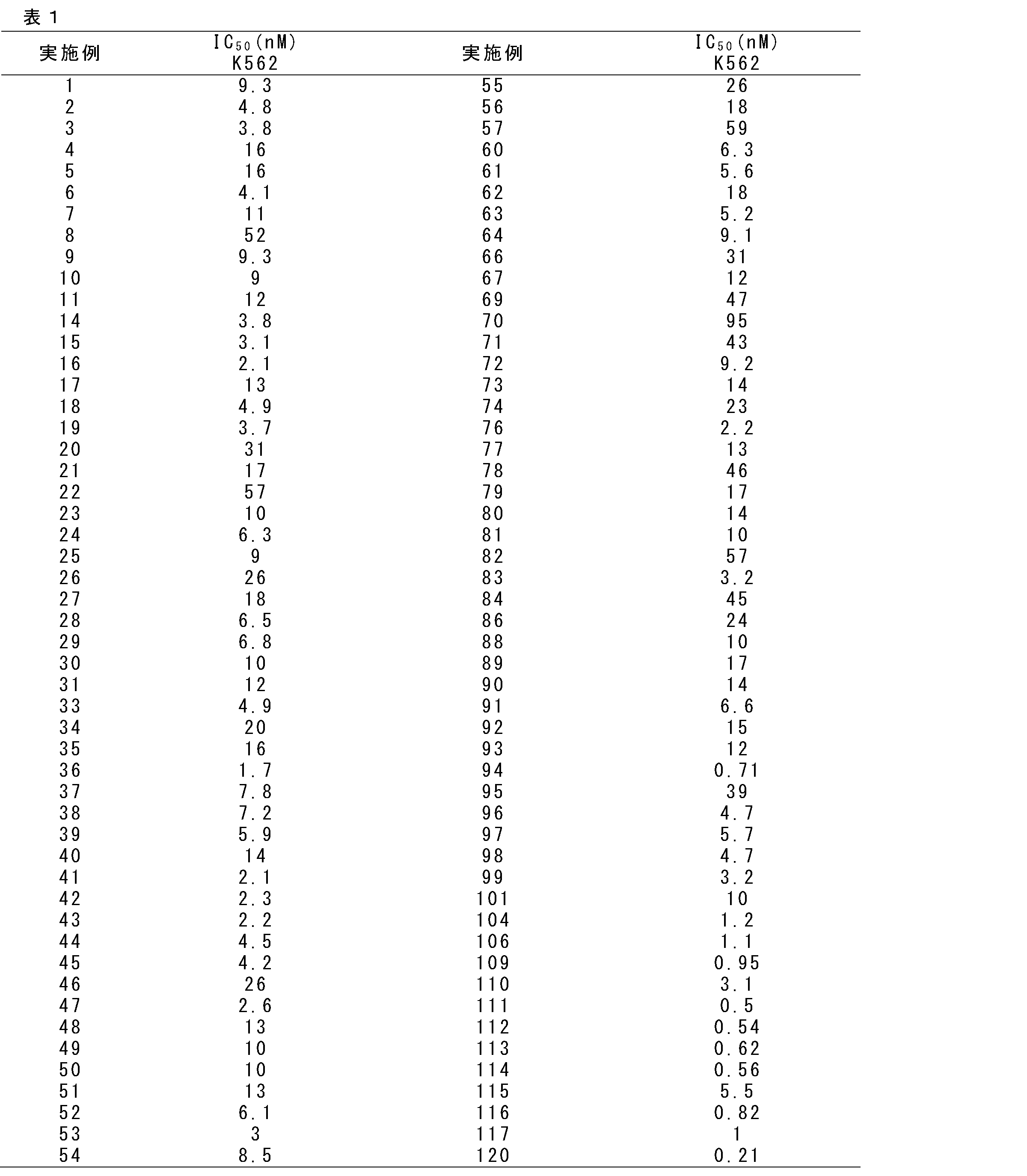
The cells were inoculated into a 96-well plate using a multichannel pipette, with 100 μL per well, and cultured in a humidified incubator containing 5% CO 2 at 37° C. After 24 hours of culture, the compounds were added using a nanopipette, with eight concentrations of each compound (1000 nM, 250 nM, 63 nM, 16 nM, 3.9 nM, 0.98 nM, 0.24 nM, 0.061 nM), and each concentration was run in parallel in two wells. Cells without compound were used as negative controls, and inoculated medium without cells was used as blank controls. After 72 hours, CCK-8 was added at 10 μL/well, and its absorbance was detected at 450 nm using an Envision microplate reader after 2 hours to calculate the inhibition rate, where inhibition rate (%)=(average of negative control group-average of test group)/(average of negative control group-average of blank group)×100%, with the logarithm of compound concentration on the horizontal axis and the inhibition rate on the vertical axis, and a dose-response curve was fitted by four-parameter logistic regression to calculate IC 50 , and the results are shown in Table 1.
試験例2:BCR-ABL T315Iを導入したBa/F3細胞に対する化合物の増
殖阻害効果
指数増殖期にあって状態が良好なBa/F3-BCR-ABL1-T315I-C3細胞を用い、細胞を遠心管に回収し、卓上低速遠心機において1000rpmで5分間遠心して、上清を捨て、ピペットで5mLの完全培地(RPMI1640基礎培地+10%FBS)を加えて細胞を再懸濁させた。セルカウンターを使用して計数し、完全培地を用いて希釈して、細胞密度を6×104個/mLに調整し、さらに同量のRPMI1640基礎培地を加えて血清濃度を5%に、細胞密度を3×104個/mLに調整して接種した。マルチチャンネルピペットを使用して96ウェルプレートに接種し、100μL/ウェルであり、37℃で、5%のCO2を含む飽和湿度のインキュベータの中に置いて培養した。24時間培養した後、ナノピペットを使用して化合物を添加し、各化合物は8つの濃度(1000nM、250nM、63nM、16nM、3.9nM、0.98nM、0.24nM、0.061nM)と設定し、各濃度は2ウェル並行で実行し、化合物を加えない細胞を陰性対照とし、細胞を加えない接種培地をブランク対照とした。72時間後にCCK-8を加え、10μL/ウェルであり、Ba/F3-BCR-ABL1 T315I細胞にCCK-8を加えた後に37℃で置き、1時間後にマイクロプレートリーダーを用いて450nmでその吸光度を検出して、阻害率を計算し、阻害率(%)=(陰性対照群の平均-試験群の平均)/(陰性対照群の平均-ブランク群の平均)×100%であり、化合物濃度の対数を横軸とし、阻害率を縦軸とし、4パラメータロジスティック回帰により、用量反応曲線を当てはめ、IC50を計算し、結果を表2に示す。

試験例3:マウスにおけるインビボ薬物動態評価
ICRマウス(上海西普爾必凱実験動物有限公司より購入)であり、体重は18~22gであり、3~5日間適応させた後、ランダムに群分けし、1群あたり9匹であり、10mg/kgの用量でそれぞれ各化合物を胃内投与した。試験動物(ICRマウス)は投与前に一晩絶食させ、投与後4時間で給餌し、試験前後及び試験中にいずれも自由に飲水させた。胃内投与後に、0.25(15分)、0.5(30分)、1、2、3、4、6、8、10、24時間で眼窩から約0.1mL採血し(各マウスは3つ又は4つの時点で採取し、各時点は3匹のマウスであった)、EDTA-K2を加えて抗凝固した後、30分以内に4℃、4000rpm、10分間の条件に移し替えて血漿を遠心分離した。全ての血漿を回収した後に直ちに測定に備えて-20℃で保存した。
Test Example 3: In vivo pharmacokinetic evaluation in mice ICR mice (purchased from Shanghai Xipur Bikai Laboratory Animal Co., Ltd.), weighing 18-22g, were randomly divided into groups, 9 mice per group, and each compound was intragastrically administered at a dose of 10mg/kg. The test animals (ICR mice) were fasted overnight before administration, fed 4 hours after administration, and allowed to drink water freely before, during, and after the test. After intragastric administration, about 0.1mL of blood was collected from the orbit at 0.25 (15 minutes), 0.5 (30 minutes), 1, 2, 3, 4, 6, 8, 10, and 24 hours (each mouse was collected at 3 or 4 time points, each time point was 3 mice), and EDTA-K2 was added to anticoagulate, and then the blood was transferred to 4°C, 4000 rpm, and 10 minutes within 30 minutes, and the plasma was centrifuged. All plasma was collected and immediately stored at -20°C for assay.
被測定血漿サンプル及び標準曲線サンプルを30μL吸い出して、内部標準物質(ジアゼパム20ng/mL)を含む300μLのアセトニトリル溶液を加え、振盪して5分間均一に混合させ、13000rpmで10分間遠心分離して、上清から70μL回収して、70μLの超純水を加えて希釈し、均一に混合させ、LC/MS/MS測定のために1μLを吸い出して、クロマトグラムを記録した。 30 μL of the plasma sample to be measured and the standard curve sample were aspirated, and 300 μL of acetonitrile solution containing an internal standard (diazepam 20 ng/mL) was added, shaken to mix uniformly for 5 minutes, centrifuged at 13,000 rpm for 10 minutes, 70 μL of the supernatant was recovered, diluted with 70 μL of ultrapure water, mixed uniformly, and 1 μL was aspirated for LC/MS/MS measurement, and the chromatogram was recorded.
マウスにおけるインビボ薬物動態試験で化合物の経口暴露量を評価した。ソフトウェアDAS3.2.5を用いて関連する薬物動態パラメータを当てはめ、ここで絶対的生物学的利用能Fabs(%)=(胃内投与AUC×静脈注射用量)/(静脈注射AUC×胃内投与用量)×100%であり、結果を表3に示す。

試験例4:化合物の心臓安全性評価
細胞株は、hERGカリウムイオンチャネルを過剰発現するHEK-293細胞に由来する。細胞を37℃、5%のCO2のインキュベータにおいて培養した。細胞密度が培養皿の80%に達した時に、最初にリン酸緩衝生理食塩水(PBS)で予洗浄し、次に、トリプシン/EDTAを用いて細胞を2~3分間消化し、細胞培地を加えて消化を停止させ、軽やかに細胞を吹き落として遠心管の中に移し替え、1000rpmで3分間遠心分離して、上清を捨て、細胞培地を加えて、軽やかにピペッティングして細胞を均一に混合させ、続いて培養皿に移し替えて継代培養するか、又は細胞を円形のスライドガラスの上に滴下して培養皿に置き、試験に備えて細胞が接着するのを待つ。
Test Example 4: Cardiac Safety Evaluation of Compounds The cell line is derived from HEK-293 cells overexpressing hERG potassium ion channel. The cells were cultured in an incubator at 37°C and 5% CO2 . When the cell density reached 80% of the culture dish, the cells were first pre-washed with phosphate buffered saline (PBS), then digested with trypsin/EDTA for 2-3 minutes, added cell culture medium to stop the digestion, gently blow off the cells and transfer them into a centrifuge tube, centrifuged at 1000 rpm for 3 minutes, discarded the supernatant, added cell culture medium, gently pipetted to mix the cells evenly, and then transferred to a culture dish for subculture, or the cells were dropped onto a circular slide glass and placed in the culture dish, and waited for the cells to adhere for testing.
細胞培地の組成:DMEM、15%のウシ胎児血清及び1%の100×ペニシリン-ストレプトマイシン。 Cell culture medium composition: DMEM, 15% fetal bovine serum and 1% 100x penicillin-streptomycin.
安定導入細胞をスライドガラスに接種し、細胞密度は50%未満であり、一晩培養した。試験用細胞を倒立顕微鏡プラットフォームに嵌着した約1mLの水槽に移し替え、細胞外液を灌流し、灌流速度は2.7mL/分であった。5分間安定化させると試験を開始してよい。HEKA EPC-10パッチクランプアンプ及びPATCHMASTER収集システムを用いて膜電流を記録し(HEKA Instruments Inc.,D-67466 Lambrecht,Pfalz,Germany)、ソフトウェアOrigin 8.5(OriginLab Corporation,Northampton,MA)及びMicrosoft Excelを用いて分析及び統計を行った(結果を表4に示す)。全ての試験は室温(22~24℃)で実施した。試験ではP-97微小電極プーラー(Sutter Instrument Company,One Digital Drive,Novato,CA 94949)を使用して電極(BF150-110-10)を直線型に引っ張り出す。電極の内径は1~1.5mmであり、内液を充填した後の水中抵抗は2~4MΩであった。 Stably transfected cells were seeded on glass slides at a cell density of less than 50% and cultured overnight. The test cells were transferred to a 1 mL water bath fitted to an inverted microscope platform and perfused with extracellular fluid at a perfusion rate of 2.7 mL/min. After 5 minutes of stabilization, the test could be started. Membrane currents were recorded using a HEKA EPC-10 patch clamp amplifier and a PATCHMASTER acquisition system (HEKA Instruments Inc., D-67466 Lambrecht, Pfalz, Germany), and analysis and statistics were performed using the software Origin 8.5 (OriginLab Corporation, Northampton, MA) and Microsoft Excel (results are shown in Table 4). All tests were performed at room temperature (22-24°C). In the test, a P-97 microelectrode puller (Sutter Instrument Company, One Digital Drive, Novato, CA 94949) was used to pull out the electrode (BF150-110-10) in a straight line. The inner diameter of the electrode was 1 to 1.5 mm, and the underwater resistance after filling with the internal solution was 2 to 4 MΩ.
hERGカリウムチャネルの電気生理学的刺激方法は次のとおりであった。最初に膜電圧を-80mVに固定し、細胞に2秒間持続する+20mVの電圧刺激を与えて、hER
Gカリウムチャネルを活性化させ、次に-50mVに再分極させ、5秒間持続させて、外向きテール電流を生成し、刺激頻度は15秒ごとに1回であった。電流値はテール電流のピーク値であった。
The electrophysiological stimulation method of the hERG potassium channel was as follows: First, the membrane voltage was clamped at -80 mV, and the cells were given a voltage stimulus of +20 mV lasting for 2 seconds to stimulate the hERG potassium channel.
An outward tail current was generated by activating G potassium channels followed by repolarization to -50 mV and sustained for 5 seconds, with a stimulation frequency of once every 15 seconds. Current values were the peak values of the tail current.
試験では全細胞記録モードでチャネル電流を記録した。最初に細胞外液を灌流して(約2mL/分)持続的に記録し、電流が安定化する(5分間以内の電流減衰(Run-Down)が5%未満になる)のを待ち、この時にテール電流のピーク値は即ち対照電流値であった。続いて被験薬物を含む細胞外液を灌流してhERG電流に対する薬物の阻害効果が安定状態に達しているまで持続的に記録し、この時にテール電流のピーク値は即ち薬物添加後の電流値であった。安定状態の基準は、直近の連続する3つの電流記録ラインが重なったかどうかで判断する。安定状態に達すると細胞外液を灌流して洗い流した後にhERG電流が薬物添加前の大きさに回復し又はそれに近い場合は、引き続き灌流して他の濃度又は薬物をテストしてもよい。30μMのキニジン(Quinidine)は、使用する細胞の反応が正常であることを保証するために試験で陽性対照として用いた。

当業者は、本開示の範囲は上述した様々な具体的な実施形態及び実施例に限定されず、本開示の趣旨及び構想から逸脱することなく、様々な補正、置き換え、又は再組み合わせを行ってもよく、そのいずれも本開示の保護範囲に入るということに想到できるだろう。 Those skilled in the art will appreciate that the scope of the present disclosure is not limited to the various specific embodiments and examples described above, and that various amendments, substitutions, or recombinations may be made without departing from the spirit and concept of the present disclosure, all of which fall within the scope of protection of the present disclosure.
Claims (15)

式中、
Qは、N又はCHから選ばれ、
R1は、

から選ばれ、ここで前記

は、任意選択的に、1つ又は複数のRa’によって置換され、
X、Y及びZは、それぞれ、CH又はNから独立的に選ばれ、且つ、X、Y及びZのうちの少なくとも1つは、CHから選ばれ、
環Aは、N、O又はS原子から選ばれる1つ~3つのヘテロ原子を含有する5員ヘテロアリール基から選ばれ、
環Bは、N、O若しくはS原子から選ばれる1つ~3つのヘテロ原子を含有する5~10員ヘテロシクリル基、又はN、O若しくはS原子から選ばれる1つ~3つのヘテロ原子を含有する5~8員ヘテロアリール基から選ばれ、
R2は、水素、アミノ基、C1~6アルキル基、C1~6アルコキシ基、アミノ-C1~6アルキル-、3~10員ヘテロシクリル基又は5若しくは6員ヘテロアリール基から選ばれ、ここで前記アミノ基、C1~6アルキル基、C1~6アルコキシ基、アミノ-C1~6アルキル-、3~10員ヘテロシクリル基又は5若しくは6員ヘテロアリール基は、任意選択的に、1つ又は複数のRbによって置換され、
R3は、-OCF2Hから選ばれ、ここで前記-OCF2Hは、任意選択的にハロゲンによって置換され、
Ra及びRa’は、それぞれ、ヒドロキシ基、アミノ基、シアノ基、ハロゲン、

C1~6アルキル基、3~8員シクロアルキル基、3~8員ヘテロシクロアルキル基、3~8員シクロアルキル-C1~6アルキル-、3~8員ヘテロシクロアルキル-C1~6アルキル-又は1つ若しくは複数のヒドロキシ基若しくはハロゲンによって置換されたC1~6アルキル基から独立的に選ばれ、
Rbは、ヒドロキシ基、アミノ基、シアノ基、ハロゲン、

C1~6アルキル基、C1~6アルコキシ基、C1~6アルコキシ-C1~6アルキル-、C1~6アルキル-C(O)-NH-又は1つ若しくは複数のヒドロキシ基若しくはハロゲンによって置換されたC1~6アルキル基から選ばれる、式(I)の化合物又は薬学的に許容されるその塩。 A compound of formula (I) or a pharma- ceutically acceptable salt thereof,
In the formula,
Q is selected from N or CH;
R1 is
wherein said
is optionally substituted by one or more R a′ ;
X, Y and Z are each independently selected from CH or N, and at least one of X, Y and Z is selected from CH;
Ring A is selected from 5-membered heteroaryl groups containing 1 to 3 heteroatoms selected from N, O or S atoms;
Ring B is selected from a 5- to 10-membered heterocyclyl group containing 1 to 3 heteroatoms selected from N, O or S atoms, or a 5- to 8-membered heteroaryl group containing 1 to 3 heteroatoms selected from N, O or S atoms;
R 2 is selected from hydrogen, an amino group, a C 1-6 alkyl group, a C 1-6 alkoxy group, an amino-C 1-6 alkyl-, a 3- to 10-membered heterocyclyl group, or a 5- or 6-membered heteroaryl group, wherein said amino group, C 1-6 alkyl group, C 1-6 alkoxy group, amino-C 1-6 alkyl-, a 3- to 10-membered heterocyclyl group, or a 5- or 6-membered heteroaryl group is optionally substituted by one or more R b ;
R 3 is selected from -OCF 2 H, wherein said -OCF 2 H is optionally substituted by halogen;
R a and R a′ each represent a hydroxy group, an amino group, a cyano group, a halogen atom,
independently selected from a C 1-6 alkyl group, a 3- to 8-membered cycloalkyl group, a 3- to 8-membered heterocycloalkyl group, a 3- to 8-membered cycloalkyl-C 1-6 alkyl-, a 3- to 8-membered heterocycloalkyl-C 1-6 alkyl- or a C 1-6 alkyl group substituted by one or more hydroxy groups or halogens;
R b is a hydroxy group, an amino group, a cyano group, a halogen atom,
A compound of formula (I) or a pharma- ceutically acceptable salt thereof selected from a C1-6 alkyl group, a C1-6 alkoxy group, a C1-6 alkoxy- C1-6 alkyl-, a C1-6 alkyl-C(O)-NH- or a C1-6 alkyl group substituted by one or more hydroxy groups or halogens.

式中、
R1は、

から選ばれ、ここで前記

は、任意選択的に、1つ又は複数のRa’によって置換され、
X、Y及びZは、それぞれ、CH又はNから独立的に選ばれ、且つ、X、Y及びZのうちの少なくとも1つは、CHから選ばれ、
環Aは、N、O又はS原子から選ばれる1つ~3つのヘテロ原子を含有する5員ヘテロアリール基から選ばれ、
環Bは、N、O若しくはS原子から選ばれる1つ~3つのヘテロ原子を含有する5~10員ヘテロシクリル基、又はN、O若しくはS原子から選ばれる1つ~3つのヘテロ原子を含有する5~8員ヘテロアリール基から選ばれ、
R2は、水素、アミノ基、C1~6アルキル基、C1~6アルコキシ基、アミノ-C1~6アルキル-、3~10員ヘテロシクリル基又は5若しくは6員ヘテロアリール基から選ばれ、ここで前記アミノ基、C1~6アルキル基、C1~6アルコキシ基、アミノ-C1~6アルキル-、3~10員ヘテロシクリル基又は5若しくは6員ヘテロアリール基は、任意選択的に、1つ又は複数のRbによって置換され、
R3は、-OCF2Hから選ばれ、ここで前記-OCF2Hは、任意選択的にハロゲンによって置換され、
Ra及びRa’は、それぞれ、ヒドロキシ基、アミノ基、シアノ基、ハロゲン、

C1~6アルキル基、3~8員シクロアルキル基、3~8員ヘテロシクロアルキル基、3~8員シクロアルキル-C1~6アルキル-、3~8員ヘテロシクロアルキル-C1~6アルキル-又は1つ若しくは複数のヒドロキシ基若しくはハロゲンによって置換されたC1~6アルキル基から独立的に選ばれ、
Rbは、ヒドロキシ基、アミノ基、シアノ基、ハロゲン、

C1~6アルキル基、C1~6アルコキシ基、C1~6アルコキシ-C1~6アルキル-、C1~6アルキル-C(O)-NH-又は1つ若しくは複数のヒドロキシ基若しくはハロゲンによって置換されたC1~6アルキル基から選ばれる請求項1に記載の式(I)の化合物又は薬学的に許容されるその塩。 or a pharma- ceutically acceptable salt thereof,
In the formula,
R1 is
wherein said
is optionally substituted by one or more R a′ ;
X, Y and Z are each independently selected from CH or N, and at least one of X, Y and Z is selected from CH;
Ring A is selected from 5-membered heteroaryl groups containing 1 to 3 heteroatoms selected from N, O or S atoms;
Ring B is selected from a 5- to 10-membered heterocyclyl group containing 1 to 3 heteroatoms selected from N, O or S atoms, or a 5- to 8-membered heteroaryl group containing 1 to 3 heteroatoms selected from N, O or S atoms;
R 2 is selected from hydrogen, an amino group, a C 1-6 alkyl group, a C 1-6 alkoxy group, an amino-C 1-6 alkyl-, a 3- to 10-membered heterocyclyl group, or a 5- or 6-membered heteroaryl group, wherein said amino group, C 1-6 alkyl group, C 1-6 alkoxy group, amino-C 1-6 alkyl-, a 3- to 10-membered heterocyclyl group, or a 5- or 6-membered heteroaryl group is optionally substituted by one or more R b ;
R 3 is selected from -OCF 2 H, wherein said -OCF 2 H is optionally substituted by halogen;
R a and R a′ each represent a hydroxy group, an amino group, a cyano group, a halogen atom,
independently selected from a C 1-6 alkyl group, a 3- to 8-membered cycloalkyl group, a 3- to 8-membered heterocycloalkyl group, a 3- to 8-membered cycloalkyl-C 1-6 alkyl-, a 3- to 8-membered heterocycloalkyl-C 1-6 alkyl- or a C 1-6 alkyl group substituted by one or more hydroxy groups or halogens;
R b is a hydroxy group, an amino group, a cyano group, a halogen atom,
The compound of formula (I) according to claim 1, which is selected from a C 1-6 alkyl group, a C 1-6 alkoxy group, a C 1-6 alkoxy-C 1-6 alkyl-, a C 1-6 alkyl-C(O)-NH- or a C 1-6 alkyl group substituted by one or more hydroxy groups or halogens, or a pharma- ceutically acceptable salt thereof.


は、任意選択的に、1つ若しくは複数のRa’によって置換され、又は、R1は、

から選ばれ、ここで前記

は、任意選択的に、1つ若しくは複数のRa’によって置換され、又は、R1は、

から選ばれ、ここで前記

は、任意選択的に、1つ若しくは複数のRa’によって置換され、
又は、R1は、

から選ばれ、ここで前記

は、任意選択的に、1つ若しくは複数のRa’によって置換され、又は、R1は、

から選ばれ、ここで前記

は、任意選択的に、1つ若しくは複数のRa’によって置換され、又は、R1は、

から選ばれ、ここで前記

は、任意選択的に、1つ若しくは複数のRa’によって置換され、又は、R1は、

から選ばれ、ここで前記

は、任意選択的に、1つ若しくは複数のRa’によって置換される請求項1~6のいずれか一項に記載の式(I)の化合物又は薬学的に許容されるその塩。 R1 is
is optionally substituted by one or more R a′ , or R 1 is
wherein said
is optionally substituted by one or more R a′ , or R 1 is
wherein said
is optionally substituted by one or more R a′ ;
Or, R1 is
wherein said
is optionally substituted by one or more R a′ , or R 1 is
wherein said
is optionally substituted by one or more R a′ , or R 1 is
wherein said
is optionally substituted by one or more R a′ , or R 1 is
wherein said
A compound of formula (I) according to any one of claims 1 to 6, wherein R a is optionally substituted by one or more R a' , or a pharma- ceutically acceptable salt thereof.

C1~6アルキル基、3~6員シクロアルキル基、3~8員ヘテロシクロアルキル-C1~6アルキル-又は1つ、2つ若しくは3つのヒドロキシ基によって置換されたC1~6アルキル基から独立的に選ばれ、又は、Ra及びRa’は、それぞれ、ハロゲン、

C1~4アルキル基、3~6員シクロアルキル基、3~6員ヘテロシクロアルキル-C1~4アルキル-又は1つ、2つ若しくは3つのヒドロキシ基によって置換されたC1~4アルキル基から独立的に選ばれ、
又は、Raは、C1~4アルキル基、3~6員シクロアルキル基、3~6員ヘテロシクロアルキル-C1~4アルキル-又は1つ、2つ若しくは3つのヒドロキシ基によって置換されたC1~4アルキル基から選ばれ、又は、Raは、メチル基、エチル基、シクロプロピル基、2-ヒドロキシエチル基若しくは

から選ばれ、
又は、Ra’は、ハロゲン、

C1~4アルキル基若しくは3~6員シクロアルキル基から選ばれ、又は、Ra’は、フッ素、塩素、

メチル基、エチル基、イソプロピル基若しくはシクロプロピル基から選ばれ、又は、Ra’は、フッ素、塩素、

メチル基、エチル基若しくはシクロプロピル基から選ばれる請求項1~7のいずれか一項に記載の式(I)の化合物又は薬学的に許容されるその塩。 R a and R a′ are each a halogen.
R a and R a′ are each independently selected from a C 1-6 alkyl group, a 3- to 6-membered cycloalkyl group, a 3- to 8-membered heterocycloalkyl-C 1-6 alkyl group, or a C 1-6 alkyl group substituted by one, two or three hydroxy groups; or R a and R a′ are each independently selected from a halogen,
independently selected from a C 1-4 alkyl group, a 3- to 6-membered cycloalkyl group, a 3- to 6-membered heterocycloalkyl-C 1-4 alkyl- or a C 1-4 alkyl group substituted by one, two or three hydroxy groups;
or R a is selected from a C 1-4 alkyl group, a 3- to 6-membered cycloalkyl group, a 3- to 6-membered heterocycloalkyl-C 1-4 alkyl- or a C 1-4 alkyl group substituted by one, two or three hydroxy groups, or R a is selected from a methyl group, an ethyl group, a cyclopropyl group, a 2-hydroxyethyl group or
Selected from
Or, R a′ is halogen,
R a' is selected from a C 1-4 alkyl group or a 3-6 membered cycloalkyl group, or R a' is selected from fluorine, chlorine,
R a′ is selected from the group consisting of methyl, ethyl, isopropyl and cyclopropyl groups, or R a′ is selected from the group consisting of fluorine, chlorine,
The compound of formula (I) according to any one of claims 1 to 7, wherein the aryl group is selected from a methyl group, an ethyl group, or a cyclopropyl group, or a pharma- ceutically acceptable salt thereof.

から選ばれ、ここで前記

は、任意選択的に、1つ若しくは複数のRa’によって置換され、又は、R1は、
から選ばれる請求項1~8のいずれか一項に記載の式(I)の化合物又は薬学的に許容されるその塩。 R1 is
wherein said
is optionally substituted by one or more R a′ , or R 1 is
The compound of formula (I) according to any one of claims 1 to 8, or a pharma- ceutically acceptable salt thereof, selected from:
から選ばれ、ここで前記アミノ基、メトキシ基、エトキシ基、アミノメチル基、
は、任意選択的に、1つ、2つ若しくは3つのRbによって置換され、又は、R2は、アミノ基、メトキシ基、エトキシ基、アミノメチル基、ピロリジニル基、イソオキサゾリジニル基、ピペリジニル基、モルホリニル基、チオモルホリニル基、1,4-ジオキサン基、アゼチジニル基、6-オキサ-3-アザビシクロ[3.1.1]ヘプチル基、3-オキサ-6-アザビシクロ[3.1.1]ヘプチル基、3-オキサ-8-アザビシクロ[3.2.1]オクチル基、8-オキサ-3-アザビシクロ[3.2.1]オクチル基、2-オキサ-5-アザビシクロ[2.2.1]ヘプタン、3-アザビシクロ[3.1.0]ヘキシル基、2-オキサ-6-アザスピロ[3.4]オクチル基、2-オキサ-7-アザスピロ[3.5]ノニル基、2-オキサ-6-アザスピロ[3.3]ヘプチル基、ピラゾリル基若しくはイミダゾリル基から選ばれ、ここで前記アミノ基は、任意選択的に、1つ若しくは2つのメチル基、メトキシエチル基によって置換され、ここで前記エトキシ基は、任意選択的に、1つのメトキシ基によって置換され、ここで前記アミノメチル基は、任意選択的に、1つ若しくは2つのメチル基又はメトキシ基によって置換され、ここで前記ピロリジニル基は、任意選択的に、1つ若しくは2つのヒドロキシ基、シアノ基、フッ素、塩素、メトキシ基、ヒドロキシメチル基若しくはアセチルアミノ基によって置換され、ここで前記アゼチジニル基は、任意選択的に、1つ若しくは2つのヒドロキシ基、シアノ基、フッ素、メチル基又はヒドロキシメチル基によって置換され、ここで前記2-オキサ-6-アザスピロ[3.4]オクチル基は、任意選択的に、1つの

によって置換され、又は、R2は、メトキシ基、メトキシエトキシ基、メチルアミノ基、ジメチルアミノ基、
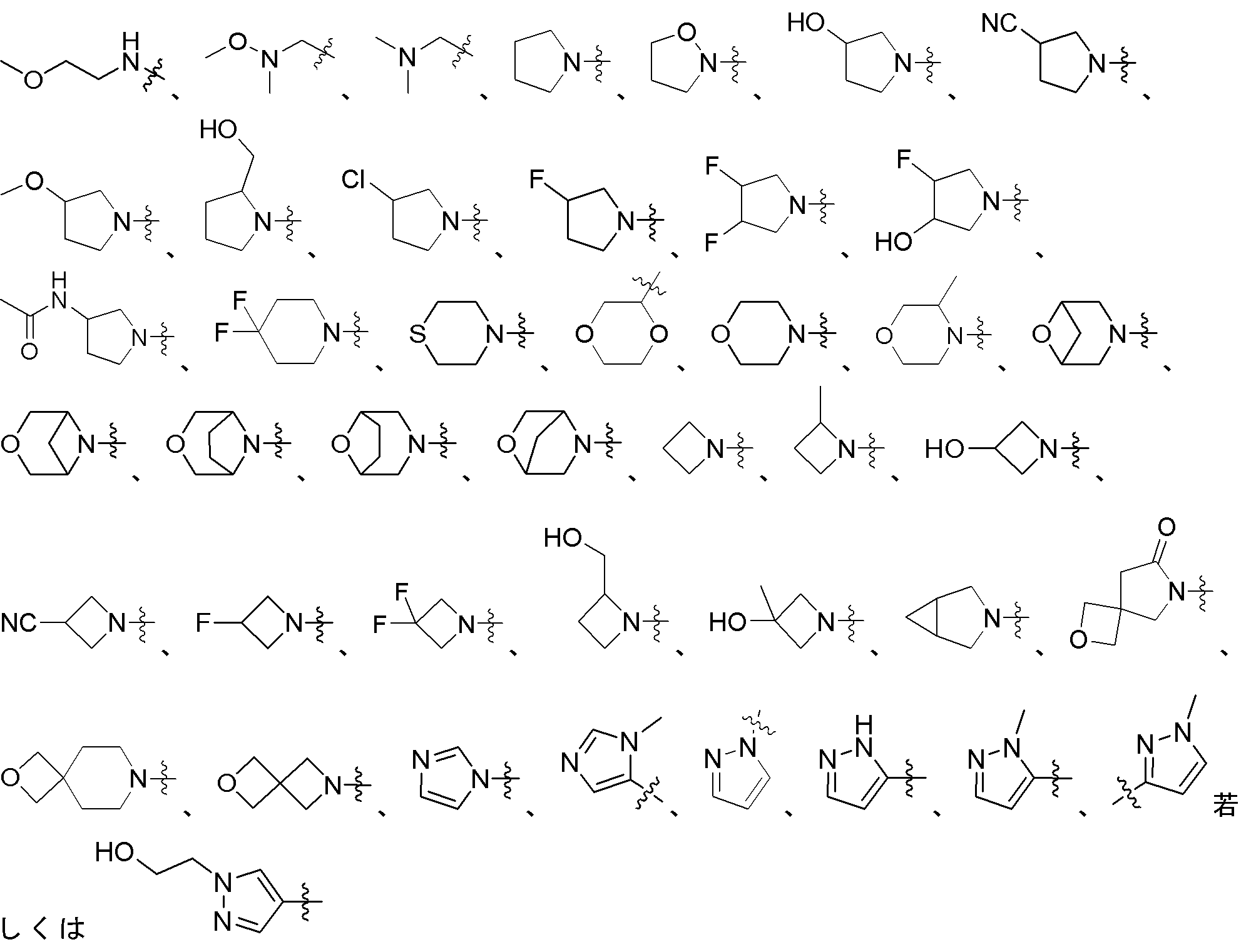
から選ばれ、又は、R2は、メトキシ基、メトキシエトキシ基、メチルアミノ基、ジメチルアミノ基、

から選ばれる請求項1~9のいずれか一項に記載の式(I)の化合物又は薬学的に許容されるその塩。 R 2 is selected from hydrogen, an amino group, a C 1-4 alkoxy group, an amino-C 1-4 alkyl-, a 3- to 10-membered heterocycloalkyl group, or a 5- or 6-membered heteroaryl group, wherein said amino group, C 1-4 alkoxy group, amino-C 1-4 alkyl-, a 3- to 10-membered heterocycloalkyl group, or a 5- or 6-membered heteroaryl group is optionally substituted by one or more R b ; or R 2 is selected from hydrogen, an amino group, a C 1-4 alkoxy group, amino-C 1-4 alkyl-, a 4- to 6-membered monoheterocycloalkyl group, a 6- to 9-membered bridged heterocycloalkyl group, a 7- to 9-membered spiroheterocycloalkyl group, or a 5- or 6-membered heteroaryl group, wherein said amino group, C 1-4 alkoxy group, amino-C 1-4 alkyl-, a 4- to 6-membered monoheterocycloalkyl group, a 6- to 9-membered bridged heterocycloalkyl group, a 7- to 9-membered spiroheterocycloalkyl group, or a 5- or 6-membered heteroaryl group is optionally substituted by one or more R b ; or R 2 is an amino group, a methoxy group, an ethoxy group, an aminomethyl group,
wherein the amino group, the methoxy group, the ethoxy group, the aminomethyl group,
is optionally substituted by one, two or three R b , or R 2 is an amino group, a methoxy group, an ethoxy group, an aminomethyl group, a pyrrolidinyl group, a isoxazolidinyl group, a piperidinyl group, a morpholinyl group, a thiomorpholinyl group, a 1,4-dioxane group, an azetidinyl group, a 6-oxa-3-azabicyclo[3.1.1]heptyl group, a 3-oxa-6-azabicyclo[3.1.1]heptyl group, a 3-oxa-8-azabicyclo[3.2.1]heptyl group, a 5-oxa-1-azabicyclo[3.2.1]heptyl group, a 6-oxa-1-azabicyclo[3.2.1]heptyl group, a 5 ... octyl group, 8-oxa-3-azabicyclo[3.2.1]octyl group, 2-oxa-5-azabicyclo[2.2.1]heptane, 3-azabicyclo[3.1.0]hexyl group, 2-oxa-6-azaspiro[3.4]octyl group, 2-oxa-7-azaspiro[3.5]nonyl group, 2-oxa-6-azaspiro[3.3]heptyl group, pyrazolyl group or imidazolyl group wherein the amino group is optionally substituted by one or two methyl groups, methoxyethyl groups, wherein the ethoxy group is optionally substituted by one methoxy group, wherein the aminomethyl group is optionally substituted by one or two methyl or methoxy groups, wherein the pyrrolidinyl group is optionally substituted by one or two hydroxy groups, cyano groups, fluorine, chlorine, methoxy groups, hydroxymethyl groups or acetylamino groups, wherein the azetidinyl group is optionally substituted by one or two hydroxy groups, cyano groups, fluorine, methyl groups or hydroxymethyl groups, wherein the 2-oxa-6-azaspiro[3.4]octyl group is optionally substituted by one
or R2 is a methoxy group, a methoxyethoxy group, a methylamino group, a dimethylamino group,
or R2 is selected from a methoxy group, a methoxyethoxy group, a methylamino group, a dimethylamino group,
10. The compound of formula (I) according to any one of claims 1 to 9, or a pharma- ceutically acceptable salt thereof, selected from:

C1~4アルキル基、C1~4アルコキシ基、C1~4アルコキシ-C1~4アルキル-、C1~4アルキル-C(O)-NH-又は1つ若しくは複数のヒドロキシ基若しくはハロゲンによって置換されたC1~4アルキル基から選ばれ、又は、Rbは、ヒドロキシ基、シアノ基、フッ素、塩素、

メチル基、メトキシ基、ヒドロキシメチル基、メトキシエチル基若しくはアセチルアミノ基から選ばれる請求項1~10のいずれか一項に記載の式(I)の化合物又は薬学的に許容されるその塩。 R b is a hydroxy group, a cyano group, a halogen,
R b is selected from a C 1-4 alkyl group, a C 1-4 alkoxy group, a C 1-4 alkoxy-C 1-4 alkyl-, a C 1-4 alkyl-C(O)—NH— or a C 1-4 alkyl group substituted by one or more hydroxy groups or halogens, or R b is selected from a hydroxy group, a cyano group, a fluorine group, a chlorine group,
The compound of formula (I) according to any one of claims 1 to 10, wherein the aryl group is selected from a methyl group, a methoxy group, a hydroxymethyl group, a methoxyethyl group, or an acetylamino group, or a pharma- ceutically acceptable salt thereof.

R2の定義は、請求項1と同じであり、

の定義は、請求項7と同じであり、

R2、Ra、Ra’及び環Bの定義は、請求項1と同じである請求項1~11のいずれか一項に記載の式(I)の化合物又は薬学的に許容されるその塩。 The compound of formula (I) is a compound of formula (III-A), a compound of formula (III-B), a compound of formula (IV-A), a compound of formula (V), a compound of formula (VI), a compound of formula (VII), a compound of formula (VIII), a compound of formula (IX), or a compound of formula (X);
R2 is defined as in claim 1;
The definition of is the same as in claim 7,
The compound of formula (I) or a pharma- ceutically acceptable salt thereof according to any one of claims 1 to 11, wherein the de?nitions of R2 , R3 , R4 and Ring B are the same as in claim 1.


Applications Claiming Priority (7)
| Application Number | Priority Date | Filing Date | Title |
|---|---|---|---|
| CN202110592542.2 | 2021-05-28 | ||
| CN202110592542 | 2021-05-28 | ||
| CN202111094508.9 | 2021-09-17 | ||
| CN202111094508 | 2021-09-17 | ||
| CN202111661984 | 2021-12-31 | ||
| CN202111661984.4 | 2021-12-31 | ||
| PCT/CN2022/095436 WO2022247919A1 (en) | 2021-05-28 | 2022-05-27 | Compound used as bcr-abl inhibitor |
Publications (3)
| Publication Number | Publication Date |
|---|---|
| JP2024519538A true JP2024519538A (en) | 2024-05-15 |
| JPWO2022247919A5 JPWO2022247919A5 (en) | 2025-06-06 |
| JP2024519538A5 JP2024519538A5 (en) | 2025-06-06 |
Family
ID=84228434
Family Applications (1)
| Application Number | Title | Priority Date | Filing Date |
|---|---|---|---|
| JP2023572243A Pending JP2024519538A (en) | 2021-05-28 | 2022-05-27 | Compounds as BCR-ABL Inhibitors |
Country Status (12)
| Country | Link |
|---|---|
| US (1) | US20240262807A1 (en) |
| EP (1) | EP4349829A4 (en) |
| JP (1) | JP2024519538A (en) |
| KR (1) | KR20240014478A (en) |
| CN (2) | CN121698849A (en) |
| AU (1) | AU2022282316A1 (en) |
| BR (1) | BR112023024085A2 (en) |
| CA (1) | CA3219641A1 (en) |
| IL (1) | IL308614A (en) |
| MX (1) | MX2023013650A (en) |
| TW (1) | TW202306567A (en) |
| WO (1) | WO2022247919A1 (en) |
Citations (1)
| Publication number | Priority date | Publication date | Assignee | Title |
|---|---|---|---|---|
| JP2015520157A (en) * | 2012-05-15 | 2015-07-16 | ノバルティス アーゲー | Compounds and compositions for inhibiting the activity of ABL1, ABL2 and BCR-ABL1 |
Family Cites Families (6)
| Publication number | Priority date | Publication date | Assignee | Title |
|---|---|---|---|---|
| ES2670667T3 (en) * | 2012-05-15 | 2018-05-31 | Novartis Ag | Benzamide derivatives to inhibit the activity of ABL1, ABL2 and BCR-ABL1 |
| PT2861579T (en) | 2012-05-15 | 2018-04-27 | Novartis Ag | Benzamide derivatives for inhibiting the activity of abl1, abl2 and bcr-abl1 |
| KR20150008406A (en) * | 2012-05-15 | 2015-01-22 | 노파르티스 아게 | Benzamide derivatives for inhibiting the activity of abl1, abl2 and bcr-abl1 |
| US10875853B2 (en) * | 2017-01-20 | 2020-12-29 | Shenzhen Targetrx, Inc. | (Hetero)arylamide compound for inhibiting protein kinase activity |
| WO2019154252A1 (en) * | 2018-02-07 | 2019-08-15 | 深圳市塔吉瑞生物医药有限公司 | Substituted nicotinamide compound and pharmaceutical composition and use thereof |
| CN114728943B (en) * | 2020-01-19 | 2024-12-06 | 正大天晴药业集团股份有限公司 | Compounds as BCR-ABL inhibitors |
-
2022
- 2022-05-27 JP JP2023572243A patent/JP2024519538A/en active Pending
- 2022-05-27 CA CA3219641A patent/CA3219641A1/en active Pending
- 2022-05-27 KR KR1020237044056A patent/KR20240014478A/en active Pending
- 2022-05-27 CN CN202511825568.1A patent/CN121698849A/en active Pending
- 2022-05-27 CN CN202280033493.1A patent/CN117295725A/en active Pending
- 2022-05-27 AU AU2022282316A patent/AU2022282316A1/en active Pending
- 2022-05-27 IL IL308614A patent/IL308614A/en unknown
- 2022-05-27 US US18/561,553 patent/US20240262807A1/en active Pending
- 2022-05-27 TW TW111119907A patent/TW202306567A/en unknown
- 2022-05-27 BR BR112023024085A patent/BR112023024085A2/en unknown
- 2022-05-27 WO PCT/CN2022/095436 patent/WO2022247919A1/en not_active Ceased
- 2022-05-27 MX MX2023013650A patent/MX2023013650A/en unknown
- 2022-05-27 EP EP22810643.1A patent/EP4349829A4/en active Pending
Patent Citations (1)
| Publication number | Priority date | Publication date | Assignee | Title |
|---|---|---|---|---|
| JP2015520157A (en) * | 2012-05-15 | 2015-07-16 | ノバルティス アーゲー | Compounds and compositions for inhibiting the activity of ABL1, ABL2 and BCR-ABL1 |
Also Published As
| Publication number | Publication date |
|---|---|
| IL308614A (en) | 2024-01-01 |
| CN121698849A (en) | 2026-03-20 |
| EP4349829A1 (en) | 2024-04-10 |
| MX2023013650A (en) | 2024-01-05 |
| CN117295725A (en) | 2023-12-26 |
| US20240262807A1 (en) | 2024-08-08 |
| EP4349829A4 (en) | 2025-12-10 |
| CA3219641A1 (en) | 2022-12-01 |
| WO2022247919A1 (en) | 2022-12-01 |
| BR112023024085A2 (en) | 2024-02-06 |
| AU2022282316A1 (en) | 2023-12-14 |
| KR20240014478A (en) | 2024-02-01 |
| TW202306567A (en) | 2023-02-16 |
Similar Documents
| Publication | Publication Date | Title |
|---|---|---|
| US20250263426A1 (en) | Pde4b inhibitor and use thereof | |
| US20240158398A1 (en) | Inhibitors of activin receptor-like kinase | |
| KR20250129683A (en) | Compounds targeting PAN-KRAS protein degraders and uses thereof | |
| CN112778276A (en) | Compound as SHP2 inhibitor and application thereof | |
| TW202311260A (en) | Sulfoximine-containing ATR inhibitor compound | |
| KR20250034963A (en) | Heterocyclic substituted pyrimidopyran compounds and uses thereof | |
| BR112021011147A2 (en) | PYRAZOLYL-AMINO-PYRIMIDINIL DERIVATIVES BENZAMIDES AND COMPOSITIONS AND METHODS THEREOF | |
| US11292791B2 (en) | Tetrahydro-imidazo quinoline compositions as CBP/P300 inhibitors | |
| AU2016311426A1 (en) | Compounds and compositions useful for treating disorders related to NTRK | |
| CA3111649A1 (en) | Tricyclic compounds acting on crbn proteins | |
| CN115697987B (en) | Estrogen receptor modulator compounds and uses thereof | |
| TW202523662A (en) | Heterocyclic GLP-1 receptor agonist and use thereof | |
| CN114728943B (en) | Compounds as BCR-ABL inhibitors | |
| CN113825757A (en) | Substituted fused bicyclic derivatives, their preparation method and their application in medicine | |
| JP2025539116A (en) | CDK2 inhibitors and their preparation and use | |
| JP2024519538A (en) | Compounds as BCR-ABL Inhibitors | |
| EP4617272A1 (en) | Fused bicyclic compound | |
| JP2026502207A (en) | Sulfur/oxygen substituted glutarimidylimidoisoindolinone scaffold-based compounds and their applications | |
| EA049428B1 (en) | COMPOUND USED AS A BCR-ABL INHIBITOR | |
| RU2779497C2 (en) | Macrocycle containing aminopyrazole and pyrimidine, and its pharmaceutical composition and use | |
| BR122024013896A2 (en) | PYRAZOLYL-AMINO-PYRIMIDINYL DERIVATIVE BENZAMID COMPOUNDS AND THEIR USES, PHARMACEUTICAL COMPOSITION THEREOF, AND UNITARY DOSAGE FORM COMPRISING THE SAME | |
| CN121226391A (en) | A heterocyclic compound, its composition and application | |
| WO2022268154A1 (en) | New anti-hepatitis b compound | |
| CN116745299A (en) | Thienopyrimidine derivatives | |
| CN120787219A (en) | Compound with substituted glutarimido isoindolinone novel skeleton and application thereof |
Legal Events
| Date | Code | Title | Description |
|---|---|---|---|
| A521 | Request for written amendment filed |
Free format text: JAPANESE INTERMEDIATE CODE: A523 Effective date: 20250527 |
|
| A621 | Written request for application examination |
Free format text: JAPANESE INTERMEDIATE CODE: A621 Effective date: 20250527 |
|
| A977 | Report on retrieval |
Free format text: JAPANESE INTERMEDIATE CODE: A971007 Effective date: 20260226 |
|
| A131 | Notification of reasons for refusal |
Free format text: JAPANESE INTERMEDIATE CODE: A131 Effective date: 20260303 |