JP2024178581A - Separation material and method for producing same - Google Patents
Separation material and method for producing same Download PDFInfo
- Publication number
- JP2024178581A JP2024178581A JP2023096823A JP2023096823A JP2024178581A JP 2024178581 A JP2024178581 A JP 2024178581A JP 2023096823 A JP2023096823 A JP 2023096823A JP 2023096823 A JP2023096823 A JP 2023096823A JP 2024178581 A JP2024178581 A JP 2024178581A
- Authority
- JP
- Japan
- Prior art keywords
- monomer represented
- separation material
- formula
- group
- carbon atoms
- Prior art date
- Legal status (The legal status is an assumption and is not a legal conclusion. Google has not performed a legal analysis and makes no representation as to the accuracy of the status listed.)
- Pending
Links
Landscapes
- Graft Or Block Polymers (AREA)
- Addition Polymer Or Copolymer, Post-Treatments, Or Chemical Modifications (AREA)
- Treatment Of Liquids With Adsorbents In General (AREA)
- Solid-Sorbent Or Filter-Aiding Compositions (AREA)
- Peptides Or Proteins (AREA)
- Polymerisation Methods In General (AREA)
Abstract
【課題】本発明の課題は、タンパク質のような大きい分子の分離精製においても、近年要求されている高度な分離精製能を満たす、水に不溶の多孔性粒子である担体に共重合体を共有結合させたイオン交換分離材及びその応用技術を提供することにある。【解決手段】共重合体が担体に結合してなる分離材であって、前記共重合体が特定の式(1)で表される単量体に由来する構造単位、及び、特定の式(2)で表される単量体に由来する構造単位を含み、前記共重合体の数平均分子量が10,000以上1,000,000以下である、分離材。【選択図】なし[Problem] The object of the present invention is to provide an ion exchange separation material in which a copolymer is covalently bonded to a carrier, which is a water-insoluble porous particle, and which satisfies the high level of separation and purification capability that has been demanded in recent years, even in the separation and purification of large molecules such as proteins, and an application technology thereof. [Solution] A separation material in which a copolymer is bonded to a carrier, the copolymer containing a structural unit derived from a monomer represented by a specific formula (1) and a structural unit derived from a monomer represented by a specific formula (2), and the number average molecular weight of the copolymer is 10,000 or more and 1,000,000 or less. [Selected Figure] None
Description
本発明は、水に不溶の多孔性粒子である担体に共重合体を共有結合させた分離材、及び
、その製造方法、当該分離材を用いたタンパク質等の生体高分子の分離方法、並びにクロ
マトグラフィー用カラムに関する。
The present invention relates to a separation material in which a copolymer is covalently bonded to a carrier, which is a water-insoluble porous particle, a method for producing the same, a method for separating biopolymers such as proteins using the separation material, and a chromatography column.
タンパク質等の生体高分子の研究・開発において、それらの吸着・分離・精製にはクロ
マトグラフィーが多く用いられている。
液体クロマトグラフィー用分離材に用いられる担体としては、シリカゲル、ヒドロキシ
アパタイト等の無機系担体、アガロース、デキストラン、セルロース、キトサン等の天然
高分子系担体、及び、ポリスチレン、ポリ(メタ)アクリル酸エステル等の合成高分子系
担体が知られている。これらの担体はそのままで、又は多様な分離モードでの使用を可能
とするために必要に応じて各種官能基を付与して用いられる。
また、近年ではタンパク質の分離精製において、分離精製能の更なる向上が望まれてい
る。
In research and development of biopolymers such as proteins, chromatography is often used for their adsorption, separation, and purification.
Known carriers used as separation materials for liquid chromatography include inorganic carriers such as silica gel and hydroxyapatite, natural polymer carriers such as agarose, dextran, cellulose, chitosan, and synthetic polymer carriers such as polystyrene and poly(meth)acrylic acid esters. These carriers are used as they are, or are used after various functional groups are added as necessary to enable use in various separation modes.
Moreover, in recent years, there has been a demand for further improvement in the separation and purification capabilities of proteins.
例えば、特許文献1には、多孔質架橋粒子に高分子を共有結合にて固定化した分離材が
開示されており、本技術に拠れば特定の比表面積を有することで、吸着量が大きく強度面
で優れ、動的吸着容量の向上したイオン交換分離材が得られる。
For example, Patent Document 1 discloses a separation material in which a polymer is covalently fixed to porous cross-linked particles, and this technology provides an ion-exchange separation material that has a specific specific surface area, resulting in a large adsorption capacity, excellent strength, and improved dynamic adsorption capacity.
特許文献1で開示されている分離材は、吸着量及び強度は十分であった。しかしながら
近年要求されている分離精製能としては不十分であった。
The separation material disclosed in Patent Document 1 had sufficient adsorption capacity and strength, but was insufficient in terms of the separation and purification capabilities required in recent years.
本発明は、このような課題を鑑みてなされたものであり、タンパク質のような大きい分
子においても分離精製能が向上したイオン交換分離材及びその応用技術に関するものであ
る。
The present invention has been made in view of the above problems, and relates to an ion exchange separation material with improved separation and purification capabilities even for large molecules such as proteins, and an application technology thereof.
本発明者らは鋭意研究を行なった結果、担体に固定化する共重合体の分子量を調整する
ことにより、分離材の分離精製能が向上することを見出し、本発明に至った。
As a result of extensive research, the present inventors have found that the separation and purification ability of a separation material can be improved by adjusting the molecular weight of a copolymer immobilized on a carrier, and have arrived at the present invention.
即ち、本発明の要旨は以下のとおりである。
[1] 共重合体が担体に結合してなる分離材であって、
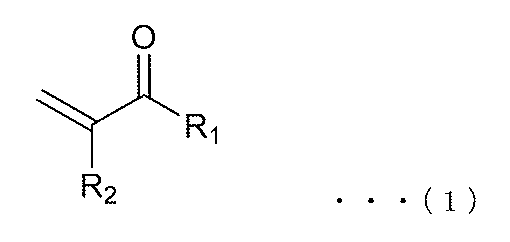
前記共重合体が下記式(1)で表される単量体に由来する構造単位、及び、下記式(2
)で表される単量体に由来する構造単位を含み、
前記共重合体の数平均分子量が10,000以上1,000,000以下である、分離
材。


子又は炭素数1以上4以下のアルキル基を表す。R3は水素原子又は炭素数1以上4以下
のアルキル基を表す。R4は脂肪族環を含む炭素数1以上6以下のアルキレン基、又は、
炭素数1以上6以下の直鎖もしくは分岐のアルキレン基を表す。R5は-SO3Mを表す
。Mは水素原子、Na又はKを表す。
式(2)中、R6は-NR8-R9又は-O-R9を表す。R7は水素原子又は炭素数
1以上4以下のアルキル基を表す。R8は水素原子又は炭素数1以上4以下のアルキル基
を表す。R9は炭素数1以上4以下の直鎖もしくは分岐のアルキル基、アルコキシメチル
基又はヒドロキシアルキル基を表す。)
[2] 前記共重合体が上記式(1)で表される単量体に由来する構造単位を、構造単位
全体の35mol%以上65mol%以下の範囲で含む、[1]に記載の分離材。
[3] 上記式(1)で表される単量体が、2-アクリルアミド-2-メチルプロパンス
ルホン酸、アクリル酸-3-スルホプロピル酸、メタクリル酸-3-スルホプロピル酸、
及び、その塩から選ばれる1種以上である、[1]又は[2]に記載の分離材。
[4] 上記式(2)で表される単量体が、N-ヒドロキシエチルアクリルアミドである
、[1]~[3]のいずれかに記載の分離材。
[5] 前記担体に結合したイオン交換基の交換容量が2.5×10⁻²mmol/mL
-R以上1.2×10⁻¹mmol/mL-R以下である、[1]~[4]のいずれかに
記載の分離材。
[6] 前記担体が下記式(3)で表される単量体に由来する構造単位、及び、下記式(
4)で表される単量体に由来する構造単位を含む、[1]~[5]のいずれかに記載の分
離材。


-O-R12-R13を表す。R12は脂肪族環を含む炭素数1以上6以下の直鎖もしく
は分岐のアルキレン基、又は、炭素数1以上6以下の直鎖もくしは分岐のアルキレン基を
表す。R13はアルキル基、ハロゲン原子、ヒドロキシ基、アミノ基、グリシジル基又は
エポキシ基を表す。
式(4)中、R14は炭素数1以上6以下の直鎖もしくは分岐のアルキレン基を表す。
R15は水素原子又は炭素数1以上4以下のアルキル基を表す。)
That is, the gist of the present invention is as follows.
[1] A separation material comprising a copolymer bound to a carrier,
The copolymer comprises a structural unit derived from a monomer represented by the following formula (1) and a structural unit derived from a monomer represented by the following formula (2):
) a structural unit derived from a monomer represented by the formula
The number average molecular weight of the copolymer is 10,000 or more and 1,000,000 or less.
R5 represents a linear or branched alkylene group having from 1 to 6 carbon atoms. R5 represents -SO 3 M. M represents a hydrogen atom, Na or K.
In formula (2), R6 represents -NR8 - R9 or -O- R9 . R7 represents a hydrogen atom or an alkyl group having 1 to 4 carbon atoms. R8 represents a hydrogen atom or an alkyl group having 1 to 4 carbon atoms. R9 represents a linear or branched alkyl group, an alkoxymethyl group, or a hydroxyalkyl group having 1 to 4 carbon atoms.
[2] The separation material according to [1], wherein the copolymer contains structural units derived from the monomer represented by the above formula (1) in an amount of 35 mol % to 65 mol % of all structural units.
[3] The monomer represented by the above formula (1) is 2-acrylamido-2-methylpropanesulfonic acid, acrylic acid-3-sulfopropyl acid, methacrylic acid-3-sulfopropyl acid,
and salts thereof. The separation material according to [1] or [2],
[4] The separation material according to any one of [1] to [3], wherein the monomer represented by the formula (2) is N-hydroxyethylacrylamide.
[5] The exchange capacity of the ion exchange group bound to the carrier is 2.5×10 −2 mmol/mL.
The separation material according to any one of [1] to [4], wherein −R is equal to or greater than 1.2×10 −1 mmol/mL-R.
[6] The carrier comprises a structural unit derived from a monomer represented by the following formula (3), and a structural unit derived from a monomer represented by the following formula (
The separation material according to any one of [1] to [5], which contains a structural unit derived from a monomer represented by the formula (4).
In formula (4), R 14 represents a linear or branched alkylene group having 1 to 6 carbon atoms.
R 15 represents a hydrogen atom or an alkyl group having 1 to 4 carbon atoms.
[7] 共重合体が担体に結合してなる分離材の製造方法であって、
前記担体の存在下で、上記式(1)で表される単量体、上記式(2)で表される単量体
、及び、連鎖移動剤を含み、上記式(1)で表される単量体と上記式(2)で表される単
量体の合計(100mol%)に対して、上記式(1)で表される単量体を35mol%
以上65mol%以下の範囲で含む単量体組成物を重合する、分離材の製造方法。
[8] 前記連鎖移動剤の単量体組成物中の含有率が、上記式(1)で表される単量体と
上記式(2)で表される単量体の合計(100mol%)に対して、0.4mol%以上
2.0mol%以下である、[7]に記載の分離材の製造方法。
[9] 上記式(1)で表される単量体が、2-アクリルアミド-2-メチルプロパンス
ルホン酸、アクリル酸-3-スルホプロピル酸、メタクリル酸-3-スルホプロピル酸、
及び、その塩から選ばれる1種以上である、[7]又は[8]に記載の分離材の製造方法
。
[10] 上記式(2)で表される単量体が、N-ヒドロキシエチルアクリルアミドであ
る、[7]~[9]のいずれかに記載の分離材の製造方法。
[11] 前記連鎖移動剤がチオール基を有する、[7]~[10]のいずれかに記載の
分離材の製造方法。
[7] A method for producing a separation material in which a copolymer is bound to a carrier, comprising the steps of:
In the presence of the carrier, the monomer represented by the formula (1), the monomer represented by the formula (2), and a chain transfer agent are contained, and the monomer represented by the formula (1) is 35 mol % relative to the total (100 mol %) of the monomer represented by the formula (1) and the monomer represented by the formula (2),
% or more and 65 mol % or less of a monomer composition is polymerized.
[8] The method for producing a separation material according to [7], wherein the content of the chain transfer agent in the monomer composition is 0.4 mol % or more and 2.0 mol % or less with respect to the total (100 mol %) of the monomer represented by the above formula (1) and the monomer represented by the above formula (2).
[9] The monomer represented by the above formula (1) is 2-acrylamido-2-methylpropanesulfonic acid, acrylic acid-3-sulfopropyl acid, methacrylic acid-3-sulfopropyl acid,
and salts thereof.
[10] The method for producing a separation material according to any one of [7] to [9], wherein the monomer represented by the formula (2) is N-hydroxyethylacrylamide.
[11] The method for producing a separation material according to any one of [7] to [10], wherein the chain transfer agent has a thiol group.
[12] [1]1に記載の分離材を用いる精製工程を含む、抗体製造方法。
[13] 以下の工程(a)及び(b)を含むことを特徴とする、標的分子の分離方法;
工程(a):標的分子を含む溶液を[1]に記載の分離材に接触させ、標的分子を分離材
に吸着させる工程、
工程(b):工程(a)で処理した分離材から標的分子を溶離する工程。
[14] 標的分子が、モノクローナル抗体又はポリクローナル抗体、あるいはこれらの
化学変性物である、[13]に記載の標的分子の分離方法。
[15] [1]に記載の分離材を含み、少なくとも1つの容器を備えるクロマトグラフ
ィー用カラム。
[12] A method for producing an antibody, comprising a purification step using the separation material according to [1] 1.
[13] A method for isolating a target molecule, comprising the following steps (a) and (b):
Step (a): contacting a solution containing a target molecule with the separation material according to [1] to adsorb the target molecule to the separation material;
Step (b): Eluting the target molecule from the separation material treated in step (a).
[14] The method for isolating a target molecule according to [13], wherein the target molecule is a monoclonal antibody, a polyclonal antibody, or a chemically modified version of these.
[15] A chromatography column comprising the separation material according to [1] and at least one container.
本発明によれば、合成高分子をベースとするクロマトグラフィー用充填材として好適な
担体の細孔内に水溶性の単量体を十分に拡散し、重合させることで、共重合体を担体に固
定化した分離材を製造することができる。連鎖移動剤によりこの共重合体の分子鎖長を調
整することで標的分子の分離性能が向上し、クロマトグラフィー用充填材として有用であ
る。
According to the present invention, a separation material can be produced in which a copolymer is immobilized on a support by sufficiently diffusing and polymerizing a water-soluble monomer into the pores of a support suitable as a packing material for chromatography based on a synthetic polymer. The molecular chain length of this copolymer can be adjusted with a chain transfer agent to improve the separation performance of target molecules, making the material useful as a packing material for chromatography.
以下に本発明について詳述するが、以下に記載する例示は、本発明の実施態様の一例(
代表例)であり、本発明はその要旨を逸脱しない限り、これらの内容に限定されるもので
はない。
The present invention will be described in detail below. The following examples are merely examples of the embodiments of the present invention.
The present invention is not limited to these examples without departing from the gist of the present invention.
なお、本明細書において、「(メタ)アクリル」とは、「アクリル」と「メタクリル」
の一方又は双方をさし、「(メタ)アクリレート」についても同様である。
In this specification, "(meth)acrylic" means "acrylic" and "methacrylic".
The same applies to "(meth)acrylate".
〔分離材〕
本発明の分離材は共重合体が担体に結合してなる分離材であって、前記共重合体が上記
式(1)で表される単量体に由来する構造単位、及び、上記式(2)で表される単量体に
由来する構造単位を含み、前記共重合体の数平均分子量が10,000以上1,000,
000以下である。
前記共重合体は上記式(1)で表される単量体に由来する構造単位を、構造単位全体の
35mol%以上65mol%以下の範囲で含むことが好ましい。
[Separation material]
The separation material of the present invention is a separation material comprising a copolymer bound to a carrier, the copolymer containing a structural unit derived from a monomer represented by the above formula (1) and a structural unit derived from a monomer represented by the above formula (2), and the number average molecular weight of the copolymer is 10,000 or more and 1,000 or less.
000 or less.
The copolymer preferably contains structural units derived from the monomer represented by the above formula (1) in an amount of 35 mol % to 65 mol % of the total structural units.
〔共重合体〕
本発明の共重合体は、上記式(1)で表される単量体に由来する構造単位、及び、上記
式(2)で表される単量体に由来する構造単位を含む。
上記式(1)で表される単量体は、重合反応性が良好、共重合性が良好、重合完結度が
良好、後処理・後反応のバリエーションが豊富、また、工業的に入手が容易である。この
ような観点から、本発明の共重合体は上記式(1)で表される単量体に由来する構造単位
を含む。
[Copolymer]
The copolymer of the present invention contains a structural unit derived from a monomer represented by the above formula (1) and a structural unit derived from a monomer represented by the above formula (2).
The monomer represented by the above formula (1) has good polymerization reactivity, good copolymerizability, good polymerization completion, a wide variety of post-treatments and post-reactions, and is easily available industrially. From these viewpoints, the copolymer of the present invention contains a structural unit derived from the monomer represented by the above formula (1).
上記式(1)中、R1は-NR3-R4-R5又は-O-R4-R5を表す。R2は水
素原子又は炭素数1以上4以下のアルキル基を表す。R3は水素原子又は炭素数1以上4
以下のアルキル基を表す。R4は脂肪族環を含む炭素数3以上6以下のアルキレン基、又
は、炭素数1以上6以下の直鎖もしくは分岐のアルキレン基を表す。R5は-SO3Mを
表す。Mは水素原子、Na又はKを表す。
In the above formula (1), R 1 represents -NR 3 -R 4 -R 5 or -O-R 4 -R 5. R 2 represents a hydrogen atom or an alkyl group having 1 to 4 carbon atoms. R 3 represents a hydrogen atom or an alkyl group having 1 to 4 carbon atoms.
R 4 represents an alkyl group having 3 to 6 carbon atoms containing an aliphatic ring, or a linear or branched alkylene group having 1 to 6 carbon atoms. R 5 represents -SO 3 M. M represents a hydrogen atom, Na or K.
上記式(1)で表される単量体としては、例えば、2-アクリルアミド-2-メチルプ
ロパンスルホン酸、アクリル酸-3-スルホプロピル酸、メタクリル酸-3-スルホプロ
ピル酸、及び、その塩が挙げられる。
これらの中では、2-アクリルアミド-2-メチルプロパンスルホン酸が好ましい。
上記式(1)で表される単量体に由来する構造単位は、1種を単独で含んでもよく、2
種以上を含んでもよい。
Examples of the monomer represented by the above formula (1) include 2-acrylamido-2-methylpropanesulfonic acid, acrylic acid-3-sulfopropyl acid, methacrylic acid-3-sulfopropyl acid, and salts thereof.
Of these, 2-acrylamido-2-methylpropanesulfonic acid is preferred.
The structural unit derived from the monomer represented by the above formula (1) may contain one type alone,
It may contain more than one species.
上記式(2)で表される単量体は、重合反応性が良好、共重合性が良好、重合完結度が
良好、後処理・後反応のバリエーションが豊富、また、工業的に入手が容易である。この
ような観点から、本発明の共重合体は上記式(2)で表される単量体に由来する構造単位
を含む。
上記式(2)中、R6は-NR8-R9又は-O-R9を表す。R7は水素原子又は炭
素数1以上4以下のアルキル基を表す。R8は水素原子又は炭素数1以上4以下のアルキ
ル基を表す。R9は炭素数1以上4以下の直鎖もしくは分岐のアルキル基、アルコキシメ
チル基又はヒドロキシアルキル基を表す。
The monomer represented by the above formula (2) has good polymerization reactivity, good copolymerizability, good polymerization completion, a wide variety of post-treatments and post-reactions, and is easily available industrially. From these viewpoints, the copolymer of the present invention contains a structural unit derived from the monomer represented by the above formula (2).
In the above formula (2), R6 represents -NR8 - R9 or -O- R9 . R7 represents a hydrogen atom or an alkyl group having 1 to 4 carbon atoms. R8 represents a hydrogen atom or an alkyl group having 1 to 4 carbon atoms. R9 represents a linear or branched alkyl group, an alkoxymethyl group, or a hydroxyalkyl group having 1 to 4 carbon atoms.
上記式(2)で表される単量体としてはN-メチル(メタ)アクリルアミド、N-エチ
ル(メタ)アクリルアミド等のアルキル(メタ)アクリルアミド類;N-ヒドロキシメチ
ルアクリルアミド、N-ヒドロキシエチルアクリルアミド等のヒドロキシアルキル(メタ
)アクリルアミド類;(メタ)アクリル酸メチル、(メタ)アクリル酸エチル等の(メタ
)アクリル酸アルキル類;(メタ)アクリル酸ヒドロキシメチル、(メタ)アクリル酸ヒ
ドロキシエチル等の(メタ)アクリル酸ヒドロキシアルキル類が挙げられる。
これらの中では、N-ヒドロキシメチル(メタ)アクリルアミド、N-ヒドロキシエチ
ル(メタ)アクリルアミド、(メタ)アクリル酸ヒドロキシメチル、(メタ)アクリル酸
ヒドロキシエチルが好ましく、N-ヒドロキシメチル(メタ)アクリルアミド、N-ヒド
ロキシエチル(メタ)アクリルアミドがより好ましく、N-ヒドロキシエチルアクリルア
ミドが更に好ましい。
上記式(2)で表される単量体に由来する構造単位は、1種を単独で含んでもよく、2
種以上を含んでもよい。
Examples of the monomer represented by the above formula (2) include alkyl (meth)acrylamides such as N-methyl(meth)acrylamide and N-ethyl(meth)acrylamide; hydroxyalkyl (meth)acrylamides such as N-hydroxymethylacrylamide and N-hydroxyethylacrylamide; alkyl (meth)acrylates such as methyl (meth)acrylate and ethyl (meth)acrylate; and hydroxyalkyl (meth)acrylates such as hydroxymethyl (meth)acrylate and hydroxyethyl (meth)acrylate.
Among these, N-hydroxymethyl(meth)acrylamide, N-hydroxyethyl(meth)acrylamide, hydroxymethyl(meth)acrylate, and hydroxyethyl(meth)acrylate are preferred, N-hydroxymethyl(meth)acrylamide and N-hydroxyethyl(meth)acrylamide are more preferred, and N-hydroxyethylacrylamide is even more preferred.
The structural unit derived from the monomer represented by the above formula (2) may contain one type alone,
It may contain more than one species.
本発明の共重合体は、上記式(1)で表される単量体に由来する構造単位、及び、上記
式(2)で表される単量体に由来する構造単位以外に、他の単量体に由来する構造単位を
含んでもよい。他の単量体としては、例えば、スチレン等の芳香族ビニル単量体、(メタ
)アクリルアミド、(メタ)アクリル酸が挙げられる。
The copolymer of the present invention may contain structural units derived from other monomers in addition to the structural units derived from the monomer represented by the above formula (1) and the structural units derived from the monomer represented by the above formula (2). Examples of the other monomers include aromatic vinyl monomers such as styrene, (meth)acrylamide, and (meth)acrylic acid.
本発明の共重合体は、上記式(1)で表される単量体に由来する構造単位を、構造単位
全体の35mol%以上65mol%以下の範囲で含むことが好ましく、42mol%以
上58mol%以下の範囲で含むことがより好ましい。
The copolymer of the present invention preferably contains structural units derived from the monomer represented by the above formula (1) in a range of 35 mol % or more and 65 mol % or less, and more preferably in a range of 42 mol % or more and 58 mol % or less, of the total structural units.
他の単量体に由来する構造単位は、構造単位全体の5mol%以下、含むことができる
。
The structural units derived from other monomers may account for 5 mol % or less of the total structural units.
本発明の共重合体の数平均分子量は10,000以上1,000,000以下であり、
50,000以上120,000以下がより好ましい。
数平均分子量が上記範囲内であれば、抗体の分離に用いたときの分離度が高い。
The number average molecular weight of the copolymer of the present invention is 10,000 or more and 1,000,000 or less,
More preferably, it is 50,000 or more and 120,000 or less.
If the number average molecular weight is within the above range, the degree of separation is high when used for separating antibodies.
〔担体〕
本発明の担体は、上記式(3)で表される単量体に由来する構造単位、及び、上記式(
4)で表される単量体に由来する構造単位を含む。
[Carrier]
The carrier of the present invention comprises a structural unit derived from a monomer represented by the above formula (3) and a structural unit derived from a monomer represented by the above formula (
4) is a structural unit derived from a monomer represented by the formula (I).
上記式(3)中、R11は水素原子又は炭素数1以上4以下のアルキル基を表す。R1
0は-O-R12-R13を表す。R12は脂肪族環を含む炭素数1以上6以下の直鎖も
しくは分岐のアルキレン基、又は、炭素数1以上6以下の直鎖もくしは分岐のアルキレン
基を表す。R13はアルキル基、ハロゲン原子、ヒドロキシ基、アミノ基、グリシジル基
又はエポキシ基を表す。
In the above formula (3), R 11 represents a hydrogen atom or an alkyl group having 1 to 4 carbon atoms .
0 represents -O-R 12 -R 13. R 12 represents a linear or branched alkylene group containing an aliphatic ring and having from 1 to 6 carbon atoms, or a linear or branched alkylene group having from 1 to 6 carbon atoms. R 13 represents an alkyl group, a halogen atom, a hydroxy group, an amino group, a glycidyl group, or an epoxy group.
上記式(3)で表される単量体としては、例えば、(メタ)アクリル酸メチル、(メタ
)アクリル酸エチル、2-ヒドロキシメチル(メタ)アクリレート、2-ヒドロキシエチ
ル(メタ)アクリレート、2-アミノエチル(メタ)アクリレート、2-(ジメチルアミ
ノ)メチル(メタ)アクリレート、2-(ジメチルアミノ)エチル(メタ)アクリレート
、グリシジル(メタ)アクリレート、4,5-エポキシブチル(メタ)アクリレート、9
,10-エポキシステアリル(メタ)アクリレートが挙げられる。
上記式(3)で表される単量体に由来する構造単位は、1種を単独で含んでもよく、2
種以上を含んでもよい。
Examples of the monomer represented by the above formula (3) include methyl (meth)acrylate, ethyl (meth)acrylate, 2-hydroxymethyl (meth)acrylate, 2-hydroxyethyl (meth)acrylate, 2-aminoethyl (meth)acrylate, 2-(dimethylamino)methyl (meth)acrylate, 2-(dimethylamino)ethyl (meth)acrylate, glycidyl (meth)acrylate, 4,5-epoxybutyl (meth)acrylate, 9,10-tetramethylphenyl (meth)acrylate, 1,1 ...
,10-epoxystearyl(meth)acrylate.
The structural unit derived from the monomer represented by the above formula (3) may contain one type alone,
It may contain more than one species.
上記式(4)中、R14は炭素数1以上6以下の直鎖もしくは分岐のアルキレン基を表
す。R15は水素原子又は炭素数1以上4以下のアルキル基を表す。
In the above formula (4), R 14 represents a linear or branched alkylene group having from 1 to 6 carbon atoms, and R 15 represents a hydrogen atom or an alkyl group having from 1 to 4 carbon atoms.
上記(4)で表される単量体としては、例えば、エチレングリコールジ(メタ)アクリ
レート、1,3-プロパンジオールジ(メタ)アクリレート、テトラメチレングルコール
ジ(メタ)アクリレートが挙げられる。
上記式(4)で表される単量体に由来する構造単位は、1種を単独で含んでもよく、2
種以上を含んでもよい。
Examples of the monomer represented by (4) above include ethylene glycol di(meth)acrylate, 1,3-propanediol di(meth)acrylate, and tetramethylene glycol di(meth)acrylate.
The structural unit derived from the monomer represented by the above formula (4) may contain one type alone,
It may contain more than one species.
〔分離材〕
本発明の分離材は共重合体が担体に結合してなるものであって、共重合体と担体の結合
方法は、予め作成した共重合体を担体と結合させる、又は、担体と単量体組成物を反応溶
媒に加え、担体の存在下で単量体組成物を重合することで結合させてもよい。
[Separation material]
The separation material of the present invention comprises a copolymer bound to a carrier, and the method for binding the copolymer to the carrier may involve binding a pre-prepared copolymer to the carrier, or may involve adding the carrier and a monomer composition to a reaction solvent and polymerizing the monomer composition in the presence of the carrier.
本発明の分離材は、担体に結合したイオン交換基の交換容量が2.5×10⁻²mmo
l/mL-R以上1.2×10-1mmol/mL-R以下が好ましく、3.0×10-
2mmol/mL-R以上5.0×10-2mmol/mL-R以下がより好ましい。
イオン交換基の交換容量が上記下限以上であれば抗体のピーク形状が潰れにくく、上記
上限以下であれば抗体とその不純物の選択性が増加する。
The separation material of the present invention has an exchange capacity of 2.5×10 −2 mmo of the ion exchange group bound to the carrier.
Preferably, the concentration is 1.2×10 −1 mmol/mL-R or more, and 3.0×10 −1 mmol/mL-R or less .
It is more preferable that the concentration is 2 mmol/mL-R or more and 5.0×10 −2 mmol/mL-R or less.
If the exchange capacity of the ion exchange group is equal to or higher than the lower limit, the peak shape of the antibody is less likely to be distorted, whereas if it is equal to or lower than the upper limit, the selectivity between the antibody and impurities increases.
〔分離材の製造方法〕
本発明の分離材の製造方法は、共重合体が担体に結合してなる分離材の製造方法であっ
て、上記担体の存在下で、上記式(1)で表される単量体、上記式(2)で表される単量
体、及び、連鎖移動剤を含み、上記式(1)で表される単量体と上記式(2)で表される
単量体の合計(100mol%)に対して、上記式(1)で表される単量体を35mol
%以上65mol%以下の範囲で含む単量体組成物を重合する、製造方法である。
[Method of manufacturing separation material]
The method for producing a separation material of the present invention is a method for producing a separation material in which a copolymer is bound to a carrier, the method comprising the steps of: in the presence of the carrier, producing a separation material which contains a monomer represented by the above formula (1), a monomer represented by the above formula (2), and a chain transfer agent; and, based on the total amount (100 mol%) of the monomer represented by the above formula (1) and the monomer represented by the above formula (2), the amount of the monomer represented by the above formula (1) is 35 mol%.
% or more and 65 mol % or less of a monomer composition is polymerized.
担体については、分離材の項目で説明したものと同様である。
担体は、1種を単独で用いてもよく、2種以上を併用してもよい。
The carrier is the same as that explained in the section on separation materials.
The carrier may be used alone or in combination of two or more kinds.
上記式(1)で表される単量体、及び、上記式(2)で表される単量体については、分
離材の項目で説明したものと同様である。
上記式(1)で表される単量体は、1種を単独で用いてもよく、2種以上を併用しても
よい。
上記式(2)で表される単量体は、1種を単独で用いてもよく、2種以上を併用しても
よい。
The monomer represented by the above formula (1) and the monomer represented by the above formula (2) are the same as those explained in the section on the separation material.
The monomer represented by the above formula (1) may be used alone or in combination of two or more kinds.
The monomer represented by the above formula (2) may be used alone or in combination of two or more kinds.
本発明で用いる連鎖移動剤は一般的に用いられているものであればよく、特に限定され
るものではない。
連鎖移動剤は、チオール基を有することが好ましく、例えば、1-ブタンチオール、シ
クロヘキサンチオール、1-デカンチオール、メルカプト酢酸2-エチルヘキシル、メル
カプト酢酸エチル、1-ヘキサンデカンチオール、2-メルカプトエタノール、3-メル
カプト-1,2-プロパンジオール、メルカプト酢酸、2-メルカプトプロパンスルホン
酸Na、3-メルカプトプロピオン酸、メルカプト酢酸メチル、メルカプトコハク酸、α
-チオグリセロール、1-オクタンチオール、チオフェノールが挙げられる。
The chain transfer agent used in the present invention is not particularly limited as long as it is a commonly used one.
The chain transfer agent preferably has a thiol group, and examples thereof include 1-butanethiol, cyclohexanethiol, 1-decanethiol, 2-ethylhexyl mercaptoacetate, ethyl mercaptoacetate, 1-hexanedecanethiol, 2-mercaptoethanol, 3-mercapto-1,2-propanediol, mercaptoacetic acid, sodium 2-mercaptopropanesulfonate, 3-mercaptopropionic acid, methyl mercaptoacetate, mercaptosuccinic acid, α
-thioglycerol, 1-octanethiol, and thiophenol.
これらの中でも、反応溶媒に水を用いることから、2-メルカプトエタノール、3-メ
ルカプト-1,2-プロパンジオール、メルカプト酢酸、2-メルカプトプロパンスルホ
ン酸Na、3-メルカプトプロピオン酸、メルカプトコハク酸、α-チオグリセロールが
好ましい。
連鎖移動剤は、1種を単独で用いてもよく、2種以上を併用してもよい。
Among these, since water is used as the reaction solvent, 2-mercaptoethanol, 3-mercapto-1,2-propanediol, mercaptoacetic acid, sodium 2-mercaptopropanesulfonate, 3-mercaptopropionic acid, mercaptosuccinic acid, and α-thioglycerol are preferred.
The chain transfer agent may be used alone or in combination of two or more kinds.
前記単量体組成物中の上記式(1)で表される単量体の含有率は、上記式(1)で表さ
れる単量体と上記式(2)で表される単量体の合計(100mol%)に対して、35m
ol%以上65mol%以下であり、42mol%以上58mol%以下が好ましい。
前記単量体組成物中の連鎖移動剤の含有率は、上記式(1)で表される単量体と上記式
(2)で表される単量体の合計(100mol%)に対して、0.4mol%以上2.0
mol%以下が好ましく、0.4mol%以上1.0mol%以下がより好ましい。上記
範囲内であれば、抗体の分離に用いたときの分離度が高い。
The content of the monomer represented by the formula (1) in the monomer composition is 35 mol % or less relative to the total (100 mol %) of the monomer represented by the formula (1) and the monomer represented by the formula (2).
% or more and 65 mol % or less, and preferably 42 mol % or more and 58 mol % or less.
The content of the chain transfer agent in the monomer composition is 0.4 mol % or more and 2.0 mol % or less with respect to the total (100 mol %) of the monomer represented by the above formula (1) and the monomer represented by the above formula (2).
% or less, and more preferably 0.4 mol % to 1.0 mol %. Within the above range, the degree of separation is high when used for separating antibodies.
〔抗体製造方法〕
本発明の抗体製造方法は、本発明の分離材を用いる精製工程を含むものであればよく、
一般的は抗体精製方法に準ずるものである。
[Method of producing antibodies]
The antibody production method of the present invention may be any method as long as it includes a purification step using the separation material of the present invention,
Generally, the method is similar to that used for antibody purification.
〔標的分子の分離方法〕
本発明の標的分子の分離方法は、以下の工程(a)及び(b)を含むことを特徴とする
。
工程(a):標的分子を含む溶液を本発明の分離材に接触させ、標的分子を分離材に吸着
させる工程、
工程(b):工程(a)で処理した分離材から標的分子を溶離する工程。
[Method for isolating target molecules]
The method for isolating a target molecule of the present invention is characterized by comprising the following steps (a) and (b):
Step (a): contacting a solution containing a target molecule with the separation material of the present invention to adsorb the target molecule to the separation material;
Step (b): Eluting the target molecule from the separation material treated in step (a).
標的分子は、モノクローナル抗体又はポリクローナル抗体、あるいはこれらの化学変性
物であることが好ましい。
The target molecule is preferably a monoclonal or polyclonal antibody, or a chemical modification thereof.
〔クロマトグラフィー用カラム〕
本発明のクロマトグラフィー用カラムは、本発明の分離材を充填材として含み、少なく
とも1つの容器を備えるものであればよく、特に限定されるものではない。
[Chromatography columns]
The chromatography column of the present invention is not particularly limited as long as it contains the separation material of the present invention as a packing material and has at least one container.
以下、実施例を用いて本発明を更に具体的に説明するが、本発明はその要旨を逸脱しな
い限り、以下の実施例の記載に限定されるものではない。
なお、以下の記載において、「部」及び「%」は、特記あるものを除き、それぞれ「質
量部」及び「質量%」を示す。
The present invention will be described in more detail below using examples. However, the present invention is not limited to the description of the following examples as long as it does not deviate from the gist of the present invention.
In the following description, "parts" and "%" indicate "parts by mass" and "% by mass", respectively, unless otherwise specified.
[評価・評価方法] [Evaluation and evaluation method]
<共重合体の数平均分子量(Mn)の測定>
(1)使用機器及び試薬
デキストラン:富士フイルム和光純薬
LCシステム:Shimadzu CBM-20A
移動相:酢酸バッファーpH5.0
カラム:TSKgel G4000PWXL
<Measurement of number average molecular weight (Mn) of copolymer>
(1) Equipment and reagents used: Dextran: Fujifilm Wako Pure Chemical LC system: Shimadzu CBM-20A
Mobile phase: acetate buffer pH 5.0
Column: TSKgel G4000PW XL
(2)測定方法
カラムをLCシステムに接続し移動相で平衡化した。実施例の重合反応溶液を濾過して
分離材を取り除いた後、反応溶液を希釈して2.5mg/mLとした。
このサンプルをカラムへアプライし、ゲル濾過クロマトグラフィーを行なった。その後
、異なる分子量をもつデキストランから作成した検量線を用いて、共重合体の数平均分子
量(Mn)を算出した。
(2) Measurement method The column was connected to an LC system and equilibrated with the mobile phase. The polymerization reaction solution of the example was filtered to remove the separation material, and then the reaction solution was diluted to 2.5 mg/mL.
The sample was applied to a column and subjected to gel filtration chromatography, after which the number average molecular weight (Mn) of the copolymer was calculated using a calibration curve prepared from dextrans having different molecular weights.
<交換容量の測定>
分離材を含むスラリー水溶液を10mLメスシリンダーに入れ、タップしながら分離材
を沈降させ、分離材5.0mLを量り取った。この分離材を濾別し、カラムに入れて1M
塩酸100mLを流して再生し、水で十分水洗し、流出水のpHが中性になったことを確
認した。
得られた分離材を濾別し、それを5%塩化ナトリウム水溶液50mLと混合し、遊離し
た酸を滴定し、滴定値を分離材体積で割って、分離材1mLあたりの交換容量とした。
<Measurement of exchange capacity>
The aqueous slurry containing the separation material was placed in a 10 mL graduated cylinder, and the separation material was allowed to settle while tapping, and 5.0 mL of the separation material was measured out. This separation material was filtered and placed in a column to obtain a 1M
The filter was regenerated by passing 100 mL of hydrochloric acid through it, and then thoroughly washed with water, after which it was confirmed that the pH of the effluent water had become neutral.
The resulting separation material was filtered and mixed with 50 mL of a 5% aqueous sodium chloride solution, and the liberated acid was titrated. The titration value was divided by the volume of the separation material to obtain the exchange capacity per mL of the separation material.
<不純物を含むモノクローナル抗体の調整方法>
(1)使用機器及び試薬
LCシステム:ACTA avant 150
Aバッファー:酢酸バッファーpH3.0
Bバッファー:0.1M NaOH
Cバッファー:PBSバッファー
カラム:Mabspeed rP202
<Method for preparing monoclonal antibodies containing impurities>
(1) Equipment and reagents used LC system: ACTA avant 150
A buffer: acetate buffer pH 3.0
B buffer: 0.1M NaOH
C buffer: PBS buffer Column: Mabspeed rP202
(2)調整方法
カラムをLCシステムに接続し、Cバッファーで平衡化した。続いてmAb生産CHO
細胞上清PrAアフィニティ精製した抗体培養液をアプライした。アプライ終了後、Aバ
ッファーを0容量%から100容量%まで増加させて通液し、最後にBバッファーを通液
することで生成したモノクローナル抗体溶液を得た。流速はすべて4.0mL/minで
実施した。
このモノクローナル抗体溶液を5倍希釈し、1M塩酸でpH=2.5に調整後、90分
静置した。その後、1M Tris水溶液でpH=5.0とし、10%の不純物を含むモ
ノクローナル抗体溶液を調整した。
(2) Preparation method The column was connected to an LC system and equilibrated with C buffer.
The cell supernatant PrA affinity purified antibody culture solution was applied. After application, the A buffer was increased from 0% to 100% by volume and passed through, and finally the B buffer was passed through to obtain a monoclonal antibody solution. The flow rate was 4.0 mL/min in all cases.
This monoclonal antibody solution was diluted 5-fold, adjusted to pH 2.5 with 1 M hydrochloric acid, and allowed to stand for 90 minutes, and then adjusted to pH 5.0 with 1 M Tris aqueous solution to prepare a monoclonal antibody solution containing 10% impurities.
<不純物を含むモノクローナル抗体の分取>
(1)使用機器及び試薬
LCシステム:ACTA avant 150
Aバッファー:酢酸バッファーpH5.0
Bバッファー:酢酸バッファーpH5.0、0.5mol/LのNaCl
カラム:直径7mm、長さ26mm
<Isolation of monoclonal antibodies containing impurities>
(1) Equipment and reagents used LC system: ACTA avant 150
A buffer: acetate buffer pH 5.0
B buffer: acetate buffer pH 5.0, 0.5 mol/L NaCl
Column: diameter 7 mm, length 26 mm
(2)分取方法
分離材を充填したカラムをLCシステムに接続し、Aバッファーで平衡化した。10%
の不純物を含むモノクローナル抗体溶液 13.5mLをカラムへアプライした。アプラ
イ終了後、Aバッファーをカラムへ通液させた。Bバッファーの割合を0容量%から10
0容量%まで増加させ、吸着したモノクローナル抗体を溶出させ、1mL間隔で分取した
。流速はすべて1.0mL/minで実施した。
(2) Separation Method A column packed with the separation material was connected to an LC system and equilibrated with buffer A.
13.5 mL of the monoclonal antibody solution containing impurities was applied to the column. After application, buffer A was passed through the column. The proportion of buffer B was changed from 0% to 10% by volume.
The volumetric flow rate was increased to 0% and the adsorbed monoclonal antibody was eluted and collected at 1 mL intervals.
<分離度の算出方法>
(1)使用機器及び試薬
LCシステム:Shimadzu CBM-20A
バッファー:PBSバッファーpH6.7
カラム:TSKgel SuperSW mAb HR(7.8mmI.D.×30c
m)
<Calculation method of separation degree>
(1) Equipment and reagents used LC system: Shimadzu CBM-20A
Buffer: PBS buffer pH 6.7
Column: TSKgel SuperSW mAb HR (7.8 mm I.D. x 30 cm
m)
(2)モノクローナル抗体溶液の分析
カラムをLCシステムに接続し、PBSバッファーで平衡化した。分取したモノクロー
ナル抗体溶液を10μLアプライし、流速0.8mL/minで分析を行なった。これを
分取したサンプル数の分、繰り返し行なった。
(2) Analysis of monoclonal antibody solution The column was connected to an LC system and equilibrated with PBS buffer. 10 μL of the collected monoclonal antibody solution was applied and analyzed at a flow rate of 0.8 mL/min. This was repeated for the number of collected samples.
(3)分離度(Rs)の計算方法
(2)の分析によってモノクローナル抗体及び不純物のピークが得られた。各ピークの
面積値を分取時間でプロットしクロマトグラムを描画した。
モノクローナル抗体のピークトップとなる時間をt1(min)、ピークの半値幅をW
0.5h1、不純物のピークトップをt2(min)、ピークの半値幅をW0.5h2と
して、以下の式よりRsを算出した。
Rs=1.18×(t2-t1)/(W0.5h1+W0.5h2)
(3) Method for calculating resolution (Rs) Peaks of the monoclonal antibody and impurities were obtained by the analysis in (2). The area value of each peak was plotted against the fractionation time to draw a chromatogram.
The time when the monoclonal antibody peak tops is t 1 (min), and the half-width of the peak is W
0.5h1 , the peak top of the impurities is t2 (min), and the half-width of the peak is W0.5h2 , and Rs was calculated from the following formula.
Rs=1.18×(t 2 - t 1 )/(W 0.5h1 +W 0.5h2 )
[担体の製造]
<製造例1>
ポリビニルアルコール(日本合成化学製)を溶解し2%とした水1000部中に、グリ
シジルメタクリレート(富士フイルム和光純薬製)40部、エチレングリコールジメタク
リレート(富士フイルム和光純薬製)60部、2,2’-アゾビス(2,4-ジメチルバ
レロニトリル) (富士フイルム和光純薬製)1.3部、及び、4-メチル-2-ペンタ
ノン(富士フイルム和光純薬製)225部の混合物を室温下で加え、窒素流通雰囲気で攪
拌して懸濁状態とした。
このとき、攪拌速度を調整して液滴の平均直径が30μmになるようにした。
この懸濁液を70℃に昇温し、窒素流通雰囲気で3時間反応させた。冷却後、得られた
架橋高分子からなる多孔性粒子を水洗後、メタノール洗浄し、乾燥、分級して目的とする
担体を得た。
[Preparation of Carrier]
<Production Example 1>
A mixture of 40 parts of glycidyl methacrylate (manufactured by FUJIFILM Wako Pure Chemical Industries, Ltd.), 60 parts of ethylene glycol dimethacrylate (manufactured by FUJIFILM Wako Pure Chemical Industries, Ltd.), 1.3 parts of 2,2'-azobis(2,4-dimethylvaleronitrile) (manufactured by FUJIFILM Wako Pure Chemical Industries, Ltd.), and 225 parts of 4-methyl-2-pentanone (manufactured by FUJIFILM Wako Pure Chemical Industries, Ltd.) was added to 1,000 parts of water in which polyvinyl alcohol (manufactured by Nippon Synthetic Chemical Industries, Ltd.) was dissolved to a concentration of 2% at room temperature, and the mixture was stirred in a nitrogen flow atmosphere to form a suspension.
At this time, the stirring speed was adjusted so that the average diameter of the droplets became 30 μm.
The suspension was heated to 70° C. and reacted for 3 hours in a nitrogen atmosphere. After cooling, the resulting porous particles made of crosslinked polymer were washed with water, washed with methanol, dried and classified to obtain the desired carrier.
[実施例1]
<分離材の製造>
上記製造例1で得られた担体100部、式(1)で表される単量体として、2-アクリ
ルアミド-2-メチルプロパンスルホン酸(新菱製)166部(40mol%)、式(2
)で表される単量体として、N-(2-ヒドロキシエチル)アクリルアミド(東京化成製
)138部(60mol%)、連鎖移動剤として、3-メルカプト-1-プロパンスルホ
ン酸Na(富士フイルム和光純薬製)2部(0.5mol%)、水883部、及び、重合
開始剤として、2,2’-アゾビス[N-(2-カルボキシエチル)-2-メチルプロピ
オンアミジン]n水和物(富士フイルム和光純薬製)3部を混合し、溶解させた。この反
応液を50℃で5時間反応させた。
その後、47%硫酸(富士フイルム和光純薬製)180部を加え、50℃で6時間反応
させた。その後降温して粒子を濾過、水洗し分離材を得た。
ここで2-アクリルアミド-2-メチルプロパンスルホン酸、N-(2-ヒドロキシエ
チル)アクリルアミドの比率(モル比)は40:60であった。
実施例1の分離材について、モノクローナル抗体とその凝集体を含んだサンプルを使用
し分離性能評価を行なった。
評価結果を表1に示す。
[Example 1]
<Production of separation material>
100 parts of the carrier obtained in Production Example 1 above, 166 parts (40 mol%) of 2-acrylamide-2-methylpropanesulfonic acid (manufactured by Shinryo Co., Ltd.) as a monomer represented by formula (1),
138 parts (60 mol%) of N-(2-hydroxyethyl)acrylamide (manufactured by Tokyo Chemical Industry Co., Ltd.) as a monomer represented by the formula (I), 2 parts (0.5 mol%) of 3-mercapto-1-propanesulfonic acid Na (manufactured by Fuji Film Wako Pure Chemical Industries, Ltd.) as a chain transfer agent, 883 parts of water, and 3 parts of 2,2'-azobis[N-(2-carboxyethyl)-2-methylpropionamidine]n-hydrate (manufactured by Fuji Film Wako Pure Chemical Industries, Ltd.) as a polymerization initiator were mixed and dissolved. This reaction solution was reacted at 50°C for 5 hours.
Thereafter, 180 parts of 47% sulfuric acid (manufactured by Fujifilm Wako Pure Chemical Industries, Ltd.) was added, and the mixture was reacted for 6 hours at 50° C. After that, the temperature was lowered, and the particles were filtered and washed with water to obtain a separating material.
The molar ratio of 2-acrylamido-2-methylpropanesulfonic acid to N-(2-hydroxyethyl)acrylamide was 40:60.
The separation performance of the separation material of Example 1 was evaluated using a sample containing a monoclonal antibody and its aggregates.
The evaluation results are shown in Table 1.
[実施例2~4]
2-アクリルアミド-2-メチルプロパンスルホン酸、N-(2-ヒドロキシエチル)
アクリルアミド、3-メルカプト-1-プロパンスルホン酸Na、及び、2,2’-アゾ
ビス[N-(2-カルボキシエチル)-2-メチルプロピオンアミジン]n水和物の配合
量を表2の通り変更したこと以外は、実施例1と同様にして分離材を得て、同様に分離性
能評価を行なった。
[Examples 2 to 4]
2-Acrylamido-2-methylpropanesulfonic acid, N-(2-hydroxyethyl)
A separation material was obtained in the same manner as in Example 1, except that the amounts of acrylamide, 3-mercapto-1-propanesulfonic acid Na, and 2,2'-azobis[N-(2-carboxyethyl)-2-methylpropionamidine] n-hydrate were changed as shown in Table 2, and the separation performance was evaluated in the same manner.
[比較例1]
<共重合体の合成>
2-アクリルアミド-2-メチルプロパンスルホン酸 70部、N-(2-ヒドロキシ
エチル)アクリルアミド 50部、水460部、及び、重合開始剤として2,2-アゾビ
ス(2-メチルプロピオンアミジン)ジヒドロクロリド 1部を混合し、70℃で重合を
行ない、共重合体の水溶液を得た。
ここで、2-アクリルアミド-2-メチルプロパンスルホン酸とN-(2-ヒドロキシ
エチル)アクリルアミドとの比率(モル比)は44:56であった。
[Comparative Example 1]
<Synthesis of copolymer>
70 parts of 2-acrylamido-2-methylpropanesulfonic acid, 50 parts of N-(2-hydroxyethyl)acrylamide, 460 parts of water, and 1 part of 2,2-azobis(2-methylpropionamidine)dihydrochloride as a polymerization initiator were mixed and polymerized at 70°C to obtain an aqueous solution of a copolymer.
Here, the molar ratio of 2-acrylamido-2-methylpropanesulfonic acid to N-(2-hydroxyethyl)acrylamide was 44:56.
<共重合体の固定化>
担体5部、水20部、上記共重合体の水溶液25部、47%硫酸10部を加えて混合し
、50℃で6時間反応させた。その後降温して粒子を濾過、水洗し分離材を得た。
<Immobilization of copolymer>
5 parts of the carrier, 20 parts of water, 25 parts of the aqueous solution of the copolymer, and 10 parts of 47% sulfuric acid were mixed and reacted for 6 hours at 50° C. The temperature was then lowered, and the particles were filtered and washed with water to obtain a separating material.


表1より、本発明の範囲内となる実施例1~4の分離材は、モノクローナル抗体及びそ
の不純物の分離性が優れることがわかった。これより、本発明の分離材は、様々なタンパ
ク質とその不純物の分離性が優れることが期待される。
また本発明の範囲外となる比較例1の分離材は、担体に結合する共重合体の数平均分子
量が1,000,000を超えるため、モノクローナル抗体及びその不純物の分離性が劣
ることがわかった。
From Table 1, it was found that the separation materials of Examples 1 to 4, which are within the scope of the present invention, have excellent separation properties for monoclonal antibodies and their impurities. Therefore, it is expected that the separation material of the present invention has excellent separation properties for various proteins and their impurities.
Moreover, the separation material of Comparative Example 1, which is outside the scope of the present invention, was found to have poor separation properties for monoclonal antibodies and their impurities because the number average molecular weight of the copolymer bound to the carrier exceeded 1,000,000.
本発明の分離材は特に抗体に対する高い選択率で分離・吸着性能を示しており、医薬・
診断分野における実用上の価値は高い。
The separation material of the present invention exhibits separation and adsorption performance with high selectivity, particularly for antibodies, and is useful for the treatment of pharmaceuticals and
It has great practical value in the diagnostic field.
Claims (15)
前記共重合体が下記式(1)で表される単量体に由来する構造単位、及び、下記式(2
)で表される単量体に由来する構造単位を含み、
前記共重合体の数平均分子量が10,000以上1,000,000以下である、分離
材。

子又は炭素数1以上4以下のアルキル基を表す。R3は水素原子又は炭素数1以上4以下
のアルキル基を表す。R4は脂肪族環を含む炭素数1以上6以下のアルキレン基、又は、
炭素数1以上6以下の直鎖もしくは分岐のアルキレン基を表す。R5は-SO3Mを表す
。Mは水素原子、Na又はKを表す。
式(2)中、R6は-NR8-R9又は-O-R9を表す。R7は水素原子又は炭素数
1以上4以下のアルキル基を表す。R8は水素原子又は炭素数1以上4以下のアルキル基
を表す。R9は炭素数1以上4以下の直鎖もしくは分岐のアルキル基、アルコキシメチル
基又はヒドロキシアルキル基を表す。) A separation material in which a copolymer is bound to a carrier,
The copolymer comprises a structural unit derived from a monomer represented by the following formula (1) and a structural unit derived from a monomer represented by the following formula (2):
) a structural unit derived from a monomer represented by the formula
The number average molecular weight of the copolymer is 10,000 or more and 1,000,000 or less.
R5 represents a linear or branched alkylene group having from 1 to 6 carbon atoms. R5 represents -SO 3 M. M represents a hydrogen atom, Na or K.
In formula (2), R6 represents -NR8 - R9 or -O- R9 . R7 represents a hydrogen atom or an alkyl group having 1 to 4 carbon atoms. R8 represents a hydrogen atom or an alkyl group having 1 to 4 carbon atoms. R9 represents a linear or branched alkyl group, an alkoxymethyl group, or a hydroxyalkyl group having 1 to 4 carbon atoms.
35mol%以上65mol%以下の範囲で含む、請求項1に記載の分離材。 2. The separation material according to claim 1, wherein the copolymer contains structural units derived from the monomer represented by formula (1) in an amount of 35 mol % to 65 mol % of all structural units.
酸、アクリル酸-3-スルホプロピル酸、メタクリル酸-3-スルホプロピル酸、及び、
その塩から選ばれる1種以上である、請求項1に記載の分離材。 The monomer represented by the above formula (1) is 2-acrylamido-2-methylpropanesulfonic acid, acrylic acid-3-sulfopropyl acid, methacrylic acid-3-sulfopropyl acid, and
The separation material according to claim 1 , which is one or more selected from the group consisting of fluorine-containing compounds and salts thereof.
項1に記載の分離材。 2. The separation material according to claim 1, wherein the monomer represented by the formula (2) is N-hydroxyethylacrylamide.
上1.2×10⁻¹mmol/mL-R以下である、請求項1に記載の分離材。 2. The separation material according to claim 1, wherein the exchange capacity of the ion exchange group bound to the carrier is 2.5×10 −2 mmol/mL-R or more and 1.2×10 −1 mmol/mL-R or less.
表される単量体に由来する構造単位を含む、請求項1に記載の分離材。


-O-R12-R13を表す。R12は脂肪族環を含む炭素数1以上6以下の直鎖もしく
は分岐のアルキレン基、又は、炭素数1以上6以下の直鎖もくしは分岐のアルキレン基を
表す。R13はアルキル基、ハロゲン原子、ヒドロキシ基、アミノ基、グリシジル基又は
エポキシ基を表す。
式(4)中、R14は炭素数1以上6以下の直鎖もしくは分岐のアルキレン基を表す。
R15は水素原子又は炭素数1以上4以下のアルキル基を表す。) The separation material according to claim 1 , wherein the carrier contains a structural unit derived from a monomer represented by the following formula (3) and a structural unit derived from a monomer represented by the following formula (4):
In formula (4), R 14 represents a linear or branched alkylene group having 1 to 6 carbon atoms.
R 15 represents a hydrogen atom or an alkyl group having 1 to 4 carbon atoms.
前記担体の存在下で、上記式(1)で表される単量体、上記式(2)で表される単量体
、及び、連鎖移動剤を含み、上記式(1)で表される単量体と上記式(2)で表される単
量体の合計(100mol%)に対して、上記式(1)で表される単量体を35mol%
以上65mol%以下の範囲で含む単量体組成物を重合する、分離材の製造方法。 A method for producing a separation material in which a copolymer is bound to a carrier, comprising the steps of:
In the presence of the carrier, the monomer represented by the formula (1), the monomer represented by the formula (2), and a chain transfer agent are contained, and the monomer represented by the formula (1) is 35 mol % relative to the total (100 mol %) of the monomer represented by the formula (1) and the monomer represented by the formula (2),
% or more and 65 mol % or less of a monomer composition is polymerized.
(2)で表される単量体の合計(100mol%)に対して、0.4mol%以上2.0
mol%以下である、請求項7に記載の分離材の製造方法。 The content of the chain transfer agent in the monomer composition is 0.4 mol % or more and 2.0 mol % or less with respect to the total (100 mol %) of the monomer represented by the formula (1) and the monomer represented by the formula (2).
The method for producing a separation material according to claim 7 , wherein the content of the cations in the separation material is 100% by mass or less.
酸、アクリル酸-3-スルホプロピル酸、メタクリル酸-3-スルホプロピル酸、及び、
その塩から選ばれる1種以上である、請求項7に記載の分離材の製造方法。 The monomer represented by the above formula (1) is 2-acrylamido-2-methylpropanesulfonic acid, acrylic acid-3-sulfopropyl acid, methacrylic acid-3-sulfopropyl acid, and
The method for producing a separation material according to claim 7, wherein the organic solvent is at least one selected from the group consisting of fluororesin, fluoroalkylsulfuric acid, fluorophenylsulfuric acid, fluoro ...
項7に記載の分離材の製造方法。 The method for producing a separation material according to claim 7, wherein the monomer represented by the formula (2) is N-hydroxyethylacrylamide.
工程(a):標的分子を含む溶液を請求項1に記載の分離材に接触させ、標的分子を分離
材に吸着させる工程、
工程(b):工程(a)で処理した分離材から標的分子を溶離する工程。 A method for isolating a target molecule, comprising the steps of:
Step (a): contacting a solution containing a target molecule with the separation material according to claim 1 to adsorb the target molecule to the separation material;
Step (b): Eluting the target molecule from the separation material treated in step (a).
物である、請求項13に記載の標的分子の分離方法。 The method for isolating a target molecule according to claim 13, wherein the target molecule is a monoclonal or polyclonal antibody, or a chemically modified version thereof.
カラム。 A chromatography column comprising at least one container comprising the separation material according to claim 1.
Priority Applications (1)
| Application Number | Priority Date | Filing Date | Title |
|---|---|---|---|
| JP2023096823A JP2024178581A (en) | 2023-06-13 | 2023-06-13 | Separation material and method for producing same |
Applications Claiming Priority (1)
| Application Number | Priority Date | Filing Date | Title |
|---|---|---|---|
| JP2023096823A JP2024178581A (en) | 2023-06-13 | 2023-06-13 | Separation material and method for producing same |
Publications (1)
| Publication Number | Publication Date |
|---|---|
| JP2024178581A true JP2024178581A (en) | 2024-12-25 |
Family
ID=93933815
Family Applications (1)
| Application Number | Title | Priority Date | Filing Date |
|---|---|---|---|
| JP2023096823A Pending JP2024178581A (en) | 2023-06-13 | 2023-06-13 | Separation material and method for producing same |
Country Status (1)
| Country | Link |
|---|---|
| JP (1) | JP2024178581A (en) |
-
2023
- 2023-06-13 JP JP2023096823A patent/JP2024178581A/en active Pending
Similar Documents
| Publication | Publication Date | Title |
|---|---|---|
| JP5981133B2 (en) | Temperature-responsive adsorbent having strong cation exchange group and method for producing the same | |
| CA2595735C (en) | Chromatographic media | |
| US20130225701A1 (en) | Grafting method to improve chromatography media performance | |
| CN102164945B (en) | Temperature response type polymer beads in albumen sepn application | |
| JP6138116B2 (en) | Novel chromatographic media based on allylamine and allylamine derivatives for protein purification | |
| CN104245078A (en) | Separation method and separation matrix | |
| JP4532736B2 (en) | Chromatographic packing material having novel characteristics and method for separating substances using the same | |
| US20120029154A1 (en) | Grafting method to improve chromatography media performance | |
| US20120024791A1 (en) | Process for making improved chromatography media and method of use | |
| CN106459141A (en) | Carriers for affinity chromatography | |
| JP5234727B2 (en) | Method for producing temperature-responsive chromatographic carrier, chromatographic carrier obtained therefrom, and use thereof | |
| JP5891703B2 (en) | Production method and separation method of porous crosslinked particles and separation agent | |
| US7119145B2 (en) | Surface graft modified resins and formation thereof | |
| US9067195B2 (en) | Process for making improved chromatography media and method of use | |
| WO2013187512A1 (en) | Alkali-resistant ion exchange temperature-responsive adsorbent, and method for producing same | |
| JP2024178581A (en) | Separation material and method for producing same | |
| JP4929635B2 (en) | Maleimide group-containing porous crosslinked polystyrene particles and method for producing the same | |
| WO2026004963A1 (en) | Separation material, method for manufacturing separation material, method for separating target molecules, mixture, and column for chromatography |
Legal Events
| Date | Code | Title | Description |
|---|---|---|---|
| A621 | Written request for application examination |
Free format text: JAPANESE INTERMEDIATE CODE: A621 Effective date: 20250828 |
|
| RD03 | Notification of appointment of power of attorney |
Free format text: JAPANESE INTERMEDIATE CODE: A7423 Effective date: 20250828 |