JP2024144629A - Glass composition - Google Patents
Glass composition Download PDFInfo
- Publication number
- JP2024144629A JP2024144629A JP2024121151A JP2024121151A JP2024144629A JP 2024144629 A JP2024144629 A JP 2024144629A JP 2024121151 A JP2024121151 A JP 2024121151A JP 2024121151 A JP2024121151 A JP 2024121151A JP 2024144629 A JP2024144629 A JP 2024144629A
- Authority
- JP
- Japan
- Prior art keywords
- mol
- glass
- glass composition
- present disclosure
- fluoride
- Prior art date
- Legal status (The legal status is an assumption and is not a legal conclusion. Google has not performed a legal analysis and makes no representation as to the accuracy of the status listed.)
- Granted
Links
Images




Classifications
-
- A—HUMAN NECESSITIES
- A61—MEDICAL OR VETERINARY SCIENCE; HYGIENE
- A61K—PREPARATIONS FOR MEDICAL, DENTAL OR TOILETRY PURPOSES
- A61K8/00—Cosmetics or similar toiletry preparations
- A61K8/18—Cosmetics or similar toiletry preparations characterised by the composition
- A61K8/19—Cosmetics or similar toiletry preparations characterised by the composition containing inorganic ingredients
- A61K8/20—Halogens; Compounds thereof
- A61K8/21—Fluorides; Derivatives thereof
-
- A—HUMAN NECESSITIES
- A61—MEDICAL OR VETERINARY SCIENCE; HYGIENE
- A61K—PREPARATIONS FOR MEDICAL, DENTAL OR TOILETRY PURPOSES
- A61K33/00—Medicinal preparations containing inorganic active ingredients
- A61K33/16—Fluorine compounds
-
- A—HUMAN NECESSITIES
- A61—MEDICAL OR VETERINARY SCIENCE; HYGIENE
- A61K—PREPARATIONS FOR MEDICAL, DENTAL OR TOILETRY PURPOSES
- A61K33/00—Medicinal preparations containing inorganic active ingredients
-
- A—HUMAN NECESSITIES
- A61—MEDICAL OR VETERINARY SCIENCE; HYGIENE
- A61K—PREPARATIONS FOR MEDICAL, DENTAL OR TOILETRY PURPOSES
- A61K33/00—Medicinal preparations containing inorganic active ingredients
- A61K33/06—Aluminium, calcium or magnesium; Compounds thereof, e.g. clay
- A61K33/08—Oxides; Hydroxides
-
- A—HUMAN NECESSITIES
- A61—MEDICAL OR VETERINARY SCIENCE; HYGIENE
- A61K—PREPARATIONS FOR MEDICAL, DENTAL OR TOILETRY PURPOSES
- A61K33/00—Medicinal preparations containing inorganic active ingredients
- A61K33/22—Boron compounds
-
- A—HUMAN NECESSITIES
- A61—MEDICAL OR VETERINARY SCIENCE; HYGIENE
- A61K—PREPARATIONS FOR MEDICAL, DENTAL OR TOILETRY PURPOSES
- A61K33/00—Medicinal preparations containing inorganic active ingredients
- A61K33/24—Heavy metals; Compounds thereof
- A61K33/30—Zinc; Compounds thereof
-
- A—HUMAN NECESSITIES
- A61—MEDICAL OR VETERINARY SCIENCE; HYGIENE
- A61K—PREPARATIONS FOR MEDICAL, DENTAL OR TOILETRY PURPOSES
- A61K6/00—Preparations for dentistry
- A61K6/20—Protective coatings for natural or artificial teeth, e.g. sealings, dye coatings or varnish
-
- A—HUMAN NECESSITIES
- A61—MEDICAL OR VETERINARY SCIENCE; HYGIENE
- A61K—PREPARATIONS FOR MEDICAL, DENTAL OR TOILETRY PURPOSES
- A61K6/00—Preparations for dentistry
- A61K6/30—Compositions for temporarily or permanently fixing teeth or palates, e.g. primers for dental adhesives
-
- A—HUMAN NECESSITIES
- A61—MEDICAL OR VETERINARY SCIENCE; HYGIENE
- A61K—PREPARATIONS FOR MEDICAL, DENTAL OR TOILETRY PURPOSES
- A61K8/00—Cosmetics or similar toiletry preparations
- A61K8/02—Cosmetics or similar toiletry preparations characterised by special physical form
- A61K8/0241—Containing particulates characterized by their shape and/or structure
-
- A—HUMAN NECESSITIES
- A61—MEDICAL OR VETERINARY SCIENCE; HYGIENE
- A61K—PREPARATIONS FOR MEDICAL, DENTAL OR TOILETRY PURPOSES
- A61K8/00—Cosmetics or similar toiletry preparations
- A61K8/02—Cosmetics or similar toiletry preparations characterised by special physical form
- A61K8/04—Dispersions; Emulsions
- A61K8/042—Gels
-
- A—HUMAN NECESSITIES
- A61—MEDICAL OR VETERINARY SCIENCE; HYGIENE
- A61K—PREPARATIONS FOR MEDICAL, DENTAL OR TOILETRY PURPOSES
- A61K8/00—Cosmetics or similar toiletry preparations
- A61K8/18—Cosmetics or similar toiletry preparations characterised by the composition
- A61K8/19—Cosmetics or similar toiletry preparations characterised by the composition containing inorganic ingredients
-
- A—HUMAN NECESSITIES
- A61—MEDICAL OR VETERINARY SCIENCE; HYGIENE
- A61K—PREPARATIONS FOR MEDICAL, DENTAL OR TOILETRY PURPOSES
- A61K8/00—Cosmetics or similar toiletry preparations
- A61K8/18—Cosmetics or similar toiletry preparations characterised by the composition
- A61K8/19—Cosmetics or similar toiletry preparations characterised by the composition containing inorganic ingredients
- A61K8/25—Silicon; Compounds thereof
-
- A—HUMAN NECESSITIES
- A61—MEDICAL OR VETERINARY SCIENCE; HYGIENE
- A61K—PREPARATIONS FOR MEDICAL, DENTAL OR TOILETRY PURPOSES
- A61K8/00—Cosmetics or similar toiletry preparations
- A61K8/18—Cosmetics or similar toiletry preparations characterised by the composition
- A61K8/19—Cosmetics or similar toiletry preparations characterised by the composition containing inorganic ingredients
- A61K8/27—Zinc; Compounds thereof
-
- A—HUMAN NECESSITIES
- A61—MEDICAL OR VETERINARY SCIENCE; HYGIENE
- A61P—SPECIFIC THERAPEUTIC ACTIVITY OF CHEMICAL COMPOUNDS OR MEDICINAL PREPARATIONS
- A61P1/00—Drugs for disorders of the alimentary tract or the digestive system
- A61P1/02—Stomatological preparations, e.g. drugs for caries, aphtae, periodontitis
-
- A—HUMAN NECESSITIES
- A61—MEDICAL OR VETERINARY SCIENCE; HYGIENE
- A61Q—SPECIFIC USE OF COSMETICS OR SIMILAR TOILETRY PREPARATIONS
- A61Q11/00—Preparations for care of the teeth, of the oral cavity or of dentures; Dentifrices, e.g. toothpastes; Mouth rinses
-
- C—CHEMISTRY; METALLURGY
- C03—GLASS; MINERAL OR SLAG WOOL
- C03C—CHEMICAL COMPOSITION OF GLASSES, GLAZES OR VITREOUS ENAMELS; SURFACE TREATMENT OF GLASS; SURFACE TREATMENT OF FIBRES OR FILAMENTS MADE FROM GLASS, MINERALS OR SLAGS; JOINING GLASS TO GLASS OR OTHER MATERIALS
- C03C12/00—Powdered glass; Bead compositions
-
- C—CHEMISTRY; METALLURGY
- C03—GLASS; MINERAL OR SLAG WOOL
- C03C—CHEMICAL COMPOSITION OF GLASSES, GLAZES OR VITREOUS ENAMELS; SURFACE TREATMENT OF GLASS; SURFACE TREATMENT OF FIBRES OR FILAMENTS MADE FROM GLASS, MINERALS OR SLAGS; JOINING GLASS TO GLASS OR OTHER MATERIALS
- C03C3/00—Glass compositions
- C03C3/12—Silica-free oxide glass compositions
- C03C3/14—Silica-free oxide glass compositions containing boron
-
- C—CHEMISTRY; METALLURGY
- C03—GLASS; MINERAL OR SLAG WOOL
- C03C—CHEMICAL COMPOSITION OF GLASSES, GLAZES OR VITREOUS ENAMELS; SURFACE TREATMENT OF GLASS; SURFACE TREATMENT OF FIBRES OR FILAMENTS MADE FROM GLASS, MINERALS OR SLAGS; JOINING GLASS TO GLASS OR OTHER MATERIALS
- C03C3/00—Glass compositions
- C03C3/12—Silica-free oxide glass compositions
- C03C3/23—Silica-free oxide glass compositions containing halogen and at least one oxide, e.g. oxide of boron
-
- C—CHEMISTRY; METALLURGY
- C03—GLASS; MINERAL OR SLAG WOOL
- C03C—CHEMICAL COMPOSITION OF GLASSES, GLAZES OR VITREOUS ENAMELS; SURFACE TREATMENT OF GLASS; SURFACE TREATMENT OF FIBRES OR FILAMENTS MADE FROM GLASS, MINERALS OR SLAGS; JOINING GLASS TO GLASS OR OTHER MATERIALS
- C03C3/00—Glass compositions
- C03C3/12—Silica-free oxide glass compositions
- C03C3/23—Silica-free oxide glass compositions containing halogen and at least one oxide, e.g. oxide of boron
- C03C3/247—Silica-free oxide glass compositions containing halogen and at least one oxide, e.g. oxide of boron containing fluorine and phosphorus
-
- C—CHEMISTRY; METALLURGY
- C03—GLASS; MINERAL OR SLAG WOOL
- C03C—CHEMICAL COMPOSITION OF GLASSES, GLAZES OR VITREOUS ENAMELS; SURFACE TREATMENT OF GLASS; SURFACE TREATMENT OF FIBRES OR FILAMENTS MADE FROM GLASS, MINERALS OR SLAGS; JOINING GLASS TO GLASS OR OTHER MATERIALS
- C03C4/00—Compositions for glass with special properties
- C03C4/0007—Compositions for glass with special properties for biologically-compatible glass
- C03C4/0021—Compositions for glass with special properties for biologically-compatible glass for dental use
-
- A—HUMAN NECESSITIES
- A61—MEDICAL OR VETERINARY SCIENCE; HYGIENE
- A61K—PREPARATIONS FOR MEDICAL, DENTAL OR TOILETRY PURPOSES
- A61K2800/00—Properties of cosmetic compositions or active ingredients thereof or formulation aids used therein and process related aspects
- A61K2800/40—Chemical, physico-chemical or functional or structural properties of particular ingredients
- A61K2800/41—Particular ingredients further characterized by their size
- A61K2800/412—Microsized, i.e. having sizes between 0.1 and 100 microns
-
- C—CHEMISTRY; METALLURGY
- C03—GLASS; MINERAL OR SLAG WOOL
- C03C—CHEMICAL COMPOSITION OF GLASSES, GLAZES OR VITREOUS ENAMELS; SURFACE TREATMENT OF GLASS; SURFACE TREATMENT OF FIBRES OR FILAMENTS MADE FROM GLASS, MINERALS OR SLAGS; JOINING GLASS TO GLASS OR OTHER MATERIALS
- C03C2204/00—Glasses, glazes or enamels with special properties
Landscapes
- Health & Medical Sciences (AREA)
- Life Sciences & Earth Sciences (AREA)
- Chemical & Material Sciences (AREA)
- General Health & Medical Sciences (AREA)
- Animal Behavior & Ethology (AREA)
- Veterinary Medicine (AREA)
- Public Health (AREA)
- Epidemiology (AREA)
- Inorganic Chemistry (AREA)
- Organic Chemistry (AREA)
- General Chemical & Material Sciences (AREA)
- Chemical Kinetics & Catalysis (AREA)
- Engineering & Computer Science (AREA)
- Materials Engineering (AREA)
- Geochemistry & Mineralogy (AREA)
- Birds (AREA)
- Oral & Maxillofacial Surgery (AREA)
- Pharmacology & Pharmacy (AREA)
- Medicinal Chemistry (AREA)
- Molecular Biology (AREA)
- Dispersion Chemistry (AREA)
- Bioinformatics & Cheminformatics (AREA)
- Nuclear Medicine, Radiotherapy & Molecular Imaging (AREA)
- Glass Compositions (AREA)
- Cosmetics (AREA)
- Pharmaceuticals Containing Other Organic And Inorganic Compounds (AREA)
- Dental Preparations (AREA)
Abstract
【課題】本開示は、象牙質脱感作組成物のためのガラス組成物を提供することを目的とする。【解決手段】本開示は、約50mol%~約95mol%のB2O3;約5mol%~約50mol%のLi2O、Rb2O、K2O、Na2O、SrO、CaO、MgO、及びZnOからなる群から選択される1つ以上のガラス成分を含むガラス組成物を提供する。ガラス組成物は30mol%未満のRb2Oを含む。ガラス組成物は4成分系である。ガラス組成物は、約1~約50μmのサイズである粒子を含む粒子状物質である。ガラス組成物は、緩衝化生理食塩水溶液に曝露された場合、24時間以内に少なくとも5質量%を失う。ガラス組成物は象牙質を脱感作するために使用することができる。本開示は象牙質脱感作組成物も提供する。【選択図】なし[Problem] The present disclosure aims to provide a glass composition for a dentin desensitizing composition. [Solution] The present disclosure provides a glass composition comprising about 50 mol% to about 95 mol% B2O3; about 5 mol% to about 50 mol% of one or more glass components selected from the group consisting of Li2O, Rb2O, KO, Na2O, SrO, CaO, MgO, and ZnO. The glass composition comprises less than 30 mol% Rb2O. The glass composition is a four-component system. The glass composition is a particulate material comprising particles having a size of about 1 to about 50 μm. The glass composition loses at least 5% by weight within 24 hours when exposed to a buffered saline solution. The glass composition can be used to desensitize dentin. The present disclosure also provides a dentin desensitizing composition. [Selected Figures] None
Description
本開示は、象牙質脱感作組成物のためのガラス組成物に関する。 The present disclosure relates to a glass composition for a dentin desensitizing composition.
以下の段落は、それらの中で論じられているものが先行技術又は当業者の知識の一部であることを認めるものではない。 The following paragraphs are not an admission that anything discussed therein is prior art or part of the knowledge of those skilled in the art.
象牙質の感受性は、熱的、蒸発的、触覚的、浸透圧的、化学的、又は電気的な刺激に反応して露出した象牙質表面から生じる歯の痛みである。象牙質の感受性は、歯根表面の露出を伴う歯肉退縮(後退歯肉)、セメント層及び塗抹層の喪失、歯の磨耗、酸性侵食、歯根の平坦化、又は歯の白化によって引き起こされる。 Dentin sensitivity is tooth pain resulting from exposed dentin surfaces in response to thermal, evaporative, tactile, osmotic, chemical, or electrical stimuli. Dentin sensitivity can be caused by gingival recession (receding gums) with exposure of the root surface, loss of the cementum and smear layers, tooth wear, acid erosion, root flattening, or tooth whitening.
象牙質は、パルプから外側に放射状に広がる数千の微細な管状構造を有する。象牙細管に存在する血漿様の体液の流れの変化は、歯髄側の神経に存在する機械受容器を誘発し、それによって疼痛反応を引き起こす。この流体力学的流れは、冷気圧、乾燥、砂糖、酸味(脱水薬品)、又は歯に作用する力によって増加させることができる。熱い又は冷たい食べ物や飲み物、及び身体的圧力は、歯の感受性をもつ人の典型的な誘因である。 Dentin has thousands of microscopic tubular structures radiating outward from the pulp. Alterations in the flow of the plasma-like fluid present in the dentinal tubules trigger mechanoreceptors present in the nerves adjacent to the tooth pulp, thereby causing a pain response. This hydrodynamic flow can be increased by cold air pressure, dryness, sugar, acidity (dehydrating agents), or forces acting on the tooth. Hot or cold foods and drinks, and physical pressure are typical triggers in individuals with dental sensitivity.
長期的に歯科過敏症の疼痛を確実に緩和する、世界的に受け入れられているゴールドスタンダード治療は存在しない。しかしながら、治療は、院内(すなわち、歯科医又は歯科療法士によって適用されることを意図したもの)、又は自宅、市販薬若しくは処方箋で実施できる治療に分けることができる。 There is no globally accepted gold standard treatment that reliably relieves the pain of dental sensitivity in the long term. However, treatments can be divided into in-office (i.e., those intended to be applied by a dentist or dental therapist) or those that can be performed at home, over-the-counter or prescription.
これらの治療の作用機序は、象牙細管の閉塞、又は神経線維の脱感作/神経伝達の遮断のいずれかであると考えられている。 The mechanism of action of these treatments is thought to be either occlusion of dentinal tubules or desensitization of nerve fibers/blockage of nerve conduction.
導入
以下の導入は、本明細書の読者を紹介することを意図しているが、いかなる発明も定義するものではない。1以上の発明は、以下に記載する装置要素又は方法ステップの組み合わせ又はサブコンビネーション、又は本明細書の他の部分に存在することができる。発明者は、当該他の発明をクレームに記載しないことによってのみ、本明細書において開示された発明に対する権利を放棄又は放棄しない。
Introduction The following introduction is intended to orient the reader to this specification, but does not define any invention. One or more inventions may be present in any combination or subcombination of the apparatus elements or method steps described below, or elsewhere in this specification. The inventors have not waived or relinquished any rights to any inventions disclosed herein, merely by not claiming such other inventions.
当該技術分野で公知の象牙質脱感作組成物の一例は、PCT公開WO2007144662A1に開示されている。開示された歯磨き粉は、ストロンチウムを含む生物活性ガラスを含む。開示された生物活性ガラスは象牙質管を閉塞し、炭酸化ヒドロキシアパタイトの沈殿及び結晶化を誘発する。開示された生物活性ガラスは、誘導された組織内成長の速度と同じ速度で分解するように設計される。 One example of a dentin desensitizing composition known in the art is disclosed in PCT Publication WO2007144662A1. The disclosed toothpaste includes a bioactive glass that includes strontium. The disclosed bioactive glass occludes dentin tubules and induces the precipitation and crystallization of carbonated hydroxyapatite. The disclosed bioactive glass is designed to degrade at a rate that is consistent with the rate of induced tissue ingrowth.
当該技術分野で公知の象牙質脱感作組成物の一例は、米国特許5,735,942に開示されている。開示された歯磨き粉は、CaO、Na2O、P2O5及びSiO2からなる鉱物成分を含む。開示された鉱物組成物は象牙質の表面と化学的に反応し、歯構造と密接に結合する。 One example of a dentin desensitizing composition known in the art is disclosed in U.S. Patent No. 5,735,942. The disclosed toothpaste contains a mineral component consisting of CaO, Na2O , P2O5 , and SiO2 . The disclosed mineral composition chemically reacts with the dentin surface and bonds intimately with the tooth structure.
1つ以上の記載された実施形態は、象牙細管を閉塞する非分解性微粒子材料を含む象牙質脱感作組成物に関連する1つ以上の欠点に対処するか、又は改善することを試みる。いくつかの実施形態において、開示された粒子状物質は、環境条件下で12~24時間にわたって実質的に分解する。いくつかの実施形態において、開示された粒子状物質は、同じ期間にわたってフッ化物の制御された放出を提供する。 One or more described embodiments attempt to address or ameliorate one or more shortcomings associated with dentin desensitizing compositions that include non-degradable particulate materials that occlude dentinal tubules. In some embodiments, the disclosed particulate materials substantially degrade over a period of 12-24 hours under ambient conditions. In some embodiments, the disclosed particulate materials provide a controlled release of fluoride over the same period.
いくつかの実施態様において、本開示は、Li2O、Rb2O、K2O、Na2O、SrO、CaO、MgO、ZnO及びそれらの任意の組合せからなる群から選択されるガラス成分の約50mol%~約5mol%;CuOの0mol%;BaOの0.1mol%未満;及びP2O5の0.1mol%未満を含むガラス組成物であって、ガラス組成物は、Rb2Oの30mol%未満を含む;ガラス組成物は、緩衝生理食塩水溶液に曝露されると24時間以内に少なくとも5mol%を失い、ガラス組成物は、約1~約50μmのサイズの粒子を含む粒子材料である、ガラス組成物を提供する。ガラス組成物は、B2O3及びNa2Oのみからなるものではない。 In some embodiments, the present disclosure provides a glass composition comprising about 50 mol% to about 5 mol% of a glass component selected from the group consisting of Li2O , Rb2O , K2O , Na2O , SrO, CaO, MgO, ZnO, and any combination thereof; 0 mol% of CuO; less than 0.1 mol% of BaO; and less than 0.1 mol% of P2O5 , wherein the glass composition comprises less than 30 mol% of Rb2O ; the glass composition loses at least 5 mol% within 24 hours upon exposure to a buffered saline solution, and the glass composition is a particulate material comprising particles of about 1 to about 50 μm in size. The glass composition does not consist solely of B2O3 and Na2O .
本開示によるガラス組成物のいくつかの例において、20mol%未満、例えば15mol未満、10mol%未満、又は5mol%未満のガラス組成物は、CaO、MgO、及びNa2Oである。 In some examples of glass compositions according to the present disclosure, less than 20 mol %, such as less than 15 mol %, less than 10 mol %, or less than 5 mol % of the glass composition are CaO, MgO, and Na2O .
ガラス組成物はさらに、約30mol%までのフッ化物を含んでもよく、ここで、フッ化物は、CaF2、NaF、Na2PO3F、KF、又はSnF2の形態である。 The glass composition may further include up to about 30 mol % fluoride, where the fluoride is in the form of CaF2 , NaF, Na2PO3F , KF, or SnF2 .
他の実施形態では、本開示は、象牙質を脱感作するためのガラス組成物を提供し、ガラス組成物は、約50mol%~約95mol%のB2O3;Li2O、Rb2O、K2O、Na2O、SrO、CaO、MgO、ZnO、及びこれらの任意の組合せからなる群から選択される約50mol%~約95mol%のガラス成分を含み、ここで、ガラス組成物は、30mol%未満のRb2Oを含む。ガラス組成物は、緩衝食塩水に曝露されると、24時間以内に少なくとも5質量%を失い、ガラス組成物は、約1~約50μmのサイズの粒子を含む粒子状材料である。 In another embodiment, the present disclosure provides a glass composition for desensitizing dentin, the glass composition comprising about 50 mol % to about 95 mol % glass components selected from the group consisting of about 50 mol % to about 95 mol % B 2 O 3 ; Li 2 O, Rb 2 O, K 2 O, Na 2 O, SrO, CaO, MgO, ZnO, and any combination thereof, wherein the glass composition comprises less than 30 mol % Rb 2 O. The glass composition loses at least 5% by weight within 24 hours upon exposure to a buffered saline solution, and the glass composition is a particulate material comprising particles of about 1 to about 50 μm in size.
ガラス組成物のいくつかの例において、20mol%未満、例えば15mol未満、10mol%未満、又は5mol%未満のガラス組成物は、CaO、MgO、及びNa2Oである。 In some examples of the glass composition, less than 20 mol%, for example less than 15 mol%, less than 10 mol%, or less than 5 mol% of the glass composition are CaO, MgO, and Na2O .
ガラス組成物はさらに、約30mol%までのフッ化物を含んでもよく、ここで、フッ化物は、CaF2、NaF、Na2PO3F、KF、又はSnF2の形態である。 The glass composition may further include up to about 30 mol % fluoride, where the fluoride is in the form of CaF2 , NaF, Na2PO3F , KF, or SnF2 .
他の実施形態では、本開示は、約5mol%~約10mol%のCaF2、SnF2、NaF、KF、又はそれらの任意の組合せとして提供されるフッ化物;及び約90mol%~約95mol%のB2O3、Na2O、MgO、及びCaOの組合せを含むガラス組成物を提供し、ここで、ホウ素、マグネシウム、Naと任意のKの組合せ、及びガラス組成物中のCaと任意のSnの組合せは、それぞれ約20:約4:約6:約3の元素比で存在する。 In another embodiment, the present disclosure provides a glass composition comprising about 5 mol % to about 10 mol % of fluoride provided as CaF 2 , SnF 2 , NaF, KF, or any combination thereof; and about 90 mol % to about 95 mol % of a combination of B 2 O 3 , Na 2 O, MgO, and CaO, where boron, magnesium, any combination of Na and K, and any combination of Ca and Sn in the glass composition are present in elemental ratios of about 20:about 4:about 6:about 3, respectively.
本開示によるそのような特異的ガラス組成物の一例は、約50mol%のB2O3、約15mol%のNa2O、約20mol%のMgO、約10mol%のCaOC、及び約5mol%のCaF2を含む。 One example of such a specific glass composition according to the present disclosure includes about 50 mol% B2O3 , about 15 mol% Na2O , about 20 mol% MgO, about 10 mol% CaOC, and about 5 mol% CaF2 .
本開示によるガラス組成物は、歯磨き粉、予防ペースト、歯科用ワニス、口腔洗浄剤、歯科用ゲル、又は接着剤のような象牙質脱感作組成物に処方することができる。本開示による象牙質-脱感作組成物は、実質的に無水である。 The glass compositions according to the present disclosure can be formulated into dentin desensitizing compositions such as toothpastes, prophylactic pastes, dental varnishes, mouthwashes, dental gels, or adhesives. The dentin-desensitizing compositions according to the present disclosure are substantially anhydrous.
本開示によるガラス組成物は、例えば、本開示による歯磨き粉、予防ペースト、歯科用ワニス、口腔洗浄剤、歯科用ゲル、又は接着剤を個人の象牙質に塗布することを含む方法において、象牙質を脱感作するために使用することができる。 A glass composition according to the present disclosure can be used to desensitize dentin, for example, in a method that includes applying a toothpaste, prophylactic paste, dental varnish, mouthwash, dental gel, or adhesive according to the present disclosure to an individual's dentin.
本開示によるガラス組成物は、対応するバルクガラスから調製することができる。化学的製剤はバルクガラスと粒子状物質との間で同じである。本開示の別の態様は、本明細書に開示されるような化学処方を有するバルクガラスである。 Glass compositions according to the present disclosure can be prepared from the corresponding bulk glasses. The chemical formulation is the same between the bulk glasses and the particulate matter. Another aspect of the present disclosure is a bulk glass having a chemical formulation as disclosed herein.
ここで、本開示の実施形態を、添付の図面を参照して、例示としてのみ説明する。 Embodiments of the present disclosure will now be described, by way of example only, with reference to the accompanying drawings, in which:
本開示によるガラス組成物は、少なくとも四成分系である。ガラス組成物は、約50mol%~約95mol%のB2O3;及びLi2O、Rb2O、K2O、Na2O、SrO、CaO、MgO、及びZnOからなる群から選択される1つ以上のガラス成分の約5mol%~約50mol%を含む。ガラス組成物は、30mol%未満のRb2Oを含む。本開示によるガラス組成物は、生理学的条件下で分解し、緩衝化生理食塩水に曝露すると24時間以内に少なくとも5質量%を失う。 The glass composition according to the present disclosure is at least a quaternary system. The glass composition comprises about 50 mol% to about 95 mol % B2O3 ; and about 5 mol% to about 50 mol% of one or more glass components selected from the group consisting of Li2O , Rb2O , K2O , Na2O , SrO, CaO, MgO, and ZnO. The glass composition comprises less than 30 mol% Rb2O . The glass composition according to the present disclosure decomposes under physiological conditions, losing at least 5% by weight within 24 hours upon exposure to buffered saline.
ガラス組成物は、約1~約50μmのサイズの粒子を含む粒子状物質である。ガラス組成物は、象牙細管を閉塞し、それによって象牙質を脱感作するサイズの少なくともいくつかの粒子を含む。本開示の文脈において、象牙細管を閉塞するサイズの粒子は、象牙細管の中又は上に粒子が存在し、象牙質液の移動を減少させることを意味すると理解されるべきである。 The glass composition is a particulate material that includes particles of a size of about 1 to about 50 μm. The glass composition includes at least some particles of a size that occludes dentinal tubules, thereby desensitizing dentin. In the context of this disclosure, particles of a size that occludes dentinal tubules should be understood to mean that the particles are present in or on the dentinal tubules and reduce dentinal fluid movement.
本開示の文脈において、「少なくとも四成分系」であるガラス組成物は、4つ以上の異なる要素を有するガラスを指すと理解されるべきである。例えば、ガラスはホウ素、リチウム、亜鉛、及び酸素を含むため、B2O3、Li2O、及びZnOのみからなるガラス組成物は、四成分系と考えられる。同様に、ガラスはホウ素、カルシウム、フッ素及び酸素を含むので、B2O3、CaO及びCaF2のみからなるガラス組成物は、四成分系と考えられる。対照的に、B2O3及びNa2Oのみからなるガラス組成物は、ホウ素、ナトリウム、及び酸素元素を含むため、三成分系と考えられる。 In the context of this disclosure, a glass composition that is "at least quaternary" should be understood to refer to a glass that has four or more different elements. For example, a glass composition consisting only of B2O3 , Li2O , and ZnO is considered quaternary because the glass contains boron, lithium, zinc , and oxygen. Similarly, a glass composition consisting only of B2O3 , CaO, and CaF2 is considered quaternary because the glass contains boron, calcium, fluorine , and oxygen. In contrast, a glass composition consisting only of B2O3 and Na2O is considered ternary because it contains boron, sodium, and oxygen elements.
「1つ以上のガラス成分の約5mol%~約50mol%」は、ガラス成分の総mol%を指し、各成分のmol%を指すものではないことを理解されたい。例えば、本開示によるガラス組成物は、列挙された5mol%の追加のガラス成分を提供するために、2.5mol%のLi2O及び2.5mol%のZnOを含むことができる。 It should be understood that "about 5 mol % to about 50 mol % of one or more glass components" refers to the total mol % of the glass components, not the mol % of each component. For example, a glass composition according to the present disclosure can include 2.5 mol % Li 2 O and 2.5 mol % ZnO to provide the recited 5 mol % additional glass components.
「約Xmol%」とは、報告されたパーセンテージの±2%以内の値を指すことを理解されたい。例えば、「約10mol%」とは、8mol%~12mol%の値を指し、なぜならこれらの値は全て報告された10%の±2%以内であるからである;「約50mol%」とは、48mol%~52mol%の値を指し、これらの値は全て報告された50%の±2%以内であるからである。 It should be understood that "about X mol%" refers to values within ±2% of the reported percentage. For example, "about 10 mol%" refers to values between 8 mol% and 12 mol%, since all of these values are within ±2% of the reported 10%; "about 50 mol%" refers to values between 48 mol% and 52 mol%, since all of these values are within ±2% of the reported 50%.
粒子サイズの文脈における「約Xμm」は、注目されたサイズの試験ふるいについてのASTMに従って容認された公差に基づいて決定されることを理解されたい。例えば、50μm試験ふるいの許容公差は3μmである。従って、「約50μm」とは、サイズが47μm~53μmの粒子を指す。別の例では、35μm試験ふるいの許容公差は2.6μmである。従って、「約35μm」とは、サイズが32.4μm~38.6μmの粒子を指す。25μmふるいのASTM許容公差は2.2μmである。標準的な許容差のない試験用ふるい(例えば、20μm未満の試験用ふるい)については、「約Xμm」という表現は、5~15μmのサイズについては±15%、5μm未満のサイズについては±50%を指す。例えば、「約1μm」とは、0.5~1.5μmのサイズの粒子を指す。 It should be understood that "about X μm" in the context of particle size is determined based on the tolerances accepted according to ASTM for the test sieve of the size in question. For example, the tolerance for a 50 μm test sieve is 3 μm. Thus, "about 50 μm" refers to particles with a size between 47 μm and 53 μm. In another example, the tolerance for a 35 μm test sieve is 2.6 μm. Thus, "about 35 μm" refers to particles with a size between 32.4 μm and 38.6 μm. The ASTM tolerance for a 25 μm sieve is 2.2 μm. For test sieves without standard tolerances (e.g., test sieves less than 20 μm), the expression "about X μm" refers to ±15% for sizes between 5 and 15 μm and ±50% for sizes less than 5 μm. For example, "about 1 μm" refers to particles with a size between 0.5 and 1.5 μm.
ガラス組成物
本開示によるガラス組成物は、CaF2、NaF、Na2PO3F、KF、又はSnF2のようなフッ化物源を含むことができる。ガラス組成物にフッ化物を含めると、ガラスが劣化するとフッ化物が放出される。放出されたフッ化物は象牙細管内又はその周囲にフッ化アパタイト(Ca5(PO4)3F)を形成し、保護沈殿物を形成し、象牙質感受性をさらに低下させる。フッ化物を含むガラス組成物においては、フッ化物の供給源は、ガラス組成物の最大30mol%であってもよい。いくつかの例において、フッ化物の供給源は、ガラス組成物の約1mol%~約10mol%、例えば約1mol%~約5mol%であり得る。特定の例では、フッ化物の供給源は組成物の約15mol%である。CaF2又はSnF2を含む組成物は、NaF、Na2PO3F、又はKFを用いる組成物と比較して、出発物質1mol当たりのフッ化物の量を2倍にする。
Glass Compositions Glass compositions according to the present disclosure may include a fluoride source , such as CaF2, NaF, Na2PO3F , KF , or SnF2 . Including fluoride in the glass composition releases fluoride as the glass degrades. The released fluoride forms fluoride apatite ( Ca5 ( PO4 ) 3F ) in or around the dentinal tubules, forming a protective precipitate and further reducing dentin sensitivity. In glass compositions that include fluoride, the source of fluoride may be up to 30 mol% of the glass composition. In some instances, the source of fluoride may be about 1 mol% to about 10 mol%, such as about 1 mol% to about 5 mol%, of the glass composition. In certain instances, the source of fluoride is about 15 mol% of the composition. Compositions containing CaF2 or SnF2 provide double the amount of fluoride per mole of starting material compared to compositions using NaF, Na2PO3F , or KF.
いくつかの例では、ガラス組成物は、約1mol%~約10mol%のフッ化物を含む。いくつかの例では、ガラス組成物は、約1mol%~約5mol%のフッ化物を含む。 In some examples, the glass composition includes about 1 mol% to about 10 mol% fluoride. In some examples, the glass composition includes about 1 mol% to about 5 mol% fluoride.
いくつかの例では、ガラス組成物は、0.1gの粒子状物質が、1、2、4、8、12、18又は24時間にわたって約1ppm/hr~約15ppm/hrの平均速度で、10mLの緩衝生理食塩水中にフッ化物を放出する十分なフッ化物を含む。本開示の文脈において、ppmは質量/質量として測定される。特別な例では、ガラス組成物は、1時間にわたって1時間当たり約4~約6ppmのフッ化物が放出される十分なフッ化物を含む。 In some examples, the glass composition contains sufficient fluoride such that 0.1 g of particulate material releases fluoride in 10 mL of buffered saline at an average rate of about 1 ppm/hr to about 15 ppm/hr over 1, 2, 4, 8, 12, 18, or 24 hours. In the context of this disclosure, ppm is measured as mass/mass. In particular examples, the glass composition contains sufficient fluoride such that about 4 to about 6 ppm of fluoride is released per hour over 1 hour.
本開示によるガラス組成物のいくつかの例において、20mol%未満、例えば15mol未満、10mol%未満、又は5mol%未満のガラス組成物は、CaO、MgO、及びNa2Oである。 In some examples of glass compositions according to the present disclosure, less than 20 mol %, such as less than 15 mol %, less than 10 mol %, or less than 5 mol % of the glass composition are CaO, MgO, and Na2O .
本開示によるガラス組成物の一例において、ガラス組成物は、CuOを含まず、0.1mol%未満のBaO、及び0.1mol%未満のP2O5を含む。特に、ガラス組成物は、CuO、BaO、又はP2O5を含まない。 In one example of a glass composition according to the present disclosure, the glass composition is free of CuO, contains less than 0.1 mol % BaO, and contains less than 0.1 mol % P 2 O 5. In particular, the glass composition is free of CuO, BaO, or P 2 O 5 .
本開示によるガラス組成物は、Li2O、Rb2O、K2O、Na2O、SrO、及びZnOからなる群から選択される1つ以上のガラス成分の約5mol%~約50mol%を含んでもよく、ガラス組成物は、0.1mol%未満のCaO及び0.1mol%未満のMgOを含む。 Glass compositions according to the present disclosure may include about 5 mol % to about 50 mol % of one or more glass components selected from the group consisting of Li 2 O, Rb 2 O, K 2 O, Na 2 O, SrO, and ZnO, and the glass composition includes less than 0.1 mol % CaO and less than 0.1 mol % MgO.
本開示によるガラス組成物は、Li2O、Rb2O、K2O、SrO及びZnOからなる群から選択される1つ以上のガラス成分の約5mol%~約50mol%を含んでもよく、ガラス組成物は、0.1mol%未満のCaO、0.1mol%未満のMgO、及び0.1mol%未満のNa2Oを含む。 Glass compositions according to the present disclosure may include about 5 mol % to about 50 mol % of one or more glass components selected from the group consisting of Li 2 O, Rb 2 O, K 2 O, SrO, and ZnO, and the glass composition includes less than 0.1 mol % CaO, less than 0.1 mol % MgO, and less than 0.1 mol % Na 2 O.
本開示によるガラス組成物は、約50mol%~約80mol%のB2O3、例えば約50mol%のB2O3を含むことができる。 Glass compositions according to the present disclosure can include about 50 mol % to about 80 mol % B 2 O 3 , for example about 50 mol % B 2 O 3 .
本開示によるガラス組成物は、Li2O、Rb2O、K2O、Na2O、SrO、CaO、MgO、及びZnOからなる群から選択される1つ以上のガラス成分の約5mol%~約40mol%、例えば約20mol%~約40mol%を含むことができる。 Glass compositions according to the present disclosure can include about 5 mol % to about 40 mol %, for example about 20 mol % to about 40 mol %, of one or more glass components selected from the group consisting of Li 2 O , Rb 2 O, K 2 O, Na 2 O, SrO, CaO, MgO, and ZnO.
本開示によるガラス組成物は、B2O3、Li2O、及びZnO、並びに場合によりRb2O、Na2O、及び/又はフッ化物源を含んでもよい。具体的には、ガラス組成物は、約5mol%~約25mol%のLi2O、約5mol%~約25mol%のRb2O、又は約5mol%~約25mol%のLi2O、約5mol%~約15mol%のZnO、及び任意に約5mol%~約15mol%のNa2Oを含み、ガラス組成物は、約50mol%のB2O3、又は約70mol%のB2O3を含むことができる。 Glass compositions according to the present disclosure may include B 2 O 3 , Li 2 O, and ZnO, and optionally Rb 2 O, Na 2 O, and/or a fluoride source. Specifically, the glass composition includes about 5 mol % to about 25 mol % Li 2 O, about 5 mol % to about 25 mol % Rb 2 O, or about 5 mol % to about 25 mol % Li 2 O, about 5 mol % to about 15 mol % ZnO, and optionally about 5 mol % to about 15 mol % Na 2 O, and the glass composition can include about 50 mol % B 2 O 3 , or about 70 mol % B 2 O 3 .
本開示によるガラス組成物は、B2O3、及びZnO、並びに場合によりRb2O及び/又はフッ化物源を含むことができる。特に、ガラス組成物は、約5mol%~約30mol%のZnOを含む。存在する場合、RbO2は、約5mol%~約30mol%の量で含まれ得る。ガラス組成物は、約50mol%のB2O3を含むことができる。 Glass compositions according to the present disclosure can include B 2 O 3 , and ZnO, and optionally Rb 2 O and/or a fluoride source. In particular, the glass composition includes about 5 mol% to about 30 mol% ZnO. When present, RbO 2 can be included in an amount of about 5 mol% to about 30 mol%. The glass composition can include about 50 mol% B 2 O 3 .
本開示によるガラス組成物は、B2O3、SrO、及び任意にZnO及び/又はフッ化物源を含んでもよい。特に、ガラス組成物は、約5mol%~約30mol%のSrOを含む。存在する場合、ZnOは、約5mol%~約30mol%の量で含まれてもよい。ガラス組成物は、約50mol%のB2O3を含むことができる。 Glass compositions according to the present disclosure may include B 2 O 3 , SrO, and optionally ZnO and/or a fluoride source. In particular, the glass composition includes about 5 mol% to about 30 mol% SrO. When present, ZnO may be included in an amount of about 5 mol% to about 30 mol%. The glass composition may include about 50 mol% B 2 O 3 .
上述したように、本開示はまた、約5mol%~約10mol%のCaF2、SnF2、NaF、KF、又はそれらの任意の組合せとして提供されるフッ化物;及び約90mol%~約95mol%のB2O3、Na2O、MgO、及びCaOの組合せを含むガラス組成物を提供し、ここで、ホウ素、マグネシウム、Naと任意のKの組合せ、及びガラス組成物中のCaと任意のSnの組合せは、それぞれ約20:約4:約6:約3の元素比で存在する。 As mentioned above, the present disclosure also provides a glass composition comprising about 5 mol % to about 10 mol % of fluoride provided as CaF 2 , SnF 2 , NaF, KF, or any combination thereof; and about 90 mol % to about 95 mol % of a combination of B 2 O 3 , Na 2 O, MgO, and CaO, where boron, magnesium, any combination of Na and K, and any combination of Ca and Sn in the glass composition are present in elemental ratios of about 20:about 4:about 6:about 3, respectively.
このようなガラス組成物の1つの具体例は、約50mol%のB2O3、約15mol%のNa2O、約20mol%のMgO、約10mol%のCaO、及び約5mol%のCaF2を含む。この組成物は、本明細書では組成物「PBF1」と称することができる。 One specific example of such a glass composition includes about 50 mol% B2O3 , about 15 mol% Na2O , about 20 mol% MgO, about 10 mol% CaO, and about 5 mol% CaF2 . This composition may be referred to herein as composition "PBF1."
このようなガラス組成物の別の具体例は、約48mol%のB2O3、約9mol%のNa2O、約19mol%のMgO、約14mol%のCaO、及び約10mol%のNaFを含む。この組成物は、本明細書では組成物「PBF1-Na」と称することができる。 Another specific example of such a glass composition includes about 48 mol % B 2 O 3 , about 9 mol % Na 2 O, about 19 mol % MgO, about 14 mol % CaO, and about 10 mol % NaF, which may be referred to herein as the composition "PBF1-Na."
粒子径分布
本開示によるガラス組成物は、約1~約50μmのサイズの粒子を含む粒子状物質である。少なくともいくつかの粒子は象牙細管の中又は上に座るサイズである。象牙細管は、直径の自然な変動を有し、主として、約0.5~約8μmの大きさ、例えば、約0.5~約5μmの大きさである。従って、本開示のガラス組成物は、感受性歯に関連する疼痛を一時的に軽減することができる象牙質の脱感作に使用することができる。
Particle Size Distribution The glass compositions according to the present disclosure are particulate materials comprising particles of about 1 to about 50 μm in size. At least some of the particles are sized to sit in or on the dentinal tubules. Dentinal tubules have natural variations in diameter, primarily ranging in size from about 0.5 to about 8 μm, for example, from about 0.5 to about 5 μm. Thus, the glass compositions of the present disclosure can be used for desensitization of dentin, which can temporarily relieve pain associated with sensitive teeth.
いくつかの実施例では、粒子材料を構成する粒子の少なくとも75%は、50μmより小さいサイズである。他の実施例では、粒子の少なくとも85%又は少なくとも95%は、50μmより小さいサイズである。いくつかの実施例では、粒子材料を構成する粒子の少なくとも5%は、サイズが7μm未満である。 In some embodiments, at least 75% of the particles making up the particulate material are smaller than 50 μm in size. In other embodiments, at least 85% or at least 95% of the particles are smaller than 50 μm in size. In some embodiments, at least 5% of the particles making up the particulate material are less than 7 μm in size.
特定の実施例では、粒子材料は、粒子の少なくとも5%が35μmより小さく、粒子の少なくとも5%が15μmより小さく、粒子の少なくとも5%が7μmより小さい複数の粒子から構成される。 In certain embodiments, the particulate material is comprised of a plurality of particles, at least 5% of the particles being smaller than 35 μm, at least 5% of the particles being smaller than 15 μm, and at least 5% of the particles being smaller than 7 μm.
特定の実施例では、粒子材料は、粒子の少なくとも5%がサイズ約15μm~約35μmであり、粒子の少なくとも5%がサイズ約6μm~約15μmであり、粒子の少なくとも5%がサイズ約3μm~約7μmである複数の粒子から構成される。 In certain embodiments, the particulate material is comprised of a plurality of particles, at least 5% of the particles being between about 15 μm and about 35 μm in size, at least 5% of the particles being between about 6 μm and about 15 μm in size, and at least 5% of the particles being between about 3 μm and about 7 μm in size.
いくつかの特定の例において、粒子材料は、粒子サイズ分布が約5μmのDx10、約15μmのDx50、及び約30μmのDx90である複数の粒子から構成される。 In some particular examples, the particulate material is comprised of a plurality of particles having a particle size distribution of about 5 μm Dx10, about 15 μm Dx50, and about 30 μm Dx90.
分解
本開示によるガラス組成物は、生理学的条件下で分解し、緩衝化生理食塩水溶液に曝露すると24時間以内に少なくとも5質量%を失う。いくつかの例において、ガラス組成物は、緩衝化生理食塩水溶液に曝露されると、24時間以内に、少なくとも20質量%、少なくとも40質量%、少なくとも60質量%、又は少なくとも80質量%を失うことができる。
Degradation Glass compositions according to the present disclosure degrade under physiological conditions, losing at least 5% by weight within 24 hours upon exposure to a buffered saline solution, hi some examples, the glass compositions can lose at least 20%, at least 40%, at least 60%, or at least 80% by weight within 24 hours upon exposure to a buffered saline solution.
象牙質脱感作組成物
本開示によるガラス組成物は、無水、経口適合性担体を含む象牙質脱感作組成物中に処方することができる。本開示による象牙質脱感作組成物は、ガラス組成物が水に曝されると劣化するので、水を含まない。
Dentin Desensitizing Compositions The glass compositions according to the present disclosure can be formulated into dentin desensitizing compositions that include an anhydrous, orally compatible carrier. The dentin desensitizing compositions according to the present disclosure do not contain water, as the glass compositions deteriorate when exposed to water.
本開示の文脈において、「無水」とは、象牙質脱感作組成物が非常に少ない水を含み、ガラス組成物が生成物の予想寿命にわたって象牙質感受性を低下させることができるままであることを意味するものと理解されるべきである。製品の予想される寿命は、象牙質脱感作組成物が生成された時から象牙質脱感作組成物が完全に使い切られた時、又は廃棄された時までの最も長い予想される時間を指す。 In the context of this disclosure, "anhydrous" should be understood to mean that the dentin desensitizing composition contains so little water that the glass composition remains capable of reducing dentin sensitivity over the expected life of the product. The expected life of the product refers to the longest expected time from when the dentin desensitizing composition is produced to when the dentin desensitizing composition is completely used up or discarded.
象牙質脱感作組成物に使用される経口適合性担体は、マウスウォッシュ、マウスウォッシュを形成するために追加の成分と混合するように製剤化された担体、又は歯磨き粉、歯科用ゲル、予防用ペースト、歯科用ワニス、接着剤、又は歯磨き粉を形成するために追加の成分と混合するように製剤化された担体のような経口適合性粘性担体であってもよい。経口適合性の粘性担体は、30℃で約100cP~30℃で約150,000cpの粘性を有することができる。 The orally compatible carrier used in the dentin desensitizing composition may be an orally compatible viscous carrier such as a mouthwash, a carrier formulated to be mixed with additional ingredients to form a mouthwash, or a toothpaste, a dental gel, a prophylactic paste, a dental varnish, an adhesive, or a carrier formulated to be mixed with additional ingredients to form a toothpaste. The orally compatible viscous carrier may have a viscosity of about 100 cP at 30° C. to about 150,000 cp at 30° C.
象牙質脱感作組成物は、上述したように、ガラス組成物が、脱感作組成物が約100ppm~約5,000ppmのフッ化物を含むのに十分な量で存在するフッ化物を含む、本開示によるガラス組成物を含んでもよい。 The dentin desensitizing composition may include a glass composition according to the present disclosure, as described above, in which the glass composition includes fluoride present in an amount sufficient for the desensitizing composition to include from about 100 ppm to about 5,000 ppm fluoride.
本開示による象牙質脱感作組成物の一例は、研磨剤と、ラウリル硫酸ナトリウムのような洗剤と、フッ化物源と、抗菌剤と、香料と、再ミネラル化剤と、グリセロール、ソルビトール又はキシリトールのような糖アルコールと、別の象牙質脱感作剤と、ポリエチレングリコールのような親水性ポリマーと、又はそれらの任意の組合せとを含む歯磨き粉である。ガラス組成物は、歯磨き粉の約0.5~約15質量%であってもよい。 One example of a dentin desensitizing composition according to the present disclosure is a toothpaste that includes an abrasive, a detergent such as sodium lauryl sulfate, a fluoride source, an antimicrobial agent, a flavoring, a remineralizing agent, a sugar alcohol such as glycerol, sorbitol, or xylitol, another dentin desensitizing agent, a hydrophilic polymer such as polyethylene glycol, or any combination thereof. The glass composition may be about 0.5 to about 15% by weight of the toothpaste.
本開示による象牙質脱感作組成物の特定の例は、本開示によるガラス組成物と、グリセリン、シリカ、ポリエチレングリコール(PEG400など)、二酸化チタン、カルボマー、及び甘味料(アセスルファメカリウム又はサッカリンナトリウムなど)とを含む歯磨き粉である。 A specific example of a dentin desensitizing composition according to the present disclosure is a toothpaste comprising a glass composition according to the present disclosure, glycerin, silica, polyethylene glycol (such as PEG 400), titanium dioxide, carbomer, and a sweetener (such as acesulfame potassium or sodium saccharin).
本開示による象牙質脱感作組成物の別の特定の例は、本開示によるガラス組成物と、α-カルボマー、DL-リモネン、グリセリン、ミントフレーバー、ポリエチレングリコール(例えば、PEG-8)、シリカ、二酸化チタン、ラウリル硫酸ナトリウム、及び甘味料(例えば、アセスルファムカリウム又はサッカリンナトリウム)とを含む歯磨き粉である。 Another specific example of a dentin desensitizing composition according to the present disclosure is a toothpaste comprising a glass composition according to the present disclosure and α-carbomer, DL-limonene, glycerin, mint flavor, polyethylene glycol (e.g., PEG-8), silica, titanium dioxide, sodium lauryl sulfate, and a sweetener (e.g., acesulfame potassium or sodium saccharin).
本開示による象牙質脱感作組成物の別の例は、本開示によるガラス組成物を含む担体であり、ここで、担体は、歯磨き粉を形成するために追加の成分と混合されるように製剤化される。 Another example of a dentin desensitizing composition according to the present disclosure is a carrier comprising a glass composition according to the present disclosure, where the carrier is formulated to be mixed with additional ingredients to form a toothpaste.
本開示による象牙質脱感作組成物のさらに別の例は、さらなる成分と混合して口洗浄を形成するように製剤化された担体である。担体の特定の例には、本開示によるガラス組成物、及び:無水アルコール、塩化セチルピリジニウム、クロルヘキシジン、精油、安息香酸、ポロキサマー、安息香酸ナトリウム、香味剤、着色剤、又はそれらの任意の組み合わせが含まれる。マウスウォッシュを形成するために担体と混合される/混合される追加の成分としては、水、過酸化物、塩化セチルピリジニウム、クロルヘキシジン、精油、アルコール、安息香酸、ポロキサマー、安息香酸ナトリウム、香味剤、着色剤、又はそれらの任意の組み合わせが挙げられる。担体及び追加の成分は、別々のコンパートメントに保持され、混合物が口洗浄として使用される前に一緒に混合されてもよい。別個のコンパートメントは、分岐ボトルのような多室ボトルの形態であってもよい。 Yet another example of a dentin desensitizing composition according to the present disclosure is a carrier formulated to be mixed with additional components to form a mouthwash. Specific examples of carriers include a glass composition according to the present disclosure, and: absolute alcohol, cetylpyridinium chloride, chlorhexidine, essential oils, benzoic acid, poloxamer, sodium benzoate, flavoring agents, coloring agents, or any combination thereof. Additional components that are mixed/mixed with the carrier to form a mouthwash include water, peroxide, cetylpyridinium chloride, chlorhexidine, essential oils, alcohol, benzoic acid, poloxamer, sodium benzoate, flavoring agents, coloring agents, or any combination thereof. The carrier and additional components may be held in separate compartments and mixed together before the mixture is used as a mouthwash. The separate compartments may be in the form of a multi-chambered bottle, such as a branched bottle.
本開示による象牙質脱感作組成物の別の例は、本開示によるガラス組成物を含む予防ペースト(「プロフィーペースト」とも呼ばれる)である。意図される腐生ペーストの特定の例としては、本開示によるガラス組成物、及び:軽石、グリセリン、珪藻土(好ましくは細粒)、ケイ酸ナトリウム、サリチル酸メチル、リン酸一ナトリウム、カルボキシメチルセルロースナトリウム、甘味料(例えば、アセスルファムカリウム又はサッカリンナトリウム)、香味料、着色料、又はそれらの任意の組合せが挙げられる。 Another example of a dentin desensitizing composition according to the present disclosure is a prophylactic paste (also called a "prophy paste") comprising a glass composition according to the present disclosure. Specific examples of contemplated saprophytic pastes include a glass composition according to the present disclosure, and: pumice, glycerin, diatomaceous earth (preferably fine granules), sodium silicate, methyl salicylate, monosodium phosphate, sodium carboxymethylcellulose, a sweetener (e.g., acesulfame potassium or sodium saccharin), a flavoring agent, a coloring agent, or any combination thereof.
方法
本開示によるガラス組成物は、適切なモル量の出発試薬を混合すること;前駆体ブレンドを白金るつぼ(ジョンソン・マッセイ社、ノーブル・メタルズ、ペンシルバニア州)に充填すること;充填されたるつぼを炉(Carbolite、RHF1600)内に室温で置くこと;炉(例えば、25℃/分の速度で)を600℃の初期滞留温度に加熱すること;温度を60分間保持すること;温度を1,100℃の滞留温度に上昇させること;温度を60分間保持すること;及び2つのステンレス鋼板の間でガラス溶融物を急冷することによって合成することができる。
Methodology Glass compositions according to the present disclosure can be synthesized by mixing appropriate molar amounts of starting reagents; loading the precursor blend into a platinum crucible (Johnson Matthey, Noble Metals, PA); placing the loaded crucible in a furnace (Carbolite, RHF1600) at room temperature; heating the furnace (e.g., at a rate of 25°C/min) to an initial dwell temperature of 600°C; holding the temperature for 60 minutes; increasing the temperature to a dwell temperature of 1,100°C; holding the temperature for 60 minutes; and quenching the glass melt between two stainless steel plates.
上記の特定のランプ速度、時間、及び温度は、ガラスが溶融する限り、修正することができることを理解されたい。ランプ速度が10~20度/分であり、滞留温度に保持することによって、ガラスから少なくともいくつかの気泡を除去することができる。 It should be understood that the specific ramp rates, times, and temperatures above can be modified so long as the glass melts. A ramp rate of 10-20 degrees/minute and a hold at dwell temperature can remove at least some of the bubbles from the glass.
得られたクエンチされたガラスは、遊星マイクロミル(Pulverisette 7、Fritsch、ドイツ)内で別々に粉砕/粉砕され、ASTM E-11準拠ふるい(Cole Palmer、U.S.A.)でふるいにかけて<25μmの粒子を得ることができる。ガラスは、ガラスシンチレーションバイアル中で真空下で保存することができる。 The resulting quenched glasses can be separately ground/milled in a planetary micromill (Pulverisette 7, Fritsch, Germany) and sieved through ASTM E-11 compliant sieves (Cole Palmer, USA) to obtain particles <25 μm. The glasses can be stored under vacuum in glass scintillation vials.
得られたガラス組成物は酸化物を含むが、出発試薬は酸化物、炭酸塩、又はその両方を含むことができる。例えば、出発試薬は、酸化ホウ素、炭酸ルビジウム、炭酸リチウム、及びフッ化カルシウムを含み得る。炭酸ルビジウムと炭酸リチウムは、炉内で分解してCO2を放出し、対応する酸化物を発生する。 The resulting glass composition includes oxides, while the starting reagents can include oxides, carbonates, or both. For example, the starting reagents can include boron oxide, rubidium carbonate, lithium carbonate, and calcium fluoride. Rubidium carbonate and lithium carbonate decompose in the furnace to release CO2 and generate the corresponding oxides.
粒子サイズは、Malvern Mastersizer(MS)3000レーザー回折粒子サイズ分析器を用いて測定する。ガラス粉末を別々に脱イオン水に懸濁し、懸濁液の不明瞭度を5~8%にする。懸濁液は、青色レーザー(λ=470nm)及び赤色レーザー(λ=632.8nm)の両方を用いて測定し、5回(n=5)測定する。 Particle size is measured using a Malvern Mastersizer (MS) 3000 laser diffraction particle size analyzer. The glass powders are suspended separately in deionized water to a suspension opacity of 5-8%. The suspensions are measured using both a blue laser (λ=470 nm) and a red laser (λ=632.8 nm) and five measurements (n=5) are taken.
フッ化物放出は、0.1gのガラス組成物を10mlのTRIS緩衝生理食塩水(BioUltra,Sigma Aldrich,Canada)中に15mlのFalconチューブに入れることにより測定する。溶液を120rpmで攪拌し、所望の放出期間、例えば1、3、6、12又は24時間、37℃の温度に維持する。完了後、液体部分を傾斜させ、0.22μmフィルター(Sarstedtシリンジフィルター、カナダ)を用いて新しい清浄な15mlのFalconチューブに濾過し、これをキャップし、フッ化物の量が定量されるまで4℃で保存した。放出されたフッ化物の濃度は、フッ化物電極の組み合わせを備えたAccμmet(登録商標)AB250pH/イオン選択電極計(Accumet(登録商標))を用いて定量される。標準溶液は、イオン選択電極(NaF、0.1M F、Sigma Aldrich、Canada)専用のフッ化物分析標準を用いて調製され、較正キュアは、分析前に回収される。各組成物の抽出から誘導された液体抽出物を、電極製造説明書に従ってイオン分析のために調製した。イオン濃度はn=3±SDの平均として報告される。 Fluoride release is measured by placing 0.1 g of the glass composition in 10 ml of TRIS-buffered saline (BioUltra, Sigma Aldrich, Canada) in a 15 ml Falcon tube. The solution is stirred at 120 rpm and maintained at a temperature of 37° C. for the desired release period, e.g., 1, 3, 6, 12 or 24 hours. Upon completion, the liquid portion is decanted and filtered using a 0.22 μm filter (Sarstedt Syringe Filter, Canada) into a new clean 15 ml Falcon tube, which is capped and stored at 4° C. until the amount of fluoride is quantified. The concentration of released fluoride is quantified using an Accumet® AB250 pH/ion selective electrode meter (Accumet®) equipped with a fluoride electrode combination. Standard solutions were prepared using fluoride analytical standards specific to the ion-selective electrode (NaF, 0.1M F, Sigma Aldrich, Canada) and the calibration cured was collected prior to analysis. Liquid extracts derived from the extraction of each composition were prepared for ion analysis according to the electrode manufacturer's instructions. Ion concentrations are reported as the mean of n=3 ± SD.
本開示の文脈において、ガラス組成物の質量損失は、長さ6mm、直径4mmの固体ガラス円筒との関係である。ガラス円筒は、上述のように溶融ガラスを製造し、溶融ガラスをステンレス鋼製の型(長さ6mm、直径4mm)に入れ、2枚のステンレス鋼板の間にセットして焼入れすることによって調製される。シリンダー上の余分なガラスは、スピーディーなシャープ器具によって注意深くエッチングされ、残りの余分なガラスは、240のサンドペーパーを有する研削/研磨ホイールを用いて除去され、ホイール上の型/ガラスに圧力を加えられる。エッジ、気泡、チップが不均一なガラス製のシリンダーは除く。 In the context of this disclosure, the mass loss of the glass composition is in relation to a solid glass cylinder of 6 mm length and 4 mm diameter. The glass cylinder is prepared by producing molten glass as described above, placing the molten glass into a stainless steel mold (6 mm length, 4 mm diameter) and quenching it by placing it between two stainless steel plates. The excess glass on the cylinder is carefully etched away with a speedy sharpening tool, and the remaining excess glass is removed using a grinding/polishing wheel with 240 grit sandpaper and pressure applied to the mold/glass on the wheel. The glass cylinder with uneven edges, bubbles, and chips is removed.
所定のガラス組成物の質量損失は、3つの円筒を用いて測定される。各シリンダーの長さと直径を3回測定・記録し(測定位置の変更)、平均値±SDとして記録する。各シリンダーの質量を別々に測定する(Sartorius Cubis、モデルMSU-224S 100DI、Cole Palmer)。3本のシリンダーを、各チューブに20mLのTRIS緩衝生理食塩水(BioUltra,Sigma Aldrich,Canada)を入れた別々の50mLファルコンチューブに入れる。次に、チューブを振盪インキュベーター(Thermos Scientific,MaxQ 4000)に37℃で入れ、120rpmで24時間攪拌する。24時間後、シリンダーを溶液から濾過し、冷蒸留H2Oで洗浄し、37℃のオーブン中で一晩乾燥させる。乾燥後、長さ、直径、質量を測定する。 Mass loss for a given glass composition is measured using three cylinders. The length and diameter of each cylinder are measured and recorded three times (changing the measurement position) and recorded as the mean ± SD. The mass of each cylinder is measured separately (Sartorius Cubis, model MSU-224S 100DI, Cole Palmer). The three cylinders are placed in separate 50 mL Falcon tubes with 20 mL of TRIS buffered saline (BioUltra, Sigma Aldrich, Canada) in each tube. The tubes are then placed in a shaking incubator (Thermos Scientific, MaxQ 4000) at 37°C and agitated at 120 rpm for 24 hours. After 24 hours, the cylinders are filtered from the solution, washed with cold distilled H 2 O, and dried overnight in a 37°C oven. After drying, the length, diameter, and mass are measured.
組成物の摩耗性は、組成物でブラッシングした後のレジン複合材料又はエナメル表面の光沢及び表面粗さを測定することによって決定される。ESPE Filtek Supreme Ultra Universal Restorative,shade A2B(3M,St.Paul,Minnesota,USA)は、直径12.7mm、厚さ2mmの金属スプリットモールドで硬化される。マイラーシートはモールドの上下に配置され、ガラス板は複合材料の平坦部をプレスし、余分な材料を絞り出すために使用される。広帯域多波LED光硬化ユニット(Valo Grand,Ultradent Products,South Jordan,Utah,Utah,USA)を試験片の上に直接置き、標準設定で20秒間硬化させる。余分な材料は手で取り除いてから、ブラシに供する検体を取り付ける。 The abrasion of the composition is determined by measuring the gloss and surface roughness of the resin composite or enamel surface after brushing with the composition. ESPE Filtek Supreme Ultra Universal Restorative, shade A2B (3M, St. Paul, Minnesota, USA) is cured in a metal split mold with a diameter of 12.7 mm and a thickness of 2 mm. Mylar sheets are placed above and below the mold, and glass plates are used to press the flats of the composite and squeeze out excess material. A broadband multiwave LED light curing unit (Valo Grand, Ultradent Products, South Jordan, Utah, USA) is placed directly on the specimen and cured for 20 seconds at standard settings. Any excess material is removed by hand, and the specimen to be used is then attached to the brush.
試料は、使用前に最低24時間、暗所で37℃で保存する。エナメル質試料の表面は、平坦で滑らかな表面を生成するために、様々なレベルのグリットで研磨することによって調製される。低グリットサンドペーパーを用いて、初期平面(P800C、Klingspor、Haiger、ドイツ)を作り、次いで、大量のグリットを使用し、次いで、研磨する。最終的な研磨工程は、3μm、次いで0.3μmのアルミナ酸化物粉末スラリー(Buehler Ltd.、米国イリノイ州Lake Bluff)を有する布パッド上で実施される。各研磨工程は、手で加圧した状態で約1分間行われる。 The specimens are stored at 37°C in the dark for a minimum of 24 hours before use. The surfaces of the enamel specimens are prepared by polishing with different levels of grit to produce a flat and smooth surface. A low-grit sandpaper is used to create an initial flat surface (P800C, Klingspor, Haiger, Germany), followed by polishing with a larger amount of grit. The final polishing step is performed on a cloth pad with a 3 μm, then 0.3 μm alumina oxide powder slurry (Buehler Ltd., Lake Bluff, IL, USA). Each polishing step is performed for approximately 1 minute under hand pressure.
オーダーメイドのブラッシングマシン(Ultradent,South Jordan,USA)は、10試料の歯ブラッシングを同時にシミュレートする。歯ブラシ(GΜMブランド459PC,Sunstar,Guelph,Ontario,Canada)は、ブラッシング中に176gの一定負荷をかけた歯ブラシを備えている。歯ブラシは、10,000回のブラシサイクル後に交換する。試料は、ブラッシングの間、蒸留水で5:8重量比の歯磨き粉スラリーの最低3mmで覆われる。2,500回のブラシサイクルごとに試料を別の位置に回転させる(試料を動かすたびに同じ歯磨き粉でブラシをかけるようにする)。20,000回のブラシサイクルは、約2年間のブラシ研磨を表す。機械内の歯磨き粉の繰り返しと位置は、(各基板材料について)乱数発生器で無作為に割り付けられ、一方、歯ブラシの回転を確実にするために、1回の運転中に同じ歯磨き粉の最低2回の繰り返しがあることを手動で保証する。 A custom brushing machine (Ultradent, South Jordan, USA) simulates tooth brushing of 10 specimens simultaneously. Toothbrushes (GM Brand 459PC, Sunstar, Guelph, Ontario, Canada) are equipped with toothbrushes that are subjected to a constant load of 176 g during brushing. Toothbrushes are replaced after 10,000 brush cycles. Specimens are covered with a minimum of 3 mm of a toothpaste slurry in a 5:8 weight ratio with distilled water during brushing. Specimens are rotated to a different position every 2,500 brush cycles (ensuring that the same toothpaste is brushed with each movement of the specimen). 20,000 brush cycles represent approximately 2 years of brushing. The repetitions and positions of toothpaste within the machine are randomized (for each substrate material) with a random number generator, while manual assurance is provided that there are a minimum of two repetitions of the same toothpaste during one run to ensure rotation of the toothbrushes.
光沢計(Novo-Curve G、Rhopoint Instrμments、Hastings、UK)を用いて、複合材料及びエナメル質表面の光沢を測定する。光沢を3つのランダムな点で測定し、表面の平均値を作成する。光沢計較正は、高反射率と低反射率のトレーサブル較正タイルを用いて毎日検証される。光沢を0、5,000、10,000、15,000、20,000回のブラシサイクルで測定し、光沢を測定した後、新しい歯磨きスラリーを使用する。 A glossmeter (Novo-Curve G, Rhopoint Instruments, Hastings, UK) is used to measure gloss of the composite and enamel surfaces. Gloss is measured at three random points and an average value is created for the surface. Glossmeter calibration is verified daily using traceable calibration tiles of high and low reflectance. Gloss is measured at 0, 5,000, 10,000, 15,000 and 20,000 brush cycles and new toothpaste slurry is used after measuring gloss.
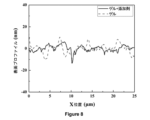
表面の平均粗さも、ブラッシング前及び20,000回のブラッシングサイクル後に測定した。原子間力顕微鏡(nGauge,ICSPI Corporation,Rev.1.0,Waterroo,Ontario,Canada)を用いて、3つの異なる位置における平均粗さを測定し、表面の平均を形成する。25×25μmの領域を1200μs/ピクセルの速度で走査する。Gwyddion(http://gwyddion.net)ソフトウエアを用いて解析した。 The average roughness of the surface was also measured before brushing and after 20,000 brushing cycles. An atomic force microscope (nGauge, ICSPI Corporation, Rev. 1.0, Waterloo, Ontario, Canada) was used to measure the average roughness at three different locations to form the average of the surface. An area of 25 x 25 μm was scanned at a speed of 1200 μs/pixel. Analysis was performed using Gwyddion (http://gwyddion.net) software.
表1に示すガラス組成物はすべて、分析グレードの試薬(酸化ホウ素、炭酸ルビジウム、炭酸リチウム、及びフッ化カルシウム)(カナダ、Sigma Aldrich)の定量量を秤量することにより合成した。均一性を確保するために、個々の製剤を60分間混合した。各前駆体ブレンドを置き、50mLの白金るつぼ(Johnson Matthery,Noble Metals,Pennsylvania)に充填した。次いで、パックるつぼを室温で炉(Carbolite,RHF 1600)に入れた。炉を600℃の初期居住温度まで加熱し(25℃/分)、60分間保持した。次いで、温度を1,100℃の最終的な居住温度に上昇させ(20℃/分)、60分間保持した。除去すると、各ガラス溶融物を2つのステンレス鋼板の間でクエンチした。得られたクエンチされたガラスは、遊星マイクロミル(Pulverisette 7,Fritsch,Germany)内で別々に粉砕/粉砕し、ASTM E-11準拠ふるい(Cole Palmer,U.S.A.)でふるいにかけて<25μmの粒子を得た。 All glass compositions shown in Table 1 were synthesized by weighing quantitative amounts of analytical grade reagents (boron oxide, rubidium carbonate, lithium carbonate, and calcium fluoride) (Sigma Aldrich, Canada). To ensure homogeneity, each formulation was mixed for 60 minutes. Each precursor blend was placed and packed into a 50 mL platinum crucible (Johnson Matthery, Noble Metals, Pennsylvania). The packed crucible was then placed into a furnace (Carbolite, RHF 1600) at room temperature. The furnace was heated (25°C/min) to an initial occupancy temperature of 600°C and held for 60 minutes. The temperature was then increased (20°C/min) to a final occupancy temperature of 1,100°C and held for 60 minutes. Upon removal, each glass melt was quenched between two stainless steel plates. The resulting quenched glasses were separately ground/milled in a planetary micromill (Pulverisette 7, Fritsch, Germany) and sieved through ASTM E-11 sieves (Cole Palmer, USA) to obtain particles <25 μm.
表1の例示的なガラスの粒度分布を表2に示す。 The particle size distribution of the exemplary glasses in Table 1 is shown in Table 2.
ここで、「Dx(#)」は、注記された値よりもサイズが小さい粒子の#%を指すことを理解されたい。例えば、BCF100は、5.16ミクロンのDx(10)を有し、これは、粒子の10%が5.16ミクロン未満のサイズであることを意味する。 Here, it should be understood that "Dx(#)" refers to the #% of particles that are smaller in size than the noted value. For example, BCF100 has a Dx(10) of 5.16 microns, which means that 10% of the particles are less than 5.16 microns in size.
表1の例示的ガラスの粒子を、上記の方法を用いて12時間及び24時間にわたって緩衝化生理食塩水溶液中のフッ化物放出について評価した。放出されたフッ化物のppm値を表3に示す。 The exemplary glass particles in Table 1 were evaluated for fluoride release in buffered saline solution over 12 and 24 hours using the method described above. The ppm values of fluoride released are shown in Table 3.
BCF201を2つの歯磨き粉に配合し、ガラス粒子の研磨効果を試験し、センソダイン(商標)ホワイトニング修復及びProtect(商標)歯磨き粉(「センソダイン」)及びコルゲート(商標)オプティックホワイト(商標)歯磨き粉(「コルゲートオプティック」)の研磨効果と比較した。例示的なガラスは、(a)コルゲート(商標)エナメル健康感受性レリーフ(商標)(コルゲート-パルモリブ、Toronto、ON、Canada)(「コルゲートEN」)又は(b)Gel7HT(Germiphene、Brantford、ON、Canada)(「Gel」)、いずれの研磨材料も含有しない中性pHフッ化物ゲル歯磨き粉で製剤化された。 BCF201 was formulated into two toothpastes to test the abrasive effect of the glass particles and compare it to the abrasive effect of Sensodyne™ Whitening Restorative and Protect™ toothpaste ("Sensodyne") and Colgate™ Optic White™ toothpaste ("Colgate Optic"). The exemplary glass was formulated in (a) Colgate™ Enamel Health Sensitivity Relief™ (Colgate-Palmolive, Toronto, ON, Canada) ("Colgate EN") or (b) Gel 7HT (Germiphene, Brantford, ON, Canada) ("Gel"), a neutral pH fluoride gel toothpaste that does not contain any abrasive materials.
研磨試験の結果を以下の表及び図1~10に示す。表4は、異なる歯磨き粉を使用した異なる数のブラッシングサイクル後のレジン複合材表面の光沢度を示す。表5は、異なる歯磨き粉を使用した異なる数のブラッシングサイクル後のレジンコンポジットの光沢度を示す。表6は、異なる歯磨き粉を用いた20,000回のブラッシングサイクル後のレジン複合材料表面の粗さを示している。表7は、異なる歯磨き粉を用いた20,000回のブラッシングサイクル後のエナメル表面の粗さを示す。 The results of the polishing tests are shown in the following tables and Figures 1-10. Table 4 shows the gloss of the resin composite surface after different number of brushing cycles with different toothpastes. Table 5 shows the gloss of the resin composite after different number of brushing cycles with different toothpastes. Table 6 shows the roughness of the resin composite surface after 20,000 brushing cycles with different toothpastes. Table 7 shows the roughness of the enamel surface after 20,000 brushing cycles with different toothpastes.
本開示によるさらなる例示的なガラス組成物は、異なる成分のmolパーセンテージを示す本開示の例ではないガラス組成物と共に表8に示されている。 Further exemplary glass compositions according to the present disclosure are shown in Table 8 along with glass compositions that are not examples of the present disclosure showing the mol percentages of the different components.
表8に示される例示的なガラス組成物及び追加組成物は、混合物の設計に基づいて選択され(設計専門家8.0.4、Stat-Ease Inc.)、ガラス組成物に対する種々の範囲の成分の効果を評価した。 The exemplary glass compositions and additive compositions shown in Table 8 were selected based on the design of the mixture (Design Expert 8.0.4, Stat-Ease Inc.) to evaluate the effect of various ranges of ingredients on the glass composition.
ガラス組成物を上記のように合成した。簡単に説明すると、上記組成物の各々を形成するのに必要な十分量の分析グレード試薬(Sigma Aldrich、Canada)を秤量した。均一性を確保するために、個々の製剤を60分間混合した。各前駆体ブレンドを置き、50mLの白金るつぼ(Johnson Matthery,Noble Metals,Pennsylvania)に充填した。次いで、パックるつぼを室温で炉(Carbolite,RHF 1600)に入れた。炉を600℃の初期居住温度まで加熱し(25℃/分)、60分間保持した。次いで、温度を1,100℃の最終的な居住温度に上昇させ(20℃/分)、60分間保持した。除去すると、各ガラス溶融物を2つのステンレス鋼板の間でクエンチした。 Glass compositions were synthesized as described above. Briefly, sufficient analytical grade reagents (Sigma Aldrich, Canada) were weighed out to form each of the above compositions. Individual formulations were mixed for 60 minutes to ensure homogeneity. Each precursor blend was placed and packed into a 50 mL platinum crucible (Johnson Matthery, Noble Metals, Pennsylvania). The packed crucible was then placed into a furnace (Carbolite, RHF 1600) at room temperature. The furnace was heated (25°C/min) to an initial occupancy temperature of 600°C and held for 60 minutes. The temperature was then increased (20°C/min) to a final occupancy temperature of 1,100°C and held for 60 minutes. Upon removal, each glass melt was quenched between two stainless steel plates.
以下の組成物は、上述のクエンチ条件下でガラスを形成した組成物の具体例であり、このような条件は、製造スケールプロセスに適した標準的なクエンチ条件のための1つのオプションを表す。 The following compositions are specific examples of compositions that formed glasses under the quench conditions described above, and such conditions represent one option for standard quench conditions suitable for manufacturing scale processes.
表9に列挙された例示的組成物のための得られたクエンチされたガラスは、以下のバルク特性を有した。 The resulting quenched glasses for the exemplary compositions listed in Table 9 had the following bulk properties:
表9に列挙された例示的組成物のための得られた急冷ガラスは、遊星マイクロミル(Pulverisette 7、Fritsch、ドイツ)内で別々に粉砕/粉砕され、<25μmの粒子を得るためにASTM E-11準拠ふるい(Cole Palmer、米国)でふるいにかけられた。 The resulting quenched glasses for the exemplary compositions listed in Table 9 were separately ground/milled in a planetary micromill (Pulverisette 7, Fritsch, Germany) and sieved with ASTM E-11 compliant sieves (Cole Palmer, USA) to obtain particles of <25 μm.
表9に列挙された例示的なガラスの粒度分布を表11に示す。BCF315、BCF326は、脱イオン水中で迅速に分解しすぎて、正確な粒度測定値を得ることができなかった。 The particle size distributions of the exemplary glasses listed in Table 9 are shown in Table 11. BCF315, BCF326 decomposed too quickly in deionized water to obtain accurate particle size measurements.
表9に列挙した例示的なガラスの粒子を、1、4及び24時間における緩衝化生理食塩水溶液中の質量損失及びフッ化物放出について評価した。試料を15mLの三角試験管(n=3)中で調製し、秤量し、記録した。0.1グラムの各ガラス粉末(<25ミクロン)を別々に秤量し、計量した15mL Falconチューブ中の10mL TRIS緩衝生理食塩水(BioUltra,Sigma Aldrich,Canada)に入れた。チューブをパラフィルムでシールした後、振盪インキュベーター内に37℃で置き、120rpmで4つの別々の時点:5分間、30分間、1時間、3時間、24時間及び48時間撹拌した。所定の時間経過後、チューブをインキュベーターから取り出し、溶液を直ちに3.0 RCF/4.4 RPMで15分間遠心分離した(Eppendorf、Centrifuge 5702)。上清を、新鮮な15mLファルコンチューブにデカントした。さらに、48時間インキュベートされた粉末の試料を、ボルテックス混合により10mLの新鮮なTRIS緩衝生理食塩水中に再懸濁し、さらに8時間インキュベートした(合計56時間のインキュベーションの間)。再インキュベートした粉末を他の試料と同じ方法で処理した。ペレットを、それぞれのFalconチューブ中で50℃のオーブン中で乾燥した。 Exemplary glass particles listed in Table 9 were evaluated for mass loss and fluoride release in buffered saline solutions at 1, 4, and 24 hours. Samples were prepared in 15 mL Erlenmeyer test tubes (n=3), weighed, and recorded. 0.1 grams of each glass powder (<25 microns) was weighed separately into 10 mL TRIS-buffered saline (BioUltra, Sigma Aldrich, Canada) in a weighed 15 mL Falcon tube. The tubes were sealed with parafilm and then placed in a shaking incubator at 37° C. and agitated at 120 rpm for four separate time points: 5 minutes, 30 minutes, 1 hour, 3 hours, 24 hours, and 48 hours. After the designated time, the tubes were removed from the incubator and the solutions were immediately centrifuged at 3.0 RCF/4.4 RPM for 15 minutes (Eppendorf, Centrifuge 5702). The supernatant was decanted into a fresh 15 mL Falcon tube. Additionally, samples of the 48 hour incubated powder were resuspended in 10 mL fresh TRIS buffered saline by vortex mixing and incubated for an additional 8 hours (for a total incubation of 56 hours). The reincubated powders were treated in the same manner as the other samples. The pellets were dried in their respective Falcon tubes in a 50°C oven.
フッ化物イオンの放出を、フッ化物電極(Fisher Scientific)を備えたAccμmet AB250pH/イオン選択性メーターを用いて測定した。プローブを較正するために、イオン選択電極(NaF、0.1F、Sigma Aldrich、カナダ)用のフッ化物分析標準を用いて6種の標準溶液を調製した。フッ化物濃度がそれぞれ1000ppm、100ppm、10ppm、1ppm、0.1ppm、0.01ppmの標準品は、溶媒としてTRIS緩衝生理食塩水(BioUltra,Sigma Aldrich,Canada)を用いて合成された。校正前に各標準品にTISAB濃縮液(4.5mL)を添加した(製造者の指示に従う)。プローブが較正されると、標準の勾配をチェックして、使用説明書からの範囲内であることを確認した。TISAB濃縮物(1.0mL)をデカント上清に加え、次いで、較正されたプローブを用いてそのフッ化物濃度について測定した。イオン濃度は平均±SDとして報告される。 Fluoride ion release was measured using an Accumet AB250 pH/ion-selective meter equipped with a fluoride electrode (Fisher Scientific). To calibrate the probe, six standard solutions were prepared using fluoride analytical standards for ion-selective electrodes (NaF, 0.1F, Sigma Aldrich, Canada). Standards with fluoride concentrations of 1000 ppm, 100 ppm, 10 ppm, 1 ppm, 0.1 ppm, and 0.01 ppm were synthesized using TRIS-buffered saline (BioUltra, Sigma Aldrich, Canada) as the solvent. TISAB concentrate (4.5 mL) was added to each standard prior to calibration (following the manufacturer's instructions). Once the probe was calibrated, the slopes of the standards were checked to ensure they were within the range from the instructions. TISAB concentrate (1.0 mL) was added to the decanted supernatant and then measured for its fluoride concentration using a calibrated probe. Ion concentrations are reported as the mean ± SD.
放出されたフッ化物の質量損失とppm値を表12に示す。BCF314は、1時間時点前に緩衝生理食塩水溶液中で完全に分解し、さらにフッ化物源は含まれなかった。 The mass loss and ppm values of released fluoride are shown in Table 12. BCF314 was completely decomposed in the buffered saline solution before the 1 hour time point and no fluoride source was included.
表8に列挙された組成物は、デザインスペースを反映する。試験された組成物の結果は、異なる組成物の相対比較を可能にすることができ、及び/又は組成物の異なる成分に関連する傾向を同定するのに有用であり得る以下の式を提供した。実験誤差及びモデリング誤差は、ガラス特性の絶対的予測を妨げるが、この方程式は、ガラス組成設計のガイド及び改良に使用することができる。これらのモデルを一緒に使用すると、これらのモデルは、試験された組成物空間内での多成分組成物の調整において、どの因子がトレードオフされ得るかを示唆するのに役立つであろう。次の式では、リストされている成分の値はパーセンテージ(小数点以下ではなく)で示さる。例えば、50mol%のB2O3は「50」(「0.5」ではなく)である。 The compositions listed in Table 8 reflect the design space. The results of the compositions tested provided the following equations that may allow for relative comparison of different compositions and/or may be useful in identifying trends associated with different components of the composition. Although experimental and modeling errors prevent absolute prediction of glass properties, the equations can be used to guide and refine glass composition design. Used together, these models will help suggest which factors may be traded off in tailoring multi-component compositions within the composition space tested. In the following equations, the values of the listed components are given as percentages (rather than decimals). For example, 50 mol% B2O3 is "50" (rather than "0.5").
ガラスは、以下の式が1.60以下である場合、試験されたクエンチ条件下で形成されることが一般的に予想される:
(2.01×ey+0.99)/(1+ey)
ここで、y=-0.086622×[B2O3]+0.14169×[Li2O]-0.565849×[ZnO]+0.192175×[Na2O]-0.461537×[CaF2]+0.036636×[KF]+0.00365×[NaF]+0.191201×[SnF2]+0.192612×[RbO2]+0.199999×[SrO]+0.01393×[B2O3]×[ZnO]+0.012239×[B2O3]×[CaF2]-0.012412×[Li2O]×[CaF2]-0.013904×[Li2O]×[RbO2]-0.010857×[ZnO]×[CaF2]-0.013296×[ZnO]×[RbO2]-0.010699×[ZnO]×[SrO]+0.010128×[CaF2]×[KF]-0.012103×[CaF2]×[SrO]である。
A glass is generally expected to form under the quench conditions tested if the following formula is less than or equal to 1.60:
(2.01× ey +0.99)/(1+ ey )
Here, y=-0.086622×[B 2 O 3 ]+0.14169×[Li 2 O]-0.565849×[ZnO]+0.192175×[Na 2 O]-0.461537×[CaF 2 ]+0.036636×[KF]+0.00365×[NaF] +0.191201×[ SnF2 ]+0.192612×[RbO2]+0.199999×[ SrO ]+0.01393×[ B2O3 ]×[ZnO] + 0.012239 ×[B2O3]×[CaF2 ] −0.012412×[ Li2O ]×[ CaF 2 ]-0.013904×[ Li2O ]×[ RbO2 ]-0.010857×[ZnO]×[CaF2]-0.013296×[ZnO]×[ RbO2 ]-0.010699×[ZnO]×[SrO]+ 0.010128 ×[ CaF2 ]×[KF]−0.012103×[CaF 2 ]×[SrO].
ガラスの密度は、一般に、次の式を用いて予測することができる:
ρ=0.018783×[B2O3]+0.026444×[Li2O]+0.046191×[ZnO]+0.033814×[Na2O]+0.039196×[CaF2]+0.026997×[KF]+0.029458×[NaF]+0.049441×[SnF2]+0.047057×[RbO2]+0.054984×[SrO]
約1.3g/cm3から約2.2g/cm3までのガラス密度は、非水性口腔ケア製剤において特に有益であり得る。グリセロール及びシリカは、非水性歯磨き粉の主要な液状成分及び固形成分であり、それぞれ1.3及び2.2g/cm3の密度を有する。
The density of glass can generally be predicted using the following formula:
ρ=0.018783×[ B2O3 ] +0.026444×[Li2O]+0.046191×[ZnO]+0.033814×[ Na2O ] + 0.039196×[ CaF2 ]+0.026997×[KF]+0.029458×[NaF]+ 0.049441×[SnF 2 ]+0.047057×[R b O 2 ]+0.054984×[SrO]
Glass densities from about 1.3 g/ cm3 to about 2.2 g/ cm3 can be particularly beneficial in non-aqueous oral care formulations. Glycerol and silica are the primary liquid and solid components of non-aqueous toothpastes and have densities of 1.3 and 2.2 g/ cm3 , respectively.
ガラス転移温度(Tg)は、一般に、以下の式を用いて予測することができる:
Tg=3.49398×[B2O3]+3.66342×[Li2O]+6.38755×[ZnO]+6.23689×[Na2O]+6.43079×[CaF2]+3.31695×[KF]+5.04074×[NaF]+9.88761×[SnF2]+3.29777×[RbO2]+10.51264×[SrO]
相分離されたガラスは、多重ガラス遷移を呈することができ、その大きさは、必ずしも相の体積分布を表すとは限らないことを理解されたい。上記の式はガラス転移の開始を予測するが、相分離が起こる場合、予測される開始は組成物の主要なガラス転移ではない場合がある。従って、予測されるガラス転移温度は、測定された主なガラス転移温度と著しく異なる場合がある。
The glass transition temperature (T g ) can generally be predicted using the following formula:
T g =3.49398×[ B2O3 ] +3.66342×[Li2O]+6.38755×[ZnO]+6.23689 ×[Na2O]+6.43079×[CaF2]+3.31695×[KF]+5.04074×[NaF]+9.88 761×[SnF 2 ] + 3.29777 ×[RbO 2 ]+10.51264×[SrO]
It should be understood that phase separated glasses can exhibit multiple glass transitions, the magnitude of which does not necessarily represent the volume distribution of the phases. Although the above formula predicts the onset of the glass transition, if phase separation occurs, the predicted onset may not be the main glass transition of the composition. Thus, the predicted glass transition temperature may differ significantly from the measured main glass transition temperature.
試験条件下での1時間後の質量損失率に関する式は、次のとおりである:
(100×ey)/(1+ey)
ここで、y=0.088098×[B2O3]+0.062481×[Li2O]-0.262486×[ZnO]+0.05542×[Na2O]-0.165517×[CaF2]+0.089171×[KF]+0.075875×[NaF]+0.10439×[SnF2]+0.109897×[RbO2]-0.089987×[SrO]
上記の式は、試験された条件下で1時間以内に完全に溶解することを示すガラス組成物を同定するのに非常に予測的であり、この時間枠下で劣化する他のガラスを同定するのに有用であり得る。さらに、この方程式は、より遅い分解組成物についての正確な質量損失推定値を提供しないが、この方程式は、組成の変化に伴って生じると予想される分解の相対的変化を予測するのに有用であり得る。このような相対的変化は、ガラス組成設計のガイドとして使用することができる。
The equation for percent mass loss after 1 hour under the test conditions is:
(100× ey )/(1+ ey )
Here, y = 0.088098 x [ B2O3 ] + 0.062481 x [Li2O] - 0.262486 x [ZnO] + 0.05542 x [ Na2O ] - 0.165517 x [ CaF2 ] + 0.089171 x [KF] + 0.075875 x [NaF] + 0.10439 x [ SnF2 ] + 0.109897 x [ RbO2 ] - 0.089987 x [SrO]
The above equation is highly predictive in identifying glass compositions that demonstrate complete dissolution within one hour under the conditions tested, and may be useful in identifying other glasses that degrade under this time frame. Additionally, although the equation does not provide accurate mass loss estimates for slower decomposing compositions, the equation may be useful in predicting the relative change in decomposition that is expected to occur with a change in composition. Such relative changes may be used as a guide for glass composition design.
試験条件下での1時間後のフッ化物の放出(ppm)に関する式は、次のとおりである:
(2750×ey)/(1+ey)
ここで、y=-0.05785×[B2O3]-0.15837×[Li2O]-0.170872×[ZnO]-0.184773×[Na2O]+0.05638×[CaF2]+0.101381×[KF]+0.053886×[NaF]-0.307462×[SnF2]-0.183034×[RbO2]-0.184126×[SrO]
上記の式は、全てのガラス組成物について放出されたフッ化物の量の正確な推定値を提供しないが、このモデルは、組成の変化に伴って生じると予想されるフッ化物放出の相対的な変化を予測するのに依然として有用である。
The formula for fluoride release (ppm) after 1 hour under the test conditions is:
(2750× ey )/(1+ ey )
Here, y = -0.05785 x [B 2 O 3 ] -0.15837 x [Li 2 O] -0.170872 x [ZnO] -0.184773 x [Na 2 O] +0.05638 x [CaF 2 ] +0.101381 x [KF] +0.053886 x [NaF] -0.307462 x [SnF 2 ] -0.183034 x [RbO 2 ] -0.184126 x [SrO]
Although the above equation does not provide an accurate estimate of the amount of fluoride released for all glass compositions, the model is still useful for predicting the relative changes in fluoride release that can be expected to occur with changes in composition.
PBF1は、重量11.60gのB2O3、5.30gのNa2CO3、2.69gのMgO、3.33gのCaCO3、及び0.7gのCaF2(Sigma Aldrich、Canada)によって合成した。均一性を確保するために、出発物質を60分間混合した。ブレンドを置き、50mLの白金るつぼ(ジョンソン・マッセイ社、ノーブル・メタルズ社、ペンシルベニア州)に充填した。次いで、パックるつぼを室温で炉(Carbolite、RHF 1600)に入れた。炉を600℃の初期居住温度まで加熱し(25℃/分)、60分間保持した。次いで、温度を(20℃/分)1,200℃の最終的な居住温度に上昇させ、60分間保持した。除去すると、ガラス溶融物を2つのステンレス鋼板の間でクエンチした。得られたクエンチされたガラスは、遊星マイクロミル(Pulverisette 7,Fritsch,Germany)内で別々に粉砕/粉砕し、ASTM E-11準拠ふるい(Cole Palmer,U.S.A.)でふるいにかけて<25μmの粒子を得た。 PBF1 was synthesized by weighting 11.60 g B2O3 , 5.30 g Na2CO3 , 2.69 g MgO, 3.33 g CaCO3 , and 0.7 g CaF2 (Sigma Aldrich, Canada). The starting materials were mixed for 60 minutes to ensure homogeneity. The blend was placed and packed into a 50 mL platinum crucible (Johnson Matthey, Noble Metals, PA). The packed crucible was then placed into a furnace (Carbolite, RHF 1600) at room temperature. The furnace was heated (25°C/min) to an initial residence temperature of 600°C and held for 60 minutes. The temperature was then increased (20°C/min) to a final residence temperature of 1,200°C and held for 60 minutes. Upon removal, the glass melt was quenched between two stainless steel plates. The resulting quenched glasses were separately ground/crushed in a planetary micromill (Pulverisette 7, Fritsch, Germany) and sieved with ASTM E-11 compliant sieves (Cole Palmer, USA) to obtain particles <25 μm.
比較ガラス組成物(比較実施例(CE)1及び2と称する)は、5.80gのB2O3、23.66gのP2O5、5.30gのNa2CO3、1.34gのMgO、6.67gのCaCo3、及び0.70gのCaF2を用いて同様に合成され、CE1は、約25mol%のB2O3、約25mol%のP2O5、約15mol%のNa2O、約10mol%のMgO、約20mol%のCaO、及び約5mol%のCaF2を有した;ならびに5.80gのB2O3、23.66gのP2O5、7.07のNa2CO3、1.34gのMgO、5.00gのCaCO3、及び0.70gのCaF2を用いて合成され、CE2は、約25mol%のB2O3、約25mol%のP2O5、約20mol%のNa2O、約10mol%のMgO、約15mol%のCaO、及び約5mol%のCaF2を有した。 Comparative glass compositions (designated Comparative Examples (CE) 1 and 2) were similarly synthesized using 5.80 g B2O3 , 23.66 g P2O5 , 5.30 g Na2CO3 , 1.34 g MgO , 6.67 g CaCo3 , and 0.70 g CaF2 , with CE1 having about 25 mol% B2O3 , about 25 mol% P2O5 , about 15 mol % Na2O , about 10 mol% MgO , about 20 mol% CaO, and about 5 mol% CaF2 ; , 1.34 g MgO, 5.00 g CaCO 3 , and 0.70 g CaF 2 , and CE2 had about 25 mol% B 2 O 3 , about 25 mol% P 2 O 5 , about 20 mol% Na 2 O, about 10 mol% MgO, about 15 mol% CaO, and about 5 mol% CaF 2 .
ガラス粉末の密度は、1cm3挿入物を備えたAccuPyc 1340ヘリウムピクノメーター(米国マイクロメリックス社)を用いて測定した。使用前に、容量0.718512cm3のスタンダードを用いてピクノメーターを較正した。ガラス分析のために、インサートに約0.5~0.7グラムのガラス粉末を充填した。各ガラスの3つの試料を測定し、各測定値は10読み取りの平均値である。 The density of the glass powders was measured using an AccuPyc 1340 helium pycnometer (Micromerix, USA) equipped with a 1 cm3 insert. Prior to use, the pycnometer was calibrated using a standard with a volume of 0.718512 cm3 . For glass analysis, the insert was filled with approximately 0.5-0.7 grams of glass powder. Three samples of each glass were measured and each measurement is the average of 10 readings.
PBF1の密度は2.5951±0.0072g/cm3と測定した。CE1の密度は2.7079±0.0021g/cm3として測定した。CE2密度は2.6749±0.0013g/cm3と測定した。 The density of PBF1 was measured as 2.5951±0.0072 g/ cm3 . The density of CE1 was measured as 2.7079±0.0021 g/ cm3 . The density of CE2 was measured as 2.6749±0.0013 g/ cm3 .
PBF1、CE1及びCE2について、フッ化物の放出及び質量損失を測定した。試料を15mLの三角試験管(n=3)中で調製し、秤量し、記録した。0.1グラムの各ガラス粉末(<25ミクロン)を別々に秤量し、計量した15mL Falconチューブ中の10mL TRIS緩衝生理食塩水(BioUltra,Sigma Aldrich,Canada)に入れた。チューブをパラフィルムでシールした後、振盪インキュベーター内に37℃で置き、120rpmで4つの別々の時点:5分間、30分間、1時間、3時間、24時間及び48時間撹拌した。所定の時間経過後、チューブをインキュベーターから取り出し、溶液を直ちに3.0RCF/4.4 RPMで15分間遠心分離した(Eppendorf、Centrifuge 5702)。上清を、新鮮な15mLファルコンチューブにデカントした。さらに、48時間インキュベートされた粉末の試料を、ボルテックス混合により10mLの新鮮なTRIS緩衝生理食塩水中に再懸濁し、さらに8時間インキュベートした(合計56時間のインキュベーションの間)。再インキュベートした粉末を他の試料と同じ方法で処理した。ペレットを、それぞれのFalconチューブ中で50℃のオーブン中で乾燥した。 Fluoride release and mass loss were measured for PBF1, CE1 and CE2. Samples were prepared in 15 mL Erlenmeyer tubes (n=3), weighed and recorded. 0.1 grams of each glass powder (<25 microns) was weighed separately into 10 mL TRIS buffered saline (BioUltra, Sigma Aldrich, Canada) in a weighed 15 mL Falcon tube. The tubes were sealed with parafilm and then placed in a shaking incubator at 37°C and agitated at 120 rpm for four separate time points: 5 min, 30 min, 1 h, 3 h, 24 h and 48 h. After the designated times, the tubes were removed from the incubator and the solutions were immediately centrifuged (Eppendorf, Centrifuge 5702) at 3.0 RCF/4.4 RPM for 15 min. The supernatant was decanted into a fresh 15 mL Falcon tube. Additionally, samples of the 48-hour incubated powder were resuspended in 10 mL of fresh TRIS-buffered saline by vortex mixing and incubated for an additional 8 hours (for a total incubation of 56 hours). The reincubated powder was treated in the same manner as the other samples. The pellets were dried in their respective Falcon tubes in a 50°C oven.
フッ化物イオンの放出を、フッ化物電極(Fisher Scientific)を備えたAccμmet AB250pH/イオン選択性メーターを用いて測定した。プローブを較正するために、イオン選択電極(NaF、0.1F、Sigma Aldrich、Canada)用のフッ化物分析標準を用いて6種の標準溶液を調製した。標準品のフッ化ナトリウム濃度は、溶媒としてTRIS緩衝生理食塩水(BioUltra、Sigma Aldrich、Canada)を用いて、それぞれ1000ppm、100ppm、10ppm、1ppm、0.01ppm、0.001と合成した。校正前に各標準品にTISAB濃縮液(4.5mL)を添加した(製造者の指示に従って)。プローブが較正されると、標準の勾配をチェックして、使用説明書からの範囲内であることを確認した。TISAB濃縮物(1.0mL)をデカント上清に加え、次いで、較正されたプローブを用いてそのフッ化物濃度について測定した。イオン濃度は平均±SDとして報告される。 Fluoride ion release was measured using an Accumet AB250 pH/ion-selective meter equipped with a fluoride electrode (Fisher Scientific). To calibrate the probe, six standard solutions were prepared using fluoride analytical standards for ion-selective electrodes (NaF, 0.1F, Sigma Aldrich, Canada). The sodium fluoride concentrations of the standards were synthesized as follows: 1000 ppm, 100 ppm, 10 ppm, 1 ppm, 0.01 ppm, and 0.001, respectively, using TRIS-buffered saline (BioUltra, Sigma Aldrich, Canada) as the solvent. TISAB concentrate (4.5 mL) was added to each standard prior to calibration (according to the manufacturer's instructions). Once the probe was calibrated, the slopes of the standards were checked to ensure they were within the range from the instructions. TISAB concentrate (1.0 mL) was added to the decanted supernatant and then measured for its fluoride concentration using a calibrated probe. Ion concentrations are reported as the mean ± SD.
PBF1によって放出されるフッ化物イオンの量は、5分で89±2ppm、30分で94±3ppm、1時間で105±5ppm、3時間で94±7ppmと測定された。CE1又はCE2によって放出されるフッ化物イオンは測定可能ではなかった。 The amount of fluoride ions released by PBF1 was measured to be 89±2 ppm at 5 min, 94±3 ppm at 30 min, 105±5 ppm at 1 hr, and 94±7 ppm at 3 hr. No measurable fluoride ions were released by CE1 or CE2.
質量損失は、TRIS緩衝生理食塩水への曝露後の乾燥試料の質量を試料の初期質量と比較することによって計算した。PBF1の質量損失は、5分後42.0±2.1%、30分後47.3±2.7%、1時間後51.5±4.3%、3時間後41.7±5.7%、24時間後70.1±6.8%、48時間後100%であった。 Mass loss was calculated by comparing the mass of the dried sample after exposure to TRIS-buffered saline with the initial mass of the sample. Mass loss of PBF1 was 42.0 ± 2.1% after 5 min, 47.3 ± 2.7% after 30 min, 51.5 ± 4.3% after 1 h, 41.7 ± 5.7% after 3 h, 70.1 ± 6.8% after 24 h, and 100% after 48 h.
PBF1の7つの異なる試料の粒子サイズを、Malvern Mastersizer 3000モデルレーザー回折粒子サイズ分析器を用いて測定した。ガラス粒子を蒸留水中に別々に懸濁させ、2~5%の不明瞭度を得た。分析に先立って、ガラス粉末を真空デシケーター中に保存し、分析のために除去し、3×5回、約20秒/回継続した。懸濁液は、青色(λ=470nm)及び赤色(λ=632.8nm)レーザー(n=5)の両方を用いて測定した。 The particle size of seven different samples of PBF1 was measured using a Malvern Mastersizer 3000 model laser diffraction particle size analyzer. The glass particles were separately suspended in distilled water to obtain an opacity of 2-5%. Prior to analysis, the glass powder was stored in a vacuum desiccator and removed for analysis, 3 x 5 times, lasting approximately 20 seconds each time. The suspensions were measured using both blue (λ = 470 nm) and red (λ = 632.8 nm) lasers (n = 5).
模擬体液中のアパタイト形成はPBF1で確認されたが、CE1又はCE2では明らかではなかった。模擬体液は、Kokubo及びTakadama(Kokubo,T.and Takadama,H.Biomaterials(2006)27:15,pp 2907-2915)によって発表された方法及び指示に従って合成した。 Apatite formation in simulated body fluid was observed in PBF1, but not evident in CE1 or CE2. The simulated body fluid was synthesized according to the method and instructions published by Kokubo and Takadama (Kokubo, T. and Takadama, H. Biomaterials (2006) 27:15, pp 2907-2915).
1LバッチのSBFを1000mL Nalgeneボトル(FEPボトル)中で調製した。調製したSBFは、実験的使用前の安定性を確保するために合成直後24時間室温で保存した。SBFは、蓋をしっかりとしたNalgeneボトルに保存し、直ちに必要でない場合は6℃に保った(実験的使用の場合は最大30日間)。 1 L batches of SBF were prepared in 1000 mL Nalgene bottles (FEP bottles). Prepared SBF was stored at room temperature for 24 h immediately after synthesis to ensure stability before experimental use. SBF was stored in tightly capped Nalgene bottles and kept at 6 °C if not immediately required (maximum of 30 days for experimental use).
TCO4法(Mason,A.L.B.,Kim,T.B.,Valliant,E.M.et al.J Mater Sci:Mater Med(2015)26:115に発表)に従って、各ガラス組成物(n=3)の0.75gのガラス粉末を、上記で合成したように、ポリエチレン容器にSBF50mLに浸漬した。次いで、容器をインキュベート軌道振盪器中に37℃で置き、120rpmで3時点:30分、3時間及び12時間撹拌した。経過時間後、各試料をWhatman 42又は5グレードの濾紙(粒子保持率2.5μm)で真空ろ過し、溶液から固体物質を回収した。固体を直ちに蒸留水及びアセトンで洗浄して、さらなる反応を停止した。
According to the TCO4 method (published by Mason, A.L.B., Kim, T.B., Valliant, E.M. et al. J Mater Sci: Mater Med (2015) 26:115), 0.75 g of glass powder of each glass composition (n=3) as synthesized above was immersed in 50 mL of SBF in a polyethylene container. The container was then placed in an incubator orbital shaker at 37°C and agitated at 120 rpm for three time points: 30 min, 3 h, and 12 h. After the elapsed time, each sample was vacuum filtered through
濾過された試料を真空デシケーター中で乾燥させ、さらなる分析を行った。各試料のイメージングは、1000×及び10000×の倍率で3KV及び15mAで操作する日立S-4700 FEG(Hitachi,Chula Vista,Ca)走査型電子顕微鏡を用いて行った。試料を両面カーボンテープを用いてスタブ上に取り付け、70秒間金-パラジウムで被覆したスパッタを用いた(Leica EM ACE200、Wetzlar、Germany)。30分、3時間、12時間のPBF1の走査型電子顕微鏡像を図11~14に示す。 The filtered samples were dried in a vacuum desiccator for further analysis. Imaging of each sample was performed using a Hitachi S-4700 FEG (Hitachi, Chula Vista, Ca) scanning electron microscope operated at 3 KV and 15 mA at 1000× and 10,000× magnification. Samples were mounted on stubs using double-sided carbon tape and sputter coated with gold-palladium for 70 s (Leica EM ACE200, Wetzlar, Germany). Scanning electron microscope images of PBF1 at 30 min, 3 h, and 12 h are shown in Figures 11-14.
PBF1はまた、適用プロトコールを開発し、カテゴリー閉塞尺度に従って2人の評価者により等級付けされたSEM画像の統計解析により象牙質細管閉塞について評価した。ヒト象牙質(厚さ約1~1.5mm)の切片を、ダイヤモンドディスクソーを用いて、根の長軸に垂直な、う蝕のない、貯蔵されていない大臼歯の歯冠から調製した。各切片を10%クエン酸で2分間エッチングし、続いて60秒間水ですすぎ、2分間超音波処理し、さらに60秒間水ですすいだ。各切片を直径25mmの型に入れ、3mmの深さのアクリル樹脂で覆った。樹脂が硬化すると、象牙質面は、ミラー仕上げのために、800及び2500粒紙で順次研磨された。脱イオン水ですすぎの後、表面をエッチングし、超音波処理し、再度すすいだ。試料の完全性、尿細管密度及び開存性を、再度光学顕微鏡下で、次いでSEMで検査した。 PBF1 also developed an application protocol to evaluate dentin tubule occlusion by statistical analysis of SEM images graded by two assessors according to a categorical occlusion scale. Sections of human dentin (approximately 1-1.5 mm thick) were prepared from caries-free, unreserved molar crowns perpendicular to the long axis of the root using a diamond disc saw. Each section was etched with 10% citric acid for 2 minutes, followed by rinsing with water for 60 seconds, sonication for 2 minutes, and rinsing with water for another 60 seconds. Each section was placed in a 25 mm diameter mold and covered with 3 mm deep acrylic resin. Once the resin had hardened, the dentin surface was polished sequentially with 800 and 2500 grit paper for a mirror finish. After rinsing with deionized water, the surface was etched, sonicated, and rinsed again. The integrity, tubule density, and patency of the samples were again examined under a light microscope and then with a SEM.
象牙質試料1個を各治療群に割り付けた。象牙質試料を、(i)例示的なガラス粒子の非形成混合物、(ii)例示的なガラス粒子の混合物を含む試験歯磨き粉、又は(iii)追加のガラス粒子を含まない対照歯磨き粉で処理した。非粉末ニトリル手袋付きフィンガーを用いて、形成されていない混合物を10秒間適用した。試験歯磨き粉及び対照歯磨き粉を、10秒間電気歯ブラシを用いて試料に適用した。歯磨き粉を30秒間放置した後、目に見えるペーストがすべて除去されるまですすいだ。これを、歯磨き粉の合計4回の塗布に対して繰り返した。 One dentin specimen was assigned to each treatment group. The dentin specimen was treated with (i) the unformed mixture of exemplary glass particles, (ii) the test toothpaste containing the exemplary mixture of glass particles, or (iii) a control toothpaste without additional glass particles. The unformed mixture was applied for 10 seconds using a non-powdered nitrile gloved finger. The test and control toothpastes were applied to the specimen with an electric toothbrush for 10 seconds. The toothpaste was left on for 30 seconds and then rinsed until all visible paste was removed. This was repeated for a total of four applications of toothpaste.
デンチン試料をオーブン中で37℃で1時間乾燥し、金で被覆し、Phenom ProX走査電子顕微鏡を用いて可視化した。3000倍の5つの画像を、各試料の異なる部分で撮影した。この部分では、尿細管は表面に対して垂直であった。それぞれの3000倍の顕微鏡写真を、5点カテゴリー尺度に基づいて象牙細管閉塞の延長に関して2名の単盲検評価者によって調べた。悪性度分類は以下のように定義した。
1.閉塞(100%閉塞)
2.ほぼ閉塞(75%閉塞)
3.同等(50%の閉塞)
4.ほぼ非閉塞(25%閉塞)
5.非閉塞(0%閉塞)
The dentin samples were dried in an oven at 37°C for 1 hour, coated with gold, and visualized using a Phenom ProX scanning electron microscope. Five images at 3000x were taken of different sections of each sample, where the tubules were perpendicular to the surface. Each 3000x photomicrograph was examined by two single-blind assessors for the extent of dentinal tubule obliteration based on a 5-point categorical scale. Grading was defined as follows:
1. Occlusion (100% occlusion)
2. Almost blocked (75% blocked)
3. Equal (50% occlusion)
4. Almost no obstruction (25% obstruction)
5. Non-occlusion (0% occlusion)
各画像の平均スコアは2名の評価者のスコアから算出した。標準偏差を計算したが、治療群ごとに象牙質検体が1つしか使用されなかったため、正式な統計的比較は行われなかった。 The mean score for each image was calculated from the scores of the two raters. Standard deviations were calculated, but formal statistical comparisons were not performed because only one dentin specimen was used per treatment group.
表14に概説したように、7つの異なる治療群を試験した。 Seven different treatment arms were tested, as outlined in Table 14.
上述のように、各試料処理群を象牙質試料で試験し、各試料の5つのSEM顕微鏡写真を×3000で撮像した。各顕微鏡写真は2名の評価者によって分類的に評価された。各顕微鏡写真の平均スコアと試料あたりの5枚の顕微鏡写真を組み合わせて、群平均スコアと標準偏差を求めた(表15参照)。 Each sample treatment group was tested on dentin specimens as described above and five SEM photomicrographs of each specimen were taken at ×3000. Each photomicrograph was categorically scored by two assessors. The mean scores of each photomicrograph and the five photomicrographs per specimen were combined to determine the group mean score and standard deviation (see Table 15).
治療群1のベースラインの平均スコア4.90は、実質的に全ての象牙細管が非閉塞であったことを示している。象牙質試料中に直接擦り込まれた形のないPBF1の平均スコア1.50は、ほぼ完全な細管閉塞を示している。 The baseline mean score of 4.90 for treatment group 1 indicates that virtually all dentinal tubules were unobstructed. The mean score of 1.50 for formless PBF1 rubbed directly into the dentin specimen indicates nearly complete tubule occlusion.
治療群5、6及び7(本開示によるPBF1又は他のガラス組成物を欠く対照群)は、平均閉塞スコアが3.2~3.6であった。投与群3及び4(5%又は15%のPBF1 w/wを配合した市販の歯磨き粉)では平均閉塞スコアが低く、尿細管閉塞の程度が高いことが示された。市販の歯磨き粉センソダイン(商標)Complete Protectionの閉塞の程度は、PBF1の15%w/wを加えると約30%の閉塞(スコア3.6)から約50%の閉塞(スコア2.5)に増加した。
PBF1はさらに、5%w/wのPBF1ラウリル硫酸ナトリウム(SLS)ペーストを用いて象牙質細管閉塞について評価した。この評価では、PBF1歯磨き粉と対照歯磨き粉を各治療群の3つの異なる象牙質試料に適用した。各試料は、処理歯磨き粉で2分間、1回ブラシにかけた。具体的には、各象牙質試料を、0.25gの処理歯磨き粉で120秒間ブラッシングし、続いてDI水で30秒間洗浄した。5%PBF1-SLSペーストは2.7±0.84の平均閉塞スコアをもたらした。PBF1無しのSLSペーストは、平均閉塞スコア3.80±1.03をもたらした。センソダイン(商標)Repair & Protectを用いた対照試験の結果、平均閉塞スコアは3.90±0.66であった。 PBF1 was further evaluated for dentin tubule occlusion using 5% w/w PBF1 sodium lauryl sulfate (SLS) paste. In this evaluation, PBF1 and control toothpastes were applied to three different dentin samples from each treatment group. Each sample was brushed once with the treated toothpaste for 2 minutes. Specifically, each dentin sample was brushed with 0.25 g of treated toothpaste for 120 seconds, followed by a 30-second rinse with DI water. The 5% PBF1-SLS paste produced a mean occlusion score of 2.7 ± 0.84. The SLS paste without PBF1 produced a mean occlusion score of 3.80 ± 1.03. A control test using Sensodyne™ Repair & Protect resulted in a mean occlusion score of 3.90 ± 0.66.
PBF1-Naは、上述のプロトコールに従って調製した。簡単に述べると、ガラスは、重量11.05gのB2O3、3.36gのNa2CO3、2.56gのMgO、4.77gのCaCO3、及び1.33gのNaF(Sigma Aldrich、Canada)によって合成された。均一性を確保するために、出発物質を60分間混合した。ブレンドを置き、50mLの白金るつぼ(Johnson Matthey、Noble Metals、Pennsylvania)に充填した。次いで、パックるつぼを室温で炉(Carbolite,RHF 1400)に入れた。炉を600℃の初期居住温度まで加熱し(25℃/分)、60分間保持した。次いで、温度を(20℃/分)1,200℃の最終的な居住温度に上昇させ、60分間保持した。除去すると、ガラス溶融物を2つのステンレス鋼板の間でクエンチした。得られたクエンチされたガラスは、遊星マイクロミル(Pulverisette 6,Fritsch,Germany)内で別々に粉砕/粉砕し、ASTM E-11準拠ふるい(Cole Palmer,U.S.A.)でふるいにかけて<25μmの粒子を得た。 PBF1-Na was prepared according to the protocol described above. Briefly, the glass was synthesized by weighting 11.05 g B2O3 , 3.36 g Na2CO3 , 2.56 g MgO, 4.77 g CaCO3 , and 1.33 g NaF (Sigma Aldrich, Canada). The starting materials were mixed for 60 minutes to ensure homogeneity. The blend was placed and loaded into a 50 mL platinum crucible (Johnson Matthey, Noble Metals, Pennsylvania). The packed crucible was then placed in a furnace (Carbolite, RHF 1400) at room temperature. The furnace was heated (25°C/min) to an initial occupancy temperature of 600°C and held for 60 minutes. The temperature was then increased (20°C/min) to a final residence temperature of 1,200°C and held for 60 min. Upon removal, the glass melt was quenched between two stainless steel plates. The resulting quenched glasses were separately ground/milled in a planetary micromill (Pulverisette 6, Fritsch, Germany) and sieved with ASTM E-11 compliant sieves (Cole Palmer, USA) to obtain particles <25 μm.
PBF1-Naの10種の異なる試料の粒径を上記のように測定した。 The particle size of ten different samples of PBF1-Na was measured as described above.
上述のように、10種類の試料の密度、%結晶度、及びガラス転移温度も測定した。 As mentioned above, the density, percent crystallinity, and glass transition temperature of the 10 samples were also measured.
10種の異なる試料について、24時間後の質量損失及びフッ化物放出も、上記のように測定した。 Mass loss and fluoride release after 24 hours were also measured as above for 10 different samples.
前述の説明では、説明の目的のために、実施例を完全に理解するために、多数の詳細が記載されている。しかしながら、これらの具体的な詳細が必要とされないことは当業者には明らかであろう。従って、説明されたものは、説明された実施例の適用を単に例示するものであり、上述の教示に照らして、多数の修正及び変形が可能である。 In the foregoing description, for purposes of explanation, numerous details are set forth in order to provide a thorough understanding of the embodiments. However, it will be apparent to one of ordinary skill in the art that these specific details are not required. Thus, what has been described is merely illustrative of the application of the described embodiments, and many modifications and variations are possible in light of the above teachings.
上述の説明は実施例を提供するので、修正及び変形は当業者によって特定の実施例に対して行うことができることが理解されるであろう。従って、特許請求の範囲は、本明細書に記載される特定の実施例によって限定されるべきではなく、全体として明細書と一致する方法で解釈されるべきである。 Because the above description provides examples, it will be understood that modifications and variations may be made to the specific examples by those skilled in the art. Accordingly, the claims should not be limited by the specific examples described herein, but should be construed in a manner consistent with the specification as a whole.
Claims (1)
約90mol%~約95mol%の、B2O3、Na2O、MgO、及びCaOの組み合わせであり、ガラス組成物中のホウ素、マグネシウム、Naと任意のKの組み合わせ、及びCaと任意のSnの組み合わせが、それぞれ約20:約4:約6:約3の元素比で存在する組み合わせ
を含むガラス。 Fluoride provided as about 5 mol % to about 10 mol % CaF 2 , SnF 2 , NaF, KF, or any combination thereof;
A glass comprising about 90 mol% to about 95 mol% of a combination of B 2 O 3 , Na 2 O, MgO, and CaO, wherein the boron, magnesium, Na and any combination of K, and Ca and any combination of Sn in the glass composition are present in elemental ratios of about 20: about 4: about 6: about 3, respectively.
Priority Applications (1)
| Application Number | Priority Date | Filing Date | Title |
|---|---|---|---|
| JP2025283721A JP2026053666A (en) | 2018-09-05 | 2025-12-26 | glass composition |
Applications Claiming Priority (6)
| Application Number | Priority Date | Filing Date | Title |
|---|---|---|---|
| US201862727377P | 2018-09-05 | 2018-09-05 | |
| US62/727,377 | 2018-09-05 | ||
| US201962847807P | 2019-05-14 | 2019-05-14 | |
| US62/847,807 | 2019-05-14 | ||
| PCT/CA2019/051237 WO2020047662A1 (en) | 2018-09-05 | 2019-09-04 | Glass composition |
| JP2021512902A JP7530352B2 (en) | 2018-09-05 | 2019-09-04 | Glass composition |
Related Parent Applications (1)
| Application Number | Title | Priority Date | Filing Date |
|---|---|---|---|
| JP2021512902A Division JP7530352B2 (en) | 2018-09-05 | 2019-09-04 | Glass composition |
Related Child Applications (1)
| Application Number | Title | Priority Date | Filing Date |
|---|---|---|---|
| JP2025283721A Division JP2026053666A (en) | 2018-09-05 | 2025-12-26 | glass composition |
Publications (3)
| Publication Number | Publication Date |
|---|---|
| JP2024144629A true JP2024144629A (en) | 2024-10-11 |
| JP2024144629A5 JP2024144629A5 (en) | 2025-07-03 |
| JP7799768B2 JP7799768B2 (en) | 2026-01-15 |
Family
ID=69721888
Family Applications (3)
| Application Number | Title | Priority Date | Filing Date |
|---|---|---|---|
| JP2021512902A Active JP7530352B2 (en) | 2018-09-05 | 2019-09-04 | Glass composition |
| JP2024121151A Active JP7799768B2 (en) | 2018-09-05 | 2024-07-26 | Glass composition |
| JP2025283721A Pending JP2026053666A (en) | 2018-09-05 | 2025-12-26 | glass composition |
Family Applications Before (1)
| Application Number | Title | Priority Date | Filing Date |
|---|---|---|---|
| JP2021512902A Active JP7530352B2 (en) | 2018-09-05 | 2019-09-04 | Glass composition |
Family Applications After (1)
| Application Number | Title | Priority Date | Filing Date |
|---|---|---|---|
| JP2025283721A Pending JP2026053666A (en) | 2018-09-05 | 2025-12-26 | glass composition |
Country Status (11)
| Country | Link |
|---|---|
| US (2) | US12076424B2 (en) |
| EP (1) | EP3847139A4 (en) |
| JP (3) | JP7530352B2 (en) |
| KR (1) | KR20210088531A (en) |
| CN (2) | CN119683851A (en) |
| AU (2) | AU2019335429A1 (en) |
| CA (1) | CA3111638A1 (en) |
| MX (1) | MX2021002600A (en) |
| NZ (1) | NZ774059A (en) |
| TW (1) | TW202026263A (en) |
| WO (1) | WO2020047662A1 (en) |
Families Citing this family (3)
| Publication number | Priority date | Publication date | Assignee | Title |
|---|---|---|---|---|
| EP3847139A4 (en) | 2018-09-05 | 2022-06-15 | IR Scientific Inc. | Glass composition |
| CN115605445A (en) * | 2020-03-03 | 2023-01-13 | 艾尔科学股份有限公司(Ca) | Glass composition |
| JP2024158865A (en) * | 2023-04-28 | 2024-11-08 | 株式会社ジーシー | Glass composition and X-ray contrast composition |
Citations (9)
| Publication number | Priority date | Publication date | Assignee | Title |
|---|---|---|---|---|
| JPS5575936A (en) * | 1978-11-24 | 1980-06-07 | Int Standard Electric Corp | Glass composition and cement employing it |
| JPH02208236A (en) * | 1989-02-08 | 1990-08-17 | Nakashima:Kk | Material for spraying glass |
| JPH10172856A (en) * | 1996-12-06 | 1998-06-26 | Murata Mfg Co Ltd | Laminated layer ceramics capacitor |
| JP2000095544A (en) * | 1998-07-22 | 2000-04-04 | Mitsubishi Materials Corp | Glass composition, paste using the same, insulator, partition for FPD, and insulating layer |
| JP2001525779A (en) * | 1996-01-29 | 2001-12-11 | ユニバーシティ オブ メリーランド アット バルティモア | Bioactive glass composition and therapeutic method using bioactive glass |
| JP2008105893A (en) * | 2006-10-25 | 2008-05-08 | Matsushita Electric Ind Co Ltd | Glass composition and display panel using the same |
| JP2009143729A (en) * | 2006-03-31 | 2009-07-02 | Panasonic Corp | Glass composition and display panel using the same |
| CN103936281A (en) * | 2014-01-26 | 2014-07-23 | 齐鲁工业大学 | Rare earth doped luminescent glass, and preparation method thereof |
| JP2015519276A (en) * | 2012-03-30 | 2015-07-09 | コーニング インコーポレイテッド | Bismuth borate glass sealant for LED phosphor |
Family Cites Families (58)
| Publication number | Priority date | Publication date | Assignee | Title |
|---|---|---|---|---|
| US3834912A (en) | 1966-12-24 | 1974-09-10 | Jenaer Glaswerk Schott & Gen | Lead borate containing phototropic glass |
| US3829331A (en) | 1971-12-30 | 1974-08-13 | Dow Chemical Co | Sodium borate glass compositions and batteries containing same |
| GB1587904A (en) * | 1976-11-12 | 1981-04-15 | Ici Ltd | Surgical cement compositions |
| US4250277A (en) * | 1980-01-07 | 1981-02-10 | International Standard Electric Corporation | Glass composition for water setting ion-polymer cements |
| EP0079228B1 (en) | 1981-11-10 | 1986-04-02 | United States Borax & Chemical Corporation | Ionic conductor materials |
| JPS5884144A (en) | 1981-11-12 | 1983-05-20 | コ−ニング・グラス・ワ−クス | Electrochemical, electric, electronic and optical seal glass and seal formation |
| US5153070A (en) | 1990-08-01 | 1992-10-06 | Corning Incorporated | Coated refractory article and method |
| US5112777A (en) | 1991-01-09 | 1992-05-12 | Corning Incorporated | Glass-ceramic-bonded ceramic composites |
| JP3159863B2 (en) * | 1994-03-18 | 2001-04-23 | 石塚硝子株式会社 | Dissolvable glass composition having antibacterial properties |
| US5735942A (en) | 1996-02-07 | 1998-04-07 | Usbiomaterials Corporation | Compositions containing bioactive glass and their use in treating tooth hypersensitivity |
| US20090075083A1 (en) | 1997-07-21 | 2009-03-19 | Nanogram Corporation | Nanoparticle production and corresponding structures |
| US6360562B1 (en) | 1998-02-24 | 2002-03-26 | Superior Micropowders Llc | Methods for producing glass powders |
| EP0962213B1 (en) | 1998-05-29 | 2006-10-25 | Tokuyama Corporation | Dental porcelain |
| US6214471B1 (en) | 1998-11-03 | 2001-04-10 | Corning Incorporated | Glasses compatible with aluminum |
| US6358531B1 (en) | 1999-02-01 | 2002-03-19 | The Curators Of The University Of Missouri | Method for preparing porous shells or gels from glass particles |
| US6379648B1 (en) | 1999-02-01 | 2002-04-30 | The Curators Of The University Of Missouri | Biodegradable glass compositions and methods for radiation therapy |
| JP2000264677A (en) * | 1999-03-17 | 2000-09-26 | Mitsubishi Materials Corp | Glass composition, paste using the same, green sheet, insulator, partition wall for PDP, and PDP |
| US7323160B2 (en) * | 1999-08-14 | 2008-01-29 | Teldent Ltd. | Method of treating a patient's teeth using fluoride releasing glass composition |
| US6709744B1 (en) | 2001-08-13 | 2004-03-23 | The Curators Of The University Of Missouri | Bioactive materials |
| WO2003018496A1 (en) | 2001-08-22 | 2003-03-06 | Schott Glas | Antimicrobial, anti-inflammatory, wound-healing glass powder and use thereof |
| JP2003146697A (en) | 2001-11-13 | 2003-05-21 | Sanwa Denzai:Kk | Dielectric composition |
| EP1361199B1 (en) | 2002-04-24 | 2008-01-09 | Central Glass Company, Limited | Lead-free low-melting glass |
| JP2006520311A (en) * | 2003-02-25 | 2006-09-07 | ショット アクチエンゲゼルシャフト | Antimicrobial action borosilicate glass |
| DE10332011A1 (en) | 2003-07-14 | 2005-02-17 | Schott Ag | Use of glass compositions to achieve an antioxidant effect |
| ATE369829T1 (en) | 2003-12-22 | 2007-09-15 | 3M Espe Ag | GLASS FILLING MATERIAL AND PROCESS FOR PRODUCTION |
| DE102004026433A1 (en) | 2004-05-29 | 2005-12-22 | Schott Ag | Nanoglass powder and its use |
| WO2006107052A1 (en) | 2005-04-04 | 2006-10-12 | Matsushita Electric Industrial Co., Ltd. | Glass composition for electrode coating and glass paste containing same |
| JP5123487B2 (en) | 2005-09-30 | 2013-01-23 | Hoya株式会社 | Optical glass for precision press molding, preform for precision press molding and manufacturing method thereof, optical element and manufacturing method thereof |
| US7749929B2 (en) | 2005-10-05 | 2010-07-06 | Asahi Glass Company, Limited | Glass for covering electrodes and plasma display panel |
| GB0612028D0 (en) | 2006-06-16 | 2006-07-26 | Imp Innovations Ltd | Bioactive glass |
| JP2009084137A (en) | 2007-09-14 | 2009-04-23 | Central Glass Co Ltd | Lead-free low-melting glass |
| AR076179A1 (en) | 2009-04-01 | 2011-05-26 | Colgate Palmolive Co | NON-WATERPROOF DIFFERENT COMPOSITION WITH BIOACCEPTABLE AND BIOACTIVE GLASS AND METHODS OF USE AND MANUFACTURING OF THE SAME |
| TWI469795B (en) | 2009-04-01 | 2015-01-21 | 美國棕欖公司 | Double acting dental agent composition for preventing allergies and promoting remineralization |
| CA2760130C (en) | 2009-05-18 | 2016-11-08 | Colgate-Palmolive Company | Oral compositions containing polyguanidinium compounds and methods of manufacture and use thereof |
| US8481066B2 (en) | 2009-07-16 | 2013-07-09 | The Curators Of The University Of Missouri | Scaffold for tissue regeneration in mammals |
| US8287896B2 (en) | 2010-01-06 | 2012-10-16 | The Curators Of The University Of Missouri | Scaffolds with trace element for tissue regeneration in mammals |
| US8173154B2 (en) * | 2010-01-06 | 2012-05-08 | The Curators Of The University Of Missouri | Boron trioxide glass-based fibers and particles in dressings, sutures, surgical glue, and other wound care compositions |
| JP4662294B1 (en) | 2010-02-17 | 2011-03-30 | 日本歯科薬品株式会社 | Oral preparation |
| US8715625B1 (en) * | 2010-05-10 | 2014-05-06 | The Clorox Company | Natural oral care compositions |
| CN102247599A (en) | 2010-05-19 | 2011-11-23 | 上海市第六人民医院 | Slow release system for borate bioglass carried with antibiotic and preparation method thereof |
| GB201010758D0 (en) | 2010-06-25 | 2010-08-11 | Queen Mary & Westfield College | Bioactive glass composition |
| PT105617A (en) | 2011-04-05 | 2012-10-08 | Univ Aveiro | COMPOSITION OF BIOACTIVE GLASS, ITS USE AND RESPECTIVE METHOD OF OBTAINING |
| US8821919B2 (en) | 2012-05-18 | 2014-09-02 | Mo/Sci Corporation | Wound debridement |
| CA2905728A1 (en) | 2013-03-14 | 2014-09-25 | Novabone Products, Llc | Sodium containing sol-gel derived bioactive glasses and uses thereof including hemostasis |
| GB201305774D0 (en) | 2013-03-28 | 2013-05-15 | Queen Mary & Westfield College | Chlorine-containing silicate glasses and glass ceramics |
| DE102014107330A1 (en) | 2014-05-23 | 2015-11-26 | Heraeus Kulzer Gmbh | Printable and sinterable dental compositions for the manufacture of parts of dental prostheses and process for their preparation |
| JP5653551B1 (en) | 2014-05-30 | 2015-01-14 | 株式会社松風 | Ion sustained release oral care composition |
| CA2988615C (en) | 2014-06-09 | 2023-08-08 | The Royal Institution For The Advancement Of Learning/Mcgill University | Borate-glass biomaterials |
| CA2965308C (en) | 2014-10-21 | 2023-02-28 | Mo-Sci Corporation | Strontium phosphate microparticle for radiological imaging and therapy |
| JP6604499B2 (en) | 2015-03-24 | 2019-11-13 | 日本電気硝子株式会社 | Antibacterial glass and resin molded product using the same |
| US10676713B2 (en) | 2016-05-27 | 2020-06-09 | Corning Incorporated | Bioactive borophosphate glasses |
| US10647962B2 (en) | 2016-05-27 | 2020-05-12 | Corning Incorporated | Bioactive aluminoborate glasses |
| US10624994B2 (en) | 2017-08-30 | 2020-04-21 | King Abdulaziz University | Borate bioactive glass and methods of use for dentin and enamel restoration |
| WO2019108556A1 (en) | 2017-11-28 | 2019-06-06 | Corning Incorporated | Bioactive glass compositions and dentin hypersensitivity remediation |
| CN111417603B (en) | 2017-11-28 | 2023-10-31 | 康宁股份有限公司 | Bioactive Borate Glass and Methods |
| CN108164135B (en) | 2018-02-01 | 2019-07-05 | 福州瑞克布朗医药科技有限公司 | A kind of boron phosphorus system bioactivity glass and preparation method thereof |
| EP3847139A4 (en) | 2018-09-05 | 2022-06-15 | IR Scientific Inc. | Glass composition |
| WO2020198859A1 (en) | 2019-04-01 | 2020-10-08 | The Royal Institution For The Advancement Of Learning/Mcgill University | Borate-glass compositions, methods of manufacture, and uses |
-
2019
- 2019-09-04 EP EP19858112.6A patent/EP3847139A4/en active Pending
- 2019-09-04 AU AU2019335429A patent/AU2019335429A1/en not_active Abandoned
- 2019-09-04 MX MX2021002600A patent/MX2021002600A/en unknown
- 2019-09-04 KR KR1020217009852A patent/KR20210088531A/en not_active Ceased
- 2019-09-04 WO PCT/CA2019/051237 patent/WO2020047662A1/en not_active Ceased
- 2019-09-04 JP JP2021512902A patent/JP7530352B2/en active Active
- 2019-09-04 CN CN202411889886.XA patent/CN119683851A/en active Pending
- 2019-09-04 NZ NZ774059A patent/NZ774059A/en unknown
- 2019-09-04 TW TW108131921A patent/TW202026263A/en unknown
- 2019-09-04 CA CA3111638A patent/CA3111638A1/en active Pending
- 2019-09-04 CN CN201980058257.3A patent/CN113165951B/en active Active
- 2019-09-04 US US17/273,661 patent/US12076424B2/en active Active
-
2024
- 2024-07-25 US US18/784,024 patent/US20240374489A1/en active Pending
- 2024-07-26 JP JP2024121151A patent/JP7799768B2/en active Active
-
2025
- 2025-06-23 AU AU2025204726A patent/AU2025204726A1/en active Pending
- 2025-12-26 JP JP2025283721A patent/JP2026053666A/en active Pending
Patent Citations (9)
| Publication number | Priority date | Publication date | Assignee | Title |
|---|---|---|---|---|
| JPS5575936A (en) * | 1978-11-24 | 1980-06-07 | Int Standard Electric Corp | Glass composition and cement employing it |
| JPH02208236A (en) * | 1989-02-08 | 1990-08-17 | Nakashima:Kk | Material for spraying glass |
| JP2001525779A (en) * | 1996-01-29 | 2001-12-11 | ユニバーシティ オブ メリーランド アット バルティモア | Bioactive glass composition and therapeutic method using bioactive glass |
| JPH10172856A (en) * | 1996-12-06 | 1998-06-26 | Murata Mfg Co Ltd | Laminated layer ceramics capacitor |
| JP2000095544A (en) * | 1998-07-22 | 2000-04-04 | Mitsubishi Materials Corp | Glass composition, paste using the same, insulator, partition for FPD, and insulating layer |
| JP2009143729A (en) * | 2006-03-31 | 2009-07-02 | Panasonic Corp | Glass composition and display panel using the same |
| JP2008105893A (en) * | 2006-10-25 | 2008-05-08 | Matsushita Electric Ind Co Ltd | Glass composition and display panel using the same |
| JP2015519276A (en) * | 2012-03-30 | 2015-07-09 | コーニング インコーポレイテッド | Bismuth borate glass sealant for LED phosphor |
| CN103936281A (en) * | 2014-01-26 | 2014-07-23 | 齐鲁工业大学 | Rare earth doped luminescent glass, and preparation method thereof |
Also Published As
| Publication number | Publication date |
|---|---|
| JP7530352B2 (en) | 2024-08-07 |
| EP3847139A4 (en) | 2022-06-15 |
| CA3111638A1 (en) | 2020-03-12 |
| US20210259933A1 (en) | 2021-08-26 |
| JP2026053666A (en) | 2026-03-25 |
| TW202026263A (en) | 2020-07-16 |
| US20240374489A1 (en) | 2024-11-14 |
| CN113165951A (en) | 2021-07-23 |
| NZ774059A (en) | 2025-11-28 |
| EP3847139A1 (en) | 2021-07-14 |
| CN113165951B (en) | 2025-01-07 |
| BR112021004219A2 (en) | 2021-05-25 |
| JP2021536486A (en) | 2021-12-27 |
| CN119683851A (en) | 2025-03-25 |
| AU2025204726A1 (en) | 2025-07-10 |
| US12076424B2 (en) | 2024-09-03 |
| KR20210088531A (en) | 2021-07-14 |
| AU2019335429A1 (en) | 2021-03-25 |
| MX2021002600A (en) | 2021-10-01 |
| WO2020047662A1 (en) | 2020-03-12 |
| JP7799768B2 (en) | 2026-01-15 |
Similar Documents
| Publication | Publication Date | Title |
|---|---|---|
| JP7799768B2 (en) | Glass composition | |
| Farooq et al. | Influence of sodium content on the properties of bioactive glasses for use in air abrasion | |
| US20210130223A1 (en) | Bioactive glass compositions and dentin hypersensitivity remediation | |
| Mahmood et al. | Abrasive wear of enamel by bioactive glass-based toothpastes | |
| US20230106551A1 (en) | Glass composition | |
| Bakry et al. | Invitro evaluation of new treatment for dentin hypersensitivity using BioMin F and BioMin C | |
| JP7798779B2 (en) | Glass composition | |
| BR112021004219B1 (en) | GLASS COMPOSITION | |
| Dascanio et al. | Does the addition of bioglass 45S5 to a bleaching gel influence enamel color, roughness, and mineral content? |
Legal Events
| Date | Code | Title | Description |
|---|---|---|---|
| A621 | Written request for application examination |
Free format text: JAPANESE INTERMEDIATE CODE: A621 Effective date: 20240823 |
|
| A521 | Request for written amendment filed |
Free format text: JAPANESE INTERMEDIATE CODE: A523 Effective date: 20250623 |
|
| A977 | Report on retrieval |
Free format text: JAPANESE INTERMEDIATE CODE: A971007 Effective date: 20250723 |
|
| A131 | Notification of reasons for refusal |
Free format text: JAPANESE INTERMEDIATE CODE: A131 Effective date: 20250805 |
|
| A521 | Request for written amendment filed |
Free format text: JAPANESE INTERMEDIATE CODE: A523 Effective date: 20251023 |
|
| TRDD | Decision of grant or rejection written | ||
| A01 | Written decision to grant a patent or to grant a registration (utility model) |
Free format text: JAPANESE INTERMEDIATE CODE: A01 Effective date: 20251104 |
|
| A601 | Written request for extension of time |
Free format text: JAPANESE INTERMEDIATE CODE: A601 Effective date: 20251128 |
|
| A61 | First payment of annual fees (during grant procedure) |
Free format text: JAPANESE INTERMEDIATE CODE: A61 Effective date: 20251226 |
|
| R150 | Certificate of patent or registration of utility model |
Ref document number: 7799768 Country of ref document: JP Free format text: JAPANESE INTERMEDIATE CODE: R150 |