JP2022184311A - Core body temperature estimation device and method, and program - Google Patents
Core body temperature estimation device and method, and program Download PDFInfo
- Publication number
- JP2022184311A JP2022184311A JP2021092082A JP2021092082A JP2022184311A JP 2022184311 A JP2022184311 A JP 2022184311A JP 2021092082 A JP2021092082 A JP 2021092082A JP 2021092082 A JP2021092082 A JP 2021092082A JP 2022184311 A JP2022184311 A JP 2022184311A
- Authority
- JP
- Japan
- Prior art keywords
- information
- body temperature
- core body
- subject
- measured
- Prior art date
- Legal status (The legal status is an assumption and is not a legal conclusion. Google has not performed a legal analysis and makes no representation as to the accuracy of the status listed.)
- Granted
Links
Images



Landscapes
- Measuring And Recording Apparatus For Diagnosis (AREA)
Abstract
Description
本発明は、被測定者の深部体温を推定する深部体温推定装置および方法並びにプログラムに関するものである。 The present invention relates to a core body temperature estimating device, method, and program for estimating core body temperature of a subject.
熱中症は、体内の水分が不足して発症する熱失神や熱痙攣、ミネラル(塩分など)が不足して発症する熱疲労、また深部体温が上昇して発症する熱射病に分類され、中でも熱射病は深部体温が40℃以上となり、意識障害や発汗停止の症状を呈し、重症化しやすく腎不全などの後遺症を残したり、死亡するリスクも高いため緊急対応が必要となる。そのため熱射病の予防は特に重要と考えられている。 Heatstroke is categorized into heat syncope and heat cramps caused by lack of water in the body, heat exhaustion caused by lack of minerals (such as salt), and heat stroke caused by an increase in core body temperature. In heat stroke, the core body temperature rises to 40°C or higher, and symptoms such as disturbance of consciousness and cessation of sweating are exhibited. Therefore, prevention of heat stroke is considered particularly important.
熱射病の発症を予測するためには指標である深部体温の測定が必要であるが、深部体温は、食道内部や直腸内部の温度を測定して求めることができる。そこで、深部体温は、特殊な温度センサを食道内部や直腸内部へ挿入して測定することができるが、被験者にとり不快感が大きく、また簡便に測定できないデメリットがあった。 To predict the onset of heat stroke, it is necessary to measure core body temperature, which is an index. Core body temperature can be obtained by measuring the temperature inside the esophagus and rectum. Therefore, the deep body temperature can be measured by inserting a special temperature sensor into the esophagus or the rectum, but this has the disadvantage of causing great discomfort to the subject and making it difficult to measure.
そこで、たとえば非特許文献1においては、特殊なセンサを用いて前額部、胸部など体表から計測部直下の組織温を連続的に計測できる深部体温計が提案されている。また、非特許文献2においては、温度センサを2箇所に配置することで、2点間の熱流束を計測し、双熱流法の原理に基づき深部体温を推定するウェアラブル深部体温計が提案されている。
Therefore, for example, Non-Patent Document 1 proposes a deep body thermometer that can continuously measure the tissue temperature directly below the measurement part from the body surface, such as the forehead and chest, using a special sensor. Non-Patent
また、特許文献1においては、被測定者の熱画像を撮影し、その熱画像に基づいて、深部体温を推定する方法が提案されている。 In addition, Patent Document 1 proposes a method of taking a thermal image of a person to be measured and estimating the core body temperature based on the thermal image.
また、特許文献2においては、作業者が用いるヘルメットに、温度センサを備えた深部体温プローブを設けることによって作業者の深部体温を計測する方法が提案されている。
Further,
また、特許文献3においては、被測定者の深部体温を非侵襲で求める深部体温計が提案されている。
Further,
また、特許文献4においては、生体温熱モデルを用いて、センサでの測定に基づいて取得された深部での熱産生から、体内の熱移動および体外との熱交換を熱収支計算式で繰り返し計算することによって、運動中における深部体温を推定する方法が提案されている。 In addition, in Patent Document 4, using a living body heat model, heat transfer in the body and heat exchange with the outside of the body are repeatedly calculated using a heat balance calculation formula from the heat production in the deep part obtained based on the measurement with the sensor. A method for estimating core body temperature during exercise has been proposed.
しかしながら、非特許文献1~非特許文献2および特許文献1~特許文献4に記載の方法では、特殊なセンサが必要であったり、被測定者の情報を多点で計測する必要があり、コストアップや装置の大型化を招いたり、測定作業が煩雑になる問題などがあった。 However, the methods described in Non-Patent Documents 1 to 2 and Patent Documents 1 to 4 require a special sensor, or the information of the person to be measured must be measured at multiple points. However, there were problems such as the need to increase the size of the equipment and increase the size of the equipment, and the complexity of the measurement work.
本発明は、上記事情に鑑み、簡易な手法および構成により、深部体温を高精度に推定することができる深部体温推定装置および方法並びにプログラムを提供することを目的とする。 In view of the above circumstances, it is an object of the present invention to provide a core body temperature estimating apparatus, method, and program capable of estimating core body temperature with high accuracy using a simple technique and configuration.
本発明の深部体温推定装置は、深部体温の測定対象である被測定者の運動負荷に関する情報、皮膚表面温度に関する情報および心拍数に関する情報の時系列データの入力を受け付ける入力受付部と、所定の被験者の運動負荷に関する情報、皮膚表面温度に関する情報および心拍数に関する情報の時系列データを入力情報とし、所定の被験者の直腸温の時系列の実測値を出力情報として機械学習して構築された学習モデルに対して、入力受付部によって受け付けられた被測定者の運動負荷に関する情報、皮膚表面温度に関する情報および心拍数に関する情報の時系列データを入力することによって被測定者の深部体温を推定する推定部と、推定部によって推定された被測定者の深部体温を出力する出力部とを備える。 A core body temperature estimating apparatus of the present invention includes an input receiving unit that receives input of time-series data of information on exercise load, information on skin surface temperature, and information on heart rate of a person whose core body temperature is to be measured; Learning constructed by machine learning with information on the subject's exercise load, information on the skin surface temperature, and time-series data on the heart rate as input information, and time-series actual measurements of the rectal temperature of a given subject as output information. Estimation for estimating core body temperature of the subject by inputting time-series data of the subject's exercise load information, skin surface temperature information, and heart rate information received by the input receiving unit into the model and an output unit that outputs the subject's core body temperature estimated by the estimation unit.
また、本発明の深部体温推定装置においては、上記入力情報として、被験者の年齢に関する情報をさらに含めることができ、入力受付部は、被測定者の年齢に関する情報をさらに受け付けることができ、推定部は、学習モデルに対して、被測定者の年齢に関する情報をさらに入力することによって、被測定者の深部体温を推定することができる。 Further, in the core body temperature estimating apparatus of the present invention, the input information can further include information about the age of the subject, the input receiving unit can further receive information about the age of the subject, and the estimating unit can estimate the core body temperature of the subject by additionally inputting information about the subject's age to the learning model.
また、本発明の深部体温推定装置においては、上記入力情報として、被験者の身長および体重に関する情報をさらに含めることができ、入力受付部は、被測定者の身長および体重に関する情報をさらに受け付けることができ、推定部は、学習モデルに対して、被測定者の身長および体重に関する情報をさらに入力することによって、被測定者の深部体温を推定することができる。 Further, in the core body temperature estimating apparatus of the present invention, the input information can further include information about the height and weight of the subject, and the input reception unit can further receive information about the height and weight of the subject. The estimating unit can estimate the core body temperature of the subject by further inputting information about the subject's height and weight to the learning model.
また、本発明の深部体温推定装置においては、上記入力情報として、被験者の測定環境条件に関する情報をさらに含めることができ、入力受付部は、被測定者の測定環境条件に関する情報をさらに受け付けることができ、推定部は、学習モデルに対して、被測定者の測定環境条件に関する情報をさらに入力することによって、被測定者の深部体温を推定することができる。 Further, in the core body temperature estimating apparatus of the present invention, the input information may further include information regarding the subject's measurement environment conditions, and the input receiving unit may further receive information regarding the subject's measurement environment conditions. The estimating unit can estimate the core body temperature of the subject by further inputting information about the measurement environment conditions of the subject to the learning model.
また、本発明の深部体温推定装置においては、上記入力情報として、被験者の性別に関する情報をさらに含めることができ、入力受付部は、被測定者の性別に関する情報をさらに受け付けることができ、推定部は、学習モデルに対して、被測定者の性別に関する情報をさらに入力することによって、被測定者の深部体温を推定することができる。 Further, in the core body temperature estimating apparatus of the present invention, the input information can further include information about the subject's sex, the input receiving unit can further receive information about the subject's sex, and the estimating unit can can estimate the core body temperature of the subject by additionally inputting information about the subject's gender to the learning model.
また、本発明の深部体温推定装置においては、被測定者の運動負荷に関する情報を検出する運動負荷情報検出部を備えることができる。 Further, the core body temperature estimating apparatus of the present invention can include an exercise load information detection unit that detects information regarding the exercise load of the person being measured.
また、本発明の深部体温推定装置においては、被測定者の皮膚表面温度に関する情報を検出する皮膚表面温度検出部を備えることができる。 In addition, the core body temperature estimating device of the present invention can include a skin surface temperature detection unit that detects information about the skin surface temperature of the person being measured.
また、本発明の深部体温推定装置においては、被測定者の心拍数に関する情報を検出する心拍情報検出部を備えることができる。 Further, the core body temperature estimating apparatus of the present invention can include a heartbeat information detection section for detecting information about the heartbeat of the person being measured.
また、本発明の深部体温推定装置において、推定部は、RNN(Recurrent Neural Network)を用いて学習モデルを構築することができる。 Also, in the core body temperature estimating apparatus of the present invention, the estimating section can construct a learning model using an RNN (Recurrent Neural Network).
また、本発明の深部体温推定装置において、RNNは、LSTM(Long Short Term Memory)とすることができる。 Further, in the core body temperature estimation device of the present invention, the RNN can be LSTM (Long Short Term Memory).
本発明の深部体温推定方法は、深部体温の測定対象である被測定者の運動負荷に関する情報、皮膚表面温度に関する情報および心拍数に関する情報の時系列データの入力を受け付け、所定の被験者の運動負荷に関する情報、皮膚表面温度に関する情報および心拍数に関する情報の時系列データを入力情報とし、所定の被験者の直腸温の時系列の実測値を出力情報として機械学習して構築された学習モデルに対して、受け付けた被測定者の運動負荷に関する情報、皮膚表面温度に関する情報および心拍数に関する情報の時系列データを入力することによって被測定者の深部体温を推定し、その推定した被測定者の深部体温を出力する。 The method for estimating core body temperature of the present invention accepts input of time-series data on exercise load of a subject whose core body temperature is to be measured, information on skin surface temperature, and information on heart rate. information, skin surface temperature, and heart rate are used as input information, and time-series actual measurements of rectal temperature of a given subject are used as output information for a learning model constructed by machine learning. , estimating the core body temperature of the subject by inputting time-series data of received information on the exercise load of the subject, information on the skin surface temperature, and information on the heart rate, and calculating the estimated core body temperature of the subject to output
本発明の深部体温推定プログラムは、深部体温の測定対象である被測定者の運動負荷に関する情報、皮膚表面温度に関する情報および心拍数に関する情報の時系列データの入力を受け付けるステップと、所定の被験者の運動負荷に関する情報、皮膚表面温度に関する情報および心拍数に関する情報の時系列データを入力情報とし、所定の被験者の直腸温の時系列の実測値を出力情報として機械学習して構築された学習モデルに対して、受け付けた被測定者の運動負荷に関する情報、皮膚表面温度に関する情報および心拍数に関する情報の時系列データを入力することによって被測定者の深部体温を推定するステップと、その推定した被測定者の深部体温を出力するステップとをコンピュータに実行させる。 A program for estimating core body temperature of the present invention includes steps of accepting input of time-series data of information on exercise load, information on skin surface temperature, and information on heart rate of a subject whose core body temperature is to be measured; A learning model constructed by machine learning with information on exercise load, information on skin surface temperature, and time-series data on information on heart rate as input information, and time-series actual measurements of rectal temperature of a given subject as output information. On the other hand, a step of estimating the body temperature of the person to be measured by inputting time-series data of received information on the exercise load of the person to be measured, information on the skin surface temperature, and information on the heart rate; and outputting the core body temperature of the person.
本発明の深部体温推定装置および方法並びにプログラムによれば、所定の被験者の運動負荷に関する情報、皮膚表面温度に関する情報および心拍数に関する情報の時系列データを入力情報とし、所定の被験者の直腸温の時系列の実測値を出力情報として機械学習して構築された学習モデルに対して、被測定者の運動負荷に関する情報、皮膚表面温度に関する情報および心拍数に関する情報の時系列データを入力することによって被測定者の深部体温を推定し、その推定した被測定者の深部体温を出力する。 According to the core body temperature estimating apparatus, method, and program of the present invention, time-series data of information on exercise load, information on skin surface temperature, and information on heart rate of a predetermined subject are used as input information, and the rectal temperature of the predetermined subject is calculated. By inputting time-series data of information on the subject's exercise load, skin surface temperature, and heart rate into a learning model constructed by machine learning using time-series measured values as output information. A core body temperature of a person to be measured is estimated, and the estimated core body temperature of the person to be measured is output.
これにより、簡易な手法および構成により、深部体温を高精度に推定することができる。特に、本発明の深部体温推定装置および方法並びにプログラムによれば、運動負荷に関する情報、皮膚表面温度に関する情報および心拍数に関する情報について、時系列データを用いるようにしている。すなわち、身体計測から得られた上記情報が連続した状態の変化であると捉えて学習モデルを構築して深部体温を推定するようにしたので、過去に測定された上記情報を用いて、現在の深部体温の推定を行うことができ、深部体温の推定精度を向上させることができる。 As a result, the core body temperature can be estimated with high accuracy using a simple technique and configuration. In particular, according to the core body temperature estimating apparatus, method, and program of the present invention, time-series data are used for the exercise load information, the skin surface temperature information, and the heart rate information. That is, since the above information obtained from body measurement is regarded as a continuous change in state, a learning model is constructed to estimate the core body temperature. The core body temperature can be estimated, and the estimation accuracy of the core body temperature can be improved.
以下、図面を参照して本発明の深部体温推定装置の第1の実施形態について詳細に説明する。図1は、本実施形態の深部体温推定装置1の概略構成図である。 A first embodiment of a core body temperature estimating device of the present invention will be described in detail below with reference to the drawings. FIG. 1 is a schematic configuration diagram of a core body temperature estimating device 1 of this embodiment.
深部体温推定装置1は、被測定者の深部体温を推定する装置である。本実施形態の深部体温推定装置1は、深部体温の測定対象である被測定者について、予め設定された6項目の情報を受け付け、その受け付けた情報を、予め機械学習によって構築された学習モデルに入力することによって、被測定者の深部体温を推定する。予め設定された6項目は、被測定者の運動負荷に関する情報、皮膚表面温度に関する情報、心拍数に関する情報、年齢に関する情報、体重と身長に関する情報、および測定環境条件に関する情報である。 The deep body temperature estimation device 1 is a device that estimates the deep body temperature of a subject. The core body temperature estimating device 1 of the present embodiment receives six preset items of information about a person whose core body temperature is to be measured, and applies the received information to a learning model constructed in advance by machine learning. By inputting, the core body temperature of the person to be measured is estimated. The six preset items are information on the subject's exercise load, information on skin surface temperature, information on heart rate, information on age, information on weight and height, and information on measurement environment conditions.
深部体温推定装置1は、具体的には、図1に示すように、入力受付部10と、推定部11と、出力部12とを備えている。
The core body temperature estimation device 1 specifically includes an
入力受付部10は、被測定者の運動負荷に関する情報、皮膚表面温度に関する情報および心拍数に関する情報の時系列データ、並びに年齢に関する情報、体重と身長に関する情報および測定環境に関する情報の入力を受け付ける。時系列データとは、予め設定された所定の時間間隔で連続的に測定されたデータ群である。
The
運動負荷に関する情報とは、被測定者の運動負荷の状況を示す情報であり、本実施形態では、被測定者の1分間の平均歩数とする。すなわち、本実施形態の入力受付部10は、被測定者の1分間の平均歩数の時系列データの入力を受け付ける。ただし、運動負荷に関する情報としては、これに限らず、たとえば被測定者に対して運動負荷を課している場合には、運動負荷に関する情報として「1」の数値情報の入力を受け付け、被測定者に対して運動負荷を課していない場合には、運動負荷に関する情報として「0」の数値情報の入力を受け付けるようにしてもよい。また、運動負荷に関する情報としては、これらの数値情報に限らず、被測定者の運動負荷の状況を示す情報であれば、その他の情報でもよい。
The information about the exercise load is information indicating the state of the exercise load of the person being measured, and in this embodiment, it is the average number of steps per minute of the person being measured. That is, the
年齢に関する情報としては、たとえば被測定者の年齢がそのまま用いられる。年齢に関する情報は、たとえば後述する入力装置2を用いて設定入力され、入力受付部10は、その設定入力された年齢を受け付ける。
As the information on age, for example, the age of the person to be measured is used as it is. Information about the age is set and input using, for example, the
体重と身長に関する情報は、被測定者の体重と身長に関する情報であれば如何なる情報でもよいが、本実施形態の入力受付部10は、体重と身長に関する情報として、BMI(Body Mass Index)の値の入力を受け付ける。BMIの値については、たとえばBMIの測定装置から出力された値を入力受付部10が直接受け付けるようにしてもよいし、被測定者について予め測定されたBMIの値を入力装置2を用いて設定入力し、その設定入力された値を入力受付部10が受け付けるようにしてもよい。
The information on the weight and height may be any information as long as it is information on the weight and height of the person to be measured. accepts the input of As for the BMI value, for example, the
皮膚表面温度に関する情報は、被測定者の皮膚表面温度に関する情報であれば如何なる情報でもよいが、本実施形態の入力受付部10は、皮膚表面温度に関する情報として、被測定者の胸部または手背部の皮膚表面温度の時系列データの入力を受け付ける。胸部または手背部は、その他の部位と比較する皮膚表面温度が安定しているので、測定対象として望ましい。 The information on the skin surface temperature may be any information as long as it is information on the skin surface temperature of the subject. receives input of time-series data of skin surface temperature. The chest or back of the hand is desirable as a measurement target because the skin surface temperature is stable compared to other regions.
皮膚表面温度の値については、たとえば温度センサなどから出力された時系列データを入力受付部10が直接受け付けるようにしてもよいが、これに限らず、赤外線サーモグラフにより非接触に計測した値を受け付けるようにしてもよい。また、被測定者について予め測定された皮膚表面温度の時系列データを入力装置2を用いて設定入力し、その設定入力された値を入力受付部10が受け付けるようにしてもよい。
Regarding the value of the skin surface temperature, for example, the time-series data output from a temperature sensor or the like may be directly received by the
心拍に関する情報は、被測定者の心拍数に関する情報であれば如何なる情報でもよいが、本実施形態の入力受付部10は、心拍数に関する情報として、被測定者の心拍数の値の時系列データそのままの入力を受け付ける。 The information on the heart rate may be any information as long as it is information on the heart rate of the person being measured. Accepts raw input.
心拍数の値については、たとえば心拍数を測定する装置などから出力された時系列データを入力受付部10が直接受け付けるようにしてもよいし、被測定者について予め測定された心拍数の値の時系列データを入力装置2を用いて設定入力し、その設定入力された値を入力受付部10が受け付けるようにしてもよい。
As for the heart rate value, for example, the
心拍数を測定する装置としては、たとえば光電脈波法による透過型脈波測定装置や反射型脈波測定装置を用いることができるが、これに限らず、心電図法により電気パルスを計測する装置、血圧計法により血管圧の変化を計測する装置、心音図法により音を計測する装置などを用いることができる。 As a device for measuring heart rate, for example, a transmission pulse wave measuring device or a reflection pulse wave measuring device using photoplethysmography can be used. A device that measures changes in vascular pressure using a sphygmomanometer, a device that measures sound using a phonocardiography, and the like can be used.
測定環境条件とは、被験者の直腸温の実測値を測定する際および被測定者の深部体温を推定する際において被験者および被測定者が置かれている環境条件のことであり、たとえば、被験者および被測定者の深部体温に影響を及ぼすと考えられる環境温度(たとえば室温など)を用いることができる。被測定者の深部体温を推定する際、このような測定環境条件を含めることによって、被測定者の置かれた環境を考慮することができるので、深部体温の推定精度をより向上させることができる。 The measurement environmental conditions are the environmental conditions under which the subject and the person to be measured are placed when measuring the actual rectal temperature of the subject and estimating the core body temperature of the subject. Environmental temperature (eg, room temperature) that is thought to affect the subject's core body temperature can be used. By including such measurement environment conditions when estimating the core body temperature of the subject, the environment in which the subject is placed can be taken into account, so the accuracy of estimating the core body temperature can be further improved. .
測定環境条件としては、上述した環境温度に限らず、たとえば暑さ指数(WBGT(Wet Bulb Globe Temperature))を用いるようにしてもよい。また、暑さ指数を計算する際に用いる乾球温度、湿球温度、輻射温度および湿度などを単独または複数組み合わせて用いるようにしてもよい。 The environmental conditions for measurement are not limited to the environmental temperature described above, but may be, for example, a heat index (WBGT (Wet Bulb Globe Temperature)). Also, the dry-bulb temperature, wet-bulb temperature, radiation temperature, humidity, etc. used when calculating the heat index may be used singly or in combination.
測定環境条件については、たとえば測定環境温度を計測する装置などから出力された値を入力受付部10が直接受け付けるようにしてもよいし、予め測定された測定環境温度を入力装置2を用いて設定入力し、その設定入力された値を入力受付部10が受け付けるようにしてもよい。また、測定環境温度の時系列データの入力を受け付けるようにしてもよい。
As for the measurement environment conditions, for example, the
推定部11は、被測定者の深部体温を推定する。本実施形態の推定部11は、入力受付部10によって受け付けられた6項目の情報を、予め機械学習を行うことによって構築された学習モデルに入力することによって、被測定者の深部体温を推定する。学習モデルは、推定部11に記憶するようにしてもよいし、たとえば深部体温推定装置1と通信ネットワークを介して接続されるサーバ装置などに記憶してもよい。
The estimating
学習モデルは、所定の被験者の上記運動負荷に関する情報、上記皮膚表面温度に関する情報、および上記心拍数に関する情報の時系列データ、並びに上記年齢に関する情報、上記体重と身長に関する情報および上記測定環境条件に関する情報と、その被験者の直腸温の実測値の時系列データとの関係に基づいて、機械学習することによって得られたものである。すなわち、所定の被験者の上記運動負荷に関する情報、上記皮膚表面温度に関する情報、および上記心拍数に関する情報の時系列データ、並びに上記年齢に関する情報、上記体重と身長に関する情報および上記測定環境条件に関する情報を入力情報とし、その被験者の直腸温の実測値の時系列データを出力情報として機械学習することによって得られたものである。 The learning model includes time-series data of the information on the exercise load, the information on the skin surface temperature, and the information on the heart rate of the predetermined subject, the information on the age, the information on the weight and height, and the measurement environment conditions. It was obtained by machine learning based on the relationship between the information and the time-series data of the measured rectal temperature of the subject. That is, the information on the exercise load, the information on the skin surface temperature, and the time-series data on the information on the heart rate of the predetermined subject, the information on the age, the information on the weight and height, and the information on the measurement environment conditions. It was obtained by machine learning using time-series data of the measured values of the rectal temperature of the subject as input information and output information.
機械学習の方法としては、本実施形態では、RNN(Recurrent Neural Network)の1つであり、過去のデータに重みづけをしながら時系列データを学習するLSTM(Long Short Term Memory)を用いる。LSTMは、身体計測から得られた時系列データが連続した状態の変化であると捉えて解析できる特徴があり、過去のデータを参照しつつ、直近のデータの影響を強く受けながらデータを評価する。特に、データの評価を時間的に前に遡るに従って、影響が弱くなるように傾斜をかけられるため、直腸温の予測値の時間的変化は、実測値に近い値で変化する。 As a machine learning method, in this embodiment, LSTM (Long Short Term Memory), which is one of RNNs (Recurrent Neural Networks) and learns time-series data while weighting past data, is used. LSTM has the characteristic of being able to analyze the time-series data obtained from body measurements as continuous changes in the state. . In particular, since the evaluation of the data is slanted so that the influence becomes weaker as the evaluation of the data goes back in time, the temporal change in the rectal temperature prediction value changes at a value close to the actual measurement value.
ただし、機械学習の方法としては、LSTMに限らず、同様に、時系列データの入力を受け付け、過去のデータに重みづけをしながら機械学習を行う方法であれば如何なる方法を用いてもよい。なお、学習モデルの構築方法については、後で詳述する。 However, the machine learning method is not limited to LSTM, and any method may be used as long as it accepts input of time-series data and performs machine learning while weighting past data. A method of constructing a learning model will be described in detail later.
出力部12は、推定部11によって推定された被測定者の深部体温を出力する。具体的には、本実施形態の出力部12は、推定部11によって推定された被測定者の深部体温を、深部体温推定装置1に接続された後述する表示装置3に表示させる。なお、本実施形態の出力部12の出力先としては、表示装置3に限らず、深部体温推定装置1に対して通信ネットワークを介して接続されたコンピュータやサーバ装置などに出力するようにしてもよいし、プリンタなどの印刷装置に出力するようにしてもよい。
The
また、推定部11によって推定された被測定者の深部体温または深部体温の上昇値が、予め設定された閾値を超えた場合には、出力部12が、表示装置3に警告メッセージを表示させたり、もしくは警告音を発するようにしてもよい。これにより、被測定者の熱射病などの熱中症の発症を防止することができる。
Further, when the core body temperature of the subject estimated by the
深部体温推定装置1は、コンピュータから構成され、CPU(Central Processing Unit)またはGPU(Graphics Processing Unit)、ROM(Read Only Memory)およびRAM(Random Access Memory)などの半導体メモリ、ハードディスクなどのストレージ、および通信I/F(Interface)などを備えている。 The core body temperature estimation device 1 is composed of a computer, and includes a CPU (Central Processing Unit) or GPU (Graphics Processing Unit), semiconductor memories such as ROM (Read Only Memory) and RAM (Random Access Memory), storage such as a hard disk, and A communication I/F (Interface) and the like are provided.
また、深部体温推定装置1の半導体メモリまたはハードディスクには、本発明の一実施形態に係る深部体温推定プログラムがインストールされている。CPUまたはGPUが、この深部体温推定プログラムを実行することによって、図1に示す入力受付部10、推定部11および出力部12が機能する。
A semiconductor memory or hard disk of the core body temperature estimation device 1 is installed with a core body temperature estimation program according to an embodiment of the present invention. When the CPU or GPU executes this core body temperature estimation program, the
すなわち、深部体温推定プログラムは、深部体温の測定対象である被測定者の運動負荷に関する情報、皮膚表面温度に関する情報および心拍数に関する情報の時系列データ、並びに年齢に関する情報、体重と身長に関する情報および測定環境条件に関する情報の入力を受け付けるステップと、上述した学習モデルに対して、上記受け付けステップで受け付けた情報を入力することによって被測定者の深部体温を推定するステップと、その推定した被測定者の深部体温を出力するステップとをコンピュータに実行させる。 That is, the core body temperature estimation program includes information on the exercise load of the subject whose core body temperature is to be measured, information on the skin surface temperature, time-series data on the heart rate, information on the age, information on the weight and height, and a step of accepting input of information about measurement environment conditions; a step of estimating the core body temperature of the person to be measured by inputting the information accepted in the receiving step into the learning model; and the estimated person to be measured. outputting the core body temperature of the computer.
なお、深部体温推定装置1のハードウェア構成は、上述した構成に限定されない。 Note that the hardware configuration of the core body temperature estimation device 1 is not limited to the configuration described above.
また、本実施形態においては、上述した入力受付部10、推定部11および出力部12の機能を全て深部体温推定プログラムによって実行するようにしたが、これに限らず、一部または全部の機能をASIC(Application Specific Integrated Circuit)やFPGA(Field-Programmable Gate Array)、その他の電気回路などのハードウェアから構成するようにしてもよい。
Further, in the present embodiment, all the functions of the
深部体温推定装置1には、図1に示すように入力装置2および表示装置3が、有線または無線で接続されている。入力装置2は、上述したような種々の情報を設定入力可能に構成されており、たとえばキーボードやマウスなどを備えている。また、表示装置3は、たとえば液晶ディスプレイなどを備えている。なお、深部体温推定装置1をタブレット端末やウェアラブル端末で構成するようにしてもよい。深部体温推定装置1をウェアラブル端末とする場合の詳細な構成については、後で詳述する。
As shown in FIG. 1, an
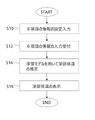
次に、本実施形態の深部体温推定装置1の処理の流れについて、図2に示すフローチャートを参照しながら説明する。 Next, the processing flow of the core body temperature estimation device 1 of this embodiment will be described with reference to the flowchart shown in FIG.
まず、ユーザが、入力装置2を用いて、被測定者の運動負荷に関する情報、皮膚表面温度に関する情報および心拍数に関する情報の時系列データ、並びに年齢に関する情報、体重と身長に関する情報および測定環境条件に関する情報を設定入力する(S10)。
First, using the
ユーザによって設定入力された上記6項目の情報は、深部体温推定装置1の入力受付部10によって受け付けられる(S12)。
The above six items of information set and input by the user are received by the
入力受付部10によって受け付けられた6項目の情報は、推定部11に入力される。推定部11は、入力受付部10によって受け付けられた6項目の情報を、上述した学習モデルに入力することによって、被測定者の深部体温を推定する(S14)。
The six items of information received by the
推定部11によって推定された被測定者の深部体温は出力部12に出力され、出力部12は、入力された被測定者の深部体温を表示装置3に表示させる(S16)。
The core body temperature of the subject estimated by the
なお、上記実施形態の深部体温推定装置1においては、学習モデルの入力情報として、上述した6項目の情報を用いるようにしたが、さらに、学習モデルの入力情報として、被験者の性別に関する情報を含めて機械学習を行った学習モデルを用いるようにしてもよい。そして、推定部11が、その学習モデルに対して、被測定者の上述した6項目の情報および性別に関する情報を入力することによって、被測定者の深部体温を推定するようにしてもよい。
In the deep body temperature estimating apparatus 1 of the above-described embodiment, the above-described six items of information are used as the input information for the learning model. It is also possible to use a learning model that has undergone machine learning. Then, the estimating
性別に関する情報としては、たとえば性別が男性である場合には「1」を、女性である場合には「2」を学習モデルに入力するようにすればよい。深部体温は、被測定者が同じ環境下にいたとしても性別によって異なる可能性が考えられるので、深部体温を推定する際、性別に関する情報を含めることによって、深部体温の推定精度をより向上させることができる。 As information on gender, for example, if the gender is male, "1" and if the gender is female, "2" may be input to the learning model. Core body temperature may differ depending on gender even if the person being measured is in the same environment. Therefore, when estimating core body temperature, including information on gender will further improve the estimation accuracy of core body temperature. can be done.
次に、本発明の深部体温推定装置の第2の実施形態を備えたウェアラブル端末5について説明する。
Next, the
ウェアラブル端末5は、深部体温を推定するための基本的な構成は、上述した第1の実施形態の深部体温推定装置1と同様であるが、被測定者の運動負荷に関する情報、皮膚表面温度に関する情報および心拍数に関する情報の時系列データの取得方法が異なる。
The basic configuration of the
ウェアラブル端末5の形態としては、リストバンド型(腕時計型)でもよいし、メガネ型でもよいし、クリップ型でもよいが、上述した3つの情報を高精度に検出するためには、リストバンド型であることが好ましい。
The form of the
図3は、本実施形態のウェアラブル端末5の概略構成を示すブロック図である。本実施形態のウェアラブル端末5は、図3に示すように、本体部50、運動負荷情報検出部55、皮膚表面温度検出部56、心拍情報検出部57および環境温度計測部58を備えている。
FIG. 3 is a block diagram showing a schematic configuration of the
本体部50は、入力受付部51、推定部52、出力部53および表示部54を備えている。本体部50の入力受付部51、推定部52および出力部53は、基本的な機能は、上述した第1の実施形態の深部体温推定装置1の入力受付部10、推定部11および出力部12と同様の構成である。
The
表示部54は、たとえば液晶ディスプレイを備え、出力部12から出力された深部体温を表示する。また、表示部54をタッチパネルから構成し、深部体温を表示部54に表示させるとともに、表示部54において種々の情報の設定入力を受け付けるようにしてもよい。
運動負荷情報検出部55は、被測定者の運動負荷に関する情報を検出する。運動負荷情報検出部55としては、たとえば歩数計を用いることができる。たとえば歩数計によって計測された歩数を入力受付部51が受け付け、推定部52が、入力された歩数に基づいて、運動負荷に関する情報として、上述した1分間の平均歩数の時系列データを演算し、これを学習モデルに入力するようにすればよい。
The exercise load
皮膚表面温度検出部56は、被測定者の皮膚表面温度に関する情報を検出する。皮膚表面温度検出部56としては、たとえば温度センサを用いることができる。たとえばウェアラブル端末5をリストバンド型とした場合には、温度センサによって手背部に近い部分の皮膚表面温度を計測することができるので、深部体温の推定精度を向上させることができる。
The skin
心拍情報検出部57は、被測定者の心拍数に関する情報を検出する。心拍情報検出部57としては、たとえば反射型脈波センサを用いることができる。そして、反射型脈波センサによって計測された心拍数を入力受付部51が受け付ける。
The
環境温度計測部58は、被測定者の測定環境温度を計測する。環境温度計測部58としては、たとえば温度センサを用いることができる。環境温度計測部58によって測定環境温度をリアルタイムに計測することによって、測定環境温度の時系列データの入力を受け付けることができ、深部体温の推定精度を向上させることができる。
The environmental
ウェアラブル端末5において、年齢に関する情報および体重と身長に関する情報については、たとえば表示部54がタッチパネルから構成される場合には、そのタッチパネル上において設定入力すればよい。
In the
または、本体部50が有する通信I/Fによって通信ネットワークを介して他の通信端末装置に接続し、その通信端末装置において年齢に関する情報および体重と身長に関する情報を設定入力可能としてもよい。
Alternatively, the communication I/F of the
他の通信端末装置としては、スマートフォンやタブレット端末などがある。たとえばスマートフォンやタブレット端末において専用アプリケーションをインストールし、その専用アプリケーション上において年齢に関する情報並びに体重および身長に関する情報の設定入力を受け付けるようにしてもよい。また、専用アプリケーション上において、出力部53から出力された深部体温を表示するようにしてもよい。
Other communication terminal devices include smartphones and tablet terminals. For example, a dedicated application may be installed on a smartphone or tablet terminal, and setting inputs of information regarding age and information regarding weight and height may be accepted on the dedicated application. Further, the core body temperature output from the
また、ウェアラブル端末5においても、上記実施形態の深部体温推定装置1と同様に、学習モデルに対して、被験者および被測定者の性別に関する情報を入力するようにしてもよい。また、被験者の性別に関する情報については、表示部54または上述した専用アプリケーションにおいて設定入力すればよい。また、被験者および被測定者の測定環境条件についても、表示部54または上述した専用アプリケーションにおいて設定入力してもよい
Also, in the
ウェアラブル端末5のその他の作用については、上記実施形態の深部体温推定装置1と同様である。
Other actions of the
以下、本発明の深部体温推定装置のより具体的な実施例について説明する。まず、深部体温の推定に用いる学習モデルの生成方法の一実施例について説明する。 A more specific embodiment of the core body temperature estimating device of the present invention will be described below. First, an example of a method of generating a learning model used for estimating core body temperature will be described.
本実施例では、12人の被験者(被験者番号1~12,平均年齢24.6±5.8歳)について、人工気候室において運動負荷を行わせて運動負荷に関する情報、皮膚表面温度に関する情報および心拍数に関する情報の時系列データを取得した。人工気候室の測定環境条件は、測定環境条件1として、低リスクで注意レベルの室温25℃、湿度50%およびWBGT22℃とし、測定環境条件2として、高リスクで厳重警戒レベルの室温35℃、湿度50%、WBGT30℃とした。測定環境条件1および測定環境条件2の両条件で、トレッドミル80wによる運動負荷を行わせた。
In this example, 12 subjects (subject numbers 1 to 12, average age 24.6 ± 5.8 years old) were subjected to exercise load in an artificial climate room, information on exercise load, information on skin surface temperature and Time-series data of information on heart rate were acquired. The measurement environment conditions of the artificial climate chamber are as follows: Low-risk caution level room temperature 25°C,
そして、被験者の歩数、手背部の皮膚表面温度、心拍数および直腸温(以下、この4項目を生体情報という)を測定した、測定の流れを図4に示す。図4に示すように、10分間安静にして準備期間を置いた後、無負荷の状態における生体情報を6分間収集した。次に、トレッドミルで80wの運動負荷を18分間行って「運動負荷1」とした。運動負荷1の後、12分間の休憩を置き、さらに18分間の運動負荷を行って「運動負荷2」とした。その後、12分間の休憩を置き、後処理として10分間、無負荷の状態で生体情報を測定して終了した。生体情報の測定は、準備期間の後から開始し、運動負荷2の後の休憩の終了まで行い、測定の合計時間は66分間であった。生体情報の測定は、10秒毎に行った。
FIG. 4 shows the measurement flow of measuring the subject's number of steps, surface temperature of the skin on the back of the hand, heart rate, and rectal temperature (these four items are hereinafter referred to as biological information). As shown in FIG. 4, after resting for 10 minutes and setting a preparatory period, biological information was collected in a no-load state for 6 minutes. Next, an exercise load of 80 w was performed on a treadmill for 18 minutes, which was defined as "exercise load 1". After exercise load 1, a rest period of 12 minutes was provided, and then exercise load was further performed for 18 minutes to obtain "
直腸温および手背部の皮膚表面温度は、熱電対センサを用いて測定した。心拍数は日本光電BSM-2401を用いて測定した。人工気候室内の測定環境条件については、VAISALA社温度計を用いて環境温度(室温)を測定した。また、被験者の歩数については、富士通製のバイタルセンシングバンドを用いて測定し、10秒毎に出力される1分間の平均歩数を取得した。 Rectal temperature and dorsal skin surface temperature were measured using a thermocouple sensor. Heart rate was measured using Nihon Kohden BSM-2401. Regarding the measurement environmental conditions in the artificial climate room, the environmental temperature (room temperature) was measured using a VAISALA thermometer. In addition, the number of steps taken by the subject was measured using a Fujitsu vital sensing band, and the average number of steps for one minute output every 10 seconds was obtained.
これらの測定値はキーエンス社データロガーのリアルタイムデータ収録装置NR-500で記録した。 These measured values were recorded with a real-time data recording device NR-500 of Keyence data logger.
また、上述した準備期間において、被験者の身長および精密体重を測定し、その測定値からBMIを求めた。 In addition, during the preparation period described above, the subject's height and precise weight were measured, and the BMI was obtained from the measured values.
なお、本実施例では、上述したように12人の被験者について2つの測定環境条件下で生体情報を測定したので、12人×2の24個の時系列データセットが得られたが、そのうち1名(被験者番号2)は直腸温が測定されておらず、また1名(被験者番号8)は、環境温度(室温)25℃での測定のみで、環境温度(室温)35℃では直腸温の測定が途中から不可能となったので、最終的に、11人の被験者(平均年齢24.6±6.0歳)について、21個の時系列データセットを得た。この時系列データセットに対して、データセット番号1~21を付する。 In this example, as described above, biological information was measured for 12 subjects under two measurement environment conditions, so 24 time-series data sets of 12 people × 2 were obtained. One person (Subject No. 2) had no rectal temperature measured, and one person (Subject No. 8) only measured at an environmental temperature (room temperature) of 25°C, and at an environmental temperature (room temperature) of 35°C, rectal temperature As the measurement became impossible halfway through, finally, 21 time-series data sets were obtained for 11 subjects (mean age 24.6±6.0 years). Data set numbers 1 to 21 are assigned to these time-series data sets.
そして、被験者の歩数、手背部の皮膚表面温度および心拍数について10秒毎に測定された時系列データと、被験者の年齢およびBMIと、環境温度(室温)との6項目を独立変数とし、直腸温の実側値を教師データとしてAIを用いてディープラーニングを行って学習モデルを構築し、その学習モデルを用いて深部体温の予測を行った。 Then, the number of steps of the subject, the time-series data measured every 10 seconds for the skin surface temperature of the back of the hand, and the heart rate, the age and BMI of the subject, and the environmental temperature (room temperature) were used as independent variables. A learning model was constructed by performing deep learning using AI using the actual value of temperature as teacher data, and prediction of core body temperature was performed using the learning model.
ディープラーニングの学習モデルは、LSTM(Long Short Term Memory)を用いた。 The learning model of deep learning used LSTM (Long Short Term Memory).
AIのプラットフォームはAnaconda(登録商標)ver.4.4.0を使用し、プログラムはPython(登録商標)ver.3.7で作成し、AIライブラリとしてTensorflow(登録商標)ver.2.1、Keras(登録商標)等を実装した。 The AI platform is Anaconda (registered trademark) ver. 4.4.0, and the program is Python (registered trademark) ver. 3.7, and Tensorflow (registered trademark) ver. 2.1, Keras (registered trademark), etc. were implemented.
LSTMの設定は、伝達関数は全結線型ニューラルネットワーク1層とし、活性化関数はlinear(正規化線形関数、正規化の範囲は-1~+1)、最適化関数はAdam(Adaptive Moment Estimation、確率的勾配降下法)、誤差関数は最小二乗法を用い、レイヤー(階層)は、中間層256層(隠れ層36層を含む)+出力層(全結線型ニューラルネットワーク)1層=257層とし、ノード数は32個、epock数(繰り返し学習する回数)は50回に設定し、バッチサイズは32に設定して機械学習を行った。 The LSTM settings are such that the transfer function is a fully connected neural network with one layer, the activation function is linear (normalized linear function, normalization range is -1 to +1), and the optimization function is Adam (Adaptive Moment Estimation, probability Gradient descent method), the error function uses the least squares method, and the layers (layers) are 256 intermediate layers (including 36 hidden layers) + 1 output layer (fully connected neural network) = 257 layers, Machine learning was performed with the number of nodes set to 32, the number of epocks (the number of repetitions of learning) set to 50, and the batch size set to 32.
そして、本実施例では、10秒毎に生体情報を測定しているので、LSTMの隠れ層を36層に設定したことで、約6分間前から現時点までの時系列データセットを使用して、10秒後の直腸温(深部体温)を予測した。すなわち、10秒前までの時系列データセットを用いて現在の直腸温(深部体温)の予測値を取得した。LSTMは、現在のデータセットに近いほど予測値に対する影響を大きく(weightを重く)し、遠いほど予測値に対する影響を小さく(weightを軽く)して参照する。なお、本実施例では、6分前~10秒前のデータセットを用いて現在の予測値を得るようにしたので、隠れ層を36層に設定したが、これに限らず、データセットの測定間隔や何分前までのデータセットを用いるかによって隠れ層の層数を任意に変更してもよい。 In this embodiment, since the biological information is measured every 10 seconds, by setting the hidden layer of the LSTM to 36 layers, using the time-series data set from about 6 minutes ago to the present time, The rectal temperature (core body temperature) after 10 seconds was predicted. That is, the predicted value of the current rectal temperature (core body temperature) was obtained using the time-series data set up to 10 seconds ago. The LSTM is referred to by increasing the influence (heavy weight) on the predicted value as it is closer to the current data set and decreasing (lighter weight) the influence on the predicted value as it is further away. In this embodiment, the data set from 6 minutes to 10 seconds ago was used to obtain the current prediction value, so the hidden layer was set to 36 layers. The number of hidden layers may be arbitrarily changed depending on the interval and how many minutes before the data set is used.
そして、予測値と実測値を比較することによって予測精度を評価した。予測精度の評価は、k-fold crossvalidation法で行った。この方法は、k個のサンプルデータからテストデータを1つ抽出し、残りの(k-1)個のデータセットから学習結果(学習モデル)を得て、この操作を順番に行うことによって、(k-1)個の学習モデルの予測精度の平均から学習モデルの性能を評価する方法である。 Then, the prediction accuracy was evaluated by comparing the predicted value and the measured value. The prediction accuracy was evaluated by the k-fold cross validation method. This method extracts one test data from k sample data, obtains a learning result (learning model) from the remaining (k-1) data sets, and performs this operation in order, resulting in ( This is a method of evaluating the performance of a learning model from the average prediction accuracy of k−1) learning models.
本実施例では、上述したように、11人の被験者から21個の時系列データセットを得ているため、1つの時系列データセットをテストデータとして除外し、残りの20個の時系列データセットで機械学習して学習モデルを構築し、その構築した学習モデルを用いて、上記テストデータの検証を行った。そして、この操作を順番に20回繰り返して20個の学習モデルをそれぞれ構築し、各学習モデルを用いてテストデータの検証を行って各学習モデルを評価した。 In this embodiment, as described above, 21 time-series data sets are obtained from 11 subjects, so one time-series data set is excluded as test data, and the remaining 20 time-series data sets A learning model was constructed by machine learning, and the above test data was verified using the constructed learning model. Then, this operation was sequentially repeated 20 times to construct 20 learning models, and each learning model was evaluated by verifying test data using each learning model.
図5は、被験者番号1の環境温度25℃の時系列データセット(テストデータ)を学習モデルに入力することによって得られた直腸温の予測値と直腸温の実測値の時間経過を示す図である。図5では、予測値を破線で示し、実測値を実線で示している。 FIG. 5 is a diagram showing the time course of the predicted rectal temperature and the measured rectal temperature obtained by inputting the time-series data set (test data) of subject number 1 at an environmental temperature of 25° C. into the learning model. be. In FIG. 5, the predicted values are indicated by dashed lines, and the measured values are indicated by solid lines.
図5に示す例では、上述したようにデータセット番号1の時系列データセットを除いた残りの全ての時系列データセットで直腸温の予測を学習させ、その結果得られた学習モデルを使って、データセット番号1について直腸温を予測している。予測値と実測値を比較すると、誤差を±0.1℃以内で許容した場合は、一致率が74%であり、この誤差を±0.2℃以内まで許容した場合は、一致率は95%であった。 In the example shown in FIG. 5, all remaining time-series data sets except for the time-series data set of data set number 1 are trained to predict rectal temperature as described above, and the resulting learning model is used to , predicting rectal temperature for data set number 1. When the predicted value and the actual value are compared, the matching rate is 74% when the error is allowed within ±0.1°C, and the matching rate is 95% when the error is allowed within ±0.2°C. %Met.
また、図6は、データセット番号2から21までの20個の時系列データセットについて、それぞれデータセット番号1と同じ操作を行った場合の予測値と実測値をまとめた図である。また、下表1は、データセット番号1~21の予測値と実測値との一致率を示す表である。図6および下表1に示すように、実測値と予測値の一致率は高く、特に、データセット番号18の一致率が最もよく、直腸温の予測は±0。2℃以内の誤差でほぼ100%一致した。また、一致率が最も低いデータセット番号14の場合においても、図5および図6の結果から判断すると、直腸温の上昇を事前に察知して熱中症を予防するという目的には、十分に使用できる結果であった。

なお、上記実施例は、被験者の歩数、手背部の皮膚表面温度および心拍数の時系列データと、被験者の年齢およびBMIと、環境温度(室温)との6項目を用いて学習モデルを構築し、被測定者の上記6項目を学習モデルに入力して直腸温(深部体温)を推定するようにしたが、歩数、手背部の皮膚表面温度および心拍数の時系列データと、環境温度(室温)との4項目を用いて、上記実施例と同様にして学習モデルを構築し、直腸温を推定した場合の予測値と実測値の一致率を下表2に示す。下表2に示すとおり、上記4項目の場合でも、上記6項目の場合と同等の精度を得ることができた。

なお、上記実施例は、本発明の深部体温推定装置の一実施例であり、本発明の深部体温推定装置は、上記実施例に限定されるものではない。 The above embodiment is an embodiment of the core body temperature estimating device of the present invention, and the core body temperature estimating device of the present invention is not limited to the above embodiment.
1 深部体温推定装置
2 入力装置
3 表示装置
5 ウェアラブル端末
10 入力受付部
11 推定部
12 出力部
50 本体部
51 入力受付部
52 推定部
53 出力部
54 表示部
55 運動負荷情報検出部
56 皮膚表面温度検出部
57 心拍情報検出部
58 環境温度計測部
1 deep body
Claims (12)
所定の被験者の運動負荷に関する情報、皮膚表面温度に関する情報および心拍数に関する情報の時系列データを入力情報とし、所定の被験者の直腸温の時系列の実測値を出力情報として機械学習して構築された学習モデルに対して、前記入力受付部によって受け付けられた被測定者の運動負荷に関する情報、皮膚表面温度に関する情報および心拍数に関する情報の時系列データを入力することによって被測定者の深部体温を推定する推定部と、
前記推定部によって推定された被測定者の深部体温を出力する出力部とを備えた深部体温推定装置。 an input reception unit that receives input of time-series data of information on exercise load, information on skin surface temperature, and information on heart rate of a subject whose core body temperature is to be measured;
It is constructed by machine learning using time-series data of information on exercise load, information on skin surface temperature, and information on heart rate of a given subject as input information, and time-series actual measured values of rectal temperature of a given subject as output information. The deep body temperature of the subject is calculated by inputting time-series data of the information regarding the subject's exercise load, the information regarding the skin surface temperature, and the information regarding the heart rate received by the input receiving unit into the learning model. an estimating unit for estimating;
and an output unit for outputting the core body temperature of the person to be measured estimated by the estimation unit.
前記入力受付部が、前記被測定者の年齢に関する情報をさらに受け付け、
前記推定部が、前記学習モデルに対して、前記被測定者の年齢に関する情報をさらに入力することによって、前記被測定者の深部体温を推定する請求項1記載の深部体温推定装置。 the input information further includes information about the age of the subject;
The input reception unit further receives information regarding the age of the person to be measured,
2. The core body temperature estimating device according to claim 1, wherein the estimation unit estimates the core body temperature of the person to be measured by further inputting information about the age of the person to be measured to the learning model.
前記入力受付部が、前記被測定者の身長および体重に関する情報をさらに受け付け、
前記推定部が、前記学習モデルに対して、前記被測定者の身長および体重に関する情報をさらに入力することによって、前記被測定者の深部体温を推定する請求項1または2記載の深部体温推定装置。 the input information further includes information about height and weight of the subject;
the input reception unit further receives information about the height and weight of the person to be measured;
3. The deep body temperature estimating device according to claim 1, wherein the estimation unit estimates the deep body temperature of the person to be measured by further inputting information about the height and weight of the person to be measured to the learning model. .
前記入力受付部が、前記被測定者の測定環境条件に関する情報をさらに受け付け、
前記推定部が、前記学習モデルに対して、前記被測定者の測定環境条件に関する情報をさらに入力することによって、前記被測定者の深部体温を推定する請求項1から3いずれか1項記載の深部体温推定装置。 the input information further includes information about the subject's measurement environment conditions;
the input reception unit further receives information about the measurement environment conditions of the person to be measured;
4. The estimating unit according to any one of claims 1 to 3, wherein the estimating unit estimates the core body temperature of the person to be measured by further inputting information about the measurement environment conditions of the person to be measured to the learning model. Core body temperature estimator.
前記入力受付部が、前記被測定者の性別に関する情報をさらに受け付け、
前記推定部が、前記学習モデルに対して、前記被測定者の性別に関する情報をさらに入力することによって、前記被測定者の深部体温を推定する請求項1から4いずれか1項記載の深部体温推定装置。 the input information further includes information about the sex of the subject;
the input reception unit further receives information about the sex of the person to be measured;
The core body temperature according to any one of claims 1 to 4, wherein the estimating unit estimates the core body temperature of the subject by further inputting information about the sex of the subject to the learning model. estimation device.
所定の被験者の運動負荷に関する情報、皮膚表面温度に関する情報および心拍数に関する情報の時系列データを入力情報とし、所定の被験者の直腸温の時系列の実測値を出力情報として機械学習して構築された学習モデルに対して、前記受け付けた被測定者の運動負荷に関する情報、皮膚表面温度に関する情報および心拍数に関する情報の時系列データを入力することによって被測定者の深部体温を推定し、
該推定した被測定者の深部体温を出力する深部体温推定方法。 Receiving input of time-series data of information on exercise load, information on skin surface temperature, and information on heart rate of the subject whose core body temperature is to be measured,
It is constructed by machine learning using time-series data of information on exercise load, information on skin surface temperature, and information on heart rate of a given subject as input information, and time-series actual measured values of rectal temperature of a given subject as output information. estimating the body temperature of the person to be measured by inputting time-series data of the received information on the exercise load of the person to be measured, information on the skin surface temperature, and information on the heart rate to the learning model,
A core body temperature estimation method for outputting the estimated core body temperature of a subject.
所定の被験者の運動負荷に関する情報、皮膚表面温度に関する情報および心拍数に関する情報の時系列データを入力情報とし、所定の被験者の直腸温の時系列の実測値を出力情報として機械学習して構築された学習モデルに対して、前記受け付けた被測定者の運動負荷に関する情報、皮膚表面温度に関する情報および心拍数に関する情報の時系列データを入力することによって被測定者の深部体温を推定するステップと、
該推定した被測定者の深部体温を出力するステップとをコンピュータに実行させる深部体温推定プログラム。 a step of accepting input of time-series data of information on exercise load, information on skin surface temperature, and information on heart rate of a subject whose core body temperature is to be measured;
It is constructed by machine learning using time-series data of information on exercise load, information on skin surface temperature, and information on heart rate of a given subject as input information, and time-series actual measured values of rectal temperature of a given subject as output information. estimating the deep body temperature of the subject by inputting the received time-series data of the information on the exercise load of the subject, the information on the skin surface temperature, and the information on the heart rate to the learning model;
A core body temperature estimation program causing a computer to execute the step of outputting the estimated core body temperature of the subject.
Priority Applications (1)
| Application Number | Priority Date | Filing Date | Title |
|---|---|---|---|
| JP2021092082A JP7781406B2 (en) | 2021-06-01 | 2021-06-01 | Deep body temperature prediction device, method, and program |
Applications Claiming Priority (1)
| Application Number | Priority Date | Filing Date | Title |
|---|---|---|---|
| JP2021092082A JP7781406B2 (en) | 2021-06-01 | 2021-06-01 | Deep body temperature prediction device, method, and program |
Publications (2)
| Publication Number | Publication Date |
|---|---|
| JP2022184311A true JP2022184311A (en) | 2022-12-13 |
| JP7781406B2 JP7781406B2 (en) | 2025-12-08 |
Family
ID=84437554
Family Applications (1)
| Application Number | Title | Priority Date | Filing Date |
|---|---|---|---|
| JP2021092082A Active JP7781406B2 (en) | 2021-06-01 | 2021-06-01 | Deep body temperature prediction device, method, and program |
Country Status (1)
| Country | Link |
|---|---|
| JP (1) | JP7781406B2 (en) |
Cited By (3)
| Publication number | Priority date | Publication date | Assignee | Title |
|---|---|---|---|---|
| CN116831521A (en) * | 2023-03-31 | 2023-10-03 | 海信集团控股股份有限公司 | A method and device for predicting body temperature |
| CN119908676A (en) * | 2023-10-31 | 2025-05-02 | 华为技术有限公司 | A body temperature measurement method, wearable device and storage medium |
| KR102945654B1 (en) * | 2025-08-13 | 2026-03-30 | 주식회사 메쥬 | Method for predicting body temperature |
Citations (9)
| Publication number | Priority date | Publication date | Assignee | Title |
|---|---|---|---|---|
| JPH053920A (en) * | 1991-06-25 | 1993-01-14 | Matsushita Electric Works Ltd | Biorhythm adjusting device |
| JPH053876A (en) * | 1991-06-25 | 1993-01-14 | Matsushita Electric Works Ltd | Living body rhythm curve measuring instrument |
| JP2007516018A (en) * | 2003-05-27 | 2007-06-21 | カーディオウエーブ インコーポレーテッド | Apparatus and method for technology for remotely and non-invasively detecting the core body temperature of a subject by infrared image |
| JP2007530154A (en) * | 2004-03-22 | 2007-11-01 | ボディーメディア インコーポレイテッド | Non-invasive temperature monitoring device |
| WO2020166239A1 (en) * | 2019-02-13 | 2020-08-20 | 国立大学法人京都大学 | Sleep apnea syndrome determination apparatus, sleep apnea syndrome determination method, and sleep apnea syndrome determination program |
| US20200288983A1 (en) * | 2019-02-26 | 2020-09-17 | Masimo Corporation | Respiratory core body temperature measurement systems and methods |
| JP2020162952A (en) * | 2019-03-29 | 2020-10-08 | 学校法人産業医科大学 | Core body temperature estimation device and method and program |
| JP2020536623A (en) * | 2017-10-06 | 2020-12-17 | アライヴコア・インコーポレーテッド | Continuous monitoring of user health using mobile devices |
| JP2021065466A (en) * | 2019-10-24 | 2021-04-30 | セイコーインスツル株式会社 | Eardrum temperature estimation system, wearable device, heat stroke risk estimation system, eardrum temperature estimation method, and program |
-
2021
- 2021-06-01 JP JP2021092082A patent/JP7781406B2/en active Active
Patent Citations (9)
| Publication number | Priority date | Publication date | Assignee | Title |
|---|---|---|---|---|
| JPH053920A (en) * | 1991-06-25 | 1993-01-14 | Matsushita Electric Works Ltd | Biorhythm adjusting device |
| JPH053876A (en) * | 1991-06-25 | 1993-01-14 | Matsushita Electric Works Ltd | Living body rhythm curve measuring instrument |
| JP2007516018A (en) * | 2003-05-27 | 2007-06-21 | カーディオウエーブ インコーポレーテッド | Apparatus and method for technology for remotely and non-invasively detecting the core body temperature of a subject by infrared image |
| JP2007530154A (en) * | 2004-03-22 | 2007-11-01 | ボディーメディア インコーポレイテッド | Non-invasive temperature monitoring device |
| JP2020536623A (en) * | 2017-10-06 | 2020-12-17 | アライヴコア・インコーポレーテッド | Continuous monitoring of user health using mobile devices |
| WO2020166239A1 (en) * | 2019-02-13 | 2020-08-20 | 国立大学法人京都大学 | Sleep apnea syndrome determination apparatus, sleep apnea syndrome determination method, and sleep apnea syndrome determination program |
| US20200288983A1 (en) * | 2019-02-26 | 2020-09-17 | Masimo Corporation | Respiratory core body temperature measurement systems and methods |
| JP2020162952A (en) * | 2019-03-29 | 2020-10-08 | 学校法人産業医科大学 | Core body temperature estimation device and method and program |
| JP2021065466A (en) * | 2019-10-24 | 2021-04-30 | セイコーインスツル株式会社 | Eardrum temperature estimation system, wearable device, heat stroke risk estimation system, eardrum temperature estimation method, and program |
Non-Patent Citations (1)
| Title |
|---|
| 八谷百合子 他: "AI技術を用いた深部体温推定の試み", CAMPUS HEALTH, vol. 57, JPN6025011402, March 2020 (2020-03-01), pages 169 - 171, ISSN: 0005692368 * |
Cited By (4)
| Publication number | Priority date | Publication date | Assignee | Title |
|---|---|---|---|---|
| CN116831521A (en) * | 2023-03-31 | 2023-10-03 | 海信集团控股股份有限公司 | A method and device for predicting body temperature |
| CN119908676A (en) * | 2023-10-31 | 2025-05-02 | 华为技术有限公司 | A body temperature measurement method, wearable device and storage medium |
| WO2025092307A1 (en) * | 2023-10-31 | 2025-05-08 | 华为技术有限公司 | Body temperature measurement method, wearable device, and storage medium |
| KR102945654B1 (en) * | 2025-08-13 | 2026-03-30 | 주식회사 메쥬 | Method for predicting body temperature |
Also Published As
| Publication number | Publication date |
|---|---|
| JP7781406B2 (en) | 2025-12-08 |
Similar Documents
| Publication | Publication Date | Title |
|---|---|---|
| JP7175473B2 (en) | Deep body temperature estimation device, method and program | |
| US10561321B2 (en) | Continuous monitoring of a user's health with a mobile device | |
| US11877830B2 (en) | Machine learning health analysis with a mobile device | |
| US12453482B2 (en) | Continuous monitoring of a user's health with a mobile device | |
| CN106343976B (en) | The method and apparatus established the method and apparatus of blood pressure model and determine blood pressure | |
| RU2602676C2 (en) | Fever detection apparatus | |
| JP2022184311A (en) | Core body temperature estimation device and method, and program | |
| US20250288256A1 (en) | Apparatus for Measuring Degree of Frailty on Basis of Athletic Ability Parameters | |
| JP2020536623A (en) | Continuous monitoring of user health using mobile devices | |
| BR112016021493B1 (en) | METHOD OF PROCESSING HEART RATE DATA, COMPUTER PROGRAM PRODUCT, AND SYSTEM FOR PROCESSING HEART RATE DATA | |
| EP3238611B1 (en) | A method and device for estimating a condition of a person | |
| Zhang et al. | A context-aware mhealth system for online physiological monitoring in remote healthcare | |
| CN108024720A (en) | Determining Metabolic Parameters Using Wearable Devices | |
| Gaura et al. | Leveraging knowledge from physiological data: On-body heat stress risk prediction with sensor networks | |
| JP2017121286A (en) | Emotion estimation system, emotion estimation method, and emotion estimation program | |
| Skibinska et al. | COVID-19 diagnosis at early stage based on smartwatches and machine learning techniques | |
| US20240099593A1 (en) | Machine learning health analysis with a mobile device | |
| CN118592907A (en) | Method and system for user health monitoring based on smart ring | |
| Morresi et al. | Metrological characterization and signal processing of a wearable sensor for the measurement of heart rate variability | |
| CN114271804A (en) | Heart rate state auxiliary detection system based on consumption-level equipment, heart rate state monitoring system, heart rate state monitoring method, storage medium and terminal | |
| JP2020523162A5 (en) | ||
| KR102881699B1 (en) | A method for diagnosing sarcopenia using motion characteristics of the chair-rise test, a method for learning a sarcopenia diagnosis model, and a system thereof | |
| EP4012722A1 (en) | Sleep quality analysis | |
| Mohammadzadeh et al. | Prediction of physiological response over varying forecast lengths with a wearable health monitoring platform | |
| CN108742538B (en) | Physical sign measuring method based on big data and artificial intelligence and medical robot system |
Legal Events
| Date | Code | Title | Description |
|---|---|---|---|
| A711 | Notification of change in applicant |
Free format text: JAPANESE INTERMEDIATE CODE: A711 Effective date: 20240517 |
|
| A621 | Written request for application examination |
Free format text: JAPANESE INTERMEDIATE CODE: A621 Effective date: 20240529 |
|
| A521 | Request for written amendment filed |
Free format text: JAPANESE INTERMEDIATE CODE: A821 Effective date: 20240517 |
|
| A977 | Report on retrieval |
Free format text: JAPANESE INTERMEDIATE CODE: A971007 Effective date: 20250228 |
|
| A131 | Notification of reasons for refusal |
Free format text: JAPANESE INTERMEDIATE CODE: A131 Effective date: 20250325 |
|
| A601 | Written request for extension of time |
Free format text: JAPANESE INTERMEDIATE CODE: A601 Effective date: 20250521 |
|
| A521 | Request for written amendment filed |
Free format text: JAPANESE INTERMEDIATE CODE: A523 Effective date: 20250723 |
|
| A131 | Notification of reasons for refusal |
Free format text: JAPANESE INTERMEDIATE CODE: A131 Effective date: 20250924 |
|
| A521 | Request for written amendment filed |
Free format text: JAPANESE INTERMEDIATE CODE: A523 Effective date: 20251027 |
|
| TRDD | Decision of grant or rejection written | ||
| A01 | Written decision to grant a patent or to grant a registration (utility model) |
Free format text: JAPANESE INTERMEDIATE CODE: A01 Effective date: 20251104 |
|
| A61 | First payment of annual fees (during grant procedure) |
Free format text: JAPANESE INTERMEDIATE CODE: A61 Effective date: 20251118 |
|
| R150 | Certificate of patent or registration of utility model |
Ref document number: 7781406 Country of ref document: JP Free format text: JAPANESE INTERMEDIATE CODE: R150 |