JP2022169959A - User device, base station, and cell re-selection method - Google Patents
User device, base station, and cell re-selection method Download PDFInfo
- Publication number
- JP2022169959A JP2022169959A JP2021075722A JP2021075722A JP2022169959A JP 2022169959 A JP2022169959 A JP 2022169959A JP 2021075722 A JP2021075722 A JP 2021075722A JP 2021075722 A JP2021075722 A JP 2021075722A JP 2022169959 A JP2022169959 A JP 2022169959A
- Authority
- JP
- Japan
- Prior art keywords
- cell
- user equipment
- system information
- cell list
- neighboring
- Prior art date
- Legal status (The legal status is an assumption and is not a legal conclusion. Google has not performed a legal analysis and makes no representation as to the accuracy of the status listed.)
- Pending
Links
Images
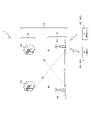


Classifications
-
- H—ELECTRICITY
- H04—ELECTRIC COMMUNICATION TECHNIQUE
- H04W—WIRELESS COMMUNICATION NETWORKS
- H04W48/00—Access restriction; Network selection; Access point selection
- H04W48/20—Selecting an access point
-
- H—ELECTRICITY
- H04—ELECTRIC COMMUNICATION TECHNIQUE
- H04W—WIRELESS COMMUNICATION NETWORKS
- H04W36/00—Hand-off or reselection arrangements
- H04W36/0005—Control or signalling for completing the hand-off
- H04W36/0055—Transmission or use of information for re-establishing the radio link
- H04W36/0072—Transmission or use of information for re-establishing the radio link of resource information of target access point
-
- H—ELECTRICITY
- H04—ELECTRIC COMMUNICATION TECHNIQUE
- H04W—WIRELESS COMMUNICATION NETWORKS
- H04W36/00—Hand-off or reselection arrangements
- H04W36/0005—Control or signalling for completing the hand-off
- H04W36/0055—Transmission or use of information for re-establishing the radio link
- H04W36/0061—Transmission or use of information for re-establishing the radio link of neighbour cell information
-
- H—ELECTRICITY
- H04—ELECTRIC COMMUNICATION TECHNIQUE
- H04W—WIRELESS COMMUNICATION NETWORKS
- H04W36/00—Hand-off or reselection arrangements
- H04W36/0005—Control or signalling for completing the hand-off
- H04W36/0083—Determination of parameters used for hand-off, e.g. generation or modification of neighbour cell lists
- H04W36/00835—Determination of neighbour cell lists
- H04W36/008355—Determination of target cell based on user equipment [UE] properties, e.g. UE service capabilities
-
- H—ELECTRICITY
- H04—ELECTRIC COMMUNICATION TECHNIQUE
- H04W—WIRELESS COMMUNICATION NETWORKS
- H04W36/00—Hand-off or reselection arrangements
- H04W36/24—Reselection being triggered by specific parameters
- H04W36/30—Reselection being triggered by specific parameters by measured or perceived connection quality data
-
- H—ELECTRICITY
- H04—ELECTRIC COMMUNICATION TECHNIQUE
- H04W—WIRELESS COMMUNICATION NETWORKS
- H04W48/00—Access restriction; Network selection; Access point selection
- H04W48/08—Access restriction or access information delivery, e.g. discovery data delivery
- H04W48/12—Access restriction or access information delivery, e.g. discovery data delivery using downlink control channel
-
- H—ELECTRICITY
- H04—ELECTRIC COMMUNICATION TECHNIQUE
- H04W—WIRELESS COMMUNICATION NETWORKS
- H04W8/00—Network data management
- H04W8/22—Processing or transfer of terminal data, e.g. status or physical capabilities
-
- Y—GENERAL TAGGING OF NEW TECHNOLOGICAL DEVELOPMENTS; GENERAL TAGGING OF CROSS-SECTIONAL TECHNOLOGIES SPANNING OVER SEVERAL SECTIONS OF THE IPC; TECHNICAL SUBJECTS COVERED BY FORMER USPC CROSS-REFERENCE ART COLLECTIONS [XRACs] AND DIGESTS
- Y02—TECHNOLOGIES OR APPLICATIONS FOR MITIGATION OR ADAPTATION AGAINST CLIMATE CHANGE
- Y02D—CLIMATE CHANGE MITIGATION TECHNOLOGIES IN INFORMATION AND COMMUNICATION TECHNOLOGIES [ICT], I.E. INFORMATION AND COMMUNICATION TECHNOLOGIES AIMING AT THE REDUCTION OF THEIR OWN ENERGY USE
- Y02D30/00—Reducing energy consumption in communication networks
- Y02D30/70—Reducing energy consumption in communication networks in wireless communication networks
Landscapes
- Engineering & Computer Science (AREA)
- Computer Networks & Wireless Communication (AREA)
- Signal Processing (AREA)
- Computer Security & Cryptography (AREA)
- Mobile Radio Communication Systems (AREA)
Abstract
Description
本発明は、移動通信システムで用いるユーザ装置、基地局、及びセル再選択方法に関する。 The present invention relates to user equipment, base stations and cell reselection methods used in mobile communication systems.
近年、移動通信システムの標準化プロジェクトである3GPP(3rd Generation Partnership Project)において、一般ユーザ装置に比べて低減された通信能力を有する特定ユーザ装置を5Gシステムで提供することが検討されている(非特許文献1及び2参照)。特定ユーザ装置は、IoT(Internet of Things)向けにミドルレンジの性能・価格を有するユーザ装置であって、例えば、一般ユーザ装置に比べて、無線通信に用いる最大帯域幅が狭く設定されていたり、受信機の数が少なかったりする。なお、受信機は、受信ブランチと称されることもある。
In recent years, in the 3GPP (3rd Generation Partnership Project), which is a standardization project for mobile communication systems, it is being considered to provide specific user equipment with reduced communication capacity compared to general user equipment in the 5G system (
特定ユーザ装置は一般ユーザ装置には無い特徴を有するため、特定ユーザ装置に対応可能なセルが限定され得る。このような事情に鑑み、特定ユーザ装置からのアクセスを許可するか否かを、セルがブロードキャストするシステム情報タイプ1(SIB1)で通知する技術が提案されている(非特許文献3参照)。このような技術によれば、RRCアイドル状態又はRRCインアクティブ状態ある特定ユーザ装置は、特定ユーザ装置からのアクセスを許可していないことを示すSIB1をブロードキャストするセルを、セル再選択において選択しないようにすることができる。 Since the specific user equipment has features that general user equipment does not have, the cells that can support the specific user equipment may be limited. In view of such circumstances, a technique has been proposed in which a system information type 1 (SIB1) broadcast by a cell is used to notify whether or not access from a specific user equipment is permitted (see Non-Patent Document 3). According to such technology, a specific user equipment in RRC idle state or RRC inactive state should not select, in cell reselection, a cell that broadcasts SIB1 indicating that access from the specific user equipment is not permitted. can be
非特許文献3に記載の技術において、特定ユーザ装置は、検出したセルに対して測定処理等を行ったうえで当該セルのシステム情報(SIB1)を取得・解読して初めて、当該セルへのアクセス許可・不可を知ることができる。しかしながら、当該セルへのアクセスが不可であることをシステム情報が示す場合、特定ユーザ装置が別のセルを再度サーチする必要があり、当該システム情報を解読するために行った処理(特に、測定処理)が結果的に無駄になる。よって、電力を不要に消費するような非効率なセル再選択が行われる懸念がある。 In the technology described in Non-Patent Document 3, the specific user equipment performs measurement processing and the like on the detected cell, and then acquires and decodes the system information (SIB1) of the cell before accessing the cell. You can know what is allowed or not. However, if the system information indicates that the cell is not accessible, the particular user equipment needs to search for another cell again, and the processing performed to decipher the system information (especially the measurement processing). ) is eventually wasted. Therefore, there is a concern that inefficient cell reselection that unnecessarily consumes power will be performed.
そこで、本発明は、一般ユーザ装置に比べて低減された通信能力を有する特定ユーザ装置を含む移動通信システムにおいて効率的なセル再選択を行うことを可能とするユーザ装置、基地局、及びセル再選択方法を提供することを目的とする。 Therefore, the present invention provides a user equipment, a base station, and a cell reselection that enable efficient cell reselection in a mobile communication system including specific user equipment having communication capacity reduced compared to general user equipment. The purpose is to provide a selection method.
第1の態様に係るユーザ装置は、移動通信システムで用いるユーザ装置であって、前記ユーザ装置が基地局のセルに在圏しているとき、前記セルにおいて前記基地局からブロードキャストされるシステム情報を受信する通信部と、前記システム情報に基づいて、前記セルと異なる隣接セルを候補としてセル再選択を行う制御部とを備える。前記通信部は、前記候補から除外されるべき前記隣接セル又は前記候補とするべき前記隣接セルを示す隣接セルリストとして、一般ユーザ装置向けの第1隣接セルリストと異なる第2隣接セルリストを含む前記システム情報を受信する。前記第2隣接セルリストは、前記一般ユーザ装置に比べて低減された通信能力を有する特定ユーザ装置向けの前記隣接セルリストである。 A user equipment according to a first aspect is a user equipment used in a mobile communication system, and receives system information broadcast from the base station in the cell when the user equipment is located in a cell of a base station. A communication unit that receives data, and a control unit that performs cell reselection using an adjacent cell different from the cell as a candidate based on the system information. The communication unit includes a second neighboring cell list different from the first neighboring cell list for general user equipment as a neighboring cell list indicating the neighboring cells to be excluded from the candidates or the neighboring cells to be made the candidates. Receive the system information. The second neighbor cell list is the neighbor cell list for a specific user equipment having reduced communication capacity compared to the general user equipment.
第2の態様に係る基地局は、移動通信システムで用いる基地局であって、前記基地局のセルに在圏するユーザ装置が前記セルと異なる隣接セルを候補としてセル再選択を行うために用いるシステム情報を、前記セルにおいてブロードキャストする通信部を備える。前記通信部は、前記候補から除外されるべき前記隣接セル又は前記候補とするべき前記隣接セルを示す隣接セルリストとして、一般ユーザ装置向けの第1隣接セルリストと異なる第2隣接セルリストを含む前記システム情報をブロードキャストする。前記第2隣接セルリストは、前記一般ユーザ装置に比べて低減された通信能力を有する特定ユーザ装置向けの前記隣接セルリストである。 A base station according to a second aspect is a base station used in a mobile communication system, and is used by a user equipment residing in a cell of the base station to perform cell reselection using an adjacent cell different from the cell as a candidate. A communication unit for broadcasting system information in the cell. The communication unit includes a second neighboring cell list different from the first neighboring cell list for general user equipment as a neighboring cell list indicating the neighboring cells to be excluded from the candidates or the neighboring cells to be made the candidates. Broadcast the system information. The second neighbor cell list is the neighbor cell list for a specific user equipment having reduced communication capacity compared to the general user equipment.
第3の態様に係るセル再選択方法は、移動通信システムにおいてユーザ装置が実行するセル再選択方法であって、前記ユーザ装置が基地局のセルに在圏しているとき、前記セルにおいて前記基地局からブロードキャストされるシステム情報を受信するステップと、前記システム情報に基づいて、前記セルと異なる隣接セルを候補としてセル再選択を行うステップとを有する。前記受信するステップは、前記候補から除外されるべき前記隣接セル又は前記候補とするべき前記隣接セルを示す隣接セルリストとして、一般ユーザ装置向けの第1隣接セルリストと異なる第2隣接セルリストを含む前記システム情報を受信するステップを含む。前記第2隣接セルリストは、前記一般ユーザ装置に比べて低減された通信能力を有する特定ユーザ装置向けの前記隣接セルリストである。 A cell reselection method according to a third aspect is a cell reselection method performed by a user apparatus in a mobile communication system, wherein when the user apparatus is located in a cell of a base station, the base station in the cell receiving system information broadcast from a station; and performing cell reselection based on said system information, using neighboring cells different from said cell as candidates. In the receiving step, a second neighboring cell list different from the first neighboring cell list for general user equipment is used as a neighboring cell list indicating the neighboring cells to be excluded from the candidates or the neighboring cells to be made the candidates. receiving said system information comprising: The second neighbor cell list is the neighbor cell list for a specific user equipment having reduced communication capacity compared to the general user equipment.
本発明の一態様によれば、一般ユーザ装置に比べて低減された通信能力を有する特定ユーザ装置を含む移動通信システムにおいて効率的なセル再選択を行うことを可能とするユーザ装置、基地局、及びセル再選択方法を提供できる。 According to one aspect of the present invention, a user equipment that enables efficient cell reselection in a mobile communication system including a specific user equipment having reduced communication capacity compared to general user equipment, a base station, and a cell reselection method can be provided.
図面を参照しながら、実施形態に係る移動通信システムについて説明する。図面の記載において、同一又は類似の部分には同一又は類似の符号を付している。 A mobile communication system according to an embodiment will be described with reference to the drawings. In the description of the drawings, the same or similar parts are denoted by the same or similar reference numerals.
(システム構成)
まず、図1を参照して、本実施形態に係る移動通信システム1の構成について説明する。移動通信システム1は、例えば、3GPPの技術仕様(Technical Specification:TS)に準拠したシステムである。以下において、移動通信システム1として、3GPP規格の第5世代システム(5th Generation System:5GS)、すなわち、NR(New Radio)に基づく移動通信システムを例に挙げて説明する。
(System configuration)
First, the configuration of a
移動通信システム1は、ネットワーク10と、ネットワーク10と通信するユーザ装置(User Equipment:UE)100とを有する。ネットワーク10は、5Gの無線アクセスネットワークであるNG-RAN(Next Generation Radio Access Network)20と、5Gのコアネットワークである5GC(5G Core Network)30とを含む。
The
UE100は、ユーザにより利用される装置である。UE100は、例えば、スマートフォンなどの携帯電話端末、タブレット端末、ノートPC、通信モジュール、又は通信カードなどの移動可能な装置である。UE100は、車両(例えば、車、電車など)又はこれに設けられる装置であってよい。UE100は、車両以外の輸送機体(例えば、船、飛行機など)又はこれに設けられる装置であってよい。UE100は、センサ又はこれに設けられる装置であってよい。なお、UE100は、移動局、移動端末、移動装置、移動ユニット、加入者局、加入者端末、加入者装置、加入者ユニット、ワイヤレス局、ワイヤレス端末、ワイヤレス装置、ワイヤレスユニット、リモート局、リモート端末、リモート装置、又はリモートユニット等の別の名称で呼ばれてもよい。 UE 100 is a device used by a user. The UE 100 is, for example, a portable device such as a mobile phone terminal such as a smart phone, a tablet terminal, a notebook PC, a communication module, or a communication card. The UE 100 may be a vehicle (eg, car, train, etc.) or a device provided therein. The UE 100 may be a transport body other than a vehicle (for example, a ship, an airplane, etc.) or a device provided thereon. The UE 100 may be a sensor or a device attached thereto. Note that the UE 100 includes a mobile station, a mobile terminal, a mobile device, a mobile unit, a subscriber station, a subscriber terminal, a subscriber device, a subscriber unit, a wireless station, a wireless terminal, a wireless device, a wireless unit, a remote station, and a remote terminal. , remote device, or remote unit.
本実施形態において、NRのUE100として、一般UE100Aと、一般UE100Aに比べて低減された通信能力を有する特定UE100Bとの2種類のUEを想定する。一般UE100Aは、NRの特徴である高速大容量(enhanced Mobile Broadband:eMBB)及び超高信頼低遅延(Ultra-Reliable and Low Latency Communications:URLLC)といった高度な通信能力を有する。特定UE100Bは、一般UE100Aに比べて装置コスト及び複雑さが低減されたUEである。特定UE100Bは、IoT向けにミドルレンジの性能・価格を有するUE100であって、例えば、一般UE100Aに比べて、無線通信に用いる最大帯域幅が狭く設定されていたり、受信機の数が少なかったりする。なお、受信機は、受信ブランチと称されることがある。特定UEは、Reduced capability NR device又はRedCap UEと称されることがある。 In this embodiment, two types of UEs are assumed as the NR UE 100: a general UE 100A and a specific UE 100B having reduced communication capability compared to the general UE 100A. The general UE 100A has advanced communication capabilities such as high-speed, large-capacity (enhanced Mobile Broadband: eMBB) and ultra-reliable and low-delay (Ultra-Reliable and Low Latency Communications: URLLC), which are features of NR. The specific UE 100B is a UE with reduced device cost and complexity compared to the general UE 100A. The specific UE 100B is a UE 100 having middle-range performance and price for IoT. For example, compared to the general UE 100A, the maximum bandwidth used for wireless communication is set narrower, and the number of receivers is smaller. . Note that the receiver is sometimes called a reception branch. A specific UE may be referred to as a Reduced capability NR device or RedCap UE.
具体的には、特定UE100Bは、LPWA(Low Power Wide Area)規格、例えば、LTE Cat.1/1bis、LTE Cat.M1(LTE-M)、LTE Cat.NB1(NB-IoT)で規定されている通信速度以上の通信速度で通信可能であってもよい。特定UE100Bは、LPWA規格で規定されている帯域幅以上の帯域幅で通信可能であってよい。特定UE100Bは、Rel-15又はRel-16のUEと比較して、通信に用いる帯域幅が限定されていてよい。例えば、FR1(Frequency Range 1)について、特定UE100Bの最大帯域幅は、20MHzであってよい。また、FR2(Frequency Range 2)について、例えば、特定UE100Bの最大帯域幅は、100MHzであってよい。特定UE100Bは、無線信号を受信する受信機を1つのみ有していてよい。特定UE100Bは、例えば、ウェアラブル装置又はセンサ装置等であってよい。
Specifically, the specific UE 100B conforms to the LPWA (Low Power Wide Area) standard, for example, LTE Cat. 1/1bis, LTE Cat. M1 (LTE-M), LTE Cat. It may be possible to communicate at a communication speed equal to or higher than the communication speed specified by NB1 (NB-IoT). The
NG-RAN20は、複数の基地局200を含む。各基地局200は、少なくとも1つのセルを管理する。セルは、通信エリアの最小単位を構成する。1つのセルは、1つの周波数(キャリア周波数)に属する。用語「セル」は、無線通信リソースを表すことがあり、UE100の通信対象を表すこともある。各基地局200は、自セルに在圏するUE100との無線通信を行うことができる。基地局200は、RANのプロトコルスタックを使用してUE100と通信する。プロトコルスタックの詳細については後述する。基地局200は、UE100へ向けたNRユーザプレーン及び制御プレーンプロトコル終端を提供し、NGインターフェイスを介して5GC30に接続される。このようなNRの基地局200は、gNodeB(gNB)と称されることがある。
NG-
5GC30は、コアネットワーク装置300を含む。コアネットワーク装置300は、例えば、AMF(Access and Mobility Management Function)及び/又はUPF(User Plane Function)を含む。AMFは、UE100のモビリティ管理を行う。UPFは、U-plane処理に特化した機能を提供する。AMF及びUPFは、NGインターフェイスを介して基地局200と接続される。
このように構成された移動通信システム1において、特定UE100Bに対応可能なセル(すなわち、特定UE100Bをサポートするセル)は限定され得る。各セルは、特定UE100Bからのアクセスを許可するか否かをシステム情報タイプ1(SIB1)で通知してもよい。特定UE100Bは、特定UE100Bからのアクセスを許可していないことを示すSIB1をブロードキャストするセルを、セル再選択において選択しない。
In the
ここで、特定UE100Bは、検出したセルに対して測定処理等を行ったうえで当該セルのシステム情報(SIB1)を取得・解読して初めて、当該セルへのアクセス許可・不可を知ることができる。しかし、当該セルへのアクセスが不可であることをシステム情報が示す場合、特定UE100Bが別のセルを再度サーチする必要があり、当該システム情報を解読するために行った処理(特に、測定処理)が結果的に無駄になる。
Here, the
(ユーザ装置の構成)
次に、図2を参照して、本実施形態に係るUE100の構成について説明する。UE100は、通信部110及び制御部120を備える。
(Configuration of user device)
Next, the configuration of the
通信部110は、無線信号を基地局200と送受信することによって基地局200との無線通信を行う。通信部110は、少なくとも1つの受信機111と、少なくとも1つの送信機112とを有する。受信機111及び送信機112は、アンテナ及びRF回路を含んで構成されてもよい。アンテナは、信号を電波に変換し、当該電波を空間に放射する。また、アンテナは、空間における電波を受信し、当該電波を信号に変換する。RF回路は、アンテナを介して送受信される信号のアナログ処理を行う。RF回路は、高周波フィルタ、増幅器、変調器及びローパスフィルタ等を含んでもよい。
The
UE100が一般UE100Aである場合、通信部110が有する受信機111の数は、2つ乃至4つであってもよい。UE100が特定UE100Bである場合、通信部110が有する受信機111の数は、1つ又は2つであってもよい。
When the
制御部120は、UE100における各種の制御を行う。制御部120は、通信部110を介した基地局200との通信を制御する。後述のUE100の動作は、制御部120の制御による動作であってよい。制御部120は、プログラムを実行可能な少なくとも1つのプロセッサ及びプログラムを記憶するメモリを含んでよい。プロセッサは、プログラムを実行して、制御部120の動作を行ってもよい。制御部120は、アンテナ及びRF回路を介して送受信される信号のデジタル処理を行うデジタル信号プロセッサを含んでもよい。当該デジタル処理は、RANのプロトコルスタックの処理を含む。なお、メモリは、プロセッサにより実行されるプログラム、当該プログラムに関するパラメータ、及び、当該プログラムに関するデータを記憶する。メモリは、ROM(Read Only Memory)、EPROM(Erasable Programmable Read Only Memory)、EEPROM(Electrically Erasable Programmable Read Only Memory)、RAM(Random Access Memory)及びフラッシュメモリの少なくとも1つを含んでよい。メモリの全部又は一部は、プロセッサ内に含まれていてよい。
The
このように構成されたUE100において、通信部110は、自UEが基地局200のセルに在圏しているとき、当該セルにおいて基地局200からブロードキャストされるシステム情報を受信する。制御部120は、当該システム情報に基づいて、当該セルと異なる隣接セルを候補としてセル再選択を行う。システム情報は、セル再選択の候補から除外されるべき隣接セル又はセル再選択の候補とするべき隣接セルを示す隣接セルリストとして、一般UE100A向けの第1隣接セルリストと異なる第2隣接セルリストを含む。第2隣接セルリストは、特定UE100B向けの隣接セルリストである。これにより、UE100は、自UEが特定UE100Bである場合、特定UE100B向けの第2隣接セルリストに基づいてセル再選択を制御できる。したがって、特定UE100Bは、隣接セルからのシステム情報(SIB1)を取得・解読しなくても、当該隣接セルをセル再選択の候補とすることが可能か否かを第2隣接セルリストに基づいて判定できる。よって、効率的なセル再選択を行うことが可能になる。
In
(基地局の構成)
次に、図3を参照して、本実施形態に係る基地局200の構成について説明する。基地局200は、通信部210と、ネットワークインターフェイス220と、制御部230とを有する。
(Base station configuration)
Next, the configuration of the
通信部210は、例えば、UE100からの無線信号を受信し、UE100への無線信号を送信する。通信部210は、無線信号を受信する1つ又は複数の受信機及び無線信号を送信する1つ又は複数の送信機を備えてよい。
The
ネットワークインターフェイス220は、信号をネットワークと送受信する。ネットワークインターフェイス220は、例えば、基地局間インターフェイスであるXnインターフェイスを介して接続された隣接基地局から信号を受信し、隣接基地局へ信号を送信する。また、ネットワークインターフェイス220は、例えば、NGインターフェイスを介して接続されたコアネットワーク装置300から信号を受信し、コアネットワーク装置300へ信号を送信する。
制御部230は、基地局200における各種の制御を行う。制御部230は、例えば、通信部210を介したUE100との通信を制御する。また、制御部230は、例えば、ネットワークインターフェイス220を介したノード(例えば、隣接基地局、コアネットワーク装置300)との通信を制御する。後述の基地局200の動作は、制御部230の制御による動作であってよい。
The
制御部230は、プログラムを実行可能な少なくとも1つのプロセッサ及びプログラムを記憶するメモリを含んでよい。プロセッサは、プログラムを実行して、制御部230の動作を行ってもよい。制御部230は、アンテナ及びRF回路を介して送受信される信号のデジタル処理を行うデジタル信号プロセッサを含んでもよい。当該デジタル処理は、RANのプロトコルスタックの処理を含む。なお、メモリは、プロセッサにより実行されるプログラム、当該プログラムに関するパラメータ、及び、当該プログラムに関するデータを記憶する。メモリの全部又は一部は、プロセッサ内に含まれていてよい。
The
このように構成された基地局200において、通信部210は、自基地局のセルに在圏するUE100が当該セルと異なる隣接セルを候補としてセル再選択を行うために用いるシステム情報を、当該セルにおいてブロードキャストする。具体的には、通信部110は、セル再選択の候補から除外されるべき隣接セル又はセル再選択の候補とするべき隣接セルを示す隣接セルリストとして、一般UE100A向けの第1隣接セルリストと異なる第2隣接セルリストを含むシステム情報をブロードキャストする。第2隣接セルリストは、特定UE100B向けの隣接セルリストである。
In the
(プロトコルスタックの構成例)
次に、図4を参照して、本実施形態に係るプロトコルスタックの構成例について説明する。
(Example of protocol stack configuration)
Next, a configuration example of a protocol stack according to this embodiment will be described with reference to FIG.
UE100と基地局200との間の無線区間のプロトコルは、物理(PHY)レイヤと、MAC(Medium Access Control)レイヤと、RLC(Radio Link Control)レイヤと、PDCP(Packet Data Convergence Protocol)レイヤと、RRCレイヤとを有する。
The protocol of the radio section between the
PHYレイヤは、符号化・復号、変調・復調、アンテナマッピング・デマッピング、及びリソースマッピング・デマッピングを行う。UE100のPHYレイヤと基地局200のPHYレイヤとの間では、物理チャネルを介してデータ及び制御情報が伝送される。
The PHY layer performs encoding/decoding, modulation/demodulation, antenna mapping/demapping, and resource mapping/demapping. Data and control information are transmitted between the PHY layer of the
MACレイヤは、データの優先制御、ハイブリッドARQ(HARQ)による再送処理、及びランダムアクセスプロシージャ等を行う。UE100のMACレイヤと基地局200のMACレイヤとの間では、トランスポートチャネルを介してデータ及び制御情報が伝送される。基地局200のMACレイヤはスケジューラを含む。スケジューラは、上下リンクのトランスポートフォーマット(トランスポートブロックサイズ、変調・符号化方式(MCS))及びUE100への割当リソースを決定する。
The MAC layer performs data priority control, hybrid ARQ (HARQ) retransmission processing, random access procedures, and the like. Data and control information are transmitted between the MAC layer of the
RLCレイヤは、MACレイヤ及びPHYレイヤの機能を利用してデータを受信側のRLCレイヤに伝送する。UE100のRLCレイヤと基地局200のRLCレイヤとの間では、論理チャネルを介してデータ及び制御情報が伝送される。
The RLC layer uses functions of the MAC layer and the PHY layer to transmit data to the RLC layer of the receiving side. Data and control information are transmitted between the RLC layer of the
PDCPレイヤは、ヘッダ圧縮・伸張、及び暗号化・復号化を行う。 The PDCP layer performs header compression/decompression and encryption/decryption.
PDCPレイヤの上位レイヤとしてSDAP(Service Data Adaptation Protocol)レイヤが設けられていてもよい。SDAP(Service Data Adaptation Protocol)レイヤは、コアネットワークがQoS制御を行う単位であるIPフローとAS(Access Stratum)がQoS制御を行う単位である無線ベアラとのマッピングを行う。 An SDAP (Service Data Adaptation Protocol) layer may be provided as an upper layer of the PDCP layer. The SDAP (Service Data Adaptation Protocol) layer performs mapping between an IP flow, which is a unit of QoS control performed by a core network, and a radio bearer, which is a unit of QoS control performed by an AS (Access Stratum).
RRCレイヤは、無線ベアラの確立、再確立及び解放に応じて、論理チャネル、トランスポートチャネル、及び物理チャネルを制御する。UE100のRRCレイヤと基地局200のRRCレイヤとの間では、各種設定のためのRRCシグナリングが伝送される。UE100のRRCと基地局200のRRCとの間にRRC接続がある場合、UE100はRRCコネクティッド状態にある。UE100のRRCと基地局200のRRCとの間にRRC接続がない場合、UE100はRRCアイドル状態にある。UE100のRRCと基地局200のRRCとの間のRRC接続がサスペンドされている場合、UE100はRRCインアクティブ状態にある。
The RRC layer controls logical, transport and physical channels according to establishment, re-establishment and release of radio bearers. RRC signaling for various settings is transmitted between the RRC layer of
RRCレイヤの上位に位置するNASレイヤは、UE100のセッション管理及びモビリティ管理を行う。UE100のNASレイヤとモビリティ管理装置221のNASレイヤとの間では、NASシグナリングが伝送される。
The NAS layer located above the RRC layer performs session management and mobility management for the
なお、UE100は、無線インターフェイスのプロトコル以外にアプリケーションレイヤ等を有する。
Note that the
(UEによるセル選択・セル再選択の概要)
次に、UE100によるセル選択・セル再選択の概要について説明する。UE100は、キャンプオンセルを選択する選択動作として、セル選択又はセル再選択を行うことができる。UE100は、例えば、以下のいずれかの場合に、選択動作を実行できる。
(Outline of cell selection/cell reselection by UE)
Next, an outline of cell selection/cell reselection by the
・新たなPLMN(Public Land Mobile Network)又は新たなSNPN(Stand-alone Non-Public Network)が選択された場合
・UE100にUSIM(Universal Subscriber Identity Module)が挿入された場合又はSNPNサブスクリプションが追加された場合
・適切なセル(suitable cell)が見つからない場合
・RRCコネクティッド状態からRRCアイドル状態又はRRCインアクティブ状態へ遷移する場合
・When a new PLMN (Public Land Mobile Network) or a new SNPN (Stand-alone Non-Public Network) is selected ・When a USIM (Universal Subscriber Identity Module) is inserted in the
(A)セル選択
セル選択では、UE100は、周波数帯域をサーチして、例えば、各周波数について最も強いセル(例えば、CD-SSB(cell-defining SS/PBCH Block)の検出レベルが最も高いセル、CD-SSBの受信電力(RSRP)が最も大きいセル、又は、CD-SSBの受信品質(RSRQ)が最も高いセル)を識別する。次に、UE100は、最も強いセルの中から適切なセルを識別する。UE100は、適切なセルを識別できない(すなわち、適切なセルが見つからない)場合、許容可能なセルを識別する。UE100は、適切なセルを識別できた(すなわち、適切なセルが見つかった)場合、適切なセルをキャンプオンセルとして選択する。UE100は、許容可能なセルのみを識別できた(すなわち、許容可能なセルが見つかった)場合、許容可能なセルをキャンプオンセルとして選択する。
(A) Cell selection In cell selection,
なお、適切なセルは、測定されたセルの通信品質がセル選択基準を満たすセルである。適切なセルのPLMNは、選択されたPLMN、登録されたPLMN又はそれらのPLMNと等しいPLMNである。適切なセルは、禁止セル又は予約セルではなく、かつ「ローミング用の禁止されたトラッキングエリア」のリストに含まれるトラッキングエリアの一部ではない。許容可能なセルは、測定されたセルの通信品質がセル選択基準を満たすセルであり、且つ禁止セルではない。 A suitable cell is a cell whose measured communication quality satisfies the cell selection criteria. The PLMN of the appropriate cell is the selected PLMN, the registered PLMN or PLMNs equal to those PLMNs. A suitable cell is not a prohibited cell or a reserved cell and is not part of a tracking area included in the "Forbidden Tracking Areas for Roaming" list. An acceptable cell is a cell whose measured communication quality satisfies the cell selection criteria and is not a forbidden cell.
例えば、セル選択基準は、例えば、Srxlev>0且つSqual>0である。Srxlevは、セル選択受信電力を表している。Srxlevは、Srxlev=Qrxlevmeas-(Qrxlevmin+Qrxlevminoffset)-Pcompensation-Qoffsettempによって算出される。Qrxlevmeasは、測定されたセルの受信電力(RSRP)である。Qrxlevminは、最小要求受信電力である。Qrxlevminoffsetは、定常的に適用される所定オフセットである。Pcompensationは、アップリンクの能力に関するパラメータである。Qoffsettempは、一時的に適用されるオフセットである。Squalは、セル選択品質レベルを表している。Squalは、Squal=Qqualmeas-(Qqualmin+Qqualminoffset)-Qoffsettempによって算出される。Qqualmeasは、測定されたセルの品質レベル(RSRQ)である。Qqualminは、最小要求品質レベルである。Qqualminoffsetは、定常的に適用される所定オフセットである。Qoffsettempは、一時的に適用されるオフセットである。 For example, cell selection criteria are eg Srxlev>0 and Squal>0. Srxlev represents cell selection received power. Srxlev is calculated by Srxlev = Q rxlevmeas - (Q rxlevmin + Q rxlevminoffset ) - P compensation - Qoffset temp . Q rxlevmeas is the measured cell received power (RSRP). Q rxlevmin is the minimum required received power. Q rxlevminoffset is a predetermined offset that is constantly applied. P compensation is a parameter related to uplink capability. Qoffset temp is the offset applied temporarily. Squal represents the cell selection quality level. Squal is calculated by Squal = Q qualmeas - (Q qualmin + Q qualminoffset ) - Qoffset temp . Q qualmeas is the measured cell quality level (RSRQ). Q qualmin is the minimum required quality level. Q qualminoffset is a predetermined offset that is constantly applied. Qoffset temp is the offset applied temporarily.
(B)セル再選択
セル再選択では、RRCアイドル状態又はRRCインアクティブ状態にあるUE100は、サービングセル及び隣接セルの通信品質を測定する。UE100は、例えば、以下の基準に基づいて、サービングセルとして用いるキャンプオンセルを選択する。UE100は、周波数の優先度によって、選択するセルの優先度を判定する。UE100は、現在のサービングセルにキャンプしてから1秒以上経過した場合に、以下の基準に基づいて、キャンプオンセルを選択してよい。
(B) Cell reselection In cell reselection, the
(B1)隣接セルの周波数の優先度が現在のサービングセルの周波数の優先度よりも高い:
UE100は、所定期間(例えば、TreselectionRAT)に亘ってSqual>ThreshX,HighQの関係を満たすセル、若しくは、所定期間に亘ってSrxlev>ThreshX,HighPの関係を満たすセルを選択する。ThreshX,HighP及びThreshX,HighQのそれぞれは、所定の閾値である。
(B1) Neighboring cell's frequency priority is higher than current serving cell's frequency priority:
(B2)隣接セルの周波数の優先度が現在のサービングセルの周波数の優先度と同じである:
UE100は、現在のサービングセルのランキングRs及び隣接セルのランキングRnを算出する。UE100は、所定期間に亘ってRsよりも高いランキングRnを有するセルをキャンプオンセルとして選択する。
(B2) the neighboring cell's frequency priority is the same as the current serving cell's frequency priority:
The
例えば、Rsは、Rs=Qmeas,s+Qhyst-Qoffsettempによって算出される。Rnは、Rn=Qmeas,n-Qoffset-Qoffsettempによって算出される。Qmeas,sは、現在のサービングセルの受信電力(RSRP)である。Qmeas,nは、隣接セルの受信電力(RSRP)である。Qhystは、現在のサービングセルが再選択されやすくするためのヒステリシス値である。Qoffsettempは、一時的に適用されるオフセットである。 For example, Rs is calculated by Rs=Q meas,s +Q hyst -Qoffset temp . Rn is calculated by Rn=Q meas,n -Qoffset-Qoffset temp . Q meas,s is the current serving cell received power (RSRP). Q meas,n is the neighbor cell received power (RSRP). Q hyst is a hysteresis value for facilitating reselection of the current serving cell. Qoffset temp is the offset applied temporarily.
(B3)隣接セルの周波数の優先度が現在のサービングセルの周波数の優先度よりも低い:
例えば、UE100は、所定期間に亘ってSqual<ThreshServing,LowQ若しくは、Srxlev<ThreshServing,LowPの関係をサービングセルが満たすという前提下において、所定期間に亘ってSqual>ThreshX,LowQの関係を満たすセル、若しくは、所定期間に亘ってSrxlev>ThreshX,LowPの関係を満たすセルを選択する。ThreshX,LowP及びThreshX,LowQのそれぞれは、所定の閾値である。
(B3) the neighboring cell's frequency priority is lower than the current serving cell's frequency priority:
For example, on the premise that the serving cell satisfies the relationship Squal<Thresh Serving, LowQ or Srxlev<Thresh Serving, LowP over a predetermined period, the
セルの選択で用いる各種パラメータは、基地局200からブロードキャストされるシステム情報(SIB:System Information Block)に含まれる。各種パラメータは、例えば、周波数の優先度(例えば、cellReselectionPriority、cellReselectionSubPriority)、所定期間(TreselectionRAT)、各種オフセット(Qqualminoffset、Qrxlevminoffset、Qoffsettemp、Qhyst、Qoffset)、各種閾値(ThreshX,HighQ、ThreshX,HighP、ThreshServing,LowQ、ThreshServing,LowP、ThreshX,LowP、ThreshX,LowQ)を含む。cellReselectionPriorityは、8段階で周波数の優先度を示し、cellReselectionSubPriorityは、4段階で周波数のサブ優先度を示す。これにより、周波数に最大32段階の優先度をUE100に設定することができる。周波数の優先度は、RRC解放メッセージでUE100へ通知されてよい。
Various parameters used in cell selection are included in system information (SIB: System Information Block) broadcast from the
(システム動作)
次に、本実施形態に係る移動通信システム1の動作について説明する。
(system operation)
Next, the operation of the
(1)動作環境の一例
図5を参照して、本実施形態に係る移動通信システム1の動作環境の一例について説明する。
(1) Example of Operating Environment An example of the operating environment of the
図5において、移動通信システム1のセルとしてセルC1乃至C7を例示している。セルC1は、周波数F1に属するセルであって、その物理セル識別子(PCI)がPCI#aであり、特定UE100Bをサポートする。セルC2は、周波数F1に属するセルであって、そのPCIがPCI#bであり、特定UE100Bをサポートしない。セルC3は、周波数F2に属するセルであって、そのPCIがPCI#cであり、特定UE100Bをサポートする。セルC4は、周波数F3に属するセルであって、そのPCIがPCI#dであり、特定UE100Bをサポートしない。セルC5は、周波数F4に属するセルであって、そのPCIがPCI#eであり、特定UE100Bをサポートする。セルC6は、周波数F1に属するセルであって、そのPCIがPCI#fであり、特定UE100Bをサポートする。セルC7は、周波数F2に属するセルであって、そのPCIがPCI#gであり、特定UE100Bをサポートする。なお、UE100は、各セルで送信される同期信号や参照信号、例えば、SS/PBCH Block(SSB)を受信することにより、当該セルを検出するとともに当該セルのPCIを認識できる。
In FIG. 5, cells C1 to C7 are illustrated as cells of the
このように、移動通信システム1には、様々な周波数のセルが混在し、かつ、特定UE100Bをサポートするセルとサポートしないセルとが混在し得る。なお、各セルは、異なる基地局200により管理されていてもよい。
Thus, in the
図5において、RRCアイドル状態又はRRCインアクティブ状態にあるUE100が、セルC1をキャンプオンセルとして選択している一例を示している。セルC1を基準とすると、セルC2乃至C7は隣接セルに該当する。また、セルC1を基準とすると、セルC2及びC6はイントラ周波数隣接セルに該当し、他のセルはインター周波数隣接セルに該当する。
FIG. 5 shows an example in which
ここでは、UE100が特定UE100Bであるものとする。RRCアイドル状態又はRRCインアクティブ状態にあるUE100は、セルC1を管理する基地局200からのページングを周期的に監視する。ここで、UE100は、例えば自UEの移動に伴ってセル再選択を行うことにより、自UEのキャンプオンセルをセルC1から隣接セルに変更する。但し、隣接セルのうちセルC2及びセルC4は特定UE100Bをサポートしていないため、特定UE100Bは、セルC2及びセルC4にキャンプオンすることができない。
Here, it is assumed that the
本実施形態において、セルC1を管理する基地局200は、セルC1に在圏するUE100がセルC1と異なる隣接セルを候補としてセル再選択を行うために用いるシステム情報をセルC1においてブロードキャストする。具体的には、セルC1を管理する基地局200は、セル再選択の候補から除外されるべき隣接セル又はセル再選択の候補とするべき隣接セルを示す隣接セルリストとして、一般UE100A向けの第1隣接セルリストと異なる第2隣接セルリストを含むシステム情報をブロードキャストする。第2隣接セルリストは、特定UE100B向けの隣接セルリストである。これにより、セルC1に在圏する特定UE100Bは、隣接セルからのシステム情報(SIB1)を取得・解読しなくても、当該隣接セルをセル再選択の候補とすることが可能か否かを第2隣接セルリストに基づいて判定できる。よって、効率的なセル再選択を行うことが可能になる。
In this embodiment, the
(2)動作フローの一例
図6を参照して、本実施形態に係る移動通信システム1の動作フローの一例について説明する。ここでは、一般UE100A及び特定UE100BがセルC1に在圏しているものとする。
(2) Example of Operational Flow An example of the operational flow of the
ステップS1において、一般UE100Aは、セルC1においてRRCアイドル状態又はRRCインアクティブ状態にある。
In step S1, the
ステップS2において、特定UE100Bは、セルC1においてRRCアイドル状態又はRRCインアクティブ状態にある。
In step S2, the
ステップS3及びS4において、基地局200(通信部210)は、セルC1に在圏するUE100(一般UE100A及び特定UE100B)がセルC1と異なる隣接セルを候補としてセル再選択を行うために用いるシステム情報をセルC1においてブロードキャストする。一般UE100A(通信部110)及び特定UE100B(通信部110)のそれぞれは、システム情報を受信する。
In steps S3 and S4, the base station 200 (communication unit 210), the UE 100 (
基地局200(通信部210)は、ブロードキャストチャネルを用いてシステム情報を送信することによりシステム情報をブロードキャストする。システム情報は、RRCアイドル状態又はRRCインアクティブ状態にあるUE100であっても受信(取得)可能な情報である。基地局200(通信部210)は、このようなシステム情報を周期的にブロードキャストしてもよい。
The base station 200 (communication unit 210) broadcasts system information by transmitting the system information using a broadcast channel. System information is information that can be received (obtained) even by
具体的には、ステップS3において、基地局200(通信部210)は、セルC1の周波数と同じ周波数に属する隣接セルであるイントラ周波数隣接セルに対するセル再選択向けの第1システム情報ブロックをブロードキャストする。例えば、第1システム情報ブロックは、システム情報ブロックタイプ3(SIB3)である。SIB3は、イントラ周波数セル再選択のための隣接セル関連情報を含む。 Specifically, in step S3, the base station 200 (communication unit 210) broadcasts a first system information block for cell reselection to intra-frequency adjacent cells that are adjacent cells belonging to the same frequency as the frequency of cell C1. . For example, the first system information block is a system information block type 3 (SIB3). SIB3 contains neighbor cell related information for intra frequency cell reselection.
また、ステップS4において、基地局200(通信部210)は、セルC1の周波数と異なる周波数に属する隣接セルであるインター周波数隣接セルに対するセル再選択向けの第2システム情報ブロックをブロードキャストする。例えば、第2システム情報ブロックは、システム情報ブロックタイプ4(SIB4)である。SIB4は、インター周波数セル再選択に関する情報(すなわち、セル再選択に関する隣接NR周波数及びインター周波数隣接セルに関する情報)を含む。なお、ステップS3及びS4は順序が逆であってもよいし、ステップS3及びS4が同時に行われてもよい。 Also, in step S4, the base station 200 (communication unit 210) broadcasts a second system information block for cell reselection to inter-frequency adjacent cells, which are adjacent cells belonging to a frequency different from the frequency of cell C1. For example, the second system information block is a system information block type 4 (SIB4). SIB4 contains information on inter-frequency cell reselection (ie, information on neighboring NR frequencies and inter-frequency neighboring cells for cell reselection). The order of steps S3 and S4 may be reversed, or steps S3 and S4 may be performed simultaneously.
ステップS5において、一般UE100A(制御部120)は、gNB200(セルC1)から受信したシステム情報に含まれる第1隣接セルリストに基づいてセル再選択を制御する。具体的には、一般UE100A(制御部120)は、第1システム情報ブロックに含まれる第1隣接セルリストに基づくイントラ周波数セル再選択制御と、第2システム情報ブロックに含まれる第1隣接セルリストに基づくインター周波数セル再選択制御とを行う。
In step S5, the
ステップS6において、特定UE100B(制御部120)は、gNB200(セルC1)から受信したシステム情報に含まれる第2隣接セルリストに基づいてセル再選択を制御する。具体的には、特定UE100B(制御部120)は、第1システム情報ブロックに含まれる第2隣接セルリストに基づくイントラ周波数セル再選択制御と、第2システム情報ブロックに含まれる第1隣接セルリストに基づくインター周波数セル再選択制御とを行う。
In step S6, the
このように、UE100の制御部120は、自UEが特定UE100Bである場合、システム情報に含まれる第2隣接セルリストに基づいてセル再選択を制御する。これにより、特定UE100Bのために最適化された第2隣接セルリストを用いることが可能になり、セル再選択の候補から除外されるべき隣接セル又はセル再選択の候補とするべき隣接セルを第2隣接セルリストに基づいて適切に決定できる。
In this way, the
具体的には、特定UE100B(制御部120)は、第1システム情報ブロック及び第2システム情報ブロックのそれぞれに含まれる第2隣接セルリストに基づいてセル再選択を制御する。これにより、特定UE100B(制御部120)は、イントラセル再選択の候補から除外されるべき隣接セル又はイントラ周波数セル再選択の候補とするべき隣接セルを、第1システム情報ブロックに含まれる第2隣接セルリストに基づいて適切に決定できる。また、特定UE100B(制御部120)は、インター周波数セル再選択の候補から除外されるべき隣接セル又はインター周波数セル再選択の候補とするべき隣接セルを、第2システム情報ブロックに含まれる第2隣接セルリストに基づいて適切に決定できる。
Specifically, the
(3)第1システム情報ブロックの一例
図7を参照して、本実施形態に係る第1システム情報ブロックの一例について説明する。
(3) Example of First System Information Block An example of the first system information block according to the present embodiment will be described with reference to FIG.
上述のように、第1システム情報ブロックは、イントラ周波数隣接セルに対するイントラ周波数セル再選択向けのシステム情報ブロックであって、例えばSIB3である。 As mentioned above, the first system information block is a system information block for intra-frequency cell reselection for intra-frequency neighboring cells, eg SIB3.
SIB3は、一般UE100Aがイントラ周波数セル再選択の候補から除外するべき隣接セル又はイントラ周波数セル再選択の候補とするべき隣接セルを示す第1隣接セルリストを含む。第1隣接セルリストは、図7のA1に示す「IntraFreqBlackCellList」及び図7のA2に示す「IntraFreqWhiteCellList-r16」の少なくとも一方を含む。「IntraFreqBlackCellList」は、一般UE100Aがイントラ周波数セル再選択の候補から除外するべき隣接セルを1つ又は複数のPCI範囲(SEQUENCE (SIZE (1..maxCellBlack)) OF PCI-Range)で示す情報要素である(図7のA4参照)。「IntraFreqWhiteCellList-r16」は、一般UE100Aがイントラ周波数セル再選択の候補とするべき隣接セルを1つ又は複数のPCI範囲(SEQUENCE (SIZE (1..maxCellWhite)) OF PCI-Range)で示す情報要素である(図7のA4参照)。
SIB3 includes a first neighboring cell list indicating neighboring cells that should be excluded from candidates for intra frequency cell reselection or neighboring cells that should be candidates for intra frequency cell reselection by
また、SIB3は、特定UE100Bがイントラ周波数セル再選択の候補から除外するべき隣接セル又は特定UE100Bがイントラ周波数セル再選択の候補とするべき隣接セルを示す第2隣接セルリストを含む。
In addition, SIB3 includes a second neighboring cell list indicating neighboring cells that the
SIB3に含まれる第2隣接セルリストは、図7のA3に示すように、特定UE100Bが候補から除外するべきイントラ周波数隣接セルを示す第1除外セルリストである「IntraFreqExcludedCellListRedCap-r17」、受信機111を1つのみ有するUE100(特定UE100B)が候補から除外するべきイントラ周波数隣接セルを示す第2除外セルリストである「IntraFreqExcludedCellListSingleRx-r17」、及び受信機111を2つのみ有するUE100(特定UE100B)が候補から除外するべきイントラ周波数隣接セルを示す第3除外セルリストである「IntraFreqExcludedCellListDualRx-r17」のうち、少なくとも1つであってもよい。「IntraFreqExcludedCellListRedCap-r17」、「IntraFreqExcludedCellListSingleRx-r17」、及び「IntraFreqExcludedCellListDualRx-r17」のそれぞれは、イントラ周波数セル再選択の候補から除外するべき隣接セルを1つ又は複数のPCI範囲(SEQUENCE (SIZE (1..maxCellBlack)) OF PCI-Range)で示す情報要素である(図7のA5参照)。これにより、特定UE100B(制御部120)は、「IntraFreqExcludedCellListRedCap-r17」、「IntraFreqExcludedCellListSingleRx-r17」、及び「IntraFreqExcludedCellListDualRx-r17」の少なくとも1つに基づいて、イントラ周波数セル再選択において候補から除外するべき隣接セルを適切に決定できる。
The second neighboring cell list included in SIB3 is, as shown in A3 of FIG. "IntraFreqExcludedCellListSingleRx-r17", which is a second excluded cell list indicating intra-frequency adjacent cells to be excluded from candidates by UE 100 (
SIB3に含まれる第2隣接セルリストは、図7のA3に示すように、特定UE100Bがイントラ周波数セル再選択の候補とするべきイントラ周波数隣接セルを示す第1許可セルリストである「IntraFreqAllowedCellListRedCap-r17」、受信機111を1つのみ有するUE100(特定UE100B)がイントラ周波数セル再選択の候補とするべきイントラ周波数隣接セルを示す第2許可セルリストである「IntraFreqAllowedCellListSingleRx-r17」、及び受信機111を2つのみ有するUE100(特定UE100B)がイントラ周波数セル再選択の候補とするべきイントラ周波数隣接セルを示す第3許可セルリストである「IntraFreqWAllowedCellListDualRx-r17」のうち、少なくとも1つであってもよい。「IntraFreqAllowedCellListRedCap-r17」、「IntraFreqAllowedCellListSingleRx-r17」、及び「IntraFreqWAllowedCellListDualRx-r17」のそれぞれは、イントラ周波数セル再選択の候補とするべき隣接セルを1つ又は複数のPCI範囲(SEQUENCE (SIZE (1..maxCellWhite)) OF PCI-Range)で示す情報要素である(図7のA5参照)。これにより、特定UE100B(制御部120)は、「IntraFreqAllowedCellListRedCap-r17」、「IntraFreqAllowedCellListSingleRx-r17」、及び「IntraFreqWAllowedCellListDualRx-r17」の少なくとも1つに基づいて、イントラ周波数セル再選択において候補とするべき隣接セルを適切に決定できる。
The second neighboring cell list included in SIB3 is the first allowed cell list indicating the intra-frequency neighboring cells that the
(4)第2システム情報ブロックの一例
図8を参照して、本実施形態に係る第2システム情報ブロックの一例について説明する。
(4) Example of Second System Information Block An example of a second system information block according to the present embodiment will be described with reference to FIG.
上述のように、第2システム情報ブロックは、インター周波数隣接セルに対するインター周波数セル再選択向けのシステム情報ブロックであって、例えばSIB4である。 As mentioned above, the second system information block is a system information block for inter-frequency cell reselection for inter-frequency neighboring cells, eg SIB4.
SIB4は、一般UE100Aがインター周波数セル再選択の候補から除外するべき隣接セル又はインター周波数セル再選択の候補とするべき隣接セルを示す第1隣接セルリストを含む。第1隣接セルリストは、図8のB1に示す「InterFreqBlackCellList」及び図8のB2に示す「InterFreqWhiteCellList-r16」の少なくとも一方を含む。「InterFreqBlackCellList」は、一般UE100Aがインター周波数セル再選択の候補から除外するべき隣接セルを1つ又は複数のPCI範囲(SEQUENCE (SIZE (1..maxCellBlack)) OF PCI-Range)で示す情報要素である(図8のB4参照)。「InterFreqWhiteCellList-r16」は、一般UE100Aがインター周波数セル再選択の候補とするべき隣接セルを1つ又は複数のPCI範囲(SEQUENCE (SIZE (1..maxCellWhite)) OF PCI-Range)で示す情報要素である(図8のB4参照)。
SIB4 includes a first neighboring cell list indicating neighboring cells that should be excluded from candidates for inter-frequency cell reselection or neighboring cells that should be candidates for inter-frequency cell reselection by
また、SIB4は、特定UE100Bがインター周波数セル再選択の候補から除外するべき隣接セル又は特定UE100Bがインター周波数セル再選択の候補とするべき隣接セルを示す第2隣接セルリストを含む。
In addition, SIB4 includes a second neighboring cell list indicating neighboring cells that the
SIB4に含まれる第2隣接セルリストは、図8のB3に示すように、特定UE100Bが候補から除外するべきインター周波数隣接セルを示す第1除外セルリストである「InterFreqExcludedCellListRedCap-r17」、受信機111を1つのみ有するUE100(特定UE100B)が候補から除外するべきインター周波数隣接セルを示す第2除外セルリストである「InterFreqExcludedCellListSingleRx-r17」、及び受信機111を2つのみ有するUE100(特定UE100B)が候補から除外するべきインター周波数隣接セルを示す第3除外セルリストである「InterFreqExcludedCellListDualRx-r17」のうち、少なくとも1つであってもよい。「InterFreqExcludedCellListRedCap-r17」、「InterFreqExcludedCellListSingleRx-r17」、及び「InterFreqExcludedCellListDualRx-r17」のそれぞれは、インター周波数セル再選択の候補から除外するべき隣接セルを1つ又は複数のPCI範囲(SEQUENCE (SIZE (1..maxCellBlack)) OF PCI-Range)で示す情報要素である(図8のB5参照)。これにより、特定UE100B(制御部120)は、「InterFreqExcludedCellListRedCap-r17」、「InterFreqExcludedCellListSingleRx-r17」、及び「InterFreqExcludedCellListDualRx-r17」の少なくとも1つに基づいて、インター周波数セル再選択において候補から除外するべき隣接セルを適切に決定できる。
The second neighboring cell list included in SIB4 is, as shown in B3 of FIG. ``InterFreqExcludedCellListSingleRx-r17'', which is a second excluded cell list indicating inter-frequency adjacent cells to be excluded from candidates by UE 100 (
SIB4に含まれる第2隣接セルリストは、図8のB3に示すように、特定UE100Bがインター周波数セル再選択の候補とするべきインター周波数隣接セルを示す第1許可セルリストである「InterFreqAllowedCellListRedCap-r17」、受信機111を1つのみ有するUE100(特定UE100B)がインター周波数セル再選択の候補とするべきインター周波数隣接セルを示す第2許可セルリストである「InterFreqAllowedCellListSingleRx-r17」、及び受信機111を2つのみ有するUE100(特定UE100B)がインター周波数セル再選択の候補とするべきインター周波数隣接セルを示す第3許可セルリストである「InterFreqWAllowedCellListDualRx-r17」のうち、少なくとも1つであってもよい。「InterFreqAllowedCellListRedCap-r17」、「InterFreqAllowedCellListSingleRx-r17」、及び「InterFreqWAllowedCellListDualRx-r17」のそれぞれは、インター周波数セル再選択の候補とするべき隣接セルを1つ又は複数のPCI範囲(SEQUENCE (SIZE (1..maxCellWhite)) OF PCI-Range)で示す情報要素である(図8のB5参照)。これにより、特定UE100B(制御部120)は、「InterFreqAllowedCellListRedCap-r17」、「InterFreqAllowedCellListSingleRx-r17」、及び「InterFreqWAllowedCellListDualRx-r17」の少なくとも1つに基づいて、インター周波数セル再選択において候補とするべき隣接セルを適切に決定できる。
The second neighboring cell list included in SIB4 is, as shown in B3 of FIG. 8, the first allowed cell list indicating inter-frequency neighboring cells that the
(その他の実施形態)
上述の実施形態において、第1システム情報ブロック及び第2システム情報ブロックのそれぞれが第2隣接セルリストを含む一例について説明した。しかしながら、第2隣接セルリストは、第1システム情報ブロック及び第2システム情報ブロックのいずれか一方のみに含まれていてもよい。また、第2隣接セルリストにより特定UE100Bのセル再選択を制御する一例について説明したが、第2隣接セルリストにより特定UE100Bのセル選択をさらに制御してもよい。
(Other embodiments)
In the above embodiments, an example has been described in which each of the first system information block and the second system information block includes the second neighbor cell list. However, the second neighbor cell list may be included in only one of the first system information block and the second system information block. Also, an example of controlling cell reselection of the
上述の実施形態において、基地局200は、複数のユニットを含んでもよい。複数のユニットは、プロトコルスタックに含まれる上位レイヤ(higher layer)をホストする第1のユニットと、プロトコルスタックに含まれる下位レイヤ(lower layer)をホストする第2のユニットとを含んでよい。上位レイヤは、RRCレイヤ、SDAPレイヤ及びPDCPレイヤを含んでよく、下位レイヤは、RLCレイヤ、MACレイヤ及びPHYレイヤを含んでよい。第1のユニットは、CU(central unit)であってよく、第2のユニットは、DU(Distributed Unit)であってよい。複数のユニットは、PHYレイヤの下位の処理を行う第3のユニットを含んでよい。第2のユニットは、PHYレイヤの上位の処理を行ってよい。第3のユニットは、RU(Radio Unit)であってよい。基地局200は、複数のユニットのうちの1つであってよく、複数のユニットのうちの他のユニットと接続されていてよい。また、基地局200は、IAB(Integrated Access and Backhaul)ドナー又はIABノードであってよい。
In the embodiments described above, the
上述の実施形態において、移動通信システム1としてNRに基づく移動通信システムを例に挙げて説明した。しかしながら、移動通信システム1は、この例に限定されない。移動通信システム1は、LTE又は3GPP規格の他の世代システム(例えば、第6世代)のいずれかのTSに準拠したシステムであってよい。基地局200は、LTEにおいてUE100へ向けたE-UTRAユーザプレーン及び制御プレーンプロトコル終端を提供するeNBであってよい。移動通信システム1は、3GPP規格以外の規格のTSに準拠したシステムであってよい。
In the above-described embodiment, the
上述の実施形態の動作におけるステップは、必ずしもフロー図又はシーケンス図に記載された順序に沿って時系列に実行されなくてよい。例えば、動作におけるステップは、フロー図又はシーケンス図として記載した順序と異なる順序で実行されても、並列的に実行されてもよい。また、動作におけるステップの一部が削除されてもよく、さらなるステップが処理に追加されてもよい。さらに、上述の各動作フローは、別個独立に実施する場合に限らず、2以上の動作フローを組み合わせて実施可能である。例えば、1つの動作フローの一部のステップを他の動作フローに追加してもよいし、1つの動作フローの一部のステップを他の動作フローの一部のステップと置換してもよい。 The steps in the operation of the above-described embodiments do not necessarily have to be performed in chronological order in the order depicted in the flow diagrams or sequence diagrams. For example, the steps in the operations may be performed out of order or in parallel with the order illustrated in the flow diagrams or sequence diagrams. Also, some steps in the operation may be omitted and additional steps may be added to the process. Furthermore, each operation flow described above is not limited to being implemented independently, but can be implemented by combining two or more operation flows. For example, some steps of one operation flow may be added to another operation flow, or some steps of one operation flow may be replaced with some steps of another operation flow.
UE100又は基地局200が行う各処理をコンピュータに実行させるプログラムが提供されてもよい。プログラムは、コンピュータ読取り可能媒体に記録されていてもよい。コンピュータ読取り可能媒体を用いれば、コンピュータにプログラムをインストールすることが可能である。ここで、プログラムが記録されたコンピュータ読取り可能媒体は、非一過性の記録媒体であってもよい。非一過性の記録媒体は、特に限定されるものではないが、例えば、CD-ROMやDVD-ROM等の記録媒体であってもよい。また、UE100又は基地局200が行う各処理を実行する回路を集積化し、UE100又は基地局200の少なくとも一部を半導体集積回路(チップセット、SoC)として構成してもよい。
A program that causes a computer to execute each process performed by the
上述の実施形態において、「送信する(transmit)」は、送信に使用されるプロトコルスタック内の少なくとも1つのレイヤの処理を行うことを意味してもよく、又は、無線又は有線で信号を物理的に送信することを意味してもよい。或いは、「送信する」は、上記少なくとも1つのレイヤの処理を行うことと、無線又は有線で信号を物理的に送信することとの組合せを意味してもよい。同様に、「受信する(receive)」は、受信に使用されるプロトコルスタック内の少なくとも1つのレイヤの処理を行うことを意味してもよく、又は、無線又は有線で信号を物理的に受信することを意味してもよい。或いは、「受信する」は、上記少なくとも1つのレイヤの処理を行うことと、無線又は有線で信号を物理的に受信することとの組合せを意味してもよい。 In the above embodiments, "transmit" may mean performing at least one layer of processing in the protocol stack used for transmission, or physically transmitting the signal wirelessly or by wire. It may mean sending to Alternatively, "transmitting" may mean a combination of performing the at least one layer of processing and physically transmitting the signal wirelessly or by wire. Similarly, "receive" may mean performing processing of at least one layer in the protocol stack used for reception, or physically receiving a signal wirelessly or by wire. may mean that Alternatively, "receiving" may mean a combination of performing the at least one layer of processing and physically receiving the signal wirelessly or by wire.
以上、図面を参照して実施形態について詳しく説明したが、具体的な構成は上述のものに限られることはなく、要旨を逸脱しない範囲内において様々な設計変更等をすることが可能である。 Although the embodiments have been described in detail with reference to the drawings, the specific configuration is not limited to the above, and various design changes can be made without departing from the spirit of the invention.
1 :移動通信システム
10 :ネットワーク
100 :UE
100A :一般UE
100B :特定UE
110 :通信部
111 :受信機
112 :送信機
120 :制御部
200 :基地局
210 :通信部
220 :ネットワークインターフェイス
221 :モビリティ管理装置
230 :制御部
300 :コアネットワーク装置
C1 :セル
C2 :セル
C3 :セル
C4 :セル
C5 :セル
C6 :セル
C7 :セル
1: mobile communication system 10: network 100: UE
100A: General UE
100B: Specific UE
110: Communication unit 111: Receiver 112: Transmitter 120: Control unit 200: Base station 210: Communication unit 220: Network interface 221: Mobility management device 230: Control unit 300: Core network device C1: Cell C2: Cell C3: Cell C4 : Cell C5 : Cell C6 : Cell C7 : Cell
Claims (10)
前記ユーザ装置(100)が基地局(200)のセル(C1)に在圏しているとき、前記セル(C1)において前記基地局(200)からブロードキャストされるシステム情報を受信する通信部(110)と、
前記システム情報に基づいて、前記セル(C1)と異なる隣接セルを候補としてセル再選択を行う制御部(120)と、を備え、
前記通信部(110)は、前記候補から除外されるべき前記隣接セル又は前記候補とするべき前記隣接セルを示す隣接セルリストとして、一般ユーザ装置(100A)向けの第1隣接セルリストと異なる第2隣接セルリストを含む前記システム情報を受信し、
前記第2隣接セルリストは、前記一般ユーザ装置(100A)に比べて低減された通信能力を有する特定ユーザ装置(100B)向けの前記隣接セルリストである
ユーザ装置(100)。 A user equipment (100) used in a mobile communication system (1),
A communication unit (110) for receiving system information broadcast from the base station (200) in the cell (C1) when the user equipment (100) is located in the cell (C1) of the base station (200) )When,
Based on the system information, a control unit (120) that performs cell reselection as a candidate for a neighboring cell different from the cell (C1),
The communication unit (110) uses a neighboring cell list different from the first neighboring cell list for the general user equipment (100A) as a neighboring cell list indicating the neighboring cells to be excluded from the candidates or the neighboring cells to be made the candidates. receiving the system information including a two-neighbor cell list;
The user equipment (100), wherein the second neighbor cell list is for a specific user equipment (100B) having reduced communication capacity compared to the general user equipment (100A).
請求項1に記載のユーザ装置(100)。 The control unit (120) controls the cell reselection based on the second neighbor cell list included in the system information when the user equipment (100) is the specific user equipment (100B). 2. A user equipment (100) according to claim 1.
前記セルの周波数と同じ周波数に属する前記隣接セルであるイントラ周波数隣接セルに対する前記セル再選択向けの第1システム情報ブロックと、
前記セルの周波数と異なる周波数に属する前記隣接セルであるインター周波数隣接セルに対する前記セル再選択向けの第2システム情報ブロックと、を含み、
前記第1システム情報ブロック及び前記第2システム情報ブロックの少なくとも一方は、前記第2隣接セルリストを含み、
前記制御部(120)は、前記ユーザ装置(100)が前記特定ユーザ装置(100B)である場合、前記第1システム情報ブロック及び前記第2システム情報ブロックの少なくとも一方に含まれる前記第2隣接セルリストに基づいて前記セル再選択を制御する
請求項1又は2に記載のユーザ装置(100)。 The system information includes:
a first system information block for the cell reselection for an intra-frequency neighboring cell that is the neighboring cell belonging to the same frequency as the frequency of the cell;
a second system information block for the cell reselection for an inter-frequency neighboring cell that is the neighboring cell belonging to a frequency different from the frequency of the cell;
at least one of the first system information block and the second system information block includes the second neighbor cell list;
When the user equipment (100) is the specific user equipment (100B), the control unit (120) controls the second neighboring cell included in at least one of the first system information block and the second system information block. User equipment (100) according to claim 1 or 2, wherein the cell reselection is controlled based on a list.
前記制御部(120)は、前記ユーザ装置(100)が前記特定ユーザ装置(100B)である場合、前記第1システム情報ブロック及び前記第2システム情報ブロックのそれぞれに含まれる前記第2隣接セルリストに基づいて前記セル再選択を制御する
請求項3に記載のユーザ装置(100)。 each of the first system information block and the second system information block includes the second neighbor cell list;
When the user equipment (100) is the specific user equipment (100B), the control unit (120) controls the second neighboring cell list included in each of the first system information block and the second system information block. 4. The user equipment (100) of claim 3, wherein the cell reselection is controlled based on:
前記特定ユーザ装置(100B)が前記候補から除外するべき前記イントラ周波数隣接セルを示す第1除外セルリスト、
受信機を1つのみ有する前記特定ユーザ装置(100B)が前記候補から除外するべき前記イントラ周波数隣接セルを示す第2除外セルリスト、及び
受信機を2つのみ有する前記特定ユーザ装置(100B)が前記候補から除外するべき前記イントラ周波数隣接セルを示す第3除外セルリストのうち、少なくとも1つである
請求項3又は4に記載のユーザ装置(100)。 The second neighbor cell list included in the first system information block is
A first excluded cell list indicating the intra-frequency neighboring cells to be excluded from the candidates by the specific user equipment (100B);
A second excluded cell list indicating the intra-frequency adjacent cells to be excluded from the candidates by the specific user equipment (100B) having only one receiver, and the specific user equipment (100B) having only two receivers A user equipment (100) according to claim 3 or 4, wherein at least one of a third excluded cell list indicating said intra-frequency neighboring cells to be excluded from said candidates.
前記特定ユーザ装置(100B)が前記候補とするべき前記イントラ周波数隣接セルを示す第1許可セルリスト、
受信機を1つのみ有する前記特定ユーザ装置(100B)が前記候補とするべき前記イントラ周波数隣接セルを示す第2許可セルリスト、及び
受信機を2つのみ有する前記特定ユーザ装置(100B)が前記候補とするべき前記イントラ周波数隣接セルを示す第3許可セルリストのうち、少なくとも1つである
請求項3又は4に記載のユーザ装置(100)。 The second neighbor cell list included in the first system information block is
a first allowed cell list indicating the intra-frequency adjacent cells that the specific user equipment (100B) should make the candidate;
a second allowed cell list indicating the intra-frequency neighboring cells to be the candidates for the specific user equipment (100B) having only one receiver; A user equipment (100) according to claim 3 or 4, wherein at least one of a third allowed cell list indicating said intra-frequency neighboring cells to be candidates.
前記特定ユーザ装置(100B)が前記候補から除外するべき前記インター周波数隣接セルを示す第1除外セルリスト、
受信機を1つのみ有する前記特定ユーザ装置(100B)が前記候補から除外するべき前記インター周波数隣接セルを示す第2除外セルリスト、及び
受信機を2つのみ有する前記特定ユーザ装置(100B)が前記候補から除外するべき前記インター周波数隣接セルを示す第3除外セルリストのうち、少なくとも1つである
請求項3又は4に記載のユーザ装置(100)。 The second neighbor cell list included in the second system information block is
A first excluded cell list indicating the inter-frequency neighboring cells to be excluded from the candidates by the specific user equipment (100B);
A second excluded cell list indicating the inter-frequency adjacent cells to be excluded from the candidates by the specific user equipment (100B) having only one receiver, and the specific user equipment (100B) having only two receivers A user equipment (100) according to claim 3 or 4, wherein at least one of a third excluded cell list indicating said inter-frequency neighboring cells to be excluded from said candidates.
前記特定ユーザ装置(100B)が前記候補とするべき前記インター周波数隣接セルを示す第1許可セルリスト、
受信機を1つのみ有する前記特定ユーザ装置(100B)が前記候補とするべき前記インター周波数隣接セルを示す第2許可セルリスト、及び
受信機を2つのみ有する前記特定ユーザ装置(100B)が前記候補とするべき前記インター周波数隣接セルを示す第3許可セルリストのうち、少なくとも1つである
請求項3又は4に記載のユーザ装置(100)。 The second neighbor cell list included in the second system information block is
A first allowed cell list indicating the inter-frequency adjacent cells that the specific user equipment (100B) should make the candidate,
a second allowed cell list indicating the inter-frequency adjacent cells to be the candidates for the specific user equipment (100B) having only one receiver; and A user equipment (100) according to claim 3 or 4, wherein at least one of a third allowed cell list indicating said inter-frequency neighboring cells to be candidates.
前記基地局(200)のセル(C1)に在圏するユーザ装置(100)が前記セル(C1)と異なる隣接セルを候補としてセル再選択を行うために用いるシステム情報を、前記セルにおいてブロードキャストする通信部(210)を備え、
前記通信部(210)は、前記候補から除外されるべき前記隣接セル又は前記候補とするべき前記隣接セルを示す隣接セルリストとして、一般ユーザ装置(100A)向けの第1隣接セルリストと異なる第2隣接セルリストを含む前記システム情報をブロードキャストし、
前記第2隣接セルリストは、前記一般ユーザ装置(100A)に比べて低減された通信能力を有する特定ユーザ装置(100B)向けの前記隣接セルリストである
基地局(200)。 A base station (200) used in a mobile communication system (1),
System information used by the user equipment (100) residing in the cell (C1) of the base station (200) to perform cell reselection using adjacent cells different from the cell (C1) as candidates is broadcast in the cell. A communication unit (210) is provided,
The communication unit (210) sets a neighboring cell list different from the first neighboring cell list for the general user equipment (100A) as the neighboring cell list indicating the neighboring cells to be excluded from the candidates or the neighboring cells to be made the candidates. broadcasting the system information including a two-neighbor cell list;
A base station (200), wherein said second neighboring cell list is for a specific user equipment (100B) having reduced communication capacity compared to said general user equipment (100A).
前記ユーザ装置(100)が基地局(200)のセル(C1)に在圏しているとき、前記セル(C1)において前記基地局(200)からブロードキャストされるシステム情報を受信するステップと、
前記システム情報に基づいて、前記セル(C1)と異なる隣接セルを候補としてセル再選択を行うステップと、を有し、
前記受信するステップは、前記候補から除外されるべき前記隣接セル又は前記候補とするべき前記隣接セルを示す隣接セルリストとして、一般ユーザ装置(100A)向けの第1隣接セルリストと異なる第2隣接セルリストを含む前記システム情報を受信するステップを含み、
前記第2隣接セルリストは、前記一般ユーザ装置(100A)に比べて低減された通信能力を有する特定ユーザ装置(100B)向けの前記隣接セルリストである
セル再選択方法。 A cell reselection method performed by a user equipment (100) in a mobile communication system (1),
receiving system information broadcast from the base station (200) in the cell (C1) when the user equipment (100) is in a cell (C1) of the base station (200);
Based on the system information, performing cell reselection as a candidate for a neighboring cell different from the cell (C1),
In the receiving step, a second neighboring cell list different from the first neighboring cell list for the general user equipment (100A) is used as a neighboring cell list indicating the neighboring cells to be excluded from the candidates or the neighboring cells to be made the candidates. receiving said system information comprising a cell list;
Said second neighbor cell list is said neighbor cell list for a specific user equipment (100B) having reduced communication capacity compared to said general user equipment (100A). A cell reselection method.
Priority Applications (6)
| Application Number | Priority Date | Filing Date | Title |
|---|---|---|---|
| JP2021075722A JP2022169959A (en) | 2021-04-28 | 2021-04-28 | User device, base station, and cell re-selection method |
| EP22795616.6A EP4333470A4 (en) | 2021-04-28 | 2022-04-18 | USER DEVICE, BASE STATION AND CELL RESELECT PROCEDURE |
| CN202280031655.8A CN117223335A (en) | 2021-04-28 | 2022-04-18 | User equipment, base station and cell reselection method |
| PCT/JP2022/017999 WO2022230703A1 (en) | 2021-04-28 | 2022-04-18 | User device, base station, and cell reselection method |
| BR112023022080A BR112023022080A2 (en) | 2021-04-28 | 2022-04-18 | COMMUNICATION DEVICE, BASE STATION, AND COMMUNICATION METHOD |
| US18/493,534 US20240056914A1 (en) | 2021-04-28 | 2023-10-24 | User equipment, base station, and cell reselection method |
Applications Claiming Priority (1)
| Application Number | Priority Date | Filing Date | Title |
|---|---|---|---|
| JP2021075722A JP2022169959A (en) | 2021-04-28 | 2021-04-28 | User device, base station, and cell re-selection method |
Publications (2)
| Publication Number | Publication Date |
|---|---|
| JP2022169959A true JP2022169959A (en) | 2022-11-10 |
| JP2022169959A5 JP2022169959A5 (en) | 2024-01-19 |
Family
ID=83847046
Family Applications (1)
| Application Number | Title | Priority Date | Filing Date |
|---|---|---|---|
| JP2021075722A Pending JP2022169959A (en) | 2021-04-28 | 2021-04-28 | User device, base station, and cell re-selection method |
Country Status (6)
| Country | Link |
|---|---|
| US (1) | US20240056914A1 (en) |
| EP (1) | EP4333470A4 (en) |
| JP (1) | JP2022169959A (en) |
| CN (1) | CN117223335A (en) |
| BR (1) | BR112023022080A2 (en) |
| WO (1) | WO2022230703A1 (en) |
Families Citing this family (1)
| Publication number | Priority date | Publication date | Assignee | Title |
|---|---|---|---|---|
| WO2024171949A1 (en) * | 2023-02-13 | 2024-08-22 | 京セラ株式会社 | Cell reselection method and relay device |
Citations (1)
| Publication number | Priority date | Publication date | Assignee | Title |
|---|---|---|---|---|
| US20210045054A1 (en) * | 2019-08-09 | 2021-02-11 | Qualcomm Incorporated | Cell selection based on class of user equipments |
Family Cites Families (8)
| Publication number | Priority date | Publication date | Assignee | Title |
|---|---|---|---|---|
| US10091722B2 (en) * | 2014-02-07 | 2018-10-02 | Sony Corporation | Communications devices and methods for selecting a wireless access interface |
| EP3488646B1 (en) * | 2016-07-20 | 2021-04-21 | Convida Wireless, LLC | Mobility for radio devices using beamforming and selection |
| KR102659723B1 (en) * | 2018-11-01 | 2024-04-22 | 삼성전자주식회사 | Method and apparatus for performing communication in mobile communication system |
| JP7587965B2 (en) | 2019-11-12 | 2024-11-21 | 株式会社カネカ | Curable Composition |
| CN115486135A (en) * | 2020-03-13 | 2022-12-16 | 艾普拉控股有限公司 | RAN slicing |
| CN116233968B (en) * | 2020-04-09 | 2025-04-18 | Oppo广东移动通信有限公司 | Wireless communication method, terminal device and network device |
| CN120529390A (en) * | 2020-07-03 | 2025-08-22 | 中兴通讯股份有限公司 | Access control method, first network node, second network node and storage medium |
| WO2022188717A1 (en) * | 2021-03-11 | 2022-09-15 | 华为技术有限公司 | Information transmission method, apparatus, and system |
-
2021
- 2021-04-28 JP JP2021075722A patent/JP2022169959A/en active Pending
-
2022
- 2022-04-18 BR BR112023022080A patent/BR112023022080A2/en unknown
- 2022-04-18 EP EP22795616.6A patent/EP4333470A4/en active Pending
- 2022-04-18 WO PCT/JP2022/017999 patent/WO2022230703A1/en not_active Ceased
- 2022-04-18 CN CN202280031655.8A patent/CN117223335A/en active Pending
-
2023
- 2023-10-24 US US18/493,534 patent/US20240056914A1/en active Pending
Patent Citations (1)
| Publication number | Priority date | Publication date | Assignee | Title |
|---|---|---|---|---|
| US20210045054A1 (en) * | 2019-08-09 | 2021-02-11 | Qualcomm Incorporated | Cell selection based on class of user equipments |
Non-Patent Citations (3)
| Title |
|---|
| 3GPP TS 38.331 V16.4.1, JPN6025006160, 30 March 2021 (2021-03-30), pages 1 - 294, ISSN: 0005690717 * |
| FUJITSU: "Cell reselection of RedCap UE", 3GPP TSG RAN WG2 #113-E R2-2100755, JPN6024042751, 15 January 2021 (2021-01-15), ISSN: 0005690715 * |
| SAMSUNG ELECTRONICS: "UE behavior on cell reselection if rangeToBestCell is configured_Option 1", 3GPP TSG RAN WG2 #105BIS R2-1905163, JPN6024042752, 29 March 2019 (2019-03-29), ISSN: 0005690716 * |
Also Published As
| Publication number | Publication date |
|---|---|
| BR112023022080A2 (en) | 2023-12-26 |
| WO2022230703A1 (en) | 2022-11-03 |
| CN117223335A (en) | 2023-12-12 |
| EP4333470A4 (en) | 2024-10-09 |
| EP4333470A1 (en) | 2024-03-06 |
| US20240056914A1 (en) | 2024-02-15 |
Similar Documents
| Publication | Publication Date | Title |
|---|---|---|
| KR101898109B1 (en) | Method and appratus of cell selection in mobile communication system | |
| US9414268B2 (en) | User equipment and a radio network node, and methods therein for device-to-device communication | |
| EP2974408B1 (en) | Communications methods and apparatus that facilitate discovery of small coverage area base stations | |
| US12477417B2 (en) | Method and apparatus for performing cell reselection in wireless communication system | |
| CN120321722A (en) | Cell reselection method, terminal equipment and network equipment | |
| JP7550231B2 (en) | COMMUNICATION CONTROL METHOD, RELAY USER EQUIPMENT, AND REMOTE USER EQUIPMENT | |
| JP7685353B2 (en) | Terminal, base station and wireless communication method | |
| CN114902741B (en) | A method and device for transmitting system information | |
| JP7661480B2 (en) | Terminal, base station and wireless communication method | |
| WO2024092648A1 (en) | Wireless communication method, and terminal device and network device | |
| WO2022071572A1 (en) | Communication control method, relaying user device, and remote user device | |
| JPWO2019194297A1 (en) | Cell reselection control method | |
| US20250344063A1 (en) | Communication control method for communicating with public and non-public cellular networks | |
| EP4550892A1 (en) | Communication related to plmn search interval | |
| US12028761B2 (en) | Cell reselection method and user equipment | |
| US20240056914A1 (en) | User equipment, base station, and cell reselection method | |
| WO2016163268A1 (en) | User terminal and mobile communication method | |
| US20240089941A1 (en) | User equipment, base station, and communication control method | |
| WO2022220218A1 (en) | User equipment and communication control method | |
| JP7749032B2 (en) | Communication method and user device | |
| JP7418589B2 (en) | User terminal and wireless communication method | |
| KR102839973B1 (en) | Method and apparatus for performing cell reselection on unlicensed band in next generation mobile communication system | |
| RU2771835C1 (en) | Method and apparatus for controlling packet duplication accounting for two-system communication in a new generation mobile communication system |
Legal Events
| Date | Code | Title | Description |
|---|---|---|---|
| A711 | Notification of change in applicant |
Free format text: JAPANESE INTERMEDIATE CODE: A711 Effective date: 20221213 |
|
| RD02 | Notification of acceptance of power of attorney |
Free format text: JAPANESE INTERMEDIATE CODE: A7422 Effective date: 20221213 |
|
| A521 | Request for written amendment filed |
Free format text: JAPANESE INTERMEDIATE CODE: A821 Effective date: 20221213 |
|
| A521 | Request for written amendment filed |
Free format text: JAPANESE INTERMEDIATE CODE: A523 Effective date: 20240111 |
|
| A621 | Written request for application examination |
Free format text: JAPANESE INTERMEDIATE CODE: A621 Effective date: 20240111 |
|
| A131 | Notification of reasons for refusal |
Free format text: JAPANESE INTERMEDIATE CODE: A131 Effective date: 20241029 |
|
| A521 | Request for written amendment filed |
Free format text: JAPANESE INTERMEDIATE CODE: A523 Effective date: 20250106 |
|
| A131 | Notification of reasons for refusal |
Free format text: JAPANESE INTERMEDIATE CODE: A131 Effective date: 20250218 |
|
| A521 | Request for written amendment filed |
Free format text: JAPANESE INTERMEDIATE CODE: A523 Effective date: 20250421 |
|
| A02 | Decision of refusal |
Free format text: JAPANESE INTERMEDIATE CODE: A02 Effective date: 20250603 |
|
| A521 | Request for written amendment filed |
Free format text: JAPANESE INTERMEDIATE CODE: A523 Effective date: 20250903 |