JP2022060686A - Positive electrode active material powder, positive electrode, lithium ion battery and method of manufacturing positive electrode - Google Patents
Positive electrode active material powder, positive electrode, lithium ion battery and method of manufacturing positive electrode Download PDFInfo
- Publication number
- JP2022060686A JP2022060686A JP2020168291A JP2020168291A JP2022060686A JP 2022060686 A JP2022060686 A JP 2022060686A JP 2020168291 A JP2020168291 A JP 2020168291A JP 2020168291 A JP2020168291 A JP 2020168291A JP 2022060686 A JP2022060686 A JP 2022060686A
- Authority
- JP
- Japan
- Prior art keywords
- positive electrode
- active material
- electrode active
- particle
- particles
- Prior art date
- Legal status (The legal status is an assumption and is not a legal conclusion. Google has not performed a legal analysis and makes no representation as to the accuracy of the status listed.)
- Granted
Links
Images




Classifications
-
- H—ELECTRICITY
- H01—ELECTRIC ELEMENTS
- H01M—PROCESSES OR MEANS, e.g. BATTERIES, FOR THE DIRECT CONVERSION OF CHEMICAL ENERGY INTO ELECTRICAL ENERGY
- H01M4/00—Electrodes
- H01M4/02—Electrodes composed of, or comprising, active material
- H01M4/36—Selection of substances as active materials, active masses, active liquids
- H01M4/48—Selection of substances as active materials, active masses, active liquids of inorganic oxides or hydroxides
- H01M4/50—Selection of substances as active materials, active masses, active liquids of inorganic oxides or hydroxides of manganese
- H01M4/505—Selection of substances as active materials, active masses, active liquids of inorganic oxides or hydroxides of manganese of mixed oxides or hydroxides containing manganese for inserting or intercalating light metals, e.g. LiMn2O4 or LiMn2OxFy
-
- H—ELECTRICITY
- H01—ELECTRIC ELEMENTS
- H01M—PROCESSES OR MEANS, e.g. BATTERIES, FOR THE DIRECT CONVERSION OF CHEMICAL ENERGY INTO ELECTRICAL ENERGY
- H01M10/00—Secondary cells; Manufacture thereof
- H01M10/05—Accumulators with non-aqueous electrolyte
- H01M10/052—Li-accumulators
- H01M10/0525—Rocking-chair batteries, i.e. batteries with lithium insertion or intercalation in both electrodes; Lithium-ion batteries
-
- H—ELECTRICITY
- H01—ELECTRIC ELEMENTS
- H01M—PROCESSES OR MEANS, e.g. BATTERIES, FOR THE DIRECT CONVERSION OF CHEMICAL ENERGY INTO ELECTRICAL ENERGY
- H01M4/00—Electrodes
- H01M4/02—Electrodes composed of, or comprising, active material
- H01M4/04—Processes of manufacture in general
- H01M4/0402—Methods of deposition of the material
- H01M4/0404—Methods of deposition of the material by coating on electrode collectors
-
- H—ELECTRICITY
- H01—ELECTRIC ELEMENTS
- H01M—PROCESSES OR MEANS, e.g. BATTERIES, FOR THE DIRECT CONVERSION OF CHEMICAL ENERGY INTO ELECTRICAL ENERGY
- H01M4/00—Electrodes
- H01M4/02—Electrodes composed of, or comprising, active material
- H01M4/04—Processes of manufacture in general
- H01M4/043—Processes of manufacture in general involving compressing or compaction
- H01M4/0435—Rolling or calendering
-
- H—ELECTRICITY
- H01—ELECTRIC ELEMENTS
- H01M—PROCESSES OR MEANS, e.g. BATTERIES, FOR THE DIRECT CONVERSION OF CHEMICAL ENERGY INTO ELECTRICAL ENERGY
- H01M4/00—Electrodes
- H01M4/02—Electrodes composed of, or comprising, active material
- H01M4/13—Electrodes for accumulators with non-aqueous electrolyte, e.g. for lithium-accumulators; Processes of manufacture thereof
- H01M4/131—Electrodes based on mixed oxides or hydroxides, or on mixtures of oxides or hydroxides, e.g. LiCoOx
-
- H—ELECTRICITY
- H01—ELECTRIC ELEMENTS
- H01M—PROCESSES OR MEANS, e.g. BATTERIES, FOR THE DIRECT CONVERSION OF CHEMICAL ENERGY INTO ELECTRICAL ENERGY
- H01M4/00—Electrodes
- H01M4/02—Electrodes composed of, or comprising, active material
- H01M4/13—Electrodes for accumulators with non-aqueous electrolyte, e.g. for lithium-accumulators; Processes of manufacture thereof
- H01M4/139—Processes of manufacture
- H01M4/1391—Processes of manufacture of electrodes based on mixed oxides or hydroxides, or on mixtures of oxides or hydroxides, e.g. LiCoOx
-
- H—ELECTRICITY
- H01—ELECTRIC ELEMENTS
- H01M—PROCESSES OR MEANS, e.g. BATTERIES, FOR THE DIRECT CONVERSION OF CHEMICAL ENERGY INTO ELECTRICAL ENERGY
- H01M4/00—Electrodes
- H01M4/02—Electrodes composed of, or comprising, active material
- H01M4/36—Selection of substances as active materials, active masses, active liquids
- H01M4/362—Composites
- H01M4/364—Composites as mixtures
-
- H—ELECTRICITY
- H01—ELECTRIC ELEMENTS
- H01M—PROCESSES OR MEANS, e.g. BATTERIES, FOR THE DIRECT CONVERSION OF CHEMICAL ENERGY INTO ELECTRICAL ENERGY
- H01M4/00—Electrodes
- H01M4/02—Electrodes composed of, or comprising, active material
- H01M4/36—Selection of substances as active materials, active masses, active liquids
- H01M4/362—Composites
- H01M4/366—Composites as layered products
-
- H—ELECTRICITY
- H01—ELECTRIC ELEMENTS
- H01M—PROCESSES OR MEANS, e.g. BATTERIES, FOR THE DIRECT CONVERSION OF CHEMICAL ENERGY INTO ELECTRICAL ENERGY
- H01M4/00—Electrodes
- H01M4/02—Electrodes composed of, or comprising, active material
- H01M4/36—Selection of substances as active materials, active masses, active liquids
- H01M4/48—Selection of substances as active materials, active masses, active liquids of inorganic oxides or hydroxides
- H01M4/485—Selection of substances as active materials, active masses, active liquids of inorganic oxides or hydroxides of mixed oxides or hydroxides for inserting or intercalating light metals, e.g. LiTi2O4 or LiTi2OxFy
-
- H—ELECTRICITY
- H01—ELECTRIC ELEMENTS
- H01M—PROCESSES OR MEANS, e.g. BATTERIES, FOR THE DIRECT CONVERSION OF CHEMICAL ENERGY INTO ELECTRICAL ENERGY
- H01M4/00—Electrodes
- H01M4/02—Electrodes composed of, or comprising, active material
- H01M4/36—Selection of substances as active materials, active masses, active liquids
- H01M4/48—Selection of substances as active materials, active masses, active liquids of inorganic oxides or hydroxides
- H01M4/52—Selection of substances as active materials, active masses, active liquids of inorganic oxides or hydroxides of nickel, cobalt or iron
- H01M4/525—Selection of substances as active materials, active masses, active liquids of inorganic oxides or hydroxides of nickel, cobalt or iron of mixed oxides or hydroxides containing iron, cobalt or nickel for inserting or intercalating light metals, e.g. LiNiO2, LiCoO2 or LiCoOxFy
-
- H—ELECTRICITY
- H01—ELECTRIC ELEMENTS
- H01M—PROCESSES OR MEANS, e.g. BATTERIES, FOR THE DIRECT CONVERSION OF CHEMICAL ENERGY INTO ELECTRICAL ENERGY
- H01M4/00—Electrodes
- H01M4/02—Electrodes composed of, or comprising, active material
- H01M4/64—Carriers or collectors
- H01M4/66—Selection of materials
- H01M4/661—Metal or alloys, e.g. alloy coatings
- H01M4/662—Alloys
-
- H—ELECTRICITY
- H01—ELECTRIC ELEMENTS
- H01M—PROCESSES OR MEANS, e.g. BATTERIES, FOR THE DIRECT CONVERSION OF CHEMICAL ENERGY INTO ELECTRICAL ENERGY
- H01M4/00—Electrodes
- H01M4/02—Electrodes composed of, or comprising, active material
- H01M2004/021—Physical characteristics, e.g. porosity, surface area
-
- H—ELECTRICITY
- H01—ELECTRIC ELEMENTS
- H01M—PROCESSES OR MEANS, e.g. BATTERIES, FOR THE DIRECT CONVERSION OF CHEMICAL ENERGY INTO ELECTRICAL ENERGY
- H01M4/00—Electrodes
- H01M4/02—Electrodes composed of, or comprising, active material
- H01M2004/026—Electrodes composed of, or comprising, active material characterised by the polarity
- H01M2004/028—Positive electrodes
-
- Y—GENERAL TAGGING OF NEW TECHNOLOGICAL DEVELOPMENTS; GENERAL TAGGING OF CROSS-SECTIONAL TECHNOLOGIES SPANNING OVER SEVERAL SECTIONS OF THE IPC; TECHNICAL SUBJECTS COVERED BY FORMER USPC CROSS-REFERENCE ART COLLECTIONS [XRACs] AND DIGESTS
- Y02—TECHNOLOGIES OR APPLICATIONS FOR MITIGATION OR ADAPTATION AGAINST CLIMATE CHANGE
- Y02E—REDUCTION OF GREENHOUSE GAS [GHG] EMISSIONS, RELATED TO ENERGY GENERATION, TRANSMISSION OR DISTRIBUTION
- Y02E60/00—Enabling technologies; Technologies with a potential or indirect contribution to GHG emissions mitigation
- Y02E60/10—Energy storage using batteries
Landscapes
- Chemical & Material Sciences (AREA)
- Chemical Kinetics & Catalysis (AREA)
- Electrochemistry (AREA)
- General Chemical & Material Sciences (AREA)
- Engineering & Computer Science (AREA)
- Materials Engineering (AREA)
- Manufacturing & Machinery (AREA)
- Inorganic Chemistry (AREA)
- Composite Materials (AREA)
- Battery Electrode And Active Subsutance (AREA)
- Inorganic Compounds Of Heavy Metals (AREA)
- Cell Electrode Carriers And Collectors (AREA)
Abstract
【課題】正極活物質粉体の充填性を高めること。【解決手段】正極活物質粉体は、第1粒子群と第2粒子群とを含む。第1粒子群は、複数個の第1粒子からなる。第1粒子は、1個から10個の単粒子を含む。第2粒子群は、複数個の第2粒子からなる。第2粒子は、凝集粒子を含む。凝集粒子は、50個以上の一次粒子が凝集することにより形成されている。正極活物質粉体は、2.9以上のフローファンクション係数を有する。フローファンクション係数は、単軸崩壊応力に対する最大主応力の比である。単軸崩壊応力および最大主応力は、粉体の一面せん断試験によって測定される。【選択図】なしPROBLEM TO BE SOLVED: To improve the filling property of a positive electrode active material powder. SOLUTION: The positive electrode active material powder includes a first particle group and a second particle group. The first particle group is composed of a plurality of first particles. The first particle contains 1 to 10 single particles. The second particle group consists of a plurality of second particles. The second particle contains agglomerated particles. The agglomerated particles are formed by agglomerating 50 or more primary particles. The positive electrode active material powder has a flow function coefficient of 2.9 or more. The flow function coefficient is the ratio of the maximum principal stress to the uniaxial decay stress. Uniaxial decay stress and maximum principal stress are measured by a one-sided shear test of the powder. [Selection diagram] None
Description
本開示は、正極活物質粉体、正極、リチウムイオン電池および正極の製造方法に関する。 The present disclosure relates to a positive electrode active material powder, a positive electrode, a lithium ion battery, and a method for manufacturing a positive electrode.
特開2020-087879号公報(特許文献1)は、リチウム金属複合酸化物粉末が円形度分布において2つ以上のピークを有することを開示している。 Japanese Unexamined Patent Publication No. 2020-08779 (Patent Document 1) discloses that a lithium metal composite oxide powder has two or more peaks in a circularity distribution.
リチウムイオン電池において、正極の高密度化が求められている。正極は、正極活物質層と正極基材とを含む。正極活物質層は、正極活物質粉体を含む。正極活物質層は、正極基材の表面に正極スラリーが塗布されることにより形成される。正極基材は、アルミニウム(Al)合金箔を含む。 In lithium ion batteries, there is a demand for higher density positive electrodes. The positive electrode includes a positive electrode active material layer and a positive electrode base material. The positive electrode active material layer contains the positive electrode active material powder. The positive electrode active material layer is formed by applying the positive electrode slurry to the surface of the positive electrode base material. The positive electrode substrate contains an aluminum (Al) alloy foil.
回転する2本のロールの間に正極が通されることにより、正極が圧延され、正極活物質層が圧縮される。圧延時、正極活物質層および正極基材に伸びが生じる。正極活物質層の密度を高めるために、圧延時の圧下力を高めると、正極基材の伸びが大きくなり、正極基材が脆化する。その結果、例えばロールツーロール搬送時に、正極が破断する可能性がある。 By passing the positive electrode between the two rotating rolls, the positive electrode is rolled and the positive electrode active material layer is compressed. During rolling, elongation occurs in the positive electrode active material layer and the positive electrode base material. When the rolling force during rolling is increased in order to increase the density of the positive electrode active material layer, the elongation of the positive electrode base material is increased and the positive electrode base material is embrittled. As a result, the positive electrode may break, for example, during roll-to-roll transfer.
正極活物質粉体が高い充填性を有することにより、圧延時に、正極基材の伸びを抑えつつ、正極活物質層を高密度に圧縮できると考えられる。 It is considered that the positive electrode active material powder has a high filling property, so that the positive electrode active material layer can be compressed at a high density while suppressing the elongation of the positive electrode base material during rolling.
本開示の目的は、正極活物質粉体の充填性を高めることである。 An object of the present disclosure is to improve the filling property of the positive electrode active material powder.
以下、本開示の技術的構成および作用効果が説明される。ただし、本開示の作用メカニズムは、推定を含んでいる。作用メカニズムの正否は、特許請求の範囲を限定しない。 Hereinafter, the technical configuration and the action and effect of the present disclosure will be described. However, the mechanism of action of the present disclosure includes estimation. The correctness of the mechanism of action does not limit the scope of claims.
〔1〕 正極活物質粉体は、リチウムイオン電池用である。
正極活物質粉体は、第1粒子群と第2粒子群とを含む。
第1粒子群は、複数個の第1粒子からなる。第1粒子は、1個から10個の単粒子を含む。単粒子は、0.5μm以上の第1最大径を有する。第1最大径は、単粒子の輪郭線上の最も離れた2点間の距離を示す。
第2粒子群は、複数個の第2粒子からなる。第2粒子は、凝集粒子を含む。凝集粒子は、50個以上の一次粒子が凝集することにより形成されている。一次粒子は、0.5μm未満の第2最大径を有する。第2最大径は、一次粒子の輪郭線上の最も離れた2点間の距離を示す。
正極活物質粉体は、2.9以上のフローファンクション係数を有する。フローファンクション係数は、単軸崩壊応力に対する最大主応力の比である。単軸崩壊応力および最大主応力は、粉体の一面せん断試験によって測定される。
[1] The positive electrode active material powder is for a lithium ion battery.
The positive electrode active material powder includes a first particle group and a second particle group.
The first particle group is composed of a plurality of first particles. The first particle contains 1 to 10 single particles. The single particle has a first maximum diameter of 0.5 μm or more. The first maximum diameter indicates the distance between the two most distant points on the contour line of a single particle.
The second particle group consists of a plurality of second particles. The second particle contains agglomerated particles. The agglomerated particles are formed by agglomerating 50 or more primary particles. The primary particles have a second maximum diameter of less than 0.5 μm. The second maximum diameter indicates the distance between the two most distant points on the contour line of the primary particle.
The positive electrode active material powder has a flow function coefficient of 2.9 or more. The flow function coefficient is the ratio of the maximum principal stress to the uniaxial decay stress. Uniaxial decay stress and maximum principal stress are measured by a one-sided shear test of the powder.
従来、正極活物質粉体の充填性の指標として、Carrの流動性指数が慣用されている。Carrの流動性指数は、安息角、圧縮度、スパチュラ角、凝集度(または均一度)の4つの項目から求められる。いずれの項目も、その測定時に粉体に強い外力が加わることはない。圧延時、正極活物質層(粉体層)は、圧延方向に伸びながら、厚さ方向に圧縮される。したがって、圧延時の正極活物質粉体には、圧縮力、せん断力、引張力等の外力が加わると考えられる。Carrの流動性指数は、圧延時の正極活物質粉体の充填挙動を反映していない可能性がある。 Conventionally, the fluidity index of Carr has been commonly used as an index of the filling property of the positive electrode active material powder. The liquidity index of Carr is obtained from four items of angle of repose, degree of compression, spatula angle, and degree of cohesion (or uniformity). In any of the items, no strong external force is applied to the powder during the measurement. At the time of rolling, the positive electrode active material layer (powder layer) is compressed in the thickness direction while extending in the rolling direction. Therefore, it is considered that external forces such as compressive force, shear force, and tensile force are applied to the positive electrode active material powder during rolling. The Carr fluidity index may not reflect the filling behavior of the positive electrode active material powder during rolling.
本開示の新知見によると、フローファンクション係数(flow function coefficient,ffc)が、圧延時の正極活物質粉体の充填挙動をよく表している。ffcは、単軸崩壊応力(fc)に対する最大主応力(σ1)の比である。ffcは、粉体の一面せん断試験によって測定される。一面せん断試験においては、粉体が垂直方向に圧密されることにより、粉体層が形成される。粉体層に垂直応力が負荷された状態で、水平方向にせん断応力が徐々に負荷される。この時の粉体層の崩壊挙動が測定される。 According to the new findings of the present disclosure, the flow function coefficient ( f c ) well represents the filling behavior of the positive electrode active material powder during rolling. ff c is the ratio of the maximum principal stress (σ 1 ) to the uniaxial decay stress ( fc ). f c is measured by a one-sided shear test of the powder. In a direct shear test, a powder layer is formed by compaction of the powder in the vertical direction. With normal stress applied to the powder layer, shear stress is gradually applied in the horizontal direction. The disintegration behavior of the powder layer at this time is measured.
正極活物質粉体のffcの値が大きい程、圧延時の充填性が高いことが期待される。特に、ffcが2.9以上である時、圧延時の充填性が向上することが期待される。 It is expected that the larger the ff c value of the positive electrode active material powder, the higher the filling property at the time of rolling. In particular, when ff c is 2.9 or more, it is expected that the filling property at the time of rolling will be improved.
本開示の正極活物質粉体は、特定構造の2種類の粒子を含む。すなわち、正極活物質粉体は、第1粒子群と第2粒子群とを含む。第1粒子群は単粒子を含む。単粒子は、相対的に大きく成長した一次粒子である。第2粒子群は凝集粒子を含む。凝集粒子は、相対的に小さい一次粒子が凝集した二次粒子である。第1粒子群(単粒子)と第2粒子群(凝集粒子)との組み合わせにより、ffcが増大する傾向がある。さらに、混合条件等が調整されることにより、2.9以上のffcが実現され得る。 The positive electrode active material powder of the present disclosure contains two types of particles having a specific structure. That is, the positive electrode active material powder includes a first particle group and a second particle group. The first particle group includes a single particle. Single particles are primary particles that have grown relatively large. The second particle group contains agglomerated particles. Aggregated particles are secondary particles in which relatively small primary particles are aggregated. The combination of the first particle group (single particle) and the second particle group (aggregated particle) tends to increase ffc . Further, by adjusting the mixing conditions and the like, ff c of 2.9 or more can be realized.
〔2〕 上記〔1〕の正極活物質粉体において、
単粒子は、例えば、第1層状金属酸化物を含んでいてもよい。
第1層状金属酸化物は、式(1):
Li1-a1Nix1Me1
1-x1O2 (1)
によって表される。
式(1)中、
「a1」は、「-0.3≦a1≦0.3」の関係を満たす。
「x1」は、0.6≦x1<1.0の関係を満たす。
「Me1」は、Co、Mn、Al、Zr、Ti、V、Cr、Fe、Cu、Zn、Mo、Sn、Ge、Nb、およびWからなる群より選択される少なくとも1種を示す。
一次粒子は、例えば、第2層状金属酸化物を含んでいてもよい。
第2層状金属酸化物は、式(2):
Li1-a2Nix2Me2
1-x2O2 (2)
によって表される。
式(2)中、
「a2」は、「-0.3≦a2≦0.3」の関係を満たす。
「x2」は、0.7≦x2≦1.0の関係を満たす。
「Me2」は、Co、Mn、Al、Zr、Ti、V、Cr、Fe、Cu、Zn、Mo、Sn、Ge、Nb、およびWからなる群より選択される少なくとも1種を示す。
[2] In the positive electrode active material powder of the above [1],
The single particle may contain, for example, a first layered metal oxide.
The first layered metal oxide has the formula (1) :.
Li 1-a1 Ni x1 Me 1 1-x1 O 2 (1)
Represented by.
In equation (1),
“A1” satisfies the relationship of “−0.3 ≦ a1 ≦ 0.3”.
“X1” satisfies the relationship of 0.6 ≦ x1 <1.0.
"Me 1 " indicates at least one selected from the group consisting of Co, Mn, Al, Zr, Ti, V, Cr, Fe, Cu, Zn, Mo, Sn, Ge, Nb, and W.
The primary particles may contain, for example, a second layered metal oxide.
The second layered metal oxide has the formula (2) :.
Li 1-a2 Ni x2 Me 2 1-x2 O 2 (2)
Represented by.
In equation (2),
“A2” satisfies the relationship of “−0.3 ≦ a2 ≦ 0.3”.
“X2” satisfies the relationship of 0.7 ≦ x2 ≦ 1.0.
"Me 2 " indicates at least one selected from the group consisting of Co, Mn, Al, Zr, Ti, V, Cr, Fe, Cu, Zn, Mo, Sn, Ge, Nb, and W.
単粒子および一次粒子(凝集粒子)が上記化学組成を有することにより、例えば、エネルギー密度の向上が期待される。 By having the above-mentioned chemical composition of single particles and primary particles (aggregated particles), for example, improvement in energy density is expected.
〔3〕 正極は、リチウムイオン電池用である。正極は、正極活物質層と正極基材とを含む。正極活物質層は、正極基材の表面に形成されている。正極活物質層は、上記〔1〕または〔2〕に記載の正極活物質粉体を含む。正極基材は、アルミニウム合金箔を含む。正極基材は、250MPaから350MPaの引張強さを有していてもよい。アルミニウム合金箔の厚さ方向に、平均で30個から50個の結晶粒界があってもよい。 [3] The positive electrode is for a lithium ion battery. The positive electrode includes a positive electrode active material layer and a positive electrode base material. The positive electrode active material layer is formed on the surface of the positive electrode base material. The positive electrode active material layer contains the positive electrode active material powder according to the above [1] or [2]. The positive electrode substrate contains an aluminum alloy foil. The positive electrode substrate may have a tensile strength of 250 MPa to 350 MPa. There may be an average of 30 to 50 grain boundaries in the thickness direction of the aluminum alloy foil.
〔4〕 リチウムイオン電池は、上記〔3〕の正極を含む。 [4] The lithium ion battery includes the positive electrode of the above [3].
本開示のリチウムイオン電池は、高エネルギー密度を有することが期待される。本開示の正極活物質粉体が高い充填性を有するためと考えられる。さらに、本開示のリチウムイオン電池においては、例えば、サイクル耐久性の向上も期待される。正極において、第2粒子(凝集粒子)の割れが少ないためと考えられる。例えば、圧延時に第2粒子が割れると、正極活物質の比表面積(すなわち反応面積)が過度に増大し、サイクル耐久性が低下する可能性がある。本開示の正極活物質粉体は、圧延時に高い充填性を示すため、第2粒子の割れが低減することが期待される。 The lithium ion battery of the present disclosure is expected to have a high energy density. It is considered that the positive electrode active material powder of the present disclosure has a high filling property. Further, in the lithium ion battery of the present disclosure, for example, improvement in cycle durability is expected. This is probably because the second particles (aggregated particles) are less likely to crack at the positive electrode. For example, if the second particles are cracked during rolling, the specific surface area (that is, the reaction area) of the positive electrode active material may be excessively increased, and the cycle durability may be lowered. Since the positive electrode active material powder of the present disclosure exhibits high filling property during rolling, it is expected that cracking of the second particles will be reduced.
〔5〕 正極の製造方法によれば、リチウムイオン電池用の正極が製造される。
正極の製造方法は、下記(A)、(B)および(C)を含む。
(A) 上記〔1〕または〔2〕に記載の正極活物質粉体を含む正極スラリーを調製する。
(B) 正極スラリーを正極基材の表面に塗布することにより、正極活物質層を形成する。
(C) 正極活物質層と正極基材とを圧延することにより、正極を製造する。
[5] According to the method for manufacturing a positive electrode, a positive electrode for a lithium ion battery is manufactured.
The method for manufacturing a positive electrode includes the following (A), (B) and (C).
(A) A positive electrode slurry containing the positive electrode active material powder according to the above [1] or [2] is prepared.
(B) The positive electrode active material layer is formed by applying the positive electrode slurry to the surface of the positive electrode base material.
(C) A positive electrode is manufactured by rolling a positive electrode active material layer and a positive electrode base material.
本開示の正極の製造方法においては、圧延時に、正極基材の伸びを抑えつつ、正極活物質層を高密度に圧縮できると考えられる。正極活物質粉体が圧延時に高い充填性を示すためと考えられる。 In the method for manufacturing a positive electrode of the present disclosure, it is considered that the positive electrode active material layer can be compressed at a high density while suppressing the elongation of the positive electrode base material during rolling. It is considered that the positive electrode active material powder exhibits high filling property at the time of rolling.
以下、本開示の実施形態(以下「本実施形態」とも記される。)が説明される。ただし、以下の説明は、特許請求の範囲を限定しない。 Hereinafter, embodiments of the present disclosure (hereinafter, also referred to as “the present embodiments”) will be described. However, the following description does not limit the scope of claims.
本明細書において、例えば「1個から10個」等の数値範囲は、特に断りのない限り、上限値および下限値を含む。例えば「1個から10個」は、「1個以上10個以下」の数値範囲を示す。また、数値範囲内から任意に選択された数値が、新たな上限値および下限値とされてもよい。例えば、実施例中に記載された数値と、数値範囲内の数値とが任意に組み合わされることにより、新たな数値範囲が設定されてもよい。 In the present specification, a numerical range such as "1 to 10" includes an upper limit value and a lower limit value unless otherwise specified. For example, "1 to 10" indicates a numerical range of "1 or more and 10 or less". Further, numerical values arbitrarily selected from within the numerical range may be set as new upper limit values and lower limit values. For example, a new numerical range may be set by arbitrarily combining the numerical values described in the examples and the numerical values within the numerical range.
本明細書において、「実質的に・・・からなる」との記載は、本開示の目的を阻害しない範囲で、必須成分に加えて、追加の成分が含まれ得ることを示す。例えば、当該技術の分野において通常想定される成分(例えば不可避不純物等)が、追加の成分として含まれていてもよい。 In the present specification, the description "consisting of substantially ..." indicates that an additional component may be contained in addition to the essential component as long as the object of the present disclosure is not impaired. For example, components normally assumed in the art are included (eg, unavoidable impurities, etc.) as additional components.
本明細書において、例えば「LiCoO2」等の化学量論的組成式によって化合物が表現されている場合、該化学量論的組成式は、代表例に過ぎない。例えば、コバルト酸リチウムが「LiCoO2」と表現されている時、特に断りのない限り、コバルト酸リチウムは「Li/Co/O=1/1/2」の組成比に限定されず、任意の組成比でLi、CoおよびOを含み得る。組成比は、非化学量論的であってもよい。 In the present specification, when a compound is represented by a stoichiometric composition formula such as "LiCoO 2 ", the stoichiometric composition formula is only a representative example. For example, when lithium cobalt oxide is expressed as "LiCoO 2 ", unless otherwise specified, lithium cobalt oxide is not limited to the composition ratio of "Li / Co / O = 1/1/2" and is arbitrary. It may contain Li, Co and O in composition ratio. The composition ratio may be non-stoichiometric.
<正極活物質粉体>
本実施形態の正極活物質粉体は、リチウムイオン電池用である。リチウムイオン電池の詳細は後述される。正極活物質粉体は、例えば、5μmから25μmのD50を有していてもよい。本実施形態における「D50」は、体積基準の粒子径分布において小粒径側からの累積粒子体積が全粒子体積の50%になる粒子径を示す。体積基準の粒度分布は、レーザ回折式粒子径分布測定装置により測定され得る。正極活物質粉体は、例えば、8μmから12μmのD50を有していてもよい。
<Positive electrode active material powder>
The positive electrode active material powder of this embodiment is for a lithium ion battery. Details of the lithium-ion battery will be described later. The positive electrode active material powder may have, for example, a D50 of 5 μm to 25 μm. “D50” in the present embodiment indicates a particle size in which the cumulative particle volume from the small particle size side is 50% of the total particle volume in the volume-based particle size distribution. The volume-based particle size distribution can be measured by a laser diffraction type particle size distribution measuring device. The positive electrode active material powder may have, for example, a D50 of 8 μm to 12 μm.
正極活物質粉体は、例えば、0.2m2/gから5.0m2/gのBET比表面積を有していてもよい。本実施形態における「BET比表面積」は、BET多点法により測定される。 The positive electrode active material powder may have, for example, a BET specific surface area of 0.2 m 2 / g to 5.0 m 2 / g. The "BET specific surface area" in this embodiment is measured by the BET multipoint method.
《粒子構造》
正極活物質粉体は、第1粒子群と第2粒子群とを含む。正極活物質粉体は、実質的に、第1粒子群と第2粒子群とからなっていてもよい。正極活物質粉体は、第1粒子群と第2粒子群とからなっていてもよい。第1粒子群は第1粒子の集合体である。第2粒子群は第2粒子の集合体である。第1粒子は、第2粒子と異なる粒子構造を有する。粒子構造の異なる2種の粒子群が共存することが、ffcの増大に寄与していると考えられる。
《Particle structure》
The positive electrode active material powder includes a first particle group and a second particle group. The positive electrode active material powder may be substantially composed of a first particle group and a second particle group. The positive electrode active material powder may be composed of a first particle group and a second particle group. The first particle group is an aggregate of the first particles. The second particle group is an aggregate of the second particles. The first particle has a particle structure different from that of the second particle. The coexistence of two types of particles with different particle structures is thought to contribute to the increase in ffc .
(第1粒子群)
第1粒子群は、複数個の第1粒子からなる。第1粒子は、任意の形状を有し得る。第1粒子は、例えば、球状、柱状、塊状等であってもよい。第1粒子は、1個から10個の単粒子を含む。単粒子は、相対的に大きく成長した一次粒子である。単粒子は、任意の形状を有し得る。単粒子は、例えば、球状、柱状、塊状等であってもよい。単粒子は単独で第1粒子を形成していることもある。2個から10個の単粒子が凝集することにより第1粒子を形成していることもある。
(First particle group)
The first particle group is composed of a plurality of first particles. The first particle can have any shape. The first particle may be, for example, spherical, columnar, lumpy or the like. The first particle contains 1 to 10 single particles. Single particles are primary particles that have grown relatively large. The single particle can have any shape. The single particle may be spherical, columnar, lumpy or the like, for example. The single particle may form the first particle by itself. The first particle may be formed by aggregating 2 to 10 single particles.
第1粒子に含まれる単粒子の個数は、第1粒子のSEM(scanning electron microscope)画像において測定される。SEM画像の拡大倍率は、粒子のサイズに応じて適宜調整される。SEM画像の拡大倍率は、例えば、10000倍から30000倍であってもよい。 The number of single particles contained in the first particle is measured in an SEM (scanning electron microscope) image of the first particle. The magnifying power of the SEM image is appropriately adjusted according to the size of the particles. The magnification of the SEM image may be, for example, 10,000 to 30,000 times.
なお、粒子のSEM画像においては、例えば、2個の単粒子が重なっている場合、奥側の粒子が確認されない可能性もある。しかし本実施形態においては、SEM画像で確認できる単粒子の個数が、第1粒子に含まれる単粒子の個数とみなされる。後述の凝集粒子についても同様である。第1粒子は、例えば、実質的に1個から10個の単粒子からなっていてもよい。第1粒子は、例えば、1個から10個の単粒子からなっていてもよい。第1粒子は、例えば、1個から5個の単粒子からなっていてもよい。第1粒子は、例えば、1個から3個の単粒子からなっていてもよい。第1粒子は、例えば、1個の単粒子からなっていてもよい。 In the SEM image of particles, for example, when two single particles overlap, there is a possibility that the particles on the back side cannot be confirmed. However, in the present embodiment, the number of single particles that can be confirmed in the SEM image is regarded as the number of single particles contained in the first particle. The same applies to the agglomerated particles described later. The first particle may consist of, for example, substantially 1 to 10 single particles. The first particle may consist of, for example, 1 to 10 single particles. The first particle may consist of, for example, 1 to 5 single particles. The first particle may consist of, for example, 1 to 3 single particles. The first particle may be composed of, for example, one single particle.
本実施形態における「単粒子」は、粒子のSEM画像において、外観上、粒界が確認できない粒子であり、かつ0.5μm以上の第1最大径を有する粒子を示す。第1最大径は、単粒子の輪郭線上の最も離れた2点間の距離を示す。本実施形態において「粒子の輪郭線」は、粒子の二次元投影像において確認されてもよいし、粒子の断面像において確認されてもよい。粒子の輪郭線は、例えば、粉体のSEM画像において確認されてもよいし、粒子の断面SEM画像において確認されてもよい。 The "single particle" in the present embodiment indicates a particle whose grain boundary cannot be confirmed from the appearance in the SEM image of the particle and has a first maximum diameter of 0.5 μm or more. The first maximum diameter indicates the distance between the two most distant points on the contour line of a single particle. In the present embodiment, the "contour line of the particle" may be confirmed in the two-dimensional projection image of the particle, or may be confirmed in the cross-sectional image of the particle. The contour line of the particle may be confirmed, for example, in the SEM image of the powder, or may be confirmed in the cross-sectional SEM image of the particle.
単粒子は、例えば、1μmから7μmの第1最大径を有していてもよい。単粒子は、例えば、2μmから5μmの第1最大径を有していてもよい。単粒子は、例えば、2.5μmから3.8μmの第1最大径を有していてもよい。第1最大径の平均値は、例えば、1μmから5μmであってもよい。平均値は、100個の単粒子の第1最大径から算出される。100個の単粒子は無作為に抽出される。 The single particle may have a first maximum diameter of, for example, 1 μm to 7 μm. The single particle may have a first maximum diameter of, for example, 2 μm to 5 μm. The single particle may have a first maximum diameter of, for example, 2.5 μm to 3.8 μm. The average value of the first maximum diameter may be, for example, 1 μm to 5 μm. The average value is calculated from the first maximum diameter of 100 single particles. 100 single particles are randomly sampled.
(第2粒子群)
第2粒子群は、複数個の第2粒子からなる。第2粒子は、任意の形状を有し得る。第2粒子は、例えば、球状、柱状、塊状等であってもよい。第2粒子は、凝集粒子を含む。第2粒子は、例えば、実質的に凝集粒子からなっていてもよい。第2粒子は、例えば、凝集粒子からなっていてもよい。凝集粒子は、50個以上の一次粒子が凝集することにより形成されている。凝集粒子に含まれる一次粒子の個数は、凝集粒子のSEM画像において測定される。SEM画像の拡大倍率は、例えば、10000倍から30000倍であってもよい。凝集粒子は、例えば、100個以上の一次粒子が凝集することにより形成されていてもよい。凝集粒子において一次粒子の個数に上限はない。凝集粒子は、例えば、10000個以下の一次粒子が凝集することにより形成されていてもよい。凝集粒子は、例えば、1000個以下の一次粒子が凝集することにより形成されていてもよい。一次粒子は、任意の形状を有し得る。一次粒子は、例えば、球状、柱状、塊状等であってもよい。
(Second particle group)
The second particle group consists of a plurality of second particles. The second particle can have any shape. The second particle may be, for example, spherical, columnar, lumpy or the like. The second particle contains agglomerated particles. The second particle may be, for example, substantially composed of agglomerated particles. The second particle may be composed of, for example, agglomerated particles. The agglomerated particles are formed by agglomerating 50 or more primary particles. The number of primary particles contained in the agglomerated particles is measured in the SEM image of the agglomerated particles. The magnification of the SEM image may be, for example, 10,000 to 30,000 times. The agglomerated particles may be formed by, for example, agglomeration of 100 or more primary particles. There is no upper limit to the number of primary particles in agglomerated particles. The agglomerated particles may be formed by, for example, agglomeration of 10,000 or less primary particles. The agglomerated particles may be formed, for example, by aggregating 1000 or less primary particles. The primary particles can have any shape. The primary particles may be, for example, spherical, columnar, lumpy or the like.
本実施形態における「一次粒子」は、粒子のSEM画像において、外観上、粒界が確認できない粒子であり、かつ0.5μm未満の第2最大径を有する粒子を示す。すなわち、第2粒子に含まれる一次粒子は、第1粒子に含まれる単粒子に比して、小さい粒子サイズを有する。第2最大径は、一次粒子の輪郭線上の最も離れた2点間の距離を示す。一次粒子は、例えば、0.05μmから0.2μmの第2最大径を有していてもよい。1個の凝集粒子のSEM画像から無作為に抽出された10個以上の一次粒子が0.05μmから0.2μmの第2最大径を有する時、該凝集粒子に含まれる一次粒子の全てが0.05μmから0.2μmの第2最大径を有するとみなされる。一次粒子は、例えば、0.1μmから0.2μmの第2最大径を有していてもよい。第2最大径の平均値は、例えば、0.1μmから0.3μmであってもよい。平均値は、100個の一次粒子の第2最大径から算出される。100個の一次粒子は無作為に抽出される。 The "primary particle" in the present embodiment indicates a particle whose grain boundary cannot be confirmed from the appearance in the SEM image of the particle and has a second maximum diameter of less than 0.5 μm. That is, the primary particles contained in the second particles have a smaller particle size than the single particles contained in the first particles. The second maximum diameter indicates the distance between the two most distant points on the contour line of the primary particle. The primary particles may have a second maximum diameter of, for example, 0.05 μm to 0.2 μm. When 10 or more primary particles randomly extracted from the SEM image of one aggregated particle have a second maximum diameter of 0.05 μm to 0.2 μm, all of the primary particles contained in the aggregated particle are 0. It is considered to have a second maximum diameter of 0.05 μm to 0.2 μm. The primary particles may have a second maximum diameter of, for example, 0.1 μm to 0.2 μm. The average value of the second maximum diameter may be, for example, 0.1 μm to 0.3 μm. The average value is calculated from the second maximum diameter of 100 primary particles. 100 primary particles are randomly sampled.
なお、凝集粒子は、0.5μm未満の最大径を有する一次粒子を50個以上含む限り、0.5μm以上の最大径を有する一次粒子をさらに含んでいてもよい。 The agglomerated particles may further contain primary particles having a maximum diameter of 0.5 μm or more as long as they contain 50 or more primary particles having a maximum diameter of less than 0.5 μm.
《化学組成》
本実施形態の第1粒子(単粒子)および第2粒子(一次粒子)は、任意の結晶構造を有し得る。単粒子および一次粒子は、それぞれ独立に、例えば、層状構造、スピネル構造、オリビン構造等を有していてもよい。
《Chemical composition》
The first particle (single particle) and the second particle (primary particle) of the present embodiment may have an arbitrary crystal structure. The single particle and the primary particle may independently have, for example, a layered structure, a spinel structure, an olivine structure, and the like.
本実施形態の第1粒子(単粒子)および第2粒子(一次粒子)は、それぞれ独立に、任意の化学組成を有し得る。第1粒子(単粒子)は、第2粒子(一次粒子)と同一の化学組成を有していてもよい。第1粒子(単粒子)は、第2粒子(一次粒子)と異なる化学組成を有していてもよい。例えば、単粒子および一次粒子は、それぞれ独立に、LiCoO2、LiNiO2、LiMnO2、LiMn2O4、Li(NiCoMn)O2、Li(NiCoAl)O2、およびLiFePO4からなる群より選択される少なくとも1種を含んでいてもよい。ここで、例えば「Li(NiCoMn)O2」等の組成式における「(NiCoMn)」等の記載は、括弧内の組成比の合計が1であることを示している。 The first particle (single particle) and the second particle (primary particle) of the present embodiment can independently have an arbitrary chemical composition. The first particle (single particle) may have the same chemical composition as the second particle (primary particle). The first particle (single particle) may have a chemical composition different from that of the second particle (primary particle). For example, single particles and primary particles are independently selected from the group consisting of LiCoO 2 , LiNiO 2 , LiMnO 2 , LiMn 2 O 4 , Li (NiCoMn) O 2 , Li (NiCoAl) O 2 , and LiFePO 4 . It may contain at least one species. Here, for example, the description of "(NiCoMn)" or the like in the composition formula such as "Li (NiCoMn) O 2 " indicates that the total composition ratio in parentheses is 1.
例えば、第1粒子(単粒子)および第2粒子(一次粒子)の両方が、層状金属酸化物を含んでいてもよい。層状金属酸化物は、層状構造を有する。層状金属酸化物は、例えばNiを含んでいてもよい。Niを含む層状金属酸化物は、大きい比容量を有し得る。 For example, both the first particle (single particle) and the second particle (primary particle) may contain a layered metal oxide. The layered metal oxide has a layered structure. The layered metal oxide may contain, for example, Ni. Layered metal oxides containing Ni can have a large specific volume.
単粒子は、例えば、第1層状金属酸化物を含んでいてもよい。
第1層状金属酸化物は、式(1):
Li1-a1Nix1Me1
1-x1O2 (1)
によって表される。
式(1)中、
「a1」は、「-0.3≦a1≦0.3」の関係を満たす。
「x1」は、0.6≦x1<1.0の関係を満たす。
「Me1」は、Co、Mn、Al、Zr、Ti、V、Cr、Fe、Cu、Zn、Mo、Sn、Ge、Nb、およびWからなる群より選択される少なくとも1種を示す。
The single particle may contain, for example, a first layered metal oxide.
The first layered metal oxide has the formula (1) :.
Li 1-a1 Ni x1 Me 1 1-x1 O 2 (1)
Represented by.
In equation (1),
“A1” satisfies the relationship of “−0.3 ≦ a1 ≦ 0.3”.
“X1” satisfies the relationship of 0.6 ≦ x1 <1.0.
"Me 1 " indicates at least one selected from the group consisting of Co, Mn, Al, Zr, Ti, V, Cr, Fe, Cu, Zn, Mo, Sn, Ge, Nb, and W.
一次粒子は、例えば、第2層状金属酸化物を含んでいてもよい。
第2層状金属酸化物は、式(2):
Li1-a2Nix2Me2
1-x2O2 (2)
によって表される。
式(2)中、
「a2」は、「-0.3≦a2≦0.3」の関係を満たす。
「x2」は、0.7≦x2≦1.0の関係を満たす。
「Me2」は、Co、Mn、Al、Zr、Ti、V、Cr、Fe、Cu、Zn、Mo、Sn、Ge、Nb、およびWからなる群より選択される少なくとも1種を示す。
The primary particles may contain, for example, a second layered metal oxide.
The second layered metal oxide has the formula (2) :.
Li 1-a2 Ni x2 Me 2 1-x2 O 2 (2)
Represented by.
In equation (2),
“A2” satisfies the relationship of “−0.3 ≦ a2 ≦ 0.3”.
“X2” satisfies the relationship of 0.7 ≦ x2 ≦ 1.0.
"Me 2 " indicates at least one selected from the group consisting of Co, Mn, Al, Zr, Ti, V, Cr, Fe, Cu, Zn, Mo, Sn, Ge, Nb, and W.
式(1)および(2)中、例えば「x1<x2」の関係が満たされていてもよい。 In the formulas (1) and (2), for example, the relationship of "x1 <x2" may be satisfied.
例えば、単粒子および一次粒子は、それぞれ独立に、LiNi0.8Co0.1Mn0.1O2、LiNi0.7Co0.2Mn0.1O2、LiNi0.7Co0.1Mn0.2O2、LiNi0.6Co0.3Mn0.1O2、LiNi0.6Co0.2Mn0.2O2、およびLiNi0.6Co0.1Mn0.3O2からなる群より選択される少なくとも1種を含んでいてもよい。 For example, single particles and primary particles are independently LiNi 0.8 Co 0.1 Mn 0.1 O 2 , LiNi 0.7 Co 0.2 Mn 0.1 O 2 , LiNi 0.7 Co 0.1 Mn 0.2 O 2 , LiNi 0.6 Co 0.3 Mn 0.1 O 2 , LiNi. It may contain at least one selected from the group consisting of 0.6 Co 0.2 Mn 0.2 O 2 and LiNi 0.6 Co 0.1 Mn 0.3 O 2 .
例えば、単粒子および一次粒子の両方が、実質的にLiNi0.8Co0.1Mn0.1O2からなっていてもよい。例えば、単粒子および一次粒子の両方が、実質的にLiNi0.7Co0.2Mn0.1O2からなっていてもよい。例えば、単粒子および一次粒子の両方が、実質的にLiNi0.6Co0.2Mn0.2O2からなっていてもよい。例えば、単粒子が実質的にLiNi0.6Co0.2Mn0.2O2からなり、一次粒子が実質的にLiNi0.7Co0.2Mn0.1O2からなっていてもよい。例えば、単粒子が実質的にLiNi0.6Co0.2Mn0.2O2からなり、一次粒子が実質的にLiNi0.8Co0.1Mn0.1O2からなっていてもよい。 For example, both the single particle and the primary particle may be substantially composed of LiNi 0.8 Co 0.1 Mn 0.1 O 2 . For example, both the single particle and the primary particle may be substantially composed of LiNi 0.7 Co 0.2 Mn 0.1 O 2 . For example, both the single particle and the primary particle may be substantially composed of LiNi 0.6 Co 0.2 Mn 0.2 O 2 . For example, the single particles may be substantially composed of LiNi 0.6 Co 0.2 Mn 0.2 O 2 and the primary particles may be substantially composed of LiNi 0.7 Co 0.2 Mn 0.1 O 2 . For example, the single particles may be substantially composed of LiNi 0.6 Co 0.2 Mn 0.2 O 2 and the primary particles may be substantially composed of LiNi 0.8 Co 0.1 Mn 0.1 O 2 .
(表面被覆)
第1粒子および第2粒子は、それぞれ独立に、それらの表面に被膜を含んでいてもよい。粒子の表面が被膜で被覆されていることにより、正極活物質粉体のffcが増大する可能性もある。被膜は、例えば、酸化物、炭化物、窒化物、ホウ化物、リン化物、ハロゲン化物等を含んでいてもよい。被膜は、例えば、金属酸化物等を含んでいてもよい。被膜の金属成分は、例えば、Ti、Al、W、Zr、Mg、Nb、およびMoからなる群より選択される少なくとも1種を含んでいてもよい。
(Surface coating)
The first particle and the second particle may each independently contain a coating on their surface. Since the surface of the particles is coated with a coating, the ffc of the positive electrode active material powder may increase. The coating may contain, for example, oxides, carbides, nitrides, borides, phosphides, halides and the like. The coating film may contain, for example, a metal oxide or the like. The metal component of the coating film may contain, for example, at least one selected from the group consisting of Ti, Al, W, Zr, Mg, Nb, and Mo.
《フローファンクション係数(ffc)》
本実施形態の正極活物質粉体は、2.9以上のffcを有する。ffcが2.9以上であることにより、圧延時に正極活物質粉体が高い充填性を示すことが期待される。ffcが大きい程、充填性の向上が期待される。正極活物質粉体は、例えば、3.0以上のffcを有していてもよい。正極活物質粉体は、例えば、3.5以上のffcを有していてもよい。正極活物質粉体は、例えば、4.3以上のffcを有していてもよい。正極活物質粉体は、例えば、4.7以上のffcを有していてもよい。正極活物質粉体は、例えば、4.8以上のffcを有していてもよい。正極活物質粉体は、例えば、5.1以上のffcを有していてもよい。正極活物質粉体は、例えば、8.2以上のffcを有していてもよい。ffcの上限値は任意である。正極活物質粉体は、例えば、8.2以下のffcを有していてもよい。
<< Flow function coefficient (ff c ) >>
The positive electrode active material powder of this embodiment has a ffc of 2.9 or more. When ff c is 2.9 or more, it is expected that the positive electrode active material powder exhibits high filling property at the time of rolling. The larger f c , the better the filling property is expected. The positive electrode active material powder may have, for example, ff c of 3.0 or more. The positive electrode active material powder may have, for example, ff c of 3.5 or more. The positive electrode active material powder may have, for example, 4.3 or more ffc . The positive electrode active material powder may have, for example, 4.7 or more ffc . The positive electrode active material powder may have, for example, an ff c of 4.8 or more. The positive electrode active material powder may have, for example, 5.1 or more ffc . The positive electrode active material powder may have, for example, 8.2 or more ff c . The upper limit of ff c is arbitrary. The positive electrode active material powder may have, for example, ff c of 8.2 or less.
(ffcの測定方法)
ffcは、粉体の一面せん断試験によって測定される。定容積せん断試験装置が準備される。例えば、ナノシーズ社製の粉体層せん断測定装置「NS-S500型」等が準備されてもよい。同装置と同等の機能を有する装置が準備されてもよい。
(Measurement method of ff c )
f c is measured by a one-sided shear test of the powder. A constant volume shear test device is prepared. For example, a powder layer shear measuring device “NS-S500 type” manufactured by Nanoseeds may be prepared. An apparatus having the same function as the apparatus may be prepared.
図1は、粉体の一面せん断試験の第1説明図である。
試験装置200は、サーボシリンダ210、第1ロードセル220、試料セル230、第2ロードセル240、リニアアクチュエータ250、および第3ロードセル260を備えている。粉体(測定対象)は、試料セル230に充填される。これにより粉体層201が形成される。試料セル230は、円筒状である。試料セル230は、上部セル231と下部セル232と含む。試料セル230は、上部セル231と下部セル232とに分割される。
FIG. 1 is a first explanatory view of a one-sided shear test of powder.
The
サーボシリンダ210は、垂直方向(z軸方向)の荷重を粉体に加える。これにより垂直応力が発生し、粉体層201が圧密される。上部セル231は固定されている。リニアアクチュエータ250は、水平方向(x軸方向)に下部セル232を移動させる。これにより、粉体層201がせん断崩壊する。
The
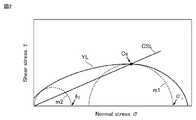
図2は、粉体の一面せん断試験の第2説明図である。
粉体の一面せん断試験における垂直応力(σ)とせん断応力(τ)とから、単軸崩壊応力(fc)と最大主応力(σ1)とが導出される。図2の直交座標においては、垂直応力(σ)が横軸であり、せん断応力(τ)が縦軸である。まず、破壊包絡線(yield locus,YL)が描かれる。粉体層201中の任意の面に垂直応力(σ)が負荷された状態で、その面に対して水平方向にせん断応力(τ)が徐々に作用する。せん断応力(τ)により、粉体層201中の面が崩壊し始める。これが限界応力状態である。限界応力状態における垂直応力(σ)とせん断応力(τ)とがプロットされる。これにより破壊包絡線(YL)が描かれる。次いで、限界状態線(critical state line,CSL)が描かれる。せん断崩壊後、せん断応力(τ)は一次的に変化するが、やがて一定値になる。一定値となったせん断応力(τ)と、その時の垂直応力(σ)とがプロットされる。これにより限界状態線(CSL)が描かれる。限界状態線(CSL)は、原点を通る直線である。
FIG. 2 is a second explanatory view of the one-sided shear test of powder.
The uniaxial decay stress ( fc ) and the maximum principal stress (σ 1 ) are derived from the normal stress (σ) and the shear stress (τ) in the one-sided shear test of the powder. In the Cartesian coordinates of FIG. 2, normal stress (σ) is on the horizontal axis and shear stress (τ) is on the vertical axis. First, a destruction envelope (yeld locus, YL) is drawn. In a state where normal stress (σ) is applied to an arbitrary surface in the
破壊包絡線(YL)と限界状態線(CSL)との交点は、限界状態(critical state,Cs)である。限界状態(Cs)を通り、破壊包絡線(YL)に接する、Mohrの応力円(m1)が描かれる。該Mohrの応力円(m1)と横軸との交点のうち、値の大きい方が最大主応力(σ1)である。原点を通り、破壊包絡線(YL)に接する、Mohrの応力円(m2)が描かれる。該Mohrの応力円(m2)と横軸との交点(原点を除く)が単軸崩壊応力(fc)である。「式:ffc=σ1/fc」により、ffcが算出される。ffcは、3回以上測定される。3回以上の結果の算術平均値が、測定対象のffcとみなされる。ffc(平均値)は、小数第1位まで有効である。小数第2位以下は四捨五入される。 The intersection of the fracture envelope (YL) and the critical state line (CSL) is the critical state (Cs). A Mohr's circle of stress (m1) is drawn, passing through the critical state (Cs) and tangent to the fracture envelope (YL). Of the intersections of the Mohr's stress circle (m1) and the horizontal axis, the one with the larger value is the maximum principal stress (σ 1 ). A Mohr's circle of stress (m2) is drawn, passing through the origin and tangent to the fracture envelope (YL). The intersection (excluding the origin) between the Mohr stress circle (m2) and the horizontal axis is the uniaxial decay stress ( fc ). F c is calculated by "Equation: ff c = σ 1 / f c ". ff c is measured 3 times or more. The arithmetic mean of the results of three or more times is considered to be the ff c to be measured. ff c (mean value) is valid up to the first decimal place. Rounded to the first decimal place.
粉体の一面せん断試験は、「JIS Z8835:一面せん断試験による限界状態線(CSL)及び壁面崩壊線(WYL)の測定方法」に準拠して実施される。具体的な試験条件は、例えば、次のとおりである。 The one-sided shear test of the powder is carried out in accordance with "JIS Z8835: Measurement method of limit state line (CSL) and wall surface collapse line (WYL) by one-sided shear test". The specific test conditions are as follows, for example.
試料量:10.0g
サンプリング周期:10Hz
粉体層の最終厚さ:5.00mm
試料セルの内径:15mm
押し込み速度:0.20mm/s
押し込み荷重:150N
横摺り速度:10μm/s
測定時間:280s
測定温度:28℃±1℃
Sample amount: 10.0 g
Sampling cycle: 10Hz
Final thickness of powder layer: 5.00 mm
Inner diameter of sample cell: 15 mm
Pushing speed: 0.20 mm / s
Pushing load: 150N
Horizontal sliding speed: 10 μm / s
Measurement time: 280s
Measurement temperature: 28 ° C ± 1 ° C
(ffcの調整方法)
ffcは、各種の因子によって変化し得る。本実施形態においては、ffcが2.9以上になるように、各種の因子が組み合わされる。上記の粒子構造(単粒子と凝集粒子との組み合わせ)は、ffcに影響を与える因子の一つである。さらに、例えば「各粒子群のD50」、「各粒子群のBET比表面積」、「混合分率」、「混合装置」および「混合後の含水率」が、ffcに影響を与え得る。
(How to adjust ff c )
f c can be changed by various factors. In this embodiment, various factors are combined so that ffc becomes 2.9 or more. The above particle structure (combination of single particles and aggregated particles) is one of the factors influencing ffc . Further, for example, "D50 of each particle group", "BET specific surface area of each particle group", "mixing fraction", "mixing device" and "moisture content after mixing" can affect ffc .
i. 各粒子群のD50
混合前の第1粒子群(粉体)は、例えば、1μmから5μmのD50を有していてもよい。第2粒子群は、第1粒子群に比して大きいD50を有していてもよい。混合前の第2粒子群(粉体)は、例えば、8μmから16μmのD50を有していてもよい。
i. D50 of each particle group
The first particle group (powder) before mixing may have, for example, a D50 of 1 μm to 5 μm. The second particle group may have a larger D50 than the first particle group. The second particle group (powder) before mixing may have, for example, a D50 of 8 μm to 16 μm.
ii. 各粒子群のBET比表面積
混合前の第1粒子群(粉体)は、例えば、0.2m2/gから5.0m2/gのBET比表面積を有していてもよい。混合前の第2粒子群(粉体)は、例えば、0.2m2/gから3.0m2/gのBET比表面積を有していてもよい。
ii. BET specific surface area of each particle group The first particle group (powder) before mixing may have, for example, a BET specific surface area of 0.2 m 2 / g to 5.0 m 2 / g. The second particle group (powder) before mixing may have, for example, a BET specific surface area of 0.2 m 2 / g to 3.0 m 2 / g.
iii. 混合分率
本実施形態における「混合分率」は、第1粒子群と第2粒子群との合計に対する、第1粒子群の質量分率を示す。混合分率は、例えば、20%から75%であってもよい。混合分率は、例えば、25%以上であってもよいし、30%以上であってもよいし、50%以上であってもよい。混合分率は、例えば、70%以下であってもよいし、65%以下であってもよいし、60%以下であってもよい。
iii. Mixed fraction The "mixed fraction" in this embodiment indicates the mass fraction of the first particle group with respect to the total of the first particle group and the second particle group. The mixing fraction may be, for example, 20% to 75%. The mixing fraction may be, for example, 25% or more, 30% or more, or 50% or more. The mixing fraction may be, for example, 70% or less, 65% or less, or 60% or less.
iv. 混合装置
図3は、混合装置の構成の一例を示す概略図である。
混合装置300は、転動流動方式乾燥混合装置である。混合装置300は、容器310、攪拌羽320、および給気装置(不図示)を備えている。粉体301(処理対象)は、容器に投入される。攪拌羽320は、粉体301を攪拌し、混合する。これにより正極活物質粉体が調製される。給気装置は、容器310内に空気を供給する。空気の温度は、調整可能である。気流中において、転動流動方式により第1粒子群と第2粒子群とが混合されることにより、ffcが増大する傾向がある。さらに、給気温度が高くなることにより、ffcが増大する傾向がある。給気温度は、例えば、常温から150℃であってもよい。本実施形態における「常温」は、20℃±15℃の範囲を示す。給気温度は、例えば、80℃から150℃であってもよい。給気温度は、例えば、120℃から150℃であってもよい。混合時間は、例えば、1minから1hоurであってもよい。混合時間は、例えば、10minから30minであってもよい。
iv. Mixing device FIG. 3 is a schematic view showing an example of the configuration of the mixing device.
The
v. 含水率
混合後の正極活物質粉体における含水率が1070ppm以下になるように、第1粒子群と第2粒子群とが混合されることにより、ffcが増大する傾向がある。本実施形態における「含水率」は、正極活物質粉体における水の質量分率を示す。含水率は、例えば、970ppm以下であってもよいし、920ppm以下であってもよいし、760ppm以下であってもよいし、730ppm以下であってもよいし、720ppm以下であってもよいし、700ppm以下であってもよいし、690ppm以下であってもよいし、680ppm以下であってもよい。含水率の下限値は任意である。含水率は、例えば、680ppm以上であってもよい。含水率は、カールフィッシャー水分計により測定される。測定条件は、例えば、次のとおりである。
v. Moisture content The ffc tends to increase by mixing the first particle group and the second particle group so that the water content in the positive electrode active material powder after mixing is 1070 ppm or less. The "moisture content" in the present embodiment indicates the mass fraction of water in the positive electrode active material powder. The water content may be, for example, 970 ppm or less, 920 ppm or less, 760 ppm or less, 730 ppm or less, or 720 ppm or less. , 700 ppm or less, 690 ppm or less, or 680 ppm or less. The lower limit of the water content is arbitrary. The water content may be, for example, 680 ppm or more. Moisture content is measured by a Karl Fischer titer. The measurement conditions are, for example, as follows.
加熱温度:270℃
測定時間:30min
Heating temperature: 270 ° C
Measurement time: 30 min
<リチウムイオン電池>
図4は、本実施形態におけるリチウムイオン電池の一例を示す概略図である。
電池100は、リチウムイオン電池である。電池100は、高エネルギー密度を有し得る。電池100が前述の正極活物質粉体を含むためである。電池100は、任意の用途で使用され得る。電池100は、例えば電動車両において、主電源または動力アシスト用電源として使用されてもよい。複数個の電池100が連結されることにより、電池モジュールまたは組電池が形成されてもよい。
<Lithium-ion battery>
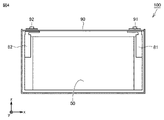
FIG. 4 is a schematic view showing an example of the lithium ion battery in the present embodiment.
The
電池100は、外装体90を含む。外装体90は、角形(扁平直方体状)である。ただし角形は一例である。外装体90は、例えば、円筒形であってもよいし、パウチ形であってもよい。外装体90は、例えば、Al合金製であってもよい。外装体90は、電極体50および電解質(不図示)を収納している。電極体50は、正極集電部材81によって正極端子91に接続されている。電極体50は、負極集電部材82によって負極端子92に接続されている。
The
図5は、本実施形態における電極体の一例を示す概略図である。
電極体50は巻回型である。電極体50は、正極10、セパレータ30および負極20を含む。すなわち電池100は正極10を含む。正極10、セパレータ30および負極20は、いずれも帯状のシートである。電極体50は2枚のセパレータ30を含んでいてもよい。電極体50は、正極10、セパレータ30および負極20がこの順に積層され、渦巻状に巻回されることにより形成されている。電極体50は、巻回後に扁平状に成形されている。なお、巻回型は一例である。電極体50は、例えば、積層(スタック)型であってもよい。
FIG. 5 is a schematic view showing an example of the electrode body in the present embodiment.
The
《正極》
正極10は、正極活物質層12と正極基材11とを含む。正極活物質層12は、正極基材11の表面に形成されている。正極活物質層12は、正極基材11の表面に直接形成されていてもよい。例えば、正極活物質層12と正極基材11との間に介在層(不図示)が形成されていてもよい。本実施形態においては、介在層が形成されている場合も、正極活物質層12が正極基材11の表面に形成されているとみなされる。介在層は、正極活物質層12に比して小さい厚さを有していてもよい。介在層は、例えば、導電材、絶縁材等を含んでいてもよい。正極活物質層12は、正極基材11の片面のみに形成されていてもよい。正極活物質層12は、正極基材11の表裏両面に形成されていてもよい。
《Positive electrode》
The
(正極活物質層)
正極活物質層12は、例えば、10μmから200μmの厚さを有していてもよい。正極活物質層12は高密度を有し得る。正極活物質粉体の充填性が高いためと考えられる。正極活物質層12は、例えば、3.5g/cm3以上の密度を有していてもよいし、3.6g/cm3以上の密度を有していてもよいし、3.7g/cm3以上の密度を有していてもよい。密度の上限は任意である。正極活物質層12は、例えば、3.8g/cm3以下の密度を有していてもよい。
(Positive electrode active material layer)
The positive electrode
図6は、本実施形態における正極を示す概念図である。
正極活物質層12は、前述の正極活物質粉体を含む。正極活物質粉体は、第1粒子1と第2粒子2とを含む。第1粒子1は単粒子を含む。第2粒子2は凝集粒子を含む。第1粒子1および第2粒子2は密に充填されている。例えば、海状に広がる第1粒子1の集合体の中に、第2粒子2が島状に分布していてもよい。正極活物質層12は、正極活物質粉体に加えて、導電材(不図示)およびバインダ(不図示)等をさらに含んでいてもよい。導電材は、任意の成分を含み得る。導電材は、例えば、アセチレンブラック等を含んでいてもよい。導電材の配合量は、100質量部の正極活物質粉体に対して、例えば、0.1質量部から10質量部であってもよい。バインダは、任意の成分を含み得る。バインダは、例えば、ポリフッ化ビニリデン(PVdF)等を含んでいてもよい。バインダの配合量は、100質量部の正極活物質粉体に対して、例えば、0.1質量部から10質量部であってもよい。
FIG. 6 is a conceptual diagram showing a positive electrode in the present embodiment.
The positive electrode
(正極基材)
正極基材11は、導電性のシートである。正極基材11は、例えば、10μmから30μmの厚さを有していてもよい。正極基材11は、例えば、10μmから20μmの厚さを有していてもよい。正極基材11は、例えば、10μmから15μmの厚さを有していてもよい。
(Positive electrode base material)
The positive
正極基材11は、例えば、Al合金箔、純Al箔等を含んでいてもよい。正極基材11は、例えば、実質的にAl合金箔からなっていてもよい。正極基材11は、例えば、Al合金箔からなっていてもよい。Al合金は、合金番号1000番台、合金番号3000番台、合金番号8000番台の材料であり得る。合金番号は、「JIS H4000:アルミニウム及びアルミニウム合金の板及び条」に規定されている番号を示す。
The positive
Al合金は、例えば、圧延時の伸びが小さい材料であってもよい。正極基材11が伸び難いことにより、正極活物質層12の密度が高くなりやすい傾向がある。Al合金は、例えば、分散強化型合金を含んでいてもよい。例えば、合金番号が3000番台のAl合金は、分散強化型合金である。3000番台のAl合金は、Al-Mn系分散粒子により強化されている。3000番台のAl合金は、圧延時の伸びが小さい傾向がある。Al合金の合金番号は、例えば3003、3004等であってもよい。
The Al alloy may be, for example, a material having a small elongation during rolling. Since the positive
(引張強さ)
Al合金は、例えば、引張強さが大きい材料であってもよい。正極基材11の引張強さが大きいことにより、正極活物質層12の密度が高くなりやすい傾向がある。正極基材11は、例えば、250MPaから350MPaの引張強さを有していてもよい。引張強さは、引張試験において測定される。正極基材11から試料片が切り出される。試料片は、長さ 120mm×幅 15mmの平面サイズを有する。試料片が引張試験機にセットされる。5mm/minの速度で試料片が長手方向に引っ張られる。試料片は破断するまで引っ張られる。破断までの最大荷重が測定される。最大荷重が試料片の断面積(=幅×厚さ)で除されることにより、引張強さが算出される。
(Tensile strength)
The Al alloy may be, for example, a material having a large tensile strength. Due to the high tensile strength of the positive
(平均粒界数)
Al合金箔の厚さ方向に、例えば、平均で30個から50個の結晶粒界があってもよい。以下、結晶粒界の平均値が「平均粒界数」とも記される。平均粒界数が30個から50個である時、正極活物質層12の密度が高くなりやすい傾向がある。粒界数は、Al合金箔の厚さ方向に沿って、結晶粒界が計数されることにより特定される。平均粒界数は、粒界数の算術平均値である。平均粒界数は次の手順で測定される。
(Average number of grain boundaries)
There may be, for example, 30 to 50 grain boundaries on average in the thickness direction of the Al alloy foil. Hereinafter, the average value of the crystal grain boundaries is also referred to as "average number of grain boundaries". When the average number of grain boundaries is 30 to 50, the density of the positive electrode
正極基材11の断面試料が準備される。断面試料がSEMにより観察される。SEMにより、断面試料の電子線後方散乱(electron back scatter diffraction,EBSD)パターンが取得される。EBSDパターンが解析されることにより、EBSD方位マップ像が作成される。EBSD方位マップ像において、断面試料の厚さ方向と平行に断面試料を横断する直線が引かれる。直線が横切る結晶粒界の個数が計数される。これにより、粒界数が特定される。任意の3箇所以上で結晶粒界数が測定される。3回以上の結果の算術平均値が平均粒界数とみなされる。
A cross-sectional sample of the positive
Al-Mn系分散粒子の分布により、Al合金の機械的性質(伸び、引張強さ)が向上することもある。Al-Mn系分散粒子の分布は、EBSD方位マップ像において確認され得る。Al-Mn系分散粒子は、厚さ方向の全域にわたって分布していてもよい。 The distribution of Al—Mn-based dispersed particles may improve the mechanical properties (elongation, tensile strength) of the Al alloy. The distribution of Al—Mn-based dispersed particles can be confirmed in the EBSD orientation map image. The Al—Mn-based dispersed particles may be distributed over the entire area in the thickness direction.
《負極》
負極20は、負極活物質層22と負極基材21とを含む。負極基材21は、例えば、銅箔等を含んでいてもよい。負極活物質層22は、負極基材21の表面に形成されている。負極活物質層22は、負極活物質粉体を含む。負極活物質粉体は任意の成分を含み得る。負極活物質粉体は、例えば、黒鉛、ソフトカーボン、ハードカーボン、Si、SiO、Si基合金、Sn、SnO、Sn基合金およびLi4Ti5O12からなる群より選択される少なくとも1種を含んでいてもよい。負極活物質層22は、負極活物質粉体に加えて、バインダ等をさらに含んでいてもよい。バインダは、例えば、スチレンブタジエンゴム(SBR)、カルボキシメチルセルロース(CMC)等を含んでいてもよい。
《Negative electrode》
The
《セパレータ》
セパレータ30の少なくとも一部は、正極10と負極20との間に配置されている。セパレータ30は、正極10と負極20とを分離している。セパレータ30は、多孔質である。セパレータ30は、電解液を透過する。セパレータ30は、電気絶縁性である。セパレータ30は、例えば、ポリオレフィン製であってもよい。なお、電解質が固体である場合は、電解質がセパレータとして機能する場合もある。
《Separator》
At least a part of the
《電解質》
電解質は、液体電解質(電解液、イオン液体)、ゲル電解質および固体電解質からなる群より選択される少なくとも1種を含む。本実施形態においては一例として、電解液が説明される。電解液は、溶媒と支持電解質とを含む。電解液は、任意の添加剤をさらに含んでいてもよい。支持電解質は溶媒に溶解している。溶媒は非プロトン性である。溶媒は、例えば、エチレンカーボネート(EC)、プロピレンカーボネート(PC)、エチルメチルカーボネート(EMC)、ジメチルカーボネート(DMC)およびジエチルカーボネート(DEC)からなる群より選択される少なくとも1種を含んでいてもよい。支持電解質は溶媒に溶解している。支持電解質は任意の成分を含み得る。支持電解質は、例えば、LiPF6、LiBF4、およびLiN(FSO2)2からなる群より選択される少なくとも1種を含んでいてもよい。
"Electrolytes"
The electrolyte contains at least one selected from the group consisting of liquid electrolytes (electrolytes, ionic liquids), gel electrolytes and solid electrolytes. In this embodiment, an electrolytic solution will be described as an example. The electrolytic solution contains a solvent and a supporting electrolyte. The electrolytic solution may further contain any additive. The supporting electrolyte is dissolved in the solvent. The solvent is aprotic. The solvent may include, for example, at least one selected from the group consisting of ethylene carbonate (EC), propylene carbonate (PC), ethylmethyl carbonate (EMC), dimethyl carbonate (DMC) and diethyl carbonate (DEC). good. The supporting electrolyte is dissolved in the solvent. The supporting electrolyte may contain any component. The supporting electrolyte may include, for example, at least one selected from the group consisting of LiPF 6 , LiBF 4 , and LiN (FSO 2 ) 2 .
<正極の製造方法>
図7は、本実施形態における正極の製造方法の概略フローチャートである。
本実施形態における正極の製造方法は、「(A)スラリーの調製」、「(B)塗布」および「(C)圧延」を含む。本実施形態においては、リチウムイオン電池用の正極10が製造される。
<Manufacturing method of positive electrode>
FIG. 7 is a schematic flowchart of the method for manufacturing a positive electrode in the present embodiment.
The method for producing a positive electrode in the present embodiment includes "(A) preparation of slurry", "(B) coating" and "(C) rolling". In the present embodiment, the
《(A)正極スラリーの調製》
本実施形態における正極の製造方法は、正極活物質粉体を含む正極スラリーを調製することを含む。
<< (A) Preparation of positive electrode slurry >>
The method for producing a positive electrode in the present embodiment includes preparing a positive electrode slurry containing a positive electrode active material powder.
正極活物質粉体の詳細は、前述のとおりである。第1粒子群および第2粒子群は、それぞれ独立に、例えば、共沈法により合成され得る。例えば、合成条件、粉砕条件等により、単粒子サイズ、一次粒子サイズ、凝集粒子サイズ等が調整され得る。例えば、前述の転動流動方式乾燥混合装置において、混合粉体のffcが2.9以上になるように、第1粒子群と第2粒子群とが混合される。これにより正極活物質粉体が準備され得る。 The details of the positive electrode active material powder are as described above. The first particle group and the second particle group can be synthesized independently, for example, by the coprecipitation method. For example, the single particle size, the primary particle size, the aggregated particle size, and the like can be adjusted depending on the synthesis conditions, the pulverization conditions, and the like. For example, in the above-mentioned rolling flow type dry mixing apparatus, the first particle group and the second particle group are mixed so that the fcc of the mixed powder is 2.9 or more. Thereby, the positive electrode active material powder can be prepared.
正極スラリーは、正極活物質粉体が分散媒中に分散されることにより調製される。本実施形態においては、任意の混合装置、攪拌装置、分散装置が使用され得る。例えば、プラネタリミキサ等が使用されてもよい。正極スラリーは、正極活物質粉体に加えて、導電材、バインダ等をさらに含むように調製されてもよい。導電材およびバインダの詳細は、前述のとおりである。分散媒は、バインダの種類等に応じて選択される。分散媒は、例えば、N-メチル-ピロリドン(NMP)等を含んでいてもよい。例えば、分散媒の使用量により、正極スラリーの粘度が調整されてもよい。 The positive electrode slurry is prepared by dispersing the positive electrode active material powder in a dispersion medium. In this embodiment, any mixing device, stirring device, and dispersing device can be used. For example, a planetary mixer or the like may be used. The positive electrode slurry may be prepared to further contain a conductive material, a binder and the like in addition to the positive electrode active material powder. Details of the conductive material and the binder are as described above. The dispersion medium is selected according to the type of binder and the like. The dispersion medium may contain, for example, N-methyl-pyrrolidone (NMP) or the like. For example, the viscosity of the positive electrode slurry may be adjusted by the amount of the dispersion medium used.
《(B)塗布》
本実施形態における正極の製造方法は、正極スラリーを正極基材11の表面に塗布することにより、正極活物質層12を形成することを含む。
<< (B) application >>
The method for producing a positive electrode in the present embodiment includes forming the positive electrode
正極基材11が準備される。正極基材11の詳細は前述のとおりである。塗布装置が準備される。本実施形態においては、任意の塗布装置が使用され得る。例えば、スロットダイコータ、グラビアコータ等が使用されてもよい。塗布装置により、正極スラリーが正極基材11の表面に塗布される。例えば、熱風により塗膜が乾燥される。これにより正極活物質層12が形成され得る。
The positive
《(C)圧延》
本実施形態における正極の製造方法は、正極活物質層12と正極基材11とを圧延することにより、正極10を製造することを含む。
<< (C) Rolling >>
The method for manufacturing a positive electrode in the present embodiment includes manufacturing the
圧延機が準備される。圧延機は、回転する2本のロールを備える。圧延機のロール間隙に、正極活物質層12および正極基材11の一体物が通される。これにより、正極活物質層12および正極基材11が圧延され、正極10が製造される。
The rolling mill is prepared. The rolling mill comprises two rotating rolls. An integral body of the positive electrode
本実施形態においては、正極基材11の伸びが抑えられつつ、正極活物質層12が高密度に圧縮されることが期待される。正極活物質粉体が圧延時に高い充填性を示すためである。例えば、圧延前後の正極10の伸びが2.1%以下になるように圧延が行われてもよい。正極10の伸び(δ)は、「式:δ(%)=(L1-L0)/L0×100」により算出される。式中「L0」は、圧延前のMD(machine dirrection)の寸法を示す。「L1」は、圧延後のMDの寸法を示す。伸びが小さい程、その後のプロセス(例えばロールツーロール搬送時等)に、正極10が破断し難い傾向がある。伸びは、例えば1.5%以下であってもよいし、1.0%以下であってもよい。
In the present embodiment, it is expected that the positive electrode
圧延により正極10の原反が製造される。原反は、電池100の仕様に応じて、所定の平面サイズに切断され得る。
The raw fabric of the
以下、本開示の実施例(以下「本実施例」とも記される。)が説明される。ただし、以下の説明は、特許請求の範囲を限定しない。 Hereinafter, examples of the present disclosure (hereinafter, also referred to as “the present examples”) will be described. However, the following description does not limit the scope of claims.
以下のようにNo.1からNo.12の供試電池が製造された。 No. as follows. 1 to No. Twelve test batteries were manufactured.
<No.1>
《正極活物質粉体の製造》
(第1粒子群の調製)
共沈法により、第1複合水酸化物が合成された。第1複合水酸化物の化学組成は、Ni0.8Co0.1Mn0.1(OH)2により表される。第1複合水酸化物に熱処理が施された。熱処理温度は500℃であった。これにより第1焼成物が調製された。
<No. 1>
<< Manufacture of positive electrode active material powder >>
(Preparation of the first particle group)
The first complex hydroxide was synthesized by the coprecipitation method. The chemical composition of the first complex hydroxide is represented by Ni 0.8 Co 0.1 Mn 0.1 (OH) 2 . The first composite hydroxide was heat treated. The heat treatment temperature was 500 ° C. As a result, the first fired product was prepared.
水酸化リチウムと第1焼成物とが、モル比で「水酸化リチウム/第1焼成物=1.05/1」となるように混合されることにより、第1混合物が調製された。酸素雰囲気中において、第1混合物に熱処理が施された。これにより第2焼成物が調製された。熱処理温度は850℃であった。熱処理時間は72hourであった。ボールミルによって、第2焼成物が湿式で粉砕された。粉砕後、第2焼成物が乾燥された。乾燥後、第2焼成物に熱処理が施された。これにより第1粒子群が調製された。熱処理温度は750℃であった。熱処理時間は10hourであった。 The first mixture was prepared by mixing lithium hydroxide and the first calcined product so as to have a molar ratio of "lithium hydroxide / first calcined product = 1.05 / 1". The first mixture was heat treated in an oxygen atmosphere. As a result, a second fired product was prepared. The heat treatment temperature was 850 ° C. The heat treatment time was 72 hours. The second calcined product was wet-ground by a ball mill. After pulverization, the second fired product was dried. After drying, the second fired product was heat-treated. As a result, the first particle swarm was prepared. The heat treatment temperature was 750 ° C. The heat treatment time was 10 hours.
第1粒子群のD50は、3.6μmであった。SEMにより第1粒子群が観察された。第1粒子群は、実質的に単粒子からなっていた。単粒子の第1最大径は、2.5μmから3.8μmであった。 The D50 of the first particle group was 3.6 μm. The first particle swarm was observed by SEM. The first particle group consisted of substantially single particles. The first maximum diameter of the single particle was 2.5 μm to 3.8 μm.
(第2粒子群の調製)
共沈法により、第2複合水酸化物が合成された。第2複合水酸化物の化学組成は、Ni0.8Co0.1Mn0.1(OH)2により表される。水酸化リチウムと第2複合水酸化物とが、モル比で「水酸化リチウム/第2複合水酸化物=1.05/1」となるように混合されることにより、第2混合物が調製された。酸素雰囲気中において、第2混合物に熱処理が施された。これにより第3焼成物が調製された。熱処理温度は800℃であった。熱処理時間は10hourであった。メノウ乳鉢において、第3焼成物が解砕された。これにより第2粒子群が調製された。
(Preparation of second particle group)
The second complex hydroxide was synthesized by the coprecipitation method. The chemical composition of the second complex hydroxide is represented by Ni 0.8 Co 0.1 Mn 0.1 (OH) 2 . A second mixture is prepared by mixing lithium hydroxide and the second composite hydroxide so as to have a molar ratio of "lithium hydroxide / second composite hydroxide = 1.05 / 1". rice field. The second mixture was heat treated in an oxygen atmosphere. As a result, a third fired product was prepared. The heat treatment temperature was 800 ° C. The heat treatment time was 10 hours. In the agate mortar, the third calcined product was crushed. As a result, a second particle swarm was prepared.
第2粒子群の粒度分布が測定された。粒度分布は、12μmのD50と、14μmのD70と、10μmのD30とを有していた。SEMにより第2粒子群が観察された。第2粒子群は、実質的に凝集粒子からなっていた。凝集粒子において、一次粒子の第2最大径の平均値は、0.13μmであった。 The particle size distribution of the second particle group was measured. The particle size distribution had a D50 of 12 μm, a D70 of 14 μm, and a D30 of 10 μm. A second particle swarm was observed by SEM. The second particle group consisted substantially of aggregated particles. Among the agglomerated particles, the average value of the second maximum diameter of the primary particles was 0.13 μm.
(混合)
混合装置として、転動流動方式乾燥混合装置が準備された(図3参照)。混合分率が25%となるように、第1粒子群および第2粒子群が容器に投入された。容器内に熱風が供給されながら、粉体が混合された。これにより正極活物質粉体が調製された。熱風温度(給気温度)は、150℃であった。混合時間は20minであった。
(mixture)
As a mixing device, a rolling flow type drying mixing device was prepared (see FIG. 3). The first particle group and the second particle group were put into the container so that the mixing fraction was 25%. The powder was mixed while hot air was being supplied into the container. As a result, a positive electrode active material powder was prepared. The hot air temperature (supply air temperature) was 150 ° C. The mixing time was 20 min.
(水分値の測定)
混合後、カールフィッシャー水分計により、正極活物質粉体の含水率が測定された。測定条件は前述のとおりである。含水率は表1に示される。
(Measurement of moisture value)
After mixing, the water content of the positive electrode active material powder was measured by a Karl Fischer titer. The measurement conditions are as described above. The water content is shown in Table 1.
(ffcの測定)
前述の手順により、正極活物質粉体のffcが測定された。ffcは表1に示される。
(Measurement of ff c )
By the above procedure, the ff c of the positive electrode active material powder was measured. ff c is shown in Table 1.
《正極の製造》
(正極スラリーの調製)
正極活物質粉体と、導電材(アセチレンブラック)と、バインダ(PVdF)と、分散媒(NMP)とが混合されることにより、正極スラリーが調製された。固形分の質量比は、「正極活物質粉体/導電材/バインダ=96.3/2.5/1.2」であった。
《Manufacturing of positive electrode》
(Preparation of positive electrode slurry)
A positive electrode slurry was prepared by mixing a positive electrode active material powder, a conductive material (acetylene black), a binder (PVdF), and a dispersion medium (NMP). The mass ratio of the solid content was "positive electrode active material powder / conductive material / binder = 96.3 / 2.5 / 1.2".
(塗布)
正極基材として、Al合金箔(合金番号 3003、厚さ 13μm)が準備された。正極基材の表面(表裏両面)に正極スラリーが塗布され、乾燥されることにより、正極活物質層が形成された。
(Application)
As a positive electrode base material, an Al alloy foil (alloy number 3003, thickness 13 μm) was prepared. The positive electrode slurry was applied to the surface (both front and back surfaces) of the positive electrode base material and dried to form a positive electrode active material layer.
(圧延)
圧延機により、正極活物質層および正極基材が圧延された。圧延後の正極活物質層の狙い密度は、3.7g/cm3であった。狙い密度に合わせて、ロール線圧、ロール間隙が調整された。圧延により、正極が製造された。正極は所定の平面サイズに切断された。
(rolling)
The positive electrode active material layer and the positive electrode base material were rolled by a rolling mill. The target density of the positive electrode active material layer after rolling was 3.7 g / cm 3 . The roll linear pressure and roll gap were adjusted according to the target density. A positive electrode was manufactured by rolling. The positive electrode was cut to a predetermined planar size.
圧延時の充填性を評価するために、圧延前後の正極の伸びが1%である時の正極活物質層の密度が測定された。該密度は表1に示される。 In order to evaluate the filling property during rolling, the density of the positive electrode active material layer when the elongation of the positive electrode before and after rolling was 1% was measured. The densities are shown in Table 1.
《リチウムイオン電池の製造》
負極が準備された。負極活物質は黒鉛であった。セパレータが準備された。セパレータは、ポリオレフィン製の多孔質シートであった。セパレータが正極と負極とを分離するように、正極、セパレータおよび負極が積層された。これにより電極体が形成された。外装体として、ラミネートフィルム製のパウチが準備された。外装体に電極体が収納された。外装体に電解液が注入された。電解液の注入後、外装体が封止された。以上より、供試電池(パウチ形リチウムイオン電池)が製造された。
《Manufacturing of lithium-ion batteries》
The negative electrode was prepared. The negative electrode active material was graphite. The separator was prepared. The separator was a porous sheet made of polyolefin. The positive electrode, the separator and the negative electrode were laminated so that the separator separated the positive electrode and the negative electrode. As a result, an electrode body was formed. As an exterior body, a pouch made of laminated film was prepared. The electrode body was housed in the exterior body. The electrolyte was injected into the exterior. After injecting the electrolyte, the exterior was sealed. From the above, the test battery (pouch type lithium ion battery) was manufactured.
本実施例における供試電池は、650Wh/Lのエネルギー密度を有するように設計されていた。本実施例においては、正極活物質層の密度に応じて、供試電池のエネルギー密度が変化し得る。エネルギー密度は、表1に示される。 The test battery in this example was designed to have an energy density of 650 Wh / L. In this embodiment, the energy density of the test battery may change depending on the density of the positive electrode active material layer. The energy densities are shown in Table 1.
60℃に設定された恒温槽内で、供試電池の充放電が500サイクル実施された。500サイクル後の電池抵抗が、初期の電池抵抗で除されることにより、抵抗上昇率(百分率)が算出された。抵抗上昇率は表1に示される。抵抗上昇率が低い程、サイクル耐久性が良好であると考えられる。 The test battery was charged and discharged for 500 cycles in a constant temperature bath set at 60 ° C. The resistance increase rate (percentage) was calculated by dividing the battery resistance after 500 cycles by the initial battery resistance. The rate of increase in resistance is shown in Table 1. It is considered that the lower the resistance increase rate, the better the cycle durability.
<No.2>
表1に示されるように、混合分率および給気温度が変更されることを除いては、No.1と同様に、正極活物質粉体、正極、および供試電池が製造された。
<No. 2>
As shown in Table 1, No. 1 is used, except that the mixing fraction and the supply air temperature are changed. Similar to No. 1, a positive electrode active material powder, a positive electrode, and a test battery were manufactured.
<No.3>
表1に示されるように、混合分率が変更され、かつ粉体混合時に給気が実施されないことを除いては、No.1と同様に、正極活物質粉体、正極、および供試電池が製造された。
<No. 3>
As shown in Table 1, except that the mixing fraction is changed and air supply is not performed at the time of powder mixing, No. Similar to No. 1, a positive electrode active material powder, a positive electrode, and a test battery were manufactured.
<No.4から6>
表1に示されるように、混合分率が変更されることを除いては、No.1と同様に、正極活物質粉体、正極、および供試電池が製造された。
<No. 4 to 6>
As shown in Table 1, No. 1 except that the mixing fraction is changed. Similar to No. 1, a positive electrode active material powder, a positive electrode, and a test battery were manufactured.
<No.7から9>
表1に示されるように、単粒子および凝集粒子の化学組成が変更され、かつ混合分率が変更されることを除いては、No.1と同様に、正極活物質粉体、正極、および供試電池が製造された。表1の組成の欄において、例えば「8/1/1」は、Li(NiCoMn)O2におけるNi、CoおよびMnの組成比が、モル比で「Ni/Co/Mn=0.8/0.1/0.1」であることを示している。
<No. 7 to 9>
As shown in Table 1, except that the chemical composition of the single particles and the agglomerated particles is changed and the mixing fraction is changed, No. Similar to No. 1, a positive electrode active material powder, a positive electrode, and a test battery were manufactured. In the composition column of Table 1, for example, "8/1/1" means that the composition ratio of Ni, Co and Mn in Li (NiCoMn) O 2 is "Ni / Co / Mn = 0.8 / 0" in terms of molar ratio. It shows that it is ".1 / 0.1".
<No.10>
第2粒子群が単独で正極活物質粉体とされることを除いては、No.3と同様に、正極活物質粉体、正極、および供試電池が製造された。
<No. 10>
Except that the second particle group is used alone as the positive electrode active material powder, No. Similar to No. 3, a positive electrode active material powder, a positive electrode, and a test battery were manufactured.
<No.11>
正極基材として、Al合金箔(合金番号 1N30)が使用されることを除いては、No.6と同様に、正極および供試電池が製造された。No.11の正極において、Al合金箔(合金番号 1N30)の平均粒界数は10個であった。No.6等の正極において、Al合金箔(合金番号 3003)の平均粒界数は30個から50個であった。
<No. 11>
No. 1 except that an Al alloy foil (alloy number 1N30) is used as the positive electrode base material. Similar to No. 6, a positive electrode and a test battery were manufactured. No. At the positive electrode of 11, the average number of grain boundaries of the Al alloy foil (alloy number 1N30) was 10. No. In the positive electrode of 6 or the like, the average number of grain boundaries of the Al alloy foil (alloy number 3003) was 30 to 50.
<No.12>
混合時間が変更されることを除いては、No.3と同様に、正極活物質粉体、正極および供試電池が製造された。
<No. 12>
Except that the mixing time is changed, No. Similar to No. 3, a positive electrode active material powder, a positive electrode, and a test battery were manufactured.

<評価結果>
表1に示されるように、ffcが2.9以上である時、正極活物質層の密度が向上する傾向がみられる。ffcが2.9以上である時、圧延時に正極活物質粉体が高い充填性を示すためと考えられる。
<Evaluation result>
As shown in Table 1, when ffc is 2.9 or more, the density of the positive electrode active material layer tends to increase. When f c is 2.9 or more, it is considered that the positive electrode active material powder exhibits high filling property at the time of rolling.
正極の伸びが1%である時の正極活物質層の密度が高い程(正極活物質粉体の充填性が高い程)、サイクル後の抵抗上昇率が低い傾向がみられる。正極活物質粉体の充填性が良好であることにより、圧延時に第2粒子(凝集粒子)の割れの発生が低減していると考えられる。圧延時に凝集粒子が割れると、正極活物質の比表面積(すなわち反応面積)が増大するため、サイクル後の抵抗上昇率が高くなると考えられる。 The higher the density of the positive electrode active material layer when the elongation of the positive electrode is 1% (the higher the filling property of the positive electrode active material powder), the lower the resistance increase rate after the cycle tends to be. It is considered that the good filling property of the positive electrode active material powder reduces the occurrence of cracks in the second particles (aggregated particles) during rolling. When the agglomerated particles are cracked during rolling, the specific surface area (that is, the reaction area) of the positive electrode active material increases, and it is considered that the resistance increase rate after the cycle increases.
本実施形態および本実施例は、全ての点で例示である。本実施形態および本実施例は、制限的なものではない。例えば、本実施形態および本実施例から、任意の構成が抽出され、それらが任意に組み合わされることも、当初から予定されている。 The present embodiment and the present embodiment are exemplary in all respects. The present embodiment and the present embodiment are not limiting. For example, it is planned from the beginning that arbitrary configurations are extracted from the present embodiment and the present embodiment and they are arbitrarily combined.
特許請求の範囲の記載に基づいて定められる技術的範囲は、特許請求の範囲の記載と均等の意味における全ての変更を包含する。さらに、特許請求の範囲の記載に基づいて定められる技術的範囲は、特許請求の範囲の記載と均等の範囲内における全ての変更も包含する。 The technical scope defined based on the description of the scope of claims includes all changes in the sense equivalent to the description of the scope of claims. Furthermore, the technical scope defined based on the description of the scope of claims also includes all changes within the scope equivalent to the description of the scope of claims.
1 第1粒子、2 第2粒子、10 正極、11 正極基材、12 正極活物質層、20 負極、21 負極基材、22 負極活物質層、30 セパレータ、50 電極体、81 正極集電部材、82 負極集電部材、90 外装体、91 正極端子、92 負極端子、100 電池(リチウムイオン電池)、200 試験装置、201 粉体層、210 サーボシリンダ、220 第1ロードセル、230 試料セル、231 上部セル、232 下部セル、240 第2ロードセル、250 リニアアクチュエータ、260 第3ロードセル、300 混合装置、301 粉体、310 容器、320 攪拌羽。 1 1st particle, 2nd particle, 10 positive electrode, 11 positive electrode base material, 12 positive electrode active material layer, 20 negative electrode, 21 negative electrode base material, 22 negative electrode active material layer, 30 separator, 50 electrode body, 81 positive electrode current collector , 82 Negative electrode current collector, 90 exterior, 91 positive electrode terminal, 92 negative electrode terminal, 100 battery (lithium ion battery), 200 test equipment, 201 powder layer, 210 servo cylinder, 220 first load cell, 230 sample cell, 231 Upper cell, 232 lower cell, 240 second load cell, 250 linear actuator, 260 third load cell, 300 mixing device, 301 powder, 310 container, 320 stirring blade.
Claims (5)
第1粒子群と第2粒子群とを含み、
前記第1粒子群は、複数個の第1粒子からなり、
前記第1粒子は、1個から10個の単粒子を含み、
前記単粒子は、0.5μm以上の第1最大径を有し、
前記第1最大径は、前記単粒子の輪郭線上の最も離れた2点間の距離を示し、
前記第2粒子群は、複数個の第2粒子からなり、
前記第2粒子は、凝集粒子を含み、
前記凝集粒子は、50個以上の一次粒子が凝集することにより形成されており、
前記一次粒子は、0.5μm未満の第2最大径を有し、
前記第2最大径は、前記一次粒子の輪郭線上の最も離れた2点間の距離を示し、
2.9以上のフローファンクション係数を有し、
前記フローファンクション係数は、単軸崩壊応力に対する最大主応力の比であり、
前記単軸崩壊応力および前記最大主応力は、粉体の一面せん断試験によって測定される、
正極活物質粉体。 Positive electrode active material powder for lithium-ion batteries
Including the first particle group and the second particle group,
The first particle group is composed of a plurality of first particles.
The first particle comprises 1 to 10 single particles.
The single particle has a first maximum diameter of 0.5 μm or more and has a first maximum diameter.
The first maximum diameter indicates the distance between the two most distant points on the contour line of the single particle.
The second particle group is composed of a plurality of second particles.
The second particle contains agglomerated particles and contains
The agglomerated particles are formed by agglomerating 50 or more primary particles.
The primary particles have a second maximum diameter of less than 0.5 μm and have a second maximum diameter.
The second maximum diameter indicates the distance between the two most distant points on the contour line of the primary particle.
It has a flow function coefficient of 2.9 or more and has a flow function coefficient of 2.9 or more.
The flow function coefficient is the ratio of the maximum principal stress to the uniaxial decay stress.
The uniaxial decay stress and the maximum principal stress are measured by a one-sided shear test of the powder.
Positive electrode active material powder.
前記第1層状金属酸化物は、式(1):
Li1-a1Nix1Me1 1-x1O2 (1)
によって表され、
前記式(1)中、
a1は、-0.3≦a1≦0.3の関係を満たし、
x1は、0.6≦x1<1.0の関係を満たし、
Me1は、Co、Mn、Al、Zr、Ti、V、Cr、Fe、Cu、Zn、Mo、Sn、Ge、Nb、およびWからなる群より選択される少なくとも1種を示し、
前記一次粒子は、第2層状金属酸化物を含み、
前記第2層状金属酸化物は、式(2):
Li1-a2Nix2Me2 1-x2O2 (2)
によって表され、
前記式(2)中、
a2は、-0.3≦a2≦0.3の関係を満たし、
x2は、0.7≦x2≦1.0の関係を満たし、
Me2は、Co、Mn、Al、Zr、Ti、V、Cr、Fe、Cu、Zn、Mo、Sn、Ge、Nb、およびWからなる群より選択される少なくとも1種を示す、
請求項1に記載の正極活物質粉体。 The single particle contains a first layered metal oxide and contains
The first layered metal oxide has the formula (1):
Li 1-a1 Ni x1 Me 1 1-x1 O 2 (1)
Represented by
In the formula (1),
a1 satisfies the relationship of −0.3 ≦ a1 ≦ 0.3.
x1 satisfies the relationship of 0.6≤x1 <1.0.
Me 1 represents at least one selected from the group consisting of Co, Mn, Al, Zr, Ti, V, Cr, Fe, Cu, Zn, Mo, Sn, Ge, Nb, and W.
The primary particles contain a second layered metal oxide and
The second layered metal oxide has the formula (2):
Li 1-a2 Ni x2 Me 2 1-x2 O 2 (2)
Represented by
In the above formula (2),
a2 satisfies the relationship of −0.3 ≦ a2 ≦ 0.3.
x2 satisfies the relationship of 0.7 ≦ x2 ≦ 1.0.
Me 2 represents at least one selected from the group consisting of Co, Mn, Al, Zr, Ti, V, Cr, Fe, Cu, Zn, Mo, Sn, Ge, Nb, and W.
The positive electrode active material powder according to claim 1.
正極活物質層と正極基材とを含み、
前記正極活物質層は、前記正極基材の表面に形成されており、
前記正極活物質層は、請求項1または請求項2に記載の正極活物質粉体を含み、
前記正極基材は、アルミニウム合金箔を含み、
前記正極基材は、250MPaから350MPaの引張強さを有し、
前記アルミニウム合金箔の厚さ方向に、平均で30個から50個の結晶粒界がある、
正極。 A positive electrode for lithium-ion batteries
Includes a positive electrode active material layer and a positive electrode substrate,
The positive electrode active material layer is formed on the surface of the positive electrode base material, and is formed on the surface of the positive electrode base material.
The positive electrode active material layer contains the positive electrode active material powder according to claim 1 or 2.
The positive electrode substrate contains an aluminum alloy foil and contains.
The positive electrode substrate has a tensile strength of 250 MPa to 350 MPa and has a tensile strength.
There are an average of 30 to 50 grain boundaries in the thickness direction of the aluminum alloy foil.
Positive electrode.
リチウムイオン電池。 3. The positive electrode according to claim 3 is included.
Lithium-ion battery.
請求項1または請求項2に記載の正極活物質粉体を含む正極スラリーを調製すること、
前記正極スラリーを正極基材の表面に塗布することにより、正極活物質層を形成すること、
および、
前記正極活物質層と前記正極基材とを圧延することにより、正極を製造すること、
を含む、
正極の製造方法。
A method for manufacturing positive electrodes for lithium-ion batteries.
To prepare a positive electrode slurry containing the positive electrode active material powder according to claim 1 or 2.
By applying the positive electrode slurry to the surface of the positive electrode base material, a positive electrode active material layer is formed.
and,
To manufacture a positive electrode by rolling the positive electrode active material layer and the positive electrode base material.
including,
Manufacturing method of positive electrode.
Priority Applications (3)
| Application Number | Priority Date | Filing Date | Title |
|---|---|---|---|
| JP2020168291A JP7315520B2 (en) | 2020-10-05 | 2020-10-05 | Positive electrode active material powder, positive electrode, lithium ion battery, and method for manufacturing positive electrode |
| CN202111147364.9A CN114388751B (en) | 2020-10-05 | 2021-09-29 | Positive electrode active material powder, positive electrode, lithium ion battery and method for producing positive electrode |
| US17/492,680 US12148918B2 (en) | 2020-10-05 | 2021-10-04 | Positive electrode active material powder, positive electrode, lithium ion battery, and method of producing positive electrode |
Applications Claiming Priority (1)
| Application Number | Priority Date | Filing Date | Title |
|---|---|---|---|
| JP2020168291A JP7315520B2 (en) | 2020-10-05 | 2020-10-05 | Positive electrode active material powder, positive electrode, lithium ion battery, and method for manufacturing positive electrode |
Publications (2)
| Publication Number | Publication Date |
|---|---|
| JP2022060686A true JP2022060686A (en) | 2022-04-15 |
| JP7315520B2 JP7315520B2 (en) | 2023-07-26 |
Family
ID=80931713
Family Applications (1)
| Application Number | Title | Priority Date | Filing Date |
|---|---|---|---|
| JP2020168291A Active JP7315520B2 (en) | 2020-10-05 | 2020-10-05 | Positive electrode active material powder, positive electrode, lithium ion battery, and method for manufacturing positive electrode |
Country Status (3)
| Country | Link |
|---|---|
| US (1) | US12148918B2 (en) |
| JP (1) | JP7315520B2 (en) |
| CN (1) | CN114388751B (en) |
Cited By (5)
| Publication number | Priority date | Publication date | Assignee | Title |
|---|---|---|---|---|
| JP2022112207A (en) * | 2021-01-21 | 2022-08-02 | プライムプラネットエナジー&ソリューションズ株式会社 | Nonaqueous electrolyte secondary battery |
| JP2024028115A (en) * | 2022-08-19 | 2024-03-01 | 三星エスディアイ株式会社 | Positive electrode active material for lithium secondary batteries, method for producing the same, and lithium secondary batteries containing the same |
| JP2025022868A (en) * | 2023-08-03 | 2025-02-14 | 三星エスディアイ株式会社 | Positive electrode active material, positive electrode including the same, and lithium secondary battery |
| JP2025520670A (en) * | 2022-10-14 | 2025-07-03 | エルジー エナジー ソリューション リミテッド | secondary battery |
| JP2025534065A (en) * | 2022-10-27 | 2025-10-09 | エルジー エナジー ソリューション リミテッド | Lithium secondary battery |
Families Citing this family (1)
| Publication number | Priority date | Publication date | Assignee | Title |
|---|---|---|---|---|
| WO2025125537A1 (en) * | 2023-12-14 | 2025-06-19 | Umicore | Positive electrode active material and method for manufacturing a positive electrode active material |
Citations (3)
| Publication number | Priority date | Publication date | Assignee | Title |
|---|---|---|---|---|
| JP2017110244A (en) * | 2015-12-14 | 2017-06-22 | 三菱アルミニウム株式会社 | Aluminum alloy foil for electrode collector and manufacturing method of aluminum alloy foil for electrode collector |
| JP2017191707A (en) * | 2016-04-13 | 2017-10-19 | 株式会社豊田自動織機 | Method for producing carbon-coated Si-containing negative electrode active material |
| WO2020003642A1 (en) * | 2018-06-29 | 2020-01-02 | パナソニックIpマネジメント株式会社 | Positive electrode active substance for non-aqueous electrolyte secondary cell, and non-aqueous electrolyte secondary cell |
Family Cites Families (10)
| Publication number | Priority date | Publication date | Assignee | Title |
|---|---|---|---|---|
| JP3951715B2 (en) * | 2002-01-17 | 2007-08-01 | 松下電器産業株式会社 | Cathode active material for lithium ion secondary battery and method for producing the same |
| JP2008300678A (en) * | 2007-05-31 | 2008-12-11 | Oki Electric Ind Co Ltd | Semiconductor device manufacturing method and semiconductor device |
| JP4972624B2 (en) * | 2008-09-30 | 2012-07-11 | 日立ビークルエナジー株式会社 | Positive electrode material for lithium secondary battery and lithium secondary battery using the same |
| JP2013065468A (en) * | 2011-09-16 | 2013-04-11 | Panasonic Corp | Lithium ion secondary battery |
| JP5807749B2 (en) | 2011-12-08 | 2015-11-10 | ソニー株式会社 | Positive electrode for non-aqueous electrolyte secondary battery, non-aqueous electrolyte secondary battery, battery pack, electric vehicle, power storage system, electric tool, and electronic device |
| JP6417888B2 (en) | 2014-11-20 | 2018-11-07 | 戸田工業株式会社 | Positive electrode active material particle powder for non-aqueous electrolyte secondary battery, method for producing the same, and non-aqueous electrolyte secondary battery |
| EP3683873B1 (en) * | 2017-11-06 | 2023-04-12 | LG Energy Solution, Ltd. | Lithium secondary battery |
| KR102400921B1 (en) * | 2017-12-22 | 2022-05-20 | 유미코아 | Positive electrode material for rechargeable lithium-ion battery and method for manufacturing same |
| KR102359103B1 (en) * | 2018-02-01 | 2022-02-08 | 주식회사 엘지에너지솔루션 | Positive electrode active material for secondary battery, method for preparing the same and lithium secondary battery comprising the same |
| JP6600734B1 (en) | 2018-11-30 | 2019-10-30 | 住友化学株式会社 | Lithium metal composite oxide powder, positive electrode active material for lithium secondary battery, positive electrode, and lithium secondary battery |
-
2020
- 2020-10-05 JP JP2020168291A patent/JP7315520B2/en active Active
-
2021
- 2021-09-29 CN CN202111147364.9A patent/CN114388751B/en active Active
- 2021-10-04 US US17/492,680 patent/US12148918B2/en active Active
Patent Citations (3)
| Publication number | Priority date | Publication date | Assignee | Title |
|---|---|---|---|---|
| JP2017110244A (en) * | 2015-12-14 | 2017-06-22 | 三菱アルミニウム株式会社 | Aluminum alloy foil for electrode collector and manufacturing method of aluminum alloy foil for electrode collector |
| JP2017191707A (en) * | 2016-04-13 | 2017-10-19 | 株式会社豊田自動織機 | Method for producing carbon-coated Si-containing negative electrode active material |
| WO2020003642A1 (en) * | 2018-06-29 | 2020-01-02 | パナソニックIpマネジメント株式会社 | Positive electrode active substance for non-aqueous electrolyte secondary cell, and non-aqueous electrolyte secondary cell |
Cited By (12)
| Publication number | Priority date | Publication date | Assignee | Title |
|---|---|---|---|---|
| JP2022112207A (en) * | 2021-01-21 | 2022-08-02 | プライムプラネットエナジー&ソリューションズ株式会社 | Nonaqueous electrolyte secondary battery |
| JP7273869B2 (en) | 2021-01-21 | 2023-05-15 | プライムプラネットエナジー&ソリューションズ株式会社 | Non-aqueous electrolyte secondary battery |
| US12230788B2 (en) | 2021-01-21 | 2025-02-18 | Prime Planet Energy & Solutions, Inc. | Nonaqueous electrolyte secondary battery |
| JP2024028115A (en) * | 2022-08-19 | 2024-03-01 | 三星エスディアイ株式会社 | Positive electrode active material for lithium secondary batteries, method for producing the same, and lithium secondary batteries containing the same |
| JP7648679B2 (en) | 2022-08-19 | 2025-03-18 | 三星エスディアイ株式会社 | Positive electrode active material for lithium secondary battery, method for producing same, and lithium secondary battery including same |
| JP2025520670A (en) * | 2022-10-14 | 2025-07-03 | エルジー エナジー ソリューション リミテッド | secondary battery |
| JP2025116137A (en) * | 2022-10-14 | 2025-08-07 | エルジー エナジー ソリューション リミテッド | secondary battery |
| JP7839342B2 (en) | 2022-10-14 | 2026-04-01 | エルジー エナジー ソリューション リミテッド | secondary battery |
| JP7839315B2 (en) | 2022-10-14 | 2026-04-01 | エルジー エナジー ソリューション リミテッド | secondary battery |
| JP2025534065A (en) * | 2022-10-27 | 2025-10-09 | エルジー エナジー ソリューション リミテッド | Lithium secondary battery |
| JP2025022868A (en) * | 2023-08-03 | 2025-02-14 | 三星エスディアイ株式会社 | Positive electrode active material, positive electrode including the same, and lithium secondary battery |
| JP7802123B2 (en) | 2023-08-03 | 2026-01-19 | 三星エスディアイ株式会社 | Positive electrode active material, positive electrode including the same, and lithium secondary battery |
Also Published As
| Publication number | Publication date |
|---|---|
| US12148918B2 (en) | 2024-11-19 |
| US20220109141A1 (en) | 2022-04-07 |
| CN114388751A (en) | 2022-04-22 |
| CN114388751B (en) | 2024-07-26 |
| JP7315520B2 (en) | 2023-07-26 |
Similar Documents
| Publication | Publication Date | Title |
|---|---|---|
| JP7315520B2 (en) | Positive electrode active material powder, positive electrode, lithium ion battery, and method for manufacturing positive electrode | |
| JP2023547117A (en) | Electrode powder for producing a dry electrode for secondary batteries, a method for producing the same, a method for producing a dry electrode using the same, a dry electrode, a secondary battery including the same, an energy storage device, and an apparatus for producing a dry electrode | |
| CN104885266A (en) | Positive electrode material for lithium secondary batteries | |
| JP7292574B2 (en) | Positive electrode active material for lithium ion secondary battery, method for producing the same, and lithium ion secondary battery | |
| JP7271945B2 (en) | Positive electrode active material for lithium ion secondary battery, method for producing the same, and lithium ion secondary battery | |
| US20180331358A1 (en) | Positive electrode active material for nonaqueous electrolyte secondary batteries, method for producing same and nonaqueous electrolyte secondary battery using same | |
| KR102256295B1 (en) | Negative active material, negative electrode and lithium secondary battery including the same, and method of preparing the negative active material | |
| KR101584879B1 (en) | Lithium secondary battery | |
| CN111656586A (en) | Cathode active material for lithium secondary battery, cathode including the cathode active material, and lithium secondary battery including the cathode | |
| US20210305568A1 (en) | Cathode active material for lithium ion secondary battery and lithium ion secondary battery | |
| JP2019091691A (en) | Positive electrode active material composition for lithium secondary battery and lithium secondary battery including the same | |
| JP7104877B2 (en) | Cathode material for lithium secondary batteries | |
| JP7060336B2 (en) | Method for manufacturing positive electrode active material, lithium ion secondary battery and positive electrode active material | |
| JP2020004506A (en) | Positive electrode active substance for lithium ion secondary battery and manufacturing method thereof, and lithium ion secondary battery | |
| JP2020021684A5 (en) | ||
| WO2020026687A1 (en) | Method for manufacturing cathode active material for lithium-ion secondary battery | |
| CN118553867A (en) | Positive electrode active material, positive electrode, and nonaqueous electrolyte secondary battery | |
| JP7163624B2 (en) | Positive electrode active material for lithium ion secondary battery, method for producing the same, and lithium ion secondary battery using the positive electrode active material | |
| CN116314646A (en) | Positive electrode active material and nonaqueous electrolyte secondary battery using the positive electrode active material | |
| EP4614607A1 (en) | Method for manufacturing positive electrode active material for lithium-ion secondary battery | |
| EP4261951A1 (en) | Positive electrode active material, positive electrode, and lithium-ion battery | |
| WO2024142986A1 (en) | Composite particle, electrode for secondary battery, and secondary battery | |
| CN111033831B (en) | Positive electrode active material for nonaqueous electrolyte secondary battery, method for producing same, and nonaqueous electrolyte secondary battery using same | |
| EP4614614A1 (en) | Method for manufacturing positive electrode active material for lithium-ion secondary battery | |
| EP4614613A1 (en) | Method for producing positive electrode active material for lithium ion secondary batteries |
Legal Events
| Date | Code | Title | Description |
|---|---|---|---|
| A621 | Written request for application examination |
Free format text: JAPANESE INTERMEDIATE CODE: A621 Effective date: 20211006 |
|
| A977 | Report on retrieval |
Free format text: JAPANESE INTERMEDIATE CODE: A971007 Effective date: 20220816 |
|
| A131 | Notification of reasons for refusal |
Free format text: JAPANESE INTERMEDIATE CODE: A131 Effective date: 20220823 |
|
| A521 | Request for written amendment filed |
Free format text: JAPANESE INTERMEDIATE CODE: A523 Effective date: 20221011 |
|
| A131 | Notification of reasons for refusal |
Free format text: JAPANESE INTERMEDIATE CODE: A131 Effective date: 20230221 |
|
| A521 | Request for written amendment filed |
Free format text: JAPANESE INTERMEDIATE CODE: A523 Effective date: 20230407 |
|
| TRDD | Decision of grant or rejection written | ||
| A01 | Written decision to grant a patent or to grant a registration (utility model) |
Free format text: JAPANESE INTERMEDIATE CODE: A01 Effective date: 20230711 |
|
| A61 | First payment of annual fees (during grant procedure) |
Free format text: JAPANESE INTERMEDIATE CODE: A61 Effective date: 20230713 |
|
| R150 | Certificate of patent or registration of utility model |
Ref document number: 7315520 Country of ref document: JP Free format text: JAPANESE INTERMEDIATE CODE: R150 |