JP2020521452A - Targeted tolerance - Google Patents
Targeted tolerance Download PDFInfo
- Publication number
- JP2020521452A JP2020521452A JP2019564880A JP2019564880A JP2020521452A JP 2020521452 A JP2020521452 A JP 2020521452A JP 2019564880 A JP2019564880 A JP 2019564880A JP 2019564880 A JP2019564880 A JP 2019564880A JP 2020521452 A JP2020521452 A JP 2020521452A
- Authority
- JP
- Japan
- Prior art keywords
- polypeptide
- molecule
- binding
- mutation
- mutein
- Prior art date
- Legal status (The legal status is an assumption and is not a legal conclusion. Google has not performed a legal analysis and makes no representation as to the accuracy of the status listed.)
- Pending
Links
Images


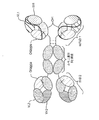
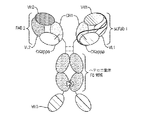
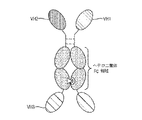


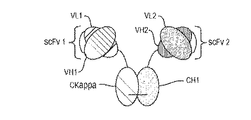


Classifications
-
- C—CHEMISTRY; METALLURGY
- C07—ORGANIC CHEMISTRY
- C07K—PEPTIDES
- C07K16/00—Immunoglobulins [IG], e.g. monoclonal or polyclonal antibodies
- C07K16/18—Immunoglobulins [IG], e.g. monoclonal or polyclonal antibodies against material from animals or humans
- C07K16/28—Immunoglobulins [IG], e.g. monoclonal or polyclonal antibodies against material from animals or humans against receptors, cell surface antigens or cell surface determinants
- C07K16/2803—Immunoglobulins [IG], e.g. monoclonal or polyclonal antibodies against material from animals or humans against receptors, cell surface antigens or cell surface determinants against the immunoglobulin superfamily
-
- A—HUMAN NECESSITIES
- A61—MEDICAL OR VETERINARY SCIENCE; HYGIENE
- A61K—PREPARATIONS FOR MEDICAL, DENTAL OR TOILETRY PURPOSES
- A61K39/00—Medicinal preparations containing antigens or antibodies
- A61K39/395—Antibodies; Immunoglobulins; Immune serum, e.g. antilymphocytic serum
- A61K39/39533—Antibodies; Immunoglobulins; Immune serum, e.g. antilymphocytic serum against materials from animals
- A61K39/3955—Antibodies; Immunoglobulins; Immune serum, e.g. antilymphocytic serum against materials from animals against proteinaceous materials, e.g. enzymes, hormones, lymphokines
-
- A—HUMAN NECESSITIES
- A61—MEDICAL OR VETERINARY SCIENCE; HYGIENE
- A61P—SPECIFIC THERAPEUTIC ACTIVITY OF CHEMICAL COMPOUNDS OR MEDICINAL PREPARATIONS
- A61P1/00—Drugs for disorders of the alimentary tract or the digestive system
- A61P1/04—Drugs for disorders of the alimentary tract or the digestive system for ulcers, gastritis or reflux esophagitis, e.g. antacids, inhibitors of acid secretion, mucosal protectants
-
- A—HUMAN NECESSITIES
- A61—MEDICAL OR VETERINARY SCIENCE; HYGIENE
- A61P—SPECIFIC THERAPEUTIC ACTIVITY OF CHEMICAL COMPOUNDS OR MEDICINAL PREPARATIONS
- A61P29/00—Non-central analgesic, antipyretic or antiinflammatory agents, e.g. antirheumatic agents; Non-steroidal antiinflammatory drugs [NSAID]
-
- A—HUMAN NECESSITIES
- A61—MEDICAL OR VETERINARY SCIENCE; HYGIENE
- A61P—SPECIFIC THERAPEUTIC ACTIVITY OF CHEMICAL COMPOUNDS OR MEDICINAL PREPARATIONS
- A61P3/00—Drugs for disorders of the metabolism
- A61P3/08—Drugs for disorders of the metabolism for glucose homeostasis
- A61P3/10—Drugs for disorders of the metabolism for glucose homeostasis for hyperglycaemia, e.g. antidiabetics
-
- A—HUMAN NECESSITIES
- A61—MEDICAL OR VETERINARY SCIENCE; HYGIENE
- A61P—SPECIFIC THERAPEUTIC ACTIVITY OF CHEMICAL COMPOUNDS OR MEDICINAL PREPARATIONS
- A61P31/00—Antiinfectives, i.e. antibiotics, antiseptics, chemotherapeutics
- A61P31/12—Antivirals
-
- C—CHEMISTRY; METALLURGY
- C07—ORGANIC CHEMISTRY
- C07K—PEPTIDES
- C07K14/00—Peptides having more than 20 amino acids; Gastrins; Somatostatins; Melanotropins; Derivatives thereof
- C07K14/435—Peptides having more than 20 amino acids; Gastrins; Somatostatins; Melanotropins; Derivatives thereof from animals; from humans
- C07K14/52—Cytokines; Lymphokines; Interferons
- C07K14/54—Interleukins [IL]
- C07K14/55—IL-2
-
- C—CHEMISTRY; METALLURGY
- C07—ORGANIC CHEMISTRY
- C07K—PEPTIDES
- C07K14/00—Peptides having more than 20 amino acids; Gastrins; Somatostatins; Melanotropins; Derivatives thereof
- C07K14/435—Peptides having more than 20 amino acids; Gastrins; Somatostatins; Melanotropins; Derivatives thereof from animals; from humans
- C07K14/705—Receptors; Cell surface antigens; Cell surface determinants
- C07K14/70503—Immunoglobulin superfamily
- C07K14/70532—B7 molecules, e.g. CD80, CD86
-
- C—CHEMISTRY; METALLURGY
- C07—ORGANIC CHEMISTRY
- C07K—PEPTIDES
- C07K16/00—Immunoglobulins [IG], e.g. monoclonal or polyclonal antibodies
- C07K16/18—Immunoglobulins [IG], e.g. monoclonal or polyclonal antibodies against material from animals or humans
- C07K16/24—Immunoglobulins [IG], e.g. monoclonal or polyclonal antibodies against material from animals or humans against cytokines, lymphokines or interferons
- C07K16/244—Interleukins [IL]
- C07K16/246—IL-2
-
- C—CHEMISTRY; METALLURGY
- C07—ORGANIC CHEMISTRY
- C07K—PEPTIDES
- C07K16/00—Immunoglobulins [IG], e.g. monoclonal or polyclonal antibodies
- C07K16/18—Immunoglobulins [IG], e.g. monoclonal or polyclonal antibodies against material from animals or humans
- C07K16/28—Immunoglobulins [IG], e.g. monoclonal or polyclonal antibodies against material from animals or humans against receptors, cell surface antigens or cell surface determinants
- C07K16/2803—Immunoglobulins [IG], e.g. monoclonal or polyclonal antibodies against material from animals or humans against receptors, cell surface antigens or cell surface determinants against the immunoglobulin superfamily
- C07K16/2818—Immunoglobulins [IG], e.g. monoclonal or polyclonal antibodies against material from animals or humans against receptors, cell surface antigens or cell surface determinants against the immunoglobulin superfamily against CD28 or CD152
-
- C—CHEMISTRY; METALLURGY
- C07—ORGANIC CHEMISTRY
- C07K—PEPTIDES
- C07K16/00—Immunoglobulins [IG], e.g. monoclonal or polyclonal antibodies
- C07K16/18—Immunoglobulins [IG], e.g. monoclonal or polyclonal antibodies against material from animals or humans
- C07K16/28—Immunoglobulins [IG], e.g. monoclonal or polyclonal antibodies against material from animals or humans against receptors, cell surface antigens or cell surface determinants
- C07K16/2803—Immunoglobulins [IG], e.g. monoclonal or polyclonal antibodies against material from animals or humans against receptors, cell surface antigens or cell surface determinants against the immunoglobulin superfamily
- C07K16/2827—Immunoglobulins [IG], e.g. monoclonal or polyclonal antibodies against material from animals or humans against receptors, cell surface antigens or cell surface determinants against the immunoglobulin superfamily against B7 molecules, e.g. CD80, CD86
-
- C—CHEMISTRY; METALLURGY
- C07—ORGANIC CHEMISTRY
- C07K—PEPTIDES
- C07K16/00—Immunoglobulins [IG], e.g. monoclonal or polyclonal antibodies
- C07K16/18—Immunoglobulins [IG], e.g. monoclonal or polyclonal antibodies against material from animals or humans
- C07K16/28—Immunoglobulins [IG], e.g. monoclonal or polyclonal antibodies against material from animals or humans against receptors, cell surface antigens or cell surface determinants
- C07K16/2803—Immunoglobulins [IG], e.g. monoclonal or polyclonal antibodies against material from animals or humans against receptors, cell surface antigens or cell surface determinants against the immunoglobulin superfamily
- C07K16/2833—Immunoglobulins [IG], e.g. monoclonal or polyclonal antibodies against material from animals or humans against receptors, cell surface antigens or cell surface determinants against the immunoglobulin superfamily against MHC-molecules, e.g. HLA-molecules
-
- C—CHEMISTRY; METALLURGY
- C07—ORGANIC CHEMISTRY
- C07K—PEPTIDES
- C07K19/00—Hybrid peptides, i.e. peptides covalently bound to nucleic acids, or non-covalently bound protein-protein complexes
-
- A—HUMAN NECESSITIES
- A61—MEDICAL OR VETERINARY SCIENCE; HYGIENE
- A61K—PREPARATIONS FOR MEDICAL, DENTAL OR TOILETRY PURPOSES
- A61K39/00—Medicinal preparations containing antigens or antibodies
- A61K2039/505—Medicinal preparations containing antigens or antibodies comprising antibodies
-
- A—HUMAN NECESSITIES
- A61—MEDICAL OR VETERINARY SCIENCE; HYGIENE
- A61K—PREPARATIONS FOR MEDICAL, DENTAL OR TOILETRY PURPOSES
- A61K38/00—Medicinal preparations containing peptides
-
- A—HUMAN NECESSITIES
- A61—MEDICAL OR VETERINARY SCIENCE; HYGIENE
- A61P—SPECIFIC THERAPEUTIC ACTIVITY OF CHEMICAL COMPOUNDS OR MEDICINAL PREPARATIONS
- A61P37/00—Drugs for immunological or allergic disorders
- A61P37/02—Immunomodulators
- A61P37/06—Immunosuppressants, e.g. drugs for graft rejection
-
- C—CHEMISTRY; METALLURGY
- C07—ORGANIC CHEMISTRY
- C07K—PEPTIDES
- C07K2317/00—Immunoglobulins specific features
- C07K2317/20—Immunoglobulins specific features characterized by taxonomic origin
- C07K2317/21—Immunoglobulins specific features characterized by taxonomic origin from primates, e.g. man
-
- C—CHEMISTRY; METALLURGY
- C07—ORGANIC CHEMISTRY
- C07K—PEPTIDES
- C07K2317/00—Immunoglobulins specific features
- C07K2317/30—Immunoglobulins specific features characterized by aspects of specificity or valency
-
- C—CHEMISTRY; METALLURGY
- C07—ORGANIC CHEMISTRY
- C07K—PEPTIDES
- C07K2317/00—Immunoglobulins specific features
- C07K2317/30—Immunoglobulins specific features characterized by aspects of specificity or valency
- C07K2317/31—Immunoglobulins specific features characterized by aspects of specificity or valency multispecific
-
- C—CHEMISTRY; METALLURGY
- C07—ORGANIC CHEMISTRY
- C07K—PEPTIDES
- C07K2317/00—Immunoglobulins specific features
- C07K2317/40—Immunoglobulins specific features characterized by post-translational modification
- C07K2317/41—Glycosylation, sialylation, or fucosylation
-
- C—CHEMISTRY; METALLURGY
- C07—ORGANIC CHEMISTRY
- C07K—PEPTIDES
- C07K2317/00—Immunoglobulins specific features
- C07K2317/50—Immunoglobulins specific features characterized by immunoglobulin fragments
- C07K2317/52—Constant or Fc region; Isotype
-
- C—CHEMISTRY; METALLURGY
- C07—ORGANIC CHEMISTRY
- C07K—PEPTIDES
- C07K2317/00—Immunoglobulins specific features
- C07K2317/50—Immunoglobulins specific features characterized by immunoglobulin fragments
- C07K2317/52—Constant or Fc region; Isotype
- C07K2317/524—CH2 domain
-
- C—CHEMISTRY; METALLURGY
- C07—ORGANIC CHEMISTRY
- C07K—PEPTIDES
- C07K2317/00—Immunoglobulins specific features
- C07K2317/60—Immunoglobulins specific features characterized by non-natural combinations of immunoglobulin fragments
- C07K2317/62—Immunoglobulins specific features characterized by non-natural combinations of immunoglobulin fragments comprising only variable region components
- C07K2317/622—Single chain antibody (scFv)
-
- C—CHEMISTRY; METALLURGY
- C07—ORGANIC CHEMISTRY
- C07K—PEPTIDES
- C07K2317/00—Immunoglobulins specific features
- C07K2317/60—Immunoglobulins specific features characterized by non-natural combinations of immunoglobulin fragments
- C07K2317/64—Immunoglobulins specific features characterized by non-natural combinations of immunoglobulin fragments comprising a combination of variable region and constant region components
-
- C—CHEMISTRY; METALLURGY
- C07—ORGANIC CHEMISTRY
- C07K—PEPTIDES
- C07K2317/00—Immunoglobulins specific features
- C07K2317/70—Immunoglobulins specific features characterized by effect upon binding to a cell or to an antigen
-
- C—CHEMISTRY; METALLURGY
- C07—ORGANIC CHEMISTRY
- C07K—PEPTIDES
- C07K2317/00—Immunoglobulins specific features
- C07K2317/70—Immunoglobulins specific features characterized by effect upon binding to a cell or to an antigen
- C07K2317/71—Decreased effector function due to an Fc-modification
-
- C—CHEMISTRY; METALLURGY
- C07—ORGANIC CHEMISTRY
- C07K—PEPTIDES
- C07K2317/00—Immunoglobulins specific features
- C07K2317/70—Immunoglobulins specific features characterized by effect upon binding to a cell or to an antigen
- C07K2317/73—Inducing cell death, e.g. apoptosis, necrosis or inhibition of cell proliferation
-
- C—CHEMISTRY; METALLURGY
- C07—ORGANIC CHEMISTRY
- C07K—PEPTIDES
- C07K2317/00—Immunoglobulins specific features
- C07K2317/70—Immunoglobulins specific features characterized by effect upon binding to a cell or to an antigen
- C07K2317/75—Agonist effect on antigen
-
- C—CHEMISTRY; METALLURGY
- C07—ORGANIC CHEMISTRY
- C07K—PEPTIDES
- C07K2319/00—Fusion polypeptide
-
- C—CHEMISTRY; METALLURGY
- C07—ORGANIC CHEMISTRY
- C07K—PEPTIDES
- C07K2319/00—Fusion polypeptide
- C07K2319/30—Non-immunoglobulin-derived peptide or protein having an immunoglobulin constant or Fc region, or a fragment thereof, attached thereto
-
- C—CHEMISTRY; METALLURGY
- C07—ORGANIC CHEMISTRY
- C07K—PEPTIDES
- C07K2319/00—Fusion polypeptide
- C07K2319/33—Fusion polypeptide fusions for targeting to specific cell types, e.g. tissue specific targeting, targeting of a bacterial subspecies
-
- C—CHEMISTRY; METALLURGY
- C07—ORGANIC CHEMISTRY
- C07K—PEPTIDES
- C07K2319/00—Fusion polypeptide
- C07K2319/70—Fusion polypeptide containing domain for protein-protein interaction
- C07K2319/74—Fusion polypeptide containing domain for protein-protein interaction containing a fusion for binding to a cell surface receptor
- C07K2319/75—Fusion polypeptide containing domain for protein-protein interaction containing a fusion for binding to a cell surface receptor containing a fusion for activation of a cell surface receptor, e.g. thrombopoeitin, NPY and other peptide hormones
Landscapes
- Health & Medical Sciences (AREA)
- Chemical & Material Sciences (AREA)
- Organic Chemistry (AREA)
- Immunology (AREA)
- Life Sciences & Earth Sciences (AREA)
- Medicinal Chemistry (AREA)
- General Health & Medical Sciences (AREA)
- Biochemistry (AREA)
- Proteomics, Peptides & Aminoacids (AREA)
- Genetics & Genomics (AREA)
- Molecular Biology (AREA)
- Biophysics (AREA)
- Public Health (AREA)
- Veterinary Medicine (AREA)
- Animal Behavior & Ethology (AREA)
- Pharmacology & Pharmacy (AREA)
- General Chemical & Material Sciences (AREA)
- Nuclear Medicine, Radiotherapy & Molecular Imaging (AREA)
- Chemical Kinetics & Catalysis (AREA)
- Diabetes (AREA)
- Bioinformatics & Cheminformatics (AREA)
- Engineering & Computer Science (AREA)
- Gastroenterology & Hepatology (AREA)
- Zoology (AREA)
- Toxicology (AREA)
- Endocrinology (AREA)
- Emergency Medicine (AREA)
- Virology (AREA)
- Obesity (AREA)
- Hematology (AREA)
- Communicable Diseases (AREA)
- Oncology (AREA)
- Rheumatology (AREA)
- Pain & Pain Management (AREA)
- Epidemiology (AREA)
- Mycology (AREA)
- Microbiology (AREA)
- Cell Biology (AREA)
- Peptides Or Proteins (AREA)
- Medicines That Contain Protein Lipid Enzymes And Other Medicines (AREA)
Abstract
部位特異的、または、局所的な免疫特権を付与するための方法及び化合物。
【選択図】図1Methods and compounds for conferring site-specific or local immune privilege.
[Selection diagram] Figure 1
Description
関連出願への相互参照
本出願は、2017年5月24日に出願した、米国仮出願第62/510,586号、2017年5月25日に出願した、米国仮出願第62/510,816号、2017年9月13日に出願した、米国仮出願第62/558,175号、及び、2017年12月6日に出願した、米国仮出願第62/595,352号の優先権を主張するものであって、本明細書の一部を構成するものとして、それら出願の全内容を援用する。
Cross Reference to Related Applications This application is filed May 24, 2017, US Provisional Application No. 62/510,586, filed May 25, 2017, US Provisional Application No. 62/510,816. No. 62/558,175, filed September 13, 2017, and US provisional application No. 62/595,352, filed December 6, 2017. The entire contents of those applications are incorporated herein by reference as a part of this specification.
本明細書で提供する実施形態は、例えば、局所的または標的化免疫特権のための方法及び組成物に関する。 Embodiments provided herein relate, for example, to methods and compositions for topical or targeted immune privilege.
望ましくない免疫応答の事例、例えば、移植組織の拒絶、または、自己免疫疾患などは、世界中の何百万もの人々での主要な健康問題を構成している。臓器移植の長期転帰の多くには、慢性拒絶反応と、移植臓器の最終的な失敗という特徴がある。20を超える自己免疫障害が公知であり、本質的に身体のすべての臓器に影響が及び、そして、北米だけで5千万人を超える人々に影響が及んでいる。双方の状況において病原性免疫応答に対処するために使用されている広範囲に活性を示す免疫抑制薬には、深刻な副作用がある。 Examples of unwanted immune responses, such as transplant rejection or autoimmune diseases, constitute a major health problem in millions of people worldwide. Many of the long-term outcomes of organ transplants are characterized by chronic rejection and eventual failure of the transplanted organ. Over 20 autoimmune disorders are known, affecting essentially all organs of the body, and affecting over 50 million people in North America alone. The broadly active immunosuppressive drugs used to address the pathogenic immune response in both situations have serious side effects.
本明細書では、部位特異的免疫特権を提供する方法、及び、治療化合物を開示する。本明細書で開示した実施形態は、本節の一部を構成するものとして援用する。 Disclosed herein are methods of providing site-specific immune privilege and therapeutic compounds. The embodiments disclosed herein are incorporated as part of this section.
一部の実施形態では、当該治療化合物は:
1)特異的な標的部分であって
a)例えば、ドナー標的に優先的に(レシピエント抗原への結合と比較して優先的に)結合し、かつ、ドナー由来の移植組織、例えば、臓器に対して部位特異的免疫特権を付与するのに有用である、ドナー特異的標的部分;または
b)例えば、対象の標的組織に優先的に(対象の非標的組織と比較して優先的に)結合し、かつ、例えば、自己免疫障害において、)望ましくない免疫攻撃を受けている対象組織に対して部位特異的免疫特権を付与するのに有用である、組織特異的標的部分、から選択した当該特異的な標的部分;及び
2)エフェクター結合/調節部分であって、
(a)免疫細胞抑制性分子結合/調節部分(本明細書ではICIM結合/調節部分と称する);
(b)免疫抑制性免疫細胞結合/調節部分(本明細書ではIIC結合/調節部分と称する);
(c)治療化合物の一部として、例えば、当該標的の近傍に、当該標的の免疫系による攻撃を阻害または最小化する物質を提供することで、免疫抑制局所微小環境を促すエフェクター結合/調節部分(本明細書ではSM結合/調節部分と称する);または
(d)免疫細胞刺激性分子結合/調節部分(本明細書ではICSM結合/調節部分と称する)であって、当該ICSMは、例えば、共刺激性分子とそのカウンター構造との間の相互作用をブロックすることで、免疫活性化を阻害する、当該免疫細胞刺激性分子結合/調節部分、から選択したエフェクター結合/調節部分、
を含む、改変した多重特異性化合物、例えば、改変した二重特異性分子、例えば、改変した二重特異性抗体分子を含む。
In some embodiments, the therapeutic compound is:
1) a specific targeting moiety a), for example, that binds preferentially (preferentially as compared to binding to the recipient antigen) to the donor target and to the donor-derived transplant tissue, eg organ A donor-specific targeting moiety, which is useful for conferring site-specific immunoprivilege against; or b) eg, preferentially binds to a target tissue of interest (preferentially as compared to a non-target tissue of interest). And a tissue-specific targeting moiety that is useful for conferring site-specific immunoprivilege to a target tissue undergoing an unwanted immune attack (eg, in an autoimmune disorder). A targeting moiety; and 2) an effector binding/regulatory moiety,
(A) an immune cell inhibitory molecule binding/regulatory moiety (referred to herein as an ICIM binding/regulatory moiety);
(B) an immunosuppressive immune cell binding/regulatory moiety (referred to herein as an IIC binding/regulatory moiety);
(C) As part of a therapeutic compound, for example, an effector binding/regulatory moiety that promotes immunosuppressive local microenvironment by providing in the vicinity of the target a substance that inhibits or minimizes attack by the immune system of the target. (Herein referred to as SM binding/modulating moiety); or (d) an immune cell stimulating molecule binding/modulating moiety (herein referred to as ICSM binding/modulating moiety), wherein the ICSM is, for example: An effector binding/regulatory moiety selected from the immune cell stimulating molecule binding/regulatory moiety, which inhibits immune activation by blocking the interaction between the costimulatory molecule and its counter structure,
A modified multispecific compound, eg, a modified bispecific molecule, eg, a modified bispecific antibody molecule.
エフェクター結合/調節部分は、クラスa、b、及び、cの複数に分類することができる。例えば、以下に示したように、CTLA4結合分子を、カテゴリーaとbの双方に分類する。 Effector binding/regulatory moieties can be divided into classes a, b, and c. For example, as shown below, CTLA4 binding molecules are classified into both categories a and b.
一部の実施形態では、当該治療化合物は、ICIM結合/調節部分を含む。一部の実施形態では、ICIM結合/調節分子は、抑制性分子、例えば、抑制性免疫チェックポイント分子に結合及び刺激し、あるいは、免疫細胞、例えば、細胞傷害性T細胞、B細胞、NK細胞、または、骨髄細胞、例えば、好中球、または、マクロファージの活性を阻害または抑制する。 In some embodiments, the therapeutic compound comprises an ICIM binding/modulating moiety. In some embodiments, the ICIM binding/modulating molecule binds and stimulates an inhibitory molecule, eg, an inhibitory immune checkpoint molecule, or an immune cell, eg, a cytotoxic T cell, B cell, NK cell. Alternatively, it inhibits or suppresses the activity of bone marrow cells such as neutrophils or macrophages.
一部の実施形態では、当該治療化合物は:
1)特異的な標的部分、例えば、ドナー特異的標的部分(ドナー標的に結合し、かつ、ドナー由来の移植組織、例えば、臓器に部位特異的免疫特権を付与するのに有用である)、または、組織特異的標的部分(例えば、自己免疫障害において、望ましくない免疫攻撃を受けている対象組織に対して部位特異的免疫特権を付与するのに有用である);及び
2)免疫細胞でのエフェクター分子、例えば、抑制性受容体、例えば、PD−1に結合するICIM結合/調節部分を含むエフェクター結合/調節部分であって、当該特異的な標的部分が、その標的に結合し、かつ、ICIM結合/調節部分が、免疫細胞でのエフェクター分子に結合すると、免疫細胞活性、例えば、免疫攻撃を開始する当該免疫細胞の能力を、例えば、当該免疫細胞でのエフェクター分子のクラスタリングに依存する阻害シグナルを介して、ダウンレギュレートする、当該エフェクター分子、を含む、改変した多重特異性化合物、例えば、改変した二重特異性分子、例えば、改変した二重特異性抗体分子を含む。一部の実施形態では、当該改変した多重特異的化合物は、さらなる結合部分を含んでおり、3つ、または、4つなど、これらの個数に限定されない、2つ以上の特異的分子に結合する。
In some embodiments, the therapeutic compound is:
1) a specific targeting moiety, such as a donor-specific targeting moiety, which is useful for binding a donor target and conferring site-specific immunoprivilege on a donor-derived transplant, such as an organ. , Tissue-specific targeting moieties (e.g., in autoimmune disorders, useful for conferring site-specific immune privilege to target tissues undergoing unwanted immune attack); and 2) effectors on immune cells. Effector binding/modulating moiety comprising an ICIM binding/modulating moiety that binds to a molecule, eg an inhibitory receptor, eg PD-1, wherein said specific targeting moiety binds to its target and ICIM When the binding/modulating moiety binds to an effector molecule on an immune cell, it inhibits immune cell activity, eg, the ability of the immune cell to initiate an immune attack, eg, an inhibitory signal that depends on clustering of the effector molecule on the immune cell. A modified multispecific compound, eg, a modified bispecific molecule, eg, a modified bispecific antibody molecule, which comprises down-regulating the effector molecule. In some embodiments, the modified multispecific compound comprises an additional binding moiety and binds to two or more specific molecules such as, but not limited to, three or four. ..
一部の実施形態では、当該治療化合物は、ICIM結合/調節部分を含み、かつ、以下の特性の1つまたは双方を有する:(a)免疫細胞のダウンレギュレーションのレベルは、当該治療化合物が、その標的に結合しない場合よりも、当該治療化合物が、その標的に結合する場合の方が高く;及び、(b)当該治療化合物は、細胞表面抑制性受容体、例えば、免疫細胞でのPD−1と結合した場合に、細胞表面抑制性受容体が、内因性リガンドに対して結合する能力を阻害しない、または、実質的に阻害しない。 In some embodiments, the therapeutic compound comprises an ICIM binding/modulating moiety, and has one or both of the following properties: (a) the level of downregulation of immune cells is The therapeutic compound binds to its target more often than it does not bind to its target; and (b) the therapeutic compound binds to cell surface inhibitory receptors such as PD- on immune cells. When bound to 1, the cell surface inhibitory receptor does not, or does not substantially, inhibit the ability to bind to an endogenous ligand.
一部の実施形態では、免疫細胞のダウンレギュレーションのレベルは、当該治療化合物が、その標的に結合していない場合よりも、当該治療化合物が、その標的に結合している場合の方が高い。実施形態では、標的結合治療化合物によるダウンレギュレーションのレベルは、その標的に結合していない場合に認められるものよりも、1.5倍、2倍、4倍、8倍、または、10倍以上も高い。実施形態では、治療化合物は、標的に結合していない場合、免疫細胞をダウンレギュレートせず、または、顕著にダウンレギュレートしない。したがって、抑制性受容体、例えば、PD−1の無差別または望ましくないアゴニズムを、最小化または排除する。例えば、当該治療化合物が、免疫細胞に結合しているが、標的部分に結合していない場合、当該治療化合物による抑制性免疫チェックポイント分子の関与が、ダウンレギュレーションをもたらすことはなく、または、実質的なダウンレギュレーションをもたらすことはなく、例えば、当該治療化合物が結合する免疫細胞の抑制性受容体は、当該免疫細胞のダウンレギュレーション、または、実質的に阻害をするのに十分な阻害シグナルを招くほど集団化されておらず、または、十分に集団化されていない。 In some embodiments, the level of downregulation of immune cells is higher when the therapeutic compound is bound to its target than when the therapeutic compound is not bound to its target. In embodiments, the level of downregulation by the target-binding therapeutic compound is 1.5-fold, 2-fold, 4-fold, 8-fold, or 10-fold or more than that observed without binding to its target. high. In embodiments, the therapeutic compound does not downregulate or significantly downregulate immune cells when not bound to the target. Thus, indiscriminate or undesired agonism of inhibitory receptors, such as PD-1, is minimized or eliminated. For example, if the therapeutic compound is bound to immune cells but not to the targeting moiety, the involvement of the suppressive immune checkpoint molecule by the therapeutic compound does not result in downregulation or is substantially Inhibitory receptor of the immune cell to which the therapeutic compound binds results in an inhibitory signal sufficient to down regulate or substantially inhibit the immune cell. Not very or very well clustered.
実施形態では、当該治療化合物は、細胞表面抑制性受容体、例えば、免疫細胞のPD−1と結合した場合、細胞表面抑制性受容体が、内因性リガンドに結合する能力を阻害しない、または、実質的に阻害しない。一部の実施形態では、当該治療化合物は、PD−1のPD−L1/2結合部位に結合することができる。したがって、抑制性受容体、例えば、PD−1の無差別または望ましくないアンタゴニズムは最小化または排除される。実施形態では、当該治療化合物の抑制性受容体、例えば、免疫細胞のPD−1に対する結合は、天然のリガンド、例えば、PD−L1に結合する抑制性受容体の能力を妨げない、または、実質的に妨げない。実施形態では、当該治療化合物の抑制性受容体、例えば、免疫に関するPD−1に対する結合は、天然のリガンド、例えば、PD−L1の結合を、治療化合物の非存在下で認められる50、40、30、20、10、または、5%未満にまで減らす。 In embodiments, the therapeutic compound does not inhibit the ability of the cell surface inhibitory receptor to bind an endogenous ligand when it binds to a cell surface inhibitory receptor, such as PD-1 of immune cells, or Substantially no inhibition. In some embodiments, the therapeutic compound is capable of binding to the PD-L1/2 binding site of PD-1. Thus, indiscriminate or unwanted antagonism of inhibitory receptors, such as PD-1, is minimized or eliminated. In embodiments, binding of the therapeutic compound to an inhibitory receptor, eg, PD-1, of immune cells does not interfere with the ability of the inhibitory receptor to bind a natural ligand, eg, PD-L1, or is substantially Does not interfere. In embodiments, binding of the therapeutic compound to an inhibitory receptor, eg, PD-1 for immunity, is associated with binding of a natural ligand, eg, PD-L1, in the absence of the therapeutic compound, 50, 40, Reduce to less than 30, 20, 10, or 5%.
一部の実施形態では、当該治療化合物は、ICIM結合/調節部分を含み、そして、治療有効用量で対象に投与した場合に、あるタイプのすべての免疫細胞、例えば、すべてのT細胞における抑制性受容体の無差別なアゴニズムが可能であれば、許容できないレベルの全身性免疫活性化を招くことはなく、または、当該抑制性受容体と、その天然リガンドとの相互作用に当該治療化合物が拮抗した場合に起こり得る、許容できないレベルの全身性免疫抑制を招かない。 In some embodiments, the therapeutic compound comprises an ICIM binding/modulating moiety, and is inhibitory on all immune cells of a type, eg, all T cells, when administered to a subject at a therapeutically effective dose. Indiscriminate agonism of the receptor does not lead to unacceptable levels of systemic immune activation, or the therapeutic compound antagonizes the interaction of the inhibitory receptor with its natural ligand. Does not lead to unacceptable levels of systemic immunosuppression that may occur if
理論に縛られることを望むものではないが、対象に対して投与をすると、ICIM結合/調節部分を含む治療化合物は、4つの状態;i)未結合で、かつ、自由溶液にある状態;ii)ICIM結合/調節部分を介して、免疫細胞、例えば、T細胞の表面に発現した抑制性受容体だけに結合した状態;iii)当該標的部分を介して、標的移植片または対象組織の表面だけに結合した状態;及び、iv)当該標的部分を介して、標的移植片または対象組織の表面に結合し、かつ、当該ICIM結合/調節部分を介して、免疫細胞、例えば、T細胞を発現した抑制性受容体に結合した状態、のいずれか1つで存在することができる、と考えられる。当該治療化合物を、当該標的部分を介して、当該標的移植片または対象組織だけに結合する場合(iii)、そのものは、当該標的移植片または組織に影響を及ぼすことはなく、または、実質的に影響を及ぼさない。当該治療化合物を、当該標的部分を介して、当該標的移植片または組織に結合させ、かつ、当該ICIM結合/調節部分を介して、免疫細胞、例えば、T細胞で発現させた抑制性受容体に結合すると(iv)、そのものは、当該標的臓器または組織に対して免疫特権を与える。理論に縛られることを望むものではないが、このことは、例えば、複数の治療化合物分子を高密度及び高原子価で固定化することで、その表面に治療化合物分子を多量体化する標的移植組織またはドナー組織を達成する、と考えられる。当該治療化合物分子の多量体化は、当該治療化合物のICIM結合/調節部分に対して、免疫細胞、例えば、病原性T細胞の表面に発現した抑制性受容体のクラスター化を促すこと、そして、当該免疫細胞に作用して、沈黙させる、または、ダウンレギュレートさせる阻害シグナルの伝達を促す、ことを可能にする。例えば、T細胞の場合、PD−L1分子を含むICIM結合/調節部分を含む治療化合物、または、抗PD−1抗体を使用することができる。当該標的に対する複数の治療化合物分子の結合は、当該治療化合物分子の多量体化を招くものであり、このことは、PD−L1分子、または、機能性抗PD−1抗体分子が、T細胞に関してPD−1のクラスター化をもたらす。かようなクラスター化が、当該T細胞でのT細胞受容体に対して、当該標的MHCによる抗原提示の状況下で起こると、ネガティブシグナルが生成され、そして、当該T細胞が不活性化される。実施形態では、当該ICIM結合/調節部分、例えば、機能性抗体分子は、当該エフェクター分子に結合するが、当該エフェクター分子と、その天然リガンド(複数可)との相互作用を阻害しない、または、実質的に阻害しない。 Without wishing to be bound by theory, upon administration to a subject, a therapeutic compound comprising an ICIM binding/modulating moiety has four states; i) unbound and in free solution; ii. ) Bound to only inhibitory receptors expressed on the surface of immune cells, eg T cells, via the ICIM binding/modulating moiety; iii) only the surface of the target graft or target tissue via the targeting moiety. And iv) bound to the surface of the target graft or target tissue via the target moiety and expressed immune cells, eg, T cells, via the ICIM binding/modulating moiety. It is believed that it can exist in any one of the following states: bound to an inhibitory receptor. When the therapeutic compound binds only to the target graft or target tissue via the targeting moiety (iii), it does not affect the target graft or tissue, or substantially Has no effect. The therapeutic compound is bound to the target graft or tissue via the targeting moiety and to an inhibitory receptor expressed on immune cells, eg T cells, via the ICIM binding/modulating moiety. When combined (iv), it confers immunoprivilege on the target organ or tissue. Without wishing to be bound by theory, this may be the case, for example, in targeted implantation where multiple therapeutic compound molecules are immobilized at high densities and valences, resulting in multimerization of therapeutic compound molecules on their surface. Achieving tissue or donor tissue. Multimerization of the therapeutic compound molecule facilitates the ICIM binding/modulating portion of the therapeutic compound to cluster inhibitory receptors expressed on the surface of immune cells, eg, pathogenic T cells, and It is possible to act on the immune cell to promote the transmission of an inhibitory signal that silences or downregulates. For example, in the case of T cells, therapeutic compounds containing ICIM binding/modulating moieties, including PD-L1 molecules, or anti-PD-1 antibodies can be used. Binding of multiple therapeutic compound molecules to the target results in multimerization of the therapeutic compound molecules, which means that PD-L1 molecules or functional anti-PD-1 antibody molecules are associated with T cells. It results in PD-1 clustering. When such clustering occurs on the T cell receptor on the T cell in the context of antigen presentation by the target MHC, a negative signal is generated and the T cell is inactivated. .. In embodiments, the ICIM binding/modulating moiety, eg, a functional antibody molecule, binds to the effector molecule but does not interfere with the interaction of the effector molecule with its natural ligand(s), or Does not interfere.
一部の実施形態では、当該治療化合物は、免疫抑制性免疫細胞、例えば、Treg、例えば、Foxp3+CD25+Tregを、標的標的組織の近傍で、結合し、かつ、補充する、IIC結合/調節部分を含む。 In some embodiments, the therapeutic compound comprises an IIC binding/modulating moiety that binds and recruits immunosuppressive immune cells, eg, Tregs, eg, Foxp3+CD25+Tregs, in the vicinity of the target target tissue.
一部の実施形態では、当該治療化合物は、物質、例えば、免疫応答を調節する可溶性分子、例えば、ATPまたはAMPを調節する、例えば、結合及び阻害する、隔離する、分解する、さもなければ、中和する、SM結合/調節部分を含む。 In some embodiments, the therapeutic compound modulates, eg, binds and inhibits, sequesters, degrades, or otherwise dissolves a substance, eg, a soluble molecule that modulates an immune response, such as ATP or AMP. Includes a SM binding/regulatory moiety that neutralizes.
一部の実施形態では、当該治療化合物は、免疫細胞での標的に特異的な標的部分を含む。一部の実施形態では、当該標的は、本明細書に記載した通りのものである。一部の実施形態では、当該標的は、MAdCAMである。一部の実施形態では、当該標的部分は、MAdCAMに結合する抗体である。 In some embodiments, the therapeutic compound comprises a targeting moiety that is specific for targeting in an immune cell. In some embodiments, the target is as described herein. In some embodiments, the target is MAdCAM. In some embodiments, the targeting moiety is an antibody that binds MAdCAM.
一部の実施形態では、当該治療化合物は、刺激性分子、例えば、共刺激性分子に結合するICSM結合/調節部分を含む。一部の実施形態では、当該ICSMは、共刺激性分子のカウンター構造を阻害する。当該共刺激性分子、または、当該共刺激性分子のカウンター構造のいずれかを結合/調節することは、免疫細胞が免疫応答を開始する能力をダウンレギュレートする上で役立つ。一部の実施形態では、当該ICSM結合/調節部分は、刺激性分子、例えば、免疫細胞での共刺激性分子、例えば、T細胞でのOX40、または、当該刺激性分子のカウンターメンバー、例えば、NK細胞、マスト細胞、樹状細胞など、これらに限定されない免疫細胞、または、例えば、内皮細胞または平滑筋細胞などの非免疫細胞などの別の細胞でのOX40Lに結合することができる。 In some embodiments, the therapeutic compound comprises an stimulatory molecule, eg, an ICSM binding/modulating moiety that binds a costimulatory molecule. In some embodiments, the ICSM inhibits counterstructure of costimulatory molecules. Binding/modulating either the costimulatory molecule, or the counterstructure of the costimulatory molecule, helps to downregulate the ability of immune cells to mount an immune response. In some embodiments, the ICSM binding/modulating moiety is a stimulatory molecule, eg, a costimulatory molecule on immune cells, eg, OX40 on T cells, or a counter member of the stimulatory molecule, eg, It can bind to OX40L on immune cells such as, but not limited to, NK cells, mast cells, dendritic cells, or other cells such as non-immune cells such as endothelial cells or smooth muscle cells.
一部の実施形態では、当該治療化合物は、ドナー特異的標的部分を含み、そして、対象に移植したドナー移植組織に対して部位特異的免疫特権を付与する。一部の実施形態では、当該治療化合物は、組織特異的標的部分を含み、そして、対象の組織、例えば、自己免疫障害の望ましくない免疫応答を有する組織に対して部位特異的免疫特権を付与する。 In some embodiments, the therapeutic compound comprises a donor-specific targeting moiety and confers site-specific immunoprivilege to donor transplant tissue transplanted into the subject. In some embodiments, the therapeutic compound comprises a tissue-specific targeting moiety and confers site-specific immune privilege to a tissue of interest, eg, a tissue having an unwanted immune response to an autoimmune disorder. ..
当該標的部分は、免疫系から保護されるドナー移植または対象組織に特異的である。一部の実施形態では、当該エフェクター分子結合部分は、新たに生成した結合ドメイン、例えば、機能性抗体分子を含む。一部の実施形態では、当該エフェクター結合/調節部分は、免疫細胞、例えば、T細胞の表面に発現した抑制性受容体を認識する天然リガンドに由来するアミノ酸配列を含む。 The targeting moiety is specific to a donor transplant or target tissue that is protected from the immune system. In some embodiments, the effector molecule binding moiety comprises a newly generated binding domain, eg, a functional antibody molecule. In some embodiments, the effector binding/regulatory moiety comprises an amino acid sequence derived from a natural ligand that recognizes an inhibitory receptor expressed on the surface of immune cells, eg, T cells.
一部の実施形態では、当該治療化合物は、保護を受ける移植片またはドナー組織の近傍にある免疫細胞、例えば、T細胞を沈黙させるが、機能のために標的移植片またはドナー組織の存在を必要とするので、当該治療化合物は、当該標的の近くにない免疫細胞、例えば、T細胞を沈黙させない。このことは、当該治療化合物が、免疫細胞、例えば、T細胞が発現した抑制性受容体にだけ結合する場合とは対照的であり、この場合、機能面の影響はない。 In some embodiments, the therapeutic compound silences immune cells, eg, T cells, in the vicinity of the graft or donor tissue being protected, but requires the presence of the target graft or donor tissue for function. As such, the therapeutic compound does not silence immune cells, such as T cells, that are not near the target. This is in contrast to the case where the therapeutic compound binds only to suppressive receptors expressed by immune cells, eg T cells, where there is no functional effect.
本明細書で説明する方法と治療化合物は、少なくとも部分的に、部位特異的免疫特権を提供することに基づいている。本明細書に記載した治療化合物、及び、それらの使用方法は、臨床環境、例えば、免疫応答の逆転及び抑制が望まれる場合に、自己免疫疾患、または、組織、例えば、臓器移植などにおける、免疫抑制治療薬の非部位特異的全身投与の最小化、例えば、抑制または排除を可能にする。異常な免疫系が引き起こす根本的な病態生理学が影響を受ける場合、広範に作用する免疫抑制剤は、臨床的に意味のある応答が可能であるが、患者の全身性免疫系機能を低下させるという、望ましくない効果をもたらす。正常に機能する免疫システムの役割は、周囲の環境に存在する病原性及び日和見性の生物の絶え間ない攻撃に対抗し、そして、健康な個体からがん細胞を絶えず除去することにあるので、慢性免疫抑制を受けている患者は、感染症やがんを発症するリスクが高い。本明細書に記載した方法及び治療化合物は、病理部位での病原性免疫応答だけを選択的に標的とし、減衰させ、抑制し、または、消滅させる一方で、その他の箇所での正常な全身免疫系機能の阻害を最小限に抑える治療法を提供する。 The methods and therapeutic compounds described herein are based, at least in part, on providing site-specific immune privilege. Therapeutic compounds described herein, and methods of their use, may be used in clinical settings such as autoimmune disease or in tissues, such as organ transplants, where reversal and suppression of the immune response is desired. Allows the minimization, eg suppression or elimination, of non-site-specific systemic administration of suppressive therapeutic agents. When the underlying pathophysiology of the aberrant immune system is affected, a broad-acting immunosuppressive drug may provide a clinically meaningful response but impair the systemic immune system function of the patient. Bring undesired effects. The role of the normally functioning immune system is to counter the constant attack of pathogenic and opportunistic organisms present in the surrounding environment and to constantly eliminate cancer cells from healthy individuals, thus Patients who are immunosuppressed are at high risk of developing infections and cancer. The methods and therapeutic compounds described herein selectively target, attenuate, suppress, or eliminate only the pathogenic immune response at the site of pathology, while normal systemic immunity elsewhere. Provide a treatment that minimizes inhibition of system function.
一部の実施形態では、当該治療化合物を、本明細書で提供したようにして提供する。一部の実施形態では、当該化合物は、i)特異的標的部分であって:a)例えば、ドナー標的に優先的に結合するドナー特異的標的部分;または、b)例えば、対象の標的組織に優先的に結合する組織特異的標的部分、から選択した当該特異的標的部分;及び、ii)エフェクター結合/調節部分であって;(a)免疫細胞抑制性分子結合/調節部分(ICIM結合/調節部分);(b)免疫抑制性免疫細胞結合/調節部分(IIC結合/調節部分);または、(c)治療化合物の一部として、例えば、当該標的の近傍に、当該標的の免疫系による攻撃を阻害または最小化する物質を提供することで、免疫抑制局所微小環境を促すエフェクター結合/調節部分(SM結合/調節部分)、から選択した当該エフェクター結合/調節部分を含む。 In some embodiments, the therapeutic compound is provided as provided herein. In some embodiments, the compound is i) a specific targeting moiety: a), eg, a donor specific targeting moiety that preferentially binds to a donor target; or b), eg, to a target tissue of interest. A specific targeting moiety selected from a tissue-specific targeting moiety that preferentially binds; and ii) an effector binding/modulating moiety; (a) an immune cell inhibitory molecule binding/modulating moiety (ICIM binding/modulating) Part); (b) an immunosuppressive immune cell binding/modulating moiety (IIC binding/modulating moiety); or (c) as part of a therapeutic compound, eg, in the vicinity of the target, attacked by the immune system of the target. An effector binding/regulatory moiety (SM binding/regulatory moiety) that promotes an immunosuppressive local microenvironment by providing a substance that inhibits or minimizes the effector binding/regulatory moiety.
一部の実施形態では、当該エフェクター結合/調節部分は、ICIM結合/調節部分を含む。一部の実施形態では、当該エフェクター結合/調節部分は、抑制性免疫チェックポイント分子リガンド分子を含むICIM結合/調節部分を含む。一部の実施形態では、当該抑制性免疫分子カウンターリガンド分子は、PD−L1分子を含む。一部の実施形態では、当該ICIMに関して、当該抑制性免疫分子カウンターリガンド分子は、PD−1、KIR2DL4、LILRB1、LILRB、または、CTLA−4から選択される同族の抑制性免疫チェックポイント分子に関与する。一部の実施形態では、当該ICIMは、抗体である。一部の実施形態では、当該ICIMは、PD−1、KIR2DL4、LILRB1、LILRB、または、CTLA−4に結合する抗体を含む。一部の実施形態では、当該ICIM結合/調節部分は、細胞表面抑制性分子に対する機能性抗体分子を含む。 In some embodiments, the effector binding/modulating moiety comprises an ICIM binding/modulating moiety. In some embodiments, the effector binding/modulating moiety comprises an ICIM binding/modulating moiety that comprises an inhibitory immune checkpoint molecule ligand molecule. In some embodiments, the suppressive immune molecule counterligand molecule comprises a PD-L1 molecule. In some embodiments, for the ICIM, the suppressive immune molecule counterligand molecule is associated with a cognate suppressive immune checkpoint molecule selected from PD-1, KIR2DL4, LILRB1, LILRB, or CTLA-4. To do. In some embodiments, the ICIM is an antibody. In some embodiments, the ICIM comprises an antibody that binds PD-1, KIR2DL4, LILRB1, LILRB, or CTLA-4. In some embodiments, the ICIM binding/modulating moiety comprises a functional antibody molecule directed against a cell surface inhibitory molecule.
一部の実施形態では、当該細胞表面抑制性分子は、抑制性免疫チェックポイント分子である。一部の実施形態では、当該抑制性免疫チェックポイント分子は、PD−1、KIR2DL4、LILRB1、LILRB2、CTLA−4から選択し、または、表1から選択される。 In some embodiments, the cell surface inhibitory molecule is an inhibitory immune checkpoint molecule. In some embodiments, the suppressive immune checkpoint molecule is selected from PD-1, KIR2DL4, LILRB1, LILRB2, CTLA-4, or selected from Table 1.
一部の実施形態では、当該エフェクター結合/調節部分は、IIC結合/調節部分を含む。 In some embodiments, the effector binding/modulating moiety comprises an IIC binding/modulating moiety.
一部の実施形態では、当該化合物は、N末端からC末端に至る式:
R1−−−リンカー領域A−R2、または、R3−リンカー領域B−R4、を有しており、
式中、エフェクター結合/調節部分、及び、特異的な標的部分が存在する場合に限り、R1、R2、R3、及び、R4は、それぞれ独立して、エフェクター結合/調節部分、例えば、ICIM結合/調節部分、IIC結合/調節部分、ICSM結合/調節部分、または、SM結合/調節部分;特異的な標的部分を含み;または、存在しない。
In some embodiments, the compound is of the formula N-terminal to C-terminal:
R1---linker region A-R2 or R3-linker region B-R4,
Where R1, R2, R3, and R4 are each independently an effector binding/modulating moiety, eg, ICIM binding/regulatory moiety, only if an effector binding/modulating moiety and a specific targeting moiety are present. Regulatory moiety, IIC binding/modulating moiety, ICSM binding/modulating moiety, or SM binding/modulating moiety; including specific targeting moiety; or absent.
一部の実施形態では、標的細胞に結合する標的部分、及び、エフェクター結合/調節部分を含むポリペプチドであって、当該エフェクター結合/調節部分が、変異体IL−2タンパク質であるIL−2ムテインポリペプチド(IL−2ムテイン)である、当該ポリペプチドを提供する。一部の実施形態では、当該標的部分は、標的細胞の表面の標的タンパク質に結合する抗体を含む。一部の実施形態では、当該ポリペプチドは、本明細書で提供する2つのポリペプチド鎖を含む。一部の実施形態では、当該第1の鎖は、VHドメインを含み、そして、当該第2の鎖は、当該標的細胞、または、当該標的細胞で発現されるタンパク質に結合する、MAdCAMなど、これに限定されない抗体のVLドメインを含む。一部の実施形態では、当該標的部分は、MAdCAMに結合する抗体である。一部の実施形態では、当該標的部分は、OAT1(SLC22A6)、及び、OCT2(SLC22A2)に結合する。一部の実施形態では、当該標的部分は、OAT1(SLC22A6)、及び、OCT2(SLC22A2)に結合する抗体である。一部の実施形態では、当該標的部分は、OAT1(SLC22A6)、及び、OCT2(SLC22A2)に結合しない。誤解を避けるために、本明細書に記載したOCT2は、転写因子ではなく、腎組織で発現される表面タンパク質である。一部の実施形態では、当該標的部分は、膵臓で認められるタンパク質に特異的に結合する部分である。一部の実施形態では、当該標的部分は、FXYD2、TSPAN7、DPP6、HEPACAM2、TMEM27、または、GPR119に結合する。一部の実施形態では、当該標的部分は、FXYD2、TSPAN7、DPP6、HEPACAM2、TMEM27、または、GPR119に結合しない。一部の実施形態では、当該標的部分は、FXYD2、TSPAN7、DPP6、HEPACAM2、TMEM27、または、GPR119に結合する抗体である。 In some embodiments, a polypeptide comprising a targeting moiety that binds to a target cell and an effector binding/modulating moiety, wherein the effector binding/modulating moiety is a mutant IL-2 protein, an IL-2 mutein. Provided is a polypeptide (IL-2 mutein). In some embodiments, the targeting moiety comprises an antibody that binds to a target protein on the surface of target cells. In some embodiments, the polypeptide comprises two polypeptide chains provided herein. In some embodiments, the first strand comprises a VH domain and the second strand binds to the target cell or a protein expressed in the target cell, such as MAdCAM, or the like. Including the VL domain of an antibody that is not limited to In some embodiments, the targeting moiety is an antibody that binds MAdCAM. In some embodiments, the targeting moiety binds to OAT1 (SLC22A6) and OCT2 (SLC22A2). In some embodiments, the targeting moiety is an antibody that binds OAT1 (SLC22A6) and OCT2 (SLC22A2). In some embodiments, the targeting moiety does not bind OAT1 (SLC22A6) and OCT2 (SLC22A2). For the avoidance of doubt, OCT2 described herein is not a transcription factor but a surface protein expressed in renal tissue. In some embodiments, the targeting moiety is a moiety that specifically binds to a protein found in the pancreas. In some embodiments, the targeting moiety binds FXYD2, TSPAN7, DPP6, HEPACAM2, TMEM27, or GPR119. In some embodiments, the targeting moiety does not bind to FXYD2, TSPAN7, DPP6, HEPACAM2, TMEM27, or GPR119. In some embodiments, the targeting moiety is an antibody that binds FXYD2, TSPAN7, DPP6, HEPACAM2, TMEM27, or GPR119.
一部の実施形態では、当該ポリペプチドは、当該ポリペプチド、または、治療化合物を形成する第1の鎖と、第2の鎖とを含み、
当該第1の鎖は:
VH−HC−リンカー−C1を含み、式中、VHは、当該第2の鎖のVLドメインで当該標的細胞に結合する可変重ドメインであり;HCは、CH1−CH2−CH3ドメインを含む抗体の重鎖であり、当該リンカーは、本明細書で提供するグリシン/セリンアミノ酸配列であり、または、存在しておらず、そして、C1は、本明細書で提供するN末端またはC末端のいずれかの方向でFcタンパク質に融合することができるIL−2ムテインであり、IL−2ムテインを、当該Fcタンパク質に結合するグリシン/セリンリンカーが存在してもよい;及び
当該第2の鎖は:
VL−LCを含み、式中、VLは、当該第1の鎖のVHドメインで当該標的細胞に結合する可変軽鎖ドメインであり、そして、LCドメインは、軽鎖CKドメインである。一部の実施形態では、当該第1の鎖は、先に定義をした変数を有する、C1−リンカー−VH−HCを含む。
In some embodiments, the polypeptide comprises a first chain and a second chain forming the polypeptide or therapeutic compound,
The first chain is:
V H -H C - comprise a linker -C 1, wherein, V H is an variable heavy domain that binds to the target cells in V L domain of the second strand; H C are CH1-CH2 - A heavy chain of an antibody comprising a CH3 domain, wherein the linker is the glycine/serine amino acid sequence provided herein or is absent, and C 1 is the N provided herein. An IL-2 mutein capable of being fused to an Fc protein in either the terminal or C-terminal orientation, and there may be a glycine/serine linker connecting the IL-2 mutein to the Fc protein; and The second chain is:
V L -L C , wherein V L is a variable light chain domain that binds to the target cell at the V H domain of the first chain and the L C domain is a light chain CK domain. is there. In some embodiments, the first strand has a variable was defined above,
一部の実施形態では、当該ポリペプチドは、C1−リンカー−CH2−CH3−リンカー−scFvの式を含み、式中、C1及びリンカーは、上記したように、及び、本明細書で定義した通りであり、当該CH2及びCH3は、重鎖ドメインであり、及び、当該scFvは、本明細書で提供する組織標的に結合する標的部分として作用する断片などの一本鎖抗体である。一部の実施形態では、当該ムテインは、本明細書で提供するFc領域に融合し、かつ、1つ以上の当該リンカーは、存在しない。一部の実施形態では、当該リンカーは、本明細書で提供するグリシン/セリンリンカーである。一部の実施形態では、当該リンカーは、ペプチド配列である。 In some embodiments, the polypeptide is C 1 - including expressions linker --CH2-CH3 - linker-scFv, wherein, C 1 and linker, as described above, and, as defined herein And the CH2 and CH3 are heavy chain domains, and the scFv is a single chain antibody, such as a fragment that acts as a targeting moiety that binds to the tissue target provided herein. In some embodiments, the mutein is fused to the Fc region provided herein and one or more linkers is absent. In some embodiments, the linker is a glycine/serine linker provided herein. In some embodiments, the linker is a peptide sequence.
一部の実施形態では、本明細書では、自己免疫疾患または病態を処置する方法を提供しており、当該方法は、本明細書で提供する治療化合物またはポリペプチドの1つ以上を投与する、ことを含む。 In some embodiments, provided herein is a method of treating an autoimmune disease or condition, wherein the method administers one or more of the therapeutic compounds or polypeptides provided herein, Including that.
一部の実施形態では、本明細書では、本明細書に記載の疾患または病態を処置する方法を提供しており、当該方法は、本明細書で提供する治療化合物またはポリペプチドの1つ以上を投与する、ことを含む。 In some embodiments, provided herein is a method of treating the diseases or conditions described herein, wherein the method comprises one or more of the therapeutic compounds or polypeptides provided herein. Is administered.
一部の実施形態では、炎症性腸疾患を有する対象を処置する方法を提供しており、当該方法は、本明細書で提供する治療化合物またはポリペプチドを当該対象に投与して、炎症性腸疾患を処置する、ことを含む。一部の実施形態では、当該対象は、クローン病、及び/または、潰瘍性大腸炎を有する。 In some embodiments, a method of treating a subject having inflammatory bowel disease is provided, wherein the method comprises administering to the subject a therapeutic compound or polypeptide provided herein to treat inflammatory bowel disease. Treating a disease. In some embodiments, the subject has Crohn's disease and/or ulcerative colitis.
一部の実施形態では、自己免疫性肝炎を有する当該対象を処置する方法を提供しており、当該方法は、本明細書で提供する治療化合物またはポリペプチドを対象に投与して、自己免疫性肝炎を処置する、ことを含む。 In some embodiments, there is provided a method of treating a subject having autoimmune hepatitis, the method comprising administering to the subject a therapeutic compound or polypeptide provided herein to produce an autoimmune disease. This includes treating hepatitis.
一部の実施形態では、原発性硬化性胆管炎を処置する方法を提供しており、当該方法は、本明細書で提供する治療化合物またはポリペプチドを当該対象に投与して、原発性硬化性胆管炎を処置する、ことを含む。 In some embodiments, a method of treating primary sclerosing cholangitis is provided, wherein the method comprises administering to the subject a therapeutic compound or polypeptide provided herein to treat primary sclerosing. Treating cholangitis.
一部の実施形態では、腸の炎症を処置する(例えば、軽減する)方法を提供しており、当該方法は、本明細書で提供する治療化合物またはポリペプチドを当該対象に投与して、腸の炎症を処置することを含む。一部の実施形態では、小腸に炎症がある。一部の実施形態では、大腸に炎症がある。一部の実施形態では、腸または結腸に炎症がある。 In some embodiments, there is provided a method of treating (eg, reducing) intestinal inflammation, the method comprising administering to the subject a therapeutic compound or polypeptide provided herein to treat the intestine. Treatment of inflammation of. In some embodiments, the small intestine is inflamed. In some embodiments, the colon is inflamed. In some embodiments, the intestine or colon is inflamed.
一部の実施形態では、膵臓の炎症を処置する(例えば、軽減する)方法を提供しており、当該方法は、本明細書で提供する治療化合物またはポリペプチドを当該対象に投与して、膵臓の炎症を処置する、ことを含む。一部の実施形態では、当該方法で、膵炎を処置する。 In some embodiments, there is provided a method of treating (eg, reducing) inflammation of the pancreas, wherein the method administers to the subject a therapeutic compound or polypeptide provided herein to treat the pancreas. Treating the inflammation of. In some embodiments, the method treats pancreatitis.
一部の実施形態では、1型糖尿病を処置する方法を提供しており、当該方法は、本明細書で提供する治療化合物またはポリペプチドを当該対象に投与して、1型糖尿病を処置する、ことを含む。
In some embodiments, a method of treating
一部の実施形態では、移植対象を処置する方法を提供しており、当該方法は、本明細書で提供する治療化合物またはポリペプチドの治療有効量を当該対象に投与し、それにより、移植(レシピエント)対象を処置する、ことを含む。 In some embodiments, a method of treating a transplant subject is provided, wherein the method administers to the subject a therapeutically effective amount of a therapeutic compound or polypeptide provided herein, whereby a transplant ( Recipient) treating the subject.
一部の実施形態では、移植したドナー組織を有する対象のGVHDを処置する方法を提供しており、当該方法は、本明細書で提供する治療化合物またはポリペプチドの治療有効量を当該対象に投与する、ことを含む。 In some embodiments, there is provided a method of treating GVHD in a subject having transplanted donor tissue, the method comprising administering to the subject a therapeutically effective amount of a therapeutic compound or polypeptide provided herein. Including that.
一部の実施形態では、自己免疫障害を有する対象、または、同障害有するリスクがある対象、または、同障害を有するリスクが高い対象を処置する方法を提供しており、当該方法は、本明細書で提供する治療化合物またはポリペプチドの治療有効量を投与し、それにより、当該対象を処置することを含む。 In some embodiments, there is provided a method of treating a subject having, or at risk of having, or at high risk of having an autoimmune disorder, the method comprising: Administering a therapeutically effective amount of a therapeutic compound or polypeptide provided herein, thereby treating the subject.
本出願は、2018年3月15日に出願した米国特許出願第15/922,592号、及び、2018年3月15日に出願したPCT出願第PCT/US2018/022675号を、本明細書の一部を構成するものとして、その各々の全内容を援用する。 No. 15/922,592, filed Mar. 15, 2018, and PCT application No. PCT/US2018/022675, filed Mar. 15, 2018. The entire contents of each are incorporated as a part.
本明細書で使用し、かつ、特に断りのない限り、用語「約」とは、対象とする数値の±5%を意味する、ことを意図している。したがって、約100とは、95〜105のことを意味する。 As used herein, and unless otherwise indicated, the term "about" is intended to mean ±5% of the numerical value of interest. Therefore, about 100 means 95-105.
本明細書で使用し、かつ、添付した特許請求の範囲で使用する単数形「a」、「an」、及び、「the」は、そうでないことが文脈で明確に示されていない限り、複数の意味を含む。 As used herein and in the appended claims, the singular forms "a," "an," and "the" refer to plural unless the context clearly dictates otherwise. Including the meaning of.
本明細書で使用する用語「約」とは、数値が近似値であり、かつ、多少の変動が、開示した実施形態の実施に顕著な影響を及ぼさないことを意味する。数値に制限を加える場合、文脈で特に断りがない限り、「約」は、当該数値が、±10%変動し、かつ、開示した実施形態の範囲内に留まることを意味する。 The term "about" as used herein means that the numerical values are approximations and that some variation does not significantly affect the practice of the disclosed embodiments. When limiting a numerical value, unless otherwise indicated by the context, “about” means that the numerical value varies by ±10% and remains within the scope of the disclosed embodiments.
本明細書で使用する用語「動物」として、ヒト、ならびに、野生動物、屋内動物、及び、家畜などの非ヒト脊椎動物があるが、これらに限定されない。 As used herein, the term “animal” includes, but is not limited to, humans and non-human vertebrates such as wild animals, indoor animals, and farm animals.
本明細書で使用する用語「接触する」とは、インビトロシステム、または、インビボシステムにおいて、2つの要素を一緒にすることを意味する。例えば、治療化合物を、個体または患者または細胞と「接触させる」ことは、個体、または、ヒトなどの患者に対する当該化合物の投与、ならびに、例えば、細胞を含む試料に対する化合物、または、標的を含む精製製剤の導入を含む。 The term "contacting" as used herein means bringing two elements together in an in vitro or in vivo system. For example, "contacting" a therapeutic compound with an individual or patient or cell refers to administration of the compound to an individual or patient, such as a human, as well as purification of the compound or target, eg, to a sample containing cells. Including formulation.
本明細書で使用する用語「含む(comprising)」(及び、「含む(comprise)」、「含む(comprises)」、「含んだ(comprised)」などのあらゆる形態の含む(comprising))、「有する(having)」(及び、「有する(have)」及び「有する(has)」などのあらゆる形態の有する(having))、「含む(including)」(及び、「含む(includeds)」及び「含む(include)」などのあらゆる形態の含む(including))、または、「含む(contaning)」(及び、「含む(contains)」及び「含む(contain)」などのあらゆる形態の含む(containing))は、包括的または拡張可能であり、かつ、さらなる、引用していない要素、または、方法ステップを除外しない。また、用語「含む(comprising)」で記載したあらゆる組成物または方法は、列挙した成分または要素からなる(consisting)、からなる(consisting of)、または、から本質的になる(consisting essentially of)組成物も記載している、と理解すべきである。 As used herein, the terms "comprising" (and "comprising," "comprising," "comprising," etc., in any form of comprising, "having" (Having) (and having of any form such as “have” and “has”), “including” (and “included” and “including”). Included in any form such as "include") or "containing" (and contained in any form such as "contains" and "contain") It is inclusive or extensible and does not exclude additional, unquoted elements or method steps. Also, any composition or method described by the term "comprising" is a composition of, consisting of, or consisting essentially of, the recited components or elements. It should be understood that it also describes things.
本明細書で使用する用語「融合した」または「結合した」とは、異なるドメインまたは異種配列を有するタンパク質に関して使用する場合、タンパク質ドメインが、ペプチド結合、または、その他の共有結合のいずれかで、互いに結合される同じペプチド鎖の一部である、ことを意味する。これらのドメインまたはセクションは、互いに直接に結合または融合することができ、または、別のドメインまたはペプチド配列は、2つのドメインまたは配列の間に存在することができ、そして、そのような配列は、依然として互いに融合または結合しているものとみなす。一部の実施形態では、本明細書で提供する様々なドメインまたはタンパク質は、互いに直接に結合または融合されるか、または、本明細書に記載したグリシン/セリン配列などのリンカー配列は、2つのドメインを結合する。 As used herein, the term "fused" or "linked", when used in reference to proteins having different domains or heterologous sequences, means that the protein domains are either peptide bound or otherwise covalently linked, It is meant to be part of the same peptide chain that is bound to each other. These domains or sections can be directly linked or fused to each other, or another domain or peptide sequence can be present between the two domains or sequences, and such a sequence is Considered still fused or bonded to each other. In some embodiments, the various domains or proteins provided herein are directly linked or fused to each other, or the linker sequences, such as the glycine/serine sequences described herein, have two linker sequences. Join domains.
本明細書で使用する用語「個体」、「対象」、または、「患者」とは、互換可能に使用することができ、マウス、ラット、その他の齧歯類、ウサギ、イヌ、ネコ、ブタ、ウシ、ヒツジ、ウマ、または、霊長類、例えば、ヒトなどの哺乳類を含む、あらゆる動物のことを意味する。 As used herein, the terms “individual”, “subject”, or “patient” can be used interchangeably and include mouse, rat, other rodent, rabbit, dog, cat, pig, It refers to any animal, including cows, sheep, horses, or primates, eg, mammals such as humans.
本明細書で使用する用語「阻害する」とは、結果、症状、または、活性を阻害する化合物の非存在下での活性または結果と比較して、抑制を受ける結果、症状、または、活性のことを指す。一部の実施形態では、当該結果、症状、または、活性は、約、または、少なくとも、10%、20%、30%、40%、50%、60%、70%、80%、90%、95%、または、99%が阻害される。結果、症状、または、活性は、それを完全に除去または消滅すれば、阻害することができる。 As used herein, the term "inhibit" refers to the result, symptom, or activity that is subject to inhibition, as compared to the activity or result in the absence of a compound that inhibits the result, symptom, or activity. It means that. In some embodiments, the result, symptom, or activity is about or at least 10%, 20%, 30%, 40%, 50%, 60%, 70%, 80%, 90%, 95% or 99% is inhibited. A result, symptom, or activity can be inhibited if it is completely eliminated or eliminated.
本明細書で使用する語句「それを必要とする」は、当該対象が、特定の方法または処置の必要があると識別された、ことを意味する。一部の実施形態では、当該識別は、診断のあらゆる手段で行うことができる。本明細書に記載の方法、及び、処置のいずれにおいても、当該対象は、それを必要とすることができる。一部の実施形態では、当該対象は、特定の疾患、障害、または、病態が蔓延している環境に存在するか、または、同環境に向けて移動する。 As used herein, the phrase "in need thereof" means that the subject has been identified as in need of a particular method or treatment. In some embodiments, the identifying can be done by any means of diagnosis. In any of the methods and treatments described herein, the subject can have it. In some embodiments, the subject is in or is moving toward an environment in which a particular disease, disorder, or condition is prevalent.
本明細書で使用する語句「X〜Yまでの整数」は、端点を含むあらゆる整数のことを意味する。例えば、語句「X〜Yまでの整数」は、1、2、3、4、または、5のことを意味する。 As used herein, the phrase "integer from X to Y" means any integer, including endpoints. For example, the phrase "integer from X to Y" means 1, 2, 3, 4, or 5.
本明細書で使用する用語「哺乳動物」とは、齧歯類(すなわち、マウス、ラット、または、モルモット)、サル、ネコ、イヌ、ウシ、ウマ、ブタ、または、ヒトを意味する。一部の実施形態では、当該哺乳動物は、ヒトである。 As used herein, the term "mammal" means a rodent (ie mouse, rat or guinea pig), monkey, cat, dog, cow, horse, pig or human. In some embodiments, the mammal is a human.
一部の実施形態では、当該治療化合物を、本明細書で提供する。一部の実施形態では、当該治療化合物は、相互作用する複数の鎖を有するタンパク質またはポリペプチドである。当該ポリペプチドは、ジスルフィド結合、または、その他の共有結合などの非共有相互作用、または、共有相互作用を介して、互いに相互作用できる。したがって、実施形態が、治療化合物のことを指す場合、それは、本明細書で提供するタンパク質またはポリペプチドを指すと言えるものであり、文脈がそのように示す場合には、その逆も同様である。 In some embodiments, the therapeutic compounds are provided herein. In some embodiments, the therapeutic compound is a protein or polypeptide having multiple chains that interact. The polypeptides can interact with each other via noncovalent or covalent interactions such as disulfide bonds or other covalent bonds. Thus, when an embodiment refers to a therapeutic compound, it can be said to refer to a protein or polypeptide provided herein, and vice versa, where the context so indicates. ..
本明細書で使用する語句「眼科的に許容される」は、処置した眼またはその機能、または、処置を受けている当該対象の総体的な健康に対して、持続的に有害な影響を及ぼさない、ことを意味する。しかしながら、軽度の刺激、または、「刺すような」感覚などの一過性の影響は、薬物の局所点眼投与では一般的であり、また、本明細書で定義した「眼科的に許容される」問題において、そのような一過性の影響の存在は、組成、製剤、または、成分(例えば、賦形剤)と矛盾しない、ことが認識される。一部の実施形態では、当該医薬組成物は、眼科的に許容することができ、または、眼科投与に好適なものとすることができる。 As used herein, the phrase "ophthalmically acceptable" refers to a detrimental and deleterious effect on the treated eye or its function, or the general health of the subject being treated. I mean, no. However, mild irritation or transient effects such as "stinging" sensations are common with topical eye drops of the drug and are also "ophthalmically acceptable" as defined herein. In the matter, it will be appreciated that the presence of such transient effects is consistent with the composition, formulation, or ingredients (eg, excipients). In some embodiments, the pharmaceutical composition may be ophthalmically acceptable or suitable for ophthalmic administration.
特定の抗原、標的、または、エピトープに対する「特異的結合」、または、「特異的に結合する」または「特異的」は、非特異的相互作用と測定可能な程度にまで異なる結合を意味する。特異的結合は、例えば、一般的に、結合活性を持たない同様の構造の分子であるコントロール分子の結合と比較して、分子の結合を決定することで、測定することができる。例えば、特異的結合は、当該標的に類似したコントロール分子との競合によって、決定することができる。 “Specific binding” or “specifically binds” or “specific” to a particular antigen, target or epitope means binding that is measurably different from non-specific interactions. Specific binding can be measured, for example, by determining the binding of the molecule relative to the binding of a control molecule, which is generally a molecule of similar structure with no binding activity. For example, specific binding can be determined by competition with a control molecule that is similar to the target of interest.
特定の抗原、標的、または、エピトープに対する特異的結合は、抗原またはエピトープに対して、例えば、少なくとも約10−4M、少なくとも約10−5M、少なくとも約10−6M、少なくとも約10−7M、少なくとも約10−8M、少なくとも約10−9M、あるいは、少なくとも約10−10M、少なくとも約10−11M、少なくとも約10−12M、または、それ以上のKDを有する抗体で示すことができ、KDは、特定の抗体−標的相互作用の解離速度のことを指す。一般的に、抗原または標的に特異的に結合する抗体は、KDを有しており、これは、当該抗原またはエピトープと比較して、コントロール分子に対して、2−、4−、5−、10−、20−、50−、100−、500−、1000−、5,000−、10,000−、または、それ以上の倍数を示し、または、少なくとも、それらの数値である。 Specific binding to a particular antigen, target, or epitope may include, for example, at least about 10 −4 M , at least about 10 −5 M , at least about 10 −6 M , at least about 10 −7 M , at least about about 10. 10-8 M, at least about 10 -9M or at least about 10 -10 m, at least about 10 -11M, at least about 10 -12M or, it can indicate an antibody having more K D, K D is Refers to the dissociation rate of a particular antibody-target interaction. In general, antibodies that specifically bind to an antigen or target has a K D, which, compared to the antigen or epitope, to the control molecule, 2-, 4-, 5- 10-, 20-, 50-, 100-, 500-, 1000-, 5,000-, 10,000-, or a multiple thereof, or at least those numerical values.
一部の実施形態では、特定の抗原、標的、または、エピトープに対する特異的結合とは、例えば、標的、抗原、または、エピトープに対するKAまたはKaが、コントロールと比較して、当該標的、抗原、または、エピトープに対して、少なくとも2−、4−、5−、20−、50−、100−、500−、1000−、5,000−、10,000−、または、それ以上の倍数を示す抗体が明らかにするものであって、KAまたはKaとは、特定の抗体−抗原相互作用の結合率のことを指す。 In some embodiments, specific binding to a particular antigen, target, or epitope is, for example, when the K A or K a for the target, antigen, or epitope is that target, antigen, or epitope as compared to a control. , Or at least 2-, 4-, 5-, 20-, 50-, 100-, 500-, 1000-, 5,000-, 10,000-, or higher multiples for the epitope. As shown by the antibodies shown, K A or K a refers to the binding rate of a particular antibody-antigen interaction.
本明細書で提供したように、当該治療化合物、及び、組成物は、本明細書で提供する処置の方法で使用することができる。本明細書で使用する用語「処置する(treat)」、「処置した(treated)」、または、「処置する(treating)」は、その目的が、望ましくない生理学的病態、障害、または、疾患を遅延させる(軽減する)、または、有益な、または、所望の臨床結果を獲得することである治療的処置と、予防措置との双方を意味する。これらの実施形態の目的のために、有益な、または、所望の臨床結果として、症状の緩和;病態、障害、または、疾患の程度の軽減;病態、障害、または、疾患の安定した(すなわち、悪化していない)状態;病態、障害、または、疾患の発症、または、進行の遅延;検出の可否に関係なく、病態、障害、または、疾患の状態または寛解(部分的または全体的に関係なく)の改善;必ずしも患者が認識可能である必要のない、少なくとも1つの測定可能な物理的パラメーターの改善;または、病態、障害、または、疾患の増強または改善があるが、これらに限定されない。処置には、過度のレベルの副作用を招かずに、臨床的に有意な反応を引き出すことがある。処置をすると、処置を受けない場合に予想される生存期間と比較して、生存期間をも延長する。 As provided herein, the therapeutic compounds and compositions can be used in the methods of treatment provided herein. As used herein, the term "treat," "treated," or "treating" refers to a physiological condition, disorder, or disease whose purpose is not desirable. By both therapeutic treatment and prophylactic measures, which is to delay (reduce) or obtain a beneficial or desired clinical result. For the purposes of these embodiments, as beneficial or desired clinical consequences, relief of symptoms; reduction of the extent of the condition, disorder, or disease; stabilization of the condition, disorder, or disease (ie, Unexacerbated condition; delay of onset or progression of condition, disorder, or disease; status or amelioration of condition, disorder, or disease (whether partially or wholly, with or without detection) A) improvement of at least one measurable physical parameter that is not necessarily discernible to the patient; or enhancement or amelioration of the condition, disorder, or disease, but not limited thereto. Treatment may elicit a clinically significant response without incurring undue levels of side effects. Treatment also prolongs survival as compared to expected survival if not treated.
本明細書では、一般的に、別個のドメインとして、標的部分、及び、エフェクター結合/調節部分を含む、治療化合物、例えば、治療用タンパク質分子、例えば、融合タンパク質を提供する。当該治療化合物を、使用及び製造する方法も提供する。当該標的部分は、当該治療化合物、そして、エフェクター結合/調節部分を、免疫特権を所望する部位に局在化させる上で役立つ。当該エフェクター結合/調節部分は:(a)免疫細胞抑制性分子結合/調節部分(ICIM結合/調節部分):(b)免疫抑制性免疫細胞結合/調節部分(IIC結合/調節部分);(c)可溶性分子結合/調節部分(SM結合/調節部分)、または、(d)免疫細胞刺激性分子結合/調節部分をブロックまたは阻害する分子(本明細書では、ICSM結合/調節部分と称する)の1つ以上を含む。一部の実施形態では、当該ICSMは、例えば、共刺激性分子と、そのカウンター構造との間の相互作用をブロックすることで、免疫活性化を阻害する。一部の実施形態では、当該治療化合物は:(a)及び(b);(a)及び(c);(a)及び(d);(b)及び(c);(b)及び(d);(c)及び(d);または、(a)、(b)、(c)、及び、(d)を含む。 Provided herein generally are therapeutic compounds, eg, therapeutic protein molecules, eg, fusion proteins, that include a targeting moiety and an effector binding/modulating moiety as separate domains. Methods of using and making the therapeutic compounds are also provided. The targeting moiety serves to localize the therapeutic compound, and the effector binding/modulating moiety, at a site where immune privilege is desired. The effector binding/regulatory moiety is: (a) immunocytosuppressive molecule binding/regulatory moiety (ICIM binding/modulatory moiety): (b) immunosuppressive immune cell binding/modulatory moiety (IIC binding/modulatory moiety); (c ) A soluble molecule binding/modulating moiety (SM binding/modulating moiety) or (d) a molecule that blocks or inhibits an immune cell stimulating molecule binding/modulating moiety (herein referred to as an ICSM binding/modulating moiety). Includes one or more. In some embodiments, the ICSM inhibits immune activation, eg, by blocking the interaction between the costimulatory molecule and its counterstructure. In some embodiments, the therapeutic compound is: (a) and (b); (a) and (c); (a) and (d); (b) and (c); (b) and (d). ); (c) and (d); or (a), (b), (c), and (d).
本開示は、例えば、PD−1アゴニストとして作用することができる分子を提供する。特定の理論に縛られるものではないが、PD−1のアゴニズムは、T細胞の活性化/シグナル伝達を阻害し、そして、異なるメカニズムで達成できる。例えば、架橋をすると、アゴニズムでビーズに結合した機能性なPD−1アゴニストを得ることができ、このことは、本明細書の一部を構成するものとして援用する(Akkaya. Ph.D. Thesis: Modulation of the PD−1 pathway by inhibitory antibody superagonists. Christ Church College, Oxford, UK, 2012)で報告されている。重複しないエピトープに結合する2つのモノクローナル抗体とPD−1との架橋は、本明細書の一部を構成するものとして援用する文献に記載の通り、PD−1シグナル伝達を誘導する(Davis,US2011/0171220)。別の例は、本明細書の一部を構成するものとして援用する文献に記載の通り、ヤギ抗PD−1抗血清の使用を介して例示しており(例えば、AF1086,R&D Systems)、このものは、本明細書の一部を構成するものとして援用する文献に記載の通り、可溶性の場合にアゴニストとして作用する(Said et al.,2010,NatMed)。本実施形態で使用することができるPD−1アゴニストの例として、UCBクローン19、または、クローン10、PD1AB−1、PD1AB−2、PD1AB−3、PD1AB−4、及び、PD1AB−5、PD1AB−6(Anaptys/Celgene)、PD1−17、PD1−28、PD1−33、及び、PD1−35(本明細書の一部を構成するものとして援用する、Collins et al,US2008/0311117 A1 Antibodies against PD−1 and uses therefor)があるが、これらに限定されるものではなく、あるいは、二重特異性で、一価の抗PD−1/抗CD3(Ono)など、とすることができる。一部の実施形態では、当該PD−1作動性抗体を、PD−1に対するPD−L1の結合をブロックする抗体とすることができる。一部の実施形態では、当該PD−1作動性抗体を、PD−1に対するPD−L1の結合をブロックしない抗体とすることができる。 The present disclosure provides molecules that can act as PD-1 agonists, for example. Without being bound by a particular theory, PD-1 agonism inhibits T cell activation/signalling and can be achieved by different mechanisms. For example, cross-linking can result in functional PD-1 agonists that are agonism bound to beads, which is incorporated as a part of this specification (Akkaya. Ph. D. Thesis). Modulation of the PD-1 pathway by inhibitory antibody superstitions. Christ Church College, Oxford, UK, 2012). Cross-linking of PD-1 with two monoclonal antibodies that bind to non-overlapping epitopes induces PD-1 signaling as described in the literature, which is hereby incorporated by reference (Davis, US2011). /0171220). Another example is illustrated through the use of goat anti-PD-1 antisera, as described in the literature incorporated by reference herein (eg, AF1086, R&D Systems), They act as agonists when soluble (Said et al., 2010, NatMed), as described in the literature, which is hereby incorporated by reference. Examples of PD-1 agonists that can be used in the present embodiment include UCB clone 19, or clone 10, PD1AB-1, PD1AB-2, PD1AB-3, PD1AB-4, and PD1AB-5, PD1AB-. 6 (Adaptys/Celgene), PD1-17, PD1-28, PD1-33, and PD1-35 (Collins et al, US 2008/0311117 A1 Antibodies against PD, which is incorporated by reference as a part of this specification. −1 and uses therefor), but is not limited thereto, or may be bispecific, monovalent anti-PD-1/anti-CD3 (Ono) and the like. In some embodiments, the PD-1 agonistic antibody can be an antibody that blocks the binding of PD-L1 to PD-1. In some embodiments, the PD-1 agonistic antibody can be an antibody that does not block PD-L1 binding to PD-1.
PD−1アゴニズムは、実施例に記載した方法など、あらゆる方法で測定することができる。例えば、b−ガラクトシダーゼ「酵素ドナー」と融合したヒトPD−1ポリペプチド、及び、2)b−ガラクトシダーゼ「酵素アクセプター」と融合したSHP−2ポリペプチドを含む構築物を発現する、例えば、安定して発現する細胞を構築することができる。理論に縛られるものではないが、PD−1が関与すると、PD−1は、SHP−2の補充を受ける。当該酵素アクセプターと酵素ドナーとは、アッセイをすることができる、完全に活性なb−ガラクトシダーゼ酵素を形成する。このアッセイは、PD−1アゴニズムを直接に示すことはないが、PD−1シグナル伝達の活性化は示す。PD−1アゴニズムは、理論に縛られるものではないが、抗CD3誘導T細胞活性化を阻害するので、T細胞活性化の阻害を測定することで、測定をすることもできる。例えば、PD−1アゴニズムは、T細胞を、PHA(ヒトT細胞の場合)、または、ConA(マウスT細胞の場合)で事前に活性化して、PD−1を発現させることで、測定することができる。そして、PD−1アゴニズムアッセイのために、これらの細胞を、抗PD−1(または、PD−L1)の存在下で、抗CD3で再活性化することができる。抗CD3の存在下でPD−1アゴニストシグナルを受け取るT細胞は、抗CD3刺激だけの場合と比較して、活性化の低下を示す。活性化は、増殖、またはサイトカイン(IL−2、IFNg、IL−17)産生、または、CD69活性化マーカーなどのその他のマーカーで読み取ることができる。したがって、PD−1アゴニズムは、サイトカイン産生、または、細胞増殖のいずれかで測定することができる。その他の方法も、PD−1アゴニズムを測定するために使用することができる。 PD-1 agonism can be measured by any method, including those described in the examples. For example, stably expressing a human PD-1 polypeptide fused to a b-galactosidase “enzyme donor” and 2) a SHP-2 polypeptide fused to a b-galactosidase “enzyme acceptor”, eg, stably. Cells that express can be constructed. Without being bound by theory, with the involvement of PD-1, PD-1 undergoes recruitment of SHP-2. The enzyme acceptor and enzyme donor form a fully active b-galactosidase enzyme that can be assayed. This assay does not directly show PD-1 agonism, but does show activation of PD-1 signaling. Although not bound by theory, PD-1 agonism inhibits anti-CD3-induced T cell activation, and thus can be measured by measuring inhibition of T cell activation. For example, PD-1 agonism can be measured by preactivating T cells with PHA (in the case of human T cells) or ConA (in the case of mouse T cells) to express PD-1. You can These cells can then be reactivated with anti-CD3 in the presence of anti-PD-1 (or PD-L1) for PD-1 agonism assay. T cells that receive PD-1 agonist signals in the presence of anti-CD3 show reduced activation compared to anti-CD3 stimulation alone. Activation can be read by proliferation or cytokine (IL-2, IFNg, IL-17) production, or other markers such as the CD69 activation marker. Therefore, PD-1 agonism can be measured by either cytokine production or cell proliferation. Other methods can also be used to measure PD-1 agonism.
PD−1は、活性化T細胞、及び、その他の免疫細胞で発現するIgスーパーファミリーのメンバーである。PD−1の天然リガンドは、PD−L1、及び、PD−L2であると考えられる。特定の理論に縛られるものではないが、PD−L1、または、PD−L2が、活性化T細胞のPD−1に結合すると、抑制性シグナル伝達カスケードが始まり、活性化Tエフェクター細胞機能が減衰する。したがって、T細胞でのPD−1と、別の細胞(例えば、腫瘍細胞)でのPD−L1/2との間の相互作用をPD−1アンタゴニストでブロックすることは、チェックポイント阻害として公知であり、そして、当該T細胞を阻害から解放する。対照的に、PD−1作動性抗体は、PD−1に結合し、次に、抑制性シグナルを送り、そして、T細胞の機能を弱めることができる。したがって、PD−1作動性抗体は、本明細書に記載のエフェクター分子結合/調節部分として、本明細書に記載した様々な実施形態に組み込むことができ、標的部分と組み合わせると、局所的な組織特異的免疫調節を達成することができる。 PD-1 is a member of the Ig superfamily expressed on activated T cells and other immune cells. The natural ligands of PD-1 are considered to be PD-L1 and PD-L2. Without being bound by any particular theory, when PD-L1 or PD-L2 binds to PD-1 of activated T cells, an inhibitory signaling cascade is initiated and activated T effector cell function is attenuated. To do. Therefore, blocking the interaction between PD-1 on T cells and PD-L1/2 on another cell (eg, a tumor cell) with a PD-1 antagonist is known as checkpoint inhibition. Yes, and release the T cells from inhibition. In contrast, PD-1 agonistic antibodies are able to bind PD-1, then send an inhibitory signal and impair T cell function. Thus, PD-1 agonistic antibodies can be incorporated into the various embodiments described herein as effector molecule binding/modulating moieties described herein and, when combined with a targeting moiety, local tissue. Specific immune regulation can be achieved.
当該エフェクター分子結合/調節部分は、様々な方法で、免疫抑制性シグナルまたは環境を提供することができる。一部の実施形態では、当該エフェクター結合/調節部分は、疾患病理を駆動する原因となる免疫細胞が発現した抑制性受容体に直接結合し、そして、(本明細書に記載した適切な条件下で)活性化するICIM結合/調節部分を含む。別の実施形態では、当該エフェクター結合/調節部分は、IIC結合/調節部分を含み、そして、免疫抑制性免疫細胞に結合して蓄積する。一部の実施形態では、当該蓄積した免疫抑制性細胞は、免疫特権を促す。別の実施形態では、当該エフェクター結合/調節部分は、周囲の微小環境を操作して、免疫細胞、例えば、疾患病理を駆動する免疫細胞の機能を許容しにくくするSM結合/調節部分を含む。一部の実施形態では、当該SM結合/調節部分は、免疫攻撃または活性化を促す実体を枯渇させる。一部の実施形態では、当該エフェクター結合/調節部分は、一対の刺激性分子、例えば、共刺激性分子のメンバーに結合するICSM結合/調節部分を含み、次に、OX40、または、CD30、または、CD40、及び、OX40L、または、CD30L、または、CD40Lなど、これらに限定されない、当該共刺激性分子と、当該共刺激性分子カウンター構造との間の相互作用を阻害し、そして、T細胞、B細胞、NK細胞、または、当該ペアのメンバーを含む、その他の免疫細胞など、これらに限定されない、細胞の免疫刺激を阻害する。 The effector molecule binding/modulating moiety can provide an immunosuppressive signal or environment in a variety of ways. In some embodiments, the effector binding/regulatory moiety binds directly to an inhibitory receptor expressed by immune cells responsible for driving disease pathology, and (under suitable conditions described herein). At) containing an activating ICIM binding/modulating moiety. In another embodiment, the effector binding/modulating moiety comprises an IIC binding/modulating moiety and binds and accumulates in immunosuppressive immune cells. In some embodiments, the accumulated immunosuppressive cells promote immune privilege. In another embodiment, the effector binding/regulatory moiety comprises an SM binding/regulatory moiety that manipulates the surrounding microenvironment to make it unacceptable for the function of immune cells, eg, those that drive disease pathology. In some embodiments, the SM binding/modulating moiety depletes an entity that promotes immune attack or activation. In some embodiments, the effector binding/modulating moiety comprises an ICSM binding/modulating moiety that binds a pair of stimulatory molecules, eg, a member of a costimulatory molecule, and then OX40 or CD30, or , CD40 and OX40L, or CD30L or CD40L, and inhibits the interaction between the costimulatory molecule and the costimulatory molecule counter structure, and the T cell, Inhibits immune stimulation of cells, including but not limited to B cells, NK cells, or other immune cells including members of the pair.
当該標的部分、及び、エフェクター結合/調節部分は、例えば、治療タンパク質分子における同じタンパク質分子のメンバーとして、物理的に、共有結合、または、非共有結合により、直接に、または、リンカー実体を介して、互いを結合する。一部の実施形態では、当該標的、及び、エフェクター部分を、一般的には、別個のドメインとして、治療用タンパク質分子、例えば、融合タンパク質で提供する。一部の実施形態では、当該標的部分、当該エフェクター結合/調節部分、または、双方は、それぞれ、単一ドメイン抗体分子、例えば、ラクダ科動物抗体VHH分子、または、ヒト可溶性VHドメインを含む。一本鎖断片可変(scFv)、または、Fabドメインも含み得る。一部の実施形態では、当該治療用タンパク質分子、または、当該治療用タンパク質分子をコードする核酸、例えば、mRNAまたはDNAを、対象に対して投与することができる。一部の実施形態では、当該標的、及び、当該エフェクター分子結合/調節部分を、第3の実体、例えば、担体、例えば、ポリマー担体、デンドリマー、または、粒子、例えば、ナノ粒子に結合する。当該治療化合物は、選択した標的、または、部位の組織で、または、組織内で使用して、免疫応答をダウンレギュレートすることができるが、全身的な免疫抑制機能は、皆無であるか、または、実質的に僅かでしかない。当該標的または部位は、ドナー組織、または、自己組織を含むことができる。 The targeting moiety and the effector binding/modulating moiety can be physically, covalently or non-covalently, directly or via a linker entity, for example, as a member of the same protein molecule in a therapeutic protein molecule. , Join each other. In some embodiments, the target and effector moieties are provided in a therapeutic protein molecule, eg, a fusion protein, generally as separate domains. In some embodiments, the targeting moiety, the effector binding/modulating moiety, or both each comprise a single domain antibody molecule, eg, a camelid antibody VHH molecule or a human soluble VH domain. Single chain fragment variable (scFv) or Fab domains may also be included. In some embodiments, the therapeutic protein molecule or a nucleic acid encoding the therapeutic protein molecule, eg, mRNA or DNA, can be administered to a subject. In some embodiments, the target and the effector molecule binding/modulating moiety are attached to a third entity, eg, a carrier, eg, polymeric carrier, dendrimer, or particle, eg, nanoparticle. The therapeutic compound can be used at or within the tissue of a selected target or site to down-regulate the immune response with no systemic immunosuppressive function, or Or, it is practically small. The target or site can include donor tissue or autologous tissue.
本明細書では、移植したドナー組織、例えば、同種移植組織、例えば、本明細書に記載の組織、例えば、同種移植肝臓、同種移植腎臓、同種移植心臓、同種移植膵臓、同種移植胸腺または胸腺組織、同種移植皮膚、または、同種移植肺に対して、本明細書に記載の治療化合物を用いて、部位特異的免疫特権を付与する方法を提供する。実施形態では、この処置は、ドナー移植組織に対する拒絶を最小化にし、免疫エフェクター細胞が媒介する損傷を最小化にし、受容を持続させ、または、機能性寿命を延長する。 As used herein, transplanted donor tissue, eg, allograft tissue, eg, tissue described herein, eg, allograft liver, allograft kidney, allograft heart, allograft pancreas, allograft thymus or thymus tissue. Methods for conferring site-specific immunoprivilege on a skin allograft, or a lung allograft using the therapeutic compounds described herein are provided. In embodiments, this treatment minimizes rejection of donor transplants, minimizes immune effector cell-mediated damage, sustains acceptance, or prolongs functional lifespan.
本明細書では、本明細書に開示した治療化合物を用いて、レシピエント組織の免疫攻撃を媒介するドナー免疫細胞、例えば、ドナーT細胞の能力を最小限にすることで、移植片対宿主病(GVHD)を阻害する方法も提供する。 As used herein, the therapeutic compounds disclosed herein are used to minimize the ability of donor immune cells, eg, donor T cells, to mediate an immune attack in a recipient tissue, thereby improving graft-versus-host disease. Also provided are methods of inhibiting (GVHD).
また、本明細書では、本明細書に開示した治療化合物の投与によって、対象における自己免疫障害または応答を処置し、例えば、治療的処置または予防的処置(または、予防)を行う方法を提供して、例えば、当該免疫システムの部位または組織特異的調節を提供する。一部の実施形態では、当該方法は、対象組織に対する耐性、対象組織の拒絶の最小化、対象組織に対する免疫エフェクター細胞が媒介する損傷の最小化、または、対象組織の機能の持続性を提供する。一部の実施形態では、当該治療化合物は、自己免疫攻撃下で、または、自己免疫攻撃のリスクのある状況で当該組織を標的とする、例えば、特異的に標的とする標的部分を含む。例示的な組織として、膵臓、ミエリン、唾液腺、滑膜細胞、及び、筋細胞があるが、これらに限定されない。 Also provided herein are methods of treating an autoimmune disorder or response in a subject by administering a therapeutic compound disclosed herein, eg, performing therapeutic or prophylactic treatment (or prophylaxis). Thus providing site- or tissue-specific regulation of the immune system, for example. In some embodiments, the method provides resistance to the target tissue, minimal rejection of the target tissue, minimal damage mediated by immune effector cells to the target tissue, or persistence of function of the target tissue. .. In some embodiments, the therapeutic compound comprises a targeting moiety that is targeted to, eg, specifically targets, the tissue under an autoimmune attack or in a situation at risk of an autoimmune attack. Exemplary tissues include, but are not limited to, pancreas, myelin, salivary glands, synovial cells, and muscle cells.
本明細書で使用する治療的処置に関する用語「処置する(treat)」、「処置した(traeted)」、または、「処置する(treating)」とは、その目的が、望ましくない生理学的病態、障害または疾患を、緩慢(軽減)ならしめること、または、有益な、または、所望の臨床結果を得ることにある。例えば、有益、または所望の臨床結果として、症状の緩和;病態、障害、または、疾患の程度の軽症化;病態、障害、または、疾患の安定した(すなわち、悪化していない)状態;病態、障害、または、疾患の進行の発症の遅延または緩慢化;検出の可否に関係なく、病態、障害、または、疾患の状態、または、寛解(部分的または全体的)の改善;必ずしも患者が認識できるとは限らない、少なくとも1つの測定可能な物理的パラメーターの改善;または、病態、障害、または、疾患の増強または改善などがあるが、これらに限定されない。処置には、過度なレベルの副作用が無いままに、臨床的に有意な反応を引き出すことを含む。処置には、処置を受けない場合に予想される生存期間よりも長い生存期間も含む。したがって、「自己免疫疾患/障害の処置」とは、本明細書に記載の自己免疫疾患/障害、または、その他の病態に関連する一次現象、または、二次症状のいずれかを緩和または改善する活性のことを意味する。本明細書では、様々な疾患または病態を提供する。当該治療的処置は、発症前に疾患または病態を予防または軽減するために、予防的に投与することもできる。 As used herein, the term "treat," "treated," or "treating" with respect to therapeutic treatment, refers to a physiological condition, disorder whose purpose is not desirable. Alternatively, the disease may be slowed (reduced) or with beneficial or desired clinical results. For example, as a beneficial or desired clinical outcome, relief of symptoms; milder extent of the condition, disorder, or disease; stable (ie, non-exacerbated) condition of the condition, disorder, or disease; condition, Disorder, or delayed or slowing onset of progression of disease; improvement in condition, disorder, or disease state, or remission (partial or total), whether detectable or not; not necessarily discernible by the patient Without limitation, an improvement in at least one measurable physical parameter; or an enhancement or amelioration of a condition, disorder, or disease. Treatment involves eliciting a clinically significant response in the absence of undue levels of side effects. Treatment also includes survival that is longer than expected without treatment. Thus, "treatment of an autoimmune disease/disorder" alleviates or ameliorates any of the primary or secondary symptoms associated with the autoimmune diseases/disorders or other conditions described herein. Means active. Provided herein are various diseases or conditions. The therapeutic treatment can also be administered prophylactically to prevent or reduce the disease or condition prior to onset.
一部の実施形態では、当該治療化合物の投与は、当該障害が明らかになってから開始する。一部の実施形態では、当該治療化合物の投与は、当該障害を発症、または、完全に発症する前に開始する。一部の実施形態では、当該治療化合物の投与は、当該障害を発症、または、完全に発症する前に、例えば、当該障害を有する対象、当該障害を有するリスクの高い対象、当該障害のリスクまたは存在に関するバイオマーカーを有する対象、当該障害の家族歴を有する対象、または、当該障害のリスク、または、無症候性の存在に関するその他の指標を有する対象において開始する。例えば、一部の実施形態では、膵島細胞損傷を有するが、未だ糖尿病ではない対象を処置する。 In some embodiments, administration of the therapeutic compound begins after the disorder is manifested. In some embodiments, administration of the therapeutic compound begins prior to the onset or complete onset of the disorder. In some embodiments, the administration of the therapeutic compound is performed before, or at full development of, the disorder, e.g. Start in a subject with a biomarker for presence, a subject with a family history of the disorder, or a risk of the disorder or other indicator of asymptomatic presence. For example, in some embodiments, a subject having islet cell damage but not yet diabetic is treated.
理論に縛られることを望むものではないが、当該標的部分は、免疫特権を所望する解剖学的部位で選択的に発現する標的に対して、治療薬を結合及び蓄積するように機能する、と考えられている。一部の実施形態では、例えば、ドナー組織移植の状況において、当該標的部分は、レシピエントではなく、ドナー組織に存在する標的、例えば、対立遺伝子産物に結合する。自己免疫障害の治療では、当該標的部分は、免疫特権を所望する解剖学的部位、例えば、膵臓で優先的に発現する標的に結合する。GVHDの治療では、当該標的部分は、当該宿主組織を標的とし、そして、移植組織に由来する移植免疫エフェクター細胞からの攻撃から宿主を保護する。 Without wishing to be bound by theory, it is believed that the targeting moiety functions to bind and accumulate therapeutic agents to targets that are selectively expressed at anatomical sites where immune privilege is desired. It is considered. In some embodiments, for example, in the context of donor tissue transplant, the targeting moiety binds to a target, eg, an allele product, that is present in the donor tissue but not in the recipient. In the treatment of autoimmune disorders, the targeting moiety binds to an anatomical site where immune privilege is desired, eg, a target preferentially expressed in the pancreas. In the treatment of GVHD, the targeting moiety targets the host tissue and protects the host from attack from transplanted immune effector cells derived from the transplanted tissue.
この場合もやはり、理論に縛られることを望むものではないが、当該エフェクター結合/調節部分は、免疫抑制性シグナルを送達するか、さもなければ、免疫特権環境を作り出す上で役立つ、と考えられている。 Again, without wishing to be bound by theory, it is believed that the effector binding/regulatory moiety is useful in delivering immunosuppressive signals or otherwise creating an immunoprivileged environment. ing.
特に断りのない限り、本明細書で使用するすべての技術用語及び科学用語は、これらの実施形態の技術分野に属する当業者が一般に理解するものと同じ意味を有する。本明細書に記載したものと類似する、または、均等の方法及び材料を、本実施形態を実施する、または、試験するにあたって使用することができるが、適切な方法及び材料については後述する。本明細書に記載したすべての刊行物、特許出願、特許、及び、その他の参考文献は、本明細書の一部を構成するものとして、それらの全内容を援用する。加えて、材料、方法、及び、実施例は、例示に他ならず、限定は意図していない。見出し、小見出し、または、(a)、(b)、(i)などの番号、または、文字で表した要素は、単に読みやすくすることを目的としたものである。本明細書において、見出し、または、番号または文字で表した要素の使用は、ステップまたは要素をアルファベット順で実施する必要はなく、あるいは、ステップまたは要素を、必ずしも、互いに独立させる必要はない。当該実施形態のその他の特徴、目的、及び、利点は、説明、及び、図面、ならびに、特許請求の範囲から明らである。 Unless defined otherwise, all technical and scientific terms used herein have the same meaning as commonly understood by one of ordinary skill in the art of these embodiments. Although methods and materials similar or equivalent to those described herein can be used in practicing or testing the present embodiments, suitable methods and materials are described below. All publications, patent applications, patents, and other references mentioned herein are incorporated by reference in their entirety. In addition, the materials, methods, and examples are illustrative only and not intended to be limiting. Headings, subheadings, or numbers such as (a), (b), (i), or elements represented by letters are merely for readability. The use of headings or numbered or lettered elements herein is not required to perform the steps or elements in alphabetical order, or to necessarily separate steps or elements from one another. Other features, objects, and advantages of the embodiments will be apparent from the description and drawings, and from the claims.
さらなる定義
特に断りのない限り、本明細書で使用するすべての技術用語及び科学用語は、当該実施形態の技術分野に関係する当業者が一般に理解するものと同じ意味を有する。本実施形態の説明及び特許請求の範囲において、以下の用語、及び、本出願を通して参照する用語は、定義を提供している場合は、その定義の通りに使用する。
Further Definitions Unless defined otherwise, all technical and scientific terms used herein have the same meaning as commonly understood by one of ordinary skill in the art to which this embodiment pertains. In describing and claiming this embodiment, the following terms and terms referred to throughout this application, when provided, are used as defined.
また、本明細書で使用する用語は、特定の実施形態だけを説明するためのものであり、限定を意図していない、ことも理解されたい。 It is also to be understood that the terminology used herein is for the purpose of describing particular embodiments only and is not intended to be limiting.
抗体分子という本明細書で使用する用語は、少なくとも1つの機能性免疫グロブリン可変ドメイン配列を含むポリペプチド、例えば、免疫グロブリン鎖、または、その断片のことを指す。抗体分子は、抗体(例えば、全長抗体)、及び、抗体断片を含む。一部の実施形態では、抗体分子は、全長抗体の抗原結合性、または、機能性断片、または、全長免疫グロブリン鎖を含む。例えば、全長抗体は、自然に存在するか、または、正常な免疫グロブリン遺伝子断片の組換えプロセスで形成される)免疫グロブリン(Ig)分子(例えば、IgG抗体)である。実施形態では、抗体分子とは、抗体断片などの免疫グロブリン分子の免疫学的に活性な抗原結合部分のことを指す。抗体断片、例えば、機能性断片は、抗体の一部、例えば、Fab、Fab’、F(ab’)2、F(ab)2、可変断片(Fv)、ドメイン抗体(dAb)、または、一本鎖断片(scFv)を含む。機能性抗体断片は、インタクトな(例えば、全長の)抗体によって認識されるものと同じ抗原に結合する。用語「抗体断片」または「機能性断片」は、重鎖及び軽鎖の可変領域からなる「Fv」断片、または、軽及び重可変領域を、ペプチドリンカー(「scFvタンパク質」)で結合している組換え一本鎖ポリペプチド分子などの可変領域からなる単離断片も含む。一部の実施形態では、抗体断片は、Fc断片、または、単一アミノ酸残基などの抗原結合活性を持たない抗体の部分を含まない。例示的な抗体分子として、全長抗体、及び、抗体断片、例えば、dAb(ドメイン抗体)、一本鎖、Fab、Fab’、及び、F(ab’)2断片、及び、一本鎖可変断片(scFv)がある。 The term antibody molecule, as used herein, refers to a polypeptide comprising at least one functional immunoglobulin variable domain sequence, eg, an immunoglobulin chain, or a fragment thereof. Antibody molecules include antibodies (eg, full length antibodies) and antibody fragments. In some embodiments, the antibody molecule comprises an antigen-binding or functional fragment of a full length antibody or full length immunoglobulin chain. For example, a full-length antibody is an immunoglobulin (Ig) molecule (eg, an IgG antibody) that occurs naturally or is formed by the recombination process of normal immunoglobulin gene fragments. In embodiments, antibody molecules refer to the immunologically active antigen binding portions of immunoglobulin molecules such as antibody fragments. An antibody fragment, eg, a functional fragment, is a portion of an antibody, eg, Fab, Fab′, F(ab′)2, F(ab)2, variable fragment (Fv), domain antibody (dAb), or one. The double-stranded fragment (scFv) is included. Functional antibody fragments bind the same antigen that is recognized by the intact (eg, full length) antibody. The term “antibody fragment” or “functional fragment” refers to an “Fv” fragment consisting of heavy and light chain variable regions, or a light and heavy variable region linked by a peptide linker (“scFv protein”). Also included is an isolated fragment consisting of the variable region, such as a recombinant single chain polypeptide molecule. In some embodiments, the antibody fragment does not comprise an Fc fragment or portion of an antibody that does not have antigen binding activity, such as a single amino acid residue. Exemplary antibody molecules include full length antibodies and antibody fragments such as dAbs (domain antibodies), single chains, Fab, Fab' and F(ab')2 fragments and single chain variable fragments ( scFv).
用語「抗体分子」は、「sdAb」または「VHH」とも称する、ドメイン、または、単一ドメイン、抗体の全体、または、抗原結合断片も含む。ドメイン抗体は、独立した抗体断片として作用することが可能なVHまたはVLのいずれかを含む。加えて、ドメイン抗体には、重鎖だけの抗体(HCAbs)を含む。ドメイン抗体は、CDRループが移植されるベースの足場として、IgGのCH2ドメインも含む。また、それは、一般的に、3つの相補性決定領域で区切られた4つのフレームワーク領域から構成されるアミノ酸配列を含むポリペプチドまたはタンパク質として定義することができる。このものは、FR1−CDR1−FR2−CDR2−FR3−CDR3−FR4として表わされる。sdAbは、ラマなどのラクダ科動物で産生することができるが、当該技術分野で周知の技術を使用して、合成的に生成することもできる。sdAb、または、ポリペプチドのアミノ酸残基の番号付けは、Kabat et al.が定めたVHドメインの一般的な付番方法に従う("Sequence of proteins of immunological interest," US Public Health Services, NIH Bethesda, MD, Publication No. 91,この文献は、本明細書の一部を構成するものとして援用する)。この付番方法では、sdAbのFR1は、1〜30の位置のアミノ酸残基を含み、sdAbのCDR1は、31〜36の位置のアミノ酸残基を含み、sdAbのFR2は、36〜49の位置のアミノ酸を含み、sdAbのCDR2は、50〜65の位置のアミノ酸残基を含み、sdAbのFR3は、66〜94の位置のアミノ酸残基を含み、sdAbのCDR3は、95〜102の位置のアミノ酸残基を含み、そして、sdAbのFR4は、103〜113の位置のアミノ酸残基を含む。ドメイン抗体は、WO2004041862、及び、WO2016065323にも記載されており、それらの各々は、本明細書の一部を構成するものとして援用する。当該ドメイン抗体は、本明細書に記載の標的部分とすることができる。
The term "antibody molecule" also includes domains, or single domains, also referred to as "sdAbs" or "VHHs", whole antibodies, or antigen binding fragments. Domain antibodies include either VH or VL that can act as independent antibody fragments. In addition, domain antibodies include heavy chain only antibodies (HCAbs). The domain antibody also contains the CH2 domain of IgG as a base scaffold onto which the CDR loops are grafted. It can also be generally defined as a polypeptide or protein comprising an amino acid sequence composed of four framework regions separated by three complementarity determining regions. This is represented as FR1-CDR1-FR2-CDR2-FR3-CDR3-FR4. The sdAb can be produced in camelids such as llamas, but can also be produced synthetically using techniques well known in the art. The numbering of amino acid residues in sdAbs or polypeptides is as described in Kabat et al. According to the general numbering method for VH domains defined by "(Sequence of proteins of immunological interests," US Public Health Services, NIH Bethesda, MD, Part of this publication, this document, part of the specification, No. 91). Incorporated as what you do). In this numbering method, FR1 of sdAb contains amino acid residues at
抗体分子は、単一特異性(例えば、一価または二価)、二重特異性(例えば、二価、三価、四価、五価、または、六価)、三重特異性(例えば、三価、四価、五価、六価)、または、より高次の特異性(例えば、四重特異性)、及び/または、六価を超える高次の価数のものとすることができる。抗体分子は、軽鎖可変領域の機能性断片、及び、重鎖可変領域の機能性断片を含むことができ、または、重鎖と軽鎖とを一緒に融合して単一のポリペプチドとし得る。 Antibody molecules are monospecific (eg, monovalent or divalent), bispecific (eg, bivalent, trivalent, tetravalent, pentavalent, or hexavalent), trispecific (eg, trivalent). Valency, tetravalent, pentavalent, hexavalent), or higher specificity (eg, tetraspecificity) and/or higher valency higher than hexavalent. The antibody molecule may comprise a functional fragment of the light chain variable region and a functional fragment of the heavy chain variable region, or the heavy and light chains may be fused together into a single polypeptide. ..
多重特異性治療化合物、例えば、二重特異性抗体分子のフォーマットの例を、以下に例示するが、それらに限定されない。抗体分子を用いて説明しているが、それらは、特異的結合、または、エフェクター部分としてその他の非抗体部分を含む治療用分子のプラットフォームとして使用できる。一部の実施形態では、これらの例は、対称または非対称のFcフォーマットに基づいているが、それらに限定されない。 Examples of formats for multispecific therapeutic compounds, eg, bispecific antibody molecules, are illustrated below, but are not limited thereto. Although described using antibody molecules, they can be used as platforms for therapeutic molecules that include specific binding or other non-antibody moieties as effector moieties. In some embodiments, these examples are based on, but not limited to, symmetric or asymmetric Fc formats.
例えば、図面では、様々な対称ホモ二量体のアプローチについて記載をしているが、それらに限定されない。一部の実施形態では、二量化界面は、ヒトIgG1 CH2−CH3ドメインを中心とし、このものは、CH2/CH2、及び、CH3/CH3の双方にわたる接触界面を介して二量化する。そのようにして得た、そこに示した二重特異性抗体は、当該二量体の各側のN末端にある2つの同一の結合ユニットと、当該二量体の各側のC末端にある2つの同一のユニットを含む4つの結合ユニットからなる全原子価を有する。いずれの事例でも、ホモ二量体のN末端の結合単位は、ホモ二量体のC末端の結合単位とは異なる。当該分子のいずれかの末端での阻害性T細胞受容体の双方について、このタイプの二価性を使用すると、当該分子のいずれかの末端で、組織連結抗原のための二価性を実現することができる。 For example, the drawings describe, but are not limited to, various symmetrical homodimer approaches. In some embodiments, the dimerization interface is centered on the human IgG1 CH2-CH3 domain, which dimerizes via a contact interface that spans both CH2/CH2 and CH3/CH3. The bispecific antibody thus obtained, which is shown therein, has two identical binding units at the N-terminus of each side of the dimer and a C-terminus at each side of the dimer. It has a total valence of 4 bonding units, including 2 identical units. In each case, the N-terminal binding unit of the homodimer differs from the C-terminal binding unit of the homodimer. Use of this type of bivalency for both inhibitory T-cell receptors at either end of the molecule will result in bivalency for tissue linking antigens at either end of the molecule. be able to.
例えば、図3では、実施形態を示しているが、これに限定されない。当該ホモ二量体のN末端は、2つの同一の軽鎖から構成される2つの同一のFabドメインを含み、これらは、CH1とのVH/VL相互作用、及び、CkappaまたはClambda相互作用を介して、各重鎖のn末端VH−CH1ドメインと相互作用する別個のポリペプチドである。CkappaまたはClambdaとCH1との間に天然のジスルフィド結合が存在し、軽鎖と重鎖との間に共有結合アンカーを提供する。このデザインのc末端では、2つの同一のscFvユニットがあり、それにより(この実施例では)、当該Fcの当該CH3ドメインのc末端の後に、一般的には、セリン、グリシン、アラニン、及び/または、トレオニン残基(これらに限定されない)から構成される柔軟な親水性リンカーが続き、その後に、各scFvユニットの当該VHドメインが続き、その後に、グリシン/セリンが豊富なリンカーが続き、その後に、VLドメインが続く。これらのタンデムVH及びVLドメインが結合して、当該Fcの当該c末端に付着した一本鎖断片可変(scFv)を形成する。当該Fcを中心とするホモ二量体の性質が故に、この分子の当該c末端に、そのようなユニットが2つ存在する。scFvのドメインの順序は、VH−リンカー−VL、または、VL−リンカー−VHのいずれかのN末端からC末端へと設定し得る。 For example, although FIG. 3 shows the embodiment, the embodiment is not limited to this. The N-terminus of the homodimer contains two identical Fab domains composed of two identical light chains, which are mediated by VH/VL interactions with CH1 and Ckappa or Clambda interactions. And are distinct polypeptides that interact with the n-terminal VH-CH1 domain of each heavy chain. A natural disulfide bond exists between Ckappa or Clambda and CH1, providing a covalent anchor between the light and heavy chains. At the c-terminus of this design, there are two identical scFv units, so that (in this example) the c-terminus of the CH3 domain of the Fc is typically followed by serine, glycine, alanine, and/or Or a flexible hydrophilic linker composed of, but not limited to, a threonine residue, followed by the VH domain of interest in each scFv unit, followed by a glycine/serine rich linker, and then Is followed by the VL domain. These tandem VH and VL domains combine to form a single chain fragment variable (scFv) attached to the c-terminus of the Fc. Due to the nature of the Fc-centered homodimer, there are two such units at the c-terminus of the molecule. The order of the scFv domains can be set from the N-terminus to the C-terminus of either VH-linker-VL or VL-linker-VH.
異なる末端に異なる結合領域を有する分子の例として、一方の末端を、PD−1アゴニストとし、そして、標的特異性を提供する抗体が、抗MAdCAM−1抗体とするものがあるが、これらに限定されない。このことは、例えば、異なる幾何学的配置の分子を例示する図3Aに示したようにして、例示することができる。 Examples of molecules having different binding regions at different ends include, but are not limited to, PD-1 agonist at one end and the antibody that provides target specificity is an anti-MAdCAM-1 antibody. Not done. This can be illustrated, for example, as shown in Figure 3A, which illustrates molecules with different geometries.
一部の実施形態では、当該MAdCAM抗体は、本明細書のその他の箇所で記載したようなブロッキング抗体、または、非ブロッキング抗体である。理論に縛られるものではないが、MAdCAMは、その2つのIgスーパーファミリーI−セットドメイン内の複数の残基を介して、リンパ球で発現するインテグリンα4β7のヘッドピースと相互作用することが示されており、また、その相互作用の原子レベルの構造的基盤が報告されている(Viney JL et al. (1996). J Immunol. 157, 2488−2497; Yu Y et al (2013). J Biol Chem. 288, 6284−6294; Yu Y et al (2012). J Cell Biol. 196, 131−146,本明細書の一部を構成するものとして、それらの全内容を援用する)。そのことは、MAdCAMとα4β7の相互作用が、インテグリンベータ7サブユニットI様ドメインに存在する3つのジカチオン結合部位に依存しており、そして、これらの金属結合部位が、Ca2+、Mn2+、及び、Mg2+と協働できる、ヒト(Chen J et al (2003). Nat Struct Biol. 10, 995−1001; de Chateau M et al (2001). Biochemistry. 40, 13972−13979)、及び、マウス(Day ES et al (2002). Cell Commun Adhes. 9, 205−219; Hoshino H et al (2011). J Histochem Cytochem. 59, 572−583)の双方の分子システムにおいて、構造面、機構面、及び、機能面において非常に詳細に示されている。Mg2+またはMn2+を含む、または、含まずに、高レベルのCa2+の存在下で、細胞接着アッセイ、フローサイトメトリー、及び/または、フローチャンバーアッセイを使用すると、MAdCAM/α4β7相互作用は、機能性親和性がさらに小さくなり、また、リンパ球の回転接着を可能にするが、当該インテグリンを活性化するCa2+を少なくし、Mg2+またはMn2+を多くすると、MAdCAM/α4β7の相互作用は、機能性親和性が高くなり、また、リンパ球の強固な接着を媒介する(Chen J et al(2003)).Nat Struct Biol.10,995−1001)。数多くのグループが、様々な細胞:細胞、細胞:膜調製、及び/または、細胞:タンパク質をベースとした接着/相互作用アッセイを、FACS、細胞フローチャンバーをベースとした計数、または、IHCをベースとした読み取りを利用して実施することで、MAdCAMとα4β7との相互作用における、抗MAdCAM、または、抗α4β7抗体の影響をモニターして、ブロッキング抗体、または、非ブロッキング抗体を同定できる、ことを報告している(Nakache, M et al (1989). Nature. 337, 179−181; Streeter, PR et al (1988). Nature. 331. 41−46; Yang Y et al (1995). Scand J Immunol. 42. 235−247; Leung E et al (2004). Immunol Cell Biol. 82. 400−409; Pullen N et al (2009). B J Pharmacol. 157. 281−293; Soler D et al (2009). J Pharmacol Exp Ther. 330. 864−875; Qi J et al (2012). J Biol Chem. 287. 15749−15759)。 In some embodiments, the MAdCAM antibody is a blocking antibody as described elsewhere herein, or a non-blocking antibody. Without wishing to be bound by theory, MAdCAM has been shown to interact with the headpiece of integrin α4β7 expressed in lymphocytes via multiple residues within its two Ig superfamily I-set domains. And the atomic basis of the interaction has been reported (Viney JL et al. (1996). J Immunol. 157, 2488-2497; Yu Y et al (2013). J Biol Chem. 288, 6284-6294; Yu Y et al (2012). J Cell Biol. 196, 131-146, the entire contents of which are incorporated herein by reference. That is, the interaction between MAdCAM and α4β7 is dependent on three dicationic binding sites present in the integrin beta7 subunit I-like domain, and these metal binding sites are Ca2+, Mn2+, and Mg2+. Human (Chen J et al (2003). Nat Struct Biol. 10, 995-1001; de Chateau M et al (2001). Biochemistry. 40, 13972-13979) and mouse (Day ES et al. al (2002). Cell Commun Adhes. 9, 205-219; Hoshino H et al (2011). J Histochem Cytochem. 59, 572-583), both structural, mechanical and functional. In greater detail. Using cell adhesion assays, flow cytometry, and/or flow chamber assays in the presence of high levels of Ca2+, with or without Mg2+ or Mn2+, MAdCAM/α4β7 interactions are functional However, if the Ca2+ that activates the integrin is decreased and the Mg2+ or Mn2+ is increased, the MAdCAM/α4β7 interaction has a functional affinity. It also increases and mediates firm adhesion of lymphocytes (Chen J et al (2003)). Nat Struct Biol. 10,995-1001). Numerous groups have various cell:cell, cell:membrane preparation and/or cell:protein based adhesion/interaction assays, FACS, cell flow chamber based counting, or IHC based It is possible to identify a blocking antibody or a non-blocking antibody by monitoring the effect of anti-MAdCAM or anti-α4β7 antibody on the interaction between MAdCAM and α4β7 by performing the reading using (Nakache, M et al (1989). Nature. 337, 179-181; Streeter, PR et al (1988). Nature. 331. 41-46; Yang Y et al (1995). Scand J Immun. 42. 235-247; Leung E et al (2004). Immunol Cell Biol. 82. 400-409; Pullen N et al (2009). BJ Pharmacol. 157. 281-293; Soler 9 D et al. J Pharmacol Exp Ther. 330. 864-875; Qi J et al (2012). J Biol Chem. 287. 15749-15759).
このことは、MECA−89(非ブロッキング)、及び、MECA−367(ブロッキング)などの抗マウスMAdCAM抗体の同定を伴うマウスシステム設定で例示されている)Nakache, M et al (1989). Nature. 337, 179−181; Streeter, PR et al (1988). Nature. 331. 41−46; Yang Y et al (1995). Scand J Immunol. 42. 235−247)。ヒトシステムでは、抗ヒトMAdCAM PF−00547659(Pullen N et al(2009).B J Pharmacol.157.281−293)、及び、抗ヒトα4β7ベドリズマブ(Soler D et al(2009).J Pharmacol Exp Ther.330.864−875)などのヒトMAdCAMと、ヒトα4β7との相互作用をブロックする抗体、ならびに、抗ヒトMAdCAMクローン17F5(Soler D et al(2009).J Pharmacol Exp Ther.330.864−875)、及び、抗ヒトα4β7クローンJ19(Qi J et al(2012).J Biol Chem.287.15749−15759)などの相互作用をブロックしない抗体が同定されている。したがって、当該抗体は、所望の効果に基づいて、ブロッキングまたは非ブロッキングのいずれかとすることができる。一部の実施形態では、当該抗体は、非ブロッキングMAdCAM抗体である。一部の実施形態では、当該抗体は、ブロッキングMAdCAM抗体である。当該抗体が、ブロッキングであるか、あるいは、非ブロッキングであるかを実証する一例を、実施例6に示すが、これに限定されるものではなく、あらゆる方法を使用することができる。本明細書に記載した各参考文献を、本明細書の一部を構成するものとして、その全内容を援用する。一部の実施形態では、当該PD−1アゴニストを、本明細書に記載したような、IL−2ムテインで置換するが、これらに限定されない。 This is exemplified in a mouse system setup with the identification of anti-mouse MAdCAM antibodies such as MECA-89 (non-blocking) and MECA-367 (blocking)) Nakache, M et al (1989). Nature. 337, 179-181; Streeter, PR et al (1988). Nature. 331. 41-46; Yang Y et al (1995). Scan J Immunol. 42. 235-247). In the human system, anti-human MAdCAM PF-00547659 (Pullen N et al (2009).B J Pharmacol.157.281-293) and anti-human α4β7 vedolizumab (Solar D et al (2009).J Pharmacol Exp. 330.864-875) and antibodies that block the interaction between human MAdCAM and human α4β7, as well as anti-human MAdCAM clone 17F5 (Soler D et al (2009). J Pharmacol Exp Ther. 330.864-875). , And an antibody such as anti-human α4β7 clone J19 (Qi J et al (2012). J Biol Chem. 287.15749-15759) that does not block the interaction have been identified. Thus, the antibody can be either blocking or non-blocking, depending on the desired effect. In some embodiments, the antibody is a non-blocking MAdCAM antibody. In some embodiments, the antibody is a blocking MAdCAM antibody. An example of demonstrating whether the antibody is blocking or non-blocking is shown in Example 6, but the method is not limited to this, and any method can be used. The contents of each of the references mentioned in the present specification are incorporated by reference in their entirety. In some embodiments, the PD-1 agonist is replaced with, but not limited to, an IL-2 mutein, as described herein.
別の実施例では、そして、図4に示したように、当該ホモ二量体のN末端は、2つの同一の軽鎖から構成される2つの同一のFabドメインを含み、これらは、CH1とのVH/VL相互作用、及び、CkappaまたはClambda相互作用を介して、各重鎖のn末端VH−CH1ドメインと相互作用する別個のポリペプチドである。CkappaまたはClambdaとCH1との間に天然のジスルフィド結合が存在し、軽鎖と重鎖との間に共有結合アンカーを提供する。このデザインのc末端では、2つの同一のVHユニット(同ユニットで、または、4つの末端付着/融合点のいずれかで、非抗体部分も置換できる)があり、それにより(この実施例では)、当該Fcの当該CH3ドメインのc末端の後に、一般的には、セリン、グリシン、アラニン、及び/または、トレオニン残基(これらに限定されない)から構成される柔軟な親水性リンカーが続き、その後に、各scFvユニットの当該VHドメインが続き、その後に、可溶性の独立したVH3生殖系列ファミリーをベースとしたVHドメインが続く。当該Fcを中心とするホモ二量体の性質が故に、この分子の当該c末端に、そのようなユニットが2つ存在する。 In another example, and as shown in Figure 4, the N-terminus of the homodimer contains two identical Fab domains composed of two identical light chains, which contain CH1 and CH1. Is a distinct polypeptide that interacts with the n-terminal VH-CH1 domain of each heavy chain via the VH/VL interaction of C. and Ckappa or Clambda interactions. A natural disulfide bond exists between Ckappa or Clambda and CH1, providing a covalent anchor between the light and heavy chains. At the c-terminus of this design, there are two identical VH units (in the same unit or at any of the four terminal attachment/fusion points the non-antibody portion can also be replaced), thereby (in this example) , The c3 terminus of the CH3 domain of the Fc is generally followed by a flexible hydrophilic linker composed of, but not limited to, serine, glycine, alanine, and/or threonine residues, Is followed by the VH domain of interest for each scFv unit, followed by a soluble independent VH3 germline family-based VH domain. Due to the nature of the Fc-centered homodimer, there are two such units at the c-terminus of the molecule.
限定を意図していない別の実施例では、図5に示したように、当該ホモ二量体のN末端は、2つの同一の軽鎖からなる2つの同一のFabドメインを含み、これらは、図3及び図4とは異なり、CkappaまたはClambdaのc末端と、当該VHのN末端との間のリンカーを介して、当該N末端で当該重鎖と物理的に結合している。このリンカーは、36〜80アミノ酸長で、かつ、セリン、グリシン、アラニン、及び、トレオニン残基で構成し得る。当該物理的に結合したn末端軽鎖は、CH1とのVH/VL相互作用、及び、CkappaまたはClambda相互作用を介して、各重鎖のn末端VH−CH1ドメインと相互作用する。CkappaまたはClambdaとCH1の間に天然のジスルフィド結合が存在しており、軽鎖と重鎖の間にさらなる安定性を提供する。このデザインのc末端では、2つの同一のFabユニットがあり、それにより(この実施例では)、当該Fcの当該CH3ドメインのc末端の後に、一般的には、セリン、グリシン、アラニン、及び/または、トレオニン残基(これらに限定されない)から構成される柔軟な親水性リンカーが続き、その後に、CH1ドメインが続き、その後に、c末端のVHドメインが続く。記載したように、n末端VH/CH1ドメインに結合しているN末端軽鎖とは異なり、c末端CH1/VHドメインと対になるようにデザインした軽鎖は、別個のポリペプチドとして発現する。当該C末端の軽鎖は、VH/VLと、CkappaまたはClambdaとの間に、CH1で界面を形成する。天然のジスルフィドは、この軽鎖を、当該重鎖に固定する。この場合もやはり、4つの付着/融合点のいずれかにおける抗体部分のいずれかは、非抗体部分、例えば、抗体分子を含まないエフェクター結合/調節部分で置換することができる。 In another non-limiting example, as shown in Figure 5, the N-terminus of the homodimer contains two identical Fab domains consisting of two identical light chains, which are: Unlike FIGS. 3 and 4, the heavy chain is physically linked to the heavy chain at the N-terminal via a linker between the c-terminal of Ckappa or Clambda and the N-terminal of the VH. The linker is 36-80 amino acids long and may be composed of serine, glycine, alanine, and threonine residues. The physically bound n-terminal light chain interacts with the n-terminal VH-CH1 domain of each heavy chain via VH/VL interactions with CH1 and Ckappa or Clambda interactions. There is a natural disulfide bond between Ckappa or Clambda and CH1, which provides additional stability between the light and heavy chains. At the c-terminus of this design, there are two identical Fab units that allow (in this example) the c-terminus of the CH3 domain of the Fc, typically serine, glycine, alanine, and/or Alternatively, a flexible hydrophilic linker composed of (but not limited to) threonine residues is followed by a CH1 domain, followed by a c-terminal VH domain. As described, unlike the N-terminal light chain linked to the n-terminal VH/CH1 domain, the light chain designed to pair with the c-terminal CH1/VH domain is expressed as a separate polypeptide. The C-terminal light chain forms an interface with CH1 between VH/VL and Ckappa or Clambda. Natural disulfides anchor this light chain to the heavy chain. Again, any of the antibody moieties at any of the four attachment/fusion points can be replaced with a non-antibody moiety, eg, an effector binding/modulatory moiety free of antibody molecules.
当該二重特異性抗体を、以下の限定を意図していない実施例で示したように非対称とすることができる。限定を意図していない実施例は、非対称/ヘテロダイマー手法を示す、図6、図7、及び、図8にも記載している。この場合もやはり、これらのフォーマットのいずれかにおいて、4つの付着/融合点のいずれかでの抗体部分のいずれかは、非抗体部分、例えば、抗体分子を含まないエフェクター結合/調節部分で置換することができる。一部の実施形態では、当該二量化界面は、ヒトIgG1 CH2−CH3ドメインの周りに集中しており、CH2/CH2、及び、CH3/CH3の双方にわたる接触界面を介して二量化する。しかしながら、各重鎖のホモ二量化の代わりに、ヘテロ二量化を達成するために、各CH3ドメインに突然変異を導入する。当該ヘテロ二量化突然変異として、一方のCH3ドメインでのT366W突然変異(kabat)と、他方のCH3ドメインでのT366S、L368A、及び、Y407V(kabat)突然変異がある。当該ヘテロ二量化界面は、CH3/CH3界面の反対側にあるS354、及び、Y349などの天然残基からシステイン残基への突然変異を介して、新たなジスルフィド結合でさらに安定化し得る。結果として得た二重特異性抗体は、4つの結合ユニットで構成される総原子価を有している。この方法により、当該分子全体に、一方の末端だけに対する二重特異性、及び、他方の末端に対する単一特異性(全体として三重特異性)、または、全体の分子特異性が2または4であり、いずれかの末端に対する二重特異性を付与する、ようにデザインすることができる。以下の例示的な実施例では、当該C末端は、例えば、組織連結標的に対して二価の単一特異性を提供することができる、2つの同一の結合ドメインを含む。例示的な実施例での3つすべてのN末端では、双方の結合ドメインが、異なる認識要素/パラトープを含み、そして、同じエフェクター部分標的での2つの異なるエピトープの認識を達成でき、または、例えば、T細胞抑制性受容体、及び、CD3を認識することができる。一部の実施形態では、当該N末端結合部分は、例えば、scFv、一本鎖Fab、タンデムscFv、VH、または、VHHドメイン抗体構成など、その他の単一ポリペプチドフォーマットと交換し得る。線状、または、環状ペプチドなど、その他のタイプの認識要素も使用し得る。 The bispecific antibody can be asymmetric, as shown in the following non-limiting examples. Non-limiting examples are also described in FIGS. 6, 7, and 8 which illustrate the asymmetric/heterodimer approach. Again, in any of these formats, any of the antibody moieties at any of the four attachment/fusion points is replaced with a non-antibody moiety, eg, an effector binding/modulatory moiety free of antibody molecules. be able to. In some embodiments, the dimerization interface is concentrated around the human IgG1 CH2-CH3 domain and dimerizes via a contact interface that spans both CH2/CH2 and CH3/CH3. However, instead of homodimerizing each heavy chain, mutations are introduced in each CH3 domain in order to achieve heterodimerization. The heterodimerization mutation includes a T366W mutation (kabat) in one CH3 domain and a T366S, L368A, and Y407V (kabat) mutation in the other CH3 domain. The heterodimerization interface can be further stabilized with a new disulfide bond through mutations from natural residues such as S354 and Y349 on the opposite side of the CH3/CH3 interface to cysteine residues. The resulting bispecific antibody has a total valency composed of four binding units. By this method, the whole molecule has a bispecificity for only one end and a monospecificity for the other end (total trispecificity), or an overall molecular specificity of 2 or 4. , Can be designed to confer bispecificity to either end. In the illustrative examples below, the C-terminus comprises, for example, two identical binding domains that can provide bivalent monospecificity for tissue-ligated targets. At all three N-termini in the illustrative example, both binding domains contain different recognition elements/paratopes and can achieve recognition of two different epitopes on the same effector partial target, or , T cell inhibitory receptor, and CD3 can be recognized. In some embodiments, the N-terminal binding moiety may be exchanged for other single polypeptide formats, such as scFv, single chain Fab, tandem scFv, VH, or VHH domain antibody constructs. Other types of recognition elements may also be used, such as linear or cyclic peptides.
非対称分子の例を、図6に示す。図6を参照すると、当該分子のN末端は、VH/VL、及び、CkappaまたはClambda/CH1相互作用を介して、第1の重鎖と対になった第1の軽鎖、及び、天然の重/軽鎖ジスルフィド結合からなる共有結合連結から構成させる。このヘテロ二量体分子のN末端の反対側には、CkappaまたはClambdaのc末端と、当該VHのN末端との間のリンカーを介して、物理的に結合している第2の軽鎖と第2の重鎖がある。当該リンカーは、36〜80アミノ酸の長さであり、かつ、セリン、グリシン、アラニン、及び、トレオニン残基で構成し得る。当該物理的に結合したn末端軽鎖は、VH/VL相互作用、及び、CH1とCkappaまたはClambdaとの相互作用を介して、各重鎖のn末端VH−CH1ドメインと相互作用する。CkappaまたはClambdaとCH1との間に天然のジスルフィド結合が存在し、当該軽鎖と重鎖との間にさらなある安定性を付与する。当該分子のc末端には、N末端グリシン/セリン/アラニン/トレオニンをベースとしたリンカーを介して、重鎖1と重鎖2の双方のCH3ドメインのc末端に結合した2つの同一の可溶性VH3生殖系列ファミリーVHドメインがある。
An example of an asymmetric molecule is shown in FIG. Referring to FIG. 6, the N-terminus of the molecule has a VH/VL and a first light chain paired with the first heavy chain and a natural light chain paired with the first heavy chain through a Ckappa or Clambda/CH1 interaction. It is composed of covalent linkages consisting of heavy/light chain disulfide bonds. On the opposite side of the N-terminus of this heterodimeric molecule, a second light chain physically bound via a linker between the c-terminus of Ckappa or Clambda and the N-terminus of the VH. There is a second heavy chain. The linker is 36-80 amino acids in length and may be composed of serine, glycine, alanine, and threonine residues. The physically bound n-terminal light chain interacts with the n-terminal VH-CH1 domain of each heavy chain through VH/VL interactions and the interaction of CH1 with Ckappa or Clambda. There is a natural disulfide bond between Ckappa or Clambda and CH1 which confers some additional stability between the light and heavy chains. At the c-terminus of the molecule are two identical soluble VH3s linked to the c-terminus of the CH3 domain of both
一部の実施形態では、非対称分子は、図7に例示したように示すことができる。例えば、当該分子のN末端は、グリシン/セリン/アラニン/トレオニンをベースとしたリンカーを介して、ヒトIgG1ヒンジ領域に結合した2つの異なるVH3生殖系列をベースとした可溶性VHドメインからなる。当該第1の重鎖に結合するVHドメインは、当該2番目の重鎖に結合するVHドメインとは異なる。各重鎖のc末端には、VHドメインに基づいたさらなる可溶性VH3生殖細胞があり、このものは、2つの重鎖の各々と同一である。前述したknobs into holes変異を介した当該重鎖ヘテロ二量化は、当該FcモジュールのCH3界面に存在する。 In some embodiments, the asymmetric molecule can be shown as illustrated in FIG. For example, the N-terminus of the molecule consists of two different VH3 germline-based soluble VH domains linked to the human IgG1 hinge region via a glycine/serine/alanine/threonine-based linker. The VH domain that binds to the first heavy chain is different than the VH domain that binds to the second heavy chain. At the c-terminus of each heavy chain is an additional soluble VH3 germ cell based on the VH domain, which is identical to each of the two heavy chains. The heavy chain heterodimerization via the aforementioned knobs into holes mutation exists at the CH3 interface of the Fc module.
一部の実施形態では、非対称分子を、図8に例示したものとすることができる。この実施例は、双方のN末端Fabユニットが、CkappaまたはClambdaのc末端と、各々個別のN末端との間のリンカーを介して、軽鎖1及び軽鎖2が、重鎖1及び重鎖2と物理的に結合するように構成していることを除けば、図7に示した分子と同様である。各事例のリンカーは、36〜80アミノ酸の長さであり、かつ、セリン、グリシン、アラニン、及び、トレオニン残基で構成し得る。当該物理的に結合したn末端軽鎖は、VH/VL相互作用、及び、CH1とCkappaまたはClambdaとの相互作用を介して、各重鎖のn末端VH−CH1ドメインと相互作用する。CkappaまたはClambdaとCH1との間に天然のジスルフィド結合が存在し、当該軽鎖と重鎖との間にさらなる安定性を付与する。
In some embodiments, the asymmetric molecule can be as illustrated in Figure 8. This example shows that both N-terminal Fab units are
二重特異性分子は、混合フォーマットを有することもできる。このことを、例えば、図9、図10、図11に例示している。 Bispecific molecules can also have a mixed format. This is illustrated in FIGS. 9, 10, and 11, for example.
例えば、図9に例示したように、ホモ二量体Fcをベースとした手法(図3、4、及び、5を参照されたい)を、図7の部分フォーマット選択と組み合わせることを例示しており、それにより、総分子価は4になるが、特異性は2つの特異性に制限される。当該N末端は、2つの同一の可溶性VH3生殖細胞系に基づいたVHドメインからなり、かつ、当該c末端は、N末端ドメインに対して異なる特異性の2つの同一の可溶性VH3生殖細胞系に基づいたVHドメインからなる。したがって、各特異性の価数は、2である。この場合もやはり、このフォーマットでは、4つの付着/融合点のいずれかにおける抗体部分のいずれかを、非抗体部分、例えば、抗体分子を含まないエフェクター結合/調節部分で置換することができる。 For example, as illustrated in FIG. 9, the homodimer Fc-based approach (see FIGS. 3, 4, and 5) is illustrated in combination with the partial format selection of FIG. , Which results in a total valence of 4, but limits the specificity to two specificities. The N-terminus consists of two identical soluble VH3 germline based VH domains and the c-terminus is based on two identical soluble VH3 germline with different specificities for the N-terminal domain. VH domain. Therefore, the valence of each specificity is 2. Again, in this format, any of the antibody moieties at any of the four attachment/fusion points can be replaced with a non-antibody moiety, eg, an effector binding/modulatory moiety that is free of antibody molecules.
図10は、別の実施例を示している。この例では、当該分子は、4つのVH3生殖系列をベースとした可溶性VHドメインからなる。当該最初の2つのドメインは、同じ特異性(例えば、抑制性受容体)を有しており、N末端から3番目のドメインは、組織抗原に対して特異性を有しており、そして、N末端から4番目のドメインは、ヒト血清アルブミン(HSA)に対して特異性を有しており、それにより、Ig Fcドメインの非存在下で、当該分子の半減期が延長することになる。ドメイン1と2、ドメイン2と3、ドメイン3と4の間に、グリシン、セリン、アラニン、及び/または、トレオニンが豊富な3つのリンカーが存在する。このフォーマットでは、最大で4重特異性を構成し得るが、各事例で一価であること、または、各事例が二価である二重特異性もある。ドメインの順序を、変更することができる。また、このフォーマットでは、抗体部分のいずれかを、非抗体部分、例えば、抗体分子を含まないエフェクター結合/調節部分で置換することができる。
FIG. 10 shows another embodiment. In this example, the molecule consists of four VH3 germline-based soluble VH domains. The first two domains have the same specificity (eg inhibitory receptors), the third domain from the N-terminus has specificity for tissue antigens, and N The penultimate domain has specificity for human serum albumin (HSA), which will extend the half-life of the molecule in the absence of the Ig Fc domain. Between
図11は、さらに別の手法を示している。この実施例は、当該分子のN末端に、2つの同一のFabユニット(二価の単一特異性)を有するFcホモ二量体である、という点で図3及び4と同様である。この実施例は、各重鎖のC末端にタンデムscFvが付加している、点で異なる。したがって、各事例において、FcのCH3ドメインのc末端は、グリシン/セリン/アラニン/トレオニンをベースとしたリンカーを介して、第1のVHドメインのN末端に結合し、12〜15アミノ酸のグリシン/セリンに富むリンカーを介して、C末端で、第1のVLドメインのN末端に結合し、25〜35アミノ酸のグリシン/セリン/アラニン/トレオニンをベースとしたリンカーを介して、c末端で、第2のVLドメインのN末端に結合し、12〜15アミノ酸のグリシン/セリンをベースとしたリンカーを介して、c末端で、第2のVHドメインのN末端に結合する。したがって、このFcホモ二量体をベースとした分子では、分子のc末端に2つの同一のタンデムscFvがあり、例えば、単一の組織抗原に対する四価、または、2つの異なる分子に対する二価を提供する。このフォーマットは、図5、6、及び、7での一本鎖Fab構成の使用を介して、N末端での二価の単一特異性、または、N末端での一価の二重特異性のいずれかを保持しながら、c末端での一価の四重特異性を可能にするFcのc末端での2つの異なるタンデムscFvを可能にする、ヘテロ二量体Fcコアに適合させることもできる。したがって、この分子は、2つ、3つ、4つ、5つ、または、6つの特異性を持つように構成することができる。タンデムscFvユニット内でのscFvのドメイン順序は、N末端からC末端にかけて、VH−リンカー−VL、または、VL−リンカー−VHのいずれかに設定し得る。この場合もやはり、このフォーマットでは、4つの付着/融合点のいずれかでの抗体部分のいずれかを、非抗体部分、例えば、抗体分子を含まないエフェクター結合/調節部分で置換することができる。 FIG. 11 shows another method. This example is similar to FIGS. 3 and 4 in that it is an Fc homodimer with two identical Fab units (bivalent monospecificity) at the N-terminus of the molecule. This example differs in that a tandem scFv is added to the C-terminus of each heavy chain. Thus, in each case, the c-terminus of the Fc CH3 domain is linked to the N-terminus of the first VH domain via a glycine/serine/alanine/threonine-based linker, giving a 12-15 amino acid glycine/ At the C-terminus via a serine-rich linker, to the N-terminus of the first VL domain, at the c-terminus at the c-terminus via a 25-35 amino acid glycine/serine/alanine/threonine based linker. It is linked to the N-terminus of the second VH domain at the c-terminus through a 12-15 amino acid glycine/serine based linker. Thus, in this Fc homodimer-based molecule, there are two identical tandem scFvs at the c-terminus of the molecule, eg, tetravalent for a single tissue antigen or divalent for two different molecules. provide. This format allows for bivalent monospecificity at the N-terminus, or monovalent bispecificity at the N-terminus, through the use of single-stranded Fab constructions in FIGS. 5, 6, and 7. It can also be fitted with a heterodimeric Fc core, which allows for two different tandem scFvs at the c-terminus of Fc, which allow for monovalent tetraspecificity at the c-terminus while retaining either it can. Thus, the molecule can be configured to have 2, 3, 4, 5, or 6 specificities. The domain order of scFvs within the tandem scFv unit can be set to either VH-linker-VL or VL-linker-VH from N-terminus to C-terminus. Again, in this format, any of the antibody moieties at any of the four attachment/fusion points can be replaced with a non-antibody moiety, eg, an effector binding/modulatory moiety that is free of antibody molecules.
また、二重特異性抗体を、組織浸透性を高めながら、例えば、全身PKを短くするように構築することもできる。これらのタイプの抗体は、例えば、ヒトVH3をベースとしたドメイン抗体フォーマットに基づくことができる。これらを、例えば、図12、13、及び、14に例示している。図12、13、及び14は、それぞれ、可溶性VH3生殖系列ファミリーをベースとしたVHドメインモジュールを含んでいた。各ドメインは、約12.5kDaであり、全体の分子量を小さくすることができ、このことは、特定の理論に縛られるものではないが、組織への浸透を促す上では有益である。これらの実施例では、VHドメインのいずれも、FcRnまたはHSAなどの半減期延長標的を認識しない。図12に例示したように、当該分子は、第1ドメインのC末端と、第2ドメインのN末端との間の柔軟な親水性グリシン/セリンをベースとしたリンカーで結合した2つのVHドメインからなる。この実施例では、あるドメインが、T細胞共刺激受容体を認識し、そして、2番目のドメインが、組織連結抗原を認識する。図13に示されるように、当該分子は、親水性グリシン/セリンをベースとしたリンカーのN−C末端結合を有する3つのVHドメインからなる。当該分子は、各標的に対して三価であるが、一価となるように構成し得る。ある標的では二価であるが、別の標的では一価である二重特異性とし得る。図14に例示したように、当該分子は、各ドメイン間にN−C末端グリシン/セリンが豊富なリンカーを有する、4つのVHドメインからなる。この分子は、それぞれの事例における異なる抗原価で、四重特異性、三重特異性、または、二重特異性になるように構成し得る。この場合もやはり、このフォーマットにおいて、抗体部分のいずれかを、非抗体部分、例えば、抗体分子を含まないエフェクター結合/調節部分で置換することができる。 Bispecific antibodies can also be constructed to increase tissue penetration while, for example, shortening whole body PK. These types of antibodies can be based on, for example, the human VH3 based domain antibody format. These are illustrated in FIGS. 12, 13, and 14, for example. 12, 13, and 14 each contained a VH domain module based on the soluble VH3 germline family. Each domain is approximately 12.5 kDa and can reduce the overall molecular weight, which is not bound by any particular theory, but is beneficial in promoting tissue penetration. In these examples, none of the VH domains recognize half-life extending targets such as FcRn or HSA. As illustrated in FIG. 12, the molecule consists of two VH domains linked by a flexible hydrophilic glycine/serine-based linker between the C-terminus of the first domain and the N-terminus of the second domain. Become. In this example, one domain recognizes the T cell costimulatory receptor and the second domain recognizes the tissue-associated antigen. As shown in FIG. 13, the molecule consists of three VH domains with the N-C terminal linkage of a hydrophilic glycine/serine based linker. The molecule is trivalent for each target, but can be configured to be monovalent. It can be bispecific, which is bivalent for one target but monovalent for another. As illustrated in Figure 14, the molecule consists of four VH domains with an N-C-terminal glycine/serine rich linker between each domain. The molecule may be configured to be tetraspecific, trispecific, or bispecific, with different antigenic titers in each case. Again, in this format, any of the antibody moieties can be replaced with a non-antibody moiety, eg, an effector binding/modulatory moiety that is free of antibody molecules.
二重特異性抗体のその他の実施形態を、図15及び16に例示する。図15及び16は、相互作用を共有結合で固定するc末端重/軽ジスルフィド結合を含む、ヒトIgG CH1/Ckappa界面の天然のヘテロ二量化コアからなる。このフォーマットは、Fcまたは半減期延長のためのあらゆる部分を含まない。図15に例示したように、定常カッパドメインのN末端にある当該分子には、天然のVL−Ckappaエルボ配列を介して、そのC末端が、定常カッパドメインのN末端に結合している、12〜15個のアミノ酸グリシン/セリンをベースとしたリンカーを介して、そのC末端が、VLドメインのN末端に結合したN末端VHドメインからなるscFv断片が付加している。当該CH1ドメインは、そのN末端に、天然のVH−CH1エルボ配列を介して、そのC末端が、CH1ドメインのN末端に結合している、12〜15個のアミノ酸グリシン/セリンをベースとしたリンカーを介して、そのC末端が、VHドメインのN末端に結合したN末端VLドメインからなるscFv断片が付加している。図16に例示したように、当該分子は、実施例13と同じN末端構成を有する。しかしながら、定常カッパ、及び、CH1ドメインのC末端には、VH−VL、または、VL−VH構成のいずれかであり、かつ、同じ抗原、または、2つの異なる抗原のいずれかに特異的であり得るscFvモジュールが付加している。当該VH/VLドメイン間リンカーは、12〜15アミノ酸の長さであり、かつ、グリシン/セリン残基からなり得る。当該scFv結合サブユニットは、可溶性VHドメイン、または、ペプチド認識要素、または、タンデムscFv要素とでも交換し得る。この手法は、可変ラムダ、及び/または、定常ラムダドメインを使用するように構成することもできる。この場合もやはり、このフォーマットでは、あらゆる付着/融合点のあらゆる抗体部分を、非抗体部分、例えば、抗体分子を含まないエフェクター結合/調節部分で置換することができる。 Other embodiments of bispecific antibodies are illustrated in Figures 15 and 16. Figures 15 and 16 consist of the natural heterodimerization core of the human IgG CH1/Ckappa interface, which contains a c-terminal heavy/light disulfide bond that covalently anchors the interaction. This format does not include Fc or any part for half-life extension. As illustrated in FIG. 15, the molecule at the N-terminus of the constant kappa domain has its C-terminus linked to the N-terminus of the constant kappa domain via the native VL-Ckappa elbow sequence. A scFv fragment consisting of an N-terminal VH domain linked at its C-terminus to the N-terminus of the VL domain is attached via a -15 amino acid glycine/serine based linker. The CH1 domain is based on the 12-15 amino acids glycine/serine whose N-terminus is linked at its C-terminus to the N-terminus of the CH1 domain via the native VH-CH1 elbow sequence. The scFv fragment consisting of the N-terminal VL domain linked to the N-terminal of the VH domain is added to its C-terminal via a linker. As illustrated in FIG. 16, the molecule has the same N-terminal configuration as in Example 13. However, the C-terminus of the constant kappa and CH1 domains is either VH-VL or VL-VH constitutive and specific for either the same antigen or two different antigens. The scFv module to obtain is added. The VH/VL interdomain linker is 12-15 amino acids in length and may consist of glycine/serine residues. The scFv binding subunit can also be replaced with a soluble VH domain, or a peptide recognition element, or a tandem scFv element. This approach can also be configured to use variable lambdas and/or constant lambda domains. Again, in this format, any antibody portion at any attachment/fusion point can be replaced with a non-antibody portion, eg, an effector binding/regulatory portion that is free of antibody molecules.
図17は、別の実施形態を例示している。図17は、そのC末端で、12〜15アミノ酸のグリシン/セリンが豊富なリンカーを有する第1のVHドメインのN末端に結合した第1のN末端VLドメイン、それに続く、当該第1のVH c末端にて、第2のVLドメインのN末端に対する、25〜30アミノ酸のグリシン/セリン/アラニン/トレオニンをベースとしたリンカー、からなるタンデムscFvフォーマットを表している。当該第2のVLドメインは、そのC末端で、12〜15アミノ酸のグリシン/セリンリンカーで、第2のVHドメインのN末端に結合する。各scFvは、共刺激T細胞分子、及び、組織連結標的などの異なる標的抗原を認識する。この場合もやはり、このフォーマットでは、抗体部分のいずれかを、非抗体部分、例えば、抗体分子を含まないエフェクター結合/調節部分で置換することができる。 FIG. 17 illustrates another embodiment. FIG. 17 shows, at its C-terminus, a first N-terminal VL domain linked to the N-terminus of a first VH domain having a 12-15 amino acid glycine/serine rich linker, followed by the first VH. Figure 7 represents a tandem scFv format consisting of a 25-30 amino acid glycine/serine/alanine/threonine based linker at the c-terminus to the N-terminus of the second VL domain. The second VL domain is attached at its C-terminus to the N-terminus of the second VH domain with a 12-15 amino acid glycine/serine linker. Each scFv recognizes costimulatory T cell molecules and different target antigens such as tissue-linked targets. Again, in this format, any of the antibody moieties can be replaced with a non-antibody moiety, eg, an effector binding/regulatory moiety that is free of antibody molecules.
図18は、別の実施形態を例示している。図18は、F(ab’)2scFv融合体である。このものは、ヒトIgG CH1ドメインのC末端にある天然のヒトIgG1ヒンジ領域の2つのジスルフィド結合を介して結合した、2つの同一のFab成分からなる。当該ヒトIgG1 CH2及びCH3ドメインは存在しない。重鎖1及び2のc末端には、グリシン/セリン/アラニン/トレオニンが豊富なリンカーを介して、huIgG1ヒンジ領域のc末端に結合した、2つの同一のscFv断片がある。そこに示した構成では、当該VHは、各scFvユニットのN末端であり、そして、12〜15アミノ酸のグリシン/セリンが豊富なリンカーを介して、VLドメインのN末端に結合する。代替構成は、N末端−VL−リンカー−VH−C末端である。このデザインでは、当該構築物は、標的に到達するための二価性を有する二重特異性である。この場合もやはり、このフォーマットでは、4つの付着/融合点のいずれかでの抗体部分のいずれかを、非抗体部分、例えば、抗体分子を含まないエフェクター結合/調節部分で置換することができる。
FIG. 18 illustrates another embodiment. Figure 18 is an F(ab')2scFv fusion. It consists of two identical Fab components linked via two disulfide bonds of the natural human IgG1 hinge region at the C-terminus of the human IgG CH1 domain. The human IgG1 CH2 and CH3 domains are absent. At the c-termini of
本明細書で使用する用語、CD39分子とは、治療化合物の一部として、ATPをAMPにリン酸加水分解するに十分なCD39配列を有するポリペプチドのことを指す。一部の実施形態では、CD39分子は、天然に存在するCD39、例えば、当該CD39分子の由来となるCD39の割合と同等、または、少なくとも10、20、30、40、50、60、70、80、90、または、95%となるように、ATPをAMPにリン酸化する。一部の実施形態では、CD39分子は、天然に存在するCD39と、少なくとも60、70、80、90、95、99、または、100%の配列同一性、または、実質的な配列同一性を有する。 The term CD39 molecule, as used herein, refers to a polypeptide having a CD39 sequence sufficient to phosphorylate ATP to AMP as part of a therapeutic compound. In some embodiments, the CD39 molecule is equivalent to the proportion of naturally occurring CD39, eg, CD39 from which the CD39 molecule is derived, or at least 10, 20, 30, 40, 50, 60, 70, 80. Phosphorylates ATP to AMP at 90, 90 or 95%. In some embodiments, the CD39 molecule has at least 60, 70, 80, 90, 95, 99, or 100% sequence identity, or substantial sequence identity, with naturally occurring CD39. ..
あらゆる機能性アイソフォームを、(CD39、または、本明細書で説明したその他のタンパク質を用いて)使用することができる。例示的なCD39配列として、Genbank受託番号NP_001767.3、または、以下の配列に由来する成熟型がある:
MEDTKESNVKTFCSKNILAILGFSSIIAVIALLAVGLTQNKALPENVKYGIVLDAGSSHT
SLYIYKWPAEKENDTGVVHQVEECRVKGPGISKFVQKVNEIGIYLTDCMERAREVIPRS
QHQETPVYLGATAGMRLLRMESEELADRVLDVVERSLSNYPFDFQGARIITGQEEGAYG
WITINYLLGKFSQKTRWFSIVPYETNNQETFGALDLGGASTQVTFVPQNQTIESPDNALQ
FRLYGKDYNVYTHSFLCYGKDQALWQKLAKDIQVASNEILRDPCFHPGYKKVVNVSDL
YKTPCTKRFEMTLPFQQFEIQGIGNYQQCHQSILELFNTSYCPYSQCAFNGIFLPPLQGDF
GAFSAFYFVMKFLNLTSEKVSQEKVTEMMKKFCAQPWEEIKTSYAGVKEKYLSEYCFS
GTYILSLLLQGYHFTADSWEHIHFIGKIQGSDAGWTLGYMLNLTNMIPAEQPLSTPLSHS
TYVFLMVLFSLVLFTVAIIGLLIFHKPSYFWKDMV(配列番号1)。
Any functional isoform can be used (with CD39 or other proteins described herein). Exemplary CD39 sequences include Genbank accession number NP_001767.3, or the mature form derived from the following sequences:
MEDTKESNVKTFCSKNILAILGFSSIIAVIALLAVGLTQNKALPENVKYGIVLDAGSSHT
SLYIYKWPAEKENDTGVVHQVEECRVKGGPISKFVQKVNEIGIYLTDCMERAREVIVPRS
QHQETPVYLGATAGMRLRLMESEELADRVLDVVERSLSNYYPFDFQGARIITGQEEGAYG
WITNYLLGKFSQKTRWFSIVPYETNNQETFGALDLGGASTQVTFVPQNQTIESPDNALQ
FRLYGKDYNVYTHSFLCYGKDQALWQKLAKDIQVASNEILERDRPCFHPGYKKVVNVSDL
YKTPCTKRFEMTLPFQQFEIQGIGNYQQCHQSILELFNTSYCPYSQCAFNGIFFPPLQGDF
GAFSAFYFVMKFLNLTSEKVSQEKVTEMMMKKFCAQPWEEIKTSYAAGVKEKYLSEYCFS
GTYILSLLQGYHFTADSWEHIHFIGKIQGSDAGWTLGYMLNLTNMIPAEQPLSTPLSHS
TYVFLMVLFSLVLFTVAIIGLLIFHKPSYFWKDMV (SEQ ID NO: 1).
一部の実施形態では、CD39分子は、ヒト、または、マウス血清内を循環することが認められたCD39の可溶性触媒活性型を含み、例えば、Metabolism of circulating ADP in the bloodstream is mediated via integrated actions of soluble adenylate kinase−1 and NTPDase1/CD39 activities, Yegutkin et al. FASEB J. 2012 Sep; 26(9):3875−83を参照されたい。可溶性組換えCD39断片は、Inhibition of platelet function by recombinant soluble ecto−ADPase/CD39, Gayle, et al., J Clin Invest. 1998 May 1; 101(9): 1851−1859にも記載されている。 In some embodiments, the CD39 molecule comprises a soluble catalytically active form of CD39 that has been found to circulate in human or mouse serum, eg, Metabolism of circulating ADP in the bloodstreamed mediated integrated actions. soluble adenylate kinase-1 and NTPDase1/CD39 activities, Yegutkin et al. FASEB J. 2012 Sep; 26(9):3875-83. Soluble recombinant CD39 fragments are described in Inhibition of platelet function by recombinant solute electo-ADPase/CD39, Gayle, et al. , J Clin Invest. 1998 May 1; 101(9): 1851-1859.
本明細書で使用する用語、CD73分子とは、治療化合物の一部として、細胞外AMPをアデノシンへと脱リン酸化するのに十分なCD73配列を有するポリペプチドのことを指す。一部の実施形態では、CD73分子は、天然に存在するCD73、例えば、当該CD73分子の由来となるCD73の割合と同等、または、少なくともの割合の10、20、30、40、50、60、70、80、90、または、95%となるように、細胞外AMPをアデノシンに脱リン酸化する。一部の実施形態では、CD73分子は、天然に存在するCD73と、少なくとも60、70、80、90、95、99、または、100%の配列同一性、または、実質的な配列同一性を有する。例示的なCD73配列として、GenBank AAH65937.1 5’−ヌクレオチダーゼ、エクト(CD73)[ホモサピエンス]、または、以下の配列に由来する成熟型がある:
MCPRAARAPATLLLALGAVLWPAAGAWELTILHTNDVHSRLEQTSEDSSKCVNASRCM
GGVARLFTKVQQIRRAEPNVLLLDAGDQYQGTIWFTVYKGAEVAHFMNALRYDAMAL
GNHEFDNGVEGLIEPLLKEAKFPILSANIKAKGPLASQISGLYLPYKVLPVGDEVVGIVGY
TSKETPFLSNPGTNLVFEDEITALQPEVDKLKTLNVNKIIALGHSGFEMDKLIAQKVRGV
DVVVGGHSNTFLYTGNPPSKEVPAGKYPFIVTSDDGRKVPVVQAYAFGKYLGYLKIEFD
ERGNVISSHGNPILLNSSIPEDPSIKADINKWRIKLDNYSTQELGKTIVYLDGSSQSCRFRE
CNMGNLICDAMINNNLRHADETFWNHVSMCILNGGGIRSPIDERNNGTITWENLAAVLP
FGGTFDLVQLKGSTLKKAFEHSVHRYGQSTGEFLQVGGIHVVYDLSRKPGDRVVKLDV
LCTKCRVPSYDPLKMDEVYKVILPNFLANGGDGFQMIKDELLRHDSGDQDINVVSTYIS
KMKVIYPAVEGRIKFSTGSHCHGSFSLIFLSLWAVIFVLYQ(配列番号2)。
As used herein, the term CD73 molecule refers to a polypeptide having a CD73 sequence sufficient to dephosphorylate extracellular AMP to adenosine as part of a therapeutic compound. In some embodiments, the CD73 molecule is equivalent to, or at least a proportion of, 10, 20, 30, 40, 50, 60 of naturally occurring CD73, eg, CD73 from which the CD73 molecule is derived. Extracellular AMP is dephosphorylated to adenosine to 70, 80, 90, or 95%. In some embodiments, the CD73 molecule has at least 60, 70, 80, 90, 95, 99, or 100% sequence identity, or substantial sequence identity, with naturally occurring CD73. .. Exemplary CD73 sequences include GenBank AAH65937.1 5'-nucleotidase, ecto(CD73) [Homo sapiens], or the mature form derived from the following sequences:
MCPRARARAPTLLLALGAVLWPAAGAWELTILHTNDVHSLELEQTSEDSSKCVNASRCM
GGVARLFTKVQQIRRAEPNVLLLDAGDQYQGTIWFTVYKGAEVAHFMNALRYDAMAL
GNHEFDNGVEGLIEPLLKEAKFPILSANIKAKGPLASQISGLYLPYKVLPVGDEVVGGIVGY
TSKETPFLSNPGTNLVFEDEITIALQPEVDKLKTLNVNKIIALGHHSGFEMDKLIAQKVRGV
DVVVGGHSNTFLYTGNPPSKEVPAGKYPFIVTSDDGRKVPVVQAYAFGGKYLGYLKIEFD
ERGNVISSHGNPILLNSSIPED PSIKADINKWRIKLDNYSTQELGKTIVYLDGSSSCFRRE
CNMGNLICDAMNNNNRHARDETFWNHVSMCILNGGGIRSPIDERNGNTITWENLAAVLP
FGGTFDLVQLKGSTLKKAFEHSVHRYGQSTGEFLQVGGIHVVYDLSRKPGDRVVKLDV
LCTKCRVPSYDPLKMDEVYKVILPNFLANGGGDGFQMIKDELLRHDSGDQDINVVSTYIS
KMKVIYPAVERIKFSTGSHCHGSFSLIFLSLWAVIFVLYQ (SEQ ID NO: 2).
一部の実施形態では、CD73分子は、剪断応力によるGPIアンカーのタンパク質分解開裂、または、加水分解を受けて、内皮細胞の膜から脱落することができる可溶性形態のCD73を含み、例えば、参考文献: Yegutkin G, Bodin P, Burnstock G. Effect of shear stress on the release of soluble ecto−enzymes ATPase and 5’−nucleotidase along with endogenous ATP from vascular endothelial cells. Br J Pharmacol 2000; 129: 921−6を参照されたい。CD73機能については、Colgan et al., Physiological roles for ecto−5’−nucleotidase (CD73), Purinergic Signalling, June 2006, 2:351を参照されたい。 In some embodiments, the CD73 molecule comprises a soluble form of CD73 that is capable of undergoing proteolytic cleavage of the GPI anchor by shear stress or hydrolysis to shed from the membrane of endothelial cells, eg : Yegutkin G, Bodin P, Burnstock G.M. Effect of shear stress on the release of soluble ecto-enzymes ATPase and 5'-nucleotidase along with endogenous ATP from vascural endless. See Br J Pharmacol 2000; 129:921-6. For CD73 function, see Colgan et al. , Physiological role for forte-5'-nucleotidase (CD73), Purinergic Signaling, June 2006, 2:351.
本明細書で使用する用語、細胞表面分子バインダーとは、例えば、細胞の細胞表面分子、例えば、免疫抑制性免疫細胞、例えば、Tregに結合する分子、一般的には、ポリペプチドのことを指す。一部の実施形態では、当該細胞表面バインダーは、当該細胞表面分子の天然に存在するリガンド(細胞表面分子リガンド)に由来する配列を十分に有しており、当該細胞表面分子に対して、特異的に結合することができる。一部の実施形態では、当該細胞表面結合は、当該細胞表面分子に対して結合する、例えば、特異的に結合する抗体分子である。 The term cell surface molecule binder, as used herein, refers to, for example, a cell surface molecule of a cell, eg, an immunosuppressive immune cell, eg, a molecule that binds Treg, generally a polypeptide. .. In some embodiments, the cell surface binder has sufficient sequence derived from a naturally occurring ligand of the cell surface molecule (cell surface molecule ligand) that it is specific for the cell surface molecule. Can be combined with each other. In some embodiments, the cell surface binding is an antibody molecule that binds to, eg, specifically binds to, the cell surface molecule.
本明細書で使用する用語、ドナー特異的標的部分とは、治療化合物の成分として、レシピエントの組織とは対照的に、移植したドナー組織に優先的に治療化合物を局在化させる部分、例えば、抗体分子のことを指す。治療化合物の成分として、当該ドナー特異的標的部分は、ドナーからの移植組織、例えば、臓器に対する部位特異的免疫特権を付与する。 As used herein, the term donor-specific targeting moiety, as a component of a therapeutic compound, is a moiety that preferentially localizes the therapeutic compound in the transplanted donor tissue as opposed to the recipient tissue, e.g. , Refers to an antibody molecule. As a component of a therapeutic compound, the donor-specific targeting moiety confers site-specific immunoprivilege on the transplant tissue, eg, organ, from the donor.
一部の実施形態では、ドナー特異的標的部分は、遺伝子座に存在する対立遺伝子の産物、例えば、ポリペプチド産物に結合し、その対立遺伝子は、(レシピエント)対象での遺伝子座には存在しない。一部の実施形態では、ドナー特異的標的部分は、産物でのエピトープに結合し、このエピトープは、(レシピエント)対象には存在しない。 In some embodiments, the donor-specific targeting moiety binds to a product of an allele present at a locus, eg, a polypeptide product, which allele is present at the locus in the (recipient) subject. do not do. In some embodiments, the donor-specific targeting moiety binds to an epitope on the product that is not present in the (recipient) subject.
一部の実施形態では、治療化合物の成分としてのドナー特異的標的部分は、ドナー標的または抗原に対して優先的に結合し、例えば、ドナー抗原または組織に対する親和結合性よりも大きな結合親和性をドナー標的に対して示し、例えば、対象の抗原または組織に対する親和性よりも、少なくとも2倍、4倍、5倍、10倍、50倍、100倍、500倍、1,000倍、5,000倍、または、10,000倍も大きな親和性を有する。一部の実施形態では、ドナー特異的標的部分は、ドナー組織に存在する(しかしながら、当該対象には存在しない)対立遺伝子の産物に対する結合親和性を有しており、当該対象に存在する遺伝子座の対立遺伝子(ドナー組織には存在しない対立遺伝子)の産物に対する親和性よりも、少なくとも2倍、4倍、5倍、10倍、50倍、100倍、500倍、1,000倍、5,000倍、または、10,000倍も大きな親和性を有する。ドナー特異的部分が成分である治療化合物の親和性は、細胞懸濁液で測定することができ、例えば、当該対立遺伝子を有する浮遊細胞に対する親和性を、当該対立遺伝子を持たない浮遊細胞に対する親和性と比較する。一部の実施形態では、当該ドナー対立遺伝子細胞に対する結合親和性は、10nM未満である。一部の実施形態では、当該ドナー対立遺伝子細胞に対する結合親和性は、100pM、50pM、または、10pM未満である。 In some embodiments, a donor-specific targeting moiety as a component of a therapeutic compound binds preferentially to a donor target or antigen, eg, has a binding affinity greater than that of the donor antigen or tissue. Shown against a donor target, eg, at least 2-fold, 4-fold, 5-fold, 10-fold, 50-fold, 100-fold, 500-fold, 1,000-fold, 5,000, than its affinity for the antigen or tissue of interest. It has a 2-fold or even 10,000-fold greater affinity. In some embodiments, the donor-specific targeting moiety has a binding affinity for the product of an allele present in the donor tissue (but not present in the subject) and the locus present in the subject. At least 2-fold, 4-fold, 5-fold, 10-fold, 50-fold, 100-fold, 500-fold, 1,000-fold, 5, more than the affinity for the product of the allele (allele not present in the donor tissue) of It has a large affinity 000 times or even 10,000 times. The affinity of a therapeutic compound of which the donor-specific moiety is a component can be measured in a cell suspension, for example, the affinity for floating cells carrying the allele can be compared to the affinity for floating cells not carrying the allele. Compare with sex. In some embodiments, the binding affinity for the donor allele cell is less than 10 nM. In some embodiments, the binding affinity for the donor allelic cell is less than 100 pM, 50 pM, or 10 pM.
一部の実施形態では、ドナー対立遺伝子の産物に対する特異性は、ドナー特異的標的部分が、免疫ダウンレギュレーションエフェクターと連動する場合に十分であり:i)当該移植組織の免疫攻撃、例えば、臨床環境での組織学的炎症反応、Tエフェクター細胞への浸潤、または、臓器機能によって測定を行ったもの、例えば、腎臓のクレアチニンは、例えば、その他の点では同様の移植物で認められるものと比較して、実質的に減少するが、当該ドナー特異的標的部分の欠如は、免疫ダウンレギュレーティングエフェクターと連動する;及び/または、ii)移植組織の外側または移植組織から離れたレシピエントの免疫機能を実質的に維持する。一部の実施形態では、以下の内の1つ以上が認められる:治療化合物の治療レベルでは、末梢血リンパ球数は実質的に影響を受けない、例えば、T細胞のレベルは、正常値の25、50、75、85、90、または、95%以内であり、B細胞のレベルは、正常値の25、50、75、85、90、または、95%以内であり、及び/または、顆粒球(PMN)細胞のレベルは、正常値の25、50、75、85、90、または、95%以内であり、または、単球のレベルは、正常値の25、50、75、85、90、または、95%以内であり;治療化合物の治療レベルでは、非疾患関連抗原に対するPBMC(末梢血単核細胞)のエクスビボ増殖機能は、実質的に正常であるか、または、正常値の70、80、または、90%以内であり;治療化合物の治療レベルでは、日和見感染、及び、免疫抑制に関連するがんの発生率、または、リスクのリスクは、正常値よりも実質的に増加しない;または、治療化合物の治療レベルでは、日和見感染、及び、免疫抑制に関連するがんの発生率、または、リスクのリスクは、標準治療、または、非標的免疫抑制で認められるよりも実質的に小さい。一部の実施形態では、当該ドナー特異的標的部分は、抗体分子、標的特異的結合ポリペプチド、または、標的リガンド結合分子を含む。 In some embodiments, the specificity for the product of the donor allele is sufficient when the donor-specific targeting moiety is associated with an immune downregulation effector: i) an immune attack on the transplanted tissue, eg, in a clinical setting. As measured by histological inflammatory response, infiltration of T effector cells, or organ function, eg, renal creatinine, compared to, for example, those otherwise found in similar implants. And/or is substantially reduced, but the lack of the donor-specific targeting moiety is associated with immune down-regulating effectors; and/or ii) the recipient's immune function outside of or remote from the transplanted tissue. Virtually maintain. In some embodiments, one or more of the following is found: At therapeutic levels of the therapeutic compound, peripheral blood lymphocyte counts are substantially unaffected, eg, T cell levels are normal. Within 25, 50, 75, 85, 90, or 95% and the level of B cells is within 25, 50, 75, 85, 90, or 95% of normal and/or granules Levels of sphere (PMN) cells are within 25, 50, 75, 85, 90, or 95% of normal, or levels of monocytes are 25, 50, 75, 85, 90 of normal. , Or within 95%; at therapeutic levels of the therapeutic compound, the ex vivo proliferative function of PBMCs (peripheral blood mononuclear cells) to non-disease associated antigens is substantially normal or 70 normal. Within 80, or 90%; at therapeutic levels of therapeutic compounds, the risk of opportunistic infection- and immunosuppression-related cancers, or risk of risk, does not substantially increase above normal values; Alternatively, at therapeutic levels of the therapeutic compound, the risk or risk of opportunistic infections and cancers associated with immunosuppression is substantially less than that seen with standard treatment or non-target immunosuppression. .. In some embodiments, the donor-specific targeting moiety comprises an antibody molecule, target-specific binding polypeptide, or target ligand-binding molecule.
本明細書で使用する用語、エフェクターとは、免疫応答を媒介する実体、例えば、細胞または分子、例えば、可溶性または細胞表面分子のことを指す。 The term effector, as used herein, refers to an entity that mediates an immune response, such as a cell or molecule, such as a soluble or cell surface molecule.
本明細書で使用するエフェクターリガンド結合分子とは、エフェクターの天然に存在するカウンターリガンドに由来する配列を十分に有するポリペプチドのことを指し、エフェクター結合/調節分子として役立てるに十分な特異性で、エフェクターに結合することができる。一部の実施形態では、それは、天然に存在するカウンターリガンドの親和性の少なくとも10、20、30、40、50、60、70、80、90、または、95%で、エフェクターに結合する。一部の実施形態では、それは、当該エフェクターに対して天然に存在するカウンターリガンドと、少なくとも60、70、80、90、95、99、または、100%の配列同一性、または、実質的な配列同一性を有する。 As used herein, an effector ligand binding molecule refers to a polypeptide that has sufficient sequence derived from the effector's naturally occurring counter-ligand, with sufficient specificity to serve as an effector binding/regulatory molecule, Can be attached to effectors. In some embodiments, it binds to the effector with at least 10, 20, 30, 40, 50, 60, 70, 80, 90, or 95% of the affinity of the naturally occurring counterligand. In some embodiments, it has at least 60, 70, 80, 90, 95, 99, or 100% sequence identity, or substantial sequence, with a naturally occurring counterligand for the effector. Have identity.
本明細書で使用するエフェクター特異的結合ポリペプチドとは、エフェクター結合/調節部分として役立てるに十分な特異性で結合できるポリペプチドのことを指す。一部の実施形態では、特異的結合ポリペプチドは、エフェクターリガンド結合分子を含む。 An effector-specific binding polypeptide, as used herein, refers to a polypeptide that can bind with sufficient specificity to serve as an effector binding/modulating moiety. In some embodiments, the specific binding polypeptide comprises an effector ligand binding molecule.
本明細書で使用するリスクの上昇とは、対象における障害のリスクのことを指し、当該対象は、当該障害または当該障害の症状の病歴、当該障害または当該障害の症状に関連するバイオマーカー、または、当該障害または当該障害の症状の家族歴の1つ以上を有する。 As used herein, increased risk refers to the risk of a disorder in a subject, wherein the subject has a history of the disorder or symptoms of the disorder, a biomarker associated with the disorder or symptoms of the disorder, or , Having one or more family history of the disorder or symptoms of the disorder.
本明細書で使用する用語、エフェクターまたは抑制性免疫チェックポイント分子に対する機能性抗体分子とは、多量体化治療化合物のICIM結合/調節部分として存在する場合に、エフェクターまたは抑制性免疫チェックポイントに結合し、そして、刺激することができる抗体分子のことを指す。一部の実施形態では、抗エフェクターまたは抑制性免疫チェックポイント分子抗体分子は、単量体として、エフェクターまたは抑制性免疫チェックポイント分子に結合する(または、治療化合物が多量体化されていない場合に結合する)場合、抑制性免疫チェックポイント分子に対する、抑制性免疫チェックポイント分子抗体分子の内因性カウンターリガンドの結合を、拮抗せず、実質的に拮抗せず、妨げず、または、実質的に妨げない。一部の実施形態では、当該抗エフェクターまたは抑制性免疫チェックポイント分子抗体分子は、単量体として当該抑制性免疫チェックポイント分子に対して結合する(または、当該治療化合物を多量体化しない場合に結合する)場合、当該エフェクターまたは抑制性分子を、刺激させない、または、実質的に刺激させない。 As used herein, the term functional antibody molecule against an effector or suppressive immune checkpoint molecule refers to binding to an effector or suppressive immune checkpoint when present as an ICIM binding/modulating portion of a multimerizing therapeutic compound. And refers to antibody molecules that can stimulate. In some embodiments, the anti-effector or suppressive immune checkpoint molecule antibody molecule binds to the effector or suppressive immune checkpoint molecule as a monomer (or if the therapeutic compound is not multimerized). Binding), does not antagonize, does not substantially antagonize, does not interfere with, or substantially prevents the binding of the endogenous counterligand of the inhibitory immune checkpoint molecule antibody molecule to the inhibitory immune checkpoint molecule. Absent. In some embodiments, the anti-effector or suppressive immune checkpoint molecule antibody molecule binds to the suppressive immune checkpoint molecule as a monomer (or if the therapeutic compound does not multimerize). When bound), the effector or inhibitory molecule is not or substantially not stimulated.
本明細書で使用する用語、ICIM結合/調節部分とは、治療化合物の一部として、細胞表面抑制性分子、例えば、抑制性免疫チェックポイント分子、例えば、PD−1に結合し、及び、作用し、または、細胞シグナル伝達に結合し、または、同シグナル伝達を調節する、例えば、FCRL、例えば、FCRL1−6に結合し、または、免疫機能を促す分子に結合し、及び、拮抗する、エフェクター結合/調節部分のことを指す。 As used herein, the term ICIM binding/modulating moiety binds to and acts on a cell surface inhibitory molecule, eg, an inhibitory immune checkpoint molecule, eg, PD-1, as part of a therapeutic compound. Effector that binds to, or binds to, or modulates cell signaling, eg, binds to FCRL, eg, FCRL1-6, or binds to and antagonizes a molecule that promotes immune function. Refers to binding/modulating moieties.
本明細書で使用する用語、IIC結合/調節部分とは、治療化合物の一部として、免疫抑制性免疫細胞に結合する、エフェクター結合/調節部分のことを指す。一部の実施形態では、当該IIC結合/調節部分は、結合部位での免疫抑制性免疫細胞の個数または濃度を増加させる。 The term IIC binding/modulating moiety, as used herein, refers to an effector binding/modulating moiety that binds to immunosuppressive immune cells as part of a therapeutic compound. In some embodiments, the IIC binding/modulating moiety increases the number or concentration of immunosuppressive immune cells at the binding site.
本明細書で使用する用語、ICSM結合/調節部分とは、刺激性、例えば、共刺激性結合ペアの免疫刺激効果に拮抗する、エフェクター結合/調節部分のことを指す。本明細書で使用する用語、刺激性または共刺激性結合ペアとは、2つのメンバー、1)免疫細胞の表面にある分子、及び、2)さらなる免疫細胞、または、非免疫細胞であり得る、その細胞分子の結合パートナー、を含む。通常、一方のメンバーが、他方のメンバーに結合すると、その他の要件が満たされると仮定すると、当該免疫細胞表面のメンバーは、免疫細胞、例えば、共刺激性分子を刺激し、そして、免疫応答を促す。共刺激性分子と共刺激性分子カウンター構造との双方が、免疫細胞で発現している状況では、双方の細胞の双方向での活性化が起こり得る。ある実施形態では、ICSM結合/調節部分は、結合ペアの免疫細胞発現メンバーに結合し、そして、拮抗する。例えば、それは、OX40に結合し、そして、拮抗する。別の実施形態では、ICSM結合/調節部分は、それ自体が、免疫細胞発現メンバーに結合する、例えば、OX40Lに結合し、そして、拮抗する結合ペアのメンバーに結合し、そして、拮抗する。どちらの事例でも、免疫細胞の刺激、または、共刺激を阻害する。ある実施形態では、当該ICSM結合/調節部分は、結合部位での免疫刺激性免疫細胞の個数または活性を減少させる。 As used herein, the term ICSM binding/modulating moiety refers to an effector binding/modulating moiety that antagonizes a stimulatory, eg, immunostimulatory effect of a costimulatory binding pair. The term stimulatory or costimulatory binding pair, as used herein, can be two members, 1) a molecule on the surface of an immune cell, and 2) an additional immune cell or a non-immune cell, A binding partner of the cell molecule. Usually, assuming that one member binds to the other member and other requirements are met, the member of the immune cell surface stimulates immune cells, e.g., costimulatory molecules, and produces an immune response. prompt. In situations where both costimulatory molecules and costimulatory molecule counter structures are expressed in immune cells, bidirectional activation of both cells may occur. In certain embodiments, the ICSM binding/modulating moiety binds to and antagonizes immune cell expression members of the binding pair. For example, it binds to and antagonizes OX40. In another embodiment, the ICSM binding/modulating moiety binds to and antagonizes a binding pair member that itself binds to an immune cell expression member, eg, binds to OX40L and antagonizes. In both cases, it inhibits immune cell stimulation or costimulation. In certain embodiments, the ICSM binding/modulating moiety reduces the number or activity of immunostimulatory immune cells at the binding site.
本明細書で使用する用語、IL−2ムテイン分子とは、CD25(IL−2Rアルファ鎖)に対して高親和性で結合し、かつ、その他のIL−2Rシグナル伝達成分CD122(IL−2Rベータ)、及び、CD132(IL−2Rガンマ)に対して低親和性で結合するIL2変異体のことを指す。そのようなIL−2ムテイン分子は、Treg細胞を優先的に活性化する。実施形態では、IL−2ムテインは、単独で、または、治療化合物の成分として、細胞傷害性、または、エフェクターT細胞よりも、少なくとも2、5、10、または、100倍以上にまで、Tregを活性化する。例示的なIL−2ムテイン分子は、WO2010085495、WO2016/164937、US2014/0286898A1、WO2014153111A2、WO2010/085495、細胞傷害性WO2016014428A2、WO2016025385A1、及び、US20060269515に記載されている。さらなるドメイン、例えば、Fcドメイン、または、半減期の延長のためのその他のドメインを含む、これらの参考文献が開示したムテインは、そのようなさらなるドメインを用いずとも、本明細書に記載の治療化合物、及び、方法で使用することができる。別の実施形態では、IIC結合/調節部分は、別のポリペプチド、例えば、インビボでの半減期を延長するポリペプチド、例えば、免疫グロブリン定常領域、または、その多量体または二量体、例えば、AMG592に結合した、例えば、融合したIL−2ムテイン、または、その活性断片を含む。一実施形態では、当該治療化合物は、AMG592のIL−2部分を含む。一実施形態では、当該治療化合物は、IL−2部分を含むが、AMG592の免疫グロブリン部分は含まない。一部の実施形態では、当該ムテインは、Fc領域を含まない。一部のIL−2ムテインについては、Fc領域が、ムテインの半減期を延長することが示されているので、当該ムテインは、当該Fc領域を含むように遺伝子操作する。一部の実施形態では、当該延長した半減期は、本明細書に記載し、かつ、実施形態で示した方法には不必要である。一部の実施形態では、当該IL−2ムテインと融合したFc領域は、N297突然変異を含み、同突然変異として、N297Aなどがあるが、これに限定されない。一部の実施形態では、当該IL−2ムテインと融合したFc領域は、N297突然変異を含んでおらず、同突然変異として、N297Aなどがあるが、これに限定されない。 As used herein, the term IL-2 mutein molecule refers to the binding of CD25 (IL-2R alpha chain) with high affinity and to the other IL-2R signaling component CD122 (IL-2R beta). ) And an IL2 variant that binds to CD132 (IL-2R gamma) with low affinity. Such IL-2 mutein molecules preferentially activate Treg cells. In embodiments, the IL-2 mutein, alone or as a component of a therapeutic compound, increases Treg by at least 2, 5, 10, or 100-fold more than cytotoxic or effector T cells. Activate. Exemplary IL-2 mutein molecules are described in WO2010085495, WO2016/164937, US2014/0286898A1, WO2014153111A2, WO2010/085495, Cytotoxicity WO201614428A2, WO201625385A1, and US200602869515. Muteins disclosed in these references, including additional domains, such as Fc domains, or other domains for extended half-life, can be used in the treatments described herein without such additional domains. It can be used in compounds and methods. In another embodiment, the IIC binding/modulating moiety is another polypeptide, eg, a polypeptide that extends its half-life in vivo, eg, an immunoglobulin constant region, or a multimer or dimer thereof, eg, It comprises, for example, a fused IL-2 mutein bound to AMG592, or an active fragment thereof. In one embodiment, the therapeutic compound comprises the IL-2 portion of AMG592. In one embodiment, the therapeutic compound comprises the IL-2 portion but not the immunoglobulin portion of AMG592. In some embodiments, the mutein does not include the Fc region. For some IL-2 muteins, the Fc region has been shown to extend the half-life of the mutein, so the mutein is engineered to include the Fc region. In some embodiments, the extended half-life is unnecessary for the methods described herein and set forth in the embodiments. In some embodiments, the Fc region fused to the IL-2 mutein comprises a N297 mutation, including but not limited to N297A. In some embodiments, the Fc region fused to the IL-2 mutein does not include the N297 mutation, including but not limited to N297A.
本明細書で使用する用語「抑制性免疫チェックポイント分子リガンド分子」とは、例えば、PD−L1分子の事例では、十分な抑制性免疫チェックポイント分子リガンド配列を有するポリペプチドのことを指し、十分なPD−L1配列は、多量体化した治療化合物のICIM結合/調節部分として存在する場合、例えば、この場合もやはり、PD−L1分子、PD−1の事例では、その同族の抑制性免疫チェックポイント分子に結合し、そして、作用することができる。 The term “suppressive immune checkpoint molecule ligand molecule” as used herein refers to a polypeptide having a sufficient suppressive immune checkpoint molecule ligand sequence, eg in the case of PD-L1 molecules, A unique PD-L1 sequence is present as an ICIM binding/regulatory moiety of a multimerized therapeutic compound, eg again in the case of a PD-L1 molecule, PD-1, its cognate suppressive immune check. It can bind and act on point molecules.
一部の実施形態では、当該抑制性免疫チェックポイント分子リガンド分子、例えば、PD−L1分子は、単量体として、その同族リガンド、例えば、PD−1に結合する(または、当該治療化合物が多量体化していないときに結合する)場合は、抑制性免疫チェックポイント分子に対する内因性抑制性免疫チェックポイント分子リガンドを、拮抗または実質的に拮抗せず、または、その結合を妨げず、または、実質的に妨げない。例えば、PD−L1分子の事例では、当該PD−L1分子は、PD−1に対する内因性PD−L1の結合に拮抗しない。 In some embodiments, the suppressive immune checkpoint molecule ligand molecule, eg, PD-L1 molecule, binds as a monomer to its cognate ligand, eg, PD-1 (or the therapeutic compound is abundant). If not bound, does not antagonize or substantially antagonize the endogenous suppressive immune checkpoint molecule ligand for the suppressive immune checkpoint molecule, or do not interfere with its binding, or Does not interfere. For example, in the case of a PD-L1 molecule, the PD-L1 molecule does not antagonize the binding of endogenous PD-L1 to PD-1.
一部の実施形態では、当該抑制性免疫チェックポイント分子リガンドを、単量体として、その同族性抑制性免疫チェックポイント分子に結合させても、当該抑制性免疫チェックポイント分子は、刺激させず、または、実質的に刺激させない。例として、例えば、PD−1に結合するPD−L1分子では、PD−1を刺激させず、または、実質的に刺激させない。 In some embodiments, the suppressive immune checkpoint molecule ligand is conjugated to its cognate suppressive immune checkpoint molecule as a monomer, but the suppressive immune checkpoint molecule is not stimulated, Alternatively, it is not substantially stimulated. By way of example, for example, a PD-L1 molecule that binds to PD-1 will not or substantially not stimulate PD-1.
一部の実施形態では、当該抑制性免疫チェックポイント分子リガンド分子は、天然に存在する抑制性免疫チェックポイント分子リガンドと、少なくとも60、70、80、90、95、99、または、100%の配列同一性、または、実質的な配列同一性を有する。 In some embodiments, the suppressive immune checkpoint molecule ligand molecule comprises at least 60, 70, 80, 90, 95, 99, or 100% of the sequence with a naturally occurring suppressive immune checkpoint molecule ligand. Have identity, or substantial sequence identity.
例示的な抑制性免疫チェックポイント分子リガンド分子として:抑制性免疫チェックポイント分子PD−1に結合するPD−L1分子があり、そして、実施形態では、天然のPD−L1、例えば、
MRIFAVFIFMTYWHLLNAFTVTVPKDLYVVEYGSNMTIECKFPVEKQLDLAALIVYWE
MEDKNIIQFVHGEEDLKVQHSSYRQRARLLKDQLSLGNAALQITDVKLQDAGVYRCMI
SYGGADYKRITVKVNAPYNKINQRILVVDPVTSEHELTCQAEGYPKAEVIWTSSDHQVL
SGKTTTTNSKREEKLFNVTSTLRINTTTNEIFYCTFRRLDPEENHTAELVIPELPLAHPPNE
RTHLVILGAILLCLGVALTFIFRLRKGRMMDVKKCGIQDTNSKKQSDTHLEET(配列番号3)の配列を含む当該PD−L1分子、または、その活性断片と、少なくとも60、70、80、90、95、99、または、100%の配列同一性、または、実質的な配列同一性を有しており;一部の実施形態では、当該活性断片は、当該PD−L1配列の残基19〜290を含み;;抑制性免疫チェックポイント分子KIR2DL4、LILRB1、及び、LILRB2のいずれかに結合し、及び、実施形態では、自然発生のHLA−Gと、少なくとも60、70、80、90、95、99、または、100%の配列同一性、または、実質的な配列同一性を有するHLA−G分子、がある。例示的なHLA−G配列として、例えば、GenBank P17693.1 RecName: Full=HLA class I histocompatibility antigen, alpha chain G; AltName: Full=HLA G antigen; AltName: Full=MHC class I antigen G; Flags: Precursor,での配列、または、
MVVMAPRTLFLLLSGALTLTETWAGSHSMRYFSAAVSRPGRGEPRFIAMGYVDDTQFV
RFDSDSACPRMEPRAPWVEQEGPEYWEEETRNTKAHAQTDRMNLQTLRGYYNQSEAS
SHTLQWMIGCDLGSDGRLLRGYEQYAYDGKDYLALNEDLRSWTAADTAAQISKRKCE
AANVAEQRRAYLEGTCVEWLHRYLENGKEMLQRADPPKTHVTHHPVFDYEATLRCW
ALGFYPAEIILTWQRDGEDQTQDVELVETRPAGDGTFQKWAAVVVPSGEEQRYTCHVQ
HEGLPEPLMLRWKQSSLPTIPIMGIVA(配列番号4)
の配列で認められる成熟形態がある。
Exemplary suppressive immune checkpoint molecule ligand molecules include: PD-L1 molecules that bind to suppressive immune checkpoint molecule PD-1, and in embodiments, native PD-L1, eg,
MRIFAVFIFMTYWHLLNAFTVTVPDKLYVVEYGSMNMITECKFPVEKQLDLAALIVYWE
MEDKNIIQFVHGEEDLKVQHSSYRQRQARRLLKDQLSLGNAALQITDVKLQDAGVYRCMI
SYGGADYKRITVKVNAPYNKINQRILVVDPVTSEHELTCQAEGYPKAEVIWTSSSDHQVL
SGKTTTTTNSKREEKLFNVTSTLLINTTTTNEIFYCTFRRLDPEENHTAELVIPELPLAHPPNE
At least 60, 70, 80, 90, 95, 99, or 100% sequence identity, or substantial, with the PD-L1 molecule of interest comprising the sequence of RTHLVILGALILLGLGALTFIFRLLRKGRMMMDVKKCGIQDTNSKKQSDTHLEET (SEQ ID NO: 3) or an active fragment thereof. Having sequence identity; in some embodiments, the active fragment comprises residues 19-290 of the PD-L1 sequence;; of inhibitory immune checkpoint molecules KIR2DL4, LILRB1 and LILRB2. At least 60, 70, 80, 90, 95, 99, or 100% sequence identity, or substantial sequence identity, with naturally occurring HLA-G. HLA-G molecule having As an exemplary HLA-G sequence, for example, GenBank P17693.1 RecName: Full=HLA class I histocompatibility antigen, alpha chain glus; AltName: Ful=HLA gluten; Array with, or
MVVMAPRTLFLLLSGALTLTETWAGSHSMRYFSAAVSRPGGREPRFIAMGYVDDTQFV
RFDSDSACPRMEPRAPWVEQEGPEYWEEETRNTKAHAQTDRMNLQTLRGYYNQSEAS
SHTLQWMIGGCDLGSDGRLLRGYEQYAYDGKDYLALNEDLRSWTAADTAAQISKRKCE
AANVAEQRRAYLEGTCVEWLHRYLENGKEMLQRADPPPKTHVTHHPVFDYEATLRCW
ALGFYPAEIILTWQRDDGEDQTQDVELVETRPAGDGTFQKWAAVVVPSGEEEQRYTCHVQ
HEGLPEPLMLRWKQSSLPTIPIMGIVA (SEQ ID NO: 4)
There are mature forms found in the sequence.
本明細書で使用する用語、抑制性分子カウンターリガンド分子とは、多量体治療化合物のICIM結合/調節部分として存在する場合、同族抑制性分子に結合し、そして、刺激させるに十分な抑制性分子カウンターリガンド配列を有するポリペプチドのことを指す。一部の実施形態では、当該抑制性分子カウンターリガンド分子は、当該抑制性分子に対して、単量体として(または、当該治療化合物を多量体としない場合に)結合すると、当該抑制性分子に対する当該抑制性分子の内因性カウンターリガンドを、拮抗せず、実質的に拮抗せず、結合を妨げず、または、実質的な結合を妨げない。一部の実施形態では、当該抑制性分子カウンターリガンド分子は、当該抑制性分子に対して、単量体として(または、当該治療化合物を多量体としない場合に)結合すると、当該抑制性分子を、作動させない、または、実質的に作動させない。 The term inhibitory molecule counterligand molecule, as used herein, is an inhibitory molecule sufficient to bind to and stimulate a cognate inhibitory molecule when present as the ICIM binding/modulating portion of a multimeric therapeutic compound. Refers to a polypeptide having a counterligand sequence. In some embodiments, the inhibitory molecule counter-ligand molecule binds to the inhibitory molecule as a monomer (or when the therapeutic compound is not a multimer) when attached to the inhibitory molecule. It does not antagonize, does not substantially antagonize, does not interfere with binding, or does not prevent substantial binding of the endogenous counterligand of the inhibitory molecule. In some embodiments, the inhibitory molecule counterligand molecule binds the inhibitory molecule to the inhibitory molecule as a monomer (or when the therapeutic compound is not a multimer). , Do not operate or do not operate substantially.
本明細書で使用する用語、配列同一性、パーセント同一性、及び、関連する用語は、2つの配列、例えば、2つの核酸配列、または、2つのアミノ酸、または、ポリペプチド配列の関連性のことを指す。アミノ酸配列との関連で「実質的に同一」という用語は、本明細書では、i)同一である、または、ii)第1及び第2のアミノ酸配列が、共通の構造ドメイン、及び/または、共通の機能性活性を付与させることが可能である第2のアミノ酸配列の整列したアミノ酸残基の保存的置換である、十分な、または、最小数のアミノ酸残基を含む第1のアミノ酸を指すために使用する。例えば、参照配列、例えば、本明細書で提供する配列と、少なくとも約85%、90%、91%、92%、93%、94%、95%、96%、97%、98%、または、99%の同一性を示す共通の構造ドメインを含むアミノ酸配列。 As used herein, the terms sequence identity, percent identity and related terms refer to the relatedness of two sequences, such as two nucleic acid sequences or two amino acids or polypeptide sequences. Refers to. The term "substantially identical" in the context of amino acid sequences is here i) identical or ii) the first and second amino acid sequences are a common structural domain and/or Refers to the first amino acid containing a sufficient or minimal number of amino acid residues that is a conservative substitution of the aligned amino acid residues of the second amino acid sequence capable of conferring a common functional activity. To use. For example, at least about 85%, 90%, 91%, 92%, 93%, 94%, 95%, 96%, 97%, 98%, or a reference sequence, eg, a sequence provided herein. Amino acid sequences containing a common structural domain showing 99% identity.
ヌクレオチド配列との関連において本明細書で使用する用語「実質的に同一」とは、第1及び第2のヌクレオチド配列が、共通の機能性活性を有するポリペプチドをコードし、第1及び第2の核酸配列において整列したヌクレオチドと同一である、十分な、または、最小数のヌクレオチドを含み、または、共通の構造ポリペプチドドメイン、または、共通の機能性ポリペプチド活性をコードする、当該第1の核酸配列のことを指す。例えば、参照配列、例えば、本明細書で提供する配列と、少なくとも約85%、90%、91%、92%、93%、94%、95%、96%、97%、98%、または、99%の同一性を示すヌクレオチド配列。 The term “substantially identical” as used herein in the context of a nucleotide sequence, wherein the first and second nucleotide sequences encode a polypeptide having a common functional activity, the first and second Of the first, which comprises a sufficient or minimal number of nucleotides identical to the aligned nucleotides in the nucleic acid sequence of, or which encodes a common structural polypeptide domain or a common functional polypeptide activity. Refers to a nucleic acid sequence. For example, at least about 85%, 90%, 91%, 92%, 93%, 94%, 95%, 96%, 97%, 98%, or a reference sequence, eg, a sequence provided herein. Nucleotide sequences showing 99% identity.
用語「機能性変異体」とは、天然に存在する配列と実質的に同一のアミノ酸配列を有し、または、実質的に同一のヌクレオチド配列でコードされており、かつ、天然に存在する配列の1つ以上の活性を有することができる、ポリペプチドのことを指す。 The term "functional variant" has a substantially identical amino acid sequence to a naturally occurring sequence, or is encoded by a substantially identical nucleotide sequence and is of a naturally occurring sequence. Refers to a polypeptide that can have one or more activities.
配列間の相同性または配列同一性(これらの用語は、本明細書では互換的に使用する)の計算は、次のように行う。 Calculations of homology or sequence identity between sequences (the terms are used interchangeably herein) are performed as follows.
2つのアミノ酸配列、または、2つの核酸配列のパーセント同一性を決定するために、これらの配列を、最適な比較目的のために整列する(例えば、最適なアライメントのために、ギャップを、第1及び第2のアミノ酸、または、核酸配列の一方または双方に導入することができ、また、比較のために、非相同配列を無視することができる)。好ましい実施形態では、比較のために整列した参照配列の長さは、参照配列の長さの少なくとも30%、好ましくは少なくとも40%、より好ましくは、少なくとも50%、60%、そして、さらにより好ましくは、少なくとも70%、80%、90%、100%である。次に、対応するアミノ酸位置、または、ヌクレオチド位置で、アミノ酸残基、または、ヌクレオチドを比較する。第1の配列の位置に、第2の配列での対応する位置にある同じアミノ酸残基またはヌクレオチドが置かれている場合、それらの分子は、その位置で同一である(本明細書で使用するアミノ酸または核酸の「同一性」とは、アミノ酸または核酸の「相同性」と同義である)。 To determine the percent identity of two amino acid sequences, or two nucleic acid sequences, these sequences are aligned for optimal comparison purposes (eg, for optimal alignment, gaps are first And a second amino acid, or one or both of the nucleic acid sequences, and the heterologous sequences can be ignored for comparison). In a preferred embodiment, the length of the reference sequence aligned for comparison is at least 30%, preferably at least 40%, more preferably at least 50%, 60%, and even more preferably the length of the reference sequence. Is at least 70%, 80%, 90%, 100%. The amino acid residues or nucleotides are then compared at the corresponding amino acid positions or nucleotide positions. If a position in the first sequence is replaced by the same amino acid residue or nucleotide at the corresponding position in the second sequence, then those molecules are identical at that position (as used herein). "Identity" of amino acids or nucleic acids is synonymous with "homology" of amino acids or nucleic acids).
2つの配列間の同一性パーセントとは、2つの配列の最適なアライメントのために導入する必要があるギャップの個数と、それぞれのギャップの長さとを考慮した、配列が共有する同じ位置の個数の関数のことである。 The percent identity between two sequences refers to the number of gaps that need to be introduced for optimal alignment of the two sequences and the length of each gap, taken into account the number of identical positions shared by the sequences. It is a function.
数学的アルゴリズムを使用して、2つの配列間の配列の比較と、同一性パーセントの決定を行うことができる。好ましい実施形態では、2つのアミノ酸配列間の同一性パーセントは、GCGソフトウェアパッケージ(http://www.gcg.comで入手可能)のGAPプログラムに組み込まれている、Needleman and Wunsch((1970)J.Mol.Bio.48:444−453)を使用して決定しており、同プログラムは、Blossum62マトリックス、または、PAM250マトリックスのいずれかを使用しており、そして、ギャップウェイトは、16、14、12、10、8、6、または、4であり、かつ、レングスウェイトは、1、2、3、4、5、または、6である。なおも別の好ましい実施形態では、2つのヌクレオチド配列間の同一性パーセントは、GCGソフトウェアパッケージ(http://www.gcg.comで入手可能)のGAPプログラムを使用して決定しており、同プログラムは、NWSgapdna.CMPマトリックスを使用しており、そして、ギャップウェイトは、40、50、60、70、または、80であり、かつ、レングスウェイトは、1、2、3、4、5、または、6である。特に好ましいパラメーターのセット(及び、特に指定のない限り使用するパラメーター)は、ギャップペナルティーが12であり、ギャップ拡張ペナルティーが4であり、そして、フレームシフトギャップペナルティーが5である、Blossum62スコアリングマトリックスである。 Mathematical algorithms can be used to compare sequences between two sequences and to determine percent identity. In a preferred embodiment, the percent identity between the two amino acid sequences has been incorporated into the GAP program of the GCG software package (available at http://www.gcg.com) Needleman and Wunsch ((1970)J. 48.444-453), the program uses either the Blossum62 matrix or the PAM250 matrix, and the gap weights are 16, 14, 12, 10, 8, 6, or 4, and the length weight is 1, 2, 3, 4, 5, or 6. In yet another preferred embodiment, the percent identity between the two nucleotide sequences is determined using the GAP program in the GCG software package (available at http://www.gcg.com), The program is NWSgapdna. A CMP matrix is used and the gap weights are 40, 50, 60, 70 or 80 and the length weights are 1, 2, 3, 4, 5 or 6. A particularly preferred set of parameters (and parameters used unless otherwise specified) is a Blossum 62 scoring matrix with a gap penalty of 12, a gap expansion penalty of 4, and a frameshift gap penalty of 5. is there.
2つのアミノ酸間、または、ヌクレオチド配列間のパーセント同一性は、ALIGNプログラム(バージョン2.0)に組み込まれたE.Meyers and W.Miller((1989)CABIOS,4:11−17)のアルゴリズムを使用して決定することができ、同プログラムは、PAM120重量残余表を使用しており、ギャップレングスペナルティーは12であり、そして、ギャップペナルティーは4である。 The percent identity between two amino acids, or between nucleotide sequences, is determined by the E.I. Meyers and W.M. Miller ((1989) CABIOS, 4:11-17), which uses a PAM120 weight residue table, a gap length penalty of 12, and a gap of The penalty is 4.
本明細書に記載した核酸及びタンパク質配列を、公開データベースに対して検索を実行して、例えば、その他のファミリーメンバー、または、関連する配列を同定するための「クエリ配列」として使用することができる。このような検索は、Altschul,et al.,(1990)J.Mol.Biol.215:403−10のNBLAST and XBLASTプログラム(バージョン2.0)を使用して実行できる。BLASTヌクレオチド検索を、NBLASTプログラム、スコア=100、ワード長=12で実行して、例えば、本明細書で提供するあらゆる核酸配列に相同なヌクレオチド配列を得ることができる。BLASTタンパク質検索を、XBLASTプログラム、スコア=50、ワード長=3で実施して、本明細書で提供するタンパク質分子と相同のアミノ酸配列を得ることができる。比較のためのギャップを有するアラインメントを取得するために、Altschul,et al.,(1997)Nucleic Acids Res.25:3389−3402に記載されたようにして、Gapped BLASTを利用することができる。BLAST及びGapped BLASTプログラムを利用する場合、それぞれのプログラムのデフォルトパラメータ(例えば、XBLAST及びNBLAST)を使用することができる。http://www.ncbi.nlm.nih.govを参照されたい。本明細書で使用する用語「低度ストリンジェンシー、中度ストリンジェンシー、高度ストリンジェンシー、または、非常に高度なストリンジェンシー条件下でハイブリダイズする」とは、ハイブリダイゼーションと洗浄のための条件を説明している。ハイブリダイゼーション反応を実施するためのガイダンスは、本明細書の一部を構成するものとして援用する、Current Protocols in Molecular Biology, John Wiley & Sons, N.Y. (1989), 6.3.1−6.3.6に認めることができる。その参考文献では、水性及び非水性の方法が記載されており、そのどちらでも使用することができる。本明細書に記載の特定のハイブリダイゼーション条件は、以下の通りである:1)約45℃における、6×塩化ナトリウム/クエン酸ナトリウム(SSC)での低度ストリンジェンシーハイブリダイゼーション条件であって、少なくとも50℃における、0.2×SSC、0.1%SDSを用いた2回の洗浄(低ストリンジェンシー条件の場合、洗浄液の温度を55℃にまで上げることができる)が続く;2)約45℃における、6×SSCでの中度ストリンジェンシーハイブリダイゼーション条件であって、60℃における、0.2×SSC、0.1%SDSを用いた1回以上の洗浄が続く;3)約45℃における、6×SSCでの高度ストリンジェンシーハイブリダイゼーション条件であって、65℃における、0.2×SSC、0.1%SDSを用いた1回以上の洗浄が続く;及び、好ましくは、4)非常に高度のストリンジェンシーハイブリダイゼーション条件は、65℃における、0.5Mリン酸ナトリウム、7%SDSであり、65℃における、0.2×SSC、1%SDSを用いたで1回以上の洗浄が続く。非常に高度なストリンジェンシー条件(4)が好ましい条件であり、特に断りのない限りは、使用すべきものである。 The nucleic acid and protein sequences described herein can be used as a "query sequence" to perform a search against public databases to, for example, identify other family members or related sequences. .. Such searches are described in Altschul, et al. , (1990)J. Mol. Biol. 215:403-10 NBLAST and XBLAST program (version 2.0). BLAST nucleotide searches can be performed with the NBLAST program, score=100, wordlength=12, for example, to obtain nucleotide sequences homologous to any of the nucleic acid sequences provided herein. BLAST protein searches can be performed with the XBLAST program, score=50, wordlength=3 to obtain amino acid sequences homologous to the protein molecules provided herein. To obtain alignments with gaps for comparison, Altschul, et al. , (1997) Nucleic Acids Res. 25:3389-3402, Gapped BLAST can be utilized. When utilizing BLAST and Gapped BLAST programs, the default parameters of the respective programs (eg, XBLAST and NBLAST) can be used. http://www. ncbi. nlm. nih. See gov. As used herein, the term "hybridize under conditions of low stringency, moderate stringency, high stringency, or very high stringency" describes conditions for hybridization and washing. doing. Guidance for carrying out hybridization reactions is incorporated by reference herein as in Current Protocols in Molecular Biology, John Wiley & Sons, N. et al. Y. (1989), 6.3.1-6.3.6. The reference describes aqueous and non-aqueous methods, either of which can be used. Specific hybridization conditions described herein are as follows: 1) low stringency hybridization conditions with 6× sodium chloride/sodium citrate (SSC) at about 45° C., Two washes with 0.2×SSC, 0.1% SDS (at low stringency conditions, the temperature of the wash can be raised to 55° C.) followed by at least 50° C.; 2) about Medium stringency hybridization conditions in 6×SSC at 45° C., followed by one or more washes with 0.2×SSC, 0.1% SDS at 60° C.; 3) about 45 High stringency hybridization conditions in 6×SSC at 65° C. followed by one or more washes with 0.2×SSC, 0.1% SDS at 65° C.; and, preferably, 4 ) Very high stringency hybridization conditions are 0.5 M sodium phosphate, 7% SDS at 65° C. and more than once with 0.2×SSC, 1% SDS at 65° C. Washing continues. Very high stringency conditions (4) are preferred conditions and should be used unless otherwise stated.
本実施形態の分子及び化合物は、それらの機能に実質的な影響を及ぼすことがない、さらなる保存的、または、非必須アミノ酸置換を有し得る、ことを理解されたい。 It is to be understood that the molecules and compounds of this embodiment can have additional conservative or non-essential amino acid substitutions that do not substantially affect their function.
用語「アミノ酸」とは、アミノ官能性と酸官能性の双方を含み、かつ、天然アミノ酸のポリマーに含有できる、天然または合成のすべての分子を含む、ことを意図している。例示的なアミノ酸として、天然アミノ酸;その類似体、誘導体、及び、同族体;変異側鎖を有するアミノ酸類似体;及び、前述したいずれかのすべての立体異性体がある。本明細書で使用する用語「アミノ酸」とは、D−またはL−光学異性体、及び、ペプチド模倣体の双方を含む。「保存的アミノ酸置換」とは、アミノ酸残基が、類似の側鎖を有するアミノ酸残基で置換する置換のことである。同様の側鎖を有するアミノ酸残基のファミリーは、当該技術分野で定義している。これらのファミリーには、塩基性側鎖(例えば、リジン、アルギニン、ヒスチジン)、酸性側鎖(例えば、アスパラギン酸、グルタミン酸)、非荷電極性側鎖(例えば、グリシン、アスパラギン、グルタミン、セリン、トレオニン、チロシン、システイン)、非極性側鎖(例えば、アラニン、バリン、ロイシン、イソロイシン、プロリン、フェニルアラニン、メチオニン、トリプトファン)、ベータ分岐側鎖(例えば、トレオニン、バリン、イソロイシン)、及び、芳香族側鎖(例えば、チロシン、フェニルアラニン、トリプトファン、ヒスチジン)を有するアミノ酸がある。CD39分子、CD73分子、細胞表面分子バインダー、ドナー特異的標的部分エフェクターリガンド結合分子、ICIM結合/調節部分IIC結合/調節部分、抑制性免疫チェックポイント分子リガンド分子、抑制性分子カウンターリガンド分子、SM結合/調節部分、または、ICSM結合/調節部分。 The term "amino acid" is intended to include all molecules, both natural and synthetic, that contain both amino and acid functionalities and that can be contained in polymers of natural amino acids. Exemplary amino acids include naturally occurring amino acids; analogs, derivatives, and homologues thereof; amino acid analogs having mutated side chains; and all stereoisomers of any of the foregoing. The term “amino acid” as used herein includes both D- or L-optical isomers and peptidomimetics. A "conservative amino acid substitution" is a substitution in which an amino acid residue is replaced with an amino acid residue having a similar side chain. A family of amino acid residues having similar side chains is defined in the art. These families include basic side chains (eg, lysine, arginine, histidine), acidic side chains (eg, aspartic acid, glutamic acid), uncharged polar side chains (eg, glycine, asparagine, glutamine, serine, threonine, Tyrosine, cysteine), non-polar side chains (eg, alanine, valine, leucine, isoleucine, proline, phenylalanine, methionine, tryptophan), beta branched side chains (eg, threonine, valine, isoleucine), and aromatic side chains ( For example, amino acids having tyrosine, phenylalanine, tryptophan, histidine). CD39 molecule, CD73 molecule, cell surface molecule binder, donor specific targeting moiety effector ligand binding molecule, ICIM binding/regulatory moiety IIC binding/regulatory moiety, inhibitory immune checkpoint molecule ligand molecule, inhibitory molecule counterligand molecule, SM binding /Regulatory moiety or ICSM binding/modulatory moiety.
本明細書で使用する用語、SM結合/調節部分とは、治療化合物の一部として、当該標的の免疫系による攻撃を抑制または最小化する物質、例えば、標的の近傍に提供することで、免疫抑制性局所微小環境を促すエフェクター結合/調節部分のことを指す。一部の実施形態では、当該SM結合/調節部分は、当該標的の免疫系による攻撃を阻害または最小化する分子を含み、または、そこに結合する。一部の実施形態では、治療化合物は、免疫抑制機能を有する可溶性物質、例えば、内因性または外因性物質を、結合及び蓄積するSM結合/調節部分を含む。一部の実施形態では、治療化合物は、免疫攻撃を促す物質、例えば、可溶性物質、一般的には内因性の可溶性物質を、結合、及び、阻害、隔離、分解、または、さもなければ中和するSM結合/調節部分を含む。一部の実施形態では、治療化合物は、免疫抑制物質、例えば、免疫抑制性であることが公知のタンパク質の断片を含むSM結合/調節部分を含む。例として、成分を枯渇させ、免疫エフェクター細胞機能、例えば、ATPまたはAMPを促す物質、例えば、CD39分子、または、CD73分子を、結合し、または、含む、エフェクター分子結合部分。 The term SM binding/modulating moiety as used herein refers to a substance that, as part of a therapeutic compound, suppresses or minimizes attack by the immune system of the target, eg, by providing it in the vicinity of the target, the immune response. Refers to effector binding/regulatory moieties that promote the inhibitory local microenvironment In some embodiments, the SM binding/modulating moiety comprises or binds to a molecule that inhibits or minimizes attack by the immune system of the target. In some embodiments, the therapeutic compound comprises a SM binding/modulating moiety that binds and accumulates soluble substances with immunosuppressive function, eg, endogenous or exogenous substances. In some embodiments, the therapeutic compound binds and inhibits, sequesters, degrades, or otherwise neutralizes a substance that promotes an immune attack, such as a soluble substance, typically an endogenous soluble substance. A SM binding/regulatory moiety. In some embodiments, the therapeutic compound comprises a SM binding/modulating moiety that comprises an immunosuppressive agent, eg, a fragment of a protein known to be immunosuppressive. By way of example, an effector molecule binding moiety that binds or comprises a substance that depletes a component and stimulates immune effector cell function, such as ATP or AMP, eg, a CD39 molecule or a CD73 molecule.
本明細書で使用する用語、特異的な標的部分とは、ドナー特異的標的部分、または、組織特異的標的部分のことを指す。 The term specific targeting moiety as used herein refers to a donor-specific targeting moiety or a tissue-specific targeting moiety.
本明細書で使用する用語、対象とは、哺乳動物の対象、例えば、ヒト対象のことを指す。一部の実施形態では、当該対象は、非ヒト哺乳動物、例えば、ウマ、イヌ、ネコ、ウシ、ヤギ、または、ブタである。 The term subject, as used herein, refers to a mammalian subject, eg, a human subject. In some embodiments, the subject is a non-human mammal, such as a horse, dog, cat, cow, goat, or pig.
本明細書で使用する標的リガンド結合分子とは、特異的な標的部分として機能するのに十分な特異性を有する標的組織の標的リガンド(例えば、ドナー組織または対象標的組織)と結合できる、標的リガンドの天然に存在するカウンターリガンドに由来する十分な配列を有するポリペプチドのことを指す。一部の実施形態では、それは、天然に存在するカウンターリガンドの親和性の少なくとも10、20、30、40、50、60、70、80、90、または、95%で、標的組織または細胞に結合する。一部の実施形態では、それは、当該標的リガンドの天然に存在するカウンターリガンドと、少なくとも60、70、80、90、95、99、または、100%の配列同一性、または、実質的な配列同一性を有する。 As used herein, a target ligand binding molecule is a target ligand capable of binding to a target tissue target ligand (eg, donor tissue or target tissue of interest) that has sufficient specificity to function as a specific targeting moiety. Refers to a polypeptide having sufficient sequence derived from the naturally occurring counter-ligand of. In some embodiments, it binds to a target tissue or cell with at least 10, 20, 30, 40, 50, 60, 70, 80, 90, or 95% of the affinity of the naturally occurring counterligand. To do. In some embodiments, it has at least 60, 70, 80, 90, 95, 99, or 100% sequence identity, or substantial sequence identity, with a naturally occurring counterligand of the target ligand. Have sex.
本明細書で使用する用語、標的部位とは、標的部分で結合した実体、例えば、エピトープを含む部位のことを指す。一部の実施形態では、当該標的部位とは、免疫特権を確立する部位のことである。 The term target site, as used herein, refers to the entity that is bound by the targeting moiety, eg, the site that comprises the epitope. In some embodiments, the target site is a site that establishes immune privilege.
本明細書で使用する用語、組織特異的標的部分とは、治療分子の成分として、当該治療分子を、対象のその他の組織とは対照的に、標的組織に優先的に局在化させる部分、例えば、抗体分子のことを指す。治療化合物の成分として、当該組織特異的標的部分は、標的組織、例えば、自己免疫攻撃を受けている、または、自己免疫攻撃のリスクがある臓器または部位に対して、部位特異的免疫特権を付与する。一部の実施形態では、組織特異的標的部分は、当該標的組織の外部に存在しておらず、または、治療分子の治療濃度では、許容できないレベルの免疫抑制が欠如しており、または、実質的に欠如するのに十分に低いレベルで存在する産物、例えば、ポリペプチド産物に結合する。一部の実施形態では、組織特異的標的部分は、エピトープに結合し、このエピトープは、当該標的部位の外側に存在せず、または、標的部位の外側に実質的に存在していない。 As used herein, the term tissue-specific targeting moiety is a moiety that, as a component of a therapeutic molecule, causes the therapeutic molecule to be preferentially localized to the target tissue, as opposed to other tissues of interest, For example, it refers to an antibody molecule. As a component of a therapeutic compound, the tissue-specific targeting moiety confers a site-specific immunoprivilege to a target tissue, eg, an organ or site under or at risk of autoimmune attack. To do. In some embodiments, the tissue-specific targeting moiety is not external to the target tissue, or at therapeutic concentrations of the therapeutic molecule lacks unacceptable levels of immunosuppression, or is substantially Binds to a product, eg, a polypeptide product, that is present at a level low enough to be lacking in nature. In some embodiments, the tissue-specific targeting moiety binds to an epitope that is not outside the target site or is substantially outside the target site.
一部の実施形態では、組織特異的標的部分は、治療化合物の成分として、標的組織、または、標的組織抗原に対して優先的に結合し、例えば、当該標的組織または抗原に対して、標的抗原または組織に対する結合親和性よりも大きい結合親和性、例えば、非標的組織または標的組織の外部に存在する抗原に対する親和性よりも、少なくとも2倍、4倍、5倍、10倍、50倍、100倍、500倍、1,000倍、5,000倍、または、10,000倍も大きい結合親和性を有している。当該組織特異的部分を成分とする治療化合物の親和性は、細胞懸濁液で測定することができ、例えば、当該標的抗原を有する懸濁細胞に対する親和性を、当該標的抗原を持たない懸濁細胞に対する親和性と比較する。一部の実施形態では、当該標的抗原担持細胞に対する当該結合親和性は、10nM未満である。 In some embodiments, the tissue-specific targeting moiety, as a component of the therapeutic compound, preferentially binds to the target tissue or target tissue antigen, eg, to the target tissue or antigen, the target antigen. Or a binding affinity greater than the binding affinity for the tissue, eg, at least 2-fold, 4-fold, 5-fold, 10-fold, 50-fold, 100 times greater than the affinity for an antigen present outside the non-target tissue or target tissue. It has a binding affinity that is 2-fold, 500-fold, 1,000-fold, 5,000-fold, or even 10,000-fold higher. The affinity of a therapeutic compound having the tissue-specific portion as a component can be measured in a cell suspension, and for example, the affinity for a suspension cell having the target antigen can be measured by using the suspension having no target antigen. Compare with affinity for cells. In some embodiments, the binding affinity for the target antigen-bearing cells is less than 10 nM.
一部の実施形態では、当該標的抗原担持細胞に対する結合親和性は、100pM、50pM、または、10pM未満である。一部の実施形態では、標的抗原に対する特異性は十分であり、当該組織特異的標的部分を、免疫ダウンレギュレーティングエフェクターに結合すると:i)当該標的組織の免疫攻撃、例えば、臨床環境での組織学的炎症反応、Tエフェクター細胞への浸潤、または、臓器機能によって測定を行ったもの、例えば、腎臓のクレアチニンは、例えば、その他の点では同様の移植物で認められるものと比較して、実質的に減少するが、当該組織特異的標的部分の欠如は、免疫ダウンレギュレーティングエフェクターと連動する;及び/または、ii)当該標的組織の外側または標的組織から離れたレシピエントの免疫機能を実質的に維持する。 In some embodiments, the binding affinity for the target antigen-bearing cells is less than 100 pM, 50 pM, or 10 pM. In some embodiments, the specificity for the target antigen is sufficient such that when the tissue-specific targeting moiety is linked to an immune down-regulating effector: i) an immune attack on the target tissue, eg tissue in a clinical setting. Morphological inflammatory response, infiltration of T effector cells, or organ function, eg, renal creatinine, compared to, for example, those otherwise found in similar implants. , But the lack of the tissue-specific targeting moiety is associated with immune down-regulating effectors; and/or ii) substantially reduces the immune function of the recipient outside of or remote from the target tissue. To maintain.
一部の実施形態では、以下の内の1つ以上が認められる:治療化合物の治療レベルでは、末梢血リンパ球数は実質的に影響を受けない、例えば、T細胞のレベルは、正常値の25、50、75、85、90、または、95%以内であり、B細胞のレベルは、正常値の25、50、75、85、90、または、95%以内であり、及び/または、顆粒球(PMN)細胞のレベルは、正常値の25、50、75、85、90、または、95%以内であり、または、単球のレベルは、正常値の25、50、75、85、90、または、95%以内であり;治療化合物の治療レベルでは、非疾患関連抗原に対するPBMC(末梢血単核細胞)のエクスビボ増殖機能は、実質的に正常であるか、または、正常値の70、80、または、90%以内であり;治療化合物の治療レベルでは、日和見感染、及び、免疫抑制に関連するがんの発生率またはリスクのリスクは、正常値よりも実質的に増加しない;または、治療化合物の治療レベルでは、日和見感染、及び、免疫抑制に関連するがんの発生率またはリスクのリスクは、標準治療、または、非標的免疫抑制で認められるよりも実質的に小さい。一部の実施形態では、当該組織特異的標的部分は、抗体分子を含む。一部の実施形態では、当該ドナー特異的標的部分は、抗体分子、標的特異的結合ポリペプチド、または、標的リガンド結合分子を含む。一部の実施形態では、当該組織特異的標的部分は、標的組織に、排他的に、または、実質的に排他的に存在する、または、発現する産物、または、産物上の部位に結合する。 In some embodiments, one or more of the following is found: At therapeutic levels of the therapeutic compound, peripheral blood lymphocyte counts are substantially unaffected, eg, T cell levels are normal. Within 25, 50, 75, 85, 90, or 95% and the level of B cells is within 25, 50, 75, 85, 90, or 95% of normal and/or granules Levels of sphere (PMN) cells are within 25, 50, 75, 85, 90, or 95% of normal, or levels of monocytes are 25, 50, 75, 85, 90 of normal. , Or within 95%; at therapeutic levels of the therapeutic compound, the ex vivo proliferative function of PBMCs (peripheral blood mononuclear cells) to non-disease associated antigens is substantially normal or 70 normal. Within 80, or 90%; at therapeutic levels of the therapeutic compound, the risk of opportunistic infection and the risk of cancer associated with immunosuppression is not substantially increased above normal; or At therapeutic levels of therapeutic compounds, the risk of opportunistic infections and the incidence or risk of cancer associated with immunosuppression is substantially less than that seen with standard treatment or non-target immunosuppression. In some embodiments, the tissue-specific targeting moiety comprises an antibody molecule. In some embodiments, the donor-specific targeting moiety comprises an antibody molecule, target-specific binding polypeptide, or target ligand-binding molecule. In some embodiments, the tissue-specific targeting moiety binds to a target tissue, an exclusively or substantially exclusively present or expressed product, or a site on a product.
ICIM結合/調節部分:抑制性受容体に結合するエフェクター結合/調節部分
本明細書に記載した方法及び化合物は、免疫細胞の表面の抑制性受容体に直接に結合し、そして、活性化して、免疫細胞が免疫攻撃を媒介する能力を、例えば、抑制し、または、解消し、または、実質的に解消する、ICIM結合/調節部分を含むエフェクター結合/調節部分を有する治療化合物を提供する。ICIM結合/調節部分の標的実体に対する結合は、免疫細胞応答の部位特異的、または、局所的ダウンレギュレーションを促し、例えば、当該標的部分に対する結合部位を有する当該位置を実質的に制限する。したがって、正常な全身性免疫機能を、実質的に保持する。一部の実施形態では、ICIM結合/調節部分は、抑制性免疫チェックポイント分子カウンターリガンド分子、例えば、天然リガンド、または、当該抑制性免疫チェックポイント分子の天然リガンド(例えば、PD−L1、または、HLA−G)の断片を含む。一部の実施形態では、ICIM結合/調節部分は、抑制性免疫チェックポイント分子に関与する機能性抗体分子、例えば、scFv結合ドメインを含む機能性抗体分子を含む。
ICIM binding/modulating moiety: effector binding/modulating moiety that binds to inhibitory receptors The methods and compounds described herein bind directly to and activate inhibitory receptors on the surface of immune cells. Provided are therapeutic compounds having effector binding/modulating moieties, including ICIM binding/modulating moieties, which, for example, suppress, eliminate, or substantially eliminate the ability of immune cells to mediate an immune attack. Binding of the ICIM binding/modulating moiety to the target entity facilitates site-specific or local down-regulation of immune cell responses, eg, substantially limiting the location having a binding site for the target moiety. Thus, it substantially retains normal systemic immune function. In some embodiments, the ICIM binding/modulating moiety is an inhibitory immune checkpoint molecule counterligand molecule, eg, a natural ligand, or a natural ligand of the inhibitory immune checkpoint molecule (eg, PD-L1, or HLA-G) fragment. In some embodiments, the ICIM binding/modulating moiety comprises a functional antibody molecule involved in suppressive immune checkpoint molecules, eg, a functional antibody molecule comprising a scFv binding domain.
一部の実施形態では、例えば、機能性抗体分子、または、抑制性免疫チェックポイント分子リガンド分子を含むICIM結合/調節部分は、当該抑制性受容体に結合するが、抑制性受容体の天然リガンドが、抑制性受容体に結合することを妨げない。実施形態では、フォーマットを使っており、そこでは、標的部分が、例えば、scFvドメインを含むICIM結合/調節部分に結合し、例えば、融合し、そして、溶液(例えば、血液、または、リンパ液)(そして、おそらくは、単量体フォーマット)内にある抑制性受容体に結合するように構成しており、当該治療用分子は:i)(例えば、完全な作動分子で、認められるレベルの30、20、15、10、または、5%未満を作動する)当該免疫細胞での抑制性受容体を作動させず、または、実質的に作動させず;及び/または、ii)(例えば、完全な拮抗分子で、認められるレベルの30、20、15、10、または、5%未満を拮抗する)当該免疫細胞での抑制性受容体に拮抗しない、または、実質的に拮抗しない。候補分子は、例えば、MLRをベースとしたアッセイ(混合リンパ球反応)を使用して、標的を発現しない細胞をベースとしたインビトロでのアッセイにおいて、当該免疫応答を増加または抑制する能力によって、作動させる、または、作動させない能力について評価をすることができる。 In some embodiments, an ICIM binding/modulating moiety, including, for example, a functional antibody molecule or inhibitory immune checkpoint molecule ligand molecule, binds to the inhibitory receptor, but is the natural ligand of the inhibitory receptor. Do not prevent binding to inhibitory receptors. In an embodiment, a format is used in which the targeting moiety binds to, eg, fuses with, an ICIM binding/regulatory moiety that includes, eg, an scFv domain, and a solution (eg, blood or lymph) ( And, presumably, the therapeutic molecule is configured to bind to an inhibitory receptor within a monomeric format, where the therapeutic molecule is: i) (eg, a fully agonistic molecule, at acceptable levels of 30, 20). , Or 15, 10 or less than 5%) do not or substantially do not inhibit inhibitory receptors on the immune cells of interest; and/or ii) (eg a complete antagonist molecule) And antagonizes less than 30, 20, 15, 10, or 5% of the observed levels) or does not substantially antagonize the inhibitory receptor on the immune cell. Candidate molecules act by their ability to increase or suppress the immune response in in vitro assays based on cells that do not express the target, eg, using MLR-based assays (mixed lymphocyte reaction). The ability to have or not activate can be evaluated.
一部の実施形態では、候補ICIM結合/調節部分を、全身性免疫抑制、及び、全身性免疫活性化を、抑制、完全または実質的に解消することができる。一部の実施形態では、当該治療化合物の標的ドメインが、標的に結合すると、免疫保護を所望する組織の表面の当該治療化合物を、クラスター化または多量体化する役割を果たす。一部の実施形態では、ICIM結合/調節部分、例えば、scFvドメインを含むICIM結合/調節部分は、作動性で、かつ、免疫抑制性のシグナル、または、そのようなシグナルの実質的なレベルを、局所の免疫細胞に送達できるクラスター化、または、多量体の状態を必要とする。このタイプの治療薬は、例えば、全身性免疫系を撹乱させずに、または、実質的に撹乱させずに、局所免疫抑制を提供することができる。すなわち、当該免疫抑制は、全身性であって、特定の領域または組織タイプに局在化するのではなく、当該抑制を必要とする箇所に局在化する。 In some embodiments, the candidate ICIM binding/modulating moiety is capable of suppressing, completely or substantially eliminating systemic immunosuppression and systemic immune activation. In some embodiments, the targeting domain of the therapeutic compound, when bound to the target, serves to cluster or multimerize the therapeutic compound on the surface of the tissue where immunoprotection is desired. In some embodiments, the ICIM binding/regulatory moiety, eg, an ICIM binding/regulatory moiety that comprises an scFv domain, has an agonistic and immunosuppressive signal, or a substantial level of such a signal. , Requires clustering, or multimeric conditions that can be delivered to local immune cells. This type of therapeutic agent can provide, for example, local immunosuppression without disturbing or substantially perturbing the systemic immune system. That is, the immunosuppression is systemic and is not localized to a particular area or tissue type, but to where it is needed.
一部の実施形態では、当該標的、例えば、標的臓器、組織、または、細胞型に結合すると、当該治療化合物は、標的、例えば、標的臓器、組織、または、細胞型を被覆する。循環リンパ球が、当該標的に関与して破壊しようとすると、この治療では、当該治療化合物の蓄積部位だけに、または、それ以上の範囲に「オフ」信号を出す。 In some embodiments, upon binding to the target, eg target organ, tissue or cell type, the therapeutic compound coats the target, eg target organ, tissue or cell type. When circulating lymphocytes try to destroy the target by engaging the target, the treatment issues an "off" signal only to the site of accumulation of the therapeutic compound or to a greater extent.
候補治療化合物は、例えば、ELISA、細胞をベースとしたアッセイ、または、表面プラズモン共鳴によって、その標的に結合する、例えば、特異的に結合する能力について評価をすることができる。この特性は、当該免疫特権の部位特異性と局所的性質とを媒介するので、一般的には、最大化する必要がある。候補治療化合物が、標的に結合した際に、例えば、細胞をベースとした活性アッセイによって、免疫細胞をダウンレギュレートする能力について評価をすることができる。この特性は、当該免疫特権の部位特異性と局所的性質とを媒介するので、一般的には、最大化する必要がある。単量体(または、非結合)形態の候補治療化合物がもたらすダウンレギュレーションのレベルを、例えば、細胞をベースとした活性アッセイによって、評価をすることができる。この特性は、免疫系の全身的ダウンレギュレーションを媒介できるので、一般的には、最小限に抑える必要がある。単量体(または、非結合)形態の候補治療化合物がもたらす細胞表面抑制性分子、例えば、抑制性免疫チェックポイント分子の拮抗レベルは、例えば、細胞をベースとした活性アッセイによって評価をすることができる。この特性は、当該免疫系の望ましくない全身活性化を媒介できるので、一般的に、最小限に抑える必要がある。一般的に、これらの特性を選択し、かつ、バランスを図ることで、許容不可能なレベルの当該抑制性免疫チェックポイント分子の非特異的作動作用またはアンタゴニズムが無いままに、十分に健全な部位特異的免疫特権を生み出す。 Candidate therapeutic compounds can be evaluated for their ability to bind, eg, specifically, to their targets by, for example, ELISA, cell-based assays, or surface plasmon resonance. This property mediates the site-specific and local nature of the immune privilege, and thus generally needs to be maximized. Candidate therapeutic compounds can be evaluated for their ability to downregulate immune cells when bound to a target, eg, by cell-based activity assays. This property mediates the site-specific and local nature of the immune privilege, and thus generally needs to be maximized. The level of down-regulation provided by the monomeric (or unbound) form of the candidate therapeutic compound can be assessed by, for example, a cell-based activity assay. This property can mediate systemic downregulation of the immune system and should generally be minimized. The level of antagonism of cell surface inhibitory molecules, eg, suppressive immune checkpoint molecules, provided by the monomeric (or unbound) form of the candidate therapeutic compound can be assessed, eg, by cell-based activity assays. it can. This property can mediate undesired systemic activation of the immune system and should generally be minimized. In general, the selection and balancing of these properties is such that they are sufficiently healthy in the absence of unacceptable levels of non-specific agonism or antagonism of the suppressive immune checkpoint molecule. Generates site-specific immune privilege.
例示的な抑制性免疫チェックポイント分子
例示的な抑制性分子(例えば、抑制性免疫チェックポイント分子)(それらのカウンターリガンドを併記した)を、表1に記載している。この表には、例示的なICIM結合部分が結合できる分子を列挙している。

Pd−L1/Pd−1経路
プログラムした細胞死タンパク質1(しばしば、PD−1と称する)は、免疫グロブリンスーパーファミリーに属する細胞表面受容体である。PD−1は、T細胞、及び、その他の細胞タイプで発現し、同細胞タイプとして、B細胞、骨髄細胞、樹状細胞、単球、T制御性細胞、iNK T細胞があるが、これらに限定されない。PD−1は、2つのリガンド、PD−L1及びPD−L2に結合し、そして、抑制性免疫チェックポイント分子である。抗原を担持したMCHと、T細胞でのT細胞受容体との関係において、同族リガンド、PD−L1またはPD−L2との関係は、T細胞の活性化及び機能を、最小化し、または、妨げる。PD−1の抑制効果として、リンパ節での抗原特異的T細胞のアポトーシス(プログラムした細胞死)の促進と、制御性T細胞(サプレッサーT細胞)のアポトーシスの抑制の双方がある。
Pd-L1/Pd-1 Pathway Programmed cell death protein 1 (often referred to as PD-1) is a cell surface receptor belonging to the immunoglobulin superfamily. PD-1 is expressed on T cells and other cell types, which include B cells, bone marrow cells, dendritic cells, monocytes, T regulatory cells, and iNK T cells. Not limited. PD-1 binds two ligands, PD-L1 and PD-L2, and is a suppressive immune checkpoint molecule. In the relationship between antigen-bearing MCH and T cell receptor on T cells, the relationship with cognate ligands, PD-L1 or PD-L2, minimizes or prevents T cell activation and function. .. PD-1 suppressive effects include both promotion of antigen-specific T cell apoptosis (programmed cell death) in lymph nodes and suppression of regulatory T cell (suppressor T cell) apoptosis.
一部の実施形態では、治療化合物は、PD−1阻害を作動させるICIM結合/調節部分を含む。ICIM結合/調節部分は、例えば、PD−1のリガンドの断片(例えば、PD−L1、または、PD−L2の断片)、または、例えば、PD−1に結合するscFvドメインを含む、別の分子、例えば、機能性抗体を含む、抑制性分子カウンターリガンド分子、を含むことができる。 In some embodiments, the therapeutic compound comprises an ICIM binding/modulating moiety that agonizes PD-1 inhibition. The ICIM binding/regulatory moiety can be, for example, a fragment of a ligand of PD-1 (eg, a fragment of PD-L1 or PD-L2), or another molecule that includes a scFv domain that binds PD-1, for example. Inhibitory molecule counterligand molecules, including, for example, functional antibodies.
一部の実施形態では、治療化合物は、当該対象に存在しない、実質的に低レベルで存在するドナー抗原、例えば、表2のドナー抗原に優先的に結合し、かつ、対象のドナー移植組織に局在する標的部分を含む。一部の実施形態では、それは、その他の組織に結合せず、または、実質的に結合しない。一部の実施形態では、治療化合物は、HLA−A2に特異的であり、かつ、ドナー同種移植片に特異的に結合するが、宿主組織に結合しない、または、実質的に結合しない標的部分を含むことができる。一部の実施形態では、当該治療化合物は、例えば、PD−1のリガンドの断片(例えば、PD−L1、または、PD−L2の断片)を含むICIM結合/調節部分、例えば、抑制性分子カウンターリガンド分子、または、例えば、標的に結合すると、当該治療化合物がPD−1を活性化するように、PD−1に結合する、例えば、scFvドメインを含む別の部分、例えば、機能性抗体分子を含む。当該治療化合物は、同種移植片を標的とし、そして、当該同種移植片に対して局所的免疫特権を付与する。 In some embodiments, the therapeutic compound preferentially binds to a donor antigen that is not present in the subject and is present at substantially low levels, eg, the donor antigen of Table 2, and to the donor transplant tissue of the subject. It includes a localized targeting moiety. In some embodiments, it does not bind or does not substantially bind to other tissues. In some embodiments, the therapeutic compound has a targeting moiety that is specific for HLA-A2 and specifically binds to the donor allograft but does not bind to host tissue or does not substantially bind. Can be included. In some embodiments, the therapeutic compound is an ICIM binding/modulating moiety, eg, an inhibitory molecular counter, including, eg, a fragment of a ligand of PD-1 (eg, a fragment of PD-L1 or a fragment of PD-L2). A ligand molecule or another moiety, eg, a functional antibody molecule, containing a scFv domain, that binds to PD-1, such that the therapeutic compound activates PD-1 when bound to a target, is included. Including. The therapeutic compound targets the allograft and confers local immune privilege to the allograft.
一部の実施形態では、治療化合物は、表3の抗原に優先的に結合し、かつ、対象、例えば、自己免疫障害、例えば、表3の自己免疫障害を有する対象での標的部位に局在する標的部分を含む。一部の実施形態では、そのものは、その他の組織に結合せず、または、実質的に結合しない。一部の実施形態では、当該治療化合物は、例えば、PD−1のリガンドの断片(例えば、PD−L1、または、PD−L2の断片)を含むICIM結合/調節部分、例えば、抑制性分子カウンターリガンド分子、または、例えば、標的に結合すると、当該治療化合物がPD−1を活性化するように、PD−1に結合する、例えば、scFvドメインを含む別の部分、例えば、機能性抗体分子を含む。当該治療化合物は、自己免疫攻撃の対象となる組織を標的とし、そして、当該組織に対して局所的免疫特権を付与する。 In some embodiments, the therapeutic compound preferentially binds to an antigen of Table 3 and localizes to a target site in a subject, eg, an autoimmune disorder, eg, a subject with an autoimmune disorder of Table 3. Including the targeting moiety. In some embodiments, it does not or does not substantially bind other tissues. In some embodiments, the therapeutic compound is an ICIM binding/modulating moiety, eg, an inhibitory molecular counter, including, eg, a fragment of a ligand of PD-1 (eg, a fragment of PD-L1 or a fragment of PD-L2). A ligand molecule or another moiety, eg, a functional antibody molecule, containing a scFv domain, that binds to PD-1, such that the therapeutic compound activates PD-1 when bound to a target, is included. Including. The therapeutic compound targets the tissue that is the subject of an autoimmune attack and confers local immune privilege to the tissue.
PD−L1及びPDL2、または、それらに由来するポリペプチドは、候補ICIM結合部分を提供することができる。しかしながら、単量体形態において、例えば、当該治療化合物が、血液またはリンパ液を循環すると、この分子は、PD−L1/PD−1経路に拮抗するという望ましくない効果をもたらしかねず、かつ、標的、例えば、標的臓器の表面でクラスター化または多量体化すると、当該PD−1経路だけを作動し得る。一部の実施形態では、しかしながら、組織の表面で(当該標的部分によって)多量体とした際に阻害シグナルを作動及び駆動させると、治療化合物は、可溶性形態において、PD−1経路に対して不活性である、または、実質的に不活性である機能性抗体分子、例えば、scFvドメインを含むICIM結合/調節部分を含む。 PD-L1 and PDL2, or polypeptides derived therefrom, can provide candidate ICIM binding moieties. However, in the monomeric form, for example, when the therapeutic compound circulates in the blood or lymph, the molecule may have the undesired effect of antagonizing the PD-L1/PD-1 pathway and the target, For example, clustering or multimerization on the surface of target organs can activate only the PD-1 pathway of interest. In some embodiments, however, upon activating and driving an inhibitory signal upon multimerization (via the targeting moiety) at the surface of the tissue, the therapeutic compound is insoluble in the soluble form to the PD-1 pathway. Functional antibody molecules that are active or substantially inactive, eg, include ICIM binding/modulating moieties that include an scFv domain.
HLA−G:KIR2DL4/LILRB1/LILRB2経路
KIR2DL4、LILRB1、及び、LILRB2は、T細胞、NK細胞、及び、骨髄性細胞に認められる抑制性分子である。HLA−Gは、それぞれのカウンターリガンドである。
HLA-G: KIR2DL4/LILRB1/LILRB2 pathway KIR2DL4, LILRB1, and LILRB2 are inhibitory molecules found in T cells, NK cells, and myeloid cells. HLA-G is the respective counter ligand.
KIR2DL4は、CD158D、G9P、KIR−103AS、KIR103、KIR103AS、KIR、KIR−2DL4、キラー細胞免疫グロブリン様受容体、及び、2つのIgドメイン、及び、長い細胞質テール4としても知られている。LILRB1は、LILRB1、CD85J、ILT−2、ILT2、LIR−1、LIR1、MIR−7、MIR7、PIR−B、PIRB、白血球免疫グロブリン様受容体B1としても知られている。LILRB2は、CD85D、ILT−4、LIR−2、LIR2、MIR−10、MIR10、及び、ILT4としても知られている。 KIR2DL4 is also known as CD158D, G9P, KIR-103AS, KIR103, KIR103AS, KIR, KIR-2DL4, a killer cell immunoglobulin-like receptor, and two Ig domains, and a long cytoplasmic tail 4. LILRB1 is also known as LILRB1, CD85J, ILT-2, ILT2, LIR-1, LIR1, MIR-7, MIR7, PIR-B, PIRB, leukocyte immunoglobulin-like receptor B1. LILRB2 is also known as CD85D, ILT-4, LIR-2, LIR2, MIR-10, MIR10, and ILT4.
HLA−G分子を含む治療化合物は、例えば、HLA−G分子を含む多量体化した治療化合物分子を用いて、KIR2DL4、LILRB1、及び、LILRB2のいずれかを含む免疫細胞に対して阻害シグナルを提供し、そして、部位特異的免疫特権を付与することができる。 A therapeutic compound containing an HLA-G molecule provides an inhibitory signal to an immune cell containing any of KIR2DL4, LILRB1 and LILRB2 using, for example, a multimerized therapeutic compound molecule containing an HLA-G molecule. And can be given site-specific immunity privileges.
作動性抗KIR2DL4、抗LILRB1、または、抗LILRB2抗体分子を含む治療化合物を使用して、KIR2DL4、LILRB1、及び、LILRB2のいずれかを含む免疫細胞に対して阻害シグナルを提供することができる。 Therapeutic compounds comprising agonistic anti-KIR2DL4, anti-LILRB1 or anti-LILRB2 antibody molecules can be used to provide an inhibitory signal to immune cells containing either KIR2DL4, LILRB1 and LILRB2.
HLA−Gは、例えば、細胞の表面に発現した場合、または、ビーズの表面に結合した場合など、多量体とした場合にのみ、阻害シグナルを伝達する。実施形態では、治療化合物を溶液において多量体化しない(または、有意なレベルの抑制性分子作動性を実現するに十分な多量体化をしない)HLA−G分子を含む治療化合物を提供する。溶液での多量体化を最小限に抑えるHLA−G分子の使用は、免疫細胞の全身的作動性、及び、望ましくない免疫抑制を最小限に抑える。 HLA-G transmits an inhibitory signal only when it is made into a multimer, for example, when it is expressed on the surface of cells or when it is bound to the surface of beads. In embodiments, there is provided a therapeutic compound comprising an HLA-G molecule that does not multimerize the therapeutic compound in solution (or does not sufficiently polymerize to achieve a significant level of inhibitory molecular agonism). The use of HLA-G molecules that minimize multimerization in solution minimizes systemic agonism of immune cells and unwanted immunosuppression.
理論に縛られることを望むものではないが、多量体化しない限り、HLA−Gは、ダウンレギュレーションに効果的ではなく、標的への当該治療化合物の結合は、当該標的部分を介して、ICIM結合実体を多量体化し、そして、当該多量体化ICIM結合実体は、免疫細胞の表面の抑制分子に結合し、及び、クラスター化し、その結果、当該免疫細胞をダウンレギュレートするネガティブシグナルを媒介する、と考えられる。したがって、抗原提示細胞、及び、その他の骨髄性細胞、NK細胞、及び、T細胞などの標的組織に損傷を与えようとする浸潤免疫細胞を、ダウンレギュレートする。 Without wishing to be bound by theory, unless multimerized, HLA-G is not effective in downregulation and binding of the therapeutic compound to the target is via the targeting moiety, ICIM binding. Multimerizing the entity, and the multimerized ICIM binding entity binds and clusters to suppressor molecules on the surface of immune cells, thus mediating a negative signal that downregulates the immune cells, it is conceivable that. Thus, it downregulates antigen-presenting cells and infiltrating immune cells that try to damage target tissues such as other myeloid cells, NK cells, and T cells.
HLA−G分子は、単量体の形態が望ましい場合には、拮抗性を最小限に抑えるが、LILRB1及びLILRB2の冗長性は最小限に抑えられ、一部の単量体の拮抗性をもってしても、全身への影響を最小限に抑える。 The HLA-G molecule minimizes antagonism when the monomeric form is desired, but minimizes the redundancy of LILRB1 and LILRB2 and does not possess the antagonism of some monomers. But to minimize the effect on the whole body.
一部の実施形態では、当該治療化合物は、HLA−G分子、例えば、B2Mを含まないアイソフォーム(例えば、HLA−G5)を含むICIM結合/調節部分を含む、Carosella et al.,Advances in Immunology,2015、127:33を参照されたい。B2Mフリーフォーマットでは、HLA−Gは、LILRB2を対して優先的に結合する。 In some embodiments, the therapeutic compound comprises a HLA-G molecule, eg, an ICIM binding/modulating moiety that comprises an isoform that does not include B2M (eg, HLA-G5), Carosella et al. , Advances in Immunology, 2015, 127:33. In the B2M free format, HLA-G preferentially binds to LILRB2.
HLA−G分子の構築に適した配列として、GenBank P17693.1 RecName: Full=HLA class I histocompatibility antigen, alpha chain G; AltName: Full=HLA G antigen; AltName: Full=MHC class I antigen G; Flags: Precursor、または
MVVMAPRTLFLLLSGALTLTETWAGSHSMRYFSAAVSRPGRGEPRFIAMGYVDDTQFV
RFDSDSACPRMEPRAPWVEQEGPEYWEEETRNTKAHAQTDRMNLQTLRGYYNQSEAS
SHTLQWMIGCDLGSDGRLLRGYEQYAYDGKDYLALNEDLRSWTAADTAAQISKRKCE
AANVAEQRRAYLEGTCVEWLHRYLENGKEMLQRADPPKTHVTHHPVFDYEATLRCW
ALGFYPAEIILTWQRDGEDQTQDVELVETRPAGDGTFQKWAAVVVPSGEEQRYTCHVQ
HEGLPEPLMLRWKQSSLPTIPIMGIVAGLVVLAAVVTGAAVAAVLWRKKSSD(配列番号5)、がある。候補HLA−G分子は、例えば、“Synthetic HLA−G proteins for therapeutic use in transplantation,” LeMaoult et al.,2013 The FASEB Journal 27:3643に記載されたものと同様の方法で、方法及び化合物での使用に対する適合性について試験をすることができる。
As a sequence suitable for constructing an HLA-G molecule, GenBank P17693.1 RecName: Full=HLA class I histocompatibility antigen, alpha chain glun; Precursor, or MVVMAPRTFLLLLSGALTLTETWAGSHSMRYFSAAVSRPGRGEPRFIAMGYVDDTQFV
RFDSDSACPRMEPRAPWVEQEGPEYWEEETRNTKAHAQTDRMNLQTLRGYYNQSEAS
SHTLQWMIGGCDLGSDGRLLRGYEQYAYDGKDYLALNEDLRSWTAADTAAQISKRKCE
AANVAEQRRAYLEGTCVEWLHRYLENGKEMLQRADPPPKTHVTHHPVFDYEATLRCW
ALGFYPAEIILTWQRDDGEDQTQDVELVETRPAGDGTFQKWAAVVVPSGEEEQRYTCHVQ
HEGLPEPLMLRWKQSSLPTIPIMGIVAGLVVLAAVVTGAAVAAVLWRKKSSD (SEQ ID NO: 5). Candidate HLA-G molecules are described, for example, in “Synthetic HLA-G proteins for therapeutic use in plantation,” LeMault et al. , 2013 The FASEB Journal 27:3643, in a manner similar to that described for suitability for use in methods and compounds.
一部の実施形態では、治療化合物は、当該対象に存在しない、実質的に低レベルで存在するドナー抗原、例えば、表2のドナー抗原に優先的に結合し、かつ、対象のドナー移植組織に局在する標的部分を含む。一部の実施形態では、それは、その他の組織に結合せず、または、実質的に結合しない。一部の実施形態では、治療化合物は、HLA−A2に特異的であり、かつ、ドナー同種移植片に特異的に結合するが、宿主組織に結合せず、かつ、例えば、標的に結合すると、当該治療化合物が、KIR2DL4、LILRB1、または、LILRB2を活性化するように、KIR2DL4、LILRB1、または、LILRB2に結合するHLA−G分子を含むICIM結合/調節部分と組み合わせる、標的部分を含むことができる。当該治療化合物は、同種移植片を標的とし、そして、当該同種移植片に対して局所的免疫特権を付与する。 In some embodiments, the therapeutic compound preferentially binds to a donor antigen that is not present in the subject and is present at substantially low levels, eg, the donor antigen of Table 2, and to the donor transplant tissue of the subject. It includes a localized targeting moiety. In some embodiments, it does not bind or does not substantially bind to other tissues. In some embodiments, the therapeutic compound is specific for HLA-A2 and specifically binds the donor allograft but not the host tissue and, for example, binds the target, The therapeutic compound can include a targeting moiety in combination with an ICIM binding/modulating moiety comprising an HLA-G molecule that binds to KIR2DL4, LILRB1 or LILRB2 so as to activate KIR2DL4, LILRB1 or LILRB2. .. The therapeutic compound targets the allograft and confers local immune privilege to the allograft.
一部の実施形態では、治療化合物は、組織特異的抗原、表3の抗原に優先的に結合し、かつ、対象、例えば、自己免疫障害、例えば、表3の自己免疫障害を有する対象での標的部位に局在する標的部分を含む。一部の実施形態では、そのものは、その他の組織に結合せず、または、実質的に結合しない。一部の実施形態では、当該治療化合物は、例えば、標的に結合すると、当該治療化合物がKIR2DL4、LILRB1、または、LILRB2を活性化するように、KIR2DL4、LILRB1、または、LILRB2に結合するHLA−G分子を含むICIM結合/調節部分を含む。当該治療化合物は、自己免疫攻撃の対象となる組織を標的とし、そして、当該組織に対して局所的免疫特権を付与する。 In some embodiments, the therapeutic compound preferentially binds to a tissue-specific antigen, an antigen of Table 3, and in a subject, eg, an autoimmune disorder, eg, a subject with an autoimmune disorder of Table 3. It includes a targeting moiety that is localized to the target site. In some embodiments, it does not or does not substantially bind other tissues. In some embodiments, the therapeutic compound binds to a KIR2DL4, LILRB1, or LILRB2 such that the therapeutic compound activates KIR2DL4, LILRB1, or LILRB2 upon binding to a target. It includes an ICIM binding/modulating moiety that includes a molecule. The therapeutic compound targets the tissue that is the subject of an autoimmune attack and confers local immune privilege to the tissue.
LILRB1にも結合できる、安定で、かつ、可溶性のHLA−G−B2M融合タンパク質を遺伝子操作することは可能である。例えば、HLA−Gの結晶構造を、HLA−G/B2M単量体を使用して決定した(Clements et al.2005 PNAS 102:3360)。 It is possible to engineer a stable and soluble HLA-G-B2M fusion protein that can also bind LILRB1. For example, the crystal structure of HLA-G was determined using HLA-G/B2M monomer (Clements et al. 2005 PNAS 102:3360).
FCRLファミリー
FCRL1−6は、一般的に、B細胞の活性化または機能を阻害する。これらの1型膜貫通糖タンパク質は、5種類の免疫グロブリン様ドメインの様々な組み合わせからなり、各々のタンパク質は、3〜9個のドメインからなり、かつ、個々のタイプのドメインは、FCRLタンパク質の全体を通して保存されていない。一般的に、FCRLの発現は、リンパ球に限定されており、Bリンパ球において主要な発現がある。一般的に、FCRLは、B細胞の活性化を抑制するように機能する。
FCRL Family FCRL1-6 generally inhibit B cell activation or function. These
ICIM結合/調節部分は、作動性抗BCMA抗体分子を含むことができるる。一部の実施形態では、当該治療化合物は、抗FCRL抗体分子、及び、抗B細胞受容体(BCR)抗体分子を含む。理論に束縛されることを望まないが、双方の特異性の抗体分子を含む治療化合物は、FCRLをBCRに近接し、そして、BCRシグナル伝達を阻害する、と考えられる。 The ICIM binding/modulating moiety can include an agonistic anti-BCMA antibody molecule. In some embodiments, the therapeutic compound comprises an anti-FCRL antibody molecule and an anti-B cell receptor (BCR) antibody molecule. Without wishing to be bound by theory, it is believed that therapeutic compounds containing antibody molecules of both specificities bring the FCRL into close proximity to the BCR and inhibit BCR signaling.
ブチロフィリン及びブチロフィリン様分子
エフェクター結合/調節部分は、ブチロフィリンのアゴニスト、または、アンタゴニストを含むことができる。一部の実施形態では、エフェクター結合/調節部分は、作動性または機能性BTN1A1分子、BTN2A2分子、BTNL2分子、または、BTNL1分子を含むことができる。
Butyrophilin and butyrophilin-like molecule effector binding/modulating moieties can include butyrophilin agonists or antagonists. In some embodiments, the effector binding/regulatory moiety can include an agonistic or functional BTN1A1 molecule, a BTN2A2 molecule, a BTNL2 molecule, or a BTNL1 molecule.
本明細書で使用する用語、機能性BTNXi分子(Xi=1A1、2A2、L2、または、L1)とは、治療化合物の一部として、T細胞を阻害するに十分なBTNXi配列を有するポリペプチドのことを指す。一部の実施形態では、BTNXi分子は、天然に存在するブチロフィリン、または、ブチロフィリン様分子と、少なくとも60、70、80、90、95、99、または、100%の配列同一性、または、実質的な配列同一性を有する。 As used herein, the term functional BTNXi molecule (Xi=1A1, 2A2, L2, or L1) refers to a polypeptide having a BTNXi sequence sufficient to inhibit T cells as part of a therapeutic compound. It means that. In some embodiments, the BTNXi molecule has at least 60, 70, 80, 90, 95, 99, or 100% sequence identity, or substantial identities, with a naturally occurring butyrophilin or butyrophilin-like molecule. Have the same sequence identity.
一部の実施形態では、エフェクター結合/調節部分は、拮抗性BTNL8分子である。 In some embodiments, the effector binding/regulatory moiety is an antagonistic BTNL8 molecule.
本明細書で使用する用語、拮抗性BTNL8分子とは、治療化合物の一部として、休止T細胞によるサイトカインの活性化、増殖、または、分泌を阻害するに十分なBTNL8配列を有するポリペプチドのことを指す。一部の実施形態では、BTNL8分子は、天然に存在するブチロフィリンと、少なくとも60、70、80、90、95、99、または、100%の配列同一性、または、実質的な配列同一性を有する。 The term antagonistic BTNL8 molecule, as used herein, refers to a polypeptide having a BTNL8 sequence sufficient to inhibit the activation, proliferation, or secretion of cytokines by resting T cells as part of a therapeutic compound. Refers to. In some embodiments, the BTNL8 molecule has at least 60, 70, 80, 90, 95, 99, or 100% sequence identity, or substantial sequence identity, with a naturally occurring butyrophilin. ..
免疫抑制性T細胞を動員するIIC結合/調節部分:エフェクター結合/調節部分
一部の実施形態では、当該治療化合物は、標的部分が媒介した部位で免疫抑制性細胞、例えば、免疫抑制性T細胞を、結合、活性化、または、保持して部位特異的免疫特権を付与する、エフェクター結合/調節部分、例えば、IIC結合/調節部分を含む。当該IIC結合/調節部分、例えば、scFv結合ドメインを含む抗体分子を含むIIC結合/調節部分は、免疫抑制性細胞型、例えば、Treg、例えば、Foxp3+CD25+Tregに結合する。臓器、組織、または、特定の細胞タイプの耐性は、近接したTregの圧倒的な増加と、当該標的臓器への浸潤に関連しており;実施形態では、本明細書に記載の方法及び化合物は、この生理学的状態を合成的に再現し、そして、模倣する。Tregsが蓄積すると、免疫抑制性微小環境を作る出して、当該免疫系から目的の臓器を保護する。
IIC Binding/Regulatory Moiety Recruiting Immunosuppressive T Cells: Effector Binding/Regulatory Moieties In some embodiments, the therapeutic compound is an immunosuppressive cell, eg, an immunosuppressive T cell, at a site mediated by a targeting moiety. With an effector binding/modulating moiety, eg, a IIC binding/modulating moiety, that binds, activates, or retains to confer site-specific immunoprivilege. The IIC binding/regulatory moiety, eg, an IIC binding/regulatory moiety comprising an antibody molecule comprising an scFv binding domain, binds an immunosuppressive cell type, eg, Treg, eg Foxp3+CD25+Treg. Resistance of organs, tissues, or certain cell types is associated with an overwhelming increase in proximal Tregs and invasion of the target organ of interest; in embodiments, the methods and compounds described herein include , Synthetically reproduce and mimic this physiological state. Accumulation of Tregs creates an immunosuppressive microenvironment that protects the organ of interest from the immune system.
Treg及びTGFB標的分子としてのGARPバインダー
GARPは、活性化Tregの表面に発現する潜在的なTGF−ベータの膜タンパク質受容体である(Tran et al.2009 PNAS 106:13445、及び、Wang et al.2009 PNAS 106:13439)。一部の実施形態では、治療化合物は、活性化ヒトTregなどの可溶性GARP及びGARP発現細胞の一方または双方と結合するIIC結合実体と、目的の標的組織を当該治療化合物の標的とする標的部分とを含む。GARPバインダーを含むIIC結合/調節部分は、例えば、抗GARP抗体分子、例えば、抗GARP scFvドメインを含むIIC結合/調節部分を含む。理論に縛られることを望むものではないが、GARPバインダーを含む当該治療化合物は、当該治療化合物の標的部分が標的とした部位、例えば、移植片、または、臓器損傷の部位で、GARP発現Tregを蓄積する、と考えられている。この場合もやはり、理論に縛られることを望むものではないが、GARPバインダー効果を含む治療化合物は、臓器損傷の部位での可溶性GARPの蓄積にも影響を与え、免疫抑制剤サイトカインであるTGFB1に局所的に結合して、活性化をする、と考えられる(Fridrich et al.2016 PLoS One 11:e0153290;doi:10.1371/journal.pone.0153290、及び、Hahn et al.2013 Blood 15:1182)。したがって、GARPバインダーを含むエフェクター結合/調節部分は、IIC結合/調節部分、または、SM結合/調節部分のいずれかとして作用することができる。
GARP Binders as Treg and TGFB Target Molecules GARP is a potential TGF-beta membrane protein receptor expressed on the surface of activated Tregs (Tran et al. 2009 PNAS 106: 13445, and Wang et al. 2009 PNAS 106:13439). In some embodiments, the therapeutic compound comprises an IIC binding entity that binds to one or both of soluble GARP and GARP-expressing cells, such as activated human Treg, and a targeting moiety that targets the therapeutic tissue to the target tissue of interest. including. IIC binding/modulating moieties that include a GARP binder include, for example, anti-GARP antibody molecules, eg, IIC binding/modulating moieties that include an anti-GARP scFv domain. Without wishing to be bound by theory, the therapeutic compound comprising a GARP binder is capable of expressing a GARP-expressing Treg at the site targeted by the targeting moiety of the therapeutic compound, eg, at the site of graft or organ damage. It is believed to accumulate. Again, without wishing to be bound by theory, therapeutic compounds containing the GARP binder effect also affect the accumulation of soluble GARP at the site of organ injury, affecting the immunosuppressant cytokine TGFB1. It is considered that they are locally bound and activated (Fridrich et al. 2016 PLoS One 11:e0153290; doi:10.1371/journal.pone.0153290, and Hahn et al. 2013 Blood 15:1182). ). Thus, effector binding/regulatory moieties, including GARP binders, can act as either IIC binding/modulating moieties or SM binding/modulating moieties.
Treg標的及びTエフェクター細胞サイレンシング分子としてのCTLA4
一部の実施形態では、エフェクター結合/調節部分は、例えば、抗体分子、例えば、Tregの表面で発現するCTLA4に結合するscFvドメインを含む。当該治療用分子は、当該標的部位でCTLA4+ Tregを蓄積し、または、保持し、結果として、局所的な免疫抑制をもたらす。
CTLA4 as Treg target and T effector cell silencing molecule
In some embodiments, the effector binding/regulatory moiety comprises an scFv domain that binds to a CTLA4 expressed on the surface of, for example, an antibody molecule, eg, Treg. The therapeutic molecule accumulates or retains CTLA4+ Tregs at the target site, resulting in local immunosuppression.
CTLA4は、Tregでより高度に発現するが、活性化T細胞でも発現する。エフェクター結合/調節部分、例えば、抗CTLA4抗体、または、機能性抗CTLA4抗体を含む治療化合物は、CTLA4発現T細胞をダウンレギュレートすることができる。したがって、CTLA4に結合するエフェクター結合/調節部分を含む治療化合物では、当該エフェクター部分は、ICIM結合/調節部分として作用することもできる。 CTLA4 is more highly expressed on Tregs, but also on activated T cells. A therapeutic compound comprising an effector binding/regulatory moiety, eg, an anti-CTLA4 antibody, or a functional anti-CTLA4 antibody can downregulate CTLA4-expressing T cells. Thus, in therapeutic compounds that include an effector binding/modulating moiety that binds CTLA4, the effector moiety can also act as an ICIM binding/modulating moiety.
一部の実施形態では、当該抗CTLA4バインダーは、単量体フォーマットの場合には、拮抗性も作動性も示さず、そして、当該標的へ結合してクラスター化または多量体化した場合にのみ作動性を示す。 In some embodiments, the anti-CTLA4 binder is neither antagonistic nor agonistic in the monomeric format, and is operative only when bound to the target and clustered or multimerized. Shows sex.
理論に縛られることを望むものではないが、当該標的部分を介した、当該治療化合物の標的に対する結合は、治療化合物の多量体化をもたらす、と考えられる。記憶及び活性化T細胞の事例では、当該治療化合物のエフェクター結合/調節部分で結合するCTLA4はクラスター化を受け、そして、CTLA4の関与による阻害シグナルを、記憶及び活性化T細胞で発現する。 Without wishing to be bound by theory, it is believed that binding of the therapeutic compound to the target via the targeting moiety results in multimerization of the therapeutic compound. In the case of memory and activated T cells, CTLA4 that binds at the effector binding/regulatory portion of the therapeutic compound undergoes clustering and an inhibitory signal due to CTLA4 involvement is expressed in memory and activated T cells.
一部の実施形態では、当該抗CTLA4バインダーは、単量体フォーマットの場合には、拮抗性も作動性も示さず、そして、当該標的へ結合してクラスター化または多量体化した場合にのみ作動性を示す。 In some embodiments, the anti-CTLA4 binder is neither antagonistic nor agonistic in the monomeric format, and is operative only when bound to the target and clustered or multimerized. Shows sex.
Tregを活性化するIL−2ムテイン分子:IL2受容体バインダー
Treg細胞を(細胞傷害性T細胞よりも)優先的に増殖または刺激するIL−2ムテイン分子を、IIC結合/調節部分として使用することができる。
IL-2 Mutein Molecules That Activate Treg: IL2 Receptor Binder Use of IL-2 mutein molecules that preferentially proliferate or stimulate Treg cells (rather than cytotoxic T cells) as IIC binding/regulatory moieties You can
一部の実施形態では、IIC結合/調節部分は、IL−2ムテイン分子を含む。本明細書で使用する用語「IL−2ムテイン分子」または「IL−2ムテイン」とは、Treg細胞を優先的に活性化するIL−2変異体のことを指す。一部の実施形態では、IL−2ムテイン分子は、それ単独で、または、治療化合物の成分として、細胞傷害性T細胞よりも、少なくとも2、5、10、または、100倍以上に、Tregを活性化する。Treg細胞の優先的活性化を評価するための適切なアッセイは、米国特許第9,580,486号、例えば、実施例2及び3において、または、WO2016014428、例えば、実施例3、4、及び、5において認めることができ、本明細書の一部を構成するものとして、それらの全内容を援用する。成熟IL−2の配列は、
APTSSSTKKTQLQLEHLLLDLQMILNGINNYKNPKLTRMLT
FKFYMPKKATELKHLQCLEEELKPLEEVLNLAQSKNFHLRP
RDLISNINVIVLELKGSETTFMCEYADETATIVEFLNRWITFC
QSIISTLT(成熟IL−2配列)(配列番号6)
IL−2の未成熟な配列は、
MYRMQLLSCIALSLALVTNSAPTSSSTKKTQLQLEHLLLDL
QMILNGINNYKNPKLTRMLTFKFYMPKKATELKHLQCLEEE
LKPLEEVLNLAQSKNFHLRPRDLISNINVIVLELKGSETTF
MCEYADETATIVEFLNRWITFCQSIISTLT(配列番号15)
として表すことができる。
In some embodiments, the IIC binding/modulating moiety comprises an IL-2 mutein molecule. As used herein, the term "IL-2 mutein molecule" or "IL-2 mutein" refers to an IL-2 variant that preferentially activates Treg cells. In some embodiments, the IL-2 mutein molecule, by itself or as a component of a therapeutic compound, has a Treg that is at least 2, 5, 10, or 100 times greater than a cytotoxic T cell. Activate. Suitable assays for assessing preferential activation of Treg cells are described in US Pat. No. 9,580,486, eg Examples 2 and 3, or in WO201614428, eg Examples 3, 4 and 5, which is hereby incorporated by reference in its entirety as a part of the present description. The sequence of mature IL-2 is
APTSSSTKKTQLQLLEHLLLDLQMILNGINNYKNPKLTRMLLT
FKFYMPKKATELKHLQCLEEELKPLEEEVLNLAQSKNFHLRP
RDLISNINVIVLELKGSETTFMCEYADEDATEFLNRWITFC
QSIISTLT (mature IL-2 sequence) (SEQ ID NO:6)
The immature sequence of IL-2 is
MYRMQLLSCIALSLALVTNSAPTSSSTKKTQLQLEHLLLDL
QMILNGINNYKNPKLTRMLLTFKFYMPKKATELKHLQCLEEEE
LKPLEEVLNLAQSKNFHLRPRDLISNINVIVLELKGGSETTF
MCEYADETATIVEFLNRWITFCQSIISTLT (SEQ ID NO: 15)
Can be expressed as
一部の実施形態では、IIC結合/調節部分は、別のポリペプチド、例えば、インビボ半減期を延長するポリペプチド、例えば、免疫グロブリン定常領域、または、その多量体、または、二量体に結合した、例えば、融合したIL−2ムテイン、または、その活性断片を含む。 In some embodiments, the IIC binding/modulating moiety binds to another polypeptide, eg, a polypeptide that prolongs in vivo half-life, eg, an immunoglobulin constant region or a multimer or dimer thereof. For example, a fused IL-2 mutein, or an active fragment thereof.
IL−2ムテイン分子は、IL−2の1つ以上の残基を変異させて調製することができる。IL−2−ムテインの例として、WO2016/164937、US9580486、US7105653、US9616105、US9428567、US2017/0051029、US2014/0286898A1、WO2014153111A2、WO2010/085495、WO2016014428A2、WO2016025385A1、及び、US20060269515があるが、これらに限定されず、本明細書の一部を構成するものとして、それらの全内容を援用する。 IL-2 mutein molecules can be prepared by mutating one or more residues of IL-2. Examples of IL-2-muteins include WO2016/164937, US9580486, US7105653, US9616105, US9428567, US2017/0051029, US2014/0286898A1, WO2014153111A2, WO2010/085495, WO201414428A2, WO2016049520026, and US20130158395. Instead, the entire contents thereof are incorporated as a part of the present specification.
一部の実施形態では、上記配列の位置1でのアラニンが欠失している。一部の実施形態では、当該IL−2ムテイン分子は、成熟IL−2配列の125位のシステインから置換したセリンを含む。IL−2ムテイン分子における突然変異及び置換のその他の組み合わせは、US20060269515に記載されており、本明細書の一部を構成するものとして、その全内容を援用する。一部の実施形態では、125位のシステインも、バリンまたはアラニンで置換する。一部の実施形態では、当該IL−2ムテイン分子は、V91K置換を含む。一部の実施形態では、当該IL−2ムテイン分子は、N88D置換を含む。一部の実施形態では、当該IL−2ムテイン分子は、N88R置換を含む。一部の実施形態では、当該IL−2ムテイン分子は、H16E、D84K、V91N、N88D、V91K、または、V91R、それらのあらゆる組み合わせの置換を含む。一部の実施形態では、これらのIL−2ムテイン分子は、本明細書に記載した125位での置換も含む。一部の実施形態では、当該IL−2ムテイン分子は:T3N、T3A、L12G、L12K、L12Q、L12S、Q13G、E15A、E15G、E15S、H16A、H16D、H16G、H16K、H16M、H16N、H16R、H16S、H16T、H16V、H16Y、L19A、L19D、L19E、L19G、L19N、L19R、L19S、L19T、L19V、D20A、D20E、D20H、D20I、D20Y、D20F、D20G、D20T、D20W、M23R、R81A、R81G、R81S、R81T、D84A、D84E、D84G、D84I、D84M、D84Q D84R、D84S、D84T、S87R、N88A、N88D、N88E、N88I、N88F、N88G、N88M、N88R、N88S、N88V、N88W、V91D、V91E、V91G、V91S、I92K、I92R、E95G、及び、Q126からなる群から選択される1つ以上の置換を含む。一部の実施形態では、当該IL−2ムテイン分子のアミノ酸配列は、C125AまたはC125S置換と、T3N、T3A、L12G、L12K、L12Q L12S、Q13G、E15A、E15G、E15S、H16A、H16D、H16G、H16K、H16M、H16N、H16R、H16S、H16T、H16V、H16Y、L19A、L19D、L19E、L19G、L19N、L19R、L19S、L19T、L19V、D20A、D20E、D20F、D20G、D20T、D20W、M23R、R81A、R81G、R81S、R81T、D84A、D84E、D84G、D84I、D84M、D84Q、D84R、D84S、D84T、S87R、N88A、N88D、N88E、N88F、N88I、N88G、N88M、N88R、N88S、N88V、N88W、V91D、V91E、V91G、V91S、I92K、I92R、E95G、Q126I、Q126L、及び、Q126Fから選択される1つの置換を有する、成熟IL−2配列に示すアミノ酸配列とは異なる。一部の実施形態では、当該IL−2ムテイン分子は、C125AまたはC125S置換と、D20H、D20I、D20Y、D20E、D20G、D20W、D84A、D84S、H16D、H16G、H16K、H16R、H16T、H16V、I92K、I92R、L12K、L19D、L19N、L19T、N88D、N88R、N88S、V91D、V91G、V91K、及び、V91Sから選択される1つの置換を有する、成熟IL−2配列に示すアミノ酸配列とは異なる。一部の実施形態では、当該IL−2ムテインは、N88R、及び/または、D20H突然変異を含む。
In some embodiments, the alanine at
一部の実施形態では、当該IL−2ムテイン分子は、アミノ酸30、アミノ酸31、アミノ酸35、アミノ酸69、及び、アミノ酸74からなる群から選択される位置にて、ポリペプチド配列において突然変異を含む。一部の実施形態では、30位での突然変異は、N30Sである。一部の実施形態では、31位での突然変異は、Y31Hである。一部の実施形態では、35位での突然変異は、K35Rである。一部の実施形態では、69位での突然変異は、V69Aである。一部の実施形態では、74位での突然変異は、Q74Pである。一部の実施形態では、当該ムテインは、V69A突然変異、Q74P突然変異、N88DまたはN88R突然変異、及び、L53I、L56I、L80I、または、L118I突然変異の1つ以上を含む。一部の実施形態では、当該ムテインは、V69A突然変異、Q74P突然変異、N88DまたはN88R突然変異、及び:L53I、L56I、L80I、及び、L118I突然変異からなる群から選択されるLからIへの突然変異を含む。一部の実施形態では、当該IL−2ムテインは、V69A、Q74P、N88D、または、N88R突然変異、及び、L53I突然変異を含む。一部の実施形態では、当該IL−2ムテインは、V69A、Q74P、N88D、または、N88R突然変異、及び、L56I突然変異を含む。一部の実施形態では、当該IL−2ムテインは、V69A、Q74P、N88D、または、N88R突然変異、及び、L80I突然変異を含む。一部の実施形態では、当該IL−2ムテインは、V69A、Q74P、N88D、または、N88R突然変異、及び、L118I突然変異を含む。本明細書で提供する当該ムテインは、C125A、または、C125S突然変異も含むことができる。 In some embodiments, the IL-2 mutein molecule comprises a mutation in the polypeptide sequence at a position selected from the group consisting of amino acid 30, amino acid 31, amino acid 35, amino acid 69, and amino acid 74. .. In some embodiments, the mutation at position 30 is N30S. In some embodiments, the mutation at position 31 is Y31H. In some embodiments, the mutation at position 35 is K35R. In some embodiments, the mutation at position 69 is V69A. In some embodiments, the mutation at position 74 is Q74P. In some embodiments, the mutein comprises one or more of the V69A mutation, the Q74P mutation, the N88D or N88R mutation, and the L53I, L56I, L80I, or L118I mutation. In some embodiments, the mutein is an L to I selected from the group consisting of a V69A mutation, a Q74P mutation, an N88D or N88R mutation, and: L53I, L56I, L80I, and L118I mutations. Including mutations. In some embodiments, the IL-2 mutein comprises a V69A, Q74P, N88D or N88R mutation and an L53I mutation. In some embodiments, the IL-2 mutein comprises a V69A, Q74P, N88D or N88R mutation and an L56I mutation. In some embodiments, the IL-2 mutein comprises a V69A, Q74P, N88D or N88R mutation and an L80I mutation. In some embodiments, the IL-2 mutein comprises a V69A, Q74P, N88D or N88R mutation and an L118I mutation. The muteins provided herein can also include C125A or C125S mutations.
一部の実施形態では、当該IL−2ムテイン分子は、上記した成熟ヒトIL−2配列と比較して:N88R、N88I、N88G、D20H、D109C、Q126L、Q126F、D84G、または、D84Iからなる群から選択される置換を含む。一部の実施形態では、当該IL−2ムテイン分子は、D109Cの置換と、N88R置換、及び、C125S置換の一方または双方とを含む。一部の実施形態では、当該IL−2ムテイン分子の位置109にあるシステインと、ポリエチレングリコール部分を結合し、当該ポリエチレングリコール部分は、5〜40kDaの間の分子量を有する。 In some embodiments, the IL-2 mutein molecule is compared to the mature human IL-2 sequence described above: N88R, N88I, N88G, D20H, D109C, Q126L, Q126F, D84G, or D84I. Including substitutions selected from. In some embodiments, the IL-2 mutein molecule comprises a D109C substitution and/or an N88R substitution and/or a C125S substitution. In some embodiments, a polyethylene glycol moiety is attached to a cysteine at position 109 of the IL-2 mutein molecule, the polyethylene glycol moiety having a molecular weight between 5 and 40 kDa.
一部の実施形態では、本明細書に記載のあらゆる置換を、位置125での置換と組み合わせる。当該置換を、C125S、C125A、または、C125V置換とすることができる。 In some embodiments, any substitution described herein is combined with the substitution at position 125. The substitution can be a C125S, C125A, or C125V substitution.
本明細書に記載した置換または突然変異に加えて、一部の実施形態では、当該IL−2ムテインは、配列番号15に対応する位置73、76、100、または、138の1つ以上の位置、または、配列番号6に対応する位置53、56、80、または、118の1つ以上の位置に、置換/突然変異を有する。一部の実施形態では、当該IL−2ムテインは、配列番号15に対応する、位置73と76;73と100;73と138;76と100;76と138;100と138;73、76、及び、100;73、76、及び、138;73、100、及び、138;76、100、及び、138;または、73、76、100、及び、138の各々の位置に突然変異を含む。一部の実施形態では、当該IL−2ムテインは、配列番号6に対応する、位置53と56;53と80;53と118;56と80;56と118;80と118;53、56、及び、80;53、56、及び、118;53、80、及び、118;56、80、及び、118;または、53、56、80、及び、118の各々の位置に突然変異を含む。IL−2は、その他のタンパク質に融合または結合できるので、本明細書で使用する配列番号6または15の呼称に対応する用語は、NCBIウェブサイトで使用できるような、アラインメントソフトウェアのデフォルト設定での配列の整列の仕方のことを指す。一部の実施形態では、当該突然変異は、ロイシンからイソロイシンである。したがって、当該IL−2ムテインは、配列番号15に対応する位置73、76、100、または、138の1つ以上の位置、または、配列番号6に対応する位置53、56、80、または、118の1つ以上の位置に、イソロイシンを含むことができる。一部の実施形態では、当該ムテインは、配列番号6に対応するL53に突然変異を含む。一部の実施形態では、当該ムテインは、配列番号6に対応するL56に突然変異を含む。一部の実施形態では、当該ムテインは、配列番号6に対応するL80に突然変異を含む。一部の実施形態では、当該ムテインは、配列番号6に対応するL118に突然変異を含む。一部の実施形態では、当該突然変異は、ロイシンからイソロイシンである。一部の実施形態では、当該ムテインは、配列番号6に対応するこれらのムテインでの位置69、74、88、125、または、それらのあらゆる組み合わせでの突然変異も含む。一部の実施形態では、当該突然変異は、V69A突然変異である。一部の実施形態では、当該突然変異は、Q74P突然変異である。一部の実施形態では、当該突然変異は、N88DまたはN88R突然変異である。一部の実施形態では、当該突然変異は、C125AまたはC125S突然変異である。 In addition to the substitutions or mutations described herein, in some embodiments, the IL-2 mutein has one or more positions 73, 76, 100, or 138 corresponding to SEQ ID NO:15. , Or one or more of the positions 53, 56, 80, or 118 corresponding to SEQ ID NO: 6 have substitutions/mutations. In some embodiments, the IL-2 mutein comprises positions 73 and 76; 73 and 100; 73 and 138; 76 and 100; 76 and 138; 100 and 138; 73, 76, which correspond to SEQ ID NO:15. And 100; 73, 76 and 138; 73, 100 and 138; 76, 100 and 138; or 73, 76, 100 and 138, respectively. In some embodiments, the IL-2 mutein is at positions 53 and 56; 53 and 80; 53 and 118; 56 and 80; 56 and 118; 80 and 118; 53, 56, which correspond to SEQ ID NO:6. And 80; 53, 56 and 118; 53, 80 and 118; 56, 80 and 118; or 53, 56, 80 and 118 at each position. Since IL-2 can be fused or linked to other proteins, the terms corresponding to the designations of SEQ ID NO: 6 or 15 used herein are in the default settings of the alignment software, such as those used on the NCBI website. Refers to the way the sequences are aligned. In some embodiments, the mutation is leucine to isoleucine. Accordingly, the IL-2 mutein is one or more of positions 73, 76, 100 or 138 corresponding to SEQ ID NO: 15 or positions 53, 56, 80 or 118 corresponding to SEQ ID NO: 6. Can contain isoleucine at one or more positions. In some embodiments, the mutein comprises a mutation at L53 corresponding to SEQ ID NO:6. In some embodiments, the mutein comprises a mutation at L56 corresponding to SEQ ID NO:6. In some embodiments, the mutein comprises a mutation at L80 corresponding to SEQ ID NO:6. In some embodiments, the mutein comprises a mutation at L118 corresponding to SEQ ID NO:6. In some embodiments, the mutation is leucine to isoleucine. In some embodiments, the mutein also comprises a mutation at position 69, 74, 88, 125 in these muteins corresponding to SEQ ID NO: 6, or any combination thereof. In some embodiments, the mutation is the V69A mutation. In some embodiments, the mutation is the Q74P mutation. In some embodiments, the mutation is a N88D or N88R mutation. In some embodiments, the mutation is a C125A or C125S mutation.
一部の実施形態では、当該IL−2ムテインは、配列番号15に対応する位置49、51、55、57、68、89、91、94、108、及び、145の1つ以上の位置、または、配列番号6に対応する位置29、31、35、37、48、69、71、74、88、及び、125の1つ以上の位置に突然変異を含む。これらの置換は、単独で、または、互いに組み合わせて使用することができる。一部の実施形態では、当該IL−2ムテインは、2、3、4、5、6、7、8、9、または、49、51、55、57、68、89、91、94、108、及び、145の各々の位置での置換を含む。そのような組み合わせの例として、49、51、55、57、68、89、91、94、108、及び、145;49、51、55、57、68、89、91、94、及び、108;49、51、55、57、68、89、91、及び、94;49、51、55、57、68、89、及び、91;49、51、55、57、68、及び、89;49、51、55、57、及び、68;49、51、55、及び、57;49、51、及び、55;49及び51;51、55、57、68、89、91、94、108、及び、145;51、55、57、68、89、91、94、及び、108;51、55、57、68、89、91、及び、94;51、55、57、68、89、及び、91;51、55、57、68、及び、89;55、57、及び、68;55及び57;55、57、68、89、91、94、108、及び、145;55、57、68、89、91、94、及び、108;55、57、68、89、91、及び、94;55、57、68、89、91、及び、94;55、57、68、89、及び、91;55、57、68、及び、89;55、57、及び、68;55及び57;57、68、89、91、94、108、及び、145;57、68、89、91、94、及び、108;57、68、89、91、及び、94;57、68、89、及び、91;57、68、及び、89;57及び68;68、89、91、94、108、及び、145;68、89、91、94、及び、108;68、89、91、及び、94;68、89、及び、91;68及び89;89、91、94、108、及び、145;89、91、94、及び、108;89、91、及び、94;89及び91;91、94、108、及び、145;91、94、及び、108;91、及び、94;または、94及び108の位置での突然変異があるが、これらに限定されない。それぞれの突然変異を、互いに組み合わせることができる。配列番号6でも同じ置換を行うことができるが、本開示から明らかなように、付番は適切に調整する(配列番号15で付与した番号より20少ない数値が、配列番号6の位置に対応する)。 In some embodiments, the IL-2 mutein is one or more of positions 49, 51, 55, 57, 68, 89, 91, 94, 108, and 145 corresponding to SEQ ID NO: 15, or , At positions 29, 31, 35, 37, 48, 69, 71, 74, 88, and 125 corresponding to SEQ ID NO: 6 with mutations. These substitutions can be used alone or in combination with each other. In some embodiments, the IL-2 mutein is 2, 3, 4, 5, 6, 7, 8, 9, or 49, 51, 55, 57, 68, 89, 91, 94, 108, And 145 substitutions at each position. Examples of such combinations include 49, 51, 55, 57, 68, 89, 91, 94, 108, and 145; 49, 51, 55, 57, 68, 89, 91, 94, and 108; 49, 51, 55, 57, 68, 89, 91, and 94; 49, 51, 55, 57, 68, 89, and 91; 49, 51, 55, 57, 68, and 89; 49, 51, 55, 57 and 68; 49, 51, 55 and 57; 49, 51 and 55; 49 and 51; 51, 55, 57, 68, 89, 91, 94, 108 and 145; 51, 55, 57, 68, 89, 91, 94 and 108; 51, 55, 57, 68, 89, 91 and 94; 51, 55, 57, 68, 89 and 91; 51, 55, 57, 68, and 89; 55, 57, and 68; 55 and 57; 55, 57, 68, 89, 91, 94, 108, and 145; 55, 57, 68, 89, 91, 94 and 108; 55, 57, 68, 89, 91 and 94; 55, 57, 68, 89, 91 and 94; 55, 57, 68, 89 and 91; 55, 57, 68 and 89; 55, 57 and 68; 55 and 57; 57, 68, 89, 91, 94, 108 and 145; 57, 68, 89, 91, 94 and 108; 57, 68, 89, 91 and 94; 57, 68, 89 and 91; 57, 68 and 89; 57 and 68; 68, 89, 91, 94, 108 and 145; 68, 89, 91, 94 and 108; 68, 89, 91 and 94; 68, 89 and 91; 68 and 89; 89, 91, 94, 108 and 145; 89, 91, 94, And 108; 89, 91 and 94; 89 and 91; 91, 94, 108 and 145; 91, 94 and 108; 91 and 94; or suddenly at positions 94 and 108 There are, but are not limited to, mutations. Each mutation can be combined with each other. The same substitutions can be made with SEQ ID NO: 6, but the numbering will be adjusted appropriately as will be apparent from this disclosure (a number 20 less than the number given in SEQ ID NO: 15 corresponds to the position of SEQ ID NO: 6). ).
一部の実施形態では、当該IL−2ムテインは、配列番号15に対応する35、36、42、104、115、または、146の1つ以上の位置、または、配列番号6での同等の位置(例えば、位置15、16、22、84、95、または、126)に、突然変異を含む。これらの変異は、本明細書に記載したその他のロイシンからイソロイシンへの突然変異、または、配列番号15に対応する位置73、76、100、または、138、または、配列番号6に対応する位置53、56、80、または、118の1つ以上での突然変異と組み合わせることができる。一部の実施形態では、当該突然変異は、E35Q、H36N、Q42E、D104N、E115Q、または、Q146E、または、それらのあらゆる組み合わせである。一部の実施形態では、これらの置換の1つ以上は、野生型である。一部の実施形態では、当該ムテインは、配列番号15に対応する位置35、36、42、104、115、または、146の1つ以上、または、配列番号6での同等の位置(例えば、位置15、16、22、84、95、及び、126)に、野生型残基を含む。 In some embodiments, the IL-2 mutein is one or more positions in 35, 36, 42, 104, 115, or 146 corresponding to SEQ ID NO:15, or equivalent positions in SEQ ID NO:6. A mutation is included at (eg, positions 15, 16, 22, 84, 95, or 126). These mutations may be other leucine to isoleucine mutations described herein, or positions 73, 76, 100 or 138 corresponding to SEQ ID NO:15, or position 53 corresponding to SEQ ID NO:6. , 56, 80, or 118 mutations. In some embodiments, the mutation is E35Q, H36N, Q42E, D104N, E115Q, or Q146E, or any combination thereof. In some embodiments, one or more of these substitutions are wild type. In some embodiments, the mutein is one or more of positions 35, 36, 42, 104, 115, or 146 corresponding to SEQ ID NO:15, or an equivalent position in SEQ ID NO:6 (eg, position 15, 16, 22, 84, 95, and 126) contain wild-type residues.
これらの位置での突然変異は、本明細書に記載したその他の突然変異のいずれかと組み合わせることができ、同突然変異として、本明細書に記載し、かつ、上掲の配列番号15に対応する位置73、76、100、または、138、または、配列番号6に対応する位置53、56、80、または、118での置換があるが、これらに限定されない。一部の実施形態では、当該IL−2ムテインは、配列番号15に対応するN49S突然変異を含む。一部の実施形態では、当該IL−2ムテインは、配列番号15に対応するY51SまたはY51H突然変異を含む。一部の実施形態では、当該IL−2ムテインは、配列番号15に対応するK55R突然変異を含む。一部の実施形態では、当該IL−2ムテインは、配列番号15に対応するT57A突然変異を含む。一部の実施形態では、当該IL−2ムテインは、配列番号15に対応するK68E突然変異を含む。一部の実施形態では、当該IL−2ムテインは、配列番号15に対応するV89A突然変異を含む。一部の実施形態では、当該IL−2ムテインは、配列番号15に対応するN91R突然変異を含む。一部の実施形態では、当該IL−2ムテインは、配列番号15に対応するQ94P突然変異を含む。一部の実施形態では、当該IL−2ムテインは、配列番号15に対応するN108DまたはN108R突然変異を含む。一部の実施形態では、当該IL−2ムテインは、配列番号15に対応するC145AまたはC145S突然変異を含む。これらの置換は、単独で、または、互いに組み合わせて使用することができる。一部の実施形態では、当該ムテインは、これらの置換の各々を含む。一部の実施形態では、当該ムテインは、これらの突然変異の1つ、2つ、3つ、4つ、5つ、6つ、7つ、または、8つを含む。一部の実施形態では、当該ムテインは、配列番号15に対応する位置35、36、42、104、115、または、146の1つ以上、または、配列番号6での同等の位置(例えば、位置15、16、22、84、95、及び、126)に、野生型残基を含む。 Mutations at these positions can be combined with any of the other mutations described herein, and as such mutations are described herein and correspond to SEQ ID NO:15, supra. There are, but not limited to, substitutions at positions 73, 76, 100 or 138 or at positions 53, 56, 80 or 118 corresponding to SEQ ID NO:6. In some embodiments, the IL-2 mutein comprises the N49S mutation corresponding to SEQ ID NO:15. In some embodiments, the IL-2 mutein comprises a Y51S or Y51H mutation corresponding to SEQ ID NO:15. In some embodiments, the IL-2 mutein comprises the K55R mutation corresponding to SEQ ID NO:15. In some embodiments, the IL-2 mutein comprises the T57A mutation corresponding to SEQ ID NO:15. In some embodiments, the IL-2 mutein comprises the K68E mutation corresponding to SEQ ID NO:15. In some embodiments, the IL-2 mutein comprises a V89A mutation corresponding to SEQ ID NO:15. In some embodiments, the IL-2 mutein comprises the N91R mutation corresponding to SEQ ID NO:15. In some embodiments, the IL-2 mutein comprises a Q94P mutation corresponding to SEQ ID NO:15. In some embodiments, the IL-2 mutein comprises the N108D or N108R mutation corresponding to SEQ ID NO:15. In some embodiments, the IL-2 mutein comprises a C145A or C145S mutation corresponding to SEQ ID NO:15. These substitutions can be used alone or in combination with each other. In some embodiments, the mutein comprises each of these substitutions. In some embodiments, the mutein comprises one, two, three, four, five, six, seven or eight of these mutations. In some embodiments, the mutein is one or more of positions 35, 36, 42, 104, 115, or 146 corresponding to SEQ ID NO:15, or an equivalent position in SEQ ID NO:6 (eg, position 15, 16, 22, 84, 95, and 126) contain wild-type residues.
一部の実施形態では、当該IL−2ムテインは、配列番号6に対応するN29S突然変異を含む。一部の実施形態では、当該IL−2ムテインは、配列番号6に対応するY31SまたはY31H突然変異を含む。一部の実施形態では、当該IL−2ムテインは、配列番号6に対応するK35R突然変異を含む。一部の実施形態では、当該IL−2ムテインは、配列番号6に対応するT37A突然変異を含む。一部の実施形態では、当該IL−2ムテインは、配列番号6に対応するK48E突然変異を含む。一部の実施形態では、当該IL−2ムテインは、配列番号6に対応するV69A突然変異を含む。一部の実施形態では、当該IL−2ムテインは、配列番号6に対応するN71R突然変異を含む。一部の実施形態では、当該IL−2ムテインは、配列番号6に対応するQ74P突然変異を含む。一部の実施形態では、当該IL−2ムテインは、配列番号6に対応するN88DまたはN88R突然変異を含む。一部の実施形態では、当該IL−2ムテインは、配列番号6に対応するC125AまたはC125S突然変異を含む。これらの置換は、単独で、または、互いに組み合わせて使用することができる。一部の実施形態では、当該ムテインは、これらの突然変異の1つ、2つ、3つ、4つ、5つ、6つ、7つ、または、8つを含む。一部の実施形態では、当該ムテインは、配列番号15に対応する位置35、36、42、104、115、または、146の1つ以上、または、配列番号6での同等の位置(例えば、位置15、16、22、84、95、及び、126)に、野生型残基を含む。 In some embodiments, the IL-2 mutein comprises the N29S mutation corresponding to SEQ ID NO:6. In some embodiments, the IL-2 mutein comprises a Y31S or Y31H mutation corresponding to SEQ ID NO:6. In some embodiments, the IL-2 mutein comprises the K35R mutation corresponding to SEQ ID NO:6. In some embodiments, the IL-2 mutein comprises the T37A mutation corresponding to SEQ ID NO:6. In some embodiments, the IL-2 mutein comprises the K48E mutation corresponding to SEQ ID NO:6. In some embodiments, the IL-2 mutein comprises a V69A mutation corresponding to SEQ ID NO:6. In some embodiments, the IL-2 mutein comprises the N71R mutation corresponding to SEQ ID NO:6. In some embodiments, the IL-2 mutein comprises the Q74P mutation corresponding to SEQ ID NO:6. In some embodiments, the IL-2 mutein comprises a N88D or N88R mutation corresponding to SEQ ID NO:6. In some embodiments, the IL-2 mutein comprises a C125A or C125S mutation corresponding to SEQ ID NO:6. These substitutions can be used alone or in combination with each other. In some embodiments, the mutein comprises one, two, three, four, five, six, seven or eight of these mutations. In some embodiments, the mutein is one or more of positions 35, 36, 42, 104, 115, or 146 corresponding to SEQ ID NO:15, or an equivalent position in SEQ ID NO:6 (eg, position 15, 16, 22, 84, 95, and 126) contain wild-type residues.
本明細書に記載したIL−2ムテインのいずれかについて、一部の実施形態では、配列番号15に対応する位置35、36、42、104、115、または、146の1つ以上、または、配列番号6での同等の位置(例えば、位置15、16、22、84、95、または、126)は、(例えば、配列番号6または15に示したような)野生型である。一部の実施形態では、配列番号15に対応する位置35、36、42、104、115、または、146の2つ、3つ、4つ、5つ、6つ、または、それぞれ、または、配列番号6での同等の位置(例えば、位置15、16、22、84、95、及び、126)は、野生型である。 For any of the IL-2 muteins described herein, in some embodiments one or more of the positions 35, 36, 42, 104, 115, or 146 corresponding to SEQ ID NO: 15, or a sequence The equivalent position at number 6 (eg position 15, 16, 22, 84, 95 or 126) is wild type (eg as shown in SEQ ID NO: 6 or 15). In some embodiments, 2, 3, 4, 5, 6, or each of the positions 35, 36, 42, 104, 115, or 146 corresponding to SEQ ID NO: 15, or each, or the sequence Equivalent positions at number 6 (eg positions 15, 16, 22, 84, 95 and 126) are wild type.
一部の実施形態では、当該IL−2ムテインは:
MYRMQLLSCIALSLALVTNSAPTSSSTKKTQLQLEHLLLDL
QMILNGISNHKNPRLARMLTFKFYMPEKATEIKHLQCLEEE
LKPLEEALRLAPSKNFHLRPRDLISDINVIVLELKGSETTFMC
EYADETATIVEFLNRWITFSQSIISTLT(配列番号16)の配列を含む。
In some embodiments, the IL-2 mutein is:
MYRMQLLSCIALSLALVTNSAPTSSSTKKTQLQLEHLLLDL
QMILNGISNHKNPRLARMLTFKFYMPEKATEKHLQCLEEEE
LKPLEEALRLAPSKNFHLRPRDLISDINVIVLELKGSETTFMC
Includes the sequence of EYADETATIVEFLNRWITFSQSIIISTLT (SEQ ID NO: 16).
一部の実施形態では、当該IL−2ムテインは:
MYRMQLLSCIALSLALVTNSAPTSSSTKKTQLQLEHLLLDL
QMILNGISNHKNPRLARMLTFKFYMPEKATELKHIQCLEEE
LKPLEEALRLAPSKNFHLRPRDLISDINVIVLELKGSETTFMC
EYADETATIVEFLNRWITFSQSIISTLT(配列番号17)の配列を含む。
In some embodiments, the IL-2 mutein is:
MYRMQLLSCIALSLALVTNSAPTSSSTKKTQLQLEHLLLDL
QMILNGISNHKNPRLARMLTFKFYMPEKATELKHIQCLEEEE
LKPLEEALRLAPSKNFHLRPRDLISDINVIVLELKGSETTFMC
It includes the sequence of EYADETATIVEFLNRWITFSQSIISTLT (SEQ ID NO: 17).
一部の実施形態では、当該IL−2ムテインは:
MYRMQLLSCIALSLALVTNSAPTSSSTKKTQLQLEHLLLDL
QMILNGISNHKNPRLARMLTFKFYMPEKATELKHLQCLEEE
LKPLEEALRLAPSKNFHIRPRDLISDINVIVLELKGSETTFMC
EYADETATIVEFLNRWITFSQSIISTLT(配列番号18)の配列を含む。
In some embodiments, the IL-2 mutein is:
MYRMQLLSCIALSLALVTNSAPTSSSTKKTQLQLEHLLLDL
QMILNGISNHKNPLARARMLTFKFYMPEKATELKHLQCLEEEE
LKPLEEALRLAPSKNFHIRPRDLISDINVIVLELKGSETTFMC
Contains the sequence of EYADETATIVEFLNRWITFSQSIISTLT (SEQ ID NO: 18).
一部の実施形態では、当該IL−2ムテインは:
MYRMQLLSCIALSLALVTNSAPTSSSTKKTQLQLEHLLLDL
QMILNGISNHKNPRLARMLTFKFYMPEKATELKHLQCLEEE
LKPLEEALRLAPSKNFHLRPRDLISDINVIVLELKGSETTFMC
EYADETATIVEFINRWITFSQSIISTLT(配列番号19)の配列を含む。
In some embodiments, the IL-2 mutein is:
MYRMQLLSCIALSLALVTNSAPTSSSTKKTQLQLEHLLLDL
QMILNGISNHKNPLARARMLTFKFYMPEKATELKHLQCLEEEE
LKPLEEALRLAPSKNFHLRPRDLISDINVIVLELKGSETTFMC
Includes the sequence of EYADETATIFE FINRWITFSQSIISTLT (SEQ ID NO: 19).
一部の実施形態では、本明細書に記載したIL−2ムテイン配列は、当該IL−2リーダー配列を含まない。当該IL−2リーダー配列は、MYRMQLLSCIALSLALVTNS(配列番号20)の配列で表すことができる。したがって、一部の実施形態では、上記に例示した配列は、リーダー配列を持たないペプチドも含むことができる。配列番号16〜20は、配列番号15に対応する位置73、76、100、または、138の1つで、または、配列番号6に対応する位置53、56、80、または、118の1つ以上での突然変異だけを示すが、これらのペプチドは、これらの位置に、1つ、2つ、3つ、または、4つの突然変異を含むことができる。一部の実施形態では、各位置での置換は、イソロイシン、または、その他のタイプの保存的アミノ酸置換である。一部の実施形態では、列挙した位置でのロイシンを、独立して、イソロイシン、バリン、メチオニン、または、フェニルアラニンで置換する。 In some embodiments, the IL-2 mutein sequences described herein do not include the IL-2 leader sequence. The IL-2 leader sequence can be represented by the sequence of MYRMQLLSCIALSLALVTNS (SEQ ID NO:20). Thus, in some embodiments, the sequences exemplified above can also include peptides without a leader sequence. SEQ ID NOS:16-20 are at one of positions 73,76,100 or 138 corresponding to SEQ ID NO:15 or one or more of positions 53,56,80 or 118 corresponding to SEQ ID NO:6. Although only the mutation at is shown, these peptides can contain one, two, three, or four mutations at these positions. In some embodiments, the substitution at each position is an isoleucine or other type of conservative amino acid substitution. In some embodiments, the leucine at the listed positions is independently replaced with isoleucine, valine, methionine, or phenylalanine.
一部の実施形態では、当該IL−2ムテイン分子は、本明細書に記載したFc領域、または、その他のリンカー領域に融合する。そのような融合タンパク質の例は、本明細書の一部を構成するものとして、それらの全内容を援用する、US9580486、US7105653、US9616105、US9428567、US2017/0051029、WO2016/164937、US2014/0286898A1、WO2014153111A2、WO2010/085495、WO2016014428A2、WO2016025385A1、US2017/0037102、及び、US2006/0269515に認めることができる。 In some embodiments, the IL-2 mutein molecule is fused to the Fc region described herein, or other linker region. Examples of such fusion proteins are incorporated herein by reference in their entireties, US9580486, US7105653, US9616105, US9428567, US2017/0051029, WO2016/164937, US2014/0286898A1, WO2014153111A2. , WO2010/085495, WO2016014428A2, WO20160538585A1, US2017/0037102, and US2006/0269515.
一部の実施形態では、当該Fc領域は、LALA突然変異と称されるものを含む。当該Fc領域に対してKabat付番法を使用すると、このものは、L247A、L248A、及び、G250Aに対応する。一部の実施形態では、当該Fc領域に対してEU付番法を使用すると、当該Fc領域は、L234A突然変異、L235A突然変異、及び/または、G237A突然変異を含む。使用する付番法に関係なく、一部の実施形態では、当該Fc部分は、これらの残基に対応する突然変異を含むことができる。一部の実施形態では、当該Fc領域は、N297GまたはN297A(Kabat付番法)突然変異を含む。Kabat付番法は、全長配列に基づいているが、当該Fc領域について当業者が使用する従来のアラインメントに基づいた断片で使用する。 In some embodiments, the Fc region comprises what is referred to as a LALA mutation. Using the Kabat numbering scheme for the Fc region, this corresponds to L247A, L248A, and G250A. In some embodiments, using EU numbering for the Fc region, the Fc region comprises a L234A mutation, a L235A mutation, and/or a G237A mutation. Regardless of the numbering system used, in some embodiments, the Fc portion may contain mutations corresponding to these residues. In some embodiments, the Fc region comprises a N297G or N297A (Kabat numbering system) mutation. The Kabat numbering system is based on the full length sequence, but is used with fragments based on conventional alignment used by those skilled in the art for the Fc region of interest.
一部の実施形態では、当該Fc領域は:
DKTHTCPPCPAPEAAGAPSVFLFPPKPKDTLMISRTPEVTCV
VVDVSHEDPEVKFNWYVDGVEVHNAKTKPREEQYNSTYR
VVSVLTVLHQDWLNGKEYKCKVSNKALPAPIEKTISKAKG
QPREPQVYTLPPSREEMTKNQVSLTCLVKGFYPSDIAVEWE
SNGQPENNYKTTPPVLDSDGSFFLYSKLTVDKSRWQQGNV
FSCSVMHEALHNHYTQKSLSLSPG.(配列番号21)
または、
DKTHTCPPCPAPELLGGPSVFLFPPKPKDTLMISRTPEVTCV
VVDVSHEDPEVKFNWYVDGVEVHNAKTKPREEQYNSTYR
VVSVLTVLHQDWLNGKEYKCKVSNKALPAPIEKTISKAKG
QPREPQVYTLPPSREEMTKNQVSLTCLVKGFYPSDIAVEWE
SNGQPENNYKTTPPVLDSDGSFFLYSKLTVDKSRWQQGNV
FSCSVMHEALHNHYTQKSLSLSPG.(配列番号28)の配列を含む。
In some embodiments, the Fc region is:
DKTHTCPPCPAPEAAAGSVFLFPPKPKDTLMISRTPEVTCV
VVDVSHEDPEVKFNWYVDGVEVHNAKTKPREEQYNSTYR
VVSVLTVLHQDWLNGKEYKCKVSNKALPAPIEKTISKAKG
QPREPQVYTLPPSREEMTKNQVSLTCLVKGGFYPSDIAVEWE
SNGQPENNYKTTTPVLDSDGSFFLYSKLTVDKSRWQQGNV
FSCSVMHEALHNHYTQKSLSLSPG. (SEQ ID NO: 21)
Or
DKTHTCPPCPAPELLGGPSVFLFPPKPKDTLMISRTPEVTCV
VVDVSHEDPEVKFNWYVDGVEVHNAKTKPREEQYNSTYR
VVSVLTVLHQDWLNGKEYKCKVSNKALPAPIEKTISKAKG
QPREPQVYTLPPSREEMTKNQVSLTCLVKGGFYPSDIAVEWE
SNGQPENNYKTTTPVLDSDGSFFLYSKLTVDKSRWQQGNV
FSCSVMHEALHNHYTQKSLSLSPG. (SEQ ID NO: 28) is included.
一部の実施形態では、当該IL−2ムテインは、当該Fc領域に結合している。例として、グリシン/セリンリンカーがあるが、これらに限定されない。例えば、グリシン/セリンリンカーは、GGGGSGGGGSGGGGSGGGGS(配列番号22)、または、GGGGSGGGGSGGGGS(配列番号30)の配列とすることができる。これは単に限定を意図しない例であり、そして、当該リンカーは、様々な数のGGGGS反復(配列番号23)、または、GGGGA反復(配列番号29)を有することができる。一部の実施形態では、当該リンカーは、1つ、2つ、3つ、4つ、5つ、6つ、7つ、8つ、9つ、または、10個のGGGGS反復(配列番号23)、または、GGGGA反復(配列番号29)反復を含む。 In some embodiments, the IL-2 mutein is bound to the Fc region. Examples include, but are not limited to, glycine/serine linkers. For example, the glycine/serine linker can be the sequence GGGGSGGGGSGGGGSGGGGS (SEQ ID NO:22) or GGGGSGGGGSGGGGGS (SEQ ID NO:30). This is merely a non-limiting example, and the linker may have varying numbers of GGGGS repeats (SEQ ID NO:23) or GGGGA repeats (SEQ ID NO:29). In some embodiments, the linker is one, two, three, four, five, six, seven, eight, nine, or ten GGGGS repeats (SEQ ID NO:23). , Or GGGGA repeat (SEQ ID NO: 29) repeats.
したがって、当該IL−2/Fc融合体は、ZIL−2M−Lgs−ZFcの式で表すことができ、式中、ZIL−2Mは、本明細書に記載したIL−2ムテインであり、Lgsは、本明細書に記載したリンカー配列(例えば、グリシン/セリンリンカー)であり、及び、ZFcは、本明細書に記載した、または、当業者に公知のFc領域である。一部の実施形態では、当該式は、逆方向のZFc−Lgs−ZIL−2Mとすることができる。 Thus, the IL-2 / Fc fusions, can be represented by the formula Z IL-2M -L gs -Z Fc , wherein, Z IL-2M is a IL-2 mutein described herein , L gs is a linker sequence described herein (eg, a glycine/serine linker), and Z Fc is an Fc region described herein or known to those of skill in the art. In some embodiments, the formula can be Z Fc -L gs -Z IL-2M in the opposite direction.
一部の実施形態では、当該IL−2/Fc融合体は、
MYRMQLLSCIALSLALVTNSAPTSSSTKKTQLQLEHLLLDL
QMILNGISNHKNPRLARMLTFKFYMPEKATEIKHLQCLEEE
LKPLEEALRLAPSKNFHLRPRDLISDINVIVLELKGSETTFMC
EYADETATIVEFLNRWITFSQSIISTLTGGGGSGGGGSGGGG
SGGGGSDKTHTCPPCPAPEAAGAPSVFLFPPKPKDTLMISRT
PEVTCVVVDVSHEDPEVKFNWYVDGVEVHNAKTKPREEQ
YNSTYRVVSVLTVLHQDWLNGKEYKCKVSNKALPAPIEKT
ISKAKGQPREPQVYTLPPSREEMTKNQVSLTCLVKGFYPSDI
AVEWESNGQPENNYKTTPPVLDSDGSFFLYSKLTVDKSRW
QQGNVFSCSVMHEALHNHYTQKSLSLSPG(配列番号24)
MYRMQLLSCIALSLALVTNSAPTSSSTKKTQLQLEHLLLDL
QMILNGISNHKNPRLARMLTFKFYMPEKATELKHIQCLEEE
LKPLEEALRLAPSKNFHLRPRDLISDINVIVLELKGSETTFMC
EYADETATIVEFLNRWITFSQSIISTLTGGGGSGGGGSGGGG
SGGGGSDKTHTCPPCPAPEAAGAPSVFLFPPKPKDTLMISRT
PEVTCVVVDVSHEDPEVKFNWYVDGVEVHNAKTKPREEQ
YNSTYRVVSVLTVLHQDWLNGKEYKCKVSNKALPAPIEKT
ISKAKGQPREPQVYTLPPSREEMTKNQVSLTCLVKGFYPSDI
AVEWESNGQPENNYKTTPPVLDSDGSFFLYSKLTVDKSRW
QQGNVFSCSVMHEALHNHYTQKSLSLSPG(配列番号25)
MYRMQLLSCIALSLALVTNSAPTSSSTKKTQLQLEHLLLDL
QMILNGISNHKNPRLARMLTFKFYMPEKATELKHLQCLEEE
LKPLEEALRLAPSKNFHIRPRDLISDINVIVLELKGSETTFMC
EYADETATIVEFLNRWITFSQSIISTLTGGGGSGGGGSGGGG
SGGGGSDKTHTCPPCPAPEAAGAPSVFLFPPKPKDTLMISRT
PEVTCVVVDVSHEDPEVKFNWYVDGVEVHNAKTKPREEQ
YNSTYRVVSVLTVLHQDWLNGKEYKCKVSNKALPAPIEKT
ISKAKGQPREPQVYTLPPSREEMTKNQVSLTCLVKGFYPSDI
AVEWESNGQPENNYKTTPPVLDSDGSFFLYSKLTVDKSRW
QQGNVFSCSVMHEALHNHYTQKSLSLSPG(配列番号26)
MYRMQLLSCIALSLALVTNSAPTSSSTKKTQLQLEHLLLDL
QMILNGISNHKNPRLARMLTFKFYMPEKATELKHLQCLEEE
LKPLEEALRLAPSKNFHLRPRDLISDINVIVLELKGSETTFMC
EYADETATIVEFINRWITFSQSIISTLTGGGGSGGGGSGGGGS
GGGGSDKTHTCPPCPAPEAAGAPSVFLFPPKPKDTLMISRTP
EVTCVVVDVSHEDPEVKFNWYVDGVEVHNAKTKPREEQY
NSTYRVVSVLTVLHQDWLNGKEYKCKVSNKALPAPIEKTIS
KAKGQPREPQVYTLPPSREEMTKNQVSLTCLVKGFYPSDIA
VEWESNGQPENNYKTTPPVLDSDGSFFLYSKLTVDKSRWQ
QGNVFSCSVMHEALHNHYTQKSLSLSPG(配列番号27)、の配列を含む。
In some embodiments, the IL-2/Fc fusion is
MYRMQLLSCIALSLALVTNSAPTSSSTKKTQLQLEHLLLDL
QMILNGISNHKNPRLARMLTFKFYMPEKATEKHLQCLEEEE
LKPLEEALRLAPSKNFHLRPRDLISDINVIVLELKGSETTFMC
EYADEDATAIVEFLNRWITFSQSIISTLTGGGGGSGGGGSGGGGG
SGGGGGSDKTTHTCPPCPAPEAAAGAPSVFLFPPPKPKDTLMISRT
PEVTCVVVDVSHEDPEVKFNWYVDGVEVHNAKTKPREQ
YNSTYRVVSVLTVLHQDWLNGKEYKCKVSNKALPAPIEKT
ISKAKGQPREPQVYTLPSPSREEMTKNQVSLTCLVKGFYPSDI
AVEWENGQPENYNYKTTPVLDSDGSFFLYSKLTVDKSRW
QQGNVFFSCSVMHEALHNHYTQKSLSLSPG (SEQ ID NO: 24)
MYRMQLLSCIALSLALVTNSAPTSSSTKKTQLQLEHLLLDL
QMILNGISNHKNPRLARMLTFKFYMPEKATELKHIQCLEEEE
LKPLEEALRLAPSKNFHLRPRDLISDINVIVLELKGSETTFMC
EYADEDATAIVEFLNRWITFSQSIISTLTGGGGGSGGGGSGGGGG
SGGGGGSDKTTHTCPPCPAPEAAAGAPSVFLFPPPKPKDTLMISRT
PEVTCVVVDVSHEDPEVKFNWYVDGVEVHNAKTKPREQ
YNSTYRVVSVLTVLHQDWLNGKEYKCKVSNKALPAPIEKT
ISKAKGQPREPQVYTLPSPSREEMTKNQVSLTCLVKGFYPSDI
AVEWENGQPENYNYKTTPVLDSDGSFFLYSKLTVDKSRW
QQGNVFSCSVMHEALHNHYTQKSLSLSPG (SEQ ID NO: 25)
MYRMQLLSCIALSLALVTNSAPTSSSTKKTQLQLEHLLLDL
QMILNGISNHKNPLARARMLTFKFYMPEKATELKHLQCLEEEE
LKPLEEALRLAPSKNFHIRPRDLISDINVIVLELKGSETTFMC
EYADEDATAIVEFLNRWITFSQSIISTLTGGGGGSGGGGSGGGGG
SGGGGGSDKTTHTCPPCPAPEAAAGAPSVFLFPPPKPKDTLMISRT
PEVTCVVVDVSHEDPEVKFNWYVDGVEVHNAKTKPREQ
YNSTYRVVSVLTVLHQDWLNGKEYKCKVSNKALPAPIEKT
ISKAKGQPREPQVYTLPSPSREEMTKNQVSLTCLVKGFYPSDI
AVEWENGQPENYNYKTTPVLDSDGSFFLYSKLTVDKSRW
QQGNVFFSCSVMHEALHNHYTQKSLSLSPG (SEQ ID NO: 26)
MYRMQLLSCIALSLALVTNSAPTSSSTKKTQLQLEHLLLDL
QMILNGISNHKNPLARARMLTFKFYMPEKATELKHLQCLEEEE
LKPLEEALRLAPSKNFHLRPRDLISDINVIVLELKGSETTFMC
EYADATETIVEFINRWITFSQSIISTLTGGGGGSGGGGSGGGGS
GGGGSDKTHTCPPCPAPEAAGAPSVFLFPPKPKDTLMISRTP
EVTCVVVDVSHEDPEVKFNWYVDGVEVHNAKTKPREQY
NSTYRVVSVLTVLHQDWLNGKEYYKCKVSNKALPAPIEKTIS
KAKGQPREPQVYTLPSPSREEMTKNQVSLTCLVKGGFYPSDIA
VEWESNGQPENNYKTTTPVLDSDGSFFLYSKLTVDKSRWQ
QGNVFSCSVMHEALHNHYTQKSLSLSPG (SEQ ID NO: 27).
一部の実施形態では、当該IL−2/Fc融合体は、以下の表、表2から選択される配列を含む:
一部の実施形態では、当該IL−2ムテインは、一部の実施形態では、その他のタンパク質またはリンカーと融合したIL−2ムテインを示す、以下の表に示す配列の1つ以上を含む。この表は、IL−2を融合できる様々なFcドメインまたは変異体の配列も示す:
一部の実施形態では、これらの表または全文に示した配列は、位置L53、L56、L80、及び、L118に対応する1つ以上の突然変異を含む、または、含まない。一部の実施形態では、当該表または本願全体に示した配列は、位置L59I、L63I、I24L、L94I、L96I、または、L132I、または、同じ位置でのその他の置換に対応する1つ以上の突然変異を含む、または、含まない。一部の実施形態では、当該突然変異は、ロイシンからイソロイシンである。一部の実施形態では、当該ムテインは、本明細書で示した、または、記載した以外の別の突然変異を含まない。一部の実施形態では、当該ペプチドは、配列番号31、配列番号32、配列番号33、配列番号34、配列番号35、配列番号36、配列番号37、配列番号38、配列番号39、配列番号40、配列番号41、配列番号42、配列番号43、配列番号44、配列番号45、配列番号46、配列番号47、配列番号48、配列番号49、配列番号50、配列番号51、配列番号52、配列番号53、配列番号54、配列番号55、または、配列番号56、配列番号57、または、配列番号58の配列を含む。 In some embodiments, the sequences shown in these tables or full text, with or without one or more mutations corresponding to positions L53, L56, L80, and L118. In some embodiments, the sequences shown in the table or throughout the application have one or more abruptions corresponding to positions L59I, L63I, I24L, L94I, L96I, or L132I, or other substitutions at the same position. With or without mutation In some embodiments, the mutation is leucine to isoleucine. In some embodiments, the mutein does not include additional mutations other than those shown or described herein. In some embodiments, the peptide is SEQ ID NO:31, SEQ ID NO:32, SEQ ID NO:33, SEQ ID NO:34, SEQ ID NO:35, SEQ ID NO:36, SEQ ID NO:37, SEQ ID NO:38, SEQ ID NO:39, SEQ ID NO:40. , SEQ ID NO: 41, SEQ ID NO: 42, SEQ ID NO: 43, SEQ ID NO: 44, SEQ ID NO: 45, SEQ ID NO: 46, SEQ ID NO: 47, SEQ ID NO: 48, SEQ ID NO: 49, SEQ ID NO: 50, SEQ ID NO: 51, SEQ ID NO: 52, sequence SEQ ID NO:53, SEQ ID NO:54, SEQ ID NO:55 or SEQ ID NO:56, SEQ ID NO:57 or SEQ ID NO:58.
一部の実施形態では、当該融合体のFc部分は含まない。一部の実施形態では、当該ペプチドは、本明細書で提供するIL−2ムテインから本質的になる。一部の実施形態では、当該タンパク質は、Fc部分を含まない。 In some embodiments, the Fc portion of the fusion is not included. In some embodiments, the peptide consists essentially of the IL-2 mutein provided herein. In some embodiments, the protein does not include an Fc portion.
例示だけの目的で、Fcと標的部分とで融合したIL−2ムテインの実施形態を、図19に示す。 For purposes of illustration only, an embodiment of an IL-2 mutein fused with an Fc and a targeting moiety is shown in FIG.
これらの配列は、例示だけを目的としており、限定は意図していない。一部の実施形態では、当該化合物は、配列番号53、54、55、または、56のアミノ酸配列を含む。一部の実施形態では、当該化合物は、配列番号53、54、55、または、56のアミノ酸配列を含み、C125AまたはC125S突然変異を含む、または、含まない。 These sequences are for illustrative purposes only and are not intended to be limiting. In some embodiments, the compound comprises the amino acid sequence of SEQ ID NO:53, 54, 55, or 56. In some embodiments, the compound comprises the amino acid sequence of SEQ ID NO:53, 54, 55, or 56, with or without a C125A or C125S mutation.
実施形態では、IL−2ムテイン分子は、天然に存在するヒトIL−2分子、例えば、本明細書で開示した天然に存在するIL−2配列、または、本明細書の一部を構成するものとして援用する配列と、少なくとも60、70、80、85、90、95、または、97%の配列同一性または相同性を含む。 In embodiments, the IL-2 mutein molecule is a naturally occurring human IL-2 molecule, eg, a naturally occurring IL-2 sequence disclosed herein, or one that forms part of this specification. With at least 60, 70, 80, 85, 90, 95, or 97% sequence identity or homology.
本明細書に記載したように、当該IL−2ムテインは、当該IL−2ムテインを、MAdCAM発現細胞を標的とするMAdCAM抗体など、結合部分を有する二重特異性分子の一部とすることができる。本明細書に記載したように、当該二重特異性分子は、2つのポリペプチド鎖から生成し得る。一部の実施形態では、以下のもの使用することができる:
これらのタンパク質は、当該IL−2ムテインでのC125AまたはC125S突然変異の有無に関係なく、生産することができる。 These proteins can be produced with or without a C125A or C125S mutation in the IL-2 mutein.
一部の実施形態では、当該軽鎖のいずれかにおける定常kappaドメインを、定常lambdaドメインに置換することができる。 In some embodiments, the constant kappa domain in any of the light chains can be replaced with a constant lambda domain.
GITRバインダー
GITR(CD357)は、Tregに存在する細胞表面マーカーである。当該GITR−GITRL相互作用のブロックは、Treg機能を維持する。一部の実施形態では、治療化合物は、GITR発現Treg細胞に結合するIIC結合実体と、当該治療化合物を目的の標的組織に向かわせる標的部分とを含む。
GITR Binder GITR (CD357) is a cell surface marker present on Tregs. The block of the GITR-GITRL interaction maintains Treg function. In some embodiments, the therapeutic compound comprises an IIC binding entity that binds to GITR-expressing Treg cells and a targeting moiety that directs the therapeutic compound to the target tissue of interest.
一部の実施形態では、治療化合物は、GITRLに対するGITRの結合を阻害する抗GITR抗体分子、例えば、抗GITR抗体分子を含む。 In some embodiments, the therapeutic compound comprises an anti-GITR antibody molecule that inhibits binding of GITR to GITRL, eg, an anti-GITR antibody molecule.
一部の実施形態では、治療化合物は、抗GITR抗体分子、GITRLに対するGITRの結合を阻害する抗GITR抗体分子、及び、PD−1アゴニスト、IL−2ムテイン分子、または、本明細書に記載したその他のエフェクターを含む。 In some embodiments, the therapeutic compound is an anti-GITR antibody molecule, an anti-GITR antibody molecule that inhibits binding of GITR to GITRL, and a PD-1 agonist, an IL-2 mutein molecule, or as described herein. Including other effectors.
理論に縛られることを望むものではないが、GITRバインダーを含む当該治療化合物は、当該治療化合物の標的部分が標的とする部位、例えば、移植、または、臓器損傷部位でのGITR発現Tregの蓄積をもたらす、と考えられる。 Without wishing to be bound by theory, the therapeutic compound comprising a GITR binder is expected to induce accumulation of GITR-expressing Tregs at the site targeted by the targeting moiety of the therapeutic compound, eg, at the site of transplantation or organ injury. It is thought to bring.
ブチロフィリン/ブチロフィリン様分子
エフェクター結合/調節部分は、作動性BTNL2分子を含むことができる。理論に縛られることを望むものではないが、作動性BTNL2分子は、Treg細胞を誘導する、と考えられる。
The butyrophilin/butyrophilin-like molecule effector binding/regulatory moiety can include an agonistic BTNL2 molecule. Without wishing to be bound by theory, it is believed that the agonistic BTNL2 molecule induces Treg cells.
本明細書で使用する用語、作動性BTNL2分子とは、治療化合物の一部として、Treg細胞を誘導するに十分なBTNL2配列を有するポリペプチドのことを指す。一部の実施形態では、BTNL2分子は、天然に存在するブチロフィリンと、少なくとも60、70、80、90、95、99、または、100%の配列同一性、または、実質的な配列同一性を有する。 As used herein, the term agonist BTNL2 molecule refers to a polypeptide having sufficient BTNL2 sequence to induce Treg cells as part of a therapeutic compound. In some embodiments, the BTNL2 molecule has at least 60, 70, 80, 90, 95, 99, or 100% sequence identity, or substantial sequence identity, with a naturally occurring butyrophilin. ..
一部の実施形態では、エフェクター結合/調節部分は、拮抗性BTNL8分子である。 In some embodiments, the effector binding/regulatory moiety is an antagonistic BTNL8 molecule.
SM結合/調節部分を含む治療化合物:局所微小環境での操作
治療化合物は、例えば、当該標的の近傍に、当該標的の免疫系による攻撃を阻害または最小化する、本明細書でSM結合/調節部分と称する物質を提供することで、免疫抑制性局所微小環境を促すエフェクター結合/調節部分を含むことができる。
Therapeutic Compounds Comprising an SM-Binding/Modulating Moiety: Manipulation in a Local Microenvironment A therapeutic compound is herein provided that inhibits or minimizes attack of the target by the immune system, eg, in the vicinity of the target. By providing a substance referred to as a moiety, an effector binding/modulating moiety that promotes an immunosuppressive local microenvironment can be included.
一部の実施形態では、当該SM結合/調節部分は、当該標的の免疫系による攻撃を阻害または最小化する分子(本明細書では、SM結合/調節部分と称する)を含む。一部の実施形態では、治療化合物は、可溶性物質、例えば、免疫抑制性機能を有する内因性または外因性物質に結合及び蓄積するSM結合/調節部分を含む。一部の実施形態では、治療化合物は、一般的には、可溶性物質、及び、内因性可溶性物質を結合、阻害、隔離、分解、または、さもなければ、中和するSM結合/調節部分、例えば、CD39分子、または、CD73分子、または、アルカリホスファターゼ分子、例えば、CD39分子またはアルカリホスファターゼ分子の事例ではATP、そして、CD73分子の事例ではAMPを含み、それらは、免疫攻撃を促す。一部の実施形態では、治療化合物は、免疫抑制性物質、免疫抑制性物質を含むSM結合/調節部分、例えば、免疫抑制性のタンパク質の断片を含む。 In some embodiments, the SM binding/modulating moiety comprises a molecule that inhibits or minimizes attack of the target by the immune system (referred to herein as a SM binding/modulating moiety). In some embodiments, the therapeutic compound comprises a SM binding/modulating moiety that binds and accumulates in a soluble substance, eg, an endogenous or exogenous substance having an immunosuppressive function. In some embodiments, therapeutic compounds are generally soluble substances and SM-binding/modulating moieties that bind, inhibit, sequester, degrade, or otherwise neutralize endogenous soluble substances, eg, , CD39 or CD73 molecules or alkaline phosphatase molecules, for example ATP in the case of the CD39 or alkaline phosphatase molecules and AMP in the case of the CD73 molecule, which promote an immune attack. In some embodiments, the therapeutic compound comprises an immunosuppressive agent, a SM binding/modulating moiety comprising an immunosuppressive agent, eg, a fragment of an immunosuppressive protein.
ICSM結合/調節部分を含む治療化合物:刺激の阻害、例えば、免疫細胞の共刺激の阻害
治療化合物は、刺激、例えば、共刺激結合ペア、例えば、OX40、及び、OX40Lを阻害、または、拮抗するICSM結合/調節部分を含むことができる。当該ICSM結合/調節部分は、当該ペアのいずれかのメンバーに結合して拮抗することができる。
Therapeutic Compounds Comprising an ICSM Binding/Modulating Moiety: Inhibition of Stimulation, eg Inhibition of Co-stimulation of Immune Cells The therapeutic compound inhibits or antagonizes a stimulus, eg a costimulatory binding pair, eg OX40 and OX40L. An ICSM binding/regulatory moiety can be included. The ICSM binding/regulatory moiety can bind and antagonize any member of the pair.
一実施形態では、当該ICSM結合/調節部分は、刺激性、例えば、共刺激性結合ペアのいずれかのメンバーに結合して、拮抗する抗体分子を含む。一実施形態では、当該ICSM結合/調節部分は、当該結合ペアのメンバーの1つの拮抗性類似体を含む。そのような実施形態では、当該ICSM結合/調節部分は、他方に結合するメンバーの一方の可溶性断片を含むことができる。一般的には、当該類似体は、当該ペアの標的メンバーに結合する天然に存在するメンバーと、少なくとも50、60、70、80、90、95、または、98%の相同性または配列同一性を有する。免疫細胞の表面に存在するメンバーに結合するICSM結合/調節部分の事例では、一般的に、当該ICSM結合/調節部分は、結合するが、活性化はしない、または、内因性のカウンターメンバーが結合及び活性化することを許容する。 In one embodiment, the ICSM binding/modulating moiety comprises an antibody molecule that binds and antagonizes any member of a stimulatory, eg, costimulatory binding pair. In one embodiment, the ICSM binding/modulating moiety comprises one antagonistic analog of a member of the binding pair. In such an embodiment, the ICSM binding/regulatory moiety can comprise a soluble fragment of one of the members that binds the other. Generally, the analog will have at least 50, 60, 70, 80, 90, 95, or 98% homology or sequence identity with the naturally occurring member that binds to the target member of the pair. Have. In the case of an ICSM binding/modulating moiety that binds to a member present on the surface of an immune cell, in general, the ICSM binding/modulating moiety binds but does not activate or is bound by an endogenous counter member. And allow to activate.
したがって、例えば、OX40免疫細胞メンバー、及び、OX40Lカウンターメンバーを含む結合ペアの事例では、ICSM結合/調節メンバーは、以下のいずれかを含むことができる:
a)OX40免疫細胞メンバーに結合し、例えば、内因性OX40Lカウンターメンバーの結合をブロックすることで、刺激に拮抗する抗体分子;
b)OX40Lカウンターメンバーに結合し、例えば、OX40免疫細胞メンバーに対する内因性OX40Lカウンターメンバーの効果的な結合をブロックすることで、刺激に拮抗する抗体分子;
c)OX40免疫細胞メンバーに結合し、そして、刺激に拮抗する、OX40Lカウンターメンバーの可溶性断片または類似体;及び
c)OX40Lカウンターメンバーに結合し、そして、刺激に拮抗する、OX40免疫細胞メンバーの可溶性断片または類似体。
Thus, for example, in the case of a binding pair that includes an OX40 immune cell member and an OX40L counter member, the ICSM binding/regulatory member can include any of the following:
a) an antibody molecule that antagonizes stimulation by binding to an OX40 immune cell member, for example by blocking the binding of an endogenous OX40L counter member;
b) an antibody molecule that antagonizes stimulation by binding to an OX40L counter member, for example blocking effective binding of an endogenous OX40L counter member to an OX40 immune cell member;
c) a soluble fragment or analog of the OX40L counter member that binds to and antagonizes the OX40 immune cell member; and c) soluble of the OX40 immune cell member that binds to the OX40L counter member and antagonizes the stimulus. Fragment or analog.
例えば、当該ICSM結合/調節部分、例えば、抗体分子、または、拮抗性類似体、または、カウンターメンバーは、CD2、ICOS、CD40L、CD28、LFA1、SLAM、TIM1、CD30、OX40(CD134)、41BB(CD137)、CD27、HVEM、DR3、GITR、BAFFR、TACI、BCMA、または、CD30、CD40に結合することができる。別の実施形態では、当該ICSM結合/調節部分、例えば、抗体分子、または、拮抗性類似体、または、カウンターメンバーは、B7.1、B7.2、ICOSL(B7−H2、B7RP1)、LFA3、CD48、CD58、ICAM1、SLAM、TIM4、CD40、CD30L、OX40L(CD252)、41BBL(CD137L)、CD70、LIGHT、TL1A、GITRL、BAFF、APRIL、または、CD30、CD40Lに結合することができる。 For example, the ICSM binding/modulating moiety, eg, antibody molecule or antagonistic analog or counter member, can be CD2, ICOS, CD40L, CD28, LFA1, SLAM, TIM1, CD30, OX40(CD134), 41BB( CD137), CD27, HVEM, DR3, GITR, BAFFR, TACI, BCMA, or CD30, CD40. In another embodiment, the ICSM binding/modulating moiety, eg, antibody molecule or antagonistic analog or counter member is B7.1, B7.2, ICOSL (B7-H2, B7RP1), LFA3, It can bind to CD48, CD58, ICAM1, SLAM, TIM4, CD40, CD30L, OX40L (CD252), 41BBL (CD137L), CD70, LIGHT, TL1A, GITRL, BAFF, APRIL, or CD30, CD40L.
一部の実施形態では、当該ICSM結合/調節分子は、免疫細胞に存在する活性化または共刺激性分子、例えば、共刺激性分子に結合及び拮抗し、または、カウンターメンバーに結合して、当該カウンターメンバーが、当該免疫細胞に存在する当該共刺激性分子の活性化を妨げる。一部の実施形態では、当該ICSMは、拮抗性抗体分子、例えば、免疫細胞の共刺激性分子に結合し、または、当該ICSMのカウンターメンバーに結合し、当該免疫細胞に存在する当該共刺激性分子の活性化を妨げ、その結果、当該共刺激性分子の活性を阻害する抗体分子を含む。一部の実施形態では、当該ICSMは、拮抗性カウンター分子、例えば、当該共刺激性分子に結合し、その結果、当該共刺激性分子活性を阻害する分子の断片を含む。 In some embodiments, the ICSM binding/modulating molecule binds and antagonizes an activating or costimulatory molecule present in immune cells, eg, a costimulatory molecule, or binds to a counter member, A counter member prevents activation of the costimulatory molecule present in the immune cell. In some embodiments, the ICSM binds to an antagonistic antibody molecule, eg, a costimulatory molecule of an immune cell, or binds to a countermember of the ICSM and the costimulatory agent present in the immune cell. It includes antibody molecules that interfere with the activation of the molecule and thus inhibit the activity of the costimulatory molecule. In some embodiments, the ICSM comprises an antagonistic counter molecule, eg, a fragment of a molecule that binds to the costimulatory molecule and thus inhibits costimulatory molecule activity.
一部の実施形態では、結合ペアの一方のメンバーは、免疫細胞、例えば、T、B、または、NK細胞または樹状細胞の表面にあり、その一方で、当該カウンターメンバーは、別の免疫細胞、または、樹状細胞などのAPC、または、平滑細胞などの非免疫細胞、または、内皮細胞にある。 In some embodiments, one member of the binding pair is on the surface of an immune cell, eg, T, B, or NK cell or dendritic cell, while the counter member is another immune cell. , Or APC such as dendritic cells, or non-immune cells such as smooth cells, or endothelial cells.
以下の表で、共刺激性分子とカウンター構造のペアの例を示すが、これらに限定されない。
ドナー組織
本明細書に記載した治療化合物及び方法は、対象へのドナー組織の移植と併用することができ、ドナー移植組織の拒絶を最小限に抑え、免疫エフェクター細胞を介した損傷を最小限に抑え、ドナー移植組織の受容を延長し、または、機能寿命を延長することができる。当該組織を、異種移植組織、または、同種移植組織とすることができる。移植した組織は、例えば、肝臓、腎臓、心臓、膵臓、胸腺、皮膚、または、肺の臓器のすべて、または、一部を含むことができる。実施形態では、本明細書に記載の治療化合物は、全身性免疫抑制の必要性を低減または解消する。本明細書に記載した治療化合物及び方法は、GVHDを処置するために使用することができる。一部の実施形態では、宿主細胞を、エフェクター結合/調節部分として、PD−L1分子を含む治療化合物でコーティングする。
Donor Tissue The therapeutic compounds and methods described herein can be combined with transplantation of donor tissue into a subject to minimize rejection of donor transplant tissue and minimize damage via immune effector cells. Suppress, prolong donor donor acceptance, or prolong functional life. The tissue can be xenograft tissue or allograft tissue. The transplanted tissue can include, for example, all or part of a liver, kidney, heart, pancreas, thymus, skin, or lung organ. In embodiments, the therapeutic compounds described herein reduce or eliminate the need for systemic immunosuppression. The therapeutic compounds and methods described herein can be used to treat GVHD. In some embodiments, host cells are coated with a therapeutic compound that includes a PD-L1 molecule as an effector binding/modulating moiety.
表2に、移植適応の標的分子を示す。標的分子とは、標的部分が結合する標的である。本明細書のその他の箇所で説明するように、一部の実施形態では、ドナー組織に存在し、かつ、対象(レシピエント)で発現しない、または、異なる(例えば、減少または実質的に減少した)レベルで発現する対立遺伝子の産物に結合する標的部分を選択する。
自己免疫疾患
本明細書に記載した治療化合物及び方法は、望ましくない自己免疫応答、例えば、1型糖尿病、多発性硬化症、心筋炎、白斑、脱毛症、炎症性腸疾患(IBD、例えば、クローン病、または、潰瘍性大腸炎)、シェーグレン症候群、限局性糸球体硬化症(FSGS)、強皮症/全身性硬化症(SSc)、または、関節リウマチを有する、または、それらを有するリスクのある対象を処置するために使用することができる。一部の実施形態では、当該処置は、自己免疫攻撃を受けている、または、そのリスクがある対象組織の拒絶を最小化し、免疫エフェクター細胞が媒介する損傷を最小化し、生存を延長する。表3は、幾つかの自己免疫適応症と、臓器/細胞タイプでの標的分子を示している。標的分子は、標的部分が結合する標的である。
本明細書に記載した化合物で処置することができる自己免疫障害、及び、疾患のその他の例として、心筋炎、心筋梗塞後症候群、心膜切開後症候群、亜急性細菌性心内膜炎、抗糸球体基底膜腎炎、間質性膀胱炎、ループス腎炎、膜性糸球体腎症、慢性腎臓疾患(「CKD」)、自己免疫性肝炎、原発性胆汁性肝硬変、原発性硬化性胆管炎、抗合成酵素症候群、円形脱毛症、自己免疫性血管浮腫、自己免疫性プロゲステロン皮膚炎、自己免疫性じんましん、水疱性類天疱瘡、瘢痕性類天疱瘡、疱疹状皮膚炎、円板状エリテマトーデス、後天性表皮水疱症、結節性紅斑、妊娠性類天疱瘡、化膿性汗腺炎、扁平苔癬、硬化性苔癬、線状iga病(lad)、限局性強皮症、尋常性天疱瘡、急性痘瘡状苔癬状粃糠疹、ムッカハーベルマン病、乾癬、全身性皮膚硬化症、白斑、アディソン病、1型自己免疫性多内分泌症候群(APS)、2型自己免疫性多内分泌症候群(APS)、3型自己免疫性多内分泌症候群(APS)、自己免疫性膵炎(AIP)、1型糖尿病、自己免疫性甲状腺炎、オード甲状腺炎、グレーブス病、自己免疫性食道炎、子宮内膜症、自己免疫性精巣炎、シェーグレン症候群、自己免疫性腸疾患、セリアック病、クローン病、顕微鏡的大腸炎、潰瘍性大腸炎、血小板減少症、有痛脂肪症、成人発症スティル病、強直性脊椎炎、CREST症候群、薬物誘発性ループス、腱付着部炎関連関節炎、好酸球性筋膜炎、フェルティ症候群、IgG4関連疾患、若年性関節炎、ライム病(慢性)、混合性結合組織病(MCTD)、回帰性リウマチ、パリーロンベルグ症候群、パーソネージ・ターナー症候群、乾癬性関節炎、反応性関節炎、再発性多発性軟骨炎、後腹膜線維症、リウマチ熱、関節リウマチ、サルコイドーシス、シュニッツラー症候群、全身性エリテマトーデス(SLE)、未分化結合組織病(UCTD)、皮膚筋炎、線維筋痛症、封入体筋炎、筋炎、重症筋無力症、神経筋緊張症、傍腫瘍性小脳変性症、多発性筋炎、急性散在性脳脊髄炎(ADEM)、急性運動性軸索型ニューロパチー、抗−N−メチル−D−アスパラギン酸(抗NMDA)受容体脳炎、バロ同心性硬化症、ビッカースタッフ脳炎、慢性炎症性脱髄性多発神経障害、ギランバレー症候群、橋本脳症、特発性炎症性脱髄性疾患、ランバート・イートン筋無力症候群、多発性硬化症、オシュトラン症候群、連鎖球菌に関連する小児自己免疫神経精神障害(PANDAS)、進行性炎症性神経障害、下肢静止不能症候群、スティッフパーソン症候群、シデナム舞踏病、横断性脊髄炎、自己免疫性網膜症、自己免疫性ブドウ膜炎、コガン症候群、グレーブス眼炎、中間部ブドウ膜炎、木質結膜炎、モーレン潰瘍、視神経脊髄炎、オプソクローヌス・ミオクローヌス症候群、視神経炎、強膜炎、スザック症候群、交感性眼炎、トローザ・ハント症候群、自己免疫性内耳疾患(AIED)、メニエール病、ベーチェット病、好酸球性多発血管炎性肉芽腫症(EGPA)、巨細胞性動脈炎、多発血管性肉芽腫症(GPA)、IgA血管炎(IgAV)、川崎病、白血球破砕性血管炎、ループス血管炎、リウマチ性血管炎、顕微鏡的多発性血管炎(MPA)、結節性多発動脈炎(PAN)、リウマチ性多発性筋痛、血管炎、原発性免疫不全などがあるが、これらに限定されない。 Other examples of autoimmune disorders and diseases that can be treated with the compounds described herein include myocarditis, post-myocardial infarction syndrome, post-pericardiotomy syndrome, subacute bacterial endocarditis, Glomerular basement membrane nephritis, interstitial cystitis, lupus nephritis, membranous glomerulonephropathy, chronic kidney disease (“CKD”), autoimmune hepatitis, primary biliary cirrhosis, primary sclerosing cholangitis, anti Synthetic enzyme syndrome, alopecia areata, autoimmune angioedema, autoimmune progesterone dermatitis, autoimmune urticaria, bullous pemphigoid, scar pemphigoid, herpes dermatitis, lupus erythematosus, acquired Epidermolysis bullosa, erythema nodosum, pemphigoid gestationa, suppurative pyroiditis, lichen planus, lichen sclerosis, linear iga disease (lad), localized scleroderma, pemphigus vulgaris, acute smallpox form Pityriasis lichenoidus, Mukkaha Bellmann disease, psoriasis, systemic skin sclerosis, vitiligo, Addison's disease, type 1 autoimmune polyendocrine syndrome (APS), type 2 autoimmune polyendocrine syndrome (APS), 3 Type autoimmune polyendocrine syndrome (APS), autoimmune pancreatitis (AIP), type 1 diabetes, autoimmune thyroiditis, Aude thyroiditis, Graves' disease, autoimmune esophagitis, endometriosis, autoimmune Orchitis, Sjogren's syndrome, autoimmune bowel disease, celiac disease, Crohn's disease, microscopic colitis, ulcerative colitis, thrombocytopenia, painful steatosis, adult-onset Still's disease, ankylosing spondylitis, CREST syndrome, Drug-induced lupus, tendonitis-related arthritis, eosinophilic fasciitis, Felty syndrome, IgG4-related disease, juvenile arthritis, Lyme disease (chronic), mixed connective tissue disease (MCTD), recurrent rheumatism, Parry-Longberg syndrome, Personage Turner syndrome, psoriatic arthritis, reactive arthritis, relapsing polychondritis, retroperitoneal fibrosis, rheumatic fever, rheumatoid arthritis, sarcoidosis, Schnitzler syndrome, systemic lupus erythematosus (SLE), undifferentiated connections Tissue disease (UCTD), dermatomyositis, fibromyalgia, inclusion body myositis, myositis, myasthenia gravis, neuromuscular tone, paraneoplastic cerebellar degeneration, polymyositis, acute disseminated encephalomyelitis (ADEM) , Acute motor axonal neuropathy, anti-N-methyl-D-aspartate (anti-NMDA) receptor encephalitis, baroconcentric sclerosis, Vickerstaff encephalitis, chronic inflammatory demyelinating polyneuropathy, Guillain-Barre syndrome , Hashimoto's encephalopathy, idiopathic inflammatory demyelinating disease, Lambert-Eaton myasthenia syndrome, multiple sclerosis, Oestran syndrome, childhood autoimmune neuropathy associated with streptococcus Divinity disorder (PANDAS), progressive inflammatory neuropathy, restless leg syndrome, stiff person syndrome, Sydenham chorea, transverse myelitis, autoimmune retinopathy, autoimmune uveitis, cogan syndrome, Graves' ophthalmitis , Middle uveitis, wood conjunctivitis, Mohlen's ulcer, optic myelitis, opsoclonus myoclonus syndrome, optic neuritis, scleritis, Suzak's syndrome, sympathetic ophthalmitis, Troza Hunt syndrome, autoimmune inner ear disease (AIED) ), Meniere's disease, Behcet's disease, eosinophilic polyangiitis granulomatosis (EGPA), giant cell arteritis, polyangiovascular granulomatosis (GPA), IgA vasculitis (IgAV), Kawasaki disease, leukocytes Fragile vasculitis, lupus vasculitis, rheumatoid vasculitis, microscopic polyangiitis (MPA), polyarteritis nodosa (PAN), polymyalgia rheumatica, vasculitis, primary immunodeficiency, etc. However, it is not limited to these.
潜在的な自己免疫障害、及び、疾患、ならびに、本明細書に記載した化合物で処置することができる自己免疫併存疾患の例として、慢性疲労症候群、複合性局所疼痛症候群、好酸球性食道炎、胃炎、間質性肺疾患、POEMS症候群、レイノー現象、原発性免疫不全、壊疽性膿皮症、無ガンマグロブリン血症、アミロイド症、筋萎縮性側索硬化症、抗細管基底膜腎炎、アトピー性アレルギー、アトピー性皮膚炎、自己免疫性末梢神経障害、ブラウ症候群、キャッスルマン病、シャーガス病、慢性閉塞性肺疾患、慢性再発性多発性骨髄炎、補体成分2欠損症、接触性皮膚炎、クッシング症候群、皮膚白血球破砕性血管炎、デゴ病、湿疹、好酸球性胃腸炎、好酸球性肺炎、胎児赤芽球症、進行性骨化性線維異形成症、胃腸類天疱瘡、低ガンマグロブリン血症、特発性巨細胞性心筋炎、特発性肺線維症、IgA腎症、免疫調節性リポタンパク質、IPEX症候群、木質結膜炎、マジード症候群、発作性睡眠、ラスムッセン脳炎、統合失調症、血清病、脊椎関節症、スウィーツ症候群、高安動脈炎などがあるが、これらに限定されない。
Examples of potential autoimmune disorders and diseases and autoimmune co-morbidities that can be treated with the compounds described herein include chronic fatigue syndrome, complex regional pain syndrome, eosinophilic esophagitis. , Gastritis, interstitial lung disease, POEMS syndrome, Raynaud's phenomenon, primary immunodeficiency, pyoderma gangrenosum, agammaglobulinemia, amyloidosis, amyotrophic lateral sclerosis, antitubular basement membrane nephritis, atopy Allergy, atopic dermatitis, autoimmune peripheral neuropathy, Blau syndrome, Castleman's disease, Chagas disease, chronic obstructive pulmonary disease, chronic relapsing multiple osteomyelitis,
一部の実施形態では、当該自己免疫障害は、尋常性天疱瘡、天疱瘡を含まない。一部の実施形態では、当該自己免疫障害は、落葉状天疱瘡を含まない。一部の実施形態では、当該自己免疫障害は、水疱性天疱瘡を含まない。一部の実施形態では、当該自己免疫障害は、グッドパスチャー病を含まない。一部の実施形態では、当該自己免疫障害は、乾癬を含まない。一部の実施形態では、当該自己免疫障害は、皮膚障害を含まない。一部の実施形態では、当該障害は、腫瘍性障害、例えば、がんを含まない。 In some embodiments, the autoimmune disorder does not include pemphigus vulgaris, pemphigus. In some embodiments, the autoimmune disorder does not include pemphigus foliaceus. In some embodiments, the autoimmune disorder does not include bullous pemphigoid. In some embodiments, the autoimmune disorder does not include Goodpasture's disease. In some embodiments, the autoimmune disorder does not include psoriasis. In some embodiments, the autoimmune disorder does not include skin disorders. In some embodiments, the disorder does not include a neoplastic disorder, eg, cancer.
治療化合物
治療化合物は、エフェクター結合/調節部分と機能的に関連する特異的な標的部分を含む。一部の実施形態では、当該特異的な標的部分、及び、エフェクター結合/調節部分は、共有結合または非共有結合、例えば、一方を他方に直接に結合する共有結合または非共有結合で互いに結合する。その他の実施形態では、特異的な標的部分、及び、エフェクター結合/調節部分は、例えば、共有結合的または非共有結合的に、リンカー部分を介して結合する。例えば、融合ポリペプチドの事例では、当該特異的な標的部分と、ポリペプチド配列とを含むポリペプチド配列は、互いに直接結合するか、または、1つ以上のリンカー配列を介して結合することができる。一部の実施形態では、当該リンカー部分は、ポリペプチドを含む。しかしながら、リンカーは、ポリペプチドに限定されない。一部の実施形態では、リンカー部分は、その他の主鎖、例えば、非ペプチドポリマー、例えば、PEGポリマーを含む。一部の実施形態では、リンカー部分は、粒子、例えば、ナノ粒子、例えば、ポリマーナノ粒子を含むことができる。一部の実施形態では、リンカー部分は、分岐分子、または、デンドリマーを含むことができる。しかしながら、当該エフェクター結合/調節部分が、標的結合の非存在下でクラスター化を招く(PD−1のようなエフェクターに結合する)ICIM結合/調節部分構造を含む一部の実施形態は、標的結合の非存在下でクラスター化を引き起こし得るので回避すべきである。したがって、実施形態では、当該治療化合物は構造を有しており、例えば、ICIMのコピーが十分に制限されており、その結果、標的結合の非存在下で、クラスター化を、最小化、または、実質的に解消し、または、解消し、または、実質的な全身性免疫抑制を妨げるに十分なまでに最小化する。
Therapeutic Compounds Therapeutic compounds include specific targeting moieties that are functionally associated with effector binding/modulating moieties. In some embodiments, the specific targeting moiety and the effector binding/modulating moiety are covalently or non-covalently linked to each other, eg, covalently or non-covalently connecting one directly to the other. .. In other embodiments, the specific targeting moiety and effector binding/modulating moiety are attached, eg, covalently or non-covalently, via a linker moiety. For example, in the case of fusion polypeptides, the specific targeting moiety and the polypeptide sequence, including the polypeptide sequence, can be linked directly to each other or via one or more linker sequences. .. In some embodiments, the linker moiety comprises a polypeptide. However, the linker is not limited to polypeptides. In some embodiments, the linker moiety comprises other backbones, eg, non-peptidic polymers, eg, PEG polymers. In some embodiments, the linker moiety can include particles, eg, nanoparticles, eg, polymeric nanoparticles. In some embodiments, the linker moiety can include a branched molecule or dendrimer. However, some embodiments in which the effector binding/modulating moiety comprises an ICIM binding/modulating moiety structure (which binds to effectors such as PD-1) that results in clustering in the absence of target binding are Should be avoided as it can cause clustering in the absence of. Thus, in an embodiment, the therapeutic compound has a structure, eg, a copy of ICIM that is sufficiently restricted, such that clustering is minimized, or in the absence of target binding, or Substantially abolished, or eliminated, or minimized sufficiently to prevent substantial systemic immunosuppression.
一部の実施形態では、治療化合物は、エフェクター結合/調節部分に共有結合または非共有結合した特異的な標的部分を含むポリペプチドを含む。一部の実施形態では、治療用分子は、エフェクター結合/調節部分に、例えば、直接に、または、1つ以上のアミノ酸残基を含む結合部分を介して、融合した特異的な標的部分を含む融合タンパク質を含む。一部の実施形態では、治療用分子は、非共有結合または共有結合、例えば、ペプチド結合以外の共有結合、例えば、スルフヒドリル結合によって、エフェクター結合/調節部分に結合した特異的な標的部分を含むポリペプチドを含む。 In some embodiments, the therapeutic compound comprises a polypeptide comprising a specific targeting moiety covalently or non-covalently linked to an effector binding/modulating moiety. In some embodiments, the therapeutic molecule comprises a specific targeting moiety fused to an effector binding/regulatory moiety, eg, directly or via a binding moiety comprising one or more amino acid residues. Contains a fusion protein. In some embodiments, the therapeutic molecule is a poly-comprising specific targeting moiety linked to an effector binding/modulating moiety by non-covalent or covalent binding, eg, covalent binding other than peptide binding, eg, sulfhydryl binding. Contains peptides.
一部の実施形態では、治療化合物は:
1.a)標的特異的結合ポリペプチドを含む特異的標的部分;
1.b)標的リガンド結合分子を含む特異的標的部分;
1.c)抗体分子を含む特異的標的部分;
1.d)一本鎖抗体分子、例えば、scFvドメインを含む特異的標的部分;または
1.e)抗体分子の第1の軽鎖または重鎖可変領域を含む特異的標的部分であって、かつ、その他の可変領域は、当該第1と共有結合または非共有結合している当該特異的標的部分;
及び
2.a)エフェクター特異的結合ポリペプチドを含むエフェクター結合/調節部分;
2.b)エフェクターリガンド結合分子を含むエフェクター結合/調節部分;
2.c)抗体分子を含むエフェクター結合/調節部分;
2.d)一本鎖抗体分子、例えば、scFvドメインを含むエフェクター結合/調節部分;または
2.e)抗体分子の第1の軽鎖または重鎖可変領域を含むエフェクター結合/調節部分であって、かつ、その他の可変領域は、当該第1と共有結合または非共有結合している当該エフェクター結合/調節部分を含むポリペプチド、例えば、融合ポリペプチドを含む。
In some embodiments, the therapeutic compound is:
1. a) a specific targeting moiety comprising a target specific binding polypeptide;
1. b) a specific targeting moiety containing a targeting ligand binding molecule;
1. c) a specific targeting moiety comprising an antibody molecule;
1. d) a single chain antibody molecule, eg a specific targeting moiety comprising an scFv domain; or 1. e) a specific targeting moiety comprising a first light chain or heavy chain variable region of an antibody molecule, the other variable region being covalently or non-covalently bound to said first target part;
And 2. a) an effector binding/regulatory moiety comprising an effector specific binding polypeptide;
2. b) an effector binding/regulatory moiety comprising an effector ligand binding molecule;
2. c) effector binding/regulatory moieties including antibody molecules;
2. d) a single chain antibody molecule, eg an effector binding/regulatory moiety comprising an scFv domain; or e) an effector binding/regulatory moiety comprising a first light chain or heavy chain variable region of an antibody molecule, and the other variable regions being covalently or non-covalently bound to said first effector binding /Including polypeptides that include regulatory moieties, eg, fusion polypeptides.
一部の実施形態では、治療化合物は、1.a及び2.aを含む。 In some embodiments, the therapeutic compound is 1. a and 2. Including a.
一部の実施形態では、治療化合物は、1.a及び2.bを含む。 In some embodiments, the therapeutic compound is 1. a and 2. b is included.
一部の実施形態では、治療化合物は、1.a及び2.cを含む。 In some embodiments, the therapeutic compound is 1. a and 2. Including c.
一部の実施形態では、治療化合物は、1.a及び2.dを含む。 In some embodiments, the therapeutic compound is 1. a and 2. Including d.
一部の実施形態では、治療化合物は、1.a及び2.eを含む。 In some embodiments, the therapeutic compound is 1. a and 2. Including e.
一部の実施形態では、治療化合物は、1.b及び2.aを含む。 In some embodiments, the therapeutic compound is 1. b and 2. Including a.
一部の実施形態では、治療化合物は、1.b及び2.bを含む。 In some embodiments, the therapeutic compound is 1. b and 2. b is included.
一部の実施形態では、治療化合物は、1.b及び2.cを含む。 In some embodiments, the therapeutic compound is 1. b and 2. Including c.
一部の実施形態では、治療化合物は、1.b及び2.dを含む。 In some embodiments, the therapeutic compound is 1. b and 2. Including d.
一部の実施形態では、治療化合物は、1.b及び2.eを含む。 In some embodiments, the therapeutic compound is 1. b and 2. Including e.
一部の実施形態では、治療化合物は、1.c及び2.aを含む。 In some embodiments, the therapeutic compound is 1. c and 2. Including a.
一部の実施形態では、治療化合物は、1.c及び2.bを含む。 In some embodiments, the therapeutic compound is 1. c and 2. b is included.
一部の実施形態では、治療化合物は、1.c及び2.cを含む。 In some embodiments, the therapeutic compound is 1. c and 2. Including c.
一部の実施形態では、治療化合物は、1.c及び2.dを含む。 In some embodiments, the therapeutic compound is 1. c and 2. Including d.
一部の実施形態では、治療化合物は、1.c及び2.eを含む。 In some embodiments, the therapeutic compound is 1. c and 2. Including e.
一部の実施形態では、治療化合物は、1.d及び2.aを含む。 In some embodiments, the therapeutic compound is 1. d and 2. Including a.
一部の実施形態では、治療化合物は、1.d及び2.bを含む。 In some embodiments, the therapeutic compound is 1. d and 2. b is included.
一部の実施形態では、治療化合物は、1.d及び2.cを含む。 In some embodiments, the therapeutic compound is 1. d and 2. Including c.
一部の実施形態では、治療化合物は、1.d及び2.dを含む。 In some embodiments, the therapeutic compound is 1. d and 2. Including d.
一部の実施形態では、治療化合物は、1.d及び2.eを含む。 In some embodiments, the therapeutic compound is 1. d and 2. Including e.
一部の実施形態では、治療化合物は、1.e及び2.aを含む。 In some embodiments, the therapeutic compound is 1. e and 2. Including a.
一部の実施形態では、治療化合物は、1.e及び2.bを含む。 In some embodiments, the therapeutic compound is 1. e and 2. b is included.
一部の実施形態では、治療化合物は、1.e及び2.cを含む。 In some embodiments, the therapeutic compound is 1. e and 2. Including c.
一部の実施形態では、治療化合物は、1.e及び2.dを含む。 In some embodiments, the therapeutic compound is 1. e and 2. Including d.
一部の実施形態では、治療化合物は、1.e及び2.eを含む。 In some embodiments, the therapeutic compound is 1. e and 2. Including e.
本明細書で開示した治療化合物は、例えば、複数のエフェクター結合/調節、及び、特異的標的部分を含むことができる。あらゆる適切なリンカー、または、プラットフォームを使用して、複数の部分を提示することができる。当該リンカーは、一般的には、1つ以上のエフェクター結合/調節、及び、標的部分に結合または融合している。 The therapeutic compounds disclosed herein can include, for example, multiple effector binding/modulation and specific targeting moieties. Multiple moieties can be presented using any suitable linker or platform. The linker is generally attached or fused to one or more effector binding/modulation and targeting moieties.
一部の実施形態では、2つ(または、それ以上)のリンカーを、共有結合または非共有結合のいずれかで会合させて、例えば、ヘテロ、または、ホモ二量体の治療化合物を形成する。例えば、当該リンカーは、Fc領域を含み、そして、2つのFc領域は、互いに結合することができる。2つのリンカー領域を含む治療化合物の一部の実施形態では、当該リンカー領域は、例えば、2つの同一のFc領域として自己会合することができる。2つのリンカー領域を含む治療化合物の一部の実施形態では、当該リンカー領域は、自己会合することができず、または、実質的にすることができず、例えば、2つのFc領域は、ノブとホールのペアのメンバーとすることができる。 In some embodiments, two (or more) linkers are associated, either covalently or non-covalently, to form, eg, a hetero- or homodimeric therapeutic compound. For example, the linker comprises an Fc region, and the two Fc regions can be linked together. In some embodiments of therapeutic compounds that include two linker regions, the linker regions can self-associate, for example, as two identical Fc regions. In some embodiments of therapeutic compounds that include two linker regions, the linker regions are not capable of self-association or substantially, for example, two Fc regions are knobs and Can be a member of a pair of halls.
治療化合物の限定を意図しない例示的構成は、以下(例えば、NからC末端に向けて)を含み:
R1−−−リンカー領域A−R2
R3−−−リンカー領域B−−−R4、
式中、
R1、R2、R3、及び、R4は、それぞれ独立して、エフェクター結合/調節部分、例えば、ICIM結合/調節部分、IIC結合/調節部分、ICSM結合/調節部分、または、SM結合/調節部分;特異的な標的部分を含み;または、存在せず;
リンカー領域A、及び、リンカーBは、互いに結合できる部分を含み、例えば、リンカーA、及び、リンカーBは、それぞれ、エフェクター結合/調節部分、及び、特異的な標的部分が存在するのであれば、Fc部分を含む。
Non-limiting exemplary configurations of therapeutic compounds include the following (eg, from N to C terminus):
R1---linker region A-R2
R3---linker region B--R4,
In the formula,
R1, R2, R3, and R4 are each, independently, an effector binding/modulating moiety, eg, ICIM binding/modulating moiety, IIC binding/modulating moiety, ICSM binding/modulating moiety, or SM binding/modulating moiety; Contains a specific targeting moiety; or is not present;
The linker region A and the linker B include a moiety capable of binding to each other, for example, the linker A and the linker B are, if an effector binding/regulatory moiety and a specific target moiety are present, respectively. Contains the Fc portion.
一部の実施形態では:
R1は、エフェクター結合/調節部分、例えば、ICIM結合/調節部分、IIC結合/調節部分、ICSM結合/調節部分、または、SM結合/調節部分を含み、または、存在せず;
R2は、特異的な標的部分を含み、または、存在せず;
R3は、エフェクター結合/調節部分、例えば、ICIM結合/調節部分、IIC結合/調節部分、ICSM結合/調節部分、または、SM結合/調節部分を含み、または、存在せず;
R4は、特異的な標的部分を含み、または、存在せず;
リンカー領域A、及び、リンカーBは、互いに結合できる部分を含み、例えば、リンカーA、及び、リンカーBは、それぞれ、R1またはR3の一方が存在し、かつ、R2またはR4の一方が存在するのであれば、Fc部分を含む。
In some embodiments:
R1 includes or is absent from an effector binding/modulating moiety, eg, ICIM binding/modulating moiety, IIC binding/modulating moiety, ICSM binding/modulating moiety, or SM binding/modulating moiety;
R2 contains a specific targeting moiety or is absent;
R3 includes or is absent from an effector binding/modulating moiety, eg, ICIM binding/modulating moiety, IIC binding/modulating moiety, ICSM binding/modulating moiety, or SM binding/modulating moiety;
R4 contains a specific targeting moiety or is absent;
The linker region A and the linker B include moieties that can be bonded to each other. For example, the linker A and the linker B have one of R1 and R3 and one of R2 and R4, respectively. If present, contains the Fc portion.
一部の実施形態では:
R1は、特異的な標的部分を含み、または、存在せず;
R2は、エフェクター結合/調節部分、例えば、ICIM結合/調節部分、IIC結合/調節部分、ICSM結合/調節部分、または、SM結合/調節部分を含み、または、存在せず;
R3は、特異的な標的部分を含み、または、存在せず;
R4は、エフェクター結合/調節部分、例えば、ICIM結合/調節部分、IIC結合/調節部分、ICSM結合/調節部分、または、SM結合/調節部分を含み、または、存在せず;
リンカー領域A、及び、リンカーBは、互いに結合できる部分を含み、例えば、リンカーA、及び、リンカーBは、それぞれ、R1またはR3の一方が存在し、かつ、R2またはR4の一方が存在するのであれば、Fc部分を含む。
In some embodiments:
R1 contains a specific targeting moiety or is absent;
R2 includes or is absent from an effector binding/modulating moiety, eg, ICIM binding/modulating moiety, IIC binding/modulating moiety, ICSM binding/modulating moiety, or SM binding/modulating moiety;
R3 contains a specific targeting moiety or is absent;
R4 includes or is absent from an effector binding/modulating moiety, eg, ICIM binding/modulating moiety, IIC binding/modulating moiety, ICSM binding/modulating moiety, or SM binding/modulating moiety;
The linker region A and the linker B include moieties that can be bonded to each other. For example, the linker A and the linker B have one of R1 and R3 and one of R2 and R4, respectively. If present, contains the Fc portion.
限定を意図しない例を以下に示すが、これらに限定されない:
一部の実施形態では、:エフェクター結合部分と特異的な標的部分が存在するのであれば、R1、R2、R3、及び、R4は、それぞれ独立して:免疫細胞、例えば、T細胞、または、B細胞、例えば、PD−L1分子、または、機能性抗PD−1抗体分子(PD−1のアゴニスト);特異的な標的部分での抑制性受容体を活性化するエフェクター結合調節部分を含み、;または、存在しない。一部の実施形態では、リンカーA、及び、リンカーBは、Fc部分(例えば、自己ペアリングFc部分)を含む。 In some embodiments: R1, R2, R3, and R4 are each independently: if an effector binding moiety and a specific targeting moiety are present: immune cells, eg, T cells, or B cells, such as PD-L1 molecules or functional anti-PD-1 antibody molecules (agonists of PD-1); containing effector binding regulatory moieties that activate inhibitory receptors at specific target moieties, Or it does not exist. In some embodiments, Linker A and Linker B include an Fc portion (eg, a self-pairing Fc portion).
一部の実施形態では、:R1、及び、R3は、独立して、免疫細胞、例えば、T細胞、または、B細胞、例えば、PD−L1分子、または、機能性抗PD−1抗体分子(PD−1のアゴニスト)での抑制性受容体を活性化するエフェクター結合調節部分を含み;かつ、R2、及び、R4は、独立して、特異的な標的部分、例えば、組織抗原に対するscFv分子を含む。一部の実施形態では、リンカーA、及び、リンカーBは、Fc部分(例えば、自己ペアリングFc部分)を含む。 In some embodiments: R1 and R3 are independently immune cells, eg, T cells or B cells, eg, PD-L1 molecules or functional anti-PD-1 antibody molecules ( An agonist of PD-1) and an effector binding regulatory moiety that activates an inhibitory receptor; and R2 and R4 independently target a specific targeting moiety, eg, a scFv molecule directed against a tissue antigen. Including. In some embodiments, Linker A and Linker B include an Fc portion (eg, a self-pairing Fc portion).
一部の実施形態では:R1、及び、R3は、独立して、機能性抗PD−1抗体分子(PD−1のアゴニスト)を含み、かつ、R2、及び、R4は、独立して、特異的な標的部分、例えば、組織抗原に対するscFv分子を含む。一部の実施形態では、リンカーA、及び、リンカーBは、Fc部分(例えば、自己ペアリングFc部分)を含む。 In some embodiments: R1 and R3 independently comprise a functional anti-PD-1 antibody molecule (an agonist of PD-1), and R2 and R4 are independently specific. Targeting moieties, eg, scFv molecules against tissue antigens. In some embodiments, Linker A and Linker B include an Fc portion (eg, a self-pairing Fc portion).
一部の実施形態では、:R1、及び、R3は、独立して、特異的な標的部分、例えば、抗組織抗原抗体を含み、かつ、R2、及び、R4は、独立して、機能性抗PD−1抗体分子(PD−1のアゴニスト)、例えば、scFv分子を含む。一部の実施形態では、リンカーA、及び、リンカーBは、Fc部分(例えば、自己ペアリングFc部分)を含む。 In some embodiments: R1 and R3 independently comprise a specific targeting moiety, eg, an anti-tissue antigen antibody, and R2 and R4 independently comprise a functional anti-antibody. Includes PD-1 antibody molecules (agonists of PD-1), eg scFv molecules. In some embodiments, Linker A and Linker B include an Fc portion (eg, a self-pairing Fc portion).
一部の実施形態では:R1、及び、R3は、独立してPD−L1分子(PD−1のアゴニスト)を含み、かつ、R2、及び、R4は、特異的な標的部分、例えば、組織抗原に対するscFv分子を独立して含み、及び、一部の実施形態では、リンカーA、及び、リンカーBは、Fc部分(例えば、自己ペアリングFc部分)を含む。 In some embodiments: R1 and R3 independently comprise a PD-L1 molecule (an agonist of PD-1), and R2 and R4 are specific targeting moieties, such as tissue antigens. Independently, and in some embodiments, linker A and linker B include an Fc portion (eg, a self-pairing Fc portion).
一部の実施形態では、:R1、及び、R3は、独立して、特異的な標的部分、例えば、抗組織抗原抗体を含み、かつ、R2、及び、R4は、独立して、PD−L1分子(PD−1のアゴニスト)を含む。一部の実施形態では、リンカーA、及び、リンカーBは、Fc部分(例えば、自己ペアリングFc部分)を含む。 In some embodiments: R1 and R3 independently comprise a specific targeting moiety, eg, an anti-tissue antigen antibody, and R2 and R4 are independently PD-L1. Molecule (agonist of PD-1). In some embodiments, Linker A and Linker B include an Fc portion (eg, a self-pairing Fc portion).
一部の実施形態では、SM結合/調節部分と特異的な標的部分とが存在しているのであれば、R1、R2、R3、及び、R4は、それぞれ、独立して、物質、例えば、免疫応答を調節する可溶性分子、例えば、ATP、または、AMP、例えば、CD39分子、または、CD73分子を調節、例えば、結合及び阻害、隔離、分解、または、さもなければ、中和するSM結合/調節部分;特異的な標的部分を含み;または、存在しない。一部の実施形態では、リンカーA、及び、リンカーBは、Fc部分(例えば、自己ペアリングFc部分、または、自己ペアリングしない、または、実質的に自己ペアリングしないFc部分)を含む。 In some embodiments, R1, R2, R3, and R4 are each independently an agent, eg, an immunizer, if an SM binding/modulating moiety and a specific targeting moiety are present. SM binding/modulation that modulates, eg, binds and inhibits, sequesters, degrades, or otherwise neutralizes a soluble molecule that modulates a response, such as ATP or AMP, such as a CD39 molecule or a CD73 molecule. Portion; comprises a specific targeting portion; or is absent. In some embodiments, Linker A and Linker B include an Fc portion (eg, a self-pairing Fc portion or a non-self-pairing or substantially non-self-pairing Fc portion).
一部の実施形態では、:R1、及び、R3は、独立して、物質、例えば、免疫応答を調節する可溶性分子、例えば、ATP、または、AMP、例えば、CD39分子、または、CD73分子を調節、例えば、結合及び阻害、隔離、分解、または、中和するSM結合/調節部分を含み、かつ、R2、及び、R4は、独立して、特異的な標的部分、例えば、組織抗原に対するscFv分子を含む。一部の実施形態では、リンカーA、及び、リンカーBは、Fc部分(例えば、自己ペアリングFc部分、または、自己ペアリングしない、または、実質的に自己ペアリングしないFc部分)を含む。 In some embodiments: R1 and R3 independently regulate a substance, eg, a soluble molecule that modulates an immune response, eg, ATP or AMP, eg, a CD39 molecule or a CD73 molecule. , Including binding and inhibiting, sequestering, degrading, or neutralizing SM-binding/modulating moieties, and R2 and R4 are independently scFv molecules for specific target moieties, eg, tissue antigens. including. In some embodiments, Linker A and Linker B include an Fc portion (eg, a self-pairing Fc portion or a non-self-pairing or substantially non-self-pairing Fc portion).
一部の実施形態では:R1、及び、R3は、独立して、CD39分子、または、CD73分子を含み、かつ、R2、及び、R4は、独立して、特異的な標的部分、例えば、組織抗原に対するscFv分子を含む。一部の実施形態では、リンカーA、及び、リンカーBは、Fc部分(例えば、自己ペアリングFc部分、または、自己ペアリングしない、または、実質的に自己ペアリングしないFc部分)を含む。 In some embodiments: R1 and R3 independently comprise a CD39 or CD73 molecule, and R2 and R4 are independently a specific targeting moiety, eg tissue. It contains scFv molecules for the antigen. In some embodiments, Linker A and Linker B include an Fc portion (eg, a self-pairing Fc portion or a non-self-pairing or substantially non-self-pairing Fc portion).
一部の実施形態では:R1、及び、R3は、それぞれ、CD39分子を含み、かつ、R2、及び、R4は、特異的な標的部分、例えば、組織抗原に対するscFv分子を独立して含み、及び、一部の実施形態では、リンカーA、及び、リンカーBは、Fc部分(例えば、自己ペアリングFc部分、または、自己ペアリングしない、または、実質的に自己ペアリングしないFc部分)を含む。 In some embodiments: R1 and R3 each comprise a CD39 molecule, and R2 and R4 independently comprise a specific targeting moiety, eg, a scFv molecule directed against a tissue antigen, and In some embodiments, Linker A and Linker B include an Fc portion (eg, a self-pairing Fc portion or a non-self-pairing or substantially non-self-pairing Fc portion).
一部の実施形態では:R1、及び、R3は、それぞれ、CD73分子を含み、かつ、R2、及び、R4は、独立して、特異的な標的部分、例えば、組織抗原に対するscFv分子を含む。一部の実施形態では、リンカーA、及び、リンカーBは、Fc部分(例えば、自己ペアリングFc部分、または、自己ペアリングしない、または、実質的に自己ペアリングしないFc部分)を含む。 In some embodiments: R1 and R3 each comprise a CD73 molecule, and R2 and R4 independently comprise a specific targeting moiety, eg, a scFv molecule directed against a tissue antigen. In some embodiments, Linker A and Linker B include an Fc portion (eg, a self-pairing Fc portion or a non-self-pairing or substantially non-self-pairing Fc portion).
一部の実施形態では、:R1、及び、R3の一方は、CD39分子を含み、かつ、他方は、CD73分子を含み、かつ、R2、及び、R4は、独立して、特異的な標的部分、例えば組織抗原に対するscFv分子を含む。一部の実施形態では、リンカーA、及び、リンカーBは、Fc部分(例えば、自己ペアリングFc部分、または、自己ペアリングしない、または、実質的に自己ペアリングしないFc部分)を含む。 In some embodiments: one of R1 and R3 comprises a CD39 molecule and the other comprises a CD73 molecule, and R2 and R4 are independently specific targeting moieties. , Including scFv molecules against tissue antigens, for example. In some embodiments, Linker A and Linker B include an Fc portion (eg, a self-pairing Fc portion or a non-self-pairing or substantially non-self-pairing Fc portion).
一部の実施形態では、:HLA−G分子と特異的な標的部分とが存在するのであれば、R1、R2、R3及びR4は、それぞれ、独立して、;HLA−G分子;特異的な標的部分を含み;または、存在しない。一部の実施形態では、リンカーA、及び、リンカーBは、Fc部分(例えば、自己ペアリングFc部分、または、自己ペアリングしない、または、実質的に自己ペアリングしないFc部分)を含む。 In some embodiments, R1, R2, R3, and R4 are each, independently, if an HLA-G molecule and a specific targeting moiety are present; an HLA-G molecule; Contains the targeting moiety; or is absent. In some embodiments, Linker A and Linker B include an Fc portion (eg, a self-pairing Fc portion or a non-self-pairing or substantially non-self-pairing Fc portion).
一部の実施形態では:R1、及び、R3は、それぞれ、HLG−A分子を含み、かつ、R2、及び、R4は、独立して、特異的な標的部分、例えば、組織抗原に対するscFv分子を含む。一部の実施形態では、リンカーA、及び、リンカーBは、Fc部分(例えば、自己ペアリングFc部分、または、自己ペアリングしない、または、実質的に自己ペアリングしないFc部分)を含む。 In some embodiments: R1 and R3 each comprise a HLG-A molecule, and R2 and R4 independently represent a specific targeting moiety, eg, a scFv molecule directed against a tissue antigen. Including. In some embodiments, Linker A and Linker B include an Fc portion (eg, a self-pairing Fc portion or a non-self-pairing or substantially non-self-pairing Fc portion).
一部の実施形態では:R1、及び、R3は、それぞれ、作動性抗LILRB1抗体分子を含み、かつ、R2、及び、R4は、独立して、特異的な標的部分、例えば、組織抗原に対するscFv分子を含む。一部の実施形態では、リンカーA、及び、リンカーBは、Fc部分(例えば、自己ペアリングFc部分、または、自己ペアリングしない、または、実質的に自己ペアリングしないFc部分)を含む。 In some embodiments: R1 and R3 each comprise an agonistic anti-LILRB1 antibody molecule, and R2 and R4 are independently scFv to a specific targeting moiety, eg, a tissue antigen. Contains molecules. In some embodiments, Linker A and Linker B include an Fc portion (eg, a self-pairing Fc portion or a non-self-pairing or substantially non-self-pairing Fc portion).
一部の実施形態では:R1、及び、R3は、それぞれ、作動性抗KIR2DL4抗体分子を含み、かつ、R2、及び、R4は、独立して、特異的な標的部分、例えば、組織抗原に対するscFv分子を含む。一部の実施形態では、リンカーA、及び、リンカーBは、Fc部分(例えば、自己ペアリングFc部分、または、自己ペアリングしない、または、実質的に自己ペアリングしないFc部分)を含む。 In some embodiments: R1 and R3 each comprise an agonistic anti-KIR2DL4 antibody molecule, and R2 and R4 are independently scFv to a specific targeting moiety, eg, a tissue antigen. Contains molecules. In some embodiments, Linker A and Linker B include an Fc portion (eg, a self-pairing Fc portion or a non-self-pairing or substantially non-self-pairing Fc portion).
一部の実施形態では:R1、及び、R3は、それぞれ、作動性抗LILRB2抗体分子を含み、かつ、R2、及び、R4は、独立して、特異的な標的部分、例えば、組織抗原に対するscFv分子を含む。一部の実施形態では、リンカーA、及び、リンカーBは、Fc部分(例えば、自己ペアリングFc部分、または、自己ペアリングしない、または、実質的に自己ペアリングしないFc部分)を含む。 In some embodiments: R1 and R3 each comprise an agonistic anti-LILRB2 antibody molecule, and R2 and R4 are independently scFv to a specific targeting moiety, eg, a tissue antigen. Contains molecules. In some embodiments, Linker A and Linker B include an Fc portion (eg, a self-pairing Fc portion or a non-self-pairing or substantially non-self-pairing Fc portion).
一部の実施形態では:R1、及び、R3は、それぞれ、作動性抗NKG2A抗体分子を含み、かつ、R2、及び、R4は、独立して、特異的な標的部分、例えば、組織抗原に対するscFv分子を含む。一部の実施形態では、リンカーA、及び、リンカーBは、Fc部分(例えば、自己ペアリングFc部分、または、自己ペアリングしない、または、実質的に自己ペアリングしないFc部分)を含む。 In some embodiments: R1 and R3 each comprise an agonistic anti-NKG2A antibody molecule, and R2 and R4 are independently scFv to a specific targeting moiety, eg, a tissue antigen. Contains molecules. In some embodiments, Linker A and Linker B include an Fc portion (eg, a self-pairing Fc portion or a non-self-pairing or substantially non-self-pairing Fc portion).
一部の実施形態では、R1、及び、R3の一方は、拮抗性抗LILRB1抗体分子、作動性抗KR2DL4抗体分子、及び、作動性抗NKG2A抗体分子から選択される一方の部分と、それらから選択される異なる部分を含む他方とを含み、かつ、R2、及び、R4は、独立して、特異的な標的部分、例えば、組織抗原に対するscFv分子を含む。一部の実施形態では、リンカーA、及び、リンカーBは、Fc部分(例えば、自己ペアリングFc部分、または、自己ペアリングしない、または、実質的に自己ペアリングしないFc部分)を含む。 In some embodiments, one of R1 and R3 is one moiety selected from an antagonistic anti-LILRB1 antibody molecule, an agonistic anti-KR2DL4 antibody molecule, and an agonistic anti-NKG2A antibody molecule, and selected from them. And R2 and R4 independently comprise a specific targeting moiety, eg, a scFv molecule directed against a tissue antigen. In some embodiments, Linker A and Linker B include an Fc portion (eg, a self-pairing Fc portion or a non-self-pairing or substantially non-self-pairing Fc portion).
一部の実施形態では、:R1、及び、R3の一方は、拮抗性抗LILRB1抗体分子を含み、かつ、他方は、作動性抗KR2DL4抗体分子を含み、かつ、R2、及び、R4は、独立して、特異的な標的部分、例えば、組織抗原に対するscFv分子を含む。一部の実施形態では、リンカーA、及び、リンカーBは、Fc部分(例えば、自己ペアリングFc部分、または、自己ペアリングしない、または、実質的に自己ペアリングしないFc部分)を含む。 In some embodiments: one of R1 and R3 comprises an antagonistic anti-LILRB1 antibody molecule, and the other comprises an agonistic anti-KR2DL4 antibody molecule, and R2 and R4 are independent. And includes specific targeting moieties, eg, scFv molecules for tissue antigens. In some embodiments, Linker A and Linker B include an Fc portion (eg, a self-pairing Fc portion or a non-self-pairing or substantially non-self-pairing Fc portion).
一部の実施形態では、:R1、及び、R3の一方は、拮抗性抗LILRB1抗体分子を含み、他方は、作動性抗NKG2A抗体分子を含み、かつ、R2、及び、R4は、独立して、特異的な標的部分、例えば、組織抗原に対するscFv分子を含む。一部の実施形態では、リンカーA、及び、リンカーBは、Fc部分(例えば、自己ペアリングFc部分、または、自己ペアリングしない、または、実質的に自己ペアリングしないFc部分)を含む。 In some embodiments: one of R1 and R3 comprises an antagonistic anti-LILRB1 antibody molecule, the other comprises an agonistic anti-NKG2A antibody molecule, and R2 and R4 are independently , Specific targeting moieties, eg, scFv molecules against tissue antigens. In some embodiments, Linker A and Linker B include an Fc portion (eg, a self-pairing Fc portion or a non-self-pairing or substantially non-self-pairing Fc portion).
ある実施形態では:IL−2ムテイン分子と、特異的な標的部分とが存在するのであれば、R1、R2、R3、及び、R4は、それぞれ、独立して:IL−2ムテイン分子;特異的な標的部分を含み;または、存在しない。 In one embodiment: if an IL-2 mutein molecule and a specific targeting moiety are present, then R1, R2, R3, and R4 are each independently: IL-2 mutein molecule; Targeting moiety; or is absent.
ある実施形態では、リンカーA、及び、リンカーBは、Fc部分(例えば、自己ペアリングFc部分、または、自己ペアリングしない、または、実質的に自己ペアリングしないFc部分)を含む。 In certain embodiments, Linker A and Linker B comprise an Fc portion (eg, a self-pairing Fc portion or a non-self-pairing or substantially non-self-pairing Fc portion).
R1、R2、R3、及び、R4の1つは、IL−2ムテイン分子を含み、1つは、抗GITR抗体分子、例えば、GITRに対するGITRLの結合を阻害する抗GITR抗体分子を含み、及び、1つは、特異的標的部分を含む; One of R1, R2, R3, and R4 comprises an IL-2 mutein molecule, one comprises an anti-GITR antibody molecule, eg, an anti-GITR antibody molecule that inhibits binding of GITRL to GITR, and One comprises a specific targeting moiety;
ある実施形態では、リンカーA、及び、リンカーBは、Fc部分(例えば、自己ペアリングFc部分、または、自己ペアリングしない、または、実質的に自己ペアリングしないFc部分)を含む。 In certain embodiments, Linker A and Linker B comprise an Fc portion (eg, a self-pairing Fc portion or a non-self-pairing or substantially non-self-pairing Fc portion).
ある実施形態では:R1、及び、R3は、それぞれ、IL−2ムテイン分子を含み、かつ、R2、及び、R4は、特異的な標的部分、例えば、組織抗原に対するscFv分子を独立して含む。 In certain embodiments: R1 and R3 each comprise an IL-2 mutein molecule, and R2 and R4 independently comprise a specific targeting moiety, eg, a scFv molecule directed against a tissue antigen.
ある実施形態では、リンカーA、及び、リンカーBは、Fc部分(例えば、自己ペアリングFc部分、または、自己ペアリングしない、または、実質的に自己ペアリングしないFc部分)を含む。 In certain embodiments, Linker A and Linker B comprise an Fc portion (eg, a self-pairing Fc portion or a non-self-pairing or substantially non-self-pairing Fc portion).
ある実施形態では:R1、及び、R3の一方は、GARP結合分子、例えば、抗GARP抗体分子、または、GITR結合分子、例えば、抗GITR抗体分子を含み、かつ、他方は、IL−2ムテイン分子を含み;かつ、R2、及び、R4は、特異的な標的部分、例えば、組織抗原に対するscFv分子を独立して含む。 In one embodiment: one of R1 and R3 comprises a GARP binding molecule, eg an anti-GARP antibody molecule, or a GITR binding molecule, eg an anti-GITR antibody molecule, and the other one is an IL-2 mutein molecule. And R2 and R4 independently comprise a specific targeting moiety, eg, a scFv molecule directed against a tissue antigen.
ある実施形態では、リンカーA、及び、リンカーBは、Fc部分(例えば、自己ペアリングFc部分、または、自己ペアリングしない、または、実質的に自己ペアリングしないFc部分)を含む。 In certain embodiments, Linker A and Linker B comprise an Fc portion (eg, a self-pairing Fc portion or a non-self-pairing or substantially non-self-pairing Fc portion).
ある実施形態では:R1、及び、R3の一方は、GARP結合分子、例えば、抗GARP抗体分子を含み、かつ、他方は、IL−2ムテイン分子を含み;かつ、R2、及び、R4は、特異的な標的部分、例えば、組織抗原に対するscFv分子を独立して含む。 In one embodiment: one of R1 and R3 comprises a GARP binding molecule, eg an anti-GARP antibody molecule, and the other comprises an IL-2 mutein molecule; and R2 and R4 are specific. Target moieties, eg, scFv molecules against tissue antigens, are independently included.
ある実施形態では、リンカーA、及び、リンカーBは、Fc部分(例えば、自己ペアリングFc部分、または、自己ペアリングしない、または、実質的に自己ペアリングしないFc部分)を含む。 In certain embodiments, Linker A and Linker B include an Fc portion (eg, a self-pairing Fc portion or a non-self-pairing or substantially non-self-pairing Fc portion).
ある実施形態では:R1、及び、R3の一方は、GITR結合分子、例えば、抗GITR抗体分子を含み、かつ、他方は、IL−2ムテイン分子を含み;かつ、R2、及び、R4は、特異的な標的部分、例えば、組織抗原に対するscFv分子を独立して含む。 In one embodiment: one of R1 and R3 comprises a GITR binding molecule, eg, an anti-GITR antibody molecule, and the other comprises an IL-2 mutein molecule; and R2 and R4 are specific. Target moieties, eg, scFv molecules against tissue antigens, are independently included.
ある実施形態では、リンカーA、及び、リンカーBは、Fc部分(例えば、自己ペアリングFc部分、または、自己ペアリングしない、または、実質的に自己ペアリングしないFc部分)を含む。 In certain embodiments, Linker A and Linker B include an Fc portion (eg, a self-pairing Fc portion or a non-self-pairing or substantially non-self-pairing Fc portion).
一部の実施形態では:エフェクター結合部分と、特異的な標的部分とが存在するのであれば、R1、R2、R3、及び、R4は、それぞれ、独立して、B細胞の抑制性受容体を活性化するエフェクター結合調節部分、例えば、抗FCRL抗体分子、例えば、作動性抗FCRL抗体分子;特異的な標的部分を含み;または、存在しない。一部の実施形態では、リンカーA、及び、リンカーBは、Fc部分(例えば、自己ペアリングFc部分、または、自己ペアリングしない、または、実質的に自己ペアリングしないFc部分)を含む。 In some embodiments: R1, R2, R3, and R4 are each independently a B cell inhibitory receptor if an effector binding moiety and a specific targeting moiety are present. An activating effector binding regulatory moiety, eg, an anti-FCRL antibody molecule, eg, an agonistic anti-FCRL antibody molecule; containing a specific targeting moiety; or absent. In some embodiments, Linker A and Linker B include an Fc portion (eg, a self-pairing Fc portion or a non-self-pairing or substantially non-self-pairing Fc portion).
実施形態では、当該抗FCRL分子は:FCRL1、FCRL2、FCRL3、FCRL4、FCRL5、または、FCRL6に対する抗FCRL抗体分子、例えば、作動性抗FCRL抗体分子を含む。 In embodiments, the anti-FCRL molecule comprises: an anti-FCRL antibody molecule against FCRL1, FCRL2, FCRL3, FCRL4, FCRL5, or FCRL6, eg, an agonistic anti-FCRL antibody molecule.
一部の実施形態では:R1、及び、R3は、それぞれ、作動性抗FCRL抗体分子を含み、かつ、R2、及び、R4は、独立して、特異的な標的部分、例えば、組織抗原に対するscFv分子を含む。一部の実施形態では、リンカーA、及び、リンカーBは、Fc部分(例えば、自己ペアリングFc部分、または、自己ペアリングしない、または、実質的に自己ペアリングしないFc部分)を含む。 In some embodiments: R1 and R3 each comprise an agonistic anti-FCRL antibody molecule, and R2 and R4 are independently scFv to a specific targeting moiety, eg, a tissue antigen. Contains molecules. In some embodiments, Linker A and Linker B include an Fc portion (eg, a self-pairing Fc portion or a non-self-pairing or substantially non-self-pairing Fc portion).
実施形態では、当該抗FCRL分子は、抗FCRL抗体分子、例えば、FCRL1、FCRL2、FCRL3、FCRL4、FCRL5、または、FCRL6に対する作動性抗FCRL抗体分子を含む。 In embodiments, the anti-FCRL molecule comprises an anti-FCRL antibody molecule, eg, an agonistic anti-FCRL antibody molecule against FCRL1, FCRL2, FCRL3, FCRL4, FCRL5, or FCRL6.
一部の実施形態では、:R1、及び、R3は、独立して、特異的な標的部分、例えば、組織抗原に対する抗体分子を含み、かつ、R2、及び、R4は、それぞれ、抗FCRL抗体分子、例えば、作動性抗FCRL抗体分子、例えば、scFv分子を含む。一部の実施形態では、リンカーA、及び、リンカーBは、Fc部分(例えば、自己ペアリングFc部分、または、自己ペアリングしない、または、実質的に自己ペアリングしないFc部分)を含む。 In some embodiments: R1 and R3 independently comprise an antibody molecule directed against a specific targeting moiety, eg, a tissue antigen, and R2 and R4 are each an anti-FCRL antibody molecule. , Eg, agonistic anti-FCRL antibody molecules, such as scFv molecules. In some embodiments, Linker A and Linker B include an Fc portion (eg, a self-pairing Fc portion or a non-self-pairing or substantially non-self-pairing Fc portion).
実施形態では、当該抗FCRL分子は、抗FCRL抗体分子、例えば、FCRL1、FCRL2、FCRL3、FCRL4、FCRL5、または、FCRL6に対する作動性抗FCRL抗体分子を含む。 In embodiments, the anti-FCRL molecule comprises an anti-FCRL antibody molecule, eg, an agonistic anti-FCRL antibody molecule against FCRL1, FCRL2, FCRL3, FCRL4, FCRL5, or FCRL6.
一部の実施形態では、:R1、R2、R3、及び、R4の1つは、抗BCR抗体分子、例えば、拮抗性抗BCR抗体分子を含み、1つは、抗FCRL抗体分子を含み、かつ、1つは、特異的標的部分を含む。一部の実施形態では、リンカーA、及び、リンカーBは、Fc部分(例えば、自己ペアリングFc部分、または、自己ペアリングしない、または、実質的に自己ペアリングしないFc部分)を含む。 In some embodiments, one of: R1, R2, R3, and R4 comprises an anti-BCR antibody molecule, eg, an antagonistic anti-BCR antibody molecule, and one comprises an anti-FCRL antibody molecule, and One contains a specific targeting moiety. In some embodiments, Linker A and Linker B include an Fc portion (eg, a self-pairing Fc portion or a non-self-pairing or substantially non-self-pairing Fc portion).
一部の実施形態では、当該抗FCRL分子は、抗FCRL抗体分子、例えば、FCRL1、FCRL2、FCRL3、FCRL4、FCRL5、または、FCRL6に対する作動性抗FCRL抗体分子を含む。 In some embodiments, the anti-FCRL molecule comprises an anti-FCRL antibody molecule, eg, an agonistic anti-FCRL antibody molecule against FCRL1, FCRL2, FCRL3, FCRL4, FCRL5, or FCRL6.
一部の実施形態では、:R1、R2、R3、及び、R4の1つは、抗BCR抗体分子、例えば、拮抗性抗BCR抗体分子と、抗FCRL抗体分子とを含む二重特異性抗体分子を含み、1つは特異的標的部分を含む;一部の実施形態では、リンカーA、及び、リンカーBは、Fc部分(例えば、自己ペアリングFc部分、または、自己ペアリングしない、または、実質的に自己ペアリングしないFc部分)を含む。 In some embodiments, one of: R1, R2, R3, and R4 is an anti-BCR antibody molecule, eg, a bispecific antibody molecule comprising an antagonistic anti-BCR antibody molecule and an anti-FCRL antibody molecule. And one comprises a specific targeting moiety; in some embodiments, Linker A and Linker B are Fc moieties (eg, self-pairing Fc moieties, or not self-pairing, or substantially. Fc portion) that does not self-pair physically.
実施形態では、当該抗FCRL分子は、抗FCRL抗体分子、例えば、FCRL1、FCRL2、FCRL3、FCRL4、FCRL5、または、FCRL6に対する作動性抗FCRL抗体分子を含む。 In embodiments, the anti-FCRL molecule comprises an anti-FCRL antibody molecule, eg, an agonistic anti-FCRL antibody molecule against FCRL1, FCRL2, FCRL3, FCRL4, FCRL5, or FCRL6.
一部の実施形態では、T細胞エフェクター結合/調節部分、B細胞エフェクター結合/調節部分、及び、特異的な標的部分が存在するのであれば、R1、R2、R3、及び、R4は、それぞれ、独立して、
i)T細胞の活性、増殖、または、機能を最小化または阻害する、エフェクター結合/調節部分、例えば、ICIM結合/調節部分、IIC結合/調節部分、ICSM結合/調節部分、または、SM結合/調節部分(T細胞エフェクター結合/調節部分);
ii)B細胞の活性、増殖、または、機能を最小化または阻害する、エフェクター結合/調節部分、例えば、ICIM結合/調節部分、IIC結合/調節部分、ICSM結合/調節部分、または、SM結合/調節部分(B細胞エフェクター結合/調節部分);
iii)特異的な標的部分を含み;または
iv)存在しない。一部の実施形態では、リンカーA、及び、リンカーBは、Fc部分(例えば、自己ペアリングFc部分)を含む。
In some embodiments, if a T cell effector binding/regulatory moiety, a B cell effector binding/regulatory moiety, and a specific targeting moiety are present, R1, R2, R3, and R4 are each: Independently,
i) effector binding/modulating moieties, such as ICIM binding/modulating moieties, IIC binding/modulating moieties, ICSM binding/modulating moieties, or SM binding/ that minimize or inhibit T cell activity, proliferation or function. Regulatory moieties (T cell effector binding/regulatory moieties);
ii) Effector binding/modulating moieties, such as ICIM binding/modulating moieties, IIC binding/modulating moieties, ICSM binding/modulating moieties, or SM binding/, which minimize or inhibit B cell activity, proliferation or function. Regulatory part (B cell effector binding/regulatory part);
iii) contains a specific targeting moiety; or iv) is absent. In some embodiments, Linker A and Linker B include an Fc portion (eg, a self-pairing Fc portion).
一部の実施形態では、R1、R2、R3、及び、R4の1つは、作動性抗PD−1抗体を含み、かつ、1つは、HLA−G分子を含む。 In some embodiments, one of R1, R2, R3, and R4 comprises an agonistic anti-PD-1 antibody and one comprises an HLA-G molecule.
一部の実施形態では、R1、R2、R3、及び、R4の1つは、SM結合/調節部分、例えば、CD39分子、または、CD73分子を含む。一部の実施形態では、R1、R2、R3、及び、R4の1つは、制御性免疫細胞、例えば、Treg細胞、または、Breg細胞、例えば、IL−2ムテイン分子に結合、活性化、または、維持する実体を含む。 In some embodiments, one of R1, R2, R3, and R4 comprises a SM binding/regulatory moiety, eg, a CD39 molecule or a CD73 molecule. In some embodiments, one of R1, R2, R3, and R4 binds to, activates, or activates a regulatory immune cell, eg, a Treg cell, or a Breg cell, eg, an IL-2 mutein molecule. , Including maintaining entities.
一部の実施形態では、R1、R2、R3、及び、R4の1つは、作動性抗PD−1抗体を含み、または、1つは、HLA−G分子を含み、かつ、1つは、IL−2ムテイン分子を含む。一部の実施形態では、当該PD−1抗体を、IL−2ムテイン分子で置換する。一部の実施形態では、R1、R2、R3、及び、R4の1つは、作動性抗PD−1抗体を含み、1つは、HLA−G分子を含み、かつ、1つは、CD39分子、または、CD73分子を含む。一部の実施形態では、当該PD−1抗体を、IL−2ムテイン分子で置換する。 In some embodiments, one of R1, R2, R3, and R4 comprises an agonistic anti-PD-1 antibody, or one comprises an HLA-G molecule and one: Includes an IL-2 mutein molecule. In some embodiments, the PD-1 antibody is replaced with an IL-2 mutein molecule. In some embodiments, one of R1, R2, R3, and R4 comprises an agonistic anti-PD-1 antibody, one comprises an HLA-G molecule, and one is a CD39 molecule. Or a CD73 molecule. In some embodiments, the PD-1 antibody is replaced with an IL-2 mutein molecule.
リンカー領域
本明細書のその他の箇所で説明したように、特異的な標的、及び、エフェクター結合/調節部分は、リンカー領域で結合することができる。本明細書に記載したあらゆるリンカー領域を、リンカーとして使用することができる。例えば、リンカー領域A、及び、Bは、Fc領域を含むことができる。一部の実施形態では、治療化合物は、自己会合することができるリンカー領域を含む。一部の実施形態では、治療化合物は、自己会合を最小化する部分を有するリンカー領域を含み、一般的には、リンカー領域A、及び、リンカー領域Bはヘテロ二量体である。リンカーとして、グリシン/セリンリンカーもある。一部の実施形態では、当該リンカーは、GGGGS(配列番号23)の1つ以上の反復を含むことができる。一部の実施形態では、当該リンカーは、配列番号23の1つ、2つ、3つ、4つ、または、5つの反復を含む。一部の実施形態では、当該リンカーは、GGGGSGGGGSGGGGSGGGGS(配列番号22)GGGGSGGGGSGGGGS(配列番号30)を含む。これらのリンカーは、本明細書で提供する治療化合物または組成物のいずれにも使用できる。
Linker Regions As described elsewhere herein, specific targets and effector binding/regulatory moieties can be attached at the linker region. Any linker region described herein can be used as a linker. For example, the linker regions A and B can include the Fc region. In some embodiments, the therapeutic compound comprises a linker region capable of self-association. In some embodiments, the therapeutic compound comprises a linker region having a moiety that minimizes self-association, and generally linker region A and linker region B are heterodimers. There is also a glycine/serine linker as a linker. In some embodiments, the linker can include one or more repeats of GGGGS (SEQ ID NO:23). In some embodiments, the linker comprises 1, 2, 3, 4, or 5 repeats of SEQ ID NO:23. In some embodiments, the linker comprises GGGGSGGGGSGGGGGSGGGS (SEQ ID NO:22) GGGGSGGGGGSGGGGS (SEQ ID NO:30). These linkers can be used in any of the therapeutic compounds or compositions provided herein.
当該リンカー領域は、ヘテロ二量体を生成するために、修飾(例えば、突然変異)したFc領域を含むことができる。一部の実施形態では、当該Fc領域のCH3ドメインを突然変異させることができる。そのようなFc領域の例を、例えば、本明細書の一部を構成するものとして、その全内容を援用する、米国特許第9,574,010号に認めることができる。本明細書で定義したFc領域は、CH3ドメイン、または、その断片を含み、そして、ヒンジ、CH1、または、CH2などの1つ以上のさらなる定常領域ドメイン、または、その断片をさらに含み得る。Fcアミノ酸残基の付番は、Kabat et al.,1991,NIH Publication 91−3242,National Technical Information Service,Springfield,VAのようなEUインデックスである、ことが理解される。「Kabatで記載のEUインデックス」とは、ヒトIgG1 Kabat抗体のEUインデックス付番法のことを指す。便宜のため、本明細書の一部を構成するものとして、その内容を援用する、米国特許第9,574,010号の表Bは、ヒトIgG1由来のCH2及びCH3ドメインのKabatに記載のEUインデックスに従って付番したアミノ酸を提供する。米国特許第9,574,010号の表1.1は、リンカー領域として使用することができる変異型Fcヘテロ二量体の突然変異を提供する。米国特許第9,574,010号の表1.1は、本明細書の一部を構成するものとして援用する。 The linker region can include a modified (eg, mutated) Fc region to generate a heterodimer. In some embodiments, the CH3 domain of the Fc region can be mutated. Examples of such Fc regions can be found, for example, in US Pat. No. 9,574,010, which is hereby incorporated by reference in its entirety. The Fc region as defined herein comprises a CH3 domain, or a fragment thereof, and may further comprise one or more additional constant region domains, such as hinge, CH1, or CH2, or a fragment thereof. The numbering of Fc amino acid residues is as described in Kabat et al. , 1991, NIH Publication 91-3242, National Technical Information Service, Springfield, VA. The “EU index described in Kabat” refers to the EU index numbering system for human IgG1 Kabat antibody. For convenience, Table B of US Pat. No. 9,574,010, which is hereby incorporated by reference as a part of this specification, describes EU as described in Kabat of CH2 and CH3 domains from human IgG1. The amino acids numbered according to the index are provided. Table 1.1 of US Pat. No. 9,574,010 provides mutations of mutant Fc heterodimers that can be used as linker regions. Table 1.1 of US Pat. No. 9,574,010 is incorporated by reference as a part of this specification.
一部の実施形態では、当該リンカー領域Aは、第1のCH3ドメインポリペプチドを含み、かつ、当該リンカー領域Bは、第2のCH3ドメインポリペプチドを含み、当該第1及び第2のCH3ドメインポリペプチドは、独立して、野生型CH3ドメインポリペプチドと比較して、アミノ酸修飾を含み、当該第1のCH3ドメインポリペプチドは、位置T350、L351、F405、及び、Y407にアミノ酸修飾を含み、当該第2のCH3ドメインポリペプチドは、位置T350、T366、K392、及び、T394にアミノ酸修飾を含み、位置T350でのアミノ酸修飾は、T350V、T350I、T350L、または、T350Mであり;位置L351でのアミノ酸修飾は、L351Yであり;位置F405でのアミノ酸修飾は、F405A、F405V、F405T、または、F405Sであり;位置Y407でのアミノ酸修飾は、Y407V、Y407A、または、Y407Iであり;位置366でのアミノ酸修飾は、T366L、T366I、T366V、または、T366Mであり、位置K392でのアミノ酸修飾は、K392F、K392L、または、K392Mであり、及び、位置T394でのアミノ酸修飾は、T394Wであり、及び、アミノ酸残基の付番は、Kabatに記載のEUインデックスに従っている。 In some embodiments, the linker region A comprises a first CH3 domain polypeptide and the linker region B comprises a second CH3 domain polypeptide, the first and second CH3 domains The polypeptide independently comprises an amino acid modification as compared to a wild type CH3 domain polypeptide, wherein the first CH3 domain polypeptide comprises an amino acid modification at positions T350, L351, F405 and Y407, The second CH3 domain polypeptide comprises amino acid modifications at positions T350, T366, K392, and T394, where the amino acid modification at position T350 is T350V, T350I, T350L, or T350M; at position L351. The amino acid modification is L351Y; the amino acid modification at position F405 is F405A, F405V, F405T, or F405S; the amino acid modification at position Y407 is Y407V, Y407A, or Y407I; The amino acid modification is T366L, T366I, T366V, or T366M, the amino acid modification at position K392 is K392F, K392L, or K392M, and the amino acid modification at position T394 is T394W, and The numbering of amino acid residues follows the EU index described in Kabat.
一部の実施形態では、位置K392でのアミノ酸修飾は、K392M、または、K392Lである。一部の実施形態では、位置T350でのアミノ酸修飾は、T350Vである。一部の実施形態では、当該第1のCH3ドメインポリペプチドは、Q347R、及び、S400RまたはS400Eの一方から選択される1つ以上のアミノ酸修飾をさらに含む。一部の実施形態では、当該第2のCH3ドメインポリペプチドは、L351Y、K360E、及び、N390R、N390D、または、N390Eの1つから選択される1つ以上のアミノ酸修飾をさらに含む。一部の実施形態では、当該第1のCH3ドメインポリペプチドは、Q347R、及び、S400RまたはS400Eの一方から選択される1つ以上のアミノ酸修飾をさらに含み、かつ、当該第2のCH3ドメインポリペプチドは、L351Y、K360E、及び、N390R、N390D、またはN390Eの1つから選択される1つ以上のアミノ酸修飾をさらに含む。一部の実施形態では、位置T350でのアミノ酸修飾は、T350Vである。一部の実施形態では、位置F405でのアミノ酸修飾は、F405Aである。一部の実施形態では、位置Y407でのアミノ酸修飾は、Y407Vである。一部の実施形態では、位置T366でのアミノ酸修飾は、T366LまたはT366Iである。一部の実施形態では、位置F405でのアミノ酸修飾は、F405Aであり、位置Y407でのアミノ酸修飾は、Y407Vであり、位置T366でのアミノ酸修飾は、T366LまたはT366Iであり、そして、位置K392でのアミノ酸修飾は、K392MまたはK392Lである。一部の実施形態では、当該第1のCH3ドメインポリペプチドは、アミノ酸修飾T350V、L351Y、S400E、F405V、及び、Y407Vを含み、そして、当該第2のCH3ドメインポリペプチドは、アミノ酸修飾T350V、T366L、N390R、K392M、及び、T394Wを含む。一部の実施形態では、当該第1のCH3ドメインポリペプチドは、アミノ酸修飾T350V、L351Y、S400E、F405T、及び、Y407Vを含み、そして、当該第2のCH3ドメインポリペプチドは、アミノ酸修飾T350V、T366L、N390R、K392M、及び、T394Wを含む。一部の実施形態では、当該第1のCH3ドメインポリペプチドは、アミノ酸修飾T350V、L351Y、S400E、F405S、及び、Y407Vを含み、そして、当該第2のCH3ドメインポリペプチドは、アミノ酸修飾T350V、T366L、N390R、K392M、及び、T394Wを含む。一部の実施形態では、当該第1のCH3ドメインポリペプチドは、アミノ酸修飾T350V、L351Y、S400E、F405A、及び、Y407Vを含み、そして、当該第2のCH3ドメインポリペプチドは、アミノ酸修飾T350V、L351Y、T366L、N390R、K392M、及び、T394Wを含む。一部の実施形態では、当該第1のCH3ドメインポリペプチドは、アミノ酸修飾Q347R、T350V、L351Y、S400E、F405A、及び、Y407Vを含み、そして、当該第2のCH3ドメインポリペプチドは、アミノ酸修飾T350V、K360E、T366L、N390R、K392M、及び、T394Wを含む。一部の実施形態では、当該第1のCH3ドメインポリペプチドは、アミノ酸修飾T350V、L351Y、S400R、F405A、及び、Y407Vを含み、そして、当該第2のCH3ドメインポリペプチドは、アミノ酸修飾T350V、T366L、N390D、K392M、及び、T394Wを含む。一部の実施形態では、当該第1のCH3ドメインポリペプチドは、アミノ酸修飾T350V、L351Y、S400R、F405A、及び、Y407Vを含み、そして、当該第2のCH3ドメインポリペプチドは、アミノ酸修飾T350V、T366L、N390E、K392M、及び、T394Wを含む。一部の実施形態では、当該第1のCH3ドメインポリペプチドは、アミノ酸修飾T350V、L351Y、S400E、F405A、及び、Y407Vを含み、そして、当該第2のCH3ドメインポリペプチドは、アミノ酸修飾T350V、T366L、N390R、K392L、及び、T394Wを含む。一部の実施形態では、当該第1のCH3ドメインポリペプチドは、アミノ酸修飾T350V、L351Y、S400E、F405A、及び、Y407Vを含み、そして、当該第2のCH3ドメインポリペプチドは、アミノ酸修飾T350V、T366L、N390R、K392F及びT394Wを含む。 In some embodiments, the amino acid modification at position K392 is K392M or K392L. In some embodiments, the amino acid modification at position T350 is T350V. In some embodiments, the first CH3 domain polypeptide further comprises Q347R and one or more amino acid modifications selected from one of S400R or S400E. In some embodiments, the second CH3 domain polypeptide further comprises one or more amino acid modifications selected from L351Y, K360E, and one of N390R, N390D, or N390E. In some embodiments, the first CH3 domain polypeptide further comprises Q347R and one or more amino acid modifications selected from one of S400R or S400E, and said second CH3 domain polypeptide. Further comprises one or more amino acid modifications selected from L351Y, K360E, and one of N390R, N390D, or N390E. In some embodiments, the amino acid modification at position T350 is T350V. In some embodiments, the amino acid modification at position F405 is F405A. In some embodiments, the amino acid modification at position Y407 is Y407V. In some embodiments, the amino acid modification at position T366 is T366L or T366I. In some embodiments, the amino acid modification at position F405 is F405A, the amino acid modification at position Y407 is Y407V, the amino acid modification at position T366 is T366L or T366I, and at position K392. The amino acid modification of is K392M or K392L. In some embodiments, the first CH3 domain polypeptide comprises amino acid modifications T350V, L351Y, S400E, F405V, and Y407V, and the second CH3 domain polypeptide is amino acid modification T350V, T366L. , N390R, K392M, and T394W. In some embodiments, the first CH3 domain polypeptide comprises amino acid modifications T350V, L351Y, S400E, F405T, and Y407V, and the second CH3 domain polypeptide is amino acid modification T350V, T366L. , N390R, K392M, and T394W. In some embodiments, the first CH3 domain polypeptide comprises amino acid modifications T350V, L351Y, S400E, F405S, and Y407V, and the second CH3 domain polypeptide is amino acid modification T350V, T366L. , N390R, K392M, and T394W. In some embodiments, the first CH3 domain polypeptide comprises amino acid modifications T350V, L351Y, S400E, F405A, and Y407V, and the second CH3 domain polypeptide is amino acid modification T350V, L351Y. , T366L, N390R, K392M, and T394W. In some embodiments, the first CH3 domain polypeptide comprises amino acid modifications Q347R, T350V, L351Y, S400E, F405A, and Y407V, and the second CH3 domain polypeptide is amino acid modification T350V. , K360E, T366L, N390R, K392M, and T394W. In some embodiments, the first CH3 domain polypeptide comprises amino acid modifications T350V, L351Y, S400R, F405A, and Y407V, and the second CH3 domain polypeptide is amino acid modification T350V, T366L. , N390D, K392M, and T394W. In some embodiments, the first CH3 domain polypeptide comprises amino acid modifications T350V, L351Y, S400R, F405A, and Y407V, and the second CH3 domain polypeptide is amino acid modification T350V, T366L. , N390E, K392M, and T394W. In some embodiments, the first CH3 domain polypeptide comprises amino acid modifications T350V, L351Y, S400E, F405A, and Y407V, and the second CH3 domain polypeptide is amino acid modification T350V, T366L. , N390R, K392L, and T394W. In some embodiments, the first CH3 domain polypeptide comprises amino acid modifications T350V, L351Y, S400E, F405A, and Y407V, and the second CH3 domain polypeptide is amino acid modification T350V, T366L. , N390R, K392F and T394W.
一部の実施形態では、第1のCH3ドメインポリペプチド、及び、第2のCH3ドメインポリペプチドを含む単離したヘテロ二量体は、当該第1のCH3ドメインポリペプチドが、位置F405及びY407でのアミノ酸修飾を含み、そして、当該第2のCH3ドメインポリペプチドが、位置T366及びT394でのアミノ酸修飾を含み、(i)当該第1のCH3ドメインポリペプチドは、位置L351でのアミノ酸修飾をさらに含み、及び、(ii)当該第2のCH3ドメインポリペプチドは、位置K392でのアミノ酸修飾をさらに含み、位置F405でのアミノ酸修飾は、F405A、F405T、F405S、または、F405Vであり;及び、位置Y407でのアミノ酸修飾は、Y407V、Y407A、Y407L、または、Y4071であり;位置T394でのアミノ酸修飾は、T394Wであり;位置L351でのアミノ酸修飾は、L351Yであり;位置K392でのアミノ酸修飾は、K392L、K392M、K392V、または、K392Fであり、及び、位置T366でのアミノ酸修飾は、T366I、T366L、T366M、または、T366Vであり、当該ヘテロ二量体CH3ドメインは、約70℃以上の融解温度(Tm)と、約90%以上の純度とを有しており、そして、アミノ酸残基の付番は、Kabatに記載のEUインデックスに従って付番した。 In some embodiments, the isolated heterodimer comprising a first CH3 domain polypeptide and a second CH3 domain polypeptide has the first CH3 domain polypeptide at positions F405 and Y407. And the second CH3 domain polypeptide comprises amino acid modifications at positions T366 and T394, and (i) the first CH3 domain polypeptide further comprises amino acid modifications at position L351. And (ii) the second CH3 domain polypeptide further comprises an amino acid modification at position K392, wherein the amino acid modification at position F405 is F405A, F405T, F405S, or F405V; and The amino acid modification at Y407 is Y407V, Y407A, Y407L, or Y4071; the amino acid modification at position T394 is T394W; the amino acid modification at position L351 is L351Y; the amino acid modification at position K392 is , K392L, K392M, K392V, or K392F, and the amino acid modification at position T366 is T366I, T366L, T366M, or T366V, and the heterodimeric CH3 domain has a melting temperature of about 70°C or higher. It has a temperature (Tm) and a purity of about 90% or higher, and the amino acid residue numbering is numbered according to the EU index described in Kabat.
一部の実施形態では、当該リンカー領域Aは、第1のCH3ドメインポリペプチドを含み、そして、当該リンカー領域Bは、第2のCH3ドメインポリペプチドを含み、当該第1のCH3ドメインポリペプチドは、位置F405及びY407でのアミノ酸修飾を含み、そして、当該第2のCH3ドメインポリペプチドは、T366及びT394でのアミノ酸修飾を含み、(i)当該第1のCH3ドメインポリペプチドは、位置L351でのアミノ酸修飾をさらに含み、及び、(ii)当該第2のCH3ドメインポリペプチドは、位置K392でのアミノ酸修飾をさらに含み、位置F405でのアミノ酸修飾は、F405A、F405T、F405S、または、F405Vであり;及び、位置Y407でのアミノ酸修飾は、Y407V、Y407A、Y407L、または、Y407Iであり;及び、位置T394でのアミノ酸修飾は、T394Wであり;位置L351でのアミノ酸修飾は、L351Yであり;位置K392でのアミノ酸修飾は、K392L、K392M、K392V、または、K392Fであり、及び、位置T366でのアミノ酸修飾は、T366I、T366L、T366M、または、T366Vであり、当該ヘテロ二量体CH3ドメインは、約70℃以上の融解温度(Tm)と、約90%以上の純度とを有しており、そして、アミノ酸残基の付番は、Kabatに記載のEUインデックスに従って付番した。一部の実施形態では、位置F405でのアミノ酸修飾は、F405Aである。一部の実施形態では、位置T366でのアミノ酸修飾は、T366IまたはT366Lである。一部の実施形態では、位置Y407でのアミノ酸修飾は、Y407Vである。一部の実施形態では、位置F405でのアミノ酸修飾は、F405Aであり、位置Y407でのアミノ酸修飾は、Y407Vであり、位置T366でのアミノ酸修飾は、T366IまたはT366Lであり、そして、位置K392でのアミノ酸修飾は、K392LまたはK392Mである。一部の実施形態では、位置F405でのアミノ酸修飾はF405Aであり、位置Y407でのアミノ酸修飾は、Y407Vであり、位置T366でのアミノ酸修飾は、T366Lであり、そして、位置K392でのアミノ酸修飾は、K392Mである。一部の実施形態では、位置F405でのアミノ酸修飾は、F405Aであり、位置Y407でのアミノ酸修飾は、Y407Vであり、位置T366でのアミノ酸修飾は、T366Lであり、そして、位置K392でのアミノ酸修飾は、K392Lである。一部の実施形態では、位置F405でのアミノ酸修飾は、F405Aであり、位置Y407でのアミノ酸修飾は、Y407Vであり、位置T366でのアミノ酸修飾は、T366Iであり、そして、位置K392でのアミノ酸修飾は、K392Mである。一部の実施形態では、位置F405でのアミノ酸修飾は、F405Aであり、位置Y407でのアミノ酸修飾は、Y407Vであり、位置T366でのアミノ酸修飾は、T366Iであり、そして、位置K392のアミノ酸修飾はK392Lである。一部の実施形態では、当該第1のCH3ドメインポリペプチドは、位置S400でのS400D及びS400Eから選択されるアミノ酸修飾をさらに含み、そして、当該第2のCH3ドメインポリペプチドは、アミノ酸修飾N390Rをさらに含む。一部の実施形態では、位置F405でのアミノ酸修飾は、F405Aであり、位置Y407でのアミノ酸修飾は、Y405Vであり、位置S400でのアミノ酸修飾は、S400Eであり、位置T366でのアミノ酸修飾は、T366Lであり、及び、位置K392でのアミノ酸修飾は、K392Mである。 In some embodiments, the linker region A comprises a first CH3 domain polypeptide, and the linker region B comprises a second CH3 domain polypeptide, wherein the first CH3 domain polypeptide is , The amino acid modification at positions F405 and Y407, and the second CH3 domain polypeptide comprises amino acid modification at T366 and T394, and (i) the first CH3 domain polypeptide at position L351. And (ii) the second CH3 domain polypeptide further comprises an amino acid modification at position K392, wherein the amino acid modification at position F405 is at F405A, F405T, F405S, or F405V. And the amino acid modification at position Y407 is Y407V, Y407A, Y407L, or Y407I; and the amino acid modification at position T394 is T394W; the amino acid modification at position L351 is L351Y; The amino acid modification at position K392 is K392L, K392M, K392V, or K392F, and the amino acid modification at position T366 is T366I, T366L, T366M, or T366V, and the heterodimeric CH3 domain is , A melting temperature (Tm) of about 70° C. or higher, and a purity of about 90% or higher, and the amino acid residue numbering is numbered according to the EU index described in Kabat. In some embodiments, the amino acid modification at position F405 is F405A. In some embodiments, the amino acid modification at position T366 is T366I or T366L. In some embodiments, the amino acid modification at position Y407 is Y407V. In some embodiments, the amino acid modification at position F405 is F405A, the amino acid modification at position Y407 is Y407V, the amino acid modification at position T366 is T366I or T366L, and at position K392. The amino acid modification of is K392L or K392M. In some embodiments, the amino acid modification at position F405 is F405A, the amino acid modification at position Y407 is Y407V, the amino acid modification at position T366 is T366L, and the amino acid modification at position K392. Is K392M. In some embodiments, the amino acid modification at position F405 is F405A, the amino acid modification at position Y407 is Y407V, the amino acid modification at position T366 is T366L, and the amino acid modification at position K392. The modification is K392L. In some embodiments, the amino acid modification at position F405 is F405A, the amino acid modification at position Y407 is Y407V, the amino acid modification at position T366 is T366I, and the amino acid modification at position K392. The modification is K392M. In some embodiments, the amino acid modification at position F405 is F405A, the amino acid modification at position Y407 is Y407V, the amino acid modification at position T366 is T366I, and the amino acid modification at position K392. Is K392L. In some embodiments, the first CH3 domain polypeptide further comprises an amino acid modification selected from S400D and S400E at position S400, and the second CH3 domain polypeptide comprises the amino acid modification N390R. Including further. In some embodiments, the amino acid modification at position F405 is F405A, the amino acid modification at position Y407 is Y405V, the amino acid modification at position S400 is S400E, and the amino acid modification at position T366 is. , T366L, and the amino acid modification at position K392 is K392M.
一部の実施形態では、当該改変した第1及び第2のCH3ドメインは、G型免疫グロブリン(IgG)に基づいたFc構築物からなる。当該IgGを、IgG1、IgG2、IgG3、または、IgG4とすることができる。 In some embodiments, the modified first and second CH3 domains consist of a type G immunoglobulin (IgG)-based Fc construct. The IgG can be IgG1, IgG2, IgG3, or IgG4.
変異CH3ドメインを含むその他のリンカー領域A、及び、リンガー領域Bは、米国特許第9,499,634号、及び、第9,562,109号に記載されており、その各々を、本明細書の一部を構成するものとして、それらの全内容を援用する。 Other linker regions A containing a mutated CH3 domain and ringer regions B are described in US Pat. Nos. 9,499,634 and 9,562,109, each of which is herein described. The contents of all of them are incorporated by reference.
リンカー領域A、及び、リンカー領域Bは、タンパク質、例えば、ヒト血清アルブミンなどの天然に存在するタンパク質の相補的な断片とすることができる。実施形態では、リンカー領域A、及び、リンカー領域Bの一方は、第1の、例えば、タンパク質のN末端断片、例えば、hSAを含み、かつ、他方は、第2の、例えば、タンパク質のC末端断片、例えば、hasを有する。ある実施形態では、当該断片は、N末端、及び、C末端断片を含む。ある実施形態では、当該断片は、2つの内部断片を含む。一般的に、これらの断片が、重複することはない。ある実施形態では、当該第1の、及び、当該第2の断片は、一緒に、当初のタンパク質、例えば、hSAの配列全体を提供する。当該第1の断片は、当該他方の配列、例えば、(本明細書で定義した)R1、R2、R3、または、R4の配列に結合、例えば、融合する、N末端、及び、C末端を提供する。 The linker region A and the linker region B can be complementary fragments of a protein, for example, a naturally occurring protein such as human serum albumin. In an embodiment, one of linker region A and linker region B comprises a first, eg N-terminal fragment of a protein, eg hSA, and the other is a second, eg C-terminal of a protein. With fragments, eg has. In certain embodiments, the fragments include N-terminal and C-terminal fragments. In certain embodiments, the fragment comprises two internal fragments. Generally, these fragments do not overlap. In certain embodiments, the first and second fragments together provide the entire sequence of the original protein, eg, hSA. The first fragment provides the N- and C-termini linked to, eg, fused to, the other sequence, eg, the R1, R2, R3, or R4 sequence (as defined herein). To do.
当該リンカー領域A、及び、リンカー領域Bは、アルブミンポリペプチドに由来することができる。一部の実施形態では、当該アルブミンポリペプチドは、天然のヒト血清アルブミンポリペプチド、及び、ヒトアロアルブミンポリペプチドから選択される。当該アルブミンポリペプチドを改変して、当該リンカー領域Aとリンカー領域Bが互いに相互作用してヘテロダイマーを形成することができる。改変したアルブミンポリペプチドの例は、米国特許第9,388,231号、及び、第9,499,605号に記載されており、本明細書の一部を構成するものとして、それらの各々の全内容を援用する。 The linker region A and the linker region B can be derived from an albumin polypeptide. In some embodiments, the albumin polypeptide is selected from naturally occurring human serum albumin polypeptides and human allalbumin polypeptides. The albumin polypeptide can be modified to allow the linker region A and linker region B to interact with each other to form a heterodimer. Examples of modified albumin polypeptides are described in US Pat. Nos. 9,388,231 and 9,499,605, each of which is incorporated herein by reference. All contents are incorporated.
したがって、本明細書で提供するものは、式、R1−リンカー領域A−R2、及び、R3−−リンカー領域B−−−R4の多機能性ヘテロマルチマータンパク質であり、当該リンカー領域A、及び、リンカー領域Bは、ヘテロマルチマーを形成する。一部の実施形態では、当該リンカー領域Aは、第1のポリペプチドを含み、かつ、当該リンカー領域Bは、第2のポリペプチドを含み;当該第1の、及び、第2のポリペプチドのそれぞれは、天然のヒト血清アルブミンポリペプチド、及び、ヒトアロアルブミンポリペプチドから選択されるアルブミンポリペプチドのセグメントを含むアミノ酸配列を含み;当該第1の、及び、第2のポリペプチドは、セグメンテーション部位での当該アルブミンポリペプチドのセグメンテーションにより取得され、当該セグメンテーショの結果、セグメンテーション部位にて、ゼロから3個のアミノ酸残基の欠失を招き;当該第1のポリペプチドは、A194C、L198C、W214C、A217C、L331C、及び、A335Cから選択される少なくとも1つの突然変異を含み、そして、当該第2のポリペプチドは、L331C、A335C、V343C、L346C、A350C、V455C、及び、N458Cから選択される少なくとも1つの突然変異を含み;及び、当該第1の、及び、第2のポリペプチドは自己集合して、単量体形態のアルブミンポリペプチドの準天然構造を形成する。 Accordingly, what is provided herein is a multifunctional heteromultimeric protein of formula, R1-linker region A-R2, and R3--linker region B---R4, said linker region A, and The linker region B forms a heteromultimer. In some embodiments, the linker region A comprises a first polypeptide and the linker region B comprises a second polypeptide; of the first and second polypeptides. Each comprises an amino acid sequence comprising a segment of an albumin polypeptide selected from native human serum albumin polypeptide and human allalbumin polypeptide; said first and second polypeptides comprising a segmentation site. Obtained by the segmentation of the albumin polypeptide at, resulting in the deletion of zero to three amino acid residues at the segmentation site as a result of the segmentation; the first polypeptide is A194C, L198C, W214C, At least one mutation selected from A217C, L331C, and A335C, and the second polypeptide is at least one selected from L331C, A335C, V343C, L346C, A350C, V455C, and N458C. And the first and second polypeptides self-assemble to form a quasi-natural structure of the monomeric form of the albumin polypeptide.
一部の実施形態では、当該セグメンテーション部位は、大きな溶媒接触表面積(SASA)と、アルブミン構造の残部との限定的な接触を有するアルブミンポリペプチドのループとに存在しており、b)当該セグメンテーションは、輸送体ポリペプチド間の相補的界面をもたらす。これらのセグメンテーション部位は、例えば、米国特許第9,388,231号に記載されており、本明細書の一部を構成するものとして、その全内容を援用する。 In some embodiments, the segmentation site is on a large solvent contact surface area (SASA) and a loop of albumin polypeptide that has limited contact with the rest of the albumin structure, and b) the segmentation is , Provide a complementary interface between transporter polypeptides. These segmentation sites are described, for example, in US Pat. No. 9,388,231, the entire contents of which are incorporated herein by reference.
一部の実施形態では、当該第1のポリペプチドは、本明細書に記載した突然変異の1つ以上を有する当該アルブミンポリペプチドの残基1〜337、または、残基1〜293を含む。一部の実施形態では、当該第2のポリペプチドは、本明細書に記載した突然変異の1つ以上を有する当該アルブミンポリペプチドの342〜585、または、304〜585の残基を含む。一部の実施形態では、当該第1のポリペプチドは、残基1〜339、1〜300、1〜364、1〜441、1〜83、1〜171、1〜281、1〜293、1〜114、1〜337、または、1〜336のアルブミンタンパク質を含む。一部の実施形態では、当該第2のポリペプチドは、アルブミンタンパク質の残基301〜585、365〜585、442〜585、85〜585、172〜585、282〜585、または、115〜585、304〜585、340〜585、または、342〜585を含む。 In some embodiments, the first polypeptide comprises residues 1-337, or residues 1-293 of the albumin polypeptide having one or more of the mutations described herein. In some embodiments, the second polypeptide comprises residues 342-585, or 304-585 of the albumin polypeptide having one or more of the mutations described herein. In some embodiments, the first polypeptide is residues 1-339, 1-300, 1-364, 1-441, 1-83, 1-171, 1-281, 1-293, 1 ~114, 1-337, or 1-336 albumin proteins. In some embodiments, the second polypeptide is residues 301-585, 365-585, 442-585, 85-585, 172-585, 282-585, or 115-585 of albumin protein. 304-585, 340-585, or 342-585.
一部の実施形態では、当該第1の、及び、当該第2のポリペプチドは、以下の表に示すようなアルブミンタンパク質の残基を含む。当該アルブミンタンパク質の配列を、以下に示す。
一部の実施形態では、当該第1の、及び、第2のポリペプチドは、ジスルフィド結合などの互いに共有結合を形成できるリンカーを含む。リンカーの例として、ペプチドリンカーがあるが、これに限定されない。一部の実施形態では、当該ペプチドリンカーは、GGGGSを含む。当該リンカーは、当該第1のポリペプチドのC末端を、当該第2のポリペプチドのN末端に融合させることができる。当該リンカーを使用して、当該リンカーがジスルフィド結合を形成する能力を無効にせずに、本明細書に記載した部分を付着させることもできる。一部の実施形態では、当該第1の、及び、第2のポリペプチドは、共有結合を形成できるリンカーを含まない。一部の実施形態では、当該第1の、及び、第2のポリペプチドは、以下の置換を有する。
当該アルブミンポリペプチドの配列は、N末端シグナル残基(MKWVTFISLLFLFSSAYSRGVFRR)を削除したポストタンパク質形態である、以下に示すヒトアルブミンの配列である。
DAHKSEVAHRFKDLGEENFKALVLIAFAQYLQQCPFEDHV
KLVNEVTEFAKTCVADESAENCDKSLHTLFGDKLCTVATL
RETYGEMADCCAKQEPERNECFLQHKDDNPNLPRLVRPEV
DVMCTAFHDNEETFLKKYLYEIARRHPYFYAPELLFFAKRY
KAAFTECCQAADKAACLLPKLDELRDEGKASSAKQRLKCA
SLQKFGERAFKAWAVARLSQRFPKAEFAEVSKLVTDLTKV
HTECCHGDLLECADDRADLAKYICENQDSISSKLKECCEKP
LLEKSHCIAEVENDEMPADLPSLAADFVESKDVCKNYAEA
KDVFLGMFLYEYARRHPDYSVVLLLRLAKTYETTLEKCCA
AADPHECYAKVFDEFKPLVEEPQNLIKQNCELFEQLGEYKF
QNALLVRYTKKVPQVSTPTLVEVSRNLGKVGSKCCKHPEA
KRMPCAEDYLSVVLNQLCVLHEKTPVSDRVTKCCTESLVN
RRPCFSALEVDETYVPKEFNAETFTFHADICTLSEKERQIKK
QTALVELVKHKPKATKEQLKAVMDDFAAFVEKCCKADDK
ETCFAEEGKKLVAASQAALGL(ヒトアルブミン)
The sequence of the albumin polypeptide is the sequence of human albumin shown below, which is a post-protein form in which the N-terminal signal residue (MKWVTFISLLLFSFSYSRGVFRR) is deleted.
DAHKSEVAHRFKDLGEENFKALVLIAFAQYLQQCPFEDHV
KLVNEVTEFAKTCVADESAENCDKSLHTLFGDKLCTVATL
RETYGEMADCCAKQEPERNECFLQHKDDDNPNLPRLVRPEV
DVMCTAFHDNEETFLKKYLYEIARRHHPYFYAPELLFFAKRY
KAAFTECCQAADKAACLPKLDELLRDEGKASSAKQRLKCA
SLQKFGERAFKAWAVARLSQRFPKAEFAEVSKLVDTDLTKV
HTECCHGDLLEADDRADLAKYICENQDISSISKLKECEKEKP
LLEKSHCIAEVENDEMPADLPSLAADFVESKDVCKNYAEA
KDVFLGMFLYEYARRHPDYSVVLLLLRLAKTYETTLEKCCA
AADPHECYAKVFDEFKPLVEEPQNLIKQNCELFEEQLGEYKF
QNALLVRYTKKVPQVSTPTLVEVVSRNLGKVGSKCCKHPEA
KRMPCAEDYLSVVLNQLCVLHEKTPVSDRVTKCCTESLVN
RRPCFSALEVDETYVPKEFNAETFTFHADICTLSEKERQIKK
QTALVELVKHKPKATKEQLKAVMDDFAAFVEKCCKADDK
ETCFAEEGKKLVAASQAALGL (human albumin)
一部の実施形態では、当該リンカー領域A、及び、当該リンカー領域Bは、本明細書に記載したヘテロ二量体を形成する。 In some embodiments, the linker region A and the linker region B form a heterodimer described herein.
一部の実施形態では、当該ポリペプチドは、N末端に、IgG Fc骨格のC末端のscFvと融合した、IgG1 Fc骨格のF(ab’)2からなる抗体を含む。一部の実施形態では、当該IgG Fc骨格は、IgG1 Fc骨格である。一部の実施形態では、当該IgG1骨格を、IgG4骨格、IgG2骨格、または、その他の同様のIgG骨格で置き換える。この段落で説明するIgG骨格は、Fc領域が治療化合物の一部と称する本願全体において使用することができる。したがって、一部の実施形態では、IgG1 Fc骨格のF(ab’)2からなる抗体は、IgG1 Fcの抗MAdCAM抗体または抗PD−1抗体、または、本明細書で提供する、その他のあらゆる標的部分またはエフェクター結合/調節とすることができる。一部の実施形態では、C末端に融合した当該当該scFVセグメントは、当該N末端領域が抗MAdCAM抗体であれば、抗PD−1抗体とし、または、当該N末端領域が抗MAdCAM抗体であれば、抗PD−1抗体とすることができる。この例では、当該N末端を、本明細書で提供した内のいずれかの標的部分とし、かつ、当該C末端を、本明細書で提供した内のいずれかのエフェクター結合/調節部分とすることができるが、これらに限定されない。あるいは、一部の実施形態では、当該N末端を、本明細書で提供した内のいずれかのエフェクター結合/調節部分とし、かつ、当該C末端を、本明細書で提供した内のいずれかの標的部分とすることができる In some embodiments, the polypeptide comprises an antibody consisting of F(ab')2 of the IgG1 Fc scaffold at the N-terminus fused to a scFv at the C-terminus of the IgG Fc scaffold. In some embodiments, the IgG Fc scaffold is an IgG1 Fc scaffold. In some embodiments, the IgG1 scaffold is replaced with an IgG4 scaffold, an IgG2 scaffold, or other similar IgG scaffold. The IgG scaffold described in this paragraph can be used throughout this application where the Fc region is part of the therapeutic compound. Thus, in some embodiments, the antibody consisting of F(ab′)2 of the IgG1 Fc scaffold is an IgG1 Fc anti-MAdCAM antibody or anti-PD-1 antibody, or any other target provided herein. It can be partial or effector binding/modulation. In some embodiments, the scFV segment fused to the C-terminus is an anti-PD-1 antibody if the N-terminal region is an anti-MAdCAM antibody, or if the N-terminal region is an anti-MAdCAM antibody. , An anti-PD-1 antibody. In this example, the N-terminus is any of the targeting moieties provided herein, and the C-terminus is any of the effector binding/regulatory moieties provided herein. However, the present invention is not limited to these. Alternatively, in some embodiments, the N-terminus is any of the effector binding/regulatory moieties provided herein, and the C-terminus is any of those provided herein. Can be a targeting moiety
一部の実施形態では、当該N末端を、本明細書で提供した内のいずれかの標的部分とし、かつ、当該C末端を、本明細書で提供した内のいずれかのエフェクター結合/調節部分とすることができる。 In some embodiments, the N-terminus is any of the targeting moieties provided herein and the C-terminus is any of the effector binding/regulatory moieties provided herein. Can be
一部の実施形態では、当該治療化合物は、ホモ二量体化する2つのポリペプチドを含む。一部の実施形態では、当該ポリペプチドのN末端は、ヒトIgG1 Fcドメイン(例えば、CH2、及び/または、CH3ドメイン)に融合するエフェクター結合/調節部分を含む。一部の実施形態では、当該FcドメインのC末端は、当該標的部分に融合した別のリンカーである。したがって、一部の実施形態では、当該分子は、R1−リンカーA−Fc領域−リンカーB−R2の式を使用して表すことができ、式中、R1を、エフェクター結合/調節部分とすることができ、R2は、標的部分であり、リンカーA、及び、リンカーBは、本明細書で提供する独立したリンカーである。一部の実施形態では、リンカー1とリンカー2とは相違する。
In some embodiments, the therapeutic compound comprises two polypeptides that homodimerize. In some embodiments, the N-terminus of the polypeptide comprises an effector binding/regulatory moiety fused to a human IgG1 Fc domain (eg, CH2 and/or CH3 domain). In some embodiments, the C-terminus of the Fc domain is another linker fused to the targeting moiety. Thus, in some embodiments, the molecule can be represented using the formula R1-linker A-Fc region-linker B-R2, wherein R1 is an effector binding/modulating moiety. R2 is the targeting moiety and Linker A and Linker B are the independent linkers provided herein. In some embodiments,
一部の実施形態では、当該分子は、R1−リンカーA−Fc領域−リンカーB−R2の式を使用して表すことができ、式中、R1は、標的部分とすることができ、R2は、エフェクター結合/調節部分であり、リンカーA、及び、リンカーBは、本明細書で提供する独立したリンカーである。一部の実施形態では、リンカーAとリンカーBとは相違する。これらのリンカーは、本明細書で提供する例から選択することができるが、それらに限定されない。一部の実施形態では、R1及びR2は、F(ab’)2及びscFV抗体ドメインから独立して選択する。一部の実施形態では、R1及びR2は、異なる抗体ドメインである。一部の実施形態では、scFVは、VL−VHドメイン配向にある。 In some embodiments, the molecule can be represented using the formula R1-linker A-Fc region-linker B-R2, where R1 can be the targeting moiety and R2 is , Effector binding/regulatory moieties, and linker A and linker B are independent linkers provided herein. In some embodiments, Linker A and Linker B are different. These linkers can be selected from, but are not limited to, the examples provided herein. In some embodiments, R1 and R2 are independently selected from F(ab')2 and scFV antibody domains. In some embodiments, R1 and R2 are different antibody domains. In some embodiments, the scFV is in the VL-VH domain orientation.
一部の実施形態では、当該治療化合物は、二重特異性抗体である。一部の実施形態では、当該二重特異性抗体は、以下を含む4つのポリペプチド鎖から構成される:
鎖1:nt−VH1−CH1−CH2−CH3−リンカーA−scFv[VL2−リンカーB−VH2]−ct
鎖2:nt−VH1−CH1−CH2−CH3−リンカーA−scFv[VL2−リンカーB−VH2]−ct
鎖3:nt−VL1−CL−ct
鎖4:nt−VL1−CL−ct、
式中、鎖1と2は、互いに同一であり、また、鎖3と4は、互いに同一であり、
式中、鎖1は、鎖2とホモ二量体を形成し;及び、鎖3と4は、鎖1と鎖2に関連する。すなわち、各軽鎖が各重鎖と結合すると、VL1はVH1と結合し、そして、CLはCH1と結合して、2つの機能性Fab単位を形成する。特定の理論に縛られるものではないが、VL2とVH2は、本明細書で提供するリンカー(例えば、GGGGSG(配列番号23)、GGGGSGGGGSGGGGSGGGGS(配列番号22)、または、GGGGSGGGGSGGGGS(配列番号30)とタンデムに共有結合しているため、各scFvユニットは、本質的に機能している、と考えられる。互いに独立しているリンカーA、及び、リンカーBの配列は、同一のもの、または、異なるものとすることができ、そして、本出願を通して説明した別の態様にすることもできる。したがって、一部の実施形態では、リンカーAは、GGGGS(配列番号23)、または、その2つの反復、GGGGSGGGGSGGGGGS(配列番号30)、または、GGGGSGGGGSGGGGSGGGGS(配列番号22)を含む。一部の実施形態では、リンカーBは、GGGGS(配列番号23)、または、その2つの反復、GGGGSGGGGSGGGGS(配列番号30)、または、GGGGSGGGGSGGGGSGGGGS(配列番号22)を含む。当該scFvは、NT−VH2−VL2−CT、または、NT−VL2−VH2−CTの配向に配置し得る。NTまたはntは、タンパク質のN末端を、また、CTまたはctは、タンパク質のC末端を表している。CH1、CH2、及び、CH3は、IgG Fc領域由来のドメインであり、そして、CLは、定常軽鎖を表しており、カッパまたはラムダファミリ軽鎖のいずれかである。その他の定義は、当該技術分野で通常使用する事項を表している。
In some embodiments, the therapeutic compound is a bispecific antibody. In some embodiments, the bispecific antibody is composed of four polypeptide chains including:
Chain 1: nt-VH1-CH1-CH2-CH3-linker A-scFv[VL2-linker B-VH2]-ct
Chain 2: nt-VH1-CH1-CH2-CH3-linker A-scFv[VL2-linker B-VH2]-ct
Chain 3: nt-VL1-CL-ct
Chain 4: nt-VL1-CL-ct,
Wherein
Where
一部の実施形態では、当該VH1及びVL1ドメインは、当該エフェクター分子に由来しており、そして、当該VH2及びVL2ドメインは、当該標的部分に由来する。一部の実施形態では、当該VH1及びVL1ドメインは、標的部分に由来しており、そして、当該VH2及びVL2ドメインは、エフェクター結合/調節部分に由来する。 In some embodiments, the VH1 and VL1 domains are derived from the effector molecule and the VH2 and VL2 domains are derived from the targeting moiety. In some embodiments, the VH1 and VL1 domains are from a targeting moiety and the VH2 and VL2 domains are from an effector binding/regulatory moiety.
一部の実施形態では、当該VH1及びVL1ドメインは、抗PD−1抗体に由来しており、そして、当該VH2及びVL2ドメインは、抗MAdCAM抗体に由来する。一部の実施形態では、当該VH1及びVL1ドメインは、抗MAdCAM抗体に由来しており、そして、当該VH2及びVL2ドメインは、抗PD−1抗体に由来する。 In some embodiments, the VH1 and VL1 domains are from an anti-PD-1 antibody and the VH2 and VL2 domains are from an anti-MAdCAM antibody. In some embodiments, the VH1 and VL1 domains are from an anti-MAdCAM antibody and the VH2 and VL2 domains are from an anti-PD-1 antibody.
一部の実施形態では、リンカーAは、1つ、2つ、3つ、4つ、または、5つのGGGGS(配列番号23)反復を含む。一部の実施形態では、リンカーBは、1つ、2つ、3つ、4つ、または、5つのGGGGS(配列番号23)反復を含む。誤解を避けるために、本願全体で使用するリンカーAとリンカーBの配列は、互いに独立している。したがって、一部の実施形態では、リンカーAとリンカーBは、同一のもの、または、異なるものとすることができる。一部の実施形態では、リンカーAは、GGGGS(配列番号23)、または、その2つの反復、GGGGSGGGGSGGGGS(配列番号30)、または、GGGGSGGGGSGGGGSGGGGS(配列番号22)を含む。一部の実施形態では、リンカーBは、GGGGS(配列番号23)、またはその2つの反復、GGGGSGGGGSGGGGS(配列番号30)、または、GGGGSGGGGSGGGGSGGGGS(配列番号22)を含む。 In some embodiments, Linker A comprises 1, 2, 3, 4, or 5 GGGGS (SEQ ID NO:23) repeats. In some embodiments, Linker B comprises 1, 2, 3, 4, or 5 GGGGS (SEQ ID NO:23) repeats. For the avoidance of doubt, the sequences of linker A and linker B used throughout this application are independent of each other. Thus, in some embodiments, Linker A and Linker B can be the same or different. In some embodiments, Linker A comprises GGGGS (SEQ ID NO:23), or two repeats thereof, GGGGSGGGGGSGGGS (SEQ ID NO:30), or GGGGSGGGGGSGGGGSGGGGS (SEQ ID NO:22). In some embodiments, Linker B comprises GGGGS (SEQ ID NO:23), or two repeats thereof, GGGGSGGGGGSGGGGS (SEQ ID NO:30), or GGGGGSGGGGGSGGGGSGGGGS (SEQ ID NO:22).
一部の実施形態では、当該治療化合物は、軽鎖と重鎖を含む。一部の実施形態では、当該軽鎖及び重鎖は、標的部分のVHドメインを有するN末端で始まり、その後に、ヒトIgG1のFc領域(例えば、CH2−CH3)に融合するヒトIgG1のCH1ドメインが続く。一部の実施形態では、Fc領域のc末端で、本明細書で提供するリンカーに融合し、同リンカーとして、GGGGS(配列番号23)、または、その2〜3つの反復、または、GGGGSGGGGSGSGGGS(配列番号22)などがあるが、これらに限定されない。次いで、リンカーは、本明細書で提供するエフェクター部分のいずれか1つなど、エフェクター結合/調節部分に融合することができる。重鎖ホモ二量化により、当該ポリペプチドをホモ二量化することができ、その結果、2つの抗PD−1抗体など、2つのエフェクター部分を有する治療化合物が得られる。この配向では、当該標的部分はIgGフォーマットであり、2つのFabアームがあり、それぞれが、当該標的部分の結合パートナー、例えば、抗MAdCAM標的部分で結合したMAdCAMを認識する。 In some embodiments, the therapeutic compound comprises a light chain and a heavy chain. In some embodiments, the light and heavy chains begin at the N-terminus with the VH domain of the targeting moiety and are subsequently fused to the Fc region of human IgG1 (eg, CH2-CH3) to the CH1 domain of human IgG1. Continues. In some embodiments, fused to a linker provided herein at the c-terminus of the Fc region, where the linker is GGGGS (SEQ ID NO:23), or a few repeats thereof, or GGGGSGGGGGSGSGGGS (sequence). No. 22) and the like, but are not limited thereto. The linker can then be fused to an effector binding/regulatory moiety, such as any one of the effector moieties provided herein. Heavy chain homodimerization can result in homodimerization of the polypeptide of interest, resulting in a therapeutic compound having two effector moieties, such as two anti-PD-1 antibodies. In this orientation, the targeting moiety is in IgG format and has two Fab arms, each recognizing a binding partner of the targeting moiety, eg, MAdCAM bound by an anti-MAdCAM targeting moiety.
一部の実施形態では、当該治療化合物がFc部分を含む場合、当該Fcドメイン(部分)は、Fc領域を「エフェクターレス」にする突然変異を有しており、FcRに結合することができない。エフェクターを持たないFc領域をもたらす突然変異は公知である。一部の実施形態では、公知の付番方式を用いたFc領域の突然変異は、K322A、L234A、L235A、G237A、L234F、L235E、N297、P331S、または、それらのあらゆる組み合わせからなる群から選択する。一部の実施形態では、当該Fc突然変異は、L234、及び/または、L235、及び/または、G237での突然変異を含む。一部の実施形態では、当該Fc突然変異は、L234A、及び/または、L235A変異を含み、このものは、LALA突然変異と称することもできる。一部の実施形態では、当該Fc突然変異は、L234A、L235A、及び、G237A突然変異を含む。 In some embodiments, when the therapeutic compound comprises an Fc portion, the Fc domain (portion) has a mutation that renders the Fc region “effectorless” and is incapable of binding FcR. Mutations leading to Fc regions without effectors are known. In some embodiments, the Fc region mutation using the known numbering system is selected from the group consisting of K322A, L234A, L235A, G237A, L234F, L235E, N297, P331S, or any combination thereof. .. In some embodiments, the Fc mutation comprises a mutation at L234 and/or L235 and/or G237. In some embodiments, the Fc mutation comprises a L234A and/or L235A mutation, which can also be referred to as a LALA mutation. In some embodiments, the Fc mutation comprises the L234A, L235A, and G237A mutations.
本明細書で開示しているものは、リンカー領域ポリペプチド、治療用ペプチド、及び、当該ポリペプチドをコードする核酸(例えば、治療化合物)、当該核酸配列を含むベクター、及び、当該核酸またはベクターを含む細胞である。 Disclosed herein are linker region polypeptides, therapeutic peptides, and nucleic acids that encode the polypeptides (eg, therapeutic compounds), vectors containing the nucleic acid sequences, and the nucleic acids or vectors. It is a cell containing.
治療化合物は、複数の特異的な標的部分を含むことができる。一部の実施形態では、当該治療化合物は、複数のある特異的な標的部分、ドナー特異的な標的部分の複数のコピー、または、複数の組織特異的な標的部分を含む。一部の実施形態では、治療化合物は、第1の、及び、第2のドナー特異的標的部分、例えば、第1のドナー標的に特異的な第1のドナー特異的標的部分、及び、第2のドナー標的に特異的な第2のドナー特異的標的部分を含み、例えば、当該第1の、及び、第2の標的は、同じドナー組織に認められる。一部の実施形態では、当該治療化合物は、例えば、組織特異的標的に対する第1の特異的標的部分、及び、第2の標的に対する第2の特異的標的部分を含み、例えば、当該第1の、及び、第2の標的は、同じ、または、異なる標的組織に認められる。 The therapeutic compound can include multiple specific targeting moieties. In some embodiments, the therapeutic compound comprises multiple certain specific targeting moieties, multiple copies of donor specific targeting moieties, or multiple tissue specific targeting moieties. In some embodiments, the therapeutic compound comprises a first and second donor-specific targeting moiety, eg, a first donor-specific targeting moiety specific for the first donor target and a second donor-specific targeting moiety. A second donor-specific targeting moiety specific for the donor target of, eg, the first and second targets are found in the same donor tissue. In some embodiments, the therapeutic compound comprises, for example, a first specific targeting moiety for a tissue-specific target and a second specific targeting moiety for a second target, eg, the first specific targeting moiety. , And the second target is found in the same or different target tissue.
一部の実施形態では、治療化合物は、それぞれがICIM結合/調節部分を含む複数のエフェクター結合/調節部分を含み、ICIM結合/調節部分の個数は、例えば、標的に対する当該治療化合物の結合の非存在下での免疫細胞の全身的作動性回避するために、免疫細胞でのICIM結合/調節部分のリガンドの(標的結合の非存在下での)クラスター化を最小化する。 In some embodiments, the therapeutic compound comprises a plurality of effector binding/modulating moieties, each of which comprises an ICIM binding/modulating moiety, wherein the number of ICIM binding/modulating moieties is, for example, non-binding of the therapeutic compound to a target. In order to avoid systemic agonism of immune cells in the presence, clustering of ligands (in the absence of target binding) of ICIM binding/modulating moieties on immune cells is minimized.
基準物、例えば、ヒトポリペプチド由来のポリペプチド
一部の実施形態では、治療分子の成分は、例えば、ヒトで使用する治療分子の事例では、天然に存在するヒトポリペプチドに由来する基準分子に由来する、または、同分子をベースとする。例えば、一部の実施形態では、CD39分子、CD73分子、細胞表面分子バインダー、ドナー特異的標的部分、エフェクターリガンド結合分子、ICIM結合/調節部分、IIC結合/調節部分、抑制性免疫チェックポイント分子リガンド分子、抑制性分子カウンターリガンド分子、SM結合/調節部分、特異的標的部分、標的リガンド結合分子、または、組織特異的標的部分の全部または一部は、天然に存在するヒトポリペプチドをベースとするか、または、同ポリペプチドに由来することができる。例えば、PD−L1分子は、ヒトPD−L1配列をベースとするか、または、それに由来することができる。
Reference Substances, eg, Polypeptides Derived from Human Polypeptides In some embodiments, the component of the therapeutic molecule is a reference molecule derived from a naturally occurring human polypeptide, eg, in the case of therapeutic molecules used in humans. Derived or based on the same molecule. For example, in some embodiments, a CD39 molecule, a CD73 molecule, a cell surface molecule binder, a donor specific targeting moiety, an effector ligand binding molecule, an ICIM binding/modulating moiety, an IIC binding/modulating moiety, an inhibitory immune checkpoint molecule ligand. All or part of the molecule, inhibitory molecular counterligand molecule, SM binding/modulating moiety, specific targeting moiety, targeting ligand binding molecule, or tissue specific targeting moiety is based on a naturally occurring human polypeptide. Alternatively, it can be derived from the same polypeptide. For example, the PD-L1 molecule can be based on or derived from the human PD-L1 sequence.
一部の実施形態では、治療化合物成分、例えば、PD−L1分子:
a)当該ヒトポリペプチドの天然に存在する形態の全部または一部、例えば、その活性部分を含み;
b)疾患状態とは関連のない天然に存在する形態のヒトポリペプチドであり、データベース、例えば、2017年1月11日のGenBankデータベースに記録されている配列を有するヒトポリペプチドの全部または一部、例えば、活性部分を含み;
c)a)またはb)の配列と、1つ、2つ、3つ、4つ、5つ、10個、20個、または、30個以下のアミノ酸残基だけ異なる配列を有するヒトポリペプチドを含み;
d)a)またはb)の配列と、1、2、3、4、5、10、20、または、30%以下だけ異なるアミノ酸残基を持つヒトポリペプチドを含み;
e)a)またはb)の配列と、実質的な差異が無い配列を有するヒトポリペプチドを含み;または
f)a)またはb)の配列を有するヒトポリペプチドと、生物学的活性、例えば、免疫応答を増強または阻害する能力において実質的な差異が無い、c)、d)、または、e)の配列を有するヒトポリペプチドを含む。
In some embodiments, therapeutic compound components, eg, PD-L1 molecules:
a) including all or part of a naturally occurring form of the human polypeptide, eg, an active portion thereof;
b) A human polypeptide in a naturally occurring form unrelated to a disease state, which has all or part of a human polypeptide having a sequence recorded in a database, for example, the GenBank database on January 11, 2017. , Including, for example, an active moiety;
c) a human polypeptide having a sequence which differs from the sequence of a) or b) by 1, 2, 3, 4, 5, 10, 20, or 30 amino acid residues or less. Including;
d) a human polypeptide having an amino acid residue which differs from the sequence of a) or b) by 1, 2, 3, 4, 5, 10, 20, or 30% or less;
e) comprising a human polypeptide having a sequence which is not substantially different from the sequence of a) or b); or f) a human polypeptide having the sequence of a) or b) and a biological activity, eg Includes human polypeptides having the sequences of c), d), or e) that have no substantial difference in their ability to enhance or inhibit an immune response.
一部の実施形態では、治療化合物は、複数のエフェクター結合/調節部分を含むことができる。例えば、治療化合物は、以下から選択される2つ以上のものを含むことができる:
(a)ICIM結合/調節部分;(b)IIC結合/調節部分;(c)SM結合/調節部分、または、(d)ICSM結合/調節部分。一部の実施形態では、例えば、治療化合物は、複数の、例えば、2つのICIM結合/調節部分を含むことができ(それらは、同一のものであり、または、相違している);例として、2つは、PD−1を活性化または作動させ;複数の、例えば、2つのIIC結合/調節部分;(それらは、同一のものであり、または、相違している);複数の、例えば、2つのSM結合/調節部分(それらは、同一のものであり、または、相違している)、または、複数の、例えば、2つのICSM結合/調節部分(それらは、同一のものであり、または、相違している)。一部の実施形態では、当該治療化合物は、ICIM結合/調節部分、及び、IIC結合/調節部分;ICIM結合/調節部分、及び、SM結合/調節部分;IIC結合/調節部分、及び、SM結合/調節部分、ICIM結合/調節部分、及び、ICSM結合/調節部分;IIC結合/調節部分、及び、ICSM結合/調節部分;または、ICSM結合/調節部分、及び、SM結合/調節部分を含むことができる。一部の実施形態では、当該治療化合物は、複数の標的部分を含む。一部の実施形態では、当該標的部分は、同一のもの、または、相違しているもの、とすることができる。
In some embodiments, the therapeutic compound can include multiple effector binding/modulating moieties. For example, the therapeutic compound can include two or more selected from:
(A) ICIM binding/modulating moiety; (b) IIC binding/modulating moiety; (c) SM binding/modulating moiety, or (d) ICSM binding/modulating moiety. In some embodiments, for example, the therapeutic compound can include multiple, eg, two, ICIM binding/modulating moieties, which can be the same or different; Two activate or activate PD-1; multiple, eg two IIC binding/modulating moieties; (they may be the same or different); multiple, eg Two SM binding/modulating moieties (they may be the same or different) or multiple, eg two ICSM binding/modulating moieties (they may be the same, Or they are different). In some embodiments, the therapeutic compound comprises an ICIM binding/modulating moiety and an IIC binding/modulating moiety; an ICIM binding/modulating moiety and an SM binding/modulating moiety; a IIC binding/modulating moiety and an SM binding. /Regulatory moiety, ICIM binding/regulatory moiety and ICSM binding/regulatory moiety; IIC binding/regulatory moiety and ICSM binding/regulatory moiety; or ICSM binding/regulatory moiety and SM binding/modulatory moiety You can In some embodiments, the therapeutic compound comprises multiple targeting moieties. In some embodiments, the targeting moieties can be the same or different.
医薬組成物及びキット
別の態様では、本実施形態は、医薬として許容される担体と共に製剤した、本明細書に記載した治療化合物を含む組成物、例えば、医薬として許容される組成物を提供する。本明細書で使用する「医薬として許容される担体」として、生理学的に適合性のある、ありとあらゆる溶媒、分散媒、等張剤、及び、吸収遅延剤などがある。
Pharmaceutical Compositions and Kits In another aspect, this embodiment provides a composition comprising a therapeutic compound described herein, eg, a pharmaceutically acceptable composition, formulated with a pharmaceutically acceptable carrier. .. As used herein, "pharmaceutically acceptable carrier" includes any and all physiologically compatible solvents, dispersion media, isotonic and absorption delaying agents and the like.
当該担体は、(例えば、注射、または、注入による)静脈内、筋肉内、皮下、非経口、直腸、局所(local)、眼、局所(topical)、脊髄、または、表皮投与に適したものとすることができる。本明細書で使用する用語「担体」とは、化合物と共に投与する希釈剤、アジュバント、または、賦形剤のことを意味する。一部の実施形態では、医薬担体は、水及び油などの液体とすることもでき、同油として、ピーナッツ油、大豆油、鉱油、ゴマ油などの石油、動物、植物、または、合成に由来するものなどがある。当該医薬担体を、生理食塩水、アカシアゴム、ゼラチン、デンプンペースト、タルク、ケラチン、コロイドシリカ、尿素など、とすることもできる。さらに、補助剤、安定剤、増粘剤、潤滑剤、着色剤を使用することができる。当該担体は、本明細書で提供する治療化合物を含む医薬組成物に使用することができる。 The carrier is suitable for intravenous (eg, by injection or infusion), intramuscular, subcutaneous, parenteral, rectal, topical, ocular, topical, spinal or epidermal administration. can do. As used herein, the term "carrier" refers to a diluent, adjuvant, or excipient with which the compound is administered. In some embodiments, the pharmaceutical carrier can also be a liquid such as water and oil, which is derived from petroleum such as peanut oil, soybean oil, mineral oil, sesame oil, animal, vegetable, or synthetic. There are things. The pharmaceutical carrier can be physiological saline, gum acacia, gelatin, starch paste, talc, keratin, colloidal silica, urea and the like. In addition, auxiliary, stabilizing, thickening, lubricating and coloring agents can be used. The carrier can be used in pharmaceutical compositions containing the therapeutic compounds provided herein.
本明細書で提供する実施形態の組成物及び化合物は、様々な形態とし得る。このようなものとして、例えば、液体溶液(例えば、注射及び注入可能な溶液)、分散液または懸濁液、リポソーム、及び、坐薬などの液体、半固体、及び、固体の剤形がある。好ましい形態は、意図する投与様式、及び、治療用途で定まる。一般的な組成物は、注射または注入可能な溶液の形態である。一部の実施形態では、当該投与様式は、非経口(例えば、静脈内、皮下、腹腔内、筋肉内)である。一部の実施形態では、当該治療分子を、静脈内への注入または注射で投与する。別の実施形態では、当該治療分子を、筋肉内注射または皮下注射で投与する。別の実施形態では、当該治療分子を、例えば、注射または局所適用して、標的部位に対して局所的に投与する。本明細書で使用する語句「非経口投与」及び「非経口的に投与した」とは、経腸及び局所投与以外の投与様式、通常は、注射による投与フォーマットのことを意味しており、静脈内、筋肉内、動脈内、髄腔内、嚢内、眼窩内、心臓内、皮内、腹腔内、気管内、皮下、表皮下、関節内、嚢下、くも膜下、脊髄内、硬膜外、及び、胸骨内への注射及び注入があるが、これらに限定されない。 The compositions and compounds of the embodiments provided herein can be in various forms. Such include, for example, liquid solutions (eg, injectable and infusible solutions), dispersions or suspensions, liposomes, and liquid, semisolid, and solid dosage forms such as suppositories. The preferred form depends on the intended mode of administration and therapeutic application. Common compositions are in the form of injectable or infusible solutions. In some embodiments, the mode of administration is parenteral (eg, intravenous, subcutaneous, intraperitoneal, intramuscular). In some embodiments, the therapeutic molecule is administered by intravenous infusion or injection. In another embodiment, the therapeutic molecule is administered by intramuscular or subcutaneous injection. In another embodiment, the therapeutic molecule is administered locally to the target site, for example by injection or topical application. The terms "parenteral administration" and "parenterally administered" as used herein refer to modes of administration other than enteral and topical administration, usually by injection. Intramuscular, intraarterial, intrathecal, intracapsular, intraorbital, intracardiac, intradermal, intraperitoneal, intratracheal, subcutaneous, subepidermal, intraarticular, subcapsular, subarachnoid, intraspinal, epidural, And, but not limited to intrasternal injection and infusion.
治療用組成物は、一般的には、製造及び保管の条件下で、無菌かつ安定でなければならない。当該組成物は、溶液、マイクロエマルジョン、分散液、リポソーム、または、高濃度の治療分子に適したその他の規則構造で製剤することができる。滅菌注射液は、必要な量の活性化合物(すなわち、治療用分子)を、必要に応じて、上記に列挙した成分の1つ以上を用いて、適切な溶媒に加え、続いて、ろ過滅菌して調製することができる。一般的に、分散液は、当該活性化合物を、基本的な分散媒と、上記に列挙したものの内の必要なその他の成分とを含む、滅菌ビヒクルに加えて調製する。滅菌注射溶液の調製のための滅菌粉末の事例では、好ましい調製方法は、真空乾燥と、凍結乾燥とであり、活性成分の粉末と、先に滅菌ろ過したその溶液に由来するあらゆるさらなる所望の成分とが得られる。溶液の適切な流動性は、例えば、レシチンなどのコーティングを使用して、分散液の事例では、必要な粒子サイズを維持して、及び、界面活性剤を使用して維持することができる。注射可能な組成物の持続的吸収は、吸収を遅延させる作用物質、例えば、モノステアリン酸塩、及び、ゼラチンを組成物に含めることで、実現することができる。 Therapeutic compositions typically must be sterile and stable under the conditions of manufacture and storage. The composition can be formulated as a solution, microemulsion, dispersion, liposome, or other ordered structure suitable to high concentration of therapeutic molecules. Sterile injectable solutions are prepared by incorporating the active compound (ie, the therapeutic molecule) in the required amount in an appropriate solvent with one or more of the ingredients enumerated above, as required, followed by filtered sterilization. It can be prepared by Generally, dispersions are prepared by incorporating the active compound into a sterile vehicle which contains a basic dispersion medium and the required other ingredients from those enumerated above. In the case of sterile powders for the preparation of sterile injectable solutions, the preferred methods of preparation are vacuum drying and freeze-drying, with the powder of the active ingredient and any further desired ingredients derived from the solution previously sterile filtered. And is obtained. The proper fluidity of a solution can be maintained, for example, using a coating such as lecithin, in the case of dispersions, maintaining the required particle size, and using surfactants. Prolonged absorption of injectable compositions can be brought about by including in the composition an agent that delays absorption, for example, monostearate salts and gelatin.
当業者であれば、投与の経路、及び/または、様式は、所望の結果に応じて変化する、ことは理解できる。特定の実施形態では、当該活性化合物は、インプラント、経皮パッチ、及び、マイクロカプセル化送達システムなどの制御放出製剤など、急速な放出から化合物を保護する担体を用いて調製し得る。エチレン酢酸ビニル、ポリ無水物、ポリグリコール酸、コラーゲン、ポリオルトエステル、及び、ポリ乳酸などの生分解性の生体適合性ポリマーを使用することができる。そのような製剤の調製のための数多くの方法に、特許が付与されており、または、一般に、当業者に公知である。例えば、Sustained and Controlled Release Drug Delivery Systems, J. R. Robinson, ed., Marcel Dekker, Inc., New York, 1978を参照されたい。 One of ordinary skill in the art will appreciate that the route and/or mode of administration will vary depending on the desired result. In certain embodiments, the active compounds may be prepared with carriers that will protect the compound against rapid release, such as a controlled release formulation, including implants, transdermal patches, and microencapsulated delivery systems. Biodegradable, biocompatible polymers such as ethylene vinyl acetate, polyanhydrides, polyglycolic acid, collagen, polyorthoesters, and polylactic acid can be used. Numerous methods for the preparation of such formulations are patented or generally known to those skilled in the art. For example, Sustained and Controlled Release Drug Delivery Systems, J. Am. R. Robinson, ed. , Marcel Dekker, Inc. , New York, 1978.
特定の実施形態では、治療化合物は、例えば、不活性希釈剤、または、吸収可能な可食性担体と共に経口投与することができる。当該化合物(及び、必要に応じて、その他の成分)は、ハードまたはソフトシェルゼラチンカプセルに封入し、錠剤に圧縮加工し、または、当該対象の食事に直接に取り入れ得る。経口治療投与のために、当該化合物は、賦形剤に含有させ、そして、摂取可能な錠剤、バッカル錠、トローチ、カプセル、エリキシル、懸濁剤、シロップ、ウエハースなどの形態で使用し得る。非経口投与以外で化合物を投与するには、その不活性化を防ぐ材料で、当該化合物をコーティングするか、または、同材料と当該化合物とを共投与する必要もあり得る。治療用組成物は、当該技術分野で公知の医療機器で投与することもできる。 In certain embodiments, therapeutic compounds can be orally administered, for example, with an inert diluent or an assimilable edible carrier. The compound (and optionally other ingredients) can be enclosed in a hard or soft shell gelatin capsule, compressed into tablets, or incorporated directly into the subject's diet. For the purpose of oral therapeutic administration, the compounds can be incorporated with excipients and used in the form of ingestible tablets, buccal tablets, troches, capsules, elixirs, suspensions, syrups, wafers and the like. To administer a compound other than parenterally, it may be necessary to coat the compound with a material that prevents its inactivation or to co-administer the compound with the material. Therapeutic compositions can also be administered with medical devices known in the art.
投与計画は、最適な望ましい反応(例えば、治療反応)を提供するために調整する。例えば、治療状況の緊急性に応じて、単一のボーラスを投与し、幾つかの分割用量を経時的に投与し、または、当該用量を比例的に減少または増加し得る。投与単位形態で非経口組成物を製剤することが、投与の簡便性と、投与量の均一性に関して特に有利である。本明細書で使用する用量単位形態は、処置を受ける対象の単位用量として適切な物理的に個別の単位のことを指し;各単位は、計算された所定量の活性化合物を含み、必要な医薬担体に関連して、所望の治療効果を導き出す。投与単位形態の詳細は、(a)活性化合物に固有の特性、及び、達成される特定の治療効果、及び、(b)個々人の感受性に対処する活性化合物などの配合に関する当該技術分野に固有の制限によって決定され、そして、それらの直接的な支配を受ける。 Dosage regimens are adjusted to provide the optimum desired response (eg, a therapeutic response). For example, a single bolus may be administered, several divided doses may be administered over time or the dose proportionally reduced or increased as indicated by the exigencies of the therapeutic situation. It is especially advantageous to formulate parenteral compositions in dosage unit form for ease of administration and uniformity of dosage. Dosage unit form, as used herein, refers to physically discrete units suitable as unit doses for the subject to be treated; each unit containing a calculated pre-determined amount of the active compound and the pharmaceutical agent required. The desired therapeutic effect is derived in relation to the carrier. The details of dosage unit form are those specific to the art relating to (a) the properties unique to the active compound and the particular therapeutic effect achieved, and (b) the formulation of the active compound and the like to address individual sensitivity. Determined by restrictions and subject to their direct control.
治療化合物の治療的または予防的有効量の例示的な範囲は、0.1〜30mg/kg、より好ましくは、1〜25mg/kgであるが、これらに限定されない。当該治療化合物の投与量及び治療計画は、当業者が決定することができる。特定の実施形態では、当該治療化合物は、約1〜40mg/kg、例えば、1〜30mg/kg、例えば、約5〜25mg/kg、約10〜20mg/kg、約1〜5mg/kg、1〜10mg/kg、5〜15mg/kg、10〜20mg/kg、15〜25mg/kg、または、約3mg/kgの用量で、注射で(例えば、皮下または静脈内)投与する。投与スケジュールは、例えば、週に1回から、2週間、3週間、または、4週間に1回まで変更することができる。ある実施形態では、当該治療化合物を、隔週で、約10〜20mg/kgの用量で投与する。当該治療化合物は、20mg/分を超える速度、例えば、20〜40mg/分、及び、一般的には、40mg/分以上の速度で、静脈内注入で投与して、約35〜440mg/m2、一般的には、約70〜310mg/m2、そして、より一般的には、約110〜130mg/m2の用量に到達させることができる。実施形態では、約110〜130mg/m2の注入速度は、約3mg/kgのレベルを達成する。その他の実施形態では、当該治療化合物は、10mg/分未満、例えば、5mg/分以下の速度で、静脈内注入で投与して、約1〜100mg/m2、例えば、約5〜50mg/m2、約7〜25mg/m2、または、約10mg/m2の用量に到達させることができる。一部の実施形態では、当該治療化合物を、約30分間にわたって注入する。投与量の数値は、緩和される病態の種類と重篤度によって変わり得る、ことに留意されたい。あらゆる特定の対象に関して、個々人での必要度と、当該組成物の投与を管理または監督する専門家の判断とに従って、特定の投与計画を経時的に調整する必要があり、また、本明細書に記載した投与範囲は、例示目的のものでしかなく、かつ、特許請求した組成物の範囲と実施の制限を意図するものではない、ことをさらに理解されたい。
An exemplary range of therapeutically or prophylactically effective amount of a therapeutic compound is, but is not limited to, 0.1-30 mg/kg, more preferably 1-25 mg/kg. The dosage and treatment regimen of the therapeutic compound can be determined by one skilled in the art. In certain embodiments, the therapeutic compound is about 1-40 mg/kg, such as 1-30 mg/kg, such as about 5-25 mg/kg, about 10-20 mg/kg, about 1-5 mg/kg, 1. Administered by injection (eg, subcutaneously or intravenously) at a dose of -10 mg/kg, 5-15 mg/kg, 10-20 mg/kg, 15-25 mg/kg, or about 3 mg/kg. The administration schedule can be changed, for example, from once a week to once every 2 weeks, 3 weeks, or 4 weeks. In certain embodiments, the therapeutic compound is administered biweekly at a dose of about 10-20 mg/kg. The therapeutic compound is administered at an intravenous infusion rate of greater than 20 mg/min, eg, 20-40 mg/min, and generally greater than or equal to 40 mg/min, about 35-440 mg/
当該医薬組成物は、治療的分子の「治療的有効量」または「予防的有効量」を含み得る。「治療有効量」とは、所望の治療結果を達成するために必要な投与量及び期間において有効な量のことを指す。治療分子の治療有効量は、個体の病状、年齢、性別、及び、体重、ならびに、当該個体において所望の応答を誘発する当該治療化合物の能力などの要因によって変化し得る。治療有効量とは、治療分子が奏する毒性または有害効果よりも、治療的に有益な効果が大きくなる量でもある。「治療的有効用量」は、好ましくは、測定可能なパラメーター、例えば、免疫攻撃を、未処置の対象と比較して、少なくとも約20%、より好ましくは少なくとも約40%、さらにより好ましくは少なくとも約60%、及び、さらにより好ましくは少なくとも約80%を阻害する。測定可能なパラメーター、例えば、免疫攻撃を阻害する化合物の能力は、移植拒絶または自己免疫障害の効力を予測する動物モデルシステムで評価することができる。あるいは、組成物のこの特性は、化合物の阻害能力を試験することで評価することができ、インビトロでの阻害に関するアッセイは、当業者に公知である。 The pharmaceutical composition may include a "therapeutically effective amount" or a "prophylactically effective amount" of the therapeutic molecule. "Therapeutically effective amount" refers to that amount which is effective over the dosage and duration required to achieve the desired therapeutic result. The therapeutically effective amount of a therapeutic molecule can vary depending on such factors as the condition, age, sex, and weight of the individual, and the ability of the therapeutic compound to elicit the desired response in the individual. A therapeutically effective amount is also one in which any toxic or detrimental effects of the therapeutic molecule are outweighed by the therapeutically beneficial effects. A "therapeutically effective dose" is preferably at least about 20%, more preferably at least about 40%, even more preferably at least about 20 measurable parameter, eg, immune attack, compared to an untreated subject. Inhibits 60%, and even more preferably at least about 80%. Measurable parameters, such as a compound's ability to inhibit immune attack, can be evaluated in animal model systems that predict the efficacy of transplant rejection or autoimmune disorders. Alternatively, this property of the composition can be evaluated by testing the ability of the compound to inhibit, and assays for inhibition in vitro are known to those of skill in the art.
「予防有効量」とは、所望の予防結果を達成するために必要な投与量及び期間において有効な量のことを指す。一般的には、疾患の前または初期の段階で、対象に予防用量を使用するので、当該予防有効量は、治療有効量よりも少量である。 "Prophylactically effective amount" refers to that amount which is effective over the dosage and duration required to achieve the desired prophylactic result. Generally, a prophylactic dose is used in a subject, either before or at an early stage of the disease, so that the prophylactically effective amount is less than the therapeutically effective amount.
本明細書に記載した治療化合物を含むキットも、実施形態の範囲内である。当該キットは;使用説明書;その他の試薬、例えば、標識、治療薬、または、治療分子を、標識またはその他の治療薬、または、放射線防護組成物に対して、キレート化、または、さもなければ、結合させる上で有用な作用物質;投与する治療用分子を調製するための器具またはその他の材料;医薬として許容可能な担体;及び、対象へ投与するための器具またはその他の材料、の1つ以上のその他の要素を具備することができる。 Kits containing the therapeutic compounds described herein are also within the scope of the embodiments. The kit includes; instructions for use; other reagents, eg, a label, a therapeutic agent, or a therapeutic molecule, chelated or otherwise to a label or other therapeutic agent, or a radioprotective composition. , An agent useful for binding; a device or other material for preparing a therapeutic molecule for administration; a pharmaceutically acceptable carrier; and a device or other material for administration to a subject. The other elements described above can be provided.
一部の実施形態では、本明細書で提供する実施形態は、以下を含むが、これらに限定されない: In some embodiments, the embodiments provided herein include, but are not limited to:
1.治療化合物であって:
i)特異的標的部分であって:
a)例えば、ドナー標的に優先的に結合する、ドナー特異的標的部分;または、
b)例えば、対象の標的組織に優先的に結合する、組織特異的標的部分、から選択される前記特異的標的部分;及び
ii)エフェクター結合/調節部分であって:
(a)免疫細胞抑制性分子結合/調節部分(ICIM結合/調節部分);
(b)免疫抑制性免疫細胞結合/調節部分(IIC結合/調節部分);または
(c)治療化合物の一部として、例えば、標的の近傍に、前記標的の免疫系による攻撃を阻害または最小化する物質を提供することで、免疫抑制局所微小環境を促すエフェクター結合/調節部分標的(SM結合/調節部分)、から選択される前記エフェクター結合/調節部分を含む、前記治療化合物。
1. A therapeutic compound:
i) a specific targeting moiety:
a) a donor-specific targeting moiety that, for example, preferentially binds a donor target; or
b) said specific targeting moiety selected from, for example, a tissue-specific targeting moiety that preferentially binds to the target tissue of interest; and ii) an effector binding/modulating moiety:
(A) Immune cell inhibitory molecule binding/regulatory moiety (ICIM binding/regulatory moiety);
(B) an immunosuppressive immune cell binding/regulatory moiety (IIC binding/regulatory moiety); or (c) as part of a therapeutic compound, eg, in the vicinity of a target, inhibiting or minimizing attack by the immune system of said target. Said therapeutic compound comprising an effector binding/regulatory moiety selected from an effector binding/regulatory moiety target (SM binding/modulating moiety) that promotes an immunosuppressive local microenvironment.
2.前記エフェクター結合/調節部分が、抑制性受容体に直接に結合して活性化する、実施形態1の治療化合物。
2. The therapeutic compound of
3.前記エフェクター結合/調節部分が、抑制性免疫チェックポイント分子である、実施形態2の治療化合物。
3. The therapeutic compound of
4.前記エフェクター結合/調節部分が、免疫細胞によって発現する、実施形態1〜3のいずれかの治療化合物。 4. The therapeutic compound of any of embodiments 1-3, wherein said effector binding/modulating moiety is expressed by immune cells.
5.前記免疫細胞が、望ましくない免疫応答に寄与する、実施形態4の治療化合物。 5. The therapeutic compound of embodiment 4, wherein the immune cells contribute to an unwanted immune response.
6.前記免疫細胞が、疾患病状を引き起こす、実施形態4または5の治療化合物。 6. The therapeutic compound of embodiment 4 or 5, wherein the immune cells cause a disease condition.
7.前記エフェクター結合/調節が結合する分子を刺激する前記治療分子の能力が、前記治療化合物が前記標的部分を介して標的に結合していると、前記治療化合物が前記標的部分を介して標的に結合していない場合よりも、例えば、2、5、10、100、500、または、1,000倍も大きい、実施形態1の治療化合物。
7. The ability of the therapeutic molecule to stimulate a molecule to which the effector binding/modulation binds is such that when the therapeutic compound is bound to the target via the targeting moiety, the therapeutic compound binds to the target via the targeting moiety. The therapeutic compound of
8.その同族リガンド、例えば、抑制性免疫チェックポイント分子に対して、単量体として結合する(または、治療化合物が多量体化しない場合に結合する)と、前記同族リガンドを作動性にしない、または、実質的に作動性にしない、実施形態1〜7の治療化合物。 8. Binding to its cognate ligand, eg, an inhibitory immune checkpoint molecule, as a monomer (or if the therapeutic compound does not multimerize) renders the cognate ligand inoperable, or The therapeutic compound of embodiments 1-7, which is not substantially agonizing.
9.前記治療化合物の治療有効用量で、エフェクター結合/調節部分が結合する分子に顕著な全身的作動性が存在する、実施形態1〜8の治療化合物。 9. The therapeutic compound of embodiments 1-8, wherein at a therapeutically effective dose of the therapeutic compound, there is significant systemic agonism in the molecule to which the effector binding/modulating moiety binds.
10.前記治療化合物の治療有効用量で、エフェクター結合/調節部分が結合する分子の作動性が、前記標的部分が結合する標的部位だけに実質的に生じる、実施形態1〜9の治療化合物。 10. The therapeutic compound of embodiments 1-9, wherein at a therapeutically effective dose of the therapeutic compound, agonisticity of the molecule to which the effector binding/modulating moiety binds occurs substantially only at the target site to which the targeting moiety binds.
11.前記治療化合物による、その同族リガンド、例えば、抑制性免疫チェックポイント分子への結合が、内因性カウンターリガンドによる、前記同族リガンド、例えば、抑制性免疫チェックポイント分子への結合を阻害しない、または、実質的に阻害しない、実施形態1〜9の治療化合物。 11. Binding of the therapeutic compound to its cognate ligand, eg, suppressive immune checkpoint molecule, does not inhibit binding of the cognate ligand, eg, suppressive immune checkpoint molecule, by an endogenous counterligand, or The therapeutic compound of embodiments 1-9, which does not physically inhibit.
12.前記エフェクター結合/調節部分による、その同族リガンドへの結合が、内因性カウンターリガンドによる、前記エフェクター結合/調節部分の前記同族リガンドへの結合を、60、50、40、30、20、10、または、5%未満阻害する、実施形態1〜11の治療化合物。 12. The effector binding/modulating moiety binds its cognate ligand by an endogenous counterligand 60, 50, 40, 30, 20, 10, or the binding of the effector binding/modulating moiety to the cognate ligand. The therapeutic compound of embodiments 1-11 which inhibits less than 5%.
14.前記エフェクター結合/調節部分による、その同族リガンドへの結合が、前記エフェクター結合/調節分子の同族リガンドの拮抗性を実質的に発生させない、実施形態1〜11の治療化合物。 14. The therapeutic compound of embodiments 1-11, wherein binding of said effector binding/modulating moiety to its cognate ligand does not substantially result in cognate ligand antagonism of said effector binding/modulating molecule.
15.前記エフェクター結合/調節部分が、ICIM結合/調節部分を含む、実施形態1の治療化合物。
15. The therapeutic compound of
16.前記エフェクター結合/調節部分が、抑制性免疫チェックポイント分子リガンド分子を含むICIM結合/調節部分を含む、実施形態15の治療化合物。 16. 16. The therapeutic compound of embodiment 15, wherein said effector binding/modulating moiety comprises an ICIM binding/modulating moiety that comprises an inhibitory immune checkpoint molecule ligand molecule.
17.前記抑制性免疫分子カウンターリガンド分子が、PD−L1分子を含む、実施形態16の治療化合物。 17. The therapeutic compound of embodiment 16, wherein said inhibitory immune molecule counterligand molecule comprises a PD-L1 molecule.
18.前記ICIMが、前記抑制性免疫分子カウンターリガンド分子を、PD−1、KIR2DL4、LILRB1、LILRB、または、CTLA−4から選択される同族抑制性免疫チェックポイント分子に関与せしめる、実施形態15の治療化合物。 18. The therapeutic compound of embodiment 15, wherein said ICIM engages said suppressive immune molecule counterligand molecule with a cognate suppressive immune checkpoint molecule selected from PD-1, KIR2DL4, LILRB1, LILRB, or CTLA-4. ..
19.前記ICIMが、抗体である、実施形態18の治療化合物。 19. The therapeutic compound of embodiment 18, wherein said ICIM is an antibody.
20.前記ICIMが、PD−1、KIR2DL4、LILRB1、LILRB、または、CTLA−4に結合する抗体を含む、実施形態18の治療化合物。 20. 19. The therapeutic compound of embodiment 18, wherein said ICIM comprises an antibody that binds PD-1, KIR2DL4, LILRB1, LILRB, or CTLA-4.
21.前記抗体が、PD−1に結合する抗体である、実施形態20の治療化合物。 21. The therapeutic compound of embodiment 20, wherein said antibody is an antibody that binds PD-1.
22.前記抗体が、PD−1に結合する抗体であり、かつ、PD−1アゴニストである、実施形態20の治療化合物。 22. The therapeutic compound of embodiment 20, wherein said antibody is an antibody that binds PD-1 and is a PD-1 agonist.
23.前記抗体が、PD−1に結合する抗体であり、かつ、標的部位に結合している時はPD−1アゴニストである、実施形態20の治療化合物。 23. The therapeutic compound of embodiment 20, wherein said antibody is an antibody that binds PD-1 and is a PD-1 agonist when bound to a target site.
24.前記抑制性免疫分子カウンターリガンド分子が、HLA−G分子を含む、実施形態16の治療化合物。 24. 17. The therapeutic compound of embodiment 16, wherein said suppressive immune molecule counterligand molecule comprises an HLA-G molecule.
25.前記ICIMが、前記抑制性免疫分子カウンターリガンド分子を、PD−1、KIR2DL4、LILRB1、LILRB、または、CTLA−4から選択される同族抑制性免疫チェックポイント分子に関与せしめる、実施形態15の治療化合物。 25. The therapeutic compound of embodiment 15, wherein said ICIM engages said suppressive immune molecule counterligand molecule with a cognate suppressive immune checkpoint molecule selected from PD-1, KIR2DL4, LILRB1, LILRB, or CTLA-4. ..
26.前記抑制性免疫分子カウンターリガンド分子が、表1から選択される同族抑制性免疫チェックポイント分子に関与する、実施形態15の治療化合物。 26. The therapeutic compound of embodiment 15, wherein said inhibitory immune molecule counterligand molecule participates in a cognate inhibitory immune checkpoint molecule selected from Table 1.
27.その同族抑制性免疫チェックポイント分子に対して単量体として結合する場合、前記抑制性免疫チェックポイント分子を作動性にしない、または、実質的に作動性にしない、実施形態15の治療化合物。 27. 16. The therapeutic compound of embodiment 15, which does not render the inhibitory immune checkpoint molecule operative or substantially not operative when bound as a monomer to its cognate inhibitory immune checkpoint molecule.
28.前記抑制性免疫分子カウンターリガンドが、天然に存在する抑制性免疫チェックポイント分子リガンドと、少なくとも60、70、80、90、95、99、または、100%の相同性を有する、実施形態15の治療化合物。 28. The treatment of embodiment 15, wherein said inhibitory immune molecule counterligand has at least 60, 70, 80, 90, 95, 99, or 100% homology to a naturally occurring inhibitory immune checkpoint molecule ligand. Compound.
29.前記エフェクター結合/調節部分が、細胞表面抑制性分子に対する機能性抗体分子を含むICIM結合/調節部分を含む、実施形態1の治療化合物。
29. The therapeutic compound of
30.前記細胞表面抑制性分子が、抑制性免疫チェックポイント分子である、実施形態1の治療化合物。
30. The therapeutic compound of
31.前記抑制性免疫チェックポイント分子が、PD−1、KIR2DL4、LILRB1、LILRB2、CTLA−4から選択され、または、表1から選択される、実施形態30の化合物。 31. The compound of embodiment 30, wherein said suppressive immune checkpoint molecule is selected from PD-1, KIR2DL4, LILRB1, LILRB2, CTLA-4 or selected from Table 1.
32.前記治療化合物の治療有効用量での全身性免疫抑制のレベルは、全身性免疫抑制剤を用いた標準治療が付与するレベル(関係しておれば)よりも低く、または、等モル量の遊離している(治療化合物の成分ではない)エフェクター結合/調節分子が付与するレベル(関係しておれば)よりも低い、実施形態1〜31のいずれかの治療化合物。 32. The level of systemic immunosuppression at a therapeutically effective dose of said therapeutic compound is lower than the level (if relevant) given by standard treatment with systemic immunosuppressants, or an equimolar amount of free The therapeutic compound of any of embodiments 1-31, which is below the level (if relevant) provided by an effector binding/modulating molecule (which is not a component of the therapeutic compound) that is present.
33.例えば、前記治療化合物の治療有効用量での全身性免疫抑制のレベルは、等モル量の遊離している(治療化合物の成分ではない)エフェクター結合/調節分子が付与するレベルよりも低い、実施形態1〜32の治療化合物。 33. For example, a level of systemic immunosuppression at a therapeutically effective dose of said therapeutic compound is lower than that provided by an equimolar amount of free (not a component of the therapeutic compound) effector binding/modulating molecule. 1-32 therapeutic compounds.
34.第2のエフェクター結合/調節部分をさらに含む、実施形態1〜33のいずれか1つの治療化合物。 34. The therapeutic compound of any one of embodiments 1-33, further comprising a second effector binding/modulating moiety.
35.前記第2のエフェクター結合/調節部分が、前記エフェクター結合/調節部分とは異なる標的に結合する、実施形態34の治療化合物。 35. 35. The therapeutic compound of embodiment 34, wherein the second effector binding/modulating moiety binds to a target different than the effector binding/modulating moiety.
36.前記第2のエフェクター結合/調節部分が、IIC結合/調節部分を含む、実施形態34または35の治療化合物。 36. The therapeutic compound of embodiment 34 or 35, wherein said second effector binding/modulating moiety comprises an IIC binding/modulating moiety.
前記第2のエフェクター結合/調節部分が、SM結合/調節部分を含む、実施形態34または35の治療化合物。 The therapeutic compound of embodiment 34 or 35, wherein said second effector binding/modulating moiety comprises a SM binding/modulating moiety.
37.前記エフェクター結合/調節部分が、IIC結合/調節部分を含む、実施形態1の治療化合物。
37. The therapeutic compound of
38.前記エフェクター結合/調節部分が、IIC結合/調節部分を含み、前記標的部位にて、免疫抑制性免疫細胞を増大、補充、または、蓄積する、実施形態1の治療化合物。
38. The therapeutic compound of
39.前記エフェクター結合/調節部分が、免疫抑制性免疫細胞の細胞表面分子に、結合、または、特異的に結合する細胞表面分子バインダーを含む、実施形態1の治療化合物。
39. The therapeutic compound of
40.前記エフェクター結合/調節部分が、免疫抑制性免疫細胞の細胞表面分子に、結合、または、特異的に結合する細胞表面分子リガンド分子を含む、実施形態1の治療化合物。
40. The therapeutic compound of
41.前記エフェクター結合/調節部分が、免疫抑制性免疫細胞の細胞表面分子に、結合する抗体分子を含む、実施形態1の治療化合物。
41. The therapeutic compound of
42.前記免疫抑制性免疫細胞が、Foxp3+CD25+T制御性細胞などのT制御性細胞を含む、実施形態38〜41のいずれかの治療化合物。 42. 42. The therapeutic compound of any of embodiments 38-41, wherein said immunosuppressive immune cells comprise T regulatory cells such as Foxp3+CD25+ T regulatory cells.
43.前記エフェクター結合/調節部分が、GARPに結合し、そして、例えば、GARP発現免疫抑制性細胞、例えば、TregのGARPに結合する抗体分子を含む、実施形態1〜42のいずれかの治療化合物。 43. 43. The therapeutic compound of any of embodiments 1-42, wherein said effector binding/modulating moiety comprises an antibody molecule that binds to GARP and, for example, to GARP-expressing immunosuppressive cells, such as Treg's GARP.
44.前記エフェクター結合/調節部分が、SM結合/調節部分を含む、実施形態1の治療化合物。
44. The therapeutic compound of
45.前記SM結合/調節部分が、免疫抑制性局所微小環境を促す、実施形態44の治療化合物。 45. The therapeutic compound of embodiment 44, wherein said SM binding/modulating moiety promotes an immunosuppressive local microenvironment.
46.前記エフェクター分子結合部分が、例えば、免疫細胞機能を阻害する物質、例えば、免疫細胞の活性化を阻害し、または、活性化した免疫細胞の機能を阻害する物質の局所濃度または量を増加させることで、利用可能性を高める、実施形態44及び45のいずれかの治療化合物。 46. The effector molecule-binding moiety increases the local concentration or amount of, for example, a substance that inhibits immune cell function, such as a substance that inhibits activation of immune cells, or a substance that inhibits function of activated immune cells. The therapeutic compound of any of embodiments 44 and 45, which increases availability at.
47.前記エフェクター分子結合部分が、免疫抑制機能を有する可溶性物質、例えば、内因性または外因性物質を結合及び蓄積する、実施形態44〜46のいずれかの治療化合物。 47. 47. The therapeutic compound of any of embodiments 44-46, wherein the effector molecule binding moiety binds and accumulates a soluble substance having an immunosuppressive function, eg, an endogenous or exogenous substance.
48.前記エフェクター分子結合部分が、例えば、免疫細胞機能を促す物質、例えば、免疫細胞の活性化を促し、または、活性化した免疫細胞の機能を促す物質の局所濃度または量を減らし、または、封鎖することで、利用可能性を低下させる、実施形態44〜47のいずれかの治療化合物。 48. The effector molecule-binding portion reduces or blocks the local concentration or amount of, for example, a substance that promotes immune cell function, for example, a substance that promotes activation of immune cells or a substance that promotes function of activated immune cells. The therapeutic compound of any of embodiments 44-47, thereby reducing availability.
49.SM結合/調節部分が、例えば、前記標的の近傍に、前記標的の免疫系による攻撃を阻害または最小化する物質を提供することで、免疫抑制局所微小環境を促す、実施形態44〜48のいずれか1つの治療化合物。 49. Any of embodiments 44-48, wherein the SM binding/modulating moiety promotes an immunosuppressive local microenvironment, for example by providing a substance in the vicinity of the target that inhibits or minimizes attack by the immune system of the target. Or one therapeutic compound.
50.前記SM結合/調節部分が、前記免疫系による標的の攻撃を阻害または最小化する分子を含む、実施形態44〜49のいずれか1つの治療化合物。 50. 50. The therapeutic compound of any one of embodiments 44-49, wherein said SM binding/modulating moiety comprises a molecule that inhibits or minimizes target attack by said immune system.
51.前記SM結合/調節部分が、可溶性物質、例えば、免疫抑制機能を有する内因性または外因性物質に結合、及び/または、蓄積する、実施形態44〜50のいずれか1つの治療化合物。 51. The therapeutic compound of any one of embodiments 44 to 50, wherein said SM binding/modulating moiety binds and/or accumulates to a soluble substance, eg, an endogenous or exogenous substance having immunosuppressive function.
52.前記SM結合/調節部分が、免疫攻撃を促す物質、例えば、可溶性物質、一般的に、及び、内因性可溶性物質に結合、及び/または、阻害、封鎖、分解、または、さもなければ、中和する、実施形態44〜51のいずれか1つの治療化合物。 52. Said SM binding/modulating moiety binds to and/or inhibits, blocks, degrades or otherwise neutralizes substances which promote immune attack, eg soluble substances, generally and endogenous soluble substances. The therapeutic compound of any one of embodiments 44-51.
53.前記エフェクター分子結合部分が、ATPまたはAMPの利用可能性を低下させる、実施形態44〜52のいずれか1つの治療化合物。 53. 53. The therapeutic compound of any one of embodiments 44-52, wherein said effector molecule binding moiety reduces the availability of ATP or AMP.
54.SM結合/調節部分が、免疫エフェクター細胞機能、例えば、ATPまたはAMPを促す成分を枯渇させる物質、例えば、CD39またはCD73に結合し、または、含む、実施形態44〜53のいずれか1つの治療化合物。 54. The therapeutic compound of any one of embodiments 44-53, wherein the SM binding/modulating moiety binds to or comprises a substance that depletes a component that promotes immune effector cell function, eg, ATP or AMP, eg, CD39 or CD73. ..
55.前記SM結合/調節部分が、CD39分子を含む、実施形態44〜54のいずれか1つの治療化合物。 55. 55. The therapeutic compound of any one of embodiments 44-54, wherein said SM binding/modulating moiety comprises a CD39 molecule.
56.前記SM結合/調節部分が、CD73分子を含む、実施形態44〜54のいずれか1つの治療化合物。 56. 55. The therapeutic compound of any one of embodiments 44-54, wherein said SM binding/modulating moiety comprises a CD73 molecule.
57.前記SM結合/調節部分が、抗CD39分子を含む、実施形態44〜54のいずれか1つの治療化合物。 57. The therapeutic compound of any one of embodiments 44-54, wherein said SM binding/modulating moiety comprises an anti-CD39 molecule.
58.前記SM結合/調節部分が、抗CD73抗体分子を含む、実施形態44〜54のいずれか1つの治療化合物。 58. 55. The therapeutic compound of any one of embodiments 44-54, wherein said SM binding/modulating moiety comprises an anti-CD73 antibody molecule.
59.前記エフェクター分子結合部分が、免疫抑制物質、例えば、免疫抑制タンパク質の断片を含む、実施形態44〜54のいずれか1つの治療化合物。 59. 55. The therapeutic compound of any one of embodiments 44-54, wherein said effector molecule binding moiety comprises an immunosuppressive substance, eg a fragment of an immunosuppressive protein.
60.SM結合/調節部分が、アルカリホスファターゼ分子を含む、実施形態44〜54のいずれか1つの治療化合物。 60. 55. The therapeutic compound of any one of embodiments 44-54, wherein the SM binding/modulating moiety comprises an alkaline phosphatase molecule.
61.前記化合物が、N末端からC末端に向かう式:
R1−−−リンカー領域A−R2、または、R3−リンカー領域B−R4、
式中、エフェクター結合/調節部分と特異的な標的部分とが存在する場合に限り、R1、R2、R3、及び、R4は、それぞれ、独立して、エフェクター結合/調節部分、例えば、ICIM結合/調節部分、IIC結合/調節部分、または、SM結合/調節部分;特異的な標的部分を含み;または、存在しない、前記式を有する、実施形態1の治療化合物。
61. The compound has an N-terminal to C-terminal formula:
R1---linker region A-R2 or R3-linker region B-R4,
Wherein R1, R2, R3, and R4 are each independently independently of the effector binding/modulating moiety, eg, ICIM binding/regulatory moiety, if and only if an effector binding/modulating moiety and a specific targeting moiety are present. The therapeutic compound of
62.リンカー領域A、及び、リンカー領域Bのそれぞれが、Fc領域を含む、実施形態61の治療化合物。 62. The therapeutic compound of embodiment 61, wherein each of linker region A and linker region B comprises an Fc region.
63.R1及びR2の一方が、抗PD−1抗体であり、かつ、R1及びR2の一方が、抗MAdCAM抗体である、実施形態61の治療化合物。 63. The therapeutic compound of embodiment 61, wherein one of R1 and R2 is an anti-PD-1 antibody and one of R1 and R2 is an anti-MAdCAM antibody.
64.R1の1つが、抗PD−1抗体であり、かつ、1つのR2が、抗MAdCAM抗体である、実施形態61の治療化合物。 64. The therapeutic compound of embodiment 61, wherein one of R1 is an anti-PD-1 antibody and one R2 is an anti-MAdCAM antibody.
65.R1の1つが、抗MAdCAM抗体であり、かつ、1つのR2が、抗PD−1抗体である、実施形態61の治療化合物。 65. The therapeutic compound of embodiment 61, wherein one of R1 is an anti-MAdCAM antibody and one R2 is an anti-PD-1 antibody.
66.R3及びR4の一方が、抗PD−1抗体であり、かつ、R3及びR4の一方が、抗MAdCAM抗体である、実施形態61の治療化合物。 66. The therapeutic compound of embodiment 61, wherein one of R3 and R4 is an anti-PD-1 antibody and one of R3 and R4 is an anti-MAdCAM antibody.
67.R3の1つが、抗PD−1抗体であり、かつ、1つのR4が、抗MAdCAM抗体である、実施形態61の治療化合物。 67. The therapeutic compound of embodiment 61, wherein one of R3 is an anti-PD-1 antibody and one R4 is an anti-MAdCAM antibody.
68.R3の1つが、抗MAdCAM抗体であり、かつ、1つのR4が、抗PD−1抗体である、実施形態61の治療化合物。 68. The therapeutic compound of embodiment 61, wherein one of R3 is an anti-MAdCAM antibody and one R4 is an anti-PD-1 antibody.
69.前記リンカーが存在しない、実施形態61〜68のいずれかの治療化合物。 69. The therapeutic compound of any of embodiments 61-68, wherein said linker is absent.
70.前記リンカーが、Fc領域である、実施形態61〜68のいずれかの治療化合物。 70. 69. The therapeutic compound of any of embodiments 61-68, wherein said linker is the Fc region.
71.前記リンカーが、グリシン/セリンリンカー、すなわち、GGGGS(配列番号23)の1つ、2つ、3つ、4つ、または、5つの反復などである、実施形態61〜68のいずれかの治療化合物。
71. The therapeutic compound of any of embodiments 61-68, wherein said linker is a glycine/serine linker,
72.前記リンカーが、Fc領域と、グリシン/セリンリンカー、すなわち、GGGGS(配列番号23)の1つ、2つ、3つ、4つ、または、5つの反復とを含む、実施形態61〜68のいずれかの治療化合物。 72. Any of Embodiments 61-68 wherein the linker comprises an Fc region and one, two, three, four or five repeats of a glycine/serine linker, ie GGGGS (SEQ ID NO:23). Therapeutic compound.
73.前記PD−1抗体が、PD−1アゴニストである、実施形態61〜72のいずれかの治療化合物。 73. The therapeutic compound of any of embodiments 61-72, wherein said PD-1 antibody is a PD-1 agonist.
74.R1、及び、R3は、独立して、機能性抗PD−1抗体分子(PD−1のアゴニスト)を含み;かつ、R2、及び、R4は、独立して、特異的な標的部分、例えば、組織抗原に対するscFv分子を含む、実施形態61の治療化合物。 74. R1 and R3 independently comprise a functional anti-PD-1 antibody molecule (an agonist of PD-1); and R2 and R4 are independently a specific targeting moiety, eg, The therapeutic compound of embodiment 61 comprising a scFv molecule directed against a tissue antigen.
75.R1、及び、R3は、独立して、特異的な標的部分、例えば、抗組織抗原抗体を含み;かつ、R2、及び、R4は、独立して、機能性抗PD−1抗体分子(PD−1のアゴニスト)を含む、実施形態73及び74のいずれかの治療化合物。 75. R1 and R3 independently comprise a specific targeting moiety, eg an anti-tissue antigen antibody; and R2 and R4 independently comprise a functional anti-PD-1 antibody molecule (PD- 75. The therapeutic compound of any of embodiments 73 and 74, including an agonist of 1).
76.SM結合/調節部分と特異的な標的部分とが存在する必要があるのであれば、R1、R2、R3、及び、R4は、それぞれ、独立して;物質、例えば、免疫応答を調節する可溶性分子、例えば、ATPまたはAMP、例えば、CD39分子またはCD73分子を調節し、例えば、結合及び阻害し、封鎖し、分解し、または、さもなければ、中和するSM結合/調節部分;特異的な標的部分を含み;または、存在していない、実施形態73及び74のいずれかの治療化合物。 76. R1, R2, R3, and R4 are each independently independently if a SM binding/modulating moiety and a specific targeting moiety are required; a substance, eg, a soluble molecule that modulates an immune response. SM binding/modulating moieties that modulate, eg, bind and inhibit, block, degrade, or otherwise neutralize, eg, ATP or AMP, eg, CD39 or CD73 molecules; specific targets The therapeutic compound of any of embodiments 73 and 74, which comprises a moiety; or is absent.
77.R1及びR3が、独立して、CD39分子またはCD73分子を含み;かつ、R2及びR4が、独立して、特異的な標的部分、例えば、組織抗原に対するscFv分子を含む、実施形態61の治療化合物。 77. The therapeutic compound of embodiment 61, wherein R1 and R3 independently comprise a CD39 or CD73 molecule; and R2 and R4 independently comprise a specific targeting moiety, eg, a scFv molecule directed against a tissue antigen. ..
78.R1及びR3が、それぞれ、CD39分子を含み;かつ、R2及びR4が、独立して、特異的な標的部分、例えば、組織抗原に対するscFv分子を含む、実施形態77の治療化合物。 78. The therapeutic compound of embodiment 77, wherein R1 and R3 each comprise a CD39 molecule; and R2 and R4 independently comprise a specific targeting moiety, eg, a scFv molecule directed against a tissue antigen.
79.R1及びR3が、それぞれ、CD73分子を含み;かつ、R2及びR4が、独立して、特異的な標的部分、例えば、組織抗原に対するscFv分子を含む、実施形態61または77の治療化合物。 79. The therapeutic compound of embodiment 61 or 77, wherein R1 and R3 each comprise a CD73 molecule; and R2 and R4 independently comprise a specific targeting moiety, eg, a scFv molecule directed against a tissue antigen.
80.R1及びR3の一方が、CD39分子を含み、かつ、他方が、CD73分子を含み;及び、R2及びR4が、独立して、特異的な標的部分、例えば、組織抗原に対するscFv分子を含む、実施形態61の治療化合物。 80. One of R1 and R3 comprises a CD39 molecule and the other comprises a CD73 molecule; and R2 and R4 independently comprise a specific targeting moiety, eg a scFv molecule directed against a tissue antigen. Form 61 of a therapeutic compound.
81.HLA−G分子と特異的な標的部分とが存在する必要があるのであれば、R1、R2、R3、及び、R4は、それぞれ、独立して、HLA−G分子;特異的な標的部分を含み;または、存在しない、実施形態61の治療化合物。 81. If the HLA-G molecule and the specific targeting moiety are required to be present, then R1, R2, R3, and R4 each independently include an HLA-G molecule; Or the therapeutic compound of embodiment 61, which is absent.
82.R1及びR3が、それぞれ、HLG−A分子を含み;かつ、R2及びR4が、独立して、特異的な標的部分、例えば、組織抗原に対するscFv分子を含む、実施形態61または81の治療化合物。一部の実施形態では、リンカーA、及び、リンカーBは、Fc部分(例えば、自己ペアリングFc部分、または、自己ペアリングしない、または、実質的に自己ペアリングしないFc部分)を含む。 82. The therapeutic compound of embodiment 61 or 81, wherein R1 and R3 each comprise an HLG-A molecule; and R2 and R4 independently comprise a specific targeting moiety, eg, a scFv molecule directed against a tissue antigen. In some embodiments, Linker A and Linker B include an Fc portion (eg, a self-pairing Fc portion or a non-self-pairing or substantially non-self-pairing Fc portion).
83.R1及びR3が、それぞれ、作動性抗LILRB1抗体分子を含み;かつ、R2及びR4が、独立して、特異的な標的部分、例えば、組織抗原に対するscFv分子を含む、実施形態81及び82のいずれかの治療化合物。一部の実施形態では、リンカーA、及び、リンカーBは、Fc部分(例えば、自己ペアリングFc部分、または、自己ペアリングしない、または、実質的に自己ペアリングしないFc部分)を含む。 83. Any of Embodiments 81 and 82, wherein R1 and R3 each comprise an agonistic anti-LILRB1 antibody molecule; and R2 and R4 independently comprise a specific targeting moiety, eg, a scFv molecule directed against a tissue antigen. Therapeutic compound. In some embodiments, Linker A and Linker B include an Fc portion (eg, a self-pairing Fc portion or a non-self-pairing or substantially non-self-pairing Fc portion).
84.R1及びR3が、それぞれ、作動性抗KIR2DL4抗体分子を含み;かつ、R2及びR4が、独立して、特異的な標的部分、例えば、組織抗原に対するscFv分子を含む、実施形態81及び82のいずれかの治療化合物。一部の実施形態では、リンカーA、及び、リンカーBは、Fc部分(例えば、自己ペアリングFc部分、または、自己ペアリングしない、または、実質的に自己ペアリングしないFc部分)を含む。 84. Any of embodiments 81 and 82, wherein R1 and R3 each comprise an agonistic anti-KIR2DL4 antibody molecule; and R2 and R4 independently comprise a specific targeting moiety, eg, a scFv molecule directed against a tissue antigen. Therapeutic compound. In some embodiments, Linker A and Linker B include an Fc portion (eg, a self-pairing Fc portion or a non-self-pairing or substantially non-self-pairing Fc portion).
85.R1及びR3が、それぞれ、作動性抗LILRB2抗体分子を含み;かつ、R2及びR4が、独立して、特異的な標的部分、例えば、組織抗原に対するscFv分子を含む、実施形態81〜84のいずれかの治療化合物。 85. Any of Embodiments 81-84, wherein R1 and R3 each comprise an agonistic anti-LILRB2 antibody molecule; and R2 and R4 independently comprise a specific targeting moiety, eg, a scFv molecule directed against a tissue antigen. Therapeutic compound.
86.R1及びR3が、それぞれ、作動性抗NKG2A抗体分子を含み、かつ;R2及びR4が、独立して、特異的な標的部分、例えば、組織抗原に対するscFv分子を含む、実施形態81〜84のいずれかの治療化合物。 86. Any of Embodiments 81-84, wherein R1 and R3 each comprise an agonistic anti-NKG2A antibody molecule, and R2 and R4 independently comprise a specific targeting moiety, eg, a scFv molecule directed against a tissue antigen. Therapeutic compound.
87.R1及びR3の一方が、拮抗性抗LILRB1抗体分子、作動性抗KR2DL4抗体分子、及び、作動性抗NKG2A抗体分子から選択される第1の部分を含み、かつ、他方が、拮抗性抗LILRB1抗体分子、作動性抗KR2DL4抗体分子、及び、作動性抗NKG2A抗体分子から選択される異なる部分を含み;かつ、R2及びR4は、独立して、特異的な標的部分、例えば、組織抗原に対するscFv分子を含む、実施形態81〜84のいずれかの治療化合物。 87. One of R1 and R3 comprises a first portion selected from an antagonistic anti-LILRB1 antibody molecule, an agonistic anti-KR2DL4 antibody molecule, and an agonistic anti-NKG2A antibody molecule, and the other is an antagonistic anti-LILRB1 antibody Molecule, an agonistic anti-KR2DL4 antibody molecule, and a different moiety selected from agonistic anti-NKG2A antibody molecules; and R2 and R4 are independently specific targeting moieties, such as scFv molecules for tissue antigens. The therapeutic compound of any of embodiments 81-84, comprising:
88.R1及びR3の一方が、拮抗性抗LILRB1抗体分子を含み、かつ、他方が、作動性抗KR2DL4抗体分子を含み;及び、R2及びR4が、独立して、特異的な標的部分、例えば、組織抗原に対するscFv分子を含む、実施形態81〜84のいずれかの治療化合物。 88. One of R1 and R3 comprises an antagonistic anti-LILRB1 antibody molecule and the other comprises an agonistic anti-KR2DL4 antibody molecule; and R2 and R4 are independently a specific targeting moiety, eg tissue The therapeutic compound of any of embodiments 81-84, which comprises a scFv molecule against the antigen.
89.R1及びR3の一方が、拮抗性抗LILRB1抗体分子を含み、かつ、他方が、作動性抗NKG2A抗体分子を含み;及び、R2及びR4が、独立して、特異的な標的部分、例えば、組織抗原に対するscFv分子を含む、実施形態81〜84のいずれかの治療化合物。 89. One of R1 and R3 comprises an antagonistic anti-LILRB1 antibody molecule and the other comprises an agonistic anti-NKG2A antibody molecule; and R2 and R4 are independently a specific targeting moiety, eg tissue The therapeutic compound of any of embodiments 81-84, which comprises a scFv molecule against the antigen.
89A.IL−2ムテイン分子と特異的な標的部分が存在する場合に限り、R1、R2、R3、及び、R4は、それぞれ、独立して、IL−2ムテイン分子;特異的な標的部分を含み;または、存在しない、実施形態81〜84のいずれかの治療化合物。 89A. Rl, R2, R3, and R4 are each, independently, only if an IL-2 mutein molecule and a specific targeting moiety are present; or an IL-2 mutein molecule; comprising a specific targeting moiety; or , Absent, therapeutic compound of any of embodiments 81-84.
89B.R1及びR3は、それぞれ、IL−2ムテイン分子を含み、かつ、R2及びR4は、独立して、特異的な標的部分、例えば、組織抗原に対するscFv分子を含む、実施形態89Aの治療化合物。 89B. The therapeutic compound of embodiment 89A, wherein R1 and R3 each comprise an IL-2 mutein molecule, and R2 and R4 independently comprise a specific targeting moiety, eg, a scFv molecule directed against a tissue antigen.
89C.R1及びR3の一方は、MAdCAM結合分子、例えば、抗MAdCAM抗体分子、または、GITR結合分子、例えば、抗GITR抗体分子を含み、かつ、他方は、IL−2ムテイン分子を含み;及び
R2及びR4は、独立して、特異的な標的部分、例えば、組織抗原に対するscFv分子を含む、実施形態89Aまたは89Bの治療化合物。
89C. One of R1 and R3 comprises a MAdCAM binding molecule, eg an anti-MAdCAM antibody molecule, or a GITR binding molecule, eg an anti-GITR antibody molecule, and the other comprises an IL-2 mutein molecule; and R2 and R4 Is a therapeutic compound of embodiment 89A or 89B, which independently comprises a specific targeting moiety, eg, a scFv molecule directed against a tissue antigen.
89D.R1及びR3の一方は、GARP結合分子、例えば、抗GARP抗体分子を含み、かつ、他方は、IL−2ムテイン分子を含み;及び
R2及びR4は、独立して、特異的な標的部分、例えば、組織抗原に対するscFv分子を含む、実施形態89Aまたは89Bの治療化合物。
89D. One of R1 and R3 comprises a GARP binding molecule, eg an anti-GARP antibody molecule, and the other comprises an IL-2 mutein molecule; and R2 and R4 are independently specific targeting moieties, eg The therapeutic compound of embodiment 89A or 89B, comprising a scFv molecule against a tissue antigen.
89E.R1及びR3の一方は、GARP結合分子、例えば、抗GARP抗体分子、または、GITR結合分子、例えば、抗GITR抗体分子を含み、かつ、他方は、IL−2ムテイン分子を含み;及び
R2及びR4は、独立して、特異的な標的部分、例えば、組織抗原に対するscFv分子を含む、実施形態89Aまたは89Bの治療化合物。
89E. One of R1 and R3 comprises a GARP binding molecule, eg an anti-GARP antibody molecule, or a GITR binding molecule, eg an anti-GITR antibody molecule, and the other comprises an IL-2 mutein molecule; and R2 and R4 Is a therapeutic compound of embodiment 89A or 89B, which independently comprises a specific targeting moiety, eg, a scFv molecule directed against a tissue antigen.
89F.R1及びR3の一方は、GARP結合分子、例えば、抗GARP抗体分子を含み、かつ、他方は、IL−2ムテイン分子を含み;及び
R2及びR4は、独立して、特異的な標的部分、例えば、組織抗原に対するscFv分子を含む、実施形態89Aまたは89Bの治療化合物。
89F. One of R1 and R3 comprises a GARP binding molecule, eg an anti-GARP antibody molecule, and the other comprises an IL-2 mutein molecule; and R2 and R4 are independently specific targeting moieties, eg The therapeutic compound of embodiment 89A or 89B, comprising a scFv molecule against a tissue antigen.
89G.R1及びR3の一方は、GITR結合分子、例えば、抗GITR抗体分子を含み、かつ、他方は、IL−2ムテイン分子を含み;及び
R2及びR4は、独立して、特異的な標的部分、例えば、組織抗原に対するscFv分子を含む、実施形態89Aまたは89Bの治療化合物。
89G. One of R1 and R3 comprises a GITR binding molecule, eg an anti-GITR antibody molecule, and the other comprises an IL-2 mutein molecule; and R2 and R4 are independently specific targeting moieties, eg The therapeutic compound of embodiment 89A or 89B, which comprises a scFv molecule against a tissue antigen.
89H.前記化合物が、ポリペプチドまたはタンパク質であり、前記ポリペプチドまたはタンパク質が、標的細胞とエフェクター結合/調節部分とに結合する標的部分を含み、前記エフェクター結合/調節部分が、IL−2突然変異ポリペプチド(IL−2ムテイン)である、実施形態1の治療化合物。
89H. The compound is a polypeptide or protein, wherein the polypeptide or protein comprises a targeting moiety that binds to a target cell and an effector binding/modulating moiety, the effector binding/modulating moiety being an IL-2 mutant polypeptide. A therapeutic compound of
89I.前記標的部分が、標的細胞の表面の標的タンパク質に結合する抗体を含む、実施形態89Hの治療化合物。 89I. The therapeutic compound of embodiment 89H, wherein the targeting moiety comprises an antibody that binds to a target protein on the surface of a target cell.
89J.前記抗体が、MAdCAM、OAT1(SLC22A6)、OCT2(SLC22A2)、FXYD2、TSPAN7、DPP6、HEPACAM2、TMEM27、または、GPR119に結合する抗体である、実施形態89Iの治療化合物。 89J. The therapeutic compound of embodiment 89I wherein the antibody is an antibody that binds to MAdCAM, OAT1 (SLC22A6), OCT2 (SLC22A2), FXYD2, TSPAN7, DPP6, HEPACAM2, TMEM27, or GPR119.
89K.前記IL−2ムテインが、免疫細胞が発現する受容体に結合する、実施形態89Iの治療化合物。 89K. The therapeutic compound of embodiment 89I wherein the IL-2 mutein binds to a receptor expressed by immune cells.
89L.前記免疫細胞が、望ましくない免疫応答に寄与する、実施形態89Iの治療化合物。 89L. The therapeutic compound of embodiment 89I wherein said immune cells contribute to an unwanted immune response.
89M.前記免疫細胞が、疾患病状を引き起こす、実施形態89H〜89Lのいずれかの治療化合物。 89M. The therapeutic compound of any of embodiments 89H-89L, wherein the immune cells cause a disease condition.
89N.前記標的部分が、抗MAdCAM抗体を含む、実施形態89H〜89Mのいずれかの治療化合物。 89N. The therapeutic compound of any of embodiments 89H-89M, wherein said targeting moiety comprises an anti-MAdCAM antibody.
89O.前記化合物が、N末端からC末端に向かう式:
R1−−−リンカー領域A−R2、または、R3−リンカー領域B−R4、
式中、R1、R2、R3、及び、R4は、それぞれ、独立して、前記エフェクター結合/調節部分、前記特異的な標的部分を含み、または、存在しない、前記式を有する、実施形態89Hの治療化合物。
89O. The compound has an N-terminal to C-terminal formula:
R1---linker region A-R2 or R3-linker region B-R4,
Of embodiment 89H, wherein
89P.リンカー領域A、及び、リンカー領域Bのそれぞれが、Fc領域を含む、実施形態89Oの治療化合物。 89P. The therapeutic compound of embodiment 89O wherein each of linker region A and linker region B comprises an Fc region.
89Q.R1及びR2の一方が、前記IL−ムテイン抗体であり、かつ、R1及びR2の一方が、抗MAdCAM抗体である、実施形態89Oまたは89Pの治療化合物。 89Q. The therapeutic compound of embodiment 89O or 89P, wherein one of R1 and R2 is the IL-mutein antibody and one of R1 and R2 is an anti-MAdCAM antibody.
89R.R1が、前記IL−ムテインであり、かつ、R2が、抗MAdCAM抗体である、実施形態89O、89P、または、89Qの治療化合物。 89R. The therapeutic compound of embodiment 89O, 89P or 89Q, wherein R1 is said IL-mutein and R2 is an anti-MAdCAM antibody.
89S.R1の一方が、抗MAdCAM抗体であり、かつ、1つのR2が、抗PD−1抗体である、実施形態89O、89P、または、89Qの治療化合物。 89S. The therapeutic compound of embodiment 89O, 89P, or 89Q, wherein one R1 is an anti-MAdCAM antibody and one R2 is an anti-PD-1 antibody.
89T.R3及びR4の一方が、前記IL−2ムテインであり、かつ、R3及びR4の一方が、抗MAdCAM抗体である、実施形態89O、89P、または、89Qの治療化合物。 89T. The therapeutic compound of embodiment 89O, 89P or 89Q, wherein one of R3 and R4 is said IL-2 mutein and one of R3 and R4 is an anti-MAdCAM antibody.
89U.R3が、前記IL−2ムテインであり、かつ、R4が、抗MAdCAM抗体である、実施形態89O、89P、または、89Qの治療化合物。 89 U. The therapeutic compound of embodiment 89O, 89P or 89Q, wherein R3 is said IL-2 mutein and R4 is an anti-MAdCAM antibody.
89V.R3が、抗MAdCAM抗体であり、かつ、1つのR4が、前記IL−2ムテインである、実施形態89O、89P、または、89Qの治療化合物。 89V. The therapeutic compound of embodiment 89O, 89P, or 89Q, wherein R3 is an anti-MAdCAM antibody and one R4 is said IL-2 mutein.
89W.前記リンカーが存在しない、実施形態89O〜89Wのいずれかの治療化合物。 89W. The therapeutic compound of any of embodiments 89O-89W, wherein said linker is absent.
89X.前記リンカーが、Fc領域であり、または、Fc領域を含む、実施形態89O〜89Wのいずれかの治療化合物。 89X. The therapeutic compound of any of embodiments 89O-89W, wherein said linker is or comprises an Fc region.
89Y.前記リンカーが、グリシン/セリンリンカーを含む、実施形態89O〜89Wのいずれかの治療化合物。 89Y. The therapeutic compound of any of embodiments 89O-89W, wherein said linker comprises a glycine/serine linker.
89X.前記リンカーが、GGGGSGGGGSGGGGSGGGGS、GGGGGSGGGGSGGGGS、GGGGSGGGGS、または、GGGGSの配列を含む、実施形態89O〜89Wのいずれかの治療化合物。 89X. The therapeutic compound of any of embodiments 89O-89W, wherein said linker comprises a sequence of GGGGSGGGGSGGGGGSGGGGS, GGGGSGGGGSGGGGS, GGGGSGGGGS, or GGGGGS.
89Y.前記IL−2ムテインが、配列番号6のIL−2配列を含み、ペプチドは、配列番号の位置53、56、80、または、118に対応する位置に突然変異を含む、実施形態89Hの治療化合物。 89Y. The therapeutic compound of embodiment 89H, wherein said IL-2 mutein comprises the IL-2 sequence of SEQ ID NO:6 and the peptide comprises a mutation at a position corresponding to position 53, 56, 80, or 118 of SEQ ID NO. ..
89Z.前記IL−2ムテインが、配列番号6のIL−2配列を含み、ペプチドは、配列番号6の位置53、56、80、または、118に対応する位置に突然変異を含む、実施形態89H〜89Zのいずれかの治療化合物。 89Z. Embodiments 89H-89Z, wherein said IL-2 mutein comprises the IL-2 sequence of SEQ ID NO:6 and the peptide comprises a mutation at a position corresponding to position 53, 56, 80 or 118 of SEQ ID NO:6. A therapeutic compound of any of.
89AA.前記突然変異が、位置53、56、80、または、118でのLからIへの突然変異である、実施形態89Yの治療化合物。 89AA. The therapeutic compound of embodiment 89Y, wherein said mutation is an L to I mutation at position 53, 56, 80, or 118.
89BB.前記突然変異が、位置53、56、80、または、118でのLからIへの突然変異である、実施形態89Zの治療化合物。 89BB. The therapeutic compound of embodiment 89Z, wherein said mutation is an L to I mutation at position 53, 56, 80, or 118.
89CC.前記IL−2ムテインが、配列番号6での位置に対応する、29、31、35、37、48、69、71、74、88、及び、125の1つ以上の位置での突然変異をさらに含む、実施形態89H〜89BBのいずれかの治療化合物。 89CC. The IL-2 mutein further comprises mutations at one or more positions of 29, 31, 35, 37, 48, 69, 71, 74, 88, and 125, which correspond to positions in SEQ ID NO:6. A therapeutic compound of any of embodiments 89H-89BB, comprising.
89DD.前記IL−2ムテインが、位置E15、H16、Q22、D84、E95、または、Q126の1つ以上に突然変異を含み、または、位置E15、H16、Q22、D84、E95、または、Q126の1つ、2つ、3つ、4つ、5つ、または、それぞれが野生型である、実施形態89H〜89CCのいずれかの治療化合物。 89DD. The IL-2 mutein comprises a mutation at one or more of positions E15, H16, Q22, D84, E95 or Q126, or one of positions E15, H16, Q22, D84, E95 or Q126 The therapeutic compound of any of embodiments 89H-89CC, wherein 2, 3, 4, 5, or each is wild type.
89EE.前記ムテインの突然変異が、E15Q、H16N、Q22E、D84N、E95Q、または、Q126Eの1つ以上である、実施形態89H〜89DDのいずれかの治療化合物。 89EE. The therapeutic compound of any of embodiments 89H-89DD, wherein said mutein mutation is one or more of E15Q, H16N, Q22E, D84N, E95Q, or Q126E.
89FF.前記ムテインが、配列番号6のN29S突然変異を含む、実施形態89H〜89EEのいずれかの治療化合物。 89FF. The therapeutic compound of any of embodiments 89H-89EE, wherein said mutein comprises the N29S mutation of SEQ ID NO:6.
89GG.前記ムテインが、Y31SまたはY51H突然変異を含む、実施形態89H〜89FFのいずれかの治療化合物。 89GG. The therapeutic compound of any of embodiments 89H-89FF, wherein said mutein comprises a Y31S or Y51H mutation.
89HH.前記ムテインが、K35R突然変異を含む、実施形態89H〜89GGのいずれかの治療化合物。 89HH. The therapeutic compound of any of embodiments 89H-89GG, wherein said mutein comprises a K35R mutation.
89II.前記ムテインが、T37A突然変異を含む、実施形態89H〜89HHのいずれかの治療化合物。 89II. The therapeutic compound of any of embodiments 89H-89HH, wherein said mutein comprises a T37A mutation.
89JJ.前記ムテインが、K48E突然変異を含む、実施形態89H〜89IIのいずれかの治療化合物。 89JJ. The therapeutic compound of any of embodiments 89H-89II, wherein said mutein comprises a K48E mutation.
89KK.前記ムテインが、V69A突然変異を含む、実施形態89H〜89JJのいずれかの治療化合物。 89KK. The therapeutic compound of any of embodiments 89H-89JJ, wherein said mutein comprises a V69A mutation.
89LL.前記ムテインが、N71R突然変異を含む、実施形態89H〜89KKのいずれかの治療化合物。 89LL. The therapeutic compound of any of embodiments 89H-89KK, wherein said mutein comprises a N71R mutation.
89MM.前記ムテインが、Q74P突然変異を含む、実施形態89H〜89LLのいずれかの治療化合物。 89MM. The therapeutic compound of any of embodiments 89H-89LL, wherein said mutein comprises a Q74P mutation.
89NN.前記ムテインが、N88DまたはN88R突然変異を含む、実施形態89H〜89MMのいずれかの治療化合物。 89NN. The therapeutic compound of any of embodiments 89H-89MM, wherein said mutein comprises a N88D or N88R mutation.
89OO.前記ムテインが、C125AまたはC125S突然変異を含む、実施形態89H〜89NNのいずれかの治療化合物。 89OO. The therapeutic compound of any of embodiments 89H-89NN, wherein said mutein comprises a C125A or C125S mutation.
89PP.前記IL−2ムテインが、Fcペプチドに融合または結合する、実施形態89H〜89OOのいずれかの治療化合物。 89PP. The therapeutic compound of any of embodiments 89H-89OO, wherein said IL-2 mutein is fused or conjugated to an Fc peptide.
89PP1.前記Fcペプチドが、L234、L247、L235、L248、G237、及び、G250の1つ以上の位置に突然変異を含む、実施形態89PPの治療化合物。 89PP1. The therapeutic compound of embodiment 89PP, wherein said Fc peptide comprises a mutation at one or more positions of L234, L247, L235, L248, G237, and G250.
89PP2.前記突然変異が、LからA、または、GからAへの突然変異である、実施形態89PP1の治療化合物。 89PP2. The therapeutic compound of embodiment 89PP1, wherein said mutation is an L to A or G to A mutation.
89PP3.前記Fcペプチドが、L247A、L248A、及び/または、G250A突然変異(Kabat付番法)を含む、実施形態89PP1の治療化合物。 89PP3. The therapeutic compound of embodiment 89PP1, wherein the Fc peptide comprises a L247A, L248A, and/or G250A mutation (Kabat numbering system).
89PP4.前記Fcペプチドが、L234A突然変異、L235A突然変異、及び/または、G237A突然変異(EU付番法)を含む、実施形態89PP1の治療化合物。 89PP4. The therapeutic compound of embodiment 89PP1, wherein the Fc peptide comprises an L234A mutation, an L235A mutation, and/or a G237A mutation (EU numbering system).
89QQ.前記化合物が、ポリペプチドを形成する第1の鎖と、第2の鎖とを含む前記ポリペプチドを含み、前記第1の鎖が:
VH−Hc−リンカー−C1を含み、式中、VHは、前記第2の鎖のVLドメインで前記標的細胞に結合する可変重ドメインであり;Hcは、CH1−CH2−CH3ドメインを含む抗体の重鎖であり、前記リンカーは、グリシン/セリンリンカーであり、そして、C1は、N末端またはC末端のいずれかの配向でFcタンパク質に融合または結合したIL−2ムテインであり;及び
前記第2の鎖が:
VL−Lcを含み、式中、VLは、前記第1の鎖のVHドメインで前記標的細胞に結合する可変軽鎖ドメインであり、そして、Lcドメインは、軽鎖CKドメインである、実施形態89Hの治療化合物。
89QQ. The compound comprises the polypeptide comprising a first chain forming a polypeptide and a second chain, wherein the first chain is:
V H -H c - comprise a linker -C 1, wherein, V H is an variable heavy domain that binds to the target cells in V L domain of the second strand; H c is CH1-CH2 - Is a heavy chain of an antibody comprising a CH3 domain, the linker is a glycine/serine linker, and C 1 is an IL-2 mutein fused or linked to an Fc protein in either the N-terminal or C-terminal orientation. And the second strand is:
It includes a V L -L c, wherein, V L is the variable light chain domain that binds to the target cells in V H domain of the first strand, and, L c domain is a light chain CK domain A therapeutic compound of embodiment 89H.
89QQ1.前記VH及びVLドメインが、細胞で発現するMAdCAMに結合する抗MAdCAM可変ドメインである、実施形態89QQの治療化合物。 89QQ1. The therapeutic compound of embodiment 89QQ wherein the VH and VL domains are anti-MAdCAM variable domains that bind to MAdCAM expressed on cells.
89QQ2.前記IL−2ムテインが、配列番号6の位置53、56、80、または、118に対応する位置に突然変異を含む、実施形態89QQまたは89QQ1の治療化合物。 89QQ2. The therapeutic compound of embodiment 89QQ or 89QQ1, wherein the IL-2 mutein comprises a mutation at a position corresponding to position 53, 56, 80, or 118 of SEQ ID NO:6.
89QQ3.前記突然変異が、位置53、56、80、または、118でのLからIへの突然変異である、実施形態89QQ2の治療化合物。 89QQ3. The therapeutic compound of embodiment 89QQ2, wherein said mutation is an L to I mutation at position 53, 56, 80, or 118.
89QQ4.前記ムテインが、位置69、75、88、及び/または、125、または、それらのあらゆる組み合わせに対応する位置に突然変異をさらに含む、実施形態89QQ2または89QQ3の治療化合物。 89QQ4. The therapeutic compound of embodiment 89QQ2 or 89QQ3, wherein said mutein further comprises a mutation at a position corresponding to position 69, 75, 88 and/or 125, or any combination thereof.
89QQ5.前記IL−2ムテインが、L53I、L56I、L80I、及び、L118Iの内の1つ、ならびに、V69A、Q74P、N88D、または、N88Rの突然変異、及び、任意のC125AまたはC125Sからなる群から選択される突然変異を含む、実施形態89QQ2または89QQ3の治療化合物。。 89QQ5. The IL-2 mutein is selected from the group consisting of one of L53I, L56I, L80I and L118I and a mutation of V69A, Q74P, N88D or N88R and any C125A or C125S. The therapeutic compound of embodiment 89QQ2 or 89QQ3, which comprises a mutation that ..
89QQ6.前記IL−2ムテインが、L53I突然変異を含む、実施形態89QQ5の治療化合物。 89QQ6. The therapeutic compound of embodiment 89QQ5 wherein the IL-2 mutein comprises a L53I mutation.
89QQ7.前記IL−2ムテインが、L56I突然変異を含む、実施形態89QQ5の治療化合物。 89QQ7. The therapeutic compound of embodiment 89QQ5 wherein said IL-2 mutein comprises a L56I mutation.
89QQ8.前記IL−2ムテインが、L80I突然変異を含む、実施形態89QQ5の治療化合物。 89QQ8. The therapeutic compound of embodiment 89QQ5 wherein the IL-2 mutein comprises a L80I mutation.
89QQ9.前記IL−2ムテインが、L118I突然変異を含む、実施形態89QQ5の治療化合物。 89QQ9. The therapeutic compound of embodiment 89QQ5 wherein the IL-2 mutein comprises a L118I mutation.
89QQ10.前記IL−2ムテインが、その他のあらゆる突然変異を含まない、実施形態89QQ5の治療化合物。 89QQ10. The therapeutic compound of embodiment 89QQ5 wherein the IL-2 mutein is free of any other mutations.
89QQ11.前記Fcタンパク質が、KABAT付番法による、L247A、L248A、及び、G250A突然変異、または、L234A突然変異、L235A突然変異、及び/または、G237A突然変異を含む、実施形態89QQ〜89QQ10のいずれか1つの治療化合物。 89QQ11. Any one of Embodiments 89QQ-89QQ10 wherein the Fc protein comprises the L247A, L248A and G250A mutations or the L234A mutation, the L235A mutation and/or the G237A mutation according to the KABAT numbering system. Therapeutic compounds.
89QQ12.前記リンカーが、GGGGGSGGGGSGGGGS、または、GGGGSGGGGSGGGGSGGGGSの配列を含む、実施形態89QQ〜89QQ11のいずれか1つの治療化合物。 89QQ12. The therapeutic compound of any one of embodiments 89QQ-89QQ11, wherein said linker comprises a sequence of GGGGGSGGGGSGGGGS or GGGGSGGGGSGGGGGSGGGS.
89QQ13.前記ポリペプチドが、本明細書に記載した配列を含むFcペプチドを含む、実施形態89QQ〜89QQ11のいずれか1つの治療化合物。 89QQ13. The therapeutic compound of any one of embodiments 89QQ-89QQ11, wherein said polypeptide comprises an Fc peptide comprising a sequence described herein.
90.R1、R2、R3、及び、R4の1つが、抗BCR抗体分子、例えば、拮抗性抗BCR抗体分子を含み、1つが、抗FCRL抗体分子を含み、かつ、1つが、特異的な標的部分を含む、実施形態81〜84のいずれかの治療化合物。 90. One of R1, R2, R3, and R4 comprises an anti-BCR antibody molecule, eg, an antagonistic anti-BCR antibody molecule, one comprises an anti-FCRL antibody molecule, and one comprises a specific targeting moiety. The therapeutic compound of any of embodiments 81-84, comprising.
91.前記抗FCRL分子が、FCRL1、FCRL2、FCRL3、FCRL4、FCRL5、または、FCRL6に関する抗FCRL抗体分子、例えば、作動性抗FCRL抗体分子を含む、実施形態90の治療化合物。 91. 90. The therapeutic compound of embodiment 90, wherein the anti-FCRL molecule comprises an anti-FCRL antibody molecule for FCRL1, FCRL2, FCRL3, FCRL4, FCRL5, or FCRL6, eg, an agonistic anti-FCRL antibody molecule.
92.T細胞エフェクター結合/調節部分、B細胞エフェクター結合/調節部分、及び、特異的な標的部分が存在しておれば、R1、R2、R3、及び、R4は、それぞれ、独立して:
i)T細胞の活性、増殖、または、機能を最小化または阻害する、エフェクター結合/調節部分(T細胞エフェクター結合/調節部分)、例えば、ICIM結合/調節部分、IIC結合/調節部分、または、SM結合/調節部分;
ii)B細胞の活性、増殖、または、機能を最小化または阻害する、エフェクター結合/調節部分(B細胞エフェクター結合/調節部分)、例えば、ICIM結合/調節部分、IIC結合/調節部分、または、SM結合/調節部分;
iii)特異的な標的部分;または
iv)存在しない、ことを含む、実施形態81〜84のいずれかの治療化合物。
92. If a T cell effector binding/regulatory moiety, a B cell effector binding/regulatory moiety, and a specific targeting moiety are present, R1, R2, R3, and R4 are each independently:
i) an effector binding/modulating moiety (T cell effector binding/modulating moiety), such as an ICIM binding/modulating moiety, a IIC binding/modulating moiety, which minimizes or inhibits the activity, proliferation or function of T cells, or SM binding/modulating moiety;
ii) an effector binding/modulating moiety (B cell effector binding/modulating moiety) that minimizes or inhibits the activity, proliferation or function of B cells, eg an ICIM binding/modulating moiety, a IIC binding/modulating moiety, or SM binding/modulating moiety;
iii) a specific targeting moiety; or iv) absent, a therapeutic compound of any of embodiments 81-84.
93.R1、R2、R3、及び、R4の1つが、作動性抗PD−1抗体を含み、かつ、1つが、HLA−G分子を含む、実施形態92の治療化合物。 93. The therapeutic compound of embodiment 92, wherein one of R1, R2, R3, and R4 comprises an agonistic anti-PD-1 antibody and one comprises an HLA-G molecule.
94.R1、R2、R3、及び、R4の1つが、SM結合/調節部分、例えば、CD39分子、または、CD73分子を含む、実施形態92〜93の治療化合物。 94. The therapeutic compound of embodiments 92-93, wherein one of R1, R2, R3 and R4 comprises an SM binding/modulating moiety, eg a CD39 molecule or a CD73 molecule.
95.R1、R2、R3、及び、R4の1つが、制御性免疫細胞、例えば、Treg細胞またはBreg細胞に結合し、活性化し、または、維持する実体を含む、実施形態92〜94のいずれかの治療化合物。 95. The treatment of any of embodiments 92-94, wherein one of R1, R2, R3, and R4 comprises an entity that binds to, activates, or maintains regulatory immune cells, eg, Treg cells or Breg cells. Compound.
96.R1、R2、R3、及び、R4の1つが、作動性抗PD−1抗体を含み、または、1つが、HLA−G分子を含む、実施形態92〜95のいずれかの治療化合物。 96. The therapeutic compound of any of embodiments 92-95, wherein one of R1, R2, R3, and R4 comprises an agonistic anti-PD-1 antibody, or one comprises an HLA-G molecule.
97.R1、R2、R3、及び、R4の1つが、作動性抗PD−1抗体を含み、1つが、HLA−G分子を含み、そして、1つが、CD39分子またはCD73分子を含む、実施形態96の治療化合物。 97. In embodiment 96, wherein one of R1, R2, R3, and R4 comprises an agonistic anti-PD-1 antibody, one comprises an HLA-G molecule, and one comprises a CD39 or CD73 molecule. Therapeutic compound.
98.前記エフェクター結合/調節部分が、ポリペプチドを含む、実施形態1〜97のいずれかの治療化合物。 98. The therapeutic compound of any of embodiments 1-97, wherein said effector binding/modulating moiety comprises a polypeptide.
99.前記エフェクター結合/調節部分が、少なくとも5個、10個、20個、30個、40個、50個、150個、200個、または、250個のアミノ酸残基を有するポリペプチドを含む、実施形態1〜98のいずれかの治療化合物。 99. An embodiment wherein the effector binding/regulatory moiety comprises a polypeptide having at least 5, 10, 20, 30, 40, 50, 150, 200, or 250 amino acid residues. The therapeutic compound of any of 1-98.
100.前記エフェクター結合/調節部分が、5Kd、10Kd、15Kd、20Kd、または、40Kdの分子量を有する、実施形態1〜99のいずれかの治療化合物。 100. The therapeutic compound of any of embodiments 1-99, wherein said effector binding/modulating moiety has a molecular weight of 5Kd, 10Kd, 15Kd, 20Kd, or 40Kd.
101.前記エフェクター結合/調節部分が、アポリポタンパク質CIII、プロテインキナーゼA、Srcキナーゼ、または、Beta1インテグリンの発現の阻害剤を含まない、実施形態1〜100のいずれかの治療化合物。 101. The therapeutic compound of any of embodiments 1-100, wherein said effector binding/modulating moiety does not comprise an inhibitor of apolipoprotein CIII, protein kinase A, Src kinase, or Beta1 integrin expression.
102.前記エフェクター結合/調節部分が、アポリポタンパク質CIII、プロテインキナーゼA、Srcキナーゼ、または、Beta1インテグリンの活性の阻害剤を含まない、実施形態1〜100のいずれかの治療化合物。 102. The therapeutic compound of any of embodiments 1-100, wherein said effector binding/modulating moiety does not comprise an inhibitor of apolipoprotein CIII, protein kinase A, Src kinase, or Beta1 integrin activity.
103.前記治療化合物は、肺、皮膚、膵臓、網膜、前立腺、卵巣、リンパ節、副腎、肝臓、または、腸組織から選択される組織を特異的な標的としない、実施形態1〜101のいずれかの治療化合物。 103. Any of embodiments 1-101, wherein the therapeutic compound does not specifically target a tissue selected from lung, skin, pancreas, retina, prostate, ovary, lymph node, adrenal gland, liver, or intestinal tissue. Therapeutic compound.
104.前記治療化合物は、細管細胞、例えば、近位細管上皮細胞を特異的な標的としない、実施形態1〜101のいずれかの治療化合物。 104. The therapeutic compound of any of embodiments 1-101, wherein said therapeutic compound does not specifically target tubular cells, eg, proximal tubular epithelial cells.
105.前記治療化合物は、TIE−2、APN、TEM4、TEM6、ICAM−1、ヌクレオリンP2Z受容体、Trk−A、FLJ10849、HSPA12B、APP、または、OX−45を特異的な標的としない、実施形態1〜101のいずれかの治療化合物。
105.
106.前記治療化合物は、内腔発現タンパク質を特異的な標的としない、実施形態1〜101のいずれかの治療化合物。 106. 102. The therapeutic compound of any of embodiments 1-101, wherein said therapeutic compound does not specifically target lumen-expressed proteins.
107.前記ドナー標的が、心臓特異的標的を含まない、実施形態1〜101のいずれかの治療化合物。 107. 102. The therapeutic compound of any of embodiments 1-101, wherein the donor target does not comprise a heart-specific target.
108.前記治療化合物は、肺組織を特異的な標的としない、実施形態1〜101のいずれかの治療化合物。 108. The therapeutic compound of any of embodiments 1-101, wherein said therapeutic compound does not specifically target lung tissue.
109.前記治療化合物は、腎臓組織を特異的な標的としない、実施形態1〜101のいずれかの治療化合物。 109. The therapeutic compound of any of embodiments 1-101, wherein said therapeutic compound does not specifically target renal tissue.
110.前記治療化合物は、膵臓肺組織を特異的な標的としない、実施形態1〜101のいずれかの治療化合物。 110. The therapeutic compound of any of embodiments 1-101, wherein said therapeutic compound does not specifically target pancreatic lung tissue.
111.前記治療化合物は、腸組織を特異的な標的としない、実施形態1〜101のいずれかの治療化合物。 111. The therapeutic compound of any of embodiments 1-101, wherein said therapeutic compound does not specifically target intestinal tissue.
112.前記治療化合物は、前立腺組織を特異的な標的としない、実施形態1〜101のいずれかの治療化合物。 112. The therapeutic compound of any of embodiments 1-101, wherein said therapeutic compound does not specifically target prostate tissue.
113.前記治療化合物は、脳組織を特異的な標的としない、実施形態1〜101のいずれかの治療化合物。 113. The therapeutic compound of any of embodiments 1-101, wherein said therapeutic compound does not specifically target brain tissue.
114.前記治療化合物は、CD71を特異的な標的としない、実施形態1〜101のいずれかの治療化合物。 114. The therapeutic compound of any of embodiments 1-101, wherein said therapeutic compound does not specifically target CD71.
115.前記治療化合物は、CD90を特異的な標的としない、実施形態1〜101のいずれかの治療化合物。 115. The therapeutic compound of any of embodiments 1-101, wherein said therapeutic compound does not specifically target CD90.
116.前記治療化合物は、MAdCAMを特異的な標的としない、実施形態1〜101のいずれかの治療化合物。 116. The therapeutic compound of any of embodiments 1-101, wherein said therapeutic compound does not specifically target MAdCAM.
117.前記治療化合物は、アルブミンを特異的な標的としない、実施形態1〜101のいずれかの治療化合物。 117. The therapeutic compound of any of embodiments 1-101, wherein said therapeutic compound does not specifically target albumin.
118.前記治療化合物は、炭酸脱水酵素IVを特異的な標的としない、実施形態1〜101のいずれかの治療化合物。 118. The therapeutic compound of any of embodiments 1-101, wherein said therapeutic compound does not specifically target carbonic anhydrase IV.
119.前記治療化合物は、ZG16−pを特異的な標的としない、実施形態1〜101のいずれかの治療化合物。 119. The therapeutic compound of any of embodiments 1-101, wherein said therapeutic compound does not specifically target ZG16-p.
120.前記治療化合物は、ジペプチジルペプチダーゼIVを特異的な標的としない、実施形態1〜101のいずれかの治療化合物。 120. The therapeutic compound of any of embodiments 1-101, wherein said therapeutic compound does not specifically target dipeptidyl peptidase IV.
121.前記治療化合物は、血管内皮細胞膜の内腔表面を特異的な標的としない、実施形態1〜101のいずれかの治療化合物。 121. The therapeutic compound of any of embodiments 1-101, wherein said therapeutic compound does not specifically target the luminal surface of vascular endothelial cell membranes.
121.前記治療化合物は、心臓組織を特異的な標的としない、実施形態1〜101のいずれかの治療化合物。 121. The therapeutic compound of any of embodiments 1-101, wherein said therapeutic compound does not specifically target cardiac tissue.
122.前記治療化合物は、腫瘍、固形腫瘍、または、固形腫瘍の血管を特異的な標的としない、実施形態1〜101のいずれかの治療化合物。 122. The therapeutic compound of any of embodiments 1-101, wherein said therapeutic compound does not specifically target a tumor, a solid tumor, or the blood vessels of a solid tumor.
123.前記治療化合物は、皮膚組織を特異的な標的としない、実施形態1〜101のいずれかの治療化合物。 123. The therapeutic compound of any of embodiments 1-101, wherein said therapeutic compound does not specifically target skin tissue.
124.前記治療化合物は、表皮組織を特異的な標的としない、実施形態1〜101のいずれかの治療化合物。 124. The therapeutic compound of any of embodiments 1-101, wherein said therapeutic compound does not specifically target epidermal tissue.
125.前記治療化合物は、基底膜を特異的な標的としない、実施形態1〜101のいずれかの治療化合物。 125. The therapeutic compound of any of embodiments 1-101, wherein said therapeutic compound does not specifically target the basement membrane.
126.前記治療化合物は、Dsgポリペプチドを特異的な標的としない、実施形態1〜101のいずれかの治療化合物。 126. The therapeutic compound of any of embodiments 1-101, wherein said therapeutic compound does not specifically target a Dsg polypeptide.
127.前記治療化合物は、Dsg1を特異的な標的としない、実施形態1〜101のいずれかの治療化合物。 127. The therapeutic compound of any of embodiments 1-101, wherein said therapeutic compound does not specifically target Dsg1.
128.前記治療化合物は、Dsg3を特異的な標的としない、実施形態1〜101のいずれかの治療化合物。 128. The therapeutic compound of any of embodiments 1-101, wherein said therapeutic compound does not specifically target Dsg3.
129.前記治療化合物は、BP180を特異的な標的としない、実施形態1〜101のいずれかの治療化合物。 129. The therapeutic compound of any of embodiments 1-101, wherein said therapeutic compound does not specifically target BP180.
130.前記治療化合物は、デスモグレインを特異的な標的としない、実施形態1〜101のいずれかの治療化合物。 130. The therapeutic compound of any of embodiments 1-101, wherein said therapeutic compound does not specifically target desmoglein.
131.前記治療化合物は、補体調節因子、例えば、補体阻害剤を含んでおらず、前記補体阻害剤として、米国特許第8,454,963号に記載されたものがあるが、これに限定されることはなく、また、同文献は、本明細書の一部を構成するものとして、その全内容を援用する、実施形態1〜101のいずれかの治療化合物。 131. The therapeutic compound does not include a complement regulator, eg, a complement inhibitor, and examples of the complement inhibitor include those described in US Pat. No. 8,454,963, but are not limited thereto. The therapeutic compound of any of embodiments 1-101, which is absent, and which is incorporated by reference in its entirety.
133.前記治療化合物は、造影剤を含まない、実施形態1〜101のいずれかの治療化合物。 133. The therapeutic compound of any of embodiments 1-101, wherein the therapeutic compound does not include a contrast agent.
134.前記治療化合物は、放射性作用物質、放射性同位体、放射性医薬品、造影剤、ナノ粒子;酵素、補欠分子族、蛍光物質、発光物質、及び、生物発光物質からなる群から選択される造影剤を含まず、前記造影剤として、米国特許第8,815,235号に記載されたものがあるが、これに限定されることはなく、また、同文献は、本明細書の一部を構成するものとして、その全内容を援用する、実施形態1〜101のいずれかの治療化合物。 134. The therapeutic compound includes a contrast agent selected from the group consisting of radioactive agents, radioisotopes, radiopharmaceuticals, contrast agents, nanoparticles; enzymes, prosthetic groups, fluorescent substances, luminescent substances, and bioluminescent substances. However, as the contrast agent, there are those described in US Pat. No. 8,815,235, but the contrast agent is not limited thereto, and the same document constitutes a part of this specification. The therapeutic compound of any of embodiments 1-101, which is incorporated by reference in its entirety.
135.前記治療化合物は、放射性核種を含まず、前記放射性核種として、米国特許第4,870,536号に記載されたものがあるが、これに限定されることはなく、また、同文献は、本明細書の一部を構成するものとして、その全内容を援用する、実施形態1〜101のいずれかの治療化合物。。 135. The therapeutic compound does not include a radionuclide, and examples of the radionuclide include those described in U.S. Pat. No. 4,870,536, but the present invention is not limited thereto, and the same document discloses The therapeutic compound of any of embodiments 1-101, which is incorporated by reference in its entirety. ..
136.結合するドナー細胞による内在化を受けない、実施形態1〜101のいずれかの治療化合物。 136. 102. The therapeutic compound of any of embodiments 1-101, which does not undergo internalization by a binding donor cell.
137.前記治療化合物が、前記特異的な標的部分が標的とする細胞に入り込まない、実施形態1〜101のいずれかの治療化合物。 137. The therapeutic compound of any of embodiments 1-101, wherein said therapeutic compound does not penetrate into cells targeted by said specific targeting moiety.
138.前記治療化合物が、前記特異的な標的部分が標的とする細胞を死滅させない、実施形態1〜101のいずれかの治療化合物。 138. 102. The therapeutic compound of any of embodiments 1-101, wherein said therapeutic compound does not kill cells targeted by said specific targeting moiety.
139.前記治療化合物が、前記エフェクター結合/調節部分が結合する細胞に入り込まない、実施形態1〜101のいずれかの治療化合物。 139. 102. The therapeutic compound of any of embodiments 1-101, wherein the therapeutic compound does not penetrate into cells to which the effector binding/modulating moiety binds.
140.前記治療化合物が、前記エフェクター結合/調節部分が結合する細胞を死滅させない、実施形態1〜101のいずれかの治療化合物。 140. 102. The therapeutic compound of any of embodiments 1-101, wherein the therapeutic compound does not kill cells to which the effector binding/modulating moiety binds.
141.前記治療化合物が、自己抗原性ペプチドまたはポリペプチドを含まない、実施形態1〜101のいずれかの治療化合物。 141. The therapeutic compound of any of embodiments 1-101, wherein said therapeutic compound does not comprise an autoantigenic peptide or polypeptide.
142.前記治療化合物が、自己抗原性ペプチドまたはポリペプチド、例えば、自己抗体を有する前記対象に対するペプチドまたはポリペプチドを含まない、実施形態1〜101のいずれかの治療化合物。 142. 102. The therapeutic compound of any of embodiments 1-101, wherein said therapeutic compound is free of autoantigenic peptides or polypeptides, eg, peptides or polypeptides directed to said subject having autoantibodies.
143.前記治療化合物が、哺乳動物、例えば、自己免疫障害を有するヒトに由来する抗体分子を含まない、実施形態1〜101のいずれかの治療化合物。 143. The therapeutic compound of any of embodiments 1-101, wherein said therapeutic compound does not comprise an antibody molecule derived from a mammal, eg, a human having an autoimmune disorder.
144.前記治療化合物が、哺乳動物、例えば、急性粘膜皮膚PVを有するヒトに由来する抗体分子を含まない、実施形態1〜101のいずれかの治療化合物。 144. The therapeutic compound of any of embodiments 1-101, wherein said therapeutic compound does not comprise an antibody molecule derived from a mammal, eg, a human having acute mucocutaneous PV.
145.前記治療化合物が、哺乳動物、例えば、グッドパスチャー病を有するヒトに由来する抗体分子を含まない、実施形態1〜101のいずれかの治療化合物。 145. 102. The therapeutic compound of any of embodiments 1-101, wherein said therapeutic compound does not comprise an antibody molecule derived from a mammal, eg, a human having Goodpasture's disease.
146.前記治療化合物が、哺乳動物、例えば、尋常性天疱瘡を有するヒトに由来する抗体分子を含まない、実施形態1〜101のいずれかの治療化合物。 146. The therapeutic compound of any of embodiments 1-101, wherein said therapeutic compound does not comprise an antibody molecule derived from a mammal, eg, a human having pemphigus vulgaris.
141.ドナー特異的標的部分を含む、実施形態1〜146のいずれかの治療化合物。 141. The therapeutic compound of any of embodiments 1-146, comprising a donor-specific targeting moiety.
142.レシピエントの組織とは対照的に、移植したドナー組織に優先的に局在化する、実施形態141のいずれかの治療化合物。 142. The therapeutic compound of any of embodiments 141, which preferentially localizes to transplanted donor tissue, as opposed to recipient tissue.
143.前記ドナー特異的標的部分が、ドナー由来の移植組織、例えば、臓器に対して部位特異的免疫特権を付与する、実施形態141〜142の治療化合物。 143. The therapeutic compound of embodiments 141-142, wherein the donor-specific targeting moiety confers site-specific immunoprivilege on a donor-derived transplant, eg, an organ.
144.前記ドナー特異的標的部分が、前記レシピエントの遺伝子座に存在しないドナーの遺伝子座に存在する対立遺伝子の産物、例えば、ポリペプチドに結合する、実施形態141〜143の治療化合物。 144. The therapeutic compound of embodiments 141-143, wherein said donor-specific targeting moiety binds to a product of an allele present in a donor locus that is not present in said recipient locus, eg, a polypeptide.
145.前記ドナー特異的標的部分が、対象組織で発現する遺伝子の対立遺伝子と比較して、ドナー組織、例えば、移植組織、例えば、臓器で発現する遺伝子の対立遺伝子に対して優先的に結合する、実施形態141〜144のいずれかの治療化合物。 145. The donor-specific targeting moiety preferentially binds to an allele of a gene expressed in a donor tissue, eg, a transplanted tissue, eg, an organ, as compared to an allele of a gene expressed in a tissue of interest. The therapeutic compound of any of forms 141-144.
146.前記ドナー特異的標的部分が、ドナー組織、例えば、移植組織、例えば、臓器で発現する遺伝子の対立遺伝子に対して、対象組織で発現する遺伝子の対立遺伝子に対する親和性よりも、少なくとも2倍、4倍、5倍、10倍、50倍、100倍、500倍、1,000倍、5,000倍、または、10,000倍も大きな結合親和性を有する、実施形態141〜145の治療化合物。 146. The donor-specific targeting moiety has at least a factor of 2 for the allele of the gene expressed in the donor tissue, eg, the transplanted tissue, eg, the organ, than the allele of the gene expressed in the target tissue, 4 The therapeutic compound of embodiments 141-145, having a binding affinity that is greater than 5-fold, 5-fold, 10-fold, 50-fold, 100-fold, 500-fold, 1,000-fold, 5,000-fold, or 10,000-fold.
147.前記ドナー特異的標的部分が、前記レシピエントの遺伝子座に存在しないドナーの遺伝子座に存在する対立遺伝子の産物、例えば、ポリペプチドに対して結合する、実施形態141〜146の治療化合物。 147. The therapeutic compound of embodiments 141-146, wherein said donor-specific targeting moiety binds to a product of an allele present at a donor locus that is not present at said recipient locus, eg, a polypeptide.
148.前記結合が、例えば、治療化合物の臨床的に有効な用量で、望ましくない、実質的に、または、臨床的に許容されない全身免疫抑制を得るのに十分に特異的である、実施形態141〜147のいずれか1つの治療化合物。 148. Embodiments 141-147, wherein said binding is specific enough to obtain undesired, substantially or clinically unacceptable systemic immunosuppression, eg, at a clinically effective dose of the therapeutic compound. A therapeutic compound of any one of:
149.前記治療化合物が、前記標的部位で、例えば、前記標的部位に前記治療化合物の蓄積を招くドナー特異的標的部分の結合を蓄積する、実施形態141〜148のいずれか1つの治療化合物。 149. The therapeutic compound of any one of embodiments 141-148, wherein said therapeutic compound accumulates at said target site, eg, binding of a donor-specific targeting moiety that results in accumulation of said therapeutic compound at said target site.
150.前記ドナー特異的標的部分が、表2、例えば、その対立遺伝子が、ドナーに存在はするが、レシピエントには存在しない、HLA遺伝子座、例えば、HLA−A、HLA−B、HLA−C、HLA−DP、HLA−DQ、または、HLA−DR遺伝子座から選択される遺伝子座の産物に結合する、実施形態141〜149のいずれか1つの治療化合物。HLA−A、HLA−B、HLA−C、HLA−DP、HLA−DQ、または、HLA−DR遺伝子座。 150. The donor-specific targeting moiety is listed in Table 2, eg, an HLA locus, such as an HLA-A, HLA-B, HLA-C, whose allele is present in the donor but not in the recipient. The therapeutic compound of any one of embodiments 141-149, which binds to a product of a locus selected from HLA-DP, HLA-DQ, or HLA-DR loci. HLA-A, HLA-B, HLA-C, HLA-DP, HLA-DQ, or HLA-DR loci.
151.前記ドナー特異的標的部分が、HLA−Aの対立遺伝子、HLA−Bの対立遺伝子、HLA−Cの対立遺伝子、HLA−DPの対立遺伝子、HLA−の対立遺伝子、または、HLA−の対立遺伝子に結合する、実施形態141〜150のいずれか1つの治療化合物。 151. The donor-specific targeting moiety is in the HLA-A allele, the HLA-B allele, the HLA-C allele, the HLA-DP allele, the HLA-allele, or the HLA-allele. The therapeutic compound of any one of embodiments 141-150, which binds.
152.前記治療化合物は、移植片を有する、移植片を有することになる、または、それを必要とする対象の処置に適している、実施形態141〜151のいずれか1つの治療化合物。 152. The therapeutic compound of any one of embodiments 141-151, wherein said therapeutic compound has a graft, will have a graft, or is suitable for treatment of a subject in need thereof.
153.前記移植片が、臓器、例えば、肝臓、腎臓、心臓、膵臓、胸腺、皮膚、または、肺の全部または一部を含む、実施形態152の治療化合物。 153. The therapeutic compound of embodiment 152, wherein said implant comprises all or part of an organ, eg, liver, kidney, heart, pancreas, thymus, skin, or lung.
154.前記ドナー特異的標的部分が、抗体分子を含む、実施形態141〜153のいずれか1つの治療化合物。 154. The therapeutic compound of any one of embodiments 141-153, wherein said donor-specific targeting moiety comprises an antibody molecule.
155.前記ドナー特異的標的部分が、標的特異的結合ポリペプチド、または、標的リガンド結合分子を含む、実施形態141〜153のいずれか1つの治療化合物。 155. The therapeutic compound of any one of embodiments 141-153, wherein said donor-specific targeting moiety comprises a target-specific binding polypeptide or target-ligand binding molecule.
156.組織特異的標的部分を含む、実施形態1〜155のいずれか1つの治療化合物。 156. The therapeutic compound of any one of embodiments 1-155, comprising a tissue-specific targeting moiety.
157.前記組織特異的標的部分が、MAdCAMに特異的に結合する分子である、実施形態156の治療化合物。 157. The therapeutic compound of embodiment 156, wherein said tissue-specific targeting moiety is a molecule that specifically binds MAdCAM.
158.前記組織特異的標的部分が、MAdCAMに特異的に結合する抗体である、実施形態156の治療化合物。 158. The therapeutic compound of embodiment 156, wherein the tissue-specific targeting moiety is an antibody that specifically binds MAdCAM.
159.前記治療化合物が、自己免疫障害、例えば、本明細書に記載した自己免疫障害を有する、または、同障害を有するリスクがある、または、そのリスクが高い対象の処置に適している、実施形態156〜158のいずれか1つの治療化合物。 159. Embodiment 156, wherein the therapeutic compound is suitable for the treatment of a subject having an autoimmune disorder, eg, an autoimmune disorder described herein, or at or at risk of having the disorder. The therapeutic compound of any one of ˜158.
160.前記治療化合物が、前記標的部位で、例えば、前記標的部位に前記治療化合物の蓄積を招くドナー特異的標的部分の結合を蓄積する、実施形態156〜159のいずれかの治療化合物。 160. The therapeutic compound of any of embodiments 156-159, wherein said therapeutic compound accumulates at said target site, eg, binding of a donor-specific targeting moiety that results in accumulation of said therapeutic compound at said target site.
161.前記治療化合物が、対象のその他の組織とは対照的に、標的組織に対して優先的に局在する、実施形態156〜160のいずれかの治療化合物。 161. The therapeutic compound of any of embodiments 156-160, wherein said therapeutic compound is preferentially localized to the target tissue, as opposed to other tissues of the subject.
162.前記治療化合物が、対象標的組織、例えば、自己免疫障害において、例えば、望ましくない免疫攻撃を受けている、または、同免疫攻撃を受けるリスクがある、または、そのリスクが高い標的組織に対して部位特異的免疫特権を付与する、実施形態156〜161のいずれかの治療化合物。 162. The therapeutic compound is targeted to a target tissue of interest, eg, an autoimmune disorder, eg, against a target tissue that is undergoing, or is at risk of, or at increased risk of, an immune attack. The therapeutic compound of any of embodiments 156-161, which confers specific immune privilege.
163.前記組織特異的標的部分が、前記治療化合物の成分として、例えば、自己免疫障害において、望ましくない免疫攻撃を受けている対象の標的組織に対して優先的に結合する、実施形態156〜161のいずれかの治療化合物。 163. Any of Embodiments 156-161, wherein said tissue-specific targeting moiety, as a component of said therapeutic compound, preferentially binds to a target tissue of a subject undergoing an unwanted immune attack, eg, in an autoimmune disorder. Therapeutic compound.
164.組織特異的標的部分が、前記産物、例えば、前記標的組織の外側に存在しないポリペプチド、または、治療分子の治療濃度にて、許容不可能なレベルの免疫抑制が存在しない、または、実質的に存在しない十分に低レベルで存在するポリペプチドに結合する、実施形態156〜163のいずれかの治療化合物。 164. The tissue-specific targeting moiety is free of substantially unacceptable levels of immunosuppression at a therapeutic concentration of the product, eg, a polypeptide that is not outside the target tissue, or a therapeutic molecule, or substantially The therapeutic compound of any of embodiments 156-163, which binds to a polypeptide that is present at a sufficiently low level that it is not present.
165.前記組織特異的標的部分が、非標的組織よりも、標的組織において豊富である産物、または、同産物での部位に結合する、実施形態156〜164のいずれかの治療化合物。 165. 165. The therapeutic compound of any of embodiments 156-164, wherein the tissue-specific targeting moiety binds to a product that is abundant in the target tissue, or a site at the same product, as compared to non-target tissue.
166.前記治療化合物が、標的組織に存在する、または、実質的に独占的に発現する産物、または、同産物での部位に結合する、実施形態156〜165のいずれかの治療化合物。 166. The therapeutic compound of any of embodiments 156-165, wherein said therapeutic compound is present in, or substantially exclusively expressed in, the target tissue, or binds to a site at that product.
167.前記特異的な標的部分が結合する前記産物、または、同産物での部位を、治療化合物の治療有効レベルで、前記対象が、許容できないレベル、例えば、臨床的に有意なレベルの全身性免疫抑制を受けなくなるのに十分なまでに前記標的組織を制限する、実施形態156〜166のいずれかの治療化合物。 167. The product, or the site at which the specific targeting moiety binds, is treated at a therapeutically effective level of a therapeutic compound at a level unacceptable to the subject, eg, a clinically significant level of systemic immunosuppression. The therapeutic compound of any of embodiments 156-166, wherein said target tissue is restricted to sufficient to abolish it.
168.標的組織または標的組織抗原に優先的に結合する前記治療化合物が、例えば、前記標的組織、または、抗原に対して、前記標的組織の外部に存在する非標的組織または抗原に対する親和性よりも、例えば、少なくとも2倍、4倍、5倍、10倍、50倍、100倍、500倍、1,000倍、5,000倍、または、10,000倍も大きな結合親和性を有する、実施形態156〜167の治療化合物。 168. The therapeutic compound that binds preferentially to the target tissue or target tissue antigen may, for example, have an affinity for the target tissue or antigen over a non-target tissue or antigen that is external to the target tissue, for example, Embodiment 156, which has a binding affinity that is at least 2-fold, 4-fold, 5-fold, 10-fold, 50-fold, 100-fold, 500-fold, 1,000-fold, 5,000-fold, or 10,000-fold greater. ~167 therapeutic compounds.
169.前記組織特異的標的部分が、産物、例えば、ポリペプチド産物、または、同産物での部位に結合し、予め選択した部位、例えば、自己免疫障害における望ましくない免疫応答の部位に存在する、実施形態156〜168の治療化合物。 169. An embodiment in which the tissue-specific targeting moiety binds to a product, eg, a polypeptide product, or a site at the same and is present at a preselected site, eg, a site of an unwanted immune response in an autoimmune disorder. 156-168 therapeutic compounds.
170.前記治療化合物が、1型糖尿病を有する、または、そのリスクがある、または、そのリスクが高い対象の処置に適している、実施形態156〜169のいずれかの治療化合物。
170. The therapeutic compound of any of embodiments 156-169, wherein said therapeutic compound is suitable for the treatment of a subject having, at risk for, or at high risk of
171.前記標的組織が、膵臓組織、例えば、膵島、または、膵臓ベータ細胞、腸組織(例えば、腸内皮細胞)、腎臓組織(例えば、腎臓上皮細胞)、または、肝臓組織(例えば、肝臓上皮細胞)を含む、実施形態156〜170のいずれかの治療化合物。 171. The target tissue is pancreatic tissue, for example, pancreatic islets or pancreatic beta cells, intestinal tissue (for example, intestinal endothelial cells), kidney tissue (for example, renal epithelial cells), or liver tissue (for example, liver epithelial cells). The therapeutic compound of any of embodiments 156-170, comprising.
172.前記エフェクター結合/調節部分、または、標的部分が、本明細書に記載したポリペプチド、例えば、表3に列挙したもの、例えば、SEZ6L2、LRP11、DISP2、SLC30A8、FXYD2、TSPAN7、または、TMEM27から選択されるポリペプチドに結合する、実施形態156〜171のいずれかの治療化合物。 172. The effector binding/regulatory moiety or targeting moiety is selected from the polypeptides described herein, such as those listed in Table 3, eg SEZ6L2, LRP11, DISP2, SLC30A8, FXYD2, TSPAN7, or TMEM27. The therapeutic compound of any of embodiments 156-171, which binds to a polypeptide as described above.
173.前記治療化合物が、多発性硬化症を有する、または、そのリスクがある、または、そのリスクが高い対象の処置に適している、実施形態156〜168のいずれかの治療化合物。 173. The therapeutic compound of any of embodiments 156-168, wherein said therapeutic compound is suitable for the treatment of a subject having, at risk for, or at high risk of multiple sclerosis.
174.前記標的組織が、CNS組織、ミエリン鞘、または、乏突起膠細胞のミエリン鞘を含む、実施形態173の治療化合物。
174. The therapeutic compound of
175.前記エフェクター結合/調節部分、または、標的部分が、本明細書に記載したポリペプチドに結合し、かつ、同ポリペプチドとして、表3に列挙したもの、例えば、MOG、PLP、または、MBPがあるが、これらに限定されない、実施形態173〜174のいずれかの治療化合物。 175. The effector binding/regulatory moiety or targeting moiety binds to a polypeptide as described herein and includes the polypeptides listed in Table 3, such as MOG, PLP or MBP. The therapeutic compound of any of embodiments 173-174, but is not limited thereto.
176.前記治療化合物が、心筋炎を有する、または、そのリスクがある、または、そのリスクが高い対象の処置に適している、実施形態156〜168のいずれかの治療化合物。 176. The therapeutic compound of any of embodiments 156-168, wherein said therapeutic compound is suitable for the treatment of a subject having, at risk for, or at increased risk of myocarditis.
177.前記標的組織が、心筋細胞、単球、マクロファージ、または、骨髄細胞を含む、実施形態176の治療化合物。 177. 179. The therapeutic compound of embodiment 176, wherein the target tissue comprises cardiomyocytes, monocytes, macrophages, or bone marrow cells.
178.前記エフェクター結合/調節部分、または、標的部分が、本明細書に記載したポリペプチドに結合し、同ポリペプチドとして、表3から選択したもの、例えば、SIRPA(CD172a)があるが、これらに限定されない、実施形態176〜177のいずれかの治療化合物。 178. The effector binding/regulatory moiety, or targeting moiety, binds to a polypeptide described herein, including but not limited to those selected from Table 3, such as SIRPA (CD172a). The therapeutic compound of any of embodiments 176-177, which is not.
179.治療化合物が、炎症性腸疾患、自己免疫性肝炎(AIH);原発性硬化性胆管炎(PSC);原発性胆汁性硬化症;(PBC);または、移植を有する、または、そのリスクがある、または、そのリスクが高い対象の処置に適している、実施形態156〜168のいずれかの治療化合物。 179. Therapeutic compound has or is at risk for inflammatory bowel disease, autoimmune hepatitis (AIH); primary sclerosing cholangitis (PSC); primary biliary sclerosis (PBC); , Or a therapeutic compound of any of embodiments 156-168, which is suitable for treatment of a subject at increased risk thereof.
180.前記対象が、クローン病または潰瘍性大腸炎を有する、または、そのリスクがある、または、そのリスクが高い、実施形態156〜168のいずれかの治療化合物。 180. The therapeutic compound of any of embodiments 156-168, wherein said subject has, is at risk for, or is at increased risk of Crohn's disease or ulcerative colitis.
181.前記標的組織が、腸上皮細胞などの腸細胞、または、肝上皮細胞などの肝細胞を含む、実施形態179または180の治療化合物。 181. The therapeutic compound of embodiment 179 or 180, wherein said target tissue comprises enterocytes, such as intestinal epithelial cells, or hepatocytes, such as hepatic epithelial cells.
182.前記エフェクター結合/調節部分が、本明細書に記載したポリペプチドに結合し、同ポリペプチドとして、表3から選択したもの、例えば、PD−1があるが、これらに限定されない、実施形態179〜181のいずれかの治療化合物。 182. Embodiments 179-, wherein the effector binding/modulating moiety binds to a polypeptide described herein, including but not limited to those selected from Table 3, such as PD-1. 181. The therapeutic compound of any of 181.
182.前記標的部分が、本明細書に記載したポリペプチドに結合し、同ポリペプチドとして、MAdCAMがあるが、これらに限定されない、実施形態179〜181のいずれかの治療化合物。 182. The therapeutic compound of any of embodiments 179-181, wherein said targeting moiety binds to a polypeptide as described herein, including but not limited to MAdCAM.
183.前記対象が、関節リウマチを有する、または、そのリスクがある、または、そのリスクが高い、実施形態156〜168のいずれかの治療化合物。 183. The therapeutic compound of any of embodiments 156-168, wherein said subject has, is at risk for, or is at increased risk of rheumatoid arthritis.
184.前記標的組織が、心筋細胞、単球、マクロファージ、または、骨髄細胞を含む、実施形態183の治療化合物。 184. The therapeutic compound of embodiment 183, wherein the target tissue comprises cardiomyocytes, monocytes, macrophages, or bone marrow cells.
185.前記エフェクター結合/調節部分、または、標的部分が、表3から選択されるポリペプチド、例えば、SIRPA(CD172a)に結合する、実施形態183または184の治療化合物。 185. The therapeutic compound of embodiment 183 or 184, wherein said effector binding/modulating moiety or targeting moiety binds to a polypeptide selected from Table 3, eg SIRPA(CD172a).
186.前記組織特異的標的部分が、抗体分子を含む、実施形態156〜185のいずれかの治療化合物。 186. The therapeutic compound of any of embodiments 156-185, wherein said tissue-specific targeting moiety comprises an antibody molecule.
187.前記組織特異的標的部分が、標的特異的結合ポリペプチド、または、標的リガンド結合分子を含む、実施形態156〜185のいずれかの治療化合物。 187. 187. The therapeutic compound of any of embodiments 156-185, wherein the tissue-specific targeting moiety comprises a target-specific binding polypeptide or a targeting ligand-binding molecule.
188.前記組織特異的標的部分が、MAdCAMに結合する標的特異的結合ポリペプチドを含む、実施形態156〜185のいずれかの治療化合物。 188. The therapeutic compound of any of embodiments 156-185, wherein said tissue-specific targeting moiety comprises a target-specific binding polypeptide that binds MAdCAM.
189.前記治療化合物が、免疫エフェクター細胞、例えば、T細胞、B細胞、NK細胞、または、その他の免疫細胞の細胞表面分子に結合して、その細胞が、前免疫応答を伝播する、実施形態1〜188のいずれかの治療化合物。
189.
190.前記治療化合物が、免疫エフェクター細胞、例えば、T細胞、B細胞、NK細胞、または、その他の免疫細胞の能力を低下させて、前免疫応答を伝播させる、実施形態1〜189のいずれかの治療化合物。 190. The treatment of any of embodiments 1-189, wherein said therapeutic compound reduces the capacity of immune effector cells, such as T cells, B cells, NK cells, or other immune cells to propagate a preimmune response. Compound.
191.前記特異的な標的部分が、哺乳動物標的、例えば、哺乳動物ポリペプチドを標的とし、かつ、前記エフェクター結合/調節部分が、哺乳動物の免疫成分、例えば、ヒト免疫細胞、例えば、哺乳動物のB細胞、T細胞、または、マクロファージに対して、結合/調節をする、実施形態1〜190のいずれかの治療化合物。 191. The specific targeting moiety targets a mammalian target, eg, a mammalian polypeptide, and the effector binding/modulating moiety is a mammalian immune component, eg, human immune cell, eg, mammalian B. The therapeutic compound of any of embodiments 1-190, which binds/modulates cells, T cells, or macrophages.
192.前記特異的な標的部分が、ヒト標的、例えば、ヒトポリペプチドを標的とし、かつ、前記エフェクター結合/調節部分が、ヒト免疫成分、例えば、ヒト免疫細胞、例えば、ヒトB細胞、T細胞、または、マクロファージに対して、結合/調節をする、実施形態1〜192のいずれかの治療化合物。 192. The specific targeting moiety targets a human target, eg, a human polypeptide, and the effector binding/modulating moiety is a human immune component, eg, human immune cells, eg, human B cells, T cells, or The therapeutic compound of any of embodiments 1-192, which binds/modulates macrophages.
193.前記治療化合物を、ヒトでの使用のために構成する、実施形態1〜193のいずれかの治療化合物。 193. 187. The therapeutic compound of any of embodiments 1-193, wherein said therapeutic compound is configured for use in humans.
194.前記治療化合物を、非ヒト哺乳動物での使用のために構成する、実施形態1〜191のいずれかの治療化合物。 194. 192. The therapeutic compound of any of embodiments 1-191, wherein the therapeutic compound is configured for use in non-human mammals.
195.前記治療化合物、例えば、前記エフェクター結合/調節部分が、PD−1アゴニストを含む、実施形態1〜194のいずれかの治療化合物。 195. The therapeutic compound of any of embodiments 1-194, wherein said therapeutic compound, eg, said effector binding/modulating moiety, comprises a PD-1 agonist.
195.1.前記治療化合物が、配列番号15のIL−2ムテインを含み、前記ムテインが、位置73、76、100、または、138に突然変異を含む、先行実施形態のいずれかの治療化合物。 195.1. The therapeutic compound of any of the previous embodiments, wherein said therapeutic compound comprises an IL-2 mutein of SEQ ID NO:15, said mutein comprising a mutation at position 73, 76, 100, or 138.
195.2.前記突然変異が、位置73、76、100、または、138でのLからIへの突然変異である、実施形態195.1の治療化合物。 195.2. The therapeutic compound of embodiment 195.1 wherein said mutation is an L to I mutation at position 73, 76, 100, or 138.
195.3.前記IL−2ムテインが、位置49、51、55、57、68、89、91、94、108、及び、145の1つ以上での突然変異をさらに含む、実施形態195.1または195.2の治療化合物。 195.3. Embodiment 195.1 or 195.2, wherein said IL-2 mutein further comprises mutations at one or more of positions 49, 51, 55, 57, 68, 89, 91, 94, 108, and 145. Therapeutic compounds.
195.4.前記ムテインが、位置E35、H36、Q42、D104、E115、または、Q146の1つ以上をさらに含み、または、E35、H36、Q42、D104、E115、または、Q146の1つ、2つ、3つ、4つ、5つ、または、各々が野生型である、実施形態195.1〜195.3のいずれかの治療化合物。 195.4. The mutein further comprises one or more of positions E35, H36, Q42, D104, E115, or Q146, or one, two, three of E35, H36, Q42, D104, E115, or Q146. The therapeutic compound of any of embodiments 195.1-195.3, wherein 4, 5, or each is wild type.
195.5.前記突然変異が、E35Q、H36N、Q42E、D104N、E115Q、または、Q146Eの1つ以上である、実施形態195.4の治療化合物。 195.5. The therapeutic compound of embodiment 195.4 wherein said mutation is one or more of E35Q, H36N, Q42E, D104N, E115Q, or Q146E.
195.6.前記IL−2ムテインが、N49S突然変異を含む、実施形態195.1〜195.5のいずれか1つの治療化合物。 195.6. The therapeutic compound of any one of embodiments 195.1 to 195.5 wherein said IL-2 mutein comprises a N49S mutation.
195.7.前記IL−2ムテインが、Y51SまたはY51H突然変異を含む、実施形態195.1〜195.6のいずれか1つの治療化合物。 195.7. The therapeutic compound of any one of embodiments 195.1 to 195.6, wherein the IL-2 mutein comprises a Y51S or Y51H mutation.
195.8.前記IL−2ムテインが、K55R突然変異を含む、実施形態195.1〜195.7のいずれか1つの治療化合物。 195.8. The therapeutic compound of any one of embodiments 195.1 to 195.7 wherein said IL-2 mutein comprises a K55R mutation.
195.9.前記IL−2ムテインが、T57A突然変異を含む、実施形態195.1〜195.8のいずれか1つの治療化合物。 195.9. The therapeutic compound of any one of embodiments 195.1 to 195.8 wherein the IL-2 mutein comprises a T57A mutation.
195.10.前記IL−2ムテインが、K68E突然変異、V89A(V69A)突然変異、N91R(N71R)突然変異、Q94PまたはQ74P突然変異、(N88D)またはN108R(N88R)突然変異、C145A(C125A)、または、C145S(C125S)突然変異を含む、実施形態195.1〜195.8のいずれか1つの治療化合物。 195.10. The IL-2 mutein is K68E mutation, V89A (V69A) mutation, N91R (N71R) mutation, Q94P or Q74P mutation, (N88D) or N108R (N88R) mutation, C145A (C125A), or C145S mutation. The therapeutic compound of any one of embodiments 195.1 to 195.8 comprising a (C125S) mutation.
195.11.前記治療化合物が、配列番号6のIL−2ムテインを含み、前記ムテインが、位置53、56、80、または、118に突然変異を含み、かつ、実施形態195.1〜195.10に示した1つ以上の突然変異を含む、実施形態195.1〜195.10のいずれか1つの治療化合物。 195.11. The therapeutic compound comprises an IL-2 mutein of SEQ ID NO:6, the mutein comprises a mutation at position 53, 56, 80 or 118, and is set forth in embodiments 195.1 to 195.10. The therapeutic compound of any one of embodiments 195.1 to 195.10 comprising one or more mutations.
195.12.前記IL−2ムテインが、Fcペプチドに融合または結合する、実施形態195.1〜195.11のいずれか1つの治療化合物。 195.12. The therapeutic compound of any one of embodiments 195.1 to 195.11, wherein the IL-2 mutein is fused or conjugated to an Fc peptide.
195.13.前記Fcペプチドが、L234、L247、L235、L248、G237、及び、G250(EU付番法)の1つ以上の位置に突然変異を含む、実施形態195.12の治療化合物。 195.13. The therapeutic compound of embodiment 195.12, wherein said Fc peptide comprises mutations at one or more positions of L234, L247, L235, L248, G237, and G250 (EU numbering system).
196.炎症性腸疾患を有する対象を処置する方法であって、実施形態1〜195.13.13のいずれかの治療化合物を前記対象に対して投与をして、前記炎症性腸疾患を処置する、ことを含む前記方法。 196. A method of treating a subject having inflammatory bowel disease, wherein the therapeutic compound of any of embodiments 1-1915.13.13 is administered to said subject to treat said inflammatory bowel disease. The method comprising:
197.炎症性腸疾患を有する前記対象が、クローン病を有する、実施形態196の方法。 197. The method of embodiment 196, wherein the subject having inflammatory bowel disease has Crohn's disease.
198.炎症性腸疾患を有する前記対象が、潰瘍性大腸炎を有する、実施形態196の方法。 198. The method of embodiment 196 wherein the subject having inflammatory bowel disease has ulcerative colitis.
199.自己免疫性肝炎を有する対象を処置する方法であって、実施形態1〜195.13のいずれかの治療化合物を前記対象に対して投与をして、前記自己免疫性肝炎を処置する、ことを含む前記方法。 199. A method of treating a subject having autoimmune hepatitis, wherein the therapeutic compound of any of embodiments 1-195.13 is administered to said subject to treat said autoimmune hepatitis. The method comprising.
200.原発性硬化性胆管炎を処置する方法であって、実施形態1〜195.13のいずれかの治療化合物を対象に対して投与をして、前記原発性硬化性胆管炎を処置する、ことを含む前記方法。
200. A method of treating primary sclerosing cholangitis, comprising administering the therapeutic compound of any of
201.1型糖尿病を処置する方法であって、実施形態1〜195.13のいずれかの治療化合物を投与し、それにより、前記対象を処置して、前記1型糖尿病を処置する、ことを含む前記方法。
201.1 A method of treating
202.移植対象を処置する方法であって、実施形態1〜195.13のいずれかの治療化合物の治療有効量を対象に投与し、それにより、移植(レシピエント)対象を処置する、ことを含む前記方法。 202. A method of treating a transplant subject, the method comprising administering to the subject a therapeutically effective amount of a therapeutic compound of any of embodiments 1-195.13, thereby treating the transplant (recipient) subject. Method.
203.移植したドナー組織を有する対象におけるGVHDを処置する方法であって、実施形態1〜195.13のいずれかの治療化合物の治療有効量を前記対象に投与する、ことを含む前記方法。 203. A method of treating GVHD in a subject having transplanted donor tissue, said method comprising administering to said subject a therapeutically effective amount of a therapeutic compound of any of embodiments 1-195.13.
204.移植を受ける前;GVHDの症状を発症する前;移植後または移植と同時;または、GVHDの症状の発症後または発症と同時に、前記治療化合物を前記対象に投与する、実施形態203の方法。 204. The method of embodiment 203, wherein said therapeutic compound is administered to said subject before undergoing transplantation; before developing symptoms of GVHD; after transplantation or at the same time as transplantation; or after or simultaneously with the onset of symptoms of GVHD.
205.自己免疫障害を有する、または、そのリスクがある、または、そのリスクが高い対象を処置する方法であって、実施形態1〜195.13のいずれかの治療化合物の治療的有効量を投与し、それにより、前記対象を処置する、ことを含む前記方法。 205. A method of treating a subject having, at risk for, or at high risk of an autoimmune disorder, comprising administering a therapeutically effective amount of a therapeutic compound of any of embodiments 1-195.13, Thereby treating the subject.
206.前記対象が、同種移植ドナー組織を移植した、移植する、または、必要としている、実施形態205の方法。 206. The method of embodiment 205, wherein the subject has transplanted, is in need of, or is in need of allogeneic donor tissue.
207.前記ドナー組織が、固形臓器、例えば、肝臓、腎臓、心臓、膵臓、胸腺、または、肺を含む、実施形態205〜206のいずれかの方法。 207. The method of any of embodiments 205-206, wherein the donor tissue comprises a solid organ, eg, liver, kidney, heart, pancreas, thymus, or lung.
208.前記ドナー組織が、臓器、例えば、肝臓、腎臓、心臓、膵臓、胸腺、または、肺の全部または一部を含む、実施形態205〜206のいずれかの方法。 208. The method of any of embodiments 205-206, wherein said donor tissue comprises an organ, such as a liver, kidney, heart, pancreas, thymus, or all or part of a lung.
209.前記ドナー組織が、皮膚を含む、実施形態205〜206のいずれかの方法。 209. The method of any of embodiments 205-206, wherein the donor tissue comprises skin.
210.前記ドナー組織が、皮膚を含まない、実施形態205〜206のいずれかの方法。 210. The method of any of embodiments 205-206, wherein the donor tissue does not comprise skin.
211.前記ドナー組織が、遺伝子座の対立遺伝子の産物を提示または発現するが、対立遺伝子は、前記対象において存在または発現しない、実施形態205〜210のいずれかの方法。 211. The method of any of embodiments 205-210, wherein said donor tissue displays or expresses a product of an allele of a locus, but an allele is not present or expressed in said subject.
212.前記ドナー組織が、表2から選択される遺伝子座、例えば、HLA遺伝子座、例えば、HLA−A、HLA−B、HLA−C、HLA−DP、HLA−DQ、または、HLA−DR遺伝子座の対立遺伝子の産物を提示または発現するが、対立遺伝子は、前記対象において存在または発現しない、実施形態205〜210のいずれかの方法。 212. The donor tissue is a locus selected from Table 2, for example, an HLA locus, for example, HLA-A, HLA-B, HLA-C, HLA-DP, HLA-DQ, or an HLA-DR locus. The method of any of embodiments 205-210, wherein the product of the allele is displayed or expressed, but the allele is not present or expressed in said subject.
213.前記移植組織を前記対象に導入することを含む、実施形態205〜212のいずれかの方法。 213. The method of any of embodiments 205-212, comprising introducing the transplant tissue into the subject.
214.例えば、末梢循環、または、リンパ系において、前記標的部位から離間した部位での免疫細胞不活性化について対象をモニターする(例えば、免疫抑制チェックポイント分子の望ましくない作動作用をモニターする)、ことを含む、実施形態196〜213のいずれかの方法。 214. For example, monitoring the subject for immune cell inactivation at sites distant from the target site in the peripheral circulation or the lymphatic system (eg, monitoring undesired agonistic effects of immunosuppressive checkpoint molecules). The method of any of Embodiments 196-213, including.
215.例えば、末梢循環、または、リンパ系において、前記標的部位から離間した部位での免疫細胞活性化について対象をモニターする(例えば、免疫抑制チェックポイント分子の望ましくない拮抗作用をモニターする)、ことを含む、実施形態196〜214のいずれかの方法。 215. For example, monitoring the subject for immune cell activation at sites distant from the target site in the peripheral circulation or lymphatic system (eg, monitoring undesired antagonism of immunosuppressive checkpoint molecules). The method of any of embodiments 196-214.
216.モニタリングの結果に応じて、前記対象の処置コースを選択する、例えば、前記治療化合物の用量を増加させる、前記治療化合物の用量を減少させる、そのままの用量で前記治療化合物による治療を継続する、実施形態196〜215のいずれかの方法。 216. Depending on the outcome of the monitoring, the course of treatment of the subject is selected, for example increasing the dose of the therapeutic compound, decreasing the dose of the therapeutic compound, continuing treatment with the therapeutic compound at the same dose, The method of any of Forms 196-215.
217.実施形態1〜195.13の化合物を、前記レシピエントに投与することを含む、実施形態196〜216のいずれかの方法。 217. 218. The method of any of embodiments 196-216, comprising administering the compound of embodiments 1-195.13 to the recipient.
218.前記投与が、例えば、末梢循環系への全身投与を含む、実施形態196〜216のいずれかの方法。 218. The method of any of embodiments 196-216, wherein said administration comprises, for example, systemic administration to the peripheral circulation.
219.前記投与が、例えば、前記標的組織、前記ドナー組織、または、前記標的組織または前記ドナー組織が位置する、または、位置する予定である部位への局所投与を含む、実施形態196〜216のいずれかの方法。 219. Any of Embodiments 196-216, wherein said administration comprises, for example, local administration to said target tissue, said donor tissue, or a site where said target tissue or said donor tissue is located or will be located. the method of.
220.前記ドナー組織をレシピエントに導入する前に、前記治療化合物を、レシピエントに投与することを含む、実施形態219のいずれかの方法。 220. 220. The method of any of embodiment 219, comprising administering the therapeutic compound to the recipient prior to introducing the donor tissue to the recipient.
221.前記ドナー組織をレシピエントに導入した後に、前記治療化合物を、レシピエントに投与することを含む、実施形態219のいずれかの方法。 221. 220. The method of any of embodiment 219, comprising administering the therapeutic compound to the recipient after introducing the donor tissue to the recipient.
222.前記ドナー組織をレシピエントに導入すると同時に、前記治療化合物を、レシピエントに投与することを含む、実施形態213のいずれかの方法。 222. 218. The method of any of embodiments 213, comprising introducing the donor tissue to a recipient and administering the therapeutic compound to the recipient at the same time.
223.前記ドナー組織をレシピエントに導入する前に、前記治療化合物を、前記ドナー組織と接触させることを含む、実施形態213の方法。 223. 213. The method of embodiment 213, comprising contacting the therapeutic compound with the donor tissue prior to introducing the donor tissue to the recipient.
224.前記対象に前記治療化合物を提供することを含み、前記移植組織は、前記対象に導入する前に治療化合物と接触している、実施形態213のいずれかの方法。 224. 216. The method of any of embodiment 213, comprising providing the subject with the therapeutic compound, wherein the transplanted tissue is contacted with the therapeutic compound prior to being introduced into the subject.
225.前記ドナー組織をレシピエントに導入した後に、例えば、前記ドナー組織に対する局所投与によって、前記治療化合物をドナー組織と接触させることを含む、実施形態213のいずれかの方法。 225. 216. The method of any of embodiments 213, comprising contacting the therapeutic compound with donor tissue, eg, by topical administration to the donor tissue, after introducing the donor tissue to a recipient.
226.本明細書で提供する治療化合物を、治療レベルが、少なくとも1日間、5日間、10日間、14日間、または、28日間、例えば、連続する、または、連続しない日数にわたって存在するように投与することを含む、実施形態196〜226のいずれかの方法。 226. Administering a therapeutic compound provided herein such that a therapeutic level is present for at least 1 day, 5 days, 10 days, 14 days, or 28 days, eg, consecutive or non-consecutive days. The method of any of Embodiments 196-226, including.
227.前記対象に、非標的免疫抑制剤を与えない、実施形態196〜226のいずれかの方法。 227. The method of any of embodiments 196-226, wherein the subject is not given a non-targeted immunosuppressant drug.
228.前記対象に、前記治療化合物の最初の投与前の少なくとも1日間、15日間、30日間、60日間、または、90日間、非標的免疫抑制剤を与えない、実施形態196〜226のいずれかの方法。 228. The method of any of embodiments 196-226, wherein said subject is not given a non-targeted immunosuppressant for at least 1, 15, 30, 60, or 90 days prior to the first administration of said therapeutic compound. ..
229.前記対象に、移植組織の導入前の少なくとも1日間、15日間、30日間、60日間、または、90日間、非標的免疫抑制剤を与えない、実施形態213のいずれかの方法。 229. The method of any of embodiment 213, wherein said subject is not given a non-targeted immunosuppressant for at least 1, 15, 30, 60, or 90 days prior to the introduction of the transplanted tissue.
230.前記対象に、前記治療化合物の最初の投与後の少なくとも1日間、15日間、30日間、60日間、90日間、または、180日間、非標的免疫抑制剤を与えない、実施形態196〜229のいずれかの方法。 230. Any of Embodiments 196-229, wherein the subject is not given a non-targeted immunosuppressive drug for at least 1, 15, 30, 60, 90, or 180 days after the first administration of the therapeutic compound. That way.
231.前記対象に、前記の移植組織の導入後の少なくとも1日間、15日間、30日間、60日間、90日間、または、180日間、非標的免疫抑制剤を与えない、実施形態196〜229のいずれかの方法。 231. Any of Embodiments 196-229, wherein the subject is not given a non-targeted immunosuppressant for at least 1, 15, 30, 60, 90, or 180 days after the introduction of the transplanted tissue. the method of.
232.前記対象に対して、非標的化免疫抑制剤を投与することを含む、実施形態196〜231のいずれかの方法。 232. 232. The method of any of embodiments 196-231 comprising administering to said subject a non-targeted immunosuppressant drug.
233.前記対象に、前記治療化合物の最初の投与の後の少なくとも1日間、15日間、30日間、60日間、または、90日間、非標的免疫抑制剤を与える、実施形態196〜232のいずれかの方法。 233. The method of any of embodiments 196-232, wherein the subject is given a non-targeted immunosuppressant for at least 1, 15, 30, 60, or 90 days after the first administration of the therapeutic compound. ..
234.前記対象に、前記移植組織の導入前の少なくとも1日間、15日間、30日間、60日間、または、90日間、非標的免疫抑制剤を与える、実施形態213の方法。 234. 213. The method of embodiment 213, wherein the subject is given a non-targeted immunosuppressant for at least 1, 15, 30, 60, or 90 days prior to introduction of the transplant.
235.前記対象に、前記治療化合物の最初の投与後の少なくとも1日間、15日間、30日間、60日間、90日間、または、180日間、非標的免疫抑制剤を与える、実施形態234の方法。 235. The method of embodiment 234, wherein the subject is given a non-targeted immunosuppressant drug for at least 1, 15, 30, 60, 90, or 180 days after the first administration of the therapeutic compound.
236.前記対象に、前記移植組織の導入後の少なくとも1日間、15日間、30日間、60日間、90日間、または、180日間、非標的免疫抑制剤を与える、実施形態196〜235のいずれかの方法。 236. The method of any of embodiments 196-235, wherein said subject is given a non-targeted immunosuppressant for at least 1, 15, 30, 60, 90, or 180 days after introduction of said transplant. ..
237.前記対象に、前記治療化合物の最初の投与前に非標的免疫抑制剤を与えるが、1日、15日、30日、60日、90日、または、180日を超えて与えない、実施形態196〜235のいずれかの方法。 237. Embodiment 196, wherein the subject is given a non-targeted immunosuppressant drug prior to the first administration of the therapeutic compound, but not for more than 1, 15, 30, 60, 90, or 180 days. ~ Either method of 235.
238.前記対象に、前記移植組織の導入前に非標的免疫抑制剤を与えるが、1日、15日、30日、60日、90日、または、180日を超えて与えない、実施形態213の方法。 238. The method of embodiment 213, wherein the subject is given a non-targeted immunosuppressant drug prior to the introduction of the transplanted tissue, but not for more than 1, 15, 30, 60, 90, or 180 days. ..
239.前記対象に、前記治療化合物の最初の投与後に非標的免疫抑制剤を与えるが、1日、15日、30日、60日、90日、または、180日を超えて与えない、実施形態196〜238のいずれかの方法。 239. Embodiments 196-, wherein said subject is given a non-targeted immunosuppressive agent after the first administration of said therapeutic compound, but no more than 1, 15, 30, 60, 90, or 180 days. 238, any of the methods.
240.前記対象に、移植組織の導入後に非標的免疫抑制剤を与えるが、1日、15日、30日、60日、90日、または、180日を超えて与えない、実施形態213の方法。 240. 213. The method of embodiment 213, wherein the subject is given a non-targeted immunosuppressant after the introduction of the transplanted tissue, but not for more than 1, 15, 30, 60, 90, or 180 days.
241.前記対象を、前記移植組織の拒絶についてモニターする、実施形態213の方法。 241. The method of embodiment 213, wherein the subject is monitored for rejection of the transplanted tissue.
242.非標的免疫抑制剤の用量を選択し、または、前記モニタリングに応じて、非標的免疫抑制剤の用量を選択する、実施形態196〜242のいずれかの方法。 242. The method of any of embodiments 196-242, wherein a dose of the non-targeted immunosuppressive agent is selected, or a dose of the non-targeted immunosuppressive agent is selected according to said monitoring.
243.前記用量で投与する、実施形態242の方法。 243. 242. The method of embodiment 242 wherein said dose is administered.
244.選択した用量がゼロである、すなわち、非標的免疫抑制剤を投与しない、実施形態243の方法。 244. The method of embodiment 243 wherein the selected dose is zero, ie, the non-targeted immunosuppressant is not administered.
245.選択した用量がゼロではなく、すなわち、非標的免疫抑制剤を投与する、実施形態243の方法。 245. The method of embodiment 243 wherein the selected dose is non-zero, ie the non-targeted immunosuppressive drug is administered.
246.前記用量が、治療化合物の投与をしない場合に投与するであろう量よりも少ない、実施形態243の方法。 246. The method of embodiment 243, wherein said dose is less than would be administered without the administration of the therapeutic compound.
247.前記対象が、哺乳動物、例えば、非ヒト哺乳動物である、実施形態196〜246のいずれかの方法。 247. The method of any of embodiments 196-246, wherein said subject is a mammal, eg, a non-human mammal.
248.前記対象が、ヒトである、実施形態196〜246のいずれかの方法。 248. The method of any of embodiments 196-246, wherein said subject is a human.
249.前記ドナー及び対象が、HLA遺伝子座、例えば、主流または傍流の遺伝子座でミスマッチする、実施形態213の方法。 249. The method of embodiment 213, wherein the donor and subject are mismatched at an HLA locus, eg, a mainstream or sidestream locus.
250.前記対象が、哺乳動物、例えば、非ヒト哺乳動物である、実施形態249の方法。 250. The method of embodiment 249, wherein the subject is a mammal, eg, a non-human mammal.
251.前記対象が、ヒトである、実施形態249の方法。 251. The method of embodiment 249, wherein the subject is a human.
252.自己免疫障害を有する、または、そのリスクがある、または、そのリスクが高い対象を処置する方法であって、実施形態1〜195.13のいずれかの治療化合物の治療的有効量を投与し、それにより、前記対象を処置する、ことを含む前記方法。 252. A method of treating a subject having, at risk for, or at high risk of an autoimmune disorder, comprising administering a therapeutically effective amount of a therapeutic compound of any of embodiments 1-195.13, Thereby treating the subject.
253.前記治療化合物の提供を、前記自己免疫障害の症状の発症前、または、発症の同定前に開始する、実施形態252の方法。 253. 252. The method of embodiment 252, wherein providing the therapeutic compound begins prior to the onset of the symptoms of the autoimmune disorder or prior to the identification of the onset.
254.前記治療化合物の提供を、前記自己免疫障害の症状の発症後、または、発症の同定後に開始する、実施形態252〜253のいずれかの方法。 254. The method of any of embodiments 252-253, wherein providing the therapeutic compound begins after the onset of the symptoms of the autoimmune disorder, or after identification of the onset.
255.自己免疫障害が、1型糖尿病を含む、実施形態252〜254の方法。
255. The method of embodiments 252-254, wherein the autoimmune disorder comprises
256.前記標的組織が、膵島または膵臓ベータ細胞、腸組織(例えば、腸内皮細胞)、腎臓組織(例えば、腎臓上皮細胞)、または、肝臓組織(例えば、肝臓上皮細胞)を含む、実施形態252〜255のいずれかの治療化合物。。 256. Embodiments 252 to 255, wherein said target tissue comprises pancreatic islets or pancreatic beta cells, intestinal tissue (eg intestinal endothelial cells), kidney tissue (eg renal epithelial cells), or liver tissue (eg liver epithelial cells). A therapeutic compound of any of. ..
257.前記エフェクター結合/調節部分、または、標的部分が、表3から選択されるポリペプチド、例えば、MAdCAM、OAT1、OCT、DPP6、SEZ6L2、LRP11、DISP2、SLC30A8、FXYD2、TSPAN7、または、TMEM27ポリペプチドに結合する、実施形態252〜256のいずれかの治療化合物。 257. The effector binding/regulatory moiety or targeting moiety is a polypeptide selected from Table 3, eg, MAdCAM, OAT1, OCT, DPP6, SEZ6L2, LRP11, DISP2, SLC30A8, FXYD2, TSPAN7, or TMEM27 polypeptide. A therapeutic compound of any of embodiments 252-256, which binds.
258.前記治療化合物の提供を、1型糖尿病の症状の発症前、または、発症の同定前に開始する、実施形態252〜257のいずれかの方法。
258. The method of any of embodiments 252-257, wherein providing the therapeutic compound is initiated prior to the onset of the symptoms of
259.前記治療化合物の提供を、事前に選択した特徴または症状を有する前記対象の同定前に開始する、実施形態252〜258のいずれかの方法。 259. The method of any of embodiments 252-258, wherein providing the therapeutic compound begins prior to identifying the subject having a preselected characteristic or condition.
260.前記治療化合物の提供を、1型糖尿病の症状の発症後、または、発症の同定後に開始する、実施形態252〜259のいずれかの方法。
260. 258. The method of any of embodiments 252-259, wherein providing the therapeutic compound begins after the onset of symptoms of
261.前記治療化合物の提供を、事前に選択した特徴または症状を有する前記対象の同定後に開始する、実施形態252〜260のいずれかの方法。 261. The method of any of embodiments 252-260, wherein providing the therapeutic compound begins after identification of the subject having a preselected characteristic or condition.
262.前記治療化合物が、実施形態1〜195.13のいずれかの治療化合物である、実施形態252〜261のいずれかの方法。 262. The method of any of embodiments 252-261, wherein said therapeutic compound is the therapeutic compound of any of embodiments 1-195.13.
263.前記治療化合物が、多発性硬化症を有する、または、そのリスクがある、または、そのリスクが高い対象の処置に適している、実施形態252〜257のいずれかの方法。 263. The method of any of embodiments 252-257, wherein said therapeutic compound is suitable for treating a subject having, at risk for, or at high risk of multiple sclerosis.
264.前記標的組織が、CNS組織、ミエリン鞘、または、乏突起膠細胞のミエリン鞘を含む、実施形態263の方法。 264. The method of embodiment 263, wherein said target tissue comprises CNS tissue, myelin sheath, or oligodendrocyte myelin sheath.
265.前記エフェクター結合/調節部分、または、標的部分が、表3から選択されるポリペプチド、例えば、MOG、PLP、または、MBPポリペプチドに結合する、実施形態263または264のいずれかの方法。 265. The method of any of embodiments 263 or 264, wherein said effector binding/regulatory moiety or targeting moiety binds to a polypeptide selected from Table 3, eg, MOG, PLP, or MBP polypeptide.
266.前記治療化合物の提供を、多発性硬化症の症状の発症前、または、発症の同定前に開始する、実施形態263〜265のいずれかの方法。 266. The method of any of embodiments 263-265, wherein providing the therapeutic compound begins prior to the onset of symptoms of multiple sclerosis or prior to the identification of the onset.
267.前記治療化合物の提供を、事前に選択した特徴または症状の対象の同定前に開始する、請求項236〜265のいずれかの方法。 267. 266. The method of any of claims 236-265, wherein providing the therapeutic compound begins prior to identifying a subject with a preselected characteristic or condition.
268.前記治療化合物の提供を、多発性硬化症の症状の発症後、または、発症の同定後に開始する、実施形態263〜265のいずれかの方法。 268. The method of any of embodiments 263-265, wherein providing the therapeutic compound begins after the onset of symptoms of multiple sclerosis, or after identification of the onset.
269.前記治療化合物の提供を、事前に選択した特徴または症状を有する前記対象の同定後に開始する、実施形態263〜265のいずれかの方法。 269. The method of any of embodiments 263-265, wherein providing the therapeutic compound begins after identification of the subject having a preselected characteristic or condition.
270.前記治療化合物が、実施形態1〜195.13のいずれかの治療化合物である、実施形態263〜269のいずれかの方法。 270. The method of any of embodiments 263-269, wherein said therapeutic compound is the therapeutic compound of any of embodiments 1-195.13.
271.前記治療化合物が、心筋炎を有する、または、そのリスクがある、または、そのリスクが高い対象の処置に適している、実施形態252〜257のいずれかの方法。 271. The method of any of embodiments 252-257, wherein said therapeutic compound is suitable for treatment of a subject having, at risk for, or at increased risk of myocarditis.
272.前記標的組織が、心筋細胞、単球、マクロファージ、または、骨髄細胞を含む、実施形態271の方法。 272. The method of embodiment 271, wherein the target tissue comprises cardiomyocytes, monocytes, macrophages, or bone marrow cells.
273.前記エフェクター結合/調節部分、または、標的部分が、表3から選択するポリペプチド、例えば、SIRPA(CD172a)ポリペプチドに結合する、実施形態271または272の方法。 273. The method of embodiment 271 or 272, wherein said effector binding/regulatory moiety or targeting moiety binds to a polypeptide selected from Table 3, eg a SIRPA(CD172a) polypeptide.
274.前記治療化合物の提供を、心筋炎の症状の発症前、または、発症の同定前に開始する、実施形態271〜273のいずれかの方法。 274. The method of any of embodiments 271-273, wherein providing the therapeutic compound is initiated prior to the onset of symptoms of myocarditis or prior to the identification of the onset.
275.前記治療化合物の提供を、事前に選択した特徴または症状を有する前記対象の同定前に開始する、請求項271〜273のいずれかの方法。 275. 275. The method of any of claims 271-273, wherein the providing of said therapeutic compound begins prior to the identification of said subject having a preselected characteristic or condition.
276.前記治療化合物の提供を、心筋炎の症状の発症後、または、発症の同定後に開始する、実施形態271〜273のいずれかの方法。 276. The method of any of embodiments 271-273, wherein providing the therapeutic compound begins after the onset of symptoms of myocarditis, or after identification of the onset.
277.前記治療化合物の提供を、事前に選択した特徴または症状を有する前記対象の同定後に開始する、実施形態271〜273のいずれかの方法。 277. The method of any of embodiments 271-273, wherein providing said therapeutic compound begins after identification of said subject having a preselected characteristic or condition.
278.前記治療化合物が、実施形態1〜195.13のいずれかの治療化合物である、実施形態271〜277のいずれかの方法。 278. The method of any of embodiments 271-277, wherein said therapeutic compound is the therapeutic compound of any of embodiments 1-195.13.
279.前記治療化合物が、関節リウマチを有する、または、そのリスクがある、または、そのリスクが高い対象の処置に適している、実施形態252〜257のいずれかの方法。 279. The method of any of embodiments 252-257, wherein said therapeutic compound is suitable for the treatment of a subject having, at risk for, or at risk for rheumatoid arthritis.
280.前記標的組織が、心筋細胞、単球、マクロファージ、または、骨髄細胞を含む、実施形態279の方法。 280. 280. The method of embodiment 279 wherein the target tissue comprises cardiomyocytes, monocytes, macrophages, or bone marrow cells.
281.前記エフェクター結合/調節部分、または、前記標的部分が、表3から選択されるポリペプチド、例えば、SIRPA(CD172a)ポリペプチドと結合する、実施形態279または280の方法。 281. The method of embodiment 279 or 280, wherein said effector binding/modulating moiety or said targeting moiety binds to a polypeptide selected from Table 3, eg, a SIRPA(CD172a) polypeptide.
282.前記治療化合物の提供を、関節リウマチの症状の発症前、または、発症の同定前に開始する、実施形態279〜281の方法。 282. The method of Embodiments 279-281, wherein the providing of said therapeutic compound is initiated prior to the onset of the symptoms of rheumatoid arthritis or prior to the identification of the onset.
283.前記治療化合物の提供を、事前に選択した特徴または症状を有する前記対象の同定前に開始する、実施形態279〜281の方法。 283. The method of embodiment 279-281, wherein the providing of said therapeutic compound begins prior to the identification of said subject having a preselected characteristic or symptom.
284.前記治療化合物の提供を、関節リウマチの症状の発症後、または、発症の同定後に開始する、実施形態279〜281の方法。 284. 280. The method of embodiments 279-281, wherein the providing of the therapeutic compound is initiated after the onset of the symptoms of rheumatoid arthritis or after the identification of the onset.
285.前記治療化合物の提供を、事前に選択した特徴または症状を有する前記対象の同定後に開始する、実施形態279〜281の方法。 285. The method of embodiments 279-281, wherein providing the therapeutic compound begins after identifying the subject having a preselected characteristic or condition.
286.前記治療化合物が、実施形態1〜195.13のいずれかの治療化合物である、実施形態279〜285の方法。 286. The method of Embodiments 279-285, wherein said therapeutic compound is the therapeutic compound of any of Embodiments 1-195.13.
287.例えば、末梢循環、または、リンパ系において、前記標的部位から離間した部位での免疫細胞不活性化について対象をモニターする(例えば、免疫抑制チェックポイント分子の望ましくない作動作用をモニターする)、ことを含む、実施形態196〜286のいずれかの方法。 287. For example, monitoring the subject for immune cell inactivation at sites distant from the target site in the peripheral circulation or the lymphatic system (eg, monitoring undesired agonistic effects of immunosuppressive checkpoint molecules). The method of any of Embodiments 196-286 including.
288.例えば、末梢循環、または、リンパ系において、前記標的部位から離間した部位での免疫細胞活性化について対象をモニターする(例えば、免疫抑制チェックポイント分子の望ましくない拮抗作用をモニターする)、ことを含む、実施形態196〜287のいずれかの方法。 288. For example, monitoring the subject for immune cell activation at sites distant from the target site in the peripheral circulation or lymphatic system (eg, monitoring undesired antagonism of immunosuppressive checkpoint molecules). The method of any of embodiments 196-287.
289.モニタリングの結果に応じて、前記対象の処置コースを選択する、例えば、前記治療化合物の用量を増加させる、前記治療化合物の用量を減少させる、そのままの用量で前記治療化合物による治療を継続する、実施形態196〜288のいずれかの方法。 289. Depending on the outcome of the monitoring, the course of treatment of the subject is selected, for example increasing the dose of the therapeutic compound, decreasing the dose of the therapeutic compound, continuing treatment with the therapeutic compound at the same dose, The method of any of Forms 196-288.
290.前記対象を、標的組織の自己免疫攻撃についてモニターする、実施形態196〜289のいずれかの方法。 290. The method of any of embodiments 196-289, wherein the subject is monitored for autoimmune attack of the target tissue.
291.前記モニタリングに応じて、前記治療化合物の用量を選択する、実施形態290の方法。 291. 290. The method of embodiment 290, wherein a dose of the therapeutic compound is selected in response to the monitoring.
292.前記用量を投与する、実施形態291の方法。 292. The method of embodiment 291, wherein said dose is administered.
293.選択した用量がゼロである、すなわち、治療化合物を投与しない、実施形態290の方法。 293. The method of embodiment 290 wherein the selected dose is zero, ie no therapeutic compound is administered.
294.選択した用量がゼロでない、実施形態290の方法。 294. The method of embodiment 290 wherein the selected dose is non-zero.
295.選択した用量が増大した用量である、実施形態290の方法。 295. The method of embodiment 290 wherein the selected dose is an escalated dose.
296.選択した用量が減少した用量である、実施形態290の方法。 296. The method of embodiment 290 wherein the selected dose is a reduced dose.
297.投与が、全身投与、例えば、末梢循環系への投与を含む、実施形態196〜296のいずれかの方法。 297. The method of any of embodiments 196-296, wherein administration comprises systemic administration, eg, administration to the peripheral circulation.
298.投与が、局所投与、例えば、標的組織への投与を含む、実施形態196〜297のいずれかの方法。 298. The method of any of embodiments 196-297, wherein administration comprises topical administration, eg, administration to the target tissue.
299.本明細書で提供する治療化合物を、治療レベルが、少なくとも1日間、5日間、10日間、14日間、または、28日間、例えば、連続する、または、連続しない日数にわたって存在するように投与することを含む、実施形態196〜298のいずれかの方法。 299. Administering a therapeutic compound provided herein such that a therapeutic level is present for at least 1 day, 5 days, 10 days, 14 days, or 28 days, eg, consecutive or non-consecutive days. The method of any of Embodiments 196-298, including.
300.前記対象が、哺乳動物、例えば、非ヒト哺乳動物である、実施形態196〜299のいずれかの方法。 300. The method of any of embodiments 196-299, wherein said subject is a mammal, eg, a non-human mammal.
301.前記対象が、ヒトである、実施形態196〜299のいずれかの方法。 301. The method of any of embodiments 196-299, wherein the subject is a human.
302.実施形態1〜195.13のいずれかの治療化合物をコードする核酸分子または複数の核酸分子。 302. A nucleic acid molecule or plurality of nucleic acid molecules encoding the therapeutic compound of any of embodiments 1-195.13.
303.実施形態302の核酸分子を含むベクターまたは複数のベクター。 303. A vector or vectors comprising the nucleic acid molecule of embodiment 302.
304.実施形態302の核酸分子、または、実施形態303のベクターを含む細胞。 304. A cell comprising the nucleic acid molecule of embodiment 302 or the vector of embodiment 303.
305.実施形態304の細胞を培養して、前記治療化合物を製造することを含む、治療化合物を製造する方法。 305. A method of producing a therapeutic compound, comprising culturing the cells of embodiment 304 to produce the therapeutic compound.
306.実施形態1〜195.13のいずれかの治療化合物をコードする核酸配列を作り出す方法であって、
a)標的部分をコードする配列を含むベクターを提供し、そして、エフェクター結合/調節部分をコードする前記ベクター配列に挿入して、治療化合物をコードする配列を形成し、または
b)エフェクター結合/調節部分をコードする配列を含むベクターを提供し、そして、標的部分をコードする前記ベクター配列に挿入して、治療化合物をコードする配列を形成する、ことを含み、
それにより、治療化合物をコードする配列を作り出す、前記方法。
306. A method of producing a nucleic acid sequence encoding a therapeutic compound of any of embodiments 1-195.13, comprising:
a) providing a vector comprising a sequence encoding a targeting moiety and inserting into said vector sequence encoding an effector binding/regulatory moiety to form a sequence encoding a therapeutic compound, or b) effector binding/regulating Providing a vector comprising a sequence encoding a moiety and inserting into said vector sequence encoding a targeting moiety to form a sequence encoding a therapeutic compound,
Such a method whereby a sequence encoding a therapeutic compound is produced.
307.前記標的部分を、対象の必要性に応じて選択する、実施形態306の方法。 307. The method of embodiment 306, wherein the targeting moiety is selected according to the needs of the subject.
308.前記エフェクター結合/調節部分を、対象の必要性に応じて選択する、実施形態306または307の方法。 308. The method of embodiment 306 or 307, wherein said effector binding/modulating moiety is selected according to the needs of the subject.
309.前記治療化合物をコードする配列を発現させて、前記治療化合物を製造する、ことをさらに含む、実施形態306または307のいずれかの方法。 309. 307. The method of any of embodiments 306 or 307, further comprising expressing a sequence encoding the therapeutic compound to produce the therapeutic compound.
310.前記配列、または、前記配列から作り出したポリペプチドを、別の実体、例えば、対象に対して前記治療化合物を投与する医療提供者に移す、ことをさらに含む、実施形態306〜309のいずれかの方法。 310. Any of Embodiments 306-309, further comprising transferring the sequence, or a polypeptide produced from the sequence, to another entity, eg, a healthcare provider administering the therapeutic compound to a subject. Method.
311.対象を処置する方法であって:
実施形態306〜310に限らず、本明細書で提供するいずれかの方法によって、治療化合物、または、治療化合物をコードする核酸を別の実体から取得すること、例えば、受け取ること;
前記治療化合物、または、治療化合物をコードする核酸を対象に対して投与し、
それにより、前記対象を処置することを含む、前記方法。
311. A method of treating a subject:
Obtaining, eg, receiving, a therapeutic compound or a nucleic acid encoding a therapeutic compound from another entity by any of the methods provided herein, not limited to embodiments 306-310;
Administering the therapeutic compound or a nucleic acid encoding the therapeutic compound to a subject,
The method thereby comprising treating the subject.
312.前記治療化合物、または、治療化合物をコードする核酸を、別の実体、例えば、前記治療化合物、または、治療化合物をコードする核酸を作り出す実体と同定する、ことをさらに含む、実施形態311の方法。 312. The method of embodiment 311, further comprising identifying the therapeutic compound or a nucleic acid encoding the therapeutic compound as another entity, eg, an entity that produces the therapeutic compound or a nucleic acid encoding the therapeutic compound.
313.前記治療化合物、または、治療化合物をコードする核酸を、別の実体、例えば、前記治療化合物、または、治療化合物をコードする核酸を作り出す実体に要求する、ことをさらに含む、実施形態311または312の方法。 313. Of embodiment 311 or 312, further comprising requiring said therapeutic compound, or nucleic acid encoding a therapeutic compound, to another entity, eg, said therapeutic compound or an entity that produces nucleic acid encoding a therapeutic compound. Method.
314.前記対象が、自己免疫障害を有し、かつ、前記治療化合物が、自己免疫障害に特徴的な自己抗原性ペプチドまたはポリペプチドを含まず、例えば、前記対象が保有する自己抗体に対するペプチドまたはポリペプチドを含まない、実施形態311〜333のいずれかの方法。 314. The subject has an autoimmune disorder, and the therapeutic compound does not include an autoantigenic peptide or polypeptide characteristic of an autoimmune disorder, eg, a peptide or polypeptide directed against an autoantibody carried by the subject. The method of any of embodiments 311-333, which does not include.
実施例
以下の実施例は、本明細書に記載した化合物、組成物、及び、方法を例示するものであり、これらに限定されない。当業者に公知のその他の適切な変更及び改変は、以下の実施形態の範囲内のものである。
Examples The following examples illustrate, but are not limited to, the compounds, compositions, and methods described herein. Other suitable changes and modifications known to those skilled in the art are within the scope of the following embodiments.
HLAを標的としたPD−1アゴナイズ治療化合物
HLAを標的としたPD−1アゴナイズ治療薬の技術
HLA−A2に特異的な結合ドメインを、BB7.2ハイブリドーマ(ATCC)由来のIg重及び軽鎖の可変領域をクローニングし、そして、一本鎖抗体(scFv)に変換して得る。scFvの活性及び特異性は、HLA−A2発現細胞に対するBB7.2の結合を、その他のHLA−A対立遺伝子を発現する細胞と比較して評価することで、確認できる。PD−1結合活性に必要な最小のPD−L1残基を、アミノ酸68〜114に対応するPD−L1 IgVドメインのアミノ酸3’及び5’の必要性を体系的に評価して同定する。発現構築物をデザインし、そして、タンパク質を合成及び精製し、BiacoreでPD−1結合活性を試験する。PD−L1 IgVドメインによるPD−1結合に必要な最小必須アミノ酸を、PD−L1−IgVと称する。BB7.2 scFv、及び、PD−L1−IgV二重特異性分子を生成するために、ドメイン配置VLBB7.2−VHBB7.2−PD−L1−IgV−IgG4 Fcを有する二重特異性一本鎖抗体BB7.2xPD−L1−IgVをコードするDNA断片を合成し、そして、DHFR選択カセットを含む発現ベクターにクローニングする。
PD-1 agonizing therapeutic compound targeting HLA Technology of PD-1 agonizing therapeutic drug targeting HLA The binding domain specific to HLA-A2 is used to detect Ig heavy and light chains derived from BB7.2 hybridoma (ATCC). The variable region is obtained by cloning and converting it into a single chain antibody (scFv). The activity and specificity of scFv can be confirmed by assessing the binding of BB7.2 to cells expressing HLA-A2 compared to cells expressing other HLA-A alleles. The minimal PD-L1 residues required for PD-1 binding activity are identified by systematically assessing the need for
発現ベクタープラスミドDNAを、293T細胞に一時的にトランスフェクトし、そして、BB7.2xPD−L1−IgV二重特異性抗体を、プロテインA/Gカラムを使用して上清から精製する。BB7.2xPD−L1−IgV二重特異性抗体の完全性を、ポリアクリルアミドゲルで評価する。BB7.2 scFvドメインのHLA−A2に対する結合、及び、PD−L1−IgVドメインのPD−1に対する結合を、ELISA、及び、細胞をベースとしたFACSアッセイで評価する。 Expression vector plasmid DNA is transiently transfected into 293T cells and the BB7.2xPD-L1-IgV bispecific antibody is purified from the supernatant using a Protein A/G column. The integrity of the BB7.2xPD-L1-IgV bispecific antibody is evaluated on a polyacrylamide gel. Binding of the BB7.2 scFv domain to HLA-A2 and PD-L1-IgV domain to PD-1 is assessed by ELISA and cell-based FACS assay.
BB7.2xPD−L1−IgV二重特異性抗体のインビトロでの機能は、混合リンパ球反応(MLR)アッセイを使用して評価する。96ウェルプレートフォーマットでは、HLA−A2+ドナー由来の照射した100,000個のヒトPBMCを、ウェルごとに分注し、そして、活性化剤として使用する。次いで、HLA−A1−レスポンダーT細胞を、増量を行うBB7.2xPD−L1−IgV二重特異性抗体とともに加える。72時間にわたって増殖するレスポンダーT細胞の能力を、BrdUの取り込みで評価し、そして、IFNg及びIL2サイトカイン産生を、ELISAで評価する共培養上清でさらに評価を行う。BB7.2xPD−L1−IgV二重特異性抗体は、HLA−A2−−レスポンダーT細胞の増殖と、サイトカイン産生とを阻害することで実証されているように、MLR反応を抑制することが認められている。 The in vitro function of the BB7.2xPD-L1-IgV bispecific antibody is assessed using a mixed lymphocyte reaction (MLR) assay. In the 96-well plate format, 100,000 irradiated human PBMCs from HLA-A2 + donors are dispensed per well and used as activators. HLA-A1 - responder T cells are then added along with the BB7.2xPD-L1-IgV bispecific antibody, which is expanded. The ability of Responder T cells to grow over 72 hours is assessed by BrdU incorporation, and IFNg and IL2 cytokine production is further assessed by co-culture supernatants assessed by ELISA. The BB7.2xPD-L1-IgV bispecific antibody was found to suppress the MLR response, as demonstrated by inhibiting HLA-A2 -- responder T cell proliferation and cytokine production. ing.
BB7.2xPD−L1−IgV二重特異性抗体のインビボ機能を、皮膚同種移植に寛容なネズミ科のマウスモデルを使用して評価する。マウスのC57BL/6−Tg(HLA−A2.1)1Enge/J(Jackson Laboratories,Bar Harbor Maine)系統を、Balb/cJと交配すると、F1子孫は、HLA−A2.1導入遺伝子を発現し、そして、同種移植片ドナーとして機能する。C57BL/6Jマウスを剃毛し、そして、安楽死させたC57BL/6−Tg(HLA−A2.1)1Enge/JxBalb/cJ F1マウスの皮膚を剥ぎ取って、外科的に移植する。同時に、宿主マウスに対して、BB7.2xPD−L1−IgV二重特異性抗体の腹腔内注射を開始し、同抗体には、マウスIgG1 FcまたはBB7.2だけを、または、PD−L1−IgVだけを含むように操作を施してある。皮膚同種移植片の拒絶または受容を、30日間にわたってモニタリングし、宿主を安楽死させ、そして、リンパ節及び同種移植片に残存するリンパ球集団を定量する。 The in vivo function of the BB7.2xPD-L1-IgV bispecific antibody is evaluated using a murine mouse model permissive for skin allograft. When a mouse C57BL/6-Tg(HLA-A2.1)1Enge/J (Jackson Laboratories, Bar Harbor Maine) strain was crossed with Balb/cJ, F1 progeny expressed the HLA-A2.1 transgene, It then functions as an allograft donor. C57BL/6J mice are shaved and the skin of euthanized C57BL/6-Tg(HLA-A2.1)1Engine/JxBalb/cJF1 mice is scraped and surgically transplanted. At the same time, the host mice were started with an intraperitoneal injection of the BB7.2xPD-L1-IgV bispecific antibody, which received mouse IgG1 Fc or BB7.2 alone, or PD-L1-IgV. It is manipulated to include only. Skin allograft rejection or acceptance is monitored over 30 days, the host is euthanized, and the lymphocyte population remaining in the lymph nodes and allograft is quantified.
エフェクタードメインとしてのCD39及び/またはCD73は、関心のある細胞型または組織を取り囲むプリン作動性ハローを作り出す
CD39及び/またはCD73の触媒的に活性な断片を、標的ドメインに融合する。当該標的部位での結合と蓄積が起こると、CD39は、ATPをAMPに加水分解する。当該標的部位での結合と蓄積が起こると、CD73は、細胞外AMPをアデノシンに脱リン酸化する。本明細書での使用に適したCD39の可溶性触媒活性形態は、ヒト及びマウスの血液で循環することが認められる、例えば、Yegutkin et al.FASEB J.2012 Sep;26(9):3875−83を参照されたい。可溶性組換えCD39断片は、Inhibition of platelet function by recombinant soluble ecto−ADPase/CD39,Gayle,et al.,J Clin Invest.1998 May 1;101(9):1851−1859にも記載されている。適切なCD73分子は、剪断応力によるGPIアンカーのタンパク質分解開裂または加水分解により、内皮細胞の膜から脱落することができる可溶型CD73を含む、例えば、参考文献:Yegutkin G, Bodin P, Burnstock G. Effect of shear stress on the release of soluble ecto−enzymes ATPase and 5’−nucleotidase along with endogenous ATP from vascular endothelial cells. Br J Pharmacol 2000; 129: 921−6を参照されたい。
CD39 and/or CD73 as effector domains fuse a catalytically active fragment of CD39 and/or CD73 to a target domain that creates a purinergic halo that surrounds the cell type or tissue of interest. Upon binding and accumulation at the target site, CD39 hydrolyzes ATP to AMP. Upon binding and accumulation at the target site, CD73 dephosphorylates extracellular AMP to adenosine. Soluble catalytically active forms of CD39 suitable for use herein are found to circulate in human and mouse blood, eg, Yegutkin et al. FASEB J. 2012 Sep;26(9):3875-83. Soluble recombinant CD39 fragments are described in Inhibition of platelet function by recombinant solution-ADPase/CD39, Gayle, et al. , J Clin Invest. 1998 May 1;101(9):1851-1859. Suitable CD73 molecules include soluble CD73, which can be shed from the membrane of endothelial cells by proteolytic cleavage or hydrolysis of the GPI anchor by shear stress, eg Ref: Yegutkin G, Bodin P, Burnstock G. . Effect of shear stress on the release of soluble ecto-enzymes ATPase and 5'-nucleotide along with endogenous ATP from vascural endless. See Br J Pharmacol 2000; 129:921-6.
ATPからAMP、または、AMPからアデノシンの局所触媒作用を受けて、劇症Tエフェクター細胞機能に必要な局所エネルギー貯蔵は枯渇する。Treg機能は、必要なエネルギーの酸化的リン酸化に依存している(必要とするATPがより少ない)ため、ATP枯渇の影響を受けることはなく、T記憶、及び、その他のエフェクター細胞では、解糖機能に依存している(ATPの使用が大きい)ため、影響を免れない。 Local energy storage required for fulminant T effector cell function is depleted by local catalysis of ATP to AMP or AMP to adenosine. Since Treg function is dependent on oxidative phosphorylation of energy required (less ATP required), it is not affected by ATP depletion, and T memory and other effector cells are Since it depends on the sugar function (the use of ATP is large), it is inevitable.
抗体誘発性PD−1シグナル伝達の測定
2つの構築物、1)b−ガラクトシダーゼに融合したヒトPD−1ポリペプチド、別名、「酵素ドナー」、及び、2)b−ガラクトシダーゼに融合したSHP−2ポリペプチド、別名、「酵素アクセプター」を、安定的に発現するJurkat細胞。PD−1抗体を、当該細胞と接触させ、そして、PD−1が結合すると、SHP−2を、PD−1に動員する。当該酵素アクセプター及び酵素ドナーは、アッセイすることができる完全に活性なβ−ガラクトシダーゼ酵素を形成する。このアッセイは、PD−1シグナル伝達の活性化を示すために使用することができる。
Measurement of antibody-induced PD-1 signaling Two constructs, 1) human PD-1 polypeptide fused to b-galactosidase, also known as the “enzyme donor”, and 2) SHP-2 poly fused to b-galactosidase. A Jurkat cell stably expressing a peptide, also known as an “enzyme acceptor”. The PD-1 antibody is contacted with the cells, and upon binding of PD-1, SHP-2 is recruited to PD-1. The enzyme acceptor and enzyme donor form a fully active β-galactosidase enzyme that can be assayed. This assay can be used to show activation of PD-1 signaling.
PD−1アゴニズムの測定。PD−1アゴニストは、T細胞の活性化を阻害する。
特定の理論に縛られるものではないが、PD−1アゴニズムは、抗CD3誘導T細胞活性化を阻害する。ヒトまたはマウスの細胞は、PHA(ヒトT細胞の場合)、または、ConA(マウスT細胞の場合)で事前に活性化して、PD−1を発現する。次に、PD−1アゴニズムアッセイのために、抗PD−1(または、PD−L1)の存在下で、T細胞を、抗CD3で「再活性化」する。抗CD3の存在下でPD−1アゴニストシグナルを受け取るT細胞は、抗CD3刺激だけと比較して、活性化の低下を示す。活性化は、増殖またはサイトカイン産生(IL−2、IFNg、IL−17)によって、また、場合によっては、CD69活性化マーカーなどのその他のマーカーによって、読み取ることができる。
Measurement of PD-1 agonism. PD-1 agonists inhibit T cell activation.
Without being bound by a particular theory, PD-1 agonism inhibits anti-CD3 induced T cell activation. Human or mouse cells are pre-activated with PHA (for human T cells) or ConA (for mouse T cells) to express PD-1. The T cells are then "reactivated" with anti-CD3 in the presence of anti-PD-1 (or PD-L1) for the PD-1 agonism assay. T cells that receive PD-1 agonist signals in the presence of anti-CD3 show reduced activation compared to anti-CD3 stimulation alone. Activation can be read by proliferation or cytokine production (IL-2, IFNg, IL-17), and optionally by other markers such as the CD69 activation marker.
抗MAdCAM/マウスPD−L1融合タンパク質の発現と機能は、分子配置の影響を受けない
抗マウスMAdCAM抗体/マウスPD−L1分子を含む二重特異性融合分子を、2つの配向で発現した。第1の配向は、マウスPD−L1が、その重鎖のc末端に融合した抗マウスMAdCAM IgGから構成されていた。第2の配向は、Ig FcドメインのN末端で融合したマウスPD−L1と、c末端で融合した抗マウスMAdCAM scFvとから構成されていた。双方の分子は、哺乳類の発現システムで十分に発現することが認められた。また、これらの分子が、それぞれの結合パートナーであるMAdCAMまたはPD−1に、双方の配向で同時に結合できることも認められた。これらの結果は、PD−L1に融合した抗MAdCAM抗体からなる分子が、PD−L1が、Fcに対して、NまたはC末端融合でき、そして、適切な機能性結合活性を保持する構成で発現できる、ことを実証している。
Expression and function of anti-MAdCAM/mouse PD-L1 fusion protein are not affected by molecular arrangement. Bispecific fusion molecules including anti-mouse MAdCAM antibody/mouse PD-L1 molecule were expressed in two orientations. The first orientation consisted of mouse PD-L1 composed of anti-mouse MAdCAM IgG fused to the c-terminus of its heavy chain. The second orientation consisted of mouse PD-L1 fused at the N-terminus of the Ig Fc domain and anti-mouse MAdCAM scFv fused at the c-terminus. Both molecules were found to be well expressed in mammalian expression systems. It was also observed that these molecules could simultaneously bind to their respective binding partners MAdCAM or PD-1 in both orientations. These results indicate that a molecule consisting of an anti-MAdCAM antibody fused to PD-L1 is expressed in a configuration in which PD-L1 can be N- or C-terminally fused to Fc and retains appropriate functional binding activity. It demonstrates that you can.
簡単に説明すると、ヒトIgG1 FcドメインのN末端に融合したマウスPD−L1、及び、c末端に融合した抗MAdCAM scFv MECA−89を有する単一ポリペプチドをコードする単一遺伝子を含むpTT5ベクターを、HEK293 Expi細胞にトランスフェクトした。あるいは、2つのプラスミドを、等モル比で同時トランスフェクトした。第1のプラスミドは、MECA−89の軽鎖をコードし、かつ、第2のものは、c−末端に融合したマウスPD−L1を有するMECA−89の全長IgG1重鎖をコードした。5〜7日後、これらの分子を発現する細胞培養上清を回収し、そして、遠心分離と、0.22umろ過装置でろ過して清澄化した。この二重特異性分子を、proA樹脂で捕捉した。この樹脂を、PBS pH7.4で洗浄し、そして、捕捉した分子を、1M容量の1M Tris pH8.5を使用して中和しながら、100mMグリシンpH2.5を使用して溶出した。このタンパク質を、PBS pH7.4で緩衝剤交換し、そして、Superdex200 3.2/300でのサイズ排除クロマトグラフィーで分析した。Bis−Tris 4〜12%ゲルでの還元及び非還元SDS−PAGEによって、1ugの精製物質の分析を実施した。 Briefly, a pTT5 vector containing a single gene encoding a single polypeptide having mouse PD-L1 fused to the N-terminus of a human IgG1 Fc domain and an anti-MAdCAM scFv MECA-89 fused to the c-terminus. , HEK293 Expi cells were transfected. Alternatively, the two plasmids were co-transfected in an equimolar ratio. The first plasmid encoded the light chain of MECA-89 and the second encoded the full-length IgG1 heavy chain of MECA-89 with mouse PD-L1 fused to the c-terminus. After 5-7 days, cell culture supernatants expressing these molecules were harvested and clarified by centrifugation and filtration on a 0.22um filter. The bispecific molecule was captured with proA resin. The resin was washed with PBS pH 7.4 and the captured molecules were eluted using 100 mM glycine pH 2.5 while neutralizing with 1 M volume of 1 M Tris pH 8.5. The protein was buffer exchanged with PBS pH 7.4 and analyzed by size exclusion chromatography on Superdex 200 3.2/300. Analysis of 1 ug of purified material was performed by reducing and non-reducing SDS-PAGE on a Bis-Tris 4-12% gel.
配向に関係なく、双方のタンパク質を、10mg/Lを超えて発現し、そして、サイズ排除クロマトグラフィー、及び、還元/非還元SDS−PAGEで示したように、精製後に95%以上が単分散した。したがって、このことは、FcドメインのN及びC末端に異なる免疫調節剤と組織標的部分とを備えた、二重機能二重特異性分子の産生及び活性を実証している。このことは、PD−1アゴニスト、及び、結合パートナーが、Ig FcドメインのNまたはC末端で発現できることも具体的に示している。 Both proteins were expressed at >10 mg/L regardless of orientation, and >95% were monodispersed after purification as shown by size exclusion chromatography and reduced/non-reduced SDS-PAGE. .. Thus, this demonstrates the production and activity of a bifunctional bispecific molecule with different immunomodulators and tissue targeting moieties at the N and C termini of the Fc domain. This also demonstrates that PD-1 agonists and binding partners can be expressed at the N or C termini of the Ig Fc domain.
MAdCAMに結合したPD−1アゴニストプロトタイプを含む二重特異性分子は、MAdCAM及びPD−1を同時に結合することができる。
簡単に説明すると、免疫吸着プレートを、1μg/mLの濃度のマウスPD−1を含むPBS pH7.4で、75ul/ウェルになるようにコーティングし、そして、4℃で、一晩、インキュベートした。0.05%Tween−20(洗浄緩衝剤)を含むPBS pH7.4で、ウェルを3回洗浄し、次いで、1%BSAを含むPBS pH7.4(ブロック緩衝剤)を、200ul/ウェルにして、室温で、2時間ブロックした。洗浄緩衝剤で3回洗浄した後に、N末端またはC末端にPD−1アゴニストプロトタイプを含む2つの二重特異性分子を、1%BSA及び0.05%Tween−20(アッセイ緩衝剤)を含むPBSで、1nM、10nM、及び、100nMに希釈した。希釈した材料を、マウスPD−1コーティングプレートに対して、75ul/ウェルで、室温で、1時間加えた。洗浄緩衝剤で3回洗浄した後に、マウスMAdCAMを、アッセイ緩衝剤で10nMの濃度にして、1時間、室温で、75ul/ウェルで、プレートに対して加えた。洗浄緩衝剤で3回洗浄した後に、アッセイ緩衝剤で0.5μg/mLに希釈したヤギビオチン化抗マウスMAdCAMポリクローナル抗体を、1時間、室温で、75ul/ウェルで、プレートに対して加えた。洗浄緩衝剤で3回洗浄した後に、1:5000のアッセイ緩衝剤で希釈した高感度ストレプトアビジンHRPを、15分間、室温で、75ul/ウェルで、プレートに対して加えた。洗浄緩衝剤で3回洗浄した後に、洗浄緩衝剤(tween−20不含)で1回洗浄して、TMBでアッセイを進展させ、そして、1N HCLで停止した。OD 450nmを測定した。この実験は、マウスPD−1の非存在下でのプレート/ブロックへの非特異的結合の適切なコントロールを含んでおり、ならびに、MAdCAMコントロールは使っておらず、そして、マウスPD−1とマウスMAdCAMとの間に架橋を形成できない単一特異的コントロールを含んでいた。
Bispecific molecules comprising a PD-1 agonist prototype bound to MAdCAM can bind MAdCAM and PD-1 simultaneously.
Briefly, immunosorbent plates were coated with 75 μl/well of PBS pH 7.4 containing mouse PD-1 at a concentration of 1 μg/mL and incubated overnight at 4°C. Wells were washed 3 times with PBS pH 7.4 containing 0.05% Tween-20 (wash buffer), then PBS pH 7.4 containing 1% BSA (block buffer) at 200 ul/well. Blocked at room temperature for 2 hours. Two bispecific molecules containing a PD-1 agonist prototype at the N-terminus or C-terminus, after 3 washes with wash buffer, containing 1% BSA and 0.05% Tween-20 (assay buffer). Diluted in PBS to 1 nM, 10 nM and 100 nM. Diluted material was added to mouse PD-1 coated plates at 75 ul/well for 1 hour at room temperature. After three washes with wash buffer, mouse MAdCAM was added to the plate at a concentration of 10 nM in assay buffer for 1 hour at room temperature at 75 ul/well. After three washes with wash buffer, goat biotinylated anti-mouse MAdCAM polyclonal antibody diluted to 0.5 μg/mL in assay buffer was added to the plate for 1 hour at room temperature at 75 ul/well. After three washes with wash buffer, sensitive streptavidin HRP diluted in 1:5000 assay buffer was added to the plate for 15 minutes at room temperature at 75 ul/well. Three washes with wash buffer followed by one wash with wash buffer (without tween-20) to advance the assay with TMB and stop with 1N HCL. OD 450nm was measured. This experiment included appropriate controls for non-specific binding to plates/blocks in the absence of mouse PD-1, as well as no MAdCAM control, and mouse PD-1 and mouse PD-1. A monospecific control was included that was unable to form crosslinks with MAdCAM.
これらの結果は、1nM、10nM、及び、100nMの濃度で、双方の二重特異性分子が、マウスMAdCAM及びマウスPD−L1と同時に相互作用できる一方で、単一特異性コントロールが、架橋シグナルを生成しない、ことを実証した。加えて、マウスPD−1が当該プレート表面に存在しない場合、試験したあらゆる濃度で、MAdCAMに対する化合物の結合は存在しておらず、このことは、当該試験化合物が、当該プレート表面と非特異的に相互作用しないことを示した。したがって、これらの結果は、MAdCAMとPD−1の双方に対する結合を標的にしている二重特異性分子が、双方の分子に対して首尾良く結合することができることを実証した。これらの実験は、PD−1抗体の代替としてPD−L1を使用して行ったが、PD−1抗体も同様に機能するものと考られる。 These results show that at concentrations of 1 nM, 10 nM, and 100 nM, both bispecific molecules can simultaneously interact with mouse MAdCAM and mouse PD-L1, while monospecific controls show cross-linking signals. Proven that it does not generate. In addition, when mouse PD-1 was not present on the plate surface, there was no binding of compound to MAdCAM at any concentration tested, which indicates that the test compound is non-specific for the plate surface. It has shown that it does not interact with. Therefore, these results demonstrated that a bispecific molecule targeting binding to both MAdCAM and PD-1 can successfully bind to both molecules. Although these experiments were performed using PD-L1 as an alternative to PD-1 antibody, it is believed that PD-1 antibody will function as well.
二重特異性PD−L1プロトタイプ分子は、PD−1アゴニストアッセイでT細胞を阻害する
PD−1作動性抗体を模倣する二重特異性分子を試験して、PD−1アゴニズムが、T細胞を阻害できることを実証した。簡単に説明すると、7週齢のメスのC57LB/6マウスを屠殺し、そして、脾細胞を単離した。これらの脾細胞を、3日間、ConAに曝露し、そして、PD−1型分子の存在下または非存在下で抗CD3に曝露し、この実施例では、同分子は、抗ヒトIgGを使用して、プレートに結合したPD−L1二重特異性分子であった。次に、T細胞を、PD−L1二重特異性分子に導入した。PD−1抗体を模倣するPD−L1は、T細胞アゴニストであり、そして、T細胞活性化を阻害することが認められた。MAdCAMコーティングプレートと相互作用することで、プレートに結合した抗MAdCAM抗体と融合したPD−L1二重特異性分子を使用して、同じ実験を反復した。PD−1アゴニスト模倣体であるPD−L1/抗MAdCAM抗体は、T細胞活性の効果的なアゴニストであることが認められた。これらの結果は、PD−1抗体/MAdCAMAb融合タンパク質を模倣する二重特異性分子が、分子の末端にある当該MAdCAM抗体成分を介して、当該分子を捕捉すると、一次マウスT細胞芽細胞への機能性阻害シグナルを伝達できることを実証している。
Bispecific PD-L1 Prototype Molecules Inhibit T Cells in PD-1 Agonist Assays Testing bispecific molecules that mimic PD-1 agonistic antibodies showed that PD-1 agonism It was demonstrated that it can be inhibited. Briefly, 7 week old female C57LB/6 mice were sacrificed and splenocytes isolated. These splenocytes were exposed to ConA for 3 days and to anti-CD3 in the presence or absence of PD-1 type molecules, which in this example used anti-human IgG. , The PD-L1 bispecific molecule bound to the plate. Next, T cells were introduced into PD-L1 bispecific molecule. PD-L1, which mimics the PD-1 antibody, was found to be a T cell agonist and inhibit T cell activation. The same experiment was repeated using the PD-L1 bispecific molecule fused to an anti-MAdCAM antibody bound to the plate by interacting with the MAdCAM coated plate. The PD-1 agonist mimic, PD-L1/anti-MAdCAM antibody, was found to be an effective agonist of T cell activity. These results indicate that when a bispecific molecule that mimics the PD-1 antibody/MAdCAMAb fusion protein captures the molecule through the MAdCAM antibody component at the end of the molecule, it leads to primary mouse T cell blasts. It has been demonstrated that a functional inhibition signal can be transmitted.
異なる組織結合を有する二重特異性PD−1プロトタイプ分子は、PD−1アゴニストアッセイにおいて、T細胞を阻害することができる
PD−L1の融合分子を、PD−1抗体の代替として使用して、クラスIH−2Kk抗体に結合させた。実施例6及び7に記載したデータと同様に、MHCクラスIH−2Kk結合PD−L1分子は、機能性結合を有していた。簡単に説明すると、C57Bl/6マウスの脾細胞を、コンカナバリンA(ConA)とIL−2で、3日間、刺激した。プレートを、4Cで、一晩、抗CD3(2C11)でコーティングし、次いで、洗浄した。プレートを、37Cで、3時間、抗ヒトIgGでコーティングし、次いで、洗浄した。単一特異性抗H−2Kk(16−3−22)、または、二重特異性抗H−2Kk:mPD−L1を添加し、そして、37Cで、3時間、インキュベートし、次いで、洗浄した。すべての試験試料は、ヒトIgG1−Fc部分を含んでいた。PBS(Tx不含)を添加して、アッセイのバックグラウンドを決定した。ConA芽球を、2回洗浄し、プレートに加え、そして、37Cでインキュベートした。24時間後に、上清を除去した。IFNgレベルを、MSDで決定した。48時間後、細胞生存率/代謝を、Cell Titer−gloで分析した。当該IgG Fcドメインを介して捕捉すると、MHCクラスI結合PD−L1二重特異性は、マウスPD−1アゴニズムアッセイで、T細胞活性化を減衰させることができる。したがって、この実施例は、MHCクラスI H−2Kkに対するマウス抗体の事例では、異なる二重特異性プロトタイプ分子は、当該分子が異なる組織連結を介して捕捉すると、初代マウスT細胞芽細胞に、機能性阻害シグナルを発揮できることを実証している。したがって、このデータは、当該結合が、MAdCAMに特異的ではなく、かつ、本明細書で提供する標的部分として作用することができるその他の分子で可能であることを実証している。
Bispecific PD-1 Prototype Molecules with Different Tissue Binding Can Inhibit T Cells in PD-1 Agonist Assays Using a fusion molecule of PD-L1 as an alternative to PD-1 antibody, It was bound to a class IH-2Kk antibody. Similar to the data described in Examples 6 and 7, MHC class IH-2Kk-binding PD-L1 molecules had functional binding. Briefly, splenocytes of C57B1/6 mice were stimulated with concanavalin A (ConA) and IL-2 for 3 days. Plates were coated with anti-CD3 (2C11) at 4C overnight and then washed. Plates were coated with anti-human IgG for 3 hours at 37C, then washed. Monospecific anti-H-2Kk(16-3-22) or bispecific anti-H-2Kk:mPD-L1 were added and incubated at 37C for 3 hours, then washed. All test samples contained a human IgG1-Fc portion. PBS (without Tx) was added to determine the assay background. ConA blasts were washed twice, added to plates and incubated at 37C. After 24 hours, the supernatant was removed. IFNg levels were determined by MSD. After 48 hours, cell viability/metabolism was analyzed by Cell Titer-glo. When captured via the IgG Fc domain, MHC class I binding PD-L1 bispecificity can attenuate T cell activation in the mouse PD-1 agonism assay. Thus, this example demonstrates that in the case of mouse antibodies to MHC class I H-2Kk, different bispecific prototype molecules function in primary mouse T cell blast cells when the molecules capture via different tissue ligations. It has been demonstrated that a sex inhibition signal can be exerted. Thus, this data demonstrates that the binding is not specific for MAdCAM and is possible with other molecules provided herein that can act as targeting moieties.
PD−1アゴニストは、Jurkat細胞のシグナル伝達を誘導できる
ベータ−ガラクトシダーゼ酵素ドナーに融合したヒトPD−1と、ベータ−ガラクトシダーゼ酵素アクセプターに融合したSHP−2との双方を発現するJurkat細胞を、プレートの試験条件に加え、そして、2時間、インキュベートする。アゴニストPD−1抗体は、シグナル伝達とSHP−2の補充、酵素の追加、及び、活性ベータ−ガラクトシダーゼ酵素の形成を誘導する。ベータ−ガラクトシダーゼ基質を加えると、化学発光は、標準的な発光プレートリーダーで測定できる。アゴニズムを、化学発光で測定し、測定される化学発光が大きいほど、アゴニズムが大きいことを示す。
PD-1 agonists can induce Jurkat cell signaling. Plated Jurkat cells expressing both human PD-1 fused to a beta-galactosidase enzyme donor and SHP-2 fused to a beta-galactosidase enzyme acceptor. And test for 2 hours. Agonist PD-1 antibodies induce signal transduction and SHP-2 recruitment, enzyme addition, and formation of active beta-galactosidase enzyme. When the beta-galactosidase substrate is added, chemiluminescence can be measured with a standard luminescence plate reader. Agonism is measured by chemiluminescence, with higher chemiluminescence measured indicating greater agonism.
このアッセイでは、PD−1/MAdCAM二重特異性分子のアゴニズムを測定した。C110(UCB)、及び、CC−90006(Celgene/Anaptys)を、PD−1作動性抗体として使用した。どちらにも活性があり、そして、Ig捕捉アッセイフォーマットの機能アッセイでPD−1アゴニズムを示す。簡単に説明すると、プレートを、4Cで、一晩、抗ヒトIgGでコーティングし、そして、洗浄した。抗破傷風毒素(TT)、または、ベンチマーク作動性抗PD−1モノクローナル抗体、C110、または、CC−90006を加え、37Cで、1時間、インキュベートし、そして、洗浄した。すべての試験試料は、ヒトIgG1−Fcを含んでいた。培地(Tx不含)を加えて、アッセイのバックグラウンドを決定した。プレートを、3回洗浄した。b−ガラクトシダーゼ酵素ドナーに融合したヒトPD−1と、b−ガラクトシダーゼ酵素アクセプターに融合したSHP−2との双方を発現するJurkat細胞を加え、そして、2時間、インキュベートした。アゴニストPD−1抗体は、シグナル伝達とSHP−2の補充、酵素の追加、及び、活性b−ガラクトシダーゼ酵素の形成を誘導する。B−ガラクトシダーゼ基質を加え、そして、標準的な発光プレートリーダーで化学発光を測定した。2つのヒトPD−1作動性抗体(C110、及び、CC−90006)は、改変したJurkatレポーターアッセイにおいて、シグナル伝達(アゴニズムの代わりとなるもの)に結合して誘導する。したがって、このアッセイは、機能性PD−1アゴニズムアッセイである。C110:MECA89(MECA89は、公知のMAdCAM抗体である)は、MAdCAM抗体であるMECA89[scFv]を、C110の重鎖のC末端に融合して作成した新規の二重特異性分子である。この融合タンパク質は、C110だけのタンパク質と同様に、IgG Fcドメインを介して捕捉すると、機能性アッセイにおいて、活性を示し、また、PD−1アゴニズムを示す、ことが認められた。しかしながら、C110:MECA89だけが、MAdCAMタンパク質を捕捉物として使用する機能アッセイフォーマットにおいて活性化する(単一特異性成分は、シグナル伝達しない)。 This assay measured the agonism of PD-1/MAdCAM bispecific molecules. C110 (UCB) and CC-90006 (Celgene/Adaptys) were used as PD-1 agonistic antibodies. Both are active and exhibit PD-1 agonism in a functional assay in the Ig capture assay format. Briefly, plates were coated with anti-human IgG at 4C overnight and washed. Anti-tetanus toxin (TT) or benchmark agonist anti-PD-1 monoclonal antibody, C110 or CC-90006 was added, incubated at 37C for 1 hour and washed. All test samples contained human IgG1-Fc. Media (without Tx) was added to determine the assay background. The plate was washed 3 times. Jurkat cells expressing both human PD-1 fused to the b-galactosidase enzyme donor and SHP-2 fused to the b-galactosidase enzyme acceptor were added and incubated for 2 hours. Agonist PD-1 antibodies induce signal transduction and SHP-2 recruitment, enzyme addition, and formation of active b-galactosidase enzyme. B-galactosidase substrate was added and chemiluminescence was measured on a standard luminescence plate reader. Two human PD-1 agonistic antibodies (C110 and CC-90006) bind and induce signaling (an alternative to agonism) in a modified Jurkat reporter assay. Therefore, this assay is a functional PD-1 agonism assay. C110:MECA89 (MECA89 is a known MAdCAM antibody) is a novel bispecific molecule created by fusing the MAdCAM antibody MECA89 [scFv] to the C-terminus of the heavy chain of C110. It was found that this fusion protein, like the C110-only protein, showed activity and PD-1 agonism in a functional assay when captured via the IgG Fc domain. However, only C110:MECA89 activates in a functional assay format using the MAdCAM protein as a capture agent (monospecific components do not signal).
簡単に説明すると、プレートを、4Cで、一晩、抗ヒトIgG、または、組換えmMAdCAM−1でコーティングし、そして、洗浄した。単一特異性抗破傷風毒素(TT)、抗MAdCAM−1(MECA89)、または、作動性抗PD−1(C110)、または、二重特異性C110:MECA89を加え、37Cで、1時間、インキュベートし、そして、洗浄した。すべての試験試料は、ヒトIgG1−Fc部分を含んでいた。PBS(Tx不含)を添加して、アッセイのバックグラウンドを決定した。プレートを、2回洗浄した。b−ガラクトシダーゼ酵素ドナーに融合したヒトPD−1と、b−ガラクトシダーゼ酵素アクセプターに融合したSHP−2との双方を発現するJurkat細胞を加え、そして、2時間、インキュベートした。アゴニストPD−1抗体は、シグナル伝達とSHP−2の補充、酵素の追加、及び、活性b−ガラクトシダーゼ酵素の形成を誘導する。B−ガラクトシダーゼ基質を加え、そして、標準的な発光プレートリーダーで化学発光を測定した。結果:プレートを、抗IgGFc捕捉剤でコーティングすると、C110と、MAdCAMで結合したC110二重特異性分子との双方は、Jurkatレポーターアッセイにおいて、PD−1シグナルを誘導することができるが、当該プレートを、組換えMAdCAMタンパク質でコーティングすると、レポーターアッセイにおいて、MAdCAMに結合した二重特異性分子だけが、PD−1シグナルを誘導することができる。これらの結果は、PD−1アゴニストの代わりとなるPD−L1で認められた結果と同様に、MAdCAMで結合し、かつ、PD−1アゴニスト抗体を含む分子が、機能性であることを実証している。 Briefly, plates were coated with anti-human IgG or recombinant mMAdCAM-1 at 4C overnight and washed. Add monospecific anti-tetanus toxin (TT), anti-MAdCAM-1 (MECA89), or agonistic anti-PD-1 (C110) or bispecific C110:MECA89 and incubate at 37C for 1 hour And then washed. All test samples contained a human IgG1-Fc portion. PBS (without Tx) was added to determine the assay background. The plate was washed twice. Jurkat cells expressing both human PD-1 fused to the b-galactosidase enzyme donor and SHP-2 fused to the b-galactosidase enzyme acceptor were added and incubated for 2 hours. Agonist PD-1 antibodies induce signal transduction and SHP-2 recruitment, enzyme addition, and formation of active b-galactosidase enzyme. B-galactosidase substrate was added and chemiluminescence was measured on a standard luminescence plate reader. Results: When plates are coated with anti-IgGFc capture agent, both C110 and MAdCAM-bound C110 bispecific molecules are able to induce PD-1 signal in the Jurkat reporter assay. When coated with recombinant MAdCAM protein, only the bispecific molecule bound to MAdCAM can induce PD-1 signal in the reporter assay. These results demonstrate that molecules similar to those seen with PD-L1 as an alternative to PD-1 agonists, molecules that bind with MAdCAM and contain PD-1 agonist antibodies are functional. ing.
PD−1作動性抗体の生成
PD−1に対する免疫応答を生成する条件下で、マウスPD−1で、PD−1欠損マウスを免疫処置した。マウスPD−1に結合する54個のハイブリドーマを生成し、そして、同定した。異なるハイブリドーマが産生した抗体を、実施例4及び6に記載した方法に従って、T細胞アゴニズムについて分析をした。54種のハイブリドーマの内、少なくとも6種を、PD−1アゴニストとして同定した。これらの抗体は、PD−1に対する結合についても試験を行い、そして、PD−L1結合部位と同じ部位で結合することが認められた。
Generation of PD-1 agonistic antibody PD-1 deficient mice were immunized with mouse PD-1 under conditions that generate an immune response against PD-1. Fifty-four hybridomas that bind to mouse PD-1 were generated and identified. Antibodies produced by different hybridomas were analyzed for T cell agonism according to the methods described in Examples 4 and 6. At least 6 out of 54 hybridomas were identified as PD-1 agonists. These antibodies were also tested for binding to PD-1 and were found to bind at the same site as the PD-L1 binding site.
簡単に説明すると、PD−L1結合部位への結合を、以下のアッセイを使用して決定した。免疫吸着プレートを、1×PBS、pH7.4において、組換えマウスPD−L1−Fc(2μg/mL)の75μLで、一晩、コーティングした。次いで、プレートを、1×PBSで、3回洗浄し、そして、1%BSAを補充した1×PBSで、室温で、2時間ブロックした。組換えマウスPD−1−Fc(1nM)を、1%BSAと、0.05%Tween20(アッセイ緩衝剤)を補充した1×PBSにおいて、100nMの標記抗マウスPD−1抗体と、室温で、1時間、インキュベートし、そして、震盪した。ブロッキングした後に、プレートを、0.05%Tween20 PBSTを補充した1×PBSで、3回洗浄し、そして、抗体−PD−1コンジュゲートを、プレートに結合したマウスPD−L1とインキュベートした。未結合のPD−1をPBSTで洗い流した後に、プレートを、ビオチン化ポリクローナル抗PD−1抗体(0.5μg/mL)を含むアッセイ緩衝剤の75μLと共にインキュベートし、続いて、同じくアッセイ緩衝剤で希釈した1:5000ストレプトアビジンHRPを用いて増幅した。プレートを、PBSTで、3回洗浄し、続いて、1×PBSで、3回洗浄した後に、100μLのTMBを添加し、続いて、100μLの1M HClで進行を停止した。450nmで吸光度を読み取り、そして、抗体の非存在下で、PD−L1に対するPD−1の結合に対して正規化した。それらの結果は、当該活性抗体が、当該PD−L1結合部位に結合することを示した。当該不活性な抗体は、PD−L1結合部位に結合しなかった。したがって、この実施例は、本明細書に記載する以前に同定したPD−1作動性抗体に加えて、アゴニストである抗PD−1抗体を産生する能力を実証している。 Briefly, binding to the PD-L1 binding site was determined using the following assay. Immunosorbent plates were coated with 75 μL of recombinant mouse PD-L1-Fc (2 μg/mL) in 1×PBS, pH 7.4 overnight. Plates were then washed 3 times with 1×PBS and blocked with 1×PBS supplemented with 1% BSA for 2 hours at room temperature. Recombinant mouse PD-1-Fc (1 nM) was treated with 100 nM of the title anti-mouse PD-1 antibody in 1×PBS supplemented with 1% BSA and 0.05% Tween 20 (assay buffer) at room temperature. Incubated for 1 hour and shaken. After blocking, plates were washed 3 times with 1×PBS supplemented with 0.05% Tween 20 PBST and antibody-PD-1 conjugate was incubated with plate-bound mouse PD-L1. After rinsing unbound PD-1 with PBST, plates were incubated with 75 μL of assay buffer containing biotinylated polyclonal anti-PD-1 antibody (0.5 μg/mL), followed by assay buffer as well. Amplification was performed using diluted 1:5000 Streptavidin HRP. The plate was washed 3 times with PBST, followed by 3 times with 1×PBS, then 100 μL of TMB was added, followed by 100 μL of 1M HCl to stop the progress. Absorbance was read at 450 nm and normalized to the binding of PD-1 to PD-L1 in the absence of antibody. The results showed that the active antibody binds to the PD-L1 binding site. The inactive antibody did not bind to the PD-L1 binding site. Thus, this example demonstrates the ability to produce agonistic anti-PD-1 antibodies in addition to the previously identified PD-1 agonistic antibodies described herein.
結合した抗PD−1抗体は、PD−1アゴニストとして作用する
ヒト抗体scFvファージライブラリーを、組換えヒト、マウス、及び、イヌPD−1タンパク質に対して、反復選択ラウンドを経てパンニングをして、前述した3つのPD−1の全種のオーソロガスを認識する抗体クローンを濃縮した。これらのscFvクローンは、nt−VH−リンカー−VL−ctフォーマットで構成されており、そして、pIIIコートタンパク質を介して、M13ファージ表面に融合した。選択の後に、CHO細胞の細胞表面に発現したヒト、マウス、及び、イヌPD−1に対する結合について、クローンscFvをスクリーニングした。3つすべての細胞表面発現したPD−1種オーソロガスに対して交差反応性が認められたクローンを、標準的な分子生物学技術を使用して、ヒトIgG1フォーマットに変換し、それにより、各分子は、合計で4つのポリペプチド鎖(2つの重鎖と、2つの軽鎖)で構成されていた。2つの軽鎖は、互いに同一であり、また、2つの重鎖は、提示したように互いに同一であった。
The bound anti-PD-1 antibody acts as a PD-1 agonist by panning a human antibody scFv phage library against recombinant human, mouse, and canine PD-1 proteins through repeated selection rounds. The above-mentioned antibody clones recognizing all three types of PD-1 orthologs were enriched. These scFv clones were constructed in the nt-VH-linker-VL-ct format and were fused to the M13 phage surface via the pIII coat protein. After selection, clone scFvs were screened for binding to human, mouse, and dog PD-1 expressed on the cell surface of CHO cells. Clones that showed cross-reactivity to all three cell surface-expressed PD-1 species orthologs were converted to human IgG1 format using standard molecular biology techniques, whereby each molecule was Was composed of a total of 4 polypeptide chains (2 heavy chains and 2 light chains). The two light chains were identical to each other and the two heavy chains were identical to each other as presented.
2つの同一の重鎖が、ホモ二量化し、そして、2つの同一の軽鎖が、各重鎖と対になって、インタクトなヒトIgG1を形成する。当該Fcドメインは、FcγR相互作用を除去するL234A、L235A、及び、G237A突然変異を含む。当該変換したヒトIgG1抗PD−1抗体をトランスフェクトし、そして、HEK293 Expi細胞で発現させ、さらに、プロテインAクロマトグラフィーで精製した。当該タンパク質濃度は、ナノドロップ分光光度計と、抗体特異的吸光係数とを組み合わせて使用して決定した。抗体は、PBS pH7.4で製剤した。 Two identical heavy chains homodimerize and two identical light chains pair with each heavy chain to form intact human IgG1. The Fc domain contains L234A, L235A, and G237A mutations that eliminate FcγR interactions. The converted human IgG1 anti-PD-1 antibody was transfected and expressed in HEK293 Expi cells and further purified by protein A chromatography. The protein concentration was determined using a nanodrop spectrophotometer in combination with an antibody specific extinction coefficient. The antibody was formulated in PBS pH 7.4.
次に、当該抗PD−1抗体を、アゴニスト活性について、本明細書に記載したJurkatアッセイで試験した。簡単に説明すると、組織培養プレートを、抗IgGでコーティングし、または、コーティングせずに放置した。捕捉フォーマットでは、試験試料またはコントロールを、抗IgGでコーティングしたウェルに対して、100nM、25nM、または、12.5nMで加え、37Cで、3時間、インキュベートした。プレートを洗浄し、そして、Jurkat PD−1細胞を加えた。可溶性フォーマットでは、予めJurkat PD1細胞を含有する、100nM、25nM、または、12.5nMのウェルに対して、可溶性試験試料、または、コントロールを加えた。プレートリーダーで、発光を測定した。それらの結果は、抗PD−1抗体を、抗IgGを介して捕捉するが、12個のヒト/マウス交差反応性PD−1抗体の内の9つが、可溶性フォーマットではなく、Jurkatアッセイで、用量依存的活性を示すことを実証した。このデータは、当該抗PD−1抗体が、標的部分によって、その標的に結合すると、アゴニストとして作用できることを実証している。 The anti-PD-1 antibody was then tested for agonist activity in the Jurkat assay described herein. Briefly, tissue culture plates were either coated with anti-IgG or left uncoated. In the capture format, test samples or controls were added to anti-IgG coated wells at 100 nM, 25 nM, or 12.5 nM and incubated at 37 C for 3 hours. The plates were washed and Jurkat PD-1 cells were added. In the soluble format, soluble test samples or controls were added to 100 nM, 25 nM, or 12.5 nM wells containing Jurkat PD1 cells in advance. Luminescence was measured with a plate reader. The results show that anti-PD-1 antibodies are captured via anti-IgG, but 9 out of 12 human/mouse cross-reactive PD-1 antibodies were dosed in the Jurkat assay rather than in soluble format. It was demonstrated to show a dependent activity. This data demonstrates that the anti-PD-1 antibody can act as an agonist when bound by its targeting moiety to its target.
結論として、特定の理論に縛られるものではないが、本明細書に記載したデータは、PD−1アゴニスト/MAdCAM二重特異性分子が、MAdCAM及びPD−1の双方に結合し、また、T細胞活性をアゴナイズすることも実証している。したがって、これらの分子を使用して、本明細書で提供する様々な病態を処置し、そして、局所的、及び/または、組織特異的免疫調節及びT細胞応答のダウンレギュレーションをもたらすことができる。 In conclusion, without being bound to any particular theory, the data presented herein demonstrate that the PD-1 agonist/MAdCAM bispecific molecule binds to both MAdCAM and PD-1 and T It has also been demonstrated to agonize cell activity. Thus, these molecules can be used to treat a variety of conditions provided herein and result in local and/or tissue-specific immunomodulation and down-regulation of T cell responses.
IL−2ムテインの生成
ヒトIgG1 FcドメインのN末端(配列番号57)またはC末端(配列番号58)に融合したヒトIL−2Mポリペプチドをコードする単一遺伝子を含むpTT5ベクターを、HEK293 Expi細胞にトランスフェクトした。5〜7日後に、IL−2Mを発現する細胞培養上清を回収し、そして、遠心分離と、0.22umろ過装置で過とを行って清澄化した。IL−2Mを、proA樹脂で捕捉した。当該樹脂を、PBS pH7.4で洗浄し、そして、10分の1容量の1M Tris pH8.0を使用して中和しながら、0.25%酢酸 pH3.5を使用して、捕捉したタンパク質を溶出した。当該タンパク質を、30mM HEPES 150mM NaCl pH7に緩衝剤交換し、そして、Superdex 200 3.2/300カラムで、サイズ排除クロマトグラフィーによって分析した。Bis−Tris 4〜12%ゲルでの還元及び非還元SDS−PAGEによって、5ugの精製物の分析を実施した。これらのIL−2Mを、10mg/Lを超えて発現しており、サイズ排除クロマトグラフィー、及び、還元/非還元SDS−PAGEが示すように、精製後に、95%超が単分散した。
Generation of IL-2 Mutein pTT5 vector containing a single gene encoding human IL-2M polypeptide fused to the N-terminus (SEQ ID NO:57) or C-terminus (SEQ ID NO:58) of human IgG1 Fc domain was added to HEK293 Expi cells. Transfected. After 5-7 days, the cell culture supernatant expressing IL-2M was harvested and clarified by centrifugation and filtration on a 0.22um filter. IL-2M was captured with proA resin. The resin was washed with PBS pH 7.4 and the protein captured using 0.25% acetic acid pH 3.5 while neutralizing with 1/10 volume of 1 M Tris pH 8.0. Was eluted. The protein was buffer exchanged into 30 mM HEPES 150 mM NaCl pH7 and analyzed by size exclusion chromatography on a Superdex 200 3.2/300 column. Analysis of 5ug of purified product was performed by reducing and non-reducing SDS-PAGE on a Bis-Tris 4-12% gel. These IL-2M were expressed at >10 mg/L and were >95% monodisperse after purification as shown by size exclusion chromatography and reduced/non-reduced SDS-PAGE.
IL−2M分子は、CD25に結合することができる
免疫吸着プレートを、0.5μg/mLの濃度のCD25を含むPBS pH7.4で、75ul/ウェルになるようにコーティングし、そして、4℃で、一晩、インキュベートした。0.05%Tween−20(洗浄緩衝剤)を含むPBS pH7.4で、ウェルを洗浄し、次いで、1%BSAを含むPBS pH7.4(ブロック緩衝剤)を、200ul/ウェルにして、室温で、2時間ブロックした。洗浄緩衝剤で3回洗浄した後に、実施例12のIL−2M分子を、1%BSA及び0.05%Tween−20(アッセイ緩衝剤)を含むPBSで、11〜2倍の段階希釈で希釈を行い、2nMを最高濃度とした。希釈した材料を、CD25コーティングプレートに対して、75ul/ウェルで、室温で、1時間加えた。洗浄緩衝剤で3回洗浄した後に、アッセイ緩衝剤で0.05μg/mLに希釈したヤギビオチン化抗IL−2ポリクローナル抗体を、1時間、室温で、75ul/ウェルで、プレートに対して加えた。洗浄緩衝剤で3回洗浄した後に、1:5000のアッセイ緩衝剤で希釈した高感度ストレプトアビジンHRPを、15分間、室温で、75ul/ウェルで、プレートに対して加えた。洗浄緩衝剤で3回洗浄した後に、洗浄緩衝剤(tween−20不含)で1回洗浄して、TMBでアッセイを進展させ、そして、1N HCLで停止した。OD 450nmを測定した。この実験は、CD25、及び、CD25に結合できないネガティブコントロール分子の非存在下で、プレート/ブロックに対するIL−2M分子の非特異的結合の適切なコントロールを含んでいた。
IL-2M Molecules Can Bind CD25 Immunosorbent plates were coated with PBS pH 7.4 containing CD25 at a concentration of 0.5 μg/mL to 75 ul/well and at 4° C. , Incubated overnight. Wells were washed with PBS pH 7.4 with 0.05% Tween-20 (wash buffer), then PBS pH 7.4 with 1% BSA (block buffer) at 200 ul/well at room temperature. So I blocked for 2 hours. After three washes with wash buffer, the IL-2M molecule of Example 12 was diluted with PBS containing 1% BSA and 0.05% Tween-20 (assay buffer) in 11- to 2-fold serial dilutions. Was performed and 2 nM was set as the highest concentration. Diluted material was added to CD25 coated plates at 75 ul/well for 1 hour at room temperature. After three washes with wash buffer, goat biotinylated anti-IL-2 polyclonal antibody diluted to 0.05 μg/mL in assay buffer was added to the plate for 1 hour at room temperature at 75 ul/well. After three washes with wash buffer, sensitive streptavidin HRP diluted in 1:5000 assay buffer was added to the plate for 15 minutes at room temperature at 75 ul/well. Three washes with wash buffer followed by one wash with wash buffer (without tween-20) to advance the assay with TMB and stop with 1N HCL. OD 450nm was measured. This experiment included appropriate controls for non-specific binding of IL-2M molecules to plates/blocks in the absence of CD25 and negative control molecules that were unable to bind CD25.
これらの結果は、2nM〜1.9pMの濃度で、IL−2M分子を、CD25に対して、基準未満のナノモルEC50で結合できたことを示す。加えて、当該プレート表面にCD25が存在しない場合、試験したいずれの濃度にあっても、化合物が全く検出されておらず、このことは、どの試験化合物も、当該プレート表面とは非特異的に相互作用しないことを示す(データは示さず)。 These results indicate that IL-2M molecules were able to bind to CD25 with a sub-nanomolar EC50 at concentrations between 2 nM and 1.9 pM. In addition, in the absence of CD25 on the plate surface, no compound was detected at any of the concentrations tested, which meant that any test compound was non-specific for the plate surface. Shows no interaction (data not shown).
IL−2M分子の効力及び選択性を決定するインビトロP−STAT5アッセイ
末梢血単核細胞(PBMC)を、FICOLL−PAQUE Premium及びSepmateチューブを使用して、新たに分離したヘパリン化ヒト全血から調製した。PBMCを、実施例12の野生型IL−2、または、IL−2Mの存在下で、10%ウシ胎児血清RPMI培地で、20分間、培養し、その後、BD Cytofixで、10分間、固定した。固定した細胞を、BD Perm III、次いで、BioLegend FOXP3の透過処理バッファーで順次に透過処理した。ヒト血清で、10分間、ブロッキングした後に、細胞を、phospho−STAT5 FITC、CD25 PE、FOXP3 AF647、及び、CD4 PerCP Cy5.5の抗体で、30分間、染色し、次いで、プレートリーダーを備えたAttune NXTで取得した。実施例12のIL−2Mは、Tregでは、STAT5リン酸化を、強力かつ選択的に誘導するが、Teffでは認められない。
In vitro P-STAT5 assay to determine potency and selectivity of IL-2M molecules Peripheral blood mononuclear cells (PBMC) were prepared from freshly separated heparinized human whole blood using FICOLL-PAQUE Premium and Sepmate tubes. did. PBMCs were incubated with 10% fetal bovine serum RPMI medium in the presence of wild-type IL-2 of Example 12 or IL-2M for 20 minutes and then fixed with BD Cytofix for 10 minutes. Fixed cells were sequentially permeabilized with BD Perm III followed by BioLegend FOXP3 permeabilization buffer. After blocking with human serum for 10 minutes, cells were stained with phospho-STAT5 FITC, CD25 PE, FOXP3 AF647, and CD4 PerCP Cy5.5 antibodies for 30 minutes, then Attune equipped with a plate reader. Obtained by NXT. IL-2M of Example 12 strongly and selectively induces STAT5 phosphorylation in Treg, but not in Teff.
二重特異性MAdCAM結合IL−2M分子の生成方法
GGGGS(x3)リンカーを備えた本明細書で提供したLALA突然変異を有するFcタンパク質に融合したN88D、V69A、及び、Q74P突然変異を有するIL−2ムテインと、MAdCAM、または、類似の分子に結合するが、ヒトIgG1 FcドメインのN末端に融合したヒトIL−2M、及び、c末端に融合した抗mMAdCAM scFv MECA−89を有するGGGGS(x4)リンカーB0002を備えたscFVとを含む、単一B0001ポリペプチドをコードする単一遺伝子を含むpTT5ベクターを、HEK293 Expi細胞にトランスフェクトした。B0003では、2つのプラスミドを、等モル比で、同時トランスフェクトした。第1のプラスミドは、MECA−89の軽鎖をコードし、そして、第2のものは、c−末端に融合したヒトIL−2Mを有するMECA−89の全長IgG1重鎖をコードした。5〜7日後に、B0001、B0002、及び、B0003を発現する細胞培養上清を回収し、そして、遠心分離、及び、0.22umろ過装置でろ過して清澄化した。B0001、B0002、及び、B0003を、proA樹脂で捕捉した。この樹脂を、PBS pH7.4で洗浄し、10分の1容量の1M Tris pH8.0を使用して中和しながら、0.25%酢酸 pH3.5を使用して、捕捉タンパク質を溶出させた。当該タンパク質を、30mM HEPES 150mM NaCl pH7に緩衝剤交換し、そして、Superdex 200 3.2/300カラムで、サイズ排除クロマトグラフィーによって分析した。Bis−Tris 4〜12%ゲルでの還元及び非還元SDS−PAGEによって、1ugの精製物の分析を実施した。
Methods for Generating Bispecific MAdCAM-Binding IL-2M Molecules N88D, V69A, and IL-having a Q74P mutation fused to an Fc protein with a LALA mutation provided herein with a GGGGS(x3) linker. 2 mutein and MAdCAM or a similar molecule but with human IL-2M fused to the N-terminus of the human IgG1 Fc domain and anti- mMAdCAM scFv MECA-89 fused to the c-terminus GGGGS (x4) HEK293 Expi cells were transfected with pTT5 vector containing a single gene encoding a single B0001 polypeptide, including scFV with linker B0002. In B0003, the two plasmids were co-transfected in equimolar ratio. The first plasmid encoded the light chain of MECA-89, and the second encoded the full length IgG1 heavy chain of MECA-89 with human IL-2M fused to the c-terminus. After 5 to 7 days, cell culture supernatants expressing B0001, B0002 and B0003 were collected and clarified by centrifugation and filtration with a 0.22um filter. B0001, B0002, and B0003 were captured with proA resin. The resin was washed with PBS pH 7.4 and the captured protein was eluted using 0.25% acetic acid pH 3.5 while neutralizing with 1/10 volume of 1 M Tris pH 8.0. It was The protein was buffer exchanged into 30 mM HEPES 150 mM NaCl pH7 and analyzed by size exclusion chromatography on a Superdex 200 3.2/300 column. Analysis of 1 ug of purified product was performed by reducing and non-reducing SDS-PAGE on a Bis-Tris 4-12% gel.
B0001、B0002、及び、B0003は、8mg/Lを超えて発現しており、サイズ排除クロマトグラフィー、及び、還元/非還元SDS−PAGEが示すように、精製後に、95%超が単分散した。この実験は、NまたはC末端のいずれかに免疫調節剤を有する二重機能二重特異性分子を産生することができ、また、IL−2Mタンパク質の位置(NまたはC末端のいずれか)が、発現を有意に変更せず、したがって、いずれのフォーマットも使用できることを示す。 B0001, B0002, and B0003 were expressed in excess of 8 mg/L and were >95% monodisperse after purification as shown by size exclusion chromatography and reduced/non-reduced SDS-PAGE. This experiment was able to produce bifunctional bispecific molecules with immunomodulators at either the N- or C-terminus, and also the position of the IL-2M protein (either the N- or C-terminus). , Does not significantly alter expression and thus either format can be used.
二重特異性MAdCAM結合IL−2M分子は、MAdCAMとCD25とを同時に結合できる
免疫吸着プレートを、1μg/mLの濃度の組換えマウスMAdCAM−1を含むPBS pH7.4で、75ul/ウェルになるようにコーティングし、そして、4℃で、一晩、インキュベートした。0.05%Tween−20(洗浄緩衝剤)を含むPBS pH7.4で、ウェルを3回洗浄し、次いで、1%BSAを含むPBS pH7.4(ブロック緩衝剤)を、200ul/ウェルにして、室温で、2時間ブロックした。洗浄緩衝剤、B0001、B0002、B0003で、3回洗浄した後に、1%BSA及び0.05%Tween−20(アッセイ緩衝剤)を含むPBSで、1nM、10nM、及び、100nMに希釈した。希釈した材料を、マウスMAdCAM−1コーティングプレートに対して、75ul/ウェルで、室温で、1時間加えた。洗浄緩衝剤で3回洗浄した後に、アッセイ緩衝剤で10nMの濃度にしたヒトCD25を、1時間、室温で、75ul/ウェルで、プレートに対して加えた。洗浄緩衝剤で3回洗浄した後に、アッセイ緩衝剤で0.4μg/mLに希釈したヤギビオチン化抗CD25ポリクローナル抗体を、1時間、室温で、75ul/ウェルで、プレートに対して加えた。洗浄緩衝剤で3回洗浄した後に、1:5000のアッセイ緩衝剤で希釈した高感度ストレプトアビジンHRPを、15分間、室温で、75ul/ウェルで、プレートに対して加えた。洗浄緩衝剤で3回洗浄した後に、洗浄緩衝剤(tween−20不含)で1回洗浄して、TMBでアッセイを進展させ、そして、1N HCLで停止した。OD 450nmを測定した。この実験は、マウスMAdCAM−1の非存在下でのプレート/ブロックに対する実施例15のタンパク質の非特異的結合の適切なコントロールを含んでおり、ならびに、ヒトCD25とマウスMAdCAMとの間に架橋を形成することができないCD25コントロール、及び、単一特異的コントロールは含んでいなかった。
Bispecific MAdCAM-binding IL-2M molecule can simultaneously bind MAdCAM and CD25 Immunoadsorption plate at 75 μl/well in PBS pH 7.4 containing recombinant mouse MAdCAM-1 at a concentration of 1 μg/mL As above and incubated overnight at 4°C. Wells were washed 3 times with PBS pH 7.4 containing 0.05% Tween-20 (wash buffer), then PBS pH 7.4 containing 1% BSA (block buffer) at 200 ul/well. Blocked at room temperature for 2 hours. After washing three times with wash buffers, B0001, B0002, B0003, they were diluted to 1 nM, 10 nM, and 100 nM with PBS containing 1% BSA and 0.05% Tween-20 (assay buffer). The diluted material was added to mouse MAdCAM-1 coated plates at 75 ul/well at room temperature for 1 hour. After three washes with wash buffer, human CD25 at a concentration of 10 nM in assay buffer was added to the plate for 1 hour at room temperature at 75 ul/well. After three washes with wash buffer, goat biotinylated anti-CD25 polyclonal antibody diluted to 0.4 μg/mL in assay buffer was added to the plate for 1 hour at room temperature at 75 ul/well. After three washes with wash buffer, sensitive streptavidin HRP diluted in 1:5000 assay buffer was added to the plate for 15 minutes at room temperature at 75 ul/well. Three washes with wash buffer followed by one wash with wash buffer (without tween-20) to advance the assay with TMB and stop with 1N HCL. OD 450nm was measured. This experiment included appropriate controls for non-specific binding of the protein of Example 15 to the plate/block in the absence of mouse MAdCAM-1, as well as cross-linking between human CD25 and mouse MAdCAM. Non-formed CD25 controls and monospecific controls were not included.
1nM、10nM、及び、100nMの濃度で、実施例15の二重特異性分子は、マウスMAdCAMとヒトCD25とを同時に相互作用することができるが、単一特異性コントロールは、架橋シグナルを生成しないことが明らかになった。加えて、当該プレート表面にマウスMAdCAM−1が存在しない場合、あらゆる試験濃度でCD25に対してあらゆる化合物が結合しなかったことは、当該試験化合物が、当該プレート表面と非特異的に相互作用していないことを示すものであった。これらの結果は、ELISAなどの機能性結合アッセイにおいて、当該二重特異性分子が、MAdCAMとCD25との双方に同時に結合できることを実証している。 At concentrations of 1 nM, 10 nM, and 100 nM, the bispecific molecule of Example 15 is able to simultaneously interact with murine MAdCAM and human CD25, whereas the monospecific control does not produce a cross-linking signal. It became clear. In addition, in the absence of mouse MAdCAM-1 on the plate surface, no compound bound to CD25 at any test concentration, indicating that the test compound interacted nonspecifically with the plate surface. It did not indicate that. These results demonstrate that in a functional binding assay such as ELISA, the bispecific molecule can bind both MAdCAM and CD25 simultaneously.
溶液内にある場合、または、結合している場合の二重特異性MAdCAM結合IL−2Mの活性及び選択性を実証するインビトロでのP−STAT5アッセイ
組換えマウスMAdCAMを、96ウェル高結合性プレート(Corning)のウェルに、一晩、コーティングさせた。PBSで2回洗浄した後に、当該プレートを、10%FBS RPMI培地で、1時間、ブロックした。実施例15のMAdCAM結合IL−2M二重特異性、または、未結合IL−2Mコントロール(実施例12で調製したものなど)を、1時間、捕捉した。PBSで2回洗浄した後に、新たに単離したヒトPBMCを、捕捉したIL−2M、または、溶液内のIL−2Mと比較するために、60分間、刺激した。次に、細胞を、BD Cytofixで、10分間、固定し、BD Perm III及びBioLegend FOXP3透過性緩衝剤で連続して透過処理を行い、ヒト血清でブロックし、そして、ホスホ−STAT5 FITC(CST)、CD25 PE、FOXP3 AF647、及び、CD4 PerCP Cy5.5(BD)に対する抗体で、30分間、染色し、及び、プレートローダーを備えたAttune NXTで取得した。溶液では、双方の分子は、TregとTeffで同等の活性と選択性を有している。マウスMAdCAMでコーティングしたプレートは、実施例15の二重特異性分子を捕捉することができ、そして、捕捉/固定化した二重特異性分子は、TeffよりもTregを選択的に活性化することもできた。この実施例は、MAdCAMと結合したIL−2M分子が、溶液内にある場合、または、捕捉/固定化している場合に、生物活性と選択性を保持することができることを実証している。
In vitro P-STAT5 assay demonstrating the activity and selectivity of bispecific MAdCAM-bound IL-2M when in solution or bound to recombinant mouse MAdCAM in 96-well high binding plates. The wells (Corning) were coated overnight. After washing twice with PBS, the plate was blocked with 10% FBS RPMI medium for 1 hour. MAdCAM-conjugated IL-2M bispecificity of Example 15 or unconjugated IL-2M controls (such as those prepared in Example 12) were captured for 1 hour. After two washes with PBS, freshly isolated human PBMC were stimulated for 60 minutes to compare with captured IL-2M or in solution. Cells were then fixed with BD Cytofix for 10 minutes, sequentially permeabilized with BD Perm III and BioLegend FOXP3 Permeabilization Buffer, blocked with human serum, and Phospho-STAT5 FITC (CST). , CD25 PE, FOXP3 AF647, and antibodies to CD4 PerCP Cy5.5 (BD), stained for 30 minutes and acquired on an Attune NXT equipped with a plate loader. In solution, both molecules have comparable activity and selectivity for Treg and Teff. Plates coated with mouse MAdCAM were able to capture the bispecific molecule of Example 15, and the captured/immobilized bispecific molecule selectively activated T reg over T eff . I was also able to do it. This example demonstrates that IL-2M molecules bound to MAdCAM can retain biological activity and selectivity when in solution or when captured/immobilized.
IL−2ムテインの免疫原性
IL−2ムテイン配列を、www”dot”cbs”dot”dtu”dot”dk/services/NetMHCIIpan/でのNetMHCIIPan 3.2ソフトウェアを使用して分析した。人工神経回路網を使用して、MHCクラスII対立遺伝子に対するペプチド親和性を決定した。その分析では、MHCクラスII分子と潜在的に直接相互作用する9残基のペプチドを、結合コアとして認識した。間接的に結合に影響を与える可能性がある結合コアに隣接する残基も、マスキング残基として調べた。当該結合コアとマスキング残基との双方を含むペプチドをMHCクラスII分子に対する予測KDが50nM未満の場合には、強力なバインダーとして認識した。強力なバインダーは、T細胞の免疫原性を導入する可能性が大きい。
IL-2 Mutein Immunogenicity IL-2 mutein sequences were analyzed using NetMHCI Pan 3.2 software at www"dot"cbs"dot"dtu"dot"dk/services/NetMHCIIpan/. An artificial neural network was used to determine peptide affinity for MHC class II alleles. In that analysis, a 9-residue peptide potentially interacting directly with MHC class II molecules was recognized as the binding core. Residues adjacent to the binding core that could indirectly affect binding were also examined as masking residues. A peptide containing both the binding core and the masking residue was recognized as a strong binder if the predicted K D for MHC class II molecules was less than 50 nM. A strong binder is likely to introduce T cell immunogenicity.
コンピューターでの分析は、北米及びヨーロッパで最も代表的な合計で9つのMHCII対立遺伝子を含んでいた。試験したIL−2M(IL−2ムテイン)分子のパネルは、L53I、L56I、L80I、または、L118I突然変異を含むIL−2ムテインであった。MHCII対立遺伝子DRB1_1101、DRB1_1501、DRB1_0701、及び、DRB1_0101だけが、評価したいずれかの分子とヒットした。DRB_1501についてのペプチドヒットは、C125S突然変異を含む野生型IL−2を含む、試験したすべての構築物の間で同一であった。L80Iを追加すると、DRB1−0101の1つのT細胞エピトープ[ALNLAPSKNFHLRPR]が除去され、そして、その他の2つのT細胞エピトープ[EEALNLAPSKNFHLR及びEALNLAPSKNFHLRP]の親和性がわずかに低下する。MHCII対立遺伝子DRB1−0701の場合、L80Iは、1つのT細胞エピトープ[EEALNLAPSKNFHLR]を除去する。したがって、このデータは、L80I突然変異を含むIL−2ムテインの免疫原性が小さいことを実証しており、このことは、驚くべきことであり、かつ、コンピューターでの分析からは予測しえない結果である。 Computer analysis included a total of 9 MHCII alleles, most representative in North America and Europe. The panel of IL-2M (IL-2 muteins) molecules tested was an IL-2 mutein containing the L53I, L56I, L80I, or L118I mutations. Only the MHCII alleles DRB1 — 1101, DRB1 — 1501, DRB1 — 0701, and DRB1 — 0101 hit any of the molecules evaluated. Peptide hits for DRB — 1501 were identical among all tested constructs, including wild-type IL-2 containing the C125S mutation. Addition of L80I removes one T-cell epitope [ALNLAPSKNFHLRPR] of DRB1-0101 and slightly reduces the affinity of the other two T-cell epitopes [EEALNLAPSKNFHLR and EALNLAPSKNFHLRP]. In the case of the MHCII allele DRB1-0701, L80I removes one T cell epitope [EEALNLAPSKNFHLR]. Thus, this data demonstrates that the IL-2 mutein containing the L80I mutation is less immunogenic, which is surprising and unpredictable from computational analysis. The result.
さらなるIL−2ムテインの生成
ヒトIgG1 FcドメインのN末端に融合したヒトIL−2Mを有する、配列番号53、配列番号54、配列番号55、配列番号56の単一IL−2M(IL−2ムテイン)(及び、IL−2Mコントロール;配列番号50)ポリペプチドをコードする単一遺伝子を含むpTT5ベクターを、HEK293 Expi細胞にトランスフェクトした。5〜7日後に、配列番号53、配列番号54、配列番号55、配列番号56(及び、IL−2Mコントロール;配列番号50)を発現する細胞培養上清を回収し、そして、遠心分離、及び、0.22umろ過装置でろ過して清澄化した。配列番号53、配列番号54、配列番号55、配列番号56(及び、IL−2Mコントロール;配列番号50)を、proA樹脂で捕捉した。この樹脂を、PBS pH7.4で洗浄し、10分の1容量の1M Tris pH8.0を使用して中和しながら、0.25%酢酸 pH3.5を使用して、捕捉タンパク質を溶出させた。当該タンパク質を、30mM HEPES 150mM NaCl pH7に緩衝剤交換し、そして、Superdex 200 3.2/300カラムで、サイズ排除クロマトグラフィーによって分析した。Bis−Tris 4〜12%ゲルでの還元及び非還元SDS−PAGEによって、5ugの精製物の分析を実施した。
Generation of Additional IL-2 Muteins A single IL-2M of SEQ ID NO:53, SEQ ID NO:54, SEQ ID NO:55, SEQ ID NO:56 having human IL-2M fused to the N-terminus of the human IgG1 Fc domain (IL-2 mutein ) (And IL-2M control; SEQ ID NO: 50) pTT5 vector containing a single gene encoding the polypeptide was transfected into HEK293 Expi cells. After 5-7 days, cell culture supernatants expressing SEQ ID NO:53, SEQ ID NO:54, SEQ ID NO:55, SEQ ID NO:56 (and IL-2M control; SEQ ID NO:50) are harvested and centrifuged, and , 0.22um filtration device for clarification. SEQ ID NO:53, SEQ ID NO:54, SEQ ID NO:55, SEQ ID NO:56 (and IL-2M control; SEQ ID NO:50) were captured with proA resin. The resin was washed with PBS pH 7.4 and the captured protein was eluted using 0.25% acetic acid pH 3.5 while neutralizing with 1/10 volume of 1 M Tris pH 8.0. It was The protein was buffer exchanged into 30 mM HEPES 150 mM NaCl pH7 and analyzed by size exclusion chromatography on a Superdex 200 3.2/300 column. Analysis of 5ug of purified product was performed by reducing and non-reducing SDS-PAGE on a Bis-Tris 4-12% gel.
IL−2M配列番号53、配列番号54、配列番号55、配列番号56(及び、IL−2Mコントロール;配列番号50)は、45mg/Lを超えて発現しており、サイズ排除クロマトグラフィー、及び、還元/非還元SDS−PAGEが示すように、精製後に、95%超が単分散した。 IL-2M SEQ ID NO:53, SEQ ID NO:54, SEQ ID NO:55, SEQ ID NO:56 (and IL-2M control; SEQ ID NO:50) are expressed above 45 mg/L, size exclusion chromatography, and After purification, >95% was monodispersed as shown by reduced/non-reduced SDS-PAGE.
実施例19のIL−2Mは、CD25に結合できる
免疫吸着プレートを、0.5μg/mLの濃度のCD25を含むPBS pH7.4で、75ul/ウェルになるようにコーティングし、そして、4℃で、一晩、インキュベートした。0.05%Tween−20(洗浄緩衝剤)を含むPBS pH7.4で、ウェルを洗浄し、次いで、1%BSA(ブロック緩衝剤)を含むPBS pH7.4を、200ul/ウェルにして、室温で、2時間ブロックした。洗浄緩衝剤で3回洗浄した後に、IL−2M配列番号53、配列番号54、配列番号55、配列番号56を、1%BSA及び0.05%Tween−20(アッセイ緩衝剤)を含むPBSで、11〜2倍の段階希釈で希釈を行い、2nMを最高濃度とした。希釈した材料を、CD25コーティングプレートに対して、75ul/ウェルで、室温で、1時間加えた。洗浄緩衝剤で3回洗浄した後に、アッセイ緩衝剤で0.05μg/mLに希釈したヤギビオチン化抗IL−2ポリクローナル抗体を、1時間、室温で、75ul/ウェルで、プレートに対して加えた。洗浄緩衝剤で3回洗浄した後に、1:5000のアッセイ緩衝剤で希釈した高感度ストレプトアビジンHRPを、15分間、室温で、75ul/ウェルで、プレートに対して加えた。洗浄緩衝剤で3回洗浄した後に、洗浄緩衝剤(tween−20不含)で1回洗浄した後に、TMBでアッセイを進展させ、そして、1N HCLで停止した。OD 450nmを測定した。この実験は、CD25の非存在下で、プレート/ブロックに対する当該分子の非特異的結合の適切なコントロールを含んでいた。これらの結果は、2nM〜1.9pMの濃度で、実施例19のムテインを、CD25に対して、基準未満のナノモルEC50で結合できたことを示す。加えて、当該プレート表面にCD25が存在しない場合、試験したいずれの濃度にあっても、化合物が全く検出されておらず、このことは、どの試験化合物も、当該プレート表面とは非特異的に相互作用しないことを示す。したがって、実施例19のムテインは、CD25に結合することができる。
IL-2M of Example 19 Can Bind CD25 Immunosorbent plates were coated with PBS pH 7.4 containing CD25 at a concentration of 0.5 μg/mL to 75 ul/well and at 4° C. Incubated overnight. Wells were washed with PBS pH 7.4 containing 0.05% Tween-20 (wash buffer), then PBS pH 7.4 containing 1% BSA (block buffer) at 200 ul/well at room temperature. So I blocked for 2 hours. After washing three times with wash buffer, IL-2M SEQ ID NO:53, SEQ ID NO:54, SEQ ID NO:55, SEQ ID NO:56 with PBS containing 1% BSA and 0.05% Tween-20 (assay buffer). Dilution was performed by serial dilution of 11 to 2 times, and 2 nM was set as the highest concentration. Diluted material was added to CD25 coated plates at 75 ul/well for 1 hour at room temperature. After three washes with wash buffer, goat biotinylated anti-IL-2 polyclonal antibody diluted to 0.05 μg/mL in assay buffer was added to the plate for 1 hour at room temperature at 75 ul/well. After three washes with wash buffer, sensitive streptavidin HRP diluted in 1:5000 assay buffer was added to the plate for 15 minutes at room temperature at 75 ul/well. After three washes with wash buffer, one wash with wash buffer (without tween-20), the assay was developed with TMB and stopped with 1N HCL. OD 450nm was measured. This experiment included an appropriate control for non-specific binding of the molecule to the plate/block in the absence of CD25. These results show that at concentrations of 2 nM to 1.9 pM, the mutein of Example 19 was able to bind to CD25 with a substandard nanomolar EC50. In addition, in the absence of CD25 on the plate surface, no compound was detected at any of the concentrations tested, which meant that any test compound was non-specific for the plate surface. Indicates no interaction. Therefore, the mutein of Example 19 can bind to CD25.
実施例19のIL−2ムテインは強力かつ選択的である
末梢血単核細胞(PBMC)を、FICOLL−PAQUE Premium及びSepmateチューブを使用して、新たに分離したヘパリン化ヒト全血から調製した。PBMCを、野生型IL−2、または、実施例19のムテインの存在下で、10%ウシ胎児血清RPMI培地で、20分間、培養し、その後、BD Cytofixで、10分間、固定した。固定した細胞を、BD Perm III、次いで、BioLegend FOXP3の透過処理緩衝剤で順次に透過処理した。ヒト血清で、10分間、ブロッキングした後に、細胞を、phospho−STAT5 FITC(CST)、CD25 PE、FOXP3 AF647、及び、CD4 PerCP Cy5.5(すべてBD)の抗体で、30分間、染色し、次いで、プレートリーダーを備えたAttune NXTで取得した。実施例19のIL−2ムテインは強力であり、Treg対Teffに対して選択性を有することも認められた。L118I突然変異を含むムテインは、その他のムテインと比較して、活性と選択性が増大していた。
IL-2 Mutein of Example 19 is Potent and Selective Peripheral blood mononuclear cells (PBMC) were prepared from freshly separated heparinized human whole blood using FICOLL-PAQUE Premium and Sepmate tubes. PBMCs were incubated with 10% fetal bovine serum RPMI medium in the presence of wild-type IL-2 or the mutein of Example 19 for 20 minutes and then fixed with BD Cytofix for 10 minutes. Fixed cells were sequentially permeabilized with BD Perm III followed by BioLegend FOXP3 permeabilization buffer. After blocking with human serum for 10 minutes, the cells were stained with the antibodies of phospho-STAT5 FITC (CST), CD25 PE, FOXP3 AF647 and CD4 PerCP Cy5.5 (all BD) for 30 minutes, then. , Acquired on an Attune NXT equipped with a plate reader. The IL-2 mutein of Example 19 was also found to be potent and selective for Treg versus Teff. Muteins containing the L118I mutation had increased activity and selectivity compared to other muteins.
IL−2ムテインはヒト化マウスのTregを増殖する
ヒトCD34+造血幹細胞でヒト化したNSGマウスを、Jackson Labsから購入した。0日目及び7日目に、これらのマウスに対して、1μgのIL−2ムテイン(配列番号50)、または、その他のIL−2ムテイン配列番号53、配列番号54、配列番号55、または、配列番号56を皮下投与した。7日目に、マウスを安楽死させ、そして、全血と脾臓を採取した。全血を、96ウェルディープウェルプレートに分注し、そして、BD Fix Lyseを使用して、10分間、固定した。70umフィルター(BD)を使用して脾細胞を単離し、そして、BioLegendのRBC溶解緩衝剤を使用して赤血球を溶解した。2%ウシ胎児血清PBSで洗浄した後に、脾細胞を、近赤外生死染色(Invitrogen)で、20分間、標識し、次いで、BioLegend固定緩衝剤を使用して、20分間、固定した。その後、全血細胞と脾細胞の双方を、BioLegend FOXP3透過処理緩衝剤を使用して透過処理し、ヒト血清でブロックし、そして、ヒトCD8a FITC(BL)、ヒトCD25 PE(BD)、ヒトFOXP3 AF647(BD)CD4 PerCP Cy5.5(BD)、ヒトSiglec−8 PE Cy7(BL)、ヒトCD3 BV421(BL)、ヒトCD45 BV605(BL)、ヒトCD56 BV785(BL)、及び、マウスCD45(BV711)に対する抗体で、30分間、染色し、そして、プレートリーダーを備えたAttune NXTで取得した。
IL-2 Mutein Proliferates Tregs of Humanized Mice NSG mice humanized with human CD34+ hematopoietic stem cells were purchased from Jackson Labs. On
ビヒクルコントロールと比較して、IL−2M配列番号54及び配列番号56は、マウス脾臓及び全血において、Tregを選択的に誘導した(Dunnの多重比較試験を用いたANOVAで、p<0.0005)。その他のIL−2もTregの頻度を増加させたが、ビヒクル群と比較して、これらの変化は、統計的に有意ではなかった。配列番号54及び配列番号56を投与したマウスでは、CD56pos NK細胞、CD3pos T細胞、CD8pos 細胞傷害性Tリンパ球、CD4pos ヘルパーT細胞、または、CD25lo/FOXP3neg Tエフェクターの頻度に有意な変化はなかった。これらの結果は、IL−2ムテインが、制御性T細胞の頻度を増加させることを実証している。 IL-2M SEQ ID NO:54 and SEQ ID NO:56 selectively induced Treg in mouse spleen and whole blood compared to vehicle controls (ANOVA using Dunn's multiple comparison test, p<0.0005). ). Other IL-2 also increased the frequency of Tregs, but these changes were not statistically significant compared to the vehicle group. Mice administered SEQ ID NO:54 and SEQ ID NO:56 had no significant changes in the frequency of CD56pos NK cells, CD3pos T cells, CD8pos cytotoxic T lymphocytes, CD4pos helper T cells, or CD25lo/FOXP3neg T effectors. .. These results demonstrate that the IL-2 mutein increases the frequency of regulatory T cells.
二重特異性mAdCAM結合IL−2M分子の生成
二重特異性MAdCAM−IL−2ムテインを生成し、その抗体は、MECA89の重鎖と軽鎖であった。このものを、重鎖と軽鎖の双方をコードする2つのプラスミドを等モル比で同時トランスフェクトして作成した。第1のプラスミドは、MECA−89の軽鎖をコードし、そして、第2のものは、L118I突然変異を含むヒトIL−2MにC末端で融合したMECA−89の全長IgG1重鎖をコードした。3〜5日後に、二重特異性を発現する細胞培養上清を回収し、そして、遠心分離と、0.22umろ過装置で過とを行って清澄化した。二重特異性を、proA樹脂で捕捉した。当該樹脂を、PBS pH7.4で洗浄し、そして、10分の1容量の1M Tris pH8.0を使用して中和しながら、0.25%酢酸 pH3.5を使用して、捕捉したタンパク質を溶出した。当該タンパク質を、30mM HEPES 150mM NaCl pH7に緩衝剤交換し、そして、AdvanceBio SECカラムで、サイズ排除クロマトグラフィーによって分析した。Bis−Tris 4〜12%ゲルでの還元及び非還元SDS−PAGEによって、1ugの精製物の分析を実施した。
Generation of Bispecific mAdCAM-Binding IL-2M Molecules Bispecific MAdCAM-IL-2 muteins were produced, the antibody of which was the heavy and light chains of MECA89. This was made by co-transfecting two plasmids encoding both heavy and light chains in equimolar ratios. The first plasmid encoded the light chain of MECA-89, and the second encoded the full-length IgG1 heavy chain of MECA-89 fused C-terminally to human IL-2M containing the L118I mutation. .. After 3-5 days, cell culture supernatant expressing bispecificity was harvested and clarified by centrifugation and filtration on a 0.22um filter. Bispecificity was captured with proA resin. The resin was washed with PBS pH 7.4 and the protein captured using 0.25% acetic acid pH 3.5 while neutralizing with 1/10 volume of 1 M Tris pH 8.0. Was eluted. The protein was buffer exchanged to 30 mM HEPES 150 mM NaCl pH7 and analyzed by size exclusion chromatography on an AdvanceBio SEC column. Analysis of 1 ug of purified product was performed by reducing and non-reducing SDS-PAGE on a Bis-Tris 4-12% gel.
当該二重特異性分子は、17mg/Lで発現しており、サイズ排除クロマトグラフィー、及び、還元/非還元SDS−PAGEが示すように、精製後に、95%超が単分散した。これらの結果は、C末端に免疫調節物質を有する二重機能性二重特異性分子を生成できたことを実証している。 The bispecific molecule was expressed at 17 mg/L and was >95% monodispersed after purification as shown by size exclusion chromatography and reduced/non-reduced SDS-PAGE. These results demonstrate that we were able to generate a bifunctional bispecific molecule with an immunomodulator at the C-terminus.
MAdCAM抗体の生成
ヒト抗体scFvファージライブラリーを、組換えヒト、マウス、及び、イヌMAdCAMタンパク質に対して反復選択ラウンドにわたってパニングして、MAdCAMの3つの上記した種のオーソロガスをすべて認識する抗体クローンを濃縮した。これらのscFvクローンを、nt−VH−リンカー−VL−ctフォーマットで構成し、そして、pIIIコートタンパク質を介して、M13ファージ表面に融合した。選択の後に、CHO細胞の細胞表面で発現したヒト、マウス、及びイヌMAdCAMに対する結合について、クローンscFvを、ELISAでスクリーニングした。3つの細胞表面発現MAdCAM種オーソロガスのすべてに対して交差反応性であると認められたクローンを、標準的な分子生物学技術、または、遺伝子合成を使用して、ヒトIgG1フォーマットに変換し、それにより、各分子は、合計で4つのポリペプチド鎖(2つの重鎖と、2つの軽鎖)から構成されていた。2つの軽鎖は、互いに同一であり、かつ、2つの重鎖は、互いに同一であった。2つの同一の重鎖(1及び2)をホモ二量化し、そして、2つの同一の軽鎖(3及び4)は、各重鎖と対になって、インタクトなヒトIgG1を形成する。当該Fcドメインは、L234A、L235A、及び、G237A突然変異を含んでおり、FcγR相互作用を解消する。当該フォーマットは、次のように例示することができる:
鎖1:nt−VH1−CH1−CH2−CH3−ct
鎖2:nt−VH1−CH1−CH2−CH3−ct
鎖3:nt−VK1−CK−ct
鎖4:nt−VK1−CK−ct
Generation of MAdCAM Antibodies Human antibody scFv phage libraries were panned against recombinant human, mouse, and canine MAdCAM proteins over repeated rounds of selection to generate antibody clones that recognize all three orthologous species of MAdCAM described above. Concentrated. These scFv clones were constructed in the nt-VH-linker-VL-ct format and fused to the M13 phage surface via the pIII coat protein. After selection, clone scFvs were screened by ELISA for binding to cell surface expressed human, mouse, and canine MAdCAM in CHO cells. Clones found to be cross-reactive with all three cell surface expressed MAdCAM species orthologs were converted to human IgG1 format using standard molecular biology techniques or gene synthesis, Thus, each molecule was composed of a total of four polypeptide chains (two heavy chains and two light chains). The two light chains were identical to each other and the two heavy chains were identical to each other. Two identical heavy chains (1 and 2) are homodimerized and two identical light chains (3 and 4) pair with each heavy chain to form intact human IgG1. The Fc domain contains the L234A, L235A, and G237A mutations and eliminates the FcγR interaction. The format can be illustrated as follows:
Chain 1: nt-VH1-CH1-CH2-CH3-ct
Chain 2: nt-VH1-CH1-CH2-CH3-ct
Chain 3: nt-VK1-CK-ct
Chain 4: nt-VK1-CK-ct
加えて、MAdCAM scFvは、標準的な分子生物学技術(Gibsonクローニング手順など)、または、遺伝子合成を使用することで、IL−2Mが、以下に概説する、MAdCAM抗体のIgG重鎖のc末端に位置する二重特異性フォーマットにも変換した:
鎖1:nt−VH1−CH1−CH2−CH3−ct−リンカー−IL−2M
鎖2:nt−VH1−CH1−CH2−CH3−ct−リンカー−IL−2M
鎖3:nt−VK1−CK−ct
鎖4:nt−VK1−CK−ct
In addition, MAdCAM scFvs can be cloned using standard molecular biology techniques (such as Gibson cloning procedures) or gene synthesis to allow IL-2M to c-terminal the IgG heavy chain of the MAdCAM antibody as outlined below. Also converted to the bispecific format located at:
Chain 1: nt-VH1-CH1-CH2-CH3-ct-linker-IL-2M
Chain 2: nt-VH1-CH1-CH2-CH3-ct-linker-IL-2M
Chain 3: nt-VK1-CK-ct
Chain 4: nt-VK1-CK-ct
ELISAを使用して、捕捉した、または、プレートに結合したヒト、イヌ、及び、マウスMAdCAMに対する抗MAdCAM scFvの結合を分析した。ビオチン化したヒト及びイヌMAdCAMを、ストレプトアビジンでコーティングしたプレートで捕捉し、そして、マウスMAdCAM−Fcを、免疫吸着プレートに直接にコーティングした。ブロッキングステップの後に、それらのプレートを洗浄し、そして、粗ペリプラズム溶解物に含まれるscFvをプレート表面に塗布した。scFv結合を、抗V5 HRPコンジュゲートを使用して検出した。このアッセイを、TMB基質で進行させ、そして、酸で停止した。450nmでの吸光度を測定した。ELISAの各ステップの間に、適切な洗浄ステップを入れた。ヒト対イヌ、及び、ヒト対マウスで評価した。scFvも、表面プラズモン共鳴技術を使用して分析した。当該V5タグを介して、バイオセンサー表面で捕捉した後に、可溶性単量体ヒトMAdCAMを滴定し、次いで、結合と解離の双方を測定し、そして、オン及びオフレートの導出を可能にする1:1結合モデルに適合させた。 An ELISA was used to analyze the binding of anti-MAdCAM scFv to human, dog and mouse MAdCAM captured or plate bound. Biotinylated human and dog MAdCAM were captured on streptavidin-coated plates, and mouse MAdCAM-Fc was coated directly on immunoadsorption plates. After the blocking step, the plates were washed and the scFv contained in the crude periplasmic lysate was applied to the plate surface. ScFv binding was detected using anti-V5 HRP conjugate. The assay was run with TMB substrate and then stopped with acid. Absorbance at 450 nm was measured. Appropriate wash steps were included between each step of the ELISA. Evaluation was carried out in human vs. dog and human vs. mouse. The scFv was also analyzed using the surface plasmon resonance technique. Soluble monomeric human MAdCAM is titrated after capture on the biosensor surface via the V5 tag, then both binding and dissociation are measured, and the derivation of on and off rates is possible 1: A one-binding model was fitted.
測定した結果は、試験したクローンの大部分が、ヒト及びイヌのMAdCAM結合交差反応性を有しており、そして、小さなパネルが、マウスMAdCAMに対するさらなる交差反応性を有していることを示している。バイオセンサー実験は、ヒトMAdCAMに対するオン及びオフレートに関して、クローンが、様々な結合を示し、ka値は、103 1/M〜107 /1Mの範囲であり、かつ、kd値は、10−1〜10−4 1/sの範囲であった。特定のクローンは、2x10e2 1/sよりも遅いオフレートを有する。したがって、MadCAM抗体は生成されており、そして、二重特異性フォーマットで使用することができる。 The measured results show that the majority of the clones tested have human and dog MAdCAM binding cross-reactivity and the small panel has additional cross-reactivity to mouse MAdCAM. There is. Biosensor experiments respect on to human MAdCAM and off rate, clones showed different binding, k a values is in the range of 10 3 1 / M~10 7 / 1M , and, k d value, It was in the range of 10 −1 to 10 −4 1/s. Certain clones have a slower off rate than 2x10e21/s. Therefore, MadCAM antibodies have been generated and can be used in a bispecific format.
実施例19の二重特異性ヒトMAdCAM結合IL−2Mの生成
2つのプラスミドの各々を、等モル比で、同時トランスフェクトした。各事例での第1のプラスミドは、Hu.MAdCAMの軽鎖をコードし、そして、第2のものは、本明細書で提供するMAdCAM−IL−2ムテイン二重特異性化合物の表に例示したように、L118I突然変異を含むC末端に融合したヒトIL−2Mを有する、Hu.MAdCAMの全長IgG1重鎖をコードした。3〜5日後に、当該Hu.MAdCAM−IL−2M二重特異性を発現する細胞培養上清を回収し、そして、遠心分離と、0.22umろ過装置で過とを行って清澄化した。当該Hu.MAdCAM−IL−2M二重特異性を、proA樹脂で捕捉した。当該樹脂を、PBS pH7.4で洗浄し、そして、10分の1容量の1M Tris pH8.0を使用して中和しながら、0.25%酢酸 pH3.5を使用して、捕捉したタンパク質を溶出した。当該タンパク質を、30mM HEPES 150mM NaCl pH7に緩衝剤交換し、そして、AdvanceBio SECカラムで、サイズ排除クロマトグラフィーによって分析した。Bis−Tris 4〜12%ゲルでの還元及び非還元SDS−PAGEによって、1ugの精製物の分析を実施した。当該Hu.MAdCAM−IL−2M二重特異性は、10mg/Lを超えて発現しており、サイズ排除クロマトグラフィー、及び、還元/非還元SDS−PAGEが示すように、精製後に、95%超が単分散した。したがって、これらの結果は、C末端に免疫調節物質を有するヒトの二重機能性二重特異性分子を生成できたことを実証している。
Generation of Bispecific Human MAdCAM-Binding IL-2M of Example 19 Each of the two plasmids was cotransfected in equimolar ratio. The first plasmid in each case was Hu. The light chain of MAdCAM is encoded, and the second is fused to the C-terminus containing the L118I mutation, as exemplified in the table of MAdCAM-IL-2 mutein bispecific compounds provided herein. Hu. It encoded the full length IgG1 heavy chain of MAdCAM. After 3 to 5 days, the Hu. The cell culture supernatant expressing the MAdCAM-IL-2M bispecificity was harvested and clarified by centrifugation and filtration on a 0.22um filter. The Hu. The MAdCAM-IL-2M bispecificity was captured with proA resin. The resin was washed with PBS pH 7.4 and the protein captured using 0.25% acetic acid pH 3.5 while neutralizing with 1/10 volume of 1 M Tris pH 8.0. Was eluted. The protein was buffer exchanged to 30 mM HEPES 150 mM NaCl pH7 and analyzed by size exclusion chromatography on an AdvanceBio SEC column. Analysis of 1 ug of purified product was performed by reducing and non-reducing SDS-PAGE on a Bis-Tris 4-12% gel. The Hu. The MAdCAM-IL-2M bispecificity was expressed above 10 mg/L and >95% monodisperse after purification as demonstrated by size exclusion chromatography and reducing/non-reducing SDS-PAGE. did. Thus, these results demonstrate that we were able to generate human bifunctional bispecific molecules with C-terminal immunomodulators.
IL−2ムテインが誘導するシグナル伝達の持続性
末梢血単核細胞(PBMC)を、FICOLL−PAQUE Premium及びSepmateチューブを使用して、新たに分離したヘパリン化ヒト全血から調製した。PBMCを、IL−2Mの存在下で、10%ウシ胎児血清RPMI培地で、60分間、培養した。次いで、細胞を、3回洗浄し、さらに3時間インキュベートした。その後、細胞を、BD Cytofixで、10分間、固定した。固定した細胞を、BD Perm III、次いで、BioLegend FOXP3の透過処理緩衝剤で順次に透過処理した。ヒト血清で、10分間、ブロッキングした後に、細胞を、phospho−STAT5 FITC、CD25 PE、FOXP3 AF647、及び、CD4 PerCP Cy5.5の抗体で、30分間、染色し、次いで、プレートリーダーを備えたAttune NXTで取得した。実施例19の4つのIL−2ムテインはすべて、コントロールと比較して、Tregでは持続的シグナル伝達を誘導したが、Teffではかような誘導はなかった。配列番号56のIL−2ムテインは、配列番号55、配列番号54、または、配列番号53のIL−2ムテインよりも優れている。これらの結果は、IL−2が、Tregで持続性のある選択的なシグナル伝達を誘導しており、このことは、インビボでのTregの増殖を促し、また、Tregの増殖を実現するための投与頻度を低減可能にすることを実証している。
Persistence of IL-2 Mutein-Induced Signaling Peripheral blood mononuclear cells (PBMC) were prepared from freshly separated heparinized human whole blood using FICOLL-PAQUE Premium and Sepmate tubes. PBMCs were incubated with 10% fetal bovine serum RPMI medium in the presence of IL-2M for 60 minutes. The cells were then washed 3 times and incubated for an additional 3 hours. The cells were then fixed with BD Cytofix for 10 minutes. Fixed cells were sequentially permeabilized with BD Perm III followed by BioLegend FOXP3 permeabilization buffer. After blocking with human serum for 10 minutes, cells were stained with phospho-STAT5 FITC, CD25 PE, FOXP3 AF647, and CD4 PerCP Cy5.5 antibodies for 30 minutes, then Attune equipped with a plate reader. Obtained by NXT. All four IL-2 muteins of Example 19 induced sustained signal transduction in Treg but not in Teff compared to control. The IL-2 mutein of SEQ ID NO:56 is superior to the IL-2 muteins of SEQ ID NO:55, SEQ ID NO:54, or SEQ ID NO:53. These results indicate that IL-2 induces persistent and selective signal transduction in Tregs, which promotes Treg proliferation in vivo and is also important for achieving Treg proliferation. It has been demonstrated that the administration frequency can be reduced.
インビトロでのP−STAT5アッセイは、溶液内にある場合、または、結合している場合の二重特異性Hu.MAdCAM結合IL−2Mの活性及び選択性を実証する
組換えヒトMAdCAMを、96ウェル高結合性プレート(Corning)のウェルに、一晩、コーティングさせた。PBSで2回洗浄した後に、当該プレートを、10%FBS RPMI培地で、1時間、ブロックした。MAdCAM結合IL−2M二重特異性、または、未結合IL−2Mコントロールを、1時間、捕捉した。PBSで2回洗浄した後に、新たに単離したヒトPBMCを、捕捉したIL−2M、または、溶液内のIL−2Mと比較するために、60分間、刺激した。次に、細胞を、BD Cytofixで、10分間、固定し、BD Perm III及びBioLegend FOXP3透過性緩衝剤で連続して透過処理を行い、ヒト血清でブロックし、そして、ホスホ−STAT5 FITC(CST)、CD25 PE、FOXP3 AF647、及び、CD4 PerCP Cy5.5(BD)に対する抗体で、30分間、染色し、及び、プレートローダーを備えたAttune NXTで取得した。結果:溶液では、ヒトMAdCAM及びコントロールに結合したIL−2M二重特異性は、TregとTeffで同等の活性と選択性を有している。MAdCAMでコーティングしたプレートは、二重特異性分子を捕捉することができ、そして、捕捉/固定化した二重特異性分子は、TeffよりもTregを選択的に活性化することもできた。この実施例は、ヒトMAdCAMと結合したIL−2M二重特異性が、溶液内にある場合、または、捕捉/固定化している場合に、生物活性と選択性を保持することができることを実証している。
The in vitro P-STAT5 assay is based on the bispecific Hu. Demonstrating activity and selectivity of MAdCAM-bound IL-2M Recombinant human MAdCAM was coated in the wells of 96-well high binding plates (Corning) overnight. After washing twice with PBS, the plate was blocked with 10% FBS RPMI medium for 1 hour. MAdCAM-conjugated IL-2M bispecific or unconjugated IL-2M control was captured for 1 hour. After two washes with PBS, freshly isolated human PBMC were stimulated for 60 minutes to compare with captured IL-2M or in solution. Cells were then fixed with BD Cytofix for 10 minutes, sequentially permeabilized with BD Perm III and BioLegend FOXP3 Permeabilization Buffer, blocked with human serum, and Phospho-STAT5 FITC (CST). , CD25 PE, FOXP3 AF647, and antibodies to CD4 PerCP Cy5.5 (BD), stained for 30 minutes and acquired on an Attune NXT equipped with a plate loader. Results: In solution, IL-2M bispecific binding to human MAdCAM and control has comparable activity and selectivity for Treg and Teff. Plates coated with MAdCAM were able to capture the bispecific molecule, and the captured/immobilized bispecific molecule was also able to selectively activate Treg over Teff. This example demonstrates that IL-2M bispecific binding to human MAdCAM can retain biological activity and selectivity when in solution or when captured/immobilized. ing.
本明細書で提供した実施例は、MAdCAM抗体、及び、IL−2ムテインを含む二重特異性分子が、TeffよりもTregを選択的かつ強力に活性化することができる、という驚くべき予期しない結果を示しており、これらの分子を使用して、本明細書に記載した病態を処置または改善できることを実証している。また、これらの実施例は、本明細書で提供したように、単独で(または、Fcタンパク質に結合して)使用すると、IL−2ムテインが、TeffよりもTregを選択的かつ強力に活性化するように機能できることを実証している。 The examples provided herein demonstrate the surprising and unexpected that MAdCAM antibodies and bispecific molecules containing IL-2 muteins can selectively and potently activate Tregs over Teff. The results are shown, demonstrating that these molecules can be used to treat or ameliorate the conditions described herein. Also, these examples show that when used alone (or in combination with an Fc protein), the IL-2 muteins selectively and potently activate Tregs over Teffs, as provided herein. Demonstrate that it can function as
本明細書で引用したありとあらゆる特許、特許出願、及び、刊行物の開示は、本明細書の一部を構成するものとしてその全内容を援用する。特定の態様を参照して様々な実施形態が開示してきたが、当業者であれば、これらの実施形態のその他の態様及び変更を、当該実施形態の要旨及び範囲から逸脱することなく想到し得る、ことは明らかである。添付した特許請求の範囲は、そのようなすべての態様及び同等の変更を含む、と解釈することを意図している。 The disclosures of any and all patents, patent applications, and publications cited herein are incorporated by reference in their entirety. While various embodiments have been disclosed with reference to particular aspects, those skilled in the art can devise other aspects and modifications of these embodiments without departing from the spirit and scope of the embodiments. , It is clear. The appended claims are intended to be construed to include all such aspects and equivalent changes.
Claims (70)
R1−−−リンカー領域A−R2、または、R3−リンカー領域B−R4、
を有し、
式中、
R1、R2、R3、及び、R4は、それぞれ独立して、前記エフェクター結合/変調部分、前記標的部分を含み、または、存在しない、請求項1に記載のポリペプチド。 The compound has the formula from the N-terminus to the C-terminus:
R1---linker region A-R2 or R3-linker region B-R4,
Have
In the formula,
2. The polypeptide of claim 1, wherein R1, R2, R3, and R4 each independently include or are absent from the effector binding/modulating moiety, the targeting moiety.
前記第1の鎖は、
VH−HC−リンカー−C1を含み、VHが、前記第2の鎖のVLドメインを有する前記標的細胞に結合する可変重ドメインであり;HCは、CH1−CH2−CH3ドメインを含む抗体の重鎖であり、前記リンカーは、グリシン/セリンリンカーであり、及び、C1は、N末端またはC末端のいずれかの方向でFcタンパク質に融合したIL−2ムテインであり;及び
前記第2の鎖は;
VL−LCを含み、VLは、前記第1の鎖のVHドメインで前記標的細胞に結合する可変軽鎖ドメインであり、及び、前記LCドメインは、軽鎖CKドメインである、
請求項1に記載のポリペプチド。 Said polypeptide comprises a first chain and a second chain forming said polypeptide,
The first strand is
V H -H C - comprise a linker -C 1, V H is located in the variable heavy domain that binds to said target cell having a V L domain of the second strand; H C is, CH1-CH2-CH3 domains Is a heavy chain of an antibody, wherein the linker is a glycine/serine linker, and C 1 is an IL-2 mutein fused to an Fc protein in either the N-terminal or C-terminal orientation; and The second strand is;
Includes a V L -L C, V L is the variable light chain domain that binds to the target cells in V H domain of the first strand, and the L C domain is a light chain CK domain,
The polypeptide according to claim 1.
a)標的部分をコードする配列を含むベクターを提供し、そして、エフェクター結合/変調部分をコードするベクター配列に挿入して、治療化合物をコードする配列を形成し、または、
b)エフェクター結合/変調部分をコードする配列を含むベクターを提供し、そして、標的部分をコードするベクター配列に挿入して、治療化合物をコードする配列を形成し、
それにより、治療化合物をコードする配列を製造する、前記方法。 A method for producing a nucleic acid sequence encoding a therapeutic compound according to claims 1-55, comprising:
a) providing a vector containing a sequence encoding a targeting moiety and inserting it into a vector sequence encoding an effector binding/modulating moiety to form a sequence encoding a therapeutic compound, or
b) providing a vector comprising a sequence encoding an effector binding/modulating moiety and inserting it into a vector sequence encoding a targeting moiety to form a sequence encoding a therapeutic compound,
Such a method whereby a sequence encoding a therapeutic compound is produced.
Applications Claiming Priority (9)
| Application Number | Priority Date | Filing Date | Title |
|---|---|---|---|
| US201762510586P | 2017-05-24 | 2017-05-24 | |
| US62/510,586 | 2017-05-24 | ||
| US201762510816P | 2017-05-25 | 2017-05-25 | |
| US62/510,816 | 2017-05-25 | ||
| US201762558175P | 2017-09-13 | 2017-09-13 | |
| US62/558,175 | 2017-09-13 | ||
| US201762595352P | 2017-12-06 | 2017-12-06 | |
| US62/595,352 | 2017-12-06 | ||
| PCT/US2018/034334 WO2018217989A1 (en) | 2017-05-24 | 2018-05-24 | Targeted immunotolerance |
Publications (2)
| Publication Number | Publication Date |
|---|---|
| JP2020521452A true JP2020521452A (en) | 2020-07-27 |
| JP2020521452A5 JP2020521452A5 (en) | 2021-07-26 |
Family
ID=64395920
Family Applications (1)
| Application Number | Title | Priority Date | Filing Date |
|---|---|---|---|
| JP2019564880A Pending JP2020521452A (en) | 2017-05-24 | 2018-05-24 | Targeted tolerance |
Country Status (12)
| Country | Link |
|---|---|
| US (2) | US10676516B2 (en) |
| EP (1) | EP3630163A4 (en) |
| JP (1) | JP2020521452A (en) |
| KR (1) | KR20200010354A (en) |
| CN (1) | CN111010866A (en) |
| AU (1) | AU2018273914A1 (en) |
| BR (1) | BR112019024127A2 (en) |
| CA (1) | CA3064435A1 (en) |
| IL (1) | IL270741A (en) |
| MX (1) | MX2019013517A (en) |
| SG (1) | SG11201909949XA (en) |
| WO (1) | WO2018217989A1 (en) |
Cited By (1)
| Publication number | Priority date | Publication date | Assignee | Title |
|---|---|---|---|---|
| JP2021507690A (en) * | 2017-12-06 | 2021-02-25 | パンディオン・オペレーションズ・インコーポレイテッド | IL-2 Mutane and its use |
Families Citing this family (46)
| Publication number | Priority date | Publication date | Assignee | Title |
|---|---|---|---|---|
| BR112017004284A2 (en) * | 2014-09-05 | 2017-12-05 | Alexandra Figtree Gemma | methods for the treatment and prevention of vascular diseases |
| MX386014B (en) | 2016-08-10 | 2025-03-18 | Univ Ajou Ind Academic Coop Found | CYTOKINE FUSED TO HETERODIMERIC FC, AND PHARMACEUTICAL COMPOSITION COMPRISING SAME. |
| BR112019018915A2 (en) | 2017-03-15 | 2020-04-14 | Pandion Therapeutics Inc | targeted immunotolerance |
| JP2020521452A (en) | 2017-05-24 | 2020-07-27 | パンディオン・セラピューティクス・インコーポレイテッド | Targeted tolerance |
| WO2019112852A1 (en) * | 2017-12-06 | 2019-06-13 | Pandion Therapeutics, Inc. | Targeted immunotolerance |
| US20210277085A1 (en) * | 2017-05-24 | 2021-09-09 | Pandion Therapeutics, Inc. | Targeted immunotolerance |
| US20200299349A1 (en) | 2017-11-21 | 2020-09-24 | The Board Of Trustees Of The Leland Stanford Junior University | Partial agonists of interleukin-2 |
| US10946068B2 (en) | 2017-12-06 | 2021-03-16 | Pandion Operations, Inc. | IL-2 muteins and uses thereof |
| US10174091B1 (en) * | 2017-12-06 | 2019-01-08 | Pandion Therapeutics, Inc. | IL-2 muteins |
| USRE50550E1 (en) | 2017-12-06 | 2025-08-26 | Pandion Operations, Inc. | IL-2 muteins and uses thereof |
| EP3737692A4 (en) | 2018-01-09 | 2021-09-29 | Elstar Therapeutics, Inc. | CALRETICULIN-BINDING CONSTRUCTS AND GENERALLY MODIFIED T-CELLS FOR THE TREATMENT OF DISEASES |
| US12152073B2 (en) | 2018-03-14 | 2024-11-26 | Marengo Therapeutics, Inc. | Multifunctional molecules that bind to calreticulin and uses thereof |
| EP3818083A2 (en) | 2018-07-03 | 2021-05-12 | Elstar Therapeutics, Inc. | Anti-tcr antibody molecules and uses thereof |
| US20220041713A1 (en) * | 2018-09-18 | 2022-02-10 | Pandion Operations, Inc | Targeted immunotolerance |
| AU2019366956B2 (en) * | 2018-10-23 | 2025-10-30 | Dragonfly Therapeutics, Inc. | Heterodimeric Fc-fused proteins |
| BR112021010983A2 (en) * | 2018-12-21 | 2021-08-31 | Jiangsu Hengrui Medicine Co., Ltd. | VARIANT OF HUMAN INTERLEUKIN-2 OR ITS DERIVATIVE |
| KR20210113265A (en) * | 2019-01-07 | 2021-09-15 | 인히브릭스, 인크. | Polypeptides comprising modified IL-2 polypeptides and uses thereof |
| JP7710373B2 (en) | 2019-02-21 | 2025-07-18 | マレンゴ・セラピューティクス,インコーポレーテッド | Multifunctional molecules that bind to T-cell-associated cancer cells and uses thereof |
| AU2020224681A1 (en) | 2019-02-21 | 2021-09-16 | Marengo Therapeutics, Inc. | Antibody molecules that bind to NKp30 and uses thereof |
| WO2020256868A1 (en) * | 2019-05-16 | 2020-12-24 | Trustees Of Boston University | Immune system modulators for the treatment of squamous lung premalignancy |
| WO2020236875A1 (en) * | 2019-05-20 | 2020-11-26 | Pandion Therapeutics, Inc. | Madcam targeted immunotolerance |
| AU2020287373B2 (en) * | 2019-06-05 | 2026-01-29 | Asher Biotherapeutics, Inc. | Fusions of mutant interleukin-2 polypeptides with antigen binding molecules for modulating immune cell function |
| CN114728040A (en) * | 2019-06-14 | 2022-07-08 | 科优基因公司 | Novel interleukin-2 variants and bifunctional fusion molecules thereof |
| CA3147757A1 (en) | 2019-07-26 | 2021-02-04 | Visterra, Inc. | Interleukin-2 agents and uses thereof |
| AU2020328038B2 (en) | 2019-08-13 | 2025-10-09 | Amgen Inc. | Interleukin-2 muteins for the expansion of T-regulatory cells |
| EP4013777A4 (en) * | 2019-08-15 | 2024-01-17 | Cytimm Therapeutics, Inc. | Modified interleukin 2 (il-2) polypeptides, conjugates and uses thereof |
| BR112022012112A2 (en) | 2019-12-20 | 2022-09-06 | Regeneron Pharma | IL2 AGONISTS AND METHODS OF USING THEM |
| WO2021133036A1 (en) | 2019-12-23 | 2021-07-01 | 주식회사 엘지화학 | Anti-lilrb1 antibody and uses thereof |
| CN116234829A (en) | 2020-01-03 | 2023-06-06 | 马伦戈治疗公司 | Anti-TCR antibody molecules and uses thereof |
| US11633488B2 (en) | 2020-01-10 | 2023-04-25 | Bright Peak Therapeutics Ag | Modified IL-2 polypeptides and uses thereof |
| EP4090674A4 (en) | 2020-01-14 | 2024-01-24 | Synthekine, Inc. | METHODS AND COMPOSITIONS OF BIASED IL2 MUTEINS |
| US11981715B2 (en) | 2020-02-21 | 2024-05-14 | Pandion Operations, Inc. | Tissue targeted immunotolerance with a CD39 effector |
| EP4107189A4 (en) * | 2020-02-21 | 2024-07-03 | Pandion Operations, Inc. | TISSUE-TARGETED IMMUNOTOLERANCE WITH PD-1 AGONISTS OR IL-2 MUTEINS |
| EP4229078A4 (en) * | 2020-10-16 | 2025-03-19 | Pandion Operations, Inc. | SKIN-TARGETED IMMUNE TOLERANCE |
| US20250019431A1 (en) * | 2020-10-16 | 2025-01-16 | Pandion Operations, Inc. | Kidney targeted immunotolerance |
| EP4232071A4 (en) | 2020-10-23 | 2024-08-28 | Asher Biotherapeutics, Inc. | Fusions with cd8 antigen binding molecules for modulating immune cell function |
| EP4255466A1 (en) | 2020-12-04 | 2023-10-11 | Visterra, Inc. | Methods of using interleukin-2 agents |
| KR20230124030A (en) * | 2020-12-23 | 2023-08-24 | 머크 샤프 앤드 돔 엘엘씨 | IL-2 muteins for treating autoimmune and inflammatory diseases |
| US20240199714A1 (en) * | 2021-04-16 | 2024-06-20 | Orionis Biosciences, Inc. | Il-2 based constructs |
| WO2022235622A2 (en) * | 2021-05-04 | 2022-11-10 | Biocove Llc | Cd20 targeting fusion proteins and methods of use thereof |
| TW202317623A (en) | 2021-06-14 | 2023-05-01 | 美商再生元醫藥公司 | Il2-based therapeutics and methods of use thereof |
| WO2023281485A1 (en) | 2021-07-09 | 2023-01-12 | Bright Peak Therapeutics Ag | Modified il-2 polypeptides for treatment of inflammatory and autoimmune diseases |
| JP2025508823A (en) | 2022-02-23 | 2025-04-10 | ブライト ピーク セラピューティクス エージー | Immune antigen-specific IL-18 immunocytokine and uses thereof |
| CA3259108A1 (en) | 2022-06-16 | 2023-12-21 | Cephalon Llc | Anti-pd-1 antibody-attenuated il-2 immunoconjugates and uses thereof |
| WO2025222144A1 (en) * | 2024-04-18 | 2025-10-23 | Fred Hutchinson Cancer Center | Antibodies and vaccines having vh3-21 and vl1-40 binding domains and uses thereof |
| WO2025254932A1 (en) * | 2024-06-03 | 2025-12-11 | Pharmaessentia Corporation | Selective treg stimulator and methods of uses thereof |
Citations (3)
| Publication number | Priority date | Publication date | Assignee | Title |
|---|---|---|---|---|
| JP2008505606A (en) * | 2004-01-09 | 2008-02-28 | ファイザー インコーポレイティッド | Antibodies against MAdCAM |
| JP2012515778A (en) * | 2009-01-21 | 2012-07-12 | アムジェン インコーポレイテッド | Compositions and methods for the treatment of inflammatory and autoimmune diseases |
| JP2016514161A (en) * | 2013-03-14 | 2016-05-19 | アムジエン・インコーポレーテツド | Aglycosylated Fc-containing polypeptide |
Family Cites Families (309)
| Publication number | Priority date | Publication date | Assignee | Title |
|---|---|---|---|---|
| US4853332A (en) | 1982-10-19 | 1989-08-01 | Cetus Corporation | Structural genes, plasmids and transformed cells for producing cysteine depleted muteins of biologically active proteins |
| FI82266C (en) | 1982-10-19 | 1991-02-11 | Cetus Corp | FOERFARANDE FOER FRAMSTAELLNING AV IL-2 MUTEIN. |
| US4518584A (en) | 1983-04-15 | 1985-05-21 | Cetus Corporation | Human recombinant interleukin-2 muteins |
| US4530787A (en) | 1984-03-28 | 1985-07-23 | Cetus Corporation | Controlled oxidation of microbially produced cysteine-containing proteins |
| US4572798A (en) | 1984-12-06 | 1986-02-25 | Cetus Corporation | Method for promoting disulfide bond formation in recombinant proteins |
| US5116943A (en) | 1985-01-18 | 1992-05-26 | Cetus Corporation | Oxidation-resistant muteins of Il-2 and other protein |
| CA1340265C (en) | 1985-01-18 | 1998-12-15 | Kirston E. Koths | Oxidation resistant muteins |
| US5206344A (en) | 1985-06-26 | 1993-04-27 | Cetus Oncology Corporation | Interleukin-2 muteins and polymer conjugation thereof |
| US4766106A (en) | 1985-06-26 | 1988-08-23 | Cetus Corporation | Solubilization of proteins for pharmaceutical compositions using polymer conjugation |
| US4816440A (en) | 1985-09-26 | 1989-03-28 | Cetus Corporation | Stable formulation of biologically active proteins for parenteral injection |
| US4863727A (en) | 1986-04-09 | 1989-09-05 | Cetus Corporation | Combination therapy using interleukin-2 and tumor necrosis factor |
| US5425940A (en) | 1986-04-09 | 1995-06-20 | Cetus Oncology Corporation | Combination therapy using interleukin-2 and tumor necrosis factor |
| US5098702A (en) | 1986-04-09 | 1992-03-24 | Cetus Corporation | Combination therapy using interleukin-2 and tumor necrosis factor |
| US4894226A (en) | 1986-11-14 | 1990-01-16 | Cetus Corporation | Solubilization of proteins for pharmaceutical compositions using polyproline conjugation |
| AU3285989A (en) | 1987-11-25 | 1989-06-14 | Cetus Corporation | Treatment of infections caused by a primary immunodeficiency with interleukin-2 |
| US5066489A (en) | 1988-03-28 | 1991-11-19 | Cetus Corporation | Combination therapy of IL-2 and DTIC for the treatment of melanoma |
| US4902502A (en) | 1989-01-23 | 1990-02-20 | Cetus Corporation | Preparation of a polymer/interleukin-2 conjugate |
| US5153310A (en) | 1989-02-28 | 1992-10-06 | Du Pont Merck Pharmaceutical Company | Il-2 analogs containing n-linked glycosylation sites |
| NZ234674A (en) | 1989-08-02 | 1992-02-25 | Seragen Inc | Mutant interleukin-2,dna encoding it, host cells, cytotoxic and toxin-mutant il-2 conjugates |
| US5776427A (en) | 1992-03-05 | 1998-07-07 | Board Of Regents, The University Of Texas System | Methods for targeting the vasculature of solid tumors |
| US5229109A (en) | 1992-04-14 | 1993-07-20 | Board Of Regents, The University Of Texas System | Low toxicity interleukin-2 analogues for use in immunotherapy |
| AU6504596A (en) | 1995-07-21 | 1997-02-18 | Rhone-Poulenc Rorer Pharmaceuticals Inc. | Adeno-associated viral liposomes and their use in transfecting dendritic cells to stimulate specific immunity |
| US20040115128A1 (en) | 1995-09-08 | 2004-06-17 | Schnitzer Jan E. | Targeting endothelium for tissue-specific delivery of agents |
| EP1442750B1 (en) | 1997-11-20 | 2012-08-01 | Vical Incorporated | Treatment of cancer using cytokine-expressing polynucleotides and compositions therefor |
| DE69815707T2 (en) | 1997-11-20 | 2004-07-01 | Vical, Inc., San Diego | TREATMENT OF CANCER BY USING CYTOKIN EXPRESSIVE POLYNUCLEOTIDES AND COMPOSITIONS THEREOF |
| US6232287B1 (en) | 1998-03-13 | 2001-05-15 | The Burnham Institute | Molecules that home to various selected organs or tissues |
| US6455677B1 (en) | 1998-04-30 | 2002-09-24 | Boehringer Ingelheim International Gmbh | FAPα-specific antibody with improved producibility |
| DZ2788A1 (en) | 1998-05-15 | 2003-12-01 | Bayer Ag | Selective IL-2 agonists and antagonists. |
| US6955807B1 (en) | 1998-05-15 | 2005-10-18 | Bayer Pharmaceuticals Corporation | IL-2 selective agonists and antagonists |
| US7138103B2 (en) | 1998-06-22 | 2006-11-21 | Immunomedics, Inc. | Use of bi-specific antibodies for pre-targeting diagnosis and therapy |
| EP1100830B1 (en) | 1998-07-28 | 2003-10-01 | Micromet AG | Heterominibodies |
| US6294349B1 (en) | 1999-03-01 | 2001-09-25 | University Of Mississippi Medical Ctr. | Method of diagnosing and monitoring malignant breast carcinomas |
| US6348192B1 (en) | 1999-05-11 | 2002-02-19 | Bayer Corporation | Interleukin-2 mutein expressed from mammalian cells |
| DE60031999T2 (en) | 1999-10-04 | 2007-06-06 | Novartis Vaccines and Diagnostics, Inc., Emeryville | Stabilized liquid polypeptide-containing pharmaceutical compositions |
| AU2001227966A1 (en) * | 2000-01-20 | 2001-07-31 | Chiron Corporation | Methods for treating tumors |
| US7306801B2 (en) | 2000-05-15 | 2007-12-11 | Health Research, Inc. | Methods of therapy for cancers characterized by overexpression of the HER2 receptor protein |
| US6689353B1 (en) | 2000-06-28 | 2004-02-10 | Bayer Pharmaceuticals Corporation | Stabilized interleukin 2 |
| US6579521B2 (en) | 2000-10-20 | 2003-06-17 | Chiron Corporation | Methods of therapy for HIV infection |
| PT1383785E (en) * | 2001-05-03 | 2011-06-28 | Merck Patent Gmbh | Recombinant tumor specific antibody and use thereof |
| JP2005501011A (en) | 2001-06-08 | 2005-01-13 | ユタ ベンチャー ザ セカンド リミテッド パートナーシップ | Tissue-specific inner membrane protein |
| US7371371B2 (en) | 2001-08-13 | 2008-05-13 | University Of Southern California | Interleukin-2 mutants with reduced toxicity |
| US20020187512A1 (en) | 2001-09-10 | 2002-12-12 | Nagem Ronaldo Alves Pinto | Crystal structure of human interleukin-22 |
| PT1454138E (en) | 2001-12-04 | 2012-03-28 | Merck Patent Gmbh | Immunocytokines with modulated selectivity |
| AU2003280410B8 (en) | 2002-01-18 | 2009-04-23 | Zymogenetics, Inc. | Cytokine receptor zcytor17 multimers |
| DE60332358D1 (en) | 2002-09-09 | 2010-06-10 | Hanall Pharmaceutical Co Ltd | PROTEASE-RESISTANT MODIFIED INTERFERON ALPHA POLYPEPTIDE |
| CA2505316C (en) | 2002-11-08 | 2014-08-05 | Ablynx N.V. | Single domain antibodies directed against tumour necrosis factor-alpha and uses therefor |
| CN1753912B (en) | 2002-12-23 | 2011-11-02 | 惠氏公司 | Anti-PD-1 antibodies and uses thereof |
| WO2004081049A1 (en) | 2003-03-10 | 2004-09-23 | Auckland Uniservices Limited | Monoclonal antibodies that recognise mucosal addressin cell adhesion molecule-1 (madcam-1), soluble madcam-1 and uses thereof |
| WO2005007121A2 (en) | 2003-07-18 | 2005-01-27 | Massachusetts Institute Of Technology | Mutant interleukin-2(il-2) polypeptides |
| DE602004031341D1 (en) | 2003-07-21 | 2011-03-24 | Transgene Sa | MULTIFUNCTIONAL CYTOKINE |
| DK1648931T3 (en) | 2003-07-21 | 2011-03-07 | Transgene Sa | Multifunctional cytokines |
| KR100632985B1 (en) | 2003-07-26 | 2006-10-11 | 메덱스젠 주식회사 | Methods for Enhancing the Potency of Bioactive Regulatory Proteins and Exemplary Variants |
| US20050069521A1 (en) | 2003-08-28 | 2005-03-31 | Emd Lexigen Research Center Corp. | Enhancing the circulating half-life of interleukin-2 proteins |
| US8454963B2 (en) | 2003-11-13 | 2013-06-04 | Musc Foundation For Research Development | Tissue targeted complement modulators |
| MXPA06007236A (en) | 2003-12-22 | 2006-08-31 | Chiron Corp | Use of fc receptor polymorphisms as diagnostics for treatment strategies for immune-response disorders. |
| BRPI0508470A (en) | 2004-03-05 | 2007-07-31 | Chiron Corp | in vitro test system to predict patient tolerance to therapeutic agents |
| DK1765860T3 (en) | 2004-05-19 | 2009-03-09 | Immunocore Ltd | New-ESO-T. cell receptor with high affinity |
| US8815235B2 (en) | 2004-06-02 | 2014-08-26 | Jan E. Schnitzer | Tissue-specific imaging and therapeutic agents targeting proteins expressed on lung endothelial cell surface |
| AU2006207987B2 (en) | 2005-01-27 | 2011-09-15 | Novartis Vaccines And Diagnostics Inc. | Methods for treating renal cell carcinoma |
| JP2008530232A (en) | 2005-02-15 | 2008-08-07 | ノバルティス ヴァクシンズ アンド ダイアグノスティクス インコーポレイテッド | Method of treating lymphoma using a combination of chemotherapeutic agent, IL-2 and optionally anti-CD20 antibody |
| EP1871806A2 (en) | 2005-03-08 | 2008-01-02 | Pharmacia & Upjohn Company LLC | ANTI-MAdCAM ANTIBODY COMPOSITIONS |
| RU2494107C2 (en) | 2005-05-09 | 2013-09-27 | Оно Фармасьютикал Ко., Лтд. | Human monoclonal antibodies specific for programmed cell death 1 (pd1) protein and methods of treating cancer with using anti-pd1 antibodies either individually, or in combination with other immunotherapeutic agents |
| EP3263581B2 (en) | 2005-05-17 | 2025-07-09 | University of Connecticut | Compositions and methods for immunomodulation in an organism |
| US8008453B2 (en) | 2005-08-12 | 2011-08-30 | Amgen Inc. | Modified Fc molecules |
| EP1777294A1 (en) | 2005-10-20 | 2007-04-25 | Institut National De La Sante Et De La Recherche Medicale (Inserm) | IL-15Ralpha sushi domain as a selective and potent enhancer of IL-15 action through IL-15Rbeta/gamma, and hyperagonist (IL15Ralpha sushi -IL15) fusion proteins |
| US8871912B2 (en) | 2006-03-24 | 2014-10-28 | Merck Patent Gmbh | Engineered heterodimeric protein domains |
| WO2007141274A2 (en) | 2006-06-06 | 2007-12-13 | Crucell Holland B.V. | Human binding molecules having killing activity against staphylococci and uses thereof |
| CA2656700A1 (en) | 2006-07-06 | 2008-01-10 | Merck Patent Gesellschaft Mit Beschraenkter Haftung | Compositions and methods for enhancing the efficacy of il-2 mediated immune responses |
| US8470323B2 (en) | 2007-01-09 | 2013-06-25 | The Trustees Of The University Of Pennsylvania | Drug delivery to human tissues by single chain variable region antibody fragments cloned by phage display |
| WO2008097439A2 (en) | 2007-02-07 | 2008-08-14 | The Trustees Of The University Of Pennsylvania | Anti-autoimmune antibodies for treatment of pemphigus |
| AU2008222678B2 (en) | 2007-03-07 | 2013-01-17 | The General Hospital Corporation | Compositions and methods for the prevention and treatment of autoimmune conditions |
| WO2008124858A2 (en) | 2007-04-11 | 2008-10-23 | F-Star Biotechnologische Forschungs- Und Entwicklungsges. M.B.H. | Targeted receptor |
| US20080260820A1 (en) | 2007-04-19 | 2008-10-23 | Gilles Borrelly | Oral dosage formulations of protease-resistant polypeptides |
| WO2009002380A2 (en) | 2007-06-26 | 2008-12-31 | The Trustees Of The University Of Pennsylvania | Isolation of anti-desmoglein 1 antibodies by phage display of pemphigus foliaceus autoantibodies |
| WO2009061853A2 (en) | 2007-11-05 | 2009-05-14 | Massachusetts Institute Of Technology | Mutant interleukin-2 (il-2) polypeptides |
| CA2742926A1 (en) | 2007-11-28 | 2009-06-04 | Universite De Montreal | Pd-1 modulation and uses thereof |
| DE102008023820A1 (en) | 2008-05-08 | 2009-11-12 | Aicuris Gmbh & Co. Kg | An agent for the treatment and / or prophylaxis of an autoimmune disease and for the production of regulatory T cells |
| JP5794917B2 (en) | 2008-09-12 | 2015-10-14 | アイシス・イノベーション・リミテッドIsis Innovationlimited | PD-1-specific antibodies and uses thereof |
| US8927697B2 (en) | 2008-09-12 | 2015-01-06 | Isis Innovation Limited | PD-1 specific antibodies and uses thereof |
| NZ592420A (en) | 2008-10-02 | 2012-12-21 | Emergent Product Dev Seattle | Cd86 antagonist multi-target binding proteins |
| US8343497B2 (en) | 2008-10-12 | 2013-01-01 | The Brigham And Women's Hospital, Inc. | Targeting of antigen presenting cells with immunonanotherapeutics |
| JP2012506394A (en) | 2008-10-21 | 2012-03-15 | メルク パテント ゲゼルシャフト ミット ベシュレンクテル ハフツング | Cancer treatment with radiation and immune cytokines |
| US8815297B2 (en) | 2009-03-31 | 2014-08-26 | Duke University | Modulation of beta 2 adrenergic receptors by inhibitors of EGLN3 or pVHL |
| WO2011020047A1 (en) | 2009-08-14 | 2011-02-17 | The Government Of The United States Of America As Represented By The Secretary Of The Department Of Health And Human Services | Use of il-15 to increase thymic output and to treat lymphopenia |
| CU23734A1 (en) | 2009-11-27 | 2011-11-15 | Centro Inmunologia Molecular | IMMUNOMODULATOR POLIPEPTIDES DERIVED FROM IL-2 WITH ANTIGONIST ACTIVITY OF THIS CITOCINE USED IN CANCER THERAPY AND CHRONIC INFECTIOUS DISEASES |
| CN102958942A (en) | 2009-12-29 | 2013-03-06 | 新兴产品开发西雅图有限公司 | Heterodimer binding proteins and uses thereof |
| EP3511342B1 (en) | 2010-03-10 | 2024-01-17 | Genmab A/S | Monoclonal antibodies against c-met |
| TW201134488A (en) | 2010-03-11 | 2011-10-16 | Ucb Pharma Sa | PD-1 antibodies |
| CN102892786B (en) | 2010-03-11 | 2016-03-16 | Ucb医药有限公司 | Pd-1 antibody |
| PL2635607T3 (en) | 2010-11-05 | 2020-05-18 | Zymeworks Inc. | Stable heterodimeric antibody design with mutations in the fc domain |
| ES2866674T3 (en) | 2010-11-12 | 2021-10-19 | Nektar Therapeutics | Conjugates of a fraction of IL-2 and a polymer |
| CU23923B1 (en) | 2010-11-12 | 2013-07-31 | Ct De Inmunología Molecular | POLYPEPTIDES DERIVED FROM IL-2 WITH AGONIST ACTIVITY |
| US9428567B2 (en) | 2010-12-22 | 2016-08-30 | The Board Of Trustees Of The Leland Stanford Junior University | Antagonists of interleukin-2 receptor |
| HUE029139T2 (en) | 2011-02-10 | 2017-02-28 | Roche Glycart Ag | Mutant interleukin-2 polypeptides |
| US20120207733A1 (en) | 2011-02-14 | 2012-08-16 | Allergan, Inc. | Treating a Disease of Hyperproliferation Using Retargeted Endopeptidases |
| WO2012119093A1 (en) | 2011-03-03 | 2012-09-07 | Board Of Trustees Of The Leland Stanford Junior University | Superagonists and antagonists of interleukin-2 |
| AU2012222833B2 (en) | 2011-03-03 | 2017-03-16 | Zymeworks Inc. | Multivalent heteromultimer scaffold design and constructs |
| KR102220006B1 (en) | 2011-03-11 | 2021-02-24 | 아시스땅스 퍼블리끄-오삐또 드 빠리 | Use of low dose il-2 for treating autoimmune - related or inflammatory disorders |
| ES2811624T3 (en) | 2011-03-11 | 2021-03-12 | Hopitaux Paris Assist Publique | IL-2 Dosage Regimen to Treat Systemic Lupus Erythematosus |
| EA201892619A1 (en) | 2011-04-29 | 2019-04-30 | Роше Гликарт Аг | IMMUNOCONJUGATES CONTAINING INTERLEUKIN-2 MUTANT POLYPETIPS |
| WO2012163519A1 (en) | 2011-05-27 | 2012-12-06 | Dutalys | Antibodies with improved folding stability |
| US10081684B2 (en) | 2011-06-28 | 2018-09-25 | Whitehead Institute For Biomedical Research | Using sortases to install click chemistry handles for protein ligation |
| EP2742953B1 (en) | 2011-08-11 | 2021-09-22 | ONO Pharmaceutical Co., Ltd. | Therapeutic agent for autoimmune diseases comprising pd-1 agonist |
| WO2013043529A1 (en) | 2011-09-19 | 2013-03-28 | Emory University | Bone morphogenetic protein pathway activation, compositions for ossification, and methods related thereto |
| CA2854233C (en) | 2011-11-04 | 2020-05-12 | Zymeworks Inc. | Stable heterodimeric antibody design with mutations in the fc domain |
| EP2780364A2 (en) | 2011-11-18 | 2014-09-24 | Eleven Biotherapeutics, Inc. | Proteins with improved half-life and other properties |
| CN117264057A (en) | 2012-04-27 | 2023-12-22 | 诺和诺德股份有限公司 | Human CD30 ligand antigen binding proteins |
| US9844582B2 (en) | 2012-05-22 | 2017-12-19 | Massachusetts Institute Of Technology | Synergistic tumor treatment with extended-PK IL-2 and therapeutic agents |
| WO2013189516A1 (en) | 2012-06-18 | 2013-12-27 | Apeiron Biologics Ag | Method for treating a gd2 positive cancer |
| WO2014004586A1 (en) | 2012-06-25 | 2014-01-03 | Zymeworks Inc. | Process and methods for efficient manufacturing of highly pure asymmetric antibodies in mammalian cells |
| AU2013281328B2 (en) | 2012-06-27 | 2017-11-23 | MeiraGTx Gene Regulation Limited | Combination for treating an inflammatory disorder |
| CN104768571B (en) | 2012-07-13 | 2018-11-09 | 酵活有限公司 | Multivalent heteromultimer scaffold design and constructs |
| CN112587671A (en) | 2012-07-18 | 2021-04-02 | 博笛生物科技有限公司 | Targeted immunotherapy for cancer |
| AR092044A1 (en) | 2012-08-07 | 2015-03-18 | Roche Glycart Ag | IMPROVED IMMUNOTHERAPY |
| CA2893981C (en) | 2012-12-05 | 2021-11-16 | Shiow-Her Chiou | Chemokine-cytokine fusion protein and its use |
| WO2014100014A1 (en) | 2012-12-17 | 2014-06-26 | The Board Of Trustees Of The Leland Stanford Junior University | Super-2 complexes with antibody to augment il-2 therapy |
| EP2950814A4 (en) | 2013-01-31 | 2016-06-08 | Univ Jefferson | Pd-l1 and pd-l2-based fusion proteins and uses thereof |
| US20150259416A1 (en) | 2014-03-12 | 2015-09-17 | Biocrine Ab | Methods for treating and/or limiting development of diabetes |
| BR112015023752B1 (en) | 2013-03-15 | 2023-11-14 | Zyngenia, Inc. | MODULAR RECOGNITION DOMAIN (MRD), COMPLEX COMPRISING MRD AND CETUXIMAB, USES OF THE COMPLEX TO INHIBIT ANGIOGENESIS AND TREAT CANCER AND PHARMACEUTICAL COMPOSITION COMPRISING SAID COMPLEX |
| EP2968450A4 (en) | 2013-03-15 | 2016-10-26 | Angelica Therapeutics Inc | Modified toxins |
| EP2970486B1 (en) | 2013-03-15 | 2018-05-16 | Xencor, Inc. | Modulation of t cells with bispecific antibodies and fc fusions |
| US10260038B2 (en) | 2013-05-10 | 2019-04-16 | Whitehead Institute For Biomedical Research | Protein modification of living cells using sortase |
| US10611830B2 (en) | 2013-06-06 | 2020-04-07 | Hefei Lifeon Pharmaceutical Co. Ltd. | Human antibody against ED-B domain of fibronectin and uses thereof |
| WO2015066543A1 (en) | 2013-11-01 | 2015-05-07 | Board Of Regents, The University Of Texas System | Targeting her2 and her3 with bispecific antibodies in cancerous cells |
| TWI681969B (en) | 2014-01-23 | 2020-01-11 | 美商再生元醫藥公司 | Human antibodies to pd-1 |
| KR102042246B1 (en) | 2014-02-06 | 2019-11-28 | 에프. 호프만-라 로슈 아게 | Interleukin-2 fusion proteins and uses thereof |
| ES2792849T3 (en) | 2014-02-10 | 2020-11-12 | Univ Emory | Expression of chemical polypeptide with variable lymphocyte receptors in immune cells and uses to treat cancer |
| EP2918285A1 (en) | 2014-03-11 | 2015-09-16 | Université Pierre et Marie Curie (Paris 6) | Interleukin-2 for treating food allergy |
| ES2723774T3 (en) | 2014-03-11 | 2019-09-02 | Molecular Templates Inc | Proteins comprising binding regions, effector regions of the Shiga toxin subunit A and signal motifs of localization of carboxy terminal endoplasmic reticulum |
| WO2015164815A1 (en) | 2014-04-24 | 2015-10-29 | The Board Of Trustees Of The Leland Stanford Junior University | Superagonists, partial agonists and antagonists of interleukin-2 |
| ES2919749T3 (en) | 2014-06-11 | 2022-07-28 | Molecular Templates Inc | Molecules targeting cytotoxic cells resistant to cleavage by protease |
| EP2963057A1 (en) | 2014-07-02 | 2016-01-06 | Calypso Biotech SA | Antibodies to IL-15 |
| GB2538666A (en) | 2014-07-21 | 2016-11-23 | Delinia Inc | Molecules that selectively activate regulatory T cells for the treatment of autoimmune diseases |
| ES2743809T3 (en) | 2014-07-31 | 2020-02-20 | Amgen Res Munich Gmbh | Specific bispecific single stranded antibody constructs of optimized cross species |
| WO2016020856A2 (en) | 2014-08-05 | 2016-02-11 | MabQuest SA | Immunological reagents |
| MA40094B1 (en) | 2014-08-06 | 2022-05-31 | Univ Miami | Interleukin-2/interleukin-2 alpha receptor fusion proteins and methods of use |
| WO2016025385A1 (en) | 2014-08-11 | 2016-02-18 | Delinia, Inc. | Modified il-2 variants that selectively activate regulatory t cells for the treatment of autoimmune diseases |
| JP6800141B2 (en) | 2014-08-12 | 2020-12-16 | マサチューセッツ インスティテュート オブ テクノロジー | Synergistic tumor treatment with IL-2 and integrin-binding FC fusion protein |
| MY193723A (en) * | 2014-08-29 | 2022-10-27 | Hoffmann La Roche | Combination therapy of tumor-targeted il-2 variant immunocytokines and antibodies against human pd-l1 |
| KR102207381B1 (en) | 2014-10-23 | 2021-01-27 | 싱 몰레큘러 메디신, 엘엘씨 | Single domain antibodies directed against intracellular antigens |
| EP3875152B1 (en) | 2014-12-15 | 2024-04-10 | Washington University | Compositions and methods for targeted cytokine delivery |
| US20160206666A1 (en) | 2014-12-22 | 2016-07-21 | Synlogic, Inc. | Bacteria engineered to treat diseases that benefit from reduced gut inflammation and/or tighten gut mucosal barrier |
| EP3916017A1 (en) | 2014-12-22 | 2021-12-01 | PD-1 Acquisition Group, LLC | Anti-pd-1 antibodies |
| CA2916283C (en) * | 2015-01-09 | 2024-07-02 | Pfizer Inc. | Dosage regimen for madcam antagonists |
| WO2016115168A1 (en) | 2015-01-12 | 2016-07-21 | Synthorx, Inc. | Incorporation of unnatural nucleotides and methods thereof |
| WO2016141387A1 (en) | 2015-03-05 | 2016-09-09 | Xencor, Inc. | Modulation of t cells with bispecific antibodies and fc fusions |
| CN108112254B (en) | 2015-03-13 | 2022-01-28 | 西托姆克斯治疗公司 | anti-PDL 1 antibodies, activatable anti-PDL 1 antibodies, and methods of use thereof |
| ES2927119T3 (en) | 2015-04-08 | 2022-11-02 | Sorrento Therapeutics Inc | Antibody therapeutics that bind to CD38 |
| RU2749113C2 (en) | 2015-04-22 | 2021-06-04 | Куревак Аг | Rna-containing composition for treatment of tumor diseases |
| EP3292140B1 (en) | 2015-05-05 | 2022-04-20 | Rubicon Biotechnology LLC | Cancer immunotherapeutic |
| GB201507908D0 (en) | 2015-05-08 | 2015-06-24 | Philogen Spa | IL2 and TNF immunoconjugates |
| CA2994935A1 (en) | 2015-05-18 | 2016-11-24 | Ab Initio Biotherapeutics, Inc. | Sirp polypeptide compositions and methods of use |
| EP4424326A3 (en) | 2015-06-10 | 2024-11-13 | ImmunityBio, Inc. | Modified nk-92 cells for treating cancer |
| HK1254803A1 (en) | 2015-06-23 | 2019-07-26 | Memorial Sloan Kettering Cancer Center | Novel pd-1 immune modulating agents |
| IL256445B2 (en) | 2015-06-30 | 2023-03-01 | Nanotics Llc | Compositions and methods related to scavenger particles |
| EA201890391A1 (en) | 2015-07-29 | 2018-08-31 | НАНОТИКС, ЭлЭлСи | MODULAR COMPOSITIONS FOR UTILIZATION OF SOLUBLE BIOMOLECULES AND RELATED METHODS |
| US10548987B2 (en) | 2015-07-31 | 2020-02-04 | The United States Of America, As Represented By The Secretary, Department Of Health And Human Services | Antibody-drug conjugates for targeting CD56-positive tumors |
| TWI603980B (en) | 2015-09-01 | 2017-11-01 | 免疫功坊股份有限公司 | Pharmaceuticals in joint-linker configurations for treating pathological blood clots |
| KR102739782B1 (en) | 2015-09-11 | 2024-12-09 | 더 보드 오브 트러스티스 오브 더 리랜드 스탠포드 쥬니어 유니버시티 | Biologically relevant orthogonal cytokine/receptor pairs |
| EA201890790A1 (en) | 2015-09-29 | 2018-10-31 | Селджин Корпорейшн | CONNECTING PD-1 PROTEINS AND METHODS OF THEIR APPLICATION |
| CA2997444A1 (en) | 2015-09-29 | 2017-04-06 | Amgen Inc. | Asgr inhibitors for reducing cholesterol levels |
| EP3364944B1 (en) | 2015-10-22 | 2024-06-12 | Iltoo Pharma | Pharmaceutical compositions of il-2 |
| SG11201803330WA (en) | 2015-10-22 | 2018-05-30 | Juno Therapeutics Gmbh | Methods for culturing cells and kits and apparatus for same |
| TW201726149A (en) | 2015-10-23 | 2017-08-01 | 理查 P 榮漢斯 | Combination method for immunotherapy |
| KR102876923B1 (en) | 2015-10-23 | 2025-10-28 | 화이자 인코포레이티드 | Anti-IL-2 antibodies and compositions and uses thereof |
| US11702477B2 (en) | 2015-11-06 | 2023-07-18 | Orionis Biosciences BV | Bi-functional chimeric proteins and uses thereof |
| ES2873846T5 (en) | 2015-11-19 | 2025-06-23 | Revitope Ltd | Functional antibody fragment complementation for a two-components system for redirected killing of unwanted cells |
| US10597466B2 (en) | 2015-12-02 | 2020-03-24 | Fred Hutchinson Cancer Research Center | Circular tandem repeat proteins |
| WO2017096262A1 (en) | 2015-12-04 | 2017-06-08 | Jomoco, Corp. | Compositions and methods to mitigate or prevent an immune response to an immunogenic therapeutic molecule in non-human primates |
| EP4026848A1 (en) | 2015-12-09 | 2022-07-13 | F. Hoffmann-La Roche AG | Type ii anti-cd20 antibody for reducing the cytokine release syndrome |
| WO2017102010A1 (en) | 2015-12-17 | 2017-06-22 | Biontech Rna Pharmaceuticals Gmbh | Novel cytokine fusion proteins |
| EP3395366B1 (en) | 2015-12-21 | 2023-11-22 | Hefei Lifeon Pharmaceutical Co., Ltd. | Drug design method, obtained drug and application thereof |
| WO2017121758A1 (en) | 2016-01-11 | 2017-07-20 | Universität Zürich | Combination therapy comprising a superagonistic antibody against interleukin-2 and a checkpoint blockade agent |
| WO2017123675A1 (en) | 2016-01-11 | 2017-07-20 | Synlogic, Inc. | Microorganisms programmed to produce immune modulators and anti-cancer therapeutics in tumor cells |
| CN116003593A (en) | 2016-01-11 | 2023-04-25 | 苏黎世大学 | Immunostimulatory humanized monoclonal antibody against human interleukin-2 and its fusion protein |
| CA3011331C (en) | 2016-01-14 | 2025-05-13 | Intrexon Actobiotics N.V. | COMPOSITIONS AND TREATMENT METHODS FOR TYPE 1 DIABETES |
| US20170204154A1 (en) | 2016-01-20 | 2017-07-20 | Delinia, Inc. | Molecules that selectively activate regulatory t cells for the treatment of autoimmune diseases |
| CA3011374A1 (en) | 2016-02-05 | 2017-08-10 | Washington University | Compositions and methods for targeted cytokine delivery |
| US11001631B2 (en) | 2016-02-05 | 2021-05-11 | Orionis Biosciences BV | Clec9A binding agents |
| US10888603B2 (en) | 2016-02-12 | 2021-01-12 | The Board Of Trustees Of The Leland Stanford Junior University | Methods of treating cancer cells expressing tumor-associated integrins |
| EP3211000B1 (en) | 2016-02-25 | 2019-01-30 | Provecs Medical GmbH | Novel immunostimulating vector system |
| US11248057B2 (en) | 2016-03-07 | 2022-02-15 | Vib Vzw | CD20 binding single domain antibodies |
| JP2019512233A (en) | 2016-03-10 | 2019-05-16 | ザ・ジョンズ・ホプキンス・ユニバーシティー | Method of producing and therapeutic use of monomeric diphtheria toxin fusion proteins free of aggregates |
| JP6911044B2 (en) | 2016-03-16 | 2021-07-28 | シェ、ヤンホイXie Yanhui | Combination of glucocorticoid and polyethylene glycol-modified interleukin 2 for the treatment of respiratory diseases |
| CA3017813C (en) | 2016-03-17 | 2021-12-07 | Oslo Universitetssykehus Hf | Fusion proteins targeting tumour associated macrophages for treating cancer |
| CA3044556C (en) | 2016-04-12 | 2020-11-17 | Philogen S.P.A. | Combination therapy comprising an inflammatory immunocytokine and a chimeric antigen receptor (car)-t cell |
| US10906963B2 (en) | 2016-04-15 | 2021-02-02 | Philogen S.P.A | Non-glycosylated anti-tenascin antibody |
| EP3448874A4 (en) | 2016-04-29 | 2020-04-22 | Voyager Therapeutics, Inc. | Compositions for the treatment of disease |
| KR102687530B1 (en) | 2016-05-04 | 2024-07-25 | 암젠 인크 | Interleukin-2 mutein for proliferation of T-regulatory cells |
| JP2019518786A (en) | 2016-05-06 | 2019-07-04 | 牧林 王 | Interleukin combinations and uses thereof |
| GB201608192D0 (en) | 2016-05-10 | 2016-06-22 | Immunovia Ab | Method, array and use thereof |
| EP3458485B1 (en) | 2016-05-19 | 2021-12-29 | The General Hospital Corporation | Tethered interleukin-2 to its receptor il-2rbeta, a platform to enhance natural killer and regulatory t cell activity |
| KR20190015345A (en) | 2016-05-25 | 2019-02-13 | 에프. 호프만-라 로슈 아게 | Materials and Methods for Capacity Usage Design |
| CN109890408A (en) | 2016-05-27 | 2019-06-14 | 埃特彼塞斯公司 | Neoepitope vaccine compositions and methods of use |
| KR20190033483A (en) | 2016-06-03 | 2019-03-29 | 이투빅스 코포레이션 | Compositions and methods for the treatment of human papillomavirus (HPV) -related diseases |
| JP2019521099A (en) | 2016-06-03 | 2019-07-25 | エトゥビクス コーポレーション | Compositions and methods for tumor vaccination and immunotherapy, including HER2 / NEU |
| CA3026342A1 (en) | 2016-06-03 | 2017-12-07 | Etubics Corporation | Compositions and methods for tumor vaccination using prostate cancer-associated antigens |
| US9567399B1 (en) | 2016-06-20 | 2017-02-14 | Kymab Limited | Antibodies and immunocytokines |
| WO2017220704A1 (en) | 2016-06-22 | 2017-12-28 | David Klatzmann | Genetically modified t lymphocytes |
| CN109689086A (en) | 2016-07-11 | 2019-04-26 | 国家生物技术研究所公司 | Fusion protein with extended serum half-life |
| CA3206542A1 (en) | 2016-07-15 | 2018-01-18 | Etubics Corporation | Compositions and methods for alphavirus vaccination |
| CA3030447A1 (en) | 2016-07-15 | 2018-01-18 | Etubics Corporation | Compositions and methods for flavivirus vaccination |
| GB201614093D0 (en) | 2016-08-17 | 2016-09-28 | Autolus Ltd | Vector |
| US10576167B2 (en) | 2016-08-17 | 2020-03-03 | Factor Bioscience Inc. | Nucleic acid products and methods of administration thereof |
| WO2018035395A1 (en) | 2016-08-19 | 2018-02-22 | Irx Therapeutics, Inc. | Uses of pd-1/pd-l1 inhibitors and/or ctla-4 inhibitors with a biologic containing multiple cytokine components to treat cancer |
| US11453726B2 (en) | 2016-09-15 | 2022-09-27 | Quadrucept Bio Limited | Multimers, tetramers and octamers |
| EP3515943A4 (en) | 2016-09-19 | 2020-05-06 | Celgene Corporation | Methods of treating vitiligo using pd-1 binding proteins |
| BR112019004733A2 (en) | 2016-09-19 | 2019-05-28 | Celgene Corp | Methods of treating immune disorders using pd-1 binding proteins |
| CN109906232B (en) | 2016-09-23 | 2023-11-07 | 马伦戈治疗公司 | Multispecific antibody molecules containing lambda light chains and kappa light chains |
| WO2018064594A2 (en) | 2016-09-29 | 2018-04-05 | Nantkwest, Inc. | Hla class i-deficient nk-92 cells with decreased immunogenicity |
| US11077172B2 (en) | 2016-11-08 | 2021-08-03 | Delinia, Inc. | IL-2 variants for the treatment of psoriasis |
| US20190275133A1 (en) | 2016-11-10 | 2019-09-12 | Nektar Therapeutics | Immunotherapeutic tumor treatment method |
| US10011269B2 (en) | 2016-11-30 | 2018-07-03 | Ford Global Technologies, Llc | Identifying in-range fuel pressure sensor error |
| BR122020025384B1 (en) | 2016-12-13 | 2022-07-12 | Delinia, Inc | FUSION PROTEINS AND DIMERIC, USES OF THEM AND PHARMACEUTICAL COMPOSITION |
| CA3047312A1 (en) | 2016-12-15 | 2018-06-21 | The Brigham And Women's Hospital, Inc. | Tissue-based biologics for the treatment of inflammatory and autoimmune disorders |
| CN116970059A (en) | 2016-12-22 | 2023-10-31 | 库尔生物制药有限公司 | T cell modulating multimeric polypeptides and methods of use thereof |
| US10232053B2 (en) | 2016-12-30 | 2019-03-19 | Trieza Therapeutics, Inc. | Immunomodulatory oncolytic adenoviral vectors, and methods of production and use thereof for treatment of cancer |
| WO2018129188A1 (en) | 2017-01-04 | 2018-07-12 | Nanotics, Llc | Methods for assembling scavenging particles |
| US11065345B2 (en) | 2017-01-04 | 2021-07-20 | Nanotics, Llc | Methods for assembling scavenging particles |
| KR102528384B1 (en) | 2017-01-06 | 2023-05-02 | 이뮤너티바이오, 인크. | Genetically Modified NK-92 Cells with Reduced CD96/TIGIT Expression |
| BR112019013940A2 (en) | 2017-01-06 | 2020-02-11 | Iovance Biotherapeutics, Inc. | METHOD OF TREATING A CANCER WITH A TUMOR INFILTRANT LYMPHOCYTE POPULATION, PROCESS FOR PREPARING A TUMOR INFILTRANT LYMPHOCYTE POPULATION, TUMOR INFILTRANT LYMPHOCYTE POPULATION, AND, PHARMACEUTICAL COMPOSITION. |
| US10350266B2 (en) | 2017-01-10 | 2019-07-16 | Nodus Therapeutics, Inc. | Method of treating cancer with a multiple integrin binding Fc fusion protein |
| WO2018132516A1 (en) | 2017-01-10 | 2018-07-19 | Nodus Therapeutics | Combination tumor treatment with an integrin-binding-fc fusion protein and immune modulator |
| US12350303B2 (en) | 2017-02-03 | 2025-07-08 | University of Pittsburgh—of the Commonwealth System of Higher Education | Oncolytic virus therapy |
| HRP20250319T1 (en) | 2017-02-16 | 2025-05-09 | Sonnet BioTherapeutics, Inc. | FUSION PROTEINS WITH ALBUMIN-BINDING DOMAIN |
| US11318164B2 (en) | 2017-03-01 | 2022-05-03 | Nektar Therapeutics | Immunotherapeutic treatment method using an interleukin-2 receptor beta-selective agonist in combination with adoptive cell transfer therapy |
| IL269000B2 (en) | 2017-03-15 | 2024-06-01 | Cue Biopharma Inc | Methods for modulating an immune response |
| BR112019018915A2 (en) | 2017-03-15 | 2020-04-14 | Pandion Therapeutics Inc | targeted immunotolerance |
| JOP20190224A1 (en) | 2017-03-29 | 2019-09-26 | Iovance Biotherapeutics Inc | Operations for the production of tumor-infiltrating lymphocytes and their use in immunotherapy |
| JP7148539B2 (en) | 2017-04-03 | 2022-10-05 | エフ・ホフマン-ラ・ロシュ・アクチェンゲゼルシャフト | immunoconjugate |
| RU2761377C2 (en) | 2017-04-03 | 2021-12-07 | Ф. Хоффманн-Ля Рош Аг | Immunoconjugates of antibody to pd-1 with il-2 or il-15 mutant |
| CN108686202A (en) | 2017-04-06 | 2018-10-23 | 张晋宇 | tumour immunotherapy |
| TWI788340B (en) | 2017-04-07 | 2023-01-01 | 美商必治妥美雅史谷比公司 | Anti-icos agonist antibodies and uses thereof |
| KR20190136076A (en) | 2017-04-13 | 2019-12-09 | 에프. 호프만-라 로슈 아게 | Interleukin-2 immunoconjugates, CD40 agonists and optional PD-1 axis binding antagonists for use in cancer treatment methods |
| CN121343934A (en) | 2017-05-10 | 2026-01-16 | 制药五有限责任公司 | Enveloped viruses resistant to complement inactivation used in cancer treatment |
| US20200224161A1 (en) | 2017-05-10 | 2020-07-16 | Iovance Biotherapeutics, Inc. | Expansion of tumor infiltrating lymphocytes from liquid tumors and therapeutic uses thereof |
| WO2018213192A1 (en) | 2017-05-15 | 2018-11-22 | University Of Miami | Materials and methods for subjects at risk for viral reactivation |
| US20210277085A1 (en) | 2017-05-24 | 2021-09-09 | Pandion Therapeutics, Inc. | Targeted immunotolerance |
| BR112019024556A2 (en) | 2017-05-24 | 2020-06-23 | Novartis Ag | GRAFT PROTEINS WITH ANTIBODY CYTOKIN AND METHODS FOR USE IN CANCER TREATMENT |
| JOP20190271A1 (en) | 2017-05-24 | 2019-11-21 | Novartis Ag | Cytokine-Encapsulated Proteins - Antibody and Methods for Use for Immune-Related Disorders |
| JP2020521452A (en) | 2017-05-24 | 2020-07-27 | パンディオン・セラピューティクス・インコーポレイテッド | Targeted tolerance |
| WO2019112852A1 (en) | 2017-12-06 | 2019-06-13 | Pandion Therapeutics, Inc. | Targeted immunotolerance |
| EP3630162A1 (en) | 2017-05-24 | 2020-04-08 | Novartis AG | Antibody-cytokine engrafted proteins and methods of use |
| EP3635097A1 (en) | 2017-06-05 | 2020-04-15 | Iovance Biotherapeutics, Inc. | Methods of using tumor infiltrating lymphocytes in double-refractory melanoma |
| EP3634485A4 (en) | 2017-06-07 | 2021-07-21 | Silverback Therapeutics, Inc. | Antibody conjugates of immune-modulatory compounds and uses thereof |
| SG11201912010XA (en) | 2017-06-12 | 2020-01-30 | Obsidian Therapeutics Inc | Pde5 compositions and methods for immunotherapy |
| EP3638700B8 (en) | 2017-06-14 | 2024-09-04 | Shihuida Pharmaceutical Group (Jilin) Co., Ltd., a China corporation | Proteinaceous heterodimer and use thereof |
| AU2018287317B2 (en) | 2017-06-19 | 2024-06-20 | Medicenna Therapeutics Inc. | Uses and methods for IL-2 superagonists, agonists, and fusions thereof |
| GB201709808D0 (en) | 2017-06-20 | 2017-08-02 | Kymab Ltd | Antibodies |
| US20210017247A1 (en) | 2017-07-03 | 2021-01-21 | Torque Therapeutics, Inc. | Fusion Molecules Targeting Immune Regulatory Cells and Uses Thereof |
| CN111246865A (en) | 2017-07-12 | 2020-06-05 | 同生运营公司 | Microorganisms programmed to produce immunomodulators and anticancer therapeutics in tumor cells |
| US20190023760A1 (en) | 2017-07-24 | 2019-01-24 | Eth Zurich | Method for preparing interleukin-2 or interleukin-2 analogues |
| WO2019028419A1 (en) | 2017-08-03 | 2019-02-07 | Synthorx, Inc. | Cytokine conjugates for the treatment of proliferative and infectious diseases |
| SG11202000198QA (en) | 2017-08-04 | 2020-02-27 | Genmab As | Binding agents binding to pd-l1 and cd137 and use thereof |
| JP7423511B2 (en) | 2017-08-09 | 2024-01-29 | オリオンズ バイオサイエンス インコーポレイテッド | PD-1 and PD-L1 binding substances |
| US12091463B2 (en) | 2017-08-09 | 2024-09-17 | Orionis Biosciences, Inc. | Clec9A binding agents comprising a recombinant heavy-chain only antibody (VHH) |
| EP3665201A4 (en) | 2017-08-09 | 2021-06-02 | Orionis Biosciences, Inc. | Cd8 binding agents |
| WO2019035938A1 (en) | 2017-08-16 | 2019-02-21 | Elstar Therapeutics, Inc. | Multispecific molecules that bind to bcma and uses thereof |
| AU2018318303A1 (en) | 2017-08-18 | 2020-04-09 | Gritstone Bio, Inc. | Antigen-binding proteins targeting shared antigens |
| WO2019046815A1 (en) | 2017-08-31 | 2019-03-07 | Poseida Therapeutics, Inc. | Transposon system and methods of use |
| EP3678677A4 (en) | 2017-09-07 | 2021-06-16 | Cue Biopharma, Inc. | ANTIGEN-PRESENTING POLYPEPTIDES AND METHOD FOR THEIR USE |
| TW201920249A (en) | 2017-09-07 | 2019-06-01 | 美商信號生物製藥公司 | T cell regulatory multimeric polypeptide having binding site and method of use thereof |
| EP3678691A4 (en) | 2017-09-07 | 2021-06-09 | Cue Biopharma, Inc. | MULTIMER POLYPEPTIDES T-LYMPHOCYTE MODULATORS AND THEIR METHODS OF USE |
| TW201925235A (en) | 2017-09-07 | 2019-07-01 | 美商信號生物製藥公司 | Antigen-presenting polypeptides with chemical conjugation sites and methods of use thereof |
| AU2018329741B2 (en) | 2017-09-08 | 2025-02-20 | Poseida Therapeutics, Inc. | Compositions and methods for chimeric ligand receptor (CLR)-mediated conditional gene expression |
| WO2019067766A1 (en) | 2017-09-27 | 2019-04-04 | Sigilon Therapeutics, Inc. | Methods, compositions, and implantable elements comprising active cells |
| US11192943B2 (en) | 2017-09-30 | 2021-12-07 | Hefei Lifeon Pharmaceutical Co., Ltd. | Protein binding to fibronectin B domain |
| US11474271B2 (en) | 2017-10-24 | 2022-10-18 | Schlumberger Technology Corporation | Methods and systems for automated sonic imaging |
| WO2019084284A1 (en) | 2017-10-27 | 2019-05-02 | Coneksis, Inc. | Nk cells for use in treating cancer in canines |
| CA3081539A1 (en) | 2017-11-08 | 2019-05-16 | Yafei Shanghai Biolog Medicine Science & Technology Co., Ltd. | Conjugates of biomolecule and use thereof |
| CA3082696A1 (en) | 2017-11-13 | 2019-05-16 | Extremochem, Lda. | Neutral glycosylated amides and dianionic glucuronidated acids as stabilizers for biological molecules |
| EP4501408A3 (en) | 2017-11-17 | 2025-04-09 | Iovance Biotherapeutics, Inc. | Til expansion from fine needle aspirates and small biopsies |
| US20200299349A1 (en) | 2017-11-21 | 2020-09-24 | The Board Of Trustees Of The Leland Stanford Junior University | Partial agonists of interleukin-2 |
| EP3714041A1 (en) | 2017-11-22 | 2020-09-30 | Iovance Biotherapeutics, Inc. | Expansion of peripheral blood lymphocytes (pbls) from peripheral blood |
| US10946068B2 (en) | 2017-12-06 | 2021-03-16 | Pandion Operations, Inc. | IL-2 muteins and uses thereof |
| EP3720470A4 (en) | 2017-12-06 | 2021-09-15 | Pandion Operations, Inc. | IL-2 MUTEINE AND ITS USE |
| US10174091B1 (en) | 2017-12-06 | 2019-01-08 | Pandion Therapeutics, Inc. | IL-2 muteins |
| CA3084262A1 (en) | 2017-12-06 | 2019-06-13 | The Board Of Trustees Of The Leland Stanford Junior University | Engineered proteins to enhance sensitivity of a cell to il-2 |
| CN111479917A (en) | 2017-12-13 | 2020-07-31 | 詹森生物科技公司 | Immortalized CAR-T cells genetically modified to eliminate T cell receptor and β2-microglobulin expression |
| EP3724885A2 (en) | 2017-12-15 | 2020-10-21 | Iovance Biotherapeutics, Inc. | Systems and methods for determining the beneficial administration of tumor infiltrating lymphocytes, and methods of use thereof and beneficial administration of tumor infiltrating lymphocytes, and methods of use thereof |
| EP3728314A1 (en) | 2017-12-19 | 2020-10-28 | Kymab Limited | Bispecific antibody for icos and pd-l1 |
| US11319355B2 (en) | 2017-12-19 | 2022-05-03 | Xencor, Inc. | Engineered IL-2 Fc fusion proteins |
| GB201721338D0 (en) | 2017-12-19 | 2018-01-31 | Kymab Ltd | Anti-icos Antibodies |
| EP3502139A1 (en) | 2017-12-19 | 2019-06-26 | Philogen S.p.A. | Antibodies to tumour antigens |
| KR102752985B1 (en) | 2017-12-20 | 2025-01-10 | 포세이다 테라퓨틱스, 인크. | VCAR Composition and Method of Use |
| CN111527109B (en) | 2017-12-26 | 2024-11-01 | 南京金斯瑞生物科技有限公司 | Fusion protein dimer with antibody Fc region as skeleton and its application |
| WO2019131964A1 (en) | 2017-12-27 | 2019-07-04 | 協和発酵キリン株式会社 | Il-2 variant |
| WO2019129644A1 (en) | 2017-12-28 | 2019-07-04 | Julius-Maximilians-Universität Würzburg | TUMOR NECROSIS FACTOR (TNF) RECEPTOR SUPERFAMILY (TNFRSF) RECEPTOR-ACTIVATING ANTIBODY FUSION PROTEINS WITH FcγR-INDEPENDENT AGONISTIC ACTIVITY (TNFRSF RECEPTOR-ACTIVATING ANTIBODY FUSION PROTEINS WITH FCγR-INDEPENDENT AGONISTIC ACTIVITY; TRAAFFIAA) |
| SG11202006541UA (en) | 2018-01-08 | 2020-08-28 | Iovance Biotherapeutics Inc | Processes for generating til products enriched for tumor antigen-specific t-cells |
| WO2019136459A1 (en) | 2018-01-08 | 2019-07-11 | Iovance Biotherapeutics, Inc. | Processes for generating til products enriched for tumor antigen-specific t-cells |
| WO2019139896A1 (en) | 2018-01-09 | 2019-07-18 | Cue Biopharma, Inc. | Multimeric t-cell modulatory polypeptides and methods of use thereof |
| JP7534215B2 (en) | 2018-01-24 | 2024-08-14 | ベイジン パーカンズ オンコロジー カンパニー リミテッド | Cytokine fusion proteins |
| WO2019144309A1 (en) | 2018-01-24 | 2019-08-01 | Beijing Percans Oncology Co. Ltd. | Cytokine Fusion Proteins |
| AR114127A1 (en) | 2018-03-02 | 2020-07-22 | Lilly Co Eli | AGONIST ANTIBODIES AGAINST PD-1 AND USES OF THEM |
| KR102849343B1 (en) | 2018-03-07 | 2025-08-25 | 포세이다 테라퓨틱스, 인크. | CARTYRIN Composition and Method of Use |
| WO2019173832A2 (en) | 2018-03-09 | 2019-09-12 | AskGene Pharma, Inc. | Novel cytokine prodrugs |
| JP2021530223A (en) | 2018-07-09 | 2021-11-11 | スロゼン, インコーポレイテッド | Tissue-specific Wnt signaling-enhancing molecule and its use |
| MX2021000801A (en) | 2018-07-24 | 2021-04-12 | BioNTech SE | IL2 AGONISTS. |
| US20220041713A1 (en) | 2018-09-18 | 2022-02-10 | Pandion Operations, Inc | Targeted immunotolerance |
| GB2583560A (en) | 2018-12-11 | 2020-11-04 | Admirx Inc | Fusion protein constructs for complement associated disease |
| US20220106398A1 (en) | 2019-02-08 | 2022-04-07 | Igm Biosciences, Inc. | Anti-gitr antigen-binding domains and uses thereof |
| WO2020236875A1 (en) | 2019-05-20 | 2020-11-26 | Pandion Therapeutics, Inc. | Madcam targeted immunotolerance |
| US11095944B2 (en) | 2019-08-19 | 2021-08-17 | Roku, Inc. | Content-modification system with broadcast schedule utilization feature |
| TW202124437A (en) | 2019-08-19 | 2021-07-01 | 美商潘迪恩營運公司 | Targeted immunotolerance with a pd-1 agonist |
| EP4107189A4 (en) | 2020-02-21 | 2024-07-03 | Pandion Operations, Inc. | TISSUE-TARGETED IMMUNOTOLERANCE WITH PD-1 AGONISTS OR IL-2 MUTEINS |
| US11981715B2 (en) | 2020-02-21 | 2024-05-14 | Pandion Operations, Inc. | Tissue targeted immunotolerance with a CD39 effector |
| BR112023003087A2 (en) | 2020-08-19 | 2023-03-28 | Pandion Operations Inc | MULTIPARATOPIC ANTI-PD-1 ANTIBODIES AND THEIR USES |
| EP4229078A4 (en) | 2020-10-16 | 2025-03-19 | Pandion Operations, Inc. | SKIN-TARGETED IMMUNE TOLERANCE |
| US20250019431A1 (en) | 2020-10-16 | 2025-01-16 | Pandion Operations, Inc. | Kidney targeted immunotolerance |
-
2018
- 2018-05-24 JP JP2019564880A patent/JP2020521452A/en active Pending
- 2018-05-24 SG SG11201909949X patent/SG11201909949XA/en unknown
- 2018-05-24 CN CN201880049944.4A patent/CN111010866A/en active Pending
- 2018-05-24 KR KR1020197037316A patent/KR20200010354A/en not_active Ceased
- 2018-05-24 CA CA3064435A patent/CA3064435A1/en active Pending
- 2018-05-24 WO PCT/US2018/034334 patent/WO2018217989A1/en not_active Ceased
- 2018-05-24 AU AU2018273914A patent/AU2018273914A1/en not_active Withdrawn
- 2018-05-24 MX MX2019013517A patent/MX2019013517A/en unknown
- 2018-05-24 EP EP18806446.3A patent/EP3630163A4/en active Pending
- 2018-05-24 BR BR112019024127-2A patent/BR112019024127A2/en not_active IP Right Cessation
- 2018-05-24 US US15/988,311 patent/US10676516B2/en active Active
-
2019
- 2019-11-18 IL IL270741A patent/IL270741A/en unknown
-
2020
- 2020-04-24 US US16/857,340 patent/US11466068B2/en active Active
Patent Citations (3)
| Publication number | Priority date | Publication date | Assignee | Title |
|---|---|---|---|---|
| JP2008505606A (en) * | 2004-01-09 | 2008-02-28 | ファイザー インコーポレイティッド | Antibodies against MAdCAM |
| JP2012515778A (en) * | 2009-01-21 | 2012-07-12 | アムジェン インコーポレイテッド | Compositions and methods for the treatment of inflammatory and autoimmune diseases |
| JP2016514161A (en) * | 2013-03-14 | 2016-05-19 | アムジエン・インコーポレーテツド | Aglycosylated Fc-containing polypeptide |
Non-Patent Citations (1)
| Title |
|---|
| IMMUNOLOGY AND CELL BIOLOGY, vol. 93, JPN6022010836, 13 January 2015 (2015-01-13), pages 355 - 363, ISSN: 0004898106 * |
Cited By (2)
| Publication number | Priority date | Publication date | Assignee | Title |
|---|---|---|---|---|
| JP2021507690A (en) * | 2017-12-06 | 2021-02-25 | パンディオン・オペレーションズ・インコーポレイテッド | IL-2 Mutane and its use |
| JP7250790B2 (en) | 2017-12-06 | 2023-04-03 | パンディオン・オペレーションズ・インコーポレイテッド | IL-2 muteins and uses thereof |
Also Published As
| Publication number | Publication date |
|---|---|
| US20210094996A1 (en) | 2021-04-01 |
| SG11201909949XA (en) | 2019-11-28 |
| KR20200010354A (en) | 2020-01-30 |
| US10676516B2 (en) | 2020-06-09 |
| MX2019013517A (en) | 2020-08-17 |
| CA3064435A1 (en) | 2018-11-29 |
| BR112019024127A2 (en) | 2020-06-23 |
| US11466068B2 (en) | 2022-10-11 |
| US20180340014A1 (en) | 2018-11-29 |
| EP3630163A4 (en) | 2021-06-09 |
| EP3630163A1 (en) | 2020-04-08 |
| AU2018273914A1 (en) | 2019-11-14 |
| CN111010866A (en) | 2020-04-14 |
| IL270741A (en) | 2020-01-30 |
| WO2018217989A1 (en) | 2018-11-29 |
Similar Documents
| Publication | Publication Date | Title |
|---|---|---|
| US11466068B2 (en) | Targeted immunotolerance | |
| JP7165717B2 (en) | target immune tolerance | |
| US11739146B2 (en) | MAdCAM targeted immunotolerance | |
| JP2022544990A (en) | Targeted immunity by PD-1 agonists | |
| US20220041713A1 (en) | Targeted immunotolerance | |
| US11981715B2 (en) | Tissue targeted immunotolerance with a CD39 effector | |
| JP2021505156A (en) | Targeted immune tolerance | |
| WO2021168192A2 (en) | Tissue targeted immunotolerance with pd-1 agonists or il-2 muteins | |
| US20210277085A1 (en) | Targeted immunotolerance | |
| HK40019692A (en) | Targeted immunotolerance | |
| HK40015990A (en) | Targeted immunotolerance |
Legal Events
| Date | Code | Title | Description |
|---|---|---|---|
| A521 | Request for written amendment filed |
Free format text: JAPANESE INTERMEDIATE CODE: A523 Effective date: 20210511 |
|
| A621 | Written request for application examination |
Free format text: JAPANESE INTERMEDIATE CODE: A621 Effective date: 20210511 |
|
| A977 | Report on retrieval |
Free format text: JAPANESE INTERMEDIATE CODE: A971007 Effective date: 20220315 |
|
| A131 | Notification of reasons for refusal |
Free format text: JAPANESE INTERMEDIATE CODE: A131 Effective date: 20220322 |
|
| A601 | Written request for extension of time |
Free format text: JAPANESE INTERMEDIATE CODE: A601 Effective date: 20220622 |
|
| A02 | Decision of refusal |
Free format text: JAPANESE INTERMEDIATE CODE: A02 Effective date: 20221018 |