JP2020508971A - Peptide-based proteasome inhibitors for treating senescent cell-mediated diseases and peptide-based proteasome inhibitors for treating cancer - Google Patents
Peptide-based proteasome inhibitors for treating senescent cell-mediated diseases and peptide-based proteasome inhibitors for treating cancer Download PDFInfo
- Publication number
- JP2020508971A JP2020508971A JP2019539910A JP2019539910A JP2020508971A JP 2020508971 A JP2020508971 A JP 2020508971A JP 2019539910 A JP2019539910 A JP 2019539910A JP 2019539910 A JP2019539910 A JP 2019539910A JP 2020508971 A JP2020508971 A JP 2020508971A
- Authority
- JP
- Japan
- Prior art keywords
- alkyl
- substituted
- proteasome
- disease
- cells
- Prior art date
- Legal status (The legal status is an assumption and is not a legal conclusion. Google has not performed a legal analysis and makes no representation as to the accuracy of the status listed.)
- Granted
Links
- 0 C*C(*I)C(NC(C)C(NC(*)C(N[C@@](*)C(*)=O)=O)=O)=O Chemical compound C*C(*I)C(NC(C)C(NC(*)C(N[C@@](*)C(*)=O)=O)=O)=O 0.000 description 5
Images




Classifications
-
- C—CHEMISTRY; METALLURGY
- C07—ORGANIC CHEMISTRY
- C07K—PEPTIDES
- C07K7/00—Peptides having 5 to 20 amino acids in a fully defined sequence; Derivatives thereof
- C07K7/04—Linear peptides containing only normal peptide links
- C07K7/06—Linear peptides containing only normal peptide links having 5 to 11 amino acids
-
- A—HUMAN NECESSITIES
- A61—MEDICAL OR VETERINARY SCIENCE; HYGIENE
- A61K—PREPARATIONS FOR MEDICAL, DENTAL OR TOILETRY PURPOSES
- A61K31/00—Medicinal preparations containing organic active ingredients
- A61K31/33—Heterocyclic compounds
- A61K31/395—Heterocyclic compounds having nitrogen as a ring hetero atom, e.g. guanethidine or rifamycins
- A61K31/435—Heterocyclic compounds having nitrogen as a ring hetero atom, e.g. guanethidine or rifamycins having six-membered rings with one nitrogen as the only ring hetero atom
- A61K31/44—Non condensed pyridines; Hydrogenated derivatives thereof
- A61K31/445—Non condensed piperidines, e.g. piperocaine
- A61K31/4523—Non condensed piperidines, e.g. piperocaine containing further heterocyclic ring systems
- A61K31/4545—Non condensed piperidines, e.g. piperocaine containing further heterocyclic ring systems containing a six-membered ring with nitrogen as a ring hetero atom, e.g. pipamperone, anabasine
-
- A—HUMAN NECESSITIES
- A61—MEDICAL OR VETERINARY SCIENCE; HYGIENE
- A61K—PREPARATIONS FOR MEDICAL, DENTAL OR TOILETRY PURPOSES
- A61K31/00—Medicinal preparations containing organic active ingredients
- A61K31/33—Heterocyclic compounds
- A61K31/395—Heterocyclic compounds having nitrogen as a ring hetero atom, e.g. guanethidine or rifamycins
- A61K31/495—Heterocyclic compounds having nitrogen as a ring hetero atom, e.g. guanethidine or rifamycins having six-membered rings with two or more nitrogen atoms as the only ring heteroatoms, e.g. piperazine or tetrazines
- A61K31/496—Non-condensed piperazines containing further heterocyclic rings, e.g. rifampin, thiothixene or sparfloxacin
-
- A—HUMAN NECESSITIES
- A61—MEDICAL OR VETERINARY SCIENCE; HYGIENE
- A61K—PREPARATIONS FOR MEDICAL, DENTAL OR TOILETRY PURPOSES
- A61K31/00—Medicinal preparations containing organic active ingredients
- A61K31/33—Heterocyclic compounds
- A61K31/395—Heterocyclic compounds having nitrogen as a ring hetero atom, e.g. guanethidine or rifamycins
- A61K31/495—Heterocyclic compounds having nitrogen as a ring hetero atom, e.g. guanethidine or rifamycins having six-membered rings with two or more nitrogen atoms as the only ring heteroatoms, e.g. piperazine or tetrazines
- A61K31/505—Pyrimidines; Hydrogenated pyrimidines, e.g. trimethoprim
- A61K31/506—Pyrimidines; Hydrogenated pyrimidines, e.g. trimethoprim not condensed and containing further heterocyclic rings
-
- A—HUMAN NECESSITIES
- A61—MEDICAL OR VETERINARY SCIENCE; HYGIENE
- A61K—PREPARATIONS FOR MEDICAL, DENTAL OR TOILETRY PURPOSES
- A61K31/00—Medicinal preparations containing organic active ingredients
- A61K31/33—Heterocyclic compounds
- A61K31/395—Heterocyclic compounds having nitrogen as a ring hetero atom, e.g. guanethidine or rifamycins
- A61K31/495—Heterocyclic compounds having nitrogen as a ring hetero atom, e.g. guanethidine or rifamycins having six-membered rings with two or more nitrogen atoms as the only ring heteroatoms, e.g. piperazine or tetrazines
- A61K31/505—Pyrimidines; Hydrogenated pyrimidines, e.g. trimethoprim
- A61K31/519—Pyrimidines; Hydrogenated pyrimidines, e.g. trimethoprim ortho- or peri-condensed with heterocyclic rings
-
- A—HUMAN NECESSITIES
- A61—MEDICAL OR VETERINARY SCIENCE; HYGIENE
- A61K—PREPARATIONS FOR MEDICAL, DENTAL OR TOILETRY PURPOSES
- A61K31/00—Medicinal preparations containing organic active ingredients
- A61K31/33—Heterocyclic compounds
- A61K31/395—Heterocyclic compounds having nitrogen as a ring hetero atom, e.g. guanethidine or rifamycins
- A61K31/495—Heterocyclic compounds having nitrogen as a ring hetero atom, e.g. guanethidine or rifamycins having six-membered rings with two or more nitrogen atoms as the only ring heteroatoms, e.g. piperazine or tetrazines
- A61K31/505—Pyrimidines; Hydrogenated pyrimidines, e.g. trimethoprim
- A61K31/519—Pyrimidines; Hydrogenated pyrimidines, e.g. trimethoprim ortho- or peri-condensed with heterocyclic rings
- A61K31/52—Purines, e.g. adenine
- A61K31/522—Purines, e.g. adenine having oxo groups directly attached to the heterocyclic ring, e.g. hypoxanthine, guanine, acyclovir
-
- A—HUMAN NECESSITIES
- A61—MEDICAL OR VETERINARY SCIENCE; HYGIENE
- A61K—PREPARATIONS FOR MEDICAL, DENTAL OR TOILETRY PURPOSES
- A61K31/00—Medicinal preparations containing organic active ingredients
- A61K31/33—Heterocyclic compounds
- A61K31/395—Heterocyclic compounds having nitrogen as a ring hetero atom, e.g. guanethidine or rifamycins
- A61K31/535—Heterocyclic compounds having nitrogen as a ring hetero atom, e.g. guanethidine or rifamycins having six-membered rings with at least one nitrogen and one oxygen as the ring hetero atoms, e.g. 1,2-oxazines
- A61K31/5375—1,4-Oxazines, e.g. morpholine
- A61K31/5377—1,4-Oxazines, e.g. morpholine not condensed and containing further heterocyclic rings, e.g. timolol
-
- A—HUMAN NECESSITIES
- A61—MEDICAL OR VETERINARY SCIENCE; HYGIENE
- A61K—PREPARATIONS FOR MEDICAL, DENTAL OR TOILETRY PURPOSES
- A61K38/00—Medicinal preparations containing peptides
- A61K38/04—Peptides having up to 20 amino acids in a fully defined sequence; Derivatives thereof
- A61K38/05—Dipeptides
-
- A—HUMAN NECESSITIES
- A61—MEDICAL OR VETERINARY SCIENCE; HYGIENE
- A61K—PREPARATIONS FOR MEDICAL, DENTAL OR TOILETRY PURPOSES
- A61K38/00—Medicinal preparations containing peptides
- A61K38/04—Peptides having up to 20 amino acids in a fully defined sequence; Derivatives thereof
- A61K38/06—Tripeptides
-
- A—HUMAN NECESSITIES
- A61—MEDICAL OR VETERINARY SCIENCE; HYGIENE
- A61K—PREPARATIONS FOR MEDICAL, DENTAL OR TOILETRY PURPOSES
- A61K38/00—Medicinal preparations containing peptides
- A61K38/04—Peptides having up to 20 amino acids in a fully defined sequence; Derivatives thereof
- A61K38/07—Tetrapeptides
-
- A—HUMAN NECESSITIES
- A61—MEDICAL OR VETERINARY SCIENCE; HYGIENE
- A61P—SPECIFIC THERAPEUTIC ACTIVITY OF CHEMICAL COMPOUNDS OR MEDICINAL PREPARATIONS
- A61P19/00—Drugs for skeletal disorders
- A61P19/02—Drugs for skeletal disorders for joint disorders, e.g. arthritis, arthrosis
-
- A—HUMAN NECESSITIES
- A61—MEDICAL OR VETERINARY SCIENCE; HYGIENE
- A61P—SPECIFIC THERAPEUTIC ACTIVITY OF CHEMICAL COMPOUNDS OR MEDICINAL PREPARATIONS
- A61P27/00—Drugs for disorders of the senses
- A61P27/02—Ophthalmic agents
-
- A—HUMAN NECESSITIES
- A61—MEDICAL OR VETERINARY SCIENCE; HYGIENE
- A61P—SPECIFIC THERAPEUTIC ACTIVITY OF CHEMICAL COMPOUNDS OR MEDICINAL PREPARATIONS
- A61P35/00—Antineoplastic agents
-
- A—HUMAN NECESSITIES
- A61—MEDICAL OR VETERINARY SCIENCE; HYGIENE
- A61P—SPECIFIC THERAPEUTIC ACTIVITY OF CHEMICAL COMPOUNDS OR MEDICINAL PREPARATIONS
- A61P9/00—Drugs for disorders of the cardiovascular system
- A61P9/10—Drugs for disorders of the cardiovascular system for treating ischaemic or atherosclerotic diseases, e.g. antianginal drugs, coronary vasodilators, drugs for myocardial infarction, retinopathy, cerebrovascula insufficiency, renal arteriosclerosis
-
- C—CHEMISTRY; METALLURGY
- C07—ORGANIC CHEMISTRY
- C07D—HETEROCYCLIC COMPOUNDS
- C07D201/00—Preparation, separation, purification or stabilisation of unsubstituted lactams
-
- C—CHEMISTRY; METALLURGY
- C07—ORGANIC CHEMISTRY
- C07D—HETEROCYCLIC COMPOUNDS
- C07D303/00—Compounds containing three-membered rings having one oxygen atom as the only ring hetero atom
- C07D303/02—Compounds containing oxirane rings
- C07D303/12—Compounds containing oxirane rings with hydrocarbon radicals, substituted by singly or doubly bound oxygen atoms
- C07D303/32—Compounds containing oxirane rings with hydrocarbon radicals, substituted by singly or doubly bound oxygen atoms by aldehydo- or ketonic radicals
-
- C—CHEMISTRY; METALLURGY
- C07—ORGANIC CHEMISTRY
- C07D—HETEROCYCLIC COMPOUNDS
- C07D409/00—Heterocyclic compounds containing two or more hetero rings, at least one ring having sulfur atoms as the only ring hetero atoms
- C07D409/02—Heterocyclic compounds containing two or more hetero rings, at least one ring having sulfur atoms as the only ring hetero atoms containing two hetero rings
- C07D409/04—Heterocyclic compounds containing two or more hetero rings, at least one ring having sulfur atoms as the only ring hetero atoms containing two hetero rings directly linked by a ring-member-to-ring-member bond
-
- C—CHEMISTRY; METALLURGY
- C07—ORGANIC CHEMISTRY
- C07D—HETEROCYCLIC COMPOUNDS
- C07D471/00—Heterocyclic compounds containing nitrogen atoms as the only ring hetero atoms in the condensed system, at least one ring being a six-membered ring with one nitrogen atom, not provided for by groups C07D451/00 - C07D463/00
- C07D471/02—Heterocyclic compounds containing nitrogen atoms as the only ring hetero atoms in the condensed system, at least one ring being a six-membered ring with one nitrogen atom, not provided for by groups C07D451/00 - C07D463/00 in which the condensed system contains two hetero rings
- C07D471/04—Ortho-condensed systems
-
- C—CHEMISTRY; METALLURGY
- C07—ORGANIC CHEMISTRY
- C07D—HETEROCYCLIC COMPOUNDS
- C07D491/00—Heterocyclic compounds containing in the condensed ring system both one or more rings having oxygen atoms as the only ring hetero atoms and one or more rings having nitrogen atoms as the only ring hetero atoms, not provided for by groups C07D451/00 - C07D459/00, C07D463/00, C07D477/00 or C07D489/00
- C07D491/02—Heterocyclic compounds containing in the condensed ring system both one or more rings having oxygen atoms as the only ring hetero atoms and one or more rings having nitrogen atoms as the only ring hetero atoms, not provided for by groups C07D451/00 - C07D459/00, C07D463/00, C07D477/00 or C07D489/00 in which the condensed system contains two hetero rings
- C07D491/04—Ortho-condensed systems
-
- C—CHEMISTRY; METALLURGY
- C07—ORGANIC CHEMISTRY
- C07K—PEPTIDES
- C07K5/00—Peptides containing up to four amino acids in a fully defined sequence; Derivatives thereof
- C07K5/04—Peptides containing up to four amino acids in a fully defined sequence; Derivatives thereof containing only normal peptide links
- C07K5/06—Dipeptides
-
- C—CHEMISTRY; METALLURGY
- C07—ORGANIC CHEMISTRY
- C07K—PEPTIDES
- C07K5/00—Peptides containing up to four amino acids in a fully defined sequence; Derivatives thereof
- C07K5/04—Peptides containing up to four amino acids in a fully defined sequence; Derivatives thereof containing only normal peptide links
- C07K5/08—Tripeptides
-
- C—CHEMISTRY; METALLURGY
- C07—ORGANIC CHEMISTRY
- C07K—PEPTIDES
- C07K5/00—Peptides containing up to four amino acids in a fully defined sequence; Derivatives thereof
- C07K5/04—Peptides containing up to four amino acids in a fully defined sequence; Derivatives thereof containing only normal peptide links
- C07K5/08—Tripeptides
- C07K5/0802—Tripeptides with the first amino acid being neutral
- C07K5/0804—Tripeptides with the first amino acid being neutral and aliphatic
- C07K5/0808—Tripeptides with the first amino acid being neutral and aliphatic the side chain containing 2 to 4 carbon atoms, e.g. Val, Ile, Leu
-
- C—CHEMISTRY; METALLURGY
- C07—ORGANIC CHEMISTRY
- C07K—PEPTIDES
- C07K5/00—Peptides containing up to four amino acids in a fully defined sequence; Derivatives thereof
- C07K5/04—Peptides containing up to four amino acids in a fully defined sequence; Derivatives thereof containing only normal peptide links
- C07K5/10—Tetrapeptides
-
- C—CHEMISTRY; METALLURGY
- C07—ORGANIC CHEMISTRY
- C07K—PEPTIDES
- C07K5/00—Peptides containing up to four amino acids in a fully defined sequence; Derivatives thereof
- C07K5/04—Peptides containing up to four amino acids in a fully defined sequence; Derivatives thereof containing only normal peptide links
- C07K5/10—Tetrapeptides
- C07K5/1002—Tetrapeptides with the first amino acid being neutral
- C07K5/1016—Tetrapeptides with the first amino acid being neutral and aromatic or cycloaliphatic
-
- A—HUMAN NECESSITIES
- A61—MEDICAL OR VETERINARY SCIENCE; HYGIENE
- A61K—PREPARATIONS FOR MEDICAL, DENTAL OR TOILETRY PURPOSES
- A61K38/00—Medicinal preparations containing peptides
-
- A—HUMAN NECESSITIES
- A61—MEDICAL OR VETERINARY SCIENCE; HYGIENE
- A61K—PREPARATIONS FOR MEDICAL, DENTAL OR TOILETRY PURPOSES
- A61K45/00—Medicinal preparations containing active ingredients not provided for in groups A61K31/00 - A61K41/00
- A61K45/06—Mixtures of active ingredients without chemical characterisation, e.g. antiphlogistics and cardiaca
Landscapes
- Health & Medical Sciences (AREA)
- Chemical & Material Sciences (AREA)
- Organic Chemistry (AREA)
- Life Sciences & Earth Sciences (AREA)
- General Health & Medical Sciences (AREA)
- Medicinal Chemistry (AREA)
- Public Health (AREA)
- Veterinary Medicine (AREA)
- Pharmacology & Pharmacy (AREA)
- Animal Behavior & Ethology (AREA)
- Engineering & Computer Science (AREA)
- Bioinformatics & Cheminformatics (AREA)
- Epidemiology (AREA)
- Proteomics, Peptides & Aminoacids (AREA)
- Chemical Kinetics & Catalysis (AREA)
- General Chemical & Material Sciences (AREA)
- Nuclear Medicine, Radiotherapy & Molecular Imaging (AREA)
- Immunology (AREA)
- Biochemistry (AREA)
- Biophysics (AREA)
- Gastroenterology & Hepatology (AREA)
- Molecular Biology (AREA)
- Genetics & Genomics (AREA)
- Orthopedic Medicine & Surgery (AREA)
- Physical Education & Sports Medicine (AREA)
- Urology & Nephrology (AREA)
- Rheumatology (AREA)
- Cardiology (AREA)
- Vascular Medicine (AREA)
- Ophthalmology & Optometry (AREA)
- Heart & Thoracic Surgery (AREA)
- Pharmaceuticals Containing Other Organic And Inorganic Compounds (AREA)
- Medicines That Contain Protein Lipid Enzymes And Other Medicines (AREA)
- Peptides Or Proteins (AREA)
Abstract
本発明のプロテアソーム阻害物質は、アミノ酸の短い直鎖状配列を有するペプチド系化合物である。環状オキソ基または環状チオ基がアミノ酸N末端に結合している。例えばエポキシケトン、アジリジニルケトン、またはβ−ラクトンなどのタンパク質反応性求電子基が、アミノ酸C末端に結合している。標的細胞におけるプロテアソーム複合体との接触により、求電子基は、プロテアソームの結合ポケットまたは活性部位において、もしくはそれらの近くにおいて、官能基と反応して、共有結合を形成し、それによってプロテアソームを不活性化する。これらのプロテアソーム阻害物質、および他のプロテアソーム阻害物質は、阻害活性および老化細胞またはがん細胞を選択的に排除する能力をスクリーニングされ得る。必要な活性を有する化合物は、例えば、変形性関節症、眼疾患、肺疾患、およびアテローム性動脈硬化症などの疾患の治療用に開発され得る。The proteasome inhibitor of the present invention is a peptide compound having a short linear sequence of amino acids. A cyclic oxo group or a cyclic thio group is bound to the amino acid N-terminus. A protein-reactive electrophilic group such as, for example, epoxy ketone, aziridinyl ketone, or β-lactone is attached to the amino acid C-terminus. Upon contact with the proteasome complex in the target cell, the electrophilic group reacts with a functional group at or near the binding pocket or active site of the proteasome to form a covalent bond, thereby inactivating the proteasome Become These and other proteasome inhibitors can be screened for inhibitory activity and the ability to selectively eliminate senescent or cancer cells. Compounds having the requisite activity can be developed for the treatment of diseases such as, for example, osteoarthritis, eye disease, lung disease, and atherosclerosis.
Description
優先権
本出願は、2017年12月30日に出願された米国特許仮出願第62/612,411号、第62/612,414号、第62/612,416号、第62/612,417号、および第62/612,418号、ならびに2018年5月25日に出願された米国特許仮出願第62/676,692号の優先権の利益を主張する。また、本出願は、2018年12月28日に出願された国際特許出願PCT/US2018/068003号の優先権の利益を主張する。前述の出願は、全ての目的のためそれらの全体が参照により本明細書に組み入れられる。
Priority This application is filed on Dec. 30, 2017 U.S. Provisional Patent Application No. 62 / 612,411, No. 62 / 612,414, No. 62 / 612,416, No. 62 / 612,417, and No. 62 / 612,418 , And claims the benefit of priority of US Provisional Application No. 62 / 676,692, filed May 25, 2018. This application also claims the benefit of priority of International Patent Application No. PCT / US2018 / 068003, filed December 28, 2018. The foregoing applications are incorporated herein by reference in their entirety for all purposes.
発明の分野
下記に開示および特許請求の範囲に記載する技術は、概して、プロテアソームの活性および標的細胞においてプロテアソームを阻害する方法に関する。特に、本開示は、老化細胞が介在する疾患を治療するための使用、およびがんを治療するための使用に適するプロテアソーム阻害物質の新規なファミリーを提供する。
FIELD OF THE INVENTION The techniques disclosed and claimed below generally relate to proteasome activity and methods of inhibiting the proteasome in target cells. In particular, the disclosure provides a novel family of proteasome inhibitors that are suitable for use in treating senescent cell mediated diseases, and for treating cancer.
背景
老化細胞は、もはや複製能を有していないが、原発組織に残存して、老化関連分泌表現型(SASP)を引き起こす細胞であることを特徴とする。本開示の前提として、数多くの年齢関連疾患は老化細胞によって介在されており、そのような疾患の治療のため、疾患箇所の組織または疾患周辺の組織からの該細胞の選択的除去が臨床的に使用され得る。
Background Senescent cells are characterized as cells that no longer have the ability to replicate but remain in the primary tissue and cause a senescence-associated secretory phenotype (SASP). As a premise of the present disclosure, a number of age-related diseases are mediated by senescent cells, and the selective removal of such cells from the tissue at the site of disease or surrounding tissue is clinically necessary for the treatment of such diseases. Can be used.
米国特許出願公開第2016/0339019号(特許文献1)(Labergeら)には、MDM2阻害剤、Bcl阻害剤およびAkt阻害剤を用いる、ある種の年齢関連疾患の治療が記載されている。米国特許出願公開第20170266211号(特許文献2)(Davidら)には、年齢関連疾患の治療のための特定のBcl阻害剤の使用が記載されている。米国特許第8,691,184号(特許文献3)、第9,096,625号(特許文献4)、および第9,403,856号(特許文献5)(Wangら)には、低分子化合物ライブラリーにおけるBcl阻害剤が記載されている。 U.S. Patent Application Publication No. 2016/0339019 (Laberge et al.) Describes the treatment of certain age-related diseases using MDM2 inhibitors, Bcl inhibitors and Akt inhibitors. U.S. Patent Application Publication No. 20170266211 (David et al.) Describes the use of certain Bcl inhibitors for the treatment of age-related diseases. U.S. Patent Nos. 8,691,184 (Patent Document 3), 9,096,625 (Patent Document 4), and 9,403,856 (Patent Document 5) (Wang et al.) Describe Bcl inhibitors in small molecule compound libraries. .
ヒトの疾患における老化細胞の役割に関連する他の開示としては、特許許可前の米国特許出願公開第2017/0056421号(特許文献6)(Zhouら)、国際公開公報第2016/185481号(特許文献7)(Yeda Inst.)、米国特許出願公開第2017/0216286号(特許文献8)(Kirklandら)、および米国特許出願公開第2017/0281649号(特許文献9)(David);ならびに、Furhmann-Stroissniggらの論文(Nat Commun. 2017 Sep 4;8(1):422(非特許文献1))、Blagosklonnyの論文(Cancer Biol Ther. 2013 Dec;14(12):1092-7(非特許文献2))、およびZhuらの論文(Aging Cell. 2015 Aug;14(4):644-58(非特許文献3))が含まれる。 Other disclosures related to the role of senescent cells in human disease include U.S. Patent Application Publication No. 2017/0056421 (Patent Document 6) (Zhou et al.) Before patent approval, and WO 2016/185481 (Patent Reference 7) (Yeda Inst.), U.S. Patent Application Publication No. 2017/0216286 (Patent Document 8) (Kirkland et al.), And U.S. Patent Application Publication No. 2017/0281649 (Patent Document 9) (David); and Furhmann -Stroissnigg et al. (Nat Commun. 2017 Sep 4; 8 (1): 422 (Non-Patent Document 1)) and Blagosklonny's paper (Cancer Biol Ther. 2013 Dec; 14 (12): 1092-7 (Non-Patent Documents) 2)), and a paper by Zhu et al. (Aging Cell. 2015 Aug; 14 (4): 644-58 (Non-Patent Document 3)).
従来無関係の分野において、Parkら(Transl Res. 2018 Aug;198:1-16(非特許文献4))およびDouら(Curr Cancer Drug Targets. 2014;14(6):517-36(非特許文献5))は、がんおよび他の疾患の治療のためプロテアソーム複合体を標的とすることに言及している。2010年以降のプロテアソーム阻害剤の特許に関し、Metcalfらがレビューしている(Expert Opin Ther Pat. 2014 Apr;24(4):369-8(非特許文献6))。 In fields irrelevant conventionally, Park et al. (Transl Res. 2018 Aug; 198: 1-16 (Non-patent document 4)) and Dou et al. (Curr Cancer Drug Targets. 2014; 14 (6): 517-36 (Non-patent document) 5)) mentions targeting the proteasome complex for the treatment of cancer and other diseases. Metcalf et al. Have reviewed proteasome inhibitor patents since 2010 (Expert Opin Ther Pat. 2014 Apr; 24 (4): 369-8 (Non-Patent Document 6)).
概要
本発明の新規のプロテアソーム阻害物質は、アミノ酸の短い直鎖状配列を有するペプチド系化合物である。環状オキソ基または環状チオ基が、アミノ酸N末端に結合している。例えばエポキシケトン、アジリジニルケトン、またはβ−ラクトンなどのタンパク質反応性求電子基が、アミノ酸C末端に結合している。標的細胞におけるプロテアソーム複合体との接触により、該求電子基は、プロテアソームの結合ポケットまたは活性部位において、もしくはそれらの近くにおいて、官能基と反応して、共有結合を形成し、それによってプロテアソームを不活性化する。
Overview The novel proteasome inhibitors of the present invention are peptide-based compounds having a short linear sequence of amino acids. A cyclic oxo group or a cyclic thio group is attached to the amino acid N-terminus. A protein-reactive electrophilic group such as, for example, epoxy ketone, aziridinyl ketone, or β-lactone is attached to the amino acid C-terminus. Upon contact with the proteasome complex in the target cell, the electrophilic group reacts with a functional group at or near the binding pocket or active site of the proteasome to form a covalent bond, thereby disabling the proteasome. Activate.
老化細胞においては、ある種の生化学的経路が、他の細胞型と比べてより活性化している。老化疾患を治療するための従来の医薬は、Bclタンパク質ファミリーまたはMDM2の阻害剤に基づいていた。本開示は、プロテアソーム経路が老化細胞においても選択的に発現するという発見に部分的に基づく。該発見は、標的組織における隣接する非老化細胞の活性を過度に損なうことなく、老化細胞を標的とする可能性を提供する。インビトロまたはインビボで老化細胞を低分子老化細胞除去(senolytic)薬と接触させることにより、そのような細胞が選択的に調節されるか、あるいは排除される。阻害物質を、対象における標的組織への投与のために使用し得、それによって、該組織においてまたは該組織周辺において老化細胞を選択的に排除し、疾病の1つまたは複数の症状または兆候を軽減するか、あるいは老化細胞によって開始されたか若しくは介在された老化を軽減する。 In senescent cells, certain biochemical pathways are more active than other cell types. Conventional medicaments for treating aging diseases have been based on inhibitors of the Bcl protein family or MDM2. The present disclosure is based, in part, on the discovery that the proteasome pathway is also selectively expressed in senescent cells. The discovery offers the possibility of targeting senescent cells without unduly compromising the activity of adjacent non-senescent cells in the target tissue. Contacting senescent cells in vitro or in vivo with a small molecule senolytic agent selectively modulates or eliminates such cells. The inhibitor may be used for administration to a target tissue in a subject, thereby selectively eliminating senescent cells in or around the tissue and reducing one or more symptoms or signs of the disease Or reduce senescence initiated or mediated by senescent cells.
下記に記載する新規なプロテアソーム阻害物質、および他の構造を有するプロテアソーム阻害物質は、プロテアーゼ阻害活性および老化細胞またはがん細胞を選択的に排除する能力についてスクリーニングされ得る。必要な活性を有する化合物は、例えば、変形性関節症、眼疾患、肺疾患、およびアテローム性動脈硬化症などの疾患の治療用に開発され得る。 The novel proteasome inhibitors described below, and those having other structures, can be screened for protease inhibitory activity and the ability to selectively eliminate senescent or cancer cells. Compounds having the requisite activity can be developed for the treatment of diseases such as, for example, osteoarthritis, eye disease, lung disease, and atherosclerosis.
本発明を、下記の記載、図、および添付の特許請求の範囲に示す。 The present invention is set forth in the following description, figures, and appended claims.
詳細な説明
老化細胞薬は、老化または細胞損傷に関係する様々な疾患が、老化細胞により引き起こされる、あるいは介在されるというパラダイムを包含する。老化細胞は、もはや複製しないが、病態生理をもたらす因子の分泌を含む分泌表現型を有する細胞である。本開示は、プロテアソーム経路が老化細胞において活性であり、BclまたはMDM2のような他の経路に対する代替手段として、標的組織から老化細胞を除去するための有効な手段として使用され得ることを示す。本発明の一部として、プロテアソーム阻害物質の新規なファミリーを提供する。
DETAILED DESCRIPTION Senescent cell drugs include the paradigm in which various diseases associated with aging or cell damage are caused or mediated by senescent cells. Senescent cells are cells that no longer replicate but have a secretory phenotype that includes the secretion of factors that result in pathophysiology. The present disclosure shows that the proteasome pathway is active in senescent cells and can be used as an effective means to remove senescent cells from target tissues as an alternative to other pathways such as Bcl or MDM2. As part of the present invention, a novel family of proteasome inhibitors is provided.
プロテアソームの機能
プロテアソームは、それぞれが7つのサブユニットを有する4つの積み重なった環(2つは外側のα1-7環であり2つは内側のβ1-7環である)が配置された、28個のサブユニットからなるタンパク質複合体である。触媒的プロテアーゼ活性は、3つのβサブユニットに由来する。キモトリプシン様(CT-L)活性(β5)、トリプシン様(T-L)活性(β2)、およびカスパーゼ様活性またはポスト酸(post-acid)(PA)活性(β1)。
Proteasome function : 28 proteasomes arranged in four stacked rings, each with seven subunits (two are outer α1-7 rings and two are inner β1-7 rings) Is a protein complex consisting of the following subunits. Catalytic protease activity is derived from three β subunits. Chymotrypsin-like (CT-L) activity (β5), trypsin-like (TL) activity (β2), and caspase-like or post-acid (PA) activity (β1).
図8は、細胞におけるプロテアソームの役割の図式的な描写を提供する。プロテアソームは、ユビキチン-プロテアソームシステム(UPS)のエフェクター成分であり、ユビキチン化したタンパク質を、タンパク質分解によって分解する。ユビキチン化は翻訳後修飾であり、ユビキチンタンパク質が、目印としてリジン残基に共有結合している。一連の酵素により、E1活性化酵素、E2結合酵素、およびE3転移酵素を伴う反応の連鎖が実施される。ユビキチン自体は、さらなるユビキチンユニットの付加によりユビキチン化のサイクルを伝搬する働きをし得るリジン残基を含む。K48およびK11におけるユビキチン化によって、プロテアソームによって分解するタンパク質が特徴付けられる。分解のために特徴付けられたそれらのユビキチン化されたタンパク質は、シグナル経路成分および誤った折畳み構造のタンパク質または損傷したタンパク質からなっている。 FIG. 8 provides a schematic depiction of the role of the proteasome in cells. The proteasome is an effector component of the ubiquitin-proteasome system (UPS), which degrades ubiquitinated proteins by proteolysis. Ubiquitination is a post-translational modification in which a ubiquitin protein is covalently linked to a lysine residue as a landmark. A series of enzymes carry out a chain of reactions involving E1 activating enzymes, E2 conjugating enzymes, and E3 transferases. Ubiquitin itself contains lysine residues that can serve to propagate the cycle of ubiquitination by the addition of additional ubiquitin units. Ubiquitination at K48 and K11 characterizes proteins that are degraded by the proteasome. Those ubiquitinated proteins that have been characterized for degradation consist of signal pathway components and misfolded or damaged proteins.
UPS経路は、生存に必要なアミノ酸を細胞に補充するために重要である。老化細胞においては、損傷(酸化)したタンパク質およびユビキチン化されたタンパク質の両方のレベルの増加に伴って、プロテアソームのレベルの減少が観察されている。生存およびアポトーシス経路に関与するいくつかのタンパク質は、UPSシステムを介して制御されている。老化細胞は、無調節な生存/アポトーシスバランスを有し、プロテアソーム阻害が、老化細胞除去となることが提案される。 The UPS pathway is important for replenishing cells with amino acids necessary for survival. In senescent cells, decreased levels of proteasomes have been observed with increasing levels of both damaged (oxidized) and ubiquitinated proteins. Some proteins involved in survival and apoptotic pathways are controlled via the UPS system. Senescent cells have an unregulated survival / apoptosis balance, and it is proposed that proteasome inhibition results in senescent cell clearance.
新規プロテアソーム阻害物質
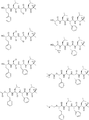
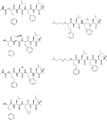
図1Aおよび図1Bは、本発明における製造において初めて合成された低分子化合物のファミリーを記載する。それらの化合物およびそれらの類縁体は、プロテアソーム活性を阻害するために設計され、老化細胞を排除し、または老化関連疾患を治療することを目的とする試験および開発に適する。それらは、がん治療において、がん細胞または過剰増殖性細胞を排除する目的にも使用し得る。
Novel Proteasome Inhibitors FIGS. 1A and 1B describe a family of low molecular weight compounds synthesized for the first time in the production of the present invention. These compounds and their analogs are designed to inhibit proteasome activity and are suitable for testing and development aimed at eliminating senescent cells or treating aging-related diseases. They can also be used in cancer treatment to eliminate cancer cells or hyperproliferative cells.
本発明のプロテアソーム阻害物質は、複数(典型的には3〜7個)のアミノ酸残基を有するペプチド化合物であり、アミノ基のN末端残基がオキソ基またはチオ基で置換され、C末端残基が求電子基を含むよう修飾されている。関心対象のプロテアソーム阻害物質のいくつかは、エポキシケトンまたはα-ヒドロキシアセトアミドであることを特徴とし得る。 The proteasome inhibitor of the present invention is a peptide compound having a plurality (typically 3 to 7) of amino acid residues, wherein the N-terminal residue of the amino group is substituted with an oxo group or a thio group, and the C-terminal residue is substituted. The group has been modified to include an electrophilic group. Some of the proteasome inhibitors of interest may be characterized as epoxy ketones or α-hydroxyacetamide.
例示として、下記式(I)で示される構造を有する化合物が挙げられる。

XはOまたはSであり;
R0は、H、アルキル、置換アルキル、アルカノイル、置換アルカノイル、アルキルアミノカルボニル、置換アルキルアミノカルボニル、アルコキシカルボニル、置換アルコキシカルボニル、アルキルアミノチオカルボニル、置換アルキルアミノチオカルボニル、アルコキシチオカルボニル、置換アルコキシチオカルボニルおよびプロ部分より選択され;
R1は、アルキル、置換アルキル、アラルキル、置換アラルキル、ヘテロアリールアルキルおよび置換ヘテロアリールアルキルより選択され;
(AA)nは、独立して選択された2〜7個のアミノ酸残基(典型的には3または4個のアミノ酸)の直鎖状配列であり、該(AA)nのC末端残基はZを含む修飾C末端を含み;
Zは、プロテアソーム反応性求電子基である。
As an example, a compound having a structure represented by the following formula (I) may be mentioned.
X is O or S;
R 0 is H, alkyl, substituted alkyl, alkanoyl, substituted alkanoyl, alkylaminocarbonyl, substituted alkylaminocarbonyl, alkoxycarbonyl, substituted alkoxycarbonyl, alkylaminothiocarbonyl, substituted alkylaminothiocarbonyl, alkoxythiocarbonyl, substituted alkoxythio Selected from carbonyl and pro moieties;
R 1 is selected from alkyl, substituted alkyl, aralkyl, substituted aralkyl, heteroarylalkyl and substituted heteroarylalkyl;
(AA) n is a linear sequence of independently selected 2-7 amino acid residues (typically 3 or 4 amino acids), wherein the (AA) n C-terminal residue Includes a modified C-terminus including Z;
Z is a proteasome-reactive electrophile.
本文脈で用いる場合、「アミノ酸」という用語は、L配置またはD配置のいずれかの、天然起源のアミノ酸または非天然起源のアミノ酸のいずれかを意味する。本発明の等価物として、配列(AA)nにおける1つまたは複数のアミノ酸は、ペプチド結合ではない共有結合によって、構造の他の部位に結合するアミノ酸類縁体で置換されていてもよく、該類縁体は、対応するアミノ酸と実質的に同じである、側鎖(Rx)、反応性、および配置を有する。 As used in this context, the term "amino acid" means either a naturally occurring amino acid or a non-naturally occurring amino acid in either the L or the D configuration. As an equivalent of the present invention, one or more amino acids in sequence (AA) n may be replaced by an amino acid analog that binds to another site in the structure by a covalent bond that is not a peptide bond. The body has side chains (R x ), reactivity, and configuration that are substantially the same as the corresponding amino acids.
プロテアソーム阻害物質の一部分である「プロテアソーム反応性求電子基」は求電子部分であり、該求電子部分は、標的のプロテアソームと接触することにより、プロテアソームの結合ポケット近くまたは活性部位近くの官能基(アミノ酸残基上の求核側鎖)と反応し、それによって共有結合または可逆的共有結合を形成して、プロテアソームがその生物学的機能を遂行するのを阻害する。タンパク質反応性の求電子基としては、J. Krysiak and R. Breinbauer, Top Curr Chem (2012) 324: 43-84に教示される、エポキシド、マイケル受容体、ジスルフィド、ラクトン、β-ラクタム、およびキノンを含む。また、Chapter 5, pages 207 265 in The organic chemistry of drug design and drug action by Silverman and Holladay, 3rd Ed. Academic Press, 2014も参照されたい。本明細書において示される例示においては、求電子基は、プロテアソーム末端の触媒的トレオニンのβ-ヒドロキシル基と反応するように阻害物質の構造内に位置している。
A “proteasome-reactive electrophile,” which is part of a proteasome inhibitor, is an electrophilic moiety that, upon contact with a target proteasome, is capable of contacting a functional group near the proteasome binding pocket or near the active site ( Nucleophilic side chains on amino acid residues), thereby forming a covalent or reversible covalent bond and inhibiting the proteasome from performing its biological function. Protein-reactive electrophilic groups include epoxides, Michael acceptors, disulfides, lactones, β-lactams, and quinones as taught in J. Krysiak and R. Breinbauer, Top Curr Chem (2012) 324: 43-84. including. See also
本発明は式(I)で表される化合物を含み、式中、Zは、エポキシケトン基、アジリジニルケトン基、ボロネート、ボロネートエステル、およびβ-ラクトンより選択される。本発明は式(I)で表される化合物を含み、式中、(AA)nは、独立して選択された3個のアミノ酸残基の配列であり、該(AA)nのC末端残基は修飾されてZを含む。C末端カルボン酸は、例えばエポキシケトン若しくはアジリジニルケトンなどのケトンに修飾され得るか、または、C末端カルボン酸は、ボロネート若しくはボロネートエステルで置換され得る。 The present invention includes compounds of formula (I), wherein Z is selected from an epoxy ketone group, an aziridinyl ketone group, a boronate, a boronate ester, and a β-lactone. The present invention includes a compound represented by formula (I), wherein, (AA) n is a sequence of three amino acid residues independently selected, C-terminal, residue of the (AA) n The group is modified to include Z. The C-terminal carboxylic acid can be modified to a ketone such as, for example, an epoxy ketone or an aziridinyl ketone, or the C-terminal carboxylic acid can be substituted with a boronate or boronate ester.
また本発明のプロテアソーム阻害物質は、下記式(II):
式中、R2〜R4は、アルキル、置換アルキル、アラルキル、置換アラルキル、ヘテロアリールアルキルおよび置換ヘテロアリールアルキルより独立して選択され;
Z1は、エポキシド基またはアジリジン基である。
The proteasome inhibitor of the present invention has the following formula (II):
Wherein R 2 -R 4 are independently selected from alkyl, substituted alkyl, aralkyl, substituted aralkyl, heteroarylalkyl and substituted heteroarylalkyl;
Z 1 is an epoxide group or an aziridine group.
式(II)のプロテアソーム阻害化合物は、下記式(III):
式中、YはOおよびNR15より選択され;
R5およびR15は、H、C(1〜6)アルキルおよび置換C(1〜6)アルキルより独立して選択される。
The proteasome inhibiting compound of the formula (II) has the following formula (III):
Wherein Y is selected from O and NR 15 ;
R 5 and R 15, H, C (1~6) is selected from alkyl and substituted C (1 to 6) independently from alkyl.
本発明は、式(I)の化合物を含み、該式中、R1〜R4は、C(1〜6)アルキル、置換C(1〜6)アルキル、C(1〜6)ヒドロキシアルキル、置換C(1〜6)ヒドロキシアルキル、C(1〜6)アルコキシ-C(1〜6)アルキル、置換C(1〜6)アルコキシ-C(1〜6)アルキル、アリール-C(1〜6)アルキル、置換アリール-C(1〜6)アルキル、ヘテロアリールC(1〜6)アルキル、置換ヘテロアリールC(1〜6)アルキル、シクロアルキル-C(1〜6)アルキル、置換シクロアルキル-C(1〜6)アルキル、複素環-C(1〜6)アルキル、および置換複素環-C(1〜6)アルキルより独立して選択される。 The present invention comprises a compound of formula (I), formula, R 1 to R 4 are C (1 to 6) alkyl, substituted C (1 to 6) alkyl, C (1 to 6) hydroxyalkyl, Substituted C (1-6) hydroxyalkyl, C (1-6) alkoxy-C (1-6) alkyl, substituted C (1-6) alkoxy-C (1-6) alkyl, aryl-C (1-6 ) Alkyl, substituted aryl-C (1-6) alkyl, heteroaryl C (1-6) alkyl, substituted heteroaryl C (1-6) alkyl, cycloalkyl-C (1-6) alkyl, substituted cycloalkyl- It is independently selected from C (1-6) alkyl, heterocycle-C (1-6) alkyl, and substituted heterocycle-C (1-6) alkyl.
本発明のプロテアソーム阻害化合物は、下記式(IIIa)または式(IV):
前記に列挙した構造のいずれにおいても、
Xは、OまたはSであり得;
R0は、R10-またはR10-Q-であり得;
Qは、エチレングリコール、ポリエチレングリコール、-C(=O)-、-NR11C(=O)-、-OC(=O)-、-C(=S)-、-NR11C(=S)-、-OC(=S)-、および-OC(=S)-より選択され得;
R10およびR11は、H、アルキルおよび置換アルキルより独立して選択され得る。
In any of the structures listed above,
X can be O or S;
R 0 can be R 10 -or R 10 -Q-;
Q is ethylene glycol, polyethylene glycol, -C (= O)-, -NR 11 C (= O)-, -OC (= O)-, -C (= S)-, -NR 11 C (= S )-, -OC (= S)-, and -OC (= S)-;
R 10 and R 11 can be independently selected from H, alkyl and substituted alkyl.
前記に列挙した構造のいずれにおいても、R0は、下記構造:
式中、
mは1〜6の整数であり;
pは1〜30の整数であり;
X’はO、SおよびNR14より選択され;
R12およびR13は、H、アルキルおよび置換アルキルより独立して選択されるか、またはR12およびR13は、環状に結合して、それらが結合している窒素原子と一緒になって複素環をもたらし、該複素環はさらに置換されていてもよく;
各R14は、H、C(1〜6)アルキルおよび置換C(1〜6)アルキルより独立して選択される。
In any of the structures listed above, R 0 has the following structure:
Where:
m is an integer from 1 to 6;
p is an integer from 1 to 30;
X 'is selected from O, S and NR 14 ;
R 12 and R 13 are H, are independently selected from alkyl and substituted alkyl or R 12 and R 13, it is attached to the ring, together with the nitrogen atom to which they are attached heterocyclic Resulting in a ring, said heterocycle being further substituted;
Each R 14 is independently selected from H, C (1-6) alkyl and substituted C (1-6) alkyl.
前記に列挙した構造のいずれにおいても、R0は、下記構造:
式中、
qは1〜3の整数であり;
Y2はOおよびNR15より選択され;
R15は、H、C(1〜6)アルキルおよび置換C(1〜6)アルキルより選択される。
In any of the structures listed above, R 0 has the following structure:
Where:
q is an integer from 1 to 3;
Y 2 is selected from O and NR 15 ;
R 15 is, H, C (1~6) alkyl and substituted C (1 to 6) are selected from alkyl.
前記に列挙した構造のいずれにおいても、R1は、C(1〜6)アルキル、アリール-C(1〜6)アルキル、置換アリール-C(1〜6)アルキル、シクロアルキル-C(1〜6)アルキル、および置換シクロアルキル-C(1〜6)アルキルより選択され得る。R2およびR4は、C(1〜6)アルキル、置換C(1〜6)アルキル、C(1〜6)アルコキシ-C(1〜6)アルキル、置換C(1〜6)アルコキシ-C(1〜6)アルキル、C(1〜6)ヒドロキシアルキル、および置換C(1〜6)ヒドロキシアルキルより選択され得る。さらに、R3は、アリール-C(1〜6)アルキル、置換アリール-C(1〜6)アルキル、C(1〜6)アルコキシ-C(1〜6)アルキル、および置換C(1〜6)アルコキシ-C(1〜6)アルキルより選択され得る。 In any of the structures listed above, R 1 is C (1-6) alkyl, aryl-C (1-6) alkyl, substituted aryl-C (1-6) alkyl, cycloalkyl-C (1 6) alkyl and substituted cycloalkyl-C (1-6) alkyl. R 2 and R 4, C (1 to 6) alkyl, substituted C (1 to 6) alkyl, C (1 to 6) alkoxy -C (1 to 6) alkyl, substituted C (1 to 6) alkoxy -C It may be selected from (1-6) alkyl, C (1-6) hydroxyalkyl, and substituted C (1-6) hydroxyalkyl. Furthermore, R 3 is aryl -C (1 to 6) alkyl, substituted aryl -C (1 to 6) alkyl, C (1 to 6) alkoxy -C (1 to 6) alkyl, and substituted C (1 to 6 ) Alkoxy-C (1-6) alkyl.
前記に列挙した構造のいずれにおいても、R1は、フェニル-C(1〜6)アルキル、シクロアルキル-C(1〜6)アルキル、およびC(1〜6)アルキルより選択され得る。R2は、C(1〜6)アルコキシ-C(1〜6)アルキル、C(1〜6)アルキル、およびC(1〜6)ヒドロキシアルキルより選択され得る。場合によって、R3は、フェニル-C(1〜6)アルキル、シクロアルキル-C(1〜6)アルキル、C(1〜6)アルコキシ-C(1〜6)アルキル、およびC(1〜6)ヒドロキシアルキルより選択される。さらに、R4は、C(1〜6)アルキルであり得る。 In any of the structures listed above, R 1 may be selected from phenyl-C (1-6) alkyl, cycloalkyl-C (1-6) alkyl, and C (1-6) alkyl. R 2 is, C (1 to 6) alkoxy -C (1 to 6) alkyl, C (1 to 6) alkyl, and C (1 to 6) may be selected from hydroxyalkyl. Optionally, R 3 is phenyl -C (1 to 6) alkyl, cycloalkyl -C (1 to 6) alkyl, C (1 to 6) alkoxy -C (1 to 6) alkyl, and C (1 to 6 ) Hydroxyalkyl. Furthermore, R 4 may be C (1 to 6) alkyl.
前記に列挙した構造のいずれにおいても、R1は、フェニルエチル、シクロプロピル-メチルおよびプロピルより選択され得る。R2は、メトキシメチル、イソブチル、および1-ヒドロキシ-エチルより選択され得る。場合によって、R3は、フェニルメチル、シクロプロピル-メチル、メトキシメチル、および1-ヒドロキシ-エチルより選択され得る。さらに、R4は、イソブチルであり得る。 In any of the structures listed above, R 1 may be selected from phenylethyl, cyclopropyl-methyl and propyl. R 2 can be selected from methoxymethyl, isobutyl, and 1-hydroxy-ethyl. Optionally, R 3 can be selected from phenylmethyl, cyclopropyl-methyl, methoxymethyl, and 1-hydroxy-ethyl. Further, R 4 can be isobutyl.
本発明は、下記式(Va)〜(Vd):
本発明のプロテアソーム阻害化合物は、下記式(VI)および式(VII)で表される化合物を含む。任意で、YはOであり得、R5はメチルであり得;XはOまたはSであり得る。
図1Aおよび図1Bは、本発明のプロテアソーム阻害物質の例を示す。 1A and 1B show examples of the proteasome inhibitor of the present invention.
図1Aに示される構造のいくつかは、前記の一般的構造と一致しておらず、特に、Xは、OまたはSではなく、NHである。しかしながら、これら構造の多くは新規であり、本発明の一部に含まれる。図1Bは、現在商業的関心のある26個の非限定的な例を示す。これらの例においては、R1は、多くがフェニルエチルであるが、C(1〜4)アルキルであってもよい。R2は、多くがイソブチル(ロイシン)であるが、C(1〜4)アルコキシまたはC(1〜4)ヒドロキシアルキルであってもよい。R3は、多くがフェニルメチル(フェニルアラニン)である。R2は、常にイソブチル(ロイシン)である。Yは多くがOであり、R5は多くがメチルである。X-R0は、-OH、-O(=O)NHCH3、-S-(CH2)3N(CH3)2、-O-(CH2)2N(CH3)2、-O(CH2)3N(CH3)2、-S-(CH2)2-O-(CH2)2-O-CH3、-OC(=O)CH2-N(-CH2)2O(CH2)2-)、および-OC(=O)CH3のいずれかであり得る。各置換基は、さらなる試験のためそれぞれの代替基のうちの1つで置換され得る。
Some of the structures shown in FIG. 1A are not consistent with the general structure described above, in particular, X is NH instead of O or S. However, many of these structures are novel and are part of the present invention. FIG. 1B shows 26 non-limiting examples of current commercial interest. In these examples, R 1 is, many phenylethyl, may be a C (1 to 4) alkyl. R 2 is, many isobutyl (leucine), C (1 to 4) may be alkoxy or C (1 to 4) hydroxyalkyl. R 3 is mostly phenylmethyl (phenylalanine). R 2 is always isobutyl (leucine). Y is often O and R 5 is mostly methyl. XR 0 is, -OH, -O (= O)
上記記載および図に示した選択されたプロテアソーム阻害物質の開発および使用のための技術を、下記の記載において説明する。 Techniques for the development and use of the selected proteasome inhibitors shown above and shown in the figures are described in the following description.
他のプロテアソーム阻害物質
上記に言及したペプチド系プロテアソーム阻害物質に加え、現在本分野で知られているかまたは後になって開発されたいずれかのプロテアソーム阻害物質を、老化細胞除去薬として開発し得る。図1Cは、従来、プロテアソーム阻害物質であると記述されている低分子化合物の例示的なリストを提供する。他の低分子プロテアソーム阻害物質が、Metcalfら(Expert Opin Ther Pat. 2014 Apr;24(4):369-8)によりレビューされている。これらの化合物のいずれかは、本発明に係る老化細胞の排除または老化関連疾患の治療を目的とする試験および開発に適切である。
Other Proteasome Inhibitors In addition to the peptide-based proteasome inhibitors mentioned above, any proteasome inhibitor currently known in the art or later developed may be developed as a senescent cell remover. FIG. 1C provides an exemplary list of small molecule compounds conventionally described as proteasome inhibitors. Other small molecule proteasome inhibitors have been reviewed by Metcalf et al. (Expert Opin Ther Pat. 2014 Apr; 24 (4): 369-8). Any of these compounds are suitable for testing and development for the purpose of eliminating senescent cells or treating aging-related diseases according to the present invention.
老化細胞除去活性のための化合物のスクリーニング
前記に記載および図面に記載した様々なプロテアソーム阻害物質について、それら物質が本発明における使用のための候補物質であることを示す方法によって、分子レベルでのそれらの遂行能力をスクリーニングし得る。プロテアソーム活性を阻害する能力のための分子アッセイにより、化合物を試験し得る。実施例1は、この目的のためのアッセイを提供する。
Screening of compounds for senescent cell depletion activity For the various proteasome inhibitors described above and in the figures, their methods at the molecular level are determined by methods that indicate that they are candidates for use in the present invention. Can be screened for performance. Compounds can be tested by molecular assays for their ability to inhibit proteasome activity. Example 1 provides an assay for this purpose.
あるいは、またはさらに、特に老化細胞を殺す能力について、化合物をスクリーニングし得る。培養細胞を該化合物と接触させ、細胞毒性または細胞の阻害の程度が測定される。老化細胞を殺すまたは阻害する化合物の能力は、低密度で自由に分裂している正常細胞、および高密度で休止状態にある正常細胞における化合物の効果と比較され得る。実施例2および3は、ヒト標的組織の線維芽細胞であるIMR90細胞株およびHUVEC細胞を用いる、老化細胞殺傷の実例を提供する。類似のプロトコールは公知であり、他の老化細胞およびがん細胞などの他の細胞型を殺すまたは阻害する細胞の能力を試験するために、該プロトコールを発展あるいは最適化させ得る。 Alternatively, or in addition, compounds may be screened, particularly for their ability to kill senescent cells. Cultured cells are contacted with the compound and the degree of cytotoxicity or cell inhibition is measured. The ability of a compound to kill or inhibit senescent cells can be compared to the effect of the compound on low density, freely dividing normal cells, and high density, quiescent normal cells. Examples 2 and 3 provide an illustration of senescent cell killing using human target tissue fibroblast IMR90 cell line and HUVEC cells. Similar protocols are known and can be developed or optimized to test the ability of cells to kill or inhibit other cell types, such as other senescent and cancer cells.
図2Aおよび図2Bは、老化細胞を選択的に殺し、非老化細胞は無傷のままにする化合物を特定するスクリーニングアッセイの結果を示す。図2Aは、図1Aおよび図1Cより選択された構造体に対する、老化細胞除去活性およびプロテアソーム結合のデータを提供する。図2Bは、図1Bより選択された構造体に対する、老化細胞除去活性およびプロテアソーム結合のデータを提供する。 2A and 2B show the results of a screening assay that identifies compounds that selectively kill senescent cells and leave non-senescent cells intact. FIG. 2A provides senescent cell removal activity and proteasome binding data for structures selected from FIGS. 1A and 1C. FIG. 2B provides senescent cell removal activity and proteasome binding data for the structure selected from FIG. 1B.
「EC50μM」という用語は、細胞の50%を殺すのに必要となる分子の濃度を表す。「照射IMR90 EC50μM」という見出しは、照射により老化の状態にされたIMR90細胞に対する効力を表す。「IMR90 HD EC50μM」という見出しは、高密度(HD)で蒔かれた非老化細胞に対する効力を表す。これらは、接触阻害が原因で増殖しないのではなく、老化に達していない細胞である。 The term “EC 50 μM” refers to the concentration of a molecule required to kill 50% of cells. The heading “irradiated IMR90 EC 50 μM” describes the efficacy on IMR90 cells aged by irradiation. The heading “IMR90 HD EC 50 μM” indicates efficacy against non-senescent cells plated at high density (HD). These are cells that do not proliferate due to contact inhibition and have not reached senescence.
本開示で説明される老化細胞除去薬のいずれかおよび全てにおいて、本発明は、照射IMR90細胞またはHUVEC細胞に対して、10μM未満、1μM未満、0.1μM未満、および0.02μM未満のEC50μMを有するか、または、0.02〜1μMの範囲もしくは0.02〜0.1μMの範囲のEC50μMを有する化合物を含む。本発明は、非老化細胞または増殖細胞と比較して、照射IMR90細胞に対して、少なくとも2、5、10、20、または50倍の特異性指数(より小さいEC50)を有する化合物を含む。 In any and all of the senescent cell depleting agents described in this disclosure, the present invention provides an EC 50 μM of less than 10 μM, less than 1 μM, less than 0.1 μM, and less than 0.02 μM for irradiated IMR90 cells or HUVEC cells. Or compounds having an EC 50 μM in the range of 0.02-1 μM or in the range of 0.02-0.1 μM. The invention includes compounds that have a specificity index (lower EC 50 ) of at least 2, 5, 10, 20, or 50-fold for irradiated IMR90 cells compared to non-senescent or proliferating cells.
インビトロで老化細胞を選択的に殺すのに有効である本発明の老化細胞除去薬の候補は、特定の疾患のための動物モデルでさらにスクリーニングされ得る。下記の実施例4、5、6および7は、それぞれ、変形性関節症、眼疾患、肺疾患、およびアテローム性動脈硬化症の実例を提供する。 Candidate senescent cell depleting agents of the invention that are effective at selectively killing senescent cells in vitro can be further screened in animal models for specific diseases. Examples 4, 5, 6 and 7 below provide examples of osteoarthritis, eye disease, lung disease, and atherosclerosis, respectively.
医薬製剤および包装
本発明で使用するための医薬品の調製および製剤化には、例えば、現行版のRemington: The Science and Practice of Pharmacyに記載される標準的技術を用いることができる。製剤は、治療される疾患に関与しない組織に対する副作用または曝露を最小限にする一方、標的老化細胞への活性剤の接近を強化して、効果の最適な持続時間を提供する方法で、例えば局所投与により、標的組織へ投与するために典型的に最適化される。
Pharmaceutical Formulations and Packaging Preparation and formulation of pharmaceuticals for use in the present invention can employ standard techniques, for example, as described in the current edition of Remington: The Science and Practice of Pharmacy. Formulations can be used to minimize the side effects or exposure to tissues not involved in the disease being treated, while enhancing the access of the active agent to target senescent cells and providing an optimal duration of effect, e.g., topically. Upon administration, it is typically optimized for administration to the target tissue.
本発明は、本開示に記載される1つまたは複数の製剤または組成物の単位用量を含むキットである市販品を提供する。そのようなキットは、典型的には、1つまたは複数の容器中の薬学的製剤を含む。製剤は、1つまたは複数の単位用量として提供され得る(組合せまたは別々のいずれか)。キットは、例えば、それを必要とする対象の標的組織中または標的組織周辺への製剤または組成物の投与のための注射器などの装置を含み得る。老化細胞関連疾患を治療する際の薬物の用途および付随する利点を説明し、任意で組成物の送達のための器具または装置を説明する、情報の添付文書もまた、該製品は含み得るかまたは伴い得る。 The invention provides a commercial product that is a kit containing a unit dose of one or more formulations or compositions described in this disclosure. Such kits typically include the pharmaceutical formulation in one or more containers. The formulation may be provided as one or more unit doses (either in combination or separately). The kit can include, for example, a device such as a syringe for administration of the formulation or composition into or around the target tissue of the subject in need thereof. An informational package insert describing the use and associated benefits of the drug in treating a senescent cell related disease, and optionally a device or device for the delivery of the composition, may also include the product or May accompany.
治療設計および投与スケジュール
老化細胞は、年齢とともに蓄積し、それが、老化細胞が介在する疾患が高齢の成人においてより頻繁に発生する理由である。さらに、肺組織における異なる型のストレスによって、老化細胞および老化細胞が発現する表現型の出現が促進され得る。細胞のストレス要因としては、酸化ストレス、代謝ストレス、DNA損傷(例えば、環境紫外線曝露または遺伝性障害の結果)、がん遺伝子活性化、およびテロメア短縮(例えば、過剰増殖に起因)を含む。そのようなストレス要因を受けた組織は老化細胞をより高い有病率で有し得、次には、低年齢で、またはより深刻な形態で、特定の疾患の発病の原因となり得る。早期の発現の原因となり得る遺伝子成分が、直接的または間接的に疾患を介在する老化細胞の蓄積に影響を与え得ることが、特定の疾患に対する遺伝性感受性により示唆される。
Treatment Design and Dosing Schedule Senescent cells accumulate with age, which is why senescent cell-mediated diseases occur more frequently in older adults. Furthermore, different types of stress in lung tissue may promote the appearance of senescent cells and the phenotype expressed by senescent cells. Cellular stressors include oxidative stress, metabolic stress, DNA damage (eg, as a result of environmental UV exposure or genetic damage), oncogene activation, and telomere shortening (eg, due to hyperproliferation). Tissues that have been subjected to such stressors may have a higher prevalence of senescent cells, which in turn, at a younger age or in more severe forms, may cause the onset of certain diseases. Hereditary susceptibility to certain diseases suggests that genetic components that may be responsible for early expression may directly or indirectly affect the accumulation of disease-mediated senescent cells.
老化細胞パラダイムの利点の一つは、老化細胞のうまく除去することにより、対象に長期の治療効果を与え得ることである。老化細胞は、基本的に非増殖性であり、これは、更なる老化細胞を有する組織のその後の再増殖が、組織における非老化細胞の老化細胞への転換だけによって起こり得ることを意味し、この工程は、単純な増殖と比べて相当長い。一般的原則としては、本発明の老化細胞除去薬を用いる、標的組織から老化細胞を除去するのに十分な治療期間(所定の単回投与量または複数回投与量で、例えば、毎日、週2回、または週1回、数日、1週間または数週間の期間に亘って)により、対象に対して、老化細胞除去薬が投与されずに、かつ治療される疾患の1つまたは複数の有害な兆候または症状の軽減、減少または反転を対象が感じる、効力期間(例えば、2週間、1ヶ月間、2ヶ月間、またはそれ以上)が提供され得る。 One of the advantages of the senescent cell paradigm is that successful removal of senescent cells can provide a subject with a long-term therapeutic effect. Senescent cells are essentially non-proliferative, meaning that subsequent regrowth of tissue with additional senescent cells can only occur by converting non-senescent cells to senescent cells in the tissue, This step is considerably longer than simple propagation. As a general principle, a treatment period sufficient to remove senescent cells from the target tissue using the senescent cell removing agent of the present invention (at a predetermined single dose or multiple doses, for example, daily, weekly 2 weeks) Once a week, over a period of days, weeks, or weeks) to a subject without one or more adverse effects of the disease being treated. A duration of efficacy (eg, two weeks, one month, two months, or more) may be provided for which the subject feels a reduction, reduction or reversal of any sign or symptom.
治療に適切な老化関連疾患
本発明の老化細胞除去薬を、様々な老化関連疾患の予防または治療に使用し得る。そのような疾患は、典型的には(必ずではないが)、疾患部位中もしくは疾患部位周辺における老化細胞(例えば、p16および他の老化マーカーを発現している細胞)が、またはp16および他の老化マーカーの過剰な発現が、患部でない組織におけるそのような細胞の出現頻度またはそのような発現のレベルと比較した場合に、過剰であることを特徴とする。現在の関心対象の非限定的な例は、後のセクションで説明されるとおり、変形性関節症、眼疾患、肺疾患、およびアテローム性動脈硬化症の治療を含む。
Senescence-Related Diseases Suitable for Treatment The senescent cell-depleting agent of the present invention can be used for prevention or treatment of various aging-related diseases. Such diseases typically (but not necessarily) involve senescent cells (eg, cells expressing p16 and other senescence markers) at or around the disease site, or p16 and other senescent markers. Overexpression of the aging marker is characterized by overexpression when compared to the frequency of such cells or the level of such expression in non-affected tissues. Non-limiting examples of current interest include treatment of osteoarthritis, eye disease, lung disease, and atherosclerosis, as described in later sections.
本発明の老化細胞除去薬で特定の老化関連疾患を治療するため、治療レジメンは、老化細胞のある部位、および疾患の病態生理に依存する。例えば変形性関節症、眼疾患、および肺疾患などの局所疾患は、老化細胞除去薬の局所投与によって治療し得る。アテローム性動脈硬化症は、全身投与により、より典型的に治療される播種性疾患の例である。 For treating certain aging-related diseases with the senescent cell removing agents of the present invention, the treatment regimen will depend on the location of the senescent cells and the pathophysiology of the disease. For example, local diseases such as osteoarthritis, ocular diseases, and lung diseases can be treated by local administration of a senescent cell remover. Atherosclerosis is an example of a disseminated disease that is more typically treated by systemic administration.
変形性関節症の治療
本開示に列挙される老化細胞除去薬は、変形性関節症の治療用、または、それを必要とする対象における、変形性関節症の患部の関節を含むがそれに限定されない、関節内もしくは関節周辺における老化細胞の選択的な排除用に開発され得る。
Treatment of osteoarthritis The senescent cell depleting agents listed in the present disclosure include, but are not limited to, the joints of affected osteoarthritis in a subject for or in need of osteoarthritis. , Can be developed for the selective elimination of senescent cells within or around a joint.
変形性関節症の変性関節疾患は、高い機械的ストレス、骨硬化症、および関節滑膜と関節襄の厚化の部位での、軟骨の細線維化を特徴とする。細線維化は、軟骨の表層の分裂に伴う局所表面の組織崩壊である。初期の分裂は、軟骨表面とはほとんど関係なく、優性なコラーゲン束の軸に従う。軟骨内のコラーゲンは組織崩壊し、プロテオグリカンが軟骨表面から失われる。関節中のプロテオグリカンの保護効果および潤滑効果がない状態では、コラーゲン繊維は、分解に弱くなり、機械的破壊が続発する。変形性関節症を進行させる素因となる危険因子は、老化、肥満、以前の関節損傷、関節の酷使、弱い大腿筋、および遺伝的性質を含む。変形性関節症の症状は、非活動後または酷使後の、関節、特に臀部、膝、および腰の、痛みまたは凝り;移動後にはなくなる静止後の凝り;および活動後にまたは一日の終わりにむかって悪化する疼痛、を含む。 Degenerative joint disease of osteoarthritis is characterized by high mechanical stress, osteosclerosis, and cartilage fibrillation at the site of thickening of the synovium and joint stalk. Fibrillogenesis is the disorganization of the local surface with the division of the surface layer of cartilage. The initial division is largely independent of the cartilage surface and follows the dominant collagen bundle axis. Collagen in cartilage degrades tissue and proteoglycans are lost from the cartilage surface. In the absence of the protective and lubricating effects of proteoglycans in joints, collagen fibers are vulnerable to degradation and are subject to subsequent mechanical destruction. Risk factors predisposing to develop osteoarthritis include aging, obesity, previous joint damage, overuse of joints, weak thigh muscles, and genetics. Symptoms of osteoarthritis are pain or stiffness in the joints, especially the buttocks, knees, and hips, after inactivity or abuse; stiffness after resting that disappears after movement; and after activity or at the end of the day. And worsening pain.
本発明の化合物は、関節におけるプロテオグリカン層の損失または侵食を低減または阻害するのに用い得、患部の関節における炎症を減少させ、かつコラーゲン、例えば、II型コラーゲンの生成を促進、刺激、増強、または誘発する。該化合物は、関節において生成された、IL-6などの炎症性サイトカインの量またはレベルの減少を引き起こし得、炎症を低減させる。該化合物を、変形性関節症を治療するのに使用し得、かつ/または対象の関節における、例えばII型コラーゲンなどのコラーゲン生成を誘発するのに使用し得る。また、化合物を、関節中のコラーゲンを分解するメタロプロテイナーゼ13(MMP-13)の生成を、減少させる、阻害する、または減じるために使用し得、かつプロテオグリカン層を回復するかまたはプロテオグリカン層の損失および/または分解を阻害するために使用し得る。 The compounds of the present invention can be used to reduce or inhibit proteoglycan layer loss or erosion in joints, reduce inflammation in affected joints, and promote, stimulate, enhance, produce collagen, such as type II collagen. Or trigger. The compounds can cause a decrease in the amount or level of inflammatory cytokines, such as IL-6, produced in the joint, reducing inflammation. The compounds can be used to treat osteoarthritis and / or to induce collagen production, eg, type II collagen, in a subject's joints. The compounds can also be used to reduce, inhibit or reduce the production of metalloproteinase 13 (MMP-13), which degrades collagen in joints, and restores or loses the proteoglycan layer And / or may be used to inhibit degradation.
本発明の老化細胞除去薬を用いる治療の潜在的な利点は、軟骨または骨浸食を阻害すること、または反転することを含む。該老化細胞除去化合物は、関節の強度の低下を回復もしくは阻害し得、または関節痛を低減し得る。 Potential benefits of treatment with the senescent cell removing agents of the present invention include inhibiting or reversing cartilage or bone erosion. The senescent cell ablating compound may restore or inhibit loss of joint strength or reduce joint pain.
眼疾患の治療
対象の眼中または眼周辺における老化細胞を除去することにより、それを必要とする対象における有害な眼疾患の予防または治療に本開示で列挙した老化細胞除去薬を使用し得、それによって疾患の少なくとも1つの兆候または症状の重症度が減少する。このような疾患としては、例えば、眼底疾患および眼球前方疾患の両方を含む。本開示に列挙される老化細胞除去薬は、それを必要とする対象における眼組織内または眼組織周辺の老化細胞の選択的な排除用に開発し得る。
By removing senescent cells in or around the eye of a subject to be treated for an eye disease, the senescent cell depleting agents listed in the present disclosure can be used in the prevention or treatment of harmful eye diseases in a subject in need thereof, Thereby reducing the severity of at least one sign or symptom of the disease. Such diseases include, for example, both fundus and preocular diseases. The senescent cell depleting agents listed in this disclosure may be developed for the selective elimination of senescent cells in or around ocular tissue in a subject in need thereof.
本発明において治療し得る眼疾患は、老視、黄斑変性症(滲出型AMDまたは萎縮型AMDを含む)、糖尿病網膜症、および緑内障を含む。 Eye diseases that can be treated in the present invention include presbyopia, macular degeneration (including wet or dry AMD), diabetic retinopathy, and glaucoma.
黄斑変性症は、眼底疾患であることを特徴とし得る神経変性疾患である。黄斑変性症は、斑と呼ばれる網膜の中央部位の光受容細胞の損失を引き起こす。黄斑変性症は、萎縮型または滲出型に分類され得る。萎縮型は、滲出型よりも一般的であり、加齢黄斑変性症(AMD)の患者の約90%が、萎縮型と診断されている。該疾患の滲出型は、より深刻な視力喪失につながり得る。年齢および特定の遺伝因子および環境因子が、AMDを進行させる危険因子となり得る。環境因子は、例えば、オメガ-3脂肪酸摂取、エストロゲン曝露、およびビタミンDの血中濃度の増加を含む。遺伝の危険因子は、例えば、眼におけるDicer1レベルの減少、およびマイクロRNAの減少、およびDICER1切除を含み得る。 Macular degeneration is a neurodegenerative disease that can be characterized as a fundus disease. Macular degeneration causes loss of photoreceptor cells in the central part of the retina, called plaques. Macular degeneration can be classified as dry or exudative. The dry form is more common than the wet form, and about 90% of patients with age-related macular degeneration (AMD) have been diagnosed with the dry form. The wet form of the disease can lead to more severe vision loss. Age and certain genetic and environmental factors can be risk factors for developing AMD. Environmental factors include, for example, omega-3 fatty acid intake, estrogen exposure, and increased blood levels of vitamin D. Risk factors for inheritance can include, for example, reduced Dicer1 levels in the eye, and reduced microRNA, and DICER1 excision.
萎縮型AMDは、網膜色素上皮(RPE)層の萎縮に関係し、光受容細胞の損失を引き起こす。AMDの萎縮型は、黄斑組織の老化および菲薄化ならびに斑における色素の沈着に起因し得る。滲出型AMDでは、新しい血管は、網膜の下で成長し、血液と流体を漏出し得る。この異常な漏出性の脈絡膜血管新生は、網膜細胞を死なせ、中心視野に盲点を生成させ得る。黄斑変性症の異なる形態も、より若い患者に生じ得る。年齢に関連しない病因は、例えば、遺伝、糖尿病、栄養不足、頭部外傷、または感染に関連付けられ得る。 Dry AMD is associated with atrophy of the retinal pigment epithelium (RPE) layer, causing photoreceptor cell loss. The dry form of AMD can be due to aging and thinning of the macula tissue and pigmentation in the macula. In wet AMD, new blood vessels can grow beneath the retina and leak blood and fluid. This abnormal leaky choroidal neovascularization can kill retinal cells and create blind spots in central vision. Different forms of macular degeneration can also occur in younger patients. Non-age related etiologies can be associated with, for example, heredity, diabetes, malnutrition, head trauma, or infection.
斑のブルック膜の下の滲出物(ドルーゼン)の形成は、黄斑変性症が進行し得る身体的徴候であり得る。黄斑変性症の症状は、例えば、直線が歪んでいると認識されることを含み、幾つかの場合では、視野の中心が、その残り部分よりも歪められているように見え;暗い、ぼやけた領域または「ホワイトアウト」が、視野の中心に現われ;または色知覚が変化または縮小する。 The formation of exudate (Drusen) under the Brook's membrane of the macula may be a physical sign that macular degeneration can progress. Symptoms of macular degeneration include, for example, perceived straight lines as distorted, and in some cases, the center of the field appears to be more distorted than the rest; dark, blurred An area or "whiteout" appears in the center of the field of view; or the color perception changes or shrinks.
別の眼底疾患は糖尿病網膜症(DR)である。ウィキペディアによれば、DRの第一段階は非増殖性であり、典型的には、実質的な症状または兆候はない。NPDRは眼底撮影により検出可能であり、微細動脈瘤(動脈壁における血液が充満した微細な膨らみ)が見られ得る。視力低下がある場合、眼底を見るため蛍光血管造影法を実施し得る。網膜血管が縮小または遮断しているのがはっきりと見られ得、これは網膜虚血(血流欠如)と呼ばれる。血管からその中身が黄斑部に漏れる黄斑浮腫は、NPDRのいずれの段階においても起こり得る。黄斑浮腫の症状は、両目で同じではない、霧視および暗いまたは歪んだ画像が挙げられる。糖尿病患者の10%が、黄斑浮腫に関係する視力喪失を有する。光コヒーレンス・トモグラフィーは、黄斑浮腫による網膜の厚化(液体貯留による)領域を示し得る。 Another fundus disorder is diabetic retinopathy (DR). According to Wikipedia, the first stage of DR is non-proliferative and typically has no substantial symptoms or signs. NPDR can be detected by fundus photography, and a microaneurysm (a fine bulge filled with blood in the arterial wall) can be seen. If there is vision loss, fluorescent angiography may be performed to view the fundus. It can be clearly seen that the retinal vessels are shrinking or blocking, which is called retinal ischemia (lack of blood flow). Macular edema, whose contents leak from the blood vessels into the macula, can occur at any stage of the NPDR. Symptoms of macular edema include foggy and dark or distorted images that are not the same in both eyes. 10% of diabetics have visual loss associated with macular edema. Optical coherence tomography may show areas of retina thickening (due to fluid retention) due to macular edema.
DRの第二段階においては、増殖糖尿病網膜症(PDR)の一部として眼底に異常な新しい血管(新生血管)が形成される;これらの新しい血管は、もろいため、破裂して出血し(硝子体出血)、視野をぼやけさせ得る。最初にこの出血が起きるときは、それほど深刻ではないかもしれない。多くの場合、ちょうど数個の血液の小斑点が残るか、またはヒトの視野に浮遊する斑点が残るが、これらの斑点はしばしば数時間後に消える。これらの斑点の後、しばしば、数日以内または数週間以内に、ずっと大きい血液漏出があり、視野をぼやけさせる。極端なケースでは、ヒトがそのような眼でできるのは、明暗の見分けだけかもしれない。血液を眼の内側からいずれかの場所に取り除くには、数日から数ヶ月または数年かかり得、いくつかのケースでは血液は取り除けない。これらのタイプの大きな出血は、2回以上、しばしば睡眠中に起こる傾向がある。眼底検査により、医師は、綿花状白斑、火炎状出血(類似の病変が、クロストリジウム ノビー(Clostridium novyi)のα溶血毒によっても引き起こされる)、およびドットブロット出血を確認するであろう。 In the second stage of DR, abnormal new blood vessels (neovascular vessels) form in the fundus as part of proliferative diabetic retinopathy (PDR); these new blood vessels are fragile, rupture and bleed (vitreous). Body bleeding), can blur the visual field. The first time this bleeding occurs, it may not be as serious. In many cases, just a few spots of blood remain, or spots floating in the human field of vision, but these spots often disappear after a few hours. After these spots, often within days or weeks, there is a much larger blood leak, blurring the visual field. In extreme cases, humans may only be able to distinguish between light and dark with such eyes. It can take days to months or years to remove blood anywhere from inside the eye, and in some cases, blood cannot be removed. These types of major bleeding tend to occur more than once, often during sleep. With a fundus examination, the physician will identify cotton-like vitiligo, flaming bleeding (similar lesions are also caused by the alpha hemolytic toxin of Clostridium novyi), and dot blot bleeding.
老視は、正常な眼の速度および調節幅が年齢とともに減少するとともに、近くにある物に焦点を合わせる能力が徐々に減少することを示す、年齢関連の疾患である。水晶体の弾性の損失および毛様筋の収縮性の損失は、老視を引き起こし得る。水晶体前嚢および水晶体後嚢の機械的性質の年齢関連の変化は、水晶体後嚢の機械強度が、年齢とともに著しく減少することを示唆している。眼の嚢の層状構造も変化し、これは、組織の組成の変化に少なくとも部分的に起因し得る。 Presbyopia is an age-related disorder that indicates that normal eye speed and accommodation range decrease with age and the ability to focus on nearby objects gradually decreases. Loss of lens elasticity and loss of ciliary muscle contractility can cause presbyopia. Age-related changes in the mechanical properties of the anterior and posterior capsule suggest that the mechanical strength of the posterior capsule decreases significantly with age. The layered structure of the eye capsule also changes, which may be at least partially due to a change in the composition of the tissue.
本開示で提供される化合物は、IV型コラーゲン網の分裂を遅くするか、上皮細胞移動を減少または阻害し得、さらに、老視の発症を遅らせ得るか、あるいは疾患の進行性の重症度を低下させ得るかまたは遅くし得る。本開示の化合物はまた、PCOの発症の可能性を低下させるための白内障手術後に有用であり得る。 The compounds provided in the present disclosure may slow the division of the type IV collagen network, reduce or inhibit epithelial cell migration, further delay the onset of presbyopia, or increase the progressive severity of the disease. It can be reduced or slowed down. The compounds of the present disclosure may also be useful after cataract surgery to reduce the likelihood of developing PCO.
老化細胞除去薬で治療し得る別の疾患は、緑内障である。通常、透明液が、前眼房として知られる眼の前部に流れ、そこから流れ出る。開放隅角緑内障/広角緑内障を有している個体においては、この透明液の流出が緩慢過ぎて眼内の圧上昇につながる。未処置である場合、眼におけるこの高圧は、続いて視神経を傷つけ得、全盲につながり得る。辺縁視の損失は、網膜における神経節細胞の死によって引き起こされる。緑内障の進行の阻害に関する治療の効果は、自動視野計測、隅角鏡検査、画像技術、走査レーザトモグラフィー、HRT3、レーザー偏光計、GDX、視覚コヒーレンス・トモグラフィー、検眼鏡検査、および角膜中央部の厚さを測定する測厚器測定でモニタリングし得る。 Another disease that can be treated with a senescent cell remover is glaucoma. Normally, clear fluid flows to and from the anterior part of the eye, known as the anterior chamber. In individuals with open-angle glaucoma / wide-angle glaucoma, the outflow of this clear fluid is too slow, leading to increased intraocular pressure. If untreated, this high pressure in the eye can subsequently damage the optic nerve and lead to blindness. Marginal vision loss is caused by the death of ganglion cells in the retina. The effects of treatment on inhibiting glaucoma progression include automatic perimetry, gonioscope, imaging technology, scanning laser tomography, HRT3, laser polarimetry, GDX, visual coherence tomography, ophthalmoscopic examination, and central cornea thickness. It can be monitored with a thickness gauge measuring the thickness.
老化細胞除去薬で治療できる眼疾患は、例えば、糖尿病網膜症、緑内障網膜症、虚血性動脈炎性視神経症、ならびに動脈および静脈閉塞、未熟網膜症および鎌状細胞網膜症を特徴とする血管疾患などの、虚血性疾患または血管疾患を含む。 Ocular diseases that can be treated with senescent cell removers include, for example, diabetic retinopathy, glaucoma retinopathy, ischemic arteritis optic neuropathy, and vascular diseases characterized by arterial and venous obstruction, immature retinopathy and sickle cell retinopathy. And ischemic or vascular diseases.
老化細胞除去薬で治療できる眼疾患は、例えば、皮膚弛緩症、眼瞼下垂、乾性角膜炎、フックス角膜ジストロフィー、老眼、白内障、滲出型加齢黄斑変性(滲出型AMD)、萎縮型加齢黄斑変性(萎縮型AMD)などの、変性疾患;硝子体黄斑牽引(VMT)症候群、黄斑円孔、網膜上膜(ERM)、網膜裂孔、網膜剥離、および増殖性硝子体網膜症(PVR)を含む、変性硝子体疾患、を含む。 Eye diseases that can be treated with a senescent cell remover include, for example, skin laxity, ptosis, dry keratitis, Fuchs corneal dystrophy, presbyopia, cataract, wet age-related macular degeneration (wet AMD), atrophic age-related macular degeneration Degenerative diseases, such as (dry AMD); including vitreous macular traction (VMT) syndrome, macular hole, epiretinal membrane (ERM), retinal tears, retinal detachment, and proliferative vitreoretinopathy (PVR) Degenerative vitreous disease.
老化細胞除去薬で治療できる眼疾患は、例えば、網膜色素変性症、シュタルガルト病、ベスト病、およびレーベル遺伝性視神経症(LHON)などの、遺伝子疾患を含む。本発明の老化細胞除去薬で治療できる眼疾患は、細菌感染、真菌感染またはウイルス感染によって引き起こされる疾患を含む。これらは、例えば、水痘帯状疱疹(HZV)、単純ヘルペス、サイトメガロウイルス(CMV)、およびヒト免疫不全ウイルス(HIV)などの、病原体によって引き起こされるか、または誘発される疾患を含む。 Eye diseases that can be treated with a senescent cell remover include, for example, genetic diseases such as retinitis pigmentosa, Stargardt's disease, Best's disease, and Leber's hereditary optic neuropathy (LHON). Ocular diseases that can be treated with the senescent cell remover of the present invention include diseases caused by bacterial, fungal or viral infections. These include diseases caused or induced by pathogens, such as, for example, varicella-zoster (HZV), herpes simplex, cytomegalovirus (CMV), and human immunodeficiency virus (HIV).
老化細胞除去薬で治療できる眼疾患は、例えば、点状脈絡膜炎(PIC)、多巣性脈絡膜炎(MIC)、および匍行性脈絡膜症などの、炎症性疾患を含む。本発明の老化細胞除去薬で治療できる眼疾患は、例えば、硝子体切除術後の白内障および放射線網膜症などの、医原性疾患も含む。 Ocular diseases that can be treated with a senescent cell remover include, for example, inflammatory diseases such as punctate choroiditis (PIC), multifocal choroiditis (MIC), and creeping choroidopathy. Eye diseases that can be treated with the senescent cell remover of the present invention also include iatrogenic diseases such as, for example, cataracts after vitrectomy and radiation retinopathy.
本発明の老化細胞除去薬を用いる治療の潜在的な利点は、前記に列挙した、例えば、新血管形成、血管閉塞、および眼球内圧の増加、網膜機能および視野喪失という機能障害への誘導などの、眼疾患のいずれかの兆候または症状の進行を反転または阻害することを含む。 Potential benefits of treatment with the senescent cell depleting agents of the present invention include those listed above, for example, neovascularization, vaso-occlusion, and induction of dysfunctions such as increased intraocular pressure, retinal function and visual field loss. Reversing or inhibiting the progression of any signs or symptoms of eye disease.
肺疾患の治療
本開示に列挙される老化細胞除去薬は、肺疾患の治療用に、またはそれを必要とする対象の肺中または肺周辺の老化細胞の選択的な排除用に開発し得る。本発明で治療し得る肺疾患は、特発性肺線維症(IPF)、慢性閉塞性肺疾患(COPD)、喘息、嚢胞性線維症、気管支拡張症、および肺気腫を含む。
Treatment of Pulmonary Disease The senescent cell depleting agents listed in this disclosure may be developed for the treatment of pulmonary disease or for the selective elimination of senescent cells in or around the lungs of a subject in need thereof. Pulmonary diseases that can be treated with the present invention include idiopathic pulmonary fibrosis (IPF), chronic obstructive pulmonary disease (COPD), asthma, cystic fibrosis, bronchiectasis, and emphysema.
COPDは、肺組織の破壊、肺気腫、および小気道の機能不全、閉塞性細気管支炎に起因する、持続的に乏しい気流によって定義された肺疾患である。COPDの1次症状は、息切れ、喘鳴、胸部絞扼感、慢性咳、および過剰な痰生成を含む。巻きたばこ煙で活性化された好中球およびマクロファージからのエラスターゼは、胞状構造の細胞外マトリックスを分解し得、気腔の拡大および呼吸容量の損失をもたらす。COPDは、例えば、タバコ煙、巻きたばこ煙、葉巻き煙、副流煙、パイプ煙、職業性曝露、粉塵、煙、煙霧への曝露、および汚染によって引き起こされ得、これは数十年間の間にわたって生じ、そのため、COPDを進行させる危険因子としての老化に関係している。タバコ煙中の高濃度のフリーラジカルによって、気道における刺激物への炎症反応の一部としてサイトカイン放出がもたらされ、プロテアーゼによる肺損傷を引き起こし得る。 COPD is a lung disease defined by persistently poor airflow due to destruction of lung tissue, emphysema, and small airway dysfunction, bronchiolitis obliterans. Primary symptoms of COPD include shortness of breath, wheezing, chest tightness, chronic cough, and excessive sputum production. Elastase from neutrophils and macrophages activated by cigarette smoke can degrade the extracellular matrix of the alveolar structure, resulting in airspace enlargement and loss of respiratory capacity. COPD can be caused by, for example, tobacco smoke, cigarette smoke, cigar smoke, sidestream smoke, pipe smoke, occupational exposure, dust, smoke, exposure to fumes, and pollution, which has been Occurs and is therefore related to aging as a risk factor for developing COPD. High concentrations of free radicals in tobacco smoke can result in cytokine release as part of the inflammatory response to irritants in the airways, which can cause protease-induced lung damage.
COPDの症状は、息切れ、喘鳴、胸部絞扼感、肺における過剰粘液が原因の起き抜けの咳払い、無色、白色、黄色または緑色がかった痰をもたらす慢性咳、チアノーゼ、頻繁な呼吸器感染症、エネルギーの不足、および意図しない体重減少を含み得る。 Symptoms of COPD include shortness of breath, wheezing, chest tightness, wheezing cough caused by excessive mucus in the lungs, chronic cough resulting in colorless, white, yellow or greenish sputum, cyanosis, frequent respiratory infections, energy Deficiency and unintended weight loss.
肺線維症は、肺の硬化および瘢痕化を特徴とする慢性および進行性の肺疾患であり、これは、呼吸不全、肺がん、および心不全につながり得る。線維症は、上皮の修復に関係している。線維芽細胞が活性化され、細胞外マトリックスタンパク質の生成が増加し、収縮性筋線維芽細胞への分化転換が創面収縮の一因となる。暫定的なマトリックスは、損傷した上皮を塞ぎ、上皮細胞の移動のための足場を提供し、これには上皮間葉転換(EMT)が伴う。上皮損傷に関係する失血は、血小板活性化、成長因子の産生、および急性炎症反応を引き起こす。通常、上皮性関門は治癒し、炎症反応は解消する。しかしながら、線維症疾患では、線維芽細胞反応が継続し、解消しない創傷治癒につながる。線維芽細胞の病巣の形成は、該疾患の特徴であり、これは進行中の線維形成の位置を反映している。 Pulmonary fibrosis is a chronic and progressive lung disease characterized by stiffening and scarring of the lung, which can lead to respiratory failure, lung cancer, and heart failure. Fibrosis is associated with epithelial repair. Fibroblasts are activated, extracellular matrix protein production is increased, and transdifferentiation to contractile myofibroblasts contributes to wound contraction. The provisional matrix blocks the damaged epithelium and provides a scaffold for epithelial cell migration, which involves epithelial-mesenchymal transition (EMT). Blood loss associated with epithelial damage causes platelet activation, growth factor production, and an acute inflammatory response. Usually, the epithelial barrier heals and the inflammatory response resolves. However, in fibrotic diseases, the fibroblast response continues, leading to unresolved wound healing. The formation of foci of fibroblasts is a hallmark of the disease, reflecting the location of ongoing fibrosis.
肺線維症が進行するリスクのある対象は、例えば、石綿症および珪肺症などを患う、環境または職業上の汚染物質に曝露される対象;喫煙者;RA、SLE、強皮症、サルコイドーシス、またはヴェーゲナー肉芽腫症などの結合組織疾患を患う対象;感染症を患う対象;例えば、アミオダロン、ブレオマイシン、ブスルファン、メトトレキサート、およびニトロフラントインを含む、特定の薬剤を摂取している対象;胸部への放射線治療を受けている対象;ならびに家族が肺線維症を患っている対象、を含む。 Subjects at risk for developing pulmonary fibrosis include those exposed to environmental or occupational contaminants, such as those with asbestosis and silicosis; smokers; RA, SLE, scleroderma, sarcoidosis, or Subjects with a connective tissue disease such as Wegener's granulomatosis; Subjects with an infection; Subjects who are taking certain drugs, including, for example, amiodarone, bleomycin, busulfan, methotrexate, and nitrofurantoin; radiation to the chest Includes subjects undergoing treatment; as well as subjects whose families have pulmonary fibrosis.
本発明の化合物の使用によって治療され得る他の肺疾患は、肺気腫、喘息、気管支拡張症、および嚢胞性線維症を含む。肺疾患はまた、タバコ煙、粉塵、煙または煙霧への職業性曝露、感染、または炎症をもたらす汚染物質によって悪化され得る。 Other lung diseases that can be treated by use of the compounds of the present invention include emphysema, asthma, bronchiectasis, and cystic fibrosis. Lung disease can also be exacerbated by occupational exposure to tobacco smoke, dust, smoke or fumes, infection, or contaminants that cause inflammation.
気管支拡張症は、気道に対する損傷に起因し、これにより気道が広がり、たるみかつ瘢痕化する。気管支拡張症は、気道壁を損傷するか、または気道が粘液を取り除くことを阻害する病状によって引き起こされ得る。そのような疾患の例には、嚢胞性線維症および原発性線毛機能不全(PCD)が含まれる。肺の一部のみが罹患する場合、該障害は、病状ではなくむしろ閉塞によって引き起こされ得る。 Bronchiectasis results from damage to the airways, which widens, sags, and scars. Bronchiectasis can be caused by conditions that damage the airway walls or prevent the airways from removing mucus. Examples of such diseases include cystic fibrosis and primary ciliary dysfunction (PCD). If only part of the lungs is affected, the disorder can be caused by obstruction rather than a medical condition.
肺疾患を治療するまたは肺疾患の可能性を減少させるための本発明の方法は、老化し、かつ肺機能の損失または肺組織の変性を有する対象を治療するためにも使用し得る。治療効果は、肺の機械的機能を評価する技術を用いて決定され得、例えば、肺の容量、弾性、および気道過敏性を測定する技術が実施され得る。例えば、予備呼気量(ERV)、努力肺活量(FVC)、努力呼気肺活量(FEV)(例えば、1秒でのFEV、FEV1)、FEV1/FEV比率、努力呼気流量25%〜75%、および最大随意換気量(MVV)、ピーク呼気流量(PEF)、遅い肺活量(SVC)が測定され得る。末梢毛細血管の酸素飽和度(SpO2)も測定され得;正常な酸素レベルは、典型的に95%から100%の間である。90%未満のSpO2レベルは、対象が低酸素血症を患っていることを示唆している。 The methods of the invention for treating or reducing the likelihood of a lung disease may also be used to treat a subject that has aged and has lost lung function or degeneration of lung tissue. Therapeutic effect may be determined using techniques to assess mechanical function of the lungs, for example, techniques to measure lung volume, elasticity, and airway hyperresponsiveness may be performed. For example, reserve expiratory volume (ERV), forced vital capacity (FVC), forced expiratory volume (FEV) (eg, FEV in 1 second, FEV1), FEV1 / FEV ratio, forced expiratory flow 25% to 75%, and maximum voluntary Ventilation (MVV), peak expiratory flow (PEF), slow vital capacity (SVC) can be measured. Peripheral capillary oxygen saturation (SpO 2 ) can also be measured; normal oxygen levels are typically between 95% and 100%. A SpO 2 level of less than 90% indicates that the subject has hypoxemia.
本発明の老化細胞除去薬を用いる治療の潜在的な利点は、上述したとおり一つまたは複数の治療する疾患の兆候または症状の進行を緩和または停止することを含む。目的は、肺容量または肺活量の増加、および酸素飽和度の改善といったそれらの結果を含み得る。 Potential benefits of treatment with the senescent cell depleting agents of the present invention include alleviating or stopping the progress of one or more signs or symptoms of the disease being treated, as described above. Goals may include those results, such as increased lung capacity or vital capacity, and improved oxygen saturation.
アテローム性動脈硬化症の治療
例えば、対象における動脈硬化プラークの形成、拡張、または進行を阻害することにより、本発明の老化細胞除去化合物をアテローム性動脈硬化症の治療に用い得る。本発明の老化細胞除去化合物を、対象の一つまたは複数の血管に存在する動脈硬化プラークの安定性増強にも用い得、それによって動脈硬化プラークが血管を断裂および閉塞するのを阻害する。
Treatment of Atherosclerosis For example, by inhibiting the formation, expansion, or progression of atherosclerotic plaque in a subject, the senescent cell-depleting compounds of the invention can be used to treat atherosclerosis. The senescent cell-depleting compounds of the present invention may also be used to enhance the stability of atherosclerotic plaque present in one or more blood vessels of a subject, thereby inhibiting atherosclerotic plaque from rupture and occlusion of blood vessels.
アテローム性動脈硬化症は、中型および大型の動脈の内腔を侵す、斑状内膜のプラーク、すなわち粉瘤、を特徴とし;プラークは、脂質、炎症細胞、平滑筋細胞、および結合組織を含有している。アテローム性動脈硬化症は、冠状動脈、頚動脈、および大脳動脈、大動脈およびその分枝、および肢の主な動脈を含む、大型および中型の動脈に影響を与え得る。 Atherosclerosis is characterized by patchy intimal plaques, or plaques, that affect the lumen of medium and large arteries; plaques contain lipids, inflammatory cells, smooth muscle cells, and connective tissue. ing. Atherosclerosis can affect large and medium-sized arteries, including the coronary, carotid, and cerebral arteries, the aorta and its branches, and the major arteries of the limbs.
アテローム性動脈硬化症は、動脈壁厚化の増加をもたらし得る。プラークの成長または破裂が血流を減少させるか、または妨害するときに症状は進行し;症状は、どの動脈が影響を受けるかによって変わり得る。動脈硬化プラークは、安定または不安定であり得る。安定したプラークは、時に数十年間の間、退縮したり、静止したままであり、あるいは緩慢に成長して、その後、狭窄または閉塞を引き起こし得る。不安定なプラークは、自発性の侵食、亀裂、または破裂に弱く、血行力学的に著しい狭窄を引き起こすずっと前に、急性の血栓症、閉塞、および梗塞を引き起こす。臨床徴候は、不安定なプラークに起因し、これは血管造影法では深刻には見えないようであり;したがって、プラーク安定化は、罹患率と死亡率を減少させる方法であり得る。プラークの破裂または侵食は、急性冠動脈症候群および脳卒中などの主要な心血管イベントにつながり得る。分裂したプラークは、無傷のプラークよりも多い含有量の脂質、マクロファージを有し得、より薄い線維性被膜を有する。 Atherosclerosis can result in increased arterial wall thickness. Symptoms progress when plaque growth or rupture reduces or disrupts blood flow; symptoms can vary depending on which artery is affected. Atherosclerotic plaque can be stable or unstable. Stable plaques can shrink, remain stationary, or grow slowly, sometimes for decades, and can subsequently cause stenosis or occlusion. Unstable plaque is susceptible to spontaneous erosion, cracking, or rupture, causing acute thrombosis, occlusion, and infarction long before it causes significant hemodynamic stenosis. Clinical signs are due to unstable plaque, which does not appear to be serious on angiography; therefore, plaque stabilization may be a way to reduce morbidity and mortality. Plaque rupture or erosion can lead to major cardiovascular events such as acute coronary syndrome and stroke. Split plaques can have a higher content of lipids, macrophages, and a thinner fibrous cap than intact plaques.
アテローム性動脈硬化症は、動脈の壁の白血球の慢性炎症反応が大きな原因であると考えられる。これは、機能性高密度リポタンパク質(HDL)によるマクロファージからの脂肪およびコレステロールの適切な除去がない状態で、コレステロールおよびトリグリセリドを運ぶ血漿タンパク質である低密度リポタンパク質(LDL)によって促進される。アテローム性動脈硬化症の最も初期の可視病巣は、脂肪線条であり、これは、動脈の内膜層における脂質を持った泡沫細胞の蓄積である。アテローム性動脈硬化症の特徴は、アテローム硬化性である。 Atherosclerosis is thought to be largely due to the chronic inflammatory response of leukocytes in the walls of the arteries. This is facilitated by low density lipoprotein (LDL), a plasma protein that carries cholesterol and triglycerides, without proper removal of fat and cholesterol from macrophages by functional high density lipoprotein (HDL). The earliest visible lesion of atherosclerosis is the fatty streak, which is the accumulation of lipid-laden foam cells in the intimal layer of the artery. A characteristic of atherosclerosis is atherosclerosis.
アテローム性動脈硬化症および他の心血管疾患の診断は、患者の症状、例えば、狭心症、胸部圧迫感、腕または脚のしびれ感または脱力、発話困難または不明瞭発語、顔の垂下筋肉、下肢痛、高血圧、腎不全および/または勃起障害、病歴、および/または身体検査に基づく。診断は、血管造影法、超音波検査法、または他の画像検査によって確認され得る。心血管疾患を進行させるリスクを有する対象は、例えば心血管疾患の家族歴などの素因のいずれか1つまたは複数を有する対象、ならびに、例えば、高血圧、脂質異常症、高コレステロール、糖尿病、肥満および喫煙、セデンタリー・ライフスタイルおよび高血圧症を含む素因といった、他の危険因子を有する対象を含む。疾患は、例えば、血管造影法、心電図検査法、またはストレステストによって評価され得る。 Diagnosis of atherosclerosis and other cardiovascular diseases is based on the patient's symptoms, such as angina, chest tightness, numbness or weakness in the arms or legs, difficulty speaking or blurred speech, facial droop muscles Lower extremity pain, hypertension, renal failure and / or erectile dysfunction, medical history, and / or physical examination. Diagnosis may be confirmed by angiography, ultrasonography, or other imaging tests. Subjects at risk for developing cardiovascular disease include those having any one or more of a predisposition, such as, for example, a family history of cardiovascular disease, as well as, for example, hypertension, dyslipidemia, high cholesterol, diabetes, obesity and Include subjects with other risk factors, such as smoking, sedentary lifestyle and predisposition, including hypertension. Disease can be assessed, for example, by angiography, electrocardiography, or stress tests.
本発明の老化細胞除去薬を用いる治療の潜在的な利点は、プラークの頻度、プラークに覆われた血管の表面積、狭心症、および運動耐容の減少などの疾患の一つまたは複数の兆候はまたは症状の進行を、緩和または停止することを含む。 A potential advantage of treatment with the senescent cell depleting agents of the present invention is that one or more signs of disease such as plaque frequency, plaque-covered blood vessel surface area, angina, and decreased exercise tolerance Or ameliorating or stopping the progression of symptoms.
定義
「老化細胞」は、典型的には複製するが、細胞状態の変化を引き起こす老化または他の事象の結果、もはや複製できない細胞型に由来するもの、と一般に考えられる。本発明の実施面の目的のため、老化細胞は、発現しているp16、またはp16、老化関連βガラクトシダーゼ、およびリポフスチンより選択される少なくとも一つのマーカーで特定され得;時にこれらのうち2つまたはそれ以上のマーカー、ならびにインターロイキン6、および炎症性、血管新生および細胞外マトリックス修飾タンパク質などを含むがこれに限定されない老化関連分泌表現型(SASP)の他のマーカーで特定され得る。他に明示的な記載がない場合、特許請求の範囲に記載の老化細胞はがん細胞を含まない。
The definition "senescent cell" is generally considered to be from a cell type that typically replicates but can no longer replicate as a result of senescence or other events that cause a change in the state of the cell. For purposes of embodiments of the present invention, senescent cells may be identified with expressing p16, or at least one marker selected from p16, senescence-associated β-galactosidase, and lipofuscin; sometimes two or more of these. Further markers can be identified as well as
「老化関連」、「老化関係」または「年齢関連」の疾病、障害または疾患は、対象に対して有害な一つまたは複数の症状または兆候を示す生理学的状態である。それが「老化細胞により少なくとも部分的に引き起こされるか、または介在される」場合、該疾患は「老化関連」である。このことは、患部の組織における老化細胞の少なくともいくつかの排除により、患者の利益のため有害な症状または兆候の実質的な軽減または緩和がもたらされるように、患部の組織中または組織周辺のSASPの少なくとも一つの成分が、疾患の病態生理学における役割を果たすことを意味する。本発明の方法または産物を用いて潜在的に治療または処置され得る老化関連障害は、本開示および本議論において言及する前記開示において記載する障害を含む。他に明示的な記載がない場合、該用語はがんを含まない。 An “aging-related”, “aging-related” or “age-related” disease, disorder or disease is a physiological condition that exhibits one or more symptoms or signs that are harmful to a subject. The disease is "aging related" when it is "at least partially caused or mediated by senescent cells." This means that SASP in or around the affected tissue may be such that the elimination of at least some of the senescent cells in the affected tissue results in a substantial reduction or alleviation of adverse symptoms or signs for the benefit of the patient. At least one component plays a role in the pathophysiology of the disease. Age-related disorders that can be potentially treated or treated using the methods or products of the present invention include those described in this disclosure and the foregoing disclosure referred to in this discussion. Unless explicitly stated otherwise, the term does not include cancer.
タンパク質機能またはプロテアソーム機能の阻害物質は、標的細胞において既に発現しているプロテアソームが、該タンパク質またはプロテアソームが標的細胞において通常遂行する酵素的機能、結合機能、または制御機能を遂行するのを、実質的な度合いで阻止する化合物である。この結果、標的細胞の排除がもたらされるか、あるいは該細胞に対する別の化合物または治療事象による毒性をより受けやすくさせる。 Inhibitors of protein or proteasome function substantially prevent the proteasome already expressed in the target cell from performing the enzymatic, binding, or regulatory functions that the protein or proteasome normally performs in the target cell. It is a compound that blocks to a large extent. This results in elimination of the target cell or makes the cell more susceptible to toxicity by another compound or therapeutic event.
化合物、組成物または薬剤が、同じ組織型の複製細胞またはSASPマーカーを欠く静止細胞と比較して、老化細胞を排除する場合、該化合物、組成物または薬剤は、「老化細胞除去」することを典型的に意味する。あるいは、またはさらに、老化関連分泌表現型の一部としての病理学的に可溶性の因子またはメディエーターの放出を減少させる場合であって、該因子またはメディエーターが最初に発現した病理学的疾患または進行中の病理学的疾患において役割を果たすか、あるいはその疾患の回復を阻害するものである場合、化合物または組合せは、本発明にしたがって有効に使用され得る。この点において、「老化細胞除去」という用語は、機能阻害を意味し、老化細胞を排除する(老化細胞除去物質)よりは、主に阻害することによって作用する化合物は、確実に利点がある類似の方法で使用し得る。 When a compound, composition or agent eliminates senescent cells as compared to replicating cells of the same tissue type or quiescent cells lacking the SASP marker, the compound, composition or agent is said to `` eliminate senescent cells ''. Typically means. Alternatively, or additionally, reducing the release of a pathologically soluble factor or mediator as part of an aging-related secretory phenotype, wherein the factor or mediator is first expressed in a pathological disease or ongoing disease. If they play a role in or inhibit the recovery of the disease, the compounds or combinations can be used effectively according to the present invention. In this regard, the term “senescent cell ablation” refers to inhibition of function, and compounds that act primarily by inhibiting senescent cells rather than eliminating senescent cells (senescent cell-removing substances) certainly have similar advantages. Can be used.
混合細胞集団または組織からの老化細胞の選択的な除去または「排除」においては、老化表現型を有する全ての細胞が取り除かれることを必要としない:治療後に残っている組織における最初の老化細胞の割合が、治療後に残っている組織における最初の非老化細胞の割合よりも実質的に高いだけである。 Selective removal or “elimination” of senescent cells from a mixed cell population or tissue does not require that all cells with the senescent phenotype be removed: The percentage is only substantially higher than the percentage of initial non-senescent cells in the tissue remaining after treatment.
本発明の疾患の「治療」が成功すると、治療する対象に有利ないずれかの効果がもたらされる。これには、疾患または疾患に起因するいずれかの有害な兆候または症状についての、重症度、期間または進行の減少が含まれる。いくつかの状況においては、老化細胞除去薬を、例えば、病歴からの遺伝的感受性により、対象が罹患しやすい疾患の発症の予防または阻害にも使用し得る。 Successful "treatment" of a disease of the present invention will result in any effect that is beneficial to the subject being treated. This includes reducing the severity, duration or progression of the disease or any adverse signs or symptoms resulting from the disease. In some situations, the senescent cell depleting drug may also be used to prevent or inhibit the development of a disease susceptible to the subject, for example, due to genetic susceptibility from a medical history.
「治療上有効量」は、(i)特定の疾病、疾患または障害を治療する;(ii)特定の疾病、疾患または障害の一つまたは複数の症状を軽減する、改善する、または排除する;(iii)本明細書において記載される特定の疾病、疾患または障害の一つまたは複数の症状の発症を防ぐまたは遅らせる;(iv)特定の疾病、疾患または障害の進行を防ぐまたは遅らせる;(v)治療前に疾患によって引き起こされた損傷を少なくとも部分的に反転させる;またはそのような複数の効果のいずれかの組合せを有する、本開示の化合物の量である。 A "therapeutically effective amount" (i) treats a particular disease, disorder or disorder; (ii) reduces, ameliorates or eliminates one or more symptoms of a particular disease, disorder or disorder; (iii) preventing or delaying the onset of one or more symptoms of a particular disease, disorder or disorder described herein; (iv) preventing or delaying the progression of a particular disease, disorder or disorder; ) Amount of a compound of the present disclosure that at least partially reverses the damage caused by the disease prior to treatment; or has any combination of such multiple effects.
化合物の「リン酸化」体は、リン酸化前の分子上には典型的には存在するが必ずしも存在しない場合もある酸素原子を介してコア構造に共有結合した一つまたは複数のリン酸基を有する化合物である。例えば、一つまたは複数の-OH基または-COOH基は、水素を、-OPO3H2または-CnPO3H2(式中、nは1〜4である)のいずれかのリン酸基で置換し得る。いくつかのリン酸化体においては、リン酸基は、インビボで除去され得(例えば、酵素性分解)、その場合、リン酸化体は、非リン酸化体のプロドラッグとなり得る。非リン酸化体は、そのようなリン酸基を有していない。脱リン酸化体は、少なくとも一つのリン酸基が除去された後のリン酸化分子である。 A "phosphorylated" form of a compound has one or more phosphate groups covalently linked to the core structure via an oxygen atom that is typically, but not necessarily, present on the molecule before phosphorylation. Compounds. For example, one or more -OH group or -COOH group, any of phosphoric acid to hydrogen, -OPO 3 H 2 or -C n PO 3 H 2 (wherein, n is 1 to 4) Group. In some phosphorylated forms, the phosphate group can be removed in vivo (eg, enzymatic degradation), in which case the phosphorylated form can be a non-phosphorylated prodrug. The non-phosphorylated form does not have such a phosphate group. A dephosphorylated form is a phosphorylated molecule after at least one phosphate group has been removed.
本発明の「低分子」老化細胞除去薬は、20,000ダルトン未満の分子量を有し、しばしば、10,000ダルトン未満、5,000ダルトン未満、または2,000ダルトン未満である。低分子阻害物質は、抗体分子またはオリゴヌクレオチドではなく、典型的には、5以下の水素結合供与体(窒素-水素結合と酸素-水素結合の総数)を有し、窒素または酸素原子である10以下の水素結合受容体を有する。 "Small molecule" senescent cell depleting agents of the present invention have a molecular weight of less than 20,000 daltons, often less than 10,000 daltons, less than 5,000 daltons, or less than 2,000 daltons. Small molecule inhibitors are not antibody molecules or oligonucleotides, but typically have 5 or less hydrogen bond donors (total number of nitrogen-hydrogen and oxygen-hydrogen bonds) and are nitrogen or oxygen atoms. It has the following hydrogen bond acceptors:
他に言及または必要がない場合は、本発明において記載されるそれぞれの化合物構造は、これらの化合物、薬学的に許容される塩およびプロドラッグの同じ構造、結晶およびアモルファス形態を有する共役酸および共役塩基を含む。これは、例えば、互変異性体、多形、溶媒和物、水和物、非溶媒和多形(無水物を含む)を含む。特定の立体異性体または特定のキラル構造について明示的な言及がない場合、化合物は、示された構造のいずれかの立体異性体、またはそれらの混合物であってもよい。 Unless otherwise stated or necessary, each compound structure described in the present invention refers to conjugated acids and conjugates having the same structure, crystalline and amorphous forms of these compounds, pharmaceutically acceptable salts and prodrugs. Including base. This includes, for example, tautomers, polymorphs, solvates, hydrates, unsolvated polymorphs (including anhydrides). Where there is no explicit reference to a particular stereoisomer or particular chiral structure, the compound may be any stereoisomer of the indicated structure, or a mixture thereof.
化合物が、インビボで活性薬を構成する関連構造に変換され得る(酵素的にまたは他の手段で)構造を有する場合、化合物は、本開示において「プロドラッグ」を意味する。「プロ部分」とは、官能基をマスクするのに用いられたときに、活性薬をプロドラッグに変換する保護基である。活性薬をプロドラッグに変化させる方法は例えば以下に記載されている:Prodrug Design: Perspectives, Approaches and Applications in Medicinal Chemistry, 1st Ed., V. Redasani and S. Bari, Academic Press, 2015;およびProdrugs and Targeted Delivery, Methods and Principles in Medicinal Chemistry Vol. 47, 1st Ed., Wiley-VCH, 2011。本開示で説明する化合物において、アシルまたは置換アシルプロ部分は、例えば、活性薬のヒドロキシ基またはチオ基に結合した場合、除去可能なエステルまたはチオエステルを形成する。 A compound is referred to in the present disclosure as a "prodrug" if the compound has a structure that can be converted (enzymatically or by other means) into the relevant structure that makes up the active agent in vivo. A "pro moiety" is a protecting group that, when used to mask a functional group, converts an active drug to a prodrug. Methods for converting active drugs to prodrugs are described, for example, in Prodrug Design: Perspectives, Approaches and Applications in Medicinal Chemistry, 1st Ed., V. Redasani and S. Bari, Academic Press, 2015; and Prodrugs and Targeted Delivery, Methods and Principles in Medicinal Chemistry Vol. 47, 1st Ed., Wiley-VCH, 2011. In the compounds described in this disclosure, the acyl or substituted acylpro moiety forms a removable ester or thioester, for example, when attached to a hydroxy or thio group of the active agent.
他に言及または示唆がない場合、特定の基(group)または基(radical)を修飾するために使用されるときの「置換された」という用語は、特定の基(group)または基(radical)の一つまたは複数の水素原子が、水素ではない同じまたは異なる置換基でそれぞれ独立に置き換えられていることを意味する。他に示されていなければ、置換基の命名は、官能基の末端部分を命名し、続いて結合ポイントに向かう隣接する官能基を命名することにより終了する。例えば、「アリールアルキルオキシカルボニル」という置換基は、(アリール)-(アルキル)-O-C(O)-という基を意味する。 Unless otherwise stated or suggested, the term "substituted" when used to modify a particular group or radical refers to a particular group or radical. Means that one or more hydrogen atoms are independently replaced with the same or different substituents that are not hydrogen. Unless otherwise indicated, the naming of substituents is terminated by naming the terminal portion of the functional group, followed by naming the adjacent functional group toward the point of attachment. For example, the substituent "arylalkyloxycarbonyl" refers to the group (aryl)-(alkyl) -O-C (O)-.
「リンカー」は、2つまたはそれ以上の化学構造に共有結合した部分であり、2つの構造の間で骨格を有している。リンカーは、開裂可能であっても、開裂可能でなくてもよい。リンカーは、典型的には、1〜5原子、1〜20原子、または1〜100原子の長さの骨格を有し、直鎖または分岐の形態である。骨格原子の間の結合は、飽和または不飽和であり得る。リンカーの骨格は、例えば、置換されていてもよいアリール基、ヘテロアリール基、複素環またはシクロアルキル基といった環状の基を含んでもよい。 A “linker” is a moiety covalently linked to two or more chemical structures and has a backbone between the two structures. A linker may or may not be cleavable. Linkers typically have a backbone 1-5, 1-20, or 1-100 atoms in length, and are in straight or branched form. The bonds between the framework atoms can be saturated or unsaturated. The skeleton of the linker may include, for example, an optionally substituted cyclic group such as an aryl group, a heteroaryl group, a heterocyclic ring or a cycloalkyl group.
他に言及または必要な場合を除き、本明細書で使用される他の用語は、それらの通常の意味である。 Unless otherwise noted or necessary, other terms used herein have their ordinary meaning.
参照による援用
合衆国および有効な他の管轄における全目的のため、本開示で引用したありとあらゆる公報および特許文献は、あたかもそれぞれの該公報または文献が特別にかつ個別に参照として本明細書に組み入れられることを示していたように、同じ範囲で全ての目的のため、その全体が参照により本明細書に組み入れられる。
For all purposes in the United States and other valid jurisdictions by reference , each and every publication and patent document cited in this disclosure is incorporated by reference herein as if each such publication or document was specifically and individually incorporated by reference. , For the same scope and for all purposes, the entirety of which is incorporated herein by reference.
老化細胞の活性を排除または低減するため、および本開示で言及した疾患を含むがそれに限定されない特定の老化関連疾患を治療するための、化合物の同定、製剤、および使用を含むがそれに限定されない全ての目的のため、米国特許出願公開第2016/0339019号(Labergeら)および米国特許出願公開第2017/0266211号(Davidら)は、その全体が参照により本明細書に組み入れられる。老化細胞の活性を排除または低減するため、および様々な眼疾患を治療するための、化合物の同定、製剤、および使用を含むがそれに限定されない全ての目的のため、米国特許出願公開第2018/0000816号および国際特許出願PCT/US2018/046553号は、その全体が参照により本明細書に組み入れられる。老化細胞の活性を排除または低減するため、および様々な肺疾患を治療するための、化合物の同定、製剤、および使用を含むがそれに限定されない全ての目的のため、米国特許出願公開第2018/0000816号および国際特許出願PCT/US2018/046567号は、その全体が参照により本明細書に組み入れられる。老化細胞の活性を排除または低減するため、およびアテローム性動脈硬化症を治療するための、化合物の同定、製剤、および使用を含むがそれに限定されない全ての目的のため、米国特許出願公開第16/181,163号は、その全体が参照により本明細書に組み入れられる。 All including, but not limited to, the identification, formulation, and use of compounds to eliminate or reduce the activity of senescent cells and to treat certain aging-related diseases, including but not limited to the diseases mentioned in this disclosure US Patent Application Publication No. 2016/0339019 (Laberge et al.) And US Patent Application Publication No. 2017/0266211 (David et al.) Are hereby incorporated by reference in their entirety. U.S. Patent Application Publication No. 2018/0000816 for all purposes, including, but not limited to, identifying, formulating, and using compounds to eliminate or reduce the activity of senescent cells, and to treat various eye diseases. And PCT / US2018 / 046553 are hereby incorporated by reference in their entirety. U.S. Patent Application Publication No. 2018/0000816 for all purposes, including, but not limited to, identifying, formulating, and using compounds to eliminate or reduce the activity of senescent cells, and to treat various lung diseases. And PCT / US2018 / 046567 are hereby incorporated by reference in their entirety. For all purposes, including, but not limited to, identifying, formulating, and using compounds for eliminating or reducing the activity of senescent cells, and for treating atherosclerosis, U.S. Patent Application Publication No. No. 181,163 is incorporated herein by reference in its entirety.
実施例1:プロテアソーム活性の測定
本実施例は、老化細胞除去薬として開発するために標的経路に対して十分な阻害能力を試験化合物が有するかどうかを読者が確認できるアッセイを提供する。本アッセイからの情報は、さらなる開発のために化合物を選択するための細胞溶解アッセイ(実施例2および3)からの情報と組み合せ得る。
Example 1 Measurement of Proteasome Activity This example provides an assay that allows the reader to ascertain whether a test compound has sufficient inhibitory capacity against a target pathway to develop as a senescent cell depleting agent. Information from this assay can be combined with information from cell lysis assays (Examples 2 and 3) to select compounds for further development.
基質ペプチドの開裂後の蛍光発生生成物の放出をモニターすることにより、プロテアソームβ5サブユニットのキモトリプシン様活性阻害について試験化合物をアッセイする。活性プロテアーゼは、基質ペプチドのC末端アミノ酸とアミノメチルクマリンの間のアミド結合を開裂し、蛍光分析により定量化される酵素活性を与える。 Test compounds are assayed for inhibition of the chymotrypsin-like activity of the proteasome β5 subunit by monitoring the release of the fluorogenic product after cleavage of the substrate peptide. The active protease cleaves the amide bond between the C-terminal amino acid of the substrate peptide and the aminomethyl coumarin, providing an enzymatic activity quantified by fluorescence analysis.
化合物を384ウェルフォーマットで試験する。DMSO中1:3の希釈系列の化合物を反応緩衝液(20mM HEPES pH7.5、0.01% BSA、0.02% SDS、0.5mM EDTA、100mM NaCl)中に希釈し、この際、反応混合物に加えたときに、DMSOの最終濃度が1%を超えないようにする。反応を初期設定するため、20mM HEPES pH7.5、0.01% BSA、0.02% SDS、0.5mM EDTA、100mM NaCl、0.5nM 構成型20Sプロテアソーム、および50μM 基質(スクシニル-Leu-Leu-Val-Tyr-AMC)を含むウェル当たり、試験化合物および基質が50μLの最終反応量になる様に加える。 Compounds are tested in a 384-well format. Compounds in a 1: 3 dilution series in DMSO were diluted in reaction buffer (20 mM HEPES pH 7.5, 0.01% BSA, 0.02% SDS, 0.5 mM EDTA, 100 mM NaCl), when added to the reaction mixture The final concentration of DMSO should not exceed 1%. To initialize the reaction, 20 mM HEPES pH 7.5, 0.01% BSA, 0.02% SDS, 0.5 mM EDTA, 100 mM NaCl, 0.5 nM constitutive 20S proteasome, and 50 μM substrate (succinyl-Leu-Leu-Val-Tyr-AMC ) Is added to give a final reaction volume of 50 μL per well containing test compound and substrate.
反応物を混合し、360nMの励起波長および450nMの発光を用いて、5分後に最初の読みとり値を記録する。第二の評価項目測定を1時間後に行う。対照のDMSOと比較した、蛍光の変化(最終-最初)から相対酵素活性を計算する。 The reactions are mixed and an initial reading is recorded after 5 minutes using an excitation wavelength of 360 nM and an emission of 450 nM. A second endpoint measurement is made one hour later. The relative enzyme activity is calculated from the change in fluorescence (final-first) compared to the control DMSO.
実施例2:線維芽細胞における老化細胞除去活性の測定
インビボで実験を開始する前に、通常、老化細胞を除去する効力および同一組織の非老化細胞と比較した老化細胞に対する選択性について、老化細胞除去薬の候補をスクリーニングすることが有益である。
Example 2: Measurement of senescent cell-removing activity in fibroblasts Before starting in vivo experiments, senescent cells are usually evaluated for their efficacy in removing senescent cells and their selectivity for senescent cells compared to non-senescent cells of the same tissue. It would be beneficial to screen for a potential ablation drug.
ヒト線維芽細胞IMR90細胞は、アメリカン・タイプ・カルチャー・コレクション(ATCC(登録商標))より指定番号CCL-186で得ることができる。3% O2、10% CO2、および約95%湿度の雰囲気で、FBSおよびPen/Strepを含むDMEM中、該細胞を<75%の培養密度で維持する。該細胞を以下の3つのグループに分ける:照射細胞(使用前に照射した後、14日間培養)、増殖正常細胞(使用前に1日間低密度で培養)、および静止細胞(使用前に4日間高密度で培養)。 Human fibroblast IMR90 cells can be obtained from the American Type Culture Collection (ATCC (registered trademark)) under designation number CCL-186. The cells are maintained at <75% confluency in DMEM with FBS and Pen / Strep in an atmosphere of 3% O 2 , 10% CO 2 , and about 95% humidity. The cells are divided into three groups: irradiated cells (irradiated before use and cultured for 14 days), proliferating normal cells (cultured at low density for 1 day before use), and quiescent cells (4 days before use) Culture at high density).
0日目、照射細胞を以下のように調製する。IMR90細胞を洗浄し、50,000細胞/mLの密度でT175フラスコに入れ、10-15Gyで照射する。照射の後、96ウェルプレートに100μLの細胞を入れる。1日、3日、6日、10日および13日目に、各ウェルの培地を吸引し、新しい培地と交換する。
On
10日目に、静止正常細胞を以下のように調製する。IMR90細胞を洗浄し、3mLのTrypLEトリプシン含有試薬(Thermofisher Scientific, Waltham, Massachusetts)と混合し、細胞が丸くなりプレートから剥がれ始めるまで5分間培養する。細胞を分散させ、細胞数を数え、50,000細胞/mLの濃度で培地中に調製する。100μLの細胞を、96ウェルプレートの各ウェルに入れる。培地を13日目に変える。
On
13日目に、増殖正常細胞集団を以下のように調製する。正常IMR90細胞を洗浄し、3mLのTrypLEと混合し、細胞が丸くなりプレートから剥がれ始めるまで5分間培養する。細胞を分散させ、細胞数を数え、25,000細胞/mLの濃度で培地中に調製する。100μLの細胞を、96ウェルプレートの各ウェルに入れる。 On day 13, a growing normal cell population is prepared as follows. Wash the normal IMR90 cells, mix with 3 mL TrypLE, and incubate for 5 minutes until the cells round and begin to detach from the plate. The cells are dispersed, the number of cells is counted, and prepared in a medium at a concentration of 25,000 cells / mL. 100 μL of cells are placed in each well of a 96-well plate.
14日目に、以下のように試験阻害物質を細胞と混合する。各試験化合物のDMSO希釈系列を、96ウェルPCRプレートに所望の最終濃度の200倍で調製する。使用の直前、該DMSOストックを予め温めた完全培地に入れ1:200希釈とする。培地を各ウェルの細胞から吸引し、培地を含む100μL/ウェルの化合物を加える。 On day 14, the test inhibitor is mixed with the cells as follows. DMSO dilution series for each test compound is prepared in a 96-well PCR plate at 200 times the desired final concentration. Immediately before use, the DMSO stock is diluted 1: 200 in pre-warmed complete medium. Media is aspirated from the cells in each well and 100 μL / well of compound containing media is added.
試験のための老化細胞除去薬の候補化合物とともに、6日間細胞を培養し、17日目に新しい培地および同じ化合物濃度で培養培地を交換する。試験阻害物質とともに細胞を3日間培養する。アッセイ系では、細胞溶解中に放出される内因性ATPアーゼを同時に阻害し、安定な発光信号を生み出す反応条件が可能な、耐熱性ルシフェラーゼの特性を用いる。培養期間の終わりに、100μLのCellTiter-Glo(登録商標)試薬(Promega Corp.、Madison、Wisconsin)を各ウェルに加える。細胞プレートをオービタルシェーカー上に30秒間置き、発光を測定する。 The cells are cultured for 6 days with candidate compounds for senescent cell depletion for testing, and on day 17 the culture medium is replaced with fresh medium and the same compound concentration. The cells are cultured with the test inhibitors for 3 days. The assay system uses the properties of thermostable luciferase, which allows for reaction conditions that simultaneously inhibit endogenous ATPase released during cell lysis and produce a stable luminescent signal. At the end of the culture period, 100 μL of CellTiter-Glo® reagent (Promega Corp., Madison, Wisconsin) is added to each well. Place the cell plate on an orbital shaker for 30 seconds and measure luminescence.
図2Aは、図1Aおよび図1Cより選択された構造体に対する、老化細胞除去活性およびプロテアソーム結合のデータを提供する。図2Bは、図1Bより選択された構造体に対する、老化細胞除去活性およびプロテアソーム結合のデータを提供する。 FIG. 2A provides senescent cell removal activity and proteasome binding data for structures selected from FIGS. 1A and 1C. FIG. 2B provides senescent cell removal activity and proteasome binding data for the structure selected from FIG. 1B.
実施例3:HUVEC細胞における老化細胞除去活性の測定
単一ロットからのヒト臍帯静脈細胞(HUVEC)を、ATCCから得た内皮細胞増殖キット(Endothelial Cell Growth Kit(商標))-VEGFで補充した血管細胞基本培地中で増殖させ、おおよそ8回集団を倍加させ、その後冷凍保存した。アッセイを開始する9日前に、老化細胞集団を解凍し、おおよそ27,000/cm2で播種した。全細胞を、5% CO2および3% O2を伴う加湿したインキュベーター中で培養し、培地は48時間毎に交換した。播種後2日目に、X線源からの12Gyの放射線照射により、細胞を照射した。アッセイ開始の3日前に、非老化細胞集団を解凍し、老化集団に対するものとして播種する。アッセイの1日前、全細胞をトリプシン処理し、別々のプレートに、最終的な量が55μL/ウェルとなるよう、老化細胞5000個/ウェルおよび非老化細胞10,000個/ウェルで、384ウェルプレートに播種した。各プレートにおいては、中央の308個のウェルが細胞を含み、その外側の周囲のウェルは、70μL/ウェルの脱イオン水で満たした。
Example 3 Measurement of Senescent Cell Depletion Activity in HUVEC Cells Human umbilical vein cells (HUVEC) from a single lot were vascular supplemented with Endothelial Cell Growth Kit ™ -VEGF obtained from ATCC The cells were grown in cell basal medium and the population was doubled approximately eight times before being stored frozen. Nine days before starting the assay, the senescent cell population was thawed and seeded at approximately 27,000 / cm 2 . All cells were cultured in a humidified incubator with 5% CO 2 and 3% O 2 , and the medium was changed every 48 hours. Two days after seeding, the cells were irradiated with 12 Gy of radiation from an X-ray source. Three days prior to the start of the assay, the non-senescent cell population is thawed and seeded against the senescent population. One day prior to the assay, all cells are trypsinized and seeded in separate plates in a 384-well plate with 5000 senescent cells / well and 10,000 non-senescent cells / well in a final volume of 55 μL / well. did. In each plate, the middle 308 wells contained cells, and the outer surrounding wells were filled with 70 μL / well of deionized water.
アッセイの当日、10mMのストックから化合物を培地に希釈し、最高濃度の作業ストックを作成し、次にその一定分量をさらに培地に希釈し、残りの2つの作業ストックを作成した。アッセイを開始するため、5μLの作業ストックを細胞プレートに加えた。最終的な試験濃度は、20μM、2μM、および0.2μMであった。各プレートにおいて、100の試験化合物を、3つの陽性対照ウェルおよび5つの非処理(DMSO)対照とともに、一つの濃度あたり3つ組みでアッセイした。化合物を添加した後、プレートをインキュベーターに戻し3日間置く。 On the day of the assay, compounds were diluted into medium from the 10 mM stock to make the highest concentration working stock, and then an aliquot was further diluted into medium to make the remaining two working stocks. To start the assay, 5 μL of working stock was added to the cell plate. Final test concentrations were 20 μM, 2 μM, and 0.2 μM. In each plate, 100 test compounds were assayed in triplicate at one concentration, with three positive control wells and five untreated (DMSO) controls. After adding the compound, return the plate to the incubator for 3 days.
CellTiter-Glo(商標)試薬(Promega)を用いて総ATP濃度を測定することにより、細胞生存を非間接的に評価した。得られた発光を、EnSpire(商標)プレートリーダー(Perkin Elmer)で定量化した。同一プレートの非処理対照に対する百分率として、化合物の各濃度における相対的な細胞生存率を計算した。 Cell viability was assessed indirectly by measuring total ATP concentration using CellTiter-Glo ™ reagent (Promega). The resulting luminescence was quantified on an EnSpire ™ plate reader (Perkin Elmer). The relative cell viability at each concentration of compound was calculated as a percentage of the untreated control on the same plate.
候補となるリード化合物の用量反応を追跡するため、老化細胞および非老化細胞の384ウェルプレートを上記のとおり調製した。化合物を、DMSO中、10ポイントの1:3希釈系列として調製し、次に培地中で12倍に希釈した。次に、この作業ストック5μlを、細胞プレートに加えた。3日間のインキュベーションの後、DMSO対照に対する細胞生存を上述の通りに計算した。全測定を、4つ組みで行った。 To track the dose response of candidate lead compounds, 384-well plates of senescent and non-senescent cells were prepared as described above. Compounds were prepared as 10 point 1: 3 dilutions in DMSO and then diluted 12-fold in media. Next, 5 μl of this working stock was added to the cell plate. After 3 days of incubation, cell viability relative to the DMSO control was calculated as described above. All measurements were performed in quadruplicate.
実施例4:変形性関節症モデルにおける老化細胞除去薬の有効性
本実施例は、変形性関節症の治療に関するマウスモデルにおけるMDM2阻害剤の試験を説明する。臨床治療における使用のための老化細胞除去薬を試験および開発するため、必要な変更を加えて適用し得る。
Example 4 Efficacy of a Senescent Cell Depleting Agent in an Osteoarthritis Model This example describes the testing of an MDM2 inhibitor in a mouse model for the treatment of osteoarthritis. It can be applied mutatis mutandis to test and develop senescent cell depletion agents for use in clinical treatment.
以下のとおりモデルを実施した。C57BL/6Jマウスを外科手術して、片方の後肢の前十字靱帯を切り取り、その肢の関節に変形性関節症を誘導した。手術後の3週間および4週間の間、2週間の間1日おきに、処置した膝当たり5.8μgのNutlin 3A(n=7)で、関節内注射によってマウスを処置した。手術後4週間目の終わりに、マウスの関節の老化細胞の存在を測定し、機能を評価し、炎症マーカーを測定し、組織学的評価を受けた。
The model was implemented as follows. C57BL / 6J mice were subjected to surgery to cut off the anterior cruciate ligament in one hind limb and induced osteoarthritis in the joint of the limb. Mice were treated by intra-articular injection with 5.8
実施する調査において、マウスは以下の2つの対照群を含んでいた:偽手術(n=3)(すなわち、ACLを切り取ること以外同様の外科的処置)およびGCV(ガンシクロビル)処置群に対応するビヒクルの関節内注射を受けているC57BL/6Jまたは3MRマウスを含む1グループ;ならびにACL手術およびGCV処置群に対応するビヒクル(n=5)の関節内注射を受けているC57BL/6Jまたは3MRマウスを含む1グループ。SASP因子(mmp3、IL-6)および老化マーカー(p16)の発現に関して、Nutlin 3A処置マウス由来の、手術したマウスの関節からのRNAを分析した。mRNAレベルを検出するためqRT-PCRを実施した。
In the studies performed, mice contained the following two control groups: sham (n = 3) (ie, a similar surgical procedure except cutting ACL) and a vehicle corresponding to the GCV (gancyclovir) treated group. Group containing C57BL / 6J or 3MR mice receiving intra-articular injections of C57BL / 6J or 3MR mice receiving intra-articular injections of vehicle (n = 5) corresponding to ACL surgery and
図3A、3Bおよび3Cは、それぞれ、組織中の、p16、IL-6およびMMP13の発現を示す。OA誘導手術は、これらのマーカーの発現増加に関連していた。Nutlin 3Aで処置した場合、対照のレベルより下に戻り発現が減少した。Nutlin 3Aによる処置によって、関節から老化細胞が取り除かれた。
Figures 3A, 3B and 3C show the expression of p16, IL-6 and MMP13 in tissues, respectively. OA-induced surgery was associated with increased expression of these markers. When treated with
体重負荷試験によって手術後4週間で肢の機能を評価し、どちらの脚をマウスが好むのか測定した。測定を行う前に、少なくとも3回の機会を与え、マウスをチャンバーに順応させた。チャンバーの中にマウスを誘導し、各スケール上に後足1つで立たせた。各後肢にかかる荷重を、3秒間に亘って測定した。各時点で、各動物に対して少なくとも3回、別々の測定を実施した。結果を、処置した肢 対 反対側の処置していない肢にかかる荷重の百分率で示した。 Four weeks after surgery, limb function was evaluated by a weight bearing test to determine which leg the mouse preferred. Prior to taking measurements, the mice were acclimated to the chamber at least three times. Mice were guided into the chamber and stood with one hind foot on each scale. The load on each hind limb was measured for 3 seconds. At each time point, at least three separate measurements were performed for each animal. The results were expressed as a percentage of the load on the treated limb versus the contralateral untreated limb.
図4Aは、機能的調査の結果を示す。変形性関節症を誘導する手術を受けた治療していないマウスは、手術していない後肢が、手術した後肢より好ましかった(△)。しかしながら、Nutlin 3Aで老化細胞を取り除くと、手術を受けたマウスにおけるこの影響は無くなった(▽)。
FIG. 4A shows the results of a functional study. Untreated mice that had undergone surgery to induce osteoarthritis favored the untreated hind limb over the operated hind limb (肢). However, removing senescent cells with
図4B、4Cおよび4Dは、それらの実験からの関節組織の組織病理を示す。ACL手術により誘導された変形性関節症は、プロテオグリカン層の破壊を引き起こした。Nutlin 3Aを用いて老化細胞を取り除いた場合、この影響が完全に無くなった。
FIGS. 4B, 4C and 4D show the histopathology of joint tissue from those experiments. Osteoarthritis induced by ACL surgery caused destruction of the proteoglycan layer. This effect was completely abolished when senescent cells were removed using
実施例5:糖尿病網膜症のモデルにおける老化細胞除去薬の有効性
本実施例は、眼底疾患、特に糖尿病網膜症の治療に関するマウスモデルにおけるBcl阻害物質の試験を説明する。臨床治療における使用のための老化細胞除去薬を試験するため、必要な変更を加えて適用し得る。
Example 5: Efficacy of a Senescent Cell Depletor in a Model of Diabetic Retinopathy This example describes the testing of Bcl inhibitors in a mouse model for the treatment of ocular fundus disease, especially diabetic retinopathy. With the necessary changes, it can be applied to test senescent cell depletion agents for use in clinical treatment.
モデル化合物UBX1967(Bcl-xL阻害物質)の有効性を、酸素誘導性網膜症(OIR)マウスモデル(Scott and Fruttiger, Eye (2010) 24, 416-421, Oubaha et al, 2016)で調べた。C57Bl/6マウスの仔およびそのCD1里親を、出生後7日目(P7)〜P12の間、高酸素環境(75% O2)に曝露した。P12の時点で、1% DMSO、10% Tween-80、20% PEG-400で製剤化した1μlの試験化合物(200、20、または2ump)を、動物に硝子体内注射し、P17まで室内空気に戻した。P17で眼を摘出し、血管染色またはqRT-PCRのいずれかのために網膜を切断した。血管のない領域または新生血管領域を測定するため、網膜を平らに載せ、1mMのCaCl2で1:100に希釈したイソレクチンB4(IB4)で染色した。老化マーカー(例えば、Cdkn2a、Cdkn1a、Il6、Vegfa)の定量的測定のため、qPCRを行った。RNAを単離し、逆転写によりcDNAを生成した。これは、選択的な転写物のqRT-PCRに使用された。 The efficacy of the model compound UBX1967 (a Bcl-xL inhibitor) was investigated in an oxygen-induced retinopathy (OIR) mouse model (Scott and Fruttiger, Eye (2010) 24, 416-421, Oubaha et al, 2016). The pups of C57B1 / 6 mice and their CD1 foster parents were exposed to a hyperoxic environment (75% O 2 ) between day 7 postnatal (P7) and P12. At time P12, animals are injected intravitreally with 1 μl of test compound (200, 20, or 2ump) formulated in 1% DMSO, 10% Tween-80, 20% PEG-400 and allowed to enter room air until P17. I put it back. Eyes were removed at P17 and retinas were dissected for either vascular staining or qRT-PCR. To measure the free area or neovascular area of the vessel, retinal flat carrying the at 1mM of CaCl 2 1: and stained with 100 isolectin diluted B4 (IB4). QPCR was performed for quantitative measurement of aging markers (eg, Cdkn2a, Cdkn1a, Il6, Vegfa). RNA was isolated and cDNA was generated by reverse transcription. It was used for selective transcript qRT-PCR.
図5Aおよび図5Bは、硝子体内ITT投与したUBX1967により、全ての用量レベルで、血管新生および血管閉塞の度合いが統計的に顕著に改善されたことを示す。 5A and 5B show that UBX1967 administered intravitreal ITT statistically significantly improved the degree of angiogenesis and vascular occlusion at all dose levels.
UBX1967の有効性を、ストレプトゾトシン(STZ)モデルにおいても調べた。
6〜7週のC57BL/6Jマウスの体重を測定し、それらの基準血糖を測定した(Accu-Chek(商標)、Roche)。マウスに、5日間連続して55 mg/KgのSTZ (Sigma-Alderich、St. Louis、MO)を腹腔内注射した。同齢の対照に、緩衝液のみ注射した。最後のSTZ注射から1週間後に血糖を再び測定し、その非絶食の血糖が17mM(300 mg/L)よりも高かった場合、マウスは糖尿病であると考えられた。STZ投与後8および9週間で、1μlのUBX1967(2μMまたは20μM、0.015% ポリソルベート80(商標)、0.2% リン酸ナトリウム、0.75% 塩化ナトリウムの懸濁液として製剤化、pH7.2)を、STZ処置糖尿病C57BL/6Jマウスの硝子体内に注射した。STZ処置後、10週間で網膜のエバンスブルー透過アッセイを実施した。
The efficacy of UBX1967 was also examined in a streptozotocin (STZ) model.
C57BL / 6J mice were weighed at 6-7 weeks and their baseline blood glucose was measured (Accu-Chek ™, Roche). Mice were injected intraperitoneally with 55 mg / Kg STZ (Sigma-Alderich, St. Louis, MO) for 5 consecutive days. Age-matched controls were injected with buffer only. One week after the last STZ injection, blood glucose was measured again and if its non-fasted blood glucose was higher than 17 mM (300 mg / L), the mouse was considered diabetic. At 8 and 9 weeks after STZ administration, 1 μl of UBX1967 (2 μM or 20 μM, formulated as a suspension of 0.015
図5Cおよび5Dは、この手順による予備的結果を示す。両方の用量レベルにおいて血管透過性の点で、UBX1967の硝子体内(IVT)投与後の網膜および脈絡膜血管漏出が改善した。 Figures 5C and 5D show preliminary results from this procedure. Improving retinal and choroidal vascular leakage following intravitreal (IVT) administration of UBX1967 in terms of vascular permeability at both dose levels.
実施例6:肺疾患モデルにおける老化細胞除去薬の有効性
本実施例は、肺疾患の治療のためのマウスモデル、特に特発性肺線維症(IPF)のモデルにおける阻害物質の試験を説明する。臨床治療における使用のための老化細胞除去薬を試験および開発するため、必要な変更を加えて適用し得る。
Example 6: Efficacy of a Senescent Cell Depleting Agent in a Lung Disease Model This example describes the testing of inhibitors in a mouse model for the treatment of lung disease, particularly a model of idiopathic pulmonary fibrosis (IPF). It can be applied mutatis mutandis to test and develop senescent cell depletion agents for use in clinical treatment.
慢性閉塞性肺疾患(COPD)のモデルとして、マウスを巻きたばこ煙に曝露した。煙に曝露したマウスに対する老化細胞除去薬の効果を、老化細胞クリアランス、肺機能および組織病理によって評価する。 Mice were exposed to cigarette smoke as a model for chronic obstructive pulmonary disease (COPD). The effects of senescent cell depletion drugs on mice exposed to smoke are assessed by senescent cell clearance, lung function and histopathology.
本調査において用いるマウスは、米国特許出願公開第2017/0027139号およびDemariaら(Dev Cell. 2014 December 22; 31(6): 722-733)に記載される、3MR系を含む。3MRマウスは、プロドラッグのガンシクロビル(GCV)を細胞に対して致死性の化合物に変換するチミジンキナーゼをコードする導入遺伝子を有する。導入遺伝子において、この酵素はp16プロモーターの制御下に置かれ、特に老化細胞で発現が引き起こされる。GCVによってマウスを処置することにより、老化細胞が排除される。 The mice used in this study include the 3MR system described in US Patent Application Publication No. 2017/0027139 and Demaria et al. (Dev Cell. 2014 December 22; 31 (6): 722-733). 3MR mice have a transgene encoding a thymidine kinase that converts the prodrug ganciclovir (GCV) into a compound that is lethal to cells. In the transgene, this enzyme is placed under the control of the p16 promoter and causes expression, especially in senescent cells. Treating mice with GCV eliminates senescent cells.
本調査において用いる他のマウスは、米国特許出願公開第2015/0296755号およびBakerら(Nature 2011 Nov 2;479(7372):232-236)に記載される、INK-ATTAC系を含む。INK-ATTACマウスは、p16プロモーターの制御下に、切替可能のカスパーゼ8をコードする導入遺伝子を有する。カスパーゼ8は、切替化合物AP20187によるマウスの処置によって活性化され得、そして該カスパーゼ8は、老化細胞におけるアポトーシスを直接誘導して、マウスからこれら老化細胞を排除する。 Other mice used in this study include the INK-ATTAC system described in US Patent Application Publication No. 2015/0296755 and Baker et al. (Nature 2011 Nov 2; 479 (7372): 232-236). INK-ATTAC mice have a transgene encoding switchable caspase 8 under the control of the p16 promoter. Caspase 8 can be activated by treatment of mice with the switching compound AP20187, and caspase 8 directly induces apoptosis in senescent cells to eliminate these senescent cells from mice.
実験を実施するため、6週齢の3MR(n=35)マウスまたはINK-ATTAC(n=35)マウスを、Teague TE-10システムから発生させた巻きたばこ煙に慢性的に曝露した。該Teague TE-10システムは、チャンバーで巻きたばこ煙の副流および本流の組合せを生成する自動制御の巻きたばこ煙機器であり、該組合せた煙は収集および混合チャンバーに運ばれ、各種の量の空気が煙の混合物と混合される。ジョンズホプキンス大学のCOPDコア施設からのCOPDプロトコールを適用した(Rangasamyら, 2004, J. Clin. Invest. 114:1248-1259; Yaoら、2012, J. Clin. Invest. 122:2032-2045)。 To perform the experiments, 6 week old 3MR (n = 35) or INK-ATTAC (n = 35) mice were chronically exposed to cigarette smoke generated from the Teague TE-10 system. The Teague TE-10 system is an automatically controlled cigarette smoke machine that produces a combination of sidestream and mainstream cigarette smoke in a chamber where the combined smoke is carried to a collection and mixing chamber where various amounts of air are removed. Mixed with a smoke mixture. The COPD protocol from the COPD core facility at Johns Hopkins University was applied (Rangasamy et al., 2004, J. Clin. Invest. 114: 1248-1259; Yao et al., 2012, J. Clin. Invest. 122: 2032-2045).
マウスは、6ヶ月間、週5日、1日当たり合計6時間、巻きたばこ煙への曝露を受けた。火を付けた各巻きたばこ(1本の巻きたばこ当たり、10.9mgの総粒子状物質(TPM)、9.4mgのタール、および0.726 mgのニコチン、および11.9 mgの一酸化炭素を含む、3R4F試験用巻きたばこ(University of Kentucky, Lexington, KY))を、1.05L/分の流速で、2秒間、かつ1分ごとに合計8回ふかし、35 cm3の標準的ふかしを与えた。一度に2本の巻きたばこをくすぶらせることにより、副流煙(89%)および本流煙(11%)の組合せを生成するように煙マシンを調節した。煙チャンバーの雰囲気は、総浮遊粒子(80〜120 mg/m3)および一酸化炭素(350 ppm)と測定された。 Mice were exposed to cigarette smoke for 6 months, 5 days a week, for a total of 6 hours per day. Each lit cigarette (3R4F test cigarette (10.9 mg total particulate matter (TPM), 9.4 mg tar, and 0.726 mg nicotine, and 11.9 mg carbon monoxide per cigarette) University of Kentucky, Lexington, the KY)), at a flow rate of 1.05 L / min, 2 seconds, and puff total of 8 times per minute, it was fed a standard invisible 35 cm 3. The smoke machine was adjusted to produce a combination of sidestream smoke (89%) and mainstream smoke (11%) by smoldering two cigarettes at a time. Atmosphere smoke chamber was measured to total suspended particles (80~120 mg / m 3) and carbon monoxide (350 ppm).
7日目から開始して、(10)INK-ATTACマウスおよび(10)3MRマウスを、それぞれ、AP20187(1週間当たり3x)またはガンシクロビル(連続5日間の処置後、16日間薬物を与えず、これを実験の終了まで繰返した)で処置した。同数のマウスが対応するビヒクルを受けた。残りの30匹のマウス(15 INK-ATTACおよび15 3MR)を、均等に分け、各遺伝子組換え系統について5匹を、3つの異なる処置群に入れた。1つの群(n=10)は、Nutlin 3Aを受けた(10%のDMSO中に溶解した25mg/kg/PBS中の3% Tween-20(商標)、14日間連続して処置し、その後、14日間薬物を与えず、これを実験の終了まで繰り返した)。1つの群(n=10)は、ABT-263(Navitoclax)を受け(15%のDMSO中に溶解した100mg/kg/5% Tween-20、7日間連続して処置し、その後、14日間薬物を与えず、これを、実験の終了まで繰り返した)、最後の群(n=10)は、ABT-263と同じ処置レジメンにしたがって、ABT-263に使用されたビヒクルのみを受けた(15%のDMSO/5%のTween-20)。巻きたばこ煙への曝露を受けなかった追加の70匹の動物を、対照として実験に使用した。
Starting on day 7, (10) INK-ATTAC mice and (10) 3MR mice were treated with AP20187 (3x per week) or ganciclovir (drug free for 16 days after 5 consecutive days of treatment, respectively). Was repeated until the end of the experiment). An equal number of mice received the corresponding vehicle. The remaining 30 mice (15 INK-ATTAC and 15 3MR) were divided evenly and five for each transgenic line were placed in three different treatment groups. One group (n = 10) received
巻きたばこ煙(CS)へ2ヶ月間曝露した後、肺機能を、MouseSTAT PhysioSuite(商標)のパルスオキシメータ(Kent Scientific)を使用して酸素飽和度をモニタリングすることによって評価した。イソフルラン(1.5%)で動物に麻酔をかけ、つま先クリップを適用した。マウスを、30秒間モニタリングし、この期間にわたる平均の末梢毛細血管の酸素飽和度(SpO2)測定値を計算した。 After two months of exposure to cigarette smoke (CS), lung function was assessed by monitoring oxygen saturation using a MouseSTAT PhysioSuite ™ pulse oximeter (Kent Scientific). Animals were anesthetized with isoflurane (1.5%) and toe clips were applied. The mice were monitored for 30 seconds and the average peripheral capillary oxygen saturation (SpO2) measurement was calculated over this period.
図6に結果を示す。AP20187、ガンシクロビル、ABT-263(Navitoclax)(201)、またはNutlin 3A(101)による老化細胞のクリアランスは、未処置の対照と比較して、2か月間の巻きたばこ煙への曝露後のマウスにおけるSpO2レベルの統計的に顕著な増加をもたらした。
FIG. 6 shows the results. Clearance of senescent cells by AP20187, ganciclovir, ABT-263 (Navitoclax) (201), or
実施例7:全身投与したときのアテローム性動脈硬化症における老化細胞除去薬の有効性
本実施例は、アテローム性動脈硬化症の治療に関するマウスモデルにおけるMDM2阻害剤の試験を説明する。試験化合物は、局所投与ではなく全身投与する。モデルは、低密度リポタンパク質の受容体が欠損したLDLR-/-系のマウスにおいて実施する。ここに記載する実験は、臨床治療における使用用の他の種類の阻害薬を試験および開発するため、必要な変更を加えて適用し得る。
Example 7: Efficacy of a Senescent Cell Depleting Agent in Atherosclerosis When Administered Systemically This example describes the testing of MDM2 inhibitors in a mouse model for the treatment of atherosclerosis. Test compounds are administered systemically rather than locally. The model is performed in LDLR-/-mice lacking the receptor for low-density lipoprotein. The experiments described herein may be applied mutatis mutandis to test and develop other types of inhibitors for use in clinical therapy.
LDLR-/-マウスの2つの群(10週)に、0週目から開始して調査の全体にわたって、脂肪からの42%のカロリーを有する高脂肪食(HFD)(Harlan Teklad TD.88137)を与える。LDLR-/-マウスの2つの群(10週)に、通常の餌(-HFD)を与える。0〜2週目から、HFDマウスおよび-HFDマウスの1つの群を、Nutlin 3A(腹腔内に、25mg/kg)で処置する。1回の処置サイクルは、14日間処置、14日間のオフである。ビヒクルを、HFDマウスの1つの群および-HFDマウスの1つの群に投与する。4週目(時間点1)に、マウスの1つの群を屠殺し、プラーク中の老化細胞の存在を評価する。残りのマウスの一部については、Nutlin 3Aおよびビヒクルの投与を、4〜6週目から繰り返す。8週目(時間点2)に、マウスを屠殺し、プラーク中の老化細胞の存在を評価する。残りのマウスを、8〜10週目からNutlin 3Aまたはビヒクルで処置する。12週目(時間点3)に、マウスを屠殺し、プラークのレベルおよびプラーク中の老化細胞の数を評価する。
Two groups of LDLR-/-mice (10 weeks) were fed a high fat diet (HFD) with 42% calories from fat (Harlan Teklad TD.88137) starting at
時間点1でHFDを与え、かつNutlin 3Aまたはビヒクルで処置したLDLR-/-マウスにおいて、-HFDを与えたマウス(1群当たりn=3)と比較して、血漿脂質レベルを測定した。血漿を、午後の中頃に収集し、脂質およびリポタンパク質の循環のために分析した。
Plasma lipid levels were measured in LDLR-/-mice given HFD at
時間点1の終わりに、HFDを与え、かつNutlin 3Aまたはビヒクルで処置したLDLR-/-マウスを屠殺し(n=3、すべての群)、大動脈弓を、SASP因子および老化細胞マーカーのRT-PCR分析のために切開した。値を、GAPDHに対して正規化し、さらに、同齢の、ビヒクル処置した普通食のLDLR-/-マウスに対する倍率変化として表した。データは、HFDを与えたLDLR-/-マウスにおけるNutlin 3Aによる老化細胞のクリアランスにより、1回の処置サイクル後に、幾つかのSASP因子および老化細胞マーカー、MMP3、MMP13、PAI1、p21、IGFBP2、IL-1A、およびIL-1Bの発現が減少したことを示す。
At the end of
時間点2の終わりに、HFDを与え、かつNutlin 3Aまたはビヒクルで処置したLDLR-/-マウス(すべての群に対してn=3)を屠殺し、大動脈弓を、SASP因子および老化細胞マーカーのRT-PCR分析のために切開した。値を、GAPDHに標準化し、さらに、年齢が一致する、ビヒクル処置した普通食のLDLR-/-マウスに対する倍率変化として表した。データは、HFDマウス内の大動脈弓における幾つかのSASP因子および老化細胞マーカーの発現を示す。HFDを与えたLDLR-/-マウスにおけるNutlin 3Aの複数回の処置サイクルによる老化細胞のクリアランスにより、ほとんどのマーカーの発現が減した。
At the end of time point 2, LDLR − / − mice receiving HFD and treated with
時間点3の終わりに、HFDを与え、かつNutlin 3Aまたはビヒクルで処置したLDLR-/-マウス(すべての群に対してn=3)を屠殺し、大動脈を切開し、脂質の存在を検出するためにスダン(Sudan)IVで染色した。マウスの身体組成を、MRIによって分析し、循環する血液細胞を、Hemavet(商標)によって数えた。
At the end of
図7に結果を示す。Nutlin 3Aによる処置によって、下行大動脈中のプラークで覆われた表面領域が約45%まで減少した。血小板およびリンパ球の数は、Nutlin 3Aで処置したマウスとビヒクルで処置したマウスとの間で同等であった。Nutlin 3Aによる処置はまた、高脂肪食を与えたマウスにおいて体重および体脂肪の組成を減少させた。
Fig. 7 shows the results. Treatment with
実施例8:インビトロおよびインビボにおける、がん細胞に対する細胞毒性の測定
本発明の新規のプロテアソーム阻害物質は、老化細胞が介在する疾患の治療用だけでなく、がん細胞が介在する疾患の治療用にも開発され得る。
Example 8: Measurement of cytotoxicity against cancer cells in vitro and in vivo The novel proteasome inhibitors of the present invention are used not only for treating senescent cell mediated diseases but also for treating cancer cell mediated diseases Can also be developed.
がん細胞を特に殺す化合物の能力は、他の確立した細胞株を用いるアッセイで試験し得る。これらは、HeLa細胞、OVCAR-3、LNCaP、およびMillipore Sigma, Burlington MA, U.S.Aから利用可能な認証がん細胞株(Authenticated Cancer Cell Lines)のいずれかを含む。化合物が、同じ組織型の非がん細胞と比較して少なくとも5倍低い濃度および好ましくは25倍または100倍低い濃度で細胞に対して致死性である場合に、「化合物ががん細胞を特に殺す」。対照細胞は、試験されるがん細胞株に類似する形態学的特徴および細胞表面マーカーを有するが、がんの兆候を有していない。 The ability of a compound to specifically kill cancer cells can be tested in assays using other established cell lines. These include HeLa cells, OVCAR-3, LNCaP, and any of the authenticated cancer cell lines available from Millipore Sigma, Burlington MA, U.S.A. A compound is `` particularly capable of killing cancer cells, if the compound is lethal to cells at a concentration of at least 5-fold lower and preferably 25- or 100-fold lower compared to non-cancer cells of the same tissue type. kill". Control cells have morphological characteristics and cell surface markers similar to the cancer cell line being tested, but have no signs of cancer.
どのタイプのがんが使用者の特定の関心対象であるかにしたがって、インビボにおいて、感受性SCLC(H889)および血液学的(RS4;11)細胞株で確立した側腹部異種移植モデルにおいて、あるいは他の腫瘍形成がん細胞株を用いて、化合物を評価する。経口投与または静脈内投与するとき、化合物は、H889(SCLC)腫瘍またはRS4;11(ALL)腫瘍を有する全ての動物における処置が終了したのち数週間の間持続する、迅速かつ完全な腫瘍応答(CR)を誘導する。H146 SCLC腫瘍を有するマウスの類似の治療により、動物における迅速な退縮を誘導し得る。 Depending on which type of cancer is of particular interest to the user, in vivo, in established flank xenograft models with sensitive SCLC (H889) and hematological (RS4; 11) cell lines, or other Compounds are evaluated using the tumorigenic cancer cell line of When administered orally or intravenously, the compound demonstrates a rapid and complete tumor response that persists for several weeks after treatment is completed in all animals bearing H889 (SCLC) or RS4; 11 (ALL) tumors ( CR). Similar treatment of mice bearing H146 SCLC tumors can induce rapid regression in animals.
本開示において提示したいくつかの仮説は、読者が発明を理解するための根拠を提供する。この根拠は、読者の知的充実のために提供される。本発明の実施には、仮説の詳細な理解または引用を必要としない。他に言及する場合を除き、本開示で提示した仮説の特徴は、請求項に係る発明の活用または実施を限定するものではない。 Several hypotheses presented in this disclosure provide a basis for the reader to understand the invention. This basis is provided for the reader's intellectual enrichment. The practice of the present invention does not require a detailed understanding or citation of the hypothesis. Except where stated otherwise, the features of the hypotheses presented in this disclosure do not limit the use or implementation of the claimed invention.
例えば、老化細胞の排除が明確に必要である場合を除き、本発明の化合物は、老化細胞におけるその効果にかかわらず、記載された疾患の治療に使用し得る。本開示において言及した老化関連疾患の多くは、年長の患者において主に起こるが、老化細胞の発生と老化細胞が介在する病態生理は、照射、他のタイプの組織損傷、他のタイプの疾病、遺伝的異常、および発明などの他の事象に起因する。本発明は、他に明示的に記載または要求されていなければ、記載された疾患を有する任意の年齢の患者において実施し得る。 For example, unless the elimination of senescent cells is explicitly required, the compounds of the present invention may be used in the treatment of the diseases described, regardless of their effect on senescent cells. Many of the aging-related diseases referred to in this disclosure occur predominantly in older patients, but the development of senescent cells and the pathophysiology mediated by senescent cells include irradiation, other types of tissue damage, and other types of disease. , Genetic abnormalities, and other events such as invention. The invention may be practiced in patients of any age with the described diseases, unless explicitly stated or required otherwise.
本発明のペプチド系化合物の作用メカニズムについての議論も、読者の知的充実のために提供される。他に言及がある場合を除き、本発明の化合物は、該化合物が、処置される対象の標的組織におけるプロテアソームを阻害することが実際に示されているかどうかにかかわらず、老化細胞またはがん細胞を除去するために、または、下記の特許請求の範囲に記載された疾患状態の治療のために使用し得る。 Discussion of the mechanism of action of the peptide-based compounds of the present invention is also provided for the reader's intellectual enhancement. Unless otherwise noted, the compounds of the present invention are useful in treating senescent or cancer cells, whether or not they are actually shown to inhibit the proteasome in the target tissue to be treated. Or for the treatment of the disease states described in the claims below.
本開示に記載される化合物および組成物は、老化細胞を排除し、および老化関連疾患を治療するという文脈で説明されているが、新規の化合物およびそれらの誘導体は、実験室における使用、老化細胞疾患の治療、法律上の中毒性疾患、およびがんなどの他の疾患の治療を含むがこれに限定されない、任意の目的のために、本発明にしたがって調製され得る。 Although the compounds and compositions described in this disclosure are described in the context of eliminating senescent cells and treating aging-related diseases, the novel compounds and their derivatives are useful in the laboratory for senescent cells. It may be prepared according to the present invention for any purpose, including, but not limited to, treatment of diseases, legally toxic diseases, and treatment of other diseases such as cancer.
本発明は、特定の実施例および説明に関連して記載されている一方、通常の開発および最適化として、および当業者の知見の範囲内で、特定の文脈および使用目的に適用するように、修正が可能であり、等価物で置換し得、それによって、クレームされる範囲およびその等価物の範囲から逸脱することなく、本発明の利点を達成できる。 While the present invention has been described in connection with specific examples and descriptions, it will be understood that, as a matter of routine development and optimization, and within the knowledge of those skilled in the art, Modifications are possible and can be substituted for equivalents, thereby achieving the advantages of the invention without departing from the scope of the claimed invention and its equivalents.
本明細書に示される本発明の他の技術的側面は、さらなる際立った特徴を与えるため任意に特許請求の範囲に組み入れ得る。 Other technical aspects of the invention set forth herein may be optionally incorporated into the claims to provide further distinguishing features.
[本発明1001]
下記式(I):
XはOまたはSであり;
R 0 は、H、アルキル、置換アルキル、アルカノイル、置換アルカノイル、アルキルアミノカルボニル、置換アルキルアミノカルボニル、アルコキシカルボニル、置換アルコキシカルボニル、アルキルアミノチオカルボニル、置換アルキルアミノチオカルボニル、アルコキシチオカルボニル、置換アルコキシチオカルボニルおよびプロ部分より選択され;
R 1 は、アルキル、置換アルキル、アラルキル、置換アラルキル、ヘテロアリールアルキルおよび置換ヘテロアリールアルキルより選択され;
(AA) n は、独立して選択された2〜7個のアミノ酸残基の直鎖状配列であり、該(AA) n のC末端残基はZを含む修飾C末端を含み;
Zは、プロテアソーム反応性求電子基である)
で表される、プロテアソーム活性を阻害する化合物。
[本発明1002]
Zが、エポキシケトン、アジリジニルケトン、ボロネート、ボロネートエステル、およびβ−ラクトンより選択される、本発明1001のプロテアソーム阻害化合物。
[本発明1003]
(AA) n が、独立して選択された3個のアミノ酸残基の配列であり、該(AA) n のC末端残基は修飾されてZを含む、本発明1001または1002のプロテアソーム阻害化合物。
[本発明1004]
下記式(II):
XはOまたはSであり;
R 0 は、H、アルキル、置換アルキル、アルカノイル、置換アルカノイル、アルキルアミノカルボニル、置換アルキルアミノカルボニル、アルコキシカルボニル、置換アルコキシカルボニル、アルキルアミノチオカルボニル、置換アルキルアミノチオカルボニル、アルコキシチオカルボニル、置換アルコキシチオカルボニルおよびプロ部分より選択され;
R 1 〜R 4 は、アルキル、置換アルキル、アラルキル、置換アラルキル、ヘテロアリールアルキルおよび置換ヘテロアリールアルキルより独立して選択され;
Z 1 は、エポキシド基またはアジリジン基である)
で表される、プロテアソーム活性を阻害する化合物。
[本発明1005]
下記式(III):
YはOおよびNR 15 より選択され;
R 5 およびR 15 は、H、C (1〜6) アルキルおよび置換C (1〜6) アルキルより独立して選択される)
で示される構造を有する、本発明1004のプロテアソーム阻害化合物。
[本発明1006]
R 1 〜R 4 が、C (1〜6) アルキル、置換C (1〜6) アルキル、C (1〜6) ヒドロキシアルキル、置換C (1〜6) ヒドロキシアルキル、C (1〜6) アルコキシ-C (1〜6) アルキル、置換C (1〜6) アルコキシ-C (1〜6) アルキル、アリール-C (1〜6) アルキル、置換アリール-C (1〜6) アルキル、ヘテロアリールC (1〜6) アルキル、置換ヘテロアリールC (1〜6) アルキル、シクロアルキル-C (1〜6) アルキル、置換シクロアルキル-C (1〜6) アルキル、複素環-C (1〜6) アルキル、および置換複素環-C (1〜6) アルキルより独立して選択される、本発明1004または1005のプロテアソーム阻害化合物。
[本発明1007]
R 1 が、C (1〜6) アルキル、アリール-C (1〜6) アルキル、置換アリール-C (1〜6) アルキル、シクロアルキル-C (1〜6) アルキル、および置換シクロアルキル-C (1〜6) アルキルより選択され;
R 2 およびR 4 が、C (1〜6) アルキル、置換C (1〜6) アルキル、C (1〜6) アルコキシ-C (1〜6) アルキル、置換C (1〜6) アルコキシ-C (1〜6) アルキル、C (1〜6) ヒドロキシアルキル、および置換C (1〜6) ヒドロキシアルキルより選択され;
R 3 が、アリール-C (1〜6) アルキル、置換アリール-C (1〜6) アルキル、C (1〜6) アルコキシ-C (1〜6) アルキル、および置換C (1〜6) アルコキシ-C (1〜6) アルキルより選択される、本発明1004または1005のプロテアソーム阻害化合物。
[本発明1008]
R 1 が、フェニル-C (1〜6) アルキル、シクロアルキル-C (1〜6) アルキル、およびC (1〜6) アルキルより選択され;
R 2 が、C (1〜6) アルコキシ-C (1〜6) アルキル、C (1〜6) アルキル、およびC (1〜6) ヒドロキシアルキルより選択され;
R 3 が、フェニル-C (1〜6) アルキル、シクロアルキル-C (1〜6) アルキル、C (1〜6) アルコキシ-C (1〜6) アルキル、およびC (1〜6) ヒドロキシアルキルより選択され;
R 4 が、C (1〜6) アルキルである、本発明1004または1005のプロテアソーム阻害化合物。
[本発明1009]
R 1 が、フェニルエチル、シクロプロピル-メチルおよびプロピルより選択され;
R 2 が、メトキシメチル、イソブチル、および1-ヒドロキシ-エチルより選択され;
R 3 が、フェニルメチル、シクロプロピル-メチル、メトキシメチル、および1-ヒドロキシ-エチルより選択され;
R 4 が、イソブチルである、本発明1004または1005のプロテアソーム阻害化合物。
[本発明1010]
下記式(IIIa):
[本発明1011]
下記:
[本発明1012]
下記式(VI):
[本発明1013]
下記式(VII):
[本発明1014]
YがOであり、R 5 がメチルである、本発明1011〜1013のいずれかのプロテアソーム阻害化合物。
[本発明1015]
XがOである、本発明1011〜1014のいずれかのプロテアソーム阻害化合物。
[本発明1016]
R 0 -が、R 10 -またはR 10 -Q-であり;
Qが、エチレングリコール、ポリエチレングリコール、-C(=O)-、-NR 11 C(=O)-、-OC(=O)-、-C(=S)-、-NR 11 C(=S)-、-OC(=S)-、および-OC(=S)-より選択され;
R 10 およびR 11 が、H、アルキルおよび置換アルキルより独立して選択される、本発明1001〜1015のいずれかのプロテアソーム阻害化合物。
[本発明1017]
R 0 が、下記構造:
mは1〜6の整数であり;
pは1〜30の整数であり;
X’はO、SおよびNR 14 より選択され;
R 12 およびR 13 は、H、アルキルおよび置換アルキルより独立して選択されるか、またはR 12 およびR 13 は、環状に結合して、それらが結合している窒素原子と一緒になって複素環をもたらし、該複素環はさらに置換されていてもよく;
各R 14 は、H、C (1〜6) アルキルおよび置換C (1〜6) アルキルより独立して選択される)
より選択される、本発明1016のプロテアソーム阻害化合物。
[本発明1018]
R 0 が、下記構造:
qは1〜3の整数であり;
Y 2 はOおよびNR 15 より選択され;
R 15 は、H、C (1〜6) アルキルおよび置換C (1〜6) アルキルより選択される)
より選択される、本発明1016のプロテアソーム阻害化合物。
[本発明1019]
qが3であり;かつY 2 がOである、本発明1018のプロテアソーム阻害化合物。
[本発明1020]
照射IMR90細胞に対して、0.1μM(100nM)未満のEC 50 を有する、本発明1001〜1019のいずれかのプロテアソーム阻害化合物。
[本発明1021]
同じ細胞型の非老化細胞に対するEC 50 と比べて、老化細胞に対して少なくとも10倍小さいEC 50 を有する、本発明1001〜1020のいずれかのプロテアソーム阻害化合物。
[本発明1022]
図1Aおよび図1Bに示される化合物より選択される、本発明1004のプロテアソーム阻害化合物。
[本発明1023]
混在した細胞集団または組織からの老化細胞の選択的除去における使用のための、または老化細胞により少なくとも部分的に引き起こされたか若しくは介在された老化関連疾患の治療における使用のための、本発明1001〜1022のいずれかのプロテアソーム阻害物質。
[本発明1024]
がん細胞の選択的除去における使用のための、またはがんの治療における使用のための、本発明1001〜1022のいずれかのプロテアソーム阻害物質。
[本発明1025]
細胞におけるプロテアソームの活性を選択的に阻害する段階を含む、細胞集団または組織から老化細胞を選択的に除去する方法。
[本発明1026]
老化細胞を、プロテアソームの活性を阻害する手段と接触させる段階を含む、細胞集団または組織から老化細胞を調節するまたは排除する方法。
[本発明1027]
前記プロテアソーム阻害物質が、本発明1001〜1022のいずれかの化合物である、本発明1025または1026の方法。
[本発明1028]
前記プロテアソーム阻害物質が、図1A、図1Bおよび図1Cに示される構造より選択された化合物である、本発明1025または1026の方法。
[本発明1029]
対象の組織における老化関連疾患を治療する方法であって、
該老化関連疾患は、該組織における老化細胞により少なくとも部分的に引き起こされたか若しくは介在された疾患であるか、または、患部でない組織と比較して、該組織中または該組織周辺に過剰の老化細胞を有していることを特徴とする疾患であり、
該方法は、該組織に、プロテアソームの活性を阻害するための有効量の手段を投与する段階を含み、それによって、該組織から老化細胞を選択的に除去し、該対象における該疾患の少なくとも一つの兆候または症状を軽減する、
方法。
[本発明1030]
老化細胞により少なくとも部分的に引き起こされたか若しくは介在された老化関連疾患の治療における使用のために構成された、プロテアソームの活性を阻害する量の化合物を含む、単位用量の薬学的組成物であって、
該組成物は、該疾患が現れている対象における組織に投与するために構成された、該化合物の製剤を含み、
該組成物の製剤、および該単位用量における該化合物の量は、該対象における組織中若しくは組織周辺の老化細胞を選択的に除去するのに有効であるように該単位用量を構成し、それによって、単一用量で組織に投与した場合に、該対象において副作用を引き起こすことなく、該疾患の1つまたは複数の兆候または症状の重症度を減少させる、
薬学的組成物。
[本発明1031]
前記プロテアソーム阻害物質が、本発明1001〜1022のいずれかの阻害物質である、本発明1029または1030の産物または方法。
[本発明1032]
前記プロテアソーム阻害物質が、図1A、図1Bおよび図1Cに示される構造より選択された阻害物質である、本発明1029または1030の産物または方法。
[本発明1033]
前記疾患が、変形性関節症である、本発明1029〜1032のいずれかの産物または方法。
[本発明1034]
前記疾患が、眼疾患である、本発明1029〜1032のいずれかの産物または方法。
[本発明1035]
前記眼疾患が、滲出型および萎縮型加齢黄斑変性(AMD)、糖尿病網膜症、および緑内障より選択される、本発明1034の産物または方法。
[本発明1036]
前記疾患が、肺疾患である、本発明1029〜1032のいずれかの産物または方法。
[本発明1037]
前記肺疾患が、慢性閉塞性肺疾患(COPD)および特発性肺線維症(IPF)より選択される、本発明1036の産物または方法。
[本発明1038]
前記疾患が、アテローム性動脈硬化症である、本発明1029〜1032のいずれかの産物または方法。
本発明を、下記の記載、図、および添付の特許請求の範囲に示す。
[Invention 1001]
The following formula (I):
X is O or S;
R 0 is H, alkyl, substituted alkyl, alkanoyl, substituted alkanoyl, alkylaminocarbonyl, substituted alkylaminocarbonyl, alkoxycarbonyl, substituted alkoxycarbonyl, alkylaminothiocarbonyl, substituted alkylaminothiocarbonyl, alkoxythiocarbonyl, substituted alkoxythio Selected from carbonyl and pro moieties;
R 1 is selected from alkyl, substituted alkyl, aralkyl, substituted aralkyl, heteroarylalkyl and substituted heteroarylalkyl;
(AA) n is a linear sequence of 2 to 7 amino acid residues independently selected, wherein the C-terminal residue of (AA) n comprises a modified C-terminus including Z;
Z is a proteasome-reactive electrophilic group)
A compound that inhibits proteasome activity, represented by the formula:
[Invention 1002]
The proteasome inhibiting compound of the invention 1001, wherein Z is selected from epoxy ketone, aziridinyl ketone, boronate, boronate ester, and β-lactone.
[Invention 1003]
(AA) n is a sequence of three independently selected amino acid residues, wherein the C-terminal residue of (AA) n is modified to include Z, the proteasome inhibiting compound of 1001 or 1002 of the present invention. .
[Invention 1004]
Formula (II) below:
X is O or S;
R 0 is H, alkyl, substituted alkyl, alkanoyl, substituted alkanoyl, alkylaminocarbonyl, substituted alkylaminocarbonyl, alkoxycarbonyl, substituted alkoxycarbonyl, alkylaminothiocarbonyl, substituted alkylaminothiocarbonyl, alkoxythiocarbonyl, substituted alkoxythio Selected from carbonyl and pro moieties;
R 1 -R 4 are independently selected from alkyl, substituted alkyl, aralkyl, substituted aralkyl, heteroarylalkyl and substituted heteroarylalkyl;
Z 1 is an epoxide group or an aziridine group)
A compound that inhibits proteasome activity, represented by the formula:
[Invention 1005]
Formula (III) below:
Y is selected from O and NR 15 ;
R 5 and R 15, H, C (1~6) alkyl and substituted C (1 to 6) are independently selected from alkyl)
The proteasome inhibitory compound of the
[Invention 1006]
R 1 to R 4 is, C (1 to 6) alkyl, substituted C (1 to 6) alkyl, C (1 to 6) hydroxyalkyl, substituted C (1 to 6) hydroxyalkyl, C (1 to 6) alkoxy -C (1-6) alkyl, substituted C (1-6) alkoxy-C (1-6) alkyl, aryl-C (1-6) alkyl, substituted aryl-C (1-6) alkyl, heteroaryl C (1-6) alkyl, substituted heteroaryl C (1-6) alkyl, cycloalkyl-C (1-6) alkyl, substituted cycloalkyl-C (1-6) alkyl, heterocycle-C (1-6) The proteasome inhibitory compound of 1004 or 1005 of the invention, independently selected from alkyl, and substituted heterocycle-C (1-6) alkyl.
[Invention 1007]
R 1 is C (1-6) alkyl, aryl-C (1-6) alkyl, substituted aryl-C (1-6) alkyl, cycloalkyl-C (1-6) alkyl, and substituted cycloalkyl-C (1-6) selected from alkyl;
R 2 and R 4, C (1 to 6) alkyl, substituted C (1 to 6) alkyl, C (1 to 6) alkoxy -C (1 to 6) alkyl, substituted C (1 to 6) alkoxy -C Selected from (1-6) alkyl, C (1-6) hydroxyalkyl, and substituted C (1-6) hydroxyalkyl;
R 3 is aryl -C (1 to 6) alkyl, substituted aryl -C (1 to 6) alkyl, C (1 to 6) alkoxy -C (1 to 6) alkyl, and substituted C (1 to 6) alkoxy The proteasome inhibiting compound of the
[Invention 1008]
R 1 is phenyl -C (1 to 6) alkyl, cycloalkyl -C (1 to 6) alkyl, and C (1 to 6) are selected from alkyl;
R 2 is, C (1 to 6) alkoxy -C (1 to 6) alkyl, C (1 to 6) alkyl, and C (1 to 6) are selected from hydroxyalkyl;
R 3 is phenyl -C (1 to 6) alkyl, cycloalkyl -C (1 to 6) alkyl, C (1 to 6) alkoxy -C (1 to 6) alkyl, and C (1 to 6) hydroxyalkyl Selected from;
The proteasome inhibiting compound of the
[Invention 1009]
R 1 is selected from phenylethyl, cyclopropyl-methyl and propyl;
R 2 is selected from methoxymethyl, isobutyl, and 1-hydroxy-ethyl;
R 3 is selected from phenylmethyl, cyclopropyl-methyl, methoxymethyl, and 1-hydroxy-ethyl;
The proteasome inhibiting compound of the
[Invention 1010]
Formula (IIIa) below:
[Invention 1011]
following:
[Invention 1012]
The following formula (VI):
[Invention 1013]
Formula (VII) below:
[Invention 1014]
Y is O, R 5 is methyl, one of proteasome inhibitor compounds of the present invention 1011 to 1013.
[Invention 1015]
The proteasome-inhibiting compound of any of claims 1011 to 1014, wherein X is O.
[Invention 1016]
R 0 -is R 10 -or R 10 -Q-;
Q is ethylene glycol, polyethylene glycol, -C (= O)-, -NR 11 C (= O)-, -OC (= O)-, -C (= S)-, -NR 11 C (= S )-, -OC (= S)-, and -OC (= S)-;
R 10 and R 11, H, alkyl and substituted alkyl from independently selected, either proteasome inhibitor compounds of the present invention from 1001 to 1015.
[Invention 1017]
R 0 has the following structure:
m is an integer from 1 to 6;
p is an integer from 1 to 30;
X 'is selected from O, S and NR 14 ;
R 12 and R 13 are H, are independently selected from alkyl and substituted alkyl or R 12 and R 13, it is attached to the ring, together with the nitrogen atom to which they are attached heterocyclic Resulting in a ring, said heterocycle being further substituted;
Each R 14 is independently selected from H, C (1-6) alkyl and substituted C (1-6) alkyl
The proteasome-inhibiting compound of 1016 of the present invention, which is further selected from the group consisting of:
[Invention 1018]
R 0 has the following structure:
q is an integer from 1 to 3;
Y 2 is selected from O and NR 15 ;
R 15 is selected from H, C (1-6) alkyl and substituted C (1-6) alkyl
The proteasome-inhibiting compound of 1016 of the present invention, which is further selected from the group consisting of:
[Invention 1019]
The proteasome inhibitor compound of 1018 , wherein q is 3; and Y 2 is O.
[Invention 1020]
The irradiation IMR90 cells, with an EC 50 of less than 0.1 [mu] M (100 nM), or of the proteasome inhibitor compounds of the present invention from 1001 to 1019.
[Invention 1021]
Compared with EC 50 for non-senescent cells of the same cell type, having at least 10 times smaller EC 50 relative to senescent cells, either proteasome inhibitor compounds of the present invention 1001-1020.
[Invention 1022]
The proteasome inhibiting compound of the
[Invention 1023]
The invention provides for use in the selective removal of senescent cells from a mixed cell population or tissue, or for use in the treatment of a senescence-related disease at least partially caused or mediated by senescent cells. 1022. A proteasome inhibitor of any of 1022.
[Invention 1024]
A proteasome inhibitor according to any of the inventions 1001-1022 for use in the selective removal of cancer cells or for use in the treatment of cancer.
[Invention 1025]
A method for selectively removing senescent cells from a cell population or tissue comprising selectively inhibiting proteasome activity in the cells.
[Invention 1026]
A method of regulating or eliminating senescent cells from a cell population or tissue comprising contacting the senescent cells with a means for inhibiting the activity of the proteasome.
[Invention 1027]
The method of 1025 or 1026 of the invention, wherein the proteasome inhibitor is a compound of any of the inventions 1001 to 1022.
[Invention 1028]
The method of 1025 or 1026 of the invention, wherein the proteasome inhibitor is a compound selected from the structures shown in FIGS. 1A, 1B, and 1C.
[Invention 1029]
A method of treating an aging-related disease in a tissue of a subject, comprising:
The senescence-related disease is a disease at least partially caused or mediated by senescent cells in the tissue, or an excess of senescent cells in or around the tissue compared to non-affected tissue. Is a disease characterized by having
The method comprises administering to the tissue an effective amount of a means for inhibiting the activity of a proteasome, thereby selectively removing senescent cells from the tissue and at least one of the diseases in the subject. Reduce one sign or symptom,
Method.
[Invention 1030]
A unit dose of a pharmaceutical composition comprising an amount of a compound that inhibits the activity of a proteasome, configured for use in the treatment of an aging-related disease at least partially caused or mediated by senescent cells. ,
The composition comprises a formulation of the compound configured for administration to a tissue in the subject in which the disease is present,
The formulation of the composition, and the amount of the compound in the unit dose, constitutes the unit dose to be effective to selectively remove senescent cells in or around tissue in the subject, whereby Reduce the severity of one or more signs or symptoms of the disease without causing side effects in the subject when administered to a tissue in a single dose;
Pharmaceutical composition.
[Invention 1031]
The product or method of 1029 or 1030 of the invention, wherein the proteasome inhibitor is an inhibitor of any of the inventions 1001-1022.
[Invention 1032]
The product or method of 1029 or 1030 of the invention, wherein the proteasome inhibitor is an inhibitor selected from the structures shown in FIGS. 1A, 1B and 1C.
[Invention 1033]
The product or method of any of 1029 to 1032, wherein the disease is osteoarthritis.
[Invention 1034]
The product or method of any of claims 1029 to 1032, wherein said disease is an eye disease.
[Invention 1035]
The product or method of 1034 of the invention wherein said ocular disease is selected from wet and dry age-related macular degeneration (AMD), diabetic retinopathy, and glaucoma.
[Invention 1036]
The product or method of any of claims 1029 to 1032, wherein said disease is a lung disease.
[Invention 1037]
The product or method of 1036 of the invention, wherein said lung disease is selected from chronic obstructive pulmonary disease (COPD) and idiopathic pulmonary fibrosis (IPF).
[Invention 1038]
The product or method of any of claims 1029 to 1032, wherein said disease is atherosclerosis.
The present invention is set forth in the following description, figures, and appended claims.
Claims (38)
XはOまたはSであり;
R0は、H、アルキル、置換アルキル、アルカノイル、置換アルカノイル、アルキルアミノカルボニル、置換アルキルアミノカルボニル、アルコキシカルボニル、置換アルコキシカルボニル、アルキルアミノチオカルボニル、置換アルキルアミノチオカルボニル、アルコキシチオカルボニル、置換アルコキシチオカルボニルおよびプロ部分より選択され;
R1は、アルキル、置換アルキル、アラルキル、置換アラルキル、ヘテロアリールアルキルおよび置換ヘテロアリールアルキルより選択され;
(AA)nは、独立して選択された2〜7個のアミノ酸残基の直鎖状配列であり、該(AA)nのC末端残基はZを含む修飾C末端を含み;
Zは、プロテアソーム反応性求電子基である)
で表される、プロテアソーム活性を阻害する化合物。 The following formula (I):
X is O or S;
R 0 is H, alkyl, substituted alkyl, alkanoyl, substituted alkanoyl, alkylaminocarbonyl, substituted alkylaminocarbonyl, alkoxycarbonyl, substituted alkoxycarbonyl, alkylaminothiocarbonyl, substituted alkylaminothiocarbonyl, alkoxythiocarbonyl, substituted alkoxythio Selected from carbonyl and pro moieties;
R 1 is selected from alkyl, substituted alkyl, aralkyl, substituted aralkyl, heteroarylalkyl and substituted heteroarylalkyl;
(AA) n is a linear sequence of 2 to 7 amino acid residues independently selected, wherein the C-terminal residue of (AA) n comprises a modified C-terminus including Z;
Z is a proteasome-reactive electrophilic group)
A compound that inhibits proteasome activity, represented by the formula:
XはOまたはSであり;
R0は、H、アルキル、置換アルキル、アルカノイル、置換アルカノイル、アルキルアミノカルボニル、置換アルキルアミノカルボニル、アルコキシカルボニル、置換アルコキシカルボニル、アルキルアミノチオカルボニル、置換アルキルアミノチオカルボニル、アルコキシチオカルボニル、置換アルコキシチオカルボニルおよびプロ部分より選択され;
R1〜R4は、アルキル、置換アルキル、アラルキル、置換アラルキル、ヘテロアリールアルキルおよび置換ヘテロアリールアルキルより独立して選択され;
Z1は、エポキシド基またはアジリジン基である)
で表される、プロテアソーム活性を阻害する化合物。 Formula (II) below:
X is O or S;
R 0 is H, alkyl, substituted alkyl, alkanoyl, substituted alkanoyl, alkylaminocarbonyl, substituted alkylaminocarbonyl, alkoxycarbonyl, substituted alkoxycarbonyl, alkylaminothiocarbonyl, substituted alkylaminothiocarbonyl, alkoxythiocarbonyl, substituted alkoxythio Selected from carbonyl and pro moieties;
R 1 -R 4 are independently selected from alkyl, substituted alkyl, aralkyl, substituted aralkyl, heteroarylalkyl and substituted heteroarylalkyl;
Z 1 is an epoxide group or an aziridine group)
A compound that inhibits proteasome activity, represented by the formula:
YはOおよびNR15より選択され;
R5およびR15は、H、C(1〜6)アルキルおよび置換C(1〜6)アルキルより独立して選択される)
で示される構造を有する、請求項4に記載のプロテアソーム阻害化合物。 Formula (III) below:
Y is selected from O and NR 15 ;
R 5 and R 15, H, C (1~6) alkyl and substituted C (1 to 6) are independently selected from alkyl)
5. The proteasome-inhibiting compound according to claim 4, having a structure represented by:
R2およびR4が、C(1〜6)アルキル、置換C(1〜6)アルキル、C(1〜6)アルコキシ-C(1〜6)アルキル、置換C(1〜6)アルコキシ-C(1〜6)アルキル、C(1〜6)ヒドロキシアルキル、および置換C(1〜6)ヒドロキシアルキルより選択され;
R3が、アリール-C(1〜6)アルキル、置換アリール-C(1〜6)アルキル、C(1〜6)アルコキシ-C(1〜6)アルキル、および置換C(1〜6)アルコキシ-C(1〜6)アルキルより選択される、請求項4または5に記載のプロテアソーム阻害化合物。 R 1 is C (1-6) alkyl, aryl-C (1-6) alkyl, substituted aryl-C (1-6) alkyl, cycloalkyl-C (1-6) alkyl, and substituted cycloalkyl-C (1-6) selected from alkyl;
R 2 and R 4, C (1 to 6) alkyl, substituted C (1 to 6) alkyl, C (1 to 6) alkoxy -C (1 to 6) alkyl, substituted C (1 to 6) alkoxy -C Selected from (1-6) alkyl, C (1-6) hydroxyalkyl, and substituted C (1-6) hydroxyalkyl;
R 3 is aryl -C (1 to 6) alkyl, substituted aryl -C (1 to 6) alkyl, C (1 to 6) alkoxy -C (1 to 6) alkyl, and substituted C (1 to 6) alkoxy The proteasome inhibiting compound according to claim 4 or 5, which is selected from -C (1-6) alkyl.
R2が、C(1〜6)アルコキシ-C(1〜6)アルキル、C(1〜6)アルキル、およびC(1〜6)ヒドロキシアルキルより選択され;
R3が、フェニル-C(1〜6)アルキル、シクロアルキル-C(1〜6)アルキル、C(1〜6)アルコキシ-C(1〜6)アルキル、およびC(1〜6)ヒドロキシアルキルより選択され;
R4が、C(1〜6)アルキルである、請求項4または5に記載のプロテアソーム阻害化合物。 R 1 is phenyl -C (1 to 6) alkyl, cycloalkyl -C (1 to 6) alkyl, and C (1 to 6) are selected from alkyl;
R 2 is, C (1 to 6) alkoxy -C (1 to 6) alkyl, C (1 to 6) alkyl, and C (1 to 6) are selected from hydroxyalkyl;
R 3 is phenyl -C (1 to 6) alkyl, cycloalkyl -C (1 to 6) alkyl, C (1 to 6) alkoxy -C (1 to 6) alkyl, and C (1 to 6) hydroxyalkyl Selected from;
R 4 is, C (1 to 6) alkyl, proteasome inhibitor compound according to claim 4 or 5.
R2が、メトキシメチル、イソブチル、および1-ヒドロキシ-エチルより選択され;
R3が、フェニルメチル、シクロプロピル-メチル、メトキシメチル、および1-ヒドロキシ-エチルより選択され;
R4が、イソブチルである、請求項4または5に記載のプロテアソーム阻害化合物。 R 1 is selected from phenylethyl, cyclopropyl-methyl and propyl;
R 2 is selected from methoxymethyl, isobutyl, and 1-hydroxy-ethyl;
R 3 is selected from phenylmethyl, cyclopropyl-methyl, methoxymethyl, and 1-hydroxy-ethyl;
6. The proteasome inhibiting compound according to claim 4 , wherein R 4 is isobutyl.
Qが、エチレングリコール、ポリエチレングリコール、-C(=O)-、-NR11C(=O)-、-OC(=O)-、-C(=S)-、-NR11C(=S)-、-OC(=S)-、および-OC(=S)-より選択され;
R10およびR11が、H、アルキルおよび置換アルキルより独立して選択される、請求項1〜15のいずれか1項に記載のプロテアソーム阻害化合物。 R 0 -is R 10 -or R 10 -Q-;
Q is ethylene glycol, polyethylene glycol, -C (= O)-, -NR 11 C (= O)-, -OC (= O)-, -C (= S)-, -NR 11 C (= S )-, -OC (= S)-, and -OC (= S)-;
R 10 and R 11, H, is independently selected from alkyl and substituted alkyl, proteasome inhibitor compound according to any one of claims 1 to 15.
mは1〜6の整数であり;
pは1〜30の整数であり;
X’はO、SおよびNR14より選択され;
R12およびR13は、H、アルキルおよび置換アルキルより独立して選択されるか、またはR12およびR13は、環状に結合して、それらが結合している窒素原子と一緒になって複素環をもたらし、該複素環はさらに置換されていてもよく;
各R14は、H、C(1〜6)アルキルおよび置換C(1〜6)アルキルより独立して選択される)
より選択される、請求項16に記載のプロテアソーム阻害化合物。 R 0 has the following structure:
m is an integer from 1 to 6;
p is an integer from 1 to 30;
X 'is selected from O, S and NR 14 ;
R 12 and R 13 are H, are independently selected from alkyl and substituted alkyl or R 12 and R 13, it is attached to the ring, together with the nitrogen atom to which they are attached heterocyclic Resulting in a ring, said heterocycle being further substituted;
Each R 14 is independently selected from H, C (1-6) alkyl and substituted C (1-6) alkyl
17. The proteasome inhibiting compound according to claim 16, which is selected from the group consisting of:
qは1〜3の整数であり;
Y2はOおよびNR15より選択され;
R15は、H、C(1〜6)アルキルおよび置換C(1〜6)アルキルより選択される)
より選択される、請求項16に記載のプロテアソーム阻害化合物。 R 0 has the following structure:
q is an integer from 1 to 3;
Y 2 is selected from O and NR 15 ;
R 15 is selected from H, C (1-6) alkyl and substituted C (1-6) alkyl
17. The proteasome inhibiting compound according to claim 16, which is selected from the group consisting of:
該老化関連疾患は、該組織における老化細胞により少なくとも部分的に引き起こされたか若しくは介在された疾患であるか、または、患部でない組織と比較して、該組織中または該組織周辺に過剰の老化細胞を有していることを特徴とする疾患であり、
該方法は、該組織に、プロテアソームの活性を阻害するための有効量の手段を投与する段階を含み、それによって、該組織から老化細胞を選択的に除去し、該対象における該疾患の少なくとも一つの兆候または症状を軽減する、
方法。 A method of treating an aging-related disease in a tissue of a subject, comprising:
The aging-related disease is a disease at least partially caused or mediated by senescent cells in the tissue, or an excess of senescent cells in or around the tissue compared to non-affected tissue. Is a disease characterized by having
The method comprises administering to the tissue an effective amount of a means for inhibiting the activity of a proteasome, thereby selectively removing senescent cells from the tissue and at least one of the diseases in the subject. Reduce one sign or symptom,
Method.
該組成物は、該疾患が現れている対象における組織に投与するために構成された、該化合物の製剤を含み、
該組成物の製剤、および該単位用量における該化合物の量は、該対象における組織中若しくは組織周辺の老化細胞を選択的に除去するのに有効であるように該単位用量を構成し、それによって、単一用量で組織に投与した場合に、該対象において副作用を引き起こすことなく、該疾患の1つまたは複数の兆候または症状の重症度を減少させる、
薬学的組成物。 A unit dose of a pharmaceutical composition comprising an amount of a compound that inhibits the activity of a proteasome, configured for use in the treatment of an aging-related disease at least partially caused or mediated by senescent cells. ,
The composition comprises a formulation of the compound configured for administration to a tissue in the subject in which the disease is present,
The formulation of the composition, and the amount of the compound in the unit dose, constitutes the unit dose to be effective to selectively remove senescent cells in or around tissue in the subject, whereby Reduce the severity of one or more signs or symptoms of the disease without causing side effects in the subject when administered to a tissue in a single dose;
Pharmaceutical composition.
Applications Claiming Priority (15)
| Application Number | Priority Date | Filing Date | Title |
|---|---|---|---|
| US201762612418P | 2017-12-30 | 2017-12-30 | |
| US201762612417P | 2017-12-30 | 2017-12-30 | |
| US201762612414P | 2017-12-30 | 2017-12-30 | |
| US201762612411P | 2017-12-30 | 2017-12-30 | |
| US201762612416P | 2017-12-30 | 2017-12-30 | |
| US62/612,417 | 2017-12-30 | ||
| US62/612,418 | 2017-12-30 | ||
| US62/612,416 | 2017-12-30 | ||
| US62/612,411 | 2017-12-30 | ||
| US62/612,414 | 2017-12-30 | ||
| US201862676692P | 2018-05-25 | 2018-05-25 | |
| US62/676,692 | 2018-05-25 | ||
| USPCT/US2018/068003 | 2018-12-28 | ||
| PCT/US2018/068003 WO2019133904A1 (en) | 2017-12-30 | 2018-12-28 | Inhibitors of hsp90, pi3-kinase, proteasome, hdac, and p97 pathways for selective removal of senescent cells in the treatment of age related conditions |
| PCT/US2018/068190 WO2019133988A1 (en) | 2017-12-30 | 2018-12-31 | Peptide-based proteasome inhibitors for treating conditions mediated by senescent cells and for treating cancer |
Publications (2)
| Publication Number | Publication Date |
|---|---|
| JP2020508971A true JP2020508971A (en) | 2020-03-26 |
| JP6797310B2 JP6797310B2 (en) | 2020-12-09 |
Family
ID=67068169
Family Applications (1)
| Application Number | Title | Priority Date | Filing Date |
|---|---|---|---|
| JP2019539910A Expired - Fee Related JP6797310B2 (en) | 2017-12-30 | 2018-12-31 | Peptide-based proteasome inhibitors for treating diseases mediated by senescent cells, and peptide-based proteasome inhibitors for treating cancer |
Country Status (4)
| Country | Link |
|---|---|
| US (1) | US20200360386A1 (en) |
| JP (1) | JP6797310B2 (en) |
| CN (1) | CN110461862A (en) |
| WO (1) | WO2019133904A1 (en) |
Families Citing this family (9)
| Publication number | Priority date | Publication date | Assignee | Title |
|---|---|---|---|---|
| CN111803477A (en) * | 2020-08-11 | 2020-10-23 | 上海交通大学 | The use of disulfiram in the preparation of anti-head and neck cancer and anti-fibrosis drugs |
| CN112263670A (en) * | 2020-10-22 | 2021-01-26 | 温州医科大学 | Bortezomib, application of preparation of bortezomib in preparation of medicines for treating choroidal neovascular related diseases and preparation method of eye drops |
| US12447163B2 (en) * | 2021-07-16 | 2025-10-21 | Jazz Pharmaceuticals Therapeutics, Inc. | Liposomal formulations of Bcl inhibitors |
| WO2023006993A1 (en) * | 2021-07-30 | 2023-02-02 | Atmosr | Fused amino pyridine or pyrimidine derivatives for the treatment of congenital central hypoventilation syndrome |
| GB202111193D0 (en) * | 2021-08-03 | 2021-09-15 | Phoremost Ltd | Pharmaceutical compounds |
| CN113702646B (en) * | 2021-08-30 | 2022-05-03 | 杭州师范大学 | Use of HEMO as a marker of aging |
| US20250003952A1 (en) * | 2021-09-07 | 2025-01-02 | Kyoto University | Senolytic drug screening method and senolytic drug |
| CN115678960B (en) * | 2022-09-13 | 2024-03-19 | 澳门大学 | Buffer solution, kit and protease detection method |
| CN115957219B (en) * | 2022-12-27 | 2024-04-19 | 北京大学 | Application of depolymerizing agent of M2 subtype pyruvate kinase aggregate in preparation of anti-aging drugs |
Citations (1)
| Publication number | Priority date | Publication date | Assignee | Title |
|---|---|---|---|---|
| JP2016515127A (en) * | 2013-03-14 | 2016-05-26 | オニキス セラピューティクス, インク.Onyx Therapeutics, Inc. | Dipeptide and tripeptide epoxyketone protease inhibitors |
Family Cites Families (11)
| Publication number | Priority date | Publication date | Assignee | Title |
|---|---|---|---|---|
| US20140314787A1 (en) * | 2011-11-08 | 2014-10-23 | Novartis Forschungsstiftung, Zweigniederlassung, Friedrich Miescher Institute | Treatment for neurodegenerative diseases |
| US9062026B2 (en) * | 2012-07-20 | 2015-06-23 | Cleave Biosciences, Inc. | Fused pyrimidines and substituted quinazolines as inhibitors of p97 |
| CA2881986A1 (en) * | 2012-08-21 | 2014-02-27 | Fluorinov Pharma Inc. | Fluorinated epoxyketone-based tetrapeptide compounds and uses thereof as proteasome inhibitors |
| DE102013110714A1 (en) * | 2013-09-27 | 2015-04-02 | Eberhard Karls Universität Tübingen Medizinische Fakultät | Prophylaxis and treatment of a non-protein folding disorder based neurodegenerative disease |
| US20170216286A1 (en) * | 2014-01-28 | 2017-08-03 | Mayo Foundation For Medical Education And Research | Killing senescent cells and treating senescence-associated conditions using a src inhibitor and a flavonoid |
| AU2015211021B2 (en) * | 2014-01-28 | 2020-07-02 | Buck Institute For Research On Aging | Methods and compositions for killing senescent cells and for treating senescence-associated diseases and disorders |
| CN106794181A (en) * | 2014-06-04 | 2017-05-31 | 托马斯·黑勒戴药物研究基金会 | MTH1 inhibitor for treating inflammatory and the LADA patient's condition |
| US10195213B2 (en) * | 2015-03-13 | 2019-02-05 | Unity Biotechnology, Inc. | Chemical entities that kill senescent cells for use in treating age-related disease |
| WO2017008060A1 (en) * | 2015-07-08 | 2017-01-12 | Unity Biotechnology, Inc. | Compositions and methods for treating senescence-associated diseases and disorders |
| AU2017377659A1 (en) * | 2016-12-13 | 2019-07-11 | Beta Therapeutics Pty. Ltd. | Methods of treating ocular disorders |
| WO2018107200A1 (en) * | 2016-12-13 | 2018-06-21 | Beta Therapeutics Pty Ltd | Heparanase inhibitors and use thereof |
-
2018
- 2018-12-28 US US16/958,620 patent/US20200360386A1/en not_active Abandoned
- 2018-12-28 WO PCT/US2018/068003 patent/WO2019133904A1/en not_active Ceased
- 2018-12-31 CN CN201880004424.1A patent/CN110461862A/en active Pending
- 2018-12-31 JP JP2019539910A patent/JP6797310B2/en not_active Expired - Fee Related
Patent Citations (1)
| Publication number | Priority date | Publication date | Assignee | Title |
|---|---|---|---|---|
| JP2016515127A (en) * | 2013-03-14 | 2016-05-26 | オニキス セラピューティクス, インク.Onyx Therapeutics, Inc. | Dipeptide and tripeptide epoxyketone protease inhibitors |
Also Published As
| Publication number | Publication date |
|---|---|
| WO2019133904A9 (en) | 2019-08-08 |
| JP6797310B2 (en) | 2020-12-09 |
| CN110461862A (en) | 2019-11-15 |
| WO2019133904A1 (en) | 2019-07-04 |
| US20200360386A1 (en) | 2020-11-19 |
Similar Documents
| Publication | Publication Date | Title |
|---|---|---|
| JP6797310B2 (en) | Peptide-based proteasome inhibitors for treating diseases mediated by senescent cells, and peptide-based proteasome inhibitors for treating cancer | |
| US20250188055A1 (en) | Acyl Sulfonamides that are BCL Family Antagonists for Use in Clinical Management of Conditions Caused or Mediated by Senescent Cells and for Treating Cancer | |
| EP3787626B1 (en) | Phosphonamidates that are bcl family antagonists for use in clinical management of conditions caused or mediated by senescent cells and for treating cancer | |
| EP3548504B1 (en) | Peptide-based proteasome inhibitors for treating conditions mediated by senescent cells and for treating cancer | |
| US10519197B1 (en) | Peptide-based proteasome inhibitors for treating conditions mediated by senescent cells and for treating cancer | |
| WO2020092117A2 (en) | Killing senescent cells and treating senescence-associated diseases or disorders using a combination of a bcl inhibitor and an mcl-1 inhibitor | |
| US20200392105A1 (en) | Acyl Sulfonamides that are BCL Family Antagonists for Use in Clinical Management of Conditions Caused or Mediated by Senescent Cells and for Treating Cancer | |
| US10745429B2 (en) | Phospholidines that are Bcl family antagonists for use in clinical management of conditions caused or mediated by senescent cells and for treating cancer | |
| US10738042B2 (en) | Phosphonamidates that are Bcl family antagonists for use in clinical management of conditions caused or mediated by senescent cells and for treating cancer | |
| HK40040329B (en) | Acyl sulfonamides that are bcl family antagonists for use in clinical management of conditions caused or mediated by senescent cells and for treating cancer | |
| HK40040329A (en) | Acyl sulfonamides that are bcl family antagonists for use in clinical management of conditions caused or mediated by senescent cells and for treating cancer | |
| HK40048213A (en) | Acyl sulfonamides that are bcl family antagonists for use in clinical management of conditions caused or mediated by senescent cells and for treating cancer |
Legal Events
| Date | Code | Title | Description |
|---|---|---|---|
| A521 | Request for written amendment filed |
Free format text: JAPANESE INTERMEDIATE CODE: A523 Effective date: 20190902 |
|
| A621 | Written request for application examination |
Free format text: JAPANESE INTERMEDIATE CODE: A621 Effective date: 20190902 |
|
| A871 | Explanation of circumstances concerning accelerated examination |
Free format text: JAPANESE INTERMEDIATE CODE: A871 Effective date: 20190902 |
|
| A975 | Report on accelerated examination |
Free format text: JAPANESE INTERMEDIATE CODE: A971005 Effective date: 20200110 |
|
| A131 | Notification of reasons for refusal |
Free format text: JAPANESE INTERMEDIATE CODE: A131 Effective date: 20200129 |
|
| A601 | Written request for extension of time |
Free format text: JAPANESE INTERMEDIATE CODE: A601 Effective date: 20200428 |
|
| A521 | Request for written amendment filed |
Free format text: JAPANESE INTERMEDIATE CODE: A523 Effective date: 20200710 |
|
| A131 | Notification of reasons for refusal |
Free format text: JAPANESE INTERMEDIATE CODE: A131 Effective date: 20200824 |
|
| A521 | Request for written amendment filed |
Free format text: JAPANESE INTERMEDIATE CODE: A523 Effective date: 20200918 |
|
| TRDD | Decision of grant or rejection written | ||
| A01 | Written decision to grant a patent or to grant a registration (utility model) |
Free format text: JAPANESE INTERMEDIATE CODE: A01 Effective date: 20201019 |
|
| A61 | First payment of annual fees (during grant procedure) |
Free format text: JAPANESE INTERMEDIATE CODE: A61 Effective date: 20201117 |
|
| R150 | Certificate of patent or registration of utility model |
Ref document number: 6797310 Country of ref document: JP Free format text: JAPANESE INTERMEDIATE CODE: R150 |
|
| LAPS | Cancellation because of no payment of annual fees |