JP2020052788A - Image processing apparatus, its method, and program - Google Patents
Image processing apparatus, its method, and program Download PDFInfo
- Publication number
- JP2020052788A JP2020052788A JP2018182091A JP2018182091A JP2020052788A JP 2020052788 A JP2020052788 A JP 2020052788A JP 2018182091 A JP2018182091 A JP 2018182091A JP 2018182091 A JP2018182091 A JP 2018182091A JP 2020052788 A JP2020052788 A JP 2020052788A
- Authority
- JP
- Japan
- Prior art keywords
- similarity
- face image
- authentication
- input
- registered
- Prior art date
- Legal status (The legal status is an assumption and is not a legal conclusion. Google has not performed a legal analysis and makes no representation as to the accuracy of the status listed.)
- Pending
Links
Images




Landscapes
- Image Analysis (AREA)
- Collating Specific Patterns (AREA)
Abstract
【課題】 時系列で入力される顔画像を用いて人物を精度よく認証する。【解決手段】 画像処理装置に、時系列で入力された同一人物の複数の入力顔画像を取得する取得手段と、複数人物のそれぞれの顔画像情報が登録された記憶手段と、前記複数の入力顔画像の1つと前記登録された複数人物のそれぞれの顔画像情報とを照合して類似度を求める照合手段と、前記複数の入力顔画像のそれぞれが認証に適しているかを判定する判定手段と、前記判定手段により2以上の入力顔画像が認証に適していると判定された場合に、当該2以上の入力顔画像のそれぞれと前記登録された顔画像情報との類似度を統合する統合手段と統合された前記類似度に基づいて前記入力顔画像に対応する人物を認証する認証手段とを備える。【選択図】 図1PROBLEM TO BE SOLVED: To accurately authenticate a person by using a face image input in a time series. SOLUTION: An acquisition means for acquiring a plurality of input face images of the same person input in time series in an image processing device, a storage means in which each face image information of the plurality of people is registered, and the plurality of inputs. A collation means for collating one of the face images with the face image information of each of the registered plurality of persons to obtain the similarity, and a determination means for determining whether each of the plurality of input face images is suitable for authentication. , When the determination means determines that two or more input face images are suitable for authentication, an integrated means for integrating the similarity between each of the two or more input face images and the registered face image information. It is provided with an authentication means for authenticating a person corresponding to the input face image based on the similarity integrated with the above. [Selection diagram] Fig. 1
Description
本発明は、撮影された監視カメラ映像に映る人物について、その人物を認証する技術に関するものである。 The present invention relates to a technology for authenticating a person appearing in a captured surveillance camera image.
撮影された画像データ内に写るオブジェクトの画像を高度に処理して有用な情報を抽出する技術が多く提案されており、その中でも人間の顔画像を認識して、顔に関する様々な情報を判定する顔認識と呼ばれる技術がある。顔認識の例として、顔から人物の性別を推定する性別推定、顔から人物の年齢を推定する年齢推定などがある。さらに、ある顔画像と別の顔画像とを照合して、ふたつの顔が同一人物であるか否かを判定する顔識別がある。 Many techniques for extracting useful information by highly processing an image of an object appearing in photographed image data have been proposed. Among them, a human face image is recognized, and various information related to a face is determined. There is a technique called face recognition. Examples of face recognition include gender estimation for estimating the gender of a person from a face, and age estimation for estimating the age of a person from a face. Further, there is face identification that determines whether two faces are the same person by comparing a certain face image with another face image.
顔識別では2つの顔画像を照合し、その2つの顔画像が同一人物であるか否かを表す値である類似度を求める。その類似度が予め定められた閾値以上であれば2つの顔画像が同一人物であると判定することができる。顔識別では、入力された顔画像と、予め登録されている複数人物の顔画像とをそれぞれ照合して、入力された顔画像が誰であるか判定することも可能であり、それは顔認証と呼ばれる。顔認証では各登録者と照合して得られた最大の類似度の人物に入力された顔画像を判定する。 In face identification, two face images are collated, and a similarity, which is a value indicating whether the two face images are the same person, is obtained. If the similarity is equal to or larger than a predetermined threshold, it can be determined that the two face images are the same person. In face identification, it is also possible to match an input face image with face images of a plurality of persons registered in advance to determine who the input face image is. be called. In face authentication, a face image input to a person having the highest similarity obtained by collating with each registrant is determined.
顔認証の用途としていくつかあるが、施設出入り口を通過する許可があるかどうかを判定する入退室管理が代表的である。入退室管理では、出入り口を通過してよい人物が予め登録されており、出入り口を通過しようとする人物が登録者であると認証した場合には入退室を許可する仕組みである。入退室管理の顔認証では、人物にカメラの前に静止してもらい顔をはっきり撮影する、協力型の方式が主流である。もうひとつの顔認証の代表的な用途として、特許文献1のように、特定の人物、例えば指名手配犯やお得意様が施設や街頭で現れたことを検知する、ブラックリスト/ホワイトリスト検知がある。この用途は、人物にはカメラの存在を知らせずに天井などに備え付けられたカメラに人物が写るタイミングで認証する、非協力型の方式である。
Although there are several uses for face authentication, a typical example is entrance / exit management that determines whether there is permission to pass through a facility entrance / exit. In the entrance / exit management, a person who can pass through the entrance is registered in advance, and if the person who tries to pass through the entrance is authenticated as a registrant, entry / exit is permitted. The mainstream of face authentication for entry / exit management is a cooperative method in which a person is stopped in front of a camera and the face is clearly photographed. Another typical application of face authentication is a blacklist / whitelist detection that detects that a specific person, for example, a wanted person or a customer has appeared in a facility or on the street, as in
顔識別では、双方の顔画像が正面向き・高解像度・均一な照明で撮影されている場合に最大の精度を発揮する。同一人物の顔画像の間であっても向きや照明条件などが変動すると画像としての見え方が大きく異なってしまい、同じ人物で撮影条件が異なるのか人物が異なるのか正しく判定できなくなる可能性がある。このような誤判定を引き起こす変動として、向きや照明のほかに、表情、動きぶれ、撮影解像度、マスク・メガネなどの装着物などが挙げられる。 In face identification, maximum accuracy is exhibited when both face images are photographed with frontal orientation, high resolution, and uniform illumination. If the orientation or lighting conditions fluctuate even between face images of the same person, the appearance as an image will differ greatly, and it may not be possible to correctly determine whether the same person has different shooting conditions or different people . The fluctuations that cause such an erroneous determination include facial expressions, motion blur, shooting resolution, and wearing objects such as masks and glasses, in addition to orientation and lighting.
上述した非協力型の顔認証では、人物が協力はおろかカメラの存在を意識すらしないため、人物が自由に行動している最中を撮影して認証する必要がある。人物を撮影している一連の映像には認証に適していない条件の顔画像が一部含まれるため、認証精度が落ちてしまうことが課題である。例えば、まっすぐカメラに向かって歩いてくるのではなく斜めや横に通り過ぎる場合や、カメラの近くではなく終始カメラの遠くにいる場合、あるいは近くにいても携帯電話を操作しているなど下を向いている場合は、認証に適した条件とは言えない。 In the non-cooperative face authentication described above, since the person does not even cooperate or even be aware of the presence of the camera, it is necessary to photograph and authenticate the person while he is freely acting. The problem is that the accuracy of authentication is reduced because a series of video images of a person includes some face images under conditions that are not suitable for authentication. For example, if you pass diagonally or sideways instead of walking straight to the camera, if you are far away from the camera instead of near the camera, or if you are operating a mobile phone even when you are near it, turn downward Is not a suitable condition for authentication.
本発明の1態様によれば、画像処理装置に、時系列で入力された同一人物の複数の入力顔画像を取得する取得手段と、複数人物のそれぞれの顔画像情報が登録された記憶手段と、前記複数の入力顔画像の1つと前記登録された複数人物のそれぞれの顔画像情報とを照合して類似度を求める照合手段と、前記複数の入力顔画像のそれぞれが認証に適しているかを判定する判定手段と、前記判定手段により2以上の入力顔画像が認証に適していると判定された場合に、当該2以上の入力顔画像のそれぞれと前記登録された顔画像情報との類似度を統合する統合手段と統合された前記類似度に基づいて前記入力顔画像に対応する人物を認証する認証手段とを備える。 According to one aspect of the present invention, an image processing apparatus includes: an acquisition unit configured to acquire a plurality of input face images of the same person input in time series; and a storage unit configured to register face image information of each of the plurality of persons. Matching means for comparing one of the plurality of input face images with respective face image information of the registered plurality of persons to obtain a similarity; and determining whether each of the plurality of input face images is suitable for authentication. Determining means for determining, and a similarity between each of the two or more input face images and the registered face image information when two or more input face images are determined to be suitable for authentication by the determining means. And authentication means for authenticating a person corresponding to the input face image based on the integrated similarity.
本発明によれば、認証に適切でない条件の顔画像が一部含まれる非協力型の顔認証の映像でも、高精度に人物を認証することができる。 ADVANTAGE OF THE INVENTION According to this invention, a person can be authenticated with high precision even with the video of non-cooperative face authentication in which some face images under conditions that are not appropriate for authentication are included.
以下、図面を参照しながら本発明の好適な実施形態について詳細に説明する。 Hereinafter, preferred embodiments of the present invention will be described in detail with reference to the drawings.
(実施形態1)
実施形態1では、監視カメラで撮影された映像内に、予め登録された人物が現れたかどうかリアルタイムで結果を出力する監視カメラシステムを例に説明する。以後、本実施形態では簡便のため以下のように呼称する。監視カメラ映像に映り、認証されるべき人物を、対象者と呼ぶ。一方、予め登録された個々の人物を、登録者と呼ぶ。本実施形態では人物の顔を使って認証する例で説明するが、顔だけでなく全身の体型や服装を併用して認証することももちろん可能である。
(Embodiment 1)
The first embodiment will exemplify a surveillance camera system that outputs a result in real time as to whether a pre-registered person has appeared in a video captured by a surveillance camera. Hereinafter, in the present embodiment, for convenience, they are referred to as follows. A person who is reflected in the surveillance camera image and is to be authenticated is called a subject. On the other hand, individual persons registered in advance are called registrants. In the present embodiment, an example will be described in which authentication is performed using the face of a person. However, it is of course possible to perform authentication using not only the face but also the body shape and clothes of the whole body.
<全体の構成>
図1は、本実施形態における監視カメラシステム1000として機能する画像処理装置の構成を示すブロック図である。図1に示すように、処理すべき映像を取得する入力部1100、登録者の顔画像を保持する登録データ保持部1200、映像に映る対象者と登録者を照合する認証部1300、結果を通知する出力部1400を備えている。
<Overall configuration>
FIG. 1 is a block diagram illustrating a configuration of an image processing device that functions as the
入力部1100は、処理すべき映像を取得する。本実施形態では動画映像の各フレームを静止画として連続的に時系列で取得することとする。これ以降、動画映像のある1フレームの静止画を、単にフレームと呼ぶこととする。入力部1100は、具体的には天井に据えつけた監視カメラであるとして以降説明するが、フレームを連続的に供給する装置であれば限定しない。例えば、予め録画された映像を保持している読み出し可能な半導体メモリでもよい。入力部1100はその他の構成部と物理的に離れた場所に置かれていてもよく、例えば映像をネットワーク越しに認証部1300に転送するような構成でもよい。
The
登録データ保持部1200は、登録者の顔画像を保持する。登録データ保持部1200は例えば大容量の半導体メモリであり、複数の顔画像を保持できるようなものが望ましい。
The registration
認証部1300の詳細な構成に関しては後述するが、典型的には、入力部と接続されたサーバまたはワークステーションの上で動作するソフトウェアである。あるいは、SoCなどの専用回路の内部で実行されるプログラムであってもよい。
Although the detailed configuration of the
出力部1400は、認証部1300の出力、つまり対象者が誰であるかを適切な形で外部に出力する。出力部1400は典型的にはディスプレイであり、カメラ映像に認証結果を重畳表示する方法が望ましいが、他の方法を併用してもよい。スピーカーから音を鳴らして周囲に報知する、ユーザの携帯端末に通知するなどが考えられ、複数のメディアを同時に使用してもよい。
The
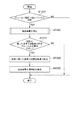
図2は、本実施形態の全体処理を表すフローチャートである。この図2を参照しながら、監視カメラシステム1000が対象者を認証する実際の処理について説明する。全体的な処理の流れとしては、入力部1100からフレームを連続的に取得し、認証部1300で各フレームについて対象者と登録者とを照合し、出力部1400で認証結果を出力する。
FIG. 2 is a flowchart illustrating the overall processing of the present embodiment. The actual processing in which the
まず始めに、入力部1100からフレームを取得する(S1101)。続いて、フレームに写る対象者の顔を検出して(S1102)、対象者の顔の領域だけを切り出した入力顔画像をフレームから抽出する(S1103)。続いて、登録者の顔画像を登録データ保持部1200からひとつずつ取得し(S1104)、対象者の顔画像と照合する(S1105)ことを登録者の数だけ繰り返す(S1106)。その後、この時点で取得した照合結果を統合し、照合結果の信頼度を求める(S1107)。ここまでの(S1103)から(S1107)までの処理を、画面に映る各対象者について行い(S1108)、最後に判定結果を出力する(S1109)。なお、判定結果を出力した後も引き続き次のフレームで、(S1103)から(S1108)までの処理を行い、結果を出力し続ける。 First, a frame is obtained from the input unit 1100 (S1101). Subsequently, the face of the subject in the frame is detected (S1102), and an input face image obtained by cutting out only the face area of the subject is extracted from the frame (S1103). Subsequently, the registrant's face image is acquired one by one from the registration data holding unit 1200 (S1104), and the collation with the target person's face image (S1105) is repeated by the number of registrants (S1106). Thereafter, the collation results acquired at this time are integrated, and the reliability of the collation results is obtained (S1107). The processing from (S1103) to (S1107) up to this point is performed for each target person shown on the screen (S1108), and finally, the determination result is output (S1109). After outputting the determination result, the processes from (S1103) to (S1108) are continuously performed in the next frame, and the result is continuously output.
これ以降、フレームから抽出した対象者の顔領域を、単に対象顔画像または入力顔画像と呼ぶ。また同様に、登録者の顔画像を登録顔画像と呼ぶようにする。また、フローチャート中で示した、照合(S1105)および、照合結果の統合と信頼度の算出(S1107)の処理については、これ以降詳細に記す。 Hereinafter, the face area of the target person extracted from the frame is simply referred to as a target face image or an input face image. Similarly, the face image of the registrant is referred to as a registered face image. Further, the processing of the collation (S1105) and the integration of the collation results and the calculation of the reliability (S1107) shown in the flowchart will be described in detail hereinafter.
<認証処理:概要>
図3は、図2のフローチャートにおける照合(S1105)処理の詳細手順を示すフローチャートである。また、認証部1300の詳細ブロック図を図4に示す。これらに沿って、認証部1300の処理を詳細に説明していく。まず特徴抽出部1310において、対象顔画像から顔の特徴点を検出(S1201)したうえで、検出した特徴点の座標に基づいて特徴量を抽出(S1202)する。同様に登録顔画像からも特徴量を抽出し、照合部1320で対象者と登録者の特徴量を照合(S1205)し、その結果をいったん照合結果保持部1330に保持(S1206)しておく。特徴点検出、特徴量抽出、照合の各工程については、次から詳細に説明する。
<Authentication process: Overview>
FIG. 3 is a flowchart showing a detailed procedure of the matching (S1105) process in the flowchart of FIG. FIG. 4 shows a detailed block diagram of the
<認証処理:顔特徴点検出>
図3における特徴点の検出(S1201およびS1203)について説明する。ここでは顔画像から、目・鼻・口・輪郭など、顔の特徴となりうる部分の画像上の座標と、検出した座標の信頼度を求める。特徴点を検出する実際の手法は任意のものを用いてよく、例えば、非特許文献1に記載の技術が利用できる。検出した座標の信頼度の求め方は、例えば収束するまでに要した繰り返し演算の回数などに基づいて得ることができる。なおこれ以降、ここで求めたものは単に顔特徴点座標と顔特徴点信頼度と呼ぶこととする。
<Authentication process: facial feature point detection>
The detection of the feature points in FIG. 3 (S1201 and S1203) will be described. Here, from the face image, the coordinates on the image of a part that can be a feature of the face, such as eyes, nose, mouth, and contour, and the reliability of the detected coordinates are obtained. An actual technique for detecting the feature points may be any technique. For example, the technique described in
<認証処理:特徴抽出>
図3における特徴量の抽出(S1202およびS1204)について説明する。ここでは顔画像から、個人の識別に必要な特徴量を抽出する。方法は任意で良いが、本実施形態では以下のように特徴量を抽出する。まず、先ほど検出した顔特徴点座標に基づいて、顔画像の座標を正規化する。例えば検出した両目の位置に基づいて、両目を結ぶ線分が画像上で所定の長さ・位置で水平になるように画像を回転・拡大縮小する。そして顔画像に特徴量を抽出する矩形領域を設定する。領域の大きさは任意であるが、個人の特徴をよく表す目や口などの器官がもれなく入るように、しかし背景などは入らないように、一辺が目幅のおおよそ1.5倍程度の正方形を顔の中央に設定するとよい。続いて矩形領域内の画素値を左上から右下に向かって順に取り出し、一列につなげてベクトルとする。これを特徴量とする。
<Authentication process: feature extraction>
The extraction of the feature amounts (S1202 and S1204) in FIG. 3 will be described. Here, feature values necessary for individual identification are extracted from the face image. Any method may be used, but in this embodiment, the feature amount is extracted as follows. First, the coordinates of the face image are normalized based on the face feature point coordinates detected earlier. For example, based on the detected positions of the eyes, the image is rotated / enlarged / reduced so that the line connecting the eyes is horizontal at a predetermined length / position on the image. Then, a rectangular area for extracting a feature amount is set in the face image. The size of the area is arbitrary, but a square with one side approximately 1.5 times the width of the eyes so that the organs such as eyes and mouth that express the characteristics of the individual well, but not the background, etc. Should be set at the center of the face. Subsequently, the pixel values in the rectangular area are sequentially extracted from the upper left to the lower right, and are connected in a row to form a vector. This is defined as a feature value.
なお本実施形態では、対象顔画像ひとつを処理するごとに登録顔画像からも特徴抽出をしている。実際の運用においては、図3の特徴点検出(S1203)および特徴量抽出(S1204)を予め登録時に行っておき、登録データ保持部1200に顔画像に代えて特徴点及び特徴量を顔画像情報として登録しておけばよい。そうすれば繰り返し重複する処理を避けることができる。
In this embodiment, each time one target face image is processed, the feature is also extracted from the registered face image. In an actual operation, the feature point detection (S1203) and the feature amount extraction (S1204) of FIG. 3 are performed in advance at the time of registration, and the feature point and the feature amount are stored in the registration
<認証処理:類似度算出>
図3における特徴量の照合(S1205)について説明する。ここでは、対象顔画像の特徴量と登録顔画像の特徴量を照合し、どの程度同じ人物らしいかを表す類似度を算出する。その方法は任意であるが、類似度が大きいほど特徴量が似ている、つまり入力画像と登録画像が本人同士であることを表すような方法を選ぶ。例として、特徴量のベクトル同士が成す角度のコサインをとる方法、または特徴量のベクトル間のユークリッド距離の逆数をとったものが挙げられる。
<Authentication processing: similarity calculation>
The feature amount comparison (S1205) in FIG. 3 will be described. Here, the feature quantity of the target face image and the feature quantity of the registered face image are collated, and a similarity indicating how much the person is likely to be the same is calculated. The method is arbitrary, but a method is selected in which the larger the degree of similarity, the more similar the feature amount, that is, the method that indicates that the input image and the registered image are the same person. As an example, there is a method of taking the cosine of the angle formed by the feature amount vectors, or the method of taking the reciprocal of the Euclidean distance between the feature amount vectors.
最後に、ここまでで得られた各登録顔画像と対象顔画像との照合結果を一時的に照合結果保持部1330に記憶しておく。照合結果とは、対象顔画像の特徴点検出結果、特徴量、および各登録顔画像と照合した類似度である。
Finally, the comparison result between the registered face image and the target face image obtained so far is temporarily stored in the comparison
<統合処理:概要>
ここでは、図2における照合結果の統合処理(S1107)について詳細手順を表すフローチャートを図5に示す。まず、現在のフレームから抽出した対象顔画像が認証に適した条件であると判定(S1301)できれば、各登録顔画像との照合結果を補正する(S1302)。現時点で認証に適する条件と判定された対象顔画像が所定フレーム数以上得られていれば(S1303)、認証に適する条件と判定されたフレームの照合結果を統合し(S1304)、現時点で統合された照合結果の信頼度を算出する(S1305)。それぞれの各工程については、次から詳細に説明する。
<Integration processing: Overview>
Here, FIG. 5 is a flowchart showing a detailed procedure of the integration processing (S1107) of the collation results in FIG. First, if it is determined that the target face image extracted from the current frame is a condition suitable for authentication (S1301), the result of collation with each registered face image is corrected (S1302). If the target face image determined as the condition suitable for the authentication at this time is obtained by a predetermined number of frames or more (S1303), the collation results of the frames determined as the condition suitable for the authentication are integrated (S1304) and integrated at the present time. The reliability of the matching result obtained is calculated (S1305). Each step will be described in detail below.
統合された照合結果とは、対象者と各登録者との現時点での類似度であり、その最大の類似度が所定の認証閾値を超えている場合、通過者は最大の類似度に対応する登録者であると判定する。認証閾値以下である場合、対象者は登録者のうち誰でもないと判定する。 The integrated matching result is the current similarity between the subject and each registrant, and if the maximum similarity exceeds a predetermined authentication threshold, the passer corresponds to the maximum similarity. It is determined that the user is a registrant. If it is less than or equal to the authentication threshold, it is determined that the subject is not any of the registrants.
<統合処理:フレーム選択>
図5における、フレームが認証に適しているかの判定(S1301)について説明する。ここでは対象顔画像が認証に適しているかどうかを判定する。判定した結果「適していない」となった場合、この対象顔画像に対応する照合結果を照合結果保持部1330から削除する。ここでの「認証に適している」とは、対象者の顔がフレーム中ではっきりと映り、登録顔画像と精度よく照合できることが期待できることである。判定方法は任意であるが、例えば以下のようにするとよい。
<Integration processing: frame selection>
The determination of whether the frame is suitable for authentication (S1301) in FIG. 5 will be described. Here, it is determined whether the target face image is suitable for authentication. If the determination result is “not suitable”, the matching result corresponding to the target face image is deleted from the matching
1つは、対象顔画像の状態に基づいて判定する方法である。例えば、対象顔画像について得られている特徴点信頼度がある所定の値以下である場合は適していないと判定する方法が有効である。なぜなら、顔が遠くにあり解像していない・動きぶれしている・マスクやサングラスで一部が隠れている・顔の向きが顔特徴点検出部1311の仕様外である、などの条件では、顔器官が正しく検出できず信頼度が低くなる可能性が高い。よってそれらの顔から特徴を抽出しても正しく照合できない公算が高いためである。また対象顔画像の状態に基づいて判定する別の方法として、顔画像の周波数分布から推定できるボケやブレの状態、特徴点座標から推定できる顔の向きや表情などの情報も役立つと考えられる。 One is a method of making a determination based on the state of the target face image. For example, a method of determining that the feature point reliability obtained for the target face image is not suitable when the reliability is equal to or less than a predetermined value is effective. The reason is that the face is far away and not resolved, the motion is blurred, a part is hidden by a mask or sunglasses, and the face orientation is out of the specification of the face feature point detection unit 1311. In addition, there is a high possibility that the face organ cannot be detected correctly and the reliability is reduced. Therefore, even if features are extracted from those faces, it is highly likely that correct matching cannot be achieved. Further, as another method of making a determination based on the state of the target face image, information such as a blur or blur state that can be estimated from the frequency distribution of the face image and a face direction or facial expression that can be estimated from feature point coordinates may be useful.
もう1つの方法は、対象顔画像と登録顔画像との関係性に基づいて判定する方法である。例えば、これまでで得られている各登録顔画像との類似度を調べる方法がある。具体的には、類似度の平均と分散や、類似度の最大値と下位の類似度複数個との差などを調べ、その値がある所定の値以下である場合は適していないと判定することができる。なぜなら、はっきりと写っていない対象顔画像はどの登録顔画像とも精密に照合できず、一様に低い類似度が得られる可能性が高いためである。 Another method is a method of making a determination based on the relationship between the target face image and the registered face image. For example, there is a method of checking the degree of similarity with each registered face image obtained so far. Specifically, the average and variance of the similarity, the difference between the maximum value of the similarity and a plurality of lower similarities, and the like are examined, and if the value is less than a predetermined value, it is determined that the value is not suitable. be able to. This is because a target face image that is not clearly shown cannot be accurately matched with any registered face image, and there is a high possibility that a uniformly low similarity is obtained.
あるいは、上で述べた方法を組み合わせて利用することも可能である。上記の判定基準を直列に並べて判定することも可能であるし、上記の情報を全て入力して、適している/適してない、の2クラスを出力する判定器をあらかじめ機械学習で用意することも可能である。機械学習の方法としては例えばサポートベクターマシンやロジスティック回帰などの公知の方法が利用できる。また言うまでもなく、判定に用いる入力として上記の例以外にも利用できる。特徴点座標や抽出した特徴量そのもの、あるいは上位複数個の類似度の値そのもの、最大類似度と下位の類似度との差や比の情報、なども判定に役立つ可能性がある。いまここで述べた機械学習による判定器のデータフローを図6に示す。 Alternatively, it is also possible to use a combination of the methods described above. It is possible to make a judgment by arranging the above judgment criteria in series, and prepare a judgment machine that inputs all of the above information and outputs two classes of suitable / not suitable by machine learning in advance. Is also possible. As a method of machine learning, a known method such as a support vector machine or logistic regression can be used. Needless to say, the input other than the above example can be used as an input used for the determination. The feature point coordinates, the extracted feature amount itself, the values of a plurality of upper similarities themselves, and information on the difference and ratio between the maximum similarity and the lower similarity may also be useful for the determination. FIG. 6 shows a data flow of the decision unit based on the machine learning described here.
<統合処理:類似度補正>
図5における照合結果の補正(S1302)について、図7の詳細フローチャートを参照して説明する。ここでは、認証に適していると判定されたフレームについて、登録顔画像との間で得られた最大の類似度がぎりぎり閾値以下である場合、正しく照合されたか再度判定し、最大類似度を閾値以上に引き上げる。
<Integration processing: similarity correction>
Correction of the collation result in FIG. 5 (S1302) will be described with reference to the detailed flowchart in FIG. Here, if the maximum similarity obtained between the registered face image and the frame determined to be suitable for authentication is just below the threshold, it is determined again whether or not the frame has been correctly collated, and the maximum similarity is set to the threshold. Raise above.
まず初めに、対象顔画像と各登録顔画像の類似度のうち、最大類似度を取り出す(S1401)。続いて、その最大類似度が所定範囲にあるかを判断する範囲判断を行う(S1402)。具体的には、予め定められた認証閾値に対してわずかに小さい狭い範囲を設定する。例えば類似度の値域が[0,1]であり認証閾値が0.5である場合、[0.4,0.5)の区間とするなどがよい。そして最大類似度がその範囲に入った場合、最大類似度を認証閾値以上に引き上げるかどうか判断する(S1403)。補正判断の方法は先ほどフレーム選択(S1301)で述べた方法が利用できるが、認証に適していると判定する基準をより厳しくすることが望ましい。なぜなら、対象者とは異なる登録者の類似度を認証閾値以上に引き上げることは誤認証を引き起こすことになるからであり、対象者と同じ人物の登録顔画像の類似度が最大になっていると思われるフレームのみに対して類似度を引き上げる必要があるためである。例えば、特徴点信頼度がほぼ上限値に達している場合のみ、などの判定条件を用いればよい。最後に、類似度引き上げ対象と判定された場合、最大類似度を、予め定めた所定の値にまで引き上げる(S1404)。その値は任意でよい。類似度の値域の最大値でもよいし、認証閾値よりわずかに高い値でもよい。 First, the maximum similarity is extracted from the similarities between the target face image and each registered face image (S1401). Next, a range determination is performed to determine whether the maximum similarity is within a predetermined range (S1402). Specifically, a narrow range slightly smaller than a predetermined authentication threshold is set. For example, when the value range of the similarity is [0, 1] and the authentication threshold is 0.5, the section may be set to [0.4, 0.5). Then, when the maximum similarity falls within the range, it is determined whether the maximum similarity is raised to the authentication threshold or more (S1403). As a method of the correction determination, the method described earlier in the frame selection (S1301) can be used, but it is preferable to make the criteria for determining that the frame is suitable for authentication more strict. This is because raising the similarity of a registrant different from the target person to an authentication threshold or more will cause erroneous authentication, and if the similarity of the registered face image of the same person as the target person is maximized. This is because it is necessary to increase the similarity only for the frame that seems to be possible. For example, a determination condition such as only when the feature point reliability has almost reached the upper limit may be used. Finally, when it is determined that the similarity is to be raised, the maximum similarity is raised to a predetermined value (S1404). Its value may be arbitrary. The maximum value of the value range of the similarity may be used, or a value slightly higher than the authentication threshold may be used.
<統合処理:類似度統合>
図5における照合結果の統合(S1304)について説明する。ここでは、認証に適していると判定されたフレームの照合結果が照合結果保持部1330に所定数以上が蓄積された時点(S1303)で、各フレームから得られている登録顔画像との類似度を統合し、この対象者と最も近い登録者とその類似度を出力する。
<Integration processing: similarity integration>
The integration of the collation results (S1304) in FIG. 5 will be described. Here, when a predetermined number or more of matching results of frames determined to be suitable for authentication are accumulated in the matching result holding unit 1330 (S1303), the degree of similarity with the registered face image obtained from each frame. Are integrated, and the registrant closest to the subject and the similarity are output.
ここで述べた所定数は、少なくとも2以上であるが、入力部1100から取得するフレームの取得レートに依存する。撮影条件にもよるが、典型的には実時間でおおよそ2秒間から10秒間のあいだであり、例えば30fpsでフレームを取得する場合、60から300フレームであるといえる。
The predetermined number described here is at least two or more, but depends on the acquisition rate of the frame acquired from the
各フレームの類似度を統合する方法はいくつかの方法が考えられるが、以下のようにすればよい。保持しているフレームを1…i…M、登録顔画像を1…j…Nとするとき、登録者jに対する統合類似度Sjは式(1)(2)(3)(4)いずれかのように求められる。式(1)は、保持しているフレーム中の最大値である。式(2)は、保持しているフレーム中の類似度を移動平均した値の最大値である。窓幅wは事前に定めておくべき値であり、典型的には数フレーム分である。式(3)は、保持しているフレーム中の平均値である。式(4)は、保持しているフレーム中で認証閾値Tを超えている類似度の総和である。 There are several methods for integrating the similarity of each frame, and the following method may be used. When the held frames are 1 ... i ... M and the registered face images are 1 ... j ... N, the integrated similarity Sj for the registrant j is one of the following equations (1), (2), (3), and (4). Is required. Equation (1) is the maximum value in the held frames. Equation (2) is the maximum value of the moving average of the similarities in the held frames. The window width w is a value to be determined in advance, and is typically several frames. Equation (3) is an average value in the held frames. Equation (4) is the sum of similarities exceeding the authentication threshold T in the held frames.
あるいは、類似度sij(1…i…M)を入力として統合類似度Sjを出力するような変換器を機械学習で予め求めておいてもよい。ここでも機械学習の方法は公知のものが利用でき、回帰サポートベクターマシンなど任意のものが利用できる。最後に、対象者と最も似ている登録者とその統合類似度を、式(5)で求める。 Alternatively, a converter that outputs the integrated similarity Sj with the similarity s ij (1... I... M) as an input may be obtained in advance by machine learning. Here, any known machine learning method can be used, and any method such as a regression support vector machine can be used. Finally, the registrant most similar to the target person and the integrated similarity thereof are obtained by Expression (5).
Sj=max(sij)i=1…M (1) S j = max (s ij ) i = 1... M (1)

max(sj)j=1…N (5)
ここで
sij:フレームiでの登録顔画像jについての類似度
T:認証閾値
である。
max (s j ) j = 1... N (5)
Here, s ij is the similarity T of the registered face image j in the frame i: the authentication threshold.
これまで述べた類似度統合の処理は、フレームが所定数以上蓄積された時点で実行するが、それ以降、一定数のフレームが追加で蓄積されるごとに再実行し、結果を更新することが望ましい。1フレームが追加されるごとに実行してもよいし、所定数のまとまった数のフレームが追加蓄積された時点で実行してもよい。これにより類似度の表示後に表示された類似度が順次更新される。 The similarity integration process described above is executed when a predetermined number of frames are accumulated, but thereafter, every time a fixed number of frames are additionally accumulated, the process is re-executed and the result may be updated. desirable. It may be executed every time one frame is added, or may be executed when a predetermined number of frames are additionally accumulated. Thereby, the similarity displayed after the similarity is displayed is sequentially updated.
本実施形態では、類似度補正(S1302)を行ってから類似度統合(S1304)を行う例で説明した。逆に統合をしてから補正することも可能である。たとえば、式(1)で選択された最大の類似度が得られたフレームについて、類似度補正を行うなどが考えられる。 In the present embodiment, an example has been described in which similarity correction (S1302) is performed and then similarity integration (S1304) is performed. Conversely, it is also possible to perform correction after integration. For example, it is conceivable to perform similarity correction on a frame having the maximum similarity selected in equation (1).
<統合処理:信頼度算出>
図5における信頼度の算出(S1305)について説明する。ここでは、類似度統合(S1304)した結果がどれほど確からしいかを表す値として信頼度を求める。これ以降、この信頼度を照合信頼度と呼ぶ。照合信頼度は、例えば以下のような基準で求めることができる。1つは、保持されているフレームの数が多いほど高い値となることが望ましい。または、フレーム選択(S1301)によって認証に適していると判定されたフレームの割合が高いほど高い値となる方法でもよい。さらに、検出した特徴点座標に基づいて求められる顔の平均的なサイズが大きい、あるいは平均的な特徴点信頼度が高いほど高い値となる方法も考えられる。
<Integration processing: reliability calculation>
The calculation of the reliability (S1305) in FIG. 5 will be described. Here, the reliability is calculated as a value indicating how likely the result of the similarity integration (S1304) is. Hereinafter, this reliability is referred to as collation reliability. The verification reliability can be obtained, for example, based on the following criteria. One is that the higher the number of held frames, the higher the value. Alternatively, a method may be used in which the higher the proportion of frames determined to be suitable for authentication by the frame selection (S1301), the higher the value. Furthermore, a method is conceivable in which the average size of the face obtained based on the detected feature point coordinates is large, or the value increases as the average feature point reliability increases.
<出力部>
図1に示した出力部1400の詳細についてここで説明する。本実施形態では、図8を交えながら、監視カメラ映像をリアルタイムで目視確認できるディスプレイに認証結果を重畳表示する例を述べる。説明を簡便にするため、対象者がひとりだけ、カメラに接近して通過するシーンを例にとる。図中(a)から(d)に向かって時刻が進み、対象者がカメラに接近してくる。(a)および(b)の時点で対象者の通過を検出している旨の枠は表示するが、誰であるかはまだ表示しない。そして(c)の時点で対象者が登録者のうち誰とどの程度似ているか、またその判定結果の信頼度を初めて表示する。(d)の時点で得られたフレームが(c)から増えたため類似度統合を改めて実行し、その結果を表示する。また、信頼度も表示を更新する。図中では(c)から判定結果を表示したが、どの時点から判定結果をすればよいかは任意であり、例えば以下のような基準で決めることができる。所定フレーム数の照合結果を統合できた時点、あるいは照合信頼度が所定値を超えた時点などがある。
<Output section>
Details of the
なお、(a)および(b)の時点で認証結果を重畳表示しない例を説明したが、(a)および(b)の時点でも結果を表示する方法として、出力部1400が表示するカメラ映像自体を現実より数秒間の時間差をおいて再生すればよい。例えば図8でいう2コマだけカメラ映像の表示を遅らせて、現実の(c)の時点で信頼できる認証結果が得られた段階で(a)のカメラ映像の上に(c)の時点での認証結果を重畳表示する。そうすると、あたかも対象者が画面に現れた段階で認証できているように表示でき、どのタイミングで映像を見ても認証結果を確認できるようになる。 Although the example in which the authentication result is not superimposed and displayed at the time points (a) and (b) has been described, the method of displaying the result also at the time points (a) and (b) is as follows. Can be reproduced with a time difference of several seconds from reality. For example, by delaying the display of the camera image by two frames as shown in FIG. 8, when a reliable authentication result is obtained at the time (c), the camera image at the time (c) at the time (c) is obtained. The authentication result is superimposed. By doing so, it is possible to display as if the subject has been authenticated as soon as the subject appears on the screen, and the authentication result can be confirmed at any time when the video is viewed.
<実施形態1の要点>
本実施形態1の構成の説明は以上である。ここでは、実施形態1の要点を述べる。
<Key points of
The configuration of the first embodiment has been described above. Here, the main points of the first embodiment will be described.
非協力型の顔認証では、人物が協力はおろかカメラの存在を意識すらしないため、人物が自由に行動している最中に認証する必要がある。その制約下で得られた映像では、認証に適切でない条件の顔画像が一部含まれている。したがって、映像に人物が現れてから直ちに認証できない、または認証結果を拙速に表示しても、後のタイミングで異なる認証結果が得られてしまった場合には表示内容を直前から変更してユーザを混乱させてしまう可能性があり。本実施形態によれば、複数フレームを取得して認証に適した条件の顔画像が得られるまで待ち、その適した顔画像だけを照合して信頼できる結果が得られるまでユーザへの結果の表示を待つことになる。表示が数秒間遅れるデメリットはあるが、ユーザは正しい認証結果だけを目にする確率が高まるメリットがある。 In non-cooperative face recognition, since a person does not even recognize the presence of a camera, let alone cooperation, it is necessary to perform authentication while the person is freely acting. The video obtained under the restriction includes a part of the face image under the condition not suitable for the authentication. Therefore, if the authentication cannot be performed immediately after the person appears in the video, or the authentication result is displayed prematurely, if a different authentication result is obtained at a later timing, the display content is changed from immediately before and the user is changed. Can be confusing. According to the present embodiment, a plurality of frames are acquired, a wait is performed until a face image having conditions suitable for authentication is obtained, and only the suitable face image is collated to display a result to a user until a reliable result is obtained. Will wait. There is a disadvantage that the display is delayed for several seconds, but there is an advantage that the probability that the user sees only the correct authentication result increases.
(実施形態2)
実施形態1では簡便のため、入力部1100が1つのカメラである例を説明したが、本発明はこの形態に限定されるものではない。そこで本実施形態では、複数のカメラを同時に用いる例を説明する。特に、人物が自由に行動している最中に認証する必要がある制約下では、人物がたった1つだけのカメラの正面を常に向いているとは限らない。異なる複数の場所から撮影することで、いずれかのカメラで認証できることを期待する。
(Embodiment 2)
In the first embodiment, for simplicity, an example in which the
なお重複を避けるため、以下の説明においては、実施形態1と共通する部分は省略している。本実施形態に記されていない各部の機能は実施形態1と同一であるため、各部の説明は実施形態1を参照されたい。 In order to avoid duplication, in the following description, parts common to the first embodiment are omitted. The functions of each unit not described in the present embodiment are the same as those in the first embodiment, and therefore, refer to the first embodiment for the description of each unit.
<全体の構成>
図9は、本実施形態における監視カメラシステム1000のブロック図である。この図に従って、実施形態1との差異を詳細に述べる。本実施形態では入力部1101、入力部1102のふたつの監視カメラを備える。カメラの配置は任意であるが以下のようにすればよい。例えば図10のように入力部1101、入力部1102を設置する。カメラ間で視野を共有するが、できるかぎり異なる場所から異なる向きで人物を撮影するようにするのが望ましい。今回は実施形態1と同様に、広間に対象者がひとりだけ存在して、その対象者を処理する例で説明するが、広間に複数人物がいる場合も考えられる。その場合、入力部1101と入力部1102から抽出したそれぞれの対象者の顔画像が同じ人物であることを対応付ける必要がある。そのためには、予めカメラの設置位置を校正しておき、対象顔画像を抽出した位置から人物を対応付けられるようにすることが望ましい。
<Overall configuration>
FIG. 9 is a block diagram of the
<認証処理:概要>
図2の全体フローチャートで実施形態1との差異を述べる。それぞれの入力部1101、1102について、独立してフレームの取得(S1101)から照合(S1105)まで行ったあと、入力部1101、1102のそれぞれから得られた照合結果を統合(S1107)する。以降、統合処理の詳細について説明する。
<Authentication process: Overview>
Differences from the first embodiment will be described with reference to the overall flowchart of FIG. After performing frame acquisition (S1101) to collation (S1105) independently for each of the
<統合処理:概要>
ここでは、図2における照合結果の統合(S1107)を詳細化したフローチャートである図5の各ステップについて、実施形態1との差異を示す。まず、それぞれの入力部1101および1102について独立して、フレームから抽出した対象顔画像が認証に適した条件であるか判定する処理(S1301)および照合結果を補正する処理(S1302)を行う。これらの処理は、それぞれの入力部1101および1102について独立して実施形態1と同様に行う。その一方で、照合結果が所定フレーム数以上得られたかどうか判定(S1303)、照合結果の統合(S1304)および信頼度の算出(S1305)は、両方の入力部から得られた照合結果を合わせて行う。これについて詳細に説明する。
<Integration processing: Overview>
Here, differences from the first embodiment are shown for each step in FIG. 5 which is a flowchart detailing the integration of the collation results (S1107) in FIG. First, for each of the
<統合処理:照合結果が所定フレーム数以上得られたかどうか判定>
図5の認証に適した条件であるか判定する処理(S1303)について実施形態1との差異を説明する。本実施形態での所定数とは、それぞれの入力部1101、1102から得られた照合結果を合わせた数である。それは具体的には例えば合計数でもよいし、多い方の数でもよい。
<Integration processing: Judge whether or not the collation result is equal to or more than a predetermined number of frames>
The process (S1303) of FIG. 5 for determining whether the conditions are suitable for the authentication will be described with reference to differences from the first embodiment. The predetermined number in the present embodiment is a number obtained by adding the collation results obtained from the
<統合処理:類似度統合>
図5の照合結果の統合(S1304)について実施形態1との差異を説明する。統合類似度を算出する方法は、実施形態1で述べた方法をそのまま利用できる。カメラ1…h…L、保持しているフレームを1…i…M、登録顔画像を1…j…Nとするとき、登録者jに対する統合類似度Sjは式(6)(7)(8)(9)いずれかのように求められる。実施形態1との差異は、両カメラから得られた類似度をまとめて処理することである。
<Integration processing: similarity integration>
The difference between the first embodiment and the integration (S1304) of the collation results in FIG. 5 will be described. As a method of calculating the integrated similarity, the method described in the first embodiment can be used as it is. Assuming that
Sj=max(shij)h=1…Li=1…M (6) S j = max (s hij ) h = 1... Li = 1... M (6)
ここで
shij:カメラhフレームiでの登録顔画像jについての類似度
T:認証閾値
である。
Here, s hij is the similarity T for the registered face image j in the camera h frame i: the authentication threshold.
<統合処理:信頼度算出>
図5の信頼度の算出(S1305)について実施形態1との差異を説明する。ここでは実施形態1と同様に、求めた統合結果がどれほど確からしいかを表す値を求める。本実施形態では実施形態1で説明した基準が利用できるとともに、それぞれの入力部から得られた照合結果の数が多いほど高い照合信頼度を求めることが望ましい。なぜなら異なる位置から撮影した映像はそれぞれを補完する異なる情報を持っており、そのような情報が多く得られていることは、正しく照合できることにつながるといえるためである。
<Integration processing: reliability calculation>
The difference between the calculation of the reliability in FIG. 5 (S1305) and the first embodiment will be described. Here, similarly to the first embodiment, a value indicating how likely the obtained integration result is is obtained. In the present embodiment, it is desirable that the criterion described in the first embodiment can be used, and that the higher the number of matching results obtained from the respective input units, the higher the matching reliability is obtained. This is because videos captured from different positions have different information that complements each other, and the fact that such a large amount of information is obtained leads to correct collation.
<出力部>
図1に記した出力部1400の詳細について実施形態1との差異を説明する。実施形態1と同様に監視カメラ映像をリアルタイムで目視確認するディスプレイに結果を重畳表示する例で説明する。入力部1101、入力部1102に対応するディスプレイがそれぞれ存在する場合は、それぞれに対して、実施形態1と同じ方法で結果を表示すればよい。入力部1101、入力部1102についてディスプレイがひとつしかない場合は以下のように表示すればよい。例えば、対象者について信頼できる照合結果が最初に得られた段階で、入力部1101と入力部1102のうち、認証に適していると判定されたフレームが多い方の映像をディスプレイに表示する。そして、対象者が通過してフレームから見えなくなるまで、その入力部の映像を表示すればよい。
<Output section>
Differences between the
実施形態2は以上である。なお、言うまでもないが、ここで説明した方法で3つ以上の監視カメラを用いることも可能である。 The second embodiment is as described above. Needless to say, it is also possible to use three or more surveillance cameras by the method described here.
(実施形態3)
実施形態1では、図5における認証に適した条件であるか判定する処理(S1301)および照合結果を補正する処理(S1302)で、現在処理しているフレームから得られた情報のみを利用して判定する方法を述べた。また、照合結果保持部1330に複数のフレームに対応する結果が保持されていることも既に述べてある。そこで本実施形態では、照合結果保持部1330に保持されている過去フレームの情報も併せて参照して判定する方法を述べる。映像中に映る人物は主に歩いている・座って休んでいるなどだと考えられる。行動や姿勢は過去から引き続き近い状態である可能性が高いため、過去から現在に至る情報を利用することで判定の確度を上がられることが期待できる。
(Embodiment 3)
In the first embodiment, in the process (S1301) of determining whether the conditions are suitable for authentication and the process of correcting the collation result (S1302) in FIG. 5, only information obtained from the frame currently being processed is used. The method of judgment has been described. It has also been described that the matching
なお重複を避けるため、以下の説明においては、前実施形態と同じ部分は省略している。本実施形態に記されていない各部の機能は実施形態1と同一であるため、各部の説明は実施形態1を参照されたい。 In order to avoid duplication, in the following description, the same parts as those in the previous embodiment are omitted. The functions of each unit not described in the present embodiment are the same as those in the first embodiment, and therefore, refer to the first embodiment for the description of each unit.
<統合処理:フレーム選択>
図5における認証に適した条件であるか判定する処理(S1301)について実施形態1との差異を説明する。実施形態1では、現在のフレームから得られた対象顔画画像の特徴点信頼度の値などに基づいて判定することを述べた。本実施形態では、過去から現在まで蓄積されている対象顔画像の特徴点信頼度を用いる。例えば、特徴点信頼度の最大値が所定の値を超えている場合、平均値が所定の値を超えている場合などに、認証に適していると判定できる。
<Integration processing: frame selection>
The process (S1301) for determining whether the conditions are suitable for authentication in FIG. 5 will be described in comparison with the first embodiment. In the first embodiment, the determination has been described based on the feature point reliability of the target face image obtained from the current frame. In the present embodiment, the feature point reliability of the target face image accumulated from the past to the present is used. For example, when the maximum value of the feature point reliability exceeds a predetermined value, when the average value exceeds a predetermined value, or the like, it can be determined to be suitable for authentication.
また一方、実施形態の図6に示したように、判定器を機械学習する方法も本実施形態で利用できる。図11のように、現在のフレームの情報だけでなく、過去の情報も併せて入力する判定器を機械学習すればよい。図11の例では、過去も含めて3フレームの情報を用いて判定する例を説明したが、もちろんそれより長時間の情報を使って判定してもよい。 On the other hand, as shown in FIG. 6 of the embodiment, a method of performing machine learning on the determiner can also be used in this embodiment. As shown in FIG. 11, it is sufficient to machine-learn a determiner that inputs not only information of the current frame but also past information. In the example of FIG. 11, an example in which the determination is performed using information of three frames including the past has been described. However, the determination may be performed using information of a longer time.
<統合処理:類似度補正>
図7のフローチャートにおける類似度を引き上げるかを判定する処理(S1403)について、実施形態1との差異を説明する。本実施形態で述べた<統合処理:フレーム選択>の方法が同様に利用できる。
<Integration processing: similarity correction>
Regarding the process (S1403) of determining whether to increase the similarity in the flowchart of FIG. 7, the difference from the first embodiment will be described. The method of <integration processing: frame selection> described in the present embodiment can be similarly used.
(その他の実施形態)
図12は、実施形態における画像処理装置のハードウェア構成を示すブロック図である。同図において、CPU1201は、バス1206を介して接続する各デバイスを統括的に制御する。CPU1201は、読み出し専用メモリ(ROM)1202に記憶された処理ステップやプログラムを読み出して実行する。オペレーティングシステム(OS)をはじめ、本実施形態に係る各処理プログラム、デバイスドライバ等はROM1202に記憶されており、ランダムアクセスメモリ(RAM)1203に一時記憶され、CPU1201によって適宜実行される。また、RAM1203は、各種データの一時保存領域として用いることができる。特に、各種の画像処理において参照するパラメータやテーブルを記憶するメモリとしては、SRAMが好適である。また、入力I/F1204は、外部の装置(表示装置や操作装置など)から画像処理装置で処理可能な形式で入力信号を入力する。また、出力I/F1205は、外部の装置(表示装置など)へその装置が処理可能な形式で出力信号を出力する。
(Other embodiments)
FIG. 12 is a block diagram illustrating a hardware configuration of the image processing apparatus according to the embodiment. In the figure, a
本発明は、上述の実施形態の1以上の機能を実現するプログラムを、ネットワーク又は記憶媒体を介してシステム又は装置に供給し、そのシステム又は装置のコンピュータにおける1つ以上のプロセッサーがプログラムを読出し実行する処理でも実現可能である。また、1以上の機能を実現する回路(例えば、ASIC)によっても実現可能である。 The present invention supplies a program for realizing one or more functions of the above-described embodiments to a system or an apparatus via a network or a storage medium, and one or more processors in a computer of the system or the apparatus read and execute the program. This processing can be realized. Further, it can also be realized by a circuit (for example, an ASIC) that realizes one or more functions.
1000 監視カメラシステム
1100 入力部
1200 登録データ保持部
1300 認証部
1400 出力部
1000
Claims (18)
複数人物のそれぞれの顔画像情報が登録された記憶手段と、
前記複数の入力顔画像の1つと前記登録された複数人物のそれぞれの顔画像情報とを照合して類似度を求める照合手段と、
前記複数の入力顔画像のそれぞれが認証に適しているかを判定する判定手段と、
前記判定手段により2以上の入力顔画像が認証に適していると判定された場合に、当該2以上の入力顔画像のそれぞれと前記登録された顔画像情報との類似度を統合する統合手段と
統合された前記類似度に基づいて前記入力顔画像に対応する人物を認証する認証手段とを備えることを特徴とする画像処理装置。 Acquiring means for acquiring a plurality of input face images of the same person input in chronological order,
Storage means in which face image information of each of a plurality of persons is registered;
Matching means for comparing one of the plurality of input face images with respective face image information of the registered plurality of persons to obtain a similarity;
Determining means for determining whether each of the plurality of input face images is suitable for authentication,
Integrating means for integrating the degree of similarity between each of the two or more input face images and the registered face image information, when the determination means determines that two or more input face images are suitable for authentication; An image processing apparatus comprising: an authentication unit configured to authenticate a person corresponding to the input face image based on the integrated similarity.
前記特徴点に基づいて前記顔画像から特徴量を抽出する抽出手段とをさらに備え、
前記照合手段は、前記特徴量に基づいて前記類似度を求めることを特徴とする請求項1に記載の画像処理装置。 Detecting means for detecting a feature point from the face image;
Extracting means for extracting a feature amount from the face image based on the feature points,
The image processing apparatus according to claim 1, wherein the matching unit obtains the similarity based on the feature amount.
前記照合手段は、前記抽出手段により前記入力顔画像と登録された顔画像のそれぞれから特徴量を抽出し、当該抽出されたそれぞれの特徴量の類似度を求めることを特徴とする請求項2に記載の画像処理装置。 A face image is registered as face image information in the storage means,
The method according to claim 2, wherein the matching unit extracts a feature amount from each of the input face image and the registered face image by the extraction unit, and obtains a similarity between the extracted feature amounts. The image processing apparatus according to any one of the preceding claims.
前記照合手段は、前記抽出手段により前記入力顔画像から特徴量を抽出し、当該抽出された特徴量と登録されている特徴量との類似度を求めることを特徴とする請求項2に記載の画像処理装置。 The feature amount of the face image is registered as face image information in the storage unit,
3. The method according to claim 2, wherein the matching unit extracts a feature amount from the input face image by the extraction unit, and obtains a similarity between the extracted feature amount and a registered feature amount. 4. Image processing device.
前記判定手段は、前記検出された特徴点の信頼度に基づいて前記入力顔画像が認証に適しているかを判定することを特徴とする請求項2に記載の画像処理装置。 The detecting means further calculates the reliability of the detected feature point,
The image processing apparatus according to claim 2, wherein the determination unit determines whether the input face image is suitable for authentication based on the reliability of the detected feature point.
前記統合手段は、前記補正手段により補正された類似度を統合することを特徴とする請求項1に記載の画像処理装置。 A correction unit that corrects the similarity based on the similarity between the input face image and the registered face image;
The apparatus according to claim 1, wherein the integration unit integrates the similarities corrected by the correction unit.
前記補正手段は、前記類似度を前記閾値以上に引き上げることを特徴とする請求項7に記載の画像処理装置。 The authentication means performs authentication based on a threshold value for the similarity,
The image processing apparatus according to claim 7, wherein the correction unit increases the similarity to the threshold or more.
前記最大の類似度が所定の範囲にある場合に、当該最大の類似度を前記閾値以上に引き上げるかを判断する補正判断手段とを備えることを特徴とする請求項8に記載の画像処理装置。 Range determining means for determining whether the maximum similarity among the similarities between the input face image and the registered face image is within a predetermined range,
The image processing apparatus according to claim 8, further comprising: a correction determining unit configured to determine whether the maximum similarity is increased to the threshold or more when the maximum similarity is within a predetermined range.
前記特徴点に基づいて前記顔画像から特徴量を抽出する抽出手段とをさらに備え、
前記照合手段は、前記特徴量に基づいて前記類似度を求め、
前記補正判断手段は、前記信頼度に基づいて前記最大の類似度を前記閾値以上に引き上げるかを判断することを特徴とする請求項9に記載の画像処理装置。 Detecting means for detecting a feature point from the face image and calculating the reliability of the feature point;
Extracting means for extracting a feature amount from the face image based on the feature points,
The matching means obtains the similarity based on the feature amount,
The image processing apparatus according to claim 9, wherein the correction determination unit determines whether to increase the maximum similarity to the threshold or more based on the reliability.
前記表示手段は、前記入力顔画像とともに前記統合された類似度及び該類似度の信頼度を表示することを特徴とする請求項12に記載の画像処理装置。 Further comprising a calculating means for calculating the reliability of the integrated similarity,
13. The image processing apparatus according to claim 12, wherein the display unit displays the integrated similarity and the reliability of the similarity together with the input face image.
前記複数の入力顔画像の1つと登録された複数人物のそれぞれの顔画像情報とを照合して類似度を求める照合工程と、
前記複数の入力顔画像のそれぞれが認証に適しているかを判定する判定工程と、
前記判定工程により2以上の入力顔画像が認証に適していると判定された場合に、当該2以上の入力顔画像のそれぞれと前記登録された顔画像情報との類似度を統合する統合工程と
統合された前記類似度に基づいて前記入力顔画像に対応する人物を認証する認証工程とを備えることを特徴とする画像処理方法。 An acquisition step of acquiring a plurality of input face images of the same person input in chronological order,
A matching step of comparing one of the plurality of input face images with respective face image information of a plurality of registered persons to obtain a similarity;
A determining step of determining whether each of the plurality of input face images is suitable for authentication;
An integration step of integrating the similarity between each of the two or more input face images and the registered face image information when the two or more input face images are determined to be suitable for authentication by the determination step; An authentication step of authenticating a person corresponding to the input face image based on the integrated similarity.
Priority Applications (1)
| Application Number | Priority Date | Filing Date | Title |
|---|---|---|---|
| JP2018182091A JP2020052788A (en) | 2018-09-27 | 2018-09-27 | Image processing apparatus, its method, and program |
Applications Claiming Priority (1)
| Application Number | Priority Date | Filing Date | Title |
|---|---|---|---|
| JP2018182091A JP2020052788A (en) | 2018-09-27 | 2018-09-27 | Image processing apparatus, its method, and program |
Publications (1)
| Publication Number | Publication Date |
|---|---|
| JP2020052788A true JP2020052788A (en) | 2020-04-02 |
Family
ID=69997291
Family Applications (1)
| Application Number | Title | Priority Date | Filing Date |
|---|---|---|---|
| JP2018182091A Pending JP2020052788A (en) | 2018-09-27 | 2018-09-27 | Image processing apparatus, its method, and program |
Country Status (1)
| Country | Link |
|---|---|
| JP (1) | JP2020052788A (en) |
Cited By (5)
| Publication number | Priority date | Publication date | Assignee | Title |
|---|---|---|---|---|
| JP2022032529A (en) * | 2020-08-12 | 2022-02-25 | ソフトバンク株式会社 | Facial authentication server, information processing method, and information processing system |
| US20220392256A1 (en) * | 2021-06-07 | 2022-12-08 | Canon Kabushiki Kaisha | Authentication device, registration device, authentication method, registration method, and storage medium |
| JP2022552754A (en) * | 2020-09-22 | 2022-12-20 | ベイジン・センスタイム・テクノロジー・デベロップメント・カンパニー・リミテッド | IMAGE DETECTION METHOD AND RELATED DEVICE, DEVICE, STORAGE MEDIUM, AND COMPUTER PROGRAM |
| JPWO2023188302A1 (en) * | 2022-03-31 | 2023-10-05 | ||
| US20240233363A9 (en) * | 2022-10-24 | 2024-07-11 | Meta Platforms Technologies, Llc | High accuracy people identification over time by leveraging re-identification |
-
2018
- 2018-09-27 JP JP2018182091A patent/JP2020052788A/en active Pending
Cited By (9)
| Publication number | Priority date | Publication date | Assignee | Title |
|---|---|---|---|---|
| JP2022032529A (en) * | 2020-08-12 | 2022-02-25 | ソフトバンク株式会社 | Facial authentication server, information processing method, and information processing system |
| JP2022552754A (en) * | 2020-09-22 | 2022-12-20 | ベイジン・センスタイム・テクノロジー・デベロップメント・カンパニー・リミテッド | IMAGE DETECTION METHOD AND RELATED DEVICE, DEVICE, STORAGE MEDIUM, AND COMPUTER PROGRAM |
| US20220392256A1 (en) * | 2021-06-07 | 2022-12-08 | Canon Kabushiki Kaisha | Authentication device, registration device, authentication method, registration method, and storage medium |
| JP2022187205A (en) * | 2021-06-07 | 2022-12-19 | キヤノン株式会社 | Authentication device, registration device, authentication method, registration method, computer program, and storage medium |
| US12327428B2 (en) * | 2021-06-07 | 2025-06-10 | Canon Kabushiki Kaisha | Authentication device, registration device, authentication method, registration method, and storage medium |
| JP7703367B2 (en) | 2021-06-07 | 2025-07-07 | キヤノン株式会社 | Authentication device, registration device, authentication method, registration method, computer program, and storage medium |
| JPWO2023188302A1 (en) * | 2022-03-31 | 2023-10-05 | ||
| JP7798178B2 (en) | 2022-03-31 | 2026-01-14 | 日本電気株式会社 | Image processing device, image processing method, and recording medium |
| US20240233363A9 (en) * | 2022-10-24 | 2024-07-11 | Meta Platforms Technologies, Llc | High accuracy people identification over time by leveraging re-identification |
Similar Documents
| Publication | Publication Date | Title |
|---|---|---|
| KR102299847B1 (en) | Face verifying method and apparatus | |
| JP5755012B2 (en) | Information processing apparatus, processing method thereof, program, and imaging apparatus | |
| JP2020052788A (en) | Image processing apparatus, its method, and program | |
| CN101401126B (en) | Face-image registration device, and face-image registration method | |
| JP7196932B2 (en) | Information processing device, information processing method, and program | |
| US20100329568A1 (en) | Networked Face Recognition System | |
| CN101095149B (en) | Image comparison device and image comparison method | |
| US10303927B2 (en) | People search system and people search method | |
| JP2004192378A (en) | Face image processing apparatus and method | |
| JP6941966B2 (en) | Person authentication device | |
| CN101339609A (en) | Image processing device and image processing method | |
| CN114616591A (en) | Object tracking device and object tracking method | |
| JP7251874B2 (en) | Face authentication device, face authentication method, program, and recording medium | |
| JP2017010210A (en) | Face detection apparatus, face detection system, and face detection method | |
| JP7435837B2 (en) | Information processing system, information processing device, information processing method, and program | |
| US12046075B2 (en) | Information processing apparatus, information processing method, and program | |
| JP5648452B2 (en) | Image processing program and image processing apparatus | |
| JP2022140529A (en) | Video conferencing system, video conferencing method, and program | |
| JP3970573B2 (en) | Facial image recognition apparatus and method | |
| JP2010056720A (en) | Network camera, and network camera system | |
| JP3245447U (en) | face recognition system | |
| KR20210050649A (en) | Face verifying method of mobile device | |
| KR20180108361A (en) | Method and apparatus for verifying face | |
| JP2020087305A (en) | Information processing apparatus, information processing method, and program | |
| US12530440B2 (en) | Information processing device, permission determination method, and program |