JP2019070799A - Bidirectional probabilistic natural language rewriting and selection - Google Patents
Bidirectional probabilistic natural language rewriting and selection Download PDFInfo
- Publication number
- JP2019070799A JP2019070799A JP2018189730A JP2018189730A JP2019070799A JP 2019070799 A JP2019070799 A JP 2019070799A JP 2018189730 A JP2018189730 A JP 2018189730A JP 2018189730 A JP2018189730 A JP 2018189730A JP 2019070799 A JP2019070799 A JP 2019070799A
- Authority
- JP
- Japan
- Prior art keywords
- token
- rewrite
- probability
- sequence
- tokens
- Prior art date
- Legal status (The legal status is an assumption and is not a legal conclusion. Google has not performed a legal analysis and makes no representation as to the accuracy of the status listed.)
- Granted
Links
Images




Classifications
-
- G—PHYSICS
- G06—COMPUTING OR CALCULATING; COUNTING
- G06F—ELECTRIC DIGITAL DATA PROCESSING
- G06F16/00—Information retrieval; Database structures therefor; File system structures therefor
- G06F16/20—Information retrieval; Database structures therefor; File system structures therefor of structured data, e.g. relational data
- G06F16/24—Querying
- G06F16/245—Query processing
- G06F16/2453—Query optimisation
- G06F16/24534—Query rewriting; Transformation
-
- G—PHYSICS
- G06—COMPUTING OR CALCULATING; COUNTING
- G06F—ELECTRIC DIGITAL DATA PROCESSING
- G06F16/00—Information retrieval; Database structures therefor; File system structures therefor
- G06F16/30—Information retrieval; Database structures therefor; File system structures therefor of unstructured textual data
- G06F16/33—Querying
- G06F16/332—Query formulation
- G06F16/3329—Natural language query formulation
-
- G—PHYSICS
- G06—COMPUTING OR CALCULATING; COUNTING
- G06F—ELECTRIC DIGITAL DATA PROCESSING
- G06F16/00—Information retrieval; Database structures therefor; File system structures therefor
- G06F16/30—Information retrieval; Database structures therefor; File system structures therefor of unstructured textual data
- G06F16/33—Querying
- G06F16/3331—Query processing
- G06F16/3332—Query translation
- G06F16/3338—Query expansion
-
- G—PHYSICS
- G06—COMPUTING OR CALCULATING; COUNTING
- G06F—ELECTRIC DIGITAL DATA PROCESSING
- G06F40/00—Handling natural language data
- G06F40/20—Natural language analysis
- G06F40/205—Parsing
- G06F40/211—Syntactic parsing, e.g. based on context-free grammar [CFG] or unification grammars
-
- G—PHYSICS
- G06—COMPUTING OR CALCULATING; COUNTING
- G06F—ELECTRIC DIGITAL DATA PROCESSING
- G06F40/00—Handling natural language data
- G06F40/20—Natural language analysis
- G06F40/253—Grammatical analysis; Style critique
-
- G—PHYSICS
- G06—COMPUTING OR CALCULATING; COUNTING
- G06F—ELECTRIC DIGITAL DATA PROCESSING
- G06F40/00—Handling natural language data
- G06F40/20—Natural language analysis
- G06F40/279—Recognition of textual entities
- G06F40/284—Lexical analysis, e.g. tokenisation or collocates
-
- G—PHYSICS
- G06—COMPUTING OR CALCULATING; COUNTING
- G06F—ELECTRIC DIGITAL DATA PROCESSING
- G06F40/00—Handling natural language data
- G06F40/30—Semantic analysis
-
- G—PHYSICS
- G06—COMPUTING OR CALCULATING; COUNTING
- G06F—ELECTRIC DIGITAL DATA PROCESSING
- G06F40/00—Handling natural language data
- G06F40/40—Processing or translation of natural language
- G06F40/55—Rule-based translation
- G06F40/56—Natural language generation
-
- G—PHYSICS
- G06—COMPUTING OR CALCULATING; COUNTING
- G06F—ELECTRIC DIGITAL DATA PROCESSING
- G06F40/00—Handling natural language data
- G06F40/40—Processing or translation of natural language
- G06F40/58—Use of machine translation, e.g. for multi-lingual retrieval, for server-side translation for client devices or for real-time translation
-
- G—PHYSICS
- G10—MUSICAL INSTRUMENTS; ACOUSTICS
- G10L—SPEECH ANALYSIS TECHNIQUES OR SPEECH SYNTHESIS; SPEECH RECOGNITION; SPEECH OR VOICE PROCESSING TECHNIQUES; SPEECH OR AUDIO CODING OR DECODING
- G10L15/00—Speech recognition
- G10L15/08—Speech classification or search
- G10L15/18—Speech classification or search using natural language modelling
- G10L15/183—Speech classification or search using natural language modelling using context dependencies, e.g. language models
-
- G—PHYSICS
- G06—COMPUTING OR CALCULATING; COUNTING
- G06N—COMPUTING ARRANGEMENTS BASED ON SPECIFIC COMPUTATIONAL MODELS
- G06N7/00—Computing arrangements based on specific mathematical models
- G06N7/01—Probabilistic graphical models, e.g. probabilistic networks
Landscapes
- Engineering & Computer Science (AREA)
- Theoretical Computer Science (AREA)
- Physics & Mathematics (AREA)
- General Physics & Mathematics (AREA)
- Computational Linguistics (AREA)
- General Engineering & Computer Science (AREA)
- Artificial Intelligence (AREA)
- Audiology, Speech & Language Pathology (AREA)
- Health & Medical Sciences (AREA)
- General Health & Medical Sciences (AREA)
- Data Mining & Analysis (AREA)
- Databases & Information Systems (AREA)
- Mathematical Physics (AREA)
- Human Computer Interaction (AREA)
- Multimedia (AREA)
- Acoustics & Sound (AREA)
- Evolutionary Computation (AREA)
- Pure & Applied Mathematics (AREA)
- Computational Mathematics (AREA)
- Algebra (AREA)
- Probability & Statistics with Applications (AREA)
- Mathematical Analysis (AREA)
- Software Systems (AREA)
- Mathematical Optimization (AREA)
- Computing Systems (AREA)
- Machine Translation (AREA)
Abstract
【課題】音声認識の精度および速度、変換文法の正確さおよびリアルタイム変換の遅延に対する技術的な改良並びに自然言語文法の拡張を提供する。【解決手段】音声認識システムは、正方向および反方向統計言語モデル(SLM)の両方に従い、確率の低い位置におけるトークンに対し挿入、削除、置換などの編集を行い、書換えトークンシーケンスを生成する。SLMに従い、トークンの確率に依存するスコアを有する複数の書換えトークンシーケンスを生成する。自然言語文法に従い、書換えトークンシーケンスを構文解析し、さらに重み付きスコアを生成する。ツリー型検索アルゴリズムを用いて、トークンシーケンスを反復して書換え、最良の書換えを見出す。入力トークンシーケンスと書換えトークンシーケンスとのマッピングをキャッシュに格納し、キャッシュに書換えが存在する場合、キャッシュされた書換えを使用し、最良の書換えを検索することを回避する。【選択図】図4Technical improvements for speech recognition accuracy and speed, conversion grammar accuracy and real-time conversion delay and natural language grammar extensions are provided. A speech recognition system generates a rewritten token sequence by performing editing such as insertion, deletion, and replacement on a token at a low-probability position according to both a forward direction and a backward direction statistical language model (SLM). According to the SLM, a plurality of rewrite token sequences having a score depending on the token probability is generated. According to the natural language grammar, the rewrite token sequence is parsed and a weighted score is generated. Using a tree-type search algorithm, the token sequence is rewritten repeatedly to find the best rewrite. The mapping between the input token sequence and the rewrite token sequence is stored in the cache, and if there is a rewrite in the cache, the cached rewrite is used to avoid searching for the best rewrite. [Selection] Figure 4
Description
発明の分野
本発明は、音声認識および自然言語理解の分野に属する。
FIELD OF THE INVENTION The present invention is in the field of speech recognition and natural language understanding.
背景
自動音声認識(ASR)には、エラーが発生しやすい。
Background Automatic speech recognition (ASR) is prone to errors.
ASRは、音声信号に対してスペクトル分析を行い、特徴を抽出する。ASRは、入力音声の音響分析を考慮して、抽出された特徴に対して、複数の音素シーケンスを仮定し、各音素シーケンスは、正しいという可能性を表すスコアを有する。その後、ASRは、各仮定音素シーケンスのスコアを保有しながら、辞書に従って、仮定音素シーケンスを仮定トークンシーケンスにトークン化する。トークンは、英単語などのアルファベット文字、中国語文字などの象形文字、または他の種類の筆記システムの識別可能な要素単位であってもよい。例えば、英語話者(speaker)がフレーズ「I scream」および「ice cream」をほぼ同様に発音するため、トークン化が曖昧になる。このような曖昧さに対処するために、ASRシステムは、話し言葉に共通する隣接ワードトークンの既知頻度の統計を用いて、複数の仮定トークンシーケンスのうち、正しいものを仮定する。例えば、「eat ice cream」のように、単語「eat」の後ろに単語「ice」が続くことはよくあるが、単語「eat」の後ろに単語「I」が続くことは殆どない。したがって、仮定単語シーケンス「I scream」および「ice cream」が単語「eat」の後ろに続く場合、仮定単語シーケンス「ice cream」のスコアが増加するが、仮定単語シーケンス「I scream」のスコアが減少する。 The ASR performs spectral analysis on the speech signal to extract features. The ASR assumes multiple phoneme sequences for the extracted features, taking into account the acoustic analysis of the input speech, and each phoneme sequence has a score that represents the possibility of being correct. The ASR then tokenizes the hypothesized phoneme sequence into a hypothetical token sequence according to the dictionary, while retaining the scores of each hypothesized phoneme sequence. The tokens may be alphabetic characters such as English words, hieroglyphs such as Chinese characters, or identifiable element units of other types of writing systems. For example, the tokenization is ambiguous since the English speaker (speaker) pronounces the phrases "I scream" and "ice cream" almost the same. To address such ambiguity, the ASR system assumes the correct one of the plurality of hypothetical token sequences using statistics of known frequency of neighboring word tokens common to speech. For example, the word "eat" is often followed by the word "ice", such as "eat ice cream", but the word "eat" is rarely followed by the word "I". Thus, if the hypothesis word sequence "I scream" and "ice cream" follow the word "eat", the score for the hypothesis word sequence "ice cream" increases but the score for the hypothesis word sequence "I scream" decreases Do.

従来の音声認識および自然言語理解システムは、比較的不正確で且つ遅いため、文法的に間違った変換を生成し且つリアルタイムの応用に遅延を加える。さらに、従来の音声認識および自然言語理解システムの文法規則の作成および改善が複雑である。また、文法は、通常、ユーザの全ての略式な表現の仕方および近似的な表現の仕方を取り込まないため、十分な適用範囲を有しない。 Conventional speech recognition and natural language understanding systems are relatively imprecise and slow, thus generating grammatically incorrect conversions and adding delay to real time applications. Furthermore, the creation and improvement of grammar rules of conventional speech recognition and natural language understanding systems is complicated. Also, the grammar does not usually have sufficient coverage, as it does not capture all the informal and approximate ways of the user.
発明の概要
本発明は、正方向および反方向SLMの組み合わせを用いて音声認識から得られたトークンシーケンスを書き換えるためのシステムをプログラムするための方法、システム、およびソフトウェアに関し、トークンシーケンス内のトークンの確率の組合せに従って、トークンシーケンスのスコアを計算することを含むことができる。
SUMMARY OF THE INVENTION The present invention relates to a method, system and software for programming a system for rewriting a token sequence obtained from speech recognition using a combination of forward and reverse SLMs, comprising: Computing the score of the token sequence according to a combination of probabilities.
本発明は、音声認識の精度および速度、変換文法の正確さおよびリアルタイム変換の遅延に対する技術的な改良並びに自然言語文法の拡張を提供する。 The present invention provides technical improvements to the accuracy and speed of speech recognition, the accuracy of transformation grammars and the delay of real-time transformations as well as extensions of natural language grammars.
書換えは、特定のトークンの削除、挿入または置換によるトークンシーケンスの編集を含む。トークンシーケンスにおいて、正方向確率および反方向確率の両方が低いトークンは、削除される対象であるまたは新たなトークンによって置換される対象である。一対のトークンが隣接しており、反方向において前方のトークンが低いスコアを有し且つ正方向において後方のトークンが低いスコアを有する場合、一方のトークンが削除される対象であるまたは両者の間に新たなトークンが挿入される。 Rewriting involves editing the token sequence by deleting, inserting or replacing a particular token. In the token sequence, tokens with low forward and backward probability are both to be deleted or to be replaced by a new token. If a pair of tokens are adjacent, and the forward token has a low score in the opposite direction and the backward token has a low score in the forward direction, one token is to be deleted or between the two A new token is inserted.
挿入または置換を行うための新たなトークンを選択することは、正方向SLMまたは反方向SLMのいずれか一方をチェックすることによって確率が最も高いトークンのリストを作成すること、または両方のSLMをチェックすることによって両方のSLMにおいて確率の高いトークンを見出すことを含む。両方のSLMの確率に基づいて新たなトークンを選択する実施形態において、最良の選択は、いずれか一方のリストにおいて最も高い確率を有するトークンではなく、両方のリストにおいてかなり高い確率を有するものである場合が多い。 Selecting a new token for insertion or replacement involves creating a list of tokens with the highest probability by checking either forward or backward SLM, or checking both SLMs By finding a high probability token in both SLMs. In the embodiment of selecting a new token based on the probabilities of both SLMs, the best choice is not the token with the highest probability in either list but the one with a rather high probability in both lists There are many cases.
削除、挿入、または置換の操作は、新たな組み合わせスコアを有する新たなトークンシーケンスを作成する。いくつかの実施形態は、複数の可能な書換えトークンシーケンスを生成し、各トークンシーケンスのスコアを計算し、最良スコアを有するトークンシーケンスを選択して出力する。いくつかの実施形態は、トークンシーケンスに対して複数の連続書換えをに行う。 The delete, insert or replace operation creates a new token sequence with a new combined score. Some embodiments generate multiple possible rewrite token sequences, calculate the score of each token sequence, and select and output the token sequence with the best score. Some embodiments perform multiple sequential rewrites on the token sequence.
いくつかの実施形態は、トークンシーケンスを入力として自然言語パーサに投入し、自然言語パーサは、一連の文法規則に従って、トークンシーケンスの解析スコアを決定する。このような実施形態において、最良のトークンシーケンスの最終的な選択(元のトークンシーケンスまたは任意の特定の書換え)は、文法解析スコアによって決定され、または文法解析スコアとトークンシーケンス確率スコアとの組み合わせによって決定される。一部の文法パーサは、単に、文法に従ってトークンシーケンスが有効であるかまたは無効であるかを示す出力を生成する。確率文法のパーサは、解析結果に確率スコアを割り当てる。意味パーサは、意味文法を使用する。意味文法において、解析結果のスコアは、解析結果の意味によって影響される。 Some embodiments feed the token sequence as input to a natural language parser, which determines the parse score of the token sequence according to a series of grammar rules. In such embodiments, the final selection of the best token sequence (the original token sequence or any particular rewrite) is determined by the grammar analysis score or by a combination of the grammar analysis score and the token sequence probability score It is determined. Some grammar parsers simply generate output that indicates whether the token sequence is valid or invalid according to the grammar. The parser of the probability grammar assigns probability scores to the analysis results. Semantic parsers use semantic grammars. In semantic grammars, the score of the analysis result is influenced by the meaning of the analysis result.
いくつかの実施形態は、例えば、品詞にタグを付けることおよび発話言語において合法な文法パターンを適用することによって、トークンシーケンスに対して部分的な統語解析を実行する。 Some embodiments perform partial syntactic analysis on the token sequence, for example, by tagging parts of speech and applying legal grammar patterns in the spoken language.
いくつかの実施形態は、1つ以上のSLM、構文チェック、および1つ以上の人間言語の全てに一般的に使用される表現を含む多様コーパスに対して共通である文法規則を使用する。いくつかの実施形態は、ドメイン固有SLM、構文チェックおよび文法を使用することによって、特定の知識分野に応じて、トークンシーケンスをより正確に書き換えることができる。 Some embodiments use grammatical rules that are common to diverse corpuses, including one or more SLMs, syntax checks, and expressions commonly used for all of one or more human languages. Some embodiments can more accurately rewrite token sequences depending on the particular knowledge domain by using domain-specific SLMs, syntax checking and grammars.
いくつかの実施形態は、実体のタグ付けを使用することによって、共通クラスを表す特定のタグ付きトークンで既知の特定のトークンを置換する。一例として、一般の都市を表すタグを用いて、都市の名前を表す各トークンを置換する。これによって、あるパターンを満たすトークンシーケンスを数の面で改善し、その結果、統計確率をより精確にすることができる。 Some embodiments replace known specific tokens with specific tagged tokens that represent common classes by using entity tagging. As an example, a tag representing a general city is used to replace each token representing the name of the city. This can improve the number of token sequences that satisfy a certain pattern, resulting in more accurate statistical probability.
いくつかの実施形態は、リアルタイム音声の遅延バッファ内で、リアルタイムASRからのトークンシーケンスに対して書換えを行う。いくつかの実施形態は、SLM確率のみを用いて、より短い遅延で書換えを行う。いくつかの実施形態は、より大きな遅延バッファを用いて、完全な表現フレーズの解析を試みる。 Some embodiments rewrite the token sequence from the real time ASR in a real-time speech delay buffer. Some embodiments perform rewriting with shorter delays using only the SLM probabilities. Some embodiments attempt to analyze the complete expression phrase using a larger delay buffer.
いくつかの実施形態は、最近使用されたトークンの履歴キャッシュを記憶し、履歴キャッシュに存在するトークンの確率ベーススコアを増加させる。このことは、話題に関連する単語が短期間の会話に複数に話される傾向があるという事実を利用して、精度を改善することができる。 Some embodiments store a history cache of recently used tokens and increase the probability based score of tokens present in the history cache. This can improve accuracy by taking advantage of the fact that the words related to the topic tend to be spoken in multiple words in a short term conversation.
いくつかの実施形態は、元の入力トークンシーケンスおよび選択された1つの書換えまたは上位のいくつかの書換えの両方をキャッシュに記憶する。これにより、多くの書換えを新たに検索する必要がなく、キャッシュ内の書換えを検索することによって、将来の書換え要求を完了することができる。いくつかの実施形態は、書換えトークンシーケンスおよび当該書換えをもたらした1つ以上の入力トークンシーケンスを記憶する。これにより、有用な情報、特に出現頻度によってソートされた有用な情報を文法開発者に提供することができ、ドメイン固有文法を作成して改善することができる。 Some embodiments store in cache both the original input token sequence and the selected one rewrite or several higher rewrites. As a result, it is not necessary to newly search for many rewrites, and future rewrite requests can be completed by searching for rewrites in the cache. Some embodiments store a rewrite token sequence and one or more input token sequences that resulted in the rewrite. This allows the grammar developer to be provided useful information, particularly useful information sorted by frequency of occurrence, to create and improve domain-specific grammars.
双方向確率的な書換えを使用しない音声認識システムは、比較的高度且つ複雑な文法を必要とするが、双方向確率的な書換えを使用することによって、音声認識システムは、近似表現を文法上正しい表現にマッピングすることによって、比較的簡単な文法の適用範囲を拡張することができる。その結果、それ程優れていない文法開発者でも、双方向確率的な書換えのためのプログラムルールをツールとして採用する音声認識システムに頼り、アプリケーションの要件を満たす特製のドメイン文法を作成することができる。これによって、音声認識システムおよび自然言語理解システムの両方がより高性能でより正確になるという効果をもたらす。 Speech recognition systems that do not use bi-directional probabilistic rewriting require relatively sophisticated and complex grammars, but by using bi-directional probabilistic rewriting, speech recognition systems are grammatically correct for approximate expressions By mapping to expressions, the scope of application of relatively simple grammars can be extended. As a result, even less sophisticated grammar developers can rely on speech recognition systems that employ program rules for interactive probabilistic rewriting as tools to create custom domain grammars that meet the requirements of the application. This has the effect of making both speech recognition systems and natural language understanding systems more sophisticated and more accurate.
詳細な説明
序論
統計言語モデル(SLM)は、表現を含む所定のコーパス内の隣接ワードの統計値を取得する。SLMを仮定トークンシーケンスに適用することにより、ASRシステムの精度が大幅に改善する。
DETAILED DESCRIPTION Introduction Statistical language models (SLMs) obtain statistics of adjacent words in a given corpus, including representations. Applying SLM to the hypothetical token sequence significantly improves the accuracy of the ASR system.
正方向SLMは、1つまたは一連の前方トークンが存在する場合に、次のトークンの条件付き確率を表す。反方向SLMは、1つまたは一連のの後続トークンが存在する場合に、直前のトークンの条件付き確率を表す。一対の所定のトークンは、正方向および反方向において非常に異なる確率を有することができる。一例として、有名なアメリカ野球選手Joe DiMaggioを挙げる。反方向SLMにおいて、家族名DiMaggioを有する有名人が殆どいないため、DiMaggioに先行する単語がJoeである確率が非常に高い。しかしながら、正方向SLMにおいて、Joeという名前を有する有名人がたくさんいるため、単語Joeに単語DiMaggioが続く確率がかなり低い。 The forward direction SLM represents the conditional probability of the next token if one or a series of forward tokens are present. The reverse direction SLM represents the conditional probability of the immediately preceding token if one or a series of subsequent tokens are present. A given pair of tokens can have very different probabilities in forward and reverse directions. Take the famous American baseball player Joe DiMaggio as an example. In reverse direction SLM, there are very few celebrities with the family name DiMaggio, so the probability that the word preceding DiMaggio is Joe is very high. However, since there are many celebrities with the name Joe in the forward direction SLM, the probability that the word Joe is followed by the word DiMaggio is quite low.
図1は、音声対応自然言語処理を行うためのシステムを示す高レベル図である。音声認識モジュール11は、口頭表現を発したユーザからのスピーチ音声を受け取る。音声認識モジュール11は、一連のトークンを生成する。いくつかの実施形態は、ユーザが話したことを完璧に理解していないときに、複数の代替的なトークンシーケンスを生成する。このような実施形態の一部は、代替的なトークンシーケンスに確率重みを付ける。
FIG. 1 is a high level diagram illustrating a system for performing speech-enabled natural language processing. The
いくつかの実施形態は、スピーチ音声以外の方法、例えば、キーボードによるタイピング、タッチスクリーン上のタッピング、目線の移動、腕、手または指によるジェスチャ、または神経電気信号を介して、ユーザからトークンシーケンスを受け取る。 Some embodiments use the token sequence from the user via methods other than speech voice, such as typing with a keyboard, tapping on a touch screen, moving eyes, gestures with arms, hands or fingers, or neuro-electrical signals. receive.
書換えモジュール12は、入力トークンシーケンスとしてトークンシーケンスを受け取る。書換えモジュール12は、後述のプログラムルールをトークンシーケンスに適用することによって、書換えを行う。複数のトークンシーケンスの場合、書換えモジュール12は、各々の入力トークンシーケンスを順次にまたは並列に処理する。書換えモジュールは、正方向SLM13および反方向SLM14を用いて、1つ以上の新たなトークンシーケンスを生成する。いくつかの実施形態は、各新たなトークンシーケンスに対応するスコアを生成する。このスコアは、書換えトークンシーケンスがユーザが表現しようとするものである可能性を示している。いくつかの実施形態は、より良好な書換えトークンシーケンスを生成するように、新たなトークンシーケンスを書換えモジュール12に戻して再処理する。これは、例えば、トークンシーケンスに複数のエラーが存在する場合に有用である。
The
いくつかの実施形態は、自然言語統語解析モジュール15を使用する。統語解析モジュールは、新たなトークンシーケンス、またはいくつかの実施形態では複数の新たなトークンシーケンスを受け取り、ドメイン固有文法16に従ってトークンシーケンスを構文解析することによって、自然言語の解釈および解釈に対応する解析スコア。いくつかの実施形態は、複数のドメイン固有文法16を使用して、各文法16に従って新たなトークンシーケンスを構文解析する。いくつかの実施形態は、書換えモジュール12からの書換えスコアを構文解析時に重みとして適用する。いくつかの実施形態は、書換えスコアを用いて、解析スコアに重みを付けることによって、解釈がユーザが意図したものである最良の推定値を生成する。
Some embodiments use a natural language
いくつかの実施形態は、解析スコアを書換えモジュール12に戻し、書換えモジュール12は、解析スコアを用いて、多数の可能な書換えから、最も正しいである可能性のある1つ以上の書換えを選択する。
Some embodiments return the analysis score to the
最終的に、処理モジュール17は、最高得点の解釈を受け取り、その意図を判断し、意図の判断に応じて解釈を処理することによって、最も可能な有用な結果を生成する。処理モジュール17は、結果を生成し、当該結果をシステム出力としてユーザに提供する。
Finally, the
書換えモジュール12を使用することによって、実施形態は、ユーザの表現の正しいトークンシーケンスを決定し、したがって正しい解釈および有用な結果を生成する可能性が高くなる。さらに、書換えスコアのフィードバックおよび解析スコアのフィードバックを使用することによって、実施形態は、ユーザの表現の正しいトークンシーケンスを決定し、したがって正しい解釈および有用な結果を生成する可能性がさらに高くなる。その結果、このような実施形態は、誤って認識された入力トークンシーケンスまたは文法的に不正確な入力トークンシーケンスを文法的に正しいものに変換することによって、文法の言語適用範囲(すなわち、文法によって認識されるコーパスの部分)を増加させ、これによって、文法は、不備のある変形を効率的にサポートすることができ、エラー訂正を効率的に行うことができる。
By using the
自然言語の双方向確率的な書換えおよび選択は、文法が解釈できる表現の範囲を広げる、即ち、一種の効率的な文法規則の圧縮である。これにより、小さいサイズの文法を用いて、より大きいサイズの文法を必要とする表現の範囲をサポートすることができる。したがって、同一サイズの文法を用いて、より広い範囲の人間表現を解釈することができる。 The natural language bi-directional probabilistic rewriting and selection broadens the range of expressions that the grammar can interpret, ie, a type of efficient grammar rule compression. This allows the use of smaller sized grammars to support a range of expressions that require larger sized grammars. Thus, grammars of the same size can be used to interpret a wider range of human representations.
また、人間言語の自動機械翻訳を行うためのシステムは、改善された翻訳精度を得ることができる。このような実施形態の一部は、書換えを翻訳モジュールに入力する前に、書換えをASR結果に適用する。書換えは、翻訳する必要がある表現の範囲を減らすことによって、より簡単な翻訳ルールで、必要な翻訳精度を達成することができる。 Also, a system for automatic machine translation of human language can obtain improved translation accuracy. Some such embodiments apply the rewrite to the ASR results prior to inputting the rewrite into the translation module. Rewriting can achieve the required translation accuracy with simpler translation rules by reducing the range of expressions that need to be translated.
図30は、サーバ実装システムに含まれた図1の要素を示している。このシステムは、携帯電話アプリまたは家庭内デバイスとして実装された典型的な仮想アシスタントのように、ネットワークを介してサーバに接続されたクライアントを介して、ユーザから表現を受け取る。いくつかの実施形態は、典型的な自動車システム、高セキュリティシステムおよび極小電力システムのように、自己完結型であり、ネットワークから独立して動作する。 FIG. 30 shows the elements of FIG. 1 included in the server implemented system. The system receives a representation from a user via a client connected to a server via a network, such as a mobile phone app or a typical virtual assistant implemented as a home device. Some embodiments are self-contained and operate independently of the network, such as typical automotive systems, high security systems and minimal power systems.
図2は、ユーザが天気に関連するクエリを生成しようとし、天気に関連する文法によって正しく解析できなかった英単語のトークンシーケンスの種類および例を示している。 FIG. 2 shows types and examples of token sequences of English words that the user tried to generate a query related to the weather and could not be correctly analyzed by the grammar related to the weather.
図3は、ユーザが天気に関連するクエリを生成しようとし、天気に関連する文法によって正しく解析できなかった中国語文字のトークンシーケンスの種類および例を示している。 FIG. 3 shows types and examples of token sequences of Chinese characters that the user tried to generate a weather related query and could not correctly parse by the weather related grammar.
図2および図3に示された各例示的なシーケンスは、4種類のエラー、即ち、不正確なトークン、余分なトークン、欠落トークン、および重複トークンのうち、1つ以上のエラーによって引き起こされる。各種類のエラーは、3種類の編集、即ち、トークンの挿入、トークンの削除、およびトークンの置換のうち、いずれか1つによって訂正することができる。いくつかの実施形態は、トークン置換という種類の編集を有していないが、トークン削除およびトークン挿入の組み合わせで同様の効果を達成する。トークン挿入およびトークン置換は各々、入力トークンシーケンスに存在しなかった新たなトークンを作成する。以下に説明するように、プログラムルールシステムは、先行トークンおよび後続トークンを考慮して、トークンの条件付き確率に基づいて、トークンの書換えを行うための編集の種類および位置を決定する。 Each exemplary sequence illustrated in FIGS. 2 and 3 is caused by one or more errors of four types of errors: incorrect tokens, extra tokens, missing tokens, and duplicate tokens. Each type of error can be corrected by any one of three types of editing: token insertion, token deletion, and token substitution. Some embodiments do not have the type of token substitution editing, but achieve the same effect with a combination of token deletion and token insertion. Token insertion and token substitution each create a new token that was not present in the input token sequence. As described below, the program rules system determines the type and location of edits to perform token rewriting based on the conditional probability of the token, taking into account the leading and trailing tokens.
トークン置換の場合、置換位置は、低い確率を有するトークンにある。トークン挿入の場合、挿入位置は、2つのトークンの間にあり、前方のトークンが低い反方向確率を有し、後方のトークンが低い正方向確率を有する。トークン削除の場合、削除位置は、双方向に低い確率を有するトークンにある、または低い反方向確率を有する前方のトークンおよび低い正方向確率を有する後方のトークンのうちいずれか一方のトークンにある。 In the case of token substitution, the substitution position is on the token with low probability. In the case of token insertion, the insertion position is between two tokens, with the forward token having low counter probability and the backward token having low forward probability. In the case of token deletion, the deletion position is either in the token with low probability in both directions, or in one of the forward token with low counter probability and the backward token with low forward probability.
いくつかの実施形態は、単一の書換えにおいて複数のトークンの置換を行う。いくつかの実施形態は、特定の書換えにおいて単一のトークンの置換を行う。このような実施形態の一部は、複数の書換えを繰り返して行う。 Some embodiments perform substitution of multiple tokens in a single rewrite. Some embodiments perform substitution of a single token in a particular rewrite. In some of such embodiments, multiple rewrites are repeated.
図4は、トークン置換を行うためのトークンシーケンス書換えフローを示している。正方向トークン確率モジュール41は、入力トークンシーケンスを受け取り、正方向SLM42を用いて、入力トークンシーケンス内の各トークンの正方向確率を生成する。反方向確率モジュール43は、入力トークンシーケンスを受信し、反方向SLM44を用いて、入力トークンシーケンス内の各トークンの反方向確率を生成する。編集モジュール45は、各トークンの正方向確率および反方向確率を受け取り、正方向および反方向両方の確率が低いトークンを見出し、そのトークンを別のものに置換することによって、新たな書換えトークンシーケンスを生成する。図4に示すように、いくつかの実施形態は、少なくとも1つのトークンが十分に低い確率を有する場合に限り、条件付きのトークン置換を行う。
FIG. 4 shows a token sequence rewriting flow for performing token substitution. The forward
いくつかの実施形態は、図4のように動作するが、編集モジュール45において、置換を行う代わりに、低い確率を有するトークンの削除を行う。
Some embodiments operate as shown in FIG. 4, but instead of replacing in the
いくつかの実施形態は、図4のように動作するが、編集モジュール45において、置換を行う代わりに、反方向に低い確率を有する前方のトークンおよび正方向に低い確率を有する後方のトークンを含む一対の隣接トークンを特定する。このような実施形態の一部は、一対のトークンの間に新たなトークンを挿入する。このような実施形態の一部は、一対のトークンのうち、第1トークンまたは第2トークンを置換する。
Some embodiments operate as in FIG. 4, but instead of performing substitution in the
閾値
いくつかの実施形態は、確率を閾値と比較することによって、低い確率を決定する。いくつかの実施形態は、閾値を使用せず、単に最も低い確率の位置を書き換える。いくつかの実施形態において、正方向の閾値と反方向の閾値とは異なる。いくつかの実施形態において、閾値は、隣接するトークンの確率に依存する。
Thresholds Some embodiments determine low probability by comparing the probability to a threshold. Some embodiments do not use a threshold and simply rewrite the lowest probability position. In some embodiments, the forward and reverse thresholds are different. In some embodiments, the threshold depends on the probability of adjacent tokens.
良好な閾値レベルは、コーパス内の全てのトークンの確率分布において、トークンの大部分を通過させることができる点である。閾値が低くなると、より積極的な書換えが行われる。積極的な書換えは、より深刻なトークンエラーを修正することができるが、入力トークンシーケンスを話者の意図を誤って表すものに書き換える危険性がある。 A good threshold level is that in the probability distribution of all tokens in the corpus, most of the tokens can be passed. When the threshold is lowered, more aggressive rewriting is performed. Aggressive rewriting can correct more serious token errors, but there is a risk of rewriting the input token sequence into something that misrepresents the speaker's intention.
トークンシーケンスの先頭のトークンの正方向確率は、シーケンスの先頭から数個後のトークンの正方向確率よりも遥かに広く分散されている。同様に、トークンシーケンスの末尾のトークンの反方向確率は、シーケンスの末尾から数個先のトークンの反方向確率よりも遥かに広く分散されている。いくつかの実施形態は、シーケンス内の第1のトークンまたは第1のトークン群に対して、シーケンス中の他のトークンと異なる閾値を使用する。 The forward probability of the first token in the token sequence is much more widely distributed than the forward probability of the token a few tokens after the beginning of the sequence. Similarly, the reverse direction probabilities of the tokens at the end of the token sequence are much more widely distributed than the reverse direction probabilities of tokens a few ahead of the end of the sequence. Some embodiments use a different threshold for the first token or group of tokens in the sequence than other tokens in the sequence.
いくつかの実施形態において、閾値は、ユーザプロファイルの特性に依存する。具体的には、各ユーザは、自分が作成した有効な表現を含むコーパスから構築された個人SLMを持っている。このような実施形態は、共通SLMに対して適切な閾値とユーザ固有SLMに応じた閾値との組み合わせである閾値を使用する。これによって、単純な表現をするユーザに対して、最高精度の改良を与え、複雑な表現をする傾向のあるユーザに対して、確率の低いトークンの書換えを減らすことができ、便利である。 In some embodiments, the threshold depends on the characteristics of the user profile. Specifically, each user has a personal SLM built from a corpus that contains valid expressions that he has created. Such an embodiment uses a threshold that is a combination of the appropriate threshold for the common SLM and the threshold depending on the user-specific SLM. This is convenient because it is possible to give the highest precision improvement to users who express simple expressions, and to reduce the rewriting of tokens with low probability to users who tend to make complex expressions.
いくつかの実施形態において、閾値を使用せず、正方向、反方向、または正方向および反方向の両方の組み合わせにおいて、確率の最も低いトークンを選択して置換する。 In some embodiments, the threshold is not used, and the token with the lowest probability is selected and replaced in the forward, reverse, or a combination of both forward and reverse directions.
SLMの構築
最も有用な書換えの選択は、精確なSLMの有無に依存する。SLMは、書き換える表現と同一種類の表現を含むコーパスから構築された場合、最も精確である。例えば、Twitter(登録商標)のツイートの表現を含むコーパスは、ニューヨークタイムズ紙の新聞記事の表現を含むコーパスとは非常に異なるSLM確率を有する。同様に、仮想アシスタント用の表現を含むコーパスは、一般的に天気ドメインに特有の表現を含むコーパスとは異なるSLM確率を有する。
SLM Construction The most useful rewrite choice depends on the presence or absence of an accurate SLM. The SLM is most accurate when constructed from a corpus that contains the same kind of expression as the one to be rewritten. For example, a corpus that includes Twitter® tweets representations has a very different SLM probability than a corpus that includes New York Times newspaper article representations. Similarly, corpuses containing representations for virtual assistants generally have different SLM probabilities than corpuses containing representations specific to weather domains.
精度を高めるために、SLMを構築するために使用されるコーパスは、正しい表現、即ち、適切な自然言語文法が解析できる表現または確率的な文法によって解析されるときに高いスコアを有する表現のみを含むべきである。さらに、異なる特定の実体(場所名など)を参照する表現を含むコーパスを用いてSLMを構築すると、異なる特定の実体に各々対応する低確率シーケンスを多く作成する。汎用タグを用いて特定の実体のトークンを置換することによって得られたSLMは、タグを用いて実体を置換することによって得られた同様の表現に対して遥かに高い確率を有する。タグ置換によって構築されたSLMを利用するためには、トークン書換えシステムがトークンシーケンスの書換えを行う前に、対応するタグ置換を行う必要がある。 To improve accuracy, the corpus used to construct the SLM is only a correct representation, ie a representation that the appropriate natural language grammar can parse or a high score when parsed by a probabilistic grammar Should be included. Furthermore, constructing an SLM using a corpus that includes expressions that refer to different specific entities (such as place names) creates a large number of low probability sequences that respectively correspond to different specific entities. The SLM obtained by replacing a specific entity's token with a generic tag has a much higher probability for the same representation obtained by replacing the entity with a tag. In order to use the SLM constructed by tag substitution, it is necessary to perform corresponding tag substitution before the token rewriting system rewrites the token sequence.
図7は、天気ドメインにおける英語表現を解釈するための簡単な自然言語文法の一例を示している。図8は、天気ドメインにおける中国語表現を解釈するための簡単な自然言語文法の一例を示している。これらの文法は、単なる例示にすぎない。これらの文法は、あまりにも少ないフレーズを定義しているため、天気に関するクエリを表現する多くの態様をサポートすることができない。 FIG. 7 shows an example of a simple natural language grammar for interpreting English expressions in the weather domain. FIG. 8 shows an example of a simple natural language grammar for interpreting Chinese expressions in the weather domain. These grammars are merely illustrative. These grammars define too few phrases and can not support many aspects of expressing queries about the weather.
この文法は、タグ<date>および<place>を用いて、日付および地名を表す。実体にタグを付けることができる適切な自然言語処理システムは、これらの実体を検出し、特定の日付または地名が表現に存在する場合に、文法規則を適用する。 This grammar uses tags <date> and <place> to represent date and place names. An appropriate natural language processing system that can tag entities detects these entities and applies grammar rules if a specific date or place name is present in the expression.
図9は、図7の文法におけるフレーズに各々一致する多数の表現を含むコーパスから構築された正方向SLMを示している。各行は、一連の直近トークンに対応する(1つのトークンのみを含むシーケンスをサポートする)。他の実施形態は、2つ以上のトークンのシーケンスを用いて、次のトークンをより精確に予測する。各列は、シーケンスの後続トークンに対応する。各セルは、確率を示す。記号<s>および</s>は、トークンシーケンスの先頭および末尾を示す。例えば、シーケンスの先頭に位置する最初の単語が「what」である確率は、0.69であり、シーケンスの末尾に位置する最後の単語が日付である確率は、0.67である。単語「what」が単語「the」に続く確率は、0.01であるため、人々が「the what」を言うのは滅多にないことを示している。 FIG. 9 shows a forward-directed SLM constructed from a corpus that includes a number of representations that each match a phrase in the grammar of FIG. Each row corresponds to a series of nearest tokens (supports a sequence containing only one token). Other embodiments use a sequence of two or more tokens to predict the next token more accurately. Each column corresponds to a subsequent token of the sequence. Each cell shows a probability. The symbols <s> and </ s> indicate the beginning and end of the token sequence. For example, the probability that the first word located at the beginning of the sequence is "what" is 0.69, and the probability that the last word located at the end of the sequence is a date is 0.67. The probability that the word "what" follows the word "the" is 0.01, indicating that people rarely say "the what".
図10は、図7の文法におけるフレーズに各々一致する多数の表現を含むコーパスから構築された反方向SLMを示している。各行は、一連の後続トークンに対応する(1つのみのトークンを含むシーケンスをサポートする)。各列は、一連の先行トークンに対応する。例えば、「weather」という単語で終わるトークンシーケンスの確率は、0.128である。「what」という単語の後ろに、単語「will」が続く確率は、0.51であるため、人々が「what will」を言うのは比較的一般的であることを示している。 FIG. 10 shows a counter-direction SLM constructed from a corpus that includes a number of representations that each match a phrase in the grammar of FIG. Each row corresponds to a series of subsequent tokens (supports a sequence containing only one token). Each column corresponds to a series of leading tokens. For example, the probability of a token sequence ending with the word "weather" is 0.128. Since the probability that the word "will" will follow the word "what" is 0.51, it indicates that it is relatively common for people to say "what will".
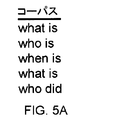
図5、6、9および10の例は、2-gram(bigramとも言う)SLMを示している。即ち、これらのSLMは、1つの特定のトークンに隣接する各トークンの確率を示している。一部のSLMは、3-gramを使用する。すなわち、このようなSLMは、2つの隣接トークンからなる特定のシーケンスに隣接する各トークンの確率を示している。単語「will」の後ろに単語「be」が続く確率と2つの単語「what will」の後ろに単語「be」が続く確率とは、異なる。いくつかのSLMは、4-gramまたはより高次のn-gramを使用する。 The examples of FIGS. 5, 6, 9 and 10 show a 2-gram (also called bigram) SLM. That is, these SLMs indicate the probability of each token adjacent to one particular token. Some SLMs use 3-grams. That is, such an SLM indicates the probability of each token adjacent to a particular sequence of two adjacent tokens. The probability that the word "be" follows the word "will" is different from the probability that the word "be" follows the two words "what will". Some SLMs use 4-grams or higher order n-grams.
いくつかの実施形態は、多種多様なトピックに関連する表現を含む多様コーパスからSLMを構築する。これによって、多種多様な表現、例えば、特定の人間言語の全ての可能な表現をサポートすることができ、便利である。 Some embodiments construct SLMs from diverse corpuses that contain representations related to a wide variety of topics. This is convenient because it can support a wide variety of expressions, for example, all possible expressions of a particular human language.
いくつかの実施形態は、1つのみのドメインに関連する表現を含むコーパスからSLMを構築する。このようなコーパスは、表現の多様性がより少ないため、ドメイン内の表現に対するn-gram間の確率の差を高める。その結果、ドメインに対して正しい可能性が最も低いトークンが、より精確に選択され書換えられる。多様な表現から構築されたコーパスは、編集するための最良のトークンをあまり精確に選択していないため、特定のドメインと同様の精度を達成するために、より多くの書換えを選択する必要がある。 Some embodiments construct SLMs from a corpus that includes representations associated with only one domain. Such a corpus increases the difference in probability between n-grams for expressions in the domain, as there is less expression diversity. As a result, the least likely correct token for the domain is more accurately selected and rewritten. Corpus built from diverse representations does not select the best token for editing very accurately, so more rewrites need to be selected to achieve the same accuracy as a particular domain .
いくつかの実施形態は、多数の表現をフィルタリングすることによって、ドメイン固有文法が有効であると解釈できる表現またはドメイン固有確率文法が閾値を超えるスコアで解析できる表現を生成する。このような実施形態は、合格した表現のみをSLM訓練コーパスに使用する。このような実施形態の一部は、コーパスをさらにフィルタリングすることによって、1つ以上の他の文法においてより高い解釈スコアを有しない表現のみを生成する。いくつかの実施形態は、解釈を行う時に、会話状態履歴、位置およびユーザプロファイルなどの他のコンテキスト情報、またはその両方を考慮する。 Some embodiments filter a large number of expressions to generate expressions that can be interpreted as valid domain-specific grammars or expressions that can be analyzed with domain-specific probability grammars that exceed a threshold. Such an embodiment uses only the passed expressions for the SLM training corpus. Some of such embodiments further filter the corpus to produce only expressions that do not have higher interpretation scores in one or more other grammars. Some embodiments take into account the conversation state history, location and other contextual information such as user profiles, or both when making the interpretation.
表現のコーパスがなくても、一組の文法規則が解析できる一組の表現を用いて、SLMを構築することが可能である。確率文法を表現生成器として使用することによって、このようなSLMを生成することができる。この場合、文法規則の重みは、トークンシーケンスの確率を決定する。文法のみからSLMを構築することは、文法設計者が人々によって行われた文法ドメインに関連する表現を全て予測し且つ文法の重みを推測することができる限り、成功する。実際には、SLM確率は、表現のコーパスから構築された場合により精確である。文法からSLMを構築することは、より精確なSLMを構築するために使用できる多数の表現を収集するためのシステムをブートストラップするときに、よく行われる。文法のみから生成されたSLM確率と、適切なコーパスから構築することによって決定された確率とを組み合わせることも可能である。 Even without a corpus of representations, it is possible to construct an SLM with a set of representations that can be analyzed by a set of grammar rules. Such SLMs can be generated by using a probabilistic grammar as an expression generator. In this case, the weight of the grammar rule determines the probability of the token sequence. Constructing an SLM from grammars only is successful as long as the grammar designer can predict all the expressions associated with the grammar domain made by people and infer the grammar weights. In practice, the SLM probabilities are more accurate if constructed from a corpus of representations. Building an SLM from a grammar is often done when bootstrapping a system to collect multiple representations that can be used to build a more accurate SLM. It is also possible to combine the SLM probabilities generated only from the grammar with the probabilities determined by constructing from the appropriate corpus.
タグ付け
図11は、トークン置換を行うためのトークンシーケンス書換えフロー図を示している。このフロー図は、タグモジュール116が入力トークンシーケンスを受け取り、タグを用いて、トークンを置換することによって、確率モジュール41および43用のトークンシーケンスを作成することを除き、図4のフロー図と同様である。
Tagging FIG. 11 shows a token sequence rewriting flow diagram for performing token substitution. This flow diagram is similar to the flow diagram of FIG. 4 except that the
「タグ」とは、トークンのクラスに対して共通トークンである。例えば、<city>タグは、トークン「London」および「Beijing」並びにトークンシーケンス「New」「York」のいずれかを置換することができる。<time>タグは、トークンシーケンス「1:23」、「1:23 pm」、「01:23 pm」、「13:23」、および「one twenty-three in the afternoon」(午後1時23分)のいずれかを置換することができる。 The "tag" is a common token for the class of tokens. For example, the <city> tag can replace either of the tokens "London" and "Beijing" and the token sequence "New" "York". The <time> tags are the token sequences “1:23”, “1:23 pm”, “01:23 pm”, “13:23”, and “one twenty-three in the afternoon” (1:23 pm ) Can be replaced.
いくつかの実施形態は、ドメイン固有タグを使用する。例えば、天気ドメインは、<weather condition>タグを有することができる。<weather condition>タグは、「sunny」(晴れ)、「cloudy」(曇り)、「foggy」(霧)、「rainy」(雨)、「windy」(風)、「hot」(熱い)、および「cold」(寒い)などのトークンを置換することができる。この実施形態は、まず、不正確なフレーズ「it sunny or rainy will be」からなるトークンシーケンスを受け取り、次に、タグ<weather condition>の各特定のインスタンスと元のトークンとの関連性を保存すると共に、タグインスタンス<weather condition 1>を用いてトークン「sunny」を置換し、タグインスタンス<weather condition 2>を用いてトークン「rainy」を置換することによって、タグを付けたトークンシーケンスを「will it be <weather condition 1> or <weather condition 2>」に書換え、最後に、元のトークンを用いて<weather condition>タグの各インスタンスを置換することによって、書換えトークンシーケンス「will it be sunny or rainy」(天気は晴れですかまたは雨ですか)を生成する。天気ドメイン文法は、入力トークンシーケンス「it sunny or rainy will be」を解析することができないが、書換えトークンシーケンス「will it be sunny or rainy」を解析することができる。
Some embodiments use domain specific tags. For example, a weather domain can have a <weather condition> tag. The <weather condition> tags are "sunny", "cloudy", "foggy", "rainy", "windy", "hot", and "hot". Tokens such as "cold" can be replaced. This embodiment first receives a token sequence consisting of the incorrect phrase "it sunny or rainy will be" and then preserves the association between each particular instance of the tag <weather condition> and the original token. Together with the tag instance <
いくつかの実施形態において、ドメイン固有文法を使用する場合、文法に存在していない全てのトークンに、<unknown>(未知)タグを付ける。この実施形態において、タグを用いて未知トークンを書換え、書換えの後に、元のトークンを用いて未知トークンのタグを置換する。一実施形態において、SMSテキストメッセージドメインの文法には、「送信」トークン、「テキスト」トークンおよび「メッセージ」トークンを含む。当該実施形態において、「メッセージ牛馬および鶏をテキストメッセージとして送信する」というトークンシーケンスを受信すると、このトークンシーケンスを「メッセージ<unknown 1><unknown 2>および<unknown 3>をテキストメッセージとして送信する」)のようにタグを付ける。当該実施形態は、「<unknown 1><unknown 2>および<unknown 3>をテキストメッセージとして送信する」のように書換えを行い、元のトークンを用いてタグを置換することによって、書換えトークンシーケンス「牛馬および鶏をテキストメッセージとして送信する」を生成する。英語表現の一般的な用法によって、実施形態は、「<unknown>を送信する」というトークンシーケンスをよく受け取り、「メッセージ<unknown>」というトークンシーケンスを滅多に受け取らないため、最初に出現したトークン「メッセージ」に対して削除編集を実行する。 In some embodiments, when using domain-specific grammars, all tokens not present in the grammar are <unknown> tagged. In this embodiment, the tag is used to rewrite the unknown token, and after rewriting, the original token is used to replace the tag of the unknown token. In one embodiment, the grammar of the SMS text message domain includes "send" tokens, "text" tokens and "message" tokens. In this embodiment, when the token sequence "send message Bouma and chicken as text message" is received, this token sequence "send message <unknown 1> <unknown 2> and <unknown 3> as text message" Tag it like). In this embodiment, rewriting is performed as in “send <unknown 1> <unknown 2> and <unknown 3> as a text message”, and the rewriting token sequence “by replacing the tag using the original token” Send "A cow and chicken as text message". According to the common usage of English expressions, the embodiment often receives the token sequence "send <unknown>" and rarely receives the token sequence "message <unknown>", so the first appeared token " Execute delete edit on "message".
いくつかの実施形態は、多様コーパスから構築されたSLMを使用する。このような実施形態の一部は、コーパスに低頻度で現れる全ての単語を<低頻度>タグを付ける。全ての低頻度単語にタグを付けることによって、高頻度単語の確率をより精確にすることができる。 Some embodiments use SLMs built from diverse corpuses. Some such embodiments tag all words that appear infrequently in the corpus <infrequently>. By tagging all infrequent words, the probability of frequent words can be made more accurate.
いくつかの実施形態は、コーパス内の品詞の検出およびトークンのラベル付けプロセスを行う。異なる品詞として機能するトークンの場合、例えば、「fast」というトークンが形容詞(速い)、動詞(断食する)および名詞(断食期間)として使用する場合、実施形態は、SLMにおいて、異なる品詞として使用されているトークンに応じて異なるエントリーを含む。このような実施形態において、書換えられるトークンシーケンスにおけるトークンの確率を計算する前に、トークンシーケンスに対して部分的な統語解析を行うことによって、シーケンス内の各トークンの可能な品詞を識別する。これによって、SLMにおいてラベル付けられたトークンの確率がより精確になる。 Some embodiments perform part-of-speech detection and token labeling processes in a corpus. In the case of tokens acting as different parts of speech, for example, when the token "fast" is used as adjective (fast), verb (fasting) and noun (fasting period), the embodiment is used as different parts of speech in SLM Contains different entries depending on the token being played. In such embodiments, partial syntactic analysis is performed on the token sequence prior to calculating the probability of the token in the token sequence to be rewritten to identify possible parts of speech of each token in the sequence. This makes the probability of tokens labeled in the SLM more accurate.
いくつかの実施形態は、コーパス内の表現および入力トークンシーケンスの両方に対して、同義語置換を行う。例えば、このような実施形態は、トークン「fast」を用いて、トークン「rapid」、「quick」および「speedy」のいずれかを置換する。その結果、多様な表現を含む所定のコーパスに対するSLM統計がより精確になる。 Some embodiments perform synonym substitution on both the representation in the corpus and the input token sequence. For example, such an embodiment uses the token "fast" to replace any of the tokens "rapid", "quick" and "speedy". The result is more accurate SLM statistics for a given corpus that contains diverse representations.
いくつかの実施形態は、コーパス内の表現および入力トークンシーケンスの両方に対して、同音異義語置換を行う。例えば、このような実施形態は、単一のトークンを用いて、英語トークン「to」、「too」および「two」を置換する。 Some embodiments perform homonymous substitution on both the representation in the corpus and the input token sequence. For example, such an embodiment uses the single token to replace the English tokens "to", "too" and "two".
いくつかのドメイン固有の実施形態は、書換えられない保留セットのドメイン固有トークンを有する。例えば、SMSメッセージのドメインにおいて、実施形態は、トークン「テキスト」、「メッセージ」および「送信」を置換、削除または編集操作として挿入できないトークンとして含む。一部のドメイン文法フォーマットは、保留キーワードを定義することができる。 Some domain-specific embodiments have a pending set of domain-specific tokens that can not be rewritten. For example, in the domain of SMS messages, embodiments include the tokens "text", "message" and "send" as tokens that can not be inserted as replacement, delete or edit operations. Some domain grammar formats can define pending keywords.
確率からエラー種類を検出する
正方向および反方向の各々において低い確率を有するトークンの位置のコロケーションまたは隣接は、可能なエラーの種類(不正確なトークン、余分なトークン、欠落トークン、および重複トークン)に関するヒントを与え、その結果、トークンシーケンスを書き換えるための可能な最良種類の編集(トークンの挿入、トークンの削除、およびトークンの置換)に関するヒントを与える。
Detect the error type from the probability The collocation or adjacency of the location of the token with low probability in each of the forward and reverse directions is the type of possible error (incorrect token, extra token, missing token, and duplicate token) Provide hints on, and as a result, hints on the best possible type of editing (token insertion, token deletion, and token substitution) to rewrite the token sequence.
図12Aは、反方向の確率および正方向の確率の両方が共に高い(H)である表現に対応する一連の英単語トークンを示している。図13Aは、反方向の確率および正方向の確率の両方が共に高い(大)である表現に対応する一連の中国語文字トークンを示している。 FIG. 12A shows a series of English word tokens corresponding to a representation in which both the opposite and forward probabilities are high (H). FIG. 13A shows a series of Chinese character tokens corresponding to a representation in which both the opposite and positive probabilities are both high.
図12Cおよび図13Cは、英単語および中国語文字の余分なトークンエラーを含む表現を各々示している。反方向において、余分なトークンに続く全てのトークが高い確率を有し、正方向において、余分なトークンに先行する全てのトークンが高い確率を有する。反方向および正方向の各々において、余分なトークンが低い確率を有する。 12C and 13C show expressions including English and Chinese characters including extra token errors, respectively. In the reverse direction, all talks following the extra token have a high probability, and in the positive direction all tokens preceding the extra token have a high probability. In each of the reverse and forward directions, the extra tokens have low probability.
図12Eおよび図13Eは、英語および中国語文字のトークン重複エラーを含む表現を示している。反方向において、重複トークンの第1のトークンが低い確率を有するが、第2のトークンおよび全ての後続トークンが高い確率を有する。正方向において、重複トークンの第1のトークンを含み、第1のトークンの前の全てのトークンが高い確率を有するが、重複トークンの第2のトークンが低い確率を有する。 FIGS. 12E and 13E show expressions including token duplication errors of English and Chinese characters. In the opposite direction, the first token of the duplicate token has a low probability, but the second token and all subsequent tokens have a high probability. In the positive direction, including the first token of the duplicate token, all tokens before the first token have a high probability, but the second token of the duplicate token has a low probability.
従って、反方向および正方向の両方において低い確率を有するトークンが疑わしいトークンであり、削除または置換編集が適切である可能性の高い場所を示している。前方のトークンが反方向に低い確率を有し、後方のトークンが正方向に低い確率を有する一対の隣接する同一ではないトークンは、疑わしいトークン対であり、挿入編集が適切である可能性が高い場所を示している。前方のトークンが反方向に低い確率を有し、後方のトークンが正方向に低い確率を有する一対の隣接する同一のトークンは、疑わしいトークン対であり、同一のトークンのうち、1つのトークンの削除が適切である可能性の高い場所を示している。 Thus, tokens with low probability in both the reverse and forward directions are suspect tokens, indicating where delete or replace edit is likely to be appropriate. Pairs of adjacent non-identical tokens with forward tokens having low probability in the opposite direction and backward tokens having low probability in the forward direction are suspect token pairs and insertion editing is likely to be appropriate It shows the place. A pair of adjacent identical tokens with a forward token having low probability in the opposite direction and a backward token having low probability in the forward direction is a suspect token pair and deletion of one token of the same token Indicates where it is likely to be appropriate.
当然なことに、音声認識は、確率的なことである。トークンシーケンスは、話し言葉の音素を含む1つ以上の仮定シーケンスから得られ、これらの音素は、デジタル処理した音響信号サンプルのフレームから得られる。いくつかの実施形態は、仮定音素シーケンス内の各音素の認識精度の信頼度を表すスコアを生成する。いくつかの実施形態において、サンプルのフレームを処理することによって、仮定音素のスコアに寄与する値を生成する。いくつかの実施形態において、音素シーケンスをトークンシーケンスにトークン化する際に、少なくとも部分的にトークン内の音素の音響スコアに基づいて、各トークンのスコアを計算する。 Naturally, speech recognition is probabilistic. The token sequence is obtained from one or more hypothesized sequences containing phonemes of speech, which are obtained from a frame of digitally processed acoustic signal samples. Some embodiments generate a score that represents the confidence in the recognition accuracy of each phoneme in the hypothesized phoneme sequence. In some embodiments, processing the frame of samples produces a value that contributes to the score of the hypothesized phoneme. In some embodiments, when tokenizing the phoneme sequence into a token sequence, a score for each token is calculated based at least in part on the acoustic score of the phoneme in the token.
いくつかの実施形態は、トークンの音響スコアによって重み付けられた反方向SLM確率および正方向SLM確率に少なくとも部分的に基づいて、正方向確率および反方向確率スコアを計算する。その結果、一実施形態において、得られた品質の悪いスピーチ音声、例えば、一部のトークンの間に大音量の背景音を有するスピーチ音声の場合、これらのトークンを集中的に書き換えることができる。 Some embodiments calculate forward and reverse probability scores based at least in part on the reverse and forward SLM probabilities weighted by the token's acoustic score. As a result, in one embodiment, in the case of the obtained poor quality speech speech, for example speech speech with loud background sound between some tokens, these tokens can be rewritten intensively.
書換えの採点および比較
スコアは、整数、浮動小数点数、または英数字などの様々な方法で表すことができる。いくつかの実施形態において、スコアは、有効性のブール値(有効/無効)として表される。
Rewriting scores and comparison scores can be represented in a variety of ways, such as integers, floating point numbers, or alphanumeric characters. In some embodiments, the score is represented as a Boolean value of validity (valid / invalid).
様々な実施形態は、反方向確率が閾値未満である位置、または正方向確率が閾値未満である位置、または反方向確率と正方向確率との組み合わせが閾値未満である位置を特定することによって、書換えを作成する。このような実施形態の一部は、まず、閾値未満の確率スコアを有する位置で単一の編集を各々行うことによって、複数の代替的な書換えを生成し、その後、第1セットの書換えトークンシーケンス内の第2の位置で更なる編集を行うことによって、更なる書換えを行う。これによって、書換えツリーまたは書換え格子を作成することができ、置換Aの後ろに置換Bが続くことと、(別の場所で)置換Bの後ろに置換Aが続くこととは同様の結果を有するということを説明することができる。一実施形態において、閾値が高いまたはスピーチ音声の品質が悪い場合、書換えの数が使用可能なシステムリソースを大きく超える可能性がある。このような制限に対応するために、様々な実施形態において、幅優先探索アルゴリズム、深さ優先探索アルゴリズム、または最良優先アルゴリズムを用いて、例えば、最良の書換えトークンシーケンスのスコアなどの有用性測定値に基づいて、書換えツリーまたは書換え格子を構築することによって、最良の書換えを見出す。 Various embodiments identify the position where the reverse direction probability is less than the threshold, or the position where the forward direction probability is less than the threshold, or the position where the combination of the reverse direction probability and the forward direction probability is less than the threshold Create a rewrite. Some of such embodiments first generate a plurality of alternative rewrites, each by performing a single edit at a location having a probability score below the threshold, and then a first set of rewrite token sequences. Further rewriting is performed by further editing at the second position in the inside. This makes it possible to create a rewrite tree or grid, where permutation A followed by permutation B and (at another place) permutation B followed by permutation A have similar results We can explain that. In one embodiment, if the threshold is high or the speech quality is poor, the number of rewrites can greatly exceed available system resources. To address such limitations, in various embodiments, a breadth-first search algorithm, a depth-first search algorithm, or a best-first algorithm may be used, for example, to measure availability, such as the score of the best rewrite token sequence. Based on, find the best rewrite by constructing the rewrite tree or grid.
上述したように、様々な実施形態において、反方向の確率が最も低い位置、正方向の確率が最も低い位置、または同一のトークンまたは隣接するトークンのいずれかの反方向確率および正方向確率の組み合わせが最も低い位置で、編集を行うことによって、書換えを作成する。様々な実施形態において、組み合わせは、積、合計または同等物などの関数である。このような実施形態の一部において、複数の書換えを作成することによって一組の仮定書換えを生成し、各仮定書換えの書換えスコアを計算することによって、最良な(最も可能な正しい)書換えを選択することができる。いくつかの実施形態において、最も低い確率を有する位置および2番目低い確率を有する位置で各々編集を行い、得られた第1対の書換えのトークンシーケンスを編集することによって、複数の書換えを作成する。 As mentioned above, in various embodiments, the position with the lowest probability in the reverse direction, the position with the lowest probability in the forward direction, or a combination of the reverse and forward probabilities of either the same token or adjacent tokens. At the lowest position, create a rewrite by editing. In various embodiments, the combination is a function such as product, sum or equivalent. In some of such embodiments, a set of hypothetical rewrites is generated by creating multiple rewrites, and the best (most possible correct) rewrite is selected by calculating the rewrite score for each hypothetical rewrite. can do. In some embodiments, multiple rewrites are created by editing each at the position with the lowest probability and the position with the second lowest probability and editing the resulting first pair of rewrite token sequences .
図14は、トークン置換を行うためのトークンシーケンスの書換えフロー図を示している。このフロー図は、トークン置換モジュール145が正方向SLMおよび反方向SLMの各々から確率が最も高いトークンのリストを読み取る点を除き、図4のフロー図と同様である。各位置の正方向確率が最も高いトークンのリストは、前方のN個トークンに対して、確率が最も高いトークンのセットおよび対応する確率を含む。各位置の反方向確率が最も高いトークンのリストは、後方のN個トークンに対して、確率が最も高いトークンのセットおよび対応する確率を含む。挿入または置換するためのトークンを選択するために、トークン置換モジュール145は、両方のリスト(リストの交点)に存在するトークンを検索し、各リスト内のトークンの確率に基づいて新たなトークンを選択する。
FIG. 14 shows a rewrite flow diagram of a token sequence for performing token substitution. This flow diagram is similar to the flow diagram of FIG. 4 except that the
いくつかの実施形態において、トークンが両方のリストに存在しない場合、SLMから得られた次の確率が最も高い単語をリストに追加する。様々な実施形態において、トークンが両方のリストに存在しない場合、正方向リストから確率が最も高いトークンを選択する、または反方向リストから確率が最も高いトークンを選択する、またはトークンシーケンスの書換えをスキップする。 In some embodiments, if the token is not present in both lists, the next most probable word obtained from the SLM is added to the list. In various embodiments, if the token is not in both lists, select the token with the highest probability from the forward direction list, or select the token with the highest probability from the reverse direction list, or skip the token sequence rewrite Do.
図15Aおよび図16Aは各々、3つのトークンを含み、中央のトークンが不正確である英単語および中国語文字のトークンシーケンスを示している。図15Bおよび図16Bは、5つのトークンおよび(1つの先行トークンから各トークンの確率を計算する)2-gram正方向SLMから得れれた各トークンの確率を含むリストを示している。図15Cおよび図16Cは、5つのトークンおよび2-gram反方向SLMから得れれた各トークンの確率を含むリストを示している。これらのリストは、2つの共通トークンを有する。第1の共通トークンは、各リストにおいて2番目に高い確率を有する。第2の共通トークンは、正方向リストにおいて5番目に高い確率を有し、反方向リストにおいて3番目に高い確率を有する。第1の共通トークンは、両方のリストにおいてより一般的であるため、トークン置換編集の最良選択である。 FIGS. 15A and 16A each show a token sequence of English and Chinese characters that includes three tokens, and the middle token is incorrect. FIGS. 15B and 16B show a list including the five tokens and the probability of each token obtained from the 2-gram forward direction SLM (which calculates the probability of each token from one preceding token). FIG. 15C and FIG. 16C show a list including the five tokens and the probability of each token obtained from the 2-gram reverse direction SLM. These lists have two common tokens. The first common token has the second highest probability in each list. The second common token has the fifth highest probability in the forward direction list and the third highest probability in the reverse direction list. The first common token is the best choice for token substitution editing as it is more general in both lists.
図17Aおよび図18Aは各々、5つのトークンを含み、中央のトークンが不正確な英単語および中国語文字のトークンシーケンスを示している。図17Bおよび図18Bは、5グラムのリストと、5つのトークンおよび(2つの先行トークンから各トークンの確率を計算する)3-gram正方向SLMから得れれた各トークンの確率を含むリストを示している。図17Cおよび図18Cは、5つのトークンおよび3-gram反方向SLMから得れれた各トークンの確率を含むリストを示している。正方向SLMと反方向SLMとは、同様の長さのn-gramを使用する必要がない。これらのリストは、2つの共通トークンを共有する。第1の共通トークンは、正方向リストにおいて3番目に高い確率を有し、反方向リストにおいて2番目に高い確率を有する。第2の共通トークンは、正方向リストにおいて5番目に高い確率を有し、反方向リストにおいて1番目に高い確率を有する。2つのトークンが両方のリストに共通であるが、共通トークンの確率の順番が両方のリストにおいて異なるため、どちらがトークン置換編集の最良選択であるかを計算する必要がある。 FIGS. 17A and 18A each include five tokens, with the middle token showing an incorrect English and Chinese character token sequence. Figures 17B and 18B show a list that includes a 5-gram list, 5 tokens and the probability of each token obtained from the 3-gram forward SLM (calculating the probability of each token from the 2 leading tokens). ing. FIGS. 17C and 18C show a list including the five tokens and the probability of each token obtained from the 3-gram reverse direction SLM. The forward SLM and the reverse SLM do not have to use n-grams of similar length. These lists share two common tokens. The first common token has the third highest probability in the forward direction list and the second highest probability in the reverse direction list. The second common token has the fifth highest probability in the forward direction list and the first highest probability in the reverse direction list. Although the two tokens are common to both lists, it is necessary to calculate which is the best choice of token substitution edit since the order of probability of common tokens is different in both lists.
いくつかの実施形態において、各リスト内の共通トークンの確率を加算し、確率の加算値が最大であるトークンを選択する。いくつかの実施形態において、各リスト内の共通トークンの確率を乗算し、確率の乗算値が最大であるトークンを選択する。いくつかの実施形態において、各リスト内の共通トークンの確率の対数値を加算し、確率の対数値の和が最大であるトークンを選択する。これによって、絶対値が異なっているが、乗算と同様の相対順位を与えることができる。 In some embodiments, the probabilities of the common tokens in each list are added, and the token with the highest added value is selected. In some embodiments, the probabilities of the common tokens in each list are multiplied to select the token with the highest probability multiplication value. In some embodiments, the logarithmic values of the probabilities of the common tokens in each list are added, and the token with the largest sum of the logarithmic values of the probabilities is selected. This makes it possible to give the same relative order as multiplication, although the absolute values are different.
図17Dおよび図18Dは、加算による各共通トークンの確率の計算、乗算による各共通トークンの確率の計算、および対数値の加算による各共通トークンの確率の計算を示している。加算は、第2のトークンのより高い書換えスコアを見出すが、乗算および対数値の加算は、第1のトークンのより高い書換えスコアを見出す。いくつかの実施形態において、乗算および対数値の加算が好ましい。確率の乗算および対数値の加算は、両方向でより合理的なトークンにとって有利であるが、確率の加算は、一方の方向では合理的であり、他方の方向では不合理なトークンにとって有利である。 17D and 18D show calculation of the probability of each common token by addition, calculation of the probability of each common token by multiplication, and calculation of the probability of each common token by addition of logarithmic values. Addition finds the higher rewrite score of the second token, while multiplication and addition of log values find the higher rewrite score of the first token. In some embodiments, multiplication and addition of logarithmic values are preferred. The multiplication of probabilities and the addition of log values are advantageous for tokens that are more rational in both directions, but the addition of probabilities is rational for tokens that are reasonable in one direction and unreasonable in the other.
いくつかの所定のスピーチを翻訳するために、いくつかの同音異義語のうち、正しいものを検出することは、困難な課題である。いくつかの実施形態において、入力トークンシーケンス内の疑わしいトークンと同音異義語であるトークンの確率に好ましい重みを適用することにより、書換えスコアを計算する。その結果、このような実施形態において、周りのトークンに照らして最も可能な同音異義語を遥かに正確に選択することができる。 Detecting the correct one of the several homonyms to translate some predetermined speech is a difficult task. In some embodiments, the rewrite score is calculated by applying a preferred weight to the probability of tokens that are homonyms with suspicious tokens in the input token sequence. As a result, in such an embodiment, the most likely homonym can be selected much more accurately in light of the surrounding tokens.
トークンは、最近の会話に使用された場合、より高い確率を有する。いくつかの実施形態は、最近使用されたトークンをキャッシュする。このような実施形態の一部は、正帰還ループによって誤った翻訳を誘起する可能性を最小化するために、高い音響スコアを有するトークンのみをキャッシュする。ある仲間によって使用されたトークンは、他の仲間によって使用される確率が高いため、いくつかの実施形態は、最近の会話に複数の仲間によって使用されたトークンをキャッシュする。 Tokens have a higher probability when used for recent conversations. Some embodiments cache recently used tokens. Some such embodiments only cache tokens with high acoustic scores to minimize the possibility of inducing false translations by positive feedback loops. Because the tokens used by one buddy are likely to be used by other buddy, some embodiments cache tokens used by multiple buddy in recent conversations.
図19は、トークン置換を行うためのトークンシーケンスの書換えフロー図を示している。このフロー図は、トークン置換モジュール195が書換えトークンシーケンスおよび対応する書換えスコアの両方を生成する点を除き、図14のフロー図と同様である。いくつかの実施形態において、書換えスコアは、各トークンの正方向確率と各トークンの反方向確率との積である。いくつかの実施形態において、書換えスコアは、音響スコアによって重み付けられた各トークンの正方向確率と音響スコアによって重み付けられた各トークンの反方向確率との積である。いくつかの実施形態において、実体値を置換できるように実体のタグ付けを使用しない場合、特定の人間の位置または存在などの環境パラメータ値に対する特定の実体の近接度に従って、書換えスコアに重みを付ける。
FIG. 19 shows a flowchart of rewriting a token sequence for token substitution. This flow diagram is similar to the flow diagram of FIG. 14 except that the
図20は、トークン置換を行うためのトークンシーケンスの書換えフロー図を示している。このフロー図は、トークン置換モジュール205が多様コーパスSLM207からトークンの条件付き確率を読み取る点を除き、図19のフロー図と同様である。正方向SLM42および反方向SLM44は、1つの会話ドメインに特有の表現から構築される。多様コーパスSLM207は、多くのドメインに亘る表現から構築され、例えば、これらのドメインが単一の言語を使用するという事実のみによって制限された多様なソースの表現から構築される。いくつかの実施形態は、多様コーパスSLM207内の各トークンに対応する条件付き確率に基づいて、入力トークンシーケンス内の各トークンのドメイン固有条件付き確率をスケーリングする。いくつかの実施形態は、多様コーパスSLM207内の各トークンに対応する条件付き確率に基づいて、最も可能なリスト内の各置換トークンのドメイン固有条件付き確率をスケーリングする。いくつかの実施形態は、単一方向の多様コーパスSLMを使用し、いくつかの実施形態は、各方向の多様コーパスSLMを使用する。
FIG. 20 shows a flowchart of rewriting a token sequence for token substitution. This flow diagram is similar to the flow diagram of FIG. 19 except that the token substitution module 205 reads the conditional probability of the token from the
図21は、トークン置換を行うためのトークンシーケンスの書換えフロー図を示している。このフロー図は、トークン置換モジュール215が複数の書換えトークンシーケンスと、書換えられた各トークンシーケンスに対応する書換えスコアとを生成する点を除き、図19のフロー図と同様である。選択モジュール218は、書換えスコアを用いて、複数の代替的な書換えから、最良の書換えトークンシーケンスを選択する。一部の代替的な書換えは、同一の場所で異なる編集が行われる。一部の代替的な書換えは、異なる場所で編集が行われる。 FIG. 21 shows a rewrite flow diagram of a token sequence for performing token substitution. This flowchart is similar to the flowchart of FIG. 19 except that the token substitution module 215 generates a plurality of rewrite token sequences and a rewrite score corresponding to each of the rewritten token sequences. The selection module 218 uses the rewrite score to select the best rewrite token sequence from the plurality of alternative rewrites. Some alternative rewrites are edited differently in the same place. Some alternative rewrites are edited in different places.
解析スコアを計算するための解析
いくつかの実施形態は、SLM確率および重み付きスコアよりもさらに進化した処理を用いて、最良の書換えを決定する。図22は、統語解析を使用する実施形態を示している。示された実施形態は、トークン置換モジュール225が複数の書換えを生成し、最高のスコアを有する1つの書換えを選択して、新たな書換えトークンシーケンスを生成する点を除き、図14と同様である。また、トークン置換モジュール225は、統語解析入力を用いて、書換えスコアに重みを付ける。
Analysis to Calculate Analysis Scores Some embodiments use processes more advanced than SLM probabilities and weighted scores to determine the best rewrite. FIG. 22 illustrates an embodiment using syntactic analysis. The illustrated embodiment is similar to FIG. 14 except that the token substitution module 225 generates multiple rewrites, selects one rewrite with the highest score, and generates a new rewrite token sequence. . The token substitution module 225 also uses the syntactic analysis input to weight the rewrite score.
統語解析モジュール(syntactic analysis module)229は、入力トークンシーケンスを受け取り、品詞として使用された各トークおよび品詞として使用された各トークンの頻度を決定する。トークン置換モジュール225は、異なる品詞としてのトークンの配置の合法性に従って、構文規則を適用する。トークン置換モジュール225は、隣接するトークンの文脈において構文上合法的なトークンのみに限定して、新たなトークンを選択する。各書換えに対して、トークン置換モジュール225は、特定の品詞としてのトークンの配列の合法性に従って、書換えトークンシーケンスにスコアを付ける。 A syntactic analysis module 229 receives the input token sequence and determines the frequency of each talk used as part of speech and each token used as part of speech. The token substitution module 225 applies syntax rules according to the legality of placement of tokens as different parts of speech. The token substitution module 225 selects new tokens by restricting only syntactically legal tokens in the context of adjacent tokens. For each rewrite, the token substitution module 225 scores the rewrite token sequence according to the legality of the arrangement of tokens as a specific part of speech.
いくつかの実施形態は、自然言語パーサを用いて、文法に従って新たな書換えトークンシーケンスを解析することによって、構文解析スコアを生成する。図23は、トークン置換を行うためのトークンシーケンスの書換えフロー図を示している。このフロー図は、図4のフロー図と同様である。しかしながら、自然言語パーサ236は、トークン置換モジュール45から出力された新たな書換えトークンシーケンスを受け取る。自然言語パーサは、自然言語文法237によって定義された文法規則に従って、新たな書換えトークンシーケンスを解析する。
Some embodiments generate a parsing score by parsing a new rewrite token sequence according to a grammar using a natural language parser. FIG. 23 shows a flowchart of rewriting a token sequence for token substitution. This flow chart is similar to the flow chart of FIG. However, the
いくつかの実施形態は、ブール値スコアを生成する簡単な文法を使用する。すなわち、文法は、トークンシーケンスを解析することができるか否かに関係ない。いくつかの実施形態は、整数スコアまたは浮動小数点スコアをパーサに与える確率文法を使用する。 Some embodiments use a simple grammar that generates a Boolean score. That is, the grammar has nothing to do with whether it can parse the token sequence. Some embodiments use a probability grammar that gives the parser an integer score or a floating point score.
いくつかの実施形態において、文法規則は、異なる言い回しの可能性を定義する。文法は、2つの異なる表現を解析することによって同様の意味を得る(即ち、同様の解釈データ構造を生成する)ことができ、2つの異なる表現のうち、より一般的に使用される表現を示す指標または当該表現内により一般的に使用されるフレーズまたは単語を示す指標を含むことができる。いくつかの実施形態は、話者の間に表現の言い回しおよびその言い回しを使用する可能性を考慮して、表現の解析スコアを計算する。このような実施形態の一部は、文法規則内のフレーズまたは単語の重みを乗算することによって、解析スコアを計算する。いくつかの実施形態は、統語解析スコアと意味スコアとを組み合わせることによって、解釈のスコアを決定する。 In some embodiments, grammar rules define different wording possibilities. A grammar can obtain similar meaning by analyzing two different expressions (ie, generate similar interpreted data structures), and indicates the more commonly used expression of the two different expressions. An indicator may be included that indicates an indicator or a phrase or word more commonly used in the expression. Some embodiments calculate an expression's analysis score, taking into account the expression wording among the speakers and the possibility of using that wording. Some such embodiments calculate parsing scores by multiplying the weight of phrases or words in grammar rules. Some embodiments determine the score of the interpretation by combining the syntactic analysis score and the semantic score.
文法を有するいくつかの実施形態は、最近の会話状態の履歴情報をキャッシュする。例えば、会話状態は、自然言語の文法規則内の実体スロットの意味値を含むことができる。「ニューヨーク」は、「Xの天気は何ですか」(Xは、場所である)という表現に応答する天気関連文法規則の「場所」スロットに存在する実体種類「場所」の意味値である。したがって、会話状態を記憶する実施形態は、「ニューヨークの天気は何ですか」という表現の後に、最も最近に参照した場所「ニューヨーク」の記録を保存するだあろう。 Some embodiments with grammars cache recent conversational state history information. For example, the conversational state can include semantic values of entity slots in grammar rules of natural language. “New York” is a semantic value of the entity type “place” present in the “place” slot of the weather related grammar rule that responds to the expression “what is the weather of X” (X is a place). Thus, an embodiment that stores the conversational state will save a record of the most recently referenced location "New York" after the phrase "What is the weather in New York".
また、会話状態は、過去に質問した問題の種類を含むこともできる。また、会話状態は、実体の関連パラメータの識別子を含むこともできる。さらに、会話状態は、限定詞に関する情報および情報フィルタリング情報を含むことができる。いくつかの実施形態は、解析スコアとして表すことができる会話状態に照らして、トークンの意味的な顕著性に従って、トークンの解析スコアに重みを付ける。 The conversational state can also include the type of question that has been asked in the past. The conversational state can also include the identifier of the relevant parameter of the entity. In addition, the conversational state may include information on quantifiers and information filtering information. Some embodiments weight the analysis score of the token according to the semantic saliency of the token, in light of the speech state that can be represented as an analysis score.
いくつかの実施形態は、複数のドメイン固有文法に従って、書換えトークンシーケンスを解析しようと試みる。少なくとも1つのドメイン文法に従って、許容スコアで書換えトークンシーケンスを解析した場合、書換えは成功である。 Some embodiments attempt to parse the rewrite token sequence according to multiple domain specific grammars. A rewrite is successful if it analyzes the rewrite token sequence with an acceptable score according to at least one domain grammar.
図26は、トークン置換を行うためのトークンシーケンスの書換えフロー図を示している。このフロー図は、自然言語パーサ266が、一組の書換えトークンシーケンスおよび関連スコアを受け取り、文法237に従って各トークンシーケンスを解析することによって解析スコアを生成し、解析スコアと書換えスコアとの最適な組み合わせを有する書換えトークンシーケンスを出力として選択する点を除き、図19のフロー図と同様である。このような実施形態の一部は、複数の文法に従って解析を行う。したがって、これらの実施形態は、事実上、音響スコア、SLMによる書換えスコアおよび文法解析スコアの組み合わせを有する出力トークンシーケンスを生成する。
FIG. 26 shows a rewrite flow diagram of a token sequence for token substitution. In this flow diagram,
書換えセットの反復作成
いくつかの実施形態は、成功した書換えを見出すと、処理を完了し、成功した書換えトークンシーケンスを出力として提供する。いくつかの実施形態は、入力トークンシーケンスの可能な書換えのリストを生成する。これらの可能な書換えは、同一の疑わしい場所で異なる編集を行うことによって、異なる疑わしい場所で編集を行うことによって、またはその両方によって得ることができる。
Iterative Creation of Rewriting Sets Some embodiments, upon finding a successful rewrite, complete the process and provide a successful rewrite token sequence as an output. Some embodiments generate a list of possible rewrites of the input token sequence. These possible rewrites can be obtained by doing different editing at the same suspect location, by doing editing at different suspect locations, or both.
いくつかの実施形態において、複数の間違った単語または複数の余分な単語、欠落単語、または重複単語を引き起こしたエラーを修正するために、書換えフローの追加反復を通過するように書換えトークンシーケンスを供給する。反復は、書換えスコア、文法解析スコア、またはその両方の組み合わせに基づいて、書換えの簡単なリストを作成することによって、または再処理するための書換えを選択することによって、継続することができる。選択は、深さ優先探索ツリーアルゴリズム、幅優先探索ツリーアルゴリズム、または最高スコア優先探索ツリーアルゴリズムを試行することによって行われる。 In some embodiments, a rewrite token sequence is provided to pass through additional iterations of the rewrite flow to correct errors that caused multiple incorrect words or multiple extra words, missing words, or duplicate words. Do. The iteration may continue by creating a simple list of rewrites, or by selecting a rewrite to reprocess, based on the rewrite score, the grammar analysis score, or a combination of both. Selection is done by trying a depth first search tree algorithm, a breadth first search tree algorithm, or a highest score first search tree algorithm.
図1は、新たなトークンシーケンスを反復的に書き換えるプロセスを示している。いくつかの実施形態において、書換え段階12の後に、新たなトークンシーケンスの書換えスコアに従って、これらのトークンシーケンスを再処理する。いくつかの実施形態において、構文解析段階14の後に、新たな書換えトークンシーケンスの構文解析スコアに従って、これらの書換えトークンシーケンスを再処理する。
FIG. 1 illustrates the process of iteratively rewriting a new token sequence. In some embodiments, after the
連続翻訳
トークンシーケンスの書換えは、連続翻訳応用、例えば、テレビライブ放送の自動字幕付けまたは書き取りに有用であり得る。
Serial Translation The rewriting of token sequences may be useful for continuous translation applications, for example, for automatic captioning or dictation of live television broadcasts.
双方向確率的な書換えは、反方向SLM確率を計算するエンドポイントがある場合に有用である。これは、十分に高いトークン化仮定スコアを有するシーケンスのうち、直近のN個(Nは、反方向SLM確率の計算に使用されるトークンの数である)トークンを利用可能にするトークンバッファによって可能になる。この方法は、翻訳時に少なくともN個トークンの時間に相当する遅延を必要とする。 Bidirectional stochastic rewriting is useful when there is an endpoint to calculate the anti-directional SLM probability. This is possible with the token buffer, which makes available the last N (N is the number of tokens used to calculate the reverse SLM probability) tokens of the sequence with a sufficiently high tokenization hypothesis score become. This method requires a delay corresponding to the time of at least N tokens during translation.
英語話者は、1分間に150トークンで話す傾向がある。中国語話者は、1分間に約300文字で話す傾向がある。多くの中国語トークンが2文字または3文字で構成されているため、話す時のトークン速度も毎分約150トークン、即ち毎秒2.5トークンである。したがって、2-gram反方向SLMを使用する双方向書換えは、少なくとも1秒のバッファ遅延を必要とする。 English speakers tend to speak at 150 tokens per minute. Chinese speakers tend to speak about 300 characters per minute. Since many Chinese tokens consist of two or three letters, the token rate when speaking is also about 150 tokens per minute, or 2.5 tokens per second. Thus, bidirectional rewriting using a 2-gram reverse directional SLM requires a buffer delay of at least 1 second.
連続音声応用の場合、文法解析を双方向確率的な書換えに適用するためには、完全な表現に含まれる全てのトークンまたは少なくとも完全なフレーズが、シーケンスを解析できると判断するために必要である。このような応用において、書換えおよび選択の前に、フレーズ境界検出アルゴリズムを行う必要がある。当該技術分野において、様々なフレーズ境界検出アルゴリズムが既知である。一部のフレーズ境界検出アルゴリズムは、文法に基づいたものである。一部のフレーズ境界検出アルゴリズムは、話すときの声の変化を検出することによって機能する。一部のフレーズ境界検出アルゴリズムは、対応するビデオシーンの変化を検出することによって機能する。また、十分な長さの休止は、コミットメントを強要することができる。 For continuous speech applications, in order to apply grammatical analysis to bi-directional probabilistic rewriting, it is necessary to determine that all tokens or at least complete phrases contained in the complete representation can analyze the sequence. . In such applications, a phrase boundary detection algorithm needs to be performed prior to rewriting and selection. Various phrase boundary detection algorithms are known in the art. Some phrase boundary detection algorithms are based on grammars. Some phrase boundary detection algorithms work by detecting changes in the voice as you speak. Some phrase boundary detection algorithms work by detecting changes in the corresponding video scene. Also, a sufficiently long pause can force a commitment.
人間は最大25トークンを含む表現を話す傾向があるため、1分間に150トークンのトークン速度で話す場合、最大10秒のバッファおよび潜在的な遅延が必要である。これは、映画または事前録画されたテレビ番組には許容できない字幕遅延であるが、テレビのニュースフィードまたは一部のスポーツ放送には合理的である。一度に完全な表現を処理することによって、字幕表示は、テレビライブ放送の場合に一般的である従来の単語ごとの表示ではなく、映画および事前録画されたテレビ番組の場合に一般的であるように、表現ごとのテキストを追加する。 Because humans tend to speak expressions containing up to 25 tokens, buffering at a token rate of 150 tokens per minute requires a buffer of up to 10 seconds and a potential delay. This is an unacceptable subtitle delay for movies or pre-recorded television programs, but reasonable for television news feeds or some sports broadcasts. By processing the full expression at one time, subtitle display seems to be common to movies and pre-recorded television programs, rather than the traditional word-by-word display common to television live broadcasts. Add text for each expression.
いくつかの実施形態は、リアルタイム放送のビデオストリームを遅延させることにより、表現の分離並びに文法に基づいた採点および選択による書換えに必要な遅延と同調させることができる。 Some embodiments can be synchronized with the delay needed for expression separation and grammar based scoring and selective rewriting by delaying the real-time broadcast video stream.
いくつかの実施形態は、音素仮定、トークン化仮定、およびフレーズ境界仮定などの仮定を用いて、音声翻訳プロセスを実行する。このような実施形態は、仮定ツリーを構築し、当該ツリーの各枝は、スコアを有する。このような実施形態の一部は、様々なトークン化された表現仮定の各々に対して双方向確率的な自然言語書換えを実行し、得られた書換えの解析スコアを計算し、各枝の最良書換えの解析スコアに従って、ツリーの最良枝を選択する。 Some embodiments perform speech translation processes using assumptions such as phoneme hypotheses, tokenization hypotheses, and phrase boundary hypotheses. Such an embodiment builds a hypothesis tree, each branch of the tree having a score. Some of such embodiments perform bi-directional probabilistic natural language rewriting for each of the various tokenized representation hypotheses, calculate the analysis score of the resulting rewriting, and calculate the best of each branch. The best branch of the tree is selected according to the analysis score of the rewrite.
履歴キャッシングおよび逆キャッシング
いくつかの実施形態は、1つ以上のキャッシング技術を用いて性能を向上させる。いくつかの実施形態は、少なくとも限定された期間において、高い音響仮定スコアを有するトークンをキャッシュする。このような実施形態は、正方向SLMおよび反方向SLMの最も高い確率のトークンリストからトークンを選択する場合、キャッシュに存在するトークンの確率スコアを増加させる。この方法は、会話中の単語の時間的局所性を利用して、認識精度を向上させる。様々な実施形態は、実体にタグを付ける前に単語をキャッシュすることによって実体名の認識を向上させる、または実体にタグを付けた後に単語をキャッシュすることによって、実体に依存しない書換えの統合を容易にする。
Historical Caching and Reverse Caching Some embodiments use one or more caching techniques to improve performance. Some embodiments cache tokens that have high acoustic hypothesis scores, at least for a limited period of time. Such an embodiment increases the probability score of tokens present in the cache when selecting tokens from the highest probability token list of forward and reverse SLMs. This method exploits temporal locality of words in a conversation to improve recognition accuracy. Various embodiments improve entity name recognition by caching words before tagging entities, or integrating entity-independent rewrites by caching words after tagging entities. make it easier.
いくつかの実施形態は、入力トークンシーケンスと新たな書換えトークンシーケンスとの間のマッピングをキャッシュする。図27は、トークンシーケンスの書換えフロー図を示している。このフロー図は、図4のフロー図と同様である。但し、シーケンス検査モジュール278は、入力トークンシーケンスを受け取る。その後、このシーケンス検査モジュールは、入力トークンシーケンスと新たな書換えトークンシーケンスとの間のマッピングを含むキャッシュ279からの読み込みを進める。シーケンス検査モジュール278は、キャッシュから入力トークンシーケンスを見付けた場合、関連する新たな書換えトークンシーケンスをトークン置換モジュール275に提供する。トークン置換モジュール275は、シーケンス検査モジュール278から新たな書換えトークンシーケンスを受け取ると、新たな書換えトークンシーケンスを直接に出力する。そうでない場合、トークン置換モジュール275は、高い確率SLMトークンのリストを使用した書換えを含む適切な書換え解析を実行する。したがって、このフロー図は、過去に受け取ったトークンシーケンスの最良書換えを得るための処理集約ツリー検索(processing-intensive tree search)を実行する必要がない。
Some embodiments cache the mapping between the input token sequence and the new rewrite token sequence. FIG. 27 shows a flowchart of rewriting a token sequence. This flow chart is similar to the flow chart of FIG. However, the sequence inspection module 278 receives the input token sequence. The sequence check module then proceeds with reading from
図28は、トークン書換えキャッシュの7つのエントリを示している。(タグ付き実体を含む)各入力トークンシーケンスは、ちょうど1つの新たな書換えトークンシーケンスに関連付けられる。 FIG. 28 shows seven entries of the token rewrite cache. Each input token sequence (including tagged entities) is associated with exactly one new rewrite token sequence.
いくつかの実施形態は、新たな書換えトークンシーケンスを複数の入力トークンシーケンスと関連付けることができる逆キャッシュを使用する。図29は、逆トークン書換えキャッシュの5つのエントリを示している。最後のキャッシュエントリは、5つの異なる入力トークンシーケンスの各々から作成された共通の書換えである。キャッシュ内の最後の新たなトークンシーケンスを作成した各入力トークンシーケンスの頻度は、括弧に示されている。いくつかの実施形態は、キャッシュの内容を分析することによって、特定の新たな書換えトークンシーケンスに書換えられた最も頻度の高い入力トークンシーケンスを見出す。これは、文法の開発者が、文法を改善するために、共通に使用されている代替フレーズを見出し、これらを文法規則に追加するまたは入力トークンシーケンスが表現の意図と一致しない書換えを扱うための異なる文法規則を作成する時に有用である。例えば、「will the weather be good」(天気が良いでしょうか)を「what will the weather be」(天気がどうなるでしょうか)に書き換える場合、システムエンジニアは、前者のフレーズをサポートする新しい文法規則を作成し、予報された気象条件に基づいて、「はい」または「いいえ」で応答することができる。 Some embodiments use a reverse cache that can associate a new rewrite token sequence with multiple input token sequences. FIG. 29 shows five entries of the reverse token rewrite cache. The last cache entry is a common rewrite created from each of the five different input token sequences. The frequency of each input token sequence that produced the last new token sequence in the cache is shown in parentheses. Some embodiments find the most frequent input token sequence rewritten to a particular new rewrite token sequence by analyzing the contents of the cache. This is because the grammar developer finds out commonly used alternative phrases in order to improve the grammar and adds them to the grammar rules or to handle rewriting where the input token sequence does not match the intention of the expression It is useful when creating different grammar rules. For example, if you rewrite "will the weather be good" to "what will the weather be", the system engineer creates a new grammar rule that supports the former phrase. And can respond "yes" or "no" based on the forecasted weather conditions.
いくつかの実施形態は、文法自動帰納モジュールを含み、この文法自動帰納モジュールは、逆書換えキャッシュを用いて、新しい文法規則を推論することによってまたは既存の文法規則を拡張することによって、適用範囲を改善する。 Some embodiments include a grammar autoinduction module, which uses a reverse rewriting cache to infer the scope by inferring new grammar rules or by extending existing grammar rules. Improve.
特定のトークンの重みを調整することまたは規則を変更することによって確率文法を改善することにより、システムオペレータが正確なSLMを生成する能力を高める。さらに、確率的な文法を改善することにより、正確なドメイン固有SLMを構築するためのコーパスのフィルタリングを改善する。 By improving the probability grammar by adjusting the weight of specific tokens or changing the rules, the ability of the system operator to generate an accurate SLM is enhanced. Furthermore, improving probabilistic grammars improves corpus filtering to build accurate domain-specific SLMs.
その他の考慮事項
本明細書に示され説明された実施形態は、多くのオプション特徴の例示である。示され説明された特徴の異なる組み合わせによって、多くの実施形態が可能である。本明細書に示され説明された例は、英語および中国語を使用している。様々な実施形態は、他の言語または言語の組み合わせに対しても同様の効果を奏する。本明細書に示され説明された例は、天気ドメインを使用している。様々な実施形態は、他のドメインまたはドメインの組み合わせに対しても同様の効果を奏する。本明細書に示され説明された例は、トークンを置換するためのモジュールを示している。同様に配置されたモジュールは、トークンの削除およびトークンの挿入を行うことができる。
Other Considerations The embodiments shown and described herein are exemplary of the many optional features. Many different embodiments are possible with different combinations of the features shown and described. The examples shown and described herein use English and Chinese. Various embodiments have similar effects on other languages or combinations of languages. The example shown and described herein uses a weather domain. Various embodiments have similar effects on other domains or combinations of domains. The example shown and described herein shows a module for replacing tokens. A similarly deployed module can perform token deletion and token insertion.
図30は、クライアント−サーバ型アーキテクチャを使用する仮想アシスタントの一実施形態を示している。ユーザ301は、スマートフォン302に表現を話す。スマートフォン302は、仮想アシスタントアプリを実行している場合、サーバベースの仮想アシスタント用のリモートクライアント装置として動作する。スマートフォン302は、仮想アシスタント用のクエリとして、ユーザ301からの表現を送信する。クライアント装置302は、コンピュータネットワーク303を介してクエリ音声を通信し、表現音声をサーバ304に送信する。サーバ304は、コンピュータプロセッサを用いて、非一時的なコンピュータ可読媒体に格納されたコードを実行する。コンピュータプロセッサは、命令を処理することにより、表現音声に対して自動音声認識305を実行して、仮定トークンシーケンスを生成する。コンピュータプロセッサは、仮定トークンシーケンスを入力として使用して、書換え306を実行することによって、新たな仮定の書換えトークンシーケンスを生成する。コンピュータプロセッサは、自然言語処理(NLP)307を用いて、新たな仮定の書換えトークンシーケンスを解析する。書換えは、NLP解析307の結果を用いて、別の書換えを行うかまたはサーバ304からの新たな書換えトークンシーケンスを出力するかを判断する。許容可能な高いスコアを有する解析を選択すると、コンピュータプロセッサは、選択された解釈を処理すること(308)によって、所望の結果を生成する。この処理は、例えば、サーバ304内でローカルに実行されてもよく、第三者システムのサービスを用いて実行されてもよい。例えば、「天気は何ですか」というクエリを受けた場合、処理工程308は、携帯電話の現在位置を含むアプリケーションプログラミングインターフェイス(API)リクエストを第三者の天気サービスに送信する。第三者の天気サービスは、気象条件のテキスト記述を用いて、APIリクエストに応答する。仮想アシスタントは、他の多くの情報源および多く種類のサービスを提供することができる。サーバ304は、APIリクエストに対するテキスト応答などの処理結果を用いて、ユーザ301に与える音声応答のテキストを生成する。コンピュータは、テキスト音声変換(TTS)309を用いて、音声応答のテキストを処理することによって、ユーザに与える音声応答を生成する。サーバ304は、ネットワーク303を介して、音声をクライアント302に送信し、クライアント302は、スピーカを介して、この音声をユーザに出力する。他の実施形態において、多くの他の変形が可能である。例えば、他の実施形態において、サーバ304は、音声応答の代わりにまたは音声応答に加えて、テキスト応答をクライアント302に提供する。
FIG. 30 illustrates one embodiment of a virtual assistant using a client-server architecture. The
図31Aは、いくつかの実施形態に従って、非一時的なコンピュータ可読媒体である回転ディスク311を示している。
FIG. 31A illustrates a
図31Bは、いくつかの実施形態に従って、非一時的なコンピュータ可読媒体であるフラッシュメモリチップ312を示している。
FIG. 31B illustrates
図31Cは、プリント回路基板に半田付けられるボールグリッドアレイを備えたパッケージ型システムオンチップ装置313の底面を示す。システムオンチップ313は、いくつかの実施形態に係るプロセッサである。
FIG. 31C shows the bottom of a packaged system on
図31Dは、システムオンチップ装置313の上面を示している。
図32は、いくつかの実施形態に従って、システムオンチップチップ313内の機能要素を示すブロック図である。コンピュータプロセッサコア321およびグラフィックプロセッサコア322は、相互接続323およびRAMインターフェイス324を介して一時データを記憶するためのランダムアクセスメモリ(RAM)と通信し、相互接続323およびフラッシュインターフェイス325を介してフラッシュRAMと通信し、並びに相互接続323およびネットワークインターフェイス328を介してサーバと通信することによって処理を行う。表示インターフェイス326は、表示情報の利用をユーザに提供し、I/Oインターフェイス327は、ユーザ入力を受け取り、ユーザに出力を提供する。
FIG. 31D shows the top surface of the system-on-
FIG. 32 is a block diagram illustrating functional components within a system on
図33は、いくつかの実施形態に従って、ラック型マルチプロセッササーバ303を示している。
FIG. 33 illustrates a
図34は、いくつかの実施形態に従って、サーバ304内の機能要素のブロック図を示している。コンピュータプロセッサ341およびグラフィックプロセッサ342は、相互接続343を介して一時データを記憶するためのRAM344と通信し、ネットワークインターフェイス345を介して他のサーバおよび装置と通信することによって処理を行う。
FIG. 34 shows a block diagram of functional components within
Claims (20)
コンピュータネットワークを介して、遠隔クライアント装置上で動作するアプリケーションから、システムユーザからのユーザクエリを受信するステップを含み、前記ユーザクエリは、前記入力トークンシーケンスを含み、
正方向統計言語モデルに従って、前記入力トークンシーケンス内の複数のトークンの正方向確率を決定するステップと、
反方向統計言語モデルに従って、前記入力トークンシーケンス内の複数のトークンの反方向確率を決定するステップと、
低い反方向確率を有する第1のトークンの後方且つ低い正方向確率を有する隣接の第2のトークンの前方の位置に新たなトークンを挿入することによって、新たな書換えトークンシーケンスを作成するステップと、
前記新たな書換えトークンシーケンスを処理することによって、結果を生成するステップと、
前記処理による前記結果を示す応答を前記システムユーザに提供するステップとを含む、方法。 A computer-implemented method for rewriting an input token sequence of a user query when providing the query results to the user,
Receiving a user query from a system user from an application operating on a remote client device via a computer network, the user query including the input token sequence;
Determining the forward probability of a plurality of tokens in the input token sequence according to a forward statistical language model;
Determining the countering probability of a plurality of tokens in the input token sequence according to a counterdirectional statistical language model;
Creating a new rewrite token sequence by inserting a new token at a position behind the first token with low counter-probability and in front of the adjacent second token with low forward-probability;
Generating a result by processing the new rewrite token sequence;
Providing a response indicating the result of the processing to the system user.
正方向統計言語モデルに従って、前記入力トークンシーケンス内の複数のトークンの正方向確率を決定するステップと、
反方向統計言語モデルに従って、前記入力トークンシーケンス内の複数のトークンの反方向確率を決定するステップと、
前記複数のトークンの各トークンの確率スコアを前記正方向確率と前記反方向確率との組み合わせとして計算するステップと、
新たなトークンを用いて、最も低いスコアを有するトークンを置換することによって、新たな書換えトークンシーケンスを作成するステップとを含む、方法。 A computer implemented method for rewriting an input token sequence, the method comprising:
Determining the forward probability of a plurality of tokens in the input token sequence according to a forward statistical language model;
Determining the countering probability of a plurality of tokens in the input token sequence according to a counterdirectional statistical language model;
Calculating a probability score for each of the plurality of tokens as a combination of the forward probability and the reverse probability;
Creating a new rewrite token sequence by replacing the token with the lowest score with the new token.
正方向統計言語モデル(SLM)に従って、前記入力トークンシーケンス内の複数のトークンの正方向確率を決定するステップと、
反方向統計言語モデルに従って、前記入力トークンシーケンス内の複数のトークンの反方向確率を決定するステップと、
新たなトークンを用いて、第1の閾値未満の正方向確率且つ第2の閾値未満の反方向確率を有する疑わしいトークンを置換することによって、新たな書換えトークンシーケンスを生成するステップとを含む、方法。 A computer implemented method for rewriting an input token sequence, the method comprising:
Determining the forward probability of a plurality of tokens in the input token sequence according to a forward statistical language model (SLM);
Determining the countering probability of a plurality of tokens in the input token sequence according to a counterdirectional statistical language model;
Generating a new rewrite token sequence by replacing suspect tokens having a forward probability less than the first threshold and an opposite probability less than the second threshold using the new token. .
前記構文規則に従って、前記選択を隣接トークンの文脈において構文上合法的なトークンのみに制限するステップとをさらに含む、請求項5に記載の方法。 Performing syntactic analysis of the token sequence according to syntactic rules;
The method according to claim 5, further comprising the step of restricting the selection to only syntactically legal tokens in the context of adjacent tokens according to the syntactic rules.
前記代替の書換えトークンシーケンスの代替スコアを、前記正方向SLMにおける前記代替の新たなトークンの確率および前記反方向SLMにおける前記代替の新たなトークンの確率の両方の組み合わせとして計算するステップと、
前記新たな書換えトークンシーケンスと前記代替の書換えトークンシーケンスとのうち、より高いスコアを有するいずれか一方を選択するステップとをさらに含む、請求項5〜8のいずれか1項に記載の方法。 Creating an alternative rewrite token sequence by replacing the suspect token with an alternative new token;
Calculating an alternative score of the alternative rewrite token sequence as a combination of both the probability of the alternative new token in the forward direction SLM and the probability of the alternative new token in the reverse direction SLM;
The method according to any one of claims 5 to 8, further comprising selecting one of the new rewrite token sequence and the alternative rewrite token sequence that has a higher score.
前記入力トークンシーケンスは、前記トークンバッファ内のトークンからなるシーケンスである、請求項5〜9のいずれか1項に記載の方法。 Further comprising maintaining a token buffer of tokens assumed from recent continuous speech,
10. A method according to any one of claims 5 to 9, wherein the input token sequence is a sequence of tokens in the token buffer.
正方向確率が最も高いトークンのリストおよび反方向確率が最も高いトークンのリストの各々から、前記疑わしいトークンを置換するための前記新たなトークンを選択するステップと、
前記履歴キャッシュに存在する少なくとも1つのトークンの前記確率スコアを増加させるステップとをさらに含む、請求項3〜10のいずれか1項に記載の方法。 Storing a history cache of tokens present in recent token sequences;
Selecting the new token for replacing the suspect token from each of the list of tokens having the highest forward probability and the list of tokens having the highest reverse probability;
The method according to any one of claims 3 to 10, further comprising: increasing the probability score of at least one token present in the history cache.
自然言語パーサを用いて、前記文法に従って前記代替の書換えトークンシーケンスを構文解析することによって、代替の解析スコアを生成するステップと、
前記新たな書換えトークンシーケンスと前記代替の書換えトークンシーケンスとのうち、より高い解析スコアを有するいずれか一方を選択するステップとをさらに含む、請求項12に記載の方法。 Creating an alternative rewrite token sequence by replacing an alternative suspect token different from the suspect token;
Generating an alternative parsing score by parsing the alternative rewriting token sequence according to the grammar using a natural language parser;
13. The method according to claim 12, further comprising selecting one of the new rewrite token sequence and the alternative rewrite token sequence that has a higher analysis score.
自然言語パーサを用いて、前記文法に従って前記代替の書換えトークンシーケンスを構文解析することによって、代替の解析スコアを生成するステップと、
前記新たな書換えトークンシーケンスと前記代替の書換えトークンシーケンスとのうち、より高い解析スコアを有するいずれか一方を選択するステップとをさらに含む、請求項12または13に記載の方法。 Creating an alternative rewrite token sequence by replacing the suspect token with an alternative new token;
Generating an alternative parsing score by parsing the alternative rewriting token sequence according to the grammar using a natural language parser;
The method according to claim 12 or 13, further comprising the step of selecting one of the new rewrite token sequence and the alternative rewrite token sequence having a higher analysis score.
前記入力トークンシーケンスに関連して、前記新たな書換えトークンシーケンスを前記キャッシュに格納するステップと、
前記キャッシュを検索することによって、前記入力トークンシーケンスを探し出すステップとをさらに含む、請求項3〜15のいずれか1項に記載の方法。 Storing the input token sequence in a cache;
Storing the new rewrite token sequence in the cache in relation to the input token sequence;
The method according to any one of claims 3 to 15, further comprising the step of locating the input token sequence by searching the cache.
Applications Claiming Priority (2)
| Application Number | Priority Date | Filing Date | Title |
|---|---|---|---|
| US15/726,394 | 2017-10-06 | ||
| US15/726,394 US10599645B2 (en) | 2017-10-06 | 2017-10-06 | Bidirectional probabilistic natural language rewriting and selection |
Publications (3)
| Publication Number | Publication Date |
|---|---|
| JP2019070799A true JP2019070799A (en) | 2019-05-09 |
| JP2019070799A5 JP2019070799A5 (en) | 2020-01-09 |
| JP6675463B2 JP6675463B2 (en) | 2020-04-01 |
Family
ID=65992537
Family Applications (1)
| Application Number | Title | Priority Date | Filing Date |
|---|---|---|---|
| JP2018189730A Active JP6675463B2 (en) | 2017-10-06 | 2018-10-05 | Bidirectional stochastic rewriting and selection of natural language |
Country Status (3)
| Country | Link |
|---|---|
| US (1) | US10599645B2 (en) |
| JP (1) | JP6675463B2 (en) |
| CN (1) | CN109635270B (en) |
Cited By (5)
| Publication number | Priority date | Publication date | Assignee | Title |
|---|---|---|---|---|
| US11437025B2 (en) * | 2018-10-04 | 2022-09-06 | Google Llc | Cross-lingual speech recognition |
| US11489793B2 (en) | 2020-11-22 | 2022-11-01 | International Business Machines Corporation | Response qualification monitoring in real-time chats |
| JP2024513569A (en) * | 2021-04-09 | 2024-03-26 | ビットディフェンダー アイピーアール マネジメント リミテッド | Anomaly detection system and method |
| JP2024521024A (en) * | 2021-05-10 | 2024-05-28 | インターナショナル・ビジネス・マシーンズ・コーポレーション | Contextual speech-to-text |
| JP2024546500A (en) * | 2021-12-14 | 2024-12-24 | グーグル エルエルシー | Lattice Audio Correction |
Families Citing this family (19)
| Publication number | Priority date | Publication date | Assignee | Title |
|---|---|---|---|---|
| CN109325227A (en) * | 2018-09-14 | 2019-02-12 | 北京字节跳动网络技术有限公司 | Method and apparatus for generating amendment sentence |
| CN112151024B (en) * | 2019-06-28 | 2023-09-22 | 声音猎手公司 | Method and apparatus for generating edited transcription of speech audio |
| US11205052B2 (en) | 2019-07-02 | 2021-12-21 | Servicenow, Inc. | Deriving multiple meaning representations for an utterance in a natural language understanding (NLU) framework |
| US11886461B2 (en) * | 2019-07-31 | 2024-01-30 | Salesforce, Inc. | Machine-learnt field-specific standardization |
| KR20210044056A (en) * | 2019-10-14 | 2021-04-22 | 삼성전자주식회사 | Natural language processing method and appratus using repetetion token embedding |
| CN110660384B (en) * | 2019-10-14 | 2022-03-22 | 内蒙古工业大学 | Mongolian special-shaped homophone acoustic modeling method based on end-to-end |
| US11276391B2 (en) * | 2020-02-06 | 2022-03-15 | International Business Machines Corporation | Generation of matched corpus for language model training |
| US11373657B2 (en) * | 2020-05-01 | 2022-06-28 | Raytheon Applied Signal Technology, Inc. | System and method for speaker identification in audio data |
| US11315545B2 (en) * | 2020-07-09 | 2022-04-26 | Raytheon Applied Signal Technology, Inc. | System and method for language identification in audio data |
| US12020697B2 (en) | 2020-07-15 | 2024-06-25 | Raytheon Applied Signal Technology, Inc. | Systems and methods for fast filtering of audio keyword search |
| US12387720B2 (en) | 2020-11-20 | 2025-08-12 | SoundHound AI IP, LLC. | Neural sentence generator for virtual assistants |
| CN112528980B (en) * | 2020-12-16 | 2022-02-15 | 北京华宇信息技术有限公司 | OCR recognition result correction method and terminal and system thereof |
| US20220284193A1 (en) * | 2021-03-04 | 2022-09-08 | Tencent America LLC | Robust dialogue utterance rewriting as sequence tagging |
| CN113869069B (en) * | 2021-09-10 | 2024-08-06 | 厦门大学 | Machine translation method based on decoding path dynamic selection of translation tree structure |
| US12223948B2 (en) * | 2022-02-03 | 2025-02-11 | Soundhound, Inc. | Token confidence scores for automatic speech recognition |
| CN115064170B (en) * | 2022-08-17 | 2022-12-13 | 广州小鹏汽车科技有限公司 | Voice interaction method, server and storage medium |
| US12394411B2 (en) | 2022-10-27 | 2025-08-19 | SoundHound AI IP, LLC. | Domain specific neural sentence generator for multi-domain virtual assistants |
| US20250045523A1 (en) * | 2023-08-02 | 2025-02-06 | Mediatek Inc. | Execution Methods of a Machine Learning Model |
| CN120236568A (en) | 2023-12-28 | 2025-07-01 | 通用汽车环球科技运作有限责任公司 | Speech recognition system based on occupant intention and action |
Family Cites Families (9)
| Publication number | Priority date | Publication date | Assignee | Title |
|---|---|---|---|---|
| US6848080B1 (en) * | 1999-11-05 | 2005-01-25 | Microsoft Corporation | Language input architecture for converting one text form to another text form with tolerance to spelling, typographical, and conversion errors |
| US7822597B2 (en) * | 2004-12-21 | 2010-10-26 | Xerox Corporation | Bi-dimensional rewriting rules for natural language processing |
| GB2424742A (en) * | 2005-03-31 | 2006-10-04 | Ibm | Automatic speech recognition |
| US20080270110A1 (en) * | 2007-04-30 | 2008-10-30 | Yurick Steven J | Automatic speech recognition with textual content input |
| US9552355B2 (en) * | 2010-05-20 | 2017-01-24 | Xerox Corporation | Dynamic bi-phrases for statistical machine translation |
| US8762156B2 (en) * | 2011-09-28 | 2014-06-24 | Apple Inc. | Speech recognition repair using contextual information |
| CN103198149B (en) * | 2013-04-23 | 2017-02-08 | 中国科学院计算技术研究所 | Method and system for query error correction |
| CN104157285B (en) * | 2013-05-14 | 2016-01-20 | 腾讯科技(深圳)有限公司 | Audio recognition method, device and electronic equipment |
| CN105912521A (en) * | 2015-12-25 | 2016-08-31 | 乐视致新电子科技(天津)有限公司 | Method and device for parsing voice content |
-
2017
- 2017-10-06 US US15/726,394 patent/US10599645B2/en active Active
-
2018
- 2018-09-29 CN CN201811151807.XA patent/CN109635270B/en active Active
- 2018-10-05 JP JP2018189730A patent/JP6675463B2/en active Active
Non-Patent Citations (2)
| Title |
|---|
| 河田 岳大 外3名: ""両方向N−gram確率を用いた誤り文字検出法"", 電子情報通信学会論文誌 (J88−D−II), vol. 第J88-D-II巻第3号, JPN6019008486, 1 March 2005 (2005-03-01), JP, pages 629 - 635, ISSN: 0004211478 * |
| 荒牧 英治 外2名: ""TYPO Writer ヒトはどのように打ち間違えるのか?"", 言語処理学会第16回年次大会発表論文集, JPN6019008488, 8 March 2010 (2010-03-08), JP, pages 966 - 969, ISSN: 0004211479 * |
Cited By (8)
| Publication number | Priority date | Publication date | Assignee | Title |
|---|---|---|---|---|
| US11437025B2 (en) * | 2018-10-04 | 2022-09-06 | Google Llc | Cross-lingual speech recognition |
| US12437756B2 (en) | 2018-10-04 | 2025-10-07 | Google Llc | Cross-lingual speech recognition |
| US11489793B2 (en) | 2020-11-22 | 2022-11-01 | International Business Machines Corporation | Response qualification monitoring in real-time chats |
| JP2024513569A (en) * | 2021-04-09 | 2024-03-26 | ビットディフェンダー アイピーアール マネジメント リミテッド | Anomaly detection system and method |
| JP2024521024A (en) * | 2021-05-10 | 2024-05-28 | インターナショナル・ビジネス・マシーンズ・コーポレーション | Contextual speech-to-text |
| JP7833248B2 (en) | 2021-05-10 | 2026-03-19 | インターナショナル・ビジネス・マシーンズ・コーポレーション | Context-aware speech-to-text conversion |
| JP2024546500A (en) * | 2021-12-14 | 2024-12-24 | グーグル エルエルシー | Lattice Audio Correction |
| JP7830655B2 (en) | 2021-12-14 | 2026-03-16 | グーグル エルエルシー | Lattice Audio Correction |
Also Published As
| Publication number | Publication date |
|---|---|
| US10599645B2 (en) | 2020-03-24 |
| CN109635270A (en) | 2019-04-16 |
| JP6675463B2 (en) | 2020-04-01 |
| CN109635270B (en) | 2023-03-07 |
| US20190108257A1 (en) | 2019-04-11 |
Similar Documents
| Publication | Publication Date | Title |
|---|---|---|
| JP6675463B2 (en) | Bidirectional stochastic rewriting and selection of natural language | |
| US6067514A (en) | Method for automatically punctuating a speech utterance in a continuous speech recognition system | |
| KR101768509B1 (en) | On-line voice translation method and device | |
| Ueffing et al. | Improved models for automatic punctuation prediction for spoken and written text. | |
| Hori et al. | A new approach to automatic speech summarization | |
| US20050154580A1 (en) | Automated grammar generator (AGG) | |
| Păiş et al. | Capitalization and punctuation restoration: a survey | |
| JP2000353161A (en) | Method and device for controlling style in generation of natural language | |
| CN113225612B (en) | Subtitle generating method, device, computer readable storage medium and electronic equipment | |
| CN109858038B (en) | Text punctuation determination method and device | |
| KR101677859B1 (en) | Method for generating system response using knowledgy base and apparatus for performing the method | |
| CN106354716A (en) | Method and device for converting text | |
| KR20230156795A (en) | Word segmentation regularization | |
| CN119047494B (en) | Neural network text translation enhancement method and system in multilingual cross-language environment | |
| EP2950306A1 (en) | A method and system for building a language model | |
| CN118747500A (en) | Chinese language translation method and system based on neural network model | |
| CN106649278B (en) | Method and system for expanding corpus of spoken dialogue system | |
| Palmer et al. | Robust information extraction from automatically generated speech transcriptions | |
| Matsuda et al. | Development of the “VoiceTra” multi-lingual speech translation system | |
| US6772116B2 (en) | Method of decoding telegraphic speech | |
| KR100487716B1 (en) | Method for machine translation using word-level statistical information and apparatus thereof | |
| Wang | Porting the galaxy system to Mandarin Chinese | |
| US11361761B2 (en) | Pattern-based statement attribution | |
| CN114519358A (en) | Translation quality evaluation method and device, electronic equipment and storage medium | |
| CN112151024B (en) | Method and apparatus for generating edited transcription of speech audio |
Legal Events
| Date | Code | Title | Description |
|---|---|---|---|
| A621 | Written request for application examination |
Free format text: JAPANESE INTERMEDIATE CODE: A621 Effective date: 20190911 |
|
| A521 | Request for written amendment filed |
Free format text: JAPANESE INTERMEDIATE CODE: A523 Effective date: 20191121 |
|
| A871 | Explanation of circumstances concerning accelerated examination |
Free format text: JAPANESE INTERMEDIATE CODE: A871 Effective date: 20191121 |
|
| A975 | Report on accelerated examination |
Free format text: JAPANESE INTERMEDIATE CODE: A971005 Effective date: 20191125 |
|
| TRDD | Decision of grant or rejection written | ||
| A01 | Written decision to grant a patent or to grant a registration (utility model) |
Free format text: JAPANESE INTERMEDIATE CODE: A01 Effective date: 20200212 |
|
| A61 | First payment of annual fees (during grant procedure) |
Free format text: JAPANESE INTERMEDIATE CODE: A61 Effective date: 20200310 |
|
| R150 | Certificate of patent or registration of utility model |
Ref document number: 6675463 Country of ref document: JP Free format text: JAPANESE INTERMEDIATE CODE: R150 |
|
| R250 | Receipt of annual fees |
Free format text: JAPANESE INTERMEDIATE CODE: R250 |
|
| R250 | Receipt of annual fees |
Free format text: JAPANESE INTERMEDIATE CODE: R250 |
|
| R250 | Receipt of annual fees |
Free format text: JAPANESE INTERMEDIATE CODE: R250 |