JP2017518965A - Compositions and methods related to engineered Fc constructs - Google Patents
Compositions and methods related to engineered Fc constructs Download PDFInfo
- Publication number
- JP2017518965A JP2017518965A JP2016564612A JP2016564612A JP2017518965A JP 2017518965 A JP2017518965 A JP 2017518965A JP 2016564612 A JP2016564612 A JP 2016564612A JP 2016564612 A JP2016564612 A JP 2016564612A JP 2017518965 A JP2017518965 A JP 2017518965A
- Authority
- JP
- Japan
- Prior art keywords
- domain
- domain monomer
- polypeptide
- monomer
- construct
- Prior art date
- Legal status (The legal status is an assumption and is not a legal conclusion. Google has not performed a legal analysis and makes no representation as to the accuracy of the status listed.)
- Pending
Links
Images








Classifications
-
- A—HUMAN NECESSITIES
- A61—MEDICAL OR VETERINARY SCIENCE; HYGIENE
- A61P—SPECIFIC THERAPEUTIC ACTIVITY OF CHEMICAL COMPOUNDS OR MEDICINAL PREPARATIONS
- A61P1/00—Drugs for disorders of the alimentary tract or the digestive system
- A61P1/04—Drugs for disorders of the alimentary tract or the digestive system for ulcers, gastritis or reflux esophagitis, e.g. antacids, inhibitors of acid secretion, mucosal protectants
-
- A—HUMAN NECESSITIES
- A61—MEDICAL OR VETERINARY SCIENCE; HYGIENE
- A61P—SPECIFIC THERAPEUTIC ACTIVITY OF CHEMICAL COMPOUNDS OR MEDICINAL PREPARATIONS
- A61P1/00—Drugs for disorders of the alimentary tract or the digestive system
- A61P1/16—Drugs for disorders of the alimentary tract or the digestive system for liver or gallbladder disorders, e.g. hepatoprotective agents, cholagogues, litholytics
-
- A—HUMAN NECESSITIES
- A61—MEDICAL OR VETERINARY SCIENCE; HYGIENE
- A61P—SPECIFIC THERAPEUTIC ACTIVITY OF CHEMICAL COMPOUNDS OR MEDICINAL PREPARATIONS
- A61P13/00—Drugs for disorders of the urinary system
- A61P13/12—Drugs for disorders of the urinary system of the kidneys
-
- A—HUMAN NECESSITIES
- A61—MEDICAL OR VETERINARY SCIENCE; HYGIENE
- A61P—SPECIFIC THERAPEUTIC ACTIVITY OF CHEMICAL COMPOUNDS OR MEDICINAL PREPARATIONS
- A61P17/00—Drugs for dermatological disorders
-
- A—HUMAN NECESSITIES
- A61—MEDICAL OR VETERINARY SCIENCE; HYGIENE
- A61P—SPECIFIC THERAPEUTIC ACTIVITY OF CHEMICAL COMPOUNDS OR MEDICINAL PREPARATIONS
- A61P19/00—Drugs for skeletal disorders
- A61P19/02—Drugs for skeletal disorders for joint disorders, e.g. arthritis, arthrosis
-
- A—HUMAN NECESSITIES
- A61—MEDICAL OR VETERINARY SCIENCE; HYGIENE
- A61P—SPECIFIC THERAPEUTIC ACTIVITY OF CHEMICAL COMPOUNDS OR MEDICINAL PREPARATIONS
- A61P19/00—Drugs for skeletal disorders
- A61P19/04—Drugs for skeletal disorders for non-specific disorders of the connective tissue
-
- A—HUMAN NECESSITIES
- A61—MEDICAL OR VETERINARY SCIENCE; HYGIENE
- A61P—SPECIFIC THERAPEUTIC ACTIVITY OF CHEMICAL COMPOUNDS OR MEDICINAL PREPARATIONS
- A61P21/00—Drugs for disorders of the muscular or neuromuscular system
-
- A—HUMAN NECESSITIES
- A61—MEDICAL OR VETERINARY SCIENCE; HYGIENE
- A61P—SPECIFIC THERAPEUTIC ACTIVITY OF CHEMICAL COMPOUNDS OR MEDICINAL PREPARATIONS
- A61P21/00—Drugs for disorders of the muscular or neuromuscular system
- A61P21/04—Drugs for disorders of the muscular or neuromuscular system for myasthenia gravis
-
- A—HUMAN NECESSITIES
- A61—MEDICAL OR VETERINARY SCIENCE; HYGIENE
- A61P—SPECIFIC THERAPEUTIC ACTIVITY OF CHEMICAL COMPOUNDS OR MEDICINAL PREPARATIONS
- A61P25/00—Drugs for disorders of the nervous system
-
- A—HUMAN NECESSITIES
- A61—MEDICAL OR VETERINARY SCIENCE; HYGIENE
- A61P—SPECIFIC THERAPEUTIC ACTIVITY OF CHEMICAL COMPOUNDS OR MEDICINAL PREPARATIONS
- A61P25/00—Drugs for disorders of the nervous system
- A61P25/02—Drugs for disorders of the nervous system for peripheral neuropathies
-
- A—HUMAN NECESSITIES
- A61—MEDICAL OR VETERINARY SCIENCE; HYGIENE
- A61P—SPECIFIC THERAPEUTIC ACTIVITY OF CHEMICAL COMPOUNDS OR MEDICINAL PREPARATIONS
- A61P29/00—Non-central analgesic, antipyretic or antiinflammatory agents, e.g. antirheumatic agents; Non-steroidal antiinflammatory drugs [NSAID]
-
- A—HUMAN NECESSITIES
- A61—MEDICAL OR VETERINARY SCIENCE; HYGIENE
- A61P—SPECIFIC THERAPEUTIC ACTIVITY OF CHEMICAL COMPOUNDS OR MEDICINAL PREPARATIONS
- A61P3/00—Drugs for disorders of the metabolism
-
- A—HUMAN NECESSITIES
- A61—MEDICAL OR VETERINARY SCIENCE; HYGIENE
- A61P—SPECIFIC THERAPEUTIC ACTIVITY OF CHEMICAL COMPOUNDS OR MEDICINAL PREPARATIONS
- A61P37/00—Drugs for immunological or allergic disorders
- A61P37/02—Immunomodulators
-
- A—HUMAN NECESSITIES
- A61—MEDICAL OR VETERINARY SCIENCE; HYGIENE
- A61P—SPECIFIC THERAPEUTIC ACTIVITY OF CHEMICAL COMPOUNDS OR MEDICINAL PREPARATIONS
- A61P37/00—Drugs for immunological or allergic disorders
- A61P37/02—Immunomodulators
- A61P37/06—Immunosuppressants, e.g. drugs for graft rejection
-
- A—HUMAN NECESSITIES
- A61—MEDICAL OR VETERINARY SCIENCE; HYGIENE
- A61P—SPECIFIC THERAPEUTIC ACTIVITY OF CHEMICAL COMPOUNDS OR MEDICINAL PREPARATIONS
- A61P37/00—Drugs for immunological or allergic disorders
- A61P37/08—Antiallergic agents
-
- A—HUMAN NECESSITIES
- A61—MEDICAL OR VETERINARY SCIENCE; HYGIENE
- A61P—SPECIFIC THERAPEUTIC ACTIVITY OF CHEMICAL COMPOUNDS OR MEDICINAL PREPARATIONS
- A61P5/00—Drugs for disorders of the endocrine system
-
- A—HUMAN NECESSITIES
- A61—MEDICAL OR VETERINARY SCIENCE; HYGIENE
- A61P—SPECIFIC THERAPEUTIC ACTIVITY OF CHEMICAL COMPOUNDS OR MEDICINAL PREPARATIONS
- A61P7/00—Drugs for disorders of the blood or the extracellular fluid
-
- A—HUMAN NECESSITIES
- A61—MEDICAL OR VETERINARY SCIENCE; HYGIENE
- A61P—SPECIFIC THERAPEUTIC ACTIVITY OF CHEMICAL COMPOUNDS OR MEDICINAL PREPARATIONS
- A61P7/00—Drugs for disorders of the blood or the extracellular fluid
- A61P7/06—Antianaemics
-
- A—HUMAN NECESSITIES
- A61—MEDICAL OR VETERINARY SCIENCE; HYGIENE
- A61P—SPECIFIC THERAPEUTIC ACTIVITY OF CHEMICAL COMPOUNDS OR MEDICINAL PREPARATIONS
- A61P9/00—Drugs for disorders of the cardiovascular system
-
- C—CHEMISTRY; METALLURGY
- C07—ORGANIC CHEMISTRY
- C07K—PEPTIDES
- C07K14/00—Peptides having more than 20 amino acids; Gastrins; Somatostatins; Melanotropins; Derivatives thereof
-
- C—CHEMISTRY; METALLURGY
- C07—ORGANIC CHEMISTRY
- C07K—PEPTIDES
- C07K16/00—Immunoglobulins [IG], e.g. monoclonal or polyclonal antibodies
-
- C—CHEMISTRY; METALLURGY
- C07—ORGANIC CHEMISTRY
- C07K—PEPTIDES
- C07K16/00—Immunoglobulins [IG], e.g. monoclonal or polyclonal antibodies
- C07K16/18—Immunoglobulins [IG], e.g. monoclonal or polyclonal antibodies against material from animals or humans
- C07K16/28—Immunoglobulins [IG], e.g. monoclonal or polyclonal antibodies against material from animals or humans against receptors, cell surface antigens or cell surface determinants
- C07K16/2803—Immunoglobulins [IG], e.g. monoclonal or polyclonal antibodies against material from animals or humans against receptors, cell surface antigens or cell surface determinants against the immunoglobulin superfamily
- C07K16/283—Immunoglobulins [IG], e.g. monoclonal or polyclonal antibodies against material from animals or humans against receptors, cell surface antigens or cell surface determinants against the immunoglobulin superfamily against Fc-receptors, e.g. CD16, CD32, CD64
-
- C—CHEMISTRY; METALLURGY
- C07—ORGANIC CHEMISTRY
- C07K—PEPTIDES
- C07K16/00—Immunoglobulins [IG], e.g. monoclonal or polyclonal antibodies
- C07K16/46—Hybrid immunoglobulins
-
- A—HUMAN NECESSITIES
- A61—MEDICAL OR VETERINARY SCIENCE; HYGIENE
- A61K—PREPARATIONS FOR MEDICAL, DENTAL OR TOILETRY PURPOSES
- A61K39/00—Medicinal preparations containing antigens or antibodies
- A61K39/395—Antibodies; Immunoglobulins; Immune serum, e.g. antilymphocytic serum
-
- C—CHEMISTRY; METALLURGY
- C07—ORGANIC CHEMISTRY
- C07K—PEPTIDES
- C07K2317/00—Immunoglobulins specific features
- C07K2317/10—Immunoglobulins specific features characterized by their source of isolation or production
- C07K2317/14—Specific host cells or culture conditions, e.g. components, pH or temperature
-
- C—CHEMISTRY; METALLURGY
- C07—ORGANIC CHEMISTRY
- C07K—PEPTIDES
- C07K2317/00—Immunoglobulins specific features
- C07K2317/30—Immunoglobulins specific features characterized by aspects of specificity or valency
- C07K2317/33—Crossreactivity, e.g. for species or epitope, or lack of said crossreactivity
-
- C—CHEMISTRY; METALLURGY
- C07—ORGANIC CHEMISTRY
- C07K—PEPTIDES
- C07K2317/00—Immunoglobulins specific features
- C07K2317/50—Immunoglobulins specific features characterized by immunoglobulin fragments
- C07K2317/52—Constant or Fc region; Isotype
-
- C—CHEMISTRY; METALLURGY
- C07—ORGANIC CHEMISTRY
- C07K—PEPTIDES
- C07K2317/00—Immunoglobulins specific features
- C07K2317/50—Immunoglobulins specific features characterized by immunoglobulin fragments
- C07K2317/52—Constant or Fc region; Isotype
- C07K2317/526—CH3 domain
-
- C—CHEMISTRY; METALLURGY
- C07—ORGANIC CHEMISTRY
- C07K—PEPTIDES
- C07K2317/00—Immunoglobulins specific features
- C07K2317/60—Immunoglobulins specific features characterized by non-natural combinations of immunoglobulin fragments
-
- C—CHEMISTRY; METALLURGY
- C07—ORGANIC CHEMISTRY
- C07K—PEPTIDES
- C07K2319/00—Fusion polypeptide
- C07K2319/30—Non-immunoglobulin-derived peptide or protein having an immunoglobulin constant or Fc region, or a fragment thereof, attached thereto
Landscapes
- Health & Medical Sciences (AREA)
- Chemical & Material Sciences (AREA)
- Organic Chemistry (AREA)
- Life Sciences & Earth Sciences (AREA)
- Medicinal Chemistry (AREA)
- General Health & Medical Sciences (AREA)
- Engineering & Computer Science (AREA)
- Veterinary Medicine (AREA)
- Public Health (AREA)
- Animal Behavior & Ethology (AREA)
- Pharmacology & Pharmacy (AREA)
- Bioinformatics & Cheminformatics (AREA)
- Nuclear Medicine, Radiotherapy & Molecular Imaging (AREA)
- General Chemical & Material Sciences (AREA)
- Chemical Kinetics & Catalysis (AREA)
- Immunology (AREA)
- Proteomics, Peptides & Aminoacids (AREA)
- Molecular Biology (AREA)
- Genetics & Genomics (AREA)
- Biophysics (AREA)
- Biochemistry (AREA)
- Diabetes (AREA)
- Neurology (AREA)
- Physical Education & Sports Medicine (AREA)
- Gastroenterology & Hepatology (AREA)
- Biomedical Technology (AREA)
- Orthopedic Medicine & Surgery (AREA)
- Hematology (AREA)
- Rheumatology (AREA)
- Neurosurgery (AREA)
- Cardiology (AREA)
- Endocrinology (AREA)
- Pulmonology (AREA)
- Pain & Pain Management (AREA)
- Heart & Thoracic Surgery (AREA)
- Obesity (AREA)
- Dermatology (AREA)
- Urology & Nephrology (AREA)
- Transplantation (AREA)
- Microbiology (AREA)
Abstract
本発明は、エンジニアリングされたIgG Fc構築物の組成物および方法に関し、ここで前記Fc構築物は、1つまたは複数のFcドメインを含む。The present invention relates to compositions and methods of engineered IgG Fc constructs, wherein the Fc construct comprises one or more Fc domains.
Description
背景
治療用タンパク質、例えば、治療用抗体およびFc融合タンパク質は急速に、免疫疾患および炎症性疾患の患者にとって臨床的に重要な薬物クラスになってきた。
Background Therapeutic proteins, such as therapeutic antibodies and Fc fusion proteins, have rapidly become clinically important drug classes for patients with immune and inflammatory diseases.
本発明は、生物学的に活性なFcドメイン含有治療用構築物を特徴とする。このような構築物は、所望の血清半減期および/またはFc受容体に対する結合親和性および/または結合活性を有し得る。これらの構築物は、例えば、対象の炎症の低減、対象の自己抗体のクリアランスの促進、対象での抗原提示の抑制、免疫応答の阻害、例えば、対象の免疫応答の免疫複合体による活性化の阻害、および対象の免疫疾患および炎症性疾患(例えば、自己免疫疾患)の処置に有用である。本明細書に記載のFc構築物は、免疫細胞を著しく刺激することなく、免疫疾患および炎症性疾患の患者の治療に使用することができる。 The invention features biologically active Fc domain-containing therapeutic constructs. Such a construct may have the desired serum half-life and / or binding affinity and / or binding activity for the Fc receptor. These constructs, for example, reduce inflammation in a subject, promote clearance of a subject's autoantibodies, suppress antigen presentation in a subject, inhibit an immune response, eg, inhibit activation of a subject's immune response by an immune complex And in the treatment of the subject's immune and inflammatory diseases (eg, autoimmune diseases). The Fc constructs described herein can be used to treat patients with immune and inflammatory diseases without significantly stimulating immune cells.
一般に、本発明は、2〜10のFcドメインを有するFc構築物、例えば、2つ、3つ、4つ、5つ、6つ、7つ、8つ、9つ、または10のFcドメインを有するFc構築物を特徴とする。一部の態様では、Fc構築物は、2〜10のFcドメイン、2〜5のFcドメイン、3〜5のFcドメイン、2〜8のFcドメイン、または2〜6のFcドメインを含む。構築物は、2〜6(例えば、2つ、3つ、4つ、5つ、または6つ)の会合ポリペプチドを含み得、各ポリペプチドは、少なくとも1つのFcドメイン単量体を含み、構築物の各Fcドメイン単量体は、構築物の別の単量体と同じ、または20以下のアミノ酸(例えば、15以下、10以下のアミノ酸)、例えば、20以下、15以下、10以下、8つ以下、7つ以下、6つ以下、5つ以下、4つ以下、3つ以下、もしくは2つ以下のアミノ酸が異なる。本明細書に記載のFc構築物は、免疫グロブリンの抗原結合ドメインを含まない。一部の態様では、Fc構築物(またはFc構築物内のFcドメイン)は、異なるポリペプチドに存在するFcドメイン単量体の会合によって全体または一部が形成される。特定の態様では、Fc構築物は、2つのポリペプチドの会合を促進する追加のドメイン(例えば、IgM尾部またはIgA尾部)を含まない。他の態様では、共有結合は、接合してFcドメインを形成する、Fc構築物の2つのFcドメイン単量体間のみに存在する。他の態様では、Fc構築物は、Fcドメイン間に共有結合を含まない。さらに他の態様では、Fc構築物は、十分な構造的可撓性を提供し、これによりFc構築物の全てまたは実質的に全てのFcドメインが、細胞表面のFc受容体に同時に相互作用することができる。一部の態様では、Fc構築物は、リンカー(例えば、可撓性アミノ酸スペーサー)によって接合された少なくとも2つのFcドメインを含む。一態様では、ドメイン単量体は、二量体化選択性モジュールを有するという点で、一次配列が野生型に対してまたは互いに対して異なっている。 In general, the present invention has Fc constructs with 2-10 Fc domains, e.g., 2, 3, 4, 5, 6, 7, 8, 9, or 10 Fc domains Featuring an Fc construct. In some embodiments, the Fc construct comprises 2-10 Fc domains, 2-5 Fc domains, 3-5 Fc domains, 2-8 Fc domains, or 2-6 Fc domains. The construct may comprise 2-6 (eg, 2, 3, 4, 5, or 6) associated polypeptides, each polypeptide comprising at least one Fc domain monomer, Each Fc domain monomer of is the same as another monomer of the construct or no more than 20 amino acids (eg, no more than 15, no more than 10 amino acids), eg no more than 20, no more than 15, no more than 10, no more than 8 No more than 7, no more than 6, no more than 5, no more than 4, no more than 3, or no more than 2 amino acids. The Fc constructs described herein do not include the antigen binding domain of an immunoglobulin. In some embodiments, the Fc construct (or Fc domain within the Fc construct) is formed in whole or in part by the association of Fc domain monomers present in different polypeptides. In certain embodiments, the Fc construct does not include an additional domain (eg, IgM tail or IgA tail) that facilitates the association of the two polypeptides. In other embodiments, the covalent bond exists only between the two Fc domain monomers of the Fc construct that join to form the Fc domain. In other embodiments, the Fc construct does not include a covalent bond between the Fc domains. In yet other embodiments, the Fc construct provides sufficient structural flexibility such that all or substantially all Fc domains of the Fc construct interact simultaneously with cell surface Fc receptors. it can. In some embodiments, the Fc construct comprises at least two Fc domains joined by a linker (eg, a flexible amino acid spacer). In one aspect, the domain monomers differ in primary sequence from the wild type or from each other in that they have a dimerization selectivity module.
本発明のFc構築物は、本明細書に記載されているような、2〜10のFcドメインを有するFc構築物、例えば、2つ、3つ、4つ、5つ、6つ、7つ、8つ、9つ、または10のFcドメインを有する構築物、例えば、構築物の実質的に均質な集団(例えば、少なくとも85%、90%、95%、98%、または99%の均質性)を含む薬学的組成物に含めることができる。結果として、Fc構築物の実質的な凝集または不所望の多量化を有していない薬学的組成物を製造することができる。 The Fc constructs of the present invention are Fc constructs having 2-10 Fc domains, such as 2, 3, 4, 5, 6, 7, 8 as described herein. A pharmacology comprising a construct having one, nine, or ten Fc domains, eg, a substantially homogeneous population of constructs (eg, at least 85%, 90%, 95%, 98%, or 99% homogeneity) Can be included in the composition. As a result, pharmaceutical compositions that do not have substantial aggregation or undesired multimerization of the Fc construct can be produced.
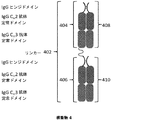
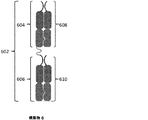
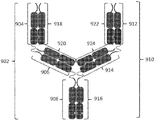
一局面では、Fc構築物は、2つのFcドメインを形成する3つのポリペプチドを含む。第1のポリペプチドは、式A−L−Bを有し、Aは、第1のFcドメイン単量体を含み;Lは、リンカーであり;かつBは、第2のFcドメイン単量体を含む。第2のポリペプチドは、第3のFcドメイン単量体を含み、第3のポリペプチドは、第4のFcドメイン単量体を含む。この局面では、第1のFcドメイン単量体と第3のFcドメイン単量体が結合して第1のFcドメインを形成する。同様に、第2のFcドメイン単量体と第4のFcドメイン単量体が結合して第2のFcドメインを形成する。本発明のこの局面の例示的なFc構築物は、図4および図6に例示されている。 In one aspect, the Fc construct comprises three polypeptides that form two Fc domains. The first polypeptide has the formula A-L-B, A includes a first Fc domain monomer; L is a linker; and B is a second Fc domain monomer including. The second polypeptide includes a third Fc domain monomer, and the third polypeptide includes a fourth Fc domain monomer. In this aspect, the first Fc domain monomer and the third Fc domain monomer bind to form the first Fc domain. Similarly, the second Fc domain monomer and the fourth Fc domain monomer are combined to form a second Fc domain. Exemplary Fc constructs of this aspect of the invention are illustrated in FIGS. 4 and 6.
特定の態様では、第1のFcドメイン単量体および第3のFcドメイン単量体は、これらのFcドメイン単量体間の二量体化を促進する相補的二量体化選択性モジュールを含む。他の態様では、第2のFcドメイン単量体および第4のFcドメイン単量体は、これらのFcドメイン単量体間の二量体化を促進する相補的二量体化選択性モジュールを含む。 In certain embodiments, the first Fc domain monomer and the third Fc domain monomer have complementary dimerization selectivity modules that promote dimerization between these Fc domain monomers. Including. In other embodiments, the second Fc domain monomer and the fourth Fc domain monomer comprise a complementary dimerization selectivity module that promotes dimerization between these Fc domain monomers. Including.
特定の態様では、A、B、第2のポリペプチド、および第3のポリペプチドの1つまたは複数は、Fcドメイン単量体からなる。一態様では、A、B、第2のポリペプチド、および第3のポリペプチドのそれぞれは、Fcドメイン単量体からなる。 In certain embodiments, one or more of A, B, the second polypeptide, and the third polypeptide consist of Fc domain monomers. In one aspect, each of A, B, the second polypeptide, and the third polypeptide consists of an Fc domain monomer.
特定の態様では、Fc構築物は、異種部分、例えば、ペプチド、例えば、血清タンパク質、例えば、アルブミン結合ペプチドに結合するペプチドをさらに含み得る。この部分は、例えばリンカーによってBまたは第3のポリペプチドのN末端またはカルボキシ末端に接合することができる。 In certain embodiments, the Fc construct may further comprise a heterologous moiety, eg, a peptide that binds to a peptide, eg, a serum protein, eg, an albumin binding peptide. This moiety can be joined to the N-terminus or carboxy-terminus of B or the third polypeptide, for example, by a linker.
特定の態様では、Fc構築物は、IgG CL抗体定常ドメインおよびIgG CH1抗体定常ドメインをさらに含む。IgG CH1抗体定常ドメインは、例えばリンカーによってAまたは第2のポリペプチドのN末端に付着され得る。
In certain embodiments, the Fc construct further comprises an IgG C L antibody constant domain and an
他の態様では、Fc構築物の第2および第3のポリペプチドは、同じアミノ酸配列を有する。 In other embodiments, the second and third polypeptides of the Fc construct have the same amino acid sequence.
別の局面では、本発明は、3つのFcドメインを形成する4つのポリペプチドを含むFc構築物を特徴とする。第1のポリペプチドは、式A−L−Bを有し、Aは、第1のFcドメイン単量体を含み;Lは、リンカーであり;かつBは、第2のFcドメイン単量体を含む。第2のポリペプチドは、式A'−L'−B'を有し、A'は、第3のFcドメイン単量体を含み;L'は、リンカーであり;かつB'は、第4のFcドメイン単量体を含む。第3のポリペプチドは、第5のFcドメイン単量体を含み、かつ第4のポリペプチドは、第6のFcドメイン単量体を含む。この局面では、AとA'が結合して第1のFcドメインを形成し、Bと第5のFcドメイン単量体が結合して第2のFcドメインを形成し、かつB'と第6のFcドメイン単量体が結合して第3のFcドメインを形成する。本発明のこの局面の例示的なFc構築物は、図5に例示されている。 In another aspect, the invention features an Fc construct that includes four polypeptides that form three Fc domains. The first polypeptide has the formula A-L-B, A includes a first Fc domain monomer; L is a linker; and B is a second Fc domain monomer including. The second polypeptide has the formula A′-L′-B ′, where A ′ includes a third Fc domain monomer; L ′ is a linker; and B ′ is the fourth Of Fc domain monomers. The third polypeptide includes a fifth Fc domain monomer, and the fourth polypeptide includes a sixth Fc domain monomer. In this aspect, A and A ′ bind to form a first Fc domain, B and a fifth Fc domain monomer bind to form a second Fc domain, and B ′ and sixth The Fc domain monomers bind to form a third Fc domain. An exemplary Fc construct of this aspect of the invention is illustrated in FIG.
特定の態様では、AおよびA'はそれぞれ、これらのFcドメイン単量体間の二量体化を促進する二量体化選択性モジュールを含む。他の態様では、Bおよび第5のFcドメイン単量体はそれぞれ、これらのFcドメイン単量体間の二量体化を促進する二量体化選択性モジュールを含む。さらに他の態様では、B'および第6のFcドメイン単量体はそれぞれ、これらのFcドメイン単量体間の二量体化を促進する二量体化選択性モジュールを含む。 In certain embodiments, A and A ′ each comprise a dimerization selectivity module that promotes dimerization between these Fc domain monomers. In other embodiments, the B and fifth Fc domain monomers each comprise a dimerization selectivity module that promotes dimerization between these Fc domain monomers. In yet other embodiments, the B ′ and sixth Fc domain monomers each comprise a dimerization selectivity module that promotes dimerization between these Fc domain monomers.
特定の態様では、A、B、A'、B'、第3のポリペプチド、および第4のポリペプチドの1つまたは複数は、Fcドメイン単量体からなる。一態様では、A、B、A'、B'、第3のポリペプチド、および第4のポリペプチドのそれぞれは、Fcドメイン単量体からなる。 In certain embodiments, one or more of A, B, A ′, B ′, the third polypeptide, and the fourth polypeptide consist of Fc domain monomers. In one aspect, each of A, B, A ′, B ′, the third polypeptide, and the fourth polypeptide consists of an Fc domain monomer.
特定の態様では、Fc構築物は、IgG CL抗体定常ドメインおよびIgG CH1抗体定常ドメインをさらに含み、IgG CL抗体定常ドメインは、リンカーによってIgG CH1抗体定常ドメインのN末端に付着され、かつIgG CH1抗体定常ドメインは、例えばリンカーによってAのN末端に付着されている。一態様では、Fc構築物は、第2のIgG CL抗体定常ドメインおよび第2のIgG CH1抗体定常ドメインをさらに含み、第2のIgG CL抗体定常ドメインは、例えばリンカーによって第2のIgG CH1抗体定常ドメインのN末端に付着され、かつ第2のIgG CH1抗体定常ドメインは、例えばリンカーによってA'のN末端に付着されている。
In certain embodiments, the Fc construct further comprises an IgG C L antibody constant domain and an
特定の態様では、Fc構築物は、異種部分、例えば、ペプチド、例えばリンカーによってBまたはB'のN末端またはC末端に接合されたアルブミン結合ペプチドをさらに含む。 In certain embodiments, the Fc construct further comprises a heterologous moiety, eg, an albumin binding peptide joined to the N-terminus or C-terminus of B or B ′ by a peptide, eg, a linker.
他の態様では、Fc構築物の第1および第2のポリペプチドは、同じアミノ酸配列を有し、かつFc構築物の第3および第4のポリペプチドは、同じアミノ酸配列を有する。 In other embodiments, the first and second polypeptides of the Fc construct have the same amino acid sequence, and the third and fourth polypeptides of the Fc construct have the same amino acid sequence.
別の局面では、本発明は、2つのポリペプチドを含むFc構築物を特徴とする。第1のポリペプチドは、式A−L−Bを有し、Aは、第1のFcドメイン単量体を含み;Lは、リンカーであり;かつBは、血清タンパク質結合部分、例えば、アルブミン結合ペプチドを含む。第2のポリペプチドは、第2のFcドメイン単量体を含む。この局面では、第1のFcドメイン単量体と第2のFcドメイン単量体が結合してFcドメインを形成する。 In another aspect, the invention features an Fc construct that includes two polypeptides. The first polypeptide has the formula A-L-B, A includes the first Fc domain monomer; L is a linker; and B is a serum protein binding moiety, eg, albumin Contains a binding peptide. The second polypeptide includes a second Fc domain monomer. In this aspect, the first Fc domain monomer and the second Fc domain monomer bind to form an Fc domain.
特定の態様では、第1のFcドメイン単量体および第2のFcドメイン単量体は、第1のFcドメイン単量体と第2のFcドメイン単量体間の二量体化を促進する相補的二量体化選択性モジュールを含む。 In certain embodiments, the first Fc domain monomer and the second Fc domain monomer promote dimerization between the first Fc domain monomer and the second Fc domain monomer Includes a complementary dimerization selectivity module.
特定の態様では、Aおよび第2のポリペプチドはそれぞれ、Fcドメイン単量体からなる。 In certain embodiments, A and the second polypeptide each consist of an Fc domain monomer.
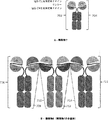
さらに別の局面では、本発明は、2つのポリペプチドを含むFc構築物を特徴とする。第1のポリペプチドは、式A−L1−B−L2−Cを有し、Aは、IgG CL抗体定常ドメインを含み;L1およびL2はそれぞれ、リンカーであり;Bは、IgG CH1抗体定常ドメインを含み;かつCは、第1のFcドメイン単量体を含む。第2のポリペプチドは、式A'−L1'−B'−L2'−C'を有し、A'は、IgG CL抗体定常ドメインを含み;L1'およびL2'はそれぞれ、リンカーであり;B'は、IgG CH1抗体定常ドメインを含み;かつC'は、第2のFcドメイン単量体を含む。この局面では、第1のFcドメイン単量体と第2のFcドメイン単量体が結合してFcドメインを形成する。本発明のこの局面の例示的なFc構築物は、図7Aに例示されている。
In yet another aspect, the invention features an Fc construct that includes two polypeptides. The first polypeptide has the formula A-L1-B-L2-C, A contains an IgG C L antibody constant domain; L1 and L2 are each linkers; B is
特定の態様では、第1のFcドメイン単量体および第2のFcドメイン単量体は、第1のFcドメイン単量体と第2のFcドメイン単量体との間の二量体化を促進する二量体化選択性モジュールを含む。 In certain embodiments, the first Fc domain monomer and the second Fc domain monomer undergo dimerization between the first Fc domain monomer and the second Fc domain monomer. Includes a dimerization selectivity module that facilitates.
特定の態様では、CおよびC'はそれぞれ、Fcドメイン単量体からなる。 In certain embodiments, C and C ′ each consist of an Fc domain monomer.
特定の態様では、Fc構築物は、血清タンパク質結合部分、例えば、リンカーによってCまたはC'のN末端またはC末端に接合されたアルブミン結合ペプチドをさらに含む。 In certain embodiments, the Fc construct further comprises a serum protein binding moiety, eg, an albumin binding peptide joined to the N-terminus or C-terminus of C or C ′ by a linker.
さらに別の局面では、本発明は、4つ以上のポリペプチドを含むFc構築物を特徴とする。第1のポリペプチドは、式A−L1−B−L2−Cを有し、Aは、IgG CL抗体定常ドメインを含み;L1およびL2はそれぞれ、リンカーであり;Bは、IgG CH1抗体定常ドメインを含み;かつCは、第1のFcドメイン単量体を含む。第2のポリペプチドは、式A'−L1'−B'−L2'−C'を有し、A'は、IgG CL抗体定常ドメインを含み;L1'およびL2'はそれぞれ、リンカーであり;B'は、IgG CH1抗体定常ドメインを含み;かつC'は、第2のFcドメイン単量体を含む。この局面では、第1のFcドメイン単量体が第3のFcドメイン単量体と結合して第1のFcドメインを形成し、かつ第2のFcドメイン単量体が第4のFcドメイン単量体と結合して第2のFcドメインを形成する。加えて、第1のポリペプチドのIgG CH1抗体定常ドメインは、第2のポリペプチドのIgG CL抗体定常ドメインと結合し、第2のポリペプチドのIgG CH1抗体定常ドメインは、第1のポリペプチドのIgG CL抗体定常ドメインと結合して、2つ以上のFcドメインを含むFc構築物を形成する。本発明のこの局面の例示的なFc構築物は、図7Bに例示されている。
In yet another aspect, the invention features an Fc construct that includes four or more polypeptides. The first polypeptide has the formula A-L1-B-L2-C, A contains an IgG C L antibody constant domain; L1 and L2 are each linkers; B is
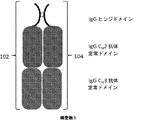
別の局面では、本発明は、2つのポリペプチドを含むFc構築物を特徴とする。第1のポリペプチドは、第1のFcドメイン単量体を含み、第2のポリペプチドは、第2のFcドメイン単量体を含む。この局面では、第1と第2のFcドメイン単量体が結合してFcドメインを形成する。本発明のこの局面の例示的なFc構築物は、図1に例示されている。さらにこの局面では、第1のFcドメイン単量体および第2のFcドメイン単量体はそれぞれ、第1のFcドメイン単量体と第2のFcドメイン単量体との間の二量体化を促進する二量体化選択性モジュールを含む。この態様の例示的なFc構築物は、図2および図3に例示されている。 In another aspect, the invention features an Fc construct that includes two polypeptides. The first polypeptide includes a first Fc domain monomer and the second polypeptide includes a second Fc domain monomer. In this aspect, the first and second Fc domain monomers bind to form an Fc domain. An exemplary Fc construct of this aspect of the invention is illustrated in FIG. Further in this aspect, the first Fc domain monomer and the second Fc domain monomer are dimerized between the first Fc domain monomer and the second Fc domain monomer, respectively. Includes a dimerization selectivity module that promotes Exemplary Fc constructs for this embodiment are illustrated in FIGS.
特定の態様では、第1および第2のポリペプチドはそれぞれ、Fcドメイン単量体からなる。 In certain embodiments, the first and second polypeptides each consist of Fc domain monomers.
特定の態様では、Fc構築物は、血清タンパク質結合部分、例えば、例えばリンカーによって第1または第2のポリペプチドのN末端またはC末端に接合されたアルブミン結合ペプチドをさらに含む。 In certain embodiments, the Fc construct further comprises a serum protein binding moiety, eg, an albumin binding peptide joined to the N-terminus or C-terminus of the first or second polypeptide, eg, by a linker.
別の局面では、本発明は、2つのポリペプチドを含むFc構築物を特徴とする。第1のポリペプチドは、式A−L−Bを有し、Aは、第1のFcドメイン単量体を含み;Lは、リンカーであり;かつBは、第2のFcドメイン単量体を含む。第2のポリペプチドは、式A'−L'−B'を有し、A'は、第3のFcドメイン単量体を含み;L'は、リンカーであり;かつB'は、第4のFcドメイン単量体を含む。この局面では、第1および第2のFcドメイン単量体はそれぞれ、それぞれのCH3抗体定常ドメインの中にエンジニアリングされた凹部を含み、かつ第2および第4のFcドメイン単量体はそれぞれ、それぞれのCH3抗体定常ドメインの中にエンジニアリングされた突出部を含み、エンジニアリングされた凹部およびエンジニアリングされた突出部は、突出部が凹部の中に入る突出部と凹部の対を形成するように配置される。またこの局面では、第1のFcドメイン単量体と第3のFcドメイン単量体が結合して第1のFcドメインを形成し、第2のFcドメイン単量体と第4のFcドメイン単量体が結合して第2のFcドメインを形成する。 In another aspect, the invention features an Fc construct that includes two polypeptides. The first polypeptide has the formula A-L-B, A includes a first Fc domain monomer; L is a linker; and B is a second Fc domain monomer including. The second polypeptide has the formula A′-L′-B ′, where A ′ includes a third Fc domain monomer; L ′ is a linker; and B ′ is the fourth Of Fc domain monomers. In this aspect, the first and second Fc domain monomers each contain an engineered recess in the respective C H 3 antibody constant domain, and the second and fourth Fc domain monomers each , Including engineered protrusions within each C H 3 antibody constant domain, such that the engineered recesses and engineered protrusions form a pair of protrusions and recesses where the protrusions enter into the recesses Placed in. In this aspect, the first Fc domain monomer and the third Fc domain monomer are combined to form the first Fc domain, and the second Fc domain monomer and the fourth Fc domain monomer are combined. The mer binds to form a second Fc domain.
特定の態様では、A、B、A'、およびB'の1つまたは複数は、Fcドメイン単量体からなる。一態様では、A、B、A'、およびB'のそれぞれは、Fcドメイン単量体からなる。 In certain embodiments, one or more of A, B, A ′, and B ′ consists of Fc domain monomers. In one aspect, each of A, B, A ′, and B ′ consists of an Fc domain monomer.
特定の態様では、Fc構築物は、血清タンパク質結合部分、例えば、例えばリンカーによってBまたはB'のN末端またはC末端に接合されたアルブミン結合ペプチドをさらに含む。 In certain embodiments, the Fc construct further comprises a serum protein binding moiety, eg, an albumin binding peptide joined to the N-terminus or C-terminus of B or B ′, eg, by a linker.
特定の態様では、Fc構築物は、IgG CL抗体定常ドメインおよびIgG CH1抗体定常ドメインをさらに含み、IgG CL抗体定常ドメインは、例えばリンカーによってIgG CH1抗体定常ドメインのN末端に付着され、かつIgG CH1抗体定常ドメインは、リンカーによってAのN末端に付着されている。一態様では、Fc構築物は、第2のIgG CL抗体定常ドメインおよび第2のIgG CH1抗体定常ドメインをさらに含み、第2のIgG CL抗体定常ドメインは、リンカーによって第2のIgG CH1抗体定常ドメインのN末端に付着され、かつ第2のIgG CH1抗体定常ドメインは、リンカーによってA'のN末端に付着されている。
In certain embodiments, the Fc construct further comprises an IgG C L antibody constant domain and an
別の態様では、本発明は、(a)式A−L−Bを有する第1のポリペプチドであって;Aが、第1のFcドメイン単量体を含む、または第1のFcドメイン単量体からなり;Lが、リンカーであり;かつBが、第2のFcドメイン単量体を含む、または第2のFcドメイン単量体からなる、第1のポリペプチド;(b)式A'−L'−B'を有する第2のポリペプチドであって;A'が、第3のFcドメイン単量体を含む、または第3のFcドメイン単量体からなり;L'が、リンカーであり;かつB'が、第4のFcドメイン単量体を含む、または第4のFcドメイン単量体からなる、第2のポリペプチド;(c)第5のFcドメイン単量体を含む、または第5のFcドメイン単量体からなる第3のポリペプチド;および(d)第6のFcドメイン単量体を含む、または第6のFcドメイン単量体からなる第4のポリペプチドからなるFc構築物を特徴とする。第1のポリペプチドのAと第2のポリペプチドのA'が結合して第1のFcドメインを形成し;第1のポリペプチドのBと第5のFcドメイン単量体が結合して第2のFcドメインを形成し;かつ第2のポリペプチドのB'と第6のFcドメイン単量体が結合して第3のFcドメインを形成する。第1および第3のFcドメイン単量体のそれぞれは、第1のFcドメイン単量体と第3のFcドメイン単量体との間の二量体化を促進する相補的二量体化選択性モジュールを含み、第2および第5のFcドメイン単量体のそれぞれは、第2のFcドメイン単量体と第5のFcドメイン単量体との間の二量体化を促進する相補的二量体化選択性モジュールを含み、第4および第6のFcドメイン単量体のそれぞれは、第4のFcドメイン単量体と第6のFcドメイン単量体との間の二量体化を促進する相補的二量体化選択性モジュールを含み;Fc構築物は、3つ以下のFcドメインを含む。 In another embodiment, the invention provides (a) a first polypeptide having the formula A-L-B, wherein A comprises a first Fc domain monomer, or a first Fc domain alone A first polypeptide consisting of a mer; L is a linker; and B comprises or consists of a second Fc domain monomer; (b) Formula A A second polypeptide having '-L'-B'; A 'comprises or consists of a third Fc domain monomer; L' is a linker And B ′ comprises a fourth Fc domain monomer or consists of a fourth Fc domain monomer; (c) comprises a fifth Fc domain monomer Or a third polypeptide consisting of a fifth Fc domain monomer; and (d) a fourth polypeptide comprising a sixth Fc domain monomer or consisting of a sixth Fc domain monomer Become Featuring an Fc construct. A of the first polypeptide and A ′ of the second polypeptide bind to form a first Fc domain; B of the first polypeptide binds to a fifth Fc domain monomer Two Fc domains are formed; and B ′ of the second polypeptide and a sixth Fc domain monomer bind to form a third Fc domain. Each of the first and third Fc domain monomers is a complementary dimerization selection that promotes dimerization between the first Fc domain monomer and the third Fc domain monomer Each of the second and fifth Fc domain monomers is complementary to promote dimerization between the second and fifth Fc domain monomers Including a dimerization selectivity module, each of the fourth and sixth Fc domain monomers is dimerized between the fourth Fc domain monomer and the sixth Fc domain monomer Complementary dimerization selectivity module that promotes; Fc constructs contain no more than 3 Fc domains.
この局面の一部の態様では、第1のFcドメイン単量体または第3のFcドメイン単量体のいずれか一方が、負に荷電したアミノ酸置換を含み、他方のFcドメイン単量体は、正に荷電したアミノ酸置換を含み、第2および第4のFcドメイン単量体または第5および第6のFcドメイン単量体のいずれか一方が、エンジニアリングされた突出部を含み、他方のFcドメイン単量体は、エンジニアリングされた凹部を含む。一部の態様では、リンカーL1、L2、L1'、および/またはL2'は、3〜200のアミノ酸長である。一部の態様では、リンカーLおよび/またはL'は、SEQ ID NO: 1、2、および3のいずれか1つの配列からなる。 In some embodiments of this aspect, either the first Fc domain monomer or the third Fc domain monomer comprises a negatively charged amino acid substitution, and the other Fc domain monomer is Contains positively charged amino acid substitutions, and either the second and fourth Fc domain monomers or the fifth and sixth Fc domain monomers contain engineered overhangs and the other Fc domain The monomer includes an engineered recess. In some embodiments, the linkers L1, L2, L1 ′, and / or L2 ′ are 3 to 200 amino acids in length. In some embodiments, the linker L and / or L ′ consists of the sequence of any one of SEQ ID NOs: 1, 2, and 3.
別の局面では、本発明は、(a)式A−L1−B−L2−Cを有する第1のポリペプチドであって;Aが、第1のFcドメイン単量体を含む、または第1のFcドメイン単量体からなり;L1が、リンカーであり;Bが、第2のFcドメイン単量体を含む、または第2のFcドメイン単量体からなり;L2が、リンカーであり:かつCが、第3のFcドメイン単量体を含む、または第3のFcドメイン単量体からなる、第1のポリペプチド;および(b)式A'−L1'−B'−L2'−C'を有する第2のポリペプチドであって;A'が、第4のFcドメイン単量体を含む、または第4のFcドメイン単量体からなり;L1'が、リンカーであり;B'が、第5のFcドメイン単量体を含む、または第5のFcドメイン単量体からなり;L2'が、リンカーであり:かつC'が、第6のFcドメイン単量体を含む、または第6のFcドメイン単量体からなる、第2のポリペプチド;(c)第7のFcドメイン単量体を含む、または第7のFcドメイン単量体からなる第3のポリペプチド;(d)第8のFcドメイン単量体を含む、または第8のFcドメイン単量体からなる第4のポリペプチド;(e)第9のFcドメイン単量体を含む、または第9のFcドメイン単量体からなる第5のポリペプチド;および(f)第10のFcドメイン単量体を含む、または第10のFcドメイン単量体からなる第6のポリペプチドからなるFc構築物を特徴とする。第1のポリペプチドのAと第7のFCドメイン単量体が結合して第1のFcドメインを形成し;第1のポリペプチドのBと第2のポリペプチドのB'が結合して第2のFcドメインを形成し;第1のポリペプチドのCと第8のFcドメイン単量体が結合して第3のFcドメインを形成し、第2のポリペプチドのA'と第9のFcドメイン単量体が結合して第4のFcドメインを形成し、かつ第2のポリペプチドのC'と第10のFcドメイン単量体が結合して第5のFcドメインを形成する。第1および第7のFcドメイン単量体のそれぞれは、第1のFcドメイン単量体と第7のFcドメイン単量体との間の二量体化を促進する相補的二量体化選択性モジュールを含み、第2および第5のFcドメイン単量体のそれぞれは、第2のFcドメイン単量体と第5のFcドメイン単量体との間の二量体化を促進する相補的二量体化選択性モジュールを含み、第3および第8のFcドメイン単量体のそれぞれは、第3のFcドメイン単量体と第8のFcドメイン単量体との間の二量体化を促進する相補的二量体化選択性モジュールを含み;第4および第9のFcドメイン単量体のそれぞれは、第4のFcドメイン単量体と第9のFcドメイン単量体との間の二量体化を促進する相補的二量体化選択性モジュールを含み;かつ第6および第10のFcドメイン単量体のそれぞれは、第6のドメイン単量体と第10のFcドメイン単量体との間の二量体化を促進する相補的二量体化選択性モジュールを含み;Fc構築物は、5つ以下のFcドメインを含む。 In another aspect, the invention provides (a) a first polypeptide having the formula A-L1-B-L2-C; wherein A comprises a first Fc domain monomer, or L1 is a linker; B contains a second Fc domain monomer or consists of a second Fc domain monomer; L2 is a linker: and A first polypeptide, wherein C comprises or consists of a third Fc domain monomer; and (b) a formula A′-L1′-B′-L2′-C A second polypeptide comprising '; A' comprises or consists of a fourth Fc domain monomer; L1 'is a linker; B' is Comprising a fifth Fc domain monomer, or consisting of a fifth Fc domain monomer; L2 ′ is a linker: and C ′ comprises a sixth Fc domain monomer, or Consists of 6 Fc domain monomers A second polypeptide; (c) a third polypeptide comprising or consisting of a seventh Fc domain monomer; (d) an eighth Fc domain monomer; A fourth polypeptide comprising or consisting of an eighth Fc domain monomer; (e) a fifth polypeptide comprising a ninth Fc domain monomer or consisting of a ninth Fc domain monomer; And (f) featuring an Fc construct comprising a sixth polypeptide comprising or consisting of a tenth Fc domain monomer. The first polypeptide A and the seventh FC domain monomer bind to form a first Fc domain; the first polypeptide B and the second polypeptide B ′ bind A second Fc domain; the C of the first polypeptide and the eighth Fc domain monomer bind to form a third Fc domain, and the second polypeptide A ′ and the ninth Fc Domain monomers bind to form a fourth Fc domain, and C ′ of the second polypeptide and a tenth Fc domain monomer bind to form a fifth Fc domain. Each of the first and seventh Fc domain monomers is a complementary dimerization selection that promotes dimerization between the first Fc domain monomer and the seventh Fc domain monomer Each of the second and fifth Fc domain monomers is complementary to promote dimerization between the second and fifth Fc domain monomers A dimerization selectivity module, each of the third and eighth Fc domain monomers is dimerized between the third Fc domain monomer and the eighth Fc domain monomer Complementary dimerization selectivity module that promotes; each of the fourth and ninth Fc domain monomers is between the fourth Fc domain monomer and the ninth Fc domain monomer Each of the sixth and tenth Fc domain monomers includes a sixth domain monomer and a tenth domain monomer. It contains complementary dimerization selectivity module that promotes dimerization between Fc domain monomers; Fc construct comprises 5 or fewer Fc domain.
この局面の一部の態様では、第1、第3、第4、および第6のFcドメイン単量体のそれぞれは、エンジニアリングされた突出部を含み、第2のFcドメイン単量体は、負に荷電したアミノ酸置換を含み、第5のFcドメイン単量体は、正に荷電したアミノ酸置換を含み、かつ第7、第8、第9、および第10のFcドメイン単量体のそれぞれは、エンジニアリングされた凹部を含む。一部の態様では、リンカーL1、L2、L1'、および/またはL2'は、3〜200のアミノ酸長である。一部の態様では、リンカーL1、L2、L1'、および/またはL2'は、SEQ ID NO: 1、2、および3のいずれか1つの配列からなる。 In some embodiments of this aspect, each of the first, third, fourth, and sixth Fc domain monomers includes an engineered overhang and the second Fc domain monomer is negative. Wherein the fifth Fc domain monomer comprises a positively charged amino acid substitution, and each of the seventh, eighth, ninth and tenth Fc domain monomers is Includes engineered recesses. In some embodiments, the linkers L1, L2, L1 ′, and / or L2 ′ are 3 to 200 amino acids in length. In some embodiments, the linker L1, L2, L1 ′, and / or L2 ′ consists of the sequence of any one of SEQ ID NOs: 1, 2, and 3.
別の局面では、本発明は、(a)式A−L1−B−L2−Cを有する第1のポリペプチドであって;Aが、第1のFcドメイン単量体を含む、または第1のFcドメイン単量体からなり;L1が、リンカーであり;Bが、第2のFcドメイン単量体を含む、または第2のFcドメイン単量体からなり;L2が、リンカーであり:かつCが、第3のFcドメイン単量体を含む、または第3のFcドメイン単量体からなる、第1のポリペプチド;および(b)式A'−L1'−B'−L2'−C'を有する第2のポリペプチドであって;A'が、第4のFcドメイン単量体を含む、または第4のFcドメイン単量体からなり;L1'が、リンカーであり;B'が、第5のFcドメイン単量体を含む、または第5のFcドメイン単量体からなり;L2'が、リンカーであり:かつC'が、第6のFcドメイン単量体を含む、または第6のFcドメイン単量体からなる、第2のポリペプチド;(c)第7のFcドメイン単量体を含む、または第7のFcドメイン単量体からなる第3のポリペプチド;(d)第8のFcドメイン単量体を含む、または第8のFcドメイン単量体からなる第4のポリペプチド;(e)第9のFcドメイン単量体を含む、または第9のFcドメイン単量体からなる第5のポリペプチド;(f)第10のFcドメイン単量体を含む、または第10のFcドメイン単量体からなる第6のポリペプチドからなるFc構築物を特徴とする。第1のポリペプチドのAと第2のポリペプチドのA'が結合して第1のFcドメインを形成し;第1のポリペプチドのBと第7のFcドメイン単量体が結合して第2のFcドメインを形成し;第1のポリペプチドのCと第8のFcドメイン単量体が結合して第3のFcドメインを形成し、第2のポリペプチドのB'と第9のFcドメイン単量体が結合して第4のFcドメインを形成し、かつ第2のポリペプチドのC'と第10のFcドメイン単量体が結合して第5のFcドメインを形成する。第1および第4のFcドメイン単量体のそれぞれは、第1のFcドメイン単量体と第4のFcドメイン単量体との間の二量体化を促進する相補的二量体化選択性モジュールを含み、第2および第7のFcドメイン単量体のそれぞれは、第2のFcドメイン単量体と第7のFcドメイン単量体との間の二量体化を促進する相補的二量体化選択性モジュールを含み、第3および第8のFcドメイン単量体のそれぞれは、第3のFcドメイン単量体と第8のFcドメイン単量体との間の二量体化を促進する相補的二量体化選択性モジュールを含み;第5および第9のFcドメイン単量体のそれぞれは、第5のFcドメイン単量体と第9のFcドメイン単量体との間の二量体化を促進する相補的二量体化選択性モジュールを含み;かつ第6および第10のFcドメイン単量体のそれぞれは、第6のドメイン単量体と第10のFcドメイン単量体との間の二量体化を促進する相補的二量体化選択性モジュールを含み;Fc構築物は、5つ以下のFcドメインを含む。 In another aspect, the invention provides (a) a first polypeptide having the formula A-L1-B-L2-C; wherein A comprises a first Fc domain monomer, or L1 is a linker; B contains a second Fc domain monomer or consists of a second Fc domain monomer; L2 is a linker: and A first polypeptide, wherein C comprises or consists of a third Fc domain monomer; and (b) a formula A′-L1′-B′-L2′-C A second polypeptide comprising '; A' comprises or consists of a fourth Fc domain monomer; L1 'is a linker; B' is Comprising a fifth Fc domain monomer, or consisting of a fifth Fc domain monomer; L2 ′ is a linker: and C ′ comprises a sixth Fc domain monomer, or Consists of 6 Fc domain monomers A second polypeptide; (c) a third polypeptide comprising or consisting of a seventh Fc domain monomer; (d) an eighth Fc domain monomer; A fourth polypeptide comprising or consisting of an eighth Fc domain monomer; (e) a fifth polypeptide comprising a ninth Fc domain monomer or consisting of a ninth Fc domain monomer; (F) characterized by an Fc construct comprising a sixth polypeptide comprising a tenth Fc domain monomer or comprising a tenth Fc domain monomer. A of the first polypeptide and A ′ of the second polypeptide bind to form a first Fc domain; B of the first polypeptide binds to a seventh Fc domain monomer A second Fc domain; the first polypeptide C and the eighth Fc domain monomer bind to form a third Fc domain; the second polypeptide B ′ and the ninth Fc Domain monomers bind to form a fourth Fc domain, and C ′ of the second polypeptide and a tenth Fc domain monomer bind to form a fifth Fc domain. Each of the first and fourth Fc domain monomers is a complementary dimerization selection that promotes dimerization between the first Fc domain monomer and the fourth Fc domain monomer Each of the second and seventh Fc domain monomers is complementary to promote dimerization between the second Fc domain monomer and the seventh Fc domain monomer A dimerization selectivity module, each of the third and eighth Fc domain monomers is dimerized between the third Fc domain monomer and the eighth Fc domain monomer A complementary dimerization selectivity module that promotes; each of the fifth and ninth Fc domain monomers is between the fifth Fc domain monomer and the ninth Fc domain monomer Each of the sixth and tenth Fc domain monomers includes a sixth domain monomer and a tenth domain monomer. It contains complementary dimerization selectivity module that promotes dimerization between Fc domain monomers; Fc construct comprises 5 or fewer Fc domain.
この局面の一部の態様では、第1のFcドメイン単量体は、負に荷電したアミノ酸置換を含み、第4のFcドメイン単量体は、正に荷電したアミノ酸置換を含み、かつ第2、第3、第5、および第6のFcドメイン単量体のそれぞれは、エンジニアリングされた突出部を含み、かつ第7、第8、第9、および第10のFcドメイン単量体のそれぞれは、エンジニアリングされた凹部を含む。一部の態様では、リンカーL1、L2、L1'、および/またはL2'は、3〜200のアミノ酸長である。一部の態様では、リンカーL1、L2、L1'、および/またはL2'は、SEQ ID NO: 1、2、および3のいずれか1つの配列からなる。 In some embodiments of this aspect, the first Fc domain monomer comprises a negatively charged amino acid substitution, the fourth Fc domain monomer comprises a positively charged amino acid substitution, and the second Each of the third, fifth, and sixth Fc domain monomers includes an engineered overhang, and each of the seventh, eighth, ninth, and tenth Fc domain monomers is , Including engineered recesses. In some embodiments, the linkers L1, L2, L1 ′, and / or L2 ′ are 3 to 200 amino acids in length. In some embodiments, the linker L1, L2, L1 ′, and / or L2 ′ consists of the sequence of any one of SEQ ID NOs: 1, 2, and 3.
別の局面では、本発明は、1つまたは複数のFcドメインを含むFc構築物を特徴とし、このFc構築物は、単一ポリペプチド配列から構築される。このポリペプチドは、式A−L−Bを有し、Aは、第1のFcドメイン単量体を含み;Lは、リンカー(任意で、例えば、1つまたは2つ以上の切断部位を有する切断可能リンカー)であり;かつBは、第2のFcドメイン単量体を含む。このリンカーは、ポリペプチドの第1のFcドメイン単量体と第2のFcドメイン単量体が結合してFcドメインを形成する十分な長さ(例えば、少なくとも15のアミノ酸、好ましくは少なくとも約20のアミノ酸残基長、例えば、15〜200のアミノ酸長)および可撓性のアミノ酸スペーサーであり得る。特定の態様では、第1のFcドメイン単量体および第2のFcドメイン単量体は、第1のFcドメイン単量体と第2のFcドメイン単量体との間の二量体化を促進する相補的二量体化選択性モジュールを含む。このような構築物は、宿主細胞での単一ポリペプチド配列の発現から形成することができる。一態様では、このポリペプチドは、式A−L1−B−L2−Cを有し、Aは、第1のFcドメイン単量体を含み;L1は、リンカー(任意で、例えば、1つまたは2つ以上の切断部位を有する切断可能リンカー)であり;Bは、第2のFcドメイン単量体を含み;L2は、リンカーであり;かつCは、第3のFcドメイン単量体である。リンカーは、ポリペプチドの第1のFcドメイン単量体と第2のFcドメイン単量体が結合してFcドメインを形成する十分な長さ(例えば、少なくとも15のアミノ酸、好ましくは少なくとも約20のアミノ酸残基長、例えば、15〜200アミノ酸長)および可撓性のアミノ酸スペーサーであり得る。特定の態様では、第1のFcドメイン単量体および第2のFcドメイン単量体は、第1のFcドメイン単量体と第2のFcドメイン単量体との間の二量体化を促進する相補的二量体化選択性モジュールを含む。3つのFcドメインを含む、この態様のFc構築物の一例が図10に示されている。 In another aspect, the invention features an Fc construct that includes one or more Fc domains, wherein the Fc construct is constructed from a single polypeptide sequence. The polypeptide has the formula A-L-B, where A includes a first Fc domain monomer; L is a linker (optionally, for example, having one or more cleavage sites A cleavable linker; and B comprises a second Fc domain monomer. The linker is of sufficient length (eg, at least 15 amino acids, preferably at least about 20) that the first Fc domain monomer and the second Fc domain monomer of the polypeptide bind to form an Fc domain. Of amino acid residues (eg, 15-200 amino acids long) and flexible amino acid spacers. In certain embodiments, the first Fc domain monomer and the second Fc domain monomer undergo dimerization between the first Fc domain monomer and the second Fc domain monomer. Includes a complementary dimerization selectivity module that facilitates. Such constructs can be formed from expression of a single polypeptide sequence in a host cell. In one aspect, the polypeptide has the formula A-L1-B-L2-C, where A includes a first Fc domain monomer; L1 is a linker (optionally, eg, one or A cleavable linker having two or more cleavage sites); B comprises a second Fc domain monomer; L2 is a linker; and C is a third Fc domain monomer . The linker is of sufficient length (eg, at least 15 amino acids, preferably at least about 20) that the first Fc domain monomer and the second Fc domain monomer of the polypeptide bind to form an Fc domain. Amino acid residue length (eg, 15-200 amino acids long) and a flexible amino acid spacer. In certain embodiments, the first Fc domain monomer and the second Fc domain monomer undergo dimerization between the first Fc domain monomer and the second Fc domain monomer. Includes a complementary dimerization selectivity module that facilitates. An example of this embodiment of an Fc construct comprising three Fc domains is shown in FIG.
本明細書に記載の任意のFc構築物において、構築物のFcドメインのFcドメイン単量体は、同じ一次アミノ酸配列を有し得る。例えば、FcドメインのFcドメイン単量体は両方、野生型配列であり得る、またはFcドメインの両方のFcドメイン単量体は、同じ二量体化選択性モジュールを有し得る、例えば、Fcドメインの両方のFcドメイン単量体は、CH3ドメイン間の界面の荷電残基の環内の少なくとも2つの位置に同一の逆電荷変異(reverse charge mutation)を有し得る。 In any Fc construct described herein, the Fc domain monomers of the Fc domain of the construct can have the same primary amino acid sequence. For example, both Fc domain monomers of the Fc domain can be wild-type sequences, or both Fc domain monomers of the Fc domain can have the same dimerization selectivity module, eg, the Fc domain Both Fc domain monomers may have identical reverse charge mutations in at least two positions within the ring of charged residues at the interface between the C H 3 domains.
本明細書に記載の任意のFc構築物において、構築物のFcドメインのFcドメイン単量体は、2つのFc単量体間(即ち、Fc構築物のFcドメイン単量体と別の単量体との間)に、異なる配列、例えば、20以下のアミノ酸(例えば、15以下、10以下のアミノ酸)、例えば、20以下、15以下、10以下、8つ以下、7つ以下、6つ以下、5つ以下、4つ以下、3つ以下、または2つ以下のアミノ酸が異なる配列を有し得る。例えば、本明細書に記載の構築物のFc単量体配列は、任意のFc構築物の相補的二量体化選択性モジュールが、一方のドメイン単量体のCH3抗体定常ドメインにおけるエンジニアリングされた凹部および他方のFcドメイン単量体のCH3抗体定常ドメインにおけるエンジニアリングされた突出部を含み得るため異なり得、エンジニアリングされた凹部およびエンジニアリングされた突出部は、Fcドメイン単量体の突出部が凹部の中に入る突出部と凹部の対を形成するように位置する。例示的なエンジニアリングされた凹部および突出部が表1に示されている。別の態様では、相補的二量体化選択性モジュールは、一方のドメイン単量体のCH3抗体定常ドメインにおけるエンジニアリング(置換)された負に荷電したアミノ酸および他方のFcドメイン単量体のCH3抗体定常ドメインにおけるエンジニアリング(置換)された正に荷電したアミノ酸を含み、負に荷電したアミノ酸および正に荷電したアミノ酸は、相補的なドメイン単量体間のFcドメインの形成を促進するように位置する。例示的な相補的アミノ酸変化が表2に示されている。 In any Fc construct described herein, the Fc domain monomer of the Fc domain of the construct is between two Fc monomers (ie, the Fc domain monomer of the Fc construct and another monomer). Between, for example, 20 or less amino acids (for example, 15 or less, 10 or less amino acids), for example, 20 or less, 15 or less, 10 or less, 8 or less, 7 or less, 6 or less, 5 In the following, no more than 4, no more than 3, or no more than 2 amino acids may have different sequences. For example, the Fc monomer sequences of the constructs described herein are engineered in the C H 3 antibody constant domain of one domain monomer of the complementary dimerization selectivity module of any Fc construct. The engineered recess and the engineered overhang can be different from those of the Fc domain monomer that can include engineered overhangs in the C H 3 antibody constant domain of the recess and the other Fc domain monomer. It is located so as to form a pair of a protrusion and a recess that enter the recess. Exemplary engineered recesses and protrusions are shown in Table 1. In another embodiment, the complementary dimerization selectivity module comprises an engineered (substituted) negatively charged amino acid in the C H 3 antibody constant domain of one domain monomer and the other Fc domain monomer. Contains engineered (substituted) positively charged amino acids in the C H 3 antibody constant domain, and negatively and positively charged amino acids promote the formation of Fc domains between complementary domain monomers Is located. Exemplary complementary amino acid changes are shown in Table 2.
一部の態様では、二量体化選択性モジュール(例えば、エンジニアリングされた凹部および突出部、またはエンジニアリングされた正および負に荷電したアミノ酸(例えば、表1および表2の例示的なアミノ酸変化を参照されたい))に加えて、本明細書に記載のFc構築物は、例えば、Fc構築物の安定化を助けるためまたはタンパク質の凝集を防止するために、Fc単量体配列の野生型配列からの追加のアミノ酸置換も含み得る。 In some embodiments, the dimerization selectivity module (eg, engineered recesses and protrusions, or engineered positive and negative charged amino acids (eg, the exemplary amino acid changes in Tables 1 and 2) In addition to))), the Fc constructs described herein can be derived from the wild-type sequence of the Fc monomer sequence, eg, to help stabilize the Fc construct or to prevent protein aggregation. Additional amino acid substitutions can also be included.
一部の態様では、本明細書に記載のFc構築物は、2〜10のFcドメイン(例えば、2つ、3つ、4つ、5つ、6つ、7つ、8つ、9つ、10のドメイン)を含み、この構築物のFcドメインの少なくとも2つが、異なる二量体化選択性モジュールを有する。例えば、構築物5、8、9、および10は、エンジニアリングされた凹部および突出物を含む少なくとも1つのFcドメインおよび相補的な逆電荷変異を含む少なくとも1つのFcドメインを有する。 In some aspects, the Fc constructs described herein comprise 2-10 Fc domains (eg, 2, 3, 4, 5, 6, 7, 8, 9, 10). And at least two of the Fc domains of this construct have different dimerization selectivity modules. For example, constructs 5, 8, 9, and 10 have at least one Fc domain containing engineered recesses and overhangs and at least one Fc domain containing complementary reverse charge mutations.
他の態様では、本明細書に記載のFc構築物の1つまたは複数のリンカーは結合である。 In other embodiments, one or more linkers of the Fc constructs described herein are a bond.
他の態様では、本明細書に記載のFc構築物の1つまたは複数のリンカーは、スペーサー、例えば、2〜200のアミノ酸のアミノ酸スペーサーである。 In other embodiments, the one or more linkers of the Fc constructs described herein are spacers, eg, amino acid spacers of 2 to 200 amino acids.
特定の態様では、アミノ酸スペーサーは、グリシンおよび/またはセリンの多いスペーサーであり、例えば、このスペーサーは、配列GS、GGS、GGGGS(SEQ ID NO: 1)、GGSG(SEQ ID NO: 2)、またはSGGG(SEQ ID NO: 3)の2つ以上のモチーフを含む。 In certain embodiments, the amino acid spacer is a glycine and / or serine rich spacer, for example, the spacer is the sequence GS, GGS, GGGGS (SEQ ID NO: 1), GGSG (SEQ ID NO: 2), or Contains two or more motifs of SGGG (SEQ ID NO: 3).
特定の態様では、Fc構築物が、アルブミン結合ペプチドを含む場合は、このアルブミン結合ペプチドは、DICLPRWGCLW(SEQ ID NO: 28)の配列を有する。 In a particular embodiment, if the Fc construct comprises an albumin binding peptide, the albumin binding peptide has the sequence of DICLPRWGCLW (SEQ ID NO: 28).
他の態様では、本明細書に記載のFc構築物の1つまたは複数のFcドメイン単量体は、IgGヒンジドメイン、IgG CH2抗体定常ドメイン、およびIgG CH3抗体定常ドメインを含む。
In other embodiments, one or more Fc domain monomers of the Fc constructs described herein comprise an IgG hinge domain, an
特定の態様では、前述のFc構築物のFcドメイン単量体のそれぞれは、IgGヒンジドメイン、IgG CH2抗体定常ドメイン、およびIgG CH3抗体定常ドメインを含む。
In certain embodiments, each of the Fc domain monomers of the aforementioned Fc construct comprises an IgG hinge domain, an
特定の態様では、IgGは、IgG1、IgG2a、IgG2b、IgG3、およびIgG4からなる群より選択されるサブタイプである。 In certain embodiments, the IgG is a subtype selected from the group consisting of IgG1, IgG2a, IgG2b, IgG3, and IgG4.
さらに別の局面では、本発明は、本明細書に記載の任意のFc構築物の実質的に均質な(例えば、少なくとも85%、90%、95%、97%、98%、99%均質な)集団を含む薬学的組成物を特徴とする。一態様では、薬学的用途に適格な滅菌シリンジまたはバイアルは、薬学的組成物を含み、唯一または主な活性成分は、本明細書に記載のいずれか1つのFc構築物の実質的に均質な(例えば、少なくとも85%、90%、95%、98%、または99%均質な)集団である。薬学的組成物は、例えば、塩、洗剤、界面活性剤、充填剤、ポリマー、保存剤、および他の薬学的添加剤から選択される1つまたは複数の非活性成分を含み得る。別の態様では、実質的に均質な薬学的組成物は、Fc構築物の10%未満、5%未満、4%未満、3%未満、2%未満、1%未満、または0.5%未満の凝集または不所望の多量体を含む。 In yet another aspect, the invention is substantially homogeneous (eg, at least 85%, 90%, 95%, 97%, 98%, 99% homogeneous) of any Fc construct described herein. Characterized by a pharmaceutical composition comprising a population. In one aspect, a sterile syringe or vial suitable for pharmaceutical use comprises a pharmaceutical composition, and the only or main active ingredient is substantially homogeneous (any of the Fc constructs described herein ( For example, a population that is at least 85%, 90%, 95%, 98%, or 99% homogeneous). The pharmaceutical composition may include one or more inactive ingredients selected from, for example, salts, detergents, surfactants, fillers, polymers, preservatives, and other pharmaceutical additives. In another embodiment, the substantially homogeneous pharmaceutical composition comprises less than 10%, less than 5%, less than 4%, less than 3%, less than 2%, less than 1%, or less than 0.5% of the Fc construct or Contains unwanted multimers.
別の局面では、本発明は、前述のFc構築物のいずれか1つを調製する方法を特徴とする。この方法は、Fc構築物の構築に必要なポリペプチドをコードする1つまたは複数のポリヌクレオチドを含む宿主細胞を用意すること、Fc構築物の形成を可能にする条件下で、宿主細胞でポリペプチドを発現させること、およびFc構築物を回収すること(例えば、精製すること)を含む。 In another aspect, the invention features a method of preparing any one of the aforementioned Fc constructs. This method comprises providing a host cell comprising one or more polynucleotides encoding a polypeptide required for construction of an Fc construct, and subjecting the polypeptide to a host cell under conditions that allow formation of the Fc construct. Expressing and recovering (eg, purifying) the Fc construct.
一部の態様では、Fc構築物は、異なるポリペプチドに存在するFcドメイン単量体の会合によって少なくとも部分的に形成される。特定の態様では、Fc構築物は、異なるポリペプチドに存在するFcドメイン単量体の会合によって形成される。これらの態様では、Fc構築物は、2つのポリペプチドの会合を促進する追加のドメイン(例えば、IgM尾部またはIgA尾部)を含まない。他の態様では、共有結合(例えば、ジスルフィド架橋)は、接合してFcドメインを形成する2つのFcドメイン単量体間のみに存在する。他の態様では、Fc構築物は、Fcドメイン間に共有結合(例えば、ジスルフィド架橋)を含まない。さらに他の態様では、Fc構築物は、十分な構造的可撓性を提供し、これによりFc構築物の全てまたは実質的に全てのFcドメインが、細胞表面のFc受容体に同時に相互作用することができる。これらのいずれかの態様の特定の例では、Fc構築物は、リンカー(例えば、可撓性アミノ酸スペーサー)を介して接合された少なくとも2つのFcドメインを含む。 In some embodiments, the Fc construct is formed at least in part by association of Fc domain monomers present in different polypeptides. In certain embodiments, the Fc construct is formed by the association of Fc domain monomers present in different polypeptides. In these embodiments, the Fc construct does not include an additional domain (eg, IgM tail or IgA tail) that facilitates the association of the two polypeptides. In other embodiments, covalent bonds (eg, disulfide bridges) are present only between two Fc domain monomers that join to form an Fc domain. In other embodiments, the Fc construct does not include covalent bonds (eg, disulfide bridges) between the Fc domains. In yet other embodiments, the Fc construct provides sufficient structural flexibility such that all or substantially all Fc domains of the Fc construct interact simultaneously with cell surface Fc receptors. it can. In particular examples of any of these embodiments, the Fc construct comprises at least two Fc domains joined via a linker (eg, a flexible amino acid spacer).
一態様では、FcドメインのFcドメイン単量体は、会合してFcドメインを形成する異なるポリペプチド鎖に見られる。例えば、図4および図6に示されている構築物は、3つの会合ポリペプチドを含む2つのFcドメインを有する。3つのポリペプチドのうちの1つは、2つのFcドメイン単量体を含み、3つのポリペプチドのうちの他の2つはそれぞれ、1つのFcドメイン単量体を含む。図5に示されている構築物は、4つの会合ポリペプチドを含む3つのFcドメインを有し;4つのポリペプチドのうちの2つが、2つのFcドメイン単量体を含み、4つのポリペプチドのうちの他の2つはそれぞれ、1つのFcドメイン単量体を含む。図7Bに示されているFc構築物は、2n個のポリペプチドを含むn個のFcドメインを有し得(nは2〜10)、各ポリペプチドは、Fcドメイン単量体、IgG CL、抗体定常ドメイン、およびIgG CH1抗体定常ドメインを含む。図8および図9に示されている構築物はそれぞれ、6つの会合ポリペプチドを含む5つのFcドメインを有する。6つのポリペプチドのうちの2つは、3つのFcドメイン単量体を有し、6つのポリペプチドのうちの他の4つはそれぞれ、1つのFcドメイン単量体を含む。図10に示されている構築物は、2つの会合ポリペプチドを含む3つのFcドメインを有する。2つのポリペプチドのそれぞれは、直列に接合された3つのFcドメイン単量体を含む。
In one aspect, the Fc domain monomers of the Fc domain are found on different polypeptide chains that associate to form an Fc domain. For example, the constructs shown in FIGS. 4 and 6 have two Fc domains that contain three associated polypeptides. One of the three polypeptides contains two Fc domain monomers, and the other two of the three polypeptides each contain one Fc domain monomer. The construct shown in FIG. 5 has three Fc domains containing four associated polypeptides; two of the four polypeptides contain two Fc domain monomers and Each of the other two contains one Fc domain monomer. The Fc construct shown in FIG. 7B can have n Fc domains containing 2n polypeptides (n is 2-10), each polypeptide comprising an Fc domain monomer, IgG C L , It includes an antibody constant domain and an
別の局面では、本発明は、Fcドメイン単量体の選択的二量体化を促進するための組成物および方法を特徴とする。本発明は、Fcドメインを含み、このFcドメインの2つのFcドメイン単量体は、CH3抗体定常ドメイン間の界面の荷電残基の環内の少なくとも2つの位置に同一の変異を含む。本発明はまた、このようなFcドメインを形成する方法も含み、この方法は、CH3抗体定常ドメイン間の界面の荷電残基の環内の少なくとも2つの位置にある2つのFcドメイン単量体配列に、同一の変異を有する相補的二量体化選択性モジュールを導入することを含む。CH3抗体定常ドメイン間の界面は、荷電残基の環によって取り囲まれた疎水性パッチからなる。1つのCH3抗体定常ドメインが別のCH3抗体定常ドメインと1つになると、これらの荷電残基が、反対の電荷の残基と対を形成する。2つ以上の相補的な残基の対の両方のメンバーの電荷を逆にすることにより、変異Fcドメイン単量体は、同じ変異配列のFcドメイン単量体に対する相補性を維持するが、これらの変異のないFcドメイン単量体に対しては低い相補性を有する。この態様では、同一の二量体化選択性モジュールは、ホモ二量体化を促進する。例示的なFcドメインは、二重変異体K409D/D339K、K392D/D399K、E357K/K370E、D356K/K439D、K409E/D339K、K392E/D399K、E357K/K370D、またはD356K/K439Eを含むFc単量体を含む。別の態様では、Fcドメインは、二重変異体の任意の対を組み合わせた四重変異体、例えば、K409D/D399K/E357K/K370Eを含むFc単量体を含む。別の態様では、同一の二量体化選択性モジュールに加えて、FcドメインのFcドメイン単量体は、特定の会合(例えば、エンジニアリングされた凹部と突出部の会合)を促進する非同一変異を有する相補的二量体化選択性モジュールを含む。結果として、2つのFcドメイン単量体は、2つの二量体化選択性モジュールを含み、かつ互いに対する相補性を維持するが、他のFcドメイン単量体に対しては低い相補性を有する。この態様は、凹部を含むFcドメインと突出部を含むFcドメイン単量体との間のヘテロ二量体化を促進する。一例では、両方のFcドメイン単量体の荷電対残基の同一の変異が、一方のFcドメイン単量体の突出部および他方のFcドメイン単量体の凹部と組み合わせられる。 In another aspect, the invention features compositions and methods for promoting selective dimerization of Fc domain monomers. The present invention includes an Fc domain, and the two Fc domain monomers of this Fc domain contain identical mutations in at least two positions in the ring of charged residues at the interface between C H 3 antibody constant domains. The present invention also includes a method of forming such an Fc domain, wherein the method comprises two Fc domain monomers in at least two positions in the ring of charged residues at the interface between C H 3 antibody constant domains. Introducing complementary dimerization selectivity modules having identical mutations into the body sequence. The interface between C H 3 antibody constant domains consists of a hydrophobic patch surrounded by a ring of charged residues. When one C H 3 antibody constant domain becomes one with another C H 3 antibody constant domain, these charged residues pair with residues of opposite charge. By reversing the charge on both members of a pair of two or more complementary residues, the mutant Fc domain monomer maintains complementarity to the Fc domain monomer of the same mutant sequence, but these It has low complementarity to the Fc domain monomer without mutation. In this aspect, the same dimerization selectivity module promotes homodimerization. Exemplary Fc domains include Fc monomers including double mutants K409D / D339K, K392D / D399K, E357K / K370E, D356K / K439D, K409E / D339K, K392E / D399K, E357K / K370D, or D356K / K439E. Including. In another embodiment, the Fc domain comprises a Fc monomer comprising a quadruple mutant combining any pair of double mutants, eg, K409D / D399K / E357K / K370E. In another embodiment, in addition to the same dimerization selectivity module, the Fc domain monomer of the Fc domain is a non-identical mutation that facilitates a specific association (eg, engineered recess and overhang association) Complementary dimerization selectivity module having As a result, two Fc domain monomers contain two dimerization selectivity modules and maintain complementarity to each other, but have low complementarity to other Fc domain monomers . This embodiment promotes heterodimerization between the Fc domain containing the recess and the Fc domain monomer containing the overhang. In one example, the same mutation of the charge pair residue of both Fc domain monomers is combined with the overhang of one Fc domain monomer and the recess of the other Fc domain monomer.
別の局面では、本発明は、その必要がある対象の炎症を低減する方法を特徴とする。別の局面では、本発明は、その必要がある対象の自己抗体のクリアランスを促進する方法を特徴とする。別の局面では、本発明は、その必要がある対象の抗原提示を抑制する方法を特徴とする。別の局面では、本発明は、その必要がある対象の免疫応答を低減する、例えば、その必要がある対象の免疫応答の免疫複合体による活性化を低減する方法を特徴とする。これらの方法は、本明細書に記載のFc構築物または薬学的組成物を対象に投与することを含む。 In another aspect, the invention features a method of reducing inflammation in a subject in need thereof. In another aspect, the invention features a method of promoting clearance of an autoantibody in a subject in need thereof. In another aspect, the invention features a method for suppressing antigen presentation in a subject in need thereof. In another aspect, the invention features a method of reducing an immune response of a subject in need thereof, for example, reducing activation by an immune complex of an immune response of a subject in need thereof. These methods comprise administering to the subject an Fc construct or pharmaceutical composition described herein.
別の局面では、本発明は、本明細書に記載のFc構築物または薬学的組成物(例えば、構築物1〜10および5*のいずれか1つ)を対象に投与することによって対象の炎症性疾患または自己免疫疾患または免疫疾患を処置する方法を特徴とする。例示的な疾患としては:関節リウマチ(RA);全身性エリテマトーデス(SLE);ANCA関連血管炎;抗リン脂質抗体症候群;自己免疫性溶血性貧血;慢性炎症性脱髄性神経障害;移植における抗アロ、GVHDにおける抗自己、抗置換、IgG治療薬、IgGのパラプロテインのクリアランス;皮膚筋炎;グッドパスチャー症候群;抗体依存性細胞媒介性細胞傷害によって媒介される器官系標的II型過敏症症候群、例えば、ギランバレー症候群、CIDP、皮膚筋炎、フェルティ症候群、抗体媒介性拒絶反応、自己免疫性甲状腺疾患、潰瘍性大腸炎、自己免疫性肝疾患;特発性血小板減少性紫斑病;重症筋無力症、視神経脊髄炎;天疱瘡および他の自己免疫水疱性疾患;シェーグレン症候群;抗体依存性食作用によって媒介される自己免疫性血球減少症および他の障害;他のFcR依存性炎症性症候群、例えば、滑膜炎、皮膚筋炎、全身性血管炎、糸球体炎、および血管炎が挙げられる。 In another aspect, the invention provides an inflammatory disease in a subject by administering to the subject an Fc construct or pharmaceutical composition described herein (eg, any one of constructs 1-10 and 5 * ). Or a method of treating an autoimmune disease or immune disease. Exemplary diseases include: rheumatoid arthritis (RA); systemic lupus erythematosus (SLE); ANCA-associated vasculitis; antiphospholipid antibody syndrome; autoimmune hemolytic anemia; chronic inflammatory demyelinating neuropathy; Allo, anti-self in GVHD, anti-substitution, IgG therapeutics, IgG paraprotein clearance; dermatomyositis; Goodpasture syndrome; organ system target type II hypersensitivity syndrome mediated by antibody-dependent cell-mediated cytotoxicity, eg , Guillain-Barre syndrome, CIDP, dermatomyositis, Ferti syndrome, antibody-mediated rejection, autoimmune thyroid disease, ulcerative colitis, autoimmune liver disease; idiopathic thrombocytopenic purpura; myasthenia gravis, optic nerve Myelitis; pemphigus and other autoimmune bullous diseases; Sjogren's syndrome; autoimmune cytopenias and other disorders mediated by antibody-dependent phagocytosis Other FcR-dependent inflammatory syndromes such as synovitis, dermatomyositis, systemic vasculitis, glomerulitis, and vasculitis.
別の局面では、本発明は、その必要がある対象の炎症の低減に使用される本明細書に記載のFc構築物または薬学的組成物(例えば、構築物1〜10および5*のいずれか1つ)を特徴とする。別の局面では、本発明は、その必要がある対象の自己免疫抗体のクリアランスの促進に使用される本明細書に記載のFc構築物または薬学的組成物(例えば、構築物1〜10および5*のいずれか1つ)を特徴とする。別の局面では、本発明は、その必要がある対象の抗原提示の抑制に使用される本明細書に記載のFc構築物または薬学的組成物(例えば、構築物1〜10および5*のいずれか1つ)を特徴とする。別の局面では、本発明は、その必要がある対象の免疫応答の低減、例えば、その必要がある対象の免疫応答の免疫複合体による活性化の低減に使用される本明細書に記載のFc構築物または薬学的組成物(例えば、構築物1〜10および5*のいずれか1つ)を特徴とする。 In another aspect, the invention provides an Fc construct or pharmaceutical composition described herein for use in reducing inflammation in a subject in need thereof (eg, any one of constructs 1-10 and 5 * ). ). In another aspect, the invention provides an Fc construct or pharmaceutical composition as described herein (eg, of constructs 1-10 and 5 *) used to facilitate clearance of an autoimmune antibody in a subject in need thereof. Any one). In another aspect, the invention provides an Fc construct or pharmaceutical composition as described herein used for suppression of antigen presentation in a subject in need thereof (eg, any one of constructs 1-10 and 5 * ). )). In another aspect, the invention provides a Fc as described herein for use in reducing an immune response in a subject in need thereof, e.g., reducing activation of an immune response in a subject in need thereof by an immune complex. Characterized by a construct or pharmaceutical composition (eg, any one of constructs 1-10 and 5 * ).
別の局面では、本発明は、対象の炎症性疾患または自己免疫疾患または免疫疾患の処置に使用される本明細書に記載のFc構築物または薬学的組成物(例えば、構築物1〜10および5*のいずれか1つ)を特徴とする。例示的な疾患としては:関節リウマチ(RA);全身性エリテマトーデス(SLE);ANCA関連血管炎;抗リン脂質抗体症候群;自己免疫性溶血性貧血;慢性炎症性脱髄性神経障害;移植における抗アロ、GVHDにおける抗自己、抗置換、IgG治療薬、IgGのパラプロテインのクリアランス;皮膚筋炎;グッドパスチャー症候群;抗体依存性細胞媒介性細胞傷害によって媒介される器官系標的II型過敏症症候群、例えば、ギランバレー症候群、CIDP、皮膚筋炎、フェルティ症候群、抗体媒介性拒絶反応、自己免疫性甲状腺疾患、潰瘍性大腸炎、自己免疫性肝疾患;特発性血小板減少性紫斑病;重症筋無力症、視神経脊髄炎;天疱瘡および他の自己免疫水疱性疾患;シェーグレン症候群;抗体依存性食作用によって媒介される自己免疫性血球減少症および他の障害;他のFcR依存性炎症性症候群、例えば、滑膜炎、皮膚筋炎、全身性血管炎、糸球体炎、および血管炎が挙げられる。 In another aspect, the invention provides an Fc construct or pharmaceutical composition as described herein (eg, constructs 1-10 and 5 * ) for use in the treatment of an inflammatory disease or autoimmune disease or immune disease in a subject . Any one of the above). Exemplary diseases include: rheumatoid arthritis (RA); systemic lupus erythematosus (SLE); ANCA-associated vasculitis; antiphospholipid antibody syndrome; autoimmune hemolytic anemia; chronic inflammatory demyelinating neuropathy; Allo, anti-self in GVHD, anti-substitution, IgG therapeutics, IgG paraprotein clearance; dermatomyositis; Goodpasture syndrome; organ system target type II hypersensitivity syndrome mediated by antibody-dependent cell-mediated cytotoxicity, eg , Guillain-Barre syndrome, CIDP, dermatomyositis, Ferti syndrome, antibody-mediated rejection, autoimmune thyroid disease, ulcerative colitis, autoimmune liver disease; idiopathic thrombocytopenic purpura; myasthenia gravis, optic nerve Myelitis; pemphigus and other autoimmune bullous diseases; Sjogren's syndrome; autoimmune cytopenias and other disorders mediated by antibody-dependent phagocytosis Other FcR-dependent inflammatory syndromes such as synovitis, dermatomyositis, systemic vasculitis, glomerulitis, and vasculitis.
本明細書に記載の任意のFc構築物において、Fcドメイン単量体の順序は交換可能であることを理解されたい。例えば、式A−L−Bを有するポリペプチドでは、Aのカルボキシ末端をLのアミノ末端に接合することができ、Lは、そのカルボキシ末端がBのアミノ末端に接合される。別法では、Bのカルボキシ末端をLのアミノ末端に接合することができ、Lは、そのカルボキシ末端がCのアミノ末端に接合される。これらの構造は共に、式A−L−Bによって包含される。 It should be understood that in any Fc construct described herein, the order of the Fc domain monomers is interchangeable. For example, in a polypeptide having the formula A-L-B, the carboxy terminus of A can be joined to the amino terminus of L, and L has its carboxy terminus joined to the amino terminus of B. Alternatively, the carboxy terminus of B can be joined to the amino terminus of L, and L has its carboxy terminus joined to the amino terminus of C. Both of these structures are encompassed by the formula A-L-B.
関連する局面では、本発明は、前述のFc構築物のいずれか1つを発現する宿主細胞を特徴とする。宿主細胞は、Fc構築物を構築するために必要なポリペプチドをコードするポリヌクレオチドを含み、このポリヌクレオチドは、宿主細胞で発現される。 In a related aspect, the invention features a host cell that expresses any one of the aforementioned Fc constructs. The host cell contains a polynucleotide that encodes the polypeptide required to construct the Fc construct, which is expressed in the host cell.
定義
本明細書で使用される「Fcドメイン単量体」という語は、少なくともヒンジドメインならびに第2および第3の抗体定常ドメイン(CH2およびCH3)またはその機能的断片(例えば、(i)別のFcドメイン単量体と二量体化してFcドメインを形成することができ、かつ(ii)Fc受容体に結合することができる断片)を含むポリペプチド鎖を指す。Fcドメイン単量体は、IgG、IgE、IgM、IgA、またはIgDを含む任意の免疫グロブリン抗体アイソタイプであり得る。加えて、Fcドメイン単量体は、IgGサブタイプ(例えば、IgG1、IgG2a、IgG2b、IgG3、またはIgG4)であり得る。Fcドメイン単量体は、抗原認識領域として機能することができる免疫グロブリンの部分、例えば、可変ドメインまたは相補性決定領域(CDR)を一切含まない。Fcドメイン単量体は、FcドメインとFc受容体との間の相互作用を変更する野生型Fcドメイン単量体配列(例えば、1〜10、1〜8、1〜6、1〜4のアミノ酸の置換、付加、または欠失)の10もの変化を含み得る。適切な変化の例は、当分野で公知である。
Definitions As used herein, the term “Fc domain monomer” refers to at least the hinge domain and the second and third antibody constant domains (
本明細書で使用される「Fcドメイン」という語は、Fc受容体に結合することができる2つのFcドメイン単量体の二量体を指す。野生型Fcドメインでは、2つのFcドメイン単量体が、2つのCH3抗体定常ドメイン間の相互作用、および2つの二量体化するFcドメイン単量体のヒンジドメイン間に形成される1つまたは複数のジスルフィド結合によって二量体化する。 As used herein, the term “Fc domain” refers to a dimer of two Fc domain monomers that can bind to an Fc receptor. In the wild-type Fc domain, two Fc domain monomers are formed between the interaction between two C H 3 antibody constant domains and the hinge domain of two dimerizing Fc domain monomers1 Dimerize by one or more disulfide bonds.
本発明では、「Fc構築物」という語は、本明細書に記載されるように2〜10のFcドメイン間に形成される関連ポリペプチド鎖を指す。本明細書に記載のFc構築物は、同じまたは異なる配列を有するFcドメイン単量体を含み得る。例えば、Fc構築物は、2つのFcドメインを有することができ、このうちの1つのFcドメインは、IgG1またはIgG1由来Fcドメイン単量体を含み、このうちの第2のFcドメインは、IgG2またはIgG2由来Fcドメイン単量体を含む。別の例では、Fc構築物は、2つのFcドメインを有することができ、このうちの1つのFcドメインは、「突出部が凹部の中に入る突出部と凹部の対」を含み、このうちの第2のFcドメインは、「突出部が凹部の中に入る突出部と凹部の対」を含まない。本発明では、Fcドメインは、抗体の可変領域、例えば、VH、VL、CDR、またはHVRを含まない。Fcドメインは、Fc受容体、例えば、FcγRI、FcγRIIa、FcγRIIb、FcγRIIIa、FcγRIIIb、FcγRIVに結合する極小構造を形成する。 In the present invention, the term “Fc construct” refers to an associated polypeptide chain formed between 2-10 Fc domains as described herein. The Fc constructs described herein can include Fc domain monomers having the same or different sequences. For example, an Fc construct can have two Fc domains, one of which includes IgG1 or IgG1-derived Fc domain monomers, of which the second Fc domain is IgG2 or IgG2. Contains derived Fc domain monomers. In another example, an Fc construct can have two Fc domains, one of which includes a “protrusion-recess pair that fits into a recess”, of which The second Fc domain does not include “a pair of protrusion and recess where the protrusion enters the recess”. In the present invention, the Fc domain does not include an antibody variable region, eg, V H , V L , CDR, or HVR. The Fc domain forms a minimal structure that binds to Fc receptors such as FcγRI, FcγRIIa, FcγRIIb, FcγRIIIa, FcγRIIIb, FcγRIV.
本明細書で使用される「抗体定常ドメイン」という語は、抗体の定常領域ドメイン(例えば、CL抗体定常ドメイン、CH1抗体定常ドメイン、CH2抗体定常ドメイン、またはCH3抗体定常ドメイン)に対応するポリペプチドを指す。
As used herein, the term “antibody constant domain” refers to an antibody constant region domain (eg, a C L antibody constant domain, a
本明細書で使用される「促進する」という語は、促し、かつ助長する、例えば、他の異なるFcドメイン単量体よりも高い互いに対する結合親和性を有する2つのFcドメイン単量体からのFcドメインの形成を助長することを意味する。本明細書に記載されるように、結合してFcドメインを形成する2つのFcドメイン単量体は、それぞれのCH3抗体定常ドメインの界面に適合性のアミノ酸修飾(例えば、エンジニアリングされた突出部およびエンジニアリングされた凹部)を有し得る。適合性のアミノ酸修飾は、このようなアミノ酸修飾を有していない、または不適合性のアミノ酸修飾を有する他のFcドメイン単量体よりも、このようなFcドメイン単量体の互いに対する選択的な相互作用を促進または助長する。これは、2つの相互作用するCH3抗体定常ドメインの界面のアミノ酸修飾により、Fcドメイン単量体が、アミノ酸修飾を有していない他のFcドメイン単量体に対してよりも互いに対して高い親和性を有するためである。 As used herein, the term “promoting” refers to facilitating and facilitating, for example, from two Fc domain monomers that have a higher binding affinity for each other than other different Fc domain monomers. It means to promote the formation of Fc domain. As described herein, two Fc domain monomers that combine to form an Fc domain are amino acid modifications (eg, engineered overhangs) that are compatible with the interface of each C H 3 antibody constant domain. Part and engineered recess). Compatible amino acid modifications are selective for each other of such Fc domain monomers over other Fc domain monomers that do not have such amino acid modifications or have incompatible amino acid modifications. Promote or encourage interaction. This is due to the amino acid modification at the interface of the two interacting C H 3 antibody constant domains so that the Fc domain monomers are relative to each other rather than to other Fc domain monomers without amino acid modifications. This is because of high affinity.
本明細書で使用される「二量体化選択性モジュール」という語は、助長される2つのFcドメイン単量体間の対形成を容易にするFcドメイン単量体の配列を指す。「相補」二量体化選択性モジュールは、2つのFcドメイン単量体の互いに対する選択的な相互作用を促進または助長する二量体化選択性モジュールである。相補的二量体化選択性モジュールは、同じまたは異なる配列を有し得る。例示的な相補的二量体化選択性モジュールは、本明細書に記載される。 As used herein, the term “dimerization selectivity module” refers to a sequence of Fc domain monomers that facilitates pairing between two Fc domain monomers that are facilitated. A “complementary” dimerization selectivity module is a dimerization selectivity module that promotes or facilitates the selective interaction of two Fc domain monomers with each other. The complementary dimerization selectivity modules can have the same or different sequences. Exemplary complementary dimerization selectivity modules are described herein.
本明細書で使用される「エンジニアリングされた凹部」という語は、CH3抗体定常ドメインの元のアミノ酸残基の少なくとも1つの、元のアミノ酸残基よりも小さい側鎖体積を有する異なるアミノ酸残基での置換により、CH3抗体定常ドメインに3次元凹部を形成することを意味する。「元のアミノ酸残基」という語は、野生型CH3抗体定常ドメインの遺伝子コードによってコードされる天然に存在するアミノ酸残基を指す。 As used herein, the term “engineered recess” refers to at least one of the original amino acid residues of a C H 3 antibody constant domain, the different amino acid residues having a smaller side chain volume than the original amino acid residue. By substitution with a group is meant to form a three-dimensional recess in the C H 3 antibody constant domain. The term “original amino acid residue” refers to the naturally occurring amino acid residue encoded by the genetic code for the wild-type C H 3 antibody constant domain.
本明細書で使用される「エンジニアリングされた突出部」という語は、CH3抗体定常ドメインの元のアミノ酸残基の少なくとも1つの、元のアミノ酸残基よりも大きい側鎖体積を有する異なるアミノ酸残基での置換により、CH3抗体定常ドメインに3次元突出部を形成することを意味する。「元のアミノ酸残基」という語は、野生型CH3抗体定常ドメインの遺伝子コードによってコードされる天然に存在するアミノ酸残基を指す。 As used herein, the term “engineered overhang” refers to at least one of the original amino acid residues of a C H 3 antibody constant domain, a different amino acid having a larger side chain volume than the original amino acid residue. By substitution with a residue is meant forming a three-dimensional overhang in the C H 3 antibody constant domain. The term “original amino acid residue” refers to the naturally occurring amino acid residue encoded by the genetic code for the wild-type C H 3 antibody constant domain.
本明細書で使用される「突出部が凹部の中に入る突出部と凹部の対」という語は、第1のFcドメイン単量体が、そのCH3抗体定常ドメインの中にエンジニアリングされた凹部を含み、第2のFcドメイン単量体が、そのCH3抗体定常ドメインの中にエンジニアリングされた突出部を含む、2つのFcドメイン単量体を含むFcドメインを表す。突出部が凹部の中に入る突出部と凹部の対においては、第1のFcドメイン単量体のCH3抗体定常ドメインのエンジニアリングされた突出部が、CH3抗体定常ドメイン間の界面における二量体の正常な会合を著しく妨げずに、第2のFcドメイン単量体のCH3抗体定常ドメインのエンジニアリングされた凹部と相互作用するように配置する。 As used herein, the term “protrusion and recess pair where the protrusion enters the recess” refers to the first Fc domain monomer engineered into its C H 3 antibody constant domain. Represents an Fc domain containing two Fc domain monomers, including a recess, where the second Fc domain monomer contains an engineered overhang in its C H 3 antibody constant domain. In the pair of projection and recess protrusion enters into the recess, engineered protrusions C H 3 antibody constant domain of the first Fc domain monomers, at the interface between C H 3 antibody constant domains It is positioned to interact with the engineered recess of the C H 3 antibody constant domain of the second Fc domain monomer without significantly disturbing the normal association of the dimer.
本明細書で使用される「接合された」という語は、化学的コンジュゲーション、組換え手段、および化学結合、例えば、ジスルフィド結合およびアミド結合を含む手段によって2つ以上の要素、成分、またはタンパク質ドメイン、例えば、ポリペプチドの結合または付着を表すために使用される。化学的コンジュゲーション、化学結合、ペプチドリンカー、またはその他の共有結合の手段によって、例えば、2つの単一ポリペプチドを接合して1つの連続したタンパク質構造を形成することができる。一部の態様では、第1のFcドメイン単量体が、ペプチドリンカーによって第2のFcドメイン単量体に接合され、ペプチドリンカーのN末端が、化学結合、例えば、ペプチド結合によって第1のFcドメイン単量体のC末端に接合され、かつペプチドリンカーのC末端が、化学結合、例えば、ペプチド結合によって第2のFcドメイン単量体のN末端に接合される。他の態様では、アルブミン結合ペプチドのN末端が、上述の方式と同じ方式でリンカーによってFcドメイン単量体のCH3抗体定常ドメインのC末端に接合される。 As used herein, the term “conjugated” refers to two or more elements, components, or proteins by chemical conjugation, recombinant means, and chemical bonds, eg, means including disulfide bonds and amide bonds. Used to denote the binding or attachment of a domain, eg, a polypeptide. By means of chemical conjugation, chemical bonds, peptide linkers, or other covalent bonds, for example, two single polypeptides can be joined to form one continuous protein structure. In some embodiments, the first Fc domain monomer is joined to the second Fc domain monomer by a peptide linker, and the N-terminus of the peptide linker is attached to the first Fc by a chemical bond, such as a peptide bond. Joined to the C-terminus of the domain monomer and the C-terminus of the peptide linker is joined to the N-terminus of the second Fc domain monomer by a chemical bond, eg, a peptide bond. In other embodiments, the N-terminus of the albumin binding peptide is joined to the C-terminus of the C H 3 antibody constant domain of the Fc domain monomer by a linker in the same manner as described above.
本明細書で使用される「会合した」という語は、ポリペプチド(または1つの単一ポリペプチド内の配列)が、少なくとも1つのFcドメインを有するFc構築物を形成するよう位置するような、ポリペプチド(または1つの単一ポリペプチド内の配列)間の相互作用、例えば、水素結合、疎水性相互作用、またはイオン相互作用を表すために使用される。例えば、それぞれ1つのFcドメイン単量体を含む2つのポリペプチドは、会合してFc構築物を形成し得る(例えば、図1〜図3に示されている)。一部の態様では、例えば、1つのポリペプチドが2つのFcドメイン単量体を含み、2つのポリペプチドがそれぞれ1つのFcドメイン単量体を含む3つのポリペプチドは、会合して、2つのFcドメインを有するFc構築物を形成する(例えば、図4および図6に示されている)。一部の態様では、例えば、2つのポリペプチドがそれぞれ2つのFcドメイン単量体を含み、2つのポリペプチドがそれぞれ1つのFcドメイン単量体を含む4つのポリペプチドは、会合して、3つのFcドメインを有するFc構築物を形成する(例えば、図5に示されている)。他の態様では、例えば、それぞれのポリペプチドが、Fcドメイン単量体、IgG CL抗体定常ドメイン、およびIgG CH1抗体定常ドメインを含む2n個のポリペプチドが、会合して、n個のFcドメインを有するFc構築物を形成する(図7Bに示されている)。2つのポリペプチドは、それぞれのFcドメイン単量体を介して、またはポリペプチドの他の成分を介して会合することができる。例えば、図7Bでは、ポリペプチド708は、そのFcドメイン単量体を介してポリペプチド706と会合し、かつポリペプチド710のCH1ドメインと会合しているそのCLドメインの会合を介してポリペプチド710と会合する。ポリペプチド間の会合は、共有結合性相互作用を含まない。例えば、図10では、Fc単量体配列1004と1006が会合してFcドメインを形成するように、単一ポリペプチド内のFc単量体配列1014と1012が会合してFcドメインを形成する。
As used herein, the term “associated” refers to a polypeptide (or sequence within one single polypeptide) such that the polypeptide (or a sequence within one single polypeptide) is positioned to form an Fc construct having at least one Fc domain. Used to represent interactions between peptides (or sequences within one single polypeptide), such as hydrogen bonds, hydrophobic interactions, or ionic interactions. For example, two polypeptides each containing one Fc domain monomer can associate to form an Fc construct (eg, as shown in FIGS. 1-3). In some embodiments, for example, a polypeptide includes two Fc domain monomers, and two polypeptides each include one Fc domain monomer, An Fc construct with an Fc domain is formed (eg, as shown in FIGS. 4 and 6). In some embodiments, for example, four polypeptides each include two Fc domain monomers, and two polypeptides each include one Fc domain monomer, An Fc construct with one Fc domain is formed (eg as shown in FIG. 5). In other embodiments, for example, 2n polypeptides each comprising an Fc domain monomer, an IgG C L antibody constant domain, and an
本明細書で使用される「リンカー」という語は、2つの要素、例えば、タンパク質ドメイン間の連結を指す。リンカーは、共有結合またはスペーサーであり得る。「結合」という語は、化学結合、例えば、アミド結合またはジスルフィド結合、または化学反応、例えば、化学的コンジュゲーションから形成されるあらゆる種類の結合を指す。「スペーサー」という語は、2つのポリペプチドまたはポリペプチドドメイン間に存在して、これらの2つのポリペプチドまたはポリペプチドドメイン間に空間および/または可撓性を提供する部分(例えば、ポリエチレングリコール(PEG)ポリマー)またはアミノ酸配列(例えば、3〜200アミノ酸の配列、3〜150アミノ酸の配列、または3〜100アミノ酸の配列)を指す。アミノ酸スペーサーは、(例えば、ポリペプチド主鎖を介して離間したポリペプチドまたはポリペプチドドメインに接合された)ポリペプチドの一次配列の一部である。例えば、Fcドメインを形成する2つのヒンジ領域または2つのFcドメイン単量体間のジスルフィド結合の形成は、リンカーとは見なされない。 As used herein, the term “linker” refers to a link between two elements, eg, protein domains. The linker can be a covalent bond or a spacer. The term “bond” refers to any type of bond formed from a chemical bond, eg, an amide bond or disulfide bond, or a chemical reaction, eg, chemical conjugation. The term “spacer” refers to a moiety that exists between two polypeptides or polypeptide domains and that provides space and / or flexibility between these two polypeptides or polypeptide domains (eg, polyethylene glycol ( PEG) polymer) or amino acid sequence (eg, a sequence of 3 to 200 amino acids, a sequence of 3 to 150 amino acids, or a sequence of 3 to 100 amino acids). An amino acid spacer is a portion of the primary sequence of a polypeptide (eg, joined to a polypeptide or polypeptide domain spaced apart through the polypeptide backbone). For example, the formation of a disulfide bond between two hinge regions or two Fc domain monomers that form an Fc domain is not considered a linker.
本明細書で使用される「切断可能なリンカー」という語は、例えば構築物が形成された後に、選択的に切断され得る1つまたは複数の要素を含むリンカーを指し、例えば、切断可能なリンカーは、プロテーゼによって選択的に切断され得るポリペプチド配列を含む。 As used herein, the term “cleavable linker” refers to a linker comprising one or more elements that can be selectively cleaved, eg, after a construct is formed, A polypeptide sequence that can be selectively cleaved by a prosthesis.
本明細書で使用される「アルブミン結合ペプチド」という語は、血清アルブミンに対する親和性および血清アルブミンに結合する機能を有する12〜16アミノ酸のアミノ酸配列を指す。アルブミン結合ペプチドは、異なる起源、例えば、ヒト、マウス、またはラット起源であり得る。本発明の一部の態様では、アルブミン結合ペプチドは、Fcドメイン単量体のC末端に融合して、Fc構築物の血清の半減期を長くする。アルブミン結合ペプチドは、Fcドメイン単量体のN末端またはC末端に直接融合するか、またはリンカーを介して融合し得る。 As used herein, the term “albumin-binding peptide” refers to an amino acid sequence of 12-16 amino acids having an affinity for serum albumin and a function of binding to serum albumin. The albumin binding peptide can be of different origin, eg, human, mouse, or rat origin. In some embodiments of the invention, the albumin binding peptide is fused to the C-terminus of the Fc domain monomer to increase the serum half-life of the Fc construct. The albumin binding peptide can be fused directly to the N-terminus or C-terminus of the Fc domain monomer or can be fused via a linker.
本明細書で使用される「多量体」という語は、本明細書に記載の少なくとも2つの会合したFc構築物を含む分子を指す。 As used herein, the term “multimer” refers to a molecule comprising at least two associated Fc constructs as described herein.
本明細書で使用される「ポリヌクレオチド」という語は、オリゴヌクレオチドまたはヌクレオチド、およびそれらの断片または一部、ならびに一本鎖または二本鎖であり得、かつセンス鎖またはアンチセンス鎖を表すゲノム起源または合成起源のDNAまたはRNAを指す。単一ポリヌクレオチドは、単一ポリペプチドに翻訳される。 As used herein, the term “polynucleotide” refers to oligonucleotides or nucleotides, and fragments or portions thereof, as well as genomes that can be single-stranded or double-stranded and that represent the sense or antisense strand Refers to DNA or RNA of origin or synthetic origin. A single polynucleotide is translated into a single polypeptide.
本明細書で使用される「ポリペプチド」という語は、単量体がアミド結合によって互いに接合されたアミノ酸残基である単一ポリマーを指す。ポリペプチドは、天然に存在する、組換えまたは合成により作製されるあらゆるアミノ酸配列を包含するものとする。 As used herein, the term “polypeptide” refers to a single polymer in which the monomers are amino acid residues joined together by amide bonds. Polypeptide is intended to encompass any amino acid sequence that occurs naturally, either recombinantly or synthetically.
本明細書で使用される「アミノ酸位置」という語は、タンパク質またはタンパク質ドメインにおけるアミノ酸の位置番号を指す。抗体またはFc構築物のアミノ酸位置は、Kabat付番方式(Kabat numbering system)(Kabat et al., Sequences of Proteins of Immunological Interest, National Institutes of Health, Bethesda, Md., ed 5, 1991)を用いて付番される。
As used herein, the term “amino acid position” refers to the amino acid position number in a protein or protein domain. The amino acid positions of antibodies or Fc constructs are assigned using the Kabat numbering system (Kabat et al., Sequences of Proteins of Immunological Interest, National Institutes of Health, Bethesda, Md.,
本明細書で使用される「宿主細胞」という語は、対応する核酸からタンパク質を発現させるために必要である不可欠な細胞成分、例えば、細胞小器官を含むビヒクルを指す。核酸は、典型的には、当分野で公知の従来技術(形質転換、トランスフェクション、エレクトロポレーション、リン酸カルシウム沈殿、直接微量注入など)によって宿主細胞に導入され得る核酸ベクターに含められる。宿主細胞は、原核細胞、例えば、細菌細胞、または真核細胞、例えば、哺乳動物細胞(例えば、CHO細胞)であり得る。本明細書に記載されるように、宿主細胞は、結合して所望のFc構築物を形成することができる所望のドメインをコードする1つまたは複数のポリペプチドを発現させるために使用される。 As used herein, the term “host cell” refers to a vehicle that contains the essential cellular components, eg, organelles, that are required to express a protein from the corresponding nucleic acid. The nucleic acid is typically included in a nucleic acid vector that can be introduced into a host cell by conventional techniques known in the art (transformation, transfection, electroporation, calcium phosphate precipitation, direct microinjection, etc.). The host cell can be a prokaryotic cell, eg, a bacterial cell, or a eukaryotic cell, eg, a mammalian cell (eg, a CHO cell). As described herein, a host cell is used to express one or more polypeptides encoding a desired domain that can bind to form a desired Fc construct.
本明細書で使用される「薬学的組成物」という語は、活性成分ならびに活性成分を投与の方法に適合させることができる1つまたは複数の添加剤および希釈剤を含む医薬製剤または薬学的製剤を指す。本発明の薬学的組成物は、Fc構築物に適合性の薬学的に許容される成分を含む。薬学的組成物は、典型的には、静脈内投与または皮下投与のために水溶性形態である。 As used herein, the term “pharmaceutical composition” refers to a pharmaceutical or pharmaceutical formulation comprising an active ingredient and one or more additives and diluents capable of adapting the active ingredient to the method of administration. Point to. The pharmaceutical compositions of the invention include pharmaceutically acceptable ingredients that are compatible with the Fc construct. The pharmaceutical composition is typically in a water-soluble form for intravenous or subcutaneous administration.
本明細書で使用されるポリペプチドまたはFc構築物の「実質的に均質な集団」という語は、組成物(例えば、薬学的組成物)中のポリペプチドまたはFc構築物の少なくとも85%が、同数のFcドメインおよび同じFcドメイン構造を有するポリペプチドまたはFc構築物の集団を指す。様々な態様では、組成物中のポリペプチドまたはFc構築物の少なくとも90%、92%、95%、97%、98%、99%、または99.5%が同じである。従って、Fc構築物の実質的に均質な集団を含む薬学的組成物は、組成物中のFc構築物の少なくとも85%が同数のFcドメインおよび同じ構造を有する薬学的組成物である。Fc構築物の実質的に均質な集団は、10%を超えるFc構築物の多量体または凝集体を含まない(例えば、8%以下、5%以下、2%以下、または1%以下)。 As used herein, the term “substantially homogeneous population” of polypeptides or Fc constructs means that at least 85% of the polypeptides or Fc constructs in the composition (eg, pharmaceutical composition) are the same number. A population of polypeptides or Fc constructs having an Fc domain and the same Fc domain structure. In various embodiments, at least 90%, 92%, 95%, 97%, 98%, 99%, or 99.5% of the polypeptide or Fc construct in the composition is the same. Accordingly, a pharmaceutical composition comprising a substantially homogeneous population of Fc constructs is a pharmaceutical composition in which at least 85% of the Fc constructs in the composition have the same number of Fc domains and the same structure. A substantially homogeneous population of Fc constructs does not contain more than 10% of Fc construct multimers or aggregates (eg, 8% or less, 5% or less, 2% or less, or 1% or less).
本明細書で使用される「薬学的に許容される担体」という語は、薬学的組成物中の添加剤または希釈剤を指す。薬学的に許容される担体は、製剤の他の成分に適合性でなければならず、レシピエントにとって有害であってはならない。本発明では、薬学的に許容される担体は、Fc構築物に対して十分な薬学的安定性を提供しなければならない。担体の性質は、投与方式によって異なる。例えば、経口投与の場合は、固形担体が好ましく;静脈内投与の場合は、水溶液担体(例えば、WFI、および/または緩衝液)が一般に使用される。 As used herein, the term “pharmaceutically acceptable carrier” refers to an additive or diluent in a pharmaceutical composition. Pharmaceutically acceptable carriers must be compatible with the other ingredients of the formulation and not deleterious to the recipient. In the present invention, a pharmaceutically acceptable carrier must provide sufficient pharmacological stability to the Fc construct. The nature of the carrier will depend on the mode of administration. For example, for oral administration, a solid carrier is preferred; for intravenous administration, an aqueous carrier (eg, WFI and / or buffer) is generally used.
本明細書で使用される「治療有効量」という語は、本対象または患者に所望の生物学的効果の誘導に、または明細書に記載の状態または障害を有する患者の処置に有効な量、例えば、薬学的用量を指す。また、本明細書では、「治療有効量」は、単回もしくは任意の用量で投与されても、または単独でもしくは他の治療剤との併用で投与されても、所望の治療効果を与える量と解釈することができることを理解されたい。 As used herein, the term “therapeutically effective amount” refers to an amount effective to induce a desired biological effect in the subject or patient, or to treat a patient having the condition or disorder described herein, For example, it refers to a pharmaceutical dose. Also, as used herein, a “therapeutically effective amount” is an amount that provides a desired therapeutic effect, whether administered alone or in any dose, or alone or in combination with other therapeutic agents. It should be understood that this can be interpreted.
発明の詳細な説明
IgGのFcドメインを含む治療用タンパク質を、炎症、免疫疾患、および炎症性疾患の処置に使用することができる。本発明は、2つ以上(例えば、2〜10)のFcドメインを含む様々なFc構築物を調製するための組成物および方法を特徴とする。
Detailed Description of the Invention
Therapeutic proteins containing the Fc domain of IgG can be used to treat inflammation, immune diseases, and inflammatory diseases. The invention features compositions and methods for preparing various Fc constructs comprising two or more (eg, 2-10) Fc domains.
I. Fcドメイン単量体
Fcドメイン単量体は、ヒンジドメイン、CH2抗体定常ドメイン、およびCH3抗体定常ドメインを含む。Fcドメイン単量体は、免疫グロブリン抗体アイソタイプIgG、IgE、IgM、IgA、またはIgDであり得る。Fcドメイン単量体はまた、任意の免疫グロブリン抗体アイソタイプ(例えば、IgG1、IgG2a、IgG2b、IgG3、またはIgG4)であり得る。Fcドメイン単量体の二量体は、Fc受容体、例えば、FcγRIIIaに結合することができるFcドメイン(本明細書でさらに定義される)であり、Fc受容体は、白血球の表面に位置する受容体である。本発明では、Fcドメイン単量体のCH3抗体定常ドメインは、それらの互いに対する会合を促進するアミノ酸置換をCH3−CH3抗体定常ドメインの界面に含み得る。一部の態様では、Fcドメイン単量体は、N末端に付着した2つの他の定常ドメイン、例えば、CLおよびCH1抗体定常ドメインを含む(図7)。他の態様では、Fcドメイン単量体は、C末端に付着した追加の部分、例えば、アルブミン結合ペプチドを含む。本発明では、Fcドメイン単量体は、いずれのタイプの抗体可変領域、例えば、VH、VL、相補性決定領域(CDR)、または超可変領域(HVR)も含まない。
I. Fc domain monomer
The Fc domain monomer includes a hinge domain, a
II. Fcドメイン
本明細書で定義されるように、Fcドメインは、CH3抗体定常ドメイン間の相互作用によって二量体化される2つのFcドメイン単量体を含む。本発明では、Fcドメインは、抗体の可変領域、例えば、VH、VL、CDR、またはHVRを含まない。Fcドメインは、Fc受容体、例えば、FcγRI、FcγRIIa、FcγRIIb、FcγRIIIa、FcγRIIIb、FcγRIVに結合する極小構造を形成する。
II. Fc Domain As defined herein, an Fc domain comprises two Fc domain monomers that are dimerized by interaction between C H 3 antibody constant domains. In the present invention, the Fc domain does not include an antibody variable region, eg, V H , V L , CDR, or HVR. The Fc domain forms a minimal structure that binds to Fc receptors such as FcγRI, FcγRIIa, FcγRIIb, FcγRIIIa, FcγRIIIb, FcγRIV.
III. 二量体化選択性モジュール
本発明では、二量体化選択性モジュールは、Fcドメインを形成する2つのFcドメイン単量体の好ましい対形成を容易にするFcドメイン単量体の部分である。具体的には、二量体化選択性モジュールは、2つのFcドメインの相互作用するCH3抗体定常ドメイン間の界面に位置するアミノ酸置換を含むFcドメイン単量体のCH3抗体定常ドメインの部分である。二量体化選択性モジュールでは、アミノ酸置換は、そのアミノ酸置換のために選択されたアミノ酸の適合性の結果として2つのCH3抗体定常ドメインの二量体化に役立つ。有利なFcドメインの最終構造(ultimate formation)は、二量体化選択性モジュールを有していないFcドメイン単量体から、または二量体化選択性モジュールに非適合性のアミノ酸置換を有するFcドメイン単量体から形成される他のFcドメインに対して選択的である。このタイプのアミノ酸置換は、当分野で周知の従来の分子クローニング技術、例えば、QuikChange(登録商標)突然変異誘発を用いて行うことができる。
III. Dimerization Selectivity Module In the present invention, the dimerization selectivity module is a portion of an Fc domain monomer that facilitates the preferred pairing of two Fc domain monomers that form an Fc domain. is there. Specifically, the dimerization selectivity module is an Fc domain monomeric C H 3 antibody constant domain containing an amino acid substitution located at the interface between interacting C H 3 antibody constant domains of two Fc domains It is a part of. In the dimerization selectivity module, an amino acid substitution serves for dimerization of two C H 3 antibody constant domains as a result of the compatibility of the amino acid selected for that amino acid substitution. Advantageous Fc domain ultimate formation can be obtained from Fc domain monomers that do not have a dimerization selectivity module, or Fc that has an amino acid substitution that is incompatible with the dimerization selectivity module. It is selective for other Fc domains formed from domain monomers. This type of amino acid substitution can be made using conventional molecular cloning techniques well known in the art, such as QuikChange® mutagenesis.
一部の態様では、二量体化選択性モジュールは、CH3抗体定常ドメインの中にエンジニアリングされた凹部(本明細書でさらに定義される)を含む。他の態様では、二量体化選択性モジュールは、CH3抗体定常ドメインの中にエンジニアリングされた突出部(本明細書でさらに定義される)を含む。Fcドメインを選択的に形成するために、適合性の二量体化選択性モジュールを有する2つのFcドメイン単量体、例えば、エンジニアリングされた凹部を含む一方のCH3抗体定常とエンジニアリングされた突出部を含む他方のCH3抗体定常が、結合して、Fcドメイン単量体の突出部が凹部の中に入る突出部と凹部の対を形成する。 In some embodiments, the dimerization selectivity module comprises an engineered recess (as further defined herein) in the C H 3 antibody constant domain. In other embodiments, the dimerization selectivity module comprises an overhang (as further defined herein) engineered into the C H 3 antibody constant domain. Engineered with two Fc domain monomers with compatible dimerization selectivity modules, e.g. one C H 3 antibody constant containing an engineered recess, to selectively form Fc domains The other C H 3 antibody constant containing the protrusion binds to form a protrusion-recess pair where the Fc domain monomer protrusion enters the recess.
他の態様では、正に荷電したアミノ酸置換を含む二量体化選択性モジュールを有するFcドメイン単量体および負に荷電したアミノ酸置換を含む二量体化選択性モジュールを有するFcドメイン単量体が、選択的に結合して、荷電アミノ酸の有利な静電誘導(本明細書でさらに定義される)によりFcドメインを形成する。特定の二量体化選択性モジュールは、限定されることなく、以下にさらに説明される表1および表2にさらに列記される。 In other embodiments, an Fc domain monomer having a dimerization selectivity module comprising a positively charged amino acid substitution and an Fc domain monomer having a dimerization selectivity module comprising a negatively charged amino acid substitution Selectively bind to form Fc domains by advantageous electrostatic induction of charged amino acids (as further defined herein). Specific dimerization selectivity modules are further listed in Table 1 and Table 2, further described below, without limitation.
他の態様では、2つのFcドメイン単量体は、CH3ドメイン間の界面の荷電残基の環内の少なくとも2つの位置に同一の逆電荷変異を含む二量体化選択性モジュールを含む。2つのFcドメイン単量体における2つ以上の相補的な残基の対の両方のメンバーの電荷を逆にすることにより、変異Fcドメイン単量体は、同じ変異配列のFcドメイン単量体に対する相補性を維持するが、これらの変異のないFcドメイン単量体に対しては低い相補性を有する。一態様では、Fcドメインは、二重変異体K409D/D339K、K392D/D399K、E357K/K370E、D356K/K439D、K409E/D339K、K392E/D399K、E357K/K370D、またはD356K/K439Eを含むFc単量体を含む。別の態様では、Fcドメインは、二重変異体の任意の対を組み合わせた四重変異体、例えば、K409D/D399K/E357K/K370Eを含むFc単量体を含む。 In other embodiments, the two Fc domain monomers comprise a dimerization selectivity module comprising identical reverse charge mutations in at least two positions within the ring of charged residues at the interface between C H 3 domains. . By reversing the charge of both members of two or more complementary residue pairs in two Fc domain monomers, the mutant Fc domain monomer is directed against an Fc domain monomer of the same mutant sequence. While maintaining complementarity, it has low complementarity to Fc domain monomers without these mutations. In one aspect, the Fc domain is an Fc monomer comprising the double mutants K409D / D339K, K392D / D399K, E357K / K370E, D356K / K439D, K409E / D339K, K392E / D399K, E357K / K370D, or D356K / K439E including. In another embodiment, the Fc domain comprises a Fc monomer comprising a quadruple mutant combining any pair of double mutants, eg, K409D / D399K / E357K / K370E.
このようなFcドメインの形成は、CH3抗体定常ドメインの適合性のアミノ酸置換によって促進される。例えば、共にエンジニアリングされた凹部を含む、共にエンジニアリングされた突出部を含む、または共にCH3−CH3界面に同じ荷電アミノ酸を含む、非適合性のアミノ酸置換を含む2つの二量体化選択性モジュールは、Fcドメインの形成を促進しない。 Formation of such Fc domains is facilitated by compatible amino acid substitutions in the C H 3 antibody constant domain. For example, both including engineered recess, two dimerization comprising containing both protrusions are engineering, or both comprising the same charged amino acid C H 3-C H 3 interface of incompatible amino acid substitutions The selectivity module does not promote the formation of Fc domains.
さらに、定義されたFcドメイン単量体を用いるFcドメインの形成を促進するために使用される他の方法は、限定されることなく、ヘテロ二量体の形成を可能にするFcドメイン単量体のそれぞれに対するロイシンジッパーの単量体α−へリックスのC末端融合を含むLUZ−Yアプローチ(米国特許国際出願公開第2011/034605号パンフレット)、およびIgA配列とIgG CH3配列の交互セグメントをそれぞれ含むヘテロ二量体Fcドメイン単量体を用いてFcドメインを形成する鎖交換組換えドメイン(SEED)体系アプローチ(Davis et al., Protein Eng Des Sel. 23:195-202, 2010)を含む。 In addition, other methods used to promote the formation of Fc domains using defined Fc domain monomers include, but are not limited to, Fc domain monomers that allow heterodimer formation A LUZ-Y approach (US Patent Application Publication No. 2011/034605) involving a C-terminal fusion of a monomeric α-helix of a leucine zipper to each of the above, and alternating segments of IgA and IgG C H 3 sequences Includes a strand exchange recombination domain (SEED) system approach (Davis et al., Protein Eng Des Sel. 23: 195-202, 2010) that uses heterodimeric Fc domain monomers to form Fc domains, respectively .
IV. エンジニアリングされた凹部およびエンジニアリングされた突出部
エンジニアリングされた凹部およびエンジニアリングされた突出部の使用(または「ノブイントゥーホール」戦略)は、Carterおよび同僚らによって掲載されている(Ridgway et al., Protein Eng. 9:617-612, 1996; Atwell et al., J Mol Biol. 270:26-35, 1997; Merchant et al., Nat Biotechnol. 16:677-681, 1998)。ノブと孔の相互作用は、ヘテロ二量体の形成を助長し、ノブとノブおよび孔と孔の相互作用は、立体衝突および有利な相互作用の欠失により、ホモ二量体の形成が妨げられる。「ノブイントゥーホール」技術も、米国特許第5,731,168号明細書に開示されている。
IV. Engineered recesses and engineered protrusions The use of engineered recesses and engineered protrusions (or “knob-in-to-hole” strategy) has been published by Carter and colleagues (Ridgway et al. , Protein Eng. 9: 617-612, 1996; Atwell et al., J Mol Biol. 270: 26-35, 1997; Merchant et al., Nat Biotechnol. 16: 677-681, 1998). Knob-hole interaction facilitates heterodimer formation, and knob-knob and hole-hole interaction prevents homodimer formation due to steric collisions and lack of favorable interactions. It is done. A “knob-in-to-hole” technique is also disclosed in US Pat. No. 5,731,168.
本発明では、エンジニアリングされた凹部およびエンジニアリングされた突出部は、本明細書に記載のFc構築物の調製に使用される。エンジニアリングされた凹部は、タンパク質の元のアミノ酸が、より小さい側鎖体積を有する異なるアミノ酸で置換されたときに形成される空隙である。エンジニアリングされた突出部は、タンパク質の元のアミノ酸が、より大きい側鎖体積を有する異なるアミノ酸で置換されたときに形成される隆起である。具体的には、置換されるアミノ酸は、Fcドメイン単量体のCH3抗体定常ドメインにあり、かつ2つのFcドメイン単量体の二量体化に関与する。一部の態様では、1つのCH3抗体定常ドメインのエンジニアリングされた凹部は、別のCH3抗体定常ドメインのエンジニアリングされた突出部を収容するように形成され、これにより、両方のCH3抗体定常ドメインが、2つのFcドメイン単量体の二量体化を促進または助長する二量体化選択性モジュール(上記)として機能する。他の態様では、1つのCH3抗体定常ドメインのエンジニアリングされた凹部は、別のCH3抗体定常ドメインの元のアミノ酸をより良く収容するように形成される。さらに他の態様では、1つのCH3抗体定常ドメインのエンジニアリングされた突出部は、別のCH3抗体定常ドメインの元のアミノ酸とのさらなる相互作用が生じるように形成される。 In the present invention, engineered recesses and engineered protrusions are used in the preparation of the Fc constructs described herein. An engineered recess is a void formed when the original amino acid of a protein is replaced with a different amino acid with a smaller side chain volume. An engineered overhang is a bump formed when the original amino acid of a protein is replaced with a different amino acid having a larger side chain volume. Specifically, the amino acid to be substituted is in the C H 3 antibody constant domain of the Fc domain monomer and is involved in dimerization of the two Fc domain monomers. In some embodiments, engineered recess of one of the C H 3 antibody constant domains are formed so as to accommodate the engineered protrusions of another C H 3 antibody constant domains, thereby, both the C H The three antibody constant domain functions as a dimerization selectivity module (described above) that promotes or facilitates dimerization of two Fc domain monomers. In another aspect, engineered recess of one of the C H 3 antibody constant domain is formed so as to better accommodate the original amino acid of another C H 3 antibody constant domain. In yet another aspect, engineered protrusions one C H 3 antibody constant domain is formed so as to further interaction with the original amino acid of another C H 3 antibody constant domain occurs.
エンジニアリングされた凹部は、大きい側鎖を含むアミノ酸、例えば、チロシンまたはトリプトファンを、小さい側鎖を含むアミノ酸、例えば、アラニン、バリン、またはトレオニンで置換することによって構築することができる。具体的には、一部の二量体化選択性モジュール(上に詳細に記載)は、CH3抗体定常ドメインの中にエンジニアリングされた凹部、例えば、Y407V変異を含む。同様に、エンジニアリングされた突出部は、小さい側鎖を含むアミノ酸を大きい側鎖を含むアミノ酸で置換することによって構築することができる。具体的には、一部の二量体化選択性モジュール(上に詳細に記載)は、CH3抗体定常ドメインの中にエンジニアリングされた突出部、例えば、T366W変異を含む。本発明では、エンジニアリングされた凹部およびエンジニアリングされた突出部はまた、CH3ドメイン間のジスルフィド結合エンジニアリングと組み合わせられて、ヘテロ二量体の形成を促進する。具体的には、凹部Fcは、Y349C変異を含み、かつ突出部Fcは、S354C変異を含む。他のエンジニアリングされた凹部およびエンジニアリングされた突出部は、ジスルフィド結合エンジニアリングまたは構造計算(mixed HA-TF)と組み合わせられて、限定されることなく表1に含められる。 Engineered recesses can be constructed by replacing amino acids containing large side chains, such as tyrosine or tryptophan, with amino acids containing small side chains, such as alanine, valine, or threonine. Specifically, some dimerization selectivity modules (described in detail above) contain a recess engineered into the C H 3 antibody constant domain, eg, the Y407V mutation. Similarly, engineered overhangs can be constructed by replacing amino acids containing small side chains with amino acids containing large side chains. Specifically, some dimerization selectivity modules (described in detail above) contain overhangs engineered into C H 3 antibody constant domains, such as the T366W mutation. In the present invention, engineered recesses and engineered protrusions are also combined with disulfide bond engineering between C H 3 domains to promote heterodimer formation. Specifically, the recess Fc contains a Y349C mutation and the overhang Fc contains an S354C mutation. Other engineered recesses and engineered protrusions are included in Table 1 without limitation, in combination with disulfide bond engineering or structural calculations (mixed HA-TF).
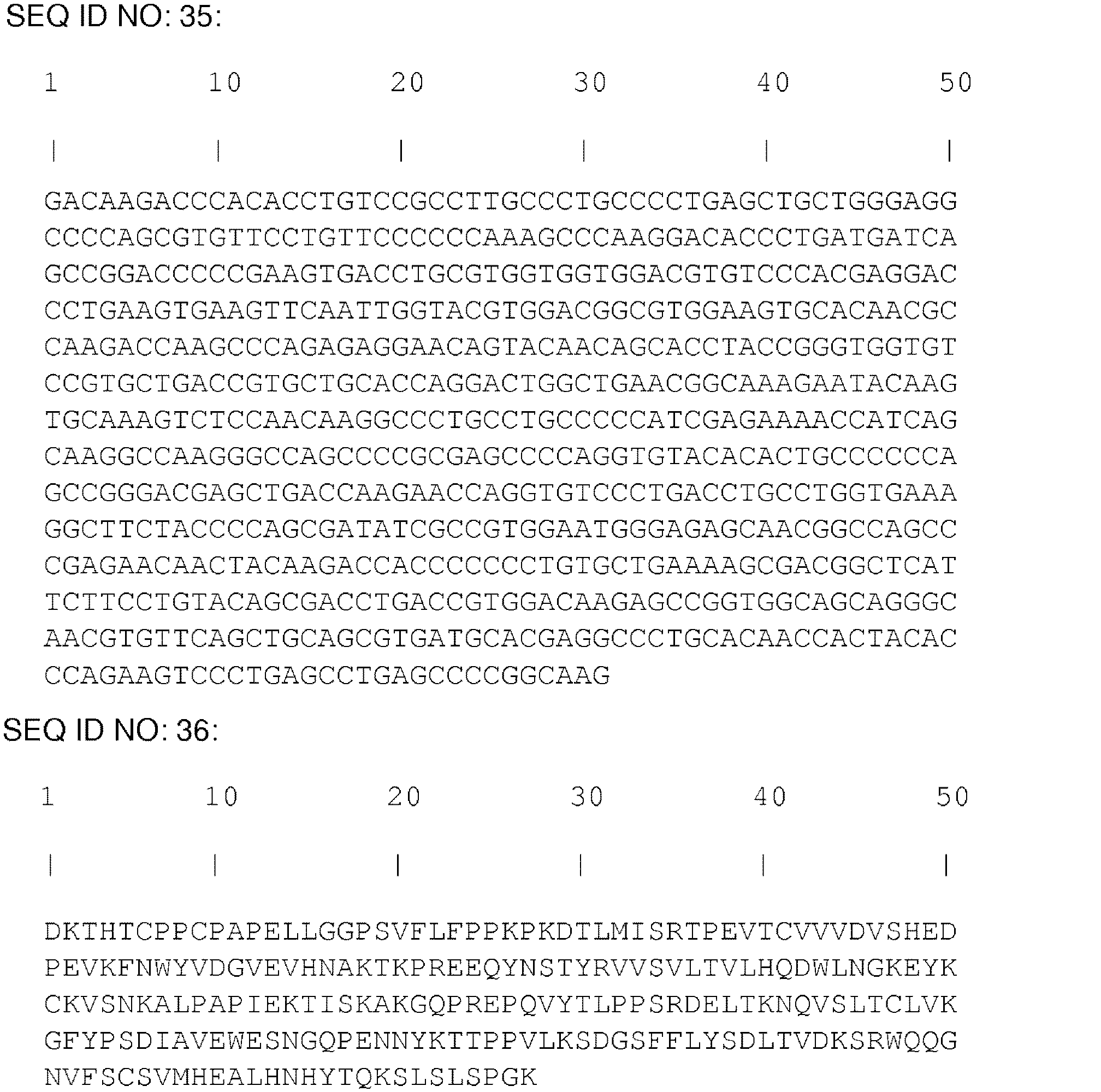
CH3抗体定常ドメインにおける元のアミノ残基の異なるアミノ酸残基での置換は、元のアミノ酸残基をコードする核酸を変更することによって達成することができる。置換され得る元のアミノ酸残基の数の上限は、CH3抗体定常ドメインの界面での十分な相互作用がなお維持されているとすると、この界面にある残基の総数である。 Replacement of the original amino acid residue in the C H 3 antibody constant domain with a different amino acid residue can be accomplished by altering the nucleic acid encoding the original amino acid residue. The upper limit on the number of original amino acid residues that can be substituted is the total number of residues at this interface, provided that sufficient interaction at the interface of the C H 3 antibody constant domain is still maintained.
V. 静電誘導
静電誘導は、高次タンパク質分子の形成を制御するための、ペプチド、タンパク質ドメイン、およびタンパク質における反対に荷電したアミノ酸間の有利な静電相互作用の利用である。静電誘導効果を使用して抗体ドメインの相互作用を変更し、これにより二重特異性抗体の作製においてヘテロ二量体の形成を助長してホモ二量体の形成を低減する方法が、米国特許出願公開第2014/0024111号明細書に開示されている。
V. Electrostatic induction Electrostatic induction is the use of advantageous electrostatic interactions between oppositely charged amino acids in peptides, protein domains, and proteins to control the formation of higher order protein molecules. A method of using electrostatic induction effects to alter antibody domain interactions, thereby facilitating heterodimer formation and reducing homodimer formation in the production of bispecific antibodies, This is disclosed in Japanese Patent Application Publication No. 2014/0024111.
本発明では、静電誘導は、Fcドメイン単量体の二量体化およびFc構築物の形成を制御するために使用される。特に、静電誘導を用いてFcドメイン単量体の二量体化を制御するために、CH3−CH3界面を構成する1つまたは複数のアミノ酸残基が、正または負に荷電したアミノ酸残基で置換され、これにより相互作用が、導入される特定の荷電アミノ酸次第で、静電気的に有利または不利になる。一部の態様では、界面にある正に荷電したアミノ酸、例えば、リジン、アルギニン、またはヒスチジンが、負に荷電したアミノ酸、例えば、アスパラギン酸またはグルタミン酸で置換される。他の態様では、界面にある負に荷電したアミノ酸は、正に荷電したアミノ酸で置換される。荷電アミノ酸は、相互作用するCH3抗体定常ドメインの一方または両方に導入され得る。荷電アミノ酸を、相互作用するCH3抗体定常ドメインに導入することにより、荷電アミノ酸間の相互作用から生じる静電誘導効果によって制御されるFcドメイン単量体の二量体を選択的に形成することができる二量体化選択性モジュール(上に詳細に記載)が形成される。 In the present invention, electrostatic induction is used to control the dimerization of Fc domain monomers and the formation of Fc constructs. In particular, in order to control the dimerization of Fc domain monomers using electrostatic induction, one or more amino acid residues constituting the C H 3-C H 3 interface is positively or negatively charged Depending on the specific charged amino acid introduced, the interaction may be electrostatically favorable or disadvantageous. In some embodiments, positively charged amino acids at the interface, such as lysine, arginine, or histidine, are replaced with negatively charged amino acids, such as aspartic acid or glutamic acid. In other embodiments, negatively charged amino acids at the interface are replaced with positively charged amino acids. Charged amino acids can be introduced into one or both of the interacting C H 3 antibody constant domains. Introduction of charged amino acids into interacting C H 3 antibody constant domains selectively forms dimers of Fc domain monomers controlled by electrostatic induction effects resulting from interactions between charged amino acids A dimerization selectivity module (described in detail above) is formed.
特定の一例では、逆の電荷を含む二量体化選択性モジュールを形成するために、CH3抗体定常ドメインのアミノ酸Asp399がLysで置換され、かつアミノ酸Lys409がAspで置換される。Fcドメイン単量体のヘテロ二量体化は、2つのFcドメイン単量体における異なるが適合性の変異、例えば、限定されることなく表2に示される荷電残基対を導入することによって促進することができる。Fcドメイン単量体のホモ二量体化は、両方のFcドメイン単量体に同じ変異、例えば、二重変異体K409D/D339KまたはK392D/D399Kを対称に導入することによって促進することができる。 In one particular example, the amino acid Asp399 of the C H 3 antibody constant domain is replaced with Lys and the amino acid Lys409 is replaced with Asp to form a dimerization selectivity module containing a reverse charge. Heterodimerization of Fc domain monomers is facilitated by introducing different but compatible mutations in the two Fc domain monomers, such as, but not limited to, the charged residue pairs shown in Table 2. can do. Homodimerization of Fc domain monomers can be facilitated by symmetrically introducing the same mutation, eg double mutant K409D / D339K or K392D / D399K, in both Fc domain monomers.
VI. リンカー
本発明では、リンカーを使用して、ポリペプチドまたはタンパク質ドメイン間および/または会合した非タンパク質部分間の連結または接続を説明する。一部の態様では、リンカーは、少なくとも2つのFcドメイン単量体間の連結または接続であり、このリンカーは、2つのFcドメイン単量体が互いに直列に接合されるように、第1のFcドメイン単量体のCH3抗体定常ドメインのC末端を第2のFcドメイン単量体のヒンジドメインのN末端に接続する。他の態様では、リンカーは、Fcドメイン単量体とこのFcドメイン単量体に付着されるその他のタンパク質ドメインとの間の連結である。例えば、リンカーは、Fcドメイン単量体のCH3抗体定常ドメインのC末端をアルブミン結合ペプチドのN末端に付着させることができる。別の例では、リンカーは、CH1抗体定常ドメインのC末端をFcドメイン単量体のヒンジドメインのN末端に接続することができる。さらに他の態様では、リンカーは、2つの個々のタンパク質ドメイン(Fcドメインを含まない)を接続することができ、例えば、CL抗体定常ドメインのC末端を、リンカーによってCH1抗体定常ドメインのN末端に付着させることができる。
VI. Linkers In the present invention, linkers are used to describe linkages or connections between polypeptide or protein domains and / or between associated non-protein moieties. In some embodiments, the linker is a link or connection between at least two Fc domain monomers, and the linker includes a first Fc domain monomer such that the two Fc domain monomers are joined in series with each other. The C-terminus of the domain monomer C H 3 antibody constant domain is connected to the N-terminus of the hinge domain of the second Fc domain monomer. In other embodiments, the linker is a link between the Fc domain monomer and other protein domains attached to the Fc domain monomer. For example, the linker can attach the C-terminus of the Fc domain monomer C H 3 antibody constant domain to the N-terminus of the albumin binding peptide. In another example, the linker, the C-terminus of
リンカーは、単純な共有結合、例えば、ペプチド結合、合成ポリマー、例えば、ポリエチレングリコール(PEG)ポリマー、または化学反応、例えば、化学的コンジュゲーションによって形成されるあらゆる種類の結合であり得る。リンカーがペプチド結合である場合、1つのタンパク質ドメインのC末端のカルボン酸基が、縮合反応で別のタンパク質ドメインのN末端のアミノ基と反応してペプチド結合を形成することができる。具体的には、ペプチド結合は、当分野で周知の従来の有機化学反応による合成手段から、または宿主細胞からの自然産生によって形成することができ、この自然産生では、直列の両方のタンパク質、例えば、2つのFcドメイン単量体のDNA配列をコードするポリヌクレオチド配列を、宿主細胞の必要な分子装置、例えば、DNAポリメラーゼおよびリボソームによって、直接転写して両方のタンパク質をコードする連続したポリペプチドに翻訳することができる。 The linker can be a simple covalent bond, such as a peptide bond, a synthetic polymer, such as a polyethylene glycol (PEG) polymer, or any kind of bond formed by a chemical reaction, such as chemical conjugation. When the linker is a peptide bond, the C-terminal carboxylic acid group of one protein domain can react with the N-terminal amino group of another protein domain to form a peptide bond in a condensation reaction. Specifically, peptide bonds can be formed from synthetic means by conventional organic chemical reactions well known in the art, or by natural production from a host cell, in which both proteins in series, eg, The polynucleotide sequence encoding the DNA sequences of the two Fc domain monomers can be directly transcribed by the host cell's required molecular equipment, such as DNA polymerase and ribosome, into a continuous polypeptide encoding both proteins. Can be translated.
リンカーが合成ポリマー、例えば、PEGポリマーである場合、このポリマーは、2つのタンパク質の接続端部で末端アミノ酸と反応するようい各末端の反応性化学官能基で官能化することができる。 When the linker is a synthetic polymer, such as a PEG polymer, the polymer can be functionalized with a reactive chemical functional group at each end that reacts with a terminal amino acid at the connecting end of the two proteins.
(上述のペプチド結合を除く)リンカーが化学反応から形成される場合は、化学官能基、例えば、アミン、カルボン酸、エステル、アジド、または当分野で一般に使用される他の官能基を、1つのタンパク質のC末端および別のタンパク質のN末端のそれぞれに合成的に付着させることができる。その結果、2つの官能基が、合成化学的手段によって反応して化学結合を形成することができ、これにより2つのタンパク質が互いに接続される。このような化学的コンジュゲーション処置は、当業者にとってルーチンである。 When the linker (excluding the peptide bonds described above) is formed from a chemical reaction, a chemical functional group, such as an amine, carboxylic acid, ester, azide, or other functional group commonly used in the art, It can be synthetically attached to each of the C-terminus of a protein and the N-terminus of another protein. As a result, the two functional groups can react by synthetic chemical means to form a chemical bond, thereby connecting the two proteins to each other. Such chemical conjugation procedures are routine for those skilled in the art.
スペーサー
本発明では、2つのFcドメイン単量体間のリンカーは、3〜200のアミノ酸を含むアミノ酸スペーサーであり得る。適切なペプチドスペーサーは、当分野で公知であり、例えば、可撓性アミノ酸残基、例えば、グリシンおよびセリンを含むペプチドリンカーを含む。特定の態様では、スペーサーは、モチーフ、例えば、GS、GGS、GGGGS(SEQ ID NO: 1)、GGSG(SEQ ID NO: 2)、またはSGGG(SEQ ID NO: 3)の複数のモチーフまたは反復モチーフを含み得る。特定の態様では、スペーサーは、GSのモチーフを含む2〜12のアミノ酸、例えば、GS、GSGS(SEQ ID NO: 4)、GSGSGS(SEQ ID NO: 5)、GSGSGSGS(SEQ ID NO: 6)、GSGSGSGSGS(SEQ ID NO: 7)、またはGSGSGSGSGSGS(SEQ ID NO: 8)を含み得る。特定の他の態様では、スペーサーは、GGSのモチーフを含む3〜12のアミノ酸、例えば、GGS、GGSGGS(SEQ ID NO: 9)、GGSGGSGGS(SEQ ID NO: 10)、およびGGSGGSGGSGGS(SEQ ID NO: 11)を含み得る。さらに他の態様では、スペーサーは、GGSG(SEQ ID NO: 12)のモチーフを含む4〜12のアミノ酸、例えば、GGSG(SEQ ID NO: 13)、GGSGGGSG(SEQ ID NO: 14)、またはGGSGGGSGGGSG(SEQ ID NO: 15)を含み得る。別の態様では、スペーサーは、GGGGS(SEQ ID NO: 16)のモチーフ、例えば、GGGGSGGGGSGGGGS(SEQ ID NO: 17)を含み得る。他の態様では、スペーサーは、グリシンおよびセリン以外のアミノ酸、例えば、GENLYFQSGG(SEQ ID NO: 18)、SACYCELS(SEQ ID NO: 19)、RSIAT(SEQ ID NO: 20)、RPACKIPNDLKQKVMNH(SEQ ID NO: 21)、GGSAGGSGSGSSGGSSGASGTGTAGGTGSGSGTGSG(SEQ ID NO: 22)、AAANSSIDLISVPVDSR(SEQ ID NO: 23)、またはGGSGGGSEGGGSEGGGSEGGGSEGGGSEGGGSGGGS(SEQ ID NO: 24)も含み得る。本発明の特定の態様では、12または20のアミノ酸ペプチドスペーサーを使用して、直列の2つのFcドメイン単量体(図4〜図6)を接続し、この12または20のアミノ酸ペプチドスペーサーはそれぞれ、配列GGGSGGGSGGGS(SEQ ID NO: 25)およびSGGGSGGGSGGGSGGGSGGG(SEQ ID NO: 26)からなる。他の態様では、配列GGSGGGSGGGSGGGSGGS(SEQ ID NO: 27)からなる18のアミノ酸ペプチドスペーサーを使用して、CLおよびCH1抗体定常ドメインを接続する(図7A〜図7B)。
Spacer In the present invention, the linker between two Fc domain monomers can be an amino acid spacer comprising 3 to 200 amino acids. Suitable peptide spacers are known in the art and include, for example, peptide linkers containing flexible amino acid residues such as glycine and serine. In certain embodiments, the spacer is a motif, eg, multiple motifs or repeat motifs of GS, GGS, GGGGS (SEQ ID NO: 1), GGSG (SEQ ID NO: 2), or SGGG (SEQ ID NO: 3) Can be included. In certain embodiments, the spacer is 2-12 amino acids comprising a GS motif, eg, GS, GSGS (SEQ ID NO: 4), GSGSGS (SEQ ID NO: 5), GSGSGSGS (SEQ ID NO: 6), GSGSGSGSGS (SEQ ID NO: 7), or GSGSGSGSGSGS (SEQ ID NO: 8). In certain other embodiments, the spacer is 3-12 amino acids comprising a GGS motif, eg, GGS, GGSGGS (SEQ ID NO: 9), GGSGGSGGS (SEQ ID NO: 10), and GGSGGSGGSGGS (SEQ ID NO: 11) may be included. In yet other embodiments, the spacer is 4-12 amino acids comprising a motif of GGSG (SEQ ID NO: 12), such as GGSG (SEQ ID NO: 13), GGSGGGSG (SEQ ID NO: 14), or GGSGGGSGGGSG ( SEQ ID NO: 15). In another embodiment, the spacer may comprise a motif of GGGGS (SEQ ID NO: 16), eg, GGGGSGGGGSGGGGS (SEQ ID NO: 17). In other embodiments, the spacer is an amino acid other than glycine and serine, such as GENLYFQSGG (SEQ ID NO: 18), SACYCELS (SEQ ID NO: 19), RSIAT (SEQ ID NO: 20), RPACKIPNDLKQKVMNH (SEQ ID NO: 21), GGSAGGSGSGSSGGSSGASGTGTAGGTGSGSGTGSG (SEQ ID NO: 22), AAANSSIDLISVPVDSR (SEQ ID NO: 23), or GGSGGGSEGGGSEGGGSEGGGSEGGGSEGGGSGGGS (SEQ ID NO: 24) may also be included. In certain embodiments of the invention, 12 or 20 amino acid peptide spacers are used to connect two Fc domain monomers in series (FIGS. 4-6), each 12 or 20 amino acid peptide spacer being The sequences GGGSGGGSGGGS (SEQ ID NO: 25) and SGGGSGGGSGGGSGGGSGGG (SEQ ID NO: 26). In another embodiment, an 18 amino acid peptide spacer consisting of the sequence GGSGGGSGGGSGGGSGGS (SEQ ID NO: 27) is used to connect the C L and
VII. 血清タンパク質結合ペプチド
血清タンパク質ペプチドへの結合は、タンパク質製剤の薬物動態を改善することができ、特に、本明細書に記載のFc構築物を、血清タンパク質結合ペプチドに融合させることができる。
VII. Serum Protein Binding Peptides Binding to serum protein peptides can improve the pharmacokinetics of protein formulations, and in particular, the Fc constructs described herein can be fused to serum protein binding peptides.
一例として、本明細書に記載の方法および組成物に使用することができるアルブミン結合ペプチドは、当分野で一般に知られている。一態様では、アルブミン結合ペプチドは、配列DICLPRWGCLW(SEQ ID NO: 28)を含む。 By way of example, albumin binding peptides that can be used in the methods and compositions described herein are generally known in the art. In one aspect, the albumin binding peptide comprises the sequence DICLPRWGCLW (SEQ ID NO: 28).
本発明では、アルブミン結合ペプチドは、Fc構築物の特定のポリペプチドのN末端またはC末端に付着させることができる。一態様では、アルブミン結合ペプチドは、構築物1、2、3、または7A(それぞれ図1、図2、図3、または図7A)の1つまたは複数のポリペプチドのC末端に付着させることができる。別の態様では、アルブミン結合ペプチドは、構築物4、5、および6(それぞれ図4、図5、および図6)における一列に連結された2つのFcドメイン単量体をコードするポリペプチドのC末端に融合させることができる。さらに別の態様では、アルブミン結合ペプチドは、構築物4および6(それぞれ図4および図6)に示されているように、直列に連結された2つのFcドメイン単量体をコードするポリペプチドの第2のFcドメイン単量体に接合されたFcドメイン単量体のC末端に付着させることができる。アルブミン結合ペプチドは、Fc構築物に遺伝子的に融合させる、または化学的手段、例えば、化学的コンジュゲーションによってFc構築物に付着させることができる。所望に応じて、スペーサーは、Fc構築物とアルブミン結合ペプチドとの間に挿入することができる。理論に拘束されるものではなく、アルブミン結合ペプチドを本発明のFc構築物に含めることにより、治療用タンパク質の血清アルブミンへの結合によってこの治療用タンパク質の持続的な保持がもたらされ得ることが予想される。
In the present invention, the albumin binding peptide can be attached to the N-terminus or C-terminus of a particular polypeptide of the Fc construct. In one aspect, the albumin binding peptide can be attached to the C-terminus of one or more polypeptides of
VIII. Fc構築物
一般に、本発明は、2〜10のFcドメインを有するFc構築物を特徴とする。これらは、Fc受容体、例えば、FcγRIIIaに対して、単一野生型Fcドメインよりも高い結合親和性および/または結合活性を有し得る。本発明は、Fcドメインの2つのFcドメイン単量体が互いに二量体を選択的に形成し、これにより不所望の多量体または凝集体の形成を防止するように、2つの相互作用するCH3抗体定常ドメインの界面のアミノ酸をエンジニアリングする方法を開示する。Fc構築物は、偶数個のFcドメイン単量体を含み、Fcドメイン単量体の各対がFcドメインを形成する。Fc構築物は、最小でも、2つのFcドメイン単量体の二量体から形成された1つの機能Fcドメインを含む。
VIII. Fc constructs In general, the invention features Fc constructs having 2 to 10 Fc domains. They may have a higher binding affinity and / or binding activity for Fc receptors, eg FcγRIIIa, than a single wild type Fc domain. The present invention provides for two interacting Cs so that the two Fc domain monomers of the Fc domain selectively form dimers with each other, thereby preventing the formation of unwanted multimers or aggregates. Disclosed are methods for engineering amino acids at the interface of H3 antibody constant domains. The Fc construct contains an even number of Fc domain monomers, each pair of Fc domain monomers forming an Fc domain. The Fc construct contains at least one functional Fc domain formed from a dimer of two Fc domain monomers.
一部の態様では、Fc構築物は、2つのFcドメイン単量体の二量体を含む1つのFcドメインを含む(図1〜図3および図7A)。相互作用するCH3抗体定常ドメインは、修飾しなくても良いし(図1)、またはその界面にアミノ酸置換を含んでも良い。具体的には、アミノ酸置換は、エンジニアリングされた凹部(図2)、エンジニアリングされた突出部(図2)、または荷電アミノ酸(図3)であり得る。 In some embodiments, the Fc construct comprises one Fc domain comprising a dimer of two Fc domain monomers (FIGS. 1-3 and 7A). The interacting C H 3 antibody constant domain may not be modified (FIG. 1) or may contain amino acid substitutions at its interface. Specifically, the amino acid substitution can be an engineered recess (FIG. 2), an engineered protrusion (FIG. 2), or a charged amino acid (FIG. 3).
他の態様では、Fc構築物は、3つのポリペプチドから形成された2つのFcドメイン(図4および図6)を含む。第1のポリペプチドは、リンカーによって接合され、直列に接合された2つのFcドメイン単量体を含み、かつ第2および第3のポリペプチドは、1つのFcドメイン単量体を含む。第2および第3のポリペプチドは、同じポリペプチドであっても良いし、または異なるポリペプチドであっても良い。図4は、このようなFc構築物の例を示している。第1のポリペプチドは、リンカーによって直列に接合された2つの野生型Fcドメイン単量体を含み、かつ第2および第3のポリペプチドはそれぞれ、1つの野生型Fcドメイン単量体を含む。第1のポリペプチドの一方のFcドメイン単量体は、第2のポリペプチドと第1のFcドメインを形成し、第1のポリペプチドの他方のFcドメイン単量体は、第3のポリペプチドと第2のFcドメインを形成する。第2および第3のポリペプチドは、互いに付着または連結されない。図6は、図4のFc構築物に類似したFc構築物を示している。図6では、第1のポリペプチドのFcドメイン単量体の両方は、CH3抗体定常ドメインの中にエンジニアリングされた突出部を含む一方、第2および第3のポリペプチドは、CH3抗体定常ドメインの中にエンジニアリングされた凹部を含む。エンジニアリングされた突出部が凹部に入るCH3−CH3界面は、Fcドメイン単量体のヘテロ二量体の形成を助長し、かつ不所望の多量体の無制限の形成を防止する。本明細書にさらに記載されるように、実施例4では、エンジニアリングされたCH3抗体定常ドメインを含む二量体化選択性モジュールは、実施例3に見られる不所望の多量体の形成を防止し、実施例3は、二量体化選択性モジュールを有していないFcドメイン単量体からのFc構築物の形成を説明している。 In other embodiments, the Fc construct comprises two Fc domains (FIGS. 4 and 6) formed from three polypeptides. The first polypeptide is joined by a linker and includes two Fc domain monomers joined in series, and the second and third polypeptides contain one Fc domain monomer. The second and third polypeptides may be the same polypeptide or different polypeptides. FIG. 4 shows an example of such an Fc construct. The first polypeptide includes two wild type Fc domain monomers joined in series by a linker, and the second and third polypeptides each include one wild type Fc domain monomer. One Fc domain monomer of the first polypeptide forms a first Fc domain with the second polypeptide, and the other Fc domain monomer of the first polypeptide is the third polypeptide And forms a second Fc domain. The second and third polypeptides are not attached or linked to each other. FIG. 6 shows an Fc construct similar to the Fc construct of FIG. In FIG. 6, both Fc domain monomers of the first polypeptide contain an engineered overhang in the C H 3 antibody constant domain, while the second and third polypeptides are C H 3 Contains engineered recesses in antibody constant domains. The C H 3 -C H 3 interface where the engineered protrusion enters the recess promotes the formation of heterodimers of Fc domain monomers and prevents the unlimited formation of unwanted multimers. As described further herein, in Example 4, a dimerization selectivity module comprising an engineered C H 3 antibody constant domain prevents the formation of unwanted multimers found in Example 3. Example 3 describes the formation of Fc constructs from Fc domain monomers that do not have a dimerization selectivity module.
さらに、他の態様では、Fc構築物は、4つのポリペプチドから形成された3つのFcドメインを含み得る(図5)。第1および第2のポリペプチドは、第3および第4のポリペプチドのように、同じでも良いし、または異なっても良い。この例では、第1および第2のポリペプチドは共に、直列にリンカーによって接続された2つのFcドメイン単量体をコードし、一方のFcドメイン単量体は、CH3抗体定常ドメインに荷電アミノ酸置換を含む一方、他方のFcドメイン単量体は、CH3抗体定常ドメインに突出部を含む。第3および第4のポリペプチドは共に、凹部を有するFcドメイン単量体をコードする。第1および第2のポリペプチドは、それらのCH3抗体定常ドメインの逆の電荷の相互作用によって互いに第1のFcドメインを形成する。第2および第3のFcドメインは、第1および第2のポリペプチドの突出部と第3および第4のポリペプチドの凹部との間の、突出部が凹部の中に入る相互作用から形成される。このFc構築物の各Fcドメイン単量体は、特定のFcドメインの成形を促進する二量体化選択性モジュールを含む。 Furthermore, in other embodiments, the Fc construct may comprise three Fc domains formed from four polypeptides (FIG. 5). The first and second polypeptides may be the same or different, as the third and fourth polypeptides. In this example, both the first and second polypeptides encode two Fc domain monomers connected in series by a linker, with one Fc domain monomer charged to the C H 3 antibody constant domain. The other Fc domain monomer containing an amino acid substitution contains an overhang in the C H 3 antibody constant domain. Both the third and fourth polypeptides encode Fc domain monomers with a recess. The first and second polypeptides form a first Fc domain with each other by the opposite charge interaction of their C H 3 antibody constant domains. The second and third Fc domains are formed from the interaction between the protrusions of the first and second polypeptides and the recesses of the third and fourth polypeptides, with the protrusions entering the recesses. The Each Fc domain monomer of this Fc construct contains a dimerization selectivity module that facilitates the shaping of a particular Fc domain.
さらに他の態様では、単一ポリペプチドは、CH3抗体定常ドメイン間の相互作用によってではなく、CL定常ドメインとCH1定常ドメインとの間の相互作用によって二量体(例えば、構築物7A;図7A)または多量体(例えば、構築物7B;図7B)を形成することができる。図7Bは、1つのFcドメインのCLドメインが隣接するFcドメインのCH1ドメインと相互作用する複数のFcドメインを含むFc構築物を示している。
In yet other embodiments, a single polypeptide is a dimer (e.g., a construct) via an interaction between a C L constant domain and a
さらに他の態様では、Fc構築物は、6つのポリペプチドから形成された5つのFcドメインを含み得る。2つの例が、図8および図9に示されている。これらの示されているFc構築物は6つのポリペプチドから構成され、これらのポリペプチドのうちの4つを同じ核酸によってコードすることができ、かつ残りの2つのポリペプチドも、同じ核酸でコードすることができる。結果として、これらのFc構築物は、適切な宿主細胞での2つの核酸の発現によって作製することができる。 In yet other embodiments, the Fc construct may comprise 5 Fc domains formed from 6 polypeptides. Two examples are shown in FIGS. 8 and 9. These shown Fc constructs are composed of six polypeptides, four of which can be encoded by the same nucleic acid, and the remaining two polypeptides are also encoded by the same nucleic acid be able to. As a result, these Fc constructs can be made by expression of two nucleic acids in a suitable host cell.
別の態様では、2つ以上のFcドメインを含むFc構築物は、同じ一次配列を有する2つのポリペプチドから形成することができる。このような構築物は、宿主細胞での単一ポリペプチド配列の発現から形成することができる。一例が図10に示されている。この例では、3つのFcドメインを含むFc構築物をコードするには、1つの核酸で十分である。同じポリペプチドの一部である2つのFcドメイン単量体は、十分な長さおよび可撓性の可撓性リンカーを含めることによってFcドメインを形成することが可能となり;このリンカーは、切断可能なリンカーであり得る。この同じポリペプチドは、任意選択の可撓性リンカーによって接合された第3のFcドメイン単量体も含む。この第3のFcドメイン単量体は、別のFcドメイン単量体に接合して、図10に示されているY字形Fc構築物を形成することが可能である。Fcドメインの形成は、同様に図10に示されているように、二量体化選択性モジュールの使用によって制御することができる。 In another embodiment, an Fc construct comprising two or more Fc domains can be formed from two polypeptides having the same primary sequence. Such constructs can be formed from expression of a single polypeptide sequence in a host cell. An example is shown in FIG. In this example, one nucleic acid is sufficient to encode an Fc construct that contains three Fc domains. Two Fc domain monomers that are part of the same polypeptide can form an Fc domain by including a flexible linker of sufficient length and flexibility; this linker is cleavable Can be a simple linker. This same polypeptide also includes a third Fc domain monomer joined by an optional flexible linker. This third Fc domain monomer can be joined to another Fc domain monomer to form the Y-shaped Fc construct shown in FIG. Fc domain formation can also be controlled by the use of a dimerization selectivity module, as also shown in FIG.
IX. 宿主細胞およびタンパク質産生
本発明では、宿主細胞は、対応する核酸から本明細書に記載のポリペプチドおよび構築物を発現させるために必要である不可欠な細胞成分、例えば、細胞小器官を含むビヒクルを指す。核酸は、当分野で公知の従来技術(形質転換、トランスフェクション、エレクトロポレーション、リン酸カルシウム沈殿、直接微量注入など)によって宿主細胞に導入され得る核酸ベクターに含めることができる。宿主細胞は、哺乳動物起源または細菌起源であり得る。哺乳動物宿主細胞としては、限定されることなく、CHO(またはCHO由来細胞系、例えば、CHO−K1、CHO−DXB11、CHO−DG44)、マウス宿主細胞(例えば、NS0、Sp2/0)、VERY、HEK(例えば、HEK293)、BHK、HeLa、COS、MDCK、293、3T3、W138、BT483、Hs578T、HTB2、BT20およびT47D、CRL7O3O、およびHsS78Bst細胞が挙げられる。タンパク質構築物の発現を調節する、または望ましい特定の方式でタンパク質産物を修飾および処理する宿主細胞を選択することもできる。異なる宿主細胞は、タンパク質産物の翻訳後プロセシングおよび修飾のための特徴的な特定の機構を有する。適切な細胞株または宿主系は、発現されるタンパク質の正確な修飾およびプロセシングを確実するように選択することができる。
IX. Host Cell and Protein Production In the present invention, a host cell is a vehicle that contains essential cellular components, such as organelles, that are required to express the polypeptides and constructs described herein from the corresponding nucleic acid. Point to. The nucleic acid can be included in a nucleic acid vector that can be introduced into a host cell by conventional techniques known in the art (transformation, transfection, electroporation, calcium phosphate precipitation, direct microinjection, etc.). The host cell can be of mammalian or bacterial origin. Mammalian host cells include, but are not limited to, CHO (or CHO-derived cell lines such as CHO-K1, CHO-DXB11, CHO-DG44), mouse host cells (eg NS0, Sp2 / 0), VERY HEK (eg, HEK293), BHK, HeLa, COS, MDCK, 293, 3T3, W138, BT483, Hs578T, HTB2, BT20 and T47D, CRL7O3O, and HsS78Bst cells. A host cell can also be selected that modulates the expression of the protein construct or that modifies and processes the protein product in the specific fashion desired. Different host cells have characteristic specific mechanisms for the post-translational processing and modification of protein products. Appropriate cell lines or host systems can be chosen to ensure the correct modification and processing of the protein expressed.
タンパク質産物のそれらの対応するDNAプラスミド構築物からの発現および分泌のために、宿主細胞は、プロモーター、エンハンサー、配列、転写ターミネーター、ポリアデニル化部位、および選択マーカーを含む当分野で公知の適切な発現制御要素によって制御されるDNAでトランスフェクトまたは形質転換することができる。治療用タンパク質の発現の方法は、当分野で公知である。例えば、Paulina Balbas, Argelia Lorence (eds.) Recombinant Gene Expression: Reviews and Protocols (Methods in Molecular Biology), Humana Press; 2nd ed. 2004 edition (July 20, 2004); Vladimir Voynov and Justin A. Caravella (eds.) Therapeutic Proteins: Methods and Protocols (Methods in Molecular Biology) Humana Press; 2nd ed. 2012 edition (June 28, 2012)を参照されたい。 For the expression and secretion of protein products from their corresponding DNA plasmid constructs, the host cell will contain appropriate expression controls known in the art, including promoters, enhancers, sequences, transcription terminators, polyadenylation sites, and selectable markers. It can be transfected or transformed with DNA controlled by the element. Methods for expression of therapeutic proteins are known in the art. For example, Paulina Balbas, Argelia Lorence (eds.) Recombinant Gene Expression: Reviews and Protocols (Methods in Molecular Biology), Humana Press; 2nd ed. 2004 edition (July 20, 2004); Vladimir Voynov and Justin A. Caravella (eds. ) Therapeutic Proteins: Methods and Protocols (Methods in Molecular Biology) Humana Press; 2nd ed. 2012 edition (June 28, 2012).
X. 精製
Fc構築物は、当分野で公知のタンパク質精製の任意の方法によって、例えば、クロマトグラフィー(例えば、イオン交換、アフィニティー(例えば、プロテインAアフィニティー)、およびサイズ排除カラムクロマトグラフィー)、遠心分離、溶解度差、またはタンパク質の精製のためのその他の標準的な技術によって精製することができる。例えば、Fc構築物は、アフィニティーカラム、例えば、クロマトグラフィーカラムを用いるプロテインAカラム、濾過、限外濾過、塩析、および透析法を適切に選択して組み合わせることによって単離し、精製することができる(例えば、Process Scale Purification of Antibodies, Uwe Gottschalk (ed.) John Wiley & Sons, Inc., 2009; and Subramanian (ed.) Antibodies-Volume I-Production and Purification, Kluwer Academic/Plenum Publishers, New York (2004)を参照されたい)。場合によっては、Fc構築物は、マーカー配列、例えば、ペプチドにコンジュゲートさせて精製を容易にすることができる。マーカーアミノ酸配列の一例として、ヘキサ−ヒスチジンペプチドが挙げられ、このヘキサ−ヒスチジンペプチドは、マイクロモル親和性でニッケル官能化アガロースゲルアフィニティーカラムに結合する。精製に有用な他のペプチドタグとしては、限定されることなく、血球凝集素「HA」タグが挙げられ、このタグは、インフルエンザ血球凝集素タンパク質に由来するペプチドに対応する(Wilson et al., 1984, Cell 37:767)。
X. Purification
Fc constructs can be obtained by any method of protein purification known in the art, for example, chromatography (eg, ion exchange, affinity (eg, Protein A affinity), and size exclusion column chromatography), centrifugation, differential solubility, Alternatively, it can be purified by other standard techniques for protein purification. For example, Fc constructs can be isolated and purified by appropriately selecting and combining affinity columns, eg, Protein A columns using chromatography columns, filtration, ultrafiltration, salting out, and dialysis methods ( For example, Process Scale Purification of Antibodies, Uwe Gottschalk (ed.) John Wiley & Sons, Inc., 2009; and Subramanian (ed.) Antibodies-Volume I-Production and Purification, Kluwer Academic / Plenum Publishers, New York (2004) See). In some cases, the Fc construct can be conjugated to a marker sequence, eg, a peptide, to facilitate purification. An example of a marker amino acid sequence is a hexa-histidine peptide, which binds to a nickel functionalized agarose gel affinity column with micromolar affinity. Other peptide tags useful for purification include, but are not limited to, the hemagglutinin “HA” tag, which corresponds to a peptide derived from influenza hemagglutinin protein (Wilson et al., 1984, Cell 37: 767).
Fc構築物では、プロテインAカラムクロマトグラフィーを、精製プロセスとして利用することができる。プロテインAリガンドは、Fc領域を介してFc構築物と相互作用し、プロテインAクロマトグラフィーが、宿主細胞のタンパク質の殆どを除去することができる高選択性捕捉プロセスとなる。本発明では、Fc構築物は、実施例2に記載されるプロテインAカラムクロマトグラフィーを用いて精製することができる。 For Fc constructs, protein A column chromatography can be utilized as a purification process. Protein A ligand interacts with the Fc construct via the Fc region, making protein A chromatography a highly selective capture process that can remove most of the host cell's protein. In the present invention, the Fc construct can be purified using protein A column chromatography as described in Example 2.
XI. 薬学的組成物/製剤
本発明は、本明細書に記載の1つまたは複数のFc構築物を含む薬学的組成物を特徴とする。一態様では、薬学的組成物は、構造が同一または実質的に同一であるFc構築物の実質的に均質な集団を含む。様々な例では、薬学的組成物は、構築物1〜10および5*のいずれか1つの実質的に均質な集団を含む。
XI. Pharmaceutical Compositions / Formulations The invention features a pharmaceutical composition comprising one or more Fc constructs as described herein. In one aspect, the pharmaceutical composition comprises a substantially homogeneous population of Fc constructs that are identical or substantially identical in structure. In various examples, the pharmaceutical composition comprises a substantially homogeneous population of any one of constructs 1-10 and 5 * .
本発明の治療タンパク質構築物、例えば、Fc構築物は、薬学的組成物に含めることができる。治療用タンパク質を含む薬学的組成物は、当業者に公知の方法によって製剤することができる。薬学的組成物は、滅菌溶液、または懸濁水もしくは別の薬学的に許容される懸濁液を含む注射製剤の形態で非経口的に投与することができる。例えば、薬学的組成物は、薬学的に許容されるビヒクルまたは媒体、例えば、注射用の滅菌水(WFI)、生理食塩水、乳化剤、懸濁剤、界面活性剤、安定剤、希釈剤、結合剤、添加剤とFc構築物を適切に組み合わせ、続いて一般に許容される薬務に必要な単位剤形に混ぜることによって製剤することができる。薬学的製剤に含められる活性成分の量は、指定の範囲内の適切な用量が提供されるような量である。 The therapeutic protein constructs of the present invention, eg, Fc constructs, can be included in a pharmaceutical composition. Pharmaceutical compositions containing therapeutic proteins can be formulated by methods known to those skilled in the art. The pharmaceutical composition can be administered parenterally in the form of a sterile solution or an injectable preparation comprising suspended water or another pharmaceutically acceptable suspension. For example, the pharmaceutical composition may be a pharmaceutically acceptable vehicle or vehicle, such as sterile water for injection (WFI), saline, emulsifier, suspension, surfactant, stabilizer, diluent, binding Agents, additives and Fc constructs can be formulated in appropriate combinations followed by mixing into unit dosage forms generally required for acceptable pharmaceutical practice. The amount of active ingredient included in the pharmaceutical formulation is such that an appropriate dosage within the specified range is provided.
注射用の滅菌組成物は、ビヒクルとして注射用の蒸留水を用いる従来の薬務に従って製剤することができる。例えば、生理食塩水、またはグルコースおよび他の補助剤、例えば、D−ソルビトール、D−マンノース、D−マンニトール、および塩化ナトリウムを含む等張液は、任意で、適切な可溶化剤、例えば、アルコール、例えば、エタノールおよびポリアルコール、例えば、プロピレングリコールまたはポリエチレングリコール、および非イオン性界面活性剤、例えば、polysorbate 80(商標)、HCO−50、および当分野で一般的に知られるものなどと組み合わせて、注射用の水溶液として使用することができる。治療用タンパク質産物の製剤方法は当分野で公知である。例えば、Banga (ed.) Therapeutic Peptides and Proteins: Formulation, Processing and Delivery Systems (2d ed.) Taylor & Francis Group, CRC Press (2006)を参照されたい。
Sterile compositions for injection can be formulated according to conventional pharmaceutical practice using distilled water for injection as the vehicle. For example, isotonic solutions containing saline or glucose and other adjuvants such as D-sorbitol, D-mannose, D-mannitol, and sodium chloride are optionally combined with a suitable solubilizer such as alcohol In combination with, for example, ethanol and polyalcohols such as propylene glycol or polyethylene glycol, and nonionic surfactants such as
XII. 投与法
薬学的組成物は、投与製剤に適合する方式で、症状の改善または治療をもたらす治療効果のある量で投与される。薬学的組成物は、様々な剤形、例えば、静脈投与剤形、皮下投与剤形、経口投与剤形、例えば、摂取可能な溶液、および薬物放出カプセルなどで投与される。個々の対象に適切な用量は、治療目的、投与経路、および患者の状態によって決まる。一般に、組換えタンパク質は、1〜200 mg/kg、例えば1〜100 mg/kg、例えば、20〜100 mg/kgで投薬される。従って、医療提供者は、用量を調整して指定の濃度にする必要があり、最大の治療効果を得るために必要に応じて投与経路を変更する。
XII. Method of Administration The pharmaceutical composition is administered in a therapeutically effective amount that provides amelioration or treatment of symptoms in a manner compatible with the dosage formulation. The pharmaceutical compositions are administered in a variety of dosage forms such as intravenous dosage forms, subcutaneous dosage forms, oral dosage forms such as ingestible solutions and drug release capsules. The appropriate dosage for an individual subject depends on the purpose of the treatment, the route of administration and the condition of the patient. Generally, the recombinant protein is dosed at 1-200 mg / kg, such as 1-100 mg / kg, such as 20-100 mg / kg. Therefore, the health care provider needs to adjust the dose to a specified concentration, and change the administration route as necessary to obtain the maximum therapeutic effect.
XIII. 適応症
本発明の薬学的組成物および方法は、対象の炎症の低減、対象の自己抗体のクリアランスの促進、対象の抗原提示の抑制、免疫応答の低減、例えば、対象の免疫応答の免疫複合体による活性化の阻害、および対象の免疫および炎症の状態または疾患の処置に有用である。例示的な状態および疾患の例としては、関節リウマチ(RA);全身性エリテマトーデス(SLE);ANCA関連血管炎;抗リン脂質抗体症候群;自己免疫性溶血性貧血;慢性炎症性脱髄性神経障害;移植における抗アロ、GVHDにおける抗自己、抗置換、IgG治療薬、IgGのパラプロテインのクリアランス;皮膚筋炎;グッドパスチャー症候群;抗体依存性細胞媒介性細胞傷害によって媒介される器官系標的II型過敏症症候群、例えば、ギランバレー症候群、CIDP、皮膚筋炎、フェルティ症候群、抗体媒介性拒絶反応、自己免疫性甲状腺疾患、潰瘍性大腸炎、自己免疫性肝疾患;特発性血小板減少性紫斑病;重症筋無力症、視神経脊髄炎;天疱瘡および他の自己免疫水疱性疾患;シェーグレン症候群;抗体依存性食作用によって媒介される自己免疫性血球減少症および他の障害;他のFcR依存性炎症性症候群、例えば、滑膜炎、皮膚筋炎、全身性血管炎、糸球体炎、および血管炎が挙げられる。
XIII. Indications The pharmaceutical compositions and methods of the present invention can reduce a subject's inflammation, promote clearance of a subject's autoantibodies, suppress a subject's antigen presentation, reduce an immune response, eg, immunize a subject's immune response. Inhibition of activation by the complex and treatment of the subject's immune and inflammatory conditions or diseases are useful. Examples of exemplary conditions and diseases include rheumatoid arthritis (RA); systemic lupus erythematosus (SLE); ANCA-related vasculitis; antiphospholipid antibody syndrome; autoimmune hemolytic anemia; chronic inflammatory demyelinating neuropathy Anti-allo in transplant, anti-self in GVHD, anti-substitution, IgG therapeutics, IgG paraprotein clearance; dermatomyositis; Goodpasture syndrome; organ system target type II hypersensitivity mediated by antibody-dependent cell-mediated cytotoxicity Syndrome, such as Guillain-Barre syndrome, CIDP, dermatomyositis, Ferti syndrome, antibody-mediated rejection, autoimmune thyroid disease, ulcerative colitis, autoimmune liver disease; idiopathic thrombocytopenic purpura; Asthenia, optic neuromyelitis; pemphigus and other autoimmune bullous diseases; Sjogren's syndrome; autoimmune cytopenias mediated by antibody-dependent phagocytosis And other disorders; other FcR-dependent inflammatory syndromes such as synovitis, dermatomyositis, systemic vasculitis, glomerulitis, and vasculitis.
実施例1−DNAプラスミド構築物の設計およびクローニング
合計8つのDNAプラスミド構築物を使用して8つのFc構築物を構築した(図1〜図7B)。DNAプラスミド構築物を、タンパク質産生のためにヒト胎児腎(HEK)293細胞にトランスフェクトした。8つのコードされた分泌ポリペプチドは、以下に記載の一般構造を有していた:
A. wt Fc:野生型Fcドメイン単量体(図1:102および104;図4:408および410)。
B. 突出部Fc:CH3抗体定常ドメインの中にエンジニアリングされた突出部を有するFcドメイン単量体(図2:202)。
C. 凹部Fc:CH3抗体定常ドメインの中にエンジニアリングされた突出部を有するFcドメイン単量体(図2:204、図5:514および516)。
C*. 凹部Fc*:CH3抗体定常ドメインの中にエンジニアリングされた凹部を有するFcドメイン単量体 (図2:204;図5:514および516)。凹部Fc*は、凹部Fcに対する追加のアミノ酸置換も含む。
D. 電荷Fc:CH3抗体定常ドメインに逆の電荷を有するFcドメイン単量体(図3:302および304)。
E. wt−12−wt Fc2:12のアミノ酸GGGSペプチドリンカーによって直列に接合された2つのFcドメイン単量体(図4:402)。
F. 突出部−20−電荷Fc2:20のアミノ酸SGGGペプチドリンカーによって直列に接合された、CH3抗体定常ドメインに逆の電荷を有するFcドメイン単量体およびCH3抗体定常ドメインの中にエンジニアリングされた突出部を有するFcドメイン単量体(図5:502および508)。
F*. 突出部−20−電荷Fc2*:20のアミノ酸SGGGペプチドリンカーによって直列に接合された、CH3抗体定常ドメインに逆の電荷を有するFcドメイン単量体およびCH3抗体定常ドメインの中にエンジニアリングされた突出部を有するFcドメイン単量体(図5:502および508)。突出部−20−電荷Fc2*は、突出部Fcに対する追加のアミノ酸置換も含む。
G. 突出部−20−突出部Fc2:20のアミノ酸GGGSペプチドリンカーによって直列に接合された、CH3抗体定常ドメインの中にエンジニアリングされた突出部をそれぞれ有する2つのFcドメイン単量体(図6:602)。
H. CHCL Fc+:ヒンジドメインに付着したCH1およびCL定常ドメインを有するFcドメイン単量体(図7A:702および704;図7B:706、708、710、712、714、および716)。CL定常ドメインは、18のアミノ酸GGGSペプチドリンカーによってCH1定常ドメインに付着されている。
Example 1-Design and Cloning of DNA Plasmid Constructs Eight Fc constructs were constructed using a total of eight DNA plasmid constructs (Figures 1-7B). DNA plasmid constructs were transfected into human fetal kidney (HEK) 293 cells for protein production. The eight encoded secreted polypeptides had the general structure described below:
A. wt Fc: wild type Fc domain monomer (FIG. 1: 102 and 104; FIG. 4: 408 and 410).
B. Overhang Fc: Fc domain monomer with an overhang engineered in the C H 3 antibody constant domain (Figure 2: 202).
C. Recessed Fc: Fc domain monomer with overhangs engineered into the C H 3 antibody constant domain (Figure 2: 204, Figure 5: 514 and 516).
C * . Recess Fc * : Fc domain monomer with an engineered recess in the C H 3 antibody constant domain (Figure 2: 204; Figure 5: 514 and 516). The recess Fc * also includes an additional amino acid substitution for the recess Fc.
D. Charge Fc: Fc domain monomer with opposite charge to the C H 3 antibody constant domain (Figure 3: 302 and 304).
E. wt-12-wt Fc2: Two Fc domain monomers joined in series by a 12 amino acid GGGS peptide linker (Figure 4: 402).
F. protrusion -20- charge Fc2: by 20 amino acids SGGG peptide linker joined in series, in the Fc domain monomers and C H 3 antibody constant domains of opposite charge to the C H 3 antibody constant domains Fc domain monomers with engineered overhangs (Figure 5: 502 and 508).
F * . Overhang −20-charge Fc2 * : of Fc domain monomer and C H 3 antibody constant domain with a reverse charge to the C H 3 antibody constant domain joined in series by a 20 amino acid SGGG peptide linker Fc domain monomers with overhangs engineered in (Figure 5: 502 and 508). The overhang-20-charge Fc2 * also includes an additional amino acid substitution for the overhang Fc.
G. protrusion -20- protrusion Fc2: by 20 amino acids GGGS peptide linker joined in series, C H 3 2 two Fc domain monomers each having engineered projecting portion in the antibody constant domains (Fig. 6: 602).
H. C H C L Fc +: Fc domain monomers with
Fc DNA配列は、ヒトIgG1 Fcに由来していた。突出部、凹部、および電荷の変異は、親Fc配列で置換された。ヒト免疫グロブリンκ軽鎖に由来するリーダーペプチドをコードするDNAは、5'領域に付着されていた。1つを除く全てのポリペプチド(CHCL Fc+)は、構築および分泌のために小胞体の中へのタンパク質のトランスロケーションを誘導するためにアミノ末端にこのコードされたペプチドを含んでいた。様々なリーダーペプチドのいずれか1つを、本発明に関連して使用できることを理解されたい。リーダーペプチドは、通常は小胞体内腔で切断されている。5'末端EcoR1部位を含む11ヌクレオチドの配列を、ATG開始コドンの上流に付加した。3'末端Xho 1部位を含む30ヌクレオチドの配列を、3'末端TGA翻訳終止コドンの下流に付加した。DNA配列は、哺乳動物細胞での発現のために最適化し、pcDNA3.4哺乳動物発現ベクターにクローニングした。
The Fc DNA sequence was derived from human IgG1 Fc. Overhang, recess, and charge mutations were replaced with the parental Fc sequence. DNA encoding a leader peptide derived from human immunoglobulin kappa light chain was attached to the 5 ′ region. All but one polypeptide (C H C L Fc +) contained this encoded peptide at the amino terminus to induce translocation of the protein into the endoplasmic reticulum for assembly and secretion . It should be understood that any one of a variety of leader peptides can be used in connection with the present invention. The leader peptide is usually cleaved in the endoplasmic reticulum lumen. An 11 nucleotide sequence containing a 5 ′ terminal EcoR1 site was added upstream of the ATG start codon. A 30 nucleotide sequence containing the 3 ′
変異は、野生型アミノ酸残基によって示され、続いて変異の位置が、EU Kabat付番方式(Kabat et al., Sequences of Proteins of Immunological Interest, National Institutes of Health, Bethesda, Md., ed. 5, 1991)を用いて示され、そして置換残基は1文字コードで示される。上記の分泌ポリペプチドA〜Hのヌクレオチド配列およびアミノ酸配列が以下に示される(アミノ酸配列のみが示されている凹部Fc*および突出部−20−電荷Fc2*は除く)。 Mutations are indicated by wild-type amino acid residues, followed by the position of the mutation in the EU Kabat numbering system (Kabat et al., Sequences of Proteins of Immunological Interest, National Institutes of Health, Bethesda, Md., Ed. 5 , 1991), and substituted residues are indicated by a one letter code. The nucleotide sequence and amino acid sequence of the above-mentioned secreted polypeptides A to H are shown below (excluding the recessed portion Fc * and the protruding portion −20-charge Fc2 * in which only the amino acid sequence is shown).
wt Fc
実施例2−Fc構築物タンパク質の発現
Fc構築物のタンパク質の発現のために、実施例1に記載のA〜Hから選択されるDNAプラスミド構築物の2つを、EXPI293細胞(LifeTechnologies)にトランスフェクトした。リポソームトランスフェクションを使用して、プラスミドDNAをEXPI293細胞に導入した。トランスフェクトされるプラスミド構築物の総量は一定としたが、所望の構築物の収量を最大限にするために異なるプラスミド構築物の比率を様々にした(以下の表3を参照されたい)。各Fc構築物では、2つのトランスフェクトされるDNAプラスミド構築物の比率(質量)が表3に示されている。構築物の例示は、図1〜図7Bに示されている。
Example 2-Expression of Fc construct protein
For expression of the protein of the Fc construct, two of the DNA plasmid constructs selected from A to H described in Example 1 were transfected into EXPI293 cells (LifeTechnologies). Plasmid DNA was introduced into EXPI293 cells using liposome transfection. The total amount of plasmid constructs transfected was constant, but the ratio of different plasmid constructs was varied to maximize the yield of the desired construct (see Table 3 below). For each Fc construct, the ratio (mass) of the two transfected DNA plasmid constructs is shown in Table 3. Examples of constructs are shown in FIGS. 1-7B.
タンパク質の発現後、発現された構築物を、プロテインAを利用するアフィニティーカラムクロマトグラフィーによって細胞培養上清から精製した。培地上清を、AKTA Avant分取クロマトグラフィーシステム(GE Healthcare Life Sciences)を用いるPoros MabCapture A(LifeTechnologies)カラムにロードした。次いで、捕捉したFc構築物を、リン酸緩衝生理食塩水(low-salt wash)で洗浄し、続いて、500 mM NaClが添加されたリン酸緩衝生理食塩水(high-salt wash)で洗浄した。Fc構築物を、100 mM グリン、150 mM NaCl、pH 3の緩衝液で溶出した。カラムから溶出されたタンパク質溶液を、1M TRIS pH 7.4を添加して中和し、100 mMの最終濃度にする。Fc構築物を、Poros(登録商標)XS 樹脂(Applied Biosciences Cat. # 4404336)を用いるイオン交換クロマトグラフィーによってさらに分画した。カラムを、10 mM MES、pH 6(緩衝液A)で予備平衡化し、試料を、10 mM MES、500 mM 塩化ナトリウム、pH 6(緩衝液B)に濃度勾配をつけて溶出した。 After protein expression, the expressed construct was purified from cell culture supernatant by affinity column chromatography utilizing protein A. The culture supernatant was loaded onto a Poros MabCapture A (Life Technologies) column using the AKTA Avant preparative chromatography system (GE Healthcare Life Sciences). The captured Fc construct was then washed with a phosphate buffered saline (low-salt wash) followed by a phosphate buffered saline (high-salt wash) supplemented with 500 mM NaCl. The Fc construct was eluted with 100 mM Glyn, 150 mM NaCl, pH 3 buffer. The protein solution eluted from the column is neutralized by adding 1M TRIS pH 7.4 to a final concentration of 100 mM. The Fc construct was further fractionated by ion exchange chromatography using Poros® XS resin (Applied Biosciences Cat. # 4404336). The column was pre-equilibrated with 10 mM MES, pH 6 (buffer A), and the sample was eluted with a concentration gradient in 10 mM MES, 500 mM sodium chloride, pH 6 (buffer B).
本出願者らは、合計7つのFc構築物を得た(以下の表3および図1〜図7Bを参照されたい)。精製Fc構築物を、還元条件および非還元条件の両方の下でSDS−PAGE(ドデシル硫酸ナトリウムポリアクリルアミドゲル電気泳動法)によって分析し、続いて、クマーシーブルー染色により予想サイズのタンパク質バンドの存在を確認した。 Applicants obtained a total of 7 Fc constructs (see Table 3 below and FIGS. 1-7B). The purified Fc construct was analyzed by SDS-PAGE (sodium dodecyl sulfate polyacrylamide gel electrophoresis) under both reducing and non-reducing conditions followed by the presence of a protein band of the expected size by Coomassie Blue staining. confirmed.
実施例3−構築物4の調製およびSDS−PAGE分析
2つのDNAプラスミド構築物、wt−12−wt Fc2(実施例1のDNAプラスミド構築物E)およびwt Fc(実施例1のDNAプラスミド構築物A)を使用して構築物4を発現させた(図4)。2つのプラスミド構築物を、実施例2に記載されているようにタンパク質の発現および精製のためにHEK 293細胞にトランスフェクトした。図11A〜図11Bは、構築物4の還元および非還元SDS−PAGEを示している。還元SDS−PAGE(図11A)では、本出願者らは、wt Fcドメイン単量体に対応する約25 kDaのバンド(レーン2および3、図11A)およびwt−12−wt Fc2タンデム二量体に対応する約50 kDaのバンド(レーン1〜3、図11A)を観察した。非還元SDS−PAGE(図11B)では、レーン2および3はそれぞれ、タンパク質の量が多い(1/2)およびタンパク質が少ない(1/3)構築物4の最終タンパク質産物を含む。本出願者らは、構築物4を形成するwt−12−wt Fc2タンデム二量体の2つのwt Fcドメイン単量体への会合に対応する約100 kDaの1つの主バンド、およびwt Fcドメイン単量体に接合されていない遊離wt−12−wt Fc2タンデム二量体に対応する約50 kDaのほぼ等しいシグナル強度の1つの主バンドを観察した。
Example 3-Preparation of
加えて、本出願者らは、wt−12−wt Fc2およびwt Fcドメイン単量体の多量体に対応する約150 kDa、200 kDa、および250 kDa(レーン2および3、図11B)で高分子量バンドを観察した。
In addition, Applicants have high molecular weights at approximately 150 kDa, 200 kDa, and 250 kDa (
実施例4−構築物6の調製およびSDS−PAGE分析
2つのプラスミド構築物、突出部−20−突出部Fc2(実施例1のDNAプラスミド構築物G)および凹部Fc(実施例1のDNAプラスミド構築物C)を使用して構築物6を発現させた(図6)。2つのプラスミド構築物を、実施例2に記載されているようにタンパク質の発現および精製のためにHEK 293細胞にトランスフェクトした。図12A〜図12Bは、構築物6の還元および非還元SDS−PAGEを示している。還元SDS−PAGE(図12A)では、本出願者らは、凹部Fcドメイン単量体に対応する約25 kDaのバンド(レーン2および3、図12A)および突出部−20−突出部Fc2タンデム二量体に対応する50 kDaのバンド(レーン1〜3、図12A)を観察した。非還元SDS−PAGE(図12B)では、レーン2および3はそれぞれ、タンパク質の量が多い(1/2)およびタンパク質が少ない(1/3)構築物6の最終タンパク質産物を含む。本出願者らは、突出部−20−突出部Fc2タンデム二量体の2つの凹部Fcドメイン単量体への会合に対応する約100 kDaの1つの主バンド、およびどの凹部Fcドメイン単量体にも結合されていない遊離突出部−20−突出部Fc2タンデム二量体に対応する約50 kDaの弱いシグナル強度の1つのマイナーバンドを観察した。
Example 4-Preparation of
類似の実験を構築物5を用いて行った(図13)。2つのプラスミド構築物、突出部−20−電荷Fc2(実施例1のDNAプラスミド構築物F)および凹部Fc(実施例1のDNAプラスミド構築物C)を使用して構築物5を発現させた(図5)。2つのプラスミド構築物を、陽イオン性脂質トランスフェクションによって経験的に決定された比率でEXPI293細胞にトランスフェクトした。トランスフェクトされた培養物を、細胞培養培地で6〜8日間インキュベートした。その後、細胞を遠心分離によって除去した。上清(培地、図13のレーン1)は、トランスフェクトされた細胞によって培地に分泌された構築物5を含む。培地中には夾雑宿主細胞タンパク質も存在する。構築物5を、プロテインAアフィニティークロマトグラフィーによって培地から精製した。この時点で、培地は、3つのFcドメイン(三量体)を有する所望の構築物5、ならびに2つのFcドメイン(二量体、約10〜15%)および1つのFcドメイン(単量体、5〜10%)を有する、一定の割合の誤って構築されたタンパク質を含んでいた。少量の夾雑宿主細胞タンパク質もまだ存在した。プロテインAカラム溶出液を、Strong Cation Exchange(SCX)クロマトグラフィーによって緩衝液交換し、濃縮し、そして分画した。簡単に述べると、構築物5を、SCXカラムに結合させ、次いで塩およびpH勾配で溶出させた。この工程により、3つのFcドメインを有する所望の構築物5の、2つまたは1つのFcドメインを有する誤って構築されたタンパク質の殆どからの分離、不所望の翻訳後修飾を有する構築物5からの分離、および夾雑宿主細胞タンパク質からの分離が可能になった。もう1回の濃縮および緩衝液交換の後に、構築物5の純粋な最終タンパク質産物が得られた(純粋、図13のレーン2)。
A similar experiment was performed with construct 5 (Figure 13).
図13は、構築物5を発現させるためにエンジニアリングされた培養宿主細胞から得られた培地(レーン1)および精製構築物5(レーン2)のSDS−PAGEを示している。また、各試料についてのSDS−PAGEの主バンドのパーセンテージを示す表も示されている。培地試料(レーン1)では、約150 kDaの主バンドが観察され、3つのFcドメインを有する構築物5の最終タンパク質産物に対応していた。この培地試料は、2つのFcドメインを有するタンパク質に対応する100 kDaの弱いシグナル強度のマイナーバンド、および1つのFcドメインを有するタンパク質に対応する50 kDaの弱い強度の第2のマイナーバンドも含んでいた。精製後(レーン2)、3つのFcドメインを有する構築物5の最終タンパク質産物に対応する約150 kDaの主バンドが濃縮された。構築物5のSDS−PAGEのタンパク質バンドのシグナル強度の定量により、培養培地では、タンパク質精製の前に、全タンパク質の約79%が、構築物5の所望のタンパク質産物であることが示された。タンパク質の精製後、約95%の純度を有する構築物5の実質的に均質な集団が得られた。
FIG. 13 shows SDS-PAGE of media (lane 1) and purified construct 5 (lane 2) obtained from cultured host cells engineered to express
これらの研究結果により、CH3抗体定常ドメインの中にエンジニアリングされた突出部またはエンジニアリングされた凹部のいずれかを含む選択二量体化モジュールが、自己会合を減少させて、無制限のFc媒介凝集または多量体の形成を防止することが実証され、本明細書に記載の構築物での二量体化選択性モジュールの使用を利用して、Fc構築物の実質的に均質な製剤を作製できることを示唆している。この観察結果は、例えば、生物学的活性および効果を制御するために、構築物の製造、収量、および純度における利点に対して著しい影響を有する。 These findings indicate that selective dimerization modules that contain either engineered overhangs or engineered recesses in the C H 3 antibody constant domain reduce self-association and limit Fc-mediated aggregation Or it has been demonstrated to prevent multimer formation, suggesting that the use of a dimerization selectivity module in the constructs described herein can be utilized to create a substantially homogeneous formulation of the Fc construct. doing. This observation has a significant impact on advantages in construct manufacture, yield, and purity, for example, to control biological activity and effects.
実施例5−結合親和性および結合活性
構築物の複数のFcγ受容体への結合を、細胞を利用するFRET競合アッセイ(Cisbio Bioassays)を用いて評価した。構築物5および6は、野生型Fcドメイン(構築物1)と比較して、FcγRIIa、FcγRIIb、およびFcγRIIIaに対するIC50の少なくとも10分の1への減少(即ち、結合の増加)を示した。
Example 5-Binding Affinity and Binding Activity Binding of constructs to multiple Fcγ receptors was assessed using a cell-based FRET competition assay (Cisbio Bioassays).
実施例6−単球の活性化およびブロッキングアッセイ
それぞれ1つ、3つ、および2つのFcドメインを含む構築物1、5、および6の3つのFc構築物を、それら自体のTHP−1単球の活性化を促進するそれらの能力について試験した。IL−8放出を、単球活性化の指標として使用した。構築物1、5、および6は、実施例1および2に示されているように発現させて精製した。精製Fc構築物のそれぞれをTHP−1単球に加えた。3つの構築物のいずれでも、実質なIL−8の放出が観察されなかった。このデータは、図14Aに示されている。
Example 6-Monocyte Activation and Blocking Assays Three Fc constructs, Constructs 1, 5, and 6, containing one, three, and two Fc domains, respectively, were used to activate their own THP-1 monocytes. They were tested for their ability to promote crystallization. IL-8 release was used as an indicator of monocyte activation.
次いで、同じ3つのFc構築物を、Fc受容体媒介単球活性化を阻害するそれらの能力について試験した。IgG1(100 μg/mL)を、96ウェルプレートに固定し、これを使用して、THP−1単球によりIL−8放出を誘導した。続いて、構築物1、5、および6または対照物質(静注用免疫グロブリン(IVIg)、ヒト血清アルブミン(HSA)、およびグリシン緩衝液)の段階希釈を組織培養プレートで行った。THP−1単球(1.5×105の細胞)を、完全な混合で即座に加えた。培養物を18時間インキュベートし、上清をIL−8について分析した。構築物5および6は、低用量で構築物1よりも効果的にIL−8放出を阻害することが分かった。このデータは、図14Bに示されている。
The same three Fc constructs were then tested for their ability to inhibit Fc receptor-mediated monocyte activation. IgG1 (100 μg / mL) was immobilized on a 96-well plate and used to induce IL-8 release by THP-1 monocytes. Subsequently, serial dilutions of
実施例7−K/BxN関節炎モデル
Fc構築物1、5、および6ならびにIVIgを、Anthony, Proc. Natl. Acad. Sci. U.S.A. 105:19571-19578 (2008) に記載の方法を用いてK/BxN血清伝達モデルの関節炎症からマウスを保護するそれらの能力について試験した。Jackson Laboratoriesにより作製された12週齢のK/BxNマウスを、このJackson Laboratoriesから購入した。合計30匹のC57BLマウスを、それぞれ6匹のマウスの5つの群に分けた。各群に、200 μlの構築物6を0.1 g/kg、200 μlの構築物5を0.1 g/kg、200 μlのIVIgを0.1 g/kg、230 μl IVIgを1 g/kg、または200 μlのリン酸緩衝生理食塩水(PBS)を、200 μlのK/BxN血清(関節炎誘導血清)の注射の1時間前に静脈注射(i.v.)した(0日目)。炎症を、足の腫れおよび足首の太さの臨床検査によって評点を付けた。足の腫れについては、各足に0〜3の評点を付けた(0が腫れなし;3が最大の腫れ)。4本の足の評点を、個々のマウスごとに総臨床評点に加えた。足首の太さについては、キャリパーでの測定を使用した。各マウスは、0日目から10日目まで毎日評点を付けた。6匹のマウスの各群の毎日の平均臨床評点を図15にプロットした。図15に示されているように、1 g/kgでのIVIg、0.1 g/kgでの構築物5、および0.1 g/kgでの構築物6は、同じようなレベルの炎症保護を提供した。構築物5および6が、IVIgの用量と比較して10分の1の低い用量で投与されたことを考えると、構築物5および6は、IVIgよりも効力があるようである。
Example 7-K / BxN arthritis model
Fc constructs 1, 5, and 6 and IVIg were isolated from joint inflammation in the K / BxN serum transfer model using the method described in Anthony, Proc. Natl. Acad. Sci. USA 105: 19571-19578 (2008). Tested for their ability to protect. Twelve week old K / BxN mice produced by Jackson Laboratories were purchased from this Jackson Laboratories. A total of 30 C57BL mice were divided into 5 groups of 6 mice each. Each group contains 200 μl of
実施例8−慢性ITPモデル
構築物1および5ならびにIVIgを、免疫性血小板減少症(ITP)のマウスを処置するそれらの能力について試験した。ITPは、血小板減少を引き起こす抗血小板Abによって導入した。45匹のC57BL/6マウス(18〜22g、Charles Rivers Labs, MA)に、1.5 μg/マウスのラット抗CD41抗体(Ab)(クローンMWReg30 BioLegend cat#133910)を4日間毎日、腹腔内注射した(1日目、2日目、3日目、および4日目)。5匹のマウスに、1.5 μg/マウスの抗IgG1、kアイソタイプ対照Ab(BioLegend cat# 400414)を注射して正常な血小板レベルを決定した。Abは、100 μlのPBSで注射した。3日目の3回目の抗CD41 Abの注射の2時間後、全てのマウスに、200 μlの生理食塩水対照、1 g/kgのIVIg、0.02 g/kg、0.03 g/kg、0.1 g/kg、および0.3 g/kgの構築物1、ならびに0.004 g/kg、0.02 g/kg、および0.1 g/kgの構築物5を1回静脈注射した。5日目(4回目の抗CD41 Abの注射の24時間後)にマウスを出血させて、VetScan Instrumentによって全血小板レベルを定量した。全ての処置は、Animal Welfare Actを順守してGuide for the Care and Use of Laboratory Animalsに従って行った。
Example 8-Chronic ITP model Constructs 1 and 5 and IVIg were tested for their ability to treat mice with immune thrombocytopenia (ITP). ITP was introduced by an antiplatelet Ab that causes thrombocytopenia. Forty five C57BL / 6 mice (18-22 g, Charles Rivers Labs, MA) were intraperitoneally injected with 1.5 μg / mouse rat anti-CD41 antibody (Ab) (clone MWReg30 BioLegend cat # 133910) daily for 4 days ( (
図16に示されているように、血小板レベルは、生理食塩水対照と比較すると、0.02 g/kgおよび0.1 g/kgの構築物5での治療処置後に著しく増加した(複数の比較試験を用いるOne-way ANOVAにより、**** p< 0.0001)。これらの群の血小板レベルは、正常なアイソタイプ処置群のレベルと同様であった。1 g/kgのIVIgならびに0.1 g/kgおよび0.3 g/kgの構築物1での治療処置も、生理食塩水対照と比較すると、血小板レベルを著しく増加させたが(複数の比較試験を用いるOne-way ANOVAにより、それぞれ*p< 0.05;**p<0.01)、これらの群の血小板レベルは、0.02 g/kgおよび0.1 g/kgの構築物5処置群よりも低かった。このモデルでは、構築物5は、IVIgよりも約50倍高い効力があるようである。 As shown in FIG. 16, platelet levels were significantly increased after treatment with 0.02 g / kg and 0.1 g / kg construct 5 when compared to the saline control (One using multiple comparative studies). -way ANOVA, **** p <0.0001). The platelet levels in these groups were similar to those in the normal isotype treatment group. Therapeutic treatment with 1 g / kg IVIg and 0.1 g / kg and 0.3 g / kg construct 1 also significantly increased platelet levels when compared to the saline control (One- By way ANOVA * p <0.05; ** p <0.01, respectively, the platelet levels in these groups were lower than in the 0.02 g / kg and 0.1 g / kg construct 5 treatment groups. In this model, construct 5 appears to be about 50 times more potent than IVIg.
実施例9−構築物5*は、IVIgと比較して、FcγRに対して強化された結合および結合活性を示す
実施例8に記載のプロトコルと同じプロトコルに従って、突出部−20−電荷Fc2*(実施例1の構築物F*)および凹部Fc*(実施例1の構築物C*)をコードする2つのプラスミドを使用して構築物5*を発現させて精製した。この構築物の様々なFc受容体に対する結合プロフィールを、蛍光共鳴エネルギー移動(FRET)競合的結合アッセイにおいてIVIgのFc受容体に対する結合プロフィールと比較した。
Example 9-
構築物5*は、異なるFcγ受容体に対して、IVIgと同様の全結合プロフィールを示したが(FcγRIIbに対して最も低い結合親和性が観察された)、IVIgと比較すると、全ての低い親和性のFcγRに対する結合が著しく強化された。Fcγに対する強化された結合は、高い結合活性に一致し、これは、それぞれの結合相互作用の蓄積親和性の蓄積効果を意味する。構築物5*のIC50値は、IVIgのIC50値よりも常に低く、個々のIgG分子と比較して、低い親和性のFcγRに対する結合の著しい増加を示唆している。例えば、IVIgと比較すると、構築物5*は、FcγRIIa(H131変異体)に対しては約170倍の親和性の増加を示し、FcγRIIbに対しては55倍の親和性の増加を示した。
実施例10−THP−1単球細胞の食作用の阻害
構築物5*およびIVIgを、食作用のモデルで試験した。
Example 10-Inhibition of phagocytosis of THP-1 monocytes Constructs 5 * and IVIg were tested in a model of phagocytosis.
食作用は、細胞(食細胞)が、固形粒子、例えば、細菌を飲み込んで、食胞として知られる内部小胞を形成するプロセスである。免疫系では、食作用は、病原体および細胞デブリを除去するために使用される主な機構である。単球およびマクロファージは、数ある細胞の中でも、FcγR媒介結合に大きく依存する機構である、食作用によるオプソニン化(抗体被覆)粒子の免疫系からの除去に特化している。しかしながら、自己免疫疾患では、食作用が活性化されて、炎症性サイトカインの有害な放出、または体内の他の重要な細胞の食作用をもたらし得る。1000人を超える血液ドナーの血漿から抽出された、プールされた多価IgG抗体を含むIVIgを使用して自己免疫疾患を処置する。 Phagocytosis is the process by which cells (phagocytic cells) engulf solid particles, such as bacteria, to form internal vesicles known as phagosomes. In the immune system, phagocytosis is the main mechanism used to remove pathogens and cellular debris. Monocytes and macrophages, among other cells, specialize in removing phagocytic opsonized (antibody-coated) particles from the immune system, a mechanism that relies heavily on FcγR-mediated binding. However, in autoimmune diseases, phagocytosis can be activated, leading to deleterious release of inflammatory cytokines, or phagocytosis of other important cells in the body. Autoimmune disease is treated using IVIg containing pooled multivalent IgG antibodies extracted from the plasma of more than 1000 blood donors.
このアッセイシステムでは、オプソニン化細菌またはウイルスの模倣である蛍光標識抗体被覆ラテックスビーズが、構築物5*およびIVIgの存在下および非存在下でTHP−1単球に供給されて貪食された。インキュベーション期間の最後に、トリパンブルーで外部蛍光が消光され、そして細胞内の蛍光の量が、フローサイトメトリーによって定量される。全ての群が、それらの非処置対照(THP−1細胞およびラテックスビーズのみ)に対して正規化された。結果は、2つの別個の実験の典型である。
In this assay system, fluorescently labeled antibody-coated latex beads that mimic opsonized bacteria or viruses were fed and phagocytosed in THP-1 monocytes in the presence and absence of
図17に示されているように、THP−1単球細胞によるオプソニン化ビーズの食作用は、IVIgおよび構築物5*の両方での処置によって阻害されるが、構築物5*のIC50値は、IVIgのIC50値の約100分の1である。これは、本発明のFc構築物、例えば、構築物5*を、自己免疫の症状、およびIVIgを用いて処置可能な他の症状の処置に使用できることを示唆している。
As shown in FIG. 17, phagocytosis of opsonized beads by THP-1 monocytes is inhibited by treatment with both IVIg and construct 5 * , but the IC50 value of
Claims (89)
(i)Aが、第1のFcドメイン単量体を含み;
(ii)Lが、リンカーであり;かつ
(iii)Bが、第2のFcドメイン単量体を含む、第1のポリペプチド;
(b)第3のFcドメイン単量体を含む第2のポリペプチド;および
(c)第4のFcドメイン単量体を含む第3のポリペプチド
を含み、
前記第1のFcドメイン単量体と前記第3のFcドメイン単量体とが結合して第1のFcドメインを形成し、かつ前記第2のFcドメイン単量体と前記第4のFcドメイン単量体とが結合して第2のFcドメインを形成する、Fc構築物。 (A) a first polypeptide having the formula A-L-B;
(I) A comprises a first Fc domain monomer;
(Ii) a first polypeptide, wherein L is a linker; and (iii) B comprises a second Fc domain monomer;
(B) a second polypeptide comprising a third Fc domain monomer; and (c) a third polypeptide comprising a fourth Fc domain monomer;
The first Fc domain monomer and the third Fc domain monomer are combined to form a first Fc domain, and the second Fc domain monomer and the fourth Fc domain An Fc construct that binds to a monomer to form a second Fc domain.
(i)Aが、第1のFcドメイン単量体を含み;
(ii)Lが、リンカーであり;かつ
(iii)Bが、第2のFcドメイン単量体を含む、第1のポリペプチド;
(b)式A'−L'−B'を有する第2のポリペプチドであって;
(i)A'が、第3のFcドメイン単量体を含み;
(ii)L'が、リンカーであり;かつ
(iii)B'が、第4のFcドメイン単量体を含む、第2のポリペプチド;
(c)第5のFcドメイン単量体を含む第3のポリペプチド;および
(d)第6のFcドメイン単量体を含む第4のポリペプチド
を含み、
前記第1のポリペプチドのAと前記第2のポリペプチドのA'とが結合して第1のFcドメインを形成し、前記第1のポリペプチドのBと第5のFcドメイン単量体とが結合して第2のFcドメインを形成し、かつ前記第2のポリペプチドのB'と第6のFcドメイン単量体とが結合して第3のFcドメインを形成する、Fc構築物。 (A) a first polypeptide having the formula A-L-B;
(I) A comprises a first Fc domain monomer;
(Ii) a first polypeptide, wherein L is a linker; and (iii) B comprises a second Fc domain monomer;
(B) a second polypeptide having the formula A′-L′-B ′;
(I) A ′ comprises a third Fc domain monomer;
(Ii) L ′ is a linker; and (iii) a second polypeptide, wherein B ′ comprises a fourth Fc domain monomer;
(C) a third polypeptide comprising a fifth Fc domain monomer; and (d) a fourth polypeptide comprising a sixth Fc domain monomer;
The first polypeptide A and the second polypeptide A ′ are combined to form a first Fc domain, and the first polypeptide B and a fifth Fc domain monomer, Binds to form a second Fc domain, and B ′ of the second polypeptide and a sixth Fc domain monomer bind to form a third Fc domain.
前記IgG CH1抗体定常ドメインが、リンカーによってAまたはA'のN末端に付着されている。 And further comprising a second IgG C L antibody constant domain and a second IgG C H 1 antibody constant domain, wherein the second IgG C L antibody constant domain is linked to the second IgG C H 1 antibody constant domain by a linker. It is attached to the N-terminus, and the second I gG C H 1 antibody constant domain is attached to a N-terminus of a 'by a linker, Fc construct of claim 21.
The IgG C H 1 antibody constant domain is attached to the N-terminus of A or A ′ by a linker.
(i)Aが、第1のFcドメイン単量体を含み;
(ii)Lが、リンカーであり;かつ
(iii)Bが、アルブミン結合ペプチドを含む、第1のポリペプチド;および
(b)第2のFcドメイン単量体を含む第2のポリペプチド
を含み、
前記第1のFcドメイン単量体と前記第2のFcドメイン単量体とが結合してFcドメインを形成する、Fc構築物。 (A) a first polypeptide having the formula A-L-B;
(I) A comprises a first Fc domain monomer;
(Ii) L is a linker; and (iii) B comprises a first polypeptide comprising an albumin binding peptide; and (b) a second polypeptide comprising a second Fc domain monomer. ,
The Fc construct, wherein the first Fc domain monomer and the second Fc domain monomer are combined to form an Fc domain.
(i)Aが、IgG CL抗体定常ドメインを含み;
(ii)L1およびL2がそれぞれ、リンカーであり;
(iii)Bが、IgG CH1抗体定常ドメインを含み;かつ
(iv)Cが、第1のFcドメイン単量体を含む、第1のポリペプチド;および
(b)式A'−L1'−B'−L2'−C'を有する第2のポリペプチドであって;
(i)A'が、IgG CL抗体定常ドメインを含み;
(ii)L1'およびL2'がそれぞれ、リンカーであり;
(iii)B'が、IgG CH1抗体定常ドメインを含み;かつ
(iv)C'が、第2のFcドメイン単量体を含む、第2のポリペプチド
を含み、
前記第1のFcドメイン単量体と前記第2のFcドメイン単量体とが結合してFcドメインを形成する、Fc構築物。 (A) a first polypeptide having the formula A-L1-B-L2-C;
(I) A comprises an IgG C L antibody constant domain;
(Ii) L1 and L2 are each a linker;
(Iii) B comprises an IgG C H 1 antibody constant domain; and (iv) a first polypeptide wherein C comprises a first Fc domain monomer; and (b) Formula A′-L1 ′ A second polypeptide having -B'-L2'-C ';
(I) A ′ comprises an IgG C L antibody constant domain;
(Ii) L1 ′ and L2 ′ are each linkers;
(Iii) B ′ comprises an IgG C H 1 antibody constant domain; and (iv) C ′ comprises a second polypeptide comprising a second Fc domain monomer;
The Fc construct, wherein the first Fc domain monomer and the second Fc domain monomer are combined to form an Fc domain.
(i)Aが、IgG CL抗体定常ドメインを含み;
(ii)L1およびL2がそれぞれ、リンカーであり;
(iii)Bが、IgG CH1抗体定常ドメインを含み;かつ
(iv)Cが、第1のFcドメイン単量体を含む、第1のポリペプチド;および
(b)式A'−L1'−B'−L2'−C'を有する第2のポリペプチドであって;
(i)A'が、IgG CL抗体定常ドメインを含み;
(ii)L1'およびL2'がそれぞれ、リンカーであり;
(iii)B'が、IgG CH1抗体定常ドメインを含み;かつ
(iv)C'が、第2のFcドメイン単量体を含む、第2のポリペプチド;
(c)第3のFcドメイン単量体を含む第3のポリペプチド;および
(d)第4のFcドメイン単量体を含む第4のポリペプチド
を含み、
前記第1のFcドメイン単量体と前記第3のFcドメイン単量体とが結合して第1のFcドメインを形成し;前記第2のFcドメイン単量体と第4第3のFcドメイン単量体とが結合して第2のFcドメインを形成し;
前記第1のポリペプチドのIgG CH1抗体定常ドメインが、前記第2のポリペプチドのIgG CL抗体定常ドメインと結合し;かつ
前記第2のポリペプチドのIgG CH1抗体定常ドメインが、前記第1のポリペプチドのIgG CL抗体定常ドメインと結合する、Fc構築物。 (A) a first polypeptide having the formula A-L1-B-L2-C;
(I) A comprises an IgG C L antibody constant domain;
(Ii) L1 and L2 are each a linker;
(Iii) B comprises an IgG C H 1 antibody constant domain; and (iv) a first polypeptide wherein C comprises a first Fc domain monomer; and (b) Formula A′-L1 ′ A second polypeptide having -B'-L2'-C ';
(I) A ′ comprises an IgG C L antibody constant domain;
(Ii) L1 ′ and L2 ′ are each linkers;
(Iii) B ′ comprises an IgG C H 1 antibody constant domain; and (iv) a second polypeptide, wherein C ′ comprises a second Fc domain monomer;
(C) a third polypeptide comprising a third Fc domain monomer; and (d) a fourth polypeptide comprising a fourth Fc domain monomer;
The first Fc domain monomer and the third Fc domain monomer are combined to form a first Fc domain; the second Fc domain monomer and a fourth third Fc domain Binds to the monomer to form a second Fc domain;
The IgG C H 1 antibody constant domain of the first polypeptide binds to the IgG C L antibody constant domain of the second polypeptide; and the IgG C H 1 antibody constant domain of the second polypeptide comprises: An Fc construct that binds to the IgG C L antibody constant domain of the first polypeptide.
(b)第2のFcドメイン単量体を含む第2のポリペプチド
を含み、
前記第1のFcドメイン単量体と前記第2のFcドメイン単量体とが結合してFcドメインを形成し、かつ前記第1のFcドメイン単量体および前記第2のFcドメイン単量体が、前記第1のFcドメイン単量体と前記第2のFcドメイン単量体との間の二量体化を促進する相補的二量体化選択性モジュールを含む、Fc構築物。 (A) a first polypeptide comprising a first Fc domain monomer; and (b) a second polypeptide comprising a second Fc domain monomer;
The first Fc domain monomer and the second Fc domain monomer are combined to form an Fc domain, and the first Fc domain monomer and the second Fc domain monomer Wherein the Fc construct comprises a complementary dimerization selectivity module that promotes dimerization between the first Fc domain monomer and the second Fc domain monomer.
(i)Aが、第1のFcドメイン単量体を含み;
(ii)Lが、リンカーであり;かつ
(iii)Bが、第2のFcドメイン単量体を含む、第1のポリペプチド;
(b)式A'−L'−B'を有する第2のポリペプチドであって;
(i)A'が、第3のFcドメイン単量体を含み;
(ii)L'が、リンカーであり;かつ
(iii)B'が、第4のFcドメイン単量体を含む、第2のポリペプチド
を含み、
前記第1および前記第2のFcドメイン単量体が、それぞれのCH3ドメインの中にエンジニアリングされた凹部を含み、かつ前記第3および前記第4のFcドメイン単量体が、それぞれのCH3ドメインの中にエンジニアリングされた突出部を含み、前記エンジニアリングされた凹部と前記エンジニアリングされた突出部が、突出部が凹部の中に入る突出部と凹部の対を形成するように位置し、前記第1のFcドメイン単量体と前記第3のFcドメイン単量体とが結合して第1のFcドメインを形成し、かつ前記第2のFcドメイン単量体と第4のFcドメイン単量体とが結合して第2のFcドメインを形成する、Fc構築物。 (A) a first polypeptide having the formula A-L-B;
(I) A comprises a first Fc domain monomer;
(Ii) a first polypeptide, wherein L is a linker; and (iii) B comprises a second Fc domain monomer;
(B) a second polypeptide having the formula A′-L′-B ′;
(I) A ′ comprises a third Fc domain monomer;
(Ii) L ′ is a linker; and (iii) B ′ comprises a second polypeptide comprising a fourth Fc domain monomer;
The first and second Fc domain monomers comprise engineered recesses in their respective C H 3 domains, and the third and fourth Fc domain monomers comprise their respective C Including an engineered protrusion in the H3 domain, wherein the engineered recess and the engineered protrusion are positioned to form a pair of protrusion and recess that the protrusion enters into the recess; The first Fc domain monomer and the third Fc domain monomer bind to form a first Fc domain, and the second Fc domain monomer and the fourth Fc domain monomer An Fc construct that binds to a mer to form a second Fc domain.
(i)Aが、第1のFcドメイン単量体を含み;
(ii)L1が、リンカーであり;
(iii)Bが、第2のFcドメイン単量体を含み;
(iv)L2が、リンカーであり;
(v)Cが、第3のFcドメイン単量体を含む、第1のポリペプチド;および
(b)式A'−L1'−B'−L2'−C'を有する第2のポリペプチドであって;
(i)A'が、第4のFcドメイン単量体を含み;
(ii)L1'が、リンカーであり;
(iii)B'が、第5のFcドメイン単量体を含み;
(iv)L2'が、リンカーであり;
(v)C'が、第6のFcドメイン単量体を含む、第2のポリペプチド
を含み、
前記第1のFcドメイン単量体と前記第2のFcドメイン単量体とが結合して第1のFcドメインを形成し、前記第4のFcドメイン単量体と前記第5のFcドメイン単量体とが結合して第2のFcドメインを形成し、かつ前記第3のFcドメイン単量体と前記第6のFcドメイン単量体とが結合して第3のFcドメインを形成する、Fc構築物。 (A) a first polypeptide having the formula A-L1-B-L2-C;
(I) A comprises a first Fc domain monomer;
(Ii) L1 is a linker;
(Iii) B comprises a second Fc domain monomer;
(Iv) L2 is a linker;
(V) a first polypeptide, wherein C comprises a third Fc domain monomer; and (b) a second polypeptide having the formula A′-L1′-B′-L2′-C ′ There;
(I) A ′ comprises a fourth Fc domain monomer;
(Ii) L1 ′ is a linker;
(Iii) B ′ comprises a fifth Fc domain monomer;
(Iv) L2 ′ is a linker;
(V) C ′ comprises a second polypeptide comprising a sixth Fc domain monomer;
The first Fc domain monomer and the second Fc domain monomer bind to form a first Fc domain, and the fourth Fc domain monomer and the fifth Fc domain single And the third Fc domain monomer and the sixth Fc domain monomer are combined to form a third Fc domain. Fc construct.
(a)前記ポリペプチドをコードするポリヌクレオチドを含む宿主細胞を提供すること;
(b)前記Fc構築物の形成を可能にする条件下で、前記宿主細胞で前記第1、前記第2、および前記第3のポリペプチドを発現させること;
(c)前記Fc構築物を回収すること
を含む、方法。 59. A method of preparing an Fc construct according to any one of claims 1 to 58, comprising:
(A) providing a host cell comprising a polynucleotide encoding said polypeptide;
(B) expressing the first, second, and third polypeptides in the host cell under conditions that allow formation of the Fc construct;
(C) recovering said Fc construct.
(a)異なるポリペプチドに存在するFcドメイン単量体の会合によって少なくとも部分的に形成される;
(b)2つのポリペプチドの会合を促進する追加のドメインを含まない;
(c)接合してFcドメインを形成する2つのFcドメイン単量体間のみに共有結合を含む;
(d)Fcドメイン間に共有結合を含まない;
(e)前記Fc構築物における前記Fcドメインの全てまたは実質的に全てが、細胞表面のFc受容体と同時に相互作用することができるように、十分な可撓性を提供する;および/または
(f)リンカーによって接合された少なくとも2つのFcドメインを含む。 64. The pharmaceutical composition of claim 61, wherein the Fc construct has one or more (eg, two, three, four, five, or six) features:
(A) formed at least in part by association of Fc domain monomers present in different polypeptides;
(B) does not contain an additional domain that facilitates the association of the two polypeptides;
(C) contains a covalent bond only between two Fc domain monomers that join to form an Fc domain;
(D) no covalent bond between Fc domains;
(E) provide sufficient flexibility so that all or substantially all of the Fc domains in the Fc construct can interact simultaneously with Fc receptors on the cell surface; and / or (f ) It contains at least two Fc domains joined by a linker.
(i)Aが、第1のFcドメイン単量体を含み;
(ii)Lが、リンカーであり;かつ
(iii)Bが、第2のFcドメイン単量体を含む、第1のポリペプチド;
(b)式A'−L'−B'を有する第2のポリペプチドであって;
(i)A'が、第3のFcドメイン単量体を含み;
(ii)L'が、リンカーであり;かつ
(iii)B'が、第4のFcドメイン単量体を含む、第2のポリペプチド;
(c)第5のFcドメイン単量体を含む第3のポリペプチド;および
(d)第6のFcドメイン単量体を含む第4のポリペプチド
からなり、
AとA'とが結合して第1のFcドメインを形成し、Bと前記第5のFcドメイン単量体とが結合して第2のFcドメインを形成し、かつB'と前記第6のFcドメイン単量体とが結合して第3のFcドメインを形成し;
前記第1および前記第3のFcドメイン単量体のそれぞれが、前記第1のFcドメイン単量体と前記第3のFcドメイン単量体との間の二量体化を促進する相補的二量体化選択性モジュールを含み、
前記第2および前記第5のFcドメイン単量体のそれぞれが、前記第2のFcドメイン単量体と前記第5のFcドメイン単量体との間の二量体化を促進する相補的二量体化選択性モジュールを含み、かつ
前記第4および前記第6のFcドメイン単量体のそれぞれが、前記第4のFcドメイン単量体と前記第6のFcドメイン単量体との間の二量体化を促進する相補的二量体化選択性モジュールを含み;かつ
3つ以下のFcドメインを含む、Fc構築物。 (A) a first polypeptide having the formula A-L-B;
(I) A comprises a first Fc domain monomer;
(Ii) a first polypeptide, wherein L is a linker; and (iii) B comprises a second Fc domain monomer;
(B) a second polypeptide having the formula A′-L′-B ′;
(I) A ′ comprises a third Fc domain monomer;
(Ii) L ′ is a linker; and (iii) a second polypeptide, wherein B ′ comprises a fourth Fc domain monomer;
(C) a third polypeptide comprising a fifth Fc domain monomer; and (d) a fourth polypeptide comprising a sixth Fc domain monomer;
A and A ′ are combined to form a first Fc domain, B and the fifth Fc domain monomer are combined to form a second Fc domain, and B ′ and the sixth To form a third Fc domain;
Each of the first and third Fc domain monomers are complementary two molecules that promote dimerization between the first Fc domain monomer and the third Fc domain monomer. Including a merization selectivity module,
Each of the second and fifth Fc domain monomers are complementary two molecules that promote dimerization between the second Fc domain monomer and the fifth Fc domain monomer. A monomerization selectivity module, and each of the fourth and sixth Fc domain monomers is between the fourth Fc domain monomer and the sixth Fc domain monomer. A complementary dimerization selectivity module that promotes dimerization; and
An Fc construct comprising no more than 3 Fc domains.
(i)Aが、第1のFcドメイン単量体からなり;
(ii)Lが、リンカーであり;かつ
(iii)Bが、第2のFcドメイン単量体からなる、第1のポリペプチド;
(b)式A'−L'−B'を有する第2のポリペプチドであって;
(i)A'が、第3のFcドメイン単量体からなり;
(ii)L'が、リンカーであり;かつ
(iii)B'が、第4のFcドメイン単量体からなる、第2のポリペプチド;
(c)第5のFcドメイン単量体からなる第3のポリペプチド;および
(d)第6のFcドメイン単量体からなる第4のポリペプチド
からなり、
AとA'とが結合して第1のFcドメインを形成し、Bと前記第5のFcドメイン単量体とが結合して第2のFcドメインを形成し、かつB'と前記第6のFcドメイン単量体とが結合して第3のFcドメインを形成し;
前記第1および前記第3のFcドメイン単量体のそれぞれが、前記第1のFcドメイン単量体と前記第3のFcドメイン単量体との間の二量体化を促進する相補的二量体化選択性モジュールを含み、
前記第2および前記第5のFcドメイン単量体のそれぞれが、前記第2のFcドメイン単量体と前記第5のFcドメイン単量体との間の二量体化を促進する相補的二量体化選択性モジュールを含み、かつ
前記第4および前記第6のFcドメイン単量体のそれぞれが、前記第4のFcドメイン単量体と前記第6のFcドメイン単量体との間の二量体化を促進する相補的二量体化選択性モジュールを含み;かつ
3つ以下のFcドメインを含む、Fc構築物。 (A) a first polypeptide having the formula A-L-B;
(I) A consists of a first Fc domain monomer;
(Ii) a first polypeptide, wherein L is a linker; and (iii) B consists of a second Fc domain monomer;
(B) a second polypeptide having the formula A′-L′-B ′;
(I) A ′ consists of a third Fc domain monomer;
(Ii) L ′ is a linker; and (iii) a second polypeptide, wherein B ′ consists of a fourth Fc domain monomer;
(C) a third polypeptide consisting of a fifth Fc domain monomer; and (d) a fourth polypeptide consisting of a sixth Fc domain monomer;
A and A ′ are combined to form a first Fc domain, B and the fifth Fc domain monomer are combined to form a second Fc domain, and B ′ and the sixth To form a third Fc domain;
Each of the first and third Fc domain monomers are complementary two molecules that promote dimerization between the first Fc domain monomer and the third Fc domain monomer. Including a merization selectivity module,
Each of the second and fifth Fc domain monomers are complementary two molecules that promote dimerization between the second Fc domain monomer and the fifth Fc domain monomer. A monomerization selectivity module, and each of the fourth and sixth Fc domain monomers is between the fourth Fc domain monomer and the sixth Fc domain monomer. A complementary dimerization selectivity module that promotes dimerization; and
An Fc construct comprising no more than 3 Fc domains.
(i)Aが、第1のFcドメイン単量体を含み;
(ii)L1が、リンカーであり;
(iii)Bが、第2のFcドメイン単量体を含み;かつ
(iv)L2が、リンカーであり;
(v)Cが、第3のFcドメイン単量体を含む、第1のポリペプチド;および
(b)式A'−L1'−B'−L2'−C'を有する第2のポリペプチドであって;
(i)A'が、第4のFcドメイン単量体を含み;
(ii)L1'が、リンカーであり;
(iii)B'が、第5のFcドメイン単量体を含み;かつ
(iv)L2'が、リンカーであり;
(v)C'が、第6のFcドメイン単量体を含む、第2のポリペプチド;
(c)第7のFcドメイン単量体を含む第3のポリペプチド;
(d)第8のFcドメイン単量体を含む第4のポリペプチド;
(e)第9のFcドメイン単量体を含む第5のポリペプチド;
(d)第10のFcドメイン単量体を含む第6のポリペプチド
からなり、
Aと前記第7のFcドメイン単量体とが結合して第1のFcドメインを形成し、BとB'とが結合して第2のFcドメインを形成し、Cと前記第8のFcドメイン単量体とが結合して第3のFcドメインを形成し、A'と前記第9のFcドメイン単量体とが結合して第4のFcドメインを形成し、かつC'と前記第10のFcドメイン単量体とが結合して第5のFcドメインを形成し;
前記第1および前記第7のFcドメイン単量体のそれぞれが、前記第1のFcドメイン単量体と前記第7のFcドメイン単量体との間の二量体化を促進する相補的二量体化選択性モジュールを含み、
前記第2および前記第5のFcドメイン単量体のそれぞれが、前記第2のFcドメイン単量体と前記第5のFcドメイン単量体との間の二量体化を促進する相補的二量体化選択性モジュールを含み、
前記第3および前記第8のFcドメイン単量体のそれぞれが、前記第3のFcドメイン単量体と前記第8のFcドメイン単量体との間の二量体化を促進する相補的二量体化選択性モジュールを含み;
前記第4および前記第9のFcドメイン単量体のそれぞれが、前記第4のFcドメイン単量体と前記第9のFcドメイン単量体との間の二量体化を促進する相補的二量体化選択性モジュールを含み;かつ
前記第6および前記第10のFcドメイン単量体のそれぞれが、前記第6のドメイン単量体と前記第10のFcドメイン単量体との間の二量体化を促進する相補的二量体化選択性モジュールを含み;かつ
5つ以下のFcドメインを含む、Fc構築物。 (A) a first polypeptide having the formula A-L1-B-L2-C;
(I) A comprises a first Fc domain monomer;
(Ii) L1 is a linker;
(Iii) B comprises a second Fc domain monomer; and (iv) L2 is a linker;
(V) a first polypeptide, wherein C comprises a third Fc domain monomer; and (b) a second polypeptide having the formula A′-L1′-B′-L2′-C ′ There;
(I) A ′ comprises a fourth Fc domain monomer;
(Ii) L1 ′ is a linker;
(Iii) B ′ comprises a fifth Fc domain monomer; and (iv) L2 ′ is a linker;
(V) a second polypeptide, wherein C ′ comprises a sixth Fc domain monomer;
(C) a third polypeptide comprising a seventh Fc domain monomer;
(D) a fourth polypeptide comprising an eighth Fc domain monomer;
(E) a fifth polypeptide comprising a ninth Fc domain monomer;
(D) consisting of a sixth polypeptide comprising a tenth Fc domain monomer;
A and the seventh Fc domain monomer are combined to form a first Fc domain, B and B ′ are combined to form a second Fc domain, and C and the eighth Fc domain A domain monomer binds to form a third Fc domain, A ′ and the ninth Fc domain monomer bind to form a fourth Fc domain, and C ′ and the first Fc domain. 10 Fc domain monomers bind to form a fifth Fc domain;
Each of the first and seventh Fc domain monomers are complementary two molecules that promote dimerization between the first Fc domain monomer and the seventh Fc domain monomer. Including a merization selectivity module,
Each of the second and fifth Fc domain monomers are complementary two molecules that promote dimerization between the second Fc domain monomer and the fifth Fc domain monomer. Including a merization selectivity module,
Each of the third and eighth Fc domain monomers are complementary two molecules that promote dimerization between the third Fc domain monomer and the eighth Fc domain monomer. Including a merization selectivity module;
Each of the fourth and ninth Fc domain monomers are complementary two molecules that promote dimerization between the fourth Fc domain monomer and the ninth Fc domain monomer. A quantification selectivity module; and each of the sixth and tenth Fc domain monomers is a bifurcation between the sixth domain monomer and the tenth Fc domain monomer. A complementary dimerization selectivity module that promotes the dimerization; and
An Fc construct comprising no more than 5 Fc domains.
(i)Aが、第1のFcドメイン単量体からなり;
(ii)L1が、リンカーであり;
(iii)Bが、第2のFcドメイン単量体からなり;かつ
(iv)L2が、リンカーであり;
(v)Cが、第3のFcドメイン単量体からなる、第1のポリペプチド;および
(b)式A'−L1'−B'−L2'−C'を有する第2のポリペプチドであって;
(i)A'が、第4のFcドメイン単量体からなり;
(ii)L1'が、リンカーであり;
(iii)B'が、第5のFcドメイン単量体からなり;かつ
(iv)L2'が、リンカーであり;
(v)C'が、第6のFcドメイン単量体からなる、第2のポリペプチド;
(c)第7のFcドメイン単量体からなる第3のポリペプチド;
(d)第8のFcドメイン単量体からなる第4のポリペプチド;
(e)第9のFcドメイン単量体からなる第5のポリペプチド;
(d)第10のFcドメイン単量体からなる第6のポリペプチド
からなり、
Aと前記第7のFcドメイン単量体とが結合して第1のFcドメインを形成し、BとB'とが結合して第2のFcドメインを形成し、Cと前記第8のFcドメイン単量体とが結合して第3のFcドメインを形成し、A'と前記第9のFcドメイン単量体とが結合して第4のFcドメインを形成し、かつC'と前記第10のFcドメイン単量体とが結合して第5のFcドメインを形成し;
前記第1および前記第7のFcドメイン単量体のそれぞれが、前記第1のFcドメイン単量体と前記第7のFcドメイン単量体との間の二量体化を促進する相補的二量体化選択性モジュールを含み、
前記第2および前記第5のFcドメイン単量体のそれぞれが、前記第2のFcドメイン単量体と前記第5のFcドメイン単量体との間の二量体化を促進する相補的二量体化選択性モジュールを含み、
前記第3および前記第8のFcドメイン単量体のそれぞれが、前記第3のFcドメイン単量体と前記第8のFcドメイン単量体との間の二量体化を促進する相補的二量体化選択性モジュールを含み;
前記第4および前記第9のFcドメイン単量体のそれぞれが、前記第4のFcドメイン単量体と前記第9のFcドメイン単量体との間の二量体化を促進する相補的二量体化選択性モジュールを含み;かつ
前記第6および前記第10のFcドメイン単量体のそれぞれが、前記第6のドメイン単量体と前記第10のFcドメイン単量体との間の二量体化を促進する相補的二量体化選択性モジュールを含み;かつ
5つ以下のFcドメインを含む、Fc構築物。 (A) a first polypeptide having the formula A-L1-B-L2-C;
(I) A consists of a first Fc domain monomer;
(Ii) L1 is a linker;
(Iii) B consists of a second Fc domain monomer; and (iv) L2 is a linker;
(V) a first polypeptide, wherein C consists of a third Fc domain monomer; and (b) a second polypeptide having the formula A′-L1′-B′-L2′-C ′ There;
(I) A ′ consists of a fourth Fc domain monomer;
(Ii) L1 ′ is a linker;
(Iii) B ′ consists of a fifth Fc domain monomer; and (iv) L2 ′ is a linker;
(V) a second polypeptide, wherein C ′ consists of a sixth Fc domain monomer;
(C) a third polypeptide comprising a seventh Fc domain monomer;
(D) a fourth polypeptide comprising an eighth Fc domain monomer;
(E) a fifth polypeptide comprising a ninth Fc domain monomer;
(D) comprising a sixth polypeptide comprising a tenth Fc domain monomer,
A and the seventh Fc domain monomer are combined to form a first Fc domain, B and B ′ are combined to form a second Fc domain, and C and the eighth Fc domain A domain monomer binds to form a third Fc domain, A ′ and the ninth Fc domain monomer bind to form a fourth Fc domain, and C ′ and the first Fc domain. 10 Fc domain monomers bind to form a fifth Fc domain;
Each of the first and seventh Fc domain monomers are complementary two molecules that promote dimerization between the first Fc domain monomer and the seventh Fc domain monomer. Including a merization selectivity module,
Each of the second and fifth Fc domain monomers are complementary two molecules that promote dimerization between the second Fc domain monomer and the fifth Fc domain monomer. Including a merization selectivity module,
Each of the third and eighth Fc domain monomers are complementary two molecules that promote dimerization between the third Fc domain monomer and the eighth Fc domain monomer. Including a merization selectivity module;
Each of the fourth and ninth Fc domain monomers are complementary two molecules that promote dimerization between the fourth Fc domain monomer and the ninth Fc domain monomer. A quantification selectivity module; and each of the sixth and tenth Fc domain monomers is a bifurcation between the sixth domain monomer and the tenth Fc domain monomer. A complementary dimerization selectivity module that promotes the dimerization; and
An Fc construct comprising no more than 5 Fc domains.
(i)Aが、第1のFcドメイン単量体を含み;
(ii)L1が、リンカーであり;
(iii)Bが、第2のFcドメイン単量体を含み;かつ
(iv)L2が、リンカーであり;
(v)Cが、第3のFcドメイン単量体を含む、第1のポリペプチド;および
(b)式A'−L1'−B'−L2'−C'を有する第2のポリペプチドであって;
(i)A'が、第4のFcドメイン単量体を含み;
(ii)L1'が、リンカーであり;
(iii)B'が、第5のFcドメイン単量体を含み;かつ
(iv)L2'が、リンカーであり;
(v)C'が、第6のFcドメイン単量体を含む、第2のポリペプチド;
(c)第7のFcドメイン単量体を含む第3のポリペプチド;
(d)第8のFcドメイン単量体を含む第4のポリペプチド;
(e)第9のFcドメイン単量体を含む第5のポリペプチド;
(d)第10のFcドメイン単量体を含む第6のポリペプチド
からなり、
AとA'とが結合して第1のFcドメインを形成し、Bと前記第7のFcドメイン単量体とが結合して第2のFcドメインを形成し、Cと前記第8のFcドメイン単量体とが結合して第3のFcドメインを形成し、B'と前記第9のFcドメイン単量体とが結合して第4のFcドメインを形成し、かつC'と前記第10のFcドメイン単量体とが結合して第5のFcドメインを形成し;
前記第1および前記第4のFcドメイン単量体のそれぞれが、前記第1のFcドメイン単量体と前記第4のFcドメイン単量体との間の二量体化を促進する相補的二量体化選択性モジュールを含み、
前記第2および前記第7のFcドメイン単量体のそれぞれが、前記第2のFcドメイン単量体と前記第7のFcドメイン単量体との間の二量体化を促進する相補的二量体化選択性モジュールを含み、
前記第3および前記第8のFcドメイン単量体のそれぞれが、前記第3のFcドメイン単量体と前記第8のFcドメイン単量体との間の二量体化を促進する相補的二量体化選択性モジュールを含み;
前記第5および前記第9のFcドメイン単量体のそれぞれが、前記第5のFcドメイン単量体と前記第9のFcドメイン単量体との間の二量体化を促進する相補的二量体化選択性モジュールを含み;かつ
前記第6および前記第10のFcドメイン単量体のそれぞれが、前記第6のドメイン単量体と前記第10のFcドメイン単量体との間の二量体化を促進する相補的二量体化選択性モジュールを含み;かつ
5つ以下のFcドメインを含む、Fc構築物。 (A) a first polypeptide having the formula A-L1-B-L2-C;
(I) A comprises a first Fc domain monomer;
(Ii) L1 is a linker;
(Iii) B comprises a second Fc domain monomer; and (iv) L2 is a linker;
(V) a first polypeptide, wherein C comprises a third Fc domain monomer; and (b) a second polypeptide having the formula A′-L1′-B′-L2′-C ′ There;
(I) A ′ comprises a fourth Fc domain monomer;
(Ii) L1 ′ is a linker;
(Iii) B ′ comprises a fifth Fc domain monomer; and (iv) L2 ′ is a linker;
(V) a second polypeptide, wherein C ′ comprises a sixth Fc domain monomer;
(C) a third polypeptide comprising a seventh Fc domain monomer;
(D) a fourth polypeptide comprising an eighth Fc domain monomer;
(E) a fifth polypeptide comprising a ninth Fc domain monomer;
(D) consisting of a sixth polypeptide comprising a tenth Fc domain monomer;
A and A ′ are combined to form a first Fc domain, B and the seventh Fc domain monomer are combined to form a second Fc domain, and C and the eighth Fc A domain monomer binds to form a third Fc domain, B ′ and the ninth Fc domain monomer bind to form a fourth Fc domain, and C ′ and the first Fc domain. 10 Fc domain monomers bind to form a fifth Fc domain;
Each of the first and fourth Fc domain monomers are complementary two molecules that promote dimerization between the first Fc domain monomer and the fourth Fc domain monomer. Including a merization selectivity module,
Each of the second and seventh Fc domain monomers are complementary two molecules that promote dimerization between the second Fc domain monomer and the seventh Fc domain monomer. Including a merization selectivity module,
Each of the third and eighth Fc domain monomers are complementary two molecules that promote dimerization between the third Fc domain monomer and the eighth Fc domain monomer. Including a merization selectivity module;
Each of the fifth and ninth Fc domain monomers are complementary two molecules that promote dimerization between the fifth Fc domain monomer and the ninth Fc domain monomer. A quantification selectivity module; and each of the sixth and tenth Fc domain monomers is a bifurcation between the sixth domain monomer and the tenth Fc domain monomer. A complementary dimerization selectivity module that promotes the dimerization; and
An Fc construct comprising no more than 5 Fc domains.
(i)Aが、第1のFcドメイン単量体からなり;
(ii)L1が、リンカーであり;
(iii)Bが、第2のFcドメイン単量体からなり;かつ
(iv)L2が、リンカーであり;
(v)Cが、第3のFcドメイン単量体からなる、第1のポリペプチド;および
(b)式A'−L1'−B'−L2'−C'を有する第2のポリペプチドであって;
(i)A'が、第4のFcドメイン単量体からなり;
(ii)L1'が、リンカーであり;
(iii)B'が、第5のFcドメイン単量体からなり;かつ
(iv)L2'が、リンカーであり;
(v)C'が、第6のFcドメイン単量体からなる、第2のポリペプチド;
(c)第7のFcドメイン単量体からなる第3のポリペプチド;
(d)第8のFcドメイン単量体からなる第4のポリペプチド;
(e)第9のFcドメイン単量体からなる第5のポリペプチド;
(d)第10のFcドメイン単量体からなる第6のポリペプチド
からなり、
AとA'とが結合して第1のFcドメインを形成し、Bと前記第7のFcドメイン単量体とが結合して第2のFcドメインを形成し、Cと前記第8のFcドメイン単量体とが結合して第3のFcドメインを形成し、B'と前記第9のFcドメイン単量体とが結合して第4のFcドメインを形成し、かつC'と前記第10のFcドメイン単量体とが結合して第5のFcドメインを形成し;
前記第1および前記第4のFcドメイン単量体のそれぞれが、前記第1のFcドメイン単量体と前記第4のFcドメイン単量体との間の二量体化を促進する相補的二量体化選択性モジュールを含み、
前記第2および前記第7のFcドメイン単量体のそれぞれが、前記第2のFcドメイン単量体と前記第7のFcドメイン単量体との間の二量体化を促進する相補的二量体化選択性モジュールを含み、
前記第3および前記第8のFcドメイン単量体のそれぞれが、前記第3のFcドメイン単量体と前記第8のFcドメイン単量体との間の二量体化を促進する相補的二量体化選択性モジュールを含み;
前記第5および前記第9のFcドメイン単量体のそれぞれが、前記第5のFcドメイン単量体と前記第9のFcドメイン単量体との間の二量体化を促進する相補的二量体化選択性モジュールを含み;かつ
前記第6および前記第10のFcドメイン単量体のそれぞれが、前記第6のドメイン単量体と前記第10のFcドメイン単量体との間の二量体化を促進する相補的二量体化選択性モジュールを含み;かつ
5つ以下のFcドメインを含む、Fc構築物。 (A) a first polypeptide having the formula A-L1-B-L2-C;
(I) A consists of a first Fc domain monomer;
(Ii) L1 is a linker;
(Iii) B consists of a second Fc domain monomer; and (iv) L2 is a linker;
(V) a first polypeptide, wherein C consists of a third Fc domain monomer; and (b) a second polypeptide having the formula A′-L1′-B′-L2′-C ′ There;
(I) A ′ consists of a fourth Fc domain monomer;
(Ii) L1 ′ is a linker;
(Iii) B ′ consists of a fifth Fc domain monomer; and (iv) L2 ′ is a linker;
(V) a second polypeptide, wherein C ′ consists of a sixth Fc domain monomer;
(C) a third polypeptide comprising a seventh Fc domain monomer;
(D) a fourth polypeptide comprising an eighth Fc domain monomer;
(E) a fifth polypeptide comprising a ninth Fc domain monomer;
(D) comprising a sixth polypeptide comprising a tenth Fc domain monomer,
A and A ′ are combined to form a first Fc domain, B and the seventh Fc domain monomer are combined to form a second Fc domain, and C and the eighth Fc A domain monomer binds to form a third Fc domain, B ′ and the ninth Fc domain monomer bind to form a fourth Fc domain, and C ′ and the first Fc domain. 10 Fc domain monomers bind to form a fifth Fc domain;
Each of the first and fourth Fc domain monomers are complementary two molecules that promote dimerization between the first Fc domain monomer and the fourth Fc domain monomer. Including a merization selectivity module,
Each of the second and seventh Fc domain monomers are complementary two molecules that promote dimerization between the second Fc domain monomer and the seventh Fc domain monomer. Including a merization selectivity module,
Each of the third and eighth Fc domain monomers are complementary two molecules that promote dimerization between the third Fc domain monomer and the eighth Fc domain monomer. Including a merization selectivity module;
Each of the fifth and ninth Fc domain monomers are complementary two molecules that promote dimerization between the fifth Fc domain monomer and the ninth Fc domain monomer. A quantification selectivity module; and each of the sixth and tenth Fc domain monomers is a bifurcation between the sixth domain monomer and the tenth Fc domain monomer. A complementary dimerization selectivity module that promotes the dimerization; and
An Fc construct comprising no more than 5 Fc domains.
Priority Applications (1)
| Application Number | Priority Date | Filing Date | Title |
|---|---|---|---|
| JP2020084900A JP7593745B2 (en) | 2014-05-02 | 2020-05-14 | Compositions and methods relating to engineered Fc constructs |
Applications Claiming Priority (5)
| Application Number | Priority Date | Filing Date | Title |
|---|---|---|---|
| US201461987863P | 2014-05-02 | 2014-05-02 | |
| US61/987,863 | 2014-05-02 | ||
| US201462081923P | 2014-11-19 | 2014-11-19 | |
| US62/081,923 | 2014-11-19 | ||
| PCT/US2015/028926 WO2015168643A2 (en) | 2014-05-02 | 2015-05-01 | Compositions and methods related to engineered fc constructs |
Related Child Applications (1)
| Application Number | Title | Priority Date | Filing Date |
|---|---|---|---|
| JP2020084900A Division JP7593745B2 (en) | 2014-05-02 | 2020-05-14 | Compositions and methods relating to engineered Fc constructs |
Publications (2)
| Publication Number | Publication Date |
|---|---|
| JP2017518965A true JP2017518965A (en) | 2017-07-13 |
| JP2017518965A5 JP2017518965A5 (en) | 2018-06-07 |
Family
ID=54359511
Family Applications (3)
| Application Number | Title | Priority Date | Filing Date |
|---|---|---|---|
| JP2016564612A Pending JP2017518965A (en) | 2014-05-02 | 2015-05-01 | Compositions and methods related to engineered Fc constructs |
| JP2020084900A Active JP7593745B2 (en) | 2014-05-02 | 2020-05-14 | Compositions and methods relating to engineered Fc constructs |
| JP2022066669A Active JP7600172B2 (en) | 2014-05-02 | 2022-04-14 | Compositions and methods relating to engineered Fc constructs |
Family Applications After (2)
| Application Number | Title | Priority Date | Filing Date |
|---|---|---|---|
| JP2020084900A Active JP7593745B2 (en) | 2014-05-02 | 2020-05-14 | Compositions and methods relating to engineered Fc constructs |
| JP2022066669A Active JP7600172B2 (en) | 2014-05-02 | 2022-04-14 | Compositions and methods relating to engineered Fc constructs |
Country Status (13)
| Country | Link |
|---|---|
| US (4) | US10239944B2 (en) |
| EP (2) | EP4299595A3 (en) |
| JP (3) | JP2017518965A (en) |
| KR (1) | KR102546875B1 (en) |
| CN (2) | CN113501880A (en) |
| AU (2) | AU2015252866B2 (en) |
| CA (1) | CA2941072A1 (en) |
| DK (1) | DK3137506T5 (en) |
| ES (1) | ES2962694T3 (en) |
| IL (3) | IL286367B2 (en) |
| PL (1) | PL3137506T3 (en) |
| SG (2) | SG11201607070VA (en) |
| WO (1) | WO2015168643A2 (en) |
Cited By (2)
| Publication number | Priority date | Publication date | Assignee | Title |
|---|---|---|---|---|
| JP2020514301A (en) * | 2017-01-06 | 2020-05-21 | モメンタ ファーマシューティカルズ インコーポレイテッド | Compositions and methods relating to modified Fc antigen binding domain constructs |
| JP2023507033A (en) * | 2019-12-20 | 2023-02-20 | キソジ・バイオテクノロジー・インコーポレイテッド | Polypeptides, protein complexes and methods of making them |
Families Citing this family (37)
| Publication number | Priority date | Publication date | Assignee | Title |
|---|---|---|---|---|
| TW201619188A (en) | 2014-03-05 | 2016-06-01 | 優稀美生物醫藥公司 | Multimeric Fc proteins |
| JP2017518965A (en) | 2014-05-02 | 2017-07-13 | モメンタ ファーマシューティカルズ インコーポレイテッ | Compositions and methods related to engineered Fc constructs |
| EA201792573A1 (en) | 2015-05-21 | 2018-04-30 | Харпун Терапьютикс, Инк. | TRISPECIFIC RELATED PROTEINS AND METHODS OF THEIR APPLICATION |
| LT3325011T (en) | 2015-07-24 | 2021-01-25 | Gliknik Inc. | PROTEIN FUSIONED FROM HUMAN PROTEIN FRAGMENTS TO DEVELOP REGULARLY MULTIMERIZED IMMUNOGLOBULIN FC COMPOSITIONS WITH INCREASED COMPLEMENT BINDING |
| WO2017059276A2 (en) | 2015-10-02 | 2017-04-06 | Momenta Pharmaceuticals, Inc. | Therapeutic and diagnostic methods for autoimmune diseases and/or inflammation |
| WO2017151971A2 (en) | 2016-03-02 | 2017-09-08 | Momenta Pharmaceuticals, Inc. | METHODS RELATED TO ENGINEERED Fc CONSTRUCTS |
| US11623958B2 (en) | 2016-05-20 | 2023-04-11 | Harpoon Therapeutics, Inc. | Single chain variable fragment CD3 binding proteins |
| JP7101621B2 (en) | 2016-05-20 | 2022-07-15 | ハープーン セラピューティクス,インク. | Single domain serum albumin binding protein |
| BR112018074056A2 (en) | 2016-05-23 | 2019-03-06 | Momenta Pharmaceuticals, Inc. | compositions and methods related to manipulated fc constructs |
| WO2017214321A1 (en) | 2016-06-07 | 2017-12-14 | Gliknik Inc. | Cysteine-optimized stradomers |
| EP3489262A4 (en) * | 2016-07-19 | 2020-07-08 | Ibentrus, Inc. | SPECIFIC PROTEINS AND METHOD FOR THE PRODUCTION THEREOF |
| AU2017300794A1 (en) | 2016-07-22 | 2019-01-24 | Gliknik Inc. | Fusion proteins of human protein fragments to create orderly multimerized immunoglobulin fc compositions with enhanced fc receptor binding |
| CN110177802A (en) | 2016-12-09 | 2019-08-27 | 格利克尼克股份有限公司 | Manufacturing Optimization of Multimerized Stradomer GL-2045 |
| CA3043251A1 (en) | 2016-12-09 | 2018-06-14 | Gliknik Inc. | Methods of treating inflammatory disorders with multivalent fc compounds |
| CN110650748B (en) * | 2017-01-06 | 2024-01-02 | 动量制药公司 | Compositions and methods related to engineered Fc constructs |
| EP3589662A4 (en) * | 2017-02-28 | 2020-12-30 | Harpoon Therapeutics, Inc. | INDUCTIBLE MONOVALENT ANTIGBINDING PROTEIN |
| AU2018265856B2 (en) | 2017-05-12 | 2023-04-27 | Harpoon Therapeutics, Inc. | Mesothelin binding proteins |
| BR112019024742A2 (en) * | 2017-06-02 | 2020-06-16 | Pfizer Inc. | RECOMBINANT ROBO2 PROTEINS, COMPOSITIONS, METHODS AND USES OF THE SAME |
| CN111065650A (en) * | 2017-07-21 | 2020-04-24 | 特里安尼公司 | Single chain VH-L1-Cκ-L2-CH1-antibody |
| US11077199B2 (en) | 2017-08-09 | 2021-08-03 | Massachusetts Institute Of Technology | Albumin binding peptide conjugates and methods thereof |
| HRP20241268T1 (en) | 2017-10-13 | 2024-12-06 | Harpoon Therapeutics, Inc. | TRISPECIFIC PROTEINS AND APPLICATION PROCEDURES |
| IL315737A (en) | 2017-10-13 | 2024-11-01 | Harpoon Therapeutics Inc | B cell maturation antigen binding proteins |
| WO2019095358A1 (en) * | 2017-11-20 | 2019-05-23 | 泰州迈博太科药业有限公司 | Bifunctional fusion protein targeting cd47 and pd-l1 |
| BR112021000383A2 (en) * | 2018-07-11 | 2021-04-06 | Momenta Pharmaceuticals, Inc. | COMPOSITIONS AND METHODS RELATED TO CONSTRUCTS OF THE FC-ANTIGEN MANIPULATED CONNECTION DOMAIN AIMED AT PD-L1 |
| CN113382749A (en) * | 2018-07-11 | 2021-09-10 | 动量制药公司 | Compositions and methods relating to engineered Fc-antigen binding domain constructs |
| WO2020014542A2 (en) * | 2018-07-11 | 2020-01-16 | Momenta Pharmaceuticals, Inc. | Compositions and methods related to engineered fc-antigen binding domain constructs |
| US20220267460A1 (en) * | 2018-07-11 | 2022-08-25 | Momenta Pharmaceuticals, Inc. | COMPOSITIONS AND METHODS RELATED TO ENGINEERED Fc-ANTIGEN BINDING DOMAIN CONSTRUCTS |
| WO2020061482A1 (en) | 2018-09-21 | 2020-03-26 | Harpoon Therapeutics, Inc. | Egfr binding proteins and methods of use |
| SG11202103022WA (en) | 2018-09-25 | 2021-04-29 | Harpoon Therapeutics Inc | Dll3 binding proteins and methods of use |
| US20220233650A1 (en) * | 2019-06-19 | 2022-07-28 | Bioverativ Therapeutics Inc. | Recombinant factor viii-fc for treating hemophilia and low bone mineral density |
| CN114401985A (en) | 2019-09-13 | 2022-04-26 | 康诺贝林伦瑙有限公司 | Recombinant IgG Fc multimers for the treatment of immune complex-mediated renal disorders |
| WO2021111007A1 (en) | 2019-12-06 | 2021-06-10 | CSL Behring Lengnau AG | Stable compositions of fc multimers |
| US20250084169A1 (en) | 2022-01-12 | 2025-03-13 | Biomolecular Holdings Llc | Nk/monocyte engagers |
| MA71603A (en) | 2022-07-27 | 2025-05-30 | Ablynx Nv | POLYPEPTIDES BINDING TO A SPECIFIC EPITOPE OF THE NEONATAL FC RECEPTOR |
| KR20250096834A (en) * | 2022-11-02 | 2025-06-27 | 베이징 창핑 래보러토리 | Fusion proteins and uses thereof |
| WO2024160721A1 (en) | 2023-01-30 | 2024-08-08 | Kymab Limited | Antibodies |
| JP2026506075A (en) | 2023-02-17 | 2026-02-20 | アブリンクス エン.ヴェー. | Polypeptides that bind to neonatal Fc receptors |
Citations (4)
| Publication number | Priority date | Publication date | Assignee | Title |
|---|---|---|---|---|
| JP2007289200A (en) * | 1999-12-24 | 2007-11-08 | Genentech Inc | Methods and compositions for extending disappearance half-life of bioactive compounds |
| WO2008151088A2 (en) * | 2007-06-01 | 2008-12-11 | University Of Maryland, Baltimore | Immunoglobulin constant region fc receptor binding agents |
| JP2011508604A (en) * | 2008-01-07 | 2011-03-17 | アムジェン インコーポレイテッド | Method for generating antibody Fc heterodimer molecules using electrostatic steering effect |
| JP2014510084A (en) * | 2011-03-17 | 2014-04-24 | ラモット・アット・テル・アビブ・ユニバーシテイ・リミテッド | Bispecific and monospecific asymmetric antibodies and methods for their production |
Family Cites Families (55)
| Publication number | Priority date | Publication date | Assignee | Title |
|---|---|---|---|---|
| FR2556219B1 (en) | 1983-12-07 | 1987-06-26 | Merieux Inst | NEW IMMUNOMODULATOR DRUG BASED ON HUMAN IGG FC FRAGMENTS |
| US5426641A (en) | 1994-01-28 | 1995-06-20 | Bell Communications Research, Inc. | Adaptive class AB amplifier for TDMA wireless communications systems |
| US5731168A (en) | 1995-03-01 | 1998-03-24 | Genentech, Inc. | Method for making heteromultimeric polypeptides |
| EP0975355A2 (en) | 1996-06-14 | 2000-02-02 | Smithkline Beecham Corporation | Hexameric fusion proteins and uses therefor |
| US20090074839A1 (en) | 1997-01-22 | 2009-03-19 | Marton Milankovits | Pharmaceutical Compositions Primarily for the Treatment and Prevention of Genitourinary Infections and their Extragenital Complications |
| US7951917B1 (en) | 1997-05-02 | 2011-05-31 | Genentech, Inc. | Method for making multispecific antibodies having heteromultimeric and common components |
| US20020062010A1 (en) * | 1997-05-02 | 2002-05-23 | Genentech, Inc. | Method for making multispecific antibodies having heteromultimeric and common components |
| US6737056B1 (en) | 1999-01-15 | 2004-05-18 | Genentech, Inc. | Polypeptide variants with altered effector function |
| US20050089932A1 (en) | 2001-04-26 | 2005-04-28 | Avidia Research Institute | Novel proteins with targeted binding |
| US20050249723A1 (en) | 2003-12-22 | 2005-11-10 | Xencor, Inc. | Fc polypeptides with novel Fc ligand binding sites |
| US20060074225A1 (en) * | 2004-09-14 | 2006-04-06 | Xencor, Inc. | Monomeric immunoglobulin Fc domains |
| EP3050963B1 (en) | 2005-03-31 | 2019-09-18 | Chugai Seiyaku Kabushiki Kaisha | Process for production of polypeptide by regulation of assembly |
| US8354109B2 (en) * | 2005-12-13 | 2013-01-15 | Suppremol Gmbh | Multimeric Fc receptor polypeptides |
| GB0614780D0 (en) | 2006-07-25 | 2006-09-06 | Ucb Sa | Biological products |
| PE20081140A1 (en) | 2006-10-25 | 2008-09-22 | Amgen Inc | THERAPEUTIC AGENTS BASED ON PEPTIDES DERIVED FROM TOXINS |
| BRPI0620639A2 (en) | 2006-12-21 | 2011-11-22 | Micromet Ag | bispecific single chain antibodies and pharmaceutical composition comprising the same |
| EP2144930A1 (en) | 2007-04-18 | 2010-01-20 | ZymoGenetics, Inc. | Single chain fc, methods of making and methods of treatment |
| MX2009012343A (en) | 2007-05-14 | 2010-02-10 | Biogen Idec Inc | REGIONS FC (SC FC) OF SIMPLE CHAIN, LINK POLYPEPTIDES THAT INCLUDE THE SAME, AND METHODS RELATED TO IT. |
| CN107325182A (en) | 2008-04-02 | 2017-11-07 | 宏观基因有限公司 | HER2/neu specific antibodies and its application method |
| EP2341929B1 (en) | 2008-10-06 | 2017-01-25 | University Of Chicago | Compositions and methods related to bacterial emp proteins |
| WO2010065578A2 (en) | 2008-12-04 | 2010-06-10 | Leukosight Inc. | POLYPEPTIDES COMPRISING Fc FRAGMENTS OF IMMUNOGLOBULIN G (IgG) AND METHODS OF USING THE SAME |
| WO2010080124A2 (en) | 2008-12-18 | 2010-07-15 | Dana-Farber Cancer Institute, Inc. | Nkg2d-fc for immunotherapy |
| EP2389192A4 (en) | 2009-01-23 | 2013-01-16 | Biogen Idec Inc | Stabilized fc polypeptides with reduced effector function and methods of use |
| EP2432451A2 (en) | 2009-05-20 | 2012-03-28 | Children's Medical Center Corporation | Compositions for the treatment of metastatic cancer and methods of use thereof |
| JP2012527473A (en) | 2009-05-20 | 2012-11-08 | セラクローン サイエンシーズ, インコーポレイテッド | Compositions and methods for the treatment and diagnosis of influenza |
| CA2766065C (en) | 2009-06-30 | 2020-07-21 | Research Development Foundation | Immunoglobulin fc polypeptides |
| KR20120108967A (en) | 2009-09-16 | 2012-10-05 | 제넨테크, 인크. | Coiled coil and/or tether containing protein complexes and uses thereof |
| WO2011044368A1 (en) | 2009-10-07 | 2011-04-14 | Macrogenics, Inc. | Fc region-containing polypeptides that exhibit improved effector function due to alterations of the extent of fucosylation, and methods for their use |
| ES2688978T3 (en) | 2009-11-23 | 2018-11-07 | Amgen Inc. | Fc monomeric antibody |
| GB0922209D0 (en) | 2009-12-18 | 2010-02-03 | Univ Nottingham | Proteins, nucleic acid molecules and compositions |
| BR112012029611A2 (en) | 2010-05-21 | 2017-07-25 | Merrimack Pharmaceuticals Inc | bispecific fusion protein, pharmaceutical composition, method of treating tissue damage in an individual, method of promoting tissue regeneration or survival in an individual, and nucleic acid molecule |
| SG10201505217WA (en) | 2010-07-09 | 2015-08-28 | Biogen Hemophilia Inc | Chimeric clotting factors |
| WO2012016073A2 (en) * | 2010-07-28 | 2012-02-02 | Gliknik Inc. | Fusion proteins of natural human protein fragments to create orderly multimerized immunoglobulin fc compositions |
| CA2808154A1 (en) | 2010-08-13 | 2012-02-16 | Medimmmune Limited | Monomeric polypeptides comprising variant fc regions and methods of use |
| PL2635607T3 (en) | 2010-11-05 | 2020-05-18 | Zymeworks Inc. | Stable heterodimeric antibody design with mutations in the fc domain |
| CA2822366A1 (en) | 2010-12-23 | 2012-06-28 | Janssen Biotech, Inc. | Active protease-resistant antibody fc mutants |
| US9683052B2 (en) | 2011-03-25 | 2017-06-20 | Glenmark Pharmaceuticals S.A. | Hetero-dimeric immunoglobulins |
| US20140370012A1 (en) * | 2012-01-27 | 2014-12-18 | Gliknik Inc. | Fusion proteins comprising igg2 hinge domains |
| EP2858659B1 (en) | 2012-06-08 | 2019-12-25 | Bioverativ Therapeutics Inc. | Procoagulant compounds |
| TW201402611A (en) | 2012-06-21 | 2014-01-16 | Univ Indiana Res & Tech Corp | Incretin receptor ligand polypeptide Fc-region fusion polypeptides and conjugates with altered Fc-effector function |
| JP2015527366A (en) * | 2012-08-20 | 2015-09-17 | グリックニック インコーポレイテッド | Molecules having antigen binding and multivalent FC gamma receptor binding activity |
| WO2014060712A1 (en) * | 2012-10-17 | 2014-04-24 | Liverpool School Of Tropical Medicine | Immunomodulatory proteins |
| CN104558194B (en) | 2013-10-17 | 2018-04-27 | 泰州迈博太科药业有限公司 | A kind of anti-CD20-Flex bifunctional fusion proteins, preparation method and the usage |
| AU2014348552A1 (en) | 2013-11-13 | 2016-06-02 | Zymeworks Inc. | Monovalent antigen binding constructs targeting EGFR and/or HER2 and uses thereof |
| WO2015095684A1 (en) | 2013-12-20 | 2015-06-25 | Indiana University Research And Technology Corporation | Lipidated incretin receptor ligand human immunoglobulin fc-region fusion polypeptides |
| RU2727639C2 (en) | 2014-01-15 | 2020-07-22 | Ф.Хоффманн-Ля Рош Аг | Variants of fc-region with modified ability to bind to fcrn and with preserved ability to bind with protein a |
| EP3094649A1 (en) | 2014-01-15 | 2016-11-23 | F. Hoffmann-La Roche AG | Fc-region variants with modified fcrn-binding properties |
| JP6851199B2 (en) | 2014-03-05 | 2021-03-31 | ユーシービー バイオファルマ エスアールエル | Multimeric Fc protein |
| TW201619188A (en) | 2014-03-05 | 2016-06-01 | 優稀美生物醫藥公司 | Multimeric Fc proteins |
| CN106255704A (en) | 2014-04-16 | 2016-12-21 | Ucb生物制药私人有限公司 | multimeric Fc protein |
| JP2017518965A (en) | 2014-05-02 | 2017-07-13 | モメンタ ファーマシューティカルズ インコーポレイテッ | Compositions and methods related to engineered Fc constructs |
| EP3152235B1 (en) | 2014-05-29 | 2021-08-25 | MacroGenics, Inc. | Tri-specific binding molecules and methods of use thereof |
| WO2017151971A2 (en) | 2016-03-02 | 2017-09-08 | Momenta Pharmaceuticals, Inc. | METHODS RELATED TO ENGINEERED Fc CONSTRUCTS |
| BR112018074056A2 (en) | 2016-05-23 | 2019-03-06 | Momenta Pharmaceuticals, Inc. | compositions and methods related to manipulated fc constructs |
| CN110650748B (en) | 2017-01-06 | 2024-01-02 | 动量制药公司 | Compositions and methods related to engineered Fc constructs |
-
2015
- 2015-05-01 JP JP2016564612A patent/JP2017518965A/en active Pending
- 2015-05-01 WO PCT/US2015/028926 patent/WO2015168643A2/en not_active Ceased
- 2015-05-01 KR KR1020167029772A patent/KR102546875B1/en active Active
- 2015-05-01 IL IL286367A patent/IL286367B2/en unknown
- 2015-05-01 CN CN202110761899.9A patent/CN113501880A/en active Pending
- 2015-05-01 AU AU2015252866A patent/AU2015252866B2/en active Active
- 2015-05-01 DK DK15785583.4T patent/DK3137506T5/en active
- 2015-05-01 ES ES15785583T patent/ES2962694T3/en active Active
- 2015-05-01 SG SG11201607070VA patent/SG11201607070VA/en unknown
- 2015-05-01 PL PL15785583.4T patent/PL3137506T3/en unknown
- 2015-05-01 SG SG10201913507SA patent/SG10201913507SA/en unknown
- 2015-05-01 CA CA2941072A patent/CA2941072A1/en active Pending
- 2015-05-01 CN CN201580020385.0A patent/CN106661125B/en active Active
- 2015-05-01 EP EP23193565.1A patent/EP4299595A3/en active Pending
- 2015-05-01 EP EP15785583.4A patent/EP3137506B1/en active Active
-
2016
- 2016-04-28 US US15/141,413 patent/US10239944B2/en active Active
- 2016-08-23 IL IL247442A patent/IL247442B/en active IP Right Grant
-
2019
- 2019-03-25 US US16/363,846 patent/US11124573B2/en active Active
-
2020
- 2020-05-14 JP JP2020084900A patent/JP7593745B2/en active Active
- 2020-05-18 IL IL274735A patent/IL274735B/en unknown
-
2021
- 2021-04-27 AU AU2021202578A patent/AU2021202578B2/en active Active
- 2021-08-20 US US17/407,814 patent/US12071482B2/en active Active
-
2022
- 2022-04-14 JP JP2022066669A patent/JP7600172B2/en active Active
-
2024
- 2024-06-25 US US18/753,820 patent/US20250011432A1/en active Pending
Patent Citations (5)
| Publication number | Priority date | Publication date | Assignee | Title |
|---|---|---|---|---|
| JP2007289200A (en) * | 1999-12-24 | 2007-11-08 | Genentech Inc | Methods and compositions for extending disappearance half-life of bioactive compounds |
| WO2008151088A2 (en) * | 2007-06-01 | 2008-12-11 | University Of Maryland, Baltimore | Immunoglobulin constant region fc receptor binding agents |
| JP2010529043A (en) * | 2007-06-01 | 2010-08-26 | ユニバーシティー オブ メリーランド,ボルティモア | Immunoglobulin constant region Fc receptor binding factor |
| JP2011508604A (en) * | 2008-01-07 | 2011-03-17 | アムジェン インコーポレイテッド | Method for generating antibody Fc heterodimer molecules using electrostatic steering effect |
| JP2014510084A (en) * | 2011-03-17 | 2014-04-24 | ラモット・アット・テル・アビブ・ユニバーシテイ・リミテッド | Bispecific and monospecific asymmetric antibodies and methods for their production |
Cited By (2)
| Publication number | Priority date | Publication date | Assignee | Title |
|---|---|---|---|---|
| JP2020514301A (en) * | 2017-01-06 | 2020-05-21 | モメンタ ファーマシューティカルズ インコーポレイテッド | Compositions and methods relating to modified Fc antigen binding domain constructs |
| JP2023507033A (en) * | 2019-12-20 | 2023-02-20 | キソジ・バイオテクノロジー・インコーポレイテッド | Polypeptides, protein complexes and methods of making them |
Also Published As
Similar Documents
| Publication | Publication Date | Title |
|---|---|---|
| JP7593745B2 (en) | Compositions and methods relating to engineered Fc constructs | |
| JP7295301B2 (en) | Compositions and methods for engineered Fc constructs | |
| KR102624254B1 (en) | Compositions and methods for genetically engineered Fc constructs | |
| HK40105176A (en) | Compositions and methods related to engineered fc constructs | |
| HK1228927A1 (en) | Compositions and methods related to engineered fc constructs | |
| HK1228927B (en) | Compositions and methods related to engineered fc constructs | |
| BR112016024780B1 (en) | Fc CONSTRUCTION, METHOD OF PREPARATION, PHARMACEUTICAL COMPOSITION, USES OF THE SAME AND HOST CELL |
Legal Events
| Date | Code | Title | Description |
|---|---|---|---|
| A521 | Request for written amendment filed |
Free format text: JAPANESE INTERMEDIATE CODE: A523 Effective date: 20161207 |
|
| A521 | Request for written amendment filed |
Free format text: JAPANESE INTERMEDIATE CODE: A523 Effective date: 20180416 |
|
| A621 | Written request for application examination |
Free format text: JAPANESE INTERMEDIATE CODE: A621 Effective date: 20180416 |
|
| A131 | Notification of reasons for refusal |
Free format text: JAPANESE INTERMEDIATE CODE: A131 Effective date: 20190221 |
|
| A601 | Written request for extension of time |
Free format text: JAPANESE INTERMEDIATE CODE: A601 Effective date: 20190520 |
|
| A521 | Request for written amendment filed |
Free format text: JAPANESE INTERMEDIATE CODE: A523 Effective date: 20190821 |
|
| A02 | Decision of refusal |
Free format text: JAPANESE INTERMEDIATE CODE: A02 Effective date: 20200115 |