JP2017500792A - Evaluation measure for HDR video frames - Google Patents
Evaluation measure for HDR video frames Download PDFInfo
- Publication number
- JP2017500792A JP2017500792A JP2016534116A JP2016534116A JP2017500792A JP 2017500792 A JP2017500792 A JP 2017500792A JP 2016534116 A JP2016534116 A JP 2016534116A JP 2016534116 A JP2016534116 A JP 2016534116A JP 2017500792 A JP2017500792 A JP 2017500792A
- Authority
- JP
- Japan
- Prior art keywords
- video frame
- hdr video
- value
- pixel
- exposure
- Prior art date
- Legal status (The legal status is an assumption and is not a legal conclusion. Google has not performed a legal analysis and makes no representation as to the accuracy of the status listed.)
- Pending
Links
Images



Classifications
-
- G—PHYSICS
- G06—COMPUTING OR CALCULATING; COUNTING
- G06T—IMAGE DATA PROCESSING OR GENERATION, IN GENERAL
- G06T5/00—Image enhancement or restoration
- G06T5/90—Dynamic range modification of images or parts thereof
- G06T5/92—Dynamic range modification of images or parts thereof based on global image properties
-
- H—ELECTRICITY
- H04—ELECTRIC COMMUNICATION TECHNIQUE
- H04N—PICTORIAL COMMUNICATION, e.g. TELEVISION
- H04N19/00—Methods or arrangements for coding, decoding, compressing or decompressing digital video signals
- H04N19/10—Methods or arrangements for coding, decoding, compressing or decompressing digital video signals using adaptive coding
- H04N19/134—Methods or arrangements for coding, decoding, compressing or decompressing digital video signals using adaptive coding characterised by the element, parameter or criterion affecting or controlling the adaptive coding
- H04N19/136—Incoming video signal characteristics or properties
-
- G—PHYSICS
- G06—COMPUTING OR CALCULATING; COUNTING
- G06T—IMAGE DATA PROCESSING OR GENERATION, IN GENERAL
- G06T5/00—Image enhancement or restoration
- G06T5/50—Image enhancement or restoration using two or more images, e.g. averaging or subtraction
-
- G—PHYSICS
- G06—COMPUTING OR CALCULATING; COUNTING
- G06T—IMAGE DATA PROCESSING OR GENERATION, IN GENERAL
- G06T7/00—Image analysis
- G06T7/0002—Inspection of images, e.g. flaw detection
- G06T7/0004—Industrial image inspection
-
- H—ELECTRICITY
- H04—ELECTRIC COMMUNICATION TECHNIQUE
- H04N—PICTORIAL COMMUNICATION, e.g. TELEVISION
- H04N19/00—Methods or arrangements for coding, decoding, compressing or decompressing digital video signals
- H04N19/42—Methods or arrangements for coding, decoding, compressing or decompressing digital video signals characterised by implementation details or hardware specially adapted for video compression or decompression, e.g. dedicated software implementation
- H04N19/423—Methods or arrangements for coding, decoding, compressing or decompressing digital video signals characterised by implementation details or hardware specially adapted for video compression or decompression, e.g. dedicated software implementation characterised by memory arrangements
- H04N19/426—Methods or arrangements for coding, decoding, compressing or decompressing digital video signals characterised by implementation details or hardware specially adapted for video compression or decompression, e.g. dedicated software implementation characterised by memory arrangements using memory downsizing methods
-
- H—ELECTRICITY
- H04—ELECTRIC COMMUNICATION TECHNIQUE
- H04N—PICTORIAL COMMUNICATION, e.g. TELEVISION
- H04N19/00—Methods or arrangements for coding, decoding, compressing or decompressing digital video signals
- H04N19/65—Methods or arrangements for coding, decoding, compressing or decompressing digital video signals using error resilience
-
- H—ELECTRICITY
- H04—ELECTRIC COMMUNICATION TECHNIQUE
- H04N—PICTORIAL COMMUNICATION, e.g. TELEVISION
- H04N19/00—Methods or arrangements for coding, decoding, compressing or decompressing digital video signals
- H04N19/90—Methods or arrangements for coding, decoding, compressing or decompressing digital video signals using coding techniques not provided for in groups H04N19/10-H04N19/85, e.g. fractals
-
- G—PHYSICS
- G06—COMPUTING OR CALCULATING; COUNTING
- G06T—IMAGE DATA PROCESSING OR GENERATION, IN GENERAL
- G06T2207/00—Indexing scheme for image analysis or image enhancement
- G06T2207/10—Image acquisition modality
- G06T2207/10016—Video; Image sequence
-
- G—PHYSICS
- G06—COMPUTING OR CALCULATING; COUNTING
- G06T—IMAGE DATA PROCESSING OR GENERATION, IN GENERAL
- G06T2207/00—Indexing scheme for image analysis or image enhancement
- G06T2207/20—Special algorithmic details
- G06T2207/20172—Image enhancement details
- G06T2207/20208—High dynamic range [HDR] image processing
-
- G—PHYSICS
- G06—COMPUTING OR CALCULATING; COUNTING
- G06T—IMAGE DATA PROCESSING OR GENERATION, IN GENERAL
- G06T2207/00—Indexing scheme for image analysis or image enhancement
- G06T2207/30—Subject of image; Context of image processing
- G06T2207/30168—Image quality inspection
-
- H—ELECTRICITY
- H04—ELECTRIC COMMUNICATION TECHNIQUE
- H04L—TRANSMISSION OF DIGITAL INFORMATION, e.g. TELEGRAPHIC COMMUNICATION
- H04L1/00—Arrangements for detecting or preventing errors in the information received
Landscapes
- Engineering & Computer Science (AREA)
- Physics & Mathematics (AREA)
- General Physics & Mathematics (AREA)
- Theoretical Computer Science (AREA)
- Multimedia (AREA)
- Signal Processing (AREA)
- Quality & Reliability (AREA)
- Computer Vision & Pattern Recognition (AREA)
- Compression Or Coding Systems Of Tv Signals (AREA)
- Testing, Inspecting, Measuring Of Stereoscopic Televisions And Televisions (AREA)
Abstract
最小露出パラメータ値を用いてピクセルの初期露出値を計算し、以前に計算された露出値及び定数から更なる露出値を計算することによって、HDRビデオフレーム(10)のための評価尺度が計算される。露出値は、LDR値に変換され、誤差を計算するのに用いられる。次に、HDRビデオフレーム(10)内の全てのピクセル及び全ての露出パラメータ値について、誤差に基づいて評価尺度が計算される。【選択図】図1An evaluation measure for the HDR video frame (10) is calculated by calculating the initial exposure value of the pixel using the minimum exposure parameter value and calculating further exposure values from the previously calculated exposure values and constants. The The exposure value is converted to an LDR value and used to calculate the error. Next, a rating measure is calculated based on the error for all pixels and all exposure parameter values in the HDR video frame (10). [Selection] Figure 1
Description
本実施形態は、包括的には、ハイダイナミックレンジ(HDR)ビデオフレームのための評価尺度に関し、特に、HDRビデオフレーム及びビデオの符号化及び圧縮に関連して用いることができるような評価尺度に関する。 This embodiment relates generally to a rating metric for high dynamic range (HDR) video frames, and more particularly to a rating metric that can be used in connection with HDR video frame and video encoding and compression. .
標準ダイナミックレンジ(SDR)ビデオとしても知られる、通常のローダイナミックレンジ(LDR)ビデオの分野において、ピーク信号対雑音比(PSNR)が、損失の多い圧縮コーデックの再構成の品質を表す客観的評価尺度として長い間用いられてきた。完全な尺度ではないが、PSNRはSDRビデオについて十分その目的を果たしてきた。 In the field of normal low dynamic range (LDR) video, also known as standard dynamic range (SDR) video, an objective evaluation where peak signal-to-noise ratio (PSNR) represents the quality of reconstruction of a lossy compression codec It has been used for a long time as a scale. Although not a perfect measure, PSNR has served its purpose well for SDR video.
ハイダイナミックレンジ/広色域(HDR/WGC)における動画エキスパートグループ(MPEG)アドホックグループにおいて、調査のうちの1つは、HDRビデオのための客観的評価尺度を得ることを目指している。理由は、PSNRが、HDRビデオの場合に、LDRビデオの場合よりも機能がはるかに不良であるためである。したがって、HDRビデオのために適合された代替的な評価尺度が提案されてきた。 In the Video Expert Group (MPEG) ad hoc group in High Dynamic Range / Wide Color Gamut (HDR / WGC), one of the studies aims to obtain an objective rating scale for HDR video. The reason is that PSNR is much worse in the case of HDR video than in the case of LDR video. Therefore, alternative rating scales adapted for HDR video have been proposed.
HDRビデオは、LDRビデオで可能であるよりも大きなダイナミックレンジの明度を生じる。HDRビデオの特徴は、人間の眼に、視覚系を通じて日常生活において馴染みの深い輝度範囲に類似した輝度範囲を提示することである。 HDR video produces a greater dynamic range of lightness than is possible with LDR video. A feature of HDR video is that it presents to the human eye a luminance range that is similar to a luminance range familiar to everyday life through the visual system.
HDRビデオの2つの主要なタイプは、複数のLDRカメラ又はSDRカメラを統合した結果得られるコンピュータレンダリング及びビデオである。HDRビデオは、オーバーサンプリング式バイナリ画像センサのような特殊な画像センサを用いて入手することもできる。LDRビデオは通常、赤、緑、青(RGB)色空間を用いるとき、色成分又はチャネルあたり8ビット、すなわち24ビットパーピクセル(bpp)によって表される。HDRビデオは、これに応じて、色成分あたり16ビット浮動小数点数を用いて表すことができ、結果として、RGB色空間を用いるとき、48bppとなる。 The two main types of HDR video are computer rendering and video resulting from the integration of multiple LDR or SDR cameras. HDR video can also be obtained using special image sensors such as oversampling binary image sensors. LDR video is typically represented by 8 bits per color component or channel, or 24-bit per pixel (bpp), when using a red, green, blue (RGB) color space. HDR video can accordingly be represented using a 16-bit floating point number per color component, resulting in 48 bpp when using the RGB color space.
静止HDR画像に対しては、評価尺度としてマルチ露出PSNR(mPSNR)が提案されている[1]。しかしながら、この評価尺度は、シャッター速度値が手動で選択されるので、HDRビデオには適用可能でない。 For still HDR images, multi-exposure PSNR (mPSNR) has been proposed as an evaluation measure [1]. However, this rating scale is not applicable to HDR video because the shutter speed value is manually selected.
このため、評価尺度の分野における改善、特に、HDRビデオのために用いられるそのような評価尺度が依然として必要とされている。 For this reason, there is still a need for improvements in the field of rating scales, in particular such rating scales used for HDR video.
包括的な目標は、HDRビデオフレームに適した評価尺度を提供することである。 The overall goal is to provide a suitable rating scale for HDR video frames.
詳細な目標は、そのような評価尺度を決定するための改善されたかつ/又は高速な解決策を提供することである。 The detailed goal is to provide an improved and / or fast solution for determining such a rating scale.
これらの目標及び他の目標は、本明細書に開示されるような実施形態によって達成される。 These and other goals are achieved by embodiments as disclosed herein.
実施形態の一態様は、ハイダイナミックレンジ(HDR)ビデオフレームのための評価尺度を決定する方法に関する。本方法は、HDRビデオフレーム内のピクセルごとに、最小露出パラメータ値を用いてHDRビデオフレーム内のピクセルの初期露出値を計算することを含む。本方法はまた、HDRビデオフレーム内のピクセルごとに、HDRビデオフレームの圧縮に続いて取得されるHDRビデオフレームのバージョンにおける対応するピクセルの初期露出値を計算することを含む。本方法は、HDRビデオフレーム内のピクセルごとに、また最小露出パラメータ値から開始して最大露出パラメータ値までの露出パラメータ値ごとに、HDRビデオフレーム内のピクセルの以前に計算された露出値に定数を乗算したものから、HDRビデオフレーム内のピクセルの露出値を計算することを更に含む。本方法は、HDRビデオフレーム内のピクセルごとに、また露出パラメータ値ごとに、HDRビデオフレームの圧縮に続いて取得されるHDRビデオフレームのバージョンにおける対応するピクセルの以前に計算された露出値に定数を乗算したものから、HDRビデオフレームの圧縮に続いて取得されるHDRビデオフレームのバージョンにおける対応するピクセルの露出値を計算することを更に含む。本方法は、HDRビデオフレーム内のピクセルごとに、また露出パラメータ値ごとに、HDRビデオフレーム内のピクセルの露出値を、HDRビデオフレーム内のピクセルのローダイナミックレンジ(LDR)値に変換することを更に含む。また、本方法は、HDRビデオフレーム内のピクセルごとに、また露出パラメータ値ごとに、HDRビデオフレームの圧縮に続いて取得されるHDRビデオフレームのバージョンにおける対応するピクセルの露出値を、HDRビデオフレームの圧縮に続いて取得されるHDRビデオフレームのバージョンにおける対応するピクセルのLDR値に変換することを含む。本方法は、HDRビデオフレーム内のピクセルごとに、また露出パラメータ値ごとに、HDRビデオフレーム内のピクセルのLDR値と、HDRビデオフレームの圧縮に続いて取得されるHDRビデオフレームのバージョンにおける対応するピクセルのLDR値との差を表す誤差を計算することを更に含む。本方法は、HDRビデオフレーム内の全てのピクセル及び全ての露出値について、誤差に基づいて評価尺度を計算することを更に含む。 One aspect of embodiments relates to a method for determining a rating metric for a high dynamic range (HDR) video frame. The method includes, for each pixel in the HDR video frame, calculating an initial exposure value for the pixel in the HDR video frame using the minimum exposure parameter value. The method also includes calculating, for each pixel in the HDR video frame, an initial exposure value for the corresponding pixel in the version of the HDR video frame obtained following compression of the HDR video frame. The method constants the previously calculated exposure values of the pixels in the HDR video frame for each pixel in the HDR video frame and for each exposure parameter value starting from the minimum exposure parameter value and ending with the maximum exposure parameter value. Further comprising calculating an exposure value of a pixel in the HDR video frame from the product of. The method constants the previously calculated exposure value of the corresponding pixel in the version of the HDR video frame obtained following compression of the HDR video frame for each pixel in the HDR video frame and for each exposure parameter value. And further calculating the corresponding pixel exposure value in the version of the HDR video frame obtained following compression of the HDR video frame. The method includes converting an exposure value of a pixel in the HDR video frame to a low dynamic range (LDR) value of a pixel in the HDR video frame for each pixel in the HDR video frame and for each exposure parameter value. In addition. In addition, the method also calculates, for each pixel in the HDR video frame and for each exposure parameter value, the exposure value of the corresponding pixel in the version of the HDR video frame obtained following compression of the HDR video frame. Conversion to the LDR value of the corresponding pixel in the version of the HDR video frame obtained following compression of. The method corresponds to the LDR value of the pixel in the HDR video frame and the version of the HDR video frame obtained following compression of the HDR video frame for each pixel in the HDR video frame and for each exposure parameter value. It further includes calculating an error representing the difference from the LDR value of the pixel. The method further includes calculating an evaluation measure based on the error for every pixel and every exposure value in the HDR video frame.
実施形態の別の態様は、HDRビデオフレームの評価尺度を決定するためのエンコーダに関する。エンコーダは、HDRビデオフレーム内のピクセルごとに、最小露出パラメータ値を用いてHDRビデオフレーム内のピクセルの初期露出値を計算するように設定される。また、エンコーダは、HDRビデオフレーム内のピクセルごとに、HDRビデオフレームの圧縮に続いて取得されるHDRビデオフレームのバージョンにおける対応するピクセルの初期露出値を計算するように設定される。エンコーダは、HDRビデオフレーム内のピクセルごとに、また最小露出パラメータ値から開始して最大露出パラメータ値までの露出パラメータ値ごとに、HDRビデオフレーム内のピクセルの以前に計算された露出値に定数を乗算したものから、HDRビデオフレーム内のピクセルの露出値を計算するように更に設定される。エンコーダは、HDRビデオフレーム内のピクセルごとに、また露出パラメータ値ごとに、HDRビデオフレームの圧縮に続いて取得されるHDRビデオフレームのバージョンにおける対応するピクセルの以前に計算された露出値に定数を乗算したものから、HDRビデオフレームの圧縮に続いて取得されるHDRビデオフレームのバージョンにおける対応するピクセルの露出値を計算するように更に設定される。また、エンコーダは、HDRビデオフレーム内のピクセルごとに、また露出パラメータ値ごとに、HDRビデオフレーム内のピクセルの露出値を、HDRビデオフレーム内のピクセルのLDR値に変換するように設定される。エンコーダは、HDRビデオフレーム内のピクセルごとに、また露出パラメータ値ごとに、HDRビデオフレームの圧縮に続いて取得されるHDRビデオフレームのバージョンにおける対応するピクセルの露出値を、HDRビデオフレームの圧縮に続いて取得されるHDRビデオフレームのバージョンにおける対応するピクセルのLDR値に変換するように更に設定される。エンコーダは、HDRビデオフレーム内のピクセルごとに、また露出パラメータ値ごとに、HDRビデオフレーム内のピクセルのLDR値と、HDRビデオフレームの圧縮に続いて取得されるHDRビデオフレームのバージョンにおける対応するピクセルのLDR値との差を表す誤差を計算するように更に設定される。また、エンコーダは、HDRビデオフレーム内の全てのピクセル及び全ての露出パラメータ値について、誤差に基づいて評価尺度を計算するように設定される。 Another aspect of the embodiments relates to an encoder for determining an evaluation measure of an HDR video frame. The encoder is set for each pixel in the HDR video frame to calculate the initial exposure value of the pixel in the HDR video frame using the minimum exposure parameter value. Also, for each pixel in the HDR video frame, the encoder is set to calculate an initial exposure value for the corresponding pixel in the version of the HDR video frame obtained following compression of the HDR video frame. The encoder assigns a constant to the previously calculated exposure value of the pixels in the HDR video frame for each pixel in the HDR video frame and for each exposure parameter value starting from the minimum exposure parameter value and ending with the maximum exposure parameter value. From the multiplication, it is further set to calculate the exposure value of the pixels in the HDR video frame. For each pixel in the HDR video frame and for each exposure parameter value, the encoder sets a constant to the previously calculated exposure value of the corresponding pixel in the version of the HDR video frame obtained following compression of the HDR video frame. From the multiplication, it is further set to calculate the exposure value of the corresponding pixel in the version of the HDR video frame obtained following compression of the HDR video frame. Also, the encoder is set to convert the exposure value of the pixel in the HDR video frame into the LDR value of the pixel in the HDR video frame for each pixel in the HDR video frame and for each exposure parameter value. For each pixel in the HDR video frame and for each exposure parameter value, the encoder converts the exposure value of the corresponding pixel in the version of the HDR video frame obtained following compression of the HDR video frame into the compression of the HDR video frame. It is further set to convert to the LDR value of the corresponding pixel in the subsequently acquired HDR video frame version. For each pixel in the HDR video frame and for each exposure parameter value, the encoder corresponds to the LDR value of the pixel in the HDR video frame and the corresponding pixel in the version of the HDR video frame obtained following compression of the HDR video frame. It is further set to calculate an error representing the difference from the LDR value. The encoder is also set to calculate a rating measure based on the error for every pixel and every exposure parameter value in the HDR video frame.
実施形態の関連する態様が、HDRビデオフレームのための評価尺度を決定するためのエンコーダを定義する。エンコーダは、HDRビデオフレーム内のピクセルごとに、i)最小露出パラメータ値を用いてHDRビデオフレーム内のピクセルの初期露出値を計算し、ii)HDRビデオフレームの圧縮に続いて取得されるHDRビデオフレームのバージョンにおける対応するピクセルの初期露出値を計算するための初期露出値計算機を備える。また、エンコーダは、HDRビデオフレーム内のピクセルごとに、また最小露出パラメータ値から開始して最大露出パラメータ値までの露出パラメータ値ごとに、i)HDRビデオフレーム内のピクセルの以前に計算された露出値に定数を乗算したものから、HDRビデオフレーム内のピクセルの露出値を計算し、ii)HDRビデオフレームの圧縮に続いて取得されるHDRビデオのバージョンにおける対応するピクセルの以前に計算された露出値に定数を乗算したものから、HDRビデオフレームの圧縮に続いて取得されるHDRビデオフレームのバージョンにおける対応するピクセルの露出値を計算するための露出値計算機を備える。エンコーダは、HDRビデオフレーム内のピクセルごとに、また、露出パラメータ値ごとに、i)HDRビデオフレーム内のピクセルの露出値を、HDRビデオフレーム内のピクセルのLDR値に変換し、ii)HDRビデオフレームの圧縮に続いて取得されるHDRビデオフレームのバージョンにおける対応するピクセルの露出値を、HDRビデオフレームの圧縮に続いて取得されるHDRビデオフレームのバージョンにおける対応するピクセルのLDR値に変換するための露出値変換器を更に備える。エンコーダは、HDRビデオフレーム内のピクセルごとに、また、露出パラメータ値ごとに、HDRビデオフレーム内のピクセルのLDR値と、HDRビデオフレームの圧縮に続いて取得されるHDRビデオフレームのバージョンにおける対応するピクセルのLDR値との差を表す誤差を計算するための誤差計算機を更に備える。また、エンコーダは、HDRビデオフレーム内の全てのピクセル及び全ての露出パラメータ値について、誤差に基づいて評価尺度を計算するための評価尺度計算機を備える。 A related aspect of an embodiment defines an encoder for determining a rating metric for HDR video frames. For each pixel in the HDR video frame, the encoder i) uses the minimum exposure parameter value to calculate the initial exposure value of the pixel in the HDR video frame, and ii) HDR video obtained following compression of the HDR video frame. An initial exposure value calculator is provided for calculating the initial exposure value of the corresponding pixel in the frame version. The encoder also i) for each pixel in the HDR video frame and for each exposure parameter value starting from the minimum exposure parameter value up to the maximum exposure parameter value, i) the previously calculated exposure of the pixels in the HDR video frame. Calculate the exposure value of the pixel in the HDR video frame from the value multiplied by a constant, and ii) the previously calculated exposure of the corresponding pixel in the version of the HDR video obtained following compression of the HDR video frame An exposure value calculator is provided for calculating the exposure value of the corresponding pixel in the version of the HDR video frame obtained following compression of the HDR video frame from the value multiplied by a constant. The encoder converts, for each pixel in the HDR video frame and for each exposure parameter value, i) the exposure value of the pixel in the HDR video frame to the LDR value of the pixel in the HDR video frame; ii) HDR video To convert the exposure value of the corresponding pixel in the HDR video frame version obtained following compression of the frame to the LDR value of the corresponding pixel in the HDR video frame version obtained following compression of the HDR video frame. The exposure value converter is further provided. For each pixel in the HDR video frame and for each exposure parameter value, the encoder corresponds to the LDR value of the pixel in the HDR video frame and the version of the HDR video frame obtained following compression of the HDR video frame. An error calculator is further included for calculating an error representing a difference from the LDR value of the pixel. The encoder also includes a rating scale calculator for calculating a rating scale based on the error for all pixels and all exposure parameter values in the HDR video frame.
実施形態の更なる態様は、命令を含むコンピュータプログラムに関する。これらの命令は、プロセッサによって実行されると、プロセッサに、HDRビデオフレーム内のピクセルごとに、最小露出パラメータ値を用いてHDRビデオフレーム内のピクセルの初期露出値を計算させる。また、プロセッサは、HDRビデオフレーム内のピクセルごとに、HDRビデオフレームの圧縮に続いて取得されるHDRビデオフレームのバージョンにおける対応するピクセルの初期露出値を計算させられる。プロセッサは更に、HDRビデオフレーム内のピクセルごとに、また最小露出パラメータ値から開始して最大露出パラメータ値までの露出パラメータ値ごとに、HDRビデオフレーム内のピクセルの以前に計算された露出値に定数を乗算したものから、HDRビデオフレーム内のピクセルの露出値を計算させられる。プロセッサは更に、HDRビデオフレーム内のピクセルごとに、また露出パラメータ値ごとに、HDRビデオフレームの圧縮に続いて取得されるHDRビデオフレームのバージョンにおける対応するピクセルの以前に計算された露出値に定数を乗算したものから、HDRビデオフレームの圧縮に続いて取得されるHDRビデオフレームのバージョンにおける対応するピクセルの露出値を計算させられる。また、プロセッサは、HDRビデオフレーム内のピクセルごとに、また露出パラメータ値ごとに、HDRビデオフレーム内のピクセルの露出値を、HDRビデオフレーム内のピクセルのローダイナミックレンジ(LDR)値に変換させられる。プロセッサは更に、HDRビデオフレーム内のピクセルごとに、また露出パラメータ値ごとに、HDRビデオフレームの圧縮に続いて取得されるHDRビデオフレームのバージョンにおける対応するピクセルの露出値を、HDRビデオフレームの圧縮に続いて取得されるHDRビデオフレームのバージョンにおける対応するピクセルのLDR値に変換させられる。プロセッサは更に、HDRビデオフレーム内のピクセルごとに、また露出パラメータ値ごとに、HDRビデオフレーム内のピクセルのLDR値と、HDRビデオフレームの圧縮に続いて取得されるHDRビデオフレームのバージョンにおける対応するピクセルのLDR値との差を表す誤差を計算させられる。また、プロセッサは、HDRビデオフレーム内の全てのピクセル及び全ての露出パラメータ値について、誤差に基づいて評価尺度を計算させられる。 A further aspect of the embodiments relates to a computer program including instructions. These instructions, when executed by the processor, cause the processor to calculate the initial exposure value of the pixels in the HDR video frame using the minimum exposure parameter value for each pixel in the HDR video frame. Also, for each pixel in the HDR video frame, the processor is caused to calculate an initial exposure value for the corresponding pixel in the version of the HDR video frame obtained following compression of the HDR video frame. The processor further constants the previously calculated exposure values of the pixels in the HDR video frame for each pixel in the HDR video frame and for each exposure parameter value starting from the minimum exposure parameter value and ending with the maximum exposure parameter value. The exposure value of the pixel in the HDR video frame is calculated from the product of. The processor further constants the previously calculated exposure value of the corresponding pixel in the version of the HDR video frame obtained following compression of the HDR video frame for each pixel in the HDR video frame and for each exposure parameter value. From which the exposure value of the corresponding pixel in the version of the HDR video frame obtained following compression of the HDR video frame is calculated. Also, the processor is allowed to convert the exposure value of the pixel in the HDR video frame to the low dynamic range (LDR) value of the pixel in the HDR video frame for each pixel in the HDR video frame and for each exposure parameter value. . The processor further provides, for each pixel in the HDR video frame, and for each exposure parameter value, the exposure value of the corresponding pixel in the version of the HDR video frame obtained following compression of the HDR video frame, and compresses the HDR video frame. Followed by conversion to the LDR value of the corresponding pixel in the version of the HDR video frame obtained. The processor further corresponds for each pixel in the HDR video frame and for each exposure parameter value, the LDR value of the pixel in the HDR video frame and the corresponding HDR video frame version obtained following compression of the HDR video frame. An error representing the difference from the LDR value of the pixel is calculated. The processor is also caused to calculate a rating measure based on the error for every pixel and every exposure parameter value in the HDR video frame.
実施形態の関連する態様は、上記で定義したコンピュータプログラムを備えるキャリアを定義する。キャリアは、電子信号、光信号、電磁信号、磁気信号、電気信号、無線信号、マイクロ波信号又はコンピュータ可読ストレージ媒体のうちの1つである。 A related aspect of the embodiments defines a carrier comprising a computer program as defined above. The carrier is one of an electronic signal, an optical signal, an electromagnetic signal, a magnetic signal, an electrical signal, a radio signal, a microwave signal, or a computer readable storage medium.
本実施形態は、HDRビデオフレームのために適合された評価尺度を提供する。この評価尺度は、改善された高速な実施により計算することができる。したがって、評価尺度はHDRビデオの符号化及び圧縮中に用いることができる。 This embodiment provides a rating scale adapted for HDR video frames. This rating scale can be calculated with improved fast implementation. Thus, the evaluation measure can be used during HDR video encoding and compression.
実施形態は、その更なる目標及び利点と共に、添付の図面と併せて以下の説明を参照することによって最も良好に理解することができる。 The embodiments, together with their further goals and advantages, can best be understood by referring to the following description in conjunction with the accompanying drawings.
図面全体を通じて、同じ参照符号は、類似した要素又は対応する要素のために用いられる。 Throughout the drawings, the same reference numerals are used for similar or corresponding elements.
本実施形態は、包括的にはHDRビデオのための評価尺度に関し、特に、HDRビデオの符号化及び圧縮に関連して用いることができるような評価尺度に関する。 This embodiment relates generally to a rating metric for HDR video, and in particular to a rating metric that can be used in connection with HDR video encoding and compression.
したがって、実施形態の評価尺度は、例えば、様々な符号化モード又は圧縮モードを互いに比較し、これによって、当該技術分野においてHDRのビデオ画像若しくはHDRビデオピクチャとも呼ばれるHDRビデオフレーム、又はHDRビデオフレームの少なくとも一部分を圧縮するのに最も適した符号化モード又は圧縮モードを選択するために、符号化及び圧縮に関連して用いることができる。したがって、実施形態の評価尺度によって表されるような、最良の結果をもたらす符号化モード又は圧縮モードは、HDRビデオフレーム又は少なくともその一部分を符号化又は圧縮するときに用いられるように選択される。 Thus, an embodiment metric, for example, compares various coding modes or compression modes with each other, thereby enabling HDR video frames, or HDR video frames, also referred to in the art as HDR video images or HDR video pictures. It can be used in conjunction with encoding and compression to select the most suitable encoding or compression mode for compressing at least a portion. Accordingly, the encoding mode or compression mode that yields the best results, as represented by the evaluation measure of the embodiment, is selected to be used when encoding or compressing the HDR video frame or at least a portion thereof.
本明細書に記載されるように評価尺度が決定されるHDRビデオフレームは、好ましくはHDRビデオのフレーム、画像又はピクチャである。HDRビデオは通常、LDR又はSDRビデオの場合に可能であるよりも大きなダイナミックレンジの明度を有する。目的は、人間の眼に、視覚系を通じて日常生活において馴染みのある輝度範囲により類似した輝度範囲を提示することである。人間の眼は、環境内に偏在する広い動的変化に対し絶えず調整を行う。脳は、この情報を継続的に解釈し、これによってほとんどの人が広範にわたる光条件で見ることができる。 The HDR video frame whose rating scale is determined as described herein is preferably a frame, image or picture of the HDR video. HDR video typically has a greater dynamic range brightness than is possible with LDR or SDR video. The purpose is to present to the human eye a luminance range that is more similar to the luminance range that is familiar in everyday life through the visual system. The human eye constantly adjusts to the wide dynamic changes that are ubiquitous in the environment. The brain continually interprets this information so that most people can see it in a wide range of light conditions.
HDRビデオの2つの主要なタイプは、複数のLDRカメラ又はSDRカメラを統合した結果得られるコンピュータレンダリング及びビデオである。HDRビデオは、オーバーサンプリング式バイナリ画像センサのような特殊な画像センサを用いて入手することもできる。 The two main types of HDR video are computer rendering and video resulting from the integration of multiple LDR or SDR cameras. HDR video can also be obtained using special image sensors such as oversampling binary image sensors.
グラフィック内で、LDRビデオ又はSDRビデオは通常、赤、緑、青(RGB)色空間を用いるとき、色成分あたり8ビット、すなわち24ビットパーピクセル(bpp)によって表される。これに応じて、HDRビデオは、色成分あたり16ビット浮動小数点数を用いて表すことができ、結果として、RGB色空間を用いるとき、48bppとなる。 Within a graphic, LDR video or SDR video is typically represented by 8 bits per color component, or 24 bits per pixel (bpp), when using a red, green, blue (RGB) color space. Accordingly, HDR video can be represented using 16-bit floating point numbers per color component, resulting in 48 bpp when using the RGB color space.
HDRビデオ内の個々のHDRビデオフレームについて適切な符号化モード又は圧縮モードを選択するために、HDRビデオの符号化に関連して評価尺度を用いることができる。 A rating measure can be used in connection with the coding of the HDR video to select the appropriate coding or compression mode for individual HDR video frames within the HDR video.
図1は、ハイダイナミックレンジ(HDR)ビデオフレームのための評価尺度を決定するための方法を示すフローチャートである。本方法は、符号化又は圧縮されることになるHDRビデオフレーム内又はHDRビデオフレームの少なくとも一部分におけるピクセルごとにステップS1〜S7を実行することを含む。これについては図1の線L1によって概略的に表されている。ステップS1は、最小露出パラメータ値を用いてHDRビデオフレーム内のピクセルの初期露出値を計算することを含む。ステップS2は、HDRビデオフレームの圧縮に続いて取得されるHDRビデオフレームのバージョンにおける対応するピクセルの初期露出値を計算することを含む。ステップS1及びステップS2は、任意の順序で又は少なくとも部分的に並列に行うことができる。後続のステップS3〜S6は、最小露出パラメータ値から開始して最大露出パラメータ値までの露出パラメータ値ごとに実行される。これについては図1の線L2によって概略的に示されている。ステップS3は、露出パラメータ値について、HDRビデオフレーム内のピクセルの以前に計算された露出値に定数を乗算したものから、HDRビデオフレーム内のピクセルの露出値を計算することを含む。ステップS4は、露出パラメータ値について、HDRビデオフレームの圧縮に続いて取得されるHDRビデオフレームのバージョンにおける対応するピクセルの以前に計算された露出値に定数を乗算したものから、HDRビデオフレームの圧縮に続いて取得されるHDRビデオフレームのバージョンにおける対応するピクセルの露出値を計算することを含む。ステップS5は、HDRビデオフレーム内のピクセルの露出値を、HDRビデオフレーム内のピクセルのローダイナミックレンジ(LDR)値に変換することを含む。ステップS6は、HDRビデオフレームの圧縮に続いて取得されるHDRビデオフレームのバージョンにおける対応するピクセルの露出値を、HDRビデオフレームの圧縮に続いて取得されるHDRビデオフレームのバージョンにおける対応するピクセルのLDR値に変換することを含む。ステップS3〜S6は、ステップS5がステップS3の後に実行され、ステップS6がステップS4の後に実行されている限り、任意の順序で又は少なくとも部分的に並列に実行することができる。後続のステップS7は、HDRビデオフレーム内のピクセルのLDR値と、HDRビデオフレームの圧縮に続いて取得されるHDRビデオフレームのバージョンにおける対応するピクセルのLDR値との差を表す誤差を計算することを含む。次のステップS8は、HDRビデオフレーム内の全てのピクセル及び全ての露出値について、誤差に基づいて評価尺度を計算することを含む。 FIG. 1 is a flowchart illustrating a method for determining an evaluation measure for a high dynamic range (HDR) video frame. The method includes performing steps S1-S7 for each pixel in the HDR video frame or at least a portion of the HDR video frame to be encoded or compressed. This is schematically represented by the line L1 in FIG. Step S1 includes calculating an initial exposure value for a pixel in the HDR video frame using the minimum exposure parameter value. Step S2 includes calculating an initial exposure value for the corresponding pixel in the HDR video frame version obtained following compression of the HDR video frame. Steps S1 and S2 can be performed in any order or at least partially in parallel. Subsequent steps S3 to S6 are performed for each exposure parameter value starting with the minimum exposure parameter value and ending with the maximum exposure parameter value. This is schematically indicated by the line L2 in FIG. Step S3 includes calculating the exposure value of the pixel in the HDR video frame from the previously calculated exposure value of the pixel in the HDR video frame multiplied by a constant for the exposure parameter value. Step S4 is for compressing the HDR video frame from the exposure parameter value obtained by multiplying the previously calculated exposure value of the corresponding pixel in the version of the HDR video frame obtained following compression of the HDR video frame by a constant. Followed by calculating the exposure value of the corresponding pixel in the version of the HDR video frame obtained. Step S5 includes converting the exposure value of the pixel in the HDR video frame into a low dynamic range (LDR) value of the pixel in the HDR video frame. Step S6 determines the exposure value of the corresponding pixel in the HDR video frame version acquired following compression of the HDR video frame, and the corresponding pixel exposure value in the HDR video frame version acquired following compression of the HDR video frame. Including conversion to LDR values. Steps S3-S6 can be performed in any order or at least partially in parallel as long as step S5 is performed after step S3 and step S6 is performed after step S4. The subsequent step S7 calculates an error representing the difference between the LDR value of the pixel in the HDR video frame and the LDR value of the corresponding pixel in the version of the HDR video frame obtained following compression of the HDR video frame. including. The next step S8 includes calculating a rating measure based on the error for all pixels and all exposure values in the HDR video frame.
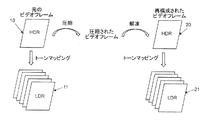
図2は、元のHDRビデオフレーム10と、HDRビデオフレーム10の圧縮に続いて取得されるHDRビデオフレーム10のバージョン20との間の関係を概略的に示す。このため、元のHDRビデオフレーム10は、圧縮モード又は符号化モードに従って圧縮又は符号化され、圧縮されたHDRビデオフレーム又は符号化されたHDRビデオフレームが得られる。次に、圧縮された又は符号化されたHDRビデオフレームは、本明細書において再構成されたHDRビデオフレーム20とも呼ばれるHDRビデオフレーム10の圧縮に続いて取得されるHDRビデオフレーム10のバージョン20を取得するために、解凍又は復号される。
FIG. 2 schematically shows the relationship between the original
通常、圧縮又は符号化プロセスは損失を伴い、圧縮又は符号化されたHDRビデオフレームが、元のHDRビデオフレーム10のフレームコンテンツ、すなわち、ピクセル又はサンプル値を表すための不正確な近似であることを暗に意味する。したがって、圧縮又は符号化されたHDRビデオフレームの解凍又は復号によって取得される再構成されたHDRビデオフレーム20は、圧縮−解凍/符号化−復号手順を通じて処理された元のHDRビデオフレーム10のバージョン又は表現である。異なる圧縮モード及び符号化モードの結果として、解凍又は復号後、異なる圧縮HDRビデオフレーム及び異なる再構成されたHDRビデオフレーム20が得られる。したがって、評価尺度は、「最良の」圧縮モード又は符号化モード、したがって、元のHDRビデオフレーム10のための「最良の」圧縮又は符号化されたHDRビデオフレームを選択するために用いることができる。
Typically, the compression or encoding process is lossy and the compressed or encoded HDR video frame is an inaccurate approximation to represent the frame content of the original
図2に示すように、図1のステップS5及びS6において、複数のLDRバージョン又はいわゆるトーンマッピングされたバージョン11、21が、元のHDRビデオフレーム10と、再構成されたHDRビデオフレーム20との双方について作成される。これは、所与の元のHDRビデオフレーム10について、元のHDRビデオフレーム10の複数のLDRバージョン11が得られることを意味する。これに対応して、再構成されたHDRビデオフレーム20について、再構成されたHDRビデオフレーム20の複数のLDRバージョン21が取得される。それぞれのそのようなLDRバージョン11、21は、最小露出パラメータ値から最大露出パラメータ値にまで及ぶ露出パラメータ値ごとに生成される。したがって、最小露出パラメータ値から最大露出パラメータ値までの露出パラメータ値の範囲又は組がN≧2個の露出パラメータ値からなる場合、ステップS5及びS6において元のHDRビデオフレーム10のN個のLDRバージョン11及び再構成されたHDRビデオフレーム20のN個のLDRバージョン21が作成され、図1のステップS7においてN個の誤差が計算される。
As shown in FIG. 2, in steps S5 and S6 of FIG. 1, a plurality of LDR versions or so-called tone-mapped
HDRビデオフレーム10の圧縮に続いて取得されるHDRビデオフレーム10のバージョン20における対応するピクセルは、好ましくは、HDRビデオフレーム10の圧縮に続いて取得されるHDRビデオフレーム10のバージョン20内において、現在のピクセルがHDRビデオフレーム10において占めるのと同じピクセル位置を占める。このため、現在のピクセルがHDRビデオフレーム10内のピクセル位置(x,y)を占める場合、対応するピクセルは、再構成されたHDRビデオフレーム20、すなわち、HDRビデオフレーム10の圧縮に続いて取得されるHDRビデオフレーム10のバージョン20におけるピクセル位置(x,y)を占める。
The corresponding pixels in the
本実施形態は、HDRビデオ及びHDRビデオフレームに適切でありかつこれらに適合された評価尺度の計算を大幅に単純化し、高速化する。これは、ステップS1及びS2において最小露出パラメータ値を用いて、ピクセル及び対応するピクセルの初期露出値を計算することによって可能である。次に、ピクセル及び対応するピクセルの露出値は、ピクセル及び対応するピクセルの以前に計算された露出値に定数を乗算したものの関数として、段階的に計算される。以前に計算された露出値とは、好ましくは、露出パラメータに対して直前の露出パラメータ値である。このため、ステップS3及びS4における段階的計算は、最小露出パラメータ値(cmin)から最大露出パラメータ値(cmax)まで、露出パラメータ値の組又は範囲にわたって行われる。 This embodiment greatly simplifies and speeds up the calculation of evaluation measures suitable for and adapted to HDR video and HDR video frames. This is possible by calculating the initial exposure value of the pixel and the corresponding pixel using the minimum exposure parameter value in steps S1 and S2. Next, the exposure value of the pixel and the corresponding pixel is calculated step-by-step as a function of the previously calculated exposure value of the pixel and corresponding pixel multiplied by a constant. The previously calculated exposure value is preferably the previous exposure parameter value for the exposure parameter. Thus, the stepwise calculations in steps S3 and S4 are performed over a set or range of exposure parameter values from a minimum exposure parameter value (c min ) to a maximum exposure parameter value (c max ).
一実施形態では、ステップS1及びS2における計算は、好ましくは、cmin−1に等しい露出パラメータ値cを用いて実行される。これはひいては、ステップS3〜S7のループがc∈[cmin,cmax]にわたって行われることを意味する。次に、好ましくは、所与の露出パラメータ値cについてステップS3において計算されるような、HDRビデオフレーム10内のピクセル位置(x,y)におけるピクセルの露出パラメータ値が、c∈[cmin,cmax]について、Rp c(x,y)=Rp c−1(x,y)×定数に基づいて計算される。
In one embodiment, the calculations in steps S1 and S2 are preferably performed with an exposure parameter value c equal to c min −1. This in turn means that the loop of steps S3 to S7 is performed over cε [c min , c max ]. Next, preferably the pixel exposure parameter value at pixel location (x, y) in the
ピクセル及び対応するピクセルの露出値を計算するこの手順は、HDRビデオフレーム10及び再構成されたHDRビデオフレーム20の複数のLDRバージョン11、21を、トーンマッピング関数を用いて以下のように直接計算することと比較して、はるかに計算効率が良い:
RLDR C(x,y)=clamp(0,255,round(255*(2c*RHDR(x,y))(1/γ)))
GLDR C(x,y)=clamp(0,255,round(255*(2c*GHDR(x,y))(1/γ)))
BLDR C(x,y)=clamp(0,255,round(255*(2c*BHDR(x,y))(1/γ)))
ここで、三つ組(RLDR C(x,y),GLDR C(x,y),BLDR C(x,y))は、露出パラメータ値cのためのHDRビデオフレーム10内のピクセル位置におけるピクセルのLDRバージョンを表し、三つ組(RHDR(x,y),GHDR(x,y),BHDR(x,y))は、ピクセルの元のピクセル値、すなわち、ピクセルの元のHDR値を表す。
This procedure of calculating pixel and corresponding pixel exposure values directly calculates
R LDR C (x, y) = clamp (0,255, round (255 * (2 c * R HDR (x, y)) (1 / γ) ))
G LDR C (x, y) = clamp (0,255, round (255 * (2 c * G HDR (x, y)) (1 / γ) ))
B LDR C (x, y) = clamp (0,255, round (255 * (2 c * B HDR (x, y)) (1 / γ) ))
Here, the triple (R LDR C (x, y), G LDR C (x, y), B LDR C (x, y)) is at the pixel location in the
したがって、実施形態は、計算コストが高い冪関数と比較して、単一の乗算を用いて以前の露出値から露出値を計算することによる、計算的にはるかに効率的な露出値計算技法を提供する。 Thus, the embodiment uses a computationally much more efficient exposure value calculation technique by calculating the exposure value from the previous exposure value using a single multiplication compared to a computationally expensive power function. provide.
以下において、図1に示す方法ステップの様々な実施の実施形態をより詳細に説明する。 In the following, various embodiments of the method steps shown in FIG. 1 will be described in more detail.
一実施形態において、図1のステップS5は、HDRビデオフレーム内のピクセルの露出値を、0.5の加算及びキャスティング演算を用いてLDR値に変換することを含む。 In one embodiment, step S5 of FIG. 1 includes converting the exposure value of the pixels in the HDR video frame to an LDR value using an addition of 0.5 and a casting operation.
一実施形態において、図1のステップS6は、HDRビデオフレームの圧縮に続いて取得されるHDRビデオフレームのバージョンにおいて、対応するピクセルの露出値を、0.5の加算、min関数及びキャスティング演算を用いてLDR値に変換することを含む。 In one embodiment, step S6 of FIG. 1 performs a corresponding pixel exposure value by adding 0.5, a min function, and a casting operation in a version of the HDR video frame obtained following compression of the HDR video frame. Using to convert to an LDR value.
当該技術分野においてキャスト演算、タイプ変換又は型強制とも呼ばれるキャスティング演算は、通常、1つのデータタイプのエンティティを別のデータタイプに変更することを伴う。そのようなキャスティング演算の例は、浮動小数点数を整数に変更すること、すなわち、数を、浮動小数点表現から整数表現に変更することである。 Casting operations, also referred to in the art as casting operations, type conversions, or type coercion, typically involve changing an entity of one data type to another data type. An example of such a casting operation is changing a floating point number to an integer, that is, changing a number from a floating point representation to an integer representation.
これは、LDR値への露出値の変換を、計算効率の良い演算を用いて行うことができることを意味する。したがって、冪演算も対数演算も必要とされず、LDR値を計算するのに用いられる上述したトーンマッピング関数と比較して、条件文の数が最小限になる。 This means that the exposure value can be converted into the LDR value using a calculation with high calculation efficiency. Therefore, neither a power nor logarithmic operation is required, and the number of conditional statements is minimized as compared to the tone mapping function described above used to calculate the LDR value.
このため、これらの実施形態では、LDR値の計算は、ピクセル及び対応するピクセルについて2ステップで行われる。第1のステップにおいて、露出値が計算され、次に、これらが上記で開示したようにLDR値に変換される。そのような手法により、入力HDR値からLDR値を計算するための単一の計算ステップを用いることと比較して、評価尺度の計算が大幅に高速化する。 Thus, in these embodiments, the calculation of the LDR value is performed in two steps for the pixel and the corresponding pixel. In the first step, exposure values are calculated and then these are converted to LDR values as disclosed above. Such an approach greatly speeds up the calculation of the evaluation measure compared to using a single calculation step for calculating the LDR value from the input HDR value.
一実施形態では、HDRビデオフレーム10内の各ピクセルは、赤色成分、青色成分及び緑色成分を含む。このため、この実施形態では、HDRビデオフレーム10内のピクセル、したがって、HDRビデオフレーム10の圧縮に続いて取得されるHDRビデオフレーム10のバージョン20、すなわち再構成されたHDRビデオフレーム20におけるピクセルは、RGB色の観点のそれぞれのピクセル値を有する。しかしながら、これは単に、実施形態の説明のための例とみなされるべきである。一般的に、HDRビデオフレーム10内の各ピクセル及び再構成されたHDRビデオフレーム20における各対応するピクセルは、色の三つ組、すなわち3つの色成分の観点のピクセル値を含む。一般的な実施形態において、これらの色成分は、第1の色成分、第2の色成分及び第3の色成分として表され得る。色成分は、HDRビデオフレームの符号化及び復号中に従来から用いられている様々な色形式又は色空間において表すことができる。そのような色形式の、限定ではなく説明のための例は、赤、緑、青(RGB)並びに輝度及びクロミナンス、すなわち、1つの輝度成分及び2つのクロミナンス成分を含む。以下において、RGBを色空間として用いて実施形態を更に説明及び例示する。しかしながら、実施形態は、RGB色成分を、輝度成分及び2つのクロミナンス成分、例えば、輝度、クロミナンス青及びクロミナンス赤(YCbCr);輝度、クロミナンス緑及びクロミナンス橙(YCgCo)、YUV、Lab、XYZ等の別の色空間に従う色成分と置き換えることも含む。
In one embodiment, each pixel in the
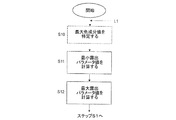
図3は、図1に示す方法の追加のオプションのステップを示すフローチャートである。ステップS11は、ceil(γ×log(0.5/255.0)/log(2)−log(colMax)/log(2))に基づいて最小露出パラメータ値を計算することを含む。ceil(x)は、xを切り上げる演算であり、γはディスプレイガンマを表し、colMaxは、HDRビデオフレーム10内のピクセルの赤色成分、緑色成分及び青色成分のうちの最も大きな色成分値を表す。ステップS12は、floor(γ×log(254.5/255.0)/log(2)−log(colMax)/log(2))に基づいて最大露出パラメータ値を計算することを含む。floor(x)は、xを切り下げる演算である。ステップS11及びS12は、任意の順序で、又は少なくとも部分的に並列に実行することができる。
FIG. 3 is a flow chart illustrating additional optional steps of the method shown in FIG. Step S11 includes calculating a minimum exposure parameter value based on ceil (γ × log (0.5 / 255.0) / log (2) −log (colMax) / log (2)). ceil (x) is an operation for rounding up x, γ represents display gamma, and colMax represents the largest color component value of the red, green, and blue components of the pixels in the
このため、HDRビデオフレーム内の現在のピクセルの最大色成分に基づいて、ステップS11及びS12において最小露出パラメータ値及び最大露出パラメータ値が計算される。このため、本方法の一実施形態では、図3に示すような追加のステップS10を含む。このステップS10は、HDRビデオフレーム10内のピクセルの赤色成分、緑色成分及び青色成分の最大色成分を特定することを含む。次に、露出パラメータ範囲の端点、すなわち最小露出パラメータ値及び最大露出パラメータ値を計算するために、この最大色成分をステップS11及びS12において用いる。
Thus, based on the maximum color component of the current pixel in the HDR video frame, the minimum exposure parameter value and the maximum exposure parameter value are calculated in steps S11 and S12. Thus, one embodiment of the method includes an additional step S10 as shown in FIG. This step S10 includes identifying the maximum color components of the red, green and blue components of the pixels in the
ステップS11及びS12において用いられているディスプレイガンマγは、好ましくは2.2である。 The display gamma γ used in steps S11 and S12 is preferably 2.2.
ガンマは、ピクセルの数値と、その実際の輝度との間の関係を定義する。ガンマを用いない場合、輝度を整数、例えば0〜255として表すことは、L=100×n/255を用いて行うことができる。ここで、Lは、カンデラ毎平方メートル(cd/m2)単位の輝度であり、nはコード値である。しかしながら、これは、暗い値の場合は過度に大きな相対誤差を与え、明るい値の場合は不要に小さな誤差を与えることになる。例として、n=1からn=2に進むとき、輝度はL(1)=100×1/255=0.3921cd/m2からL(2)=100×2/255=0.7843に2倍となり、相対差は(0.7843−0.3921)/0.3921=100%となる。明るいエリアでは、n=254からn=255へ進むことにより、はるかに低い相対差がもたらされる。なぜなら、L(254)=99.60及びL(255)=100であり、相対差が(100−99.60)/99.60=0.39%となるためである。眼は、絶対誤差よりも相対誤差に対してより感度が高い可能性があるため、L=100×n/255等の線形関数を用いてローダイナミックレンジ画像を表すことは良い着想ではない。したがって、代わりに、ガンマ関数;L=100×(n/255)γを用いてLDR画像が表される。ここで、γは2.2等の正の値である。ここで、n=20は、n=1が以前に与えたものと類似した輝度値;L(20)=100×20/255)2.2=0.3697cd/m2を与える、これは0.3921cd/m2に近い。しかし、ここで、n=21まで1ステップ進む場合、L(21)=100×(21/255)2.2=0.4116の輝度を得る。ここで、相対誤差は(0.4116−0.3697)/0.3697=11.3%であり、これは100%よりもはるかに小さい。この利点は、100cd/m2に近い精度と引き換えに得られ、最後の2ステップはL(254)=100×(254/255)2.2=99.1393及びL(255)=100×(21/255)2.2=100であり、(100−99.1393)/99.1393=0.87%の相対誤差を与える。 Gamma defines the relationship between a pixel value and its actual brightness. When gamma is not used, expressing the luminance as an integer, for example, 0 to 255, can be performed using L = 100 × n / 255. Here, L is the luminance in units of candela per square meter (cd / m 2 ), and n is the code value. However, this gives an excessively large relative error for dark values and an unnecessarily small error for bright values. As an example, when going from n = 1 to n = 2, the luminance is 2 from L (1) = 100 × 1/255 = 0.3921 cd / m 2 to L (2) = 100 × 2/255 = 0.7843. The relative difference is (0.7843-0.3921) /0.3921=100%. In bright areas, going from n = 254 to n = 255 results in a much lower relative difference. This is because L (254) = 99.60 and L (255) = 100, and the relative difference is (100−99.60) /99.60=0.39%. Since the eye may be more sensitive to relative errors than absolute errors, it is not a good idea to represent a low dynamic range image using a linear function such as L = 100 × n / 255. Therefore, instead, the LDR image is represented using the gamma function; L = 100 × (n / 255) γ . Here, γ is a positive value such as 2.2. Where n = 20 gives a luminance value similar to what n = 1 gave previously; L (20) = 100 × 20/255) 2.2 = 0.3697 cd / m 2 , which is 0 Close to 3921 cd / m 2 . However, here, when one step is advanced to n = 21, a luminance of L (21) = 100 × (21/255) 2.2 = 0.4116 is obtained. Here, the relative error is (0.4116−0.3697) /0.3697=11.3%, which is much smaller than 100%. This advantage is obtained in exchange for an accuracy close to 100 cd / m 2 and the last two steps are L (254) = 100 × (254/255) 2.2 = 99. 1393 and L (255) = 100 × ( 21/255) 2.2 = 100, giving a relative error of (100-99.1393) /99.1393=0.87%.
要約すると、整数を輝度に変換するときにディスプレイガンマγを用いることにより、暗い輝度の場合の相対誤差が実質的に下がるが、これは、明るい輝度の場合の相対誤差の小さな増大という犠牲を伴い、この誤差は、人間の視覚系によるLDR画像の知覚の仕方に同調させた方がよい。したがって、LDR画像はガンマ形式で表され、2つの画像間の比較も、多くの場合、線形輝度値間ではなく、ガンマ表現間で行われる。 In summary, using display gamma γ when converting integers to luminance substantially reduces the relative error in the case of dark luminance, at the cost of a small increase in relative error in the case of bright luminance. This error should be tuned to the way the human visual system perceives the LDR image. Thus, LDR images are represented in gamma format, and comparisons between two images are often made between gamma representations rather than between linear luminance values.
一実施形態では、図1のステップS1は、HDRビデオフレーム10内のピクセルの初期露出値を以下のように計算することを含む。
rOrigProcessed=255.0×exp((1.0/γ)×log(1.0×twoToC×rOrig))
gOrigProcessed=255.0×exp((1.0/γ)×log(1.0×twoToC×gOrig))
bOrigProcessed=255.0×exp((1.0/γ)×log(1.0×twoToC×bOrig))
この実施形態では、rOrigProcessedは、HDRビデオフレーム10内のピクセルの赤色成分の露出値を表し、gOrigProcessedは、HDRビデオフレーム10内のピクセルの緑色成分の露出値を表し、bOrigProcessedは、上記HDRビデオフレーム10内のピクセルの青色成分の露出値を表す。パラメータtwoToC=exp((cMin−1)×log(2.0))である。ここで、cMinは最小露出パラメータ値を表す。rOrigはHDRビデオフレーム10内のピクセルの赤色成分を表す。gOrigはHDRビデオフレーム10内のピクセルの緑色成分を表し、bOrigはHDRビデオフレーム10内のピクセルの青色成分を表す。HDRビデオフレーム10の圧縮に続いて取得されるHDRビデオフレーム10のバージョン20における対応するピクセルの初期露出値は、ステップS2において以下のように計算されることが好ましい:
rCopyProcessed=255.0×exp((1.0/γ)×log(1.0×twoToC×rCopy))
gCopyProcessed=255.0×exp((1.0/γ)×log(1.0×twoToC×gCopy))
bCopyProcessed=255.0×exp((1.0/γ)×log(1.0×twoToC×bCopy))
この実施形態において、rCopyProcessedは、HDRビデオフレーム10の圧縮に続いて取得されるHDRビデオフレーム10のバージョン20における対応するピクセルの赤色成分の露出値を表し、gCopyProcessedは、HDRビデオフレーム10の圧縮に続いて取得されるHDRビデオフレーム10のバージョン20における対応するピクセルの緑色成分の露出値を表し、bCopyProcessedは、HDRビデオフレーム10の圧縮に続いて取得されるHDRビデオフレーム10のバージョン20における対応するピクセルの青色成分の露出値を表す。rCopyは、HDRビデオフレーム10の圧縮に続いて取得されるHDRビデオフレーム10のバージョン20における対応するピクセルの赤色成分を表し、gCopyは、HDRビデオフレーム10の圧縮に続いて取得されるHDRビデオフレーム10のバージョン20における対応するピクセルの緑色成分を表し、bCopyは、HDRビデオフレーム10の圧縮に続いて取得されるHDRビデオフレーム10のバージョン20における対応するピクセルの青色成分を表す。
In one embodiment, step S1 of FIG. 1 includes calculating the initial exposure value of the pixels in
rOrigProcessed = 255.0 × exp ((1.0 / γ) × log (1.0 × twoToC × rOrig))
gOrigProcessed = 255.0 × exp ((1.0 / γ) × log (1.0 × twoToC × gOrig))
bOrigProcessed = 255.0 × exp ((1.0 / γ) × log (1.0 × twoToC × bOrig))
In this embodiment, rOrigProcessed represents the exposure value of the red component of the pixel in the
rCopyProcessed = 255.0 × exp ((1.0 / γ) × log (1.0 × twoToC × rCopy))
gCopyProcessed = 255.0 × exp ((1.0 / γ) × log (1.0 × twoToC × gCopy))
bCopyProcessed = 255.0 × exp ((1.0 / γ) × log (1.0 × twoToC × bCopy))
In this embodiment, rCopyProcessed represents the exposure value of the red component of the corresponding pixel in
このため、rOrig、gOrig及びbOrigは、HDRビデオフレーム10内のピクセルの元のHDRピクセル値を表し、これに対し、rCopy、gCopy及びbCopyは、再構成されたHDRビデオフレーム20における対応するピクセルの元のHDRピクセル値を表す。
Thus, rOrig, gOrig, and bOrig represent the original HDR pixel values of the pixels in the
一実施形態において、ステップS3においてHDRビデオフレーム10内のピクセルの露出値を計算することは、最小露出パラメータ値から開始して最大露出パラメータ値までの露出パラメータ値ごとに以下を計算することを含む:
rOrigProcessed×=factor
gOrigProcessed×=factor
bOrigProcessed×=factor
この実施形態において、定数factor=exp((1.0/γ)×log(2.0))である。HDRビデオフレーム10の圧縮に続いて取得されるHDRビデオフレーム10のバージョン20における対応するピクセルの露出値は、好ましくは、ステップS4において、最小露出パラメータ値から開始して最大露出パラメータ値までの露出パラメータ値ごとに以下のように計算される:
rCopyProcessed×=factor
gCopyProcessed×=factor
bCopyProcessed×=factor
In one embodiment, calculating the exposure value of the pixels in the
rOrigProcessed × = factor
gOrigProcessed × = factor
bOrigProcessed × = factor
In this embodiment, constant factor = exp ((1.0 / γ) × log (2.0)). The exposure value of the corresponding pixel in the
rCopyProcessed × = factor
gCopyProcessed × = factor
bCopyProcessed × = factor
本明細書において用いられるとき、表記「a×=b」は、演算a=a×bに対応し、このため、パラメータaは、パラメータaをパラメータbと乗算することによって更新される。 As used herein, the notation “a × = b” corresponds to the operation a = a × b, so that parameter a is updated by multiplying parameter a by parameter b.
このため、この実施形態において、ピクセル又は対応するピクセルの以前に計算された露出値に乗算するのに用いられる定数は、好ましくはディスプレイガンマに依拠し、すなわち、exp((1.0/γ)×log(2.0))に依拠する。これは、HDRビデオフレーム10内のピクセル位置(x,y)におけるピクセル、及び露出パラメータの現在の値cについて、Rp c(x,y)=Rp c−1(x,y)×factorとして色成分Rpを計算することに対応する。 Thus, in this embodiment, the constant used to multiply the previously calculated exposure value of the pixel or corresponding pixel preferably depends on the display gamma, ie, exp ((1.0 / γ) Xlog (2.0)). This pixel at pixel location in the HDR video frame 10 (x, y), and the current value c of exposure parameters, R p c (x, y ) = R p c-1 (x, y) × factor Corresponds to the calculation of the color component R p .
一実施形態では、ステップS5においてHDRビデオフレーム10内のピクセルの露出値を変換することは、以下を計算することを含む。
LDRorigR=(int)(rOrigProcessed+0.5)
LDRorigG=(int)(gOrigProcessed+0.5)
LDRorigB=(int)(bOrigProcessed+0.5)
この実施形態において、LDRorigRはHDRビデオフレーム10内のピクセルの赤色成分のLDR値を表し、LDRorigGはHDRビデオフレーム10内のピクセルの緑色成分のLDR値を表し、LDRorigBはHDRビデオフレーム10内のピクセルの青色成分のLDR値を表す。(int)はキャスティング演算を表す。キャスティング演算のこの実施形態は、赤色、緑色及び青色成分のLDR値を整数LDR値として出力する。
In one embodiment, converting the exposure value of the pixels in the
LDRorigR = (int) (rOrigProcessed + 0.5)
LDRorigG = (int) (gOrigProcessed + 0.5)
LDRorigB = (int) (bOrigProcessed + 0.5)
In this embodiment, LDRorigR represents the LDR value of the red component of the pixel in the
この実施形態において、ステップS6においてHDRビデオフレーム10の圧縮に続いて取得されるHDRビデオフレーム10のバージョン20における対応するピクセルの露出値を変換することは、好ましくは以下を計算することを含む:
LDRcopyR=(int)dMin(rCopyProcessed+0.5,255.5)
LDRcopyG=(int)dMin(gCopyProcessed+0.5,255.5)
LDRcopyB=(int)dMin(bCopyProcessed+0.5,255.5)
この実施形態において、LDRcopyRは、HDRビデオフレーム10の圧縮に続いて取得されるHDRビデオフレーム10のバージョン20における対応するピクセルの赤色成分のLDR値を表し、LDRcopyGは、HDRビデオフレーム10の圧縮に続いて取得されるHDRビデオフレーム10のバージョン20における対応するピクセルの緑色成分のLDR値を表し、LDRcopyBは、HDRビデオフレーム10の圧縮に続いて取得されるHDRビデオフレーム10のバージョン20における対応するピクセルの青色成分のLDR値を表す。dMin(x,y)は、(x>y)の場合、yを返し、そうでない場合、xを返すように実装されるmin関数を表す。
In this embodiment, converting the exposure value of the corresponding pixel in the
LDRcopyR = (int) dMin (rCopyProcessed + 0.5,255.5)
LDRcopyG = (int) dMin (gCopyProcessed + 0.5,255.5)
LDRcopyB = (int) dMin (bCopyProcessed + 0.5,255.5)
In this embodiment, LDRcopyR represents the LDR value of the red component of the corresponding pixel in
第1の実施形態において、ステップS7において誤差を計算することは、誤差を以下のように計算することを含む:
(LDRorigR-LDRcopyR)×(LDRorigR-LDRcopyR)+(LDRorigG-LDRcopyG)×(LDRorigG-LDRcopyG)+(LDRorigB-LDRcopyB)×(LDRorigB-LDRcopyB)
In the first embodiment, calculating the error in step S7 includes calculating the error as follows:
(LDRorigR-LDRcopyR) x (LDRorigR-LDRcopyR) + (LDRorigG-LDRcopyG) x (LDRorigG-LDRcopyG) + (LDRorigB-LDRcopyB) x (LDRorigB-LDRcopyB)
第2の実施形態において、ステップS7において誤差を計算することは、誤差を以下のように計算することを含む:
|LDRorigR-LDRcopyR|+|LDRorigG-LDRcopyG|+|LDRorigB-LDRcopyB|
In the second embodiment, calculating the error in step S7 includes calculating the error as follows:
| LDRorigR-LDRcopyR | + | LDRorigG-LDRcopyG | + | LDRorigB-LDRcopyB |
第3の実施形態において、ステップS7において誤差を計算することは、誤差を以下のように計算することを含む:
wR×(LDRorigR-LDRcopyR)×(LDRorigR-LDRcopyR)+wG×(LDRorigG-LDRcopyG)×(LDRorigG-LDRcopyG)+wB×(LDRorigB-LDRcopyB)×(LDRorigB-LDRcopyb)
In the third embodiment, calculating the error in step S7 includes calculating the error as follows:
w R × (LDRorigR-LDRcopyR) × (LDRorigR-LDRcopyR) + w G × (LDRorigG-LDRcopyG) × (LDRorigG-LDRcopyG) + w B × (LDRorigB-LDRcopyB) × (LDRorigB-LDRcopyb)
第4の実施形態において、ステップS7において誤差を計算することは、誤差を以下のように計算することを含む:
wR×|LDRorigR-LDRcopyR|+wG×|LDRorigG-LDRcopyG|+wB×|LDRorigB-LDRcopyB|
In the fourth embodiment, calculating the error in step S7 includes calculating the error as follows:
w R × | LDRorigR-LDRcopyR | + w G × | LDRorigG-LDRcopyG | + w B × | LDRorigB-LDRcopyB |
これらの実施形態において、wR、wG、wBは重みである。 In these embodiments, w R , w G , and w B are weights.
上記の第1の実施形態及び第2の実施形態は、3つの色成分について1に等しい同じ重みを用いることによって、第3の実施形態及び第4の実施形態の特定の実施例とみなすことができる。第3の実施形態及び第4の実施形態は、ステップS7において誤差を計算するときに、異なる色成分について異なる重みを可能にすることによって、より一般化される。また、第3の実施形態及び第4の実施形態において、図1の線L2によって表されるステップS3〜S7の異なるループに異なる重みを用いることも可能である。これは、異なる露出パラメータ値について異なる重みを用いることに対応する。このため、特定の実施形態において、重みwR、wG、wBは、露出パラメータ値cに基づいて求められ、すなわち、いくつかの定義済み関数fR(・)、fG(・)及びfB(・)についてwR=fR(c)、wG=fG(c)及びwB=fB(c)である。 The first and second embodiments above can be considered as specific examples of the third and fourth embodiments by using the same weight equal to 1 for the three color components. it can. The third and fourth embodiments are more generalized by allowing different weights for different color components when calculating the error in step S7. In the third and fourth embodiments, different weights can be used for different loops in steps S3 to S7 represented by the line L2 in FIG. This corresponds to using different weights for different exposure parameter values. Thus, in certain embodiments, the weights w R , w G , w B are determined based on the exposure parameter value c, ie, some predefined functions f R (•), f G (•) and For f B (·), w R = f R (c), w G = f G (c) and w B = f B (c).
上記の第1の実施形態及び第2の実施形態は、評価尺度を計算するときに暗い雑音を増幅する傾向を有する。第3の実施形態及び第4の実施形態は、異なる露出パラメータ値及び/又は異なる色成分に異なる重みを用いることによって、そのような暗い雑音を抑制することができる。 The first and second embodiments described above tend to amplify dark noise when calculating the evaluation measure. The third and fourth embodiments can suppress such dark noise by using different exposure parameter values and / or different weights for different color components.
図4は、一実施形態による、様々な露出パラメータ値のための重みの分布を示す図である。この特定の実施形態において、より低い重みwR、wG、wBは通常、露出パラメータの中間範囲値と比較して、低い値の露出パラメータ及び高い値の露出パラメータのために用いられる。 FIG. 4 is a diagram illustrating a distribution of weights for various exposure parameter values according to one embodiment. In this particular embodiment, lower weights w R , w G , w B are typically used for low value exposure parameters and high value exposure parameters compared to exposure parameter mid-range values.
一実施形態において、wR=wG=wB=f(c)である。これは、同じ重みが3つ全ての色成分に用いられ、重みの値が図4に示すような露出パラメータ値に依拠することを意味する。別の実施形態では、3つの色成分のうちの少なくとも2つ又は全てに対して別個の重みを用いることができる。次に、そのような各重みを、上述したような露出パラメータ値の所与の関数として求めることができる。そのような場合、各色成分は、異なる露出パラメータ値についてそれぞれの重み分布を有し得る。 In one embodiment, w R = w G = w B = f (c). This means that the same weight is used for all three color components and the weight value depends on the exposure parameter values as shown in FIG. In another embodiment, separate weights can be used for at least two or all of the three color components. Each such weight can then be determined as a given function of the exposure parameter value as described above. In such a case, each color component may have a respective weight distribution for different exposure parameter values.
重みが用いられない場合、暗いピクセルにおける小さな変化が、評価尺度の最終値に対し大きく寄与する場合がある。例えば、HDRビデオフレーム内の2つのピクセル、すなわち、元のHDR RGB値が(0.3,0.3,0.3)に等しい第1のピクセル、及び元のHDR RGB値が(3000,3000,3000)に等しいピクセルを仮定する。圧縮及び解凍後、2つのピクセルについて再構成されたHDR RGB値がそれぞれ(0.6,0.6,0.6)及び(3300,3300,3300)になると仮定する。第1のピクセルのための最小露出パラメータ値及び最大露出パラメータ値は、それぞれc=−18及びc=1になる。20個の露出のLDR値を計算する場合、以下の誤差が得られる:

このため、最も右側の列を合計する場合、第1のピクセルによって寄与される総誤差は、27462となる。 Thus, when summing the rightmost column, the total error contributed by the first pixel is 27462.
一方、第2のピクセルのための露出パラメータ値は、c=−31〜c=−12となる。この第2のピクセルのための類似したテーブルは以下のようになる:
ここで、最も右側の列を合計する場合、このピクセルによって寄与される総誤差は、633であることがわかる。このため、第1のピクセルは、第2のピクセルの誤差(633)よりもはるかに大きな誤差(27462)を伴って評価尺度に寄与することになる。一方、HDRピクセル値を見ると、誤差は第2のピクセルにおいてはるかに大きい:
第1のピクセルにおいて、各成分において誤差は0.3である。一方、第2のピクセルにおいて、誤差は各成分において300である。通常、300cd/m2の誤差は、0.3cd/m2の誤差よりも容易に気づくが、この例では、第2のピクセルと比較して、第1のピクセルの方が評価尺度に寄与している。これは、第1のピクセルからの寄与に第1の重みを用いて重み付けし、第2のピクセルからの寄与に、第1の重みよりも大きい第2の重みを用いて重み付けすることが有利である場合があることを意味する。 In the first pixel, the error in each component is 0.3. On the other hand, in the second pixel, the error is 300 for each component. Usually, the error of 300 cd / m 2 is easily notice than the error of 0.3 cd / m 2, in this example, as compared to the second pixel, toward the first pixel contributes to the rating scale ing. It is advantageous to weight the contribution from the first pixel with a first weight and weight the contribution from the second pixel with a second weight greater than the first weight. Means there may be.
これを達成する1つの方法は、露出パラメータcごとに1つの重みを有することである。例として、c=−12であるとき(c=−12は双方のテーブルにおいて入手可能である)、重みはw(−12)=100とすることができる。これは、第1のピクセルの合計二乗誤差12に100を乗算して1200になり、第2のピクセルの合計二乗誤差300に100を乗算して30000になることを意味する。一方、c=−13のときの重みは、より大きく、例えばw(−13)=110にすることができる。第1のピクセルのそのレベルにおける合計二乗誤差3は、110を乗算され、330になる。同時に、第2のピクセルのそのレベルにおける合計二乗誤差147は、110を乗算され、16170になる。cの小さな値についてより大きな重みを有することによって、第2のピクセルの誤差値により評価尺度への大きな寄与が生じることを確実にすることができる。例として、c=−31の重みは非常に大きい場合があり、これは第2のピクセルにおいてのみ用いられる。
One way to achieve this is to have one weight for each exposure parameter c. As an example, when c = -12 (c = -12 is available in both tables), the weight can be w (-12) = 100. This means that the total square error 12 of the first pixel is multiplied by 100 to be 1200, and the total
一方、第1のピクセルについて、実際に相対誤差はより小さいことに留意されたい。これが、重み付けされていない誤差尺度を用いる場合に、第1のピクセルが第2のピクセルよりも誤差尺度に大きく寄与することになる理由である。 On the other hand, note that the relative error is actually smaller for the first pixel. This is why when using an unweighted error measure, the first pixel will contribute more to the error measure than the second pixel.
図5は、図1における計算ステップS8の一実施形態を示すフローチャートである。この実施形態において、本方法は、図1のステップS7から継続する。後続のステップS13は、平均二乗誤差(MSE)を、HDRビデオフレーム内の全てのピクセル及び全ての露出値についての平均誤差として計算することを含む。次に、本方法はステップS14に続く。ステップS14は、平均二乗誤差に基づいて評価尺度を計算することを含む。 FIG. 5 is a flowchart showing an embodiment of the calculation step S8 in FIG. In this embodiment, the method continues from step S7 of FIG. Subsequent step S13 includes calculating a mean square error (MSE) as the average error for all pixels and all exposure values in the HDR video frame. The method then continues to step S14. Step S14 includes calculating an evaluation measure based on the mean square error.
一実施形態において、ステップS14において評価尺度を計算することは、評価尺度を、平均二乗誤差のピーク信号対雑音比として以下のように計算することを含む:
10×log((255×255)/MSE)/log(10)
この実施形態において、MSEは平均二乗誤差を表す。
In one embodiment, calculating the evaluation measure in step S14 includes calculating the evaluation measure as a peak signal-to-noise ratio of mean square error as follows:
10 × log ((255 × 255) / MSE) / log (10)
In this embodiment, MSE represents the mean square error.
実施形態は、本明細書においてmPSNRと表される評価尺度に関する。mPSNRは、HDRビデオフレームの評価のために用いることができる。要するに、HDRビデオフレームごとに、異なる仮想シャッター速度、すなわち露出パラメータ値を有する仮想写真又はトーンマッピングされたバージョンの形態等のいくつかのLDRバージョンが作成され、次に、PSNR尺度がこれらのLDRバージョンについて計算される。mPSNR値は、これらのPSNR尺度のアグリゲートである。 Embodiments relate to a rating scale denoted herein as mPSNR. The mPSNR can be used for evaluation of HDR video frames. In short, for each HDR video frame, several LDR versions are created, such as forms of virtual photos or tone-mapped versions with different virtual shutter speeds, i.e. exposure parameter values, and then the PSNR measure is then used for these LDR versions. Calculated for The mPSNR value is an aggregate of these PSNR measures.
露出パラメータ値cの範囲は好ましくは制限される。この理由は、小さな値のc(大きな負の値)の場合、ほとんどのピクセルが黒(0,0,0)になり、したがって、MSEがこれらのピクセルに対して小さくなるためである。これは、圧縮にアーチファクトがないという印象を与えるが、必ずしも当てはまらない。実際には、これらのピクセルは情報を一切保有しておらず、このため、これらを除外することにより尺度がより良好になる。同様に、255よりも大きな値について、cが十分大きいとき、ほとんどの値は白(255,255,255)になり、これもまた、圧縮にアーチファクトがないという誤った印象を与える。 The range of the exposure parameter value c is preferably limited. This is because for small values of c (large negative values), most pixels will be black (0,0,0), and therefore the MSE will be small for these pixels. This gives the impression that the compression is free of artifacts, but is not necessarily true. In practice, these pixels do not carry any information, so excluding them makes the scale better. Similarly, for values greater than 255, when c is sufficiently large, most values are white (255, 255, 255), which also gives the false impression that there is no artifact in compression.
また、(4000,1,2)等、1つの成分に非常に大きな値を有し、他の成分に小さな値を有する場合、人間の眼には、これと、圧縮結果であり得る、例えば(4000,2,2)との差を見分けることが難しい。しかし、十分大きなcの数を用いると、(4000,1,2)が、例えば(255,90,180)にマッピングされるのに対し、圧縮結果(4000,2,2)は(255,180,180)にマッピングされる。この結果、緑色成分に大きな誤差が生じるが、これは実際のピクセルでは可視でない可能性が高い。このため、このピクセルを計算から除去することは道理にかなっており、提案される方法において行われる。なぜなら、赤色成分が255に飽和しているためである。 In addition, when one component has a very large value such as (4000, 1, 2), and the other component has a small value, this may be the result of compression for human eyes. It is difficult to distinguish the difference from 4000, 2, 2). However, if a sufficiently large number of c is used, (4000,1,2) is mapped to (255,90,180), for example, whereas the compression result (4000,2,2) is (255,180). , 180). This results in a large error in the green component, which is likely not visible in the actual pixel. For this reason, it makes sense to remove this pixel from the calculation and is done in the proposed method. This is because the red component is saturated at 255.
コードの元の最適化されていないバージョンは、以下のように説明することができる。
sse=0
for c=−34〜15の全ての露出
for 画像内の全てのピクセル
元画像のHDR R、G、BからLDRredOrig、LDRgreenOrig、LDRblueOrigを計算
コピーのHDR R、G、BからLDRredCopy、LDRgreenCopy、LDRblueCopyを計算
if ピクセルが飽和していない
sse+=(LDRredOrig-LDRredCopy)2
sse+=(LDRgreenOrig-LDRgreenCopy)2
sse+=(LDRblueOrig-LDRblueCopy)2
numpixcels++;
end
end
end
mse=sse/(3.0*numpixels)
mPSNR=PSNR=10*log((255*255)/mse)/log(10);
The original unoptimized version of the code can be described as follows:
sse = 0
for c = all exposures between -34 and 15
for all pixels in image Calculate LDRredOrig, LDRgreenOrig, LDRblueOrig from HDR R, G, B of original image Calculate LDRredCopy, LDRgreenCopy, LDRblueCopy from HDR R, G, B of copy
if pixel is not saturated
sse + = (LDRredOrig-LDRredCopy) 2
sse + = (LDRgreenOrig-LDRgreenCopy) 2
sse + = (LDRblueOrig-LDRblueCopy) 2
numpixcels ++;
end
end
end
mse = sse / (3.0 * numpixels)
mPSNR = PSNR = 10 * log ((255 * 255) / mse) / log (10);
この最適化されていないバージョンにおいて、露出パラメータ値の固定された組又は範囲[−34,15]が用いられる。この結果、通常、評価尺度mPSNRの計算が非効率になる。これについて本明細書において更に説明する。 In this non-optimized version, a fixed set or range of exposure parameter values [-34, 15] is used. This usually results in inefficient calculation of the rating scale mPSNR. This will be further described herein.
元のHDR浮動小数点数値RからLDRredOrigを計算することは以下のように行われる:
RLDR C(x,y)=clamp(0,255,round(255*(2c*RHDR(x,y))(1/γ)))
ここで、LDRredOrig=RLDR cを用いた。対応する式は、他の2つの色成分に当てはまる。最も内側の値255*(2c*RHDR(x,y))(1/γ)を見る場合、これは2つの冪関数xpからなる。まず、2c(pはcである)、及び次に(RHDR(x,y))(1/γ)(pは1/γ)である。そのような冪関数は、通常、対数:xp=exp(ln(xp))=exp(p*ln(x))を用いて実施される。指数関数exp(・)及び対数ln(・)の双方が、計算コストが高いため、これは非常にコストの高い演算である。これにより、したがって、最適化の1つの目標は、これらのコストの高い計算を回避することである。
Computing LDRredOrig from the original HDR floating point value R is done as follows:
R LDR C (x, y) = clamp (0,255, round (255 * (2 c * R HDR (x, y)) (1 / γ) ))
Here, LDRredOrig = R LDR c was used. The corresponding formula applies to the other two color components. When looking at the innermost value 255 * (2 c * R HDR (x, y)) (1 / γ) , this consists of two power functions x p . First, 2 c (p is c), and then (R HDR (x, y)) (1 / γ) (p is 1 / γ). Such a power function is usually implemented using the logarithm: x p = exp (ln (x p )) = exp (p * ln (x)). Since both the exponential function exp (·) and the logarithm ln (·) are computationally expensive, this is a very expensive operation. Thereby, therefore, one goal of optimization is to avoid these costly calculations.
全てのLDRredOrig値が最終結果に影響を及ぼすわけではないことに留意するべきである;LDRredOrig値が飽和試験を通過した場合にのみ、この値が変数sseに影響を及ぼす。飽和試験は以下のとおりである:
if LDRredOrig==0 AND LDRgreenOrig==0 AND LDRblueOrig==0
return false:
else if LDRredOrig==255 OR LDRgreenOrig==255 OR LDRblueOrig==255
return false
else
return true
end
It should be noted that not all LDRredOrig values affect the final result; this value only affects the variable sse if the LDRredOrig value passes the saturation test. The saturation test is as follows:
if LDRredOrig == 0 AND LDRgreenOrig == 0 AND LDRblueOrig == 0
return false:
else if LDRredOrig == 255 OR LDRgreenOrig == 255 OR LDRblueOrig == 255
return false
else
return true
end
ここで、再びLDRredOrigについての式、
RLDR C(x,y)=clamp(0,255,round(255*(2c*RHDR(x,y))(1/γ)))
を調べると、値255*(2c*RHDR(x,y))(1/γ)は、254.5よりも大きい場合、255に丸められるため、この値が255に等しくなることがわかる。この場合、ピクセルは飽和し、用いられない。これは、cがcMax=γln(254.5/255)/ln(2)−ln(RHDR(x,y))/ln(2)よりも大きいことと等価である。cは、−34〜15(15を含む)間の全ての値にわたってループすることに留意されたい。しかし、あるピクセルについてcMaxよりも大きいc値に到達するとすぐ、より大きな全てのcがそのピクセルのsseに寄与しないことがわかる。実際は、3つの色成分R、G及びBのうちの最も大きなもののみを見ればよい。最も大きなものによって、計算に影響を及ぼすcの最大値が決まる。
Where again the equation for LDRredOrig,
R LDR C (x, y) = clamp (0,255, round (255 * (2 c * R HDR (x, y)) (1 / γ) ))
, The value 255 * (2 c * R HDR (x, y)) (1 / γ) is rounded to 255 if it is greater than 254.5, so that this value is equal to 255. . In this case, the pixel is saturated and not used. This is equivalent to c being greater than cMax = γln (254.5 / 255) / ln (2) −ln (R HDR (x, y)) / ln (2). Note that c loops over all values between -34 and 15 (including 15). However, as soon as a c value greater than cMax is reached for a pixel, it can be seen that all larger cs do not contribute to the sse for that pixel. In practice, only the largest of the three color components R, G and B need be seen. The largest value determines the maximum value of c that affects the calculation.
同様に、全ての成分がゼロになるほど小さいc値も飽和ピクセルとみなされるので、このc値を調べる必要がない。cが、最も大きな成分であっても0.5未満の値になるほど小さい場合、0に量子化されることになる。これは計算に影響を及ぼさないことがわかっている。 Similarly, a c value that is so small that all components become zero is also regarded as a saturated pixel, so there is no need to examine this c value. Even if c is the largest component, if it is small enough to be less than 0.5, it will be quantized to zero. This has been found not to affect the calculation.
このため、あるピクセルについて、−34から15ではなく、cMinIntからcMaxInt、すなわち、最小露出パラメータ値から最大露出パラメータ値にループすることができる。これによって、cMaxInt−cMinIntが通常、50ではなく約20であるため、大量の計算が節減される。これが機能するためには、forループの順序を反転させる必要がある。要約すると、以下を用いることができる:
sse=0
for 画像内の全てのピクセル
colMax=元画像内のmax(R,G,B)
cMinInt=ceil(gamma*log(0.5/255.0)/log(2)-log(colMax)/log(2);
cMaxInt=floor(gamma*log(254.5/255.0)/log(2)-log(colMax)/log(2);
for c=cMinInt〜cMaxInt
元画像のHDR R、G、BからLDRredOrig、LDRgreenOrig、LDRblueOrigを計算
コピーのHDR R、G、BからLDRredCopy、LDRgreenCopy、LDRblueCopyを計算
sse+=(LDRredOrig-LDRredCopy)2
sse+=(LDRgreenOrig-LDRgreenCopy)2
sse+=(LDRblueOrig-LDRblueCopy)2
numpixcels++;
end
end
mse=sse/(3.0*numpixcels)
mPSNR=PSNR=10*log((255*255)/mse)/log(10);
Thus, for a pixel, it is possible to loop from cMinInt to cMaxInt, i.e. from the minimum exposure parameter value to the maximum exposure parameter value, rather than -34 to 15. This saves a lot of computation because cMaxInt-cMinInt is typically about 20 instead of 50. For this to work, it is necessary to reverse the order of the for loop. In summary, the following can be used:
sse = 0
for all pixels in the image
colMax = max (R, G, B) in the original image
cMinInt = ceil (gamma * log (0.5 / 255.0) / log (2) -log (colMax) / log (2);
cMaxInt = floor (gamma * log (254.5 / 255.0) / log (2) -log (colMax) / log (2);
for c = cMinInt ~ cMaxInt
Calculate LDRredOrig, LDRgreenOrig, LDRblueOrig from HDR R, G, B of original image Calculate LDRredCopy, LDRgreenCopy, LDRblueCopy from HDR R, G, B of copy
sse + = (LDRredOrig-LDRredCopy) 2
sse + = (LDRgreenOrig-LDRgreenCopy) 2
sse + = (LDRblueOrig-LDRblueCopy) 2
numpixcels ++;
end
end
mse = sse / (3.0 * numpixcels)
mPSNR = PSNR = 10 * log ((255 * 255) / mse) / log (10);
ここで、floor(x)はxを切り下げ、ceil(x)はxを切り上げる。ピクセルのいずれも飽和しないことがわかっているため、飽和の試験はもはや必要ないことに留意されたい。 Here, floor (x) rounds down x and ceil (x) rounds up x. Note that the saturation test is no longer necessary since it has been found that none of the pixels are saturated.
これらの最適化を用いる場合であっても、評価尺度を計算するには依然としてかなりの時間がかかる。大量の計算は、LDRredOrig、LDRgreenOrig等の計算から生じるため、これを再び検討する。式
RLDR C(x,y)=clamp(0,255,round(255*(2c*RHDR(x,y))(1/γ)))
は2ステップで計算することができる;
RP C(x,y)=255*(2c*RHDR(x,y))(1/γ)
及び
RLDR C(x,y)=clamp(0,255,round(RP C(x,y)))
Even with these optimizations, it still takes considerable time to calculate the evaluation measure. Since a large amount of calculations result from calculations such as LDRredOrig, LDRgreenOrig, etc., this will be considered again. formula
R LDR C (x, y) = clamp (0,255, round (255 * (2 c * R HDR (x, y)) (1 / γ) ))
Can be calculated in two steps;
R P C (x, y) = 255 * (2c * R HDR (x, y)) (1 / γ)
as well as
R LDR C (x, y) = clamp (0,255, round (R P C (x, y)))
第1のステップを見ると、これを以下のように書き換えることができることがわかる。
RP C(x,y)=255*(2c*RHDR(x,y))(1/γ)=
255*(2c)(1/γ)*(RHDR(x,y))(1/γ)=
255*(RHDR(x,y))(1/γ)*(2(1/γ))c
Looking at the first step, it can be rewritten as follows.
R P C (x, y) = 255 * (2 c * R HDR (x, y)) (1 / γ) =
255 * (2 c ) (1 / γ) * (R HDR (x, y)) (1 / γ) =
255 * (R HDR (x, y)) (1 / γ) * (2 (1 / γ) ) c
しかし、これは以下に更に単純化することができる。
255*(RHDR(x,y))(1/γ)*(2(1/γ))(c-1)*(2(1/γ))=
RP C-1(x,y)*(2(1/γ))
However, this can be further simplified as follows.
255 * (R HDR (x, y)) (1 / γ) * (2 (1 / γ) ) (c-1) * (2 (1 / γ) ) =
R P C-1 (x, y) * (2 (1 / γ) )
また、(2(1/γ))は定数であることに留意されたい。このため、RP C(x,y)を得るためには,単に以前の値RP C−1(x,y)をこの定数と乗算する。 Also note that (2 (1 / γ) ) is a constant. Thus, to obtain R P C (x, y), simply multiply the previous value R P C-1 (x, y) by this constant.
したがって、本発明によれば、方法を以下のように書き換えることができる。
sse=0
for 画像内の全てのピクセル
元画像のcolMax=max(R,G,B)
cMinInt=ceil(gamma*log(0.5/255.0)/log(2)-log(colMax)/log(2);
cMaxInt=floor(gamma*log(254.5/255.0)/l2-log(colMax)/log(2);
twoToC=exp((cMinInt-1)*log(2));
factor=exp(inverseGamma*log(2));
rOrigP=255.0*exp(inverseGamma*log((((twoToC))*rOrig)));
gOrigP=255.0*exp(inverseGamma*log((((twoToC))*gOrig)));
bOrigP=255.0*exp(inverseGamma*log((((twoToC))*bOrig)));
rCopyP=255.0*exp(inverseGamma*log((((twoToC))*rCopy)));
gCopyP=255.0*exp(inverseGamma*log((((twoToC))*gCopy)));
bCopyP=255.0*exp(inverseGamma*log((((twoToC))*bCopy)));
for c=cMinInt〜cMaxInt
rOrigP*=factor
gOrigP*=factor
bOrigP*=factor
rCopyP*=factor
gCopyP*=factor
bCopyP*=factor
LDRredOrig=round(clamp(0,255,rOrigP))
LDRgreenOrig=round(clamp(0,255,gOrigP))
LDRblueOrig=round(clamp(0,255,bOrigP))
LDRredCopy=round(clamp(0,255,rCopyP))
LDRgreenCopy=round(clamp(0,255,gCopyP))
LDRblueCopy=round(clamp(0,255,bCopyP))
sse+=(LDRredOrig-LDRredCopy)2
sse+=(LDRgreenOrig-LDRgreenCopy)2
sse+=(LDRblueOrig-LDRblueCopy)2
numpixcels++;
end
end
mse=sse/(3.0*numpixcels)
mPSNR=PSNR=10*log((255*255)/mse)/log(10);
Thus, according to the present invention, the method can be rewritten as follows.
sse = 0
for all pixels in the image colMax = max (R, G, B) of the original image
cMinInt = ceil (gamma * log (0.5 / 255.0) / log (2) -log (colMax) / log (2);
cMaxInt = floor (gamma * log (254.5 / 255.0) / l2-log (colMax) / log (2);
twoToC = exp ((cMinInt-1) * log (2));
factor = exp (inverseGamma * log (2));
rOrigP = 255.0 * exp (inverseGamma * log ((((twoToC)) * rOrig)));
gOrigP = 255.0 * exp (inverseGamma * log ((((twoToC)) * gOrig)));
bOrigP = 255.0 * exp (inverseGamma * log ((((twoToC)) * bOrig)));
rCopyP = 255.0 * exp (inverseGamma * log ((((twoToC)) * rCopy)));
gCopyP = 255.0 * exp (inverseGamma * log ((((twoToC)) * gCopy)));
bCopyP = 255.0 * exp (inverseGamma * log ((((twoToC)) * bCopy)));
for c = cMinInt ~ cMaxInt
rOrigP * = factor
gOrigP * = factor
bOrigP * = factor
rCopyP * = factor
gCopyP * = factor
bCopyP * = factor
LDRredOrig = round (clamp (0,255, rOrigP))
LDRgreenOrig = round (clamp (0,255, gOrigP))
LDRblueOrig = round (clamp (0,255, bOrigP))
LDRredCopy = round (clamp (0,255, rCopyP))
LDRgreenCopy = round (clamp (0,255, gCopyP))
LDRblueCopy = round (clamp (0,255, bCopyP))
sse + = (LDRredOrig-LDRredCopy) 2
sse + = (LDRgreenOrig-LDRgreenCopy) 2
sse + = (LDRblueOrig-LDRblueCopy) 2
numpixcels ++;
end
end
mse = sse / (3.0 * numpixcels)
mPSNR = PSNR = 10 * log ((255 * 255) / mse) / log (10);
このプログラムは、下線を付されたコードを有するループの内側におけるLDRredOrigの計算を交換した。このプログラムは、コストの高い任意のexp(・)関数及びlog(・)関数を回避することに留意されたい。代わりに、これは、多くのアーキテクチャにおいて単一クロックサイクルで実行することができる単純な浮動小数点乗算に置き換えられる。次に、この値は丸められ、クランプされて、下線を付されたコード内を更に進んでLDR値LDRredOrigを生成する。また、ループの前のコード、すなわち、斜体のtwoToC=で始まるforループの前の8行も追加した。これらの行は、後続の露出値を計算するのに用いられる開始値を生成するのに必要とされる。これらの行は、コストの高いexp(・)関数及びlog(・)関数を利用する。しかしながら、これらはループの外側であるため、ループの内側の行ほど計算行に寄与しない。 This program exchanged the calculation of LDRredOrig inside the loop with the underlined code. Note that this program avoids any expensive exp (•) and log (•) functions. Instead, this is replaced by a simple floating point multiplication that can be performed in a single clock cycle in many architectures. This value is then rounded, clamped, and advanced further through the underlined code to produce the LDR value LDRredOrig. We also added the code before the loop, that is, the 8 lines before the for loop starting with italic twoToC =. These lines are required to generate the starting value that is used to calculate subsequent exposure values. These rows make use of the expensive exp (•) and log (•) functions. However, since these are outside the loop, they do not contribute to the calculation line as much as the line inside the loop.
この実施形態によって、上記で提示されたコードの元の最適化されていないバージョンと比較して計算時間が大幅に低減することになる。その最適化されていないコードと比較して、実行時間は、HDRビデオフレームあたり約14秒から3.7秒に低減し、約3.8×のスピードアップとなる。 This embodiment results in a significant reduction in computation time compared to the original unoptimized version of the code presented above. Compared to that unoptimized code, the execution time is reduced from about 14 seconds to 3.7 seconds per HDR video frame, a speedup of about 3.8 ×.
しかしながら、更なるスピードアップが可能である。ほとんどの時間は、通常、ループの内側に費やされる。ここでループの内側を見ると、これは非常に単純な算術演算;浮動小数点及び整数データの乗算、減算及び加算のみからなっている。例外は、丸め演算及びクランピング演算におけるものである。これらは、通常、高速実行の妨げとなるif文からなる。高速実行の妨げとなる理由は、if文が、CPUが分岐予測において誤った推定をするときに、CPUの実行パイプラインにおいてバブルを生成するためである。例として、クランプ演算は多くの場合、以下のように実施される。
if(x>255.0)
x=255.0;
else if(x<0.0)
x=0.0;
end;
However, further speedup is possible. Most of the time is usually spent inside the loop. Looking inside the loop here, it consists of very simple arithmetic operations; only floating point and integer data multiplication, subtraction and addition. An exception is in rounding and clamping operations. These usually consist of if statements that hinder high-speed execution. The reason for the impediment to high-speed execution is that the if statement generates bubbles in the CPU execution pipeline when the CPU makes an incorrect estimation in branch prediction. As an example, the clamp operation is often performed as follows.
if (x> 255.0)
x = 255.0;
else if (x <0.0)
x = 0.0;
end;
これによって、2つのif文が生成される。双方の場合に、CPUは、最も可能性の高い結果を推定し、推定が誤っているとき、パイプラインをフラッシュしなくてはならず、いくつかのクロックサイクルのペナルティが生じる。 As a result, two if statements are generated. In both cases, the CPU estimates the most likely result, and if the estimate is incorrect, the pipeline must be flushed, resulting in several clock cycle penalties.
しかしながら、本発明の一実施形態によれば、比較が始まる前の画像の元のバージョン及び圧縮バージョンの値について、通常、クランプステップ、すなわちクリップステップが存在することに注目する。入力、すなわち、元の画像及び圧縮画像は、線形光を表し、光は負になり得ないため、負値をゼロにクランプすること、すなわち、負値を0に置き換えることは意味を成す。同様に、65504は半精度浮動小数点において表現可能な最大値であるため、無限等の65504よりも大きい値を65504にクランプすることは意味を成す。これは通常、太字で示す以下のコードを挿入することによって行われている。
sse=0
for 画像内の全てのピクセル
rOrig=clamp(0,65504,RHDRorig)
gOrig=clamp(0,65504,GHDRorig)
bOrig=clamp(0,65504,BHDRorig)
rCopy=clamp(0,65504,RHDRcopy)
gCopy=clamp(0,65504,GHDRcopy)
bCopy=clamp(0,65504,BHDRcopy)
元画像のcolMax=max(R,G,B)
cMinInt=ceil(gamma*log(0.5/255.0)/log(2)-log(colMax)/log(2);
cMaxInt=floor(gamma*log(254.5/255.0)/l2-log(colMax)/log(2);
…
ここで、fClip(a,b,x)とも書かれるclamp(a,b,x)は、aよりも小さい値をaと置き換え、bよりも大きい値をbと置き換え、a〜b間の値を変更しない。本発明において、これが、露出値RP C(x,y)が決して負になり得ないことを意味することを認識することによって、これを利用する。これを理解するために、
RP C(x,y)=255*(2c*RHDR(x,y))(1/γ)
であるため、RP C(x,y)がとり得る最小値が255*(2c*0)(1/γ)であり、0に等しいことに留意されたい。ここで、RHDR(x,y)は、上記の擬似コードにおけるrOrig値を表す。このため、RP C(x,y)の負値を有することは決してあり得ず、クランピング比較において負値に対し試験することは不要である。このため、下線を付された最後の6行を以下と置き換えることができる。
LDRredOrig=round(min(255,rOrigP))
LDRgreenOrig=round(min(255,gOrigP))
LDRblueOrig=round(min(255,bOrigP))
LDRredCopy=round(min(255,rCopyP))
LDRgreenCopy=round(min(255,gCopyP))
LDRblueCopy=round(min(255,bCopyP))
However, note that, according to one embodiment of the present invention, there is usually a clamping or clipping step for the original and compressed version values of the image before the comparison begins. Since the input, ie the original image and the compressed image, represents linear light and the light cannot be negative, it makes sense to clamp negative values to zero, ie to replace negative values with zero. Similarly, since 65504 is the maximum value that can be expressed in a half-precision floating point, it makes sense to clamp a value larger than 65504, such as infinity, to 65504. This is usually done by inserting the following code, shown in bold:
sse = 0
for all pixels in the image
rOrig = clamp (0,65504, RHDRorig)
gOrig = clamp (0,65504, GHDRorig)
bOrig = clamp (0,65504, BHDRorig)
rCopy = clamp (0,65504, RHDRcopy)
gCopy = clamp (0,65504, GHDRcopy)
bCopy = clamp (0,65504, BHDRcopy)
Original image colMax = max (R, G, B)
cMinInt = ceil (gamma * log (0.5 / 255.0) / log (2) -log (colMax) / log (2);
cMaxInt = floor (gamma * log (254.5 / 255.0) / l2-log (colMax) / log (2);
...
Here, clamp (a, b, x), which is also written as fClip (a, b, x), replaces a value smaller than a with a, a value larger than b with b, and a value between a and b Do not change. In the present invention, we take advantage of this by recognizing that this means that the exposure value R P C (x, y) can never be negative. To understand this,
R P C (x, y) = 255 * (2 c * R HDR (x, y)) (1 / γ)
Note that the minimum value that R P C (x, y) can take is 255 * (2 c * 0) (1 / γ), which is equal to 0. Here, R HDR (x, y) represents the rOrig value in the above pseudo code. Therefore, it has a negative value of R P C (x, y) is not obtained there never, it is not necessary to test to negative values in the clamping comparison. Thus, the last six underlined lines can be replaced with:
LDRredOrig = round (min (255, rOrigP))
LDRgreenOrig = round (min (255, gOrigP))
LDRblueOrig = round (min (255, bOrigP))
LDRredCopy = round (min (255, rCopyP))
LDRgreenCopy = round (min (255, gCopyP))
LDRblueCopy = round (min (255, bCopyP))
min(x,y)は通常以下のように実装される。
if(x>y)
return y
else
return x
min (x, y) is usually implemented as follows.
if (x> y)
return y
else
return x
これは、置き換えたクランプ演算と比較してif文が1つ減っており、より迅速な実行につながる。このため、本発明の1つの態様によれば、露出値rCopyPは、丸めの後のmin演算を用いてLDR値に変換される。本発明のこの部分は、上記の太字の擬似コードにおいて記載されたように値が既に事前にクランプされていることを条件にし、これも時間がかかる。しかしながら、この事前クランプはピクセルごとに1回しか生じず、このため、ループの内側で毎回生じる、最大で20倍頻度の高い露出値のクランプよりも消費時間が短い。 This reduces the number of if statements by one compared to the replaced clamp operation, leading to faster execution. Thus, according to one aspect of the present invention, the exposure value rCopyP is converted to an LDR value using a min operation after rounding. This part of the present invention is also time consuming, provided that the values have already been pre-clamped as described in the bold pseudo code above. However, this pre-clamping occurs only once per pixel, and therefore consumes less time than a clamp with an exposure value that is up to 20 times more frequent every time inside the loop.
本発明の更なる実施形態では、元画像の処理された値が決して254.5を超えないことを確実にするようにc値が計算されること(上記を参照)に注目する。これは、c値を255に対して試験する必要もないことを意味する。これはコピーには当てはまらない。このため、上記を更に単純な以下のものに置き換えることができる。
LDRredOrig=round(rOrigP)
LDRgreenOrig=round(gOrigP)
LDRblueOrig=round(bOrigP)
LDRredCopy=round(min(255,rCopyP))
LDRgreenCopy=round(min(255,gCopyP))
LDRblueCopy=round(min(255,bCopyP))
Note that in a further embodiment of the invention, the c-value is calculated (see above) to ensure that the processed value of the original image never exceeds 254.5. This means that the c value need not be tested against 255. This is not true for copies. For this reason, the above can be replaced with the following simpler one.
LDRredOrig = round (rOrigP)
LDRgreenOrig = round (gOrigP)
LDRblueOrig = round (bOrigP)
LDRredCopy = round (min (255, rCopyP))
LDRgreenCopy = round (min (255, gCopyP))
LDRblueCopy = round (min (255, bCopyP))
これによって、CPUが実行する必要があるif文の量が更に低減し、ここでも結果としてスピードアップがもたらされる。 This further reduces the amount of if statements that the CPU needs to execute, again resulting in speedup.
更に別の実施形態では、round(・)演算が通常以下のように実施されることに目を向ける:
if(x>=0)
return (int)(x+0.5)
else
return (int)(x-0.5)
In yet another embodiment, it is noted that the round (•) operation is typically performed as follows:
if (x> = 0)
return (int) (x + 0.5)
else
return (int) (x-0.5)
この結果、実行を低速化させることになる別のif文が生じる。しかしながら、RP C(x,y)がゼロ未満に決してなり得ないことを既に認識している。このため、round(・)演算は、(int)(x+0.5)によって単純に置き換えることができ、上記のコードは以下に更に単純化することができる。
LDRredOrig=(int)(rOrigP+0.5)
LDRgreenOrig=(int)(gOrigP+0.5)
LDRblueOrig=(int)(bOrigP+0.5)
LDRredCopy=(int)(min(255.5,rCopyP+0.5))
LDRgreenCopy=(int)(min(255.5,gCopyP+0.5))
LDRblueCopy=(int)(min(255.5,bCopyP+0.5))
This results in another if statement that will slow down execution. However, already it recognizes that R P C (x, y) can not never be less than zero. Thus, the round (•) operation can be simply replaced by (int) (x + 0.5), and the above code can be further simplified to:
LDRredOrig = (int) (rOrigP + 0.5)
LDRgreenOrig = (int) (gOrigP + 0.5)
LDRblueOrig = (int) (bOrigP + 0.5)
LDRredCopy = (int) (min (255.5, rCopyP + 0.5))
LDRgreenCopy = (int) (min (255.5, gCopyP + 0.5))
LDRblueCopy = (int) (min (255.5, bCopyP + 0.5))
上記で言及したように、例示的な実施形態において、赤色成分Rは色空間を例示するのに用いられるが、当業者であれば、実施形態は、緑色G及び青色B、並びにYCbCr、YUV、Lab、XYZ等のような他の色空間についても有効であることを認識するであろう。 As mentioned above, in the exemplary embodiment, the red component R is used to illustrate the color space, but those skilled in the art will recognize that the green G and blue B, and YCbCr, YUV, It will be appreciated that other color spaces such as Lab, XYZ, etc. are also valid.
このため、本発明の1つの態様によれば、露出値rOrigPは、0.5の加算及びキャスティング演算のみを用いてLDR値LDRredOrigに変換される。上3行を参照されたい。 Thus, according to one aspect of the present invention, the exposure value rOrigP is converted to an LDR value LDRredOrig using only 0.5 addition and casting operations. See the top three lines.
更に、本発明の別の態様によれば、露出値rCopyPは、加算、min演算及びキャスティング演算を用いてLDR値LDRredCopyに変換される。下3行を参照されたい。 Further, according to another aspect of the present invention, the exposure value rCopyP is converted to an LDR value LDRredCopy using addition, min operation, and casting operation. See the bottom three lines.
いくつかのアーキテクチャにおいて、0.5の加算の代わりに浮動小数点数に2を乗算する方が早い場合がある。この場合、以下を用いることが可能である。
LDRredOrig=(((int)(2*rOrigP))+1)>>1
LDRgreenOrig=(((int)(2*gOrigP))+1)>>1
LDRblueOrig=(((int)(2*bOrigP))+1)>>1
LDRredCopy=(((int)(min(551,2*rCopyP)))+1)>>1
LDRgreenCopy=(((int)(min(551,2*gCopyP)))+1)>>1
LDRblueCopy=(((int)(min(551,2*bCopyP)))+1)>>1
ここで、>>はビットシフトを示す。
In some architectures, it may be faster to multiply a floating point number by 2 instead of adding 0.5. In this case, the following can be used.
LDRredOrig = (((int) (2 * rOrigP)) + 1) >> 1
LDRgreenOrig = (((int) (2 * gOrigP)) + 1) >> 1
LDRblueOrig = (((int) (2 * bOrigP)) + 1) >> 1
LDRredCopy = (((int) (min (551,2 * rCopyP))) + 1) >> 1
LDRgreenCopy = (((int) (min (551,2 * gCopyP))) + 1) >> 1
LDRblueCopy = (((int) (min (551,2 * bCopyP))) + 1) >> 1
Here, >> indicates a bit shift.
最後に、ループの毎ターンにnumpixcelを1増大させる代わりに、ループの外側でnumpixcelにcMaxInt−cMinInt+1を加算することができる。これによって計算時間が更に節減される。全てのこれらの実施形態が組み合わされると、結果として得られる実行時間は、HDRビデオフレームあたり1.97秒である。14秒で実行する上記で説明した一変形と比較して、これは7.1×のスピードアップである。
Finally, instead of incrementing numpixcel by 1 each turn of the loop, cMaxInt-
以下に、実施形態のC++による実装が続く:
double DistortionMetricmPSNRfast::calculateErrorRGB(Frame*inp0,Frame*inp1)
{
static const double gamma=2.20;
static const double inverseGamma=1.0/gamma;
double sse=0.0;
int numPixcels=0;
int widthXheight=inp0->m_compSize[R_COMP];
float *inp0Comp0=inp0->m_floatComp[0];
float *inp0Comp1=inp0->m_floatComp[1];
float *inp0Comp2=inp0->m_floatComp[2];
float *inp1Comp0=inp1->m_floatComp[0];
float *inp1Comp1=inp1->m_floatComp[1];
float *inp1Comp2=inp1->m_floatComp[2];
m_sse[R_COMP]=0.0;
m_sse[G_COMP]=0.0;
m_sse[B_COMP]=0.0;
for(int x=0;x<widthXheight;x++){
//まず、可能な限り最も小さいcを計算する。
//元のピクセルも圧縮されたピクセルも、0未満とならず65504を超えないことを確実にする。
//半精度浮動小数点数の場合の最大値は65504である。Infは65504にクリップされる。
float rOrig=fClip(inp0Comp0[x],0.0f,65504.0f);
float gOrig=fClip(inp0Comp1[x],0.0f,65504.0f);
float bOrig=fClip(inp0Comp2[x],0.0f,65504.0f);
float rCopy=fClip(inp1Comp0[x],0.0f,65504.0f);
float gCopy=fClip(inp1Comp1[x],0.0f,65504.0f);
float bCopy=fClip(inp1Comp2[x],0.0f,65504.0f);
//最大の色成分を得る。
double colMax=dMax(bOrig,dMax(rOrig,gOrig));
//寄与を与える第1の値を計算する。
//これは255*(2^c*colMax)^(1/gamma)が厳密に0.5であるときに生じる。
//これは、cMin=gamma*log(0.5/255)/log(2)-log(colMax)/log(2)に等しい。
double l2=log(2.0);
double cMin=2.2*log(0.5/255.0)/l2-log(colMax)/l2;
//最後の値を計算する。
//これは、255*(2^c*colMax)^(1/gamma)が厳密に254.5であるときに生じる。
//これは、cMin=gamma*log(254.5/255)/log(2)-log(colMax)/log(2)に等しい。
double cMax=2.2*log(254.5/255.0)/l2-log(colMax)/l2;
//cMinが例えば−10.6である場合、第1の有効な整数cは−10となる。
int cMinInt=double2IntCeil(cMin);
//cMaxが例えば4.6である場合、最後の有効なcは4となる。
int cMaxInt=double2IntFloor(cMax);
//nextValue=oldValue*(2^(1/gamma))であることを用いる。
double twoToC=exp((cMinInt-1)*l2);
double factor=exp(inverseGamma*l2);
//開始値。
double rOrigProcessed=255.0*exp(inverseGamma*log(((1.0*(twoToC))*rOrig)));
double gOrigProcessed=255.0*exp(inverseGamma*log(((1.0*(twoToC))*gOrig)));
double bOrigProcessed=255.0*exp(inverseGamma*log(((1.0*(twoToC))*bOrig)));
double rCopyProcessed=255.0*exp(inverseGamma*log(((1.0*(twoToC))*rCopy)));
double gCopyProcessed=255.0*exp(inverseGamma*log(((1.0*(twoToC))*gCopy)));
double bCopyProcessed=255.0*exp(inverseGamma*log(((1.0*(twoToC))*bCopy)));
for(int c=cMinInt;c<=cMaxInt;c++){
rOrigProcessed*=factor;
gOrigProcessed*=factor;
bOrigProcessed*=factor;
rCopyProcessed*=factor;
gCopyProcessed*=factor;
bCopyProcessed*=factor;
//ここで、これらの値を[0,255]にクランプし、整数に丸める。
//クランプ後、全ての値は正であり、dRound(x)の代わりに(int)(x+.5)を用いることができる。
//クランプの前であっても、x>0の場合、255*(2^c*x)^(1/gamma)>0であるため、全ての値が正である。
//このため、dClip(x,0,255)の代わりにdMin(x,255)を用いることができる。
//元の値は254.5未満であることが保証されるため、クランプを完全に回避することができる。
int LDRorigR=(int)(rOrigProcessed+0.5);
int LDRorigG=(int)(gOrigProcessed+0.5);
int LDRorigB=(int)(bOrigProcessed+0.5);
int LDRcopyR=(int)dMin(rCopyProcessed+0.5,255.5);
int LDRcopyG=(int)dMin(gCopyProcessed+0.5,255.5);
int LDRcopyB=(int)dMin(bCopyProcessed+0.5,255.5);
m_sse[R_COMP]+=(LDRorigR-LDRcopyR)*(LDRorigR-LDRcopyR);
m_sse[G_COMP]+=(LDRorigG-LDRcopyG)*(LDRorigG-LDRcopyG);
m_sse[B_COMP]+=(LDRorigB-LDRcopyB)*(LDRorigB-LDRcopyB);
}
numpixcels+=(cMaxInt-cMinInt+1);
}
sse=m_sse[R_COMP]+m_sse[G_COMP]+m_sse[B_COMP];
mse=sse/(3.0*numPixcels);
mPSRN=10*log((255*255)/mse/log(10);
return mPSRN;
}
Following is an implementation in C ++ of the embodiment:
double DistortionMetricmPSNRfast :: calculateErrorRGB (Frame * inp0, Frame * inp1)
{
static const double gamma = 2.20;
static const double inverseGamma = 1.0 / gamma;
double sse = 0.0;
int numPixcels = 0;
int widthXheight = inp0-> m_compSize [R_COMP];
float * inp0Comp0 = inp0-> m_floatComp [0];
float * inp0Comp1 = inp0-> m_floatComp [1];
float * inp0Comp2 = inp0-> m_floatComp [2];
float * inp1Comp0 = inp1-> m_floatComp [0];
float * inp1Comp1 = inp1-> m_floatComp [1];
float * inp1Comp2 = inp1-> m_floatComp [2];
m_sse [R_COMP] = 0.0;
m_sse [G_COMP] = 0.0;
m_sse [B_COMP] = 0.0;
for (int x = 0; x <widthXheight; x ++) {
// First, calculate the smallest c possible.
// Ensure that neither the original pixel nor the compressed pixel is less than 0 and does not exceed 65504.
// The maximum value for a half-precision floating point number is 65504. Inf is clipped to 65504.
float rOrig = fClip (inp0Comp0 [x], 0.0f, 65504.0f);
float gOrig = fClip (inp0Comp1 [x], 0.0f, 65504.0f);
float bOrig = fClip (inp0Comp2 [x], 0.0f, 65504.0f);
float rCopy = fClip (inp1Comp0 [x], 0.0f, 65504.0f);
float gCopy = fClip (inp1Comp1 [x], 0.0f, 65504.0f);
float bCopy = fClip (inp1Comp2 [x], 0.0f, 65504.0f);
// Get the maximum color component.
double colMax = dMax (bOrig, dMax (rOrig, gOrig));
// Calculate the first value that gives the contribution.
// This happens when 255 * (2 ^ c * colMax) ^ (1 / gamma) is exactly 0.5.
// This is equivalent to cMin = gamma * log (0.5 / 255) / log (2) -log (colMax) / log (2).
double l2 = log (2.0);
double cMin = 2.2 * log (0.5 / 255.0) / l2-log (colMax) / l2;
// Calculate the last value.
// This occurs when 255 * (2 ^ c * colMax) ^ (1 / gamma) is exactly 254.5.
// This is equal to cMin = gamma * log (254.5 / 255) / log (2) -log (colMax) / log (2).
double cMax = 2.2 * log (254.5 / 255.0) / l2-log (colMax) / l2;
// If cMin is -10.6, for example, the first valid integer c is -10.
int cMinInt = double2IntCeil (cMin);
// If cMax is 4.6, for example, the last valid c is 4.
int cMaxInt = double2IntFloor (cMax);
Use // nextValue = oldValue * (2 ^ (1 / gamma)).
double twoToC = exp ((cMinInt-1) * l2);
double factor = exp (inverseGamma * l2);
// Start value.
double rOrigProcessed = 255.0 * exp (inverseGamma * log (((1.0 * (twoToC)) * rOrig)));
double gOrigProcessed = 255.0 * exp (inverseGamma * log (((1.0 * (twoToC)) * gOrig)));
double bOrigProcessed = 255.0 * exp (inverseGamma * log (((1.0 * (twoToC)) * bOrig)));
double rCopyProcessed = 255.0 * exp (inverseGamma * log (((1.0 * (twoToC)) * rCopy)));
double gCopyProcessed = 255.0 * exp (inverseGamma * log (((1.0 * (twoToC)) * gCopy)));
double bCopyProcessed = 255.0 * exp (inverseGamma * log (((1.0 * (twoToC)) * bCopy)));
for (int c = cMinInt; c <= cMaxInt; c ++) {
rOrigProcessed * = factor;
gOrigProcessed * = factor;
bOrigProcessed * = factor;
rCopyProcessed * = factor;
gCopyProcessed * = factor;
bCopyProcessed * = factor;
// Now clamp these values to [0,255] and round to integer.
// After clamping, all values are positive and (int) (x + .5) can be used instead of dRound (x).
// Even before clamping, if x> 0, 255 * (2 ^ c * x) ^ (1 / gamma)> 0, so all values are positive.
// For this reason, dMin (x, 255) can be used instead of dClip (x, 0,255).
// Because the original value is guaranteed to be less than 254.5, clamping can be avoided completely.
int LDRorigR = (int) (rOrigProcessed + 0.5);
int LDRorigG = (int) (gOrigProcessed + 0.5);
int LDRorigB = (int) (bOrigProcessed + 0.5);
int LDRcopyR = (int) dMin (rCopyProcessed + 0.5,255.5);
int LDRcopyG = (int) dMin (gCopyProcessed + 0.5,255.5);
int LDRcopyB = (int) dMin (bCopyProcessed + 0.5,255.5);
m_sse [R_COMP] + = (LDRorigR-LDRcopyR) * (LDRorigR-LDRcopyR);
m_sse [G_COMP] + = (LDRorigG-LDRcopyG) * (LDRorigG-LDRcopyG);
m_sse [B_COMP] + = (LDRorigB-LDRcopyB) * (LDRorigB-LDRcopyB);
}
numpixcels + = (cMaxInt-cMinInt + 1);
}
sse = m_sse [R_COMP] + m_sse [G_COMP] + m_sse [B_COMP];
mse = sse / (3.0 * numPixcels);
mPSRN = 10 * log ((255 * 255) / mse / log (10);
return mPSRN;
}
このコードにおいて、元のHDRビデオフレームの線形光RGB値は、それぞれ、inp0Comp0[x],inp0Comp1[x]及びinp0Comp2[x]において得られる。圧縮されたHDRビデオフレーム、すなわち、再構成されたHDRビデオフレームのための対応する値は、それぞれinp1Comp0[x]、inp2Comp1[x]及びinp1Comp2[x]において得られる。 In this code, the linear light RGB values of the original HDR video frame are obtained at inp0Comp0 [x], inp0Comp1 [x] and inp0Comp2 [x], respectively. The corresponding values for the compressed HDR video frame, i.e. the reconstructed HDR video frame, are obtained at inp1Comp0 [x], inp2Comp1 [x] and inp1Comp2 [x], respectively.
クランプされた値は、元のHDRビデオフレームの場合、それぞれrOrig、gOrig、bOrigにおいて得られ、圧縮されたHDRビデオフレーム、すなわち、再構成されたHDRビデオフレームの場合、それぞれrCopy、gCopy、bCopyにおいて得られる。 The clamped values are obtained in rOrig, gOrig, and bOrig for the original HDR video frame, respectively, and in the compressed HDR video frame, i.e., the reconstructed HDR video frame, in rCopy, gCopy, and bCopy, respectively. can get.
露出値は、元のHDRビデオフレームの場合、それぞれrOrigProcessed、gOrigProcessed及びbOrigProcesedにおいて得られ、圧縮されたHDRビデオフレーム、すなわち、再構成されたHDRビデオフレームの場合、それぞれrCopyProcessed、gCopyProcessed及びbCopyProcessedにおいて得られる。 The exposure value is obtained in rOrigProcessed, gOrigProcessed and bOrigProcessed for the original HDR video frame, respectively, and is obtained in rCopyProcessed, gCopyProcessed and bCopyProcessed for the compressed HDR video frame, i.e., the reconstructed HDR video frame, respectively. .
LDR値は、元のHDRビデオフレームの場合、LDRorigR、LDRorigG及びLDRorigBにおいて得られ、圧縮されたHDRビデオフレーム、すなわち、再構成されたHDRビデオフレームの場合、LDRcopyR、LDRcopyG、LDRcopyBにおいて得られる。 The LDR value is obtained in LDRorigR, LDRorigG and LDRorigB for the original HDR video frame, and is obtained in LDRcopyR, LDRcopyG and LDRcopyB for the compressed HDR video frame, ie, the reconstructed HDR video frame.
最終的なmPSNR値はmPSNR変数において得られる。 The final mPSNR value is obtained in the mPSNR variable.
提案される実施形態により、通常用いられる指数関数呼び出し及び対数関数呼び出しの数を低減することによって、大幅なスピードアップが得られる。また、提案される実施形態は、いくつかの値が特定の範囲内にあることが保証され、これによって、クランプ、すなわちクリップ演算及び丸め演算を多くの場合に回避することができるか又は大幅に簡略化することができることを利用する。 The proposed embodiment provides a significant speedup by reducing the number of commonly used exponential and logarithmic function calls. The proposed embodiment also ensures that some values are within a certain range, so that clamping, i.e. clipping and rounding operations can often be avoided or greatly reduced. Take advantage of what can be simplified.
1つの態様によれば、単一の乗算を用いて以前の露出値から露出値RP C(x,y)が計算される。露出値を用いてmPSNR値を計算する。好ましい実施形態では、露出値RP C(x,y)は、定数α=2(1/γ)との乗算を用いて直前の露出値RP C−1(x,y)からRP C(x,y)=αRP C−1(x,y)として計算される。 According to one aspect, an exposure value R P C (x, y) is calculated from a previous exposure value using a single multiplication. The mPSNR value is calculated using the exposure value. In a preferred embodiment, the exposure value R P C (x, y) is calculated from the previous exposure value R P C-1 (x, y) to R P C using multiplication with a constant α = 2 (1 / γ). Calculated as (x, y) = αR P C−1 (x, y).
これは、exp(・)及びlog(・)によって実施されるコストのかかる冪関数を用いて各露出値を計算する技術と対照的である。 This is in contrast to the technique of calculating each exposure value using a costly power function implemented by exp (•) and log (•).
このため、定数と以前に計算された露出値との間の単一の乗算のみを用いて露出値が計算される、マルチ露出ピーク信号対雑音比(mPSNR)尺度を計算する方法が提案される。 For this reason, a method for calculating a multi-exposure peak signal-to-noise ratio (mPSNR) measure is proposed in which the exposure value is calculated using only a single multiplication between the constant and the previously calculated exposure value. .
例示される実施形態では、赤色成分Rを用いて色空間を例示するが、当業者であれば、実施形態は、緑色G及び青色B、並びにYCbCr、YUV、Lab、XYZ等の他の色空間にも有効であることを認識するであろう。 In the illustrated embodiment, the red color component R is used to illustrate the color space, but those skilled in the art will recognize that the green G and blue B, and other color spaces such as YCbCr, YUV, Lab, XYZ, etc. You will recognize that it is also effective.
別の実施形態によれば、露出値RP C(x,y)は、0.5の加算及びキャスティング演算を用いることによってLDR値RLDR C(x,y)に変換される。これは、通常、実行するのにはるかに長い時間がかかる、複数の条件文であるif文を含む丸め演算及びクランピング演算と対照的である。これは、元のビデオフレームに対して有効であり得る。 According to another embodiment, the exposure value R P C (x, y) is converted to the LDR value R LDR C (x, y) by using an addition of 0.5 and a casting operation. This is in contrast to rounding and clamping operations involving multiple conditional statements, if statements, which usually take much longer to execute. This can be valid for the original video frame.
更に別の態様によれば、露出値RP C(x,y)は、0.5の加算、min関数及びキャスティング演算を用いることによってLDR値RLDR C(x,y)に変換される。これは、通常、単一の条件文であるif文のみを含むmin動作を実行するよりもはるかに長い時間がかかる、複数の条件文であるif文を伴う丸め演算及びクランピング演算と対照的である。これは、圧縮されたビデオフレームに対して有効であり得る。 According to yet another aspect, the exposure value R P C (x, y) is converted to an LDR value R LDR C (x, y) by using an addition of 0.5, a min function, and a casting operation. This is in contrast to rounding and clamping operations with multiple conditional statements, if statements, which usually take much longer than performing a min operation involving only a single conditional statement, if statement. It is. This can be useful for compressed video frames.
図6は、HDRビデオフレームを符号化する方法を示すフローチャートである。本方法は、HDRビデオフレームの少なくとも一部分の複数の圧縮されたバージョンを取得するために、ステップS20において複数の圧縮モードに従ってHDRビデオフレームの少なくとも一部分を圧縮することを含む。以下のステップS21は、複数の圧縮モードの圧縮モードごとに、実施形態に従ってHDRビデオフレームのそれぞれの評価尺度を決定することを含む。次のステップS22は、複数の評価尺度に基づいて、HDRビデオフレームの少なくとも一部分の圧縮されたバージョンを、HDRビデオフレームの少なくとも一部分の符号化された表現として選択することを含む。 FIG. 6 is a flowchart illustrating a method for encoding an HDR video frame. The method includes compressing at least a portion of the HDR video frame according to a plurality of compression modes in step S20 to obtain a plurality of compressed versions of at least a portion of the HDR video frame. The following step S21 includes determining a respective evaluation measure of the HDR video frame according to the embodiment for each compression mode of the plurality of compression modes. A next step S22 includes selecting a compressed version of at least a portion of the HDR video frame as an encoded representation of at least a portion of the HDR video frame based on a plurality of evaluation measures.
図6に示す方法において、HDRビデオフレーム全部が圧縮若しくは符号化されるか、又はHDRビデオフレームの一部が圧縮若しくは符号化される。この部分は、例えば、HDRビデオフレームのスライスに対応するか、又は実際にHDRビデオフレーム内のピクセルブロックに対応する可能性がある。通常、HDRビデオフレーム又はその一部分を、複数の圧縮モード又は符号化モードに従って圧縮又は符号化することができる。例えば、H.264及びH.265(HEVC)によるビデオコーディングにおいて、画像又はピクチャとも呼ばれるビデオフレームは、複数のイントラ予測モードのうちの1つに従ってイントラフレームとして、又は様々なインター予測モードに従ってインターフレームとして符号化することができる。そのような場合、ステップS20及びS21は、そのような圧縮モード又は符号化モードごとに実行され、これについては図6の線L3によって概略的に表されている。 In the method shown in FIG. 6, the entire HDR video frame is compressed or encoded, or a part of the HDR video frame is compressed or encoded. This portion may correspond to, for example, a slice of the HDR video frame or actually correspond to a pixel block in the HDR video frame. Typically, an HDR video frame or a portion thereof can be compressed or encoded according to multiple compression modes or encoding modes. For example, H.M. H.264 and H.H. In video coding according to H.265 (HEVC), a video frame, also referred to as an image or picture, can be encoded as an intra frame according to one of a plurality of intra prediction modes, or as an inter frame according to various inter prediction modes. In such a case, steps S20 and S21 are performed for each such compression mode or coding mode, which is schematically represented by the line L3 in FIG.
これは、元のHDRビデオフレーム10又はその一部分が、圧縮されたHDRビデオフレームを得るために、ステップS20において第1の圧縮モード又は符号化モードに従って圧縮又は符号化されることを意味する。この圧縮されたHDRビデオフレームは、次に、対応する解凍モード又は復号モードに従って解凍又は復号され、再構成されたHDRビデオフレーム20が得られる。次に、所与の元のHDRビデオフレーム−再構成されたHDRビデオフレームの対について、すなわち、現在の圧縮モード又は符号化モードについて評価尺度が計算される。
This means that the original
この手順は、次に、それぞれの再構成されたHDRビデオフレーム20を与える他の利用可能な圧縮モード又は符号化モードについて実行される。異なる圧縮モード又は符号化モードにおいて、元のHDRビデオフレーム10は同じであることに留意されたい。したがって、通常、他の圧縮モード又は符号化モードが試験されるために、元のHDRビデオフレーム10内のピクセルの露出値を再計算する必要はない。このため、再構成されたHDRビデオフレーム20の露出値のみが、第2の後続の圧縮モード又は符号化モードについて計算される必要がある。ステップS20における圧縮及びステップS21における決定は、計算をスピードアップするために、異なる圧縮モードについて少なくとも部分的に並列に行うことができる。
This procedure is then performed for the other available compression or encoding modes that give each reconstructed
したがって、各試験された圧縮モード又は符号化モードの結果、ステップS21において決定され、本明細書において説明されたようなそれぞれの評価尺度が得られる。次に、ステップS22において、HDRビデオフレーム10の圧縮されたバージョンのうちの1つ又はその一部分を、元のHDRビデオフレーム10の符号化された表現として選択するために、異なる評価尺度同士が比較される。
Thus, the result of each tested compression mode or coding mode results in a respective rating measure as determined in step S21 and described herein. Next, in step S22, the different evaluation measures are compared to select one or a portion of the compressed version of the
特定の実施形態では、ステップS22は、HDRビデオフレーム10の少なくとも一部分の符号化された表現として、HDRビデオフレーム10のこの少なくとも一部分の複数の圧縮されたバージョンの中から、最高の評価尺度を有するHDRビデオフレーム10の少なくとも一部分の圧縮されたバージョンを選択することを含む。
In a particular embodiment, step S22 has the highest rating measure among a plurality of compressed versions of this at least part of
このため、これによって、結果として最も高いか又は最も大きい評価尺度が得られる、圧縮モード又は符号化モードを用いて得られたHDRビデオフレーム10の少なくとも一部分の圧縮されたバージョンが、HDRビデオフレーム10の少なくとも一部分の符号化された表現として選択され、用いられる。
Thus, this results in a compressed version of at least a portion of the
実施形態の別の態様は、HDRビデオフレームのための評価尺度を決定するためのエンコーダに関する。エンコーダは、HDRビデオフレーム内のピクセルごとに、最小露出パラメータ値を用いてHDRビデオフレーム内のピクセルの初期露出値を計算するように設定される。また、エンコーダは、HDRビデオフレーム内のピクセルごとに、HDRビデオフレームの圧縮に続いて取得されるHDRビデオフレームのバージョンにおける対応するピクセルの初期露出値を計算するように設定される。エンコーダは、HDRビデオフレーム内のピクセルごとに、また最小露出パラメータ値から開始して最大露出パラメータ値までの露出パラメータ値ごとに、HDRビデオフレーム内のピクセルの以前に計算された露出値に定数を乗算したものから、HDRビデオフレーム内のピクセルの露出値を計算するように更に設定される。エンコーダは、HDRビデオフレーム内のピクセルごとに、また露出パラメータ値ごとに、HDRビデオフレームの圧縮に続いて取得されるHDRビデオフレームのバージョンにおける対応するピクセルの以前に計算された露出値に定数を乗算したものから、HDRビデオフレームの圧縮に続いて取得されるHDRビデオフレームのバージョンにおける対応するピクセルの露出値を計算するように更に設定される。また、エンコーダは、HDRビデオフレーム内のピクセルごとに、また露出パラメータ値ごとに、HDRビデオフレーム内のピクセルの露出値を、HDRビデオフレーム内のピクセルのLDR値に変換するように設定される。エンコーダは、HDRビデオフレーム内のピクセルごとに、また露出パラメータ値ごとに、HDRビデオフレームの圧縮に続いて取得されるHDRビデオフレームのバージョンにおける対応するピクセルの露出値を、HDRビデオフレームの圧縮に続いて取得されるHDRビデオフレームのバージョンにおける対応するピクセルのLDR値に変換するように更に設定される。エンコーダは、HDRビデオフレーム内のピクセルごとに、また露出パラメータ値ごとに、HDRビデオフレーム内のピクセルのLDR値と、HDRビデオフレームの圧縮に続いて取得されるHDRビデオフレームのバージョンにおける対応するピクセルのLDR値との間の差を表す誤差を計算するように更に設定される。また、エンコーダは、HDRビデオフレーム内の全てのピクセルについて、及び全ての露出パラメータ値について、誤差に基づいて評価尺度を計算するように設定される。 Another aspect of the embodiments relates to an encoder for determining an evaluation measure for an HDR video frame. The encoder is set for each pixel in the HDR video frame to calculate the initial exposure value of the pixel in the HDR video frame using the minimum exposure parameter value. Also, for each pixel in the HDR video frame, the encoder is set to calculate an initial exposure value for the corresponding pixel in the version of the HDR video frame obtained following compression of the HDR video frame. The encoder assigns a constant to the previously calculated exposure value of the pixels in the HDR video frame for each pixel in the HDR video frame and for each exposure parameter value starting from the minimum exposure parameter value and ending with the maximum exposure parameter value. From the multiplication, it is further set to calculate the exposure value of the pixels in the HDR video frame. For each pixel in the HDR video frame and for each exposure parameter value, the encoder sets a constant to the previously calculated exposure value of the corresponding pixel in the version of the HDR video frame obtained following compression of the HDR video frame. From the multiplication, it is further set to calculate the exposure value of the corresponding pixel in the version of the HDR video frame obtained following compression of the HDR video frame. Also, the encoder is set to convert the exposure value of the pixel in the HDR video frame into the LDR value of the pixel in the HDR video frame for each pixel in the HDR video frame and for each exposure parameter value. For each pixel in the HDR video frame and for each exposure parameter value, the encoder converts the exposure value of the corresponding pixel in the version of the HDR video frame obtained following compression of the HDR video frame into the compression of the HDR video frame. It is further set to convert to the LDR value of the corresponding pixel in the subsequently acquired HDR video frame version. For each pixel in the HDR video frame and for each exposure parameter value, the encoder corresponds to the LDR value of the pixel in the HDR video frame and the corresponding pixel in the version of the HDR video frame obtained following compression of the HDR video frame. It is further set to calculate an error representing the difference between The encoder is also set to calculate an evaluation measure based on the error for all pixels in the HDR video frame and for all exposure parameter values.
一実施形態では、エンコーダは、HDRビデオフレーム内のピクセルごとに、また露出パラメータ値ごとに、HDRビデオフレーム内のピクセルの露出値を、0.5の加算及びキャスティング演算を用いてLDR値に変換するように設定される。 In one embodiment, the encoder converts the exposure value of a pixel in the HDR video frame to an LDR value using an addition and casting operation of 0.5 for each pixel in the HDR video frame and for each exposure parameter value. Set to do.
一実施形態では、エンコーダは、HDRビデオフレーム内のピクセルごとに、また露出パラメータ値ごとに、HDRビデオフレームの圧縮に続いて取得されるHDRビデオフレームのバージョンにおける対応するピクセルの露出値を、0.5の加算、min関数及びキャスティング演算を用いてLDR値に変換するように設定される。 In one embodiment, for each pixel in the HDR video frame and for each exposure parameter value, the encoder sets the exposure value of the corresponding pixel in the version of the HDR video frame obtained following compression of the HDR video frame to 0. .5 is set to be converted into an LDR value using the min function and casting operation.
一実施形態では、HDRビデオフレーム内の各ピクセルは、赤色成分と、青色成分と、緑色成分とを含む。この実施形態では、エンコーダは、HDRビデオフレーム内のピクセルごとに、ceil(γ×log(0.5/255.0)/log(2)−log(colMax)/log(2))に基づいて最小露出パラメータ値を計算するように設定される。また、エンコーダは、HDRビデオフレーム内のピクセルごとに、floor(γ×log(254.5/255.0)/log(2)−log(colMax)/log(2))に基づいて最大露出値を計算するように設定される。 In one embodiment, each pixel in the HDR video frame includes a red component, a blue component, and a green component. In this embodiment, the encoder is based on ceil (γ × log (0.5 / 255.0) / log (2) −log (colMax) / log (2)) for each pixel in the HDR video frame. Set to calculate minimum exposure parameter value. The encoder also determines the maximum exposure value for each pixel in the HDR video frame based on floor (γ × log (254.5 / 255.0) / log (2) −log (colMax) / log (2)). Is set to calculate
一実施形態では、エンコーダは、HDRビデオフレーム内のピクセルごとに、以下を計算するように設定される:
rOrigProcessed=255.0×exp((1.0/γ)×log(1.0×twoToC×rOrig))
gOrigProcessed=255.0×exp((1.0/γ)×log(1.0×twoToC×gOrig))
bOrigProcessed=255.0×exp((1.0/γ)×log(1.0×twoToC×bOrig))
rCopyProcessed=255.0×exp((1.0/γ)×log(1.0×twoToC×rCopy))
gCopyProcessed=255.0×exp((1.0/γ)×log(1.0×twoToC×gCopy))
bCopyProcessed=255.0×exp((1.0/γ)×log(1.0×twoToC×bCopy))
In one embodiment, the encoder is set to calculate the following for each pixel in the HDR video frame:
rOrigProcessed = 255.0 × exp ((1.0 / γ) × log (1.0 × twoToC × rOrig))
gOrigProcessed = 255.0 × exp ((1.0 / γ) × log (1.0 × twoToC × gOrig))
bOrigProcessed = 255.0 × exp ((1.0 / γ) × log (1.0 × twoToC × bOrig))
rCopyProcessed = 255.0 × exp ((1.0 / γ) × log (1.0 × twoToC × rCopy))
gCopyProcessed = 255.0 × exp ((1.0 / γ) × log (1.0 × twoToC × gCopy))
bCopyProcessed = 255.0 × exp ((1.0 / γ) × log (1.0 × twoToC × bCopy))
一実施形態では、エンコーダは、HDRビデオフレーム内のピクセルごとに、また露出パラメータ値ごとに、以下を計算するように設定される:
rOrigProcessed×=factor
gOrigProcessed×=factor
bOrigProcessed×=factor
rCopyProcessed×=factor
gCopyProcessed×=factor
bCopyProcessed×=factor
In one embodiment, the encoder is set to calculate the following for each pixel in the HDR video frame and for each exposure parameter value:
rOrigProcessed × = factor
gOrigProcessed × = factor
bOrigProcessed × = factor
rCopyProcessed × = factor
gCopyProcessed × = factor
bCopyProcessed × = factor
一実施形態では、エンコーダは、HDRビデオフレーム内のピクセルごとに、また露出パラメータ値ごとに、以下を計算するように設定される:
LDRorigR=(int)(rOrigProcessed+0.5)
LDRorigG=(int)(gOrigProcessed+0.5)
LDRorigB=(int)(bOrigProcessed+0.5)
LDRcopyR=(int)dMin(rCopyProcessed+0.5,255.5)
LDRcopyG=(int)dMin(gCopyProcessed+0.5,255.5)
LDRcopyB=(int)dMin(bCopyProcessed+0.5,255.5)
In one embodiment, the encoder is set to calculate the following for each pixel in the HDR video frame and for each exposure parameter value:
LDRorigR = (int) (rOrigProcessed + 0.5)
LDRorigG = (int) (gOrigProcessed + 0.5)
LDRorigB = (int) (bOrigProcessed + 0.5)
LDRcopyR = (int) dMin (rCopyProcessed + 0.5,255.5)
LDRcopyG = (int) dMin (gCopyProcessed + 0.5,255.5)
LDRcopyB = (int) dMin (bCopyProcessed + 0.5,255.5)
一実施形態では、エンコーダは、誤差を(LDRorigR−LDRcopyR)×(LDRorigR−LDRcopyR)+(LDRorigG−LDRcopyG)×(LDRorigG−LDRcopyG)+(LDRorigB−LDRcopyB)×(LDRorigB−LDRcopyB)として計算するように設定される。 In one embodiment, the encoder computes the error as (LDRorigR-LDRcopyR) * (LDRorigR-LDRcopyR) + (LDRorigG-LDRcopyG) * (LDRorigG-LDRcopyG) + (LDRorigB-LDRcopyB) * (LDRorgB)-(LDRorgB) Is set.
別の実施形態では、エンコーダは、誤差をwR×(LDRorigR−LDRcopyR)×(LDRorigR−LDRcopyR)+wG×(LDRorigG−LDRcopyG)×(LDRorigG−LDRcopyG)+wB×(LDRorigB−LDRcopyB)×(LDRorigB−LDRcopyb)として計算するように設定される。ここで、wR、wG、wBは重みである。 In another embodiment, the encoder may calculate the error as w R × (LDRorigR-LDRcopyR) × (LDRorigR-LDRcopyR) + w G × (LDRorigG-LDRcopyG) × (LDRorigG-LDRcopyG) + w B × (LDRorigB-LDRpRGBBLDLDPLDPLDPLDPLDRpRGBRBLDLGRPLDBLDLDPLDRpR) -LDRcopyb) is set to calculate. Here, w R , w G , and w B are weights.
更なる実施形態では、エンコーダは、誤差を|LDRorigR−LDRcopyR|+|LDRorigG−LDRcopyG|+|LDRorigB−LDRcopyB|として計算するように設定される。 In a further embodiment, the encoder is configured to calculate the error as | LDRorigR-LDRcopyR | + | LDRorigG-LDRcopyG | + | LDRorigB-LDRcopyB |.
更に別の実施形態では、エンコーダは、誤差をwR×|LDRorigR−LDRcopyR|+wG×|LDRorigG−LDRcopyG|+wB×|LDRorigB−LDRcopyB|として計算するように設定される。 In yet another embodiment, the encoder is configured to calculate the error as w R × | LDRorigR−LDRcopyR | + w G × | LDRorigG−LDRcopyG | + w B × | LDRorigB−LDRcopyB |.
一実施形態では、エンコーダは、平均二乗誤差を、HDRビデオフレーム内の全てのピクセル及び全ての露出パラメータ値についての平均誤差として計算するように設定される。この実施形態では、エンコーダはまた、平均二乗誤差に基づいて評価尺度を計算するように設定される。 In one embodiment, the encoder is set to calculate the mean square error as the average error for all pixels and all exposure parameter values in the HDR video frame. In this embodiment, the encoder is also set to calculate a rating measure based on the mean square error.
一実施形態では、エンコーダは、評価尺度を平均二乗誤差のピーク信号対雑音比として10×log((255×255)/MSE)/log(10)として計算するように設定される。 In one embodiment, the encoder is set to calculate the evaluation measure as the mean square error peak signal-to-noise ratio as 10 * log ((255 * 255) / MSE) / log (10).
本明細書において説明する方法及び配置は、様々な形で実施し、組み合わせ、再配置することができることが理解されよう。 It will be appreciated that the methods and arrangements described herein can be implemented, combined, and rearranged in various ways.
例えば、実施形態は、ハードウェアにおいて、又は適切な処理回路によって実行するためのソフトウェアにおいて、又はこれらの組合せで実施することができる。 For example, embodiments may be implemented in hardware or in software for execution by suitable processing circuitry, or a combination thereof.
本明細書に記載されるステップ、関数、手順、モジュール及び/又はブロックは、汎用電子回路及び特定用途向け回路の双方を含む、ディスクリート回路又は集積回路技術等の任意の従来技術を用いてハードウェアで実施することができる。 The steps, functions, procedures, modules and / or blocks described herein may be implemented using any conventional technique, such as discrete circuit or integrated circuit technology, including both general purpose electronic circuits and application specific circuits. Can be implemented.
代替的に又は補完するものとして、本明細書に記載されるステップ、関数、手順、モジュール及び/又はブロックのうちの少なくともいくつかを、1つ又は複数のプロセッサ又は処理装置等の適切な処理回路によって実行するためのコンピュータプログラム等のソフトウェアにおいて実施することができる。 Alternatively or as a complement, at least some of the steps, functions, procedures, modules and / or blocks described herein may be suitable processing circuitry, such as one or more processors or processing units. It can be implemented in software such as a computer program for execution by:
処理回路の例は、限定ではないが、1つ又は複数のマイクロプロセッサ、1つ又は複数のデジタル信号プロセッサ(DSP)、1つ又は複数の中央処理装置(CPU)、ビデオアクセラレーションハードウェア、及び/又は1つ若しくは複数のフィールドプログラマブルゲートアレイ(FPGA)若しくは1つ若しくは複数のプログラマブルロジックコントローラ(PLC)等の任意の適切なプログラマブル論理回路を含む。 Examples of processing circuitry include, but are not limited to, one or more microprocessors, one or more digital signal processors (DSPs), one or more central processing units (CPUs), video acceleration hardware, and And / or any suitable programmable logic circuit such as one or more field programmable gate arrays (FPGAs) or one or more programmable logic controllers (PLCs).
提案される技術が実施される任意の従来のデバイス又は装置の汎用処理機能を再利用することが可能であり得ることも理解されるべきである。例えば、既存のソフトウェアを再プログラムすることによって、又は新たなソフトウェアコンポーネントを追加することによって、既存のソフトウェアを再利用することも可能であり得る。 It should also be understood that it may be possible to reuse the general-purpose processing capabilities of any conventional device or apparatus in which the proposed technique is implemented. For example, it may be possible to reuse existing software by reprogramming existing software or by adding new software components.
図7は、一実施形態によるプロセッサメモリ実施に基づくエンコーダ100の一例を示す概略ブロック図である。この特定の例では、エンコーダ100はプロセッサ101及びメモリ102を備える。メモリ102は、プロセッサ101によって実行可能な命令を含む。プロセッサ101は、初期露出値を計算し、露出値を計算し、露出値をLDR値に変換し、誤差を計算し、評価尺度を計算するように動作可能である。
FIG. 7 is a schematic block diagram illustrating an example of an
オプションで、エンコーダ100は、通信回路の説明のための例として、入出力装置103も備えることができる。入出力装置103は、他のデバイス及び/又はネットワークノードとの有線及び/又は無線通信のための機能も含むことができる。特定の例では、入出力装置103は、1つ又は複数の他のノードとの、情報の送信及び/又は受信を含む通信のための無線回路に基づくことができる。入出力回路103は、プロセッサ101及び/又はメモリ102と相互接続することができる。例として、入出力装置103は、以下のもの:受信機、送信機、送受信機、入出力(I/O)回路、入力ポート及び/又は他のポート、のうちの任意のものを含むことができる。
Optionally, the
特定の実施形態では、入出力装置103は、符号化又は圧縮されるHDRビデオフレームを受信するように設定され、符号化又は圧縮されたHDRビデオフレームを含むビットストリームを出力する。
In certain embodiments, the input /
図8は、一実施形態によるハードウェア回路実装に基づく、エンコーダ110の別の例を示す概略的なブロック図である。適切なハードウェア回路の特定の例は、1つ又は複数の適切に設定された、又は場合によっては再設定可能な電子回路、例えば特定用途向け集積回路(ASIC)、フィールドプログラマブルゲートアレイ(FPGA)、又は適切なレジスタ(REG)及び/若しくはメモリ装置(MEM)と接続して特殊な機能を実行するように相互接続されたディスクリート論理ゲート及び/若しくはフリップフロップに基づく回路等の任意の他のハードウェアロジックを含む。
FIG. 8 is a schematic block diagram illustrating another example of an
図9は、適切なメモリ装置121と接続したプロセッサ122、123及びハードウェア回路124、125の双方の組合せに基づく、エンコーダ120の更に別の例を示す概略的なブロック図である。エンコーダ120は、1つ又は複数のプロセッサ122、123と、ソフトウェア(SW)及びデータのためのストレージを含むメモリ121と、ASIC及び/又はFPGA等のハードウェア回路124、125の1つ又は複数のユニットとを備える。このため、全体的な機能は、1つ又は複数のプロセッサ122、123における実行のためにプログラムされたソフトウェアと、ASIC及び/又はFPGA等の、1つ又は複数の事前に設定されるか又は場合によっては再設定可能なハードウェア回路124、125との間で分割される。実際のハードウェア−ソフトウェア間の分割は、処理速度、実装コスト及び他の要件を含む複数の要因に基づいてシステム設計者によって決めることができる。
FIG. 9 is a schematic block diagram illustrating yet another example of an
図10は、一実施形態による、ユーザ機器(UE)200のコンピュータ実装の一例を示す概略図である。この特定の例では、本明細書に記載されるステップ、機能、手順、モジュール及び/又はブロックの少なくともいくつかがコンピュータプログラム240において実施される。コンピュータプログラム240は、1つ又は複数のプロセッサ210を含む処理回路によって実行されるようにメモリ240内にロードされる。プロセッサ210及びメモリ220は通常のソフトウェア実行を可能にするように互いに相互接続される。オプションの入出力(I/O)装置230も、符号化若しくは圧縮されるHDRビデオフレームの入力、及び/又は符号化若しくは圧縮されるHDRビデオフレームのビットストリームの出力を可能にするように、プロセッサ210及び/又はメモリ220に相互接続することができる。
FIG. 10 is a schematic diagram illustrating an example of a computer implementation of a user equipment (UE) 200, according to an embodiment. In this particular example, at least some of the steps, functions, procedures, modules and / or blocks described herein are implemented in
「プロセッサ」という用語は、プログラムコード又はコンピュータプログラム命令を実行して、特定の処理、決定又は計算タスクを行うことが可能な任意のシステム又はデバイスとして汎用的な意味で解釈されるべきである。 The term “processor” should be construed in a general sense as any system or device capable of executing program code or computer program instructions to perform a particular processing, decision or computing task.
このため、1つ又は複数のプロセッサ210を備える処理回路は、コンピュータプログラム240を実行するとき、本明細書に説明した処理タスク等の明確に定義された処理タスクを行うように設定される。
For this reason, a processing circuit comprising one or
処理回路は、上記で記載したステップ、関数、手順及び/又はブロックを実行することのみに専用である必要はなく、他のタスクも実行することができる。 The processing circuit need not be dedicated solely to performing the steps, functions, procedures and / or blocks described above, but can also perform other tasks.
特定の実施形態において、コンピュータプログラム240は、プロセッサ210によって実行されると、プロセッサ210に、HDRビデオフレーム内のピクセルごとに、最小露出値パラメータ値を用いてHDRビデオフレーム内のピクセルの初期露出値を計算させる命令を含む。また、プロセッサ210は、HDRビデオフレーム内のピクセルごとに、HDRビデオフレームの圧縮に続いて取得されるHDRビデオフレームのバージョンにおける対応するピクセルの初期露出値を計算させられる。プロセッサ210は更に、HDRビデオフレーム内のピクセルごとに、また最小露出パラメータ値から開始して最大露出パラメータ値までの露出パラメータ値ごとに、HDRビデオフレーム内のピクセルの以前に計算された露出値に定数を乗算したものから、HDRビデオフレーム内のピクセルの露出値を計算させられる。プロセッサ210は更に、HDRビデオフレーム内のピクセルごとに、また露出パラメータ値ごとに、HDRビデオフレームの圧縮に続いて取得されるHDRビデオフレームのバージョンにおける対応するピクセルの以前に計算された露出値に定数を乗算したものから、HDRビデオフレームの圧縮に続いて取得されるHDRビデオフレームのバージョンにおける対応するピクセルの露出値を計算させられる。また、プロセッサ210は、HDRビデオフレーム内のピクセルごとに、また露出パラメータ値ごとに、HDRビデオフレーム内のピクセルの露出値を、HDRビデオフレーム内のピクセルのLDR値に変換させられる。プロセッサ210は更に、HDRビデオフレーム内のピクセルごとに、また露出パラメータ値ごとに、HDRビデオフレームの圧縮に続いて取得されるHDRビデオフレームのバージョンにおける対応するピクセルの露出値を、HDRビデオフレームの圧縮に続いて取得されるHDRビデオフレームのバージョンにおける対応するピクセルのLDR値に変換させられる。プロセッサ210は更に、HDRビデオフレーム内のピクセルごとに、また露出パラメータ値ごとに、HDRビデオフレーム内のピクセルのLDR値と、HDRビデオフレームの圧縮に続いて取得されるHDRビデオフレームのバージョンにおける対応するピクセルのLDR値との間の差を表す誤差を計算させられる。また、プロセッサ210は、HDRビデオフレーム内の全てのピクセルについて、及び全ての露出パラメータ値について、誤差に基づいて評価尺度を計算させられる。
In certain embodiments, the
提案される技術は、コンピュータプログラム240を備えるキャリア250も提供する。キャリア250は、電子信号、光信号、電磁信号、磁気信号、電気信号、無線信号、マイクロ波信号又はコンピュータ可読ストレージ媒体のうちの1つである。
The proposed technique also provides a
例として、ソフトウェア又はコンピュータプログラム240は、通常、コンピュータ可読媒体250、特に不揮発性媒体において搬送又は記憶されるコンピュータプログラム製品として実現することができる。コンピュータ可読媒体250は、限定ではないが、読出し専用メモリ(ROM)、ランダムアクセスメモリ(RAM)、コンパクトディスク(CD)、デジタル多用途ディスク(DVD)、ブルーレイディスク、ユニバーサルシリアルバス(USB)メモリ、ハードディスクドライブ(HDD)ストレージデバイス、フラッシュメモリ、磁気テープ、又は任意の他の従来のメモリデバイスを含む1つ又は複数の取外し可能又は非取外し可能メモリデバイスを含むことができる。このため、コンピュータプログラム240は、図10のユーザ機器200によって表されるコンピュータ又は等価な処理デバイスの動作メモリ内に、その処理回路によって実行されるようにロードすることができる。
By way of example, software or
本明細書において提示される1つ又は複数の流れ図は、1つ又は複数のプロセッサによって実行されるとき、1つ又は複数のコンピュータ流れ図とみなすことができる。対応するエンコーダは、機能モジュールのグループとして定義することができ、プロセッサによって実行される各ステップは機能モジュールに対応する。この場合、機能モジュールは、プロセッサ上で実行されるコンピュータプログラムとして実装される。 The one or more flowcharts presented herein can be considered one or more computer flowcharts when executed by one or more processors. Corresponding encoders can be defined as groups of functional modules, and each step performed by the processor corresponds to a functional module. In this case, the functional module is implemented as a computer program executed on the processor.
このため、メモリ内に常駐するコンピュータプログラムは、プロセッサによって実行されると、本明細書に記載されるステップ及び/又はタスクの少なくとも一部を実行するように設定される適切な機能モジュールとして編成することができる。 Thus, a computer program resident in memory is organized as a suitable functional module that, when executed by a processor, is configured to perform at least some of the steps and / or tasks described herein. be able to.
図11は、HDRビデオフレームのための評価尺度を決定するためのエンコーダ130の一例を示す概略図である。エンコーダ130は、HDRビデオフレーム内のピクセルごとに、i)最小露出パラメータ値を用いてHDRビデオフレーム内のピクセルの初期露出値を計算し、ii)HDRビデオフレームの圧縮に続いて取得されるHDRビデオフレームのバージョンにおける対応するピクセルの初期露出値を計算するための初期露出値計算機131を備える。また、エンコーダ130は、HDRビデオフレーム内のピクセルごとに、また最小露出パラメータ値から開始して最大露出パラメータ値までの露出パラメータ値ごとに、i)HDRビデオフレーム内のピクセルの以前に計算された露出値に定数を乗算したものから、HDRビデオフレーム内のピクセルの露出値を計算し、ii)HDRビデオフレームの圧縮に続いて取得されるHDRビデオフレームのバージョンにおける対応するピクセルの以前に計算された露出値に定数を乗算したものから、HDRビデオフレームの圧縮に続いて取得されるHDRビデオフレームのバージョンにおける対応するピクセルの露出値を計算するための露出値計算機132も備える。エンコーダ130は、HDRビデオフレーム内のピクセルごとに、また、露出パラメータ値ごとに、i)HDRビデオフレーム内のピクセルの露出値を、HDRビデオフレーム内のピクセルのLDR値に変換し、ii)HDRビデオフレームの圧縮に続いて取得されるHDRビデオフレームのバージョンにおける対応するピクセルの露出値を、HDRビデオフレームの圧縮に続いて取得されるHDRビデオフレームのバージョンにおける対応するピクセルのLDR値に変換するための露出値変換器133を更に備える。エンコーダ130は、HDRビデオフレーム内のピクセルごとに、また露出パラメータ値ごとに、HDRビデオフレーム内のピクセルのLDR値と、HDRビデオフレームの圧縮に続いて取得されるHDRビデオフレームのバージョンにおける対応するピクセルのLDR値との差を表す誤差を計算するための誤差計算機134を更に備える。エンコーダ130は、HDRビデオフレーム内の全てのピクセル及び全ての露出パラメータ値について、誤差に基づいて評価尺度を計算するための評価尺度計算機135を更に備える。
FIG. 11 is a schematic diagram illustrating an example of an
実施形態の更なる態様は、図12に示すようなHDRビデオフレーム符号化デバイス140に関する。HDRビデオフレーム符号化デバイス140は、上記で記載され、図7〜図9、図11のうちの任意のものにおいて開示された実施形態のエンコーダ100、110、120、130を備える。エンコーダ100、110、120、130は、HDRビデオフレームの少なくとも一部分の複数の圧縮されたバージョンを取得するために、複数の圧縮モードに従ってHDRビデオフレームの少なくとも一部分を圧縮し、複数の圧縮モードの圧縮モードごとに、HDRビデオフレームのそれぞれの評価尺度を決定するように設定される。また、HDRビデオフレーム符号化デバイス140は、複数の評価尺度に基づいて、HDRビデオフレームの少なくとも一部分の圧縮されたバージョンを、HDRビデオフレームの少なくとも一部分の符号化された表現として選択するように設定される選択器141も備える。
A further aspect of the embodiment relates to an HDR video
一実施形態では、選択器141は、HDRビデオフレーム10の少なくとも一部分の符号化された表現として、HDRビデオフレームのこの少なくとも一部分の複数の圧縮されたバージョンの中から、最高の評価尺度を有するHDRビデオフレームの圧縮されたバージョンを選択するように設定される。
In one embodiment, the
選択器141は、図7に示すようなエンコーダ100、図8に示すようなハードウェア要素、図9に示すようなソフトウェア+プロセッサ及びハードウェア要素の組合せの他の機能と併せて、又は図11に示すような機能モジュールとして、プロセッサによって実施することができる。
The
HDRビデオフレーム符号化デバイス140は、プロセッサによって実行可能な命令を含むコンピュータプログラムとして更に実施することができる。
The HDR video
ネットワークノード及び/又はサーバ等の、リソースがネットワークを介して遠隔ロケーションにサービスとして送達されるネットワークデバイスにおいてコンピューティングサービスを提供することがますます一般的になっている。例として、これは、本明細書において記載されるような機能を、1つ又は複数の別個の物理ノード又はサーバに分散又は再割当てすることができることを意味する。機能は、別個の物理ノード、すなわちいわゆるクラウド内に配置することができる1つ又は複数の協働動作する物理マシン及び/又は仮想マシンに再配置又は分散することができる。これは、場合によってはクラウドコンピューティングとも呼ばれる。クラウドコンピューティングは、ネットワーク、サーバ、ストレージ、アプリケーション及び汎用サービス又はカスタマイズされたサービス等の設定可能なコンピューティングリソースのプールへのユビキタスなオンデマンドネットワークアクセスを可能にするためのモデルである。 It has become increasingly common to provide computing services in network devices, such as network nodes and / or servers, where resources are delivered as services to remote locations over the network. By way of example, this means that functionality as described herein can be distributed or reassigned to one or more separate physical nodes or servers. The functionality can be relocated or distributed to separate physical nodes, i.e. one or more cooperating physical and / or virtual machines that can be located in a so-called cloud. This is sometimes called cloud computing. Cloud computing is a model for enabling ubiquitous on-demand network access to a pool of configurable computing resources such as networks, servers, storage, applications and general purpose services or customized services.
図13は、1つ又は複数のクラウドベースのネットワークデバイス300と協働する、アクセスネットワーク320及び/又はコアネットワーク330及び/又は運用及びサポートシステム(OSS)340を含む無線通信システムの一例を示す概略図である。そのような場合、本明細書において開示されるようなHDRビデオフレームのための評価尺度の決定及び/又はHDRビデオフレームの符号化は、ネットワーク310を通じて相互接続された1つ又は複数のそのようなネットワークデバイス300において実施することができる。
FIG. 13 is a schematic illustrating an example of a wireless communication system that includes an
ネットワークデバイス300は、通常、ネットワーク310において他の電子デバイスに通信可能に接続されている電子デバイスとみなすことができる。
例として、ネットワークデバイス300は、ハードウェア、ソフトウェア又はこれらの組合せにおいて実施することができる。例えば、ネットワークデバイス300は、専用ネットワークデバイス又は汎用ネットワークデバイス又はこれらのハイブリッドとすることができる。
By way of example,
様々な態様による方法は、デバイス、例えばエンコーダによって実施することができる。更に、デバイスは、ビデオカメラ、携帯電話、スマートフォン等のユーザデバイスとすることができる。このため、そのようなデバイスは、様々な実施形態及び態様に従って説明される方法ステップを実行するように設定される。 The methods according to various aspects can be implemented by a device, eg, an encoder. Furthermore, the device can be a user device such as a video camera, a mobile phone, a smartphone, or the like. Thus, such a device is configured to perform the method steps described in accordance with various embodiments and aspects.
デバイスは、命令、例えば本方法を実行するためのソフトウェアコードを記憶するためのメモリと、命令を実行するように設定されるプロセッサとを備えることができる。 The device can comprise a memory for storing instructions, eg, software code for performing the method, and a processor configured to execute the instructions.
上記で記載した実施形態は、本発明のいくつかの説明のための例として理解される。当業者であれば、本発明の範囲から逸脱することなく、様々な変更、組合せ及び変形を実施形態に対し行うことができることが理解するであろう。特に、異なる実施形態における異なる部分的解決策を、技術的に可能な場合、他の設定において組み合わせることができる。一方、本発明の範囲は、添付の特許請求の範囲によって定義される。 The embodiments described above are understood as illustrative examples of the invention. Those skilled in the art will appreciate that various changes, combinations and modifications can be made to the embodiments without departing from the scope of the invention. In particular, different partial solutions in different embodiments can be combined in other settings where technically possible. On the other hand, the scope of the present invention is defined by the appended claims.
参考文献
[1]Munkbergら「High dynamic range texture compression for graphics hardware」ACM Transactions on Graphics(Proceedings of AM SIGGRAPH 2006,vol.25,no.3,2006)
Reference [1] Munkberg et al. “High dynamic range texture for graphics hardware” ACM Transactions on Graphics (Proceedings of AM SIGGRAPH 25, 2006, v. 2006, v. 2006).
Claims (29)
前記HDRビデオフレーム(10)内のピクセルごとに、
最小露出パラメータ値を用いて前記HDRビデオフレーム(10)内の前記ピクセルの初期露出値を計算すること(S1)と、
前記HDRビデオフレーム(10)の圧縮に続いて取得される前記HDRビデオフレーム(10)のバージョン(20)における対応するピクセルの初期露出値を計算すること(S2)と、
前記最小露出パラメータ値から開始して最大露出パラメータ値までの露出パラメータ値ごとに、
前記露出パラメータ値について、前記HDRビデオフレーム(10)内の前記ピクセルの以前に計算された露出値に定数を乗算したものから、前記HDRビデオフレーム(10)内の前記ピクセルの露出値を計算するステップ(S3)、
前記露出パラメータ値について、前記HDRビデオフレーム(10)の圧縮に続いて取得される前記HDRビデオフレーム(10)の前記バージョン(20)における前記対応するピクセルの以前に計算された露出値に前記定数を乗算したものから、前記HDRビデオフレーム(10)の圧縮に続いて取得される前記HDRビデオフレーム(10)の前記バージョン(20)における前記対応するピクセルの露出値を計算するステップ(S4)、
前記HDRビデオフレーム(10)内の前記ピクセルの前記露出値を、前記HDRビデオフレーム(10)内の前記ピクセルのローダイナミックレンジ(LDR)値に変換するステップ(S5)、
前記HDRビデオフレーム(10)の圧縮に続いて取得される前記HDRビデオフレーム(10)の前記バージョン(20)における前記対応するピクセルの前記露出値を、前記HDRビデオフレーム(10)の圧縮に続いて取得される前記HDRビデオフレーム(10)の前記バージョン(20)における前記対応するピクセルのLDR値に変換するステップ(S6)、及び
前記HDRビデオフレーム(10)内の前記ピクセルの前記LDR値と、前記HDRビデオフレーム(10)の圧縮に続いて取得される前記HDRビデオフレーム(10)の前記バージョン(20)における前記対応するピクセルの前記LDR値との差を表す誤差を計算するステップ(S7)を実行することと、
を実行することと、
前記HDRビデオフレーム(10)内の全てのピクセル及び全ての露出パラメータ値について、前記誤差に基づいて前記評価尺度を計算すること(S8)と、
を含む、方法。 A method for determining a rating metric for a high dynamic range (HDR) video frame (10) comprising:
For each pixel in the HDR video frame (10),
Calculating an initial exposure value of the pixel in the HDR video frame (10) using a minimum exposure parameter value (S1);
Calculating an initial exposure value of a corresponding pixel in a version (20) of the HDR video frame (10) obtained following compression of the HDR video frame (10);
For each exposure parameter value starting from the minimum exposure parameter value up to the maximum exposure parameter value,
For the exposure parameter value, calculate the exposure value of the pixel in the HDR video frame (10) from a previously multiplied exposure value of the pixel in the HDR video frame (10) multiplied by a constant. Step (S3),
For the exposure parameter value, the constant is set to the previously calculated exposure value of the corresponding pixel in the version (20) of the HDR video frame (10) obtained following compression of the HDR video frame (10). Calculating an exposure value of the corresponding pixel in the version (20) of the HDR video frame (10) obtained following compression of the HDR video frame (10) from
Converting the exposure value of the pixel in the HDR video frame (10) into a low dynamic range (LDR) value of the pixel in the HDR video frame (S5);
Following the compression of the HDR video frame (10), the exposure value of the corresponding pixel in the version (20) of the HDR video frame (10) obtained following compression of the HDR video frame (10). Converting (S6) the LDR value of the corresponding pixel in the version (20) of the HDR video frame (10) obtained in step S10, and the LDR value of the pixel in the HDR video frame (10); Calculating an error representing a difference from the LDR value of the corresponding pixel in the version (20) of the HDR video frame (10) obtained following compression of the HDR video frame (10) (S7); )
And running
Calculating the evaluation measure based on the error for all pixels and all exposure parameter values in the HDR video frame (10) (S8);
Including the method.
ceil(γ×log(0.5/255.0)/log(2)−log(colMax)/log(2))に基づいて前記最小露出パラメータ値を計算すること(S11)であって、ここで、ceil(x)は、xを切り上げ、γはディスプレイガンマを表し、colMaxは、前記HDRビデオフレーム(10)内の前記ピクセルの前記赤色成分、前記緑色成分及び前記青色成分のうちの最も大きな色成分値を表すことと、
floor(γ×log(254.5/255.0)/log(2)−log(colMax)/log(2))に基づいて前記最大露出パラメータ値を計算すること(S12)であって、ここで、floor(x)は、xを切り下げることと、
を更に含む、請求項1ないし3のいずれか一項に記載の方法。 Each pixel in the HDR video frame (10) includes a red component, a blue component and a green component, the method comprising:
calculating the minimum exposure parameter value based on ceil (γ × log (0.5 / 255.0) / log (2) −log (colMax) / log (2)) (S11), Where ceil (x) rounds up x, γ represents the display gamma, colMax is the largest of the red, green and blue components of the pixel in the HDR video frame (10) Representing a color component value;
calculating the maximum exposure parameter value based on floor (γ × log (254.5 / 255.0) / log (2) −log (colMax) / log (2)) (S12), Then, floor (x) is obtained by rounding down x,
The method according to any one of claims 1 to 3, further comprising:
rOrigProcessed=255.0×exp((1.0/γ)×log(1.0×twoToC×rOrig))
gOrigProcessed=255.0×exp((1.0/γ)×log(1.0×twoToC×gOrig))
bOrigProcessed=255.0×exp((1.0/γ)×log(1.0×twoToC×bOrig))
を計算すること(S1)を含み、ここで、rOrigProcessedは、前記HDRビデオフレーム(10)内の前記ピクセルの赤色成分の露出値を表し、gOrigProcessedは、前記HDRビデオフレーム(10)内の前記ピクセルの緑色成分の露出値を表し、bOrigProcessedは、前記HDRビデオフレーム(10)内の前記ピクセルの青色成分の露出値を表し、twoToC=exp((cMin−1)×log(2.0))であり、cMinは前記最小露出パラメータ値を表し、rOrigは前記HDRビデオフレーム(10)内の前記ピクセルの前記赤色成分を表し、gOrigは前記HDRビデオフレーム(10)内の前記ピクセルの前記緑色成分を表し、bOrigは前記HDRビデオフレーム(10)内の前記ピクセルの前記青色成分を表し、
前記HDRビデオフレーム(10)の圧縮に続いて取得される前記HDRビデオフレーム(10)の前記バージョン(20)における前記対応するピクセルの前記初期露出値を計算すること(S2)は、
rCopyProcessed=255.0×exp((1.0/γ)×log(1.0×twoToC×rCopy))
gCopyProcessed=255.0×exp((1.0/γ)×log(1.0×twoToC×gCopy))
bCopyProcessed=255.0×exp((1.0/γ)×log(1.0×twoToC×bCopy))
を計算すること(S2)を含み、ここで、rCopyProcessedは、前記HDRビデオフレーム(10)の圧縮に続いて取得される前記HDRビデオフレーム(10)の前記バージョン(20)における前記対応するピクセルの赤色成分の露出値を表し、gCopyProcessedは、前記HDRビデオフレーム(10)の圧縮に続いて取得される前記HDRビデオフレーム(10)の前記バージョン(20)における前記対応するピクセルの緑色成分の露出値を表し、bCopyProcessedは、前記HDRビデオフレーム(10)の圧縮に続いて取得される前記HDRビデオフレーム(10)の前記バージョン(20)における前記対応するピクセルの青色成分の露出値を表し、rCopyは、前記HDRビデオフレーム(10)の圧縮に続いて取得される前記HDRビデオフレーム(10)の前記バージョン(20)における前記対応するピクセルの前記赤色成分を表し、gCopyは、前記HDRビデオフレーム(10)の圧縮に続いて取得される前記HDRビデオフレーム(10)の前記バージョン(20)における前記対応するピクセルの前記緑色成分を表し、bCopyは、前記HDRビデオフレーム(10)の圧縮に続いて取得される前記HDRビデオフレーム(10)の前記バージョン(20)における前記対応するピクセルの前記青色成分を表す、請求項4に記載の方法。 Calculating (S1) the initial exposure value of the pixels in the HDR video frame (10);
rOrigProcessed = 255.0 × exp ((1.0 / γ) × log (1.0 × twoToC × rOrig))
gOrigProcessed = 255.0 × exp ((1.0 / γ) × log (1.0 × twoToC × gOrig))
bOrigProcessed = 255.0 × exp ((1.0 / γ) × log (1.0 × twoToC × bOrig))
(S1), where rOrigProcessed represents the exposure value of the red component of the pixel in the HDR video frame (10), and gOrigProcessed represents the pixel in the HDR video frame (10). BOrigProcessed represents the exposure value of the blue component of the pixel in the HDR video frame (10), and twoToC = exp ((cMin−1) × log (2.0)) CMin represents the minimum exposure parameter value, rOrig represents the red component of the pixel in the HDR video frame (10), and gOrig represents the green component of the pixel in the HDR video frame (10). BOrig represents the HDR video frame ( 0) represents the blue component of the pixels in,
Calculating (S2) the initial exposure value of the corresponding pixel in the version (20) of the HDR video frame (10) obtained following compression of the HDR video frame (10);
rCopyProcessed = 255.0 × exp ((1.0 / γ) × log (1.0 × twoToC × rCopy))
gCopyProcessed = 255.0 × exp ((1.0 / γ) × log (1.0 × twoToC × gCopy))
bCopyProcessed = 255.0 × exp ((1.0 / γ) × log (1.0 × twoToC × bCopy))
Calculating (S2), wherein rCopyProcessed is a value of the corresponding pixel in the version (20) of the HDR video frame (10) obtained following compression of the HDR video frame (10). Represents the exposure value of the red component, gCopyProcessed is the exposure value of the green component of the corresponding pixel in the version (20) of the HDR video frame (10) obtained following compression of the HDR video frame (10) BCopyProcessed represents the exposure value of the blue component of the corresponding pixel in the version (20) of the HDR video frame (10) obtained following compression of the HDR video frame (10), and rCopy is , The HDR video frame Represents the red component of the corresponding pixel in the version (20) of the HDR video frame (10) obtained following compression of the video (10), gCopy is used to compress the HDR video frame (10) Represents the green component of the corresponding pixel in the version (20) of the HDR video frame (10) acquired subsequently, bCopy is the HDR acquired following compression of the HDR video frame (10) Method according to claim 4, representing the blue component of the corresponding pixel in the version (20) of a video frame (10).
rOrigProcessed×=factor
gOrigProcessed×=factor
bOrigProcessed×=factor
を計算すること(S3)を含み、ここで、factor=exp((1.0/γ)×log(2.0))であり、
前記HDRビデオフレーム(10)の圧縮に続いて取得される前記HDRビデオフレーム(10)の前記バージョン(20)における前記対応するピクセルの前記露出値を計算すること(S4)は、前記最小露出パラメータ値から開始して前記最大露出パラメータ値までの露出パラメータ値ごとに、
rCopyProcessed×=factor
gCopyProcessed×=factor
bCopyProcessed×=factor
を計算すること(S4)を含む、請求項5に記載の方法。 Calculating (S3) the exposure value of the pixel in the HDR video frame (10) for each exposure parameter value starting from the minimum exposure parameter value to the maximum exposure parameter value;
rOrigProcessed × = factor
gOrigProcessed × = factor
bOrigProcessed × = factor
(S3), where factor = exp ((1.0 / γ) × log (2.0)),
Calculating (S4) the exposure value of the corresponding pixel in the version (20) of the HDR video frame (10) obtained following compression of the HDR video frame (10); For each exposure parameter value starting from the value up to the maximum exposure parameter value,
rCopyProcessed × = factor
gCopyProcessed × = factor
bCopyProcessed × = factor
6. The method of claim 5, comprising calculating (S4).
LDRorigR=(int)(rOrigProcessed+0.5)
LDRorigG=(int)(gOrigProcessed+0.5)
LDRorigB=(int)(bOrigProcessed+0.5)
を計算すること(S5)を含み、ここで、LDRorigRは前記HDRビデオフレーム(10)内の前記ピクセルの赤色成分のLDR値を表し、LDRorigGは前記HDRビデオフレーム(10)内の前記ピクセルの緑色成分のLDR値を表し、LDRorigBは前記HDRビデオフレーム(10)内の前記ピクセルの青色成分のLDR値を表し、(int)はキャスティング演算を表し、
前記HDRビデオフレーム(10)の圧縮に続いて取得される前記HDRビデオフレーム(10)の前記バージョン(20)における前記対応するピクセルの前記露出値を変換すること(S6)は、
LDRcopyR=(int)dMin(rCopyProcessed+0.5,255.5)
LDRcopyG=(int)dMin(gCopyProcessed+0.5,255.5)
LDRcopyB=(int)dMin(bCopyProcessed+0.5,255.5)
を計算すること(S6)を含み、ここで、LDRcopyRは、前記HDRビデオフレーム(10)の圧縮に続いて取得される前記HDRビデオフレーム(10)の前記バージョン(20)における前記対応するピクセルの赤色成分のLDR値を表し、LDRcopyGは、前記HDRビデオフレーム(10)の圧縮に続いて取得される前記HDRビデオフレーム(10)の前記バージョン(20)における前記対応するピクセルの緑色成分のLDR値を表し、LDRcopyBは、前記HDRビデオフレーム(10)の圧縮に続いて取得される前記HDRビデオフレーム(10)の前記バージョン(20)における前記対応するピクセルの青色成分のLDR値を表し、dMin(x,y)は、(x>y)の場合、yを返し、そうでない場合、xを返すように実装されるmin関数を表す、請求項6に記載の方法。 Transforming (S5) the exposure value of the pixel in the HDR video frame (10);
LDRorigR = (int) (rOrigProcessed + 0.5)
LDRorigG = (int) (gOrigProcessed + 0.5)
LDRorigB = (int) (bOrigProcessed + 0.5)
(S5), where LDRorigR represents the LDR value of the red component of the pixel in the HDR video frame (10) and LDRorigG is the green color of the pixel in the HDR video frame (10). LDRorigB represents the LDR value of the blue component of the pixel in the HDR video frame (10), (int) represents the casting operation,
Transforming the exposure value of the corresponding pixel in the version (20) of the HDR video frame (10) obtained following compression of the HDR video frame (10) (S6);
LDRcopyR = (int) dMin (rCopyProcessed + 0.5,255.5)
LDRcopyG = (int) dMin (gCopyProcessed + 0.5,255.5)
LDRcopyB = (int) dMin (bCopyProcessed + 0.5,255.5)
Calculating (S6), where LDRcopyR is the value of the corresponding pixel in the version (20) of the HDR video frame (10) obtained following compression of the HDR video frame (10). LDRcopyG represents the LDR value of the corresponding pixel in the version (20) of the HDR video frame (10) obtained following compression of the HDR video frame (10). LDRcopyB represents the LDR value of the blue component of the corresponding pixel in the version (20) of the HDR video frame (10) obtained following compression of the HDR video frame (10), and dMin ( x, y) returns y if (x> y), otherwise It represents the min function that is implemented to return the x, A method according to claim 6.
(LDRorigR-LDRcopyR)×(LDRorigR-LDRcopyR)+(LDRorigG-LDRcopyG)×(LDRorigG-LDRcopyG)+(LDRorigB-LDRcopyB)×(LDRorigB-LDRcopyB)
として計算すること(S7)を含む、請求項7に記載の方法。 Calculating the error (S7)
(LDRorigR-LDRcopyR) x (LDRorigR-LDRcopyR) + (LDRorigG-LDRcopyG) x (LDRorigG-LDRcopyG) + (LDRorigB-LDRcopyB) x (LDRorigB-LDRcopyB)
The method according to claim 7, comprising calculating (S7) as
wR×(LDRorigR-LDRcopyR)×(LDRorigR-LDRcopyR)+wG×(LDRorigG-LDRcopyG)×(LDRorigG-LDRcopyG)+wB×(LDRorigB-LDRcopyB)×(LDRorigB-LDRcopyB)
として計算すること(S7)を含み、wR、wG、wBは重みである、請求項7に記載の方法。 Calculating the error (S7)
w R × (LDRorigR-LDRcopyR) × (LDRorigR-LDRcopyR) + w G × (LDRorigG-LDRcopyG) × (LDRorigG-LDRcopyG) + w B × (LDRorigB-LDRcopyB) × (LDRorigB-LDRcopyB)
The method according to claim 7, comprising calculating (S7), wherein w R , w G , w B are weights.
平均二乗誤差を、前記HDRビデオフレーム(10)内の全てのピクセル及び全ての露出パラメータ値のための平均誤差として計算すること(S13)と、
前記平均二乗誤差に基づいて前記評価尺度を計算すること(S14)と、
を含む、請求項1ないし9のいずれか一項に記載の方法。 Calculating the rating scale (S8),
Calculating a mean square error as an average error for all pixels and all exposure parameter values in the HDR video frame (10) (S13);
Calculating the evaluation measure based on the mean square error (S14);
10. The method according to any one of claims 1 to 9, comprising:
10×log((255×255)/MSE)/log(10)
として計算すること(S14)を含み、MSEは前記平均二乗誤差を表す、請求項10に記載の方法。 Calculating the evaluation measure (S14) includes determining the evaluation measure as a peak signal-to-noise ratio of the mean square error,
10 × log ((255 × 255) / MSE) / log (10)
11. The method of claim 10, comprising calculating (S14) as: MSE represents the mean square error.
前記HDRビデオフレーム(10)の少なくとも一部分の複数の圧縮されたバージョンを取得するために、複数の圧縮モードに従って前記HDRビデオフレーム(10)の前記少なくとも一部分を圧縮すること(S20)と、
前記複数の圧縮モードの圧縮モードごとに、請求項1〜11のいずれか一項に従って前記HDRビデオフレーム(10)のそれぞれの評価尺度を決定すること(S21)と、
複数の評価尺度に基づいて、前記HDRビデオフレーム(10)の前記少なくとも一部分の圧縮されたバージョンを、前記HDRビデオフレーム(10)の前記少なくとも一部分の符号化された表現として選択すること(S22)と、
を含む、方法。 A method of encoding a high dynamic range (HDR) video frame (10), the method comprising:
Compressing at least a portion of the HDR video frame (10) according to a plurality of compression modes (S20) to obtain a plurality of compressed versions of at least a portion of the HDR video frame (10);
For each compression mode of the plurality of compression modes, determining a respective evaluation measure of the HDR video frame (10) according to any one of claims 1 to 11 (S21);
Based on a plurality of evaluation measures, selecting a compressed version of the at least part of the HDR video frame (10) as an encoded representation of the at least part of the HDR video frame (10) (S22). When,
Including the method.
前記エンコーダ(100、110、120)は、前記HDRビデオフレーム(10)内のピクセルごとに、最小露出パラメータ値を用いて前記HDRビデオフレーム(10)内の前記ピクセルの初期露出値を計算するように設定され、
前記エンコーダ(100、110、120)は、前記HDRビデオフレーム(10)内のピクセルごとに、前記HDRビデオフレーム(10)の圧縮に続いて取得される前記HDRビデオフレーム(10)のバージョン(20)における対応するピクセルの初期露出値を計算するように設定され、
前記エンコーダ(100、110、120)は、前記HDRビデオフレーム(10)内のピクセルごとに、また前記最小露出パラメータ値から開始して最大露出パラメータ値までの露出パラメータ値ごとに、前記HDRビデオフレーム(10)内の前記ピクセルの以前に計算された露出値に定数を乗算したものから、前記HDRビデオフレーム(10)内の前記ピクセルの露出値を計算するように設定され、
前記エンコーダ(100、110、120)は、前記HDRビデオフレーム(10)内のピクセルごとに、また前記最小露出パラメータ値から開始して前記最大露出パラメータ値までの露出パラメータ値ごとに、前記HDRビデオフレーム(10)の圧縮に続いて取得される前記HDRビデオフレーム(10)の前記バージョン(20)における前記対応するピクセルの以前に計算された露出値に前記定数を乗算したものから、前記HDRビデオフレーム(10)の圧縮に続いて取得される前記HDRビデオフレーム(10)の前記バージョン(20)における前記対応するピクセルの露出値を計算するように設定され、
前記エンコーダ(100、110、120)は、前記HDRビデオフレーム(10)内のピクセルごとに、また前記最小露出パラメータ値から開始して前記最大露出パラメータ値までの露出パラメータ値ごとに、前記HDRビデオフレーム(10)内の前記ピクセルの前記露出値を、前記HDRビデオフレーム(10)内の前記ピクセルのローダイナミックレンジ(LDR)値に変換するように設定され、
前記エンコーダ(100、110、120)は、前記HDRビデオフレーム(10)内のピクセルごとに、また前記最小露出パラメータ値から開始して前記最大露出パラメータ値までの露出パラメータ値ごとに、前記HDRビデオフレーム(10)の圧縮に続いて取得される前記HDRビデオフレーム(10)の前記バージョン(20)における前記対応するピクセルの前記露出値を、前記HDRビデオフレーム(10)の圧縮に続いて取得される前記HDRビデオフレーム(10)の前記バージョン(20)における前記対応するピクセルのLDR値に変換するように設定され、
前記エンコーダ(100、110、120)は、前記HDRビデオフレーム(10)内のピクセルごとに、また前記最小露出パラメータ値から開始して前記最大露出パラメータ値までの露出パラメータ値ごとに、前記HDRビデオフレーム(10)内の前記ピクセルの前記LDR値と、前記HDRビデオフレーム(10)の圧縮に続いて取得される前記HDRビデオフレーム(10)の前記バージョン(20)における前記対応するピクセルの前記LDR値との差を表す誤差を計算するように設定され、
前記エンコーダ(100、110、120)は、前記HDRビデオフレーム(10)内の全てのピクセル及び全ての露出パラメータ値について、前記誤差に基づいて前記評価尺度を計算するように設定される、エンコーダ。 An encoder (100, 110, 120) for determining an evaluation measure of a high dynamic range (HDR) video frame (10),
For each pixel in the HDR video frame (10), the encoder (100, 110, 120) calculates an initial exposure value of the pixel in the HDR video frame (10) using a minimum exposure parameter value. Set to
The encoder (100, 110, 120), for each pixel in the HDR video frame (10), a version (20) of the HDR video frame (10) obtained following compression of the HDR video frame (10). ) To calculate the initial exposure value for the corresponding pixel in
The encoder (100, 110, 120) is configured for the HDR video frame for each pixel in the HDR video frame (10) and for each exposure parameter value starting from the minimum exposure parameter value up to a maximum exposure parameter value. Set to calculate the exposure value of the pixel in the HDR video frame (10) from a previously multiplied exposure value of the pixel in (10) multiplied by a constant;
The encoder (100, 110, 120) performs the HDR video for each pixel in the HDR video frame (10) and for each exposure parameter value starting from the minimum exposure parameter value and ending with the maximum exposure parameter value. From the previous calculated exposure value of the corresponding pixel in the version (20) of the HDR video frame (10) obtained following compression of the frame (10) multiplied by the constant, the HDR video Set to calculate the exposure value of the corresponding pixel in the version (20) of the HDR video frame (10) obtained following compression of the frame (10);
The encoder (100, 110, 120) performs the HDR video for each pixel in the HDR video frame (10) and for each exposure parameter value starting from the minimum exposure parameter value and ending with the maximum exposure parameter value. Set to convert the exposure value of the pixel in the frame (10) into a low dynamic range (LDR) value of the pixel in the HDR video frame (10);
The encoder (100, 110, 120) performs the HDR video for each pixel in the HDR video frame (10) and for each exposure parameter value starting from the minimum exposure parameter value and ending with the maximum exposure parameter value. The exposure value of the corresponding pixel in the version (20) of the HDR video frame (10) obtained following compression of the frame (10) is obtained following compression of the HDR video frame (10). Set to convert to the LDR value of the corresponding pixel in the version (20) of the HDR video frame (10),
The encoder (100, 110, 120) performs the HDR video for each pixel in the HDR video frame (10) and for each exposure parameter value starting from the minimum exposure parameter value and ending with the maximum exposure parameter value. The LDR value of the pixel in frame (10) and the LDR of the corresponding pixel in the version (20) of the HDR video frame (10) obtained following compression of the HDR video frame (10) Set to calculate the error representing the difference from the value,
The encoder (100, 110, 120) is set to calculate the evaluation measure based on the error for all pixels and all exposure parameter values in the HDR video frame (10).
前記エンコーダ(100、110、120)は、前記HDRビデオフレーム(10)内のピクセルごとに、ceil(γ×log(0.5/255.0)/log(2)−log(colMax)/log(2))に基づいて前記最小露出パラメータ値を計算するように設定され、ここで、ceil(x)は、xを切り上げ、γはディスプレイガンマを表し、colMaxは、前記HDRビデオフレーム(10)内の前記ピクセルの前記赤色成分、前記緑色成分及び前記青色成分のうちの最も大きな色成分値を表し、
前記エンコーダ(100、110、120)は、前記HDRビデオフレーム(10)内のピクセルごとに、floor(γ×log(254.5/255.0)/log(2)−log(colMax)/log(2))に基づいて前記最大露出パラメータ値を計算するように設定され、ここで、floor(x)は、xを切り下げる、請求項13ないし15のいずれか一項に記載のエンコーダ。 Each pixel in the HDR video frame (10) includes a red component, a blue component, and a green component;
For each pixel in the HDR video frame (10), the encoder (100, 110, 120) generates ceil (γ × log (0.5 / 255.0) / log (2) −log (colMax) / log. (2)) is set to calculate the minimum exposure parameter value, where ceil (x) rounds up x, γ represents display gamma, and colMax is the HDR video frame (10) Representing the largest color component value of the red, green and blue components of the pixel in
For each pixel in the HDR video frame (10), the encoder (100, 110, 120) uses floor (γ × log (254.5 / 255.0) / log (2) −log (colMax) / log. The encoder according to any one of claims 13 to 15, wherein the encoder is set to calculate the maximum exposure parameter value based on (2)), where floor (x) rounds down x.
rOrigProcessed=255.0×exp((1.0/γ)×log(1.0×twoToC×rOrig))
gOrigProcessed=255.0×exp((1.0/γ)×log(1.0×twoToC×gOrig))
bOrigProcessed=255.0×exp((1.0/γ)×log(1.0×twoToC×bOrig))
rCopyProcessed=255.0×exp((1.0/γ)×log(1.0×twoToC×rCopy))
gCopyProcessed=255.0×exp((1.0/γ)×log(1.0×twoToC×gCopy))
bCopyProcessed=255.0×exp((1.0/γ)×log(1.0×twoToC×bCopy))
を計算するように設定され、ここで、rOrigProcessedは、前記HDRビデオフレーム(10)内の前記ピクセルの赤色成分の露出値を表し、gOrigProcessedは、前記HDRビデオフレーム(10)内の前記ピクセルの緑色成分の露出値を表し、bOrigProcessedは、前記HDRビデオフレーム(10)内の前記ピクセルの青色成分の露出値を表し、twoToC=exp((cMin−1)×log(2.0))であり、cMinは前記最小露出パラメータ値を表し、rOrigは前記HDRビデオフレーム(10)内の前記ピクセルの前記赤色成分を表し、gOrigは前記HDRビデオフレーム(10)内の前記ピクセルの前記緑色成分を表し、bOrigは前記HDRビデオフレーム(10)内の前記ピクセルの前記青色成分を表し、rCopyProcessedは、前記HDRビデオフレーム(10)の圧縮に続いて取得される前記HDRビデオフレーム(10)の前記バージョン(20)における前記対応するピクセルの赤色成分の露出値を表し、gCopyProcessedは、前記HDRビデオフレーム(10)の圧縮に続いて取得される前記HDRビデオフレーム(10)の前記バージョン(20)における前記対応するピクセルの緑色成分の露出値を表し、bCopyProcessedは、前記HDRビデオフレーム(10)の圧縮に続いて取得される前記HDRビデオフレーム(10)の前記バージョン(20)における前記対応するピクセルの青色成分の露出値を表し、rCopyは、前記HDRビデオフレーム(10)の圧縮に続いて取得される前記HDRビデオフレーム(10)の前記バージョン(20)における前記対応するピクセルの前記赤色成分を表し、gCopyは、前記HDRビデオフレーム(10)の圧縮に続いて取得される前記HDRビデオフレーム(10)の前記バージョン(20)における前記対応するピクセルの前記緑色成分を表し、bCopyは、前記HDRビデオフレーム(10)の圧縮に続いて取得される前記HDRビデオフレーム(10)の前記バージョン(20)における前記対応するピクセルの前記青色成分を表す、請求項16に記載のエンコーダ。 The encoder (100, 110, 120) for each pixel in the HDR video frame (10)
rOrigProcessed = 255.0 × exp ((1.0 / γ) × log (1.0 × twoToC × rOrig))
gOrigProcessed = 255.0 × exp ((1.0 / γ) × log (1.0 × twoToC × gOrig))
bOrigProcessed = 255.0 × exp ((1.0 / γ) × log (1.0 × twoToC × bOrig))
rCopyProcessed = 255.0 × exp ((1.0 / γ) × log (1.0 × twoToC × rCopy))
gCopyProcessed = 255.0 × exp ((1.0 / γ) × log (1.0 × twoToC × gCopy))
bCopyProcessed = 255.0 × exp ((1.0 / γ) × log (1.0 × twoToC × bCopy))
Where rOrigProcessed represents the exposure value of the red component of the pixel in the HDR video frame (10) and gOrigProcessed is the green color of the pixel in the HDR video frame (10). Represents the exposure value of the component, bOrigProcessed represents the exposure value of the blue component of the pixel in the HDR video frame (10), and twoToC = exp ((cMin−1) × log (2.0)), cMin represents the minimum exposure parameter value, rOrig represents the red component of the pixel in the HDR video frame (10), gOrig represents the green component of the pixel in the HDR video frame (10), bOrig is the HDR video frame (10 RCopyProcessed represents the red component of the corresponding pixel in the version (20) of the HDR video frame (10) obtained following compression of the HDR video frame (10) GCopyProcessed represents the exposure value of the green component of the corresponding pixel in the version (20) of the HDR video frame (10) obtained following compression of the HDR video frame (10). , BCopyProcessed represents the exposure value of the blue component of the corresponding pixel in the version (20) of the HDR video frame (10) obtained following compression of the HDR video frame (10), and rCopy is the HDR video frame Represents the red component of the corresponding pixel in the version (20) of the HDR video frame (10) obtained following compression of the video (10), gCopy is the compression of the HDR video frame (10) Represents the green component of the corresponding pixel in the version (20) of the HDR video frame (10) obtained subsequent to bCopy is obtained following compression of the HDR video frame (10) The encoder according to claim 16, representing the blue component of the corresponding pixel in the version (20) of an HDR video frame (10).
rOrigProcessed×=factor
gOrigProcessed×=factor
bOrigProcessed×=factor
rCopyProcessed×=factor
gCopyProcessed×=factor
bCopyProcessed×=factor
を計算するように設定され、factor=exp((1.0/γ)×log(2.0))である、請求項17に記載のエンコーダ。 The encoder (100, 110, 120) is for each pixel in the HDR video frame (10) and for each exposure parameter value starting from the minimum exposure parameter value to the maximum exposure parameter value.
rOrigProcessed × = factor
gOrigProcessed × = factor
bOrigProcessed × = factor
rCopyProcessed × = factor
gCopyProcessed × = factor
bCopyProcessed × = factor
The encoder of claim 17, wherein factor = exp ((1.0 / γ) × log (2.0)).
LDRorigR=(int)(rOrigProcessed+0.5)
LDRorigG=(int)(gOrigProcessed+0.5)
LDRorigB=(int)(bOrigProcessed+0.5)
LDRcopyR=(int)dMin(rCopyProcessed+0.5,255.5)
LDRcopyG=(int)dMin(gCopyProcessed+0.5,255.5)
LDRcopyB=(int)dMin(bCopyProcessed+0.5,255.5)
を計算するように設定され、ここで、LDRorigRは前記HDRビデオフレーム(10)内の前記ピクセルの赤色成分のLDR値を表し、LDRorigGは前記HDRビデオフレーム(10)内の前記ピクセルの緑色成分のLDR値を表し、LDRorigBは前記HDRビデオフレーム(10)内の前記ピクセルの青色成分のLDR値を表し、(int)はキャスティング演算を表し、LDRcopyRは、前記HDRビデオフレーム(10)の圧縮に続いて取得される前記HDRビデオフレーム(10)の前記バージョン(20)における前記対応するピクセルの赤色成分のLDR値を表し、LDRcopyGは、前記HDRビデオフレーム(10)の圧縮に続いて取得される前記HDRビデオフレーム(10)の前記バージョン(20)における前記対応するピクセルの緑色成分のLDR値を表し、LDRcopyBは、前記HDRビデオフレーム(10)の圧縮に続いて取得される前記HDRビデオフレーム(10)の前記バージョン(20)における前記対応するピクセルの青色成分のLDR値を表し、dMin(x,y)は、(x>y)の場合、yを返し、そうでない場合、xを返すように実装されるmin関数を表す、請求項18に記載のエンコーダ。 The encoder (100, 110, 120) is for each pixel in the HDR video frame (10) and for each exposure parameter value starting from the minimum exposure parameter value to the maximum exposure parameter value.
LDRorigR = (int) (rOrigProcessed + 0.5)
LDRorigG = (int) (gOrigProcessed + 0.5)
LDRorigB = (int) (bOrigProcessed + 0.5)
LDRcopyR = (int) dMin (rCopyProcessed + 0.5,255.5)
LDRcopyG = (int) dMin (gCopyProcessed + 0.5,255.5)
LDRcopyB = (int) dMin (bCopyProcessed + 0.5,255.5)
LDRorigR represents the LDR value of the red component of the pixel in the HDR video frame (10), and LDRorigG represents the green component of the pixel in the HDR video frame (10). LDRorigB represents the LDR value of the blue component of the pixel in the HDR video frame (10), (int) represents the casting operation, and LDRcopyR follows the compression of the HDR video frame (10). Represents the LDR value of the red component of the corresponding pixel in the version (20) of the HDR video frame (10) obtained in the following manner, and LDRcopyG is obtained following compression of the HDR video frame (10) Said version of the HDR video frame (10) 20) represents the LDR value of the green component of the corresponding pixel, LDRcopyB is the correspondence in the version (20) of the HDR video frame (10) obtained following compression of the HDR video frame (10) And dMin (x, y) represents a min function that is implemented to return y if (x> y) and x otherwise. The encoder according to 18.
(LDRorigR-LDRcopyR)×(LDRorigR-LDRcopyR)+(LDRorigG-LDRcopyG)×(LDRorigG-LDRcopyG)+(LDRorigB-LDRcopyB)×(LDRorigB-LDRcopyB)
として計算するように設定される、請求項19に記載のエンコーダ。 The encoder (100, 110, 120) calculates the error as follows:
(LDRorigR-LDRcopyR) x (LDRorigR-LDRcopyR) + (LDRorigG-LDRcopyG) x (LDRorigG-LDRcopyG) + (LDRorigB-LDRcopyB) x (LDRorigB-LDRcopyB)
The encoder of claim 19, wherein the encoder is set to calculate as
wR×(LDRorigR-LDRcopyR)×(LDRorigR-LDRcopyR)+wG×(LDRorigG-LDRcopyG)×(LDRorigG-LDRcopyG)+wB×(LDRorigB-LDRcopyB)×(LDRorigB-LDRcopyb)
として計算するように設定され、wR,wG,wBは重みである、請求項19に記載のエンコーダ。 The encoder (100, 110, 120) calculates the error as follows:
w R × (LDRorigR-LDRcopyR) × (LDRorigR-LDRcopyR) + w G × (LDRorigG-LDRcopyG) × (LDRorigG-LDRcopyG) + w B × (LDRorigB-LDRcopyB) × (LDRorigB-LDRcopyb)
The encoder of claim 19, wherein w R , w G , and w B are weights.
前記エンコーダ(100、110、120)は、前記平均二乗誤差に基づいて前記評価尺度を計算するように設定される、請求項13ないし21のいずれか一項に記載のエンコーダ。 The encoder (100, 110, 120) is set to calculate a mean square error as an average error for all pixels and all exposure parameter values in the HDR video frame (10);
The encoder according to any one of claims 13 to 21, wherein the encoder (100, 110, 120) is set to calculate the evaluation measure based on the mean square error.
10×log((255×255)/MSE)/log(10)
として計算するように設定され、MSEは前記平均二乗誤差を表す、請求項22に記載のエンコーダ。 The encoder (100, 110, 120) uses the evaluation measure as a peak signal-to-noise ratio of the mean square error,
10 × log ((255 × 255) / MSE) / log (10)
23. The encoder of claim 22, wherein the encoder is set to calculate as: MSE represents the mean square error.
前記プロセッサ(111)によって実行可能な命令を含むメモリ(112)と、
を備え、前記プロセッサ(111)は、
前記初期露出値を計算し、
前記露出値を計算し、
前記露出値を前記LDR値に変換し、
前記誤差を計算し、
前記評価尺度を計算する、
ように動作可能である、請求項13ないし23のいずれか一項に記載のエンコーダ。 A processor (111);
A memory (112) containing instructions executable by the processor (111);
The processor (111) includes:
Calculating the initial exposure value;
Calculating the exposure value;
Converting the exposure value to the LDR value;
Calculating the error,
Calculating the rating scale;
24. An encoder according to any one of claims 13 to 23 which is operable as described above.
前記HDRビデオフレーム(10)内のピクセルごとに、i)最小露出パラメータ値を用いて前記HDRビデオフレーム(10)内の前記ピクセルの初期露出値を計算し、ii)前記HDRビデオフレーム(10)の圧縮に続いて取得される前記HDRビデオフレーム(10)のバージョン(20)における対応するピクセルの初期露出値を計算するための初期露出値計算機(131)と、
前記HDRビデオフレーム(10)内のピクセルごとに、また、前記最小露出パラメータ値から開始して最大露出パラメータ値までの露出パラメータ値ごとに、i)前記HDRビデオフレーム(10)内の前記ピクセルの以前に計算された露出値に定数を乗算したものから、前記HDRビデオフレーム(10)内の前記ピクセルの露出値を計算し、ii)前記HDRビデオフレーム(10)の圧縮に続いて取得される前記HDRビデオフレーム(10)の前記バージョン(20)における前記対応するピクセルの以前に計算された露出値に前記定数を乗算したものから、前記HDRビデオフレーム(10)の圧縮に続いて取得される前記HDRビデオフレーム(10)の前記バージョン(20)における前記対応するピクセルの露出値を計算するための露出値計算機(132)と、
前記HDRビデオフレーム(10)内のピクセルごとに、また、前記最小露出パラメータ値から開始して前記最大露出パラメータ値までの露出パラメータ値ごとに、i)前記HDRビデオフレーム(10)内の前記ピクセルの前記露出値を、前記HDRビデオフレーム(10)内の前記ピクセルのローダイナミックレンジ(LDR)値に変換し、ii)前記HDRビデオフレーム(10)の圧縮に続いて取得される前記HDRビデオフレーム(10)の前記バージョン(20)における前記対応するピクセルの前記露出値を、前記HDRビデオフレーム(10)の圧縮に続いて取得される前記HDRビデオフレーム(10)の前記バージョン(20)における前記対応するピクセルのLDR値に変換するための露出値変換器(133)と、
前記HDRビデオフレーム(10)内のピクセルごとに、また、前記最小露出パラメータ値から開始して前記最大露出パラメータ値までの露出パラメータ値ごとに、前記HDRビデオフレーム(10)内の前記ピクセルの前記LDR値と、前記HDRビデオフレーム(10)の圧縮に続いて取得される前記HDRビデオフレーム(10)の前記バージョン(20)における前記対応するピクセルの前記LDR値との差を表す誤差を計算するための誤差計算機(134)と、
前記HDRビデオフレーム(10)内の全てのピクセル及び全ての露出パラメータ値について、前記誤差に基づいて前記評価尺度を計算するための評価尺度計算機(135)と、
を備える、エンコーダ。 An encoder (130) for determining an evaluation measure for a high dynamic range (HDR) video frame (10), the encoder (130) comprising:
For each pixel in the HDR video frame (10), i) calculate an initial exposure value of the pixel in the HDR video frame (10) using a minimum exposure parameter value; ii) the HDR video frame (10) An initial exposure value calculator (131) for calculating an initial exposure value of the corresponding pixel in the version (20) of the HDR video frame (10) obtained following compression of
For each pixel in the HDR video frame (10), and for each exposure parameter value starting from the minimum exposure parameter value up to a maximum exposure parameter value, i) for the pixel in the HDR video frame (10) Calculate the exposure value of the pixel in the HDR video frame (10) from the previously calculated exposure value multiplied by a constant, ii) obtained following compression of the HDR video frame (10) Obtained following compression of the HDR video frame (10) from the previously calculated exposure value of the corresponding pixel in the version (20) of the HDR video frame (10) multiplied by the constant. Calculate the exposure value of the corresponding pixel in the version (20) of the HDR video frame (10) Because of the exposure value calculator and (132),
For each pixel in the HDR video frame (10), and for each exposure parameter value starting from the minimum exposure parameter value up to the maximum exposure parameter value, i) the pixel in the HDR video frame (10) The exposure value of the HDR video frame (10) is converted into a low dynamic range (LDR) value of the pixel in the HDR video frame (ii), and ii) the HDR video frame obtained following compression of the HDR video frame (10) The exposure value of the corresponding pixel in the version (20) of (10) is obtained in the version (20) of the HDR video frame (10) obtained following compression of the HDR video frame (10). An exposure value converter (133) for converting into the LDR value of the corresponding pixel;
For each pixel in the HDR video frame (10) and for each exposure parameter value starting from the minimum exposure parameter value and up to the maximum exposure parameter value, the pixel of the HDR video frame (10) Calculate an error representing the difference between the LDR value and the LDR value of the corresponding pixel in the version (20) of the HDR video frame (10) obtained following compression of the HDR video frame (10) An error calculator (134) for
A rating scale calculator (135) for calculating the rating scale based on the error for all pixels and all exposure parameter values in the HDR video frame (10);
An encoder.
請求項13〜25のいずれか一項に記載のエンコーダ(100、110、120、130)であって、前記HDRビデオフレーム(10)の少なくとも一部分の複数の圧縮されたバージョンを取得するために、複数の圧縮モードに従って前記HDRビデオフレーム(10)の前記少なくとも一部分を圧縮し、前記複数の圧縮モードの圧縮モードごとに、前記HDRビデオフレーム(10)のそれぞれの評価尺度を決定するように設定される、エンコーダと、
前記複数の評価尺度に基づいて、前記HDRビデオフレーム(10)の前記少なくとも一部分の圧縮されたバージョンを、前記HDRビデオフレーム(10)の前記少なくとも一部分の符号化された表現として選択するように設定される選択器(141)と、
を備える、HDRビデオフレーム符号化デバイス。 A high dynamic range (HDR) video frame encoding device (140) comprising:
26. Encoder (100, 110, 120, 130) according to any of claims 13-25, for obtaining a plurality of compressed versions of at least a part of the HDR video frame (10). The at least part of the HDR video frame (10) is compressed according to a plurality of compression modes, and is set to determine a respective evaluation measure of the HDR video frame (10) for each compression mode of the plurality of compression modes. The encoder,
Based on the plurality of metrics, set to select a compressed version of the at least part of the HDR video frame (10) as an encoded representation of the at least part of the HDR video frame (10) A selector (141) to be operated;
An HDR video frame encoding device comprising:
前記HDRビデオフレーム(10)内のピクセルごとに、最小露出パラメータ値を用いて前記HDRビデオフレーム(10)内の前記ピクセルの初期露出値を計算させ、
前記HDRビデオフレーム(10)内のピクセルごとに、前記HDRビデオフレーム(10)の圧縮に続いて取得される前記HDRビデオフレーム(10)のバージョン(20)における対応するピクセルの初期露出値を計算させ、
前記HDRビデオフレーム(10)内のピクセルごとに、また前記最小露出パラメータ値から開始して最大露出パラメータ値までの露出パラメータ値ごとに、前記HDRビデオフレーム(10)内の前記ピクセルの以前に計算された露出値に定数を乗算したものから、前記HDRビデオフレーム(10)内の前記ピクセルの露出値を計算させ、
前記HDRビデオフレーム(10)内のピクセルごとに、また前記最小露出パラメータ値から開始して前記最大露出パラメータ値までの露出パラメータ値ごとに、前記HDRビデオフレーム(10)の圧縮に続いて取得される前記HDRビデオフレーム(10)の前記バージョン(20)における前記対応するピクセルの以前に計算された露出値に定数を乗算したものから、前記HDRビデオフレーム(10)の圧縮に続いて取得される前記HDRビデオフレーム(10)の前記バージョン(20)における前記対応するピクセルの露出値を計算させ、
前記HDRビデオフレーム(10)内のピクセルごとに、また前記最小露出パラメータ値から開始して前記最大露出パラメータ値までの露出パラメータ値ごとに、前記HDRビデオフレーム(10)内の前記ピクセルの前記露出値を、前記HDRビデオフレーム(10)内の前記ピクセルのローダイナミックレンジ(LDR)値に変換させ、
前記HDRビデオフレーム(10)内のピクセルごとに、また前記最小露出パラメータ値から開始して前記最大露出パラメータ値までの露出パラメータ値ごとに、前記HDRビデオフレーム(10)の圧縮に続いて取得される前記HDRビデオフレーム(10)の前記バージョン(20)における前記対応するピクセルの前記露出値を、前記HDRビデオフレーム(10)の圧縮に続いて取得される前記HDRビデオフレーム(10)の前記バージョン(20)における前記対応するピクセルのLDR値に変換させ、
前記HDRビデオフレーム(10)内のピクセルごとに、また前記最小露出パラメータ値から開始して前記最大露出パラメータ値までの露出パラメータ値ごとに、前記HDRビデオフレーム(10)内の前記ピクセルの前記LDR値と、前記HDRビデオフレーム(10)の圧縮に続いて取得される前記HDRビデオフレーム(10)の前記バージョン(20)における前記対応するピクセルの前記LDR値との差を表す誤差を計算させ、
前記HDRビデオフレーム(10)内の全てのピクセル及び全ての露出パラメータ値について、前記誤差に基づいて前記評価尺度を計算させる、コンピュータプログラム。 A computer program (240) comprising instructions that, when executed by the processor (210), causes the processor (210) to:
For each pixel in the HDR video frame (10), a minimum exposure parameter value is used to calculate an initial exposure value for the pixel in the HDR video frame (10);
For each pixel in the HDR video frame (10), calculate the initial exposure value of the corresponding pixel in the version (20) of the HDR video frame (10) obtained following compression of the HDR video frame (10) Let
Calculated before each pixel in the HDR video frame (10) for each pixel in the HDR video frame (10) and for each exposure parameter value starting from the minimum exposure parameter value up to a maximum exposure parameter value. The exposure value of the pixel in the HDR video frame (10) is calculated from the multiplied exposure value multiplied by a constant;
Obtained for each pixel in the HDR video frame (10) and for each exposure parameter value starting from the minimum exposure parameter value up to the maximum exposure parameter value, following compression of the HDR video frame (10). Obtained after the compression of the HDR video frame (10) from the previously calculated exposure value of the corresponding pixel in the version (20) of the HDR video frame (10) multiplied by a constant. Calculating an exposure value of the corresponding pixel in the version (20) of the HDR video frame (10);
The exposure of the pixels in the HDR video frame (10) for each pixel in the HDR video frame (10) and for each exposure parameter value starting from the minimum exposure parameter value and up to the maximum exposure parameter value. Converting a value to a low dynamic range (LDR) value of the pixel in the HDR video frame (10);
Obtained for each pixel in the HDR video frame (10) and for each exposure parameter value starting from the minimum exposure parameter value up to the maximum exposure parameter value, following compression of the HDR video frame (10). The exposure value of the corresponding pixel in the version (20) of the HDR video frame (10), the version of the HDR video frame (10) obtained following compression of the HDR video frame (10) Converting to the LDR value of the corresponding pixel in (20);
The LDR of the pixel in the HDR video frame (10) for each pixel in the HDR video frame (10) and for each exposure parameter value starting from the minimum exposure parameter value and up to the maximum exposure parameter value. Calculating an error representing a difference between the value and the LDR value of the corresponding pixel in the version (20) of the HDR video frame (10) obtained following compression of the HDR video frame (10);
A computer program for causing the evaluation measure to be calculated based on the error for all pixels and all exposure parameter values in the HDR video frame (10).
Applications Claiming Priority (3)
| Application Number | Priority Date | Filing Date | Title |
|---|---|---|---|
| US201462060155P | 2014-10-06 | 2014-10-06 | |
| US62/060,155 | 2014-10-06 | ||
| PCT/SE2015/050998 WO2016056974A1 (en) | 2014-10-06 | 2015-09-24 | Evaluation measure for hdr video frames |
Publications (1)
| Publication Number | Publication Date |
|---|---|
| JP2017500792A true JP2017500792A (en) | 2017-01-05 |
Family
ID=55653445
Family Applications (1)
| Application Number | Title | Priority Date | Filing Date |
|---|---|---|---|
| JP2016534116A Pending JP2017500792A (en) | 2014-10-06 | 2015-09-24 | Evaluation measure for HDR video frames |
Country Status (3)
| Country | Link |
|---|---|
| US (1) | US20160277743A1 (en) |
| JP (1) | JP2017500792A (en) |
| WO (1) | WO2016056974A1 (en) |
Families Citing this family (7)
| Publication number | Priority date | Publication date | Assignee | Title |
|---|---|---|---|---|
| CN107040776B (en) * | 2017-03-29 | 2019-01-18 | 华南理工大学 | A kind of video quality evaluation method based on high dynamic range |
| US10643358B2 (en) * | 2017-04-24 | 2020-05-05 | Intel Corporation | HDR enhancement with temporal multiplex |
| US11327802B2 (en) * | 2019-07-31 | 2022-05-10 | Microsoft Technology Licensing, Llc | System and method for exporting logical object metadata |
| CN110599418B (en) * | 2019-09-05 | 2023-04-28 | 西安邮电大学 | A Global Tone Mapping Method for Transform Domain Fusion |
| US11710220B2 (en) * | 2019-09-23 | 2023-07-25 | Intel Corporation | Compressing dynamic range in images using darkness gamma transfer function |
| CN112714246A (en) * | 2019-10-25 | 2021-04-27 | Tcl集团股份有限公司 | Continuous shooting photo obtaining method, intelligent terminal and storage medium |
| US11961262B2 (en) * | 2019-11-01 | 2024-04-16 | Lg Electronics Inc. | Signal processing apparatus and image display apparatus including same |
Citations (4)
| Publication number | Priority date | Publication date | Assignee | Title |
|---|---|---|---|---|
| JP2013106333A (en) * | 2011-11-17 | 2013-05-30 | Sony Corp | Image processing apparatus and method |
| JP2013528034A (en) * | 2010-04-19 | 2013-07-04 | ドルビー ラボラトリーズ ライセンシング コーポレイション | High dynamic range, visual dynamic range and wide color range image and video quality assessment |
| JP2015529890A (en) * | 2012-10-08 | 2015-10-08 | コーニンクレッカ フィリップス エヌ ヴェ | Brightness-changed image processing with color constraints |
| JP2016517637A (en) * | 2013-02-21 | 2016-06-16 | コーニンクレッカ フィリップス エヌ ヴェKoninklijke Philips N.V. | Improved HDR image encoding and decoding method and apparatus |
Family Cites Families (3)
| Publication number | Priority date | Publication date | Assignee | Title |
|---|---|---|---|---|
| JP2000013806A (en) * | 1998-06-23 | 2000-01-14 | Mitsubishi Electric Corp | Image processing apparatus and image processing method |
| US8085852B2 (en) * | 2007-06-26 | 2011-12-27 | Mitsubishi Electric Research Laboratories, Inc. | Inverse tone mapping for bit-depth scalable image coding |
| WO2016003349A1 (en) * | 2014-07-01 | 2016-01-07 | Telefonaktiebolaget L M Ericsson (Publ) | Evaluation measure for images |
-
2015
- 2015-09-24 JP JP2016534116A patent/JP2017500792A/en active Pending
- 2015-09-24 WO PCT/SE2015/050998 patent/WO2016056974A1/en not_active Ceased
- 2015-09-24 US US14/785,966 patent/US20160277743A1/en not_active Abandoned
Patent Citations (4)
| Publication number | Priority date | Publication date | Assignee | Title |
|---|---|---|---|---|
| JP2013528034A (en) * | 2010-04-19 | 2013-07-04 | ドルビー ラボラトリーズ ライセンシング コーポレイション | High dynamic range, visual dynamic range and wide color range image and video quality assessment |
| JP2013106333A (en) * | 2011-11-17 | 2013-05-30 | Sony Corp | Image processing apparatus and method |
| JP2015529890A (en) * | 2012-10-08 | 2015-10-08 | コーニンクレッカ フィリップス エヌ ヴェ | Brightness-changed image processing with color constraints |
| JP2016517637A (en) * | 2013-02-21 | 2016-06-16 | コーニンクレッカ フィリップス エヌ ヴェKoninklijke Philips N.V. | Improved HDR image encoding and decoding method and apparatus |
Also Published As
| Publication number | Publication date |
|---|---|
| US20160277743A1 (en) | 2016-09-22 |
| WO2016056974A1 (en) | 2016-04-14 |
Similar Documents
| Publication | Publication Date | Title |
|---|---|---|
| JP2017500792A (en) | Evaluation measure for HDR video frames | |
| US10469849B2 (en) | Video and image encoding process | |
| JP7293330B2 (en) | Apparatus and method for filtering in video coding | |
| US11272175B2 (en) | Deringing filter for video coding | |
| CN104205845B (en) | LM patterns with unified bit wide multiplier | |
| US9299317B2 (en) | Local multiscale tone-mapping operator | |
| TWI539822B (en) | Video coding using temporally coherent dynamic range mapping | |
| CN104255033B (en) | Reduced look-up-table for LM mode computations | |
| US11122263B2 (en) | Deringing filter for video coding | |
| WO2016003349A1 (en) | Evaluation measure for images | |
| US20140328395A1 (en) | Method and apparatus for dequantization of transformed coefficients | |
| WO2020258010A1 (en) | Image encoding method, image decoding method, encoder, decoder and storage medium | |
| JP6360841B2 (en) | Method and device for selecting an image dynamic range conversion operator | |
| JP2017505001A (en) | Syntax element encoding method and apparatus in video encoding and decoding | |
| KR20160019060A (en) | Encoding and decoding methods for adapting the average luminance of high dynamic range pictures and corresponding encoder and decoder | |
| US20250280115A1 (en) | Methods, systems and decoder for combined lossless and lossy coding | |
| CN105828089A (en) | Video coding method based on self-adaptive perception quantization and video coding system thereof | |
| US20140092116A1 (en) | Wide dynamic range display | |
| US20250330583A1 (en) | Methods and systems for combined lossless and lossy coding | |
| US12219133B2 (en) | Bilateral loop filter | |
| US20180278968A1 (en) | Method for the encoding and decoding of hdr images | |
| JP2021002726A (en) | Image decoder, image decoding method and program | |
| CN116074529A (en) | Image encoding and decoding method, device and storage medium | |
| US11785204B1 (en) | Frequency domain mode decision for joint chroma coding | |
| US20160337666A1 (en) | Methods and apparatus to perform fractional-pixel interpolation filtering for media coding |
Legal Events
| Date | Code | Title | Description |
|---|---|---|---|
| A621 | Written request for application examination |
Free format text: JAPANESE INTERMEDIATE CODE: A621 Effective date: 20160524 |
|
| A871 | Explanation of circumstances concerning accelerated examination |
Free format text: JAPANESE INTERMEDIATE CODE: A871 Effective date: 20160524 |
|
| A975 | Report on accelerated examination |
Free format text: JAPANESE INTERMEDIATE CODE: A971005 Effective date: 20161221 |
|
| A131 | Notification of reasons for refusal |
Free format text: JAPANESE INTERMEDIATE CODE: A131 Effective date: 20170104 |
|
| A02 | Decision of refusal |
Free format text: JAPANESE INTERMEDIATE CODE: A02 Effective date: 20171010 |