JP2010150232A - Selective inhibitor of fibroblast growth factor receptor - Google Patents
Selective inhibitor of fibroblast growth factor receptor Download PDFInfo
- Publication number
- JP2010150232A JP2010150232A JP2009205650A JP2009205650A JP2010150232A JP 2010150232 A JP2010150232 A JP 2010150232A JP 2009205650 A JP2009205650 A JP 2009205650A JP 2009205650 A JP2009205650 A JP 2009205650A JP 2010150232 A JP2010150232 A JP 2010150232A
- Authority
- JP
- Japan
- Prior art keywords
- fgf19
- fgf receptor
- betaklotho
- fgf
- action
- Prior art date
- Legal status (The legal status is an assumption and is not a legal conclusion. Google has not performed a legal analysis and makes no representation as to the accuracy of the status listed.)
- Pending
Links
Images



Landscapes
- Investigating Or Analysing Biological Materials (AREA)
- Measuring Or Testing Involving Enzymes Or Micro-Organisms (AREA)
- Medicines That Contain Protein Lipid Enzymes And Other Medicines (AREA)
- Pharmaceuticals Containing Other Organic And Inorganic Compounds (AREA)
Abstract
【課題】FGF19によるFGF受容体活性化作用の選択的な増強又は抑制方法、特にFGF受容体4(FGFR4)活性化作用のみを選択的に抑制する方法、及びFGF19のFGFR4活性化作用のみの選択的抑制剤を提供すること。
【解決手段】ヘパラン硫酸などのグリコサミノグリカンをFGF19と併用することで、FGF19のFGFR4への活性化作用のみを選択的に抑制する方法、さらにbetaKlotho非存在下でのFGF19のFGFR4への活性化作用のみを選択的に抑制する方法を提供する。FGF19の抗高血糖作用、抗メタボリックシンドローム活性作用を利用した医薬組成物において、これらグルコサミノグルカンを併用することで、腫瘍誘導作用等の副作用の心配のない医薬組成物の提供が可能となった。
【選択図】なし[PROBLEMS] To selectively enhance or suppress the FGF receptor activation action by FGF19, particularly to selectively inhibit only the FGF receptor 4 (FGFR4) activation action, and to select only the FGFR4 activation action of FGF19. To provide a suppressive agent.
[Solution] By using a glycosaminoglycan such as heparan sulfate in combination with FGF19, the method selectively inhibits the activation of FGF19 to FGFR4, and the activity of FGF19 to FGFR4 in the absence of betaKlotho Provided is a method for selectively suppressing only the oxidative action. Combining these glucosaminoglucans in a pharmaceutical composition using the anti-hyperglycemic action and anti-metabolic syndrome activity action of FGF19 makes it possible to provide a pharmaceutical composition that is free from side effects such as tumor-inducing action. It was.
[Selection figure] None
Description
本発明は、FGF19のFGF受容体を介した生物活性における選択的抑制剤に関する。FGF19によるFGF受容体を介した生物活性を増強又は抑制する物質のスクリーニング方法、特にFGF受容体4の選択的抑制剤のスクリーニング方法にも関する。
The present invention relates to a selective inhibitor of biological activity of FGF19 via the FGF receptor. The present invention also relates to a screening method for a substance that enhances or suppresses the biological activity of FGF19 via the FGF receptor, particularly a screening method for a selective inhibitor of
糖尿病で問題とされる高い血糖レベルに対しては、健康な体の中で血糖レベルが調節される仕組みを理解し、その知識を活用して、正常な値に制御することが必要であるが、未だ体内の血糖レベルの制御機構は解明できていない。現在実践的に用いられている唯一の積極的治療法は、糖尿病患者に対しインスリンを投与し、インスリンの血糖値低下作用を利用して、血糖値を正常範囲にまで低下させる方法のみである。しかし、この方法は、インスリンの分泌量が不足していることが原因の患者にとっては極めて効果的な治療法ではあるが、患者の中にはインスリンを投与しても血糖値の低下しない患者もいる。このような、所謂インスリン抵抗性の患者に対しても有効な、糖尿病薬の開発は急務であり、そのためにも体内における血糖値の制御機構を解明し、この問題を解決することが、当技術分野において大きな課題となっている。 For high blood sugar levels that are a problem in diabetes, it is necessary to understand the mechanism by which blood sugar levels are regulated in a healthy body, and use that knowledge to control normal blood sugar levels. The control mechanism of blood glucose level in the body has not been elucidated. The only active treatment currently used in practice is the method of administering insulin to diabetic patients and using the action of insulin to lower the blood sugar level to the normal range. However, this method is a very effective treatment for patients caused by insufficient insulin secretion, but some patients do not have a decrease in blood glucose even when insulin is administered. Yes. There is an urgent need to develop an antidiabetic drug that is effective for such so-called insulin resistant patients. For this reason, it is necessary to elucidate the control mechanism of blood glucose level in the body and solve this problem. It is a big issue in the field.
ところで、線維芽細胞増殖因子(FGF)とよばれるFGFファミリーの分子群は、アミノ酸配列の相同性と構造的類似性から、現在ヒト及びマウスにおいては22種類存在することが知られている。すべてのFGFファミリーメンバーの活性機能が明らかにされているわけではないが、すでに機能に関する研究が進んでいるメンバーは、いずれも線維芽細胞の増殖活性のみならず、広範な細胞に対する増殖や分化の制御活性を有することが知られ、形態形成、血管形成、神経生存維持、代謝調節などといった多様な生命現象に深く関わっている因子群である(非特許文献1)。このメンバーの中で比較的最近FGFファミリーメンバーに加わったFGF19、FGF21及びFGF23は、ドメイン構造からもアミノ酸配列の相同性の観点からも類似したサブグループを形成している。最近の研究により、FGF19サブファミリーに属する増殖因子は生体の様々な代謝制御を調節する作用を有することが次第に明らかになってきた。FGF23はリン酸の代謝制御因子、FGF21は血糖調節、中性脂肪の調節、飢餓時の代謝応答などに関わる因子、FGF19は胆汁酸・コレステロールの調節因子、また抗肥満作用、抗糖尿病作用を有する因子であることが示されてきている(非特許文献,2,3,4、特許文献1)。またこれらの代謝調節FGFは作用の発揮において、従来考えられてきたFGFリガンドの作用機構とは異なり、細胞膜表面のFGF受容体に加えて、Klothoファミリータンパク質が共存することが必須であることが示されてきている(非特許文献5,6,7)。
本発明者らは、以前、FGF23がFGF受容体を介して活性を発揮するにはKlothoタンパク質が必須であるのに対して、FGF21とFGF19がFGF受容体を介して活性を発揮するためには、betaKlothoタンパク質が補助受容体として必須であることを見出し、特許出願している(特願2007−100865、特願2007−182848、特願2007−218588、特願2008−99837、非特許文献7)。本発明者らは、その際、同時にFGF21については、補助受容体としてのbetaKlothoタンパク質による顕著な活性化効果を利用して、FGF21の血糖調節作用、抗肥満作用の増強が可能であることを見出しており、抗糖尿病(特に2型糖尿病)、抗メタボリックシンドローム用の医薬組成物への利用も現実的となってきている。しかしながら、同じbetaKlothoタンパク質を補助受容体とするFGF19については抗メタボリックシンドローム因子として名前は挙がってはいる(非特許文献8,9,10、特許文献2,3)が、FGF21ほどには積極的に医薬組成物開発への気運が高まっていない。FGF19はFGF21とは異なり、FGF受容体4も活性化することがわかっており、FGF19を発現するトランスジェニックマウスにおいて肝細胞癌が発症すること、肝癌、肺癌、大腸癌の例において、FGF19とFGF受容体4が共発現していることが報告されており(非特許文献11,12,13,14、特許文献4)、FGF19の有する抗メタボリックシンドロームを利用する上では重大な問題となっていた。
したがって、FGF19の抗メタボリックシンドローム活性を存分に発揮させた医薬組成物の開発に繋げるためには、FGF受容体の選択性を高めることにより、FGF19によるFGF受容体4の活性化を阻止して、FGF19の腫瘍誘導活性を抑制し、同時にFGF19本来の抗メタボリックシンドローム活性を選択的に発揮させる手法を確立することが必須であり、この分野における重要な課題となっていた。
By the way, it is known that there are currently 22 types of molecular groups of the FGF family called fibroblast growth factor (FGF) in humans and mice due to the homology and structural similarity of amino acid sequences. The active functions of all FGF family members have not been clarified, but all members whose functions have already been studied are not only proliferating for fibroblasts, but also for proliferation and differentiation of a wide range of cells. It is a group of factors that are known to have regulatory activity and are deeply involved in various life phenomena such as morphogenesis, angiogenesis, nerve survival maintenance, and metabolic regulation (Non-patent Document 1). Among these members, FGF19, FGF21, and FGF23, which have joined the FGF family members relatively recently, form similar subgroups from the viewpoint of domain structure and amino acid sequence homology. Recent studies have gradually revealed that growth factors belonging to the FGF19 subfamily have the effect of regulating various metabolic controls in the living body. FGF23 is a metabolic regulator of phosphate, FGF21 is involved in blood glucose regulation, neutral fat regulation, metabolic response during starvation, FGF19 is a bile acid / cholesterol regulator, and has anti-obesity and anti-diabetic effects It has been shown to be a factor (Non-Patent Documents, 2, 3, 4 and Patent Document 1). In addition, these metabolically regulated FGFs, in contrast to the previously thought mechanism of action of FGF ligands, show that in addition to the FGF receptors on the surface of the cell membrane, the presence of Klotho family proteins is essential. (Non-Patent
In the past, the inventors of the present invention required the Klotho protein for FGF23 to exert activity through the FGF receptor, whereas FGF21 and FGF19 had to exhibit activity through the FGF receptor. , BetaKlotho protein has been found to be essential as a co-receptor, and patent applications have been filed (Japanese Patent Application No. 2007-1000086, Japanese Patent Application No. 2007-182848, Japanese Patent Application No. 2007-218588, Japanese Patent Application No. 2008-99837, Non-Patent Document 7). . At the same time, the present inventors have found that FGF21 can enhance the blood glucose regulating action and anti-obesity action of FGF21 by utilizing the remarkable activation effect of betaKlotho protein as a co-receptor. Therefore, it is becoming practical to use the pharmaceutical composition for anti-diabetes (especially
Therefore, in order to develop a pharmaceutical composition that fully exhibits the anti-metabolic syndrome activity of FGF19, the activation of
本発明は、FGF19が活性化するFGF受容体のうちで、FGF受容体4(FGFR4)を選択的に抑制する制御物質を提供することを目的とする。具体的には、FGF19によるFGF受容体4(FGFR4)活性化により引き起こされる造腫瘍作用を抑制する物質を提供することを目的とする。
また、この選択的抑制機能を利用して、FGF19を用いた高血糖症、高脂血症、高コレステロール症などのメタボリズム異常に関連した疾患の治療又は予防用医薬組成物において、その副作用として懸念される腫瘍誘導作用を抑制することも本発明の目的である。
An object of the present invention is to provide a control substance that selectively suppresses FGF receptor 4 (FGFR4) among FGF receptors activated by FGF19. Specifically, an object of the present invention is to provide a substance that suppresses the tumorigenic action caused by the activation of FGF receptor 4 (FGFR4) by FGF19.
In addition, using this selective inhibitory function, there is a concern as a side effect in pharmaceutical compositions for the treatment or prevention of diseases associated with metabolic abnormalities such as hyperglycemia, hyperlipidemia and hypercholesterolemia using FGF19. It is also an object of the present invention to suppress the induced tumor-inducing action.
本発明者は、上述した目的を達成するために鋭意検討を行った結果、グリコサミノグリカンが、FGF19が活性化する特定のFGF受容体に対して選択的に作用することを見出し、特にFGF受容体のうちでも、FGF受容体4(FGFR4)に対する活性化作用のみを選択的に抑制する効果を有するという知見を得た。
具体的には、本発明者らは、まず、FGF19がFGF受容体をbetaKlotho共存下で選択的に活性化又は抑制する物質をスクリーニングするために、本来FGF受容体を有していない細胞の表面に補助受容体betaKlothoと共に各FGF受容体(R1c、R2c、R3c、R4)を発現している複数の細胞を用意した。通常のFGFリガンドが各FGF受容体と結合する際には、受容体補助因子としてのヘパリンが必須であるため、まず上記の系にさらにヘパリンを添加して観察したところ、FGF19はいずれの受容体も活性化させた。そこでFGF19とヘパリン以外の各種グリコサミノグリカンを組み合わせ反応させたところ、驚くべきことにコンドロイチン硫酸(特にB、およびE)を作用させた場合に、FGF19はbetaKlothoの共存下FGF受容体のうちR4は活性化せず、R2cのみを選択的に活性化することを見出した。次いで、betaKlothoの共存下でFGF19をヘパラン硫酸(ウシ腎臓由来)と組み合わせて作用させた場合には、FGF受容体R1c、R2c、R3cは活性化するものの、FGF受容体R4は全く活性化しないことを見出した。
以上のように、本発明者らは、グリコサミノグリカンを用いることで、FGF19によるFGF受容体活性化作用の選択性を制御できることを見出し、FGF19によるFGF受容体4への選択的な活性化作用の抑制剤として、また、FGF19を有効成分とする高血糖症、高脂血症、高コレステロール症などのメタボリズム異常に関連した疾患の治療又は予防用医薬組成物における副作用としての腫瘍誘導作用抑制剤についての本発明を完成するに至った。
As a result of intensive studies to achieve the above-mentioned object, the present inventor has found that glycosaminoglycan acts selectively on a specific FGF receptor activated by FGF19. Among the receptors, the inventors have found that they have an effect of selectively suppressing only the activation action on FGF receptor 4 (FGFR4).
Specifically, the present inventors firstly examined the surface of a cell that originally does not have an FGF receptor in order to screen for a substance that FGF19 selectively activates or suppresses the FGF receptor in the presence of betaKlotho. A plurality of cells expressing each FGF receptor (R1c, R2c, R3c, R4) together with the co-receptor betaKlotho were prepared. When normal FGF ligands bind to each FGF receptor, heparin as a receptor cofactor is essential, so when we first added heparin to the above system and observed, FGF19 Also activated. Therefore, when FGF19 and various glycosaminoglycans other than heparin were combined and reacted, surprisingly, when chondroitin sulfate (especially B and E) was allowed to act, FGF19 was the R4 of FGF receptors in the presence of betaKlotho. Was found not to activate, but to selectively activate only R2c. Next, when FGF19 is combined with heparan sulfate (derived from bovine kidney) in the presence of betaKlotho, FGF receptors R1c, R2c, and R3c are activated, but FGF receptor R4 is not activated at all. I found.
As described above, the present inventors have found that by using glycosaminoglycan, the selectivity of the FGF receptor activation action by FGF19 can be controlled, and selective activation to
すなわち、本発明は以下を包含する。
〔1〕 FGF19のFGF受容体活性化作用のうちで特定のFGF受容体への活性化作用のみを選択的に増強又は抑制する方法であって、多糖類を用いることを特徴とする、特定のFGF受容体への活性化作用のみを選択的に増強又は抑制する方法。
〔2〕 FGF19のFGF受容体活性化作用のうちFGF受容体4への活性化作用のみを選択的に抑制する方法であって、グリコサミノグリカンを用いることを特徴とする、FGF受容体4への活性化作用のみを選択的に抑制する方法。
〔3〕 FGF19のFGF受容体活性化作用がbetaKlothoの非共存下でのFGF受容体4の活性化作用である、前記〔2〕に記載の方法。
〔4〕 グリコサミノグリカンがヘパラン硫酸である、前記〔2〕又は〔3〕に記載の方法。
〔5〕 FGF19のFGF受容体を介した生物活性の選択的抑制剤であって、グリコサミノグリカンを有効成分として含む、FGF受容体4の活性化作用に対する選択的抑制剤。
〔6〕 グリコサミノグリカンがヘパラン硫酸である、前記〔5〕に記載の選択的抑制剤。
〔7〕グリコサミノグリカンを有効成分として含む、FGF19の投与により引き起こされる腫瘍誘導活性化作用の抑制剤。
〔8〕グリコサミノグリカンがヘパラン硫酸である、前記〔7〕に記載の抑制剤。
〔9〕 FGF19を有効成分として含む医薬組成物であって、さらにグリコサミノグリカンを有効量含むことを特徴とする、FGF19の投与による腫瘍誘導活性化作用が抑制された医薬組成物。
〔10〕 グリコサミノグリカンがヘパラン硫酸である、前記〔9〕に記載の医薬組成物。
〔11〕 前記医薬組成物が、グルコース取り込み昂進、血糖値低下、血中中性脂肪の低下、血中コレステロールの低下、及びメタボリズム制御のいずれかを治療又は予防するための医薬組成物である、前記〔9〕又は〔10〕に記載の医薬組成物。
〔12〕 FGF19によるFGF受容体を介した生物活性を増強又は抑制する物質のスクリーニング方法であって、
(1)FGF受容体及びbetaKlothoのいずれをも内在的に発現していない細胞を宿主としてFGF受容体遺伝子及びbetaKlotho遺伝子を導入し、細胞表面にFGF受容体及びbetaKlothoを発現させた形質転換細胞の系に対して披検物質と共にFGF19を作用させる工程、又は
(2)FGF受容体及びbetaKlothoのいずれをも内在的に発現していない細胞を宿主としてFGF受容体遺伝子及びbetaKlotho遺伝子と共に披検物質遺伝子を導入して、FGF受容体及びbetaKlothoと同時に披検物質も細胞表面に発現させた形質転換細胞の系に対してFGF19を作用させる工程、
を含むスクリーニング方法であって、FGF19の作用により特定のFGF受容体のみの生物活性を増加又は減少させる被検物質を選択する方法。
〔13〕 前記〔12〕に記載のスクリーニング方法において、FGF受容体及びbetaKlothoのいずれをも内在的に発現していない宿主細胞を複数用意し、それぞれの細胞にbetaKlotho遺伝子と共に、又はbetaKlotho遺伝子と披検物質遺伝子と共にFGF受容体遺伝子を導入する際に、FGF受容体4遺伝子を含む異なる種類のFGF受容体遺伝子を、各宿主細胞にそれぞれ導入し、異なる種類のFGF受容体がbetaKlotho又はbetaKlothoと披検物質と共に発現している形質転換細胞系を構築し、各形質転換細胞系においてFGF19を被検物質存在下で作用させてFGF19によるFGF受容体活性化作用を比較し、FGF受容体4活性化作用のみを選択的に抑制する被検物質を選択する工程を含む、FGF19によるFGF受容体4を介した生物活性の活性化作用のみを選択的に抑制する物質をスクリーニングするための前記〔12〕に記載の方法。
〔14〕 前記方法が、FGF19の投与に基づく腫瘍誘導活性化作用の抑制物質のスクリーニング方法である、前記〔13〕に記載のスクリーニング方法。
〔15〕 FGF受容体及びbetaKlothoのいずれをも内在的に発現していない宿主細胞にFGF受容体遺伝子及びbetaKlotho遺伝子を導入し、細胞表面にFGF受容体及びbetaKlothoを発現させた形質転換細胞の系、及びFGF19を組み合わせてなる、FGF19によるFGF受容体を介した生物活性を増強又は抑制する物質のスクリーニング用のキット。
〔16〕 FGF受容体及びbetaKlothoのいずれをも内在的に発現していない複数の宿主細胞に、betaKlotho遺伝子と共に、FGF受容体4遺伝子を含む異なる種類のFGF受容体遺伝子が別々に導入され、各々の形質転換細胞表面で異なるFGF受容体及びbetaKlothoが発現している複数の形質転換細胞系、及びFGF19を組み合わせてなる、FGF19によるFGF受容体4を介した生物活性の活性化作用のみを選択的に抑制する物質のスクリーニング用のキット。
That is, the present invention includes the following.
[1] A method for selectively enhancing or suppressing only an FGF receptor activating action of FGF19 to a specific FGF receptor, wherein a polysaccharide is used. A method of selectively enhancing or suppressing only the activation action on the FGF receptor.
[2] A method for selectively suppressing only the
[3] The method according to [2] above, wherein the FGF receptor activating action of FGF19 is an activating action of
[4] The method according to [2] or [3] above, wherein the glycosaminoglycan is heparan sulfate.
[5] A selective inhibitor of FGF19-mediated biological activity through the FGF receptor, comprising a glycosaminoglycan as an active ingredient, and the selective inhibitor of
[6] The selective inhibitor according to [5], wherein the glycosaminoglycan is heparan sulfate.
[7] An inhibitor of a tumor-inducing activation effect caused by administration of FGF19, comprising glycosaminoglycan as an active ingredient.
[8] The inhibitor according to [7], wherein the glycosaminoglycan is heparan sulfate.
[9] A pharmaceutical composition containing FGF19 as an active ingredient and further containing an effective amount of glycosaminoglycan, which suppresses the tumor-inducing activation effect by administration of FGF19.
[10] The pharmaceutical composition according to [9] above, wherein the glycosaminoglycan is heparan sulfate.
[11] The pharmaceutical composition is a pharmaceutical composition for treating or preventing any of glucose uptake promotion, blood sugar level lowering, blood neutral fat lowering, blood cholesterol lowering, and metabolic control. The pharmaceutical composition according to [9] or [10].
[12] A screening method for a substance that enhances or suppresses FGF19-mediated biological activity via the FGF receptor,
(1) A transformed cell in which an FGF receptor gene and a betaKlotho gene are introduced into a cell surface that does not express FGF receptor and betaKlotho endogenously, and the FGF receptor and betaKlotho are expressed on the cell surface. A step of allowing FGF19 to act on the system together with a test substance, or (2) a test substance gene together with the FGF receptor gene and the betaKlotho gene using a cell that does not endogenously express either FGF receptor or betaKlotho as a host Introducing FGF19 into a transformed cell system in which a test substance is also expressed on the cell surface simultaneously with the FGF receptor and betaKlotho,
A method for selecting a test substance that increases or decreases the biological activity of only a specific FGF receptor by the action of FGF19.
[13] In the screening method described in [12] above, a plurality of host cells that do not endogenously express either FGF receptor or betaKlotho are prepared, and each cell is expressed together with the betaKlotho gene or the betaKlotho gene. When the FGF receptor gene is introduced together with the test substance gene, different types of FGF receptor genes including the
[14] The screening method according to [13], wherein the method is a screening method for a substance that suppresses tumor-inducing activation action based on administration of FGF19.
[15] A transformed cell system in which an FGF receptor gene and a betaKlotho gene are introduced into a host cell that does not endogenously express either FGF receptor or betaKlotho, and the FGF receptor and betaKlotho are expressed on the cell surface And a kit for screening for a substance that enhances or suppresses the biological activity of FGF19 via the FGF receptor, which is a combination of FGF19.
[16] Different types of FGF receptor genes including the
本発明によれば、グリコサミノグリカンもしくはその関連物質を用いることで、FGF19によるFGF受容体活性化作用の選択性を制御できるので、FGF19によるFGF受容体4への活性化作用のみを選択的に抑制でき、FGF受容体4の活性化に基づく腫瘍誘導作用など、FGF19の望ましくない生物活性のみを防止できる。
したがって、FGF19を有効成分とする血糖値の異常に関連した疾患、たとえば糖尿病の治療又は予防用医薬組成物において、グリコサミノグリカンもしくはその関連物質を併用することにより、腫瘍誘導作用等の副作用のない医薬組成物を提供できる。
According to the present invention, by using glycosaminoglycan or a related substance thereof, the selectivity of the FGF receptor activation action by FGF19 can be controlled, so that only the activation action of FGF19 on
Therefore, in a pharmaceutical composition for treating or preventing a blood glucose level abnormality containing FGF19 as an active ingredient, for example, diabetes, by using glycosaminoglycan or a related substance in combination, side effects such as tumor inducing action can be prevented. Pharmaceutical compositions can be provided.
以下、本発明についてさらに詳細に説明する。
〔1〕FGF19の作用について
1.FGF19とその抗メタボリックシンドローム作用について
FGF19は、FGF15をコードするDNAの塩基配列(非特許文献15)に基づいて設計されたプローブの配列を基にその相同因子として発見された物質である(非特許文献16)。FGF19はシグナル配列の22アミノ酸を含む216アミノ酸からなり、当初は脳での発現が報告された。その後小腸にて発現し、胆汁酸の合成の制御に重要な役割を有することが明らかにされた。ヒトのFGF19はマウスのFGF15に相当すると考えられている。FGF19を発現するトランスジェニックマウスの観察から、FGF19の長期発現により、体重、脂肪が減少し、エネルギー消費が増大することが報告された。さらに食餌による肥満やインシュリン抵抗性が軽減されることが示された(非特許文献8)。またレプチン欠損マウスや、エネルギーを熱に変える褐色脂肪組織が欠落しているマウスに対しても抗肥満作用があることから、これらに依存しない機構を有するものとして期待された。さらにリコンビナントFGF19タンパク質を投与したマウスで、前述のFGF19トランスジェニックマウスと同様な抗肥満、抗メタボリックシンドローム作用を示すことが報告されていた(非特許文献9)。脂肪細胞によるグルコースの取り込みを上昇させる活性があることも報告されている(非特許文献6)。また、FGF19のFGF受容体活性化作用のうち、FGFR4にのみ選択的に作用する人工的バリアントによっては血糖値低下作用などの機能の抗メタボリックシンドローム作用はみとめられないことが報告されている(非特許文献20)。
本発明において「FGF19によるFGF受容体活性化作用」というとき、FGF19の作用によってFGF受容体を介して細胞内に引き起こされる活性をいうが、「FGF受容体を介したFGF19活性」又は「FGF受容体を介したFGF19の生物活性」ともいい、単にFGF19活性ということもある。好ましい生物活性の例としては、脂肪細胞内でグルコーストランスポーター(GLUT)の発現を上昇させる活性が典型的ではあるが、後述のように、FGF19の場合は、FGFR4を介した腫瘍誘導活性も指す。本発明では、FGF19のFGF受容体活性化作用のうち、望ましい受容体に対する活性化作用を増強し、望ましくない受容体に対する活性化作用のみを選択的に抑制しようというものであるので、後者に着目すれば、特定の受容体活性化作用抑制剤であるが、前者に着目すれば、特定の受容体活性化作用増強剤、又は「特定のFGF受容体を介したFGF19活性」の増強作用と表現することもできる。
また、本発明におけるFGF19としては、ヒト由来のFGF19(例えば、GenBankアクセッション番号:NM_005117参照)やマウスFGF15(例えば、GenBankアクセッション番号:NM_008003参照)が好ましいが、これに限られるものでなく、天然タンパク質のみならず、組換えFGF19であってもよく、さらに上記FGF19活性を有していれば、そのアミノ酸配列の一部が改変されたものであってもよい。組換えFGF19を作製するためには、大腸菌や哺乳動物細胞などの通常の形質転換宿主/ベクター系を適宜用いることができる。
Hereinafter, the present invention will be described in more detail.
[1] Action of FGF19 FGF19 and its anti-metabolic syndrome
FGF19 is a substance discovered as a homologous factor based on the sequence of a probe designed based on the base sequence of DNA encoding FGF15 (Non-patent Document 15) (Non-patent Document 16). FGF19 consists of 216 amino acids, including 22 amino acids in the signal sequence, and was initially reported to be expressed in the brain. It was later revealed in the small intestine and was found to have an important role in the control of bile acid synthesis. Human FGF19 is thought to correspond to mouse FGF15. From the observation of transgenic mice expressing FGF19, it was reported that long-term expression of FGF19 decreased body weight and fat, and increased energy consumption. Furthermore, it was shown that obesity and insulin resistance due to diet are reduced (Non-patent Document 8). Moreover, since it has an anti-obesity effect on leptin-deficient mice and mice lacking brown adipose tissue that changes energy into heat, it was expected to have a mechanism independent of these. Furthermore, it has been reported that mice administered with the recombinant FGF19 protein exhibit anti-obesity and anti-metabolic syndrome effects similar to those of the aforementioned FGF19 transgenic mice (Non-patent Document 9). It has also been reported that it has an activity to increase glucose uptake by fat cells (Non-patent Document 6). In addition, among the FGF receptor activation actions of FGF19, it has been reported that the artificial variant that selectively acts only on FGFR4 does not recognize the anti-metabolic syndrome action of functions such as blood glucose lowering action (non-) Patent Document 20).
In the present invention, the “FGF receptor activation action by FGF19” refers to the activity caused in the cell via the FGF receptor by the action of FGF19, but “FGF19 activity via the FGF receptor” or “FGF receptor”. It is also referred to as “the biological activity of FGF19 through the body” or simply FGF19 activity. As an example of a preferable biological activity, an activity that increases the expression of glucose transporter (GLUT) in adipocytes is typical, but as described later, in the case of FGF19, it also refers to a tumor-inducing activity via FGFR4. . In the present invention, among the FGF receptor activation actions of FGF19, the activation action for a desired receptor is enhanced, and only the activation action for an undesirable receptor is selectively suppressed. If it pays attention to the former, it is expressed as a specific receptor activation effect enhancer or “FGF19 activity via a specific FGF receptor”. You can also
Moreover, as FGF19 in the present invention, human-derived FGF19 (for example, refer to GenBank accession number: NM_005117) and mouse FGF15 (for example, refer to GenBank accession number: NM_008003) are preferable, but not limited thereto. Not only a natural protein but also recombinant FGF19 may be used. Furthermore, as long as it has the FGF19 activity, a part of its amino acid sequence may be modified. In order to produce recombinant FGF19, a normal transformed host / vector system such as Escherichia coli or mammalian cells can be appropriately used.
2.FGF受容体について
FGF受容体(FGFR)は細胞表面に存在する膜一回貫通型のタンパク質である。現在ではFGFR1〜5の5種類が同定されている。そのうちFGFR1〜4はチロシンキナーゼ型受容体であり、FGFが結合することにより二量体化・自己リン酸化により活性化される。活性化されたFGFRは細胞内のシグナリング分子と相互作用し、複数のシグナル伝達経路を活性化させる。FGFR1〜3には選択的スプライシングにより主に2種類のアイソフォーム(FGFR1b、FGFR1c、FGFR2b、FGFR2c、FGFR3b、FGFR3c)が存在する。
それぞれの受容体の特異的な機能、活性は完全には解明されていないが、R1は主に間葉系、神経外胚葉の組織、R2は加えて外胚葉由来の組織での発現が報告されている。R3は骨や軟骨、中枢神経系での発現が多く見られる。R4は肝臓、筋肉、肺、膵臓等での発現が高い。R1からR3までのスプライシングフォームのうち、“c”フォームは、間葉系組織で、“b”フォームは上皮系組織でそれぞれ特異的に発現される。
本発明者らは、先の特許出願(特願2007−100865など)において、血糖値の抑制作用をはじめとする抗メタボリックシンドローム活性を有するFGF21がbetaKlothoの存在下、7種のうちR1c、R3cを活性化することを示しており(非特許文献7)、またFGF21が脂肪細胞に働く際に、R2cも活性化されるとの報告がある(非特許文献3)。したがって、今回の具体的な実施態様として、FGF19によるFGF受容体活性化作用の選択性を観察するにあたり、抗メタボリックシンドローム活性に関係があると考えられるR1c、R2c、R3cと、上述の通りFGF19の腫瘍誘導活性と関連性が高いと考えられているR4を典型的な4種類のFGF受容体として用いた。
2. About FGF receptor
FGF receptor (FGFR) is a single-penetration type protein present on the cell surface. At present, five types of FGFR1-5 have been identified. Among them, FGFR1 to 4 are tyrosine kinase type receptors, and are activated by dimerization and autophosphorylation when FGF binds. Activated FGFR interacts with intracellular signaling molecules and activates multiple signaling pathways. There are mainly two types of isoforms (FGFR1b, FGFR1c, FGFR2b, FGFR2c, FGFR3b, and FGFR3c) due to alternative splicing in FGFR1-3.
Although the specific functions and activities of each receptor have not been fully elucidated, R1 is mainly expressed in mesenchymal and neuroectodermal tissues, and R2 is additionally expressed in ectoderm-derived tissues. ing. R3 is frequently expressed in bone, cartilage, and the central nervous system. R4 is highly expressed in liver, muscle, lung, pancreas and the like. Among the splicing forms from R1 to R3, the “c” form is specifically expressed in mesenchymal tissue and the “b” form is specifically expressed in epithelial tissue.
In the above-mentioned patent applications (Japanese Patent Application No. 2007-10085, etc.), the present inventors have demonstrated that FGF21 having anti-metabolic syndrome activity including blood glucose level inhibitory activity has R1c and R3c among seven types in the presence of betaKlotho. It has been shown to be activated (Non-patent Document 7), and R2c is also activated when FGF21 acts on adipocytes (Non-patent Document 3). Therefore, as a specific embodiment of this time, in observing the selectivity of FGF receptor activation action by FGF19, R1c, R2c, R3c considered to be related to anti-metabolic syndrome activity, and as described above, R4, which is considered to be highly related to tumor-inducing activity, was used as four typical types of FGF receptors.
3.補助受容体betaKlothoについて
FGF21が作用を発揮するためにはFGF受容体のみでは不十分で、一回膜貫通型タンパク質であるbetaKlothoが補助受容体として機能することが必須であることが報告されている(非特許文献5,6,7)。またbetaKlothoが存在してもFGF21はFGFR4を活性化することはない。一方FGF19が作用を発揮するためにもbetaKlothoが補助受容体として機能することが必要であることが報告されている(非特許文献6)。FGF21とは異なりFGF19はFGFR4も活性化する。ノックアウトマウスを用いた解析などから、FGF19/FGF15がFGFR4を活性化することにより胆汁酸の合成を抑制的に制御するという生理的機能を発揮するためにはbetaKlothoが必須であることが報告されている(非特許文献21)。またbetaKlotho非依存的にもFGFR4を活性化しうるとの報告もある(非特許文献17、20)。FGF21もFGF19と類似の抗メタボリックシンドローム作用を示すこと、また前述のようにFGFR4のみを選択的に活性化するFGF19バリアントは抗メタボリックシンドローム作用を持たないとの報告から、FGF19の持つ抗メタボリックシンドローム作用はFGFR4とは異なるFGF受容体を介して発揮されていると考えられる。つまり、FGF19によるFGFR4活性化作用のみを選択的に抑制することができれば、FGF19活性のうちで好ましい抗メタボリックシンドローム作用を損なうことなく、FGF19活性のうちで最も除きたい腫瘍誘導活性を抑制することができることが期待できる。
betaKlothoは、Klothoのホモログとしてクローニングされた物質であり(非特許文献18)、マウス由来betaKlotho遺伝子の塩基配列は例えばGenBankアクセッション番号:NM_031180に、対応するアミノ酸配列は例えばGenBankアクセッション番号:NP_112457に示され、ヒトbetaKlothoの塩基配列は例えばGenBankアクセッション番号:NM_175737に、対応するアミノ酸配列は例えばGenBankアクセッション番号:NP_783864に示される。発達中のマウス胎児の脂肪組織などで発現していることが知られており、他生物種からの遺伝子取得方法と共に、種々の改変体、変異体などの製造方法も記載されている(非特許文献18,19、特許文献5)。そして、先の本発明者らの出願(特願2007−100865など)において初めて、betaKlothoが、FGF21がFGF受容体と結合してFGF受容体を活性化させ、そのシグナル伝達を引き起こすために必須の物質であることが解明され、FGF21のグルコーストランスポーターの発現量の昂進、グルコース取り込み上昇、血糖値の低下、インスリンの合成量増加などの作用において重要な調節機能を果たす因子であることが見出されたものである。
本発明において、「betaKlotho」というとき、典型的にはマウス又はヒトなどの哺乳類由来のbetaKlotho及びその可溶性部分蛋白質をさすが、他の生物種由来のものであってもよい。
3. About the co-receptor betaKlotho
It has been reported that FGF receptor alone is insufficient for FGF21 to exert its action, and it is essential that betaKlotho, which is a single transmembrane protein, functions as a co-receptor (Non-patent Document 5). , 6, 7). FGF21 does not activate FGFR4 even in the presence of betaKlotho. On the other hand, it has been reported that betaKlotho needs to function as a co-receptor in order for FGF19 to exert its action (Non-patent Document 6). Unlike FGF21, FGF19 also activates FGFR4. Analyzes using knockout mice have reported that betaKlotho is essential for FGF19 / FGF15 to exert its physiological function of inhibiting the synthesis of bile acids by activating FGFR4. (Non-patent document 21). There is also a report that FGFR4 can be activated independent of betaKlotho (Non-patent Documents 17 and 20). FGF21 exhibits anti-metabolic syndrome similar to FGF19, and FGF19 variants that selectively activate only FGFR4 as described above do not have anti-metabolic syndrome. Is thought to be exerted via an FGF receptor different from FGFR4. In other words, if only the FGFR4 activation action by FGF19 can be selectively suppressed, the tumor-inducing activity to be excluded most among the FGF19 activities can be suppressed without impairing the preferable antimetabolic syndrome action among the FGF19 activities. I can expect to do it.
betaKlotho is a substance cloned as a homolog of Klotho (Non-patent Document 18). The base sequence of the mouse-derived betaKlotho gene is, for example, GenBank accession number: NM_031180, and the corresponding amino acid sequence is, for example, GenBank accession number: NP_112457. The base sequence of human betaKlotho is represented by, for example, GenBank accession number: NM_175737, and the corresponding amino acid sequence is represented by, for example, GenBank accession number: NP_783864. It is known that it is expressed in the adipose tissue of a developing mouse fetus, and a method for producing various variants, mutants and the like is described along with a method for obtaining a gene from other species (non-patent)
In the present invention, “betaKlotho” typically refers to betaKlotho derived from mammals such as mice or humans and soluble partial proteins thereof, but may be derived from other biological species.
3.FGF受容体を介したFGF19活性の測定
一般に、各FGFは、細胞表面のFGF受容体に結合し、FGF受容体を活性化させ、細胞内での各種シグナル伝達機構を活性させることで、当該細胞に何らかの作用・機能を引き起こすことになるため、当該観察された作用・機能をFGF活性として測定することになる。
汎用的な測定法としては、Ornitz,D.M.,Xu,J.,Colvin,J.S.,McEwen,D.G.,MacArthur,C.A.,Coulier,F.,Gao,G.and Goldfarb,M.(1996) Receptor specificity of the fibroblast growth factor family.J Biol Chem,271,15292-15297.に記載されている細胞増殖刺激活性測定法が挙げられる。その概要は以下の通りである。表面にFGF受容体を有する培養細胞の培養液内に測定対象のFGFを加え、一定時間培養後標記チミジンを培養液中に添加しさらに一定時間培養を行う。この間の標識チミジンの高分子DNAへの取り込みを測定することで、FGFによるDNA合成の活性化程度を評価する。(本発明でも、実施例1及び2においてFGF19およびFGF21の活性を測定する際にこの手法を採用した。)
FGF19は細胞表面のFGF受容体を介して細胞内のグルコーストランスポーター(GLUT)1の発現を上昇させる活性を有しているので、本発明に係るFGF19活性の解析において、FGF19活性の披検細胞内でのGLUT1の発現の上昇能をGLUT1のmRNAの発現量として測定することができる。
ここで、FGF19を様々な濃度で細胞培養液に添加することにより、細胞に作用させて一定時間細胞培養を継続した後、細胞からmRNAを抽出し、GLUT1のmRNAの発現量を測定する。このmRNA発現量が増加していれば、FGF19が活性を発揮していることが示される。
GLUT1の発現上昇を解析する目的には、GLUT1抗体などを用いたウェスタンブロット法等の公知の方法によりGLUT1タンパク質発現量を測定することもできる。また、実験動物などの場合、GLUT1の転写を制御する制御領域(例えば、プロモーター領域)と、その下流に転写制御されうる形で連結されたリポーター遺伝子と組み込んだトランスジェニック動物を作製することにより、リポーター遺伝子の発現量によってFGF19活性を測定できるようにしてもよい。
なお、FGF19活性を測定するためには、これらの手法に限られることはなく、定量的な測定が可能な手法であればどのような手法でも用いることができる。たとえばFGF受容体の活性化やその下流のシグナル伝達分子の活性化をFGF受容体やシグナル伝達分子のリン酸化の増加として測定し評価する手法も用いることができる。
そして、本発明のFGF19活性のGLUT1mRNA発現量の測定の好ましい態様として、培養脂肪細胞を披検細胞として用いることができる。
培養脂肪細胞としては、ヒト、ラット初代培養細胞など各種の培養脂肪細胞を用いることができるが、本発明の実施の態様では、培養条件を操作することにより脂肪細胞に分化する能力を有する繊維芽細胞として広く当該研究領域で使用されている3T3-L1細胞を用いた。3T3-L1細胞は、分化誘導前には繊維芽細胞としての性質を有し、誘導後には脂肪細胞としての性質を有するので、FGF19を作用させた場合の効果を対比させて解析することができる。ここで「脂肪細胞の性質をもつ細胞」とは、脂肪細胞特有の細胞内代謝を行い、脂肪滴を多量に蓄積した細胞質を有する細胞を示す。3T3-L1細胞を脂肪細胞に誘導する実験系は、例えば、Kharitonenkov,A.,Shiyanova,T.L.,Koester,A.,Ford,A.M.,Micanovic,R.,Galbreath,E.J.,Sandusky,G.E.,Hammond,L.J.,Moyers,J.S.,Owens,R.A.,Gromada,J.,Brozinick,J.T.,Hawkins,E.D.,Wroblewski,V.J.,Li,D.S.,Mehrbod,F.,Jaskunas,S.R.,and Shanafelt,A.B.(2005) J Clin Invest 115(6),1627-1635に開示されている。
3. Measurement of FGF19 activity via FGF receptor Generally, each FGF binds to the FGF receptor on the cell surface, activates the FGF receptor, and activates various signal transduction mechanisms in the cell, thereby Therefore, the observed action / function is measured as FGF activity.
General measuring methods include Ornitz, DM, Xu, J., Colvin, JS, McEwen, DG, MacArthur, CA, Coulier, F., Gao, G. and Goldfarb, M.M. (1996) Receptor specificity of the fibroblast growth factor family. J Biol Chem, 271, 15292-15297. And the cell proliferation stimulating activity measurement method described in 1). The outline is as follows. FGF to be measured is added to the culture solution of cultured cells having FGF receptor on the surface, and after culturing for a certain period of time, the title thymidine is added to the culture medium and further cultured for a certain period of time. The degree of activation of DNA synthesis by FGF is evaluated by measuring the incorporation of labeled thymidine into polymer DNA during this period. (Even in the present invention, this technique was employed in measuring the activity of FGF19 and FGF21 in Examples 1 and 2.)
Since FGF19 has an activity of increasing the expression of intracellular glucose transporter (GLUT) 1 through the FGF receptor on the cell surface, in the analysis of FGF19 activity according to the present invention, a test cell for FGF19 activity The ability to increase the expression of GLUT1 can be measured as the expression level of GLUT1 mRNA.
Here, by adding FGF19 to the cell culture solution at various concentrations, the cells are allowed to act on the cells to continue the cell culture for a certain period of time, and then mRNA is extracted from the cells and the expression level of GLUT1 mRNA is measured. If this mRNA expression level is increased, it is indicated that FGF19 exhibits activity.
For the purpose of analyzing the increase in expression of GLUT1, the expression level of GLUT1 protein can also be measured by a known method such as Western blotting using GLUT1 antibody. In addition, in the case of experimental animals and the like, by creating a transgenic animal that incorporates a control region that controls transcription of GLUT1 (for example, a promoter region) and a reporter gene linked in a manner that allows transcription control downstream thereof, FGF19 activity may be measured by the expression level of the reporter gene.
In addition, in order to measure FGF19 activity, it is not restricted to these methods, What kind of method can be used if it is a method in which quantitative measurement is possible. For example, a method of measuring and evaluating the activation of the FGF receptor and the activation of a downstream signaling molecule as an increase in phosphorylation of the FGF receptor or signaling molecule can be used.
As a preferred embodiment of the measurement of the expression level of FGF19 activity GLUT1 mRNA of the present invention, cultured adipocytes can be used as test cells.
As cultured adipocytes, various cultured adipocytes such as human and rat primary cultured cells can be used. In the embodiment of the present invention, fibroblasts having the ability to differentiate into adipocytes by manipulating the culture conditions. As cells, 3T3-L1 cells widely used in the research area were used. Since 3T3-L1 cells have the properties of fibroblasts before differentiation induction and the properties of fat cells after induction, they can be analyzed by comparing the effects when FGF19 is acted on. . Here, “cells having the properties of fat cells” refer to cells having cytoplasm that has undergone intracellular metabolism unique to fat cells and accumulated a large amount of fat droplets. An experimental system for inducing 3T3-L1 cells into adipocytes is described in, for example, Kharitonenkov, A., Shiyanova, T. et al. L., Koester, A., Ford, A. M., Micanovic, R., Galbreath, E. J., Sandusky, G. E., Hammond, L. J., Moyers, J. et al. S., Owens, R. A., Gromada, J., Brozinick, J. et al. T., Hawkins, E.M. D., Wroblewski, V.D. J., Li, D. S., Mehrbod, F., Jaskunas, S. R., and Shanafelt, A. B. (2005) J Clin Invest 115 (6), 1627-1635.
4.FGF19の腫瘍誘導作用について
前述のFGF19発現トランスジェニックマウスでは10ヶ月程度で肝細胞癌が形成されることも報告されている(非特許文献14)。またリコンビナントFGF19タンパク質を投与したマウスでは肝細胞の増殖が認められている(非特許文献9)。FGFR4はヒトで大腸癌、肝癌、乳癌、膵臓癌など様々なタイプの癌において高発現がみられる。またFGF19とFGFR4が共に発現が見られることもある(非特許文献12,14)。またFGFR4の発現をRNA干渉法や、抗体で抑制すると、癌の増殖が抑制されることなどから、FGF19がFGFR4を活性化することで、腫瘍が誘導される可能性が考えられている(非特許文献12,13,14)。
以上のことから、FGF19の持つ造腫瘍性を排除して、抗メタボリックシンドローム作用のみを利用して、メタボリックシンドロームの予防あるいは治療に用いるためには、FGF19の受容体特性を制御して、選択的にFGFR4に作用させない制御物質を見出すことが課題となっていた。またFGF19には肝臓でのbetaKlothoの存在下におけるFGFR4の活性化を通じて胆汁酸の合成に対して抑制的に作用する機能もあることから、さらにFGF19のbetaKlotho非依存的なFGFR4活性化作用のみを選択的に抑制する手段の開発も望まれていた。
4). About the tumor-inducing action of FGF19 It has also been reported that hepatocellular carcinoma is formed in about 10 months in the aforementioned FGF19-expressing transgenic mice (Non-patent Document 14). In addition, hepatocyte proliferation was observed in mice administered with recombinant FGF19 protein (Non-patent Document 9). FGFR4 is highly expressed in various types of cancer such as colorectal cancer, liver cancer, breast cancer and pancreatic cancer in humans. In addition, expression of both FGF19 and FGFR4 may be observed (
Based on the above, in order to eliminate the tumorigenicity of FGF19 and use only the anti-metabolic syndrome action to prevent or treat metabolic syndrome, the receptor characteristics of FGF19 are controlled and selectively used. It has been a challenge to find a regulatory substance that does not act on FGFR4. FGF19 also has a function to suppress bile acid synthesis through the activation of FGFR4 in the presence of betaKlotho in the liver, so only select FGFR4 activation action of FGF19 independent of betaKlotho. The development of the means to suppress it was also desired.
通常のFGFリガンドが各FGF受容体と結合する際には、受容体補助因子としてのヘパリンが必須であるため、まず上記の系にさらにヘパリンを添加して観察したところ、FGF19はいずれの受容体も活性化させた。そこでFGF19とヘパリン以外の各種グリコサミノグリカンを組み合わせ反応させたところ、驚くべきことにコンドロイチン硫酸(特にB、およびE)を作用させた場合に、FGF19はbetaKlothoの共存下FGF受容体のうちR4は活性化せず、R2cのみを選択的に活性化することを見出した。次いで、betaKlothoの共存下でFGF19をヘパラン硫酸(ウシ腎臓由来)と組み合わせて作用させた場合には、FGF受容体R1c、R2c、R3cは活性化するものの、FGF受容体R4は全く活性化しないことを見出した。またヘパラン硫酸は由来によって構成糖の含量、硫酸化修飾の位置や程度、糖鎖の長さなどがが若干異なるので、由来の異なるヘパラン硫酸(イズロン社製、ブタ腸粘膜由来)を用いて同様の実験を行ったところ、FGF19を作用させた際に、betaKlothoの存在下ではFGFR4を活性化してしまうが、betaKlothoの非存在下ではFGFR4をほとんど活性化しないというウシ腎臓由来の場合とは異なる活性化抑制作用を示すことを見出した(図4)。このことは、由来の異なるヘパラン硫酸を組み合わせることで、FGF19によるFGF4活性化作用程度を制御することができることでもある。
以上のように、本発明によってグリコサミノグリカンの共存下で、FGF19のFGF受容体選択的な生物活性が制御できることが明らかとなり、FGF19の有する腫瘍誘導活性を排除して、抗メタボリックシンドローム作用のみを発揮させることが可能となった。
When normal FGF ligands bind to each FGF receptor, heparin as a receptor cofactor is essential, so when we first added heparin to the above system and observed, FGF19 Also activated. Therefore, when FGF19 and various glycosaminoglycans other than heparin were combined and reacted, surprisingly, when chondroitin sulfate (especially B and E) was allowed to act, FGF19 was the R4 of FGF receptors in the presence of betaKlotho. Was found not to activate, but to selectively activate only R2c. Next, when FGF19 is combined with heparan sulfate (derived from bovine kidney) in the presence of betaKlotho, FGF receptors R1c, R2c, and R3c are activated, but FGF receptor R4 is not activated at all. I found. Also, heparan sulfate has a slightly different content of constituent sugar, position and degree of sulfation modification, sugar chain length, etc. depending on its origin, so use heparan sulfate (from Izron, porcine intestinal mucosa) with different origin. When FGF19 was acted on, FGFR4 was activated in the presence of betaKlotho, but in the absence of betaKlotho, FGFR4 was hardly activated. It has been found that it exhibits an inhibitory action (FIG. 4). This also means that the degree of FGF4 activation by FGF19 can be controlled by combining heparan sulfates with different origins.
As described above, according to the present invention, it has been clarified that FGF19-selective biological activity of FGF19 can be controlled in the presence of glycosaminoglycan, eliminating the tumor-inducing activity of FGF19, and only having an anti-metabolic syndrome effect. Can be demonstrated.
〔2〕グリコサミノグリカンについて
糖鎖のなかで、最も構造的多様性を有し、種々の細胞活動に多大な影響を与える物質の一つがグリコサミノグリカンである。この分子として、ヘパリン、ヘパラン硫酸、コンドロイチン硫酸等が挙げられる。
ヘパリンおよびヘパラン硫酸は、ウロン酸残基とグルコサミン残基を含んだ、二糖単位の繰り返し構造によって出来ている。ウロン酸はC−5の立体配置により、α−D−グルクロン酸(GlcUA)とβ−L−イズロン酸(IdoA)とに区別され、IdoAの一部は2−O−硫酸基(IdoA(2S))を有する。グルコサミン残基は、N−アセチル基(GlcNAc)あるいはN−硫酸基(GlcNS)を有する。グルコサミン残基は、C−6に硫酸基を有しているものもある。これらに比較して、含量は低いが2−O−硫酸化 α−D−グルクロン酸(GlcUA(2S))および3−O−硫酸化GlcNS(GlcNS(3S))あるいは3−O,6−O−ジ硫酸化GlcNS(GlcNS(3,6S)が存在する。これらの残基から構成される数十から数百からを越える二糖の繰り返し構造を、ヘパリンおよびヘパラン硫酸は有している。従って、上記の様々な二糖単位の組合せにより、ヘパリンおよびヘパラン硫酸の構造的多様性が形成されている。
ヘパラン硫酸は、これを生合成するための糖転移酵素、糖鎖修飾に関わるエピメラーゼや硫酸転移酵素のなどの含量の違いにより、由来動物、及び/又は由来臓器ごとに構成糖の含量、硫酸化修飾の位置や程度、糖鎖の長さなどが異なる。ひとつの典型的なヘパラン硫酸はウシ腎臓由来(生化学工業社製など)であるが、ブタ腸粘膜由来(イズロン社製など)のものも広く用いられている。
一方コンドロイチン硫酸はウロン酸とガラクトサミン残基を含んだ、二糖単位の繰り返し構造によって出来ている。硫酸化される位置によって以下の異なる型が存在する。
A型:ガラクトサミンの4位が硫酸化されている。
B型:ガラクトサミンの4位が硫酸化され、グルクロン酸がエピマー化してイズロン酸になっている(デルマタン硫酸とも呼称する)。
C型:ガラクトサミンの6位が硫酸化されている。
D型:ガラクトサミンの6位とグルクロン酸の2 位が硫酸化されている。
E型:ガラクトサミンの4位と6位が硫酸化されている。
これらの残基から構成される数十から数百からを越える2糖の繰り返し構造を有する。(なお、均一にすべての2糖単位が同じ構造で繰り返されているわけではない。)
本発明におけるヘパリン、ヘパラン硫酸、コンドロイチン硫酸は二糖の繰り返しが1回である低分子のものから数百の高分子の構造を持つものを含む。
グリコサミノグリカンはその薬学的に許容される塩であってもよい。例えば、アルカリ金属塩(ナトリウム塩、リチウム塩、カリウム塩等)、アルカリ土類金属塩、アンモニウム塩等の無機塩基との塩、またはジエタノールアミン塩、シクロヘキシルアミン塩、アミノ酸塩等の有機塩基との塩のうち、薬学的に許容される塩を用いることができる。なかでもナトリウム塩であることが好ましい。
同じグリコサミノグリカンであっても、ヘパリンにはFGF19によるFGF受容体を介した生物活性の活性化作用をすべて増強してしまい、特定のFGF受容体のみを選択的に活性化若しくは抑制するという特異性はないが、ヘパラン硫酸にはFGFR4の活性化作用のみをほぼゼロにするほどの抑制作用があり、コンドロイチン硫酸にはFGFR2cのみを活性化させるという特異性がある。この特異性には、ヘパラン硫酸及びコンドロイチン硫酸のような硫酸基が重要であると考えられる。すなわち、本発明のグリコサミノグリカンとしては、「硫酸基を有するグリコサミノグリカン」であることが好ましい。
[2] Glycosaminoglycan Among the sugar chains, one of the substances having the most structural diversity and having a great influence on various cellular activities is glycosaminoglycan. Examples of this molecule include heparin, heparan sulfate, and chondroitin sulfate.
Heparin and heparan sulfate are made of a repeating structure of disaccharide units containing uronic acid residues and glucosamine residues. Uronic acid is classified into α-D-glucuronic acid (GlcUA) and β-L-iduronic acid (IdoA) by the configuration of C-5, and a part of IdoA is 2-O-sulfate group (IdoA (2S )). The glucosamine residue has an N-acetyl group (GlcNAc) or an N-sulfate group (GlcNS). Some glucosamine residues have a sulfate group at C-6. Compared with these, although the content is low, 2-O-sulfated α-D-glucuronic acid (GlcUA (2S)) and 3-O-sulfated GlcNS (GlcNS (3S)) or 3-O, 6-O -Disulfated GlcNS (GlcNS (3,6S) exists. Heparin and heparan sulfate have a repeating structure of tens to hundreds of disaccharides composed of these residues. The structural diversity of heparin and heparan sulfate is formed by the combination of the various disaccharide units described above.
Heparan sulfate is a glycosyltransferase for biosynthesis, epimerase involved in glycosylation, and sulfotransferases due to differences in the content of constituent sugars and sulphation for each source animal and / or organ. The position and degree of modification, the length of sugar chains, etc. are different. One typical heparan sulfate is derived from bovine kidney (produced by Seikagaku Corporation), but one derived from porcine intestinal mucosa (produced by Izron, etc.) is also widely used.
On the other hand, chondroitin sulfate is made of a repeating structure of disaccharide units containing uronic acid and galactosamine residues. There are the following different types depending on the position to be sulfated.
Type A: The 4-position of galactosamine is sulfated.
Type B: The 4th position of galactosamine is sulfated, and glucuronic acid is epimerized into iduronic acid (also called dermatan sulfate).
C type: 6th position of galactosamine is sulfated.
D type: 6th position of galactosamine and 2nd position of glucuronic acid are sulfated.
Type E: 4th and 6th positions of galactosamine are sulfated.
It has a repeating structure of disaccharides composed of several tens to several hundreds composed of these residues. (Note that not all disaccharide units are uniformly repeated in the same structure.)
The heparin, heparan sulfate, and chondroitin sulfate in the present invention include those having a structure of low molecular weight to several hundred high molecular weights in which the disaccharide is repeated once.
The glycosaminoglycan may be a pharmaceutically acceptable salt thereof. For example, salts with inorganic bases such as alkali metal salts (sodium salts, lithium salts, potassium salts, etc.), alkaline earth metal salts, ammonium salts, or salts with organic bases such as diethanolamine salts, cyclohexylamine salts, amino acid salts, etc. Among them, a pharmaceutically acceptable salt can be used. Of these, a sodium salt is preferable.
Even with the same glycosaminoglycan, heparin enhances all the activation of FGF 19-mediated biological activity via FGF receptor, and selectively activates or suppresses only a specific FGF receptor. Although there is no specificity, heparan sulfate has an inhibitory effect that makes the activation of FGFR4 almost zero, and chondroitin sulfate has the specificity of activating only FGFR2c. For this specificity, sulfate groups such as heparan sulfate and chondroitin sulfate are considered important. That is, the glycosaminoglycan of the present invention is preferably “a glycosaminoglycan having a sulfate group”.
〔3〕本発明の高血糖症、高脂血症、高コレステロール症血糖値の予防および治療にかかわる医薬組成物について:
本発明の剤は、FGF19およびFGF19の活性を調節する物質に加え、任意の担体、例えば医薬上許容され得る担体を含むことができる。医薬上許容され得る担体としては、例えば、ショ糖、デンプン、マンニット、ソルビット、乳糖、グルコース、セルロース、タルク、リン酸カルシウム、炭酸カルシウム等の賦形剤、セルロース、メチルセルロース、ヒドロキシプロピルセルロース、ポリプロピルピロリドン、ゼラチン、アラビアゴム、ポリエチレングリコール、ショ糖、デンプン等の結合剤、デンプン、カルボキシメチルセルロース、ヒドロキシプロピルスターチ、ナトリウム−グリコール−スターチ、炭酸水素ナトリウム、リン酸カルシウム、クエン酸カルシウム等の崩壊剤、ステアリン酸マグネシウム、エアロジル、タルク、ラウリル硫酸ナトリウム等の滑剤、クエン酸、メントール、グリシルリシン・アンモニウム塩、グリシン、オレンジ粉等の芳香剤、安息香酸ナトリウム、亜硫酸水素ナトリウム、メチルパラベン、プロピルパラベン等の保存剤、クエン酸、クエン酸ナトリウム、酢酸等の安定剤、メチルセルロース、ポリビニルピロリドン、ステアリン酸アルミニウム等の懸濁剤、界面活性剤等の分散剤、水、生理食塩水、オレンジジュース等の希釈剤、カカオ脂、ポリエチレングリコール、白灯油等のベースワックスなどが挙げられるが、それらに限定されるものではない。
[3] About the pharmaceutical composition relating to the prevention and treatment of hyperglycemia, hyperlipidemia, hypercholesterolemia blood glucose level of the present invention:
The agent of the present invention can contain any carrier, for example, a pharmaceutically acceptable carrier, in addition to FGF19 and the substance that modulates the activity of FGF19. Examples of pharmaceutically acceptable carriers include sucrose, starch, mannitol, sorbit, lactose, glucose, cellulose, talc, calcium phosphate, calcium carbonate and other excipients, cellulose, methylcellulose, hydroxypropylcellulose, polypropylpyrrolidone. , Gelatin, gum arabic, polyethylene glycol, sucrose, starch and other binders, starch, carboxymethylcellulose, hydroxypropyl starch, sodium-glycol starch, sodium bicarbonate, calcium phosphate, calcium citrate and other disintegrants, magnesium stearate , Aerosil, Talc, Sodium lauryl sulfate lubricant, Citric acid, Menthol, Glycyllysine / Ammonium salt, Glycine, Orange powder, Fragrance, Sodium benzoate Preservatives such as lithium, sodium hydrogen sulfite, methyl paraben, propyl paraben, stabilizers such as citric acid, sodium citrate, acetic acid, suspensions such as methyl cellulose, polyvinyl pyrrolidone, aluminum stearate, dispersants such as surfactants, Examples include, but are not limited to, water, physiological saline, diluents such as orange juice, base waxes such as cacao butter, polyethylene glycol, and white kerosene.
経口投与に好適な製剤は、水、生理食塩水のような希釈液に有効量の物質を溶解させた液剤、有効量の物質を固体や顆粒として含んでいるカプセル剤、サッシェ剤または錠剤、適当な分散媒中に有効量の物質を懸濁させた懸濁液剤、有効量の物質を溶解させた溶液を適当な分散媒中に分散させ乳化させた乳剤等である。
非経口的な投与(例えば、静脈内注射、皮下注射、筋肉注射、局所注入など)に好適な製剤としては、水性および非水性の等張な無菌の注射液剤があり、これには抗酸化剤、緩衝液、制菌剤、等張化剤等が含まれていてもよい。また、水性および非水性の無菌の懸濁液剤が挙げられ、これには懸濁剤、可溶化剤、増粘剤、安定化剤、防腐剤等が含まれていてもよい。当該製剤は、アンプルやバイアルのように単位投与量あるいは複数回投与量ずつ容器に封入することができる。また、有効成分および医薬上許容され得る担体を凍結乾燥し、使用直前に適当な無菌のビヒクルに溶解または懸濁すればよい状態で保存することもできる。
本発明の剤の投与量は、有効成分の活性や種類、病気の重篤度、投与対象となる動物種、投与対象の薬物受容性、体重、年齢等によって異なり一概に云えないが、通常、成人1日あたり有効成分量として約0.001〜約500mg/kgである。
Preparations suitable for oral administration include solutions in which an effective amount of a substance is dissolved in a diluent such as water or physiological saline, capsules, sachets or tablets containing an effective amount of the substance as a solid or granule. Examples thereof include a suspension in which an effective amount of a substance is suspended in a suitable dispersion medium, and an emulsion in which a solution in which an effective amount of a substance is dissolved is dispersed in an appropriate dispersion medium and emulsified.
Formulations suitable for parenteral administration (eg, intravenous injection, subcutaneous injection, intramuscular injection, local infusion, etc.) include aqueous and non-aqueous isotonic sterile injection solutions, which include antioxidants Further, a buffer solution, an antibacterial agent, an isotonic agent and the like may be contained. Aqueous and non-aqueous sterile suspensions are also included, which may contain suspending agents, solubilizers, thickeners, stabilizers, preservatives and the like. The preparation can be enclosed in a container in unit doses or multiple doses like ampoules and vials. In addition, the active ingredient and a pharmaceutically acceptable carrier can be lyophilized and stored in a state that may be dissolved or suspended in a suitable sterile vehicle immediately before use.
The dosage of the agent of the present invention varies depending on the activity and type of the active ingredient, the severity of the disease, the animal species to be administered, the drug acceptability of the administration target, body weight, age, etc. The amount of active ingredient per day for an adult is about 0.001 to about 500 mg / kg.
〔4〕FGF受容体及びbetaKlothoのいずれをも内在的に発現していない細胞の系を用いたスクリーニング方法及びキット
本発明者らは先の出願(特願2007−100865など)において、FGF21の生物活性、もしくはFGF21に対するbetaKlotho活性を増強、抑制する物質、又はFGF21様物質のスクリーニング系を開発したが、当該スクリーニング系は本発明においてFGF19の生物活性、もしくはFGF19に対するbetaKlotho活性を増強、抑制する物質のスクリーニングに用いることができる。詳細には、上記出願明細書中に詳細に記載されているので当該明細書の記載は本明細書の記載として援用するものであるが、具体的には以下の通りの系を構築すればよい。
FGF受容体及びbetaKlothoを内在的に発現していない細胞としては、典型的にはマウス白血病ProB細胞であるBaF3細胞が用いられるので、以下BaF3細胞を用いて説明する。ただし、他の細胞でもこれらいずれの遺伝子も細胞表面に発現しておらず、かつこれら遺伝子で形質転換された場合に細胞表面に発現することができる細胞であれば、同様に用いることができるので、BaF3細胞には限られない。
各FGF受容体と共にbetaKlothoも発現しているBaF3細胞の系は、FGF19活性を増強もしくは抑制する物質のスクリーニングに用いることができる。またこの系によりFGF受容体選択的にFGF19の作用を発揮させる物質のスクリーニングすることができる。
具体的には、まず、FGF受容体と共にbetaKlothoを細胞表面に発現しているBaF3細胞の系に対して披検物質と共にFGF19を作用させる方法を用いることができる。その際、披検物質とFGF19の添加順序は、同時でも、何れが先でもよい。
なお、実際のスクリーニングに際しては、BaF3細胞の増殖能を、披検物質を添加しない系などのコントロールの系と比較して評価することができる。BaF3細胞の増殖能は、標識チミジンの取り込み量の測定など常法により測定する。他のスクリーニング方法においても同様である。
また、実際のスクリーニングに際しては、BaF3細胞の増殖シグナル伝達の活性化を、披検物質を添加しない系などのコントロールの系と比較して評価することもできる。BaF3細胞の増殖シグナル伝達の活性化は、FGF受容体のチロシンリン酸化、FGF 受容体基質2(FRS2)のチロシンリン酸化、マップキナーゼ(ERK1/2)のリン酸化など常法により測定する。他のスクリーニング方法においても同様であった。
各FGF受容体及びbetaKlothoを細胞表面に発現しているBaF3細胞の系をFGF19と組み合わせることで、FGF19活性の調節作用に係る昂進物質もしくは阻害物質のスクリーニング用のキットとすることができる。またこの系によりFGF受容体選択的にFGF19の作用を発揮させる物質のスクリーニング用のキットとすることができる。
そして、これらスクリーニングにより得られた物質は、いずれもFGF受容体とbetaKlothoの共存下で発揮されるFGF19活性の調節剤及び当該FGF19活性を調節するための医薬組成物として用いることができる。
[4] Screening method and kit using a cell system in which neither FGF receptor nor betaKlotho are endogenously expressed In the present application (Japanese Patent Application No. 2007-1000086, etc.) In the present invention, a screening system for a substance that enhances or suppresses the activity or betaKlotho activity against FGF21, or a screening system for an FGF21-like substance has been developed. Can be used for screening. In detail, since it is described in detail in the above-mentioned application specification, the description of the specification is incorporated as the description of the present specification. Specifically, the following system may be constructed. .
As cells that do not endogenously express FGF receptor and betaKlotho, BaF3 cells, which are mouse leukemia ProB cells, are typically used. Therefore, the following description will be made using BaF3 cells. However, any cell can be used in the same manner as long as it does not express any of these genes on the cell surface in other cells and can be expressed on the cell surface when transformed with these genes. Not limited to BaF3 cells.
The BaF3 cell system that expresses betaKlotho together with each FGF receptor can be used for screening for substances that enhance or suppress FGF19 activity. This system can also be used to screen for substances that exert the action of FGF19 selectively.
Specifically, first, a method of allowing FGF19 to act together with a test substance on a BaF3 cell system expressing betaKlotho on the cell surface together with the FGF receptor can be used. At this time, the test substance and FGF19 may be added either simultaneously or first.
In actual screening, the proliferation ability of BaF3 cells can be evaluated by comparison with a control system such as a system in which no test substance is added. The proliferation ability of BaF3 cells is measured by a conventional method such as measurement of the amount of labeled thymidine incorporated. The same applies to other screening methods.
In actual screening, the activation of BaF3 cell proliferation signaling can be evaluated by comparison with a control system such as a system in which no test substance is added. Activation of BaF3 cell proliferation signaling is measured by conventional methods such as tyrosine phosphorylation of FGF receptor, tyrosine phosphorylation of FGF receptor substrate 2 (FRS2), and phosphorylation of map kinase (ERK1 / 2). The same was true for other screening methods.
A BaF3 cell system expressing each FGF receptor and betaKlotho on the cell surface can be combined with FGF19 to provide a kit for screening for an accelerating or inhibitory substance related to the action of regulating FGF19 activity. In addition, this system can be used as a screening kit for a substance that selectively exerts the action of FGF19 selectively on the FGF receptor.
Any of these substances obtained by screening can be used as a regulator of FGF19 activity exerted in the presence of FGF receptor and betaKlotho and a pharmaceutical composition for regulating the FGF19 activity.
以下、実施例を用いて本発明を詳細に説明するが、本発明の技術的範囲は以下の実施例に限定されるものではない。 EXAMPLES Hereinafter, although this invention is demonstrated in detail using an Example, the technical scope of this invention is not limited to a following example.
〔実施例1〕BaF3細胞を用いたスクリーニング系の構築
元来はFGF受容体を持たない細胞であるBaF3細胞にFGF受容体とbetaKlothoを強制発現させた細胞を作出し、FGF19の反応性とそれを増強あるいは抑制する物質を検出する系を構築した。
各FGFR及びbetaKlotho発現BaF3細胞は以下のように調製した。まず各FGFR(FGFR1c、R2c、R3c、R4)の発現ベクター(Ornitz,D.M.,Xu,J.,Colvin,J.S.,McEwen,D.G.,MacArthur,C.A.,Coulier,F.,Gao,G.and Goldfarb,M.(1996) Receptor specificity of the fibroblast growth factor family.J Biol Chem,271,15292-15297.に記載されている)をエレクトロポレーション法によりマウスBaF3細胞に導入した。G418存在下で約2週間培養を行い、薬剤耐性クローンを得た後、FGF1刺激により増殖させることができるクローンとして取得した。各FGFRとbetaKlothoを共に発現するBaF3細胞は、動物細胞用発現ベクターにマウスbetaKlothoの全長cDNAをクローニングし、これを各FGFR発現BaF3細胞に導入した後、Puromycin及びG418存在下で約2週間培養を行い、耐性クローンとして取得した。これらの遺伝子導入したBaF3細胞は10%FBSとインターロイキン3(IL3、WEHI-3細胞のコンディションメディウムを10%加えることにより供給)、Puromycin及びG418を含むRPMI1640培地で維持した。スクリーニングにおける増殖刺激実験時は細胞をRPMI1640培地で洗浄後10%FBSを含むRPMI1640培地に懸濁し培養プレートに播種して用いた。
[Example 1] Construction of screening system using BaF3 cells Originally, cells in which BaF3 cells, which do not have FGF receptors, were forced to express FGF receptors and betaKlotho were produced. A system was developed to detect substances that enhance or suppress the activity.
Each FGFR and betaKlotho-expressing BaF3 cell was prepared as follows. First, the expression vectors (Ornitz, DM, Xu, J., Colvin, JS, McEwen, DG, MacArthur, CA, Coulier, F., Gao, G. and Goldfarb, M.) of each FGFR (FGFR1c, R2c, R3c, R4) (1996) Receptor specificity of the fibroblast growth factor family (described in J Biol Chem, 271, 15292-15297) was introduced into mouse BaF3 cells by electroporation. After culturing for about 2 weeks in the presence of G418 to obtain drug-resistant clones, the clones were obtained as clones that could be proliferated by FGF1 stimulation. BaF3 cells expressing both FGFR and betaKlotho were cloned into animal cell expression vectors by cloning mouse betaKlotho full-length cDNA into each FGFR-expressing BaF3 cell, and then cultured in the presence of Puromycin and G418 for about 2 weeks. And obtained as resistant clones. BaF3 cells into which these genes had been introduced were maintained in RPMI1640 medium containing 10% FBS and interleukin 3 (supplied by adding 10% of IL3 and WEHI-3 cell condition medium), Puromycin and G418. In the growth stimulation experiment in the screening, the cells were washed with RPMI1640 medium, suspended in RPMI1640 medium containing 10% FBS, and seeded on a culture plate.
〔実施例2〕グリコサミノグリカンの存在によるFGF19のFGF受容体に対する選択的活性化作用の解析
〔2−1〕
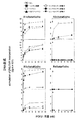
〔実施例1〕で作成した4種類のFGF受容体(FGFR1c、FGFR2c、FGFR3cあるいはFGFR4)のそれぞれをbetaKlothoとともに強制発現させた4種類のBaF3細胞を用い、これらの細胞に対するFGF19の反応性が、各種グリコサミノグリカンの存在下でどのように変わるかを解析した。まず細胞をRPMI1640培地で洗浄後10%FBSを含むRPMI1640培地に懸濁し培養プレートに播種し、各種グリコサミノグリカン(ヘパリン、シグマ 製品番号H3393;ヘパラン硫酸、生化学工業株式会社 製品番号400700;コンドロイチン硫酸B、生化学工業株式会社 製品番号400660;コンドロイチン硫酸D、生化学工業株式会社 製品番号400676;コンドロイチン硫酸E、生化学工業株式会社 製品番号400678)存在下で、FGF19の量を図のように変化させて刺激し、DNA合成を測定した。解析結果を、図1に示す。図に示されるように、ヘパリンの存在下でFGF19はいずれのFGFRを発現している細胞に対しても活性を示すのに対して、ヘパラン硫酸存在下ではR4/betaKlotho発現細胞のみが活性化されないことが明らかとなった。
またコンドロイチン硫酸Bあるいはコンドロイチン硫酸Eの存在下では、R2c/betaKlotho発現細胞のみが活性化されることが明らかとなった。
以上のことから、各種グリコサミノグリカンを共存させることによりFGF19が活性化させるFGF受容体の選択性を賦与できることが明らかになった。特に、ヘパラン硫酸存在下において、R4/betaKlotho発現細胞のみの活性がゼロであることは驚くべきことであり、ヘパラン硫酸にはFGF19によるFGFR4活性化作用のみを完全に抑制する効果があることを示すものであるといえる。
〔2−2〕
前記〔2−1〕で行った実験について、同様に作成して別途培養した細胞を用いて再現実験を行った。その結果を図2に示す。図1と比べてヘパリンの存在下でのR1c/betaKlotho、R2c/betaKlotho、R3c/betaKlothoに対するFGF19の活性の程度は高い傾向を示したものの、〔2−1〕で示された結果と同じく、ヘパリンの存在下でFGF19はいずれのFGFRを発現している細胞に対しても活性を示すのに対して、ヘパラン硫酸存在下ではR4/betaKlotho発現細胞のみが活性化されないことがわかった。またコンドロイチン硫酸Bあるいはコンドロイチン硫酸Eの存在下では、R2c/betaKlotho発現細胞のみが活性化されることがより明確となった。
[Example 2] Analysis of selective activation of FGF19 to FGF receptor by the presence of glycosaminoglycan [2-1]
Using four types of BaF3 cells in which each of the four types of FGF receptors (FGFR1c, FGFR2c, FGFR3c or FGFR4) prepared in [Example 1] was forcibly expressed together with betaKlotho, the reactivity of FGF19 to these cells was We analyzed how it changed in the presence of various glycosaminoglycans. First, the cells were washed with RPMI1640 medium, suspended in RPMI1640 medium containing 10% FBS, seeded on a culture plate, and various glycosaminoglycans (heparin, Sigma product number H3393; heparan sulfate, Seikagaku Corporation product number 400700; chondroitin) Sulfuric acid B, Seikagaku Corporation product number 400660; Chondroitin sulfate D, Seikagaku Corporation product number 400676; Chondroitin sulfate E, Seikagaku Corporation product number 400678), and the amount of FGF19 as shown in the figure Stimulation was varied and DNA synthesis was measured. The analysis results are shown in FIG. As shown in the figure, FGF19 is active against cells expressing any FGFR in the presence of heparin, whereas only R4 / betaKlotho-expressing cells are not activated in the presence of heparan sulfate. It became clear.
It was also revealed that only R2c / betaKlotho-expressing cells were activated in the presence of chondroitin sulfate B or chondroitin sulfate E.
From the above, it has been clarified that the selectivity of FGF receptor activated by FGF19 can be imparted by coexistence of various glycosaminoglycans. In particular, in the presence of heparan sulfate, it is surprising that the activity of only R4 / betaKlotho-expressing cells is zero, indicating that heparan sulfate has the effect of completely suppressing only FGFR4 activation by FGF19. It can be said that it is a thing.
[2-2]
About the experiment conducted by said [2-1], the reproduction experiment was done using the cell produced similarly and culture | cultivated separately. The result is shown in FIG. Although the degree of FGF19 activity against R1c / betaKlotho, R2c / betaKlotho and R3c / betaKlotho in the presence of heparin tended to be higher than that in FIG. 1, heparin was the same as the result shown in [2-1]. In the presence of FGF19, FGF19 showed activity against cells expressing any FGFR, whereas in the presence of heparan sulfate, only R4 / betaKlotho-expressing cells were not activated. In addition, it became clear that only R2c / betaKlotho-expressing cells are activated in the presence of chondroitin sulfate B or chondroitin sulfate E.
〔実施例3〕FGF21によるFGF受容体の活性化に対するグリコサミノグリカンの効果
〔実施例1〕で作成した4種類のBaF3細胞を用いて、〔実施例2〕と同様の手順で、各種グリコサミノグリカン存在下でFGF21の量を図のように変化させて刺激し、DNA合成を測定した。解析結果を、図3に示す。図に示されるように、いずれのグリコサミノグリカンの存在下でも、FGF21はR4/betaKlotho発現細胞を活性化しないことが明らかとなった。このことからも、FGF21の場合はFGF19とは異なりFGFR4を介した腫瘍形成作用の心配がないことが裏付けられる。またFGF21はグリコサミノグリカン非存在下でも、R1c/betaKlotho発現細胞を活性化するがヘパリンによりその作用は増強されることがわかった。またR3c/betaKlotho発現細胞に対してFGF21はグリコサミノグリカン非存在下でも作用するが、コンドロイチン硫酸E<コンドロイチン硫酸B<ヘパラン硫酸<ヘパリンの順でその活性は増強された。R2c/betaKlotho発現細胞に対してFGF21は、ヘパリン以外はヘパラン硫酸の存在下でのみ、活性化される。つまり、FGF21の場合は、FGF19を作用させる際にヘパラン硫酸で観察されたFGFR4の活性化作用を特異的に抑制する作用はない。しかし、ヘパラン硫酸にはFGF19のみならずFGF21に対してもFGFR1c、FGFR2c及びFGFR3cのいずれの活性化作用を増大させる作用がある。一方、コンドロイチン硫酸の場合は、FGF19に対してはFGFR2cの活性化作用のみを増大させる作用があったがFGF21に対しては、FGFR2cの活性化作用の増大効果は全く発揮せず、むしろわずかながらFGFR3c活性を増加させる。以上のことから、FGF21の場合は、betaKlothoの存在如何に関わらずFGFR4を介した活性化作用がないので、そもそもFGFR4を介した活性化作用を抑制するという課題がないが、ヘパラン硫酸などグリコサミノグリカンを共存させることによりFGF21の活性を増強できること、またコンドロイチン硫酸がFGF21によるFGFR2cの活性化を選択的に抑制しうることが示された。
[Example 3] Effect of glycosaminoglycan on activation of FGF receptor by FGF21 Using the four types of BaF3 cells prepared in [Example 1], various glycosyls were prepared in the same manner as in [Example 2]. In the presence of saminoglycan, the amount of FGF21 was varied and stimulated as shown in the figure, and DNA synthesis was measured. The analysis results are shown in FIG. As shown in the figure, it was revealed that FGF21 does not activate R4 / betaKlotho-expressing cells in the presence of any glycosaminoglycan. This also confirms that in the case of FGF21, unlike FGF19, there is no concern about the tumorigenic action via FGFR4. In addition, FGF21 activated R1c / betaKlotho-expressing cells even in the absence of glycosaminoglycan, but the effect was enhanced by heparin. FGF21 also acts on R3c / betaKlotho-expressing cells in the absence of glycosaminoglycan, but its activity was enhanced in the order of chondroitin sulfate E <chondroitin sulfate B <heparan sulfate <heparin. For R2c / betaKlotho-expressing cells, FGF21 is activated only in the presence of heparan sulfate except for heparin. That is, in the case of FGF21, there is no action that specifically suppresses the activation action of FGFR4 observed with heparan sulfate when FGF19 is allowed to act. However, heparan sulfate has an action of increasing any of the activation actions of FGFR1c, FGFR2c and FGFR3c not only to FGF19 but also to FGF21. On the other hand, chondroitin sulfate had an action to increase only the activation action of FGFR2c against FGF19, but did not exert an effect of increasing the activation action of FGFR2c to FGF21 at all. Increase FGFR3c activity. From the above, in the case of FGF21, there is no activation action via FGFR4 regardless of the presence of betaKlotho, so there is no problem of suppressing the activation action via FGFR4 in the first place. It was shown that the activity of FGF21 can be enhanced by coexisting with noglycan, and that chondroitin sulfate can selectively inhibit the activation of FGFR2c by FGF21.
〔実施例4〕ヘパラン硫酸による、betaKlothoの共存および非共存下におけるFGF受容体4に対するFGF19の選択的活性化作用の解析
〔実施例1〕で作成した、FGFR4強制発現させたBaF3細胞とFGFR4とbetaKlothoを共発現させたBaF3細胞を用いて、これらの細胞に対するFGF19の反応性が、ヘパラン硫酸の存在下でどのように変わるかを〔実施例2〕と同様な手順により解析した。細胞をRPMI1640培地で洗浄後10%FBSを含むRPMI1640培地に懸濁し培養プレートに播種し、ウシ腎臓由来のヘパラン硫酸(生化学工業株式会社 製品番号400700)及びブタ腸粘膜由来のヘパラン硫酸(イズロン社 製品番号GAG-HS01)と共に、同様にヘパリンについてもウシ腎臓由来のヘパリン(シグマ社 製品番号H3393)およびブタ腸粘膜由来ヘパリン(イズロン社 製品番号H030)の2種類のヘパリンを用いた。各ヘパラン硫酸及び各ヘパリンの存在下、図の横軸に示す各濃度のFGF19で刺激し、DNA合成を測定した。解析結果を、図4に示す。まずウシ腎臓由来ヘパリン、ブタ腸粘膜由来ヘパリンはいずれもFGF19によるR4発現細胞、R4/betaKlotho共発現細胞の活性化を増強した。これに対して、ひとつの典型的なヘパラン硫酸であるウシ腎臓由来のヘパラン硫酸(生化学工業株式会社製)は、R4単独発現細胞、R4/betaKlotho共発現細胞のいずれの細胞のFGF19による活性化も増強しないことが明らかとなった。しかし、ブタ腸粘膜由来のヘパラン硫酸(イズロン社製)は、FGF19のR4/betaKlotho共発現細胞に対する活性化作用を、ヘパリンとほぼ同程度に増強したが、FGF19によるR4単独の発現細胞の活性化はほとんど増強しないことがわかった。以上のことから、ヘパラン硫酸はその由来によって異なる効果があり、各種ヘパラン硫酸を用いて、FGF19によるR4の活性化をbetaKlothoとの非共存下でのみ抑制できること、あるいは共存下でも抑制できることが示された。
[Example 4] Analysis of selective activation of FGF19 on
Claims (16)
(1)FGF受容体及びbetaKlothoのいずれをも内在的に発現していない細胞を宿主としてFGF受容体遺伝子及びbetaKlotho遺伝子を導入し、細胞表面にFGF受容体及びbetaKlothoを発現させた形質転換細胞の系に対して披検物質と共にFGF19を作用させる工程、又は
(2)FGF受容体及びbetaKlothoのいずれをも内在的に発現していない細胞を宿主としてFGF受容体遺伝子及びbetaKlotho遺伝子と共に披検物質遺伝子を導入して、FGF受容体及びbetaKlothoと同時に披検物質も細胞表面に発現させた形質転換細胞の系に対してFGF19を作用させる工程、
を含むスクリーニング方法であって、FGF19の作用により特定のFGF受容体のみの生物活性を増加又は減少させる被検物質を選択する方法。 A screening method for a substance that enhances or suppresses a biological activity via FGF receptor by FGF19,
(1) A transformed cell in which an FGF receptor gene and a betaKlotho gene are introduced into a cell surface that does not express FGF receptor and betaKlotho endogenously, and the FGF receptor and betaKlotho are expressed on the cell surface. A step of allowing FGF19 to act on the system together with a test substance, or (2) a test substance gene together with the FGF receptor gene and the betaKlotho gene using a cell that does not endogenously express either FGF receptor or betaKlotho as a host Introducing FGF19 into a transformed cell system in which a test substance is also expressed on the cell surface simultaneously with the FGF receptor and betaKlotho,
A method for selecting a test substance that increases or decreases the biological activity of only a specific FGF receptor by the action of FGF19.
Priority Applications (1)
| Application Number | Priority Date | Filing Date | Title |
|---|---|---|---|
| JP2009205650A JP2010150232A (en) | 2008-11-19 | 2009-09-07 | Selective inhibitor of fibroblast growth factor receptor |
Applications Claiming Priority (2)
| Application Number | Priority Date | Filing Date | Title |
|---|---|---|---|
| JP2008296171 | 2008-11-19 | ||
| JP2009205650A JP2010150232A (en) | 2008-11-19 | 2009-09-07 | Selective inhibitor of fibroblast growth factor receptor |
Publications (1)
| Publication Number | Publication Date |
|---|---|
| JP2010150232A true JP2010150232A (en) | 2010-07-08 |
Family
ID=42569725
Family Applications (1)
| Application Number | Title | Priority Date | Filing Date |
|---|---|---|---|
| JP2009205650A Pending JP2010150232A (en) | 2008-11-19 | 2009-09-07 | Selective inhibitor of fibroblast growth factor receptor |
Country Status (1)
| Country | Link |
|---|---|
| JP (1) | JP2010150232A (en) |
Cited By (3)
| Publication number | Priority date | Publication date | Assignee | Title |
|---|---|---|---|---|
| WO2012086809A1 (en) * | 2010-12-24 | 2012-06-28 | 独立行政法人産業技術総合研究所 | Accurate and highly sensitive method for measuring activity of human fgf19 and agent for regulating activity of human fgf19 |
| JP2013028541A (en) * | 2011-06-20 | 2013-02-07 | Foundation For Biomedical Research & Innovation | Alpha-klotho/fgf23 complex formation-inhibiting compound |
| JP2015506944A (en) * | 2012-01-18 | 2015-03-05 | ジェネンテック, インコーポレイテッド | Methods of using FGF19 modifiers |
Citations (2)
| Publication number | Priority date | Publication date | Assignee | Title |
|---|---|---|---|---|
| WO2003047501A2 (en) * | 2001-12-05 | 2003-06-12 | Yeda Research And Development Co. Ltd. | Novel anti-cancer therapeutic compounds |
| WO2008052796A1 (en) * | 2006-11-03 | 2008-05-08 | U3 Pharma Gmbh | Fgfr4 antibodies |
-
2009
- 2009-09-07 JP JP2009205650A patent/JP2010150232A/en active Pending
Patent Citations (2)
| Publication number | Priority date | Publication date | Assignee | Title |
|---|---|---|---|---|
| WO2003047501A2 (en) * | 2001-12-05 | 2003-06-12 | Yeda Research And Development Co. Ltd. | Novel anti-cancer therapeutic compounds |
| WO2008052796A1 (en) * | 2006-11-03 | 2008-05-08 | U3 Pharma Gmbh | Fgfr4 antibodies |
Non-Patent Citations (5)
| Title |
|---|
| JPN6012066199; Journal of Biological Chemistry Vol.282, No.40, 2007, p.29069-29072 * |
| JPN6012066200; Molecular Pharmaceutics Vol.5, No.1, 20080801, p.42-48 * |
| JPN6012066203; Molecular and Cellular Biology Vol.27, No.9, 200705, p.3417-3428 * |
| JPN6012066204; Journal of Biological Chemistry Vol.282, No.37, 2007, p.27277-27284 * |
| JPN6012066207; 生化学 抄録CD, 20081204, p.3P-0262 * |
Cited By (4)
| Publication number | Priority date | Publication date | Assignee | Title |
|---|---|---|---|---|
| WO2012086809A1 (en) * | 2010-12-24 | 2012-06-28 | 独立行政法人産業技術総合研究所 | Accurate and highly sensitive method for measuring activity of human fgf19 and agent for regulating activity of human fgf19 |
| JP5850435B2 (en) * | 2010-12-24 | 2016-02-03 | 国立研究開発法人産業技術総合研究所 | Accurate and sensitive measurement method for human FGF19 activity and human FGF19 activity regulator |
| JP2013028541A (en) * | 2011-06-20 | 2013-02-07 | Foundation For Biomedical Research & Innovation | Alpha-klotho/fgf23 complex formation-inhibiting compound |
| JP2015506944A (en) * | 2012-01-18 | 2015-03-05 | ジェネンテック, インコーポレイテッド | Methods of using FGF19 modifiers |
Similar Documents
| Publication | Publication Date | Title |
|---|---|---|
| JP5850435B2 (en) | Accurate and sensitive measurement method for human FGF19 activity and human FGF19 activity regulator | |
| JP5545504B2 (en) | Method for activating receptor by cofactor and utilization of ligand activity | |
| Beenken et al. | The FGF family: biology, pathophysiology and therapy | |
| Irie et al. | Heparin enhances osteoclastic bone resorption by inhibiting osteoprotegerin activity | |
| Poll et al. | Gut microbial metabolites and blood pressure regulation: focus on SCFAs and TMAO | |
| Pye et al. | Regulation of FGF-1 mitogenic activity by heparan sulfate oligosaccharides is dependent on specific structural features: differential requirements for the modulation of FGF-1 and FGF-2 | |
| Ashikari-Hada et al. | Heparin regulates vascular endothelial growth factor165-dependent mitogenic activity, tube formation, and its receptor phosphorylation of human endothelial cells: comparison of the effects of heparin and modified heparins | |
| Presta et al. | Heparin derivatives as angiogenesis inhibitors | |
| Imamura | Physiological functions and underlying mechanisms of fibroblast growth factor (FGF) family members: recent findings and implications for their pharmacological application | |
| Bastow et al. | Hyaluronan synthesis and degradation in cartilage and bone | |
| Beenken et al. | The structural biology of the FGF19 subfamily | |
| Pisano et al. | The potential of heparanase as a therapeutic target in cancer | |
| Faul et al. | FGF23 induces left ventricular hypertrophy | |
| Yu et al. | Analysis of the biochemical mechanisms for the endocrine actions of fibroblast growth factor-23 | |
| Dostalova et al. | Fibroblast growth factor 21: a novel metabolic regulator with potential therapeutic properties in obesity/type 2 diabetes mellitus. | |
| US10792303B2 (en) | Compositions and methods for inducing beige or brown fat tissue | |
| Donate-Correa et al. | Implications of Fibroblast growth factor/Klotho system in glucose metabolism and diabetes | |
| Thomas et al. | Fibroblast growth factor 23, klotho and heparin | |
| Luo et al. | Metabolic regulator βKlotho interacts with fibroblast growth factor receptor 4 (FGFR4) to induce apoptosis and inhibit tumor cell proliferation | |
| Afroz et al. | Signalling pathways regulating galactosaminoglycan synthesis and structure in vascular smooth muscle: implications for lipoprotein binding and atherosclerosis | |
| Kaur et al. | Effect of high glucose on glycosaminoglycans in cultured retinal endothelial cells and rat retina | |
| JP2010150232A (en) | Selective inhibitor of fibroblast growth factor receptor | |
| Wu et al. | A unique FGF23 with the ability to activate FGFR signaling through both αKlotho and βKlotho | |
| Nakamura et al. | Sulfated glycosaminoglycans are required for specific and sensitive fibroblast growth factor (FGF) 19 signaling via FGF receptor 4 and betaKlotho | |
| EP4039814A1 (en) | Method for producing heparin-like substance, recombinant cells and method for producing same |
Legal Events
| Date | Code | Title | Description |
|---|---|---|---|
| A621 | Written request for application examination |
Free format text: JAPANESE INTERMEDIATE CODE: A621 Effective date: 20110224 |
|
| A131 | Notification of reasons for refusal |
Free format text: JAPANESE INTERMEDIATE CODE: A131 Effective date: 20121225 |
|
| A02 | Decision of refusal |
Free format text: JAPANESE INTERMEDIATE CODE: A02 Effective date: 20130423 |