JP2009540872A - Low-top bone fixation system and method of use thereof - Google Patents
Low-top bone fixation system and method of use thereof Download PDFInfo
- Publication number
- JP2009540872A JP2009540872A JP2009501588A JP2009501588A JP2009540872A JP 2009540872 A JP2009540872 A JP 2009540872A JP 2009501588 A JP2009501588 A JP 2009501588A JP 2009501588 A JP2009501588 A JP 2009501588A JP 2009540872 A JP2009540872 A JP 2009540872A
- Authority
- JP
- Japan
- Prior art keywords
- tulip
- rod
- assembly
- tulip assembly
- pedicle screw
- Prior art date
- Legal status (The legal status is an assumption and is not a legal conclusion. Google has not performed a legal analysis and makes no representation as to the accuracy of the status listed.)
- Pending
Links
Images




Classifications
-
- A—HUMAN NECESSITIES
- A61—MEDICAL OR VETERINARY SCIENCE; HYGIENE
- A61F—FILTERS IMPLANTABLE INTO BLOOD VESSELS; PROSTHESES; DEVICES PROVIDING PATENCY TO, OR PREVENTING COLLAPSING OF, TUBULAR STRUCTURES OF THE BODY, e.g. STENTS; ORTHOPAEDIC, NURSING OR CONTRACEPTIVE DEVICES; FOMENTATION; TREATMENT OR PROTECTION OF EYES OR EARS; BANDAGES, DRESSINGS OR ABSORBENT PADS; FIRST-AID KITS
- A61F2/00—Filters implantable into blood vessels; Prostheses, i.e. artificial substitutes or replacements for parts of the body; Appliances for connecting them with the body; Devices providing patency to, or preventing collapsing of, tubular structures of the body, e.g. stents
- A61F2/02—Prostheses implantable into the body
- A61F2/30—Joints
- A61F2/44—Joints for the spine, e.g. vertebrae, spinal discs
-
- A—HUMAN NECESSITIES
- A61—MEDICAL OR VETERINARY SCIENCE; HYGIENE
- A61B—DIAGNOSIS; SURGERY; IDENTIFICATION
- A61B17/00—Surgical instruments, devices or methods
- A61B17/56—Surgical instruments or methods for treatment of bones or joints; Devices specially adapted therefor
- A61B17/58—Surgical instruments or methods for treatment of bones or joints; Devices specially adapted therefor for osteosynthesis, e.g. bone plates, screws or setting implements
- A61B17/68—Internal fixation devices, including fasteners and spinal fixators, even if a part thereof projects from the skin
- A61B17/70—Spinal positioners or stabilisers, e.g. stabilisers comprising fluid filler in an implant
- A61B17/7001—Screws or hooks combined with longitudinal elements which do not contact vertebrae
- A61B17/7032—Screws or hooks with U-shaped head or back through which longitudinal rods pass
-
- A—HUMAN NECESSITIES
- A61—MEDICAL OR VETERINARY SCIENCE; HYGIENE
- A61B—DIAGNOSIS; SURGERY; IDENTIFICATION
- A61B17/00—Surgical instruments, devices or methods
- A61B17/56—Surgical instruments or methods for treatment of bones or joints; Devices specially adapted therefor
- A61B17/58—Surgical instruments or methods for treatment of bones or joints; Devices specially adapted therefor for osteosynthesis, e.g. bone plates, screws or setting implements
- A61B17/68—Internal fixation devices, including fasteners and spinal fixators, even if a part thereof projects from the skin
- A61B17/70—Spinal positioners or stabilisers, e.g. stabilisers comprising fluid filler in an implant
- A61B17/7001—Screws or hooks combined with longitudinal elements which do not contact vertebrae
- A61B17/7035—Screws or hooks, wherein a rod-clamping part and a bone-anchoring part can pivot relative to each other
- A61B17/7037—Screws or hooks, wherein a rod-clamping part and a bone-anchoring part can pivot relative to each other wherein pivoting is blocked when the rod is clamped
Landscapes
- Health & Medical Sciences (AREA)
- Orthopedic Medicine & Surgery (AREA)
- Neurology (AREA)
- Life Sciences & Earth Sciences (AREA)
- Surgery (AREA)
- Engineering & Computer Science (AREA)
- Biomedical Technology (AREA)
- General Health & Medical Sciences (AREA)
- Veterinary Medicine (AREA)
- Heart & Thoracic Surgery (AREA)
- Public Health (AREA)
- Animal Behavior & Ethology (AREA)
- Molecular Biology (AREA)
- Medical Informatics (AREA)
- Nuclear Medicine, Radiotherapy & Molecular Imaging (AREA)
- Cardiology (AREA)
- Oral & Maxillofacial Surgery (AREA)
- Transplantation (AREA)
- Vascular Medicine (AREA)
- Surgical Instruments (AREA)
Abstract
骨固定デバイスのヘッドへと連結されるように構成されたチューリップアセンブリは、骨固定デバイスのヘッドと連結するように構成された下部と、下部から延びた複数の可撓凸部を含んだ上部とを含んだ内側チューリップ部材を含んでいる。或る態様において、複数の可撓凸部は、ロッドを仮に連結するように構成される。チューリップアセンブリは、第1及び第2位置を含み、前者は内側チューリップ部材下部の膨張を可能とするように構成され、後者は内側部材の下部を骨固定デバイス上へと圧縮力によって固定する外側チューリップ部材(450)を更に含んでいる。また、チューリップアセンブリは、カップ及び少なくとも1つのロッキング部材も含み、少なくとも1つのロッキング部材は可撓凸部を圧縮してロッドをチューリップアセンブリ内で確実にロックするように構成されている。
【選択図】 図2A tulip assembly configured to be coupled to the head of the bone fixation device includes a lower portion configured to couple to the head of the bone fixation device, and an upper portion including a plurality of flexible protrusions extending from the lower portion. An inner tulip member containing In some embodiments, the plurality of flexible protrusions are configured to temporarily connect the rods. The tulip assembly includes first and second positions, the former configured to allow expansion of the lower portion of the inner tulip member, and the latter fixing the lower portion of the inner member onto the bone fixation device by compressive force. It further includes a member (450). The tulip assembly also includes a cup and at least one locking member, wherein the at least one locking member is configured to compress the flexible protrusion to securely lock the rod within the tulip assembly.
[Selection] Figure 2
Description
関連出願
本発明は、2006年3月22日に出願され、「ロートップ椎弓根螺子(Low Top Pedicle Screw)と題された米国仮出願第60/784,674号の35 U.S.C.§119(e)に基づく利益を主張し、この仮出願は、ここに参照によって完全に組み込まれる。
RELATED APPLICATIONS The present invention was filed on March 22, 2006 and is published in US Provisional Application No. 60 / 784,674 entitled “Low Top Pedicle Screw”, 35 USC. Claiming benefit under §119 (e), this provisional application is hereby fully incorporated by reference.
分野
本システム及び方法は、骨固定デバイスに関する。より詳細には、本システム及び方法は、椎体の内固定を促進するように構成された、高さの低い(low profile)螺子アセンブリを提供する。
Field The system and method relate to a bone fixation device. More particularly, the present systems and methods provide a low profile screw assembly configured to facilitate internal fixation of the vertebral body.
背景
人体又は動物体において骨セグメントを内固定する様々なデバイスが、当技術において知られている。或るタイプのシステムは、椎弓根螺子システムであり、それは、しばしば脊椎固定外科術への補助物として使用され、脊椎セグメントを掴む手段を提供する。通常の椎弓根螺子システムは、椎弓根螺子とロッド受取デバイスとを備えている。椎弓根螺子は、外側に螺子山が切られたステムとヘッド部とを含んでいる。ロッド受取デバイスは、椎弓根螺子のヘッド部と連結し、ロッド(一般には、伸延ロッドと呼ばれている)を受け取る。そのような2つのシステムは、例えば椎間板ヘルニアを矯正する手術の間に、それぞれ椎骨へと挿入され、脊柱を伸延及び/又は安定化すべく調節される。椎弓根螺子は、単独では脊椎セグメントを固定しないが、その代わりに、ロッド受取デバイスを受け取るアンカー点として働き、それがひいてはロッドを受け取る。そのようなシステムの1つのゴールは、融合している脊椎セグメント間の相対的な動きを実質的に低減する及び/又は防止することである。
BACKGROUND Various devices for internal fixation of bone segments in the human or animal body are known in the art. One type of system is the pedicle screw system, which is often used as an adjunct to spinal fusion surgery and provides a means of grasping a spinal segment. A typical pedicle screw system includes a pedicle screw and a rod receiving device. The pedicle screw includes a stem and a head portion that are externally threaded. A rod receiving device is coupled to the head portion of the pedicle screw and receives a rod (commonly referred to as a distraction rod). Two such systems are each inserted into the vertebrae and adjusted to distract and / or stabilize the spinal column, for example during surgery to correct a herniated disc. The pedicle screw alone does not fix the spinal segment, but instead serves as an anchor point for receiving the rod receiving device, which in turn receives the rod. One goal of such a system is to substantially reduce and / or prevent relative movement between fused spinal segments.
通常の従来技術に係る椎弓根螺子システムが存在しているものの、それらは、脊椎外科術により一般的に使用されているより新しい低侵襲手術(MIS)手技を向上させる及び/又はそれに利するという特徴を欠いている。MISアプローチの1つの可能な利益は、それは患者の回復時間を低減し得ることであることが示唆されている。 Although there are conventional prior art pedicle screw systems, they enhance and / or benefit from the newer minimally invasive surgical (MIS) procedures commonly used by spinal surgery. It lacks the feature. One possible benefit of the MIS approach has been suggested that it can reduce patient recovery time.
通常の椎弓根螺子システム及びより最近に設計された椎弓根螺子システムは、幾つかの欠点を有している。これら椎弓根螺子システムの幾つかは、どちらかと言えば大きく且つ嵩張り、それは、椎弓根螺子システムが外科術中に取り付けられるときに、手術部位及びその周囲により大きな組織のダメージをもたらすかも知れない。伝統的な椎弓根螺子システムは、椎弓根螺子へと手術前に連結又は取り付けられたロッド受取デバイスを有している。加えて、従来技術に係る椎弓根螺子システムの幾つかは、全てを注意深く組み合わせなければならない多数の部品を含んでおり、それは、MIS手技を使用する脊椎手術におけるこれらシステムの取り付けと操作とをより困難にする
要約
骨固定デバイスのヘッドへと連結されるように構成された代表的なチューリップアセンブリは、骨固定デバイスのヘッドと連結するように構成された下部と、この下部から延びた複数の可撓凸部を含んだ上部とを含んでいる。或る代表的な態様によると、複数の可撓凸部は、ロッドを仮に連結されるように構成される。代表的なチューリップアセンブリは、第1位置と第2位置とを含み、第1位置は内側チューリップ部材の下部の膨張を可能とするように構成され、第2位置は内側部材の下部を骨固定デバイス上へと圧縮力によって固定するように構成された外側チューリップ部材(450)も含んでいる。更に、この代表的なチューリップアセンブリは、略平面状トップと、このトップから延びた少なくとも1つのロッキング部材とを有しているキャップも含んでいる。ここで、少なくとも1つのロッキング部材は、可撓凸部を圧縮してロッドをチューリップアセンブリ内で確実にロック(securely lock)するように構成されている。
Conventional pedicle screw systems and more recently designed pedicle screw systems have several disadvantages. Some of these pedicle screw systems are rather large and bulky, which may cause more tissue damage to the surgical site and its surroundings when the pedicle screw system is installed during surgery. Absent. Traditional pedicle screw systems have a rod receiving device that is connected or attached to the pedicle screw prior to surgery. In addition, some of the prior art pedicle screw systems include a number of components that must all be carefully combined, which allows for the installation and operation of these systems in spinal surgery using MIS procedures. Make it more difficult
Summary A typical tulip assembly configured to be coupled to a head of a bone fixation device includes a lower portion configured to couple to the head of the bone fixation device and a plurality of flexible protrusions extending from the lower portion. Including the upper part. According to an exemplary embodiment, the plurality of flexible protrusions are configured to temporarily connect the rod. An exemplary tulip assembly includes a first position and a second position, wherein the first position is configured to allow expansion of the lower portion of the inner tulip member, the second position being a bone fixation device for the lower portion of the inner member Also included is an outer tulip member (450) configured to secure upwardly by a compressive force. The exemplary tulip assembly further includes a cap having a generally planar top and at least one locking member extending from the top. Here, the at least one locking member is configured to compress the flexible projection to securely lock the rod within the tulip assembly.
図面の簡単な説明
添付の図面は、本システム及び方法の様々な代表的な態様を例示しており、明細書の一部である。以下の記述と共に、それら図面は、本システム及び方法の原理を実証及び説明する。例示する態様は、本システム及び方法の例であって、それらの範囲を制限するものではない。
それら図面を通して、同一の参照番号は、類似しているが必ずしも同一ではない要素を示している。
BRIEF DESCRIPTION OF THE DRAWINGS The accompanying drawings illustrate various exemplary aspects of the present system and method and are a part of the specification. Together with the following description, the drawings demonstrate and explain the principles of the present system and method. The illustrated aspects are examples of the present system and method and are not intended to limit their scope.
Throughout the drawings, identical reference numbers indicate similar, but not necessarily identical, elements.
詳細な説明
本明細書は、チューリップアセンブリの椎弓根螺子に対する方位とチューリップアセンブリにおけるロッドの位置とを別々にロックするシステム及び方法を記載する。更に、或る代表的な態様によると、本明細書は、患者の体の中に椎弓根螺子を設置した後に椎弓根螺子のヘッド上に設置されるように構成され、トップロードロッド(top loaded rod)を受け取り且つその位置を固定するように構成されたチューリップアセンブリの構造を記載する。この代表的なシステム及び方法の更なる詳細は、以下に与えられる。
DETAILED DESCRIPTION This specification describes systems and methods for separately locking the orientation of a tulip assembly relative to a pedicle screw and the position of a rod in the tulip assembly. Further, according to certain exemplary aspects, the present specification is configured to be placed on a pedicle screw head after placement of a pedicle screw in a patient's body, and a top load rod ( The structure of the tulip assembly configured to receive and fix its position is described. Further details of this exemplary system and method are given below.
一例として、椎弓根螺子システムは、低侵襲手術(MIS)手技による腰椎後方固定プロセスにおいて脊椎中に固定されてもよい。これらシステムは、脊椎の椎弓根中へと挿入され、次いで、ロッドと相互接続されて、脊椎の少なくとも複数の部分を操作する(例えば、弯曲を矯正する、加圧する又は広げる、及び/又は、構造的に補強する)。脊椎固定及び/又は矯正手術にMISアプローチを使用することは、患者の回復時間を短縮し、追跡手術のリスクを低減することが示されている。 As an example, the pedicle screw system may be secured in the spine in a lumbar posterior fixation process with minimally invasive surgical (MIS) procedures. These systems are inserted into the pedicle of the spine and then interconnected with a rod to manipulate at least portions of the spine (e.g., correct curvature, pressurize or spread, and / or Structurally reinforced). The use of the MIS approach for spinal fusion and / or corrective surgery has been shown to reduce patient recovery time and the risk of follow-up surgery.
MIS手技を用いて腰椎固定及び/又は矯正手術を効率的に行う能力は、この代表的なシステム及び方法に従って提供される椎弓根螺子システムの使用によって高められ、これらシステム及び方法は、通常のシステムを上回る多くの利益を提供する。例えば、この代表的なシステム及び方法の一態様に係る椎弓根螺子システムは、ロッド連結アセンブリ(以下、チューリップアセンブリと呼ぶ)と手術前に連結されることなしに、骨の中へと挿入されてもよい。これは、外科医は、しばしば、椎弓根螺子を挿入した後であって、より大きく且つより嵩張るチューリップアセンブリを取り付ける前に、他の椎体間作業を行う必要があるため有利である。そのような有利な椎弓根螺子システムは、MIS手技を用いる場合に更により重要であるかも知れない。というのは、外科医が作業しなければならない椎体間の空間的境界は相当に制限されているかも知れないからである。 The ability to efficiently perform lumbar fixation and / or corrective surgery using MIS procedures is enhanced by the use of a pedicle screw system provided in accordance with this exemplary system and method, Provides many benefits over the system. For example, a pedicle screw system according to one aspect of this exemplary system and method is inserted into a bone without being connected to a rod connection assembly (hereinafter referred to as a tulip assembly) prior to surgery. May be. This is advantageous because the surgeon often needs to perform other interbody work after inserting the pedicle screw and before installing the larger and more bulky tulip assembly. Such an advantageous pedicle screw system may be even more important when using MIS procedures. This is because the spatial boundaries between the vertebral bodies that the surgeon must work on may be quite limited.
加えて、このシステム及び方法の幾つかの態様に係る椎弓根螺子システムは、有利には、ユーザが、ロッドを挿入及び/又は捉える前又は後に、チューリップアセンブリを椎弓根螺子へと所望の角度で初期固定(例えばロック)することを可能とする。チューリップアセンブリを椎弓根螺子へと初期ロックすることは、チューリップアセンブリの少なくとも1つの部品が把持及び/又は締め付けるように椎弓根螺子上へと操作されて、チューリップアセンブリの椎弓根螺子に対するあらゆる並進及び/又は回転運動を低減及び/又は防止することを意味している。チューリップアセンブリを椎弓根螺子へと初期ロックする能力は、外科医が各種脊椎及び/又は骨部位の圧迫及び/又は伸延を実行するのを促進するかも知れない。 In addition, the pedicle screw system according to some aspects of the system and method advantageously provides the user with the desired tulip assembly to the pedicle screw before or after inserting and / or grasping the rod. It is possible to initially fix (for example, lock) at an angle. Initial locking of the tulip assembly to the pedicle screw may be performed on the pedicle screw so that at least one part of the tulip assembly is grasped and / or tightened, and It means reducing and / or preventing translational and / or rotational movement. The ability to initially lock the tulip assembly to the pedicle screw may facilitate the surgeon performing compression and / or distraction of various vertebrae and / or bone sites.
用語「伸延」は、ここで使用する場合及び医学的意義で使用する場合、一般には、関節面に関し、間接面が互いに対して垂直に移動することを示唆している。しかしながら、例えば脊椎部位に対して「牽引」及び/又は「伸延」が実行される場合、脊椎部位は、伸延と滑りとの組み合わせ及び/又は他の自由度によって、互いに対して相対的に移動するかも知れない。 The term “distraction”, as used herein and when used in medical significance, generally implies that the indirect surfaces move perpendicular to each other with respect to the articulating surface. However, when “traction” and / or “distraction” is performed, for example, with respect to the spinal region, the spinal regions move relative to each other by a combination of distraction and sliding and / or other degrees of freedom. May.
この代表的なシステム及び方法の少なくとも1つの態様の他の有利な特徴は、椎弓根螺子のヘッド部へと手術中に連結され得る完成したチューリップアセンブリが開示されることである。この有利なチューリップアセンブリは、このチューリップアセンブリが椎弓根螺子のヘッド部上へと初期ロックされ、次いで、ロッドをチューリップアセンブリ中へと受け取り、捉え、最後にロックすることを可能とする側面又は構造を含んでいてもよい。或る代表的な態様において、チューリップアセンブリは、ロッドがチューリップアセンブリ中に受け取られた後に、椎弓根螺子のヘッド部上へと初期ロックされる。この有利なチューリップアセンブリは、椎弓根螺子システム設置の複雑さを、椎弓根螺子を骨の中へと挿入し、チューリップアセンブリを椎弓根螺子上へと初期ロックし、それは、ロッドがチューリップアセンブリ中に存在しているか又は存在していない状態で達成されてもよく、次いで、ロッドをチューリップアセンブリ中へと捉え且つロックすることを含んだ本質的には3段階のプロセスへとその設置を減少させることによって低減するかも知れない。新しいMISアプローチを脊椎矯正及び/又は固定に適応させるのに加え、この代表的なシステム及び方法は、食い違い螺子及び/又は手術後におけるチューリップの広がりの事例を排除するように構成されており、この広がりは、手術後における後方屈曲力によって生じるかも知れないロッドにおける応力/歪みの量が、チューリップアセンブリを開く場合に起こり、ついには、椎弓根螺子システムの分解及び/又は故障へと導く。 Another advantageous feature of at least one aspect of this exemplary system and method is that a complete tulip assembly is disclosed that can be surgically coupled to the head of the pedicle screw. The advantageous tulip assembly is a side or structure that allows the tulip assembly to be initially locked onto the head of the pedicle screw and then receive, capture and finally lock the rod into the tulip assembly. May be included. In certain exemplary embodiments, the tulip assembly is initially locked onto the head of the pedicle screw after the rod is received in the tulip assembly. This advantageous tulip assembly inserts the pedicle screw into the bone and initially locks the tulip assembly onto the pedicle screw, where the rod is connected to the tulip. May be accomplished in the presence or absence of the assembly, and then its installation into an essentially three-step process involving capturing and locking the rod into the tulip assembly. May decrease by decreasing. In addition to adapting the new MIS approach to spinal correction and / or fixation, this exemplary system and method is configured to eliminate the case of staggered screws and / or post-operative tulip spread, Spreading occurs when the amount of stress / strain in the rod, which may be caused by posterior flexion forces after surgery, opens the tulip assembly, eventually leading to disassembly and / or failure of the pedicle screw system.
以下の記載では、説明の目的で、チューリップアセンブリの椎弓根螺子に対する方位とロッドのチューリップアセンブリにおける位置とを別々にロックすることが可能なロートップ椎弓根螺子連結システムを提供するこのシステム及び方法の完全な理解を提供するために、多数の特定の詳細が説明される。しかしながら、本方法がこれら特定の詳細なしに実施されてもよいことは、当業者には明白であろう。明細書における「或る態様」又は「一態様」への参照は、その態様に関連して記載される特定の機能、構造又は特徴が、少なくとも1つの態様に含まれることを意味している。本明細書において様々な場所に出現する「或る態様において」というフレーズは、必ずしも全てが同一の態様を参照している訳ではない。 In the following description, for illustrative purposes, this system provides a low-top pedicle screw coupling system capable of separately locking the orientation of the tulip assembly relative to the pedicle screw and the position of the rod in the tulip assembly, and Numerous specific details are described to provide a thorough understanding of the method. However, it will be apparent to those skilled in the art that the method may be practiced without these specific details. Reference to “an aspect” or “one aspect” in the specification means that the particular function, structure, or feature described in connection with that aspect is included in at least one aspect. The phrases “in one aspect” appearing in various places in this specification are not necessarily all referring to the same aspect.
代表的な全体構造
このシステム及び方法はあらゆる数の骨固定システムによって実行されてもよく、また、その中に組み込まれてもよいが、ここでは、このシステム及び方法を、説明の容易さのみのために、椎弓根螺子システムのコンテクストにおいて説明する。従って、このシステム及び方法は、図1A及び1Bに例示されている或る代表的な態様に従うと、椎弓根螺子(102)と、ロッド(104)と、以下、チューリップアセンブリ(106)と呼ぶ、薄型圧縮キャップ(108)を含んだ連結アセンブリ(106)とを含んだロートップ椎弓根螺子システム(100)を含んでいる。このシステム及び方法の或る代表的な態様によると、チューリップアセンブリ(106)は、チューリップアセンブリ(106)の椎弓根螺子(102)に対する方位と、ロッド(104)のチューリップアセンブリ(106)に対する位置とを別々にロックするように構成されている。チューリップアセンブリ(106)の操作並びにその椎弓根螺子(102)及びロッド(104)の双方との相互作用を、図面を参照しながら以下に更に詳細に説明する。
Exemplary Overall Structure Although this system and method may be implemented by and incorporated into any number of bone fixation systems, the system and method are described here for ease of explanation only. Therefore, it will be described in the context of the pedicle screw system. Accordingly, this system and method, in accordance with certain exemplary aspects illustrated in FIGS. 1A and 1B, is referred to as a pedicle screw (102), a rod (104), and hereinafter a tulip assembly (106). A low top pedicle screw system (100) including a coupling assembly (106) including a thin compression cap (108). According to certain exemplary aspects of the system and method, the tulip assembly (106) includes an orientation of the tulip assembly (106) relative to the pedicle screw (102) and a position of the rod (104) relative to the tulip assembly (106). And are configured to be locked separately. The operation of the tulip assembly (106) and its interaction with both the pedicle screw (102) and the rod (104) are described in further detail below with reference to the drawings.
或る代表的な態様によると、図1A及び1Bは、椎弓根螺子(102)と、ロッド(104)と、以下、チューリップアセンブリ(106)と呼ぶ連結アセンブリ(106)とを備えた椎弓根螺子システム(100)を概略的に示している。図1に例示するように、椎弓根螺子システム(100)は、チューリップアセンブリ(106)を椎弓根螺子(102)のヘッド(110)へと確実に連結し、それにより、チューリップアセンブリ(106)を椎弓根螺子(102)に対する或る角度位置にロック又は固定するように構成されている。加えて、図1A及び1Bに示すように、この代表的な椎弓根螺子システム(100)は、ロッド(104)を受け取り、チューリップアセンブリ(106)内でロッド(104)の位置を固定するように構成されている。 According to certain exemplary aspects, FIGS. 1A and 1B show a vertebral arch with a pedicle screw (102), a rod (104), and a coupling assembly (106), hereinafter referred to as a tulip assembly (106). 1 schematically shows a root screw system (100). As illustrated in FIG. 1, the pedicle screw system (100) securely couples the tulip assembly (106) to the head (110) of the pedicle screw (102), thereby providing a tulip assembly (106). ) At a certain angular position relative to the pedicle screw (102). In addition, as shown in FIGS. 1A and 1B, this exemplary pedicle screw system (100) receives the rod (104) and fixes the position of the rod (104) within the tulip assembly (106). It is configured.
図2は、ある代表的な態様に係るロートップ椎弓根螺子システム(100)の分解図を例示している。図2に例示するように、ロートップ椎弓根螺子システム(100)の連結アセンブリ、即ちチューリップアセンブリ(106)は、上述した角度及び位置の固定を実行するように構成され、決して制限されるものではないが、チューリップアセンブリ(106)と、内側チューリップ部材(400)と、圧縮キャップ(108)とを含む幾つかの部品を含んでいる。或る代表的な態様によると、内側チューリップ部材(400)を含んだチューリップアセンブリ(106)は、以下に更に詳細に説明するように、椎弓根螺子(102)のヘッド部(110)と係合するように構成されている。更に、チューリップアセンブリ(106)は、圧縮キャップ(108)と共に、ロッド(104)を確実に連結するように構成されている。このロートップ椎弓根螺子システム(100)の各部品の詳細な説明を、図3乃至9Bを参照しながら以下に更に詳細に記載する。 FIG. 2 illustrates an exploded view of a low top pedicle screw system (100) according to certain exemplary embodiments. As illustrated in FIG. 2, the coupling assembly of the low-top pedicle screw system (100), i.e., the tulip assembly (106), is configured to perform the angle and position fixation described above and is in no way limited. Although not, it includes several parts including a tulip assembly (106), an inner tulip member (400), and a compression cap (108). According to certain exemplary aspects, the tulip assembly (106) including the inner tulip member (400) is engaged with the head portion (110) of the pedicle screw (102), as described in more detail below. Configured to match. Further, the tulip assembly (106) is configured to securely connect the rod (104) with the compression cap (108). A detailed description of each component of this low-top pedicle screw system (100) is described in further detail below with reference to FIGS. 3-9B.
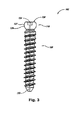
図3は、或る代表的な態様に係る椎弓根螺子(102)の部品を更に例示している。図3に例示するように、椎弓根螺子(102)は、延びた形状を有している螺子部(108)と、ヘッド部(110)とを含んでいる。椎弓根螺子(102)は当技術において一般に知られているが、ヘッド部(110)は、どのタイプのチューリップアセンブリ(160)が椎弓根螺子(102)に連結されるかに応じて様々な構成を有していてもよい。この代表的な椎弓根螺子(102)のヘッド部(110)は、打込構造(124)と、最大径部(126)とを含んでいる。この代表的な椎弓根螺子(102)の打込構造(124)は、この螺子が椎弓骨及び/又は他の骨の中へと挿入されるのを可能とする。或る代表的な態様によると、椎弓骨は、薄層を椎体に接続する椎骨の一部である。加えて、この代表的な態様によると、打込構造(124)は、チューリップアセンブリ(106)が椎弓根螺子(102)と連結される前又は後に、椎弓根螺子(102)を調節するのに使用され得る。例示する態様では、椎弓根螺子(102)のヘッド部(110)は、螺子部(108)と連結され、切頭又は平坦トップ面(128)を有している略球面(127)を含んでいる。 FIG. 3 further illustrates the components of the pedicle screw (102) according to certain exemplary embodiments. As illustrated in FIG. 3, the pedicle screw (102) includes a screw portion (108) having an extended shape and a head portion (110). While the pedicle screw (102) is generally known in the art, the head (110) can vary depending on which type of tulip assembly (160) is coupled to the pedicle screw (102). You may have the structure. The head portion (110) of this exemplary pedicle screw (102) includes a driving structure (124) and a maximum diameter portion (126). This exemplary pedicle screw (102) drive structure (124) allows the screw to be inserted into the pedicle and / or other bone. According to one exemplary embodiment, the vertebra is the part of the vertebra that connects the lamina to the vertebral body. In addition, according to this exemplary aspect, the driving structure (124) adjusts the pedicle screw (102) before or after the tulip assembly (106) is coupled to the pedicle screw (102). Can be used to In the illustrated embodiment, the head portion (110) of the pedicle screw (102) is coupled to the screw portion (108) and includes a generally spherical surface (127) having a truncated or flat top surface (128). It is out.
或る代表的な態様において、椎弓根螺子(102)は、カニューレ状である。これは、チャネル(130)(破線で示されており、椎弓根螺子(102)内で軸方向に延びている)が、椎弓根螺子(102)内でその長さ全体に亘って延びていることを意味している。このチャネル(130)は、椎弓根螺子(102)が一般にK−ワイヤと呼ばれているキルシュナー鋼線(図示せず)の上方に導かれ、これを受け取るのを可能とする。K−ワイヤは、典型的には、イメージング技術、例えば蛍光透視イメージングを用いて予め位置合わせされ、次いで、椎弓根螺子(102)の正確な位置を提供するべく使用される。図3に例示する椎弓根螺子(102)は幾つかの部品を含んでおり、決して制限されるものではないが、打込構造(124)のタイプを変更すること、材料を変更すること、寸法を変更することなどを含む多数の変形がなされてもよい。 In certain exemplary embodiments, the pedicle screw (102) is cannulated. This is because the channel (130) (shown in broken lines and extending axially within the pedicle screw (102)) extends throughout its length within the pedicle screw (102). It means that This channel (130) allows the pedicle screw (102) to be guided and received over a Kirschner steel wire (not shown), commonly referred to as a K-wire. The K-wire is typically pre-aligned using an imaging technique such as fluoroscopic imaging and then used to provide the precise position of the pedicle screw (102). The pedicle screw (102) illustrated in FIG. 3 includes several parts and is not limited in any way, but can change the type of implant structure (124), change the material, Numerous variations may be made, including changing dimensions.
図1に再び戻ると、椎弓根螺子は、チューリップアセンブリ(106)の椎弓根螺子(102)に対する方位と、ロッド(104)のチューリップアセンブリ(106)内における位置とを別々にロックするように構成されたチューリップアセンブリ(106)を含んでいる。図4、5及び6は、或る態様に係る代表的なチューリップアセンブリ(106)の各種部品を例示している。図4は、捉えられたロッド(104)の軸方向から見た代表的なチューリップアセンブリ(106)の分解図を例示しており、図5は、捉えられたロッド(104)の横断方向から見た代表的なチューリップアセンブリ(106)の分解図を例示している。更に、図6は、代表的なチューリップアセンブリ(106)の軸方向断面図を提供している。図4〜6に例示するように、この代表的なチューリップアセンブリ(106)は、内側チューリップ部材(400)を実質的に収容するチューリップ本体(450)を含んでいる。加えて、貫通孔(452)がチューリップアセンブリ(106)の中央に規定されており、椎弓根螺子(102;図3)の打込構造(124;図3)及び/又はK−ワイヤへのアクセスを提供している。また、チューリップ本体(450)は、使用中の極限ロッド位置を規定するように構成されたロッド凹部(455)を規定している。 Returning again to FIG. 1, the pedicle screw locks the orientation of the tulip assembly (106) relative to the pedicle screw (102) and the position of the rod (104) within the tulip assembly (106) separately. A tulip assembly (106) constructed in 4, 5 and 6 illustrate various components of an exemplary tulip assembly (106) according to an aspect. FIG. 4 illustrates an exploded view of a representative tulip assembly (106) viewed from the axial direction of the captured rod (104), and FIG. 5 illustrates the cross-sectional view of the captured rod (104). 6 illustrates an exploded view of a representative tulip assembly (106). Further, FIG. 6 provides an axial cross-sectional view of a representative tulip assembly (106). As illustrated in FIGS. 4-6, this exemplary tulip assembly (106) includes a tulip body (450) that substantially houses an inner tulip member (400). In addition, a through-hole (452) is defined in the center of the tulip assembly (106) to drive the pedicle screw (102; FIG. 3) into the driven structure (124; FIG. 3) and / or the K-wire. Providing access. The tulip body (450) also defines a rod recess (455) configured to define the extreme rod position in use.
示されるように、内側チューリップ部材(400)は、決して制限されるものではないが、受け取られたロッド上に複数の接触点を設けるように構成された複数のロッド係合部材(410)を含む幾つかの機能的な構造を含んでいる。加えて、チューリップ本体(450)と相互作用し、椎弓根螺子(102;図3)のヘッド(110;図3)を選択的に捉えるために、近位座構造(415)と遠位座構造(420)とが、内側チューリップ部材(400)の外面上に形成されている。更に、圧縮キャップ(108)は、複数の圧縮凸部(480)と、チューリップアセンブリ(106)の椎弓根螺子(102)に対する方位とロッドとを別々にロックするという上述した能力を提供するように作用する他の要素とを含んでいる。従って、チューリップ本体(450)、内側チューリップ部材(400)及び圧縮キャップ(108)の代表的な構成は、図7A乃至9Cを参照しながら、各々を独立して以下に詳細に扱う。 As shown, the inner tulip member (400) includes, but is in no way limited to, a plurality of rod engaging members (410) configured to provide a plurality of contact points on the received rod. Includes several functional structures. In addition, a proximal seat structure (415) and a distal seat to interact with the tulip body (450) and selectively capture the head (110; FIG. 3) of the pedicle screw (102; FIG. 3). A structure (420) is formed on the outer surface of the inner tulip member (400). In addition, the compression cap (108) provides the above-described ability to lock the compression ridge (480) and the orientation and rod of the tulip assembly (106) relative to the pedicle screw (102) separately. And other elements that act on it. Accordingly, representative configurations of the tulip body (450), the inner tulip member (400), and the compression cap (108) are each described in detail below independently with reference to FIGS. 7A-9C.
図7Aは、或る態様に係るチューリップ本体(450)の軸方向側面図を例示しており、図7Bは、そのチューリップ本体の横断方向側面図を例示しており、図7Cは、そのチューリップ本体の軸方向断面図を例示しており、図7Dは、そのチューリップ本体の部分切開斜視図を例示している。図7A乃至7Dに例示するように、チューリップ本体(450)は、椎弓根螺子ヘッド部(110;図3)の受け取り、及び、チューリップアセンブリ(106;図1)の椎弓根螺子(102;図1)に対する方位とロッド(104;図1)のチューリップアセンブリ内における位置とを別々にロックする能力とを促進する幾つかの要素を含んでいる。図7A乃至7Dに例示する或る代表的な態様によると、チューリップ本体(450)は、貫通孔(452)と、近位端(750)と、遠位端(760)と、複数の側壁(700)によって規定されるロッド受取凹部(455)と、内側チューリップ部材(400;図4)の選択的な圧縮及び膨張を可能とするように構成された幾つかの内部環構造(722、724及び726)とを含んでいる。 7A illustrates an axial side view of a tulip body (450) according to certain aspects, FIG. 7B illustrates a transverse side view of the tulip body, and FIG. 7C illustrates the tulip body. FIG. 7D illustrates a partially cutaway perspective view of the tulip body. As illustrated in FIGS. 7A-7D, the tulip body (450) receives the pedicle screw head (110; FIG. 3) and the pedicle screw (102; of the tulip assembly (106; FIG. 1). It includes several elements that facilitate the orientation relative to FIG. 1) and the ability to separately lock the position of the rod (104; FIG. 1) within the tulip assembly. According to one exemplary embodiment illustrated in FIGS. 7A-7D, the tulip body (450) includes a through hole (452), a proximal end (750), a distal end (760), and a plurality of sidewalls ( 700) and a number of internal ring structures (722, 724 and 722) configured to allow selective compression and expansion of the inner tulip member (400; FIG. 4). 726).
或る代表的な態様によると、孔(452)は、椎弓根螺子(102;図1)のヘッド部へと設置される前に、チューリップアセンブリ(106;図4)の組み立てを促進するように構成されている。或る態様において、チューリップアセンブリの内側チューリップ部材(400;図4)は、貫通孔(452)を通してチューリップ本体(4509中へと挿入されてもよい。加えて、チューリップアセンブリ(106;図4)が手術前に一度組み立てられると、貫通孔(452)は、以下により詳細に説明するように、チューリップアセンブリ(106;図4)の椎弓根螺子(110;図3)への初期連結の間、椎弓根螺子(102;図3)のヘッド部(110;図3)の受け取りを促進する。 According to certain exemplary aspects, the hole (452) facilitates assembly of the tulip assembly (106; FIG. 4) prior to placement into the head of the pedicle screw (102; FIG. 1). It is configured. In some embodiments, the inner tulip member (400; FIG. 4) of the tulip assembly may be inserted through the through hole (452) and into the tulip body (4509. In addition, the tulip assembly (106; FIG. 4) Once assembled prior to surgery, the through-hole (452) is formed during the initial connection of the tulip assembly (106; FIG. 4) to the pedicle screw (110; FIG. 3), as described in more detail below. Facilitates receipt of the head portion (110; FIG. 3) of the pedicle screw (102; FIG. 3).
図7A乃至7Dを用いて続けると、チューリップ本体(450)は、チューリップ本体の遠位端(750)に向けて延びた複数の側壁(700)を有している略円筒形部材として例示されている。或る代表的な態様によると、複数の側壁(700)は、貫通孔(452)の近位部と、ロッド止め面(710)を含んだロッド凹部(455)との双方を規定している。例示されるように、或る代表的な態様によると、チューリップ本体(450)の近位部は、開いており、ロッド(104;図1)の選択的な受け取りと保持とを可能とする。上述のように、ロッド(104;図1)は、チューリップアセンブリ(106;図4)を椎弓根螺子(102;図3)のヘッド部(110;図3)上への設置前又は後に、チューリップ本体(132)中へと挿入されてもよい。ロッド(104;図1)の初期配置は、内側チューリップ部材(400;図4)とチューリップ本体(450)とにより、ロッド凹部(455)に受け取られる。従って、或る代表的な態様によると、ロッド凹部(455)の幅は、所望のロッド(104;図1)の径と実質的に等しいか又はそれよりも大きくてもよい。しかしながら、他の代表的な態様によると、ロッド凹部(455)は、所望のロッド(104;図1)の径よりも僅かに狭く、挿入の間における僅かな締り嵌めを可能としてもよい。ロッド(104;図1)がチューリップ本体(450)と内側チューリップ部材(400;図4)とによりロッド凹部(455)に受け取られると、ロッドの横移動は側壁(700)によって制限され、ロッドの縦位置は、少なくとも部分的に、ロッド止め面(710)によって制限される。 Continuing with FIGS. 7A-7D, the tulip body (450) is illustrated as a generally cylindrical member having a plurality of sidewalls (700) extending toward the distal end (750) of the tulip body. Yes. According to one exemplary aspect, the plurality of sidewalls (700) define both a proximal portion of the through hole (452) and a rod recess (455) that includes a rod stop surface (710). . As illustrated, according to certain exemplary aspects, the proximal portion of the tulip body (450) is open, allowing selective reception and retention of the rod (104; FIG. 1). As described above, the rod (104; FIG. 1) can be used before or after installation of the tulip assembly (106; FIG. 4) on the head (110; FIG. 3) of the pedicle screw (102; FIG. 3). It may be inserted into the tulip body (132). The initial placement of the rod (104; FIG. 1) is received in the rod recess (455) by the inner tulip member (400; FIG. 4) and the tulip body (450). Thus, according to certain exemplary aspects, the width of the rod recess (455) may be substantially equal to or greater than the diameter of the desired rod (104; FIG. 1). However, according to other exemplary aspects, the rod recess (455) may be slightly narrower than the diameter of the desired rod (104; FIG. 1) to allow a slight interference fit during insertion. When the rod (104; FIG. 1) is received in the rod recess (455) by the tulip body (450) and the inner tulip member (400; FIG. 4), the lateral movement of the rod is limited by the side wall (700). The longitudinal position is limited, at least in part, by the rod stop surface (710).
また、この代表的なチューリップ本体(450)は、チューリップアセンブリ(106;図4)の相対的な角度位置が椎弓根螺子(102;図1)に対し独立して定められるのを可能とする幾つかの要素を含んでいる。具体的には、貫通孔(720)を規定しているチューリップ本体(450)の内壁は、或る代表的な態様によると、近位環状圧縮構造(722)と、遠位環状圧縮構造(726)と、環状膨張溝(724)とを含み得る。或る代表的な態様によると、図10乃至図16Bを参照しながら以下に説明するように、近位及び遠位環状圧縮構造(722、726)は、内側チューリップ部材(400;図4)の近位座構造(415;図4)及び遠位座構造(420;図4)と相互作用して、椎弓根螺子(102;図3)のヘッド部(110;図3)を圧縮し、それにより、チューリップアセンブリ(106;図4)の椎弓根螺子に対する相対的な角度位置を固定するように構成されている。加えて、或る代表的な態様によると、環状膨張溝(724)は、以下に詳細に説明するように、内側チューリップ部材(400;図4)の選択的な膨張を許容して、椎弓根螺子(102;図2)のヘッド部(110;図3)の押し付けによる受け取りを促進するように構成されている。これら図面及び説明は、環状凸部及び凹部としての内部圧縮及び膨張構造を記載しているが、あらゆる数の選択的に分離された又は変動する凸部又は凹部が、このチューリップ部材(400;図4)の選択的膨張及び圧縮を可能とすべく使用されてもよい。 This exemplary tulip body (450) also allows the relative angular position of the tulip assembly (106; FIG. 4) to be independently defined with respect to the pedicle screw (102; FIG. 1). It contains several elements. Specifically, the inner wall of the tulip body (450) defining the through-hole (720), according to certain exemplary aspects, includes a proximal annular compression structure (722) and a distal annular compression structure (726). ) And an annular expansion groove (724). According to certain exemplary aspects, the proximal and distal annular compression structures (722, 726) of the inner tulip member (400; FIG. 4), as described below with reference to FIGS. Interacting with the proximal seat structure (415; FIG. 4) and the distal seat structure (420; FIG. 4) to compress the head portion (110; FIG. 3) of the pedicle screw (102; FIG. 3); Thereby, it is configured to fix the relative angular position of the tulip assembly (106; FIG. 4) relative to the pedicle screw. In addition, according to certain exemplary aspects, the annular inflation groove (724) allows selective inflation of the inner tulip member (400; FIG. 4), as described in detail below, to provide a vertebral arch. The head screw (102; FIG. 2) is configured to facilitate reception by pressing the head portion (110; FIG. 3). Although these drawings and descriptions describe internal compression and expansion structures as annular ridges and recesses, any number of selectively isolated or variable ridges or recesses may be present in this tulip member (400; 4) may be used to allow selective expansion and compression.
このチューリップアセンブリ(106;図4)の内側チューリップ部材(400)は、図8A乃至8Cに例示されている。図8Aの軸方向側面図によって示されているように、内側チューリップ部材(400)は、一般には、或る代表的な態様によると、近位端(850)と遠位端(860)とを有している本体を含み得る。示されているように、内側チューリップ部材(400)の本体は、そこから近位方向へ延びた複数のロッド保持凸部800を含んでいる。或る代表的な態様によると、ロッド保持凸部(800)は、ロッド保持凸部の内面上に形成された幾つかのロッド係合部材(410)を含んでいる。或る代表的な態様によると、ロッド保持凸部(800)は、所望のロッド(104;図1)を受け取り、この所望のロッドをロッド係合部材(410)の位置に接触させ且つ保持するのに適当な距離だけ離間している。図8Aに示すように、膨張ギャップ(810)は、内側チューリップ部材(400)の遠位端(860)に形成され、受け取られたロッドに対して垂直なロッド保持凸部(800)の膨張及び収縮を促進してもよい。加えて、前述の通り、内側チューリップ部材(400)は、チューリップ本体(450;図7A)の近位環状圧縮構造(722;図7C)、環状膨張ギャップ(724;図7A)及び遠位環状圧縮構造(726;図7C)と選択的に相互作用するように構成された近位座構造(415)及び遠位座構造(420)を含み得る。或る代表的な態様によると、本体及びロッド保持凸部は、チューリップ本体(450;図7C)の貫通孔(452)中に受け取られ、所望の椎弓根螺子(102;図1)のヘッド部を圧縮すべくチューリップ本体内で選択的に並進運動可能(translatable)である寸法につくられている。
The inner tulip member (400) of this tulip assembly (106; FIG. 4) is illustrated in FIGS. 8A-8C. As shown by the axial side view of FIG. 8A, the inner tulip member (400) generally has a proximal end (850) and a distal end (860) according to certain representative aspects. It may include a body having it. As shown, the body of the inner tulip member (400) includes a plurality of
次に、図8Bを見てみると、それは、内側チューリップ部材(400)の横断方向図であり、内側チューリップ部材の本体は、内側チューリップ部材(400)の遠位端(860)から始まり、上部ロッド保持凸部(800)中へと延びた膨張ギャップ(810)を規定している。或る代表的な態様によると、内側チューリップ部材(400)中に規定された大きな膨張ギャップ(810)は、内側チューリップ部材の遠位端(860)の膨張を促進し、これにより、所望の椎弓根螺子(102;図1)のヘッド部の受け取りを可能とする。図8Cに示すように、内側チューリップ部材(400)の遠位端(860)は、受け取られた椎弓根螺子ヘッドとの大きな接触面積を提供するように構成されたヘッド受取オリフィス(820)を規定している。以下に更に詳細に説明するように、内側チューリップ部材(400)の前述した構造は、チューリップ本体(450;図4)の構造及び圧縮キャップ(108;図4)と共に作用して、このチューリップアセンブリ(106;図4)の椎弓根螺子に対する位置を固定し、独立してロッド(104;図1)をチューリップアセンブリ中へと受け取り、捉え、最後には位置をロックするであろう。或る代表的な態様によると、内側チューリップ部材(400)の遠位端(860)の強制的な収縮は、椎弓根螺子(102;図3)のヘッド部(110;図3)に、チューリップ本体(450;図1)の椎弓根螺子に対する相対的な角度位置をロックするのに十分なラジアル圧力を生じさせる。 Turning now to FIG. 8B, which is a transverse view of the inner tulip member (400), the body of the inner tulip member starts at the distal end (860) of the inner tulip member (400) and An expansion gap (810) is defined that extends into the rod retaining projection (800). According to certain exemplary aspects, the large expansion gap (810) defined in the inner tulip member (400) facilitates expansion of the distal end (860) of the inner tulip member, thereby providing the desired vertebrae. The head part of the pedicle screw (102; FIG. 1) can be received. As shown in FIG. 8C, the distal end (860) of the inner tulip member (400) has a head receiving orifice (820) configured to provide a large contact area with the received pedicle screw head. It prescribes. As will be described in more detail below, the previously described structure of the inner tulip member (400) works in conjunction with the structure of the tulip body (450; FIG. 4) and the compression cap (108; FIG. 4) to produce this tulip assembly ( 106; FIG. 4) will fix the position relative to the pedicle screw, and will independently receive and capture the rod (104; FIG. 1) into the tulip assembly and finally lock the position. According to certain exemplary aspects, the forced contraction of the distal end (860) of the inner tulip member (400) is applied to the head (110; FIG. 3) of the pedicle screw (102; FIG. 3). Sufficient radial pressure is generated to lock the angular position of the tulip body (450; FIG. 1) relative to the pedicle screw.
図9A乃至9Cは、この代表的なシステム及び方法の圧縮キャップ(108)を例示している。或る代表的な態様によると、このシステム及び方法の圧縮キャップ(108)は、手術後のチューリップの広がり及びロッドの固定を防止しながらも、ロートップアセンブリを提供するように設計されている。特には、図9A乃至9Cに示すように、圧縮キャップ(108)は、トップ面(910)と底部ロッド合せ面(920)とを含んでいる。或る代表的な態様によると、複数の圧縮凸部(480)が、圧縮キャップ(108)の縁の位置で、底部ロッド合せ面(920)から遠位方向に延びている。以下に更に詳細に説明する或る代表的な態様によると、圧縮凸部(480)の各々は、内側チューリップ部材(400;図8A)のロッド保持凸部(800;図8A)とチューリップ本体(450)の側壁(700;図7A)との間に挿入されるように構成されている。或る代表的な態様によると、圧縮凸部(480)を内側チューリップ部材(400;図8A)のロッド保持凸部(800;図8A)とチューリップ本体(450)の側壁(700;図7A)との間に押し込むと、双方が、捉えられたロッドの近傍で圧縮凸部を圧縮し、内側チューリップ部材(400;図4)が手術後に広がるのを防止する。図9A及び9Bに示すように、圧縮凸部(480)の最遠位部は、内側チューリップ部材(400;図8A)のロッド保持凸部(800;図8A)とチューリップ本体(450)の側壁(700;図7A)との間への圧縮凸部の挿入を促進するように構成された係合ベベル(900)を含んでいてもよい。幾つかの伝統的なロッド保持システムは抗広がり機構を含んでいるが、それらは、典型的には嵩張り、その機構の全高を大幅に増加させる。対照的に、この圧縮キャップ(108)は、結果として得られるアセンブリの高さに最小の影響を及ぼしつつ、手術後におけるシステムの広がりから保護する。即ち、完全に組み立てられたときにおけるこのチューリップアセンブリ(106;図4)の捉えられたロッドの上方の高さのみが、図9Aに例示する圧縮キャップ(108)のロッド合せ面(920)とトップ面(910)との間の距離である。 9A-9C illustrate the compression cap (108) of this exemplary system and method. According to certain exemplary aspects, the compression cap (108) of the system and method is designed to provide a low-top assembly while preventing post-surgical tulip spreading and rod fixation. In particular, as shown in FIGS. 9A-9C, the compression cap (108) includes a top surface (910) and a bottom rod mating surface (920). According to one exemplary aspect, a plurality of compression projections (480) extend distally from the bottom rod mating surface (920) at the edge of the compression cap (108). According to certain exemplary embodiments described in more detail below, each of the compression protrusions (480) includes a rod retention protrusion (800; FIG. 8A) of the inner tulip member (400; FIG. 8A) and a tulip body ( 450) side wall (700; FIG. 7A). According to one exemplary embodiment, the compression protrusion (480) is connected to the rod retaining protrusion (800; FIG. 8A) of the inner tulip member (400; FIG. 8A) and the side wall (700; FIG. 7A) of the tulip body (450). , Both compress the compression protuberance in the vicinity of the captured rod and prevent the inner tulip member (400; FIG. 4) from spreading after surgery. As shown in FIGS. 9A and 9B, the distalmost portion of the compression protrusion (480) is the side wall of the rod holding protrusion (800; FIG. 8A) of the inner tulip member (400; FIG. 8A) and the tulip body (450). (700; FIG. 7A) may include an engagement bevel (900) configured to facilitate the insertion of the compression protrusions between them. Some traditional rod retention systems include anti-spreading mechanisms, but they are typically bulky and greatly increase the overall height of the mechanism. In contrast, this compression cap (108) protects the system from spreading after surgery with minimal impact on the resulting assembly height. That is, only the height above the captured rod of this tulip assembly (106; FIG. 4) when fully assembled is the rod mating surface (920) and top of the compression cap (108) illustrated in FIG. 9A. The distance between the surface (910).
このチューリップアセンブリ(106;図4)の更に詳細な機能及び操作を、図10〜16Bを参照しながら以下に説明する。 A more detailed function and operation of this tulip assembly (106; FIG. 4) is described below with reference to FIGS.
代表的な実施及び操作
図10は、或る代表的な態様に係る代表的なロートップ椎弓根螺子システム(100;図1)を取り付ける或る方法を例示している。図10に例示するように、ロートップ椎弓根螺子(100;図1)を取り付ける代表的な方法は、1つ以上の椎弓根螺子を患者の脊髄系に挿入すること(工程1000)を含んでいる。1つ以上の椎弓根螺子が患者の脊髄系に挿入されると、チューリップアセンブリ(106;図1)が、椎弓根螺子のヘッドの上方に取り付けられる(工程1010)。椎弓根螺子のヘッドの上方に留められた(snapped)チューリップアセンブリを用いて、ロッドがチューリップのロッド凹部中へと挿入されてもよく(工程1020)、チューリップアセンブリの相対位置が椎弓根螺子に対して所望の通りに配向させられてもよい(工程1030)。所望の配向が達成されたとき、チューリップアセンブリの椎弓根螺子に対する位置が、内側チューリップ部材を位置させることによって仮にロックされてもよい(工程1040)。内側チューリップ部材の位置決めのおかげで達成された椎弓根螺子に対するチューリップの位置を用いて、圧縮キャップは、ロッドを保持するべくアセンブリ中へと留められ(工程1050)、その後、ロッドの最終ロックのために圧縮キャップの挿入を完了してもよい(工程1060)。この代表的な方法の各工程の更なる詳細は、図11A乃至16Bを参照しながら以下に与えられる。
Exemplary Implementation and Operation FIG. 10 illustrates one method of attaching an exemplary low-top pedicle screw system (100; FIG. 1) according to certain exemplary aspects. As illustrated in FIG. 10, an exemplary method of attaching a low top pedicle screw (100; FIG. 1) involves inserting one or more pedicle screws into the patient's spinal system (step 1000). Contains. Once one or more pedicle screws are inserted into the patient's spinal system, the tulip assembly (106; FIG. 1) is attached over the head of the pedicle screw (step 1010). Using a tulip assembly snapped over the head of the pedicle screw, the rod may be inserted into the rod recess of the tulip (step 1020), and the relative position of the tulip assembly is determined by the pedicle screw. May be oriented as desired (step 1030). When the desired orientation is achieved, the position of the tulip assembly relative to the pedicle screw may be temporarily locked by positioning the inner tulip member (step 1040). Using the tulip position relative to the pedicle screw achieved thanks to the positioning of the inner tulip member, the compression cap is clamped into the assembly to hold the rod (step 1050), after which the final lock of the rod is reached. Thus, the insertion of the compression cap may be completed (step 1060). Further details of each step of this exemplary method are given below with reference to FIGS. 11A-16B.
図10に例示するように、この代表的な方法の第1工程は、1つ以上の椎弓根螺子を、所望の数の椎弓根螺子システム(100;図1)に対応した患者の脊髄系中へと挿入することである(工程1000)。患者中で使用されるべき椎弓根螺子システム(100;図1)の配置及び/又は数は、例えば、X線イメージング、磁気共鳴イメージング(MRI)及び/又は蛍光透視イメージングなどの当技術において知られている断層撮影技術を用いた患者の脊髄系の手術前試験に基づいて、手術前に決定されてもよい。 As illustrated in FIG. 10, the first step of this exemplary method is to replace one or more pedicle screws with the desired number of pedicle screw systems (100; FIG. 1) in the patient's spinal cord. To insert into the system (step 1000). The placement and / or number of pedicle screw systems (100; FIG. 1) to be used in a patient is known in the art, for example, X-ray imaging, magnetic resonance imaging (MRI) and / or fluoroscopic imaging. It may be determined before surgery based on a pre-operative examination of the patient's spinal system using tomographic techniques that are known.
患者の脊髄系中へと挿入された1つ以上の椎弓根螺子(工程1000)を用いて、チューリップアセンブリは、前もって挿入された椎弓根螺子のヘッドの上方に留められてもよい(工程1010)。図11A及び11Bは、挿入された椎弓根螺子(102)に取り付ける前の代表的な部品を例示している。例示するように、内側チューリップ部材(400)は、上方向の位置(up position)において、内側チューリップ部材(400)の遠位座構造(420)を、チューリップ本体(450)の環状膨張溝(724)に対して位置合わせしている。或る代表的な態様によると、この構成は、ヘッド受取オリフィス(820)の膨張を可能とし、これにより、椎弓根螺子(102)のヘッド部(110)の受取を促進する。より詳細には、或る代表的な態様によると、チューリップ本体(450)の環状膨張溝(724)に対する内側チューリップ部材(400)の遠位座構造(420)の位置合わせは、ヘッド受取オリフィス(820)が椎弓根螺子ヘッド(110)の最大径(126)よりも大きな径へと膨張するのを可能とする。 Using one or more pedicle screws (step 1000) inserted into the patient's spinal system, the tulip assembly may be clamped over the head of the previously inserted pedicle screw (step). 1010). 11A and 11B illustrate exemplary parts prior to attachment to the inserted pedicle screw (102). As illustrated, the inner tulip member (400) is in the up position with the distal seat structure (420) of the inner tulip member (400) and the annular inflation groove (724) of the tulip body (450). ). According to certain exemplary aspects, this configuration allows for expansion of the head receiving orifice (820), thereby facilitating reception of the head portion (110) of the pedicle screw (102). More specifically, according to certain exemplary aspects, the alignment of the distal seat structure (420) of the inner tulip member (400) with respect to the annular expansion groove (724) of the tulip body (450) may include a head receiving orifice ( 820) can expand to a larger diameter than the maximum diameter (126) of the pedicle screw head (110).
正しい位置にあるチューリップアセンブリ(106)を用いて、螺子ヘッドは、図12A及び12Bに例示するように、ヘッド受取オリフィス(820)中へと留められる。或る代表的な態様によると、チューリップアセンブリ(106)は、椎弓根螺子(102)のヘッド部(110)へと術中に(即ち、手術中に)連結されてもよく、椎弓根螺子(102)に対するチューリップアセンブリ(106)の所望の配置、配向及び/又は角度位置を達成すべく操作可能であってもよい。 With the tulip assembly (106) in place, the screw head is clamped into the head receiving orifice (820) as illustrated in FIGS. 12A and 12B. According to certain exemplary aspects, the tulip assembly (106) may be coupled intraoperatively (ie, intraoperatively) to the head portion (110) of the pedicle screw (102). It may be operable to achieve a desired placement, orientation and / or angular position of the tulip assembly (106) relative to (102).
或る代表的な態様によると、チューリップアセンブリ(106)が椎弓根螺子(102)のヘッド部(110)上へと留められる場合、椎弓根螺子(102)のヘッド部(110)は、貫通孔(452)を通過し、内側チューリップ部材(400)の下部と係合する。チューリップアセンブリ(106)が椎弓根螺子(102)のヘッド部(110)上に押されると、内側チューリップ部材(400)の下部は、部分的に膨張ギャップ(810;図8B)のせいで膨張し、ヘッド部(110)上に留められる。チューリップ本体(450)の下部の環状膨張溝(724)は、内側チューリップ部材(400)の膨張及び収縮を許容する。椎弓根螺子(102)のヘッド部がヘッド受取オリフィス(820)内に受け取られると、内側チューリップ部材(400)は、椎弓根螺子のヘッド部の近傍で圧縮される。この取り付け方法のこの時点において、チューリップアセンブリ(106)は、椎弓根螺子(102)のヘッド部(110)に、回転可能に連結されていてもよい。 According to certain exemplary aspects, when the tulip assembly (106) is fastened onto the head (110) of the pedicle screw (102), the head (110) of the pedicle screw (102) It passes through the through hole (452) and engages the lower part of the inner tulip member (400). As the tulip assembly (106) is pushed over the head portion (110) of the pedicle screw (102), the lower portion of the inner tulip member (400) partially expands due to the expansion gap (810; FIG. 8B). And fastened on the head part (110). An annular expansion groove (724) at the bottom of the tulip body (450) allows expansion and contraction of the inner tulip member (400). When the head portion of the pedicle screw (102) is received in the head receiving orifice (820), the inner tulip member (400) is compressed near the head portion of the pedicle screw. At this point in the attachment method, the tulip assembly (106) may be rotatably coupled to the head portion (110) of the pedicle screw (102).
椎弓根螺子のヘッドに留められたチューリップアセンブリを用いて、ロッド(104)が、チューリップのロッド凹部(455)中へと挿入されてもよい(工程1020)。或る代表的な態様によると、ロッド(104)は、チューリップアセンブリ(106)を仮に録する前又は後に、内側チューリップ部材(400)中へと留められ得る。図13A及び13Bに例示されているように、チューリップ本体(450)と内側チューリップ部材(400)の双方とが、ロッド(104)を受け取るように位置合わせされている。或る代表的な態様によると、ロッド凹部(455)及び内側チューリップ部材(400)は、有効な締め代なしにロッド(104)を受け取る特定の寸法につくられている。具体的には、ロッド保持凸部(800)は、ロッド(104)を受け取るクリアなチャネルが設けられるように、ロッド凹部(455)に対して実質的に平行に位置している。ロッドのチューリップアセンブリ(106)への挿入の間、ロッド保持凸部(800)は、ロッド(104)を受け取るべく膨張してもよい。ロッド(104)が受け取られると、ロッド係合部材(410)は、ロッド上に既知の接触点を生じさせる。これは、それが、未知の集中した不均一な接触点よりはむしろ、ロッド(104)上の摩擦接触点がロッドの全周で分布するのを可能とするので有利である。チューリップアセンブリ(106)は、椎弓根螺子システム(100)の代表的な取り付けの様々な段階で椎弓根螺子(102)に固定されてもよいことが理解されるであろう。或る代表的な態様において、チューリップアセンブリ(106)は、ロッド(104)がチューリップアセンブリ中へと固定又はロックされる前に、椎弓根螺子(102)上に固定される。他の態様では、チューリップアセンブリ(106)は、ロッド(104)がチューリップアセンブリ中へと固定又はロックされるのと同時に、椎弓根螺子(102)上に固定される。説明の容易さのため、この方法は、図10に例示する代表的な方法に従って引き続き説明する。 Using the tulip assembly clamped to the head of the pedicle screw, the rod (104) may be inserted into the rod recess (455) of the tulip (step 1020). According to certain exemplary aspects, the rod (104) may be retained in the inner tulip member (400) before or after temporarily recording the tulip assembly (106). As illustrated in FIGS. 13A and 13B, both the tulip body (450) and the inner tulip member (400) are aligned to receive the rod (104). According to certain exemplary aspects, the rod recess (455) and the inner tulip member (400) are sized to receive the rod (104) without an effective interference. Specifically, the rod retaining projection (800) is positioned substantially parallel to the rod recess (455) so that a clear channel is provided to receive the rod (104). During insertion of the rod into the tulip assembly (106), the rod retaining projection (800) may expand to receive the rod (104). When the rod (104) is received, the rod engaging member (410) creates a known contact point on the rod. This is advantageous because it allows frictional contact points on the rod (104) to be distributed all around the rod rather than unknown concentrated uneven contact points. It will be appreciated that the tulip assembly (106) may be secured to the pedicle screw (102) at various stages of typical attachment of the pedicle screw system (100). In certain exemplary aspects, the tulip assembly (106) is secured onto the pedicle screw (102) before the rod (104) is secured or locked into the tulip assembly. In another aspect, the tulip assembly (106) is secured on the pedicle screw (102) at the same time that the rod (104) is secured or locked into the tulip assembly. For ease of explanation, this method will continue to be described according to the exemplary method illustrated in FIG.
チューリップアセンブリ中に挿入されたロッド(104)(工程1030;図10)を用いて、チューリップアセンブリの位置は、所望の通りに、椎弓根螺子に対して配向させられてもよい(工程1030)。具体的には、所望の配向が成し遂げられた場合、椎弓根螺子に対するチューリップアセンブリの位置は、内側チューリップ部材のチューリップ本体(450)に対汁位置合わせによって仮にロックされてもよい。仮のロックは、図14A及び14Bにおいて矢印によって例示するように、チューリップ本体(450)を引き上げること及び/又はロッド(104)若しくは内側チューリップ部材(400)を押し下げることによって得ることができる。仮のロックは、内側チューリップ部材(400)の近位座構造(415)及び遠位座構造(420)とチューリップ本体(450)の近位環状圧縮構造(722)及び遠位環状圧縮構造(726)とのそれぞれの締り嵌めによって得られる。嵌め合い構造が係合すると、ヘッド受取オリフィス(820)は、椎弓根螺子(102)のヘッド部(110)の近傍で圧縮される。 Using the rod (104) inserted into the tulip assembly (step 1030; FIG. 10), the position of the tulip assembly may be oriented relative to the pedicle screw as desired (step 1030). . Specifically, when the desired orientation has been achieved, the position of the tulip assembly relative to the pedicle screw may be temporarily locked to the tulip body (450) of the inner tulip member by countersink alignment. A temporary lock can be obtained by pulling up the tulip body (450) and / or pushing down the rod (104) or inner tulip member (400), as illustrated by the arrows in FIGS. 14A and 14B. The temporary lock includes a proximal seat structure (415) and a distal seat structure (420) of the inner tulip member (400) and a proximal annular compression structure (722) and a distal annular compression structure (726) of the tulip body (450). ) And with each interference fit. When the mating structure is engaged, the head receiving orifice (820) is compressed in the vicinity of the head portion (110) of the pedicle screw (102).
第1チューリップアセンブリ(106)の第1椎弓根螺子(102)に対する相対的な角度位置は、患者の脊髄の他の場所に位置した他の椎弓根螺子システム(100;図1)の相対的方位とは異なっていてもよいことが理解される。一般に、チューリップアセンブリ(106;図1)の椎弓根螺子(102)に対する相対的な角度位置は、外科医が、患者中に取り付けられた各椎弓根螺子システム(100;図1)のチューリップアセンブリ(106)を選択的に及び独立して配向させ且つ操作して、患者の脊髄の少なくとも一部の配列の圧縮、膨張、伸延、回転、補強及び/又は矯正を伴うかも知れない手術手順のゴールを達成及び/又は最適化することを可能とする。或る代表的な態様によると、内側チューリップ部材(400)の近位座構造(415)及び遠位座構造(420)がそれぞれチューリップ本体(450)の近位環状圧縮構造(722)及び遠位環状圧縮構造(726)と係合している場合、椎弓根螺子(102)のヘッド部(110)に作用する摩擦力は保たれ、チューリップ位置を仮にロックする。 The relative angular position of the first tulip assembly (106) relative to the first pedicle screw (102) is relative to other pedicle screw systems (100; FIG. 1) located elsewhere in the patient's spinal cord. It is understood that the target orientation may be different. Generally, the relative angular position of the tulip assembly (106; FIG. 1) relative to the pedicle screw (102) is determined by the surgeon's tulip assembly of each pedicle screw system (100; FIG. 1) installed in the patient. Surgical procedure goals that may involve the selective and independent orientation and manipulation of (106) to compress, expand, distract, rotate, reinforce, and / or correct at least a portion of the patient's spinal cord array Can be achieved and / or optimized. According to certain exemplary aspects, the proximal seat structure (415) and the distal seat structure (420) of the inner tulip member (400) are the proximal annular compression structure (722) and distal of the tulip body (450), respectively. When engaged with the annular compression structure (726), the frictional force acting on the head portion (110) of the pedicle screw (102) is maintained and temporarily locks the tulip position.
内側チューリップ部材(400)の位置合わせのおかげで成し遂げられる椎弓根螺子に対するチューリップの位置を用いて、圧縮キャップ(108)は、ロッドを保持するべくアセンブリ中に留められてもよい(工程1050)。図15A及び15Bに例示されているように、圧縮キャップ(108)は、チューリップ(106)中に留められているが、完全に着座させられている訳ではない。或る代表的な態様によると、圧縮キャップ(108)の部分的な挿入は、ロッド側にある内側チューリップ部材(400)のロッド保持凸部(800)とチューリップ本体(450)との間のギャップを埋めて、内側チューリップ部材がロッド(104)の周りで膨張するのを防止する。従って、ロッド(104)は、ロッド係合部材(410)とロッド(104)との間の界面の位置に加えられる高められた圧力又は摩擦力によって、内側チューリップ部材(104)及びチューリップ本体(450)の内側に保持される。 Using the position of the tulip relative to the pedicle screw achieved through alignment of the inner tulip member (400), the compression cap (108) may be fastened in the assembly to hold the rod (step 1050). . As illustrated in FIGS. 15A and 15B, the compression cap (108) is retained in the tulip (106) but is not fully seated. According to one exemplary aspect, the partial insertion of the compression cap (108) causes the gap between the rod retaining projection (800) of the inner tulip member (400) on the rod side and the tulip body (450). To prevent the inner tulip member from expanding around the rod (104). Thus, the rod (104) is moved to the inner tulip member (104) and the tulip body (450) by an increased pressure or frictional force applied to the position of the interface between the rod engaging member (410) and the rod (104). ) Is held inside.
関連する全ての部品の位置合わせが確認された場合、ロッドの最終的なロックのために、圧縮キャップ(108)の完全な挿入が行われてもよい(工程1060)。特には、図16A及び16Bに例示されているように、或る代表的な態様によると、圧縮キャップ(108)を完全に着座させると、内側チューリップ部材(400)のロッド保持凸部(800)が圧縮され、ロッド(104)を把持する。加えて、或る代表的な態様によると、圧縮キャップ(108)の挿入は、チューリップ本体(450)が、例えば術中及び術後の動及び静荷重の元で広がるのを防止する。広がりは、圧縮キャップ(108)によってロッド(104)と連結し、伝統的な椎弓根螺子アセンブリと比較して増加した材料のおかげで防止される。 If alignment of all relevant parts is confirmed, a full insertion of compression cap (108) may be performed (step 1060) for final locking of the rod. In particular, as illustrated in FIGS. 16A and 16B, according to one exemplary aspect, the rod retaining projection (800) of the inner tulip member (400) is fully seated when the compression cap (108) is fully seated. Is compressed and grips the rod (104). In addition, according to certain exemplary aspects, insertion of the compression cap (108) prevents the tulip body (450) from spreading under, for example, intra- and post-operative movement and static loading. Spreading is prevented by virtue of the increased material connected to the rod (104) by the compression cap (108) and compared to the traditional pedicle screw assembly.
図16A及び16Bの代表的な態様において例示されるように、最終ロック位置にあるとき、ロッド(104)は強制的に内側チューリップ部材(400)と実質的に完全に係合させられ、チューリップ本体(450)のロッド止め(710)によって更なる下方への並進が防止される。従って、ロッド(104)に対して作用する抵抗力は、ロッド係合部材(410)によって提供される摩擦抵抗を増加させて、ロッドがチューリップアセンブリ(106)内で摺動するのを防止する。或る代表的な態様によると、圧縮キャップ(108)の挿入は、圧縮キャップの上方に器具を装着し、それをアセンブリ中へと下方に押し込むことによって実行されてもよい。 As illustrated in the exemplary embodiment of FIGS. 16A and 16B, when in the final locked position, the rod (104) is forced to be substantially fully engaged with the inner tulip member (400) and the tulip body. Further downward translation is prevented by the (450) rod stop (710). Accordingly, the resistive force acting on the rod (104) increases the frictional resistance provided by the rod engaging member (410) and prevents the rod from sliding within the tulip assembly (106). According to certain exemplary aspects, insertion of the compression cap (108) may be performed by mounting an instrument over the compression cap and pushing it down into the assembly.
術中、上述したこの代表的な椎弓根螺子システムは、これら態様に制限されるものではないが、MIS手技が用いられる脊髄分節の固定などの手術手順の間における骨材料及び/又は骨セグメントの固定用に設計されている。例えば、或る代表的な態様によると、椎弓根螺子システムは、患者の脊髄の椎弓根中へと挿入され、次いで、ロッドと相互接続されて、脊髄分節の術後固定を可能とする脊髄への支持体を提供する。椎弓根螺子は、この椎弓根螺子に連結されたチューリップアセンブリと共に挿入され得るが、椎弓根螺子システムを取り付ける或る態様は、椎弓根螺子を骨の中へと挿入することと、次に、チューリップアセンブリを椎弓根螺子に連結することとを含んでおり、そのようなアプローチは、現在知られている椎弓根螺子システムアセンブリ及び/又は取り付けを上回る利益を有している。 During an operation, this exemplary pedicle screw system described above is not limited to these embodiments, but includes bone material and / or bone segments during surgical procedures such as spinal segment fixation where MIS procedures are used. Designed for fixing. For example, according to certain exemplary embodiments, a pedicle screw system is inserted into the pedicle of a patient's spinal cord and then interconnected with a rod to allow post-operative fixation of the spinal segment. Provide support to the spinal cord. While the pedicle screw can be inserted with a tulip assembly coupled to the pedicle screw, certain aspects of attaching the pedicle screw system include inserting the pedicle screw into the bone; Next, coupling the tulip assembly to the pedicle screw, such an approach has advantages over currently known pedicle screw system assemblies and / or attachments.
加えて、幾つかの代表的な態様によると、上述したように、椎弓根螺子システムの様々な構造的特徴は、それら態様に制限されるものではないが、既存の椎弓根螺子システムを上回る他の利益を提供してもよい。第1に、椎弓根螺子は、チューリップアセンブリ又はロッドの存在なしに患者の骨の中へと挿入されてもよく、これは、外科医が、螺子を設置し、その後、チューリップアセンブリ又はロッドの周りで作業する必要なしに次の椎体間作業を行う子をと可能とする。第2に、チューリップアセンブリは、ロッドを捉えるための機構を含んでおり、これは、食い違い螺子などの通常の椎弓根螺子に付随する問題を排除する。というのは、ここに開示される代表的な椎弓根螺子システムは、チューリップアセンブリを椎弓根螺子に連結するか又はロッドをチューリップアセンブル中に捉え且つロックするためのどのような螺子山も使用しないからである。第3に、椎弓根螺子のヘッド部とチューリップアセンブリとの間の界面は初期ロックを提供し、それは、ロッドの挿入前及び/又はロッドがチューリップアセンブリ内に捉えられる前に、チューリップアセンブリの角度が椎弓根螺子に対して設定又は固定されるのを可能とする。このタイプの椎弓根螺子システムを用いると、外科医は、椎弓根螺子システムの外観に関する配置、角度及び/又は方位をチェックし、更には二重チェックし、脊髄分節の圧縮、伸延及び/又は他の操作を促進し、更には最適化する能力を有する。更に、この代表的な椎弓根螺子システムは、脊髄手術に適用されている新しいMIS手技に適合する。 In addition, according to some representative aspects, as described above, the various structural features of the pedicle screw system are not limited to those aspects, but include existing pedicle screw systems. It may provide other benefits that exceed. First, the pedicle screw may be inserted into the patient's bone without the presence of the tulip assembly or rod, which allows the surgeon to install the screw and then around the tulip assembly or rod. This allows a child to perform the next interbody work without the need to work on. Second, the tulip assembly includes a mechanism for catching the rod, which eliminates the problems associated with normal pedicle screws such as staggered screws. This is because the exemplary pedicle screw system disclosed herein uses any thread to connect the tulip assembly to the pedicle screw or to capture and lock the rod during tulip assembly. Because it does not. Third, the interface between the pedicle screw head and the tulip assembly provides an initial lock, which is the angle of the tulip assembly prior to insertion of the rod and / or before the rod is captured within the tulip assembly. Can be set or fixed to the pedicle screw. With this type of pedicle screw system, the surgeon checks the placement, angle and / or orientation with respect to the appearance of the pedicle screw system, and further double checks, spinal cord segment compression, distraction and / or Has the ability to facilitate and even optimize other operations. In addition, this representative pedicle screw system is compatible with new MIS procedures that have been applied to spinal surgery.
この代表的な椎弓根螺子システムの或る可能な術後の利益は、内側チューリップ部材(400)の圧縮キャップ(108)との協同作用及び相互作用が、既知のチューリップの広がりの問題を実質的に低減し、ほぼ防止することである。チューリップの広がりは、一般には、チューリップ本体の開口部を押している応力を持ったロッドによって生じ、最後には、患者の内部での椎弓根螺子システムの分解及び起こり得る故障へと導く術後の問題として見なされている。この椎弓根螺子システムの更に他の術後の利益は、既存のロッド連結部材又は構造物とは異なり、ここに記載する代表的なチューリップアセンブリは、伝統的なチューリップアセンブリと比較した場合、より小さな寸法の覆いを有し(例えば、より嵩張らず、より薄く、及び/又は、よりコンパクトな形状であり)、椎弓根螺子上への設置がより容易である。より小さな寸法と設置の容易さとは、手術部位近傍の軟部組織領域への外傷を低減するかも知れず、それは、一般には、患者によるより迅速な回復を可能とする。ここに記載する側面によると及び添付の請求の範囲のように、この代表的な椎弓根螺子システムは、椎弓根螺子をそれへのチューリップアセンブリの連結なしに挿入することと、チューリップアセンブリを椎弓根螺子上にロックすることと、次いで、ロッドをチューリップアセンブリ中に捉え且つロックすることとを可能とする。 One possible post-operative benefit of this exemplary pedicle screw system is that the cooperation and interaction of the inner tulip member (400) with the compression cap (108) substantially eliminates the known tulip spreading problem. Reduction and almost prevention. Tulip spread is generally caused by a stressed rod pushing the tulip body opening, and finally post-operatively leading to disassembly and possible failure of the pedicle screw system within the patient. It is regarded as a problem. Yet another post-operative benefit of this pedicle screw system is different from existing rod coupling members or structures, and the typical tulip assembly described here is more effective when compared to traditional tulip assemblies. It has a small size covering (eg, less bulky, thinner and / or more compact shape) and is easier to install on the pedicle screw. Smaller dimensions and ease of placement may reduce trauma to the soft tissue region near the surgical site, which generally allows for faster recovery by the patient. According to aspects described herein and as in the appended claims, this exemplary pedicle screw system includes inserting a pedicle screw without connection of a tulip assembly thereto, and a tulip assembly. Allows locking onto the pedicle screw and then capturing and locking the rod into the tulip assembly.
先の記載は、本方法及びシステムを例示し且つ説明するためにのみ示されている。それは、網羅的であること又は本システム及び方法を開示される何れかの詳細な形状へと限定することが意図されている訳ではない。多くの修飾及び変形が、上記の教示に鑑みて可能である。 The foregoing description has been presented only to illustrate and describe the present method and system. It is not intended to be exhaustive or to limit the system and method to any of the detailed shapes disclosed. Many modifications and variations are possible in light of the above teaching.
先の態様は、システム及び方法の原理と幾つかの実際の適用とを例示するために選択され且つ記載されている。先の記載は、他の当業者が、この方法及びシステムを、企図する特定の用途に適した様々な態様で及び様々な修飾と共に利用することを可能とする。この代表的なシステム及び方法の範囲は、請求の範囲によって規定されることが意図されている。 The foregoing aspects have been selected and described to illustrate the principles of the system and method and some practical applications. The foregoing description allows other persons skilled in the art to utilize the method and system in a variety of ways and with a variety of modifications suitable for the particular application contemplated. The scope of this exemplary system and method is intended to be defined by the claims.
Claims (20)
前記骨固定デバイス(102)の前記ヘッド(110)と連結するように構成された下部(820)と、前記下部から延びた複数の可撓凸部(800)を含んだ上部とを含み、前記複数の可撓凸部(800)はロッド(104)を仮に連結するように構成された内側チューリップ部材(400)と、
第1位置と第2位置とを含み、前記第1位置は前記内側チューリップ部材(400)の前記下部(820)の膨張を可能とするように構成され、前記第2位置は前記内側部材(400)の前記下部(820)を前記骨固定デバイス(102)上へと圧縮力によって固定するように構成された外側チューリップ部材(450)と、
略平面状トップ(910)と、前記トップ(910)から延びた少なくとも1つのロッキング部材(480)とを含み、前記少なくとも1つのロッキング部材(480)は前記可撓凸部(800)を圧縮して前記ロッド(104)を確実にロックするように構成されたキャップ(108)と
を具備したチューリップアセンブリ。 A tulip assembly (100) configured to be coupled to a head (110) of a bone fixation device (102) comprising:
A lower portion (820) configured to couple with the head (110) of the bone fixation device (102), and an upper portion including a plurality of flexible protrusions (800) extending from the lower portion, A plurality of flexible protrusions (800), the inner tulip member (400) configured to temporarily connect the rod (104);
The first position is configured to allow expansion of the lower portion (820) of the inner tulip member (400), and the second position includes the inner member (400). ) Outer tulip member (450) configured to compress the lower portion (820) of the bone fixation device (102) onto the bone fixation device (102) by compressive force;
A substantially planar top (910) and at least one locking member (480) extending from the top (910), wherein the at least one locking member (480) compresses the flexible protrusion (800). And a cap (108) configured to securely lock the rod (104).
前記内側チューリップ部材(400)の前記下部(820)の外面上に配置された少なくとも1つの環状座構造(415、420)と、
前記外側チューリップ部材(450)の内壁上に配置された少なくとも1つの環状凹部(724)と
を更に具備し、前記少なくとも1つの環状座構造(415、420)は、前記外側チューリップ部材(450)の前記第1位置において前記少なくとも1つの環状凹部(724)と噛み合うチューリップアセンブリ。 The tulip assembly (100) of claim 1, comprising:
At least one annular seat structure (415, 420) disposed on the outer surface of the lower portion (820) of the inner tulip member (400);
And at least one annular recess (724) disposed on an inner wall of the outer tulip member (450), wherein the at least one annular seat structure (415, 420) is provided on the outer tulip member (450). A tulip assembly that mates with the at least one annular recess (724) in the first position.
前記外側チューリップ部材(450)の内壁上に配置された少なくとも1つの環状圧縮構造(722、726)
を更に具備し、前記少なくとも1つの環状座構造(415、420)は、前記外側チューリップ部材(450)の前記第2位置において前記少なくとも1つの環状圧縮構造(722、726)と噛み合うチューリップアセンブリ。 The tulip assembly (100) of claim 7, comprising:
At least one annular compression structure (722, 726) disposed on the inner wall of the outer tulip member (450)
A tulip assembly wherein the at least one annular seat structure (415, 420) engages the at least one annular compression structure (722, 726) in the second position of the outer tulip member (450).
前記アセンブリ(100)の前記ロッド(104)の上方の高さは、前記略平面状ロッド合せ面(920)と前記略平面状トップ面(910)との間の距離と等しいチューリップアセンブリ。 The tulip assembly (100) of claim 1, wherein the cap (108) has a generally planar rod mating surface (920) formed substantially parallel to the generally planar top surface (910). In addition,
A tulip assembly in which the height above the rod (104) of the assembly (100) is equal to the distance between the generally planar rod mating surface (920) and the generally planar top surface (910).
前記骨固定デバイス(102)の前記ヘッド(110)と連結するように構成された下部(820)と、前記下部(820)から延びた複数の可撓凸部(800)を含んだ上部とを含み、前記複数の可撓凸部(800)はロッド(104)を仮に連結するように構成され、前記複数の可撓凸部(800)の各々は少なくとも2つのロッド係合部材(410)を具備し、前記ロッド係合部材(410)は前記ロッド(104)を係合及び保持するように構成された内側チューリップ部材(400)と、
第1位置と第2位置とを含み、前記第1位置は前記内側チューリップ部材(400)の前記下部(820)の膨張を可能とするように構成され、前記第2位置は前記内側部材(400)の前記下部(820)を前記骨固定デバイス(102)上へと圧縮力によって固定するように構成された外側チューリップ部材(450)と、
略平面状トップ(910)と、前記トップ(910)から延びた少なくとも1つのロッキング部材(480)とを含み、前記少なくとも1つのロッキング部材(480)は前記可撓凸部(800)を圧縮して前記ロッド(104)を確実にロックするように構成されたキャップ(108)と
を具備したチューリップアセンブリ。 A tulip assembly (100) configured to be coupled to a head (110) of a bone fixation device (102) comprising:
A lower portion (820) configured to couple with the head (110) of the bone fixation device (102), and an upper portion including a plurality of flexible protrusions (800) extending from the lower portion (820). The plurality of flexible protrusions (800) are configured to temporarily connect the rod (104), and each of the plurality of flexible protrusions (800) includes at least two rod engaging members (410). The rod engaging member (410) includes an inner tulip member (400) configured to engage and hold the rod (104);
The first position is configured to allow expansion of the lower portion (820) of the inner tulip member (400), and the second position includes the inner member (400). ) Outer tulip member (450) configured to compress the lower portion (820) of the bone fixation device (102) onto the bone fixation device (102) by compressive force;
A substantially planar top (910) and at least one locking member (480) extending from the top (910), wherein the at least one locking member (480) compresses the flexible protrusion (800). And a cap (108) configured to securely lock the rod (104).
前記内側チューリップ部材(400)の前記下部(820)の外面上に配置された少なくとも1つの環状座構造(415、420)と、
前記外側チューリップ部材(450)の内壁上に配置された少なくとも1つの環状凹部(724)と
を更に具備し、前記少なくとも1つの環状座構造(415、420)は、前記外側チューリップ部材(450)の前記第1位置において前記少なくとも1つの環状凹部(724)と噛み合うチューリップアセンブリ。 The tulip assembly (100) of claim 12, comprising:
At least one annular seat structure (415, 420) disposed on the outer surface of the lower portion (820) of the inner tulip member (400);
And at least one annular recess (724) disposed on an inner wall of the outer tulip member (450), wherein the at least one annular seat structure (415, 420) is provided on the outer tulip member (450). A tulip assembly that mates with the at least one annular recess (724) in the first position.
前記外側チューリップ部材(450)の内壁上に配置された少なくとも1つの環状圧縮構造(722、726)
を更に具備し、前記少なくとも1つの環状座構造(415、420)は、前記外側チューリップ部材(450)の前記第2位置において前記少なくとも1つの環状圧縮構造(722、726)と噛み合うチューリップアセンブリ。 The tulip assembly (100) of claim 16, comprising:
At least one annular compression structure (722, 726) disposed on the inner wall of the outer tulip member (450)
A tulip assembly wherein the at least one annular seat structure (415, 420) engages the at least one annular compression structure (722, 726) in the second position of the outer tulip member (450).
前記アセンブリ(100)の前記ロッド(104)の上方の高さは、前記略平面状ロッド合せ面(920)と前記略平面状トップ面(910)との間の距離と等しいチューリップアセンブリ。 13. The tulip assembly (100) of claim 12, wherein the cap (108) has a generally planar rod mating surface (920) formed substantially parallel to the generally planar top surface (910). In addition,
A tulip assembly in which the height above the rod (104) of the assembly (100) is equal to the distance between the generally planar rod mating surface (920) and the generally planar top surface (910).
前記椎弓根螺子(102)を骨の中へと挿入することであって、前記椎弓根螺子(102)はヘッド部(110)を含んでいることと、
前記椎弓根螺子(102)を骨の中へと挿入した後に、内側チューリップ部材(400)を外側チューリップ部材(450)内で膨張させて、前記椎弓根螺子(102)のヘッド部(110)を受け取ることと、
前記チューリップアセンブリ(100)の前記椎弓根螺子(102)に対する角度を、前記第1内側チューリップ部材(400)を用い、前記外側チューリップ部材(450)に上向きの力を作用させることによって固定することと、
ロッド(104)を前記チューリップアセンブリ(100)の中へと、前記ロッド(104)を複数のロッド係合部材(410)と係合させることによって挿入することと、
前記角度を固定した後に、摩擦係合キャップ(108)を用いて前記ロッド係合部材(410)を圧縮することによって、前記ロッドの位置を、前記チューリップアセンブリ内でロックすることと
を含んだ方法。 A method of securing a tulip assembly (100) to a pedicle screw (102) comprising:
Inserting the pedicle screw (102) into a bone, the pedicle screw (102) including a head portion (110);
After inserting the pedicle screw (102) into the bone, the inner tulip member (400) is expanded within the outer tulip member (450) to provide a head (110) for the pedicle screw (102). )
Fixing the angle of the tulip assembly (100) to the pedicle screw (102) by applying an upward force to the outer tulip member (450) using the first inner tulip member (400); When,
Inserting a rod (104) into the tulip assembly (100) by engaging the rod (104) with a plurality of rod engaging members (410);
Locking the position of the rod within the tulip assembly by compressing the rod engagement member (410) with a friction engagement cap (108) after fixing the angle. .
Applications Claiming Priority (2)
| Application Number | Priority Date | Filing Date | Title |
|---|---|---|---|
| US78467406P | 2006-03-22 | 2006-03-22 | |
| PCT/US2007/007306 WO2008103150A1 (en) | 2006-03-22 | 2007-03-22 | Low top bone fixation system and method for using the same |
Publications (1)
| Publication Number | Publication Date |
|---|---|
| JP2009540872A true JP2009540872A (en) | 2009-11-26 |
Family
ID=39710331
Family Applications (1)
| Application Number | Title | Priority Date | Filing Date |
|---|---|---|---|
| JP2009501588A Pending JP2009540872A (en) | 2006-03-22 | 2007-03-22 | Low-top bone fixation system and method of use thereof |
Country Status (8)
| Country | Link |
|---|---|
| US (1) | US7828829B2 (en) |
| EP (1) | EP2001418A1 (en) |
| JP (1) | JP2009540872A (en) |
| KR (1) | KR20090007715A (en) |
| CN (1) | CN101500515A (en) |
| AU (1) | AU2007347464A1 (en) |
| CA (1) | CA2647026A1 (en) |
| WO (1) | WO2008103150A1 (en) |
Cited By (2)
| Publication number | Priority date | Publication date | Assignee | Title |
|---|---|---|---|---|
| JP2012125563A (en) * | 2010-12-10 | 2012-07-05 | Biedermann Technologies Gmbh & Co Kg | Receiving part for receiving rod, and bone anchoring device |
| JP2012125565A (en) * | 2010-12-10 | 2012-07-05 | Biedermann Technologies Gmbh & Co Kg | Receiving part for receiving rod for coupling the rod to bone anchoring element and bone anchoring device |
Families Citing this family (111)
| Publication number | Priority date | Publication date | Assignee | Title |
|---|---|---|---|---|
| US7833250B2 (en) | 2004-11-10 | 2010-11-16 | Jackson Roger P | Polyaxial bone screw with helically wound capture connection |
| US8292926B2 (en) | 2005-09-30 | 2012-10-23 | Jackson Roger P | Dynamic stabilization connecting member with elastic core and outer sleeve |
| US10729469B2 (en) | 2006-01-09 | 2020-08-04 | Roger P. Jackson | Flexible spinal stabilization assembly with spacer having off-axis core member |
| US8353932B2 (en) | 2005-09-30 | 2013-01-15 | Jackson Roger P | Polyaxial bone anchor assembly with one-piece closure, pressure insert and plastic elongate member |
| US10258382B2 (en) | 2007-01-18 | 2019-04-16 | Roger P. Jackson | Rod-cord dynamic connection assemblies with slidable bone anchor attachment members along the cord |
| US7862587B2 (en) | 2004-02-27 | 2011-01-04 | Jackson Roger P | Dynamic stabilization assemblies, tool set and method |
| US8876868B2 (en) | 2002-09-06 | 2014-11-04 | Roger P. Jackson | Helical guide and advancement flange with radially loaded lip |
| WO2006052796A2 (en) | 2004-11-10 | 2006-05-18 | Jackson Roger P | Helical guide and advancement flange with break-off extensions |
| US7621918B2 (en) | 2004-11-23 | 2009-11-24 | Jackson Roger P | Spinal fixation tool set and method |
| US6716214B1 (en) | 2003-06-18 | 2004-04-06 | Roger P. Jackson | Polyaxial bone screw with spline capture connection |
| US7377923B2 (en) | 2003-05-22 | 2008-05-27 | Alphatec Spine, Inc. | Variable angle spinal screw assembly |
| US8398682B2 (en) | 2003-06-18 | 2013-03-19 | Roger P. Jackson | Polyaxial bone screw assembly |
| US8377102B2 (en) | 2003-06-18 | 2013-02-19 | Roger P. Jackson | Polyaxial bone anchor with spline capture connection and lower pressure insert |
| US7766915B2 (en) | 2004-02-27 | 2010-08-03 | Jackson Roger P | Dynamic fixation assemblies with inner core and outer coil-like member |
| US7967850B2 (en) | 2003-06-18 | 2011-06-28 | Jackson Roger P | Polyaxial bone anchor with helical capture connection, insert and dual locking assembly |
| US8257398B2 (en) | 2003-06-18 | 2012-09-04 | Jackson Roger P | Polyaxial bone screw with cam capture |
| US8137386B2 (en) | 2003-08-28 | 2012-03-20 | Jackson Roger P | Polyaxial bone screw apparatus |
| US8814911B2 (en) | 2003-06-18 | 2014-08-26 | Roger P. Jackson | Polyaxial bone screw with cam connection and lock and release insert |
| US7776067B2 (en) | 2005-05-27 | 2010-08-17 | Jackson Roger P | Polyaxial bone screw with shank articulation pressure insert and method |
| US8936623B2 (en) | 2003-06-18 | 2015-01-20 | Roger P. Jackson | Polyaxial bone screw assembly |
| US7527638B2 (en) | 2003-12-16 | 2009-05-05 | Depuy Spine, Inc. | Methods and devices for minimally invasive spinal fixation element placement |
| US11419642B2 (en) | 2003-12-16 | 2022-08-23 | Medos International Sarl | Percutaneous access devices and bone anchor assemblies |
| US7179261B2 (en) | 2003-12-16 | 2007-02-20 | Depuy Spine, Inc. | Percutaneous access devices and bone anchor assemblies |
| US8152810B2 (en) | 2004-11-23 | 2012-04-10 | Jackson Roger P | Spinal fixation tool set and method |
| JP2007525274A (en) | 2004-02-27 | 2007-09-06 | ロジャー・ピー・ジャクソン | Orthopedic implant rod reduction instrument set and method |
| US11241261B2 (en) | 2005-09-30 | 2022-02-08 | Roger P Jackson | Apparatus and method for soft spinal stabilization using a tensionable cord and releasable end structure |
| US7160300B2 (en) | 2004-02-27 | 2007-01-09 | Jackson Roger P | Orthopedic implant rod reduction tool set and method |
| US7651502B2 (en) | 2004-09-24 | 2010-01-26 | Jackson Roger P | Spinal fixation tool set and method for rod reduction and fastener insertion |
| US8926672B2 (en) | 2004-11-10 | 2015-01-06 | Roger P. Jackson | Splay control closure for open bone anchor |
| US8308782B2 (en) | 2004-11-23 | 2012-11-13 | Jackson Roger P | Bone anchors with longitudinal connecting member engaging inserts and closures for fixation and optional angulation |
| US8444681B2 (en) | 2009-06-15 | 2013-05-21 | Roger P. Jackson | Polyaxial bone anchor with pop-on shank, friction fit retainer and winged insert |
| US9980753B2 (en) | 2009-06-15 | 2018-05-29 | Roger P Jackson | pivotal anchor with snap-in-place insert having rotation blocking extensions |
| US9216041B2 (en) | 2009-06-15 | 2015-12-22 | Roger P. Jackson | Spinal connecting members with tensioned cords and rigid sleeves for engaging compression inserts |
| US9168069B2 (en) | 2009-06-15 | 2015-10-27 | Roger P. Jackson | Polyaxial bone anchor with pop-on shank and winged insert with lower skirt for engaging a friction fit retainer |
| US7875065B2 (en) | 2004-11-23 | 2011-01-25 | Jackson Roger P | Polyaxial bone screw with multi-part shank retainer and pressure insert |
| WO2006057837A1 (en) | 2004-11-23 | 2006-06-01 | Jackson Roger P | Spinal fixation tool attachment structure |
| US10076361B2 (en) | 2005-02-22 | 2018-09-18 | Roger P. Jackson | Polyaxial bone screw with spherical capture, compression and alignment and retention structures |
| US7901437B2 (en) | 2007-01-26 | 2011-03-08 | Jackson Roger P | Dynamic stabilization member with molded connection |
| WO2008024937A2 (en) | 2006-08-23 | 2008-02-28 | Pioneer Surgical Technology, Inc. | Minimally invasive surgical system |
| EP1858422A4 (en) * | 2005-02-23 | 2011-12-28 | Pioneer Surgical Technology Inc | MINIMALLY INVASIVE SURGICAL SYSTEM |
| US8105368B2 (en) | 2005-09-30 | 2012-01-31 | Jackson Roger P | Dynamic stabilization connecting member with slitted core and outer sleeve |
| US8100946B2 (en) | 2005-11-21 | 2012-01-24 | Synthes Usa, Llc | Polyaxial bone anchors with increased angulation |
| KR200410476Y1 (en) * | 2005-12-21 | 2006-03-07 | (주)베리안 | Pedicle screw |
| JP2010512178A (en) | 2006-12-08 | 2010-04-22 | ロジャー・ピー・ジャクソン | Tool system for dynamic spinal implants |
| US8475498B2 (en) | 2007-01-18 | 2013-07-02 | Roger P. Jackson | Dynamic stabilization connecting member with cord connection |
| US8366745B2 (en) | 2007-05-01 | 2013-02-05 | Jackson Roger P | Dynamic stabilization assembly having pre-compressed spacers with differential displacements |
| US8308774B2 (en) * | 2007-02-14 | 2012-11-13 | Pioneer Surgical Technology, Inc. | Spinal rod reducer and cap insertion apparatus |
| US10383660B2 (en) | 2007-05-01 | 2019-08-20 | Roger P. Jackson | Soft stabilization assemblies with pretensioned cords |
| US8623019B2 (en) | 2007-07-03 | 2014-01-07 | Pioneer Surgical Technology, Inc. | Bone plate system |
| US8361126B2 (en) | 2007-07-03 | 2013-01-29 | Pioneer Surgical Technology, Inc. | Bone plate system |
| US9439681B2 (en) | 2007-07-20 | 2016-09-13 | DePuy Synthes Products, Inc. | Polyaxial bone fixation element |
| US8398683B2 (en) * | 2007-10-23 | 2013-03-19 | Pioneer Surgical Technology, Inc. | Rod coupling assembly and methods for bone fixation |
| US20100004693A1 (en) * | 2008-07-01 | 2010-01-07 | Peter Thomas Miller | Cam locking spine stabilization system and method |
| US8118837B2 (en) | 2008-07-03 | 2012-02-21 | Zimmer Spine, Inc. | Tapered-lock spinal rod connectors and methods for use |
| US8197512B1 (en) * | 2008-07-16 | 2012-06-12 | Zimmer Spine, Inc. | System and method for spine stabilization using resilient inserts |
| US8167914B1 (en) | 2008-07-16 | 2012-05-01 | Zimmer Spine, Inc. | Locking insert for spine stabilization and method of use |
| WO2010147639A1 (en) | 2008-08-01 | 2010-12-23 | Jackson Roger P | Longitudinal connecting member with sleeved tensioned cords |
| WO2010028287A2 (en) * | 2008-09-05 | 2010-03-11 | Synthes Usa, Llc | Bone fixation assembly |
| PL2337512T3 (en) | 2008-09-12 | 2012-09-28 | Synthes Gmbh | Spinal stabilizing and guiding fixation system |
| JP2012504029A (en) | 2008-09-29 | 2012-02-16 | ジンテス ゲゼルシャフト ミット ベシュレンクテル ハフツング | Multi-axis bottom loading screw and rod assembly |
| US8382809B2 (en) * | 2008-10-17 | 2013-02-26 | Omni Surgical | Poly-axial pedicle screw implements and lock screw therefor |
| EP3117788B1 (en) | 2008-11-03 | 2020-04-01 | Synthes GmbH | Uni-planar bone fixation assembly |
| KR20120013312A (en) | 2009-04-15 | 2012-02-14 | 신세스 게엠바하 | Orthodontic Connectors for Spinal Structures |
| EP2753252A1 (en) | 2009-06-15 | 2014-07-16 | Jackson, Roger P. | Polyaxial bone anchor with pop-on shank and friction fit retainer with low profile edge lock |
| WO2013043218A1 (en) | 2009-06-15 | 2013-03-28 | Jackson Roger P | Polyaxial bone anchor with pop-on shank and winged insert with friction fit compressive collet |
| US9668771B2 (en) | 2009-06-15 | 2017-06-06 | Roger P Jackson | Soft stabilization assemblies with off-set connector |
| US8998959B2 (en) | 2009-06-15 | 2015-04-07 | Roger P Jackson | Polyaxial bone anchors with pop-on shank, fully constrained friction fit retainer and lock and release insert |
| US11229457B2 (en) | 2009-06-15 | 2022-01-25 | Roger P. Jackson | Pivotal bone anchor assembly with insert tool deployment |
| BRPI1012921A2 (en) | 2009-06-17 | 2016-04-05 | Synthes Gmbh | revision connector for spinal construction |
| ES2496178T3 (en) * | 2009-08-20 | 2014-09-18 | Biedermann Technologies Gmbh & Co. Kg | Bone anchoring device |
| AU2010303934B2 (en) | 2009-10-05 | 2014-03-27 | Roger P. Jackson | Polyaxial bone anchor with non-pivotable retainer and pop-on shank, some with friction fit |
| US8986349B1 (en) | 2009-11-11 | 2015-03-24 | Nuvasive, Inc. | Systems and methods for correcting spinal deformities |
| ES2525046T3 (en) * | 2009-12-21 | 2014-12-16 | Biedermann Technologies Gmbh & Co. Kg | Bone anchoring device |
| US9381044B2 (en) | 2010-01-26 | 2016-07-05 | Pioneer Surgical Technology, Inc. | Posterior spinal stabilization plate device |
| US8986351B2 (en) * | 2010-01-26 | 2015-03-24 | Pioneer Surgical Technology, Inc. | Occipital plate for spinal fusion |
| US8900240B2 (en) * | 2010-02-12 | 2014-12-02 | Pioneer Surgical Technology, Inc. | Spinal rod and screw securing apparatus and method |
| EP2371311B1 (en) * | 2010-03-29 | 2013-07-10 | Biedermann Technologies GmbH & Co. KG | Bone anchoring device |
| US12383311B2 (en) | 2010-05-14 | 2025-08-12 | Roger P. Jackson | Pivotal bone anchor assembly and method for use thereof |
| JP2013540468A (en) | 2010-09-08 | 2013-11-07 | ロジャー・ピー・ジャクソン | Dynamic fixing member having an elastic part and an inelastic part |
| JP2013545527A (en) | 2010-11-02 | 2013-12-26 | ロジャー・ピー・ジャクソン | Multi-axis bone anchor with pop-on shank and pivotable retainer |
| WO2012128825A1 (en) | 2011-03-24 | 2012-09-27 | Jackson Roger P | Polyaxial bone anchor with compound articulation and pop-on shank |
| US9241807B2 (en) | 2011-12-23 | 2016-01-26 | Pioneer Surgical Technology, Inc. | Systems and methods for inserting a spinal device |
| EP2606841B1 (en) * | 2011-12-23 | 2016-03-09 | Biedermann Technologies GmbH & Co. KG | Polyaxial bone anchoring device |
| US8911479B2 (en) | 2012-01-10 | 2014-12-16 | Roger P. Jackson | Multi-start closures for open implants |
| EP2674123B1 (en) | 2012-06-11 | 2018-03-21 | Biedermann Technologies GmbH & Co. KG | Polyaxial bone anchoring device |
| EP2687171B1 (en) | 2012-07-18 | 2015-04-22 | Biedermann Technologies GmbH & Co. KG | Polyaxial bone anchoring device |
| US9101426B2 (en) | 2012-10-11 | 2015-08-11 | Stryker Trauma Sa | Cable plug |
| US8911478B2 (en) | 2012-11-21 | 2014-12-16 | Roger P. Jackson | Splay control closure for open bone anchor |
| US10058354B2 (en) | 2013-01-28 | 2018-08-28 | Roger P. Jackson | Pivotal bone anchor assembly with frictional shank head seating surfaces |
| US20220160402A1 (en) * | 2013-02-09 | 2022-05-26 | Vertiscrew, Llc | Bone screw |
| US9463047B2 (en) | 2013-02-09 | 2016-10-11 | Vertiscrew, Llc | Bone screw |
| US9579125B2 (en) | 2013-02-09 | 2017-02-28 | Vertiscrew, Llc | Bone screw |
| US8852239B2 (en) | 2013-02-15 | 2014-10-07 | Roger P Jackson | Sagittal angle screw with integral shank and receiver |
| DE102013009542A1 (en) | 2013-06-07 | 2014-12-11 | Audi Ag | Drive device for four-wheel drive motor vehicles |
| US20150073488A1 (en) * | 2013-09-09 | 2015-03-12 | James A. Rinner | Spinal stabilization system |
| US9566092B2 (en) | 2013-10-29 | 2017-02-14 | Roger P. Jackson | Cervical bone anchor with collet retainer and outer locking sleeve |
| US9717533B2 (en) | 2013-12-12 | 2017-08-01 | Roger P. Jackson | Bone anchor closure pivot-splay control flange form guide and advancement structure |
| US9451993B2 (en) | 2014-01-09 | 2016-09-27 | Roger P. Jackson | Bi-radial pop-on cervical bone anchor |
| US10064658B2 (en) | 2014-06-04 | 2018-09-04 | Roger P. Jackson | Polyaxial bone anchor with insert guides |
| US9597119B2 (en) | 2014-06-04 | 2017-03-21 | Roger P. Jackson | Polyaxial bone anchor with polymer sleeve |
| US10499968B2 (en) | 2014-08-08 | 2019-12-10 | Stryker European Holdings I, Llc | Cable plugs for bone plates |
| US10973557B2 (en) * | 2015-10-15 | 2021-04-13 | Seth K. WILLIAMS | Spinal rod implant extension |
| JP7382976B2 (en) * | 2018-06-29 | 2023-11-17 | パイオニア サージカル テクノロジー インコーポレイテッド | bone plate system |
| US11540863B2 (en) | 2018-07-31 | 2023-01-03 | GetSet Surgical SA | Spinal surgery systems and methods |
| CN109730758B (en) * | 2019-02-22 | 2020-06-02 | 艾奥斯(上海)医疗科技有限公司 | Trilobal locking bone fracture plate beneficial to stability increase |
| USD926978S1 (en) | 2019-06-07 | 2021-08-03 | GetSet Surgical SA | Surgical instrument handle |
| USD896384S1 (en) | 2019-06-07 | 2020-09-15 | GetSet Surgical SA | Spinal fusion cage |
| USD927687S1 (en) | 2019-06-07 | 2021-08-10 | GetSet Surgical SA | Surgical instrument handle |
| USD926312S1 (en) | 2019-06-07 | 2021-07-27 | GetSet Surgical SA | Surgical instrument handle |
| US11877779B2 (en) | 2020-03-26 | 2024-01-23 | Xtant Medical Holdings, Inc. | Bone plate system |
| US11364055B2 (en) | 2020-09-02 | 2022-06-21 | Zavation, Llc | Occipital plate and hinged rod assembly |
Family Cites Families (105)
| Publication number | Priority date | Publication date | Assignee | Title |
|---|---|---|---|---|
| DE3614101C1 (en) | 1986-04-25 | 1987-10-22 | Juergen Prof Dr Med Harms | Pedicle screw |
| US4805602A (en) | 1986-11-03 | 1989-02-21 | Danninger Medical Technology | Transpedicular screw and rod system |
| DE3800052A1 (en) | 1987-07-08 | 1989-07-13 | Harms Juergen | POSITIONING SCREW |
| US4950269A (en) | 1988-06-13 | 1990-08-21 | Acromed Corporation | Spinal column fixation device |
| DE3923996A1 (en) | 1989-07-20 | 1991-01-31 | Lutz Biedermann | RECORDING PART FOR JOINTLY CONNECTING TO A SCREW FOR MAKING A PEDICLE SCREW |
| US5261913A (en) | 1989-07-26 | 1993-11-16 | J.B.S. Limited Company | Device for straightening, securing, compressing and elongating the spinal column |
| CA2035348C (en) | 1990-02-08 | 2000-05-16 | Jean-Louis Vignaud | Adjustable fastening device with spinal osteosynthesis rods |
| WO1991016020A1 (en) | 1990-04-26 | 1991-10-31 | Danninger Medical Technology, Inc. | Transpedicular screw system and method of use |
| US5417533A (en) | 1990-07-13 | 1995-05-23 | National Medical Specialty, Inc. | Bone screw with improved threads |
| US5120171A (en) | 1990-11-27 | 1992-06-09 | Stuart Surgical | Bone screw with improved threads |
| US5492442A (en) | 1990-11-27 | 1996-02-20 | National Medical Specialty, Inc. | Bone screw with improved threads |
| US5545228A (en) | 1991-08-15 | 1996-08-13 | Smith & Nephew Richards Inc. | Offset bone bolt |
| FR2680461B1 (en) | 1991-08-19 | 1993-11-26 | Fabrication Mat Orthopedique | IMPLANT FOR OSTEOSYNTHESIS DEVICE, ESPECIALLY OF THE RACHIS, AND CORRESPONDING DEVICE FOR ITS PLACEMENT. |
| US5257993A (en) | 1991-10-04 | 1993-11-02 | Acromed Corporation | Top-entry rod retainer |
| FR2681776A1 (en) | 1991-09-30 | 1993-04-02 | Fixano Sa | VERTEBRAL OSTEOSYNTHESIS DEVICE. |
| FR2697992B1 (en) | 1992-11-18 | 1994-12-30 | Eurosurgical | Device for attaching to a rod of an organ, in particular for spinal orthopedic instrumentation. |
| US5306275A (en) | 1992-12-31 | 1994-04-26 | Bryan Donald W | Lumbar spine fixation apparatus and method |
| US5628740A (en) | 1993-12-23 | 1997-05-13 | Mullane; Thomas S. | Articulating toggle bolt bone screw |
| DE19507141B4 (en) | 1995-03-01 | 2004-12-23 | Harms, Jürgen, Prof. Dr.med. | Locking |
| DE19509332C1 (en) | 1995-03-15 | 1996-08-14 | Harms Juergen | Anchoring element |
| US5520690A (en) | 1995-04-13 | 1996-05-28 | Errico; Joseph P. | Anterior spinal polyaxial locking screw plate assembly |
| US5669911A (en) | 1995-04-13 | 1997-09-23 | Fastenetix, L.L.C. | Polyaxial pedicle screw |
| US5549608A (en) | 1995-07-13 | 1996-08-27 | Fastenetix, L.L.C. | Advanced polyaxial locking screw and coupling element device for use with rod fixation apparatus |
| US5683392A (en) | 1995-10-17 | 1997-11-04 | Wright Medical Technology, Inc. | Multi-planar locking mechanism for bone fixation |
| FR2742040B1 (en) | 1995-12-07 | 1998-01-23 | Groupe Lepine | ASSEMBLY DEVICE FOR EXTENDED PARTS OF OSTEOSYNTHESIS MATERIAL, ESPECIALLY SPINAL |
| US5879350A (en) | 1996-09-24 | 1999-03-09 | Sdgi Holdings, Inc. | Multi-axial bone screw assembly |
| US5964760A (en) | 1996-10-18 | 1999-10-12 | Spinal Innovations | Spinal implant fixation assembly |
| US5863293A (en) | 1996-10-18 | 1999-01-26 | Spinal Innovations | Spinal implant fixation assembly |
| JP2002514100A (en) | 1996-10-24 | 2002-05-14 | スピナル コンセプツ,インク. | Method and apparatus for fixing a spine |
| US5728098A (en) | 1996-11-07 | 1998-03-17 | Sdgi Holdings, Inc. | Multi-angle bone screw assembly using shape-memory technology |
| KR100417222B1 (en) | 1996-12-12 | 2004-02-05 | 신테스 아게 츄어 | Device for connecting a longitudinal support to a pedicle screw |
| DE59712497D1 (en) | 1997-01-22 | 2005-12-29 | Synthes Ag | DEVICE FOR CONNECTING A LONG BEARING WITH A PEDICLE SCREW |
| US5810819A (en) | 1997-05-15 | 1998-09-22 | Spinal Concepts, Inc. | Polyaxial pedicle screw having a compression locking rod gripping mechanism |
| US6010503A (en) | 1998-04-03 | 2000-01-04 | Spinal Innovations, Llc | Locking mechanism |
| US6565565B1 (en) | 1998-06-17 | 2003-05-20 | Howmedica Osteonics Corp. | Device for securing spinal rods |
| DE19835816C2 (en) | 1998-08-08 | 2002-02-07 | Schaefer Micomed Gmbh | osteosynthesis |
| EP1109502B1 (en) | 1998-09-11 | 2006-03-15 | Synthes AG Chur | Variable angle spinal fixation system |
| US5910142A (en) | 1998-10-19 | 1999-06-08 | Bones Consulting, Llc | Polyaxial pedicle screw having a rod clamping split ferrule coupling element |
| US6302888B1 (en) * | 1999-03-19 | 2001-10-16 | Interpore Cross International | Locking dovetail and self-limiting set screw assembly for a spinal stabilization member |
| US6254602B1 (en) | 1999-05-28 | 2001-07-03 | Sdgi Holdings, Inc. | Advanced coupling device using shape-memory technology |
| US6280442B1 (en) | 1999-09-01 | 2001-08-28 | Sdgi Holdings, Inc. | Multi-axial bone screw assembly |
| DE10005385A1 (en) | 2000-02-07 | 2001-08-09 | Ulrich Gmbh & Co Kg | Pedicle screw |
| DE10005386A1 (en) | 2000-02-07 | 2001-08-09 | Ulrich Gmbh & Co Kg | Pedicle screw for spinal implants takes round bar whose longitudinally rotating shoe notchably accepts notch-legged clip for bar. |
| US6379356B1 (en) | 2000-04-26 | 2002-04-30 | Roger P. Jackson | Closure for open ended medical implant |
| DE10064571C2 (en) | 2000-12-22 | 2003-07-10 | Juergen Harms | fixing |
| AU2002235349B2 (en) | 2001-01-12 | 2006-05-18 | Depuy Spine, Inc. | Polyaxial screw with improved locking |
| US6451021B1 (en) | 2001-02-15 | 2002-09-17 | Third Millennium Engineering, Llc | Polyaxial pedicle screw having a rotating locking element |
| DE10108965B4 (en) | 2001-02-17 | 2006-02-23 | DePuy Spine Sàrl | bone screw |
| US6478797B1 (en) | 2001-05-16 | 2002-11-12 | Kamaljit S. Paul | Spinal fixation device |
| US20030004511A1 (en) | 2001-06-27 | 2003-01-02 | Ferree Bret A. | Polyaxial pedicle screw system |
| US7198627B2 (en) | 2001-09-07 | 2007-04-03 | Zimmer Spine, Inc. | Spinal fixation device and method |
| US6974460B2 (en) * | 2001-09-14 | 2005-12-13 | Stryker Spine | Biased angulation bone fixation assembly |
| DE10157969C1 (en) | 2001-11-27 | 2003-02-06 | Biedermann Motech Gmbh | Element used in spinal and accident surgery comprises a shaft joined to a holding element having a U-shaped recess with two free arms having an internal thread with flanks lying at right angles to the central axis of the holding element |
| DE10164323C1 (en) * | 2001-12-28 | 2003-06-18 | Biedermann Motech Gmbh | Bone screw has holder element joined to shaft and possessing two free arms , with inner screw, slot, external nut, cavity and shoulder cooperating with attachment |
| CN1432343A (en) | 2002-01-17 | 2003-07-30 | 英属维京群岛商冠亚生技控股集团股份有限公司 | Rotary controlled vertebra fixture |
| US6837889B2 (en) | 2002-03-01 | 2005-01-04 | Endius Incorporated | Apparatus for connecting a longitudinal member to a bone portion |
| US7879075B2 (en) | 2002-02-13 | 2011-02-01 | Zimmer Spine, Inc. | Methods for connecting a longitudinal member to a bone portion |
| US7066937B2 (en) | 2002-02-13 | 2006-06-27 | Endius Incorporated | Apparatus for connecting a longitudinal member to a bone portion |
| US20030171755A1 (en) | 2002-03-05 | 2003-09-11 | Moseley Colin F. | Bone screws |
| DE10213855A1 (en) | 2002-03-27 | 2003-10-16 | Biedermann Motech Gmbh | Bone anchoring device for stabilizing bone segments and receiving part of a bone anchoring device |
| US7530992B2 (en) | 2002-03-27 | 2009-05-12 | Biedermann Motech Gmbh | Bone anchoring device for stabilising bone segments and seat part of a bone anchoring device |
| US7842073B2 (en) | 2002-04-18 | 2010-11-30 | Aesculap Ii, Inc. | Screw and rod fixation assembly and device |
| US6740086B2 (en) | 2002-04-18 | 2004-05-25 | Spinal Innovations, Llc | Screw and rod fixation assembly and device |
| US6755289B2 (en) | 2002-08-19 | 2004-06-29 | Nexen Group, Inc. | Rotational control apparatus |
| US8162989B2 (en) | 2002-11-04 | 2012-04-24 | Altus Partners, Llc | Orthopedic rod system |
| FR2847152B1 (en) | 2002-11-19 | 2005-02-18 | Eurosurgical | VERTEBRAL ANCHORING DEVICE AND ITS LOCKING DEVICE ON A POLY AXIAL SCREW |
| US20040210216A1 (en) | 2003-04-17 | 2004-10-21 | Farris Robert A | Spinal fixation system and method |
| DE10320417A1 (en) | 2003-05-07 | 2004-12-02 | Biedermann Motech Gmbh | Dynamic anchoring device and dynamic stabilization device for bones, in particular for vertebrae, with such an anchoring device |
| US7776067B2 (en) | 2005-05-27 | 2010-08-17 | Jackson Roger P | Polyaxial bone screw with shank articulation pressure insert and method |
| US8137386B2 (en) | 2003-08-28 | 2012-03-20 | Jackson Roger P | Polyaxial bone screw apparatus |
| US7322981B2 (en) | 2003-08-28 | 2008-01-29 | Jackson Roger P | Polyaxial bone screw with split retainer ring |
| US7087057B2 (en) | 2003-06-27 | 2006-08-08 | Depuy Acromed, Inc. | Polyaxial bone screw |
| ES2269957T3 (en) | 2003-10-31 | 2007-04-01 | Spinelab Ag | MECHANISM OF CLOSURE OF PEDICULAR SCREWS DPARA THE FIXATION OF ELASTIC RODS. |
| US7090674B2 (en) | 2003-11-03 | 2006-08-15 | Spinal, Llc | Bone fixation system with low profile fastener |
| US7261715B2 (en) | 2003-11-24 | 2007-08-28 | Sdgi Holdings, Inc. | Grommet assembly |
| US20050154391A1 (en) | 2003-12-30 | 2005-07-14 | Thomas Doherty | Bone anchor assemblies |
| US7678137B2 (en) | 2004-01-13 | 2010-03-16 | Life Spine, Inc. | Pedicle screw constructs for spine fixation systems |
| US7163539B2 (en) | 2004-02-27 | 2007-01-16 | Custom Spine, Inc. | Biased angle polyaxial pedicle screw assembly |
| US8475495B2 (en) | 2004-04-08 | 2013-07-02 | Globus Medical | Polyaxial screw |
| US7503924B2 (en) | 2004-04-08 | 2009-03-17 | Globus Medical, Inc. | Polyaxial screw |
| US7763049B2 (en) | 2004-06-09 | 2010-07-27 | Zimmer Spine, Inc. | Orthopedic fixation connector |
| US7559943B2 (en) * | 2004-06-09 | 2009-07-14 | Zimmer Spine, Inc. | Spinal fixation device with internal drive structure |
| US7935135B2 (en) | 2004-06-09 | 2011-05-03 | Zimmer Spine, Inc. | Spinal fixation device |
| US7731736B2 (en) | 2004-06-14 | 2010-06-08 | Zimmer Spine, Inc. | Fastening system for spinal stabilization system |
| WO2006047711A2 (en) | 2004-10-25 | 2006-05-04 | Alphaspine, Inc. | Pedicle screw systems and methods |
| US20060161153A1 (en) | 2004-10-25 | 2006-07-20 | Alphaspine, Inc. | Pedicle screw systems and methods of assembling/installing the same |
| WO2006047555A2 (en) | 2004-10-25 | 2006-05-04 | Alphaspine, Inc. | Bone fixation systems and methods |
| DE102005015597A1 (en) | 2004-12-30 | 2006-09-21 | Königsee Implantate und Instrumente zur Osteosynthese GmbH | Variable angle stable screw connection for osteosynthesis |
| US7445627B2 (en) | 2005-01-31 | 2008-11-04 | Alpinespine, Llc | Polyaxial pedicle screw assembly |
| JP4745673B2 (en) | 2005-02-02 | 2011-08-10 | Hoya株式会社 | Endoscopic high-frequency incision tool |
| WO2006096351A1 (en) | 2005-03-03 | 2006-09-14 | Accelerated Innovation, Llc | Spinal stabilization using bone anchor and anchor seat with tangential locking feature |
| JP2008534080A (en) | 2005-03-23 | 2008-08-28 | アルファスパイン インコーポレイテッド | Percutaneous pedicle screw assembly |
| WO2006116437A2 (en) | 2005-04-25 | 2006-11-02 | Synthes (U.S.A.) | Bone anchor with locking cap and method of spinal fixation |
| US7811310B2 (en) | 2005-05-04 | 2010-10-12 | Spinefrontier, Inc | Multistage spinal fixation locking mechanism |
| WO2006127992A2 (en) | 2005-05-25 | 2006-11-30 | Alphaspine, Inc. | Low profile pedicle screw and rod assembly |
| EP2085040B1 (en) | 2005-05-27 | 2012-05-23 | Biedermann Technologies GmbH & Co. KG | Tool for holding or guiding a receiving part for connecting a shank of a bone anchoring element to a rod |
| ES2333728T3 (en) | 2005-07-08 | 2010-02-26 | Biedermann Motech Gmbh | OSEO ANCHORAGE DEVICE. |
| DE602005009703D1 (en) | 2005-07-12 | 2008-10-23 | Biedermann Motech Gmbh | Bone anchoring device |
| US7988694B2 (en) | 2005-09-29 | 2011-08-02 | K2M, Inc. | Spinal fixation system having locking and unlocking devices for use with a multi-planar, taper lock screw |
| WO2007041702A2 (en) | 2005-10-04 | 2007-04-12 | Alphaspine, Inc. | Pedicle screw system with provisional locking aspects |
| WO2007041698A1 (en) | 2005-10-04 | 2007-04-12 | Alphaspine, Inc. | Modular pedicle screw systems and methods of intra-operatively assembling the same |
| WO2008022268A2 (en) | 2006-08-16 | 2008-02-21 | Pioneer Surgical Technology, Inc. | Spinal rod anchor device and method |
| US8167910B2 (en) | 2006-10-16 | 2012-05-01 | Innovative Delta Technology Llc | Bone screw and associated assembly and methods of use thereof |
| US7909855B2 (en) | 2006-10-17 | 2011-03-22 | Warsaw Orthopedics, Inc. | Orthopedic implant assembly |
| US8192199B2 (en) | 2006-11-15 | 2012-06-05 | Uri Arni | Dental implant for implanting an artificial tooth on the anterior portion of the mandible of a patient |
-
2007
- 2007-03-22 JP JP2009501588A patent/JP2009540872A/en active Pending
- 2007-03-22 CN CNA2007800185345A patent/CN101500515A/en active Pending
- 2007-03-22 AU AU2007347464A patent/AU2007347464A1/en not_active Abandoned
- 2007-03-22 EP EP07753896A patent/EP2001418A1/en not_active Withdrawn
- 2007-03-22 KR KR1020087025531A patent/KR20090007715A/en not_active Withdrawn
- 2007-03-22 US US11/726,868 patent/US7828829B2/en active Active
- 2007-03-22 CA CA002647026A patent/CA2647026A1/en not_active Abandoned
- 2007-03-22 WO PCT/US2007/007306 patent/WO2008103150A1/en not_active Ceased
Cited By (3)
| Publication number | Priority date | Publication date | Assignee | Title |
|---|---|---|---|---|
| JP2012125563A (en) * | 2010-12-10 | 2012-07-05 | Biedermann Technologies Gmbh & Co Kg | Receiving part for receiving rod, and bone anchoring device |
| JP2012125565A (en) * | 2010-12-10 | 2012-07-05 | Biedermann Technologies Gmbh & Co Kg | Receiving part for receiving rod for coupling the rod to bone anchoring element and bone anchoring device |
| US9173684B2 (en) | 2010-12-10 | 2015-11-03 | Biedermann Technologies Gmbh & Co. Kg | Receiving part for receiving a rod for coupling the rod to a bone anchoring element and bone anchoring device with such a receiving part |
Also Published As
| Publication number | Publication date |
|---|---|
| US7828829B2 (en) | 2010-11-09 |
| WO2008103150A1 (en) | 2008-08-28 |
| EP2001418A1 (en) | 2008-12-17 |
| KR20090007715A (en) | 2009-01-20 |
| CN101500515A (en) | 2009-08-05 |
| US20070225711A1 (en) | 2007-09-27 |
| AU2007347464A1 (en) | 2008-08-28 |
| CA2647026A1 (en) | 2008-08-28 |
Similar Documents
| Publication | Publication Date | Title |
|---|---|---|
| JP2009540872A (en) | Low-top bone fixation system and method of use thereof | |
| US7604655B2 (en) | Bone fixation system and method for using the same | |
| US8016866B2 (en) | Pedicle screw system with provisional locking aspects | |
| US8398683B2 (en) | Rod coupling assembly and methods for bone fixation | |
| US7445627B2 (en) | Polyaxial pedicle screw assembly | |
| US9204898B2 (en) | Low profile dual locking fixation system and offset anchor member | |
| US8097025B2 (en) | Pedicle screw system configured to receive a straight or curved rod | |
| AU2005299617B2 (en) | Pedicle screw systems and methods | |
| WO2006055914A2 (en) | Rod-coupling assemblies | |
| WO2007067443A2 (en) | Percutaneous screw assembly |