JP2008028785A - Television receiver - Google Patents
Television receiver Download PDFInfo
- Publication number
- JP2008028785A JP2008028785A JP2006200163A JP2006200163A JP2008028785A JP 2008028785 A JP2008028785 A JP 2008028785A JP 2006200163 A JP2006200163 A JP 2006200163A JP 2006200163 A JP2006200163 A JP 2006200163A JP 2008028785 A JP2008028785 A JP 2008028785A
- Authority
- JP
- Japan
- Prior art keywords
- screen
- power
- turned
- television receiver
- display
- Prior art date
- Legal status (The legal status is an assumption and is not a legal conclusion. Google has not performed a legal analysis and makes no representation as to the accuracy of the status listed.)
- Pending
Links
Images



Landscapes
- Two-Way Televisions, Distribution Of Moving Picture Or The Like (AREA)
Abstract
【課題】3画面以上の多画面表示機能を搭載したユーザビリティのあるテレビジョン受信装置を提供する。
【解決手段】このテレビジョン受信装置は、多画面機能を搭載し、1つの画面を複数の画面に分割指示する画面分割手段と、前記画面分割手段で指示された複数の画面に、入力された複数の映像を対応させて表示手段に出力する多画面処理手段と、複数の音声出力手段と、前記複数の音声出力手段のそれぞれに対応し、前記複数の画面のうちから音声を出力する画面を切り換えさせる音声切換手段と、前記複数の音声切換手段のいずれかで切り換えられた画面に対応する音声を選択して、当該音声切換手段に対応する前記音声出力手段へ出力する音声選択手段と、を備え、さらに、前記音声切換手段で切り換えられた画面には、切換手段の種類に応じた指標を表示するようにした。
【選択図】図1The present invention provides a usability television receiver equipped with a multi-screen display function of three or more screens.
The television receiver has a multi-screen function, and is divided into a screen dividing means for instructing to divide one screen into a plurality of screens, and a plurality of screens instructed by the screen dividing means. A screen for outputting audio from the plurality of screens corresponding to each of the plurality of audio output units, the multi-screen processing unit for outputting a plurality of videos to the display unit in association with each other, and the plurality of audio output units A voice switching means for switching, a voice selection means for selecting a voice corresponding to the screen switched by any of the plurality of voice switching means, and outputting the voice to the voice output means corresponding to the voice switching means, In addition, an indicator corresponding to the type of the switching means is displayed on the screen switched by the voice switching means.
[Selection] Figure 1
Description
本発明は、テレビジョン受信装置に関し、特に、多画面機能を搭載したテレビジョン受信装置に関する。 The present invention relates to a television receiver, and more particularly to a television receiver equipped with a multi-screen function.
近年、テレビジョン放送においては、放送形態がアナログからデジタルに移行しつつあるとともに、急速にチャンネル数が増加してきたため、複数のチューナから入力された複数の番組を複数画面に同時に表示する、いわゆる多画面表示が可能なデジタルテレビが提案されてきている。 In recent years, in television broadcasting, since the broadcasting form has shifted from analog to digital, and the number of channels has increased rapidly, so-called multi-display that simultaneously displays a plurality of programs input from a plurality of tuners on a plurality of screens. Digital televisions capable of screen display have been proposed.
また、一般家庭において、インターネットを介して外部ウェブサイトにアクセスして情報を画面表示させて閲覧を行なうということも広く普及してきている。
このような状況において、複数のデジタルテレビ放送番組の視聴と、インターネットのウェブページの閲覧とを同時に行える1台のテレビジョン受信機が提供されている。
In general households, it has become widespread that an external website is accessed via the Internet and information is displayed on the screen for browsing.
Under such circumstances, one television receiver is provided that can simultaneously view a plurality of digital television broadcast programs and browse web pages on the Internet.
このようなテレビジョン受信機にあっては、次のような問題点がある。
(1)多画面表示において、各画面の切り換えが簡単に行えない。
例えば、特許文献1では、テレビ番組とブラウザ画面の表示をそれぞれ単独で行うか、同時に複数画面表示で行うかを切り換えるように構成し、テレビ番組のみの表示に切り換えた場合、インターネット接続継続中を示す指標を画面表示している。さらに、複数の画面表示に切り換えた際に、各画面がいかなるものかを説明する指標と、音声が出力されている画面を示す指標を表示するように構成している。これにより、ウェブページ閲覧機能を備えたテレビジョン受像機において、テレビ番組とブラウザ画面の表示切換えを効率よく行えるようにしている。
しかしながら、特許文献1では、2画面にテレビ番組とウェブページ、あるいは、2つのテレビ番組を表示するときの切り換えであり、3画面以上の多画面における画面切り換えについては開示されていない。
Such a television receiver has the following problems.
(1) In multi-screen display, it is not easy to switch between screens.
For example, in
However, in
(2)操作対象の主画面についてのみ入力操作が行える。
例えば、1つの画面にテレビ番組を表示し、他の画面にウェブページを表示し、主画面としてテレビ番組を表示していた場合、ウェブページに対して入力操作をするには、主画面をテレビ番組の画面からウェブページの画面へ切り換えて、入力操作を行ってから、再びテレビ番組の画面を主画面へ戻す、という操作を行わなければならず、操作が複雑なものとなっている。
(2) An input operation can be performed only on the main screen to be operated.
For example, when a TV program is displayed on one screen, a web page is displayed on another screen, and a TV program is displayed as the main screen, the main screen is displayed on the TV in order to perform an input operation on the web page. It is necessary to perform an operation of switching from a program screen to a web page screen, performing an input operation, and then returning the television program screen to the main screen again, which complicates the operation.
(3)主画面の音声が再生される。
例えば、特許文献2では、ユーザの視線を検出し、ユーザが見ている画面の音声を出力している。この場合、ユーザが見ている画面以外の画面では音声が再生されない。
また、特許文献3では、主画面の音声をテレビのスピーカで出力し、副画面についてはヘッドホンに出力するようにし、同時に複数の画面の音声を再生するようにしている。しかし、この場合では、音声の出力先が固定されており、3画面以上の場合の用途には使えない。
For example, in
In
本発明は、上述した実情を考慮してなされたものであって、3画面以上の多画面表示機能を搭載したユーザビリティのあるテレビジョン受信装置を提供することを目的とする。 The present invention has been made in consideration of the above-described circumstances, and an object of the present invention is to provide a usability television receiver equipped with a multi-screen display function of three or more screens.
上記の課題を解決するために、本発明のテレビジョン受信装置は、多画面機能を搭載したテレビジョン受信装置において、1つの画面を複数の画面に分割指示する画面分割手段と、前記画面分割手段で指示された複数の画面に、入力された複数の映像を対応させて表示手段に出力する多画面処理手段と、複数の音声出力手段と、前記複数の音声出力手段のそれぞれに対応し、前記複数の画面のうちから音声を出力する画面を切り換えさせる音声切換手段と、前記複数の音声切換手段のいずれかで切り換えられた画面に対応する音声を選択して、当該音声切換手段に対応する前記音声出力手段へ出力する音声選択手段と、を備えている。
これにより、操作対象の画面とは無関係に、しかも独立な複数の音声出力手段へ音声を出力することができる。
In order to solve the above-described problems, a television receiver of the present invention is a television receiver equipped with a multi-screen function, and a screen dividing unit that instructs to divide one screen into a plurality of screens, and the screen dividing unit. Corresponding to each of the plurality of screens instructed by the multi-screen processing unit, the plurality of audio output units, and the plurality of audio output units that output the plurality of input videos to the display unit in association with each other. A voice switching means for switching a screen for outputting a voice from a plurality of screens; and a voice corresponding to the screen switched by any of the plurality of voice switching means, and the voice switching means corresponding to the voice switching means. Voice selection means for outputting to the voice output means.
Thereby, it is possible to output sound to a plurality of independent sound output means irrespective of the operation target screen.
前記音声選択手段は、前記音声出力手段に音声が出力されていない場合には、該音声出力手段の電源を切るようにして、省電力化をはかることができる。 The voice selection means can save power by turning off the power of the voice output means when no voice is output to the voice output means.
さらに、前記複数の画面のうち操作対象とする画面を切り換える操作画面切換手段を備えるようにして、音声切換とは独立に操作対象の画面を切り換えることができる。
この際、前記音声切換手段あるいは前記操作画面切換手段で切り換えられた画面には、切換手段の種類に応じた指標を表示するようにして、いずれの画面が操作対象かあるいは音声手段に出力されている画面が明確に区別することができる。
また、ウェブブラウザを操作するキーとそれ以外のキーに種類分けすることによって、前記操作画面切換手段で操作対象の画面を切り換えることなく、ウェブブラウザの操作を行うことができる。
Furthermore, an operation screen switching means for switching a screen to be operated among the plurality of screens is provided, so that the screen to be operated can be switched independently of the voice switching.
At this time, on the screen switched by the voice switching unit or the operation screen switching unit, an indicator corresponding to the type of the switching unit is displayed, and any screen is output to the operation unit or the voice unit. Screens can be clearly distinguished.
Further, by classifying the key into a key for operating the web browser and other keys, the web browser can be operated without switching the operation target screen by the operation screen switching means.
また、ネットワークに接続してウェブページを取得し、前記複数の画面のいずれかに表示するウェブブラウザと、前記ウェブブラウザが取得するウェブページに、例えばフルHDのような高精細なコンテンツを示す情報が含まれているかを判別する解像度判別手段とを備え、前記解像度判別手段で前記ウェブブラウザが取得するウェブページにフルHDのような高精細なコンテンツを示す情報が含まれると判別したときに、前記多画面処理手段では当該ウェブページを1画面で表示させるようにした。
これにより、高品質のコンテンツも最適な画面サイズで表示することができる。
In addition, a web browser that acquires a web page by connecting to a network and displays the web page on any of the plurality of screens, and information indicating high-definition content such as full HD on the web page acquired by the web browser Resolution determination means for determining whether the web page acquired by the web browser includes information indicating high-definition content such as full HD. The multi-screen processing means displays the web page on one screen.
Thereby, high-quality content can be displayed with an optimal screen size.
さらに、ある分割画面の種類から他の分割画面の種類へ変化する時のキーの種類(例えば、終了キー、2画面キー、操作切換キー、画面分割キー)をユーザに指定させて、画面遷移状態を生成するようにしてもよい。
これにより、画面分割の種類と入力キーとの関係をユーザが設定できるので、よりユーザビリティが向上する。
Furthermore, the user can specify the key type (for example, the end key, the two-screen key, the operation switching key, and the screen split key) when changing from one split screen type to another split screen type. May be generated.
Thereby, since the user can set the relationship between the type of screen division and the input key, usability is further improved.
また、電源をオフした際に表示されていた1画面あるいは多画面の表示内容を復元するための情報を不揮発性の記憶手段に記憶させ、電源オン時に、前記記憶手段から復元するための情報を取得して、電源オフの直前の1画面あるいは多画面の表示内容を復元させるようにしてもよいし、あるいは、電源をオフした際に操作対象となっていた画面の表示内容を復元するための情報を不揮発性の記憶手段に記憶させ、電源オン時に、前記記憶手段から復元するための情報を取得して、電源オフの直前の操作対象となっていた画面の表示内容を復元して1画面表示させるようにしてもよい。 In addition, information for restoring the display content of one screen or multiple screens displayed when the power is turned off is stored in a nonvolatile storage means, and information for restoration from the storage means is stored when the power is turned on. Acquire and restore the display content of one screen or multiple screens immediately before the power is turned off, or to restore the display content of the screen that was the operation target when the power was turned off Information is stored in a non-volatile storage means, information for restoration is acquired from the storage means when the power is turned on, and the display content of the screen that was the operation target immediately before the power is turned off is restored to one screen. You may make it display.
また、電源をオフした際に表示されていたウェブブラウザ1画面あるいはウェブブラウザを含む多画面の表示内容にかかわらず、電源をオフした際に操作対象となっていたテレビ画面あるいは外部入力画面の表示内容を復元するための情報を不揮発性の記憶手段に記憶させ、電源オン時に、前記記憶手段から復元するための情報を取得して、電源オフの直前のテレビ画面あるいは外部入力画面の表示内容を復元させるようにしてもよい。
これらのいずれかの表示画面復元方法をユーザに事前に選択可能としても良い。
In addition, regardless of the content displayed on the single web browser screen or web browser that was displayed when the power was turned off, the TV screen or external input screen that was the target of the operation when the power was turned off is displayed. Information for restoring the contents is stored in the non-volatile storage means, and when the power is turned on, the information for restoration is acquired from the storage means, and the display contents of the TV screen or the external input screen immediately before the power is turned off are obtained. You may make it restore.
Any one of these display screen restoration methods may be selectable in advance by the user.
あるいは、3画面/2画面/1画面表示の中から起動画面をユーザに選択可能とし、電源をオフした際に表示されていた1画面あるいは多画面の表示内容を復元するための情報を不揮発性の記憶手段に記憶させ、電源オン時に、前記記憶手段から復元するための情報を取得して、前記起動画面に対応させて電源オフの直前の表示内容を復元させるようにしてもよい。
ここで、ユーザにウェブブラウザの1画面表示を前記起動画面として選択された場合、電源をオフした際に表示されていたウェブページを復元するための情報を不揮発性の記憶手段に記憶させ、電源オン時に、前記記憶手段から復元するための情報を取得して、電源オフの直前のウェブページを復元して1画面表示させる。
Alternatively, the startup screen can be selected by the user from among three screens, two screens, and one screen display, and information for restoring the display content of one screen or multiple screens displayed when the power is turned off is nonvolatile. The information stored in the storage unit may be stored and information for restoration from the storage unit may be acquired when the power is turned on, and the display content immediately before the power is turned off may be restored corresponding to the start-up screen.
Here, when the user selects the one-screen display of the web browser as the start-up screen, information for restoring the web page displayed when the power is turned off is stored in the non-volatile storage means, At the time of turning on, information for restoration is acquired from the storage means, and the web page immediately before the power is turned off is restored and displayed on one screen.
また、上述した構成のテレビジョン受信装置の各手段として、コンピュータを機能させるためのプログラムを作成しておき、または、そのプログラムをコンピュータ読み取り可能な記録媒体に記録しておき、このプログラムをテレビジョン受信装置に備えられたコンピュータで実行することによっても上記課題を解決することができる。 Further, a program for causing a computer to function is created as each means of the television receiver configured as described above, or the program is recorded on a computer-readable recording medium, and this program is recorded on the television. The above problem can also be solved by executing the program with a computer provided in the receiving apparatus.
本発明によれば、3画面以上の多画面機能を搭載したテレビジョン受信装置において、画面の切り換え、入力操作や音声出力の切換操作をユーザが確実に且つ簡単に行うことができるユーザビリティのあるテレビジョン受信装置を提供できた。 According to the present invention, in a television receiver equipped with a multi-screen function of three screens or more, a television with usability that allows a user to reliably and easily perform screen switching, input operation, and audio output switching operation. John receiver was able to be provided.
以下、図面を参照して、本発明の実施形態について説明する。
図1は、本発明の実施形態に係るテレビジョン受信装置の概略構成を示す図であり、同図において、テレビジョン受信装置100は、複数の入力部11、ウェブブラウザ12、解像度判別部13、操作部14、制御部15、多画面処理部16、OSD処理部17、表示部18、音声選択部19、スピーカ音声出力部20、ヘッドホン音声出力部21、記憶部22を含んで構成されている。
Embodiments of the present invention will be described below with reference to the drawings.
FIG. 1 is a diagram showing a schematic configuration of a television receiving apparatus according to an embodiment of the present invention. In the figure, the
また、このテレビジョン受信装置100は、インターネットなどのネットワークに接続しており、当該装置に内蔵されたウェブブラウザを用いて、ネットワークに接続されたウェブサーバから放送番組に関連した情報等を取得して、放送番組とあわせて当該装置の画面に表示することもできる。
The
また、このテレビジョン受信装置100は、複数の画面を同時に表示させることができ、複数の画面にそれぞれ異なる入力部11により受信したテレビ番組の映像や、外部端子から入力された映像を表示させたり、ウェブブラウザの出力画面を表示させることができる。
In addition, the
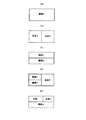
例えば、表示手段の画面を分割して表示するときは、図2に示すように分割される。
図2(A)は分割しない画面であり、以下、1つの画面で表示することを通常表示という。図2(B)および(C)は2画面に分割した例であり、図2(D)および(E)は3画面に分割した例であり、以下、複数の画面を表示することを多画面表示という。
For example, when the screen of the display means is divided and displayed, it is divided as shown in FIG.
FIG. 2A shows a screen that is not divided. Hereinafter, displaying on one screen is referred to as normal display. FIGS. 2B and 2C are examples in which the screen is divided into two screens, and FIGS. 2D and 2E are examples in which the screen is divided into three screens. This is called display.
この多画面表示の場合、ユーザが特定のキーを押すことによって、予め決められた2画面分割や3画面分割を選択するようにしてもよいし、分割画面の配置やサイズをテレビジョン受信装置側で自動的に行うようにしてもよい。 In the case of this multi-screen display, the user may select a predetermined two-screen division or three-screen division by pressing a specific key, and the arrangement and size of the divided screen may be set on the television receiver side. You may make it perform automatically.
操作部14は、テレビジョン受信装置100の例えば前面パネルに設けられた複数のスイッチと、リモートコントローラとで構成され、ユーザがテレビジョン受信装置100の機能の切換え、調整、動作設定等を行う際に操作されるものであり、入力情報は制御部15へ転送される。
The
リモートコントローラは、一般に備えている、放送のチャンネル切換え、あるいは数字/文字データ入力時等に使用する数字キー、画面上の項目を選択するための矢印キーと決定キー、戻るキー、画面の案内にしたがって各種の選択を行うカラーキー(青赤緑黄)、さらに、音量調整キーや、電源をオン/オフするための電源キー等の他に次のキーをも有している。 The remote controller is generally equipped with numeric keys used when switching broadcast channels or entering numeric / character data, arrow and enter keys for selecting items on the screen, return key, and screen guidance. Therefore, it has the following keys in addition to color keys (blue, red, green and yellow) for various selections, a volume adjustment key, a power key for turning on / off the power, and the like.
2画面キーは、最初に押したときには通常表示から2画面表示に切り換え、再度押すことによって2画面表示から通常表示に切り換えるキーである。
終了キーは、現在の多画面表示を終了して、通常表示に切り換えるキーである。
The two-screen key is a key for switching from the normal display to the two-screen display when pressed for the first time and switching from the two-screen display to the normal display by pressing again.
The end key is a key for ending current multi-screen display and switching to normal display.
操作画面切換キーは、多画面表示の際、押すたびに操作対象の画面を切り換えるキーである。例えば、図3に例示するように、2つのテレビ番組を表示する画面とウェブブラウザ画面の3画面が表示されているときに、操作画面切換キーを押すたびに、リモートコントローラのアイコンを表示し、そのアイコンが表示されている画面が操作対象となる。操作対象とすることにより、チャンネルの選択、画面調整や音量調整等の操作を行うことができる。上記のアイコンはリモートコントローラのアイコンに限られるものではなく、操作対象が判別できるような指標であればよい。 The operation screen switching key is a key for switching a screen to be operated every time the multi-screen display is pressed. For example, as illustrated in FIG. 3, when three screens, a screen for displaying two TV programs and a web browser screen, are displayed, each time the operation screen switching key is pressed, the remote controller icon is displayed. The screen on which the icon is displayed is the operation target. By selecting the operation target, operations such as channel selection, screen adjustment, and volume adjustment can be performed. The icon is not limited to the icon of the remote controller, but may be any index that can identify the operation target.
スピーカ音声切換キーは、スピーカから音声を出力する対象の画面を切り換えるキーである。例えば、図4に例示するように、2つのテレビ番組を表示する画面とウェブブラウザ画面の3画面が表示されているときに、スピーカ音声切換キーを押すたびに、スピーカのアイコンを表示し、そのアイコンが表示されている画面に対応する音声がスピーカに出力される。上記のアイコンはスピーカのアイコンに限られるものではなく、スピーカから音声が出力されていることが判別できるような指標であればよい。 The speaker voice switching key is a key for switching a target screen for outputting voice from the speaker. For example, as shown in FIG. 4, when three screens, a screen for displaying two TV programs and a web browser screen, are displayed, a speaker icon is displayed each time the speaker voice switching key is pressed. Audio corresponding to the screen on which the icon is displayed is output to the speaker. The above icon is not limited to the speaker icon, and may be any indicator that can determine that sound is output from the speaker.
ヘッドホン音声切換キーは、ヘッドホンから音声を出力する対象の画面を切り換えるキーである。例えば、図5に例示するように、2つのテレビ番組を表示する画面とウェブブラウザ画面の3画面が表示されているときに、ヘッドホン音声切換キーを押すたびに、ヘッドホンのアイコンを表示し、そのアイコンが表示されている画面に対応する音声がヘッドホンに出力される。上記のアイコンはヘッドホンのアイコンに限られるものではなく、ヘッドホンから音声が出力されていることが判別できるような指標であればよい。 The headphone audio switching key is a key for switching a target screen for outputting audio from the headphones. For example, as illustrated in FIG. 5, when a screen for displaying two TV programs and a web browser screen are displayed, each time the headphone audio switching key is pressed, a headphone icon is displayed. Audio corresponding to the screen on which the icon is displayed is output to the headphones. The above icon is not limited to the headphone icon, but may be any indicator that can determine that sound is output from the headphone.
これらのスピーカ音声切換キーとヘッドホン音声切換キーと、さらには、操作画面切換キーとが独立して操作できるので、片方のテレビ番組を視聴しながら、他方のテレビ番組の番組変更等ができる。
また、多画面表示した場合、どの画面に関する音声が出力されているかを示すための「アイコン」を表示するので、ユーザがどの画面に対する音声なのかが分かり易くなった。
Since the speaker audio switching key, the headphone audio switching key, and the operation screen switching key can be operated independently, it is possible to change the program of the other TV program while viewing one TV program.
In addition, when displaying on a multi-screen, an “icon” is displayed to indicate which screen the sound is being output, so that the user can easily understand which screen the sound is for.
画面分割キーは、多画面表示の形態を選択するためのキーである。この画面分割キーを押すと、例えば、図6に例示したような選択メニューが表示される。図6において、601は表示された選択メニューのタイトル「画面分割」、602は、通常表示の選択肢(図2(A))、603は、テレビ番組を表示する画面とウェブブラウザ画面との2画面分割選択肢(図2(B)または(C))、604は、テレビ番組を表示する2つの画面とウェブブラウザ画面との3画面分割選択肢(図2(D)または(E))、605は、ウェブブラウザ画面の選択肢(図2(A))を表している。
そして、ユーザは、操作部14のカーソル移動を行い決定キーによって、この中から所望の項目を選択すると画面分割が行われる。
The screen division key is a key for selecting a multi-screen display mode. When this screen division key is pressed, for example, a selection menu as illustrated in FIG. 6 is displayed. In FIG. 6, 601 is a title of the displayed selection menu “screen division”, 602 is a normal display option (FIG. 2A), and 603 is two screens of a TV program display screen and a web browser screen. A split option (FIG. 2 (B) or (C)), 604 is a three-screen split option (FIG. 2 (D) or (E)) of two screens for displaying TV programs and a web browser screen, 605 is The web browser screen options (FIG. 2A) are shown.
Then, when the user moves the cursor of the
上記したキーは、操作した順番によって表示画面が異なってくる。図7は、押したキーと表示される画面との関係を示す図であり、この図7には5つの画面表示があり、四角で囲まれて示されたキーを押すことによって、矢印方向の画面が表示されることを示している。 The display screen of the keys described above varies depending on the order of operation. FIG. 7 is a diagram showing the relationship between the pressed key and the displayed screen. In FIG. 7, there are five screen displays. By pressing a key surrounded by a square, The screen is displayed.
また、図8は、この押したキーと5つの画面分割状態(テレビ番組の表示画面、2つのテレビ番組の表示画面、1つのテレビ番組の表示画面とウェブブラウザ画面、2つのテレビ番組の表示画面とウェブブラウザ画面、ウェブブラウザ画面)との関係を判断するための状態遷移図であり、図7の関係を詳細に表現したものである。この図8においても、丸印で囲まれた画面分割状態を丸で囲んで状態とし、この状態でキーを押したときにどのような判断をして、次の画面分割状態に遷移するのかを示している。 FIG. 8 shows the pressed key and five screen division states (a TV program display screen, two TV program display screens, one TV program display screen and a web browser screen, and two TV program display screens. FIG. 7 is a state transition diagram for determining the relationship between the web browser screen and the web browser screen), and is a detailed representation of the relationship of FIG. In FIG. 8 as well, the screen division state surrounded by a circle is changed to a state surrounded by a circle, and what kind of determination is made when a key is pressed in this state, and the transition to the next screen division state is determined. Show.
例えば、通常表示の画面のときに、2画面キーを押すと、2画面表示に切り換わる。
この2画面表示のときに、操作切換キーを押すたびに操作対象の画面が切り換わり、終了キーあるいは2画面キーを押すことによって通常表示の画面へ戻る。
また、画面分割キーを押すと、表示された項目から分割画面を選択することができる。
For example, when a two-screen key is pressed during a normal display screen, the screen is switched to a two-screen display.
During this two-screen display, each time the operation switching key is pressed, the screen to be operated is switched, and the normal display screen is restored by pressing the end key or the two-screen key.
In addition, when a screen split key is pressed, a split screen can be selected from the displayed items.
上記の画面遷移状態(1画面表示あるいは多画面表示から他の画面表示へ移行するときに使われるキーとの関係)をメニューによりユーザが設定できるようにしてもよい。
例えば、ユーザが画面遷移状態の設定をメニューで指定したときに、予め決めてあった分割画面の種類(例えば、上記の5つの画面分割状態)を提示し、ある分割画面の種類から他の分割画面の種類へ変化する時のキーの種類(例えば、終了キー、2画面キー、操作切換キー、画面分割キー)を指定させて、上記の画面遷移状態を生成するようにする。
The user may be able to set the above-described screen transition state (relation with a key used when shifting from one-screen display or multi-screen display to another screen display) using a menu.
For example, when the user designates the screen transition state setting from the menu, the predetermined divided screen type (for example, the above five screen divided states) is presented, and another divided screen type is displayed. The above-described screen transition state is generated by designating the key type (for example, the end key, the two-screen key, the operation switching key, and the screen division key) when changing to the screen type.
さらに、本実施形態においては、ウェブブラウザを操作するキーとそれ以外のキーに種類分けすることによって、上記の操作切換キーを操作することなく、ウェブブラウザやテレビ番組を操作することができる。
例えば、ウェブブラウザで使用できるキーとして、数字キー、矢印キー、決定キー、戻るキー、カラーキーがある。これ以外のキーについては、テレビ番組を表示している画面で使用できる。
Furthermore, in this embodiment, by classifying into a key for operating the web browser and other keys, it is possible to operate the web browser and the television program without operating the operation switching key.
For example, as keys that can be used in a web browser, there are a numeric key, an arrow key, a decision key, a return key, and a color key. Other keys can be used on the screen displaying the TV program.
例えば、図9は2画面に分割され、左の画面はテレビ番組が表示され、右の画面にはウェブブラウザの表示がなされている。ここで、上述したようなウェブブラウザを操作するキーを押すことによって、ウェブブラウザの画面が操作対象となっていなくとも入力することができる。
また、ウェブブラウザを操作するキー以外のキー、例えば、チャンネルアップ/ダウンキーを押すことによって、操作対象となっていなくてもチャンネルを選局できる。
For example, FIG. 9 is divided into two screens, a television program is displayed on the left screen, and a web browser is displayed on the right screen. Here, by pressing a key for operating the web browser as described above, it is possible to input even if the screen of the web browser is not an operation target.
Further, by pressing a key other than a key for operating the web browser, for example, a channel up / down key, a channel can be selected even if it is not an operation target.
また、図10はテレビ番組を表示する2つの画面とウェブブラウザの画面とに分割されている。この場合には、ウェブブラウザについては、上述したウェブブラウザを操作するキーによって直接操作ができるが、テレビ番組の操作には、操作画面切換キーによって操作対象を明示した上でウェブブラウザを操作する以外のキーを使って操作することになる。
以上のようなキーを備えるとともに、キーの操作できる機能範囲を限定することによって、操作対象を指定しなくとも、表示されている画面の中から操作を行うことができる。
FIG. 10 is divided into two screens for displaying a television program and a web browser screen. In this case, the web browser can be directly operated by the above-described key for operating the web browser. However, for the operation of the TV program, the operation target is clearly indicated by the operation screen switching key and the web browser is operated. It will be operated using the keys.
By providing the keys as described above and limiting the function range in which the keys can be operated, it is possible to perform an operation from the displayed screen without specifying an operation target.
制御部15は、CPU(Central Processing Unit)を備え、テレビジョン受信装置100の全体の動作の制御、機能の調整等を実行するものであり、バスを介して入力部11、ウェブブラウザ12、操作部14、多画面処理部16、OSD処理部17、音声選択部19、記憶部22に接続されている。
制御部15は、操作部14で放送チャンネルの選局が行われると、操作対象となっている画面に対応する入力情報として選局チャンネルを記憶するとともに、操作対象となっている画面に対応する入力部11のチューナへ選局チャンネルを通知する。
The
When the channel selection of the broadcast channel is performed by the
以下の説明で使用する表示状況テーブルについて説明する。表示状況テーブルは、記憶部22に設けられ、図11に例示するように、分割した画面数のエントリを有しており、各画面に対して、次のようなデータを記憶する。
A display status table used in the following description will be described. The display status table is provided in the
画面ID:分割した画面を識別するための識別子である。
入力情報:表示される画像がどこから入力された情報であるかを示し、チャンネル番号(あるいは外部ファイル名)、あるいは、URLが保持される。
画面位置:この画面がどの位置に表示されるのかを示す座標位置である。
画面サイズ:この画面の大きさを表す寸法であり、例えば画素単位で表される。
操作対象フラグ:この画面が操作対象である(「真」)か否(「偽」)かを示す区分情報である。
スピーカフラグ:この画面に対する音声データをスピーカに出力する(「真」)か否(「偽」)かを示す区分情報である。
ヘッドホンフラグ:この画面に対する音声データをヘッドホンに出力する(「真」)か否(「偽」)かを示す区分情報である。
高精細フラグ:この画面に表示されるウェブページのコンテンツが高精細であることを示す情報を含む(「真」)か否(「偽」)かを示す区分情報である。
Screen ID: An identifier for identifying a divided screen.
Input information: Indicates from where the displayed image is input, and holds a channel number (or external file name) or URL.
Screen position: A coordinate position indicating where this screen is displayed.
Screen size: A dimension representing the size of the screen, for example, expressed in units of pixels.
Operation target flag: Classification information indicating whether this screen is an operation target (“true”) or not (“false”).
Speaker flag: Classification information indicating whether audio data for this screen is output to the speaker (“true”) or not (“false”).
Headphone flag: Classification information indicating whether audio data for this screen is output to headphones (“true”) or not (“false”).
High-definition flag: Classification information indicating whether or not the content of the web page displayed on this screen includes high-definition information (“true”) or not (“false”).
記憶部22は、揮発性メモリや不揮発性メモリからなり、不揮発性メモリには本装置の各種機能を実行するための各種アプリケーションプログラムの他、OSD(On Screen Display)処理のための各種データ、チャンネル選局のためのデータ、多画面表示に関するデータ(例えば、表示状況テーブル、画面分割数、画面分割状態、画面の状態遷移等)等が保存され、揮発性メモリはワークメモリとして使う。
The
制御部15は、操作部14から送られてきた下記のキーに対しては、それぞれ次のような処理をする。
The
(1)2画面キー、終了キー、画面分割キーからの各種の選択:
これらのキーが入力されたことを操作部14から受信すると、図8に示した状態遷移を参照して、次の画面分割状態を決定し、画面分割数や決定した画面分割状態を記憶部22へ記憶する。画面分割状態が決定すると、各画面ごとに画面位置と画面サイズを計算し、記憶部22に設けられた表示状況テーブルに記憶する。この画面分割は、表示される映像や画像データの画質やデータサイズを考慮して、なるべくウェブブラウザ画面のスクロールが少なくなるような比率で分割するようにする。
(1) Various selections from the two-screen key, end key, and screen split key:
When the input of these keys is received from the
(2)操作画面切換キー:
操作画面切換キーが入力されたことを操作部14から受信すると、表示状況テーブルを画面順に、操作対象フラグが「偽」の画面IDを探し、その画面の操作対象フラグを「真」として、これまで「真」であった画面IDの操作対象フラグを「偽」とする。操作対象フラグが「真」の画面がない場合には、表示状況テーブルに登録されている画面のうちから1つを選択して、その画面に対する操作対象フラグを「真」にする。
このように操作対象フラグが「真」の画面には、操作対象であることを示すアイコンを表示し、「偽」となった画面からはアイコンを消すようにOSD処理部17へ通知する。
(2) Operation screen switching key:
When it is received from the
In this way, an icon indicating that the operation target flag is “true” is displayed, and the
(3)スピーカ音声切換キー:
スピーカ音声切換キーが入力されたことを操作部14から受信すると、表示状況テーブルを画面順に、スピーカフラグが「偽」の画面IDを探し、その画面のスピーカフラグを「真」として、これまで「真」であった画面IDのスピーカフラグを「偽」とする。スピーカフラグが「真」の画面がない場合には、表示状況テーブルに登録されている画面のうちから1つを選択して、その画面に対するスピーカフラグを「真」にする。
このようにスピーカフラグが「真」の画面には、スピーカから音声を出力していることを示すアイコンを表示し、「偽」となった画面からはアイコンを消すようにOSD処理部17へ通知し、スピーカからの出力音声が変更となったことを音声選択部19へ通知する。
(3) Speaker voice switching key:
When the input of the speaker voice switching key is received from the
In this way, an icon indicating that sound is being output from the speaker is displayed on the screen where the speaker flag is “true”, and the
(4)ヘッドホン音声切換キー:
ヘッドホン音声切換キーが入力されたことを操作部14から受信すると、表示状況テーブルを画面順に、ヘッドホンフラグが「偽」の画面IDを探し、その画面のヘッドホンフラグを「真」として、これまで「真」であった画面IDのヘッドホンフラグを「偽」とする。ヘッドホンフラグが「真」の画面がない場合には、表示状況テーブルに登録されている画面のうちから1つを選択して、その画面に対するヘッドホンフラグを「真」にする。
このようにヘッドホンフラグが「真」の画面には、ヘッドホンから音声を出力していることを示すアイコンを表示し、「偽」となった画面からはアイコンを消すようにOSD処理部17へ通知し、ヘッドホンからの出力音声が変更となったことを音声選択部19へ通知する。
(4) Headphone audio switching key:
When receiving from the
In this way, an icon indicating that sound is output from the headphones is displayed on the screen where the headphone flag is “true”, and the
(5)電源オンおよびオフ:
テレビジョン受信装置100の電源をオフした際に表示されていた1画面あるいは多画面に表示されていた表示内容を復元するための情報、即ち、電源オフ時の表示状況テーブル(これには、各分割画面に対する選局チャンネル、インターネット接続の場合のURLアドレス等が保持されている)、分割画面数、画面状態とを不揮発性の記憶部22に記憶させておく。そして、電源オン時に、電源オフの直前の画面に表示されていた表示内容を復元させるための情報を記憶部22から取得して、電源オフの直前の1画面あるいは多画面に表示されていた表示内容を復元させる。
(5) Power on and off:
Information for restoring display content displayed on one screen or multiple screens displayed when the power of the
あるいは、電源オフの時に、表示状況テーブルを参照して、操作対象となっていた画面の表示内容を復元するための情報(例えば、選局チャンネルやURL等)を不揮発性の記憶部22に記憶する。そして、電源オン時に、復元するための情報を記憶部22から取得して、電源オフの直前の操作対象となっていた画面の表示内容(例えば、前回電源オフの直前に選局していたチャンネルの映像やウェブブラウザで表示されていたウェブページ等)を復元して1画面表示させるようにしてもよい。
さらに、電源をオフした際の上記の2つの方式をユーザが選択可能にしてもよい。
Alternatively, when the power is turned off, information (for example, a channel selection channel or a URL) for restoring the display content of the screen that is the operation target is stored in the
Furthermore, the above two methods when the power is turned off may be selectable by the user.
あるいはまた、電源がオンとなったときの起動画面を3画面/2画面/1画面表示の中からユーザに選択させるようにし、電源をオフした際に表示されていた1画面あるいは多画面の表示内容を復元するための情報を不揮発性の記憶部22に記憶させる。
そして、電源オン時に、選択された起動画面に応じて記憶部22から復元するための情報を取得して、起動画面に対応させた電源オフの直前の表示内容を復元させるようにしてもよい。
Alternatively, the startup screen when the power is turned on can be selected by the user from among three screens, two screens, and one screen display, and a one-screen or multi-screen display that was displayed when the power was turned off. Information for restoring the contents is stored in the
Then, when the power is turned on, information to be restored from the
ここで、電源オフ時の画面数よりも起動画面の画面数が少ないときには、起動画面に対応可能な電源オフ時の画面の復元情報を用いて復元が行われる。
例えば、電源オフ時の画面が「2つのテレビ番組の表示画面とウェブブラウザ画面」であり、起動画面が「1つのテレビ番組の表示画面とウェブブラウザ画面」であれば、オフ時のテレビの主画面あるいは操作対象となっていたテレビ画面を電源オン時のテレビ画面として起動する。ウェブブラウザ画面については、電源オフ時に表示されていたウェブページを起動画面のウェブブラウザ画面に復元表示する。
Here, when the number of screens of the startup screen is smaller than the number of screens when the power is turned off, restoration is performed using the restoration information of the screen when the power is turned off, which can support the startup screen.
For example, if the power-off screen is “two TV program display screen and web browser screen” and the start-up screen is “one TV program display screen and web browser screen”, the main TV of the off time is displayed. The screen or the TV screen that has been operated is activated as the TV screen when the power is turned on. As for the web browser screen, the web page displayed when the power is turned off is restored and displayed on the web browser screen of the startup screen.
また、電源オフ時の画面数よりも電源オン時の起動画面の画面数が多い場合には、復元する対応画面がなければ、その画面はクリーン表示とする。
また、ユーザがウェブブラウザ画面を1画面表示の起動画面として選択した場合、電源をオフした際に表示されていた画面(1画面表示であっても多画面表示であっても良い)のウェブページを復元するための情報(例えば、ウェブページのURL)を記憶部22に記憶させておき、電源オン時に、記憶部22から復元するための情報を取得して、電源オフの直前のウェブページを1画面表示として復元させる。また、電源オフ時にウェブページを表示している画面がない場合には、電源オン時に所定のウェブページをウェブブラウザ画面に表示させるようにしても良い。
If the number of startup screens when the power is turned on is larger than the number of screens when the power is turned off, the screen is displayed as a clean display if there is no corresponding screen to be restored.
In addition, when the user selects the web browser screen as the start screen for single-screen display, the web page of the screen (which may be single-screen display or multi-screen display) displayed when the power is turned off Information (for example, URL of a web page) is stored in the
このように、前回と同じ画面や所定の画面が表示されるので、ユーザの戸惑いがなくなる。特に、起動画面として1つのテレビ番組の表示画面を選択しておけば、当該装置がテレビジョンであるから、電源オン時にはテレビ画面が表示されるとユーザが期待しているので自然な応答がなされる。 In this way, since the same screen as the previous screen or a predetermined screen is displayed, the user is not confused. In particular, if one television program display screen is selected as the startup screen, the device is a television, so that the user expects the television screen to be displayed when the power is turned on, so a natural response is made. The
(6)上記以外のキー:
ウェブブラウザを操作するキーの場合には、入力したキーをウェブブラウザ12へ転送する。チャネル選択のキーである場合には、操作対象となっている画面に対応する入力であるとして、対応する入力部11へ通知する。
(6) Keys other than the above:
In the case of a key for operating the web browser, the input key is transferred to the
入力部11は、チューナ、分離部および復号部により構成されており、複数の放送を同時に受信できる場合には、チューナ、分離部および復号部はそれぞれ同時に受信できる数だけ備えている。 The input unit 11 includes a tuner, a separation unit, and a decoding unit. When a plurality of broadcasts can be received at the same time, the input unit 11 includes as many tuners, separation units, and decoding units as can be received simultaneously.
この複数のチューナは、それぞれにより選局されたチャンネルの放送波を、アンテナを介して受信し、受信した放送波を復調し、さらに誤り訂正等の処理を施して、TS(Transport Stream)信号として、分離部に供給する。
分離部は、チューナ数に応じた数の分離部により構成され、TS(Transport Stream)信号を映像ストリーム、音声ストリーム、および、EPG(Electronic Program Guide)情報に分離し、分離した映像ストリームおよび音声ストリームを復号部に供給する。
そして、復号部は、チューナ数に応じた数の復号部により構成され、音声ストリームを復号して非圧縮のデジタル音声データとして音声選択部19に供給すると共に、映像ストリームを復号して非圧縮のデジタル映像データとして多画面処理部16に供給する。
The plurality of tuners receive the broadcast wave of the channel selected by each through an antenna, demodulate the received broadcast wave, and perform processing such as error correction to obtain a TS (Transport Stream) signal. , And supply to the separation unit.
The separation unit is configured by a number of separation units according to the number of tuners, and separates a TS (Transport Stream) signal into a video stream, an audio stream, and EPG (Electronic Program Guide) information, and separates the separated video stream and audio stream. Is supplied to the decoding unit.
The decoding unit includes decoding units corresponding to the number of tuners. The decoding unit decodes the audio stream and supplies it to the audio selection unit 19 as uncompressed digital audio data. The digital video data is supplied to the
次に、インターネットにアクセスする場合には、インターネット選択の画面分割がなされると、制御部15がネットワークに接続し、さらに、ウェブブラウザ12を立ち上げ、予め登録されているURL(Uniform Resource Locator)へアクセス処理を行なって、そのページを構成するデータを取り込んで、表示状況テーブルを参照して、画面分割された画面サイズとなるようにブラウザ画面を構築し、構築したブラウザ画面を多画面処理部16に供給する。
Next, when accessing the Internet, when the screen selection for Internet selection is performed, the
ここで、多画面処理部16は、解像度判別部13からウェブページが高精細なコンテンツを示す情報を含んでいるとの通知を受けた場合には、画面サイズを表示手段の1画面分のサイズとなるようなブラウザ画面を構築する。
このように、高精細なコンテンツを示す情報を含んでいるウェブページ(例えば、フルHDのウェブコンテンツ)に移動した場合、通常表示の1画面に自動的に切り換えるようにしたので、ユーザの手を煩わせることなく最適な画像サイズで表示することができる。
Here, when the
As described above, when moving to a web page containing information indicating high-definition content (for example, full HD web content), the screen is automatically switched to one screen for normal display. An optimal image size can be displayed without bothering.
解像度判別部13は、ネットワークから取り込まれたウェブページのタグを解析して、ウェブページのコンテンツが高精細であることを示す情報(例えば、1920×1080画素の高精細のフルHDを示す情報)を含んでいると判断したときには、表示状況テーブルのウェブページを表示する画面の高精細フラグへ「真」を設定し、また、高精細なコンテンツであることを示す情報がなかった場合には、「偽」を設定する。この判断結果は、ウェブブラウザ12および多画面処理部16へ通知される。
The
OSD処理部17は、操作部14から入力された操作入力信号に基づいて制御部15から供給されたメニュー画面、アイコンやガイダンスなどのOSD表示の画像データを生成し、生成された画像データを多画面処理部16に供給する。
The
多画面処理部16は、表示状況テーブルのウェブページに該当する画面の高精細フラグが「偽」であるときには、入力部11から供給された映像データを画面のサイズにあわせて解像度変換した画像データを生成し、これらの画像データと、ウェブブラウザ12から供給されたブラウザ画面を、各画面の配置位置にあわせて1画面の画像データに合成するとともに、OSD処理部17から供給された画像データを指定された画面へ重畳し、表示手段の特性にあわせて変換し、表示部18へ供給する。
また、多画面処理部16は、表示状況テーブルのウェブページに該当する画面の高精細フラグが「真」であるときには、テレビ番組の映像があったとしても、ウェブページだけを表示手段の1画面に表示するようにする。
When the high-definition flag of the screen corresponding to the web page of the display status table is “false”, the
Further, when the high definition flag of the screen corresponding to the web page of the display status table is “true”, the
また、多画面処理部16は、画面分割数が1の場合、即ち、分割がない場合には、テレビ番組の映像に関しては、入力部11から供給された映像データを解像度変換した画像データを生成して、OSD処理部17から供給された画像データを重畳し、表示手段の特性にあわせて変換し、表示部18へ供給する。あるいは、ウェブブラウザの画像に関しては、ウェブブラウザ12から供給されたブラウザ画面にOSD処理部17から供給された画像データを重畳し、表示手段の特性にあわせて変換し、表示部18へ供給する。
In addition, when the number of screen divisions is 1, that is, when there is no division, the
表示部18は、例えば、LCD(Liquid Crystal Display)やPDP(Plasma Display Panel)等の表示手段からなり、多画面処理部16から供給された画像データを表示手段へ出力する。
The
音声選択部19は、制御部15からスピーカからの出力音声が変更となったことを通知されると、表示状況テーブルを参照して、スピーカフラグが「真」の画面を探し、この画面に対応する入力部11から供給された音声データをスピーカ音声出力部20へ供給して、スピーカから音声を出力させる。
また、音声選択部19は、制御部15からヘッドホンからの出力音声が変更なったことを通知されると、表示状況テーブルを参照して、ヘッドホンフラグが「真」の画面を探し、この画面に対応する入力部11から供給された音声データをヘッドホン音声出力部21へ供給して、ヘッドホンから音声を出力させる。
When notified from the
In addition, when notified from the
音声選択部19は、スピーカフラグが全て「偽」の場合、あるいは、所定時間の間スピーカに音声が出力されない場合には、スピーカと音声出力回路系統の電源を切るようにする。これにより、消費電力を下げることができる。 When all the speaker flags are “false” or when no sound is output to the speaker for a predetermined time, the sound selection unit 19 turns off the power of the speaker and the sound output circuit system. Thereby, power consumption can be reduced.
以上のような実施形態に係るテレビジョン受信装置を構成することにより、画面の切り換え、入力操作や音声出力の切換操作をユーザが確実に且つ簡単に行うことができるユーザビリティのある3画面以上の多画面機能を搭載したテレビジョン受信装置を提供できる。 By configuring the television receiver according to the embodiment as described above, the user can reliably and easily perform screen switching, input operation, and audio output switching operation with more than three screens with usability. A television receiver equipped with a screen function can be provided.
なお、本発明の実施形態は、上記のテレビジョン受信装置の各機能をコンピュータプログラム化し、このコンピュータプログラムをテレビジョン受信装置へインストールして実行することでも実現される。また、このコンピュータプログラムを着脱可能な記録媒体に記録したり、ネットワークを介してダウンロードすることにより、移送が簡単になり容易に実施することができる。 Note that the embodiment of the present invention can also be realized by making each function of the above-described television receiver into a computer program, and installing and executing this computer program in the television receiver. Further, the computer program can be recorded on a detachable recording medium or downloaded via a network, so that the transfer can be simplified and implemented easily.
尚、本発明は上述した実施形態に限定されず、本発明の要旨を逸脱しない範囲内で各種の変形、修正が可能であるのは勿論である。即ち、上記の実施形態では、多画面表示として2画面および3画面を採用していたが、4画面以上に分割した多画面表示にも同様に適用することができる。また、上記の実施形態では、ヘッドホンを用いて説明したが、勿論、イヤホンであっても同様に適用することができる。 Note that the present invention is not limited to the above-described embodiment, and various modifications and corrections can be made without departing from the scope of the present invention. That is, in the above embodiment, two screens and three screens are adopted as the multi-screen display, but the present invention can be similarly applied to multi-screen display divided into four or more screens. In the above-described embodiment, the description has been made using headphones, but of course, the present invention can be similarly applied to earphones.
100…テレビジョン受信装置、11…入力部、12…ウェブブラウザ、13…解像度判別部、14…操作部、15…制御部、16…多画面処理部、17…OSD処理部、18…表示部、19…音声選択部、20…スピーカ音声出力部、21…ヘッドホン音声出力部、22…記憶部。
DESCRIPTION OF
Claims (13)
Priority Applications (1)
| Application Number | Priority Date | Filing Date | Title |
|---|---|---|---|
| JP2006200163A JP2008028785A (en) | 2006-07-24 | 2006-07-24 | Television receiver |
Applications Claiming Priority (1)
| Application Number | Priority Date | Filing Date | Title |
|---|---|---|---|
| JP2006200163A JP2008028785A (en) | 2006-07-24 | 2006-07-24 | Television receiver |
Publications (1)
| Publication Number | Publication Date |
|---|---|
| JP2008028785A true JP2008028785A (en) | 2008-02-07 |
Family
ID=39118968
Family Applications (1)
| Application Number | Title | Priority Date | Filing Date |
|---|---|---|---|
| JP2006200163A Pending JP2008028785A (en) | 2006-07-24 | 2006-07-24 | Television receiver |
Country Status (1)
| Country | Link |
|---|---|
| JP (1) | JP2008028785A (en) |
Cited By (5)
| Publication number | Priority date | Publication date | Assignee | Title |
|---|---|---|---|---|
| JP2009225006A (en) * | 2008-03-14 | 2009-10-01 | Kyocera Corp | Mobile communication terminal |
| JP2011030028A (en) * | 2009-07-27 | 2011-02-10 | Canon Inc | Display control device and method for controlling the same |
| JP2011061280A (en) * | 2009-09-07 | 2011-03-24 | Toshiba Corp | Video output device and video output method |
| US8826335B2 (en) | 2010-05-26 | 2014-09-02 | Funai Electric Co., Ltd. | Image receiving apparatus and liquid crystal television set |
| US9158448B2 (en) | 2011-05-20 | 2015-10-13 | Kyocera Corporation | Portable terminal, control method and program |
Citations (5)
| Publication number | Priority date | Publication date | Assignee | Title |
|---|---|---|---|---|
| JPH0974531A (en) * | 1995-09-04 | 1997-03-18 | Sony Corp | Audiovisual equipment |
| JPH10293767A (en) * | 1997-04-18 | 1998-11-04 | Access:Kk | Display control method and display device for HTML document |
| JP2002158888A (en) * | 2000-11-21 | 2002-05-31 | Yamaha Corp | Television receiver with remote controller |
| JP2003174598A (en) * | 2001-12-06 | 2003-06-20 | Canon Inc | Information processing apparatus and method, recording medium, and program |
| JP2005217919A (en) * | 2004-01-30 | 2005-08-11 | Toshiba Corp | Television receiver |
-
2006
- 2006-07-24 JP JP2006200163A patent/JP2008028785A/en active Pending
Patent Citations (5)
| Publication number | Priority date | Publication date | Assignee | Title |
|---|---|---|---|---|
| JPH0974531A (en) * | 1995-09-04 | 1997-03-18 | Sony Corp | Audiovisual equipment |
| JPH10293767A (en) * | 1997-04-18 | 1998-11-04 | Access:Kk | Display control method and display device for HTML document |
| JP2002158888A (en) * | 2000-11-21 | 2002-05-31 | Yamaha Corp | Television receiver with remote controller |
| JP2003174598A (en) * | 2001-12-06 | 2003-06-20 | Canon Inc | Information processing apparatus and method, recording medium, and program |
| JP2005217919A (en) * | 2004-01-30 | 2005-08-11 | Toshiba Corp | Television receiver |
Cited By (6)
| Publication number | Priority date | Publication date | Assignee | Title |
|---|---|---|---|---|
| JP2009225006A (en) * | 2008-03-14 | 2009-10-01 | Kyocera Corp | Mobile communication terminal |
| JP2011030028A (en) * | 2009-07-27 | 2011-02-10 | Canon Inc | Display control device and method for controlling the same |
| JP2011061280A (en) * | 2009-09-07 | 2011-03-24 | Toshiba Corp | Video output device and video output method |
| US8826335B2 (en) | 2010-05-26 | 2014-09-02 | Funai Electric Co., Ltd. | Image receiving apparatus and liquid crystal television set |
| US9158448B2 (en) | 2011-05-20 | 2015-10-13 | Kyocera Corporation | Portable terminal, control method and program |
| US9552099B2 (en) | 2011-05-20 | 2017-01-24 | Kyocera Corporation | Portable terminal, control method and program |
Similar Documents
| Publication | Publication Date | Title |
|---|---|---|
| JP3989942B1 (en) | Television receiver, program and recording medium | |
| US20060066758A1 (en) | Remote control apparatus and TV broadcast receiving apparatus | |
| US20100165200A1 (en) | Display control device, display control method and display control program | |
| US20090007002A1 (en) | Content display apparatus and method | |
| US8554278B2 (en) | Mobile device display of multiple streamed data sources | |
| US20100053436A1 (en) | Video Display Apparatus and Video Display Method | |
| EP1860874A2 (en) | Method for providing video source list and video apparatus | |
| US8724028B1 (en) | Electronic device and display control method | |
| JP2008028785A (en) | Television receiver | |
| US20050018083A1 (en) | Apparatus and method of changing a sub-picture into a main picture | |
| US20070143785A1 (en) | Mobile device display of multiple streamed data sources | |
| JP4575070B2 (en) | Broadcast receiver | |
| US20060061696A1 (en) | Signal reproduction apparatus and signal reproduction method | |
| JP4703752B2 (en) | Video receiving apparatus and video receiving method | |
| US8122382B2 (en) | Television broadcast receiver | |
| JP2006094409A (en) | Program guide display device and program guide display method | |
| JP2006086866A (en) | Multi-screen control device, display device | |
| US20080320524A1 (en) | Information selection apparatus and information selection method | |
| US20100220110A1 (en) | Image signal processing apparatus and method of controlling the same | |
| JP2009077013A (en) | DIGITAL BROADCAST RECEIVING DEVICE AND PROGRAM FOR IMPLEMENTING FUNCTIONS | |
| KR20010001182A (en) | Apparatus and method for selecting user menu of tv | |
| JP2007150580A (en) | Multi-screen display device | |
| JP2006094210A (en) | Broadcast receiver | |
| KR20070058814A (en) | Content navigation method and image processing apparatus performing the same | |
| JP2010054840A (en) | Video display device and video display method |
Legal Events
| Date | Code | Title | Description |
|---|---|---|---|
| A621 | Written request for application examination |
Free format text: JAPANESE INTERMEDIATE CODE: A621 Effective date: 20080806 |
|
| A977 | Report on retrieval |
Free format text: JAPANESE INTERMEDIATE CODE: A971007 Effective date: 20110408 |
|
| A131 | Notification of reasons for refusal |
Free format text: JAPANESE INTERMEDIATE CODE: A131 Effective date: 20110517 |
|
| A02 | Decision of refusal |
Free format text: JAPANESE INTERMEDIATE CODE: A02 Effective date: 20111004 |