JP2004261902A - Optimal cutting condition estimating program, and computer readable recording medium recording the same - Google Patents
Optimal cutting condition estimating program, and computer readable recording medium recording the same Download PDFInfo
- Publication number
- JP2004261902A JP2004261902A JP2003053506A JP2003053506A JP2004261902A JP 2004261902 A JP2004261902 A JP 2004261902A JP 2003053506 A JP2003053506 A JP 2003053506A JP 2003053506 A JP2003053506 A JP 2003053506A JP 2004261902 A JP2004261902 A JP 2004261902A
- Authority
- JP
- Japan
- Prior art keywords
- cutting
- condition
- conditions
- processing
- recording
- Prior art date
- Legal status (The legal status is an assumption and is not a legal conclusion. Google has not performed a legal analysis and makes no representation as to the accuracy of the status listed.)
- Pending
Links
- 238000005520 cutting process Methods 0.000 title claims abstract description 96
- 238000003754 machining Methods 0.000 claims abstract description 23
- 238000003672 processing method Methods 0.000 claims description 6
- 238000000034 method Methods 0.000 abstract description 2
- 239000000463 material Substances 0.000 description 6
- 238000005457 optimization Methods 0.000 description 2
- 238000012937 correction Methods 0.000 description 1
- 239000010730 cutting oil Substances 0.000 description 1
- 230000000694 effects Effects 0.000 description 1
- 230000000704 physical effect Effects 0.000 description 1
- 230000001502 supplementing effect Effects 0.000 description 1
- 238000004381 surface treatment Methods 0.000 description 1
Images


Landscapes
- Numerical Control (AREA)
Abstract
Description
【0001】
【発明の属する技術分野】
本発明は、切削加工の最適な切削条件の予測される条件を得るためのシステムであり、特に、個々のユーザーの使用環境に応じた最適切削条件を予測するために好適な最適切削条件予測システムに関する
【0002】
【従来の技術】
切削加工を行なうには、当然、切削工具が必須であるが、加工するための条件は多岐に渡っている。切削工具にはスローアウェイチップ、エンドミル、ドリル、カッタ等があり、切削する対象、製品形状などに応じて選択する。例えばスローアウェイチップを選択した場合、まず工具を選定してその工具に応じた切削条件(切削速度、切込み深さ、送り、湿式/乾式)を選択して加工する。ここで、工具やその切削条件の選定は、工具メーカーが販売している工具の推奨条件を参照して加工することが一般的であった。
【0003】
ただし、工具メーカーは一般的な推奨条件を提示しているにすぎないため、個々のユーザーの工作機械に関する仕様、種類、加工用途に応じて改めて検討することが必要であった。
【0004】
切削加工する条件は、切削する被加工物の数量、形状、種類、表面処理に応じて最適切削条件が異なるため、個々の工具ユーザーが毎回、最適化を図っていた。そのため、加工実績の少ない被加工物においては、加工する作業者が経験的に想定される切削条件を設定し、最適加工条件を求めることが必要であり、多大な時間が必要であった。
また、これらの最適な加工条件は作業者毎のノウハウであるため、同じ工場内でも最適条件にばらつきがあり、非効率が問題となっていた。
【0005】
これらの最適化を効率的に行なうために、工具メーカーが被削材、加工形状等に応じた工具が選択できるように情報提供をしており、カタログ等で各工具メーカーの商品選択が効率的に行なえるような、図、表などが提供されていた。さらに、近年では電子カタログシステム(例えば、特許文献1参照)として、ユーザーが加工したい被加工物の条件を入力すると工具メーカーが推奨する工具および推奨する切削条件が選定されることが行われてきた。
【0006】
【特許文献1】
特開2001−357305号公報
【0007】
【発明が解決しようとする課題】
従来の技術においては、工具メーカーが提供する工具の選択とそれに応じた切削条件を参照していたが、これらは工具の最大寿命を発揮させるために工具メーカーが推奨する条件であった。しかし、ユーザーによっては工作機械の動力が足りないために十分な切削速度が取れない場合や、ワークの取付けの制限などが多い。そのために、個々のユーザーでは改めて自分の環境に応じた最適切削条件を求めることが必要であった。さらに、これらのミスマッチは、作業者の熟練度合いによって切削条件の最適化までの時間が大きく異なっていた。そこで、個々の切削加工環境に最適な切削条件を効率的に得られることが求められていた。
【0008】
【課題を解決するための手段】
本発明は、切削加工の最適な加工条件を提供するためにコンピューターを 切削加工の加工条件を入力する手段、予め過去の加工実績データを記録しておく加工実績データ記録手段、加工すべき対象、加工方式の少なくとも1つの条件を入力し、加工実績データ記録から切削加工予測条件を得る手段、として機能させるための最適切削条件予測プログラムによって、個々のユーザーが切削工具を使用する環境に最適な切削条件を予測することを可能にしたものである。
【0009】
また、切削加工の最適な加工条件を提供するためにコンピューターを 切削加工の加工条件を入力する手段、予め過去の加工実績データを記録しておく加工実績データ記録手段、
工具メーカの推奨する切削加工の加工条件を記録しておく加工推奨条件記録手段、加工すべき対象、加工方式の少なくとも1つの条件を入力し、加工実績データ記録から切削加工予測条件1を得る手段、切削加工予測条件1と加工推奨条件記録にもとづき、切削加工予測条件1を補正して切削加工予測条件2を得る手段、として機能させるための最適切削条件予測プログラム によって、未使用の工具であっても、個々のユーザーが切削工具を使用する環境に最適な切削条件を予測しつつ、工具メーカーの推奨条件で補正することによって、精度の高い最適切削条件の予測を行なうことを可能としたものである。
【0010】
【発明の実施の形態】
第1図は、本発明のシステムを実行することによって得られるフローである。
【0011】
まず、種々検討された、最適切削条件に関するデータが入力される。第2図にあるように入力は、予め定められた切削データシートに記入する。切削データは、使用機械、被削材であるワーク、工具、切削条件、結果等が一括して入力するものである。使用機械には、機械名称、担当者、機械の種類を入力する。ワークには部品名称、被削材名称・材質、硬度、連続/断続や外径加工/内径加工などの切削様式を入力する。工具には、選択条件、工具材種および形状・寸法(例えばチップ型番)を入力する。切削条件には、切削油種類、切削速度、回転数、加工径、送り、切込みを入力する。試験結果は、結論(良い、悪い、変わらない)、加工数量(従来、今回)、工具寿命の原因、その他を入力する。さらに補足事項が入力可能となっている。入力このデータは、事後的により優れた切削条件が得られた場合等には、削除することが可能である。
【0012】
入力された切削条件データは、切削加工条件リストとして記録されている。第3図は、記録されている切削加工実績データのリストである。データを入力した日時と入力した内容を一覧することができる。
【0013】
第4図は、新たに切削加工条件を最適化する時点で、加工すべき対象(被削材、加工形状、物性値等)、加工方式(外形加工、内径加工、溝入れ等)の少なくとも1つの条件を入力する。
入力した条件は、加工実績データ記録と比較し、より近似する条件から切削加工予測条件、工具、使用機械に関する予測条件を得るものである。
【0014】
ここで示される条件は、本発明のシステム入力者の加工環境に応じて最適な条件から予測する切削加工条件が得られ、工具メーカーの提供する推奨条件よりも個々のユーザーでの最適化が図られた切削加工条件が得られる。
【0015】
このようなシステムが個々のユーザーでの最適化が図られた切削加工条件が得られるものの、工具が未知の場合には、従来のデータがそのまま予測の基礎データとして信頼性が低くなる。そこで、発明者は、未知の工具を使用する場合にはさらに工具メーカーの推奨データから補完することで予測精度を上げることが可能なることを見出したものである。
【0016】
具体的には第5図に示すように、前記の最適な切削条件予測1を得た後、その切削加工条件で使用された工具の加工条件と、工具メーカーの推奨条件の差を計算する。そこで、未知の工具の工具メーカーの推奨条件から前述の差を引くことによって、個々のユーザーの使用環境に対しての最適条件として精度の高い予測2が得られるものである。
工具メーカーの推奨条件は、カタログ形式であって、工具の推奨条件が電子データとなっている従来の電子カタログを利用することができる。
【0017】
以上、本発明の説明は、パーソナルコンピュータで実施する場合について詳細に明らかとしたが、実施の形態はこの様式に拘泥されるものではない。例えば、インターネット上にデータベースを構築し、ユーザーがコンピュータ操作により個々のデータを利用することもできる。本発明のシステムを記録する電子媒体としては、CD−ROM、DVD、ハードディスクなどを利用することができる。
【0018】
【発明の効果】
本発明は、切削工具の個々のユーザーにおいて、個々の使用環境に応じた最適切削条件を求めることを可能とした。さらに、各ユーザーでの作業者の熟練度合いによって切削条件の最適化までの時間が大きく短縮し、個々の切削加工環境に最適な切削条件を効率的に得られることが明らかとなった。
【図面の簡単な説明】
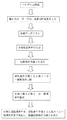
【図1】本発明の処理フローの一例を示す。
【図2】本発明の切削データ入力の一例を示す。
【図3】本発明の切削データリストの一例を示す。
【図4】本発明の最適切削条件のデータ出力の一例を示す。
【図5】本発明の処理フローの別の形態を示す。[0001]
TECHNICAL FIELD OF THE INVENTION
The present invention is a system for obtaining a predicted condition of an optimal cutting condition of a cutting process, and in particular, an optimal cutting condition prediction system suitable for predicting an optimal cutting condition according to a use environment of an individual user. [0002]
[Prior art]
To perform the cutting, a cutting tool is indispensable, but the conditions for the cutting are various. Cutting tools include indexable inserts, end mills, drills, cutters, etc., which are selected according to the object to be cut, the product shape, and the like. For example, when the indexable insert is selected, first, a tool is selected, and cutting conditions (cutting speed, cutting depth, feed, wet / dry type) corresponding to the tool are selected and processed. Here, when selecting a tool and its cutting conditions, it was common to perform machining with reference to recommended conditions of tools sold by a tool maker.
[0003]
However, since the tool maker only provided general recommended conditions, it was necessary to reconsider the specifications, types, and machining applications of individual users for machine tools.
[0004]
The cutting conditions differ depending on the number, shape, type, and surface treatment of the workpiece to be cut, so that each tool user has optimized each time. Therefore, in the case of a work piece with a small working record, it is necessary for the working person to set cutting conditions assumed empirically and to find the optimum working conditions, which requires a great deal of time.
In addition, since these optimal processing conditions are know-how for each worker, there are variations in the optimal conditions even within the same factory, resulting in a problem of inefficiency.
[0005]
In order to efficiently perform these optimizations, tool manufacturers provide information so that they can select tools according to the work material, machining shape, etc. Figures, tables, etc. were provided so that they could be used. Furthermore, in recent years, as an electronic catalog system (for example, see Patent Document 1), when a user inputs conditions of a workpiece to be processed, a tool recommended by a tool maker and recommended cutting conditions have been selected. .
[0006]
[Patent Document 1]
JP 2001-357305 A
[Problems to be solved by the invention]
In the prior art, a tool maker provides a selection of a tool and a cutting condition according to the tool, but these are conditions recommended by the tool maker in order to maximize the life of the tool. However, depending on the user, there are many cases in which a sufficient cutting speed cannot be obtained due to insufficient power of the machine tool, and restrictions on work mounting. For that purpose, it is necessary for individual users to again seek the optimum cutting conditions according to their environment. Furthermore, these mismatches differ greatly in the time required to optimize the cutting conditions depending on the skill of the operator. Therefore, it has been required to efficiently obtain optimum cutting conditions for each cutting environment.
[0008]
[Means for Solving the Problems]
The present invention provides a computer for inputting the processing conditions of the cutting process, a processing result data recording unit for recording the past processing result data in advance, an object to be processed, An optimal cutting condition prediction program for inputting at least one condition of the processing method and obtaining a predicted cutting condition from a record of the processing result data, thereby enabling an optimum cutting condition for each user to use a cutting tool. This makes it possible to predict conditions.
[0009]
In addition, a computer is used to input the processing conditions of the cutting process in order to provide the optimum processing conditions of the cutting process, a processing result data recording unit that records the past processing result data in advance,
A means for recording recommended machining conditions for recording machining conditions recommended for cutting by a tool maker, means for inputting at least one condition of an object to be machined and a machining method, and obtaining a machining
[0010]
BEST MODE FOR CARRYING OUT THE INVENTION
FIG. 1 is a flow obtained by executing the system of the present invention.
[0011]
First, data on optimum cutting conditions, which have been examined variously, are input. As shown in FIG. 2, the input is entered in a predetermined cutting data sheet. The cutting data is used to collectively input a machine to be used, a work as a work material, a tool, cutting conditions, results, and the like. For the machine to be used, enter the machine name, the person in charge, and the type of machine. In the work, a cutting style such as a part name, a work material name / material, hardness, continuous / intermittent or outer / inner diameter machining is input. For the tool, a selection condition, a tool material type, and a shape / dimension (for example, a chip model number) are input. For the cutting conditions, the type of cutting oil, cutting speed, number of revolutions, processing diameter, feed, and depth of cut are input. For the test results, enter conclusions (good, bad, unchanged), machining quantities (conventional and present), causes of tool life, and other information. Furthermore, supplementary items can be entered. Input This data can be deleted, for example, when better cutting conditions are obtained afterwards.
[0012]
The input cutting condition data is recorded as a cutting condition list. FIG. 3 is a list of recorded cutting performance data. The date and time when the data was entered and the contents entered can be listed.
[0013]
FIG. 4 shows that at the time of newly optimizing the cutting processing conditions, at least one of an object to be processed (work material, processed shape, physical property value, etc.) and a processing method (outer processing, inner diameter processing, grooving, etc.) Enter one condition.
The input conditions are compared with the processing result data record, and the cutting condition prediction condition and the prediction condition relating to the tool and the machine to be used are obtained from more approximate conditions.
[0014]
The conditions shown here provide cutting conditions predicted from the optimum conditions according to the processing environment of the system inputter of the present invention, and optimization by individual users can be achieved more than the recommended conditions provided by the tool manufacturer. The obtained cutting conditions are obtained.
[0015]
Although such a system can provide cutting conditions optimized by individual users, if the tool is unknown, the reliability of the conventional data as it is becomes low as basic data for prediction. Therefore, the inventor has found that when an unknown tool is used, the prediction accuracy can be improved by supplementing the data with the tool manufacturer's recommended data.
[0016]
Specifically, as shown in FIG. 5, after the above-mentioned optimum
The recommended condition of the tool maker is a catalog format, and a conventional electronic catalog in which the recommended condition of the tool is electronic data can be used.
[0017]
As described above, the description of the present invention has been made in detail for the case where the present invention is implemented by a personal computer, but the embodiment is not limited to this mode. For example, a database can be constructed on the Internet, and a user can use individual data by computer operation. As an electronic medium for recording the system of the present invention, a CD-ROM, a DVD, a hard disk, or the like can be used.
[0018]
【The invention's effect】
The present invention has made it possible for individual users of the cutting tool to determine the optimal cutting conditions according to the individual use environment. Furthermore, it became clear that the time required for optimizing the cutting conditions was greatly reduced depending on the skill level of each user and the optimum cutting conditions for each cutting environment could be efficiently obtained.
[Brief description of the drawings]
FIG. 1 shows an example of a processing flow of the present invention.
FIG. 2 shows an example of cutting data input according to the present invention.
FIG. 3 shows an example of a cutting data list according to the present invention.
FIG. 4 shows an example of data output of optimum cutting conditions according to the present invention.
FIG. 5 shows another embodiment of the processing flow of the present invention.
Claims (4)
Priority Applications (1)
| Application Number | Priority Date | Filing Date | Title |
|---|---|---|---|
| JP2003053506A JP2004261902A (en) | 2003-02-28 | 2003-02-28 | Optimal cutting condition estimating program, and computer readable recording medium recording the same |
Applications Claiming Priority (1)
| Application Number | Priority Date | Filing Date | Title |
|---|---|---|---|
| JP2003053506A JP2004261902A (en) | 2003-02-28 | 2003-02-28 | Optimal cutting condition estimating program, and computer readable recording medium recording the same |
Publications (1)
| Publication Number | Publication Date |
|---|---|
| JP2004261902A true JP2004261902A (en) | 2004-09-24 |
Family
ID=33118085
Family Applications (1)
| Application Number | Title | Priority Date | Filing Date |
|---|---|---|---|
| JP2003053506A Pending JP2004261902A (en) | 2003-02-28 | 2003-02-28 | Optimal cutting condition estimating program, and computer readable recording medium recording the same |
Country Status (1)
| Country | Link |
|---|---|
| JP (1) | JP2004261902A (en) |
Cited By (1)
| Publication number | Priority date | Publication date | Assignee | Title |
|---|---|---|---|---|
| US20170139403A1 (en) * | 2015-11-18 | 2017-05-18 | Fanuc Corporation | Numerical control system coordinating with tool catalog database |
Citations (6)
| Publication number | Priority date | Publication date | Assignee | Title |
|---|---|---|---|---|
| JPH05237740A (en) * | 1992-02-26 | 1993-09-17 | Nec Software Ltd | Plane machining condition determining method in cam system |
| JPH0740191A (en) * | 1993-08-03 | 1995-02-10 | Yamazaki Mazak Corp | Numerical control device |
| JPH07295619A (en) * | 1994-04-25 | 1995-11-10 | Mitsubishi Electric Corp | Numerical control device for machine tools |
| JPH08252746A (en) * | 1995-03-20 | 1996-10-01 | Mitsubishi Electric Corp | Processing condition determination device |
| WO2000012258A1 (en) * | 1998-08-28 | 2000-03-09 | Mori Seiki Co., Ltd. | Method and apparatus for optimizing nc programs in nc machining |
| JP2001005507A (en) * | 1999-06-21 | 2001-01-12 | Toshiba Corp | Processing condition evaluation / verification method and device |
-
2003
- 2003-02-28 JP JP2003053506A patent/JP2004261902A/en active Pending
Patent Citations (6)
| Publication number | Priority date | Publication date | Assignee | Title |
|---|---|---|---|---|
| JPH05237740A (en) * | 1992-02-26 | 1993-09-17 | Nec Software Ltd | Plane machining condition determining method in cam system |
| JPH0740191A (en) * | 1993-08-03 | 1995-02-10 | Yamazaki Mazak Corp | Numerical control device |
| JPH07295619A (en) * | 1994-04-25 | 1995-11-10 | Mitsubishi Electric Corp | Numerical control device for machine tools |
| JPH08252746A (en) * | 1995-03-20 | 1996-10-01 | Mitsubishi Electric Corp | Processing condition determination device |
| WO2000012258A1 (en) * | 1998-08-28 | 2000-03-09 | Mori Seiki Co., Ltd. | Method and apparatus for optimizing nc programs in nc machining |
| JP2001005507A (en) * | 1999-06-21 | 2001-01-12 | Toshiba Corp | Processing condition evaluation / verification method and device |
Cited By (3)
| Publication number | Priority date | Publication date | Assignee | Title |
|---|---|---|---|---|
| US20170139403A1 (en) * | 2015-11-18 | 2017-05-18 | Fanuc Corporation | Numerical control system coordinating with tool catalog database |
| JP2017094402A (en) * | 2015-11-18 | 2017-06-01 | ファナック株式会社 | Numerical control system linked with tool catalog database |
| US10635084B2 (en) * | 2015-11-18 | 2020-04-28 | Fanuc Corporation | Numerical control system coordinating with tool catalog database |
Similar Documents
| Publication | Publication Date | Title |
|---|---|---|
| JP6649684B2 (en) | An improved database for chatter prediction | |
| JP6249538B2 (en) | Method for performing manufacturing design checks | |
| Okonkwo et al. | Comparative analysis of aluminium surface roughness in end-milling under dry and minimum quantity lubrication (MQL) conditions | |
| Shahrom et al. | Taguchi method approach on effect of lubrication condition on surface roughness in milling operation | |
| JP4272206B2 (en) | Machining information creation device, program, and machining information creation method | |
| JP5689396B2 (en) | Production planning apparatus and production planning method | |
| US20150025672A1 (en) | System and method for selecting cutting tools | |
| CN111247493A (en) | Method and machine tool for machining a workpiece | |
| CN117592976B (en) | Cutter residual life prediction method, device, equipment and medium | |
| US10754322B2 (en) | System and method for selecting a tool assembly | |
| JP2004261902A (en) | Optimal cutting condition estimating program, and computer readable recording medium recording the same | |
| WO2023021729A1 (en) | Machining environment assist system and machining environment assist method | |
| JP5643676B2 (en) | Numerical control device with vibration suppression function | |
| JP3694807B2 (en) | Tool management system | |
| JP2005025387A (en) | How to make a part production estimate | |
| US11712773B1 (en) | Machine tool operations optimization | |
| JP2001047340A (en) | System and method for optimizing machining and program recording medium | |
| Pena et al. | Research regarding software developing for machining parameters optimization calculus | |
| JP7467209B2 (en) | Tool path generating device and tool path generating method | |
| WO2022075089A1 (en) | Information processing system and processing management method | |
| JP7534183B2 (en) | Grouping system and grouping method | |
| Marusich et al. | Improved titanium machining: modeling and analysis of 5-axis toolpaths via physics-based methods | |
| Germani et al. | A method to assess the environmental profile of in-house machining processes | |
| Garud et al. | Improved titanium machining: modeling and analysis of 5-axis tool paths via physics-based methods | |
| Stojkovic et al. | PARTIAL EFFECT OF CUTTING PARAMETERS ON ENGAGED POWER AND ENERGY CONSUMPTION: THE CASE OF EXTERNAL TURNING OF AN AISI1045 STEEL |
Legal Events
| Date | Code | Title | Description |
|---|---|---|---|
| A621 | Written request for application examination |
Free format text: JAPANESE INTERMEDIATE CODE: A621 Effective date: 20051220 |
|
| A977 | Report on retrieval |
Free format text: JAPANESE INTERMEDIATE CODE: A971007 Effective date: 20071119 |
|
| A131 | Notification of reasons for refusal |
Free format text: JAPANESE INTERMEDIATE CODE: A131 Effective date: 20071126 |
|
| A521 | Written amendment |
Free format text: JAPANESE INTERMEDIATE CODE: A523 Effective date: 20080125 |
|
| A02 | Decision of refusal |
Free format text: JAPANESE INTERMEDIATE CODE: A02 Effective date: 20080507 |