【0001】
[背景]
本発明は、一以上の有益な治療作用を表示することのできる新規な製剤に関する。一例として、本新規製剤は全身麻酔、鎮痛、意識鎮静および神経保護のいずれか1つ以上を提供することができる。
【0002】
全身麻酔の状態にはいくつかの要素、つまり、鎮痛(または侵害刺激に対する無感覚)、意識消失(催眠反応)、侵害刺激に対する交感神経系の減弱化(交感神経遮断)、有害事象の記憶形成の中断および筋肉弛緩が含まれる。
【0003】
全身麻酔の状態は、今までのところいずれのクラスの化合物も単独では必要とされる理想的な特徴を提供することができないので、通常は様々な薬理学的なクラスからの数種の薬剤の組み合わせによってもたらされる。例えば、ハロゲン化エーテル類およびハロアルカン類のような強力な揮発性麻酔剤は、潜在的に毒性物質に生体内変化する可能性がある。さらにこれらの物質は麻酔から覚醒する際に興奮を誘発する。亜酸化窒素およびキセノンのような吸入剤は単一療法として使用するのに十分な効力があるとは考えられてはおらず、他方、鎮静/催眠剤(プロポフォル、ベンゾジアゼピン類およびバルビツル酸系催眠薬を含む)には鎮痛特性が欠如している。鎮痛薬は補助呼吸を必要とする重度の症呼吸抑制を生じさせるか(オピオイド鎮痛薬の場合)催眠反応を産生しないか(非オピオイド鎮痛薬の場合)のどちらかであるが、他方、末梢的に作用する筋肉弛緩剤(例えば、ベクロニウムおよびアトラクリウム)は鎮痛特性も催眠特性も有していない。
【0004】
先行技術を考察すると、全身麻酔のために現在使用されている薬剤と関連する数多くの欠点がある。第1に、特に効力の高い揮発性麻酔剤には特殊な薬物送達システムが必要とされる。この必要は静脈内経路(完全静脈麻酔もしくは「TIVA:total intravenous anaesthesia」として知られている)によって未然に防がれる。しかし、現行TIVA処方は必ず、呼吸抑制を誘発する鎮痛剤(例えば、アヘン麻酔剤)および心臓抑制を誘発する催眠剤(プロポフォルおよびバルビツル酸系催眠剤)を含んでおり、従ってその使用中には呼吸および心血管をサポートするための装置が必要になる。第2に、TIVAから生じる臨床作用を終了させるためには、結果として臓器毒性問題につながる親薬剤(parent drug)およびそれらの代謝産物の生体内変化および/または排出のいずれかが必要となる。これらの薬剤のその他の短所には、治療に有効な範囲が狭いこととともに興奮に結び付く長時間の覚醒、悪心および嘔吐(プロポフォルを除く全部)、高度の常用癖の可能性が含まれる。最後に、亜酸化窒素によるオゾン層の破壊に関連して、環境的な脅威もある。
【0005】
本発明は、一般的な医薬使用のため、特には麻酔において使用するための、改良された製剤を提供することを目的とする。
【0006】
[発明の説明]
本発明の態様は、添付された請求の範囲および下記の説明に提示されている。
【0007】
[詳細な説明]
幅広い態様において、本発明はNMDA拮抗薬とα2アドレナリン作用薬とを含む医薬品を提供する。
【0008】
一つの好ましい実施形態では、本発明はNMDA拮抗薬とα2アドレナリン作用薬とを含む麻酔剤を提供する。
【0009】
驚くべきことに、我々は、好ましくは単一製剤としてのNMDA受容体拮抗薬およびα2アドレナリン作用薬の併用投与が、相乗作用機序を通して個々の化合物の有効性をいずれも増強し、さらに単独で使用したときにこれらの薬剤が誘発する可能性のある有害かつ望ましくない副作用の可能性を減少させることを発見した。
【0010】
本製剤の1つの不可欠な成分はNMDA受容体拮抗薬である。
【0011】
用語「拮抗薬」は当分野における通常の意味で使用されており、即ちその作用薬(この場合には、NMDA)による受容体の機能の活性化を阻害する化合物を意味する。
【0012】
NMDA(N−メチル−D−アスパラギン酸)受容体は主要サブクラスのグルタミン酸塩受容体(哺乳類中枢神経系における最も重要な興奮性神経伝達物質)である。重要なことには、NMDA受容体の活性化は多くの疾患状態における興奮毒性およびニューロンの死を導く中枢事象であること、並びに頭部外傷、脳卒中後および心停止後の低酸素症および虚血の結果であることが証明されている。
【0013】
当分野においては、NMDA受容体が記憶および学習のような数多くの高度の認識機能において、並びに一定の侵害需要経路および疼痛知覚において重要な役割を果たすことが知られている(Collingridgeら、The NMDA Receptor,Oxford University Press,1994)。さらに、NMDA受容体の一定の特性はそれらが意識自体の基礎を成す脳における情報処理と関連する可能性があることを示唆している。
【0014】
本発明の文脈におけるNMDA受容体拮抗薬は、例えば下記に示す3つの特定の理由等の多くの理由により有益である。第1に、NMDA受容体拮抗薬は全身麻酔および鎮静の高度に望ましい成分である深い鎮痛を生じさせる。第2に、NMDA受容体拮抗薬は多くの臨床的に重要な状況(虚血、脳外傷、神経障害性疼痛状態、および一定のタイプの痙攣)下において神経保護性である。第3に、NMDA受容体拮抗薬は有益な程度の記憶消失を生じさせる。
【0015】
本製剤は一以上のNMDA受容体拮抗薬を含むことができる。
【0016】
全身麻酔の実践におけるNMDA受容体拮抗薬の先行技術における使用とは反対に、驚いたことに我々は、本発明の製剤においてはそれらの作用が随伴性の幻覚作用およびその他の望ましくない副作用によって深刻に阻害されないことを発見した。このクラスの化合物と結び付いている先行技術の問題は、不随意運動の産生、交感神経系の刺激、高用量での神経毒性の誘発(NMDA受容体拮抗薬は全身麻酔剤としては効力が低いので特に関連がある)、心筋の抑制、例えば「kindling(興奮)」(Wlaz Pら、Eur.J.Neurosci.1994;6:1710−1719)のような一部のてんかんを誘発するパラダイムにおける前痙攣と関連していた。血液脳関門を横断する拮抗薬を開発することにおける困難がさらにそれらの実際的適用も制限してきた。
【0017】
より詳細には、本発明のNMDA受容体拮抗薬は例えば2−アミノ−5−ホスホノペンタノエートおよび2−アミノ−7−ホスホノヘプタノエートまたはそれらの誘導体類もしくは構造的類似体類のような競合的な拮抗薬であってよい。NMDA受容体拮抗薬はさらにまた、例えばジゾシルピン、ケタミン、HA−966[(+/−)−3−アミノ−1−ヒドロキシ−2−ピロリドン]、またはそれらの誘導体類もしくは構造的アナログ類のような非競合的拮抗薬であってもよい。
【0018】
好ましくは、NMDA受容体拮抗薬はキセノンである。
【0019】
例えば全身麻酔剤としてキセノンのような不活性の揮発性ガスを使用する長所は呼吸を通して分子を急速に排出できる点である。
【0020】
これに関連して、キセノン(急速に脳と平衡する)がNMDA拮抗薬であることが最近発見されており(Franks NPら、Nature 1998;396:324)、これが本発明の状況においてキセノンを特に魅力的な候補にしている。
【0021】
キセノンは、麻酔特性が50年以上前から知られている化学的に不活性なガスである(Lawrence JHら、J.Physiol.1946;105:197−204)。キセノンが外科において最初に使用されて以降(Cullen SCら、Science 1951;113:580−582)、キセノンが代謝性副産物の欠如、深い鎮痛、迅速な効果発現および回復、さらに心血管系への小さな影響を含む優秀な薬理学的な特徴を有することを数多くの研究グループが証明してきた(Lachman Bら、Lancet 1990;335:1413−1415;Kennedy RRら、Anaesth.Intens.Care 1992;20:66−70;Luttropp HHら、Acta Anaesthesiol.Scand.1994;38:121−125;Goto Tら、Anesthesiology 1997;86:1273−1278;Marx Tら、Br.J.Anaesth.1997;78:326−327)。培養海馬ニューロンを使用した力学的試験は、外科的麻酔を維持する80%のキセノンがNMDA活性化電流を60%まで減少させることを証明している。このNMDA受容体の強力な阻害は薬理学的プロフィールの重要な特徴の一部を説明しており、この不活性ガスの麻酔および鎮痛作用において役立っていると思われる。
【0022】
現在までに、新規の麻酔剤としてのキセノンの使用を妨げてきた重要な問題は、再使用のためにガスを排出する必要があることとともに、高いコストおよび使用する用量を最小限に抑えるための複雑な装置(ローフロー・システム)を使用する必要があることである。もう1つの問題は、キセノンの有効性が相当に低い点である。その結果として、揮発性全身麻酔剤を脂質エマルジョンに溶解させて静脈内投与することが提案されてきた(Eger RPら、Can.J.Anaesth.1995;42:173−176)。当分野においては液剤形の全身麻酔剤の微小な液滴を皮内注射することによって局所麻酔を誘導できることが知られている(Haynes DH,米国特許第4,725,442号および第4,622,219号)。典型的には、これらの微小な液滴は単分子のリン脂質層で被覆されており、生理学的に適合する溶液中では安定性のままである。同様のアプローチが、キセノンをこの方法で投与できることを提案している近年の特許出願に記載されている(Geogieff M,欧州特許出願第864329−A1号)。
【0023】
ここで、先行技術には、それに関連する驚くべき特性はもちろんのこと、特に麻酔剤として使用するための広汎な適用性を有する製剤中におけるα2アドレナリン作用薬とのNMDA受容体拮抗薬の使用について開示しても提案してもいないことを述べておかなければならない。
【0024】
この製剤のもう1つの不可欠な成分はα2アドレナリン作用薬である。用語「作用薬」は当分野における通常の意味で使用されており、即ちそれが結合する受容体を機能的に活性化する化学化合物を意味する。
【0025】
α2アドレナリン作動性受容体(アドレナリン受容体)は、神経系並びに身体のあらゆる他の系の両方の至る所に偏在している。3種の受容体サブタイプ(A、B、およびCと呼ばれる)を含むα2アドレナリン受容体はさらに他の6種のアドレナリン受容体サブタイプを活性化する非選択性の内生アドレナリン作用薬であるアドレナリンおよびノルアドレナリンによって活性化される。
【0026】
現在までに、実験および臨床試験によってα2作用薬が強力な鎮痛作用(Guo Tら、Anesthesiology 1991;75:252−6)および麻酔作用を発揮することが証明されてきたため、麻酔剤への関心は、麻酔の必要とする条件の減少に集中してきた。催眠反応は青斑核(locus coeruleus)におけるα2アドレナリン受容体の活性化によって媒介されると考えられるが、他方、鎮痛は脊髄の背角のレベル、およびまだ完全には特徴付けられていない他の部位での侵害受容経路の調節によって誘導される(Guo Tら、上記の箇所を参照)。
【0027】
従って、術前期におけるα2アドレナリン作用薬は揮発性(Aho Mら、Anesthesiology 1991;74:997−1002)、オピオイド(Ghignone Mら、Anesthesiology 1986;64:36−42)、および催眠剤(Aantaa Rら、Anesthesiology 1990;73:230−5)に対する麻酔の必要条件を減少させるために有効である。さらに、α2アドレナリン作用薬は術前期における不安解消(Uhde TWら、Arch Gen Psychiatry 1989;46:170−7)および術前鎮静(Flacke JWら、Anesthesiology 1987;67:11−9)のためにも有効である。
【0028】
より詳細には、例えばデクスメデトミジン(dexmedetomidine)のような外生α2作用薬は脳幹の離散的部位においてα2Aアドレナリン受容体サブタイプ(Lakhlani PPら、Proc.Nat.Acad.Sci.1997;94:9950−9955)を活性化することによって実験動物において意識消失を誘導する(Correa−Sales Cら、Anesthesiol 1992c;76:948−52)。その作用薬によって活性化されると、この同一受容体のサブタイプもまた同様に不安(不安解消)(Salonen Mら、Psychopharmacology 1992;108:229−234)および交換神経系における活性(交換神経遮断)を低下させる。α2作用薬は、さらに一部のタイプのてんかんを誘発するパラダイムにおいて、抗痙攣性であり(Halonen Tら、Brain Res.1995;6932:17−24)、虚血性発作中には神経保護性である(Maier Cら、Anesthesiology 1993;79:306−12)。α2作用薬に誘発される催眠状態は、選択性α2アドレナリン拮抗薬(例えば、ヨヒンビン)を用いると即時に逆転させることができる。α2作用薬は揮発性麻酔剤によって作り出される麻酔状態からの覚醒に関連する興奮を和らげる(Bruandet Nら、Anesth.Analg.1998;86:240−5)。
【0029】
現在までに、全身麻酔の実践におけるα2アドレナリン受容体作用薬の使用は麻酔の効力の不足および副作用プロフィールによって阻まれてきた。それらの効力不足は非α2Aアドレナリン受容体を活性化できる極めて高用量の使用を必要とするが、これは血圧の上昇(Bloor BCら、Anesthesiology 1992;77:1134−1142)および組織潅流低下を伴う末梢血管収縮を生じさせる。さらにその上、α2作用薬は一部のてんかんモデル(「ペンチレンテトラゾール」[PTZ]発作)では前痙攣性でもある(Mirski MAら、Anesthesiology 1994;81:1422−8)。
【0030】
当分野においては、全身性および脳脊髄幹性(neuraxially)のどちらで投与されてもクロニジンおよびデクスメデトミジンのようなα2作用薬がヒトおよび動物モデルにおいて疼痛を緩和することはよく知られている。α2作用薬は棘上作用(Guo TZら、上記の箇所を参照)並びに局所的脊髄作用(Eisenach Jら、Anesthesiol.1993:277−87)によって鎮痛を生じさせる。局所麻酔剤とは異なり、α2作用薬が運動もしくは感覚機能を変化させることはなく、さらにアヘン剤とは異なり、呼吸抑制を引き起こしたり(Jarvis DAら、Anesthesiology 1992;76:899−905)、薬物追求行動(例えば、嗜癖)を誘発したりすることがない。これらの特徴の結果として、α2アドレナリン作用薬は疼痛の管理のための魅力的な候補薬であり、術後の疼痛の低下(Bonnet Fら、Br J Anaesth 1989;63:465−9)および分娩中および分娩後の疼痛緩和(Eisenach JCら、Anesthesiology 1989;71:640−6;Filos KSら、Anesthesiology 1992;77:267−74)のために効果的である。
【0031】
慢性疼痛状態に対するα2作用薬による長期療法の可能性については小規模な試験が実施されているが(Eisenach JCら、Anesthesiology 1989;71:647−52)、極めて前途有望であると思われる(Eisenach JCら、Anesthesiology 1996;85:655−74)。長期間の投与後に行われたα2作用薬の硬膜外投与の鎮痛作用の持続時間を取り扱った臨床試験はまだ実施されていない。しかし、現在、α2作用薬を長期間投与することが提案されており(Segal ISら、Anesthesiology 1991;74:220−5)、これは外科患者の術前ケアにおける早期段階において有益である可能性があるためである。しかし、α2作用薬の即時的な効果に対する生物学的に重要な適応性のために、経時的に薬物作用の減退をもたらす可能性がある。これは一般に耐性と呼ばれている。クロニジンの鎮静作用に対する耐性は急速に発生して高血圧の治療においては望ましいと考えられているが、これは集中治療(ICU)環境における慢性疼痛の緩和および長期間の鎮静についてはα2作用薬の臨床有用性を低下させる可能性がある(Maze M,Redefining sedation,International Congress and Symposium,edited by Maze M,Morrison P.London,The Royal Society of Medicine Press,1998,pp3−11)。クロニジンの長期の硬膜外投与は治療の経過を通して慢性疼痛の治療のために臨床的に有用な鎮痛をもたらし、脊髄に投与されたα2作用薬の鎮静作用に対する耐性はわずかである可能性がある(Eisenach JCら、Anesthesiology 1989;71:640−6)。
【0032】
本発明の製剤は、一以上のα2アドレナリン作用薬を含むことができる。
【0033】
本発明のα2作用薬は、クロニジン(カタプレス(Catapress)(登録商標)、ベーリンガー・インゲルハイム(Boehringer Ingelheim)社製、デュラクロン(Duraclon)(登録商標)、ロクサーヌ(Roxanne)社製として販売されている可能性がある)であってよい。
【0034】
α2アドレナリン作用薬のプロトタイプであるクロニジンは、交感神経遮断特性があるために1970年代初期以降抗高血圧薬として使用されている。これらの交感神経遮断並びに不安解消の特性は、薬物/アルコールからの離脱を容易にする目的でのクロニジンの使用において活用されてきた(Gold MSら、Psychiatr.Clin.North Am.1993;16:61−73)。より近年では、クロニジンは術前状況における鎮痛薬および鎮静薬として(Kamibayashi Tら、Current Opinion in Anaesthesiology 1996;9:323:327)および例えば注意欠陥多動障害のような精神状態の管理のために(van der Meere Jら、J.Child Psychol.Psychiatry 1999;40:291−8)使用されている。特に、クロニジンを局所麻酔剤に追加して使用すると、クロニジンは同程度の用量を全身性投与したときによりもはるかに大きく麻酔作用を増加させることが証明されている(Bernard JMら、Can Anaesthesiol 1994;42[2]:223−8)。この作用は、おそらく局所クロニジン濃度の結果である。さらにその上、クロニジンの硬膜外投与は、少なくとも高用量を注射した場合には全身性投与より一層はるかに有効である。
【0035】
さらに、あるいはそれに替えて、本発明のα2作用薬はデトミジン、メデトミジン、デクスメデトミジン(プリマデックス(Primadex)、アボット(Abbott Labs.)社製として販売されている)、ブリモニジン(brimonidine)(アルファガン(Alphagan)、アラガン(Allergan)として販売されている可能性がある)、チザニジン、ミバゼロール(UCB−ファルマ社製、ベルギー)、グアナベンズ(ワイテンシン(Wytensin)(登録商標)、ワイエス(Wyeth Ayerst)社製として販売されている)、グアンファシン(テネックス(Tenex)(登録商標)、AHロビンズ(Robins)社製として販売されている可能性がある)またはそれらの誘導体もしくは構造類似体であってよい。
【0036】
好ましいα2アドレナリン作用薬は、デクスメデトミジン(dexmedetomidine)である。
【0037】
ここで先行技術はそれに関連する驚くべき特性はもちろんのこと、特に麻酔剤として使用するための広汎な適用性を有する製剤中におけるNMDA受容体拮抗薬とのα2アドレナリン作用薬の使用について開示しても提案してもいないことを述べておかなければならない。
【0038】
このため、本発明はα2アドレナリン作用薬とNMDA受容体拮抗薬とを含む製剤に関する。ここで、α2アドレナリン作用薬はNMDA拮抗薬の後帯状束/板状筋後方(PC/RS)の皮質神経毒性副作用を防止することができる(Jevtovic−Todorovic Vら、Brain Res.1998,Jan 19;781[1−2]:202−11)。特に、例えばクロニジンおよび/またはデクスメデトミジンのような特別には神経障害性の疼痛を緩和しないα2アドレナリン作用薬は例えばMK−801のようなNMDA拮抗薬の神経障害性疼痛緩和作用を増強させることができるが、他方さらにNMDA拮抗薬の神経毒性および活動亢進性副作用に対する保護も提供できる。さらにまた経口クロニジン前投与は、ヒトにおけるケタミンによる麻酔誘導に結び付いた血液動態作用を和らげることも証明されている(Doak JGら、Can.J.Anaesth.1993 Jul;40[7]612−8)。
【0039】
好ましくは、NMDA受容体拮抗薬はケタミンではない。
【0040】
好ましくは、α2アドレナリン作用薬はキシラジンではない。
【0041】
より好ましくは、本発明の製剤はケタミンおよびキシラジンの組合せを含まない。この点に関して、獣医学的な麻酔実践では、NMDA拮抗薬であるケタミンが比較的弱いα2作用薬であるキシラジンの存在下で使用されてきた(Radde GRら、Lab.Anim.1996l30:220−7)。しかし、これらの薬剤は、直接的な心筋抑制効果および高血圧を含むそれらの副作用があるという側面を有するために、麻酔を生じさせるために十分な高用量で使用することができない。他のTIVA処方と同様に、これらの薬剤の投与には作用を終了させて覚醒を容易にするための薬物動態機序が必要とされる。さらにその上、ヒト患者における全身麻酔を容易にするための補外法は不随意運動および精神異常のような状態を引き起こす作用によって複雑になる。
【0042】
本発明の製剤の成分は、連続的、逐次的もしくは同時に、またはそれらの組合せで投与することができる。
【0043】
好ましくは、本発明の製剤の成分は例えば単一製剤におけるように同時に投与される。
【0044】
従って、本発明の好ましい態様に従うと、単一製剤(単一療法)を用いて全身麻酔を誘導して維持することができる。これは薬物送達または呼吸補助のいずれかのための高価な装置を使用する必要がないという長所を有している。本発明の好ましい薬物動態プロフィールは、所望の作用についての容易かつ迅速な力価測定の可能性並びに全身麻酔からの円滑かつ迅速な覚醒の両方を可能にする。特に、全身麻酔が治療(例えば、アルコールおよび/または薬物嗜癖からの離脱、破傷風)として使用される場合、本発明は交感神経系における機能亢進を低下させ、並びに全身麻酔によって提供されるその他すべての特徴を提供する。
【0045】
本発明に従うと、薬物送達または呼吸のモニタリングのどちらかのための高額な装置を必要とせずに単一療法で意識鎮静を誘導かつ維持することができる。さらに嗜癖の可能性も呼吸抑制も全く伴わず、単一療法によって慢性疼痛緩和を提供することができる。さらに、単一療法を用いて神経保護を提供することができ、さらに心血管および呼吸蘇生法を必要とする程度の呼吸循環抑制を生じさせない。神経保護作用は、2種の成分の相補的な作用の結果としてより有効である。
【0046】
好ましくは、本発明の製剤は液剤形である。非経口投与については、本製剤は例えば溶液を血液と等張性とするために十分な塩類または単糖類のような他の物質を含むことのできる無菌水溶液の形状で使用できる。
【0047】
より好ましくは、本製剤は脂質エマルジョンの形態である。キセノンのような揮発性麻酔剤が使用される場合、静脈内投与用製剤は典型的には所望の臨床作用を達成するためにガスもしくは揮発性麻酔剤の溶解性を十分に上昇させるために脂質エマルジョン(例えば、市販で入手可能なイントラリピド(Intralipid)(登録商標)10、イントラリピド(登録商標)20、イントラファット(Intrafat)(登録商標)、リポフンジン(Lipofundin)(登録商標)Sもしくはリポシン(Liposyn)(登録商標)エマルジョン、または溶解性を最高化するために特別に処方されたエマルジョン)を含有している。この種類の脂質エマルジョンに関する詳細な情報はG.KleinbergerおよびH.Pamperl,Infusionstherapie,108−117(1983)3の中に見出すことができる。
【0048】
ガスに溶解または分散する本発明の脂質層は、典型的には8〜30個の炭素原子を含有する飽和および不飽和長鎖および中鎖脂肪酸エステルである。これらの脂質は水溶液中でリポソームを形成する。例としては、魚油、および例えば大豆油、紅花油または綿実油のような植物油が含まれる。本発明の脂質エマルジョンは、典型的にはオイルインウォーター(oil in water)エマルジョンであるが、このときエマルジョン中の脂肪の比率は従来的には重量で5〜30%、および好ましくは重量で10〜20%である。この種類の水中油型エマルジョンはしばしば例えば大豆ホスファチドのような乳化剤の存在下で調製される。
【0049】
本発明のリポソームを形成する脂質は、天然または合成であってよく、コレステロール、グリコリピド類、スフィンゴミエリン、グルコリピド類、グリコスフィンゴリピド類、ホスファチジルコリン、ホスファチジルエタノールアミン、ホスファチジルセリン、ホスファチジルグリセロール、ホスファチジルイノシトールを含んでいる。
【0050】
本発明の脂質エマルジョンはさらに追加の成分を含むこともできる。これらには、酸化防止剤、脂質相を取り囲む水相の浸透圧濃度を血液と等張性にする添加剤、またはリポソームの表面を修飾するポリマーが含まれる。
【0051】
脂質エマルジョンに認識可能な量のキセノンを添加できることは確認されている。最も単純な手段によってさえ、20℃および標準圧力下で、キセノンはエマルジョン1ml当たり0.2〜10ml以上の濃度で溶解または分散させることができる。溶解ガスの濃度は温度、圧力および脂質の濃度のような多数の要素に左右される。
【0052】
本発明の脂質エマルジョンにはガス状または揮発性の麻酔剤を加えることができる。一般に、装置にはエマルジョンおよびエマルジョン中に浸漬された焼結ガラス製気泡管を通過させたガスまたは蒸気としての麻酔剤が充填される。エマルジョンは選択された分圧で麻酔ガスまたは蒸気と平衡化させられる。気密容器中に保存すると、これらの脂質エマルジョンは麻酔剤が一般的な貯蔵期間に渡ってガスとして放出されないために十分な安定性を示す。
【0053】
本発明の脂質エマルジョンは、キセノンの飽和含量であるように加えることができる。あるいはまた、キセノンは例えばエマルジョンの投与(α2作用薬と組み合わせたときに)が所望の製薬学的活性を生じさせることを前提に低い濃度で存在していてもよい。
【0054】
本発明はさらにまた、本発明の製剤および製薬学的に容認可能な希釈剤、賦形剤もしくは担体を含む医薬組成物に関する。一例として、本発明の医薬組成物中では本発明の製剤は予定投与経路および標準の製薬学的実践を考慮して選択された何らかの適切な1種以上の結合剤、1種以上の潤滑剤、1種以上の懸濁剤、1種以上のコーティング剤、1種以上の溶解剤と混合することができる。
【0055】
ある場合には、本発明の製剤は、さらに例えば一酸化窒素(NO)シンターゼ阻害剤のような他の任意の成分を含むことができる。
【0056】
NOシンターゼ阻害剤が存在することは好ましい態様であることもある。このとき、α2アドレナリン作用薬の鎮静および鎮痛作用は経時的に減少することが確証されており、これは耐性と呼ばれるシナプス柔軟性(plasticity)の1つの形である(Reid Kら、Pharmacol.Biochem.Behav.1994;47:171−175)。
【0057】
例えば長期における増強(LTP)、中枢神経感作(「wind−up」)および耐性のようなCNSにおける生物学的反応性における変化は、まとめてシナプス柔軟性と呼ばれており、誘発状況は様々であるにもかかわらずそれらの分子機序は類似する可能性がある。以前に実施された試験は、NMDA受容体複合体(Asztely Fら、Mol Neurobiol 1996;12:1−11)および一酸化窒素シンターゼ(NOS)(Meller STら、J.Neurosci.1997;17:2645−51;Boxall ARら、Eur J Neurosci 1996;8:2209−12)の両方がシナプス柔軟性の一部の形態にとって極めて重要であることを解明している。以前に実施された試験はさらにまた、鎮痛薬耐性を達成するよりも、催眠耐性を達成するために必要なα2作用薬への暴露の方が少ないことも証明しており(Hayashi Yら、Anesthesiology 1995;82:954−62)、これはこれら2種の形態の耐性が相違する生物学的基質を有する可能性を示唆している。
【0058】
詳細には、以前に実施された試験は、デクスメデトミジンの催眠作用に対する耐性の誘発がジゾルシピンまたはNOS阻害剤であるNO2−アルギニンのどちらかを併用投与することによって遮断されることを解明している。しかし、耐性が発生した後では、ジゾルシピンまたはNO2−アルギニンの緊急投与は耐性の発現を防止しない。つまりNMDA受容体もNOS阻害剤も催眠および鎮痛耐性の発現に影響を及ぼすことができず、これはα2作用薬への行動耐性が誘導および維持される機序が複数あることを示唆している。
【0059】
薬理学的プローブであるMK−801、ケタミンおよびNO2−アルギニンを使用したまた別の試験は、シナプス柔軟性(例えば、LTD)の他の形態でみられるように耐性には少なくとも2つの別個の段階(誘導期および発現期)があること、そしてシグナル経路の成分が規則的に時間的順序をたどることを示唆している。
【0060】
以前に実施された研究は、α2作用薬の催眠および鎮痛作用にとって重要な部位を明らかにしている。青斑核(LC)はα2作用薬に誘発される催眠を産生するための極めて重要な部位であると思われる(Correa−Sales Cら、上記の箇所を参照)。しかし、α2作用薬の鎮痛作用は脊髄および脊柱上の両方により媒介される。LCへ直接注射されたデクスメデトミジンの鎮痛作用は脊髄におけるα2アドレナリン受容体の活性化の結果として生じるが、それはこの鎮痛がα2拮抗薬であるアチパメゾール(atipamezole)のクモ膜下注射によっても、および明確な種のGタンパク質をリボシル化し、それによって不活性化する百日咳毒素(Guo TZら、上記の箇所を参照)のクモ膜下投与によっても遮断できるからである。例えばクロニジン(Post Cら、J.Anesth Analg 1987;66:317−24;Ossipov MHら、J Pharmacol Exp Ther 1990;255:1107−16)またはデクスメデトミジン(Guo TZら、上記の箇所を参照;Fisher Bら、Eur J Pharmacol 1991;192:221−5)のようなα2作用薬のクモ膜下投与もまた鎮痛を生じさせる。これらのデータは、侵害受容における「最終一般経路」としての脊髄α2アドレナリン受容体を指し示している。
【0061】
当初は、α2アドレナリン受容体系はLC(Aghajanian GKら、Neuropharmaol 1987;26:793−9;Williams JTら、J Neurosci 1988;8:4299−306)および脊髄(Yoshimura Mら、Nature 1983;305:529−30;North RAら、J Physiol(Lond)1984;349:43−55)におけるそれらの生理学的作用、および脊髄における侵害受容プロセシングへのそれらの作用(Kendig JJら、Eur J Pharmacol 1991;192:293−300;Feng Jら、Pain 1996;66343−9)における類似性に基づいてアヘン剤受容体系と多数の類似性を有すると考えられていた。しかしα2作用薬の鎮痛耐性とは対照的に、アヘン剤鎮痛耐性の発生はNMDA受容体拮抗薬(Marek Pら、Brain Res 1991;558:163−5;Ben−Eliyahu Sら、Brain Res 1992;575:304−8;Tiseo PJら、J Pharmacol Exp Ther 1993;264:1090−6;Trujillo KAら、Science 1991;251:85−7)およびNOS阻害剤(Kumar Sら、Gen Pharmacol 1997;29:223−7;Highfield DAら、Synapse 1998;29:233−9;Bhargava HN,Pharmacology 1994;48:234−41)に対して感受性である。このためα2鎮痛耐性におけるNMDAおよびNOS阻害剤の作用の欠如は、α2およびアヘン剤耐性の基礎にある機序が相違することを強力に示唆している。
【0062】
本発明の医薬組成物はさらにまた他の活性成分を含むことができる。そのような他の成分の例には、L型カルシウムチャンネル遮断薬、N型カルシウムチャンネル遮断薬、サブスタンスP拮抗薬、ナトリウムチャンネル遮断薬、プリン受容体遮断薬、またはそれらの組合せが含まれる。
【0063】
好ましくは、本発明の製剤(またはそれの医薬組成物)は静脈内(ボーラス投与または点滴のいずれかで)、神経軸内(硬膜下またはクモ膜下のいずれかで)または経皮的に送達することができる。
【0064】
本発明の製剤はさらにまた経皮的に塗布される軟膏剤またはクリーム剤(脂質エマルジョンまたはリポソーム)の剤形で投与することもできる。例えば、本発明の製剤はポリエチレングリコールまたは流動パラフィンの水性エマルジョンから構成されるクリーム剤に組み込むことができる。あるいはまた、本発明の製剤は重量で1〜10%の濃度で必要とされる安定剤および保存料とともに白蝋もしくは白色軟質パラフィンから構成される軟膏剤の中に組み込むこともできる。これらの軟膏剤またはクリーム剤は疼痛の局所的緩和に適しており、しばしば気密性の創傷被覆剤と共に、任意選択的に損傷組織へ直接的に塗布することができる。
【0065】
本製剤で使用される濃度は、所望の臨床作用を達成するために必要なごく低い濃度であってよい。典型的には、両方の薬剤(NMDA受容体拮抗薬およびα2アドレナリン作用薬)の濃度は、これらの薬剤の各々を個別に使用する場合に必要な濃度より低く、ある場合には実質的に低いであろう。個々の患者のために最も適切である実際的用量は、通常、医師が決定するが、この用量は特定患者の年齢、体重および反応に伴って変動するであろう。当然ながら、個々の例ではより高用量およびより低用量の範囲が有益である可能性があり、それらは本発明の範囲内に含まれる。
【0066】
本発明の製剤はヒトに適用するためであっても、動物に適用するためであってもよい。
【0067】
従って、本発明の製剤は動物用薬剤として使用することもできる。この点に関して、本発明はさらにまた本発明の製剤および獣医学的に容認可能な希釈剤、賦形剤または担体を含む獣医学的組成物にも関する。
【0068】
獣医学的な使用のためには、本発明の製剤、または本発明の獣医学的に容認可能な製剤は、典型的には標準的な獣医学実践に従って適用され、獣医が特定動物のために最も適切な投与処方および投与経路を決定しうる。
【0069】
幅広い態様において、本発明はNMDA拮抗薬とα2アドレナリン作用薬との組合せを含む医薬組成物を提供する。
【0070】
ここで、本発明の医薬組成物は下記のいずれか1種以上を目的とするものであってもよい。a)卒中(例えば脳への血液供給量の低下から生じる卒中)の有害な作用を低下させるため、b)外傷後の神経保護を提供するため、c)例えば慢性疼痛のような疼痛を緩和するため、d)鎮静および/または全身麻酔を生じさせるため、e)嗜癖患者における離脱症状を改善するため、f)例えばパニック症候群障害のような不安を低下させるため、g)破傷風患者における痙攣および交感神経機能亢進を防止するため。
【0071】
従って、本発明はさらにまた薬剤製造業者における以下を目的とする本発明の製剤の使用を含んでいる。a)卒中(例えば脳への血液供給量の低下から生じる卒中)の有害な作用を低下させるため、および/またはb)外傷後の神経保護を提供するため、および/またはc)例えば慢性痛のような疼痛を緩和するため、および/またはd)鎮静および/または全身麻酔を生じさせるため、および/またはe)嗜癖患者における離脱症状を改善するため、および/またはf)例えばパニック症候群障害のような不安を低下させるため、および/またはg)破傷風患者における痙攣および交感神経機能亢進状態を防止するため。
【0072】
ある好ましい実施形態では、本発明は、NMDA受容体拮抗薬とα2アドレナリン作用薬とが好ましくは静脈内投与のために適切な剤形で組み合わされた麻酔剤において使用するための改良製剤を提供する。
【0073】
本発明はさらにまた麻酔の誘導および/または維持のための本発明の麻酔剤(またはそれの医薬組成物)の使用に関する。
【0074】
本発明の製剤はさらにまた、手術、薬物/アルコールからの離脱、破傷風の治療、およびその他の診断的/治療的関与を容易にするための全身麻酔のために使用することもできる。特に、本発明は薬物および/またはアルコール離脱が起こされている間の嗜癖患者において長期間(24〜48時間)に渡って全身麻酔を維持するために使用することができる。本発明はさらにまた、破傷風患者の管理において長期間(数日間〜数週間)に渡って全身麻酔を維持するために使用することができる。本発明の麻酔剤は、さらに、意識消失は必要とされない(意識の鎮静)手術およびその他の治療的関与(機械的な気管内の通気、熱傷を有する患者における創傷包帯交換を含む)または診断手技(内視鏡検査および画像化方法を含む)を容易にするために患者を鎮静かつ無痛にするために使用することもできる。
【0075】
さらにその上、本発明の製剤は神経系への傷害(虚血性および外傷性を含む)の結果を防止および/または治療するためにも使用することができる。当分野においては静脈内薬剤の組み合わせはグルタミン酸塩を含む興奮性のアミノ酸を媒介する毒性作用に拮抗するために使用されてきたことが知られている。しかし、NMDA受容体の遮断は動物モデルにおいて有効であることは証明されているが、ヒトを対象とした臨床試験ではこのクラスの化合物と関連して、重大な神経毒性が存在することを解明している。この神経毒性は本発明に使用されたα2作用薬の神経保護作用を通して防止できる可能性がある。
【0076】
本発明の製剤はさらにまた慢性的な疼痛状態を治療するために使用することもできる。当分野においては、多数の薬物クラスの薬剤(オピオイド系および非オピオイド系)が単独または組み合わせてのいずれかで数種の投与経路によって使用されてきたことが知られている。しかし、本発明のNMDA拮抗薬とα2作用薬の間の相乗的な相互作用は耐性の発現を防止することによって用量を制限して長期有効性を維持する可能性がある。
【0077】
本発明の製剤はさらにまた急性緑内障によって誘発された視神経損傷の治療においても使用できる。NMDA拮抗薬のニューロン傷害の保護作用と組み合わせたα2作用薬による眼内圧を低下させる作用は高度に有益な治療を導く可能性がある。
【0078】
強力なα2作用薬と迅速に排泄されるNMDA拮抗薬(例えば、キセノン)との組み合せは他の幾つかの理由からも有益な可能性がある。第1に、麻酔のための分子機序上へ、同一または相違するニューロン上の2つの異なる膜貫通シグナル経路(α2アドレナリン受容体およびNMDA受容体)を集中させることは有効性の倍数的増加を生じさせる可能性がある。例えば、α2作用薬はカリウムチャンネルの開口およびカルシウムチャンネルの閉鎖を介して膜の興奮性を直接的に低下させることにより(Nacif−Coelho Cら、Anesthesiology 1994;81:1527−1534)、およびさらにアドレナリン受容体に誘発される過剰な分極の結果として、グルタミン酸塩放出がNMDA受容体活性化による活動電位を刺激する可能性を一層低下させることにより、これらの両方での二重作用を有している。同様に、NMDA拮抗薬によるNMDA受容体の阻害は直接的にもNMDA受容体チャンネルを介しての脱分極を阻害することによっても興奮性を低下させ、およびさらに、NMDA受容体の基礎活性化の遮断は膜コンダクタンスにおける低下を誘発するであろうから、α2作用薬作用を原因とする過分極が増強されるであろう。さらに、NMDAシナプスでのグルタミン酸塩の放出はα2作用薬の前シナプス作用によって阻害され、さらに相乗作用を与えるであろう。最後に、これらの2つのクラスの物質は神経筋接合部でのグルタミン酸塩の放出作用(α2作用薬)および調節作用(NMDA拮抗薬)を阻害することによって筋肉弛緩への相乗作用を発揮できるであろう(El Tamer Aら、J.Neurochem.1996;67:636−44;Koyuncuoglu Hら、Pharmacol.Res.1998;37:485−91)。
【0079】
各々(NMDA拮抗薬およびα2作用薬)の有害作用は、他方によって拮抗される可能性がある。従って、一方の薬物の抗痙攣および前痙攣作用は他方によって相殺される可能性がある。α2作用薬の血管収縮作用は、α2Aアドレナリン受容体サブタイプによって媒介される有益な麻酔作用の導入において存在するシグナル経路と正反対のシグナル経路を有する可能性があるα2Bアドレナリン受容体サブタイプを介して導入される(Link REら、Science 1996;273:803−5)。従ってα2Bアドレナリン受容体を介してのシグナリングはNMDA拮抗薬によって中断され、それによってサブタイプの非選択性α2作用薬の活性化によって血管平滑筋細胞において緊張弛緩が発生する(Kaye ADら、Anesth.Analg.1998;87:956−62)。α2作用薬の麻酔作用に対する耐性の発生にはNMDA受容体の関与が必要とされる可能性があり、これが同時に阻害されると、この生物学的プロセスが中断されることがある。キセノンは反応速度論的に不活性であるためにα2作用薬の薬物動態プロフィールに有害な影響を及ぼすことはなく、従って麻酔からの覚醒は予測可能、円滑かつ迅速となるであろう。
【0080】
以下に、例示のみの目的で下記の添付の図面を参照しながら本発明について説明する。
【0081】
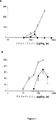
より詳細には、図1Aでは、ラットにデクスメデトミジン(5μg/kg/hr)が7日間に渡って投与され、その後、対抗要領(challenge dose)のデクスメデトミジンが注射され、立ち直り反射の持続期間が記録された。全ての数値は4〜11匹のラットの平均値±標準誤差である。図1Bでは、ラットにデクスメデトミジン(10μg/hg/hr)が14日間に渡って投与され、その後鎮痛試験30分前に対抗要領のデクスメデトミジンが注射された。全ての数値は5〜14匹のラットの平均値±標準誤差である。
【0082】
より詳細には、図2Aはデクスメデトミジンの緊急投与(100μg/kg、i.p.(腹腔内投与))によって誘発された睡眠時間にMK−801の緊急投与(10〜200μg/kg)が及ぼした作用を示している。*=p<0.05、生理食塩水群から有意差あり、n=6。図2BはMK−801の緊急投与がデクスメデトミジンの催眠作用に対するデクスメデトミジン誘発性耐性を遮断しないことを示している。*=p<0.05、対照生理食塩水群から有意差あり、n=6〜7。図2CはMK−801の併用投与(100および400μg/kg/hr)がデクスメデトミジンの対抗要領(100μg/kg、i.p.)の催眠作用への耐性を遮断することを示している。*=p<0.05、対照群から有意差あり、n=6〜8。全ての数値は7〜8匹のラットの平均値±標準誤差である。
【0083】
より詳細には、図3Aは、デクスメデトミジンの緊急投与(150μg/kg、i.p.)によって誘発された睡眠時間にケタミンの緊急投与が何の作用も及ぼさないことを示している。図3Bはケタミンの緊急投与(10および20mg/kg)がデクスメデトミジンの催眠作用に対するデクスメデトミジン誘発性耐性を遮断しないことを示している。*=p<0.05、ケタミン(10mg/kg)群から偽処置動物への有意差、***=p<0.001、ケタミン(20mg/kg)群から偽処置動物への有意差。図3Cは、単独で投与したときにデクスメデトミジン鎮静への作用を示すことのないケタミンの併用投与(400μg/kg/hr)が対抗要領(150μg/kg、i.p.)のデクスメデトミジンの催眠作用に対する耐性を逆転させることを示している。*=p<0.05、偽処置動物からの統計的有意差、N=6〜8。全ての数値は7〜8匹のラットの平均値±標準誤差である。
【0084】
より詳細には、図4Aは、実験に未使用のラットにおけるデクスメデトミジンの催眠作用にMK−801の緊急投与が及ぼす作用を示している。MK−801は50μg/kgのデクスメデトミジンの投与15分前に投与され、40分後にテールフリック試験が実施された。**=p<0.01、n=6〜7であった。図4BはMK−801の緊急投与が耐性の発生を防止しないことを証明している。14日間に渡ってデクスメデトミジン(10μg/kg/hr)を送達するミニポンプの植え込みによって耐性が付与されたラットにおいて、MK−801(50μg/kg)は耐性の発現を防止しない。MK−801のこの用量が選択されたのは、それがデクスメデトミジン誘発性の睡眠時間に作用を及ぼさないためである。***=p<0.001、n=6〜7。図4Cは、14日間に渡るMK−801(0.4μg/kg/hr)とデクスメデトミジン(10μg/kg/hr)の併用投与が耐性の発生を防止しないことを例示している。MK−801単独の場合のこの用量はデクスメデトミジンの鎮痛作用に影響を及ぼさない。***=p<0.001、対照群から有意差あり。全ての数値は7〜8匹のラットの平均値±標準誤差である。
【0085】
より詳細には、図5AはNO2−アルギニンが薬剤未使用ラットのデクスメデトミジン誘発性睡眠時間を用量に依存して増加させることを示している。NO2−アルギニンはデクスメデトミジン(100μg/kg、i.p.)の投与15分前に投与された。*=p<0.01、n=8。図5Bはデクスメデトミジン誘発性睡眠時間に影響を及ぼさない用量のNO2−アルギニンの緊急投与がデクスメデトミジン(100μg/kg)の催眠作用に対する耐性を逆転させないことを示している。*=p<0.05対照群から有意差あり、n=8。図5Cは7日間に渡るNO2−アルギニン(0.4〜4μg/kg/hr)とデクスメデトミジン(5μg/kg/hr)の併用投与が、デクスメデトミジンの催眠作用に対する耐性の発生を阻害することを示している。*=p<0.05、対照群から有意差あり、#=p<0.05、対照群およびデクスメデトミジン耐性群の両方から有意差あり、n=7〜8。NO2−アルギニン(1.25μg/kg/hr)だけを用いての治療(最終列)を用いた治療はデクスメデトミジン誘発性睡眠時間に影響を及ぼさない。n=8。全ての数値は7〜8匹のラットの平均値±標準誤差である。
【0086】
より詳細には、図6AはNO2−アルギニンの緊急投与が実験未使用ラットのデクスメデトミジンの鎮痛作用に影響を及ぼさないことを示している。NO2−アルギニンはデクスメデトミジン(50μg/kg、i.p.)の投与15分前に投与され、40分後にテールフリック試験が実施された。全ての数値は6匹のラットの平均値±標準誤差である。図6Bは、NO2−アルギニン(1および20mg/kg、i.p.)がデクスメデトミジン耐性ラットにおけるデクスメデトミジン(100μg/kg、i.p.)の鎮痛作用に対するデクスメデトミジン耐性を逆転しないことを示している。*=p<0.05対照群から有意差あり、n=7〜8。図6Cは催眠耐性(図5Cを参照。)に効果的に拮抗する用量のNO2−アルギニン(4μg/kg/hr)がデクスメデトミジン(10μg/kg/hr、14日間)によってもたらされた鎮痛耐性に影響を及ぼさないことを示している。NO2−アルギニンの用量を8μg/kg/hrへ増加させても効果はなかった。全ての数値は7〜8匹のラットの平均値±標準誤差である。*=p<0.05、**=p<0.01、対照群から有意差あり。
【0087】
[実施例]
製剤の実施例
本発明の典型的な製剤は、10〜20%イントラリピド(Intralipid)(登録商標)エマルジョン中に5〜30mMのキセノンと7〜70μMのデクスメデトミジンとを含む。下記の実施例の各々では、キセノンガスは脂質エマルジョン中に溶解している。
【0088】
実施例1
全身麻酔を誘導するために、成人患者に5〜20mlのキセノンガスおよび15〜300μgのデクスメデトミジンを含有する製剤が2分間かけて静脈内注射される。麻酔の誘導は、[a]手術、[b]薬物および/またはアルコール嗜癖からの離脱、[c]破傷風の管理を容易にする可能性がある。
【0089】
実施例2
全身麻酔を維持するために([a]手術、[b]薬物および/またはアルコール嗜癖からの離脱、[c]破傷風の管理を容易にするため)、成人患者に1時間につき10〜50mlのキセノンガスおよび10〜150μgのデクスメデトミジンを送達するように調整されている製剤の静脈内注入が実施される。
【0090】
実施例3
意識鎮静を生じさせるために、成人患者に1〜10mlのキセノンガスおよび5〜100μgのデクスメデトミジンを含有する製剤が10分間かけて静脈内注射され、さらに1時間につき5〜20mlのキセノンガスおよび2〜30μgのデクスメデトミジンを送達するように調整されている製剤の静脈内注入が実施される。意識鎮静は診断的、または治療的(外科的または非外科的)手技を容易にする可能性がある。
【0091】
実施例4
外傷または虚血からの進行性の神経損傷に対する保護を行うために、成人患者に5〜20mlのキセノンガスおよび15〜300μgのデクスメデトミジンを含有する製剤が10分間かけて静脈内注射される。この後に1時間につき10〜50mlのキセノンガスおよび10〜150μgのデクスメデトミジンを送達するように調整されている製剤が連続的に注入される。
【0092】
実施例5
慢性疼痛の治療において、成人患者に1〜10mlのキセノンガスおよび5〜60μgのデクスメデトミジンを含有する製剤が10分間かけて硬膜外注射される。この後に1時間につき2〜20mlのキセノンガスおよび1〜20μgのデクスメデトミジンを送達するように調整されている製剤が連続注入される。
【0093】
実施例6
成人患者における慢性疼痛のまた別の治療においては、製剤は経皮的に適用され、1時間につき5〜20mlのキセノンガスおよび2〜30μgのデクスメデトミジンを送達するように調整されている。
【0094】
NMDA受容体阻害薬がα2作用薬耐性に及ぼす作用
本実験プロトコルは、復員軍人援護局パロアルト・ヘルスケアシステム(Veterans Affairs Palo Alto Health Care System)の動物の飼育管理および使用委員会によって承認された。体重が250〜350gの雄性Sprague−Dawley系ラット(B&K社、フレモント、CA)が使用された。ラットは群間の体重分布ができる限り近く適合するように層別化された。全試験は、午前10時から午後4時までの間に実施された。各実験についての動物数は凡例に記載されている。
【0095】
耐性の発生
ラットは、Reid Kら(上記の箇所を参照)が記載しているようにα2作用薬の麻酔作用に対して耐性が付与された。手短には、ラットには0.48±0.02μl/hの平均ポンピング速度で内容物を送り出すアルゼット(Alzet)(登録商標)浸透圧ミニポンプ(2002または1007D型、アルザ社製、パロアルト、CA)を使用してデクスメデトミジンが長期的に投与された。ポンプは、背側胸郭領域でのイソフルラン麻酔中に皮下へ挿入され、催眠耐性を誘発するためには7日間に渡って5μg/kg/hを送達するように、および鎮痛耐性を誘発するためには14日間に渡って10μg/kg/hを送達するように装填された。これらの投与スケジュールは催眠または鎮痛耐性状態を生成させるために最適であることが発見されている(Hayashi Yら、上記の箇所を参照)。MK−801またはNω−ニトロ−L−アルギニン(NO2−アルギニン)をデクスメデトミジンと併用投与する場合は、MK−801を同一ポンプ内に含めた。以前の試験(Hayashi Yら、上記の箇所を参照)は偽手術動物において測定された行動反応が生理食塩水を含有するポンプが植え込まれたラットと変わらなかったと報告していたので、前者が使用された。MK−801およびNω−ニトロ−L−アルギニン(NO2−アルギニン)催眠実験のためには、ポンプは行動試験の1日前に抜去された。その他の全実験では、ポンプは試験前に抜去されなかった。
【0096】
立ち直り反射の消失
デクスメデトミジンに対する催眠反応は、ラットの立ち直り反射の消失(LORR)によって定義され、その持続時間が分単位で測定されて睡眠時間と呼ばれた。LORRの時間は、ラットが仰向けに置かれたときに自分で立ち直ることができない時点からラットが自発的に完全に腹位に戻る時点までの時間として評価された。催眠反応試験は、Reidら、1994が記載しているように午前10時から午後6時までの間に実施された。
【0097】
侵害受容試験の手順
侵害受容反応は、デクスメデトミジンの対抗要領の投与の40分後に有害性の熱刺激へのテールフリック反応によって評価された。尾の上に高強度光ビームが照射され、ラットが光線外へ尾を動かす時間がテールフリック潜伏時間として記録された。この方法は以前に文献(Guo TZら、上記の箇所を参照)に記載されている。尾の上の3ヵ所の部位からの潜伏時間が平均化された。組織損傷を防止するために、あらかじめ10秒間のカットオフ時間が決定された。ベースライン時測定値は、2分間隔での3回のテールフリック測定値のセットから構成される。ベースライン時のテールフリック潜伏時間は3〜4秒間であった。
【0098】
薬物の調製
NOS阻害剤であるNω−ニトロ−L−アルギニン(NO2−アルギニン)(シグマ社)およびNMDA拮抗薬であるMK−801(RBI社)およびケタミン(シグマ社)が生理食塩水中に希釈され、腹腔内投与またはアルゼット(登録商標)浸透圧ミニポンプ(2002または1007D型、アルザ社製、パロアルト、CA)によって持続的に投与された。これらの化合物は1つのポンプに両方の製剤を含めることによってデクスメデトミジンと併用投与された。
【0099】
統計的解析
LORRおよびテールフリック試験データとしては、分散の分析(ANOVA)を用い、その後に適切な場合にはポストホックボンフェローニ(Post hoc Bonferroni)検定またはデュネット(Dunnett)の多重比較検定またはt検定のいずれかを使用して解析された。
【0100】
偽治療および長期治療された動物におけるデクスメデトミジンについての用量応答関係
デクスメデトミジンの催眠作用および鎮痛作用についての用量応答関係は図1に示されている。デクスメデトミジンの催眠作用は偽治療動物においては用量に依存的に増加したが、7日間に渡って長期的に治療されたラットにおいては高用量が投与された場合でさえほぼ完全に欠如していた(図1A)。約300μg/kgで最高有効性を有するデクスメデトミジンのこの作用についての二相性用量応答曲線は、以前に説明されており、α1受容体の活性化によって媒介されるデクスメデトミジンの促進作用を原因とするものであることが示されている(Guo TZら、上記の箇所を参照)。
【0101】
14日間に渡るデクスメデトミジンへの慢性的な暴露はデクスメデトミジンについての鎮痛作用の応答曲線を約2倍変化させ、最高の効果を減少させた(図1B)。
【0102】
NMDA受容体拮抗薬であるMK−801およびケタミンを用いてのデクスメデトミジンの催眠作用に対する耐性の誘発の防止
実験未使用動物へのMK−801の緊急投与は睡眠時間に影響を及ぼさなかった(図2A)。耐性がいったん発生すると、MK−801の緊急投与は耐性の発現に影響を及ぼさなかった(図2B)。しかしMK−801とデクスメデトミジンとの併用投与は耐性の発生を防止することができなかった(図2C)。この実験で、浸透圧ポンプは行動試験の1日前に抜去された。
【0103】
ケタミンは、これを緊急投与したときにデクスメデトミジンの急性注射によって誘発された睡眠時間に影響を与えないという同様のプロフィールを有した(図3A)。10または20mg/kgのケタミンの緊急投与は以前に確立された耐性を逆転できなかったが(図3B)、ケタミンを同時に投与したときにはデクスメデトミジンの鎮静作用に対する耐性を逆転した(図3C)。これと同一用量のケタミンは単独では作用を有していなかった。この実験では、アルゼットポンプは行動試験のためにその場所に残されていた。
【0104】
MK−801を用いてのデクスメデトミジンの鎮痛作用に対する耐性の誘発の防止の欠如
デクスメデトミジンの挑戦投与15分前のMK−801の緊急投与は2つの最高用量で鎮痛作用を抑制した(図4A)。MK−801が耐性の発現に影響を及ぼすことができるかどうかを判定するために、MK−801は対照群および耐性群動物へ緊急投与された。単独ではデクスメデトミジン誘発性鎮痛に影響を及ぼさなかった低用量のMK−801は、耐性の発現を逆転しなかった(図4B)。対照群動物においてデクスメデトミジンの鎮痛作用を拮抗した高用量のMK−801(400μg/kg)もまた耐性を逆転することができなかった。デクスメデトミジンの催眠作用に対する耐性の発生を防止し、ラットによって忍容された最高用量であった用量のMK−801の併用投与は鎮痛耐性の発生に全く影響を及ぼさなかった(図4C)。この用量のMK−801は単独で投与したときにテールフリック潜伏時間に全く作用を有していなかった。
【0105】
NOシンターゼ阻害剤を用いたデクスメデトミジンの催眠作用に対する耐性の誘発の防止
実験未使用動物に投与したときにNO2−アルギニンは高用量でのみ睡眠時間を増加させた(図5A)。7日間のデクスメデトミジンの投与によって耐性がいったん発生すると、実験未使用動物において睡眠時間に影響を及ぼさなかった低用量のNO2−アルギニンの緊急投与は、その耐性の発現を逆転しなかった(図5B)。NO2−アルギニンをデクスメデトミジンと併用投与したときには、デクスメデトミジンの睡眠作用に対する耐性の誘導は弱められた(図5C)。1.25μg/kg/hrだけを用いての治療(最終列)はデクスメデトミジン誘発性の睡眠時間に影響を及ぼさなかった。
【0106】
NO 2 −アルギニンを用いてのデクスメデトミジンの鎮痛作用に対する耐性の誘発の防止の欠如
NO2−アルギニンの緊急投与はデクスメデトミジン(50μg/kg、i.p.)の鎮痛作用に影響を及ぼさなかった(図6A)。NO2−アルギニンが耐性の発現に影響を及ぼすことができるかどうかを判定するために、対照群および耐性群動物に緊急投与された。NO2−アルギニン(1および20mg/kg、i.p.)は耐性の発現を逆転しなかった(図6B)。デクスメデトミジンの催眠作用に対する耐性の発生を防止した用量のNO2−アルギニン(4μg/kg/hr)の併用投与は対照群動物においてデクスメデトミジン誘発性鎮痛に影響を及ぼさず、さらに鎮痛耐性にも作用を有していなかった(図6C)。この用量のNO2−アルギニンは単独で投与したときにテールフリック潜伏時間に影響を及ぼさなかった(データは示されていない)。NO2−アルギニンの用量を8μg/kg/hrへ増加させても、耐性を逆転させることにおいて無効であった。
【0107】
本発明のここに記載した方法の様々な修飾および変形は本発明の範囲および精神から逸脱することなく当業者には明白であろう。本発明を特定の好ましい実施形態と結び付けて説明してきたが、関連分野における当業者には明白である本発明を実施するための記載の形態の様々な修飾は、請求の範囲内に含まれることが意図されている。
【図面の簡単な説明】
【図1】偽手術で治療された、またはデクスメデトミジンを用いて長期的に治療されたラットにおけるデクスメデトミジンの催眠作用および鎮痛作用についての用量応答関係の図である。
【図2】デクスメデトミジンによって誘発された睡眠時間へMK−801投与が及ぼした結果を示した図である。
【図3】デクスメデトミジンによって誘発された睡眠時間へケタミン投与が及ぼした結果を示した図である。
【図4】デクスメデトミジンによって誘発された鎮痛作用へMK−801投与が及ぼした結果を示した図である。
【図5】デクスメデトミジンによって誘発された睡眠時間へNO2−アルギニン投与が及ぼした結果を示した図である。
【図6】デクスメデトミジンによって誘発された鎮痛作用へNO2−アルギニン投与が及ぼした結果を示した図である。[0001]
[background]
The present invention relates to novel formulations that can display one or more beneficial therapeutic effects. As an example, the novel formulations can provide any one or more of general anesthesia, analgesia, sedation and neuroprotection.
[0002]
The state of general anesthesia has several components: analgesia (or insensitivity to noxious stimuli), loss of consciousness (hypnotic response), weakening of the sympathetic nervous system to noxious stimuli (sympathetic blockade), memory formation of adverse events Interruptions and muscle relaxation.
[0003]
The state of general anesthesia usually does not usually provide several classes of drugs from various pharmacological classes, as neither class of compound alone can provide the required ideal characteristics alone. Brought by the combination. For example, strong volatile anesthetics such as halogenated ethers and haloalkanes can biotransform potentially toxic substances. In addition, these substances induce excitement when awake from anesthesia. Inhalants such as nitrous oxide and xenon are not considered to be effective enough to be used as monotherapy, while sedative / hypnotics (propofol, benzodiazepines and barbiturate hypnotics are ) Lack analgesic properties. Analgesics either produce severe respiratory depression requiring assisted breathing (for opioid analgesics) or do not produce a hypnotic response (for non-opioid analgesics), while peripheral Muscle relaxants, such as vecuronium and atracurium, which have no analgesic or hypnotic properties.
[0004]
When considering the prior art, there are a number of disadvantages associated with the drugs currently used for general anesthesia. First, special drug delivery systems are required, especially for volatile potency anesthetics. This need is obviated by the intravenous route (total intravenous anesthesia or known as "TIVA: total intravenous anaesthesia"). However, current TIVA formulations always include analgesics that induce respiratory depression (eg, opiate anesthetics) and hypnotics that induce cardiac depression (propofol and barbituric acid-type hypnotics), and therefore, their use Equipment for respiratory and cardiovascular support is needed. Second, terminating the clinical effects resulting from TIVA requires either biotransformation and / or excretion of parent drugs and their metabolites, which results in organ toxicity problems. Other disadvantages of these drugs include the prolonged arousal, nausea and vomiting (all except propofol) and the potential for high levels of addiction that lead to excitement, with a narrow therapeutic window. Finally, there are also environmental threats associated with the destruction of the ozone layer by nitrous oxide.
[0005]
The present invention aims to provide an improved formulation for general pharmaceutical use, especially for use in anesthesia.
[0006]
[Description of the Invention]
Aspects of the invention are set forth in the appended claims and the description below.
[0007]
[Detailed description]
In a broad aspect, the invention provides a medicament comprising an NMDA antagonist and an α2 adrenergic agonist.
[0008]
In one preferred embodiment, the present invention provides an anesthetic comprising an NMDA antagonist and an α2 adrenergic agent.
[0009]
Surprisingly, we have found that co-administration of an NMDA receptor antagonist and an α2 adrenergic agonist, preferably as a single formulation, both enhance the efficacy of the individual compounds through a synergistic mechanism, It has been discovered that these agents, when used, reduce the potential for harmful and undesirable side effects that can be induced.
[0010]
One essential component of the formulation is an NMDA receptor antagonist.
[0011]
The term “antagonist” is used in its ordinary sense in the art, ie, a compound that inhibits activation of receptor function by its agonist (in this case, NMDA).
[0012]
NMDA (N-methyl-D-aspartate) receptors are a major subclass of glutamate receptors, the most important excitatory neurotransmitters in the mammalian central nervous system. Importantly, activation of NMDA receptors is a central event leading to excitotoxicity and neuronal death in many disease states, and hypoxia and ischemia after head trauma, post-stroke and cardiac arrest Has been proved to be the result.
[0013]
It is known in the art that NMDA receptors play important roles in a number of advanced cognitive functions, such as memory and learning, and in certain nociceptive pathways and pain perception (Collingridge et al., The NMDA). Receptor, Oxford University Press, 1994). Furthermore, certain properties of NMDA receptors suggest that they may be associated with information processing in the brain underlying consciousness itself.
[0014]
NMDA receptor antagonists in the context of the present invention are beneficial for a number of reasons, such as, for example, three specific reasons described below. First, NMDA receptor antagonists produce deep analgesia, a highly desirable component of general anesthesia and sedation. Second, NMDA receptor antagonists are neuroprotective in many clinically important situations (ischemia, brain trauma, neuropathic pain states, and certain types of convulsions). Third, NMDA receptor antagonists cause a beneficial degree of memory loss.
[0015]
The formulation can include one or more NMDA receptor antagonist.
[0016]
Contrary to the prior art use of NMDA receptor antagonists in the practice of general anesthesia, we have surprisingly found that their effects are severe in the formulations of the invention due to concomitant hallucinations and other undesirable side effects. It was discovered that it was not inhibited. The prior art problems associated with this class of compounds include the production of involuntary movements, stimulation of the sympathetic nervous system, and induction of neurotoxicity at high doses (since NMDA receptor antagonists are less effective as general anesthetics, Especially relevant), myocardial depression, pre-convulsions in a paradigm that induces some epilepsy, such as "kindling" (Wlaz P et al., Eur. J. Neurosci. 1994; 6: 1710-1719). Was related to The difficulties in developing antagonists that cross the blood-brain barrier have further limited their practical applications.
[0017]
More specifically, the NMDA receptor antagonists of the present invention include, for example, 2-amino-5-phosphonopentanoate and 2-amino-7-phosphonoheptanoate or derivatives or structural analogs thereof. Such a competitive antagonist may be used. NMDA receptor antagonists also include, for example, dizocilpine, ketamine, HA-966 [(+/-)-3-amino-1-hydroxy-2-pyrrolidone], or derivatives or structural analogs thereof. It may be a non-competitive antagonist.
[0018]
Preferably, the NMDA receptor antagonist is xenon.
[0019]
An advantage of using an inert volatile gas, such as xenon, as a general anesthetic, is that molecules can be rapidly excreted through respiration.
[0020]
In this regard, it has recently been discovered that xenon (which rapidly balances the brain) is an NMDA antagonist (Franks NP et al., Nature 1998; 396: 324), which specifically identifies xenon in the context of the present invention. An attractive candidate.
[0021]
Xenon is a chemically inert gas whose anesthetic properties have been known for more than 50 years (Lawrence JH et al., J. Physiol. 1946; 105: 197-204). Since xenon was first used in surgery (Cullen SC et al., Science 1951; 113: 580-582), xenon has been used in the absence of metabolic by-products, deep analgesia, rapid onset and recovery, as well as minor effects on the cardiovascular system. Numerous research groups have demonstrated excellent pharmacological characteristics, including effects (Lachman B et al., Lancet 1990; 335: 1413-1415; Kennedy RR et al., Anaesth. Intens. Care 1992; 20:66). Lutropp HH et al., Acta Anaesthesiol. Scand. 1994; 38: 121-125; Goto T et al., Anesthesiology 1997; 86: 1273-1278; Marx T et al., Br. J. Ana. esth. 1997; 78: 326-327). Mechanical studies using cultured hippocampal neurons have shown that 80% xenon maintaining surgical anesthesia reduces NMDA activation current by 60%. This potent inhibition of the NMDA receptor accounts for some of the key features of the pharmacological profile and appears to be helpful in the anesthetic and analgesic effects of this inert gas.
[0022]
To date, a key issue that has hindered the use of xenon as a new anesthetic is the need to vent gas for reuse, as well as the high cost and minimization of doses used. It is necessary to use complicated equipment (low flow system). Another problem is that the effectiveness of xenon is quite low. As a result, it has been proposed that a volatile general anesthetic be dissolved in a lipid emulsion and administered intravenously (Eger RP et al., Can. J. Anaesth. 1995; 42: 173-176). It is known in the art that local anesthesia can be induced by intradermal injection of small droplets of a liquid form of a general anesthetic (Haynes DH, US Pat. Nos. 4,725,442 and 4,622). 219). Typically, these microdroplets are coated with a monomolecular phospholipid layer and remain stable in a physiologically compatible solution. A similar approach has been described in a recent patent application proposing that xenon can be administered in this manner (Geogieff M, European Patent Application No. 864329-A1).
[0023]
Here, the prior art is concerned with the use of NMDA receptor antagonists with α2 adrenergic drugs in formulations having wide applicability for use as anesthetics, as well as the surprising properties associated therewith. We must state that we have neither disclosed nor proposed.
[0024]
Another essential component of this formulation is an α2 adrenergic agonist. The term “agonist” is used in its ordinary sense in the art, ie, a chemical compound that functionally activates the receptor to which it binds.
[0025]
α2 adrenergic receptors (adrenergic receptors) are ubiquitous throughout both the nervous system and every other system of the body. The α2 adrenergic receptor, which includes three receptor subtypes (referred to as A, B, and C), is a non-selective endogenous adrenergic agonist that activates yet another six adrenergic receptor subtypes Activated by adrenaline and noradrenaline.
[0026]
To date, interest in anesthetics has increased, as experiments and clinical trials have shown that α2 agonists exert potent analgesic effects (Guo T et al., Anesthesiology 1991; 75: 252-6) and anesthetic effects. Have focused on reducing the conditions required for anesthesia. The hypnotic response is thought to be mediated by activation of α2 adrenergic receptors in the locus coeruleus, while analgesia is at the level of the dorsal horn of the spinal cord and other not yet fully characterized. Induced by modulation of the nociceptive pathway at the site (Guo T et al., Supra).
[0027]
Thus, preoperative α2 adrenergic drugs are volatile (Aho M et al., Anesthesiology 1991; 74: 997-1002), opioids (Gignone M et al., Anesthesiology 1986; 64: 36-42), and hypnotics (Aantaa R et al.). , Anesthesiology 1990; 73: 230-5). In addition, α2 adrenergic drugs are also used for preoperative anxiety relief (Uhde TW et al., Arch Gen Psychiatry 1989; 46: 170-7) and preoperative sedation (Flacke JW et al., Anesthesiology 1987; 67: 11-9). It is valid.
[0028]
More specifically, exogenous α2 agonists such as, for example, dexmedetomidine, are present at discrete sites in the brainstem at the α2A adrenergic receptor subtype (Lakhlani PP et al., Proc. Nat. Acad. Sci. 1997; 94: 9950). -9955) induces loss of consciousness in experimental animals (Correa-Sales C et al., Anesthesiol 1992c; 76: 948-52). When activated by its agonists, this same receptor subtype also has anxiety (anxiety resolution) (Salonen M et al., Psychopharmacology 1992; 108: 229-234) and activity in the sympathetic nervous system (sympathetic blockade). ). α2 agonists are also anticonvulsant in a paradigm that induces some types of epilepsy (Halonen T et al., Brain Res. 1995; 6932: 17-24) and are neuroprotective during ischemic stroke. (Maier C et al., Anesthesiology 1993; 79: 306-12). The hypnotic state induced by α2 agonists can be reversed immediately with a selective α2 adrenergic antagonist (eg, yohimbine). α2 agonists attenuate the excitement associated with arousal from anesthesia created by volatile anesthetics (Bruandet N et al., Anesth. Analg. 1998; 86: 240-5).
[0029]
To date, the use of α2 adrenergic agonists in the practice of general anesthesia has been hampered by the lack of efficacy of anesthesia and the side effect profile. Their lack of efficacy requires the use of very high doses that can activate non-α2A adrenergic receptors, which is accompanied by increased blood pressure (Bloor BC et al., Anesthesiology 1992; 77: 1134-1142) and decreased tissue perfusion. Causes peripheral vasoconstriction. Furthermore, α2 agonists are also proconvulsant in some epileptic models (“pentylenetetrazole” [PTZ] seizures) (Mirski MA et al., Anesthesiology 1994; 81: 142-8).
[0030]
It is well known in the art that α2 agonists, such as clonidine and dexmedetomidine, alleviate pain in human and animal models, whether administered systemically or neuraxially. α2 agonists produce analgesia by supraspinous effects (Guo TZ et al., supra) and local spinal effects (Eisenach J et al., Anesthesiol. 1993: 277-87). Unlike local anesthetics, α2-agonists do not alter motor or sensory function and, unlike opiates, cause respiratory depression (Jarvis DA et al., Anesthesiology 1992; 76: 899-905). It does not induce a pursuit action (for example, addiction). As a result of these features, α2 adrenergic drugs are attractive candidate drugs for pain management, reducing postoperative pain (Bonnet F et al., Br J Anaesth 1989; 63: 465-9) and delivery. It is effective for middle and postpartum pain relief (Eisenach JC et al., Anesthesiology 1989; 71: 640-6; Filos KS et al., Anesthesiology 1992; 77: 267-74).
[0031]
Although small-scale studies have been conducted on the potential of long-term therapy with α2 agonists for chronic pain states (Eisenach JC et al., Anesthesiology 1989; 71: 647-52), they appear to be very promising (Eisenach). JC et al., Anesthesiology 1996; 85: 655-74). No clinical trials have yet been conducted to address the duration of analgesic effects of epidural administration of α2 agonists performed after long-term administration. However, it has now been proposed to administer α2 agonists for long periods of time (Segal IS et al., Anesthesiology 1991; 74: 220-5), which may be beneficial in the early stages of preoperative care of surgical patients. Because there is. However, due to the biologically important adaptability to the immediate effects of α2 agonists, it can lead to a decrease in drug action over time. This is commonly called tolerance. Although the resistance to the sedative effects of clonidine is rapidly emerging and is considered desirable in the treatment of hypertension, this is due to the clinical efficacy of α2 agonists for the relief of chronic pain and long-term sedation in intensive care (ICU) settings. (Maze M, Redefining sedation, International Congress and Symposium, edited by Maze M, Morrison P. London, The Royal Society of Medicine, Medicine, Medicine, Medicine, Medicine, Medicine, Medicine, Medicine, Medicine, Medicine, Medicine, Healthcare, Medicine, Healthcare, Medicine, Healthcare, Medicine, Healthcare, Healthcare, Healthcare, Healthcare, Healthcare, Healthcare, Healthcare, Healthcare, Healthcare, Healthcare, Healthcare, Healthcare, Healthcare, Healthcare, Healthcare, Healthcare, Healthcare, Healthcare, Healthcare, Healthcare, Healthcare, Healthcare, Healthcare, Healthcare, Healthcare, Healthcare, Healthcare, Healthcare, Healthcare, Healthcare, Healthcare, Healthcare, Healthcare, etc.). Long-term epidural administration of clonidine results in clinically useful analgesia for the treatment of chronic pain throughout the course of treatment and may be marginally resistant to the sedative effects of α2-agonists administered to the spinal cord (Eisenach JC et al., Anesthesiology 1989; 71: 640-6).
[0032]
The formulations of the present invention can include one or more α2 adrenergic agents.
[0033]
The α2 agonists of the present invention are marketed as clonidine (Catapress®, Boehringer Ingelheim), Duraclon®, Roxanne. (Possibly).
[0034]
Clonidine, a prototype of an α2 adrenergic drug, has been used as an antihypertensive drug since the early 1970s due to its sympathetic blocking properties. These sympathetic and anxiolytic properties have been exploited in the use of clonidine to facilitate drug / alcohol withdrawal (Gold MS et al., Psychiatr. Clin. North Am. 1993; 16:61). -73). More recently, clonidine has been used as an analgesic and sedative in preoperative settings (Kamibayashi T et al., Current Opinion in Anaestheology 1996; 9: 323: 327) and for the management of mental states such as, for example, attention deficit hyperactivity disorder. (Van der Meere J, et al., J. Child Psychol. Psychiatry 1999; 40: 291-8). In particular, when clonidine is used in addition to a local anesthetic, it has been demonstrated that clonidine increases anesthetic effects much more than when comparable doses are administered systemically (Bernard JM et al., Can Anaesthesiol 1994). 42 [2]: 223-8). This effect is probably the result of local clonidine concentration. Furthermore, epidural administration of clonidine is much more effective than systemic administration, at least when injected at high doses.
[0035]
Additionally or alternatively, the α2 agonists of the present invention may include detomidine, medetomidine, dexmedetomidine (sold as Primadex, Abbott Labs.), Brimonidine (alpha gun). Alphagan, may be sold as Allergan), tizanidine, mibazelol (UCB-Pharma, Belgium), Guanabenz (Wytensin®, Wyeth Ayerst) Guanfacine (which may be sold as Tenex®, manufactured by AH Robins) or derivatives or structures thereof. It may be an analog.
[0036]
A preferred α2 adrenergic agent is dexmedetomidine.
[0037]
The prior art now discloses the use of α2 adrenergic agonists with NMDA receptor antagonists in formulations having a wide applicability for use as anesthetics, as well as the surprising properties associated therewith. It must be stated that neither has been proposed.
[0038]
Therefore, the present invention relates to a preparation containing an α2 adrenergic agonist and an NMDA receptor antagonist. Here, α2 adrenergic agonists can prevent cortical neurotoxic side effects of the posterior cingulate / posterior striated muscle (PC / RS) of NMDA antagonists (Jevtovic-Todorovic V et al., Brain Res. 1998, Jan 19). 781 [1-2]: 202-11). In particular, α2 adrenergic agonists that do not specifically relieve neuropathic pain, eg, clonidine and / or dexmedetomidine, may enhance the neuropathic pain relief of NMDA antagonists, eg, MK-801. While it can, on the other hand, also provide protection against the neurotoxic and hyperactive side effects of NMDA antagonists. Furthermore, oral clonidine pre-administration has also been shown to moderate the hemodynamic effects associated with ketamine-induced anesthesia in humans (Doak JG et al., Can. J. Anaesth. 1993 Jul; 40 [7] 612-8). .
[0039]
Preferably, the NMDA receptor antagonist is not ketamine.
[0040]
Preferably, the α2 adrenergic agent is not xylazine.
[0041]
More preferably, the formulations of the present invention do not contain a combination of ketamine and xylazine. In this regard, in veterinary anesthesia practice, the NMDA antagonist ketamine has been used in the presence of the relatively weak α2 agonist xylazine (Radde GR et al., Lab. Anim. 1996130: 220-7). ). However, these drugs cannot be used in sufficiently high doses to produce anesthesia due to their side effects including direct myocardial depressant effects and hypertension. Like other TIVA formulations, administration of these agents requires a pharmacokinetic mechanism to terminate the effect and facilitate arousal. Furthermore, extrapolation to facilitate general anesthesia in human patients is complicated by the effects that cause conditions such as involuntary movements and psychiatric disorders.
[0042]
The components of the formulations of the present invention can be administered sequentially, sequentially or simultaneously, or a combination thereof.
[0043]
Preferably, the components of the formulations of the present invention are administered simultaneously, for example, in a single formulation.
[0044]
Thus, according to a preferred embodiment of the present invention, a single formulation (monotherapy) can be used to induce and maintain general anesthesia. This has the advantage that expensive equipment for either drug delivery or respiratory assistance need not be used. The preferred pharmacokinetic profile of the present invention allows both easy and rapid titration of the desired effect as well as smooth and rapid awakening from general anesthesia. In particular, if general anesthesia is used as a treatment (eg, withdrawal from alcohol and / or drug addiction, tetanus), the present invention reduces hyperactivity in the sympathetic nervous system, as well as all other functions provided by general anesthesia. Provides features.
[0045]
In accordance with the present invention, monotherapy can induce and maintain sedation without the need for expensive equipment for either drug delivery or respiratory monitoring. In addition, monotherapy can provide chronic pain relief without any potential addiction or respiratory depression. In addition, monotherapy can be used to provide neuroprotection and does not produce the degree of cardiovascular and respiratory depression that requires cardiovascular and respiratory resuscitation. The neuroprotective effect is more effective as a result of the complementary action of the two components.
[0046]
Preferably, the formulations of the present invention are in liquid dosage form. For parenteral administration, the preparation can be used in the form of a sterile aqueous solution which can contain other substances, for example, enough salts or monosaccharides to make the solution isotonic with blood.
[0047]
More preferably, the formulation is in the form of a lipid emulsion. When a volatile anesthetic such as xenon is used, preparations for intravenous administration typically involve a gas or lipid to sufficiently increase the solubility of the volatile anesthetic to achieve the desired clinical effect. Emulsions (e.g., commercially available Intralipid (R) 10, Intralipid (R) 20, Intrafat (R), Lipofundin (R) S or Liposin (R)) Liposyn® emulsions or emulsions specially formulated to maximize solubility). More information on this type of lipid emulsion can be found in Kleinberger and H.W. Palmer, Infusions therapies, 108-117 (1983) 3.
[0048]
The lipid layers of the present invention that dissolve or disperse in gas are saturated and unsaturated long and medium chain fatty acid esters, typically containing from 8 to 30 carbon atoms. These lipids form liposomes in aqueous solution. Examples include fish oils and vegetable oils such as, for example, soybean oil, safflower oil or cottonseed oil. The lipid emulsions of the present invention are typically oil in water emulsions, where the proportion of fat in the emulsion is conventionally 5-30% by weight, and preferably 10% by weight. ~ 20%. Oil-in-water emulsions of this type are often prepared in the presence of an emulsifier such as, for example, soy phosphatide.
[0049]
Lipids forming the liposomes of the present invention may be natural or synthetic, including cholesterol, glycolipids, sphingomyelin, glucolipids, glycosphingolipids, phosphatidylcholine, phosphatidylethanolamine, phosphatidylserine, phosphatidylglycerol, phosphatidylinositol. In.
[0050]
The lipid emulsion of the present invention may further include additional components. These include antioxidants, additives that make the osmotic concentration of the aqueous phase surrounding the lipid phase isotonic with blood, or polymers that modify the surface of liposomes.
[0051]
It has been established that recognizable amounts of xenon can be added to lipid emulsions. Even by the simplest means, at 20 ° C. and standard pressure, xenon can be dissolved or dispersed in a concentration of 0.2 to 10 ml or more per ml of emulsion. The concentration of the dissolved gas depends on a number of factors, such as temperature, pressure and lipid concentration.
[0052]
Gaseous or volatile anesthetics can be added to the lipid emulsions of the present invention. Generally, the device is filled with an emulsion and an anesthetic as a gas or vapor passed through a sintered glass bubble tube immersed in the emulsion. The emulsion is equilibrated with the anesthetic gas or vapor at the selected partial pressure. When stored in airtight containers, these lipid emulsions exhibit sufficient stability so that the anesthetic does not evolve as gas over the typical storage period.
[0053]
The lipid emulsions of the present invention can be added to be at a saturated content of xenon. Alternatively, xenon may be present at low concentrations, for example, provided that administration of the emulsion (when combined with an α2 agonist) produces the desired pharmaceutical activity.
[0054]
The present invention still further relates to a pharmaceutical composition comprising the formulation of the invention and a pharmaceutically acceptable diluent, excipient or carrier. By way of example, in a pharmaceutical composition of the invention, the formulation of the invention may comprise any suitable one or more binders, one or more lubricants selected in view of the intended route of administration and standard pharmaceutical practice. It can be mixed with one or more suspending agents, one or more coating agents, one or more solubilizers.
[0055]
In some cases, the formulations of the present invention may further include other optional ingredients, such as, for example, a nitric oxide (NO) synthase inhibitor.
[0056]
The presence of a NO synthase inhibitor may be a preferred embodiment. It has now been established that the sedative and analgesic effects of α2 adrenergic drugs decrease over time, a form of synaptic plasticity called resistance (Reid K et al., Pharmacol. Biochem. Behav. 1994; 47: 171-175).
[0057]
Changes in biological responsiveness in the CNS, such as, for example, long-term potentiation (LTP), central nervous sensitization ("wind-up") and resistance, are collectively referred to as synaptic flexibility, and the context of induction varies. Nevertheless, their molecular mechanisms may be similar. Previously performed studies have shown that the NMDA receptor complex (Asztelly F et al., Mol Neurobiol 1996; 12: 1-11) and nitric oxide synthase (NOS) (Meller ST et al., J. Neurosci. 1997; 17: 2645). -51; Boxall AR et al., Eur J Neurosci 1996; 8: 2209-12) have elucidated that both are critical for some forms of synaptic flexibility. Previously conducted studies also demonstrate that less exposure to α2 agonists is required to achieve hypnotic tolerance than to achieve analgesic tolerance (Hayashi Y et al., Anesthesiology). 1995; 82: 954-62), suggesting that these two forms of resistance may have different biological substrates.
[0058]
In particular, a previously conducted study showed that the induction of resistance to the hypnotic effects of dexmedetomidine indicated that NO was a dizolcipin or NOS inhibitor.Two-Elucidate that it is blocked by co-administration of either of arginine. However, after tolerance has developed, dizolcipin or NOTwo-Emergency administration of arginine does not prevent the development of resistance. That is, neither NMDA receptors nor NOS inhibitors can affect the development of hypnosis and analgesic tolerance, suggesting that there are multiple mechanisms by which behavioral tolerance to α2 agonists is induced and maintained. .
[0059]
Pharmacological probes MK-801, ketamine and NOTwo-Another test using arginine shows that resistance has at least two distinct stages (induction and expression) as seen in other forms of synaptic flexibility (e.g. LTD), and a signal It suggests that the components of the path follow a regular time sequence.
[0060]
Previously conducted studies have identified important sites for the hypnotic and analgesic effects of α2 agonists. The locus coeruleus (LC) appears to be a critical site for the production of α2 agonist-induced hypnosis (Correa-Sales C et al., Supra). However, the analgesic effects of α2 agonists are mediated both by the spinal cord and on the spine. The analgesic effect of dexmedetomidine injected directly into the LC occurs as a result of activation of the α2 adrenergic receptor in the spinal cord, even if this analgesia is induced by intrathecal injection of the α2 antagonist atipamezole. Because pericardial administration of pertussis toxin (Guo TZ et al., Supra), which ribosylates and thereby inactivates various G proteins. For example, clonidine (Post C et al., J. Anesth Analg 1987; 66: 317-24; Ossipov MH et al., J Pharmacol Exp Ther 1990; 255: 1107-16) or dexmedetomidine (Guo TZ et al., See above; Fisher Intrathecal administration of α2 agonists, such as B et al., Eur J Pharmacol 1991; 192: 221-5), also produces analgesia. These data point to the spinal cord α2 adrenergic receptor as the “final general pathway” in nociception.
[0061]
Initially, the α2 adrenergic receptor system was determined by LC (Aghajanian GK et al., Neuropharmaol 1987; 26: 793-9; Williams JT et al., J Neurosci 1988; 8: 4299-306) and spinal cord (Yoshimura M et al., Nature5 29:29; -30; North RA et al., J Physiol (Lon) 1984; 349: 43-55), and their effects on nociceptive processing in the spinal cord (Kendig JJ et al., Eur J Pharmacol 1991; 192: 293-300; Feng J et al., Pain 1996; 66343-9) and were believed to have numerous similarities to the opiate receptor system. However, in contrast to the analgesic tolerance of α2 agonists, the development of opiate analgesic tolerance is attributed to the development of NMDA receptor antagonists (Marek P et al., Brain Res 1991; 558: 163-5; Ben-Eliyahu S et al., Brain Res 1992; 575: 304-8; Tiseo PJ et al., J Pharmacol Exp Ther 1993; 264: 1090-6; Trujillo KA et al., Science 1991; 251: 85-7) and NOS inhibitors (Kumar S et al., Gen Pharmacol 1997; 29: 223-7; Highfield DA et al., Synapse 1998; 29: 233-9; Bhargava HN, Pharmacology 1994; 48: 234-41). Thus, the lack of action of NMDA and NOS inhibitors on α2 analgesic resistance strongly suggests a different mechanism underlying α2 and opiate resistance.
[0062]
The pharmaceutical composition of the present invention may further comprise other active ingredients. Examples of such other components include L-type calcium channel blockers, N-type calcium channel blockers, substance P antagonists, sodium channel blockers, purine receptor blockers, or combinations thereof.
[0063]
Preferably, the formulations of the invention (or pharmaceutical compositions thereof) are administered intravenously (either by bolus or infusion), intraaxially (either subdural or intrathecal) or transdermally. Can be delivered.
[0064]
The preparations according to the invention can also be administered in the form of ointments or creams (lipid emulsions or liposomes) which are applied transdermally. For example, the formulations of the present invention can be incorporated into creams composed of aqueous emulsions of polyethylene glycol or liquid paraffin. Alternatively, the formulations of the present invention can be incorporated into an ointment composed of white wax or white soft paraffin with the required stabilizers and preservatives at a concentration of 1-10% by weight. These ointments or creams are suitable for the local relief of pain and can often be applied directly to the damaged tissue, often with an airtight wound dressing.
[0065]
The concentrations used in the present formulations can be as low as necessary to achieve the desired clinical effect. Typically, the concentration of both drugs (the NMDA receptor antagonist and the α2-adrenergic agonist) is lower than the concentration required to use each of these drugs individually, and in some cases substantially lower. I will. The practical dose which is most appropriate for an individual patient will usually be determined by the physician, but this dose will vary with the age, weight and response of the particular patient. Of course, in each instance, higher and lower dose ranges may be beneficial and are included within the scope of the present invention.
[0066]
The formulations of the present invention may be for human or animal applications.
[0067]
Therefore, the preparation of the present invention can also be used as an animal drug. In this regard, the invention further relates to a veterinary composition comprising a formulation of the invention and a veterinarily acceptable diluent, excipient or carrier.
[0068]
For veterinary use, a formulation of the invention, or a veterinarily acceptable formulation of the invention, is typically applied in accordance with standard veterinary practice and the veterinarian will The most appropriate dosing regime and route of administration can be determined.
[0069]
In a broad aspect, the invention provides a pharmaceutical composition comprising a combination of an NMDA antagonist and an α2 adrenergic agonist.
[0070]
Here, the pharmaceutical composition of the present invention may be for any one or more of the following. a) to reduce the detrimental effects of stroke (eg, resulting from a decrease in blood supply to the brain); b) to provide post-traumatic neuroprotection; c) to relieve pain, eg, chronic pain. D) to produce sedation and / or general anesthesia; e) to improve withdrawal symptoms in addicted patients; f) to reduce anxiety, eg, panic syndrome disorders; g) to have convulsions and sympathy in tetanus patients. To prevent hyperactivity.
[0071]
Accordingly, the present invention further includes the use of the formulations of the present invention in pharmaceutical manufacturers for: a) to reduce the detrimental effects of stroke (eg, stroke resulting from reduced blood supply to the brain) and / or b) to provide post-traumatic neuroprotection, and / or c) to treat chronic pain, for example. To relieve such pain and / or d) to cause sedation and / or general anesthesia, and / or e) to improve withdrawal symptoms in addicted patients, and / or f) such as, for example, a panic syndrome disorder And / or g) to prevent convulsions and hypersympathetic states in tetanus patients.
[0072]
In certain preferred embodiments, the present invention provides improved formulations for use in anesthetics where the NMDA receptor antagonist and the α2-adrenergic agent are combined, preferably in a form suitable for intravenous administration. .
[0073]
The present invention further relates to the use of the anesthetic (or pharmaceutical composition thereof) of the present invention for inducing and / or maintaining anesthesia.
[0074]
The formulations of the present invention can also be used for general anesthesia to facilitate surgery, withdrawal from drugs / alcohol, tetanus, and other diagnostic / therapeutic involvement. In particular, the present invention can be used to maintain general anesthesia for prolonged periods (24-48 hours) in addicted patients during drug and / or alcohol withdrawal. The present invention can also be used to maintain general anesthesia for an extended period of time (days to weeks) in the management of tetanus patients. The anesthetics of the present invention may also provide surgical and other therapeutic involvement (including mechanical endotracheal ventilation, wound dressing replacement in patients with burns) or diagnostic procedures where unconsciousness is not required (sedation of consciousness) It can also be used to calm and painless patients to facilitate (including endoscopy and imaging methods).
[0075]
Furthermore, the formulations of the present invention can be used to prevent and / or treat the consequences of injury to the nervous system, including ischemic and traumatic. It is known in the art that intravenous drug combinations have been used to antagonize toxic effects mediated by excitatory amino acids, including glutamate. However, although blockade of the NMDA receptor has been shown to be effective in animal models, clinical studies in humans have revealed significant neurotoxicity associated with this class of compounds. ing. This neurotoxicity may be prevented through the neuroprotective effect of the α2 agonist used in the present invention.
[0076]
The formulations of the present invention can also be used to treat chronic pain conditions. It is known in the art that numerous classes of drugs (opioid and non-opioid) have been used by several routes of administration, either alone or in combination. However, the synergistic interaction between the NMDA antagonists of the present invention and α2 agonists may limit the dose by preventing the development of tolerance and maintain long-term efficacy.
[0077]
The formulations of the present invention can also be used in the treatment of optic nerve damage induced by acute glaucoma. The effect of lowering intraocular pressure by α2 agonists in combination with the protective effects of NMDA antagonists on neuronal injury may lead to highly beneficial treatments.
[0078]
The combination of a potent α2 agonist with a rapidly excreted NMDA antagonist (eg, xenon) may be beneficial for several other reasons. First, focusing two different transmembrane signaling pathways (α2 adrenergic receptor and NMDA receptor) on the same or different neurons onto a molecular mechanism for anesthesia would result in a fold increase in efficacy. May cause. For example, α2 agonists by directly reducing membrane excitability through potassium channel opening and calcium channel closure (Nacif-Coelho C et al., Anesthesiology 1994; 81: 1527-1534), and also adrenaline Glutamate release has a dual effect on both of these by further reducing the likelihood of glutamate release stimulating action potentials through NMDA receptor activation as a result of receptor-induced hyperpolarization . Similarly, inhibition of the NMDA receptor by an NMDA antagonist reduces excitability either directly or by inhibiting depolarization through the NMDA receptor channel, and furthermore, decreases basal activation of the NMDA receptor. Since blockage will induce a decrease in membrane conductance, hyperpolarization due to α2 agonist action will be enhanced. In addition, glutamate release at the NMDA synapse will be inhibited by pre-synaptic action of α2 agonists, and will provide further synergism. Finally, these two classes of substances can exert a synergistic effect on muscle relaxation by inhibiting glutamate release (α2 agonist) and modulatory (NMDA antagonist) at the neuromuscular junction. Yes (El Tamer A et al., J. Neurochem. 1996; 67: 636-44; Koyuncuoglu H et al., Pharmacol. Res. 1998; 37: 485-91).
[0079]
Adverse effects of each (NMDA antagonist and α2 agonist) can be antagonized by the other. Thus, the anticonvulsant and proconvulsant effects of one drug may be offset by the other. The vasoconstrictor effects of α2 agonists are via the α2B adrenergic receptor subtype, which may have a signaling pathway that may have the exact opposite signaling pathway in the induction of beneficial anesthetic effects mediated by the α2A adrenergic receptor subtype. (Link RE et al., Science 1996; 273: 803-5). Thus, signaling through the α2B adrenergic receptor is interrupted by NMDA antagonists, whereby activation of subtype non-selective α2 agonists causes tone relaxation in vascular smooth muscle cells (Kaye AD et al., Anesth. Analg. 1998; 87: 956-62). The development of resistance to the anesthetic effects of α2 agonists may require the involvement of the NMDA receptor, and simultaneous inhibition thereof may disrupt this biological process. Since xenon is kinetic inactive, it does not have a deleterious effect on the pharmacokinetic profile of α2 agonists, and therefore, awakening from anesthesia will be predictable, smooth and rapid.
[0080]
The invention will now be described, by way of example only, with reference to the accompanying drawings, in which:
[0081]
More specifically, in FIG. 1A, rats were administered dexmedetomidine (5 μg / kg / hr) for 7 days, followed by injection of a challenge dose of dexmedetomidine, and the duration of the righting reflex was increased. Recorded. All values are the mean ± SEM of 4-11 rats. In FIG. 1B, rats were administered dexmedetomidine (10 μg / hg / hr) over 14 days, followed by a counter-injection dexmedetomidine injection 30 minutes prior to the analgesic test. All figures are mean ± SEM of 5-14 rats.
[0082]
More specifically, FIG. 2A shows the emergency administration of MK-801 (10-200 μg / kg) on sleep time induced by emergency administration of dexmedetomidine (100 μg / kg, ip (intraperitoneal administration)). Shows the effect. * = P <0.05, significantly different from physiological saline group, n = 6. FIG. 2B shows that emergency administration of MK-801 does not block dexmedetomidine-induced resistance to the hypnotic effects of dexmedetomidine. * = P <0.05, significant difference from control saline group, n = 6-7. FIG. 2C shows that co-administration of MK-801 (100 and 400 μg / kg / hr) blocks resistance to the hypnotic effects of dexmedetomidine countermeasures (100 μg / kg, ip). * = P <0.05, significant difference from control group, n = 6-8. All figures are means ± SEM of 7-8 rats.
[0083]
More specifically, FIG. 3A shows that emergency administration of ketamine has no effect on sleep time induced by emergency administration of dexmedetomidine (150 μg / kg, ip). FIG. 3B shows that emergency administration of ketamine (10 and 20 mg / kg) does not block dexmedetomidine-induced resistance to the hypnotic effects of dexmedetomidine. * = P <0.05, significant difference from ketamine (10 mg / kg) group to sham-treated animals, *** = p <0.001, significant difference from ketamine (20 mg / kg) group to sham-treated animals. FIG. 3C shows the hypnosis of dexmedetomidine in combination with ketamine (400 μg / kg / hr), which does not show an effect on dexmedetomidine sedation when administered alone (150 μg / kg, ip). It shows that the resistance to action is reversed. * = P <0.05, statistically significant difference from sham-treated animals, N = 6-8. All figures are means ± SEM of 7-8 rats.
[0084]
More specifically, FIG. 4A shows the effect of emergency administration of MK-801 on the hypnotic effect of dexmedetomidine in rats not used in the experiment. MK-801 was administered 15 minutes before administration of 50 μg / kg dexmedetomidine, and a tail flick test was performed 40 minutes later. ** = p <0.01, n = 6-7. FIG. 4B demonstrates that emergency administration of MK-801 does not prevent the development of tolerance. MK-801 (50 μg / kg) does not prevent the development of tolerance in rats rendered resistant by implantation of a minipump delivering dexmedetomidine (10 μg / kg / hr) over 14 days. This dose of MK-801 was chosen because it does not affect dexmedetomidine-induced sleep time. *** = p <0.001, n = 6-7. FIG. 4C illustrates that co-administration of MK-801 (0.4 μg / kg / hr) and dexmedetomidine (10 μg / kg / hr) for 14 days does not prevent the development of tolerance. This dose of MK-801 alone has no effect on the analgesic effect of dexmedetomidine. *** = p <0.001, significant difference from control group. All figures are means ± SEM of 7-8 rats.
[0085]
More specifically, FIG.Two-Shows that arginine dose-dependently increases dexmedetomidine-induced sleep time in drug-free rats. NOTwo-Arginine was administered 15 minutes before the administration of dexmedetomidine (100 μg / kg, ip). * = P <0.01, n = 8. FIG. 5B shows doses of NO that do not affect dexmedetomidine-induced sleep time.Two-Shows that emergency administration of arginine does not reverse the resistance to the hypnotic effect of dexmedetomidine (100 μg / kg). * = P <0.05 significant difference from control group, n = 8. FIG. 5C shows NO over 7 daysTwo-It has been shown that the combined administration of arginine (0.4 to 4 µg / kg / hr) and dexmedetomidine (5 µg / kg / hr) inhibits the development of resistance to the hypnotic action of dexmedetomidine. * = P <0.05, significant difference from control group, # = p <0.05, significant difference from both control group and dexmedetomidine resistant group, n = 7-8. NOTwoTreatment with arginine (1.25 μg / kg / hr) alone (final row) does not affect dexmedetomidine-induced sleep time. n = 8. All figures are means ± SEM of 7-8 rats.
[0086]
More specifically, FIG.Two-Shows that emergency administration of arginine does not affect the analgesic effect of dexmedetomidine in naive rats. NOTwoArginine was administered 15 minutes before administration of dexmedetomidine (50 μg / kg, ip) and a tail flick test was performed 40 minutes after administration. All figures are means ± SEM of 6 rats. FIG.Two-Shows that arginine (1 and 20 mg / kg, ip) does not reverse dexmedetomidine resistance to the analgesic effect of dexmedetomidine (100 [mu] g / kg, ip) in dexmedetomidine resistant rats. * = P <0.05 Significantly different from control group, n = 7-8. FIG. 6C shows a dose of NO that effectively antagonizes hypnotic tolerance (see FIG. 5C).Two-Shows that arginine (4 μg / kg / hr) does not affect the analgesic resistance provided by dexmedetomidine (10 μg / kg / hr, 14 days). NOTwo-Increasing the dose of arginine to 8 μg / kg / hr had no effect. All figures are means ± SEM of 7-8 rats. * = P <0.05, ** = p <0.01, significantly different from the control group.
[0087]
[Example]
Example of formulation
A typical formulation of the invention comprises 5-30 mM xenon and 7-70 μM dexmedetomidine in a 10-20% Intralipid® emulsion. In each of the examples below, xenon gas is dissolved in the lipid emulsion.
[0088]
Example 1
To induce general anesthesia, an adult patient is injected intravenously over 2 minutes with a formulation containing 5-20 ml of xenon gas and 15-300 μg of dexmedetomidine. Induction of anesthesia may facilitate [a] surgery, [b] withdrawal from drug and / or alcohol addiction, and [c] tetanus management.
[0089]
Example 2
To maintain general anesthesia ([a] surgery, [b] withdrawal from drug and / or alcohol addiction, [c] to facilitate management of tetanus), 10-50 ml xenon per hour for adult patients An intravenous infusion of a formulation that is tuned to deliver gas and 10-150 μg dexmedetomidine is performed.
[0090]
Example 3
To produce conscious sedation, an adult patient is injected intravenously over 10 minutes with a formulation containing 1 to 10 ml of xenon gas and 5 to 100 μg of dexmedetomidine, and additionally 5 to 20 ml of xenon gas and 2 hours per hour. An intravenous infusion of the formulation, which is adjusted to deliver 3030 μg of dexmedetomidine, is performed. Conscious sedation may facilitate diagnostic or therapeutic (surgical or non-surgical) procedures.
[0091]
Example 4
To provide protection against progressive nerve damage from trauma or ischemia, adult patients are injected intravenously over 10 minutes with a formulation containing 5-20 ml of xenon gas and 15-300 μg of dexmedetomidine. This is followed by a continuous infusion of a formulation conditioned to deliver 10-50 ml xenon gas and 10-150 μg dexmedetomidine per hour.
[0092]
Example 5
In the treatment of chronic pain, an adult patient is given an epidural injection containing 1 to 10 ml of xenon gas and 5 to 60 μg of dexmedetomidine for 10 minutes. This is followed by a continuous infusion of a formulation conditioned to deliver 2-20 ml of xenon gas and 1-20 μg of dexmedetomidine per hour.
[0093]
Example 6
In yet another treatment for chronic pain in adult patients, the formulation is applied transdermally and is adjusted to deliver 5-20 ml xenon gas and 2-30 μg dexmedetomidine per hour.
[0094]
Effect of NMDA receptor inhibitor on α2 agonist resistance
This experimental protocol was approved by the Animal Care and Use Committee of the Veterans Affairs Palo Alto Health Care System. Male Sprague-Dawley rats (B & K, Fremont, CA) weighing 250-350 g were used. Rats were stratified so that weight distribution between groups fit as closely as possible. All tests were performed between 10 am and 4 pm. The number of animals for each experiment is indicated in the legend.
[0095]
Generating resistance
Rats were rendered resistant to the anesthetic effects of α2-agonists as described by Reid K et al. (See above). Briefly, Alzet® osmotic minipumps (Type 2002 or 1007D, Alza, Palo Alto, CA) that deliver the contents to rats at an average pumping rate of 0.48 ± 0.02 μl / h. Dexmedetomidine was administered chronically using. A pump is inserted subcutaneously during isoflurane anesthesia in the dorsal thoracic region to deliver 5 μg / kg / h over 7 days to induce hypnotic tolerance and to induce analgesic tolerance Was loaded to deliver 10 μg / kg / h over 14 days. These dosing schedules have been found to be optimal for producing a hypnotic or analgesic-tolerant state (see Hayashi Y et al., Supra). MK-801 or Nω-nitro-L-arginine (NOTwo-Arginine) was co-administered with dexmedetomidine, MK-801 was included in the same pump. The former study (Hayashi Y et al., See above) reported that the behavioral response measured in sham-operated animals was not different from rats implanted with pumps containing saline, so the former Was used. MK-801 and Nω-nitro-L-arginine (NOTwo-Arginine) For hypnosis experiments, the pump was withdrawn one day before the behavioral test. In all other experiments, the pump was not removed before the test.
[0096]
Loss of righting reflection
The hypnotic response to dexmedetomidine was defined by the loss of righting reflex (LORR) in rats, the duration of which was measured in minutes and called sleep time. The time of the LORR was assessed as the time from when the rat was unable to recover itself when placed on its back to when the rat voluntarily returned completely to the prone position. The hypnotic response test was performed between 10 am and 6 pm as described by Reid et al., 1994.
[0097]
Nociceptive testing procedure
Nociceptive response was assessed by tail flick response to noxious thermal stimuli 40 minutes after administration of dexmedetomidine countermeasures. The tail was exposed to a high intensity light beam, and the time the rat moved the tail out of the beam was recorded as the tail flick latency. This method has been previously described in the literature (Guo TZ et al., See above). Latency from the three sites on the tail was averaged. In order to prevent tissue damage, a cut-off time of 10 seconds was previously determined. Baseline measurements consist of a set of three tail flick measurements at 2 minute intervals. Tail flick latency at baseline was 3-4 seconds.
[0098]
Preparation of the drug
The NOS inhibitor Nω-nitro-L-arginine (NOTwo-Arginine) (Sigma) and the NMDA antagonists MK-801 (RBI) and ketamine (Sigma) were diluted in saline and administered intraperitoneally or Alzet® osmotic minipumps (2002 or 1007D). (Alsa, Palo Alto, Calif.). These compounds were co-administered with dexmedetomidine by including both formulations in one pump.
[0099]
Statistical analysis
Analysis of variance (ANOVA) was used for the LORR and tail flick test data followed by either the Post hoc Bonferroni test or Dunnett's multiple comparison test or t-test where appropriate. Was parsed using
[0100]
Dose-response relationship for dexmedetomidine in sham and long-term treated animals
The dose-response relationship for the hypnotic and analgesic effects of dexmedetomidine is shown in FIG. Hypnotic effects of dexmedetomidine increased in a dose-dependent manner in sham-treated animals, but were almost completely absent even in higher doses in rats treated chronically over 7 days. (FIG. 1A). The biphasic dose-response curve for this effect of dexmedetomidine, which has the highest efficacy at about 300 μg / kg, has been described previously, and α1It has been shown to be due to the promoting action of dexmedetomidine mediated by receptor activation (Guo TZ et al., Supra).
[0101]
Chronic exposure to dexmedetomidine for 14 days changed the analgesic response curve for dexmedetomidine by approximately 2-fold, reducing the highest effect (FIG. 1B).
[0102]
Prevention of induction of resistance to the hypnotic effect of dexmedetomidine using NMDA receptor antagonists MK-801 and ketamine
Emergency administration of MK-801 to naive animals did not affect sleep time (FIG. 2A). Once resistance developed, emergency administration of MK-801 did not affect the development of resistance (FIG. 2B). However, co-administration of MK-801 and dexmedetomidine failed to prevent the development of tolerance (FIG. 2C). In this experiment, the osmotic pump was withdrawn one day before the behavioral test.
[0103]
Ketamine had a similar profile that did not affect the sleep time induced by acute injection of dexmedetomidine when it was administered urgently (FIG. 3A). Emergency administration of 10 or 20 mg / kg ketamine failed to reverse previously established tolerance (FIG. 3B), but did reverse dexmedetomidine's resistance to the sedative effects of coadministration of ketamine (FIG. 3C). The same dose of ketamine alone had no effect. In this experiment, the Alzette pump was left in place for behavioral testing.
[0104]
Lack of prevention of induction of resistance to the analgesic effect of dexmedetomidine using MK-801
Emergency administration of MK-801 15 minutes prior to dexmedetomidine challenge administration suppressed analgesia at the two highest doses (FIG. 4A). To determine whether MK-801 could affect the development of resistance, MK-801 was urgently administered to control and resistant animals. Low doses of MK-801, which alone did not affect dexmedetomidine-induced analgesia, did not reverse the development of tolerance (FIG. 4B). High doses of MK-801 (400 μg / kg), which antagonized the analgesic effect of dexmedetomidine in control animals, also failed to reverse resistance. Co-administration of MK-801 at the dose that was the highest dose tolerated by rats prevented the development of resistance to the hypnotic effects of dexmedetomidine and had no effect on the development of analgesic resistance (FIG. 4C). This dose of MK-801 had no effect on tail flick latency when administered alone.
[0105]
Prevention of induction of resistance to the hypnotic effect of dexmedetomidine using NO synthase inhibitors
NO when administered to experimental unused animalsTwo-Arginine increased sleep time only at high doses (Figure 5A). Once tolerance was developed by administration of dexmedetomidine for 7 days, low doses of NO did not affect sleep time in naive animals.Two-Emergency administration of arginine did not reverse the development of its resistance (Fig. 5B). NOTwo-When arginine was administered in combination with dexmedetomidine, the induction of dexmedetomidine resistance to sleep was attenuated (Fig. 5C). Treatment with only 1.25 μg / kg / hr (final row) did not affect dexmedetomidine-induced sleep time.
[0106]
NO Two -Lack of prevention of the induction of resistance to the analgesic effect of dexmedetomidine using arginine
NOTwo-Emergency administration of arginine did not affect the analgesic effect of dexmedetomidine (50 μg / kg, ip) (FIG. 6A). NOTwo-Emergency administration to control and resistant group animals to determine if arginine can affect the development of resistance. NOTwo-Arginine (1 and 20 mg / kg, ip) did not reverse the development of resistance (Figure 6B). A dose of NO that prevented the development of resistance to the hypnotic effect of dexmedetomidineTwo-Co-administration of arginine (4 μg / kg / hr) did not affect dexmedetomidine-induced analgesia in control animals and had no effect on analgesic tolerance (FIG. 6C). This dose of NOTwoArginine had no effect on tail flick latency when administered alone (data not shown). NOTwo-Increasing the dose of arginine to 8 μg / kg / hr was ineffective at reversing tolerance.
[0107]
Various modifications and variations of the described method of the invention will be apparent to those skilled in the art without departing from the scope and spirit of the invention. Although the present invention has been described in connection with certain preferred embodiments, various modifications of the described modes for carrying out the invention which are obvious to those skilled in the relevant fields are intended to be within the scope of the claims. Is intended.
[Brief description of the drawings]
FIG. 1 is a dose response relationship for dexmedetomidine's hypnotic and analgesic effects in rats treated with sham surgery or chronically treated with dexmedetomidine.
FIG. 2 shows the results of MK-801 administration on sleep time induced by dexmedetomidine.
FIG. 3 shows the effect of ketamine administration on sleep time induced by dexmedetomidine.
FIG. 4 shows the results of the effect of MK-801 administration on the analgesic effect induced by dexmedetomidine.
FIG. 5. NO to sleep time induced by dexmedetomidineTwo-It is the figure which showed the result which the arginine administration had.
FIG. 6: NO to analgesic effect induced by dexmedetomidineTwo-It is the figure which showed the result which the arginine administration had.