EP3728590B1 - Neuartige thiophosphoramidite - Google Patents
Neuartige thiophosphoramidite Download PDFInfo
- Publication number
- EP3728590B1 EP3728590B1 EP18830479.4A EP18830479A EP3728590B1 EP 3728590 B1 EP3728590 B1 EP 3728590B1 EP 18830479 A EP18830479 A EP 18830479A EP 3728590 B1 EP3728590 B1 EP 3728590B1
- Authority
- EP
- European Patent Office
- Prior art keywords
- oligonucleotide
- region
- nucleosides
- nucleoside
- formula
- Prior art date
- Legal status (The legal status is an assumption and is not a legal conclusion. Google has not performed a legal analysis and makes no representation as to the accuracy of the status listed.)
- Active
Links
Images





Classifications
-
- C—CHEMISTRY; METALLURGY
- C12—BIOCHEMISTRY; BEER; SPIRITS; WINE; VINEGAR; MICROBIOLOGY; ENZYMOLOGY; MUTATION OR GENETIC ENGINEERING
- C12N—MICROORGANISMS OR ENZYMES; COMPOSITIONS THEREOF; PROPAGATING, PRESERVING, OR MAINTAINING MICROORGANISMS; MUTATION OR GENETIC ENGINEERING; CULTURE MEDIA
- C12N15/00—Mutation or genetic engineering; DNA or RNA concerning genetic engineering, vectors, e.g. plasmids, or their isolation, preparation or purification; Use of hosts therefor
- C12N15/09—Recombinant DNA-technology
- C12N15/11—DNA or RNA fragments; Modified forms thereof; Non-coding nucleic acids having a biological activity
- C12N15/113—Non-coding nucleic acids modulating the expression of genes, e.g. antisense oligonucleotides; Antisense DNA or RNA; Triplex- forming oligonucleotides; Catalytic nucleic acids, e.g. ribozymes; Nucleic acids used in co-suppression or gene silencing
-
- C—CHEMISTRY; METALLURGY
- C07—ORGANIC CHEMISTRY
- C07F—ACYCLIC, CARBOCYCLIC OR HETEROCYCLIC COMPOUNDS CONTAINING ELEMENTS OTHER THAN CARBON, HYDROGEN, HALOGEN, OXYGEN, NITROGEN, SULFUR, SELENIUM OR TELLURIUM
- C07F9/00—Compounds containing elements of Groups 5 or 15 of the Periodic Table
- C07F9/02—Phosphorus compounds
- C07F9/547—Heterocyclic compounds, e.g. containing phosphorus as a ring hetero atom
- C07F9/6558—Heterocyclic compounds, e.g. containing phosphorus as a ring hetero atom containing at least two different or differently substituted hetero rings neither condensed among themselves nor condensed with a common carbocyclic ring or ring system
- C07F9/65586—Heterocyclic compounds, e.g. containing phosphorus as a ring hetero atom containing at least two different or differently substituted hetero rings neither condensed among themselves nor condensed with a common carbocyclic ring or ring system at least one of the hetero rings does not contain nitrogen as ring hetero atom
-
- C—CHEMISTRY; METALLURGY
- C07—ORGANIC CHEMISTRY
- C07F—ACYCLIC, CARBOCYCLIC OR HETEROCYCLIC COMPOUNDS CONTAINING ELEMENTS OTHER THAN CARBON, HYDROGEN, HALOGEN, OXYGEN, NITROGEN, SULFUR, SELENIUM OR TELLURIUM
- C07F9/00—Compounds containing elements of Groups 5 or 15 of the Periodic Table
- C07F9/02—Phosphorus compounds
- C07F9/547—Heterocyclic compounds, e.g. containing phosphorus as a ring hetero atom
- C07F9/6561—Heterocyclic compounds, e.g. containing phosphorus as a ring hetero atom containing systems of two or more relevant hetero rings condensed among themselves or condensed with a common carbocyclic ring or ring system, with or without other non-condensed hetero rings
-
- C—CHEMISTRY; METALLURGY
- C07—ORGANIC CHEMISTRY
- C07F—ACYCLIC, CARBOCYCLIC OR HETEROCYCLIC COMPOUNDS CONTAINING ELEMENTS OTHER THAN CARBON, HYDROGEN, HALOGEN, OXYGEN, NITROGEN, SULFUR, SELENIUM OR TELLURIUM
- C07F9/00—Compounds containing elements of Groups 5 or 15 of the Periodic Table
- C07F9/02—Phosphorus compounds
- C07F9/547—Heterocyclic compounds, e.g. containing phosphorus as a ring hetero atom
- C07F9/6561—Heterocyclic compounds, e.g. containing phosphorus as a ring hetero atom containing systems of two or more relevant hetero rings condensed among themselves or condensed with a common carbocyclic ring or ring system, with or without other non-condensed hetero rings
- C07F9/65616—Heterocyclic compounds, e.g. containing phosphorus as a ring hetero atom containing systems of two or more relevant hetero rings condensed among themselves or condensed with a common carbocyclic ring or ring system, with or without other non-condensed hetero rings containing the ring system having three or more than three double bonds between ring members or between ring members and non-ring members, e.g. purine or analogs
-
- C—CHEMISTRY; METALLURGY
- C07—ORGANIC CHEMISTRY
- C07H—SUGARS; DERIVATIVES THEREOF; NUCLEOSIDES; NUCLEOTIDES; NUCLEIC ACIDS
- C07H1/00—Processes for the preparation of sugar derivatives
-
- C—CHEMISTRY; METALLURGY
- C07—ORGANIC CHEMISTRY
- C07H—SUGARS; DERIVATIVES THEREOF; NUCLEOSIDES; NUCLEOTIDES; NUCLEIC ACIDS
- C07H19/00—Compounds containing a hetero ring sharing one ring hetero atom with a saccharide radical; Nucleosides; Mononucleotides; Anhydro-derivatives thereof
- C07H19/02—Compounds containing a hetero ring sharing one ring hetero atom with a saccharide radical; Nucleosides; Mononucleotides; Anhydro-derivatives thereof sharing nitrogen
- C07H19/04—Heterocyclic radicals containing only nitrogen atoms as ring hetero atom
- C07H19/06—Pyrimidine radicals
-
- C—CHEMISTRY; METALLURGY
- C07—ORGANIC CHEMISTRY
- C07H—SUGARS; DERIVATIVES THEREOF; NUCLEOSIDES; NUCLEOTIDES; NUCLEIC ACIDS
- C07H19/00—Compounds containing a hetero ring sharing one ring hetero atom with a saccharide radical; Nucleosides; Mononucleotides; Anhydro-derivatives thereof
- C07H19/02—Compounds containing a hetero ring sharing one ring hetero atom with a saccharide radical; Nucleosides; Mononucleotides; Anhydro-derivatives thereof sharing nitrogen
- C07H19/04—Heterocyclic radicals containing only nitrogen atoms as ring hetero atom
- C07H19/06—Pyrimidine radicals
- C07H19/10—Pyrimidine radicals with the saccharide radical esterified by phosphoric or polyphosphoric acids
-
- C—CHEMISTRY; METALLURGY
- C07—ORGANIC CHEMISTRY
- C07H—SUGARS; DERIVATIVES THEREOF; NUCLEOSIDES; NUCLEOTIDES; NUCLEIC ACIDS
- C07H19/00—Compounds containing a hetero ring sharing one ring hetero atom with a saccharide radical; Nucleosides; Mononucleotides; Anhydro-derivatives thereof
- C07H19/02—Compounds containing a hetero ring sharing one ring hetero atom with a saccharide radical; Nucleosides; Mononucleotides; Anhydro-derivatives thereof sharing nitrogen
- C07H19/04—Heterocyclic radicals containing only nitrogen atoms as ring hetero atom
- C07H19/16—Purine radicals
-
- C—CHEMISTRY; METALLURGY
- C07—ORGANIC CHEMISTRY
- C07H—SUGARS; DERIVATIVES THEREOF; NUCLEOSIDES; NUCLEOTIDES; NUCLEIC ACIDS
- C07H19/00—Compounds containing a hetero ring sharing one ring hetero atom with a saccharide radical; Nucleosides; Mononucleotides; Anhydro-derivatives thereof
- C07H19/02—Compounds containing a hetero ring sharing one ring hetero atom with a saccharide radical; Nucleosides; Mononucleotides; Anhydro-derivatives thereof sharing nitrogen
- C07H19/04—Heterocyclic radicals containing only nitrogen atoms as ring hetero atom
- C07H19/16—Purine radicals
- C07H19/20—Purine radicals with the saccharide radical esterified by phosphoric or polyphosphoric acids
-
- C—CHEMISTRY; METALLURGY
- C07—ORGANIC CHEMISTRY
- C07H—SUGARS; DERIVATIVES THEREOF; NUCLEOSIDES; NUCLEOTIDES; NUCLEIC ACIDS
- C07H21/00—Compounds containing two or more mononucleotide units having separate phosphate or polyphosphate groups linked by saccharide radicals of nucleoside groups, e.g. nucleic acids
- C07H21/04—Compounds containing two or more mononucleotide units having separate phosphate or polyphosphate groups linked by saccharide radicals of nucleoside groups, e.g. nucleic acids with deoxyribosyl as saccharide radical
-
- C—CHEMISTRY; METALLURGY
- C12—BIOCHEMISTRY; BEER; SPIRITS; WINE; VINEGAR; MICROBIOLOGY; ENZYMOLOGY; MUTATION OR GENETIC ENGINEERING
- C12N—MICROORGANISMS OR ENZYMES; COMPOSITIONS THEREOF; PROPAGATING, PRESERVING, OR MAINTAINING MICROORGANISMS; MUTATION OR GENETIC ENGINEERING; CULTURE MEDIA
- C12N15/00—Mutation or genetic engineering; DNA or RNA concerning genetic engineering, vectors, e.g. plasmids, or their isolation, preparation or purification; Use of hosts therefor
- C12N15/09—Recombinant DNA-technology
- C12N15/11—DNA or RNA fragments; Modified forms thereof; Non-coding nucleic acids having a biological activity
- C12N15/111—General methods applicable to biologically active non-coding nucleic acids
-
- C—CHEMISTRY; METALLURGY
- C12—BIOCHEMISTRY; BEER; SPIRITS; WINE; VINEGAR; MICROBIOLOGY; ENZYMOLOGY; MUTATION OR GENETIC ENGINEERING
- C12N—MICROORGANISMS OR ENZYMES; COMPOSITIONS THEREOF; PROPAGATING, PRESERVING, OR MAINTAINING MICROORGANISMS; MUTATION OR GENETIC ENGINEERING; CULTURE MEDIA
- C12N2310/00—Structure or type of the nucleic acid
- C12N2310/10—Type of nucleic acid
- C12N2310/11—Antisense
-
- C—CHEMISTRY; METALLURGY
- C12—BIOCHEMISTRY; BEER; SPIRITS; WINE; VINEGAR; MICROBIOLOGY; ENZYMOLOGY; MUTATION OR GENETIC ENGINEERING
- C12N—MICROORGANISMS OR ENZYMES; COMPOSITIONS THEREOF; PROPAGATING, PRESERVING, OR MAINTAINING MICROORGANISMS; MUTATION OR GENETIC ENGINEERING; CULTURE MEDIA
- C12N2310/00—Structure or type of the nucleic acid
- C12N2310/30—Chemical structure
- C12N2310/31—Chemical structure of the backbone
- C12N2310/313—Phosphorodithioates
-
- C—CHEMISTRY; METALLURGY
- C12—BIOCHEMISTRY; BEER; SPIRITS; WINE; VINEGAR; MICROBIOLOGY; ENZYMOLOGY; MUTATION OR GENETIC ENGINEERING
- C12N—MICROORGANISMS OR ENZYMES; COMPOSITIONS THEREOF; PROPAGATING, PRESERVING, OR MAINTAINING MICROORGANISMS; MUTATION OR GENETIC ENGINEERING; CULTURE MEDIA
- C12N2310/00—Structure or type of the nucleic acid
- C12N2310/30—Chemical structure
- C12N2310/31—Chemical structure of the backbone
- C12N2310/315—Phosphorothioates
-
- C—CHEMISTRY; METALLURGY
- C12—BIOCHEMISTRY; BEER; SPIRITS; WINE; VINEGAR; MICROBIOLOGY; ENZYMOLOGY; MUTATION OR GENETIC ENGINEERING
- C12N—MICROORGANISMS OR ENZYMES; COMPOSITIONS THEREOF; PROPAGATING, PRESERVING, OR MAINTAINING MICROORGANISMS; MUTATION OR GENETIC ENGINEERING; CULTURE MEDIA
- C12N2310/00—Structure or type of the nucleic acid
- C12N2310/30—Chemical structure
- C12N2310/32—Chemical structure of the sugar
- C12N2310/321—2'-O-R Modification
-
- C—CHEMISTRY; METALLURGY
- C12—BIOCHEMISTRY; BEER; SPIRITS; WINE; VINEGAR; MICROBIOLOGY; ENZYMOLOGY; MUTATION OR GENETIC ENGINEERING
- C12N—MICROORGANISMS OR ENZYMES; COMPOSITIONS THEREOF; PROPAGATING, PRESERVING, OR MAINTAINING MICROORGANISMS; MUTATION OR GENETIC ENGINEERING; CULTURE MEDIA
- C12N2310/00—Structure or type of the nucleic acid
- C12N2310/30—Chemical structure
- C12N2310/32—Chemical structure of the sugar
- C12N2310/323—Chemical structure of the sugar modified ring structure
- C12N2310/3231—Chemical structure of the sugar modified ring structure having an additional ring, e.g. LNA, ENA
-
- C—CHEMISTRY; METALLURGY
- C12—BIOCHEMISTRY; BEER; SPIRITS; WINE; VINEGAR; MICROBIOLOGY; ENZYMOLOGY; MUTATION OR GENETIC ENGINEERING
- C12N—MICROORGANISMS OR ENZYMES; COMPOSITIONS THEREOF; PROPAGATING, PRESERVING, OR MAINTAINING MICROORGANISMS; MUTATION OR GENETIC ENGINEERING; CULTURE MEDIA
- C12N2310/00—Structure or type of the nucleic acid
- C12N2310/30—Chemical structure
- C12N2310/34—Spatial arrangement of the modifications
- C12N2310/341—Gapmers, i.e. of the type ===---===
-
- C—CHEMISTRY; METALLURGY
- C12—BIOCHEMISTRY; BEER; SPIRITS; WINE; VINEGAR; MICROBIOLOGY; ENZYMOLOGY; MUTATION OR GENETIC ENGINEERING
- C12N—MICROORGANISMS OR ENZYMES; COMPOSITIONS THEREOF; PROPAGATING, PRESERVING, OR MAINTAINING MICROORGANISMS; MUTATION OR GENETIC ENGINEERING; CULTURE MEDIA
- C12N2310/00—Structure or type of the nucleic acid
- C12N2310/30—Chemical structure
- C12N2310/34—Spatial arrangement of the modifications
- C12N2310/346—Spatial arrangement of the modifications having a combination of backbone and sugar modifications
-
- C—CHEMISTRY; METALLURGY
- C12—BIOCHEMISTRY; BEER; SPIRITS; WINE; VINEGAR; MICROBIOLOGY; ENZYMOLOGY; MUTATION OR GENETIC ENGINEERING
- C12N—MICROORGANISMS OR ENZYMES; COMPOSITIONS THEREOF; PROPAGATING, PRESERVING, OR MAINTAINING MICROORGANISMS; MUTATION OR GENETIC ENGINEERING; CULTURE MEDIA
- C12N2330/00—Production
- C12N2330/30—Production chemically synthesised
Definitions
- oligonucleotides as therapeutic agents has witnessed remarkable progress over recent decades leading to the development of molecules acting by diverse mechanisms including RNase H activating gapmers, splice switching oligonucleotides, microRNA inhibitors, siRNA or aptamers ( S. T. Crooke, Antisense drug technology: principles, strategies, and applications, 2nd ed. ed., Boca Raton, FL: CRC Press, 2008 ).
- RNase H activating gapmers splice switching oligonucleotides
- microRNA inhibitors microRNA inhibitors
- siRNA or aptamers S. T. Crooke, Antisense drug technology: principles, strategies, and applications, 2nd ed. ed., Boca Raton, FL: CRC Press, 2008 .
- oligonucleotides are inherently unstable towards nucleolytic degradation in biological systems. Furthermore, they show a highly unfavorable pharmacokinetic behavior. In order to improve on these drawbacks a wide variety of chemical
- one of the most successful modification is the introduction of phosphorothioate linkages, where one of the non-bridging phosphate oxygen atoms is replaced with a sulfur atom ( F. Eckstein, Antisense and Nucleic Acid Drug Development 2009, 10, 117-121 .).
- Such phosphorothioate oligodeoxynucleotides show an increased protein binding as well as a distinctly higher stability to nucleolytic degradation and thus a substantially higher half-live in plasma, tissues and cells than their unmodified phosphodiester analogues.
- oligonucleotides A. M. Krieg, S. Matson, E. Fisher, Antisense Nucleic Acid Drug Dev. 1996, 6, 133-139
- siRNA e.g. X. Yang, M. Sierant, M. Janicka, L. Peczek, C. Martinez, T. Hassell, N. Li, X. Li, T. Wang, B. Nawrot, ACS Chem. Biol. 2012, 7, 1214-1220
- aptamers e.g. X. Yang, S. Fennewald, B. A. Luxon, J.
- US 2017/319614 describes antisense oligonucleotides comprising LNA nucleotides.
- WO 2017/198775 describes chiral phosphoramidites and their use in the synthesis of oligonucleotides with stereodefined phosphorothioate linkages.
- Yang et al. (Curr. Protoc. Nucleic Acid Chem. 2016, 66:4.7.1.1-4.71.14 ) describes solid-phase synthesis of oligodeoxynucleotide analogs containing phosphorodithioate linkages.
- An antisense oligonucleotide manufactured according to the invention may be a single stranded antisense oligonucleotide comprising at least one phosphorodithioate internucleoside linkage of formula (IA) or (IB)
- a single stranded antisense oligonucleotide manufactured according to the invention may be for modulation of a RNA target in a cell, wherein the antisense oligonucleotide comprises or consists of a contiguous nucleotide sequence of 10 - 30 nucleotides in length, wherein the contiguous nucleotide sequence comprises one or more 2'sugar modified nucleosides, and wherein at least one of the internucleoside linkages present between the nucleosides of the contiguous nucleotide sequence is a phosphorodithioate linkage of formula (IA) or (IB) wherein one of the two oxygen atoms is linked to the 3'carbon atom of an adjacent nucleoside (A1) and the other one is linked to the 5'carbon atom of another adjacent nucleoside (A2); and wherein in (IA) R is hydrogen or a phosphate protecting group, and in (IB) M+ is a cation,
- nitro alone or in combination, signifies the NO 2 group.
- salts refers to those salts which retain the biological effectiveness and properties of the free bases or free acids, which are not biologically or otherwise undesirable.
- the salts are formed with inorganic acids such as hydrochloric acid, hydrobromic acid, sulfuric acid, nitric acid, phosphoric acid, particularly hydrochloric acid, and organic acids such as acetic acid, propionic acid, glycolic acid, pyruvic acid, oxalic acid, maleic acid, malonic acid, succinic acid, fumaric acid, tartaric acid, citric acid, benzoic acid, cinnamic acid, mandelic acid, methanesulfonic acid, ethanesulfonic acid, p-toluenesulfonic acid, salicylic acid, N-acetylcystein.
- salts derived from an inorganic base include, but are not limited to, the sodium, potassium, lithium, ammonium, calcium, magnesium salts.
- Salts derived from organic bases include, but are not limited to salts of primary, secondary, and tertiary amines, substituted amines including naturally occurring substituted amines, cyclic amines and basic ion exchange resins, such as isopropylamine, trimethylamine, diethylamine, triethylamine, tripropylamine, ethanolamine, lysine, arginine, N-ethylpiperidine, piperidine, polyamine resins.
- the oligonucleotide of the disclosure can also be present in the form of zwitterions.
- Particularly preferred pharmaceutically acceptable salts of the disclosure are the sodium, lithium, potassium and trialkylammonium salts.
- protecting group signifies a group which selectively blocks a reactive site in a multifunctional compound such that a chemical reaction can be carried out selectively at another unprotected reactive site.
- Protecting groups can be removed.
- Exemplary protecting groups are amino-protecting groups, carboxy-protecting groups or hydroxy-protecting groups.
- Thiohydroxyl protecting group is a protecting group of the thiohydroxyl group.
- Examples of thiohydroxyl protecting groups are those of the "hydroxyl protecting group”.
- protecting groups are tert-butoxycarbonyl (Boc), 9-fluorenylmethyl carbamate (Fmoc), 2-trimethylsilylethyl carbamate (Teoc), carbobenzyloxy (Cbz) and p-methoxybenzyloxycarbonyl (Moz).
- the compounds described herein can contain several asymmetric centers and can be present in the form of optically pure enantiomers, mixtures of enantiomers such as, for example, racemates, mixtures of diastereoisomers, diastereoisomeric racemates or mixtures of diastereoisomeric racemates.
- oligonucleotide as used herein is defined as it is generally understood by the skilled person as a molecule comprising two or more covalently linked nucleosides. Such covalently bound nucleosides may also be referred to as nucleic acid molecules or oligomers. Oligonucleotides are commonly made in the laboratory by solid-phase chemical synthesis followed by purification. When referring to a sequence of the oligonucleotide, reference is made to the sequence or order of nucleobase moieties, or modifications thereof, of the covalently linked nucleotides or nucleosides.
- the oligonucleotide of the disclosure is man-made, and is chemically synthesized, and is typically purified or isolated.
- the oligonucleotide manufactured according to the invention may comprise one or more modified nucleosides or nucleotides.
- Antisense oligonucleotide as used herein is defined as oligonucleotides capable of modulating expression of a target gene by hybridizing to a target nucleic acid, in particular to a contiguous sequence on a target nucleic acid.
- the antisense oligonucleotides are not essentially double stranded and are therefore not siRNAs or shRNAs.
- the antisense oligonucleotides of the present disclosure are single stranded.
- single stranded oligonucleotides of the present disclosure can form hairpins or intermolecular duplex structures (duplex between two molecules of the same oligonucleotide), as long as the degree of intra or inter self complementarity is less than 50% across of the full length of the oligonucleotide.
- modulation of expression is to be understood as an overall term for an oligonucleotide's ability to alter the expression of or alter the level of the target nucleic acid. Modulation of expression may be determined by comparison to expression or level of the target nucleic acid prior to administration of the oligonucleotide, or modulation of expression may be determined by reference to a control experiment where the oligonucleotide is not administered. It is generally understood that the control is an individual or target cell treated with a saline composition or an individual or target cell treated with a non-targeting oligonucleotide (mock).
- modulation is the ability of an oligonucleotide's ability to inhibit, down-regulate, reduce, suppress, remove, stop, block, prevent, lessen, lower, avoid or terminate expression of the target nucleic acid e.g. by degradation of the target nucleic acid (e.g. via RNaseH1 mediated degradation) or blockage of transcription.
- Another type of modulation is an oligonucleotide's ability to restore, increase or enhance expression of the target RNA, e.g. modulating the splicing event on a target pre-mRNA, or via blockage of inhibitory mechanisms such as microRNA repression of an mRNA.
- the oligonucleotide comprises the contiguous nucleotide sequence, such as a F-G-F' gapmer region, and may optionally comprise further nucleotide(s), for example a nucleotide linker region which may be used to attach a functional group to the contiguous nucleotide sequence, e.g. region D or D'.
- the nucleotide linker region may or may not be complementary to the target nucleic acid.
- the antisense oligonucleotide mixmer referred to herein may comprise or may consist of the contiguous nucleotide sequence.
- Nucleotides are the building blocks of oligonucleotides and polynucleotides, and for the purposes of the present invention include both naturally occurring and non-naturally occurring nucleotides.
- nucleotides such as DNA and RNA nucleotides comprise a ribose sugar moiety, a nucleobase moiety and one or more phosphate groups (which is absent in nucleosides).
- Nucleosides and nucleotides may also interchangeably be referred to as "units" or "monomers”.
- modified nucleoside or “nucleoside modification” as used herein refers to nucleosides modified as compared to the equivalent DNA or RNA nucleoside by the introduction of one or more modifications of the sugar moiety or the (nucleo)base moiety.
- the modified nucleoside comprise a modified sugar moiety.
- modified nucleoside may also be used herein interchangeably with the term “nucleoside analogue” or modified "units” or modified “monomers”.
- Nucleosides with an unmodified DNA or RNA sugar moiety are termed DNA or RNA nucleosides herein. Nucleosides with modifications in the base region of the DNA or RNA nucleoside are still generally termed DNA or RNA if they allow Watson Crick base pairing.
- modified internucleoside linkage is defined as generally understood by the skilled person as linkages other than phosphodiester (PO) linkages, that covalently couples two nucleosides together.
- the oligonucleotides manufactured according to the invention comprises a modified internucleoside linkage.
- the modified internucleoside linkage increases the nuclease resistance of the oligonucleotide compared to a phosphodiester linkage.
- the internucleoside linkage includes phosphate groups creating a phosphodiester bond between adjacent nucleosides.
- Modified internucleoside linkages are particularly useful in stabilizing oligonucleotides for in vivo use, and may serve to protect against nuclease cleavage at regions of DNA or RNA nucleosides in the oligonucleotide of the disclosure, for example within the gap region of a gapmer oligonucleotide, as well as in regions of modified nucleosides, such as region F and F'.
- the oligonucleotide comprises one or more internucleoside linkages modified from the natural phosphodiester, such one or more modified internucleoside linkages that is for example more resistant to nuclease attack.
- Nuclease resistance may be determined by incubating the oligonucleotide in blood serum or by using a nuclease resistance assay (e.g. snake venom phosphodiesterase (SVPD)), both are well known in the art.
- SVPD snake venom phosphodiesterase
- Internucleoside linkages which are capable of enhancing the nuclease resistance of an oligonucleotide are referred to as nuclease resistant internucleoside linkages.
- At least 50% of the internucleoside linkages in the oligonucleotide, or contiguous nucleotide sequence thereof are modified, such as at least 60%, such as at least 70%, such as at least 80 or such as at least 90% of the internucleoside linkages in the oligonucleotide, or contiguous nucleotide sequence thereof, are nuclease resistant internucleoside linkages.
- all of the internucleoside linkages of the oligonucleotide, or contiguous nucleotide sequence thereof are nuclease resistant internucleoside linkages. It will be recognized that, in some embodiments the nucleosides which link the oligonucleotide described herein to a non-nucleotide functional group, such as a conjugate, may be phosphodiester.
- a preferred modified internucleoside linkage for use in the oligonucleotide manufactured according to the invention is phosphorothioate.
- the oligonucleotide of the disclosure comprises both phosphorothioate internucleoside linkages and at least one phosphodiester linkage, such as 2, 3 or 4 phosphodiester linkages, in addition to the phosphorodithioate linkage(s).
- phosphodiester linkages when present, are suitably not located between contiguous DNA nucleosides in the gap region G.
- antisense oligonucleotides may comprise other internucleoside linkages (other than phosphodiester and phosphorothioate), for example alkyl phosphonate/methyl phosphonate internucleosides, which according to EP 2 742 135 may for example be tolerated in an otherwise DNA phosphorothioate the gap region.
- oligonucleotide synthesis During standard oligonucleotide synthesis the stereoselectivity of the coupling and the following sulfurization is not controlled. For this reason the stereochemistry of each phosphorothioate internucleoside linkages is randomly Sp or Rp, and as such a phosphorothioate oligonucleotide produced by traditional oligonucleotide synthesis actually can exist in as many as 2 X different phosphorothioate diastereoisomers, where X is the number of phosphorothioate internucleoside linkages.
- Such oligonucleotides are referred to as stereorandom phosphorothioate oligonucleotides herein, and do not contain any stereodefined internucleoside linkages.
- a stereodefined internucleoside linkage is a chiral internucleoside linkage having a diastereoisomeric excess for one of its two diastereomeric forms, Rp or Sp.
- the diastereoisomeric ratio of each stereodefined chiral internucleoside linkage is at least about 90:10. In some embodiments the diastereoisomeric ratio of each chiral internucleoside linkage is at least about 95:5.
- the stereodefined phosphorothioate linkage is a particular example of stereodefined internucleoside linkage.
- the 3' R group represents the 3' position of the adjacent nucleoside (a 5' nucleoside)
- the 5' R group represents the 5' position of the adjacent nucleoside (a 3' nucleoside).
- Rp internucleoside linkages may also be represented as srP, and Sp internucleoside linkages may be represented as ssP herein.
- the diastereomeric ratio of each stereodefined phosphorothioate linkage is at least about 90:10 or at least 95:5.
- the diastereomeric ratio of each stereodefined phosphorothioate linkage is at least about 97:3. In some embodiments the diastereomeric ratio of each stereodefined phosphorothioate linkage is at least about 98:2. In some embodiments the diastereomeric ratio of each stereodefined phosphorothioate linkage is at least about 99:1.
- a stereodefined internucleoside linkage is in the same diastereomeric form (Rp or Sp) in at least 97%, such as at least 98%, such as at least 99%, or (essentially) all of the oligonucleotide molecules present in a population of the oligonucleotide molecule.
- Diastereomeric purity can be measured in a model system only having an achiral backbone (i.e. phosphodiesters). It is possible to measure the diastereomeric purity of each monomer by e.g. coupling a monomer having a stereo define internucleoside linkage to the following model-system "5' t-po-t-po-t-po 3'". The result of this will then give : 5' DMTr-t-srp-t-po-t-po-t-po 3' or 5' DMTr-t-ssp-t-po-t-po-t-po 3' which can be separated using HPLC.
- the diastereomeric purity is determined by integrating the UV signal from the two possible diastereoisomers and giving a ratio of these e.g. 98:2, 99:1 or >99: 1.
- the diastereomeric purity of a specific single diastereoisomer (a single stereodefined oligonucleotide molecule) will be a function of the coupling selectivity for the defined stereocenter at each internucleoside position, and the number of stereodefined internucleoside linkages to be introduced.
- the coupling selectivity at each position is 97%
- the resulting purity of the stereodefined oligonucleotide with 15 stereodefined internucleoside linkages will be 0.97 15 , i.e. 63% of the desired diastereoisomer as compared to 37% of the other diastereoisomers.
- the purity of the defined diastereoisomer may after synthesis be improved by purification, for example by HPLC, such as ion exchange chromatography or reverse phase chromatography.
- a stereodefined oligonucleotide refers to a population of an oligonucleotide wherein at least about 40%, such as at least about 50% of the population is of the desired diastereoisomer.
- a stereodefined oligonucleotide refers to a population of oligonucleotides wherein at least about 40%, such as at least about 50%, of the population consists of the desired (specific) stereodefined internucleoside linkage motifs (also termed stereodefined motif).
- stereodefined oligonucleotides which comprise both stereorandom and stereodefined internucleoside chiral centers
- the purity of the stereodefined oligonucleotide is determined with reference to the % of the population of the oligonucleotide which retains the desired stereodefined internucleoside linkage motif(s), the stereorandom linkages being disregarded in the calculation.
- nucleobase includes the purine (e.g. adenine and guanine) and pyrimidine (e.g. uracil, thymine and cytosine) moieties present in nucleosides and nucleotides which form hydrogen bonds in nucleic acid hybridization.
- pyrimidine e.g. uracil, thymine and cytosine
- nucleobase also encompasses modified nucleobases which may differ from naturally occurring nucleobases, but are functional during nucleic acid hybridization.
- the gapmer oligonucleotide can be represented by the following formulae:
- Modified nucleosides which allow for RNaseH recruitment when they are used within the gap region include, for example, alpha-L-LNA, C4' alkylated DNA (as described in PCT/EP2009/050349 and Vester et al., Bioorg. Med. Chem. Lett. 18 (2008) 2296 - 2300 , arabinose derived nucleosides like ANA and 2'F-ANA ( Mangos et al. 2003 J. AM. CHEM. SOC.
- region F or F' is one, it is advantageously an LNA nucleoside.
- region F and F' independently comprises both LNA and a 2' substituted modified nucleosides (mixed wing design).
- all the nucleosides of region F or F', or F and F' are LNA nucleosides, such as independently selected from beta-D-oxy LNA, ENA or ScET nucleosides.
- region F consists of 1-5, such as 2-4, such as 3-4 such as 1, 2, 3, 4 or 5 contiguous LNA nucleosides.
- all the nucleosides of region F and F' are beta-D-oxy LNA nucleosides.
- all the nucleosides of region F or F', or F and F' are 2' substituted nucleosides, such as OMe or MOE nucleosides.
- region F consists of 1, 2, 3, 4, 5, 6, 7, or 8 contiguous OMe or MOE nucleosides.
- only one of the flanking regions can consist of 2' substituted nucleosides, such as OMe or MOE nucleosides.
- the 5' (F) flanking region that consists 2' substituted nucleosides, such as OMe or MOE nucleosides whereas the 3' (F') flanking region comprises at least one LNA nucleoside, such as beta-D-oxy LNA nucleosides or cET nucleosides.
- the 3' (F') flanking region that consists 2' substituted nucleosides, such as OMe or MOE nucleosides whereas the 5' (F) flanking region comprises at least one LNA nucleoside, such as beta-D-oxy LNA nucleosides or cET nucleosides.
- all the modified nucleosides of region F and F' are LNA nucleosides, such as independently selected from beta-D-oxy LNA, ENA or ScET nucleosides, wherein region F or F', or F and F' may optionally comprise DNA nucleosides (an alternating flank, see definition of these for more details).
- all the modified nucleosides of region F and F' are beta-D-oxy LNA nucleosides, wherein region F or F', or F and F' may optionally comprise DNA nucleosides (an alternating flank, see definition of these for more details).
- the internucleoside linkage between region F and region G is a phosphorothioate internucleoside linkage. In some embodiments, the internucleoside linkage between region F' and region G is a phosphorothioate internucleoside linkage. In some embodiments, the internucleoside linkages between the nucleosides of region F or F', F and F' are phosphorothioate internucleoside linkages.
- An LNA gapmer is a gapmer wherein either one or both of region F and F' comprises or consists of LNA nucleosides.
- a beta-D-oxy gapmer is a gapmer wherein either one or both of region F and F' comprises or consists of beta-D-oxy LNA nucleosides.
- the LNA gapmer is of formula: [LNA] 1- 5 -[region G] -[LNA] 1-5 , wherein region G is as defined in the Gapmer region G definition.
- a MOE gapmers is a gapmer wherein regions F and F' consist of MOE nucleosides.
- the MOE gapmer is of design [MOE] 1-8 -[Region G]-[MOE] 1-8 , such as [MOE] 2-7 -[Region G] 5-16 -[MOE] 2-7 , such as [MOE] 3-6 -[Region G]-[MOE] 3-6 , wherein region G is as defined in the Gapmer definition.
- MOE gapmers with a 5-10-5 design have been widely used in the art.
- a mixed wing gapmer is an LNA gapmer wherein one or both of region F and F' comprise a 2' substituted nucleoside, such as a 2' substituted nucleoside independently selected from the group consisting of 2'-O-alkyl-RNA units, 2'-O-methyl-RNA, 2'-amino-DNA units, 2'-fluoro-DNA units, 2'-alkoxy-RNA, MOE units, arabino nucleic acid (ANA) units and 2'-fluoro-ANA units, such as a MOE nucleosides.
- a 2' substituted nucleoside independently selected from the group consisting of 2'-O-alkyl-RNA units, 2'-O-methyl-RNA, 2'-amino-DNA units, 2'-fluoro-DNA units, 2'-alkoxy-RNA, MOE units, arabino nucleic acid (ANA) units and 2'-fluoro-ANA units, such as a MOE nucleosides.
- region F and F', or both region F and F' comprise at least one LNA nucleoside
- the remaining nucleosides of region F and F' are independently selected from the group consisting of MOE and LNA.
- at least one of region F and F', or both region F and F' comprise at least two LNA nucleosides
- the remaining nucleosides of region F and F' are independently selected from the group consisting of MOE and LNA.
- one or both of region F and F' may further comprise one or more DNA nucleosides.
- Flanking regions may comprise both LNA and DNA nucleoside and are referred to as "alternating flanks” as they comprise an alternating motif of LNA-DNA-LNA nucleosides. Gapmers comprising such alternating flanks are referred to as "alternating flank gapmers”. "Alternative flank gapmers" are thus LNA gapmer oligonucleotides where at least one of the flanks (F or F') comprises DNA in addition to the LNA nucleoside(s). In some embodiments at least one of region F or F', or both region F and F', comprise both LNA nucleosides and DNA nucleosides. In such embodiments, the flanking region F or F', or both F and F' comprise at least three nucleosides, wherein the 5' and 3' most nucleosides of the F and/or F' region are LNA nucleosides.
- flanks in oligonucleotide designs will often be represented as numbers such that 2-2-1 represents 5' [L] 2 -[D] 2 -[L] 3', and 1-1-1-1-1 represents 5' [L]-[D]-[L]-[D]-[L] 3'.
- the length of the flank (region F and F') in oligonucleotides with alternating flanks may independently be 3 to 10 nucleosides, such as 4 to 8, such as 5 to 6 nucleosides, such as 4, 5, 6 or 7 modified nucleosides. In some embodiments only one of the flanks in the gapmer oligonucleotide is alternating while the other is constituted of LNA nucleotides.
- the conjugate may target the oligonucleotide to a specific organ, tissue or cell type and thereby enhance the effectiveness of the oligonucleotide in that organ, tissue or cell type.
- the conjugate may serve to reduce activity of the oligonucleotide in non-target cell types, tissues or organs, e.g. off target activity or activity in non-target cell types, tissues or organs.
- WO 93/07883 and WO 2013/033230 provides suitable conjugate moieties.
- Further suitable conjugate moieties are those capable of binding to the asialoglycoprotein receptor (ASGPR).
- ASGPR asialoglycoprotein receptor
- tri-valent N-acetylgalactosamine conjugate moieties are suitable for binding to the ASGPR, see for example WO 2014/076196 , WO 2014/207232 and WO 2014/179620 .
- Such conjugates serve to enhance uptake of the oligonucleotide to the liver while reducing its presence in the kidney, thereby increasing the liver/kidney ratio of a conjugated oligonucleotide compared to the unconjugated version of the same oligonucleotide.
- Oligonucleotide conjugates and their synthesis has also been reported in comprehensive reviews by Manoharan in Antisense Drug Technology, Principles, Strategies, and Applications, S.T. Crooke, ed., Ch. 16, Marcel Dekker, Inc., 2001 and Manoharan, Antisense and Nucleic Acid Drug Development, 2002, 12, 103 .
- the non-nucleotide moiety is selected from the group consisting of carbohydrates, cell surface receptor ligands, drug substances, hormones, lipophilic substances, polymers, proteins, peptides, toxins (e.g. bacterial toxins), vitamins, viral proteins (e.g. capsids) or combinations thereof.
- a linkage or linker is a connection between two atoms that links one chemical group or segment of interest to another chemical group or segment of interest via one or more covalent bonds.
- Conjugate moieties can be attached to the oligonucleotide directly or through a linking moiety (e.g. linker or tether).
- Linkers serve to covalently connect a third region, e.g. a conjugate moiety (Region C), to a first region, e.g. an oligonucleotide or contiguous nucleotide sequence complementary to the target nucleic acid (region A).
- Region B refers to biocleavable linkers comprising or consisting of a physiologically labile bond that is cleavable under conditions normally encountered or analogous to those encountered within a mammalian body.
- Conditions under which physiologically labile linkers undergo chemical transformation include chemical conditions such as pH, temperature, oxidative or reductive conditions or agents, and salt concentration found in or analogous to those encountered in mammalian cells.
- Mammalian intracellular conditions also include the presence of enzymatic activity normally present in a mammalian cell such as from proteolytic enzymes or hydrolytic enzymes or nucleases.
- the biocleavable linker is susceptible to S1 nuclease cleavage.
- the nuclease susceptible linker comprises between 1 and 10 nucleosides, such as 1, 2, 3, 4, 5, 6, 7, 8, 9 or 10 nucleosides, more preferably between 2 and 6 nucleosides and most preferably between 2 and 4 linked nucleosides comprising at least two consecutive phosphodiester linkages, such as at least 3 or 4 or 5 consecutive phosphodiester linkages.
- the nucleosides are DNA or RNA.
- Phosphodiester containing biocleavable linkers are described in more detail in WO 2014/076195 .
- the linker (region Y) is an amino alkyl, such as a C2 - C36 amino alkyl group, including, for example C6 to C12 amino alkyl groups. In a preferred embodiment the linker (region Y) is a C6 amino alkyl group.
- oligonucleotides or pharmaceutical compositions described herein may be administered topical (such as, to the skin, inhalation, ophthalmic or otic) or enteral (such as, orally or through the gastrointestinal tract) or parenteral (such as, intravenous, subcutaneous, intra-muscular, intracerebral, intracerebroventricular or intrathecal).
- the oligonucleotide, oligonucleotide conjugate or pharmaceutical composition may be administered at a dose of 0.1 - 15 mg/kg, such as from 0.2 - 10 mg/kg, such as from 0.25 - 5 mg/kg.
- the administration can be once a week, every 2nd week, every third week or once a month or bi monthly.
- the compounds of the disclosure provide unique benefits in combination with stereodefined phosphorothioates, providing the opportunity to further reduce the complexity of phosphorothioate oligonucleotides, whilst retaining or improving the activity, efficacy or potency of the oligonucleotide.
- rat serum stability may be used to assay for improved stability.
- tissue e.g. liver
- homogenate extract may be used - for example see WO2014076195 which provided such methods.
- Other assays for meansuring oligonucleotide stability include snake venom phosphodiesterase stability assays and S1 nuclease stability).
- M is a metal, such as an alkali metal, such as Na or K; or M is NH4.
- the antisense oligonucleotide is a splice modulating oligonucleotide which is complementary to a pre-mRNA selected from the group consisting of a HBB, FKTN, LMNA, CEP290, CLCN1, USH1C, BTK, LRP8, CTLA4, BCL2L1, ERBB4, MDM4, STAT3, IL1RAP, TNFRSF1B, FLT1, KDR, SMN2, MYBPC3, TTN, DMD, NBN, IL10, HTT, APOB, MSTN, GYS2, and ATXN3.
- exemplary diseases which may be treated with the SSOs of the disclosure, on a target by target basis are provided in Table A.
- the antisense oligonucleotide is complementary to the mRNA or pre-mRNA encoding the human high temperature requirement A1 Serine protease (Htral) - see WO 2018/002105 for example.
- Human Htral pre-mRNA and mRNA target sequences are available as follows: Species Chr . Stran d Genomic coordinates Assembly NCBI reference sequence* accession number for mRNA Start End Human 10 fwd 12246152 5 12251490 8 GRCh38.p2 release 107 NM_002775.4
- one of (A 1 ) and (A 2 ) in the gapmer oligonucleotide is a LNA nucleoside and the other one is a DNA nucleoside, a RNA nucleoside or a sugar modified nucleoside.
- one of (A 1 ) and (A 2 ) in the gapmer oligonucleotide is a LNA nucleoside and the other one is a DNA nucleoside or a sugar modified nucleoside.
- said 2'-sugar modified nucleoside in the gapmer oligonucleotide is a LNA nucleoside.
- the LNA nucleosides in the gapmer oligonucleotide are independently selected from beta-D-oxy LNA, 6'-methyl-beta- D-oxy LNA and ENA.
- the LNA nucleosides in the gapmer oligonucleotide are both beta-D-oxy LNA.
- said 2'-sugar modified nucleoside is 2'-alkoxyalkoxy-RNA.
- the oligonucleotide comprises between 1 and 15, in particular between 1 and 5, more particularly 1, 2, 3, 4 or 5 phosphorodithioate internucleoside linkages of formula (IA) or (IB) as defined above.
- the further internucleoside linkages of the gapmer oligonucleotide are all phosphorothioate internucleoside linkages.
- the oligonucleotide is a LNA gapmer, a mixed wing gapmer, or an alternating flank gapmer.
- the contiguous nucleotide sequence of the gapmer oligonucleotide is flanked by flanking region D' or D" or D' and D", comprising one or more DNA nucleosides connected to the rest of the oligonucleotide through phosphodiester internucleoside linkages.
- flanking regions F and F' of the gapmer oligonucleotide are further flanked by phosphodiester linked DNA nucleosides, in particular 1 to 5 phosphodiester linked DNA nucleosides (region D' and D").
- the oligonucleotide is of 7 to 30 nucleotides in length.
- the gapmer oligonucleotide comprises a contiguous nucleotide sequence of formula 5'-F-G-F'-3', wherein G is a region of 5 to 18 nucleosides which is capable of recruiting RnaseH, and said region G is flanked 5' and 3' by flanking regions F and F' respectively, wherein regions F and F' independently comprise or consist of 1 to 7 2'-sugar modified nucleotides, wherein the nucleoside of region F which is adjacent to region G is a 2'-sugar modified nucleoside and wherein the nucleoside of region F' which is adjacent to region G is a 2'-sugar modified nucleoside.
- the 2'-sugar modified nucleosides are independently selected from 2'-alkoxy-RNA, 2'-alkoxyalkoxy-RNA, 2'-amino-DNA, 2'-fluoro-RNA, 2'-fluoro-ANA and LNA nucleosides.
- 2'-alkoxyalkoxy-RNA is a 2'-methoxyethoxy-RNA (2'-O-MOE).
- both regions F and F' consist of 2'-methoxyethoxy-RNA nucleotides, such as a gapmer comprising the F-G-F' of formula [MOE] 3-8 [DNA] 8-16 [MOE] 3-8 , for example [MOE] 5 [DNA] 10 [MOE] 5 - i.e. where region F and F' consist of five 2'-methoxyethoxy-RNA nucleotides each, and region G consists of 10 DNA nucleotides.
- the gap region comprises 5 to 16, in particular 8 to 16, more particularly 8, 9, 10, 11, 12, 13 or 14 contiguous DNA nucleosides.
- region F and region F' each indendently comprise 1, 2, 3 or 4 LNA nucleosides.
- the LNA nucleosides are beta-D-oxy LNA.
- the gapmer oligonucleotide comprises a contiguous nucleotide sequence of formula 5'-D'-F-G-F'-D"-3', wherein F, G and F' are as defined in any one of claims 4 to 17 and wherein region D' and D" each independently consist of 0 to 5 nucleotides, in particular 2, 3 or 4 nucleotides, in particular DNA nucleotides such as phosphodiester linked DNA nucleosides.
- the internucleoside linkages between the nucleosides of region G are independently selected from phosphorothioate internucleoside linkages and phosphorodithioate internucleoside linkages of formula (IA) and (IB) as defined above.
- the remaining internucleoside linkages are independently selected from the group consisting of phosphorothioate, phosphodiester and phosphorodithioate internucleoside linkages of formula (IA) and (IB) as defined above.
- the internucleoside linkages between the nucleosides of region F and the internucleoside linkages between the nucleosides of region F' are independently selected from phosphorothioate and phosphorodithioate internucleoside linkages of formula (IA) and (IB) as defined above.
- flanking regions F and F' each comprise 2 phosphorodithioate internucleoside linkages of formula (IA) or (IB) as defined above.
- all the internucleoside linkages of flanking regions F and/or F' are phosphordithioate internucleoside linkages of formula (IA) or (IB) as defined above.
- the gap region comprises 1, 2, 3, 4 or 5 stereodefined phosphorothioate internucleoside linkages.
- the at least one phosphorodithioate internucleoside linkage of formula (IA) or (IB) as defined above is positioned between at least two adjacent nucleosides of region F, or between the two adjacent nucleosides of region F', and the remaining internucleoside linkages between the nucleotides of region F and F' are independently selected from phosphorothioate internucleoside linkages, phosphorodithioate internucleoside linkage of formula (IA) and (IB) and phosphodiester internucleoside linkages.
- the phosphorothioate internucleoside linkages of region F and F' may be either stereorandom or stereodefined, or may be independently selected from stereorandom and stereodefined.
- the at least one phosphorodithioate internucleoside linkage of formula (IA) or (IB) as defined above is positioned between at least two adjacent nucleosides of region F, or between at least two adjacent nucleosides of region F', and the remaining internucleoside linkages within region F and F', between region F and region G and between region G and region F', are phosphorothioate internucleoside linkages, which may be all stereorandom phosphorothioate internucleoside linkages, all stereodefined phosphorothioate internucleoside linkages, or may be independently selected from stereorandom and stereodefined phosphorothioate internucleoside linkages.
- the internucleoside linkages between the nucleosides of region G comprise 0, 1, 2 or 3 phosphorodithioate internucleoside linkages of formula (IA) or (IB) as defined above and the remaining internucleoside linkages within region G are phosphorothioate internucleoside linkages, such as stereorandom phosphorothioate internucleoside linkages.
- At least one of region F or F' comprise the at least one phosphorodithioate internucleoside linkage of formula (IA) or (IB) as defined above, wherein the internucleoside linkage between region F and G, or the internucleoside linkage between region G and F', or both the internucleoside linkages between region F and G and between region G and F', are phosphorodithioate internucleoside linkages of formula (IA) or (IB) as defined above and wherein in the event that only one of the internucleoside linkages between region F and G and between region G and F' is a phosphorodithioate internucleoside linkages of formula (IA) or (IB) as defined above, the other internucleoside linkage between region F and G or between region G and F' is a phosphorothioate internucleoside linkage.
- the internucleoside linkages between the nucleosides of region G comprise 0, 1, 2 or 3 phosphorodithioate internucleoside linkages of formula (IA) or (IB) as defined above and the remaining internucleoside linkages within region G are phosphorothioate internucleoside linkages, wherein the internucleoside linkage between region F and G, or the internucleoside linkage between region G and F', or both the internucleoside linkages between region F and G and between region G and F', are phosphorodithioate internucleoside linkages of formula (IA) or (IB) as defined above and wherein in the event that only one of the internucleoside linkages between region F and G and between region G and F' is a phosphorodithioate internucleoside linkages of formula (IA) or (IB) as defined above, the other internucleoside linkage between region F and G or between region G and F' is
- all the remaining internucleoside linkages within the gapmer region F-G-F' are phosphorothioate internucleoside linkages.
- all the remaining internucleoside linkages within the gapmer region F-G-F' are stereodefined phosphorothioate internucleoside linkages.
- the invention provides use of a compound of formula (IIb) wherein R 5 is a hydroxyl protecting group,
- R y may be pyrrolidinyl.
- a compound of formula (II) or (III) may be of formula (V) wherein R 5 and Nu are as defined above.
- a compound of formula (IIb) may be of formula (Vb) wherein R 5 and Nu are as defined above.
- Nu may be thymine, protected thymine, adenosine, protected adenosine, cytosine, protected cytosine, 5-methylcytosine, protected 5-methylcytosine, guanine, protected guanine, uracyl or protected uracyl.
- Nu may be thymine, protected thymine, adenosine, protected adenosine, cytosine, protected cytosine, 5-methylcytosine, protected 5-methylcytosine, guanine, protected guanine, uracyl or protected uracyl.
- Nu may be thymine, protected thymine, adenosine, protected adenosine, cytosine, protected cytosine, 5-methylcytosine, protected 5-methylcytosine, guanine, protected guanine, uracyl or protected uracyl.
- a compound of formula (IIb) may be selected from
- a compound of formula (III), (IV) or (IIb) for use according to the invention may have a purity of at least 98 %, particularly of 99 %, more particularly of 100 %.
- a process for the manufacture of a compound of formula (II) as defined above may comprise the reaction of a 5'-protected LNA nucleoside with a phosphine and a mono-protected dithiol in the presence of an acidic coupling agent and a silylation agent.
- acidic coupling agents also known as acidic activator
- azole based activators like tetrazole, 5-nitrophenyl-1H-tetrazole (NPT), 5-ethylthio-1H-tetrazole (ETT), 5-benzylthio-1H-tetrazole (BTT), 5-methylthio-1H-tetrazole (MTT), 5-mercaptotetrazoles (MCT), 5-(3,5-bis(trifluoromethyl)phenyl)-1H-tetrazole and 4,5-dicyanoimidazole (DCI), or acidic salts like pyridinium hydrochloride, imidazoliuim triflate, benzimidazolium triflate, 5-nitrobenzimidazolium triflate, or weak acids such as 2,4-dinitrobenzoic acid or 2,4-dinitrophenol. Tetrazole is a particular acidic coupling agents.
- silylation agents also known as hydroxyl group quenchers
- BSA N,O-bis(trimethylsilyl)acetamide
- BSC N,O-bis(trimethylsilyl)carbamate
- BSTFA N,N-bis(trimethylsilyl)methylamine
- BSTFA N,N'-bis(trimethylsilyl)urea
- BSU bromotrimethylsilane
- TMBS N-tert-butyldimethylsilyl-N-methyltrifluoroacetamide
- MTBSTFA N-tert-butyldimethylsilyl-N-methyltrifluoroacetamide
- chlorodimethyl(pentafluorophenyl)silane chlorotriethylsilane
- TMCS 1,3-dimethyl-1,1,3,3-tetraphenyldisilazane
- TPDMDS 1,3-dimethyl-1,1,3,3-tetraphenyldisilazane
- Also described herein is a process for the manufacture of a compound of formula (II), (IIb) or (III) wherein the crude compound of formula (II) or (IIb) is purified by preparative HPLC.
- N-[1-[(1R,4R,6R,7S)-4-[[bis(4-methoxyphenyl)-phenyl-methoxy]methyl]-7-hydroxy-2,5-dioxabicyclo[2.2.1]heptan-6-yl]-5-methyl-2-oxo-pyrimidin-4-yl]benzamide (2.70 g, 4.00 mmol, 1.0 eq) was dissolved in 60 mL of anhydrous dichloromethane to which a spatula of 3 ⁇ molecular sieves was added.
- the achiral phosphorodithioate linkages (also referred to as P2S) are non-bridging dithioates (as illustrated in formula (IA) or (IB)), and are labelled as *.
- the compounds used in the example include compounds with the following sequence of nucleobases:
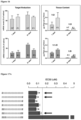
- Intracellular concentrations of the LNA oligonucleotides were determined using an hybridization based ELISA assay for a variety of compounds. All data points were performed in triplicates and data is given as the average thereof.
- Example 4 Thermal melting (Tm) of oligonucleotides containing a phophorodithioate internucleoside linkage hybridized to RNA and DNA
- Phosphorothoiate linkages are designated by the S subscript; Phosphorodithioate linkages are designated by the PS2 subscript.
- Compound 1 5'-G S m C S a S t S t S g S g S t S a S t S T S m C PS2 A -3' 2 5'-G PS2 m C S a S t S t S g S g S t S a S t S T S m C S A -3' 3 5'-G PS2 m C S a S t S t S g S g S t S a S t S T S m C PS2 A -3' 4 5'-G PS2 m C S a S t S t S g S g S t S a S t S T PS2 m C PS2 A -3' 5 5'-G PS2 m C S a S t S t S g S g S t S
- Tm The thermal melting (Tm) of compounds 1-6 hybridized to RNA and DNA was measured according to the following procedure.
- RNA or DNA and LNA oligonucleotide 1.5 ⁇ M in buffer (100 mM NaCl, 0.1 mM EDTA, 10 mM Na 2 HPO 4 , pH 7) was heated to 90 °C for 1 min and then allowed to cool to room temperature.
- the UV absorbance at 260 nm was recorded using a Cary Series UV-Vis spectrophotometer (heating rate 1 °C per minute; reading rate one per min). The absorbance was plotted against temperature and the Tm values were calculated by taking the first derivative of each curve.
- Example 5 Serum stability of oligonucleotides containing a phophorodithioate internucleoside linkage
- a 25 ⁇ M oligonucleotide solution in rat serum mixed with Nuclease buffer (30 mM sodium acetate, 1mM zinc sulfate, 300 mM NaCl, pH 4,6) 3:1 were incubated at 37 °C for 0, 5, 25, 52 or 74 hours.
- Samples 2 ⁇ L were injected for UPLC-MS analysis on a Water Acquity UPLC equipped with a Water Acquity BEH C 18 , 1,7 ⁇ m column.
- the analogue peak areas measured at 260 nm compensated with the extention constants of the different degradation lengths were used to establish the % of uncleaved oligonucleotide.
- UPLC eluents A: 2,5% MeOH, 0,2 M HEP, 16,3 mM TEA B: 60% MeOH, 0,2 M HEP, 16,3 mM TEA TIME MIN. FLOW ML/ MIN % A BUFFER % B BUFFER 0 0.5 90 10 0.5 0.5 90 10 5 0.5 70 30 6 0.5 70 30 7 0.5 0 100 8 0.5 0 100 9 0.5 90 10 14.9 0.5 90 10 15 0.5 90 10
- the compounds having at least one phosphorodithioate internucleoside linkage have a superior nuclease resistance than the compounds having only phosphorothioate internucleoside linkages.
- GCattggtatTCA Compounds #1 - #16 and Ref. have the sequence motif shown in SEQ ID NO 1.
- Upper case letter: beta-D-oxy LNA nucleoside; lower case letter DNA nucleoside; * achiral phosphorodithioate modified linkages; all other linkages phosphorothioate
- GCattggtatTCA Compounds #1 - #16 and Ref. have the sequence motif shown in SEQ ID NO 1.
- Upper case letter: beta-D-oxy LNA nucleoside; lower case letter DNA nucleoside; * achiral phosphorodithioate modified linkages; all other linkages phosphorothioate
- GCattggtatTCA Compounds #1 - #16 and Ref. have the sequence motif shown in SEQ ID NO 1.
- Upper case letter: beta-D-oxy LNA nucleoside; lower case letter DNA nucleoside; * achiral phosphorodithioate modified linkages; all other linkages phosphorothioate
- RNA levels of Malat1 were quantified using qPCR (Normalised to GAPDH level) and IC50 values were determined.
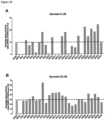
- Figure 14A All the antisense oligonucleotides which contained the achiral phosphorodithioate linkages had a higher tissue uptake/content as compared to the reference compound.
- Figure 14B shows that the introduction of the achiral phosphorodithioate linkage enhanced the biodistribution (as determined by the liver/kidney ratio) of all the compounds tested.
- Upper case letter: beta-D-oxy LNA nucleoside; lower case letter DNA nucleoside; * achiral phosphorodithioate modified linkages; all other linkages phosphorothioate. Note the underlined bold nucleosides are linked at the 3' position by stereodefined phosphorothioate internucleoside linkages.
- Example 17 In vivo study using Malat-1 targeting achiral phosphorodithioates modified gapmers.
- Mouse LTK cells were used to determined the in vitro concentration dose response curve - measuring the MALAT-1 mRNA inhibition.
- Figure 17C shows the results of the tissue content analysis from the in vivo study. All three oligonucleotide containing the achrial phosphorodithioate internucleoside linkages had higher tissue content in liver. The di-thioates results in similar or higher content in heart and liver, and lower content in kidney, again illustrating superiority over PS-modified antisense oligonucleotides. Notably the tissue content in heart was only higher for compound 1, indicating that the enhanced in vivo potency may not be a consequence of the tissue content, but a higher specific activity.
- Example 18 Achiral monophosphothioate modifications tested do not provide the portable benefits seen with achiral phosphorodithioate linkages.
Landscapes
- Chemical & Material Sciences (AREA)
- Organic Chemistry (AREA)
- Health & Medical Sciences (AREA)
- Life Sciences & Earth Sciences (AREA)
- Engineering & Computer Science (AREA)
- Genetics & Genomics (AREA)
- Molecular Biology (AREA)
- Biochemistry (AREA)
- Biotechnology (AREA)
- General Health & Medical Sciences (AREA)
- Biomedical Technology (AREA)
- General Engineering & Computer Science (AREA)
- Bioinformatics & Cheminformatics (AREA)
- Wood Science & Technology (AREA)
- Zoology (AREA)
- Physics & Mathematics (AREA)
- Biophysics (AREA)
- Plant Pathology (AREA)
- Microbiology (AREA)
- Pharmaceuticals Containing Other Organic And Inorganic Compounds (AREA)
- Saccharide Compounds (AREA)
- Preparation Of Compounds By Using Micro-Organisms (AREA)
Claims (13)
- Verwendung einer Verbindung der Formel (III), Formel (IV) oder Formel (IIb) bei der Herstellung eines Oligonukleotids

 R5 eine Hydroxylschutzgruppe ist;Rx Phenyl, Nitrophenyl, Phenylalkyl, Halogenphenylalkyl, Cyanoalkyl, Phenylcarbonylsulfanylalkyl, Halogenphenylcarbonylsulfanylalkyl, Alkylcarbonylsulfanylalkyl oder Alkylcarbonylcarbonylsulfanylalkyl ist;Ry Dialkylamino oder Pyrrolidinyl ist undNu eine Nukleobase oder eine geschützte Nukleobase ist;wobei das Oligonukleotid ein Antisense-Gapmer-Oligonukleotid ist, das eine Phosphordithioat-Verknüpfung der Formel (IA) oder (IB) in mindestens einer Flankenregion des Gapmer-Oligonukleotids umfasst
 wobei in (IA) R Wasserstoff oder eine Phosphatschutzgruppe ist und in (IB) M+ ein Kation, wie ein Metallkation, wie ein Alkalimetallkation, wie Na+- oder K+-Kation ist; oder M+ ein Ammoniumkation ist und wobei das Oligonukleotid ferner Phosphorthioat-Internukleosidverknüpfungen umfasst.
 - Verwendung nach Anspruch 1, wobei Rx Phenyl, Nitrophenyl, Phenylmethyl, Dichlorphenylmethyl, Cyanoethyl, Methylcarbonylsulfanylethyl, Ethylcarbonylsulfanylethyl, Isopropylcarbonylsulfanylethyl, tert.-Butylcarbonylsulfanylethyl, Methylcarbonylcarbonylsulfanylethyl oder Difluorphenylcarbonylsulfanylethyl ist.
- Verwendung nach einem der Ansprüche 1 oder 2, wobei Rx Phenylcarbonylsulfanylalkyl ist.
- Verwendung nach einem der Ansprüche 1 bis 3, wobei Rx Phenylcarbonylsulfanylethyl ist.
- Verwendung nach einem der Ansprüche 1 bis 4, wobei Ry Diisopropylamino oder Pyrrolidinyl ist.
- Verwendung nach einem der Ansprüche 1 bis 5, wobei Ry Pyrrolidinyl ist.
- Verwendung nach einem der Ansprüche 1 bis 6 der Formel (V)

- Verwendung nach den Ansprüchen 1 bis 6 der Formel (Vb)

- Verwendung nach einem der Ansprüche 1 bis 8, wobei Nu Thymin, geschütztes Thymin, Adenosin, geschütztes Adenosin, Cytosin, geschütztes Cytosin, 5-Methylcytosin, geschütztes 5-Methylcytosin, Guanin, geschütztes Guanin, Uracyl oder geschütztes Uracyl ist.
- Verwendung nach einem der Ansprüche 1 bis 9, ausgewählt aus


- Verwendung nach einem der Ansprüche 1 bis 9, ausgewählt aus


- Verwendung nach einem der Ansprüche 1 bis 11, wobei die weiteren Internukleosidverknüpfungen des Oligonukleotids unabhängig voneinander aus Phosphorthioat-Internukleosidverknüpfungen und Phosphordithioat-Internukleosidverknüpfungen der Formel (IA) oder (IB), wie in Anspruch 1 definiert, ausgewählt sind.
- Verwendung nach einem der Ansprüche 1 bis 12, wobei alle Internukleosidverknüpfungen zwischen den Nukleosiden der Gap-Region des Oligonukleotids Phosphorthioat-Internukleosidverknüpfungen sind.
Priority Applications (1)
| Application Number | Priority Date | Filing Date | Title |
|---|---|---|---|
| EP21215936.2A EP4092118A1 (de) | 2017-12-22 | 2018-12-21 | Neuartige thiophosphoramidite |
Applications Claiming Priority (3)
| Application Number | Priority Date | Filing Date | Title |
|---|---|---|---|
| CN2017118043 | 2017-12-22 | ||
| EP18198487 | 2018-10-03 | ||
| PCT/EP2018/086457 WO2019122277A1 (en) | 2017-12-22 | 2018-12-21 | Novel thiophosphoramidites |
Related Child Applications (2)
| Application Number | Title | Priority Date | Filing Date |
|---|---|---|---|
| EP21215936.2A Division EP4092118A1 (de) | 2017-12-22 | 2018-12-21 | Neuartige thiophosphoramidite |
| EP21215936.2A Division-Into EP4092118A1 (de) | 2017-12-22 | 2018-12-21 | Neuartige thiophosphoramidite |
Publications (3)
| Publication Number | Publication Date |
|---|---|
| EP3728590A1 EP3728590A1 (de) | 2020-10-28 |
| EP3728590C0 EP3728590C0 (de) | 2025-07-02 |
| EP3728590B1 true EP3728590B1 (de) | 2025-07-02 |
Family
ID=65003376
Family Applications (2)
| Application Number | Title | Priority Date | Filing Date |
|---|---|---|---|
| EP21215936.2A Pending EP4092118A1 (de) | 2017-12-22 | 2018-12-21 | Neuartige thiophosphoramidite |
| EP18830479.4A Active EP3728590B1 (de) | 2017-12-22 | 2018-12-21 | Neuartige thiophosphoramidite |
Family Applications Before (1)
| Application Number | Title | Priority Date | Filing Date |
|---|---|---|---|
| EP21215936.2A Pending EP4092118A1 (de) | 2017-12-22 | 2018-12-21 | Neuartige thiophosphoramidite |
Country Status (6)
| Country | Link |
|---|---|
| US (1) | US11597926B2 (de) |
| EP (2) | EP4092118A1 (de) |
| JP (2) | JP2021508327A (de) |
| KR (1) | KR20200104302A (de) |
| CN (1) | CN111448316B (de) |
| WO (1) | WO2019122277A1 (de) |
Families Citing this family (5)
| Publication number | Priority date | Publication date | Assignee | Title |
|---|---|---|---|---|
| AU2019227510B2 (en) * | 2018-03-02 | 2026-02-12 | Novo Nordisk A/S | Compositions and methods for inhibiting GYS2 expression |
| TW202028222A (zh) * | 2018-11-14 | 2020-08-01 | 美商Ionis製藥公司 | Foxp3表現之調節劑 |
| WO2020169696A1 (en) * | 2019-02-20 | 2020-08-27 | Roche Innovation Center Copenhagen A/S | Novel phosphoramidites |
| US12534493B2 (en) * | 2020-06-15 | 2026-01-27 | Liid Pharmaceuticals, Inc. | Bridged nucleoside and nucleotide |
| JP7725490B2 (ja) * | 2020-09-25 | 2025-08-19 | 株式会社理研ジェネシス | 新規人工核酸、その製造方法及び用途 |
Family Cites Families (54)
| Publication number | Priority date | Publication date | Assignee | Title |
|---|---|---|---|---|
| US5602244A (en) * | 1988-05-26 | 1997-02-11 | Competitive Technologies, Inc. | Polynucleotide phosphorodithioate compounds |
| WO1993007883A1 (en) | 1991-10-24 | 1993-04-29 | Isis Pharmaceuticals, Inc. | Derivatized oligonucleotides having improved uptake and other properties |
| EP0463712A3 (en) | 1990-06-27 | 1992-04-08 | University Patents, Inc. | Polynucleotide phosphorodithioates as therapeutic agents for retroviral infections |
| JP3756313B2 (ja) | 1997-03-07 | 2006-03-15 | 武 今西 | 新規ビシクロヌクレオシド及びオリゴヌクレオチド類縁体 |
| AU9063398A (en) | 1997-09-12 | 1999-04-05 | Exiqon A/S | Oligonucleotide analogues |
| US6020475A (en) * | 1998-02-10 | 2000-02-01 | Isis Pharmeuticals, Inc. | Process for the synthesis of oligomeric compounds |
| US6867294B1 (en) * | 1998-07-14 | 2005-03-15 | Isis Pharmaceuticals, Inc. | Gapped oligomers having site specific chiral phosphorothioate internucleoside linkages |
| CZ296576B6 (cs) | 1999-02-12 | 2006-04-12 | Sankyo Company Limited | Nukleosidový analog a oligonukleotidový analog a farmaceutický prostredek, sonda a primer s jeho obsahem |
| EP1178999B1 (de) * | 1999-05-04 | 2007-03-14 | Santaris Pharma A/S | L-ribo-lna analoge |
| US6617442B1 (en) | 1999-09-30 | 2003-09-09 | Isis Pharmaceuticals, Inc. | Human Rnase H1 and oligonucleotide compositions thereof |
| US6693187B1 (en) * | 2000-10-17 | 2004-02-17 | Lievre Cornu Llc | Phosphinoamidite carboxlates and analogs thereof in the synthesis of oligonucleotides having reduced internucleotide charge |
| US9045518B2 (en) | 2002-11-18 | 2015-06-02 | Santaris Pharma A/S | Amino-LNA, thio-LNA and alpha-L-oxy-LN |
| KR101789603B1 (ko) | 2005-11-10 | 2017-11-21 | 더 유니버시티 오브 노쓰 캐롤라이나 엣 채플 힐 | Tnf 수퍼패밀리 수용체에 대한 스플라이스 스위칭올리고머 및 염증성 질환 치료용 약제학적 조성물 |
| JP5342881B2 (ja) | 2006-01-27 | 2013-11-13 | アイシス ファーマシューティカルズ, インコーポレーテッド | 6−修飾された二環式核酸類似体 |
| CA2648132C (en) | 2006-04-03 | 2019-05-28 | Santaris Pharma A/S | Pharmaceutical composition comprising anti-mirna antisense oligonucleotides |
| EP2023940B1 (de) | 2006-05-05 | 2011-06-22 | Isis Pharmaceuticals, Inc. | Verbindungen und verfahren zur modulation der expression von sglt2 |
| AU2007249349B2 (en) | 2006-05-11 | 2012-03-08 | Isis Pharmaceuticals, Inc. | 5'-Modified bicyclic nucleic acid analogs |
| US7666854B2 (en) | 2006-05-11 | 2010-02-23 | Isis Pharmaceuticals, Inc. | Bis-modified bicyclic nucleic acid analogs |
| WO2008049085A1 (en) | 2006-10-18 | 2008-04-24 | Isis Pharmaceuticals, Inc. | Antisense compounds |
| WO2008113832A2 (en) | 2007-03-22 | 2008-09-25 | Santaris Pharma A/S | SHORT RNA ANTAGONIST COMPOUNDS FOR THE MODULATION OF TARGET mRNA |
| CN101889086B (zh) | 2007-05-01 | 2014-07-02 | 桑塔里斯制药公司 | Tnf超家族受体的剪接转换寡聚物,以及它们治疗疾病的用途 |
| EP2170917B1 (de) | 2007-05-30 | 2012-06-27 | Isis Pharmaceuticals, Inc. | Über n-substituiertes aminomethylen verbrückte, bicyclische nukleinsäureanaloga |
| EP2173760B2 (de) | 2007-06-08 | 2015-11-04 | Isis Pharmaceuticals, Inc. | Carbozyklische bizyklische nukleinsäureanaloga |
| CA2692579C (en) | 2007-07-05 | 2016-05-03 | Isis Pharmaceuticals, Inc. | 6-disubstituted bicyclic nucleic acid analogs |
| EP2623599B1 (de) | 2007-10-04 | 2019-01-02 | Roche Innovation Center Copenhagen A/S | Mikromir-Moleküle |
| US8546556B2 (en) | 2007-11-21 | 2013-10-01 | Isis Pharmaceuticals, Inc | Carbocyclic alpha-L-bicyclic nucleic acid analogs |
| WO2009090182A1 (en) | 2008-01-14 | 2009-07-23 | Santaris Pharma A/S | C4'-substituted - dna nucleotide gapmer oligonucleotides |
| WO2010036698A1 (en) | 2008-09-24 | 2010-04-01 | Isis Pharmaceuticals, Inc. | Substituted alpha-l-bicyclic nucleosides |
| EP2462153B1 (de) | 2009-08-06 | 2015-07-29 | Isis Pharmaceuticals, Inc. | Bicyclische cyclohexosenukleinsäureanaloga |
| EP2580228B1 (de) | 2010-06-08 | 2016-03-23 | Ionis Pharmaceuticals, Inc. | Substituierte 2 '-amino- und 2 '-thio-bicyclische nukleoside und daraus hergestellte oligomere verbindungen |
| EP3260540A1 (de) | 2010-11-12 | 2017-12-27 | The General Hospital Corporation | Polycombassoziierte nichtcodierende rnas |
| US10017764B2 (en) | 2011-02-08 | 2018-07-10 | Ionis Pharmaceuticals, Inc. | Oligomeric compounds comprising bicyclic nucleotides and uses thereof |
| ES2651514T3 (es) | 2011-08-11 | 2018-01-26 | Ionis Pharmaceuticals, Inc. | Compuestos oligoméricos gapados que comprenden deoxirribonucleósidos modificados en 5 ' -en la brecha y usos de ellos |
| EP3453761A1 (de) | 2011-08-29 | 2019-03-13 | Ionis Pharmaceuticals, Inc. | Oligomer-konjugat-komplexe und deren verwendung |
| CN104136451A (zh) | 2011-09-07 | 2014-11-05 | 玛瑞纳生物技术有限公司 | 具有构象限制的单体的核酸化合物的合成和用途 |
| EP2850092B1 (de) | 2012-04-09 | 2017-03-01 | Ionis Pharmaceuticals, Inc. | Tricyclische nukleinsäureanaloga |
| US10077443B2 (en) | 2012-11-15 | 2018-09-18 | Roche Innovation Center Copenhagen A/S | Oligonucleotide conjugates |
| AU2014251388B2 (en) | 2013-04-12 | 2017-03-30 | Evox Therapeutics Limited | Therapeutic delivery vesicles |
| DK2991656T3 (da) | 2013-05-01 | 2020-03-23 | Ionis Pharmaceuticals Inc | Sammensætninger og fremgangsmåder til modulering af apolipoprotein c-iii-ekspression |
| ES2770667T3 (es) | 2013-06-27 | 2020-07-02 | Roche Innovation Ct Copenhagen As | Oligómeros antisentido y conjugados que se dirigen a PCSK9 |
| WO2015113922A1 (en) | 2014-01-30 | 2015-08-06 | Roche Innovation Center Copenhagen A/S | Poly oligomer compound with biocleavable conjugates |
| EP3020813A1 (de) * | 2014-11-16 | 2016-05-18 | Neurovision Pharma GmbH | Antisense-Oligonukleotide als Inhibitoren der TGF-R-Signalgebung |
| JP2017536366A (ja) * | 2014-11-19 | 2017-12-07 | ロシュ イノベーション センター コペンハーゲン エーエス | Lnaキラルホスホロチオエート |
| EP3254104B1 (de) | 2015-02-04 | 2021-08-25 | Bristol-Myers Squibb Company | Verfahren zur auswahl therapeutischer moleküle |
| WO2016127002A1 (en) | 2015-02-04 | 2016-08-11 | Bristol-Myers Squibb Company | Lna oligonucleotides with alternating flanks |
| WO2016172598A1 (en) | 2015-04-22 | 2016-10-27 | The Broad Institute Inc. | Exosomes and uses thereof |
| EP3394258B1 (de) | 2015-10-22 | 2021-09-22 | Roche Innovation Center Copenhagen A/S | Test für in-vitro-toxizitätsscreening |
| WO2017173034A1 (en) | 2016-03-30 | 2017-10-05 | The University Of North Carolina At Chapel Hill | Biological agent-exosome compositions and uses thereof |
| US10882884B2 (en) * | 2016-05-18 | 2021-01-05 | Eth Zurich | Stereoselective synthesis of phosphorothioate oligoribonucleotides |
| US11105794B2 (en) | 2016-06-17 | 2021-08-31 | Hoffmann-La Roche Inc. | In vitro nephrotoxicity screening assay |
| AU2017289204A1 (en) | 2016-07-01 | 2019-01-17 | F. Hoffmann-La Roche Ag | Antisense oligonucleotides for modulating HTRA1 expression |
| WO2018019799A2 (en) | 2016-07-27 | 2018-02-01 | F. Hoffmann-La Roche Ag | Oligonucleotide synthesis |
| EP4035659A1 (de) | 2016-11-29 | 2022-08-03 | PureTech LYT, Inc. | Exosome zur ausgabe von therapeutischen wirkstoffen |
| EP3620519A1 (de) | 2018-09-04 | 2020-03-11 | F. Hoffmann-La Roche AG | Verwendung von isolierten extrazellulären vesikeln aus milch zur oralen verabreichung von oligonukleotiden |
-
2018
- 2018-12-21 CN CN201880079212.XA patent/CN111448316B/zh active Active
- 2018-12-21 WO PCT/EP2018/086457 patent/WO2019122277A1/en not_active Ceased
- 2018-12-21 EP EP21215936.2A patent/EP4092118A1/de active Pending
- 2018-12-21 EP EP18830479.4A patent/EP3728590B1/de active Active
- 2018-12-21 KR KR1020207017875A patent/KR20200104302A/ko not_active Ceased
- 2018-12-21 US US15/733,302 patent/US11597926B2/en active Active
- 2018-12-21 JP JP2020534517A patent/JP2021508327A/ja active Pending
-
2023
- 2023-07-28 JP JP2023122967A patent/JP7724259B2/ja active Active
Also Published As
| Publication number | Publication date |
|---|---|
| EP3728590C0 (de) | 2025-07-02 |
| US20210115438A1 (en) | 2021-04-22 |
| KR20200104302A (ko) | 2020-09-03 |
| WO2019122277A1 (en) | 2019-06-27 |
| EP4092118A1 (de) | 2022-11-23 |
| CN111448316A (zh) | 2020-07-24 |
| JP2021508327A (ja) | 2021-03-04 |
| EP3728590A1 (de) | 2020-10-28 |
| JP2023139252A (ja) | 2023-10-03 |
| US11597926B2 (en) | 2023-03-07 |
| CN111448316B (zh) | 2025-02-14 |
| JP7724259B2 (ja) | 2025-08-15 |
Similar Documents
| Publication | Publication Date | Title |
|---|---|---|
| US20240368593A1 (en) | Gapmer oligonucleotides comprising a phosphorodithioate internucleoside linkage | |
| EP3728590B1 (de) | Neuartige thiophosphoramidite | |
| EP4122943B1 (de) | Oligonukleotide mit einer phosphordithioat-internukleosid-verknüpfung | |
| US20230002762A1 (en) | Oligonucleotides comprising a phosphorodithioate internucleoside linkage | |
| US20220112493A1 (en) | Phosphonoacetate gapmer oligonucleotides | |
| EP3737760A1 (de) | Oligonukleotide zur modulierung der gsk3b-expression | |
| EP3830101B1 (de) | Oligonukleotide mit einer phosphordithioat-internukleosid-verknüpfung | |
| HK40033322B (zh) | 新的硫代亚磷酰胺 | |
| HK40033323B (zh) | 包含二硫代磷酸酯核苷间键的缺口聚物寡核苷酸 | |
| HK40037497A (en) | Oligonucleotides comprising a phosphorodithioate internucleoside linkage | |
| HK40033322A (zh) | 新的硫代亚磷酰胺 | |
| HK40033323A (en) | Gapmer oligonucleotides comprising a phosphorodithioate internucleoside linkage | |
| CN113474352A (zh) | 新型亚磷酰胺 |
Legal Events
| Date | Code | Title | Description |
|---|---|---|---|
| STAA | Information on the status of an ep patent application or granted ep patent |
Free format text: STATUS: UNKNOWN |
|
| STAA | Information on the status of an ep patent application or granted ep patent |
Free format text: STATUS: THE INTERNATIONAL PUBLICATION HAS BEEN MADE |
|
| PUAI | Public reference made under article 153(3) epc to a published international application that has entered the european phase |
Free format text: ORIGINAL CODE: 0009012 |
|
| STAA | Information on the status of an ep patent application or granted ep patent |
Free format text: STATUS: REQUEST FOR EXAMINATION WAS MADE |
|
| 17P | Request for examination filed |
Effective date: 20200722 |
|
| AK | Designated contracting states |
Kind code of ref document: A1 Designated state(s): AL AT BE BG CH CY CZ DE DK EE ES FI FR GB GR HR HU IE IS IT LI LT LU LV MC MK MT NL NO PL PT RO RS SE SI SK SM TR |
|
| AX | Request for extension of the european patent |
Extension state: BA ME |
|
| DAV | Request for validation of the european patent (deleted) | ||
| DAX | Request for extension of the european patent (deleted) | ||
| STAA | Information on the status of an ep patent application or granted ep patent |
Free format text: STATUS: EXAMINATION IS IN PROGRESS |
|
| 17Q | First examination report despatched |
Effective date: 20210630 |
|
| GRAP | Despatch of communication of intention to grant a patent |
Free format text: ORIGINAL CODE: EPIDOSNIGR1 |
|
| STAA | Information on the status of an ep patent application or granted ep patent |
Free format text: STATUS: GRANT OF PATENT IS INTENDED |
|
| INTG | Intention to grant announced |
Effective date: 20250227 |
|
| RIN1 | Information on inventor provided before grant (corrected) |
Inventor name: WU, YONG Inventor name: SHU, XI Inventor name: SCHAEUBLIN, ADRIAN Inventor name: LI, MEILING Inventor name: KOCH, TROELS Inventor name: HANSEN, HENRIK FRYDENLUND Inventor name: DUSCHMALE, MARTINA BRIGITTE Inventor name: DUSCHMALE, JOERG Inventor name: BLEICHER, KONRAD |
|
| GRAS | Grant fee paid |
Free format text: ORIGINAL CODE: EPIDOSNIGR3 |
|
| GRAA | (expected) grant |
Free format text: ORIGINAL CODE: 0009210 |
|
| STAA | Information on the status of an ep patent application or granted ep patent |
Free format text: STATUS: THE PATENT HAS BEEN GRANTED |
|
| AK | Designated contracting states |
Kind code of ref document: B1 Designated state(s): AL AT BE BG CH CY CZ DE DK EE ES FI FR GB GR HR HU IE IS IT LI LT LU LV MC MK MT NL NO PL PT RO RS SE SI SK SM TR |
|
| REG | Reference to a national code |
Ref country code: GB Ref legal event code: FG4D |
|
| REG | Reference to a national code |
Ref country code: CH Ref legal event code: EP |
|
| REG | Reference to a national code |
Ref country code: IE Ref legal event code: FG4D |
|
| U01 | Request for unitary effect filed |
Effective date: 20250702 |
|
| U07 | Unitary effect registered |
Designated state(s): AT BE BG DE DK EE FI FR IT LT LU LV MT NL PT RO SE SI Effective date: 20250708 |
|
| U20 | Renewal fee for the european patent with unitary effect paid |
Year of fee payment: 8 Effective date: 20251119 |
|
| REG | Reference to a national code |
Ref country code: CH Ref legal event code: U11 Free format text: ST27 STATUS EVENT CODE: U-0-0-U10-U11 (AS PROVIDED BY THE NATIONAL OFFICE) Effective date: 20260101 |
|
| PG25 | Lapsed in a contracting state [announced via postgrant information from national office to epo] |
Ref country code: IS Free format text: LAPSE BECAUSE OF FAILURE TO SUBMIT A TRANSLATION OF THE DESCRIPTION OR TO PAY THE FEE WITHIN THE PRESCRIBED TIME-LIMIT Effective date: 20251102 |
|
| PGFP | Annual fee paid to national office [announced via postgrant information from national office to epo] |
Ref country code: GB Payment date: 20251119 Year of fee payment: 8 |
|
| PG25 | Lapsed in a contracting state [announced via postgrant information from national office to epo] |
Ref country code: NO Free format text: LAPSE BECAUSE OF FAILURE TO SUBMIT A TRANSLATION OF THE DESCRIPTION OR TO PAY THE FEE WITHIN THE PRESCRIBED TIME-LIMIT Effective date: 20251002 |
|
| PG25 | Lapsed in a contracting state [announced via postgrant information from national office to epo] |
Ref country code: HR Free format text: LAPSE BECAUSE OF FAILURE TO SUBMIT A TRANSLATION OF THE DESCRIPTION OR TO PAY THE FEE WITHIN THE PRESCRIBED TIME-LIMIT Effective date: 20250702 |
|
| PG25 | Lapsed in a contracting state [announced via postgrant information from national office to epo] |
Ref country code: GR Free format text: LAPSE BECAUSE OF FAILURE TO SUBMIT A TRANSLATION OF THE DESCRIPTION OR TO PAY THE FEE WITHIN THE PRESCRIBED TIME-LIMIT Effective date: 20251003 |
|
| PG25 | Lapsed in a contracting state [announced via postgrant information from national office to epo] |
Ref country code: CZ Free format text: LAPSE BECAUSE OF FAILURE TO SUBMIT A TRANSLATION OF THE DESCRIPTION OR TO PAY THE FEE WITHIN THE PRESCRIBED TIME-LIMIT Effective date: 20250702 |
|
| PG25 | Lapsed in a contracting state [announced via postgrant information from national office to epo] |
Ref country code: PL Free format text: LAPSE BECAUSE OF FAILURE TO SUBMIT A TRANSLATION OF THE DESCRIPTION OR TO PAY THE FEE WITHIN THE PRESCRIBED TIME-LIMIT Effective date: 20250702 |
|
| PG25 | Lapsed in a contracting state [announced via postgrant information from national office to epo] |
Ref country code: RS Free format text: LAPSE BECAUSE OF FAILURE TO SUBMIT A TRANSLATION OF THE DESCRIPTION OR TO PAY THE FEE WITHIN THE PRESCRIBED TIME-LIMIT Effective date: 20251002 |
|
| PG25 | Lapsed in a contracting state [announced via postgrant information from national office to epo] |
Ref country code: ES Free format text: LAPSE BECAUSE OF FAILURE TO SUBMIT A TRANSLATION OF THE DESCRIPTION OR TO PAY THE FEE WITHIN THE PRESCRIBED TIME-LIMIT Effective date: 20250702 |
|
| PG25 | Lapsed in a contracting state [announced via postgrant information from national office to epo] |
Ref country code: SM Free format text: LAPSE BECAUSE OF FAILURE TO SUBMIT A TRANSLATION OF THE DESCRIPTION OR TO PAY THE FEE WITHIN THE PRESCRIBED TIME-LIMIT Effective date: 20250702 |