EP3403487B2 - Method for compacting harvested crops located in a silo - Google Patents
Method for compacting harvested crops located in a silo Download PDFInfo
- Publication number
- EP3403487B2 EP3403487B2 EP18160386.1A EP18160386A EP3403487B2 EP 3403487 B2 EP3403487 B2 EP 3403487B2 EP 18160386 A EP18160386 A EP 18160386A EP 3403487 B2 EP3403487 B2 EP 3403487B2
- Authority
- EP
- European Patent Office
- Prior art keywords
- harvested material
- compacting
- silo
- control device
- machine
- Prior art date
- Legal status (The legal status is an assumption and is not a legal conclusion. Google has not performed a legal analysis and makes no representation as to the accuracy of the status listed.)
- Active
Links
Images
Classifications
-
- A—HUMAN NECESSITIES
- A01—AGRICULTURE; FORESTRY; ANIMAL HUSBANDRY; HUNTING; TRAPPING; FISHING
- A01F—PROCESSING OF HARVESTED PRODUCE; HAY OR STRAW PRESSES; DEVICES FOR STORING AGRICULTURAL OR HORTICULTURAL PRODUCE
- A01F25/00—Storing agricultural or horticultural produce; Hanging-up harvested fruit
- A01F25/16—Arrangements in forage silos
- A01F25/166—Arrangements in forage silos in trench silos
-
- A—HUMAN NECESSITIES
- A01—AGRICULTURE; FORESTRY; ANIMAL HUSBANDRY; HUNTING; TRAPPING; FISHING
- A01B—SOIL WORKING IN AGRICULTURE OR FORESTRY; PARTS, DETAILS, OR ACCESSORIES OF AGRICULTURAL MACHINES OR IMPLEMENTS, IN GENERAL
- A01B69/00—Steering of agricultural machines or implements; Guiding agricultural machines or implements on a desired track
-
- A—HUMAN NECESSITIES
- A01—AGRICULTURE; FORESTRY; ANIMAL HUSBANDRY; HUNTING; TRAPPING; FISHING
- A01F—PROCESSING OF HARVESTED PRODUCE; HAY OR STRAW PRESSES; DEVICES FOR STORING AGRICULTURAL OR HORTICULTURAL PRODUCE
- A01F25/00—Storing agricultural or horticultural produce; Hanging-up harvested fruit
- A01F25/16—Arrangements in forage silos
- A01F25/18—Loading or distributing arrangements
-
- A—HUMAN NECESSITIES
- A01—AGRICULTURE; FORESTRY; ANIMAL HUSBANDRY; HUNTING; TRAPPING; FISHING
- A01F—PROCESSING OF HARVESTED PRODUCE; HAY OR STRAW PRESSES; DEVICES FOR STORING AGRICULTURAL OR HORTICULTURAL PRODUCE
- A01F25/00—Storing agricultural or horticultural produce; Hanging-up harvested fruit
- A01F25/16—Arrangements in forage silos
- A01F25/18—Loading or distributing arrangements
- A01F25/183—Loading arrangements
-
- G—PHYSICS
- G05—CONTROLLING; REGULATING
- G05D—SYSTEMS FOR CONTROLLING OR REGULATING NON-ELECTRIC VARIABLES
- G05D1/00—Control of position, course, altitude or attitude of land, water, air or space vehicles, e.g. using automatic pilots
- G05D1/02—Control of position or course in two dimensions
- G05D1/021—Control of position or course in two dimensions specially adapted to land vehicles
- G05D1/0212—Control of position or course in two dimensions specially adapted to land vehicles with means for defining a desired trajectory
- G05D1/0219—Control of position or course in two dimensions specially adapted to land vehicles with means for defining a desired trajectory ensuring the processing of the whole working surface
-
- G—PHYSICS
- G05—CONTROLLING; REGULATING
- G05D—SYSTEMS FOR CONTROLLING OR REGULATING NON-ELECTRIC VARIABLES
- G05D1/00—Control of position, course, altitude or attitude of land, water, air or space vehicles, e.g. using automatic pilots
- G05D1/02—Control of position or course in two dimensions
- G05D1/021—Control of position or course in two dimensions specially adapted to land vehicles
- G05D1/0287—Control of position or course in two dimensions specially adapted to land vehicles involving a plurality of land vehicles, e.g. fleet or convoy travelling
- G05D1/0291—Fleet control
- G05D1/0297—Fleet control by controlling means in a control room
Definitions
- the silo can in particular be what is known as a flat silo, which is typically used for storing harvested crops. This relates in particular to those cases in which the harvested crop is to be kept available as animal feed over a longer period of time, with the harvested crop being compressed in the silo in order to eliminate air pockets.
- the harvested crop is typically sealed off from the environment by means of a covering layer, for example a silo tarpaulin, so that a direct exchange of oxygen between the harvested crop and the environment is prevented. This prevents the stored crop from rotting.
- Tractors, wheel loaders, rollers or the like are typically used as compacting machines.
- a comparatively high weight force, which should be exerted by a compaction machine in order to achieve the desired compaction performance, is of particular importance.
- compaction machines can have a vibration function that noticeably increases compaction performance.
- the use of a tractor is generally preferred insofar as one can easily be equipped with a front loader, sliding blade or the like, so that the tractor can also fulfill a distribution function in addition to a pure compression function for the harvested crop to be stored. This includes in particular the distribution of crops delivered to the silo on the silo surface.
- the European patent application discloses a possibility for better control of the compression process EP 2 198 688 A1 .
- This deals with the monitoring of a height of a surface of the harvested crop to be compacted, the aim of the cited document being to process a respective compaction section by means of a compaction machine only for as long as this is necessary. Consequently, the compaction of a respective crop layer is terminated as soon as the respective crop layer falls below a specific height difference of the surface.
- the known procedure supports the decision-making process regarding the estimated compression period, it does not contribute beyond that to improving the process for filling a silo.
- the present application is therefore based on the object of providing a method by means of which the filling of a silo can fundamentally be optimized.
- “Autonomous operation” of a compaction machine is understood in the context of the present application to mean that the compaction machine acts completely independently without the intervention of human intelligence. "Autonomous operation” does not necessarily require the compactor to operate independently, completely detached from any external control. In particular, it is not necessary for a work sequence of the autonomous compaction machine to be planned and executed exclusively on the basis of data collected from the compaction machine itself using its own control device. Instead, the control device can also be supplied with data and specifications from other sources and depend on them, which are then only forwarded to the compaction machine and then be implemented autonomously by the latter.
- a “control device” is to be understood as a device which is suitable for transmitting data to the autonomous compaction machine, in particular for commanding the compaction machine.
- the control device of the compaction machine can specify a travel route and/or transmit further operating data to the compaction machine.
- data can be transmitted from the compaction machine to the control device, as a result of which the compaction machine can advantageously provide feedback to the control device. This can, for example, relate to the condition of the crop to be compacted, as will be explained separately in the following.
- control device is arranged directly in, on or on the compaction machine or is stationed externally, for example in close proximity to the respective silo.
- An external control device can communicate with the autonomous compaction machine, in particular via radio.
- the present invention is based on the idea of fundamentally freeing the method for filling a silo from the influence of human error. Accordingly, the present invention offers a number of advantages, it being ensured in particular that the compaction of the crop within the silo can autonomously follow a predetermined plan.
- This plan is specified by the control device and is executed by the compaction machine in the specified manner. This can, for example, affect the distribution of the compaction performance over a silo area and compliance with the compaction period.
- the efficiency of the method can be increased in a particularly simple manner by means of the autonomous mode of operation of the compaction machine.
- the more rapid compaction of the harvested crop by means of the compaction machine according to the invention allows the harvested crop to remain in direct contact with the oxygen in the ambient air for a shorter time overall.
- the latter should preferably be kept as short as possible in order to avoid the oxidation process of the crop.
- the now shortened compaction time consequently helps to complete the respective silo more quickly and to close it off from the environment by means of a tarpaulin than is the case in the prior art.
- a further advantage of the method according to the invention is that the basically comparatively repetitive compaction process of the harvested crop stored in the silo no longer has to be carried out by a worker specially assigned for this purpose, but can be carried out independently or autonomously by the compaction machine. As a result, the economics of the process can be further increased.
- the method according to the invention is of particular advantage when the harvested crop is compacted by means of a plurality of compacting machines working independently at the same time.
- the use of a plurality of compaction machines initially leads to a corresponding increase in the compaction performance exerted on the harvested crop. This in turn means that a desired compaction result is achieved in a significantly shorter time.
- this time component is important under the aspect of rapid closure of the silo mentioned above.
- accelerated compaction of the harvested crop means that a "compaction jam" in the silo to be filled, which can lead to a significant delay in the harvesting process, is avoided as far as possible.
- the reason for this is that the work chain of transport vehicles that transport the harvested crop from a harvesting vehicle, for example a forage harvester, to the silo is disrupted as soon as the harvested crop that has already been delivered to the silo but has not yet been processed further does not get into the silo quickly enough is introduced.
- Increasing the compaction performance in the silo helps bring the delivered harvested crop into the silo more quickly and consequently disturbs the described work chain of the transport vehicles as little as possible, preferably not at all.
- it is at least less frequently necessary to consciously reduce a working speed of the harvesting vehicle.
- the transmission of movement data from the compaction machines to the control device is particularly advantageous, so that the control device can in particular coordinate travel routes of the compaction machines.
- both conflicts between the travel routes can be minimized and the frequency of driving over all points of the silo can be optimized in such a way that, if possible, all points are passed over at least essentially the same number of times.
- This procedure corresponds to the most uniform possible distribution of the compaction performance of the compaction machines on the respective crop layer to be compacted in the silo. It is also conceivable that the compacting machines deliberately drive over certain points more often than others, for example if a crop parameter of the harvested crop requires this at certain points.
- one of the compaction machines is treated preferentially by the control device over the other compaction machines.
- This preferential treatment involves prioritizing the preferred compactor in the event of a conflict between the operations of different compactor machines.
- Said preferential treatment is implemented by the fact that the work process of the favored compactor takes precedence over the work processes of the disadvantaged compactor.
- the work processes of the disadvantaged compaction machines can be interrupted at least temporarily to the advantage of the preferred compaction machine.
- the preferred compaction machine assumes the position of the so-called "master", while the remaining compaction machines are configured as so-called "slaves”.
- a typical example of such a preference for the master is a right-of-way rule in its favor, whereby in the event of a conflict between its driving route and that of a slave, the master is allowed to continue driving unhindered and without interruption, while the slave is at least braked, possibly even stopped completely.
- the control device controls the compaction machine or compaction machines as a function of at least one silo parameter.
- a “silo parameter” can be understood to mean all parameters that describe either the silo together with the crops located therein, or the crops located in the silo as such, or the crops delivered to the silo.
- Silo parameters that are of particular importance for the control of the compaction machines are the current silo height and/or a crop parameter of the harvested crop, in particular of the harvested crop that has just been delivered but not yet installed.
- the thickness of a layer of harvested crop that is in the process of being formed but has not yet been completely compacted or finished can represent a silo parameter.
- control device can change the compaction performance of the compaction machines, according to the invention depending on the pore volume and/or the dry matter of the harvested crop and/or the height of the silo.
- the compaction performance can be achieved, for example, by changing the compaction period. It is also conceivable to activate a vibration function on the compaction machine(s) in addition to a pure self-weight compaction in order to increase the compaction performance by means of a dynamic compaction component. To generate a vibration, the autonomous compaction machine can be equipped with at least one eccentric, for example. Other options for changing the compression performance are of course also conceivable in principle.
- a slip in the form of a difference between the speeds of a front and a rear axle of a compression machine can be actively introduced.
- a change in the contact area of the compaction machine is conceivable, for example by increasing or decreasing the tire pressure of one or more tires of a respective compaction machine.
- At least one, preferably several, crop parameters of the harvested crop are advantageously collected directly by means of the compaction machine, the same being equipped with at least one sensor for determining at least one crop parameter.
- the compacting machine can transmit the material parameter determined in each case to the control device, so that the latter can take this into account accordingly.
- a survey together with forwarding of at least one crop parameter takes place continuously, so that current information about the condition of the harvested crop is available to the control device at all times.
- the control device has at least one data connection with at least one harvesting vehicle, in particular a forage harvester.
- the harvesting vehicle is the vehicle by means of which the crop is originally produced.
- the harvesting vehicle can be suitable for harvesting plants and then for comminuting them, so that the harvested crop ultimately consists of an at least essentially homogenized mass of the comminuted plants.
- the data connection between the control device and the harvesting vehicle makes it possible for the former to transmit data to the harvesting vehicle as a function of at least one silo parameter.
- control device can send at least one piece of information to a machine operator of the harvesting vehicle in order to inform him about the condition of the harvested crop and/or the filling process of the silo, so that the machine operator can adapt his working method and/or an operating parameter of the harvesting vehicle on the basis of this information.
- the forwarding of the information by the control device can be limited to the simple notification of the respective good parameter or can already contain a recommendation for action that has been worked out as a function of the good parameter. It is therefore conceivable, for example, that the control device informs the machine operator of the harvesting vehicle that the silo is already 70% full, from which the machine operator can independently draw the conclusion that the particle size of the harvested crop should be reduced from now on in order to ensure sufficient compaction of the to be able to ensure the remaining upper crop layers of the silo. Alternatively, it is conceivable that the control device only informs the machine operator to please reduce the particle size of the harvested crop.
- control device acts directly on at least one operating parameter of the harvesting vehicle or changes it.
- the machine operator would possibly only be informed that from now on the relevant operating parameter was changed automatically, which is to be seen as a further automation of the method for filling the silo overall.
- the control device acts at least indirectly to adjust the working speed of the harvesting vehicle as a function of the length of the compression period.
- the control device causes the compaction period to be extended and consequently causes the harvesting vehicle to reduce its working speed.
- the latter is intended to result in a mass flow of new crops to be additionally brought into the silo being reduced, in that the harvesting vehicle produces the crops more slowly. In this way, a sufficient compaction performance in the silo can be ensured without impairing the work chain of the transport vehicles.
- the at least one autonomous compacting machine in addition to its compacting function, also fulfills a distribution function by autonomously distributing crops that have already been delivered but are not yet compacted in the silo. This distribution takes place in such a way that an uncompacted crop layer forms. It is conceivable, for example, for the compacting machine to apply uncompacted material while specifying a layer height to be achieved for the crop layer currently being formed and then automatically begin compacting the same after said layer height has been reached. It is also conceivable that the control device specifies a layer height of compacted harvested crop and the compacting machine continuously brings in and compacts material until the specified layer height is reached.
- the compacting machine according to the invention can also carry out the filling of the silo completely autonomously while also performing a distribution function in addition to compacting the harvested crop.
- the layer height of a respective harvested crop layer is a function at least one good parameter is controlled.
- the water content of the crop and/or the silo height and/or an average particle size of the crop can be used to adjust the layer height.
- the latter can be in the range between 5 mm and 40 mm, depending on the intended use of the harvested crop. The finer the crop, the less it needs to be compacted.
- the control device can control a working position of the distribution device in a further advantageous embodiment of the method according to the invention, specifically in particular as a function of the layer height of the harvested crop layer to be achieved in each case.
- the working position of a sliding blade can affect its working height, with the lower the working height leading to a flatter configuration of the respective harvested crop layer, and conversely a higher working height leading to an increase in the layer height.
- the compacting machines autonomously assign the crop to a crop layer that is yet to be created or to a crop layer that is already being created, depending on at least one crop parameter.
- the distribution function of the autonomous compaction machine is not just limited to a pure distribution of harvested crops in the silo, but is expanded to include strategic planning with regard to the harvested crops to be installed next.
- the compaction machine preferably stratifies the silo in such a way that the installation height of the harvested crop to be installed in the silo is proportional to the water content and/or inversely proportional to the average particle size of the harvested crop and/or inversely proportional to the height of the silo.
- the last-mentioned compaction machine exclusively fulfills a distribution function
- the at least one other compaction machine exclusively fulfills a compaction function.
- Precisely two compacting machines are preferably used, with exactly one being responsible exclusively for the distribution of harvested crops to be brought in, while the other exclusively brings about the compaction of the harvested crops. It goes without saying that the compression machine performing the distribution function runs over crops already located in the silo in the course of the distribution of the crops within the silo and thus necessarily contributes to the compression of the same. Nevertheless, the task of said compaction machine consists exclusively in the distribution of the crop within the silo.
- those compaction machines that only perform the distribution function are treated at a disadvantage or are configured as slaves.
- the other compaction machines are treated preferentially or configured as masters. This ensures rapid compaction of the harvested crop inside the silo.
- a hierarchy between the compression machines provided for compression is equally conceivable.
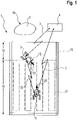
- the inventive method is based on one in the Figures 1 to 3 illustrated embodiment illustrated.
- This includes a silo 1 in which crop 2 is to be stored.
- the harvested crop 2 is distributed in the silo 1 by means of two autonomous compaction machines 3, 5 and compacted there.
- the autonomous compaction machines 3 , 5 are controlled by a control device 4 , the compaction machines 3 , 5 each being connected to the control device 4 by means of a wireless data connection 7 .
- the compacting machines 3 , 5 are connected to one another by means of a wireless data link 22 .
- the control device 4 is set up next to the silo device 1 in the example shown. in the in figure 1 At the moment shown as an example, the compaction machines 3 , 5 are moving in the direction of the figure 1 arrows 20, 21 shown
- the silo 1 is designed here in the form of a flat silo that is U-shaped in plan and is bounded by silo walls 13 on three of its four edges.
- the silo 1 is equipped with a silo floor 14 on its underside towards the ground.
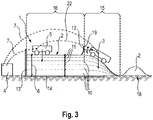
- the structural elements of the silo 1 can be seen particularly well from the cross section according to FIG figure 3 .
- There is also a layered one Structure of the harvested crop 2 located in the silo 1 can be seen. In the state shown, the silo 1 is already almost completely filled.
- the harvested crop is distributed autonomously within the silo 1 by means of the compacting machine 3 comprising a distribution device 12 , with the harvested crop 2 being incorporated in layers.
- each of the crop layers 10 has a layer height 11 , the sum of all layer tones 11 resulting in the silo height 6 . It goes without saying that the latter continuously increases during the process until finally the silo 1 is completely filled.
- the distribution device 12 of the compacting machine 3 is formed here by a sliding plate.
- the crop layers 10 or their layer heights 11 are controlled as a function of their position within the silo 1 , with crop layers 10 located further down typically having a greater layer height 11 than crop layers 10 located further up.
- the reason for this is that the harvested crop layers 10 located further below, in addition to the compaction performance that is applied by means of the weight of the compaction machines 3, 5 as such (in figure 3 illustrated by unspecified arrows), are further compacted by the weight of the crop layers 10 located above.
- the layer height 11 can be regulated particularly easily by means of the distribution device 12 of the compacting machine 3 , it being possible for a working position of the distribution device 12 to be controlled in particular by means of the control device 4 .
- this is realized in that the distribution device 12 is mounted on the compaction machine 3 so that it can rotate about an axis of rotation, so that the distribution device 12 according to a figure 3 shown double arrow 19 can be moved up and down.
- the setting of the working position of the distribution device 12 thus corresponds to the setting of a working height of the same in the example shown.
- the compression machines 3, 5 are configured in such a way that a first compression machine 3, which is equipped with a distribution device 12 , also fulfills a distribution function in addition to a compression function. This means that the compacting machine 3 autonomously transports the harvested crop 2 delivered to the delivery point 18 into the silo 1 and distributes it there in accordance with a specification from the control device 4 .
- the compression machine 3 typically ensures that the crop 2 is distributed evenly over the surface of the silo 1 , so that an at least substantially uniform layer height 11 of a crop layer 10 that is in the process of being formed is formed.
- the other compression machine 5 does not fulfill a distribution function here, but only and exclusively a compression function. In the example shown, it is controlled by the control device 4 in such a way that it travels over the silo 1 along a travel route 17 , compressing the harvested crop 2 through the effect of its own weight.
- An area in which the second compacting machine 5 acts is limited here, for example, to a plateau area 16 of the silo 1 , in which a surface of the harvested crop 2 is at least essentially flat.
- the ramp area 15 is required so that the compaction machines 3, 5 can enter the silo 1 . It forms automatically as the silo height 6 increases.
- both compacting machines 3, 5 are each equipped with a sensor, not shown in the figures, which enables them to detect various crop parameters of the harvested crop 2.
- a resilience behavior of the harvested crop 2 is examined by means of the compression machines 3, 5 .
- This resilience behavior which in principle corresponds to a reshaping of previously compressed crop 2 , allows conclusions to be drawn about the compressibility of the crop 2 .
- the data recorded by the sensors are transmitted via the data connections 7 to the control device 4 , which creates work processes for the compaction machines 3, 5 on the basis of this data.
- the latter are in turn communicated to the compaction machines 3, 5 by means of the data connections 7 , whereupon the same continue their autonomous operation accordingly.
- control device 4 changes an estimated compaction period depending on the crop parameter "return property" recorded here as an example, in order to ensure sufficient compaction of the harvested crop in any case, but at the same time to avoid compaction beyond the required level. It is also conceivable that the driving routes of the compaction machines 3, 5 are adjusted in order to concentrate a compaction performance of the same, for example, on a specific area. Of course, all sorts of other automatically occurring influences of the control device 4 on the operation of the compression machines 3, 5 are easily conceivable.
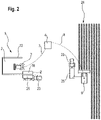
- the control device 4 is also connected to a harvesting vehicle 9 by means of a wireless data connection 8 in addition to its connection to the compaction machines 3 , 5 .
- the harvesting vehicle 9 is designed here in the form of a forage harvester, configured in the example shown to chop corn plants 24 in a field.
- the chopped corn plants 24 then form the harvested crop 2 , which is conveyed directly from the harvesting vehicle 9 to a transport vehicle 25 , which is then driven to the silo 1 by means of a transport vehicle 23 .
- There the trolley 25 is emptied at the delivery point 18 .
- connection of the control device 4 both with the compaction machines 3, 5, of which in figure 2 Only the first compacting machine 3 is shown in simplified form, as well as with the harvesting vehicle 9 has the particular advantage that silo data from the silo 1 can directly influence the operating parameters of the harvesting vehicle 9 .
- the control device 4 can transmit information to the harvesting vehicle 9 , from which, for example, a machine operator of the harvesting vehicle 9 can derive actions for further operation of the harvest. It is also conceivable that the control device 4 acts directly on at least one operating parameter of the harvesting vehicle 9 via the data connection 8 .
Landscapes
- Life Sciences & Earth Sciences (AREA)
- Engineering & Computer Science (AREA)
- Environmental Sciences (AREA)
- General Physics & Mathematics (AREA)
- Aviation & Aerospace Engineering (AREA)
- Radar, Positioning & Navigation (AREA)
- Remote Sensing (AREA)
- Physics & Mathematics (AREA)
- Automation & Control Theory (AREA)
- Soil Sciences (AREA)
- Mechanical Engineering (AREA)
- Management, Administration, Business Operations System, And Electronic Commerce (AREA)
- Filling Or Emptying Of Bunkers, Hoppers, And Tanks (AREA)
Description
Die vorliegende Anmeldung betrifft ein Verfahren zur Befüllung eines Silos mit zu lagerndem Erntegut, insbesondere eines Flachsilos mit gehäckseltem Mais, Gras und dergleichen, umfassend die folgenden Verfahrensschritte:
- a) Das zu lagernde Erntegut wird in dem Silo verteilt.
- b) Das in dem Silo befindliche Erntegut wird mittels mindestens einer Verdichtungsmaschine zumindest für die Dauer eines Verdichtungszeitraums fortwährend überfahren, wobei zumindest eine Gewichtskraft der Verdichtungsmaschine auf das Erntegut einwirkt.
- c) Zumindest mittels Wirkung der Gewichtskraft der Verdichtungsmaschine wird das Erntegut verdichtet.
- a) The crop to be stored is distributed in the silo.
- b) The harvested crop located in the silo is continuously driven over by means of at least one compacting machine, at least for the duration of a compaction period, with at least one weight of the compacting machine acting on the harvested crop.
- c) The crop is compacted at least by the effect of the weight of the compacting machine.
Bei dem Silo kann es sich im Sinne der vorliegenden Anmeldung insbesondere um ein sogenanntes Flachsilo handeln, das zur Lagerung von Erntegut typischerweise verwendet wird. Dies betrifft insbesondere solche Fälle, in denen das Erntegut über einen längeren Zeitraum hinweg als Futtermittel vorgehalten werden soll, wobei das Erntegut in dem Silo verdichtet wird, um Lufteinschlüsse zu eliminieren. Nach abgeschlossener Verdichtung bzw. vollständiger Verfüllung des Silos wird das Erntegut zur Umgebung hin typischerweise mittels einer Abdeckschicht, beispielsweise einer Siloplane, abgedichtet, sodass ein unmittelbarer Austausch von Sauerstoff zwischen dem Erntegut und der Umgebung unterbunden ist. Auf diese Weise wird verhindert, dass das gelagerte Erntegut verrottet.In the context of the present application, the silo can in particular be what is known as a flat silo, which is typically used for storing harvested crops. This relates in particular to those cases in which the harvested crop is to be kept available as animal feed over a longer period of time, with the harvested crop being compressed in the silo in order to eliminate air pockets. After compaction has been completed or the silo has been completely filled, the harvested crop is typically sealed off from the environment by means of a covering layer, for example a silo tarpaulin, so that a direct exchange of oxygen between the harvested crop and the environment is prevented. This prevents the stored crop from rotting.
Als Verdichtungsmaschinen werden typischerweise Traktoren, Radlader, Walzen oder dergleichen verwendet. Von besonderer Bedeutung ist eine vergleichsweise hohe Gewichtskraft, die von einer Verdichtungsmaschine ausgeübt werden sollte, um die gewünschte Verdichtungsleistung zu erzielen. Ferner können Verdichtungsmaschinen unterstützend eine Vibrationsfunktion aufweisen, die die Verdichtungsleistung spürbar erhöht. Die Verwendung eines Traktors wird insoweit in aller Regel bevorzugt, als ein solcher ohne Weiteres mit einem Frontlader, Schiebeschild oder dergleichen ausgestattet werden kann, sodass der Traktor neben einer reinen Verdichtungsfunktion für das zu lagernde Erntegut ferner eine Verteilfunktion erfüllen kann. Diese beinhaltet insbesondere die Verteilung von an dem Silo angeliefertem Erntegut auf der Silofläche.Tractors, wheel loaders, rollers or the like are typically used as compacting machines. A comparatively high weight force, which should be exerted by a compaction machine in order to achieve the desired compaction performance, is of particular importance. Furthermore, compaction machines can have a vibration function that noticeably increases compaction performance. The use of a tractor is generally preferred insofar as one can easily be equipped with a front loader, sliding blade or the like, so that the tractor can also fulfill a distribution function in addition to a pure compression function for the harvested crop to be stored. This includes in particular the distribution of crops delivered to the silo on the silo surface.
Die Befüllung eines Silos mit anschließender Verdichtung des jeweiligen Ernteguts ist im Stand der Technik bereits weitlich bekannt. Ein Verbesserungsbedarf der an sich bewährten Vorgehensweise besteht insofern, als die Organisation des gesamten Befüllungsprozesses im Stand der Technik in aller Regel nicht optimal gestaltet ist. Dies betrifft insbesondere eine Sicherstellung von ausreichend erbrachter Verdichtungsleistung als auch den Einbauprozess des zu verdichtenden Ernteguts in dem Silo. Letzterer ist im Stand der Technik oftmals von fehlerhafter Vorgehensweise geprägt, wobei beispielsweise Erntegut nicht in korrekter Weise und/oder an korrekter Stelle in das Silo eingebracht wird.The filling of a silo with the subsequent compression of the respective harvested crop is already widely known in the prior art. There is a need for improvement of the procedure that has proven itself insofar as the organization of the entire filling process in the prior art is generally not optimally designed. This relates in particular to ensuring that the compaction performance that is provided is sufficient, as well as the installation process of the harvested crop to be compacted in the silo. In the prior art, the latter is often characterized by a faulty procedure, with harvested crop not being introduced into the silo in the correct manner and/or at the correct location, for example.
Eine Möglichkeit zur besseren Kontrolle des Verdichtungsprozesses offenbart beispielsweise die Europäische Patentanmeldung
Der vorliegenden Anmeldung liegt mithin die Aufgabe zugrunde, ein Verfahren bereitzustellen, mittels dessen die Befüllung eines Silos grundsätzlich optimierbar ist.The present application is therefore based on the object of providing a method by means of which the filling of a silo can fundamentally be optimized.
Aus der
Die zugrunde liegende Aufgabe wird ausgehend von dem Verfahren der eingangs beschriebenen Art erfindungsgemäß mit den kennzeichnenden Merkmalen des Anspruch 1 gelöst.Based on the method of the type described above, the underlying object is achieved according to the invention with the characterizing features of claim 1 .
Unter einem "autonomen Betrieb" einer Verdichtungsmaschine wird im Sinne der vorliegenden Anmeldung verstanden, dass die Verdichtungsmaschine vollständig ohne den Eingriff menschlicher Verstandestätigkeit eigenständig agiert. "Autonomer Betrieb" verlangt nicht notwendigerweise einen eigenständigen Betrieb der Verdichtungsmaschine vollständig losgelöst von jeglicher externen Kontrolle. Insbesondere ist es nicht erforderlich, dass ein Arbeitsablauf der autonomen Verdichtungsmaschine ausschließlich auf Basis von der Verdichtungsmaschine selbst erhobenen Daten mittels einer eigenen Steuerungseinrichtung geplant und ausgeführt wird. Stattdessen kann die Steuerungseinrichtung auch aus anderer Quelle mit Daten und Vorgaben versorgt werden und von diesen abhängen, die sodann lediglich an die Verdichtungsmaschine weitergeleitet und sodann von letzterer autonom umgesetzt werden.“Autonomous operation” of a compaction machine is understood in the context of the present application to mean that the compaction machine acts completely independently without the intervention of human intelligence. "Autonomous operation" does not necessarily require the compactor to operate independently, completely detached from any external control. In particular, it is not necessary for a work sequence of the autonomous compaction machine to be planned and executed exclusively on the basis of data collected from the compaction machine itself using its own control device. Instead, the control device can also be supplied with data and specifications from other sources and depend on them, which are then only forwarded to the compaction machine and then be implemented autonomously by the latter.
Unter einer "Steuerungseinrichtung" ist dementsprechend eine Einrichtung zu verstehen, die dazu geeignet ist, Daten an die autonome Verdichtungsmaschine zu übertragen, insbesondere die Verdichtungsmaschine zu befehligen. Beispielsweise kann die Steuerungseinrichtung der Verdichtungsmaschine eine Fahrroute vorgeben und/oder weitere Betriebsdaten an die Verdichtungsmaschine übertragen. Umgekehrt kann eine Datenübertragung ausgehend von der Verdichtungsmaschine zu der Steuerungseinrichtung vorgenommen werden, wodurch vorteilhafterweise die Verdichtungsmaschine eine Rückmeldung an die Steuerungseinrichtung geben kann. Dies kann beispielsweise den Zustand des zu verdichtenden Ernteguts betreffen, wie nächstehend noch gesondert ausgeführt wird.Accordingly, a “control device” is to be understood as a device which is suitable for transmitting data to the autonomous compaction machine, in particular for commanding the compaction machine. For example, the control device of the compaction machine can specify a travel route and/or transmit further operating data to the compaction machine. Conversely, data can be transmitted from the compaction machine to the control device, as a result of which the compaction machine can advantageously provide feedback to the control device. This can, for example, relate to the condition of the crop to be compacted, as will be explained separately in the following.
Grundsätzlich ist es unerheblich, ob die Steuerungseinrichtung unmittelbar in, an oder auf der Verdichtungsmaschine angeordnet ist oder extern stationiert ist, beispielsweise in räumlicher Nähe zu dem jeweiligen Silo. Eine Kommunikation einer externen Steuerungseinrichtung mit der autonomen Verdichtungsmaschine kann insbesondere über Funk vorgenommen werden.In principle, it is irrelevant whether the control device is arranged directly in, on or on the compaction machine or is stationed externally, for example in close proximity to the respective silo. An external control device can communicate with the autonomous compaction machine, in particular via radio.
Der vorliegenden Erfindung liegt die Idee zugrunde, das Verfahren zur Befüllung eines Silos grundsätzlich von dem Einfluss eines menschlichen Fehlers zu befreien. Entsprechend bietet die vorliegende Erfindung eine Reihe von Vorteilen, wobei insbesondere sichergestellt ist, dass die Verdichtung des Ernteguts innerhalb des Silos einem vorgegebenen Plan autonom folgen kann. Dieser Plan wird von der Steuerungseinrichtung vorgegeben und wird von der Verdichtungsmaschine in der vorgegebenen Weise ausgeführt. Dies kann beispielsweise eine Verteilung der Verdichtungsleistung über eine Silofläche hinweg sowie die Einhaltung des Verdichtungszeitraums betreffen. Letztlich kann mittels der autonomen Betriebsweise der Verdichtungsmaschine die Effizienz des Verfahrens besonders einfach gesteigert werden.The present invention is based on the idea of fundamentally freeing the method for filling a silo from the influence of human error. Accordingly, the present invention offers a number of advantages, it being ensured in particular that the compaction of the crop within the silo can autonomously follow a predetermined plan. This plan is specified by the control device and is executed by the compaction machine in the specified manner. This can, for example, affect the distribution of the compaction performance over a silo area and compliance with the compaction period. Ultimately, the efficiency of the method can be increased in a particularly simple manner by means of the autonomous mode of operation of the compaction machine.
Weiterhin ergeben sich Sekundäreffekte, da beispielsweise die Verkürzung des Verdichtungszeitraums für eine jeweils zu verdichtende Erntegutschicht unmittelbar mit der Reduzierung des Energieverbrauchs der Verdichtungsmaschine einhergeht. Sofern letztere beispielsweise mittels eines Verbrennungsmotors angetrieben wird, führt die autonome Betriebsweise der Verdichtungsmaschine indirekt zur Reduktion von Kraftstoffkosten.Furthermore, there are secondary effects, since, for example, the shortening of the compaction period for a crop layer to be compacted in each case is directly associated with the reduction in the energy consumption of the compaction machine. If the latter is driven by an internal combustion engine, for example, the autonomous mode of operation of the compression machine indirectly leads to a reduction in fuel costs.
Weiterhin erlaubt die zügigere Verdichtung des Ernteguts mittels der erfindungsgemäßen Verdichtungsmaschine eine insgesamt kürzere Verweildauer des Ernteguts in unmittelbarem Kontakt mit dem Sauerstoff der Umgebungsluft. Letzterer sollte vorzugsweise möglichst kurz gehalten werden, um Oxidationsprozesses des Ernteguts zu vermeiden. Die nunmehr verkürzte Verdichtungsdauer hilft folglich dabei, das jeweilige Silo zügiger fertigzustellen und mittels einer Abdeckplane gegenüber der Umwelt zu verschließen als dies im Stand der Technik der Fall ist.Furthermore, the more rapid compaction of the harvested crop by means of the compaction machine according to the invention allows the harvested crop to remain in direct contact with the oxygen in the ambient air for a shorter time overall. The latter should preferably be kept as short as possible in order to avoid the oxidation process of the crop. The now shortened compaction time consequently helps to complete the respective silo more quickly and to close it off from the environment by means of a tarpaulin than is the case in the prior art.
Ein weiterer Vorteil des erfindungsgemäßen Verfahrens besteht darin, dass der im Grunde genommen vergleichsweise repetitive Verdichtungsprozess des in dem Silo eingelagerten Ernteguts nicht länger von einer extra hierfür abgestellten Arbeitskraft vorgenommen werden muss, sondern selbstständig bzw. autonom von der Verdichtungsmaschine ausgeführt werden kann. Hierdurch kann die Wirtschaftlichkeit des Verfahrens weiter gesteigert werden.A further advantage of the method according to the invention is that the basically comparatively repetitive compaction process of the harvested crop stored in the silo no longer has to be carried out by a worker specially assigned for this purpose, but can be carried out independently or autonomously by the compaction machine. As a result, the economics of the process can be further increased.
Das erfindungsgemäße Verfahren ist dann von besonderem Vorteil, wenn das Erntegut mittels einer Mehrzahl gleichzeitig autonom arbeitender Verdichtungsmaschinen verdichtet wird. Die Verwendung einer Mehrzahl von Verdichtungsmaschinen führt zunächst zu einer entsprechenden Steigerung der auf das Erntegut ausgeübten Verdichtungsleistung. Dies führt wiederum dazu, dass ein jeweils gewünschtes Verdichtungsergebnis in deutlich kürzerer Zeit erreicht wird.The method according to the invention is of particular advantage when the harvested crop is compacted by means of a plurality of compacting machines working independently at the same time. The use of a plurality of compaction machines initially leads to a corresponding increase in the compaction performance exerted on the harvested crop. This in turn means that a desired compaction result is achieved in a significantly shorter time.
Diese zeitliche Komponente ist zum einen unter dem oben genannten Aspekt des zügigen Verschlusses des Silos von Bedeutung. Zum anderen bewirkt eine beschleunigte Verdichtung des Ernteguts, dass ein "Verdichtungsstau" an dem jeweilig zu befüllenden Silo, der eine empfindliche Verzögerung des Ernteprozesses zur Folge haben kann, möglichst vermieden wird. Dies liegt darin begründet, dass die Arbeitskette von Transportfahrzeugen, die das Erntegut von einem Erntefahrzeug, beispielsweise einem Feldhäcksler, zu dem Silo transportieren, gestört wird, sobald das bereits an dem Silo angelieferte, jedoch noch nicht weiter verarbeitete Erntegut nicht zügig genug in das Silo eingebracht wird. Die Erhöhung der Verdichtungsleistung in dem Silo hilft dabei, das angelieferte Erntegut zügiger in das Silo einzubringen und folglich die beschriebene Arbeitskette der Transportfahrzeuge möglichst wenig, vorzugsweise gar nicht, zu stören. Insbesondere ist es mittels der Verwendung mehrerer Verdichtungsmaschinen zumindest weniger häufig notwendig, eine Arbeitsgeschwindigkeit des Erntefahrzeugs bewusst zu reduzieren.On the one hand, this time component is important under the aspect of rapid closure of the silo mentioned above. On the other hand, accelerated compaction of the harvested crop means that a "compaction jam" in the silo to be filled, which can lead to a significant delay in the harvesting process, is avoided as far as possible. The reason for this is that the work chain of transport vehicles that transport the harvested crop from a harvesting vehicle, for example a forage harvester, to the silo is disrupted as soon as the harvested crop that has already been delivered to the silo but has not yet been processed further does not get into the silo quickly enough is introduced. Increasing the compaction performance in the silo helps bring the delivered harvested crop into the silo more quickly and consequently disturbs the described work chain of the transport vehicles as little as possible, preferably not at all. In particular, by using a plurality of compaction machines, it is at least less frequently necessary to consciously reduce a working speed of the harvesting vehicle.
Von besonderem Vorteil ist die Verwendung von genau zwei autonom betriebenen Verdichtungsmaschinen, die für die Bearbeitung von Silos typischer Größe in aller Regel ausreichen. Die Verwendung von mehr als zwei Verdichtungsmaschinen könnte demgegenüber zu einem deutlich überproportionalen Anstieg von Konflikten zwischen den Verdichtungsmaschinen führen, beispielsweise hinsichtlich deren Fahrrouten.Of particular advantage is the use of exactly two autonomously operated compaction machines, which are usually sufficient for processing silos of a typical size. The use of more than two compaction machines, on the other hand, could lead to a significantly disproportionate increase in conflicts between the compaction machines, for example with regard to their driving routes.
Grundsätzlich ist es denkbar, dass bei der Verwendung mehrerer autonomer Verdichtungsmaschinen selbige jeweils mittels einer eigenen Steuerungseinrichtung gesteuert werden. Gleichwohl ist es von besonderem Vorteil, wenn eine einzige zentrale Steuerungseinrichtung die Steuerung sämtlicher autonomer Verdichtungsmaschinen übernimmt. Insbesondere können auf diese Weise Betriebsparameter der Verdichtungsmaschinen mittels der einzigen Steuerungseinrichtung aufeinander abgestimmt werden. Somit ist es bei der Verwendung mehrerer Verdichtungsmaschinen von besonderem Vorteil, wenn diese jeweils Arbeitsdaten an die Steuerungseinrichtung übermitteln, sodass die Steuerungseinrichtung die Arbeitsabläufe der Verdichtungsmaschinen in Abhängigkeit der übermittelten Arbeitsdaten koordinieren kann. Bei diesen Arbeitsdaten kann es sich insbesondere um Sensordaten und/oder Bewegungsdaten der Verdichtungsmaschinen handeln. Die Sensordaten können insbesondere mittels mindestens eines Sensors mindestens einer Verdichtungsmaschine erfasst werden, wobei der Betrieb der Verdichtungsmaschinen von einer Vielzahl verschiedener Parameter abhängig gemacht werden kann. Dies ist nachstehend gesondert erläutert.In principle, it is conceivable that when several autonomous compaction machines are used, they are each controlled by means of their own control device. Nevertheless, it is of particular advantage if a single central control device takes over the control of all autonomous compaction machines. In particular, operating parameters of the compaction machines can be matched to one another in this way by means of the single control device. Thus it is in use several compaction machines of particular advantage if they each transmit work data to the control device, so that the control device can coordinate the work processes of the compaction machines depending on the transmitted work data. This work data can in particular be sensor data and/or movement data from the compaction machines. The sensor data can be recorded in particular by means of at least one sensor of at least one compacting machine, it being possible for the operation of the compacting machine to be made dependent on a large number of different parameters. This is explained separately below.
Überdies ist die Übermittlung von Bewegungsdaten von den Verdichtungsmaschinen an die Steuerungseinrichtung besonders vorteilhaft, sodass die Steuerungseinrichtung insbesondere Fahrrouten der Verdichtungsmaschinen koordinieren kann. Auf diese Weise können sowohl Konflikte zwischen den Fahrrouten minimiert, als auch die Überfahrhäufigkeit sämtlicher Stellen des Silos derart optimiert werden, dass nach Möglichkeit sämtliche Stellen zumindest im Wesentlichen gleich oft überfahren werden. Diese Verfahrensweise entspricht einer möglichst gleichmäßigen Verteilung der Verdichtungsleistung der Verdichtungsmaschinen auf die jeweilig zu verdichtende Erntegutschicht des Silos. Ebenso ist es denkbar, dass die Verdichtungsmaschinen bestimmte Stellen bewusst öfter überfahren als andere, falls zum Beispiel ein Gutparameter des Ernteguts an bestimmten Stellen dies verlangen.Furthermore, the transmission of movement data from the compaction machines to the control device is particularly advantageous, so that the control device can in particular coordinate travel routes of the compaction machines. In this way, both conflicts between the travel routes can be minimized and the frequency of driving over all points of the silo can be optimized in such a way that, if possible, all points are passed over at least essentially the same number of times. This procedure corresponds to the most uniform possible distribution of the compaction performance of the compaction machines on the respective crop layer to be compacted in the silo. It is also conceivable that the compacting machines deliberately drive over certain points more often than others, for example if a crop parameter of the harvested crop requires this at certain points.
Bei der Verwendung zweier oder mehrerer autonomer Verdichtungsmaschinen kann es weiterhin vorteilhaft sein, wenn eine der Verdichtungsmaschinen gegenüber den übrigen Verdichtungsmaschinen von der Steuerungseinrichtung bevorzugt behandelt wird. Diese bevorzugte Behandlung beinhaltet die Bevorteilung der bevorzugten Verdichtungsmaschine im Falle eines Konflikts zwischen Arbeitsabläufen verschiedener Verdichtungsmaschinen. Besagte Bevorteilung wird dadurch umgesetzt, dass der Arbeitsablauf der bevorzugten Verdichtungsmaschine Vorrang vor den Arbeitsabläufen der Benachteiligten Verdichtungsmaschinen hat. Insbesondere können die Arbeitsabläufe der Benachteiligten Verdichtungsmaschinen zum Vorteil der bevorzugten Verdichtungsmaschine zumindest zeitweise unterbrochen werden. Mit anderen Worten nimmt die bevorzugte Verdichtungsmaschine innerhalb des Schwarms sämtlicher autonomer Verdichtungsmaschinen die Position des sogenannten "Masters" ein, während die übrigen Verdichtungsmaschinen als sogenannte "Slaves" konfiguriert sind.When using two or more autonomous compaction machines, it can also be advantageous if one of the compaction machines is treated preferentially by the control device over the other compaction machines. This preferential treatment involves prioritizing the preferred compactor in the event of a conflict between the operations of different compactor machines. Said preferential treatment is implemented by the fact that the work process of the favored compactor takes precedence over the work processes of the disadvantaged compactor. In particular, the work processes of the disadvantaged compaction machines can be interrupted at least temporarily to the advantage of the preferred compaction machine. In other words, within the swarm of all autonomous compaction machines, the preferred compaction machine assumes the position of the so-called "master", while the remaining compaction machines are configured as so-called "slaves".
Ein typisches Beispiel für eine derartige Bevorteilung des Masters ist eine Vorfahrtsregelung zu seinen Gunsten, wobei der Master im Falle eines Konflikts zwischen seiner Fahrroute mit derjenigen eines Slaves ungehindert und ohne Unterbrechung weiterfahren darf, während der Slave zumindest gebremst wird, möglicherweise sogar vollständig angehalten wird.A typical example of such a preference for the master is a right-of-way rule in its favor, whereby in the event of a conflict between its driving route and that of a slave, the master is allowed to continue driving unhindered and without interruption, while the slave is at least braked, possibly even stopped completely.
Erfindungsgemäß steuert die Steuerungseinrichtung die Verdichtungsmaschine bzw. Verdichtungsmaschinen in Abhängigkeit mindestens eines Siloparameters. Unter einem "Siloparameter" können sämtliche Parameter verstanden werden, die entweder das Silo gemeinsam mit dem darin befindlichen Erntegut oder das in dem Silo befindliche Erntegut als solches oder das an dem Silo angelieferte Erntegut beschreiben. Siloparameter, die für die Steuerung der Verdichtungsmaschinen von besonderer Bedeutung sind, sind die jeweils aktuelle Silohöhe und/oder ein Gutparameter des Ernteguts, insbesondere des gerade angelieferten, jedoch noch nicht eingebauten Ernteguts. Weiterhin kann eine Dicke einer im Entstehen begriffenen, noch nicht vollständig verdichteten bzw. fertiggestellten Erntegutschicht einen Siloparameter darstellen.According to the invention, the control device controls the compaction machine or compaction machines as a function of at least one silo parameter. A “silo parameter” can be understood to mean all parameters that describe either the silo together with the crops located therein, or the crops located in the silo as such, or the crops delivered to the silo. Silo parameters that are of particular importance for the control of the compaction machines are the current silo height and/or a crop parameter of the harvested crop, in particular of the harvested crop that has just been delivered but not yet installed. Furthermore, the thickness of a layer of harvested crop that is in the process of being formed but has not yet been completely compacted or finished can represent a silo parameter.
Dabei wird unter der "Silohöhe" die aktuelle, vom Siloboden aus gemessene Gesamthöhe des bereits in dem Silo angehäuften Ernteguts verstanden. Das bedeutet, dass die Silohöhe in jedem Fall die Höhe der aktuell bearbeiteten Erntegutschicht beschreibt, die in unmittelbaren Kontakt mit der/den Verdichtungsmaschine(n) tritt. Die "Gutparameter" können sämtliche Parameter betreffen, die das Erntegut als solches beschreiben. Hierunter sind insbesondere, jedoch nicht abschließend, die folgenden Parameter zu verstehen:
- ein Rückstellverhalten des Ernteguts;
- eine Dichte des Ernteguts;
- ein Porenvolumen des Ernteguts;
- ein Wassergehalt des Ernteguts;
- ein Trockenmasse des Ernteguts;
- eine durchschnittliche Partikelgröße des Ernteguts.
- a resilience of the crop;
- a crop density;
- a pore volume of the crop;
- a water content of the crop;
- a dry matter of the crop;
- an average particle size of the crop.
Insbesondere kann die Steuerungseinrichtung die Verdichtungsleistung der Verdichtungsmaschinen verändern, erfindungsgemäß in Abhängigkeit von dem Porenvolumen und/oder von der Trockenmasse des Ernteguts und/oder der Silohöhe abhängig gemacht werden. Die Verdichtungsleistung kann beispielsweise mittels Veränderung des Verdichtungszeitraums erreicht werden. Ebenso ist es denkbar, zusätzlich zu einer reinen Eigengewichtsverdichtung an der bzw. den Verdichtungsmaschine(n) eine Vibrationsfunktion zu aktivieren, um die Verdichtungsleistung mittels eines dynamischen Verdichtungsanteils zu steigern. Zur Erzeugung einer Vibration kann die autonome Verdichtungsmaschine beispielsweise mit mindestens einem Exzenter ausgestattet sein. Andere Möglichkeiten zur Veränderung der Verdichtungsleistungen sind grundsätzlich selbstverständlich ebenso denkbar. Somit kann beispielsweise ein Schlupf in Form einer Differenz zwischen Drehzahlen einer Vorder- und einer Hinterachse einer Verdichtungsmaschine, aktiv eingebracht werden. Ferner ist eine Veränderung der Aufstandsfläche der Verdichtungsmaschine denkbar, beispielsweise mittels Erhöhung oder Verringerung eines Reifendrucks eines oder mehrerer Reifen einer jeweiligen Verdichtungsmaschine.In particular, the control device can change the compaction performance of the compaction machines, according to the invention depending on the pore volume and/or the dry matter of the harvested crop and/or the height of the silo. The compaction performance can be achieved, for example, by changing the compaction period. It is also conceivable to activate a vibration function on the compaction machine(s) in addition to a pure self-weight compaction in order to increase the compaction performance by means of a dynamic compaction component. To generate a vibration, the autonomous compaction machine can be equipped with at least one eccentric, for example. Other options for changing the compression performance are of course also conceivable in principle. Thus, for example, a slip in the form of a difference between the speeds of a front and a rear axle of a compression machine can be actively introduced. Furthermore, a change in the contact area of the compaction machine is conceivable, for example by increasing or decreasing the tire pressure of one or more tires of a respective compaction machine.
Mindestens ein, vorzugsweise mehrere, Gutparameter des Ernteguts werden vorteilhafterweise unmittelbar mittels der Verdichtungsmaschine erhoben, wobei selbige mit mindestens einem Sensor zur Ermittlung mindestens eines Gutparameters ausgestattet ist. Die Verdichtungsmaschine kann den jeweils ermittelten Gutparameter an die Steuerungseinrichtung übertragen, sodass letztere diesen entsprechend berücksichtigen kann. Vorteilhafterweise findet eine Erhebung mitsamt Weiterleitung mindestens eines Gutparameters fortwährend statt, sodass zu jeder Zeit der Steuerungseinrichtung aktuelle Informationen über den Zustand des Ernteguts vorliegen.At least one, preferably several, crop parameters of the harvested crop are advantageously collected directly by means of the compaction machine, the same being equipped with at least one sensor for determining at least one crop parameter. The compacting machine can transmit the material parameter determined in each case to the control device, so that the latter can take this into account accordingly. Advantageously, a survey together with forwarding of at least one crop parameter takes place continuously, so that current information about the condition of the harvested crop is available to the control device at all times.
In einer besonders vorteilhaften Ausgestaltung des erfindungsgemäßen Verfahrens weist die Steuerungseinrichtung mindestens eine Datenverbindung mit mindestens einem Erntefahrzeug, insbesondere einen Feldhäcksler, auf. Bei dem Erntefahrzeug handelt es sich um dasjenige Fahrzeug, mittels dessen das Erntegut ursprünglich produziert wird. Insbesondere kann das Erntefahrzeug dazu geeignet sein, Pflanzen zu ernten und sodann zu zerkleinern, sodass das Erntegut letztlich aus einer zumindest im Wesentlichen homogenisierten Masse der zerkleinerten Pflanzen besteht. Mittels der Datenverbindung zwischen der Steuerungseinrichtung und dem Erntefahrzeug ist es ersterer ermöglicht, in Abhängigkeit mindestens eines Siloparameters Daten an das Erntefahrzeug zu übermitteln. Insbesondere kann die Steuerungseinrichtung zumindest eine Information an einen Maschinenführer des Erntefahrzeugs absetzen, um diesen über den Zustand des Ernteguts und/oder des Befüllungsprozesses des Silos zu informieren, sodass der Maschinenführer auf Basis dieser Information seine Arbeitsweise und/oder einen Betriebsparameter des Erntefahrzeugs anpassen kann.In a particularly advantageous embodiment of the method according to the invention, the control device has at least one data connection with at least one harvesting vehicle, in particular a forage harvester. The harvesting vehicle is the vehicle by means of which the crop is originally produced. In particular, the harvesting vehicle can be suitable for harvesting plants and then for comminuting them, so that the harvested crop ultimately consists of an at least essentially homogenized mass of the comminuted plants. The data connection between the control device and the harvesting vehicle makes it possible for the former to transmit data to the harvesting vehicle as a function of at least one silo parameter. In particular, the control device can send at least one piece of information to a machine operator of the harvesting vehicle in order to inform him about the condition of the harvested crop and/or the filling process of the silo, so that the machine operator can adapt his working method and/or an operating parameter of the harvesting vehicle on the basis of this information.
Die Weitergabe der Information seitens der Steuerungseinrichtung kann dabei auf die schlichte Mitteilung des jeweiligen Gutparameters beschränkt sein oder bereits eine in Abhängigkeit des Gutparameters erarbeitete Handlungsempfehlung beinhalten. Somit ist es beispielsweise denkbar, dass die Steuerungseinrichtung den Maschinenführer des Erntefahrzeugs darüber informiert, dass das Silo bereits zu 70 % gefüllt ist, woraus der Maschinenführer eigenständig den Rückschluss ziehen kann, dass die Partikelgröße des Ernteguts fortan reduziert werden sollte, um eine hinreichende Verdichtung der noch ausstehenden oberen Erntegutschichten des Silos sicherstellen zu können. Alternativ ist es denkbar, dass die Steuerungseinrichtung dem Maschinenführer lediglich mitteilt, bitte die Partikelgröße des Ernteguts zu reduzieren.The forwarding of the information by the control device can be limited to the simple notification of the respective good parameter or can already contain a recommendation for action that has been worked out as a function of the good parameter. It is therefore conceivable, for example, that the control device informs the machine operator of the harvesting vehicle that the silo is already 70% full, from which the machine operator can independently draw the conclusion that the particle size of the harvested crop should be reduced from now on in order to ensure sufficient compaction of the to be able to ensure the remaining upper crop layers of the silo. Alternatively, it is conceivable that the control device only informs the machine operator to please reduce the particle size of the harvested crop.
Noch darüber hinaus besteht die Möglichkeit, dass die Steuerungseinrichtung unmittelbar auf mindestens einen Betriebsparameter des Erntefahrzeugs einwirkt bzw. selbigen verändert. In diesem Fall würde der Maschinenführer womöglich lediglich informiert werden, dass fortan der jeweils betroffene Betriebsparameter automatisch verändert wurde, worin eine weitere Automatisierung des Verfahrens zur Befüllung des Silos insgesamt zu sehen ist.In addition, there is the possibility that the control device acts directly on at least one operating parameter of the harvesting vehicle or changes it. In this case, the machine operator would possibly only be informed that from now on the relevant operating parameter was changed automatically, which is to be seen as a further automation of the method for filling the silo overall.
Soweit eine Datenübertragung von der Steuerungseinrichtung auf das Erntefahrzeug vorgenommen wird, ist es besonders vorteilhaft, wenn die Steuerungseinrichtung in Abhängigkeit von einer Länge des Verdichtungszeitraums zumindest mittelbar auf eine Anpassung der Arbeitsgeschwindigkeit des Erntefahrzeugs hinwirkt. Somit ist es beispielsweise denkbar, dass in einer logischen Abfolge zunächst aufgrund eines ermittelten Gutparameters des Ernteguts die Steuerungseinrichtung eine Verlängerung des Verdichtungszeitraums bewirkt und infolgedessen daraufhin wirkt, dass das Erntefahrzeug seine Arbeitsgeschwindigkeit verringert. Letzteres soll dazu führen, dass ein Massenstrom von neuem, zusätzlich in das Silo einzubringen Ernteguts verringert wird, indem das Erntefahrzeug das Erntegut langsamer produziert. Auf diese Weise kann ohne Beeinträchtigung der Arbeitskette der Transportfahrzeuge eine hinreichende Verdichtungsleistung in dem Silo sichergestellt werden.If data is transmitted from the control device to the harvesting vehicle, it is particularly advantageous if the control device acts at least indirectly to adjust the working speed of the harvesting vehicle as a function of the length of the compression period. Thus, it is conceivable, for example, that in a logical sequence, based on a determined crop parameter of the harvested crop, the control device causes the compaction period to be extended and consequently causes the harvesting vehicle to reduce its working speed. The latter is intended to result in a mass flow of new crops to be additionally brought into the silo being reduced, in that the harvesting vehicle produces the crops more slowly. In this way, a sufficient compaction performance in the silo can be ensured without impairing the work chain of the transport vehicles.
Das erfindungsgemäße Verfahren weiter ausgestaltend erfüllt die mindestens eine autonome Verdichtungsmaschine neben ihrer Verdichtungsfunktion ferner eine Verteilfunktion, indem sie bereits angeliefertes, jedoch noch unverdichtetes Erntegut autonom in dem Silo verteilt. Diese Verteilung erfolgt derart, dass sich eine unverdichtete Erntegutschicht bildet. Dabei ist es beispielsweise denkbar, dass die Verdichtungsmaschine unter Vorgabe einer zu erzielenden Schichthöhe der jeweils im Entstehen begriffenen Erntegutschicht unverdichtetes Material aufträgt und sodann nach Erreichen besagter Schichthöhe automatisch die Verdichtung derselben beginnt. Auch ist es denkbar, dass die Steuerungseinrichtung eine Schichthöhe von verdichtetem Erntegut vorgibt und die Verdichtungsmaschine fortwährend Material einbringt und verdichtet, bis die vorgegebene Schichthöhe erreicht ist. Weiterhin ist es denkbar, dass eine gestaffelte Bearbeitung einer jeweiligen Silofläche vorgenommen wird, wobei insbesondere verschiedene Bereiche des Silos bearbeitet werden. Somit ist es denkbar, dass zunächst eine erste Hälfte einer neu zu erstellenden Erntegutschicht eingebracht und verdichtet wird und erst im Anschluss die jeweils zweite Hälfte. In jedem Fall kann die erfindungsgemäße Verdichtungsmaschine unter Wahrnehmung auch einer Verteilfunktion neben der Verdichtung des Ernteguts ferner die Befüllung des Silos vollständig autonom bewerkstelligen.In a further development of the method according to the invention, the at least one autonomous compacting machine, in addition to its compacting function, also fulfills a distribution function by autonomously distributing crops that have already been delivered but are not yet compacted in the silo. This distribution takes place in such a way that an uncompacted crop layer forms. It is conceivable, for example, for the compacting machine to apply uncompacted material while specifying a layer height to be achieved for the crop layer currently being formed and then automatically begin compacting the same after said layer height has been reached. It is also conceivable that the control device specifies a layer height of compacted harvested crop and the compacting machine continuously brings in and compacts material until the specified layer height is reached. Furthermore, it is conceivable that a staggered processing of a respective silo area is carried out, with different areas of the silo being processed in particular. Thus, it is conceivable that first a first half of a crop layer to be newly created is brought in and compacted and only then the respective second half. In any case, the compacting machine according to the invention can also carry out the filling of the silo completely autonomously while also performing a distribution function in addition to compacting the harvested crop.
Dabei kann es besonders von Vorteil sein, wenn die Schichthöhe einer jeweiligen Erntegutschicht in Abhängigkeit mindestens eines Gutparameters gesteuert wird. Für die Einstellung der Schichthöhe kann insbesondere der Wassergehalt des Ernteguts und/oder die Silohöhe und/oder eine durchschnittliche Partikelgröße des Ernteguts herangezogen werden. Letztere kann je nach angestrebtem Verwendungszweck des Ernteguts im Bereich zwischen 5 mm und 40 mm liegen. Dabei gilt, dass umso feineres Erntegut umso weniger stark verdichtet werden muss.It can be particularly advantageous if the layer height of a respective harvested crop layer is a function at least one good parameter is controlled. In particular, the water content of the crop and/or the silo height and/or an average particle size of the crop can be used to adjust the layer height. The latter can be in the range between 5 mm and 40 mm, depending on the intended use of the harvested crop. The finer the crop, the less it needs to be compacted.
Sofern die Verdichtungsmaschine mit mindestens einer Verteileinrichtung, insbesondere einem Schiebeschild, ausgestattet ist, kann die Steuerungseinrichtung in einer weiterhin vorteilhaften Ausgestaltung des erfindungsgemäßen Verfahrens eine Arbeitsstellung der Verteileinrichtung steuern, und zwar insbesondere in Abhängigkeit einer jeweils zu erreichenden Schichthöhe der Erntegutschicht. Insbesondere kann die Arbeitsstellung bei einem Schiebeschild dessen Arbeitshöhe betreffen, wobei eine umso niedrigere Arbeitshöhe zu einer umso flacheren Ausgestaltung der jeweiligen Erntegutschicht führt und umgekehrt eine höhere Arbeitshöhe zu einem Anstieg der Schichthöhe führt.If the compacting machine is equipped with at least one distribution device, in particular a sliding plate, the control device can control a working position of the distribution device in a further advantageous embodiment of the method according to the invention, specifically in particular as a function of the layer height of the harvested crop layer to be achieved in each case. In particular, the working position of a sliding blade can affect its working height, with the lower the working height leading to a flatter configuration of the respective harvested crop layer, and conversely a higher working height leading to an increase in the layer height.
Hinsichtlich der Erstellung von Erntegutschichten innerhalb des Silos kann es weiterhin von besonderem Vorteil sein, wenn die Verdichtungsmaschinen das Erntegut in Abhängigkeit mindestens eines Gutparameters autonom einer noch zu erstellenden oder einer bereits im Entstehen begriffenen Erntegutschicht zuordnen. Bei diesem Verfahren ist die Verteilfunktion der autonomen Verdichtungsmaschine nicht lediglich auf ein reines Verteilen von Erntegut in dem Silo beschränkt, sondern um eine strategische Planung im Hinblick auf das als nächstes zu verbauende Erntegut erweitert. Dabei nimmt die Verdichtungsmaschine eine Schichtung des Silos vorzugsweise derart vor, dass eine Einbauhöhe von jeweilig zu verbauenden Erntegut in dem Silo proportional zum Wassergehalt und/oder antiproportional zur durchschnittlichen Partikelgröße des Ernteguts und/oder antiproportional zur Silohöhe vorgenommen wird. Dem liegt die Überlegung zugrunde, dass trockenes Erntegut ebenso wie solches mit vergleichsweise großen bzw. langen Partikeln verhältnismäßig schwierig zu verdichten ist, während feuchtes sowie feines Erntegut vergleichsweise einfach verdichtet werden kann. Schwierig zu verdichtendes Erntegut wird sinnvollerweise in einer niedrigen Erntegutschicht innerhalb des Silos angeordnet, um eine zusätzliche Verdichtungsleistung mittels über der jeweiligen Erntegutschicht befindlicher weiterer Erntegutschichten zu erzeugen.With regard to the creation of crop layers within the silo, it can also be of particular advantage if the compacting machines autonomously assign the crop to a crop layer that is yet to be created or to a crop layer that is already being created, depending on at least one crop parameter. In this method, the distribution function of the autonomous compaction machine is not just limited to a pure distribution of harvested crops in the silo, but is expanded to include strategic planning with regard to the harvested crops to be installed next. The compaction machine preferably stratifies the silo in such a way that the installation height of the harvested crop to be installed in the silo is proportional to the water content and/or inversely proportional to the average particle size of the harvested crop and/or inversely proportional to the height of the silo. This is based on the consideration that dry crops as well as those with comparatively large or long particles are relatively difficult to compact, while moist and fine crops can be compacted comparatively easily. Harvest crops that are difficult to compact are expediently arranged in a low crop crop layer inside the silo in order to generate additional compaction performance by means of further crop crop layers located above the respective crop crop layer.
Soweit mehrere autonome Verdichtungsmaschinen zum Einsatz kommen und mindestens eine der Verdichtungsmaschinen neben ihrer Verdichtungsfunktion ferner eine Verteilfunktion erfüllt, ist es besonders von Vorteil, wenn zumindest letztgenannte Verdichtungsmaschine ausschließlich eine Verteilfunktion erfüllt, während die mindestens eine weitere Verdichtungsmaschine ausschließlich eine Verdichtungsfunktion erfüllt. Vorzugsweise werden genau zwei Verdichtungsmaschine verwendet, wobei genau eine ausschließlich für die Verteilung von einzubringenden Erntegut verantwortlich ist, während die andere ausschließlich die Verdichtung des Ernteguts bewerkstelligt. Hierbei versteht es sich, dass die die Verteilfunktion ausübende Verdichtungsmaschine im Zuge der Verteilung des Ernteguts innerhalb des Silos bereits in dem Silo befindliches Erntegut überfährt und somit notgedrungener Maßen zur Verdichtung desselben beiträgt. Gleichwohl besteht die Aufgabe besagter Verdichtungsmaschine ausschließlich in der Verteilung des Ernteguts innerhalb des Silos.If several autonomous compaction machines are used and at least one of the compaction machines also fulfills a distribution function in addition to its compaction function, it is particularly advantageous if at least the last-mentioned compaction machine exclusively fulfills a distribution function, while the at least one other compaction machine exclusively fulfills a compaction function. Precisely two compacting machines are preferably used, with exactly one being responsible exclusively for the distribution of harvested crops to be brought in, while the other exclusively brings about the compaction of the harvested crops. It goes without saying that the compression machine performing the distribution function runs over crops already located in the silo in the course of the distribution of the crops within the silo and thus necessarily contributes to the compression of the same. Nevertheless, the task of said compaction machine consists exclusively in the distribution of the crop within the silo.
Vorteilhafterweise werden diejenigen Verdichtungsmaschinen, die ausschließlich die Verteilfunktion wahrnehmen, benachteiligt behandelt bzw. als Slave konfiguriert. Die übrigen Verdichtungsmaschinen werden demgegenüber bevorzugt behandelt bzw. als Master konfiguriert. Auf diese Weise wird eine zügige Verdichtung des Ernteguts innerhalb des Silos sichergestellt. Eine Hierarchie zwischen den zur Verdichtung vorgesehenen Verdichtungsmaschinen ist gleichermaßen denkbar.Advantageously, those compaction machines that only perform the distribution function are treated at a disadvantage or are configured as slaves. In contrast, the other compaction machines are treated preferentially or configured as masters. This ensures rapid compaction of the harvested crop inside the silo. A hierarchy between the compression machines provided for compression is equally conceivable.
Das erfindungsgemäße Verfahren wird nachstehend anhand von Ausführungsbeispielen, die in den Figuren dargestellt sind, näher erläutert. Es zeigt:
- Fig. 1:
- Eine Draufsicht auf ein Silo mit zwei autonomen Verdichtungsmaschinen,
- Fig. 2:
- Eine Draufsicht auf das Silo gemäß
Figur 1 sowie einen zu erntenden Schlag mitsamt einem Erntefahrzeug und - Fig. 3:
- Einen Querschnitt durch das Silo gemäß
Figur 1 .
- Figure 1:
- A top view of a silo with two autonomous compaction machines,
- Figure 2:
- A top view of the silo according to
figure 1 as well as a field to be harvested together with a harvesting vehicle and - Figure 3:
- A cross section through the silo according to
figure 1 .
Das erfindungsgemäße Verfahren ist anhand eines in den
Das Silo 1 ist hier in Form eines im Grundriss U-förmigen Flachsilos ausgeführt, das an drei seiner vier Ränder mittels Silowänden 13 begrenzt ist. Zudem ist das Silo 1 an seiner Unterseite zum Erdreich hin mittels eines Silobodens 14 ausgestattet. Die baulichen Elemente des Silos 1 ergeben sich besonders gut anhand des Querschnitts gemäß
Die Erntegutschichten 10 bzw. deren Schichthöhen 11 werden in Abhängigkeit ihrer Lage innerhalb des Silos 1 gesteuert, wobei typischerweise weiter unten gelegene Erntegutschichten 10 eine größere Schichthöhe 11 aufweisen als weiter oben liegende Erntegutschichten 10. Dies liegt darin begründet, dass die weiter unten gelegenen Erntegutschichten 10 zusätzlich zu der Verdichtungsleistung, die mittels der Gewichtskraft der Verdichtungsmaschinen 3, 5 als solcher aufgebracht wird (in
In unmittelbarer Nähe zu dem Silo 1 befindet sich eine Anlieferungsstelle 18, an der Transportfahrzeuge 23 Erntegut 2 anliefern, das in das Silo 1 eingebracht werden soll. Typischerweise wird das Erntegut 2 an der Anlieferungsstelle 18 lediglich lose abgeschüttet und sodann in dem Silo 1 verteilt. Die Verdichtungsmaschinen 3, 5 sind in dem gezeigten Beispiel derart konfiguriert, dass eine erste Verdichtungsmaschine 3, die mit einer Verteileinrichtung 12 ausgestattet ist, neben einer Verdichtungsfunktion ferner eine Verteilfunktion erfüllt. Das heißt, dass die Verdichtungsmaschine 3 das an der Anlieferungsstelle 18 angelieferte Erntegut 2 autonomen in das Silo 1 transportiert und dort entsprechend einer Vorgabe der Steuerungseinrichtung 4 verteilt. Dabei sorgt die Verdichtungsmaschine 3 typischerweise dafür, dass das Erntegut 2 gleichmäßig über die Fläche des Silos 1 verteilt wird, sodass sich eine zumindest im Wesentlichen gleichmäßige Schichthöhe 11 einer jeweils im Entstehen begriffenen Erntegutschicht 10 ausbildet.In the immediate vicinity of the silo 1 there is a
Die andere Verdichtungsmaschine 5 erfüllt hier keine Verteilfunktion, sondern lediglich und ausschließlich eine Verdichtungsfunktion. In dem gezeigten Beispiel wird sie mittels der Steuerungseinrichtung 4 derart gesteuert, dass sie entlang einer Fahrroute 17 das Silo 1 überfährt, wobei sie durch Wirkung ihrer Eigengewichtskraft das Erntegut 2 verdichtet. Ein Bereich, in dem die zweite Verdichtungsmaschine 5 wirkt, ist hier beispielhaft auf einen Plateaubereich 16 des Silos 1 beschränkt, in dem eine Oberfläche des Ernteguts 2 zumindest im Wesentlichen eben ausgeformt ist. Zu einer offenen Seite des Silos 1 hin an den Plateaubereich 16 anschließend befindet sich ein Rampenbereich 15, in dem ein Höhenniveau des Ernteguts 2 bis auf ein Höhenniveau einer Geländeoberkante abfällt. Der Rampenbereich 15 ist erforderlich, damit die Verdichtungsmaschinen 3, 5 das Silo 1 befahren können. Er bildet sich automatisch mit zunehmendem Anstieg der Silohöhe 6 aus.The
In dem gezeigten Beispiel sind beide Verdichtungsmaschinen 3, 5 jeweils mit einem in den Figuren nicht dargestellten Sensor ausgestattet, der es ihnen ermöglicht, verschiedene Gutparameter des Ernteguts 2 zu erfassen. Hier wird beispielhaft ein Rückstellverhalten des Ernteguts 2 mittels der Verdichtungsmaschinen 3, 5 untersucht. Dieses Rückstellverhalten, das im Prinzip eine Rückverformung zuvor komprimierten Ernteguts 2 entspricht, lässt einen Rückschluss über die Verdichtbarkeit des Ernteguts 2 zu. Die mittels der Sensoren erfassten Daten werden mittels der Datenverbindungen 7 an die Steuerungseinrichtung 4 übermittelt, die auf Basis dieser Daten Arbeitsabläufe der Verdichtungsmaschinen 3, 5 erstellt. Letztere werden wiederum den Verdichtungsmaschinen 3, 5 mittels der Datenverbindungen 7 mitgeteilt, worauf hin selbige ihren autonomen Betrieb entsprechend fortsetzen. Insbesondere ist es denkbar, dass die Steuerungseinrichtung 4 einen veranschlagten Verdichtungszeitraum in Abhängigkeit von dem hier beispielhaft erfassten Gutparameter "Rückstelleigenschaft" verändert, um die Verdichtung des Ernteguts in jedem Falle ausreichend sicherzustellen, gleichzeitig jedoch eine Verdichtung über das erforderliche Maß hinaus zu vermeiden. Ebenso ist es denkbar, dass die Fahrrouten der Verdichtungsmaschinen 3, 5 angepasst werden, um eine Verdichtungsleistung derselben beispielsweise auf einen bestimmten Bereich zu konzentrieren. Selbstverständlich sind allerlei weitere automatisch stattfindende Einflüsse der Steuerungseinrichtung 4 auf den Betrieb der Verdichtungsmaschinen 3, 5 ohne Weiteres denkbar.In the example shown, both compacting
Wie sich insbesondere anhand der Darstellung gemäß
Die Verbindung der Steuerungseinrichtung 4 sowohl mit den Verdichtungsmaschinen 3, 5, von denen in
Vorstehend in Verbindung mit dem Ausführungsbeispiel beschriebene Merkmale können grundsätzlich auch unabhängig voneinander vorteilhaft wirken und sind nicht auf die hier beschriebene Merkmalskombination angewiesen.Features described above in connection with the exemplary embodiment can in principle also have an advantageous effect independently of one another and are not dependent on the combination of features described here.
- 11
- Silosilo
- 22
- Erntegutcrop
- 33
- Verdichtungsmaschinecompaction machine
- 44
- Steuerungseinrichtungcontrol device
- 55
- Verdichtungsmaschinecompaction machine
- 66
- Silohöhesilo height
- 77
- DatenverbindungData Connection
- 88th
- DatenverbindungData Connection
- 99
- Erntefahrzeugharvester
- 1010
- Erntegutschichtcrop layer
- 1111
- Schichthöhelayer height
- 1212
- Verteileinrichtungdistribution facility
- 1313
- Silowandsilo wall
- 1414
- Silobodensilo floor
- 1515
- Rampenbereichramp area
- 1616
- Plateaubereichplateau area
- 1717
- Fahrroutedriving route
- 1818
- Anlieferungsstelledelivery point
- 1919
- Doppelpfeildouble arrow
- 2020
- PfeilArrow
- 2121
- PfeilArrow
- 2222
- DatenverbindungData Connection
- 2323
- Transportfahrzeugtransport vehicle
- 2424
- Maispflanzencorn plants
- 2525
- Transportwagentransport trolley
Claims (13)
- A method for filling a silo (1) with harvested material (2) to be stored, in particular a flat silo with chopped corn, comprising the following steps of the method:a) the harvested material (2) to be stored is distributed in the silo (1),b) the harvested material (2) in the silo (1) is continuously driven over by means of at least one compacting machine (3, 5) for at least the duration of a compacting period, wherein at least a force due to the weight of the compacting machine (3, 5) acts on the harvested material (2),c) the harvested material (2) is compacted by means of the action of the force due to the weight of the compacting machine (3, 5),characterized by the following step of the method:
d) the compacting machine (3, 5) is operated autonomously at least within the compacting period, wherein the compacting machine (3, 5) is controlled by means of at least one control device (4), wherein the compacting machine acts independently entirely without the intervention of human mental activity, wherein the control device (4) controls the compacting machine (3, 5) as a function of at least one ascertained silo parameter, namely a current silo height (6) and/or a crop parameter of the harvested material (2), and changes a compacting power of the compacting machine (3, 5) as a function of a pore volume of the harvested material (2). - The method according to claim 1, characterized in that the harvested material (2) is compacted by means of a plurality of, in particular by means of two simultaneously autonomously operating compacting machines (3, 5) which are preferably controlled by means of the same control device (4).
- The method according to claim 2, characterized in that the compacting machines (3, 5) respectively transmit working data, in particular sensor data and/or movement data, to the control device (4), wherein working procedures of the compacting machines (3, 5), in particular the travel routes (17) thereof, are coordinated by means of the control device (4) as a function of the transmitted working data.
- The method according to claim 2 or claim 3, characterized in that one of the compacting machines (3) is treated preferentially by the control device (4) in comparison to the other compacting machines (5) in such a manner that in the case of a conflict between working procedures of the compacting machines (3, 5), the working procedure of the preferred compacting machine (3) has precedence over the working procedures of the disadvantaged compacting machines (5), in particular a working procedure of a respective disadvantaged compacting machine (5) is at least temporarily interrupted in the case of a conflict to the advantage of the working procedure of the preferred compacting machine (3).
- The method according to one of claims 1 to 4, wherein the compacting machine (3, 5) comprises at least one sensor for ascertaining at least one crop parameter of the harvested material (2), in particular for ascertaining:- a restoring behaviour of the harvested material (2),- a density of the harvested material (2),- a pore volume of the harvested material (2),- a water content of the harvested material (2),- a dry mass of the harvested material (2) and/or- an average particle size of the harvested material (2),characterized in that at least one crop parameter of the harvested material (2) is ascertained by means of the compacting machine (3, 5) and transmitted to the control device (4).
- The method according to claim 5, characterized in that the control device (4) ascertains a compacting requirement for the harvested material (2) to be compacted on the basis of at least one crop parameter and preferably correspondingly estimates the compacting period.
- The method according to one of claims 1 to 6, wherein the control device (4) has a data link (8) with at least one harvesting vehicle (9), by means of which the harvested material (2) is produced, characterized in that as a function of at least one silo parameter, in particular a current silo height (6) and/or a harvested material parameter, the control device (4) sends at least one item of information to a machine operator of the harvesting vehicle (9), and preferably directly changes at least one operating parameter of the harvesting vehicle (9), in particular its working speed and/or a particle size of the harvested material (2) to be produced.
- The method according to claim 7, characterized in that the control device (4) transmits data to the harvesting vehicle (9) as a function of a compacting period required by the compacting machine (3, 5) in order to obtain a predetermined compacting result for a respective harvested material layer (10) in the silo (1), wherein preferably, the control device (4) works at least indirectly towards adaptation of the working speed of the harvesting vehicle (9).
- The method according to one of claims 1 to 8, characterized in that the compacting machine (3, 5) autonomously distributes harvested material (2) which has already been supplied but is still uncompacted in the silo (1) in such a manner that an uncompacted harvested material layer (10) is formed, wherein after reaching a given layer height (11) of the uncompacted harvested material layer (10), the compacting machine (3, 5) automatically begins with compaction thereof.
- The method according to claim 9, characterized in that the layer height (11) of a respective layer of harvested material (10) is controlled as a function of at least one crop parameter, in particular a water content of the harvested material (2) and/or an average particle size of the harvested material (2).
- The method according to claim 9 or claim 10, wherein the compacting machine (3, 5) has at least one distribution device (12), preferably in the form of a pusher plate, characterized in that the control device (4) controls a working position of the distribution device (12), in particular as a function of a layer height (11 of the respective harvested material layer (10) which is to be reached.
- The method according to one of claims 9 to 11, characterized in that as a function of at least one harvested material parameter, in particular as a function of a water content of the harvested material (2) and/or an average particle size of the harvested material (2), the compacting machine (3, 5) autonomously allocates harvested material (2) to be distributed to a harvested material layer (10) which is still to be produced or which is already in the process of being produced, wherein preferably, the compacting machine (3, 5) carries out layering of the silo (1) in such a manner that an installed height of the respective harvested material (2) in the silo (1) is proportional to the water content and/or inversely proportional to the average particle size of the harvested material (2).
- The method according to one of claims 2 to 4 in combination with one of claims 9 to 12, characterized in that at least one compacting machine (3) exclusively carries out a distribution function for harvested material (2) to be distributed and at least one other compacting machine (5) exclusively carries out a compacting function, wherein preferably, the at least one compacting machine (3) carrying out the distribution function is treated by the control device (4) in a disadvantaged manner in comparison to the at least one compacting machine (5) carrying out the compacting function.
Applications Claiming Priority (1)
| Application Number | Priority Date | Filing Date | Title |
|---|---|---|---|
| DE102017110471.2A DE102017110471A1 (en) | 2017-05-15 | 2017-05-15 | Method of compacting crops in a silo |
Publications (3)
| Publication Number | Publication Date |
|---|---|
| EP3403487A1 EP3403487A1 (en) | 2018-11-21 |
| EP3403487B1 EP3403487B1 (en) | 2019-12-04 |
| EP3403487B2 true EP3403487B2 (en) | 2022-11-16 |
Family
ID=61581077
Family Applications (1)
| Application Number | Title | Priority Date | Filing Date |
|---|---|---|---|
| EP18160386.1A Active EP3403487B2 (en) | 2017-05-15 | 2018-03-07 | Method for compacting harvested crops located in a silo |
Country Status (2)
| Country | Link |
|---|---|
| EP (1) | EP3403487B2 (en) |
| DE (1) | DE102017110471A1 (en) |
Families Citing this family (9)
| Publication number | Priority date | Publication date | Assignee | Title |
|---|---|---|---|---|
| DE102020204475A1 (en) | 2020-04-07 | 2021-10-07 | Deere & Company | Method and arrangement for the production of silage |
| DE102020110297A1 (en) | 2020-04-15 | 2021-10-21 | Deere & Company | Method, control device and compaction vehicle for compaction of crops in a silo |
| DE102020206120A1 (en) | 2020-04-17 | 2021-10-21 | Deere & Company | Method to support a compaction-compatible crop distribution in a flat silo |
| EP3895521B1 (en) * | 2020-04-17 | 2023-03-15 | Deere & Company | Method for controlling the distribution and compaction of crops in a flat silo |
| US12035656B2 (en) | 2020-07-21 | 2024-07-16 | Deere & Company | Method and arrangement for controlling an operating parameter of a forage harvester |
| DE102020129359A1 (en) | 2020-11-06 | 2022-05-12 | Deere & Company | Sensor arrangement for detecting the density of crops in a silo and compaction vehicle equipped therewith |
| DE102021119684A1 (en) * | 2021-07-29 | 2023-02-02 | Deere & Company | Process for compacting a harvested crop |
| DE102021120329A1 (en) | 2021-08-04 | 2023-02-09 | Deere & Company | Storage of crops in a silo |
| IT202100021326A1 (en) * | 2021-08-05 | 2023-02-05 | Cnh Ind Italia Spa | IMPROVED VEHICLE FOR COMPACTING A PRODUCT TO BE STORED IN A SILO |
Citations (5)
| Publication number | Priority date | Publication date | Assignee | Title |
|---|---|---|---|---|
| US5471391A (en) † | 1993-12-08 | 1995-11-28 | Caterpillar Inc. | Method and apparatus for operating compacting machinery relative to a work site |
| US6112143A (en) † | 1998-08-06 | 2000-08-29 | Caterpillar Inc. | Method and apparatus for establishing a perimeter defining an area to be traversed by a mobile machine |
| DE10317160A1 (en) † | 2003-04-14 | 2004-11-18 | Wacker Construction Equipment Ag | System and method for automated soil compaction |
| US20070129869A1 (en) † | 2005-12-06 | 2007-06-07 | Caterpillar Inc. | System for autonomous cooperative control of multiple machines |
| WO2016209118A1 (en) † | 2015-06-26 | 2016-12-29 | Сергей Валерьевич ЗЛОЧЕВСКИЙ | Animal feed preparation system |
Family Cites Families (7)
| Publication number | Priority date | Publication date | Assignee | Title |
|---|---|---|---|---|
| DE19537085A1 (en) * | 1995-10-05 | 1997-04-10 | Stotz Gmbh & Co Kg M | Silo loading device |
| EP1795884A1 (en) * | 2005-12-07 | 2007-06-13 | Leibnitz-Inst. für Agrartechnik-Potsdam-Bornim e.V | Method and apparatus for measuring the density of an agricultural product |
| DE102007053610A1 (en) * | 2007-11-08 | 2009-05-14 | Humboldt-Universität Zu Berlin | Compression determining method for agricultural horizontal silo, involves considering characteristics of agricultural goods in horizontal silo during determination of local compression, and detecting position of compressor vehicle |
| DE102008063852A1 (en) | 2008-12-19 | 2010-07-08 | Claas Selbstfahrende Erntemaschinen Gmbh | Method for controlling the compaction of an agricultural product in a flat silo and compaction vehicle |
| DE202010006957U1 (en) * | 2010-05-19 | 2010-08-05 | Stehr, Jürgen | silage compressor |
| DE102011117860A1 (en) * | 2011-11-08 | 2013-05-08 | Claas Selbstfahrende Erntemaschinen Gmbh | Method and system for harvesting and ensiling feed material |
| WO2017026080A1 (en) * | 2015-08-13 | 2017-02-16 | ヤンマー株式会社 | Route designing method for autonomous vehicle |
-
2017
- 2017-05-15 DE DE102017110471.2A patent/DE102017110471A1/en not_active Withdrawn
-
2018
- 2018-03-07 EP EP18160386.1A patent/EP3403487B2/en active Active
Patent Citations (6)
| Publication number | Priority date | Publication date | Assignee | Title |
|---|---|---|---|---|
| US5471391A (en) † | 1993-12-08 | 1995-11-28 | Caterpillar Inc. | Method and apparatus for operating compacting machinery relative to a work site |
| US6112143A (en) † | 1998-08-06 | 2000-08-29 | Caterpillar Inc. | Method and apparatus for establishing a perimeter defining an area to be traversed by a mobile machine |
| DE10317160A1 (en) † | 2003-04-14 | 2004-11-18 | Wacker Construction Equipment Ag | System and method for automated soil compaction |
| US20070129869A1 (en) † | 2005-12-06 | 2007-06-07 | Caterpillar Inc. | System for autonomous cooperative control of multiple machines |
| WO2016209118A1 (en) † | 2015-06-26 | 2016-12-29 | Сергей Валерьевич ЗЛОЧЕВСКИЙ | Animal feed preparation system |
| DE112016000130T5 (en) † | 2015-06-26 | 2017-07-13 | Sergey Valerevich Zlochevskiy | System for the preparation of animal feed |
Non-Patent Citations (4)
| Title |
|---|
| ANONYMOUS: "The future of autonomous compaction has already begun", WORLD HIGHWAYS, 1 December 2016 (2016-12-01), pages 59 - 61 † |
| GERIGHAUSEN: "Silieren: Drei Fehler, die sich immer rächen", TOP AGRAR, 1 April 2004 (2004-04-01), pages 104 - 107 † |
| T. HOFFMANN ET AL.: "Radiometrie density measurement for silage compaction in bunker silos", AGRIC ENG INT: CIGR JOURNAL, vol. 15, no. 3, September 2013 (2013-09-01), pages 191 - 197 † |
| TÖLLE RAINER, HÄBLER JAN, HAHN JÜRGEN: "Gute Verdichtung im Silo - der Schlüssel zu hoher Konservatqualität", BORNIMER AGRARTECHNISCHE BERICHTE, INSTITUT F�R AGRARTECHNIK BORNIM E.V., POTSDAM-BORNIM, vol. 68, 1 January 2009 (2009-01-01), Potsdam-Bornim, pages 25 - 34, ISSN: 0947-7314 † |
Also Published As
| Publication number | Publication date |
|---|---|
| DE102017110471A1 (en) | 2018-11-15 |
| EP3403487A1 (en) | 2018-11-21 |
| EP3403487B1 (en) | 2019-12-04 |
Similar Documents
| Publication | Publication Date | Title |
|---|---|---|
| EP3403487B2 (en) | Method for compacting harvested crops located in a silo | |
| EP3533315B2 (en) | Field hay chopper and method for operating same | |
| EP1977640B1 (en) | Self-driving agricultural harvester with controllable transfer device | |
| EP3400774B1 (en) | Method for implementing an agricultural harvesting process | |
| EP2132974B1 (en) | Agricultural harvester | |
| EP2591659B1 (en) | Method and control for forage harvesting and ensilage | |
| DE102018111077A1 (en) | Combine harvester and method for operating a combine harvester | |
| EP3403488A1 (en) | Method and agricultural working machine for distributing harvested material | |
| EP1051898A2 (en) | Device for regulate the rate of advance of a harvester by fuzzy logic | |
| DE102014113001A1 (en) | Method for controlling an overloading process | |
| DE102008032418A1 (en) | Agricultural machine association | |
| DE102014105820A1 (en) | Combination of a towing vehicle and a harvester pulled by it | |
| DE102022116881A1 (en) | PREDICTIVE POWER DEMAND DEMAND SYSTEM FOR AN AGRICULTURAL VEHICLE | |
| EP3895521A1 (en) | Method for controlling the distribution and compaction of crops in a flat silo | |
| DE102022101895A1 (en) | Self-propelled forage harvester and method for operating a self-propelled forage harvester | |
| EP3498079A1 (en) | Method for filling a silo with harvested goods and distribution vehicle | |
| EP4268560B1 (en) | Autonomous agricultural working machine | |
| EP4074160B1 (en) | Method for operating a filling height in a container | |
| DE102023129476A1 (en) | MANAGEMENT OF POWER SWITCHING FOR DRIVER ASSISTANCE | |
| EP4124238B1 (en) | Method for compressing a crop | |
| DE102015104390A1 (en) | Method for operating an agricultural loading wagon and agricultural loading wagons | |
| EP3569458B1 (en) | Agricultural train, brake system for an agricultural train and method for operating a brake system of an agricultural train | |
| EP2857919B1 (en) | System for controlling the operation of an agricultural commercial vehicle | |
| EP2108248B1 (en) | Chaff cutter and intake device for same | |
| DE102023121739A1 (en) | assistance system for an agricultural team |
Legal Events
| Date | Code | Title | Description |
|---|---|---|---|
| PUAI | Public reference made under article 153(3) epc to a published international application that has entered the european phase |
Free format text: ORIGINAL CODE: 0009012 |
|
| STAA | Information on the status of an ep patent application or granted ep patent |
Free format text: STATUS: THE APPLICATION HAS BEEN PUBLISHED |
|
| AK | Designated contracting states |
Kind code of ref document: A1 Designated state(s): AL AT BE BG CH CY CZ DE DK EE ES FI FR GB GR HR HU IE IS IT LI LT LU LV MC MK MT NL NO PL PT RO RS SE SI SK SM TR |
|
| AX | Request for extension of the european patent |
Extension state: BA ME |
|
| STAA | Information on the status of an ep patent application or granted ep patent |
Free format text: STATUS: REQUEST FOR EXAMINATION WAS MADE |
|
| 17P | Request for examination filed |
Effective date: 20190521 |
|
| RBV | Designated contracting states (corrected) |
Designated state(s): AL AT BE BG CH CY CZ DE DK EE ES FI FR GB GR HR HU IE IS IT LI LT LU LV MC MK MT NL NO PL PT RO RS SE SI SK SM TR |
|
| RIC1 | Information provided on ipc code assigned before grant |
Ipc: G05D 1/02 20060101ALI20190704BHEP Ipc: A01F 25/16 20060101AFI20190704BHEP Ipc: A01F 25/18 20060101ALI20190704BHEP Ipc: A01B 69/00 20060101ALI20190704BHEP |
|
| GRAP | Despatch of communication of intention to grant a patent |
Free format text: ORIGINAL CODE: EPIDOSNIGR1 |
|
| STAA | Information on the status of an ep patent application or granted ep patent |
Free format text: STATUS: GRANT OF PATENT IS INTENDED |
|
| INTG | Intention to grant announced |
Effective date: 20190906 |
|
| GRAS | Grant fee paid |
Free format text: ORIGINAL CODE: EPIDOSNIGR3 |
|
| GRAA | (expected) grant |
Free format text: ORIGINAL CODE: 0009210 |
|
| STAA | Information on the status of an ep patent application or granted ep patent |
Free format text: STATUS: THE PATENT HAS BEEN GRANTED |
|
| AK | Designated contracting states |
Kind code of ref document: B1 Designated state(s): AL AT BE BG CH CY CZ DE DK EE ES FI FR GB GR HR HU IE IS IT LI LT LU LV MC MK MT NL NO PL PT RO RS SE SI SK SM TR |
|
| REG | Reference to a national code |
Ref country code: GB Ref legal event code: FG4D Free format text: NOT ENGLISH |
|
| REG | Reference to a national code |
Ref country code: CH Ref legal event code: EP |
|
| REG | Reference to a national code |
Ref country code: AT Ref legal event code: REF Ref document number: 1208234 Country of ref document: AT Kind code of ref document: T Effective date: 20191215 |
|
| REG | Reference to a national code |
Ref country code: DE Ref legal event code: R096 Ref document number: 502018000455 Country of ref document: DE |
|
| REG | Reference to a national code |
Ref country code: IE Ref legal event code: FG4D Free format text: LANGUAGE OF EP DOCUMENT: GERMAN |
|
| REG | Reference to a national code |
Ref country code: NL Ref legal event code: MP Effective date: 20191204 |
|
| REG | Reference to a national code |
Ref country code: LT Ref legal event code: MG4D |
|
| PG25 | Lapsed in a contracting state [announced via postgrant information from national office to epo] |
Ref country code: LV Free format text: LAPSE BECAUSE OF FAILURE TO SUBMIT A TRANSLATION OF THE DESCRIPTION OR TO PAY THE FEE WITHIN THE PRESCRIBED TIME-LIMIT Effective date: 20191204 Ref country code: SE Free format text: LAPSE BECAUSE OF FAILURE TO SUBMIT A TRANSLATION OF THE DESCRIPTION OR TO PAY THE FEE WITHIN THE PRESCRIBED TIME-LIMIT Effective date: 20191204 Ref country code: LT Free format text: LAPSE BECAUSE OF FAILURE TO SUBMIT A TRANSLATION OF THE DESCRIPTION OR TO PAY THE FEE WITHIN THE PRESCRIBED TIME-LIMIT Effective date: 20191204 Ref country code: NO Free format text: LAPSE BECAUSE OF FAILURE TO SUBMIT A TRANSLATION OF THE DESCRIPTION OR TO PAY THE FEE WITHIN THE PRESCRIBED TIME-LIMIT Effective date: 20200304 Ref country code: GR Free format text: LAPSE BECAUSE OF FAILURE TO SUBMIT A TRANSLATION OF THE DESCRIPTION OR TO PAY THE FEE WITHIN THE PRESCRIBED TIME-LIMIT Effective date: 20200305 Ref country code: BG Free format text: LAPSE BECAUSE OF FAILURE TO SUBMIT A TRANSLATION OF THE DESCRIPTION OR TO PAY THE FEE WITHIN THE PRESCRIBED TIME-LIMIT Effective date: 20200304 Ref country code: FI Free format text: LAPSE BECAUSE OF FAILURE TO SUBMIT A TRANSLATION OF THE DESCRIPTION OR TO PAY THE FEE WITHIN THE PRESCRIBED TIME-LIMIT Effective date: 20191204 |
|
| PG25 | Lapsed in a contracting state [announced via postgrant information from national office to epo] |
Ref country code: HR Free format text: LAPSE BECAUSE OF FAILURE TO SUBMIT A TRANSLATION OF THE DESCRIPTION OR TO PAY THE FEE WITHIN THE PRESCRIBED TIME-LIMIT Effective date: 20191204 Ref country code: RS Free format text: LAPSE BECAUSE OF FAILURE TO SUBMIT A TRANSLATION OF THE DESCRIPTION OR TO PAY THE FEE WITHIN THE PRESCRIBED TIME-LIMIT Effective date: 20191204 |
|
| PG25 | Lapsed in a contracting state [announced via postgrant information from national office to epo] |
Ref country code: AL Free format text: LAPSE BECAUSE OF FAILURE TO SUBMIT A TRANSLATION OF THE DESCRIPTION OR TO PAY THE FEE WITHIN THE PRESCRIBED TIME-LIMIT Effective date: 20191204 |
|
| REG | Reference to a national code |
Ref country code: DE Ref legal event code: R026 Ref document number: 502018000455 Country of ref document: DE |
|
| PG25 | Lapsed in a contracting state [announced via postgrant information from national office to epo] |
Ref country code: RO Free format text: LAPSE BECAUSE OF FAILURE TO SUBMIT A TRANSLATION OF THE DESCRIPTION OR TO PAY THE FEE WITHIN THE PRESCRIBED TIME-LIMIT Effective date: 20191204 Ref country code: CZ Free format text: LAPSE BECAUSE OF FAILURE TO SUBMIT A TRANSLATION OF THE DESCRIPTION OR TO PAY THE FEE WITHIN THE PRESCRIBED TIME-LIMIT Effective date: 20191204 Ref country code: PT Free format text: LAPSE BECAUSE OF FAILURE TO SUBMIT A TRANSLATION OF THE DESCRIPTION OR TO PAY THE FEE WITHIN THE PRESCRIBED TIME-LIMIT Effective date: 20200429 Ref country code: EE Free format text: LAPSE BECAUSE OF FAILURE TO SUBMIT A TRANSLATION OF THE DESCRIPTION OR TO PAY THE FEE WITHIN THE PRESCRIBED TIME-LIMIT Effective date: 20191204 Ref country code: NL Free format text: LAPSE BECAUSE OF FAILURE TO SUBMIT A TRANSLATION OF THE DESCRIPTION OR TO PAY THE FEE WITHIN THE PRESCRIBED TIME-LIMIT Effective date: 20191204 Ref country code: ES Free format text: LAPSE BECAUSE OF FAILURE TO SUBMIT A TRANSLATION OF THE DESCRIPTION OR TO PAY THE FEE WITHIN THE PRESCRIBED TIME-LIMIT Effective date: 20191204 |
|
| PLBI | Opposition filed |
Free format text: ORIGINAL CODE: 0009260 |
|
| PG25 | Lapsed in a contracting state [announced via postgrant information from national office to epo] |
Ref country code: SK Free format text: LAPSE BECAUSE OF FAILURE TO SUBMIT A TRANSLATION OF THE DESCRIPTION OR TO PAY THE FEE WITHIN THE PRESCRIBED TIME-LIMIT Effective date: 20191204 Ref country code: IS Free format text: LAPSE BECAUSE OF FAILURE TO SUBMIT A TRANSLATION OF THE DESCRIPTION OR TO PAY THE FEE WITHIN THE PRESCRIBED TIME-LIMIT Effective date: 20200404 Ref country code: SM Free format text: LAPSE BECAUSE OF FAILURE TO SUBMIT A TRANSLATION OF THE DESCRIPTION OR TO PAY THE FEE WITHIN THE PRESCRIBED TIME-LIMIT Effective date: 20191204 |
|
| 26 | Opposition filed |
Opponent name: DEERE & COMPANY Effective date: 20200729 |
|
| PLAX | Notice of opposition and request to file observation + time limit sent |
Free format text: ORIGINAL CODE: EPIDOSNOBS2 |
|
| PG25 | Lapsed in a contracting state [announced via postgrant information from national office to epo] |
Ref country code: MC Free format text: LAPSE BECAUSE OF FAILURE TO SUBMIT A TRANSLATION OF THE DESCRIPTION OR TO PAY THE FEE WITHIN THE PRESCRIBED TIME-LIMIT Effective date: 20191204 Ref country code: DK Free format text: LAPSE BECAUSE OF FAILURE TO SUBMIT A TRANSLATION OF THE DESCRIPTION OR TO PAY THE FEE WITHIN THE PRESCRIBED TIME-LIMIT Effective date: 20191204 |
|
| PG25 | Lapsed in a contracting state [announced via postgrant information from national office to epo] |
Ref country code: PL Free format text: LAPSE BECAUSE OF FAILURE TO SUBMIT A TRANSLATION OF THE DESCRIPTION OR TO PAY THE FEE WITHIN THE PRESCRIBED TIME-LIMIT Effective date: 20191204 Ref country code: SI Free format text: LAPSE BECAUSE OF FAILURE TO SUBMIT A TRANSLATION OF THE DESCRIPTION OR TO PAY THE FEE WITHIN THE PRESCRIBED TIME-LIMIT Effective date: 20191204 |
|
| PLBB | Reply of patent proprietor to notice(s) of opposition received |
Free format text: ORIGINAL CODE: EPIDOSNOBS3 |
|
| PLAB | Opposition data, opponent's data or that of the opponent's representative modified |
Free format text: ORIGINAL CODE: 0009299OPPO |
|
| REG | Reference to a national code |
Ref country code: BE Ref legal event code: MM Effective date: 20200331 |
|
| PG25 | Lapsed in a contracting state [announced via postgrant information from national office to epo] |
Ref country code: LU Free format text: LAPSE BECAUSE OF NON-PAYMENT OF DUE FEES Effective date: 20200307 |
|
| R26 | Opposition filed (corrected) |
Opponent name: DEERE & COMPANY/JOHN DEERE GMBH & CO. KG Effective date: 20200729 |
|
| PG25 | Lapsed in a contracting state [announced via postgrant information from national office to epo] |
Ref country code: IT Free format text: LAPSE BECAUSE OF FAILURE TO SUBMIT A TRANSLATION OF THE DESCRIPTION OR TO PAY THE FEE WITHIN THE PRESCRIBED TIME-LIMIT Effective date: 20191204 Ref country code: IE Free format text: LAPSE BECAUSE OF NON-PAYMENT OF DUE FEES Effective date: 20200307 Ref country code: FR Free format text: LAPSE BECAUSE OF NON-PAYMENT OF DUE FEES Effective date: 20200331 |
|
| PG25 | Lapsed in a contracting state [announced via postgrant information from national office to epo] |
Ref country code: BE Free format text: LAPSE BECAUSE OF NON-PAYMENT OF DUE FEES Effective date: 20200331 |
|
| REG | Reference to a national code |
Ref country code: CH Ref legal event code: PL |
|
| PG25 | Lapsed in a contracting state [announced via postgrant information from national office to epo] |
Ref country code: LI Free format text: LAPSE BECAUSE OF NON-PAYMENT OF DUE FEES Effective date: 20210331 Ref country code: CH Free format text: LAPSE BECAUSE OF NON-PAYMENT OF DUE FEES Effective date: 20210331 |
|
| PG25 | Lapsed in a contracting state [announced via postgrant information from national office to epo] |
Ref country code: TR Free format text: LAPSE BECAUSE OF FAILURE TO SUBMIT A TRANSLATION OF THE DESCRIPTION OR TO PAY THE FEE WITHIN THE PRESCRIBED TIME-LIMIT Effective date: 20191204 Ref country code: MT Free format text: LAPSE BECAUSE OF FAILURE TO SUBMIT A TRANSLATION OF THE DESCRIPTION OR TO PAY THE FEE WITHIN THE PRESCRIBED TIME-LIMIT Effective date: 20191204 Ref country code: CY Free format text: LAPSE BECAUSE OF FAILURE TO SUBMIT A TRANSLATION OF THE DESCRIPTION OR TO PAY THE FEE WITHIN THE PRESCRIBED TIME-LIMIT Effective date: 20191204 |
|
| PG25 | Lapsed in a contracting state [announced via postgrant information from national office to epo] |
Ref country code: MK Free format text: LAPSE BECAUSE OF FAILURE TO SUBMIT A TRANSLATION OF THE DESCRIPTION OR TO PAY THE FEE WITHIN THE PRESCRIBED TIME-LIMIT Effective date: 20191204 |
|
| PUAH | Patent maintained in amended form |
Free format text: ORIGINAL CODE: 0009272 |
|
| STAA | Information on the status of an ep patent application or granted ep patent |
Free format text: STATUS: PATENT MAINTAINED AS AMENDED |
|
| 27A | Patent maintained in amended form |
Effective date: 20221116 |
|
| AK | Designated contracting states |
Kind code of ref document: B2 Designated state(s): AL AT BE BG CH CY CZ DE DK EE ES FI FR GB GR HR HU IE IS IT LI LT LU LV MC MK MT NL NO PL PT RO RS SE SI SK SM TR |
|
| REG | Reference to a national code |
Ref country code: DE Ref legal event code: R102 Ref document number: 502018000455 Country of ref document: DE |
|
| GBPC | Gb: european patent ceased through non-payment of renewal fee |
Effective date: 20220307 |
|
| PG25 | Lapsed in a contracting state [announced via postgrant information from national office to epo] |
Ref country code: GB Free format text: LAPSE BECAUSE OF NON-PAYMENT OF DUE FEES Effective date: 20220307 |
|
| P01 | Opt-out of the competence of the unified patent court (upc) registered |
Effective date: 20230516 |
|
| REG | Reference to a national code |
Ref country code: AT Ref legal event code: MM01 Ref document number: 1208234 Country of ref document: AT Kind code of ref document: T Effective date: 20230307 |
|
| PG25 | Lapsed in a contracting state [announced via postgrant information from national office to epo] |
Ref country code: AT Free format text: LAPSE BECAUSE OF NON-PAYMENT OF DUE FEES Effective date: 20230307 |
|
| PG25 | Lapsed in a contracting state [announced via postgrant information from national office to epo] |
Ref country code: AT Free format text: LAPSE BECAUSE OF NON-PAYMENT OF DUE FEES Effective date: 20230307 |
|
| PGFP | Annual fee paid to national office [announced via postgrant information from national office to epo] |
Ref country code: DE Payment date: 20260319 Year of fee payment: 9 |
|
| PGFP | Annual fee paid to national office [announced via postgrant information from national office to epo] |
Ref country code: AT Payment date: 20260410 Year of fee payment: 5 |