EP3102567B1 - Inhibitors of paxillin function and related compositions and methods - Google Patents
Inhibitors of paxillin function and related compositions and methods Download PDFInfo
- Publication number
- EP3102567B1 EP3102567B1 EP15746785.3A EP15746785A EP3102567B1 EP 3102567 B1 EP3102567 B1 EP 3102567B1 EP 15746785 A EP15746785 A EP 15746785A EP 3102567 B1 EP3102567 B1 EP 3102567B1
- Authority
- EP
- European Patent Office
- Prior art keywords
- compound
- paxillin
- formula
- cells
- pharmaceutically acceptable
- Prior art date
- Legal status (The legal status is an assumption and is not a legal conclusion. Google has not performed a legal analysis and makes no representation as to the accuracy of the status listed.)
- Active
Links
- ACNHBCIZLNNLRS-UBGQALKQSA-N paxilline Chemical group N1C2=CC=CC=C2C2=C1[C@]1(C)[C@@]3(C)CC[C@@H]4O[C@H](C(C)(O)C)C(=O)C=C4[C@]3(O)CC[C@H]1C2 ACNHBCIZLNNLRS-UBGQALKQSA-N 0.000 title claims description 104
- 239000000203 mixture Substances 0.000 title claims description 50
- 238000000034 method Methods 0.000 title description 44
- 239000003112 inhibitor Substances 0.000 title description 29
- 150000001875 compounds Chemical class 0.000 claims description 251
- 201000005969 Uveal melanoma Diseases 0.000 claims description 97
- -1 trifluoromethoxy, acetyl Chemical group 0.000 claims description 73
- 206010061289 metastatic neoplasm Diseases 0.000 claims description 70
- 150000003839 salts Chemical class 0.000 claims description 62
- 125000000217 alkyl group Chemical group 0.000 claims description 48
- 230000001394 metastastic effect Effects 0.000 claims description 45
- 125000003118 aryl group Chemical group 0.000 claims description 38
- 238000011282 treatment Methods 0.000 claims description 36
- 208000007135 Retinal Neovascularization Diseases 0.000 claims description 35
- 125000003545 alkoxy group Chemical group 0.000 claims description 33
- 208000037265 diseases, disorders, signs and symptoms Diseases 0.000 claims description 27
- 125000002887 hydroxy group Chemical group [H]O* 0.000 claims description 26
- 230000002207 retinal effect Effects 0.000 claims description 26
- 229910052736 halogen Inorganic materials 0.000 claims description 24
- 150000002367 halogens Chemical class 0.000 claims description 24
- 206010028980 Neoplasm Diseases 0.000 claims description 23
- 125000003342 alkenyl group Chemical group 0.000 claims description 22
- 125000003368 amide group Chemical group 0.000 claims description 19
- 210000002889 endothelial cell Anatomy 0.000 claims description 19
- 125000003282 alkyl amino group Chemical group 0.000 claims description 18
- 239000008194 pharmaceutical composition Substances 0.000 claims description 17
- 241000124008 Mammalia Species 0.000 claims description 16
- 208000030761 polycystic kidney disease Diseases 0.000 claims description 16
- 208000035475 disorder Diseases 0.000 claims description 15
- 229910052739 hydrogen Inorganic materials 0.000 claims description 14
- 239000001257 hydrogen Substances 0.000 claims description 14
- 206010012689 Diabetic retinopathy Diseases 0.000 claims description 13
- 125000005809 3,4,5-trimethoxyphenyl group Chemical group [H]C1=C(OC([H])([H])[H])C(OC([H])([H])[H])=C(OC([H])([H])[H])C([H])=C1* 0.000 claims description 11
- 239000003937 drug carrier Substances 0.000 claims description 11
- 201000011510 cancer Diseases 0.000 claims description 8
- 206010064714 Radiation retinopathy Diseases 0.000 claims description 7
- 125000003710 aryl alkyl group Chemical group 0.000 claims description 6
- 150000002431 hydrogen Chemical group 0.000 claims description 6
- 208000037819 metastatic cancer Diseases 0.000 claims description 6
- 208000011575 metastatic malignant neoplasm Diseases 0.000 claims description 6
- 125000004435 hydrogen atom Chemical group [H]* 0.000 claims description 5
- 230000030833 cell death Effects 0.000 claims description 4
- 230000003833 cell viability Effects 0.000 claims description 2
- 239000003889 eye drop Substances 0.000 claims description 2
- 230000002401 inhibitory effect Effects 0.000 claims description 2
- 210000004027 cell Anatomy 0.000 description 122
- 102000018546 Paxillin Human genes 0.000 description 101
- 108700031954 Tgfb1i1/Leupaxin/TGFB1I1 Proteins 0.000 description 101
- ACNHBCIZLNNLRS-UHFFFAOYSA-N Paxilline 1 Natural products N1C2=CC=CC=C2C2=C1C1(C)C3(C)CCC4OC(C(C)(O)C)C(=O)C=C4C3(O)CCC1C2 ACNHBCIZLNNLRS-UHFFFAOYSA-N 0.000 description 98
- 108010073929 Vascular Endothelial Growth Factor A Proteins 0.000 description 56
- 102000005789 Vascular Endothelial Growth Factors Human genes 0.000 description 56
- 108010019530 Vascular Endothelial Growth Factors Proteins 0.000 description 56
- 108090000623 proteins and genes Proteins 0.000 description 43
- 102000016621 Focal Adhesion Protein-Tyrosine Kinases Human genes 0.000 description 42
- 108010067715 Focal Adhesion Protein-Tyrosine Kinases Proteins 0.000 description 42
- 210000001650 focal adhesion Anatomy 0.000 description 42
- 230000035755 proliferation Effects 0.000 description 28
- 230000005012 migration Effects 0.000 description 27
- 238000013508 migration Methods 0.000 description 27
- 230000026731 phosphorylation Effects 0.000 description 25
- 238000006366 phosphorylation reaction Methods 0.000 description 25
- 102000004169 proteins and genes Human genes 0.000 description 24
- 108010008212 Integrin alpha4beta1 Proteins 0.000 description 23
- VLKZOEOYAKHREP-UHFFFAOYSA-N n-Hexane Chemical class CCCCCC VLKZOEOYAKHREP-UHFFFAOYSA-N 0.000 description 22
- 235000018102 proteins Nutrition 0.000 description 22
- 230000004913 activation Effects 0.000 description 21
- 230000005764 inhibitory process Effects 0.000 description 21
- XEKOWRVHYACXOJ-UHFFFAOYSA-N Ethyl acetate Chemical compound CCOC(C)=O XEKOWRVHYACXOJ-UHFFFAOYSA-N 0.000 description 20
- 230000006907 apoptotic process Effects 0.000 description 19
- 230000004663 cell proliferation Effects 0.000 description 18
- 230000014509 gene expression Effects 0.000 description 18
- 230000009467 reduction Effects 0.000 description 18
- 102100024193 Mitogen-activated protein kinase 1 Human genes 0.000 description 17
- 230000000694 effects Effects 0.000 description 17
- 230000011664 signaling Effects 0.000 description 17
- 238000003556 assay Methods 0.000 description 16
- 238000000684 flow cytometry Methods 0.000 description 16
- 230000002829 reductive effect Effects 0.000 description 16
- 238000004458 analytical method Methods 0.000 description 15
- 239000004530 micro-emulsion Substances 0.000 description 15
- 108090000672 Annexin A5 Proteins 0.000 description 14
- 102000004121 Annexin A5 Human genes 0.000 description 14
- 230000003993 interaction Effects 0.000 description 14
- XJMOSONTPMZWPB-UHFFFAOYSA-M propidium iodide Chemical compound [I-].[I-].C12=CC(N)=CC=C2C2=CC=C(N)C=C2[N+](CCC[N+](C)(CC)CC)=C1C1=CC=CC=C1 XJMOSONTPMZWPB-UHFFFAOYSA-M 0.000 description 14
- 102000009076 src-Family Kinases Human genes 0.000 description 14
- 108010087686 src-Family Kinases Proteins 0.000 description 14
- 102000007469 Actins Human genes 0.000 description 13
- 108010085238 Actins Proteins 0.000 description 13
- 230000001419 dependent effect Effects 0.000 description 13
- 108010044426 integrins Proteins 0.000 description 13
- 102000006495 integrins Human genes 0.000 description 13
- 208000027418 Wounds and injury Diseases 0.000 description 12
- 201000010099 disease Diseases 0.000 description 12
- 230000007306 turnover Effects 0.000 description 12
- 208000010061 Autosomal Dominant Polycystic Kidney Diseases 0.000 description 11
- 102000003745 Hepatocyte Growth Factor Human genes 0.000 description 11
- 108090000100 Hepatocyte Growth Factor Proteins 0.000 description 11
- 206010027476 Metastases Diseases 0.000 description 11
- 241000699666 Mus <mouse, genus> Species 0.000 description 11
- 102100036143 Polycystin-1 Human genes 0.000 description 11
- 208000022185 autosomal dominant polycystic kidney disease Diseases 0.000 description 11
- 210000004881 tumor cell Anatomy 0.000 description 11
- 238000001262 western blot Methods 0.000 description 11
- KPKZJLCSROULON-QKGLWVMZSA-N Phalloidin Chemical compound N1C(=O)[C@@H]([C@@H](O)C)NC(=O)[C@H](C)NC(=O)[C@H](C[C@@](C)(O)CO)NC(=O)[C@H](C2)NC(=O)[C@H](C)NC(=O)[C@@H]3C[C@H](O)CN3C(=O)[C@@H]1CSC1=C2C2=CC=CC=C2N1 KPKZJLCSROULON-QKGLWVMZSA-N 0.000 description 10
- 101710146367 Polycystin-1 Proteins 0.000 description 10
- HEDRZPFGACZZDS-MICDWDOJSA-N Trichloro(2H)methane Chemical compound [2H]C(Cl)(Cl)Cl HEDRZPFGACZZDS-MICDWDOJSA-N 0.000 description 10
- 235000019439 ethyl acetate Nutrition 0.000 description 10
- 210000003734 kidney Anatomy 0.000 description 10
- 230000001404 mediated effect Effects 0.000 description 10
- 239000000243 solution Substances 0.000 description 10
- 239000003981 vehicle Substances 0.000 description 10
- 102100031181 Glyceraldehyde-3-phosphate dehydrogenase Human genes 0.000 description 9
- OKKJLVBELUTLKV-UHFFFAOYSA-N Methanol Chemical compound OC OKKJLVBELUTLKV-UHFFFAOYSA-N 0.000 description 9
- 239000003814 drug Substances 0.000 description 9
- 108020004445 glyceraldehyde-3-phosphate dehydrogenase Proteins 0.000 description 9
- 210000004379 membrane Anatomy 0.000 description 9
- 239000012528 membrane Substances 0.000 description 9
- 230000003228 microsomal effect Effects 0.000 description 9
- 238000007634 remodeling Methods 0.000 description 9
- 108010015742 Cytochrome P-450 Enzyme System Proteins 0.000 description 8
- 102000002004 Cytochrome P-450 Enzyme System Human genes 0.000 description 8
- LFQSCWFLJHTTHZ-UHFFFAOYSA-N Ethanol Chemical compound CCO LFQSCWFLJHTTHZ-UHFFFAOYSA-N 0.000 description 8
- 108091008611 Protein Kinase B Proteins 0.000 description 8
- 102100033810 RAC-alpha serine/threonine-protein kinase Human genes 0.000 description 8
- 230000003436 cytoskeletal effect Effects 0.000 description 8
- 238000002474 experimental method Methods 0.000 description 8
- 230000009401 metastasis Effects 0.000 description 8
- 125000004432 carbon atom Chemical group C* 0.000 description 7
- 238000002372 labelling Methods 0.000 description 7
- 108091032973 (ribonucleotides)n+m Proteins 0.000 description 6
- RTZKZFJDLAIYFH-UHFFFAOYSA-N Diethyl ether Chemical compound CCOCC RTZKZFJDLAIYFH-UHFFFAOYSA-N 0.000 description 6
- 230000033115 angiogenesis Effects 0.000 description 6
- 230000001413 cellular effect Effects 0.000 description 6
- 238000006243 chemical reaction Methods 0.000 description 6
- 210000004748 cultured cell Anatomy 0.000 description 6
- 210000005220 cytoplasmic tail Anatomy 0.000 description 6
- 210000002919 epithelial cell Anatomy 0.000 description 6
- 230000007246 mechanism Effects 0.000 description 6
- 210000001589 microsome Anatomy 0.000 description 6
- 238000002360 preparation method Methods 0.000 description 6
- 230000005855 radiation Effects 0.000 description 6
- 239000007787 solid Substances 0.000 description 6
- XLYOFNOQVPJJNP-UHFFFAOYSA-N water Substances O XLYOFNOQVPJJNP-UHFFFAOYSA-N 0.000 description 6
- DGVVWUTYPXICAM-UHFFFAOYSA-N β‐Mercaptoethanol Chemical compound OCCS DGVVWUTYPXICAM-UHFFFAOYSA-N 0.000 description 6
- 238000005160 1H NMR spectroscopy Methods 0.000 description 5
- 108010037362 Extracellular Matrix Proteins Proteins 0.000 description 5
- 102000010834 Extracellular Matrix Proteins Human genes 0.000 description 5
- 101000994375 Homo sapiens Integrin alpha-4 Proteins 0.000 description 5
- 206010061218 Inflammation Diseases 0.000 description 5
- 102100032818 Integrin alpha-4 Human genes 0.000 description 5
- 108010009711 Phalloidine Proteins 0.000 description 5
- 206010064930 age-related macular degeneration Diseases 0.000 description 5
- 230000035578 autophosphorylation Effects 0.000 description 5
- 239000000872 buffer Substances 0.000 description 5
- 208000031513 cyst Diseases 0.000 description 5
- 239000006166 lysate Substances 0.000 description 5
- 208000002780 macular degeneration Diseases 0.000 description 5
- 230000017074 necrotic cell death Effects 0.000 description 5
- 230000003287 optical effect Effects 0.000 description 5
- 230000037361 pathway Effects 0.000 description 5
- 201000008519 polycystic kidney disease 1 Diseases 0.000 description 5
- 238000000746 purification Methods 0.000 description 5
- 102000005962 receptors Human genes 0.000 description 5
- 108020003175 receptors Proteins 0.000 description 5
- 238000010898 silica gel chromatography Methods 0.000 description 5
- 239000011734 sodium Substances 0.000 description 5
- 230000002269 spontaneous effect Effects 0.000 description 5
- 238000010186 staining Methods 0.000 description 5
- JVTRZJXFAOQMRA-UHFFFAOYSA-N 1,3-oxazin-2-one Chemical class O=C1N=CC=CO1 JVTRZJXFAOQMRA-UHFFFAOYSA-N 0.000 description 4
- 108010066687 Epithelial Cell Adhesion Molecule Proteins 0.000 description 4
- 102000018651 Epithelial Cell Adhesion Molecule Human genes 0.000 description 4
- 108010041012 Integrin alpha4 Proteins 0.000 description 4
- 102100037877 Intercellular adhesion molecule 1 Human genes 0.000 description 4
- 102100037872 Intercellular adhesion molecule 2 Human genes 0.000 description 4
- TWRXJAOTZQYOKJ-UHFFFAOYSA-L Magnesium chloride Chemical compound [Mg+2].[Cl-].[Cl-] TWRXJAOTZQYOKJ-UHFFFAOYSA-L 0.000 description 4
- 241001529936 Murinae Species 0.000 description 4
- 241000699670 Mus sp. Species 0.000 description 4
- MZRVEZGGRBJDDB-UHFFFAOYSA-N N-Butyllithium Chemical compound [Li]CCCC MZRVEZGGRBJDDB-UHFFFAOYSA-N 0.000 description 4
- 238000013355 OIR mouse model Methods 0.000 description 4
- 102100023543 Vascular cell adhesion protein 1 Human genes 0.000 description 4
- 102100033177 Vascular endothelial growth factor receptor 2 Human genes 0.000 description 4
- XJLXINKUBYWONI-DQQFMEOOSA-N [[(2r,3r,4r,5r)-5-(6-aminopurin-9-yl)-3-hydroxy-4-phosphonooxyoxolan-2-yl]methoxy-hydroxyphosphoryl] [(2s,3r,4s,5s)-5-(3-carbamoylpyridin-1-ium-1-yl)-3,4-dihydroxyoxolan-2-yl]methyl phosphate Chemical compound NC(=O)C1=CC=C[N+]([C@@H]2[C@H]([C@@H](O)[C@H](COP([O-])(=O)OP(O)(=O)OC[C@@H]3[C@H]([C@@H](OP(O)(O)=O)[C@@H](O3)N3C4=NC=NC(N)=C4N=C3)O)O2)O)=C1 XJLXINKUBYWONI-DQQFMEOOSA-N 0.000 description 4
- 239000012148 binding buffer Substances 0.000 description 4
- 230000015572 biosynthetic process Effects 0.000 description 4
- 230000000903 blocking effect Effects 0.000 description 4
- 230000007423 decrease Effects 0.000 description 4
- 238000003745 diagnosis Methods 0.000 description 4
- 230000007783 downstream signaling Effects 0.000 description 4
- 229940079593 drug Drugs 0.000 description 4
- 235000019441 ethanol Nutrition 0.000 description 4
- 210000002744 extracellular matrix Anatomy 0.000 description 4
- 125000001072 heteroaryl group Chemical group 0.000 description 4
- 238000003119 immunoblot Methods 0.000 description 4
- 230000001771 impaired effect Effects 0.000 description 4
- 238000011534 incubation Methods 0.000 description 4
- 230000009545 invasion Effects 0.000 description 4
- 210000001853 liver microsome Anatomy 0.000 description 4
- 239000013642 negative control Substances 0.000 description 4
- 229930027945 nicotinamide-adenine dinucleotide Natural products 0.000 description 4
- 230000001105 regulatory effect Effects 0.000 description 4
- 230000019491 signal transduction Effects 0.000 description 4
- 230000007781 signaling event Effects 0.000 description 4
- DAEPDZWVDSPTHF-UHFFFAOYSA-M sodium pyruvate Chemical compound [Na+].CC(=O)C([O-])=O DAEPDZWVDSPTHF-UHFFFAOYSA-M 0.000 description 4
- 239000012453 solvate Substances 0.000 description 4
- 238000003786 synthesis reaction Methods 0.000 description 4
- 238000012360 testing method Methods 0.000 description 4
- LWIHDJKSTIGBAC-UHFFFAOYSA-K tripotassium phosphate Chemical compound [K+].[K+].[K+].[O-]P([O-])([O-])=O LWIHDJKSTIGBAC-UHFFFAOYSA-K 0.000 description 4
- FWBHETKCLVMNFS-UHFFFAOYSA-N 4',6-Diamino-2-phenylindol Chemical compound C1=CC(C(=N)N)=CC=C1C1=CC2=CC=C(C(N)=N)C=C2N1 FWBHETKCLVMNFS-UHFFFAOYSA-N 0.000 description 3
- APKFDSVGJQXUKY-KKGHZKTASA-N Amphotericin-B Natural products O[C@H]1[C@@H](N)[C@H](O)[C@@H](C)O[C@H]1O[C@H]1C=CC=CC=CC=CC=CC=CC=C[C@H](C)[C@@H](O)[C@@H](C)[C@H](C)OC(=O)C[C@H](O)C[C@H](O)CC[C@@H](O)[C@H](O)C[C@H](O)C[C@](O)(C[C@H](O)[C@H]2C(O)=O)O[C@H]2C1 APKFDSVGJQXUKY-KKGHZKTASA-N 0.000 description 3
- 102100024210 CD166 antigen Human genes 0.000 description 3
- 206010011732 Cyst Diseases 0.000 description 3
- 241000282412 Homo Species 0.000 description 3
- 101001002508 Homo sapiens Immunoglobulin-binding protein 1 Proteins 0.000 description 3
- UFHFLCQGNIYNRP-UHFFFAOYSA-N Hydrogen Chemical compound [H][H] UFHFLCQGNIYNRP-UHFFFAOYSA-N 0.000 description 3
- 102100021042 Immunoglobulin-binding protein 1 Human genes 0.000 description 3
- 108010064593 Intercellular Adhesion Molecule-1 Proteins 0.000 description 3
- 101710148794 Intercellular adhesion molecule 2 Proteins 0.000 description 3
- 102100036142 Polycystin-2 Human genes 0.000 description 3
- DNIAPMSPPWPWGF-UHFFFAOYSA-N Propylene glycol Chemical compound CC(O)CO DNIAPMSPPWPWGF-UHFFFAOYSA-N 0.000 description 3
- 102000006382 Ribonucleases Human genes 0.000 description 3
- 108010083644 Ribonucleases Proteins 0.000 description 3
- FAPWRFPIFSIZLT-UHFFFAOYSA-M Sodium chloride Chemical compound [Na+].[Cl-] FAPWRFPIFSIZLT-UHFFFAOYSA-M 0.000 description 3
- 108010000134 Vascular Cell Adhesion Molecule-1 Proteins 0.000 description 3
- APKFDSVGJQXUKY-INPOYWNPSA-N amphotericin B Chemical compound O[C@H]1[C@@H](N)[C@H](O)[C@@H](C)O[C@H]1O[C@H]1/C=C/C=C/C=C/C=C/C=C/C=C/C=C/[C@H](C)[C@@H](O)[C@@H](C)[C@H](C)OC(=O)C[C@H](O)C[C@H](O)CC[C@@H](O)[C@H](O)C[C@H](O)C[C@](O)(C[C@H](O)[C@H]2C(O)=O)O[C@H]2C1 APKFDSVGJQXUKY-INPOYWNPSA-N 0.000 description 3
- 229960003942 amphotericin b Drugs 0.000 description 3
- 125000004429 atom Chemical group 0.000 description 3
- 238000010804 cDNA synthesis Methods 0.000 description 3
- 230000012292 cell migration Effects 0.000 description 3
- 230000008859 change Effects 0.000 description 3
- 230000037416 cystogenesis Effects 0.000 description 3
- 210000004292 cytoskeleton Anatomy 0.000 description 3
- 230000003247 decreasing effect Effects 0.000 description 3
- 238000000326 densiometry Methods 0.000 description 3
- 230000036576 dermal application Effects 0.000 description 3
- 230000002500 effect on skin Effects 0.000 description 3
- 238000005516 engineering process Methods 0.000 description 3
- MHMNJMPURVTYEJ-UHFFFAOYSA-N fluorescein-5-isothiocyanate Chemical compound O1C(=O)C2=CC(N=C=S)=CC=C2C21C1=CC=C(O)C=C1OC1=CC(O)=CC=C21 MHMNJMPURVTYEJ-UHFFFAOYSA-N 0.000 description 3
- 230000006870 function Effects 0.000 description 3
- 238000011223 gene expression profiling Methods 0.000 description 3
- 230000028993 immune response Effects 0.000 description 3
- 238000000338 in vitro Methods 0.000 description 3
- 230000004054 inflammatory process Effects 0.000 description 3
- 230000003834 intracellular effect Effects 0.000 description 3
- 210000004185 liver Anatomy 0.000 description 3
- 230000007774 longterm Effects 0.000 description 3
- 239000000314 lubricant Substances 0.000 description 3
- 230000002503 metabolic effect Effects 0.000 description 3
- 238000010232 migration assay Methods 0.000 description 3
- 230000035772 mutation Effects 0.000 description 3
- 239000002245 particle Substances 0.000 description 3
- 239000012071 phase Substances 0.000 description 3
- 239000003755 preservative agent Substances 0.000 description 3
- 125000002924 primary amino group Chemical group [H]N([H])* 0.000 description 3
- 230000002062 proliferating effect Effects 0.000 description 3
- 238000011160 research Methods 0.000 description 3
- 108091006024 signal transducing proteins Proteins 0.000 description 3
- JUJBNYBVVQSIOU-UHFFFAOYSA-M sodium;4-[2-(4-iodophenyl)-3-(4-nitrophenyl)tetrazol-2-ium-5-yl]benzene-1,3-disulfonate Chemical compound [Na+].C1=CC([N+](=O)[O-])=CC=C1N1[N+](C=2C=CC(I)=CC=2)=NC(C=2C(=CC(=CC=2)S([O-])(=O)=O)S([O-])(=O)=O)=N1 JUJBNYBVVQSIOU-UHFFFAOYSA-M 0.000 description 3
- 239000002904 solvent Substances 0.000 description 3
- 230000000638 stimulation Effects 0.000 description 3
- 208000024891 symptom Diseases 0.000 description 3
- CXWXQJXEFPUFDZ-UHFFFAOYSA-N tetralin Chemical compound C1=CC=C2CCCCC2=C1 CXWXQJXEFPUFDZ-UHFFFAOYSA-N 0.000 description 3
- 238000013518 transcription Methods 0.000 description 3
- 230000035897 transcription Effects 0.000 description 3
- 230000002103 transcriptional effect Effects 0.000 description 3
- 235000002374 tyrosine Nutrition 0.000 description 3
- YBJHBAHKTGYVGT-ZKWXMUAHSA-N (+)-Biotin Chemical compound N1C(=O)N[C@@H]2[C@H](CCCCC(=O)O)SC[C@@H]21 YBJHBAHKTGYVGT-ZKWXMUAHSA-N 0.000 description 2
- XUHRVZXFBWDCFB-QRTDKPMLSA-N (3R)-4-[[(3S,6S,9S,12R,15S,18R,21R,24R,27R,28R)-12-(3-amino-3-oxopropyl)-6-[(2S)-butan-2-yl]-3-(2-carboxyethyl)-18-(hydroxymethyl)-28-methyl-9,15,21,24-tetrakis(2-methylpropyl)-2,5,8,11,14,17,20,23,26-nonaoxo-1-oxa-4,7,10,13,16,19,22,25-octazacyclooctacos-27-yl]amino]-3-[[(2R)-2-[[(3S)-3-hydroxydecanoyl]amino]-4-methylpentanoyl]amino]-4-oxobutanoic acid Chemical compound CCCCCCC[C@H](O)CC(=O)N[C@H](CC(C)C)C(=O)N[C@H](CC(O)=O)C(=O)N[C@@H]1[C@@H](C)OC(=O)[C@H](CCC(O)=O)NC(=O)[C@@H](NC(=O)[C@H](CC(C)C)NC(=O)[C@@H](CCC(N)=O)NC(=O)[C@H](CC(C)C)NC(=O)[C@@H](CO)NC(=O)[C@@H](CC(C)C)NC(=O)[C@@H](CC(C)C)NC1=O)[C@@H](C)CC XUHRVZXFBWDCFB-QRTDKPMLSA-N 0.000 description 2
- WEEMDRWIKYCTQM-UHFFFAOYSA-N 2,6-dimethoxybenzenecarbothioamide Chemical compound COC1=CC=CC(OC)=C1C(N)=S WEEMDRWIKYCTQM-UHFFFAOYSA-N 0.000 description 2
- JKMHFZQWWAIEOD-UHFFFAOYSA-N 2-[4-(2-hydroxyethyl)piperazin-1-yl]ethanesulfonic acid Chemical compound OCC[NH+]1CCN(CCS([O-])(=O)=O)CC1 JKMHFZQWWAIEOD-UHFFFAOYSA-N 0.000 description 2
- ZWXQPERWRDHCMZ-UHFFFAOYSA-N 2-methyl-n-propan-2-ylpropan-2-amine Chemical compound CC(C)NC(C)(C)C ZWXQPERWRDHCMZ-UHFFFAOYSA-N 0.000 description 2
- 108010075348 Activated-Leukocyte Cell Adhesion Molecule Proteins 0.000 description 2
- 108091003079 Bovine Serum Albumin Proteins 0.000 description 2
- 102100031650 C-X-C chemokine receptor type 4 Human genes 0.000 description 2
- 241000283707 Capra Species 0.000 description 2
- HEDRZPFGACZZDS-UHFFFAOYSA-N Chloroform Chemical compound ClC(Cl)Cl HEDRZPFGACZZDS-UHFFFAOYSA-N 0.000 description 2
- PMATZTZNYRCHOR-CGLBZJNRSA-N Cyclosporin A Chemical compound CC[C@@H]1NC(=O)[C@H]([C@H](O)[C@H](C)C\C=C\C)N(C)C(=O)[C@H](C(C)C)N(C)C(=O)[C@H](CC(C)C)N(C)C(=O)[C@H](CC(C)C)N(C)C(=O)[C@@H](C)NC(=O)[C@H](C)NC(=O)[C@H](CC(C)C)N(C)C(=O)[C@H](C(C)C)NC(=O)[C@H](CC(C)C)N(C)C(=O)CN(C)C1=O PMATZTZNYRCHOR-CGLBZJNRSA-N 0.000 description 2
- 108010081668 Cytochrome P-450 CYP3A Proteins 0.000 description 2
- 102100039205 Cytochrome P450 3A4 Human genes 0.000 description 2
- 206010061818 Disease progression Diseases 0.000 description 2
- 108010040476 FITC-annexin A5 Proteins 0.000 description 2
- WQZGKKKJIJFFOK-GASJEMHNSA-N Glucose Natural products OC[C@H]1OC(O)[C@H](O)[C@@H](O)[C@@H]1O WQZGKKKJIJFFOK-GASJEMHNSA-N 0.000 description 2
- 239000007995 HEPES buffer Substances 0.000 description 2
- 101000922348 Homo sapiens C-X-C chemokine receptor type 4 Proteins 0.000 description 2
- 101000851007 Homo sapiens Vascular endothelial growth factor receptor 2 Proteins 0.000 description 2
- 206010021143 Hypoxia Diseases 0.000 description 2
- 206010062016 Immunosuppression Diseases 0.000 description 2
- ZDXPYRJPNDTMRX-VKHMYHEASA-N L-glutamine Chemical compound OC(=O)[C@@H](N)CCC(N)=O ZDXPYRJPNDTMRX-VKHMYHEASA-N 0.000 description 2
- 229930182816 L-glutamine Natural products 0.000 description 2
- OUYCCCASQSFEME-QMMMGPOBSA-N L-tyrosine Chemical compound OC(=O)[C@@H](N)CC1=CC=C(O)C=C1 OUYCCCASQSFEME-QMMMGPOBSA-N 0.000 description 2
- 241001465754 Metazoa Species 0.000 description 2
- 102000007474 Multiprotein Complexes Human genes 0.000 description 2
- 108010085220 Multiprotein Complexes Proteins 0.000 description 2
- KWYHDKDOAIKMQN-UHFFFAOYSA-N N,N,N',N'-tetramethylethylenediamine Chemical compound CN(C)CCN(C)C KWYHDKDOAIKMQN-UHFFFAOYSA-N 0.000 description 2
- 238000005481 NMR spectroscopy Methods 0.000 description 2
- 229910003827 NRaRb Inorganic materials 0.000 description 2
- 206010029113 Neovascularisation Diseases 0.000 description 2
- 102000038030 PI3Ks Human genes 0.000 description 2
- 108091007960 PI3Ks Proteins 0.000 description 2
- 101710146368 Polycystin-2 Proteins 0.000 description 2
- 102000001708 Protein Isoforms Human genes 0.000 description 2
- 108010029485 Protein Isoforms Proteins 0.000 description 2
- VYPSYNLAJGMNEJ-UHFFFAOYSA-N Silicium dioxide Chemical compound O=[Si]=O VYPSYNLAJGMNEJ-UHFFFAOYSA-N 0.000 description 2
- DBMJMQXJHONAFJ-UHFFFAOYSA-M Sodium laurylsulphate Chemical compound [Na+].CCCCCCCCCCCCOS([O-])(=O)=O DBMJMQXJHONAFJ-UHFFFAOYSA-M 0.000 description 2
- 229940122924 Src inhibitor Drugs 0.000 description 2
- 229920002472 Starch Polymers 0.000 description 2
- 101710172711 Structural protein Proteins 0.000 description 2
- 102000006463 Talin Human genes 0.000 description 2
- 108010083809 Talin Proteins 0.000 description 2
- 102100024547 Tensin-1 Human genes 0.000 description 2
- 108010088950 Tensins Proteins 0.000 description 2
- XSQUKJJJFZCRTK-UHFFFAOYSA-N Urea Chemical compound NC(N)=O XSQUKJJJFZCRTK-UHFFFAOYSA-N 0.000 description 2
- 108010053099 Vascular Endothelial Growth Factor Receptor-2 Proteins 0.000 description 2
- 102000003970 Vinculin Human genes 0.000 description 2
- 108090000384 Vinculin Proteins 0.000 description 2
- 230000002159 abnormal effect Effects 0.000 description 2
- 239000002253 acid Substances 0.000 description 2
- 102000035181 adaptor proteins Human genes 0.000 description 2
- 108091005764 adaptor proteins Proteins 0.000 description 2
- 125000002723 alicyclic group Chemical group 0.000 description 2
- 150000001412 amines Chemical class 0.000 description 2
- 238000000540 analysis of variance Methods 0.000 description 2
- 230000001640 apoptogenic effect Effects 0.000 description 2
- QVGXLLKOCUKJST-UHFFFAOYSA-N atomic oxygen Chemical compound [O] QVGXLLKOCUKJST-UHFFFAOYSA-N 0.000 description 2
- 125000001797 benzyl group Chemical group [H]C1=C([H])C([H])=C(C([H])=C1[H])C([H])([H])* 0.000 description 2
- 239000011230 binding agent Substances 0.000 description 2
- 230000033228 biological regulation Effects 0.000 description 2
- 239000000969 carrier Substances 0.000 description 2
- 230000015556 catabolic process Effects 0.000 description 2
- 150000005829 chemical entities Chemical class 0.000 description 2
- 239000003795 chemical substances by application Substances 0.000 description 2
- 210000000349 chromosome Anatomy 0.000 description 2
- 239000003086 colorant Substances 0.000 description 2
- 125000004122 cyclic group Chemical group 0.000 description 2
- 125000000753 cycloalkyl group Chemical group 0.000 description 2
- 238000006731 degradation reaction Methods 0.000 description 2
- 238000010586 diagram Methods 0.000 description 2
- 239000003085 diluting agent Substances 0.000 description 2
- 230000005750 disease progression Effects 0.000 description 2
- 239000000975 dye Substances 0.000 description 2
- 125000006575 electron-withdrawing group Chemical group 0.000 description 2
- 230000008030 elimination Effects 0.000 description 2
- 238000003379 elimination reaction Methods 0.000 description 2
- 239000003797 essential amino acid Substances 0.000 description 2
- 150000002148 esters Chemical class 0.000 description 2
- MMXKVMNBHPAILY-UHFFFAOYSA-N ethyl laurate Chemical compound CCCCCCCCCCCC(=O)OCC MMXKVMNBHPAILY-UHFFFAOYSA-N 0.000 description 2
- 239000012894 fetal calf serum Substances 0.000 description 2
- 239000000796 flavoring agent Substances 0.000 description 2
- 239000012530 fluid Substances 0.000 description 2
- 238000013467 fragmentation Methods 0.000 description 2
- 238000006062 fragmentation reaction Methods 0.000 description 2
- 239000008103 glucose Substances 0.000 description 2
- 150000002334 glycols Chemical class 0.000 description 2
- 230000012010 growth Effects 0.000 description 2
- 239000003102 growth factor Substances 0.000 description 2
- 239000001963 growth medium Substances 0.000 description 2
- 238000003306 harvesting Methods 0.000 description 2
- 230000007954 hypoxia Effects 0.000 description 2
- 238000002991 immunohistochemical analysis Methods 0.000 description 2
- 230000001506 immunosuppresive effect Effects 0.000 description 2
- 238000002347 injection Methods 0.000 description 2
- 239000007924 injection Substances 0.000 description 2
- 239000007928 intraperitoneal injection Substances 0.000 description 2
- 239000007788 liquid Substances 0.000 description 2
- 238000001294 liquid chromatography-tandem mass spectrometry Methods 0.000 description 2
- 238000011068 loading method Methods 0.000 description 2
- 230000004807 localization Effects 0.000 description 2
- 229910001629 magnesium chloride Inorganic materials 0.000 description 2
- HQKMJHAJHXVSDF-UHFFFAOYSA-L magnesium stearate Chemical compound [Mg+2].CCCCCCCCCCCCCCCCCC([O-])=O.CCCCCCCCCCCCCCCCCC([O-])=O HQKMJHAJHXVSDF-UHFFFAOYSA-L 0.000 description 2
- 239000000463 material Substances 0.000 description 2
- 239000002609 medium Substances 0.000 description 2
- 210000002752 melanocyte Anatomy 0.000 description 2
- 210000004925 microvascular endothelial cell Anatomy 0.000 description 2
- 230000001617 migratory effect Effects 0.000 description 2
- 230000004899 motility Effects 0.000 description 2
- 230000001338 necrotic effect Effects 0.000 description 2
- 210000005157 neural retina Anatomy 0.000 description 2
- 229910052757 nitrogen Inorganic materials 0.000 description 2
- 125000004433 nitrogen atom Chemical group N* 0.000 description 2
- 231100000252 nontoxic Toxicity 0.000 description 2
- 230000003000 nontoxic effect Effects 0.000 description 2
- 210000004940 nucleus Anatomy 0.000 description 2
- 239000003921 oil Substances 0.000 description 2
- 235000019198 oils Nutrition 0.000 description 2
- 239000001301 oxygen Substances 0.000 description 2
- 229910052760 oxygen Inorganic materials 0.000 description 2
- 230000036961 partial effect Effects 0.000 description 2
- 125000001997 phenyl group Chemical group [H]C1=C([H])C([H])=C(*)C([H])=C1[H] 0.000 description 2
- DGTNSSLYPYDJGL-UHFFFAOYSA-N phenyl isocyanate Chemical class O=C=NC1=CC=CC=C1 DGTNSSLYPYDJGL-UHFFFAOYSA-N 0.000 description 2
- 229910000160 potassium phosphate Inorganic materials 0.000 description 2
- 235000011009 potassium phosphates Nutrition 0.000 description 2
- 108090000765 processed proteins & peptides Proteins 0.000 description 2
- 239000003531 protein hydrolysate Substances 0.000 description 2
- 239000011541 reaction mixture Substances 0.000 description 2
- 238000012216 screening Methods 0.000 description 2
- 102000034285 signal transducing proteins Human genes 0.000 description 2
- 230000007727 signaling mechanism Effects 0.000 description 2
- 150000003384 small molecules Chemical class 0.000 description 2
- 235000019333 sodium laurylsulphate Nutrition 0.000 description 2
- 229940054269 sodium pyruvate Drugs 0.000 description 2
- 159000000000 sodium salts Chemical class 0.000 description 2
- 238000013112 stability test Methods 0.000 description 2
- 235000019698 starch Nutrition 0.000 description 2
- 229960002385 streptomycin sulfate Drugs 0.000 description 2
- 239000000126 substance Substances 0.000 description 2
- 125000001424 substituent group Chemical group 0.000 description 2
- 235000000346 sugar Nutrition 0.000 description 2
- 150000008163 sugars Chemical class 0.000 description 2
- 239000006228 supernatant Substances 0.000 description 2
- 230000004083 survival effect Effects 0.000 description 2
- 239000000725 suspension Substances 0.000 description 2
- 230000008685 targeting Effects 0.000 description 2
- 238000002560 therapeutic procedure Methods 0.000 description 2
- 230000000699 topical effect Effects 0.000 description 2
- 230000009466 transformation Effects 0.000 description 2
- URAYPUMNDPQOKB-UHFFFAOYSA-N triacetin Chemical compound CC(=O)OCC(OC(C)=O)COC(C)=O URAYPUMNDPQOKB-UHFFFAOYSA-N 0.000 description 2
- OUYCCCASQSFEME-UHFFFAOYSA-N tyrosine Natural products OC(=O)C(N)CC1=CC=C(O)C=C1 OUYCCCASQSFEME-UHFFFAOYSA-N 0.000 description 2
- 239000011782 vitamin Substances 0.000 description 2
- 235000013343 vitamin Nutrition 0.000 description 2
- 229940088594 vitamin Drugs 0.000 description 2
- 229930003231 vitamin Natural products 0.000 description 2
- 150000003722 vitamin derivatives Chemical class 0.000 description 2
- 125000004169 (C1-C6) alkyl group Chemical group 0.000 description 1
- 0 *C(c1c(*2C=C)c(nccc3)c3cc1)NC2=* Chemical compound *C(c1c(*2C=C)c(nccc3)c3cc1)NC2=* 0.000 description 1
- BDQNKCYCTYYMAA-UHFFFAOYSA-N 1-isocyanatonaphthalene Chemical compound C1=CC=C2C(N=C=O)=CC=CC2=C1 BDQNKCYCTYYMAA-UHFFFAOYSA-N 0.000 description 1
- GHHURQMJLARIDK-UHFFFAOYSA-N 2-hydroxypropyl octanoate Chemical compound CCCCCCCC(=O)OCC(C)O GHHURQMJLARIDK-UHFFFAOYSA-N 0.000 description 1
- MZSAMHOCTRNOIZ-UHFFFAOYSA-N 3-[4-(aminomethyl)-6-(trifluoromethyl)pyridin-2-yl]oxy-N-phenylaniline Chemical compound NCC1=CC(=NC(=C1)C(F)(F)F)OC=1C=C(NC2=CC=CC=C2)C=CC=1 MZSAMHOCTRNOIZ-UHFFFAOYSA-N 0.000 description 1
- 125000000590 4-methylphenyl group Chemical group [H]C1=C([H])C(=C([H])C([H])=C1*)C([H])([H])[H] 0.000 description 1
- 102100024956 5-hydroxytryptamine receptor 2B Human genes 0.000 description 1
- BZTDTCNHAFUJOG-UHFFFAOYSA-N 6-carboxyfluorescein Chemical compound C12=CC=C(O)C=C2OC2=CC(O)=CC=C2C11OC(=O)C2=CC=C(C(=O)O)C=C21 BZTDTCNHAFUJOG-UHFFFAOYSA-N 0.000 description 1
- HBAQYPYDRFILMT-UHFFFAOYSA-N 8-[3-(1-cyclopropylpyrazol-4-yl)-1H-pyrazolo[4,3-d]pyrimidin-5-yl]-3-methyl-3,8-diazabicyclo[3.2.1]octan-2-one Chemical class C1(CC1)N1N=CC(=C1)C1=NNC2=C1N=C(N=C2)N1C2C(N(CC1CC2)C)=O HBAQYPYDRFILMT-UHFFFAOYSA-N 0.000 description 1
- 102000010825 Actinin Human genes 0.000 description 1
- 108010063503 Actinin Proteins 0.000 description 1
- 229920001817 Agar Polymers 0.000 description 1
- 239000012114 Alexa Fluor 647 Substances 0.000 description 1
- GUBGYTABKSRVRQ-XLOQQCSPSA-N Alpha-Lactose Chemical compound O[C@@H]1[C@@H](O)[C@@H](O)[C@@H](CO)O[C@H]1O[C@@H]1[C@@H](CO)O[C@H](O)[C@H](O)[C@H]1O GUBGYTABKSRVRQ-XLOQQCSPSA-N 0.000 description 1
- NLXLAEXVIDQMFP-UHFFFAOYSA-N Ammonia chloride Chemical class [NH4+].[Cl-] NLXLAEXVIDQMFP-UHFFFAOYSA-N 0.000 description 1
- 241000416162 Astragalus gummifer Species 0.000 description 1
- GEZCJKIEQAXQPK-UHFFFAOYSA-N COc1cc(C(C2)c(ccc3ccccc33)c3NC2=O)cc(OC)c1OC Chemical compound COc1cc(C(C2)c(ccc3ccccc33)c3NC2=O)cc(OC)c1OC GEZCJKIEQAXQPK-UHFFFAOYSA-N 0.000 description 1
- 229920002261 Corn starch Polymers 0.000 description 1
- 108010036949 Cyclosporine Proteins 0.000 description 1
- 208000026292 Cystic Kidney disease Diseases 0.000 description 1
- 108010074922 Cytochrome P-450 CYP1A2 Proteins 0.000 description 1
- 108010026925 Cytochrome P-450 CYP2C19 Proteins 0.000 description 1
- 108010000543 Cytochrome P-450 CYP2C9 Proteins 0.000 description 1
- 108010001237 Cytochrome P-450 CYP2D6 Proteins 0.000 description 1
- 102100026533 Cytochrome P450 1A2 Human genes 0.000 description 1
- 102100029363 Cytochrome P450 2C19 Human genes 0.000 description 1
- 102100029358 Cytochrome P450 2C9 Human genes 0.000 description 1
- 102100021704 Cytochrome P450 2D6 Human genes 0.000 description 1
- 102000018832 Cytochromes Human genes 0.000 description 1
- 108010052832 Cytochromes Proteins 0.000 description 1
- 102000016911 Deoxyribonucleases Human genes 0.000 description 1
- 108010053770 Deoxyribonucleases Proteins 0.000 description 1
- 239000006144 Dulbecco’s modified Eagle's medium Substances 0.000 description 1
- KCXVZYZYPLLWCC-UHFFFAOYSA-N EDTA Chemical compound OC(=O)CN(CC(O)=O)CCN(CC(O)=O)CC(O)=O KCXVZYZYPLLWCC-UHFFFAOYSA-N 0.000 description 1
- LVGKNOAMLMIIKO-UHFFFAOYSA-N Elaidinsaeure-aethylester Natural products CCCCCCCCC=CCCCCCCCC(=O)OCC LVGKNOAMLMIIKO-UHFFFAOYSA-N 0.000 description 1
- 102000004190 Enzymes Human genes 0.000 description 1
- 108090000790 Enzymes Proteins 0.000 description 1
- 239000001856 Ethyl cellulose Substances 0.000 description 1
- ZZSNKZQZMQGXPY-UHFFFAOYSA-N Ethyl cellulose Chemical compound CCOCC1OC(OC)C(OCC)C(OCC)C1OC1C(O)C(O)C(OC)C(CO)O1 ZZSNKZQZMQGXPY-UHFFFAOYSA-N 0.000 description 1
- 239000001828 Gelatine Substances 0.000 description 1
- CEAZRRDELHUEMR-URQXQFDESA-N Gentamicin Chemical compound O1[C@H](C(C)NC)CC[C@@H](N)[C@H]1O[C@H]1[C@H](O)[C@@H](O[C@@H]2[C@@H]([C@@H](NC)[C@@](C)(O)CO2)O)[C@H](N)C[C@@H]1N CEAZRRDELHUEMR-URQXQFDESA-N 0.000 description 1
- 229930182566 Gentamicin Natural products 0.000 description 1
- 102100025334 Guanine nucleotide-binding protein G(q) subunit alpha Human genes 0.000 description 1
- 102100036738 Guanine nucleotide-binding protein subunit alpha-11 Human genes 0.000 description 1
- 101710088172 HTH-type transcriptional regulator RipA Proteins 0.000 description 1
- 101000857888 Homo sapiens Guanine nucleotide-binding protein G(q) subunit alpha Proteins 0.000 description 1
- 101001072407 Homo sapiens Guanine nucleotide-binding protein subunit alpha-11 Proteins 0.000 description 1
- 101000994378 Homo sapiens Integrin alpha-3 Proteins 0.000 description 1
- 101000994365 Homo sapiens Integrin alpha-6 Proteins 0.000 description 1
- 101000599852 Homo sapiens Intercellular adhesion molecule 1 Proteins 0.000 description 1
- 101000657350 Homo sapiens RNA-splicing ligase RtcB homolog Proteins 0.000 description 1
- 101000635938 Homo sapiens Transforming growth factor beta-1 proprotein Proteins 0.000 description 1
- 101000808011 Homo sapiens Vascular endothelial growth factor A Proteins 0.000 description 1
- 101000960371 Human herpesvirus 1 (strain 17) Major viral transcription factor ICP4 Proteins 0.000 description 1
- 101000960375 Human herpesvirus 2 (strain HG52) Major viral transcription factor ICP4 homolog Proteins 0.000 description 1
- 208000026350 Inborn Genetic disease Diseases 0.000 description 1
- 102100034343 Integrase Human genes 0.000 description 1
- 102100032819 Integrin alpha-3 Human genes 0.000 description 1
- 102100032816 Integrin alpha-6 Human genes 0.000 description 1
- 102100032832 Integrin alpha-7 Human genes 0.000 description 1
- 102000004310 Ion Channels Human genes 0.000 description 1
- 108090000862 Ion Channels Proteins 0.000 description 1
- GUBGYTABKSRVRQ-QKKXKWKRSA-N Lactose Natural products OC[C@H]1O[C@@H](O[C@H]2[C@H](O)[C@@H](O)C(O)O[C@@H]2CO)[C@H](O)[C@@H](O)[C@H]1O GUBGYTABKSRVRQ-QKKXKWKRSA-N 0.000 description 1
- 102000019149 MAP kinase activity proteins Human genes 0.000 description 1
- 108040008097 MAP kinase activity proteins Proteins 0.000 description 1
- 102000043136 MAP kinase family Human genes 0.000 description 1
- 108091054455 MAP kinase family Proteins 0.000 description 1
- 229920000168 Microcrystalline cellulose Polymers 0.000 description 1
- 101000657370 Mus musculus RNA-splicing ligase RtcB homolog Proteins 0.000 description 1
- GXCLVBGFBYZDAG-UHFFFAOYSA-N N-[2-(1H-indol-3-yl)ethyl]-N-methylprop-2-en-1-amine Chemical compound CN(CCC1=CNC2=C1C=CC=C2)CC=C GXCLVBGFBYZDAG-UHFFFAOYSA-N 0.000 description 1
- 206010061309 Neoplasm progression Diseases 0.000 description 1
- 102100023187 Nephrocystin-1 Human genes 0.000 description 1
- 101710111927 Nephrocystin-1 Proteins 0.000 description 1
- 239000000020 Nitrocellulose Substances 0.000 description 1
- 238000010222 PCR analysis Methods 0.000 description 1
- 239000012828 PI3K inhibitor Substances 0.000 description 1
- 235000019483 Peanut oil Nutrition 0.000 description 1
- 108091005804 Peptidases Proteins 0.000 description 1
- 229920002685 Polyoxyl 35CastorOil Polymers 0.000 description 1
- 239000004365 Protease Substances 0.000 description 1
- 102000008022 Proto-Oncogene Proteins c-met Human genes 0.000 description 1
- 108010089836 Proto-Oncogene Proteins c-met Proteins 0.000 description 1
- 238000002123 RNA extraction Methods 0.000 description 1
- 108010092799 RNA-directed DNA polymerase Proteins 0.000 description 1
- 102100034776 RNA-splicing ligase RtcB homolog Human genes 0.000 description 1
- 239000012980 RPMI-1640 medium Substances 0.000 description 1
- 208000017442 Retinal disease Diseases 0.000 description 1
- 206010038923 Retinopathy Diseases 0.000 description 1
- 206010038934 Retinopathy proliferative Diseases 0.000 description 1
- 102100037486 Reverse transcriptase/ribonuclease H Human genes 0.000 description 1
- 241000283984 Rodentia Species 0.000 description 1
- 235000019485 Safflower oil Nutrition 0.000 description 1
- MTCFGRXMJLQNBG-UHFFFAOYSA-N Serine Natural products OCC(N)C(O)=O MTCFGRXMJLQNBG-UHFFFAOYSA-N 0.000 description 1
- BQCADISMDOOEFD-UHFFFAOYSA-N Silver Chemical compound [Ag] BQCADISMDOOEFD-UHFFFAOYSA-N 0.000 description 1
- 108020004459 Small interfering RNA Proteins 0.000 description 1
- 108010090804 Streptavidin Proteins 0.000 description 1
- 238000000692 Student's t-test Methods 0.000 description 1
- CZMRCDWAGMRECN-UGDNZRGBSA-N Sucrose Chemical compound O[C@H]1[C@H](O)[C@@H](CO)O[C@@]1(CO)O[C@@H]1[C@H](O)[C@@H](O)[C@H](O)[C@@H](CO)O1 CZMRCDWAGMRECN-UGDNZRGBSA-N 0.000 description 1
- 229930006000 Sucrose Natural products 0.000 description 1
- 101000930762 Sulfolobus acidocaldarius (strain ATCC 33909 / DSM 639 / JCM 8929 / NBRC 15157 / NCIMB 11770) Signal recognition particle receptor FtsY Proteins 0.000 description 1
- 210000001744 T-lymphocyte Anatomy 0.000 description 1
- 229920001615 Tragacanth Polymers 0.000 description 1
- 102100030742 Transforming growth factor beta-1 proprotein Human genes 0.000 description 1
- 239000007983 Tris buffer Substances 0.000 description 1
- 206010053871 Trisomy 8 Diseases 0.000 description 1
- YZCKVEUIGOORGS-NJFSPNSNSA-N Tritium Chemical compound [3H] YZCKVEUIGOORGS-NJFSPNSNSA-N 0.000 description 1
- 206010064390 Tumour invasion Diseases 0.000 description 1
- 101710160666 Vascular cell adhesion protein 1 Proteins 0.000 description 1
- 206010047571 Visual impairment Diseases 0.000 description 1
- ZEEBGORNQSEQBE-UHFFFAOYSA-N [2-(3-phenylphenoxy)-6-(trifluoromethyl)pyridin-4-yl]methanamine Chemical compound C1(=CC(=CC=C1)OC1=NC(=CC(=C1)CN)C(F)(F)F)C1=CC=CC=C1 ZEEBGORNQSEQBE-UHFFFAOYSA-N 0.000 description 1
- SAHIZENKTPRYSN-UHFFFAOYSA-N [2-[3-(phenoxymethyl)phenoxy]-6-(trifluoromethyl)pyridin-4-yl]methanamine Chemical compound O(C1=CC=CC=C1)CC=1C=C(OC2=NC(=CC(=C2)CN)C(F)(F)F)C=CC=1 SAHIZENKTPRYSN-UHFFFAOYSA-N 0.000 description 1
- DPXJVFZANSGRMM-UHFFFAOYSA-N acetic acid;2,3,4,5,6-pentahydroxyhexanal;sodium Chemical compound [Na].CC(O)=O.OCC(O)C(O)C(O)C(O)C=O DPXJVFZANSGRMM-UHFFFAOYSA-N 0.000 description 1
- 239000004480 active ingredient Substances 0.000 description 1
- 239000000853 adhesive Substances 0.000 description 1
- 230000001070 adhesive effect Effects 0.000 description 1
- 238000009098 adjuvant therapy Methods 0.000 description 1
- 239000000443 aerosol Substances 0.000 description 1
- 239000008272 agar Substances 0.000 description 1
- 150000001298 alcohols Chemical class 0.000 description 1
- 150000001299 aldehydes Chemical class 0.000 description 1
- 239000000783 alginic acid Substances 0.000 description 1
- 235000010443 alginic acid Nutrition 0.000 description 1
- 229920000615 alginic acid Polymers 0.000 description 1
- 229960001126 alginic acid Drugs 0.000 description 1
- 150000004781 alginic acids Chemical class 0.000 description 1
- 125000001931 aliphatic group Chemical group 0.000 description 1
- 125000002877 alkyl aryl group Chemical group 0.000 description 1
- 125000000304 alkynyl group Chemical group 0.000 description 1
- 230000008860 allosteric change Effects 0.000 description 1
- 230000004075 alteration Effects 0.000 description 1
- WNROFYMDJYEPJX-UHFFFAOYSA-K aluminium hydroxide Chemical compound [OH-].[OH-].[OH-].[Al+3] WNROFYMDJYEPJX-UHFFFAOYSA-K 0.000 description 1
- 230000001668 ameliorated effect Effects 0.000 description 1
- 150000001408 amides Chemical class 0.000 description 1
- 230000003466 anti-cipated effect Effects 0.000 description 1
- 230000002001 anti-metastasis Effects 0.000 description 1
- 238000011319 anticancer therapy Methods 0.000 description 1
- 239000003963 antioxidant agent Substances 0.000 description 1
- 230000005975 antitumor immune response Effects 0.000 description 1
- 208000034615 apoptosis-related disease Diseases 0.000 description 1
- 230000002238 attenuated effect Effects 0.000 description 1
- 239000002585 base Substances 0.000 description 1
- 210000002469 basement membrane Anatomy 0.000 description 1
- 150000003935 benzaldehydes Chemical class 0.000 description 1
- WQZGKKKJIJFFOK-VFUOTHLCSA-N beta-D-glucose Chemical compound OC[C@H]1O[C@@H](O)[C@H](O)[C@@H](O)[C@@H]1O WQZGKKKJIJFFOK-VFUOTHLCSA-N 0.000 description 1
- 230000004071 biological effect Effects 0.000 description 1
- 229960002685 biotin Drugs 0.000 description 1
- 235000020958 biotin Nutrition 0.000 description 1
- 239000011616 biotin Substances 0.000 description 1
- OWMVSZAMULFTJU-UHFFFAOYSA-N bis-tris Chemical compound OCCN(CCO)C(CO)(CO)CO OWMVSZAMULFTJU-UHFFFAOYSA-N 0.000 description 1
- 238000002725 brachytherapy Methods 0.000 description 1
- 239000006172 buffering agent Substances 0.000 description 1
- 125000000484 butyl group Chemical group [H]C([*])([H])C([H])([H])C([H])([H])C([H])([H])[H] 0.000 description 1
- 230000009400 cancer invasion Effects 0.000 description 1
- 239000002775 capsule Substances 0.000 description 1
- 239000004202 carbamide Substances 0.000 description 1
- 125000002837 carbocyclic group Chemical group 0.000 description 1
- 150000001720 carbohydrates Chemical class 0.000 description 1
- 235000014633 carbohydrates Nutrition 0.000 description 1
- 239000011203 carbon fibre reinforced carbon Substances 0.000 description 1
- 239000001768 carboxy methyl cellulose Substances 0.000 description 1
- 238000000423 cell based assay Methods 0.000 description 1
- 238000004113 cell culture Methods 0.000 description 1
- 239000006143 cell culture medium Substances 0.000 description 1
- 230000005779 cell damage Effects 0.000 description 1
- 208000037887 cell injury Diseases 0.000 description 1
- 239000013592 cell lysate Substances 0.000 description 1
- 230000008619 cell matrix interaction Effects 0.000 description 1
- 239000013553 cell monolayer Substances 0.000 description 1
- 230000005754 cellular signaling Effects 0.000 description 1
- 239000001913 cellulose Substances 0.000 description 1
- 229920002678 cellulose Polymers 0.000 description 1
- 235000010980 cellulose Nutrition 0.000 description 1
- 229920002301 cellulose acetate Polymers 0.000 description 1
- 238000005119 centrifugation Methods 0.000 description 1
- 238000012512 characterization method Methods 0.000 description 1
- 208000020832 chronic kidney disease Diseases 0.000 description 1
- 229960001265 ciclosporin Drugs 0.000 description 1
- 239000011248 coating agent Substances 0.000 description 1
- 229940110456 cocoa butter Drugs 0.000 description 1
- 235000019868 cocoa butter Nutrition 0.000 description 1
- 238000004440 column chromatography Methods 0.000 description 1
- 238000013329 compounding Methods 0.000 description 1
- 239000012050 conventional carrier Substances 0.000 description 1
- 239000002285 corn oil Substances 0.000 description 1
- 235000005687 corn oil Nutrition 0.000 description 1
- 239000008120 corn starch Substances 0.000 description 1
- 235000012343 cottonseed oil Nutrition 0.000 description 1
- 239000002385 cottonseed oil Substances 0.000 description 1
- 125000006165 cyclic alkyl group Chemical group 0.000 description 1
- 230000001351 cycling effect Effects 0.000 description 1
- 125000006448 cycloalkyl cycloalkyl group Chemical group 0.000 description 1
- 125000000113 cyclohexyl group Chemical group [H]C1([H])C([H])([H])C([H])([H])C([H])(*)C([H])([H])C1([H])[H] 0.000 description 1
- 125000001511 cyclopentyl group Chemical group [H]C1([H])C([H])([H])C([H])([H])C([H])(*)C1([H])[H] 0.000 description 1
- 125000001559 cyclopropyl group Chemical group [H]C1([H])C([H])([H])C1([H])* 0.000 description 1
- 229930182912 cyclosporin Natural products 0.000 description 1
- 238000004163 cytometry Methods 0.000 description 1
- 230000003013 cytotoxicity Effects 0.000 description 1
- 231100000135 cytotoxicity Toxicity 0.000 description 1
- 230000002939 deleterious effect Effects 0.000 description 1
- 238000001514 detection method Methods 0.000 description 1
- 238000011161 development Methods 0.000 description 1
- 230000018109 developmental process Effects 0.000 description 1
- 206010012601 diabetes mellitus Diseases 0.000 description 1
- 125000004663 dialkyl amino group Chemical group 0.000 description 1
- VILAVOFMIJHSJA-UHFFFAOYSA-N dicarbon monoxide Chemical compound [C]=C=O VILAVOFMIJHSJA-UHFFFAOYSA-N 0.000 description 1
- XXJWXESWEXIICW-UHFFFAOYSA-N diethylene glycol monoethyl ether Chemical compound CCOCCOCCO XXJWXESWEXIICW-UHFFFAOYSA-N 0.000 description 1
- 230000004069 differentiation Effects 0.000 description 1
- 230000029087 digestion Effects 0.000 description 1
- 239000006185 dispersion Substances 0.000 description 1
- 239000002552 dosage form Substances 0.000 description 1
- 231100000673 dose–response relationship Toxicity 0.000 description 1
- 238000001647 drug administration Methods 0.000 description 1
- 238000010828 elution Methods 0.000 description 1
- 231100001129 embryonic lethality Toxicity 0.000 description 1
- 239000003995 emulsifying agent Substances 0.000 description 1
- 239000000839 emulsion Substances 0.000 description 1
- 201000000523 end stage renal failure Diseases 0.000 description 1
- 230000007159 enucleation Effects 0.000 description 1
- 230000008556 epithelial cell proliferation Effects 0.000 description 1
- 238000012869 ethanol precipitation Methods 0.000 description 1
- 235000019325 ethyl cellulose Nutrition 0.000 description 1
- 229920001249 ethyl cellulose Polymers 0.000 description 1
- 125000001495 ethyl group Chemical group [H]C([H])([H])C([H])([H])* 0.000 description 1
- LVGKNOAMLMIIKO-QXMHVHEDSA-N ethyl oleate Chemical compound CCCCCCCC\C=C/CCCCCCCC(=O)OCC LVGKNOAMLMIIKO-QXMHVHEDSA-N 0.000 description 1
- 229940093471 ethyl oleate Drugs 0.000 description 1
- 230000007717 exclusion Effects 0.000 description 1
- 238000010195 expression analysis Methods 0.000 description 1
- 238000000799 fluorescence microscopy Methods 0.000 description 1
- 238000001506 fluorescence spectroscopy Methods 0.000 description 1
- 239000007850 fluorescent dye Substances 0.000 description 1
- 239000006260 foam Substances 0.000 description 1
- 235000013355 food flavoring agent Nutrition 0.000 description 1
- 238000009472 formulation Methods 0.000 description 1
- 239000012458 free base Substances 0.000 description 1
- 230000005251 gamma ray Effects 0.000 description 1
- 239000007792 gaseous phase Substances 0.000 description 1
- 239000000499 gel Substances 0.000 description 1
- 229920000159 gelatin Polymers 0.000 description 1
- 235000019322 gelatine Nutrition 0.000 description 1
- 208000016361 genetic disease Diseases 0.000 description 1
- 229960002518 gentamicin Drugs 0.000 description 1
- 239000001087 glyceryl triacetate Substances 0.000 description 1
- 235000013773 glyceryl triacetate Nutrition 0.000 description 1
- 239000003979 granulating agent Substances 0.000 description 1
- 150000004820 halides Chemical class 0.000 description 1
- 230000036541 health Effects 0.000 description 1
- 208000013210 hematogenous Diseases 0.000 description 1
- 125000000623 heterocyclic group Chemical group 0.000 description 1
- 125000004051 hexyl group Chemical group [H]C([H])([H])C([H])([H])C([H])([H])C([H])([H])C([H])([H])C([H])([H])* 0.000 description 1
- 238000004896 high resolution mass spectrometry Methods 0.000 description 1
- 238000010562 histological examination Methods 0.000 description 1
- 238000000265 homogenisation Methods 0.000 description 1
- 150000004677 hydrates Chemical class 0.000 description 1
- 230000003463 hyperproliferative effect Effects 0.000 description 1
- 238000010191 image analysis Methods 0.000 description 1
- 230000002519 immonomodulatory effect Effects 0.000 description 1
- 238000009169 immunotherapy Methods 0.000 description 1
- 230000005917 in vivo anti-tumor Effects 0.000 description 1
- 230000002779 inactivation Effects 0.000 description 1
- 238000010348 incorporation Methods 0.000 description 1
- 238000003331 infrared imaging Methods 0.000 description 1
- 238000001802 infusion Methods 0.000 description 1
- 108010092830 integrin alpha7beta1 Proteins 0.000 description 1
- 230000008611 intercellular interaction Effects 0.000 description 1
- 230000031146 intracellular signal transduction Effects 0.000 description 1
- 230000004068 intracellular signaling Effects 0.000 description 1
- 238000010253 intravenous injection Methods 0.000 description 1
- 238000011835 investigation Methods 0.000 description 1
- 125000000959 isobutyl group Chemical group [H]C([H])([H])C([H])(C([H])([H])[H])C([H])([H])* 0.000 description 1
- 238000002955 isolation Methods 0.000 description 1
- 125000001449 isopropyl group Chemical group [H]C([H])([H])C([H])(*)C([H])([H])[H] 0.000 description 1
- 239000007951 isotonicity adjuster Substances 0.000 description 1
- 239000008101 lactose Substances 0.000 description 1
- 210000000265 leukocyte Anatomy 0.000 description 1
- 230000023404 leukocyte cell-cell adhesion Effects 0.000 description 1
- 230000000670 limiting effect Effects 0.000 description 1
- 150000002632 lipids Chemical class 0.000 description 1
- 239000007791 liquid phase Substances 0.000 description 1
- 239000012160 loading buffer Substances 0.000 description 1
- 239000012139 lysis buffer Substances 0.000 description 1
- VTHJTEIRLNZDEV-UHFFFAOYSA-L magnesium dihydroxide Chemical compound [OH-].[OH-].[Mg+2] VTHJTEIRLNZDEV-UHFFFAOYSA-L 0.000 description 1
- 239000000347 magnesium hydroxide Substances 0.000 description 1
- 229910001862 magnesium hydroxide Inorganic materials 0.000 description 1
- 235000019359 magnesium stearate Nutrition 0.000 description 1
- 238000012423 maintenance Methods 0.000 description 1
- 230000036244 malformation Effects 0.000 description 1
- 230000036210 malignancy Effects 0.000 description 1
- 238000004519 manufacturing process Methods 0.000 description 1
- 239000003550 marker Substances 0.000 description 1
- 239000011159 matrix material Substances 0.000 description 1
- 238000005259 measurement Methods 0.000 description 1
- 201000001441 melanoma Diseases 0.000 description 1
- 230000004060 metabolic process Effects 0.000 description 1
- 125000002496 methyl group Chemical group [H]C([H])([H])* 0.000 description 1
- 239000008108 microcrystalline cellulose Substances 0.000 description 1
- 235000019813 microcrystalline cellulose Nutrition 0.000 description 1
- 229940016286 microcrystalline cellulose Drugs 0.000 description 1
- 238000000386 microscopy Methods 0.000 description 1
- 239000003068 molecular probe Substances 0.000 description 1
- 208000030454 monosomy Diseases 0.000 description 1
- 238000010172 mouse model Methods 0.000 description 1
- 108010034738 myeloma protein MOPC 173 Proteins 0.000 description 1
- 239000007908 nanoemulsion Substances 0.000 description 1
- 239000005445 natural material Substances 0.000 description 1
- 230000001613 neoplastic effect Effects 0.000 description 1
- 210000000885 nephron Anatomy 0.000 description 1
- 229920001220 nitrocellulos Polymers 0.000 description 1
- 231100000065 noncytotoxic Toxicity 0.000 description 1
- 230000002020 noncytotoxic effect Effects 0.000 description 1
- 230000000683 nonmetastatic effect Effects 0.000 description 1
- 108020004707 nucleic acids Proteins 0.000 description 1
- 102000039446 nucleic acids Human genes 0.000 description 1
- 150000007523 nucleic acids Chemical class 0.000 description 1
- 239000004006 olive oil Substances 0.000 description 1
- 235000008390 olive oil Nutrition 0.000 description 1
- 238000005580 one pot reaction Methods 0.000 description 1
- 239000006186 oral dosage form Substances 0.000 description 1
- 239000012044 organic layer Substances 0.000 description 1
- 230000008520 organization Effects 0.000 description 1
- 230000002018 overexpression Effects 0.000 description 1
- QUANRIQJNFHVEU-UHFFFAOYSA-N oxirane;propane-1,2,3-triol Chemical compound C1CO1.OCC(O)CO QUANRIQJNFHVEU-UHFFFAOYSA-N 0.000 description 1
- 125000004430 oxygen atom Chemical group O* 0.000 description 1
- 125000001037 p-tolyl group Chemical group [H]C1=C([H])C(=C([H])C([H])=C1*)C([H])([H])[H] 0.000 description 1
- 230000008506 pathogenesis Effects 0.000 description 1
- 230000001575 pathological effect Effects 0.000 description 1
- 239000000312 peanut oil Substances 0.000 description 1
- 125000004115 pentoxy group Chemical group [*]OC([H])([H])C([H])([H])C([H])([H])C(C([H])([H])[H])([H])[H] 0.000 description 1
- 125000001147 pentyl group Chemical group C(CCCC)* 0.000 description 1
- 239000002304 perfume Substances 0.000 description 1
- 230000008823 permeabilization Effects 0.000 description 1
- 239000000546 pharmaceutical excipient Substances 0.000 description 1
- 239000008363 phosphate buffer Substances 0.000 description 1
- 229940043441 phosphoinositide 3-kinase inhibitor Drugs 0.000 description 1
- DCWXELXMIBXGTH-UHFFFAOYSA-N phosphotyrosine Chemical compound OC(=O)C(N)CC1=CC=C(OP(O)(O)=O)C=C1 DCWXELXMIBXGTH-UHFFFAOYSA-N 0.000 description 1
- 125000003386 piperidinyl group Chemical group 0.000 description 1
- 239000008389 polyethoxylated castor oil Substances 0.000 description 1
- 238000006116 polymerization reaction Methods 0.000 description 1
- 229920001184 polypeptide Polymers 0.000 description 1
- 229920001592 potato starch Polymers 0.000 description 1
- 239000000843 powder Substances 0.000 description 1
- 239000002244 precipitate Substances 0.000 description 1
- 102000004196 processed proteins & peptides Human genes 0.000 description 1
- 238000004393 prognosis Methods 0.000 description 1
- 238000012342 propidium iodide staining Methods 0.000 description 1
- 125000001436 propyl group Chemical group [H]C([*])([H])C([H])([H])C([H])([H])[H] 0.000 description 1
- 201000006470 prosopagnosia Diseases 0.000 description 1
- 239000002510 pyrogen Substances 0.000 description 1
- 125000000719 pyrrolidinyl group Chemical group 0.000 description 1
- 238000011002 quantification Methods 0.000 description 1
- 238000010791 quenching Methods 0.000 description 1
- 230000000171 quenching effect Effects 0.000 description 1
- LISFMEBWQUVKPJ-UHFFFAOYSA-N quinolin-2-ol Chemical class C1=CC=C2NC(=O)C=CC2=C1 LISFMEBWQUVKPJ-UHFFFAOYSA-N 0.000 description 1
- 238000010814 radioimmunoprecipitation assay Methods 0.000 description 1
- 230000007115 recruitment Effects 0.000 description 1
- 230000012760 regulation of cell migration Effects 0.000 description 1
- 230000024122 regulation of cell motility Effects 0.000 description 1
- 229940053174 restasis Drugs 0.000 description 1
- 210000001525 retina Anatomy 0.000 description 1
- 230000004263 retinal angiogenesis Effects 0.000 description 1
- 239000003813 safflower oil Substances 0.000 description 1
- 235000005713 safflower oil Nutrition 0.000 description 1
- 239000000523 sample Substances 0.000 description 1
- 229930195734 saturated hydrocarbon Natural products 0.000 description 1
- 125000002914 sec-butyl group Chemical group [H]C([H])([H])C([H])([H])C([H])(*)C([H])([H])[H] 0.000 description 1
- 208000011581 secondary neoplasm Diseases 0.000 description 1
- 210000002966 serum Anatomy 0.000 description 1
- 239000012679 serum free medium Substances 0.000 description 1
- 239000008159 sesame oil Substances 0.000 description 1
- 235000011803 sesame oil Nutrition 0.000 description 1
- 239000000377 silicon dioxide Substances 0.000 description 1
- 229910052709 silver Inorganic materials 0.000 description 1
- 239000004332 silver Substances 0.000 description 1
- 235000019812 sodium carboxymethyl cellulose Nutrition 0.000 description 1
- 229920001027 sodium carboxymethylcellulose Polymers 0.000 description 1
- 239000011780 sodium chloride Substances 0.000 description 1
- 239000007790 solid phase Substances 0.000 description 1
- 239000003549 soybean oil Substances 0.000 description 1
- 235000012424 soybean oil Nutrition 0.000 description 1
- 238000007619 statistical method Methods 0.000 description 1
- 238000003756 stirring Methods 0.000 description 1
- 239000000758 substrate Substances 0.000 description 1
- 239000005720 sucrose Substances 0.000 description 1
- 239000013589 supplement Substances 0.000 description 1
- 239000000829 suppository Substances 0.000 description 1
- 239000004094 surface-active agent Substances 0.000 description 1
- 238000013268 sustained release Methods 0.000 description 1
- 239000012730 sustained-release form Substances 0.000 description 1
- 239000003765 sweetening agent Substances 0.000 description 1
- 230000009885 systemic effect Effects 0.000 description 1
- 239000003826 tablet Substances 0.000 description 1
- 239000000454 talc Substances 0.000 description 1
- 229910052623 talc Inorganic materials 0.000 description 1
- 125000000999 tert-butyl group Chemical group [H]C([H])([H])C(*)(C([H])([H])[H])C([H])([H])[H] 0.000 description 1
- 125000003831 tetrazolyl group Chemical group 0.000 description 1
- 229940124597 therapeutic agent Drugs 0.000 description 1
- 230000008719 thickening Effects 0.000 description 1
- 239000002562 thickening agent Substances 0.000 description 1
- 210000001519 tissue Anatomy 0.000 description 1
- 238000004448 titration Methods 0.000 description 1
- 230000002110 toxicologic effect Effects 0.000 description 1
- 231100000027 toxicology Toxicity 0.000 description 1
- 239000003053 toxin Substances 0.000 description 1
- 231100000765 toxin Toxicity 0.000 description 1
- 239000000196 tragacanth Substances 0.000 description 1
- 235000010487 tragacanth Nutrition 0.000 description 1
- 229940116362 tragacanth Drugs 0.000 description 1
- 230000037317 transdermal delivery Effects 0.000 description 1
- 238000012546 transfer Methods 0.000 description 1
- 230000007704 transition Effects 0.000 description 1
- 229960002622 triacetin Drugs 0.000 description 1
- 125000001680 trimethoxyphenyl group Chemical group 0.000 description 1
- LENZDBCJOHFCAS-UHFFFAOYSA-N tris Chemical compound OCC(N)(CO)CO LENZDBCJOHFCAS-UHFFFAOYSA-N 0.000 description 1
- 208000034298 trisomy chromosome 8 Diseases 0.000 description 1
- 229910052722 tritium Inorganic materials 0.000 description 1
- 230000004614 tumor growth Effects 0.000 description 1
- 230000005751 tumor progression Effects 0.000 description 1
- 150000003668 tyrosines Chemical class 0.000 description 1
- 125000001493 tyrosinyl group Chemical group [H]OC1=C([H])C([H])=C(C([H])=C1[H])C([H])([H])C([H])(N([H])[H])C(*)=O 0.000 description 1
- 230000002792 vascular Effects 0.000 description 1
- 208000029257 vision disease Diseases 0.000 description 1
- 230000004382 visual function Effects 0.000 description 1
- 230000004393 visual impairment Effects 0.000 description 1
- 239000001993 wax Substances 0.000 description 1
Images









Classifications
-
- C—CHEMISTRY; METALLURGY
- C07—ORGANIC CHEMISTRY
- C07D—HETEROCYCLIC COMPOUNDS
- C07D265/00—Heterocyclic compounds containing six-membered rings having one nitrogen atom and one oxygen atom as the only ring hetero atoms
- C07D265/04—1,3-Oxazines; Hydrogenated 1,3-oxazines
- C07D265/12—1,3-Oxazines; Hydrogenated 1,3-oxazines condensed with carbocyclic rings or ring systems
- C07D265/14—1,3-Oxazines; Hydrogenated 1,3-oxazines condensed with carbocyclic rings or ring systems condensed with one six-membered ring
- C07D265/18—1,3-Oxazines; Hydrogenated 1,3-oxazines condensed with carbocyclic rings or ring systems condensed with one six-membered ring with hetero atoms directly attached in position 2
-
- A—HUMAN NECESSITIES
- A61—MEDICAL OR VETERINARY SCIENCE; HYGIENE
- A61P—SPECIFIC THERAPEUTIC ACTIVITY OF CHEMICAL COMPOUNDS OR MEDICINAL PREPARATIONS
- A61P13/00—Drugs for disorders of the urinary system
- A61P13/12—Drugs for disorders of the urinary system of the kidneys
-
- A—HUMAN NECESSITIES
- A61—MEDICAL OR VETERINARY SCIENCE; HYGIENE
- A61P—SPECIFIC THERAPEUTIC ACTIVITY OF CHEMICAL COMPOUNDS OR MEDICINAL PREPARATIONS
- A61P27/00—Drugs for disorders of the senses
-
- A—HUMAN NECESSITIES
- A61—MEDICAL OR VETERINARY SCIENCE; HYGIENE
- A61P—SPECIFIC THERAPEUTIC ACTIVITY OF CHEMICAL COMPOUNDS OR MEDICINAL PREPARATIONS
- A61P27/00—Drugs for disorders of the senses
- A61P27/02—Ophthalmic agents
-
- A—HUMAN NECESSITIES
- A61—MEDICAL OR VETERINARY SCIENCE; HYGIENE
- A61P—SPECIFIC THERAPEUTIC ACTIVITY OF CHEMICAL COMPOUNDS OR MEDICINAL PREPARATIONS
- A61P35/00—Antineoplastic agents
-
- C—CHEMISTRY; METALLURGY
- C07—ORGANIC CHEMISTRY
- C07D—HETEROCYCLIC COMPOUNDS
- C07D211/00—Heterocyclic compounds containing hydrogenated pyridine rings, not condensed with other rings
- C07D211/04—Heterocyclic compounds containing hydrogenated pyridine rings, not condensed with other rings with only hydrogen or carbon atoms directly attached to the ring nitrogen atom
- C07D211/80—Heterocyclic compounds containing hydrogenated pyridine rings, not condensed with other rings with only hydrogen or carbon atoms directly attached to the ring nitrogen atom having two double bonds between ring members or between ring members and non-ring members
- C07D211/84—Heterocyclic compounds containing hydrogenated pyridine rings, not condensed with other rings with only hydrogen or carbon atoms directly attached to the ring nitrogen atom having two double bonds between ring members or between ring members and non-ring members with hetero atoms or with carbon atoms having three bonds to hetero atoms, with at the most one bond to halogen directly attached to ring carbon atoms
-
- C—CHEMISTRY; METALLURGY
- C07—ORGANIC CHEMISTRY
- C07D—HETEROCYCLIC COMPOUNDS
- C07D215/00—Heterocyclic compounds containing quinoline or hydrogenated quinoline ring systems
- C07D215/02—Heterocyclic compounds containing quinoline or hydrogenated quinoline ring systems having no bond between the ring nitrogen atom and a non-ring member or having only hydrogen atoms or carbon atoms directly attached to the ring nitrogen atom
- C07D215/16—Heterocyclic compounds containing quinoline or hydrogenated quinoline ring systems having no bond between the ring nitrogen atom and a non-ring member or having only hydrogen atoms or carbon atoms directly attached to the ring nitrogen atom with hetero atoms or with carbon atoms having three bonds to hetero atoms with at the most one bond to halogen, e.g. ester or nitrile radicals, directly attached to ring carbon atoms
- C07D215/36—Sulfur atoms
-
- C—CHEMISTRY; METALLURGY
- C07—ORGANIC CHEMISTRY
- C07D—HETEROCYCLIC COMPOUNDS
- C07D221/00—Heterocyclic compounds containing six-membered rings having one nitrogen atom as the only ring hetero atom, not provided for by groups C07D211/00 - C07D219/00
- C07D221/02—Heterocyclic compounds containing six-membered rings having one nitrogen atom as the only ring hetero atom, not provided for by groups C07D211/00 - C07D219/00 condensed with carbocyclic rings or ring systems
- C07D221/04—Ortho- or peri-condensed ring systems
- C07D221/06—Ring systems of three rings
- C07D221/10—Aza-phenanthrenes
-
- C—CHEMISTRY; METALLURGY
- C07—ORGANIC CHEMISTRY
- C07D—HETEROCYCLIC COMPOUNDS
- C07D239/00—Heterocyclic compounds containing 1,3-diazine or hydrogenated 1,3-diazine rings
- C07D239/70—Heterocyclic compounds containing 1,3-diazine or hydrogenated 1,3-diazine rings condensed with carbocyclic rings or ring systems
- C07D239/72—Quinazolines; Hydrogenated quinazolines
- C07D239/78—Quinazolines; Hydrogenated quinazolines with hetero atoms directly attached in position 2
- C07D239/80—Oxygen atoms
- C07D239/82—Oxygen atoms with an aryl radical attached in position 4
-
- C—CHEMISTRY; METALLURGY
- C07—ORGANIC CHEMISTRY
- C07D—HETEROCYCLIC COMPOUNDS
- C07D265/00—Heterocyclic compounds containing six-membered rings having one nitrogen atom and one oxygen atom as the only ring hetero atoms
- C07D265/04—1,3-Oxazines; Hydrogenated 1,3-oxazines
- C07D265/12—1,3-Oxazines; Hydrogenated 1,3-oxazines condensed with carbocyclic rings or ring systems
-
- C—CHEMISTRY; METALLURGY
- C07—ORGANIC CHEMISTRY
- C07D—HETEROCYCLIC COMPOUNDS
- C07D498/00—Heterocyclic compounds containing in the condensed system at least one hetero ring having nitrogen and oxygen atoms as the only ring hetero atoms
- C07D498/02—Heterocyclic compounds containing in the condensed system at least one hetero ring having nitrogen and oxygen atoms as the only ring hetero atoms in which the condensed system contains two hetero rings
- C07D498/04—Ortho-condensed systems
-
- A—HUMAN NECESSITIES
- A61—MEDICAL OR VETERINARY SCIENCE; HYGIENE
- A61K—PREPARATIONS FOR MEDICAL, DENTAL OR TOILETRY PURPOSES
- A61K47/00—Medicinal preparations characterised by the non-active ingredients used, e.g. carriers or inert additives; Targeting or modifying agents chemically bound to the active ingredient
- A61K47/06—Organic compounds, e.g. natural or synthetic hydrocarbons, polyolefins, mineral oil, petrolatum or ozokerite
- A61K47/08—Organic compounds, e.g. natural or synthetic hydrocarbons, polyolefins, mineral oil, petrolatum or ozokerite containing oxygen, e.g. ethers, acetals, ketones, quinones, aldehydes, peroxides
- A61K47/14—Esters of carboxylic acids, e.g. fatty acid monoglycerides, medium-chain triglycerides, parabens or PEG fatty acid esters
-
- A—HUMAN NECESSITIES
- A61—MEDICAL OR VETERINARY SCIENCE; HYGIENE
- A61K—PREPARATIONS FOR MEDICAL, DENTAL OR TOILETRY PURPOSES
- A61K9/00—Medicinal preparations characterised by special physical form
- A61K9/0012—Galenical forms characterised by the site of application
- A61K9/0048—Eye, e.g. artificial tears
-
- A—HUMAN NECESSITIES
- A61—MEDICAL OR VETERINARY SCIENCE; HYGIENE
- A61K—PREPARATIONS FOR MEDICAL, DENTAL OR TOILETRY PURPOSES
- A61K9/00—Medicinal preparations characterised by special physical form
- A61K9/10—Dispersions; Emulsions
- A61K9/107—Emulsions ; Emulsion preconcentrates; Micelles
- A61K9/1075—Microemulsions or submicron emulsions; Preconcentrates or solids thereof; Micelles, e.g. made of phospholipids or block copolymers
Definitions
- Paxillin is a phosphotyrosine-containing protein in cells that serves as a docking protein, recruiting signaling molecules to a specific cellular compartment, the focal adhesions, and recruiting specific combinations of signaling molecules into a complex to coordinate downstream signaling.
- Paxillin-coordinated signaling plays a role in the regulation of cell migration, motility and survival. There is a need for compounds that effectively inhibit paxillin function.
- the compound of Formula (III) has the structure of Formula (IV): or a pharmaceutically acceptable salt thereof, wherein:
- p is 0, 1, or 2.
- the term "compound” is intended to mean a substance made up of molecules that further consist of atoms.
- a compound may be any natural or non-natural material, for example, peptide or polypeptide sequences, organic or inorganic molecules or compositions, nucleic acid molecules, carbohydrates, lipids or combinations thereof.
- a compound generally refers to a chemical entity, whether in the solid, liquid or gaseous phase, and whether in a crude mixture or purified and isolated.
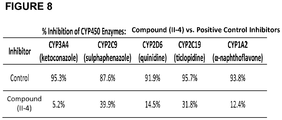
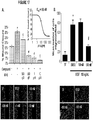
- Microsomal stability of compound (II-4) (1 ⁇ M) was assessed in pooled liver microsomes (human, mouse, and rat) ( Figure 7 ). Briefly, compound (II-4) was incubated in duplicate with microsomes at 37°C. Reactions contained microsomal protein in 100 mM potassium phosphate, 2 mM NADPH, 3 mM MgCl2, pH 7.4. NADPH was omitted to detect NADPH-free degradation. At 60 minutes, the reaction was stopped by adding ice-cold methanol containing internal standard. Samples were centrifuged to remove precipitated protein, and the supernatants were analyzed by LC/MS/MS to quantitate the remaining parent.
- Compound (II-4) was further investigated around these concentrations using the transwell migration assay ( Fig. 17B ). After 24 hours of VEGF (100 ⁇ g/mL) stimulation, a significant decrease is observed in migration RECs (P ⁇ 0.001).
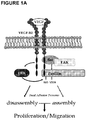
- compound (II-4) was able to prevent Src/FAK/paxillin complex-dependent activation of AKT, similar to Src inhibition ( Fig. 20D ). Together, compound (II-4)'s effect on Y118 and downstream P-AKT strongly suggest the inhibition of Src/FAK/paxillin FA assembly.
- characterization of the potential of compound (II-4) to affect FA disassembly through inactivation of ERK was explored. No significant change was revealed in ERK 1/2 phosphorylation levels in RECs ( Fig. 20E ).
Landscapes
- Organic Chemistry (AREA)
- Chemical & Material Sciences (AREA)
- Health & Medical Sciences (AREA)
- Life Sciences & Earth Sciences (AREA)
- General Health & Medical Sciences (AREA)
- Nuclear Medicine, Radiotherapy & Molecular Imaging (AREA)
- General Chemical & Material Sciences (AREA)
- Pharmacology & Pharmacy (AREA)
- Chemical Kinetics & Catalysis (AREA)
- Animal Behavior & Ethology (AREA)
- Medicinal Chemistry (AREA)
- Public Health (AREA)
- Veterinary Medicine (AREA)
- Engineering & Computer Science (AREA)
- Bioinformatics & Cheminformatics (AREA)
- Ophthalmology & Optometry (AREA)
- Urology & Nephrology (AREA)
- Pharmaceuticals Containing Other Organic And Inorganic Compounds (AREA)
Description
- The present application claims priority to
U.S. Provisional Application No. 61/935,616, filed February 4, 2014 - This disclosure relates to small molecule inhibitors of paxillin function and related compositions and methods of treatment.
- In 2010, the World Health Organization estimated that 39 million people worldwide face blindness; approximately 10% as a result of age-related macular degeneration (AMD) and diabetic retinopathy (DR). The incidence of DR and AMD is increasing as the population ages and the diabetic epidemic spreads throughout the developing world. Moreover, new diagnosis of both non-proliferative and proliferative DR is associated with an increase in wet (exudative/neovascular) AMD. As recent as 2012, approximately 93 million people suffer from DR; over 70% of which endure vision-threatening complications stemming from an exudative retina. Intravitreal injection of anti-VEGF protein therapeutics is most often used to treat AMD and DR, despite the fact that a significant number of patients are refractory. In addition, there is evidence that early efficacy of anti-VEGF interventions may be lost after long-term (i.e, >2 years) exposure. Mounting evidence supports a role for endogenous VEGF in maintenance of visual function through protection of the choriocapillaris and the neural retina. Together, these data suggest that long-term use of anti-VEGF protein therapeutics may contribute to visual impairment by removing an essential support mechanism for the neural retina.
- Paxillin is a phosphotyrosine-containing protein in cells that serves as a docking protein, recruiting signaling molecules to a specific cellular compartment, the focal adhesions, and recruiting specific combinations of signaling molecules into a complex to coordinate downstream signaling. Paxillin-coordinated signaling plays a role in the regulation of cell migration, motility and survival. There is a need for compounds that effectively inhibit paxillin function.
-
WO2011/034896 describes quinolinone derivatives of formula:
alpha 4 integrin or its binding partners that regulate signaling events downstream of the paxillin-alpha-4 interaction. - The present invention describes compounds according to Formulas (I), (Ia) and (II), as inhibitors of paxillin, and a companion ocular microemulsion (ME) delivery system.
- In one aspect, provided herein is a compound having the structure of Formula (I):

- R1 is selected from the group consisting of hydrogen, alkyl and arylalkyl;
- R2 is 3, 4, 5-trimethoxyphenyl;
- R3, independently for each occurrence, is selected from the group consisting of alkyl, alkenyl, alkoxy, trifluoromethoxy, acetyl, aryl, hydroxy, halogen, cyano, nitro, amino, alkylamino, diakylamino, amido, alkylamido and arylamido; or wherein any two adjacent R3 groups may combine to form a fused aromatic ring, wherein said fused aromatic ring can be substituted one or more times with R4;
- R4, independently for each occurrence, is selected from the group consisting of alkyl, alkenyl, alkoxy, trifluoromethoxy, acetyl, aryl, hydroxy, halogen, cyano, nitro, amino, alkylamino, diakylamino, amido, alkylamido and arylamido; and
- m is 0, 1, 2, 3 or 4.
- In one embodiment, the compound of Formula (I) has the structure of Formula (II):

- In another aspect, provided herein is a compound having the structure of Formula (III):

- X is O;
- Z is O;
- A is N;
- R1 is selected from the group consisting of hydrogen, alkyl and arylalkyl;
-
R - R3, independently for each occurrence, is selected from the group consisting of alkyl, alkenyl, alkoxy, trifluoromethoxy, acetyl, aryl, hydroxy, halogen, cyano, nitro, amino, alkylamino, diakylamino, amido, alkylamido and arylamido; or wherein any two adjacent R3 may combine to form a fused aromatic or heteroaromatic ring, wherein said fused aromatic or heteroaromatic ring can be substituted one or more times with R4;
- R4, independently for each occurrence, is selected from the group consisting of alkyl, alkenyl, alkoxy, trifluoromethoxy, acetyl, aryl, hydroxy, halogen, cyano, nitro, amino, alkylamino, diakylamino, amido, alkylamido and arylamido;
- m is 0, 1, 2, 3 or 4; and
- n is 1.
- In one embodiment, the compound of Formula (III) has the structure of Formula (IV):

- G is CH or N;
- R3 and R4, independently for each occurrence, are selected from the group consisting of alkyl, alkenyl, alkoxy, trifluoromethoxy, acetyl, aryl, hydroxy, halogen, cyano, nitro, amino, alkylamino, diakylamino, amido, alkylamido and arylamido;
- m is 0, 1 or 2;
- n is 1; and
- p is 0, 1, 2, 3 or 4.
- In another aspect, provided herein is a pharmaceutical composition comprising a compound of Formula (I), Formula (II), Formula (III), or Formula (IV), or a pharmaceutically acceptable salt thereof, and a pharmaceutically acceptable carrier.
- The compounds of the invention are suitable for use in a method for the treatment of a disorder selected from the group consisting of cancer, metastatic cancer, retinal neovascularization, radiation retinopathy, diabetic retinopathy and polycystic kidney disease in a mammal, comprising administering to the mammal an effective amount of i) a compound of Formula (I), Formula (II), Formula (III), or Formula (IV), or a pharmaceutically acceptable salt thereof, or ii) a pharmaceutical composition comprising a compound of Formula (I), Formula (II), Formula (III), or Formula (IV), or a pharmaceutically acceptable salt thereof, and a pharmaceutically acceptable carrier.
-
-
Figure 1A is a schematic showing signaling events that drive focal adhesion (FA) turnover, and thus angiogenesis, in VEGF-induced RNV. -
Figure 1B is a schematic showing that focal adhesion (FA) turnover is impaired in polycystic kidney disease (PKD). -
Figure 2 shows results of a retinal endothelial cell (REC) scratch-wound assay. -
Figure 3 shows results (at a magnification of 40X) of an immunohistochemical analysis of paxillin in autosomal dominant polycystic kidney disease (ADPKD) mouse kidneys: panel A shows that no staining was observed in the negative control section; and panel B shows darker labeling indicative of localization in the cystic epithelial cells as determined by DAB staining. -
Figure 4 depicts the presence of paxillin in ADPKD kidneys: panel A shows an immunoblot of total paxillin in protein lysates from non-cystic Pkd1 +/+ (n=5) and cystic Pkd1 v/v (n=3) mouse kidneys atpost-natal day 11 after 8 days of dermal application of compound (II-4) microemulsion solution using GAPDH as a loading control; panel B shows the densitometry of the paxillin band normalized to GAPDH where * refers to P<0.005 difference between groups; and panel C shows the densitometry of the phosphor-paxillin band normalized to GAPDH where * referes to P<0.005 difference between groups. -
Figure 5 shows reduction in cyst progression after treatment with paxillin inhibitor compound (II-4). -
Figure 6 shows synthetic schemes for preparation of paxillin inhibitors. -
Figure 7 shows microsomal stability of compound (II-4). -
Figure 8 shows cytochrome P-450 interaction studies using human microsomes. -
Figure 9 shows the increased susceptibility of primary uveal melanoma (UM) cell lines to apoptosis versus metastatic UM. -
Figure 10 is a table showing 8 genes with high fold expression in metastatic UM relative to primary UM. Assay included a cohort of 84 genes associated with adhesion, invasion and metastasis. -
Figure 11 is a table showing 22 genes with high fold expression in primary UM relative to metastatic UM. -
Figure 12 shows protein levels of a cohort of adhesion molecules in primary and metastatic UM: panel A shows increased VLA-4 protein levels by primary UM (Mel 270) cell line compared to its metastatic counterpart (OMM 2.5); panel B shows the quantitation of all experiments (fromFigure 12 , panel A) +/-SD; panel C shows that VLA-4 protein levels are similar in metastatic UM (OMM 2.1) and primary UM (92.1) that does not metastasize; and panel D shows the quantitation of all experiments (fromFigure 12 , panel C) +/-SD.Figure 13 shows that compound (II-4) inhibits pY118 without increasing apoptosis in REC: panel A is a diagram showing a concise version of paxillin-downstream signaling and compound (II-4) intervention within pathway; panel B shows that VEGF-induced paxillin phosphorylation (pY118) is reduced by paxillin inhibitor treatment (compound (II-4)); panel C shows quantitation of the VEGF-induced paxillin phosphorylation (pY118) ofFigure 13 , panel B; and panel D shows flow cytometric analysis of treated and untreated REC labeled with Annexin V and PI. -
Figure 14 shows that metastatic UM cells express reduced levels of pY118 upon treatment with compound (II-4): panel A shows a representative Western Blot; and panel B shows quantitation ofFigure 14 , panel A. -
Figure 15 shows data related to the reduction in proliferation of UM tumor cell lines after treatment with compound (II-4): panel A shows no difference in actin remodeling in the examined UM tumor cells after treatment; panel B shows a similar trend between secondary (metastatic UM) and primary tumor that does not metastasize; panel C shows that modulation of paxillin does not affect VLA-4 protein; and panel D shows the reduction of cellular proliferation in primary UM (Mel 270) cells that become metastatic by paxillin inhibitor. -
Figure 16 present data showing that paxillin inhibition reduced pAKT signaling in metastatic UM cells: panel A shows a representative Western Blot of total and phosphorylated paxillin in metastatic UM cells; panel B shows quantitation ofFigure 16 , panel A; panel C shows lysates of metastatic OMM 2.5 cells HGF stimulated in presence or absence of paxillin inhibitor measured by Western Blot; and panel D shows quantitation ofFigure 16 , panel C. -
Figure 17 , panel A, shows that compound (II-4) inhibits VEGF-induced migration in a scratch wound assay, and panel B shows that there is a significant decrease in migration of RECs following 24 hours of VEGF + compound (II-4) stimulation. -
Figure 18 , panel A, shows that compound (II-4) significantly reduces VEGF-induced cellular proliferation using the WST-1 metabolic assay, and panel B shows that compound (II-4) appears to be non-toxic to retinal endothelial cells after 24 hour incubation. -
Figure 19 , shows that compound (II-4) at concentrations ranging from 100 nM to 1 µM did not impede the attachment of RECs. -
Figure 20 , panel A, shows VEGF-induced activation of Src/FAK/Paxillin signalsome in the presence of compound (II-4), LY294002, or SU6656; panel B quantifies the phosphorylation of paxillin observed in panel A; panel C quantifies the phosphorylation of FAK observed in panel A; panel D quantifies the phosphorylation of AKT observed in panel A; panel E quantifies the phosphorylation ofERK 1/2 observed in panel A; and panel F shows that ERK's involvement in VEGF-induced REC proliferation was independent of paxillin Y118 activation. -
Figure 21 shows that compound (II-4) inhibits VEGF-induced REC proliferation. -
Figure 22 , panel A, shows that compound (II-4) inhibits hypoxia-induced neovascularization and increases retinal avascular area when compared to vehicle controls; panel B shows that compound (II-4) reduces total paxillin protein in retinal homogenates; panel C compares the quantitation of panel A neovascular area; panel D compares the quantitation of panel A avascular area; and panel E compares the quantitation of panel B total paxillin in retinal homogenates. -
Figure 23 shows that compound (II-4) was rapidly metabolized by mouse, rat, ad human cytochrome P-450 enzymes. -
Figure 24 shows that compound (II-4) lacks significant inhibition of cytochrome P-450 family members; the most clinically relevant members 3A4 and 2D6 in particular. -
Figure 25 shows two potential off-target binding candidates. - Polycystic Kidney Disease (PKD) is the most common genetic disease affecting the kidney, and is uniformly characterized by the development of numerous fluid-filled cysts in the kidneys. Cyst growth leads to a loss of functional nephrons in the kidney resulting in end stage renal disease (ESRD). The vast majority of patients with PKD (incidence 1:400-1:1,000) inherit the autosomal dominant form of the disease (ADPKD; MIM 173900; 173910) due to mutation in one of two genes, PKD1 on
chromosome 16 or PKD2 onchromosome 4. - The clinical presentation of ADPKD is highly variable, and the genetic mutations in either polycystin-1 (PC-1) or polycystin-2 (PC2) promote a diverse array of abnormal signaling cascades resulting in remodeling of the renal epithelia attributed to epithelial cell proliferation, impaired cell-matrix and cell-cell interaction, and hypersecretion of fluids into the developing cysts.
- The claimed method of treating PKD is related to the importance of dysfunctional focal adhesion (FA) attributed to the loss of PC-1 protein in the kidney. It is well established that the focal adhesion complex in the renal epithelial cell plays a critical role in the regulation of adhesion by the cell to the extracellular matrix (ECM), migration, differentiation, and proliferation. The focal adhesion complex is highly dynamic, and is a site in which many signaling and structural proteins are recruited to co-ordinate an organized assembly and disassembly of attachment sites between the cell-matrix and cell-cell. Some of the proteins found at the focal adhesion complex, includes PC-1, other structural proteins (eg. talin, tensin, vinculin, and α-actinin), and signaling proteins (e.g., focal adhesion kinase (FAK) and paxillin). Insufficiency of the focal adhesion-associated proteins tensin, PC-1, and nephrocystin-1 are associated with renal cystic malformation in mice, leading to embryonic lethality in part due to reduced cellular migration.
- Without wishing to be bound by theory, it is believed that compounds of the invention (i.e., compounds of Formulas (I), (Ia), (II), (III), and (IV)) block cystic disease progression by restoring focal adhesion function, which is one of the biological parameters perturbed in PKD.
- Focal adhesion kinase (FAK) is known to be a critical component at cellular "traction points" known as focal adhesions. FAK is known to phosphorylate multiple substrates, including paxillin, which is an adaptor protein that is associated with focal adhesion assembly and whose phosphorylation at tyrosine 31 and 118 are negatively regulated by mechanical forces. Moreover, PC-1 promotes adhesion and migration of renal epithelial cells by recruiting focal adhesion kinase (FAK) to cellular "traction points" known as focal adhesions (FAs). The C-terminus of PC-1 appears critical to FAK recruitment since FA protein complexes formed in ADPKD epithelial cells always lack FAK. FAK directs FA disassembly while its binding partner, paxillin, promotes assembly and disassembly. Together, they coordinate FA turnover rate. FAK-less FA protein complexes dominated by paxillin lead to altered FA turnover and cystogenesis. Thus, paxillin acts as a "rheostat" that can be targeted to curtail cystogenesis.
- Focal adhesions (FAs) facilitate proliferation and migration by bridging both extracellular matrix and growth factor signals to the cytoskeletal machinery. FAK is recruited to nascent FAs where it undergoes autophosphorylation and subsequently activates paxillin, an adaptor protein, at numerous sites, including tyrosines 31 and 118. Among its many functions, the FA-paxillin complex can act as a scaffold for a multitude of other signaling proteins (e.g., talin, vinculin, etc.) and coordinate FA turnover (
Figure 1B ). FA turnover is impaired in PKD. In the absence of the cytoplasmic tail (CT) of PC-1, FAs are formed without FAK which leads to reduced FA disassembly and motility. Paxillin has been identified as a key player in radiation-induced angiogenesis within retinal endothelial cells (RECs). Compound (II-4) has been found to prevent vascular endothelial growth factor (VEGF) mediated REC migration (Figure 2 ) and inhibit phosphorylation at Y118 (Figure 13B ). Since abnormal FA turnover has been shown in the pathogenesis of PKD [due to loss of the PC-1 cytoplasmic tail] and ERK-dependent hyperproliferation. - Paxillin is abnormally expressed in cystic epithelial cells in a mouse model of ADPKD. Paxillin expression is markedly increased in cystic ADPKD compared to non-cystic kidneys, and localized to the cystic epithelia (
Figures 3 and4 ). Long-term dermal application of compound (II-4) reduces paxillin activation in retinal endothelial cells, demonstrated a functional reduction in cystic disease progression in the Pkd1V/V mouse (Figure 5 ). For this reason, paxillin can be considered to act as a "rheostat" that can be targeted to curtail cystogenesis. - The paxillin inhibitor compound (II-4) inactivates phosphorylation at Y118 on paxillin using retinal endothelial cells. Compound (II-4) has been formulated as a microemulsion for non-invasive delivery to neonatal Pkd1 non-cystic and cystic mice and it has been observed that renal cystic disease was attenuated as measured by total kidney-to-body weight ratio.
- Metastasis is the most crucial factor in the survival of cancer patients. About 50% of uveal melanoma (UM) patients are considered high-risk patients and will develop metastasis (<85% in liver) within 5-years after diagnosis of the primary tumor. Although UM comprises 5% of all melanoma cases it is the most common primary intraocular malignancy in adults. Despite 40 years of research in the UM field, there is a lack of understanding what induces the transformation of the uveal melanocytes and hematogenous spread to the liver. There is no effective therapy against the metastatic form of the disease emphasizing the urgency for continuous research in the field. While the primary tumor can be successfully treated with brachytherapy or removal of the eye, at present there is no effective therapy for the treatment of metastatic UM. Advances in molecular genomics have identified several factors associated with prognosis. Initial studies showed evidence that
monosomy 3 was associated with increased risk of metastasis. Subsequently,trisomy 8 was suggested to be involved in accelerated metastatic disease due to overexpression of C-MYC genes. Gene Expression Profiling (GEP) analysis divided UM into 2 discrete prognostic classes based upon clustering of upregulated and downregulated genes. GEP highlighted potential differences in the tumor microenvironment, in inflammation-related pathways and dampening of the immune response. Subsequent studies found mutations in inflammation-associated genes like GNAQ and GNA11, suggesting alterations in key signaling pathways such as the MAP kinase signaling cascade. - Although little is known about how UM spread beyond the eye, it has been suggested that (1) enucleation might accelerate tumor spread by dissemination of UM cells into the circulation and (2) eye/tumor removal reduced anti-tumor immune responses. Micro-metastatic disease may be present in the liver at the time of initial diagnosis of primary UM and possibly present for two years prior diagnosis. These results were confirmed through histological examination of metastatic UM. Additional research has focused on invasion properties of UM and identified high levels of c-Met protein in metastatic UM. Another molecule involved in UM tumor dissemination is CXCR4. It has been shown that blocking of CXCR4 by siRNA inhibited the migratory and the invasiveness of UM when exposed to different factors present in the tumor microenvironment. The findings suggest the study of UM requires an understanding of the interplay between the tumor and the microenvironment.
- Gene transcription analysis has identified different components downstream of the Src pathway associated with the actin cytoskeleton that may be regulated differently in primary versus metastatic UM. The alpha-4 (α4) integrin subunit that interacts with the cytoskeletal adaptor paxillin has been identified, which controls UM proliferation and migration in vitro. Herein, it is disclosed that blockade of the α4-paxillin signaling using an inhibitor of paxillin, which reduced tyrosine 118 phosphorylation (pY118), disrupts downstream events necessary for the proliferation and migration of cells that become metastases.
- In one aspect, provided herein is a compound having the structure of Formula (I):

- R1 is selected from the group consisting of hydrogen, alkyl and arylalkyl;
- R2 is 3, 4, 5-trimethoxyphenyl;
- R3, independently for each occurrence, is selected from the group consisting of alkyl, alkenyl, alkoxy, trifluoromethoxy, acetyl, aryl, hydroxy, halogen, cyano, nitro, amino, alkylamino, diakylamino, amido, alkylamido and arylamido; or wherein any two adjacent R3 groups may combine to form a fused aromatic ring, wherein said fused aromatic ring can be substituted one or more times with R4;
- R4, independently for each occurrence, is selected from the group consisting of alkyl, alkenyl, alkoxy, trifluoromethoxy, acetyl, aryl, hydroxy, halogen, cyano, nitro, amino, alkylamino, diakylamino, amido, alkylamido and arylamido; and
- m is 0, 1, 2, 3 or 4.
- Provided herein is an embodiment of the compound of Formula (I), wherein R3, independently for each occurrence, is selected from the group consisting of alkyl, alkenyl, alkoxy, trifluoromethoxy, acetyl, aryl, hydroxy, halogen, cyano, nitro, amino, alkylamino, diakylamino, amido, alkylamido and arylamido.
- In one embodiment, the compound of Formula (I) is selected from the group consisting of:

- In another embodiment, the compound of Formula (I) is selected from the group consisting of:

- In a particular embodiment, the compound of Formula (I) is:

- In another embodiment, the compound of Formula (I) has the structure of Formula (Ia):

- Z is O;
- R3, independently for each occurrence, is selected from the group consisting of alkyl, alkenyl, alkoxy, hydroxy, and halogen;
- R4, and the phenyl ring to which the R4 groups are bonded is 3, 4, 5-trimethoxyphenyl.
- In another embodiment, the compound of Formula (I) has the structure of Formula (II):

- In another embodiment of the compound of Formula (II), R1 is hydrogen; R2 is 3, 4, 5-trimethoxyphenyl, R3, independently for each occurrence, is selected from the group consisting of alkoxy and hydroxy; and m is 0, 1 or 2.
- In another embodiment of the compound of Formula (II), R3, independently for each occurrence, is selected from the group consisting of alkoxy and halide; and R4 is hydrogen.
- In another embodiment, the compound of Formula (II) is selected from the group consisting of:

- In a particular embodiment, the compound of Formula (II) is:

- Also provided herein are the following alternative embodiments of the compounds of Formulas (I) and (II), wherein:
- R1 is hydrogen;
-
R - X is O;
- Z is O;
- X is O and Z is O;
- In another aspect, provided herein is a compound having the structure of Formula (III):

- X is O;
- Z is O;
- AisN;
- R1 is selected from the group consisting of hydrogen, alkyl and arylalkyl;
- R2 is 3, 4, 5-trimethoxyphenyl ;
- R3, independently for each occurrence, is selected from the group consisting of alkyl, alkenyl, alkoxy, trifluoromethoxy, acetyl, aryl, hydroxy, halogen, cyano, nitro, amino, alkylamino, diakylamino, amido, alkylamido and arylamido; or wherein any two adjacent R3 may combine to form a fused aromatic or heteroaromatic ring, wherein said fused aromatic or heteroaromatic ring can be substituted one or more times with R4;
- R4, independently for each occurrence, is selected from the group consisting of alkyl, alkenyl, alkoxy, trifluoromethoxy, acetyl, aryl, hydroxy, halogen, cyano, nitro, amino, alkylamino, diakylamino, amido, alkylamido and arylamido;
- m is 0, 1, 2, 3 or 4; and
- n is 1.
- In one embodiment, R1 is H.
- In another embodiment, m is 0, 1, 2, or 3.
- In another embodiment, m is 0.
- In another embodiment, R4, independently for each occurrence, is selected from the group consisting of alkyl, alkenyl, alkoxy, hydroxy, and halogen. In a particular embodiment, R4, independently for each occurrence, is selected from the group consisting of alkoxy, hydroxy, and halogen.
- In another embodiment, R3, independently for each occurrence, is selected from the group consisting of alkyl, alkenyl, alkoxy, trifluoromethoxy, acetyl, aryl, hydroxy, halogen, cyano, nitro, amino, alkylamino, diakylamino, amido, alkylamido and arylamido.
- In another embodiment, R3, independently for each occurrence, is selected from the group consisting of alkyl, alkenyl, alkoxy, hydroxy, and halogen. In a particular embodiment, R3, independently for each occurrence, is selected from the group consisting of alkoxy, hydroxy, and halogen.
- In one embodiment, the compound of Formula (III) is selected from the group consisting of:


- In another embodiment, the compound of Formula (III) has the structure of Formula (IV):

- G is CH or N;
- R3 and R4, independently for each occurrence, are selected from the group consisting of alkyl, alkenyl, alkoxy, trifluoromethoxy, acetyl, aryl, hydroxy, halogen, cyano, nitro, amino, alkylamino, diakylamino, amido, alkylamido and arylamido;
- m is 0, 1 or 2;
- n is 1; and
- p is 0, 1, 2, 3 or 4.
- In one embodiment, p is 0, 1, or 2.
- In one embodiment, R1 is H.
- In another embodiment, p is 0, 1, or 2.
- In another embodiment, p and m are 0.
- In another embodiment, R3 and R4, independently for each occurrence, are selected from the group consisting of alkyl, alkenyl, alkoxy, hydroxy, and halogen. In a particular embodiment, R3 and R4, independently for each occurrence, are selected from the group consisting of alkoxy, hydroxy, and halogen.
- In another embodiment, the compound of Formula (IV) is selected from the group consisting of:


- In another embodiment, the compound of Formula (IV) is:

- Also provided herein are the following alternative embodiments of the compounds of Formulas (III) and (IV), wherein:
- R1 is hydrogen;
- R2 is selected from the group consisting of phenyl, methoxyphenyl, trimethoxyphenyl, bromomethoxyphenyl and dibromomethoxyphenyl;
- R2 is 3,4,5-trimethoxyphenyl;
- X is O;
- Z is O;
- A is N;
- X is O and Z is O;
- As used herein, the term "compound" is intended to mean a substance made up of molecules that further consist of atoms. A compound may be any natural or non-natural material, for example, peptide or polypeptide sequences, organic or inorganic molecules or compositions, nucleic acid molecules, carbohydrates, lipids or combinations thereof. A compound generally refers to a chemical entity, whether in the solid, liquid or gaseous phase, and whether in a crude mixture or purified and isolated. Compounds encompass the chemical compound itself as well as, where applicable: amorphous and crystalline forms of the compound, including polymorphic forms, said forms in mixture or in isolation; free acid and free base forms of the compound; isomers of the compound, including geometric isomers, optical isomers, and tautomeric isomers, said optical isomers to include enantiomers and diastereomers, chiral isomers and non-chiral isomers, said optical isomers to include isolated optical isomers or mixtures of optical isomers including racemic and non-racemic mixtures; said geometric isomers to include transoid and cisoid forms, where an isomer may be in isolated form or in admixture with one or more other isomers; isotopes of the compound, including deuterium- and tritium-containing compounds, and including compounds containing radioisotopes, including therapeutically- and diagnostically-effective radioisotopes; multimeric forms of the compound, including dimeric, trimeric, etc. forms; salts of the compound, including acid addition salts and base addition salts, including organic counterions and inorganic counterions, and including zwitterionic forms, where if a compound is associated with two or more counterions, the two or more counterions may be the same or different; and solvates of the compound, including hemisolvates, monosolvates, disolvates, etc., including organic solvates and inorganic solvates, said inorganic solvates including hydrates; where if a compound is associated with two or more solvent molecules, the two or more solvent molecules may be the same or different.
- As used herein, "alkyl" groups include saturated hydrocarbons having one or more carbon atoms, including straight-chain alkyl groups (e.g., methyl, ethyl, propyl, butyl, pentyl, hexyl, etc.), cyclic alkyl groups (or "cycloalkyl" or "alicyclic" or "carbocyclic" groups) (e.g., cyclopropyl, cyclopentyl, cyclohexyl, etc.), branched-chain alkyl groups (isopropyl, tert-butyl, sec-butyl, isobutyl, etc.), and alkyl-substituted alkyl groups (e.g., alkyl-substituted cycloalkyl groups and cycloalkyl-substituted alkyl groups). In certain embodiments, a straight-chain or branched-chain alkyl group may have 8 or fewer carbon atoms in its backbone, e.g., C1-C8 for straight-chain or C3-C8 for branched-chain. In certain embodiments, a straight-chain or branched-chain alkyl group may have 6 or fewer carbon atoms in its backbone, e.g., C1-C6 for straight-chain or C3-C6 for branched-chain. In still other embodiments, an alkyl group includes about 1 to 4 carbons. In other embodiments, an alkyl group includes about 1 to 3 carbons. In yet other embodiments, an alkyl group includes about 1 or 2 carbons. The term "lower alkyl" refers to alkyl groups having from 1 to 6 carbons in the chain, and to cycloalkyl groups having from 3 to 6 carbons in the ring structure. The term "C1-C6" as in "C1-C6 alkyl" means alkyl groups containing 1 to 6 carbon atoms. The terms "alkenyl" and "alkynyl" refer to unsaturated aliphatic groups analogous to alkyls, but which contain at least one double or triple carbon-carbon bond respectively.
- The term "alkoxy" as used herein means an alkyl group having an oxygen atom attached thereto. In some embodiments, alkoxy groups include groups having 1 to about 8 carbon atoms. In other embodiments, alkoxy groups include groups having 1 to about 6 carbon atoms. In still other embodiments, alkoxy groups include groups having fewer than about 4 carbon atoms. Examples of alkoxy groups include, but are not limited to, methoxy, ethoxy, isopropyloxy, propoxy, butoxy, and pentoxy groups. The alkoxy groups can be straight-chain or branched.
- The term "amine" or "amino," as used herein, refers to an unsubstituted or substituted moiety of the formula -NRaRb, in which Ra and Rb are each independently hydrogen, alkyl, or aryl. Thus, the term amino includes alkylamino (e.g., Ra is hydrogen and Rb is alkyl) and dialkylamino (e.g., Ra is alkyl and Rb is alkyl). Alternatively, Ra and Rb, taken together with the nitrogen atom to which they are attached, form a cyclic moiety having from 3 to 8 atoms in the ring. Thus, the term amino includes cyclic amino moieties such as piperidinyl or pyrrolidinyl groups, unless otherwise stated.
- The terms "amide" or "amido" refers to a substituent group -C(O)-NRaRb, wherein Ra and Rb are defined as above, and wherein the point of connectivity of the substituent is the carbonyl carbon. Thus, the term amido includes alkylamido (e.g., Ra is hydrogen and Rb is alkyl), dialkylamido (e.g., Ra is alkyl and Rb is alkyl) and arylamido (e.g., Ra is hydrogen and Rb is aryl). Alternatively, Ra and Rb, taken together with the nitrogen atom to which they are attached, form a cyclic moiety having from 3 to 8 atoms in the ring.
- The terms "aryl" and "aryl group" include unsaturated and aromatic cyclic hydrocarbons as well as unsaturated and aromatic heterocycles containing one or more rings. Aryl groups include, for example C5-8 aryl groups. Aryl groups may also be fused or bridged with alicyclic or heterocyclic rings that are not aromatic so as to form a polycycle (e.g., tetralin).
- Regarding connectivity, an "arylalkyl" group, for example, is an alkyl group substituted with an aryl group (e.g., phenylmethyl (i.e., benzyl)). An "alkylaryl" moiety is an aryl group substituted with an alkyl group (e.g., p-methylphenyl (i.e., p-tolyl)).
- "Treatment", "to treat" or "treating" as used herein, is defined as the application or administration of a therapeutic agent (e.g., a compound of the invention) to a patient, or to an isolated tissue or cell line from a patient. The patient generally has a disease or disorder, a symptom of disease or disorder or a predisposition toward a disease or disorder. The purpose of treatment is generally to cure, heal, alleviate, relieve, remedy, ameliorate, or improve such disease, disorder, symptoms or predisposition. "Treated," as used herein, refers to the disease or disorder being cured, healed, alleviated, relieved, remedied, ameliorated, or improved. For example, methods of treatment of the instant invention provide for administration of an inhibitor as described herein, such that the progression of a specific disorder is slowed or stopped. Methods of treatment of the instant invention further include the administration of an inhibitor, such that a specific disorder is cured.
- The term "effective amount" is defined as an amount sufficient to achieve a desired effect. The term "desired effect" refers generally to any result that is anticipated by the skilled artisan when a compound or composition of the invention is administered to a subject. In some embodiments, the desired effect is a complete remission of the disease or disorder. In other embodiments, the desired effect is a partial treatment of a disease or disorder. In still other embodiments, the desired effect is a full or partial treatment of the symptoms of a disease or disorder.
- In another aspect, provided herein is a pharmaceutical composition comprising a compound of Formula (I), Formula (Ia), Formula (II), Formula (III), or Formula (IV), or a pharmaceutically acceptable salt thereof, and a pharmaceutically acceptable carrier.
- The term "pharmaceutical composition" includes preparations suitable for administration to mammals, e.g., humans. When the compounds of the present invention are administered as pharmaceuticals to mammals, e.g., humans, they can be given per se or as a pharmaceutical composition containing, for example, 0.1% to 99.9% (more preferably, 0.5 to 90%) of active ingredient in combination with a pharmaceutically acceptable carrier.
- A compound of Formula (I), Formula (Ia), Formula (II), Formula (III), or Formula (IV) can be combined with a pharmaceutically acceptable carrier according to conventional pharmaceutical compounding techniques. As used herein, "pharmaceutically acceptable carrier" may include any and all solvents, diluents, or other liquid vehicle, dispersion or suspension aids, surface active agents, isotonic agents, thickening or emulsifying agents, preservatives, solid binders, lubricants and the like, as suited to the particular dosage form desired. Remington's Pharmaceutical Sciences, Sixteenth Edition, E. W. Martin (Mack Publishing Co., Easton, Pa., 1980) discloses various carriers used in formulating pharmaceutical compositions and known techniques for the preparation thereof. Except insofar as any conventional carrier medium is incompatible with a compound of Formula (I), Formula (Ia), Formula (II), Formula (III), or Formula (IV), such as by producing any undesirable biological effect or otherwise interacting in a deleterious manner with any other component(s) of the pharmaceutical composition, its use is contemplated to be within the scope of this invention. Some examples of materials which can serve as pharmaceutically acceptable carriers include, but are not limited to, sugars such as lactose, glucose and sucrose; starches such as corn starch and potato starch; cellulose and its derivatives such as sodium carboxymethyl cellulose, ethyl cellulose and cellulose acetate; powdered tragacanth; malt; gelatine; talc; excipients such as cocoa butter and suppository waxes; oils such as peanut oil, cottonseed oil; safflower oil, sesame oil; olive oil; corn oil and soybean oil; glycols; such as propylene glycol; esters such as ethyl oleate and ethyl laurate; agar; buffering agents such as magnesium hydroxide and aluminum hydroxide; alginic acid; pyrogen free water; isotonic saline; Ringer's solution; ethyl alcohol, and phosphate buffer solutions, as well as other non-toxic compatible lubricants such as sodium lauryl sulfate and magnesium stearate, as well as coloring agents, releasing agents, coating agents, sweetening, flavoring and perfuming agents, preservatives and antioxidants can also be present in the composition, according to the judgment of the formulator.
- Furthermore, the carrier may take a wide variety of forms depending on the form of the preparation desired for administration, e.g. oral, nasal, rectal, vaginal, parenteral (including intravenous injections or infusions). In preparing compositions for oral dosage form any of the usual pharmaceutical media may be employed. Usual pharmaceutical media include, for example, water, glycols, oils, alcohols, flavoring agents, preservatives, coloring agents, and the like in the case of oral liquid preparations (such as for example, suspensions, solutions, emulsions and elixirs); aerosols; or carriers such as starches, sugars, microcrystalline cellulose, diluents, granulating agents, lubricants, binders, disintegrating agents and the like, in the case of oral solid preparations (such as for example, powders, capsules, and tablets).
- Pharmaceutical compositions comprising a compound of Formula (I), Formula (Ia), Formula (II), Formula (III), or Formula (IV) may be formulated to have any concentration desired. In some embodiments, the composition is formulated such that it comprises at least a therapeutically effective amount. In some embodiments, the composition is formulated such that it comprises an amount that would not cause one or more unwanted side effects.
- Provided herein is a microemulsion-based delivery system for transdermal delivery. Also provided herein is a nanoemulsion-based delivery system. Drug dosing into small animals, especially mice, is a considerable challenge to biomedical scientists. Intraperitoneal injection is one of the most common methods to deliver therapeutics, but there can be difficulties in determining whether the whole drug dosage has been administered and not leaked out of the animal pup.
- In a particular embodiment, provided herein is a pharmaceutical composition comprising a compound of Formula (I), Formula (Ia), Formula (II), Formula (III), or Formula (IV), or a pharmaceutically acceptable salt thereof, wherein the compound is formulated in a microemulsion.
- In another particular embodiment, provided herein is a pharmaceutical composition comprising a compound of Formula (I), Formula (Ia), Formula (II), Formula (III), or Formula (IV), or a pharmaceutically acceptable salt thereof, wherein the compound is formulated as an eye-drop.
- The compounds of the invention may be used in a method for the treatment of a disorder selected from the group consisting of metastatic cancer, retinal neovascularization, radiation retinopathy, diabetic retinopathy and polycystic kidney disease, in a mammal, comprising administering to the mammal an effective amount of a compound of Formula (I), Formula (Ia), Formula (II), Formula (III), or Formula (IV), or a pharmaceutically acceptable salt thereof, or a pharmaceutical composition comprising a compound of Formula (I), Formula (Ia), Formula (II), Formula (III), or Formula (IV), or a pharmaceutically acceptable salt thereof, and a pharmaceutically acceptable carrier. In a particular embodiment, the mammal is a human.
- In another aspect, provided herein is a compound or composition for use in a method for the treatment of a disorder selected from the group consisting of cancer, metastatic cancer, retinal neovascularization, radiation retinopathy, diabetic retinopathy and polycystic kidney disease, in a mammal, comprising administering to the mammal an effective amount of a compound of Formula (I), Formula (Ia), Formula (II), Formula (III), or Formula (IV), or a pharmaceutically acceptable salt thereof, or a pharmaceutical composition comprising a compound of Formula (I), Formula (Ia), Formula (II), Formula (III), or Formula (IV), or a pharmaceutically acceptable salt thereof, and a pharmaceutically acceptable carrier. In a particular embodiment, the mammal is a human.
- In one embodiment, the polycystic kidney disease is autosomal dominant polycystic kidney disease.
- In one embodiment, the retinal neovascularization is due to diabetic retinopathy or radiation retinopathy. The radiation retinopathy may be due to exposure of the mammal's retinal endothelial cells to radiation, wherein, for example, the radiation is used to treat an intraocular tumor. In a non-limiting embodiment, the radiation is gamma radiation (i.e., γ ray).
- In one embodiment, the diabetic retinopathy is due to exposure of the mammal's retinal endothelial cells to high glucose levels.
- In one embodiment, the treatment of retinal neovascularization promotes or maintains retinal endothelial cell viability. In another embodiment, the treatment of retinal neovascularization reduces retinal endothelial cell death.
- In one embodiment, the compounds for use in the methods described herein are used in combination with one or more existing treatment methods for radiation retinopathy or diabetic retinopathy.
- In one embodiment, the cancer is uveal melanoma. In another embodiment, the metastatic cancer is metastatic uveal melanoma.
- In another aspect, provided herein is a compound or composition for use in a method of inhibiting paxillin function in a mammal, comprising administering to the mammal an effective amount of a compound of Formula (I), Formula (Ia), Formula (II), Formula (III), or Formula (IV), or a pharmaceutically acceptable salt thereof, or a pharmaceutical composition comprising a compound of Formula (I), Formula (Ia), Formula (II), Formula (III), or Formula (IV), or a pharmaceutically acceptable salt thereof, and a pharmaceutically acceptable carrier.
- Accordingly, in one embodiment, provided herein is a compound or composition for use in a method of treating retinal neovascularization in a subject in need thereof, comprising administering the subject a therapeutically effective amount of a compound of Formula (I), or a pharmaceutically acceptable salt thereof.
- Accordingly, in one embodiment, provided herein is a compound or composition for use in a method of treating retinal neovascularization in a subject in need thereof, comprising administering the subject a therapeutically effective amount of compound I-1, or a pharmaceutically acceptable salt thereof.
- In another embodiment, provided herein is a compound or composition for use in a method of treating retinal neovascularization in a subject in need thereof, comprising administering the subject a therapeutically effective amount of compound 1-2, or a pharmaceutically acceptable salt thereof.
- In another embodiment, provided herein is a compound or composition for use in a method of treating retinal neovascularization in a subject in need thereof, comprising administering the subject a therapeutically effective amount of compound 1-3, or a pharmaceutically acceptable salt thereof.
- In another embodiment, provided herein is a compound or composition for use in a method of treating retinal neovascularization in a subject in need thereof, comprising administering the subject a therapeutically effective amount of compound 1-4, or a pharmaceutically acceptable salt thereof.
- In another embodiment, provided herein is a compound or composition for use in a method of treating retinal neovascularization in a subject in need thereof, comprising administering the subject a therapeutically effective amount of compound 1-5, or a pharmaceutically acceptable salt thereof.
- In one embodiment, provided herein is a compound or composition for use in a method of treating retinal neovascularization in a subject in need thereof, comprising administering the subject a therapeutically effective amount of a compound of Formula (II), or a pharmaceutically acceptable salt thereof.
- In another embodiment, provided herein is a compound or composition for use in a method of treating retinal neovascularization in a subject in need thereof, comprising administering the subject a therapeutically effective amount of compound II-1, or a pharmaceutically acceptable salt thereof.
- In another embodiment, provided herein is a compound or composition for use in a method of treating retinal neovascularization in a subject in need thereof, comprising administering the subject a therapeutically effective amount of compound II-2, or a pharmaceutically acceptable salt thereof.
- In another embodiment, provided herein is a compound or composition for use in a method of treating retinal neovascularization in a subject in need thereof, comprising administering the subject a therapeutically effective amount of compound II-3, or a pharmaceutically acceptable salt thereof.
- In another embodiment, provided herein is a compound or composition for use in a method of treating retinal neovascularization in a subject in need thereof, comprising administering the subject a therapeutically effective amount of compound II-4, or a pharmaceutically acceptable salt thereof.
- In another embodiment, provided herein is a compound or composition for use in a method of treating retinal neovascularization in a subject in need thereof, comprising administering the subject a therapeutically effective amount of compound II-5, or a pharmaceutically acceptable salt thereof.
- In another embodiment, provided herein is a compound or composition for use in a method of treating retinal neovascularization in a subject in need thereof, comprising administering the subject a therapeutically effective amount of compound II-6, or a pharmaceutically acceptable salt thereof.
- In another embodiment, provided herein is a compound or composition for use in a method of treating retinal neovascularization in a subject in need thereof, comprising administering the subject a therapeutically effective amount of compound II-7, or a pharmaceutically acceptable salt thereof.
- In another embodiment, provided herein is a compound or composition for use in a method of treating retinal neovascularization in a subject in need thereof, comprising administering the subject a therapeutically effective amount of compound II-8, or a pharmaceutically acceptable salt thereof.
- In one embodiment, provided herein is a compound or composition for use in a method of treating retinal neovascularization in a subject in need thereof, comprising administering the subject a therapeutically effective amount of a compound of Formula (III), or a pharmaceutically acceptable salt thereof.
- In another embodiment, provided herein is a compound or composition for use in a method of treating retinal neovascularization in a subject in need thereof, comprising administering the subject a therapeutically effective amount of compound III-1, or a pharmaceutically acceptable salt thereof.
- In another embodiment, provided herein is a compound or composition for use in a method of treating retinal neovascularization in a subject in need thereof, comprising administering the subject a therapeutically effective amount of compound III-2, or a pharmaceutically acceptable salt thereof.
- In another embodiment, provided herein is a compound or composition for use in a method of treating retinal neovascularization in a subject in need thereof, comprising administering the subject a therapeutically effective amount of compound III-3, or a pharmaceutically acceptable salt thereof.
- In another embodiment, provided herein is a compound or composition for use in a method of treating retinal neovascularization in a subject in need thereof, comprising administering the subject a therapeutically effective amount of compound III-4, or a pharmaceutically acceptable salt thereof.
- In one embodiment, provided herein is a compound or composition for use in a method of treating retinal neovascularization in a subject in need thereof, comprising administering the subject a therapeutically effective amount of a compound of Formula (IV), or a pharmaceutically acceptable salt thereof.
- In another embodiment, provided herein is a compound or composition for use in a method of treating retinal neovascularization in a subject in need thereof, comprising administering the subject a therapeutically effective amount of compound IV-1, or a pharmaceutically acceptable salt thereof.
- In another embodiment, provided herein is a compound or composition for use in a method of treating retinal neovascularization in a subject in need thereof, comprising administering the subject a therapeutically effective amount of compound IV-2, or a pharmaceutically acceptable salt thereof.
- In another embodiment, provided herein is a compound or composition for use in a method of treating retinal neovascularization in a subject in need thereof, comprising administering the subject a therapeutically effective amount of compound IV-3, or a pharmaceutically acceptable salt thereof.
- In another embodiment, provided herein is a compound or composition for use in a method of treating retinal neovascularization in a subject in need thereof, comprising administering the subject a therapeutically effective amount of compound IV-4, or a pharmaceutically acceptable salt thereof.
- In another embodiment, provided herein is a compound or composition for use in a method of treating retinal neovascularization in a subject in need thereof, comprising administering the subject a therapeutically effective amount of compound IV-5, or a pharmaceutically acceptable salt thereof.
- Selected compounds of Formulas (I), (Ia), (II), (III), and (IV), were synthesized according to the general representative procedure for the synthesis of compound (II-4) (Scheme 1).

- Each compound was characterized with high-resolution mass and nuclear magnetic resonance spectroscopy.

- Purification by silica gel column chromatography (Hexanes:EtOAc 80:20 to 50:50) gave compound (II-4) (44 mg, 0.064 mmol, 95%) as a white foam. TLC (Hexanes:EtOAc 50:50): Rf = 0.7; 1H NMR (CDCl3, 500 MHz) δ 9.11 (d, J = 3.6 Hz, 1H), 8.10 (d, J = 5.0 Hz, 1H), 7.88 (d, J = 5.1 Hz, 1H), 7.65-7.50 (m, 3H), 7.0 (d, J = 6.1 Hz, 1H), 6.63 (s, 2H), 6.50 (s, 1H), 3.85 (s, 3H), 3.75 (s, 6H); HRMS (ESI+): m/z calcd for C21H19NNaO5 [M+Na], 388.116; found 388.118.

- Purification by silica gel column chromatography (Hexanes:EtOAc 80:20 to 50:50) gave compound (1-1) as a white solid. TLC (Hexanes:EtOAc 50:50): Rf = 0.8; 1H NMR (CDCl3, 500 MHz) δ 8.76 (s, 1H), 7.31 (m, 1H), 7.03 (m, 1H), 6.94-6.88 (m, 2H), 6.58 (s, 2H), 6.32 (s, 1H), 3.88 (s, 3H), 3.82 (s, 6H); HRMS (ESI+): m/z calcd for C17H17NNaO5 [M+Na], 338.100; found 338.102.

- Purification by silica gel column chromatography (Hexanes:EtOAc 80:20 to 50:50) gave compound (1-4) as a white solid. TLC (Hexanes:EtOAc 50:50): Rf = 0.6; 1H NMR (CDCl3, 500 MHz) δ 7.85 (s, 1H), 7.44 (d, J = 8.5 Hz, 1H), 6.82-6.74 (m, 4H), 3.97 (s, 3H), 3.96 (s, 3H), 3.81 (s, 3H); HRMS (ESI+): m/z calcd for C17H15Br2NNaO5 [M+Na], 493.921; found 493.922.
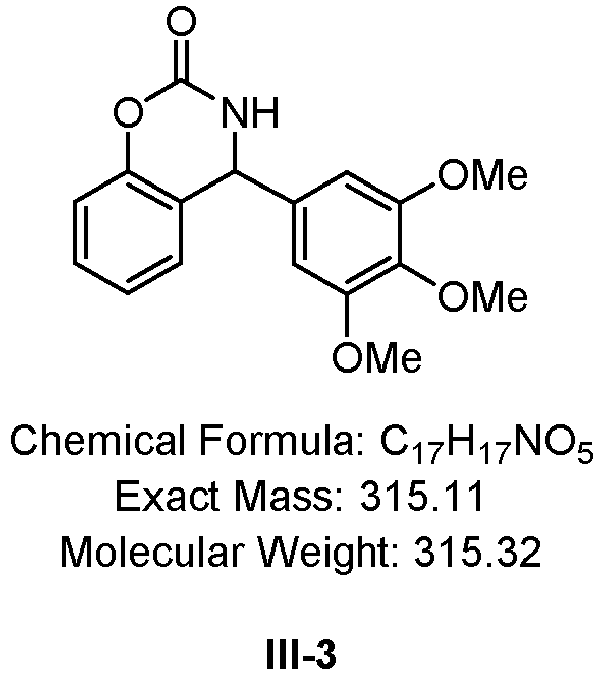
- Purification by silica gel column chromatography (Hexanes:EtOAc 80:20 to 50:50) gave compound (III-3) as a white solid. TLC (Hexanes:EtOAc 50:50): Rf = 0.7; 1H NMR (CDCl3, 500 MHz) δ 7.31-7.27 (m, 1H), 7.13-7.08 (m, 2H), 6.98-6.92 (m, 1H), 6.52 (s, 2H), 5.86 (s, 1H), 5.59 (s, 1H), 3.85 (s, 3H), 3.84 (s, 6H); HRMS (ESI+): m/z calcd for C17H17NNaO5 [M+Na], 338.100; found 338.101.

- Purification by silica gel column chromatography (Hexanes:EtOAc 80:20 to 50:50) gave compound (IV-5) as a white solid. TLC (Hexanes:EtOAc 50:50): Rf = 0.7; 1H NMR (CDCl3, 500 MHz) δ 8.38 (d, J = 9.0 Hz, 1H), 7.81 (d, J = 8.5 Hz, 1H), 7.62-7.54 (m, 3H), 6.95 (d, J = 8.0 Hz, 1H), 6.56 (s, 2H), 5.74 (s, 1H), 5.55 (s, 1H), 3.86 (s, 3H), 3.84 (s, 6H); HRMS (ESI+): m/z calcd for C21H19NNaO5 [M+Na], 388.116; found 388.113.
- Naphthylisocyanate (5.9mmol, 1.0g) was added to a solution of t-butylisopropylamine (5.9mmol, 0.9mL) in diethyl ether (10mL) under stirring at RT. The colorless solution was stirred for 3hrs and subsequently cooled to 0°C. TMEDA (12.98 mmol, 2.0mL) was added followed by n-butyllithium (11.8mmol, 2.43M in hexanes, 3.0mL). The clear yellow solution was stirred for 3hrs during which time a white precipitate forms. The reaction mixture is cooled to -78°C, and the aldehyde (8.85mmol, 1.7g) in THF (5mL) added drop-wise over four minutes. Following addition, ethanol (5mL) was added rapidly and the mixture allowed to warm to RT and stirred for an hour. The reaction mixture is concentrated in vacuo, diluted with DCM and washed with saturated NH4Cl). The organic layer will be evaporated onto silica and purified by column chromatography. Compound (II-4) was >96% pure by nuclear magnetic resonance spectroscopy.
- Referring to
Figure 6 , analogs of substituted 1,3-oxazin-2-ones (3) are synthesized by the established chemical method; various electron withdrawing groups (EWGs) and electron donating groups (EDGs) may be present on the aryl isocyantes as well as benzaldehydes. Commercially available substituted phenyl isocyanates (1) and substituted aryl aldehydes (2) are used to obtain the various substituted oxazin-2-ones (3). The chemical synthesis involves one pot, three steps, to obtain substituted oxazin-2-ones (3) in time efficient manner. Substituted phenyllisocyanates (1) are reacted with t-butylisopropylamine in diethyl ether. The formed urea intermediate is treated with TMEDA followed by n-butyllithium, then desired substituted arylaldehydes at -78°C, ethanol procure desired oxazin-2-ones (3). - Microsomal stability of compound (II-4) (1 µM) was assessed in pooled liver microsomes (human, mouse, and rat) (
Figure 7 ). Briefly, compound (II-4) was incubated in duplicate with microsomes at 37°C. Reactions contained microsomal protein in 100 mM potassium phosphate, 2 mM NADPH, 3 mM MgCl2, pH 7.4. NADPH was omitted to detect NADPH-free degradation. At 60 minutes, the reaction was stopped by adding ice-cold methanol containing internal standard. Samples were centrifuged to remove precipitated protein, and the supernatants were analyzed by LC/MS/MS to quantitate the remaining parent. - CYP-450 interaction studies were conducted in pooled human liver microsomes (
Figure 8 ). CYP-450 inhibition (%) by compound (II-4) (1 µM) was compared to control inhibitors (1 µM) for the most common CYP-450 isoforms, CYP3A4, CYP2C9, CYP2D6, CYP2C19, and CYP1A2. There is a lack of significant inhibition of the most clinically relevant P-450 enzyme family members CYP3A4 and 2D6. Also, these data support the data inFigure 7 , which demonstrate that compound (II-4) is less susceptible to P-450 interaction in human microsomes compared to rodent. - The microemulsion delivery system provides reliable non-invasive dose delivery when compared to standard IP injections. Moreover, dermal microemulsions provide sustained release providing more consistent drug levels with fewer doses, which will be valuable during multiple dose studies proposed herein. The dermal microemulsion comprises Capryol 90 (7.5% v/v), Triacetin (7.5% v/v), Cremophor EL (15% v/v), Transcutol P (15% v/v) generated via homogenization and water titration method. Physicochemical parameters include: viscosity of 29 mPa•s, average particle size of 97 nm, and pH of 6.5. Particle size remained relatively constant (100 nm) after 30 days at room temperature. Stability tests were performed on samples kept at RT, and additional stability tests were done on samples frozen at -20°C and thawed to RT. The microemulsion formulation has acceptable viscosity, pH characteristics, particle size, and is stable at room temperature for at least 30 days.
- Cells:
Mel 270, primary- uveal melanoma (UM); OMM 2.5, metastatic- UM derived from same patient asMel 270;OMM 1, metastatic- UM; 92.1 primary- UM tumor cell line. UM cell lines were kindly provided by Dr. Hans Grossniklaus, Emory Eye Center, Emory University, Atlanta, GA. Primary human retinal microvascular endothelial cells (REC) were acquired from Cell System Corporation (Kirkland, WA). - Cell culture media requirements for
Mel 270, OMM 2.5, and 92.1 UM cells: UM media contains RPMI-1640 (MediaTech, Herndon, VA) supplemented with 10% Fetal Calf Serum (Hyclone, Logan, UT), 1% L-Glutamine (200mM) [Hyclone], 1% Sodium pyruvate (100mM) [Lonza, Walkersville, MD], 1% MEM Essential Vitamin Mix (100X) [Hyclone], 1% Non-Essential Amino Acids Mixture (100X) [Lonza, Walkersville, MD], 1% 1M HEPES (Lonza), 1% of Penicilin G Sodium Salt/Streptomycin Sulfate/Amphotericin B Mix (100X) [Lonza] and 2-Mercapto Ethanol (1mL/L media v/v) [Gibco, Grand Island, NY]. Media requirements forOMM 1 UM cells: DMEM (MediaTech) supplemented with 10% Fetal Calf Serum (Hyclone), 1% L-Glutamine (200mM) [Hyclone], 1% Sodium pyruvate (100mM) [Lonza], 1% MEM Essential Vitamin Mix (100X) [Hyclone], 1% Non-Essential Amino Acids Mixture (100X) [Lonza], 1% 1M HEPES [Lonza], 1% of Penicilin G Sodium Salt/Streptomycin Sulfate/Amphotericin B Mix (100X) [Lonza] and 2-Mercapto Ethanol (1mL/L media v/v) [Gibco]. - Primary human retinal microvascular endothelial cells (REC, Lot 181) were acquired from Cell Systems Corporation (CSC, Kirkland, Washington). Cells were grown on attachment factor (AF)-coated surfaces in M131 medium containing microvascular growth supplements (MVGS), gentamicin (10mg/mL), and amphotericin B (0.25mg/mL) (Invitrogen; Carlsbad, CA).
- Harvested cells were washed twice with cold PBS/ 2%FBS. Pelleted cells were resuspended in Annexin V Binding Buffer (BioLegend, San Diego, CA) at a concentration of 5.0 x 10⁶ cells/mL following manufacturer's instructions. 5.0 x 10⁵ cells (100µL) were labeled with 5µL of FITC Annexin V and 10µL of Propidium Iodide (PI) solution. Cells were vortexed gently and incubated for 15 minutes at RT in dark. 300µL of Annexin V Binding Buffer were added to each sample tube and analyzed in BD LSRII Flow Cytometry Analyzer (BD Biosciences, San Jose, CA). Apoptotic cells were defined as Annexin V+PIneg while necrotic cells are defined as Annexin V+PI+. Experimental analysis was done using FlowJo xV10.0.6 software (Tree Star Inc., Ashland, OR).
- Dead Cell exclusion: We used a 1:100 solution for up to 1.0 x 10⁶ cells/100µL of Zombie Aqua (BioLegend). Positivity indicates dye incorporation - cell death.
- Harvested cells were washed and counted. 1.0 x 10⁶ cells were labeled with the following cell surface antibodies: FITC anti-CD54 (ICAM-1, clone HA58, BioLegend), PE anti-CD 102 (ICAM-2, clone CBR-IC2/2, BioLegend), PE-Cy7 anti-CD49d (VLA-4, clone 9F10, BioLegend), APC anti-CD 106 (VCAM-1, clone STA, BioLegend), PerCP-Cy5.5 anti-CD166 (ALCAM, clone 3A6, BioLegend), Biotin anti-CD326 (EpCAM, clone 1B7, BD Biosciences) using manufacturer's conditions. Cells were incubated in antibody cocktail for 30 minutes on ice followed by two washes with PBS/ 2%FBS. Second- labeling step was performed using Brilliant Violet 421 Streptavidin (bv421-SA, BioLegend) for 30 minutes on ice followed by two washes as before. To control autofluorescence we used unlabeled cells. Isotype controls were used as negative controls and for antibody specificity. The following isotype controls were used: mouse IgG1 (clone MOPC-21, BioLegend) FITC, PE-Cy7, APC, bv 421, APC; mouse IgG2a (clone MOPC-173, BioLegend) PE and rat IgG2b (clone RTK4530, BioLegend). Experimental analysis was done using FlowJo xV10.0.6 software (Tree Star Inc).
- Retinal endothelial cells (REC) and UM-OMM 2.5 cells were harvested, washed and counted. 1.0 x 10⁶ cells were fixed for 1 hr at 4°C and permeabilized with the Intracellular Fixation and Permeabilization Buffer Kit (eBiosciences, San Diego, CA). Cells were washed followed by Alexa-Fluor 647 Phalloidin (MOLECULAR PROBES, Life Technologies, Carlsbad, CA) labeling using 1U/µL. Cells were washed and analyzed using BD LSR II followed by analysis using FlowJo xV10.0.6 software.
- Harvested cells were resuspended at a concentration of 1.0 x 10⁶ cells/mL in warm PBS/1% FBS. Cells were labeled with 1µM CFSE (Invitrogen) for 5 minutes at 37°C then quenched on cold growth media (final volume 20mL) for 10 minutes, twice. Cultured unlabeled cells were used as controls.
- RNA isolation: RNA from 1.0 x 10⁶ UM cells was extracted using the QIAGEN miRNeasy Mini Kit (Qiagen, Valencia, CA). Briefly, cells were lysed and homogenized prior addition of chloroform. After centrifugation the upper colorless phase was transferred to clean tube followed by 100% ethanol precipitation. Extract was passed through a spin column followed by on-column DNase digestion. Column membrane was washed and RNase free water was used for RNA elution. RNA purity was assessed by analysis on nanodrop. RNA used met the following requirements: A260:A230 ratio greater than 1.7; A260:A280 ratio between 1.8 to 2.1 and concentration determined by A260 >40µg/mL, as required by kit manufacturing company.
- Genomic DNA elimination and cDNA synthesis was performed using QIAGEN RT2 Easy First Strand kit. Briefly, 300ng of RNA were mixed with Buffer GE2 (genomic DNA elimination buffer) and RNase free water to a final volume of 14.0µL. RNA was incubated at 37°C followed by quenching on ice. Material was incubated with Reverse Transcriptase Mix at 42°C for 15 minutes followed by incubation at 95°C for 5 minutes. Finished reaction was kept at -20°C until ready to use.
- A concise way to analyze for gene expression was chosen by selecting 84 genes highly associated with human Tumor Metastasis (PAHS-028ZF-2) and human Extracellular Matrix and Adhesion Molecules (PAHS-013ZF-2). The RT2 Profiler PCR Array (QIAGEN) in a 96-well format to analyze for 84 different genes was used. cDNA synthesis reaction was mixed with a 2x RT2 SYBR Green Mastermix and RNase free water. A final volume of 25µL was loaded onto each well. Plate was sealed and spun quickly to ensure no bubbles were present. The ROCHE LightCycler 480 was used to run the plate with the following cycling conditions: 1 cycle, 10 minutes, 95°C for Hot Start followed by 45 cycles of 15 seconds at 95°C/ 1 minute at 60°C to perform fluorescence data collection. Metastatic Uveal Melanoma (OMM 2.5) cells gene expression with a fold change greater than 2.0 compared to primary-UM (Mel 270) cells gene expression relative to GAPDH are emphasized. Data was analyzed using the SA Biosciences Web-based software.
- REC,
Mel 270, OMM 2.5 under Hepatocyte Growth Factor (HGF) or Vascular Endothelial Growth Factor (VEGF) stimulation conditions: Cell lysates were collected in RIPA lysis buffer (50 mM Tris·HCl, pH 7.4, 150 mM NaCl, 2 mM EDTA, 1% Nonidet P-40, 0.1% SDS) with protease 1X inhibitor cocktail (Roche; Indianapolis, IN). Lysates were kept on ice and centrifuged at 10,000 x g x 10 minutes and total protein was measured using the BCA assay (Pierce, Rockford, IL). Protein samples were mixed with 4X LDS loading buffer with 2.5% 2-mercaptoethanol (Sigma-Aldrich), heated to 70°C for 10 minutes, and loaded on NuPAGE 4-12% Bis-Tris gel (Invitrogen, Carlsbad, CA). Immunoblotting was performed with nitrocellulose membranes (Bio-Rad, Hercules, CA) at 170-mA start and 110-mA end at 25 V for two hours in NuPAGE transfer buffer (Invitrogen) containing 20% methanol. Membranes were blocked using Odyssey blocking buffer (LI-COR; Lincoln, NE) for one hour at room temperature with gentle shaking. Membranes were then incubated at 4°C with specific primary antibodies (1:1000) overnight. Cellular protein was normalized using rabbit-GAPDH or mouse-α-Tubulin [1:20,000] (Cell Signaling, Danvers, MA; LI-COR, respectively). Secondary antibodies (IRDye 800CW goat anti-rabbit and IRDye 680LT goat anti-mouse) [1:10,000] were incubated in the dark at room temperature for 45 minutes. Dual-channel infrared scan and quantitation of immunoblots were conducted using the ODYSSEY Sa infrared imaging system with Image Studio (Ver. 3.1.4) (LI-COR). - The effect of compound (II-4) on HGF-induced migration of UM cells was evaluated by scratch wound assay. In brief, confluent UM cell monolayers were wounded using a 100 µL yellow micropipette tip after cells were cultured in appropriate media for 24 hrs. Cells were rinsed with PBS to remove detached cells and incubated with serum-free medium containing appropriate concentration of HGF with or without compound (II-4) (1µM). Wound closure was monitored under an inverted phase contrast microscope, and then photographed in digital format (×50) after incubation for 24 hrs. For quantitative assessment, the wound area was determined by software 5.1 Image-Pro Plus (Media Cybernetics, Inc., Silver Spring, MD).
-
Figure 2 shows results of an REC scratch-wound assay. RECs were wounded and treated with VEGF (20 ng/mL) and either compound (II-4) (1 µM) or vehicle. Compound (II-4) reduced migration by ∼10-fold when measured 24 hrs post-scratch. (*P < 0.001; n = 6). - All data in the different experimental groups are expressed as mean +/- SD and obtained from at least three independent experiments. Analysis of variance (ANOVA) was used to assess the statistical significance of the differences between groups, followed by Duncan's multiple-range test or Student's t-test, where appropriate. P value of < 0.05 was considered significant.
- Apoptosis is speculated to contribute to different aspects of neoplastic disease including, but not limited to tumor progression and anti-cancer therapy. More apoptotic cells may be present in primary-UM than metastatic-UM as these cells respond to radiation-induced cell death. The ability of primary- and metastatic-UM (
Mel 270 and OMM 2.5, respectively) cell lines to spontaneously apoptose was measured - the insult being the harvesting process, by measuring Propidium Iodide (PI) versus Annexin V labeling followed by flow cytometry analysis. Results inFigure 9 show increased susceptibility of primary-UM cell lines to apoptosis (Apoptosis phenotype is defined as PInegAnnexin V+) showing 18% fold difference (14.1%±1.36% ofMel 270 cells and 0.8% ± 0.15% OMM 2.5). Cell injury can induce necrosis, recently considered a block for in vivo anti-tumor CD8+ T cell dependent immune responses. The levels of necrosis were measured as defined by PI+Annexin V+. Mel 270 showed a significant increase in the average percentage necrotic cells over OMM 2.5 (21.9% ± 2.0% versus 6.5% ± 2.2%, respectively; p=0.002, n=4). In keeping with prior studies, this suggestsMel 270, a primary tumor UM cell line, is more susceptible to spontaneous apoptosis in comparison to OMM 2.5, its metastatic counterpart. -
Figure 9 shows that the primary UMcell line Mel 270 shows high percentage of spontaneous apoptosis compared to metastatic OMM 2.5 cells (upper, representative of n=4; lower, quantitation with SD). Cultured cells were labeled with 5µL Annexin V-FITC and 10µL PI in BioLegend Binding Buffer for 15 minutes prior flow cytometry analysis. - Apoptosis defined as PInegAnnexin V+. Necrosis defined as PI+Annexin V+. Data acquisition was done in BD LSRII Flow Cytometer.
- In search for designing a potential adjuvant therapy for UM patients gene expression was analyzed in primary- versus metastatic-UM cell lines using a specific cohort of genes associated with adhesion, invasion and metastasis. Rather than transcript quantitation, results were expressed as the ratio of metastatic UM relative to primary UM, normalized to GAPDH. The lists of genes analyzed include inflammation-, adhesion- and metastatic pathways (
Figure 10 andFigure 11 ). Notably, differential expression of integrins and their receptors between primary- and metastatic-UM was found. The transcriptional assay identified the alpha-4 (α4) integrin (ITGA4) as differentially regulated in primary- and metastatic-UM. Engagement of α4 induces actin cytoskeletal-rearrangement. Expression of the α4 was specific, as other members of the Alpha-integrin (ITGA) family, such as ITGA3, ITGA6, ITGA7, were not highly expressed in primary- versus metastatic- UM. Transcriptional analysis revealed TGFB1 and VEGFA genes, to show a higher ratio of metastatic- UM relative to primary- UM. These genes are associated with immunosuppression and angiogenesis, respectively. Collectively, we found inflammation-, adhesion- and invasion-associated genes to exhibit a higher primary- versus metastatic- UM ratio, whereas genes associated with dampening of immune responses showed a higher ratio in metastatic- relative to primary- UM analysis. - Uncoupling of transcription and protein levels were previously identified after modulation of the actin cytoskeleton. Next, the protein levels of α4 and other integrin subunits and cytoskeletal remodeling in UM cell lines were examined. The protein levels of a cohort of integrins associated with intracellular signaling cascades in cancer, the cytoskeleton and targets of immunotherapy were analyzed. The protein expression of surface bound Intercellular Adhesion Molecule-1 and -2 (ICAM-1, ICAM-2 -aka CD54 and CD102, respectively), Vascular Cell Adhesion Protein-1 (VCAM-1 -aka CD 106), Epithelial Cell Adhesion Molecule (EpCAM -aka CD326), Activated Leukocyte Cell Adhesion (ALCAM - aka CD166) and Very Late Antigen-4 (VLA-4 -aka CD49d) was assessed in primary- and metastatic- UM tumor cell lines by flow cytometry (
Figure 12 ). To increase accuracy in the analysis dead cells were excluded by using an amine reactive fluorescent dye non-permeant to live cells (ZOMBIE AQUA - BioLegend). Dead cells tend to bind non-specifically to many antibodies, giving rise to false positive results. Then, the expression of the aforementioned proteins was analyzed. From the examined cohort, a significant difference was observed in protein levels of CD49d (Figure 12B ) between primary and metastatic UM. Anti-CD49d is commonly used for VLA-4 detection, an integrin composed of the α4 and α1 subunits. Specifically, anti-CD49d recognizes the α4 subunit. Thus, the protein expression analysis correlates with the transcriptional studies, as higher levels of ITGA4 (α4) transcripts and CD49d (α4) protein levels were observed in primary-UM relative to metastatic-UM. - About 50% of UM primary tumors metastasize. The mechanisms driving metastases in the primary tumors are not well understood. To investigate if the α4 subunit of VLA-4 could potentially be a target in the mechanisms driving metastases VLA-4 protein levels were tested in a primary- UM cell line that never metastasized, 92.1. The 92.1 cell line was cultured and examined by flow cytometry analysis parallel to the primary- and metastatic-UM
cell lines Mel 270 and OMM 2.5, respectively, as shown inFigures 12C-D , and data not shown. Interestingly, levels of VLA-4 in 92.1 and OMM 2.5 were similar. In contrast, the percentage of VLA-4+ cells inMel 270 were much higher. This suggests VLA-4 regulation may be critical for the transition of melanocyte transformation and further migration. Next, a second metastatic-UM cell line, OMM 2.1, was analyzed for VLA-4 levels (Figure 12C and 12D ). Similar to our previous results, there are a lower percentage of cells with VLA-4 positivity. Collectively, we identified the α4 integrin subunit as a unique molecule, previously unpublished, regulated differently in primary cells that metastasize versus those without detectable metastasis and metastatic UM. - The α4 subunit of the cytoplasmic tail of VLA-4 interacts with the cytoskeletal adaptor paxillin, merging intracellular signaling events that drive cellular proliferation and migration (
Figure 13 ). Compound (II-4) inhibits phosphorylation of paxillin at Y118 (pY118) in the LD-region that interacts with the α4 subunit of VLA-4. To confirm the inhibition of pY118 of paxillin after use of compound (II-4) retinal endothelial cells (REC) were activated with Vascular Endothelial Growth Factor (VEGF) at 50ng/mL in the presence or absence (vehicle) of compound (II-4) at a concentration of 1µM for 4-hrs. Lysates were collected, and, as seen inFigure 13B , phosphorylation levels were measured by Western Blot. VEGF-induced pY118 was prevented by treatment with compound (II-4) [VEGF-REC treatment versus untreated, *p<0.005; VEGF-induced versus compound (II-4) treatment, **p<0.05 -Figure 13C ]. - Next, the use of the compound (II-4) to increase apoptosis in normal REC was tested. Cultured cells received compound (II-4) or vehicle at a concentration of 1 µM for 4-hrs followed by PI and Annexin V labeling and flow cytometry analysis. Treatment with compound (II-4) did not cause an increase in spontaneous apoptosis in REC as shown in
Figure 13D . - In
Figure 13 it was demonstrated that compound (II-4) inhibits pY118 without increasing apoptosis in REC. Immune studies of the α4β1 integrins (VCAM-1 and VLA-4) show high affinity α4 integrins may initiate signaling cascades through paxillin that regulate leukocytes migration to inflammation sites. Metastatic UM show reduced levels of α4 integrin (Figures 14A-B ). Blocking phosphorylation of paxillin in a cell with lower protein abundance may block downstream signaling in both primary and metastatic UM. The levels of total paxillin and pY118 were measured after activation of metastatic-UM (OMM 2.5) cells with Hepatocyte Growth Factor (HGF) to address in vitro if disruption of α4-downstream signaling through paxillin can affect α4-downstream signaling. It is known HGF enhances PI3K-dependent migration of UM cells.Figures 14A-B shows compound (II-4) dramatically decreased the ratio of pY118 paxillin to total paxillin (pPax:Pax) in HGF-treated metastatic-UM cells, blocking the α4-paxillin downstream signaling. - Treatment with compound (II-4) showed a reduction in total cell numbers compared to untreated cultures. Next, it was investigated if reduced numbers were a consequence of a reduction in UM cells proliferation. Cell cultures in the presence or absence of compound (II-4) were analyzed by follow cytometry for cytoskeletal fragmentation and proliferation. Uncontrolled cytoskeletal remodeling and cell proliferation are considered hallmarks of tumor growth and metastasis. To test if inhibition of paxillin affects cytoskeletal remodeling and cell proliferation, UM cell lines were labeled with phalloidin, a toxin that binds filamentous actin (F-actin), indicative of actin remodeling. Cultured cells were fixed and permeabilized followed by intracellular labeling. The amount of intracellular phalloidin reflected the amount of cellular F-actin. The results showed no difference in actin remodeling in the examined UM tumor cells after treatment (
Figure 15A ). A difference in actin remodeling was not expected as it is known that there are multiple mechanisms merging into actin polymerization. Although blockade of α4-paxillin show no difference compared to untreated cells we observed a difference between primary- and metastatic-UM cell lines in the abundance of F-actin. To address if differences are only reflective of primary versus secondary tumor cell lines, 92.1 primary- UM cells that do not metastasize with pahalloidin were labeled. Results inFigure 15B show a similar trend between secondary (metastatic UM) and primary tumor that does not metastasize. Actin remodeling was inversely proportional to α4 protein expression. Modulation of paxillin does not affect VLA-4 protein, shown inFigure 15C . - To test the hypothesis that inhibition of paxillin will reduce cellular proliferation UM cell lines were labeled with carboxyfluorescein succunimidyl ester (CFSE), a cell tracking dye, and cultured for 96 hrs. A group of cells received treatment with compound (II-4) for the last 24 hours. Maximum CFSE fluorescence was controlled using labeled cells prior culture - 0 hr. Negative control was established using unlabeled cells cultured in parallel. Histograms in
Figure 15D show 96 hrs cultured cells divided with a 1-log shift or reduction in CFSE intensity. Both primary- and metastatic-UM cell lines showed this shift suggesting all cells divided, depicted in dotted line. Treatment with compound (II-4) caused a reduction in cell proliferation inMel 270 primary-UM cells. This reduction was not observed in metastatic-UM cell, suggesting a specific effect in cell proliferation by the inhibitor. Cell proliferation was not affected in the 92.1 cell line. These results suggest cytoskeletal fragmentation is not affected by treatment with compound (II-4), but cellular proliferation does. The effects are selective, as the primary cell line that metastasize (Mel 270) show reduction in proliferation and not the non-metastatic one (92.1). - Two methods of evaluating VEGF-induced REC migration were used to assess the impact of compound (II-4) on paxillin-mediated migration: the scratch assay and the transwell (Boyden chamber) cell migration assay. To test if paxillin inhibition would reduce VEGF-induced REC migration, RECs were wounded and treated with VEGF (100 ηg/mL) +/- compound (II-4) (100 ηM to 10 µM). Wound closure was monitored by phase microscopy over 24 hours and area of wound closure was calculated using the sophisticated image analysis tools in Adobe Photoshop. Cells were then fixed and nuclei were stained using DAPI to show extent of cell migration. Measurements of wound closure at 24 hours reveal a concentration-dependent inhibition of migration with compound (II-4) (IC50 = 181 nM)(
Fig. 17A ). - Compound (II-4) was further investigated around these concentrations using the transwell migration assay (
Fig. 17B ). After 24 hours of VEGF (100 ηg/mL) stimulation, a significant decrease is observed in migration RECs (P < 0.001). - To investigate the potential of compound (II-4) affecting the proliferative capacity of RECs treated with VEGF, proliferation was measured using the metabolic assay based on the tetrazolium salt, WST-1. A significant decrease was observed in VEGF-induced cellular proliferation with increasing concentrations of compound (II-4) (
Fig. 18A ; P < 0.0001). To rule out the possibility that this observation was related to cytotoxicity, RECs were incubated with a high concentration of compound (II-4) (1µM) for 24 hours. Cells were harvested and apoptosis measured with Annexin-V/Propidium Iodide (PI) staining and analyzed using flow cytometry. No evidence of apoptosis was detected (Fig. 18B ). - Adhesive interactions with extracellular matrix proteins rely on focal adhesion proteins engaging with integrins to strengthen and maintain cell contacts. In the transwell migration assay system, initial cell-attachment to the porous membrane was relied upon in order to obtain a measure of cells that have migrated through to the underside of the well. Since compound (II-4) was in direct contact with cells prior to being seeded onto the transwell membranes, the potential of compound (II-4) to impede the attachment of RECs to the membranes was investigated. After six hours, the ability of RECs to seed to the attachment-factor coated wells was not impeded with increasing concentration of compound (II-4) (
Fig. 19 ). These results indicated that inhibition of VEGF-mediated cell migration with compound (II-4) is not due to preventing initial cell-attachment to basement membranes, but through disruptions in VEGF migratory signaling mechanisms. However, investigation of integrin-mediated signaling may be of interest to further evaluate and characterize compound (II-4)'s potential role in disrupting cross-talk between growth-factor and integrin-mediated signaling during pathological retinal angiogenesis. - In RECs, it was shown that VEGF-induced autophosphorylation of FAK Y397 led to further activation of Src-dependent FAK tyrosine residues 576/577 and 925. The Src/FAK complex in turn drove phosphorylation of binding partner paxillin at Y118 and downstream proliferation marker, P-AKT (
Fig. 20A-D ). AKT was validated as a downstream readout of the signalsome's activity in RECs using LY294002, an inhibitor of PI3K, which did not affect Src-activation of either FAK or paxillin (Fig. 20B,C ). Using the Src inhibitor SU6656 (1 µM), it was confirmed that autophosphorylation of FAK Y397 was independent of Src and that FAK (Y576/577 and 925), paxillin (Y118), and downstream AKT (Ser473) phosphorylation was dependent on Src activity (Fig. 20 ). According to this mechanism, these data have demonstrated that VEGF-induced proliferation requires Src-dependent activation of FAK and paxillin, driving proliferation through AKT (Fig. 21 ). - ERK-dependent proliferation has been confirmed in multiple cell types, including endothelial cells. One such mechanism involves ERK-mediated serine-83 phosphorylation of paxillin to promote disassembly of FAK and paxillin in FAs. ERK's involvement was validated in VEGF-induced REC proliferation was independent of paxillin Y118 activation using the inhibitor U0126 (
Fig. 20F ). There was no change in activation of Y118 with U0126 but VEGF-induced REC proliferation was inhibited (Fig. 21 ). Moreover, SU6656 was used to demonstrate that Src-dependent REC proliferation was independent of ERK1/2 activation (Fig. 20E ). These data indicate that Src and ERK act independently on paxillin to coordinate FA turnover that drives VEGF-induced REC proliferation, as shown in modelFigure 1A . - VEGF-induces RNV. VEGF-activation of its receptor, VEGF-R2 (KDR/FLK1) promotes FA assembly through Src/FAK mediated phosphorylation of paxillin at Y118. Parallel activation of ERK drives disassembly through S83 phosphorylation causing the complex to dissociate. Together, these signaling events drive FA turnover and thus, angiogenesis.
- Compound (II-4) potently inhibits VEGF-induced migration and proliferation of RECs (
Figs. 17 and18 ). To gain insight into the mechanistic basis for this phenotype, the effect of compound (II-4) on the Src/FAK/paxillin/ERK signalsome in RECs under VEGF was examined. First, it was determined that compound (II-4) was able to inhibit VEGF-induced PaxY118 phosphorylation (Fig. 20B ). Then, it was further shown that compound (II-4)'s activity was independent of both FAK Y397 autophosphorylation and Src-driven FAK Y925 (Fig. 20C ). However, compound (II-4) was able to prevent Src/FAK/paxillin complex-dependent activation of AKT, similar to Src inhibition (Fig. 20D ). Together, compound (II-4)'s effect on Y118 and downstream P-AKT strongly suggest the inhibition of Src/FAK/paxillin FA assembly. Next, characterization of the potential of compound (II-4) to affect FA disassembly through inactivation of ERK was explored. No significant change was revealed inERK 1/2 phosphorylation levels in RECs (Fig. 20E ). One possible explanation for these data is that compound (II-4) disrupts FAK binding to the LD2/4 domains of paxillin, thus preventing Src access to paxillin Y118 while allowing uninterrupted activity of ERK on serine 83 of paxillin. These two signaling mechanisms turn off assembly and turn on disassembly of FAs during VEGF-induced REC proliferation (Fig. 21 ). Altogether, these data raise the possibility that compound (II-4) induces allosteric changes in paxillin effectively disrupting the interactions within the Src/FAK/paxillin/ERK signalsome halting FA turnover and VEGF-mediated angiogenesis. - Topical delivery of compound (II-4) using an ocular ME was chosen for several reasons. First, intravitreal injection is technically challenging and, unlike intraocular delivery of proteins, is unnecessary for delivery of small molecules. Second, safe and effective ocular delivery of drugs to humans using ME technology has been demonstrated, e.g., Restasis (cyclosporine), and there are 55 human clinical trials that have/are utilized this technology for topical or systemic drug administration (source: clinicaltrial.gov). The murine OIR model was used to examine the effect of compound (II-4) on the natural history of VEGF-induced proliferative retinopathy. Briefly, pups were exposed to 75% oxygen at post-natal day 7 (P7) for 5 days and then returned to normal oxygen at P12. Mice received daily ocular administration of either compound (II-4) (0.5 mg/kg or 5 mg/kg) or vehicle (ME) from P12 to P17. Eyes were enucleated at P17 and retinal whole-mounts stained for endothelial cells followed by quantification of avascular area and vascular tuft formation. There was a striking inhibition of hypoxia-induced neovascularization coupled with a modest increase in retinal avascular area in both compound (II-4)-treated groups when compared to vehicle-controls (
Fig. 22A ). Western blot examination of retinal homogenates revealed a dose-dependent reduction in total paxillin (Fig. 22B ). - Microsomal stability of compound (II-4) (1 µM) was assessed in pooled liver microsomes (human, mouse, and rat) (
Fig. 23 ). Briefly, compound (II-4) was incubated in duplicate with microsomes at 37°C. Reactions contained microsomal protein in 100 mM potassium phosphate, 2 mM NADPH, 3 mM MgCl2, pH 7.4. NADPH was omitted to detect NADPH-free degradation. At 60 min, the reaction was stopped by adding ice-cold methanol (+ internal standard). Samples were centrifuged to remove precipitated protein, and the supernatants were analyzed by LC/MS/MS to quantitate the remaining parent. Compound (II-4) was rapidly metabolized by mouse, rat, and human cytochrome P-450 enzymes. - CYP-450 interaction studies were conducted in pooled human liver microsomes (
Fig. 24 ). CYP-450 inhibition (%) by compound (II-4) (1 µM) was compared to control inhibitors (1 µM) for the most common CYP-450 isoforms, 3A4, 2C9, 2D6, 2C19, and 1A2. Compound (II-4) lacks significant inhibition of the most clinically relevant P-450 enzyme family members 3A4 and 2D6. - Counter-screen assays to determine "off-target" effects are conducted at an early stage to mitigate toxicological risk of new chemical entities. Compound (II-4) (10 µM) counter screening was conducted against a wide variety of target receptors, enzymes, and ion channels using a serum-free cell-based assay, ExpresS Profile (Eurofins, Cerep Panlabs). Inhibition >50% is considered a "positive" interaction. The serotonin receptor 5-HT2B and the melatonin-1 receptor (MT-1) were identified as possible binding targets for compound (II-4) (
Fig. 25 ). - Compound (II-4) inhibits VEGF-induced migration and proliferation of retinal endothelial cells. Compound (II-4) inhibits VEGF-induced paxillin phosphorylation (Y118) leading to disruption of the Src/FAK/paxillin signalsome; a critical signaling hub for migration and proliferation in hyperproliferative disorders. Compound (II-4) mitigates retinal neovascularization following ocular administration in the murine OIR model. Compound (II-4) dose-dependently decreases paxillin expression in retinal homogenates in the murine OIR model. Compound (II-4) undergoes significant in vitro metabolism by cytochrome P-450s, which is ideal for ocular delivery.
-
Figure 1A : VEGF-induced RNV. VEGF-activation of its receptor, VEGF-R2 (KDR/FLK1) promotes FA assembly through Src/FAK mediated phosphorylation of paxillin at Y118. Parallel activation of ERK drives disassembly through S83 phosphorylation causing the complex to dissociate. Together, these signaling events drive FA turnover and thus, angiogenesis. -
Figure 1B : FA turnover is impaired in PKD. In the absence of the cytoplasmic tail (CT) of PC-1, FAs are formed without FAK which leads to reduced FA disassembly and motility. -
Figure 2 : REC scratch-wound assay. RECs were wounded and treated with VEGF (20 ng/mL) and either compound (II-4) (1 µM) or vehicle. Compound (II-4) reduced migration by ∼10-fold when measured 24 hrs post-scratch. (*P < 0.001; n = 6) -
Figure 3 : Immunohistochemical analysis of paxillin in ADPKD mouse kidneys. Darker labeling indicated localization in the cystic epithelial cells as determined by DAB staining (B). No staining was observed in the negative control section (A). Magnification 40X. -
Figure 4 : Paxillin in ADPKD kidneys. (A) Immunoblot of total paxillin in protein lysates from non-cystic Pkd1+/+ (n=5) and cystic Pkd1v/v (n=3) mouse kidneys atpost-natal day 11 after 8 days of dermal application of compound (II-4) microemulsion solution. GAPDH was used as a loading control. Densitometry of the bands normalized to GAPDH is shown for (B) paxillin and (C) phospho-paxillin (C). * P<0.005 difference between groups. -
Figure 5 : Reduction in cyst progression after treatment with paxillin inhibitor compound (II-4). -
Figure 7 : Compound (II-4) microsomal stability. -
Figure 8 : Cytochrome P-450 interaction studies using human microsomes. -
Figure 9 : The primary UMcell line Mel 270 shows high percentage of spontaneous apoptosis compared to metastatic OMM 2.5 cells. Cultured cells were labeled with 5µL Annexin V-FITC and 10µL PI in BioLegend Binding Buffer for 15 minutes prior flow cytometry analysis. Apoptosis defined as PInegAnnexin V+. Necrosis defined as PI+Annexin V+. Data acquisition done in BD LSRII Flow Cytometer. Upper, representative of n=4. Lower, Quantitation with SD. -
Figure 10 : Fold expression of gene transcripts metastatic UM (OMM 2.5) relative to primary UM (Mel 270) cell line. Analysis performed using RT2 Profiler Array, normalized to GAPDH. Results representative of n=3. -
Figure 11 : Fold expression of gene transcripts primary UM (Mel 270) relative to metastatic UM (OMM 2.5) cell line. Analysis performed using RT2 Profiler Array, normalized to GAPDH. Results representative of n=3. -
Figure 12 : Protein levels of a cohort of integrins associated with adhesion and signaling. UM cell lines were cultured, harvested and labeled with a cohort of fluorescently-tagged antibodies against adhesion molecules for flow cytometric analysis. A, Increased VLA-4 protein levels by primary UM (Mel 270) cell line compared to its metastatic counterpart (OMM 2.5). Representative histogram of n=4. B, Quantitation of all experiments +/-SD. C, VLA-4 protein levels are similar in metastatic UM (OMM 2.1) and primary UM (92.1) that does not metastasize. Representative histogram of n=3. D, Quantitation of all experiments +/-SD. Cell surface expression was examined by flow cytometry. -
Figure 13 : Targeting the alpha-4 subunit of VLA-4 signaling through inhibition of paxillin. A, Adapted diagram from Salgia showing a concise version of paxillin-downstream signaling and compound (II-4) intervention within pathway. B, C, VEGF-induced paxillin phosphorylation (pY118) is reduced by paxillin inhibitor treatment (compound (II-4)). REC treated with VEGF (50ng/mL) and either inhibitor (1µM) or vehicle for 4hrs were lysed. Phosphorylation measured by Western Blot. D, Treated and untreated REC were labeled with Annexin V and PI as inFigure 9 prior flow cytometric analysis. -
Figure 14 : Reduction of pY118 paxillin and increased total paxillin protein in UM cells treated with paxillin inhibitor. A, Representative Western Blot. B, Quantitation of n=4. Metastatic UM (OMM 2.5) cells were treated with HPG at 20ng/mL or HGF and the paxillin inhibitor (1µM) for 4hrs. Lysates were assayed for total and phosphorylated Y118 paxillin by Western Blot. -
Figure 15 : The paxillin inhibitor Compound (II-4) selectively affects cellular proliferation of primary UM cells that become metastatic. A. Primary and metastatic UM (Mel 270, OMM 2.1, respectively) cultured cells were intracellularly labeled with phalloidin after +/- paxillin inhibitor treatment for 24 hrs. Unlabeled cells were used to control fluorescence. Histogram representative of n=3. B. Quantitation of experiment +/-SD including primary UM that becomes metastatic (Mel 270), metastatic (OMM 2.1) and primary (92.1) UM cells. *P=0.0007 and **P=0.0005. C. Parallel to experiments from 15A-B, cells were examined for VLA-4 protein levels by flow cytometry. Quantitation of VLA-4 protein levels +/-SD from n=3. D. Reduction of cellular proliferation in primary UM (Mel 270) cells that become metastatic by paxillin inhibitor. CFSE labeled cells were cultured for 96 hrs. Treatment with 1µM paxillin inhibitor proceeded for the last 24hrs. Histogram representative of n=3. Analysis performed with Cell Proliferation function from FlowJo. -
Figure 16 : Paxillin inhibition reduced pAKT signaling in metastatic UM cells. A, Representative Western Blot of total and phosphorylated paxillin in metastatic UM cells, as inFigure 4A-B . B, Quantitation from n=3. C, Metastatic OMM 2.5 cells were HGF stimulated in presence or absence of paxillin inhibitor followed by harvest after 4hrs. Lysates were measured by Western Blot. Representative of n=3. D, Quantitation shows significant reduction of pAKT/AKT after compound (II-4) treatment (P<0.05). -
Figure 17 : REC migration. A) Increasing concentrations of compound (II-4) inhibit VEGF-induced migration in a scratch wound assay; [Serum Free-control, VEGF (100ng/mL), VEGF+100nM, 500nM, 1µM, 10µM] (IC50 ≈ 180 ηM; n = 6/group). Cells were stained with DAPI for representative images. B) RECs seeded onto transwell membranes were stimulated with VEGF+vehicle or compound (II-4) for 24 hrs. Cells were removed from the topside of membrane and migrated cells were stained with DAPI [Serum-Free (SF), VEGF, +100, +500 nM, respectively]. Cell number was measured using fluorescence microscopy. All data are mean ± SD (*,# P < 0.001) -
Figure 18 : REC Proliferation and Flow cytometry analysis of apoptosis in REC. A) VEGF-induced cellular proliferation was assessed using the WST-1 metabolic assay. Compound (II-4) significantly reduces cellular proliferation. (*P < 0.0001). Nuclei were stained with DRAQ5 and imaged to show trend of decreasing proliferation. B) Apoptosis was measured using Annexin V/PI staining. Compound (II-4) (1 µM) appears to be non-cytotoxic to retinal endothelial cells after 24 hour incubation (n ≈ 10,000 cells). -
Figure 19 : REC attachment assay. Increasing concentrations of compound (II-4) with suspended RECs were seeded to 96-wells to investigate inhibition of REC-adherence to attachment-factor surfaces. Compound (II-4) did not impede the attachment of RECs even at high-concentrations. (P > 0.05; n=8). -
Figure 20 : VEGF-induced activation of Src/FAK/Paxillin signalsome. A-E) VEGF-induced REC autophosphorylation of FAK Y397 to further induce Src-dependent activation of FAK Y576/577 and Y925. The active Src/FAK complex induces PaxY118 and P-AKT (Ser473). Using a PI3K inhibitor, LY294002 we establish AKT as downstream of Src/FAK/paxillin activation. Src inhibitor, SU6656 inhibited FAK, paxillin and AKT activation. Compound (II-4) (500nM) reduced Y118 and P-AKT, but not FAK Y925 activation. Neither SU6656 nor compound (II-4) decreased VEGF-dependent activation ofERK 1/2, which was shown to be independent of Src-mediated PaxY118 activation (F). All experiments performed in triplicate; *, # P < 0.05; data are Mean ±SD. -
Figure 21 : REC Proliferation. VEGF-induced REC proliferation was inhibited with either Compound (II-4) (500 nM), LY294002 (10µM), SU6656 (1µM), or U0126 (1µM). (*,# P < 0.001; Mean ± SD, N = 8/group). -
Figure 22 : Oxygen-Induced Retinopathy (OIR). (A:) P17 retinal whole-mounts were stained for endothelial cells. Representative images of neovascular area (left images) and avascular area (right images) show that compound (II-4) (middle images 0.5 mg/kg and bottom images 5.0 mg/kg; top images vehicle) showed reductions in NV and increases in AV (*P < 0.05). Data represent mean (± SD). N = 8-14/group. (B): Compound (II-4) reduced total paxillin protein in retinal homogenates (*P< 0.05). (C): Quantitation of panel A neovascular area. (D): Quantitation of panel A avascular area. (E): Quantitation of panel B total paxillin. -
Figure 23 : Compound (II-4) microsomal stability. -
Figure 24 : Cytochrome P-450 interaction studies using human microsomes. -
Figure 25 : Off-target screen reveals two binding candidates, 5-HT2B and MT1.
(e.g.,


Claims (13)
- A compound having the structure of Formula (I):
 R1 is selected from the group consisting of hydrogen, alkyl and arylalkyl;R2 is 3, 4, 5-trimethoxyphenyl;R3, independently for each occurrence, is selected from the group consisting of alkyl, alkenyl, alkoxy, trifluoromethoxy, acetyl, aryl, hydroxy, halogen, cyano, nitro, amino, alkylamino, diakylamino, amido, alkylamido and arylamido; or wherein any two adjacent R3 may combine to form a fused aromatic ring, wherein said fused aromatic ring can be substituted one or more times with R4;R4, independently for each occurrence, are selected from the group consisting of alkyl, alkenyl, alkoxy, trifluoromethoxy, acetyl, aryl, hydroxy, halogen, cyano, nitro, amino, alkylamino, diakylamino, amido, alkylamido and arylamido; andm is 0, 1, 2, 3 or 4.
 - The compound of claim 1 having the structure of Formula (II):
 R3 and R4, independently for each occurrence, are selected from the group consisting of alkyl, alkenyl, alkoxy, trifluoromethoxy, acetyl, aryl, hydroxy, halogen, cyano, nitro, amino, alkylamino, diakylamino, amido, alkylamido and arylamido;m is 0, 1 or 2; andn is 0, 1, 2, 3 or 4.
 - The compound of claim 1, wherein:R1 is hydrogen;R2 is 3, 4, 5-trimethoxyphenyl;R3, independently for each occurrence, is selected from the group consisting of alkoxy and hydroxy; andm is 0, 1 or 2.
- The compound of claim 1, selected from the group consisting of:

- The compound of claim 2, selected from the group consisting of:


- The compound of any one of the preceding claims, wherein the compound has (R) stereochemistry or (S) stereochemistry.
- A pharmaceutical composition comprising a compound of any one of claims 1 to 6 and a pharmaceutically acceptable carrier.
- A composition according to claim 7, wherein the compound is formulated in a microoemulsion or as an eye-drop
- A compound of any one of claims 1 to 6 or a pharmaceutical composition of claim 7 or 8 for use in treating a disorder selected from the group consisting of cancer, metastatic cancer, retinal neovascularization, radiation retinopathy, diabetic retinopathy and polycystic kidney disease in a mammal..
- A compound or composition for use according to claim 9 wherein the treatment of retinal neovascularization promotes or maintains retinal endothelial cell viability or reduces retinal endothelial cell death.
- A compound or composition for use according to claim 9, wherein the cancer is uveal melanoma or the metastatic cancer is metastatic uveal melanoma.
- A compound of any one of claims 1 to 6 or a pharmaceutical composition of claim 7 or 8 for use in inhibiting paxillin function in a mammal.
- A compound of any one of claims 1 to 6 wherein the compound has (S) stereochemistry.
Applications Claiming Priority (2)
| Application Number | Priority Date | Filing Date | Title |
|---|---|---|---|
| US201461935616P | 2014-02-04 | 2014-02-04 | |
| PCT/US2015/014473 WO2015120059A1 (en) | 2014-02-04 | 2015-02-04 | Inhibitors of paxillin function and related compositions and methods |
Publications (3)
| Publication Number | Publication Date |
|---|---|
| EP3102567A1 EP3102567A1 (en) | 2016-12-14 |
| EP3102567A4 EP3102567A4 (en) | 2017-06-28 |
| EP3102567B1 true EP3102567B1 (en) | 2019-07-17 |
Family
ID=53778405
Family Applications (1)
| Application Number | Title | Priority Date | Filing Date |
|---|---|---|---|
| EP15746785.3A Active EP3102567B1 (en) | 2014-02-04 | 2015-02-04 | Inhibitors of paxillin function and related compositions and methods |
Country Status (3)
| Country | Link |
|---|---|
| US (1) | US9834525B2 (en) |
| EP (1) | EP3102567B1 (en) |
| WO (1) | WO2015120059A1 (en) |
Families Citing this family (3)
| Publication number | Priority date | Publication date | Assignee | Title |
|---|---|---|---|---|
| EP3388419A1 (en) * | 2017-04-12 | 2018-10-17 | Leadiant Biosciences SA | Gli1 inhibitors and uses thereof |
| CN110201171A (en) * | 2019-06-18 | 2019-09-06 | 北京大学 | Application of the Fak inhibitor in treatment autosomal dominant polycystic kidney disease |
| CN111995587B (en) * | 2020-07-20 | 2022-10-21 | 上海工程技术大学 | A kind of 1,4-disubstituted 3,4-dihydro-2(3H)-quinazolinone compound and its synthesis method and application |
Family Cites Families (20)
| Publication number | Priority date | Publication date | Assignee | Title |
|---|---|---|---|---|
| CH441326A (en) * | 1963-03-18 | 1967-08-15 | Hoffmann La Roche | Process for the preparation of heterocyclic compounds |
| US3467656A (en) * | 1967-09-06 | 1969-09-16 | Hoffmann La Roche | 4-aryl-3,1-benzoxazine-2-thione |
| RO56665A (en) * | 1968-07-01 | 1974-06-01 | ||
| CH515911A (en) * | 1968-07-01 | 1971-11-30 | Sandoz Ag | Process for the preparation of 3,4-dihydro-4-phenyl-2 (1H) -quinazolinones |
| DE1932402C3 (en) * | 1969-06-26 | 1981-09-03 | Sandoz-Patent-GmbH, 7850 Lörrach | 1-Isopropyl-4-phenyl-3,4-dihydro-2 (1H) quinazolinone derivatives and their further processing to 1-isopropyl-4-phenyl-2 (1H) quinazolinones |
| US3925549A (en) * | 1970-10-06 | 1975-12-09 | Sandoz Ag | 1-Substituted-quinazoline-2(1H)-thiones in the treatment of inflammation |
| US4146717A (en) * | 1972-04-07 | 1979-03-27 | Sumitomo Chemical Company, Limited | Nitroquinazolinone compounds having antiviral properties |
| JPS518287A (en) * | 1974-07-13 | 1976-01-23 | Sumitomo Chemical Co | Kinazorinonjudotaioyobi sonoenno seizoho |
| JPS5251379A (en) * | 1975-10-24 | 1977-04-25 | Sumitomo Chem Co Ltd | Preparation 3,4-dihydro-2(1h)-quinazoline derivates |
| JPS5271483A (en) * | 1975-12-11 | 1977-06-14 | Sumitomo Chem Co Ltd | Synthesis of 2(1h)-quinazolinone derivatives |
| US4071516A (en) * | 1976-08-20 | 1978-01-31 | Sandoz, Inc. | 4-(Acyloxyphenyl)-quinazolin-2(1H)-ones |
| JPS5448797A (en) * | 1977-09-06 | 1979-04-17 | Sumitomo Chem Co Ltd | Tricyclic condensed pyrimidine derivative and its preparation |
| DE3217012A1 (en) | 1982-05-06 | 1983-11-10 | Dr. Karl Thomae Gmbh, 7950 Biberach | BENZOXAZIN-2-ONE, THEIR PRODUCTION AND MEDICINAL PRODUCTS CONTAINING THESE COMPOUNDS |
| EP0564397A1 (en) * | 1992-03-03 | 1993-10-06 | Sandoz Ltd. | Antiatherosclerotic substituted phenylquinazoline derivatives |
| WO1994007498A1 (en) * | 1992-10-07 | 1994-04-14 | Sumitomo Pharmaceuticals Company, Limited | Pharmaceutical composition for inhibiting tumor necrosis factor production |
| WO2006010142A2 (en) * | 2004-07-14 | 2006-01-26 | Ligand Pharmaceuticals, Inc. | Mineralocorticoid receptor modulator compounds, processes for their preparation, and their use |
| EP1655289A1 (en) * | 2004-11-04 | 2006-05-10 | Embl | Quinazoline derivatives, process for their preparation, their use as antimitotics and pharmaceutical compositions comprising said derivatives |
| EP1844768A1 (en) * | 2005-01-19 | 2007-10-17 | Dainippon Sumitomo Pharma Co., Ltd. | Aromatic sulfone compound as aldosterone receptor modulator |
| US8987294B2 (en) * | 2009-09-18 | 2015-03-24 | The Regents Of The University Of California | Small molecule inhibitors of the α4-paxillin interaction |
| US9212209B2 (en) | 2012-07-13 | 2015-12-15 | Indiana University Research And Technology Corporation | Screening methods for spinal muscular atrophy |
-
2015
- 2015-02-04 EP EP15746785.3A patent/EP3102567B1/en active Active
- 2015-02-04 WO PCT/US2015/014473 patent/WO2015120059A1/en not_active Ceased
- 2015-02-04 US US15/116,764 patent/US9834525B2/en not_active Expired - Fee Related
Also Published As
| Publication number | Publication date |
|---|---|
| US9834525B2 (en) | 2017-12-05 |
| US20160347725A1 (en) | 2016-12-01 |
| WO2015120059A1 (en) | 2015-08-13 |
| EP3102567A4 (en) | 2017-06-28 |
| EP3102567A1 (en) | 2016-12-14 |
Similar Documents
| Publication | Publication Date | Title |
|---|---|---|
| JP7554838B2 (en) | Use of CSF-1R kinase inhibitors | |
| US12152036B2 (en) | Substituted pyrrolo[1,2-α]quinoxalin-4(5H)-ones as CX3CR1 antagonists | |
| MX2014013373A (en) | Benzamide derivatives for inhibiting the activity of abl1, abl2 and bcr-abl1. | |
| US11312676B2 (en) | Small molecule stimulators of steroid receptor coactivator proteins and their use in the treatment of cancer | |
| EP3950678A1 (en) | Aromatic amine compound and use thereof in preparation of ar and brd4 dual inhibitors and regulators | |
| US11247970B2 (en) | Selective inhibition of gluconeogenic activity | |
| IT8148302A1 (en) | ANTIALLERGIC AGENT | |
| EP3686198A1 (en) | mu-OPIOID RECEPTOR AGONIST AND PREPARATION METHOD THEREFOR AND USE THEREOF IN FIELD OF MEDICINE | |
| EP3102567B1 (en) | Inhibitors of paxillin function and related compositions and methods | |
| CN112656795A (en) | Action mechanism and application of fangchinoline in resisting tuberculosis membrane melanoma | |
| EP3844166B1 (en) | Substituted macrocycles useful as kinase inhibitors | |
| KR20230020945A (en) | Application of PI4K inhibitors in intracellular protein misfolding-related diseases and lysosomal storage diseases | |
| WO2021178663A1 (en) | Compositions and methods for treatment of platinum-based chemotherapeutic resistant tumors | |
| CN104755084B (en) | Suppress the active composition and method and its purposes for treating tumour of hypoxia-inducible transcription factor complex | |
| US20240132486A1 (en) | Rnf4 targeting compounds and uses thereof | |
| WO2025118982A1 (en) | Compounds having sirt6 agonistic activity and use thereof | |
| WO2021202137A1 (en) | Therapeutic uses of inhibitors of the rna-binding protein hur | |
| US20250092035A1 (en) | Isocitrate dehydrogenase 1 inhibitors and methods of use thereof | |
| CA2981785A1 (en) | Compositions and methods for increasing, or preventing or reversing loss of, skin pigmentation in a mammalian subject | |
| WO2023175615A1 (en) | Arts mimetic componds and combinations thereof for treating high-risk neuroblastoma | |
| US20200102293A1 (en) | Ldha activity inhibitors | |
| WO2019118855A1 (en) | Compounds and compositions for prevention and/or treatment of cancer | |
| JP6452954B2 (en) | Cancer metastasis inhibitor | |
| US20230390287A1 (en) | Modulators of pd-l1/pd-1 interaction and uses thereof | |
| CN108379584B (en) | RSAD2 influences tumor cell temozolomide resistance through wnt pathway |
Legal Events
| Date | Code | Title | Description |
|---|---|---|---|
| STAA | Information on the status of an ep patent application or granted ep patent |
Free format text: STATUS: THE INTERNATIONAL PUBLICATION HAS BEEN MADE |
|
| PUAI | Public reference made under article 153(3) epc to a published international application that has entered the european phase |
Free format text: ORIGINAL CODE: 0009012 |
|
| STAA | Information on the status of an ep patent application or granted ep patent |
Free format text: STATUS: REQUEST FOR EXAMINATION WAS MADE |
|
| 17P | Request for examination filed |
Effective date: 20160902 |
|
| AK | Designated contracting states |
Kind code of ref document: A1 Designated state(s): AL AT BE BG CH CY CZ DE DK EE ES FI FR GB GR HR HU IE IS IT LI LT LU LV MC MK MT NL NO PL PT RO RS SE SI SK SM TR |
|
| AX | Request for extension of the european patent |
Extension state: BA ME |
|
| RIN1 | Information on inventor provided before grant (corrected) |
Inventor name: PATIL, SHIVAPUTRA Inventor name: MORALES-TIRADO, VANESSA, M. Inventor name: ALEIWI, BILAL ABOU Inventor name: PAGADALA, JAYAPRAKASH Inventor name: MILLER, DUANE, D. Inventor name: PARK, FRANK Inventor name: TOUTOUNCHIAN, JORDAN, J. Inventor name: YATES, CHARLES, RYAN |
|
| RIN1 | Information on inventor provided before grant (corrected) |
Inventor name: MILLER, DUANE, D. Inventor name: ALEIWI, BILAL ABOU Inventor name: TOUTOUNCHIAN, JORDAN, J. Inventor name: PAGADALA, JAYAPRAKASH Inventor name: YATES, CHARLES, RYAN Inventor name: MORALES-TIRADO, VANESSA, M. Inventor name: PARK, FRANK Inventor name: PATIL, SHIVAPUTRA |
|
| DAX | Request for extension of the european patent (deleted) | ||
| A4 | Supplementary search report drawn up and despatched |
Effective date: 20170531 |
|
| RIC1 | Information provided on ipc code assigned before grant |
Ipc: A61P 35/00 20060101ALI20170522BHEP Ipc: C07D 265/12 20060101AFI20170522BHEP Ipc: A61P 27/00 20060101ALI20170522BHEP |
|
| RIN1 | Information on inventor provided before grant (corrected) |
Inventor name: TOUTOUNCHIAN, JORDAN, J. Inventor name: YATES, CHARLES, RYAN Inventor name: ALEIWI, BILAL ABOU Inventor name: PATIL, SHIVAPUTRA Inventor name: MILLER, DUANE, D. Inventor name: MORALES-TIRADO, VANESSA, M. Inventor name: PARK, FRANK Inventor name: PAGADALA, JAYAPRAKASH |
|
| STAA | Information on the status of an ep patent application or granted ep patent |
Free format text: STATUS: EXAMINATION IS IN PROGRESS |
|
| 17Q | First examination report despatched |
Effective date: 20180219 |
|
| GRAP | Despatch of communication of intention to grant a patent |
Free format text: ORIGINAL CODE: EPIDOSNIGR1 |
|
| STAA | Information on the status of an ep patent application or granted ep patent |
Free format text: STATUS: GRANT OF PATENT IS INTENDED |
|
| RIN1 | Information on inventor provided before grant (corrected) |
Inventor name: MORALES-TIRADO, VANESSA, M. Inventor name: TOUTOUNCHIAN, JORDAN, J. Inventor name: MILLER, DUANE, D. Inventor name: PAGADALA, JAYAPRAKASH Inventor name: YATES, CHARLES, RYAN Inventor name: PATIL, SHIVAPUTRA Inventor name: PARK, FRANK Inventor name: ALEIWI, BILAL ABOU |
|
| INTG | Intention to grant announced |
Effective date: 20181017 |
|
| GRAS | Grant fee paid |
Free format text: ORIGINAL CODE: EPIDOSNIGR3 |
|
| GRAA | (expected) grant |
Free format text: ORIGINAL CODE: 0009210 |
|
| STAA | Information on the status of an ep patent application or granted ep patent |
Free format text: STATUS: THE PATENT HAS BEEN GRANTED |
|
| AK | Designated contracting states |
Kind code of ref document: B1 Designated state(s): AL AT BE BG CH CY CZ DE DK EE ES FI FR GB GR HR HU IE IS IT LI LT LU LV MC MK MT NL NO PL PT RO RS SE SI SK SM TR |
|
| REG | Reference to a national code |
Ref country code: GB Ref legal event code: FG4D |
|
| REG | Reference to a national code |
Ref country code: CH Ref legal event code: EP |
|
| REG | Reference to a national code |
Ref country code: IE Ref legal event code: FG4D |
|
| REG | Reference to a national code |
Ref country code: DE Ref legal event code: R096 Ref document number: 602015033919 Country of ref document: DE |
|
| REG | Reference to a national code |
Ref country code: AT Ref legal event code: REF Ref document number: 1155734 Country of ref document: AT Kind code of ref document: T Effective date: 20190815 |
|
| REG | Reference to a national code |
Ref country code: NL Ref legal event code: MP Effective date: 20190717 |
|
| REG | Reference to a national code |
Ref country code: LT Ref legal event code: MG4D |
|
| REG | Reference to a national code |
Ref country code: AT Ref legal event code: MK05 Ref document number: 1155734 Country of ref document: AT Kind code of ref document: T Effective date: 20190717 |
|
| PG25 | Lapsed in a contracting state [announced via postgrant information from national office to epo] |
Ref country code: FI Free format text: LAPSE BECAUSE OF FAILURE TO SUBMIT A TRANSLATION OF THE DESCRIPTION OR TO PAY THE FEE WITHIN THE PRESCRIBED TIME-LIMIT Effective date: 20190717 Ref country code: HR Free format text: LAPSE BECAUSE OF FAILURE TO SUBMIT A TRANSLATION OF THE DESCRIPTION OR TO PAY THE FEE WITHIN THE PRESCRIBED TIME-LIMIT Effective date: 20190717 Ref country code: SE Free format text: LAPSE BECAUSE OF FAILURE TO SUBMIT A TRANSLATION OF THE DESCRIPTION OR TO PAY THE FEE WITHIN THE PRESCRIBED TIME-LIMIT Effective date: 20190717 Ref country code: AT Free format text: LAPSE BECAUSE OF FAILURE TO SUBMIT A TRANSLATION OF THE DESCRIPTION OR TO PAY THE FEE WITHIN THE PRESCRIBED TIME-LIMIT Effective date: 20190717 Ref country code: NO Free format text: LAPSE BECAUSE OF FAILURE TO SUBMIT A TRANSLATION OF THE DESCRIPTION OR TO PAY THE FEE WITHIN THE PRESCRIBED TIME-LIMIT Effective date: 20191017 Ref country code: PT Free format text: LAPSE BECAUSE OF FAILURE TO SUBMIT A TRANSLATION OF THE DESCRIPTION OR TO PAY THE FEE WITHIN THE PRESCRIBED TIME-LIMIT Effective date: 20191118 Ref country code: LT Free format text: LAPSE BECAUSE OF FAILURE TO SUBMIT A TRANSLATION OF THE DESCRIPTION OR TO PAY THE FEE WITHIN THE PRESCRIBED TIME-LIMIT Effective date: 20190717 Ref country code: BG Free format text: LAPSE BECAUSE OF FAILURE TO SUBMIT A TRANSLATION OF THE DESCRIPTION OR TO PAY THE FEE WITHIN THE PRESCRIBED TIME-LIMIT Effective date: 20191017 Ref country code: NL Free format text: LAPSE BECAUSE OF FAILURE TO SUBMIT A TRANSLATION OF THE DESCRIPTION OR TO PAY THE FEE WITHIN THE PRESCRIBED TIME-LIMIT Effective date: 20190717 |
|
| PG25 | Lapsed in a contracting state [announced via postgrant information from national office to epo] |
Ref country code: ES Free format text: LAPSE BECAUSE OF FAILURE TO SUBMIT A TRANSLATION OF THE DESCRIPTION OR TO PAY THE FEE WITHIN THE PRESCRIBED TIME-LIMIT Effective date: 20190717 Ref country code: GR Free format text: LAPSE BECAUSE OF FAILURE TO SUBMIT A TRANSLATION OF THE DESCRIPTION OR TO PAY THE FEE WITHIN THE PRESCRIBED TIME-LIMIT Effective date: 20191018 Ref country code: LV Free format text: LAPSE BECAUSE OF FAILURE TO SUBMIT A TRANSLATION OF THE DESCRIPTION OR TO PAY THE FEE WITHIN THE PRESCRIBED TIME-LIMIT Effective date: 20190717 Ref country code: AL Free format text: LAPSE BECAUSE OF FAILURE TO SUBMIT A TRANSLATION OF THE DESCRIPTION OR TO PAY THE FEE WITHIN THE PRESCRIBED TIME-LIMIT Effective date: 20190717 Ref country code: IS Free format text: LAPSE BECAUSE OF FAILURE TO SUBMIT A TRANSLATION OF THE DESCRIPTION OR TO PAY THE FEE WITHIN THE PRESCRIBED TIME-LIMIT Effective date: 20191117 Ref country code: RS Free format text: LAPSE BECAUSE OF FAILURE TO SUBMIT A TRANSLATION OF THE DESCRIPTION OR TO PAY THE FEE WITHIN THE PRESCRIBED TIME-LIMIT Effective date: 20190717 |
|
| PG25 | Lapsed in a contracting state [announced via postgrant information from national office to epo] |
Ref country code: TR Free format text: LAPSE BECAUSE OF FAILURE TO SUBMIT A TRANSLATION OF THE DESCRIPTION OR TO PAY THE FEE WITHIN THE PRESCRIBED TIME-LIMIT Effective date: 20190717 |
|
| PG25 | Lapsed in a contracting state [announced via postgrant information from national office to epo] |
Ref country code: PL Free format text: LAPSE BECAUSE OF FAILURE TO SUBMIT A TRANSLATION OF THE DESCRIPTION OR TO PAY THE FEE WITHIN THE PRESCRIBED TIME-LIMIT Effective date: 20190717 Ref country code: EE Free format text: LAPSE BECAUSE OF FAILURE TO SUBMIT A TRANSLATION OF THE DESCRIPTION OR TO PAY THE FEE WITHIN THE PRESCRIBED TIME-LIMIT Effective date: 20190717 Ref country code: RO Free format text: LAPSE BECAUSE OF FAILURE TO SUBMIT A TRANSLATION OF THE DESCRIPTION OR TO PAY THE FEE WITHIN THE PRESCRIBED TIME-LIMIT Effective date: 20190717 Ref country code: IT Free format text: LAPSE BECAUSE OF FAILURE TO SUBMIT A TRANSLATION OF THE DESCRIPTION OR TO PAY THE FEE WITHIN THE PRESCRIBED TIME-LIMIT Effective date: 20190717 Ref country code: DK Free format text: LAPSE BECAUSE OF FAILURE TO SUBMIT A TRANSLATION OF THE DESCRIPTION OR TO PAY THE FEE WITHIN THE PRESCRIBED TIME-LIMIT Effective date: 20190717 |
|
| PG25 | Lapsed in a contracting state [announced via postgrant information from national office to epo] |
Ref country code: SK Free format text: LAPSE BECAUSE OF FAILURE TO SUBMIT A TRANSLATION OF THE DESCRIPTION OR TO PAY THE FEE WITHIN THE PRESCRIBED TIME-LIMIT Effective date: 20190717 Ref country code: CZ Free format text: LAPSE BECAUSE OF FAILURE TO SUBMIT A TRANSLATION OF THE DESCRIPTION OR TO PAY THE FEE WITHIN THE PRESCRIBED TIME-LIMIT Effective date: 20190717 Ref country code: IS Free format text: LAPSE BECAUSE OF FAILURE TO SUBMIT A TRANSLATION OF THE DESCRIPTION OR TO PAY THE FEE WITHIN THE PRESCRIBED TIME-LIMIT Effective date: 20200224 Ref country code: SM Free format text: LAPSE BECAUSE OF FAILURE TO SUBMIT A TRANSLATION OF THE DESCRIPTION OR TO PAY THE FEE WITHIN THE PRESCRIBED TIME-LIMIT Effective date: 20190717 |
|
| REG | Reference to a national code |
Ref country code: DE Ref legal event code: R097 Ref document number: 602015033919 Country of ref document: DE |
|
| PLBE | No opposition filed within time limit |
Free format text: ORIGINAL CODE: 0009261 |
|
| STAA | Information on the status of an ep patent application or granted ep patent |
Free format text: STATUS: NO OPPOSITION FILED WITHIN TIME LIMIT |
|
| PG2D | Information on lapse in contracting state deleted |
Ref country code: IS |
|
| 26N | No opposition filed |
Effective date: 20200603 |
|
| REG | Reference to a national code |
Ref country code: CH Ref legal event code: PL |
|
| REG | Reference to a national code |
Ref country code: BE Ref legal event code: MM Effective date: 20200229 |
|
| PG25 | Lapsed in a contracting state [announced via postgrant information from national office to epo] |
Ref country code: MC Free format text: LAPSE BECAUSE OF FAILURE TO SUBMIT A TRANSLATION OF THE DESCRIPTION OR TO PAY THE FEE WITHIN THE PRESCRIBED TIME-LIMIT Effective date: 20190717 Ref country code: LU Free format text: LAPSE BECAUSE OF NON-PAYMENT OF DUE FEES Effective date: 20200204 |
|
| PG25 | Lapsed in a contracting state [announced via postgrant information from national office to epo] |
Ref country code: LI Free format text: LAPSE BECAUSE OF NON-PAYMENT OF DUE FEES Effective date: 20200229 Ref country code: CH Free format text: LAPSE BECAUSE OF NON-PAYMENT OF DUE FEES Effective date: 20200229 |
|
| PG25 | Lapsed in a contracting state [announced via postgrant information from national office to epo] |
Ref country code: IE Free format text: LAPSE BECAUSE OF NON-PAYMENT OF DUE FEES Effective date: 20200204 |
|
| PG25 | Lapsed in a contracting state [announced via postgrant information from national office to epo] |
Ref country code: BE Free format text: LAPSE BECAUSE OF NON-PAYMENT OF DUE FEES Effective date: 20200229 |
|
| PG25 | Lapsed in a contracting state [announced via postgrant information from national office to epo] |
Ref country code: MT Free format text: LAPSE BECAUSE OF FAILURE TO SUBMIT A TRANSLATION OF THE DESCRIPTION OR TO PAY THE FEE WITHIN THE PRESCRIBED TIME-LIMIT Effective date: 20190717 Ref country code: CY Free format text: LAPSE BECAUSE OF FAILURE TO SUBMIT A TRANSLATION OF THE DESCRIPTION OR TO PAY THE FEE WITHIN THE PRESCRIBED TIME-LIMIT Effective date: 20190717 |
|
| PG25 | Lapsed in a contracting state [announced via postgrant information from national office to epo] |
Ref country code: MK Free format text: LAPSE BECAUSE OF FAILURE TO SUBMIT A TRANSLATION OF THE DESCRIPTION OR TO PAY THE FEE WITHIN THE PRESCRIBED TIME-LIMIT Effective date: 20190717 |
|
| PGFP | Annual fee paid to national office [announced via postgrant information from national office to epo] |
Ref country code: FR Payment date: 20230223 Year of fee payment: 9 |
|
| PGFP | Annual fee paid to national office [announced via postgrant information from national office to epo] |
Ref country code: GB Payment date: 20230227 Year of fee payment: 9 Ref country code: DE Payment date: 20230223 Year of fee payment: 9 |
|
| P01 | Opt-out of the competence of the unified patent court (upc) registered |
Effective date: 20230524 |
|
| PG25 | Lapsed in a contracting state [announced via postgrant information from national office to epo] |
Ref country code: SI Free format text: LAPSE BECAUSE OF FAILURE TO SUBMIT A TRANSLATION OF THE DESCRIPTION OR TO PAY THE FEE WITHIN THE PRESCRIBED TIME-LIMIT Effective date: 20190717 |
|
| REG | Reference to a national code |
Ref country code: DE Ref legal event code: R119 Ref document number: 602015033919 Country of ref document: DE |
|
| GBPC | Gb: european patent ceased through non-payment of renewal fee |
Effective date: 20240204 |
|
| PG25 | Lapsed in a contracting state [announced via postgrant information from national office to epo] |
Ref country code: DE Free format text: LAPSE BECAUSE OF NON-PAYMENT OF DUE FEES Effective date: 20240903 |
|
| PG25 | Lapsed in a contracting state [announced via postgrant information from national office to epo] |
Ref country code: GB Free format text: LAPSE BECAUSE OF NON-PAYMENT OF DUE FEES Effective date: 20240204 |
|
| PG25 | Lapsed in a contracting state [announced via postgrant information from national office to epo] |
Ref country code: FR Free format text: LAPSE BECAUSE OF NON-PAYMENT OF DUE FEES Effective date: 20240229 |
|
| PG25 | Lapsed in a contracting state [announced via postgrant information from national office to epo] |
Ref country code: GB Free format text: LAPSE BECAUSE OF NON-PAYMENT OF DUE FEES Effective date: 20240204 Ref country code: FR Free format text: LAPSE BECAUSE OF NON-PAYMENT OF DUE FEES Effective date: 20240229 Ref country code: DE Free format text: LAPSE BECAUSE OF NON-PAYMENT OF DUE FEES Effective date: 20240903 |