EP3027599B1 - 1,3-disubstituted cyclopentane derivatives - Google Patents
1,3-disubstituted cyclopentane derivatives Download PDFInfo
- Publication number
- EP3027599B1 EP3027599B1 EP14739685.7A EP14739685A EP3027599B1 EP 3027599 B1 EP3027599 B1 EP 3027599B1 EP 14739685 A EP14739685 A EP 14739685A EP 3027599 B1 EP3027599 B1 EP 3027599B1
- Authority
- EP
- European Patent Office
- Prior art keywords
- triazol
- cyclopentyl
- phenyl
- propionamide
- denotes
- Prior art date
- Legal status (The legal status is an assumption and is not a legal conclusion. Google has not performed a legal analysis and makes no representation as to the accuracy of the status listed.)
- Active
Links
- 0 CCC(*(C)[C@@](CC1)C[C@@]1*1C(c(cc2)ccc2-c2cc(C=C*3C)c3cc2)=C*=*1)=O Chemical compound CCC(*(C)[C@@](CC1)C[C@@]1*1C(c(cc2)ccc2-c2cc(C=C*3C)c3cc2)=C*=*1)=O 0.000 description 2
- RHKGYEVZVLDPLA-ONUIUJJFSA-N CCC(/N=C(/CC1)\CC1[n]1c(-c(cc2)ccc2-c2cccc3c2cn[nH]3)nnc1)=O Chemical compound CCC(/N=C(/CC1)\CC1[n]1c(-c(cc2)ccc2-c2cccc3c2cn[nH]3)nnc1)=O RHKGYEVZVLDPLA-ONUIUJJFSA-N 0.000 description 1
- WVGSEORDYFFTBY-UWZGDBCVSA-N CCC(/N=C/[C@@H](CC1)C[C@@H]1[n]1nncc1-c(cc1)ccc1-c(cc1)ccc1-[n]1nccc1)=O Chemical compound CCC(/N=C/[C@@H](CC1)C[C@@H]1[n]1nncc1-c(cc1)ccc1-c(cc1)ccc1-[n]1nccc1)=O WVGSEORDYFFTBY-UWZGDBCVSA-N 0.000 description 1
- BEBWATFWTHWLIP-RBUKOAKNSA-N CCC(N[C@@H](CC1)C[C@@H]1N1C(c(cc2)ccc2-c2ccc3[nH]ccc3n2)=CNC1)=O Chemical compound CCC(N[C@@H](CC1)C[C@@H]1N1C(c(cc2)ccc2-c2ccc3[nH]ccc3n2)=CNC1)=O BEBWATFWTHWLIP-RBUKOAKNSA-N 0.000 description 1
- TYKXPMMFJZRRQO-VQTJNVASSA-N CCNC([C@@H](CC1)C[C@@H]1[n]1nncc1-c(cc1)ccc1-c(cc1)ccc1C(N)=O)=O Chemical compound CCNC([C@@H](CC1)C[C@@H]1[n]1nncc1-c(cc1)ccc1-c(cc1)ccc1C(N)=O)=O TYKXPMMFJZRRQO-VQTJNVASSA-N 0.000 description 1
Classifications
-
- C—CHEMISTRY; METALLURGY
- C07—ORGANIC CHEMISTRY
- C07D—HETEROCYCLIC COMPOUNDS
- C07D233/00—Heterocyclic compounds containing 1,3-diazole or hydrogenated 1,3-diazole rings, not condensed with other rings
- C07D233/54—Heterocyclic compounds containing 1,3-diazole or hydrogenated 1,3-diazole rings, not condensed with other rings having two double bonds between ring members or between ring members and non-ring members
- C07D233/56—Heterocyclic compounds containing 1,3-diazole or hydrogenated 1,3-diazole rings, not condensed with other rings having two double bonds between ring members or between ring members and non-ring members with only hydrogen atoms or radicals containing only hydrogen and carbon atoms, attached to ring carbon atoms
- C07D233/61—Heterocyclic compounds containing 1,3-diazole or hydrogenated 1,3-diazole rings, not condensed with other rings having two double bonds between ring members or between ring members and non-ring members with only hydrogen atoms or radicals containing only hydrogen and carbon atoms, attached to ring carbon atoms with hydrocarbon radicals, substituted by nitrogen atoms not forming part of a nitro radical, attached to ring nitrogen atoms
-
- A—HUMAN NECESSITIES
- A61—MEDICAL OR VETERINARY SCIENCE; HYGIENE
- A61K—PREPARATIONS FOR MEDICAL, DENTAL OR TOILETRY PURPOSES
- A61K31/00—Medicinal preparations containing organic active ingredients
- A61K31/33—Heterocyclic compounds
- A61K31/395—Heterocyclic compounds having nitrogen as a ring hetero atom, e.g. guanethidine or rifamycins
- A61K31/41—Heterocyclic compounds having nitrogen as a ring hetero atom, e.g. guanethidine or rifamycins having five-membered rings with two or more ring hetero atoms, at least one of which being nitrogen, e.g. tetrazole
- A61K31/4164—1,3-Diazoles
-
- A—HUMAN NECESSITIES
- A61—MEDICAL OR VETERINARY SCIENCE; HYGIENE
- A61K—PREPARATIONS FOR MEDICAL, DENTAL OR TOILETRY PURPOSES
- A61K31/00—Medicinal preparations containing organic active ingredients
- A61K31/33—Heterocyclic compounds
- A61K31/395—Heterocyclic compounds having nitrogen as a ring hetero atom, e.g. guanethidine or rifamycins
- A61K31/41—Heterocyclic compounds having nitrogen as a ring hetero atom, e.g. guanethidine or rifamycins having five-membered rings with two or more ring hetero atoms, at least one of which being nitrogen, e.g. tetrazole
- A61K31/4164—1,3-Diazoles
- A61K31/4178—1,3-Diazoles not condensed 1,3-diazoles and containing further heterocyclic rings, e.g. pilocarpine, nitrofurantoin
-
- A—HUMAN NECESSITIES
- A61—MEDICAL OR VETERINARY SCIENCE; HYGIENE
- A61K—PREPARATIONS FOR MEDICAL, DENTAL OR TOILETRY PURPOSES
- A61K31/00—Medicinal preparations containing organic active ingredients
- A61K31/33—Heterocyclic compounds
- A61K31/395—Heterocyclic compounds having nitrogen as a ring hetero atom, e.g. guanethidine or rifamycins
- A61K31/41—Heterocyclic compounds having nitrogen as a ring hetero atom, e.g. guanethidine or rifamycins having five-membered rings with two or more ring hetero atoms, at least one of which being nitrogen, e.g. tetrazole
- A61K31/4192—1,2,3-Triazoles
-
- A—HUMAN NECESSITIES
- A61—MEDICAL OR VETERINARY SCIENCE; HYGIENE
- A61K—PREPARATIONS FOR MEDICAL, DENTAL OR TOILETRY PURPOSES
- A61K31/00—Medicinal preparations containing organic active ingredients
- A61K31/33—Heterocyclic compounds
- A61K31/395—Heterocyclic compounds having nitrogen as a ring hetero atom, e.g. guanethidine or rifamycins
- A61K31/41—Heterocyclic compounds having nitrogen as a ring hetero atom, e.g. guanethidine or rifamycins having five-membered rings with two or more ring hetero atoms, at least one of which being nitrogen, e.g. tetrazole
- A61K31/4196—1,2,4-Triazoles
-
- A—HUMAN NECESSITIES
- A61—MEDICAL OR VETERINARY SCIENCE; HYGIENE
- A61K—PREPARATIONS FOR MEDICAL, DENTAL OR TOILETRY PURPOSES
- A61K31/00—Medicinal preparations containing organic active ingredients
- A61K31/33—Heterocyclic compounds
- A61K31/395—Heterocyclic compounds having nitrogen as a ring hetero atom, e.g. guanethidine or rifamycins
- A61K31/41—Heterocyclic compounds having nitrogen as a ring hetero atom, e.g. guanethidine or rifamycins having five-membered rings with two or more ring hetero atoms, at least one of which being nitrogen, e.g. tetrazole
- A61K31/42—Oxazoles
- A61K31/423—Oxazoles condensed with carbocyclic rings
-
- A—HUMAN NECESSITIES
- A61—MEDICAL OR VETERINARY SCIENCE; HYGIENE
- A61K—PREPARATIONS FOR MEDICAL, DENTAL OR TOILETRY PURPOSES
- A61K31/00—Medicinal preparations containing organic active ingredients
- A61K31/33—Heterocyclic compounds
- A61K31/395—Heterocyclic compounds having nitrogen as a ring hetero atom, e.g. guanethidine or rifamycins
- A61K31/41—Heterocyclic compounds having nitrogen as a ring hetero atom, e.g. guanethidine or rifamycins having five-membered rings with two or more ring hetero atoms, at least one of which being nitrogen, e.g. tetrazole
- A61K31/425—Thiazoles
- A61K31/428—Thiazoles condensed with carbocyclic rings
-
- A—HUMAN NECESSITIES
- A61—MEDICAL OR VETERINARY SCIENCE; HYGIENE
- A61K—PREPARATIONS FOR MEDICAL, DENTAL OR TOILETRY PURPOSES
- A61K31/00—Medicinal preparations containing organic active ingredients
- A61K31/33—Heterocyclic compounds
- A61K31/395—Heterocyclic compounds having nitrogen as a ring hetero atom, e.g. guanethidine or rifamycins
- A61K31/435—Heterocyclic compounds having nitrogen as a ring hetero atom, e.g. guanethidine or rifamycins having six-membered rings with one nitrogen as the only ring hetero atom
- A61K31/4353—Heterocyclic compounds having nitrogen as a ring hetero atom, e.g. guanethidine or rifamycins having six-membered rings with one nitrogen as the only ring hetero atom ortho- or peri-condensed with heterocyclic ring systems
- A61K31/437—Heterocyclic compounds having nitrogen as a ring hetero atom, e.g. guanethidine or rifamycins having six-membered rings with one nitrogen as the only ring hetero atom ortho- or peri-condensed with heterocyclic ring systems the heterocyclic ring system containing a five-membered ring having nitrogen as a ring hetero atom, e.g. indolizine, beta-carboline
-
- A—HUMAN NECESSITIES
- A61—MEDICAL OR VETERINARY SCIENCE; HYGIENE
- A61P—SPECIFIC THERAPEUTIC ACTIVITY OF CHEMICAL COMPOUNDS OR MEDICINAL PREPARATIONS
- A61P1/00—Drugs for disorders of the alimentary tract or the digestive system
- A61P1/02—Stomatological preparations, e.g. drugs for caries, aphtae, periodontitis
-
- A—HUMAN NECESSITIES
- A61—MEDICAL OR VETERINARY SCIENCE; HYGIENE
- A61P—SPECIFIC THERAPEUTIC ACTIVITY OF CHEMICAL COMPOUNDS OR MEDICINAL PREPARATIONS
- A61P1/00—Drugs for disorders of the alimentary tract or the digestive system
- A61P1/04—Drugs for disorders of the alimentary tract or the digestive system for ulcers, gastritis or reflux esophagitis, e.g. antacids, inhibitors of acid secretion, mucosal protectants
-
- A—HUMAN NECESSITIES
- A61—MEDICAL OR VETERINARY SCIENCE; HYGIENE
- A61P—SPECIFIC THERAPEUTIC ACTIVITY OF CHEMICAL COMPOUNDS OR MEDICINAL PREPARATIONS
- A61P1/00—Drugs for disorders of the alimentary tract or the digestive system
- A61P1/16—Drugs for disorders of the alimentary tract or the digestive system for liver or gallbladder disorders, e.g. hepatoprotective agents, cholagogues, litholytics
-
- A—HUMAN NECESSITIES
- A61—MEDICAL OR VETERINARY SCIENCE; HYGIENE
- A61P—SPECIFIC THERAPEUTIC ACTIVITY OF CHEMICAL COMPOUNDS OR MEDICINAL PREPARATIONS
- A61P1/00—Drugs for disorders of the alimentary tract or the digestive system
- A61P1/18—Drugs for disorders of the alimentary tract or the digestive system for pancreatic disorders, e.g. pancreatic enzymes
-
- A—HUMAN NECESSITIES
- A61—MEDICAL OR VETERINARY SCIENCE; HYGIENE
- A61P—SPECIFIC THERAPEUTIC ACTIVITY OF CHEMICAL COMPOUNDS OR MEDICINAL PREPARATIONS
- A61P11/00—Drugs for disorders of the respiratory system
-
- A—HUMAN NECESSITIES
- A61—MEDICAL OR VETERINARY SCIENCE; HYGIENE
- A61P—SPECIFIC THERAPEUTIC ACTIVITY OF CHEMICAL COMPOUNDS OR MEDICINAL PREPARATIONS
- A61P13/00—Drugs for disorders of the urinary system
- A61P13/08—Drugs for disorders of the urinary system of the prostate
-
- A—HUMAN NECESSITIES
- A61—MEDICAL OR VETERINARY SCIENCE; HYGIENE
- A61P—SPECIFIC THERAPEUTIC ACTIVITY OF CHEMICAL COMPOUNDS OR MEDICINAL PREPARATIONS
- A61P13/00—Drugs for disorders of the urinary system
- A61P13/10—Drugs for disorders of the urinary system of the bladder
-
- A—HUMAN NECESSITIES
- A61—MEDICAL OR VETERINARY SCIENCE; HYGIENE
- A61P—SPECIFIC THERAPEUTIC ACTIVITY OF CHEMICAL COMPOUNDS OR MEDICINAL PREPARATIONS
- A61P13/00—Drugs for disorders of the urinary system
- A61P13/12—Drugs for disorders of the urinary system of the kidneys
-
- A—HUMAN NECESSITIES
- A61—MEDICAL OR VETERINARY SCIENCE; HYGIENE
- A61P—SPECIFIC THERAPEUTIC ACTIVITY OF CHEMICAL COMPOUNDS OR MEDICINAL PREPARATIONS
- A61P15/00—Drugs for genital or sexual disorders; Contraceptives
-
- A—HUMAN NECESSITIES
- A61—MEDICAL OR VETERINARY SCIENCE; HYGIENE
- A61P—SPECIFIC THERAPEUTIC ACTIVITY OF CHEMICAL COMPOUNDS OR MEDICINAL PREPARATIONS
- A61P17/00—Drugs for dermatological disorders
-
- A—HUMAN NECESSITIES
- A61—MEDICAL OR VETERINARY SCIENCE; HYGIENE
- A61P—SPECIFIC THERAPEUTIC ACTIVITY OF CHEMICAL COMPOUNDS OR MEDICINAL PREPARATIONS
- A61P19/00—Drugs for skeletal disorders
-
- A—HUMAN NECESSITIES
- A61—MEDICAL OR VETERINARY SCIENCE; HYGIENE
- A61P—SPECIFIC THERAPEUTIC ACTIVITY OF CHEMICAL COMPOUNDS OR MEDICINAL PREPARATIONS
- A61P25/00—Drugs for disorders of the nervous system
-
- A—HUMAN NECESSITIES
- A61—MEDICAL OR VETERINARY SCIENCE; HYGIENE
- A61P—SPECIFIC THERAPEUTIC ACTIVITY OF CHEMICAL COMPOUNDS OR MEDICINAL PREPARATIONS
- A61P27/00—Drugs for disorders of the senses
- A61P27/02—Ophthalmic agents
-
- A—HUMAN NECESSITIES
- A61—MEDICAL OR VETERINARY SCIENCE; HYGIENE
- A61P—SPECIFIC THERAPEUTIC ACTIVITY OF CHEMICAL COMPOUNDS OR MEDICINAL PREPARATIONS
- A61P29/00—Non-central analgesic, antipyretic or antiinflammatory agents, e.g. antirheumatic agents; Non-steroidal antiinflammatory drugs [NSAID]
-
- A—HUMAN NECESSITIES
- A61—MEDICAL OR VETERINARY SCIENCE; HYGIENE
- A61P—SPECIFIC THERAPEUTIC ACTIVITY OF CHEMICAL COMPOUNDS OR MEDICINAL PREPARATIONS
- A61P35/00—Antineoplastic agents
-
- A—HUMAN NECESSITIES
- A61—MEDICAL OR VETERINARY SCIENCE; HYGIENE
- A61P—SPECIFIC THERAPEUTIC ACTIVITY OF CHEMICAL COMPOUNDS OR MEDICINAL PREPARATIONS
- A61P35/00—Antineoplastic agents
- A61P35/02—Antineoplastic agents specific for leukemia
-
- A—HUMAN NECESSITIES
- A61—MEDICAL OR VETERINARY SCIENCE; HYGIENE
- A61P—SPECIFIC THERAPEUTIC ACTIVITY OF CHEMICAL COMPOUNDS OR MEDICINAL PREPARATIONS
- A61P43/00—Drugs for specific purposes, not provided for in groups A61P1/00-A61P41/00
-
- A—HUMAN NECESSITIES
- A61—MEDICAL OR VETERINARY SCIENCE; HYGIENE
- A61P—SPECIFIC THERAPEUTIC ACTIVITY OF CHEMICAL COMPOUNDS OR MEDICINAL PREPARATIONS
- A61P5/00—Drugs for disorders of the endocrine system
-
- A—HUMAN NECESSITIES
- A61—MEDICAL OR VETERINARY SCIENCE; HYGIENE
- A61P—SPECIFIC THERAPEUTIC ACTIVITY OF CHEMICAL COMPOUNDS OR MEDICINAL PREPARATIONS
- A61P9/00—Drugs for disorders of the cardiovascular system
-
- C—CHEMISTRY; METALLURGY
- C07—ORGANIC CHEMISTRY
- C07D—HETEROCYCLIC COMPOUNDS
- C07D231/00—Heterocyclic compounds containing 1,2-diazole or hydrogenated 1,2-diazole rings
- C07D231/02—Heterocyclic compounds containing 1,2-diazole or hydrogenated 1,2-diazole rings not condensed with other rings
- C07D231/10—Heterocyclic compounds containing 1,2-diazole or hydrogenated 1,2-diazole rings not condensed with other rings having two or three double bonds between ring members or between ring members and non-ring members
- C07D231/12—Heterocyclic compounds containing 1,2-diazole or hydrogenated 1,2-diazole rings not condensed with other rings having two or three double bonds between ring members or between ring members and non-ring members with only hydrogen atoms, hydrocarbon or substituted hydrocarbon radicals, directly attached to ring carbon atoms
-
- C—CHEMISTRY; METALLURGY
- C07—ORGANIC CHEMISTRY
- C07D—HETEROCYCLIC COMPOUNDS
- C07D231/00—Heterocyclic compounds containing 1,2-diazole or hydrogenated 1,2-diazole rings
- C07D231/54—Heterocyclic compounds containing 1,2-diazole or hydrogenated 1,2-diazole rings condensed with carbocyclic rings or ring systems
-
- C—CHEMISTRY; METALLURGY
- C07—ORGANIC CHEMISTRY
- C07D—HETEROCYCLIC COMPOUNDS
- C07D233/00—Heterocyclic compounds containing 1,3-diazole or hydrogenated 1,3-diazole rings, not condensed with other rings
- C07D233/54—Heterocyclic compounds containing 1,3-diazole or hydrogenated 1,3-diazole rings, not condensed with other rings having two double bonds between ring members or between ring members and non-ring members
- C07D233/56—Heterocyclic compounds containing 1,3-diazole or hydrogenated 1,3-diazole rings, not condensed with other rings having two double bonds between ring members or between ring members and non-ring members with only hydrogen atoms or radicals containing only hydrogen and carbon atoms, attached to ring carbon atoms
- C07D233/60—Heterocyclic compounds containing 1,3-diazole or hydrogenated 1,3-diazole rings, not condensed with other rings having two double bonds between ring members or between ring members and non-ring members with only hydrogen atoms or radicals containing only hydrogen and carbon atoms, attached to ring carbon atoms with hydrocarbon radicals, substituted by oxygen or sulfur atoms, attached to ring nitrogen atoms
-
- C—CHEMISTRY; METALLURGY
- C07—ORGANIC CHEMISTRY
- C07D—HETEROCYCLIC COMPOUNDS
- C07D233/00—Heterocyclic compounds containing 1,3-diazole or hydrogenated 1,3-diazole rings, not condensed with other rings
- C07D233/54—Heterocyclic compounds containing 1,3-diazole or hydrogenated 1,3-diazole rings, not condensed with other rings having two double bonds between ring members or between ring members and non-ring members
- C07D233/64—Heterocyclic compounds containing 1,3-diazole or hydrogenated 1,3-diazole rings, not condensed with other rings having two double bonds between ring members or between ring members and non-ring members with substituted hydrocarbon radicals attached to ring carbon atoms, e.g. histidine
-
- C—CHEMISTRY; METALLURGY
- C07—ORGANIC CHEMISTRY
- C07D—HETEROCYCLIC COMPOUNDS
- C07D233/00—Heterocyclic compounds containing 1,3-diazole or hydrogenated 1,3-diazole rings, not condensed with other rings
- C07D233/54—Heterocyclic compounds containing 1,3-diazole or hydrogenated 1,3-diazole rings, not condensed with other rings having two double bonds between ring members or between ring members and non-ring members
- C07D233/66—Heterocyclic compounds containing 1,3-diazole or hydrogenated 1,3-diazole rings, not condensed with other rings having two double bonds between ring members or between ring members and non-ring members with hetero atoms or with carbon atoms having three bonds to hetero atoms with at the most one bond to halogen, e.g. ester or nitrile radicals, directly attached to ring carbon atoms
-
- C—CHEMISTRY; METALLURGY
- C07—ORGANIC CHEMISTRY
- C07D—HETEROCYCLIC COMPOUNDS
- C07D249/00—Heterocyclic compounds containing five-membered rings having three nitrogen atoms as the only ring hetero atoms
- C07D249/02—Heterocyclic compounds containing five-membered rings having three nitrogen atoms as the only ring hetero atoms not condensed with other rings
- C07D249/04—1,2,3-Triazoles; Hydrogenated 1,2,3-triazoles
- C07D249/06—1,2,3-Triazoles; Hydrogenated 1,2,3-triazoles with aryl radicals directly attached to ring atoms
-
- C—CHEMISTRY; METALLURGY
- C07—ORGANIC CHEMISTRY
- C07D—HETEROCYCLIC COMPOUNDS
- C07D249/00—Heterocyclic compounds containing five-membered rings having three nitrogen atoms as the only ring hetero atoms
- C07D249/02—Heterocyclic compounds containing five-membered rings having three nitrogen atoms as the only ring hetero atoms not condensed with other rings
- C07D249/08—1,2,4-Triazoles; Hydrogenated 1,2,4-triazoles
-
- C—CHEMISTRY; METALLURGY
- C07—ORGANIC CHEMISTRY
- C07D—HETEROCYCLIC COMPOUNDS
- C07D401/00—Heterocyclic compounds containing two or more hetero rings, having nitrogen atoms as the only ring hetero atoms, at least one ring being a six-membered ring with only one nitrogen atom
- C07D401/14—Heterocyclic compounds containing two or more hetero rings, having nitrogen atoms as the only ring hetero atoms, at least one ring being a six-membered ring with only one nitrogen atom containing three or more hetero rings
-
- C—CHEMISTRY; METALLURGY
- C07—ORGANIC CHEMISTRY
- C07D—HETEROCYCLIC COMPOUNDS
- C07D403/00—Heterocyclic compounds containing two or more hetero rings, having nitrogen atoms as the only ring hetero atoms, not provided for by group C07D401/00
- C07D403/02—Heterocyclic compounds containing two or more hetero rings, having nitrogen atoms as the only ring hetero atoms, not provided for by group C07D401/00 containing two hetero rings
- C07D403/10—Heterocyclic compounds containing two or more hetero rings, having nitrogen atoms as the only ring hetero atoms, not provided for by group C07D401/00 containing two hetero rings linked by a carbon chain containing aromatic rings
-
- C—CHEMISTRY; METALLURGY
- C07—ORGANIC CHEMISTRY
- C07D—HETEROCYCLIC COMPOUNDS
- C07D413/00—Heterocyclic compounds containing two or more hetero rings, at least one ring having nitrogen and oxygen atoms as the only ring hetero atoms
- C07D413/02—Heterocyclic compounds containing two or more hetero rings, at least one ring having nitrogen and oxygen atoms as the only ring hetero atoms containing two hetero rings
- C07D413/10—Heterocyclic compounds containing two or more hetero rings, at least one ring having nitrogen and oxygen atoms as the only ring hetero atoms containing two hetero rings linked by a carbon chain containing aromatic rings
-
- C—CHEMISTRY; METALLURGY
- C07—ORGANIC CHEMISTRY
- C07D—HETEROCYCLIC COMPOUNDS
- C07D413/00—Heterocyclic compounds containing two or more hetero rings, at least one ring having nitrogen and oxygen atoms as the only ring hetero atoms
- C07D413/14—Heterocyclic compounds containing two or more hetero rings, at least one ring having nitrogen and oxygen atoms as the only ring hetero atoms containing three or more hetero rings
-
- C—CHEMISTRY; METALLURGY
- C07—ORGANIC CHEMISTRY
- C07D—HETEROCYCLIC COMPOUNDS
- C07D417/00—Heterocyclic compounds containing two or more hetero rings, at least one ring having nitrogen and sulfur atoms as the only ring hetero atoms, not provided for by group C07D415/00
- C07D417/02—Heterocyclic compounds containing two or more hetero rings, at least one ring having nitrogen and sulfur atoms as the only ring hetero atoms, not provided for by group C07D415/00 containing two hetero rings
- C07D417/10—Heterocyclic compounds containing two or more hetero rings, at least one ring having nitrogen and sulfur atoms as the only ring hetero atoms, not provided for by group C07D415/00 containing two hetero rings linked by a carbon chain containing aromatic rings
-
- C—CHEMISTRY; METALLURGY
- C07—ORGANIC CHEMISTRY
- C07D—HETEROCYCLIC COMPOUNDS
- C07D471/00—Heterocyclic compounds containing nitrogen atoms as the only ring hetero atoms in the condensed system, at least one ring being a six-membered ring with one nitrogen atom, not provided for by groups C07D451/00 - C07D463/00
- C07D471/02—Heterocyclic compounds containing nitrogen atoms as the only ring hetero atoms in the condensed system, at least one ring being a six-membered ring with one nitrogen atom, not provided for by groups C07D451/00 - C07D463/00 in which the condensed system contains two hetero rings
- C07D471/04—Ortho-condensed systems
Definitions
- the present invention relates to novel 1,3-disubstituted cyclopentane derivatives which inhibit the activity of fatty acid synthase (FASN; also abbreviated as FAS), to pharmaceutical compositions comprising them, to processes for their preparation, and to the compounds for use in therapy for the treatment of cancers.
- FASN fatty acid synthase
- Fatty Acid Synthase is a critical enzyme for endogenous lipogenesis and plays an important role in the modulation of key intermediates of lipid and carbohydrate cellular metabolism.
- FAS is highly expressed in the tissues with high metabolic activity (for example liver, adipose tissue and brain) and there are good reasons to believe that a FAS inhibitor would cause beneficial metabolic effects in peripheral tissues.
- inhibition of FAS in the hypothalamus may result in reduced food intake.
- the non-specific irreversible FAS inhibitors cerulenin and C-75 have been reported in the literature to decrease brain levels of orexigenic neuropeptides and to decrease food intake.
- FAS is also highly expressed in human sebocytes, the lipid producing cells of the sebaceous glands.
- Acne is the most common disorder involving the sebaceous gland.
- the pathogenesis of acne involves lipid (over)production by the sebaceous gland and it has been reported that inhibitors of mammalian FAS inhibit the production of sebum in sebocytes ( US 2005/0053631 ).
- Acne cannot occur without sebum lipids.
- bacterial FAS type II synthase
- mycobacteria Unlike in most other prokaryotes, fatty acid synthase activity in mycobacteria is carried out by a single high-molecular-weight, multifunctional peptide chain (type I synthase) related to mammalian FAS.
- Mycobacterial type I FAS has been described as a potential target for antimycobacterial therapy, e.g. the treatment of tuberculosis.
- lipid rafts microdomains of organelle membranes rich in sphingomyelin and cholesterol (called “lipid rafts”) have been considered to act as a scaffold for the hepatitis C virus (HCV) replication complex ( F. Amemiya, et al.: Targeting Lipid Metabolism in the Treatment of Hepatitis C Virus Infection. The Journal of Infectious Diseases 197 (2008) 361 -70 ). Consequently, alterations of membrane lipid composition and/or distribution may influence viral replication. Indeed, agents related to lipid metabolism like polyunsaturated fatty acids or HMG-CoA reductase inhibitors (statins) have been shown to affect the replication of genotype 1 HCV (dto).
- HCV hepatitis C virus
- HCV replication may attenuate HCV replication through the destruction of lipid rafts, according to their pharmacological actions.
- An alternative molecular mechanism possibly responsible for the inhibition of HCV replication is via altering localization of host proteins through alterations in lipid anchoring ( S. M. Sagan, et al.: The influence of cholesterol and lipid metabolism on host cell structure and hepatitis C virus replication. Biochem. Cell Biol. 84 (2006) 67-79 ).
- lipid anchoring S. M. Sagan, et al.: The influence of cholesterol and lipid metabolism on host cell structure and hepatitis C virus replication. Biochem. Cell Biol. 84 (2006) 67-79 .
- S. B. Kapadia, F. V. Chisari Hepatitis C virus RNA replication is regulated by host geranylgeranylation and fatty acids.
- fatty acid synthase (FAS) activity appears not to be restricted to HCV, but has also been reported for HIV ( D. H. Nguyen, D. D. Taub: Targeting Lipids to Prevent HIV infection. Molecular Interventions 4,6 (2004) 318-320 ), Poliovirus ( R. Guinea, L. Carrasco: Effects of Fatty Acids on Lipid Synthesis and Viral RNA Replication in Poliovirus-Infected Cells. Virology 185 (1991) 473-476 ), Epstein-Barr virus ( Y. Li., et al.: Fatty acid synthase expression is induced by the Epstein-Barr virus immediate-early protein BRLF1 and is required for lytic viral gene expression.
- FAS fatty acid synthase
- human papilloma virus L. Louw, et al.: HPV-induced recurrent laryngeal papillomatosis: fatty acid role- players. Asia Pac J Clin Nutr 17 (S1) (2008) 208-211 ), coxsackievirus B3 ( A. Rassmann, et al.: The human fatty acid synthase: A new therapeutic target for coxsackievirus B3-induced diseases? Antiviral Research 76 (2007) 150-158 ), Rous sarcoma virus ( H. Goldfine, et al.: Effects of inhibitors of lipid synthesis on the replication of Rous Sarcoma Virus.
- Fatty acids have an essential role in a variety of cellular processes including building blocks for membranes, anchors for targeting membrane proteins, precursors in the synthesis of lipid second messengers and as a medium to store energy, Menendez JS and Lupu R, Fatty acid synthase and the lipogenic phenotype in cancer pathogenesis, Nature Reviews Cancer, 7: 763-777 (2007 ).
- Fatty acids can either be obtained from the diet or can be synthesized de novo from carbohydrate precursors. The biosynthesis of the latter is catalyzed by the multi-functional homodimeric FAS.
- FAS synthesizes long chain fatty acids by using acetyl-CoA as a primer and Malonyl Co-A as a 2 carbon donor, and NADPH as a reducing equivalents
- acetyl-CoA Lipids, Structure and function of animal fatty acid synthase, 39: 1045-1053 (2004 )
- Asturias FJ et al. Structure and molecular organization of mammalian fatty acid synthase, Nature Struct. Mol. Biol. 12:225-232 (2005 )
- Maier T, et al. Architecture of Mammalian Fatty Acid Synthase at 4.5 A Resolution, Science 311 : 1258-1262 (2006 ).
- De novo fatty acid synthesis is active during embryogenesis and in fetal lungs where fatty acids are used for the production of lung surfactant. In adults, most normal human tissues preferentially acquire fatty acids from the diet. Therefore, the level of de novo lipogensis and expression of liopogenic enzymes is low, Weiss L, et al, Fatty-acid biosynthesis in man, a pathway of minor importance. Purification, optimal assay conditions, and organ distribution of fatty-acid synthase. Biological Chemistry Hoppe-Seyler 367(9):905-912 (1986 ). In contrast, many tumors have high rates of de novo fatty acid synthesis Medes G, et al, Metabolism of Neoplastic Tissue. IV.
- the invention had the object of finding novel compounds having valuable properties, in particular those which can be used for the preparation of medicaments.
- the present invention specifically relates to compounds of the formula I which inhibit FASN, to compositions which comprise these compounds, and to compounds for use for the treatment of FASN-induced diseases and complaints.
- the compounds of the formula I can furthermore be used for the isolation and investigation of the activity or expression of FASN. In addition, they are particularly suitable for use in diagnostic methods for diseases in connection with unregulated or disturbed FASN activity.
- the host or patient can belong to any mammalian species, for example a primate species, particularly humans; rodents, including mice, rats and hamsters; rabbits; horses, cows, dogs, cats, etc. Animal models are of interest for experimental investigations, providing a model for treatment of human disease.
- the susceptibility of a particular cell to treatment with the compounds according to the invention can be determined by in vitro tests.
- a culture of the cell is combined with a compound according to the invention at various concentrations for a period of time which is sufficient to allow active agents such as anti IgM to induce a cellular response such as expression of a surface marker, usually between about one hour and one week.
- In vitro testing can be carried out using cultivated cells from blood or from a biopsy sample.
- the amount of surface marker expressed is assessed by flow cytometry using specific antibodies recognising the marker.
- the dose varies depending on the specific compound used, the specific disease, the patient status, etc.
- a therapeutic dose is typically sufficient considerably to reduce the undesired cell population in the target tissue while the viability of the patient is maintained.
- the treatment is generally continued until a considerable reduction has occurred, for example an at least about 50% reduction in the cell burden, and may be continued until essentially no more undesired cells are detected in the body.
- Cyclopentanecarboxamide derivatives are described in WO 2011/048018 A1 as FAS inhibitors for the treatment of obesity and diabetes.
- Other carboxamide derivatives are described as FAS inhibitors in WO 2013/028445 .
- Other heterocyclic derivatives are described in WO2012/037298 .
- the invention relates to compounds of the formula I in which
- the invention also relates to the optically active forms (stereoisomers), the enantiomers, the racemates, the diastereomers and the hydrates and solvates of these compounds.
- the invention relates to pharmaceutically acceptable derivatives of compounds of formula I.
- solvates of the compounds is taken to mean adductions of inert solvent molecules onto the compounds which form owing to their mutual attractive force. Solvates are, for example, mono- or dihydrates or alkoxides. It is understood, that the invention also relates to the solvates of the salts.
- pharmaceutically acceptable derivatives is taken to mean, for example, the salts of the compounds according to the invention.
- prodrug means a derivative of a compound of formula I that can hydrolyze, oxidize, or otherwise react under biological conditions (in vitro or in vivo) to provide an active compound, particularly a compound of formula I.
- prodrugs include, but are not limited to, derivatives and metabolites of a compound of formula I that include biohydrolyzable moieties such as biohydrolyzable amides, biohydrolyzable esters, biohydrolyzable carbamates, biohydrolyzable carbonates, biohydrolyzable ureides, and biohydrolyzable phosphate analogues.
- prodrugs of compounds with carboxyl functional groups are the lower alkyl esters of the carboxylic acid.
- the carboxylate esters are conveniently formed by esterifying any of the carboxylic acid moieties present on the molecule.
- Prodrugs can typically be prepared using well- known methods, such as those described by Burger's Medicinal Chemistry and Drug Discovery 6th ed. (Donald J. Abraham ed., 2001, Wiley ) and Design and Application of Prodrugs (H.Bundgaard ed., 1985, Harwood Academic Publishers Gmfh ).
- an effective amount denotes the amount of a medicament or of a pharmaceutical active ingredient which causes in a tissue, system, animal or human a biological or medical response which is sought or desired, for example, by a researcher or physician.
- therapeutically effective amount denotes an amount which, compared with a corresponding subject who has not received this amount, has the following consequence:
- the invention also relates to the use of mixtures of the compounds of the formula I, for example mixtures of two diastereomers, for example in the ratio 1:1, 1:2, 1:3, 1:4, 1:5, 1:10, 1:100 or 1:1000. These are particularly preferably mixtures of stereoisomeric compounds.
- Tautomers refers to isomeric forms of a compound that are in equilibrium with each other. The concentrations of the isomeric forms will depend on the environment the compound is found in and may be different depending upon, for example, whether the compound is a solid or is in an organic or aqueous solution.
- the invention relates to the compounds of the formula I and salts thereof and to a process for the preparation of compounds of the formula I and pharmaceutically acceptable salts, solvates, tautomers and stereoisomers thereof, characterised in that a compound of the formula I, wherein R denotes Br, is reacted with a compound of the formula II R-Z II
- compounds of formula (I) are cis-konfigurated, such as in the following formula (Ia)
- cyclopentane preferably is 1,3-cis-disubstituted.
- X 1 , X 2 , X 3 denote N.
- X 4 and X 5 denote CR 8 .
- A denotes alkyl, this is unbranched (linear) or branched, and has 1, 2, 3, 4, 5, 6, 7, 8, 9 or 10 C atoms.
- A preferably denotes methyl, furthermore ethyl, propyl, isopropyl, butyl, isobutyl, sec-butyl or tert-butyl, furthermore also pentyl, 1-, 2- or 3-methylbutyl, 1,1- , 1,2- or 2,2-dimethylpropyl, 1-ethylpropyl, hexyl, 1- , 2- , 3- or 4-methylpentyl, 1,1- , 1,2- , 1,3- , 2,2- , 2,3- or 3,3-dimethylbutyl, 1- or 2-ethylbutyl, 1-ethyl-1-methylpropyl, 1-ethyl-2-methylpropyl, 1,1,2- or 1,2,2-trimethylpropyl, furthermore preferably, for example, trifluoromethyl.
- A preferably denotes unbranched or branched alkyl with 1-10 C-atoms, wherein one or two non-adjacent CH- and/or CH 2 -groups may be replaced by N- and/or O-atoms and wherein 1-7 H-atoms may be replaced by R 5 wherein 1-7 H-atoms may be replaced by R 5 .
- Cyc denotes cyclopropyl, cyclobutyl, cyclopentyl, cyclohexyl or cycloheptyl, preferably unsubstituted or monosubstituted by A.
- A' denotes alkyl, this is unbranched (linear) or branched, and has 1, 2, 3, 4, 5 or 6 C atoms.
- A' preferably denotes methyl, furthermore ethyl, propyl, isopropyl, butyl, isobutyl, sec-butyl or tert-butyl, furthermore also pentyl, 1-, 2- or 3-methylbutyl, 1,1- , 1,2- or 2,2-dimethylpropyl, 1-ethylpropyl, hexyl, 1- , 2- , 3- or 4-methylpentyl, 1,1- , 1,2- , 1,3- , 2,2- , 2,3- or 3,3-dimethylbutyl, 1- or 2-ethylbutyl, 1-ethyl-1-methylpropyl, 1-ethyl-2-methylpropyl, 1,1,2- or 1,2,2-tri-methylpropyl, furthermore preferably, for example, trifluoromethyl.
- A' very particularly preferably denotes alkyl having 1, 2, 3, 4, 5 or 6 C atoms.
- R 1 preferably denotes H or F.
- R 2 preferably denotes H.
- R 2' preferably denotes A or [C(R 3 ) 2 ] n Cyc.
- R 3 preferably denotes H, methyl, ethyl, propyl, isopropyl, butyl, pentyl or hexyl, particularly preferably H or methyl.
- R 4 preferably denotes H.
- R 5 preferably denotes F or Cl.
- R 8 preferably denotes H, methyl, ethyl, propyl or butyl, particularly preferably H or methyl.
- Ar denotes preferably o-, m- or p-tolyl, o-, m- or p-ethylphenyl, o-, m- or p-propylphenyl, o-, m- or p-isopropylphenyl, o-, m- or p-tert-butylphenyl, o-, m- or p-hydroxyphenyl, o-, m- or p-nitrophenyl, o-, m- or p-aminophenyl, o-, m- or p-(N-methylamino)phenyl, o-, m- or p-(N-methylaminocarbonyl)phenyl, o-, m- or p-methoxyphenyl, o-, m- or p-ethoxyphenyl, o-, m- or p-ethoxycarbonyl-pheny
- Ar furthermore preferably denotes phenyl, which is unsubstituted or mono-, di- or trisubstituted by Hal, A, Het 1 , [C(R 3 ) 2 ] p OR 3 , [C(R 3 ) 2 ] p COOR 3 , OCH 2 Cyc, CON(R 3 ) 2 and/or CN.
- Ar 1 preferably denotes phenyl or naphthyl.
- Het denotes, for example, 2- or 3-furyl, 2- or 3-thienyl, 1-, 2- or 3-pyrrolyl, 1-, 2, 4- or 5-imidazolyl, 1-, 3-, 4- or 5-pyrazolyl, 2-, 4- or 5-oxazolyl, 3-, 4- or 5-isoxazolyl, 2-, 4- or 5-thiazolyl, 3-, 4- or 5-isothiazolyl, 2-, 3- or 4-pyridyl, 2-, 4-, 5- or 6-pyrimidinyl, furthermore preferably 1,2,3-triazol-1-, -4- or -5-yl, 1,2,4-triazol-1-, -3- or 5-yl, 1- or 5-tetrazolyl, 1,2,3-oxadiazol-4- or -5-yl, 1,2,4-oxadiazol-3- or -5-yl, 1,3,4-thiadiazol-2- or -5-yl, 1,2,4-thiadiazol-3- or -5-yl,
- heterocyclic radicals may also be partially or fully hydrogenated. Irrespective of further substitutions, Het can thus also denote, for example, 2,3-dihydro-2-, -3-, -4- or -5-furyl, 2,5-dihydro-2-, -3-, -4- or 5-furyl, tetrahydro-2- or -3-furyl, 1,3-dioxolan-4-yl, tetrahydro-2- or -3-thienyl, 2,3-dihydro-1-, -2-, -3-, -4- or -5-pyrrolyl, 2,5-dihydro-1-, -2-, -3-, -4- or -5-pyrrolyl, 1-, 2- or 3-pyrrolidinyl, tetrahydro-1-, -2- or -4-imidazolyl, 2,3-dihydro-1-, -2-, -3-, -4- or -5-pyrazolyl,
- Het preferably denotes a mono- or bicyclic aromatic heterocycle having 1 to 4 N, O and/or S atoms, which is unsubstituted or mono- or disubstituted by Hal. Het furthermore preferably denotes furyl, thienyl, pyrrolyl, imidazolyl, pyrazolyl, oxazolyl, isoxazolyl, thiazolyl, isothiazolyl, pyridyl, pyrimidinyl, triazolyl, tetrazolyl, oxadiazolyl, thiadiazolyl, pyridazinyl, pyrazinyl, benzoxazolyl, benzothiazolyl, benzimidazolyl, benzotriazolyl, indolyl, benzo-1,3-dioxolyl, benzodioxanyl, benzothiadiazolyl, indazolyl, benzofuranyl,
- Het furthermore preferably denotes furyl, thienyl, pyrrolyl, imidazolyl, pyrazolyl, oxazolyl, isoxazolyl, thiazolyl, isothiazolyl, pyridyl, pyrimidinyl, pyrrolo[2,3-b]pyridinyl, imidazo[1,2-a]pyrimidinyl, benzoxazolyl, benzothiazolyl or benzimidazolyl, each of which is unsubstituted or mono- or disubstituted by Hal.
- Het furthermore preferably denotes furyl, thienyl, pyrrolyl, imidazolyl, pyrazolyl, oxazolyl, isoxazolyl, thiazolyl, isothiazolyl, pyridyl, pyrimidinyl, triazolyl, tetrazolyl, oxadiazolyl, thiadiazolyl, pyridazinyl, pyrazinyl, benzoxazolyl, benzothiazolyl, benzimidazolyl, benzotriazolyl, indolyl, benzo-1,3-dioxolyl, benzodioxanyl, benzothiadiazolyl, indazolyl, benzofuranyl, quinolyl, isoquinolyl, pyrrolo[2,3-b]pyridyl, oxazolo[5,4-b]pyridyl, imidazo[1,2-a]pyrimi
- Het 1 denotes, for example, 2- or 3-furyl, 2- or 3-thienyl, 1-, 2- or 3-pyrrolyl, 1-, 2, 4- or 5-imidazolyl, 1-, 3-, 4- or 5-pyrazolyl, 2-, 4- or 5-oxazolyl, 3-, 4- or 5-isoxazolyl, 2-, 4- or 5-thiazolyl, 3-, 4- or 5-isothiazolyl, 2-, 3- or 4-pyridyl, 2-, 4-, 5- or 6-pyrimidinyl, furthermore preferably 1,2,3-triazol-1-, -4- or -5-yl, 1,2,4-triazol-1-, -3- or 5-yl, 1- or 5-tetrazolyl, 1,2,3-oxadiazol-4- or -5-yl, 1,2,4-oxadiazol-3- or -5-yl, 1,3,4-thiadiazol-2- or -5-yl, 1,2,4-thiadiazol-3- or -5-yl,
- heterocyclic radicals may also be partially or fully hydrogenated. Irrespective of further substitutions, Het can thus also denote, for example, 2,3-dihydro-2-, -3-, -4- or -5-furyl, 2,5-dihydro-2-, -3-, -4- or 5-furyl, tetrahydro-2- or -3-furyl, 1,3-dioxolan-4-yl, tetrahydro-2- or -3-thienyl, 2,3-dihydro-1-, -2-, -3-, -4- or -5-pyrrolyl, 2,5-dihydro-1-, -2-, -3-, -4- or -5-pyrrolyl, 1-, 2- or 3-pyrrolidinyl, tetrahydro-1-, -2- or -4-imidazolyl, 2,3-dihydro-1-, -2-, -3-, -4- or -5-pyrazolyl,
- Het 1 preferably denotes a monocyclic aromatic heterocycle having 1 to 4 N, O and/or S atoms, which is unsubstituted or mono- or disubstituted by Hal and/or A. Het 1 furthermore preferably denotes furyl, thienyl, pyrrolyl, imidazolyl, pyrazolyl, oxazolyl, isoxazolyl, thiazolyl, isothiazolyl, pyridyl, pyrimidinyl, triazolyl, tetrazolyl, oxadiazolyl, thiadiazolyl, pyridazinyl, pyrazinyl, each of which is unsubstituted or mono- or disubstituted by Hal and/or A.
- Het 1 particularly preferably denotes pyridyl, pyrazolyl, tetrahydrofuranyl or [1,3]dioxolanyl, each of which is unsubstituted or mono- or disubstituted by A.
- Hal preferably denotes F, Cl or Br, but also I, particularly preferably F or Cl.
- the invention relates, in particular, to the compounds of the formula I in which at least one of the said radicals has one of the preferred meanings indicated above.
- Some preferred groups of compounds may be expressed by the following sub-formulae Ia to In, which conform to the formula I and in which the radicals not designated in greater detail have the meaning indicated for the formula I, but in which
- the compounds of the formula I and also the starting materials for their preparation are, in addition, prepared by methods known per se, as described in the literature (for example in the standard works, such as Houben-Weyl, Methoden der organischen Chemie [Methods of Organic Chemistry], Georg-Thieme-Verlag, Stuttgart), to be precise under reaction conditions which are known and suitable for the said reactions. Use can also be made here of variants known per se which are not mentioned here in greater detail.
- Z preferably denotes H or
- the reaction is generally carried out under conditions of a Suzuki-type coupling.
- the reaction time is between a few minutes and 14 days
- the reaction temperature is between about -30° and 140°, normally between 0° and 100°, in particular between about 60° and about 90°.
- suitable inert solvents are hydrocarbons, such as hexane, petroleum ether, benzene, toluene or xylene; chlorinated hydrocarbons, such as trichloroethylene, 1,2-dichloroethane, carbon tetrachloride, chloroform or dichloromethane; alcohols, such as methanol, ethanol, isopropanol, n-propanol, n-butanol or tert-butanol; ethers, such as diethyl ether, diisopropyl ether, tetrahydrofuran (THF) or dioxane; glycol ethers, such as ethylene glycol monomethyl or monoethyl ether, ethylene glycol dimethyl ether (diglyme); ketones, such as acetone or butanone; amides, such as acetamide, dimethylacetamide or dimethylformamide (DMF); nitriles, such as acet
- the said compounds according to the invention can be used in their final non-salt form.
- the present invention also encompasses the use of these compounds in the form of their pharmaceutically acceptable salts, which can be derived from various organic and inorganic acids and bases by procedures known in the art.
- Pharmaceutically acceptable salt forms of the compounds of the formula I are for the most part prepared by conventional methods. If the compound of the formula I contains a carboxyl group, one of its suitable salts can be formed by reacting the compound with a suitable base to give the corresponding base-addition salt.
- Such bases are, for example, alkali metal hydroxides, including potassium hydroxide, sodium hydroxide and lithium hydroxide; alkaline earth metal hydroxides, such as barium hydroxide and calcium hydroxide; alkali metal alkoxides, for example potassium ethoxide and sodium propoxide; and various organic bases, such as piperidine, diethanolamine and N-methylglutamine.
- alkali metal hydroxides including potassium hydroxide, sodium hydroxide and lithium hydroxide
- alkaline earth metal hydroxides such as barium hydroxide and calcium hydroxide
- alkali metal alkoxides for example potassium ethoxide and sodium propoxide
- organic bases such as piperidine, diethanolamine and N-methylglutamine.
- the aluminium salts of the compounds of the formula I are likewise included.
- acid-addition salts can be formed by treating these compounds with pharmaceutically acceptable organic and inorganic acids, for example hydrogen halides, such as hydrogen chloride, hydrogen bromide or hydrogen iodide, other mineral acids and corresponding salts thereof, such as sulfate, nitrate or phosphate and the like, and alkyl- and monoarylsulfonates, such as ethanesulfonate, toluenesulfonate and benzenesulfonate, and other organic acids and corresponding salts thereof, such as acetate, trifluoroacetate, tartrate, maleate, succinate, citrate, benzoate, salicylate, ascorbate.
- organic and inorganic acids for example hydrogen halides, such as hydrogen chloride, hydrogen bromide or hydrogen iodide, other mineral acids and corresponding salts thereof, such as sulfate, nitrate or phosphate and the like, and alkyl- and monoarylsulfonates
- pharmaceutically acceptable acid-addition salts of the compounds of the formula I include the following: acetate, adipate, alginate, arginate, aspartate, benzoate, benzenesulfonate (besylate), bisulfate, bisulfite, bromide, butyrate, camphorate, camphorsulfonate, caprylate, chloride, chlorobenzoate, citrate, cyclopentanepropionate, digluconate, dihydrogenphosphate, dinitrobenzoate, dodecylsulfate, ethanesulfonate, fumarate, formate, galacterate (from mucic acid), galacturonate, glucoheptanoate, gluconate, glutamate, glycerophosphate, hemisuccinate, hemisulfate, heptanoate, hexanoate, hippurate, hydrochloride, hydrobromide, hydroiodide, 2-hydroxy
- the base salts of the compounds according to the invention include aluminium, ammonium, calcium, copper, iron(III), iron(II), lithium, magnesium, manganese(III), manganese(II), potassium, sodium and zinc salts.
- Salts of the compounds of the formula I which are derived from pharmaceutically acceptable organic non-toxic bases include salts of primary, secondary and tertiary amines, substituted amines, also including naturally occurring substituted amines, cyclic amines, and basic ion exchanger resins, for example arginine, betaine, caffeine, chloroprocaine, choline, N,N'-dibenzylethylenediamine (benzathine), dicyclohexylamine, diethanolamine, diethylamine, 2-diethylaminoethanol, 2-dimethylaminoethanol, ethanolamine, ethylenediamine, N-ethylmorpholine, N-ethylpiperidine, glucamine, glucosamine, histidine, hydrabamine, isopropylamine, lidocaine, lysine, meglumine, N-methyl-D-glucamine, morpholine, piperazine, piperidine, polyamine resins, procaine
- Compounds of the present invention which contain basic nitrogen-containing groups can be quaternised using agents such as (C 1 -C 4 )alkyl halides, for example methyl, ethyl, isopropyl and tert-butyl chloride, bromide and iodide; di(C 1 -C 4 )alkyl sulfates, for example dimethyl, diethyl and diamyl sulfate; (C 10 -C 18 )alkyl halides, for example decyl, dodecyl, lauryl, myristyl and stearyl chloride, bromide and iodide; and aryl(C 1 -C 4 )alkyl halides, for example benzyl chloride and phenethyl bromide. Both water- and oil-soluble compounds according to the invention can be prepared using such salts.
- the above-mentioned pharmaceutical salts which are preferred include acetate, trifluoroacetate, besylate, citrate, fumarate, gluconate, hemisuccinate, hippurate, hydrochloride, hydrobromide, isethionate, mandelate, meglumine, nitrate, oleate, phosphonate, pivalate, sodium phosphate, stearate, sulfate, sulfosalicylate, tartrate, thiomalate, tosylate and tromethamine.
- hydrochloride dihydrochloride, hydrobromide, maleate, mesylate, phosphate, sulfate and succinate.
- the acid-addition salts of basic compounds of the formula I are prepared by bringing the free base form into contact with a sufficient amount of the desired acid, causing the formation of the salt in a conventional manner.
- the free base can be regenerated by bringing the salt form into contact with a base and isolating the free base in a conventional manner.
- the free base forms differ in a certain respect from the corresponding salt forms thereof with respect to certain physical properties, such as solubility in polar solvents; for the purposes of the invention, however, the salts otherwise correspond to the respective free base forms thereof.
- the pharmaceutically acceptable base-addition salts of the compounds of the formula I are formed with metals or amines, such as alkali metals and alkaline earth metals or organic amines.
- metals are sodium, potassium, magnesium and calcium.
- Preferred organic amines are N,N'-dibenzylethylenediamine, chloroprocaine, choline, diethanolamine, ethylenediamine, N-methyl-D-glucamine and procaine.
- the base-addition salts of acidic compounds according to the invention are prepared by bringing the free acid form into contact with a sufficient amount of the desired base, causing the formation of the salt in a conventional manner.
- the free acid can be regenerated by bringing the salt form into contact with an acid and isolating the free acid in a conventional manner.
- the free acid forms differ in a certain respect from the corresponding salt forms thereof with respect to certain physical properties, such as solubility in polar solvents; for the purposes of the invention, however, the salts otherwise correspond to the respective free acid forms thereof.
- a compound according to the invention contains more than one group which is capable of forming pharmaceutically acceptable salts of this type, the invention also encompasses multiple salts.
- Typical multiple salt forms include, for example, bitartrate, diacetate, difumarate, dimeglumine, diphosphate, disodium and trihydrochloride.
- pharmaceutically acceptable salt in the present connection is taken to mean an active ingredient which comprises a compound of the formula I in the form of one of its salts, in particular if this salt form imparts improved pharmacokinetic properties on the active ingredient compared with the free form of the active ingredient or any other salt form of the active ingredient used earlier.
- the pharmaceutically acceptable salt form of the active ingredient can also provide this active ingredient for the first time with a desired pharmacokinetic property which it did not have earlier and can even have a positive influence on the pharmacodynamics of this active ingredient with respect to its therapeutic efficacy in the body.
- a compound of the formula I includes isotope-labelled forms thereof.
- An isotope-labelled form of a compound of the formula I is identical to this compound apart from the fact that one or more atoms of the compound have been replaced by an atom or atoms having an atomic mass or mass number which differs from the atomic mass or mass number of the atom which usually occurs naturally.
- isotopes which are readily commercially available and which can be incorporated into a compound of the formula I by well-known methods include isotopes of hydrogen, carbon, nitrogen, oxygen, phosphorus, fluorine and chlorine, for example 2 H, 3 H, 13 C, 14 C, 15 N, 18 O, 17 O, 31 P, 32 P 35 S, 18 F and 36 Cl, respectively.
- a compound of the formula I, a prodrug, thereof or a pharmaceutically acceptable salt of either which contains one or more of the above-mentioned isotopes and/or other isotopes of other atoms is intended to be part of the present invention.
- An isotope-labelled compound of the formula I can be used in a number of beneficial ways.
- an isotope-labelled compound of the formula I into which, for example, a radioisotope, such as 3 H or 14 C, has been incorporated is suitable for medicament and/or substrate tissue distribution assays.
- radioisotopes i.e. tritium ( 3 H) and carbon-14 ( 14 C)
- 3 H tritium
- 14 C carbon-14
- Incorporation of heavier isotopes, for example deuterium ( 2 H) into a compound of the formula I has therapeutic advantages owing to the higher metabolic stability of this isotope-labelled compound. Higher metabolic stability translates directly into an increased in vivo half-life or lower dosages, which under most circumstances would represent a preferred embodi-ment of the present invention.
- An isotope-labelled compound of the formula I can usually be prepared by carrying out the procedures disclosed in the synthesis schemes and the related description, in the example part and in the preparation part in the present text, replacing a non-isotope-labelled reactant by a readily available isotope-labelled reactant.
- Deuterium ( 2 H) can also be incorporated into a compound of the formula I for the purpose in order to manipulate the oxidative metabolism of the compound by way of the primary kinetic isotope effect.
- the primary kinetic isotope effect is a change of the rate for a chemical reaction that results from exchange of isotopic nuclei, which in turn is caused by the change in ground state energies necessary for covalent bond formation after this isotopic exchange.
- Exchange of a heavier isotope usually results in a lowering of the ground state energy for a chemical bond and thus cause a reduction in the rate in rate-limiting bond breakage. If the bond breakage occurs in or in the vicinity of a saddle-point region along the coordinate of a multi-product reaction, the product distribution ratios can be altered substantially.
- a compound of the formula I which has multiple potential sites of attack for oxidative metabolism for example benzylic hydrogen atoms and hydrogen atoms bonded to a nitrogen atom, is prepared as a series of analogues in which various combinations of hydrogen atoms are replaced by deuterium atoms, so that some, most or all of these hydrogen atoms have been replaced by deuterium atoms.
- Half-life determinations enable favourable and accurate determination of the extent of the extent to which the improvement in resistance to oxidative metabolism has improved. In this way, it is determined that the half-life of the parent compound can be extended by up to 100% as the result of deuterium-hydrogen exchange of this type.
- Deuterium-hydrogen exchange in a compound of the formula I can also be used to achieve a favourable modification of the metabolite spectrum of the starting compound in order to diminish or eliminate undesired toxic metabolites.
- a toxic metabolite arises through oxidative carbon-hydrogen (C-H) bond cleavage
- C-H oxidative carbon-hydrogen
- the deuterated analogue will greatly diminish or eliminate production of the unwanted metabolite, even if the particular oxidation is not a rate-determining step.
- Further information on the state of the art with respect to deuterium-hydrogen exchange may be found, for example in Hanzlik et al., J. Org. Chem. 55, 3992-3997, 1990 , Reider et al., J.
- the invention furthermore relates to medicaments comprising at least one compound of the formula I and/or pharmaceutically acceptable salts, tautomers and stereoisomers thereof, including mixtures thereof in all ratios, and optionally excipients and/or adjuvants.
- compositions can be administered in the form of dosage units which comprise a predetermined amount of active ingredient per dosage unit.
- a unit can comprise, for example, 0.5 mg to 1 g, preferably 1 mg to 700 mg, particularly preferably 5 mg to 100 mg, of a compound according to the invention, depending on the condition treated, the method of administration and the age, weight and condition of the patient, or pharmaceutical formulations can be administered in the form of dosage units which comprise a predetermined amount of active ingredient per dosage unit.
- Preferred dosage unit formulations are those which comprise a daily dose or part-dose, as indicated above, or a corresponding fraction thereof of an active ingredient.
- pharmaceutical formulations of this type can be prepared using a process which is generally known in the pharmaceutical art.
- compositions can be adapted for administration via any desired suitable method, for example by oral (including buccal or sublingual), rectal, nasal, topical (including buccal, sublingual or transdermal), vaginal or parenteral (including subcutaneous, intramuscular, intravenous or intradermal) methods.
- oral including buccal or sublingual
- rectal nasal
- topical including buccal, sublingual or transdermal
- vaginal or parenteral including subcutaneous, intramuscular, intravenous or intradermal
- parenteral including subcutaneous, intramuscular, intravenous or intradermal
- compositions adapted for oral administration can be administered as separate units, such as, for example, capsules or tablets; powders or granules; solutions or suspensions in aqueous or non-aqueous liquids; edible foams or foam foods; or oil-in-water liquid emulsions or water-in-oil liquid emulsions.
- the active-ingredient component in the case of oral administration in the form of a tablet or capsule, can be combined with an oral, non-toxic and pharmaceutically acceptable inert excipient, such as, for example, ethanol, glycerol, water and the like.
- an oral, non-toxic and pharmaceutically acceptable inert excipient such as, for example, ethanol, glycerol, water and the like.
- Powders are prepared by comminuting the compound to a suitable fine size and mixing it with a pharmaceutical excipient comminuted in a similar manner, such as, for example, an edible carbohydrate, such as, for example, starch or mannitol.
- a flavour, preservative, dispersant and dye may likewise be present.
- Capsules are produced by preparing a powder mixture as described above and filling shaped gelatine shells therewith.
- Glidants and lubricants such as, for example, highly disperse silicic acid, talc, magnesium stearate, calcium stearate or polyethylene glycol in solid form, can be added to the powder mixture before the filling operation.
- a disintegrant or solubiliser such as, for example, agar-agar, calcium carbonate or sodium carbonate, may likewise be added in order to improve the availability of the medicament after the capsule has been taken.
- suitable binders include starch, gelatine, natural sugars, such as, for example, glucose or beta-lactose, sweeteners made from maize, natural and synthetic rubber, such as, for example, acacia, tragacanth or sodium alginate, carboxymethylcellulose, polyethylene glycol, waxes.
- the lubricants used in these dosage forms include sodium oleate, sodium stearate, magnesium stearate, sodium benzoate, sodium acetate, sodium chloride.
- the disintegrants include starch, methylcellulose, agar, bentonite, xanthan gum and the like.
- the tablets are formulated by, for example, preparing a powder mixture, granulating or dry-pressing the mixture, adding a lubricant and a disintegrant and pressing the entire mixture to give tablets.
- a powder mixture is prepared by mixing the compound comminuted in a suitable manner with a diluent or a base, as described above, and optionally with a binder, such as, for example, carboxymethylcellulose, an alginate, gelatine or polyvinylpyrrolidone, a dissolution retardant, such as, for example, paraffin, an absorption accelerator, such as, for example, a quaternary salt, and/or an absorbant, such as, for example, bentonite, kaolin or dicalcium phosphate.
- a binder such as, for example, carboxymethylcellulose, an alginate, gelatine or polyvinylpyrrolidone
- a dissolution retardant such as, for example, paraffin
- an absorption accelerator such as, for example,
- the powder mixture can be granulated by wetting it with a binder, such as, for example, syrup, starch paste, acadia mucilage or solutions of cellulose or polymer materials and pressing it through a sieve.
- a binder such as, for example, syrup, starch paste, acadia mucilage or solutions of cellulose or polymer materials
- the powder mixture can be run through a tabletting machine, giving lumps of non-uniform shape, which are broken up to form granules.
- the granules can be lubricated by addition of stearic acid, a stearate salt, talc or mineral oil in order to prevent sticking to the tablet casting moulds. The lubricated mixture is then pressed to give tablets.
- the compounds according to the invention can also be combined with a free-flowing inert excipient and then pressed directly to give tablets without carrying out the granulation or dry-pressing steps.
- a transparent or opaque protective layer consisting of a shellac sealing layer, a layer of sugar or polymer material and a gloss layer of wax may be present. Dyes can be added to these coatings in order to be able to differentiate between different dosage units.
- Oral liquids such as, for example, solution, syrups and elixirs, can be prepared in the form of dosage units so that a given quantity comprises a prespecified amount of the compound.
- Syrups can be prepared by dissolving the compound in an aqueous solution with a suitable flavour, while elixirs are prepared using a non-toxic alcoholic vehicle.
- Suspensions can be formulated by dispersion of the compound in a non-toxic vehicle.
- Solubilisers and emulsifiers such as, for example, ethoxylated isostearyl alcohols and polyoxyethylene sorbitol ethers, preservatives, flavour additives, such as, for example, peppermint oil or natural sweeteners or saccharin, or other artificial sweeteners can likewise be added.
- the dosage unit formulations for oral administration can, if desired, be encapsulated in microcapsules.
- the formulation can also be prepared in such a way that the release is extended or retarded, such as, for example, by coating or embedding of particulate material in polymers, wax.
- the compounds of the formula I and pharmaceutically acceptable salts, tautomers and stereoisomers thereof can also be administered in the form of liposome delivery systems, such as, for example, small unilamellar vesicles, large unilamellar vesicles and multilamellar vesicles.
- liposomes can be formed from various phospholipids, such as, for example, cholesterol, stearylamine or phosphatidylcholines.
- the compounds of the formula I and the pharmaceutically acceptable salts, tautomers and physiologically functional derivatives thereof can also be delivered using monoclonal antibodies as individual carriers to which the compound molecules are coupled.
- the compounds can also be coupled to soluble polymers as targeted medicament carriers.
- Such polymers may encompass polyvinylpyrrolidone, pyran copolymer, polyhydroxypropylmethacrylamidophenol, polyhydroxyethylaspartamidophenol or polyethylene oxide polylysine, substituted by palmitoyl radicals.
- the compounds may furthermore be coupled to a class of biodegradable polymers which are suitable for achieving controlled release of a medicament, for example polylactic acid, poly-epsilon-caprolactone, polyhydroxybutyric acid, polyorthoesters, polyacetals, polydihydroxypyrans, polycyanoacrylates and crosslinked or amphipathic block copolymers of hydrogels.
- a class of biodegradable polymers which are suitable for achieving controlled release of a medicament, for example polylactic acid, poly-epsilon-caprolactone, polyhydroxybutyric acid, polyorthoesters, polyacetals, polydihydroxypyrans, polycyanoacrylates and crosslinked or amphipathic block copolymers of hydrogels.
- compositions adapted for transdermal administration can be administered as independent plasters for extended, close contact with the epidermis of the recipient.
- the active ingredient can be delivered from the plaster by iontophoresis, as described in general terms in Pharmaceutical Research, 3(6), 318 (1986 ).
- Pharmaceutical compounds adapted for topical administration can be formulated as ointments, creams, suspensions, lotions, powders, solutions, pastes, gels, sprays, aerosols or oils.
- the formulations are preferably applied as topical ointment or cream.
- the active ingredient can be employed either with a paraffinic or a water-miscible cream base.
- the active ingredient can be formulated to give a cream with an oil-in-water cream base or a water-in-oil base.
- compositions adapted for topical application to the eye include eye drops, in which the active ingredient is dissolved or suspended in a suitable carrier, in particular an aqueous solvent.
- compositions adapted for topical application in the mouth encompass lozenges, pastilles and mouthwashes.
- compositions adapted for rectal administration can be administered in the form of suppositories or enemas.
- compositions adapted for nasal administration in which the carrier substance is a solid comprise a coarse powder having a particle size, for example, in the range 20-500 microns, which is administered in the manner in which snuff is taken, i.e. by rapid inhalation via the nasal passages from a container containing the powder held close to the nose.
- suitable formulations for administration as nasal spray or nose drops with a liquid as carrier substance encompass active-ingredient solutions in water or oil.
- compositions adapted for administration by inhalation encompass finely particulate dusts or mists, which can be generated by various types of pressurised dispensers with aerosols, nebulisers or insufflators.
- compositions adapted for vaginal administration can be administered as pessaries, tampons, creams, gels, pastes, foams or spray formulations.
- compositions adapted for parenteral administration include aqueous and non-aqueous sterile injection solutions comprising antioxidants, buffers, bacteriostatics and solutes, by means of which the formulation is rendered isotonic with the blood of the recipient to be treated; and aqueous and non-aqueous sterile suspensions, which may comprise suspension media and thickeners.
- the formulations can be administered in single-dose or multidose containers, for example sealed ampoules and vials, and stored in freeze-dried (lyophilised) state, so that only the addition of the sterile carrier liquid, for example water for injection purposes, immediately before use is necessary.
- Injection solutions and suspensions prepared in accordance with the recipe can be prepared from sterile powders, granules and tablets.
- formulations may also comprise other agents usual in the art with respect to the particular type of formulation; thus, for example, formulations which are suitable for oral administration may comprise flavours.
- a therapeutically effective amount of a compound of the formula I depends on a number of factors, including, for example, the age and weight of the animal, the precise condition that requires treatment, and its severity, the nature of the formulation and the method of administration, and is ultimately determined by the treating doctor or vet.
- an effective amount of a compound according to the invention is generally in the range from 0.1 to 100 mg/kg of body weight of the recipient (mammal) per day and particularly typically in the range from 1 to 10 mg/kg of body weight per day.
- the actual amount per day for an adult mammal weighing 70 kg is usually between 70 and 700 mg, where this amount can be administered as a single dose per day or usually in a series of part-doses (such as, for example, two, three, four, five or six) per day, so that the total daily dose is the same.
- An effective amount of a salt or solvate or of a physiologically functional derivative thereof can be determined as the fraction of the effective amount of the compound according to the invention per se. It can be assumed that similar doses are suitable for the yclopentyl)f other conditions mentioned above.
- a combined treatment of this type can be achieved with the aid of simultaneous, consecutive or separate dispensing of the individual components of the treatment.
- Combination products of this type employ the compounds according to the invention.
- the invention furthermore relates to medicaments comprising at least one compound of the formula I and/or pharmaceutically acceptable salts, tauotmers and stereoisomers thereof, including mixtures thereof in all ratios, and at least one further medicament active ingredient.
- the invention also relates to a set (kit) consisting of separate packs of
- the set comprises suitable containers, such as boxes, individual bottles, bags or ampoules.
- the set may, for example, comprise separate ampoules, each containing an effective amount of a compound of the formula I and/or pharmaceutically acceptable salts, solvates and stereoisomers thereof, including mixtures thereof in all ratios, and an effective amount of a further medicament active ingredient in dissolved or lyophilised form.
- Treating means an alleviation, in whole or in part, of symptoms associated with a disorder or disease, or slowing, or halting of further progression or worsening of those symptoms, or prevention or prophylaxis of the disease or disorder in a subject at risk for developing the disease or disorder.
- ⁇ ективное ⁇ ество in connection with a compound of formula (I) can mean an amount capable of alleviating, in whole or in part, symptoms associated with a disorder or disease, or slowing or halting further progression or worsening of those symptoms, or preventing or providing prophylaxis for the disease or disorder in a subject having or at risk for developing a disease disclosed herein, such as inflammatory conditions, immunological conditions, cancer or metabolic conditions.
- an effective amount of a compound of formula (I) is an amount that inhibits a tankyrase in a cell, such as, for example, in vitro or in vivo.
- the effective amount of the compound of formula (I) inhibits tankyrase in a cell by 10%, 20%, 30%, 40%, 50%, 60%, 70%, 80%, 90% or 99%, compared to the activity of tankyrase in an untreated cell.
- the effective amount of the compound of formula (I), for example in a pharmaceutical composition may be at a level that will exercise the desired effect; for example, about 0.005 mg/kg of a subject's body weight to about 10 mg/kg of a subject's body weight in unit dosage for both oral and parenteral administration.
- the present compounds of formula I are useful for treating or preventing cardiovascular disorders and/or conditions. Treatment with the present compounds is expected to lower the cardiovascular morbidity and mortality associated with atherosclerosis due to their antidyslipidaemic as well as antiinflammatory properties.
- the cardiovascular disease conditions include macro-angiopathies of various internal organs causing myocardial infarction, congestive heart failure, cerebrovascular disease and peripheral arterial insufficiency of the lower extremities. Because of their insulin sensitizing effect the compounds of formula I are also expected to prevent or delay the development of type 2 diabetes from the metabolic syndrome and diabetes of pregnancy. Therefore the development of long-term complications associated with chronic hyperglycaemia in diabetes mellitus, such as the micro-angiopathies causing renal disease, retinal damage and peripheral vascular disease of the lower limbs, is expected to be delayed.
- present compounds of formula I are useful for treating or preventing inflammatory and/ or neurodegenerative disorders and/or conditions.
- disorders or conditions are polycystic ovarian syndrome and states of inflammatory disease including neurodegenerative disorders such as mild cognitive impairment, Alzheimer's disease, Parkinson's disease and multiple sclerosis.
- the compounds of the present invention may also be useful for decreasing sebum production in sebaceous glands of the skin following systemic or topical application.
- Diseases of the sebaceous gland are acne, seborrhea, sebaceoma and sebaceous carcinoma.
- the pathogenesis of acne involves lipid (over)production by the sebaceous gland and therefore compound of the present invention may be particularly useful in the treatment of acne.
- compounds of formula I may be useful as antimycobacterial agents in the treatment of mycobacterial infections, such as e.g. tuberculosis.
- Compounds of the invention may be useful to treat conditions associated with viral infection like e.g. Hepatitis C, AIDS, Polio, Influenza, warts.
- inflammatory diseases include rheumatoid arthritis, psoriasis, contact dermatitis, delayed hypersensitivity reaction and the like.
- the therapeutic amount varies according to the specific disease and can be determined by the person skilled in the art without undue effort.
- FASN-induced diseases or conditions refers to pathological conditions that depend on the activity of FASN.
- Diseases associated with FASN activity include cancer, multiple sclerosis, cardiovascular diseases, central nervous system injury and different forms of inflammation.
- the present invention specifically relates to compounds of the formula I and pharmaceutically acceptable salts, tautomers and stereoisomers thereof, including mixtures thereof in all ratios, for the use for the treatment of diseases in which the inhibition, regulation and/or modulation inhibition of FASN plays a role.
- the present invention specifically relates to compounds of the formula I and pharmaceutically acceptable salts, tautomers and stereoisomers thereof, including mixtures thereof in all ratios, for the use for the inhibition of FASN.
- the present invention specifically relates to compounds of the formula I and pharmaceutically acceptable salts, tautomers and stereoisomers thereof, including mixtures thereof in all ratios, for the use for the treatment of cancer, multiple sclerosis, cardiovascular diseases, central nervous system injury and different forms of inflammation.
- cancers that compounds of formula I are useful for treating or preventing include, but are not limited to, cancer of the head, neck, eye, mouth, throat, esophagus, bronchus, larynx, pharynx, chest, bone, lung, colon, rectum, stomach, prostate, urinary bladder, uterine, cervix, breast, ovaries, testicles or other reproductive organs, skin, thyroid, blood, lymph nodes, kidney, liver, pancreas, brain, central nervous system, solid tumors and blood-borne tumors.
- representative cancers that compounds of formula I are useful for treating or preventing include cancer of brain (gliomas), glioblastomas, leukemias, Bannayan-Zonana syndrome, Cowden disease, Lhermitte-Duclos disease, breast, inflammatory breast cancer, Wilm's tumor, Ewing's sarcoma, Rhabdomyosarcoma, ependymoma, medulloblastoma, colon, head and neck, kidney, lung, liver, melanoma, ovarian, pancreatic, prostate, sarcoma, osteosarcoma, giant cell tumor of bone and thyroid.
- brain gliomas
- glioblastomas leukemias
- Bannayan-Zonana syndrome Cowden disease
- Lhermitte-Duclos disease breast
- inflammatory breast cancer Wilm's tumor
- Ewing's sarcoma Rhabdomyosarcoma
- ependymoma medul
- cardiovascular diseases that compounds of formula I are useful for treating or preventing include, but are not limited to, restenosis, atherosclerosis and its consequences such as stroke, myocardial infarction, ischemic damage to the heart, lung, gut, kidney, liver, pancreas, spleen or brain.
- anticancer agent relates to any agent which is administered to a patient with cancer for the purposes of treating the cancer.
- anti-cancer treatment may be applied as a monotherapy or may involve, in addition to the herein disclosed compounds of formula I, conventional surgery or radiotherapy or medicinal therapy.
- Such medicinal therapy e.g. a chemotherapy or a targeted therapy, may include one or more, but preferably one, of the following anti-tumor agents:
- Fatty acid synthase FASN is a multifunctional enzyme with seven catalytic activities thereby synthesising long chain fatty acids especially palmitoyl-CoA in the presence of co-factor NADPH starting from the substrates acetyl-CoA and malonyl-CoA.
- the reductive synthesis is realized by the oxidation of NADPH to NADP. Since NADPH has a high fluorescence intensity quantum yield compared to NADP with excitation at 340 nm and emission at 460 nm, the reaction can be monitored via the decrease in fluorescence intensity.
- the biochemical FASN activity testing was performed as 384 well two-time-point kinetic fluorescence intensity assay format in Greiner low volume medium binding 384-well black microtiter plates in a total assay volume of 8 ⁇ l and was used for high throughput screen.
- 40 nM human recombinant full-length fatty acid synthase (produced in-house in SF9 cells) were dispensed in the following assay buffer: 50 mM potassium phosphate buffer pH 7.0, 0.005 % (w/v) BSA, 2 mM Glutathione, 0.02 % Tween-20.
- the reaction was incubated for 30 minutes at room temperature. After this the fluorescence intensity was measured again in the Envision using the same parameters as described above (second time point measurement). The data were analysed by subtracting the first time point measurement value from the second time point measurement value (after the enzymatic reaction). The differences of the emission signals were determined. These reflect directly the conversion rate of NADPH. The full value used was the inhibitor-free reaction. A pharmacological zero value was used like GSK837149A (Sigma-Aldrich) in a final concentration of 5-10 ⁇ M. The inhibitory values (IC50) were determined using either the program Symyx Assay Explorer® or Condosseo® from GeneData.
- R 9 methyl, ethyl, butyl, isopropyl, phenyl or benzyl
- the compounds shown in Table 1 are particularly preferred compounds according to the invention.
- a solution of 100 g of an active ingredient of the formula I and 5 g of disodium hydrogenphosphate in 3 I of bidistilled water is adjusted to pH 6.5 using 2 N hydrochloric acid, sterile filtered, transferred into injection vials, lyophilised under sterile conditions and sealed under sterile conditions. Each injection vial contains 5 mg of active ingredient.
- a mixture of 20 g of an active ingredient of the formula I with 100 g of soya lecithin and 1400 g of cocoa butter is melted, poured into moulds and allowed to cool.
- Each suppository contains 20 mg of active ingredient.
- a solution is prepared from 1 g of an active ingredient of the formula I, 9.38 g of NaH2PO 4 ⁇ 2 H 2 O, 28.48 g of Na 2 HPO 4 ⁇ 12 H 2 O and 0.1 g of benzalkonium chloride in 940 ml of bidistilled water. The pH is adjusted to 6.8, and the solution is made up to 1 I and sterilised by irradiation. This solution can be used in the form of eye drops.
- 500 mg of an active ingredient of the formula I are mixed with 99.5 g of Vaseline under aseptic conditions.
- a mixture of 1 kg of active ingredient of the formula I, 4 kg of lactose, 1.2 kg of potato starch, 0.2 kg of talc and 0.1 kg of magnesium stearate is pressed in a conventional manner to give tablets in such a way that each tablet contains 10 mg of active ingredient.
- Tablets are pressed analogously to Example E and subsequently coated in a conventional manner with a coating of sucrose, potato starch, talc, tragacanth and dye.
- each capsule contains 20 mg of the active ingredient.
- a solution of 1 kg of active ingredient of the formula I in 60 I of bidistilled water is sterile filtered, transferred into ampoules, lyophilised under sterile conditions and sealed under sterile conditions. Each ampoule contains 10 mg of active ingredient.
Landscapes
- Chemical & Material Sciences (AREA)
- Organic Chemistry (AREA)
- Health & Medical Sciences (AREA)
- Life Sciences & Earth Sciences (AREA)
- Pharmacology & Pharmacy (AREA)
- Veterinary Medicine (AREA)
- Public Health (AREA)
- General Health & Medical Sciences (AREA)
- Medicinal Chemistry (AREA)
- Animal Behavior & Ethology (AREA)
- General Chemical & Material Sciences (AREA)
- Nuclear Medicine, Radiotherapy & Molecular Imaging (AREA)
- Chemical Kinetics & Catalysis (AREA)
- Bioinformatics & Cheminformatics (AREA)
- Engineering & Computer Science (AREA)
- Epidemiology (AREA)
- Urology & Nephrology (AREA)
- Endocrinology (AREA)
- Oncology (AREA)
- Neurology (AREA)
- Heart & Thoracic Surgery (AREA)
- Pain & Pain Management (AREA)
- Rheumatology (AREA)
- Ophthalmology & Optometry (AREA)
- Gastroenterology & Hepatology (AREA)
- Reproductive Health (AREA)
- Cardiology (AREA)
- Dermatology (AREA)
- Biomedical Technology (AREA)
- Hematology (AREA)
- Neurosurgery (AREA)
- Physical Education & Sports Medicine (AREA)
- Pulmonology (AREA)
- Diabetes (AREA)
- Pharmaceuticals Containing Other Organic And Inorganic Compounds (AREA)
- Heterocyclic Carbon Compounds Containing A Hetero Ring Having Nitrogen And Oxygen As The Only Ring Hetero Atoms (AREA)
- Plural Heterocyclic Compounds (AREA)
- Acyclic And Carbocyclic Compounds In Medicinal Compositions (AREA)
- Organic Low-Molecular-Weight Compounds And Preparation Thereof (AREA)
- Nitrogen Condensed Heterocyclic Rings (AREA)
Description
- The present invention relates to novel 1,3-disubstituted cyclopentane derivatives which inhibit the activity of fatty acid synthase (FASN; also abbreviated as FAS), to pharmaceutical compositions comprising them, to processes for their preparation, and to the compounds for use in therapy for the treatment of cancers.
- Fatty Acid Synthase (FAS) is a critical enzyme for endogenous lipogenesis and plays an important role in the modulation of key intermediates of lipid and carbohydrate cellular metabolism. FAS is highly expressed in the tissues with high metabolic activity (for example liver, adipose tissue and brain) and there are good reasons to believe that a FAS inhibitor would cause beneficial metabolic effects in peripheral tissues. In addition, inhibition of FAS in the hypothalamus may result in reduced food intake. The non-specific irreversible FAS inhibitors cerulenin and C-75 have been reported in the literature to decrease brain levels of orexigenic neuropeptides and to decrease food intake.
- FAS is also highly expressed in human sebocytes, the lipid producing cells of the sebaceous glands. Acne is the most common disorder involving the sebaceous gland. The pathogenesis of acne involves lipid (over)production by the sebaceous gland and it has been reported that inhibitors of mammalian FAS inhibit the production of sebum in sebocytes (
US 2005/0053631 ). Acne cannot occur without sebum lipids. There is an unmet medical need in the treatment of acne for agents that reduce sebum production. - Since fatty acid synthesis in bacteria is essential for cell survival, bacterial FAS (type II synthase) has emerged as a potential target for antibacterial therapy. Unlike in most other prokaryotes, fatty acid synthase activity in mycobacteria is carried out by a single high-molecular-weight, multifunctional peptide chain (type I synthase) related to mammalian FAS. Mycobacterial type I FAS has been described as a potential target for antimycobacterial therapy, e.g. the treatment of tuberculosis. With one-third of the world's population being infected with the tuberculosis bacillus, and multidrug- resistant strains of Mycobacterium tuberculosis developing, there is a high medical need for novel tuberculosis therapies. (Silvana C. Ngo, et al.: Inhibition of isolated Mycobacterium tuberculosis Fatty Acid Synthase I by Pyrazinamide Analogs; Antimicrobial agents and Chemotherapy 51,7 (2007) 2430-2435).
- Recently, microdomains of organelle membranes rich in sphingomyelin and cholesterol (called "lipid rafts") have been considered to act as a scaffold for the hepatitis C virus (HCV) replication complex (F. Amemiya, et al.: Targeting Lipid Metabolism in the Treatment of Hepatitis C Virus Infection. The Journal of Infectious Diseases 197 (2008) 361 -70). Consequently, alterations of membrane lipid composition and/or distribution may influence viral replication. Indeed, agents related to lipid metabolism like polyunsaturated fatty acids or HMG-CoA reductase inhibitors (statins) have been shown to affect the replication of genotype 1 HCV (dto). These agents may attenuate HCV replication through the destruction of lipid rafts, according to their pharmacological actions. An alternative molecular mechanism possibly responsible for the inhibition of HCV replication is via altering localization of host proteins through alterations in lipid anchoring (S. M. Sagan, et al.: The influence of cholesterol and lipid metabolism on host cell structure and hepatitis C virus replication. Biochem. Cell Biol. 84 (2006) 67-79). Unlike polyunsaturated fatty acids, addition of saturated fatty acids or oleic acid to cultured Sfil cells promoted HCV RNA replication (S. B. Kapadia, F. V. Chisari: Hepatitis C virus RNA replication is regulated by host geranylgeranylation and fatty acids. PNAS 102 (2005) 2561 -66). In line with this, it has been reported that expression of fatty acid synthase was increased in a human hepatoma cell line upon HCV infection (W. Yang, et al.: Fatty acid synthase is up-regulated during hepatitis C virus infection and regulates hepatitis C virus entry. Hepatology 48,5 (2008) 1396- 1403). Furthermore, inhibition of fatty acid biosynthesis by TOFA (an inhibitor of acetyl-CoA carboxylase) or inhibitors of fatty acid synthase (cerulenin, C75), led to decreased HCV production (dto).
- The effect of fatty acid synthase (FAS) activity on viral replication or infection appears not to be restricted to HCV, but has also been reported for HIV (D. H. Nguyen, D. D. Taub: Targeting Lipids to Prevent HIV infection. Molecular Interventions 4,6 (2004) 318-320), Poliovirus (R. Guinea, L. Carrasco: Effects of Fatty Acids on Lipid Synthesis and Viral RNA Replication in Poliovirus-Infected Cells. Virology 185 (1991) 473-476), Epstein-Barr virus (Y. Li., et al.: Fatty acid synthase expression is induced by the Epstein-Barr virus immediate-early protein BRLF1 and is required for lytic viral gene expression. Journal of Virology 78,8 (2004) 4197-4206), human papilloma virus (L. Louw, et al.: HPV-induced recurrent laryngeal papillomatosis: fatty acid role- players. Asia Pac J Clin Nutr 17 (S1) (2008) 208-211), coxsackievirus B3 (A. Rassmann, et al.: The human fatty acid synthase: A new therapeutic target for coxsackievirus B3-induced diseases? Antiviral Research 76 (2007) 150-158), Rous sarcoma virus (H. Goldfine, et al.: Effects of inhibitors of lipid synthesis on the replication of Rous Sarcoma Virus. A specific effect of cerulenin on the processing of major non-glycosylated viral structural proteins. Biochimica et Biophysica Acta 512 (1978) 229-240), as well as human cytomegalovirus (HCMV), and influenza A virus (J. Munger, et al.: Systems-level metabolic flux profiling identifies fatty acid synthesis as a target for antiviral therapy. Nature Biotechnology 26 (2008) 1 179-1 186).
- Taken together, there is growing evidence, that activity of the host's FAS plays an important role in viral infection and viral replication, suggesting FAS as a target for antiviral therapy. The expression of FAS is strongly increased in many cancers and there is evidence that efficient fatty acid synthesis is required for tumor cell survival. Inhibition of FAS has therefore been suggested as a new direction for oncology (Expert Opin. Investig. Drugs 16,1 (2007)1817-1829).
- Fatty acids have an essential role in a variety of cellular processes including building blocks for membranes, anchors for targeting membrane proteins, precursors in the synthesis of lipid second messengers and as a medium to store energy, Menendez JS and Lupu R, Fatty acid synthase and the lipogenic phenotype in cancer pathogenesis, Nature Reviews Cancer, 7: 763-777 (2007). Fatty acids can either be obtained from the diet or can be synthesized de novo from carbohydrate precursors. The biosynthesis of the latter is catalyzed by the multi-functional homodimeric FAS. FAS synthesizes long chain fatty acids by using acetyl-CoA as a primer and Malonyl Co-A as a 2 carbon donor, and NADPH as a reducing equivalents (Wakil SJ, Lipids, Structure and function of animal fatty acid synthase, 39: 1045-1053 (2004), Asturias FJ et al., Structure and molecular organization of mammalian fatty acid synthase, Nature Struct. Mol. Biol. 12:225-232 (2005), Maier T, et al., Architecture of Mammalian Fatty Acid Synthase at 4.5 A Resolution, Science 311 : 1258-1262 (2006).
- De novo fatty acid synthesis is active during embryogenesis and in fetal lungs where fatty acids are used for the production of lung surfactant. In adults, most normal human tissues preferentially acquire fatty acids from the diet. Therefore, the level of de novo lipogensis and expression of liopogenic enzymes is low, Weiss L, et al, Fatty-acid biosynthesis in man, a pathway of minor importance. Purification, optimal assay conditions, and organ distribution of fatty-acid synthase. Biological Chemistry Hoppe-Seyler 367(9):905-912 (1986). In contrast, many tumors have high rates of de novo fatty acid synthesis Medes G, et al, Metabolism of Neoplastic Tissue. IV. A Study of Lipid Synthesis in Neoplastic Tissue Slices in Vitro, Can Res, 13:27-29, (1953). FAS has now been shown to be overexpressed in numerous cancer types including prostate, ovary, colon, endometrium lung, bladder, stomach and kidney Kuhajda FP, Fatty-acid synthase and human cancer: new perspectives on its role in tumor biology, Nutrition; 16:202-208 (2000). This differential expression and function of FAS in tumors and normal cells provide an approach for cancer therapy with the potential of a substantial therapeutic window.
- Pharmacological and small interference RNA mediated inhibition of FAS has demonstrated a preferential inhibition of cancer cell proliferation. Additionally these inhibitors induce apoptosis in cancers cells in vitro and retard growth in human tumors in murine xenograft models in vivo, Menendez JS and Lupu R, Nature Reviews Cancer, 7: 763-777 (2007). Based upon these findings, FAS is considered a major potential target of antineoplastic intervention.
- The invention had the object of finding novel compounds having valuable properties, in particular those which can be used for the preparation of medicaments.
- It has been found that the compounds according to the invention and salts thereof have very valuable pharmacological properties while being well tolerated.
- The present invention specifically relates to compounds of the formula I which inhibit FASN, to compositions which comprise these compounds, and to compounds for use for the treatment of FASN-induced diseases and complaints.
- The compounds of the formula I can furthermore be used for the isolation and investigation of the activity or expression of FASN. In addition, they are particularly suitable for use in diagnostic methods for diseases in connection with unregulated or disturbed FASN activity.
- The host or patient can belong to any mammalian species, for example a primate species, particularly humans; rodents, including mice, rats and hamsters; rabbits; horses, cows, dogs, cats, etc. Animal models are of interest for experimental investigations, providing a model for treatment of human disease.
- The susceptibility of a particular cell to treatment with the compounds according to the invention can be determined by in vitro tests. Typically, a culture of the cell is combined with a compound according to the invention at various concentrations for a period of time which is sufficient to allow active agents such as anti IgM to induce a cellular response such as expression of a surface marker, usually between about one hour and one week. In vitro testing can be carried out using cultivated cells from blood or from a biopsy sample. The amount of surface marker expressed is assessed by flow cytometry using specific antibodies recognising the marker.
The dose varies depending on the specific compound used, the specific disease, the patient status, etc. A therapeutic dose is typically sufficient considerably to reduce the undesired cell population in the target tissue while the viability of the patient is maintained. The treatment is generally continued until a considerable reduction has occurred, for example an at least about 50% reduction in the cell burden, and may be continued until essentially no more undesired cells are detected in the body. - Cyclopentanecarboxamide derivatives are described in
WO 2011/048018 A1 as FAS inhibitors for the treatment of obesity and diabetes.
Other carboxamide derivatives are described as FAS inhibitors inWO 2013/028445 .
Other heterocyclic derivatives are described inWO2012/037298 . - The invention relates to compounds of the formula I

- R
- denotes Ar or Het,
- Y
- denotes -CO-W or -N(R4)CO-W1,
- W
- denotes NR2R2', Het1, CH2Het1, A, Cyc, Ar or CH2Ar, -CONR2R2' or Het1,
- W1
- denotes NR2R2', Het1, CH2Het1, A, Cyc, Ar, CH2Ar, CH2Cyc or CH(OH)CH2OH,
- R1
- denotes H, F, Cl, Br, OH, CN, NO2, A', OA', SA', SO2Me, COA', CONH2, CONHA' or CONA'2,
- R2, R2'
- each, independently of one another, denote H, A or [C(R3)2]nCyc,
- X1, X2, X3
- each, independently of one another, denote CR8 or N,
- X4
- denotes CR8 or N,
- X5
- denotes CR8 or N,
- R4
- denotes H or A',
- A
- denotes unbranched or branched alkyl with 1-10 C-atoms, wherein two adjacent carbon atoms may form a double bond and/or one or two non-adjacent CH- and/or CH2-groups may be replaced by N-, O- and/or S-atoms and wherein 1-7 H-atoms may be replaced by R5,
- Cyc
- denotes cycloalkyl with 3-7 C-atoms, which is unsubstituted or monosubstituted by OH, Hal or A,
- A'
- denotes unbranched or branched alkyl with 1-6 C-atoms, wherein 1-5 H-atoms may be replaced by F,
- R5
- denotes F, Cl or OH,
- Ar
- denotes phenyl, which is unsubstituted or mono-, di-, tri-, tetra- or pentasubstituted by Hal, A, O[C(R3)2]nHet1, Ar1, [C(R3)2]pOR3, [C(R3)2]pN(R3)2, NO2, CN, [C(R3)2]pCOOR3, CON(R3)2, Het1, OCH2Cyc, [C(R3)2]pN(R3)2, N(R3)2COA, NR3SO2A, [C(R3)2]pSO2N(R3)2, S(O)nA, O[C(R3)2]mN(R3)2, NHCOOA, NHCON(R3)2 and/or COA,
- Ar1
- denotes phenyl or naphthyl, which is unsubstituted or mono-, di-, tri-, tetra- or pentasubstituted by Hal, A, [C(R3)2]pOR3, [C(R3)2]pN(R3)2, NO2, CN, [C(R3)2]pCOOR3, [C(R3)2]pN(R3)2, N(R3)2COA, NR3SO2A, [C(R3)2]pSO2N(R3)2, S(O)nA, O[C(R3)2]mN(R3)2, NHCOOA, NHCON(R3)2 and/or COA,
- R3
- denotes H or unbranched or branched alkyl with 1-6 C-atoms,
- R8
- denotes H or A',
- Het
- denotes a mono- or bicyclic saturated, unsaturated or aromatic heterocycle having 1 to 4 N, O and/or S atoms, which is unsubstituted or mono-, di-, tri-, tetra- or pentasubstituted by Hal, A, [C(R3)2]nOA', [C(R3)2]nN(R3)2, SR3, NO2, CN, COOR3, CON(R3)2, COHet1, NR3COA, NR3SO2A, SO2N(R3)2, S(O)nA, O[C(R3)2]mN(R3)2, NHCOOA, NHCON(R3)2, CHO, COA, =S, =NH, =NA and/or =O (carbonyl oxygen),
- Het1
- denotes a mono- or bicyclic saturated, unsaturated or aromatic heterocycle having 1 to 4 N, O and/or S atoms, which is unsubstituted or mono-, di-, tri-, tetra- or pentasubstituted by Hal, A, [C(R3)2]nOR3, [C(R3)2]nN(R3)2, SR3, NO2, CN, COOR3, CON(R3)2, NR3COA, NR3SO2A, SO2N(R3)2, S(O)nA, O[C(R3)2]mN(R3)2, NHCOOA, NHCON(R3)2, CHO, COA, =S, =NH, =NA and/or =O (carbonyl oxygen),
- Hal
- denotes F, Cl, Br or I,
- m
- denotes 1, 2 or 3,
- n
- denotes 0, 1 or 2,
- p
- denotes 0, 1, 2, 3 or 4,
- q
- denotes 0, 1, 2 or 3,
- The invention also relates to the optically active forms (stereoisomers), the enantiomers, the racemates, the diastereomers and the hydrates and solvates of these compounds.
Moreover, the invention relates to pharmaceutically acceptable derivatives of compounds of formula I.
The term solvates of the compounds is taken to mean adductions of inert solvent molecules onto the compounds which form owing to their mutual attractive force. Solvates are, for example, mono- or dihydrates or alkoxides.
It is understood, that the invention also relates to the solvates of the salts. The term pharmaceutically acceptable derivatives is taken to mean, for example, the salts of the compounds according to the invention. - As used herein and unless otherwise indicated, the term "prodrug" means a derivative of a compound of formula I that can hydrolyze, oxidize, or otherwise react under biological conditions (in vitro or in vivo) to provide an active compound, particularly a compound of formula I. Examples of prodrugs include, but are not limited to, derivatives and metabolites of a compound of formula I that include biohydrolyzable moieties such as biohydrolyzable amides, biohydrolyzable esters, biohydrolyzable carbamates, biohydrolyzable carbonates, biohydrolyzable ureides, and biohydrolyzable phosphate analogues. In certain embodiments, prodrugs of compounds with carboxyl functional groups are the lower alkyl esters of the carboxylic acid. The carboxylate esters are conveniently formed by esterifying any of the carboxylic acid moieties present on the molecule. Prodrugs can typically be prepared using well- known methods, such as those described by Burger's Medicinal Chemistry and Drug Discovery 6th ed. (Donald J. Abraham ed., 2001, Wiley) and Design and Application of Prodrugs (H.Bundgaard ed., 1985, Harwood Academic Publishers Gmfh).
- The expression "effective amount" denotes the amount of a medicament or of a pharmaceutical active ingredient which causes in a tissue, system, animal or human a biological or medical response which is sought or desired, for example, by a researcher or physician.
In addition, the expression "therapeutically effective amount" denotes an amount which, compared with a corresponding subject who has not received this amount, has the following consequence: - improved treatment, healing, prevention or elimination of a disease, syndrome, condition, complaint, disorder or side-effects or also the reduction in the advance of a disease, complaint or disorder.
- The expression "therapeutically effective amount" also encompasses the amounts which are effective for increasing normal physiological function.
- The invention also relates to the use of mixtures of the compounds of the formula I, for example mixtures of two diastereomers, for example in the ratio 1:1, 1:2, 1:3, 1:4, 1:5, 1:10, 1:100 or 1:1000.
These are particularly preferably mixtures of stereoisomeric compounds. - "Tautomers" refers to isomeric forms of a compound that are in equilibrium with each other. The concentrations of the isomeric forms will depend on the environment the compound is found in and may be different depending upon, for example, whether the compound is a solid or is in an organic or aqueous solution.
- The invention relates to the compounds of the formula I and salts thereof and to a process for the preparation of compounds of the formula I and pharmaceutically acceptable salts, solvates, tautomers and stereoisomers thereof, characterised in that
a compound of the formula I, wherein R denotes Br,
is reacted with a compound of the formula II
R-Z II
- in which R has the meanings indicated in Claim 1,
- and Z denotes H,
- or Z denotes a boronic acid or a boronic acid ester group, in a Suzuki-type coupling,
- Preferably, compounds of formula (I) are cis-konfigurated, such as in the following formula (Ia)

- This means the cyclopentane preferably is 1,3-cis-disubstituted.
- Above and below, the radicals R, Y, R1, X1, X2, X3, X4, X5 and q have the meanings indicated for the formula I, unless expressly stated otherwise.
- Preferably only one or two of X1, X2, X3 denote N.
- Furthermore, preferably X4 and X5 denote CR8.
- A denotes alkyl, this is unbranched (linear) or branched, and has 1, 2, 3, 4, 5, 6, 7, 8, 9 or 10 C atoms. A preferably denotes methyl, furthermore ethyl, propyl, isopropyl, butyl, isobutyl, sec-butyl or tert-butyl, furthermore also pentyl, 1-, 2- or 3-methylbutyl, 1,1- , 1,2- or 2,2-dimethylpropyl, 1-ethylpropyl, hexyl, 1- , 2- , 3- or 4-methylpentyl, 1,1- , 1,2- , 1,3- , 2,2- , 2,3- or 3,3-dimethylbutyl, 1- or 2-ethylbutyl, 1-ethyl-1-methylpropyl, 1-ethyl-2-methylpropyl, 1,1,2- or 1,2,2-trimethylpropyl, furthermore preferably, for example, trifluoromethyl.
A preferably denotes unbranched or branched alkyl with 1-10 C-atoms, wherein one or two non-adjacent CH- and/or CH2-groups may be replaced by N- and/or O-atoms and wherein 1-7 H-atoms may be replaced by R5 wherein 1-7 H-atoms may be replaced by R5.
A very particularly preferably denotes alkyl having 1, 2, 3, 4, 5 or 6 C atoms, preferably methyl, ethyl, propyl, isopropyl, butyl, isobutyl, sec-butyl, tert-butyl, pentyl, hexyl, trifluoromethyl, pentafluoroethyl or 1,1,1-trifluoroethyl. Moreover, A denotes preferably CH2OCH3, CH2CH2OH or CH2CH2OCH3. Cyc denotes cyclopropyl, cyclobutyl, cyclopentyl, cyclohexyl or cycloheptyl, preferably unsubstituted or monosubstituted by A.
A' denotes alkyl, this is unbranched (linear) or branched, and has 1, 2, 3, 4, 5 or 6 C atoms. A' preferably denotes methyl, furthermore ethyl, propyl, isopropyl, butyl, isobutyl, sec-butyl or tert-butyl, furthermore also pentyl, 1-, 2- or 3-methylbutyl, 1,1- , 1,2- or 2,2-dimethylpropyl, 1-ethylpropyl, hexyl, 1- , 2- , 3- or 4-methylpentyl, 1,1- , 1,2- , 1,3- , 2,2- , 2,3- or 3,3-dimethylbutyl, 1- or 2-ethylbutyl, 1-ethyl-1-methylpropyl, 1-ethyl-2-methylpropyl, 1,1,2- or 1,2,2-tri-methylpropyl, furthermore preferably, for example, trifluoromethyl.
A' very particularly preferably denotes alkyl having 1, 2, 3, 4, 5 or 6 C atoms. - R1 preferably denotes H or F.
R2 preferably denotes H.
R2' preferably denotes A or [C(R3)2]nCyc. - R3 preferably denotes H, methyl, ethyl, propyl, isopropyl, butyl, pentyl or hexyl, particularly preferably H or methyl.
R4 preferably denotes H.
R5 preferably denotes F or Cl.
R8 preferably denotes H, methyl, ethyl, propyl or butyl, particularly preferably H or methyl. - Ar denotes preferably o-, m- or p-tolyl, o-, m- or p-ethylphenyl, o-, m- or p-propylphenyl, o-, m- or p-isopropylphenyl, o-, m- or p-tert-butylphenyl, o-, m- or p-hydroxyphenyl, o-, m- or p-nitrophenyl, o-, m- or p-aminophenyl, o-, m- or p-(N-methylamino)phenyl, o-, m- or p-(N-methylaminocarbonyl)phenyl, o-, m- or p-methoxyphenyl, o-, m- or p-ethoxyphenyl, o-, m- or p-ethoxycarbonyl-phenyl, o-, m- or p-(N,N-dimethylamino)phenyl, o-, m- or p-(N,N-dimethylaminocarbonyl)phenyl, o-, m- or p-(N-ethylamino)phenyl, o-, m- or p-(N,N-diethylamino)phenyl, o-, m- or p-fluorophenyl, o-, m- or p-bromophenyl, o-, m- or p-chlorophenyl, o-, m- or p-(methylsulfonamido)phenyl, o-, m- or p-(methylsulfonyl)phenyl, o-, m- or p-cyanophenyl, o-, m- or p-carboxyphenyl, o-, m- or p-methoxycarbonylphenyl, o-, m- or p-acetylphenyl, o-, m- or p-amino-sulfonylphenyl, o-, m- or p-[2-(morpholin-4-yl)ethoxy]phenyl, o-, m- or p-[3-(N,N-diethylamino)propoxy]phenyl, furthermore preferably 2,3-, 2,4-, 2,5-, 2,6-, 3,4- or 3,5-difluorophenyl, 2,3-, 2,4-, 2,5-, 2,6-, 3,4- or 3,5-dichlorophenyl, 2,3-, 2,4-, 2,5-, 2,6-, 3,4- or 3,5-dibromophenyl, 2,4- or 2,5-dinitrophenyl, 2,5- or 3,4-dimethoxyphenyl, 3-nitro-4-chlorophenyl, 3-amino-4-chloro-, 2-amino-3-chloro-, 2-amino-4-chloro-, 2-amino-5-chloro- or 2-amino-6-chlorophenyl, 2-nitro-4-N,N-dimethylamino- or 3-nitro-4-N,N-dimethylaminophenyl, 2,3-diaminophenyl, 2,3,4-, 2,3,5-, 2,3,6-, 2,4,6- or 3,4,5-trichlorophenyl, 2,4,6-trimethoxyphenyl, 2-hydroxy-3,5-dichlorophenyl, p-iodophenyl, 3,6-dichloro-4-aminophenyl, 4-fluoro-3-chlorophenyl, 2-fluoro-4-bromophenyl, 2,5-difluoro-4-bromophenyl, 3-bromo-6-methoxyphenyl, 3-chloro-6-methoxyphenyl, 3-chloro-4-acetamidophenyl, 3-fluoro-4-methoxyphenyl, 3-amino-6-methylphenyl, 3-chloro-4-acetamidophenyl or 2,5-dimethyl-4-chlorophenyl.
- Ar furthermore preferably denotes phenyl, which is unsubstituted or mono-, di- or trisubstituted by Hal, A, Het1, [C(R3)2]pOR3, [C(R3)2]pCOOR3, OCH2Cyc, CON(R3)2 and/or CN.
- Ar1 preferably denotes phenyl or naphthyl.
- Irrespective of further substitutions, Het denotes, for example, 2- or 3-furyl, 2- or 3-thienyl, 1-, 2- or 3-pyrrolyl, 1-, 2, 4- or 5-imidazolyl, 1-, 3-, 4- or 5-pyrazolyl, 2-, 4- or 5-oxazolyl, 3-, 4- or 5-isoxazolyl, 2-, 4- or 5-thiazolyl, 3-, 4- or 5-isothiazolyl, 2-, 3- or 4-pyridyl, 2-, 4-, 5- or 6-pyrimidinyl, furthermore preferably 1,2,3-triazol-1-, -4- or -5-yl, 1,2,4-triazol-1-, -3- or 5-yl, 1- or 5-tetrazolyl, 1,2,3-oxadiazol-4- or -5-yl, 1,2,4-oxadiazol-3- or -5-yl, 1,3,4-thiadiazol-2- or -5-yl, 1,2,4-thiadiazol-3- or -5-yl, 1,2,3-thiadiazol-4- or -5-yl, 3- or 4-pyridazinyl, pyrazinyl, 1-, 2-, 3-, 4-, 5-, 6- or 7-indolyl, 4- or 5-isoindolyl, indazolyl, 1-, 2-, 4- or 5-benzimidazolyl, 1-, 3-, 4-, 5-, 6- or 7-benzopyrazolyl, 2-, 4-, 5-, 6- or 7-benzoxazolyl, 3-, 4-, 5-, 6- or 7- benzisoxazolyl, 2-, 4-, 5-, 6- or 7-benzothiazolyl, 2-, 4-, 5-, 6- or 7-benzisothiazolyl, 4-, 5-, 6- or 7-benz-2,1,3-oxadiazolyl, 2-, 3-, 4-, 5-, 6-, 7- or 8-quinolyl, 1-, 3-, 4-, 5-, 6-, 7- or 8-iso- quinolyl, 3-, 4-, 5-, 6-, 7- or 8-cinnolinyl, 2-, 4-, 5-, 6-, 7- or 8-quinazolinyl, 5- or 6-quinoxalinyl, 2-, 3-, 5-, 6-, 7- or 8-2H-benzo-1,4-oxazinyl, further preferably 1,3-benzodioxol-5-yl, 1,4-benzodioxan-6-yl, 2,1,3-benzothiadiazol-4-, -5-yl or 2,1,3-benzoxadiazol-5-yl, azabicyclo[3.2.1]octyl or dibenzofuranyl.
The heterocyclic radicals may also be partially or fully hydrogenated. Irrespective of further substitutions, Het can thus also denote, for example, 2,3-dihydro-2-, -3-, -4- or -5-furyl, 2,5-dihydro-2-, -3-, -4- or 5-furyl, tetrahydro-2- or -3-furyl, 1,3-dioxolan-4-yl, tetrahydro-2- or -3-thienyl, 2,3-dihydro-1-, -2-, -3-, -4- or -5-pyrrolyl, 2,5-dihydro-1-, -2-, -3-, -4- or -5-pyrrolyl, 1-, 2- or 3-pyrrolidinyl, tetrahydro-1-, -2- or -4-imidazolyl, 2,3-dihydro-1-, -2-, -3-, -4- or -5-pyrazolyl, tetrahydro-1-, -3- or -4-pyrazolyl, 1,4-dihydro-1-, -2-, -3- or -4-pyridyl, 1,2,3,4-tetrahydro-1-, -2-, -3-, -4-, -5- or -6-pyridyl, 1-, 2-, 3- or 4-piperidinyl, 2-, 3- or 4-morpholinyl, tetrahydro-2-, -3- or -4-pyranyl, 1,4-dioxanyl, 1,3-dioxan-2-, -4- or -5-yl, hexahydro-1-, -3- or -4-pyridazinyl, hexahydro-1-, -2-, -4- or -5-pyrimidinyl, 1-, 2- or 3-piperazinyl, 1,2,3,4-tetrahydro-1-, -2-, -3-, -4-, -5-, -6-, -7- or -8-quinolyl, 1,2,3,4-tetrahydro-1-,-2-,-3-, -4-, -5-, -6-, -7- or -8-isoquinolyl, 2-, 3-, 5-, 6-, 7- or 8- 3,4-dihydro-2H-benzo-1,4-oxazinyl, furthermore preferably 2,3-methylenedioxyphenyl, 3,4-methylenedioxyphenyl, 2,3-ethylenedioxyphenyl, 3,4-ethylenedioxyphenyl, 3,4-(difluoromethylenedioxy)phenyl, 2,3-dihydrobenzofuran-5- or 6-yl, 2,3-(2-oxomethylenedioxy)phenyl or also 3,4-dihydro-2H-1,5-benzodioxepin-6- or -7-yl, furthermore preferably 2,3-dihydrobenzofuranyl, 2,3-dihydro-2-oxofuranyl, 3,4-dihydro-2-oxo-1H-quinazolinyl, 2,3-dihydrobenzoxazolyl, 2-oxo-2,3-di-hydrobenzoxazolyl, 2,3-dihydrobenzimidazolyl, 1,3-dihydroindole, 2-oxo-1,3-dihydroindole or 2-oxo-2,3-dihydrobenzimidazolyl. - Het preferably denotes a mono- or bicyclic aromatic heterocycle having 1 to 4 N, O and/or S atoms, which is unsubstituted or mono- or disubstituted by Hal. Het furthermore preferably denotes furyl, thienyl, pyrrolyl, imidazolyl, pyrazolyl, oxazolyl, isoxazolyl, thiazolyl, isothiazolyl, pyridyl, pyrimidinyl, triazolyl, tetrazolyl, oxadiazolyl, thiadiazolyl, pyridazinyl, pyrazinyl, benzoxazolyl, benzothiazolyl, benzimidazolyl, benzotriazolyl, indolyl, benzo-1,3-dioxolyl, benzodioxanyl, benzothiadiazolyl, indazolyl, benzofuranyl, quinolyl, isoquinolyl, pyrrolo[2,3-b]pyridinyl, oxazolo[5,4-b]pyridyl, imidazo[1,2-a]pyrimidinyl or oxazolo[5,4-c]pyridyl, each of which is unsubstituted or mono- or disubstituted by Hal.
- Het furthermore preferably denotes furyl, thienyl, pyrrolyl, imidazolyl, pyrazolyl, oxazolyl, isoxazolyl, thiazolyl, isothiazolyl, pyridyl, pyrimidinyl, pyrrolo[2,3-b]pyridinyl, imidazo[1,2-a]pyrimidinyl, benzoxazolyl, benzothiazolyl or benzimidazolyl, each of which is unsubstituted or mono- or disubstituted by Hal.
- Het furthermore preferably denotes furyl, thienyl, pyrrolyl, imidazolyl, pyrazolyl, oxazolyl, isoxazolyl, thiazolyl, isothiazolyl, pyridyl, pyrimidinyl, triazolyl, tetrazolyl, oxadiazolyl, thiadiazolyl, pyridazinyl, pyrazinyl, benzoxazolyl, benzothiazolyl, benzimidazolyl, benzotriazolyl, indolyl, benzo-1,3-dioxolyl, benzodioxanyl, benzothiadiazolyl, indazolyl, benzofuranyl, quinolyl, isoquinolyl, pyrrolo[2,3-b]pyridyl, oxazolo[5,4-b]pyridyl, imidazo[1,2-a]pyrimidinyl, 2,3-dihydro-indolyl, 2,3-dihydro-benzimidazolyl, imidazo[1,2-a]pyridyl, pyrrolo[3,2-b]pyridyl or oxazolo[5,4-c]pyridyl, each of which is unsubstituted or mono- or disubstituted by Hal, A and/or =O.
- Het furthermore preferably denotes a mono- or bicyclic aromatic heterocycle having 1 to 4 N, O and/or S atoms, which is unsubstituted or mono- or disubstituted by Hal, A and/or =O.
- Irrespective of further substitutions, Het1 denotes, for example, 2- or 3-furyl, 2- or 3-thienyl, 1-, 2- or 3-pyrrolyl, 1-, 2, 4- or 5-imidazolyl, 1-, 3-, 4- or 5-pyrazolyl, 2-, 4- or 5-oxazolyl, 3-, 4- or 5-isoxazolyl, 2-, 4- or 5-thiazolyl, 3-, 4- or 5-isothiazolyl, 2-, 3- or 4-pyridyl, 2-, 4-, 5- or 6-pyrimidinyl, furthermore preferably 1,2,3-triazol-1-, -4- or -5-yl, 1,2,4-triazol-1-, -3- or 5-yl, 1- or 5-tetrazolyl, 1,2,3-oxadiazol-4- or -5-yl, 1,2,4-oxadiazol-3- or -5-yl, 1,3,4-thiadiazol-2- or -5-yl, 1,2,4-thiadiazol-3- or -5-yl, 1,2,3-thiadiazol-4- or -5-yl, 3- or 4-pyridazinyl, pyrazinyl, 1-, 2-, 3-, 4-, 5-, 6- or 7-indolyl, 4- or 5-isoindolyl, indazolyl, 1-, 2-, 4- or 5-benzimidazolyl, 1-, 3-, 4-, 5-, 6- or 7-benzopyrazolyl, 2-, 4-, 5-, 6- or 7-benzoxazolyl, 3-, 4-, 5-, 6- or 7- benzisoxazolyl, 2-, 4-, 5-, 6- or 7-benzothiazolyl, 2-, 4-, 5-, 6- or 7-benzisothiazolyl, 4-, 5-, 6- or 7-benz-2,1,3-oxadiazolyl, 2-, 3-, 4-, 5-, 6-, 7- or 8-quinolyl, 1-, 3-, 4-, 5-, 6-, 7- or 8-iso- quinolyl, 3-, 4-, 5-, 6-, 7- or 8-cinnolinyl, 2-, 4-, 5-, 6-, 7- or 8-quinazolinyl, 5- or 6-quinoxalinyl, 2-, 3-, 5-, 6-, 7- or 8-2H-benzo-1,4-oxazinyl, further preferably 1,3-benzodioxol-5-yl, 1,4-benzodioxan-6-yl, 2,1,3-benzothiadiazol-4-, -5-yl or 2,1,3-benzoxadiazol-5-yl, azabicyclo[3.2.1]octyl or dibenzofuranyl.
The heterocyclic radicals may also be partially or fully hydrogenated. Irrespective of further substitutions, Het can thus also denote, for example, 2,3-dihydro-2-, -3-, -4- or -5-furyl, 2,5-dihydro-2-, -3-, -4- or 5-furyl, tetrahydro-2- or -3-furyl, 1,3-dioxolan-4-yl, tetrahydro-2- or -3-thienyl, 2,3-dihydro-1-, -2-, -3-, -4- or -5-pyrrolyl, 2,5-dihydro-1-, -2-, -3-, -4- or -5-pyrrolyl, 1-, 2- or 3-pyrrolidinyl, tetrahydro-1-, -2- or -4-imidazolyl, 2,3-dihydro-1-, -2-, -3-, -4- or -5-pyrazolyl, tetrahydro-1-, -3- or -4-pyrazolyl, 1,4-dihydro-1-, -2-, -3- or -4-pyridyl, 1,2,3,4-tetrahydro-1-, -2-, -3-, -4-, -5- or -6-pyridyl, 1-, 2-, 3- or 4-piperidinyl, 2-, 3- or 4-morpholinyl, tetrahydro-2-, -3- or -4-pyranyl, 1,4-dioxanyl, 1,3-dioxan-2-, -4- or -5-yl, hexahydro-1-, -3- or -4-pyridazinyl, hexahydro-1-, -2-, -4- or -5-pyrimidinyl, 1-, 2- or 3-piperazinyl, 1,2,3,4- tetrahydro-1-, -2-, -3-, -4-, -5-, -6-, -7- or -8-quinolyl, 1,2,3,4-tetrahydro-1-,-2-,- 3-, -4-, -5-, -6-, -7- or -8-isoquinolyl, 2-, 3-, 5-, 6-, 7- or 8- 3,4-dihydro-2H- benzo-1,4-oxazinyl, furthermore preferably 2,3-methylenedioxyphenyl, 3,4- methylenedioxyphenyl, 2,3-ethylenedioxyphenyl, 3,4-ethylenedioxyphenyl, 3,4-(difluoromethylenedioxy)phenyl, 2,3-dihydrobenzofuran-5- or 6-yl, 2,3-(2-oxomethylenedioxy)phenyl or also 3,4-dihydro-2H-1,5-benzodioxepin-6- or -7-yl, furthermore preferably 2,3-dihydrobenzofuranyl, 2,3-dihydro-2-oxofuranyl, 3,4-dihydro-2-oxo-1H-quinazolinyl, 2,3-dihydrobenzoxazolyl, 2-oxo-2,3-di- hydrobenzoxazolyl, 2,3-dihydrobenzimidazolyl, 1,3-dihydroindole, 2-oxo-1,3- dihydroindole or 2-oxo-2,3-dihydrobenzimidazolyl. - Het1 preferably denotes a monocyclic aromatic heterocycle having 1 to 4 N, O and/or S atoms, which is unsubstituted or mono- or disubstituted by Hal and/or A.
Het1 furthermore preferably denotes furyl, thienyl, pyrrolyl, imidazolyl, pyrazolyl, oxazolyl, isoxazolyl, thiazolyl, isothiazolyl, pyridyl, pyrimidinyl, triazolyl, tetrazolyl, oxadiazolyl, thiadiazolyl, pyridazinyl, pyrazinyl, each of which is unsubstituted or mono- or disubstituted by Hal and/or A. - Het1 furthermore preferably denotes furyl, thienyl, pyrrolyl, imidazolyl, pyrazolyl, oxazolyl, isoxazolyl, thiazolyl, isothiazolyl, pyridyl, pyrimidinyl, triazolyl, tetrazolyl, oxadiazolyl, thiadiazolyl, pyridazinyl, pyrazinyl, tetrahydrofuranyl, [1,3]dioxolanyl, pyrrolidinyl, piperidinyl or morpholinyl, each of which is unsubstituted or mono- or disubstituted by Hal, A and/or =O.
- Het1 particularly preferably denotes pyridyl, pyrazolyl, tetrahydrofuranyl or [1,3]dioxolanyl, each of which is unsubstituted or mono- or disubstituted by A.
- Hal preferably denotes F, Cl or Br, but also I, particularly preferably F or Cl.
- Throughout the invention, all radicals which occur more than once may be identical or different, i.e. are independent of one another.
The compounds of the formula I may have one or more chiral centres and can therefore occur in various stereoisomeric forms. The formula I encompasses all these forms. - Accordingly, the invention relates, in particular, to the compounds of the formula I in which at least one of the said radicals has one of the preferred meanings indicated above. Some preferred groups of compounds may be expressed by the following sub-formulae Ia to In, which conform to the formula I and in which the radicals not designated in greater detail have the meaning indicated for the formula I, but in which
- in la
- X1 denotes CR8 or N,
X2 denotes N,
X3 denotes CR8; - in Ib
- R1 denotes H or F;
- in Ic
- R2 denotes H;
- in Id
- R2' denotes A or [C(R3)2]nCyc;
- in Ie
- R4 denotes H;
- in If
- R3 denotes H or methyl;
- in Ig A
- denotes unbranched or branched alkyl with 1-6 C-atoms;
- in Ih Ar
- denotes phenyl, which is unsubstituted or mono-, di- or trisubstituted by Hal, A, Het1, [C(R3)2]pOR3, [C(R3)2]pCOOR3, OCH2Cyc, CON(R3)2 and/or CN;
- in Ii Het
- denotes a mono- or bicyclic aromatic heterocycle having 1 to 4 N, O and/or S atoms, which is unsubstituted or mono- or disubstituted by Hal, A and/or =O;
- in Ij Het
- denotes furyl, thienyl, pyrrolyl, imidazolyl, pyrazolyl, oxazolyl, isoxazolyl, thiazolyl, isothiazolyl, pyridyl, pyrimidinyl, triazolyl, tetrazolyl, oxadiazolyl, thiadiazolyl, pyridazinyl, pyrazinyl, benzoxazolyl, benzothiazolyl, benzimidazolyl, benzotriazolyl, indolyl, benzo-1,3-dioxolyl, benzodioxanyl, benzothiadiazolyl, indazolyl, benzofuranyl, quinolyl, isoquinolyl, pyrrolo[2,3-b]pyridyl, oxazolo[5,4-b]pyridyl, imidazo[1,2-a]pyrimidinyl, 2,3-dihydro-indolyl, 2,3-dihydro-benzimidazolyl, imidazo[1,2-a]pyridyl, pyrrolo[3,2-b]pyridyl or oxazolo[5,4-c]pyridyl, each of which is unsubstituted or mono- or disubstituted by Hal, A and/or =O;
- in Ik Het1
- denotes a monocyclic aromatic heterocycle having 1 to 4 N, O and/or S atoms, which is unsubstituted or mono- or disubstituted by Hal and/or A;
- in Il Het1
- denotes furyl, thienyl, pyrrolyl, imidazolyl, pyrazolyl, oxazolyl, isoxazolyl, thiazolyl, isothiazolyl, pyridyl, pyrimidinyl, triazolyl, tetrazolyl, oxadiazolyl, thiadiazolyl, pyridazinyl, pyrazinyl, tetrahydrofuranyl, [1,3]dioxolanyl, pyrrolidinyl, piperidinyl or morpholinyl, each of which is
- in Im R1
- unsubstituted or mono- or disubstituted by Hal, A and/or =O; denotes Ar or Het,
- Y
- denotes -CO-W or -N(R4)CO-W1,
- W
- denotes NR2R2',
- W1
- denotes A, Cyc, Het1, CH2Cyc or CH(OH)CH2OH
- R1
- denotes H or F,
- R2, R2'
- each, independently of one another, denote H, A or [C(R3)2]nCyc,
- X1, X2, X3
- each, independently of one another, denote CR8 or N,
- X4
- denotes CR8 or N,
- X5
- denotes CR8 or N,
- R4
- denotes H,
- A
- denotes unbranched or branched alkyl with 1-6 C-atoms,
- Cyc
- denotes cycloalkyl with 3-7 C-atoms, which is unsubstituted or monosubstituted by A,
- A'
- denotes unbranched or branched alkyl with 1-6 C-atoms,
- Ar
- denotes phenyl, which is unsubstituted or mono-, di- or trisubstituted by Hal, A, Het1, [C(R3)2]pOR3, [C(R3)2]pCOOR3, OCH2Cyc, CON(R3)2 and/or CN,
- R3
- denotes H or unbranched or branched alkyl with 1-6 C-atoms,
- R8
- denotes H or A',
- Het
- denotes a mono- or bicyclic aromatic heterocycle having 1 to 4 N, O and/or S atoms, which is unsubstituted or mono- or disubstituted by Hal, A and/or =O,
- Het1
- denotes furyl, thienyl, pyrrolyl, imidazolyl, pyrazolyl, oxazolyl, isoxazolyl, thiazolyl, isothiazolyl, pyridyl, pyrimidinyl, triazolyl, tetrazolyl, oxadiazolyl, thiadiazolyl, pyridazinyl, pyrazinyl, tetrahydrofuranyl, [1,3]dioxolanyl, pyrrolidinyl, piperidinyl or morpholinyl, each of which is unsubstituted or mono- or disubstituted by Hal, A and/or =O,
- Hal
- denotes F, Cl, Br or I,
- n
- denotes 0, 1 or 2,
- p
- denotes 0, 1, 2, 3 or 4,
- q
- denotes 1;
- The compounds of the formula I and also the starting materials for their preparation are, in addition, prepared by methods known per se, as described in the literature (for example in the standard works, such as Houben-Weyl, Methoden der organischen Chemie [Methods of Organic Chemistry], Georg-Thieme-Verlag, Stuttgart), to be precise under reaction conditions which are known and suitable for the said reactions. Use can also be made here of variants known per se which are not mentioned here in greater detail.
- The starting compounds for the preparation of compounds of formula I are generally known. If they are novel, however, they can be prepared by methods known per se.
- Compounds of the formula I can preferably be obtained by reacting a compound of the formula I, wherein R denotes Br with a compound of the formula II.
- In the compounds of the formula III, Z preferably denotes H or

- The reaction is generally carried out under conditions of a Suzuki-type coupling.
- Depending on the conditions used, the reaction time is between a few minutes and 14 days, the reaction temperature is between about -30° and 140°, normally between 0° and 100°, in particular between about 60° and about 90°.
- Examples of suitable inert solvents are hydrocarbons, such as hexane, petroleum ether, benzene, toluene or xylene; chlorinated hydrocarbons, such as trichloroethylene, 1,2-dichloroethane, carbon tetrachloride, chloroform or dichloromethane; alcohols, such as methanol, ethanol, isopropanol, n-propanol, n-butanol or tert-butanol; ethers, such as diethyl ether, diisopropyl ether, tetrahydrofuran (THF) or dioxane; glycol ethers, such as ethylene glycol monomethyl or monoethyl ether, ethylene glycol dimethyl ether (diglyme); ketones, such as acetone or butanone; amides, such as acetamide, dimethylacetamide or dimethylformamide (DMF); nitriles, such as acetonitrile; sulfoxides, such as dimethyl sulfoxide (DMSO); carbon disulfide; carboxylic acids, such as formic acid or acetic acid; nitro compounds, such as nitromethane or nitrobenzene; esters, such as ethyl acetate, or mixtures of the said solvents.
- Particular preference is given to ethanole, toluene, dimethoxyethane, 1,4-dioxane and/or water.
- The said compounds according to the invention can be used in their final non-salt form. On the other hand, the present invention also encompasses the use of these compounds in the form of their pharmaceutically acceptable salts, which can be derived from various organic and inorganic acids and bases by procedures known in the art. Pharmaceutically acceptable salt forms of the compounds of the formula I are for the most part prepared by conventional methods. If the compound of the formula I contains a carboxyl group, one of its suitable salts can be formed by reacting the compound with a suitable base to give the corresponding base-addition salt. Such bases are, for example, alkali metal hydroxides, including potassium hydroxide, sodium hydroxide and lithium hydroxide; alkaline earth metal hydroxides, such as barium hydroxide and calcium hydroxide; alkali metal alkoxides, for example potassium ethoxide and sodium propoxide; and various organic bases, such as piperidine, diethanolamine and N-methylglutamine. The aluminium salts of the compounds of the formula I are likewise included. In the case of certain compounds of the formula I, acid-addition salts can be formed by treating these compounds with pharmaceutically acceptable organic and inorganic acids, for example hydrogen halides, such as hydrogen chloride, hydrogen bromide or hydrogen iodide, other mineral acids and corresponding salts thereof, such as sulfate, nitrate or phosphate and the like, and alkyl- and monoarylsulfonates, such as ethanesulfonate, toluenesulfonate and benzenesulfonate, and other organic acids and corresponding salts thereof, such as acetate, trifluoroacetate, tartrate, maleate, succinate, citrate, benzoate, salicylate, ascorbate. Accordingly, pharmaceutically acceptable acid-addition salts of the compounds of the formula I include the following: acetate, adipate, alginate, arginate, aspartate, benzoate, benzenesulfonate (besylate), bisulfate, bisulfite, bromide, butyrate, camphorate, camphorsulfonate, caprylate, chloride, chlorobenzoate, citrate, cyclopentanepropionate, digluconate, dihydrogenphosphate, dinitrobenzoate, dodecylsulfate, ethanesulfonate, fumarate, formate, galacterate (from mucic acid), galacturonate, glucoheptanoate, gluconate, glutamate, glycerophosphate, hemisuccinate, hemisulfate, heptanoate, hexanoate, hippurate, hydrochloride, hydrobromide, hydroiodide, 2-hydroxyethanesulfonate, iodide, isethionate, isobutyrate, lactate, lactobionate, malate, maleate, malonate, mandelate, metaphosphate, methanesulfonate, methylbenzoate, monohydrogenphosphate, 2-naphthalenesulfonate, nicotinate, nitrate, oxalate, oleate, palmoate, pectinate, persulfate, phenylacetate, 3-phenylpropionate, phosphate, phosphonate, phthalate.
- Furthermore, the base salts of the compounds according to the invention include aluminium, ammonium, calcium, copper, iron(III), iron(II), lithium, magnesium, manganese(III), manganese(II), potassium, sodium and zinc salts. Of the above-mentioned salts, preference is given to ammonium; the alkali metal salts sodium and potassium, and the alkaline earth metal salts calcium and magnesium. Salts of the compounds of the formula I which are derived from pharmaceutically acceptable organic non-toxic bases include salts of primary, secondary and tertiary amines, substituted amines, also including naturally occurring substituted amines, cyclic amines, and basic ion exchanger resins, for example arginine, betaine, caffeine, chloroprocaine, choline, N,N'-dibenzylethylenediamine (benzathine), dicyclohexylamine, diethanolamine, diethylamine, 2-diethylaminoethanol, 2-dimethylaminoethanol, ethanolamine, ethylenediamine, N-ethylmorpholine, N-ethylpiperidine, glucamine, glucosamine, histidine, hydrabamine, isopropylamine, lidocaine, lysine, meglumine, N-methyl-D-glucamine, morpholine, piperazine, piperidine, polyamine resins, procaine, purines, theobromine, triethanolamine, triethylamine, trimethylamine, tripropylamine and tris(hydroxymethyl)methylamine (tromethamine).
- Compounds of the present invention which contain basic nitrogen-containing groups can be quaternised using agents such as (C1-C4)alkyl halides, for example methyl, ethyl, isopropyl and tert-butyl chloride, bromide and iodide; di(C1-C4)alkyl sulfates, for example dimethyl, diethyl and diamyl sulfate; (C10-C18)alkyl halides, for example decyl, dodecyl, lauryl, myristyl and stearyl chloride, bromide and iodide; and aryl(C1-C4)alkyl halides, for example benzyl chloride and phenethyl bromide. Both water- and oil-soluble compounds according to the invention can be prepared using such salts.
- The above-mentioned pharmaceutical salts which are preferred include acetate, trifluoroacetate, besylate, citrate, fumarate, gluconate, hemisuccinate, hippurate, hydrochloride, hydrobromide, isethionate, mandelate, meglumine, nitrate, oleate, phosphonate, pivalate, sodium phosphate, stearate, sulfate, sulfosalicylate, tartrate, thiomalate, tosylate and tromethamine.
- Particular preference is given to hydrochloride, dihydrochloride, hydrobromide, maleate, mesylate, phosphate, sulfate and succinate.
- The acid-addition salts of basic compounds of the formula I are prepared by bringing the free base form into contact with a sufficient amount of the desired acid, causing the formation of the salt in a conventional manner. The free base can be regenerated by bringing the salt form into contact with a base and isolating the free base in a conventional manner. The free base forms differ in a certain respect from the corresponding salt forms thereof with respect to certain physical properties, such as solubility in polar solvents; for the purposes of the invention, however, the salts otherwise correspond to the respective free base forms thereof.
- As mentioned, the pharmaceutically acceptable base-addition salts of the compounds of the formula I are formed with metals or amines, such as alkali metals and alkaline earth metals or organic amines. Preferred metals are sodium, potassium, magnesium and calcium. Preferred organic amines are N,N'-dibenzylethylenediamine, chloroprocaine, choline, diethanolamine, ethylenediamine, N-methyl-D-glucamine and procaine.
- The base-addition salts of acidic compounds according to the invention are prepared by bringing the free acid form into contact with a sufficient amount of the desired base, causing the formation of the salt in a conventional manner. The free acid can be regenerated by bringing the salt form into contact with an acid and isolating the free acid in a conventional manner. The free acid forms differ in a certain respect from the corresponding salt forms thereof with respect to certain physical properties, such as solubility in polar solvents; for the purposes of the invention, however, the salts otherwise correspond to the respective free acid forms thereof.
- If a compound according to the invention contains more than one group which is capable of forming pharmaceutically acceptable salts of this type, the invention also encompasses multiple salts. Typical multiple salt forms include, for example, bitartrate, diacetate, difumarate, dimeglumine, diphosphate, disodium and trihydrochloride.
With regard to that stated above, it can be seen that the expression "pharmaceutically acceptable salt" in the present connection is taken to mean an active ingredient which comprises a compound of the formula I in the form of one of its salts, in particular if this salt form imparts improved pharmacokinetic properties on the active ingredient compared with the free form of the active ingredient or any other salt form of the active ingredient used earlier. The pharmaceutically acceptable salt form of the active ingredient can also provide this active ingredient for the first time with a desired pharmacokinetic property which it did not have earlier and can even have a positive influence on the pharmacodynamics of this active ingredient with respect to its therapeutic efficacy in the body. - There is furthermore intended that a compound of the formula I includes isotope-labelled forms thereof. An isotope-labelled form of a compound of the formula I is identical to this compound apart from the fact that one or more atoms of the compound have been replaced by an atom or atoms having an atomic mass or mass number which differs from the atomic mass or mass number of the atom which usually occurs naturally. Examples of isotopes which are readily commercially available and which can be incorporated into a compound of the formula I by well-known methods include isotopes of hydrogen, carbon, nitrogen, oxygen, phosphorus, fluorine and chlorine, for example 2H, 3H, 13C, 14C, 15N, 18O, 17O, 31P, 32P 35S, 18F and 36Cl, respectively. A compound of the formula I, a prodrug, thereof or a pharmaceutically acceptable salt of either which contains one or more of the above-mentioned isotopes and/or other isotopes of other atoms is intended to be part of the present invention. An isotope-labelled compound of the formula I can be used in a number of beneficial ways. For example, an isotope-labelled compound of the formula I into which, for example, a radioisotope, such as 3H or 14C, has been incorporated is suitable for medicament and/or substrate tissue distribution assays. These radioisotopes, i.e. tritium (3H) and carbon-14 (14C), are particularly preferred owing to simple preparation and excellent detectability. Incorporation of heavier isotopes, for example deuterium (2H), into a compound of the formula I has therapeutic advantages owing to the higher metabolic stability of this isotope-labelled compound. Higher metabolic stability translates directly into an increased in vivo half-life or lower dosages, which under most circumstances would represent a preferred embodi-ment of the present invention. An isotope-labelled compound of the formula I can usually be prepared by carrying out the procedures disclosed in the synthesis schemes and the related description, in the example part and in the preparation part in the present text, replacing a non-isotope-labelled reactant by a readily available isotope-labelled reactant.
- Deuterium (2H) can also be incorporated into a compound of the formula I for the purpose in order to manipulate the oxidative metabolism of the compound by way of the primary kinetic isotope effect. The primary kinetic isotope effect is a change of the rate for a chemical reaction that results from exchange of isotopic nuclei, which in turn is caused by the change in ground state energies necessary for covalent bond formation after this isotopic exchange. Exchange of a heavier isotope usually results in a lowering of the ground state energy for a chemical bond and thus cause a reduction in the rate in rate-limiting bond breakage. If the bond breakage occurs in or in the vicinity of a saddle-point region along the coordinate of a multi-product reaction, the product distribution ratios can be altered substantially. For explanation: if deuterium is bonded to a carbon atom at a non-exchangeable position, rate differences of kM/kD = 2-7 are typical. If this rate difference is successfully applied to a compound of the formula I that is susceptible to oxidation, the profile of this compound in vivo can be drastically modified and result in improved pharmacokinetic properties.
- When discovering and developing therapeutic agents, the person skilled in the art attempts to optimise pharmacokinetic parameters while retaining desirable in vitro properties. It is reasonable to assume that many com-pounds with poor pharmacokinetic profiles are susceptible to oxidative metabolism. In vitro liver microsomal assays currently available provide valuable information on the course of oxidative metabolism of this type, which in turn permits the rational design of deuterated compounds of the formula I with improved stability through resistance to such oxidative metabolism. Significant improvements in the pharmacokinetic profiles of compounds of the formula I are thereby obtained, and can be expressed quantitatively in terms of increases in the in vivo half-life (t/2), concen-tra-tion at maximum therapeutic effect (Cmax), area under the dose response curve (AUC), and F; and in terms of reduced clearance, dose and materials costs.
- The following is intended to illustrate the above: a compound of the formula I which has multiple potential sites of attack for oxidative metabolism, for example benzylic hydrogen atoms and hydrogen atoms bonded to a nitrogen atom, is prepared as a series of analogues in which various combinations of hydrogen atoms are replaced by deuterium atoms, so that some, most or all of these hydrogen atoms have been replaced by deuterium atoms. Half-life determinations enable favourable and accurate determination of the extent of the extent to which the improvement in resistance to oxidative metabolism has improved. In this way, it is determined that the half-life of the parent compound can be extended by up to 100% as the result of deuterium-hydrogen exchange of this type.
- Deuterium-hydrogen exchange in a compound of the formula I can also be used to achieve a favourable modification of the metabolite spectrum of the starting compound in order to diminish or eliminate undesired toxic metabolites. For example, if a toxic metabolite arises through oxidative carbon-hydrogen (C-H) bond cleavage, it can reasonably be assumed that the deuterated analogue will greatly diminish or eliminate production of the unwanted metabolite, even if the particular oxidation is not a rate-determining step. Further information on the state of the art with respect to deuterium-hydrogen exchange may be found, for example in Hanzlik et al., J. Org. Chem. 55, 3992-3997, 1990, Reider et al., J. Org. Chem. 52, 3326-3334, 1987, Foster, Adv. Drug Res. 14, 1-40, 1985, Gillette et al, Biochemistry 33(10) 2927-2937, 1994, and Jarman et al. Carcinogenesis 16(4), 683-688, 1993.
- The invention furthermore relates to medicaments comprising at least one compound of the formula I and/or pharmaceutically acceptable salts, tautomers and stereoisomers thereof, including mixtures thereof in all ratios, and optionally excipients and/or adjuvants.
- Pharmaceutical formulations can be administered in the form of dosage units which comprise a predetermined amount of active ingredient per dosage unit. Such a unit can comprise, for example, 0.5 mg to 1 g, preferably 1 mg to 700 mg, particularly preferably 5 mg to 100 mg, of a compound according to the invention, depending on the condition treated, the method of administration and the age, weight and condition of the patient, or pharmaceutical formulations can be administered in the form of dosage units which comprise a predetermined amount of active ingredient per dosage unit. Preferred dosage unit formulations are those which comprise a daily dose or part-dose, as indicated above, or a corresponding fraction thereof of an active ingredient. Furthermore, pharmaceutical formulations of this type can be prepared using a process which is generally known in the pharmaceutical art.
- Pharmaceutical formulations can be adapted for administration via any desired suitable method, for example by oral (including buccal or sublingual), rectal, nasal, topical (including buccal, sublingual or transdermal), vaginal or parenteral (including subcutaneous, intramuscular, intravenous or intradermal) methods. Such formulations can be prepared using all processes known in the pharmaceutical art by, for example, combining the active ingredient with the excipient(s) or adjuvant(s).
- Pharmaceutical formulations adapted for oral administration can be administered as separate units, such as, for example, capsules or tablets; powders or granules; solutions or suspensions in aqueous or non-aqueous liquids; edible foams or foam foods; or oil-in-water liquid emulsions or water-in-oil liquid emulsions.
- Thus, for example, in the case of oral administration in the form of a tablet or capsule, the active-ingredient component can be combined with an oral, non-toxic and pharmaceutically acceptable inert excipient, such as, for example, ethanol, glycerol, water and the like. Powders are prepared by comminuting the compound to a suitable fine size and mixing it with a pharmaceutical excipient comminuted in a similar manner, such as, for example, an edible carbohydrate, such as, for example, starch or mannitol. A flavour, preservative, dispersant and dye may likewise be present.
- Capsules are produced by preparing a powder mixture as described above and filling shaped gelatine shells therewith. Glidants and lubricants, such as, for example, highly disperse silicic acid, talc, magnesium stearate, calcium stearate or polyethylene glycol in solid form, can be added to the powder mixture before the filling operation. A disintegrant or solubiliser, such as, for example, agar-agar, calcium carbonate or sodium carbonate, may likewise be added in order to improve the availability of the medicament after the capsule has been taken.
- In addition, if desired or necessary, suitable binders, lubricants and disintegrants as well as dyes can likewise be incorporated into the mixture. Suitable binders include starch, gelatine, natural sugars, such as, for example, glucose or beta-lactose, sweeteners made from maize, natural and synthetic rubber, such as, for example, acacia, tragacanth or sodium alginate, carboxymethylcellulose, polyethylene glycol, waxes. The lubricants used in these dosage forms include sodium oleate, sodium stearate, magnesium stearate, sodium benzoate, sodium acetate, sodium chloride. The disintegrants include starch, methylcellulose, agar, bentonite, xanthan gum and the like. The tablets are formulated by, for example, preparing a powder mixture, granulating or dry-pressing the mixture, adding a lubricant and a disintegrant and pressing the entire mixture to give tablets. A powder mixture is prepared by mixing the compound comminuted in a suitable manner with a diluent or a base, as described above, and optionally with a binder, such as, for example, carboxymethylcellulose, an alginate, gelatine or polyvinylpyrrolidone, a dissolution retardant, such as, for example, paraffin, an absorption accelerator, such as, for example, a quaternary salt, and/or an absorbant, such as, for example, bentonite, kaolin or dicalcium phosphate. The powder mixture can be granulated by wetting it with a binder, such as, for example, syrup, starch paste, acadia mucilage or solutions of cellulose or polymer materials and pressing it through a sieve. As an alternative to granulation, the powder mixture can be run through a tabletting machine, giving lumps of non-uniform shape, which are broken up to form granules. The granules can be lubricated by addition of stearic acid, a stearate salt, talc or mineral oil in order to prevent sticking to the tablet casting moulds. The lubricated mixture is then pressed to give tablets. The compounds according to the invention can also be combined with a free-flowing inert excipient and then pressed directly to give tablets without carrying out the granulation or dry-pressing steps. A transparent or opaque protective layer consisting of a shellac sealing layer, a layer of sugar or polymer material and a gloss layer of wax may be present. Dyes can be added to these coatings in order to be able to differentiate between different dosage units.
- Oral liquids, such as, for example, solution, syrups and elixirs, can be prepared in the form of dosage units so that a given quantity comprises a prespecified amount of the compound. Syrups can be prepared by dissolving the compound in an aqueous solution with a suitable flavour, while elixirs are prepared using a non-toxic alcoholic vehicle. Suspensions can be formulated by dispersion of the compound in a non-toxic vehicle. Solubilisers and emulsifiers, such as, for example, ethoxylated isostearyl alcohols and polyoxyethylene sorbitol ethers, preservatives, flavour additives, such as, for example, peppermint oil or natural sweeteners or saccharin, or other artificial sweeteners can likewise be added.
- The dosage unit formulations for oral administration can, if desired, be encapsulated in microcapsules. The formulation can also be prepared in such a way that the release is extended or retarded, such as, for example, by coating or embedding of particulate material in polymers, wax.
- The compounds of the formula I and pharmaceutically acceptable salts, tautomers and stereoisomers thereof can also be administered in the form of liposome delivery systems, such as, for example, small unilamellar vesicles, large unilamellar vesicles and multilamellar vesicles. Liposomes can be formed from various phospholipids, such as, for example, cholesterol, stearylamine or phosphatidylcholines.
- The compounds of the formula I and the pharmaceutically acceptable salts, tautomers and physiologically functional derivatives thereof can also be delivered using monoclonal antibodies as individual carriers to which the compound molecules are coupled. The compounds can also be coupled to soluble polymers as targeted medicament carriers. Such polymers may encompass polyvinylpyrrolidone, pyran copolymer, polyhydroxypropylmethacrylamidophenol, polyhydroxyethylaspartamidophenol or polyethylene oxide polylysine, substituted by palmitoyl radicals. The compounds may furthermore be coupled to a class of biodegradable polymers which are suitable for achieving controlled release of a medicament, for example polylactic acid, poly-epsilon-caprolactone, polyhydroxybutyric acid, polyorthoesters, polyacetals, polydihydroxypyrans, polycyanoacrylates and crosslinked or amphipathic block copolymers of hydrogels.
- Pharmaceutical formulations adapted for transdermal administration can be administered as independent plasters for extended, close contact with the epidermis of the recipient. Thus, for example, the active ingredient can be delivered from the plaster by iontophoresis, as described in general terms in Pharmaceutical Research, 3(6), 318 (1986).
- Pharmaceutical compounds adapted for topical administration can be formulated as ointments, creams, suspensions, lotions, powders, solutions, pastes, gels, sprays, aerosols or oils.
- For the treatment of the eye or other external tissue, for example mouth and skin, the formulations are preferably applied as topical ointment or cream. In the case of formulation to give an ointment, the active ingredient can be employed either with a paraffinic or a water-miscible cream base. Alternatively, the active ingredient can be formulated to give a cream with an oil-in-water cream base or a water-in-oil base.
- Pharmaceutical formulations adapted for topical application to the eye include eye drops, in which the active ingredient is dissolved or suspended in a suitable carrier, in particular an aqueous solvent.
- Pharmaceutical formulations adapted for topical application in the mouth encompass lozenges, pastilles and mouthwashes.
- Pharmaceutical formulations adapted for rectal administration can be administered in the form of suppositories or enemas.
- Pharmaceutical formulations adapted for nasal administration in which the carrier substance is a solid comprise a coarse powder having a particle size, for example, in the range 20-500 microns, which is administered in the manner in which snuff is taken, i.e. by rapid inhalation via the nasal passages from a container containing the powder held close to the nose. Suitable formulations for administration as nasal spray or nose drops with a liquid as carrier substance encompass active-ingredient solutions in water or oil.
- Pharmaceutical formulations adapted for administration by inhalation encompass finely particulate dusts or mists, which can be generated by various types of pressurised dispensers with aerosols, nebulisers or insufflators.
- Pharmaceutical formulations adapted for vaginal administration can be administered as pessaries, tampons, creams, gels, pastes, foams or spray formulations.
- Pharmaceutical formulations adapted for parenteral administration include aqueous and non-aqueous sterile injection solutions comprising antioxidants, buffers, bacteriostatics and solutes, by means of which the formulation is rendered isotonic with the blood of the recipient to be treated; and aqueous and non-aqueous sterile suspensions, which may comprise suspension media and thickeners. The formulations can be administered in single-dose or multidose containers, for example sealed ampoules and vials, and stored in freeze-dried (lyophilised) state, so that only the addition of the sterile carrier liquid, for example water for injection purposes, immediately before use is necessary. Injection solutions and suspensions prepared in accordance with the recipe can be prepared from sterile powders, granules and tablets.
- It goes without saying that, in addition to the above particularly mentioned constituents, the formulations may also comprise other agents usual in the art with respect to the particular type of formulation; thus, for example, formulations which are suitable for oral administration may comprise flavours.
- A therapeutically effective amount of a compound of the formula I depends on a number of factors, including, for example, the age and weight of the animal, the precise condition that requires treatment, and its severity, the nature of the formulation and the method of administration, and is ultimately determined by the treating doctor or vet. However, an effective amount of a compound according to the invention is generally in the range from 0.1 to 100 mg/kg of body weight of the recipient (mammal) per day and particularly typically in the range from 1 to 10 mg/kg of body weight per day. Thus, the actual amount per day for an adult mammal weighing 70 kg is usually between 70 and 700 mg, where this amount can be administered as a single dose per day or usually in a series of part-doses (such as, for example, two, three, four, five or six) per day, so that the total daily dose is the same. An effective amount of a salt or solvate or of a physiologically functional derivative thereof can be determined as the fraction of the effective amount of the compound according to the invention per se. It can be assumed that similar doses are suitable for the yclopentyl)f other conditions mentioned above.
- A combined treatment of this type can be achieved with the aid of simultaneous, consecutive or separate dispensing of the individual components of the treatment. Combination products of this type employ the compounds according to the invention.
- The invention furthermore relates to medicaments comprising at least one compound of the formula I and/or pharmaceutically acceptable salts, tauotmers and stereoisomers thereof, including mixtures thereof in all ratios, and at least one further medicament active ingredient.
- The invention also relates to a set (kit) consisting of separate packs of
- (a) an effective amount of a compound of the formula I and/or pharmaceutically acceptable salts, tautomers and stereoisomers thereof, including mixtures thereof in all ratios,
and - (b) an effective amount of a further medicament active ingredient.
- The set comprises suitable containers, such as boxes, individual bottles, bags or ampoules. The set may, for example, comprise separate ampoules, each containing an effective amount of a compound of the formula I and/or pharmaceutically acceptable salts, solvates and stereoisomers thereof, including mixtures thereof in all ratios,
and an effective amount of a further medicament active ingredient in dissolved or lyophilised form. - "Treating" as used herein, means an alleviation, in whole or in part, of symptoms associated with a disorder or disease, or slowing, or halting of further progression or worsening of those symptoms, or prevention or prophylaxis of the disease or disorder in a subject at risk for developing the disease or disorder.
- The term "effective amount" in connection with a compound of formula (I) can mean an amount capable of alleviating, in whole or in part, symptoms associated with a disorder or disease, or slowing or halting further progression or worsening of those symptoms, or preventing or providing prophylaxis for the disease or disorder in a subject having or at risk for developing a disease disclosed herein, such as inflammatory conditions, immunological conditions, cancer or metabolic conditions.
- In one embodiment an effective amount of a compound of formula (I) is an amount that inhibits a tankyrase in a cell, such as, for example, in vitro or in vivo. In some embodiments, the effective amount of the compound of formula (I) inhibits tankyrase in a cell by 10%, 20%, 30%, 40%, 50%, 60%, 70%, 80%, 90% or 99%, compared to the activity of tankyrase in an untreated cell. The effective amount of the compound of formula (I), for example in a pharmaceutical composition, may be at a level that will exercise the desired effect; for example, about 0.005 mg/kg of a subject's body weight to about 10 mg/kg of a subject's body weight in unit dosage for both oral and parenteral administration.
- The present compounds of formula I are useful for treating or preventing cardiovascular disorders and/or conditions. Treatment with the present compounds is expected to lower the cardiovascular morbidity and mortality associated with atherosclerosis due to their antidyslipidaemic as well as antiinflammatory properties. The cardiovascular disease conditions include macro-angiopathies of various internal organs causing myocardial infarction, congestive heart failure, cerebrovascular disease and peripheral arterial insufficiency of the lower extremities. Because of their insulin sensitizing effect the compounds of formula I are also expected to prevent or delay the development of type 2 diabetes from the metabolic syndrome and diabetes of pregnancy. Therefore the development of long-term complications associated with chronic hyperglycaemia in diabetes mellitus, such as the micro-angiopathies causing renal disease, retinal damage and peripheral vascular disease of the lower limbs, is expected to be delayed.
- In addition the present compounds of formula I are useful for treating or preventing inflammatory and/ or neurodegenerative disorders and/or conditions. Examples of such disorders or conditions are polycystic ovarian syndrome and states of inflammatory disease including neurodegenerative disorders such as mild cognitive impairment, Alzheimer's disease, Parkinson's disease and multiple sclerosis.
- The compounds of the present invention may also be useful for decreasing sebum production in sebaceous glands of the skin following systemic or topical application. Diseases of the sebaceous gland are acne, seborrhea, sebaceoma and sebaceous carcinoma. The pathogenesis of acne involves lipid (over)production by the sebaceous gland and therefore compound of the present invention may be particularly useful in the treatment of acne. Moreover, compounds of formula I may be useful as antimycobacterial agents in the treatment of mycobacterial infections, such as e.g. tuberculosis. Compounds of the invention may be useful to treat conditions associated with viral infection like e.g. Hepatitis C, AIDS, Polio, Influenza, warts.
- Examples of inflammatory diseases include rheumatoid arthritis, psoriasis, contact dermatitis, delayed hypersensitivity reaction and the like.
- Also encompassed are the compounds of the formula I and/or pharmaceutically acceptable salts, tautomers and stereoisomers thereof for use for the treatment or prevention of a FASN-induced disease or a FASN-induced condition in a mammal, in which to this method a therapeutically effective amount of a compound according to the invention is administered to a sick mammal in need of such treatment. The therapeutic amount varies according to the specific disease and can be determined by the person skilled in the art without undue effort.
- The expression "FASN-induced diseases or conditions" refers to pathological conditions that depend on the activity of FASN. Diseases associated with FASN activity include cancer, multiple sclerosis, cardiovascular diseases, central nervous system injury and different forms of inflammation.
- The present invention specifically relates to compounds of the formula I and pharmaceutically acceptable salts, tautomers and stereoisomers thereof, including mixtures thereof in all ratios,
for the use for the treatment of diseases in which the inhibition, regulation and/or modulation inhibition of FASN plays a role. - The present invention specifically relates to compounds of the formula I and pharmaceutically acceptable salts, tautomers and stereoisomers thereof, including mixtures thereof in all ratios, for the use for the inhibition of FASN.
- The present invention specifically relates to compounds of the formula I and pharmaceutically acceptable salts, tautomers and stereoisomers thereof, including mixtures thereof in all ratios, for the use for the treatment of cancer, multiple sclerosis, cardiovascular diseases, central nervous system injury and different forms of inflammation.
- Representative cancers that compounds of formula I are useful for treating or preventing include, but are not limited to, cancer of the head, neck, eye, mouth, throat, esophagus, bronchus, larynx, pharynx, chest, bone, lung, colon, rectum, stomach, prostate, urinary bladder, uterine, cervix, breast, ovaries, testicles or other reproductive organs, skin, thyroid, blood, lymph nodes, kidney, liver, pancreas, brain, central nervous system, solid tumors and blood-borne tumors.
- Moreover, representative cancers that compounds of formula I are useful for treating or preventing include cancer of brain (gliomas), glioblastomas, leukemias, Bannayan-Zonana syndrome, Cowden disease, Lhermitte-Duclos disease, breast, inflammatory breast cancer, Wilm's tumor, Ewing's sarcoma, Rhabdomyosarcoma, ependymoma, medulloblastoma, colon, head and neck, kidney, lung, liver, melanoma, ovarian, pancreatic, prostate, sarcoma, osteosarcoma, giant cell tumor of bone and thyroid.
- Representative cardiovascular diseases that compounds of formula I are useful for treating or preventing include, but are not limited to, restenosis, atherosclerosis and its consequences such as stroke, myocardial infarction, ischemic damage to the heart, lung, gut, kidney, liver, pancreas, spleen or brain.
- The disclosed compounds of the formula I can be administered in combination with other known therapeutic agents, including anticancer agents. As used here, the term "anticancer agent" relates to any agent which is administered to a patient with cancer for the purposes of treating the cancer.
- The anti-cancer treatment defined above may be applied as a monotherapy or may involve, in addition to the herein disclosed compounds of formula I, conventional surgery or radiotherapy or medicinal therapy. Such medicinal therapy, e.g. a chemotherapy or a targeted therapy, may include one or more, but preferably one, of the following anti-tumor agents:
- Alkylatina agents
such as altretamine, bendamustine, busulfan, carmustine, chlorambucil, chlormethine, cyclophosphamide, dacarbazine, ifosfamide, improsulfan, tosilate, lomustine, melphalan, mitobronitol, mitolactol, nimustine, ranimustine, temozolomide, thiotepa, treosulfan, mechloretamine, carboquone; apaziquone, fotemustine, glufosfamide, palifosfamide, pipobroman, trofosfamide, uramustine, TH-3024, VAL-0834; - Platinum Compounds
such as carboplatin, cisplatin, eptaplatin, miriplatine hydrate, oxaliplatin, lobaplatin, nedaplatin, picoplatin, satraplatin;
lobaplatin, nedaplatin, picoplatin, satraplatin; - DNA altering agents
such as amrubicin, bisantrene, decitabine, mitoxantrone, procarbazine, trabectedin, clofarabine;
amsacrine, brostallicin, pixantrone, laromustine1,3; - Topoisomerase Inhibitors
such as etoposide, irinotecan, razoxane, sobuzoxane, teniposide, topotecan; amonafide, belotecan, elliptinium acetate, voreloxin; - Microtubule modifiers
such as cabazitaxel, docetaxel, eribulin, ixabepilone, paclitaxel, vinblastine, vincristine, vinorelbine, vindesine, vinflunine;
fosbretabulin, tesetaxel; - Antimetabolites
such as asparaginase3, azacitidine, calcium levofolinate, capecitabine, cladribine, cytarabine, enocitabine, floxuridine, fludarabine, fluorouracil, gemcitabine, mercaptopurine, methotrexate, nelarabine, pemetrexed, pralatrexate, azathioprine, thioguanine, carmofur;
doxifluridine, elacytarabine, raltitrexed, sapacitabine, tegafur2,3, trimetrexate; - Anticancer antibiotics
such as bleomycin, dactinomycin, doxorubicin, epirubicin, idarubicin, levamisole, miltefosine, mitomycin C, romidepsin, streptozocin, valrubicin, zinostatin, zorubicin, daunurobicin, plicamycin;
aclarubicin, peplomycin, pirarubicin; - Hormones/Antagonists
such as abarelix, abiraterone, bicalutamide, buserelin, calusterone, chlorotrianisene, degarelix, dexamethasone, estradiol, fluocortolone fluoxymesterone, flutamide, fulvestrant, goserelin, histrelin, leuprorelin, megestrol, mitotane, nafarelin, nandrolone, nilutamide, octreotide, prednisolone, raloxifene, tamoxifen, thyrotropin alfa, toremifene, trilostane, triptorelin, diethylstilbestrol;
acolbifene, danazol, deslorelin, epitiostanol, orteronel, enzalutamide1,3; - Aromatase inhibitors
such as aminoglutethimide, anastrozole, exemestane, fadrozole, letrozole, testolactone;
formestane; - Small molecule kinase inhibitors
such as crizotinib, dasatinib, erlotinib, imatinib, lapatinib, nilotinib, pazopanib, regorafenib, ruxolitinib, sorafenib, sunitinib, vandetanib, vemurafenib, bosutinib, gefitinib, axitinib;
afatinib, alisertib, dabrafenib, dacomitinib, dinaciclib, dovitinib, enzastaurin, nintedanib, lenvatinib, linifanib, linsitinib, masitinib, midostaurin, motesanib, neratinib, orantinib, perifosine, ponatinib, radotinib, rigosertib, tipifarnib, tivantinib, tivozanib, trametinib, pimasertib, brivanib alaninate, cediranib, apatinib4, cabozantinib S-malate1,3, ibrutinib1,3, icotinib4, buparlisib2, cipatinib4, cobimetinib1,3, idelalisib1,3, fedratinib1, XL-6474; - Photosensitizers
such as methoxsalen3;
porfimer sodium, talaporfin, temoporfin; - Antibodies
such as alemtuzumab, besilesomab, brentuximab vedotin, cetuximab, denosumab, ipilimumab, ofatumumab, panitumumab, rituximab, tositumomab, trastuzumab, bevacizumab, pertuzumab2,3;
catumaxomab, elotuzumab, epratuzumab, farletuzumab, mogamulizumab, necitumumab, nimotuzumab, obinutuzumab, ocaratuzumab, oregovomab, ramucirumab, rilotumumab, siltuximab, tocilizumab, zalutumumab, zanolimumab, matuzumab, dalotuzumab1,2,3, onartuzumab1,3, racotumomab1, tabalumab1,3, EMD-5257974, nivolumab1,3; - Cytokines
such as aldesleukin, interferon alfa2, interferon alfa2a3, interferon alfa2b2,3; celmoleukin, tasonermin, teceleukin, oprelvekin1,3, recombinant interferon beta-1a4; - Drug Conjugates
such as denileukin diftitox, ibritumomab tiuxetan, iobenguane 1123, prednimustine, trastuzumab emtansine, estramustine, gemtuzumab, ozogamicin, aflibercept;
cintredekin besudotox, edotreotide, inotuzumab ozogamicin, naptumomab estafenatox, oportuzumab monatox, technetium (99mTc) arcitumomab1,3, vintafolide1,3; - Vaccines
such as sipuleucel3; vitespen3, emepepimut-S3, oncoVAX4, rindopepimut3, troVax4, MGN-16014, MGN-17034; - Miscellaneous
alitretinoin, bexarotene, bortezomib, everolimus, ibandronic acid, imiquimod, lenalidomide, lentinan, metirosine, mifamurtide, pamidronic acid, pegaspargase, pentostatin, sipuleucel3, sizofiran, tamibarotene, temsirolimus, thalidomide, tretinoin, vismodegib, zoledronic acid, vorinostat;
celecoxib, cilengitide, entinostat, etanidazole, ganetespib, idronoxil, iniparib, ixazomib, lonidamine, nimorazole, panobinostat, peretinoin, plitidepsin, pomalidomide, procodazol, ridaforolimus, tasquinimod, telotristat, thymalfasin, tirapazamine, tosedostat, trabedersen, ubenimex, valspodar, gendicine4, picibanil4, reolysin4, retaspimycin hydrochloride1,3, trebananib2,3, virulizin4, carfilzomib1,3, endostatin4, immucothel4, belinostat3, MGN-17034;
1 Prop. INN (Proposed International Nonproprietary Name)
2 Rec. INN (Recommended International Nonproprietary Names)
3 USAN (United States Adopted Name)
4 no INN. - The following abbreviations refer respectively to the definitions below:
- aq (aqueous), h (hour), g (gram), L (liter), mg (milligram), MHz (Megahertz), min. (minute), mm (millimeter), mmol (millimole), mM (millimolar), m.p. (melting point), eq (equivalent), mL (milliliter), L (microliter), ACN (acetonitrile), AcOH (acetic acid), CDCl3 (deuterated chloroform), CD3OD (deuterated methanol), CH3CN (acetonitrile), c-hex (cyclohexane), DCC (dicyclohexyl carbodiimide), DCM (dichloromethane), DIC (diisopropyl carbodiimide), DIEA (diisopropylethyl-amine), DMF (dimethylformamide), DMSO (dimethylsulfoxide), DMSO-d6 (deuterated dimethylsulfoxide), EDC (1-(3-dimethyl-amino-propyl)-3-ethylcarbodiimide), ESI (Electro-spray ionization), EtOAc (ethyl acetate), Et2O (diethyl ether), EtOH (ethanol), HATU (dimethylamino-([1,2,3]triazolo[4,5-b]pyridin-3-yloxy)-methylene]-dimethyl-ammonium hexafluorophosphate), HPLC (High Performance Liquid Chromatography), i-PrOH (2-propanol), K2CO3 (potassium carbonate), LC (Liquid Chromatography), MeOH (methanol), MgSO4 (magnesium sulfate), MS (mass spectrometry), MTBE (Methyl tert-butyl ether), NaHCO3 (sodium bicarbonate), NaBH4 (sodium borohydride), NMM (N-methyl morpholine), NMR (Nuclear Magnetic Resonance), PyBOP (benzotriazole-1-yl-oxy-tris-pyrrolidino-phosphonium hexafluorophosphate), RT (room temperature), Rt (retention time), SPE (solid phase extraction), TBTU (2-(1-H-benzotriazole-1-yl)-1,1,3,3-tetramethyluromium tetrafluoro borate), TEA (triethylamine), TFA (trifluoroacetic acid), THF (tetrahydrofuran), TLC (Thin Layer Chromatography), UV (Ultraviolet).
-
- GST = Glutathione-S-transferase
- FRET= Fluorescence resonance energy transfer
- HTRF® = (homogenous time resolved fluorescence)
- HEPES = 4-(2-hydroxyethyl)-1-piperazine ethanesulfonic acid buffer
- DTT = Dithiothreitol
- BSA = bovine serum albumin
- CHAPS = detergent;
- CHAPS = 3-[(3-cholamidopropyl)dimethylammonio]-1-propanesulfonate
- Fatty acid synthase FASN is a multifunctional enzyme with seven catalytic activities thereby synthesising long chain fatty acids especially palmitoyl-CoA in the presence of co-factor NADPH starting from the substrates acetyl-CoA and malonyl-CoA. The reductive synthesis is realized by the oxidation of NADPH to NADP. Since NADPH has a high fluorescence intensity quantum yield compared to NADP with excitation at 340 nm and emission at 460 nm, the reaction can be monitored via the decrease in fluorescence intensity. The biochemical FASN activity testing was performed as 384 well two-time-point kinetic fluorescence intensity assay format in Greiner low volume medium binding 384-well black microtiter plates in a total assay volume of 8 µl and was used for high throughput screen. In each well 3 µl 40 nM human recombinant full-length fatty acid synthase (produced in-house in SF9 cells) were dispensed in the following assay buffer: 50 mM potassium phosphate buffer pH 7.0, 0.005 % (w/v) BSA, 2 mM Glutathione, 0.02 % Tween-20. Then 2 µl of 200 µM NADPH in assay buffer were added, followed by the addition of the test compounds in 10 dilution concentrations starting with 30 µM (final concentration) to get a final DMSO content of 1 % (v/v). The mixture was incubated for at least 15 min at room temperature. After the pre-incubation the enzymatic reaction was started by the addition of 2 µl substrate solution (80 µM acetyl-CoA, 240 µM malonyl-CoA). A first fluorescence intensity measurement (time point one) was performed with an Envision multimode reader (Perkin Elmer LAS Germany GmbH) at excitation wavelength 340 nm (lamp mode) and emission wavelength 460 nm. The reaction was incubated for 30 minutes at room temperature. After this the fluorescence intensity was measured again in the Envision using the same parameters as described above (second time point measurement). The data were analysed by subtracting the first time point measurement value from the second time point measurement value (after the enzymatic reaction). The differences of the emission signals were determined. These reflect directly the conversion rate of NADPH. The full value used was the inhibitor-free reaction. A pharmacological zero value was used like GSK837149A (Sigma-Aldrich) in a final concentration of 5-10 µM. The inhibitory values (IC50) were determined using either the program Symyx Assay Explorer® or Condosseo® from GeneData.
- Above and below, all temperatures are indicated in°C. In the following examples, "conventional work-up" means: water is added if necessary, the pH is adjusted, if necessary, to values between 2 and 10, depending on the constitution of the end product, the mixture is extracted with ethyl acetate or dichloromethane, the phases are separated, the organic phase is dried over sodium sulfate and evaporated, and the residue is purified by chromatography on silica gel and/or by crystallisation. Rf values on silica gel; eluent: ethyl acetate/methanol 9:1.
-
- Method: A-0.1 % HCOOH in H2O, B-0.1 % HCOOH in ACN: Flow- 2.4 mL/min.
- Column: Chromolith SpeedRod RP-18e (50x4.6mm)
-
- Method: A-0.1 % TFA in H2O, B-0.1 % TFA in ACN: Flow- 2.4 mL/min.
- Column: Chromolith SpeedRod RP-18e (50x4.6mm) (50 x 4.6mm)
-

- R6 : Methyl, tert-Butyl, Benzyl, Allyl
- Z : H or boronic acid derivative
-

- 1.1 (1S,3R)-3-(tert-Butoxycarbonylamino)-cyclopentanecarboxylic acid (500 mg; 2,18 mmol), ethylamine (2.0 M solution in tetrahydrofurane) (1.09 ml; 2,18 mmol), N-(3-dimethylaminopropyl)-N'-ethylcarbodiimidhydrochlorid (0.63 g; 3,27 mmol) and 1-hydroxybenzotriazol hydrat (0,33 g; 2,18 mmol) are dissolved in 5 ml N,N-dimethylformamide. 4-Methylmorpholine (0,66 g; 6.54 mmol) is added and the mixture is stirred at r. t. for 14 h. The reaction solution is evaporated, the residue is diluted with 10 ml aqueous sodium hydrogen carbanate (5%) and the precipitated product is filtered and dried; yield 0,5 g (89,4%) of ((1R,3S)-3-ethylcarbamoyl-cyclopentyl)-carbamic acid tert-butyl ester (1); LC/MS : 157 (M+ - tert-butyloxycarbonyl (BOC)).
- 1.2 To tert-butyl N-[(1 R,3S)-3-(ethylcarbamoyl)cyclopentyl]-N-methylcarbamate (1) (500 mg; 1,95 mmol) in15 ml of dichloromethane is added trifluoroacetic acid (3 ml; 38,9 mmol). The solution is stirred for 14 h at room temperature and then reduced to dryness under vacuo to afford 820 mg of the crude (1S,3R)-3-amino-cyclopentanecarboxylic acid ethylamide (2) as the TFA salt; LC/MS : 157 (M+H). 530 mg of the TFA salt are dissolved in 20 ml aqueous sodium hydrogen carbanate (10%) and the solution is extracted 3 x with 10 ml of ethylacetate and 3 x with 10 ml of n-butanol. The combined organic layers (ethylacetate and n-butanol) are dried over Na2SO4, filtered, evaporated to dryness to give 440 mg of the free base (1S,3R)-3-amino-cyclopentanecarboxylic acid ethylamide (2) as a colorless oil.
- 1.3 A solution of 4-bromobenzaldehyde (625.3 mg; 3.4 mmol) and (1S,3R)-3-amino-cyclopentanecarboxylic acid ethylamide (2) (440 mg, 2.8 mmol) in 10 ml methanol was refluxed with stirring fo 2 h and then evaporated to dryness. The crude imine (1S,3R)-3-{[1-(4-bromo-phenyl)-meth-(E)-ylidene]-amino}-cyclopentanecarboxylic acid ethylamide (3) (1.13 g) was used in the next step without further purification.
- 1.4 To a solution of (1S,3R)-3-{[1-(4-bromo-phenyl)-meth-(E)-ylidene]-amino}-cyclopentanecarboxylic acid ethylamide (3) (1.13 g; 3.5 mmol) in ethanol (5 ml) was added tosyl isocyanide (1.02 g; 5.24 mmol). After being stirred for 14 h at 65 °C, the reaction mixture was filtered through a pad of Celite and the filtrate was concentrated at reduced pressure. The residue was diluted with 5% aqueous sodium hydrogen carbanate (10 ml) and extracted 3x with 10 ml ethylacetate. The combined organic layers were dried over Na2SO4, filtered, evaporated to dryness and the residue was purified by flash chromatography (ethylacetate:methanol 80:20) to yield 150 mg (12%) (1S,3R)-3-[5-(4-bromo-phenyl)-imidazol-1-yl]-cyclopentanecarboxylic acid ethylamide (4) as a colorless oil; LC/MS : 363 (M+H).
- 1.5 A mixture of (1S,3R)-3-[5-(4-bromo-phenyl)-imidazol-1-yl]-cyclo-pentanecarboxylic acid ethylamide (4) (50 mg, 0.14 mmol), benzoxazole (16.4 mg, 0.14 mmol), palladium(II) acetate (0.31 mg, 0.001 mmol), copper(II) acetate (5.01 mg, 0.028 mmol), potassium carbonate (38.15 mg) and triphenylphosphine (18.1 mg, 0.07 mmol) in toluene (2 ml) was stirred at 170 °C for 4 h in a microwave oven. The mixture was then cooled to room temperature, diluted with water (10 ml) and extracted 3 x with 10 ml ethylacetate. The combined organic layers were dried over Na2SO4, filtered, evaporated to dryness and the residue was purified by RP chromatography to yield 10 mg (13%) (1S,3R)-3-[5-(4-benzooxazol-2-yl-phenyl)-imidazol-1-yl]-cyclopentanecarboxylic acid ethylamide trifluoroacetate ("A1") as a white foam; LC/MS: M+H 401; 1H NMR (500 MHz, DMSO-d6) δ 9.54 (s, 1H), 8.38 (d, J = 8.4 Hz, 2H), 7.93 (s, 2H), 7.88 - 7.82 (m, 2H), 7.81 (d, J = 8.4 Hz, 2H), 7.51 - 7.42 (m, 2H), 4.88 - 4.73 (m, 1H), 3.11 - 3.05 (m, 2H), 2.82 - 2.67 (m, 1H), 2.42 - 2.31 (m, 1H), 2.18 - 1.96 (m, 3H), 1.95 - 1.82 (m, 2H), 1.01 (t, J = 7.2 Hz, 3H).
-

- A mixture of (1S,3R)-3-[5-(4-bromo-phenyl)-imidazol-1-yl]-cyclopentane-carboxylic acid ethylamide (4) (50 mg, 0.14 mmol), benzeneboronic acid (18.5 mg, 0.15 mmol), tetrakis(triphenylphosphine)-palladium(0) (8 mg, 0.007 mmol), potassium carbonate (108.35 mg) in tetrydrofuran (1.5 ml), water (0.5 ml), ethanol (0.5) ml and toluene (2 ml) was stirred at 100 °C for 1 h in a microwave oven. The mixture was then cooled to room temperature, diluted with water (5 ml) and extracted 3 x with 5 ml ethylacetate. The combined organic layers were dried over Na2SO4, filtered, evaporated to dryness and the residue was purified by RP chromatography to yield 28 mg (43%) (1S,3R)-3-(5-biphenyl-4-yl-imidazol-1-yl)-cyclopentanecarboxylic acid ethylamide trifluoroacetate ("A2") as a white foam; LC/MS: M+H 360; 1H NMR (500 MHz, DMSO-d6) δ 9.54 (s, 1H), 8.38 (d, J = 8.4 Hz, 2H), 7.93 (s, 2H), 7.85 (dd, J = 14.1, 7.9 Hz, 2H), 7.81 (d, J = 8.4 Hz, 2H), 7.53 - 7.41 (m, 2H), 4.85 - 4.77 (m, 1H), 4.81 (d, J = 28.7 Hz, 0H), 3.11 - 3.04 (m, 2H), 2.80 - 2.66 (m, 1H), 2.37 (dt, J = 13.3, 8.0 Hz, 1H), 2.18 - 1.96 (m, 3H), 1.95 - 1.83 (m, 2H), 1.01 (t, J = 7.2 Hz, 3H).
-

- "A3" was synthesized analogously to method described in example 2 from the compound (4) (example 1.4) and 4-chlorophenylboronic acid;
LC/MS: M+H 394; 1H NMR (400 MHz, DMSO-d6 + CF3COOD): δ 9.70 (d, J = 1.5 Hz, 1H), 7.88 (d, J = 8.5 Hz, 2H), 7.84 (d, J = 1.5 Hz, 1H), 7.78 (d, J = 8.7 Hz, 2H), 7.66 (d, J = 8.4 Hz, 2H), 7.56 (d, J = 8.7 Hz, 2H), 4.88 - 4.78 (m, 1H), 3.14 (q, J = 7.2 Hz, 2H), 2.88 - 2.75 (m, 2H), 2.49 - 2.38 (m, 1H), 2.18 (dq, J = 13.8, 7.0 Hz, 2H), 2.11 - 2.01 (m, 1H), 2.01 - 1.89 (m, 2H), 1.06 (t, J = 7.2 Hz, 3H). -

- "A4" is synthesized analogously to method 1.5 (example 1) from (1 S,3R)-3-[5-(4-bromo-phenyl)-imidazol-1-yl]-cyclopentanecarboxylic acid (1-methylcyclopropyl)-amide (5) (synthesized analogously to methods 1.1 to 1.4 (example 1) and benzoxazole;
LC/MS: M+H 427; 1H NMR (400 MHz, DMSO-d6 + CF3COOD): δ 9.65 (d, J = 1.4 Hz, 1H), 8.38 (d, J = 8.4 Hz, 2H), 7.92 (s, 1H), 7.86 - 7.74 (m, 4H), 7.43 (p, J = 7.4 Hz, 2H), 4.80 (p, J = 7.5 Hz, 1H), 2.76 - 2.61 (m, 1H), 2.42 - 2.26 (m, 1H), 2.21 - 1.94 (m, 2H), 1.94 - 1.78 (m, 2H), 1.25 (s, 3H), 0.65 - 0.44 (m, 4H). - The following compounds are synthesized analogously to method described in example 2 from (1S,3R)-3-[5-(4-bromo-phenyl)-imidazol-1-yl]-cyclopentane-carboxylic acid (1-methyl-cyclopropyl)-amide (5) and an appropriate arylboronic acid derivative:
- (1S,3R)-3-{5-[4-(1H-pyrrolo[2,3-b]pyridin-5-yl)-phenyl]-imidazol-1-yl}-cyclopentanecarboxylic acid (1-methyl-cyclopropyl)-amide ("A5")

- (1S,3R)-3-[5-(4-benzothiazol-6-yl-phenyl)-imidazol-1-yl]-cyclopentanecarboxylic acid (1-methyl-cyclopropyl)-amide amide ("A6")

- (1S,3R)-3-{5-[4-(1H-indol-6-yl)-phenyl]-imidazol-1-yl}-cyclopentanecarboxylic acid (1-methyl-cyclopropyl)-amide ("A7")

- (1S,3R)-3-{5-[4-(5-fluoro-1H-indol-2-yl)-phenyl]-imidazol-1-yl}-cyclopentanecarboxylic acid (1-methyl-cyclopropyl)-amide ("A8")

- (1S,3R)-3-{5-[4-(1H-benzotriazol-5-yl)-phenyl]-imidazol-1-yl}-cyclopentanecarboxylic acid (1-methyl-cyclopropyl)-amide ("A9")
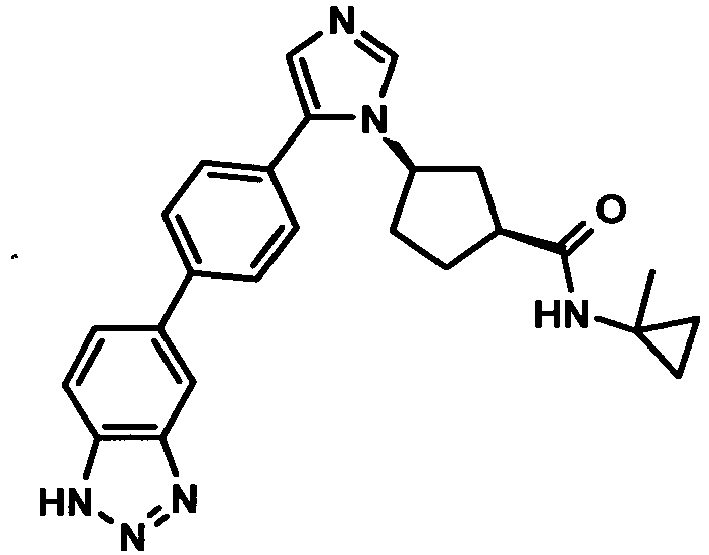
- (1S,3R)-3-{5-[4-(1H-indol-5-yl)-phenyl]-imidazol-1-yl}-cyclopentanecarboxylic acid (1-methyl-cyclopropyl)-amide ("A10")

- (1S,3R)-3-{5-[4-(1H-indazol-4-yl)-phenyl]-imidazol-1-yl}-cyclopentanecarboxylic acid (1-methyl-cyclopropyl)-amide ("A11")

- (1S,3R)-3-[5-(4'-cyano-biphenyl-4-yl)-imidazol-1-yl]-cyclopentanecarboxylic acid (1-methyl-cyclopropyl)-amide ("A12")

-

- R6 : Methyl, tert-Butyl, Benzyl, Allyl
- HX: HCl, CF3COOH, Pd/C/H2
- Z : H or boronic acid derivative
- "Pd" : Pd-Catalyst
- "Ru" Ruthenium-Catalyst
-

- 3.1 To a solution of (1S,3R)-3-(tert-butoxycarbonylamino)-cyclopentanecarboxylic acid (500 mg; 2,18 mmol) in dioxane (5 ml) was added 4 N HCl in dioxane (2.73 ml) at room temperature and the resulting mixture was stirred for 18 h. The reaction solution was evaporated to dryness and the crude (1S,3R)-3-amino-cyclopentanecarboxylic acid hydrochloride (365 mg) was used in the next step without further purification.
- 3.2 To (1S,3R)-3-amino-cyclopentanecarboxylic acid hydrochloride (365 mg) (365 mg; 2,2 mmol), copper(II)sulfate (7.03 mg; 0.044 mmol) and potassium carbonate (0.61 g, 4.42 mmol) in 20 ml methanol is added under nitrogen imidazole-1-sulfonyl azide hydrochloride (E.D. Goddard-Borger et. al., Organic Letters 2007 Vol 9, page 3797-3800) and the resulting mixture was stirred for 18 h at room temperature. Water (25 ml) and 2N HCl (10 ml) are added and the reaction mixture is extracted 2x with ethylacetate (75 ml). The combined organic layers are dried over Na2SO4, filtered, evaporated to dryness and the residue was purified by flash chromatography (dichloromethane:methanol 80:20) to yield 440 mg (88.8%) (1 S,3R)-3-azido-cyclopentanecarboxylic acid as a colourless thin oil; 1H NMR (400 MHz, DMSO-d6) δ 12.09 (s, 1 H), 4.06 (dtd, J = 7.6, 5.9, 4.6 Hz, 1 H), 2.84 - 2.70 (m, 1 H), 2.17 (ddd, J = 13.6, 9.3, 6.6 Hz, 1 H), 1.93 - 1.73 (m, 4H), 1.71 - 1.57 (m, 1 H).
- 3.3 A mixture of (1 S,3R)-3-azido-cyclopentanecarboxylic acid (435 mg; 1.96 mmol), pentamethylcyclopentadienylbis(triphenylphosphine)ruthenium-(II)chloride (31.25 mg; 0.04 mmol) and 1-bromo-4-ethynyl-benzene (532,92 mg; 2.94 mmol) was stirred for 1.5 h at 110 °C, then poured in ice water (100 ml) and saturated sodium chloride solution (50 ml) and exctracted 2x with ethylacetate (100 ml). The combined organic layers are dried over Na2SO4, filtered, evaporated to dryness and the residue was purified by flash chromatography (dichloromethane:methanol 80:20) to yield 330 mg (50%) (1S,3R)-3-[5-(4-bromo-phenyl)-[1,2,3]triazol-1-yl]-cyclopentanecarboxylic acid (6) as brown crystals; 1H NMR (400 MHz, DMSO-d6) δ 12.17 (s, 1 H), 7.87 (s, 1 H), 7.76 (d, J = 8.6 Hz, 2H), 7.47 (d, J = 8.6 Hz, 2H), 4.84 (p, J = 7.4 Hz, 1 H), 2.86 (p, J = 8.3 Hz, 1 H), 2.42 (dt, J = 12.9, 7.8 Hz, 1 H), 2.32 (ddd, J = 12.9, 9.6, 8.5 Hz, 1 H), 2.17 - 2.01 (m, 3H), 2.00 - 1.89 (m, 1 H).
- 3.4 The reaction of (1S,3R)-3-[5-(4-bromo-phenyl)-[1,2,3]triazol-1-yl]-cyclopentanecarboxylic acid (6) with ethylamine analogously to method 1.1 (example 1) yields (1S,3R)-3-[5-(4-bromo-phenyl)-[1,2,3]triazol-1-yl]-cyclopentanecarboxylic acid ethylamide (7) as yellow crystals; LC/MS: 363-365 (M+H).
- 3.5 The titel compound ("A13") is synthesized analogously to method 1.5 (example 1) from (1S,3R)-3-[5-(4-bromo-phenyl)-[1,2,3]triazol-1-yl]-cyclopentanecarboxylic acid ethylamide (7) and benzoxazole; LC/MS: M+H 402; 1H NMR (400 MHz, DMSO-d6): δ 8.35 (d, J = 8.4 Hz, 2H), 7.97 (s, 1 H), 7.85 (ddd, J = 9.4, 7.1, 1.5 Hz, 2H), 7.82 - 7.71 (m, 3H), 7.53 - 7.39 (m, 2H), 4.92 (p, J = 8.0 Hz, 1 H), 3.13 - 2.99 (m, 2H), 2.76 - 2.61 (m, 1 H), 2.34 (t, J = 9.3 Hz, 2H), 2.26 - 2.08 (m, 2H), 2.00 (dtd, J = 13.3, 9.0, 7.1 Hz, 1 H), 1.94 - 1.81 (m, 1 H), 1.01 (t, J = 7.2 Hz, 3H).
- The following compounds are synthesized analogously to method described in example 2 from ((1S,3R)-3-[5-(4-bromo-phenyl)-[1,2,3]triazol-1-yl]-cyclopentanecarboxylic acid ethylamide (7) (example 3.4) and an appropriate arylboronic acid derivative:
- (1S,3R)-3-[5-(4'-chloro-biphenyl-4-yl)-[1,2,3]triazol-1-yl]-cyclopentanecarboxylic acid ethylamide ("A14")

- (1S,3R)-3-[5-(4'-cyano-biphenyl-4-yl)-[1,2,3]triazol-1-yl]-cyclopentanecarboxylic acid ethylamide ("A15")

- (1S,3R)-3-{5-[4-(1H-indol-6-yl)-phenyl]-[1,2,3]triazol-1-yl}-cyclopentanecarboxylic acid ethylamide ("A16")

- The following compounds are synthesized from (1S,3R)-3-[5-(4-bromo-phenyl)-[1,2,3]triazol-1-yl]-cyclopentanecarboxylic acid (6) (example 3.3) analogously to methods described in 3.4 - 3.5 (example 3):
- (1S,3R)-3-[5-(4-benzoxazol-2-yl-phenyl)-[1,2,3]triazol-1-yl]-cyclopentanecarboxylic acid (1-methyl-cyclopropyl)-amide ("A17"):

- (1S,3R)-3-[5-(4-benzoxazol-2-yl-phenyl)-[1,2,3]triazol-1-yl]-cyclopentanecarboxylic acid propylamide ("A18"):

-

- R7 = methyl, ethyl, benzyl or allyl;
- HX: HCl, CF3COOH
- MOH : LiOH, NaOH, KOH
- Z : H or boronic acid derivative
- "Pd" : Pd-Catalyst
-

- 4.1 (1S,3R)-3-tert-butoxycarbonylamino-cyclopentanecarboxylic acid (1.0 g; 4,36 mmol), diphenylphosphorylazide (DPPA) (1,24 g; 4,36) and triethyl-amine (0.6 ml; 4,36 mmol) in 30 ml toluene were stirred at 80 °C for 1 h. Benzyl alcohol (BzlOH) (0,45 ml; 4,36 mmol) was added to the mixture, which was stirred at 110 °C for 14 h. The mixture was evaporated, the residue was dissolved in 10% aqueous sodium hydrogen carbonate solution (10 ml) and extracted 3x with ethyl acetate (10 ml). The combined organic layer were dried over Na2SO4, filtered, evaporated to dryness and the residue was purified by flash chromatography (n-heptane:ethylacetate=80:20) to yield 0,75 g (48,2%) ((1S,3R)-3-tert-butoxycarbonylamino-cyclopentyl)-carbamic acid benzyl ester (A) as beige solid; LC/MS : 235 (M+H-BOC).
- 4.2 A mixture of [(1S,3R)-3-(tert-butoxycarbonyl-methyl-amino)-cyclo-pentyl]-carbamic acid benzyl ester (A) (0,75 g; 2,24 mmol) and 5 % Pd/C (200 mg) in tetrahydrofuran (9 mL) was hydrogenated for 15.5 hrs. The reaction mixture was filtered through celite and concentrated to give ((1R,3S)-3-amino-cyclopentyl)-carbamic acid tert-butyl ester (B) (0,43 g; 95,7%) as a pale brown oil; LC/MS: 145 (M+H-t-Bu).
- 4.3 To the cooled (0 °C) solution of ((1R,3S)-3-amino-cyclopentyl)-carbamic acid tert-butyl ester (B) (0,43 g; 2,15 mmol) and triethylamine (0,56 ml; 4,3 mmol) in dichloromethane (40 ml) is added dropwise propionyl chloride (0,22 g; 2,36 mmol) dissolved in dichloromethane (10 ml). The mixture was stirred for 1 h at room temperature, washed with 5% NaHCO3 solution (10 ml) and brine (10 ml), dried over Na2SO4, filtered, and evaporated to dryness. The residue is purified by flash chromatography to yield ((1R,3S)-3-propionyl-amino-cyclopentyl)-carbamic acid tert-butyl ester (C) (0,45 g 81,8%) as a white solid; LC/MS : 157 (M+H-BOC).
- 4.4 To ((1R,3S)-3-propionylamino-cyclopentyl)-carbamic acid tert-butyl ester (C) (0,45 g; 1,75 mmol) in 15 ml of dichloromethane was added trifluoroacetic acid (3 ml; 39 mmol). The solution was stirred 3 h at room temperature and then reduced to dryness under vacuo to afford 0,68 g (100%) N-((1S,3R)-3-amino-cyclopentyl)-propionamide trifluoroacetate (D) as a a pale yellow powder; LC/MS: 157 (M+H).
- 4.5 Starting from N-((1S,3R)-3-amino-cyclopentyl)-propionamide trifluoroacetate (D)) and following the reaction sequence 1.3 - 1.4 (example 1) as described above in example (1) leads to N-{(1S,3R)-3-[5-(4-bromo-phenyl)-imidazol-1-yl]-cyclopentyl}-propionamide (E); LC/MS : 362 - 364 (M+H).
- 4.6 Treatment of N-{(1S,3R)-3-[5-(4-bromo-phenyl)-imidazol-1-yl]-cyclopentyl}-propionamide (E); with benzoxazole analogously to method 1.5 (example 1) leads to N-{(1S,3R)-3-[5-(4-benzoxazol-2-yl-phenyl)-imidazol-1-yl]-cyclopentyl}-propionamide ("A19") as colorless oil; LC/MS: 401 (M+H); 1H NMR (500 MHz, DMSO-d6) δ 8.29 (d, J = 8.4 Hz, 2H), 8.05 (s, 1H), 7.90 (d, J = 7.2 Hz, 1 H; NH), 7.86 - 7.80 (m, 2H), 7.67 (d, J = 8.4 Hz, 2H), 7.44 (pd, J = 7.4, 1.5 Hz, 2H), 7.14 (s, 1H), 4.63 (p, J = 7.9 Hz, 1 H), 4.09 (h, J = 7.3 Hz, 1 H), 2.59 - 2.49 (m, 1 H), 2.16 - 2.02 (m, 3H), 2.01 - 1.84 (m, 2H), 1.78 - 1.61 (m, 2H), 0.99 (t, J = 7.6 Hz, 3H).
-
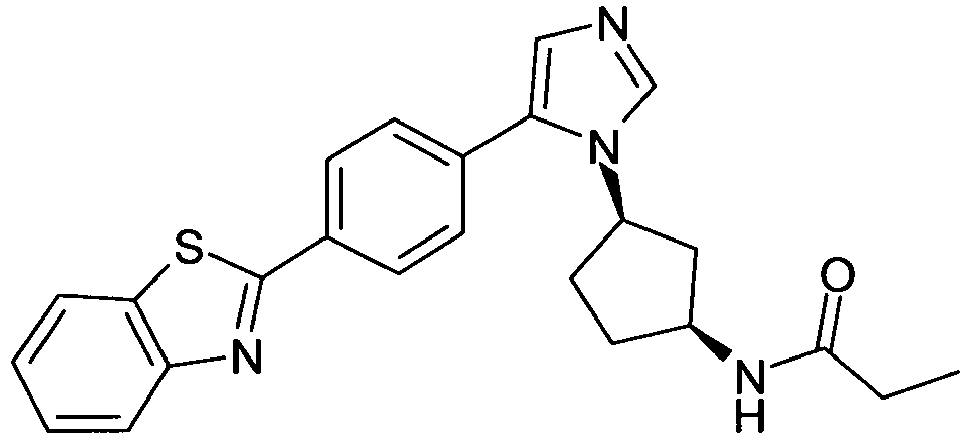
- Treatment of N-{(1S,3R)-3-[5-(4-bromo-phenyl)-imidazol-1-yl]-cyclopentyl}-propionamide (E) with benzothiazole analogously to method 1.5 (example 1) leads to N-{(1S,3R)-3-[5-(4-benzothiazol-2-yl-phenyl)-imidazol-1-yl]-cyclo-pentyl}-propionamide ("A20"); LC/MS: 417 (M+H); 1H NMR (500 MHz, DMSO-d6) δ 8.21 - 8.14 (m, 3H), 8.09 (d, J = 7.9 Hz, 1 H), 8.04 (s, 1 H), 7.90 (d, J = 7.2 Hz, 1 H; NH), 7.57 (td, J = 8.3, 7.8, 1.2 Hz, 1 H), 7.48 (td, J = 7.8, 1.1 Hz, 1H), 7.12 (s, 1 H), 4.62 (p, J = 7.9 Hz, 1H), 4.09 (h, J = 7.4 Hz, 1 H), 2.56 - 2.50 (m, 1 H), 2.15 - 2.03 (m, 3H), 2.03 - 1.81 (m, 2H), 1.79 - 1.60 (m, 2H), 0.99 (t, J = 7.6 Hz, 3H).
- The following compounds are synthesized analogously to method described in example 2 from N-{(1S,3R)-3-[5-(4-bromo-phenyl)-imidazol-1-yl]-cyclopentyl}-propionamide (E) and an appropriate arylboronic acid derivative:
- N-{(1S,3R)-3-[5-(4'-chloro-biphenyl-4-yl)-imidazol-1-yl]-cyclopentyl}-propionamide ("A21")

- N-((1S,3R)-3-{5-[4-(1H-indazol-4-yl)-phenyl]-imidazol-1-yl}-cyclopentyl)-propionamide ("A22")

-

- 6.1 Treatment of ((1S,3R)-3-tert-butoxycarbonylamino-cyclopentyl)-carbamic acid benzyl ester (A) (example 4.1) with 4N HCl in dioxane analogously to method 3.1 (example 3) leads to ((1S,3R)-3-amino-cyclopentyl)-carbamic acid benzyl ester hydrochloride; LC/MS : 235 (M+H).
- 6.2 Treatment of ((1S,3R)-3-amino-cyclopentyl)-carbamic acid benzyl ester hydrochloride (example 6.1) with imidazole-1-sulfonyl azide hydrochloride and copper(II)sulfate analogously to method 3.2 (example 3) leads to ((1S,3R)-3-azido-cyclopentyl)-carbamic acid benzyl ester; LC/MS: 233 (M+H-N2).
- 6.3 Treatment of ((1S,3R)-3-azido-cyclopentyl)-carbamic acid benzyl ester (example 6.2) with 1-bromo-4-ethynyl-benzene and [Cp*RuCl(PPh3)2] analogously to method 3.3 (example 3) leads to {(1S,3R)-3-[5-(4-bromophenyl)-[1,2,3]triazol-1-yl]-cyclopentyl}-carbamic acid benzyl ester (F); LC/MS: 441-443 (M+H).
- 6.4 Treatment of {(1S,3R)-3-[5-(4-bromo-phenyl)-[1,2,3]triazol-1-yl]-cyclopentyl}-carbamic acid benzyl ester (F) with benzoxazole analogously to method 1.5 (example 1) leads to {(1S,3R)-3-[5-(4-benzoxazol-2-yl-phenyl)-[1,2,3]triazol-1-yl]-cyclopentyl}-carbamic acid benzyl ester as pale brown crystals; LC/MS: 480 (M+H).
- 6.5 Hydrogenation of {(1S,3R)-3-[5-(4-benzoxazol-2-yl-phenyl)-[1,2,3]triazol-1-yl]-cyclopentyl}-carbamic acid benzyl ester analogously to method 4.2 (example 4) leads to (1S,3R)-3-[5-(4-benzoxazol-2-yl-phenyl)-[1,2,3]triazol-1-yl]-cyclopentylamine (G); LC/MS: 345 (M+H).
- 6.6 Treatment of (G) (example 6.5) with propionyl chloride analogously to method 4.3 (example 4) leads to N-{(1S,3R)-3-[5-(4-benzoxazol-2-yl-phenyl)-[1,2,3]triazol-1-yl]-cyclopentyl}-propionamide ("A23") as white foam; LC/MS: 402 (M+H); 1H NMR (500 MHz, DMSO-d6) δ 8.36 (d, J = 8.5 Hz, 0H), 7.98 (s, 1 H), 7.96 (d, J = 7.4 Hz, 1 H; NH), 7.88 - 7.81 (m, 2H), 7.76 (d, J = 8.5 Hz, 2H), 7.51 - 7.42 (m, 2H), 4.94 (q, J = 7.8 Hz, 1 H), 4.16 (h, J = 7.6 Hz, 1 H), 2.57 - 2.51 (m, 1 H), 2.17 (qd, J = 7.8, 7.2, 2.2 Hz, 2H), 2.10 - 2.01 (m, 3H), 1.96 (dq, J = 13.4, 6.9 Hz, 1 H), 1.78 (dq, J = 12.5, 8.3 Hz, 1 H).
N-{((1S,3R)-3-[5-(4-benzoxazol-2-yl-phenyl)-[1,2,3]triazol-1-yl]-cyclopentyl}-acetamide ("A24")
-

- 7.1 Starting from N-((1S,3R)-3-amino-cyclopentyl)-propionamide trifluoroacetate (D) (example 4.4) and following the reaction sequence 6.2 - 6.3 (example 6) leads to N-{(1S,3R)-3-[5-(4-bromo-phenyl)-[1,2,3]triazol-1-yl]-cyclopentyl}-propionamide (H); LC/MS: 364 (M+H).
- 7.2 N-{(1S,3R)-3-[5-(4'-chloro-biphenyl-4-yl)-[1,2,3]triazol-1-yl]-cyclopentyl}-propionamide ("A25") was synthesized analogously to method described in example 2 from N-{(1S,3R)-3-[5-(4-bromo-phenyl)-[1,2,3]triazol-1-yl]-cyclopentyl}-propionamide (H) (example 7.1) and 4-chlorophenylboronic acid; LC/MS: 395 (M+H);
"A25": 1H NMR (400 MHz, DMSO-d6) δ 7.97 (d, J = 7.4 Hz, 1 H; NH), 7.89 (s, 1 H), 7.85 (d, J = 8.5 Hz, 2H), 7.78 (d, J = 8.7 Hz, 2H), 7.60 (d, J = 8.5 Hz, 2H), 7.56 (d, J = 8.6 Hz, 2H), 4.90 (p, J = 7.9 Hz, 1 H), 4.14 (h, J = 7.7 Hz, 1 H), 2.21 - 2.11 (m, 2H), 2.12 - 2.02 (m, 3H), 1.96 (dq, J = 13.7, 7.0 Hz, 1 H), 1.78 (dq, J = 12.5, 8.1 Hz, 1 H), 0.99 (t, J = 7.6 Hz, 3H). - The following compounds are synthesized analogously to method described in example 7.2 from N-{(1S,3R)-3-[5-(4-bromo-phenyl)-[1,2,3]triazol-1-yl]-cyclopentyl}-propionamide (H) (example 7.1) and an appropriate arylboronic acid derivative:
- N-((1S,3R)-3-{5-[4-(1H-indazol-4-yl)-phenyl]-[1,2,3]triazol-1-yl}-cyclopentyl)-propionamide ("A26")

- N-((1S,3R)-3-{5-[4-(1H-indol-5-yl)-phenyl]-[1,2,3]triazol-1-yl}-cyclopentyl)-propionamide ("A27")
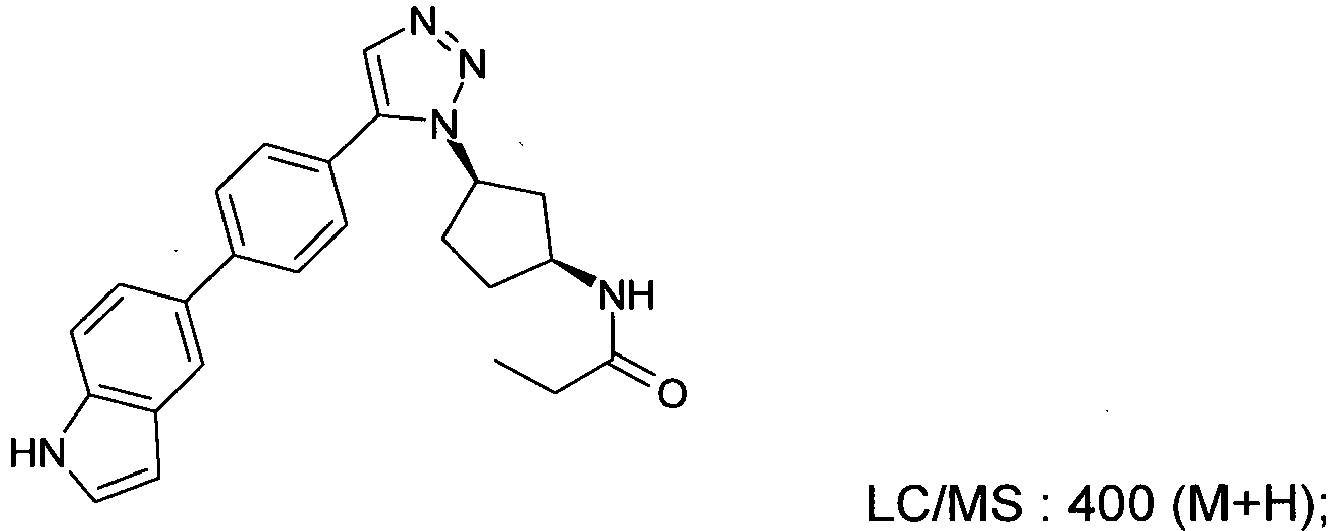
- N-{(1S,3R)-3-[5-(4-benzothiazol-2-yl-phenyl)-[1,2,3]triazol-1-yl]-cyclopentyl}-propionamide ("A28")

- Treatment of N-{(1S,3R)-3-[5-(4-bromo-phenyl)-[1,2,3]triazol-1-yl]-cyclopentyl}-propionamide (H) (example 7.1) with benzothiazole analogously to method 1.5 (example 1) leads to N-{(1S,3R)-3-[5-(4-benzothiazol-2-yl-phenyl)-[1,2,3]triazol-1-yl]-cyclopentyl}-propionamide ("A28"); LC/MS: 418 (M+H);
1H NMR (500 MHz, DMSO-d6) δ 8.26 (d, J = 8.3 Hz, 2H), 8.20 (d, J = 7.9 Hz, 1 H), 8.12 (d, J = 8.0 Hz, 1 H), 7.99 (d, J = 7.5 Hz, 1 H; NH), 7.97 (s, 1 H), 7.72 (d, J = 8.3 Hz, 2H), 7.59 (t, J = 7.7 Hz, 1 H), 7.51 (t, J = 8.0 Hz, 1 H), 4.94 (p, J = 7.8 Hz, 1 H), 4.15 (h, J = 7.6 Hz, 1 H), 2.57 - 2.51 (m, 1 H), 2.24 - 2.12 (m, 2H), 2.12 - 2.00 (m, 3H), 1.96 (dq, J = 13.6, 6.9 Hz, 1 H), 1.85 - 1.69 (m, 1 H), 0.99 (t, J = 7.6 Hz, 3H). -

- R9 = methyl, ethyl, butyl, isopropyl, phenyl or benzyl
-

- 8.1 (1S,3R)-3-[3-(4-bromo-phenyl)-[1,2,4]triazol-4-yl]-cyclopentanecarboxylic acid ethylamide (K) was synthesized from 4-bromo-benzoic acid hydrazid, dimethoxymethyl-dimethyl-amine and (1S,3R)-3-amino-cyclopentanecarboxylic acid ethylamide (2) (example 1.2) according to literature (M.J. Stocks et. Al., Org. Letters, 2004 Vol 6 (17) 2969-2971); LC/MS: 364 (M+H).
- 8.2 Treatment of (1S,3R)-3-[3-(4-bromo-phenyl)-[1,2,4]triazol-4-yl]-cyclopentanecarboxylic acid ethylamide (K) with benzoxazole analogously to method 1.5 (example 1) leads to (1 S,3R)-3-[3-(4-benzoxazol-2-yl-phenyl)-[1,2,4]triazol-4-yl]-cyclopentanecarboxylic acid ethylamide ("A29"); LC/MS: 402 (M+H);
1H NMR (500 MHz, DMSO-d6) δ 9.00 (s, 1 H), 8.37 (d, J = 8.4 Hz, 2H), 7.89 (d, J = 8.5 Hz, 2H), 7.88 - 7.79 (m, 3H), 7.53 - 7.38 (m, 2H), 4.68 (p, J = 7.6 Hz, 1 H), 3.14 - 3.04 (m, 2H), 2.77 - 2.65 (m, 1 H), 2.38 (dt, J = 13.0, 7.9 Hz, 1 H), 2.20 - 2.07 (m, 1 H), 2.09 - 1.78 (m, 4H), 1.02 (t, J = 7.2 Hz, 3H). - The following compounds are synthesized analogously to method described in example 7.2 from (1S,3R)-3-[3-(4-bromo-phenyl)-[1,2,4]triazol-4-yl]-cyclopentanecarboxylic acid ethylamide (K) (example 8.1) and an appropriate arylboronic acid derivative:
- (1S,3R)-3-{3-[4-(1H-indol-6-yl)-phenyl]-[1,2,4]triazol-4-yl}-cyclopentane-carboxylic acid ethylamide ("A30"):

- (1 S,3R)-3-[3-(4'-chloro-biphenyl-4-yl)-[1,2,4]triazol-4-yl]-cyclopentanecarboxylic acid ethylamide ("A31"):

- (1S,3R)-3-[3-(4'-cyano-biphenyl-4-yl)-[1,2,4]triazol-4-yl]-cyclopentanecarboxylic acid ethylamide ("A32"):

- (1S,3R)-3-[3-(4-benzothiazol-2-yl-phenyl)-[1,2,4]triazol-4-yl]-cyclopentanecarboxylic acid ethylamide ("A33"):

- (1S,3R)-3-[3-(4-benzothiazol-6-yl-phenyl)-[1,2,4]triazol-4-yl]-cyclopentanecarboxylic acid (1-methyl-cyclopropyl)-amide ("A34"):


- (1 S,3R)-3-[3-(4-benzoxazol-2-yl-phenyl)-5-methyl-[1,2,4]triazol-4-yl]-cyclopentanecarboxylic acid ethylamide ("A36"):
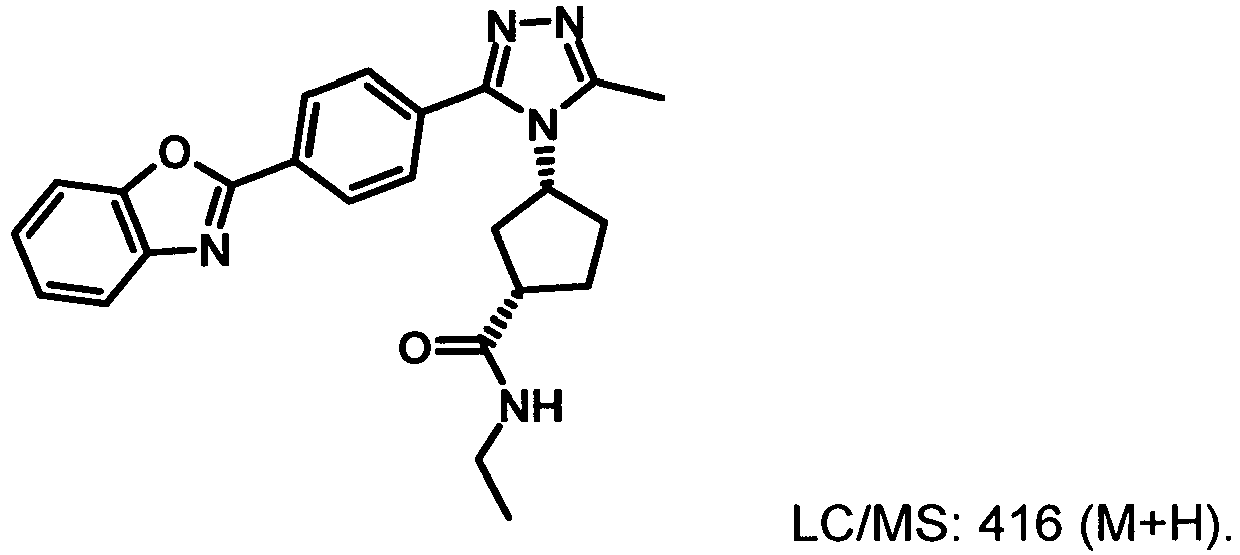
-

- 9.1 N-{(1S,3R)-3-[3-(4-bromo-phenyl)-[1,2,4]triazol-4-yl]-cyclopentyl}-propionamide (L) was synthesized from 4-bromo-benzoic acid hydrazid, dimethoxymethyl-dimethyl-amine and (1S,3R)-3-amino-cyclopentane-carboxylic acid ethylamide (2) (example 1.2) according to literature (M.J. Stocks et. al., Org. Letters, 2004 Vol 6 (17) 2969-2971); LC/MS: 364 (M+H).
- 9.2 Treatment of N-{(1S,3R)-3-[3-(4-bromo-phenyl)-[1,2,4]triazol-4-yl]-cyclopentyl}-propionamide (L) with benzoxazole analogously to method 1.5 (example 1) leads to N-{(1S,3R)-3-[3-(4-benzoxazol-2-yl-phenyl)-[1,2,4]triazol-4-yl]-cyclopentyl}-propionamide ("A37"); LC/MS: 402 (M+H); 1H NMR (500 MHz, DMSO-d6) δ 8.88 (s, 1 H), 8.37 (d, J = 8.5 Hz, 2H), 7.92 (d, J = 7.2 Hz, 1 H; NH), 7.90 - 7.85 (m, 3H), 7.85 - 7.82 (m, 1 H), 4.67 (p, J = 7.9 Hz, 1 H), 4.09 (h, J = 7.4 Hz, 1 H), 2.55 (dt, J = 13.3, 7.7 Hz, 1 H), 2.20 - 2.10 (m, 1 H), 2.07 (q, J = 7.6 Hz, 2H), 2.02 - 1.85 (m, 2H), 1.75 - 1.63 (m, 2H), 0.99 (t, J = 7.6 Hz, 3H).
-

- Treatment of N-{(1S,3R)-3-[3-(4-bromo-phenyl)-[1,2,4]triazol-4-yl]-cyclo-pentyl}-propionamide (L) (example 9.1) with benzothiazole analogously to method 1.5 (example 1) leads to N-{(1S,3R)-3-[3-(4-benzothiazol-2-yl-phenyl)-[1,2,4]triazol-4-yl]-cyclopentyl}-propionamide ("A38"); LC/MS: 418 (M+H).
- The following compounds are synthesized analogously to method described in example 7.2 from N-{(1S,3R)-3-[3-(4-bromo-phenyl)-[1,2,4]triazol-4-yl]-cyclopentyl}-propionamide (L) (example 9.1) and and appropriate arylboronic acid derivative:
- N-{(1S,3R)-3-[3-(4'-chloro-biphenyl-4-yl)-[1,2,4]triazol-4-yl]-cyclopentyl}-propionamide ("A39"):

- N-{(1S,3R)-3-[3-(4'-cyano-biphenyl-4-yl)-[1,2,4]triazol-4-yl]-cyclopentyl}-propionamide ("A40"):

- N-{(1S,3R)-3-[3-(4-benzoxazol-2-yl-phenyl)-5-ethyl-[1,2,4]triazol-4-yl]-cyclopentyl}-propionamide ("A41"):

- N-((1S,3R)-3-{3-[4-(1H-indazol-4-yl)-phenyl]-[1,2,4]triazol-4-yl}-cyclopentyl)-propionamide ("A42"):

- N-{(1S,3R)-3-[3-(4-benzothiazol-6-yl-phenyl)-[1,2,4]triazol-4-yl]-cyclopentyl}-propionamide ("A43"):

- N-((1S,3R)-3-{3-[4-(1H-indol-6-yl)-phenyl]-[1,2,4]triazol-4-yl}-cyclopentyl)-propionamide ("A44"):

-
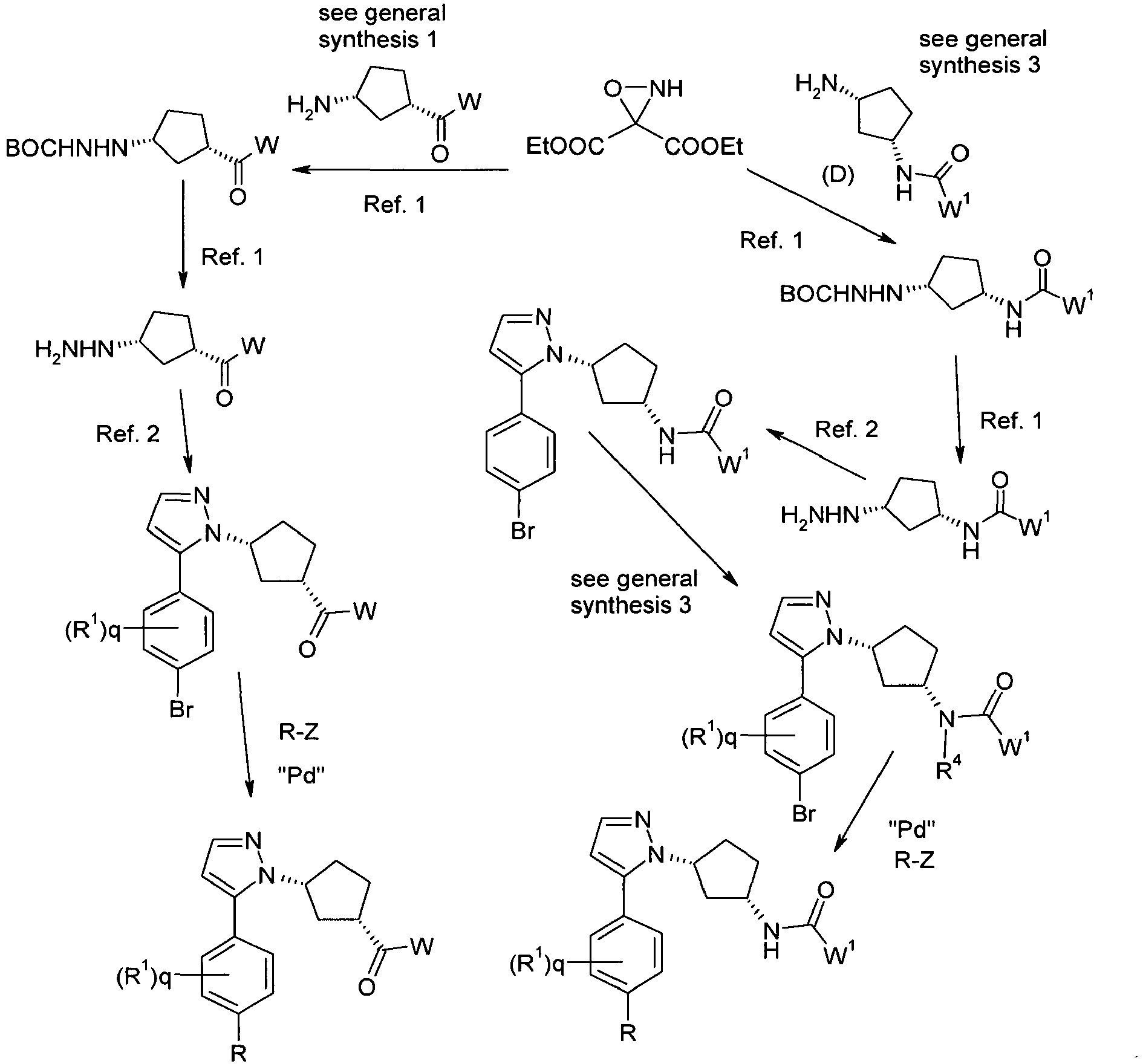
- Ref. 1 :Alan Armstrong et. al./ Organic Letters, 7(4), 713 - 716, (2005)
- Ref. 2 : C.P. Frizzo et al. / Catalysis Communications 10 (2009) 1967-1970
-

- 11.1 (1S,3R)-3-Hydrazino-cyclopentanecarboxylic acid ethylamide (M) was synthesized from oxaziridine-3,3-dicarboxylic acid diethyl ester and (1 S,3R)-3-amino-cyclopentanecarboxylic acid ethylamide (2) (example 1.2) according to literature (Alan Armstrong et. al. Organic Letters, 7(4), 713 - 716, (2005)); LC/MS: 172 (M+H).
- 11.2 Treatment of (1S,3R)-3-hydrazino-cyclopentanecarboxylic acid ethylamide (M) with (E)-1-(4-bromo-phenyl)-3-dimethylamino-propenone according to literature (C.P. Frizzo et al. / Catalysis Communications 10 (2009) 1967-1970) leads (1S,3R)-3-[5-(4-bromo-phenyl)-pyrazol-1-yl]-cyclopentanecarboxylic acid ethylamide (O); LC/MS: 363 (M+H).
- 11.3 Treatment of (1S,3R)-3-[5-(4-bromo-phenyl)-pyrazol-1-yl]-cyclopentanecarboxylic acid ethylamide (O) with benzoxazole analogously to method 1.5 (example 1) leads (1S,3R)-3-[5-(4-benzoxazol-2-yl-phenyl)-pyrazol-1-yl]-cyclopentanecarboxylic acid ethylamide ("A45"); LC/MS: 401 (M+H).
-

- Treatment of (1S,3R)-3-[5-(4-bromo-phenyl)-pyrazol-1-yl]-cyclopentanecarboxylic acid ethylamide (O) (example 11.2) with benzothiazole analogously to method 1.5 (example 1) leads N-{(1S,3R)-3-[5-(4-benzothiazol-2-yl-phenyl)-pyrazol-1-yl]-cyclopentyl}-propionamide ("A46"); LC/MS: 417 (M+H).
- The following compounds are synthesized analogously to method described in example 7.2 from (1S,3R)-3-[5-(4-Bromo-phenyl)-pyrazol-1-yl]-cyclopentanecarboxylic acid ethylamide (O) (example 11.2) and an appropriate Arylboronic acid derivative:
- (1S,3R)-3-{5-[4-(1H-Indazol-4-yl)-phenyl]-pyrazol-1-yl}-cyclopentanecarboxylic acid ethylamide ("A47")

- (1S,3R)-3-[5-(4-benzothiazol-6-yl-phenyl)-pyrazol-1-yl]-cyclopentanecarboxylic acid ethylamide ("A48")

- (1S,3R)-3-{5-[4-(1H-indol-6-yl)-phenyl]-pyrazol-1-yl}-cyclopentanecarboxylic acid ethylamide ("A49")

- (1S,3R)-3-[5-(4'-chloro-biphenyl-4-yl)-pyrazol-1-yl]-cyclopentanecarboxylic acid ethylamide ("A50")

- (1S,3R)-3-[5-(4'-cyano-biphenyl-4-yl)-pyrazol-1-yl]-cyclopentanecarboxylic acid ethylamide ("A51")

-

- 13.1 N-((1S,3R)-3-Hydrazino-cyclopentyl)-propionamide (N) was synthesized from oxaziridine-3,3-dicarboxylic acid diethyl ester and N-((1S,3R)-3-amino-cyclopentyl)-propionamide (D) (example 4.4) according to literature (Alan Armstrong et. al. Organic Letters, 7(4), 713 - 716, (2005)); LC/MS: 172 (M+H).
- 13.2 Treatment of N-((1S,3R)-3-hydrazino-cyclopentyl)-propionamide (N) with (E)-1-(4-bromo-phenyl)-3-dimethylamino-propenone according to literature (C.P. Frizzo et al. / Catalysis Communications 10 (2009) 1967-1970) leads to N-{(1S,3R)-3-[5-(4-bromo-phenyl)-pyrazol-1-yl]-cyclopentyl}-propion-amide (P); LC/MS: 363 (M+H).
- 13.3 Treatment of N-{(1S,3R)-3-[5-(4-bromo-phenyl)-pyrazol-1-yl]-cyclopentyl}-propionamide (P) with benzoxazole analogously to method 1.5 (example 1) leads to (1S,3R)-3-[5-(4-benzooxazol-2-yl-phenyl)-pyrazol-1-yl]-cyclopentanecarboxylic acid ethylamide ("A52"); LC/MS: 401 (M+H).
-

- Treatment of N-{(1S,3R)-3-[5-(4-bromo-phenyl)-pyrazol-1-yl]-cyclopentyl}-propionamide (P) (example 13.2) with benzothiazole analogously to method 1.5 (example 1) leads N-{(1S,3R)-3-[5-(4-benzothiazol-2-yl-phenyl)-pyrazol-1-yl]-cyclopentyl}-propionamide ("A53"); LC/MS: 417 (M+H).
- The following compounds are synthesized analogously to method described in example 7.2 from N-{(1S,3R)-3-[5-(4-bromo-phenyl)-pyrazol-1-yl]-cyclopentyl}-propionamide (P) (example 13.2) and an appropriate arylboronic acid derivative:
- N-{(1S,3R)-3-[5-(4'-cyano-biphenyl-4-yl)-pyrazol-1-yl]-cyclopentyl}-propionamide ("A54")
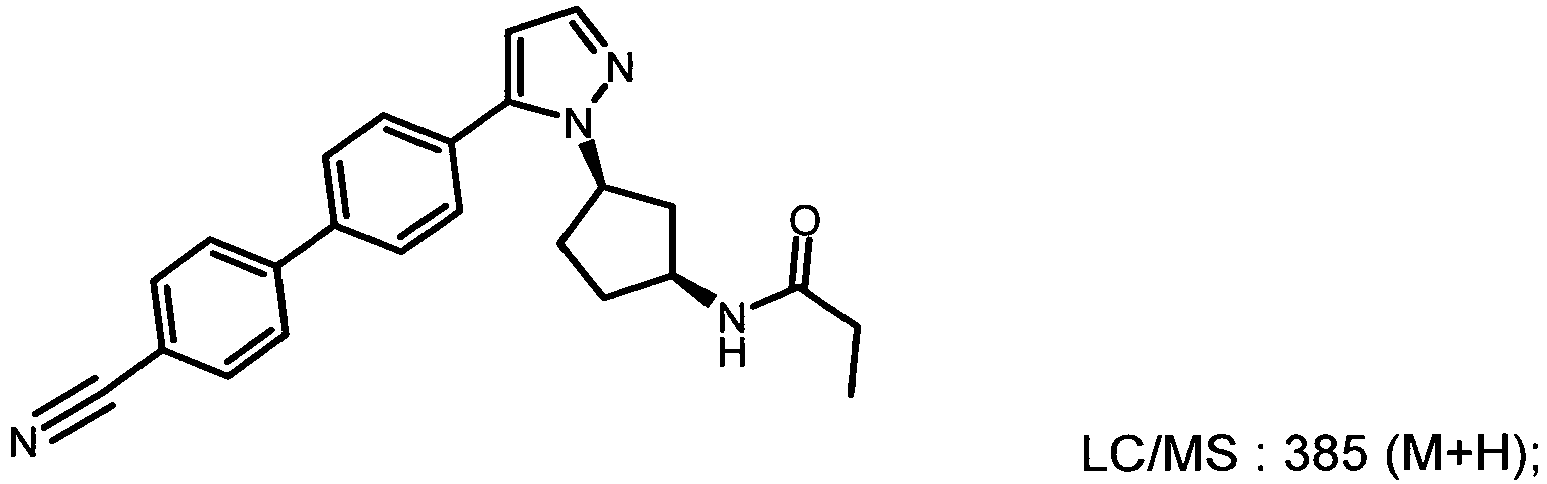
- (N-{(1S,3R)-3-[5-(4'-chloro-biphenyl-4-yl)-pyrazol-1-yl]-cyclopentyl}-propionamide ("A55")

- N-((1S,3R)-3-{5-[4-(1H-indazol-4-yl)-phenyl]-pyrazol-1-yl}-cyclopentyl)-propionamide ("A56")

- N-((1S,3R)-3-{5-[4-(1H-indol-6-yl)-phenyl]-pyrazol-1-yl}-cyclopentyl)-propionamide ("A57")

- N-{(1S,3R)-3-[5-(4'-Cyano-biphenyl-4-yl)-[1,2,3]triazol-1-yl]-cyclopentyl}-propionamide ("A58")
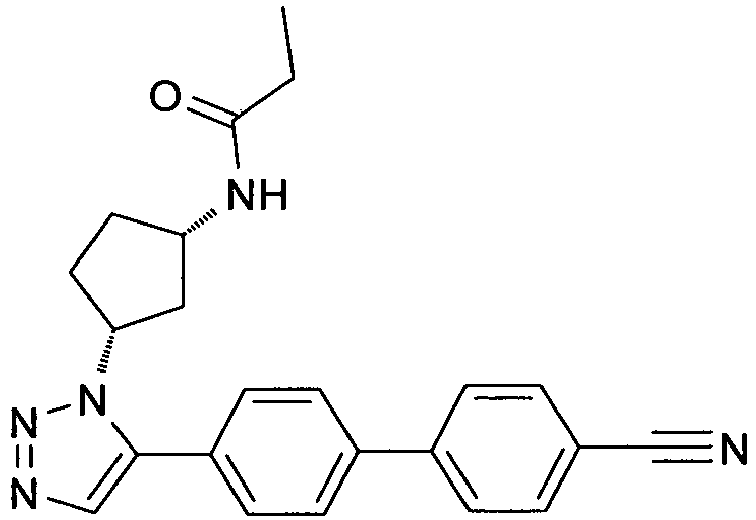
- N-((1S,3R)-3-{5-[4-(1H-Indol-6-yl)-phenyl]-[1,2,3]triazol-1-yl}-cyclopentyl)-propionamide ("A59")

- N-{(1S,3R)-3-[5-(4-Benzothiazol-6-yl-phenyl)-[1,2,3]triazol-1-yl]-cyclopentyl}-propionamide ("A60")

- N-((1S,3R)-3-{5-[4-(1-Methyl-1H-indazol-5-yl)-phenyl]-[1,2,3]triazol-1-yl}-cyclopentyl)-propionamide ("A61")

- N-{(1S,3R)-3-[5-(4'-Cyano-2'-fluoro-biphenyl-4-yl)-[1,2,3]triazol-1-yl]-cyclopentyl}-propionamide ("A62")

- N-((1S,3R)-3-{5-[4-(1-Methyl-1H-indazol-6-yl)-phenyl]-[1,2,3]triazol-1-yl}-cyclopentyl)-propionamide ("A63")

- N-((1S,3R)-3-{5-[4'-(1-Methyl-1H-pyrazol-4-yl)-biphenyl-4-yl]-[1,2,3]triazol-1-yl}-cyclopentyl)-propionamide ("A64")
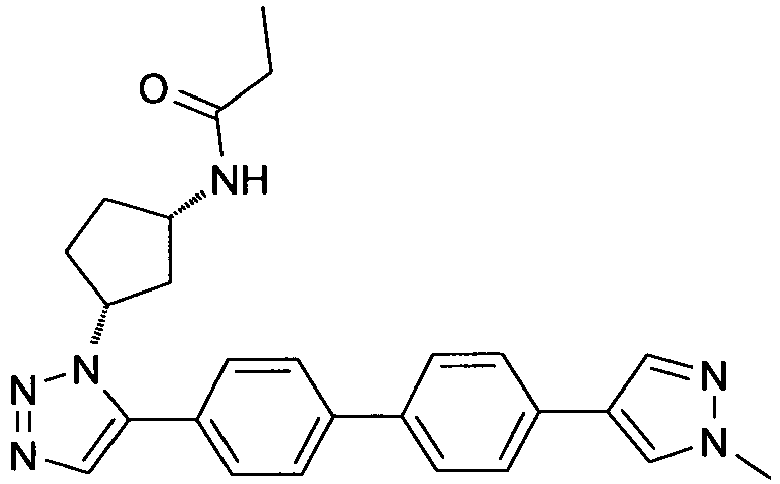
- (1S,3R)-3-[3-(4-Benzothiazol-6-yl-phenyl)-[1,2,4]triazol-4-yl]-cyclopentanecarboxylic acid ethylamide ("A65")

- Cyclopropanecarboxylic acid {(1S,3R)-3-[5-(4-benzooxazol-2-yl-phenyl)-[1,2,3]triazol-1-yl]-cyclopentyl}-amide ("A66")

- N-{(1S,3R)-3-[5-(4-Benzoxazol-2-yl-phenyl)-[1,2,3]triazol-1-yl]-cyclopentyl}-2-cyclopentyl-acetamide ("A67")

- (R)-Tetrahydro-furan-2-carboxylic acid {(1S,3R)-3-[5-(4-benzooxazol-2-yl-phenyl)-[1,2,3]triazol-1-yl]-cyclopentyl}-amide ("A68")

- (S)-Tetrahydro-furan-2-carboxylic acid {(1S,3R)-3-[5-(4-benzooxazol-2-yl-phenyl)-[1,2,3]triazol-1-yl]-cyclopentyl}-amide ("A69")

- N-{(1S,3R)-3-[5-(4-Quinolin-3-yl-phenyl)-[1,2,3]triazol-1-yl]-cyclopentyl}-propionamide ("A70")

- N-((1S,3R)-3-{5-[4-(1-Methyl-1H-indol-5-yl)-phenyl]-[1,2,3]triazol-1-yl}-cyclopentyl)-propionamide ("A71")

- N-((1S,3R)-3-{5-[4-(1H-Indazol-6-yl)-phenyl]-[1,2,3]triazol-1-yl}-cyclopentyl)-propionamide ("A72")

- N-((1S,3R)-3-{5-[4-(1H-Benzimidazol-5-yl)-phenyl]-[1,2,3]triazol-1-yl}-cyclopentyl)-propionamide ("A73")

- N-((1S,3R)-3-{5-[4-(1H-Indazol-5-yl)-phenyl]-[1,2,3]triazol-1-yl}-cyclopentyl)-propionamide ("A74")

- N-{(1S,3R)-3-[5-(4'-Chloro-3'-fluoro-biphenyl-4-yl)-[1,2,3]triazol-1-yl]-cyclopentyl}-propionamide ("A75")

- N-{(1S,3R)-3-[5-(4'-Pyrazol-1-yl-biphenyl-4-yl)-[1,2,3]triazol-1-yl]-cyclopentyl}-propionamide ("A76")

- N-((1S,3R)-3-{5-[4-(1-Methyl-2-oxo-2,3-dihydro-1H-indol-6-yl)-phenyl]-[1,2,3]triazol-1-yl}-cyclopentyl)-propionamide ("A77")

- N-((1S,3R)-3-{5-[4-(6-Methyl-1H-indazol-5-yl)-phenyl]-[1,2,3]triazol-1-yl}-cyclopentyl)-propionamide ("A78")

- N-((1S,3R)-3-{5-[4-(2-Oxo-2,3-dihydro-1H-indol-5-yl)-phenyl]-[1,2,3]triazol-1-yl}-cyclopentyl)-propionamide ("A79")

- N-{(1S,3R)-3-[5-(4'-Cyano-3'-fluoro-biphenyl-4-yl)-[1,2,3]triazol-1-yl]-cyclopentyl}-propionamide ("A80")

- N-{(1S,3R)-3-[5-(4'-Chloro-2'-fluoro-biphenyl-4-yl)-[1,2,3]triazol-1-yl]-cyclopentyl}-propionamide ("A81")

- N-{(1S,3R)-3-[5-(4'-Methoxy-2'-methyl-biphenyl-4-yl)-[1,2,3]triazol-1-yl]-cyclopentyl}-propionamide ("A82")

- N-{(1S,3R)-3-[5-(3'-Fluoro-4'-methyl-biphenyl-4-yl)-[1,2,3]triazol-1-yl]-cyclopentyl}-propionamide ("A83")

- N-{(1S,3R)-3-[5-(4'-Methyl-biphenyl-4-yl)-[1,2,3]triazol-1-yl]-cyclopentyl}-propionamide ("A84")

- N-{(1S,3R)-3-[5-(3'-Chloro-4'-fluoro-biphenyl-4-yl)-[1,2,3]triazol-1-yl]-cyclopentyl}-propionamide ("A85")

- N-{(1S,3R)-3-[5-(2',4'-Dimethoxy-biphenyl-4-yl)-[1,2,3]triazol-1-yl]-cyclopentyl}-propionamide ("A86")

- N-((1S,3R)-3-{5-[4-(2-Oxo-2,3-dihydro-1H-benzimidazol-5-yl)-phenyl]-[1,2,3]triazol-1-yl}-cyclopentyl)-propionamide ("A87")
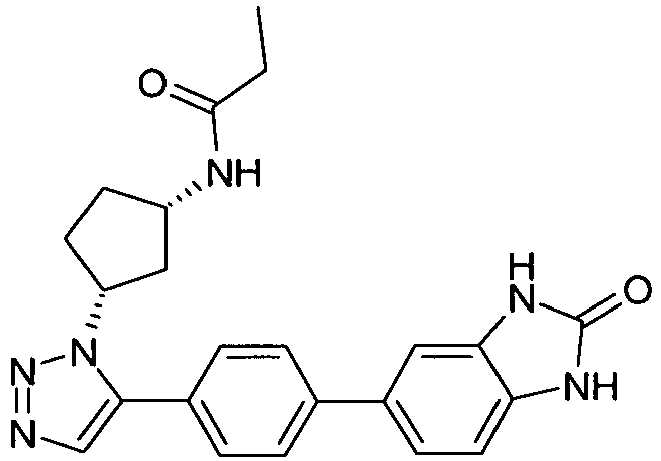
- N-{(1S,3R)-3-[5-(3',4'-Dimethoxy-biphenyl-4-yl)-[1,2,3]triazol-1-yl]-cyclopentyl}-propionamide ("A88")

- N-{(1S,3R)-3-[5-(2',4'-Dimethyl-biphenyl-4-yl)-[1,2,3]triazol-1-yl]-cyclopentyl}-propionamide ("A89")

- (S)-2,2-Dimethyl-[1,3]dioxolane-4-carboxylic acid {(1S,3R)-3-[5-(4-benzoxazol-2-yl-phenyl)-[1,2,3]triazol-1-yl]-cyclopentyl}-amide ("A90")

- N-((1S,3R)-3-{5-[4-(2-Oxo-2,3-dihydro-1H-indol-6-yl)-phenyl]-[1,2,3]triazol-1-yl}-cyclopentyl)-propionamide ("A91")

- N-{(1S,3R)-3-[5-(4'-Cyclopropylmethoxy-biphenyl-4-yl)-[1,2,3]triazol-1-yl]-cyclopentyl}-propionamide ("A92")

- (S)-N-{(1S,3R)-3-[5-(4-Benzoxazol-2-yl-phenyl)-[1,2,3]triazol-1-yl]-cyclopentyl}-2,3-dihydroxy-propionamide ("A93")

- N-{(1S,3R)-3-[3-(4'-Methoxy-2'-methyl-biphenyl-4-yl)-[1,2,4]triazol-4-yl]-cyclopentyl}-propionamide ("A94")

- N-{(1S,3R)-3-[3-(4'-Chloro-3'-fluoro-biphenyl-4-yl)-[1,2,4]triazol-4-yl]-cyclopentyl}-propionamide ("A95")

- N-{(1S,3R)-3-[3-(4'-Pyrazol-1-yl-biphenyl-4-yl)-[1,2,4]triazol-4-yl]-cyclopentyl}-propionamide ("A96")

- N-((1S,3R)-3-{3-[4-(1-Methyl-1H-indol-5-yl)-phenyl]-[1,2,4]triazol-4-yl}-cyclopentyl)-propionamide ("A97")
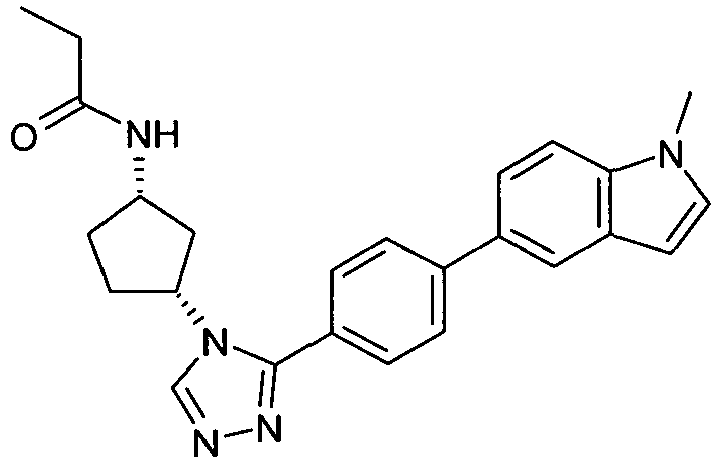
- N-((1 S,3R)-3-{3-[4-(6-Methyl-1H-indazol-5-yl)-phenyl]-[1,2,4]triazol-4-yl}-cyclopentyl)-propionamide ("A98")

- 4'-[3-((1R,3S)-3-Ethylcarbamoyl-cyclopentyl)-3H-[1,2,3]triazol-4-yl]-biphenyl-4-carboxylic acid amide ("A99")

- 4'-[3-((1R,3S)-3-Ethylcarbamoyl-cyclopentyl)-3H-[1,2,3]triazol-4-yl]-biphenyl-4-carboxylic acid ("A100")

- (1S,3R)-3-[5-(4'-Isopropyl-biphenyl-4-yl)-[1,2,3]triazol-1-yl]-cyclopentanecarboxylic acid ethylamide ("A101")

- (1S,3R)-3-[5-(3',4'-Dimethoxy-biphenyl-4-yl)-[1,2,3]triazol-1-yl]-cyclopentanecarboxylic acid ethylamide ("A102")

- (1S,3R)-3-[5-(4'-Cyclopropylmethoxy-biphenyl-4-yl)-[1,2,3]triazol-1-yl]-cyclopentanecarboxylic acid ethylamide ("A103")

- (1S,3R)-3-[5-(4'-Chloro-3'-fluoro-biphenyl-4-yl)-[1,2,3]triazol-1-yl]-cyclopentanecarboxylic acid ethylamide ("A104")
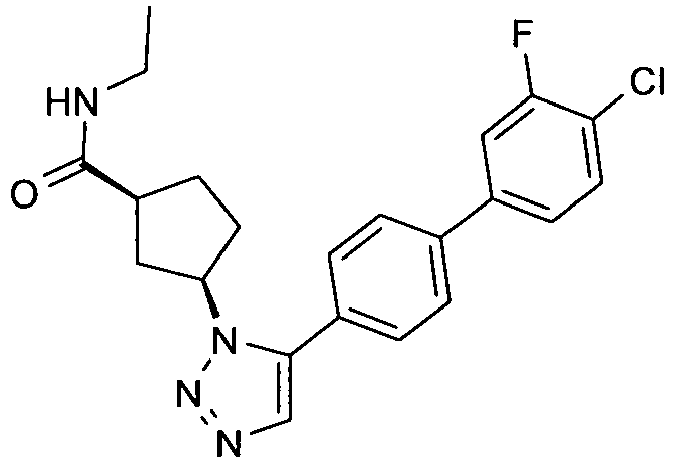
- (1S,3R)-3-[5-(4'-Cyano-3'-fluoro-biphenyl-4-yl)-[1,2,3]triazol-1-yl]-cyclopentanecarboxylic acid ethylamide ("A105")

- (1S,3R)-3-[5-(4'-Cyano-2'-fluoro-biphenyl-4-yl)-[1,2,3]triazol-1-yl]-cyclopentanecarboxylic acid ethylamide ("A106")

- N-((1S,3R)-3-{5-[6-(1H-Indol-5-yl)-pyridin-3-yl]-[1,2,3]triazol-1-yl}-cyclopentyl)-propionamide ("A107")

- N-((1S,3R)-3-{5-[6-(4-Fluoro-1H-indol-5-yl)-pyridin-3-yl]-[1,2,3]triazol-1-yl}-cyclopentyl)-propionamide ("A108")

- N-{(1S,3R)-3-[5-(6-Imidazo[1,2-a]pyridin-6-yl-pyridin-3-yl)-[1,2,3]triazol-1-yl]-cyclopentyl}-propionamide ("A109")

- N-((1S,3R)-3-{5-[4-(4-Fluoro-1H-indol-5-yl)-phenyl]-[1,2,3]triazol-1-yl}-cyclopentyl)-propionamide ("A110")

- N-{(1S,3R)-3-[5-(4-Imidazo[1,2-a]pyridin-6-yl-phenyl)-[1,2,3]triazol-1-yl]-cyclopentyl}-propionamide ("A111")

- N-((1S,3R)-3-{5-[4-(6-Fluoro-1H-indol-5-yl)-phenyl]-[1,2,3]triazol-1-yl}-cyclopentyl)-propionamide ("A112")

- N-((1S,3R)-3-{5-[4-(1H-Pyrrolo[3,2-b]pyridin-5-yl)-phenyl]-[1,2,3]triazol-1-yl}-cyclopentyl)-propionamide ("A113")

- N-((1S,3R)-3-{5-[5-(6-Chloro-benzoxazol-2-yl)-pyridin-2-yl]-[1,2,3]triazol-1-yl}-cyclopentyl)-propionamide ("A114")

- N-{(1S,3R)-3-[5-(5-Benzoxazol-2-yl-pyridin-2-yl)-[1,2,3]triazol-1-yl]-cyclopentyl}-propionamide ("A115")

- N-((1S,3R)-3-{5-[5-(4-Fluoro-1H-indol-5-yl)-pyridin-2-yl]-[1,2,3]triazol-1-yl}-cyclopentyl)-propionamide ("A116")

- N-((1S,3R)-3-{5-[5-(1H-indol-5-yl)-pyridin-2-yl]-[1,2,3]triazol-1-yl}-cyclopentyl)-propionamide ("A117")

- N-((1S,3R)-3-{5-[5-(1H-Pyrrolo[3,2-b]pyridin-5-yl)-pyridin-2-yl]-[1,2,3]triazol-1-yl}-cyclopentyl)-propionamide ("A118")

- N-((1S,3R)-3-{5-[3-Fluoro-4-(4-fluoro-1H-indol-5-yl)-phenyl]-[1,2,3]triazol-1-yl}-cyclopentyl)-propionamide ("A119")

- N-((1S,3R)-3-{5-[3-Fluoro-4-(6-fluoro-1H-indol-5-yl)-phenyl]-[1,2,3]triazol-1-yl}-cyclopentyl)-propionamide ("A120")

- N-((1S,3R)-3-{5-[6-(1H-Indol-6-yl)-pyridin-3-yl]-[1,2,3]triazol-1-yl}-cyclopentyl)-propionamide ("A121")

- N-((1S,3R)-3-{5-[6-(1-Methyl-1H-indol-6-yl)-pyridin-3-yl]-[1,2,3]triazol-1-yl}-cyclopentyl)-propionamide ("A122")

- N-((1S,3R)-3-{5-[6-(1H-lndazol-4-yl)-pyridin-3-yl]-[1,2,3]triazol-1-yl}-cyclopentyl)-propionamide ("A123")

-
Table 1 Inhibition of FASN of some representative compounds of the formula I Compound No. IC50 FASN (enzyme assay) Compound No. IC50 FASN (enzyme assay) "A1" A "A21" A "A2" A "A22" A "A3" A "A4" A "A24" A "A5" Inhibition: -44% at 3 µM "A25" A "A6" A "A26" A "A7" A "A27" A "A8" B "A28" A "A9" A "A29" A "A10" A "A30" A "A11" A "A31" A "A12" B "A32" A "A13" A "A33" A "A14" A "A15" A "A35" A "A16" A "A36" "A37" A "A38" "A19" A "A39" A "A20" A "A40" A "A41" "A42" A "A43" A "A44" A "A58" A "A59" A "A60" A "A61" A "A71" A "A62" A "A72" A "A63" A "A73" A "A64" A "A74" A "A65" A "A75" A "A66" A "A76" A "A67" B "A77" A "A68" B "A78" A "A69" A "A79" A "A70" A "A80" A "A81" A "A91" A "A82" A "A92" A "A83" A "A93" B "A84" A "A94" A "A85" A "A95" A "A86" A "A96" A "A87" A "A97" A "A88" A "A98" A "A89" A "A99" B "A90" A "A100" B "A111" A "A102" A "A112" A "A103" A "A113" A "A104" A "A114" B "A105" A "A115" A "A106" A "A116" A "A107" A "A117" A "A108" A "A118" A "A109" B "A119" A "A110" A "A120" A "A121" A "A122" B "A123" B IC50: <0.3 µM = A 0.3 - 3 µM = B 3-50 µM = C - The compounds shown in Table 1 are particularly preferred compounds according to the invention.
- The following examples relate to medicaments:
- A solution of 100 g of an active ingredient of the formula I and 5 g of disodium hydrogenphosphate in 3 I of bidistilled water is adjusted to pH 6.5 using 2 N hydrochloric acid, sterile filtered, transferred into injection vials, lyophilised under sterile conditions and sealed under sterile conditions. Each injection vial contains 5 mg of active ingredient.
- A mixture of 20 g of an active ingredient of the formula I with 100 g of soya lecithin and 1400 g of cocoa butter is melted, poured into moulds and allowed to cool. Each suppository contains 20 mg of active ingredient.
- A solution is prepared from 1 g of an active ingredient of the formula I, 9.38 g of NaH2PO4 · 2 H2O, 28.48 g of Na2HPO4 · 12 H2O and 0.1 g of benzalkonium chloride in 940 ml of bidistilled water. The pH is adjusted to 6.8, and the solution is made up to 1 I and sterilised by irradiation. This solution can be used in the form of eye drops.
- 500 mg of an active ingredient of the formula I are mixed with 99.5 g of Vaseline under aseptic conditions.
- A mixture of 1 kg of active ingredient of the formula I, 4 kg of lactose, 1.2 kg of potato starch, 0.2 kg of talc and 0.1 kg of magnesium stearate is pressed in a conventional manner to give tablets in such a way that each tablet contains 10 mg of active ingredient.
- Tablets are pressed analogously to Example E and subsequently coated in a conventional manner with a coating of sucrose, potato starch, talc, tragacanth and dye.
- 2 kg of active ingredient of the formula I are introduced into hard gelatine capsules in a conventional manner in such a way that each capsule contains 20 mg of the active ingredient.
- A solution of 1 kg of active ingredient of the formula I in 60 I of bidistilled water is sterile filtered, transferred into ampoules, lyophilised under sterile conditions and sealed under sterile conditions. Each ampoule contains 10 mg of active ingredient.
a base or acid of the formula I is converted into one of its salts.
Claims (15)
- Compounds of the formula I
 R denotes Ar or Het,Y denotes -CO-W or -N(R4)CO-W1,W denotes NR2R2', Het1, CH2Het1, A, Cyc, Ar or CH2Ar, -CONR2R2' or Het1,W1 denotes NR2R2', Het1, CH2Het1, A, Cyc, Ar, CH2Ar, CH2Cyc or CH(OH)CH2OH,R1 denotes H, F, Cl, Br, OH, CN, NO2, A', OA', SA', SO2Me, COA', CONH2, CONHA' or CONA'2,R2, R2' each, independently of one another, denote H, A or [C(R3)2]nCyc,X1, X2, X3 each, independently of one another, denote CR8 or N,X4 denotes CR8 or N,X5 denotes CR8 or N,R4 denotes H or A',A denotes unbranched or branched alkyl with 1-10 C-atoms, wherein two adjacent carbon atoms may form a double bond and/or one or two non-adjacent CH- and/or CH2-groups may be replaced by N-, O- and/or S-atoms and wherein 1-7 H-atoms may be replaced by R5,Cyc denotes cycloalkyl with 3-7 C-atoms, which is unsubstituted or monosubstituted by OH, Hal or A,A' denotes unbranched or branched alkyl with 1-6 C-atoms, wherein 1-5 H-atoms may be replaced by F,R5 denotes F, Cl or OH,Ar denotes phenyl, which is unsubstituted or mono-, di-, tri-, tetra- or pentasubstituted by Hal, A, O[C(R3)2]nHet1, Ar1, [C(R3)2]pOR3, [C(R3)2]pN(R3)2, NO2, CN, [C(R3)2]pCOOR3, CON(R3)2, Het1, OCH2Cyc, [C(R3)2]pN(R3)2, N(R3)2COA, NR3SO2A, [C(R3)2]pSO2N(R3)2, S(O)nA, O[C(R3)2]mN(R3)2, NHCOOA, NHCON(R3)2 and/or COA,Ar1 denotes phenyl or naphthyl, which is unsubstituted or mono-, di-, tri-, tetra- or pentasubstituted by Hal, A, [C(R3)2]pOR3, [C(R3)2]pN(R3)2, NO2, CN, [C(R3)2]pCOOR3, [C(R3)2]pN(R3)2, N(R3)2COA, NR3SO2A, [C(R3)2]pSO2N(R3)2, S(O)nA, O[C(R3)2]mN(R3)2, NHCOOA, NHCON(R3)2 and/or COA,R3 denotes H or unbranched or branched alkyl with 1-6 C-atoms,R8 denotes H or A',Het denotes a mono- or bicyclic saturated, unsaturated or aromatic heterocycle having 1 to 4 N, O and/or S atoms, which is unsubstituted or mono-, di-, tri-, tetra- or pentasubstituted by Hal, A, [C(R3)2]nOA', [C(R3)2]nN(R3)2, SR3, NO2, CN, COOR3, CON(R3)2, COHet1, NR3COA, NR3SO2A, SO2N(R3)2, S(O)nA, O[C(R3)2]mN(R3)2, NHCOOA, NHCON(R3)2, CHO, COA, =S, =NH, =NA and/or =O (carbonyl oxygen),Het1 denotes a mono- or bicyclic saturated, unsaturated or aromatic heterocycle having 1 to 4 N, O and/or S atoms, which is unsubstituted or mono-, di-, tri-, tetra- or pentasubstituted by Hal, A, [C(R3)2]nOR3, [C(R3)2]nN(R3)2, SR3, NO2, CN, COOR3, CON(R3)2, NR3COA, NR3SO2A, SO2N(R3)2, S(O)nA, O[C(R3)2]mN(R3)2, NHCOOA, NHCON(R3)2, CHO, COA, =S, =NH, =NA and/or =O (carbonyl oxygen),Hal denotes F, Cl, Br or I,m denotes 1, 2 or 3,n denotes 0, 1 or 2,p denotes 0, 1, 2, 3 or 4,q denotes 0, 1, 2 or 3,and pharmaceutically acceptable salts, tautomers and stereoisomers thereof, including mixtures thereof in all ratios.
 - Compounds according to Claim 1 in whichR4 denotes H,and pharmaceutically acceptable salts, tautomers and stereoisomers thereof, including mixtures thereof in all ratios.
- Compounds according to Claim 1 or 2, in whichA denotes unbranched or branched alkyl with 1-6 C-atoms,and pharmaceutically acceptable salts, tautomers and stereoisomers thereof, including mixtures thereof in all ratios.
- Compounds according to one or more of Claims 1-3, in whichAr denotes phenyl, which is unsubstituted or mono-, di- or trisubstituted by Hal, A, Het1, [C(R3)2]pOR3, [C(R3)2]pCOOR3, OCH2Cyc, CON(R3)2 and/or CN,and pharmaceutically acceptable salts, tautomers and stereoisomers thereof, including mixtures thereof in all ratios.
- Compounds according to one or more of Claims 1-4, in whichHet denotes a mono- or bicyclic aromatic heterocycle having 1 to 4 N, O and/or S atoms, which is unsubstituted or mono- or disubstituted by Hal, A and/or =O,and pharmaceutically acceptable salts, tautomers and stereoisomers thereof, including mixtures thereof in all ratios.
- Compounds according to one or more of Claims 1-5, in whichHet denotes furyl, thienyl, pyrrolyl, imidazolyl, pyrazolyl, oxazolyl, isoxazolyl, thiazolyl, isothiazolyl, pyridyl, pyrimidinyl, triazolyl, tetrazolyl, oxadiazolyl, thiadiazolyl, pyridazinyl, pyrazinyl, benzoxazolyl, benzothiazolyl, benzimidazolyl, benzotriazolyl, indolyl, benzo-1,3-dioxolyl, benzodioxanyl, benzothiadiazolyl, indazolyl, benzofuranyl, quinolyl, isoquinolyl, pyrrolo[2,3-b]pyridyl, oxazolo[5,4-b]pyridyl, imidazo[1,2-a]pyrimidinyl, 2,3-dihydro-indolyl, 2,3-dihydro-benzimidazolyl, imidazo[1,2-a]pyridyl, pyrrolo[3,2-b]pyridyl or oxazolo[5,4-c]pyridyl, each of which is unsubstituted or mono- or disubstituted by Hal, A and/or =O,and pharmaceutically acceptable salts, tautomers and stereoisomers thereof, including mixtures thereof in all ratios.
- Compounds according to one or more of Claims 1-6, in whichHet1 denotes furyl, thienyl, pyrrolyl, imidazolyl, pyrazolyl, oxazolyl, isoxazolyl, thiazolyl, isothiazolyl, pyridyl, pyrimidinyl, triazolyl, tetrazolyl, oxadiazolyl, thiadiazolyl, pyridazinyl, pyrazinyl, tetrahydrofuranyl, [1,3]dioxolanyl, pyrrolidinyl, piperidinyl or morpholinyl, each of which is unsubstituted or mono- or disubstituted by Hal, A and/or =O,and pharmaceutically acceptable salts, tautomers and stereoisomers thereof, including mixtures thereof in all ratios.
- Compounds according to one or more of Claims 1-7, in whichR denotes Ar or Het,Y denotes -CO-W or -N(R4)CO-W1,W denotes NR2R2',W1 denotes A, Cyc, Het1, CH2Cyc or CH(OH)CH2OHR1 denotes H or F,R2,R2' each, independently of one another, denote H, A or [C(R3)2]nCyc,X1, X2, X3 each, independently of one another, denote CR8 or N,X4 denotes CR8 or N,X5 denotes CR8 or N,R4 denotes H,A denotes unbranched or branched alkyl with 1-6 C-atoms,Cyc denotes cycloalkyl with 3-7 C-atoms, which is unsubstituted or monosubstituted by A,A' denotes unbranched or branched alkyl with 1-6 C-atoms,Ar denotes phenyl, which is unsubstituted or mono-, di- or trisubstituted by Hal, A, Het1, [C(R3)2]pOR3, [C(R3)2]pCOOR3, OCH2Cyc, CON(R3)2 and/or CN,R3 denotes H or unbranched or branched alkyl with 1-6 C-atoms,R8 denotes H or A',Het denotes a mono- or bicyclic aromatic heterocycle having 1 to 4 N, O and/or S atoms, which is unsubstituted or mono- or disubstituted by Hal, A and/or =O,Het1 denotes furyl, thienyl, pyrrolyl, imidazolyl, pyrazolyl, oxazolyl, isoxazolyl, thiazolyl, isothiazolyl, pyridyl, pyrimidinyl, triazolyl, tetrazolyl, oxadiazolyl, thiadiazolyl, pyridazinyl, pyrazinyl, tetrahydrofuranyl, [1,3]dioxolanyl, pyrrolidinyl, piperidinyl or morpholinyl, each of which is unsubstituted or mono- or disubstituted by Hal, A and/or =O,Hal denotes F, Cl, Br or I,n denotes 0, 1 or 2,p denotes 0, 1, 2, 3 or 4,q denotes 1,and pharmaceutically acceptable salts, tautomers and stereoisomers thereof, including mixtures thereof in all ratios.
- Compounds according to Claim 1, selected from the group
No. Name "A1" 4-(1,3-benzoxazol-2-yl)-N-[(1R,3S)-3-(ethylcarbamoyl)cyclopentyl]-N-methyl-benzamide "A2" (1 S,3R)-3-(5-biphenyl-4-yl-imidazol-1-yl)-cyclopentanecarboxylic acid ethylamide "A3" (1S,3R)-3-[5-(4'-Chloro-biphenyl-4-yl)-imidazol-1-yl]-cyclopentanecarboxylic acid ethylamide "A4" (1 S,3R)-3-[5-(4-benzoxazol-2-yl-phenyl)-imidazol-1-yl]-cyclopentanecarboxylic acid (1-methyl-cyclopropyl)-amide "A5" (1S,3R)-3-{5-[4-(1H-pyrrolo[2,3-b]pyridin-5-yl)-phenyl]-imidazol-1-yl}-cyclopentanecarboxylic acid (1-methylcyclopropyl)-amide "A6" (1S,3R)-3-[5-(4-benzothiazol-6-yl-phenyl)-imidazol-1-yl]-cyclopentanecarboxylic acid (1-methyl-cyclopropyl)-amide amide "A7" (1S,3R)-3-{5-[4-(1H-indol-6-yl)-phenyl]-imidazol-1-yl}-cyclopentanecarboxylic acid (1-methyl-cyclopropyl)-amide "A8" (1S,3R)-3-{5-[4-(5-fluoro-1H-indol-2-yl)-phenyl]-imidazol-1-yl}-cyclopentanecarboxylic acid (1-methyl-cyclopropyl)-amide "A9" (1S,3R)-3-{5-[4-(1H-benzotriazol-5-yl)-phenyl]-imidazol-1-yl}-cyclopentanecarboxylic acid (1-methyl-cyclopropyl)-amide "A10" (1S,3R)-3-{5-[4-(1H-indol-5-yl)-phenyl]-imidazol-1-yl}-cyclopentanecarboxylic acid (1-methyl-cyclopropyl)-amide "A11" (S,3R)-3-{5-[4-(1H-indazol-4-yl)-phenyl]-imidazol-1-yl}-cyclopentanecarboxylic acid (1-methyl-cyclopropyl)-amide "A12" (1S,3R)-3-[5-(4'-cyano-biphenyl-4-yl)-imidazol-1-yl]-cyclopentanecarboxylic acid (1-methyl-cyclopropyl)-amide "A 13" (1S,3R)-3-[5-(4-benzoxazol-2-yl-phenyl)-[1,2,3]triazol-1-yl]-cyclopentanecarboxylic acid ethylamide "A14" (1S,3R)-3-[5-(4'-chloro-biphenyl-4-yl)-[1,2,3]triazol-1-yl]-cyclopentanecarboxylic acid ethylamide "A15" (1S,3R)-3-[5-(4'-cyano-biphenyl-4-yl)-[1,2,3]triazol-1-yl]-cyclopentanecarboxylic acid ethylamide "A16" (1S,3R)-3-{5-[4-(1H-indol-6-yl)-phenyl]-[1,2,3]triazol-1-yl}-cyclopentanecarboxylic acid ethylamide "A 17" (1S,3R)-3-[5-(4-benzoxazol-2-yl-phenyl)-[1,2,3]triazol-1-yl]-cyclopentanecarboxylic acid (1-methyl-cyclopropyl)-amide "A18" (1S,3R)-3-[5-(4-benzoxazol-2-yl-phenyl)-[1,2,3]triazol-1-yl]-cyclopentanecarboxylic acid propylamide "A19" N-{(1S,3R)-3-[5-(4-benzoxazol-2-yl-phenyl)-imidazol-1-yl]-cyclopentyl}-propionamide "A20" N-{(1S,3R)-3-[5-(4-benzothiazol-2-yl-phenyl)-imidazol-1-yl]-cyclopentyl}-propionamide "A21" N-{(1S,3R)-3-[5-(4'-chloro-biphenyl-4-yl)-imidazol-1-yl]-cyclopentyl}-propionamide "A22" N-((1S,3R)-3-{5-[4-(1H-indazol-4-yl)-phenyl]-imidazol-1-yl}-cyclopentyl)-propionamide "A23" N-{(1S,3R)-3-[5-(4-benzoxazol-2-yl-phenyl)-[1,2,3]triazol-1-yl]-cyclopentyl}-propionamide "A24" N-{(1S,3R)-3-[5-(4-benzoxazol-2-yl-phenyl)-[1,2,3]triazol-1-yl]-cyclopentyl}-acetamide "A25" N-{(1S,3R)-3-[5-(4'-chloro-biphenyl-4-yl)-[1,2,3]triazol-1-yl]-cyclopentyl}-propionamide "A26" N-((1S,3R)-3-{5-[4-(1H-indazol-4-yl)-phenyl]-[1,2,3]triazol-1-yl}-cyclopentyl)-propionamide "A27" N-((1S,3R)-3-{5-[4-(1H-indol-5-yl)-phenyl]-[1,2,3]triazol-1-yl}-cyclopentyl)-propionamide "A28" N-{(1S,3R)-3-[5-(4-benzothiazol-2-yl-phenyl)-[1,2,3]triazol-1-yl]-cyclopentyl}-propionamide "A29" (1S,3R)-3-[3-(4-benzoxazol-2-yl-phenyl)-[1,2,4]triazol-4-yl]-cyclopentanecarboxylic acid ethylamide "A30" (1S,3R)-3-{3-[4-(1H-indol-6-yl)-phenyl]-[1,2,4]triazol-4-yl}-cyclopentanecarboxylic acid ethylamide "A31" (1S,3R)-3-[3-(4'-chloro-biphenyl-4-yl)-[1,2,4]triazol-4-yl]-cyclopentanecarboxylic acid ethylamide "A32" (1S,3R)-3-[3-(4'-cyano-biphenyl-4-yl)-[1,2,4]triazol-4-yl]-cyclopentanecarboxylic acid ethylamide "A33" (1S,3R)-3-[3-(4-benzothiazol-2-yl-phenyl)-[1,2,4]triazol-4-yl]-cyclopentanecarboxylic acid ethylamide "A34" (1 S,3R)-3-[3-(4-benzothiazol-6-yl-phenyl)-[1,2,4]triazol-4-yl]-cyclopentanecarboxylic acid (1-methyl-cyclopropyl)-amide "A35" (1S,3R)-3-{3-[4-(1H-indazol-4-yl)-phenyl]-[1,2,4]triazol-4-yl}-cyclopentanecarboxylic acid ethylamide "A36" (1S,3R)-3-[3-(4-benzoxazol-2-yl-phenyl)-5-methyl-[1,2,4]triazol-4-yl]-cyclopentanecarboxylic acid ethylamide "A37" N-{(1S,3R)-3-[3-(4-benzoxazol-2-yl-phenyl)-[1,2,4]triazol-4-yl]-cyclopentyl}-propionamide "A38" N-{(1S,3R)-3-[3-(4-benzothiazol-2-yl-phenyl)-[1,2,4]triazol-4-yl]-cyclopentyl}-propionamide "A39" N-{(1S,3R)-3-[3-(4'-chloro-biphenyl-4-yl)-[1,2,4]triazol-4-yl]-cyclopentyl}-propionamide "A40" N-{(1S,3R)-3-[3-(4'-cyano-biphenyl-4-yl)-[1,2,4]triazol-4-yl]-cyclopentyl}-propionamide "A41" N-{(1S,3R)-3-[3-(4-benzoxazol-2-yl-phenyl)-5-ethyl-[1,2,4]triazol-4-yl]-cyclopentyl}-propionamide "A42" N-((1S,3R)-3-{3-[4-(1 H-indazol-4-yl)-phenyl]-[1,2,4]triazol-4-yl}-cyclopentyl)-propionamide "A43" N-{(1S,3R)-3-[3-(4-benzothiazol-6-yl-phenyl)-[1,2,4]triazol-4-yl]-cyclopentyl}-propionamide "A44" N-((1S,3R)-3-{3-[4-(1H-indol-6-yl)-phenyl]-[1,2,4]triazol-4-yl}-cyclopentyl)-propionamide "A45" (1S,3R)-3-[5-(4-benzoxazol-2-yl-phenyl)-pyrazol-1-yl]-cyclopentanecarboxylic acid ethylamide "A46" N-{(1S,3R)-3-[5-(4-benzothiazol-2-yl-phenyl)-pyrazol-1-yl]-cyclopentyl}-propionamide "A47" (1S,3R)-3-{5-[4-(1H-lndazol-4-yl)-phenyl]-pyrazol-1-yl}-cyclopentanecarboxylic acid ethylamide "A48" (1S,3R)-3-[5-(4-benzothiazol-6-yl-phenyl)-pyrazol-1-yl]-cyclopentanecarboxylic acid ethylamide "A49" (1S,3R)-3-{5-[4-(1H-indol-6-yl)-phenyl]-pyrazol-1-yl}-cyclopentanecarboxylic acid ethylamide "A50" (1S,3R)-3-[5-(4'-chloro-biphenyl-4-yl)-pyrazol-1-yl]-cyclopentanecarboxylic acid ethylamide "A51" (1S,3R)-3-[5-(4'-cyano-biphenyl-4-yl)-pyrazol-1-yl]-cyclopentanecarboxylic acid ethylamide "A52" (1S,3R)-3-[5-(4-benzoxazol-2-yl-phenyl)-pyrazol-1-yl]-cyclopentanecarboxylic acid ethylamide "A53" N-{(1S,3R)-3-[5-(4-benzothiazol-2-yl-phenyl)-pyrazol-1-yl]-cyclopentyl}-propionamide "A54" N-{(1S,3R)-3-[5-(4'-cyano-biphenyl-4-yl)-pyrazol-1-yl]-cyclopentyl}-propionamide "A55" (N-{(1S,3R)-3-[5-(4'-chloro-biphenyl-4-yl)-pyrazol-1-yl]-cyclopentyl}-propionamide "A56" N-((1S,3R)-3-{5-[4-(1H-indazol-4-yl)-phenyl]-pyrazol-1-yl}-cyclopentyl)-propionamide "A57" N-((1S,3R)-3-{5-[4-(1H-indol-6-yl)-phenyl]-pyrazol-1-yl}-cyclopentyl)-propionamide "A58" N-{(1S,3R)-3-[5-(4'-Cyano-biphenyl-4-yl)-[1,2,3]triazol-1-yl]-cyclopentyl}-propionamide "A59" N-((1S,3R)-3-{5-[4-(1H-Indol-6-yl)-phenyl]-[1,2,3]triazol-1-yl}-cyclopentyl)-propionamide "A60" N-{(1S,3R)-3-[5-(4-Benzothiazol-6-yl-phenyl)-[1,2,3]triazol-1-yl]-cyclopentyl}-propionamide "A61" N-((1S,3R)-3-{5-[4-(1-Methyl-1H-indazol-5-yl)-phenyl]-[1,2,3]triazol-1-yl}-cyclopentyl)-propionamide "A62" N-{(1S,3R)-3-[5-(4'-Cyano-2'-fluoro-biphenyl-4-yl)-[1,2,3]triazol-1-yl]-cyclopentyl}-propionamide "A63" N-((1S,3R)-3-{5-[4-(1-Methyl-1H-indazol-6-yl)-phenyl]-[1,2,3]triazol-1-yl}-cyclopentyl)-propionamide "A64" N-((1S,3R)-3-{5-[4'-(1-Methyl-1H-pyrazol-4-yl)-biphenyl-4-yl]-[1,2,3]triazol-1-yl}-cyclopentyl)-propionamide "A65" (1 S,3R)-3-[3-(4-Benzothiazol-6-yl-phenyl)-[1,2,4]triazol-4-yl]-cyclopentanecarboxylic acid ethylamide "A66" Cyclopropanecarboxylic acid {(1S,3R)-3-[5-(4-benzooxazol-2-yl-phenyl)-[1,2,3]triazol-1-yl]-cyclopentyl}-amide "A67" N-{(1S,3R)-3-[5-(4-Benzoxazol-2-yl-phenyl)-[1,2,3]triazol-1-yl]-cyclopentyl}-2-cyclopentyl-acetamide "A68" (R)-Tetrahydro-furan-2-carboxylic acid {(1S,3R)-3-[5-(4-benzooxazol-2-yl-phenyl)-[1,2,3]triazol-1-yl]-cyclopentyl}-amide "A69" (S)-Tetrahydro-furan-2-carboxylic acid {(1S,3R)-3-[5-(4-benzooxazol-2-yl-phenyl)-[1,2,3]triazol-1-yl]-cyclopentyl}-amide "A70" N-{(1S,3R)-3-[5-(4-Quinolin-3-yl-phenyl)-[1,2,3]triazol-1-yl]-cyclopentyl}-propionamide "A71" N-((1S,3R)-3-{5-[4-(1-Methyl-1H-indol-5-yl)-phenyl]-[1,2,3]triazol-1-yl}-cyclopentyl)-propionamide "A72" N-((1S,3R)-3-{5-[4-(1H-Indazol-6-yl)-phenyl]-[1,2,3]triazol-1-yl}-cyclopentyl)-propionamide "A73" N-((1S,3R)-3-{5-[4-(1H-Benzimidazol-5-yl)-phenyl]-[1,2,3]triazol-1-yl}-cyclopentyl)-propionamide "A74" N-((1S,3R)-3-{5-[4-(1H-Indazol-5-yl)-phenyl]-[1,2,3]triazol-1-yl}-cyclopentyl)-propionamide "A75" N-{(1 S,3R)-3-[5-(4'-Chloro-3'-fluoro-biphenyl-4-yl)-[1,2,3]triazol-1-yl]-cyclopentyl}-propionamide "A76" N-{(1S,3R)-3-[5-(4'-Pyrazol-1-yl-biphenyl-4-yl)-[1,2,3]triazol-1-yl]-cyclopentyl}-propionamide "A77" N-((1S,3R)-3-{5-[4-(1-Methyl-2-oxo-2,3-dihydro-1H-indol-6-yl)-phenyl]-[1,2,3]triazol-1-yl}-cyclopentyl)-propionamide "A78" N-((1 S,3R)-3-{5-[4-(6-Methyl-1 H-indazol-5-yl)-phenyl]-[1,2,3]triazol-1-yl}-cyclopentyl)-propionamide "A79" N-((1S,3R)-3-{5-[4-(2-Oxo-2,3-dihydro-1H-indol-5-yl)-phenyl]-[1,2,3]triazol-1-yl}-cyclopentyl)-propionamide "A80" N-{(1S,3R)-3-[5-(4'-Cyano-3'-fluoro-biphenyl-4-yl)-[1,2,3]triazol-1-yl]-cyclopentyl}-propionamide "A81" N-{(1S,3R)-3-[5-(4'-Chloro-2'-fluoro-biphenyl-4-yl)-[1,2,3]triazol-1-yl]-cyclopentyl}-propionamide "A82" N-{(1S,3R)-3-[5-(4'-Methoxy-2'-methyl-biphenyl-4-yl)-[1,2,3]triazol-1-yl]-cyclopentyl}-propionamide "A83" N-{(1S,3R)-3-[5-(3'-Fluoro-4'-methyl-biphenyl-4-yl)-[1,2,3]triazol-1-yl]-cyclopentyl}-propionamide "A84" N-{(1S,3R)-3-[5-(4'-Methyl-biphenyl-4-yl)-[1,2,3]triazol-1-yl]-cyclopentyl}-propionamide "A85" N-{(1S,3R)-3-[5-(3'-Chloro-4'-fluoro-biphenyl-4-yl)-[1,2,3]triazol-1-yl]-cyclopentyl}-propionamide "A86" N-{(1S,3R)-3-[5-(2',4'-Dimethoxy-biphenyl-4-yl)-[1,2,3]triazol-1-yl]-cyclopentyl}-propionamide "A87" N-((1S,3R)-3-{5-[4-(2-Oxo-2,3-dihydro-1H-benzimidazol-5-yl)-phenyl]-[1,2,3]triazol-1-yl}-cyclopentyl)-propionamide "A88" N-{(1S,3R)-3-[5-(3',4'-Dimethoxy-biphenyl-4-yl)-[1,2,3]triazol-1-yl]-cyclopentyl}-propionamide "A89" N-{(1S,3R)-3-[5-(2',4'-Dimethyl-biphenyl-4-yl)-[1,2,3]triazol-1-yl]-cyclopentyl}-propionamide "A90" (S)-2,2-Dimethyl-[1,3]dioxolane-4-carboxylic acid {(1S,3R)-3-[5-(4-benzoxazol-2-yl-phenyl)-[1,2,3]triazol-1-yl]-cyclopentyl}-amide "A91" N-((1S,3R)-3-{5-[4-(2-Oxo-2,3-dihydro-1H-indol-6-yl)-phenyl]-[1,2,3]triazol-1-yl}-cyclopentyl)-propionamide "A92" N-{(1S,3R)-3-[5-(4'-Cyclopropylmethoxy-biphenyl-4-yl)-[1,2,3]triazol-1-yl]-cyclopentyl}-propionamide "A93" (S)-N-{(1S,3R)-3-[5-(4-Benzoxazol-2-yl-phenyl)-[1,2,3]triazol-1-yl]-cyclopentyl}-2,3-dihydroxy-propionamide "A94" N-{(1S,3R)-3-[3-(4'-Methoxy-2'-methyl-biphenyl-4-yl)-[1,2,4]triazol-4-yl]-cyclopentyl}-propionamide "A95" N-{(1S,3R)-3-[3-(4'-Chloro-3'-fluoro-biphenyl-4-yl)-[1,2,4]triazol-4-yl]-cyclopentyl}-propionamide "A96" N-{(1S,3R)-3-[3-(4'-Pyrazol-1-yl-biphenyl-4-yl)-[1,2,4]triazol-4-yl]-cyclopentyl}-propionamide "A97" N-((1S,3R)-3-{3-[4-(1-Methyl-1H-indol-5-yl)-phenyl]-[1,2,4]triazol-4-yl}-cyclopentyl)-propionamide "A98" N-((1S,3R)-3-{3-[4-(6-Methyl-1H-indazol-5-yl)-phenyl]-[1,2,4]triazol-4-yl}-cyclopentyl)-propionamide "A99" 4'-[3-((1R,3S)-3-Ethylcarbamoyl-cyclopentyl)-3H-[1,2,3]triazol-4-yl]-biphenyl-4-carboxylic acid amide "A100" 4'-[3-((1R,3S)-3-Ethylcarbamoyl-cyclopentyl)-3H-[1,2,3]triazol-4-yl]-biphenyl-4-carboxylic acid "A101" (1S,3R)-3-[5-(4'-Isopropyl-biphenyl-4-yl)-[1,2,3]triazol-1-yl]-cyclopentanecarboxylic acid ethylamide "A102" (1S,3R)-3-[5-(3',4'-Dimethoxy-biphenyl-4-yl)-[1,2,3]triazol-1-yl]-cyclopentanecarboxylic acid ethylamide "A103" (1 S,3R)-3-[5-(4'-Cyclopropylmethoxy-biphenyl-4-yl)-[1,2,3]triazol-1-yl]-cyclopentanecarboxylic acid ethylamide "A104" (1S,3R)-3-[5-(4'-Chloro-3'-fluoro-biphenyl-4-yl)-[1,2,3]triazol-1-yl]-cyclopentanecarboxylic acid ethylamide "A105" (1S,3R)-3-[5-(4'-Cyano-3'-fluoro-biphenyl-4-yl)-[1,2,3]triazol-1-yl]-cyclopentanecarboxylic acid ethylamide "A106" (1S,3R)-3-[5-(4'-Cyano-2'-fluoro-biphenyl-4-yl)-[1,2,3]triazol-1-yl]-cyclopentanecarboxylic acid ethylamide "A107" N-((1S,3R)-3-{5-[6-(1H-Indol-5-yl)-pyridin-3-yl]-[1,2,3]triazol-1-yl}-cyclopentyl)-propionamide "A108" N-((1S,3R)-3-{5-[6-(4-Fluoro-1H-indol-5-yl)-pyridin-3-yl]-[1,2,3]triazol-1-yl}-cyclopentyl)-propionamide "A109" N-{(1S,3R)-3-[5-(6-Imidazo[1,2-a]pyridin-6-yl-pyridin-3-yl)-[1,2,3]triazol-1-yl]-cyclopentyl}-propionamide "A110" N-((1S,3R)-3-{5-[4-(4-Fluoro-1H-indol-5-yl)-phenyl]-[1,2,3]triazol-1-yl}-cyclopentyl)-propionamide "A111" N-{(1S,3R)-3-[5-(4-Imidazo[1,2-a]pyridin-6-yl-phenyl)-[1,2,3]triazol-1-yl]-cyclopentyl}-propionamide "A112" N-((1S,3R)-3-{5-[4-(6-Fluoro-1H-indol-5-yl)-phenyl]-[1,2,3]triazol-1-yl}-cyclopentyl)-propionamide "A113" N-((1S,3R)-3-{5-[4-(1H-Pyrrolo[3,2-b]pyridin-5-yl)-phenyl]-[1,2,3]triazol-1-yl}-cyclopentyl)-propionamide "A114" N-((1S,3R)-3-{5-[5-(6-Chloro-benzoxazol-2-yl)-pyridin-2-yl]-[1,2,3]triazol-1-yl}-cyclopentyl)-propionamide "A115" N-{(1S,3R)-3-[5-(5-Benzoxazol-2-yl-pyridin-2-yl)-[1,2,3]triazol-1-yl]-cyclopentyl}-propionamide "A116" N-((1S,3R)-3-{5-[5-(4-Fluoro-1H-indol-5-yl)-pyridin-2-yl]-[1,2,3]triazol-1-yl}-cyclopentyl)-propionamide "A117" N-((1S,3R)-3-{5-[5-(1H-Indol-5-yl)-pyridin-2-yl]-[1,2,3]triazol-1-yl}-cyclopentyl)-propionamide "A118" N-((1S,3R)-3-{5-[5-(1H-Pyrrolo[3,2-b]pyridin-5-yl)-pyridin-2-yl]-[1,2,3]triazol-1-yl}-cyclopentyl)-propionamide "A119" N-((1S,3R)-3-{5-[3-Fluoro-4-(4-fluoro-1H-indol-5-yl)-phenyl]-[1,2,3]triazol-1-yl}-cyclopentyl)-propionamide "A120" N-((1S,3R)-3-{5-[3-Fluoro-4-(6-fluoro-1H-indol-5-yl)-phenyl]-[1,2,3]triazol-1-yl}-cyclopentyl)-propionamide "A121" N-((1S,3R)-3-{5-[6-(1H-Indol-6-yl)-pyridin-3-yl]-[1,2,3]triazol-1-yl}-cyclopentyl)-propionamide "A122" N-((1S,3R)-3-{5-[6-(1-Methyl-1H-indol-6-yl)-pyridin-3-yl]-[1,2,3]triazol-1-yl}-cyclopentyl)-propionamide "A123" N-((1S,3R)-3-{5-[6-(1H-Indazol-4-yl)-pyridin-3-yl]-[1,2,3]triazol-1-yl}-cyclopentyl)-propionamide - Process for the preparation of compounds of the formula I according to Claims 1-9 and pharmaceutically acceptable salts, tautomers and stereoisomers thereof, characterised in that
a compound of the formula I, wherein R denotes Br,
is reacted with a compound of the formula II
R-Z II
in which R has the meanings indicated in Claim 1,and Z denotes H,or Z denotes a boronic acid or a boronic acid ester group, in a Suzuki-type coupling,and/or
a base or acid of the formula I is converted into one of its salts. - Medicaments comprising at least one compound of the formula I according to claim 1 and/or pharmaceutically acceptable salts, tautomers and stereoisomers thereof, including mixtures thereof in all ratios, and optionally an pharmaceutically acceptable carrier, excipient or vehicle.
- Compounds of the formula I according to claim 1 and pharmaceutically acceptable salts, tautomers and stereoisomers thereof, including mixtures thereof in all ratios, for the use for the treatment and/or prevention of cancer, multiple sclerosis, cardiovascular diseases, central nervous system injury and different forms of inflammation.
- Compounds according to claim 12 for the use for the treatment and/or prevention of diseases selected from the group cancer of head, neck, eye, mouth, throat, esophagus, bronchus, larynx, pharynx, chest, bone, lung, colon, rectum, stomach, prostate, urinary bladder, uterine, cervix, breast, ovaries, testicles or other reproductive organs, skin, thyroid, blood, lymph nodes, kidney, liver, pancreas, brain, central nervous system, solid tumors and blood-borne tumors.
- Medicaments comprising at least one compound of the formula I according to claim 1 and/or pharmaceutically acceptable salts, tautomers and stereoisomers thereof, including mixtures thereof in all ratios, and at least one further medicament active ingredient.
- Set (kit) consisting of separate packs of(a) an effective amount of a compound of the formula I according to claim 1 and/or pharmaceutically acceptable salts, tautomers and stereoisomers thereof, including mixtures thereof in all ratios, and(b) an effective amount of a further medicament active ingredient.
Priority Applications (1)
| Application Number | Priority Date | Filing Date | Title |
|---|---|---|---|
| EP14739685.7A EP3027599B1 (en) | 2013-07-29 | 2014-07-11 | 1,3-disubstituted cyclopentane derivatives |
Applications Claiming Priority (3)
| Application Number | Priority Date | Filing Date | Title |
|---|---|---|---|
| EP13003769 | 2013-07-29 | ||
| PCT/EP2014/001912 WO2015014446A1 (en) | 2013-07-29 | 2014-07-11 | 1,3-disubstituted cyclopentane derivatives |
| EP14739685.7A EP3027599B1 (en) | 2013-07-29 | 2014-07-11 | 1,3-disubstituted cyclopentane derivatives |
Publications (2)
| Publication Number | Publication Date |
|---|---|
| EP3027599A1 EP3027599A1 (en) | 2016-06-08 |
| EP3027599B1 true EP3027599B1 (en) | 2017-04-19 |
Family
ID=48900740
Family Applications (1)
| Application Number | Title | Priority Date | Filing Date |
|---|---|---|---|
| EP14739685.7A Active EP3027599B1 (en) | 2013-07-29 | 2014-07-11 | 1,3-disubstituted cyclopentane derivatives |
Country Status (14)
| Country | Link |
|---|---|
| US (1) | US9718785B2 (en) |
| EP (1) | EP3027599B1 (en) |
| JP (1) | JP6417415B2 (en) |
| KR (1) | KR20160037986A (en) |
| CN (1) | CN105392785B (en) |
| AR (1) | AR097086A1 (en) |
| AU (1) | AU2014298959B2 (en) |
| BR (1) | BR112016001978A2 (en) |
| CA (1) | CA2919552C (en) |
| ES (1) | ES2633969T3 (en) |
| IL (1) | IL243733A0 (en) |
| MX (1) | MX2016001134A (en) |
| SG (1) | SG11201600726QA (en) |
| WO (1) | WO2015014446A1 (en) |
Families Citing this family (9)
| Publication number | Priority date | Publication date | Assignee | Title |
|---|---|---|---|---|
| SG10201707409PA (en) | 2013-03-13 | 2017-10-30 | Forma Therapeutics Inc | Novel compounds and compositions for inhibition of fasn |
| ES2849951T3 (en) | 2015-06-18 | 2021-08-24 | 89Bio Ltd | 4-benzyl and 4-benzoyl substituted piperidine derivatives |
| EA201890086A1 (en) * | 2015-06-18 | 2018-06-29 | Сефалон, Инк. | 1,4-substituted derivatives of piperidine |
| TWI794171B (en) | 2016-05-11 | 2023-03-01 | 美商滬亞生物國際有限公司 | Combination therapies of hdac inhibitors and pd-l1 inhibitors |
| TWI808055B (en) | 2016-05-11 | 2023-07-11 | 美商滬亞生物國際有限公司 | Combination therapies of hdac inhibitors and pd-1 inhibitors |
| TWI830733B (en) * | 2018-05-11 | 2024-02-01 | 中國大陸商迪哲(江蘇)醫藥有限公司 | Cyclopentane compounds |
| CN109320686B (en) * | 2018-08-29 | 2021-06-08 | 华南理工大学 | A kind of polyisourea polymer and its preparation method and application |
| TWI767148B (en) | 2018-10-10 | 2022-06-11 | 美商弗瑪治療公司 | Inhibiting fatty acid synthase (fasn) |
| US10793554B2 (en) | 2018-10-29 | 2020-10-06 | Forma Therapeutics, Inc. | Solid forms of 4-(2-fluoro-4-(1-methyl-1H-benzo[d]imidazol-5-yl)benzoyl)piperazin-1-yl)(1-hydroxycyclopropyl)methanone |
Family Cites Families (11)
| Publication number | Priority date | Publication date | Assignee | Title |
|---|---|---|---|---|
| CA2485679A1 (en) * | 2002-04-08 | 2003-10-23 | The Ohio State University Research Foundation | Compounds and methods for inducing apoptosis in proliferating cells |
| US7718683B2 (en) | 2006-07-14 | 2010-05-18 | Chemocentryx, Inc. | Triazolyl phenyl benzenesulfonamides |
| US7683176B2 (en) | 2006-07-14 | 2010-03-23 | Chemocentryx, Inc. | Triazolyl pyridyl benzenesulfonamides |
| KR20100072090A (en) | 2007-11-26 | 2010-06-29 | 화이자 인코포레이티드 | Pyrazole derivatives as 5-lo inhibitors |
| TW201010997A (en) * | 2008-06-18 | 2010-03-16 | Pfizer Ltd | Nicotinamide derivatives |
| US8614238B2 (en) | 2009-10-19 | 2013-12-24 | Boehringer Ingelheim International Gmbh | Cyclopentanecarboxamide derivatives, medicaments containing such compounds and their use |
| JP2013537233A (en) | 2010-09-17 | 2013-09-30 | グラクソスミスクライン、インテレクチュアル、プロパティー、ディベロップメント、リミテッド | Fatty acid synthase inhibitor |
| WO2013028445A1 (en) * | 2011-08-19 | 2013-02-28 | Glaxosmithkline Llc | Fatty acid synthase inhibitors |
| HK1212671A1 (en) * | 2012-11-16 | 2016-06-17 | Merck Patent Gmbh | 3-aminocyclopentane carboxamide derivatives |
| CN105308040B (en) * | 2013-06-21 | 2019-06-04 | 默克专利股份公司 | 1,3-Diaminocyclopentanecarboxamide derivatives |
| SG11201601135QA (en) * | 2013-08-16 | 2016-03-30 | Merck Patent Gmbh | 3-substituted cyclopentylamine derivatives |
-
2014
- 2014-07-11 SG SG11201600726QA patent/SG11201600726QA/en unknown
- 2014-07-11 MX MX2016001134A patent/MX2016001134A/en unknown
- 2014-07-11 JP JP2016530372A patent/JP6417415B2/en not_active Expired - Fee Related
- 2014-07-11 US US14/908,217 patent/US9718785B2/en not_active Expired - Fee Related
- 2014-07-11 CN CN201480042402.6A patent/CN105392785B/en not_active Expired - Fee Related
- 2014-07-11 CA CA2919552A patent/CA2919552C/en active Active
- 2014-07-11 WO PCT/EP2014/001912 patent/WO2015014446A1/en not_active Ceased
- 2014-07-11 EP EP14739685.7A patent/EP3027599B1/en active Active
- 2014-07-11 AU AU2014298959A patent/AU2014298959B2/en not_active Ceased
- 2014-07-11 ES ES14739685.7T patent/ES2633969T3/en active Active
- 2014-07-11 KR KR1020167005041A patent/KR20160037986A/en not_active Withdrawn
- 2014-07-11 BR BR112016001978A patent/BR112016001978A2/en not_active IP Right Cessation
- 2014-07-28 AR ARP140102798A patent/AR097086A1/en unknown
-
2016
- 2016-01-21 IL IL243733A patent/IL243733A0/en active IP Right Grant
Non-Patent Citations (1)
| Title |
|---|
| None * |
Also Published As
| Publication number | Publication date |
|---|---|
| JP2016527256A (en) | 2016-09-08 |
| ES2633969T3 (en) | 2017-09-26 |
| CN105392785A (en) | 2016-03-09 |
| AU2014298959A1 (en) | 2016-03-10 |
| IL243733A0 (en) | 2016-04-21 |
| AR097086A1 (en) | 2016-02-17 |
| CA2919552A1 (en) | 2015-02-05 |
| US9718785B2 (en) | 2017-08-01 |
| WO2015014446A1 (en) | 2015-02-05 |
| CN105392785B (en) | 2017-12-22 |
| AU2014298959B2 (en) | 2018-04-05 |
| US20160176824A1 (en) | 2016-06-23 |
| KR20160037986A (en) | 2016-04-06 |
| SG11201600726QA (en) | 2016-03-30 |
| JP6417415B2 (en) | 2018-11-07 |
| BR112016001978A2 (en) | 2017-08-01 |
| CA2919552C (en) | 2022-03-15 |
| MX2016001134A (en) | 2016-04-29 |
| EP3027599A1 (en) | 2016-06-08 |
Similar Documents
| Publication | Publication Date | Title |
|---|---|---|
| EP3027599B1 (en) | 1,3-disubstituted cyclopentane derivatives | |
| AU2017242225B2 (en) | N1-(3,3,3-trifluoro-2-hydroxy-2-methylpropionyl)-piperidine derivatives as inhibitors of pyruvate dehydrogenase kinase | |
| EP3010916B1 (en) | 1,3-diaminocyclopentane carboxamide derivatives | |
| US10118919B2 (en) | 3-substituted cyclopentylamine derivatives | |
| AU2017258697B2 (en) | Piperidinyl derivatives | |
| AU2014308182A1 (en) | 3-substituted cyclopentylamine derivatives | |
| CA3022231C (en) | Piperidinyl derivatives |
Legal Events
| Date | Code | Title | Description |
|---|---|---|---|
| PUAI | Public reference made under article 153(3) epc to a published international application that has entered the european phase |
Free format text: ORIGINAL CODE: 0009012 |
|
| 17P | Request for examination filed |
Effective date: 20151201 |
|
| AK | Designated contracting states |
Kind code of ref document: A1 Designated state(s): AL AT BE BG CH CY CZ DE DK EE ES FI FR GB GR HR HU IE IS IT LI LT LU LV MC MK MT NL NO PL PT RO RS SE SI SK SM TR |
|
| AX | Request for extension of the european patent |
Extension state: BA ME |
|
| DAX | Request for extension of the european patent (deleted) | ||
| 17Q | First examination report despatched |
Effective date: 20161102 |
|
| GRAP | Despatch of communication of intention to grant a patent |
Free format text: ORIGINAL CODE: EPIDOSNIGR1 |
|
| INTG | Intention to grant announced |
Effective date: 20161207 |
|
| GRAS | Grant fee paid |
Free format text: ORIGINAL CODE: EPIDOSNIGR3 |
|
| GRAA | (expected) grant |
Free format text: ORIGINAL CODE: 0009210 |
|
| AK | Designated contracting states |
Kind code of ref document: B1 Designated state(s): AL AT BE BG CH CY CZ DE DK EE ES FI FR GB GR HR HU IE IS IT LI LT LU LV MC MK MT NL NO PL PT RO RS SE SI SK SM TR |
|
| REG | Reference to a national code |
Ref country code: GB Ref legal event code: FG4D |
|
| REG | Reference to a national code |
Ref country code: CH Ref legal event code: EP |
|
| REG | Reference to a national code |
Ref country code: AT Ref legal event code: REF Ref document number: 885819 Country of ref document: AT Kind code of ref document: T Effective date: 20170515 |
|
| REG | Reference to a national code |
Ref country code: IE Ref legal event code: FG4D |
|
| REG | Reference to a national code |
Ref country code: DE Ref legal event code: R096 Ref document number: 602014008872 Country of ref document: DE |
|
| REG | Reference to a national code |
Ref country code: FR Ref legal event code: PLFP Year of fee payment: 4 |
|
| REG | Reference to a national code |
Ref country code: NL Ref legal event code: MP Effective date: 20170419 |
|
| REG | Reference to a national code |
Ref country code: LT Ref legal event code: MG4D |
|
| REG | Reference to a national code |
Ref country code: AT Ref legal event code: MK05 Ref document number: 885819 Country of ref document: AT Kind code of ref document: T Effective date: 20170419 |
|
| REG | Reference to a national code |
Ref country code: ES Ref legal event code: FG2A Ref document number: 2633969 Country of ref document: ES Kind code of ref document: T3 Effective date: 20170926 |
|
| PG25 | Lapsed in a contracting state [announced via postgrant information from national office to epo] |
Ref country code: NL Free format text: LAPSE BECAUSE OF FAILURE TO SUBMIT A TRANSLATION OF THE DESCRIPTION OR TO PAY THE FEE WITHIN THE PRESCRIBED TIME-LIMIT Effective date: 20170419 |
|
| PG25 | Lapsed in a contracting state [announced via postgrant information from national office to epo] |
Ref country code: FI Free format text: LAPSE BECAUSE OF FAILURE TO SUBMIT A TRANSLATION OF THE DESCRIPTION OR TO PAY THE FEE WITHIN THE PRESCRIBED TIME-LIMIT Effective date: 20170419 Ref country code: HR Free format text: LAPSE BECAUSE OF FAILURE TO SUBMIT A TRANSLATION OF THE DESCRIPTION OR TO PAY THE FEE WITHIN THE PRESCRIBED TIME-LIMIT Effective date: 20170419 Ref country code: GR Free format text: LAPSE BECAUSE OF FAILURE TO SUBMIT A TRANSLATION OF THE DESCRIPTION OR TO PAY THE FEE WITHIN THE PRESCRIBED TIME-LIMIT Effective date: 20170720 Ref country code: NO Free format text: LAPSE BECAUSE OF FAILURE TO SUBMIT A TRANSLATION OF THE DESCRIPTION OR TO PAY THE FEE WITHIN THE PRESCRIBED TIME-LIMIT Effective date: 20170719 Ref country code: LT Free format text: LAPSE BECAUSE OF FAILURE TO SUBMIT A TRANSLATION OF THE DESCRIPTION OR TO PAY THE FEE WITHIN THE PRESCRIBED TIME-LIMIT Effective date: 20170419 Ref country code: AT Free format text: LAPSE BECAUSE OF FAILURE TO SUBMIT A TRANSLATION OF THE DESCRIPTION OR TO PAY THE FEE WITHIN THE PRESCRIBED TIME-LIMIT Effective date: 20170419 |
|
| PG25 | Lapsed in a contracting state [announced via postgrant information from national office to epo] |
Ref country code: RS Free format text: LAPSE BECAUSE OF FAILURE TO SUBMIT A TRANSLATION OF THE DESCRIPTION OR TO PAY THE FEE WITHIN THE PRESCRIBED TIME-LIMIT Effective date: 20170419 Ref country code: PL Free format text: LAPSE BECAUSE OF FAILURE TO SUBMIT A TRANSLATION OF THE DESCRIPTION OR TO PAY THE FEE WITHIN THE PRESCRIBED TIME-LIMIT Effective date: 20170419 Ref country code: IS Free format text: LAPSE BECAUSE OF FAILURE TO SUBMIT A TRANSLATION OF THE DESCRIPTION OR TO PAY THE FEE WITHIN THE PRESCRIBED TIME-LIMIT Effective date: 20170819 Ref country code: LV Free format text: LAPSE BECAUSE OF FAILURE TO SUBMIT A TRANSLATION OF THE DESCRIPTION OR TO PAY THE FEE WITHIN THE PRESCRIBED TIME-LIMIT Effective date: 20170419 Ref country code: BG Free format text: LAPSE BECAUSE OF FAILURE TO SUBMIT A TRANSLATION OF THE DESCRIPTION OR TO PAY THE FEE WITHIN THE PRESCRIBED TIME-LIMIT Effective date: 20170719 Ref country code: SE Free format text: LAPSE BECAUSE OF FAILURE TO SUBMIT A TRANSLATION OF THE DESCRIPTION OR TO PAY THE FEE WITHIN THE PRESCRIBED TIME-LIMIT Effective date: 20170419 |
|
| REG | Reference to a national code |
Ref country code: DE Ref legal event code: R097 Ref document number: 602014008872 Country of ref document: DE |
|
| PG25 | Lapsed in a contracting state [announced via postgrant information from national office to epo] |
Ref country code: EE Free format text: LAPSE BECAUSE OF FAILURE TO SUBMIT A TRANSLATION OF THE DESCRIPTION OR TO PAY THE FEE WITHIN THE PRESCRIBED TIME-LIMIT Effective date: 20170419 Ref country code: RO Free format text: LAPSE BECAUSE OF FAILURE TO SUBMIT A TRANSLATION OF THE DESCRIPTION OR TO PAY THE FEE WITHIN THE PRESCRIBED TIME-LIMIT Effective date: 20170419 Ref country code: CZ Free format text: LAPSE BECAUSE OF FAILURE TO SUBMIT A TRANSLATION OF THE DESCRIPTION OR TO PAY THE FEE WITHIN THE PRESCRIBED TIME-LIMIT Effective date: 20170419 Ref country code: DK Free format text: LAPSE BECAUSE OF FAILURE TO SUBMIT A TRANSLATION OF THE DESCRIPTION OR TO PAY THE FEE WITHIN THE PRESCRIBED TIME-LIMIT Effective date: 20170419 Ref country code: SK Free format text: LAPSE BECAUSE OF FAILURE TO SUBMIT A TRANSLATION OF THE DESCRIPTION OR TO PAY THE FEE WITHIN THE PRESCRIBED TIME-LIMIT Effective date: 20170419 |
|
| PLBE | No opposition filed within time limit |
Free format text: ORIGINAL CODE: 0009261 |
|
| STAA | Information on the status of an ep patent application or granted ep patent |
Free format text: STATUS: NO OPPOSITION FILED WITHIN TIME LIMIT |
|
| PG25 | Lapsed in a contracting state [announced via postgrant information from national office to epo] |
Ref country code: SM Free format text: LAPSE BECAUSE OF FAILURE TO SUBMIT A TRANSLATION OF THE DESCRIPTION OR TO PAY THE FEE WITHIN THE PRESCRIBED TIME-LIMIT Effective date: 20170419 |
|
| 26N | No opposition filed |
Effective date: 20180122 |
|
| PG25 | Lapsed in a contracting state [announced via postgrant information from national office to epo] |
Ref country code: IE Free format text: LAPSE BECAUSE OF NON-PAYMENT OF DUE FEES Effective date: 20170711 |
|
| PG25 | Lapsed in a contracting state [announced via postgrant information from national office to epo] |
Ref country code: SI Free format text: LAPSE BECAUSE OF FAILURE TO SUBMIT A TRANSLATION OF THE DESCRIPTION OR TO PAY THE FEE WITHIN THE PRESCRIBED TIME-LIMIT Effective date: 20170419 |
|
| REG | Reference to a national code |
Ref country code: FR Ref legal event code: PLFP Year of fee payment: 5 |
|
| REG | Reference to a national code |
Ref country code: BE Ref legal event code: MM Effective date: 20170731 |
|
| PG25 | Lapsed in a contracting state [announced via postgrant information from national office to epo] |
Ref country code: LU Free format text: LAPSE BECAUSE OF NON-PAYMENT OF DUE FEES Effective date: 20170711 |
|
| PG25 | Lapsed in a contracting state [announced via postgrant information from national office to epo] |
Ref country code: BE Free format text: LAPSE BECAUSE OF NON-PAYMENT OF DUE FEES Effective date: 20170731 |
|
| PG25 | Lapsed in a contracting state [announced via postgrant information from national office to epo] |
Ref country code: MT Free format text: LAPSE BECAUSE OF NON-PAYMENT OF DUE FEES Effective date: 20170711 |
|
| PG25 | Lapsed in a contracting state [announced via postgrant information from national office to epo] |
Ref country code: HU Free format text: LAPSE BECAUSE OF FAILURE TO SUBMIT A TRANSLATION OF THE DESCRIPTION OR TO PAY THE FEE WITHIN THE PRESCRIBED TIME-LIMIT; INVALID AB INITIO Effective date: 20140711 Ref country code: MC Free format text: LAPSE BECAUSE OF FAILURE TO SUBMIT A TRANSLATION OF THE DESCRIPTION OR TO PAY THE FEE WITHIN THE PRESCRIBED TIME-LIMIT Effective date: 20170419 |
|
| PG25 | Lapsed in a contracting state [announced via postgrant information from national office to epo] |
Ref country code: CY Free format text: LAPSE BECAUSE OF FAILURE TO SUBMIT A TRANSLATION OF THE DESCRIPTION OR TO PAY THE FEE WITHIN THE PRESCRIBED TIME-LIMIT Effective date: 20170419 |
|
| PG25 | Lapsed in a contracting state [announced via postgrant information from national office to epo] |
Ref country code: MK Free format text: LAPSE BECAUSE OF FAILURE TO SUBMIT A TRANSLATION OF THE DESCRIPTION OR TO PAY THE FEE WITHIN THE PRESCRIBED TIME-LIMIT Effective date: 20170419 |
|
| PG25 | Lapsed in a contracting state [announced via postgrant information from national office to epo] |
Ref country code: TR Free format text: LAPSE BECAUSE OF FAILURE TO SUBMIT A TRANSLATION OF THE DESCRIPTION OR TO PAY THE FEE WITHIN THE PRESCRIBED TIME-LIMIT Effective date: 20170419 |
|
| PG25 | Lapsed in a contracting state [announced via postgrant information from national office to epo] |
Ref country code: PT Free format text: LAPSE BECAUSE OF FAILURE TO SUBMIT A TRANSLATION OF THE DESCRIPTION OR TO PAY THE FEE WITHIN THE PRESCRIBED TIME-LIMIT Effective date: 20170419 |
|
| PG25 | Lapsed in a contracting state [announced via postgrant information from national office to epo] |
Ref country code: AL Free format text: LAPSE BECAUSE OF FAILURE TO SUBMIT A TRANSLATION OF THE DESCRIPTION OR TO PAY THE FEE WITHIN THE PRESCRIBED TIME-LIMIT Effective date: 20170419 |
|
| P01 | Opt-out of the competence of the unified patent court (upc) registered |
Effective date: 20230518 |
|
| PGFP | Annual fee paid to national office [announced via postgrant information from national office to epo] |
Ref country code: IT Payment date: 20230612 Year of fee payment: 10 Ref country code: FR Payment date: 20230608 Year of fee payment: 10 |
|
| PGFP | Annual fee paid to national office [announced via postgrant information from national office to epo] |
Ref country code: GB Payment date: 20230601 Year of fee payment: 10 Ref country code: ES Payment date: 20230801 Year of fee payment: 10 Ref country code: CH Payment date: 20230801 Year of fee payment: 10 |
|
| PGFP | Annual fee paid to national office [announced via postgrant information from national office to epo] |
Ref country code: DE Payment date: 20230607 Year of fee payment: 10 |
|
| REG | Reference to a national code |
Ref country code: DE Ref legal event code: R119 Ref document number: 602014008872 Country of ref document: DE |
|
| REG | Reference to a national code |
Ref country code: CH Ref legal event code: PL |
|
| GBPC | Gb: european patent ceased through non-payment of renewal fee |
Effective date: 20240711 |
|
| PG25 | Lapsed in a contracting state [announced via postgrant information from national office to epo] |
Ref country code: DE Free format text: LAPSE BECAUSE OF NON-PAYMENT OF DUE FEES Effective date: 20250201 |
|
| PG25 | Lapsed in a contracting state [announced via postgrant information from national office to epo] |
Ref country code: CH Free format text: LAPSE BECAUSE OF NON-PAYMENT OF DUE FEES Effective date: 20240731 |
|
| PG25 | Lapsed in a contracting state [announced via postgrant information from national office to epo] |
Ref country code: FR Free format text: LAPSE BECAUSE OF NON-PAYMENT OF DUE FEES Effective date: 20240731 |
|
| PG25 | Lapsed in a contracting state [announced via postgrant information from national office to epo] |
Ref country code: GB Free format text: LAPSE BECAUSE OF NON-PAYMENT OF DUE FEES Effective date: 20240711 |
|
| PG25 | Lapsed in a contracting state [announced via postgrant information from national office to epo] |
Ref country code: IT Free format text: LAPSE BECAUSE OF NON-PAYMENT OF DUE FEES Effective date: 20240711 |
|
| REG | Reference to a national code |
Ref country code: ES Ref legal event code: FD2A Effective date: 20250829 |
|
| PG25 | Lapsed in a contracting state [announced via postgrant information from national office to epo] |
Ref country code: ES Free format text: LAPSE BECAUSE OF NON-PAYMENT OF DUE FEES Effective date: 20240712 |