EP2996695B1 - 4'-fluoro-2'-methyl substituted nucleoside derivatives - Google Patents
4'-fluoro-2'-methyl substituted nucleoside derivatives Download PDFInfo
- Publication number
- EP2996695B1 EP2996695B1 EP14797788.8A EP14797788A EP2996695B1 EP 2996695 B1 EP2996695 B1 EP 2996695B1 EP 14797788 A EP14797788 A EP 14797788A EP 2996695 B1 EP2996695 B1 EP 2996695B1
- Authority
- EP
- European Patent Office
- Prior art keywords
- compound
- methylcytidine
- ethyl
- fluoro
- isopropoxycarbonyl
- Prior art date
- Legal status (The legal status is an assumption and is not a legal conclusion. Google has not performed a legal analysis and makes no representation as to the accuracy of the status listed.)
- Active
Links
Classifications
-
- A—HUMAN NECESSITIES
- A61—MEDICAL OR VETERINARY SCIENCE; HYGIENE
- A61K—PREPARATIONS FOR MEDICAL, DENTAL OR TOILETRY PURPOSES
- A61K45/00—Medicinal preparations containing active ingredients not provided for in groups A61K31/00 - A61K41/00
- A61K45/06—Mixtures of active ingredients without chemical characterisation, e.g. antiphlogistics and cardiaca
-
- A—HUMAN NECESSITIES
- A61—MEDICAL OR VETERINARY SCIENCE; HYGIENE
- A61K—PREPARATIONS FOR MEDICAL, DENTAL OR TOILETRY PURPOSES
- A61K31/00—Medicinal preparations containing organic active ingredients
- A61K31/70—Carbohydrates; Sugars; Derivatives thereof
- A61K31/7042—Compounds having saccharide radicals and heterocyclic rings
- A61K31/7052—Compounds having saccharide radicals and heterocyclic rings having nitrogen as a ring hetero atom, e.g. nucleosides, nucleotides
- A61K31/706—Compounds having saccharide radicals and heterocyclic rings having nitrogen as a ring hetero atom, e.g. nucleosides, nucleotides containing six-membered rings with nitrogen as a ring hetero atom
- A61K31/7064—Compounds having saccharide radicals and heterocyclic rings having nitrogen as a ring hetero atom, e.g. nucleosides, nucleotides containing six-membered rings with nitrogen as a ring hetero atom containing condensed or non-condensed pyrimidines
- A61K31/7068—Compounds having saccharide radicals and heterocyclic rings having nitrogen as a ring hetero atom, e.g. nucleosides, nucleotides containing six-membered rings with nitrogen as a ring hetero atom containing condensed or non-condensed pyrimidines having oxo groups directly attached to the pyrimidine ring, e.g. cytidine, cytidylic acid
-
- A—HUMAN NECESSITIES
- A61—MEDICAL OR VETERINARY SCIENCE; HYGIENE
- A61K—PREPARATIONS FOR MEDICAL, DENTAL OR TOILETRY PURPOSES
- A61K31/00—Medicinal preparations containing organic active ingredients
- A61K31/70—Carbohydrates; Sugars; Derivatives thereof
- A61K31/7042—Compounds having saccharide radicals and heterocyclic rings
- A61K31/7052—Compounds having saccharide radicals and heterocyclic rings having nitrogen as a ring hetero atom, e.g. nucleosides, nucleotides
- A61K31/706—Compounds having saccharide radicals and heterocyclic rings having nitrogen as a ring hetero atom, e.g. nucleosides, nucleotides containing six-membered rings with nitrogen as a ring hetero atom
- A61K31/7064—Compounds having saccharide radicals and heterocyclic rings having nitrogen as a ring hetero atom, e.g. nucleosides, nucleotides containing six-membered rings with nitrogen as a ring hetero atom containing condensed or non-condensed pyrimidines
- A61K31/7068—Compounds having saccharide radicals and heterocyclic rings having nitrogen as a ring hetero atom, e.g. nucleosides, nucleotides containing six-membered rings with nitrogen as a ring hetero atom containing condensed or non-condensed pyrimidines having oxo groups directly attached to the pyrimidine ring, e.g. cytidine, cytidylic acid
- A61K31/7072—Compounds having saccharide radicals and heterocyclic rings having nitrogen as a ring hetero atom, e.g. nucleosides, nucleotides containing six-membered rings with nitrogen as a ring hetero atom containing condensed or non-condensed pyrimidines having oxo groups directly attached to the pyrimidine ring, e.g. cytidine, cytidylic acid having two oxo groups directly attached to the pyrimidine ring, e.g. uridine, uridylic acid, thymidine, zidovudine
-
- A—HUMAN NECESSITIES
- A61—MEDICAL OR VETERINARY SCIENCE; HYGIENE
- A61P—SPECIFIC THERAPEUTIC ACTIVITY OF CHEMICAL COMPOUNDS OR MEDICINAL PREPARATIONS
- A61P31/00—Antiinfectives, i.e. antibiotics, antiseptics, chemotherapeutics
- A61P31/12—Antivirals
-
- A—HUMAN NECESSITIES
- A61—MEDICAL OR VETERINARY SCIENCE; HYGIENE
- A61P—SPECIFIC THERAPEUTIC ACTIVITY OF CHEMICAL COMPOUNDS OR MEDICINAL PREPARATIONS
- A61P31/00—Antiinfectives, i.e. antibiotics, antiseptics, chemotherapeutics
- A61P31/12—Antivirals
- A61P31/14—Antivirals for RNA viruses
-
- C—CHEMISTRY; METALLURGY
- C07—ORGANIC CHEMISTRY
- C07H—SUGARS; DERIVATIVES THEREOF; NUCLEOSIDES; NUCLEOTIDES; NUCLEIC ACIDS
- C07H19/00—Compounds containing a hetero ring sharing one ring hetero atom with a saccharide radical; Nucleosides; Mononucleotides; Anhydro-derivatives thereof
- C07H19/02—Compounds containing a hetero ring sharing one ring hetero atom with a saccharide radical; Nucleosides; Mononucleotides; Anhydro-derivatives thereof sharing nitrogen
- C07H19/04—Heterocyclic radicals containing only nitrogen atoms as ring hetero atom
- C07H19/06—Pyrimidine radicals
- C07H19/10—Pyrimidine radicals with the saccharide radical esterified by phosphoric or polyphosphoric acids
-
- C—CHEMISTRY; METALLURGY
- C07—ORGANIC CHEMISTRY
- C07H—SUGARS; DERIVATIVES THEREOF; NUCLEOSIDES; NUCLEOTIDES; NUCLEIC ACIDS
- C07H19/00—Compounds containing a hetero ring sharing one ring hetero atom with a saccharide radical; Nucleosides; Mononucleotides; Anhydro-derivatives thereof
- C07H19/02—Compounds containing a hetero ring sharing one ring hetero atom with a saccharide radical; Nucleosides; Mononucleotides; Anhydro-derivatives thereof sharing nitrogen
- C07H19/04—Heterocyclic radicals containing only nitrogen atoms as ring hetero atom
- C07H19/06—Pyrimidine radicals
- C07H19/10—Pyrimidine radicals with the saccharide radical esterified by phosphoric or polyphosphoric acids
- C07H19/11—Pyrimidine radicals with the saccharide radical esterified by phosphoric or polyphosphoric acids containing cyclic phosphate
Definitions
- the invention relates to nucleoside derivatives as inhibitors of HCV replicon RNA replication.
- the invention is concerned with the use of purine and pyrimidine nucleoside derivatives as inhibitors of subgenomic Hepatitis C Virus (HCV) RNA replication and pharmaceutical compositions containing such compounds, as further defined in the claims.
- HCV Hepatitis C Virus
- Hepatitis C virus is the leading cause of chronic liver disease throughout the world. Patients infected with HCV are at risk of developing cirrhosis of the liver and subsequent hepatocellular carcinoma and hence HCV is the major indication for liver transplantation. Only two approved therapies are currently available for the treatment of HCV infection ( R. G. Gish, Sem. Liver. Dis., 1999, 19, 35 ). These are interferon- ⁇ monotherapy and, more recently, combination therapy of the nucleoside analogue, ribavirin (Virazole), with interferon- ⁇ .
- nucleosides or nucleoside analogues drugs approved for the treatment of viral infections are nucleosides or nucleoside analogues and most of these nucleoside analogue drugs inhibit viral replication, following conversion to the corresponding triphosphates, through inhibition of the viral polymerase enzymes. This conversion to the triphosphate is commonly mediated by cellular kinases and therefore the direct evaluation of nucleosides as inhibitors of HCV replication is only conveniently carried out using a cell-based assay. For HCV the availability of a true cell-based viral replication assay or animal model of infection is lacking.
- Hepatitis C virus belongs to the family of Flaviridae. It is an RNA virus, the RNA genome encoding a large polyprotein which after processing produces the necessary replication machinery to ensure synthesis of progeny RNA. It is believed that most of the non-structural proteins encoded by the HCV RNA genome are involved in RNA replication.
- Lohmann et al. [ V. Lohmann et al., Science, 1999, 285, 110-113 ] have described the construction of a Human Hepatoma (Huh7) cell line in which subgenomic HCV RNA molecules have been introduced and shown to replicate with high efficiency. It is believed that the mechanism of RNA replication in these cell lines is identical to the replication of the full length HCV RNA genome in infected hepatocytes.
- the subgenomic HCV cDNA clones used for the isolation of these cell lines have formed the basis for the development of a cell-based assay for identifying nucleoside analogue inhibitors of HCV replication.
- nucleoside derivatives are disclosed in WO 2008/121634 , US 2012/316327 , WO 2004/099241 , WO 2012/040127 , US 2007/042988 and US 2012/232029 .
- the present invention provides a compound of Formula I wherein:
- the invention further provides a compound as defined in claim 13.
- the compounds of Formula I are useful for the treatment of diseases mediated by the Hepatitis C Virus (HCV) and for pharmaceutical compositions comprising such compounds.
- HCV Hepatitis C Virus
- the invention provides the compound of Formula I for use in treating a Hepatitis C Virus (HCV) infection.
- HCV Hepatitis C Virus
- the invention provides a composition comprising a compound of Formula I and a pharmaceutically acceptable excipient.
- the compounds of Formula I have been shown to be inhibitors of subgenomic Hepatitis C Virus replication in a hepatoma cell line. These compounds have the potential to be efficacious as antiviral drugs for the treatment of HCV infections in human.
- alkyl denotes a straight or branched chain hydrocarbon residue containing 1 to 12 carbon atoms.
- the term “alkyl” denotes a straight or branched chain hydrocarbon residue containing 1 to 7 carbon atoms.
- Most preferred are methyl, ethyl, propyl, isopropyl, n-butyl, isobutyl, tert. -butyl or pentyl.
- the alkyl may be unsubstituted or substituted.
- the substituents are selected from one or more of cycloalkyl, nitro, amino, alkyl amino, dialkyl amino, alkyl carbonyl and cycloalkyl carbonyl.
- cycloalkyl denotes an optionally substituted cycloalkyl group containing 3 to 7 carbon atoms, e. g. cyclopropyl, cyclobutyl, cyclopentyl, cyclohexyl or cycloheptyl.
- alkoxy denotes an optionally substituted straight or branched chain alkyl-oxy group wherein the "alkyl” portion is as defined above such as methoxy, ethoxy, n-propyloxy, i-propyloxy, n-butyloxy, i-butyloxy, tert. -butyloxy, pentyloxy, hexyloxy, heptyloxy including their isomers.
- alkoxyalkyl denotes an alkoxy group as defined above which is bonded to an alkyl group as defined above. Examples are methoxymethyl, methoxyethyl, methoxypropyl, ethoxymethyl, ethoxyethyl, ethoxypropyl, propyloxypropyl, methoxybutyl, ethoxybutyl, propyloxybutyl, butyloxybutyl, tert. -butyloxybutyl, methoxypentyl, ethoxypentyl, propyloxypentyl including their isomers.
- alkenyl denotes an unsubstituted or substituted hydrocarbon chain radical having from 2 to 7 carbon atoms, preferably from 2 to 4 carbon atoms, and having one or two olefinic double bonds, preferably one olefinic double bond. Examples are vinyl, 1-propenyl, 2-propenyl (allyl) or 2-butenyl (crotyl).
- alkynyl denotes to unsubstituted or substituted hydrocarbon chain radical having from 2 to 7 carbon atoms, preferably 2 to 4 carbon atoms, and having one or where possible two triple bonds, preferably one triple bond. Examples are ethynyl, 1-propynyl, 2-propynyl, 1-butynyl, 2-butynyl or 3-butynyl.
- hydroxyalkyl denotes a straight or branched chain alkyl group as defined above wherein 1, 2, 3 or more hydrogen atoms are substituted by a hydroxy group. Examples are hydroxymethyl, 1-hydroxyethyl, 2-hydroxyethyl, 1-hydroxypropyl, 2-hydroxypropyl, 3-hydroxypropyl, hydroxyisopropyl, hydroxybutyl and the like.
- haloalkyl denotes a straight or branched chain alkyl group as defined above wherein 1, 2, 3 or more hydrogen atoms are substituted by a halogen.
- Examples are 1-fluoromethyl, 1-chloromethyl, 1-bromomethyl, 1-iodomethyl, trifluoromethyl, trichloromethyl, tribromomethyl, triiodomethyl, 1-fluoroethyl, 1-chloroethyl, 1-bromoethyl, 1-iodoethyl, 2-fluoroethyl, 2-chloroethyl, 2-bromoethyl, 2-iodoethyl, 2,2-dichloroethyl, 3-bromopropyl or 2,2,2-trifluoroethyl and the like.
- alkylthio denotes a straight or branched chain (alkyl)S-group wherein the "alkyl” portion is as defined above. Examples are methylthio, ethylthio, n-propylthio, i-propylthio, n-butylthio, i-butylthio or tert.-butylthio.
- aryl denotes an optionally substituted phenyl and naphthyl (e. g. 1-naphthyl, 2-naphthyl or 3-naphthyl).
- Suitable substituents for aryl can be selected from those named for alkyl, in addition however, halogen, hydroxy and optionally substituted alkyl, haloalkyl, alkenyl, alkynyl and aryloxy are substituents which can be added to the selection.
- heterocyclyl denotes an optionally substituted saturated, partially unsaturated or aromatic monocyclic, bicyclic or tricyclic heterocyclic systems which contain one or more hetero atoms selected from nitrogen, oxygen and sulfur which can also be fused to an optionally substituted saturated, partially unsaturated or aromatic monocyclic carbocycle or heterocycle.
- heterocycles examples include oxazolyl, isoxazolyl, furyl, tetrahydrofuryl, 1,3-dioxolanyl, dihydropyranyl, 2-thienyl, 3-thienyl, pyrazinyl, isothiazolyl, dihydrooxazolyl, pyrimidinyl, tetrazolyl, 1-pyrrolidinyl, 2-pyrrolidinyl, 3-pyrrolidinyl, pyrrolidinonyl, (N-oxide)-pyridinyl, 1-pyrrolyl, 2-pyrrolyl, triazolyl e. g.
- 1,2,3-triazolyl or 1,2,4-triazolyl 1-pyrazolyl, 2-pyrazolyl, 4-pyrazolyl, piperidinyl, morpholinyl (e. g. 4-morpholinyl), thiomorpholinyl (e. g. 4-thiomorpholinyl), thiazolyl, pyridinyl, dihydrothiazolyl, imidazolidinyl, pyrazolinyl, piperazinyl, 1-imidazolyl, 2-imidazolyl, 4-imidazolyl, thiadiazolyl e. g. 1,2,3-thiadiazolyl, 4-methylpiperazinyl, 4-hydroxypiperidin-1-yl.
- morpholinyl e. g. 4-morpholinyl
- thiomorpholinyl e. g. 4-thiomorpholinyl
- thiazolyl pyridinyl, dihydrothiazolyl
- imidazolidinyl imi
- halogen stands for fluorine, chlorine, bromine or iodine, preferable fluorine, chlorine, bromine.
- a thickened tapered line ( ) indicates a substituent which is above the plane of the ring to which the asymmetric carbon belongs and a dotted line ( ) indicates a substituent which is below the plane of the ring to which the asymmetric carbon belongs.
- Compounds of Formula I exhibit stereoisomerism. These compounds can be any isomer of the compound of Formula I or mixtures of these isomers.
- the compounds and intermediates of the present invention having one or more asymmetric carbon atoms may be obtained as racemic mixtures of stereoisomers which can be resolved.
- Tautomeric compounds exhibit tautomerism that means that the compounds of this invention can exist as two or more chemical compounds that are capable of facile interconversion. In many cases it merely means the exchange of a hydrogen atom between two other atoms, to either of which it forms a covalent bond. Tautomeric compounds exist in a mobile equilibrium with each other, so that attempts to prepare the separate substances usually result in the formation of a mixture that shows all the chemical and physical properties to be expected on the basis of the structures of the components.
- the most common type of tautomerism is that involving carbonyl, or keto, compounds and unsaturated hydroxyl compounds, or enols.
- the structural change is the shift of a hydrogen atom between atoms of carbon and oxygen, with the rearrangement of bonds.
- the keto form is the predominant one; in phenols, the enol form is the major component.
- Compounds of Formula I which are basic can form pharmaceutically acceptable salts with inorganic acids such as hydrohalic acids (e.g. hydrochloric acid and hydrobromic acid), sulphuric acid, nitric acid and phosphoric acid, and the like, and with organic acids (e.g. with acetic acid, tartaric acid, succinic acid, fumaric acid, maleic acid, malic acid, salicylic acid, citric acid, methanesulphonic acid and p-toluene sulphonic acid, and the like).
- inorganic acids such as hydrohalic acids (e.g. hydrochloric acid and hydrobromic acid), sulphuric acid, nitric acid and phosphoric acid, and the like
- organic acids e.g. with acetic acid, tartaric acid, succinic acid, fumaric acid, maleic acid, malic acid, salicylic acid, citric acid, methanesulphonic acid and p-toluene sulphonic
- the invention provides a compound of Formula I wherein:
- the invention provides a compound of Formula I, wherein R 4 is H.
- the invention provides the above compound of Formula I, wherein R 6 is F.
- the invention provides the above compound of Formula I, wherein R 1 is naphthyl or phenyl.
- the invention provides the above compound of Formula I, wherein R 2a is H.
- the invention provides the above compound of Formula I, wherein R 2b is methyl.
- the invention provides the above compound of Formula I, wherein R 3 is isopropyl.
- the invention provides the above compound of Formula I, wherein R 5 is H.
- the invention provides a compound of Formula I, wherein R and R 5 together form a bond.
- the invention provides the above compound of Formula I, wherein R 6 is OH.
- the invention provides the above compound of Formula I, wherein R' is -OR 3 and R 3 is isopropyl.
- the invention provides a compound of Formula I, wherein X is S.
- the invention provides a compound of Formula I, wherein Base is cytosine.
- the invention provides a compound selected from the group consisting of:
- the invention provides a compound according to the invention for use in treating a Hepatitis C Virus (HCV) infection.
- HCV Hepatitis C Virus
- the invention provides the above compound for use, wherein said use further comprises administering an immune system modulator or an antiviral agent that inhibits replication of HCV, or a combination thereof.
- the invention provides the above compound for use, wherein the immune system modulator is an interferon or chemically derivatized interferon.
- the invention alternatively provides the above compound for use, wherein the antiviral agent is selected from the group consisting of a HCV protease inhibitor, a HCV polymerase inhibitor, a HCV helicase inhibitor, a HCV primase inhibitor, a HCV fusion inhibitor, and a combination thereof.
- the antiviral agent is selected from the group consisting of a HCV protease inhibitor, a HCV polymerase inhibitor, a HCV helicase inhibitor, a HCV primase inhibitor, a HCV fusion inhibitor, and a combination thereof.
- Also disclosed herein is a method for inhibiting replication of HCV in a cell comprising administering a compound of Formula I.
- the invention provides a composition comprising the compound of Formula I.
- the invention provides the above composition, admixed with at least one carrier, diluent or excipient.
- the invention thus provides a compound, composition, or compound for use as described herein and in the claims.
- the nomenclature used in this specification is based on standard nucleic acid nomenclature common to one of ordinary skill in the art. If there is a discrepancy between a depicted structure and a name given that structure, the depicted structure is to be accorded more weight. In addition, if the stereochemistry of a structure or a portion of a structure is not indicated with, for example, bold or dashed lines, the structure or portion of the structure is to be interpreted as encompassing all stereoisomers of it.
- Table 1 discloses uridine as well as cytidine derivatives.
- the uridine derivatives are not part of the invention.
- Table 1 Compound Number Structure Name I-1 2'-Deoxy-2',4' -difluoro-2'-methyluridine-5'-( O -phenyl-N-(S)-1-(isopropoxycarbonyl)ethyl thiophosphoramidate (reference) I-2 2'-Deoxy-2',4' -difluoro-2'-methyluridine-5'-( O -2-naphthyl- N -(S)-1-(isopropoxycarbonyl)ethyl thiosphosphoramidate (reference) I-3 2'-Deoxy-2',4' -difluoro-2'-methyluridine-5'-( O -1-naphthyl- N -(S)-1-(isopropoxycarbonyl)ethyl thiosphosphoramidate (
- Abbreviations used in this specification include: acetyl (Ac), acetic acid (HOAc), azo- bis -isobutyrylnitrile (AIBN), 1-N-hydroxybenzotriazole (HOBt), atmospheres (Atm), high pressure liquid chromatography (HPLC), 9-borabicyclo[3.3.1]nonane (9-BBN or BBN), methyl (Me), tert-butoxycarbonyl (Boc), acetonitrile (MeCN), di- tert -butyl pyrocarbonate or boc anhydride (BOC 2 O), 1-(3-dimethylaminopropyl)-3-ethylcarbodiimide hydrochloride (EDCI), benzoyl (Bz), benzyl (Bn), m -chloroperbenzoic acid (MCPBA), butyl (Bu), methanol (MeOH), benzyloxycarbonyl (cbz or Z), melting point
- the starting materials and reagents used in preparing these compounds generally are either available from commercial suppliers, such as Aldrich Chemical Co., or are prepared by methods known to those skilled in the art following procedures set forth in references such as Fieser and Fieser's Reagents for Organic Synthesis; Wiley & Sons: New York, 1991, Volumes 1-15 ; Rodd's Chemistry of Carbon Compounds, Elsevier Science Publishers, 1989, Volumes 1-5 and Supplementals; and Organic Reactions, Wiley & Sons: New York, 1991, Volumes 1-40 .
- the starting materials and the intermediates of the synthetic reaction schemes can be isolated and purified if desired using conventional techniques, including but not limited to, filtration, distillation, crystallization, chromatography, and the like. Such materials can be characterized using conventional means, including physical constants and spectral data.
- reaction temperature range of from about -78 °C to about 150 °C, often from about 0 °C to about 125 °C, and more often and conveniently at about room (or ambient) temperature, e.g., about 20 °C.
- substituents on the compounds of the invention can be present in the starting compounds, added to any one of the intermediates or added after formation of the final products by known methods of substitution or conversion reactions. If the substituents themselves are reactive, then the substituents can themselves be protected according to the techniques known in the art. A variety of protecting groups are known in the art, and can be employed. Examples of many of the possible groups can be found in " Protective Groups in Organic Synthesis” by Green et al., John Wiley and Sons, 1999 . For example, nitro groups can be added by nitration and the nitro group can be converted to other groups, such as amino by reduction, and halogen by diazotization of the amino group and replacement of the diazo group with halogen.
- Acyl groups can be added by Friedel-Crafts acylation. The acyl groups can then be transformed to the corresponding alkyl groups by various methods, including the Wolff-Kishner reduction and Clemmenson reduction.
- Amino groups can be alkylated to form mono- and di-alkylamino groups; and mercapto and hydroxy groups can be alkylated to form corresponding ethers.
- Primary alcohols can be oxidized by oxidizing agents known in the art to form carboxylic acids or aldehydes, and secondary alcohols can be oxidized to form ketones. Thus, substitution or alteration reactions can be employed to provide a variety of substituents throughout the molecule of the starting material, intermediates, or the final product, including isolated products.
- the starting material 1 can be prepared according to the procedures described by Sofia, M J. et al, J. Med. Chem. (2010), 53(19),7202-7218 and Clark, J. L. et al, J. Med. Chem. (2005), 48(17),5504-5508 . Iodination followed by elimination of iodide under basic condition can lead to intermediate 2, in which protection of 3'-hydroxy with benzoyl group, followed by a key stereospecific fluorination reaction to give intermediate 4. Similar transformation to install a fluoride at 4' ⁇ position has been described previously by Ajmera, S. et al, J. Med. Chem. (1988), 31(6),1094-1098 and Moffatt, J.G. et al, J. Am.
- Compound 12 can be prepared by those skilled in the art of organic synthesis following the synthetic sequence outlined below. Thus, protection, iodination and then elimination under basic conditions should yield the intermediate 7. Fluorination at the 4'-position has previously been reported by Ajmera, S. et al, J. Med. Chem. (1988), 31(6),1094-1098 and Moffatt, J.G. et al, J. Am. Chem. Soc. (1971), 93(17), 4323-4324 . Displacement of 5' iodide 8 with sodium benzoate should afford intermediate 9.
- Phosphoramidate compounds of the present invention can be prepared by condensation of nucleoside 4 or 12 with a suitably substituted phosphochloridate, or its sulfur analogue, of type 13 in the presence of a strong base (Scheme 3).
- the coupled product 16 of is obtained as a mixture of two diastereomers initially under the coupling reaction and can be separated into their corresponding chiral enantiomers by chiral column, chiral HPLC, or chiral SFC chromatography.
- Phosphorodiamidate compounds of the present invention can be prepared by condensation of nucleoside 4 or 12 with a suitably substituted phosphorodiamidic chloride, or phosphorodiamidothioic chloride, of type 17 in the presence of a strong base (Scheme 4).
- Phosphates of the present invention can be prepared by condensation of nucleoside 4 or 12 with isopropyl N,N,N,N-tetraisopropylphosphorodiamidite 19 (Scheme 5). Conversion to the thio derivative can be performed by heating the crude reaction mixture with bis(3-triethoxylsilyl)propyl-tetrasulfide (TEST).
- This assay measures the ability of the compounds of Formula I to inhibit HCV RNA replication, and therefore their potential utility for the treatment of HCV infections.
- the assay utilizes a reporter as a simple readout for intracellular HCV replicon RNA level.
- the Renilla luciferase gene is introduced into the first open reading frame of a genotype 1b replicon construct NK5.1 ( N. Krieger et a/., J. Virol. 2001 75(10):4614 ), immediately after the internal ribosome entry site (IRES) sequence, and fused with the neomycin phosphotransferase (NPTII) gene via a self-cleavage peptide 2A from foot and mouth disease virus ( M.D. Ryan & J.
- RNA is electroporated into human hepatoma Huh7 cells, and G418-resistant colonies are isolated and expanded.
- Stably selected cell line 2209-23 contains replicative HCV subgenomic RNA, and the activity of Renilla luciferase expressed by the replicon reflects its RNA level in the cells.
- the assay is carried out in duplicate plates, one in opaque white and one in transparent, in order to measure the anti-viral activity and cytotoxicity of a chemical compound in parallel ensuring the observed activity is not due to decreased cell proliferation or due to cell death.
- HCV replicon cells (2209-23), which express Renilla luciferase reporter, are cultured in Dulbecco's MEM (Invitrogen cat no. 10569-010) with 5% fetal bovine serum (FBS, Invitrogen cat. no. 10082-147) and plated onto a 96-well plate at 5000 cells per well, and incubated overnight. Twenty-four hours later, different dilutions of chemical compounds in the growth medium are added to the cells, which are then further incubated at 37°C for three days. At the end of the incubation time, the cells in white plates are harvested and luciferase activity is measured by using the R. luciferase Assay system (Promega cat no.
- WST-1 reagent from Roche Diagnostic (cat no. 1644807) is used for the cytotoxicity assay.
- Ten microliter of WST-1 reagent is added to each well of the transparent plates including wells that contain media alone as blanks. Cells are then incubated for 2 h at 37° C, and the OD value is measured using the MRX Revelation microtiter plate reader (Lab System) at 450 nm (reference filter at 650 nm).
- the concentration of the drug required for reducing cell proliferation by 50% in relation to the untreated cell control value can be calculated from the plot of percentage reduction of the WST-1 value vs. drug concentration as described above.
- the compounds of Formula I have the potential to be efficacious as antiviral drugs for the treatment of HCV infections in humans, or are metabolized to a compound that exhibits such activity.
- the active compound or its prodrug derivative or salt can be administered in combination with another antiviral agent, such as an anti-hepatitis agent, including those of Formula I.
- another antiviral agent such as an anti-hepatitis agent, including those of Formula I.
- the activity may be increased over the parent compound. This can easily be assessed by preparing the derivative and testing its anti-HCV activity according to the method described herein.
- Administration of the active compound may range from continuous (intravenous drip) to several oral administrations per day (for example, Q.I.D) and may include oral, topical parenteral, intramuscular, intravenous, subcutaneous, transdermal (which may include a penetration enhancement agent), buccal and suppository administration, among other routes of administration.
- the 4'-F substituted nucleoside derivatives as well as their pharmaceutically useable salts can be used as medicaments in the form of any pharmaceutical formulation.
- the pharmaceutical formulation can be administered enterally, either orally, e.g. in the form of tablets, coated tablets, dragees, hard and soft gelatine capsules, solutions, emulsions, syrups, or suspensions, or rectally, e.g. in the form of suppositories. They can also be administered parenterally (intramuscularly, intravenously, subcutaneously or intrasternal injection or infusion techniques), e.g. in the form of injection solutions, nasally, e.g. in the form of nasal sprays, or inhalation spray, topically and so forth.
- the 4'-substituted nucleoside derivatives can be formulated with a therapeutically inert, inorganic or organic excipient for the production of tablets, coated tablets, dragees, hard and soft gelatine capsules, solutions, emulsions or suspensions.
- the compounds of Formula I can be formulated in admixture with a pharmaceutically acceptable carrier.
- the compounds of the present invention can be administered orally as pharmacologically acceptable salts. Because the compounds of the present invention are mostly water soluble, they can be administered intravenously in physiological saline solution (e.g., buffered to a pH of about 7.2 to 7.5). Conventional buffers such as phosphates, bicarbonates or citrates can be used for this purpose.
- physiological saline solution e.g., buffered to a pH of about 7.2 to 7.5.
- Conventional buffers such as phosphates, bicarbonates or citrates can be used for this purpose.
- one of ordinary skill in the art may modify the formulations within the teachings of the specification to provide numerous formulations for a particular route of administration without rendering the compositions of the present invention unstable or compromising their therapeutic activity.
- the modification of the present compounds to render them more soluble in water or other vehicle may be easily accomplished by minor modifications (salt formulation, esterification, etc.) which are well within the ordinary skill in the art. It is also well within the ordinary skill of the art to modify the route of administration and dosage regimen of a particular compound in order to manage the pharmacokinetics of the present compounds for maximum beneficial effect in patients.
- the carrier will usually comprise sterile water or aqueous sodium chloride solution, though other ingredients including those which aid dispersion may be included.
- sterile water is to be used and maintained as sterile, the compositions and carriers must also be sterilized.
- injectable suspensions may also be prepared, in which case appropriate liquid carriers, suspending agents and the like may be employed.
- Suitable excipients for tablets, coated tablets, dragées, and hard gelatin capsules are, for example, lactose, corn starch and derivatives thereof, talc, and stearic acid or its salts.
- the tablets or capsules may be enteric-coated or sustained release by standard techniques.
- Suitable excipients for soft gelatine capsules are, for example, vegetable oils, waxes, fats, semi-solid and liquid polyols.
- Suitable excipients for injection solutions are, for example, water, saline, alcohols, polyols, glycerin or vegetable oils.
- Suitable excipients for suppositories are, for example, natural and hardened oils, waxes, fats, semi-liquid or liquid polyols.
- Suitable excipients for solutions and syrups for enteral use are, for example, water, polyols, saccharose, invert sugar and glucose.
- compositions of the present invention may also be provided as sustained release formulations or other appropriate formulations.
- the pharmaceutical preparations can also contain preservatives, solubilizers, stabilizers, wetting agents, emulsifiers, sweeteners, colorants, flavourants, salts for adjustment of the osmotic pressure, buffers, masking agents or antioxidants.
- the pharmaceutical preparations may also contain other therapeutically active agents known in the art.
- the dosage can vary within wide limits and will, of course, be adjusted to the individual requirements in each particular case.
- a daily dosage of between about 0.01 and about 100 mg/kg body weight per day should be appropriate in monotherapy and/or in combination therapy.
- a preferred daily dosage is between about 0.1 and about 500 mg/kg body weight, more preferred 0.1 and about 100 mg/kg body weight and most preferred 1.0 and about 100 mg/kg body weight per day.
- a typical preparation will contain from about 5% to about 95% active compound (w/w) .
- the daily dosage can be administered as a single dosage or in divided dosages, typically between 1 and 5 dosages per day.
- the pro-drug form of the compounds especially including acylated (acetylated or other) derivatives, pyridine esters and various salt forms of the present compounds are preferred.
- acylated (acetylated or other) derivatives, pyridine esters and various salt forms of the present compounds are preferred.
- One of ordinary skill in the art will recognize how to readily modify the present compounds to pro-drug forms to facilitate delivery of active compounds to a target site within the host organism or patient.
- One of ordinary skill in the art will also take advantage of favorable pharmacokinetic parameters of the pro-drug forms, where applicable, in delivering the present compounds to targeted site within the host organism or patient to maximize the intended effect of the compound.
- the compounds of the invention and their isomeric forms and pharmaceutically acceptable salts thereof are useful in treating and preventing HCV infection.
- the invention provides a compound of Formula I for use in treating a Hepatitis C Virus (HCV) infection.
- HCV Hepatitis C Virus
- Also disclosed herein is a method for inhibiting replication of HCV in a cell comprising administering a compound of Formula I.
- the compounds of the invention and their isomeric forms and pharmaceutically acceptable salts thereof are useful in treating and preventing HCV infection alone or when used in combination with other compounds targeting viral or cellular elements or functions involved in the HCV lifecycle.
- Classes of compounds useful in the invention include, without limitation, all classes of HCV antivirals.
- mechanistic classes of agents that can be useful when combined with the compounds of the invention include, for example, nucleoside and non-nucleoside inhibitors of the HCV polymerase, protease inhibitors, helicase inhibitors, NS4B inhibitors and medicinal agents that functionally inhibit the internal ribosomal entry site (IRES) and other medicaments that inhibit HCV cell attachment or virus entry, HCV RNA translation, HCV RNA transcription, replication or HCV maturation, assembly or virus release.
- IRS internal ribosomal entry site
- telaprevir VX-950
- boceprevir SCH-503034
- narlaprevir SCH-9005 18
- ITMN- 191 R-7227
- TMC-435350 a.k.a.
- Nucleosidic HCV polymerase (replicase) inhibitors useful in the invention include, but are not limited to, R7128, PSI-785 1, IDX-184, IDX-102, R1479, UNX-08 189, PSI-6130, PSI-938 and PSI-879 and various other nucleoside and nucleotide analogs and HCV inhibitors including (but not limited to) those derived as 2'-C-methyl modified nucleos(t)ides, 4'-aza modified nucleos(t)ides, and 7'-deaza modified nucleos(t)
- Non-nucleosidic HCV polymerase (replicase) inhibitors useful in the invention include, but are not limited to, HCV-796, HCV-371, VCH-759, VCH-916, VCH- 222, ANA-598, MK-3281, ABT-333, ABT-072, PF-00868554, BI-207127, GS-9190, A- 837093, JKT-109, GL-59728 and GL-60667.
- compounds of the invention can be used in combination with cyclophyllin and immunophyllin antagonists (e.g., without limitation, DEBIO compounds, NM-811 as well as cyclosporine and its derivatives), kinase inhibitors, inhibitors of heat shock proteins (e.g., HSP90 and HSP70), other immunomodulatory agents that can include, without limitation, interferons (-alpha, -beta, -omega, -gamma, -lambda or synthetic) such as Intron A, Roferon-A, Canferon-A300, Advaferon, Infergen, Humoferon, Sumiferon MP, Alfaferone, IFN- ⁇ , Feron and the like; polyethylene glycol derivatized (pegylated) interferon compounds, such as PEG interferon- ⁇ -2a (Pegasys), PEG interferon- ⁇ -2b (PEGIntron), pegylated IFN- ⁇ -con1
- any of the above-described uses involving administering an NS5A inhibitor, a Type I interferon receptor agonist (e.g., an IFN- ⁇ ) and a Type II interferon receptor agonist (e.g., an IFN- ⁇ ) can be augmented by administration of an effective amount of a TNF- ⁇ antagonist.
- a Type I interferon receptor agonist e.g., an IFN- ⁇
- a Type II interferon receptor agonist e.g., an IFN- ⁇
- TNF- ⁇ antagonists that are suitable for use in such combination therapies include ENBREL, REMICADE, and HUMIRA.
- compounds of the invention can be used in combination with antiprotozoans and other antivirals thought to be effective in the treatment of HCV infection such as, without limitation, the prodrug nitazoxanide.
- Nitazoxanide can be used as an agent in combination with the compounds disclosed in this invention as well as in combination with other agents useful in treating HCV infection such as peginterferon ⁇ -2a and ribavirin.
- Compounds of the invention can also be used with alternative forms of interferons and pegylated interferons, ribavirin or its analogs (e.g., tarabavarin, levoviron), microRNA, small interfering RNA compounds (e.g., SIRPLEX-140-N and the like), nucleotide or nucleoside analogs, immunoglobulins, hepatoprotectants, anti-inflammatory agents and other inhibitors of NS5A.
- interferons and pegylated interferons e.g., tarabavarin, levoviron
- microRNA e.g., small interfering RNA compounds (e.g., SIRPLEX-140-N and the like)
- nucleotide or nucleoside analogs e.g., immunoglobulins, hepatoprotectants, anti-inflammatory agents and other inhibitors of NS5A.
- Inhibitors of other targets in the HCV lifecycle include NS3 helicase inhibitors; NS4A co-factor inhibitors; antisense oligonucleotide inhibitors, such as ISIS-14803, AVI-4065 and the like; vector-encoded short hairpin RNA (shRNA); HCV specific ribozymes such as heptazyme, RPI, 13919 and the like; entry inhibitors such as HepeX-C, HuMax-HepC and the like; alpha glucosidase inhibitors such as celgosivir, UT-231B and the like; KPE-02003002 and BIVN 401 and IMPDH inhibitors.
- NS3 helicase inhibitors such as ISIS-14803, AVI-4065 and the like
- antisense oligonucleotide inhibitors such as ISIS-14803, AVI-4065 and the like
- HCV specific ribozymes
- HCV inhibitor compounds include those disclosed in the following publications: U.S. Pat. Nos. 5,807,876 ; 6,498,178 ; 6,344,465 ; and 6,054,472 ; PCT Patent Application Publication Nos.
- WO97/40028 WO98/4038 1 ; WO00/56331 , WO02/04425 ; WO03/007945 ; WO03/010141 ; WO03/000254 ; WO01/32153 ; WO00/06529 ; WO00/18231 ; WO00/10573 ; WO00/13708 ; WO01/85172 ; WO03/037893 ; WO03/037894 ; WO03/037895 ; WO02/100851 ; WO02/100846 ; WO99/01582 ; WO00/09543 ; WO02/18369 ; WO98/17679 , WO00/05633 1 ; WO98/22496 ; WO99/07734 ; WO05/073216 , WO05/073195 and WO08/021927 .
- combinations of, for example, ribavirin and interferon may be administered as multiple combination therapy with at least one of the compounds of the invention.
- the present invention is not limited to the aforementioned classes or compounds and contemplates known and new compounds and combinations of biologically active agents. It is intended that combination therapies of the present invention include any chemically compatible combination of a compound of this inventive group with other compounds of the inventive group or other compounds outside of the inventive group, as long as the combination does not eliminate the anti-viral activity of the compound of this inventive group or the anti-viral activity of the pharmaceutical composition itself.
- Combination therapy can be sequential, that is treatment with one agent first and then a second agent (for example, where each treatment comprises a different compound of the invention or where one treatment comprises a compound of the invention and the other comprises one or more biologically active agents) or it can be treatment with both agents at the same time (concurrently).
- Sequential therapy can include a reasonable time after the completion of the first therapy before beginning the second therapy. Treatment with both agents at the same time can be in the same daily dose or in separate doses.
- Combination therapy need not be limited to two agents and may include three or more agents. The dosages for both concurrent and sequential combination therapy will depend on absorption, distribution, metabolism and excretion rates of the components of the combination therapy as well as other factors known to one of skill in the art.
- Dosage values will also vary with the severity of the condition to be alleviated. It is to be further understood that for any particular subject, specific dosage regimens and schedules may be adjusted over time according to the individual's need and the judgment of the one skilled in the art administering or supervising the administration of the combination therapy.
- the invention provides a compound of Formula I for use in treating a Hepatitis C Virus (HCV) infection.
- HCV Hepatitis C Virus
- the invention provides the above compound for use, wherein said use further comprises administering an immune system modulator or an antiviral agent that inhibits replication of HCV, or a combination thereof.
- the invention provides the above compound for use, wherein the immune system modulator is an interferon or chemically derivatized interferon.
- the invention provides the above compound for use, wherein the antiviral agent is selected from the group consisting of a HCV protease inhibitor, a HCV polymerase inhibitor, a HCV helicase inhibitor, a HCV primase inhibitor, a HCV fusion inhibitor, and a combination thereof.
- the antiviral agent is selected from the group consisting of a HCV protease inhibitor, a HCV polymerase inhibitor, a HCV helicase inhibitor, a HCV primase inhibitor, a HCV fusion inhibitor, and a combination thereof.
- references herein to treatment extend to prophylaxis as well as to the treatment of existing conditions, and that the treatment of animals includes the treatment of humans as well as other mammals.
- treatment of an Hepatitis C Virus (HCV) infection also includes treatment or prophylaxis of a disease or a condition associated with or mediated by Hepatitis C Virus (HCV) infection, or the clinical symptoms thereof.
- HCV Hepatitis C Virus
Landscapes
- Health & Medical Sciences (AREA)
- Chemical & Material Sciences (AREA)
- Life Sciences & Earth Sciences (AREA)
- General Health & Medical Sciences (AREA)
- Organic Chemistry (AREA)
- Molecular Biology (AREA)
- Pharmacology & Pharmacy (AREA)
- Animal Behavior & Ethology (AREA)
- Medicinal Chemistry (AREA)
- Veterinary Medicine (AREA)
- Public Health (AREA)
- Epidemiology (AREA)
- Biochemistry (AREA)
- Engineering & Computer Science (AREA)
- Genetics & Genomics (AREA)
- Biotechnology (AREA)
- Virology (AREA)
- Chemical Kinetics & Catalysis (AREA)
- General Chemical & Material Sciences (AREA)
- Communicable Diseases (AREA)
- Nuclear Medicine, Radiotherapy & Molecular Imaging (AREA)
- Oncology (AREA)
- Pharmaceuticals Containing Other Organic And Inorganic Compounds (AREA)
- Saccharide Compounds (AREA)
- Medicines That Contain Protein Lipid Enzymes And Other Medicines (AREA)
- Investigating Or Analyzing Materials Using Thermal Means (AREA)
Description
- This patent claims priority to
U.S. provisional application Ser. No. 61/824,030, filed May 16, 2013 - The invention relates to nucleoside derivatives as inhibitors of HCV replicon RNA replication. In particular, the invention is concerned with the use of purine and pyrimidine nucleoside derivatives as inhibitors of subgenomic Hepatitis C Virus (HCV) RNA replication and pharmaceutical compositions containing such compounds, as further defined in the claims.
- Hepatitis C virus is the leading cause of chronic liver disease throughout the world. Patients infected with HCV are at risk of developing cirrhosis of the liver and subsequent hepatocellular carcinoma and hence HCV is the major indication for liver transplantation. Only two approved therapies are currently available for the treatment of HCV infection (R. G. Gish, Sem. Liver. Dis., 1999, 19, 35). These are interferon-α monotherapy and, more recently, combination therapy of the nucleoside analogue, ribavirin (Virazole), with interferon-α.
- Many of the drugs approved for the treatment of viral infections are nucleosides or nucleoside analogues and most of these nucleoside analogue drugs inhibit viral replication, following conversion to the corresponding triphosphates, through inhibition of the viral polymerase enzymes. This conversion to the triphosphate is commonly mediated by cellular kinases and therefore the direct evaluation of nucleosides as inhibitors of HCV replication is only conveniently carried out using a cell-based assay. For HCV the availability of a true cell-based viral replication assay or animal model of infection is lacking.
- Hepatitis C virus belongs to the family of Flaviridae. It is an RNA virus, the RNA genome encoding a large polyprotein which after processing produces the necessary replication machinery to ensure synthesis of progeny RNA. It is believed that most of the non-structural proteins encoded by the HCV RNA genome are involved in RNA replication. Lohmann et al. [V. Lohmann et al., Science, 1999, 285, 110-113] have described the construction of a Human Hepatoma (Huh7) cell line in which subgenomic HCV RNA molecules have been introduced and shown to replicate with high efficiency. It is believed that the mechanism of RNA replication in these cell lines is identical to the replication of the full length HCV RNA genome in infected hepatocytes. The subgenomic HCV cDNA clones used for the isolation of these cell lines have formed the basis for the development of a cell-based assay for identifying nucleoside analogue inhibitors of HCV replication.
- Various nucleoside derivatives are disclosed in
WO 2008/121634 ,US 2012/316327 ,WO 2004/099241 ,WO 2012/040127 ,US 2007/042988 andUS 2012/232029 . - The present invention provides a compound of Formula I

- R is O-R1 or NHR1;
- or R and R5 together form a bond;
- R' is N(R4)C(R2a)(R2b)C(=O)OR3 or -OR3;
- R1 is H, lower haloalkyl, or aryl, wherein aryl is phenyl or naphthyl, optionally substituted with one or more lower alkyl, lower alkenyl, lower alkynyl, lower alkoxy, halo, lower haloalkyl, -N(R1a)2, acylamino, -SO2N(R1a)2, -COR1b, -SO2(R1c), -NHSO2(R1c), nitro or cyano;
- each R1a is independently H or lower alkyl;
- each R1b is independently -OR1a or -N(R1a)2;
- each R1c is lower alkyl;
- R1' is -C(R2a)(R2b)C(=O)OR3;
- each R2a and R2b are independently H, lower alkyl, -(CH2)rN(R1a)2, lower hydroxyalkyl, -CH2SH, -(CH2)S(O)pMe, -(CH2)3NHC(=NH)NH2, (1H-indol-3-yl)methyl, (1H-indol-4-yl)methyl, -(CH2)mC(=O)R1b , aryl and aryl lower alkyl, wherein aryl may optionally be substituted with one or more hydroxy, lower alkyl, lower alkoxy, halo, nitro or cyano;
- or R2a is H and R2b and R4 together form (CH2)n;
- each R3 is H, lower alkyl, lower haloalkyl, phenyl or phenyl lower alkyl;
- each R4 is H, lower alkyl, or R2b and R4 together form (CH2)3;
- R1 is H, lower haloalkyl, or aryl, wherein aryl is phenyl or naphthyl, optionally substituted with one or more lower alkyl, lower alkenyl, lower alkynyl, lower alkoxy, halo, lower haloalkyl, -N(R1a)2, acylamino, -SO2N(R1a)2, -COR1b, -SO2(R1c), -NHSO2(R1c), nitro or cyano;
- R5 is H, C(=O)R1c, C(=O)R1b, P(=O)(OR1)(OR1a), or P(=O)(OR1)(NR4R7);
- R6 is OH or F;
R7 is C(R2aR2b)C(=O)OR3- m is 0 to 3;
- n is 3, 4 or 5;
- p is 0 to 2;
- r is 1 to 6;
- X is O or S; and
- The invention further provides a compound as defined in claim 13.
- The compounds of Formula I are useful for the treatment of diseases mediated by the Hepatitis C Virus (HCV) and for pharmaceutical compositions comprising such compounds.
- The invention provides the compound of Formula I for use in treating a Hepatitis C Virus (HCV) infection.
- The invention provides a composition comprising a compound of Formula I and a pharmaceutically acceptable excipient.
- The compounds of Formula I have been shown to be inhibitors of subgenomic Hepatitis C Virus replication in a hepatoma cell line. These compounds have the potential to be efficacious as antiviral drugs for the treatment of HCV infections in human.
- The term "alkyl" as used herein denotes a straight or branched chain hydrocarbon residue containing 1 to 12 carbon atoms. Preferably, the term "alkyl" denotes a straight or branched chain hydrocarbon residue containing 1 to 7 carbon atoms. Most preferred are methyl, ethyl, propyl, isopropyl, n-butyl, isobutyl, tert. -butyl or pentyl. The alkyl may be unsubstituted or substituted. The substituents are selected from one or more of cycloalkyl, nitro, amino, alkyl amino, dialkyl amino, alkyl carbonyl and cycloalkyl carbonyl.
- The term "cycloalkyl" as used herein denotes an optionally substituted cycloalkyl group containing 3 to 7 carbon atoms, e. g. cyclopropyl, cyclobutyl, cyclopentyl, cyclohexyl or cycloheptyl.
- The term "alkoxy" as used herein denotes an optionally substituted straight or branched chain alkyl-oxy group wherein the "alkyl" portion is as defined above such as methoxy, ethoxy, n-propyloxy, i-propyloxy, n-butyloxy, i-butyloxy, tert. -butyloxy, pentyloxy, hexyloxy, heptyloxy including their isomers.
- The term "alkoxyalkyl" as used herein denotes an alkoxy group as defined above which is bonded to an alkyl group as defined above. Examples are methoxymethyl, methoxyethyl, methoxypropyl, ethoxymethyl, ethoxyethyl, ethoxypropyl, propyloxypropyl, methoxybutyl, ethoxybutyl, propyloxybutyl, butyloxybutyl, tert. -butyloxybutyl, methoxypentyl, ethoxypentyl, propyloxypentyl including their isomers.
- The term "alkenyl" as used herein denotes an unsubstituted or substituted hydrocarbon chain radical having from 2 to 7 carbon atoms, preferably from 2 to 4 carbon atoms, and having one or two olefinic double bonds, preferably one olefinic double bond. Examples are vinyl, 1-propenyl, 2-propenyl (allyl) or 2-butenyl (crotyl).
- The term "alkynyl" as used herein denotes to unsubstituted or substituted hydrocarbon chain radical having from 2 to 7 carbon atoms, preferably 2 to 4 carbon atoms, and having one or where possible two triple bonds, preferably one triple bond. Examples are ethynyl, 1-propynyl, 2-propynyl, 1-butynyl, 2-butynyl or 3-butynyl.
- The term "hydroxyalkyl" as used herein denotes a straight or branched chain alkyl group as defined above wherein 1, 2, 3 or more hydrogen atoms are substituted by a hydroxy group. Examples are hydroxymethyl, 1-hydroxyethyl, 2-hydroxyethyl, 1-hydroxypropyl, 2-hydroxypropyl, 3-hydroxypropyl, hydroxyisopropyl, hydroxybutyl and the like.
- The term "haloalkyl" as used herein denotes a straight or branched chain alkyl group as defined above wherein 1, 2, 3 or more hydrogen atoms are substituted by a halogen. Examples are 1-fluoromethyl, 1-chloromethyl, 1-bromomethyl, 1-iodomethyl, trifluoromethyl, trichloromethyl, tribromomethyl, triiodomethyl, 1-fluoroethyl, 1-chloroethyl, 1-bromoethyl, 1-iodoethyl, 2-fluoroethyl, 2-chloroethyl, 2-bromoethyl, 2-iodoethyl, 2,2-dichloroethyl, 3-bromopropyl or 2,2,2-trifluoroethyl and the like.
- The term "alkylthio" as used herein denotes a straight or branched chain (alkyl)S-group wherein the "alkyl" portion is as defined above. Examples are methylthio, ethylthio, n-propylthio, i-propylthio, n-butylthio, i-butylthio or tert.-butylthio.
- The term "aryl" as used herein denotes an optionally substituted phenyl and naphthyl (e. g. 1-naphthyl, 2-naphthyl or 3-naphthyl). Suitable substituents for aryl can be selected from those named for alkyl, in addition however, halogen, hydroxy and optionally substituted alkyl, haloalkyl, alkenyl, alkynyl and aryloxy are substituents which can be added to the selection.
- The term "heterocyclyl" as used herein denotes an optionally substituted saturated, partially unsaturated or aromatic monocyclic, bicyclic or tricyclic heterocyclic systems which contain one or more hetero atoms selected from nitrogen, oxygen and sulfur which can also be fused to an optionally substituted saturated, partially unsaturated or aromatic monocyclic carbocycle or heterocycle.
- Examples of suitable heterocycles are oxazolyl, isoxazolyl, furyl, tetrahydrofuryl, 1,3-dioxolanyl, dihydropyranyl, 2-thienyl, 3-thienyl, pyrazinyl, isothiazolyl, dihydrooxazolyl, pyrimidinyl, tetrazolyl, 1-pyrrolidinyl, 2-pyrrolidinyl, 3-pyrrolidinyl, pyrrolidinonyl, (N-oxide)-pyridinyl, 1-pyrrolyl, 2-pyrrolyl, triazolyl e. g. 1,2,3-triazolyl or 1,2,4-triazolyl, 1-pyrazolyl, 2-pyrazolyl, 4-pyrazolyl, piperidinyl, morpholinyl (e. g. 4-morpholinyl), thiomorpholinyl (e. g. 4-thiomorpholinyl), thiazolyl, pyridinyl, dihydrothiazolyl, imidazolidinyl, pyrazolinyl, piperazinyl, 1-imidazolyl, 2-imidazolyl, 4-imidazolyl, thiadiazolyl e. g. 1,2,3-thiadiazolyl, 4-methylpiperazinyl, 4-hydroxypiperidin-1-yl.
- Suitable substituents for heterocyclyl can be selected from those named for alkyl, in addition however, optionally substituted alkyl, alkenyl, alkynyl, an oxo group (=O) or aminosulphonyl are substituents which can be added to the selection.
- The term "acyl" ("alkylcarbonyl") as used herein denotes a group of formula C(=O)R wherein R is hydrogen, an unsubstituted or substituted straight or branched chain hydrocarbon residue containing 1 to 7 carbon atoms or a phenyl group. Most preferred acyl groups are those wherein R is hydrogen, an unsubstituted straight chain or branched hydrocarbon residue containing 1 to 4 carbon atoms or a phenyl group.
- The term halogen stands for fluorine, chlorine, bromine or iodine, preferable fluorine, chlorine, bromine.
- In the pictorial representation of the compounds given throughout this specification, a thickened tapered line () indicates a substituent which is above the plane of the ring to which the asymmetric carbon belongs and a dotted line (
 ) indicates a substituent which is below the plane of the ring to which the asymmetric carbon belongs.
- Compounds of Formula I exhibit stereoisomerism. These compounds can be any isomer of the compound of Formula I or mixtures of these isomers. The compounds and intermediates of the present invention having one or more asymmetric carbon atoms may be obtained as racemic mixtures of stereoisomers which can be resolved.
- Compounds of Formula I exhibit tautomerism that means that the compounds of this invention can exist as two or more chemical compounds that are capable of facile interconversion. In many cases it merely means the exchange of a hydrogen atom between two other atoms, to either of which it forms a covalent bond. Tautomeric compounds exist in a mobile equilibrium with each other, so that attempts to prepare the separate substances usually result in the formation of a mixture that shows all the chemical and physical properties to be expected on the basis of the structures of the components.
- The most common type of tautomerism is that involving carbonyl, or keto, compounds and unsaturated hydroxyl compounds, or enols. The structural change is the shift of a hydrogen atom between atoms of carbon and oxygen, with the rearrangement of bonds. For example, in many aliphatic aldehydes and ketones, such as acetaldehyde, the keto form is the predominant one; in phenols, the enol form is the major component.
- Compounds of Formula I which are basic can form pharmaceutically acceptable salts with inorganic acids such as hydrohalic acids (e.g. hydrochloric acid and hydrobromic acid), sulphuric acid, nitric acid and phosphoric acid, and the like, and with organic acids (e.g. with acetic acid, tartaric acid, succinic acid, fumaric acid, maleic acid, malic acid, salicylic acid, citric acid, methanesulphonic acid and p-toluene sulphonic acid, and the like). The formation and isolation of such salts can be carried out according to methods known in the art.
- The invention provides a compound of Formula I
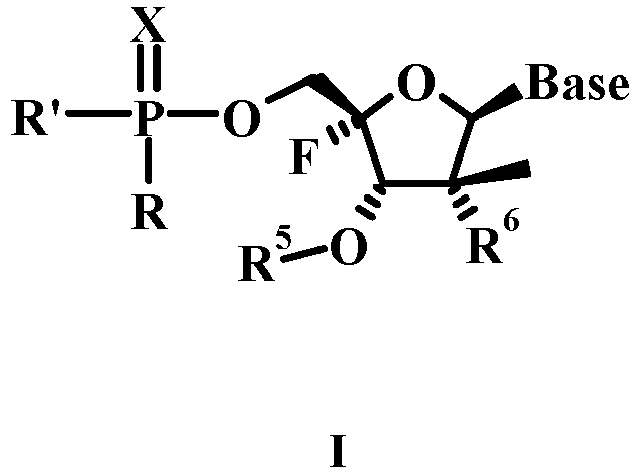
- R is O-R1 or NHR1;
- or R and R5 together form a bond;
- R' is N(R4)C(R2a)(R2b)C(=O)OR3 or -OR3;
- R1 is H, lower haloalkyl, or aryl, wherein aryl is phenyl or naphthyl, optionally substituted with one or more lower alkyl, lower alkenyl, lower alkynyl, lower alkoxy, halo, lower haloalkyl, -N(R1a)2, acylamino, -SO2N(R1a)2, -COR1b, -SO2(R1c), -NHSO2(R1c), nitro or cyano;
- each R1a is independently H or lower alkyl;
- each R1b is independently -OR1a or -N(R1a)2;
- each R1c is lower alkyl;
- R1' is -C(R2a)(R2b)C(=O)OR3;
- each R2a and R2b are independently H, lower alkyl, -(CH2)rN(R1a)2, lower hydroxyalkyl, -CH2SH, -(CH2)S(O)pMe, -(CH2)3NHC(=NH)NH2, (1H-indol-3-yl)methyl, (1H-indol-4-yl)methyl, -(CH2)mC(=O)R1b , aryl and aryl lower alkyl, wherein aryl may optionally be substituted with one or more hydroxy, lower alkyl, lower alkoxy, halo, nitro or cyano;
- or R2a is H and R2b and R4 together form (CH2)n;
- each R3 is H, lower alkyl, lower haloalkyl, phenyl or phenyl lower alkyl;
- each R4 is H, lower alkyl, or R2b and R4 together form (CH2)3;
- R1 is H, lower haloalkyl, or aryl, wherein aryl is phenyl or naphthyl, optionally substituted with one or more lower alkyl, lower alkenyl, lower alkynyl, lower alkoxy, halo, lower haloalkyl, -N(R1a)2, acylamino, -SO2N(R1a)2, -COR1b, -SO2(R1c), -NHSO2(R1c), nitro or cyano;
- R5 is H, C(=O)R1c, C(=O)R1b, P(=O)(OR1)(OR1a), or P(=O)(OR1)(NR4R7);
- R6 is OH or F;
R7 is C(R2aR2b)C(=O)OR3- m is 0 to 3;
- n is 3, 4 or 5;
- p is 0 to 2;
- r is 1 to 6;
- X is O or S; and
- The invention provides a compound of Formula I, wherein R4 is H.
- The invention provides the above compound of Formula I, wherein R6 is F.
- The invention provides the above compound of Formula I, wherein R1 is naphthyl or phenyl.
- The invention provides the above compound of Formula I, wherein R2a is H.
- The invention provides the above compound of Formula I, wherein R2b is methyl.
- The invention provides the above compound of Formula I, wherein R3 is isopropyl.
- The invention provides the above compound of Formula I, wherein R5 is H.
- The invention provides a compound of Formula I, wherein R and R5 together form a bond.
- The invention provides the above compound of Formula I, wherein R6 is OH.
- The invention provides the above compound of Formula I, wherein R' is -OR3 and R3 is isopropyl.
- The invention provides a compound of Formula I, wherein X is S.
- The invention provides a compound of Formula I, wherein Base is cytosine.
- The invention provides a compound selected from the group consisting of:
- 2'-Deoxy-2',4'-difluoro-2'-methycytidine-5'-(O-phenyl-N-(S)-1-(isopropoxycarbonyl)ethyl thiosphosphoramidate;
- 2'-Deoxy-2',4'-difluoro-2'-methylcytidine-5'-(O-1-naphthyl-N-(S)-1-(isopropoxycarbonyl)ethyl thiosphosphoramidate;
- 2'-Deoxy-2',4'-difluoro-2'-methylcytidine-5'-(O-2-naphthyl-N-(S)-1-(isopropoxycarbonyl)ethyl thiosphosphoramidate;
- 2'-Deoxy-2',4'-difluoro-2'-methylcytidine-3',5'-cyclic phosphoric acid isopropyl ester;
- 2'-Deoxy-2',4'-difluoro-2'-methylcytidine-3',5'-cyclic thiophosphoric acid isopropyl ester;
- 4' -Fluoro-2' -methylcytidine-5' -(O-phenyl-N-(S)-1-(isopropoxycarbonyl)ethyl phosphoramidate;
- 4' -Fluoro-2' -cytidine-5'-(O-1-naphthyl-N-(S)-1-(isopropoxycarbonyl)ethyl phosphoramidate;
- 4' -Fluoro-2' -methylcytidine-5'-(O-1-naphthyl-N-(S)-2-(isopropoxycarbonyl)ethyl phosphoramidate;
- 4' -Fluoro-2' -methylcytidine-5'-(O-phenyl-N-(S)-1-(isopropoxycarbonyl)ethyl thiophsphoramidate;
- 4' -Fluoro-2' -methylcytidine-5'-(O-1-naphthyl-N-(S)-1-(isopropoxycarbonyl)ethyl thiophosphoramidate;
- 4' -Fluoro-2' -methylcytidine-5'-(O-1-naphthyl-N-(S)-2-(isopropoxycarbonyl)ethyl thiophosphoramidate;
- 4'-Fluoro-2'-methylcytidine-3',5'-cyclic phosphoric acid isopropyl ester;
- 4'-Fluoro-2'-methylcytidine-3',5'-cyclic thiophosphoric acid isopropyl ester;
- 2'-Deoxy-2',4'-difluoro-2'-methylcytidine-5'-{N,N'-bis[(S)-1-(isopropoxylcarbonyl)ethyl]phosphorodiamidate;
- 2'-Deoxy-2',4'-difluoro-2'-methylcytidine-5'-{N,N'-bis[(S)-1-(isopropoxylcarbonyl)ethyl]thiophosphorodiamidate;
- 4'-Fluoro-2'-methylcytidine-5'-{N,N'-bis[(S)-1-(isopropoxylcarbonyl)ethyl]phosphorodiamidate; and
- 4'-Fluoro-2'-methylcytidine-5'-{N,N'-bis[(S)-1-(isopropoxylcarbonyl)ethyl]thiophosphorodiamidate.
- The invention provides a compound according to the invention for use in treating a Hepatitis C Virus (HCV) infection.
- The invention provides the above compound for use, wherein said use further comprises administering an immune system modulator or an antiviral agent that inhibits replication of HCV, or a combination thereof.
- The invention provides the above compound for use, wherein the immune system modulator is an interferon or chemically derivatized interferon.
- The invention alternatively provides the above compound for use, wherein the antiviral agent is selected from the group consisting of a HCV protease inhibitor, a HCV polymerase inhibitor, a HCV helicase inhibitor, a HCV primase inhibitor, a HCV fusion inhibitor, and a combination thereof.
- Also disclosed herein is a method for inhibiting replication of HCV in a cell comprising administering a compound of Formula I.
- The invention provides a composition comprising the compound of Formula I.
- The invention provides the above composition, admixed with at least one carrier, diluent or excipient.
- The invention thus provides a compound, composition, or compound for use as described herein and in the claims.
- Examples of representative compounds encompassed by the present invention and within the scope of the invention (as well as reference compounds disclosed herein) are provided in the following Tables. These examples and preparations which follow are provided to enable those skilled in the art to more clearly understand and to practice the present invention. They should not be considered as limiting the scope of the invention, but merely as being illustrative and representative thereof.
- In general, the nomenclature used in this specification is based on standard nucleic acid nomenclature common to one of ordinary skill in the art. If there is a discrepancy between a depicted structure and a name given that structure, the depicted structure is to be accorded more weight. In addition, if the stereochemistry of a structure or a portion of a structure is not indicated with, for example, bold or dashed lines, the structure or portion of the structure is to be interpreted as encompassing all stereoisomers of it.
- The following Table 1 discloses uridine as well as cytidine derivatives. The uridine derivatives are not part of the invention.
Table 1. Compound Number Structure Name I-1 
2'-Deoxy-2',4' -difluoro-2'-methyluridine-5'-(O-phenyl-N-(S)-1-(isopropoxycarbonyl)ethyl thiophosphoramidate (reference) I-2 
2'-Deoxy-2',4' -difluoro-2'-methyluridine-5'-(O-2-naphthyl-N-(S)-1-(isopropoxycarbonyl)ethyl thiosphosphoramidate (reference) I-3 
2'-Deoxy-2',4' -difluoro-2'-methyluridine-5'-(O-1-naphthyl-N-(S)-1-(isopropoxycarbonyl)ethyl thiosphosphoramidate (reference) I-4 
2'-Deoxy-2',4' -difluoro-2'-methycytidine-5'-(O-phenyl-N-(S)-1-(isopropoxycarbonyl)ethyl thiosphosphoramidate I-5 
2'-Deoxy-2',4' -difluoro-2'-methylcytidine-5'-(O-1-naphthyl-N-(S)-1-(isopropoxycarbonyl)ethyl thiosphosphoramidate I-6 
2'-Deoxy-2',4' -difluoro-2'-methylcytidine-5'-(O-2-naphthyl-N-(S)-1-(isopropoxycarbonyl)ethyl thiosphosphoramidate I-7 
2'-Deoxy-2',4'-difluoro-2'-methyluridine-3',5'-cyclic phosphoric acid isopropyl ester (reference) I-8 
2'-Deoxy-2',4'-difluoro-2'-methylcytidine-3',5'-cyclic phosphoric acid isopropyl ester I-9 
2'-Deoxy-2',4'-difluoro-2'-methyluridine-3',5' -cyclic thiophosphoric acid isopropyl ester (reference) I-10 
2'-Deoxy-2',4' -difluoro-2'-methy lcytidine-3',5'-cyclic thiophosphoric acid isopropyl ester I-11 
4'-Fluoro-2'-methyluridine-5'-(O-phenyl-N-(S)-1-(isopropoxycarbonyl)ethyl phosphoramidate (reference) I-12 
4'-Fluoro-2'-methyluridine-5'-(O-1-naphthyl-N-(S)-1-(isopropoxycarbonyl)ethyl phosphoramidate (reference) I-13 
4'-Fluoro-2'-methyluridine-5'-(O-1-naphthyl-N-(S)-2-(isopropoxycarbonyl)ethyl phosphoramidate (reference) I-14 
4' -Fluoro-2' -methylcytidine-5'-(O-phenyl-N-(S)-1-(isopropoxycarbonyl)ethyl phosphoramidate I-15 
4'-Flluoro-2'-cytidine-5'-(O-1-naphthyl-N-(S)-1-(isopropoxycarbonyl)ethyl phosphoramidate I-16 
4' -Fluoro-2' -methylcytidine-5'-(O-1-naphthyl-N-(S)-2-(isopropoxycarbonyl)ethyl phosphoramidate I-17 
4'-Fluoro-2'-methyluridine-5'-(O-phenyl-N-(S)-1-(isopropoxycarbonyl)ethyl thiophosphoramidate (reference) I-18 
4'-Fluoro-2'-methyluridine-5'-(O-1-naphthyl-N-(S)-1-(isopropoxycarbonyl)ethyl thiophosphoramidate (reference) I-19 
4'-Fluoro-2'-methyluridine-5'-(O-1-naphthyl-N-(S)-2-(isopropoxycarbonyl)ethyl thiophosphoramidate (reference) I-20 
4' -Fluoro-2' -methylcytidine-5'-(O-phenyl-N-(S)-1-(isopropoxycarbonyl)ethyl thiophosphoramidate I-21 
4' -Fluoro-2' -methylcytidine-5' -(O-1-naphthyl-N-(S)-1-(isopropoxycarbonyl)ethyl thiophosphoramidate I-22 
4' -Fluoro-2' -methylcytidine-5'-(O-1-naphthyl-N-(S)-2-(isopropoxycarbonyl)ethyl thiophosphoramidate I-23 
4'-Fluoro-2'-methyluridine-3',5'-cyclic phosphoric acid isopropyl ester (reference) I-24 
4' -Fluoro-2' -methy lcytidine-3',5'-cyclic phosphoric acid isopropyl ester I-25 
4'-Fluoro-2'-methyluridine-3',5'-cyclic thiophosphoric acid isopropyl ester (reference) I-26 
4' -Fluoro-2' -methy lcytidine-3',5'-cyclic thiophosphoric acid isopropyl ester I-27 
2'-Deoxy-2',4'-difluoro-2'-methyluridine-5'-{N,N'-bis[(S)-1-(isopropoxylcarbonyl)ethyl]phosphorodia midate (reference) I-28 
2'-Deoxy-2',4'-difluoro-2'-methylcytidine-5'-{N,N'-bis[(S)-1-(isopropoxylcarbonyl)ethyl]phosphorodia midate I-29 
2'-Deoxy-2',4'-difluoro-2'-methyluridine-5'-{N,N'-bis[(S)-1-(isopropoxylcarbonyl)ethyl]thiophosphor odiamidate(reference) I-30 
2' -Deoxy-2',4' -difluoro-2'-methylcytidine-5'-{N,N'-bis[(S)-1-(isopropoxylcarbonyl)ethyl]thiophosphor odiamidate I-31 
4'-Fluoro-2'-methyluridine-5'-{N,N'-bis[(S)-1-(isopropoxylcarbonyl)ethyl]phosphorodia midate (reference) I-32 
4' -Fluoro-2'-methylcytidine-5'-{N,N'-bis[(S)-1-(isopropoxylcarbonyl)ethyl]phosphorodia midate I-33 
4' -Fluoro-2'-methyluridine-5'-{N,N'-bis[(S)-1-(isopropoxylcarbonyl)ethyl]thiophosphor odiamidate (reference) I-34 
4' -Fluoro-2'-methylcytidine-5'-{N,N'-bis[(S)-1-(isopropoxylcarbonyl)ethyl]thiophosphor odiamidate - Abbreviations used in this specification include: acetyl (Ac), acetic acid (HOAc), azo-bis-isobutyrylnitrile (AIBN), 1-N-hydroxybenzotriazole (HOBt), atmospheres (Atm), high pressure liquid chromatography (HPLC), 9-borabicyclo[3.3.1]nonane (9-BBN or BBN), methyl (Me), tert-butoxycarbonyl (Boc), acetonitrile (MeCN), di-tert-butyl pyrocarbonate or boc anhydride (BOC2O), 1-(3-dimethylaminopropyl)-3-ethylcarbodiimide hydrochloride (EDCI), benzoyl (Bz), benzyl (Bn), m-chloroperbenzoic acid (MCPBA), butyl (Bu), methanol (MeOH), benzyloxycarbonyl (cbz or Z), melting point (mp), carbonyl diimidazole (CDI), MeSO2- (mesyl or Ms), 1,4-diazabicyclo[2.2.2]octane (DABCO), mass spectrum (ms) diethylaminosulfur trifluoride (DAST), methyl t-butyl ether (MTBE), dibenzylideneacetone (Dba), N-carboxyanhydride (NCA), 1,5-diazabicyclo[4.3.0]non-5-ene (DBN), N-bromosuccinimide (NBS), 1,8-diazabicyclo[5.4.0]undec-7-ene (DBU), N-methylmorpholine (NMM), N-methylpyrrolidone (NMP), 1,2-dichloroethane (DCE), pyridinium chlorochromate (PCC), N,N'-dicyclohexylcarbodiimide (DCC), pyridinium dichromate (PDC), dichloromethane (DCM), propyl (Pr), diethyl azodicarboxylate (DEAD), phenyl (Ph), di-iso-propylazodicarboxylate (DIAD), pounds per square inch (psi), di-iso-propylethylamine (DIPEA), pyridine (pyr), di-iso-butylaluminumhydride (DIBAL-H), room temperature (rt or RT), N,N-dimethyl acetamide (DMA), tert-butyldimethylsilyl or t-BuMe2Si (TBDMS), 4-N,N-dimethylaminopyridine (DMAP), triethylamine (Et3N or TEA), N,N-dimethylformamide (DMF), triflate or CF3SO2-(Tf), dimethyl sulfoxide (DMSO), trifluoroacetic acid (TFA), 1,1'-bis-(diphenylphosphino)ethane (dppe), 2,2,6,6-tetramethylheptane-2,6-dione (TMHD), 1,1'-bis-(diphenylphosphino)ferrocene (dppf), thin layer chromatography (TLC), ethyl acetate (EtOAc), tetrahydrofuran (THF), diethyl ether (Et2O), trimethylsilyl or Me3Si (TMS), ethyl (Et), p-toluenesulfonic acid monohydrate (TsOH or pTsOH), lithium hexamethyl disilazane (LiHMDS), 4-Me-C6H4SO2- or tosyl (Ts), iso-propyl (i-Pr), N-urethane-N-carboxyanhydride (UNCA), ethanol (EtOH). Conventional nomenclature including the prefixes normal (n), iso (i-), secondary (sec-), tertiary (tert-) and neo have their customary meaning when used with an alkyl moiety. (J. Rigaudy and D. P. Klesney, Nomenclature in Organic Chemistry, IUPAC 1979 Pergamon Press, Oxford.).
- Compounds of the invention (and the reference compounds disclosed herein) can be made by a variety of methods depicted in the illustrative synthetic reactions described below in the Examples section.
- The starting materials and reagents used in preparing these compounds generally are either available from commercial suppliers, such as Aldrich Chemical Co., or are prepared by methods known to those skilled in the art following procedures set forth in references such as Fieser and Fieser's Reagents for Organic Synthesis; Wiley & Sons: New York, 1991, Volumes 1-15; Rodd's Chemistry of Carbon Compounds, Elsevier Science Publishers, 1989, Volumes 1-5 and Supplementals; and Organic Reactions, Wiley & Sons: New York, 1991, Volumes 1-40. It should be appreciated that the synthetic reaction schemes shown in the Examples section are merely illustrative of some methods by which the compounds of the invention can be synthesized, and various modifications to these synthetic reaction schemes can be made and will be suggested to one skilled in the art having referred to the disclosure contained in this specification.
- The starting materials and the intermediates of the synthetic reaction schemes can be isolated and purified if desired using conventional techniques, including but not limited to, filtration, distillation, crystallization, chromatography, and the like. Such materials can be characterized using conventional means, including physical constants and spectral data.
- Unless specified to the contrary, the reactions described herein are typically conducted under an inert atmosphere at atmospheric pressure at a reaction temperature range of from about -78 °C to about 150 °C, often from about 0 °C to about 125 °C, and more often and conveniently at about room (or ambient) temperature, e.g., about 20 °C.
- Various substituents on the compounds of the invention can be present in the starting compounds, added to any one of the intermediates or added after formation of the final products by known methods of substitution or conversion reactions. If the substituents themselves are reactive, then the substituents can themselves be protected according to the techniques known in the art. A variety of protecting groups are known in the art, and can be employed. Examples of many of the possible groups can be found in " Protective Groups in Organic Synthesis" by Green et al., John Wiley and Sons, 1999. For example, nitro groups can be added by nitration and the nitro group can be converted to other groups, such as amino by reduction, and halogen by diazotization of the amino group and replacement of the diazo group with halogen. Acyl groups can be added by Friedel-Crafts acylation. The acyl groups can then be transformed to the corresponding alkyl groups by various methods, including the Wolff-Kishner reduction and Clemmenson reduction. Amino groups can be alkylated to form mono- and di-alkylamino groups; and mercapto and hydroxy groups can be alkylated to form corresponding ethers. Primary alcohols can be oxidized by oxidizing agents known in the art to form carboxylic acids or aldehydes, and secondary alcohols can be oxidized to form ketones. Thus, substitution or alteration reactions can be employed to provide a variety of substituents throughout the molecule of the starting material, intermediates, or the final product, including isolated products.
- The starting material 1 can be prepared according to the procedures described by Sofia, M J. et al, J. Med. Chem. (2010), 53(19),7202-7218 and Clark, J. L. et al, J. Med. Chem. (2005), 48(17),5504-5508. Iodination followed by elimination of iodide under basic condition can lead to intermediate 2, in which protection of 3'-hydroxy with benzoyl group, followed by a key stereospecific fluorination reaction to give intermediate 4. Similar transformation to install a fluoride at 4' α position has been described previously by Ajmera, S. et al, J. Med. Chem. (1988), 31(6),1094-1098 and Moffatt, J.G. et al, J. Am. Chem. Soc. (1971), 93(17), 4323-4324. Displacement of 5' iodide with sodium benzoate followed by deprotection of 3', 5' benzoyl groups gives the nucleoside intermediate 4 (Scheme 1).

- Compound 12 can be prepared by those skilled in the art of organic synthesis following the synthetic sequence outlined below. Thus, protection, iodination and then elimination under basic conditions should yield the intermediate 7. Fluorination at the 4'-position has previously been reported by Ajmera, S. et al, J. Med. Chem. (1988), 31(6),1094-1098 and Moffatt, J.G. et al, J. Am. Chem. Soc. (1971), 93(17), 4323-4324. Displacement of 5' iodide 8 with sodium benzoate should afford intermediate 9. Deprotection followed by selective protection of the 3' and 5'-hydroxy group with 1,3-dichloro-1,1,3,3-tetraisopropyldisiloxane (DIPSCl) and then oxidation under Dess-Martin conditions is expected to yield the ketone 11, following a similar method described by Hayakawa, H et al., Chem. Pharm. Bull., (1987), 35(6), 2605-2608. Deprotection under standard conditions to remove a silyl protecting group should yield the desired product 12 (Scheme 2).

- Phosphoramidate compounds of the present invention can be prepared by condensation of nucleoside 4 or 12 with a suitably substituted phosphochloridate, or its sulfur analogue, of type 13 in the presence of a strong base (Scheme 3). The coupled product 16 of is obtained as a mixture of two diastereomers initially under the coupling reaction and can be separated into their corresponding chiral enantiomers by chiral column, chiral HPLC, or chiral SFC chromatography.

- Phosphorodiamidate compounds of the present invention can be prepared by condensation of nucleoside 4 or 12 with a suitably substituted phosphorodiamidic chloride, or phosphorodiamidothioic chloride, of type 17 in the presence of a strong base (Scheme 4).

- Phosphates of the present invention can be prepared by condensation of nucleoside 4 or 12 with isopropyl N,N,N,N-tetraisopropylphosphorodiamidite 19 (Scheme 5). Conversion to the thio derivative can be performed by heating the crude reaction mixture with bis(3-triethoxylsilyl)propyl-tetrasulfide (TEST).

- This assay measures the ability of the compounds of Formula I to inhibit HCV RNA replication, and therefore their potential utility for the treatment of HCV infections. The assay utilizes a reporter as a simple readout for intracellular HCV replicon RNA level. The Renilla luciferase gene is introduced into the first open reading frame of a genotype 1b replicon construct NK5.1 (N. Krieger et a/., J. Virol. 2001 75(10):4614), immediately after the internal ribosome entry site (IRES) sequence, and fused with the neomycin phosphotransferase (NPTII) gene via a self-cleavage peptide 2A from foot and mouth disease virus (M.D. Ryan & J. Drew, EMBO 1994 13(4):928-933). After in vitro transcription the RNA is electroporated into human hepatoma Huh7 cells, and G418-resistant colonies are isolated and expanded. Stably selected cell line 2209-23 contains replicative HCV subgenomic RNA, and the activity of Renilla luciferase expressed by the replicon reflects its RNA level in the cells. The assay is carried out in duplicate plates, one in opaque white and one in transparent, in order to measure the anti-viral activity and cytotoxicity of a chemical compound in parallel ensuring the observed activity is not due to decreased cell proliferation or due to cell death.
- HCV replicon cells (2209-23), which express Renilla luciferase reporter, are cultured in Dulbecco's MEM (Invitrogen cat no. 10569-010) with 5% fetal bovine serum (FBS, Invitrogen cat. no. 10082-147) and plated onto a 96-well plate at 5000 cells per well, and incubated overnight. Twenty-four hours later, different dilutions of chemical compounds in the growth medium are added to the cells, which are then further incubated at 37°C for three days. At the end of the incubation time, the cells in white plates are harvested and luciferase activity is measured by using the R. luciferase Assay system (Promega cat no. E2820). All the reagents described in the following paragraph are included in the manufacturer's kit, and the manufacturer's instructions are followed for preparations of the reagents. The cells are washed once with 100 µL of phosphate buffered saline (pH 7.0) (PBS) per well and lysed with 20 µl of 1x R. luciferase Assay lysis buffer prior to incubation at room temperature for 20 min. The plate is then inserted into the Centro LB 960 microplate luminometer (Berthold Technologies), and 100 µl of R. luciferase Assay buffer is injected into each well and the signal measured using a 2-second delay, 2-second measurement program. IC50, the concentration of the drug required for reducing replicon level by 50% in relation to the untreated cell control value, can be calculated from the plot of percentage reduction of the luciferase activity vs. drug concentration as described above.
- WST-1 reagent from Roche Diagnostic (cat no. 1644807) is used for the cytotoxicity assay. Ten microliter of WST-1 reagent is added to each well of the transparent plates including wells that contain media alone as blanks. Cells are then incubated for 2 h at 37° C, and the OD value is measured using the MRX Revelation microtiter plate reader (Lab System) at 450 nm (reference filter at 650 nm). Again CC50, the concentration of the drug required for reducing cell proliferation by 50% in relation to the untreated cell control value, can be calculated from the plot of percentage reduction of the WST-1 value vs. drug concentration as described above.
- As shown in above Table the compounds of Formula I have the potential to be efficacious as antiviral drugs for the treatment of HCV infections in humans, or are metabolized to a compound that exhibits such activity.
- In another embodiment of the invention, the active compound or its prodrug derivative or salt can be administered in combination with another antiviral agent, such as an anti-hepatitis agent, including those of Formula I. When the active compound or its derivative or salt are administered in combination with another antiviral agent the activity may be increased over the parent compound. This can easily be assessed by preparing the derivative and testing its anti-HCV activity according to the method described herein.
- Administration of the active compound may range from continuous (intravenous drip) to several oral administrations per day (for example, Q.I.D) and may include oral, topical parenteral, intramuscular, intravenous, subcutaneous, transdermal (which may include a penetration enhancement agent), buccal and suppository administration, among other routes of administration.
- The 4'-F substituted nucleoside derivatives as well as their pharmaceutically useable salts, can be used as medicaments in the form of any pharmaceutical formulation. The pharmaceutical formulation can be administered enterally, either orally, e.g. in the form of tablets, coated tablets, dragees, hard and soft gelatine capsules, solutions, emulsions, syrups, or suspensions, or rectally, e.g. in the form of suppositories. They can also be administered parenterally (intramuscularly, intravenously, subcutaneously or intrasternal injection or infusion techniques), e.g. in the form of injection solutions, nasally, e.g. in the form of nasal sprays, or inhalation spray, topically and so forth.
- For the manufacture of pharmaceutical preparations, the 4'-substituted nucleoside derivatives, as well as their pharmaceutically useable salts, can be formulated with a therapeutically inert, inorganic or organic excipient for the production of tablets, coated tablets, dragees, hard and soft gelatine capsules, solutions, emulsions or suspensions.
- The compounds of Formula I can be formulated in admixture with a pharmaceutically acceptable carrier. For example, the compounds of the present invention can be administered orally as pharmacologically acceptable salts. Because the compounds of the present invention are mostly water soluble, they can be administered intravenously in physiological saline solution (e.g., buffered to a pH of about 7.2 to 7.5). Conventional buffers such as phosphates, bicarbonates or citrates can be used for this purpose. Of course, one of ordinary skill in the art may modify the formulations within the teachings of the specification to provide numerous formulations for a particular route of administration without rendering the compositions of the present invention unstable or compromising their therapeutic activity. In particular, the modification of the present compounds to render them more soluble in water or other vehicle, for example, may be easily accomplished by minor modifications (salt formulation, esterification, etc.) which are well within the ordinary skill in the art. It is also well within the ordinary skill of the art to modify the route of administration and dosage regimen of a particular compound in order to manage the pharmacokinetics of the present compounds for maximum beneficial effect in patients.
- For parenteral formulations, the carrier will usually comprise sterile water or aqueous sodium chloride solution, though other ingredients including those which aid dispersion may be included. Of course, where sterile water is to be used and maintained as sterile, the compositions and carriers must also be sterilized. Injectable suspensions may also be prepared, in which case appropriate liquid carriers, suspending agents and the like may be employed.
- Suitable excipients for tablets, coated tablets, dragées, and hard gelatin capsules are, for example, lactose, corn starch and derivatives thereof, talc, and stearic acid or its salts.
- If desired, the tablets or capsules may be enteric-coated or sustained release by standard techniques.
- Suitable excipients for soft gelatine capsules are, for example, vegetable oils, waxes, fats, semi-solid and liquid polyols.
- Suitable excipients for injection solutions are, for example, water, saline, alcohols, polyols, glycerin or vegetable oils.
- Suitable excipients for suppositories are, for example, natural and hardened oils, waxes, fats, semi-liquid or liquid polyols.
- Suitable excipients for solutions and syrups for enteral use are, for example, water, polyols, saccharose, invert sugar and glucose.
- The pharmaceutical preparations of the present invention may also be provided as sustained release formulations or other appropriate formulations.
- The pharmaceutical preparations can also contain preservatives, solubilizers, stabilizers, wetting agents, emulsifiers, sweeteners, colorants, flavourants, salts for adjustment of the osmotic pressure, buffers, masking agents or antioxidants.
- The pharmaceutical preparations may also contain other therapeutically active agents known in the art.
- The dosage can vary within wide limits and will, of course, be adjusted to the individual requirements in each particular case. For oral administration, a daily dosage of between about 0.01 and about 100 mg/kg body weight per day should be appropriate in monotherapy and/or in combination therapy. A preferred daily dosage is between about 0.1 and about 500 mg/kg body weight, more preferred 0.1 and about 100 mg/kg body weight and most preferred 1.0 and about 100 mg/kg body weight per day. A typical preparation will contain from about 5% to about 95% active compound (w/w) . The daily dosage can be administered as a single dosage or in divided dosages, typically between 1 and 5 dosages per day.
- In certain pharmaceutical dosage forms, the pro-drug form of the compounds, especially including acylated (acetylated or other) derivatives, pyridine esters and various salt forms of the present compounds are preferred. One of ordinary skill in the art will recognize how to readily modify the present compounds to pro-drug forms to facilitate delivery of active compounds to a target site within the host organism or patient. One of ordinary skill in the art will also take advantage of favorable pharmacokinetic parameters of the pro-drug forms, where applicable, in delivering the present compounds to targeted site within the host organism or patient to maximize the intended effect of the compound.
- The compounds of the invention and their isomeric forms and pharmaceutically acceptable salts thereof are useful in treating and preventing HCV infection.
- The invention provides a compound of Formula I for use in treating a Hepatitis C Virus (HCV) infection.
- Also disclosed herein is a method for inhibiting replication of HCV in a cell comprising administering a compound of Formula I.
- The compounds of the invention and their isomeric forms and pharmaceutically acceptable salts thereof are useful in treating and preventing HCV infection alone or when used in combination with other compounds targeting viral or cellular elements or functions involved in the HCV lifecycle. Classes of compounds useful in the invention include, without limitation, all classes of HCV antivirals.
- For combination therapies, mechanistic classes of agents that can be useful when combined with the compounds of the invention include, for example, nucleoside and non-nucleoside inhibitors of the HCV polymerase, protease inhibitors, helicase inhibitors, NS4B inhibitors and medicinal agents that functionally inhibit the internal ribosomal entry site (IRES) and other medicaments that inhibit HCV cell attachment or virus entry, HCV RNA translation, HCV RNA transcription, replication or HCV maturation, assembly or virus release. Specific compounds in these classes and useful in the invention include, but are not limited to, macrocyclic, heterocyclic and linear HCV protease inhibitors such as telaprevir (VX-950), boceprevir (SCH-503034), narlaprevir (SCH-9005 18), ITMN- 191 (R-7227), TMC-435350 (a.k.a. TMC-435), MK- 7009, BI-201335, BI-2061 (ciluprevir), BMS-650032, ACH-1625, ACH-1095 (HCV NS4A protease co-factor inhibitor), VX-500, VX-8 13, PHX-1766, PHX2054, IDX- 136, IDX-3 16, ABT-450 EP-0 13420 (and congeners) and VBY-376; the Nucleosidic HCV polymerase (replicase) inhibitors useful in the invention include, but are not limited to, R7128, PSI-785 1, IDX-184, IDX-102, R1479, UNX-08 189, PSI-6130, PSI-938 and PSI-879 and various other nucleoside and nucleotide analogs and HCV inhibitors including (but not limited to) those derived as 2'-C-methyl modified nucleos(t)ides, 4'-aza modified nucleos(t)ides, and 7'-deaza modified nucleos(t)ides. Non-nucleosidic HCV polymerase (replicase) inhibitors useful in the invention, include, but are not limited to, HCV-796, HCV-371, VCH-759, VCH-916, VCH- 222, ANA-598, MK-3281, ABT-333, ABT-072, PF-00868554, BI-207127, GS-9190, A- 837093, JKT-109, GL-59728 and GL-60667.
- In addition, compounds of the invention can be used in combination with cyclophyllin and immunophyllin antagonists (e.g., without limitation, DEBIO compounds, NM-811 as well as cyclosporine and its derivatives), kinase inhibitors, inhibitors of heat shock proteins (e.g., HSP90 and HSP70), other immunomodulatory agents that can include, without limitation, interferons (-alpha, -beta, -omega, -gamma, -lambda or synthetic) such as Intron A, Roferon-A, Canferon-A300, Advaferon, Infergen, Humoferon, Sumiferon MP, Alfaferone, IFN-β, Feron and the like; polyethylene glycol derivatized (pegylated) interferon compounds, such as PEG interferon-α-2a (Pegasys), PEG interferon-α-2b (PEGIntron), pegylated IFN-α -con1 and the like; long acting formulations and derivatizations of interferon compounds such as the albumin-fused interferon, Albuferon, Locteron, and the like; interferons with various types of controlled delivery systems (e.g., ITCA-638, omega-interferon delivered by the DUROS subcutaneous delivery system); compounds that stimulate the synthesis of interferon in cells, such as resiquimod and the like; interleukins; compounds that enhance the development of type 1 helper T cell response, such as SCV-07 and the like; TOLL-like receptor agonists such as CpG-10101 (actilon), isotorabine, ANA773 and the like; thymosin α-1; ANA-245 and ANA-246; histamine dihydrochloride; propagermanium; tetrachlorodecaoxide; ampligen; IMP-321; KRN-7000; antibodies, such as civacir, XTL-6865 and the like and prophylactic and therapeutic vaccines such as InnoVac C, HCV E1E2/MF59 and the like. In addition, any of the above-described uses involving administering an NS5A inhibitor, a Type I interferon receptor agonist (e.g., an IFN-α) and a Type II interferon receptor agonist (e.g., an IFN-γ) can be augmented by administration of an effective amount of a TNF-α antagonist. Exemplary, non-limiting TNF-α antagonists that are suitable for use in such combination therapies include ENBREL, REMICADE, and HUMIRA.
- In addition, compounds of the invention can be used in combination with antiprotozoans and other antivirals thought to be effective in the treatment of HCV infection such as, without limitation, the prodrug nitazoxanide. Nitazoxanide can be used as an agent in combination with the compounds disclosed in this invention as well as in combination with other agents useful in treating HCV infection such as peginterferon α-2a and ribavirin.
- Compounds of the invention can also be used with alternative forms of interferons and pegylated interferons, ribavirin or its analogs (e.g., tarabavarin, levoviron), microRNA, small interfering RNA compounds (e.g., SIRPLEX-140-N and the like), nucleotide or nucleoside analogs, immunoglobulins, hepatoprotectants, anti-inflammatory agents and other inhibitors of NS5A. Inhibitors of other targets in the HCV lifecycle include NS3 helicase inhibitors; NS4A co-factor inhibitors; antisense oligonucleotide inhibitors, such as ISIS-14803, AVI-4065 and the like; vector-encoded short hairpin RNA (shRNA); HCV specific ribozymes such as heptazyme, RPI, 13919 and the like; entry inhibitors such as HepeX-C, HuMax-HepC and the like; alpha glucosidase inhibitors such as celgosivir, UT-231B and the like; KPE-02003002 and BIVN 401 and IMPDH inhibitors. Other illustrative HCV inhibitor compounds include those disclosed in the following publications:
U.S. Pat. Nos. 5,807,876 ;6,498,178 ;6,344,465 ; and6,054,472 ;PCT Patent Application Publication Nos. WO97/40028 WO98/4038 1 WO00/56331 WO02/04425 WO03/007945 WO03/010141 WO03/000254 WO01/32153 WO00/06529 WO00/18231 WO00/10573 WO00/13708 WO01/85172 WO03/037893 WO03/037894 WO03/037895 WO02/100851 WO02/100846 WO99/01582 WO00/09543 WO02/18369 WO98/17679 WO00/05633 1 WO98/22496 WO99/07734 WO05/073216 WO05/073195 WO08/021927 - Additionally, combinations of, for example, ribavirin and interferon, may be administered as multiple combination therapy with at least one of the compounds of the invention. The present invention is not limited to the aforementioned classes or compounds and contemplates known and new compounds and combinations of biologically active agents. It is intended that combination therapies of the present invention include any chemically compatible combination of a compound of this inventive group with other compounds of the inventive group or other compounds outside of the inventive group, as long as the combination does not eliminate the anti-viral activity of the compound of this inventive group or the anti-viral activity of the pharmaceutical composition itself.
- Combination therapy can be sequential, that is treatment with one agent first and then a second agent (for example, where each treatment comprises a different compound of the invention or where one treatment comprises a compound of the invention and the other comprises one or more biologically active agents) or it can be treatment with both agents at the same time (concurrently). Sequential therapy can include a reasonable time after the completion of the first therapy before beginning the second therapy. Treatment with both agents at the same time can be in the same daily dose or in separate doses. Combination therapy need not be limited to two agents and may include three or more agents. The dosages for both concurrent and sequential combination therapy will depend on absorption, distribution, metabolism and excretion rates of the components of the combination therapy as well as other factors known to one of skill in the art. Dosage values will also vary with the severity of the condition to be alleviated. It is to be further understood that for any particular subject, specific dosage regimens and schedules may be adjusted over time according to the individual's need and the judgment of the one skilled in the art administering or supervising the administration of the combination therapy.
- The invention provides a compound of Formula I for use in treating a Hepatitis C Virus (HCV) infection.
- The invention provides the above compound for use, wherein said use further comprises administering an immune system modulator or an antiviral agent that inhibits replication of HCV, or a combination thereof.
- The invention provides the above compound for use, wherein the immune system modulator is an interferon or chemically derivatized interferon.
- The invention provides the above compound for use, wherein the antiviral agent is selected from the group consisting of a HCV protease inhibitor, a HCV polymerase inhibitor, a HCV helicase inhibitor, a HCV primase inhibitor, a HCV fusion inhibitor, and a combination thereof.
- It will be understood that references herein to treatment extend to prophylaxis as well as to the treatment of existing conditions, and that the treatment of animals includes the treatment of humans as well as other mammals. Furthermore, treatment of an Hepatitis C Virus (HCV) infection, as used herein, also includes treatment or prophylaxis of a disease or a condition associated with or mediated by Hepatitis C Virus (HCV) infection, or the clinical symptoms thereof.
- The features disclosed in the foregoing description, or the following claims, expressed in their specific forms or in terms of a means for performing the disclosed function, or a method or process for attaining the disclosed result, as appropriate, may, separately, or in any combination of such features, be utilized for realizing the invention in diverse forms thereof.
- The foregoing invention has been described in some detail by way of illustration and example, for purposes of clarity and understanding. It will be obvious to one of skill in the art that changes and modifications may be practiced within the scope of the appended claims. Therefore, it is to be understood that the above description is intended to be illustrative and not restrictive. The scope of the invention should, therefore, be determined not with reference to the above description, but should instead be determined with reference to the following appended claims, along with the full scope of equivalents to which such claims are entitled.
or a pharmacologically acceptable salt thereof.
or a pharmacologically acceptable salt thereof.
Claims (15)
- A compound of Formula I
 R is O-R1 or NHR1;or R and R5 together form a bond;R' is N(R4)C(R2a)(R2b)C(=O)OR3 or -OR3;R1 is H, lower haloalkyl, or aryl, wherein aryl is phenyl or naphthyl, optionally substituted with one or more lower alkyl, lower alkenyl, lower alkynyl, lower alkoxy, halo, lower haloalkyl, -N(R1a)2, acylamino, -SO2N(R1a)2, -COR1b, -SO2(R1c), -NHSO2(R1c), nitro or cyano;each R1a is independently H or lower alkyl;each R1b is independently -OR1a or -N(R1a)2;each R1c is lower alkyl;R1' is -C(R2a)(R2b)C(=O)OR3;each R2a and R2b are independently H, lower alkyl, -(CH2)rN(R1a)2, lower hydroxyalkyl, -CH2SH, -(CH2)S(O)pMe, -(CH2)3NHC(=NH)NH2, (1H-indol-3-yl)methyl, (1H-indol-4-yl)methyl, -(CH2)mC(=O)R1b , aryl and aryl lower alkyl, wherein aryl may optionally be substituted with one or more hydroxy, lower alkyl, lower alkoxy, halo, nitro or cyano;or R2a is H and R2b and R4 together form (CH2)n;each R3 is H, lower alkyl, lower haloalkyl, phenyl or phenyl lower alkyl;each R4 is H, lower alkyl, or R2b and R4 together form (CH2)3;R5 is H, C(=O)R1c, C(=O)R1b, P(=O)(OR1)(OR1a), orP(=O)(OR1)(NR4R7);R6 is OH or F;
R7 is C(R2aR2b)C(=O)OR3m is 0 to 3;n is 3, 4 or 5;p is 0 to 2;r is 1 to 6;X is O or S; andBase is cytosine, which may optionally be substituted with one or more hydroxy, lower alkyl, lower alkoxy, halo, nitro or cyano;or a pharmacologically acceptable salt thereof. - The compound of claim 1, wherein R4 is H.
- The compound of claim 1 or 2, wherein R6 is F.
- The compound of any one of claims 1 to 3, wherein R1 is naphthyl or phenyl.
- The compound of any one of claims 1 to 4, wherein R2a is H.
- The compound of any one of claims 1 to 5, wherein R2b is methyl.
- The compound of any one of claims 1 to 6, wherein R3 is isopropyl.
- The compound of any one of claims 1 to 7, wherein R5 is H.
- The compound of any one of claims 1 to 3 or 5 to 7, wherein R and R5 together form a bond.
- The compound of any one of claims 1, 2 or 4 to 9, wherein R6 is OH.
- The compound of any one of claims 1 to 10, wherein X is O.
- The compound of any one of claims 1 to 11, wherein Base is cytosine.
- The compound of claim 1, which is a compound selected from the group consisting of:2'-Deoxy-2',4'-difluoro-2'-methycytidine-5'-(O-phenyl-N-(S)-1-(isopropoxycarbonyl)ethyl thiosphosphoramidate;2'-Deoxy-2',4'-difluoro-2'-methylcytidine-5'-(O-1-naphthyl-N-(S)-1-(isopropoxycarbonyl)ethyl thiosphosphoramidate;2'-Deoxy-2',4'-difluoro-2'-methylcytidine-5'-(O-2-naphthyl-N-(S)-1-(isopropoxycarbonyl)ethyl thiosphosphoramidate;2'-Deoxy-2',4'-difluoro-2'-methylcytidine-3',5'-cyclic phosphoric acid isopropyl ester;2'-Deoxy-2',4'-difluoro-2'-methylcytidine-3',5'-cyclic thiophosphoric acid isopropyl ester;4' -Fluoro-2' -methylcytidine-5'-(O-phenyl-N-(S)-1-(isopropoxycarbonyl)ethyl phosphoramidate;4' -Fluoro-2' -cytidine-5' -(O-1-naphthyl-N-(S)-1-(isopropoxycarbonyl)ethyl phosphoramidate;4' -Fluoro-2' -methylcytidine-5' -(O-1-naphthyl-N-(S)-2-(isopropoxycarbonyl)ethyl phosphoramidate;4' -Fluoro-2' -methylcytidine-5' -(O-phenyl-N-(S)-1-(isopropoxycarbonyl)ethyl thiophsphoramidate;4' -Fluoro-2' -methylcytidine-5' -(O-1-naphthyl-N-(S)-1-(isopropoxycarbonyl)ethyl thiophosphoramidate;4' -Fluoro-2' -methylcytidine-5' -(O-1-naphthyl-N-(S)-2-(isopropoxycarbonyl)ethyl thiophosphoramidate;4'-Fluoro-2'-methylcytidine-3',5'-cyclic phosphoric acid isopropyl ester;4'-Fluoro-2'-methylcytidine-3',5'-cyclic thiophosphoric acid isopropyl ester;2'-Deoxy-2',4'-difluoro-2'-methylcytidine-5'-{N,N'-bis[(S)-1-(isopropoxylcarbonyl)ethyl]phosphorodiamidate;2'-Deoxy-2',4'-difluoro-2'-methylcytidine-5'-{N,N'-bis[(S)-1-(isopropoxylcarbonyl)ethyl]thiophosphorodiamidate;4'-Fluoro-2'-methylcytidine-5'-{N,N'-bis[(S)-1-(isopropoxylcarbonyl)ethyl]phosphorodiamidate; and4'-Fluoro-2'-methylcytidine-5'-{N,N'-bis[(S)-1-(isopropoxylcarbonyl)ethyl]thiophosphorodiamidate.
- The compound of any one of claims 1 to 13 for use in treating or preventing a Hepatitis C Virus (HCV) infection.
- A composition comprising the compound of any one of claims 1 to 13, admixed with at least one carrier, diluent or excipient.
Applications Claiming Priority (2)
| Application Number | Priority Date | Filing Date | Title |
|---|---|---|---|
| US201361824030P | 2013-05-16 | 2013-05-16 | |
| PCT/US2014/038287 WO2014186637A1 (en) | 2013-05-16 | 2014-05-15 | 4'-fluor0-2'-methyl substituted nucleoside derivatives |
Publications (3)
| Publication Number | Publication Date |
|---|---|
| EP2996695A1 EP2996695A1 (en) | 2016-03-23 |
| EP2996695A4 EP2996695A4 (en) | 2016-12-14 |
| EP2996695B1 true EP2996695B1 (en) | 2022-04-13 |
Family
ID=51895938
Family Applications (1)
| Application Number | Title | Priority Date | Filing Date |
|---|---|---|---|
| EP14797788.8A Active EP2996695B1 (en) | 2013-05-16 | 2014-05-15 | 4'-fluoro-2'-methyl substituted nucleoside derivatives |
Country Status (23)
| Country | Link |
|---|---|
| US (1) | US9895442B2 (en) |
| EP (1) | EP2996695B1 (en) |
| JP (1) | JP6366693B2 (en) |
| KR (1) | KR102241198B1 (en) |
| CN (1) | CN105307662B (en) |
| AU (1) | AU2014265293B2 (en) |
| BR (1) | BR112015028764B1 (en) |
| CA (1) | CA2912682C (en) |
| CL (1) | CL2015003357A1 (en) |
| CR (1) | CR20150648A (en) |
| EA (1) | EA035301B1 (en) |
| HK (1) | HK1217294A1 (en) |
| IL (1) | IL242605B (en) |
| MA (2) | MA38675A1 (en) |
| MX (1) | MX2015015782A (en) |
| MY (1) | MY186547A (en) |
| NZ (1) | NZ714927A (en) |
| PE (1) | PE20160120A1 (en) |
| PH (1) | PH12015502588A1 (en) |
| SG (1) | SG11201509424VA (en) |
| UA (1) | UA123533C2 (en) |
| WO (1) | WO2014186637A1 (en) |
| ZA (1) | ZA201509056B (en) |
Families Citing this family (18)
| Publication number | Priority date | Publication date | Assignee | Title |
|---|---|---|---|---|
| US11839430B2 (en) | 2008-03-27 | 2023-12-12 | Doheny Eye Institute | Optical coherence tomography-based ophthalmic testing methods, devices and systems |
| SG11201407336PA (en) | 2012-05-25 | 2015-03-30 | Janssen Sciences Ireland Uc | Uracyl spirooxetane nucleosides |
| GEP201706757B (en) | 2012-12-21 | 2017-10-25 | Alios Biopharma Inc | Substituted nucleosides, nucleotides and analogs thereof |
| US12539031B2 (en) | 2013-03-14 | 2026-02-03 | Envision Diagnostics, Inc. | Medical interfaces and other medical devices, systems, and methods for performing eye exams |
| US20180200280A1 (en) | 2013-05-16 | 2018-07-19 | Riboscience Llc | 4'-Fluoro-2'-Methyl Substituted Nucleoside Derivatives as Inhibitors of HCV RNA Replication |
| EP3055319A4 (en) | 2013-10-11 | 2018-01-10 | Alios Biopharma, Inc. | Substituted nucleosides, nucleotides and analogs thereof |
| CA2952812A1 (en) * | 2014-06-24 | 2015-12-30 | Alios Biopharma, Inc. | Methods of preparing substituted nucleotide analogs |
| MA41441A (en) * | 2014-12-19 | 2017-12-12 | Alios Biopharma Inc | SUBSTITUTED NUCLEOSIDES, NUCLEOTIDES AND ANALOGUES OF THEM |
| DK3236972T3 (en) | 2014-12-26 | 2021-10-04 | Univ Emory | Antivirale N4-hydroxycytidin-derivativer |
| KR20180071276A (en) * | 2015-09-29 | 2018-06-27 | 얀센 파마슈티칼즈, 인코포레이티드 | Combination water therapy for HCV treatment |
| WO2017190087A1 (en) | 2016-04-30 | 2017-11-02 | Envision Diagnostics, Inc. | Medical devices, systems, and methods for performing eye exams and eye tracking |
| WO2018017994A1 (en) * | 2016-07-22 | 2018-01-25 | Janssen Pharmaceuticals, Inc. | Combination drug treatment for hepatitis c infection |
| CN108424431B (en) * | 2017-09-06 | 2021-04-20 | 上海兆维科技发展有限公司 | Preparation method of alpha-uridine |
| EP3684374B1 (en) * | 2017-09-21 | 2025-07-30 | Riboscience LLC | 4'-fluoro-2'-methyl substituted nucleoside derivatives as inhibitors of hcv rna replication |
| JP6804790B1 (en) | 2017-12-07 | 2020-12-23 | エモリー ユニバーシティー | N4-Hydroxycytidines and derivatives and their related antiviral uses |
| EP3762372A4 (en) * | 2018-03-07 | 2021-12-08 | Emory University | THERAPEUTIC COMPOSITIONS BASED ON NUCLEOSIDES AND NUCLEOTIDES CONTAINING 4-HALOGEN AND ASSOCIATED USES |
| CN112142809B (en) * | 2020-09-29 | 2022-03-22 | 佛山科学技术学院 | Uric acid dipropionate phosphoramidate compound, its pharmaceutical composition and its preparation method and application |
| WO2024086592A2 (en) * | 2022-10-17 | 2024-04-25 | Emory Unversity | 4'-halogen containing nucleotide and nucleoside therapeutic compositions and uses related thereto |
Citations (1)
| Publication number | Priority date | Publication date | Assignee | Title |
|---|---|---|---|---|
| WO2014099941A1 (en) * | 2012-12-19 | 2014-06-26 | Idenix Pharmaceuticals, Inc. | 4'-fluoro nucleosides for the treatment of hcv |
Family Cites Families (59)
| Publication number | Priority date | Publication date | Assignee | Title |
|---|---|---|---|---|
| AU498131B2 (en) | 1974-02-26 | 1979-02-15 | Ciba-Geigy Ag | Production of cephems by cyclization |
| US4147864A (en) | 1975-02-20 | 1979-04-03 | Ciba-Geigy Corporation | Process for the manufacture of 7β-amino-3-cephem-3-ol-4 carboxylic acid compounds |
| US4322347A (en) | 1978-04-03 | 1982-03-30 | Bristol-Myers Company | 2-Carbamoyloxymethyl-penicillin derivatives |
| WO1986006380A1 (en) | 1985-04-30 | 1986-11-06 | Takeda Chemical Industries, Ltd. | Antibacterial compounds, use and preparation thereof |
| US6054472A (en) | 1996-04-23 | 2000-04-25 | Vertex Pharmaceuticals, Incorporated | Inhibitors of IMPDH enzyme |
| US5807876A (en) | 1996-04-23 | 1998-09-15 | Vertex Pharmaceuticals Incorporated | Inhibitors of IMPDH enzyme |
| CA2252465C (en) | 1996-04-23 | 2007-07-03 | Vertex Pharmaceuticals Incorporated | Urea derivatives as inhibitors of impdh enzyme |
| AP1019A (en) | 1996-10-18 | 2001-10-16 | Vertex Pharma | Inhibitors of serinre proteases, particularly hepatitis C virus NS3 protease. |
| GB9623908D0 (en) | 1996-11-18 | 1997-01-08 | Hoffmann La Roche | Amino acid derivatives |
| DK0966465T3 (en) | 1997-03-14 | 2003-10-20 | Vertex Pharma | Inhibitors of IMPDH enzymes |
| US6010848A (en) | 1997-07-02 | 2000-01-04 | Smithkline Beecham Corporation | Screening methods using an atpase protein from hepatitis C virus |
| EP1012180B1 (en) | 1997-08-11 | 2004-12-01 | Boehringer Ingelheim (Canada) Ltd. | Hepatitis c inhibitor peptide analogues |
| AU756627B2 (en) | 1998-07-27 | 2003-01-16 | Istituto Di Ricerche Di Biologia Molecolare P. Angeletti S.P.A. | Diketoacid-derivatives as inhibitors of polymerases |
| US6323180B1 (en) | 1998-08-10 | 2001-11-27 | Boehringer Ingelheim (Canada) Ltd | Hepatitis C inhibitor tri-peptides |
| ID27787A (en) | 1998-08-21 | 2001-04-26 | Viro Pharma Inc | COMPOUND, COMPOSITION AND METHODS FOR TREATMENT OR PREVENTION OF INFECTIONS CAUSED BY VIRUSES AND RELATED DISEASES |
| BR9913406A (en) | 1998-09-04 | 2002-01-29 | Viropharma Inc | Process of treatment of infection caused by at least one virus of the family flaviviridae and of disease associated with said infection in a living host having said infection |
| KR20010079907A (en) | 1998-09-25 | 2001-08-22 | 비로파마 인코포레이티드 | Methods for treating or preventing viral infections and associated diseases |
| CA2367017C (en) | 1999-03-19 | 2009-05-26 | Vertex Pharmaceuticals Incorporated | Inhibitors of impdh enzyme |
| US6566365B1 (en) | 1999-11-04 | 2003-05-20 | Biochem Pharma Inc. | Method for the treatment of Flaviviridea viral infection using nucleoside analogues |
| US20040034041A1 (en) | 2000-05-10 | 2004-02-19 | Dashyant Dhanak | Novel anti-infectives |
| US6448281B1 (en) | 2000-07-06 | 2002-09-10 | Boehringer Ingelheim (Canada) Ltd. | Viral polymerase inhibitors |
| SV2003000617A (en) | 2000-08-31 | 2003-01-13 | Lilly Co Eli | INHIBITORS OF PROTEASA PEPTIDOMIMETICA REF. X-14912M |
| US20030175950A1 (en) | 2001-05-29 | 2003-09-18 | Mcswiggen James A. | RNA interference mediated inhibition of HIV gene expression using short interfering RNA |
| US20030170891A1 (en) | 2001-06-06 | 2003-09-11 | Mcswiggen James A. | RNA interference mediated inhibition of epidermal growth factor receptor gene expression using short interfering nucleic acid (siNA) |
| US6887877B2 (en) | 2001-06-11 | 2005-05-03 | Virochem Pharma Inc. | Compounds and methods for the treatment or prevention of Flavivirus infections |
| CN101624391A (en) | 2001-06-11 | 2010-01-13 | 病毒化学医药公司 | Thiophene derivatives as antiviral agents for flavivirus infection |
| AR035543A1 (en) | 2001-06-26 | 2004-06-16 | Japan Tobacco Inc | THERAPEUTIC AGENT FOR HEPATITIS C THAT INCLUDES A CONDENSED RING COMPOUND, CONDENSED RING COMPOUND, PHARMACEUTICAL COMPOSITION THAT UNDERSTANDS, BENZIMIDAZOL, THIAZOL AND BIFENYL COMPOUNDS USED AS INTERMEDIARY COMPARTMENTS OF COMPARTMENTS |
| CA2448737C (en) | 2001-07-20 | 2010-06-01 | Boehringer Ingelheim (Canada) Ltd. | Viral polymerase inhibitors |
| EP2335700A1 (en) | 2001-07-25 | 2011-06-22 | Boehringer Ingelheim (Canada) Ltd. | Hepatitis C virus polymerase inhibitors with a heterobicylic structure |
| ES2289161T3 (en) | 2001-11-02 | 2008-02-01 | Glaxo Group Limited | DERIVATIVES OF 4- (HETEROARIL OF 6 MEMBERS) -ACIL PIRROLIDINA AS HCV INHIBITORS. |
| US20050043545A1 (en) | 2001-11-02 | 2005-02-24 | Gianpalol Bravi | 4-(5-Membered)-heteroaryl acyl pyrrolidine derivatives as hcv inhibitors |
| JP2005511572A (en) | 2001-11-02 | 2005-04-28 | グラクソ グループ リミテッド | Acyl dihydropyrrole derivatives as HCV inhibitors |
| US20070004669A1 (en) | 2002-06-21 | 2007-01-04 | Carroll Steven S | Nucleoside derivatives as inhibitors of rna-dependent rna viral polymerase |
| US20050020884A1 (en) | 2003-02-25 | 2005-01-27 | Hart Charles C. | Surgical access system |
| WO2004096235A2 (en) | 2003-04-25 | 2004-11-11 | Gilead Sciences, Inc. | Anti-cancer phosphonate analogs |
| KR101164070B1 (en) | 2003-05-09 | 2012-07-12 | 베링거 인겔하임 인터내셔날 게엠베하 | Hepatitis C virus NS5B polymerase inhibitor binding pocket |
| WO2005020884A2 (en) | 2003-05-14 | 2005-03-10 | Idenix (Cayman) Limited | Nucleosides for treatment of infection by corona viruses, toga viruses and picorna viruses |
| EP2345657A1 (en) * | 2003-05-30 | 2011-07-20 | Pharmasset, Inc. | Modified fluorinated nucleoside analogues |
| EP1644479A4 (en) | 2003-06-16 | 2008-04-23 | Mark W Grinstaff | MACROMOLECULES AND FUNCTIONAL SYNTHETIC MOLECULES FOR GENES ADMINISTRATION |
| GB0317009D0 (en) | 2003-07-21 | 2003-08-27 | Univ Cardiff | Chemical compounds |
| PL1713822T3 (en) | 2004-01-30 | 2010-08-31 | Medivir Ab | Hcv ns-3 serine protease inhibitors |
| MX2007006961A (en) | 2004-12-10 | 2007-10-04 | Univ Emory | 2' and 3' - substituted cyclobutyl nucleoside analogs for the treatment of viral infections and abnormal cellular proliferation. |
| WO2007020193A2 (en) | 2005-08-15 | 2007-02-22 | F. Hoffmann-La Roche Ag | Antiviral phosphoramidates of 4 ' -substituted pronucleotides |
| WO2007095269A2 (en) | 2006-02-14 | 2007-08-23 | Merck & Co., Inc. | Nucleoside aryl phosphoramidates for the treatment of rna-dependent rna viral infection |
| GB2442001A (en) | 2006-08-11 | 2008-03-26 | Chembiotech | Nanoparticle - i-motif nucleic acid bioconjugates |
| US8329159B2 (en) | 2006-08-11 | 2012-12-11 | Bristol-Myers Squibb Company | Hepatitis C virus inhibitors |
| AU2007342367B2 (en) | 2007-01-05 | 2012-12-06 | Istituto Di Ricerche Di Biologia Molecolare P. Angeletti S.P.A. | Nucleoside aryl phosphoramidates for the treatment of RNA-dependent RNA viral infection |
| US7964580B2 (en) * | 2007-03-30 | 2011-06-21 | Pharmasset, Inc. | Nucleoside phosphoramidate prodrugs |
| GB0709791D0 (en) | 2007-05-22 | 2007-06-27 | Angeletti P Ist Richerche Bio | Antiviral agents |
| US20090318380A1 (en) | 2007-11-20 | 2009-12-24 | Pharmasset, Inc. | 2',4'-substituted nucleosides as antiviral agents |
| US8173621B2 (en) * | 2008-06-11 | 2012-05-08 | Gilead Pharmasset Llc | Nucleoside cyclicphosphates |
| SG194404A1 (en) * | 2008-12-23 | 2013-11-29 | Gilead Pharmasset Llc | Synthesis of purine nucleosides |
| WO2011133871A2 (en) | 2010-04-22 | 2011-10-27 | Alnylam Pharmaceuticals, Inc. | 5'-end derivatives |
| KR101995598B1 (en) | 2010-07-19 | 2019-07-02 | 길리애드 사이언시즈, 인코포레이티드 | Methods for the preparation of diasteromerically pure phosphoramidate prodrugs |
| BR112013005872A2 (en) | 2010-09-22 | 2019-09-24 | Alios Biopharma Inc | compounds, pharmaceutical composition and their uses |
| CA2843885C (en) | 2011-08-01 | 2020-03-10 | Mbc Pharma, Inc. | Vitamin b6 derivatives of nucleotides, acyclonucleotides and acyclonucleoside phosphonates |
| MY171577A (en) * | 2011-12-20 | 2019-10-21 | Hoffmann La Roche | 2',4'-difluoro-2'-methyl substituted nucleoside derivatives as inhibitors of hcv rna replication |
| US9296778B2 (en) * | 2012-05-22 | 2016-03-29 | Idenix Pharmaceuticals, Inc. | 3′,5′-cyclic phosphate prodrugs for HCV infection |
| GEP201706757B (en) * | 2012-12-21 | 2017-10-25 | Alios Biopharma Inc | Substituted nucleosides, nucleotides and analogs thereof |
-
2014
- 2014-05-15 EP EP14797788.8A patent/EP2996695B1/en active Active
- 2014-05-15 NZ NZ714927A patent/NZ714927A/en unknown
- 2014-05-15 KR KR1020157035495A patent/KR102241198B1/en active Active
- 2014-05-15 CA CA2912682A patent/CA2912682C/en active Active
- 2014-05-15 US US14/278,990 patent/US9895442B2/en active Active
- 2014-05-15 AU AU2014265293A patent/AU2014265293B2/en not_active Ceased
- 2014-05-15 MY MYPI2015704136A patent/MY186547A/en unknown
- 2014-05-15 JP JP2016514104A patent/JP6366693B2/en active Active
- 2014-05-15 PE PE2015002405A patent/PE20160120A1/en unknown
- 2014-05-15 SG SG11201509424VA patent/SG11201509424VA/en unknown
- 2014-05-15 HK HK16105294.4A patent/HK1217294A1/en unknown
- 2014-05-15 CN CN201480033108.9A patent/CN105307662B/en active Active
- 2014-05-15 MA MA38675A patent/MA38675A1/en unknown
- 2014-05-15 MX MX2015015782A patent/MX2015015782A/en unknown
- 2014-05-15 MA MA46490A patent/MA46490A1/en unknown
- 2014-05-15 UA UAA201512366A patent/UA123533C2/en unknown
- 2014-05-15 EA EA201592184A patent/EA035301B1/en not_active IP Right Cessation
- 2014-05-15 BR BR112015028764-6A patent/BR112015028764B1/en not_active IP Right Cessation
- 2014-05-15 WO PCT/US2014/038287 patent/WO2014186637A1/en not_active Ceased
-
2015
- 2015-11-13 CL CL2015003357A patent/CL2015003357A1/en unknown
- 2015-11-15 IL IL242605A patent/IL242605B/en active IP Right Grant
- 2015-11-16 PH PH12015502588A patent/PH12015502588A1/en unknown
- 2015-12-08 CR CR20150648A patent/CR20150648A/en unknown
- 2015-12-11 ZA ZA2015/09056A patent/ZA201509056B/en unknown
Patent Citations (1)
| Publication number | Priority date | Publication date | Assignee | Title |
|---|---|---|---|---|
| WO2014099941A1 (en) * | 2012-12-19 | 2014-06-26 | Idenix Pharmaceuticals, Inc. | 4'-fluoro nucleosides for the treatment of hcv |
Also Published As
Similar Documents
| Publication | Publication Date | Title |
|---|---|---|
| EP2996695B1 (en) | 4'-fluoro-2'-methyl substituted nucleoside derivatives | |
| AU2012357940B2 (en) | 2',4'-difluoro-2'-methyl substituted nucleoside derivatives as inhibitors of HCV RNA replication | |
| AU2012357986B2 (en) | 4'-Azido, 3'-fluoro substituted nucleoside derivatives as inhibitors of HCV RNA replication | |
| US11351186B2 (en) | 4′-fluoro-2′-methyl substituted nucleoside derivatives as inhibitors of HCV RNA replication | |
| US20210369755A1 (en) | 4'-Fluoro-2'-Methyl Substituted Nucleoside Derivatives as Inhibitors of HCV RNA Replication | |
| HK1219900B (en) | 4'-fluoro-2'-methyl substituted nucleoside derivatives | |
| HK1199036B (en) | 2',4'-difluoro-2'-methyl substituted nucleoside derivatives as inhibitors of hcv rna replication | |
| HK1199037B (en) | 4'-azido-3'-fluoro substituted nucleoside derivatives as inhibitors of hcv rna replication |
Legal Events
| Date | Code | Title | Description |
|---|---|---|---|
| PUAI | Public reference made under article 153(3) epc to a published international application that has entered the european phase |
Free format text: ORIGINAL CODE: 0009012 |
|
| 17P | Request for examination filed |
Effective date: 20151215 |
|
| AK | Designated contracting states |
Kind code of ref document: A1 Designated state(s): AL AT BE BG CH CY CZ DE DK EE ES FI FR GB GR HR HU IE IS IT LI LT LU LV MC MK MT NL NO PL PT RO RS SE SI SK SM TR |
|
| AX | Request for extension of the european patent |
Extension state: BA ME |
|
| RIN1 | Information on inventor provided before grant (corrected) |
Inventor name: KLUMPP, KLAUS G. Inventor name: SMITH, MARK |
|
| REG | Reference to a national code |
Ref country code: DE Ref legal event code: R079 Ref document number: 602014083242 Country of ref document: DE Free format text: PREVIOUS MAIN CLASS: A61K0031707200 Ipc: C07H0019100000 |
|
| A4 | Supplementary search report drawn up and despatched |
Effective date: 20161115 |
|
| RIC1 | Information provided on ipc code assigned before grant |
Ipc: C07H 19/20 20060101ALI20161109BHEP Ipc: A61K 31/7072 20060101ALI20161109BHEP Ipc: A61K 31/7076 20060101ALI20161109BHEP Ipc: C07H 19/10 20060101AFI20161109BHEP |
|
| REG | Reference to a national code |
Ref country code: HK Ref legal event code: DE Ref document number: 1217294 Country of ref document: HK |
|
| STAA | Information on the status of an ep patent application or granted ep patent |
Free format text: STATUS: EXAMINATION IS IN PROGRESS |
|
| 17Q | First examination report despatched |
Effective date: 20190322 |
|
| GRAP | Despatch of communication of intention to grant a patent |
Free format text: ORIGINAL CODE: EPIDOSNIGR1 |
|
| STAA | Information on the status of an ep patent application or granted ep patent |
Free format text: STATUS: GRANT OF PATENT IS INTENDED |
|
| GRAJ | Information related to disapproval of communication of intention to grant by the applicant or resumption of examination proceedings by the epo deleted |
Free format text: ORIGINAL CODE: EPIDOSDIGR1 |
|
| GRAP | Despatch of communication of intention to grant a patent |
Free format text: ORIGINAL CODE: EPIDOSNIGR1 |
|
| INTG | Intention to grant announced |
Effective date: 20211014 |
|
| RIN1 | Information on inventor provided before grant (corrected) |
Inventor name: KLUMPP, KLAUS G. Inventor name: SMITH, MARK |
|
| INTG | Intention to grant announced |
Effective date: 20211026 |
|
| GRAS | Grant fee paid |
Free format text: ORIGINAL CODE: EPIDOSNIGR3 |
|
| GRAA | (expected) grant |
Free format text: ORIGINAL CODE: 0009210 |
|
| STAA | Information on the status of an ep patent application or granted ep patent |
Free format text: STATUS: THE PATENT HAS BEEN GRANTED |
|
| AK | Designated contracting states |
Kind code of ref document: B1 Designated state(s): AL AT BE BG CH CY CZ DE DK EE ES FI FR GB GR HR HU IE IS IT LI LT LU LV MC MK MT NL NO PL PT RO RS SE SI SK SM TR |
|
| REG | Reference to a national code |
Ref country code: GB Ref legal event code: FG4D |
|
| REG | Reference to a national code |
Ref country code: CH Ref legal event code: EP |
|
| REG | Reference to a national code |
Ref country code: DE Ref legal event code: R096 Ref document number: 602014083242 Country of ref document: DE |
|
| REG | Reference to a national code |
Ref country code: IE Ref legal event code: FG4D |
|
| REG | Reference to a national code |
Ref country code: AT Ref legal event code: REF Ref document number: 1483354 Country of ref document: AT Kind code of ref document: T Effective date: 20220515 |
|
| REG | Reference to a national code |
Ref country code: LT Ref legal event code: MG9D |
|
| REG | Reference to a national code |
Ref country code: NL Ref legal event code: MP Effective date: 20220413 |
|
| REG | Reference to a national code |
Ref country code: AT Ref legal event code: MK05 Ref document number: 1483354 Country of ref document: AT Kind code of ref document: T Effective date: 20220413 |
|
| PG25 | Lapsed in a contracting state [announced via postgrant information from national office to epo] |
Ref country code: NL Free format text: LAPSE BECAUSE OF FAILURE TO SUBMIT A TRANSLATION OF THE DESCRIPTION OR TO PAY THE FEE WITHIN THE PRESCRIBED TIME-LIMIT Effective date: 20220413 |
|
| PG25 | Lapsed in a contracting state [announced via postgrant information from national office to epo] |
Ref country code: SE Free format text: LAPSE BECAUSE OF FAILURE TO SUBMIT A TRANSLATION OF THE DESCRIPTION OR TO PAY THE FEE WITHIN THE PRESCRIBED TIME-LIMIT Effective date: 20220413 Ref country code: PT Free format text: LAPSE BECAUSE OF FAILURE TO SUBMIT A TRANSLATION OF THE DESCRIPTION OR TO PAY THE FEE WITHIN THE PRESCRIBED TIME-LIMIT Effective date: 20220816 Ref country code: NO Free format text: LAPSE BECAUSE OF FAILURE TO SUBMIT A TRANSLATION OF THE DESCRIPTION OR TO PAY THE FEE WITHIN THE PRESCRIBED TIME-LIMIT Effective date: 20220713 Ref country code: LT Free format text: LAPSE BECAUSE OF FAILURE TO SUBMIT A TRANSLATION OF THE DESCRIPTION OR TO PAY THE FEE WITHIN THE PRESCRIBED TIME-LIMIT Effective date: 20220413 Ref country code: HR Free format text: LAPSE BECAUSE OF FAILURE TO SUBMIT A TRANSLATION OF THE DESCRIPTION OR TO PAY THE FEE WITHIN THE PRESCRIBED TIME-LIMIT Effective date: 20220413 Ref country code: GR Free format text: LAPSE BECAUSE OF FAILURE TO SUBMIT A TRANSLATION OF THE DESCRIPTION OR TO PAY THE FEE WITHIN THE PRESCRIBED TIME-LIMIT Effective date: 20220714 Ref country code: FI Free format text: LAPSE BECAUSE OF FAILURE TO SUBMIT A TRANSLATION OF THE DESCRIPTION OR TO PAY THE FEE WITHIN THE PRESCRIBED TIME-LIMIT Effective date: 20220413 Ref country code: ES Free format text: LAPSE BECAUSE OF FAILURE TO SUBMIT A TRANSLATION OF THE DESCRIPTION OR TO PAY THE FEE WITHIN THE PRESCRIBED TIME-LIMIT Effective date: 20220413 Ref country code: BG Free format text: LAPSE BECAUSE OF FAILURE TO SUBMIT A TRANSLATION OF THE DESCRIPTION OR TO PAY THE FEE WITHIN THE PRESCRIBED TIME-LIMIT Effective date: 20220713 Ref country code: AT Free format text: LAPSE BECAUSE OF FAILURE TO SUBMIT A TRANSLATION OF THE DESCRIPTION OR TO PAY THE FEE WITHIN THE PRESCRIBED TIME-LIMIT Effective date: 20220413 |
|
| PG25 | Lapsed in a contracting state [announced via postgrant information from national office to epo] |
Ref country code: RS Free format text: LAPSE BECAUSE OF FAILURE TO SUBMIT A TRANSLATION OF THE DESCRIPTION OR TO PAY THE FEE WITHIN THE PRESCRIBED TIME-LIMIT Effective date: 20220413 Ref country code: PL Free format text: LAPSE BECAUSE OF FAILURE TO SUBMIT A TRANSLATION OF THE DESCRIPTION OR TO PAY THE FEE WITHIN THE PRESCRIBED TIME-LIMIT Effective date: 20220413 Ref country code: LV Free format text: LAPSE BECAUSE OF FAILURE TO SUBMIT A TRANSLATION OF THE DESCRIPTION OR TO PAY THE FEE WITHIN THE PRESCRIBED TIME-LIMIT Effective date: 20220413 Ref country code: IS Free format text: LAPSE BECAUSE OF FAILURE TO SUBMIT A TRANSLATION OF THE DESCRIPTION OR TO PAY THE FEE WITHIN THE PRESCRIBED TIME-LIMIT Effective date: 20220813 |
|
| REG | Reference to a national code |
Ref country code: CH Ref legal event code: PL |
|
| REG | Reference to a national code |
Ref country code: DE Ref legal event code: R097 Ref document number: 602014083242 Country of ref document: DE |
|
| REG | Reference to a national code |
Ref country code: BE Ref legal event code: MM Effective date: 20220531 |
|
| PG25 | Lapsed in a contracting state [announced via postgrant information from national office to epo] |
Ref country code: SM Free format text: LAPSE BECAUSE OF FAILURE TO SUBMIT A TRANSLATION OF THE DESCRIPTION OR TO PAY THE FEE WITHIN THE PRESCRIBED TIME-LIMIT Effective date: 20220413 Ref country code: SK Free format text: LAPSE BECAUSE OF FAILURE TO SUBMIT A TRANSLATION OF THE DESCRIPTION OR TO PAY THE FEE WITHIN THE PRESCRIBED TIME-LIMIT Effective date: 20220413 Ref country code: RO Free format text: LAPSE BECAUSE OF FAILURE TO SUBMIT A TRANSLATION OF THE DESCRIPTION OR TO PAY THE FEE WITHIN THE PRESCRIBED TIME-LIMIT Effective date: 20220413 Ref country code: MC Free format text: LAPSE BECAUSE OF FAILURE TO SUBMIT A TRANSLATION OF THE DESCRIPTION OR TO PAY THE FEE WITHIN THE PRESCRIBED TIME-LIMIT Effective date: 20220413 Ref country code: LU Free format text: LAPSE BECAUSE OF NON-PAYMENT OF DUE FEES Effective date: 20220515 Ref country code: LI Free format text: LAPSE BECAUSE OF NON-PAYMENT OF DUE FEES Effective date: 20220531 Ref country code: EE Free format text: LAPSE BECAUSE OF FAILURE TO SUBMIT A TRANSLATION OF THE DESCRIPTION OR TO PAY THE FEE WITHIN THE PRESCRIBED TIME-LIMIT Effective date: 20220413 Ref country code: DK Free format text: LAPSE BECAUSE OF FAILURE TO SUBMIT A TRANSLATION OF THE DESCRIPTION OR TO PAY THE FEE WITHIN THE PRESCRIBED TIME-LIMIT Effective date: 20220413 Ref country code: CZ Free format text: LAPSE BECAUSE OF FAILURE TO SUBMIT A TRANSLATION OF THE DESCRIPTION OR TO PAY THE FEE WITHIN THE PRESCRIBED TIME-LIMIT Effective date: 20220413 Ref country code: CH Free format text: LAPSE BECAUSE OF NON-PAYMENT OF DUE FEES Effective date: 20220531 |
|
| PLBE | No opposition filed within time limit |
Free format text: ORIGINAL CODE: 0009261 |
|
| STAA | Information on the status of an ep patent application or granted ep patent |
Free format text: STATUS: NO OPPOSITION FILED WITHIN TIME LIMIT |
|
| 26N | No opposition filed |
Effective date: 20230116 |
|
| PG25 | Lapsed in a contracting state [announced via postgrant information from national office to epo] |
Ref country code: AL Free format text: LAPSE BECAUSE OF FAILURE TO SUBMIT A TRANSLATION OF THE DESCRIPTION OR TO PAY THE FEE WITHIN THE PRESCRIBED TIME-LIMIT Effective date: 20220413 |
|
| PG25 | Lapsed in a contracting state [announced via postgrant information from national office to epo] |
Ref country code: IE Free format text: LAPSE BECAUSE OF NON-PAYMENT OF DUE FEES Effective date: 20220515 |
|
| PG25 | Lapsed in a contracting state [announced via postgrant information from national office to epo] |
Ref country code: SI Free format text: LAPSE BECAUSE OF FAILURE TO SUBMIT A TRANSLATION OF THE DESCRIPTION OR TO PAY THE FEE WITHIN THE PRESCRIBED TIME-LIMIT Effective date: 20220413 Ref country code: BE Free format text: LAPSE BECAUSE OF NON-PAYMENT OF DUE FEES Effective date: 20220531 |
|
| P01 | Opt-out of the competence of the unified patent court (upc) registered |
Effective date: 20230419 |
|
| PG25 | Lapsed in a contracting state [announced via postgrant information from national office to epo] |
Ref country code: IT Free format text: LAPSE BECAUSE OF FAILURE TO SUBMIT A TRANSLATION OF THE DESCRIPTION OR TO PAY THE FEE WITHIN THE PRESCRIBED TIME-LIMIT Effective date: 20220413 |
|
| PG25 | Lapsed in a contracting state [announced via postgrant information from national office to epo] |
Ref country code: HU Free format text: LAPSE BECAUSE OF FAILURE TO SUBMIT A TRANSLATION OF THE DESCRIPTION OR TO PAY THE FEE WITHIN THE PRESCRIBED TIME-LIMIT; INVALID AB INITIO Effective date: 20140515 |
|
| PG25 | Lapsed in a contracting state [announced via postgrant information from national office to epo] |
Ref country code: MK Free format text: LAPSE BECAUSE OF FAILURE TO SUBMIT A TRANSLATION OF THE DESCRIPTION OR TO PAY THE FEE WITHIN THE PRESCRIBED TIME-LIMIT Effective date: 20220413 Ref country code: CY Free format text: LAPSE BECAUSE OF FAILURE TO SUBMIT A TRANSLATION OF THE DESCRIPTION OR TO PAY THE FEE WITHIN THE PRESCRIBED TIME-LIMIT Effective date: 20220413 |
|
| PG25 | Lapsed in a contracting state [announced via postgrant information from national office to epo] |
Ref country code: TR Free format text: LAPSE BECAUSE OF FAILURE TO SUBMIT A TRANSLATION OF THE DESCRIPTION OR TO PAY THE FEE WITHIN THE PRESCRIBED TIME-LIMIT Effective date: 20220413 |
|
| PG25 | Lapsed in a contracting state [announced via postgrant information from national office to epo] |
Ref country code: MT Free format text: LAPSE BECAUSE OF FAILURE TO SUBMIT A TRANSLATION OF THE DESCRIPTION OR TO PAY THE FEE WITHIN THE PRESCRIBED TIME-LIMIT Effective date: 20220413 |
|
| PG25 | Lapsed in a contracting state [announced via postgrant information from national office to epo] |
Ref country code: BG Free format text: LAPSE BECAUSE OF FAILURE TO SUBMIT A TRANSLATION OF THE DESCRIPTION OR TO PAY THE FEE WITHIN THE PRESCRIBED TIME-LIMIT Effective date: 20220413 |
|
| PG25 | Lapsed in a contracting state [announced via postgrant information from national office to epo] |
Ref country code: BG Free format text: LAPSE BECAUSE OF FAILURE TO SUBMIT A TRANSLATION OF THE DESCRIPTION OR TO PAY THE FEE WITHIN THE PRESCRIBED TIME-LIMIT Effective date: 20220413 |
|
| PGFP | Annual fee paid to national office [announced via postgrant information from national office to epo] |
Ref country code: DE Payment date: 20250319 Year of fee payment: 12 |
|
| PGFP | Annual fee paid to national office [announced via postgrant information from national office to epo] |
Ref country code: GB Payment date: 20260312 Year of fee payment: 13 |
|
| PGFP | Annual fee paid to national office [announced via postgrant information from national office to epo] |
Ref country code: FR Payment date: 20260309 Year of fee payment: 13 |