EP2590670B1 - Methods of raising an immune response by delivery of rna - Google Patents
Methods of raising an immune response by delivery of rna Download PDFInfo
- Publication number
- EP2590670B1 EP2590670B1 EP11736499.2A EP11736499A EP2590670B1 EP 2590670 B1 EP2590670 B1 EP 2590670B1 EP 11736499 A EP11736499 A EP 11736499A EP 2590670 B1 EP2590670 B1 EP 2590670B1
- Authority
- EP
- European Patent Office
- Prior art keywords
- rna
- virus
- immunogen
- liposomes
- encoding
- Prior art date
- Legal status (The legal status is an assumption and is not a legal conclusion. Google has not performed a legal analysis and makes no representation as to the accuracy of the status listed.)
- Active
Links
Images






Classifications
-
- A—HUMAN NECESSITIES
- A61—MEDICAL OR VETERINARY SCIENCE; HYGIENE
- A61K—PREPARATIONS FOR MEDICAL, DENTAL OR TOILETRY PURPOSES
- A61K31/00—Medicinal preparations containing organic active ingredients
- A61K31/70—Carbohydrates; Sugars; Derivatives thereof
- A61K31/7088—Compounds having three or more nucleosides or nucleotides
-
- A—HUMAN NECESSITIES
- A61—MEDICAL OR VETERINARY SCIENCE; HYGIENE
- A61K—PREPARATIONS FOR MEDICAL, DENTAL OR TOILETRY PURPOSES
- A61K39/00—Medicinal preparations containing antigens or antibodies
-
- A—HUMAN NECESSITIES
- A61—MEDICAL OR VETERINARY SCIENCE; HYGIENE
- A61K—PREPARATIONS FOR MEDICAL, DENTAL OR TOILETRY PURPOSES
- A61K39/00—Medicinal preparations containing antigens or antibodies
- A61K39/12—Viral antigens
-
- A—HUMAN NECESSITIES
- A61—MEDICAL OR VETERINARY SCIENCE; HYGIENE
- A61K—PREPARATIONS FOR MEDICAL, DENTAL OR TOILETRY PURPOSES
- A61K39/00—Medicinal preparations containing antigens or antibodies
- A61K2039/51—Medicinal preparations containing antigens or antibodies comprising whole cells, viruses or DNA/RNA
- A61K2039/53—DNA (RNA) vaccination
-
- A—HUMAN NECESSITIES
- A61—MEDICAL OR VETERINARY SCIENCE; HYGIENE
- A61K—PREPARATIONS FOR MEDICAL, DENTAL OR TOILETRY PURPOSES
- A61K39/00—Medicinal preparations containing antigens or antibodies
- A61K2039/555—Medicinal preparations containing antigens or antibodies characterised by a specific combination antigen/adjuvant
- A61K2039/55511—Organic adjuvants
- A61K2039/55555—Liposomes; Vesicles, e.g. nanoparticles; Spheres, e.g. nanospheres; Polymers
-
- C—CHEMISTRY; METALLURGY
- C12—BIOCHEMISTRY; BEER; SPIRITS; WINE; VINEGAR; MICROBIOLOGY; ENZYMOLOGY; MUTATION OR GENETIC ENGINEERING
- C12N—MICROORGANISMS OR ENZYMES; COMPOSITIONS THEREOF; PROPAGATING, PRESERVING, OR MAINTAINING MICROORGANISMS; MUTATION OR GENETIC ENGINEERING; CULTURE MEDIA
- C12N2760/00—MICROORGANISMS OR ENZYMES; COMPOSITIONS THEREOF; PROPAGATING, PRESERVING, OR MAINTAINING MICROORGANISMS; MUTATION OR GENETIC ENGINEERING; CULTURE MEDIA ssRNA viruses negative-sense
- C12N2760/00011—Details
- C12N2760/18011—Paramyxoviridae
- C12N2760/18511—Pneumovirus, e.g. human respiratory syncytial virus
- C12N2760/18522—New viral proteins or individual genes, new structural or functional aspects of known viral proteins or genes
-
- C—CHEMISTRY; METALLURGY
- C12—BIOCHEMISTRY; BEER; SPIRITS; WINE; VINEGAR; MICROBIOLOGY; ENZYMOLOGY; MUTATION OR GENETIC ENGINEERING
- C12N—MICROORGANISMS OR ENZYMES; COMPOSITIONS THEREOF; PROPAGATING, PRESERVING, OR MAINTAINING MICROORGANISMS; MUTATION OR GENETIC ENGINEERING; CULTURE MEDIA
- C12N2760/00—MICROORGANISMS OR ENZYMES; COMPOSITIONS THEREOF; PROPAGATING, PRESERVING, OR MAINTAINING MICROORGANISMS; MUTATION OR GENETIC ENGINEERING; CULTURE MEDIA ssRNA viruses negative-sense
- C12N2760/00011—Details
- C12N2760/18011—Paramyxoviridae
- C12N2760/18511—Pneumovirus, e.g. human respiratory syncytial virus
- C12N2760/18534—Use of virus or viral component as vaccine, e.g. live-attenuated or inactivated virus, VLP, viral protein
-
- C—CHEMISTRY; METALLURGY
- C12—BIOCHEMISTRY; BEER; SPIRITS; WINE; VINEGAR; MICROBIOLOGY; ENZYMOLOGY; MUTATION OR GENETIC ENGINEERING
- C12N—MICROORGANISMS OR ENZYMES; COMPOSITIONS THEREOF; PROPAGATING, PRESERVING, OR MAINTAINING MICROORGANISMS; MUTATION OR GENETIC ENGINEERING; CULTURE MEDIA
- C12N2770/00—MICROORGANISMS OR ENZYMES; COMPOSITIONS THEREOF; PROPAGATING, PRESERVING, OR MAINTAINING MICROORGANISMS; MUTATION OR GENETIC ENGINEERING; CULTURE MEDIA ssRNA viruses positive-sense
- C12N2770/00011—Details
- C12N2770/36011—Togaviridae
- C12N2770/36111—Alphavirus, e.g. Sindbis virus, VEE, EEE, WEE, Semliki
- C12N2770/36141—Use of virus, viral particle or viral elements as a vector
- C12N2770/36143—Use of virus, viral particle or viral elements as a vector viral genome or elements thereof as genetic vector
Definitions
- This invention is in the field of non-viral delivery of RNA for immunisation.
- nucleic acids for immunising animals has been a goal for several years.
- Various approaches have been tested, including the use of DNA or RNA, of viral or non-viral delivery vehicles (or even no delivery vehicle, in a "naked” vaccine), of replicating or non-replicating vectors, or of viral or non-viral vectors.
- WO99/11808 and Cheng et al. (Journal of Virology, 2001, 2368-2376 ) deliver naked RNA to mice.
- WO2009/042794 and Greer et al. Vaccine, 2006, 481-489 ) administer virus replicon particles.
- RNA encoding an immunogen is delivered to cells to trigger multiple innate immune response pathways.
- the delivered RNA triggers both an endosomal innate immunity receptor (TLR7) and also a cytoplasmic innate immunity receptor (MDA5 or RIG-I), thereby enhancing the immune response which is elicited when the RNA-encoded immunogen is expressed.
- TLR7 endosomal innate immunity receptor
- MDA5 or RIG-I cytoplasmic innate immunity receptor
- the invention provides an immunogen-encoding self-replicating RNA for use in a prophylactic or therapeutic method of raising an immune response in a vertebrate wherein the immunogen elicits an immune response against a bacterium, a virus, a fungus or a parasite, wherein the method comprises administering the RNA to a vertebrate in combination with liposomes wherein the RNA is encapsulated within the liposomes such that the RNA: (i) stimulates endosomal innate immunity receptor TLR7; (ii) stimulates cytoplasmic innate immunity receptor RIG-I or MDA5; and (iii) is translated to provide expression of the immunogen, provided that the RNA includes no modified nucleotides.
- the invention involves administration of a RNA molecule to a vertebrate.
- the administration site will usually be muscle tissue, such as skeletal muscle.
- Alternatives to intramuscular administration include, but are not limited to: intradermal, intranasal, intraocular, subcutaneous, intraperitoneal, intravenous, interstitial, buccal, transdermal, or sublingual administration. Intradermal and intramuscular administration are two preferred routes.
- Administration can be achieved in various ways. For instance, injection via a needle (e.g. a hypodermic needle) can be used, particularly for intramuscular, subcutaneous, intraocular, intraperitoneal or intravenous administration. Needle-free injection can be used as an alternative.
- a needle e.g. a hypodermic needle
- Needle-free injection can be used as an alternative.
- Intramuscular injection is the preferred way of administering RNA according to the invention. Injection into the upper arm, deltoid or thigh muscle (e.g. anterolateral thigh) is typical.
- deltoid or thigh muscle e.g. anterolateral thigh
- the administration site includes non-immune cells, such as muscle cells (which may be multinucleated and may be arranged into fascicles) and/or fibroblasts.
- RNA enters the cytoplasm of these cells after (or while) being administered. Entry can be via endocytosis e.g. across the sarcolemma of a muscle cell, or across the cell membrane of a fibroblast. RNA escapes from the endosomes into the cytoplasm, where it can be bound by RNA helicases (e.g. in the RIG-I-like receptor family i.e. RLRs) such as RIG-I (RLR-1), MDA5 (RLR-2) and/or LGP2 (RLR-3).
- RIG-I RLR-1
- MDA5 RLR-2
- RLR-3 LGP2
- RLR-mediated signalling initiates RLR-mediated signalling, thereby triggering a first innate immune pathway which enhances the immunogenic effect of the delivered RNA.
- the delivered RNA can form double-stranded RNA either during replication or due to its secondary structure, which means that the RNA can also initiate PKR-mediated signalling, again leading to the triggering of a cytoplasmic innate immune pathway.
- Both RLR-mediated and PKR-mediated signalling can lead to secretion of type I interferons (e.g . interferon ⁇ and/or ⁇ ) by the non-immune cells.
- the non-immune cells may undergo apoptosis after transfection.
- RLR-mediated signalling in the non-immune cell in the presence of an expressed immunogen is a potent combination for initiating an effective immune response.
- the administration site also includes immune cells, such as macrophages (e.g . bone marrow derived macrophages), dendritic cells (e.g. bone marrow derived plasmacytoid dendritic cells and/or bone marrow derived myeloid dendritic cells), monocytes (e.g. human peripheral blood monocytes), etc..
- macrophages e.g . bone marrow derived macrophages
- dendritic cells e.g. bone marrow derived plasmacytoid dendritic cells and/or bone marrow derived myeloid dendritic cells
- monocytes e.g. human peripheral blood monocytes
- These immune cells can be present at the time of administration, but will usually infiltrate the site after administration.
- the tissue damage caused by invasive administration e.g. caused by a needle at the administration site
- RNA can enter the immune cells via endocytosis.
- RNA can bind to TLR7 (ssRNA), TLR8 (ssRNA) or TLR3 (dsRNA), thereby triggering a second innate immune pathway. These cells may then secrete type I interferons and/or pro-inflammatory cytokines.
- the RNA can cause this effect via pattern-recognition receptors, such as toll-like receptors (e.g. TLR7), intracellular helicases (e.g. RIG-I), and PKR (dsRNA-dependent protein kinase).
- the RNA may or may not be translated by the immune cells, and so the immune cells may or may not express the immunogen.
- the immunogen is expressed by the immune cell then it may be presented by the immune cell's MHC-I and/or MHC-II. If the immunogen is not expressed by the immune cell then it may instead be captured by the immune cell from other cells ( e.g. non-immune cells) which had taken up RNA and expressed the immunogen, and the immunogen can thus be presented by the immune cell's MHC-II and/or MHC-I. Antigen presentation will generally occur in draining lymph nodes after immune cells have migrated away from the administration site.
- RNA can separately trigger two innate immune pathways: one via cytoplasmic (e.g. RLR-mediated and/or PKR-mediated) signalling and one via endosomal (e.g. TLR7-mediated) signalling.
- cytoplasmic e.g. RLR-mediated and/or PKR-mediated
- endosomal e.g. TLR7-mediated
- the two triggers may be provided by the same cell type or by different cell types e.g. the first trigger could be in a fibroblast whereas the second trigger could be in a plasmacytoid dendritic cell. Where the two triggers are provided by the same cell type, they may even be provided by the same single cell.
- the two triggers are provided by different cell types.
- the first trigger (RLR-mediated signalling) occurs in TLR7-negative cells and the second trigger (TLR7-mediated signalling) occurs in RIG-I-negative cells (or, more generally, in RLR-negative cells).
- RNA to stimulate an endosomal innate immunity receptor such as TLR7, or to a cytoplasmic innate immunity receptor such as RIG-I, can be directly detected by known in vitro assays. Indirect detection of the RNA/receptor interaction can be based on detection of downstream events which follow receptor stimulation, such as in vitro or in vivo detection of specific cytokine signatures or gene expression signatures associated with particular receptors. It is preferred that RNA "stimulates" an endosomal innate immunity receptor or a cytoplasmic innate immunity receptor by binding to that receptor i. e. the RNA "binds to" the receptor rather than merely “stimulates” it. Assays for binding of RNAs to these receptors are known in the art.
- RNA is administered in combination with liposomes.
- RNA-containing aqueous core can have an anionic, cationic or zwitterionic hydrophilic head group.
- anionic phospholipids dates back to the 1960s, and cationic liposome-forming lipids have been studied since the 1990s.
- Some phospholipids are anionic whereas other are zwitterionic and others are cationic.
- Suitable classes of phospholipid include, but are not limited to, phosphatidylethanolamines, phosphatidylcholines, phosphatidylserines, and phosphatidyl-glycerols, and some useful phospholipids are listed in Table 1.
- Useful cationic lipids include, but are not limited to, dioleoyl trimethylammonium propane (DOTAP), 1,2-distearyloxy-N,N-dimethyl-3-aminopropane (DSDMA), 1,2-dioleyloxy-N,Ndimethyl-3-aminopropane (DODMA), 1,2-dilinoleyloxy-N,N-dimethyl-3-aminopropane (DLinDMA), 1,2-dilinolenyloxy-N,N-dimethyl-3-aminopropane (DLenDMA).
- Zwitterionic lipids include, but are not limited to, acyl zwitterionic lipids and ether zwitterionic lipids.
- lipids can be saturated or unsaturated.
- the use of at least one unsaturated lipid for preparing liposomes is preferred. If an unsaturated lipid has two tails, both tails can be unsaturated, or it can have one saturated tail and one unsaturated tail.
- Liposomes can be formed from a single lipid or from a mixture of lipids.
- a mixture may comprise (i) a mixture of anionic lipids (ii) a mixture of cationic lipids (iii) a mixture of zwitterionic lipids (iv) a mixture of anionic lipids and cationic lipids (v) a mixture of anionic lipids and zwitterionic lipids (vi) a mixture of zwitterionic lipids and cationic lipids or (vii) a mixture of anionic lipids, cationic lipids and zwitterionic lipids.
- a mixture may comprise both saturated and unsaturated lipids.
- a mixture may comprise DSPC (zwitterionic, saturated), DlinDMA (cationic, unsaturated), and/or DMG (anionic, saturated).
- DSPC zwitterionic, saturated
- DlinDMA cationic, unsaturated
- DMG anionic, saturated
- the hydrophilic portion of a lipid can be PEGylated ( i . e . modified by covalent attachment of a polyethylene glycol). This modification can increase stability and prevent non-specific adsorption of the liposomes.
- lipids can be conjugated to PEG using techniques such as those disclosed in reference 1 and 2.
- Various lengths of PEG can be used e.g. between 0.5-8kDa.
- a mixture of DSPC, DlinDMA, PEG-DMG and cholesterol is used in the examples.
- Liposomes are usually divided into three groups: multilamellar vesicles (MLV); small unilamellar vesicles (SUV); and large unilamellar vesicles (LUV).
- MLVs have multiple bilayers in each vesicle, forming several separate aqueous compartments.
- SUVs and LUVs have a single bilayer encapsulating an aqueous core; SUVs typically have a diameter ⁇ 50nm, and LUVs have a diameter >50nm.
- Liposomes useful with of the invention are ideally LUVs with a diameter in the range of 50-220nm.
- compositions comprising a population of LUVs with different diameters: (i) at least 80% by number should have diameters in the range of 20-220nm, (ii) the average diameter (Zav, by intensity) of the population is ideally in the range of 40-200nm, and/or (iii) the diameters should have a polydispersity index ⁇ 0.2.
- the liposome/RNA complexes of reference 37 are expected to have a diameter in the range of 600-800nm and to have a high polydispersity.
- RNA is encapsulated within the liposomes, and so the liposome forms a outer layer around an aqueous RNA-containing core. This encapsulation has been found to protect RNA from RNase digestion.
- the liposomes can include some external RNA (e.g. on the surface of the liposomes), but at least half of the RNA (and ideally all of it) is encapsulated.
- the invention involves in vivo delivery of self-replicating RNA which encodes an immunogen.
- the RNA triggers two separate innate immunity pathways and is also translated, leading to expression of the immunogen.
- RNA is +-stranded, and so it can be translated without needing any intervening replication steps such as reverse transcription.
- the +-stranded RNAs are self-replicating.
- a self-replicating RNA molecule (replicon) can, when delivered to a vertebrate cell even without any proteins, lead to the production of multiple daughter RNAs by transcription from itself (via an antisense copy which it generates from itself).
- a self-replicating RNA molecule is thus typically a +-strand molecule which can be directly translated after delivery to a cell, and this translation provides a RNA-dependent RNA polymerase which then produces both antisense and sense transcripts from the delivered RNA.
- the delivered RNA leads to the production of multiple daughter RNAs.
- RNAs may be translated themselves to provide in situ expression of an encoded immunogen, or may be transcribed to provide further transcripts with the same sense as the delivered RNA which are translated to provide in situ expression of the immunogen.
- the overall results of this sequence of transcriptions is a huge amplification in the number of the introduced replicon RNAs and so the encoded immunogen becomes a major polypeptide product of the cells.
- RNA replicon One suitable system for achieving self-replication is to use an alphavirus-based RNA replicon. These +-stranded replicons are translated after delivery to a cell to give of a replicase (or replicase-transcriptase). The replicase is translated as a polyprotein which auto-cleaves to provide a replication complex which creates genomic --strand copies of the +-strand delivered RNA. These --strand transcripts can themselves be transcribed to give further copies of the +-stranded parent RNA and also to give a subgenomic transcript which encodes the immunogen. Translation of the subgenomic transcript thus leads to in situ expression of the immunogen by the infected cell.
- a replicase or replicase-transcriptase
- the replicase is translated as a polyprotein which auto-cleaves to provide a replication complex which creates genomic --strand copies of the +-strand delivered RNA.
- These --strand transcripts can themselves be transcribed to give further copies of the +-
- Suitable alphavirus replicons can use a replicase from a Sindbis virus, a semliki forest virus, an eastern equine encephalitis virus, a venezuelan equine encephalitis virus, etc.
- Mutant or wild-type virus sequences can be used e.g. the attenuated TC83 mutant of VEEV has been used in replicons [15].
- a preferred self-replicating RNA molecule thus encodes (i) a RNA-dependent RNA polymerase which can transcribe RNA from the self-replicating RNA molecule and (ii) an immunogen.
- the polymerase can be an alphavirus replicase e.g. comprising one or more of alphavirus proteins nsP1, nsP2, nsP3 and nsP4.
- RNA molecule of the invention does not encode alphavirus structural proteins.
- a preferred self-replicating RNA can lead to the production of genomic RNA copies of itself in a cell, but not to the production of RNA-containing virions.
- the inability to produce these virions means that, unlike a wild-type alphavirus, the self-replicating RNA molecule cannot perpetuate itself in infectious form.
- alphavirus structural proteins which are necessary for perpetuation in wild-type viruses are absent from self-replicating RNAs of the invention and their place is taken by gene(s) encoding the immunogen of interest, such that the subgenomic transcript encodes the immunogen rather than the structural alphavirus virion proteins.
- RNA molecule useful with the invention may have two open reading frames.
- the first (5') open reading frame encodes a replicase; the second (3') open reading frame encodes an immunogen.
- the RNA may have additional ( e.g. downstream) open reading frames e.g. to encode further immunogens (see below) or to encode accessory polypeptides.
- a self-replicating RNA molecule can have a 5' sequence which is compatible with the encoded replicase.
- Self-replicating RNA molecules can have various lengths but they are typically 5000-25000 nucleotides long e.g. 8000-15000 nucleotides, or 9000-12000 nucleotides. Thus the RNA is longer than seen in siRNA delivery.
- a RNA molecule useful with the invention may have a 5' cap (e.g. a 7-methylguanosine). This cap can enhance in vivo translation of the RNA.
- the 5' nucleotide of a RNA molecule useful with the invention may have a 5' triphosphate group. In a capped RNA this may be linked to a 7-methylguanosine via a 5'-to-5' bridge. A 5' triphosphate can enhance RIG-I binding.
- a RNA molecule may have a 3' poly-A tail. It may also include a poly-A polymerase recognition sequence (e.g. AAUAAA) near its 3' end.
- AAUAAA poly-A polymerase recognition sequence
- RNA molecule useful with the invention will typically be single-stranded.
- Single-stranded RNAs can generally initiate an adjuvant effect by binding to TLR7, TLR8, RNA helicases and/or PKR.
- RNA delivered in double-stranded form can bind to TLR3, and this receptor can also be triggered by dsRNA which is formed either during replication of a single-stranded RNA or within the secondary structure of a single-stranded RNA.
- RNA molecule useful with the invention can conveniently be prepared by in vitro transcription (IVT).
- IVT can use a (cDNA) template created and propagated in plasmid form in bacteria, or created synthetically (for example by gene synthesis and/or polymerase chain-reaction (PCR) engineering methods).
- a DNA-dependent RNA polymerase such as the bacteriophage T7, T3 or SP6 RNA polymerases
- Appropriate capping and poly-A addition reactions can be used as required (although the replicon's poly-A is usually encoded within the DNA template).
- RNA polymerases can have stringent requirements for the transcribed 5' nucleotide(s) and in some embodiments these requirements must be matched with the requirements of the encoded replicase, to ensure that the IVT-transcribed RNA can function efficiently as a substrate for its self-encoded replicase.
- the RNA includes no modified nucleobases, and includes no modified nucleotides i.e . all of the nucleotides in the RNA are standard A, C, G and U ribonucleotides (except for any 5' cap structure, which may include a 7'-methylguanosine).
- the RNA may include a 5' cap comprising a 7'-methylguanosine, and the first 1, 2 or 3 5' ribonucleotides may be methylated at the 2' position of the ribose.
- administered RNA includes fewer than 10 different species of RNA e.g. 5, 4, 3, or 2 different species; most preferably, a composition includes a single RNA species i. e. all RNA molecules in the composition (e.g. within a liposome) have the same sequence and same length.
- RNA molecules used with the invention encode a polypeptide immunogen. After administration of the RNA the immunogen is translated in vivo and can elicit an immune response in the recipient.
- the immunogen elicits an immune response against a bacterium, a virus, a fungus or a parasite.
- the immune response may comprise an antibody response (usually including IgG) and/or a cell-mediated immune response.
- the polypeptide immunogen will typically elicit an immune response which recognises the corresponding bacterial, viral, fungal or parasite polypeptide, but in some embodiments the polypeptide may act as a mimotope to elicit an immune response which recognises a bacterial, viral, fungal or parasite saccharide.
- the immunogen will typically be a surface polypeptide e.g. an adhesin, a hemagglutinin, an envelope glycoprotein, a spike glycoprotein, etc.
- RNA molecules can encode a single polypeptide immunogen or multiple polypeptides. Multiple immunogens can be presented as a single polypeptide immunogen (fusion polypeptide) or as separate polypeptides. If immunogens are expressed as separate polypeptides then one or more of these may be provided with an upstream IRES or an additional viral promoter element. Alternatively, multiple immunogens may be expressed from a polyprotein that encodes individual immunogens fused to a short autocatalytic protease (e.g. foot-and-mouth disease virus 2A protein), or as inteins.
- a short autocatalytic protease e.g. foot-and-mouth disease virus 2A protein
- the RNA encodes an immunogen.
- the invention does not encompass RNA which encodes a firefly luciferase or which encodes a fusion protein of E . coli ⁇ -galactosidase or which encodes a green fluorescent protein (GFP).
- GFP green fluorescent protein
- the RNA is not total mouse thymus RNA.
- the immunogen elicits an immune response against a virus which infects fish, such as: infectious salmon anemia virus (ISAV), salmon pancreatic disease virus (SPDV), infectious pancreatic necrosis virus (IPNV), channel catfish virus (CCV), fish lymphocystis disease virus (FLDV), infectious hematopoietic necrosis virus (IHNV), koi herpesvirus, salmon picorna-like virus (also known as picorna-like virus of atlantic salmon), landlocked salmon virus (LSV), atlantic salmon rotavirus (ASR), trout strawberry disease virus (TSD), coho salmon tumor virus (CSTV), or viral hemorrhagic septicemia virus (VHSV).
- infectious salmon anemia virus ISAV
- SPDV salmon pancreatic disease virus
- IPNV infectious pancreatic necrosis virus
- CCV channel catfish virus
- FLDV fish lymphocystis disease virus
- IHNV infectious hematopoietic necrosis virus
- Fungal immunogens may be derived from Dermatophytres, including: Epidermophyton floccusum, Microsporum audouini, Microsporum canis, Microsporum distortum, Microsporum equinum, Microsporum gypsum, Microsporum nanum, Trichophyton concentricum, Trichophyton equinum, Trichophyton gallinae, Trichophyton gypseum, Trichophyton megnini, Trichophyton mentagrophytes, Trichophyton quinckeanum, Trichophyton rubrum, Trichophyton schoenleini, Trichophyton tonsurans, Trichophyton verrucosum, T. verrucosum var. album, var.
- the immunogen elicits an immune response against a parasite from the Plasmodium genus, such as P.falciparum, P.vivax, P.malariae or P.ovale.
- the invention may be used for immunising against malaria.
- the immunogen elicits an immune response against a parasite from the Caligidae family, particularly those from the Lepeophtheirus and Caligus genera e.g. sea lice such as Lepeophtheirus salmonis or Caligus rogercresseyi.
- RNA will be administered as a component in a pharmaceutical composition for immunising subjects against various diseases.
- compositions will typically include a pharmaceutically acceptable carrier in addition to the RNA, often as part of a delivery system as described above. A thorough discussion of pharmaceutically acceptable carriers is available in reference 36.
- a pharmaceutical composition of the invention may include one or more small molecule immunopotentiators.
- the composition may include a TLR2 agonist (e.g. Pam3CSK4), a TLR4 agonist (e.g. an aminoalkyl glucosaminide phosphate, such as E6020), a TLR7 agonist (e.g. imiquimod), a TLR8 agonist (e.g. resiquimod) and/or a TLR9 agonist (e.g. IC31).
- a TLR2 agonist e.g. Pam3CSK4
- a TLR4 agonist e.g. an aminoalkyl glucosaminide phosphate, such as E6020
- TLR7 agonist e.g. imiquimod
- a TLR8 agonist e.g. resiquimod
- TLR9 agonist e.g. IC31
- RNA is encapsulated
- such agonist(s) are also encapsulated with the RNA, but in other embodiments they are unencapsulated.
- a RNA is adsorbed to a particle
- such agonist(s) are also adsorbed with the RNA, but in other embodiments they are unadsorbed.
- compositions of the invention may include the particles in plain water (e.g. w.f.i.) or in a buffer e.g. a phosphate buffer, a Tris buffer, a borate buffer, a succinate buffer, a histidine buffer, or a citrate buffer.
- Buffer salts will typically be included in the 5-20mM range.
- compositions of the invention may have a pH between 5.0 and 9.5 e.g. between 6.0 and 8.0.
- compositions of the invention may include sodium salts (e.g. sodium chloride) to give tonicity.
- sodium salts e.g. sodium chloride
- a concentration of 10 ⁇ 2 mg/ml NaCl is typical e.g. about 9 mg/ml.
- compositions of the invention may include metal ion chelators. These can prolong RNA stability by removing ions which can accelerate phosphodiester hydrolysis.
- a composition may include one or more of EDTA, EGTA, BAPTA, pentetic acid, etc..
- chelators are typically present at between 10-500 ⁇ M e.g. 0.1mM.
- a citrate salt, such as sodium citrate, can also act as a chelator, while advantageously also providing buffering activity.
- compositions of the invention may have an osmolality of between 200 mOsm/kg and 400 mOsm/kg, e.g. between 240-360 mOsm/kg, or between 290-310 mOsm/kg.
- compositions of the invention may include one or more preservatives, such as thiomersal or 2-phenoxyethanol.
- preservatives such as thiomersal or 2-phenoxyethanol.
- Mercury-free compositions are preferred, and preservative-free vaccines can be prepared.
- compositions of the invention are preferably sterile.
- compositions of the invention are preferably non-pyrogenic e.g. containing ⁇ 1 EU (endotoxin unit, a standard measure) per dose, and preferably ⁇ 0.1 EU per dose.
- ⁇ 1 EU endotoxin unit, a standard measure
- compositions of the invention are preferably gluten free.
- compositions of the invention may be prepared in unit dose form.
- a unit dose may have a volume of between 0.1-1.0ml e.g. about 0.5ml.
- compositions may be prepared as injectables, either as solutions or suspensions.
- the composition may be prepared for pulmonary administration e.g. by an inhaler, using a fine spray.
- the composition may be prepared for nasal, aural or ocular administration e.g. as spray or drops. Injectables for intramuscular administration are typical.
- compositions comprise an immunologically effective amount of RNA, as well as any other components, as needed.
- 'immunologically effective amount' it is meant that the administration of that amount to an individual, either in a single dose or as part of a series, is effective for treatment or prevention. This amount varies depending upon the health and physical condition of the individual to be treated, age, the taxonomic group of individual to be treated ( e.g. non-human primate, primate, etc .), the capacity of the individual's immune system to synthesise antibodies, the degree of protection desired, the formulation of the vaccine, the treating doctor's assessment of the medical situation, and other relevant factors. It is expected that the amount will fall in a relatively broad range that can be determined through routine trials.
- RNA content of compositions of the invention will generally be expressed in terms of the amount of RNA per dose.
- a preferred dose has ⁇ 10 ⁇ g RNA, and expression can be seen at much lower levels e.g. ⁇ 1 ⁇ g/dose, ⁇ 100ng/dose, ⁇ 10ng/dose, ⁇ 1ng/dose, etc
- RNAs are not delivered in combination with ribosomes and so pharmaceutical compositions of the invention are ribosome-free.
- RNA delivery according to the invention is for eliciting an immune response in vivo against an immunogen of interest.
- the immune response is preferably protective and preferably involves antibodies and/or cell-mediated immunity.
- the method may raise a booster response.
- RNA-containing compositions are immunogenic, and are more preferably vaccine compositions.
- Vaccines according to the invention may either be prophylactic ( i. e. to prevent infection) or therapeutic ( i. e. to treat infection), but will typically be prophylactic.
- the vertebrate is preferably a mammal, such as a human or a large veterinary mammal (e.g. horses, cattle, deer, goats, pigs).
- the human is preferably a child (e.g. a toddler or infant) or a teenager; where the vaccine is for therapeutic use, the human is preferably a teenager or an adult.
- a vaccine intended for children may also be administered to adults e.g. to assess safety, dosage, immunogenicity, etc.
- Vaccines prepared according to the invention may be used to treat both children and adults.
- a human patient may be less than 1 year old, less than 5 years old, 1-5 years old, 5-15 years old, 15-55 years old, or at least 55 years old.
- Preferred patients for receiving the vaccines are the elderly (e.g. ⁇ 50 years old, ⁇ 60 years old, and preferably ⁇ 65 years), the young ( e . g . ⁇ 5 years old), hospitalised patients, healthcare workers, armed service and military personnel, pregnant women, the chronically ill, or immunodeficient patients.
- the vaccines are not suitable solely for these groups, however, and may be used more generally in a population.
- compositions of the invention will generally be administered directly to a patient.
- Direct delivery may be accomplished by parenteral injection (e.g. subcutaneously, intraperitoneally, intravenously, intramuscularly, or to the interstitial space of a tissue; unlike reference 37, intraglossal injection is not typically used with the present invention), or mucosally, such as by rectal, oral (e.g. tablet, spray), vaginal, topical, transdermal or transcutaneous, intranasal, ocular, aural, pulmonary or other mucosal administration.
- Injection may be via a needle (e.g. a hypodermic needle), but needle-free injection may alternatively be used.
- a typical intramuscular dose is 0.5 ml.
- the invention may be used to elicit systemic and/or mucosal immunity, preferably to elicit an enhanced systemic and/or mucosal immunity.
- Dosage can be by a single dose schedule or a multiple dose schedule. Multiple doses may be used in a primary immunisation schedule and/or in a booster immunisation schedule. In a multiple dose schedule the various doses may be given by the same or different routes e.g. a parenteral prime and mucosal boost, a mucosal prime and parenteral boost, etc. Multiple doses will typically be administered at least 1 week apart ( e.g. about 2 weeks, about 3 weeks, about 4 weeks, about 6 weeks, about 8 weeks, about 10 weeks, about 12 weeks, about 16 weeks, etc. ). In one embodiment, multiple doses may be administered approximately 6 weeks, 10 weeks and 14 weeks after birth, e.g.
- two primary doses are administered about two months apart, e.g. about 7, 8 or 9 weeks apart, followed by one or more booster doses about 6 months to 1 year after the second primary dose, e.g. about 6, 8, 10 or 12 months after the second primary dose.
- three primary doses are administered about two months apart, e.g. about 7, 8 or 9 weeks apart, followed by one or more booster doses about 6 months to 1 year after the third primary dose, e.g. about 6, 8, 10, or 12 months after the third primary dose.
- composition comprising X may consist exclusively of X or may include something additional e.g. X + Y.
- TLR3 is the Toll-like receptor 3. It is a single membrane-spanning receptor which plays a key role in the innate immune system.
- Known TLR3 agonists include poly(I:C).
- TLR3 is the approved HGNC name for the gene encoding this receptor, and its unique HGNC ID is HGNC:11849.
- the RefSeq sequence for the human TLR3 gene is GI:2459625.
- TLR7 is the Toll-like receptor 7. It is a single membrane-spanning receptor which plays a key role in the innate immune system.
- Known TLR7 agonists include e.g. imiquimod.
- TLR7 is the approved HGNC name for the gene encoding this receptor, and its unique HGNC ID is HGNC:15631.
- the RefSeq sequence for the human TLR7 gene is GI:67944638.
- TLR8 is the Toll-like receptor 8. It is a single membrane-spanning receptor which plays a key role in the innate immune system.
- Known TLR8 agonists include e.g. resiquimod.
- TLR8 is the approved HGNC name for the gene encoding this receptor, and its unique HGNC ID is HGNC:15632.
- the RefSeq sequence for the human TLR8 gene is GI:20302165.
- RLR-1 The RIG-I-like receptor (“RLR”) family includes various RNA helicases which play key roles in the innate immune system[45].
- RLR-1 also known as RIG-I or retinoic acid inducible gene I
- RLR-1 helicase has two caspase recruitment domains near its N-terminus.
- the approved HGNC name for the gene encoding the RLR-1 helicase is "DDX58" (for DEAD (Asp-Glu-Ala-Asp) box polypeptide 58) and the unique HGNC ID is HGNC:19102.
- the RefSeq sequence for the human RLR-1 gene is GI:77732514.
- RLR-2 (also known as MDA5 or melanoma differentiation-associated gene 5) also has two caspase recruitment domains near its N-terminus.
- the approved HGNC name for the gene encoding the RLR-2 helicase is "IFIH1" (for interferon induced with helicase C domain 1) and the unique HGNC ID is HGNC:18873.
- the RefSeq sequence for the human RLR-2 gene is GI: 27886567.
- RLR-3 (also known as LGP2 or laboratory of genetics and physiology 2) has no caspase recruitment domains.
- the approved HGNC name for the gene encoding the RLR-3 helicase is "DHX58" (for DEXH (Asp-Glu-X-His) box polypeptide 58) and the unique HGNC ID is HGNC:29517.
- the RefSeq sequence for the human RLR-3 gene is GI:149408121.
- PKR is a double-stranded RNA-dependent protein kinase. It plays a key role in the innate immune system.
- EIF2AK2 for eukaryotic translation initiation factor 2-alpha kinase 2
- HGNC HGNC:9437
- the RefSeq sequence for the human PKR gene is GI:208431825.
- replicons are used below. In general these are based on a hybrid alphavirus genome with non-structural proteins from venezuelan equine encephalitis virus (VEEV), a packaging signal from Sindbis virus, and a 3' UTR from Sindbis virus or a VEEV mutant.
- VEEV venezuelan equine encephalitis virus
- Sindbis virus Sindbis virus
- the replicon is about 10kb long and has a poly-A tail.
- Plasmid DNA encoding alphavirus replicons (named: pT7-mvEEV-FL.RSVF or A317; pT7-mVEEV-SEAP or A306; pSP6-VCR-GFP or A50) served as a template for synthesis of RNA in vitro.
- the replicons contain the alphavirus genetic elements required for RNA replication but lack those encoding gene products necessary for particle assembly; the structural proteins are instead replaced by a protein of interest (either a reporter, such as SEAP or GFP, or an immunogen, such as full-length RSV F protein) and so the replicons are incapable of inducing the generation of infectious particles.
- a bacteriophage (T7 or SP6) promoter upstream of the alphavirus cDNA facilitates the synthesis of the replicon RNA in vitro and a hepatitis delta virus (HDV) ribozyme immediately downstream of the poly(A)-tail generates the correct 3'-end through its self-cleaving activity.
- HDV hepatitis delta virus
- run-off transcripts were synthesized in vitro using T7 or SP6 bacteriophage derived DNA-dependent RNA polymerase. Transcriptions were performed for 2 hours at 37°C in the presence of 7.5 mM (T7 RNA polymerase) or 5 mM (SP6 RNA polymerase) of each of the nucleoside triphosphates (ATP, CTP, GTP and UTP) following the instructions provided by the manufacturer (Ambion). Following transcription the template DNA was digested with TURBO DNase (Ambion).
- RNA was precipitated with LiCl and reconstituted in nuclease-free water.
- Uncapped RNA was capped post-transcriptionally with Vaccinia Capping Enzyme (VCE) using the ScriptCap m7G Capping System (Epicentre Biotechnologies) as outlined in the user manual; replicons capped in this way are given the "v" prefix e.g. vA317 is the A317 replicon capped by VCE.
- Post-transcriptionally capped RNA was precipitated with LiCl and reconstituted in nuclease-free water. The concentration of the RNA samples was determined by measuring OD 260nm . Integrity of the in vitro transcripts was confirmed by denaturing agarose gel electrophoresis.
- Microparticles were made using 500mg of PLG RG503 (50:50 lactide/glycolide molar ratio, MW ⁇ 30kDa) and 20mg DOTAP using an Omni Macro Homogenizer. The particle suspension was shaken at 150rpm overnight and then filtered through a 40 ⁇ m sterile filter for storage at 2-8 °C. Self-replicating RNA was adsorbed to the particles. To prepare 1 mL of PLG/RNA suspension the required volume of PLG particle suspension was added to a vial and nuclease-free water was added to bring the volume to 900 ⁇ L. 100 ⁇ L RNA (10 ⁇ g/mL) was added dropwise to the PLG suspension, with constant shaking.
- PLG/RNA was incubated at room temperature for 30 min. For 1 mL of reconstituted suspension, 45mg mannitol, 15mg sucrose and 250-500 ⁇ g ofPVA were added. The vials were frozen at -80°C and lyophilized.
- RNA adsorption 100 ⁇ L particle suspension was centrifuged at 10,000 rpm for 5 min and supernatant was collected. PLG/RNA was reconstituted using 1mL nuclease-free water. To 100 ⁇ L particle suspension (1 ⁇ g RNA), 1mg heparin sulfate was added. The mixture was vortexed and allowed to sit at room temperature for 30 min for RNA desorption. Particle suspension was centrifuged and supernatant was collected.
- RNAse stability 100 ⁇ L particle suspension was incubated with 6.4mAU of RNase A at room temperature for 30 min. RNAse was inactivated with 0.126mAU of Proteinase K at 55°C for 10 min. 1mg of heparin sulfate was added to desorb the RNA followed by centrifugation. The supernatant samples containing RNA were mixed with formaldehyde load dye, heated at 65°C for 10 min and analyzed using a 1% denaturing gel (460ng RNA loaded per lane).
- An oil-in-water emulsion was prepared by microfluidising squalene, span 85, polysorbate 80, and varying amounts of DOTAP. Briefly, oil soluble components (squalene, span 85, cationic lipids, lipid surfactants) were combined in a beaker, lipid components were dissolved in organic solvent. The resulting lipid solution was added directly to the oil phase. The solvent was allowed to evaporate at room temperature for 2 hours in a fume hood prior to combining the aqueous phase and homogenizing the sample to provide a homogeneous feedstock. The primary emulsions were passed three to five times through a Microfluidizer with an ice bath cooling coil. The batch samples were removed from the unit and stored at 4°C.
- This emulsion is thus similar to the commercial MF59 adjuvant, but supplemented by a cationic DOTAP to provide a cationic nanoemulsion ("CNE").
- the final composition of emulsion "CNE17” was squalene (4.3% by weight), span 85 (0.5% by weight), polysorbate 80 (0.5% by weight), DOTAP (1.4mg/ml), in 10mM citrate buffer, pH 6.5.
- a RNA solution is diluted to the appropriate concentration in RNase free water and then added directly into an equal volume of emulsion while vortexing lightly. The solution is allowed to sit at room temperature for approximately 2 hours to allow adsorption. The resulting solution is diluted to the required RNA concentration prior to administration.
- RNA was encapsulated in liposomes made by the method of references 6 and 46.
- the liposomes were made of 10% DSPC (zwitterionic), 40% DlinDMA (cationic), 48% cholesterol and 2% PEG-conjugated DMG (2kDa PEG). These proportions refer to the % moles in the total liposome.
- DlinDMA (1,2-dilinoleyloxy-N,N-dimethyl-3-aminopropane) was synthesized using the procedure of reference 1.
- DSPC (1,2-Diastearoyl-sn-glycero-3-phosphocholine) was purchased from Genzyme. Cholesterol was obtained from Sigma-Aldrich.
- PEG-conjugated DMG (1,2-dimyristoyl-sn-glycero-3-phosphoethanolamine-N-[methoxy(polyethylene glycol), ammonium salt), DOTAP (1,2-dioleoyl-3-trimethylammonium-propane, chloride salt) and DC-chol (3 ⁇ -[N-(N',N'-dimethylaminoethane)-carbamoyl]cholesterol hydrochloride) were from Avanti Polar Lipids.
- lipids were dissolved in ethanol (2ml), a RNA replicon was dissolved in buffer (2ml, 100mM sodium citrate, pH 6) and these were mixed with 2ml of buffer followed by 1 hour of equilibration. The mixture was diluted with 6ml buffer then filtered. The resulting product contained liposomes, with ⁇ 95% encapsulation efficiency.
- fresh lipid stock solutions were prepared in ethanol.
- 37 mg of DlinDMA, 11.8 mg of DSPC, 27.8 mg of cholesterol and 8.07 mg of PEG-DMG were weighed and dissolved in 7.55 mL of ethanol.
- the freshly prepared lipid stock solution was gently rocked at 37°C for about 15 min to form a homogenous mixture.
- 755 ⁇ L of the stock was added to 1.245 mL ethanol to make a working lipid stock solution of 2 mL. This amount of lipids was used to form liposomes with 250 ⁇ g RNA.
- RNA working solution was also prepared from a stock solution of ⁇ 1 ⁇ g/ ⁇ L in 100 mM citrate buffer (pH 6). Three 20 mL glass vials (with stir bars) were rinsed with RNase Away solution (Molecular BioProducts) and washed with plenty of MilliQ water before use to decontaminate the vials of RNases. One of the vials was used for the RNA working solution and the others for collecting the lipid and RNA mixes (as described later). The working lipid and RNA solutions were heated at 37°C for 10 min before being loaded into 3cc luer-lok syringes. 2 mL citrate buffer (pH 6) was loaded in another 3 cc syringe.
- RNA and the lipids were connected to a T mixer (PEEKTM 500 ⁇ m ID junction, Idex Health Science) using FEP tubing (fluorinated ethylene-propylene; all FEP tubing used had a 2mm internal diameter and a 3mm outer diameter; obtained from Idex Health Science).
- the outlet from the T mixer was also FEP tubing.
- the third syringe containing the citrate buffer was connected to a separate piece of tubing.
- the two syringes were driven at 7mL/min flow rate using the syringe pump and the final mixture collected in a 20 mL glass vial (while stirring).
- the mixture collected from the second mixing step (liposomes) were passed through a Mustang Q membrane (an anion-exchange support that binds and removes anionic molecules, obtained from Pall Corporation).
- a Mustang Q membrane an anion-exchange support that binds and removes anionic molecules, obtained from Pall Corporation.
- 4 mL of 1 M NaOH, 4 mL of 1 M NaCl and 10 mL of 100 mM citrate buffer (pH 6) were successively passed through it. Liposomes were warmed for 10 min at 37°C before passing through the membrane.
- liposomes were concentrated to 2 mL and dialyzed against 10-15 volumes of 1X PBS using by tangential flow filtration before recovering the final product.
- the TFF system and hollow fiber filtration membranes were purchased from Spectrum Labs (Rancho Dominguez) and were used according to the manufacturer's guidelines. Polysulfone hollow fiber filtration membranes with a 100 kD pore size cutoff and 8 cm 2 surface area were used. For in vitro and in vivo experiments formulations were diluted to the required RNA concentration with 1X PBS.
- Figure 2 shows an example electron micrograph of liposomes prepared by these methods. These liposomes contain encapsulated RNA encoding full-length RSV F antigen. Dynamic light scattering of one batch showed an average diameter of 141nm (by intensity) or 78nm (by number).
- RNA and RNA concentration were determined by Quant-iT RiboGreen RNA reagent kit (Invitrogen), following manufacturer's instructions. The ribosomal RNA standard provided in the kit was used to generate a standard curve. Liposomes were diluted 10x or 100x in 1X TE buffer (from kit) before addition of the dye. Separately, liposomes were diluted 10x or 100x in 1X TE buffer containing 0.5% Triton X before addition of the dye (to disrupt the liposomes and thus to assay total RNA). Thereafter an equal amount of dye was added to each solution and then ⁇ 180 ⁇ L of each solution after dye addition was loaded in duplicate into a 96 well tissue culture plate. The fluorescence (Ex 485 nm, Em 528 nm) was read on a microplate reader. All liposome formulations were dosed in vivo based on the encapsulated amount of RNA.
- RNA from liposomes was shown to protect RNA from RNase digestion. Experiments used 3.8mAU of RNase A per microgram of RNA, incubated for 30 minutes at room temperature. RNase was inactivated with Proteinase K at 55°C for 10 minutes. A 1:1 v/v mixture of sample to 25:24:1 v/v/v, phenol:chloroform:isoamyl alcohol was then added to extract the RNA from the lipids into the aqueous phase. Samples were mixed by vortexing for a few seconds and then placed on a centrifuge for 15 minutes at 12k RPM. The aqueous phase (containing the RNA) was removed and used to analyze the RNA.
- RNA Even after 1 week at 4°C the RNA could be seen without any fragmentation ( Figure 4 , arrow). Protein expression in vivo was unchanged after 6 weeks at 4 °C and one freeze-thaw cycle. Thus liposome-encapsulated RNA is stable.
- RNA a reporter enzyme SEAP; secreted alkaline phosphatase
- SEAP secreted alkaline phosphatase
- Expression levels were measured in sera diluted 1:4 in 1X Phospha-Light dilution buffer using a chemiluminescent alkaline phosphate substrate. 8-10 week old BALB/c mice (5/group) were injected intramuscularly on day 0, 50 ⁇ l per leg with 0.1 ⁇ g or 1 ⁇ g RNA dose. The same vector was also administered without the liposomes (in RNase free 1X PBS) at 1 ⁇ g. Virion-packaged replicons were also tested.
- Virion-packaged replicons used herein were obtained by the methods of reference 47, where the alphavirus replicon is derived from the mutant VEEV or a chimera derived from the genome of VEEV engineered to contain the 3' UTR of Sindbis virus and a Sindbis virus packaging signal (PS), packaged by co-electroporating them into BHK cells with defective helper RNAs encoding the Sindbis virus capsid and glycoprotein genes.
- PS Sindbis virus packaging signal
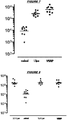
- encapsulation increased SEAP levels by about 1 ⁇ 2 log at the 1 ⁇ g dose, and at day 6 expression from a 0.1 ⁇ g encapsulated dose matched levels seen with 1 ⁇ g unencapsulated dose.
- day 3 expression levels exceeded those achieved with VRPs (squares).
- VRPs squares
- RNA was formulated in the liposomes relative to the naked RNA control, even at a 10x lower dose. Expression was also higher relative to the VRP control, but the kinetics of expression were very different (see Figure 5 ). Delivery of the RNA with electroporation resulted in increased expression relative to the naked RNA control, but these levels were lower than with liposomes.
- the replicon was administered in encapsulated form (with two different purification protocols, 0.1 ⁇ g RNA), or mixed with the liposomes after their formation (a non-encapsulated "lipoplex", 0.1 ⁇ g RNA), or as naked RNA (1 ⁇ g).
- Figure 10 shows that the lipoplex gave the lowest levels of expression, showing that shows encapsulation is essential for potent expression.
- a replicon was constructed to express full-length F protein from respiratory syncytial virus (RSV). This was delivered naked (1 ⁇ g), encapsulated in liposomes (0.1 or 1 ⁇ g), or packaged in virions (10 6 IU; "VRP") at days 0 and 21.
- Figure 7 shows anti-F IgG titers 2 weeks after the second dose, and the liposomes clearly enhance immunogenicity.
- Figure 8 shows titers 2 weeks later, by which point there was no statistical difference between the encapsulated RNA at 0.1 ⁇ g, the encapsulated RNA at 1 ⁇ g, or the VRP group.
- Neutralisation titers (measured as 60% plaque reduction, "PRNT60") were not significantly different in these three groups 2 weeks after the second dose ( Figure 9 ).
- Figure 12 shows both IgG and PRNT titers 4 weeks after the second dose.
- Figure 13 confirms that the RNA elicits a robust CD8 T cell response.
- liposome-encapsulated RNA induces essentially the same magnitude of immune response as seen with virion delivery.
- FIG. 11 shows IgG titers in mice receiving the replicon in naked form at 3 different doses, in liposomes at 4 different doses, or as VRP (10 6 IU).
- the response seen with 1 ⁇ g liposome-encapsulated RNA was statistically insignificant (ANOVA) when compared to VRP, but the higher response seen with 10 ⁇ g liposome-encapsulated RNA was statistically significant (p ⁇ 0.05) when compared to both of these groups.
- RNA liposome-encapsulated RNA gave much higher anti-F IgG responses (15 days post-second dose) than 0.1 ⁇ g of delivered DNA, and even was more immunogenic than 20 ⁇ g plasmid DNA encoding the F antigen, delivered by electroporation (ElgenTM DNA Delivery System, Inovio).
- RNA replicon RSV vaccines in large animals, with two of the five calves in the emulsion-adjuvanted group demonstrating good neutralizing antibody titers after the third vaccination, as measured by the complement-independent HRSV neutralization assay.
- all vaccinated calves had good neutralizing antibody titers after the second RNA vaccination regardless of the formulation.
- both RNA vaccines elicited F-specific serum IgG titers that were detected in a few calves after the second vaccination and in all calves after the third vaccination.
- MF59-adjuvanted RSV-F was able to boost the IgG response in all previously vaccinated calves, and to boost complement-independent HRSV neutralization titers of calves previously vaccinated with RNA.
- Bone marrow derived dendritic cells were obtained from wild-type mice or the "Resq" ( rsq1 ) mutant strain.
- the mutant strain has a point mutation at the amino terminus of its TLR7 receptor which abolishes TLR7 signalling without affecting ligand binding [48].
- the cells were stimulated with replicon RNA formulated with DOTAP, lipofectamine 2000 or inside a liposome.
- IL-6 and INF ⁇ were induced in WT cells but this response was almost completely abrogated in mutant mice.
- TLR7 The involvement of TLR7 was further investigated by comparing responses in wild type (WT) C57BL/6 mice and in the "Resq" mutant strain.
- Mice (5 per group) were given bilateral intramuscular vaccinations (50 ⁇ L per leg) on days 0 and 21 with 1 ⁇ g self-replicating RNA ("vA317", encoding the surface fusion glycoprotein of RSV) formulated in liposomes (40% DlinDMA, 10% DSPC, 48% cholesterol, 2% PEG-DMG conjugate), or with 2 ⁇ g of RSV-F protein adjuvanted with aluminum hydroxide.
- vA317 self-replicating RNA
- F-specific serum IgG titers were comparable between the wild type and Resq C56BL/6 mice i.e. immunogenicity of the protein vaccine was not dependent on TLR7.
- the self-replicating RNA formulated in liposomes showed a 7-fold decrease in F-specific serum IgG titers after both vaccinations, indicating at least a partial dependence on TLR7 for the immunogenicity of the RNA vaccine.
- RNA vaccine can elicit primarily a Th1-type immune response.
- mice were given bilateral intramuscular vaccinations (50 ⁇ L per leg) on days 0 and 21 with 1 ⁇ g of the RNA replicon, formulated either with a submicron cationic oil-in-water nanoemulsion (squalene, span 85, polysorbate 80, DOTAP) or with liposomes (40% DlinDMA, 10% DSPC, 48% cholesterol, 2% PEG-conjugated DMG).
- a submicron cationic oil-in-water nanoemulsion formulated either with a submicron cationic oil-in-water nanoemulsion (squalene, span 85, polysorbate 80, DOTAP) or with liposomes (40% DlinDMA, 10% DSPC, 48% cholesterol, 2% PEG-conjugated DMG).
- liposomes 50% DlinDMA, 10% DSPC, 48% cholesterol, 2% PEG-conjugated DMG.
- Sera were collected for immunological analysis on days 14 (2wp1)
- F-specific serum IgG, IgG1 and IgG2c titers were as follows: RNA + liposome RNA + CNE Protein vaccine Day WT Resq WT Resq WT Resq Total IgG 14 718 401 849 99 2795 2295 35 2786 1650 1978 374 41519 33327 IgG 1 14 25 25 136 76 3410 3238 35 125 125 195 183 38150 48040 IgG 2c 14 1605 849 136 76 25 25 35 14452 3183 7567 335 125 125 125
- the RNA vaccine shows at least a partial dependence on TLR7 for its immunogenicity, particularly with the emulsion adjuvant.
- a delivered replicon can stimulate wild-type mouse dendritic cells to secrete IFN- ⁇ and IL-6, but the same response is not seen in dendritic cells from mice which carry the Resq mutation in TLR7.
- Lipofectamine-delivered vA317 replicons can stimulate wild-type mouse fibroblasts to secrete high levels of IFN- ⁇ and IL-6, but the replicons stimulate much lower levels of these cytokines in fibroblasts which lack MDA5 or RIG-I i.e. cytoplasmic RNA receptors (see Figure 15 ). These fibroblasts are non-immune cells which do not respond to TLR7 ligands. Mouse embryonic fibroblasts (MEFs) from RIG-I and MDA5 knockout mice (-/-) were stimulated with replicon RNA formulated with lipofectamine 2000. Heterozygous littermates (+/-) were used as controls.
- MDA5 or RIG-I i.e. cytoplasmic RNA receptors
- RNA stimulates IL-6 and IFN- ⁇ in the heterozygous mice but in the knockout mice the activation is almost completely abrogated.
- these helicases are important for RNA recognition in non-immune cells.
- liposome-delivered RNA replicons were shown to induce several serum cytokines within 24 hours of intramuscular injection (IFN- ⁇ , IP-10 (CXCL-10), IL-6, KC, IL-5, IL-13, MCP-1, and MIP-a), whereas only MIP-1 was induced by naked RNA and liposome alone induced only IL-6.
- IFN- ⁇ was shown to contribute to the immune response to liposome-encapsulated RSV-F-encoding replicon because an anti-IFN ⁇ receptor (IFNAR1) antibody reduced F-specific serum IgG a 10-fold reduction after 2 vaccinations.
- IFNAR1 anti-IFN ⁇ receptor
- RNA encoding GFP or the SEAP reporter enzyme Experiments on expression kinetics used RNA encoding GFP or the SEAP reporter enzyme.
- the "vA306" replicon encodes SEAP; the “vA17” replicon encodes GFP; the “vA336” replicon encodes GFP but cannot self-replicate; the "vA336*” replicon is the same as vA336 but was prepared with 10% of uridines replaced with 5-methyluridine; the "vA336**” replicon is the same as va336 but 100% of its uridine residues are M5U.
- BALB/c mice were given bilateral intramuscular vaccinations (50 ⁇ L per leg) on day 0. Animals, 35 total, were divided into 7 groups (5 animals per group) and were immunised as follows:
- Serum SEAP activity (relative light units) at days 0, 3 and 6 were as follows (GMT): Day 1 Day 3 Day 6 1 898 1170 2670 2 1428 4219 28641 3 1702 9250 150472 4 1555 8005 76043 5 1605 8822 91019 6 10005 14640 93909 7 1757 6248 53497
- Replication-competent RNA encoding GFP suppressed the expression of SEAP more than replication-defective GFP RNA, suggesting a strong host defence response against replicating RNA which leads to suppression of SEAP expression. It is possible that interferons induced in response to the GFP RNA suppressed the expression of SEAP. Under the host response/suppression model, blocking host recognition of RNA would be expected to lead to increased SEAP expression, but 5' methylation of U residues in the GFP RNA was not associated with increased SEAP, suggesting that host recognition of RNA was insensitive to 5' methylation.
- Table 1 useful phospholipids DDPC 1,2-Didecanoyl-sn-Glycero-3-phosphatidylcholine DEPA 1,2-Dierucoyl-sn-Glycero-3-Phosphate DEPC 1,2-Erucoyl-sn-Glycero-3-phosphatidylcholine DEPE 1,2-Dierucoyl-sn-Glycero-3-phosphatidylethanolamine DEPG 1,2-Dierucoyl-sn-Glycero-3 [Phosphatidyl-rac-(1-glycerol%) DLOPC 1,2-Linoleoyl-sn-Glycero-3-phosphatidylcholine DLPA 1,2-Dilauroyl-sn-Glycero-3-Phosphate DLPC 1,2-Dilauroyl-sn-Glycero-3-phosphatidylcholine DLPE 1,2-Dilauroyl-sn-Glycero-3-phosphatidy
Landscapes
- Health & Medical Sciences (AREA)
- Life Sciences & Earth Sciences (AREA)
- Epidemiology (AREA)
- Public Health (AREA)
- Medicinal Chemistry (AREA)
- Veterinary Medicine (AREA)
- General Health & Medical Sciences (AREA)
- Pharmacology & Pharmacy (AREA)
- Chemical & Material Sciences (AREA)
- Animal Behavior & Ethology (AREA)
- Mycology (AREA)
- Immunology (AREA)
- Microbiology (AREA)
- Molecular Biology (AREA)
- Virology (AREA)
- Medicinal Preparation (AREA)
- Medicines Containing Antibodies Or Antigens For Use As Internal Diagnostic Agents (AREA)
- Pharmaceuticals Containing Other Organic And Inorganic Compounds (AREA)
- Medicines Containing Material From Animals Or Micro-Organisms (AREA)
Description
- This invention is in the field of non-viral delivery of RNA for immunisation.
- The delivery of nucleic acids for immunising animals has been a goal for several years. Various approaches have been tested, including the use of DNA or RNA, of viral or non-viral delivery vehicles (or even no delivery vehicle, in a "naked" vaccine), of replicating or non-replicating vectors, or of viral or non-viral vectors.
WO99/11808 WO2009/042794 and Greer et al. (Vaccine, 2006, 481-489) administer virus replicon particles. - There remains a need for further and improved nucleic acid vaccines.
- According to the invention, RNA encoding an immunogen is delivered to cells to trigger multiple innate immune response pathways. The delivered RNA triggers both an endosomal innate immunity receptor (TLR7) and also a cytoplasmic innate immunity receptor (MDA5 or RIG-I), thereby enhancing the immune response which is elicited when the RNA-encoded immunogen is expressed.
- Thus the invention provides an immunogen-encoding self-replicating RNA for use in a prophylactic or therapeutic method of raising an immune response in a vertebrate wherein the immunogen elicits an immune response against a bacterium, a virus, a fungus or a parasite, wherein the method comprises administering the RNA to a vertebrate in combination with liposomes wherein the RNA is encapsulated within the liposomes such that the RNA: (i) stimulates endosomal innate immunity receptor TLR7; (ii) stimulates cytoplasmic innate immunity receptor RIG-I or MDA5; and (iii) is translated to provide expression of the immunogen, provided that the RNA includes no modified nucleotides.
- The invention involves administration of a RNA molecule to a vertebrate. The administration site will usually be muscle tissue, such as skeletal muscle. Alternatives to intramuscular administration include, but are not limited to: intradermal, intranasal, intraocular, subcutaneous, intraperitoneal, intravenous, interstitial, buccal, transdermal, or sublingual administration. Intradermal and intramuscular administration are two preferred routes.
- Administration can be achieved in various ways. For instance, injection via a needle (e.g. a hypodermic needle) can be used, particularly for intramuscular, subcutaneous, intraocular, intraperitoneal or intravenous administration. Needle-free injection can be used as an alternative.
- Intramuscular injection is the preferred way of administering RNA according to the invention. Injection into the upper arm, deltoid or thigh muscle (e.g. anterolateral thigh) is typical.
- The administration site includes non-immune cells, such as muscle cells (which may be multinucleated and may be arranged into fascicles) and/or fibroblasts. RNA enters the cytoplasm of these cells after (or while) being administered. Entry can be via endocytosis e.g. across the sarcolemma of a muscle cell, or across the cell membrane of a fibroblast. RNA escapes from the endosomes into the cytoplasm, where it can be bound by RNA helicases (e.g. in the RIG-I-like receptor family i.e. RLRs) such as RIG-I (RLR-1), MDA5 (RLR-2) and/or LGP2 (RLR-3). This binding initiates RLR-mediated signalling, thereby triggering a first innate immune pathway which enhances the immunogenic effect of the delivered RNA. Even if the delivered RNA is single-stranded, it can form double-stranded RNA either during replication or due to its secondary structure, which means that the RNA can also initiate PKR-mediated signalling, again leading to the triggering of a cytoplasmic innate immune pathway. Both RLR-mediated and PKR-mediated signalling can lead to secretion of type I interferons (e.g. interferon α and/or β) by the non-immune cells. The non-immune cells may undergo apoptosis after transfection. RLR-mediated signalling in the non-immune cell in the presence of an expressed immunogen is a potent combination for initiating an effective immune response.
- The administration site also includes immune cells, such as macrophages (e.g. bone marrow derived macrophages), dendritic cells (e.g. bone marrow derived plasmacytoid dendritic cells and/or bone marrow derived myeloid dendritic cells), monocytes (e.g. human peripheral blood monocytes), etc.. These immune cells can be present at the time of administration, but will usually infiltrate the site after administration. For example, the tissue damage caused by invasive administration (e.g. caused by a needle at the administration site) can cause immune cells to infiltrate the damaged area. These infiltrating cells will encounter the RNA which is now at the delivery site and RNA can enter the immune cells via endocytosis. Inside the endosomes the RNA can bind to TLR7 (ssRNA), TLR8 (ssRNA) or TLR3 (dsRNA), thereby triggering a second innate immune pathway. These cells may then secrete type I interferons and/or pro-inflammatory cytokines. The RNA can cause this effect via pattern-recognition receptors, such as toll-like receptors (e.g. TLR7), intracellular helicases (e.g. RIG-I), and PKR (dsRNA-dependent protein kinase). The RNA may or may not be translated by the immune cells, and so the immune cells may or may not express the immunogen. If the immunogen is expressed by the immune cell then it may be presented by the immune cell's MHC-I and/or MHC-II. If the immunogen is not expressed by the immune cell then it may instead be captured by the immune cell from other cells (e.g. non-immune cells) which had taken up RNA and expressed the immunogen, and the immunogen can thus be presented by the immune cell's MHC-II and/or MHC-I. Antigen presentation will generally occur in draining lymph nodes after immune cells have migrated away from the administration site.
- Thus the RNA can separately trigger two innate immune pathways: one via cytoplasmic (e.g. RLR-mediated and/or PKR-mediated) signalling and one via endosomal (e.g. TLR7-mediated) signalling. These two separate triggers create an immunostimulatory environment which enhances the immune response which is elicited when the RNA-encoded immunogen is expressed as a polypeptide. The two triggers may be provided by the same cell type or by different cell types e.g. the first trigger could be in a fibroblast whereas the second trigger could be in a plasmacytoid dendritic cell. Where the two triggers are provided by the same cell type, they may even be provided by the same single cell. Usually, however, the two triggers are provided by different cell types. In some embodiments the first trigger (RLR-mediated signalling) occurs in TLR7-negative cells and the second trigger (TLR7-mediated signalling) occurs in RIG-I-negative cells (or, more generally, in RLR-negative cells).
- The ability of a RNA to stimulate an endosomal innate immunity receptor such as TLR7, or to a cytoplasmic innate immunity receptor such as RIG-I, can be directly detected by known in vitro assays. Indirect detection of the RNA/receptor interaction can be based on detection of downstream events which follow receptor stimulation, such as in vitro or in vivo detection of specific cytokine signatures or gene expression signatures associated with particular receptors. It is preferred that RNA "stimulates" an endosomal innate immunity receptor or a cytoplasmic innate immunity receptor by binding to that receptor i. e. the RNA "binds to" the receptor rather than merely "stimulates" it. Assays for binding of RNAs to these receptors are known in the art.
- To enhance both entry to immune and non-immune cells and also subsequent intercellular effects, the RNA is administered in combination with liposomes.
- Various amphiphilic lipids can form bilayers in an aqueous environment to encapsulate a RNA-containing aqueous core as a liposome. These lipids can have an anionic, cationic or zwitterionic hydrophilic head group. Formation of liposomes from anionic phospholipids dates back to the 1960s, and cationic liposome-forming lipids have been studied since the 1990s. Some phospholipids are anionic whereas other are zwitterionic and others are cationic. Suitable classes of phospholipid include, but are not limited to, phosphatidylethanolamines, phosphatidylcholines, phosphatidylserines, and phosphatidyl-glycerols, and some useful phospholipids are listed in Table 1. Useful cationic lipids include, but are not limited to, dioleoyl trimethylammonium propane (DOTAP), 1,2-distearyloxy-N,N-dimethyl-3-aminopropane (DSDMA), 1,2-dioleyloxy-N,Ndimethyl-3-aminopropane (DODMA), 1,2-dilinoleyloxy-N,N-dimethyl-3-aminopropane (DLinDMA), 1,2-dilinolenyloxy-N,N-dimethyl-3-aminopropane (DLenDMA). Zwitterionic lipids include, but are not limited to, acyl zwitterionic lipids and ether zwitterionic lipids. Examples of useful zwitterionic lipids are DPPC, DOPC and dodecylphosphocholine. The lipids can be saturated or unsaturated. The use of at least one unsaturated lipid for preparing liposomes is preferred. If an unsaturated lipid has two tails, both tails can be unsaturated, or it can have one saturated tail and one unsaturated tail.
- Liposomes can be formed from a single lipid or from a mixture of lipids. A mixture may comprise (i) a mixture of anionic lipids (ii) a mixture of cationic lipids (iii) a mixture of zwitterionic lipids (iv) a mixture of anionic lipids and cationic lipids (v) a mixture of anionic lipids and zwitterionic lipids (vi) a mixture of zwitterionic lipids and cationic lipids or (vii) a mixture of anionic lipids, cationic lipids and zwitterionic lipids. Similarly, a mixture may comprise both saturated and unsaturated lipids. For example, a mixture may comprise DSPC (zwitterionic, saturated), DlinDMA (cationic, unsaturated), and/or DMG (anionic, saturated). Where a mixture of lipids is used, not all of the component lipids in the mixture need to be amphiphilic e.g. one or more amphiphilic lipids can be mixed with cholesterol.
- The hydrophilic portion of a lipid can be PEGylated (i.e. modified by covalent attachment of a polyethylene glycol). This modification can increase stability and prevent non-specific adsorption of the liposomes. For instance, lipids can be conjugated to PEG using techniques such as those disclosed in
reference - A mixture of DSPC, DlinDMA, PEG-DMG and cholesterol is used in the examples.
- Liposomes are usually divided into three groups: multilamellar vesicles (MLV); small unilamellar vesicles (SUV); and large unilamellar vesicles (LUV). MLVs have multiple bilayers in each vesicle, forming several separate aqueous compartments. SUVs and LUVs have a single bilayer encapsulating an aqueous core; SUVs typically have a diameter ≤50nm, and LUVs have a diameter >50nm. Liposomes useful with of the invention are ideally LUVs with a diameter in the range of 50-220nm. For a composition comprising a population of LUVs with different diameters: (i) at least 80% by number should have diameters in the range of 20-220nm, (ii) the average diameter (Zav, by intensity) of the population is ideally in the range of 40-200nm, and/or (iii) the diameters should have a polydispersity index <0.2. The liposome/RNA complexes of reference 37 are expected to have a diameter in the range of 600-800nm and to have a high polydispersity.
- Techniques for preparing suitable liposomes are well known in the art e.g. see
references 3 to 5. One useful method is described inreference 6 and involves mixing (i) an ethanolic solution of the lipids (ii) an aqueous solution of the nucleic acid and (iii) buffer, followed by mixing, equilibration, dilution and purification. Preferred liposomes of the invention are obtainable by this mixing process. - RNA is encapsulated within the liposomes, and so the liposome forms a outer layer around an aqueous RNA-containing core. This encapsulation has been found to protect RNA from RNase digestion. The liposomes can include some external RNA (e.g. on the surface of the liposomes), but at least half of the RNA (and ideally all of it) is encapsulated.
- The invention involves in vivo delivery of self-replicating RNA which encodes an immunogen. The RNA triggers two separate innate immunity pathways and is also translated, leading to expression of the immunogen.
- The RNA is +-stranded, and so it can be translated without needing any intervening replication steps such as reverse transcription.
- The +-stranded RNAs are self-replicating. A self-replicating RNA molecule (replicon) can, when delivered to a vertebrate cell even without any proteins, lead to the production of multiple daughter RNAs by transcription from itself (via an antisense copy which it generates from itself). A self-replicating RNA molecule is thus typically a +-strand molecule which can be directly translated after delivery to a cell, and this translation provides a RNA-dependent RNA polymerase which then produces both antisense and sense transcripts from the delivered RNA. Thus the delivered RNA leads to the production of multiple daughter RNAs. These daughter RNAs, as well as collinear subgenomic transcripts, may be translated themselves to provide in situ expression of an encoded immunogen, or may be transcribed to provide further transcripts with the same sense as the delivered RNA which are translated to provide in situ expression of the immunogen. The overall results of this sequence of transcriptions is a huge amplification in the number of the introduced replicon RNAs and so the encoded immunogen becomes a major polypeptide product of the cells.
- One suitable system for achieving self-replication is to use an alphavirus-based RNA replicon. These +-stranded replicons are translated after delivery to a cell to give of a replicase (or replicase-transcriptase). The replicase is translated as a polyprotein which auto-cleaves to provide a replication complex which creates genomic --strand copies of the +-strand delivered RNA. These --strand transcripts can themselves be transcribed to give further copies of the +-stranded parent RNA and also to give a subgenomic transcript which encodes the immunogen. Translation of the subgenomic transcript thus leads to in situ expression of the immunogen by the infected cell. Suitable alphavirus replicons can use a replicase from a sindbis virus, a semliki forest virus, an eastern equine encephalitis virus, a venezuelan equine encephalitis virus, etc. Mutant or wild-type virus sequences can be used e.g. the attenuated TC83 mutant of VEEV has been used in replicons [15].
- A preferred self-replicating RNA molecule thus encodes (i) a RNA-dependent RNA polymerase which can transcribe RNA from the self-replicating RNA molecule and (ii) an immunogen. The polymerase can be an alphavirus replicase e.g. comprising one or more of alphavirus proteins nsP1, nsP2, nsP3 and nsP4.
- Whereas natural alphavirus genomes encode structural virion proteins in addition to the non-structural replicase polyprotein, it is preferred that a self-replicating RNA molecule of the invention does not encode alphavirus structural proteins. Thus a preferred self-replicating RNA can lead to the production of genomic RNA copies of itself in a cell, but not to the production of RNA-containing virions. The inability to produce these virions means that, unlike a wild-type alphavirus, the self-replicating RNA molecule cannot perpetuate itself in infectious form. The alphavirus structural proteins which are necessary for perpetuation in wild-type viruses are absent from self-replicating RNAs of the invention and their place is taken by gene(s) encoding the immunogen of interest, such that the subgenomic transcript encodes the immunogen rather than the structural alphavirus virion proteins.
- Thus a self-replicating RNA molecule useful with the invention may have two open reading frames. The first (5') open reading frame encodes a replicase; the second (3') open reading frame encodes an immunogen. In some embodiments the RNA may have additional (e.g. downstream) open reading frames e.g. to encode further immunogens (see below) or to encode accessory polypeptides.
- A self-replicating RNA molecule can have a 5' sequence which is compatible with the encoded replicase.
- Self-replicating RNA molecules can have various lengths but they are typically 5000-25000 nucleotides long e.g. 8000-15000 nucleotides, or 9000-12000 nucleotides. Thus the RNA is longer than seen in siRNA delivery.
- A RNA molecule useful with the invention may have a 5' cap (e.g. a 7-methylguanosine). This cap can enhance in vivo translation of the RNA.
- The 5' nucleotide of a RNA molecule useful with the invention may have a 5' triphosphate group. In a capped RNA this may be linked to a 7-methylguanosine via a 5'-to-5' bridge. A 5' triphosphate can enhance RIG-I binding.
- A RNA molecule may have a 3' poly-A tail. It may also include a poly-A polymerase recognition sequence (e.g. AAUAAA) near its 3' end.
- A RNA molecule useful with the invention will typically be single-stranded. Single-stranded RNAs can generally initiate an adjuvant effect by binding to TLR7, TLR8, RNA helicases and/or PKR. RNA delivered in double-stranded form (dsRNA) can bind to TLR3, and this receptor can also be triggered by dsRNA which is formed either during replication of a single-stranded RNA or within the secondary structure of a single-stranded RNA.
- A RNA molecule useful with the invention can conveniently be prepared by in vitro transcription (IVT). IVT can use a (cDNA) template created and propagated in plasmid form in bacteria, or created synthetically (for example by gene synthesis and/or polymerase chain-reaction (PCR) engineering methods). For instance, a DNA-dependent RNA polymerase (such as the bacteriophage T7, T3 or SP6 RNA polymerases) can be used to transcribe the RNA from a DNA template. Appropriate capping and poly-A addition reactions can be used as required (although the replicon's poly-A is usually encoded within the DNA template). These RNA polymerases can have stringent requirements for the transcribed 5' nucleotide(s) and in some embodiments these requirements must be matched with the requirements of the encoded replicase, to ensure that the IVT-transcribed RNA can function efficiently as a substrate for its self-encoded replicase.
- The RNA includes no modified nucleobases, and includes no modified nucleotides i.e. all of the nucleotides in the RNA are standard A, C, G and U ribonucleotides (except for any 5' cap structure, which may include a 7'-methylguanosine). The RNA may include a 5' cap comprising a 7'-methylguanosine, and the first 1, 2 or 3 5' ribonucleotides may be methylated at the 2' position of the ribose.
- Ideally, administered RNA includes fewer than 10 different species of RNA e.g. 5, 4, 3, or 2 different species; most preferably, a composition includes a single RNA species i. e. all RNA molecules in the composition (e.g. within a liposome) have the same sequence and same length.
- RNA molecules used with the invention encode a polypeptide immunogen. After administration of the RNA the immunogen is translated in vivo and can elicit an immune response in the recipient. The immunogen elicits an immune response against a bacterium, a virus, a fungus or a parasite. The immune response may comprise an antibody response (usually including IgG) and/or a cell-mediated immune response. The polypeptide immunogen will typically elicit an immune response which recognises the corresponding bacterial, viral, fungal or parasite polypeptide, but in some embodiments the polypeptide may act as a mimotope to elicit an immune response which recognises a bacterial, viral, fungal or parasite saccharide. The immunogen will typically be a surface polypeptide e.g. an adhesin, a hemagglutinin, an envelope glycoprotein, a spike glycoprotein, etc.
- RNA molecules can encode a single polypeptide immunogen or multiple polypeptides. Multiple immunogens can be presented as a single polypeptide immunogen (fusion polypeptide) or as separate polypeptides. If immunogens are expressed as separate polypeptides then one or more of these may be provided with an upstream IRES or an additional viral promoter element. Alternatively, multiple immunogens may be expressed from a polyprotein that encodes individual immunogens fused to a short autocatalytic protease (e.g. foot-and-mouth disease virus 2A protein), or as inteins.
- Unlike references 37 and 17, the RNA encodes an immunogen. For the avoidance of doubt, the invention does not encompass RNA which encodes a firefly luciferase or which encodes a fusion protein of E.coli β-galactosidase or which encodes a green fluorescent protein (GFP). Also, the RNA is not total mouse thymus RNA.
- In some embodiments the immunogen elicits an immune response against one of these bacteria:
- Neisseria meningitidis: useful immunogens include, but are not limited to, membrane proteins such as adhesins, autotransporters, toxins, iron acquisition proteins, and factor H binding protein. A combination of three useful polypeptides is disclosed in reference 18.
- Streptococcus pneumoniae: useful polypeptide immunogens are disclosed in reference 19. These include, but are not limited to, the RrgB pilus subunit, the beta-N-acetyl-hexosaminidase precursor (spr0057), spr0096, General stress protein GSP-781 (spr2021, SP2216), serine/threonine kinase StkP (SP1732), and pneumococcal surface adhesin PsaA.
- Streptococcus pyogenes: useful immunogens include, but are not limited to, the polypeptides disclosed in
references 20 and 21. - Moraxella catarrhalis.
- Bordetella pertussis: Useful pertussis immunogens include, but are not limited to, pertussis toxin or toxoid (PT), filamentous haemagglutinin (FHA), pertactin, and
agglutinogens - Staphylococcus aureus: Useful immunogens include, but are not limited to, the polypeptides disclosed in
reference 22, such as a hemolysin, esxA, esxB, ferrichrome-binding protein (sta006) and/or the sta011 lipoprotein. - Clostridium tetani: the typical immunogen is tetanus toxoid.
- Cornynebacterium diphtheriae: the typical immunogen is diphtheria toxoid.
- Haemophilus influenzae: Useful immunogens include, but are not limited to, the polypeptides disclosed in references 23 and 24.
- Pseudomonas aeruginosa
- Streptococcus agalactiae: useful immunogens include, but are not limited to, the polypeptides disclosed in reference 20.
- Chlamydia trachomatis: Useful immunogens include, but are not limited to, PepA, LcrE, ArtJ, DnaK, CT398, OmpH-like, L7/L12, OmcA, AtoS, CT547, Eno, HtrA and MurG (e.g. as disclosed in reference 25. LcrE [26] and HtrA [27] are two preferred immunogens.
- Chlamydia pneumoniae: Useful immunogens include, but are not limited to, the polypeptides disclosed in
reference 28. - Helicobacter pylori: Useful immunogens include, but are not limited to, CagA, VacA, NAP, and/or urease [29].
- Escherichia coli: Useful immunogens include, but are not limited to, immunogens derived from enterotoxigenic E. coli (ETEC), enteroaggregative E. coli (EAggEC), diffusely adhering E. coli (DAEC), enteropathogenic E. coli (EPEC), extraintestinal pathogenic E. coli (ExPEC) and/or enterohemorrhagic E. coli (EHEC). ExPEC strains include uropathogenic E.coli (UPEC) and meningitis/sepsis-associated E.coli (MNEC). Useful UPEC polypeptide immunogens are disclosed in references 30 and 31. Useful MNEC immunogens are disclosed in reference 32. A useful immunogen for several E.coli types is AcfD [33].
- Bacillus anthracis
- Yersinia pestis: Useful immunogens include, but are not limited to, those disclosed in
references 34 and 35. - Staphylococcus epidermis
- Clostridium perfringens or Clostridium botulinums
- Legionella pneumophila
- Coxiella burnetii
- Brucella, such as B.abortus, B.canis, B.melitensis, B.neotomae, B.ovis, B.suis, B.pinnipediae.
- Francisella, such as F.novicida, F.philomiragia, F.tularensis.
- Neisseria gonorrhoeae
- Treponema pallidum
- Haemophilus ducreyi
- Enterococcus faecalis or Enterococcus faecium
- Staphylococcus saprophyticus
- Yersinia enterocolitica
- Mycobacterium tuberculosis
- Rickettsia
- Listeria monocytogenes
- Vibrio cholerae
- Salmonella typhi
- Borrelia burgdorferi
- Porphyromonas gingivalis
- Klebsiella
- In some embodiments the immunogen elicits an immune response against one of these viruses:
- Orthomyxovirus: Useful immunogens can be from an influenza A, B or C virus, such as the hemagglutinin, neuraminidase or matrix M2 proteins. Where the immunogen is an influenza A virus hemagglutinin it may be from any subtype e.g. H1, H2, H3, H4, H5, H6, H7, H8, H9, H10, H11, H12, H13, H14, H15 or H16.
- Paramyxoviridae viruses: Viral immunogens include, but are not limited to, those derived from Pneumoviruses (e.g. respiratory syncytial virus, RSV), Rubulaviruses (e.g. mumps virus), Paramyxoviruses (e.g. parainfluenza virus), Metapneumoviruses and Morbilliviruses (e.g. measles).
- Poxviridae: Viral immunogens include, but are not limited to, those derived from Orthopoxvirus such as Variola vera, including but not limited to, Variola major and Variola minor.
- Picornavirus: Viral immunogens include, but are not limited to, those derived from Picornaviruses, such as Enteroviruses, Rhinoviruses, Heparnavirus, Cardioviruses and Aphthoviruses. In one embodiment, the enterovirus is a poliovirus e.g. a
type 1,type 2 and/ortype 3 poliovirus. In another embodiment, the enterovirus is an EV71 enterovirus. In another embodiment, the enterovirus is a coxsackie A or B virus. - Bunyavirus: Viral immunogens include, but are not limited to, those derived from an Orthobunyavirus, such as California encephalitis virus, a Phlebovirus, such as Rift Valley Fever virus, or a Nairovirus, such as Crimean-Congo hemorrhagic fever virus.
- Heparnavirus: Viral immunogens include, but are not limited to, those derived from a Heparnavirus, such as hepatitis A virus (HAV).
- Filovirus: Viral immunogens include, but are not limited to, those derived from a filovirus, such as an Ebola virus (including a Zaire, Ivory Coast, Reston or Sudan ebolavirus) or a Marburg virus.
- Togavirus: Viral immunogens include, but are not limited to, those derived from a Togavirus, such as a Rubivirus, an Alphavirus, or an Arterivirus. This includes rubella virus.
- Flavivirus: Viral immunogens include, but are not limited to, those derived from a Flavivirus, such as Tick-borne encephalitis (TBE) virus, Dengue (
types - Pestivirus: Viral immunogens include, but are not limited to, those derived from a Pestivirus, such as Bovine viral diarrhea (BVDV), Classical swine fever (CSFV) or Border disease (BDV).
- Hepadnavirus: Viral immunogens include, but are not limited to, those derived from a Hepadnavirus, such as Hepatitis B virus. A composition can include hepatitis B virus surface antigen (HBsAg).
- Other hepatitis viruses: A composition can include an immunogen from a hepatitis C virus, delta hepatitis virus, hepatitis E virus, or hepatitis G virus.
- Rhabdovirus: Viral immunogens include, but are not limited to, those derived from a Rhabdovirus, such as a Lyssavirus (e.g. a Rabies virus) and Vesiculovirus (VSV).
- Caliciviridae: Viral immunogens include, but are not limited to, those derived from Calciviridae, such as Norwalk virus (Norovirus), and Norwalk-like Viruses, such as Hawaii Virus and Snow Mountain Virus.
- Coronavirus: Viral immunogens include, but are not limited to, those derived from a SARS coronavirus, avian infectious bronchitis (IBV), Mouse hepatitis virus (MHV), and Porcine transmissible gastroenteritis virus (TGEV). The coronavirus immunogen may be a spike polypeptide.
- Retrovirus: Viral immunogens include, but are not limited to, those derived from an Oncovirus, a Lentivirus (e.g. HIV-1 or HIV-2) or a Spumavirus.
- Reovirus: Viral immunogens include, but are not limited to, those derived from an Orthoreovirus, a Rotavirus, an Orbivirus, or a Coltivirus.
- Parvovirus: Viral immunogens include, but are not limited to, those derived from Parvovirus B19.
- Herpesvirus: Viral immunogens include, but are not limited to, those derived from a human herpesvirus, such as, by way of example only, Herpes Simplex Viruses (HSV) (
e.g. HSV types 1 and 2), Varicella-zoster virus (VZV), Epstein-Barr virus (EBV), Cytomegalovirus (CMV), Human Herpesvirus 6 (HHV6), Human Herpesvirus 7 (HHV7), and Human Herpesvirus 8 (HHV8). - Papovaviruses: Viral immunogens include, but are not limited to, those derived from Papillomaviruses and Polyomaviruses. The (human) papillomavirus may be of
serotype serotypes - Adenovirus: Viral immunogens include those derived from adenovirus serotype 36 (Ad-36).
- In some embodiments, the immunogen elicits an immune response against a virus which infects fish, such as: infectious salmon anemia virus (ISAV), salmon pancreatic disease virus (SPDV), infectious pancreatic necrosis virus (IPNV), channel catfish virus (CCV), fish lymphocystis disease virus (FLDV), infectious hematopoietic necrosis virus (IHNV), koi herpesvirus, salmon picorna-like virus (also known as picorna-like virus of atlantic salmon), landlocked salmon virus (LSV), atlantic salmon rotavirus (ASR), trout strawberry disease virus (TSD), coho salmon tumor virus (CSTV), or viral hemorrhagic septicemia virus (VHSV).
- Fungal immunogens may be derived from Dermatophytres, including: Epidermophyton floccusum, Microsporum audouini, Microsporum canis, Microsporum distortum, Microsporum equinum, Microsporum gypsum, Microsporum nanum, Trichophyton concentricum, Trichophyton equinum, Trichophyton gallinae, Trichophyton gypseum, Trichophyton megnini, Trichophyton mentagrophytes, Trichophyton quinckeanum, Trichophyton rubrum, Trichophyton schoenleini, Trichophyton tonsurans, Trichophyton verrucosum, T. verrucosum var. album, var. discoides, var. ochraceum, Trichophyton violaceum, and/or Trichophyton faviforme; or from Aspergillus fumigatus, Aspergillus flavus, Aspergillus niger, Aspergillus nidulans, Aspergillus terreus, Aspergillus sydowi, Aspergillus flavatus, Aspergillus glaucus, Blastoschizomyces capitatus, Candida albicans, Candida enolase, Candida tropicalis, Candida glabrata, Candida krusei, Candida parapsilosis, Candida stellatoidea, Candida kusei, Candida parakwsei, Candida lusitaniae, Candida pseudotropicalis, Candida guilliermondi, Cladosporium carrionii, Coccidioides immitis, Blastomyces dermatidis, Cryptococcus neoformans, Geotrichum clavatum, Histoplasma capsulatum, Klebsiella pneumoniae, Microsporidia, Encephalitozoon spp., Septata intestinalis and Enterocytozoon bieneusi; the less common are Brachiola spp, Microsporidium spp., Nosema spp., Pleistophora spp., Trachipleistophora spp., Vittaforma spp Paracoccidioides brasiliensis, Pneumocystis carinii, Pythiumn insidiosum, Pityrosporum ovale, Sacharomyces cerevisae, Saccharomyces boulardii, Saccharomyces pombe, Scedosporium apiosperum, Sporothrix schenckii, Trichosporon beigelii, Toxoplasma gondii, Penicillium marneffei, Malassezia spp., Fonsecaea spp., Wangiella spp., Sporothrix spp., Basidiobolus spp., Conidiobolus spp., Rhizopus spp, Mucor spp, Absidia spp, Mortierella spp, Cunninghamella spp, Saksenaea spp., Alternaria spp, Curvularia spp, Helminthosporium spp, Fusarium spp, Aspergillus spp, Penicillium spp, Monolinia spp, Rhizoctonia spp, Paecilomyces spp, Pithomyces spp, and Cladosporium spp.
- In some embodiments the immunogen elicits an immune response against a parasite from the Plasmodium genus, such as P.falciparum, P.vivax, P.malariae or P.ovale. Thus the invention may be used for immunising against malaria. In some embodiments the immunogen elicits an immune response against a parasite from the Caligidae family, particularly those from the Lepeophtheirus and Caligus genera e.g. sea lice such as Lepeophtheirus salmonis or Caligus rogercresseyi.
- RNA will be administered as a component in a pharmaceutical composition for immunising subjects against various diseases. These compositions will typically include a pharmaceutically acceptable carrier in addition to the RNA, often as part of a delivery system as described above. A thorough discussion of pharmaceutically acceptable carriers is available in reference 36.
- A pharmaceutical composition of the invention may include one or more small molecule immunopotentiators. For example, the composition may include a TLR2 agonist (e.g. Pam3CSK4), a TLR4 agonist (e.g. an aminoalkyl glucosaminide phosphate, such as E6020), a TLR7 agonist (e.g. imiquimod), a TLR8 agonist (e.g. resiquimod) and/or a TLR9 agonist (e.g. IC31). Any such agonist ideally has a molecular weight of <2000Da. Where a RNA is encapsulated, in some embodiments such agonist(s) are also encapsulated with the RNA, but in other embodiments they are unencapsulated. Where a RNA is adsorbed to a particle, in some embodiments such agonist(s) are also adsorbed with the RNA, but in other embodiments they are unadsorbed.
- Pharmaceutical compositions of the invention may include the particles in plain water (e.g. w.f.i.) or in a buffer e.g. a phosphate buffer, a Tris buffer, a borate buffer, a succinate buffer, a histidine buffer, or a citrate buffer. Buffer salts will typically be included in the 5-20mM range.
- Pharmaceutical compositions of the invention may have a pH between 5.0 and 9.5 e.g. between 6.0 and 8.0.
- Compositions of the invention may include sodium salts (e.g. sodium chloride) to give tonicity. A concentration of 10±2 mg/ml NaCl is typical e.g. about 9 mg/ml.
- Compositions of the invention may include metal ion chelators. These can prolong RNA stability by removing ions which can accelerate phosphodiester hydrolysis. Thus a composition may include one or more of EDTA, EGTA, BAPTA, pentetic acid, etc.. Such chelators are typically present at between 10-500µM e.g. 0.1mM. A citrate salt, such as sodium citrate, can also act as a chelator, while advantageously also providing buffering activity.
- Pharmaceutical compositions of the invention may have an osmolality of between 200 mOsm/kg and 400 mOsm/kg, e.g. between 240-360 mOsm/kg, or between 290-310 mOsm/kg.
- Pharmaceutical compositions of the invention may include one or more preservatives, such as thiomersal or 2-phenoxyethanol. Mercury-free compositions are preferred, and preservative-free vaccines can be prepared.
- Pharmaceutical compositions of the invention are preferably sterile.
- Pharmaceutical compositions of the invention are preferably non-pyrogenic e.g. containing <1 EU (endotoxin unit, a standard measure) per dose, and preferably <0.1 EU per dose.
- Pharmaceutical compositions of the invention are preferably gluten free.
- Pharmaceutical compositions of the invention may be prepared in unit dose form. In some embodiments a unit dose may have a volume of between 0.1-1.0ml e.g. about 0.5ml.
- The compositions may be prepared as injectables, either as solutions or suspensions. The composition may be prepared for pulmonary administration e.g. by an inhaler, using a fine spray. The composition may be prepared for nasal, aural or ocular administration e.g. as spray or drops. Injectables for intramuscular administration are typical.
- Compositions comprise an immunologically effective amount of RNA, as well as any other components, as needed. By 'immunologically effective amount', it is meant that the administration of that amount to an individual, either in a single dose or as part of a series, is effective for treatment or prevention. This amount varies depending upon the health and physical condition of the individual to be treated, age, the taxonomic group of individual to be treated (e.g. non-human primate, primate, etc.), the capacity of the individual's immune system to synthesise antibodies, the degree of protection desired, the formulation of the vaccine, the treating doctor's assessment of the medical situation, and other relevant factors. It is expected that the amount will fall in a relatively broad range that can be determined through routine trials. The RNA content of compositions of the invention will generally be expressed in terms of the amount of RNA per dose. A preferred dose has ≤10µg RNA, and expression can be seen at much lower levels e.g. ≤1µg/dose, ≤100ng/dose, ≤10ng/dose, ≤1ng/dose, etc
- RNAs are not delivered in combination with ribosomes and so pharmaceutical compositions of the invention are ribosome-free.
- RNA delivery according to the invention is for eliciting an immune response in vivo against an immunogen of interest. The immune response is preferably protective and preferably involves antibodies and/or cell-mediated immunity. The method may raise a booster response.
- By raising an immune response the vertebrate can be protected against various diseases and/or infections e.g. against bacterial and/or viral diseases as discussed above. RNA-containing compositions are immunogenic, and are more preferably vaccine compositions. Vaccines according to the invention may either be prophylactic (i. e. to prevent infection) or therapeutic (i. e. to treat infection), but will typically be prophylactic.
- The vertebrate is preferably a mammal, such as a human or a large veterinary mammal (e.g. horses, cattle, deer, goats, pigs). Where the vaccine is for prophylactic use, the human is preferably a child (e.g. a toddler or infant) or a teenager; where the vaccine is for therapeutic use, the human is preferably a teenager or an adult. A vaccine intended for children may also be administered to adults e.g. to assess safety, dosage, immunogenicity, etc.
- Vaccines prepared according to the invention may be used to treat both children and adults. Thus a human patient may be less than 1 year old, less than 5 years old, 1-5 years old, 5-15 years old, 15-55 years old, or at least 55 years old. Preferred patients for receiving the vaccines are the elderly (e.g. ≥50 years old, ≥60 years old, and preferably ≥65 years), the young (e.g. ≤5 years old), hospitalised patients, healthcare workers, armed service and military personnel, pregnant women, the chronically ill, or immunodeficient patients. The vaccines are not suitable solely for these groups, however, and may be used more generally in a population.
- Compositions of the invention will generally be administered directly to a patient. Direct delivery may be accomplished by parenteral injection (e.g. subcutaneously, intraperitoneally, intravenously, intramuscularly, or to the interstitial space of a tissue; unlike reference 37, intraglossal injection is not typically used with the present invention), or mucosally, such as by rectal, oral (e.g. tablet, spray), vaginal, topical, transdermal or transcutaneous, intranasal, ocular, aural, pulmonary or other mucosal administration. Injection may be via a needle (e.g. a hypodermic needle), but needle-free injection may alternatively be used. A typical intramuscular dose is 0.5 ml.
- The invention may be used to elicit systemic and/or mucosal immunity, preferably to elicit an enhanced systemic and/or mucosal immunity.
- Dosage can be by a single dose schedule or a multiple dose schedule. Multiple doses may be used in a primary immunisation schedule and/or in a booster immunisation schedule. In a multiple dose schedule the various doses may be given by the same or different routes e.g. a parenteral prime and mucosal boost, a mucosal prime and parenteral boost, etc. Multiple doses will typically be administered at least 1 week apart (e.g. about 2 weeks, about 3 weeks, about 4 weeks, about 6 weeks, about 8 weeks, about 10 weeks, about 12 weeks, about 16 weeks, etc.). In one embodiment, multiple doses may be administered approximately 6 weeks, 10 weeks and 14 weeks after birth, e.g. at an age of 6 weeks, 10 weeks and 14 weeks, as often used in the World Health Organisation's Expanded Program on Immunisation ("EPI"). In an alternative embodiment, two primary doses are administered about two months apart, e.g. about 7, 8 or 9 weeks apart, followed by one or more booster doses about 6 months to 1 year after the second primary dose, e.g. about 6, 8, 10 or 12 months after the second primary dose. In a further embodiment, three primary doses are administered about two months apart, e.g. about 7, 8 or 9 weeks apart, followed by one or more booster doses about 6 months to 1 year after the third primary dose, e.g. about 6, 8, 10, or 12 months after the third primary dose.
- The practice of the present invention will employ, unless otherwise indicated, conventional methods of chemistry, biochemistry, molecular biology, immunology and pharmacology, within the skill of the art. Such techniques are explained fully in the literature. See, e.g., references 38-44, etc.
- The term "comprising" encompasses "including" as well as "consisting" e.g. a composition "comprising" X may consist exclusively of X or may include something additional e.g. X + Y.
- The term "about" in relation to a numerical value x is optional and means, for example, x±10%.
- The word "substantially" does not exclude "completely" e.g. a composition which is "substantially free" from Y may be completely free from Y. Where necessary, the word "substantially" may be omitted from the definition of the invention.
- References to charge, to cations, to anions, to zwitterions, etc., are taken at
pH 7. - TLR3 is the Toll-
like receptor 3. It is a single membrane-spanning receptor which plays a key role in the innate immune system. Known TLR3 agonists include poly(I:C). "TLR3" is the approved HGNC name for the gene encoding this receptor, and its unique HGNC ID is HGNC:11849. The RefSeq sequence for the human TLR3 gene is GI:2459625. - TLR7 is the Toll-
like receptor 7. It is a single membrane-spanning receptor which plays a key role in the innate immune system. Known TLR7 agonists include e.g. imiquimod. "TLR7" is the approved HGNC name for the gene encoding this receptor, and its unique HGNC ID is HGNC:15631. The RefSeq sequence for the human TLR7 gene is GI:67944638. - TLR8 is the Toll-like receptor 8. It is a single membrane-spanning receptor which plays a key role in the innate immune system. Known TLR8 agonists include e.g. resiquimod. "TLR8" is the approved HGNC name for the gene encoding this receptor, and its unique HGNC ID is HGNC:15632. The RefSeq sequence for the human TLR8 gene is GI:20302165.
- The RIG-I-like receptor ("RLR") family includes various RNA helicases which play key roles in the innate immune system[45]. RLR-1 (also known as RIG-I or retinoic acid inducible gene I) has two caspase recruitment domains near its N-terminus. The approved HGNC name for the gene encoding the RLR-1 helicase is "DDX58" (for DEAD (Asp-Glu-Ala-Asp) box polypeptide 58) and the unique HGNC ID is HGNC:19102. The RefSeq sequence for the human RLR-1 gene is GI:77732514. RLR-2 (also known as MDA5 or melanoma differentiation-associated gene 5) also has two caspase recruitment domains near its N-terminus. The approved HGNC name for the gene encoding the RLR-2 helicase is "IFIH1" (for interferon induced with helicase C domain 1) and the unique HGNC ID is HGNC:18873. The RefSeq sequence for the human RLR-2 gene is GI: 27886567. RLR-3 (also known as LGP2 or laboratory of genetics and physiology 2) has no caspase recruitment domains. The approved HGNC name for the gene encoding the RLR-3 helicase is "DHX58" (for DEXH (Asp-Glu-X-His) box polypeptide 58) and the unique HGNC ID is HGNC:29517. The RefSeq sequence for the human RLR-3 gene is GI:149408121.
- PKR is a double-stranded RNA-dependent protein kinase. It plays a key role in the innate immune system. "EIF2AK2" (for eukaryotic translation initiation factor 2-alpha kinase 2) is the approved HGNC name for the gene encoding this enzyme, and its unique HGNC ID is HGNC:9437. The RefSeq sequence for the human PKR gene is GI:208431825.
-
-
Figure 1 shows a gel with stained RNA. Lanes show (1) markers (2) naked replicon (3) replicon after RNase treatment (4) replicon encapsulated in liposome (5) liposome after RNase treatment (6) liposome treated with RNase then subjected to phenol/chloroform extraction. -
Figure 2 is an electron micrograph of liposomes. -
Figure 3 shows protein expression (as relative light units, RLU) atdays -
Figure 4 shows a gel with stained RNA. Lanes show (1) markers (2) naked replicon (3) replicon encapsulated in liposome (4) liposome treated with RNase then subjected to phenol/chloroform extraction. -
Figure 5 shows protein expression atdays -
Figure 6 shows protein expression atdays -
Figure 7 shows anti-F IgG titers in animals receiving virion-packaged replicon (VRP or VSRP), 1µg naked RNA, and 1µg liposome-encapsulated RNA. -
Figure 8 shows anti-F IgG titers in animals receiving VRP, 1µg naked RNA, and 0.1g or 1µg liposome-encapsulated RNA. -
Figure 9 shows neutralising antibody titers in animals receiving VRP or either 0.1g or 1µg liposome-encapsulated RNA. -
Figure 10 shows expression levels after delivery of a replicon as naked RNA (circles), liposome-encapsulated RNA (triangle & square), or as a lipoplex (inverted triangle). -
Figure 11 shows F-specific IgG titers (2 weeks after second dose) after delivery of a replicon as naked RNA (0.01-1µg), liposome-encapsulated RNA (0.01-10µg), or packaged as a virion (VRP, 106 infectious units or IU). -
Figure 12 shows F-specific IgG titers (circles) and PRNT titers (squares) after delivery of a replicon as naked RNA (1µg), liposome-encapsulated RNA (0.1 or 1µg), or packaged as a virion (VRP, 106 IU). Titers in naïve mice are also shown. Solid lines show geometric means. -
Figure 13 shows intracellular cytokine production after restimulation with synthetic peptides representing the major epitopes in the F protein, 4 weeks after a second dose. The y-axis shows the % cytokine+ of CD8+CD4-. -
Figure 14 shows F-specific IgG titers (mean log10 titers ± std dev) over 63 days (Figure 14A ) and 210 days (Figure 14B ) after immunisation of calves. The four lines are easily distinguished atday 63 and are, from bottom to top: PBS negative control; liposome-delivered RNA; emulsion-delivered RNA; and the "Triangle 4" product. -
Figure 15 shows (A) IFN-β and (B) IL-6 released by fibroblasts. The graphs include two sets of 4 bars. The left quartet are for control mice; the right quartet are for RNA-immunised mice. The 4 bars in each quartet, from left to right, show data from rig-i +/-, rig-i -/-, mda5 +/- and mda5 -/- mice. Figures are pg/ml. -
Figure 16 shows (A) IL-6 and (B) IFNα (pg/ml) released by pDC. There are 4 pairs of bars, from left to right: control; immunised with RNA+DOTAP; immunised with RNA+lipofectamine; and immunised with RNA in liposomes. In each pair the black bar is wild-type mice, grey is rsq1 mutant. - Various replicons are used below. In general these are based on a hybrid alphavirus genome with non-structural proteins from venezuelan equine encephalitis virus (VEEV), a packaging signal from sindbis virus, and a 3' UTR from Sindbis virus or a VEEV mutant. The replicon is about 10kb long and has a poly-A tail.
- Plasmid DNA encoding alphavirus replicons (named: pT7-mvEEV-FL.RSVF or A317; pT7-mVEEV-SEAP or A306; pSP6-VCR-GFP or A50) served as a template for synthesis of RNA in vitro. The replicons contain the alphavirus genetic elements required for RNA replication but lack those encoding gene products necessary for particle assembly; the structural proteins are instead replaced by a protein of interest (either a reporter, such as SEAP or GFP, or an immunogen, such as full-length RSV F protein) and so the replicons are incapable of inducing the generation of infectious particles. A bacteriophage (T7 or SP6) promoter upstream of the alphavirus cDNA facilitates the synthesis of the replicon RNA in vitro and a hepatitis delta virus (HDV) ribozyme immediately downstream of the poly(A)-tail generates the correct 3'-end through its self-cleaving activity.
- Following linearization of the plasmid DNA downstream of the HDV ribozyme with a suitable restriction endonuclease, run-off transcripts were synthesized in vitro using T7 or SP6 bacteriophage derived DNA-dependent RNA polymerase. Transcriptions were performed for 2 hours at 37°C in the presence of 7.5 mM (T7 RNA polymerase) or 5 mM (SP6 RNA polymerase) of each of the nucleoside triphosphates (ATP, CTP, GTP and UTP) following the instructions provided by the manufacturer (Ambion). Following transcription the template DNA was digested with TURBO DNase (Ambion). The replicon RNA was precipitated with LiCl and reconstituted in nuclease-free water. Uncapped RNA was capped post-transcriptionally with Vaccinia Capping Enzyme (VCE) using the ScriptCap m7G Capping System (Epicentre Biotechnologies) as outlined in the user manual; replicons capped in this way are given the "v" prefix e.g. vA317 is the A317 replicon capped by VCE. Post-transcriptionally capped RNA was precipitated with LiCl and reconstituted in nuclease-free water. The concentration of the RNA samples was determined by measuring OD260nm. Integrity of the in vitro transcripts was confirmed by denaturing agarose gel electrophoresis.
- Microparticles were made using 500mg of PLG RG503 (50:50 lactide/glycolide molar ratio, MW ∼30kDa) and 20mg DOTAP using an Omni Macro Homogenizer. The particle suspension was shaken at 150rpm overnight and then filtered through a 40µm sterile filter for storage at 2-8 °C. Self-replicating RNA was adsorbed to the particles. To prepare 1 mL of PLG/RNA suspension the required volume of PLG particle suspension was added to a vial and nuclease-free water was added to bring the volume to 900µL. 100µL RNA (10 µg/mL) was added dropwise to the PLG suspension, with constant shaking. PLG/RNA was incubated at room temperature for 30 min. For 1 mL of reconstituted suspension, 45mg mannitol, 15mg sucrose and 250-500 µg ofPVA were added. The vials were frozen at -80°C and lyophilized.
- To evaluate RNA adsorption, 100µL particle suspension was centrifuged at 10,000 rpm for 5 min and supernatant was collected. PLG/RNA was reconstituted using 1mL nuclease-free water. To 100µL particle suspension (1 µg RNA), 1mg heparin sulfate was added. The mixture was vortexed and allowed to sit at room temperature for 30 min for RNA desorption. Particle suspension was centrifuged and supernatant was collected.
- For RNAse stability, 100µL particle suspension was incubated with 6.4mAU of RNase A at room temperature for 30 min. RNAse was inactivated with 0.126mAU of Proteinase K at 55°C for 10 min. 1mg of heparin sulfate was added to desorb the RNA followed by centrifugation. The supernatant samples containing RNA were mixed with formaldehyde load dye, heated at 65°C for 10 min and analyzed using a 1% denaturing gel (460ng RNA loaded per lane).
- To assess expression, Balb/c mice were immunized with 1µg RNA in 100µL intramuscular injection volume (50µL/leg) on
day 0. Sera were collected ondays Figure 3 , expression was higher when RNA was delivered by PLG (triangles) than without any delivery particle (circles). - An oil-in-water emulsion was prepared by microfluidising squalene, span 85, polysorbate 80, and varying amounts of DOTAP. Briefly, oil soluble components (squalene, span 85, cationic lipids, lipid surfactants) were combined in a beaker, lipid components were dissolved in organic solvent. The resulting lipid solution was added directly to the oil phase. The solvent was allowed to evaporate at room temperature for 2 hours in a fume hood prior to combining the aqueous phase and homogenizing the sample to provide a homogeneous feedstock. The primary emulsions were passed three to five times through a Microfluidizer with an ice bath cooling coil. The batch samples were removed from the unit and stored at 4°C.
- This emulsion is thus similar to the commercial MF59 adjuvant, but supplemented by a cationic DOTAP to provide a cationic nanoemulsion ("CNE"). The final composition of emulsion "CNE17" was squalene (4.3% by weight), span 85 (0.5% by weight), polysorbate 80 (0.5% by weight), DOTAP (1.4mg/ml), in 10mM citrate buffer, pH 6.5.
- RNA adsorbs to the surface of the oil droplets in these cationic emulsions. To adsorb RNA a RNA solution is diluted to the appropriate concentration in RNase free water and then added directly into an equal volume of emulsion while vortexing lightly. The solution is allowed to sit at room temperature for approximately 2 hours to allow adsorption. The resulting solution is diluted to the required RNA concentration prior to administration.
- RNA was encapsulated in liposomes made by the method of
references 6 and 46. The liposomes were made of 10% DSPC (zwitterionic), 40% DlinDMA (cationic), 48% cholesterol and 2% PEG-conjugated DMG (2kDa PEG). These proportions refer to the % moles in the total liposome. - DlinDMA (1,2-dilinoleyloxy-N,N-dimethyl-3-aminopropane) was synthesized using the procedure of
reference 1. DSPC (1,2-Diastearoyl-sn-glycero-3-phosphocholine) was purchased from Genzyme. Cholesterol was obtained from Sigma-Aldrich. PEG-conjugated DMG (1,2-dimyristoyl-sn-glycero-3-phosphoethanolamine-N-[methoxy(polyethylene glycol), ammonium salt), DOTAP (1,2-dioleoyl-3-trimethylammonium-propane, chloride salt) and DC-chol (3β-[N-(N',N'-dimethylaminoethane)-carbamoyl]cholesterol hydrochloride) were from Avanti Polar Lipids. - Briefly, lipids were dissolved in ethanol (2ml), a RNA replicon was dissolved in buffer (2ml, 100mM sodium citrate, pH 6) and these were mixed with 2ml of buffer followed by 1 hour of equilibration. The mixture was diluted with 6ml buffer then filtered. The resulting product contained liposomes, with ∼95% encapsulation efficiency.
- For example, in one particular method, fresh lipid stock solutions were prepared in ethanol. 37 mg of DlinDMA, 11.8 mg of DSPC, 27.8 mg of cholesterol and 8.07 mg of PEG-DMG were weighed and dissolved in 7.55 mL of ethanol. The freshly prepared lipid stock solution was gently rocked at 37°C for about 15 min to form a homogenous mixture. Then, 755 µL of the stock was added to 1.245 mL ethanol to make a working lipid stock solution of 2 mL. This amount of lipids was used to form liposomes with 250 µg RNA. A 2 mL working solution of RNA was also prepared from a stock solution of ∼1µg/µL in 100 mM citrate buffer (pH 6). Three 20 mL glass vials (with stir bars) were rinsed with RNase Away solution (Molecular BioProducts) and washed with plenty of MilliQ water before use to decontaminate the vials of RNases. One of the vials was used for the RNA working solution and the others for collecting the lipid and RNA mixes (as described later). The working lipid and RNA solutions were heated at 37°C for 10 min before being loaded into 3cc luer-lok syringes. 2 mL citrate buffer (pH 6) was loaded in another 3 cc syringe. Syringes containing RNA and the lipids were connected to a T mixer (
PEEK™ 500 µm ID junction, Idex Health Science) using FEP tubing (fluorinated ethylene-propylene; all FEP tubing used had a 2mm internal diameter and a 3mm outer diameter; obtained from Idex Health Science). The outlet from the T mixer was also FEP tubing. The third syringe containing the citrate buffer was connected to a separate piece of tubing. - All syringes were then driven at a flow rate of 7 mL/min using a syringe pump. The tube outlets were positioned to collect the mixtures in a 20 mL glass vial (while stirring). The stir bar was taken out and the ethanol/aqueous solution was allowed to equilibrate to room temperature for 1 h. 4 ml of the mixture was loaded into a 5 cc syringe, which was connected to a piece of FEP tubing and in another 5 cc syringe connected to an equal length of FEP tubing, an equal amount of 100 mM citrate buffer (pH 6) was loaded. The two syringes were driven at 7mL/min flow rate using the syringe pump and the final mixture collected in a 20 mL glass vial (while stirring). Next, the mixture collected from the second mixing step (liposomes) were passed through a Mustang Q membrane (an anion-exchange support that binds and removes anionic molecules, obtained from Pall Corporation). Before using this membrane for the liposomes, 4 mL of 1 M NaOH, 4 mL of 1 M NaCl and 10 mL of 100 mM citrate buffer (pH 6) were successively passed through it. Liposomes were warmed for 10 min at 37°C before passing through the membrane. Next, liposomes were concentrated to 2 mL and dialyzed against 10-15 volumes of 1X PBS using by tangential flow filtration before recovering the final product. The TFF system and hollow fiber filtration membranes were purchased from Spectrum Labs (Rancho Dominguez) and were used according to the manufacturer's guidelines. Polysulfone hollow fiber filtration membranes with a 100 kD pore size cutoff and 8 cm2 surface area were used. For in vitro and in vivo experiments formulations were diluted to the required RNA concentration with 1X PBS.
-
Figure 2 shows an example electron micrograph of liposomes prepared by these methods. These liposomes contain encapsulated RNA encoding full-length RSV F antigen. Dynamic light scattering of one batch showed an average diameter of 141nm (by intensity) or 78nm (by number). - The percentage of encapsulated RNA and RNA concentration were determined by Quant-iT RiboGreen RNA reagent kit (Invitrogen), following manufacturer's instructions. The ribosomal RNA standard provided in the kit was used to generate a standard curve. Liposomes were diluted 10x or 100x in 1X TE buffer (from kit) before addition of the dye. Separately, liposomes were diluted 10x or 100x in 1X TE buffer containing 0.5% Triton X before addition of the dye (to disrupt the liposomes and thus to assay total RNA). Thereafter an equal amount of dye was added to each solution and then ∼180 µL of each solution after dye addition was loaded in duplicate into a 96 well tissue culture plate. The fluorescence (Ex 485 nm, Em 528 nm) was read on a microplate reader. All liposome formulations were dosed in vivo based on the encapsulated amount of RNA.
- Encapsulation in liposomes was shown to protect RNA from RNase digestion. Experiments used 3.8mAU of RNase A per microgram of RNA, incubated for 30 minutes at room temperature. RNase was inactivated with Proteinase K at 55°C for 10 minutes. A 1:1 v/v mixture of sample to 25:24:1 v/v/v, phenol:chloroform:isoamyl alcohol was then added to extract the RNA from the lipids into the aqueous phase. Samples were mixed by vortexing for a few seconds and then placed on a centrifuge for 15 minutes at 12k RPM. The aqueous phase (containing the RNA) was removed and used to analyze the RNA. Prior to loading (400 ng RNA per well) all the samples were incubated with formaldehyde loading dye, denatured for 10 minutes at 65°C and cooled to room temperature. Ambion Millennium markers were used to approximate the molecular weight of the RNA construct. The gel was run at 90 V. The gel was stained using 0.1% SYBR gold according to the manufacturer's guidelines in water by rocking at room temperature for 1 hour.
Figure 1 shows that RNase completely digests RNA in the absence of encapsulation (lane 3). RNA is undetectable after encapsulation (lane 4), and no change is seen if these liposomes are treated with RNase (lane 4). After RNase-treated liposomes are subjected to phenol extraction, undigested RNA is seen (lane 6). Even after 1 week at 4°C the RNA could be seen without any fragmentation (Figure 4 , arrow). Protein expression in vivo was unchanged after 6 weeks at 4 °C and one freeze-thaw cycle. Thus liposome-encapsulated RNA is stable. - To assess in vivo expression of the RNA a reporter enzyme (SEAP; secreted alkaline phosphatase) was encoded in the replicon, rather than an immunogen. Expression levels were measured in sera diluted 1:4 in 1X Phospha-Light dilution buffer using a chemiluminescent alkaline phosphate substrate. 8-10 week old BALB/c mice (5/group) were injected intramuscularly on
day 0, 50µl per leg with 0.1µg or 1µg RNA dose. The same vector was also administered without the liposomes (in RNase free 1X PBS) at 1µg. Virion-packaged replicons were also tested. Virion-packaged replicons used herein (referred to as "VRPs") were obtained by the methods of reference 47, where the alphavirus replicon is derived from the mutant VEEV or a chimera derived from the genome of VEEV engineered to contain the 3' UTR of Sindbis virus and a Sindbis virus packaging signal (PS), packaged by co-electroporating them into BHK cells with defective helper RNAs encoding the Sindbis virus capsid and glycoprotein genes. - As shown in
Figure 5 , encapsulation increased SEAP levels by about ½ log at the 1µg dose, and atday 6 expression from a 0.1µg encapsulated dose matched levels seen with 1µg unencapsulated dose. Byday 3 expression levels exceeded those achieved with VRPs (squares). Thus expressed increased when the RNA was formulated in the liposomes relative to the naked RNA control, even at a 10x lower dose. Expression was also higher relative to the VRP control, but the kinetics of expression were very different (seeFigure 5 ). Delivery of the RNA with electroporation resulted in increased expression relative to the naked RNA control, but these levels were lower than with liposomes. - To assess whether the effect seen in the liposome groups was due merely to the liposome components, or was linked to the encapsulation, the replicon was administered in encapsulated form (with two different purification protocols, 0.1µg RNA), or mixed with the liposomes after their formation (a non-encapsulated "lipoplex", 0.1µg RNA), or as naked RNA (1µg).
Figure 10 shows that the lipoplex gave the lowest levels of expression, showing that shows encapsulation is essential for potent expression. - Further SEAP experiments showed a clear dose response in vivo, with expression seen after delivery of as little as 1ng RNA (
Figure 6 ). Further experiments comparing expression from encapsulated and naked replicons indicated that 0.01µg encapsulated RNA was equivalent to 1µg of naked RNA. At a 0.5µg dose of RNA the encapsulated material gave a 12-fold higher expression atday 6; at a 0.1µg dose levels were 24-fold higher atday 6. - Rather than looking at average levels in the group, individual animals were also studied. Whereas several animals were non-responders to naked replicons, encapsulation eliminated non-responders.
- Further experiments replaced DlinDMA with DOTAP. Although the DOTAP liposomes gave better expression than naked replicon, they were inferior to the DlinDMA liposomes (2- to 3-fold difference at day 1).
- To assess in vivo immunogenicity a replicon was constructed to express full-length F protein from respiratory syncytial virus (RSV). This was delivered naked (1µg), encapsulated in liposomes (0.1 or 1µg), or packaged in virions (106 IU; "VRP") at
days Figure 7 shows anti-FIgG titers 2 weeks after the second dose, and the liposomes clearly enhance immunogenicity.Figure 8 showstiters 2 weeks later, by which point there was no statistical difference between the encapsulated RNA at 0.1µg, the encapsulated RNA at 1µg, or the VRP group. Neutralisation titers (measured as 60% plaque reduction, "PRNT60") were not significantly different in these threegroups 2 weeks after the second dose (Figure 9 ).Figure 12 shows both IgG andPRNT titers 4 weeks after the second dose. -
Figure 13 confirms that the RNA elicits a robust CD8 T cell response. - Further experiments compared F-specific IgG titers in mice receiving VRP, 0.1µg liposome-encapsulated RNA, or 1µg liposome-encapsulated RNA. Titer ratios (VRP:liposome) at various times after the second dose were as follows:
2 weeks 4 weeks 8 weeks 0.1µg 2.9 1.0 1.1 1µg 2.3 0.9 0.9 - Thus the liposome-encapsulated RNA induces essentially the same magnitude of immune response as seen with virion delivery.
- Further experiments showed superior F-specific IgG responses with a 10µg dose, equivalent responses for 1µg and 0.1µg doses, and a lower response with a 0.01µg dose.
Figure 11 shows IgG titers in mice receiving the replicon in naked form at 3 different doses, in liposomes at 4 different doses, or as VRP (106 IU). The response seen with 1µg liposome-encapsulated RNA was statistically insignificant (ANOVA) when compared to VRP, but the higher response seen with 10µg liposome-encapsulated RNA was statistically significant (p<0.05) when compared to both of these groups. - A further study confirmed that the 0.1µg of liposome-encapsulated RNA gave much higher anti-F IgG responses (15 days post-second dose) than 0.1µg of delivered DNA, and even was more immunogenic than 20µg plasmid DNA encoding the F antigen, delivered by electroporation (Elgen™ DNA Delivery System, Inovio).
- A further study was performed in cotton rats (Sigmodon hispidis) instead of mice. At a 1µg dose liposome encapsulation increased F-specific IgG titers by 8.3-fold compared to naked RNA and increased PRNT titers by 9.5-fold. The magnitude of the antibody response was equivalent to that induced by 5x10⁶ IU VRP. Both naked and liposome-encapsulated RNA were able to protect the cotton rats from RSV challenge (1x10⁵ plaque forming units), reducing lung viral load by at least 3.5 logs. Encapsulation increased the reduction by about 2-fold.
- A large-animal study was performed in cattle. Cows were immunised with 66µg of replicon encoding full-length RSV F protein at
days Triangle 4" from Fort Dodge, containing killed virus).Figure 14 shows F-specific IgG titers over the first 63 days. The RNA replicon was immunogenic in the cows using both delivery systems, although it gave lower titers than the licensed vaccine. All vaccinated cows showed F-specific antibodies after the second dose, and titers were very stable from the period of 2 to 6 weeks after the second dose (and were particularly stable for the RNA vaccines). The titers with the liposome delivery system were more tightly clustered than with the emulsion. - The data from this study provide proof of concept for RNA replicon RSV vaccines in large animals, with two of the five calves in the emulsion-adjuvanted group demonstrating good neutralizing antibody titers after the third vaccination, as measured by the complement-independent HRSV neutralization assay. In a complement-enhanced HRSV neutralization assay all vaccinated calves had good neutralizing antibody titers after the second RNA vaccination regardless of the formulation. Furthermore, both RNA vaccines elicited F-specific serum IgG titers that were detected in a few calves after the second vaccination and in all calves after the third vaccination. MF59-adjuvanted RSV-F was able to boost the IgG response in all previously vaccinated calves, and to boost complement-independent HRSV neutralization titers of calves previously vaccinated with RNA.
- Bone marrow derived dendritic cells (pDC) were obtained from wild-type mice or the "Resq" (rsq1) mutant strain. The mutant strain has a point mutation at the amino terminus of its TLR7 receptor which abolishes TLR7 signalling without affecting ligand binding [48]. The cells were stimulated with replicon RNA formulated with DOTAP,
lipofectamine 2000 or inside a liposome. As shown inFigure 16 , IL-6 and INFα were induced in WT cells but this response was almost completely abrogated in mutant mice. These results shows that TLR7 is required for RNA recognition in immune cells, and that liposome-encapsulated replicons can cause immune cells to secrete high levels of both interferons and pro-inflammatory cytokines. - The involvement of TLR7 was further investigated by comparing responses in wild type (WT) C57BL/6 mice and in the "Resq" mutant strain. Mice (5 per group) were given bilateral intramuscular vaccinations (50 µL per leg) on
days - Serum was collected for immunological analysis on days 14 (2wp1) and 35 (2wp2).F-specific serum IgG titers (GMT) were as follows:
RNA vaccine Protein vaccine Day WT Resq WT Resq Total IgG 14 1038 145 2324 2601 35 9038 1224 27211 17150 IgG 114 25 25 3657 2974 35 125 125 34494 26459 IgG 2c 14 1941 211 25 25 35 35804 2080 125 125 - With the protein vaccine, F-specific serum IgG titers were comparable between the wild type and Resq C56BL/6 mice i.e. immunogenicity of the protein vaccine was not dependent on TLR7. In contrast, the self-replicating RNA formulated in liposomes showed a 7-fold decrease in F-specific serum IgG titers after both vaccinations, indicating at least a partial dependence on TLR7 for the immunogenicity of the RNA vaccine.
- The results also show that the RNA vaccine can elicit primarily a Th1-type immune response.
- Further experiments were performed with the same RNA and the same mutant mice. Mice were given bilateral intramuscular vaccinations (50 µL per leg) on
days - F-specific serum IgG, IgG1 and IgG2c titers (GMT) were as follows:
RNA + liposome RNA + CNE Protein vaccine Day WT Resq WT Resq WT Resq Total IgG 14 718 401 849 99 2795 2295 35 2786 1650 1978 374 41519 33327 IgG 114 25 25 136 76 3410 3238 35 125 125 195 183 38150 48040 IgG 2c 14 1605 849 136 76 25 25 35 14452 3183 7567 335 125 125 - These results confirm the previous findings that, unlike the protein vaccine, the RNA vaccine shows at least a partial dependence on TLR7 for its immunogenicity, particularly with the emulsion adjuvant.
- As shown above, a delivered replicon can stimulate wild-type mouse dendritic cells to secrete IFN-α and IL-6, but the same response is not seen in dendritic cells from mice which carry the Resq mutation in TLR7.
- Similarly, Lipofectamine-delivered vA317 replicons can stimulate wild-type mouse fibroblasts to secrete high levels of IFN-β and IL-6, but the replicons stimulate much lower levels of these cytokines in fibroblasts which lack MDA5 or RIG-I i.e. cytoplasmic RNA receptors (see
Figure 15 ). These fibroblasts are non-immune cells which do not respond to TLR7 ligands. Mouse embryonic fibroblasts (MEFs) from RIG-I and MDA5 knockout mice (-/-) were stimulated with replicon RNA formulated withlipofectamine 2000. Heterozygous littermates (+/-) were used as controls. The RNA stimulates IL-6 and IFN-β in the heterozygous mice but in the knockout mice the activation is almost completely abrogated. Thus these helicases are important for RNA recognition in non-immune cells. In general, liposome-delivered RNA replicons were shown to induce several serum cytokines within 24 hours of intramuscular injection (IFN-α, IP-10 (CXCL-10), IL-6, KC, IL-5, IL-13, MCP-1, and MIP-a), whereas only MIP-1 was induced by naked RNA and liposome alone induced only IL-6. - IFN-α was shown to contribute to the immune response to liposome-encapsulated RSV-F-encoding replicon because an anti-IFNα receptor (IFNAR1) antibody reduced F-specific serum IgG a 10-fold reduction after 2 vaccinations.
- Experiments on expression kinetics used RNA encoding GFP or the SEAP reporter enzyme. The "vA306" replicon encodes SEAP; the "vA17" replicon encodes GFP; the "vA336" replicon encodes GFP but cannot self-replicate; the "vA336*" replicon is the same as vA336 but was prepared with 10% of uridines replaced with 5-methyluridine; the "vA336**" replicon is the same as va336 but 100% of its uridine residues are M5U. BALB/c mice were given bilateral intramuscular vaccinations (50 µL per leg) on
day 0. Animals, 35 total, were divided into 7 groups (5 animals per group) and were immunised as follows: -
Group 1 Naïve control. -
Group 2 were given bilateral intramuscular vaccinations (50 µL per leg) onday 0 with RNA (vA306, 0.1 µg, SEAP) formulated in liposomes mixed with self-replicating RNA (vA17, 1.0 µg, GFP) formulated in liposomes. -
Group 3 were given bilateral intramuscular vaccinations (50 µL per leg) onday 0 with RNA (vA306, 0.1 µg, SEAP) formulated in liposomes mixed with non-replicating RNA (vA336, 1.0 µg, GFP) formulated in liposomes. -
Group 4 were given bilateral intramuscular vaccinations (50 µL per leg) onday 0 with RNA (vA306, 0.1 µg, SEAP) formulated in liposomes mixed with non-replicating RNA (vA336*, 1.0 µg, GFP) formulated in liposomes. -
Group 5 were given bilateral intramuscular vaccinations (50 µL per leg) onday 0 with RNA (vA306, 0.1 µg, SEAP) formulated in liposomes mixed with non-replicating RNA (vA336**, 1.0 µg, GFP) formulated in liposomes. -
Group 6 were given bilateral intramuscular vaccinations (50 µL per leg) onday 0 with RNA (vA306, 0.1 µg, SEAP) formulated in liposomes mixed with empty liposomes at the same lipid dose as groups 2-5. -
Group 7 were given bilateral intramuscular vaccinations (50 µL per leg) onday 0 with RNA (vA306, 0.1 µg, SEAP) formulated in liposomes mixed with self-replicating RNA (vA17, 1.0 µg, GFP) formulated in liposomes. - These experiments aimed to see if host responses to RNA might limit protein expression. Thus expression was followed for only 6 days, before an adaptive response (antibodies, T cells) would be apparent. Serum SEAP activity (relative light units) at
days Day 1Day 3Day 61 898 1170 2670 2 1428 4219 28641 3 1702 9250 150472 4 1555 8005 76043 5 1605 8822 91019 6 10005 14640 93909 7 1757 6248 53497 - Replication-competent RNA encoding GFP suppressed the expression of SEAP more than replication-defective GFP RNA, suggesting a strong host defence response against replicating RNA which leads to suppression of SEAP expression. It is possible that interferons induced in response to the GFP RNA suppressed the expression of SEAP. Under the host response/suppression model, blocking host recognition of RNA would be expected to lead to increased SEAP expression, but 5' methylation of U residues in the GFP RNA was not associated with increased SEAP, suggesting that host recognition of RNA was insensitive to 5' methylation.
Table 1: useful phospholipids DDPC 1,2-Didecanoyl-sn-Glycero-3- phosphatidylcholine DEPA 1,2-Dierucoyl-sn-Glycero-3- Phosphate DEPC 1,2-Erucoyl-sn-Glycero-3- phosphatidylcholine DEPE 1,2-Dierucoyl-sn-Glycero-3- phosphatidylethanolamine DEPG 1,2-Dierucoyl-sn-Glycero-3 [Phosphatidyl-rac-(1-glycerol...) DLOPC 1,2-Linoleoyl-sn-Glycero-3- phosphatidylcholine DLPA 1,2-Dilauroyl-sn-Glycero-3- Phosphate DLPC 1,2-Dilauroyl-sn-Glycero-3- phosphatidylcholine DLPE 1,2-Dilauroyl-sn-Glycero-3- phosphatidylethanolamine DLPG 1,2-Dilauroyl-sn-Glycero-3[Phosphatidyl-rac-(1-glycerol...) DLPS 1,2-Dilauroyl-sn-Glycero-3- phosphatidylserine DMG 1,2-Dimyristoyl-sn-glycero-3- phosphoethanolamine DMPA 1,2-Dimyristoyl-sn-Glycero-3- Phosphate DMPC 1,2-Dimyristoyl-sn-Glycero-3- phosphatidylcholine DMPE 1,2-Dimyristoyl-sn-Glycero-3- phosphatidylethanolamine DMPG 1,2-Myristoyl-sn-Glycero-3[Phosphatidyl-rac-(1-glycerol...) DMPS 1,2-Dimyristoyl-sn-Glycero-3- phosphatidylserine DOPA 1,2-Dioleoyl-sn-Glycero-3- Phosphate DOPC 1,2-Dioleoyl-sn-Glycero-3- phosphatidylcholine DOPE 1,2-Dioleoyl-sn-Glycero-3- phosphatidylethanolamine DOPG 1,2-Dioleoyl-sn-Glycero-3[Phosphatidyl-rac-(1-glycerol...) DOPS 1,2-Dioleoyl-sn-Glycero-3- phosphatidylserine DPPA 1,2-Dipalmitoyl-sn-Glycero-3- Phosphate DPPC 1,2-Dipalmitoyl-sn-Glycero-3- phosphatidylcholine DPPE 1,2-Dipalmitoyl-sn-Glycero-3- phosphatidylethanolamine DPPG 1,2-Dipalmitoyl-sn-Glycero-3[Phosphatidyl-rac-(1-glycerol...) DPPS 1,2-Dipalmitoyl-sn-Glycero-3- phosphatidylserine DPyPE 1,2-diphytanoyl-sn-glycero-3- phosphoethanolamine DSPA 1,2-Distearoyl-sn-Glycero-3- Phosphate DSPC 1,2-Distearoyl-sn-Glycero-3- phosphatidylcholine DSPE 1,2-Diostearpyl-sn-Glycero-3- phosphatidylethanolamine DSPG 1,2-Distearoyl-sn-Glycero-3[Phosphatidyl-rac-(1-glycerol...) DSPS 1,2-Distearoyl-sn-Glycero-3-phosphatidylserine EPC Egg-PC HEPC Hydrogenated Egg PC HSPC High purity Hydrogenated Soy PC HSPC Hydrogenated Soy PC LYSOPC MYRISTIC 1-Myristoyl-sn-Glycero-3-phosphatidylcholine LYSOPC PALMITIC 1-Palmitoyl-sn-Glycero-3-phosphatidylcholine LYSOPC STEARIC 1-Stearoyl-sn-Glycero-3-phosphatidylcholine Milk Sphingomyelin MPPC 1-Myristoyl,2-palmitoyl-sn-Glycero 3-phosphatidylcholine MSPC 1-Myristoyl,2-stearoyl-sn-Glycero-3-phosphatidylcholine PMPC 1-Palmitoyl,2-myristoyl-sn-Glycero-3-phosphatidylcholine POPC 1-Palmitoyl,2-oleoyl-sn-Glycero-3-phosphatidylcholine POPE 1-Palmitoyl-2-oleoyl-sn-Glycero-3- phosphatidylethanolamine POPG 1,2-Dioleoyl-sn-Glycero-3[Phosphatidyl-rac-(1-glycerol)...] PSPC 1-Palmitoyl,2-stearoyl-sn-Glycero-3-phosphatidylcholine SMPC 1-Stearoyl,2-myristoyl-sn-Glycero-3-phosphatidylcholine SOPC 1-Stearoyl,2-oleoyl-sn-Glycero-3-phosphatidylcholine SPPC 1-Stearoyl,2-palmitoyl-sn-Glycero-3-phosphatidylcholine -
- [1] Heyes et al. (2005) J Controlled Release 107:276-87.
- [2]
WO2005/121348 . - [3] Liposomes: Methods and Protocols, Volume 1: Pharmaceutical Nanocarriers: Methods and Protocols. (ed. Weissig). Humana Press, 2009. ISBN 160327359X.
- [4] Liposome Technology, volumes I, II & III. (ed. Gregoriadis). Informa Healthcare, 2006.
- [5] Functional Polymer Colloids and Microparticles volume 4 (Microspheres, microcapsules & liposomes). (eds. Arshady & Guyot). Citus Books, 2002.
- [6] Jeffs et al. (2005) Pharmaceutical Research 22 (3):362-372.
- [7] Polymers in Drug Delivery. (eds. Uchegbu & Schatzlein). CRC Press, 2006.
- [8] Microparticulate Systems for the Delivery of Proteins and Vaccines. (eds. Cohen & Bernstein). CRC Press, 1996.
- [9] O'Hagan et al. (2001) J Virology 75:9037-9043.
- [10] Singh et al. (2003) Pharmaceutical Research 20: 247-251.
- [11]
WO2009/13220 - [12]
US-2008/0085870 . - [13]
US-2008/0057080 . - [14]
US-2007/0014805 . - [15]
WO2005/113782 . - [16]
WO2011/005799 . - [17] El Ouahabi et al. (1996) FEBS Letts 380:108-12.
- [18] Giuliani et al. (2006) Proc Natl Acad Sci USA 103(29):10834-9.
- [19]
WO2009/016515 . - [20]
WO02/34771 - [21]
WO2005/032582 . - [22]
WO2010/119343 . - [23]
WO2006/110413 . - [24]
WO2005/111066 . - [25]
WO2005/002619 . - [26]
WO2006/138004 . - [27]
WO2009/109860 . - [28]
WO02/02606 - [29]
WO03/018054 - [30]
WO2006/091517 . - [31]
WO2008/020330 . - [32]
WO2006/089264 . - [33]
WO2009/104092 . - [34]
WO2009/031043 . - [35]
WO2007/049155 . - [36] Gennaro (2000) Remington: The Science and Practice of Pharmacy. 20th edition, ISBN: 0683306472.
- [37] Johanning et al. (1995) Nucleic Acids Res 23:1495-1501.
- [38] Methods In Enzymology (S. Colowick and N. Kaplan, eds., Academic Press, Inc.)
- [39] Handbook of Experimental Immunology, Vols. I-IV (D.M. Weir and C.C. Blackwell, eds, 1986, Blackwell Scientific Publications)
- [40] Sambrook et al. (2001) Molecular Cloning: A Laboratory Manual, 3rd edition (Cold Spring Harbor Laboratory Press).
- [41] Handbook of Surface and Colloidal Chemistry (Birdi, K.S. ed., CRC Press, 1997)
- [42] Ausubel et al. (eds) (2002) Short protocols in molecular biology, 5th edition (Current Protocols).
- [43] Molecular Biology Techniques: An Intensive Laboratory Course, (Ream et al., eds., 1998, Academic Press)
- [44] PCR (Introduction to Biotechniques Series), 2nd ed. (Newton & Graham eds., 1997, Springer Verlag)
- [45] Yoneyama & Fujita (2007) Cytokine & Growth Factor Reviews 18:545-51.
- [46] Maurer et al. (2001) Biophysical Journal, 80: 2310-2326.
- [47] Perri et al. (2003) J Virol 77:10394-10403.
- [48] Iavarone et al. (2011) J Immunol 186;4213-22.
Claims (9)
- An immunogen-encoding self-replicating RNA for use in a prophylactic or therapeutic method of raising an immune response in a vertebrate wherein the immunogen elicits an immune response against a bacterium, a virus, a fungus or a parasite, comprising administering said immunogen-encoding RNA to the vertebrate in combination with liposomes wherein the RNA is encapsulated within the liposomes such that the RNA: (i) stimulates endosomal innate immunity receptor TLR7; (ii) stimulates cytoplasmic innate immunity receptor RIG-1 or MDA5; and (iii) is translated to provide expression of the immunogen, provided that the RNA includes no modified nucleotides.
- The immunogen-encoding RNA for use according to claim 1, wherein the RNA is administered to skeletal muscle tissue.
- The immunogen-encoding RNA for use according to claim 1 or claim 2, wherein the RNA is administered by injection.
- The immunogen-encoding RNA for use according to claim 3, wherein injection is via a needle.
- The immunogen-encoding RNA for use according to any preceding claim, wherein the RNA is + stranded.
- The immunogen-encoding RNA for use according to any preceding claim, wherein the immunogen can elicit an immune response in vivo against: (a) respiratory syncytial virus glycoprotein F; (b) a virus which infects fish, such as infectious salmon anemia virus (ISAV), salmon pancreatic disease virus (SPDV), infectious pancreatic necrosis virus (IPNV), channel catfish virus (CCV), fish lymphocystis disease virus (FLDV), infectious hematopoietic necrosis virus (IHNV), koi herpesvirus, salmon picorna-like virus (also known as picorna-like virus of atlantic salmon), landlocked salmon virus (LSV), atlantic salmon rotavirus (ASR), trout strawberry disease virus (TSD), coho salmon tumor virus (CSTV), and viral hemorrhagic septicemia virus (VHSV); (c) orthomyxovirus, such as influenza A, B and C virus; or (d) herpesvirus, such as herpes simplex viruses (HSV), varicella-zoster virus (VZV), Epstein-Barr virus (EBV), cytomegalovirus (CMV), human herpesvirus 6 (HHV6), human herpesvirus 7 (HHV7), and human herpesvirus 8 (HHV8).
- A pharmaceutical composition comprising an immunogen-encoding self-replicating RNA for use in a method of immunising a vertebrate subject against a disease wherein the immunogen elicits an immune response against a bacterium, a virus, a fungus or a parasite, wherein the method comprises administering said immunogen-encoding RNA to the vertebrate in combination with liposomes wherein the RNA is encapsulated within the liposomes, and a pharmaceutically acceptable carrier, such that the RNA: (i) stimulates endosomal innate immunity receptor TLR7; (ii) stimulates cytoplasmic innate immunity receptor RIG-I or MDA5; and (iii) is translated to provide expression of the immunogen wherein the immunogen elicits an immune response against a virus, a fungus or a parasite, provided that the RNA includes no modified nucleotides.
- The immunogen-encoding RNA for use according to any one of claims 1-6, or the pharmaceutical composition for use according to claim 7, wherein the RNA has a 5' cap.
- The immunogen-encoding RNA for use according to claim 8 or the pharmaceutical composition for use according to claim 8, wherein the 5' cap includes a 7-methylguanosine.
Priority Applications (4)
| Application Number | Priority Date | Filing Date | Title |
|---|---|---|---|
| DK17177123.1T DK3243526T3 (en) | 2010-07-06 | 2011-07-06 | SUPPLY OF RNA TO TRACT MULTIPLE IMMUNE SIGNAL WAYS |
| PL17177123T PL3243526T3 (en) | 2010-07-06 | 2011-07-06 | RNA DELIVERY TO RELEASE MULTIPLE IMMUNOLOGICAL TRAILS |
| EP17177123.1A EP3243526B1 (en) | 2010-07-06 | 2011-07-06 | Delivery of rna to trigger multiple immune pathways |
| CY20201100068T CY1122515T1 (en) | 2010-07-06 | 2020-01-24 | RELEASE RNA TO TRIGGER MULTIPLE IMMUNE PATHWAYS |
Applications Claiming Priority (2)
| Application Number | Priority Date | Filing Date | Title |
|---|---|---|---|
| US36178910P | 2010-07-06 | 2010-07-06 | |
| PCT/US2011/043104 WO2012006377A2 (en) | 2010-07-06 | 2011-07-06 | Delivery of rna to trigger multiple immune pathways |
Related Child Applications (2)
| Application Number | Title | Priority Date | Filing Date |
|---|---|---|---|
| EP17177123.1A Division EP3243526B1 (en) | 2010-07-06 | 2011-07-06 | Delivery of rna to trigger multiple immune pathways |
| EP17177123.1A Division-Into EP3243526B1 (en) | 2010-07-06 | 2011-07-06 | Delivery of rna to trigger multiple immune pathways |
Publications (2)
| Publication Number | Publication Date |
|---|---|
| EP2590670A2 EP2590670A2 (en) | 2013-05-15 |
| EP2590670B1 true EP2590670B1 (en) | 2017-08-23 |
Family
ID=44629112
Family Applications (2)
| Application Number | Title | Priority Date | Filing Date |
|---|---|---|---|
| EP11736499.2A Active EP2590670B1 (en) | 2010-07-06 | 2011-07-06 | Methods of raising an immune response by delivery of rna |
| EP17177123.1A Active EP3243526B1 (en) | 2010-07-06 | 2011-07-06 | Delivery of rna to trigger multiple immune pathways |
Family Applications After (1)
| Application Number | Title | Priority Date | Filing Date |
|---|---|---|---|
| EP17177123.1A Active EP3243526B1 (en) | 2010-07-06 | 2011-07-06 | Delivery of rna to trigger multiple immune pathways |
Country Status (12)
| Country | Link |
|---|---|
| US (19) | US9801897B2 (en) |
| EP (2) | EP2590670B1 (en) |
| CY (1) | CY1122515T1 (en) |
| DK (1) | DK3243526T3 (en) |
| ES (2) | ES2646669T3 (en) |
| HR (1) | HRP20200091T1 (en) |
| HU (1) | HUE047796T2 (en) |
| LT (1) | LT3243526T (en) |
| PL (1) | PL3243526T3 (en) |
| PT (1) | PT3243526T (en) |
| SI (1) | SI3243526T1 (en) |
| WO (1) | WO2012006377A2 (en) |
Cited By (4)
| Publication number | Priority date | Publication date | Assignee | Title |
|---|---|---|---|---|
| US11504421B2 (en) | 2017-05-08 | 2022-11-22 | Gritstone Bio, Inc. | Alphavirus neoantigen vectors |
| US11771747B2 (en) | 2020-08-06 | 2023-10-03 | Gritstone Bio, Inc. | Multiepitope vaccine cassettes |
| US12098383B2 (en) | 2019-05-30 | 2024-09-24 | Gritstone Bio, Inc. | Modified adenoviruses |
| US12569553B2 (en) | 2020-03-09 | 2026-03-10 | Dynavax Technologies Corporation | Shingles vaccines comprising a TLR9 agonist |
Families Citing this family (81)
| Publication number | Priority date | Publication date | Assignee | Title |
|---|---|---|---|---|
| HUE026646T2 (en) | 2010-07-06 | 2016-07-28 | Glaxosmithkline Biologicals Sa | Liposomes with lipids having an advantageous pka-value for rna delivery |
| HUE047796T2 (en) | 2010-07-06 | 2020-05-28 | Glaxosmithkline Biologicals Sa | Introduction of RNA to activate multiple immune pathways |
| RS63817B1 (en) | 2010-07-06 | 2023-01-31 | Glaxosmithkline Biologicals Sa | Virion-like delivery particles for self-replicating rna molecules |
| PL2591114T3 (en) | 2010-07-06 | 2017-08-31 | Glaxosmithkline Biologicals Sa | Immunisation of large mammals with low doses of rna |
| WO2012019168A2 (en) | 2010-08-06 | 2012-02-09 | Moderna Therapeutics, Inc. | Engineered nucleic acids and methods of use thereof |
| RS63890B1 (en) * | 2010-08-31 | 2023-02-28 | Glaxosmithkline Biologicals Sa | Small liposomes for delivery of immunogen-encoding rna |
| PT3970742T (en) | 2010-08-31 | 2022-06-27 | Glaxosmithkline Biologicals Sa | Pegylated liposomes for delivery of immunogen-encoding rna |
| RU2013120302A (en) | 2010-10-01 | 2014-11-20 | Модерна Терапьютикс, Инк. | DESIGNED NUCLEIC ACIDS AND WAYS OF THEIR APPLICATION |
| JP2013544504A (en) | 2010-10-11 | 2013-12-19 | ノバルティス アーゲー | Antigen delivery platform |
| EP2691101A2 (en) | 2011-03-31 | 2014-02-05 | Moderna Therapeutics, Inc. | Delivery and formulation of engineered nucleic acids |
| EP3354644A1 (en) | 2011-06-08 | 2018-08-01 | Translate Bio, Inc. | Cleavable lipids |
| PL3586861T3 (en) | 2011-06-08 | 2022-05-23 | Translate Bio, Inc. | COMPOSITIONS OF LIPID nanoparticles and MRN DELIVERY METHODS |
| WO2013006838A1 (en) * | 2011-07-06 | 2013-01-10 | Novartis Ag | Immunogenic combination compositions and uses thereof |
| SG10201605512WA (en) * | 2011-07-06 | 2016-09-29 | Novartis Ag | Oil-in-water emulsions that contain nucleic acids |
| US9464124B2 (en) | 2011-09-12 | 2016-10-11 | Moderna Therapeutics, Inc. | Engineered nucleic acids and methods of use thereof |
| RU2648950C2 (en) | 2011-10-03 | 2018-04-02 | Модерна Терапьютикс, Инк. | Modified nucleosides, nucleotides and nucleic acids and their application |
| CN104114572A (en) | 2011-12-16 | 2014-10-22 | 现代治疗公司 | Modified nucleosides, nucleotides and nucleic acid compositions |
| AU2013243948A1 (en) | 2012-04-02 | 2014-10-30 | Moderna Therapeutics, Inc. | Modified polynucleotides for the production of proteins associated with human disease |
| US9283287B2 (en) | 2012-04-02 | 2016-03-15 | Moderna Therapeutics, Inc. | Modified polynucleotides for the production of nuclear proteins |
| US9254311B2 (en) | 2012-04-02 | 2016-02-09 | Moderna Therapeutics, Inc. | Modified polynucleotides for the production of proteins |
| US9572897B2 (en) | 2012-04-02 | 2017-02-21 | Modernatx, Inc. | Modified polynucleotides for the production of cytoplasmic and cytoskeletal proteins |
| US10245229B2 (en) | 2012-06-08 | 2019-04-02 | Translate Bio, Inc. | Pulmonary delivery of mRNA to non-lung target cells |
| US9512456B2 (en) | 2012-08-14 | 2016-12-06 | Modernatx, Inc. | Enzymes and polymerases for the synthesis of RNA |
| WO2014081507A1 (en) | 2012-11-26 | 2014-05-30 | Moderna Therapeutics, Inc. | Terminally modified rna |
| EP2943221A1 (en) * | 2013-01-10 | 2015-11-18 | Novartis AG | Influenza virus immunogenic compositions and uses thereof |
| EP2968391A1 (en) | 2013-03-13 | 2016-01-20 | Moderna Therapeutics, Inc. | Long-lived polynucleotide molecules |
| DK2970456T3 (en) | 2013-03-14 | 2021-07-05 | Translate Bio Inc | METHODS AND COMPOSITIONS FOR DELIVERING MRNA-CODED ANTIBODIES |
| EP2971010B1 (en) | 2013-03-14 | 2020-06-10 | ModernaTX, Inc. | Formulation and delivery of modified nucleoside, nucleotide, and nucleic acid compositions |
| US8980864B2 (en) | 2013-03-15 | 2015-03-17 | Moderna Therapeutics, Inc. | Compositions and methods of altering cholesterol levels |
| US10023626B2 (en) | 2013-09-30 | 2018-07-17 | Modernatx, Inc. | Polynucleotides encoding immune modulating polypeptides |
| JP2016538829A (en) | 2013-10-03 | 2016-12-15 | モデルナ セラピューティクス インコーポレイテッドModerna Therapeutics,Inc. | Polynucleotide encoding low density lipoprotein receptor |
| SG10201912038TA (en) | 2014-04-23 | 2020-02-27 | Modernatx Inc | Nucleic acid vaccines |
| CN106659777A (en) | 2014-06-13 | 2017-05-10 | 葛兰素史密丝克莱恩生物有限公司 | Immunogenic combinations |
| EP3169693B1 (en) | 2014-07-16 | 2022-03-09 | ModernaTX, Inc. | Chimeric polynucleotides |
| AU2016336344A1 (en) | 2015-10-05 | 2018-04-19 | Modernatx, Inc. | Methods for therapeutic administration of messenger ribonucleic acid drugs |
| EP3364949A4 (en) | 2015-10-22 | 2019-07-31 | ModernaTX, Inc. | ANTICANCER VACCINES |
| TW201729835A (en) | 2015-10-22 | 2017-09-01 | 現代公司 | Respiratory virus vaccine |
| JP2019511255A (en) | 2016-01-11 | 2019-04-25 | バーンダリ,インク. | Microneedle composition and method of using the same |
| JP7250520B2 (en) | 2016-04-13 | 2023-04-03 | ヤンセン ファーマシューティカルズ,インコーポレーテッド | Recombinant arterivirus replicon system and uses thereof |
| EP4631970A3 (en) | 2016-05-04 | 2026-01-07 | CureVac SE | Nucleic acid molecules and uses thereof |
| KR20230074598A (en) | 2016-05-18 | 2023-05-30 | 모더나티엑스, 인크. | Polynucleotides encoding relaxin |
| KR102718353B1 (en) | 2016-10-17 | 2024-10-15 | 얀센 파마슈티칼즈, 인코포레이티드 | Recombinant viral replicon system and uses thereof |
| US12491261B2 (en) | 2016-10-26 | 2025-12-09 | Acuitas Therapeutics, Inc. | Lipid nanoparticle formulations |
| WO2018089851A2 (en) | 2016-11-11 | 2018-05-17 | Modernatx, Inc. | Influenza vaccine |
| JP7788787B2 (en) | 2016-12-05 | 2025-12-19 | ヤンセン ファーマシューティカルズ,インコーポレーテッド | Compositions and methods for enhancing gene expression |
| JP2020524143A (en) | 2017-06-15 | 2020-08-13 | インフェクシャス ディズィーズ リサーチ インスティチュート | Nanostructured lipid carriers, stable emulsions, and uses thereof |
| CA3073020A1 (en) | 2017-08-16 | 2019-02-21 | Acuitas Therapeutics, Inc. | Lipids for use in lipid nanoparticle formulations |
| EA202091513A1 (en) | 2017-12-19 | 2020-09-09 | Янссен Сайенсиз Айрлэнд Анлимитед Компани | VACCINES AGAINST HEPATITIS B VIRUS (HBV) AND THEIR APPLICATION |
| US11389531B2 (en) | 2017-12-19 | 2022-07-19 | Janssen Sciences Ireland Unlimited Company | Methods and apparatus for the delivery of hepatitis B virus (HBV) vaccines |
| US11020476B2 (en) | 2017-12-19 | 2021-06-01 | Janssen Sciences Ireland Unlimited Company | Methods and compositions for inducing an immune response against Hepatitis B Virus (HBV) |
| MX2020006225A (en) | 2017-12-20 | 2020-12-07 | Glaxosmithkline Biologicals Sa | Epstein-barr virus antigen constructs. |
| EP3735271A4 (en) | 2018-01-04 | 2022-06-15 | Iconic Therapeutics, Inc. | ANTI-TISSUE FACTOR ANTIBODIES, ANTIBODY-DRUG CONJUGATE AND METHODS THEREOF |
| WO2019143949A2 (en) | 2018-01-19 | 2019-07-25 | Synthetic Genomics, Inc. | Induce and enhance immune responses using recombinant replicon systems |
| KR20210074314A (en) | 2018-10-08 | 2021-06-21 | 얀센 파마슈티칼즈, 인코포레이티드 | Alphavirus-based replicon for administration of biotherapeutics |
| TWI852977B (en) | 2019-01-10 | 2024-08-21 | 美商健生生物科技公司 | Prostate neoantigens and their uses |
| US20220313815A1 (en) | 2019-06-20 | 2022-10-06 | Janssen Sciences Ireland Unlimited Company | Self-replicating rna molecules for hepatitis b virus (hbv) vaccines and uses thereof |
| KR20220115569A (en) | 2019-11-18 | 2022-08-17 | 얀센 바이오테크 인코포레이티드 | Vaccines based on mutant CALR and JAK2 and uses thereof |
| US12194089B2 (en) | 2020-02-04 | 2025-01-14 | CureVac SE | Coronavirus vaccine |
| CA3172489A1 (en) | 2020-03-23 | 2021-09-30 | Amit KHANDHAR | Nanoemulsion compositions and methods for delivery of nra |
| US12558415B2 (en) * | 2020-04-14 | 2026-02-24 | The Regents Of The University Of California | Broad-spectrum multi-antigen pan-coronavirus vaccine |
| AU2021271300A1 (en) | 2020-05-11 | 2023-02-02 | Janssen Pharmaceuticals, Inc. | RNA replicon encoding a stabilized corona virus spike protein |
| US12295997B2 (en) | 2020-07-06 | 2025-05-13 | Janssen Biotech, Inc. | Prostate neoantigens and their uses |
| WO2022016070A1 (en) | 2020-07-16 | 2022-01-20 | Acuitas Therapeutics, Inc. | Cationic lipids for use in lipid nanoparticles |
| CZ310613B6 (en) | 2020-09-23 | 2026-01-28 | Ústav organické chemie a biochemie AV ČR, v. v. i. | Lipidoids for the transfection of nucleic acids and their use |
| US20240156946A1 (en) | 2020-12-22 | 2024-05-16 | CureVac SE | Rna vaccine against sars-cov-2 variants |
| JP2024504614A (en) * | 2021-01-14 | 2024-02-01 | トランスレイト バイオ, インコーポレイテッド | Methods and compositions for delivering mRNA-encoded antibodies |
| WO2022152939A1 (en) | 2021-01-18 | 2022-07-21 | Conserv Bioscience Limited | Coronavirus immunogenic compositions, methods and uses thereof |
| EP4352247A1 (en) | 2021-06-09 | 2024-04-17 | GlaxoSmithKline Biologicals s.a. | Release assay for determining potency of self-amplifying rna drug product and methods for using |
| CZ310443B6 (en) | 2021-07-19 | 2025-06-25 | Ústav organické chemie a biochemie AV ČR, v. v. i. | Cyclohexane lipidoids for nucleic acid transfection and their use |
| JP2024535354A (en) * | 2021-09-22 | 2024-09-30 | エイチディーティー バイオ コーポレーション | Cancer treatment compositions and uses thereof |
| KR20240096468A (en) | 2021-09-22 | 2024-06-26 | 에이치디티 바이오 코포레이션 | RNA vaccines against infectious diseases |
| AU2022349634A1 (en) * | 2021-09-22 | 2024-04-11 | Hdt Bio Corp. | Nucleic acid sensor agonist compositions and uses thereof |
| CA3242402A1 (en) | 2021-12-16 | 2023-06-22 | Acuitas Therapeutics, Inc. | Lipids for use in lipid nanoparticle formulations |
| EP4460326A4 (en) * | 2022-01-07 | 2026-03-11 | Hdt Bio Corp | Compositions and methods for multivalent immune responses |
| WO2024089638A1 (en) | 2022-10-28 | 2024-05-02 | Glaxosmithkline Biologicals Sa | Nucleic acid based vaccine |
| WO2024102954A1 (en) | 2022-11-10 | 2024-05-16 | Massachusetts Institute Of Technology | Activation induced clipping system (aics) |
| US12115217B2 (en) | 2022-11-18 | 2024-10-15 | Trustees Of Boston University | Self-replicating RNA and uses thereof |
| WO2024125597A1 (en) | 2022-12-14 | 2024-06-20 | Providence Therapeutics Holdings Inc. | Compositions and methods for infectious diseases |
| US12311033B2 (en) | 2023-05-31 | 2025-05-27 | Capstan Therapeutics, Inc. | Lipid nanoparticle formulations and compositions |
| WO2025229572A1 (en) | 2024-05-01 | 2025-11-06 | Glaxosmithkline Biologicals Sa | Epstein-barr virus antigen-encoding messenger ribonucleic acid and antigen protein vaccines |
| WO2025235862A1 (en) | 2024-05-10 | 2025-11-13 | Inndura Therapeutics Inc. | A modified immune cell receptor comprising a target-binding domain and the extracellular domain of cd16a |
Citations (4)
| Publication number | Priority date | Publication date | Assignee | Title |
|---|---|---|---|---|
| WO1998010748A1 (en) * | 1996-09-13 | 1998-03-19 | The School Of Pharmacy | Liposomes |
| WO1999052503A2 (en) * | 1998-04-16 | 1999-10-21 | John Wayne Cancer Institute | Rna cancer vaccine and methods for its use |
| WO2005120152A2 (en) * | 2004-06-07 | 2005-12-22 | Protiva Biotherapeutics, Inc. | Cationic lipids and methods of use |
| WO2011005799A2 (en) * | 2009-07-06 | 2011-01-13 | Novartis Ag | Self replicating rna molecules and uses thereof |
Family Cites Families (240)
| Publication number | Priority date | Publication date | Assignee | Title |
|---|---|---|---|---|
| US3058069A (en) | 1958-08-20 | 1962-10-09 | Landis & Gyr Ag | Multivibrator with d. c. voltage frequency control |
| US6090406A (en) | 1984-04-12 | 2000-07-18 | The Liposome Company, Inc. | Potentiation of immune responses with liposomal adjuvants |
| US4853228A (en) | 1987-07-28 | 1989-08-01 | Micro-Pak, Inc. | Method of manufacturing unilamellar lipid vesicles |
| US6867195B1 (en) | 1989-03-21 | 2005-03-15 | Vical Incorporated | Lipid-mediated polynucleotide administration to reduce likelihood of subject's becoming infected |
| ES2116269T3 (en) | 1989-03-21 | 1998-07-16 | Vical Inc | EXPRESSION OF EXOGENOUS SEQUENCES OF POLYNUCLEOTIDES IN A VERTEBRATE. |
| US5013556A (en) | 1989-10-20 | 1991-05-07 | Liposome Technology, Inc. | Liposomes with enhanced circulation time |
| US5279833A (en) | 1990-04-04 | 1994-01-18 | Yale University | Liposomal transfection of nucleic acids into animal cells |
| US5264618A (en) | 1990-04-19 | 1993-11-23 | Vical, Inc. | Cationic lipids for intracellular delivery of biologically active molecules |
| FR2676072B1 (en) | 1991-05-03 | 1994-11-18 | Transgene Sa | RNA DELIVERY VECTOR. |
| US5693535A (en) | 1992-05-14 | 1997-12-02 | Ribozyme Pharmaceuticals, Inc. | HIV targeted ribozymes |
| US5750390A (en) | 1992-08-26 | 1998-05-12 | Ribozyme Pharmaceuticals, Inc. | Method and reagent for treatment of diseases caused by expression of the bcl-2 gene |
| EP0646178A1 (en) | 1992-06-04 | 1995-04-05 | The Regents Of The University Of California | expression cassette with regularoty regions functional in the mammmlian host |
| WO1994002595A1 (en) | 1992-07-17 | 1994-02-03 | Ribozyme Pharmaceuticals, Inc. | Method and reagent for treatment of animal diseases |
| US5474914A (en) | 1992-07-29 | 1995-12-12 | Chiron Corporation | Method of producing secreted CMV glycoprotein H |
| US20020102273A1 (en) | 1995-08-08 | 2002-08-01 | Robert B. Grieve | Use of alphavirus expression vectors to produce parasite anitgens |
| EP0702516A4 (en) | 1993-06-01 | 1998-04-22 | Life Technologies Inc | GENETIC IMMUNIZATION USING CATIONIC LIPIDS |
| US6015686A (en) * | 1993-09-15 | 2000-01-18 | Chiron Viagene, Inc. | Eukaryotic layered vector initiation systems |
| JPH08511956A (en) | 1994-04-07 | 1996-12-17 | アクゾ・ノベル・エヌ・ベー | Freeze-dried composition containing RNA |
| US5993850A (en) | 1994-09-13 | 1999-11-30 | Skyepharma Inc. | Preparation of multivesicular liposomes for controlled release of encapsulated biologically active substances |
| US5885613A (en) | 1994-09-30 | 1999-03-23 | The University Of British Columbia | Bilayer stabilizing components and their use in forming programmable fusogenic liposomes |
| AU4594996A (en) | 1994-11-30 | 1996-06-19 | Chiron Viagene, Inc. | Recombinant alphavirus vectors |
| US5965434A (en) | 1994-12-29 | 1999-10-12 | Wolff; Jon A. | Amphipathic PH sensitive compounds and delivery systems for delivering biologically active compounds |
| US5792462A (en) | 1995-05-23 | 1998-08-11 | University Of North Carolina At Chapel Hill | Alphavirus RNA replicon systems |
| US5981501A (en) | 1995-06-07 | 1999-11-09 | Inex Pharmaceuticals Corp. | Methods for encapsulating plasmids in lipid bilayers |
| US7422902B1 (en) | 1995-06-07 | 2008-09-09 | The University Of British Columbia | Lipid-nucleic acid particles prepared via a hydrophobic lipid-nucleic acid complex intermediate and use for gene transfer |
| AU727923B2 (en) | 1995-09-27 | 2001-01-04 | Government Of The United States Of America, As Represented By The Secretary Of The Department Of Health And Human Services, The | Production of infectious respiratory syncytial virus from cloned nucleotide sequences |
| US20030100496A1 (en) | 1996-02-12 | 2003-05-29 | Haines Adrian Mark | Compositions and methods for highly efficient transfection |
| EP0880360B1 (en) | 1996-02-12 | 2002-10-09 | Cobra Therapeutics Limited | Novel methods of vaccination and vaccines therefore comprising a nucleic acid encoding a first epitope and a peptide containing a second epitope |
| DE19605548A1 (en) | 1996-02-15 | 1997-09-04 | Boehringer Ingelheim Int | Composition for transfection of higher eukaryotic cells |
| US6451592B1 (en) | 1996-04-05 | 2002-09-17 | Chiron Corporation | Recombinant alphavirus-based vectors with reduced inhibition of cellular macromolecular synthesis |
| WO1998000110A1 (en) * | 1996-07-03 | 1998-01-08 | University Of Pittsburgh | Emulsion formulations for hydrophilic active agents |
| US7384923B2 (en) | 1999-05-14 | 2008-06-10 | Lipoxen Technologies Limited | Liposomes |
| US6395302B1 (en) * | 1996-11-19 | 2002-05-28 | Octoplus B.V. | Method for the preparation of microspheres which contain colloidal systems |
| CA2289702C (en) | 1997-05-14 | 2008-02-19 | Inex Pharmaceuticals Corp. | High efficiency encapsulation of charged therapeutic agents in lipid vesicles |
| US6048546A (en) | 1997-07-31 | 2000-04-11 | Sandia Corporation | Immobilized lipid-bilayer materials |
| US6060308A (en) | 1997-09-04 | 2000-05-09 | Connaught Laboratories Limited | RNA respiratory syncytial virus vaccines |
| EP1034290A4 (en) | 1997-11-28 | 2004-09-15 | Queensland Inst Med Res | Flavivirus expression and delivery system |
| US6009406A (en) | 1997-12-05 | 1999-12-28 | Square D Company | Methodology and computer-based tools for re-engineering a custom-engineered product line |
| GB9726555D0 (en) | 1997-12-16 | 1998-02-11 | Smithkline Beecham Plc | Vaccine |
| EP2311436A1 (en) | 1998-04-27 | 2011-04-20 | Altus Pharmaceuticals Inc. | Stabilized protein crystals, formulations containing them and methods of making them |
| WO2000000616A2 (en) | 1998-06-29 | 2000-01-06 | U.S. Medical Research Institute Of Infectious Diseases | Marburg virus vaccines |
| WO2000003683A2 (en) | 1998-07-20 | 2000-01-27 | Inex Pharmaceuticals Corporation | Liposomal encapsulated nucleic acid-complexes |
| WO2000039302A2 (en) | 1998-12-31 | 2000-07-06 | Chiron Corporation | Improved expression of hiv polypeptides and production of virus-like particles |
| ATE289630T1 (en) | 1999-09-09 | 2005-03-15 | Curevac Gmbh | TRANSFER OF MRNAS USING POLYCATIONIC COMPOUNDS |
| DE60038622D1 (en) | 1999-10-20 | 2008-05-29 | Univ Johns Hopkins Med | CHIMERIC IMMUNOGENIC COMPOSITIONS AND NUCLEIC ACID CODING THEREFOR |
| US8541008B2 (en) | 1999-11-19 | 2013-09-24 | Los Angeles Biomedical Research Institute At Harbor-Ucla Medical Center | Pharmaceutical compositions and methods to vaccinate against candidiasis |
| US20030212022A1 (en) | 2001-03-23 | 2003-11-13 | Jean-Marie Vogel | Compositions and methods for gene therapy |
| US7149665B2 (en) | 2000-04-03 | 2006-12-12 | Browzwear International Ltd | System and method for simulation of virtual wear articles on virtual models |
| EP1287015A1 (en) | 2000-04-18 | 2003-03-05 | Human Genome Sciences, Inc. | Extracellular matrix polynucleotides, polypeptides, and antibodies |
| CN1254234C (en) | 2000-06-09 | 2006-05-03 | 莱古伦公司 | Encapsulation of plasmid DNA (LIPOGENEST™) and therapeutic agent containing nuclear localization signal/fusogenic peptide conjugate into directed liposome complexes |
| WO2002002606A2 (en) | 2000-07-03 | 2002-01-10 | Chiron S.P.A. | Immunisation against chlamydia pneumoniae |
| AU2001290520A1 (en) | 2000-08-01 | 2002-02-13 | The Johns Hokpins University | Intercellular transport protein linked to an antigen as a molecular vaccine |
| US20040142474A1 (en) | 2000-09-14 | 2004-07-22 | Expression Genetics, Inc. | Novel cationic lipopolymer as a biocompatible gene delivery agent |
| MXPA03002640A (en) | 2000-09-28 | 2003-06-19 | Chiron Corp | Microparticles for delivery of the heterologous nucleic acids. |
| DK1328543T3 (en) | 2000-10-27 | 2009-11-23 | Novartis Vaccines & Diagnostic | Nucleic acids and proteins of streptococcus group A & B |
| US7731975B2 (en) | 2001-01-31 | 2010-06-08 | The United States Of America As Represented By The Secretary Of The Army | Chimeric filovirus glycoprotein |
| AU2002242016A1 (en) * | 2001-02-01 | 2002-08-12 | The Johns Hopkins University | Nucleic acid derived vaccine that encodes an antigen linked to a polypeptide that promotes antigen presentation |
| US20030040498A1 (en) | 2001-03-14 | 2003-02-27 | Ansardi David Calvert | Oncolytic RNA replicons |
| AU2002306736A1 (en) | 2001-03-16 | 2002-10-03 | Johns Hopkins University | A replication-defective alphavirus vaccine linking antigen with an immunogenicity-potentiating polypeptide and a method of delivery the same |
| JP2004535388A (en) | 2001-04-30 | 2004-11-25 | ターゲティッド ジェネティクス コーポレイション | Lipid-containing drug delivery conjugates and methods for their production |
| US20030077251A1 (en) | 2001-05-23 | 2003-04-24 | Nicolas Escriou | Replicons derived from positive strand RNA virus genomes useful for the production of heterologous proteins |
| ATE490267T1 (en) | 2001-06-05 | 2010-12-15 | Curevac Gmbh | STABILIZED MRNA WITH INCREASED G/C CONTENT CODING A VIRAL ANTIGEN |
| JP2005506322A (en) | 2001-08-31 | 2005-03-03 | カイロン ソチエタ ア レスポンサビリタ リミタータ | Helicobacter pylori vaccination |
| WO2003023026A1 (en) | 2001-09-06 | 2003-03-20 | Alphavax, Inc. | Alphavirus replicon vector systems |
| US20050163832A1 (en) | 2002-02-13 | 2005-07-28 | Vladimir Torchilin | Intracellular delivery of therapeutic agents |
| DE10207177A1 (en) | 2002-02-19 | 2003-09-04 | Novosom Ag | Optionally cationic lipids |
| US7901708B2 (en) | 2002-06-28 | 2011-03-08 | Protiva Biotherapeutics, Inc. | Liposomal apparatus and manufacturing methods |
| ES2279127T3 (en) | 2002-07-05 | 2007-08-16 | Lipoxen Technologies Limited | PROCEDURE TO INCREASE AN IMMUNE RESPONSE OF NUCLEIC ACID VACCINATION. |
| EP1530585A2 (en) | 2002-08-22 | 2005-05-18 | Cytos Biotechnology AG | Inducible alphaviral/orip based gene expression system |
| EP2330194A3 (en) | 2002-09-13 | 2011-10-12 | Replicor, Inc. | Non-sequence complementary antiviral oligonucleotides |
| US20040208848A1 (en) | 2002-12-13 | 2004-10-21 | Smith Jonathan F. | Multi-antigenic alphavirus replicon particles and methods |
| WO2004058166A2 (en) | 2002-12-23 | 2004-07-15 | Vical Incorporated | Codon-optimized polynucleotide-based vaccines against human cytomegalovirus infection |
| US8338583B2 (en) * | 2003-02-04 | 2012-12-25 | Bar-Ilan University | Snornai-small nucleolar RNA degradation by RNA interference in trypanosomatids |
| US20040228842A1 (en) | 2003-02-27 | 2004-11-18 | Shan Lu | Compositions and methods for cytomegalovirus treatment |
| CN1791678A (en) | 2003-03-20 | 2006-06-21 | 阿尔法瓦克斯公司 | Improved alphavirus replicons and helper constructs |
| US7731967B2 (en) | 2003-04-30 | 2010-06-08 | Novartis Vaccines And Diagnostics, Inc. | Compositions for inducing immune responses |
| CA2527301A1 (en) | 2003-05-30 | 2004-12-09 | Nippon Shinyaku Co., Ltd. | Oligonucleic acid-bearing composite and pharmaceutical composition containing the composite |
| CN1812809A (en) | 2003-06-26 | 2006-08-02 | 希龙公司 | Immunogenic compositions for chlamydia trachomatis |
| DE602004021260D1 (en) | 2003-07-11 | 2009-07-09 | Alphavax Inc | CYTOMEGALOVIRUS VACCINES BASED ON ALPHAVIRUS |
| US7368537B2 (en) | 2003-07-15 | 2008-05-06 | Id Biomedical Corporation Of Quebec | Subunit vaccine against respiratory syncytial virus infection |
| ES2559828T3 (en) | 2003-07-16 | 2016-02-16 | Protiva Biotherapeutics Inc. | RNA interference encapsulated in lipids |
| JP4875490B2 (en) | 2003-07-31 | 2012-02-15 | ノバルティス バクシンズ アンド ダイアグノスティックス,インコーポレーテッド | Immunogenic composition for Streptococcus pyogenes |
| EP1512393A1 (en) | 2003-09-08 | 2005-03-09 | BOEHRINGER INGELHEIM PHARMA GMBH & CO. KG | Process for the production of homogeneous liposomes and lipoplexes |
| WO2005046621A2 (en) | 2003-11-12 | 2005-05-26 | The United States Of America As Represented By The Secretary Of The Navy | Enhancement of vaccine-induced immune responses and protection by heterologous boosting with alphavirus replicon vaccines |
| US7303881B2 (en) | 2004-04-30 | 2007-12-04 | Pds Biotechnology Corporation | Antigen delivery compositions and methods of use |
| GB0410866D0 (en) | 2004-05-14 | 2004-06-16 | Chiron Srl | Haemophilius influenzae |
| EP1751289B1 (en) | 2004-05-18 | 2009-01-14 | Alphavax, Inc. | Tc-83-derived alphavirus vectors, particles and methods |
| US20060024670A1 (en) | 2004-05-18 | 2006-02-02 | Luke Catherine J | Influenza virus vaccine composition and methods of use |
| US20090104226A1 (en) | 2004-05-21 | 2009-04-23 | Novartis Vaccines And Diagnostics Inc. | Alphavirus Vectors for Respiratory Pathogen Vaccines |
| GB0411428D0 (en) | 2004-05-21 | 2004-06-23 | Got A Gene Ab | Vectors |
| US7799565B2 (en) | 2004-06-07 | 2010-09-21 | Protiva Biotherapeutics, Inc. | Lipid encapsulated interfering RNA |
| CA2572921C (en) | 2004-07-09 | 2017-01-03 | The University Of North Carolina At Chapel Hill | Replication-competent and propagation-defective venezuelan equine encephalitis (vee) viral adjuvants |
| WO2006007712A1 (en) | 2004-07-19 | 2006-01-26 | Protiva Biotherapeutics, Inc. | Methods comprising polyethylene glycol-lipid conjugates for delivery of therapeutic agents |
| EP1794183A2 (en) | 2004-10-01 | 2007-06-13 | Novartis Vaccines and Diagnostics S.r.l. | Hepatitis c virus replication system |
| EP1811960A2 (en) | 2004-11-19 | 2007-08-01 | Novosom AG | Improvements in or relating to pharmaceutical compositions for local administration |
| GB2421025A (en) | 2004-12-09 | 2006-06-14 | Oxxon Therapeutics Ltd | HSV vaccination vectors |
| JP5042863B2 (en) | 2005-02-14 | 2012-10-03 | サーナ・セラピューティクス・インコーポレイテッド | Lipid nanoparticle-based compositions and methods for delivering biologically active molecules |
| US7404969B2 (en) | 2005-02-14 | 2008-07-29 | Sirna Therapeutics, Inc. | Lipid nanoparticle based compositions and methods for the delivery of biologically active molecules |
| AU2006214064B2 (en) | 2005-02-18 | 2012-04-26 | J. Craig Venter Institute, Inc. | Proteins and nucleic acids from meningitis/sepsis-associated escherichia coli |
| NZ599345A (en) | 2005-02-18 | 2013-07-26 | Novartis Vaccines & Diagnostic | Immunogens from uropathogenic Escherichia Coli |
| AU2006219717B2 (en) | 2005-03-02 | 2009-05-21 | The Secretary Of State For Defence | Pharmaceutical composition |
| GB0504436D0 (en) | 2005-03-03 | 2005-04-06 | Glaxosmithkline Biolog Sa | Vaccine |
| CN101687025A (en) | 2005-03-30 | 2010-03-31 | 诺华疫苗和诊断公司 | Haemophilus influenzae type B |
| US7618393B2 (en) | 2005-05-03 | 2009-11-17 | Pharmajet, Inc. | Needle-less injector and method of fluid delivery |
| EP1891096A2 (en) | 2005-05-12 | 2008-02-27 | Novartis Vaccines and Diagnostics, Inc. | Immunogenic compositions for chlamydia trachomatis |
| US8703095B2 (en) | 2005-07-07 | 2014-04-22 | Sanofi Pasteur S.A. | Immuno-adjuvant emulsion |
| WO2007014754A1 (en) | 2005-08-02 | 2007-02-08 | I.D.M. Immuno-Designed Molecules | Process for the preparation of liposomal formulations |
| US7951384B2 (en) | 2005-08-05 | 2011-05-31 | University Of Massachusetts | Virus-like particles as vaccines for paramyxovirus |
| EP3611266B1 (en) | 2005-08-23 | 2022-11-09 | The Trustees of the University of Pennsylvania | Rna containing modified nucleosides and methods of use thereof |
| EP1764089A1 (en) | 2005-09-15 | 2007-03-21 | Novosom AG | Serum stable liposomes comprising amphoter II lipid mixtures |
| DE102005046490A1 (en) | 2005-09-28 | 2007-03-29 | Johannes-Gutenberg-Universität Mainz | New nucleic acid molecule comprising promoter, a transcriptable nucleic acid sequence, a first and second nucleic acid sequence for producing modified RNA with transcriptional stability and translational efficiency |
| ATE493405T1 (en) | 2005-09-29 | 2011-01-15 | Elan Pharm Inc | PYRIMIDINYLAMIDE COMPOUNDS THAT INHIBIT LEUKOCYTE ADHESION MEDIATED BY VLA-4 |
| CA2626253A1 (en) * | 2005-10-18 | 2007-04-26 | Novartis Vaccines And Diagnostics, Inc. | Mucosal and systemic immunizations with alphavirus replicon particles |
| JP2007112768A (en) | 2005-10-24 | 2007-05-10 | Kyoto Univ | Liver-directed liposome composition |
| CA2627302A1 (en) | 2005-10-25 | 2007-05-03 | Novartis Vaccines And Diagnostics S.R.L. | Compositions comprising yersinia pestis antigens |
| CA2630220C (en) | 2005-11-22 | 2020-10-13 | Doris Coit | Norovirus and sapovirus antigens |
| WO2008051245A2 (en) | 2005-12-02 | 2008-05-02 | Novartis Ag | Nanoparticles for use in immunogenic compositions |
| EP2004141A2 (en) | 2006-03-17 | 2008-12-24 | Novosom AG | An efficient method for loading amphoteric liposomes with nucleic acid active substances |
| EP3031469B1 (en) | 2006-06-07 | 2023-08-23 | The Trustees Of Princeton University | Cytomegalovirus surface protein complex for use in vaccines and as a drug target |
| US7915399B2 (en) | 2006-06-09 | 2011-03-29 | Protiva Biotherapeutics, Inc. | Modified siRNA molecules and uses thereof |
| PL2035581T3 (en) | 2006-06-21 | 2013-01-31 | Scripps Research Inst | Dna composition against tumor stromal antigen fap and methods of use thereof |
| WO2008020330A2 (en) | 2006-08-16 | 2008-02-21 | Novartis Ag | Immunogens from uropathogenic escherichia coli |
| NZ575901A (en) | 2006-09-12 | 2012-04-27 | Alphavax Inc | Alphavirus replicon particles matched to protein antigens as immunological adjuvants |
| DE102007001370A1 (en) | 2007-01-09 | 2008-07-10 | Curevac Gmbh | RNA-encoded antibodies |
| US20100015218A1 (en) | 2007-02-16 | 2010-01-21 | Vasant Jadhav | Compositions and methods for potentiated activity of biologically active molecules |
| WO2008109806A2 (en) | 2007-03-08 | 2008-09-12 | Massachusetts Institute Of Technology | Electrostatic coating of particles for drug delivery |
| US8877206B2 (en) | 2007-03-22 | 2014-11-04 | Pds Biotechnology Corporation | Stimulation of an immune response by cationic lipids |
| AU2008232891B2 (en) | 2007-03-29 | 2012-01-12 | Alnylam Pharmaceuticals, Inc. | Compositions and methods for inhibiting expression of a gene from the Ebola |
| US8748591B2 (en) | 2007-04-17 | 2014-06-10 | The Board Of Regents Of The University Of Texas System | Chimeric sindbis-western equine encephalitis virus and uses thereof |
| CA2686735A1 (en) | 2007-05-04 | 2008-11-13 | Mdrna, Inc. | Amino acid lipids and uses thereof |
| MX2009012635A (en) | 2007-05-23 | 2012-09-13 | Mannkind Corp | Multicistronic vectors and methods for their design. |
| DE102007029471A1 (en) | 2007-06-20 | 2008-12-24 | Novosom Ag | New optional cationic sterols |
| DK2947149T3 (en) | 2007-06-21 | 2018-06-06 | Alphavax Inc | ALPHAVIRUS REPLICATION PARTICLES FOR USE IN VACCINATION |
| US8202518B2 (en) | 2007-07-04 | 2012-06-19 | Ribovax Biotechnologies S.A. | Antibodies against human cytomegalovirus (HCMV) |
| GB0714963D0 (en) | 2007-08-01 | 2007-09-12 | Novartis Ag | Compositions comprising antigens |
| WO2009026328A2 (en) | 2007-08-21 | 2009-02-26 | Immune Disease Institute, Inc. | Methods of delivery of agents to leukocytes and endothelial cells |
| GB0717187D0 (en) | 2007-09-04 | 2007-10-17 | Novartis Ag | Compositions comprising yersinia pestis antigens |
| US20090162395A1 (en) * | 2007-09-26 | 2009-06-25 | Crowe Jr James E | Vaccine for rsv and mpv |
| EP2042193A1 (en) | 2007-09-28 | 2009-04-01 | Biomay AG | RNA Vaccines |
| JP5627464B2 (en) | 2007-11-26 | 2014-11-19 | ノバルティス アーゲー | How to generate alphavirus particles |
| EP2067749A1 (en) | 2007-11-29 | 2009-06-10 | Total Petrochemicals France | Process for purification of an aqueous phase containing polyaromatics |
| WO2009074861A2 (en) | 2007-12-10 | 2009-06-18 | Powderject Research Limited | Improved vaccine |
| US20110165223A1 (en) | 2008-01-02 | 2011-07-07 | The Johns Hopkins University | Antitumor Immunization by Liposomal Delivery of Vaccine to the Spleen |
| WO2009086558A1 (en) | 2008-01-02 | 2009-07-09 | Tekmira Pharmaceuticals Corporation | Improved compositions and methods for the delivery of nucleic acids |
| ITMI20081249A1 (en) | 2008-07-09 | 2010-01-09 | Novartis Vaccines & Diagnostic | ESCHERICHIA COLI IMMUNOGENES WITH IMPROVED SOLUBILITY. |
| EP2268659A2 (en) | 2008-03-06 | 2011-01-05 | Novartis AG | Mutant forms of chlamydia htra |
| AU2009238175C1 (en) | 2008-04-15 | 2023-11-30 | Arbutus Biopharma Corporation | Novel lipid formulations for nucleic acid delivery |
| WO2009127230A1 (en) | 2008-04-16 | 2009-10-22 | Curevac Gmbh | MODIFIED (m)RNA FOR SUPPRESSING OR AVOIDING AN IMMUNOSTIMULATORY RESPONSE AND IMMUNOSUPPRESSIVE COMPOSITION |
| WO2009132131A1 (en) | 2008-04-22 | 2009-10-29 | Alnylam Pharmaceuticals, Inc. | Amino lipid based improved lipid formulation |
| WO2009132206A1 (en) | 2008-04-25 | 2009-10-29 | Liquidia Technologies, Inc. | Compositions and methods for intracellular delivery and release of cargo |
| US20100040650A1 (en) | 2008-05-30 | 2010-02-18 | Crowe Jr James E | Virus-Like paramyxovirus particles and vaccines |
| EP2130912A1 (en) | 2008-06-04 | 2009-12-09 | Institut für Viruskrankeiten und Immunprophylaxe | Pestivirus replicons providing an RNA-based viral vector system |
| EP2310494A1 (en) | 2008-06-25 | 2011-04-20 | ProBioGen AG | Cell line for propagation of highly attenuated alphaviruses |
| JP5712126B2 (en) | 2008-06-25 | 2015-05-07 | ノバルティス アーゲー | Rapid response to delayed boost immunization |
| PE20141435A1 (en) | 2008-07-16 | 2014-10-22 | Inst Research In Biomedicine | NEUTRALIZING ANTIBODIES OF HUMAN CYTOMEGALOVIRUS |
| EP2303923B1 (en) | 2008-07-16 | 2015-06-24 | Institute for Research in Biomedicine | Human cytomegalovirus neutralising antibodies and use thereof |
| JP2010025644A (en) | 2008-07-16 | 2010-02-04 | Kochi Univ Of Technology | Coloration reagent of nitrate ions and method for detecting and quantifying nitrate ions using it |
| CA2733147A1 (en) | 2008-08-06 | 2010-02-11 | Novartis Ag | Microparticles for use in immunogenic compositions |
| CL2008002322A1 (en) | 2008-08-07 | 2009-06-05 | Univ Concepcion | Veterinary pharmaceutical formulation comprising a viral vector system consisting of a recombinant RNA particle encoding a cu / zn superoxide dismutase from the pathogenic bacterium of bovine brucella abortus, and at least one arn alphavirus belonging to the family of the semliki forest virus (sfv) , useful as a vaccine. |
| WO2010019718A2 (en) | 2008-08-13 | 2010-02-18 | California Institute Of Technology | Carrier nanoparticles and related compositions, methods and systems |
| US20110177122A1 (en) | 2008-09-26 | 2011-07-21 | The United States Of America, As Represented By The Secretary, Dept. Of Health & Human Services | Dna prime/activated vaccine boost immunization to influenza virus |
| CN104119242B (en) | 2008-10-09 | 2017-07-07 | 泰米拉制药公司 | The amino lipids of improvement and the method for delivering nucleic acid |
| ES2646630T3 (en) | 2008-11-07 | 2017-12-14 | Massachusetts Institute Of Technology | Amino alcoholic lipidoids and uses thereof |
| HUE037082T2 (en) | 2008-11-10 | 2018-08-28 | Arbutus Biopharma Corp | New lipids and preparations for the delivery of therapeutic agents |
| US20120093855A1 (en) | 2008-11-18 | 2012-04-19 | Ligocyte Pharmaceuticals, Inc. | RSV F VLPs AND METHODS OF MANUFACTURE AND USE THEREOF |
| EP3243504A1 (en) | 2009-01-29 | 2017-11-15 | Arbutus Biopharma Corporation | Improved lipid formulation |
| MX2011010735A (en) | 2009-04-14 | 2012-01-25 | Novartis Ag | Compositions for immunising against staphylococcus aerus. |
| JP5889783B2 (en) | 2009-05-05 | 2016-03-22 | テクミラ ファーマシューティカルズ コーポレイションTekmira Pharmaceuticals Corporation | Methods for delivering oligonucleotides to immune cells |
| MX342785B (en) | 2009-06-10 | 2016-10-12 | Alnylam Pharmaceuticals Inc | IMPROVED LIPID FORMULATION. |
| ES2613498T3 (en) | 2009-07-01 | 2017-05-24 | Protiva Biotherapeutics Inc. | New lipid formulations for the delivery of therapeutic agents to solid tumors |
| WO2011001780A1 (en) | 2009-07-02 | 2011-01-06 | コニカミノルタホールディングス株式会社 | Method for producing liposomes by two-stage emulsification method using outer aqueous phase containing specific dispersing agent, method for producing liposome dispersion or dry powder thereof using the method for producing liposomes, and liposome dispersion or dry powder thereof produced thereby |
| EP4218799A1 (en) | 2009-07-15 | 2023-08-02 | GlaxoSmithKline Biologicals S.A. | Rsv f protein compositions and methods for making same |
| WO2011007359A2 (en) | 2009-07-16 | 2011-01-20 | Vaxil Biotherapeutics Ltd. | Antigen specific multi epitope -based anti-infective vaccines |
| BR112012002291A2 (en) | 2009-07-31 | 2016-11-29 | Ethris Gmbh | "polyribonucleotide with a sequence encoding a protein or protein fragment, implant, and process for selecting nucleotide sequences" |
| JO3257B1 (en) | 2009-09-02 | 2018-09-16 | Novartis Ag | Vehicles and installations as TLR |
| ES2443952T3 (en) | 2009-09-02 | 2014-02-21 | Novartis Ag | Immunogenic compositions that include modulators of TLR activity |
| US20110070260A1 (en) | 2009-09-09 | 2011-03-24 | Baric Ralph S | Multivalent Immunogenic Compositions Against Noroviruses and Methods of Use |
| CA2816925C (en) | 2009-11-04 | 2023-01-10 | The University Of British Columbia | Nucleic acid-containing lipid particles and related methods |
| US20110112353A1 (en) * | 2009-11-09 | 2011-05-12 | Circulite, Inc. | Bifurcated outflow cannulae |
| HUE042177T2 (en) | 2009-12-01 | 2019-06-28 | Translate Bio Inc | Steroid derivative for the delivery of mrna in human genetic diseases |
| WO2011071860A2 (en) | 2009-12-07 | 2011-06-16 | Alnylam Pharmaceuticals, Inc. | Compositions for nucleic acid delivery |
| KR20240136456A (en) | 2009-12-07 | 2024-09-13 | 더 트러스티스 오브 더 유니버시티 오브 펜실베니아 | Rna preparations comprising purified modified rna for reprogramming cells |
| CA2784568A1 (en) | 2009-12-18 | 2011-06-23 | The University Of British Columbia | Lipid particles for delivery of nucleic acids |
| WO2011076807A2 (en) | 2009-12-23 | 2011-06-30 | Novartis Ag | Lipids, lipid compositions, and methods of using them |
| ES2536429T3 (en) | 2010-01-24 | 2015-05-25 | Novartis Ag | Irradiated biodegradable polymer microparticles |
| US20130195961A1 (en) | 2010-03-09 | 2013-08-01 | Kejian Yang | Novel mucosal vaccination approach for herpes simplex virus type-2 |
| US8060150B2 (en) | 2010-03-29 | 2011-11-15 | Robert L. Mendenhall | Intra-vehicular mobile device usage detection system and method of using the same |
| BR112012025364A2 (en) | 2010-04-07 | 2015-09-22 | Novartis Ag | parvovirus b19 virus-like particle generation method |
| HUE047796T2 (en) | 2010-07-06 | 2020-05-28 | Glaxosmithkline Biologicals Sa | Introduction of RNA to activate multiple immune pathways |
| EP2590625B1 (en) | 2010-07-06 | 2017-09-20 | GlaxoSmithKline Biologicals SA | Cationic oil-in-water emulsions |
| US9192661B2 (en) | 2010-07-06 | 2015-11-24 | Novartis Ag | Delivery of self-replicating RNA using biodegradable polymer particles |
| RS63817B1 (en) | 2010-07-06 | 2023-01-31 | Glaxosmithkline Biologicals Sa | Virion-like delivery particles for self-replicating rna molecules |
| HUE026646T2 (en) | 2010-07-06 | 2016-07-28 | Glaxosmithkline Biologicals Sa | Liposomes with lipids having an advantageous pka-value for rna delivery |
| PL2591114T3 (en) | 2010-07-06 | 2017-08-31 | Glaxosmithkline Biologicals Sa | Immunisation of large mammals with low doses of rna |
| US9770463B2 (en) | 2010-07-06 | 2017-09-26 | Glaxosmithkline Biologicals Sa | Delivery of RNA to different cell types |
| AU2011276328C1 (en) | 2010-07-06 | 2016-01-21 | Novartis Ag | Norovirus derived immunogenic compositions and methods |
| US8898852B2 (en) | 2010-08-04 | 2014-12-02 | Honeywell International Inc. | Air burst to clear detection window |
| WO2012019168A2 (en) | 2010-08-06 | 2012-02-09 | Moderna Therapeutics, Inc. | Engineered nucleic acids and methods of use thereof |
| ES2727583T3 (en) | 2010-08-31 | 2019-10-17 | Glaxosmithkline Biologicals Sa | Lipids suitable for liposomal administration of RNA encoding proteins |
| PT3970742T (en) | 2010-08-31 | 2022-06-27 | Glaxosmithkline Biologicals Sa | Pegylated liposomes for delivery of immunogen-encoding rna |
| RS63890B1 (en) | 2010-08-31 | 2023-02-28 | Glaxosmithkline Biologicals Sa | Small liposomes for delivery of immunogen-encoding rna |
| US20130164289A1 (en) | 2010-09-09 | 2013-06-27 | Virginia Commonwealth University | Human cytomegalovirus vaccine |
| RU2013120302A (en) | 2010-10-01 | 2014-11-20 | Модерна Терапьютикс, Инк. | DESIGNED NUCLEIC ACIDS AND WAYS OF THEIR APPLICATION |
| JP2013544504A (en) | 2010-10-11 | 2013-12-19 | ノバルティス アーゲー | Antigen delivery platform |
| MX341185B (en) | 2010-10-25 | 2016-08-09 | Stepan Co | Quaternized fatty amines, amidoamines, and their derivatives from natural oil metathesis. |
| AU2012211278B2 (en) | 2011-01-26 | 2016-11-10 | Glaxosmithkline Biologicals Sa | RSV immunization regimen |
| EP2691101A2 (en) | 2011-03-31 | 2014-02-05 | Moderna Therapeutics, Inc. | Delivery and formulation of engineered nucleic acids |
| DK2707385T3 (en) | 2011-05-13 | 2017-11-20 | Glaxosmithkline Biologicals Sa | RSV F præfusionsantigener |
| WO2012158736A1 (en) | 2011-05-17 | 2012-11-22 | modeRNA Therapeutics | Engineered nucleic acids and methods of use thereof for non-human vertebrates |
| EP3354644A1 (en) | 2011-06-08 | 2018-08-01 | Translate Bio, Inc. | Cleavable lipids |
| SG10201605512WA (en) | 2011-07-06 | 2016-09-29 | Novartis Ag | Oil-in-water emulsions that contain nucleic acids |
| CA2840965C (en) | 2011-07-06 | 2021-03-02 | Novartis Ag | Cationic oil-in-water emulsions |
| WO2013006838A1 (en) | 2011-07-06 | 2013-01-10 | Novartis Ag | Immunogenic combination compositions and uses thereof |
| US20140141070A1 (en) | 2011-07-06 | 2014-05-22 | Andrew Geall | Liposomes having useful n:p ratio for delivery of rna molecules |
| US11058762B2 (en) | 2011-07-06 | 2021-07-13 | Glaxosmithkline Biologicals Sa | Immunogenic compositions and uses thereof |
| EP3508220A1 (en) | 2011-08-31 | 2019-07-10 | GlaxoSmithKline Biologicals S.A. | Pegylated liposomes for delivery of immunogen-encoding rna |
| EP3384938A1 (en) | 2011-09-12 | 2018-10-10 | Moderna Therapeutics, Inc. | Engineered nucleic acids and methods of use thereof |
| RU2648950C2 (en) | 2011-10-03 | 2018-04-02 | Модерна Терапьютикс, Инк. | Modified nucleosides, nucleotides and nucleic acids and their application |
| BR112014008694A2 (en) | 2011-10-11 | 2017-06-20 | Novartis Ag | recombinant polycistronic nucleic acid molecules |
| WO2013054199A2 (en) | 2011-10-12 | 2013-04-18 | Novartis Ag | Cmv antigens and uses thereof |
| US20140378538A1 (en) | 2011-12-14 | 2014-12-25 | Moderma Therapeutics, Inc. | Methods of responding to a biothreat |
| CN104114572A (en) | 2011-12-16 | 2014-10-22 | 现代治疗公司 | Modified nucleosides, nucleotides and nucleic acid compositions |
| JP2015510495A (en) | 2011-12-21 | 2015-04-09 | モデルナ セラピューティクス インコーポレイテッドModerna Therapeutics,Inc. | Methods for extending the viability or longevity of an organ or organ graft |
| CA2868391A1 (en) | 2012-04-02 | 2013-10-10 | Stephane Bancel | Polynucleotides comprising n1-methyl-pseudouridine and methods for preparing the same |
| AU2013243948A1 (en) | 2012-04-02 | 2014-10-30 | Moderna Therapeutics, Inc. | Modified polynucleotides for the production of proteins associated with human disease |
| US8723264B2 (en) | 2012-10-17 | 2014-05-13 | Semicondutor Components Industries, Llc | Electrostatic discharge devices and method of making the same |
| WO2014081507A1 (en) | 2012-11-26 | 2014-05-30 | Moderna Therapeutics, Inc. | Terminally modified rna |
| EP2943221A1 (en) | 2013-01-10 | 2015-11-18 | Novartis AG | Influenza virus immunogenic compositions and uses thereof |
| US9504747B2 (en) | 2013-03-08 | 2016-11-29 | Novartis Ag | Lipids and lipid compositions for the delivery of active agents |
| WO2014160243A1 (en) | 2013-03-14 | 2014-10-02 | The Trustees Of The University Of Pennsylvania | Purification and purity assessment of rna molecules synthesized with modified nucleosides |
| EP2971010B1 (en) | 2013-03-14 | 2020-06-10 | ModernaTX, Inc. | Formulation and delivery of modified nucleoside, nucleotide, and nucleic acid compositions |
| US8980864B2 (en) | 2013-03-15 | 2015-03-17 | Moderna Therapeutics, Inc. | Compositions and methods of altering cholesterol levels |
| ES2895651T3 (en) | 2013-12-19 | 2022-02-22 | Novartis Ag | Lipids and lipid compositions for the administration of active agents |
| EP4286012A3 (en) | 2015-09-17 | 2024-05-29 | ModernaTX, Inc. | Compounds and compositions for intracellular delivery of therapeutic agents |
| IL307179A (en) | 2015-10-28 | 2023-11-01 | Acuitas Therapeutics Inc | Novel lipids and lipid nanoparticle formulations for delivery of nucleic acids |
| MX2019005470A (en) | 2016-11-10 | 2019-11-21 | Translate Bio Inc | Improved ice-based lipid nanoparticle formulation for delivery of mrna. |
| US11045540B2 (en) | 2017-03-15 | 2021-06-29 | Modernatx, Inc. | Varicella zoster virus (VZV) vaccine |
| MX2021005969A (en) | 2018-11-21 | 2021-09-14 | Translate Bio Inc | TREATMENT OF CYSTIC FIBROSIS BY DELIVERY OF NEBULIZED mRNA ENCODING CFTR. |
| US12533318B2 (en) | 2019-08-30 | 2026-01-27 | Glaxosmithkline Biologicals Sa | Jet mixing lipid nanoparticle manufacturing process |
| WO2022137133A1 (en) | 2020-12-22 | 2022-06-30 | Curevac Ag | Rna vaccine against sars-cov-2 variants |
-
2011
- 2011-07-06 HU HUE17177123A patent/HUE047796T2/en unknown
- 2011-07-06 ES ES11736499.2T patent/ES2646669T3/en active Active
- 2011-07-06 US US13/808,085 patent/US9801897B2/en active Active
- 2011-07-06 DK DK17177123.1T patent/DK3243526T3/en active
- 2011-07-06 EP EP11736499.2A patent/EP2590670B1/en active Active
- 2011-07-06 ES ES17177123T patent/ES2770335T3/en active Active
- 2011-07-06 PL PL17177123T patent/PL3243526T3/en unknown
- 2011-07-06 PT PT171771231T patent/PT3243526T/en unknown
- 2011-07-06 SI SI201131837T patent/SI3243526T1/en unknown
- 2011-07-06 LT LTEP17177123.1T patent/LT3243526T/en unknown
- 2011-07-06 WO PCT/US2011/043104 patent/WO2012006377A2/en not_active Ceased
- 2011-07-06 EP EP17177123.1A patent/EP3243526B1/en active Active
-
2017
- 2017-10-05 US US15/725,858 patent/US10532067B2/en active Active
-
2019
- 2019-07-16 US US16/512,541 patent/US11291682B2/en active Active
-
2020
- 2020-01-13 US US16/740,924 patent/US11324770B2/en active Active
- 2020-01-20 HR HRP20200091TT patent/HRP20200091T1/en unknown
- 2020-01-24 CY CY20201100068T patent/CY1122515T1/en unknown
-
2021
- 2021-10-27 US US17/511,762 patent/US11596645B2/en active Active
-
2022
- 2022-12-13 US US18/065,069 patent/US11865080B2/en active Active
- 2022-12-13 US US18/065,076 patent/US11690861B2/en active Active
- 2022-12-13 US US18/065,100 patent/US11690863B2/en active Active
- 2022-12-13 US US18/065,083 patent/US11730754B2/en active Active
- 2022-12-13 US US18/065,109 patent/US11707482B2/en active Active
- 2022-12-13 US US18/065,106 patent/US11690864B2/en active Active
- 2022-12-13 US US18/065,095 patent/US11690862B1/en active Active
- 2022-12-13 US US18/065,111 patent/US11857562B2/en active Active
- 2022-12-13 US US18/065,089 patent/US11717529B2/en active Active
- 2022-12-13 US US18/080,101 patent/US11690865B2/en active Active
- 2022-12-13 US US18/080,075 patent/US11696923B2/en active Active
- 2022-12-13 US US18/080,090 patent/US11759475B2/en active Active
-
2023
- 2023-06-13 US US18/333,591 patent/US12186333B2/en active Active
-
2024
- 2024-11-21 US US18/954,638 patent/US20250302860A1/en active Pending
Patent Citations (4)
| Publication number | Priority date | Publication date | Assignee | Title |
|---|---|---|---|---|
| WO1998010748A1 (en) * | 1996-09-13 | 1998-03-19 | The School Of Pharmacy | Liposomes |
| WO1999052503A2 (en) * | 1998-04-16 | 1999-10-21 | John Wayne Cancer Institute | Rna cancer vaccine and methods for its use |
| WO2005120152A2 (en) * | 2004-06-07 | 2005-12-22 | Protiva Biotherapeutics, Inc. | Cationic lipids and methods of use |
| WO2011005799A2 (en) * | 2009-07-06 | 2011-01-13 | Novartis Ag | Self replicating rna molecules and uses thereof |
Non-Patent Citations (8)
| Title |
|---|
| DIEBOLD SANDRA S ET AL: "Nucleic acid agonists for Toll-like receptor 7 are defined by the presence of uridine ribonucleotides", EUROPEAN JOURNAL OF IMMUNOLOGY, WILEY - V C H VERLAG GMBH & CO. KGAA, DE, vol. 36, no. 12, 1 December 2006 (2006-12-01), pages 3256 - 3267, XP008101287, ISSN: 0014-2980, DOI: 10.1002/EJI.200636617 * |
| FRÉDÉRIC MARTINON ET AL: "Induction of virus-specific cytotoxic T lymphoytes in vivo by liposome-entrapped mRNA", EUR. J. IMMUNOL, vol. 23, 1 January 1993 (1993-01-01), pages 1719 - 1722, XP055337978 * |
| HOERR I ET AL: "In vivo application of RNA leads to induction of specific cytotoxic T lymphocytes and antibodies", EUROPEAN JOURNAL OF IMMUNOLOGY,, vol. 30, no. 1, 1 January 2000 (2000-01-01), pages 1 - 7, XP002243972, ISSN: 0014-2980, DOI: 10.1002/1521-4141(200001)30:1<1::AID-IMMU1>3.3.CO;2-R * |
| HORNUNG VEIT ET AL: "5'-Triphosphate RNA is the ligand for RIG-I", SCIENCE, AMERICAN ASSOCIATION FOR THE ADVANCEMENT OF SCIENCE, vol. 314, no. 5801, 10 November 2006 (2006-11-10), pages 994 - 997, XP002428032, ISSN: 0036-8075, DOI: 10.1126/SCIENCE.1132505 * |
| KARIKO K ET AL: "mRNA Is an Endogenous Ligand for Toll-like Receptor 3", JOURNAL OF BIOLOGICAL CHEMISTRY, AMERICAN SOCIETY FOR BIOCHEMISTRY AND MOLECULAR BIOLOGY, US, vol. 279, no. 13, 26 March 2004 (2004-03-26), pages 12542 - 12550, XP002598534, ISSN: 0021-9258, [retrieved on 20040116], DOI: 10.1074/JBC.M310175200 * |
| KARIKO K ET AL: "Suppression of RNA recognition by Toll-like receptors: the impact of nucleoside modification and the evolutionary origin of RNA", IMMUNITY, CELL PRESS, US, vol. 23, no. 2, 1 August 2005 (2005-08-01), pages 165 - 175, XP008104240, ISSN: 1074-7613, [retrieved on 20050823], DOI: 10.1016/J.IMMUNI.2005.06.008 * |
| PETR BROZ ET AL: "Newly described pattern recognition receptors team up against intracellular pathogens", NATURE REVIEWS IMMUNOLOGY, vol. 13, no. 8, 12 July 2013 (2013-07-12), pages 551 - 565, XP055089787, ISSN: 1474-1733, DOI: 10.1038/nri3479 * |
| SCHEEL BIRGIT ET AL: "Toll-like receptor-dependent activation of several human blood cell types by protamine-condensed mRNA", EUROPEAN JOURNAL OF IMMUNOLOGY,, vol. 35, no. 5, 1 May 2005 (2005-05-01), pages 1557 - 1566, XP002462636, ISSN: 0014-2980, DOI: 10.1002/EJI.200425656 * |
Cited By (5)
| Publication number | Priority date | Publication date | Assignee | Title |
|---|---|---|---|---|
| US11504421B2 (en) | 2017-05-08 | 2022-11-22 | Gritstone Bio, Inc. | Alphavirus neoantigen vectors |
| US11510973B2 (en) | 2017-05-08 | 2022-11-29 | Gritstone Bio, Inc. | Alphavirus antigen vectors |
| US12098383B2 (en) | 2019-05-30 | 2024-09-24 | Gritstone Bio, Inc. | Modified adenoviruses |
| US12569553B2 (en) | 2020-03-09 | 2026-03-10 | Dynavax Technologies Corporation | Shingles vaccines comprising a TLR9 agonist |
| US11771747B2 (en) | 2020-08-06 | 2023-10-03 | Gritstone Bio, Inc. | Multiepitope vaccine cassettes |
Also Published As
Similar Documents
| Publication | Publication Date | Title |
|---|---|---|
| EP2590670B1 (en) | Methods of raising an immune response by delivery of rna | |
| EP2591103B1 (en) | Delivery of rna to different cell types | |
| EP2590676B1 (en) | Virion-like delivery particles for self-replicating rna molecules | |
| EP3981427B1 (en) | Pegylated liposomes for delivery of immunogen-encoding rna | |
| AU2018204178B2 (en) | Small liposomes for delivery of immunogen-encoding RNA | |
| EP2750707B1 (en) | Pegylated liposomes for delivery of immunogen-encoding rna | |
| HK40062524B (en) | Pegylated liposomes for delivery of immunogen-encoding rna | |
| HK40071976B (en) | Virion-like delivery particles for self-replicating rna molecules | |
| HK40088259A (en) | Virion-like delivery particles for self-replicating rna molecules | |
| HK40071976A (en) | Virion-like delivery particles for self-replicating rna molecules | |
| HK40079415A (en) | Small liposomes for delivery of immunogen-encoding rna | |
| HK40073645A (en) | Delivery of rna to different cell types | |
| HK40079415B (en) | Small liposomes for delivery of immunogen-encoding rna | |
| HK40087666A (en) | Small liposomes for delivery of immunogen-encoding rna | |
| HK40092401A (en) | Small liposomes for delivery of immunogen-encoding rna | |
| HK40082652A (en) | Small liposomes for delivery of immunogen-encoding rna | |
| HK40076055A (en) | Small liposomes for delivery of immunogen-encoding rna | |
| HK40076055B (en) | Small liposomes for delivery of immunogen-encoding rna |
Legal Events
| Date | Code | Title | Description |
|---|---|---|---|
| PUAI | Public reference made under article 153(3) epc to a published international application that has entered the european phase |
Free format text: ORIGINAL CODE: 0009012 |
|
| 17P | Request for examination filed |
Effective date: 20130131 |
|
| AK | Designated contracting states |
Kind code of ref document: A2 Designated state(s): AL AT BE BG CH CY CZ DE DK EE ES FI FR GB GR HR HU IE IS IT LI LT LU LV MC MK MT NL NO PL PT RO RS SE SI SK SM TR |
|
| DAX | Request for extension of the european patent (deleted) | ||
| 17Q | First examination report despatched |
Effective date: 20131210 |
|
| TPAC | Observations filed by third parties |
Free format text: ORIGINAL CODE: EPIDOSNTIPA |
|
| GRAP | Despatch of communication of intention to grant a patent |
Free format text: ORIGINAL CODE: EPIDOSNIGR1 |
|
| INTG | Intention to grant announced |
Effective date: 20170227 |
|
| GRAJ | Information related to disapproval of communication of intention to grant by the applicant or resumption of examination proceedings by the epo deleted |
Free format text: ORIGINAL CODE: EPIDOSDIGR1 |
|
| GRAL | Information related to payment of fee for publishing/printing deleted |
Free format text: ORIGINAL CODE: EPIDOSDIGR3 |
|
| GRAS | Grant fee paid |
Free format text: ORIGINAL CODE: EPIDOSNIGR3 |
|
| INTC | Intention to grant announced (deleted) | ||
| RAP1 | Party data changed (applicant data changed or rights of an application transferred) |
Owner name: GLAXOSMITHKLINE BIOLOGICALS SA |
|
| GRAR | Information related to intention to grant a patent recorded |
Free format text: ORIGINAL CODE: EPIDOSNIGR71 |
|
| GRAA | (expected) grant |
Free format text: ORIGINAL CODE: 0009210 |
|
| INTG | Intention to grant announced |
Effective date: 20170706 |
|
| AK | Designated contracting states |
Kind code of ref document: B1 Designated state(s): AL AT BE BG CH CY CZ DE DK EE ES FI FR GB GR HR HU IE IS IT LI LT LU LV MC MK MT NL NO PL PT RO RS SE SI SK SM TR |
|
| REG | Reference to a national code |
Ref country code: GB Ref legal event code: FG4D |
|
| REG | Reference to a national code |
Ref country code: CH Ref legal event code: EP |
|
| REG | Reference to a national code |
Ref country code: AT Ref legal event code: REF Ref document number: 920621 Country of ref document: AT Kind code of ref document: T Effective date: 20170915 |
|
| REG | Reference to a national code |
Ref country code: IE Ref legal event code: FG4D |
|
| REG | Reference to a national code |
Ref country code: DE Ref legal event code: R096 Ref document number: 602011040862 Country of ref document: DE |
|
| REG | Reference to a national code |
Ref country code: NL Ref legal event code: FP |
|
| REG | Reference to a national code |
Ref country code: ES Ref legal event code: FG2A Ref document number: 2646669 Country of ref document: ES Kind code of ref document: T3 Effective date: 20171214 |
|
| REG | Reference to a national code |
Ref country code: LT Ref legal event code: MG4D |
|
| REG | Reference to a national code |
Ref country code: AT Ref legal event code: MK05 Ref document number: 920621 Country of ref document: AT Kind code of ref document: T Effective date: 20170823 |
|
| PG25 | Lapsed in a contracting state [announced via postgrant information from national office to epo] |
Ref country code: LT Free format text: LAPSE BECAUSE OF FAILURE TO SUBMIT A TRANSLATION OF THE DESCRIPTION OR TO PAY THE FEE WITHIN THE PRESCRIBED TIME-LIMIT Effective date: 20170823 Ref country code: AT Free format text: LAPSE BECAUSE OF FAILURE TO SUBMIT A TRANSLATION OF THE DESCRIPTION OR TO PAY THE FEE WITHIN THE PRESCRIBED TIME-LIMIT Effective date: 20170823 Ref country code: FI Free format text: LAPSE BECAUSE OF FAILURE TO SUBMIT A TRANSLATION OF THE DESCRIPTION OR TO PAY THE FEE WITHIN THE PRESCRIBED TIME-LIMIT Effective date: 20170823 Ref country code: SE Free format text: LAPSE BECAUSE OF FAILURE TO SUBMIT A TRANSLATION OF THE DESCRIPTION OR TO PAY THE FEE WITHIN THE PRESCRIBED TIME-LIMIT Effective date: 20170823 Ref country code: NO Free format text: LAPSE BECAUSE OF FAILURE TO SUBMIT A TRANSLATION OF THE DESCRIPTION OR TO PAY THE FEE WITHIN THE PRESCRIBED TIME-LIMIT Effective date: 20171123 Ref country code: HR Free format text: LAPSE BECAUSE OF FAILURE TO SUBMIT A TRANSLATION OF THE DESCRIPTION OR TO PAY THE FEE WITHIN THE PRESCRIBED TIME-LIMIT Effective date: 20170823 |
|
| PG25 | Lapsed in a contracting state [announced via postgrant information from national office to epo] |
Ref country code: PL Free format text: LAPSE BECAUSE OF FAILURE TO SUBMIT A TRANSLATION OF THE DESCRIPTION OR TO PAY THE FEE WITHIN THE PRESCRIBED TIME-LIMIT Effective date: 20170823 Ref country code: IS Free format text: LAPSE BECAUSE OF FAILURE TO SUBMIT A TRANSLATION OF THE DESCRIPTION OR TO PAY THE FEE WITHIN THE PRESCRIBED TIME-LIMIT Effective date: 20171223 Ref country code: BG Free format text: LAPSE BECAUSE OF FAILURE TO SUBMIT A TRANSLATION OF THE DESCRIPTION OR TO PAY THE FEE WITHIN THE PRESCRIBED TIME-LIMIT Effective date: 20171123 Ref country code: RS Free format text: LAPSE BECAUSE OF FAILURE TO SUBMIT A TRANSLATION OF THE DESCRIPTION OR TO PAY THE FEE WITHIN THE PRESCRIBED TIME-LIMIT Effective date: 20170823 Ref country code: GR Free format text: LAPSE BECAUSE OF FAILURE TO SUBMIT A TRANSLATION OF THE DESCRIPTION OR TO PAY THE FEE WITHIN THE PRESCRIBED TIME-LIMIT Effective date: 20171124 Ref country code: LV Free format text: LAPSE BECAUSE OF FAILURE TO SUBMIT A TRANSLATION OF THE DESCRIPTION OR TO PAY THE FEE WITHIN THE PRESCRIBED TIME-LIMIT Effective date: 20170823 |
|
| PG25 | Lapsed in a contracting state [announced via postgrant information from national office to epo] |
Ref country code: CZ Free format text: LAPSE BECAUSE OF FAILURE TO SUBMIT A TRANSLATION OF THE DESCRIPTION OR TO PAY THE FEE WITHIN THE PRESCRIBED TIME-LIMIT Effective date: 20170823 Ref country code: DK Free format text: LAPSE BECAUSE OF FAILURE TO SUBMIT A TRANSLATION OF THE DESCRIPTION OR TO PAY THE FEE WITHIN THE PRESCRIBED TIME-LIMIT Effective date: 20170823 Ref country code: RO Free format text: LAPSE BECAUSE OF FAILURE TO SUBMIT A TRANSLATION OF THE DESCRIPTION OR TO PAY THE FEE WITHIN THE PRESCRIBED TIME-LIMIT Effective date: 20170823 |
|
| REG | Reference to a national code |
Ref country code: DE Ref legal event code: R097 Ref document number: 602011040862 Country of ref document: DE |
|
| PG25 | Lapsed in a contracting state [announced via postgrant information from national office to epo] |
Ref country code: SM Free format text: LAPSE BECAUSE OF FAILURE TO SUBMIT A TRANSLATION OF THE DESCRIPTION OR TO PAY THE FEE WITHIN THE PRESCRIBED TIME-LIMIT Effective date: 20170823 Ref country code: SK Free format text: LAPSE BECAUSE OF FAILURE TO SUBMIT A TRANSLATION OF THE DESCRIPTION OR TO PAY THE FEE WITHIN THE PRESCRIBED TIME-LIMIT Effective date: 20170823 Ref country code: EE Free format text: LAPSE BECAUSE OF FAILURE TO SUBMIT A TRANSLATION OF THE DESCRIPTION OR TO PAY THE FEE WITHIN THE PRESCRIBED TIME-LIMIT Effective date: 20170823 |
|
| REG | Reference to a national code |
Ref country code: FR Ref legal event code: PLFP Year of fee payment: 8 |
|
| PLBE | No opposition filed within time limit |
Free format text: ORIGINAL CODE: 0009261 |
|
| STAA | Information on the status of an ep patent application or granted ep patent |
Free format text: STATUS: NO OPPOSITION FILED WITHIN TIME LIMIT |
|
| 26N | No opposition filed |
Effective date: 20180524 |
|
| PG25 | Lapsed in a contracting state [announced via postgrant information from national office to epo] |
Ref country code: SI Free format text: LAPSE BECAUSE OF FAILURE TO SUBMIT A TRANSLATION OF THE DESCRIPTION OR TO PAY THE FEE WITHIN THE PRESCRIBED TIME-LIMIT Effective date: 20170823 |
|
| REG | Reference to a national code |
Ref country code: CH Ref legal event code: PL |
|
| PG25 | Lapsed in a contracting state [announced via postgrant information from national office to epo] |
Ref country code: LU Free format text: LAPSE BECAUSE OF NON-PAYMENT OF DUE FEES Effective date: 20180706 Ref country code: MC Free format text: LAPSE BECAUSE OF FAILURE TO SUBMIT A TRANSLATION OF THE DESCRIPTION OR TO PAY THE FEE WITHIN THE PRESCRIBED TIME-LIMIT Effective date: 20170823 |
|
| PG25 | Lapsed in a contracting state [announced via postgrant information from national office to epo] |
Ref country code: CH Free format text: LAPSE BECAUSE OF NON-PAYMENT OF DUE FEES Effective date: 20180731 Ref country code: LI Free format text: LAPSE BECAUSE OF NON-PAYMENT OF DUE FEES Effective date: 20180731 |
|
| PG25 | Lapsed in a contracting state [announced via postgrant information from national office to epo] |
Ref country code: MT Free format text: LAPSE BECAUSE OF NON-PAYMENT OF DUE FEES Effective date: 20180706 |
|
| PG25 | Lapsed in a contracting state [announced via postgrant information from national office to epo] |
Ref country code: PT Free format text: LAPSE BECAUSE OF FAILURE TO SUBMIT A TRANSLATION OF THE DESCRIPTION OR TO PAY THE FEE WITHIN THE PRESCRIBED TIME-LIMIT Effective date: 20170823 Ref country code: HU Free format text: LAPSE BECAUSE OF FAILURE TO SUBMIT A TRANSLATION OF THE DESCRIPTION OR TO PAY THE FEE WITHIN THE PRESCRIBED TIME-LIMIT; INVALID AB INITIO Effective date: 20110706 |
|
| PG25 | Lapsed in a contracting state [announced via postgrant information from national office to epo] |
Ref country code: CY Free format text: LAPSE BECAUSE OF FAILURE TO SUBMIT A TRANSLATION OF THE DESCRIPTION OR TO PAY THE FEE WITHIN THE PRESCRIBED TIME-LIMIT Effective date: 20170823 Ref country code: MK Free format text: LAPSE BECAUSE OF NON-PAYMENT OF DUE FEES Effective date: 20170823 |
|
| PG25 | Lapsed in a contracting state [announced via postgrant information from national office to epo] |
Ref country code: AL Free format text: LAPSE BECAUSE OF FAILURE TO SUBMIT A TRANSLATION OF THE DESCRIPTION OR TO PAY THE FEE WITHIN THE PRESCRIBED TIME-LIMIT Effective date: 20170823 |
|
| REG | Reference to a national code |
Ref country code: FR Ref legal event code: PLFP Year of fee payment: 12 |
|
| P01 | Opt-out of the competence of the unified patent court (upc) registered |
Effective date: 20230331 |
|
| PGFP | Annual fee paid to national office [announced via postgrant information from national office to epo] |
Ref country code: GB Payment date: 20250619 Year of fee payment: 15 |
|
| PGFP | Annual fee paid to national office [announced via postgrant information from national office to epo] |
Ref country code: NL Payment date: 20250620 Year of fee payment: 15 Ref country code: BE Payment date: 20250619 Year of fee payment: 15 |
|
| PGFP | Annual fee paid to national office [announced via postgrant information from national office to epo] |
Ref country code: FR Payment date: 20250619 Year of fee payment: 15 |
|
| PGFP | Annual fee paid to national office [announced via postgrant information from national office to epo] |
Ref country code: TR Payment date: 20250626 Year of fee payment: 15 |
|
| PGFP | Annual fee paid to national office [announced via postgrant information from national office to epo] |
Ref country code: IE Payment date: 20250623 Year of fee payment: 15 |
|
| PGFP | Annual fee paid to national office [announced via postgrant information from national office to epo] |
Ref country code: ES Payment date: 20250801 Year of fee payment: 15 |
|
| PGFP | Annual fee paid to national office [announced via postgrant information from national office to epo] |
Ref country code: DE Payment date: 20250620 Year of fee payment: 15 |
|
| PGFP | Annual fee paid to national office [announced via postgrant information from national office to epo] |
Ref country code: IT Payment date: 20250619 Year of fee payment: 15 |