EP2087608B1 - Method, arrangement and device for the precompensation of crosstalk in a DSL MIMO system - Google Patents
Method, arrangement and device for the precompensation of crosstalk in a DSL MIMO system Download PDFInfo
- Publication number
- EP2087608B1 EP2087608B1 EP07821662A EP07821662A EP2087608B1 EP 2087608 B1 EP2087608 B1 EP 2087608B1 EP 07821662 A EP07821662 A EP 07821662A EP 07821662 A EP07821662 A EP 07821662A EP 2087608 B1 EP2087608 B1 EP 2087608B1
- Authority
- EP
- European Patent Office
- Prior art keywords
- data
- additional data
- transmission
- crosstalk
- channels
- Prior art date
- Legal status (The legal status is an assumption and is not a legal conclusion. Google has not performed a legal analysis and makes no representation as to the accuracy of the status listed.)
- Not-in-force
Links
Images


Classifications
-
- H—ELECTRICITY
- H04—ELECTRIC COMMUNICATION TECHNIQUE
- H04L—TRANSMISSION OF DIGITAL INFORMATION, e.g. TELEGRAPHIC COMMUNICATION
- H04L25/00—Baseband systems
- H04L25/02—Details ; arrangements for supplying electrical power along data transmission lines
- H04L25/03—Shaping networks in transmitter or receiver, e.g. adaptive shaping networks
- H04L25/03006—Arrangements for removing intersymbol interference
- H04L25/03343—Arrangements at the transmitter end
-
- H—ELECTRICITY
- H04—ELECTRIC COMMUNICATION TECHNIQUE
- H04B—TRANSMISSION
- H04B3/00—Line transmission systems
- H04B3/02—Details
- H04B3/32—Reducing cross-talk, e.g. by compensating
Definitions
- the invention relates to a method, an arrangement and a device for transmitting data over a plurality of channels.
- Near End Crosstalk is a measure of the suppression of crosstalk between two adjacent wire pairs at the end or beginning of a cable.
- Near-end crosstalk indicates how much the signal of one pair of A-couples is induced in the other pair.
- Near-end crosstalk is relatively length-independent, but strongly frequency-dependent. NEXT values can be influenced by design measures, such as different lay lengths or additional shielding of the wire pairs.
- far-end crosstalk refers to the end of the line, ie the end of the transmission path.
- the signal fed into a line is reduced at the cable end by the cable loss.
- the crosstalk of this signal to another line is called far end crosstalk (FEXT).
- the object of the invention is to reduce disturbances on lines within a communication system.
- a transmission of data over several channels is performed.
- the essential aspect of the method according to the invention is that additional data is transmitted via at least one channel and the transmission of the additional data Transmission of data in at least one of the other channels is specifically influenced. It can thus be influenced by the method, the data transmission on a transmission channel from outside.
- Near-end crosstalk also known as cross-attenuation or English “Near End Crosstalk” (NEXT)
- NEXT Near-end Crosstalk
- Near-end crosstalk indicates how much the signal of one pair of A-couples is induced in the other pair.
- Near-end crosstalk is relatively length-independent, but strongly frequency-dependent.
- NEXT values can be influenced by design measures, such as different lay lengths or additional shielding of the wire pairs.
- far-end crosstalk refers to the end of the line, ie the end of the transmission path.
- the signal fed into a line is reduced at the cable end by the cable loss.
- the crosstalk of this signal to another line is called far end crosstalk (FEXT).
- the object of the invention is to reduce disturbances on lines within a communication system.
- a transmission of data over several channels is performed.
- the essential aspect of the method according to the invention is that additional data is transmitted via at least one channel and the transmission of the data in at least one of the further channels is specifically influenced by the transmission of the additional data. It can thus be influenced by the method, the data transmission on a transmission channel from outside.
- the transmission of the data in the at least one of the further channels is influenced such that disturbances in the at least one of the further channels are reduced.
- this refinement it is possible to reduce interference such as can occur in a communication system, for example through crosstalk.
- the additional data is transmitted instead of empty data - Claim 2.
- Blank data means in this context, for example, "no user data”. That In phases in which no user data is transmitted on a particular channel, the additional data can be transmitted on this channel.
- the additional data is discarded to a receiver - claim 3.
- this additional data does not disturb the receiver.
- the receiving devices can continue to operate in conformity with the standard, ie. It is advantageous no change to, for example, construction or software of the terminals necessary.
- a first possibility for reducing the influence of crosstalk interference is to switch the data transmission as needed or to modify the spectrum individually.
- the data transmission can be limited or even completely set on those lines on which no user data is transmitted at a certain moment.
- this is deliberately usually not performed, on the one hand, as mentioned above, to be able to continue to use the negotiated data rate continuously, but in addition to the temporal stationarity and to ensure spectral whiteness of the interference affecting other subscribers.
- CPEs Customer Premises Equipment
- the diagonal components h k, l ( t ) correspond to the desired transmission channels (that is to say the so-called line impulse responses), the outer diagonal elements h t, l ( t ), k ⁇ l characterize the unwanted crosstalk between the virtual port with index k and the port with index 1.
- a real port is thus composed of two virtual ports, one for the upstream direction and off one for the downstream direction.
- so-called SELFT-NEXT near-end crosstalk between upstream and downstream of the same physical port
- Fig. 3 represents the dual decomposition for the receive side.
- y ( t ) stands for the analog receive signal
- Y n, k ( m ) for the already decided complex QAM receive symbols
- b k ( n ) for the bit vector resulting from the decoding.
- X n, l ( m ) stands for the QAM coefficients of the transmit symbol and Y n, k ( m ) are the corresponding complex receive symbols before the decision ( l is the port index, m is the carrier frequency index, n is the time index in the DMT symbol clock).
- the channel is assumed to be time-invariant, so there is no dependency on the time index.
- H k, l ( m ) substantially corresponds to the samples of the Fourier transform of the channel impulse responses sampled in the raster of the multicarrier modulation carriers.
- H k, l ( m ) not only the physics of the transmission channel but also the IFFT stage and the add cyclic prefix stage of the transmission modem processing chain and the skip cyclic prefix stage and the FFT Stage of the processing chain of the receiving modem includes.
- a model for this is in Fig. 4 specified.
- X n, k ( m ) stands for the modified transmission symbols (where k is the port index, m is the carrier frequency index and n is the time index).
- equation (3) shows that the transmission signals of the other ports are deliberately mixed in phase with the transmission signal of the kth port, so that these interfere destructively with the crosstalk signals up to the receiver and are thereby extinguished. Since this precompensation modifies the emitted spectral power density, possibly in addition to the linear modification in equation (4), also (simple) nonlinear interventions are necessary.
- Fig. 5 shows in a schematic block diagram the basic scheme of such MIMO Prekompensation.
- a prerequisite for this precompensation is that the MIMO channel matrix H k, l ( m ) is known, ie this matrix must be determined before the actual data transmission, for example by a suitable identification algorithm.
- the MIMO signal processing is usually strictly separated from the higher layers of the layer model commonly used in communication technology, i. the signal processing continues to run without user data traffic. If now average aggregation factors of 1:50 are assumed for broadband subscribers, then only a maximum of 1/50 of the bit-transparent transmission channel is actually used for user data in relation to IP transport.
- One idea is to introduce the statistical multiplex of the IP traffic (Layer 3 - L3) throughout the physical layer (L1), so that, for example, transmission-side "silence” on L3 also corresponds to L1 on the transmitting side and approximate "silence" a transmission or a so-called “broadcast” on L3 also corresponds to a physical broadcast on L1.
- transmission-side "silence" on L3 also corresponds to L1 on the transmitting side and approximate "silence” a transmission or a so-called “broadcast” on L3 also corresponds to a physical broadcast on L1.
- MI-MO-optimized data packets can also be sent, which can be sent from the direct Receiver are discarded, but are physically helpful for the cross channels (especially in the training phase). This concept is called "cross-layer modulation”.
- the complexity of the method according to the invention crucially depends on the complexity of the processing blocks L1_A_t and L1_A_r. If these blocks comprise, for example, a Reed-Solomon decoder, a repeated Reed-Solomon decoding must be carried out in step 3 of the above iteration, which means a considerable amount of computation.
- the L1_A_t block can be configured. For example, a configuration as simple as possible should be switched here (i.e., for example, Reed-Solomon switched off, interleaver with minimal depth, tone ordering switched off), which can be used to considerably simplify the iteration described above.
- Another inventive concept is the embedding of the above-described cross-layer modulation in existing access networks or access systems.
- Fig. 6 shows an exemplary application of the cross-layer modulation for MIMO pre-compensation: in comparison with conventional MIMO pre-compensation (FIG. Fig. 5 ) relocates the MIMO-specific processing, for example, from the modem chipset to the network processor of the Layer 2 switch.
- MIMO pre-compensation FIG. Fig. 5
- FIG. Fig. 6 shows an exemplary application of the cross-layer modulation for MIMO pre-compensation: in comparison with conventional MIMO pre-compensation (FIG. Fig. 5 ) relocates the MIMO-specific processing, for example, from the modem chipset to the network processor of the Layer 2 switch.
- processor technology there is no fundamental problem, since all operations can only be traced back to binary operations or table lookups.
- the modified bit vectors of the individual ports are with ( n ) denotes; the sum bit rate of these vectors is generally one of the backbone of the network bitrate.
- the Layer 3 payload is here formally with d ( n ).
- the incoming data is initially cached in a port-specific buffer area, as usual.
- no "meaningless" random data is forwarded to layer 1; rather, according to the procedure described above, that binary vector is determined which contributes accordingly to the precompensation of the crosstalk on the other active ports.
- that binary vector is determined which contributes accordingly to the precompensation of the crosstalk on the other active ports.
- the MIMO pre-compensation preprocessing may, for example, also be performed at the level of layer 3 processing of a router (see FIG Fig. 7 ), provided that a) there is still bandwidth reserve of the backbone and b) a deterministic and well-known encapsulation strategy of the Layer 2 switch is given.
- additional data are transmitted for the transmission of data over a plurality of channels via at least one channel.
- the transmission of this additional data advantageously influences the transmission of the data in at least one of the further channels. While in the above embodiment, by the transmission of the additional data, the transmission of e.g. User data on the other channels is influenced in such a way that disturbances in the other channels are reduced, can also be thought to enhance by the transmission of additional data, for example, the payload on the other channels.
- connection establishment of DMT-based modems is started with an initialization phase in which standardized test signals are transmitted, which are used in particular for channel identification.
- an initialization phase in which standardized test signals are transmitted, which are used in particular for channel identification.
- a conventional initialization phase is naturally not sufficient, since it is not the intention of the standardized methods to look at more than one port simultaneously.
- the compensation Ethernet frames are transmitted exclusively over the xDSL link in this example.
- these compensation frames must then be discarded since the novel, inventive method is not implemented in the terminal.
- a method must be found that forces the frames to be discarded and / or prevents the frames from being forwarded.
- at least one of the layers above the physical layer must specifically violate one or more of those criteria that are relevant to the validity of the frame / packet in the relevant layer.
- some such examples are listed in relation to layer 2 (in Ethernet methods).
- the effectiveness of the individual measures depends on the operating mode of the device on the receiver side (eg CPE). If the device is working as a router on the receiver side, layer 2 (ie Ethernet) is terminated there. Therefore, the received ethernet frames are populated according to all standard required criteria checked their validity. In a bridge (network bridge), however, only the so-called "frame check sequence" is checked, the frames are then forwarded, without their content is examined.
- CPE operating mode of the device on the receiver side
- layer 2 ie Ethernet
- Method 1 uses a forced throw of the Ethernet frames.
- the Ethernet frames are discarded by the receiver if they are recognized as invalid.
- the MAC client eg a network processor
- the MAC client supplies the xDSL transceiver module with the Ethernet frame from the Destination Address to the MAC Client Data field.
- the following methods can be implemented by Ethernet frames manipulated in the MAC client.
- Method 2 also uses a forced throw of the Ethernet frames.
- the frame is discarded by the receiver if an unsupported or unknown type (Ethertype) is entered in the Length / Type field if the length of the frame intentionally exceeds the maximum permissible length of a frame (see [IEEE8023]) or if the value in the Length / Type field is a length specification (that is, if the value is less than 0x600), but intentionally set to a non-true value, for example.
- the receiver DLAM / CPE
- the Ethernet frames are immediately forwarded to the network without checking layer 2.
- the method can be applied even if the CPE does not perform an audit, that is, if it is accepted that the compensation frames are discarded only at the customer's terminal or router ,
- a third exemplary method forwarding of the corresponding Ethernet frames is prevented. It must be ensured that the compensation Ethernet frames from the DSLAM are addressed exactly to the CPE and the frames from the CPE exactly to the DSLAM (when operating in the upstream direction). Unknown MAC destination addresses cause the Ethernet frames to be forwarded to all other network elements (so-called "flooding").
- the searched MAC destination addresses are only known for the CPE and the DSLAM when the CPE is registered in the network. Only then are the MAC address of the CPE in the DSLAM and the MAC address of the DSLAM in the CPE known.
- Method 4 works by forcing the frames using a Slow_Protocols_Multicast address.
- the compensation Ethernet frame can be output as the frame of a slow protocol. This is done by using the Slow_Protocols_Type value in the Length / Type field of the frame (see [IEEE8023], Annex 43B).
- the Protocol Subtype Identifier which marks the Slow Protocol used following the Length / Type field, can here be set to an illegal value in order to force the Versch. According to [IEEE8023], Table 43B-3, suitable values for this are the values 0 and 11 to 255. Frames with invalid or unauthorized protocol subtype identifiers are rejected by the receiver.
Landscapes
- Engineering & Computer Science (AREA)
- Computer Networks & Wireless Communication (AREA)
- Signal Processing (AREA)
- Power Engineering (AREA)
- Cable Transmission Systems, Equalization Of Radio And Reduction Of Echo (AREA)
- Small-Scale Networks (AREA)
- Radio Transmission System (AREA)
- Dc Digital Transmission (AREA)
Abstract
Description
Die Erfindung betrifft ein Verfahren, eine Anordnung und eine Einrichtung Verfahren zur Übertragung von Daten über mehrere Kanäle.The invention relates to a method, an arrangement and a device for transmitting data over a plurality of channels.
In aktuellen Telekommunikationsnetzen werden von den Teilnehmern zunehmend höhere Übertragungsraten und somit eine größere zur Verfügung stehende Bandbreite gewünscht. Diese höheren Übertragungsraten werden notwendig, da über einzelne Kommunikationsnetze aktuell und zukünftig mehrere extrem datenintensive Anwendungen angeboten werden. So bieten die Betreiber von Telekommunikationsnetzen bandbreitenintensive Anwendungen wie einen schnellen Zugang zum Internet oder auch Videoübertragungen über das Internet (z.B. IPTV: "Internet Protocol Television") an. Zugleich verlangen viele Nutzer jedoch auch eine möglichst schnelle und in Realzeit ablaufende Übertragung der Daten, um Dienste wie beispielsweise Voice over IP ("VoIP" - Sprachübermittlung mittels des Internet-Protokolls) oder auch Online-Spiele ohne Nachteile nutzen zu können.In current telecommunications networks, participants are increasingly demanding higher transmission rates and thus greater bandwidth available. These higher transmission rates become necessary, since several extremely data-intensive applications are currently and in the future offered via individual communication networks. Telecommunications network operators, for example, offer bandwidth-intensive applications such as fast access to the Internet or video transmissions over the Internet (such as IPTV: Internet Protocol Television). At the same time, however, many users also demand the fastest possible transfer of data in real-time in order to be able to use services such as Voice over IP ("VoIP" - voice transmission using the Internet Protocol) or even online games without disadvantages.
Derzeitige Verfahren zur Übertragung derartiger Datenmengen über das herkömmliche Telefonnetz sind Verfahren, die nach dem xDSL-Verfahren (z.B. ADSL, ADSL2, VDSL) arbeiten. Bei der überwiegenden Mehrzahl derartiger, aktuell standardisierter Breitbandzugriffsverfahren zielt das Grundkonzept auf die kontinuierliche Übertragung mit konstanter Bitrate, konstanter Bitfehlerwahrscheinlichkeit und konstantem Sendespektrum ab. Zwar werden beim Aufbau einer Kommunikationsverbindung, also beispielsweise beim Starten des auf der Teilnehmerseite angeordneten DSL-Modems, während der so.genannten Trainingsphase unter Beachtung der Kanaleigenschaften unter anderem zum Beispiel Rate, Bitfehlerwahrscheinlichkeit und Latenzzeit der Verbindung konfiguriert, im anschließenden laufenden Be-Beim Nahnebensprechen, auch Querdämpfung oder englisch "Near End Crosstalk" (NEXT) genannt, handelt es sich um ein Maß für die Unterdrückung des Übersprechens zwischen zwei benachbarten Adernpaaren am Ende oder Anfang eines Kabels.
Das Nahnebensprechen gibt an, wie stark das Signal eines A-dernpaars in das andere Adernpaar induziert wird. Das Nahnebensprechen ist relativ längenunabhängig, aber stark frequenzabhängig. NEXT-Werte können durch konstruktive Maßnahmen beeinflusst werden, wie unterschiedliche Schlaglängen oder zusätzliche Schirmung der Adernpaare.Current methods for transmitting such amounts of data over the conventional telephone network are methods that operate according to the xDSL method (eg ADSL, ADSL2, VDSL). In the vast majority of such currently standardized broadband access methods, the basic concept aims at continuous transmission with constant bit rate, constant bit error probability and constant transmission spectrum. Although in the establishment of a communication connection, so for example when starting the arranged on the subscriber side DSL modem, during the so-called training phase under consideration of the channel properties, among other things, for example, rate, bit error probability and latency of the connection configured in the subsequent running Be-Beim Near-end crosstalk, also known as cross-attenuation or English "Near End Crosstalk" (NEXT), is a measure of the suppression of crosstalk between two adjacent wire pairs at the end or beginning of a cable.
Near-end crosstalk indicates how much the signal of one pair of A-couples is induced in the other pair. Near-end crosstalk is relatively length-independent, but strongly frequency-dependent. NEXT values can be influenced by design measures, such as different lay lengths or additional shielding of the wire pairs.
Das Fernnebensprechen Übersprechen hingegen bezieht sich auf das Leitungsende, also das Ende der Übertragungsstrecke. Das in eine Leitung eingespeiste Signal ist am Leitungsende um die Kabeldämpfung verringert. Das Übersprechen dieses Signals auf eine andere Leitung wird als Fernnebensprechen oder "Far End Crosstalk" (FEXT) bezeichnet.By contrast, far-end crosstalk refers to the end of the line, ie the end of the transmission path. The signal fed into a line is reduced at the cable end by the cable loss. The crosstalk of this signal to another line is called far end crosstalk (FEXT).
Ein Dokument, welches sich mit Problemen des Übersprechens in Mehrkanalkommunikationssystemen beschäftigt, ist beispielsweise die internationale Patentanmeldung
Die Aufgabe der Erfindung ist, Störungen auf Leitungen innerhalb eines Kommunikationssystems zu reduzieren.The object of the invention is to reduce disturbances on lines within a communication system.
Diese Aufgabe wird ausgehend von einem Verfahren gemäß dem Patentanspruch 1 sowie durch eine Einrichtung gemäß dem Patentanspruch 8 durch deren kennzeichnende Merkmale gelöst.This object is achieved on the basis of a method according to
Im Rahmen des erfindungsgemäßen Verfahrens wird eine Übertragung von Daten über mehrere Kanäle durchgeführt. Der wesentliche Aspekt des erfindungsgemäßen Verfahrens ist, dass über zumindest einen Kanal zusätzliche Daten übertragen werden und durch die Übertragung der zusätzlichen Daten die Übertragung der Daten in zumindest einem der weiteren Kanäle gezielt beeinflusst wird. Es kann somit durch das Verfahren die Datenübertragung auf einem Übertragungskanal von außerhalb beeinflusst werden.In the context of the method according to the invention, a transmission of data over several channels is performed. The essential aspect of the method according to the invention is that additional data is transmitted via at least one channel and the transmission of the additional data Transmission of data in at least one of the other channels is specifically influenced. It can thus be influenced by the method, the data transmission on a transmission channel from outside.
Beim Nahnebensprechen, auch Querdämpfung oder englisch "Near End Crosstalk"(NEXT)genannt, handelt es sich um ein Maß für die Unterdrückung des Übersprechens zwischen zwei benachbarten Adernpaaren am Ende oder Anfang eines Kabels.
Das Nahnebensprechen gibt an, wie stark das Signal eines A-dernpaars in das andere Adernpaar induziert wird. Das Nahnebensprechen ist relativ längenunabhängig, aber stark frequenzabhängig. NEXT-Werte können durch konstruktive Maßnahmen beeinflusst werden, wie unterschiedliche Schlaglängen oder zusätzliche Schirmung der Adernpaare.Near-end crosstalk, also known as cross-attenuation or English "Near End Crosstalk" (NEXT), is a measure of the suppression of crosstalk between two adjacent wire pairs at the end or beginning of a cable.
Near-end crosstalk indicates how much the signal of one pair of A-couples is induced in the other pair. Near-end crosstalk is relatively length-independent, but strongly frequency-dependent. NEXT values can be influenced by design measures, such as different lay lengths or additional shielding of the wire pairs.
Das Fernnebensprechen Übersprechen hingegen bezieht sich auf das Leitungsende, also das Ende der Übertragungsstrecke. Das in eine Leitung eingespeiste Signal ist am Leitungsende um die Kabeldämpfung verringert. Das Übersprechen dieses Signals auf eine andere Leitung wird als Fernnebensprechen oder "Far End Crosstalk" (FEXT) bezeichnet.By contrast, far-end crosstalk refers to the end of the line, ie the end of the transmission path. The signal fed into a line is reduced at the cable end by the cable loss. The crosstalk of this signal to another line is called far end crosstalk (FEXT).
Die Aufgabe der Erfindung ist, Störungen auf Leitungen innerhalb eines Kommunikationssystems zu reduzieren.The object of the invention is to reduce disturbances on lines within a communication system.
Diese Aufgabe wird ausgehend von einem Verfahren gemäß dem Patentanspruch 1 sowie durch eine Anordnung und eine Einrichtung gemäß den Patentansprüchen 8 und 11 durch deren kennzeichnende Merkmale gelöst.This object is achieved on the basis of a method according to the
Im Rahmen des erfindungsgemäßen Verfahrens wird eine Übertragung von Daten über mehrere Kanäle durchgeführt. Der wesentliche Aspekt des erfindungsgemäßen Verfahrens ist, dass über zumindest einen Kanal zusätzliche Daten übertragen werden und durch die Übertragung der zusätzlichen Daten die Übertragung der Daten in zumindest einem der weiteren Kanäle gezielt beeinflusst wird. Es kann somit durch das Verfahren die Datenübertragung auf einem Übertragungskanal von außerhalb beeinflusst werden.In the context of the method according to the invention, a transmission of data over several channels is performed. The essential aspect of the method according to the invention is that additional data is transmitted via at least one channel and the transmission of the data in at least one of the further channels is specifically influenced by the transmission of the additional data. It can thus be influenced by the method, the data transmission on a transmission channel from outside.
Vorteilhaft wird die Übertragung der Daten in dem zumindest einen der weiteren Kanäle derart beeinflusst, dass Störungen in dem zumindest einen der weiteren Kanäle verringert werden. Durch diese Weiterbildung können Störungen, wie sie in einem Kommunikationssystem beispielsweise durch Nebensprechen auftreten können, reduziert werden.Advantageously, the transmission of the data in the at least one of the further channels is influenced such that disturbances in the at least one of the further channels are reduced. By means of this refinement, it is possible to reduce interference such as can occur in a communication system, for example through crosstalk.
Bei einer weiteren vorteilhafte Weiterbildung des erfindungsgemäßen Verfahrens werden die zusätzlichen Daten anstelle von Leerdaten übertragen werden - Anspruch 2. Leerdaten bedeutet in diesem Zusammenhang beispielsweise "keine Nutzdaten". D.h. in Phasen, in denen auf einem bestimmten Kanal kein Nutzdaten übertragen werden, können die zusätzlichen Daten auf diesem Kanal übertragen werden.In a further advantageous embodiment of the method according to the invention, the additional data is transmitted instead of empty data -
Bei einer anderen Weiterbildung des Verfahrens werden die zusätzlichen Daten an einem Empfänger verworfen werden - Anspruch 3. Vorteilhaft stören diese zusätzlichen Daten den Empfänger somit nicht.In another embodiment of the method, the additional data is discarded to a receiver - claim 3. Advantageously, this additional data does not disturb the receiver.
Werden die zusätzlichen Daten gemäß einer weiteren Ausbildung des erfindungsgemäßen Verfahrens derart ausgestaltet, dass die zusätzlichen Daten aufgrund einer Verletzung von in einem Standard definierten Vorgaben verworfen werden (Anspruch 4), so können die Empfangsgeräte weiterhin standardkonform arbeiten, d.h. es ist vorteilhaft keine Veränderung an beispielsweise Konstruktion oder Software der Endgeräte notwendig.If the additional data according to a further embodiment of the method according to the invention are designed in such a way that the additional data are discarded due to a violation of specifications defined in a standard (claim 4), the receiving devices can continue to operate in conformity with the standard, ie. It is advantageous no change to, for example, construction or software of the terminals necessary.
Weitere vorteilhafte Ausführungen des erfindungsgemäßen Verfahrens sowie eine Anordnung und eine Einrichtung zur Übertragung von Daten über mehrere Kanäle können den weiteren Ansprüchen entnommen werden.Further advantageous embodiments of the method according to the invention as well as an arrangement and a device for transmitting data over a plurality of channels can be taken from the further claims.
Im Folgenden wird die Erfindung mit Hilfe der beigefügten Figuren detaillierter erläutert. Dabei zeigt:
- Fig. 1
- eine Modellierung von Nah- und Fernnebensprechen durch ein MIMO-System,
- Fig. 2
- eine schematische Darstellung der sendeseitigen Zerle- gung der Verarbeitungskette,
- Fig. 3
- eine schematische Darstellung der empfangsseitigen Zerlegung der Verarbeitungskette,
- Fig. 4
- eine schematische Darstellung zur Definition der MIMO- Systemmatrix im Frequenzbereich,
- Fig. 5
- eine Darstellung des Grundschemas einer herkömmlichen Prekompensation,
- Fig. 6
- eine schematische Darstellung der Cross-Layer-MIMO- Prekompensation in einer Linecard-Variante,
- Fig. 7
- eine schematische Darstellung der Cross-Layer-MIMO- Prekompensation in einer Backbone-Variante,
- Fig. 8
- eine Tabelle, die Maßnahmen darstellt, um einen Ver- wurf von Ethernetrahmen zu erzwingen, und
- Fig. 9
- den schematischen Aufbau eines Ethernetrahmens ohne Präambel und Start-Frame-Delimiter.
- Fig. 1
- a modeling of near and far crosstalk through a MIMO system,
- Fig. 2
- a schematic representation of the transmission-side disassembly of the processing chain,
- Fig. 3
- a schematic representation of the reception-side decomposition of the processing chain,
- Fig. 4
- a schematic representation for the definition of the MIMO system matrix in the frequency domain,
- Fig. 5
- a representation of the basic scheme of a conventional pre-compensation,
- Fig. 6
- a schematic representation of the cross-layer MIMO precompensation in a line card variant,
- Fig. 7
- a schematic representation of the cross-layer MIMO pre-compensation in a backbone variant,
- Fig. 8
- a table representing measures to force a drop of Ethernet frames, and
- Fig. 9
- the schematic structure of an Ethernet frame without preamble and start frame delimiter.
Eine erste Möglichkeit zur Verringerung des Einflusses von Übersprechstörungen ist, die Datenübertragung bedarfsgerecht zu schalten bzw. das Spektrum individuell zu modifizieren. Mit anderen Worten kann die Datenübertragung auf jenen Leitungen, auf denen in einem bestimmten Moment keine Nutzdaten übertragen werden, begrenzt oder sogar komplett eingestellt werden. Wie oben beschrieben wird dies jedoch bewusst zumeist nicht durchgeführt, einerseits um, wie oben erwähnt, die ausgehandelte Datenrate weiterhin kontinuierlich verwenden zu können, zusätzlich jedoch auch, um die zeitliche Stationarität und spektrale Weißheit der auf andere Teilnehmer wirkenden Störungen sicherzustellen.A first possibility for reducing the influence of crosstalk interference is to switch the data transmission as needed or to modify the spectrum individually. In other words, the data transmission can be limited or even completely set on those lines on which no user data is transmitted at a certain moment. However, as described above, this is deliberately usually not performed, on the one hand, as mentioned above, to be able to continue to use the negotiated data rate continuously, but in addition to the temporal stationarity and to ensure spectral whiteness of the interference affecting other subscribers.
Abgesehen von der zeitlichen Variabilität des Nutzdatenverkehrs ist auch eine unvermeidliche Nichtstationarität durch das An- bzw. Abschalten von CPEs ("Customer Premises Equipment" - kundeneigenes Endgerät) auf der Teilnehmerseite gegeben. Zwar wird seitens der Netzbetreiber den Teilnehmern empfohlen, das CPE jederzeit eingeschaltet zu lassen, jedoch schalten viele Kunden ihre CPEs allein wegen des Stromverbrauchs häufiger aus.Apart from the temporal variability of the user data traffic, there is also an unavoidable non-stationarity due to the switching on or off of CPEs ("Customer Premises Equipment") on the subscriber side. Although network operators recommend that subscribers keep the CPE turned on at all times, many customers turn off their CPEs more often due to power consumption alone.
Eine Modellierung von Nah- und Fernnebensprechen im Zusammenhang mit xDSL-Breitbandanschlusstechnik ist in
Ein lineares, zeitinvariantes MIMO-System (MIMO: "Multiple Input Multiple Output" - System mit mehreren Eingangs- und Ausgangsgrößen) ist durch die Matrix von Impulsantworten hk,l (t) festgelegt (* steht für die Faltung): 
Dabei entsprechen die Diagonal-Komponenten hk,l (t) den erwünschten Übertragungskanälen (es handelt sich also um die so genannten Leitungsimpulsantworten), die Außendiagonalelemente ht,l (t),k≠l charakterisieren das unerwünschte Nebensprechen zwischen dem virtuellem Port mit Index k und dem Port mit Index 1. Ein reeller Port setzt sich demnach aus zwei virtuellen Ports zusammen, aus einem für die Upstream-Richtung und aus einem für die Downstream-Richtung. Damit kann insbesondere auch so genanntes SELFT-NEXT (near-end crosstalk zwischen Upstream und Downstream desselben physikalischen Ports) durch ein kompaktes mathematisches Modell erfasst werden.In this case, the diagonal components h k, l ( t ) correspond to the desired transmission channels (that is to say the so-called line impulse responses), the outer diagonal elements h t, l ( t ), k ≠ l characterize the unwanted crosstalk between the virtual port with index k and the port with
Für die folgende Betrachtung wird, wie in
- (i) einen abstrahierten Bitmodulator (L1_A_t), der die Abbildung eines Bitvektors
b k (n) auf die komplexwertigen QAM-Koeffizienten Xn,k (m) beschreibt (QAM: Quadraturamplitudenmodulation"), und - (ii) einen mit L1_B_t bezeichneten Abschnitt, in dem die Sendesignalformung mittels IFFT, das Hinzufügen des Cyclic-Prefix sowie eine Digital-Analog-Wandlung (D/A-Wandlung) zusammengefasst sind. (Das so genannte "Cyclic Prefix" ist die Wiederholung des Endes eines Symbols am Anfang eines OFDM-Symbols - OFDM steht für "orthogonal frequency-division multiplexing").
- (i) an abstracted bit modulator (L1_A_t) representing the mapping of a bit vector
b k ( n ) to the complex valued QAM coefficients X n, k ( m ) describes (QAM: Quadrature Amplitude Modulation "), and - (ii) a section labeled L1_B_t, which combines transmit signal shaping using IFFT, adding the cyclic prefix, and digital-to-analog conversion (D / A conversion). (The so-called "cyclic prefix" is the repetition of the end of a symbol at the beginning of an OFDM symbol - OFDM stands for "orthogonal frequency-division multiplexing").
Insgesamt ergibt sich am Ausgang des in
Unter der Voraussetzung von Rahmensynchronisation der DMT/OFDM Symbole und ausreichender Länge des Cyclic-Prefix geht die zeitkontinuierliche Faltung aus Gleichung (1) in eine Multiplikation von komplexen QAM-Koeffizienten wie folgt über: 
Hier steht Xn,l (m) für die QAM Koeffizienten des Sendesymbols und Yn,k (m) sind die entsprechenden komplexen Empfangssymbole vor der Entscheidung (l ist der Portindex, m der Trägerfrequenzindex, n der Zeitindex im DMT-Symboltakt). Der Kanal wird als zeitinvariant angenommen, weshalb keine Abhängigkeit vom Zeitindex besteht. Hk,l (m) entspricht im Wesentlichen den Abtastwerten der Fouriertransformierten der Kanalimpulsantworten, abgetastet im Raster der Träger der Multiträgermodulation. Es ist zu betonen, dass Hk,l (m) nicht nur die Physik des Übertragungskanals sondern auch die IFFT-Stufe sowie die Add-Cyclic-Prefix-Stufe der Verarbeitungskette des Sendemodems und die Skip-Cyclic-Prefix-Stufe sowie die FFT-Stufe der Verarbeitungskette des Empfangsmodems beinhaltet. Ein Modell hierfür ist in
In aktuellen Kommunikationsnetzen wird oftmals die so genannte MIMO-Prekompensation eingesetzt. Diese zielt auf eine sendeseitige Vorkompensation des Nebensprechens durch Bildung von Linearkombinationen der QAM-Sendesymbole wie folgt ab: 

Gleichung (3) zeigt demnach, dass zum Sendesignal des k-ten Ports bewusst die Sendesignale aller anderen Ports phasenrichtig zugemischt werden, so dass diese sich bis zum Empfänger mit den Nebensprechsignalen destruktiv überlagern und dadurch ausgelöscht werden. Da diese Prekompensation die ausgesandte spektrale Leistungsdichte modifiziert, sind eventuell zusätzlich zur linearen Modifikation in Gleichung (4) auch (einfache) nichtlineare Eingriffe notwendig.Accordingly, equation (3) shows that the transmission signals of the other ports are deliberately mixed in phase with the transmission signal of the kth port, so that these interfere destructively with the crosstalk signals up to the receiver and are thereby extinguished. Since this precompensation modifies the emitted spectral power density, possibly in addition to the linear modification in equation (4), also (simple) nonlinear interventions are necessary.
Es kann beispielsweise mit einer geeigneten Modulo-Operation beim Senden (abhängig vom QAM-Modulationsgrad und QAM-Konstellation) sichergestellt werden, dass die erlaubte Sendeleistung pro Träger nicht überschritten wird. Eine derartige Vorgangsweise ist beispielsweise in "
Ist die MIMO-Kanalmatrix stark diagonaldominant (dies ist bei xDSL stets der Fall, nicht jedoch bei wireless Anwendung wie zum Beispiel WIMAX), kann auf eine solche nichtlineare Leistungsregelung durch Modulo-Operation verzichtet werden.Is the MIMO channel matrix highly diagonal dominant (this is always the case with xDSL, but not with wireless applications like for example WIMAX), such a nonlinear power control by modulo operation can be dispensed with.
Auch wenn obige Beschreibung speziell auf DMT-artige Multiträgermodulationssysteme zugeschnitten ist, sind die Grundprinzipien auf beliebige FFT-basierte Modulationsverfahren anwendbar: Es verändert sich jeweils lediglich der Inhalt der Blöcke L1_A und L1_B.Although the above description is specifically tailored to DMT-type multi-carrier modulation systems, the basic principles are applicable to any FFT-based modulation methods: only the content of the blocks L1_A and L1_B changes in each case.
Wie bereits oben angedeutet, wird üblicherweise die MIMO-Signalverarbeitung strikt von den höheren Schichten ("Layern") des in der Kommunikationstechnik gebräuchlichen Schichtenmodells getrennt, d.h. die Signalverarbeitung läuft auch ohne Nutzdatenverkehr kontinuierlich weiter. Wird von jetzt üblichen Aggregationsfaktoren von 1:50 bei Breitbandkunden mit durchschnittlicher Nutzung ausgegangen, so wird demnach bezogen auf IP-Transport nur maximal 1/50 des bittransparenten Übertragungskanals wirklich für Nutzdaten verwendet.As already indicated above, the MIMO signal processing is usually strictly separated from the higher layers of the layer model commonly used in communication technology, i. the signal processing continues to run without user data traffic. If now average aggregation factors of 1:50 are assumed for broadband subscribers, then only a maximum of 1/50 of the bit-transparent transmission channel is actually used for user data in relation to IP transport.
Diese technologische Schwachstelle wird durch das erfindungsgemäße Konzept ausgenutzt bzw. überwunden. Ein Gedanke dabei ist, den statistischen Multiplex des IP-Traffic (Layer 3 - L3) durchgängig in den Physical-Layer (L1) einzubringen, so dass zum Beispiel sendeseitiges "Schweigen" auf L3 auch mit sendeseitigem approximativem "Schweigen" auf L1 korrespondiert bzw. eine Übertragung oder ein so genannter "Broadcast" auf L3 auch mit einem physikalischen Broadcast auf L1 korrespondiert. Darüber hinaus können anstatt von Leereinheiten (beispielsweise ATM Idle Cells, Ethernet Leerrahmen) auch MI-MO-optimierte Datenpakete gesendet werden, die vom direkten Empfänger verworfen werden, die aber für die Querkanäle physikalisch hilfreich sind (besonders auch in der Trainingsphase). Dieses Konzept wird "Cross-Layer Modulation" genannt.This technological vulnerability is exploited or overcome by the inventive concept. One idea is to introduce the statistical multiplex of the IP traffic (Layer 3 - L3) throughout the physical layer (L1), so that, for example, transmission-side "silence" on L3 also corresponds to L1 on the transmitting side and approximate "silence" a transmission or a so-called "broadcast" on L3 also corresponds to a physical broadcast on L1. In addition, instead of empty units (for example, ATM idle cells, Ethernet empty frames), MI-MO-optimized data packets can also be sent, which can be sent from the direct Receiver are discarded, but are physically helpful for the cross channels (especially in the training phase). This concept is called "cross-layer modulation".
Formal bestehen die zu übertragenden Bitfolgen aus einer zumindest innerhalb einer IP-Session festen Rahmeninformation, die im Folgenden durch den Bitmustervektor 
Dabei stehen ⊗ für eine binäre UND-Verknüpfung (GF(2) Multiplikation) und ⊕ für eine binäre XOR-Verknüpfung (GF(2) Addition). Wird der Verarbeitungsblock L1_A_t wie folgt in einen Codierungsblock und den QAM-mapper zerlegt 

D.h. es ist grundsätzlich möglich, die Overheadbits und die Datenbits getrennt zu kodieren und diese anschließend über eine einfache XOR-Operation miteinander zu verknüpfen, um die Codierung des Gesamtbitmusters zu berechnen.That it is basically possible to separately encode the overhead bits and the data bits and then combine them together via a simple XOR operation to compute the encoding of the total bit pattern.
Die mathematische Umsetzung der erfindungsgemäßen "Cross-Layer-Idee" erfordert es, zu einem gewünschten komplexen Sendesymbol 
Dabei ist die Vektornorm die Summe über alle Träger über den Betrag der komplexen Differenzen zwischen den komplexwertigen Vektoren 
Wegen der Nichtlinearität des M()-Operators kann eine einfache Lösung dieses binären Vektoroptimierungsproblems mit großer Sicherheit ausgeschlossen werden. Daher wird beispielsweise eine im Folgenden beschriebene semi-heuristische Umgebungssuchmethode zur approximativen Lösung von Gleichung (8) vorgeschlagen:Because of the nonlinearity of the M () operator, a simple solution to this binary vector optimization problem can be safely excluded. Therefore, for example, a semi-heuristic proximity search method described below is proposed for the approximate solution of equation (8):
In einem 1. Schritt wird dabei eine gewisse Anzahl von so genannten "Kandidatensymbolvektoren" mit (relativ kleinem) euklidschem Abstand q vom gewünschten Symbol gesucht: 
Anschließend wird in Schritt 2 zu der Menge der QAM-Kandidatensymbolvektoren Ω eine korrespondierende Menge von "Kandidaten-Bitmustern" Ψ berechnet: 
In Schritt 3 wird daraufhin innerhalb der Menge von Kandidaten-Bitmustern Ψ solange gesucht bis ein gültiges Bitmuster im Sinne der Codierungs- und Overheadinformation gefunden ist: 
Bleibt die Suche entsprechend Gleichung (12) erfolglos, so wird der Abstand q vergrößert es wird erneut bei Schritt 1 begonnen.If the search in accordance with equation (12) is unsuccessful, the distance q is increased, it is started again at
Die Komplexität des erfindungsgemäßen Verfahrens hängt ganz entscheidend von der Komplexität der Verarbeitungsblocks L1_A_t bzw. L1_A_r ab. Umfassen diese Blöcke zum Beispiel einen Reed-Solomon-Decoder, so muss in Schritt 3 der obigen Iteration eine mehrmalige Reed-Solomon-Decodierung durchgeführt werden, was einen erheblichen Rechenaufwand bedeutet. Bei den DMT-basierten xDSL Verfahren lässt sich der L1_A_t - Block konfigurieren. Beispielsweise sollte hier eine möglichst einfache Konfiguration geschaltet werden (d.h. zum Beispiels Reed-Solomon abgeschaltet, Interleaver mit minimaler Tiefe, Tone-Ordering abgeschaltet), wodurch sich eine deutliche Vereinfachung der oben beschriebenen Iteration erreichen lässt.The complexity of the method according to the invention crucially depends on the complexity of the processing blocks L1_A_t and L1_A_r. If these blocks comprise, for example, a Reed-Solomon decoder, a repeated Reed-Solomon decoding must be carried out in step 3 of the above iteration, which means a considerable amount of computation. For the DMT-based xDSL method, the L1_A_t block can be configured. For example, a configuration as simple as possible should be switched here (i.e., for example, Reed-Solomon switched off, interleaver with minimal depth, tone ordering switched off), which can be used to considerably simplify the iteration described above.
Ein weiterer Erfindungsgedanke ist die Einbettung der oben beschriebenen Cross-Layer-Modulation in existierende Zugangsnetze oder Access-Systeme.Another inventive concept is the embedding of the above-described cross-layer modulation in existing access networks or access systems.
Die modifizierten Bitvektoren der einzelnen Ports sind mit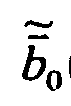
Der Layer-3-Payload ist hier formal mit
Angemerkt sei, dass alternativ zu dem oben beschriebenen Schema die MIMO-Prekompensationsvorverarbeitung beispielsweise auch auf dem Level der Schicht 3 Verarbeitung eines Routers durchgeführt werden kann (siehe
Erfindungsgemäß werden also zur Übertragung von Daten über mehrere Kanäle über zumindest einen Kanal zusätzliche Daten übertragen. Durch die Übertragung dieser zusätzlichen Daten wird die Übertragung der Daten in zumindest einem der weiteren Kanäle vorteilhaft beeinflusst. Während in dem obigen Ausführungsbeispiel durch die Übertragung der zusätzlichen Daten die Übertragung von z.B. Nutzdaten auf den weiteren Kanälen derart beeinflusst wird, dass Störungen in den weiteren Kanäle reduziert werden, kann ebenso daran gedacht werden, durch die Übertragung der zusätzlichen Daten beispielsweise die Nutzdaten auf den weiteren Kanälen zu verstärken.Thus, according to the invention, additional data are transmitted for the transmission of data over a plurality of channels via at least one channel. The transmission of this additional data advantageously influences the transmission of the data in at least one of the further channels. While in the above embodiment, by the transmission of the additional data, the transmission of e.g. User data on the other channels is influenced in such a way that disturbances in the other channels are reduced, can also be thought to enhance by the transmission of additional data, for example, the payload on the other channels.
Des weiteren sei angemerkt, dass üblicherweise der Verbindungsaufbau von DMT-basierten Modems mit einer Initialisierungsphase begonnen wird, in der standardisierte Testsignale ausgesendet werden, die insbesondere zur Kanalidentifikation verwendet werden. Für die Identifikation der MIMO-Kanalmatrix ist eine herkömmliche Initialisierungsphase naturgemäß nicht ausreichend, da es nicht die Intention der standardisierten Verfahren ist, mehr als einen Port gleichzeitig zu betrachten.It should also be noted that usually the connection establishment of DMT-based modems is started with an initialization phase in which standardized test signals are transmitted, which are used in particular for channel identification. For the identification of the MIMO channel matrix, a conventional initialization phase is naturally not sufficient, since it is not the intention of the standardized methods to look at more than one port simultaneously.
Vorteilhaft kann daher mit Hilfe des erfindungsgemäßen Verfahrens das in den Gleichungen (5)-(8) beschriebene Konzept beim Aussenden von Testsignalen (so genannte Pilotsignale) zur MIMO-Kanalidentifikation während der eigentlichen Datenübertragungsphase angewendet werden. Insbesondere bei der Neuanschaltung eines Ports k kann Port l dazu beitragen, dass der MIMO-Koeffizient hk,l identifiziert werden kann: Die vordefinierten Leerdaten von Port l können bei Port k registriert werden und erlauben so die Identifikation des MIMO-Koeffizienten hk,l . Ohne eine solche Maßnahme müssten bei der Erstanschaltung eines neuen Nutzers alle für Nebensprechen in Frage kommende und bereits aufgeschaltete Ports neu initialisiert werden.Advantageously, therefore, with the aid of the method according to the invention, the concept described in equations (5) - (8) when transmitting test signals (so-called pilot signals) for MIMO channel identification during the actual data transfer phase. In particular, when a port k is reassigned,
Im Folgenden wird eine spezielle Ethernet-Variante der Cross-Layer Modulation ohne CPE-Upgrade erläutert. Dieses Ausführungsbeispiel besitzt den Vorteil, dass das erfindungsgemäße Verfahren somit auch bei Nutzung herkömmlicher Teilnehmerendgeräte durchführbar ist.In the following, a special Ethernet variant of cross-layer modulation without CPE upgrade is explained. This embodiment has the advantage that the method according to the invention can thus be carried out even when conventional subscriber terminals are used.
Die Kompensations-Ethernet-Rahmen werden in diesem Beispiel ausschließlich über die xDSL-Strecke übertragen. Beim Empfänger müssen diese Kompensations-Rahmen anschließend verworfen werden, da im Endgerät das neuartige, erfindungsgemäße Verfahren nicht implementiert ist. Somit muss ein Verfahren gefunden werden, das den Verwurf der Rahmen erzwingt und/oder die Weiterleitung der Rahmen verhindert. Hierzu muss in mindestens einer der Schichten oberhalb der physikalischen Schicht gezielt eines oder mehrere jener Kriterien verletzt werden, die für die Gültigkeit des Rahmens/Paketes in der betreffenden Schicht relevant sind. In der Tabelle aus
Wie aus der Tabelle zu erkennen ist, hängt die Wirksamkeit der einzelnen Maßnahmen von der Betriebsart des Gerätes auf der Empfängerseite (z.B. CPE) ab. Arbeitet das Gerät auf der Empfängerseite als Router, so wird dort die Schicht 2 (d.h. das Ethernet) terminiert. Daher werden die empfangenen Ethernetrahmen nach allen standardmäßig geforderten Kriterien auf ihre Gültigkeit überprüft. In einer Bridge (Netzwerkbrücke) hingegen wird nur die so genannten "Frame Check Sequence" überprüft, die Rahmen werden anschließend weitergeleitet, ohne dass deren Inhalt untersucht wird.As can be seen from the table, the effectiveness of the individual measures depends on the operating mode of the device on the receiver side (eg CPE). If the device is working as a router on the receiver side, layer 2 (ie Ethernet) is terminated there. Therefore, the received ethernet frames are populated according to all standard required criteria checked their validity. In a bridge (network bridge), however, only the so-called "frame check sequence" is checked, the frames are then forwarded, without their content is examined.
Im Einzelnen können beispielsweise folgende Methoden durchgeführt werden:In detail, for example, the following methods can be performed:
Methode 1 arbeitet mit einem erzwungenen Verwurf der Ethernetrahmen. Hierbei werden die Ethernetrahmen durch den Empfänger verworfen, wenn diese als ungültig erkannt werden. Beispielsweise kann bewusst eine bezüglich des Rahmens falsche Frame Check Sequence übertragen werden, was jedoch unter Umständen eine Änderung der Hardware der xDSL-Transceiverbausteine erfordert. Eine Implementierung ist daher vergleichsweise aufwendig.
Einfacher zu implementieren sind beispielsweise Methoden, die den Ethernetrahmen bereits im MAC-Client manipulieren. Wie in
Auch Methode 2 nutzt einen erzwungenen Verwurf der Ethernetrahmen. In diesem Fall wird der Rahmen vom Empfänger verworfen, wenn im Length/Type-Feld ein nicht unterstützter oder unbekannter Typ (Ethertype) eingetragen wird, wenn die Länge des Rahmens absichtlich die maximal zulässige Länge eines Rahmens überschreitet (vgl. [IEEE8023]) oder wenn der Wert im Length/Type-Feld zwar eine Längenangabe darstellt (d.h. wenn der Wert kleiner ist als 0x600), aber beispielsweise absichtlich auf einen nicht zutreffenden Wert gesetzt wird. Allerdings muss der Empfänger (DSLAM/CPE) dazu so konfiguriert sein, dass dieser den Ethertype bzw. die Rahmenlänge überprüft. In manchen Konfigurationen (z.B. bei einigen Bridges) werden die Ethernetrahmen ohne Prüfung der Schicht 2 sofort ins Netz weitergeleitet. Bei Übertragung von Kompensationsrahmen nur in Downstream-Richtung (d.h. vom DSLAM zum CPE) kann das Verfahren auch dann angewandt werden, wenn das CPE keine Prüfung durchführt, wenn also in Kauf genommen wird, dass die Kompensationsrahmen erst am Endgerät oder Router des Kunden verworfen werden.
Bei Verwendung der beiden Methoden 1 und 2 ist es unerheblich, welche Zieladresse (Destination Address) verwendet wird.When using both
Bei einer dritten beispielhaften Methode wird eine Weiterleitung der entsprechenden Ethernetrahmen verhindert. Dabei muss sichergestellt sein, dass die Kompensations-Ethernet-Rahmen vom DSLAM genau an das CPE und die Rahmen vom CPE genau an den DSLAM (bei Betrieb in Upstream-Richtung) adressiert werden. Unbekannte MAC-Zieladressen führen dazu, dass die Ethernetrahmen an alle weiteren Netzelemente weitergeleitet werden (so genanntes "Flooding"). Die gesuchten MAC-Zieladressen sind jedoch für das CPE und den DSLAM jeweils erst dann bekannt, wenn das CPE im Netz angemeldet ist. Erst zu diesem Zeitpunkt sind die MAC-Adresse des CPEs im DSLAM und die MAC-Adresse des DSLAMs im CPE bekannt. Um die Cross-Layer-Modulation auch dann einsetzen zu können, wenn noch keine regulären Ethernetrahmen zwischen CPE und DSLAM ausgetauscht worden sind, müssen Broadcast- bzw. Multicast-MAC-Zieladressen verwendet werden. Falls der DSLAM bzw. das CPE als Bridge konfiguriert sind, werden jedoch auch an eine Broadcast-/Multicast-Adresse adressierte Rahmen weitergeleitet. Abhilfe bietet in einem solcehn Fall beispielsweise die Slow_Protocols_Multicast-Adresse aus [IEEE8023], Annex 43B. Ethernetrahmen, die an eine derartige Slow_Protocols_Multicast-Adresse adressiert sind, werden definitionsgemäß nicht weitergeleitet.In a third exemplary method, forwarding of the corresponding Ethernet frames is prevented. It must be ensured that the compensation Ethernet frames from the DSLAM are addressed exactly to the CPE and the frames from the CPE exactly to the DSLAM (when operating in the upstream direction). Unknown MAC destination addresses cause the Ethernet frames to be forwarded to all other network elements (so-called "flooding"). The searched MAC destination addresses, however, are only known for the CPE and the DSLAM when the CPE is registered in the network. Only then are the MAC address of the CPE in the DSLAM and the MAC address of the DSLAM in the CPE known. In order to be able to use cross-layer modulation even if no regular Ethernet frames have been exchanged between CPE and DSLAM, broadcast or multicast MAC destination addresses must be used. If the DSLAM or the CPE are configured as a bridge, however, frames addressed to a broadcast / multicast address are also forwarded. In a solcehn case, for example, the Slow_Protocols_Multicast address from [IEEE8023],
Methode 4 arbeitet mit einem erzwungenen Verwurf der Rahmen unter Benutzung einer Slow_Protocols_Multicast-Adresse. Bei Verwendung der Slow_Protocols_Multicast-Adresse kann der Kompensations-Ethernetrahmen als Rahmen eines Slow Protocols ausgegeben werden. Dies geschieht durch Verwendung des Slow_Protocols_Type-Wertes im Length/Type-Feld des Rahmens (vgl. [IEEE8023], Annex 43B). Der Protocol Subtype Identifier, der folgend auf das Length/Type-Feld das verwendete Slow Protocol kennzeichnet, kann hierbei auf einen unerlaubten Wert gesetzt werden, um den Verwurf zu erzwingen. Geeignete Werte dazu sind laut [IEEE8023], Tabelle 43B-3, die Werte 0 und 11 bis 255. Rahmen mit ungültigen bzw. unerlaubten Protocol Subtype Identifiern werden vom Empfänger verworfen.Method 4 works by forcing the frames using a Slow_Protocols_Multicast address. When using the Slow_Protocols_Multicast address, the compensation Ethernet frame can be output as the frame of a slow protocol. This is done by using the Slow_Protocols_Type value in the Length / Type field of the frame (see [IEEE8023],
Claims (10)
- Method for transferring data via a plurality of channels (hN(t)), wherein interfering influences exist which result from near-end crosstalk and far-end crosstalk, wherein at least one channel (hk(t)) is used to transfer additional data () and the transfer of the additional data (
 ) influences the transfer of the data in at least one of the further channels (hN(t), N≠k) in a specific manner with respect to the interfering influences, characterized in that the additional data (
 ) are transferred in phases in which no user data are transferred on the at least one channel (hk(t)).
- Method according to Claim 1,
characterized
in that the transfer of the data in the at least one of the further channels (hN(t), N≠k) is influenced such that interference in the at least one of the further channels (hN(t), N≠k) is reduced. - Method according to one of the preceding claims,
characterized
in that the additional data () are rejected at a receiver.
- Method according to Claim 3,
characterized
in that the additional data () are in a form such that the additional data ( ) are rejected on the basis of an infringement of criteria in at least one of the layers above the physical layer, which criteria are relevant to the validity of the additional data (
 ) in the receiver.
- Method according to Claim 4,
characterized
in that the criteria are defined by the Ethernet method. - Method according to one of the preceding claims,
characterized
in that the data are transferred in line with an xDSL method. - Method according to one of the preceding Claims 3 to 6,
characterized
in that the data are transferred in line with the Ethernet standard and/or the additional data () are rejected on the basis of an infringement of a guideline in the IEEE8023 standard.
- Device for transferring data via a plurality of channels (hN(t)), wherein interfering influences exist which result from near-end crosstalk and far-end crosstalk, having transfer means for transferring additional data () via at least one channel (hk(t)), wherein the transfer means are in a form such that the transfer of the additional data (
 ) influences the transfer of the data in at least one of the further channels (hN(t), N≠k) in a specific manner with respect to the interfering influences,
characterized
in that the additional data () are transferred in phases in which no user data are transferred on the at least one channel (hk(t)).
- Device according to Claim 8,
characterized
in that the transfer means are in a form such that the transfer of the data in the at least one of the further channels (hN(t), N≠k) is influenced such (hN(t), N≠k) that interference in the at least one of the further channels (hN(t), N≠k) is reduced. - Device according to Claim 9,
characterized
in that the transfer means are in a form such that the additional data () are in a form such that the additional data ( ) are rejected on the basis of an infringement of criteria in at least one of the layers above the physical layer, which criteria are relevant to the validity of the additional data (
 ) in a receiver.
Applications Claiming Priority (2)
| Application Number | Priority Date | Filing Date | Title |
|---|---|---|---|
| DE102006051435A DE102006051435B4 (en) | 2006-10-31 | 2006-10-31 | Method, arrangement and device for transmitting data over multiple channels |
| PCT/EP2007/061298 WO2008052904A1 (en) | 2006-10-31 | 2007-10-22 | Method, arrangement and device for the precompensation of crosstalk in a dsl mimo system |
Publications (2)
| Publication Number | Publication Date |
|---|---|
| EP2087608A1 EP2087608A1 (en) | 2009-08-12 |
| EP2087608B1 true EP2087608B1 (en) | 2011-09-07 |
Family
ID=38962874
Family Applications (1)
| Application Number | Title | Priority Date | Filing Date |
|---|---|---|---|
| EP07821662A Not-in-force EP2087608B1 (en) | 2006-10-31 | 2007-10-22 | Method, arrangement and device for the precompensation of crosstalk in a DSL MIMO system |
Country Status (7)
| Country | Link |
|---|---|
| US (1) | US8111637B2 (en) |
| EP (1) | EP2087608B1 (en) |
| CN (1) | CN101563855A (en) |
| AT (1) | ATE523971T1 (en) |
| DE (1) | DE102006051435B4 (en) |
| ES (1) | ES2373125T3 (en) |
| WO (1) | WO2008052904A1 (en) |
Families Citing this family (5)
| Publication number | Priority date | Publication date | Assignee | Title |
|---|---|---|---|---|
| EP2136476B1 (en) * | 2008-06-20 | 2018-12-19 | ADTRAN GmbH | Method and device for data processing and communication system comprising such device |
| EP2151965B1 (en) * | 2008-08-07 | 2018-01-17 | ADTRAN GmbH | Method and device for data processing and communication system comprising such device |
| CN102111186A (en) * | 2011-02-16 | 2011-06-29 | 华为技术有限公司 | Signal processing method for bound digital subscriber line channels, and device and system adopting same |
| US9350419B2 (en) | 2012-11-28 | 2016-05-24 | Broadcom Corporation | Coordinating transmissions of power line communication (PLC) devices |
| US9473240B2 (en) * | 2014-03-14 | 2016-10-18 | Futurewei Technologies, Inc. | Method and apparatus for providing twisted pair multilink communications |
Family Cites Families (11)
| Publication number | Priority date | Publication date | Assignee | Title |
|---|---|---|---|---|
| US6381284B1 (en) * | 1999-06-14 | 2002-04-30 | T. Bogomolny | Method of and devices for telecommunications |
| DE69915082D1 (en) * | 1999-12-14 | 2004-04-01 | St Microelectronics Nv | DSL transmission system with remote crosstalk compensation |
| US7164764B2 (en) * | 2002-11-07 | 2007-01-16 | Solarflare Communications, Inc. | Method and apparatus for precode crosstalk mitigation |
| US7002897B2 (en) * | 2003-04-28 | 2006-02-21 | Solarflare Communications, Inc. | Multiple channel interference cancellation |
| EP2503704B1 (en) | 2003-05-16 | 2016-11-30 | Marvell International, Ltd. | Method and apparatus for equalization and crosstalk mitigation |
| US7623605B2 (en) * | 2005-08-15 | 2009-11-24 | Research In Motion Limited | Interference canceling matched filter (ICMF) and related methods |
| US8040857B2 (en) * | 2006-12-07 | 2011-10-18 | Misonimo Chi Acquisitions L.L.C. | System and method for timeslot and channel allocation |
| US8369426B2 (en) * | 2007-05-04 | 2013-02-05 | Ikanos Communications, Inc. | Reducing the effect of noise in a multi-channel telecommunication receiver |
| US20080310336A1 (en) * | 2007-06-15 | 2008-12-18 | Broadcom Corporation | Dynamic receiver filter adjustment across preamble and information payload |
| ATE540484T1 (en) * | 2009-06-24 | 2012-01-15 | Alcatel Lucent | COMMON SIGNAL PROCESSING ACROSS MULTIPLE LINE END CARDS |
| US8600039B2 (en) * | 2009-08-24 | 2013-12-03 | Leanics Corporation | System for low complexity adaptive ECHO and NEXT cancellers |
-
2006
- 2006-10-31 DE DE102006051435A patent/DE102006051435B4/en not_active Expired - Fee Related
-
2007
- 2007-10-22 CN CNA2007800456972A patent/CN101563855A/en active Pending
- 2007-10-22 WO PCT/EP2007/061298 patent/WO2008052904A1/en not_active Ceased
- 2007-10-22 US US12/513,062 patent/US8111637B2/en active Active
- 2007-10-22 EP EP07821662A patent/EP2087608B1/en not_active Not-in-force
- 2007-10-22 AT AT07821662T patent/ATE523971T1/en active
- 2007-10-22 ES ES07821662T patent/ES2373125T3/en active Active
Also Published As
| Publication number | Publication date |
|---|---|
| DE102006051435A1 (en) | 2008-05-08 |
| ES2373125T3 (en) | 2012-01-31 |
| WO2008052904A1 (en) | 2008-05-08 |
| US8111637B2 (en) | 2012-02-07 |
| EP2087608A1 (en) | 2009-08-12 |
| CN101563855A (en) | 2009-10-21 |
| DE102006051435B4 (en) | 2009-07-30 |
| US20100046649A1 (en) | 2010-02-25 |
| ATE523971T1 (en) | 2011-09-15 |
Similar Documents
| Publication | Publication Date | Title |
|---|---|---|
| DE60129845T2 (en) | DIGITAL POINT TO MULTIPLE DATA TRANSMISSION SYSTEM ON AN ELECTRICAL NETWORK | |
| EP1668857B1 (en) | Method for regulating the transmission parameters of broadband transmission channels assembled to form a group | |
| DE69920964T2 (en) | An xDSL transceiver and method for improving bit rate and / or latitude in which quadrature amplitude modulated communication is performed | |
| DE102009018705B4 (en) | Method and device for adding a communication link to a vector group | |
| DE60032963T2 (en) | Fast equalizer adaptation in multi-tone transmission systems | |
| DE69719333T2 (en) | IMPROVEMENTS IN OR WITH REGARD TO MULTI-VEHICLE TRANSMISSION SYSTEMS | |
| DE69717122T2 (en) | IMPROVEMENTS IN OR WITH REGARD TO MULTI-CARRIER TRANSFER SYSTEMS | |
| DE69722415T2 (en) | IMPROVEMENTS IN OR WITH REGARD TO CONTROL CHANNELS FOR MESSAGE TRANSMISSION SYSTEMS | |
| DE69726546T2 (en) | Arrangement and method for multichannel transmission with a reduced ratio of peak to average power | |
| DE602005006218T2 (en) | Apparatus and method for reducing the ratio of spikes to average power in multi-carrier communication systems | |
| EP2087608B1 (en) | Method, arrangement and device for the precompensation of crosstalk in a DSL MIMO system | |
| JP5294849B2 (en) | Vectorized DSL nesting | |
| EP1444802B1 (en) | Method and system for determining data transfer margins for network connections | |
| DE69922176T2 (en) | IMPROVEMENTS AT VDSL | |
| DE60223873T2 (en) | Nesting in multi-carrier transmission | |
| DE602004010684T2 (en) | METHOD AND SYSTEM FOR TRANSMITTING INFORMATION DATA OVER A COMMUNICATION LINE USING FILTERED MULTITON MODULATION (FMT) | |
| DE69937192T2 (en) | TIME-OF-TIME TUNING METHOD IN A MULTIPLE TRANSMISSION SYSTEM (DMT) | |
| DE202014010845U1 (en) | Special operation channel in vector systems | |
| EP1444819A1 (en) | Method and system for classifying network connections | |
| CN101765983A (en) | Method and device for processing a channel and communication system comprising such device | |
| DE10100952A1 (en) | Method for the simultaneous transmission of several data streams | |
| DE102004061854B3 (en) | Method and device for generating a periodic training signal | |
| DE102013220606B4 (en) | Packet encapsulation method for the multiple service operation from a distribution point | |
| DE112011103868B4 (en) | Filling after channel encoding (repetition) and interleaving | |
| DE69815104T2 (en) | VDSL MODEM DIVIDED INTO A DIGITAL AND ANALOGUE PART |
Legal Events
| Date | Code | Title | Description |
|---|---|---|---|
| PUAI | Public reference made under article 153(3) epc to a published international application that has entered the european phase |
Free format text: ORIGINAL CODE: 0009012 |
|
| 17P | Request for examination filed |
Effective date: 20090602 |
|
| AK | Designated contracting states |
Kind code of ref document: A1 Designated state(s): AT BE BG CH CY CZ DE DK EE ES FI FR GB GR HU IE IS IT LI LT LU LV MC MT NL PL PT RO SE SI SK TR |
|
| DAX | Request for extension of the european patent (deleted) | ||
| 17Q | First examination report despatched |
Effective date: 20100315 |
|
| GRAP | Despatch of communication of intention to grant a patent |
Free format text: ORIGINAL CODE: EPIDOSNIGR1 |
|
| RTI1 | Title (correction) |
Free format text: METHOD, ARRANGEMENT AND DEVICE FOR THE PRECOMPENSATION OF CROSSTALK IN A DSL MIMO SYSTEM |
|
| GRAS | Grant fee paid |
Free format text: ORIGINAL CODE: EPIDOSNIGR3 |
|
| GRAA | (expected) grant |
Free format text: ORIGINAL CODE: 0009210 |
|
| REG | Reference to a national code |
Ref country code: GB Ref legal event code: FG4D Free format text: NOT ENGLISH |
|
| REG | Reference to a national code |
Ref country code: CH Ref legal event code: EP |
|
| REG | Reference to a national code |
Ref country code: IE Ref legal event code: FG4D Free format text: LANGUAGE OF EP DOCUMENT: GERMAN |
|
| REG | Reference to a national code |
Ref country code: DE Ref legal event code: R096 Ref document number: 502007008112 Country of ref document: DE Effective date: 20111103 |
|
| REG | Reference to a national code |
Ref country code: NL Ref legal event code: VDEP Effective date: 20110907 |
|
| PG25 | Lapsed in a contracting state [announced via postgrant information from national office to epo] |
Ref country code: FI Free format text: LAPSE BECAUSE OF FAILURE TO SUBMIT A TRANSLATION OF THE DESCRIPTION OR TO PAY THE FEE WITHIN THE PRESCRIBED TIME-LIMIT Effective date: 20110907 Ref country code: LT Free format text: LAPSE BECAUSE OF FAILURE TO SUBMIT A TRANSLATION OF THE DESCRIPTION OR TO PAY THE FEE WITHIN THE PRESCRIBED TIME-LIMIT Effective date: 20110907 Ref country code: SE Free format text: LAPSE BECAUSE OF FAILURE TO SUBMIT A TRANSLATION OF THE DESCRIPTION OR TO PAY THE FEE WITHIN THE PRESCRIBED TIME-LIMIT Effective date: 20110907 |
|
| REG | Reference to a national code |
Ref country code: ES Ref legal event code: FG2A Ref document number: 2373125 Country of ref document: ES Kind code of ref document: T3 Effective date: 20120131 |
|
| LTIE | Lt: invalidation of european patent or patent extension |
Effective date: 20110907 |
|
| PG25 | Lapsed in a contracting state [announced via postgrant information from national office to epo] |
Ref country code: GR Free format text: LAPSE BECAUSE OF FAILURE TO SUBMIT A TRANSLATION OF THE DESCRIPTION OR TO PAY THE FEE WITHIN THE PRESCRIBED TIME-LIMIT Effective date: 20111208 Ref country code: CY Free format text: LAPSE BECAUSE OF FAILURE TO SUBMIT A TRANSLATION OF THE DESCRIPTION OR TO PAY THE FEE WITHIN THE PRESCRIBED TIME-LIMIT Effective date: 20110907 Ref country code: LV Free format text: LAPSE BECAUSE OF FAILURE TO SUBMIT A TRANSLATION OF THE DESCRIPTION OR TO PAY THE FEE WITHIN THE PRESCRIBED TIME-LIMIT Effective date: 20110907 Ref country code: SI Free format text: LAPSE BECAUSE OF FAILURE TO SUBMIT A TRANSLATION OF THE DESCRIPTION OR TO PAY THE FEE WITHIN THE PRESCRIBED TIME-LIMIT Effective date: 20110907 |
|
| REG | Reference to a national code |
Ref country code: IE Ref legal event code: FD4D |
|
| BERE | Be: lapsed |
Owner name: NOKIA SIEMENS NETWORKS G.M.B.H. & CO. KG Effective date: 20111031 |
|
| PG25 | Lapsed in a contracting state [announced via postgrant information from national office to epo] |
Ref country code: IE Free format text: LAPSE BECAUSE OF FAILURE TO SUBMIT A TRANSLATION OF THE DESCRIPTION OR TO PAY THE FEE WITHIN THE PRESCRIBED TIME-LIMIT Effective date: 20110907 Ref country code: SK Free format text: LAPSE BECAUSE OF FAILURE TO SUBMIT A TRANSLATION OF THE DESCRIPTION OR TO PAY THE FEE WITHIN THE PRESCRIBED TIME-LIMIT Effective date: 20110907 Ref country code: IS Free format text: LAPSE BECAUSE OF FAILURE TO SUBMIT A TRANSLATION OF THE DESCRIPTION OR TO PAY THE FEE WITHIN THE PRESCRIBED TIME-LIMIT Effective date: 20120107 Ref country code: CZ Free format text: LAPSE BECAUSE OF FAILURE TO SUBMIT A TRANSLATION OF THE DESCRIPTION OR TO PAY THE FEE WITHIN THE PRESCRIBED TIME-LIMIT Effective date: 20110907 |
|
| PG25 | Lapsed in a contracting state [announced via postgrant information from national office to epo] |
Ref country code: PT Free format text: LAPSE BECAUSE OF FAILURE TO SUBMIT A TRANSLATION OF THE DESCRIPTION OR TO PAY THE FEE WITHIN THE PRESCRIBED TIME-LIMIT Effective date: 20120109 Ref country code: EE Free format text: LAPSE BECAUSE OF FAILURE TO SUBMIT A TRANSLATION OF THE DESCRIPTION OR TO PAY THE FEE WITHIN THE PRESCRIBED TIME-LIMIT Effective date: 20110907 Ref country code: PL Free format text: LAPSE BECAUSE OF FAILURE TO SUBMIT A TRANSLATION OF THE DESCRIPTION OR TO PAY THE FEE WITHIN THE PRESCRIBED TIME-LIMIT Effective date: 20110907 Ref country code: NL Free format text: LAPSE BECAUSE OF FAILURE TO SUBMIT A TRANSLATION OF THE DESCRIPTION OR TO PAY THE FEE WITHIN THE PRESCRIBED TIME-LIMIT Effective date: 20110907 Ref country code: RO Free format text: LAPSE BECAUSE OF FAILURE TO SUBMIT A TRANSLATION OF THE DESCRIPTION OR TO PAY THE FEE WITHIN THE PRESCRIBED TIME-LIMIT Effective date: 20110907 Ref country code: MC Free format text: LAPSE BECAUSE OF NON-PAYMENT OF DUE FEES Effective date: 20111031 |
|
| REG | Reference to a national code |
Ref country code: CH Ref legal event code: PL |
|
| PLBE | No opposition filed within time limit |
Free format text: ORIGINAL CODE: 0009261 |
|
| STAA | Information on the status of an ep patent application or granted ep patent |
Free format text: STATUS: NO OPPOSITION FILED WITHIN TIME LIMIT |
|
| PG25 | Lapsed in a contracting state [announced via postgrant information from national office to epo] |
Ref country code: DK Free format text: LAPSE BECAUSE OF FAILURE TO SUBMIT A TRANSLATION OF THE DESCRIPTION OR TO PAY THE FEE WITHIN THE PRESCRIBED TIME-LIMIT Effective date: 20110907 Ref country code: BE Free format text: LAPSE BECAUSE OF NON-PAYMENT OF DUE FEES Effective date: 20111031 Ref country code: CH Free format text: LAPSE BECAUSE OF NON-PAYMENT OF DUE FEES Effective date: 20111031 Ref country code: LI Free format text: LAPSE BECAUSE OF NON-PAYMENT OF DUE FEES Effective date: 20111031 |
|
| 26N | No opposition filed |
Effective date: 20120611 |
|
| REG | Reference to a national code |
Ref country code: DE Ref legal event code: R097 Ref document number: 502007008112 Country of ref document: DE Effective date: 20120611 |
|
| PG25 | Lapsed in a contracting state [announced via postgrant information from national office to epo] |
Ref country code: MT Free format text: LAPSE BECAUSE OF FAILURE TO SUBMIT A TRANSLATION OF THE DESCRIPTION OR TO PAY THE FEE WITHIN THE PRESCRIBED TIME-LIMIT Effective date: 20110907 |
|
| PG25 | Lapsed in a contracting state [announced via postgrant information from national office to epo] |
Ref country code: LU Free format text: LAPSE BECAUSE OF NON-PAYMENT OF DUE FEES Effective date: 20111022 |
|
| PG25 | Lapsed in a contracting state [announced via postgrant information from national office to epo] |
Ref country code: BG Free format text: LAPSE BECAUSE OF FAILURE TO SUBMIT A TRANSLATION OF THE DESCRIPTION OR TO PAY THE FEE WITHIN THE PRESCRIBED TIME-LIMIT Effective date: 20111207 |
|
| PG25 | Lapsed in a contracting state [announced via postgrant information from national office to epo] |
Ref country code: TR Free format text: LAPSE BECAUSE OF FAILURE TO SUBMIT A TRANSLATION OF THE DESCRIPTION OR TO PAY THE FEE WITHIN THE PRESCRIBED TIME-LIMIT Effective date: 20110907 |
|
| PG25 | Lapsed in a contracting state [announced via postgrant information from national office to epo] |
Ref country code: HU Free format text: LAPSE BECAUSE OF FAILURE TO SUBMIT A TRANSLATION OF THE DESCRIPTION OR TO PAY THE FEE WITHIN THE PRESCRIBED TIME-LIMIT Effective date: 20110907 |
|
| PGFP | Annual fee paid to national office [announced via postgrant information from national office to epo] |
Ref country code: AT Payment date: 20131002 Year of fee payment: 7 |
|
| PGFP | Annual fee paid to national office [announced via postgrant information from national office to epo] |
Ref country code: IT Payment date: 20131023 Year of fee payment: 7 Ref country code: ES Payment date: 20131028 Year of fee payment: 7 |
|
| REG | Reference to a national code |
Ref country code: AT Ref legal event code: MM01 Ref document number: 523971 Country of ref document: AT Kind code of ref document: T Effective date: 20141022 |
|
| PG25 | Lapsed in a contracting state [announced via postgrant information from national office to epo] |
Ref country code: AT Free format text: LAPSE BECAUSE OF NON-PAYMENT OF DUE FEES Effective date: 20141022 Ref country code: IT Free format text: LAPSE BECAUSE OF NON-PAYMENT OF DUE FEES Effective date: 20141022 |
|
| REG | Reference to a national code |
Ref country code: FR Ref legal event code: PLFP Year of fee payment: 9 |
|
| REG | Reference to a national code |
Ref country code: ES Ref legal event code: FD2A Effective date: 20160127 |
|
| PG25 | Lapsed in a contracting state [announced via postgrant information from national office to epo] |
Ref country code: ES Free format text: LAPSE BECAUSE OF NON-PAYMENT OF DUE FEES Effective date: 20141023 |
|
| REG | Reference to a national code |
Ref country code: FR Ref legal event code: PLFP Year of fee payment: 10 |
|
| REG | Reference to a national code |
Ref country code: FR Ref legal event code: PLFP Year of fee payment: 11 |
|
| REG | Reference to a national code |
Ref country code: FR Ref legal event code: PLFP Year of fee payment: 12 |
|
| PGFP | Annual fee paid to national office [announced via postgrant information from national office to epo] |
Ref country code: GB Payment date: 20231027 Year of fee payment: 17 |
|
| PGFP | Annual fee paid to national office [announced via postgrant information from national office to epo] |
Ref country code: FR Payment date: 20231025 Year of fee payment: 17 Ref country code: DE Payment date: 20231027 Year of fee payment: 17 |
|
| REG | Reference to a national code |
Ref country code: DE Ref legal event code: R119 Ref document number: 502007008112 Country of ref document: DE |
|
| GBPC | Gb: european patent ceased through non-payment of renewal fee |
Effective date: 20241022 |
|
| PG25 | Lapsed in a contracting state [announced via postgrant information from national office to epo] |
Ref country code: DE Free format text: LAPSE BECAUSE OF NON-PAYMENT OF DUE FEES Effective date: 20250501 |
|
| PG25 | Lapsed in a contracting state [announced via postgrant information from national office to epo] |
Ref country code: GB Free format text: LAPSE BECAUSE OF NON-PAYMENT OF DUE FEES Effective date: 20241022 |
|
| PG25 | Lapsed in a contracting state [announced via postgrant information from national office to epo] |
Ref country code: FR Free format text: LAPSE BECAUSE OF NON-PAYMENT OF DUE FEES Effective date: 20241031 |