EP1719797B1 - Starch-vegetable oil graft copolymers and their biofiber composites, and a process for their manufacture - Google Patents
Starch-vegetable oil graft copolymers and their biofiber composites, and a process for their manufacture Download PDFInfo
- Publication number
- EP1719797B1 EP1719797B1 EP06009139A EP06009139A EP1719797B1 EP 1719797 B1 EP1719797 B1 EP 1719797B1 EP 06009139 A EP06009139 A EP 06009139A EP 06009139 A EP06009139 A EP 06009139A EP 1719797 B1 EP1719797 B1 EP 1719797B1
- Authority
- EP
- European Patent Office
- Prior art keywords
- starch
- composition
- vegetable oil
- weight
- fiber
- Prior art date
- Legal status (The legal status is an assumption and is not a legal conclusion. Google has not performed a legal analysis and makes no representation as to the accuracy of the status listed.)
- Not-in-force
Links
- 239000008158 vegetable oil Substances 0.000 title claims description 64
- 229920000578 graft copolymer Polymers 0.000 title claims description 52
- 238000000034 method Methods 0.000 title claims description 24
- 239000011176 biofiber Substances 0.000 title description 15
- 239000002131 composite material Substances 0.000 title description 7
- 238000004519 manufacturing process Methods 0.000 title description 4
- 239000000203 mixture Substances 0.000 claims description 135
- 229920002472 Starch Polymers 0.000 claims description 96
- 235000019698 starch Nutrition 0.000 claims description 93
- 239000008107 starch Substances 0.000 claims description 87
- 239000000835 fiber Substances 0.000 claims description 45
- 239000002285 corn oil Substances 0.000 claims description 41
- -1 free radical peroxide Chemical class 0.000 claims description 39
- 235000005687 corn oil Nutrition 0.000 claims description 35
- 239000004014 plasticizer Substances 0.000 claims description 25
- 235000015112 vegetable and seed oil Nutrition 0.000 claims description 21
- DMWVYCCGCQPJEA-UHFFFAOYSA-N 2,5-bis(tert-butylperoxy)-2,5-dimethylhexane Chemical group CC(C)(C)OOC(C)(C)CCC(C)(C)OOC(C)(C)C DMWVYCCGCQPJEA-UHFFFAOYSA-N 0.000 claims description 18
- 239000003999 initiator Substances 0.000 claims description 18
- 239000003607 modifier Substances 0.000 claims description 16
- 229920002261 Corn starch Polymers 0.000 claims description 15
- 239000008120 corn starch Substances 0.000 claims description 15
- 229940099112 cornstarch Drugs 0.000 claims description 15
- 229920000747 poly(lactic acid) Polymers 0.000 claims description 12
- 229920001610 polycaprolactone Polymers 0.000 claims description 12
- 229920000229 biodegradable polyester Polymers 0.000 claims description 11
- 239000004622 biodegradable polyester Substances 0.000 claims description 11
- 240000003183 Manihot esculenta Species 0.000 claims description 6
- 235000016735 Manihot esculenta subsp esculenta Nutrition 0.000 claims description 6
- 239000003549 soybean oil Substances 0.000 claims description 6
- 235000012424 soybean oil Nutrition 0.000 claims description 6
- 229920001634 Copolyester Polymers 0.000 claims description 5
- 229920001577 copolymer Polymers 0.000 claims description 5
- 150000005846 sugar alcohols Polymers 0.000 claims description 5
- 229920000856 Amylose Polymers 0.000 claims description 4
- 229920000954 Polyglycolide Polymers 0.000 claims description 4
- 238000002156 mixing Methods 0.000 claims description 4
- 229920002643 polyglutamic acid Polymers 0.000 claims description 4
- 229920002689 polyvinyl acetate Polymers 0.000 claims description 4
- 229920001592 potato starch Polymers 0.000 claims description 4
- 244000198134 Agave sisalana Species 0.000 claims description 3
- 241000609240 Ambelania acida Species 0.000 claims description 3
- 240000008564 Boehmeria nivea Species 0.000 claims description 3
- 244000025254 Cannabis sativa Species 0.000 claims description 3
- 235000012766 Cannabis sativa ssp. sativa var. sativa Nutrition 0.000 claims description 3
- 235000012765 Cannabis sativa ssp. sativa var. spontanea Nutrition 0.000 claims description 3
- 229920000742 Cotton Polymers 0.000 claims description 3
- 240000006240 Linum usitatissimum Species 0.000 claims description 3
- 235000004431 Linum usitatissimum Nutrition 0.000 claims description 3
- 240000000907 Musa textilis Species 0.000 claims description 3
- 239000002253 acid Substances 0.000 claims description 3
- 239000010905 bagasse Substances 0.000 claims description 3
- 235000009120 camo Nutrition 0.000 claims description 3
- 235000005607 chanvre indien Nutrition 0.000 claims description 3
- 125000004122 cyclic group Chemical group 0.000 claims description 3
- 239000011487 hemp Substances 0.000 claims description 3
- 229940100486 rice starch Drugs 0.000 claims description 3
- 229940100445 wheat starch Drugs 0.000 claims description 3
- 150000008064 anhydrides Chemical class 0.000 claims description 2
- 239000002023 wood Substances 0.000 claims description 2
- PEDCQBHIVMGVHV-UHFFFAOYSA-N Glycerine Chemical compound OCC(O)CO PEDCQBHIVMGVHV-UHFFFAOYSA-N 0.000 description 45
- 238000012545 processing Methods 0.000 description 26
- 238000001125 extrusion Methods 0.000 description 22
- 239000000463 material Substances 0.000 description 18
- FPYJFEHAWHCUMM-UHFFFAOYSA-N maleic anhydride Chemical group O=C1OC(=O)C=C1 FPYJFEHAWHCUMM-UHFFFAOYSA-N 0.000 description 16
- 229920000642 polymer Polymers 0.000 description 15
- XLYOFNOQVPJJNP-UHFFFAOYSA-N water Substances O XLYOFNOQVPJJNP-UHFFFAOYSA-N 0.000 description 15
- YMWUJEATGCHHMB-UHFFFAOYSA-N Dichloromethane Chemical compound ClCCl YMWUJEATGCHHMB-UHFFFAOYSA-N 0.000 description 12
- 240000008042 Zea mays Species 0.000 description 12
- 235000005824 Zea mays ssp. parviglumis Nutrition 0.000 description 12
- 235000002017 Zea mays subsp mays Nutrition 0.000 description 12
- 235000005822 corn Nutrition 0.000 description 12
- 238000002347 injection Methods 0.000 description 12
- 239000007924 injection Substances 0.000 description 12
- 229920003023 plastic Polymers 0.000 description 12
- 239000004033 plastic Substances 0.000 description 12
- 238000012360 testing method Methods 0.000 description 12
- 239000000126 substance Substances 0.000 description 11
- 238000001746 injection moulding Methods 0.000 description 10
- 238000004898 kneading Methods 0.000 description 9
- 239000003921 oil Substances 0.000 description 9
- 235000019198 oils Nutrition 0.000 description 9
- 125000001424 substituent group Chemical group 0.000 description 9
- 230000015572 biosynthetic process Effects 0.000 description 8
- 229920008262 Thermoplastic starch Polymers 0.000 description 7
- 238000006243 chemical reaction Methods 0.000 description 7
- 239000002361 compost Substances 0.000 description 7
- 229920000728 polyester Polymers 0.000 description 7
- 239000004628 starch-based polymer Substances 0.000 description 7
- 238000006467 substitution reaction Methods 0.000 description 7
- 238000003786 synthesis reaction Methods 0.000 description 7
- 125000002887 hydroxy group Chemical group [H]O* 0.000 description 6
- TWNIBLMWSKIRAT-VFUOTHLCSA-N levoglucosan Chemical group O[C@@H]1[C@@H](O)[C@H](O)[C@H]2CO[C@@H]1O2 TWNIBLMWSKIRAT-VFUOTHLCSA-N 0.000 description 6
- OFOBLEOULBTSOW-UHFFFAOYSA-N Propanedioic acid Natural products OC(=O)CC(O)=O OFOBLEOULBTSOW-UHFFFAOYSA-N 0.000 description 5
- 229920002522 Wood fibre Polymers 0.000 description 5
- 210000000988 bone and bone Anatomy 0.000 description 5
- 150000002148 esters Chemical class 0.000 description 5
- 150000002314 glycerols Chemical class 0.000 description 5
- VZCYOOQTPOCHFL-UPHRSURJSA-N maleic acid Chemical compound OC(=O)\C=C/C(O)=O VZCYOOQTPOCHFL-UPHRSURJSA-N 0.000 description 5
- 239000011976 maleic acid Substances 0.000 description 5
- 230000009257 reactivity Effects 0.000 description 5
- 239000002904 solvent Substances 0.000 description 5
- 229920001169 thermoplastic Polymers 0.000 description 5
- VZCYOOQTPOCHFL-UHFFFAOYSA-N trans-butenedioic acid Natural products OC(=O)C=CC(O)=O VZCYOOQTPOCHFL-UHFFFAOYSA-N 0.000 description 5
- 239000002025 wood fiber Substances 0.000 description 5
- CURLTUGMZLYLDI-UHFFFAOYSA-N Carbon dioxide Chemical compound O=C=O CURLTUGMZLYLDI-UHFFFAOYSA-N 0.000 description 4
- WQZGKKKJIJFFOK-GASJEMHNSA-N Glucose Natural products OC[C@H]1OC(O)[C@H](O)[C@@H](O)[C@@H]1O WQZGKKKJIJFFOK-GASJEMHNSA-N 0.000 description 4
- 229920000881 Modified starch Polymers 0.000 description 4
- 229920000331 Polyhydroxybutyrate Polymers 0.000 description 4
- 229920002678 cellulose Polymers 0.000 description 4
- 239000001913 cellulose Substances 0.000 description 4
- 238000009264 composting Methods 0.000 description 4
- 230000001143 conditioned effect Effects 0.000 description 4
- 239000008103 glucose Substances 0.000 description 4
- 238000006011 modification reaction Methods 0.000 description 4
- 235000019426 modified starch Nutrition 0.000 description 4
- 239000005015 poly(hydroxybutyrate) Substances 0.000 description 4
- 150000003254 radicals Chemical class 0.000 description 4
- LYCAIKOWRPUZTN-UHFFFAOYSA-N Ethylene glycol Chemical compound OCCO LYCAIKOWRPUZTN-UHFFFAOYSA-N 0.000 description 3
- DNIAPMSPPWPWGF-UHFFFAOYSA-N Propylene glycol Chemical compound CC(O)CO DNIAPMSPPWPWGF-UHFFFAOYSA-N 0.000 description 3
- 239000000654 additive Substances 0.000 description 3
- 230000000996 additive effect Effects 0.000 description 3
- 238000001816 cooling Methods 0.000 description 3
- 238000011161 development Methods 0.000 description 3
- 239000000945 filler Substances 0.000 description 3
- 229920000098 polyolefin Polymers 0.000 description 3
- 238000011160 research Methods 0.000 description 3
- 239000004416 thermosoftening plastic Substances 0.000 description 3
- 238000012546 transfer Methods 0.000 description 3
- 239000002699 waste material Substances 0.000 description 3
- KMZHZAAOEWVPSE-UHFFFAOYSA-N 2,3-dihydroxypropyl acetate Chemical compound CC(=O)OCC(O)CO KMZHZAAOEWVPSE-UHFFFAOYSA-N 0.000 description 2
- YMDNODNLFSHHCV-UHFFFAOYSA-N 2-chloro-n,n-diethylethanamine Chemical group CCN(CC)CCCl YMDNODNLFSHHCV-UHFFFAOYSA-N 0.000 description 2
- 229920000945 Amylopectin Polymers 0.000 description 2
- 229920003043 Cellulose fiber Polymers 0.000 description 2
- FBPFZTCFMRRESA-FSIIMWSLSA-N D-Glucitol Natural products OC[C@H](O)[C@H](O)[C@@H](O)[C@H](O)CO FBPFZTCFMRRESA-FSIIMWSLSA-N 0.000 description 2
- FBPFZTCFMRRESA-JGWLITMVSA-N D-glucitol Chemical compound OC[C@H](O)[C@@H](O)[C@H](O)[C@H](O)CO FBPFZTCFMRRESA-JGWLITMVSA-N 0.000 description 2
- 125000003535 D-glucopyranosyl group Chemical group [H]OC([H])([H])[C@@]1([H])OC([H])(*)[C@]([H])(O[H])[C@@]([H])(O[H])[C@]1([H])O[H] 0.000 description 2
- NIQCNGHVCWTJSM-UHFFFAOYSA-N Dimethyl phthalate Chemical compound COC(=O)C1=CC=CC=C1C(=O)OC NIQCNGHVCWTJSM-UHFFFAOYSA-N 0.000 description 2
- 239000004368 Modified starch Substances 0.000 description 2
- 230000001580 bacterial effect Effects 0.000 description 2
- 229920000704 biodegradable plastic Polymers 0.000 description 2
- 238000006065 biodegradation reaction Methods 0.000 description 2
- 239000001569 carbon dioxide Substances 0.000 description 2
- 229910002092 carbon dioxide Inorganic materials 0.000 description 2
- FLKPEMZONWLCSK-UHFFFAOYSA-N diethyl phthalate Chemical compound CCOC(=O)C1=CC=CC=C1C(=O)OCC FLKPEMZONWLCSK-UHFFFAOYSA-N 0.000 description 2
- 238000005886 esterification reaction Methods 0.000 description 2
- 239000002657 fibrous material Substances 0.000 description 2
- 239000011121 hardwood Substances 0.000 description 2
- WQYVRQLZKVEZGA-UHFFFAOYSA-N hypochlorite Chemical compound Cl[O-] WQYVRQLZKVEZGA-UHFFFAOYSA-N 0.000 description 2
- 239000011159 matrix material Substances 0.000 description 2
- 230000004048 modification Effects 0.000 description 2
- 238000012986 modification Methods 0.000 description 2
- 238000000465 moulding Methods 0.000 description 2
- 239000010815 organic waste Substances 0.000 description 2
- 150000003013 phosphoric acid derivatives Chemical class 0.000 description 2
- XHXFXVLFKHQFAL-UHFFFAOYSA-N phosphoryl trichloride Chemical compound ClP(Cl)(Cl)=O XHXFXVLFKHQFAL-UHFFFAOYSA-N 0.000 description 2
- 229920000223 polyglycerol Polymers 0.000 description 2
- 229920002451 polyvinyl alcohol Polymers 0.000 description 2
- 102000004169 proteins and genes Human genes 0.000 description 2
- 108090000623 proteins and genes Proteins 0.000 description 2
- 239000000376 reactant Substances 0.000 description 2
- 239000002689 soil Substances 0.000 description 2
- 239000000600 sorbitol Substances 0.000 description 2
- YEVQZPWSVWZAOB-UHFFFAOYSA-N 2-(bromomethyl)-1-iodo-4-(trifluoromethyl)benzene Chemical compound FC(F)(F)C1=CC=C(I)C(CBr)=C1 YEVQZPWSVWZAOB-UHFFFAOYSA-N 0.000 description 1
- QTBSBXVTEAMEQO-UHFFFAOYSA-M Acetate Chemical compound CC([O-])=O QTBSBXVTEAMEQO-UHFFFAOYSA-M 0.000 description 1
- 239000004382 Amylase Substances 0.000 description 1
- 102000013142 Amylases Human genes 0.000 description 1
- 108010065511 Amylases Proteins 0.000 description 1
- 229920001685 Amylomaize Polymers 0.000 description 1
- ZOXJGFHDIHLPTG-UHFFFAOYSA-N Boron Chemical compound [B] ZOXJGFHDIHLPTG-UHFFFAOYSA-N 0.000 description 1
- GAWIXWVDTYZWAW-UHFFFAOYSA-N C[CH]O Chemical group C[CH]O GAWIXWVDTYZWAW-UHFFFAOYSA-N 0.000 description 1
- 229920001081 Commodity plastic Polymers 0.000 description 1
- MQIUGAXCHLFZKX-UHFFFAOYSA-N Di-n-octyl phthalate Natural products CCCCCCCCOC(=O)C1=CC=CC=C1C(=O)OCCCCCCCC MQIUGAXCHLFZKX-UHFFFAOYSA-N 0.000 description 1
- 241000196324 Embryophyta Species 0.000 description 1
- 102000004190 Enzymes Human genes 0.000 description 1
- 108090000790 Enzymes Proteins 0.000 description 1
- BRLQWZUYTZBJKN-UHFFFAOYSA-N Epichlorohydrin Chemical compound ClCC1CO1 BRLQWZUYTZBJKN-UHFFFAOYSA-N 0.000 description 1
- 239000004386 Erythritol Substances 0.000 description 1
- UNXHWFMMPAWVPI-UHFFFAOYSA-N Erythritol Natural products OCC(O)C(O)CO UNXHWFMMPAWVPI-UHFFFAOYSA-N 0.000 description 1
- VGGSQFUCUMXWEO-UHFFFAOYSA-N Ethene Chemical compound C=C VGGSQFUCUMXWEO-UHFFFAOYSA-N 0.000 description 1
- UXDDRFCJKNROTO-UHFFFAOYSA-N Glycerol 1,2-diacetate Chemical compound CC(=O)OCC(CO)OC(C)=O UXDDRFCJKNROTO-UHFFFAOYSA-N 0.000 description 1
- 244000068988 Glycine max Species 0.000 description 1
- 235000010469 Glycine max Nutrition 0.000 description 1
- 238000004566 IR spectroscopy Methods 0.000 description 1
- DGAQECJNVWCQMB-PUAWFVPOSA-M Ilexoside XXIX Chemical compound C[C@@H]1CC[C@@]2(CC[C@@]3(C(=CC[C@H]4[C@]3(CC[C@@H]5[C@@]4(CC[C@@H](C5(C)C)OS(=O)(=O)[O-])C)C)[C@@H]2[C@]1(C)O)C)C(=O)O[C@H]6[C@@H]([C@H]([C@@H]([C@H](O6)CO)O)O)O.[Na+] DGAQECJNVWCQMB-PUAWFVPOSA-M 0.000 description 1
- 235000005018 Pinus echinata Nutrition 0.000 description 1
- 241001236219 Pinus echinata Species 0.000 description 1
- 235000017339 Pinus palustris Nutrition 0.000 description 1
- 241000404883 Pisa Species 0.000 description 1
- GOOHAUXETOMSMM-UHFFFAOYSA-N Propylene oxide Chemical compound CC1CO1 GOOHAUXETOMSMM-UHFFFAOYSA-N 0.000 description 1
- 150000008065 acid anhydrides Chemical class 0.000 description 1
- 238000005903 acid hydrolysis reaction Methods 0.000 description 1
- 230000002378 acidificating effect Effects 0.000 description 1
- 150000007513 acids Chemical class 0.000 description 1
- 239000013543 active substance Substances 0.000 description 1
- 125000001931 aliphatic group Chemical group 0.000 description 1
- 239000000956 alloy Substances 0.000 description 1
- 229910045601 alloy Inorganic materials 0.000 description 1
- XAGFODPZIPBFFR-UHFFFAOYSA-N aluminium Chemical compound [Al] XAGFODPZIPBFFR-UHFFFAOYSA-N 0.000 description 1
- 229910052782 aluminium Inorganic materials 0.000 description 1
- 235000019418 amylase Nutrition 0.000 description 1
- 229920002988 biodegradable polymer Polymers 0.000 description 1
- 239000004621 biodegradable polymer Substances 0.000 description 1
- BJQHLKABXJIVAM-UHFFFAOYSA-N bis(2-ethylhexyl) phthalate Chemical compound CCCCC(CC)COC(=O)C1=CC=CC=C1C(=O)OCC(CC)CCCC BJQHLKABXJIVAM-UHFFFAOYSA-N 0.000 description 1
- 238000009835 boiling Methods 0.000 description 1
- KGBXLFKZBHKPEV-UHFFFAOYSA-N boric acid Chemical compound OB(O)O KGBXLFKZBHKPEV-UHFFFAOYSA-N 0.000 description 1
- 239000004327 boric acid Substances 0.000 description 1
- 229910052796 boron Inorganic materials 0.000 description 1
- 150000001720 carbohydrates Chemical class 0.000 description 1
- 235000014633 carbohydrates Nutrition 0.000 description 1
- 230000015556 catabolic process Effects 0.000 description 1
- 125000002091 cationic group Chemical group 0.000 description 1
- 229920002301 cellulose acetate Polymers 0.000 description 1
- 238000012512 characterization method Methods 0.000 description 1
- 239000003153 chemical reaction reagent Substances 0.000 description 1
- 150000001875 compounds Chemical class 0.000 description 1
- 238000009833 condensation Methods 0.000 description 1
- 230000005494 condensation Effects 0.000 description 1
- 238000013270 controlled release Methods 0.000 description 1
- 238000007334 copolymerization reaction Methods 0.000 description 1
- 238000004132 cross linking Methods 0.000 description 1
- 239000003431 cross linking reagent Substances 0.000 description 1
- 230000003247 decreasing effect Effects 0.000 description 1
- 238000009795 derivation Methods 0.000 description 1
- 150000001991 dicarboxylic acids Chemical class 0.000 description 1
- 235000014113 dietary fatty acids Nutrition 0.000 description 1
- 238000009792 diffusion process Methods 0.000 description 1
- ORXJMBXYSGGCHG-UHFFFAOYSA-N dimethyl 2-methoxypropanedioate Chemical compound COC(=O)C(OC)C(=O)OC ORXJMBXYSGGCHG-UHFFFAOYSA-N 0.000 description 1
- FBSAITBEAPNWJG-UHFFFAOYSA-N dimethyl phthalate Natural products CC(=O)OC1=CC=CC=C1OC(C)=O FBSAITBEAPNWJG-UHFFFAOYSA-N 0.000 description 1
- 229960001826 dimethylphthalate Drugs 0.000 description 1
- 230000009977 dual effect Effects 0.000 description 1
- 239000000428 dust Substances 0.000 description 1
- 230000000694 effects Effects 0.000 description 1
- 238000005516 engineering process Methods 0.000 description 1
- 230000007613 environmental effect Effects 0.000 description 1
- UNXHWFMMPAWVPI-ZXZARUISSA-N erythritol Chemical compound OC[C@H](O)[C@H](O)CO UNXHWFMMPAWVPI-ZXZARUISSA-N 0.000 description 1
- 229940009714 erythritol Drugs 0.000 description 1
- 235000019414 erythritol Nutrition 0.000 description 1
- 230000032050 esterification Effects 0.000 description 1
- 238000006266 etherification reaction Methods 0.000 description 1
- 150000002170 ethers Chemical class 0.000 description 1
- 229920001038 ethylene copolymer Polymers 0.000 description 1
- 238000001704 evaporation Methods 0.000 description 1
- 230000008020 evaporation Effects 0.000 description 1
- 238000002474 experimental method Methods 0.000 description 1
- 239000000194 fatty acid Substances 0.000 description 1
- 229930195729 fatty acid Natural products 0.000 description 1
- 150000004665 fatty acids Chemical class 0.000 description 1
- 230000035558 fertility Effects 0.000 description 1
- 239000003733 fiber-reinforced composite Substances 0.000 description 1
- 239000010408 film Substances 0.000 description 1
- 239000006260 foam Substances 0.000 description 1
- 235000013305 food Nutrition 0.000 description 1
- 239000010794 food waste Substances 0.000 description 1
- 239000011521 glass Substances 0.000 description 1
- 125000002791 glucosyl group Chemical group C1([C@H](O)[C@@H](O)[C@H](O)[C@H](O1)CO)* 0.000 description 1
- 239000005431 greenhouse gas Substances 0.000 description 1
- 231100001261 hazardous Toxicity 0.000 description 1
- 238000010438 heat treatment Methods 0.000 description 1
- 239000003864 humus Substances 0.000 description 1
- 229910052739 hydrogen Inorganic materials 0.000 description 1
- 239000001257 hydrogen Substances 0.000 description 1
- 235000013828 hydroxypropyl starch Nutrition 0.000 description 1
- 230000002427 irreversible effect Effects 0.000 description 1
- 229920001684 low density polyethylene Polymers 0.000 description 1
- 239000004702 low-density polyethylene Substances 0.000 description 1
- 230000000813 microbial effect Effects 0.000 description 1
- 239000000178 monomer Substances 0.000 description 1
- 230000007935 neutral effect Effects 0.000 description 1
- 230000003647 oxidation Effects 0.000 description 1
- 238000007254 oxidation reaction Methods 0.000 description 1
- 239000005022 packaging material Substances 0.000 description 1
- 238000004806 packaging method and process Methods 0.000 description 1
- 239000010893 paper waste Substances 0.000 description 1
- 239000003415 peat Substances 0.000 description 1
- 238000005453 pelletization Methods 0.000 description 1
- WXZMFSXDPGVJKK-UHFFFAOYSA-N pentaerythritol Chemical compound OCC(CO)(CO)CO WXZMFSXDPGVJKK-UHFFFAOYSA-N 0.000 description 1
- 230000002085 persistent effect Effects 0.000 description 1
- 239000003208 petroleum Substances 0.000 description 1
- 239000000825 pharmaceutical preparation Substances 0.000 description 1
- 229940127557 pharmaceutical product Drugs 0.000 description 1
- 150000003021 phthalic acid derivatives Chemical class 0.000 description 1
- 230000000704 physical effect Effects 0.000 description 1
- 230000008635 plant growth Effects 0.000 description 1
- 239000013502 plastic waste Substances 0.000 description 1
- 229920001748 polybutylene Polymers 0.000 description 1
- 239000004632 polycaprolactone Substances 0.000 description 1
- 229920002959 polymer blend Polymers 0.000 description 1
- 229920002635 polyurethane Polymers 0.000 description 1
- 239000004814 polyurethane Substances 0.000 description 1
- 229920000915 polyvinyl chloride Polymers 0.000 description 1
- 239000004800 polyvinyl chloride Substances 0.000 description 1
- 239000000843 powder Substances 0.000 description 1
- 238000002360 preparation method Methods 0.000 description 1
- 239000011253 protective coating Substances 0.000 description 1
- 125000001453 quaternary ammonium group Chemical group 0.000 description 1
- 239000002994 raw material Substances 0.000 description 1
- 230000003014 reinforcing effect Effects 0.000 description 1
- 239000012783 reinforcing fiber Substances 0.000 description 1
- 235000013580 sausages Nutrition 0.000 description 1
- 238000013341 scale-up Methods 0.000 description 1
- 230000035945 sensitivity Effects 0.000 description 1
- 239000011734 sodium Substances 0.000 description 1
- 229910052708 sodium Inorganic materials 0.000 description 1
- 235000019832 sodium triphosphate Nutrition 0.000 description 1
- 239000011122 softwood Substances 0.000 description 1
- 239000002364 soil amendment Substances 0.000 description 1
- 239000000243 solution Substances 0.000 description 1
- 150000003458 sulfonic acid derivatives Chemical class 0.000 description 1
- 229920001897 terpolymer Polymers 0.000 description 1
- 238000002076 thermal analysis method Methods 0.000 description 1
- 239000012815 thermoplastic material Substances 0.000 description 1
- ILJSQTXMGCGYMG-UHFFFAOYSA-N triacetic acid Chemical compound CC(=O)CC(=O)CC(O)=O ILJSQTXMGCGYMG-UHFFFAOYSA-N 0.000 description 1
- 150000003626 triacylglycerols Chemical class 0.000 description 1
- STCOOQWBFONSKY-UHFFFAOYSA-N tributyl phosphate Chemical compound CCCCOP(=O)(OCCCC)OCCCC STCOOQWBFONSKY-UHFFFAOYSA-N 0.000 description 1
- DQWPFSLDHJDLRL-UHFFFAOYSA-N triethyl phosphate Chemical compound CCOP(=O)(OCC)OCC DQWPFSLDHJDLRL-UHFFFAOYSA-N 0.000 description 1
- UNXRWKVEANCORM-UHFFFAOYSA-I triphosphate(5-) Chemical compound [O-]P([O-])(=O)OP([O-])(=O)OP([O-])([O-])=O UNXRWKVEANCORM-UHFFFAOYSA-I 0.000 description 1
- LWIHDJKSTIGBAC-UHFFFAOYSA-K tripotassium phosphate Chemical compound [K+].[K+].[K+].[O-]P([O-])([O-])=O LWIHDJKSTIGBAC-UHFFFAOYSA-K 0.000 description 1
- 150000004670 unsaturated fatty acids Chemical class 0.000 description 1
- 235000021122 unsaturated fatty acids Nutrition 0.000 description 1
- 125000000391 vinyl group Chemical group [H]C([*])=C([H])[H] 0.000 description 1
- 229920002554 vinyl polymer Polymers 0.000 description 1
- 239000010925 yard waste Substances 0.000 description 1
- LTVDFSLWFKLJDQ-UHFFFAOYSA-N α-tocopherolquinone Chemical compound CC(C)CCCC(C)CCCC(C)CCCC(C)(O)CCC1=C(C)C(=O)C(C)=C(C)C1=O LTVDFSLWFKLJDQ-UHFFFAOYSA-N 0.000 description 1
Images





Classifications
-
- C—CHEMISTRY; METALLURGY
- C08—ORGANIC MACROMOLECULAR COMPOUNDS; THEIR PREPARATION OR CHEMICAL WORKING-UP; COMPOSITIONS BASED THEREON
- C08H—DERIVATIVES OF NATURAL MACROMOLECULAR COMPOUNDS
- C08H1/00—Macromolecular products derived from proteins
-
- C—CHEMISTRY; METALLURGY
- C08—ORGANIC MACROMOLECULAR COMPOUNDS; THEIR PREPARATION OR CHEMICAL WORKING-UP; COMPOSITIONS BASED THEREON
- C08L—COMPOSITIONS OF MACROMOLECULAR COMPOUNDS
- C08L3/00—Compositions of starch, amylose or amylopectin or of their derivatives or degradation products
- C08L3/02—Starch; Degradation products thereof, e.g. dextrin
-
- C—CHEMISTRY; METALLURGY
- C08—ORGANIC MACROMOLECULAR COMPOUNDS; THEIR PREPARATION OR CHEMICAL WORKING-UP; COMPOSITIONS BASED THEREON
- C08B—POLYSACCHARIDES; DERIVATIVES THEREOF
- C08B31/00—Preparation of derivatives of starch
-
- C—CHEMISTRY; METALLURGY
- C08—ORGANIC MACROMOLECULAR COMPOUNDS; THEIR PREPARATION OR CHEMICAL WORKING-UP; COMPOSITIONS BASED THEREON
- C08B—POLYSACCHARIDES; DERIVATIVES THEREOF
- C08B31/00—Preparation of derivatives of starch
- C08B31/003—Crosslinking of starch
-
- C—CHEMISTRY; METALLURGY
- C08—ORGANIC MACROMOLECULAR COMPOUNDS; THEIR PREPARATION OR CHEMICAL WORKING-UP; COMPOSITIONS BASED THEREON
- C08H—DERIVATIVES OF NATURAL MACROMOLECULAR COMPOUNDS
- C08H99/00—Subject matter not provided for in other groups of this subclass, e.g. flours, kernels
-
- C—CHEMISTRY; METALLURGY
- C08—ORGANIC MACROMOLECULAR COMPOUNDS; THEIR PREPARATION OR CHEMICAL WORKING-UP; COMPOSITIONS BASED THEREON
- C08L—COMPOSITIONS OF MACROMOLECULAR COMPOUNDS
- C08L3/00—Compositions of starch, amylose or amylopectin or of their derivatives or degradation products
Definitions
- This invention relates to the preparation of biofiber reinforced thermoplastic starch-vegetable oil graft copolymers and moldable compositions containing a biofiber reinforced in the starch-vegetable oil graft copolymer matrix, which are preferably biodegradable. More specifically, the present invention relates to a process of making biofiber reinforced starch-vegetable oil graft copolymer blends which can be injection molded to give products which are totally biodegradable, easily processed and possessing good mechanical properties.
- plastics have been formulated to result in strong, light-weight, durable, and bioresistant polymeric materials. It is the durability and indestructibility that makes plastic the material of choice for many applications. However, these same properties are problems when the plastics enter the waste stream. The recent trend is to create biodegradable plastics, most of such plastics being first commercialized in the mid 1980's ( Barenberg, S.A., et al., "Degradable Materials: Perspectives, Issues and Opportunities” (1990 : and Vert, M., et al., "Biodegradable Polymers and Plastics” (1992 )).
- Landfills in general, are a poor choice as a repository of plastic and organic waste. Landfills are plastic-lined tombs designed to retard biodegradation by providing little or no moisture with negligible microbial activity. Organic waste, such as lawn and yard waste, paper, and food waste should not be entombed in such landfills to be preserved for posterity. Accordingly, there is a growing trend to divert these materials into composting facilities, which allow them to be biodegraded to produce humus or compost. This compost can then be used as a valuable soil additive for new plant growth.
- plastics are designed to be biodegradable, utilizing renewable resources as the major raw material component, the plastics can become part of an ecologically sound solution.
- Biodegradation of natural materials produces valuable compost as the major product, in addition to water and carbon dioxide. Such carbon dioxide is fixed or neutral and therefore does not contribute to an increase in the greenhouse gases.
- U.S. Patent No. 5,095,054 to Lay et al (1992 ) discloses the use of water as a plasticizer for starch (referred to as starch “destructurization”) in order to make the material processable in for example an extruder.
- Starch "destructurization” a plasticizer for starch
- Products derived therefrom tend to have the problem of rapidly losing water to the environment by evaporation. As a result, this type of material tends to become brittle with age.
- These materials are also highly water sensitive which is undesirable in the majority of applications of thermoplastic products.
- the patent also includes various blends of destructured starch with a variety of synthetic petroleum-based plastics.
- U.S. Patent No. 4,873,270 to Aime et al., (1989 ) describes blends of polyurethane with for example poly(vinylchloride) and a carbohydrate such as potato flour.
- U.S. Patent Nos. 3,850,862 and 3,850,863 to Clendinning et al (1974 ) disclose blends of a naturally biodegradable product, such as tree bark, protein, starch, peat moss, saw dust, etc., with a dialkanoyl polymer (Patent No. 3,850,862 ) such as poly(alkylene adipate), or with an oxyalkanoyl polymer (Patent No. 3,850,863 ), such as poly(caprolactone).
- U.S. Patent No. 4,863,655 to Lacourse et al (1989 ) discloses water-soluble high amylose starch containing poly(vinyl alcohol).
- This type of modified starch is highly hydrophilic and water soluble; the starch contains about 5% by weight propylene oxide corresponding to a theoretical degree of substitution of 0.19. This is a very low degree of substitution compared with the maximum degree of substitution for starch which is 3.0 according to the three available hydroxyl groups on the anhydroglucose repeat unit.
- the poly(vinyl alcohol) typically used as a blend component further adds to the water-sensitive nature of these materials.
- 5,234,977 to Bastioli et al discloses a material used for the product of biodegradable articles in film, sheet or fiber form, which can be produced by extrusion from a molten mass that includes a synthetic thermoplastic polymer and a destructured starch to which a boron containing compound such as boric acid has been added.
- thermoplastic starch compositions that include a particulate filler and an optional fiber. These compositions may be shaped into a wide variety of useful articles, such as sheets, films, containers and packaging materials. The overall composition in this case is typically more environmentally friendly compared to conventional thermoplastic materials.
- U.S. Patent No. 5,928,737 to Hammer et al discloses thermoplastic starch compositions formed by heating granular starch with an additive and further reinforced with fiber and protein to form sausage casings.
- U.S. Patent No. 6,521,147 to Arentsen et al provides a method and apparatus for manufacturing fiber-reinforced foamed paper-like products.
- U.S. Patent No. 6,565,640 to Bengs et al provides compositions based on starch and/or modified starch and comprising plasticizers which can be processed thermoplastically to give shaped articles which are biodegradable and physiologically non-hazardous. These articles may be used as packaging or casing for food or drink or pharmaceutical products, or also for the controlled release of active substances, or else for producing temporary protective coatings.
- U.S. Patent No. 6,709,526 to Bailey et al provides compositions containing starch, a polymer that is substantially compatible with starch and has a weight-average molecular weight of at least 500,000 g/mol such that the polymer forms effective entanglements or associations with neighboring starch molecules, and preferable at least one additive to improve melt flow and melt processability.
- the composition is especially suitable for uniaxial and biaxial extensional processes to make fibers, films, foams and like products.
- the present invention provides new biobased polymeric materials which are sustainable and environmentally responsible.
- the present invention describes a method of preparing a blend system which is compatibilized and contains fully biodegradable components for making moldable products.
- the compatibilized blend system has been designed and engineered by blending biodegradable, starch-vegetable oil graft copolymers with biofibers and optionally biodegradable aliphatic and aliphatic-aromatic copolymers of polyesters.
- biodegradable polyesters include poly(caprolactone) (PCL), poly(vinylacetate-co-vinylalcohol)(PVAc/VA), poly(lactic acid) or polylactide (PLA), poly(glycolic acid) or polyglycolide (PGA), and related like polybutylene adipate coterphthalate (PBAT), copolyesters including the various combinations of stereoisomers, bacterial and synthetic poly(beta-hydroxybutyrate)(PHB), Poly(beta-hydroxybutyrate-co-beta-hydroxyvalerate(PHB/V), and other poly(betahydroxyalkanotes) (PHA).
- PCL poly(caprolactone)
- PVAc/VA poly(vinylacetate-co-vinylalcohol)
- PLA poly(lactic acid) or polylactide
- PLA poly(glycolic acid) or polyglycolide
- PBAT polybutylene adipate coterphthalate
- the present invention provides a preferred method for obtaining starch-vegetable oil graft copolymer formed by reacting starch with a vegetable oil in the presence of a plasticizer using free-radical initiator and reinforcing it with a fiber and optionally biodegradable polyester.
- the plasticizer is selected from the group including a variety of biodegradable esters miscible with the starch ester and polyester. These products are readily processable, and have good mechanical properties. Most importantly, the polymers are fully biodegradable and after their end-use can be composted to produce valuable soil amendment.
- the present invention relates to a biodegradable starch-vegetable oil graft copolymer composition which is a reactively blended mixture comprising a granular starch, a vegetable oil or a derivative thereof comprising a modifier reactive with the starch, a free radical peroxide initiator, a fiber and a hydroxylated plasticizer.
- the present invention relates to the composition wherein the granular starch is selected from the group consisting of cornstarch, potato starch, tapioca starch, rice starch, wheat starch, cassava starch and high amylase cornstarch.
- the starch in the mixture is 5% to 90% by weight.
- the starch has a moisture content of about 0.5% to 15% by weight of the starch.
- the starch is in a pulverized form.
- the starch is chemically modified with the modifier.
- the vegetable oil is unsaturated and is selected from the group consisting of fatty acids and esters.
- the derivatives of vegetable oil are generally reactive in the composition. Epoxylated, maleated and hydroxylated vegetable oils are the most preferred.
- the vegetable oil is selected from the group consisting of corn oil, soybean oil, maleated soybean oil and epoxidized soybean oil and mixtures thereof.
- the vegetable oil is 1% to 10% by weight of the composition.
- the plasticizer is a polyhydric alcohol in an amount between 10 to 40 wt-% of the total of the composition.
- a free-radical peroxide initiator is provided in the mixture, and wherein the free-radical initiator is 2,5-Bis(tert-butylperoxy)-2,5-dimethylhexane (LUPEROX 101).
- the free radical peroxide initiator is provided in the mixture in an amount between about 0.01 to 3-wt% of the total weight of the composition.
- the composition comprises a fiber, and wherein the fiber is selected from the group consisting of cotton, wood, flax, abaca, sisal, ramie, hemp, and bagasse.
- the fiber has an aspect ratio of at least about 10:1.
- the fiber is present in an amount between about 3% to 80% by weight of the composition.
- the composition comprises the modifier which is selected from the group consisting of cyclic or dibasic acid and anhydrides thereof.
- the modifier is present in the composition in amount of about 0.1 to about 10% by weight of the starch.
- the composition comprises a biodegradable polyester selected from the group consisting of poly(caprolactone)(PCL), poly(vinylacetate-co-vinylalcohol)(PVAc/VA), poly(lactic acid) or polylactide (PLA), poly(glycolic acid) or polyglycolide (PGA), poly(betahydroxyalkanoates)(PHA), and aliphatic aromatic copolyesters, like polybutylene adipate coterphthalate (PBAT).
- the biodegradable polyester is 1% to 60% by weight of the composition.
- the present invention further relates to a process for producing a biodegradable starch vegetable oil copolymer fiber reinforced composition which comprises: reactively blending a mixture of a granular starch, a vegetable oil or a derivative thereof comprising a modifier reactive with the starch, a free radical peroxide initiator, a fiber and a plasticizer in a reactor; and removing the composition from the reactor to produce the composition.
- the reactor is an extruder.
- the vegetable oil derivative is a maleated vegetable oil.
- the mixture further comprises a filler.
- the filler is a natural fiber.
- the plasticizer is a solvent for the mixture.
- Figure 1 illustrates the screw configuration used in the synthesis of starch-vegetable oil graft copolymers by reactive extrusion processing.
- the screw of length 12.5 D is followed by the screw of length 15.5 D and then finally by the screw of length 12 D.
- D is 30 mm.
- Figure 2 shows the FTIR scan of extracted product confirming reactivity between starch and corn oil in the synthesis of starch-corn oil graft copolymers. FTIR scans for pure starch and corn oil are also shown as a comparison.
- Figure 3 shows the FTIR scan of extracted product confirming reactivity between starch and maleated corn oil in the synthesis of starch-corn oil graft copolymers (absence of free-radical initiator).
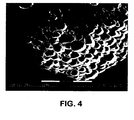
- Figure 4 shows the ESEM (scanning electron microscope) image of regular corn starch.
- Figure 5 shows the ESEM image of starch-maleated corn oil graft copolymer produced by reactive extrusion processing.
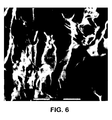
- Figure 6 depicts the ESEM image of fiber reinforced starch-vegetable oil graft copolymer.
- Figure 7 shows the ESEM image of fiber reinforced starch-vegetable oil graft copolymers containing polycaprolactone polyester.
- Figure 8 is a bar graph showing the tensile strength properties of various fiber reinforced starch-vegetable oil graft copolymer blends as explained in Examples 5-9.
- Figure 9 is a bar graph showing the break elongation properties of various fiber reinforced starch-vegetable oil graft copolymer blends as explained in Examples 5-9.
- the present invention provides a biodegradable moldable product wherein, the product is prepared by introducing a reinforcing fiber and an optionally biodegradable polyester into a starch-vegetable oil graft copolymer matrix. Further, the starch-vegetable oil graft copolymer can be prepared by reactive-extrusion processing of starch, vegetable oil, plasticizer and a free-radical initiator.
- the degree of substitution (DS) of a polymer is the (average) number of substituent groups attached per base unit (in the case of condensation polymers) or per monomeric unit (in the case of additional polymers).
- the term has been used mainly in cellulose chemistry where each anhydroglucose unit has three reactive (hydroxyl) groups. Degree of substitution can then range from zero (cellulose itself) to three (fully substituted cellulose).
- the same chemistry applies herein to starch wherein each glucose moiety has three reactive hydroxyl sites.
- n is a mixture of linear (amylose) and branched (amylopectin) polymers.
- Amylose is essentially a linear polymer of ⁇ (1 ⁇ 4) linked D-glucopyranosyl units.
- Amylopectin is a highly-branched polymer of D-glucopyranosyl units containing ⁇ (1 ⁇ 4) linkages, with ⁇ (1 ⁇ 6) linkages at the branch points.
- the granular starch was obtained from Corn Products, Inc. (Illinois) from the country of Brazil.
- compositions having increased levels of linear starch polymers are most likely to be the correct choice in terms of processability, molding and mechanical properties.
- the starch-vegetable oil graft biofiber reinforced copolymer compositions of the present invention comprises what is considered in the art to be a specialty starch, preferably having an amylose content greater than 50% and most preferably greater than 70%.
- the degree of substitution preferably ranges from 0.001 to 1 DS and more preferably from 0.01 to 0.05 DS.
- Modified starches are particularly useful in this invention.
- chemically modified it is meant that the starch can be derivatized or modified by typical processes known in the art, e.g. esterification, etherification, oxidation, acid hydrolysis, crosslinking and enzyme conversion.
- modified starches include esters, such as the acetate and half-esters of dicarboxylic acids, particularly the alkylsuccinic acids; ethers, such as the hydroxyethyl and hydroxypropyl starches and cationic starches such as starch modified with 2-diethylaminoethyl chloride (DEC) and starch modified with quaternary ammonium reagents such as 3-chloro-2-hydroxypropyltrimethylammonium chloride; starches oxidized with hypochlorite; starches reacted with crosslinking agents such as phosphorus oxychloride, epichlorohydrin, and phosphate derivatives prepared by reaction with sodium or potassium orthophosphate or tripolyphosphate and combinations thereof.
- esters such as the acetate and half-esters of dicarboxylic acids, particularly the alkylsuccinic acids
- ethers such as the hydroxyethyl and hydroxypropyl starches and cationic starches such as starch
- starch Chemistry and Technology
- Second Edition Edited by Roy L. Whistler, et al.
- Chapter X Starch Derivations: Production and Uses by M. W. Rutenberg, et al., Academic Press, Inc., (1984 ).
- the starch component in the blend is 5% to 90% by weight, preferably from 50% to 80% by weight.
- the aforementioned starches and starch esters can be made into a wide range of starch-vegetable oil graft copolymers using a wide variety of oils.
- the oils pertaining to this invention are unsaturated fatty acids (triglycerides) obtained from plant based resources.
- the preferred oils are corn, soybean and mixtures thereof and their maleated and epoxidized versions.
- the concentration of the oils in the starch-vegetable oil graft copolymers is 1% to 10% by weight, preferably between 2% to 5% by weight.
- a plasticizer which is a polyhydric alcohol which is well known to those skilled in the art, can be added to the composition to achieve grater material processability and product flexibility. An obvious requirement of these plasticizers is that they are biodegradable.
- Optional plasticizers are well known in the art. Typical plasticizers are water, dihydric, trihydric, polyhydric alcohols, and their derivatives. Some examples are ethylene glycol, propylene glycol, glycerol, glycerol esters, erythritol, pentaerythritol, sorbitol, and higher molecular weight plasticizers like poly glycerol and poly glycerol esters.
- Glycerol esters include glycerol monoacetate, diacetate, and triacetate.
- the plasticizers chosen have a boiling point sufficiently higher than the processing temperature in the extruder and be thermally stable.
- the preferred plasticizers are glycerol, glycerol esters, sorbitol, and mixture thereof. It is preferred that the amount of the plasticizer be in the range of 1 to 30% by weight of the total reactant mixture, preferably 15 to 30% by weight.
- the free-radical initiator used in this invention was obtained from Aldrich Chemical (Wisconsin) and is 2,5-Bis (tert-butylperoxy)-2,5-dimethylhexane (LUPEROX 101; Aldrich, Wisconsin)). Numerous other free radical initiators are known to those skilled in the art.
- the radical initiator is preferably added in an amount ranging between 0.01 to 10-wt% of the total weight.
- starch-vegetable oil graft copolymers be capable of forming biodegradable products with good mechanical properties which can be easily processed in conventional equipments like extruder and injection molder.
- starch-vegetable oil graft copolymers are useful as matrices which can preferably be reinforced with fiber, modifiers and optional biodegradable polyester to form blends suitable to be injection molded.
- Preferred fibers include cotton, wood fibers (both hardwood or softwood fibers, examples of which include southern hardwood and southern pine), flax, abaca, sisal, ramie, hemp and bagasse because they readily decompose under normal conditions.
- the fibers have an aspect ratio of at least about 10:1, preferably greater than about 25:1, more preferably greater than about 100:1, and most preferably greater than about 250:1.
- thermoplastic starch compositions of the present invention A wide range of fibers can be used in order to improve the physical properties of the thermoplastic starch compositions of the present invention.
- fibers and "fibrous material” include both inorganic and organic fibers. Fibers may be added to the moldable mixture to increase the toughness, and fracture energy, as well as the flexural and tensile strengths of the resulting sheets and articles. Fibrous materials reduce the likelihood that the sheets, films or articles made from thermoplastic starch compositions will shatter when cross-sectional forces are applied. Accordingly, the concentration of fibers within the thermoplastic starch compositions of the present invention can be included in a broad range from 1% to about 60% by weight of the thermoplastic starch composition. Preferably, fibers will be included in an amount in a range from about 10% to about 30% by weight of the thermoplastic starch composition.
- Reactive modifiers for the composition preferably are selected from the class of cyclic dibasic acid anhydrides such as maleic, succinic, itaconic, phthalic and combinations thereof.
- Other modifiers include phthalic acid derivatives like diethyl phthalate, dimethyl phthalate, and dioctyl phthalate, phosphoric acid derivatives like triethyl phosphate, tributyl phosphate, and trioctyl phosphate, glycerol, and glycerol esters, and sulfonic acid derivatives.
- the modifier is preferably present in amount of about 1% to about 10% by weight of the starch based reactant whereby to provide an acidic environment for the mixture.
- biodegradable polyesters include poly(caprolactone)(PCL), poly(vinylacetate-co-vinylalcohol)(PVAc/VA), poly(lactic acid) or polylactide (PLA), poly(glycolic acid) or polyglycolide (PGA), and related copolyesters including the various combinations of stereoisomers, bacterial and synthetic poly(-hydroxybutyrate) poly(beta-hydroxybutyrate-co-beta-hydroxyvalerate)(PHB/V), and other poly(beta-hydroxyalkanoates)(PHA), and biodegradable aliphatic-aromatic copolyesters.
- the biodegradable polyester is incorporated in the final blend in an amount ranging from 0% to 60% by weight and preferably from 10% to 30% by weight.
- the products of the present invention possess significant mechanical properties while still retaining their biodegradability. This is further achieved by engineering the appropriate degree of substitution and molecular weight of the starch-vegetable oil graft copolymers component, by blend composition, choice of polyester, modifier and fiber.
- the present invention can be processed by various methods known in the art, such as extrusion pelletizing and injection molding.
- the biodegradable fiber reinforced starch-vegetable oil graft copolymers made in accordance with the present invention can be injection molded to give a variety of molded products.
- a typical reactive extrusion process to produce starch-vegetable oil graft copolymer in the presence of a plasticizer during free radical initiators is described hereafter.
- 800 gm of regular corn-starch was pre-blended with 20 gm corn oil in a kitchen blender for 15 minutes.
- 200 gm of glycerol was mixed with 1.6 gm 2,5-bis(tert-butylperoxy)-2,5-dimethylhexane (LUPEROX 101) in a glass beaker.
- the pre-blended mixture of starch and corn oil was further blended with the glycerol mixture and mixed for around 15 minutes.
- a typical reactive extrusion process to produce biofiber reinforced starch-vegetable oil graft copolymer on the presence of optional modifiers such as maleic anhydride is described hereafter.
- the starch-vegetable oil graft copolymer pre-blended with 1-wt% maleic anhydride
- Solka floc Cellulose based fiber
- the mixture was fed to the feed port of a twin-screw co-rotating CENTURY extruder (screw diameter 30 mm and L/D ratio 40). Vent port was kept open to remove moisture present.
- a screw configuration as shown in Figure 1 was used for the reactive extrusion processing. The processing conditions for the process are similar to the one described in Table 1.
- the extruded strand was air cooled before being palletized in line.
- the biofiber-reinforced composite is stored in an oven at 75°C to prevent entrainment of moisture.
- the above two process steps can be combined into a one-step operation wherein the starch-vegetable oil graft copolymer is made in the first section of the extruder (LD of 20) followed by the downstream addition of the biofiber to produce biofiber reinforced starch-vegetable oil graft copolymer composites.
- the composite was injection molded to form test dog bone samples.
- Starch-vegetable oil graft copolymer has been manufactured by the extrusion processing of starch with corn oil in the presence of glycerol as a plasticizer using LUPEROX 101 as a free radical initiator. Basic characterizations such as thermal analysis, Fourier Transformed Infra Red Spectroscopy (FTIR) have been completed.
- FTIR Fourier Transformed Infra Red Spectroscopy
- Biofiber reinforced starch-vegetable oil graft copolymer have been manufactured by reactive extrusion processing as explained above in both a single step as well as a dual step process. The biofiber composite has been injection molded to form dog bone test sample bars. Mechanical properties have been determined.
- a starch modification reaction was carried out as follows:
- Screw configuration consisting of both conveying and kneading elements was used and is shown in Figure 1 .
- the starch-corn oil graft copolymer was extracted for 24 hours in a Soxhlet apparatus using Dichloromethane solvent. Corn oil reacted was found to be 60%. FTIR scan confirming reactivity is shown in Figure 2 .
- Screw configuration consisting of both conveying and kneading elements was used and is shown in Figure 1 .
- the starch-corn oil graft copolymer was extracted for 24 hours in a Soxhlet apparatus using Dichloromethane solvent. Maleated Corn oil reacted was found to be 52%.
- a one-step fiber reinforced starch-vegetable oil graft copolymer reaction was carried out as follows:
- the temperature profile and the extrusion processing conditions are shown in Table 2.
- the vent port was kept open to remove unreacted maleic acid and water.
- Screw configuration consisting of both conveying and kneading elements was used and is shown in Figure 1 .
- the extruded strand was palletized and stored in an oven at 100°C.
- the ESEM image of the blend shows good adhesion between the starch and the fiber and is shown in Figure 6 .
- Injection molding conditions are shown in Table 3.
- TABLE 3 Injection molding processing conditions in the synthesis of dog bone samples of fiber reinforced starch-vegetable oil graft copolymers. Temperature profile: (All temperatures are in °F Nozzle Zone 1 Zone 2 Zone 3 380 370 360 340 380 372 364 341
- Tensile properties of the injection molded articles were determined using INSTRON Mechanical Testing Equipment fitted with a 1000 lbs load cell. The crosshead speed was 1 inch per minute. The samples were conditioned at 23°C and 50% Relative Humidity for 40 hours before being tested according to ASTM D-882 testing. Tensile properties are depicted in Figure 8 and Figure 9 .
- a one-step fiber reinforced starch-vegetable oil graft copolymer reaction was carried out as follows:
- Tensile properties of the injection molded articles were determined using INSTRON Mechanical Testing Equipment fitted with a 1000 lbs load cell. The crosshead speed was 1 inch per minute. The samples were conditioned at 23°C and 50% Relative Humidity for 40 hours before being tested according to ASTM D-882 testing. Tensile properties are depicted in Figure 8 and Figure 9 .
- a one-step fiber reinforced starch-vegetable oil graft copolymer reaction was carried out as follows:
- 400 gm of granular corn-starch (Corn Products, Inc.) was first mixed with 12 gm maleic anhydride (Aldrich Chemical Company) and further mixed with 56 gm of maleated corn oil (1 mole of maleated corn oil contains one mole of maleic anhydride). Further 100 gm glycerol mixed with 0.8 gm LUPEROX 101, was added, and the mixture was kneaded in a blender for 15 minutes. To this mixture was added 300 gm Kayocell (wood fiber) and 200 gm Eastman Polyester (EPE) (Poly butylenes (adipate-co-terephthalate) obtained from Eastman Chemicals) and further kneaded for 15 minutes.
- EPE Eastman Polyester
- a one-step fiber reinforced starch-vegetable oil graft copolymer reaction was carried out as follows:
- 400 gm of granular corn-starch (Corn Products, Inc.) was first mixed with 12 gm maleic anhydride (Aldrich Chemical Company) and further mixed with 56 gm of maleated corn oil (1 mole of maleated corn oil contains one mole of maleic anhydride). Further, 100 gm glycerol mixed with 0.8 gm LUPEROX 101, was added, and the mixture was kneaded in a kitchen blender for 15 minutes. To this mixture was added 300 gm Kayocell (wood fiber) and 400 gm linear Polycaprolactone polymer (Dow Chemical, TONE 787) obtained from Eastman Chemicals; Rochester, NY) and further kneaded for 15 minutes.
- a one-step fiber reinforced starch-vegetable oil graft copolymer reaction was carried out as follows:
- 1810 gm of granular corn-starch (Corn Products, Inc.) was first mixed with 54.3 gm maleic anhydride (Aldrich Chemical Company) and further mixed with 127 gm of maleated corn oil (1 mole of maleated corn oil contains one mole of maleic anhydride). Further, 603 gm glycerol mixed with 3.62 gm LUPEROX 101, was added, and the mixture was kneaded in a kitchen blender for 15 minutes. To this mixture was added 1088 gm SOLKA FLOX (Cellulose fiber, obtained from International Fiber Corporation) and further kneaded for 16 minutes.
- SOLKA FLOX Cellulose fiber, obtained from International Fiber Corporation
- the polymeric materials made in accordance with the present invention is sustainable and environmentally compatible, this being achieved by designing and engineering fully biodegradable materials that are thermoplastic, yet breakdown under appropriate environmental conditions in a manner similar to their lignocellulosic counterparts.
Landscapes
- Chemical & Material Sciences (AREA)
- Health & Medical Sciences (AREA)
- Chemical Kinetics & Catalysis (AREA)
- Medicinal Chemistry (AREA)
- Polymers & Plastics (AREA)
- Organic Chemistry (AREA)
- Life Sciences & Earth Sciences (AREA)
- Engineering & Computer Science (AREA)
- Biochemistry (AREA)
- Materials Engineering (AREA)
- Biological Depolymerization Polymers (AREA)
- Compositions Of Macromolecular Compounds (AREA)
- Polysaccharides And Polysaccharide Derivatives (AREA)
Description
- This invention relates to the preparation of biofiber reinforced thermoplastic starch-vegetable oil graft copolymers and moldable compositions containing a biofiber reinforced in the starch-vegetable oil graft copolymer matrix, which are preferably biodegradable. More specifically, the present invention relates to a process of making biofiber reinforced starch-vegetable oil graft copolymer blends which can be injection molded to give products which are totally biodegradable, easily processed and possessing good mechanical properties.
- Traditionally, plastics have been formulated to result in strong, light-weight, durable, and bioresistant polymeric materials. It is the durability and indestructibility that makes plastic the material of choice for many applications. However, these same properties are problems when the plastics enter the waste stream. The recent trend is to create biodegradable plastics, most of such plastics being first commercialized in the mid 1980's (Barenberg, S.A., et al., "Degradable Materials: Perspectives, Issues and Opportunities" (1990: and Vert, M., et al., "Biodegradable Polymers and Plastics" (1992)).
- Among the first `biodegradable' plastics made were blends of non-biodegradable polyolefins with starch which were at best only partially biodegradable (Gilmore, D.F., et al., "The Fate of 'Biodegradable' Plastics in municipal Leaf Compost", J. Industr. Microbiol. 10, 199-206 (1992); Barak, Y., et al., J. Environ. Qual., 20 173 (1991); Krupp, L. R., et al., Environ'. Sci. Techol. 26 193 (1992); and Swanson, C.L., et al., J. Environm. Polymer Degrad. 1(2), 155-165 (1993). These plastics are not compatible with waste management infrastructures, such as composting. Moreover, at that time, the appropriate infrastructures capable of dealing with biodegradables did not exist. Instead of composting, these products generally ended up in sanitary landfills.
- Landfills, in general, are a poor choice as a repository of plastic and organic waste. Landfills are plastic-lined tombs designed to retard biodegradation by providing little or no moisture with negligible microbial activity. Organic waste, such as lawn and yard waste, paper, and food waste should not be entombed in such landfills to be preserved for posterity. Accordingly, there is a growing trend to divert these materials into composting facilities, which allow them to be biodegraded to produce humus or compost. This compost can then be used as a valuable soil additive for new plant growth.
- When plastics are designed to be biodegradable, utilizing renewable resources as the major raw material component, the plastics can become part of an ecologically sound solution.
- Biodegradation of natural materials produces valuable compost as the major product, in addition to water and carbon dioxide. Such carbon dioxide is fixed or neutral and therefore does not contribute to an increase in the greenhouse gases.
-
U.S. Patent No. 5,095,054 to Lay et al (1992 ) discloses the use of water as a plasticizer for starch (referred to as starch "destructurization") in order to make the material processable in for example an extruder. Products derived therefrom tend to have the problem of rapidly losing water to the environment by evaporation. As a result, this type of material tends to become brittle with age. These materials are also highly water sensitive which is undesirable in the majority of applications of thermoplastic products. To address this issue of water sensitivity, the patent also includes various blends of destructured starch with a variety of synthetic petroleum-based plastics. Such blend compositions, along with earlier starch-filled polyolefins, are at best only biodisintegrable and not fully biodegradable. Starch-polyolefin compositions have been reported by the Fertec group (PCT Int. Pat. Appl.WO 92/14782 PCT Int. Pat Appl. WO 91/02025 WO 91/02023 WO 91/02024 -
U.S. Patent No. 4,873,270 to Aime et al., (1989 ), describes blends of polyurethane with for example poly(vinylchloride) and a carbohydrate such as potato flour.U.S. Patent Nos. 3,850,862 and3,850,863 to Clendinning et al (1974 ), disclose blends of a naturally biodegradable product, such as tree bark, protein, starch, peat moss, saw dust, etc., with a dialkanoyl polymer (Patent No.3,850,862 ) such as poly(alkylene adipate), or with an oxyalkanoyl polymer (Patent No.3,850,863 ), such as poly(caprolactone).U.S. Patent No. 4,863,655 to Lacourse et al (1989 ) discloses water-soluble high amylose starch containing poly(vinyl alcohol). This type of modified starch is highly hydrophilic and water soluble; the starch contains about 5% by weight propylene oxide corresponding to a theoretical degree of substitution of 0.19. This is a very low degree of substitution compared with the maximum degree of substitution for starch which is 3.0 according to the three available hydroxyl groups on the anhydroglucose repeat unit. The poly(vinyl alcohol) typically used as a blend component further adds to the water-sensitive nature of these materials. - As discussed earlier, prior art blend compositions are at best biodisintegrable and not fully biodegradable. In composting, the non-biodegradable components will be persistent resulting in an irreversible build-up of these components in the environment causing reduced productivity and fertility of the soil. Even if such `biodegradable' blend compositions are partially biodegradable, the resulting compost will have very little value. In fact, these recalcitrant components will be present in the final compost at significantly higher concentration levels than in the original waste mixture.
- Graft copolymerization of a vinyl monomer on the starch backbone was used to modify starch. Fanta and Bagley (Fanta, G.F., et al., Encyclopedia of Polymer Science, John Wiley & Sons; New York (1970: and Fanta, G.F., Block and Graft Copolymers- Vol. 1, John Wiley & Sons; New York (1973) have reviewed the synthesis and discussed some applications of starch graft copolymers. Otey et al (Otey, F.H., et al., Industrial Engineering Chemistry Products Research Development, 19, 592 (1980); Otey, F.H., et al., Industrial Engineering Chemistry Products Research Development, 23, 284 (1984); and Otey, R.P., et al., Industrial Engineering Chemistry Products Research Development, 26, 1659 (1987)) blended starch with poly(ethylene-co-acrylic acid)(EAA). In these papers, the authors suggested the formation of hydrogen bonds between the carboxylic group in EAA and the hydroxyl group in starch. Increasing the level of starch decreased the percentage elongation of the film and increased the diffusion rate of water. Similar complexes like EAA can also be formed with the hydroxyl groups of the polyethylene-vinyl alcohol (EVOH) copolymer. Bloembergen et al have reported on blends and alloys containing lignocelluloses like starch, cellulose acetate etc.
U.S. Patent No. 5,314,934 to Tomka et al provides a process to produce a polymer mixture essentially consisting of thermoplastically processable starch (up to 70-wt%). During this mixture process, an esterification reaction takes place between the maleic anhydride groups in the terpolymer with free hydroxyl groups in the starch. These reactive blends can be blown into film with properties comparable to LDPE.U.S. Patent No. 5,234,977 to Bastioli et al discloses a material used for the product of biodegradable articles in film, sheet or fiber form, which can be produced by extrusion from a molten mass that includes a synthetic thermoplastic polymer and a destructured starch to which a boron containing compound such as boric acid has been added. -
U.S. Patent Nos. 5,618,341 ,5,679,145 ,5,858,824 ,6,168,857 and6,231,970 to Andersen et al explain thermoplastic starch compositions that include a particulate filler and an optional fiber. These compositions may be shaped into a wide variety of useful articles, such as sheets, films, containers and packaging materials. The overall composition in this case is typically more environmentally friendly compared to conventional thermoplastic materials. -
U.S. Patent No. 5,928,737 to Hammer et al discloses thermoplastic starch compositions formed by heating granular starch with an additive and further reinforced with fiber and protein to form sausage casings. -
U.S. Patent No. 6,521,147 to Arentsen et al provides a method and apparatus for manufacturing fiber-reinforced foamed paper-like products. Further,U.S. Patent No. 6,565,640 to Bengs et al provides compositions based on starch and/or modified starch and comprising plasticizers which can be processed thermoplastically to give shaped articles which are biodegradable and physiologically non-hazardous. These articles may be used as packaging or casing for food or drink or pharmaceutical products, or also for the controlled release of active substances, or else for producing temporary protective coatings. - More recently,
U.S. Patent No. 6,709,526 to Bailey et al provides compositions containing starch, a polymer that is substantially compatible with starch and has a weight-average molecular weight of at least 500,000 g/mol such that the polymer forms effective entanglements or associations with neighboring starch molecules, and preferable at least one additive to improve melt flow and melt processability. The composition is especially suitable for uniaxial and biaxial extensional processes to make fibers, films, foams and like products. - The prior art on biodegradable materials and blends is restricted to starch-based materials in which the starch component is hydrophilic (water sensitive). No prior art exists on blends containing starch oil graft copolymer products and their biofiber reinforced composites as fully biodegradable products which are readily processable on conventional plastics processing equipment such as extruders injection molders, etc.
- It is an object of the present invention to achieve good processability and mechanical properties with a novel starch graft co-polymer product. It is further an object to provide such processable products which are also biodegradable. It is also an object to provide new starch-based materials which utilize agricultural resources and return those resources to nature in an environmentally sound manner. These and other objects will become increasingly apparent by reference to the following description. The substance and advantages of the present invention will become increasingly apparent by reference to the following description and the drawings.
- The present invention provides new biobased polymeric materials which are sustainable and environmentally responsible. The present invention describes a method of preparing a blend system which is compatibilized and contains fully biodegradable components for making moldable products. The compatibilized blend system has been designed and engineered by blending biodegradable, starch-vegetable oil graft copolymers with biofibers and optionally biodegradable aliphatic and aliphatic-aromatic copolymers of polyesters. Examples of biodegradable polyesters include poly(caprolactone) (PCL), poly(vinylacetate-co-vinylalcohol)(PVAc/VA), poly(lactic acid) or polylactide (PLA), poly(glycolic acid) or polyglycolide (PGA), and related like polybutylene adipate coterphthalate (PBAT), copolyesters including the various combinations of stereoisomers, bacterial and synthetic poly(beta-hydroxybutyrate)(PHB), Poly(beta-hydroxybutyrate-co-beta-hydroxyvalerate(PHB/V), and other poly(betahydroxyalkanotes) (PHA).
- The present invention provides a preferred method for obtaining starch-vegetable oil graft copolymer formed by reacting starch with a vegetable oil in the presence of a plasticizer using free-radical initiator and reinforcing it with a fiber and optionally biodegradable polyester. The plasticizer is selected from the group including a variety of biodegradable esters miscible with the starch ester and polyester. These products are readily processable, and have good mechanical properties. Most importantly, the polymers are fully biodegradable and after their end-use can be composted to produce valuable soil amendment.
- The present invention relates to a biodegradable starch-vegetable oil graft copolymer composition which is a reactively blended mixture comprising a granular starch, a vegetable oil or a derivative thereof comprising a modifier reactive with the starch, a free radical peroxide initiator, a fiber and a hydroxylated plasticizer. The present invention relates to the composition wherein the granular starch is selected from the group consisting of cornstarch, potato starch, tapioca starch, rice starch, wheat starch, cassava starch and high amylase cornstarch. Preferably the starch in the mixture is 5% to 90% by weight. Preferably the starch has a moisture content of about 0.5% to 15% by weight of the starch. Preferably the starch is in a pulverized form.
Preferably the starch is chemically modified with the modifier. Generally the vegetable oil is unsaturated and is selected from the group consisting of fatty acids and esters. The derivatives of vegetable oil are generally reactive in the composition. Epoxylated, maleated and hydroxylated vegetable oils are the most preferred. Preferably the vegetable oil is selected from the group consisting of corn oil, soybean oil, maleated soybean oil and epoxidized soybean oil and mixtures thereof. Preferably the vegetable oil is 1% to 10% by weight of the composition. Preferably the plasticizer is a polyhydric alcohol in an amount between 10 to 40 wt-% of the total of the composition.
A free-radical peroxide initiator is provided in the mixture, and wherein the free-radical initiator is 2,5-Bis(tert-butylperoxy)-2,5-dimethylhexane (LUPEROX 101).
Preferably the free radical peroxide initiator is provided in the mixture in an amount between about 0.01 to 3-wt% of the total weight of the composition. The composition comprises a fiber, and wherein the fiber is selected from the group consisting of cotton, wood, flax, abaca, sisal, ramie, hemp, and bagasse. Preferably the fiber has an aspect ratio of at least about 10:1. Preferably the fiber is present in an amount between about 3% to 80% by weight of the composition. The composition comprises the modifier which is selected from the group consisting of cyclic or dibasic acid and anhydrides thereof. Preferably the modifier is present in the composition in amount of about 0.1 to about 10% by weight of the starch. Preferably the composition comprises a biodegradable polyester selected from the group consisting of poly(caprolactone)(PCL), poly(vinylacetate-co-vinylalcohol)(PVAc/VA), poly(lactic acid) or polylactide (PLA), poly(glycolic acid) or polyglycolide (PGA), poly(betahydroxyalkanoates)(PHA), and aliphatic aromatic copolyesters, like polybutylene adipate coterphthalate (PBAT). Preferably the biodegradable polyester is 1% to 60% by weight of the composition. - The present invention further relates to a process for producing a biodegradable starch vegetable oil copolymer fiber reinforced composition which comprises: reactively blending a mixture of a granular starch, a vegetable oil or a derivative thereof comprising a modifier reactive with the starch, a free radical peroxide initiator, a fiber and a plasticizer in a reactor; and removing the composition from the reactor to produce the composition.
- Preferably the reactor is an extruder. Preferably the vegetable oil derivative is a maleated vegetable oil.
Preferably the mixture further comprises a filler. Preferably the filler is a natural fiber. Preferably the plasticizer is a solvent for the mixture. -
Figure 1 illustrates the screw configuration used in the synthesis of starch-vegetable oil graft copolymers by reactive extrusion processing. The screw of length 12.5 D is followed by the screw of length 15.5 D and then finally by the screw of length 12 D. D is 30 mm. -
Figure 2 shows the FTIR scan of extracted product confirming reactivity between starch and corn oil in the synthesis of starch-corn oil graft copolymers. FTIR scans for pure starch and corn oil are also shown as a comparison. -
Figure 3 shows the FTIR scan of extracted product confirming reactivity between starch and maleated corn oil in the synthesis of starch-corn oil graft copolymers (absence of free-radical initiator). -
Figure 4 shows the ESEM (scanning electron microscope) image of regular corn starch. -
Figure 5 shows the ESEM image of starch-maleated corn oil graft copolymer produced by reactive extrusion processing. -
Figure 6 depicts the ESEM image of fiber reinforced starch-vegetable oil graft copolymer. -
Figure 7 shows the ESEM image of fiber reinforced starch-vegetable oil graft copolymers containing polycaprolactone polyester. -
Figure 8 is a bar graph showing the tensile strength properties of various fiber reinforced starch-vegetable oil graft copolymer blends as explained in Examples 5-9. -
Figure 9 is a bar graph showing the break elongation properties of various fiber reinforced starch-vegetable oil graft copolymer blends as explained in Examples 5-9. - The present invention provides a biodegradable moldable product wherein, the product is prepared by introducing a reinforcing fiber and an optionally biodegradable polyester into a starch-vegetable oil graft copolymer matrix. Further, the starch-vegetable oil graft copolymer can be prepared by reactive-extrusion processing of starch, vegetable oil, plasticizer and a free-radical initiator.
- The degree of substitution (DS) of a polymer is the (average) number of substituent groups attached per base unit (in the case of condensation polymers) or per monomeric unit (in the case of additional polymers). The term has been used mainly in cellulose chemistry where each anhydroglucose unit has three reactive (hydroxyl) groups. Degree of substitution can then range from zero (cellulose itself) to three (fully substituted cellulose). The same chemistry applies herein to starch wherein each glucose moiety has three reactive hydroxyl sites.
- Starch (C6H10O5)n is a mixture of linear (amylose) and branched (amylopectin) polymers. Amylose is essentially a linear polymer of α(1→4) linked D-glucopyranosyl units. Amylopectin is a highly-branched polymer of D-glucopyranosyl units containing α(1→4) linkages, with α(1→6) linkages at the branch points. The granular starch was obtained from Corn Products, Inc. (Illinois) from the country of Brazil. Various other starches, such as potato starch, tapioca starch, rice starch, wheat starch, cassava starch, and other starches familiar to those skilled in the art can be utilized in accordance with the present invention. Compositions having increased levels of linear starch polymers are most likely to be the correct choice in terms of processability, molding and mechanical properties.
- The starch-vegetable oil graft biofiber reinforced copolymer compositions of the present invention comprises what is considered in the art to be a specialty starch, preferably having an amylose content greater than 50% and most preferably greater than 70%. The degree of substitution preferably ranges from 0.001 to 1 DS and more preferably from 0.01 to 0.05 DS.
- Modified starches are particularly useful in this invention. By chemically modified, it is meant that the starch can be derivatized or modified by typical processes known in the art, e.g. esterification, etherification, oxidation, acid hydrolysis, crosslinking and enzyme conversion. Typically, modified starches include esters, such as the acetate and half-esters of dicarboxylic acids, particularly the alkylsuccinic acids; ethers, such as the hydroxyethyl and hydroxypropyl starches and cationic starches such as starch modified with 2-diethylaminoethyl chloride (DEC) and starch modified with quaternary ammonium reagents such as 3-chloro-2-hydroxypropyltrimethylammonium chloride; starches oxidized with hypochlorite; starches reacted with crosslinking agents such as phosphorus oxychloride, epichlorohydrin, and phosphate derivatives prepared by reaction with sodium or potassium orthophosphate or tripolyphosphate and combinations thereof. These and other conventional modifications of starch are described in publications such as "Starch: Chemistry and Technology", Second Edition, Edited by Roy L. Whistler, et al., Chapter X; Starch Derivations: Production and Uses by M. W. Rutenberg, et al., Academic Press, Inc., (1984). The starch component in the blend is 5% to 90% by weight, preferably from 50% to 80% by weight.
- The aforementioned starches and starch esters can be made into a wide range of starch-vegetable oil graft copolymers using a wide variety of oils. The oils pertaining to this invention are unsaturated fatty acids (triglycerides) obtained from plant based resources. The preferred oils are corn, soybean and mixtures thereof and their maleated and epoxidized versions. The concentration of the oils in the starch-vegetable oil graft copolymers is 1% to 10% by weight, preferably between 2% to 5% by weight.
- A plasticizer which is a polyhydric alcohol, which is well known to those skilled in the art, can be added to the composition to achieve grater material processability and product flexibility. An obvious requirement of these plasticizers is that they are biodegradable. Optional plasticizers are well known in the art. Typical plasticizers are water, dihydric, trihydric, polyhydric alcohols, and their derivatives. Some examples are ethylene glycol, propylene glycol, glycerol, glycerol esters, erythritol, pentaerythritol, sorbitol, and higher molecular weight plasticizers like poly glycerol and poly glycerol esters. Glycerol esters include glycerol monoacetate, diacetate, and triacetate. For the purpose of this invention, it is preferred that the plasticizers chosen have a boiling point sufficiently higher than the processing temperature in the extruder and be thermally stable. The preferred plasticizers are glycerol, glycerol esters, sorbitol, and mixture thereof. It is preferred that the amount of the plasticizer be in the range of 1 to 30% by weight of the total reactant mixture, preferably 15 to 30% by weight.
- The free-radical initiator used in this invention was obtained from Aldrich Chemical (Wisconsin) and is 2,5-Bis (tert-butylperoxy)-2,5-dimethylhexane (LUPEROX 101; Aldrich, Wisconsin)). Numerous other free radical initiators are known to those skilled in the art. The radical initiator is preferably added in an amount ranging between 0.01 to 10-wt% of the total weight.
- It is highly desirable that these starch-vegetable oil graft copolymers be capable of forming biodegradable products with good mechanical properties which can be easily processed in conventional equipments like extruder and injection molder.
- These starch-vegetable oil graft copolymers are useful as matrices which can preferably be reinforced with fiber, modifiers and optional biodegradable polyester to form blends suitable to be injection molded.
- Preferred fibers include cotton, wood fibers (both hardwood or softwood fibers, examples of which include southern hardwood and southern pine), flax, abaca, sisal, ramie, hemp and bagasse because they readily decompose under normal conditions. The fibers have an aspect ratio of at least about 10:1, preferably greater than about 25:1, more preferably greater than about 100:1, and most preferably greater than about 250:1.
- A wide range of fibers can be used in order to improve the physical properties of the thermoplastic starch compositions of the present invention. As used in the specification and the appended claims, the terms fibers" and "fibrous material" include both inorganic and organic fibers. Fibers may be added to the moldable mixture to increase the toughness, and fracture energy, as well as the flexural and tensile strengths of the resulting sheets and articles. Fibrous materials reduce the likelihood that the sheets, films or articles made from thermoplastic starch compositions will shatter when cross-sectional forces are applied. Accordingly, the concentration of fibers within the thermoplastic starch compositions of the present invention can be included in a broad range from 1% to about 60% by weight of the thermoplastic starch composition. Preferably, fibers will be included in an amount in a range from about 10% to about 30% by weight of the thermoplastic starch composition.
- Reactive modifiers for the composition preferably are selected from the class of cyclic dibasic acid anhydrides such as maleic, succinic, itaconic, phthalic and combinations thereof. Other modifiers include phthalic acid derivatives like diethyl phthalate, dimethyl phthalate, and dioctyl phthalate, phosphoric acid derivatives like triethyl phosphate, tributyl phosphate, and trioctyl phosphate, glycerol, and glycerol esters, and sulfonic acid derivatives. The modifier is preferably present in amount of about 1% to about 10% by weight of the starch based reactant whereby to provide an acidic environment for the mixture.
- Examples of biodegradable polyesters include poly(caprolactone)(PCL), poly(vinylacetate-co-vinylalcohol)(PVAc/VA), poly(lactic acid) or polylactide (PLA), poly(glycolic acid) or polyglycolide (PGA), and related copolyesters including the various combinations of stereoisomers, bacterial and synthetic poly(-hydroxybutyrate) poly(beta-hydroxybutyrate-co-beta-hydroxyvalerate)(PHB/V), and other poly(beta-hydroxyalkanoates)(PHA), and biodegradable aliphatic-aromatic copolyesters. The biodegradable polyester is incorporated in the final blend in an amount ranging from 0% to 60% by weight and preferably from 10% to 30% by weight.
- The products of the present invention possess significant mechanical properties while still retaining their biodegradability. This is further achieved by engineering the appropriate degree of substitution and molecular weight of the starch-vegetable oil graft copolymers component, by blend composition, choice of polyester, modifier and fiber.
- The present invention can be processed by various methods known in the art, such as extrusion pelletizing and injection molding. For example, the biodegradable fiber reinforced starch-vegetable oil graft copolymers made in accordance with the present invention can be injection molded to give a variety of molded products.
- A typical reactive extrusion process to produce starch-vegetable oil graft copolymer in the presence of a plasticizer during free radical initiators is described hereafter. 800 gm of regular corn-starch was pre-blended with 20 gm corn oil in a kitchen blender for 15 minutes. Meanwhile, 200 gm of glycerol was mixed with 1.6
gm 2,5-bis(tert-butylperoxy)-2,5-dimethylhexane (LUPEROX 101) in a glass beaker. The pre-blended mixture of starch and corn oil was further blended with the glycerol mixture and mixed for around 15 minutes. This combined mixture was fed to the feed port of a twin-screw co-rotating CENTURY extruder (screw diameter 30 mm and L/D ratio 40) (Traverse City, MI). Vent port was kept open to remove moisture present. A screw configuration as shown inFigure 1 was used for the reactive extrusion processing. The processing conditions for the reactive extrusion modification of starch to form starch-vegetable oil graft copolymers are shown in Table 1.TABLE 1 ZONE SET ACTUAL ° C ZONE 1 15 56 ° C ZONE 2 95 99 ° C ZONE 3 125 131 °C ZONE 4 145 147 ° C ZONE 5 150 157 ° C ZONE 6 155 161 ° C ZONE 7 155 155 ° C ZONE 8 155 147 ° C ZONE 9 150 93 °C DIE 145 145 °C MELT TEMP. 164 °C MOTOR SPEED 120 RPM TORQUE 40-50 % PRESSURE 40-50 Pisa FEEDER SPEED, CENTURY % FEEDER SPEED, MiNi % FEEDER SPEED, EXT % - A typical reactive extrusion process to produce biofiber reinforced starch-vegetable oil graft copolymer on the presence of optional modifiers such as maleic anhydride is described hereafter. The starch-vegetable oil graft copolymer (pre-blended with 1-wt% maleic anhydride) was blended with Solka floc (Cellulose based fiber) in a 70:30 ratio. The mixture was fed to the feed port of a twin-screw co-rotating CENTURY extruder (screw diameter 30 mm and L/D ratio 40). Vent port was kept open to remove moisture present. A screw configuration as shown in
Figure 1 was used for the reactive extrusion processing. The processing conditions for the process are similar to the one described in Table 1. The extruded strand was air cooled before being palletized in line. The biofiber-reinforced composite is stored in an oven at 75°C to prevent entrainment of moisture. - Alternatively, the above two process steps can be combined into a one-step operation wherein the starch-vegetable oil graft copolymer is made in the first section of the extruder (LD of 20) followed by the downstream addition of the biofiber to produce biofiber reinforced starch-vegetable oil graft copolymer composites. The composite was injection molded to form test dog bone samples.
- The Injection Molding conditions are shown in Table 2 for the two step process.
TABLE 2 ZONE SET ACTUAL UNITS ZONE 1 15 38 ° C ZONE 2 95 94 ° C ZONE 3 145 145 °C ZONE 4 150 148 ° C ZONE 5 155 150 ° C ZONE 6 155 163 ° C ZONE 7 155 158 ° C ZONE 8 155 150 ° C ZONE 9 150 148 °C DIE 145 146 °C MELT TEMP. 152 °C MOTOR SPEED 150 RPM TORQUE 15-20 % PRESSURE Pis FEEDER SPEED, CENTURY % FEEDER SPEED, MINI % FEEDER SPEED, EXT % - Starch-vegetable oil graft copolymer has been manufactured by the extrusion processing of starch with corn oil in the presence of glycerol as a plasticizer using LUPEROX 101 as a free radical initiator. Basic characterizations such as thermal analysis, Fourier Transformed Infra Red Spectroscopy (FTIR) have been completed. Biofiber reinforced starch-vegetable oil graft copolymer have been manufactured by reactive extrusion processing as explained above in both a single step as well as a dual step process. The biofiber composite has been injection molded to form dog bone test sample bars. Mechanical properties have been determined.
- The effect of changing parameters such as corn oil concentration, type of oil, plasticizer type and concentration, temperature and pressure profiles, etc. on the reactivity and processing of starch-vegetable oil graft copolymers can easily be determined. Further changing the biofiber type or the biofiber addition content and comparing the processing and mechanical properties of the composite with commodity plastics starting from a molding composition is easily within the skill of the art. Finally, the reactive extrusion processing of biofiber reinforced starch-vegetable oil graft copolymers can be extended to an industrial scale-up for the manufacture of biodegradable articles for applications such as biodegradable forks, knives, spoons, golf tees and the like.
- The following experimental Examples specifically demonstrate the utility of the present invention for forming biodegradable products containing starch, vegetable oil, plasticizer, initiator fiber and biodegradable polyester.
- Examples of materials made in accordance with the present invention in compost experiments confirm biodegradability.
- A starch modification reaction was carried out as follows:
- 740 gm of granular corn-starch (Corn Products, Inc.) was mixed with 71.5 gm of corn oil (Corn Products, Inc.). Further, 185.3 gm glycerol was mixed with 3.2 gm of 2,5-Bis (tert-butylperoxy)-2, 5-dimethylhexane (LUPEROX 101 (Aldrich). The two mixtures were mixed in a blender for 15 minutes and extruded using a CENTURY twin-screw co-rotating extruder with a screw diameter of 30 mm and a L/D of 40. The temperature profile and the extrusion processing conditions are shown in Table 1. Screw configuration consisting of both conveying and kneading elements was used and is shown in
Figure 1 . D.S. = (162*W)/(100*M- (M-1)*W), where 162 represents the molecular weight of one anhydroglucose unit, W is the weight % of the substituent and M the molecular weight of the substituent. In our case, W=7.18 and M=870 g/mol. This translates to a theoretical D.S. value of 0.014 (i.e. one mol of corn oil per 100 glucose units). The starch-corn oil graft copolymer was extracted for 24 hours in a Soxhlet apparatus using Dichloromethane solvent. Corn oil reacted was found to be 60%. FTIR scan confirming reactivity is shown inFigure 2 . - A starch modification reaction following the procedure as explained in Example 1 was carried out as follows:
- 740 gm of granular corn-starch (Corn Products, Inc.) was mixed with 71.5 gm of maleated corn oil (1 mole of maleated corn oil contains one mole of maleic anhydride). Further, 185.3 gm glycerol was mixed with 3.2 gm of 2,5-Bis (tert-butylperoxy)-2,5-dimethylhexane (LUPEROX 101 (Aldrich). The two mixtures were mixed in a blender for 15 minutes and extruded using a CENTURY twin-screw co-rotating extruder with a screw diameter of 30 mm and a L/D of 40. The temperature profile and the extrusion processing conditions are shown in Table 1. Screw configuration consisting of both conveying and kneading elements was used and is shown in
Figure 1 . D.S. = (162*W)/(100*M-(M-1)*W), where 162 represents the molecular weight of one anhydroglucose unit, W is the weight % of the substituent and M the molecular weight of the substituent. In this case, W = 7.18 and M = 968 (870 of CO + 98 of MA). This translates to a theoretical D.S. value of 0.012 (i.e. one mol of corn oil per 100 glucose units). The starch-corn oil graft copolymer was extracted for 24 hours in a Soxhlet apparatus using Dichloromethane solvent. Maleated Corn oil reacted was found to be 52%. - A starch modification reaction following the procedure as explained in Example 1 was carried out as follows:
- 740 gm of granular corn-starch (Corn Products, Inc.) was mixed with 74.7 gm of maleated corn oil (1 mole of maleated corn oil contains one mole of maleic anhydride). Further, 185.3 gm glycerol was added and the mixture was kneaded in a kitchen blender for 15 minutes and extruded using a CENTURY twin-screw co-rotating extruder with a screw diameter of 30 mm and a L/D of 40. The temperature profile and the extrusion processing conditions are shown in Table 1. Screw configuration consisting of both conveying and kneading elements was used and is shown in
Figure 1 . D.S. - (162*W)/(100*M-(M-1)*W), where 162 represents the molecular weight of one anhydroglucose unit, W is the weight % of the substituent and M the molecular weight of the substituent. In this case, W = 7.18 and M = 968 (870 of CO + 98 of MA). This translates to a theoretical D.S. value of 0.012 (i.e. one mol of corn oil per 100 glucose units). The starch-corn oil graft copolymer was extracted for 24 hours in a Soxhlet apparatus using Dichloromethane solvent. Maleated Corn oil reacted was found to be 58%. FTIR scan confirmed reactivity even in the absence of Luperox 101 is shown inFigure 3 . - A starch modification reaction following the procedure as explained in Example 1 was carried out as follows:
- 770 gm of granular corn-starch (Corn Products, Inc.) was mixed with 35 gm of maleated corn oil (1 mole of maleated corn oil contains one mole of maleic anhydride). Further 185.3 gm glycerol was added and the mixture was kneaded in a kitchen blender for 15 minutes and extruded using a CENTURY twin-screw co-rotating extruder with a screw diameter of 30 mm and a LD of 40. The temperature profile and the extrusion processing conditions are shown in Table 1. Screw configuration consisting of both conveying and kneading elements was used and is shown in
Figure 1 . D.S. - 162*W)/(100*M-(M-1)*W), where 162 represents the molecular weight of one anhydroglucose unit, W is the weight % of the substituent and M the molecular weight of the substituent. In this case, W = 7.18 and M = 968 (870 of CO + 98 of MA). This translates to a theoretical D.S. value of 0.006 (i.e. one mol of corn oil per 100 glucose units). The starch-corn oil graft copolymer was extracted for 24 hours in a Soxhlet apparatus using Dichloromethane solvent. Maleated Corn oil reacted was found to be 82%. ESEM images of pure starch and starch-vegetable oil graft copolymer are shown inFigures 4 and5 respectively. - A one-step fiber reinforced starch-vegetable oil graft copolymer reaction was carried out as follows:
- 525 gm of granular corn-starch (Corn Products, Inc.) was first mixed with 15.7 gm maleic anhydride (Aldrich Chemical Company) and further mixed with 56 gm of maleated corn oil (1 mole of maleated corn oil contains one mole of maleic anhydride). Further, 175 gm glycerol mixed with 1.05 gm Luperox 101, was added, and the mixture was kneaded in a kitchen blender for 15 minutes. To this mixture was added 300 gm Kayocell (wood fiber) and further kneaded for 15 minutes. This mixture was extruded using CENTURY twin-screw co-rotating extruder with a screw diameter of 30 mm and a L/D of 40. The temperature profile and the extrusion processing conditions are shown in Table 2. The vent port was kept open to remove unreacted maleic acid and water. Screw configuration consisting of both conveying and kneading elements was used and is shown in
Figure 1 . The extruded strand was palletized and stored in an oven at 100°C. The ESEM image of the blend shows good adhesion between the starch and the fiber and is shown inFigure 6 . Injection molding conditions are shown in Table 3.TABLE 3: Injection molding processing conditions in the synthesis of dog bone samples of fiber reinforced starch-vegetable oil graft copolymers. Temperature profile: (All temperatures are in ° F Nozzle Zone 1 Zone 2Zone 3380 370 360 340 380 372 364 341 - Oil temperature : 104°F
- Feed throat temperature: 120°F
- Hold pressure: 800 psi
- Pack pressure: 1400 psi
-
- Inject high: 10 sec
- Pack: 3 sec
- Hold: 3 sec
- Cooling: 45 sec
- Extruder delay: 16 sec
- Open dwell: 1 sec
- Shot size: 1 in
- Shot velocity: 0.3 in/s
- Cushion: 0.25 in
- Transfer position: 0.5 in
- Mold temperature: 125°F
- Tensile properties of the injection molded articles were determined using INSTRON Mechanical Testing Equipment fitted with a 1000 lbs load cell. The crosshead speed was 1 inch per minute. The samples were conditioned at 23°C and 50% Relative Humidity for 40 hours before being tested according to ASTM D-882 testing. Tensile properties are depicted in
Figure 8 andFigure 9 . - A one-step fiber reinforced starch-vegetable oil graft copolymer reaction was carried out as follows:
- 400 gm of granular corn-starch (Corn Products, Inc.) was first mixed with 12 gm maleic anhydride (Aldrich Chemical Company) and further mixed with 56 gm of maleated corn oil (1 mole of maleated corn oil contains one mole of maleic anhydride). Further, 100 gm glycerol mixed with 0.8 gm Luperox 101, was added, and the mixture was kneaded in a kitchen blender for 15 minutes. To this mixture was added 300 gm Kayocell (wood fiber) and 200 gm linear Polycaprolactone polymer (Dow Chemical (Midland, MI), TONE 787) and further kneaded for 15 minutes. This mixture was extruded using a CENTURY twin-screw co-rotating extruder with a screw diameter of 30 mm and a L/D of 40. The temperature profile and the extrusion processing conditions are shown in Table 2. The vent port was kept open to remove unreacted maleic acid and water. Screw configuration consisting of both conveying and kneading elements was used and is shown in
Figure 1 . The extruded strand was palletized and stored in an oven at 100°C. The ESEM image of the blend is shown inFigure 7 . Injection molding conditions are shown in Table 4.TABLE 4: Injection molding processing conditions in the synthesis of dog bone samples of fiber reinforced starch-vegetable oil graft copolymers containing polyester or modified polyester. Temperature profile: (All temperatures are in °F) Nozzle Zone 1 Zone 2Zone 3370 360 350 340 369 359 353 341 - Oil temperature: 110°F
- Feed throat temperature: 126°F
- Hold pressure: 900 psi
- Pack pressure: 1300 psi
-
- Inject high: 10 sec
- Pack: 3 sec
- Hold: 2 sec
- Cooling: 70 sec
- Extruder delay: 16 sec
- Open dwell: 1 sec
- Shot size: 1.05 in
- Shot velocity: 1.25 in/s
- Cushion': 0.25 in
- Transfer position: 0.5 in
- Mold temperature: 70°F
- Tensile properties of the injection molded articles were determined using INSTRON Mechanical Testing Equipment fitted with a 1000 lbs load cell. The crosshead speed was 1 inch per minute. The samples were conditioned at 23°C and 50% Relative Humidity for 40 hours before being tested according to ASTM D-882 testing. Tensile properties are depicted in
Figure 8 andFigure 9 . - A one-step fiber reinforced starch-vegetable oil graft copolymer reaction was carried out as follows:
- 400 gm of granular corn-starch (Corn Products, Inc.) was first mixed with 12 gm maleic anhydride (Aldrich Chemical Company) and further mixed with 56 gm of maleated corn oil (1 mole of maleated corn oil contains one mole of maleic anhydride). Further 100 gm glycerol mixed with 0.8 gm LUPEROX 101, was added, and the mixture was kneaded in a blender for 15 minutes. To this mixture was added 300 gm Kayocell (wood fiber) and 200 gm Eastman Polyester (EPE) (Poly butylenes (adipate-co-terephthalate) obtained from Eastman Chemicals) and further kneaded for 15 minutes. This mixture was extruded using a CENTURY twin-screw co-rotating extruder with a screw diameter of 30 mm and a L/D of 40. The temperature profile and the extrusion processing conditions are shown in Table 2. The vent port was kept open to remove unreacted maleic acid and water. Screw configuration consisting of both conveying and kneading elements was used and is shown in
Figure 1 . The extruded strand was pelletized and stored in an oven at 100°C. Injection molding conditions are shown in Table 4. Tensile properties of the injection molded articles were determined using INSTRON Mechanical Testing Equipment fitted with a 1000 lbs load cell. The cross head speed was 1 inch per minute. The samples were conditions at 23°C and 50% Relative Humidity for 40 hours before being tested according to ASTM D-882 testing. Tensile properties are depicted inFigure 8 andFigure 9 . - A one-step fiber reinforced starch-vegetable oil graft copolymer reaction was carried out as follows:
- 400 gm of granular corn-starch (Corn Products, Inc.) was first mixed with 12 gm maleic anhydride (Aldrich Chemical Company) and further mixed with 56 gm of maleated corn oil (1 mole of maleated corn oil contains one mole of maleic anhydride). Further, 100 gm glycerol mixed with 0.8 gm LUPEROX 101, was added, and the mixture was kneaded in a kitchen blender for 15 minutes. To this mixture was added 300 gm Kayocell (wood fiber) and 400 gm linear Polycaprolactone polymer (Dow Chemical, TONE 787) obtained from Eastman Chemicals; Rochester, NY) and further kneaded for 15 minutes. This mixture was extruded using a CENTURY twin-screw co-rotating extruder with a screw diameter of 30 mm and a L/D of 40. The temperature profile and the extrusion processing conditions are shown in Table 2. The vent port was kept open to remove unreacted maleic acid and water. Screw configuration consisting of both conveying and kneading elements was used and is shown in
Figure 1 . The extruded strand was palletized and stored in an oven at 100°C. Injection molding conditions are shown in Table 4. Tensile properties of the injection molded articles were determined using INSTRON Mechanical Testing Equipment fitted with a 1000 lbs load cell. The cross head speed was 1 inch per minute. The samples were conditioned at 23°C and 50% Relative Humidity for 40 hours before being tested according to ASTM D-882 testing. Tensile properties are depicted inFigure 8 andFigure 9 . - A one-step fiber reinforced starch-vegetable oil graft copolymer reaction was carried out as follows:
- 1810 gm of granular corn-starch (Corn Products, Inc.) was first mixed with 54.3 gm maleic anhydride (Aldrich Chemical Company) and further mixed with 127 gm of maleated corn oil (1 mole of maleated corn oil contains one mole of maleic anhydride). Further, 603 gm glycerol mixed with 3.62 gm LUPEROX 101, was added, and the mixture was kneaded in a kitchen blender for 15 minutes. To this mixture was added 1088 gm SOLKA FLOX (Cellulose fiber, obtained from International Fiber Corporation) and further kneaded for 16 minutes. This mixture was extruded using a CENTURY twin-screw co-rotating extruder with a screw diameter of 30 mm and a L/D of 40. The temperature profile and the extrusion processing conditions are shown in Table 2. The vent port was kept open to remove unreacted maleic acid and water. Screw configuration consisting of both conveying and kneading elements was used and is shown in
Figure 1 . The extruded strand was palletized and stored in an oven at 100°C. Injection molding conditions are shown in Table 5.TABLE 5: Injection molding processing conditions in the synthesis of dog bone samples of cellulose fiber (SOLKA FLOC) reinforced starch-vegetable oil graft copolymers. Temperature profile: (All temperatures are in °F) Nozzle Zone 1 Zone 2Zone 3380 370 360 340 376 373 366 341 - Oil temperature: 110°F
- Feed throat temperature: 126°F
- Hold pressure: 800 psi
- Pack pressure: 1400 psi
-
- Inject high: 10 sec
- Pack: 3 sec
- Hold: 3 sec
- Cooling: 45 sec
- Extruder delay: 16 sec
- Open dwell: 2 sec
- Shot size: 1 in
- Shot velocity: 0.7 in/s
- Cushion: 0.25 in
- Transfer position: 0.5 in
- Mold temperature: 130°F
- The above examples demonstrate that the present invention provides new starch-vegetable oil based graft copolymers and their fiber reinforced composites which utilize agricultural resources that is biobased and biodegradable. The polymeric materials made in accordance with the present invention is sustainable and environmentally compatible, this being achieved by designing and engineering fully biodegradable materials that are thermoplastic, yet breakdown under appropriate environmental conditions in a manner similar to their lignocellulosic counterparts.
- It is intended that the foregoing description be only illustrative of the present invention and that the present invention be limited only by the hereinafter appended claims.
Claims (23)
- A biodegradable starch-vegetable oil graft copolymer composition obtainable by reactively blending a mixture comprising a granular starch, a vegetable oil or a derivative thereof, a modifier reactive with the starch, a hydroxylated plasticizer, a free radical peroxide initiator and a fiber.
- The composition of Claim 1 wherein the granular starch is selected from the group consisting of cornstarch, potato starch, tapioca starch, rice starch, wheat starch, cassava starch and high amylose corn starch.
- The composition of Claim 1 wherein the starch in the mixture is 5% to 90% by weight.
- The composition of Claim 1 wherein the starch has a moisture content of 0.5% to 15% by weight of the starch.
- The composition of Claim 1 wherein the starch is in a pulverized form.
- The composition of Claim 1 wherein the starch is chemically modified with the modifier.
- The composition of Claim 1 wherein the vegetable oil is a derivative which is epoxylated, hydroxylated or maleated.
- The composition of Claim 1 wherein the vegetable oil is selected from the group consisting of corn oil, soybean oil, maleated soybean oil and epoxidized soybean oil and mixtures thereof.
- The composition of Claim 1 wherein the vegetable oil is 1% to 10% by weight of the composition.
- The composition of Claim 1 wherein the plasticizer is a polyhydric alcohol in an amount between 10 to 40 wt% of the total of the composition.
- The composition of Claim 1 wherein the free-radical initiator is 2,5-Bis(tert-butylperoxy)-2,5-dimethylhexane.
- The composition of Claim 1 wherein the free radical peroxide initiator is provided in the mixture in an amount between 0.01 to 3 wt% of the total weight of the composition.
- The composition of Claim 1 wherein the fiber is selected from the group consisting of cotton, wood, flax, abaca, sisal, ramie, hemp, and bagasse.
- The composition of Claim 13 wherein the fiber has an aspect ratio of at least about 10:1.
- The composition of Claim 1 wherein the fiber is present in an amount between 3% to 80% by weight of the composition.
- The composition of Claim 1 wherein the modifier is selected from the group consisting of cyclic or dibasic acid and anhydrides thereof.
- The composition of Claim 16 wherein the modifier is present in the composition in amount of 0.1 to 10% by weight of the starch.
- The composition of Claim 1 further comprising a biodegradable polyester selected from the group consisting of poly(caprolactone) (PCL), poly(vinylacetate-covinylalcohol) (PVAc/VA), poly(lactic acid) or polylactide (PLA), poly(glycolic acid) or polyglycolide (PGA), poly(beta-hydroxyalkanoates) (PHA), and aliphatic aromatic copolyesters.
- The composition of Claim 18 wherein the biodegradable polyester is 1% to 60% by weight of the composition.
- A process for producing a biodegradable starch vegetable oil copolymer composition which comprises:(a) reactively blending a mixture of a granular starch, a vegetable oil or a derivative thereof, a modifier reactive with the starch, a hydroxylated plasticizer, a free radical peroxide initiator and a fiber in a reactor; and(b) removing the composition from the reactor to produce the composition.
- The process of Claim 20 wherein the reactor is an extruder.
- The process of Claim 20 wherein the vegetable oil derivative is a maleated vegetable oil.
- The process of Claim 20 wherein the plasticizer is a polyhydric alcohol.
Applications Claiming Priority (1)
| Application Number | Priority Date | Filing Date | Title |
|---|---|---|---|
| US11/124,491 US7553919B2 (en) | 2005-05-06 | 2005-05-06 | Starch-vegetable oil graft copolymers and their biofiber composites, and a process for their manufacture |
Publications (2)
| Publication Number | Publication Date |
|---|---|
| EP1719797A1 EP1719797A1 (en) | 2006-11-08 |
| EP1719797B1 true EP1719797B1 (en) | 2009-02-18 |
Family
ID=36821528
Family Applications (1)
| Application Number | Title | Priority Date | Filing Date |
|---|---|---|---|
| EP06009139A Not-in-force EP1719797B1 (en) | 2005-05-06 | 2006-05-03 | Starch-vegetable oil graft copolymers and their biofiber composites, and a process for their manufacture |
Country Status (11)
| Country | Link |
|---|---|
| US (1) | US7553919B2 (en) |
| EP (1) | EP1719797B1 (en) |
| JP (2) | JP5275549B2 (en) |
| KR (1) | KR20060115648A (en) |
| AR (1) | AR056342A1 (en) |
| AT (1) | ATE423166T1 (en) |
| BR (1) | BRPI0603049A (en) |
| CO (1) | CO5770109A1 (en) |
| DE (1) | DE602006005188D1 (en) |
| ES (1) | ES2320163T3 (en) |
| MX (1) | MXPA06004977A (en) |
Cited By (1)
| Publication number | Priority date | Publication date | Assignee | Title |
|---|---|---|---|---|
| CN110606993A (en) * | 2019-10-28 | 2019-12-24 | 南京财经大学 | A kind of waterproof starch profile and its preparation method and application |
Families Citing this family (36)
| Publication number | Priority date | Publication date | Assignee | Title |
|---|---|---|---|---|
| WO2005078018A1 (en) * | 2004-02-11 | 2005-08-25 | Michigan State University | Anhydride functionalized polyhydroxyalkanoates, preparation and use thereof |
| US7666963B2 (en) | 2005-07-21 | 2010-02-23 | Akzo Nobel N.V. | Hybrid copolymers |
| WO2007070415A2 (en) * | 2005-12-12 | 2007-06-21 | Wheatwareusa, Inc. Dba Wheatware.Com | Recyclable & compostable eating utensils & other products from crop-based resin |
| NO20073834L (en) | 2006-07-21 | 2008-01-22 | Akzo Nobel Chemicals Int Bv | Sulfonated graft copolymers |
| NO20073821L (en) | 2006-07-21 | 2008-01-22 | Akzo Nobel Chemicals Int Bv | Inoculated low molecular weight copolymers |
| TW200904365A (en) * | 2007-07-03 | 2009-02-01 | Biosphere Ind Llc | Biodegradable and compostable composition having improved physical and chemical properties |
| WO2009015351A2 (en) * | 2007-07-26 | 2009-01-29 | Polyone Corporation | Colored biofiber for plastic articles |
| WO2010148451A1 (en) * | 2009-06-25 | 2010-12-29 | Biofiba Innovations Pty Ltd | Timber substitute |
| FR2947830B1 (en) * | 2009-07-13 | 2011-08-19 | Valagro Carbone Renouvelable Poitou Charentes | COMPOSITION, PROCESS FOR PREPARING AND USE TO IMPROVE FLUIDITY AND TEMPERATURE RESISTANCE OF COMPOSITE MATERIALS |
| JP5645937B2 (en) | 2009-07-31 | 2014-12-24 | アクゾ ノーベル ナムローゼ フェンノートシャップAkzo Nobel N.V. | Hybrid copolymer composition for personal care applications |
| US8629203B2 (en) | 2010-02-25 | 2014-01-14 | Polyone Corporation | Rigid biofiber thermoplastic composite and articles made therefrom |
| ES2379927B1 (en) * | 2010-10-06 | 2013-04-01 | Storopack Hans Reichenecker Gmbh | PROCEDURE FOR MANUFACTURE OF BIODEGRADABLE FILLING ELEMENTS FOR PACKAGING PROTECTION, AND BIODEGRADABLE ELEMENT PRODUCED. |
| WO2012170215A1 (en) * | 2011-06-08 | 2012-12-13 | Arkema Inc. | Foaming of thermoplastic materials with organic peroxides |
| US8853144B2 (en) | 2011-08-05 | 2014-10-07 | Ecolab Usa Inc. | Cleaning composition containing a polysaccharide graft polymer composition and methods of improving drainage |
| US8841246B2 (en) | 2011-08-05 | 2014-09-23 | Ecolab Usa Inc. | Cleaning composition containing a polysaccharide hybrid polymer composition and methods of improving drainage |
| US8636918B2 (en) | 2011-08-05 | 2014-01-28 | Ecolab Usa Inc. | Cleaning composition containing a polysaccharide hybrid polymer composition and methods of controlling hard water scale |
| US8679366B2 (en) | 2011-08-05 | 2014-03-25 | Ecolab Usa Inc. | Cleaning composition containing a polysaccharide graft polymer composition and methods of controlling hard water scale |
| CO6350195A1 (en) | 2011-09-23 | 2011-12-20 | Univ Del Cauca | BIODEGRADABLE FILMS AND PACKAGES OBTAINED FROM YUCA ALMIDON AND MANUFACTURING PROCESS OF THEM |
| BR112014009040A2 (en) | 2011-11-04 | 2017-05-09 | Akzo Nobel Chemicals Int Bv | copolymer obtainable by polymerizing at least one first ethylenically unsaturated monomer and at least one second ethylenically unsaturated monomer; copolymer composition; and process for preparing dendrite copolymer |
| IN2014DN03123A (en) | 2011-11-04 | 2015-05-22 | Akzo Nobel Chemicals Int Bv | |
| SG11201404228UA (en) | 2012-01-18 | 2014-10-30 | Univ Iowa State Res Found | Thermoplastic elastomers via atom transfer radical polymerization of plant oil |
| MY163937A (en) * | 2012-03-13 | 2017-11-15 | Texchem Polymers Sdn Bhd | Thermoplastic Starch Composition Derives From Agricultural Waste |
| US8945314B2 (en) | 2012-07-30 | 2015-02-03 | Ecolab Usa Inc. | Biodegradable stability binding agent for a solid detergent |
| CN102796286A (en) * | 2012-08-28 | 2012-11-28 | 广东益德环保科技有限公司 | Full-biodegradable material and preparation method thereof |
| KR20150093174A (en) * | 2012-11-20 | 2015-08-17 | 임플럭스 인코포레이티드 | Method of molding thermoplastic polymer compositions comprising hydroxylated lipids |
| HK1220219A1 (en) | 2013-05-20 | 2017-04-28 | 爱荷华州立大学研究基金会有限公司 | Reversible addition-fragmentation chain transfer polymerization of thermoplastic elastomers via triglycerides |
| US9365805B2 (en) | 2014-05-15 | 2016-06-14 | Ecolab Usa Inc. | Bio-based pot and pan pre-soak |
| CN107973941B (en) * | 2017-12-07 | 2021-03-12 | 中国热带农业科学院农产品加工研究所 | Degradable bagasse mulching film and preparation method thereof |
| TWI668265B (en) * | 2018-08-10 | 2019-08-11 | 衍鋐機械股份有限公司 | Hydrophobic thermoplastic starch and method for manufacturing the same |
| EP4133005A4 (en) * | 2020-04-09 | 2024-04-24 | Arkema, Inc. | Organic peroxide formulations for modification of bio-based and biodegradable polymers |
| CN112063136B (en) * | 2020-08-12 | 2021-06-04 | 清华大学 | Polylactic acid composite material and preparation method thereof |
| US12383246B2 (en) | 2020-10-12 | 2025-08-12 | Abbott Cardiovascular Systems, Inc. | Vessel closure device with improved safety and tract hemostasis |
| CN114437240B (en) * | 2020-11-06 | 2023-04-28 | 山东福洋生物科技股份有限公司 | Preparation method of hydrophobic starch |
| KR20250073096A (en) * | 2022-09-22 | 2025-05-27 | 도레이 카부시키가이샤 | Long-fiber nonwoven fabric and its manufacturing method, and laminates, filters, protective clothing, masks |
| CN115716977B (en) * | 2022-11-18 | 2023-09-19 | 苏州和塑美科技有限公司 | Preparation method of fully biodegradable nanocomposite material and its products and applications |
| KR102749962B1 (en) * | 2022-12-16 | 2025-01-09 | 주식회사 케미스토리 | Composition for manufacturing biodegradable plastic including thermoplastic starch plasticized by vegetable oil-derived plasticizer |
Family Cites Families (33)
| Publication number | Priority date | Publication date | Assignee | Title |
|---|---|---|---|---|
| US2146671A (en) * | 1935-12-05 | 1939-02-07 | Ellis Foster Co | Adduct resin compositions and process of making same |
| US4119640A (en) * | 1975-07-10 | 1978-10-10 | Union Carbide Corporation | Polymerizable epoxide-modified compositions |
| US4382136A (en) * | 1981-09-28 | 1983-05-03 | Blount David H | Process for the production of polyhydroxy lignin-cellulose silicate polymer |
| US4663163A (en) * | 1983-02-14 | 1987-05-05 | Hou Kenneth C | Modified polysaccharide supports |
| US4673707A (en) * | 1985-12-27 | 1987-06-16 | National Starch And Chemical Corporation | Synthetic polymers with glycoside side chains |
| US5003022A (en) * | 1989-02-10 | 1991-03-26 | Penford Products Company | Starch graft polymers |
| US5432000A (en) * | 1989-03-20 | 1995-07-11 | Weyerhaeuser Company | Binder coated discontinuous fibers with adhered particulate materials |
| DE3920621A1 (en) * | 1989-06-23 | 1991-01-03 | Battelle Institut E V | MOLDING DIMENSIONS BASED ON STAERKEETHER FOR SHAPING BIODEGRADABLE MOLDED PARTS |
| DE4114185C1 (en) * | 1991-04-30 | 1993-02-04 | Battelle-Institut E.V., 6000 Frankfurt, De | |
| DE4119915C2 (en) * | 1991-06-17 | 1994-07-21 | Inventa Ag | Starch-polymer blend, process for its preparation and its use |
| SG47625A1 (en) * | 1991-11-14 | 1998-04-17 | Bio Tech Biolog Naturverparkun | Biodegradable mould material |
| US5618341A (en) * | 1992-08-11 | 1997-04-08 | E. Khashoggi Industries | Methods for uniformly dispersing fibers within starch-based compositions |
| FI98818C (en) * | 1994-03-21 | 1997-08-25 | Valtion Teknillinen | Aliphatic polyesters grafted with starch derivatives and process for their preparation and use |
| CN1058736C (en) | 1994-05-27 | 2000-11-22 | 北京市星辰现代控制工程研究所 | Biodegradable composition and its preparation method and application |
| EP0704495A3 (en) * | 1994-09-28 | 1997-01-15 | Japan Maize Prod | Biodegradable compositions |
| US5540929A (en) * | 1995-03-08 | 1996-07-30 | Board Of Trustees Operating Michigan State University | Polysaccharides grafted with aliphatic polyesters derived from cyclic esters |
| US20010048176A1 (en) * | 1995-04-14 | 2001-12-06 | Hans G. Franke | Resilient biodegradable packaging materials |
| DE69631884T2 (en) * | 1995-07-12 | 2005-03-10 | Valtion Teknillinen Tutkimuskeskus | THERMOPLASTIFIED STARCH AND METHOD OF MANUFACTURING THEREOF |
| US5728824A (en) * | 1996-02-01 | 1998-03-17 | Evercorn, Inc. | Microfiber reinforced biodegradable starch ester composites with enhanced shock absorbance and processability |
| US5801224A (en) * | 1996-04-26 | 1998-09-01 | Board Of Trustees Operating Michigan State University | Bulk reactive extrusion polymerization process producing aliphatic ester polymer compositions |
| US6121398A (en) * | 1997-10-27 | 2000-09-19 | University Of Delaware | High modulus polymers and composites from plant oils |
| US6211315B1 (en) * | 1998-11-12 | 2001-04-03 | Iowa State University Research Foundation, Inc. | Lewis acid-catalyzed polymerization of biological oils and resulting polymeric materials |
| US7067651B2 (en) * | 1999-09-16 | 2006-06-27 | Kasetsart University | Non-synthetic biodegradable starch-based composition for production of shaped bodies |
| US6936264B2 (en) * | 2001-03-05 | 2005-08-30 | The Procter & Gamble Company | Delivery of reactive agents via multiple emulsions for use in shelf stable products |
| US7071249B2 (en) * | 2001-10-05 | 2006-07-04 | William Ho | Biodegradable starch resin and method for making same |
| JP2004002613A (en) * | 2001-11-02 | 2004-01-08 | Minoru Hishinuma | Starch-based composite resin composition and its molded product |
| US7608649B2 (en) * | 2002-02-28 | 2009-10-27 | Cereplast, Inc. | Biodegradable materials from starch-grafted polymers |
| US6800712B2 (en) * | 2002-10-07 | 2004-10-05 | Steven William Doane | Starch graft copolymers and method of making and using starch graft copolymers for agriculture |
| JP4514089B2 (en) * | 2003-01-22 | 2010-07-28 | 関西ペイント株式会社 | Curable starch composition, modified starch, method for producing the same, and article thereof |
| DE112005001607T5 (en) * | 2004-07-08 | 2007-05-24 | Archer-Daniels-Midland Co., Decatur | Epoxidized esters of vegetable oil fatty acids as reactive diluents |
| US7629405B2 (en) * | 2004-11-19 | 2009-12-08 | Board Of Trustees Of Michigan State University | Starch-polyester biodegradable graft copolyers and a method of preparation thereof |
| US20060216489A1 (en) * | 2005-03-22 | 2006-09-28 | Shooshtari Kiarash A | Fiberglass binder comprising maleinated polyols |
| JP5084245B2 (en) * | 2006-06-07 | 2012-11-28 | 関西ペイント株式会社 | Starch-based paint composition |
-
2005
- 2005-05-06 US US11/124,491 patent/US7553919B2/en active Active
-
2006
- 2006-05-02 JP JP2006128052A patent/JP5275549B2/en not_active Expired - Fee Related
- 2006-05-03 DE DE602006005188T patent/DE602006005188D1/en active Active
- 2006-05-03 MX MXPA06004977A patent/MXPA06004977A/en active IP Right Grant
- 2006-05-03 EP EP06009139A patent/EP1719797B1/en not_active Not-in-force
- 2006-05-03 AT AT06009139T patent/ATE423166T1/en active
- 2006-05-03 ES ES06009139T patent/ES2320163T3/en active Active
- 2006-05-04 KR KR1020060040250A patent/KR20060115648A/en not_active Ceased
- 2006-05-05 AR ARP060101823A patent/AR056342A1/en active IP Right Grant
- 2006-05-05 BR BRPI0603049-1A patent/BRPI0603049A/en not_active IP Right Cessation
- 2006-05-05 CO CO06042613A patent/CO5770109A1/en active IP Right Grant
-
2011
- 2011-10-14 JP JP2011226991A patent/JP2012052122A/en not_active Abandoned
Cited By (2)
| Publication number | Priority date | Publication date | Assignee | Title |
|---|---|---|---|---|
| CN110606993A (en) * | 2019-10-28 | 2019-12-24 | 南京财经大学 | A kind of waterproof starch profile and its preparation method and application |
| CN110606993B (en) * | 2019-10-28 | 2021-07-20 | 南京财经大学 | A kind of waterproof starch profile and its preparation method and application |
Also Published As
| Publication number | Publication date |
|---|---|
| AR056342A1 (en) | 2007-10-03 |
| ATE423166T1 (en) | 2009-03-15 |
| JP2012052122A (en) | 2012-03-15 |
| EP1719797A1 (en) | 2006-11-08 |
| JP5275549B2 (en) | 2013-08-28 |
| US7553919B2 (en) | 2009-06-30 |
| DE602006005188D1 (en) | 2009-04-02 |
| JP2006316269A (en) | 2006-11-24 |
| ES2320163T3 (en) | 2009-05-19 |
| BRPI0603049A (en) | 2007-03-06 |
| CO5770109A1 (en) | 2007-06-29 |
| US20060252901A1 (en) | 2006-11-09 |
| MXPA06004977A (en) | 2007-01-23 |
| KR20060115648A (en) | 2006-11-09 |
Similar Documents
| Publication | Publication Date | Title |
|---|---|---|
| EP1719797B1 (en) | Starch-vegetable oil graft copolymers and their biofiber composites, and a process for their manufacture | |
| EP0711325B1 (en) | A method of preparing biodegradable modified-starch moldable products and films | |
| US5462983A (en) | Biodegradable moldable products and films comprising blends of starch esters and polyesters | |
| KR100776464B1 (en) | Starch-polyester biodegradable grafting copolymers and preparation methods thereof | |
| US20090160095A1 (en) | Biodegradable thermoplasticized starch-polyester reactive blends for thermoforming applications | |
| JP5128595B2 (en) | Masterbatch and polymer composition | |
| US9085660B2 (en) | Blends of a polylactic acid and a water soluble polymer | |
| WO2009073197A1 (en) | Biodegradable thermoplasticized starch-polyester reactive blends for thermoforming applications | |
| KR102179831B1 (en) | Method for preparing epoxidized soybean oil modified cellulose fiber and biodegradable polymeric composite comprising the modified cellulose fiber | |
| JPH11124485A (en) | Composite resin composition | |
| US20260028474A1 (en) | Durable and recyclable thermoplastic starch compositions and methods of manufacture thereof | |
| WO2025146664A1 (en) | Biodegradable thermoplastic blend compositions with elastomer-induced force recovery properties and the methods of production thereof | |
| US20250223434A1 (en) | Biodegradable thermoplastic blend compositions with modified starch-induced force recovery properties and methods of production thereof | |
| CN120648187A (en) | Completely biodegradable plastic bag and preparation method thereof | |
| MXPA06008134A (en) | Starch-polyester biodegradable graft copolymers and a method of preparation thereof |
Legal Events
| Date | Code | Title | Description |
|---|---|---|---|
| PUAI | Public reference made under article 153(3) epc to a published international application that has entered the european phase |
Free format text: ORIGINAL CODE: 0009012 |
|
| 17P | Request for examination filed |
Effective date: 20060503 |
|
| AK | Designated contracting states |
Kind code of ref document: A1 Designated state(s): AT BE BG CH CY CZ DE DK EE ES FI FR GB GR HU IE IS IT LI LT LU LV MC NL PL PT RO SE SI SK TR |
|
| AX | Request for extension of the european patent |
Extension state: AL BA HR MK YU |
|
| 17Q | First examination report despatched |
Effective date: 20070209 |
|
| AKX | Designation fees paid |
Designated state(s): AT BE BG CH CY CZ DE DK EE ES FI FR GB GR HU IE IS IT LI LT LU LV MC NL PL PT RO SE SI SK TR |
|
| GRAP | Despatch of communication of intention to grant a patent |
Free format text: ORIGINAL CODE: EPIDOSNIGR1 |
|
| GRAS | Grant fee paid |
Free format text: ORIGINAL CODE: EPIDOSNIGR3 |
|
| GRAA | (expected) grant |
Free format text: ORIGINAL CODE: 0009210 |
|
| AK | Designated contracting states |
Kind code of ref document: B1 Designated state(s): AT BE BG CH CY CZ DE DK EE ES FI FR GB GR HU IE IS IT LI LT LU LV MC NL PL PT RO SE SI SK TR |
|
| REG | Reference to a national code |
Ref country code: GB Ref legal event code: FG4D |
|
| REG | Reference to a national code |
Ref country code: CH Ref legal event code: EP |
|
| REG | Reference to a national code |
Ref country code: IE Ref legal event code: FG4D |
|
| REF | Corresponds to: |
Ref document number: 602006005188 Country of ref document: DE Date of ref document: 20090402 Kind code of ref document: P |
|
| REG | Reference to a national code |
Ref country code: ES Ref legal event code: FG2A Ref document number: 2320163 Country of ref document: ES Kind code of ref document: T3 |
|
| PG25 | Lapsed in a contracting state [announced via postgrant information from national office to epo] |
Ref country code: SI Free format text: LAPSE BECAUSE OF FAILURE TO SUBMIT A TRANSLATION OF THE DESCRIPTION OR TO PAY THE FEE WITHIN THE PRESCRIBED TIME-LIMIT Effective date: 20090218 Ref country code: FI Free format text: LAPSE BECAUSE OF FAILURE TO SUBMIT A TRANSLATION OF THE DESCRIPTION OR TO PAY THE FEE WITHIN THE PRESCRIBED TIME-LIMIT Effective date: 20090218 Ref country code: LT Free format text: LAPSE BECAUSE OF FAILURE TO SUBMIT A TRANSLATION OF THE DESCRIPTION OR TO PAY THE FEE WITHIN THE PRESCRIBED TIME-LIMIT Effective date: 20090218 |
|
| PG25 | Lapsed in a contracting state [announced via postgrant information from national office to epo] |
Ref country code: SE Free format text: LAPSE BECAUSE OF FAILURE TO SUBMIT A TRANSLATION OF THE DESCRIPTION OR TO PAY THE FEE WITHIN THE PRESCRIBED TIME-LIMIT Effective date: 20090518 Ref country code: PL Free format text: LAPSE BECAUSE OF FAILURE TO SUBMIT A TRANSLATION OF THE DESCRIPTION OR TO PAY THE FEE WITHIN THE PRESCRIBED TIME-LIMIT Effective date: 20090218 Ref country code: IS Free format text: LAPSE BECAUSE OF FAILURE TO SUBMIT A TRANSLATION OF THE DESCRIPTION OR TO PAY THE FEE WITHIN THE PRESCRIBED TIME-LIMIT Effective date: 20090618 Ref country code: LV Free format text: LAPSE BECAUSE OF FAILURE TO SUBMIT A TRANSLATION OF THE DESCRIPTION OR TO PAY THE FEE WITHIN THE PRESCRIBED TIME-LIMIT Effective date: 20090218 |
|
| PG25 | Lapsed in a contracting state [announced via postgrant information from national office to epo] |
Ref country code: CZ Free format text: LAPSE BECAUSE OF FAILURE TO SUBMIT A TRANSLATION OF THE DESCRIPTION OR TO PAY THE FEE WITHIN THE PRESCRIBED TIME-LIMIT Effective date: 20090218 Ref country code: DK Free format text: LAPSE BECAUSE OF FAILURE TO SUBMIT A TRANSLATION OF THE DESCRIPTION OR TO PAY THE FEE WITHIN THE PRESCRIBED TIME-LIMIT Effective date: 20090218 Ref country code: EE Free format text: LAPSE BECAUSE OF FAILURE TO SUBMIT A TRANSLATION OF THE DESCRIPTION OR TO PAY THE FEE WITHIN THE PRESCRIBED TIME-LIMIT Effective date: 20090218 Ref country code: PT Free format text: LAPSE BECAUSE OF FAILURE TO SUBMIT A TRANSLATION OF THE DESCRIPTION OR TO PAY THE FEE WITHIN THE PRESCRIBED TIME-LIMIT Effective date: 20090727 |
|
| PG25 | Lapsed in a contracting state [announced via postgrant information from national office to epo] |
Ref country code: RO Free format text: LAPSE BECAUSE OF FAILURE TO SUBMIT A TRANSLATION OF THE DESCRIPTION OR TO PAY THE FEE WITHIN THE PRESCRIBED TIME-LIMIT Effective date: 20090218 Ref country code: SK Free format text: LAPSE BECAUSE OF FAILURE TO SUBMIT A TRANSLATION OF THE DESCRIPTION OR TO PAY THE FEE WITHIN THE PRESCRIBED TIME-LIMIT Effective date: 20090218 |
|
| PLBE | No opposition filed within time limit |
Free format text: ORIGINAL CODE: 0009261 |
|
| STAA | Information on the status of an ep patent application or granted ep patent |
Free format text: STATUS: NO OPPOSITION FILED WITHIN TIME LIMIT |
|
| PG25 | Lapsed in a contracting state [announced via postgrant information from national office to epo] |
Ref country code: MC Free format text: LAPSE BECAUSE OF NON-PAYMENT OF DUE FEES Effective date: 20090531 |
|
| 26N | No opposition filed |
Effective date: 20091119 |
|
| PG25 | Lapsed in a contracting state [announced via postgrant information from national office to epo] |
Ref country code: BG Free format text: LAPSE BECAUSE OF FAILURE TO SUBMIT A TRANSLATION OF THE DESCRIPTION OR TO PAY THE FEE WITHIN THE PRESCRIBED TIME-LIMIT Effective date: 20090518 |
|
| PG25 | Lapsed in a contracting state [announced via postgrant information from national office to epo] |
Ref country code: GR Free format text: LAPSE BECAUSE OF FAILURE TO SUBMIT A TRANSLATION OF THE DESCRIPTION OR TO PAY THE FEE WITHIN THE PRESCRIBED TIME-LIMIT Effective date: 20090519 |
|
| REG | Reference to a national code |
Ref country code: CH Ref legal event code: PL |
|
| PG25 | Lapsed in a contracting state [announced via postgrant information from national office to epo] |
Ref country code: CH Free format text: LAPSE BECAUSE OF NON-PAYMENT OF DUE FEES Effective date: 20100531 Ref country code: LI Free format text: LAPSE BECAUSE OF NON-PAYMENT OF DUE FEES Effective date: 20100531 |
|
| PG25 | Lapsed in a contracting state [announced via postgrant information from national office to epo] |
Ref country code: LU Free format text: LAPSE BECAUSE OF NON-PAYMENT OF DUE FEES Effective date: 20090503 |
|
| PG25 | Lapsed in a contracting state [announced via postgrant information from national office to epo] |
Ref country code: HU Free format text: LAPSE BECAUSE OF FAILURE TO SUBMIT A TRANSLATION OF THE DESCRIPTION OR TO PAY THE FEE WITHIN THE PRESCRIBED TIME-LIMIT Effective date: 20090819 |
|
| PG25 | Lapsed in a contracting state [announced via postgrant information from national office to epo] |
Ref country code: TR Free format text: LAPSE BECAUSE OF FAILURE TO SUBMIT A TRANSLATION OF THE DESCRIPTION OR TO PAY THE FEE WITHIN THE PRESCRIBED TIME-LIMIT Effective date: 20090218 |
|
| PG25 | Lapsed in a contracting state [announced via postgrant information from national office to epo] |
Ref country code: CY Free format text: LAPSE BECAUSE OF FAILURE TO SUBMIT A TRANSLATION OF THE DESCRIPTION OR TO PAY THE FEE WITHIN THE PRESCRIBED TIME-LIMIT Effective date: 20090218 |
|
| PGFP | Annual fee paid to national office [announced via postgrant information from national office to epo] |
Ref country code: GB Payment date: 20140527 Year of fee payment: 9 Ref country code: IE Payment date: 20140527 Year of fee payment: 9 |
|
| PGFP | Annual fee paid to national office [announced via postgrant information from national office to epo] |
Ref country code: NL Payment date: 20140526 Year of fee payment: 9 Ref country code: IT Payment date: 20140523 Year of fee payment: 9 Ref country code: FR Payment date: 20140519 Year of fee payment: 9 Ref country code: DE Payment date: 20140529 Year of fee payment: 9 Ref country code: ES Payment date: 20140526 Year of fee payment: 9 Ref country code: AT Payment date: 20140423 Year of fee payment: 9 |
|
| PGFP | Annual fee paid to national office [announced via postgrant information from national office to epo] |
Ref country code: BE Payment date: 20140530 Year of fee payment: 9 |
|
| REG | Reference to a national code |
Ref country code: DE Ref legal event code: R119 Ref document number: 602006005188 Country of ref document: DE |
|
| REG | Reference to a national code |
Ref country code: AT Ref legal event code: MM01 Ref document number: 423166 Country of ref document: AT Kind code of ref document: T Effective date: 20150503 |
|
| GBPC | Gb: european patent ceased through non-payment of renewal fee |
Effective date: 20150503 |
|
| PG25 | Lapsed in a contracting state [announced via postgrant information from national office to epo] |
Ref country code: IT Free format text: LAPSE BECAUSE OF NON-PAYMENT OF DUE FEES Effective date: 20150503 |
|
| REG | Reference to a national code |
Ref country code: NL Ref legal event code: MM Effective date: 20150601 |
|
| REG | Reference to a national code |
Ref country code: IE Ref legal event code: MM4A |
|
| REG | Reference to a national code |
Ref country code: FR Ref legal event code: ST Effective date: 20160129 |
|
| PG25 | Lapsed in a contracting state [announced via postgrant information from national office to epo] |
Ref country code: AT Free format text: LAPSE BECAUSE OF NON-PAYMENT OF DUE FEES Effective date: 20150503 |
|
| PG25 | Lapsed in a contracting state [announced via postgrant information from national office to epo] |
Ref country code: DE Free format text: LAPSE BECAUSE OF NON-PAYMENT OF DUE FEES Effective date: 20151201 Ref country code: GB Free format text: LAPSE BECAUSE OF NON-PAYMENT OF DUE FEES Effective date: 20150503 Ref country code: NL Free format text: LAPSE BECAUSE OF NON-PAYMENT OF DUE FEES Effective date: 20150601 Ref country code: IE Free format text: LAPSE BECAUSE OF NON-PAYMENT OF DUE FEES Effective date: 20150503 |
|
| PG25 | Lapsed in a contracting state [announced via postgrant information from national office to epo] |
Ref country code: FR Free format text: LAPSE BECAUSE OF NON-PAYMENT OF DUE FEES Effective date: 20150601 |
|
| REG | Reference to a national code |
Ref country code: ES Ref legal event code: FD2A Effective date: 20160630 |
|
| PG25 | Lapsed in a contracting state [announced via postgrant information from national office to epo] |
Ref country code: ES Free format text: LAPSE BECAUSE OF NON-PAYMENT OF DUE FEES Effective date: 20150504 |
|
| PG25 | Lapsed in a contracting state [announced via postgrant information from national office to epo] |
Ref country code: BE Free format text: LAPSE BECAUSE OF NON-PAYMENT OF DUE FEES Effective date: 20150531 |