EP1149583A2 - Combinations of corticotropin releasing factor antagonists and growth hormone secretagogues - Google Patents
Combinations of corticotropin releasing factor antagonists and growth hormone secretagogues Download PDFInfo
- Publication number
- EP1149583A2 EP1149583A2 EP01303033A EP01303033A EP1149583A2 EP 1149583 A2 EP1149583 A2 EP 1149583A2 EP 01303033 A EP01303033 A EP 01303033A EP 01303033 A EP01303033 A EP 01303033A EP 1149583 A2 EP1149583 A2 EP 1149583A2
- Authority
- EP
- European Patent Office
- Prior art keywords
- alkyl
- methyl
- hydrogen
- dimethyl
- chloro
- Prior art date
- Legal status (The legal status is an assumption and is not a legal conclusion. Google has not performed a legal analysis and makes no representation as to the accuracy of the status listed.)
- Withdrawn
Links
- 0 CCC(C(*)(CC(C*)CN)C1=*)=NN(*)C1=* Chemical compound CCC(C(*)(CC(C*)CN)C1=*)=NN(*)C1=* 0.000 description 5
- UMUPQWIGCOZEOY-JOCHJYFZSA-N CC(C)(C(N[C@H](COCc1ccccc1)C(N(CC1)CCC1(C1)c2ccccc2N1S(C)(=O)=O)=O)=O)N Chemical compound CC(C)(C(N[C@H](COCc1ccccc1)C(N(CC1)CCC1(C1)c2ccccc2N1S(C)(=O)=O)=O)=O)N UMUPQWIGCOZEOY-JOCHJYFZSA-N 0.000 description 1
- AYBCFPXLXOLPIZ-JIPXPUAJSA-N C[C@H](CNC(C)(C)CC(N[C@H](CCc(cccc1)c1N1Cc(cc2)ccc2-c(cccc2)c2-c2nnn[nH]2)C1=O)=O)O Chemical compound C[C@H](CNC(C)(C)CC(N[C@H](CCc(cccc1)c1N1Cc(cc2)ccc2-c(cccc2)c2-c2nnn[nH]2)C1=O)=O)O AYBCFPXLXOLPIZ-JIPXPUAJSA-N 0.000 description 1
Classifications
-
- A—HUMAN NECESSITIES
- A61—MEDICAL OR VETERINARY SCIENCE; HYGIENE
- A61K—PREPARATIONS FOR MEDICAL, DENTAL OR TOILETRY PURPOSES
- A61K31/00—Medicinal preparations containing organic active ingredients
- A61K31/33—Heterocyclic compounds
- A61K31/395—Heterocyclic compounds having nitrogen as a ring hetero atom, e.g. guanethidine or rifamycins
- A61K31/495—Heterocyclic compounds having nitrogen as a ring hetero atom, e.g. guanethidine or rifamycins having six-membered rings with two or more nitrogen atoms as the only ring heteroatoms, e.g. piperazine or tetrazines
- A61K31/505—Pyrimidines; Hydrogenated pyrimidines, e.g. trimethoprim
- A61K31/517—Pyrimidines; Hydrogenated pyrimidines, e.g. trimethoprim ortho- or peri-condensed with carbocyclic ring systems, e.g. quinazoline, perimidine
-
- A—HUMAN NECESSITIES
- A61—MEDICAL OR VETERINARY SCIENCE; HYGIENE
- A61K—PREPARATIONS FOR MEDICAL, DENTAL OR TOILETRY PURPOSES
- A61K31/00—Medicinal preparations containing organic active ingredients
- A61K31/33—Heterocyclic compounds
- A61K31/395—Heterocyclic compounds having nitrogen as a ring hetero atom, e.g. guanethidine or rifamycins
- A61K31/435—Heterocyclic compounds having nitrogen as a ring hetero atom, e.g. guanethidine or rifamycins having six-membered rings with one nitrogen as the only ring hetero atom
- A61K31/47—Quinolines; Isoquinolines
-
- A—HUMAN NECESSITIES
- A61—MEDICAL OR VETERINARY SCIENCE; HYGIENE
- A61K—PREPARATIONS FOR MEDICAL, DENTAL OR TOILETRY PURPOSES
- A61K31/00—Medicinal preparations containing organic active ingredients
- A61K31/33—Heterocyclic compounds
- A61K31/395—Heterocyclic compounds having nitrogen as a ring hetero atom, e.g. guanethidine or rifamycins
- A61K31/495—Heterocyclic compounds having nitrogen as a ring hetero atom, e.g. guanethidine or rifamycins having six-membered rings with two or more nitrogen atoms as the only ring heteroatoms, e.g. piperazine or tetrazines
- A61K31/505—Pyrimidines; Hydrogenated pyrimidines, e.g. trimethoprim
- A61K31/519—Pyrimidines; Hydrogenated pyrimidines, e.g. trimethoprim ortho- or peri-condensed with heterocyclic rings
- A61K31/52—Purines, e.g. adenine
-
- A—HUMAN NECESSITIES
- A61—MEDICAL OR VETERINARY SCIENCE; HYGIENE
- A61K—PREPARATIONS FOR MEDICAL, DENTAL OR TOILETRY PURPOSES
- A61K38/00—Medicinal preparations containing peptides
- A61K38/16—Peptides having more than 20 amino acids; Gastrins; Somatostatins; Melanotropins; Derivatives thereof
- A61K38/17—Peptides having more than 20 amino acids; Gastrins; Somatostatins; Melanotropins; Derivatives thereof from animals; from humans
- A61K38/22—Hormones
- A61K38/27—Growth hormone [GH], i.e. somatotropin
-
- A—HUMAN NECESSITIES
- A61—MEDICAL OR VETERINARY SCIENCE; HYGIENE
- A61P—SPECIFIC THERAPEUTIC ACTIVITY OF CHEMICAL COMPOUNDS OR MEDICINAL PREPARATIONS
- A61P19/00—Drugs for skeletal disorders
- A61P19/08—Drugs for skeletal disorders for bone diseases, e.g. rachitism, Paget's disease
- A61P19/10—Drugs for skeletal disorders for bone diseases, e.g. rachitism, Paget's disease for osteoporosis
-
- A—HUMAN NECESSITIES
- A61—MEDICAL OR VETERINARY SCIENCE; HYGIENE
- A61P—SPECIFIC THERAPEUTIC ACTIVITY OF CHEMICAL COMPOUNDS OR MEDICINAL PREPARATIONS
- A61P9/00—Drugs for disorders of the cardiovascular system
-
- A—HUMAN NECESSITIES
- A61—MEDICAL OR VETERINARY SCIENCE; HYGIENE
- A61P—SPECIFIC THERAPEUTIC ACTIVITY OF CHEMICAL COMPOUNDS OR MEDICINAL PREPARATIONS
- A61P9/00—Drugs for disorders of the cardiovascular system
- A61P9/04—Inotropic agents, i.e. stimulants of cardiac contraction; Drugs for heart failure
-
- A—HUMAN NECESSITIES
- A61—MEDICAL OR VETERINARY SCIENCE; HYGIENE
- A61P—SPECIFIC THERAPEUTIC ACTIVITY OF CHEMICAL COMPOUNDS OR MEDICINAL PREPARATIONS
- A61P9/00—Drugs for disorders of the cardiovascular system
- A61P9/12—Antihypertensives
Definitions
- compositions comprising combinations of corticotropin releasing factor (CRF) antagonists and growth hormone or growth hormone secretagogues, prodrugs thereof, and pharmaceutically acceptable salts of said compounds and said prodrugs.
- CRF corticotropin releasing factor
- These compositions have utility, inter alia, in the treatment of osteoporosis or frailty associated with aging or obesity, in the treatment of cardiovascular or heart related diseases including hypertension, tachycardia, and in particular congestive heart failure, as well as in accelerating bone fracture repair, attenuating protein catabolic response after a major operation, reducing cachexia and protein loss due to chronic illness, accelerating wound healing or accelerating the recovery of bum patients or of patients having undergone major surgery.
- these utilities are most relevant to mammals, and particularly to humans. Accordingly, this invention also relates to methods of using such compositions for the treatment of the above diseases in mammals, particularly humans.
- CRF antagonists are disclosed in U.S. Patents 4,605,642 and 5,063,245.
- Other CRF antagonists are disclosed in International patent publications WO 95/33750; WO 95/34563; WO 94/13661; WO 94/13644; WO 94/13643; WO 94/13676; WO 94/13677; WO 95/33727; WO 98/05661; WO 98/08847; WO 98/08846; and European patent publications EP 778277 and EP 773023.
- CRF antagonists are disclosed in the following patent publications: EP 576350; EP 659747; EP 812831; WO 95/10506; WO 96/35689; WO 96/39400; WO 97/00868; WO 97/14684; WO 97/29109; WO 97/29110; WO 97/35539; WO 97/35580; WO 97/35846; WO 97/44038; WO 97/45421; WO 98/03510; WO 98/08821; WO 98/11075; WO 98/15543; WO 98/21200; WO 98/27066; WO 98/29397; WO 98/29413; WO 98/42699; WO 98/35967; WO 98/42706; WO 98/45295; WO 98/47874; WO 98/47903; WO 98/51312; WO 99/01454;
- CRF antagonists are disclosed in United States Patents 5,109,111; 5,132,111; 5,245,009; 5,464,847; 5,493,006; 5,510,458; 5,644,057; 5,663,292; 5,668,145; 5,705,646; 5,712,303; and 5,723,608.
- An overview of the patent literature on CRF antagonists is provided in T.E. Christos and A. Arvanitis, Exp. Opin. Ther. Patents (1998) 8(2):143-152. Many of the above cited publications include information on how to make the CRF antagonists described therein.
- CRF antagonists The importance of CRF antagonists is set out in the literature, e.g., P. Black, Scientific American: “Science & Medicine,” 1995, 2:16-25; T. Lovenberg, et al., Current Pharmaceutical Design, 1995, 1: 305-316; D.T. Chalmers et al., Trends in Pharmacological Sciences, April 1996, pages 166-172; and United States Patent 5,063,245.
- An outline of the activities possessed by CRF antagonists is found in M. J. Owens et al., 1991, Pharm. Rev., 43:425-473.
- CRF antagonists are described in the art as being effective in the treatment of stress-related illnesses, mood disorders such as depression, major depressive disorder, single episode depression, recurrent depression, child abuse induced depression, postpartum depression, dysthemia, bipolar disorders, and cyclothymia; chronic fatigue syndrome; eating disorders such as anorexia and bulimia nervosa; generalized anxiety disorder; panic disorder; phobias; obsessive-compulsive disorder; post-traumatic stress disorder; pain perception such as fibromyalgia; headache; gastrointestinal diseases; hemorrhagic stress; ulcers; stress-induced psychotic episodes; fever; diarrhea; post-operative ileus; colonic hypersensitivity; irritable bowel syndrome; Crohn's disease; spastic colon; inflammatory disorders such as rheumatoid arthritis and osteoarthritis; pain; asthma; psoriasis; allergies; osteoporosis; premature birth; hypertension, congestive heart failure; sleep disorders; neurodegenerative diseases such as
- This invention is directed to pharmaceutical compositions comprising a CRF antagonist, a growth hormone secretagogue or growth hormone, and preferably additionally a pharmaceutically acceptable carrier, vehicle, or diluent.
- This invention is also directed to methods for treating or preventing osteoporosis or frailty associated with aging or obesity, cardiovascular or heart related disease, in particular hypertension, tachycardia, and congestive heart failure, accelerating bone fracture repair, attenuating protein catabolic response after a major operation, reducing cachexia and protein loss due to chronic illness, accelerating wound healing, or accelerating the recovery of bum patients or of patients having undergone major surgery, wherein said methods comprise administering to a human or other mammal an amount of a pharmaceutical composition as defined herein, which is effective in treating or preventing the stated disease or condition.
- This invention is also directed to methods for treating or preventing the diseases or conditions described herein by the co-administration of two separate pharmaceutical compositions.
- a first composition comprises a CRF antagonist
- a second composition comprises a growth hormone or growth hormone secretagogue.
- kits comprising a) an amount of a CRF antagonist, in a first unit dosage form; b) an amount of a growth hormone secretagogue or growth hormone in a second unit dosage form; and c) a container.
- kits comprising a) a pharmaceutical composition comprising an amount of a growth hormone or growth hormone secretagogue, b) a package containing the above composition, and c) a package insert (which may be integral with the package), wherein it is stated on the package insert that the pharmaceutical composition is to be administered simultaneously or in a specifically timed manner with a separate pharmaceutical composition containing at least one CRF antagonist.
- kits comprising a) a pharmaceutical composition comprising an amount of a CRF antagonist, b) a package containing the above composition, and c) a package insert that may be integral with the package, wherein it is stated on the package insert that the pharmaceutical composition is to be administered simultaneously or in a specifically timed manner with a pharmaceutical composition containing at least one growth hormone or growth hormone secretagogue.
- a group of preferred CRF antagonists for use in the compositions, methods, and kits of the present invention are those wherein the CRF antagonist is a compound of formula: or a pharmaceutically acceptable acid addition salt thereof, wherein
- CRF antagonists for use in the compositions, methods, and kits of the present invention are those wherein the CRF antagonist is a compound selected from the group consisting of:
- Preferred compounds of this group include those wherein:
- CRF antagonists for use in the compositions, methods, and kits of the present invention are those wherein the CRF antagonist is a compound selected from the group consisting of:
- a group of preferred growth hormones or growth hormone secretagogues for use in the compositions, methods, and kits of the present invention are those wherein the growth hormone or growth hormone secretagogue is a growth hormone.
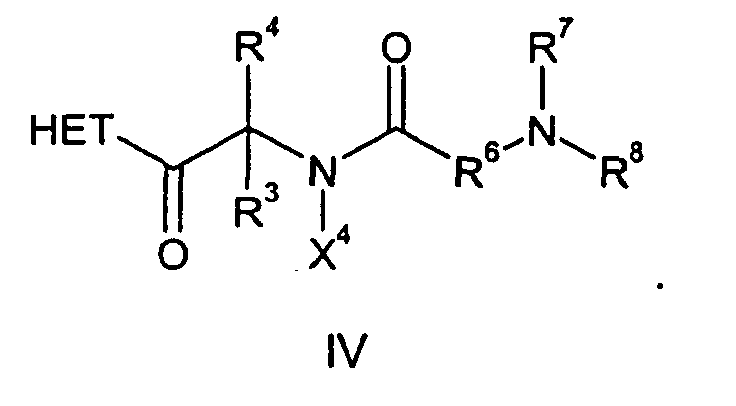
- a group of preferred growth hormone secretagogues for use in the compositions, methods, and kits of the present invention are those wherein the growth hormone secretagogue is a compound of formula IV: or a stereoisomeric mixture thereof, a diastereomerically enriched, diastereomerically pure, enantiomerically enriched, or enantiomerically pure isomer thereof, or a prodrug of such compound, mixture, or isomer thereof, or a pharmaceutically acceptable salt of the compound, mixture, isomer, or prodrug, wherein:
- growth hormone secretagogues for use in the compositions, methods, and kits of the present invention are those wherein the growth hormone secretagogue is 2-amino-N-(2-(3a-(R)-benzyl-2-methyl-3-oxo-2,3,3a,4,6,7-hexahydro-pyrazolo-[4,3-c]pyridin-5-yl)-1-(R)-benzyloxymethyl-2-oxo-ethyl)-isobutyramide; 2-amino-N-(1-(R)-(2,4-difluoro-benzyloxymethyl)-2-oxo-2-(3-oxo-3a-(R)-pyridin-2-ylmethyl)-2-(2,2,2-trifluoro-ethyl)-2,3,3a,4,6,7-hexahydro-pyrazolo-[4,3-c]pyridin-5-yl)-ethyl)-2-methyl-propionamide; 2-amino
- the present invention is directed to pharmaceutical compositions, methods, and kits comprising a CRF antagonist and a growth hormone secretagogue or growth hormone useful for treating a wide variety of diseases and conditions as fully described herein. While many specific compounds that serve as CRF antagonists, growth hormones, or growth hormone secretagogues are described and discussed herein, all such compounds, either cited herein or not, presently known or yet to be discovered, are considered to be useful in the practice of the present invention.
- the second component of the compositions, methods, and kits of the present invention is a growth hormone secretagogue or growth hormone per se.
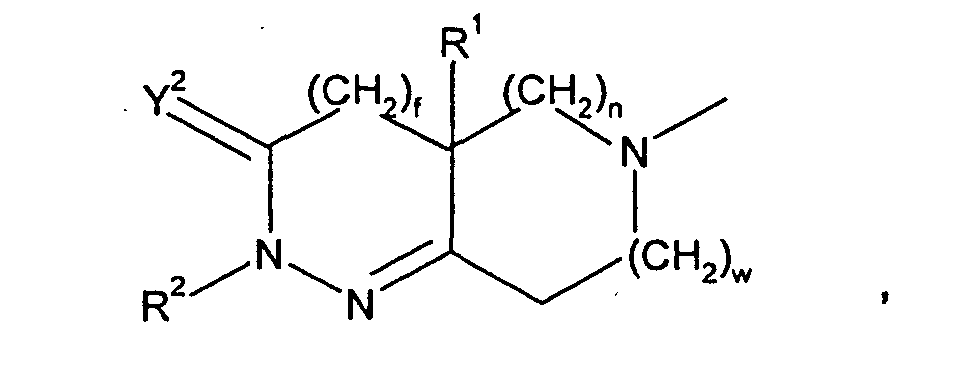
- a representative first class of growth hormone secretagogues is set forth in PCT publication WO 97/24369, which is incorporated herein by reference, as compounds having the formula III: wherein the various substituents are as defined in WO 97/24369. Said compounds are prepared as disclosed therein.
- Preferred members of this first class of growth hormone secretagogues are 2-amino-N-(2-(3a-(R)-benzyl-2-methyl-3-oxo-2,3,3a,4,6,7-hexahydro-pyrazolo-[4,3-c]pyridin-5-yl)-1-(R)-benzyloxymethyl-2-oxo-ethyl)-isobutyramide, having the following structure: and 2-amino-N-(1-(R)-(2,4-difluoro-benzyloxymethyl)-2-oxo-2-(3-oxo-3a-(R)-pyridin-2-ylmethyl)-2-(2,2,2-trifluoro-ethyl)-2,3,3a,4,6,7-hexahydro-pyrazolo-[4,3-c]pyridin-5-yl)-ethyl)-2-methyl-propionamide, having the following structure: both of which are within the scope of the disclosure of
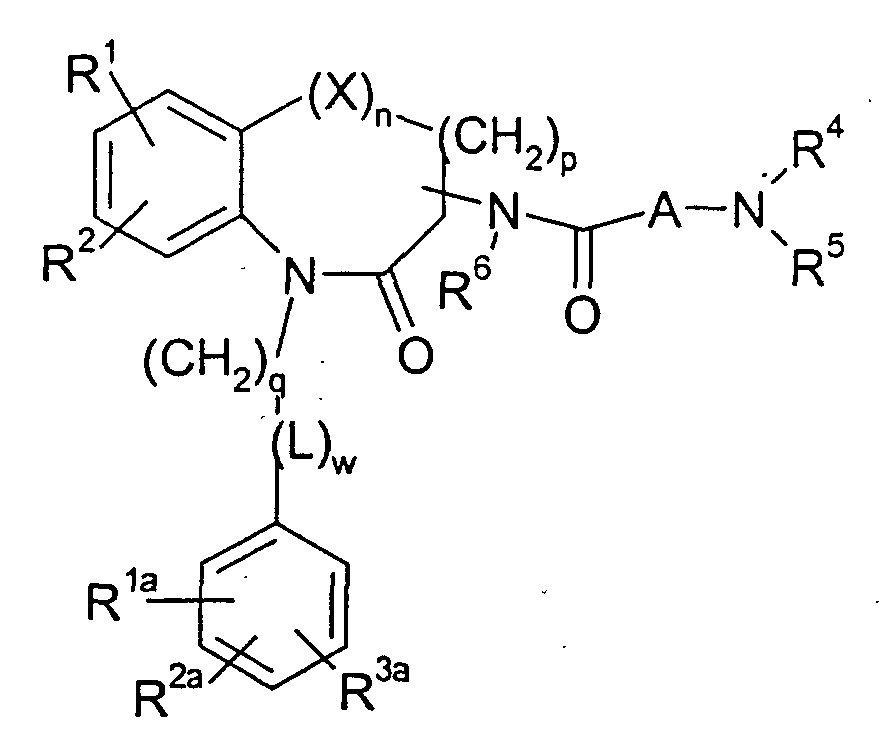
- a representative second class of growth hormone secretagogues is set forth in U.S. patent No., 5,206,235, which is incorporated herein by reference, as having the following structure: wherein the various substituents are as defined in U.S. patent 5,206,235. Said compounds are prepared as disclosed therein.
- Preferred compounds within this second class include 3-(2(R)-hydroxypropyl)amino-3-methyl-N-[2,3,4,5-tetrahydro-2-oxo-1-[[2'-(1 H -tetrazol-5-yl)[1,1'-biphenyl]-4-yl]methyl-1 H -1-benzazepin-3(R)-yl]butanamide, having the following structure: and 3-amino-3-methyl-N-[2,3,4,5-tetrahydro-2-oxo-1-[[2'-(1 H -tetrazol-5-yl)[1,1'-biphenyl]-4-yl]methyl-1 H -1-benzazepin-3(R)-yl]butanamide, having the following structure: both of which are disclosed in U.S. patent 5,206,235.
- a representative third class of growth hormone secretagogues is set forth in U.S. patent 5,283,241, which is incorporated herein by reference, as having the following formula: wherein the various substituents are as defined in U.S. patent 5,283,241. Said compounds are prepared as disclosed therein.
- a representative fourth class of growth hormone secretagogues is disclosed in PCT publication WO 97/41879, which is incorporated herein by reference, as compounds having the following formulas: wherein the various substituents are as defined in WO 97/41879. Said compounds are prepared as disclosed therein.
- a representative fifth class of growth hormone secretagogues is disclosed in U.S. patent 5,492,916, which is incorporated herein by reference, as being compounds of the formula: wherein the various substituents are as defined in U.S. patent 5,492,916. Said compounds are prepared as disclosed therein.
- a representative sixth class of growth hormone secretagogues is set forth in WO 98/58947, as compounds having the formula: wherein the various substituents are as defined in WO 98/58947.
- the preparation of the compounds of formula IV of the present invention can be carried out in sequential or convergent synthetic routes. Syntheses detailing the preparation of the compounds of formula IV in a sequential manner are presented in WO 98/58947.
- prodrug refers to compounds that are drug precursors which, following administration, release the drug in vivo via some chemical or physiological process (e.g., a prodrug on being brought to the physiological pH is converted to the desired drug form).
- a prodrug of any or all of the compounds i.e., a CRF antagonist, a growth hormone secretagogue, or a growth hormone may be used in the methods, kits, and compositions of the instant invention.
- exemplary prodrugs release the corresponding free acid (where applicable), and such hydrolyzable ester-forming residues of the prodrugs of this invention include but are not limited to carboxylic acid substituents wherein the free hydrogen is replaced by (C 1 -C 4 )alkyl, (C 2 -C 12 )alkanoyloxymethyl, (C 4 -C 9 )1-(alkanoyloxy)ethyl, 1-methyl-1-(alkanoyloxy)-ethyl having from 5 to 10 carbon atoms, alkoxycarbonyloxymethyl having from 3 to 6 carbon atoms, 1-(alkoxycarbonyloxy)ethyl having from 4 to 7 carbon atoms, 1-methyl-1-(alkoxycarbonyloxy)ethyl having from 5 to 8 carbon atoms, N-(alkoxycarbonyl)aminomethyl having from 3 to 9 carbon atoms, 1-(N-(alkoxycarbonyl)amino)eth
- exemplary prodrugs are derivatives of an alcohol of the compounds used in this invention wherein the free hydrogen of a hydroxyl substituent is replaced by (C 1 -C 6 )alkanoyloxymethyl, 1-((C 1 -C 6 )alkanoyloxy)ethyl, 1-methyl-1-((C 1 -C 6 )alkanoyloxy)ethyl, (C 1 -C 6 )alkoxycarbonyloxymethyl, N-(C 1 -C 6 )alkoxy-carbonylamino-methyl, succinoyl, (C 1 -C 6 )alkanoyl, ⁇ -amino(C 1 -C 4 )alkanoyl, arylacetyl, ⁇ -aminoacyl, ⁇ -aminoacyl- ⁇ -aminoacyl wherein said ⁇ -aminoacyl moieties are independently any of the naturally occurring L-amino acids found in proteins,-P(O)
- compositions, methods, and kits of the present invention as defined and claimed herein, particularly preferred are those compositions, methods, and kits that contain one of the following two CRF antagonists: 4-(1-ethyl-propoxy)-3,6-dimethyl-2-(2,4,6-trimethylphenoxy)-pyridine, having the formula or (3,6-dimethyl-2-(2,4,6-trimethyl-phenoxy)-pyridin-4-yl)-(1-ethyl-propyl)-amine, having the formula and alternatively one of the following two growth hormone secretagogues: 2-amino-N-[2-(3a(R)-benzyl-2-methyl-3-oxo-2,3,3a,4,6,7-hexahydro-pyrazolo-[4,3-c]pyridin-5-yl)-1(R)-benzyloxymethyl-2-oxo-ethyl]-isobutyramide, having the formula: or 2-amino-N-(1(R)-(2-
- the pharmaceutical composition comprising a CRF antagonist is a pharmaceutical composition comprising one of the preferred CRF antagonists as defined above (i.e., 4-(1-ethyl-propoxy)-3,6-dimethyl-2-(2,4,6-trimethylphenoxy)-pyridine or (3,6-dimethyl-2-(2,4,6-trimethyl-phenoxy)-pyridin-4-yl)-(1-ethyl-propyl)-amine).
- the pharmaceutical composition comprising a growth hormone secretagogue is a pharmaceutical composition comprising one of the preferred growth hormone secretagogues as defined above (i.e., 2-amino-N-[2-(3a(R)-benzyl-2-methyl-3-oxo-2,3,3a,4,6,7-hexahydro-pyrazolo-[4,3-c]pyridin-5-yl)-1(R)-benzyloxymethyl-2-oxo-ethyl]-isobutyramide or 2-amino-N-(1(R)-(2,4-difluoro-benzyloxymethyl)-2-oxo-2-(3-oxo-3a(R)-(pyridin-2-ylmethyl)-2-(2,2,2-trifluoro-ethyl)-2,3,3a,4,6,7-hexahydro-pyrazolo-[4,3-c]pyridin-5-yl)-ethyl)-2
- kits of the present invention comprising both a pharmaceutical composition comprising a CRF antagonist and a pharmaceutical composition comprising a growth hormone secretagogue
- the pharmaceutical composition comprising a CRF antagonist comprises a preferred CRF antagonist as defined above
- the pharmaceutical composition comprising a growth hormone secretagogue comprises a preferred growth hormone secretagogue as defined herein.
- the preferred methods of treatment of the present invention are those methods that employ a preferred CRF antagonist, growth hormone secretagogue, or a pharmaceutical composition(s) of the present invention, as defined herein.
- a preferred CRF antagonist, growth hormone secretagogue, or a pharmaceutical composition(s) of the present invention for treating or preventing osteoporosis or frailty associated with aging or obesity, cardiovascular or heart related disease, in particular hypertension, tachycardia, and congestive heart failure, accelerating bone fracture repair, attenuating protein catabolic response after a major. operation, reducing cachexia and protein loss due to chronic illness, accelerating wound healing, or accelerating the recovery of burn patients or of patients having undergone major surgery.
- compositions, methods, and kits of the present invention can be used for treating and preventing congestive heart failure.
- the combinations of pharmaceutically active compounds of the present invention show a synergistic effect and/or show less side effects, as compared to the individual compounds, when treating a mammal, preferably a human.
- the combinations of the present invention show a better activity than the activity which could be expected when administering the individual compounds and/or show less (or less severe) side effects than could be expected when administering the individual compounds.
- compositions and combinations of this invention can be administered by oral, parenteral (e.g., intramuscular, intraperitoneal, intravenous, or subcutaneous injection, or through an implant), nasal, vaginal, rectal, sublingual, or topical routes of administration and can be formulated with pharmaceutically acceptable carriers, vehicles, or diluents to provide dosage forms appropriate for each route of administration.
- parenteral e.g., intramuscular, intraperitoneal, intravenous, or subcutaneous injection, or through an implant
- nasal, vaginal, rectal, sublingual, or topical routes of administration can be formulated with pharmaceutically acceptable carriers, vehicles, or diluents to provide dosage forms appropriate for each route of administration.
- Solid dosage forms for oral administration include capsules, tablets, pills, powders, granules, and the like, and for non-human mammals (cats and dogs are the presently preferred non-human mammals) the solid dosage forms can include admixtures with food and chewable forms.
- the compounds and combinations of this invention can be admixed with at least one inert pharmaceutically acceptable carrier such as sucrose, lactose, starch, or the like.
- Such dosage forms can also comprise, as is normal practice, additional substances other than such inert diluents, e.g., lubricating agents such as magnesium stearate.
- the dosage forms may also comprise buffering agents. Tablets and pills can additionally be prepared with enteric coatings.
- the dosage form may comprise flavoring agents and perfuming agents.
- Liquid dosage forms for oral administration include pharmaceutically acceptable emulsions, solutions, suspensions, syrups, and elixirs containing inert diluents commonly used in the art, such as water. Besides such inert diluents, compositions can also include adjuvants (such as wetting agents), emulsifying and suspending agents, sweetening agents, flavorings, perfuming agents, and the like.
- adjuvants such as wetting agents
- emulsifying and suspending agents such as sweetening agents, flavorings, perfuming agents, and the like.
- Preparations according to this invention for parenteral administration include sterile aqueous or non-aqueous solutions, suspensions, emulsions, and the like.
- non-aqueous solvents or vehicles are propylene glycol, polyethylene glycol, vegetable oils such as olive oil and corn oil, gelatin, and injectable organic esters such as ethyl oleate.
- Such dosage forms may also contain adjuvants such as preserving, wetting, emulsifying, and dispersing agents. They may be sterilized, for example, by filtration through a bacteria-retaining filter, by incorporating sterilizing agents into the compositions, by irradiating the compositions, or by heating the compositions. They can also be manufactured in the form of sterile solid compositions which can be dissolved in sterile water, or some other sterile injectable medium immediately before use.
- compositions for rectal or vaginal administration are preferably suppositories that may contain, in addition to the active substance, excipients such as cocoa butter or a suppository wax.
- compositions for nasal or sublingual administration are also prepared with standard excipients well known in the art.
- the dosage of active ingredients in the compositions and methods of this invention may be varied; however, it is necessary that the amount of the active ingredients in such compositions be such that a suitable dosage form is obtained.
- the selected dosage depends upon the desired therapeutic effect, on the route of administration, the particular compounds administered, the duration of the treatment, and other factors. All dosage ranges and dosage levels mentioned herein refer to each pharmaceutically active compound present in the pharmaceutical compositions and kits of the present invention, as well as those used in the methods of the present invention. Generally, dosage levels of between 0.0001 to 100 mg/kg of body weight daily are administered to humans and other animals, e.g., mammals.
- a preferred dosage range in humans is 0.01 to 5.0 mg/kg of body weight daily which can be administered as a single dose or divided into multiple doses.
- a preferred dosage range in mammals other than humans is 0.01 to 10.0 mg/kg of body weight daily which can be administered as a single dose or divided into multiple doses.
- a more preferred dosage range in mammals other than humans is 0.1 to 5.0 mg/kg of body weight daily which can be administered as a single dose or divided into multiple doses.
- the present invention includes within its scope the use of a combination of this invention, e.g., a corticotropin releasing factor antagonist and a growth hormone secretagogue or growth hormone, for the prevention or treatment of congestive heart failure in mammals.
- a combination of this invention e.g., a corticotropin releasing factor antagonist and a growth hormone secretagogue or growth hormone, for the prevention or treatment of congestive heart failure in mammals.
- the preferred mammal for purposes of this invention is a human.
- the kit comprises two separate pharmaceutical compositions: a corticotropin releasing factor antagonist, a prodrug thereof, or a pharmaceutically acceptable salt of said corticotropin releasing factor antagonist or said prodrug; and a growth hormone secretagogue, a prodrug thereof, or a pharmaceutically acceptable salt of said growth hormone secretagogue or said prodrug.
- the kit also comprises a container for containing the separate compositions such as a divided bottle or a divided foil packet, however, the separate compositions may also be contained within a single, undivided container.
- the kit comprises directions for the administration of the separate components.
- the kit form is particularly advantageous when the separate components are preferably administered in different dosage forms (e.g., oral and parenteral), are administered at different dosage intervals, or when titration of the individual components of the combination is desired by the prescribing physician.
- Blister packs are well known in the packaging industry and are being widely used for the packaging of pharmaceutical unit dosage forms (tablets, capsules, and the like). Blister packs generally consist of a sheet of relatively stiff material covered with a foil of a preferably transparent plastic material. During the packaging process, recesses are formed in the plastic foil. The recesses have the size and shape of the tablets or capsules to be packed. Next, the tablets or capsules are placed in the recesses and the sheet of relatively stiff material is sealed against the plastic foil at the face of the foil that is opposite from the direction in which the recesses were formed. As a result, the tablets or capsules are sealed in the recesses between the plastic foil and the sheet.
- the strength of the sheet is such that the tablets or capsules can be removed from the blister pack by manually applying pressure on the recesses whereby an opening is formed in the sheet at the place of the recess. The tablet or capsule can then be removed via said opening.
- a memory aid on the kit, e.g., in the form of numbers next to the tablets or capsules whereby the numbers correspond with the days of the regimen which the dosage form so specified should be ingested.
- a memory aid is a calendar printed on the card e.g., as follows "First Week, Monday, Tuesday, ...etc.... Second Week, Monday, Tuesday, etc.
- a "daily dose” can be a single tablet or capsule or several tablets or capsules to be taken on a given day.
- a daily dose of a corticotropin releasing factor antagonist, a prodrug thereof, or a pharmaceutically acceptable salt of said corticotropin releasing factor antagonist or said prodrug can consist of one tablet or capsule, while a daily dose of the growth hormone secretagogue, prodrug thereof, or pharmaceutically acceptable salt of said growth hormone secretagogue or said prodrug can consist of several tablets or capsules and vice versa.
- the memory aid should reflect this.
- a dispenser designed to dispense the daily doses one at a time in the order of their intended use is provided.
- the dispenser is equipped with a memory-aid, so as to further facilitate compliance with the regimen.
- a memory-aid is a mechanical counter that indicates the number of daily doses that has been dispensed.
- a battery-powered micro-chip memory coupled with a liquid crystal readout, or audible reminder signal which, for example, reads out the date that the last daily dose has been taken and/or reminds one when the next dose is to be taken.
- the present invention comprises kits comprising a pharmaceutical composition, a package, and a package insert.
- the pharmaceutical composition of these kits contains either a corticotropin releasing factor antagonist or a growth hormone/growth hormone secretagogue.
- the kits of the present invention containing a pharmaceutical composition containing a corticotropin releasing factor antagonist differ from known kits containing a pharmaceutical composition containing a corticotropin releasing factor antagonist in that on the package and/or on the package insert of the kits it is stated that the pharmaceutical composition is to be administered together with a pharmaceutical composition containing a growth hormone or growth hormone secretagogue.
- kits of the present invention containing a pharmaceutical composition containing a growth hormone or growth hormone secretagogue differ from known kits containing a pharmaceutical composition containing a growth hormone or growth hormone secretagogue in that on the package and/or on the package insert of the kits it is stated that the pharmaceutical composition is to be administered together with a pharmaceutical composition containing a corticotropin releasing factor antagonist.
- the term "together with” as used in the immediately preceding paragraph is intended to encompass the simultaneous administration of the two pharmaceutical compositions (e.g., a tablet containing one pharmaceutical composition is to be administered orally while the other pharmaceutical composition is administered by way of infusion, two tablets or capsules are to be swallowed together, etc.).
- the term “together with” is also intended to include the administration of the two pharmaceutical compositions in a specifically timed manner, i.e., one pharmaceutical composition is to be administered a certain time period after administration of the other pharmaceutical composition.
- the time period in which the two pharmaceutical compositions are to be administered must be sufficiently short for the corticotropin releasing factor antagonist and the growth hormone secretagogue to exhibit their activity contemporaneously, preferably in a synergistic manner.
- the exact time period depends on the specific compounds of the pharmaceutical compositions, the application route, the kind and severeness of the disease to be treated, the kind, age, and condition of the patient to be treated, etc., and can be determined by a physician using known methods in combination with the disclosure of the present invention.
- the two compositions are to be administered within one day, preferably within 5 hours, more preferably within 2 hours, and even more preferably within one hour. Most preferably, the two compositions are to be administered at the same time or one immediately after the other.
- Methods that may be used to determine CRF antagonist activity of the compounds employed to practice the present invention are as described in, e.g., Wynn et al., Endocrinology, 116:1653-59 (1985), and Grigoriadis et al., Peptides, 10:179-88 (1989). Methods that can be used to determine the CRF binding protein inhibiting activity of compounds employed to practice the present invention are described in Smith et al., Brain Research, 745(1,2):248-56 (1997). These methods determine the binding affinity of a test compound for a CRF receptor, which is highly related to its expected activity as a CRF antagonist.
- the combinations of this invention i.e., a corticotropin releasing factor antagonist and growth hormone or a growth hormone secretagogue, may be tested for hypoglycemic activity according to the following procedure.
- mice Five to eight week old C57 BL/6J-ob/ob mice (obtained from Jackson Laboratory, Bar Harbor, Maine) are housed five per cage under standard animal care practices. After a one week acclimation period, the animals are weighed and 25 microliters of blood are collected via an ocular bleed prior to any treatment. The blood sample is immediately diluted 1:5 with saline containing 2% sodium heparin, and held on ice for glucose analysis.
- Animals are then regrouped, in groups of five per cage, such that the mean glucose values of the groups are similar, dosed daily for five days with test compounds (0.01-100 mg/kg), a positive control such as englitazone or ciglitazone (50 mg/kg p.o.), (U.S. Patent 4,467,902; Sohda et al., Chem. Pharm. Bull. , 32:4460-65 (1984)), or vehicle. All compounds are administered by oral gavage in a vehicle consisting of 0.25% w/v methyl cellulose. On day 5, the animals are weighed again and bled (via the ocular route) for blood glucose level determinations.
- test compounds (0.01-100 mg/kg), a positive control such as englitazone or ciglitazone (50 mg/kg p.o.), (U.S. Patent 4,467,902; Sohda et al., Chem. Pharm. Bull. , 32:
- the animals dosed with vehicle maintain substantially unchanged hyperglycemic glucose levels (e.g., 250 mg/dl), while positive control animals have depressed glucose levels (e.g., 130 mg/dl).
- the glucose lowering activity of test compounds is expressed in terms of % glucose normalization. For example, a glucose level that is the same as the positive control is expressed as 100%.
Landscapes
- Health & Medical Sciences (AREA)
- Life Sciences & Earth Sciences (AREA)
- Veterinary Medicine (AREA)
- Chemical & Material Sciences (AREA)
- Public Health (AREA)
- Medicinal Chemistry (AREA)
- General Health & Medical Sciences (AREA)
- Animal Behavior & Ethology (AREA)
- Pharmacology & Pharmacy (AREA)
- Epidemiology (AREA)
- Engineering & Computer Science (AREA)
- Bioinformatics & Cheminformatics (AREA)
- General Chemical & Material Sciences (AREA)
- Nuclear Medicine, Radiotherapy & Molecular Imaging (AREA)
- Chemical Kinetics & Catalysis (AREA)
- Organic Chemistry (AREA)
- Cardiology (AREA)
- Endocrinology (AREA)
- Physical Education & Sports Medicine (AREA)
- Heart & Thoracic Surgery (AREA)
- Immunology (AREA)
- Rheumatology (AREA)
- Orthopedic Medicine & Surgery (AREA)
- Zoology (AREA)
- Gastroenterology & Hepatology (AREA)
- Proteomics, Peptides & Aminoacids (AREA)
- Hospice & Palliative Care (AREA)
- Pharmaceuticals Containing Other Organic And Inorganic Compounds (AREA)
- Medicines That Contain Protein Lipid Enzymes And Other Medicines (AREA)
- Acyclic And Carbocyclic Compounds In Medicinal Compositions (AREA)
Abstract
Description


- (a) A is not straight chain C1-C12 alkyl;
- (b) when R3 is hydrogen, A is benzyl or phenethyl, and R4 is fluoro, chloro, bromo or iodo, then R5 is not 5'-deoxy-ribofuranosyl or 5'-amino-5'-deoxy-ribofuranosyl; and
- (c) when R5 is phenyl, said phenyl is substituted by two or three substituents.


or a pharmaceutically acceptable salt thereof, wherein


- (A) when V and Y are N and Z is CH and R1 and R3 are methyl,
- (1) and R4 is methyl, then
- (a) R5 can not be methyl when X is OH and X' is H;
- (b) R5 can not be -NHCH3, or -N(CH3)2 when X and X' are -OCH3; and
- (c) R5 can not be -N(CH3)2 when X and X' are -OCH2CH3;
(a) R3 can not be OH, piperazin-1-yl, -CH2,-piperidin-1-yl, -CH2-(N-4-methylpiperazi n-1-yl), -C(O)N H-phenyl, -CO2H, -CH2O-(4-pyridyl), -C(O)NH2, 2-indolyl, -CH2O-(4-carboxyphenyl), -N(CH2CH3)(2-bromo-4-isopropylphenyl);
- J, K, L, M, Z, A, k, m, n, p, q, r, t, w, R3, R10, R11, R12, R13, R16, R18, R19, R21, R23, R24, R25, and R27 are as defined above and R25a, in addition to being as defined above, can also be C1-C4 alkyl, but
- V is N;
- R1 is C1-C2 alkyl, C2-C4 alkenyl, C2-C4 alkynyl, C2-C4 alkoxy, halogen, amino, methylamino, dimethylamino, aminomethyl, or N-methylaminomethyl;
- R2 is independently selected at each occurrence from the group consisting of hydrogen, halo, C1-C3, alkyl, nitro, amino, and -CO2R10;
- R4 is taken together with R29 to form a 5-membered ring and is -C(R26) = or -N= when R29 is -C(R30)= or -N=, or -CH(R26)- when R29 is -CH(R30)-;
- X is Cl, Br, I, S(O)nR8, OR8, halomethyl, -(CHR16)pOR8, cyano, -(CHR16)pNR14R15, C(=O)R8, C1-C6 alkyl, C2-C10 alkenyl, C2-C10 alkynyl, C1-C10, alkoxy, aryl-(C1-C10)-alkyl, C3-C6 cycloalkyl, aryl-(C1-C10)-alkoxy, nitro, thio-(C1-C10)-alkyl, -C(=NOR16)-C1-C4-alkyl, -C(=NOR16)H, or C(=O)NR14R15 where substitution by R18 can occur on any carbon containing substituents;
- X' is hydrogen, Cl, Br, I, S(O)nR8, -(CHR16)pOR8, halomethyl, cyano, -(CHR15)pNR14R15, C(=O)R8, C1-C6 alkyl, C2-C10alkenyl, C2-C10, alkynyl, C1-C10 alkoxy, aryl-(C1-C10)-alkyl, C3-C6 cycloalkyl, aryl-(C2-C10)-alkoxy, nitro, thio-(C2-C10)-alkyl, -C(=NOR16)-C1-C4-alkyl, -C(=NOR16)H, or C(=O)NR8R15 where substitution by R18 can occur on any carbon containing substituents;
- R5 is halo, -C(=NOR16)-C1-C4-alkyl, C1-C6 alkyl, C1-C3 haloalkyl, C1-C6 alkoxy, (CHR16)pOR5, (CHR16)pS(O)nR8, (CHR16)pNR14R15, C3-C6 cycloalkyl, C2-C10 alkenyl, C2-C10 alkynyl, aryl-(C2-C10)-alkyl, aryl-(C1-C10)-alkoxy, cyano, C3-C6 cycloalkoxy, nitro, amino-(C1-C10)-alkyl, thio-(C1-C10)-alkyl, SOn(R8), C(=O)R8, -C(=NOR16)H, or C(=O)NR8R15 where substitution by R18 can occur on any carbon containing substituents;
- R6 and R7 are independently selected at each occurrence from the group consisting of hydrogen, C1-C6 alkyl, C3-C10 cycloalkyl, -(CH2)kR13, (C4-C12)-cycloalkylalkyl, C1-C6 alkoxy, -(C1-C6 alkyl)-aryl, heteroaryl, aryl, -S(O)z-aryl or -(C1-C6 alkyl)-heteroaryl or aryl wherein the aryl or heteroaryl groups are optionally substituted with 1-3 groups selected from hydrogen, halogen, C1-C6 alkyl, C1-C6 alkoxy, amino, NHC(=O)(C1-C6 alkyl), NH(C1-C6 alkyl), N(C1-C6 alkyl)2, nitro, carboxy, CO2(C1-C6 alkyl), and cyano; or can be taken together to form -(CH2)qA(CH2)r-, optionally substituted with 0-3 R17; or, when considered with the commonly attached nitrogen, can be taken together to form a heterocycle, said heterocycle being substituted on carbon with 1-3 groups consisting of hydrogen, C1-C6 alkyl, hydroxy, or C1-C6 alkoxy;
- R8 is independently selected at each occurrence from the group consisting of hydrogen, C1-C6 alkyl, -(C4-C12) cycloalkylalkyl, (CH2)tR22, C3-C10 cycloalkyl, -(C1-C6 alkyl)-aryl, heteroaryl, -NR16, -N(CH2)nNR6R7; -(CH2)kR25, -(C1-C6 alkyl)-heteroaryl or aryl optionally substituted with 1-3 groups selected from hydrogen, halogen, C1-C6 alkyl, C1-C6 alkoxy, amino, NHC(=O)(C1-C6 alkyl), NH(C1-C6 alkyl), N(C1-C6alkyl)2, nitro, carboxy, CO2(C1-C6 alkyl), and cyano;
- R9 is independently selected at each occurrence from R10, hydroxy, C1-C4 alkoxy, C3-C6 cycloalkyl, C2-C4 alkenyl, and aryl substituted with 0-3 R18;
- R14 and R15 are independently selected at each occurrence from the group consisting of hydrogen, C1-C6 alkyl, C3-C6 cycloalkyl, (CH2)tR22, and aryl substituted with 0-3 R18;
- R17 is independently selected at each occurrence from the group consisting of R10, C1-C4 alkoxy, halo, OR23, SR23, and NR23R24;
- R20 is independently selected at each occurrence from the group consisting of R10 and C(=O)R31;
- R22 is independently selected at each occurrence from the group consisting of cyano, OR24, SR24, NR23R24, C3-C6 cycloalkyl, -S(O)nR31, and -C(=O)R25;
- R26 is hydrogen or halogen;
- R28 is C1-C2, alkyl, C2-C4 alkenyl, C2-C4 alkynyl, hydrogen, C1-C2 alkoxy, halogen, or C2-C4 alkylamino;
- R29 is taken together with R4 to form a five membered ring and is: -CH(R30)- when R4 is -CH(R28)-, -C(R30) = or -N = when R4 is -C(R28) = or -N=;
- R30 is hydrogen, cyano, C1-C2 alkyl, C1-C2 alkoxy, halogen, C1-C2 alkenyl, nitro, amido, carboxy, or amino;
- R31 is C1-C4 alkyl, C3-C7 cycloalkyl, or aryl-(C1-C4) alkyl; provided that when J, K, and L are all CH, M is CR5, Z is CH, R3 is CH3, R28 is H, R5 is isopropyl, X is Br, X' is H, and R1 is CH3, then R30 can not be H, -CO2H, or -CH2NH2; and further provided that when J, K and L are all CH; M is CR5; Z is N; and
- (A) R29 is -C(R30)=; then one of R28 or R30 is hydrogen;
- (B) R29 is N; then R3 is not halo, NH2, NO2, CF3, CO2H, CO2-alkyl, alkyl, acyl, alkoxy, OH, or -(CH2)mOalkyl;
- (C) R29 is N; then R28 is not methyl if X or X' are bromo or methyl and R5 is nitro; or
- (D) R29 is N; and R1 is CH3; and R3 is amino; then R5 is not halogen or methyl.




A1 for each occurrence is independently optionally substituted, on one or optionally both rings if A1 is a bicyclic ring system, with up to three substituents, each substituent independently selected from the group consisting of F, Cl, Br, I, OCF3, OCF2H, CF3, CH3, OCH3, -OX6, -CONX6X6,-CO2X6, oxo, C1-C6 alkyl, nitro, cyano, benzyl, -SOm(C1-C6 alkyl), 1H-tetrazol-5-yl, phenyl, phenoxy, phenylalkyloxy, halophenyl, methylenedioxy, -NX6X6,-NX6COX6, -SO2NX6X6, -NX6SO2-phenyl, NX6SO2X6, -CONX11X12, -SO2NX11X12, -NX6SO2X12, -NX6CONX11X12, -NX6SO2NX11X12, -NX6COX12, imidazolyl, thiazolyl, and tetrazolyl, provided that if A1 is optionally substituted with methylenedioxy then it can only be substituted with one methylenedioxy;




Claims (16)
- A pharmaceutical composition comprising a corticotropin-releasing factor antagonist and a growth hormone secretagogue or growth hormone.
- A pharmaceutical composition according to Claim 1 wherein said corticotropin-releasing factor antagonist is a compound of formulaor a pharmaceutically acceptable acid addition salt thereof, wherein
 with the provisos that:A is -NR1R2, -CR1R2R11, -C(=CR1R12)R2, -NHCR1R2R11, -OCR1R2R11, -SCR1R2R11, -NHNR1R2, -CR2R11NHR1, -CR2R11OR1, -CR2R11SR1, or -COR2;R1 is hydrogen or C1-C6 alkyl which may be substituted by one or two substituents R6 independently selected from the group consisting of hydroxy, fluoro, chloro, bromo, iodo, C1-C6 alkoxy, -OCO(C1-C6 alkyl), -OCON(C1-C4 alkyl)(C1-C2 alkyl), amino, -NH(C1-C4 alkyl), -S(C1-C6 alkyl), -OCONH(C1-C4 alkyl), -N(C1-C2 alkyl)CO(C1-C4 alkyl), -NHCO(C1-C4 alkyl), -COOH, -CO(C1-C4 alkyl), -CONH(C1-C4 alkyl), -CON(C1-C4 alkyl)(C1-C2 alkyl), -SH, -CN, -NO2, -SO(C1-C4 alkyl), -SO2(C1-C4 alkyl), -SO2NH(C1-C4 alkyl) and -SO2N(C1-C4 alkyl)(C1-C2 alkyl), wherein said C1-C6 alkyl group may contain one or two double or triple bonds;R2 is C1-C12 alkyl, aryl, or -(C1-C10 alkylene)aryl, wherein said aryl group is phenyl, naphthyl, thienyl, benzothienyl, pyridyl, quinolyl, pyrazinolyl, pyrimidyl, imidazolyl, furanyl, benzofuranyl, benzothiazolyl, isothiazolyl, benzisothiazolyl, thiazolyl, isoxazolyl, benzisoxazolyl, benzimidazolyl, triazolyl, pyrazolyl, pyrrolyl, indolyl, azaindolyl, oxazolyl, or benzoxazolyl; or 3- to 8-membered cycloalkyl or -(C1-C6 alkylene)cycloalkyl, wherein said cycloalkyl group or the cycloalkyl moiety of said -(C1-C6 alkylene)cycloalkyl group may have one or two of O, S, or NZ, wherein Z is hydrogen, substituted independently for one or two carbons thereof, C1-C4 alkyl, benzyl, or C1-C4 alkanoyl; and wherein R2 may be substituted independently by from one to three of chloro, fluoro, or C1-C4 alkyl or one of hydroxy, bromo, iodo, C1-C6 alkoxy, -OCO(C1-C6 alkyl), -OCN(C1-C4 alkyl)(C1-C2 alkyl), -S(C1-C6 alkyl), -NH2, -NH(C1-C2 alkyl), -N(C1-C4 alkyl)CO(C1-C4 alkyl), -NHCO(C1-C4 alkyl), -COOH, -CO2(C1-C4 alkyl), -CONH(C1-C4 alkyl), -CON(C1-C4 alkyl)(C1-C2 alkyl), -SH, -CN, -NO2, -SO(C1-C4 alkyl), -SO2(C1-C4 alkyl), SO2NH(C1-C4 alkyl), -SO2N(C1-C4 alkyl)(C1-C2 alkyl), wherein said C1-C12 alkyl and C1-C10 alkylene groups may contain from one to three double or triple bonds; or-NR1R2 or -CR1R2R11 may form a 4- to 8-membered ring optionally containing one or two double bonds or one or two of O, S, or NZ, wherein Z is hydrogen, C1-C4 alkyl, benzyl, or C1-C4 alkanoyl;R3 is hydrogen, C1-C6 alkyl, fluoro, chloro, bromo, iodo, hydroxy, amino, -O(C1-C6 alkyl), -NH(C1-C6 alkyl), -N(C1-C4 alkyl)(C1-C2 alkyl), -SH, -S(C1-C4 alkyl), -SO(C1-C4 alkyl), or -SO2(C1-C4 alkyl), wherein said C1-C4 alkyl and C1-C6 alkyl groups may contain one or two double or triple bonds and may be substituted by from one to three R7 substituents independently selected from the group consisting of hydroxy, amino, C1-C3 alkoxy, dimethylamino, diethylamino, methylamino, ethylamino, -NHCOCH3, fluoro, chloro and C1-C3 thioalkyl;R4 is hydrogen, C1-C6 alkyl, fluoro, chloro, bromo, iodo, C1-C6 alkoxy, amino, -NH(C1-C6 alkyl), -N(C1-C6 alkyl)(C1-C2 alkyl), -SOn(C1-C6 alkyl), wherein n is 0,1, or 2, cyano, hydroxy, carboxy, or amido, wherein said C1-C6 alkyl group may be substituted by from one to three of hydroxy, amino, carboxy, amido, -NHCO(C1-C4 alkyl), -NH(C1-C4 alkyl), -N(C1-C4 alkyl)(C1-C2 alkyl), -CO2(C1-C4 alkyl), C1-C3 alkoxy, C1-C3 thioalkyl, fluoro, bromo, chloro, iodo, cyano, or nitro;R5 is phenyl, naphthyl, thienyl, benzothienyl, pyridyl, quinolyl, pyrazinolyl, pyrimidyl, imidazolyl, furanyl, benzofuranyl, benzothiazolyl, isothiazolyl, benzoisothiazolyl, thiazolyl, isoxazolyl, benzisoxazolyl, benzimidazolyl, triazolyl, pyrazolyl, pyrrolyl, indolyl, pyrrolopyridyl benzoxazolyl, oxazolyl, pyrrolidinyl, thiazolidinyl, piperazinyl, piperidinyl, or tetrazolyl; and wherein R5 may be substituted independently by from one to three of fluoro, chloro, bromo, formyl, C1-C6 alkyl, C1-C6 alkoxy, or trifluoromethyl or one of hydroxy, iodo, cyano, nitro, amino, cyclopropyl, -NH(C1-C4 alkyl), -N(C1-C4 alkyl)(C1-C2 alkyl), -CO2(C1-C4 alkyl), -CO(C1-C4 alkyl), -SO2NH(C1-C4 alkyl), -SO2N(C1-C4 alkyl)(C1-C2 alkyl), -SO2NH2, -NHSO2(C1-C4 alkyl), -S(C1-C6 alkyl), or -SO2(C1-C6 alkyl), wherein said C1-C4 alkyl and C1-C6 alkyl groups may contain one double or triple bond and may be substituted by one or two of fluoro, chloro, hydroxy, amino, methylamino, dimethylamino, or acetyl, with the proviso that R5 is not unsubstituted phenyl;R11 is hydrogen, hydroxy, fluoro, chloro, -CO2(C1-C2 alkyl), cyano, or -CO(C1-C2 alkyl); andR12 is hydrogen or C1-C4 alkyl;(a) A is not straight chain C1-C12 alkyl;(b) when R3 is hydrogen, A is benzyl or phenethyl, and R4 is fluoro, chloro, bromo, or iodo, then R5 is not 5'-deoxy-ribofuranosyl or 5'-amino-5'-deoxy-ribofuranosyl; and(c) when R5 is phenyl, said phenyl is substituted by two or three substituents.
 - A pharmaceutical composition according to Claim 1 wherein said corticotropin-releasing factor antagonist is a compound of formulaor a pharmaceutically acceptable acid addition salt thereof, wherein
 with the provisos thatB is -NR1R2, -CR1R2R11, -C(=CR2R12)R1, -NHR1R2R11, -OCR1R2R11, -SCR1R2R11, -NHNR1R2, -CR2R11NHR1, -CR2R11OR1, -CR2R11SR1, or -C(O)R2;R1 is hydrogen or C1-C6 alkyl which may be substituted by one or two substituents R7 independently selected from the group consisting of hydroxy, fluoro, chloro, bromo, iodo, C1-C8 alkoxy, -OCO(C1-C6 alkyl), -OCONH(C1-C4 alkyl), -OCON(C1-C4 alkyl)(C1-C2 alkyl), amino, -NH(C1-C4 alkyl), -N(C1-C2 alkyl)(C1-C4 alkyl), -S(C1-C6 alkyl), -N(C1-C4alkyl)CO(C1-C4 alkyl), -NH(C1-C4 alkyl), -COOH, -CO2(C1-C4 alkyl), -CONH(C1-C4 alkyl), -CON(C1-C4 alkyl) -(C1-C2 alkyl), -SH, -CN, -NO2, -SO(C1-C4 alkyl), -SO2(C1-C4 alkyl), -SO2NH-(C1-C4 alkyl) and -SO2N(C1-C4 alkyl)(C1-C2 alkyl), wherein said C1-C6 alkyl group may contain one or two double or triple bonds;R2 is C1-C12 alkyl, aryl, or -(C1-C10 alkylene)aryl, wherein said aryl group is phenyl, naphthyl, thienyl, benzothienyl, pyridyl, quinolyl, pyrazinyl, pyrimidyl, imidazolyl, furanyl, benzofuranyl, benzothiazolyl, isothiazolyl, benzisothiazolyl, thiazolyl, isoxazolyl, benzisoxazolyl, benzimidazolyl, triazolyl, pyrazolyl, pyrrolyl, indolyl, pyrrolopyridyl, oxazolyl, or benzoxazolyl; or 3- to 8-membered cycloalkyl or -(C1-C6 alkylene)cycloalkyl, wherein said cycloalkyl group or the cycloalkyl moiety of said -(C1-C6 alkylene)cycloalkyl group may contain one or two of O, S, or NZ, wherein Z is hydrogen, C1-C4 alkyl, benzyl, or C1-C4 alkanoyl; and wherein R2 may be substituted independently by from one to three of chloro, fluoro, or C1-C4 alkyl or one of hydroxy, bromo, iodo, C1-C6 alkoxy, -OCO(C1-C6 alkyl), -OCN(C1-C4 alkyl)(C1-C2 alkyl), -S(C1-C6 alkyl), -NH2, -NH(C1-C2 alkyl), -N(C1-C2 alkyl)(C1-C4 alkyl), -N(C1-C4alkyl)CO(C1-C4 alkyl), -NHCO(C1-C4alkyl), -COOH, -CO2(C1-C4 alkyl), -CONH(C1-C4 alkyl), -CON(C1-C4 alkyl)(C1-C2 alkyl), -SH, -CN, -NO2, -SO(C1-C4 alkyl), -SO2(C1-C4 alkyl), -SO2NH(C1-C4 alkyl), or -SO2N(C1-C4 alkyl)(C1-C2 alkyl), wherein said C1-C12 alkyl and C1-C10 alkylene groups may contain from one to three double or triple bonds; or-NR1R2 or -CR1R2R11 may form a saturated 3- to 8-membered carbocyclic ring of which the 5- to 8-membered rings may contain one or two double bonds or one or two of O, S, or NZ, wherein Z is hydrogen, C1-C4 alkyl, benzyl, or C1-C4 alkanoyl;R3 is hydrogen, C1-C6 alkyl, fluoro, chloro, bromo, iodo, hydroxy, amino, -O(C1-C6 alkyl), -NH(C1-C6 alkyl), -N(C1-C4 alkyl)(C1-C2 alkyl), -SH, -S(C1-C4 alkyl), -SO(C1-C4 alkyl), or -SO2(C1-C4 alkyl), wherein said C1-C4 alkyl and C1-C6 alkyl groups may contain one or two double or triple bonds and may be substituted by from one to three R8 substituents independently selected from the group consisting of hydroxy, amino, C1-C3 alkoxy, dimethylamino, diethylamino, methylamino, ethylamino, -NHCH3, fluoro, chloro and C1-C3 thioalkyl;R4 and R6 are each independently hydrogen, C1-C6 alkyl, fluoro, chloro, bromo, iodo, C1-C6 alkoxy, amino, -NH(C1-C6 alkyl), -N(C1-C6 alkyl)(C1-C2 alkyl), -SOn(C1-C6 alkyl), wherein n is 0, 1, or 2, cyano, hydroxy, carboxy, or amido, wherein said C1-C6 alkyl group may be substituted by from one to three of hydroxy, amino, carboxy, amido, -NHCO(C1-C4 alkyl), -NH(C1-C4 alkyl), -N(C1-C4 alkyl)(C1-C2 alkyl), -CO2(C1-C4 alkyl), C1-C3 alkoxy, C1-C3 thioalkyl, fluoro, bromo, chloro, iodo, cyano, or nitro;R5 is phenyl, naphthyl, thienyl, benzothienyl, pyridyl, quinolyl, pyrazinyl, pyrimidyl, imidazolyl, furanyl, benzofuranyl, benzothiazolyl, isothiazolyl, benzisothiazolyl, thiazolyl, isoxazolyl, benzisoxazolyl, benzimidazolyl, triazolyl, pyrazolyl, pyrrolyl, indolyl, azaindolyl, benzoxazolyl, oxazolyl, pyrrolidinyl, thiazolidinyl, morpholinyl, piperidinyl, piperazinyl, or tetrazolyl; or 3- to 8-membered cycloalkyl or 9- to 12-membered bicycloalkyl, optionally containing from one to three of O, S, or NZ, wherein Z is hydrogen, C1-C4 alkyl, C1-C4 alkanoyl, phenyl, or phenylmethyl; and wherein R5 may be substituted independently by from one to four of fluoro, chloro, C1-C6 alkyl, C1-C6 alkoxy, or trifluoromethyl or one of bromo, iodo, cyano, nitro, amino, -NH(C1-C4 alkyl), -N(C1-C4)(C1-C2 alkyl), -CO2(C1-C4 alkyl), -CO(C1-C4 alkyl), -SO2NH(C1-C4 alkyl), -SO2N(C1-C4 alkyl)(C1-C2 alkyl), -SO2NH2, -NHSO2(C1-C4 alkyl), -S(C1-C6 alkyl), or -SO2(C1-C6 alkyl), wherein said C1-C4 alkyl and C1-C6 alkyl groups may be substituted by one or two of fluoro, chloro, hydroxy, amino, methylamino, dimethylamino, or acetyl, with the proviso that R5 is not unsubstituted phenyl;R11 is hydrogen, hydroxy, fluoro, chloro, -CO2(C1-C2 alkyl), cyano, or -CO(C1-C2 alkyl); andR12 is hydrogen or C1-C4 alkyl;(a) when R5 is 4-bromophenyl, R3 is hydrogen, and R4 and R6 are methyl, then B is not methylamino or ethyl; and(b) when R5 is 4-bromophenyl and R3, R4 and R6 are methyl, then B is not 2-hydroxyethylamino.
 - A pharmaceutical composition according to Claim 1 wherein said corticotropin-releasing factor antagonist is a compound of formulawherein
 A is CR7 or N;B is -NR1R2, -CR1R2R11, -C(=CR2R12)R1, -NHCHR1R2, -OCHR1R2, -SCHR1R2, -CHR2OR12, -CHR2SR12, -CSR2, or -COR2;G is oxygen, sulfur, -NH-, -NH3, hydrogen, methoxy, ethoxy, trifluoromethoxy, methyl, ethyl, thiomethoxy, -NH2, -NHCH3, -N(CH3)2, or trifluromethyl;Y is CH or N;Z is -NH-, -O-, -S-, -N(C1-C2 alkyl)-, or -CR13R14-, wherein R13 and R14 are each independently hydrogen, trifluoromethyl, or C1-C4 alkyl; or one of R13 and R14 may be cyano, chloro, bromo, iodo, fluoro, hydroxy, -O(C1-C2 alkyl), amino, or -NH(C1-C2 alkyl); or -CR13R14 may be C=O or cyclopropyl;R1 is C1-C6 alkyl which may be substituted by one or two substituents R8 independently selected from the group consisting of hydroxy, fluoro, chloro, bromo, iodo, C1-C4 alkoxy, -OCO(C1-C4 alkyl), -OCONH(C1-C4 alkyl), -OCON(C1-C4 alkyl)(C1-C2 alkyl), -NH(C1-C4 alkyl), -N(C1-C2 alkyl)(C1-C4 alkyl), -S(C1-C4 alkyl), -N(C1-C4alkyl)CO(C1-C4 alkyl), -NHCO(C1-C4 alkyl), -CO2(C1-C4 alkyl), -CONH(C1-C4 alkyl), -CON(C1-C4 alkyl)(C1-C2 alkyl), -S(C1-C4 alkyl), -CN, -N02, -SO(C1-C4 alkyl) and -SO2(C1-C4 alkyl), wherein said C1-C6 alkyl and C1-C4 alkyl groups may contain one double or triple bond;R2 is C1-C12 alkyl, aryl, or -(C1-C4 alkylene)aryl, wherein said aryl group is phenyl, naphthyl, thienyl, benzothienyl, pyridyl, quinolyl, pyrazinyl, pyrimidyl, imidazolyl, furanyl, benzofuranyl, benzothiazolyl, isothiazolyl, benzisothiazolyl, benzisoxazolyl, benzimidazolyl, indolyl, or benzoxazolyl; or 3- to 8-membered cycloalkyl or -(C1-C6 alkylene)cycloalkyl, wherein said cycloalkyl group and the cycloalkyl moiety of said -(C1-C6 alkylene)cycloalkyl group may contain one or two of O, S, or NR9, wherein R9 is hydrogen or C1-C4 alkyl; and wherein R2 may be substituted independently by from one to three of chloro, fluoro, or C1-C4 alkyl or one of bromo, iodo, C1-C6 alkoxy, -OCO(C1-C6 alkyl), -OCON-(C1-C4alkyl)(C1-C2 alkyl), -S(C1-C6 alkyl), -CN, -NO2, -SO(C1-C4 alkyl), or-SO2(C1-C4 alkyl), wherein said C1-C12 alkyl and C1-C4 alkylene groups may contain one double or triple bond; or-NR1R2 or -CR1R2R11 may form a saturated 5- to 8-membered carbocyclic ring which may contain one or two double bonds or one or two of O or S;R3 is methyl, ethyl, fluoro, chloro, bromo, iodo, cyano, methoxy, -OCF3, methylthio, methylsulfonyl, -CH2OH, or -CH2OCH3;R4 is hydrogen, C1-C4 alkyl, fluoro, chloro, bromo, iodo, C1-C4 alkoxy, amino, nitro, -NH(C1-C4 alkyl), -N(C1-C4 alkyl)(C1-C2 alkyl), -SOn(C1-C4 alkyl), wherein n is 0, 1, or 2, cyano, hydroxy, -CO(C1-C4 alkyl), -CHO, or -CO2(C1-C4 alkyl), wherein said C1-C4 alkyl may contain one or two double or triple bonds and may be substituted by one or two of hydroxy, amino, carboxy, -NHCOCH3, -NH(C1-C2 alkyl), -N(C1-C2 alkyl)2, -CO2(C1-C4 alkyl), -CO(C1-C4 alkyl), C1-C3 alkoxy, C1-C3 thioalkyl, fluoro, chloro, cyano, or nitro;R5 is phenyl, naphthyl, thienyl, benzothienyl, pyridyl, quinolyl, pyrazinyl, pyrimidyl, furanyl, benzofuranyl, benzothiazolyl, or indolyl; and wherein R5 is substituted independently by from one to three of fluoro, chloro, C1-C6 alkyl, or C1-C6 alkoxy or one of hydroxy, iodo, bromo, formyl, cyano, nitro, trifluoromethyl, amino, -NH(C1-C4 alkyl), -N(C1-C6)(C1-C2 alkyl), -COOH, -CO2(C1-C4 alkyl), -CO(C1-C4 alkyl), -SO2NH(C1-C4 alkyl), -SO2N(C1-C4 alkyl)(C1-C2 alkyl), -SO2NH2, -NHSO2(C1-C4 alkyl), -S(C1-C6 alkyl), or -SO2(C1-C6 alkyl), wherein said C1-C4 alkyl and C1-C6 alkyl groups may be substituted by one or two of fluoro, hydroxy, amino, methylamino, dimethylamino, or acetyl;R6 is hydrogen or C1-C6 alkyl, wherein said C1-C6 alkyl group may be substituted by one of hydroxy, methoxy, ethoxy, or fluoro;R7 is hydrogen, C1-C4 alkyl, fluoro, chloro, bromo, iodo, cyano, hydroxy, -O(C1-C4 alkyl), -CO(C1-C4 alkyl), or CO2(C1-C4 alkyl), wherein said C1-C4 alkyl group may be substituted by one of hydroxy, chloro, or bromo or from one to three fluorine atoms;R11 is hydrogen, hydroxy, fluoro, or methoxy;R12 is hydrogen or C1-C4 alkyl; andR16 and R17 are each independently hydrogen, hydroxy, methyl, ethyl, methoxy, or ethoxy, except that they are not both methoxy or ethoxy, and -CR4R6- and -CR16R17- may each independently be C=O.
 - A pharmaceutical composition according to Claim 1 wherein said corticotropin-releasing factor antagonist is a compound of formulaor a pharmaceutically acceptable acid addition salt thereof, wherein
 with the proviso that when A is N, thenA is N or CR6;B is -NR1R2, -CR1R2R11, -C(=CR2R12)R1, -NHCHR1R2, -OCHR1R2, -SCHR1R2, -CHR2OR12, -CHR2SR12, -CSR1, or -COR1;R1 is C1-C6 alkyl which may optionally be substituted by one or two substituents independently selected from the group consisting of hydroxy, fluoro, chloro, bromo, iodo, C1-C4 alkoxy, -OCO(C1-C4 alkyl), -OCONH(C1-C4 alkyl), -OCON(C1-C4 alkyl)(C1-C2 alkyl), -NH(C1-C4 alkyl), -N(C1-C2 alkyl)-(C1-C4 alkyl), -S(C1-C4 alkyl), -N(C1-C4alkyl)CO(C1-C4 alkyl), -NHCO(C1-C4 alkyl), -CO2(C1-C4 alkyl), -CONH(C1-C4 alkyl), -CON(C1-C4 alkyl)(C1-C2 alkyl), -CN, -NO2, -SO(C1-C4 alkyl) and -SO2(C1-C4 alkyl), wherein said C1-C4 alkyl and C1-C6 alkyl groups may optionally contain one double or triple bond;R2 is C1-C12 alkyl, aryl, or -(C1-C4 alkylene)aryl, wherein said aryl group is phenyl, naphthyl, thienyl, benzothienyl, pyridyl, quinolyl, pyrazinyl, pyrimidyl, imidazolyl, furanyl, benzofuranyl, benzothiazolyl, isothiazolyl, benzisothiazolyl, thiazolyl, isoxazolyl, benzisoxazolyl, benzimidazolyl, triazolyl, pyrazolyl, pyrrolyl, indolyl, oxazolyl, or benzoxazolyl; or 3- to 8-membered cycloalkyl or -(C1-C6 alkylene)cycloalkyl, wherein one or two of the ring carbons of said cycloalkyl group having at least 4 ring members and of those cycloalkyl moieties of said -(C1-C6 alkylene)cycloalkyl group having at least 4 ring members may optionally be replaced by O, S, or NZ, wherein Z is hydrogen or C1-C4 alkyl; and wherein R2 may optionally be substituted by from one to three substituents independently selected from chloro, fluoro and C1-C4 alkyl or by one substituent selected from bromo, iodo, C1-C6 alkoxy, -OCO(C1-C6 alkyl), -S(C1-C6 alkyl), -CO2(C1-C4 alkyl), -CN, -NO2, -SO(C1-C4 alkyl) and -SO2(C1-C4 alkyl), wherein said C1-C12 alkyl group and the C1-C4 alkylene moiety of said -(C1-C4 alkylene)aryl group may optionally contain one double or triple bond; or-NR1R2 may form a saturated 5- to 8-membered heterocyclic ring or -CHR1R2 may form a saturated 5- to 8-membered carbocyclic ring, wherein each of these rings may optionally contain one or two double bonds and wherein one or two of the carbon atoms of each of these rings may optionally be replaced by O or S;R3 is C1-C4 alkyl, fluoro, chloro, bromo, iodo, -CH2OH, -CH2OCH3, -O(C1-C3 alkyl), -S(C1-C3 alkyl), or -SO2(C1-C3 alkyl), wherein said C1-C3 alkyl group may optionally contain one double or triple bond;R4 is hydrogen, C1-C6 alkyl, fluoro, chloro, bromo, iodo, C1-C4 alkoxy, amino, -NHCH3, -N(CH3)2, -CH2OH, -CH2OCH3, or -SOn(C1-C4 alkyl), wherein n is 0, 1, or 2, cyano, hydroxy, -CO(C1-C4 alkyl), -CHO, or -CO2(C1-C4 alkyl), wherein said C1-C4 alkyl group may optionally contain one double or triple bond;R5 is phenyl, naphthyl, thienyl, benzothienyl, pyridyl, pyrimidyl, benzofuranyl, pyrazinyl, or benzothiazolyl, which may optionally be substituted by from one to three substituents independently selected from fluoro, chloro, C1-C6 alkyl and C1-C6 alkoxy or by one substituent selected from iodo, hydroxy, bromo, formyl, cyano, nitro, amino, trifluoromethyl, -NH(C1-C4 alkyl), -N(C1-C6)(C1-C2 alkyl), -CO2(C1-C4 alkyl), -CO(C1-C4 alkyl), -COOH, -SO2NH(C1-C4 alkyl), -SO2N(C1-C4 alkyl)(C1-C2 alkyl), -SO2NH2, -NHSO2(C1-C4 alkyl), -S(C1-C6 alkyl) and -SO2(C1-C6 alkyl), wherein said C1-C4 alkyl and C1-C6 alkyl groups may optionally be substituted by from one to three fluorine atoms;R6 is hydrogen, C1-C4 alkyl, fluoro, chloro, bromo, iodo, -CH2OH, -CH2OCH3, or C1-C4 alkoxy;R7 is hydrogen, C1-C4 alkyl, fluoro, chloro, bromo, iodo, -O(C1-C4 alkyl), cyano, -CH2OH, -CH2O(C1-C2 alkyl), -CO(C1-C2 alkyl), or -CO2(C1-C2 alkyl);R11 is hydrogen, hydroxy, fluoro, or methoxy; andR12 is hydrogen or C1-C4 alkyl;or a pharmaceutically acceptable salt thereof.(a) B is not unsubstituted alkyl;(b) R5 is not unsubstituted phenyl or monosubstituted phenyl; and(c) R3 is not unsubstituted alkyl;
 - A pharmaceutical composition according to Claim 1 wherein said corticotropin-releasing factor antagonist is a compound of formula I, II, or IIIor
 or a pharmaceutically acceptable salt thereof, wherein
 with the provisos thatthe dashed lines represent optional double bonds;A is nitrogen or CR7;B is -NR1R2, -CR1R2R10, -C(=CR2R11)R1, -NHCR1R2R10, -OCR1R2R10, -SCR1R2R10, -CR2R10NHR1, -CR2R10OR1, -CR2R10SR1, or -COR2;D is nitrogen and is single bonded to all atoms to which it is attached; or D is carbon and is either double bonded to E in formulas I and II or is double bonded to the adjacent carbon atom common to both fused rings in formula III; or D is CH and is single bonded to E in formulas I and II;E is nitrogen, CH, or carbon;F, when single bonded to E, is oxygen, sulfur, -CHR4-, or -NR4-; or F, when double bonded to E, is nitrogen or CR4;G, when single bonded to E, is hydrogen, C1-C4 alkyl, -S(C1-C4 alkyl), -O(C1-C4 alkyl), -NH2, -NH(C1-C4 alkyl), or -N(C1-C2 alkyl)(C1-C4 alkyl), wherein said C1-C4 alkyl group may optionally be substituted by one hydroxy, -O(C1-C2 alkyl), or fluoro group; or G, when double bonded to E, is oxygen, sulfur, or -NH-; or G, when E is nitrogen and double bonded to D or F, is absent;R1 is hydrogen, C1-C6 alkyl optionally substituted by one or two substituents R8 independently selected from hydroxy, fluoro, chloro, bromo, iodo, C1-C4 alkoxy, -CF3, -CO2(C1-C4)alkyl, -OCO(C1-C4 alkyl), -OCON(C1-C4 alkyl)(C1-C2 alkyl), -NHCO(C1-C4 alkyl), -COOH, -CO2(C1-C4 alkyl), -CONH(C1-C4 alkyl), -CON(C1-C4 alkyl)(C1-C2 alkyl), -S(C1-C4 alkyl), -CN, -NO2, -SO(C1-C4 alkyl), -SO2(C1-C4 alkyl), -SO2NH(C1-C4 alkyl) and -SO2N(C1-C4 alkyl)(C1-C2 alkyl), wherein said C1-C4 alkyl group may optionally contain one or two double or triple bonds;R2 is C1-C12 alkyl which may optionally contain from one to three double or triple bonds, aryl, or -(C1-C4 alkylene)aryl, wherein said aryl group and the aryl moiety of said -(C1-C4 alkylene)aryl group are selected from phenyl, naphthyl, thienyl, benzothienyl, pyridyl, quinolyl, pyrazinyl, pyrimidinyl, imidazolyl, furanyl, benzofuranyl, benzothiazolyl, isothiazolyl, pyrazolyl, pyrrolyl, indolyl, pyrrolopyridyl, oxazolyl and benzoxazolyl; or C3-C8 cycloalkyl or -(C1-C6 alkylene)C3-C8 cycloalkyl, wherein one or two of the carbon atoms of said cycloalkyl group and of the 5-to 8-membered cycloalkyl moieties of said -(C1-C6 alkylene)C3-C8 cycloalkyl group may optionally and independently be replaced by O, S, or NZ2, wherein Z2 is selected from hydrogen, C1-C4 alkyl, benzyl and C1-C4 alkanoyl; and wherein R2 may optionally be substituted by from one to three substituents independently selected from chloro, fluoro, hydroxy and C1-C4 alkyl or by one substituent selected from bromo, iodo, C1-C6 alkoxy, -OCO(C1-C6 alkyl), -OCON(C1-C4 alkyl)(C1-C2 alkyl), -S(C1-C6 alkyl), amino, -NH(C1-C2 alkyl), -N(C1-C2 alkyl)(C1-C4 alkyl), -N(C1-C4 alkyl)CO(C1-C4 alkyl), -NHCO(C1-C4 alkyl), -COOH, -CO2(C1-C4 alkyl), -CONH(C1-C4 alkyl), -CON(C1-C4 alkyl)(C1-C2 alkyl), -SH, -CN, -NO2, -SO(C1-C4 alkyl), -SO2(C1-C4 alkyl), -SO2NH(C1-C4 alkyl) and -SO2N(C1-C4 alkyl)(C1-C2 alkyl); or-NR1R2 or -CR1R2R10 may form a saturated 3- to 8-membered carbocyclic ring which may optionally contain from one to three double bonds and wherein one or two of the ring carbon atoms of such 5- to 8-membered rings may optionally and independently be replaced by O, S, or NZ3, wherein Z3 is hydrogen, C1-C4 alkyl, benzyl, or C1-C4 alkanoyl;R3 is hydrogen, C1-C4 alkyl, -O(C1-C4 alkyl), chloro, fluoro, bromo, iodo, -CN, -S(C1-C4 alkyl), or -SO2(C1-C4 alkyl), wherein said C1-C4 alkyl group may optionally be substituted with one substituent R9 selected from hydroxy, fluoro and C1-C2 alkoxy;each R4 is independently selected from hydrogen, C1-C6 alkyl, fluoro, chloro, bromo, iodo, hydroxy, cyano, amino, nitro, -O(C1-C4 alkyl), -N(C1-C4 alkyl)-(C1-C2 alkyl), -S(C1-C4 alkyl), -SO(C1-C4 alkyl), -SO2(C1-C4)alkyl, -CO(C1-C4 alkyl), -CHO and -CO2(C1-C4 alkyl), wherein said C1-C6 alkyl and C1-C4 alkyl groups may optionally contain one or two double or triple bonds and may optionally be substituted by one or two substituents independently selected from hydroxy, amino, C1-C3 alkoxy, dimethylamino, methylamino, ethylamino, -NHCOCH3, fluoro, chloro, C1-C3 thioalkyl, -CN, -COOH, -CO2(C1-C4 alkyl), -CO(C1-C4 alkyl) and -NO2;R5 is phenyl, naphthyl, thienyl, benzothienyl, pyridyl, quinolyl, pyrazinyl, furanyl, benzofuranyl, benzothiazolyl, benzisothiazolyl, benzisoxazolyl, benzimidazolyl, indolyl, or benzoxazolyl; or C3-C8 cycloalkyl, wherein one or two carbon atoms of those cycloalkyl groups containing at least 5 ring members may optionally and independently be replaced by O, S, or NZ4, wherein Z4 is hydrogen, C1-C4 alkyl, or benzyl; and wherein R5 is substituted by from one to four substituents R12, wherein from one to three of said substituents may be selected independently from chloro, C1-C6 alkyl and -O(C1-C6 alkyl) and one of said substituents may be selected from bromo, iodo, formyl, -CN, -CF3, -NO2, -NH2, -NH(C1-C4 alkyl), -N(C1-C2 alkyl)(C1-C6 alkyl), -CO2(C1-C4 alkyl), -CO(C1-C4 alkyl), -COOH, -SO2NH(C1-C4 alkyl), -SO2N(C1-C2 alkyl)(C1-C4 alkyl), -SO2NH2, -NHSO2(C1-C4 alkyl), -S(C1-C6 alkyl) and -SO2(C1-C6 alkyi), wherein said C1-C4 alkyl and C1-C6 alkyl groups may optionally be substituted by one or two substituents independently selected from fluoro, hydroxy, amino, methylamino, dimethylamino and acetyl;R7 is hydrogen, C1-C4 alkyl, halo, cyano, hydroxy, -O(C1-C4 alkyl), -CO(C1-C4 alkyl), -CO2(C1-C4 alkyl), -OCF3, -CF3, -CH2OH, or -CH2O(C1-C4 alkyl);R10 is hydrogen, hydroxy, methoxy, or fluoro;R11 is hydrogen or C1-C4 alkyl; andZ is -NH-, oxygen, sulfur, -N(C1-C4 alkyl), -NCO(C1-C2 alkyl), -NCO2(C1-C2 alkyl), or -CR13R14, wherein R13 and R14 are independently selected from hydrogen, trifluoromethyl and methyl with the exception that one of R13 and R 14 may be cyano;or a pharmaceutically acceptable salt thereof.(a) in the five-membered rings of structures I, II and III, there cannot be two double bonds adjacent to each other; and(b) when R4 is attached to nitrogen, it cannot be halo, cyano, or nitro;
 - A pharmaceutical composition according to Claim 1 wherein said corticotropin-releasing factor antagonist is a compound of formula Iwherein
 with the provisos thatthe dashed lines represent optional double bonds;A is nitrogen or CR7;B, when single bonded to D, is -NR1R2, -CR1R2R10, -C(=CR2R11)R1, -NHCR1R2R10, -OCR1R2R10, -SCR1R2R10, -CR2R10NHR1, -CR2R10OR1, -CR2R10SR1, or -COR2; or B, when double bonded to D, is -CR1R2 and D is carbon;D, when single bonded to all atoms to which it is attached, is nitrogen or CR4; or D, when double bonded to E or double bonded to B, is carbon;E is oxygen, nitrogen, sulfur, C=O, C=S, -CR6R12-, -NR6-, or -CR6-; or E is a two atom spacer, wherein one of the atoms is oxygen, sulfur, nitrogen, C=O, C=S, -CR6R12-, -NR6-, or CR6 and the other is -CR6R12- or CR9;K and G, when single bonded to both adjacent ring atoms, are each independently C=O, C=S, sulfur, oxygen, -CHR8-, or -NR8-; or K and G, when double bonded to an adjacent ring atom, are nitrogen or CR8;the 6- or 7-membered ring that contains D, E, K and G may contain from one to three double bonds, from zero to two heteroatoms selected from oxygen, sulfur and nitrogen, and from zero to two C=O or C=S groups, wherein the carbon atoms of such groups are part of the ring and the oxygen and sulfur atoms are substituents on the ring;R1 is C1-C6 alkyl, optionally substituted with one or two substituents independently selected from hydroxy, fluoro, chloro, bromo, iodo, C1-C4 alkoxy, CF3, -CO(C1-C4alkyl), -CO2(C1-C4)alkyl, -OCO(C1-C4 alkyl), -OCON-(C1-C4 alkyl)(C1-C2 alkyl), -NHCO(C1-C4 alkyl), -COOH, -CO2(C1-C4 alkyl), -CONH(C1-C4 alkyl), -CON(C1-C4 alkyl)(C1-C2 alkyl), -S(C1-C4 alkyl), -CN, -NO2, -SO(C1-C4 alkyl), -SO2(C1-C4 alkyl), -SO2NH(C1-C4 alkyl) and -SO2N-(C1-C4 alkyl)(C1-C2 alkyl), wherein said C1-C4 alkyl group may optionally contain one or two double or triple bonds;R2 is C1-C12 alkyl, which may optionally contain from one to three double or triple bonds, aryl, or -(C1-C4 alkylene)aryl, wherein said aryl group and the aryl moiety of said -(C1-C4 alkylene)aryl group are selected from phenyl, naphthyl, thienyl, benzothienyl, pyridyl, quinolyl, pyrazinyl, pyrimidinyl, imidazolyl, furanyl, benzofuranyl, benzothiazolyl, isothiazolyl, pyrazolyl, pyrrolyl, indolyl, pyrrolopyridyl, oxazolyl and benzoxazolyl; or C3-C8 cycloalkyl or -(C1-C6 alkylene)C3-C8 cycloalkyl, wherein one or two of the carbon atoms of said cycloalkyl group and of the 5- to 8-membered cycloalkyl moieties of said -(C1-C6 alkylene)C3-C8 cycioalkyl group may optionally and independently be replaced by O or S; and wherein R2 may optionally be substituted by from one to three substituents independently selected from chloro, fluoro, hydroxy and C1-C4 alkyl or with one substituent selected from C1-C6 alkoxy, -OCO(C1-C6 alkyl), -OCON(C1-C4 alkyl)(C1-C2 alkyl), -S(C1-C6 alkyl), amino, -NH(C1-C2 alkyl), -N(C1-C2 alkyl)(C1-C4 alkyl), -N(C1-C4 alkyl)CO(C1-C4 alkyl), -NHCO-(C1-C4 alkyl), -COOH, -CO2(C1-C4 alkyl), -CONH(C1-C4 alkyl), -CON(C1-C4 alkyl)(C1-C2 alkyl), -SH, -CN, -NO2, -SO(C1-C4 alkyl), -SO2(C1-C4 alkyl), -SO2NH(C1-C4 alkyl) and -SO2N(C1-C4 alkyl)(C1-C2 alkyl); or-NR1R2 or -CR1R2R10 may form a ring selected from saturated 3- to 8-membered rings, the 5- to 8-membered rings of which may optionally contain one or two double bonds, wherein one or two of the ring carbon atoms of such 5- to 8-membered rings may optionally and independently be replaced by O, S, or NZ3, wherein Z3 is hydrogen or C1-C4 alkyl;R3 is hydrogen, C1-C4 alkyl, -O(C1-C4 alkyl), chloro, fluoro, bromo, iodo, -S(C1-C4 alkyl), or -SO2(C1-C4 alkyl);R4 is hydrogen, C1-C2 alkyl, hydroxy, or fluoro;each R6 , R8 and R9 that is attached to a carbon atom is selected independently from hydrogen, C1-C2 alkyl, fluoro, chloro, bromo, iodo, hydroxy, hydroxymethyl, formyl, trifluoromethyl, cyano, amino, nitro, -O(C1-C2 alkyl), -N(C1-C2 alkyl)(C1-C2 alkyl), -S(C1-C2 alkyl), -CO(C1-C2 alkyl), -CHO and -CO2(C1-C2alkyl), wherein said C1-C2 alkyl group may optionally contain one double or triple bond; and each R6, R8, and R9 that is attached to a nitrogen atom is selected independently from hydrogen and C1-C4 alkyl;R5 is phenyl, naphthyl, pyridyl, or pyrimidyl substituted by from two to four substituents R15, wherein from one to three of said substituents may be selected independently from chloro, C1-C6 alkyl, -O(C1-C6 alkyl) and -(C1-C6 alkylene)O(C1-C6 alkyl) and one of said substituents may be selected independently from bromo, iodo, formyl, cyano, trifluoromethyl, nitro, amino, -NH(C1-C4 alkyl), -N(C1-C2 alkyl)(C1-C6 alkyl), -CO2(C1-C4 alkyl), -CO(C1-C4 alkyl), -COOH, -SO2NH(C1-C4 alkyl), -SO2N(C1-C2 alkyl)(C1-C4 alkyl), -SO2NH2, -NHSO2(C1-C4 alkyl), -S(C1-C6 alkyl) and -SO2(C1-C6 alkyl), wherein said C1-C4 alkyl and C1-C6 alkyl groups may optionally be substituted by one or two substituents independently selected from fluoro, hydroxy, amino, methylamino, dimethylamino and acetyl;R7 is hydrogen, methyl, halo, hydroxy, methoxy, -CO(C1-C2 alkyl), -CO2(C1-C2 alkyl), trifluoromethoxy, hydroxymethyl, trifluoromethyl, or formyl;R10 is hydrogen, hydroxy, methoxy, or fluoro;R11 is hydrogen or C1-C4 alkyl;R12 is hydrogen or methyl; andZ is -NH-, oxygen, sulfur, -N(C1-C4 alkyl)-, or -CR13R14-, wherein R13 and R14 are independently selected from hydrogen and methyl with the exception that one of R13 and R14 may optionally be cyano;or a pharmaceutically acceptable salt thereof.(a) in the 6- or 7-membered rings of structures in formula I, there cannot be two double bonds adjacent to each other; and(b) when D is carbon and is double bonded to B, then B is CR1 R2;
 - A pharmaceutical composition according to Claim 1 wherein said corticotropin-releasing factor antagonist is a compound of formula Ior a pharmaceutically acceptable salt thereof, wherein
 with the provisos thatthe dashed lines represent optional double bonds;A is nitrogen or CR7;B is -NR1R2, -CR1R2R10, -C(=CR2R11)R1, -NHCR1R2R10, -OCR1R2R10, -SCR1R2R10 -CR2R10NHR1, -CR2R10OR1, -CR2R10SR1, or -COR2;J and K are each independently nitrogen or carbon, provided both cannot be nitrogens;D and E are each selected independently from nitrogen, CR4, C=O, C=S, oxygen, sulfur, -CR4R6- and -NR8-;G is nitrogen or carbon;the ring containing D, E, G, K, and J in formula I may be a saturated or unsaturated 5-membered ring, may optionally contain one or two double bonds, may optionally contain from one to three heteroatoms in the ring, and may optionally have one or two C=O or C=S groups;R1 is C1-C6 alkyl optionally substituted with one or two substituents independently selected from hydroxy, fluoro, chloro, bromo, iodo, -O(C1-C4 alkyl), -CF3, -CO2(C1-C4alkyl), -OCO(C1-C4 alkyl), -OCON(C1-C4 alkyl)(C1-C2 alkyi), -NHCO(C1-C4 alkyl), -COOH, -CO2(C1-C4 alkyl), -CONH(C1-C4 alkyl), -CON(C1-C4 alkyl)(C1-C2 alkyl), -S(C1-C4 alkyl), -CN, -N02, -SO(C1-C4 alkyl), -SO2(C1-C4 alkyl), -SO2NH(C1-C4 alkyl) and -SO2N(C1-C4 alkyl)(C1-C2 alkyl), wherein said C1-C4 alkyl group may optionally contain one or two double or triple bonds;R2 is C1-C12 alkyl, which may optionally contain from one to three double or triple bonds, aryl, or -(C1-C4 alkylene)aryl, wherein said aryl group and the aryl moiety of said -(C1-C4 alkylene)aryl group are selected from phenyl, naphthyl, thienyl, benzothienyl, pyridyl, quinolyl, pyrazinyl, pyrimidinyl, imidazolyl, furanyl, benzofuranyl, benzothiazolyl, isothiazolyl, pyrazolyl, pyrrolyl, indolyl, pyrrolopyridyl, oxazolyl and benzoxazolyl; or C3-C8 cycloalkyl or -(C1-C6 alkylene)C3-C8 cycloalkyl, wherein one or two of the carbon atoms of said cycloalkyl group and of the 5- to 8-membered cycloalkyl moieties of said -(C1-C6 alkylene)C3-C8 cycloalkyl group may optionally and independently be replaced by O, S, or NZ2, wherein Z2 is selected from hydrogen, C1-C4 alkyl, benzyl and C1-C4 alkanoyl; and wherein R2 may optionally be substituted by from one to three substituents independently selected from chloro, fluoro, hydroxy and C1-C4 alkyl or by one substituent selected from bromo, iodo, C1-C6 alkoxy, -OCO(C1-C6 alkyl), -OCON(C1-C4 alkyl)(C1-C2 alkyl), -S(C1-C6 alkyl), amino, -NH(C1-C2 alkyl), -N(C1-C2 alkyl)(C1-C4 alkyl), -N(C1-C4alkyl)-CO(C1-C4 alkyl), -NHCO(C1-C4 alkyl), -COOH, -CO2(C1-C4 alkyl), -CONH-(C1-C4 alkyl), -CON(C1-C4 alkyl)(C1-C2 alkyl), -SH, -CN, -NO2, -SO(C1-C4 alkyl), -SO2(C1-C4 alkyl), -SO2NH(C1-C4 alkyl) and -SO2N(C1-C4 alkyl)(C1-C2 alkyl); or-NR1R2 or -CR1R2R10 may form a saturated 3- to 8-membered carbocyclic ring which may optionally contain from one to three double bonds and wherein one or two of the ring carbon atoms of such 5- to 8-membered rings may optionally and independently be replaced by O, S, or NZ3, wherein Z3 is hydrogen, C1-C4 alkyl, benzyl, or C1-C4 alkanoyl;R3 is hydrogen, C1-C4 alkyl, -O(C1-C4 alkyl), chloro, fluoro, bromo, iodo, (C1-C2 alkylene)O(C1-C2 alkyl), -(C1-C2 alkylene)OH, or -S(C1-C4 alkyl);each R4 is independently hydrogen, C1-C6 alkyl, fluoro, chloro, bromo, iodo, hydroxy, cyano, amino, -(C1-C2 alkylene)OH, -CF3, -CH2SCH3, nitro, -O(C1-C4 alkyl), -N(C1-C4 alkyl)(C1-C2 alkyl), -S(C1-C4 alkyl), -CO(C1-C4 alkyl), -CHO, or -CO2(C1-C4 alkyl);R6 is hydrogen, methyl, or ethyl;R8 is hydrogen or C1-C4 alkyl;R5 is phenyl, pyridyl, pyrazinyl, pyrimidyl, or pyridazinyl, wherein each of the foregoing R5 groups is substituted with from one to four substituents R13, wherein from one to three of said substituents may be selected independently from fluoro, chloro, C1-C6 alkyl and -O(C1-C6 alkyl) and one of said substituents may be selected from bromo, iodo, formyl, -OH, -(C1-C4 alkylene)OH, -(C1-C4 alkylene)O(C1-C2 alkyl), -CN, -CF3, -NO2, -NH2, -NH(C1-C4 alkyl), -N(C1-C2 alkyl)(C1-C6 alkyl), -OCO(C1-C4 alkyl), -(C1-C4 alkylene)O(C1-C4 alkyl), -S(C1-C6 alkyl), -(C1-C4 alkylene)S(C1-C4 alkyl), -CO2(C1-C4 alkyl), -CO(C1-C4 alkyl), -COOH, -SO2NH(C1-C4 alkyl), -S02N-(C1-C2 alkyl)(C1-C4 alkyl), -SO2NH2, -NHSO2(C1-C4 alkyl), -S(C1-C6 alkyl) and -SO2(C1-C6 alkyl), wherein said C1-C4 alkyl and C1-C6 alkyl groups may optionally contain one or two double bonds;R7 is hydrogen, C1-C4 alkyl, halo (e.g. chloro, fluoro, iodo, or bromo), hydroxy, -O(C1-C4 alkyl), -CO(C1-C4 alkyl), -CO2(C1-C4 alkyl), -OCF3, -CF3, -CH20H, or -CH2O(C1-C2 alkyl);R10 is hydrogen, hydroxy, methoxy, or fluoro; andR11 is hydrogen or C1-C4 alkyl;or a pharmaceutically acceptable salt thereof.(a) when both J and K are carbons, D is CR4 and E is nitrogen, then G cannot be nitrogen;(b) when both J and K are carbons and both D and G are nitrogens, then E cannot be CR4, C=O, or C=S;(c) when both J and K are carbons and both D and E are carbons, then G cannot be nitrogen;(d) when G is carbon, it must be double bonded to E; and(e) in the ring containing J, K, D, E and G, there cannot be two double bonds adjacent to each other;
 - A pharmaceutical composition according to Claim 1 wherein said corticotropin-releasing factor antagonist is a compound of formula Iwherein
 or a pharmaceutically acceptable salt thereof.the dashed lines represent optional double bonds;A is nitrogen or CR7;B is -NR1R2, -CR1R2R10, -C(=CR2R11)R1, -NHCR1R2R10, -OCR1R2R10, -SCR1R2R10, -CR2R10NHR1, -CR2R10OR1, -CR2R10SR1, or -COR2;G, when single bonded to all atoms to which it is attached, is nitrogen or CR4; or G, when double bonded to K, is carbon;K, when double bonded to G or E, is nitrogen or CR6; or K, when single bonded to both adjacent ring atoms, is oxygen, sulfur, C=O, C=S, -CR6R12-, or -NR8-; or K is a two atom spacer, wherein one of the two ring atoms of the spacer is oxygen, sulfur, nitrogen, C=O, C=S, -CR6R12-, -NR6-, or CR6 and the other is -CR6R12- or CR9;D and E, when single bonded to both adjacent ring atoms, are each independently C=O, C=S, oxygen, sulfur, -CR4R6-, or -NR8-; or D and E, when double bonded to an adjacent ring atom, are nitrogen or CR4;the 6- or 7-membered ring that contains D, E, K and G may contain from one to three double bonds, from zero to two heteroatoms selected from oxygen, sulfur and nitrogen, and from zero to two C=O or C=S groups, wherein the carbon atoms of such groups are part of the ring and the oxygen and sulfur atoms are substituents on the ring;R1 is C1-C6 alkyl optionally substituted by one or two substituents independently selected from hydroxy, fluoro, chloro, bromo, iodo, C1-C4 alkoxy, -CF3, -CO(C1-C4alkyl), -CO2(C1-C4)alkyl, -OCO(C1-C4 alkyl), -OCON-(C1-C4 alkyl)(C1-C2 alkyl), -NHCO(C1-C4 alkyl), -COOH, -CO2(C1-C4 alkyl), -CONH(C1-C4 alkyl), -CON(C1-C4 alkyl)(C1-C2 alkyl), -S(C1-C4 alkyl), -CN, -NO2, -SO(C1-C4 alkyl), -SO2(C1-C4 alkyl), -SO2NH(C1-C4 alkyl) and -S02N-(C1-C4 alkyl)(C1-C2 alkyl), wherein said C1-C4 alkyl group may optionally contain one or two double or triple bonds;R2 is C1-C12 alkyl, which may optionally contain from one to three double or triple bonds, aryl, or -(C1-C4 alkylene)aryl, wherein said aryl group and the aryl moiety of said -(C1-C4 alkylene)aryl group are selected from phenyl, naphthyl, thienyl, benzothienyl, pyridyl, quinolyl, pyrazinyl, pyrimidinyl, imidazolyl, furanyl, benzofuranyl, benzothiazolyl, isothiazolyl, pyrazolyl, pyrrolyl, indolyl, pyrrolopyridyl, oxazolyl and benzoxazolyl; or C3-C8 cycloalkyl or -(C1-C6 alkylenyl)C3-C8 cycloalkyl, wherein one or two of the carbon atoms of said cycloalkyl group and of the 5- to 8-membered cycloalkyl moieties of said -(C1-C6 alkylenyl)C3-C8 cycloalkyl group may optionally and independently be replaced by O, S, or NZ, wherein Z is hydrogen, C1-C4 alkyl, or benzyl; and wherein R2 may optionally be substituted by from one to three substituents independently selected from chloro, fluoro, hydroxy and C1-C4 alkyl or with one substituent selected from C1-C6 alkoxy, -OCO(C1-C6 alkyl), -OCON(C1-C4 alkyl)(C1-C2 alkyl), -S(C1-C6 alkyl), amino, -NH(C1-C2 alkyl), -N(C1-C2 alkyl)-(C1-C4 alkyl), -N(C1-C4 alkyl)CO(C1-C4 alkyl), -NHCO(C1-C4 alkyl), -COOH, -CO2(C1-C4 alkyl), -CONH(C1-C4 alkyl), -CON(C1-C4 alkyl)(C1-C2 alkyl), -SH, -CN, -N02, -SO(C1-C4 alkyl), -SO2(C1-C4 alkyl), -SO2NH(C1-C4 alkyl) and -SO2N(C1-C4 alkyl)(C1-C2 alkyl); or-NR1R2 or -CR1R2R10 may form a ring selected from saturated 3- to 8-membered rings, the 5- to 8-membered rings of which may optionally contain one or two double bonds and wherein one or two of the ring carbon atoms of such 5- to 8-membered rings may optionally and independently be replaced by O, S, or NZ2, wherein Z2 is hydrogen, benzyl, or C1-C4 alkyl;R3 is hydrogen, C1-C4 alkyl, -O(C1-C4 alkyl), chloro, fluoro, bromo, iodo, -S(C1-C4 alkyl), or -SO2(C1-C4 alkyl);each R8, R9 and R12 is selected independently from hydrogen and C1-C2 alkyl;each R4 and R6, when attached to a carbon atom, is selected independently from hydrogen, C1-C6 alkyl, fluoro, chloro, bromo, iodo, hydroxy, -(C1-C2 alkyl)OH, trifluoromethyl, cyano, amino, nitro, -O(C1-C4 alkyl), -N(C1-C4 alkyl)(C1-C2 alkyl), -CH2SCH3, -S(C1-C4 alkyl), -CO(C1-C4 alkyl), -CHO and -CO2(C1-C4 alkyl), wherein said C1-C2 alkyl group may optionally contain one double or triple bond; or R6, when attached to a nitrogen atom, is selected from hydrogen and C1-C4 alkyl;R5 is phenyl, naphthyl, pyridyl, or pyrimidyl substituted with from two to four substituents R13, wherein from one to three of said substituents may be selected independently from chloro, C1-C6 alkyl, -O(C1-C6 alkyl) and -(C1-C6 alkylene)O(C1-C6alkyl) and one of said substituents may be selected independently from bromo, iodo, formyl, cyano, trifluoromethyl, nitro, amino, -NH(C1-C4 alkyl), -N(C1-C2 alkyl)(C1-C6 alkyl), -CO2(C1-C4 alkyl), -CO(C1-C4 alkyl), -COOH, -SO2NH(C1-C4 alkyl), -SO2N(C1-C2 alkyl)(C1-C4 alkyl), -SO2NH2, -NHSO2(C1-C4 alkyl), -(C0-C1 alkylene)S(C1-C2 alkyl), -(C0-C1 alkylene)SO(C1-C2 alkyl), -(C0-C1 alkylene)SO2-(C1-C2 alkyl) and -(C1-C4 alkylene)OH, wherein said C1-C4 alkyl and C1-C6 alkyl groups may optionally be substituted by one or two substituents independently selected from fluoro, hydroxy, amino, methylamino, dimethylamino and acetyl;R7 is hydrogen, methyl, halo (e.g. chloro, fluoro, iodo, or bromo), hydroxy, methoxy, -CO(C1-C2 alkyl), -CO2(C1-C2 alkyl), hydroxymethyl, trifluoromethyl, or formyl;R10 is hydrogen, hydroxy, methoxy, or fluoro; andR11 is hydrogen or C1-C4 alkyl;with the proviso that in the ring containing D, E, K and G of formula I, there cannot be two double bonds adjacent to each other;
 - A pharmaceutical composition according to Claim 1 wherein said corticotropin-releasing factor antagonist is a compound selected from the group consisting of4-(1-ethylpropoxy)-3,6-dimethyl-2-(2,4,6-trimethylphenoxy)pyridine; butyl[2,5-dimethyl-7-(2,4,6-trimethylphenyl)-6,7-dihydro-5H-pyrrolo[2,3-d]pyrimidin-4-yl]ethylamine;4-butylethylamino-2,5-dimethyl-7-(2,4,6-trimethylphenyl)-5,7-dihydro-pyrrolo[2,3-d]pyrimidin-6-one;4-(1-ethylpropoxy)-2,5-dimethyl-6-(2,4,6-trimethylphenoxy)pyrimidine; N-butyl-N-ethyl-2,5-dimethyl-N, N-(2,4,6-trimethylphenyl)pyrimidine-4,6-diamine;4-(1-ethylpropoxy)-3,6-dimethylpyridin-2-yl(2,4,6-trimethylphenyl)amine;6-ethylpropylamino-2,7-dimethyl-9-(2,4,6-trimethylphenyl)-7,9-dihydropurin-8-one;3-{(4-methylbenzyl)[3,6-dimethyl-1-(2,4,6-trimethylphenyl)-1H-pyrazolo[3,4-d]pyrimidin-4-yl]amino}propan-1-ol;diethyl-[6-methyl-3-methylsulfanyl-1-(2,4,6-trichlorophenyl)-1H-pyrazolo[3,4-d]pyrimidin-4-yl]amine;2-{butyl-[6-methyl-3-methylsulfanyl-1-(2,4,6-trichlorophenyl)-1H-pyrazolo[3,4-d]pyrimidin-4-yl]amino}ethanol;dibutyl-[6-methyl-3-methylsulfanyl-1-(2,4,6-trichlorophenyl)-1H-pyrazolo[3,4-d]pyrimidin-4-yl}amine;butylethyl[6-methyl-3-methylsulfanyl-1-(2,4,6-trichlorophenyl)-1H-pyrazolo[3,4-d]pyrimidin-4-yl]amine;butylethyl[6-methyl-3-methylsulfonyl-1-(2,4,6-trichlorophenyl)-1H-pyrazolo[3,4-d]pyrimidin-4-yl]amine;butylcyclopropylmethyl-[6-methyl-3-methylsulfanyl-1-(2,4,6-trichlorophenyl)-1H-pyrazolo[3,4-d]pyrimidin-4-yl]amine;di-1-propyl-[6-methyl-3-methylsulfanyl-1-(2,4,6-trichlorophenyl)-1H-pyrazolo[3,4-d]pyrimidin-4-yl]amine;diallyl-[6-methyl-3-methylsulfanyl-1-(2,4,6-trichlorophenyl)-1H-pyrazolo[3,4-d]pyrimidin-4-yl]amine;butylethyl-[6-chloro-3-methylsulfanyl-1-(2,4,6-trichlorophenyl)-1H-pyrazolo[3,4-d]pyrimidin-4-yl]amine;butylethyl-[6-methoxy-3-methylsulfanyl-1-(2,4,6-trichlorophenyl)-1H-pyrazolo[3,4-d]pyrimidin-4-yl]amine;propylethyl-[3,6-dimethyl-1-(2,4,6-trimethylphenyl)-1H-pyrazolo[3,4-d]pyrimidin-4-yl]amine;4-(1-ethylpropyl)-6-methyl-3-methylsulfanyl-1-(2,4,6-trimethylphenyl)-1H-pyrazolo[3,4-d]pyrimidine;n-butylethyl-[2,5-dimethyl-7-(2,4,6-trimethylphenyl)-7H-pyrrolo[2,3-d]pyrimidin-4-yl]amine;di-n-propyl-[2,5-dimethyl-7-(2,4,6-trimethylphenyl)-7H-pyrrolo[2,3-d]pyrimidin-4-yl]amine;ethyl-n-propyl-[2,5-dimethyl-7-(2,4,6-trimethylphenyl)-7H-pyrrolo[2,3-d]pyrimidin-4-yl]amine;diethyl-2,5-dimethyl-7-(2,4,6-trimethylphenyl)-7H-pyrrolo[2,3-d]pyrimidin-4-yl]amine;n-butylethyl[2,5,6-trimethyl-7-(2,4,6-trimethylphenyl)-7H-pyrrolo[2,3-d]pyrimidin-4-yl]amine;2-{N-n-butyl-N-[2,5-dimethyl-7-(2,4,6-trimethylphenyl)-7H-pyrrolo[2,3-d]pyrimidin-4-yl]amino}ethanol;4-(1-ethylpropyl)-2,5,6-trimethyl-7-(2,4,6-trimethylphenyl)-7H-pyrrolo[2,3-d]pyrimidine;n-butylethyl[2,5-dimethyl-7-(2,4-dimethylphenyl)-7H-pyrrolo[2,3-d]pyrimidin-4-yl]amine;2,5-dimethyl-7-(2,4,6-trimethylphenyl)-7H-pyrrolo[2,3-d]pyrimidyl-4-yl]-( 1-ethylpropyl)amine;butyl-[3,6-dimethyl-1-(2,4,6-trimethylphenyl)-1H-pyrazolo[3,4-b]pyridin-4-yl]-ethylamine;3,6-dimethyl-1-(2,4,6-trimethylphenyl)-1H-pyrazolo[3,4,b]pyridin-4-yl(1-methoxymethylpropyl)amine;4-(1-methoxymethylpropoxy)-3,6-dimethyl-1-(2,4,6-trimethylphenyl)-1H-pyrazolo[3,4-b]pyridine;1-ethylpropyl[3,5,6-trimethyl-1-(2,4,6-trimethylphenyl)-1H-pyrazolo[3,4-b]pyridin-4-yl]amine;4-(1-ethylpropoxy)-2,5-dimethyl-7-(2,4,6-trimethylphenyl)-7H-pyrrolo[2,3-b]pyridine;4-(1-ethylpropoxy)-2,5,6-trimethyl-7-(2,4,6-trimethylphenyl)-7H-pyrrolo[2,3-b]pyridine;4-(1-ethylpropoxy)-2,5-dimethyl-7-(2,6-dimethyl-4-bromophenyl)-7H-pyrrolo[2,3-b]pyridine;2,5,6-trimethyl-7-(1-propylbutyl)-4-(2,4,6-trimethylphenoxy)-7H-pyrrolo[2,3-d]pyrimidine;1-(1-ethylpropyl)-6-methyl-4-(2,4,6-trimethylphenylamino)-1,3-dihydro-imidazo[4,5-c]pyridin-2-one;9-(1-ethylpropyl)-2-methyl-6-(2,4,6-trimethylphenylamino)-7,9-dihydro-purin-8-one;1-(1-ethylpropyl)-6-methyl-4-(2,4,6-trimethylphenoxy)-1,3-dihydro-imidazo[4,5-c]pyridin-2-one;1-(1-ethylpropyl)-6-methyl-4-(2,4,6-trimethylphenoxy)-1H-imidazo[4,5-c]pyridine;1-(1-ethylpropyl)-3,6-dimethyl-4-(2,4,6-trimethylphenoxy)-1,3-dihydro-imidazo[4,5-c]pyridin-2-one;1-(1-ethylpropyl)-3,6-dimethyl-4-(2,4,6-trimethylphenylamino)-1,3-dihydro-imidazo[4,5-c]pyridin-2-one;1-(1-ethylpropyl)-4,7-dimethyl-5-(2,4,6-trimethylphenoxy)-1,4-dihydro-2H-pyrido[3,4-b]pyrazin-3-one;1-(1-ethylpropyl)-4,7-dimethyl-5-(2,4,6-trimethylphenoxy)-1,2,3,4-tetrahydro-pyrido[3,4-b]pyrazine;1-(1-ethylpropyl)-7-methyl-5-(2,4,6-trimethylphenoxy)-1,2,3,4-tetrahydropyrido[3,4-b]pyrazine;1-(1-ethylpropyl)-7-methyl-2-oxo-5-(2,4,6-trimethylphenoxy)-1,2,3,4-tetrahydro[1,6]naphthyridine-3-carboxylic acid, methyl ester;1-(1-ethylpropyl)-7-methyl-2-oxo-5-(2,4,6-trimethylphenoxy)-1,2,3,4-tetrahydro[1,6]naphthyridine-3-carboxylic acid, isopropyl ester;1-(1-ethylpropyl)-7-methyl-5-(2,4,6-trimethylphenoxy)-3,4-dihydro-1H-[1,6]naphthyridin-2-one;1-(1-ethylpropyl)-7-methyl-5-(2,4,6-trimethylphenoxy)-1,2,3,4-tetrahydro-[1,6]naphthyridine;1-(1-ethylpropyl)-7-methyl-5-(2,4,6-trimethylphenoxy)-1,4-dihydro-2H-3-oxa-1,6-diazanaphthalene;1-(1-ethylpropyl)-4,7-dimethyl-5-(2,4,6-trimethylphenoxy)-1,4-dihydro-2H-3-oxa-1,6-diazanaphthalene;1-(1-ethylpropyl)-3,7-dimethyl-5-(2,4,6-trimethylphenoxy)-3,4-dihydro-1H-3-oxa[1,6]naphthyridin-2-one;1-(1-ethylpropyl)-3,3,6-trimethyl-4-(2,4,6-trimethylphenoxy)-2,3-dihydro-1H-pyrrolo[3,2-c]pyridine;7-(1-ethylpropoxy)-5-methyl-3-(2,4,6-trimethylphenyl)pyrazolo[1,5-a]pyrimidine;2,5-dimethyl-3-(2,4,6-trimethylphenyl)-pyrazolo[1,5-a]pyrimidin-7-yl(1-ethyl-propyl)amine;1-ethylpropyl[5-methyl-3-(2,4,6-trimethyl-phenyl)-pyrazolo[1,5-a]pyrimidin-7-yl]amine;7-(1-ethylpropoxy)-2,5-dimethyl-3-(2,4,6-trimethylphenyl)pyrazolo[1,5-a]pyrimidine;[2,5-dimethyl-3-(2,4,6-trimethylphenyl)pyrazolo[1,5-a]pyrimidin-7-yl]ethyl-propylamine;[6-bromo-5-bromomethyl-3-(2,4,6-trimethylphenyl)-3H-[1,2,3]triazolo[4,5-b]pyridin-7-yl]-1-ethylpropylamine;1-ethylpropyl[5-methyl-3-(2,4,6-trimethylphenyl)-3H-[1,2,3]triazolo[4,5-b]pyridin-7-yl]amine;[6-bromo-5-methyl-3-(2,4,6-trimethylphenyl)-3H-[1,2,3]triazolo[4,5-b]pyridin-7-yl]-1-ethylpropylmethylamine;7-(1-ethylpropoxy)-5-methyl-3-(2,4,6-trimethylphenyl)-3H-[1,2,3]triazolo[4,5-b]pyridine;4-(1-ethylpropoxy)-2,5-dimethyl-7-(2,4,6-trimethylphenyl)-5H-pyrrolo[3,2-d]pyrimidine;(±)-2,5-dimethyl-4-(tetrahydrofuran-3-yloxy)-7-(2,4,6-trimethylphenyl)-5H-pyrrolo[3,2-d]pyrimidine;2,5-dimethyl-4-(S)-(tetrahydrofuran-3-yloxy)-7-(2,4,6-trimethylphenyl)-5H-pyrrolo[3,2-d]pyrimidine;2,5-dimethyl-4-(1-propylbutoxy)-7-(2,4,6-trimethylphenyl)-5H-pyrrolo[3,2-d]pyrimidine;4-sec-butylsulfanyl-2,5-dimethyl-7-(2,4,6-trimethylphenyl)-5H-pyrrolo[3,2-d]pyrimidine;4-butylethylamino-2,6-dimethyl-8-(2,4,6-trimethylphenyl)-5,8-dihydro-6H-pyrido[2,3-d]pyrimidin-7-one;8-(1-ethylpropoxy)-6-methyl-4-(2,4,6-trimethylphenyl)-3,4-dihydro-1H-pyrido[2,3-b]pyrazin-2-one;8-(1-ethylpropoxy)-6-methyl-4-(2,4,6-trimethylphenyl)-1,2,3,4-tetrahydro-pyrido[2,3-b]pyrazine;4-(1-ethylpropoxy)-2-methyl-8-(2,4,6-trimethylphenyl)quinoline;5-(1-ethylpropoxy)-7-methyl-1-(2,4,6-trimethylphenyl)-1,4-dihydro-2H-3-oxa-1,8-diazanaphthalene;5-(1-ethylpropoxy)-7-methyl-1-(2,4,6-trimethyl-phenyl)-1,2-dihydro-3-oxa-1,8--diazanaphthalen-4-one;8-(1-ethylpropoxy)-1,6-dimethyl-4-(2,4,6-trimethyl-phenyl)-1,2,3,4-tetrahydropyrido[2,3-b]pyrazine;1-ethylpropyl[2-methyl-8-(2,4, 6-trimethylphenyl)quinolin-4-yl]amine;4-butylethylamino-2,6-dimethyl-8-(2,6-dimethyl-4-bromophenyl)-5,8-dihydro-6H-pyrido[2,3-d]pyrimidin-7-one;4-butylethylamino-2-methyl-8-(2,6-dimethyl-4-bromophenyl)-5,8-dihydro-6H-pyrido[2,3-d]pyrimidin-7-one;4-(1-ethylpropoxy)-2-methyl-8-(2,6-dimethyl-4-bromophenyl)-5,8-dihydro-6H-pyrido[2,3-d]pyrimidin-7-one;butylethyl[2-methyl-8-(2,6-dimethyl-4-bromophenyl)-5,6,7,8-tetrahydro-pyrido[2,3-d]pyrimidin-4-yl]amine;propylethyl[2-methyl-8-(2,6-dimethyl-4-bromophenyl)-5,6,7,8-tetrahydro-pyrido[2,3-d]pyrimidin-4-yl]amine;diethyl[2-methyl-8-(2,6-dimethyl-4-bromophenyl)-5,6,7,8-tetrahydro-pyrido[2,3-d]pyrimidin-4-yl]amine;1-ethylpropyl[2-methyl-8-(2,6-dimethyl-4-bromophenyl)-5,6,7,8-tetrahydropyrido[2,3-d]pyrimidin-4-yl]amine;1-ethylpropoxy-2-methyl-8-(2,6-dimethyl-4-bromophenyl)-5, 6, 7, 8-tetrahydropyrido[2,3-d]pyrimidine;4-(butylethylamino)-2-methyl-8-(2,4,6-trimethylphenyl)-5,8-dihydro-6H-pyrido[2,3-d]pyrimidin-7-one;4-(1-ethylpropoxy)-2-methyl-8-(2,4,6-trimethylphenyl)-5,8-dihydro-6H-pyrido[2,3-d]pyrimidin-7-one;butylethyl[2-methyl-8-(2,4,6-trimethyl-phenyl)-5,6,7,8-tetrahydropyrido[2,3-d]-pyrimidin-4-yl]amine;propylethyl[2-methyl-8-(2,4,6-trimethylphenyl)-5,6,7,8-tetrahydropyrido-[2,3-d]pyrimidin-4-yl]amine;diethyl[2-methyl-8-(2,4,6-trimethylphenyl)-5,6,7,8-tetrahydropyrido[2,3-d]-pyrimidin-4-yl]amine;1-ethylpropyl[2-methyl-8-(2,4,6-trimethylphenyl)-5,6,7, 8-tetrahydro-pyrido[2,3-d]pyrimidin-4-yl]amine;1-ethylpropoxy-2-methyl-8,(2,4,6-trimethylphenyl)-5,6,7,8-tetrahydro-pyrido[2,3-d]pyrimidine;8-(1-ethylpropoxy)-6-methyl-4-(2,6-dimethyl-4-bromophenyl)-3,4-dihydro-1H-pyrido[2,3-b]pyrazin-2-one;8-(1-ethylpropoxy)-6-methyl-4-(2,6-dimethyl-4-bromophenyl)-1,2,3,4-tetrahydropyrido[2,3-b]pyrazine;4-(1-ethylpropoxy)-2-methyl-8-(2,6-dimethyl-4-bromophenyl)quinoline;5-(1-ethylpropoxy)-7-methyl-1-(2,6-dimethyl-4-bromophenyl)-1,4-dihydro-2H-3-oxa-1,8-diazanaphthalene;5-(1-ethylpropoxy)-7-methyl-1-(2,6-dimethyl-4-bromophenyl)-1,2-dihydro-3-oxa-1,8-diazanaphthalen-4-one;8-(1-ethylpropoxy)-1,6-dimethyl-4-(2,6-dimethyl-4-bromophenyl)-1,2,3,4-tetrahydropyrido[2,3-b]pyrazine;1-ethylpropyl[2-methyl-8-(2,6-dimethyl-4-bromophenyl)-quinolin-4-yl]-amine;4-(butylethylamino)-2,6-dimethyl-8-(2,6-dimethyl-4-chlorophenyl)-5,8-dihydro-6H-pyrido[2,3-d]pyrimidin-7-one;8-(1-ethylpropoxy)-6-methyl-4-(2,6-dimethyl-4-chlorophenyl)-3,4-dihydro-1H-pyrido[2,3-b]pyrazin-2-one;8-(1-ethylpropoxy)-6-methyl-4-(2,6-dimethyl-4-chlorophenyl)-1,2,3,4-tetrahydropyrido[2,3-b]pyrazine;4-(1-ethylpropoxy)-2-methyl-8-(2,6-dimethyl-4-chlorophenyl)quinoline;5-(1-ethylpropoxy)-7-methyl-1-(2,6-dimethyl-4-chlorophenyl)-1,4-dihydro-2H-3-oxa-1,8-diazanaphthalene;5-(1-ethylpropoxy)-7-methyl-1-(2,6-dimethyl-4-chlorophenyl)-1,2-dihydro-3-oxa-1,8-diazanaphthalen-4-one;8-(1-ethylpropoxy)-1,6-dimethyl-4-(2,6-dimethyl-4-chlorophenyl)-1,2,3,4-tetrahydropyrido[2,3-b]pyrazine;1-ethylpropyl[2-methyl-8-(2,6-dimethyl-4-chlorophenyl)quinolin-4-yl]-amine;8-(1-hydroxymethylpropoxy)-6-methyl-4-(2,4,6-trimethylphenyl)-3,4-dihydro-1 H-pyrido[2,3-b]pyrazin-2-one;8-(1-hydroxymethylpropylamino)-6-methyl-4-(2,4,6-trimethylphenyl)-3,4-dihydro-1H-pyrido[2,3-b]pyrazin-2-one;8-(1-ethylpropylamino)-6-methyl-4-(2,4,6-trimethylphenyl)-3,4-dihydro-1H-pyrido[2,3-b]pyrazin-2-one;8-diethylamino-6-methyl-4-(2,4,6-trimethylphenyl)-3,4-dihydro-1H-pyrido-[2,3-b]pyrazin-2-one;8-ethylpropylamino-6-methyl-4-(2,4,6-trimethylphenyl)-3,4-dihydro-1H-pyrido[2,3-b]pyrazin-2-one;8-butylethylamino-6-methyl-4-(2,4, 6-trimethylphenyl)-3,4-dihydro-1H-pyrido[2,3-b]pyrazin-2-one;8-(1-hydroxymethylpropoxy)-6-methyl-4-(2,4,6-trimethylphenyl)-1,2,3,4-tetrahydropyrido[2,3-b]pyrazine;8-(1-hydroxymethylpropylamino)-6-methyl-4-(2,4,6-trimethylphenyl)-1,2,3,4-tetrahydropyrido[2,3-b]pyrazine;8-(1-ethylpropylamino)-6-methyl-4-(2,4,6-trimethylphenyl)-1,2,3,4-tetrahydropyrido[2,3-b]pyrazine;8-diethylamino-6-methyl-4-(2,4,6-trimethylphenyl)-1,2,3,4-tetrahydro-pyrido[2,3-b]pyrazine;8-ethylpropylamino-6-methyl-4-(2,4,6-trimethylphenyl)-1,2,3,4-tetrahydro-pyrido[2,3-b]pyrazine;8-butylethylamino-6-methyl-4-(2,4,6-trimethylphenyl)-1,2,3,4-tetrahydro-pyrido[2,3-b]pyrazine;4-(1-hydroxymethylpropoxy)-2-methyl-8-(2,4,6-trimethylphenyl)quinoline;4-(1-hydroxymethylpropylamino)-2-methyl-8-(2,4,6-trimethylphenyl)quinoline;4-(1-ethyl-propylamino)-2-methyl-8-(2,4,6-trimethylphenyl)quinoline;4-diethylamino-2-methyl-8-(2,4,6-trimethylphenyl)quinoline;4-(ethylpropylamino)-2-methyl-8-(2,4,6-trimethylphenyl)quinoline;4-(butylethylamino)-2-methyl-8-(2,4,6-trimethylphenyl)quinoline;5-(1-hydroxymethylpropoxy)-7-methyl-1-(2,4,6-trimethylphenyl)-1,4-dihydro-2H-3-oxa-1,8-diazanaphthalene;5-(1-hydroxymethylpropylamino)-7-methyl-1-(2,4,6-trimethylphenyl)-1,4-dihydro-2H-3-oxa-1,8-diazanaphthalene;5-(1-ethylpropylamino)-7-methyl-1-(2,4,6-trimethylphenyl)-1,4-dihydro-2H-3-oxa-1,8-diazanaphthalene;5-diethylamino-5-methyl-1-(2,4,6-trimethylphenyl)-1,4-dihydro-2H-3-oxa-1,8-diazanaphthalene;5-ethylpropylamino-7-methyl-1-(2,4,6-trimethyl-phenyl)-1,4-dihydro-2H-3-oxa-1,8-diazanaphthalene;8-butylethylamino-6-methyl-4-(2,4,6-trimethylphenyl)-1,4-dihydro-2H-3-oxa-1,8-diazanaphthalene;4-(2,4-dichlorophenyl)-5-methyl-2-[N-(1-(methoxymethyl)-1-(naphth-2-yl) methyl)-N-propylamino]thiazole;oxalate of 4-(2,4-dichlorophenyl)-5-methyl-2-[N-(6-methoxyisoquinol-5-yl)-N-propylamino]thiazole;oxalate of 4-(2-chloro-4-methoxyphenyl)-5-methyl-2-[N-(6-methylisoquinol-5-yl)-N-propylamino]thiazole;4-(2-chloro-4-methoxyphenyl)-5-methyl-2-[N-(1-methoxycarbonylmethylindol-5-yl)-N-propylamino]thiazole;oxalate of 4-(2-chloro-4-methoxyphenyl)-5-methyl-2-[N-(6-methoxyisoquinol-5-yl)-N-propylamino]thiazole;oxalate of 4-(2-chloro-4-methoxyphenyl)-5-methyl-2-[N-(6-chloroisoquinol-5-yl)-N-propylamino]thiazole;oxalate of 4-(2-chloro-4-methoxyphenyl)-5-methyl-2-[N-(6-methoxyisoquinol-5-yl)-N-propylamino]thiazole;4-(2-chloro-4-methoxyphenyl)-5-methyl-2-[N-1-methoxynaphth-2-yl)-N-propylamino]thiazole;oxalate of 4-(2-chloro-4-trifluoromethylphenyl)-5-methyl-2-[N-6-methoxyisoquinol-5-yl)-N-propylamino]thiazole;chlorhydrate of 4-(2-chloro-4-methoxyphenyl)-5-methyl-2-[N-(2-ethoxynaphth-1-yl)-N- propylamino]thiazole;chlorhydrate of 4-(2-chloro-4-methoxyphenyl)-5-methyl-2[N-(2,3-dimethylnaphth-1-yl)-N-propylamino]thiazole;chlorhydrate of 4-(2-chloro-4-methoxyphenyl)-5-methyl-2-[N-(6-bromo-2-methoxynaphth-1-yl)-N-propylamino]thiazole;chlorhydrate of 4-(2-chloro-4-methoxyphenyl)-5-methyl-2-[N-(2,6-dimethylnaphth-1-yl)-N-propylamino]thiazole;chlorhydrate of 4-(2-chloro-4-methoxyphenyl)-5-methyl-2-[N-(1-methoxymethyl-1-(naphth-2-yl)methyl)-N-propylamino]thiazole;chlorhydrate of 4-(2-chloro-4-methoxyphenyl)-5-methyl-2-[N-(1-(cyclopropyl)-1-(naphth-2-yl)methyl)-N-propylamino]thiazole;3-(2,4-dichlorophenyl)-5-methyl-7(N-propyl-N-cyclopropanemethylamino)-pyrazolo[2,3-a]pyrimidine;3-(2,4-dichlorophenyl)-5-methyl-7-(N-allyl-N-cyclopropanemethylamino)-pyrazolo[2,3-a]pyrimidine;2-methylthio-3-(2,4-dichlorophenyl)-5-methyl-7-(N,N-diallylamino)-pyrazolo[2,3-a]pyrimidine;2-methylthio-3-(2,4-dichlorophenyl)-5-methyl-7-(N-butyl-N-cyclopropane-methylamino)pyrazolo[2,3-a]pyrimidine;2-methylthio-3-(2,4-dichlorophenyl)-5-methyl-7-(N-propyl-N-cyclopropane-methylamino)pyrazolo[2,3-a]pyrimidine;2-methyl-3-(4-chlorophenyl)-5-methyl-7-(N,N-dipropylamino)pyrazolo[2,3-a] pyrimidine;3-[6-(dimethylamino)-3-pyridinyl-2,5-dimethyl-N,N-dipropylpyrazolo[2,3-a] pyrimidin-7-amine;3-[6-(dimethylamino)-4-methyl-3-pyridinyl]-2,5-dimethyl-N,N-dipropyl-pyrazolo[2,3-a]pyrimidine-7-amine;3-(2,4-dimethoxyphenyl)-2,5-dimethyl-7-(N-propyl-N-methyloxyethylamino)-pyrazolo[2,3-a]pyrimidine;7-(N-diethylamino)-2,5-dimethyl-3-(2-methyl-4-methoxyphenyl-[1,5-a]-pyrazolopyrimidine;7-(N-(3-cyanopropyl)-N-propylamino-2,5,dimethyl-3-(2,4-dimethylphenyl)-[1,5-a]-pyrazolopyrimidine;[3,6-dimethyl-2-(2,4,6-trimethylphenoxy)pyridin-4-yl]-1-ethylpropylamine;[2-(4-chloro-2,6-dimethylphenoxy)-3,6-dimethylpyridin-4-yl]-1-ethylpropylamine;cyclopropylmethyl[3-(2,4-dimethylphenyl)-2,5-dimethylpyrazolo[1,5-a]pyrimidin-7-yl]propylamine;cyclopropylmethyl[3-(2-methyl-4-chlorophenyl)-2,5-dimethylpyrazolo[1,5-a]pyrimidin-7-yl]propylamine;cyclopropylmethyl[3-(2,4-dichlorophenyl)-2,5-dimethylpyrazolo[1,5-a]pyrimidin-7-yl]propylamine;[3-(2-methyl-4-chlorophenyl)-2,5-dimethylpyrazolo[1,5-a]pyrimidin-7-yl]-dipropylamine;[2,5-dimethyl-3-(2,4-dimethylphenyl)pyrazolo[1,5-a]pyrimidin-7-yl]-1-ethylpropylamine;[2,5-dimethyl-3-(2,4-dichlorophenyl)pyrazolo[1,5-a]pyrimidin-7-yl]1-ethylpropylamine;4-(1-ethylpropylamino)-6-methyl-2-(2,4,6-trimethylphenoxy)nicotinic acid, methyl ester;3-[6-(dimethylamino)-4-methyl-3-pyridinyl]-2,5-dimethyl-N-propyl-N-cyclopropylmethylpyrazolo[2,3-a]pyrimidin-7-amine; and3-[6-(dimethylamino)-4-methyl-3-pyridinyl]-2,5-dimethyl-N-ethyl-N-cyclopropylmethyl-pyrazolo[2,3-a]pyrimidin-7-amine.
- A pharmaceutical composition according to Claim 1 wherein said growth hormone secretagogue is a compound of formula IVor a stereoisomeric mixture thereof, a diastereomerically enriched, diastereomerically pure, enantiomerically enriched, or enantiomerically pure isomer thereof, or a prodrug of such compound, mixture, or isomer thereof, or a pharmaceutically acceptable salt of the compound, mixture, isomer, or prodrug, wherein

HET is a heterocyclic moiety selected from the group consisting of
 wherein
 with the provisos thatd is 0, 1, or 2;e is 1 or 2;f is 0 or 1;n and w are 0, 1, or 2, provided both cannot be 0;Y2 is oxygen or sulfur;A is a divalent radical, wherein the left hand side of the radical as shown below is connected to C" and the right hand side of the radical as shown below is connected to C', selected from the group consisting of -NR2CONR2-, -NR2SO2NR2-, -OCONR2-, -NR2CO2-, -CONR2CO-, -CONR2C(R9R10)-, -C(R9R10)NR2CO-, -C(R9R10)C(R9R10)C(R9R10)-, -SO2C(R9R10)C(R9R10)-, -C(R9R10)OCO-, -C(R9R10)OC(R9R10)-, -NR2COC(R9R10)-, -OCOC(R9R10)-, -C(R9R10)CONR2-, -CONR2CO-, -C(R9R10)CO2-, -CONR2C(R9R10)C(R9R10)-, -CO2C(R9R10)-, -C(R9R10)C(R9R10)C(R9R10)C(R9R10)-, -SO2NR2C(R9R10)-C(R9R10)-, -C(R9R10)C(R9R10)NR2CO-, -C(R9R10)C(R9R10)OCO-, -NR2CO-C(R9R10)C(R9R10)-, -NR2SO2C(R9R10)C(R9R10)-, -OCOC(R9R10)C(R9R10)-, -C(R9R10)C(R9R10)CONR2-, -C(R9R10)C(R9R10)CO-, -C(R9R10)NR2CO2-, -C(R9R10)OCONR2-, -C(R9R10)NR2CONR2-, -NR2CO2C(R9R10)-, -NR2CONR2-, -C(R9R10)-, -NR2SO2NR2C(R9R10)-, -OCONR2C(R9R10)-, -CON=C(R11)NR2-, -CONR2C(R11)=N-, -C(R9R10)NR12C(R9R10)-, -NR12C(R9R10)-, -NR12C(R9R10)-C(R9R10)-, -CO2C(R9R10)C(R9R10)-, -NR2C(R11)=NCO-, -C(R9R10)C(R9R10)-N(R12)-, -C(R9R10)NR12-, -N=C(R11)NR2CO-, -C(R9R10)C(R9R10)NR2SO2-, -C(R9R10)C(R9R10)SO2NR2-,-C(R9R10)C(R9R10)CO2-,-C(R9R10)SO2C(R9R10)-, -C(R9R10)C(R9R10)SO2-, -OC(R9R10)C(R9R10)-, -C(R9R10)C(R9R10)O-, -C(R9R10)COC(R9R10)-, -COC(R9R10)C(R9R10)- and -C(R9R10)NR2SO2NR2-;Q is a covalent bond or -CH2-;W is CH or N;X is -CR9R10-, C=CH2, or C=O;Y is -CR9R10-, -O-, or -NR2-;Z is C=O, C=S, or SO2;G1 is hydrogen, halo, hydroxy, nitro, amino, cyano, phenyl, carboxyl, -CONH2, C1-C4 alkyl optionally independently substituted by one or more phenyl groups, one or more halo atoms, or one or more hydroxy groups, C1-C4 alkoxy optionally independently substituted by one or more phenyl groups, one or more halo atoms, or one or more hydroxy groups, C1-C4 alkylthio, phenoxy, -CO2(C1-C4 alkyl), -di(C1-C4 alkyl)amino, C2-C6 alkenyl optionally independently substituted by one or more phenyl groups, one or more halo atoms, or one or more hydroxy groups, C2-C6 alkynyl optionally independently substituted by one or more phenyl groups, one or more halo atoms, or one or more hydroxy groups, C3-C6 cycloalkyl optionally independently substituted by one or more C1-C4 alkyl groups, one or more halo atoms, or one or more hydroxy groups, -(C1-C4 alkyl)aminocarbonyl, or -di(C1-C4 alkyl)aminocarbonyl;G2 and G3 are each independently selected from the group consisting of hydrogen, halo, hydroxy, C1-C4 alkyl optionally independently substituted by from one to three halo atoms and C1-C4 alkoxy optionally independently substituted by from one to three halo atoms;R1 is hydrogen, -CN, (CH2)qNX6COX6, -(CH2)qNX6CO(CH2)tA1, -(CH2)qNX6SO2(CH2)tA1, -(CH2)qNX6SO2X6, (CH2)qNX6CONX6(CH2)tA1, -(CH2)qNX6CONX6X6, -(CH2)qCONX6X6, -(CH2)qCONX6(CH2)tA1, -(CH2)qCO2X6, -(CH2)qCO2(CH2)tA1, -(CH2)qOX6, -(CH2)qOCOX6, -(CH2)qOCO(CH2)tA1, -(CH2)qOCONX6(CH2)tA1, -(CH2)qOCONX6X6, -(CH2)qCOX6, -(CH2)qCO(CH2)tA1, -(CH2)qNX6CO2X6, -(CH2)qNX6SO2NX6X6, -(CH2)qSOmX6, -(CH2)qSOm(CH2)tA1, C1-C10 alkyl, -(CH2)tA1, -(CH2)q(C3-C7 cycloalkyl), -(CH2)qY1(C1-C6 alkyl), (CH2)qY1(CH2)tA1, or -(CH2)qY1(CH2)t(C3-C7 cycloalkyl), wherein said alkyl and cycloalkyl groups are optionally substituted by C1-C4 alkyl, hydroxy, C1-C4 alkoxy, carboxyl, -CONH2, -SOm(C1-C6 alkyl), -CO2(C1-C4 alkyl), 1H-tetrazol-5-yl, or from one to three fluorine atoms;Y1 is -O-, -SOm-, -CONX6-, -CH=CH-, -C≡C-, -NX6CO-, -CONX6-, -CO2-, - OCONX6-, or -OCO-;q is 0, 1, 2, 3, or 4;t is 0, 1, 2, or 3;said -(CH2)q- group and -(CH2)t- group in the definition of R1 are optionally independently substituted with hydroxy, C1-C4 alkoxy, carboxyl, -CONH2, -SOm(C1-C6 alkyl), -CO2(C1-C4 alkyl) ester, 1H-tetrazol-5-yl, from one to three fluorine atoms, or one or two C1-C4 alkyl groups;R1A is selected from the group consisting of hydrogen, F, Cl, Br, I, C1-C6 alkyl, phenyl(C1-C3 alkyl)-, pyridyl(C1-C3 alkyl)-, thiazolyl(C1-C3 alkyl)- and thienyl-(C1-C3 alkyl)-, provided that R1A is not F, Cl, Br, or I when a heteroatom is vicinal to C";R2 is hydrogen, C1-C8 alkyl, -(C0-C3 alkyl)C3-C8 cycloalkyl, -(C1-C4 alkyl)A1, or A1, wherein said alkyl and cycloalkyl groups are optionally substituted by hydroxy, -CO2X6, -CONX6X6, -NX6X6, -SOm(C1-C6 alkyl), -COA1, -COX6, -CF3, -CN, or from one to three independently selected halo atoms;R3 is selected from the group consisting of A1, C1-C10 alkyl, -(C1-C6 alkyl)A1, -(C1-C6 alkyl)C3-C7 cycloalkyl, -(C1-C5 alkyl)X1(C1-C5 alkyl), -(C1-C5 alkyl)X1-(C0-C5 alkyl)A1 and -(C1-C5 alkyl)X1(C1-C5 alkyl)C3-C7 cycloalkyl, wherein said alkyl groups are optionally substituted by -SOm(C1-C6 alkyl), -CO2X3, from one to five independently selected halo atoms, or from one to three independently selected -OX3 groups;X1 is -O-, -SOm-, -NX2CO-, -CONX2-, -OCO-, -CO2-, -CX2=CX2-, -NX2CO2-, -OCONX2-, or -C≡C-;R4 is hydrogen, C1-C6 alkyl, or C3-C7 cycloalkyl; or R4 taken together with R3 and the carbon atom to which they are attached form a C5-C7 cycloalkyl group, a C5-C7 cycloalkenyl group, a partially saturated or fully saturated 4- to 8-membered ring having from one to four heteroatoms independently selected from the group consisting of oxygen, sulfur and nitrogen, or a bicyclic ring system consisting of a partially saturated or fully saturated 5- or 6-membered ring fused to a partially saturated, fully unsaturated, or fully saturated 5- or 6-membered ring, optionally having from one to four heteroatoms independently selected from the group consisting of oxygen, sulfur, and nitrogen;X4 is hydrogen or C1-C6 alkyl; or X4 taken together with R4 and the nitrogen atom to which X4 is attached and the carbon atom to which R4 is attached form a 5- to 7-membered ring;R6 is a bond or iswherein a and b are each independently 0, 1, 2, or 3;
 X5 and X5a are each independently selected from the group consisting of hydrogen, -CF3, A1 and C1-C6 alkyl optionally substituted by A1, -OX2, -SOm(C1-C6 alkyl), -CO2X2, C3-C7 cycloalkyl, -NX2X2 and -CONX2X2; or the carbon bearing X5 or X5a forms one or two alkylene bridges with the nitrogen atom bearing R7 and R8, wherein each alkylene bridge contains from one to five carbon atoms, provided that when one alkylene bridge is formed, then only one of X5 or X5a is on the carbon atom and only one of R7 or R8 is on the nitrogen atom, and further provided that when two alkylene bridges are formed, then X5 and X5a cannot be on the carbon atom and R7 and R8 cannot be on the nitrogen atom; or X5 taken together with X5a and the carbon atom to which they are attached form a partially saturated or fully saturated 3- to 7-membered ring or a partially saturated or fully saturated 4- to 8-membered ring having from one to four heteroatoms independently selected from the group consisting of oxygen, sulfur and nitrogen; or X5 taken together with X5a and the carbon atom to which they are attached form a bicyclic ring system consisting of a partially saturated or fully saturated 5- or 6-membered ring, optionally having one or two heteroatoms independently selected from the group consisting of nitrogen, sulfur and oxygen, fused to a partially saturated, fully saturated, or fully unsaturated 5- or 6-membered ring, optionally having from one to four heteroatoms independently selected from the group consisting of oxygen, sulfur and nitrogen;Z1 is a bond, -O-, or -NX2-, provided that when a and b are both 0, then Z1 is not -O- or -NX2-;R7 and R8 are each independently hydrogen or C1-C6 alkyl optionally independently substituted by A1, -CO2(C1-C6 alkyl), -SOm(C1-C6 alkyl), from one to five halo atoms, from one to three hydroxy groups, from one to three -OCO(C1-C10 alkyl) groups, or from one to three C1-C6 alkoxy groups; or R7 and R8 can be taken together to form -(CH2)rL(CH2)r-, wherein L is -CX2X2-, -SOm-, or -NX2-;R9 and R10 are each independently selected from the group consisting of hydrogen, fluoro, hydroxy and C1-C5 alkyl, optionally independently substituted by from one to five halo atoms;R11 is selected from the group consisting of C1-C5 alkyl and phenyl optionally substituted by from one to three substituents each independently selected from the group consisting of C1-C5 alkyl, halo and C1-C5 alkoxy;R12 is selected from the group consisting of C1-C5 alkylsulfonyl, C1-C5 alkanoyl and C1-C5 alkyl, wherein said alkyl groups are optionally independently substituted by from one to five halo atoms;A1 for each occurrence is independently selected from the group consisting of C5-C7 cycloalkenyl, phenyl, a partially saturated, fully saturated, or fully unsaturated 4- to 8-membered ring optionally having from one to four heteroatoms independently selected from the group consisting of oxygen, sulfur and nitrogen and a bicyclic ring system consisting of a partially saturated, fully unsaturated, or fully saturated 5- or 6-membered ring, optionally having from one to four heteroatoms independently selected from the group consisting of oxygen, sulfur and nitrogen, fused to a partially saturated, fully saturated, or fully unsaturated 5- or 6-membered ring, optionally having from one to four heteroatoms independently selected from the group consisting of oxygen, sulfur and nitrogen;A1 for each occurrence is independently optionally substituted on one or, if A1 is a bicyclic ring system, both rings, with up to three substituents, each substituent independently selected from the group consisting of -F, -Cl, -Br, -I, -OCF3, -OCF2H, -CF3, -CH3, -OCH3, -OX6, -CONX6X6, -CO2X6, oxo, C1-C6 alkyl, nitro, cyano, benzyl, -SOm(C1-C6 alkyl), 1H-tetrazol-5-yl, phenyl, phenoxy, phenylalkyloxy, halophenyl, methylenedioxy, -NX6X6, -NX6COX6, -SO2NX6X6, -NX6SO2phenyl, NX6SO2X6, -CONX11X12, -SO2NX11X12, -NX6SO2X12, -NX6CONX11X12, -NX6SO2NX11X12, -NX6COX12, imidazolyl, thiazolyl and tetrazolyl, provided that if A1 is optionally substituted by methylenedioxy, then it can only be substituted with one methylenedioxy, wherein X11 is hydrogen or C1-C6 alkyl optionally independently substituted by phenyl, phenoxy, C1-C6 alkoxycarbonyl, -SOm(C1-C6 alkyl), from one to five halo atoms, from one to three hydroxy groups, from one to three C1-C10 alkanoyloxy groups, or from one to three C1-C6 alkoxy groups, and wherein X12 is hydrogen, C1-C6 alkyl, phenyl, thiazolyl, imidazolyl, furyl, or thienyl, provided that when X12 is not hydrogen, the X12 group is optionally substituted by from one to three substituents independently selected from the group consisting of -Cl, -F, -CH3, -OCH3, -OCF3 and -CF3; or X11 and X12 are taken together to form (CH2)rL1(CH2)r-, wherein L1 is -CX2X2-, -O-, -SOm-, or -NX2-;r for each occurrence is independently 1, 2, or 3;X2 for each occurrence is independently hydrogen, optionally substituted C1-C6 alkyl, or optionally substituted C3-C7 cycloalkyl, wherein said optionally substituted C1-C6 alkyl group and said optionally substituted C3-C7 cycloalkyl group are optionally independently substituted by -SOm(C1-C6 alkyl), -CO2X3, from one to five halo atoms, or from one to three -OX3 groups;X3 for each occurrence is independently hydrogen or C1-C6 alkyl;X6 for each occurrence is independently hydrogen, optionally substituted C1-C6 alkyl, halogenated C2-C6 alkyl, optionally substituted C3-C7 cycloalkyl, or halogenated C3-C7 cycloalkyl, wherein said optionally substituted C1-C6 alkyl group and said optionally substituted C3-C7 cycloalkyl group are optionally independently mono- or disubstituted with C1-C4 alkyl, hydroxy, C1-C4 alkoxy, carboxyl, -CONH2, -SOm(C1-C6 alkyl), -CO2(C1-C4 alkyl), or 1H-tetrazol-5-yl; or when there are two X6 groups on one atom and both X6 are independently C1-C6 alkyl, the two C1-C6 alkyl groups may be optionally joined and, together with the atom to which the two X6 groups are attached, form a 4- to 9-membered ring optionally having O, S, or NX7 as a ring member, wherein X7 is hydrogen or C1-C6 alkyl optionally substituted by hydroxy;m for each occurrence is independently 0,1, or 2;(a) X6 and X12 cannot be hydrogen when attached to CO or SO2 in the form -COX6, -COX12, -SO2X6, or -SO2X12; and(b) when R6 is a bond, then L is -NX2- and each r in the definition -(CH2)rL(CH2)r- is independently 2 or 3.
 - A pharmaceutical composition according to claim 11 wherein said growth hormone secretagogue isor a prodrug of any thereof or a pharmaceutically acceptable salt of any of said compounds or prodrugs.2-amino-N-[2-(3a-(R)-benzyl-2-methyl-3-oxo-2,3,3a,4,6,7-hexahydro-pyrazolo-[4,3-c]pyridin-5-yl)-1-(R)-benzyloxymethyl-2-oxo-ethyl]-isobutyramide;2-amino-N-[1-(R)-(2,4-difluorobenzyloxymethyl)-2-oxo-2-(3-oxo-3a-(R)-pyridin-2-ylmethyl)-2-(2,2,2-trifluoroethyl)-2,3,3a,4,6,7-hexahydropyrazolo-[4,3-c]pyridin-5-yl)ethyl]-2-methylpropionamide;2-amino-N-{1(R)-benzyloxymethyl-2-[1,3-dioxo-8a(S)-pyridin-2-ylmethyl-2-(2,2,2-trifluoroethyl)hexahydroimidazo[1,5-a]pyrazin-7-yl]-2-oxoethyl}-2-methylpropionamide;N-(1(R)-{[1,2-dihydro-1-methanesulfonylspiro(3H-indole-3,4'-piperidin)-1'-yl]carbonyl}-2-(phenylmethyloxy)ethyl)-2-amino-2-methylpropanamide;
- A pharmaceutical composition according to any of Claims 1 to 12 for use as a medicament.
- The use of a corticotrophin releasing factor antagonist in the manufacture of a medicament combined with a growth hormone secretagogue or growth hormone for the treatment or prevention of osteoporosis or frailty associated with aging or obesity.
- The use of a corticotrophin releasing factor antagonist in the manufacture of a medicament combined with a growth hormone secretagogue or growth hormone for the treatment or prevention of a cardiovascular or heart-related disease.
- The use of a corticotrophin releasing factor antagonist in the manufacture of a medicament combined with a growth hormone secretagogue or growth hormone for accelerating bone fracture repair, attenuating protein catabolic response after a major operation, reducing cachexia and protein loss due to chronic illness, accelerating wound healing, or accelerating the recovery of burn patients or of patients having undergone major surgery.
Applications Claiming Priority (2)
| Application Number | Priority Date | Filing Date | Title |
|---|---|---|---|
| US19669800P | 2000-04-13 | 2000-04-13 | |
| US196698P | 2000-04-13 |
Publications (2)
| Publication Number | Publication Date |
|---|---|
| EP1149583A2 true EP1149583A2 (en) | 2001-10-31 |
| EP1149583A3 EP1149583A3 (en) | 2001-11-14 |
Family
ID=22726481
Family Applications (1)
| Application Number | Title | Priority Date | Filing Date |
|---|---|---|---|
| EP01303033A Withdrawn EP1149583A3 (en) | 2000-04-13 | 2001-03-30 | Combinations of corticotropin releasing factor antagonists and growth hormone secretagogues |
Country Status (5)
| Country | Link |
|---|---|
| US (1) | US20010041673A1 (en) |
| EP (1) | EP1149583A3 (en) |
| BR (1) | BR0101456A (en) |
| CA (1) | CA2344089A1 (en) |
| MX (1) | MXPA01003855A (en) |
Cited By (10)
| Publication number | Priority date | Publication date | Assignee | Title |
|---|---|---|---|---|
| WO2002088095A1 (en) * | 2001-04-30 | 2002-11-07 | Glaxo Group Limited | Fused pyrimidines as antagonists of the corticotropin releasing factor (crf) |
| EP1186293A3 (en) * | 2000-08-30 | 2002-12-18 | Pfizer Products Inc. | Intermittent administration of a growth hormone secretagogue |
| EP1449532A1 (en) * | 1999-08-27 | 2004-08-25 | Pfizer Products Inc. | Compound [2-(4-chloro-2,6-dimethyl-phenoxy)- 3,6-dimethyl-pyridin-4-yl]- (1-ethyl-propyl)- amine and use as CRF antagonist |
| WO2004080459A1 (en) * | 2003-03-14 | 2004-09-23 | Merck Sharp & Dohme Limited | Method for treating mild cognitive impairment and for preventing or delaying alzheimer’s disease |
| WO2007003435A3 (en) * | 2005-07-06 | 2007-04-26 | Bayer Healthcare Ag | Use of activators of the soluble guanylate cyclase for promoting the healing of wounds |
| JP2007515474A (en) * | 2003-12-22 | 2007-06-14 | エスビー・ファルムコ・プエルト・リコ・インコーポレイテッド | CRF receptor antagonists and methods related thereto |
| WO2010086040A1 (en) * | 2009-01-29 | 2010-08-05 | Biomarin Iga, Ltd. | Pyrazolo-pyrimidines for treatment of duchenne muscular dystrophy |
| US7915286B2 (en) | 2005-09-16 | 2011-03-29 | Ranbaxy Laboratories Limited | Substituted pyrazolo [3,4-b] pyridines as phosphodiesterase inhibitors |
| US8329705B2 (en) | 2009-12-30 | 2012-12-11 | Arqule, Inc. | Substituted triazolo-pyrazine compounds |
| EP2644618A1 (en) | 2007-02-09 | 2013-10-02 | Tranzyme Pharma, Inc. | tether intermediates for the synthesis of macrocyclic ghrelin receptor modulators |
Families Citing this family (23)
| Publication number | Priority date | Publication date | Assignee | Title |
|---|---|---|---|---|
| US6525067B1 (en) * | 1999-11-23 | 2003-02-25 | Pfizer Inc | Substituted heterocyclic derivatives |
| US6867300B2 (en) * | 2000-11-17 | 2005-03-15 | Bristol-Myers Squibb Company | Methods for the preparation of pyrrolotriazine compounds useful as kinase inhibitors |
| EP1667671A1 (en) * | 2003-09-19 | 2006-06-14 | Pfizer Health AB | Enhanced method of treatment of growth disorders |
| US7459562B2 (en) * | 2004-04-23 | 2008-12-02 | Bristol-Myers Squibb Company | Monocyclic heterocycles as kinase inhibitors |
| TW200538453A (en) * | 2004-04-26 | 2005-12-01 | Bristol Myers Squibb Co | Bicyclic heterocycles as kinase inhibitors |
| US7432373B2 (en) * | 2004-06-28 | 2008-10-07 | Bristol-Meyers Squibb Company | Processes and intermediates useful for preparing fused heterocyclic kinase inhibitors |
| US7439246B2 (en) * | 2004-06-28 | 2008-10-21 | Bristol-Myers Squibb Company | Fused heterocyclic kinase inhibitors |
| US7173031B2 (en) * | 2004-06-28 | 2007-02-06 | Bristol-Myers Squibb Company | Pyrrolotriazine kinase inhibitors |
| US7504521B2 (en) | 2004-08-05 | 2009-03-17 | Bristol-Myers Squibb Co. | Methods for the preparation of pyrrolotriazine compounds |
| PE20060421A1 (en) | 2004-08-12 | 2006-06-01 | Bristol Myers Squibb Co | PROCEDURE FOR PREPARING A COMPOUND OF PYRROLOTRIAZINE ANILINE AS KINASE INHIBITORS |
| EP1757290A1 (en) * | 2005-08-16 | 2007-02-28 | Zentaris GmbH | Novel triazole derivatives as ghrelin analogue ligands of growth hormone secretagogue receptors |
| PE20080145A1 (en) | 2006-03-21 | 2008-02-11 | Janssen Pharmaceutica Nv | TETRAHYDRO-PYRIMIDOAZEPINE AS MODULATORS OF TRPV1 |
| PE20091102A1 (en) | 2007-12-17 | 2009-07-25 | Janssen Pharmaceutica Nv | IMIDAZOLO-, OXAZOLO-, AND THIAZOLOPYRIMIDINE MODULATORS OF TRPV1 |
| EA020847B1 (en) | 2009-10-30 | 2015-02-27 | Янссен Фармацевтика Нв | IMIDAZO[1,2-b]PYRIDAZINE DERIVATIVES AND THEIR USE AS PDE10 INHIBITORS |
| AR080754A1 (en) | 2010-03-09 | 2012-05-09 | Janssen Pharmaceutica Nv | IMIDAZO DERIVATIVES (1,2-A) PIRAZINA AND ITS USE AS PDE10 INHIBITORS |
| EP2431035A1 (en) | 2010-09-16 | 2012-03-21 | Æterna Zentaris GmbH | Novel Triazole Derivatives with Improved Receptor Activity and Bioavailability Properties as Ghrelin Antagonists of Growth Hormone Secretagogue Receptors |
| BR112013033375B1 (en) | 2011-06-27 | 2022-05-10 | Janssen Pharmaceutica N.V | Derivatives of 1-aryl-4-methyl-[1,2,4]triazolo[4,3-a]quinoxaline, their use, pharmaceutical composition that comprises them, process of preparation thereof, sterile solution and intermediate compound |
| ES2855575T3 (en) | 2012-06-26 | 2021-09-23 | Janssen Pharmaceutica Nv | Combinations comprising 4-methyl- [1,2,4] triazolo [4,3-a] quinoxaline compounds as PDE2 inhibitors and PDE10 inhibitors for use in the treatment of neurological or metabolic disorders |
| JP6174695B2 (en) | 2012-07-09 | 2017-08-02 | ヤンセン ファーマシューティカ エヌ.ベー. | Inhibitor of phosphodiesterase 10 enzyme |
| EA201890454A1 (en) | 2015-08-06 | 2018-07-31 | Чимерикс, Инк. | PYRROPHYRIMIDINE NUCLEOSIDE AND THEIR ANALOGUES THAT CAN BE USED AS ANTI-VIRUS MEANS |
| EP3532051A4 (en) | 2016-10-26 | 2020-08-12 | The Trustees of Indiana University | SMALL MOLECULAR PROTEIN-ARGININE-METHYL TRANSFERASE 5 (PRMT5) INHIBITORS AND METHODS OF TREATMENT |
| US11111264B2 (en) | 2017-09-21 | 2021-09-07 | Chimerix, Inc. | Morphic forms of 4-amino-7-(3,4-dihydroxy-5-(hydroxymethyl)tetrahydrofuran-2-yl)-2-methyl-7H-pyrrolo[2,3-d]pyrimidine-5-carboxamide and uses thereof |
| TW202309022A (en) | 2021-04-13 | 2023-03-01 | 美商努法倫特公司 | Amino-substituted heterocycles for treating cancers with egfr mutations |
Family Cites Families (23)
| Publication number | Priority date | Publication date | Assignee | Title |
|---|---|---|---|---|
| US4791099A (en) * | 1984-10-29 | 1988-12-13 | Chaovanee Aroonsakul | Method of treatment for central nervous system diseases such as Alzheimer's's disease |
| DK49987A (en) * | 1987-01-30 | 1988-07-31 | Nordisk Gentofte | PROCEDURE FOR TREATING INFERTILITY AND METHOD FOR USING THE PROCEDURE |
| US4816439A (en) * | 1987-03-27 | 1989-03-28 | Nordiske Gentofte A/S | The use of human growth hormone for the treatment of intoxicated individuals |
| US5268277A (en) * | 1987-08-07 | 1993-12-07 | Eniricerche S.P.A. | Method for the preparation of human growth hormone |
| DK372589D0 (en) * | 1989-07-28 | 1989-07-28 | Novo Nordisk As | PROTEIN |
| FR2692893B1 (en) * | 1992-06-24 | 1994-09-02 | Sanofi Elf | Branched alkylamino thiazole derivatives, processes for their preparation and pharmaceutical compositions containing them. |
| US5378686A (en) * | 1992-09-21 | 1995-01-03 | Research Corporation Technologies, Inc. | Therapeutic treatment of fibromyalgia |
| SE9303068D0 (en) * | 1993-09-21 | 1993-09-21 | Kabi Pharmacia Ab | New use |
| FR2714059B1 (en) * | 1993-12-21 | 1996-03-08 | Sanofi Elf | Branched amino derivatives of thiazole, processes for their preparation and pharmaceutical compositions containing them. |
| TW530047B (en) * | 1994-06-08 | 2003-05-01 | Pfizer | Corticotropin releasing factor antagonists |
| US6403599B1 (en) * | 1995-11-08 | 2002-06-11 | Pfizer Inc | Corticotropin releasing factor antagonists |
| FR2735777B1 (en) * | 1995-06-21 | 1997-09-12 | Sanofi Sa | 4-PHENYLAMINOTHIAZOLE DERIVATIVES, PROCESS FOR THEIR PREPARATION AND PHARMACEUTICAL COMPOSITIONS CONTAINING THEM |
| TW432073B (en) * | 1995-12-28 | 2001-05-01 | Pfizer | Pyrazolopyridine compounds |
| WO1997034604A1 (en) * | 1996-03-21 | 1997-09-25 | Merck & Co., Inc. | 4-spiroindoline piperidines promote release of growth hormone |
| BR9711970A (en) * | 1996-08-28 | 1999-08-24 | Pfizer | 6,5-substituted-heterobicyclic derivatives |
| UA59384C2 (en) * | 1996-12-20 | 2003-09-15 | Пфайзер, Інк. | Preventing bone mass loss and recovery thereof by means of prostaglandin agonists |
| KR20010005568A (en) * | 1997-03-26 | 2001-01-15 | 우에하라 아끼라 | 4-Tetrahydropyridylpyrimidine Derivatives |
| TW453999B (en) * | 1997-06-27 | 2001-09-11 | Fujisawa Pharmaceutical Co | Benzimidazole derivatives |
| EP1040831A3 (en) * | 1999-04-02 | 2003-05-02 | Pfizer Products Inc. | Use of corticotropin releasing factor (CRF) antagonists to prevent sudden death |
| US6387894B1 (en) * | 1999-06-11 | 2002-05-14 | Pfizer Inc. | Use of CRF antagonists and renin-angiotensin system inhibitors |
| US6432989B1 (en) * | 1999-08-27 | 2002-08-13 | Pfizer Inc | Use of CRF antagonists to treat circadian rhythm disorders |
| CO5271670A1 (en) * | 1999-10-29 | 2003-04-30 | Pfizer Prod Inc | ANTIGONISTS OF THE CORTICITROPINE RELEASE FACTOR AND RELATED COMPOSITIONS |
| ATE446758T1 (en) * | 2000-05-31 | 2009-11-15 | Pfizer Prod Inc | USE OF GROWTH HORMONE SECRETAGOGENES TO PROMOTE DIGESTIVE MOTILITY |
-
2001
- 2001-03-30 EP EP01303033A patent/EP1149583A3/en not_active Withdrawn
- 2001-04-11 MX MXPA01003855A patent/MXPA01003855A/en unknown
- 2001-04-11 BR BR0101456-0A patent/BR0101456A/en not_active IP Right Cessation
- 2001-04-12 CA CA002344089A patent/CA2344089A1/en not_active Abandoned
- 2001-04-13 US US09/834,477 patent/US20010041673A1/en not_active Abandoned
Cited By (12)
| Publication number | Priority date | Publication date | Assignee | Title |
|---|---|---|---|---|
| EP1449532A1 (en) * | 1999-08-27 | 2004-08-25 | Pfizer Products Inc. | Compound [2-(4-chloro-2,6-dimethyl-phenoxy)- 3,6-dimethyl-pyridin-4-yl]- (1-ethyl-propyl)- amine and use as CRF antagonist |
| EP1186293A3 (en) * | 2000-08-30 | 2002-12-18 | Pfizer Products Inc. | Intermittent administration of a growth hormone secretagogue |
| WO2002088095A1 (en) * | 2001-04-30 | 2002-11-07 | Glaxo Group Limited | Fused pyrimidines as antagonists of the corticotropin releasing factor (crf) |
| US7279474B2 (en) | 2001-04-30 | 2007-10-09 | Glaxo Group Limited | Substituted pyrrolo[2,3-d]pyrimidines as antagonists of the corticotropin releasing factor (CRF) |
| WO2004080459A1 (en) * | 2003-03-14 | 2004-09-23 | Merck Sharp & Dohme Limited | Method for treating mild cognitive impairment and for preventing or delaying alzheimer’s disease |
| JP2007515474A (en) * | 2003-12-22 | 2007-06-14 | エスビー・ファルムコ・プエルト・リコ・インコーポレイテッド | CRF receptor antagonists and methods related thereto |
| WO2007003435A3 (en) * | 2005-07-06 | 2007-04-26 | Bayer Healthcare Ag | Use of activators of the soluble guanylate cyclase for promoting the healing of wounds |
| EP2301547A1 (en) * | 2005-07-06 | 2011-03-30 | Bayer Schering Pharma AG | Use of activators of soluble guanylate cyclase for improving wound healing |
| US7915286B2 (en) | 2005-09-16 | 2011-03-29 | Ranbaxy Laboratories Limited | Substituted pyrazolo [3,4-b] pyridines as phosphodiesterase inhibitors |
| EP2644618A1 (en) | 2007-02-09 | 2013-10-02 | Tranzyme Pharma, Inc. | tether intermediates for the synthesis of macrocyclic ghrelin receptor modulators |
| WO2010086040A1 (en) * | 2009-01-29 | 2010-08-05 | Biomarin Iga, Ltd. | Pyrazolo-pyrimidines for treatment of duchenne muscular dystrophy |
| US8329705B2 (en) | 2009-12-30 | 2012-12-11 | Arqule, Inc. | Substituted triazolo-pyrazine compounds |
Also Published As
| Publication number | Publication date |
|---|---|
| MXPA01003855A (en) | 2002-06-04 |
| EP1149583A3 (en) | 2001-11-14 |
| CA2344089A1 (en) | 2001-10-13 |
| BR0101456A (en) | 2001-12-04 |
| US20010041673A1 (en) | 2001-11-15 |
Similar Documents
| Publication | Publication Date | Title |
|---|---|---|
| EP1149583A2 (en) | Combinations of corticotropin releasing factor antagonists and growth hormone secretagogues | |
| US6432989B1 (en) | Use of CRF antagonists to treat circadian rhythm disorders | |
| AU776724B2 (en) | Use of corticotropin releasing factor antagonists and related compositions | |
| US20050209250A1 (en) | Therapeutic combinations of atypical antipsychotics with corticotropin releasing factor antagonists | |
| JPH09132528A (en) | Novel use of corticotropin releasing factor antagonists | |
| US10786492B2 (en) | Formylated N-heterocyclic derivatives as FGFR4 inhibitors | |
| RU97100192A (en) | ANTAGONISTS OF KORTICOTROPIN-REALIZING FACTOR | |
| JP2007522200A5 (en) | ||
| JP2020504136A5 (en) | ||
| JP2000001434A (en) | Pharmaceutical composition comprising a corticotropin releasing factor antagonist | |
| CA2802588A1 (en) | Heteroaryl imidazolone derivatives as jak inhibitors | |
| HUP0001358A2 (en) | Improvement of QT Dispersion and Heart Rate Variability Using CRF Antagonistic Heterocyclic Compounds to Prevent Sudden Death | |
| EP1177797A1 (en) | Novel use | |
| MX2012009430A (en) | Pyrazole derivatives as jak inhibitors. | |
| US20040152659A1 (en) | Method for the treatment of parkinson's disease comprising administering an A1A2a receptor dual antagonist | |
| EP1449532A1 (en) | Compound [2-(4-chloro-2,6-dimethyl-phenoxy)- 3,6-dimethyl-pyridin-4-yl]- (1-ethyl-propyl)- amine and use as CRF antagonist | |
| JP2007517854A (en) | Combination of CRF antagonist and 5-HT1B receptor antagonist | |
| CN101222925A (en) | Combination products of pyrimidinylaminobenzamides and mTOR kinase inhibitors | |
| MXPA06009271A (en) | Therapeutic combinations of atypical antipsychotics with corticotropin releasing factor antagonists |
Legal Events
| Date | Code | Title | Description |
|---|---|---|---|
| PUAI | Public reference made under article 153(3) epc to a published international application that has entered the european phase |
Free format text: ORIGINAL CODE: 0009012 |
|
| PUAL | Search report despatched |
Free format text: ORIGINAL CODE: 0009013 |
|
| 17P | Request for examination filed |
Effective date: 20010412 |
|
| AK | Designated contracting states |
Kind code of ref document: A2 Designated state(s): AT BE CH CY DE DK ES FI FR GB GR IE IT LI LU MC NL PT SE TR |
|
| AX | Request for extension of the european patent |
Free format text: AL;LT;LV;MK;RO;SI |
|
| AK | Designated contracting states |
Kind code of ref document: A3 Designated state(s): AT BE CH CY DE DK ES FI FR GB GR IE IT LI LU MC NL PT SE TR |
|
| AX | Request for extension of the european patent |
Free format text: AL;LT;LV;MK;RO;SI |
|
| AKX | Designation fees paid |
Free format text: AT BE CH CY DE DK ES FI FR GB GR IE IT LI LU MC NL PT SE TR |
|
| 17Q | First examination report despatched |
Effective date: 20050210 |
|
| STAA | Information on the status of an ep patent application or granted ep patent |
Free format text: STATUS: THE APPLICATION IS DEEMED TO BE WITHDRAWN |
|
| 18D | Application deemed to be withdrawn |
Effective date: 20050621 |