EP0303934A1 - 2-Cyano-2-oximino-acetamides - Google Patents
2-Cyano-2-oximino-acetamides Download PDFInfo
- Publication number
- EP0303934A1 EP0303934A1 EP88112885A EP88112885A EP0303934A1 EP 0303934 A1 EP0303934 A1 EP 0303934A1 EP 88112885 A EP88112885 A EP 88112885A EP 88112885 A EP88112885 A EP 88112885A EP 0303934 A1 EP0303934 A1 EP 0303934A1
- Authority
- EP
- European Patent Office
- Prior art keywords
- carbon atoms
- chain
- straight
- formula
- optionally
- Prior art date
- Legal status (The legal status is an assumption and is not a legal conclusion. Google has not performed a legal analysis and makes no representation as to the accuracy of the status listed.)
- Withdrawn
Links
- CAFXGFHPOQBGJP-UHFFFAOYSA-N 2-cyano-2-hydroxyiminoacetamide Chemical class NC(=O)C(=NO)C#N CAFXGFHPOQBGJP-UHFFFAOYSA-N 0.000 title claims abstract description 21
- 238000000034 method Methods 0.000 claims abstract description 62
- AEXITZJSLGALNH-UHFFFAOYSA-N n'-hydroxyethanimidamide Chemical class CC(N)=NO AEXITZJSLGALNH-UHFFFAOYSA-N 0.000 claims abstract description 18
- 239000002168 alkylating agent Substances 0.000 claims abstract description 12
- 229940100198 alkylating agent Drugs 0.000 claims abstract description 12
- 241000607479 Yersinia pestis Species 0.000 claims abstract description 9
- CNEFRTDDIMNTHC-UHFFFAOYSA-N 2-cyano-2-hydroxyiminoacetic acid Chemical class ON=C(C#N)C(O)=O CNEFRTDDIMNTHC-UHFFFAOYSA-N 0.000 claims abstract description 6
- 150000001412 amines Chemical class 0.000 claims abstract description 4
- -1 alkanoylalkyl Chemical group 0.000 claims description 312
- 125000004432 carbon atom Chemical group C* 0.000 claims description 93
- 125000000217 alkyl group Chemical group 0.000 claims description 59
- 125000002496 methyl group Chemical group [H]C([H])([H])* 0.000 claims description 49
- 125000001424 substituent group Chemical group 0.000 claims description 44
- 238000006243 chemical reaction Methods 0.000 claims description 36
- 125000001188 haloalkyl group Chemical group 0.000 claims description 30
- 125000001495 ethyl group Chemical group [H]C([H])([H])C([H])([H])* 0.000 claims description 29
- 125000000999 tert-butyl group Chemical group [H]C([H])([H])C(*)(C([H])([H])[H])C([H])([H])[H] 0.000 claims description 28
- 125000002023 trifluoromethyl group Chemical group FC(F)(F)* 0.000 claims description 27
- 239000000203 mixture Substances 0.000 claims description 26
- 229910052736 halogen Inorganic materials 0.000 claims description 25
- 150000002367 halogens Chemical class 0.000 claims description 25
- 239000000460 chlorine Substances 0.000 claims description 24
- 229910052801 chlorine Inorganic materials 0.000 claims description 24
- ZAMOUSCENKQFHK-UHFFFAOYSA-N Chlorine atom Chemical compound [Cl] ZAMOUSCENKQFHK-UHFFFAOYSA-N 0.000 claims description 22
- 125000000753 cycloalkyl group Chemical group 0.000 claims description 22
- 239000003085 diluting agent Substances 0.000 claims description 22
- 125000001449 isopropyl group Chemical group [H]C([H])([H])C([H])(*)C([H])([H])[H] 0.000 claims description 22
- 125000000623 heterocyclic group Chemical group 0.000 claims description 21
- 125000005843 halogen group Chemical group 0.000 claims description 20
- IJGRMHOSHXDMSA-UHFFFAOYSA-N Atomic nitrogen Chemical compound N#N IJGRMHOSHXDMSA-UHFFFAOYSA-N 0.000 claims description 19
- 125000003903 2-propenyl group Chemical group [H]C([*])([H])C([H])=C([H])[H] 0.000 claims description 18
- PXGOKWXKJXAPGV-UHFFFAOYSA-N Fluorine Chemical compound FF PXGOKWXKJXAPGV-UHFFFAOYSA-N 0.000 claims description 18
- 125000003342 alkenyl group Chemical group 0.000 claims description 18
- 125000004183 alkoxy alkyl group Chemical group 0.000 claims description 18
- 125000005078 alkoxycarbonylalkyl group Chemical group 0.000 claims description 18
- 125000003710 aryl alkyl group Chemical group 0.000 claims description 18
- 125000001316 cycloalkyl alkyl group Chemical group 0.000 claims description 18
- 125000000262 haloalkenyl group Chemical group 0.000 claims description 18
- 125000004415 heterocyclylalkyl group Chemical group 0.000 claims description 18
- 239000001257 hydrogen Substances 0.000 claims description 18
- 229910052739 hydrogen Inorganic materials 0.000 claims description 18
- 125000005197 alkyl carbonyloxy alkyl group Chemical group 0.000 claims description 17
- MLIREBYILWEBDM-UHFFFAOYSA-N cyanoacetic acid Chemical compound OC(=O)CC#N MLIREBYILWEBDM-UHFFFAOYSA-N 0.000 claims description 17
- 125000004123 n-propyl group Chemical group [H]C([H])([H])C([H])([H])C([H])([H])* 0.000 claims description 17
- WKBOTKDWSSQWDR-UHFFFAOYSA-N Bromine atom Chemical compound [Br] WKBOTKDWSSQWDR-UHFFFAOYSA-N 0.000 claims description 16
- 239000002253 acid Substances 0.000 claims description 16
- GDTBXPJZTBHREO-UHFFFAOYSA-N bromine Substances BrBr GDTBXPJZTBHREO-UHFFFAOYSA-N 0.000 claims description 16
- 229910052794 bromium Inorganic materials 0.000 claims description 16
- 125000003545 alkoxy group Chemical group 0.000 claims description 15
- 125000000959 isobutyl group Chemical group [H]C([H])([H])C([H])(C([H])([H])[H])C([H])([H])* 0.000 claims description 15
- 125000004108 n-butyl group Chemical group [H]C([H])([H])C([H])([H])C([H])([H])C([H])([H])* 0.000 claims description 15
- 125000002914 sec-butyl group Chemical group [H]C([H])([H])C([H])([H])C([H])(*)C([H])([H])[H] 0.000 claims description 15
- 125000000304 alkynyl group Chemical group 0.000 claims description 14
- 125000004966 cyanoalkyl group Chemical group 0.000 claims description 14
- 125000001997 phenyl group Chemical group [H]C1=C([H])C([H])=C(*)C([H])=C1[H] 0.000 claims description 14
- 125000003118 aryl group Chemical group 0.000 claims description 13
- 125000001494 2-propynyl group Chemical group [H]C#CC([H])([H])* 0.000 claims description 12
- UFHFLCQGNIYNRP-UHFFFAOYSA-N Hydrogen Chemical group [H][H] UFHFLCQGNIYNRP-UHFFFAOYSA-N 0.000 claims description 12
- 239000002585 base Substances 0.000 claims description 12
- 125000001797 benzyl group Chemical group [H]C1=C([H])C([H])=C(C([H])=C1[H])C([H])([H])* 0.000 claims description 12
- 229910052731 fluorine Inorganic materials 0.000 claims description 12
- 239000011737 fluorine Substances 0.000 claims description 12
- 125000004438 haloalkoxy group Chemical group 0.000 claims description 12
- 150000002431 hydrogen Chemical class 0.000 claims description 12
- 238000002360 preparation method Methods 0.000 claims description 12
- 125000006350 alkyl thio alkyl group Chemical group 0.000 claims description 10
- 125000005242 carbamoyl alkyl group Chemical group 0.000 claims description 10
- 125000000392 cycloalkenyl group Chemical group 0.000 claims description 10
- NINIDFKCEFEMDL-UHFFFAOYSA-N Sulfur Chemical compound [S] NINIDFKCEFEMDL-UHFFFAOYSA-N 0.000 claims description 9
- 229910052783 alkali metal Inorganic materials 0.000 claims description 9
- 125000004414 alkyl thio group Chemical group 0.000 claims description 9
- 125000000113 cyclohexyl group Chemical group [H]C1([H])C([H])([H])C([H])([H])C([H])(*)C([H])([H])C1([H])[H] 0.000 claims description 9
- 125000001511 cyclopentyl group Chemical group [H]C1([H])C([H])([H])C([H])([H])C([H])(*)C1([H])[H] 0.000 claims description 9
- 125000001559 cyclopropyl group Chemical group [H]C1([H])C([H])([H])C1([H])* 0.000 claims description 9
- 229910052757 nitrogen Inorganic materials 0.000 claims description 9
- 239000007800 oxidant agent Substances 0.000 claims description 9
- 239000001301 oxygen Substances 0.000 claims description 9
- 229910052760 oxygen Inorganic materials 0.000 claims description 9
- 125000005034 trifluormethylthio group Chemical group FC(S*)(F)F 0.000 claims description 9
- 125000000876 trifluoromethoxy group Chemical group FC(F)(F)O* 0.000 claims description 9
- 125000000391 vinyl group Chemical group [H]C([*])=C([H])[H] 0.000 claims description 9
- 229920002554 vinyl polymer Polymers 0.000 claims description 9
- QVGXLLKOCUKJST-UHFFFAOYSA-N atomic oxygen Chemical compound [O] QVGXLLKOCUKJST-UHFFFAOYSA-N 0.000 claims description 8
- 239000003795 chemical substances by application Substances 0.000 claims description 8
- 125000004093 cyano group Chemical group *C#N 0.000 claims description 8
- 125000004995 haloalkylthio group Chemical group 0.000 claims description 8
- 125000005842 heteroatom Chemical group 0.000 claims description 8
- 125000004184 methoxymethyl group Chemical group [H]C([H])([H])OC([H])([H])* 0.000 claims description 8
- 125000000449 nitro group Chemical group [O-][N+](*)=O 0.000 claims description 8
- 229910052717 sulfur Inorganic materials 0.000 claims description 8
- 239000011593 sulfur Substances 0.000 claims description 8
- 150000003839 salts Chemical class 0.000 claims description 7
- CAFXGFHPOQBGJP-KXFIGUGUSA-N (2z)-2-cyano-2-hydroxyiminoacetamide Chemical compound NC(=O)C(=N/O)\C#N CAFXGFHPOQBGJP-KXFIGUGUSA-N 0.000 claims description 6
- 125000004973 1-butenyl group Chemical group C(=CCC)* 0.000 claims description 6
- 125000006017 1-propenyl group Chemical group 0.000 claims description 6
- 125000004974 2-butenyl group Chemical group C(C=CC)* 0.000 claims description 6
- 125000004210 cyclohexylmethyl group Chemical group [H]C([H])(*)C1([H])C([H])([H])C([H])([H])C([H])([H])C([H])([H])C1([H])[H] 0.000 claims description 6
- 125000004186 cyclopropylmethyl group Chemical group [H]C([H])(*)C1([H])C([H])([H])C1([H])[H] 0.000 claims description 6
- 125000003187 heptyl group Chemical group [H]C([*])([H])C([H])([H])C([H])([H])C([H])([H])C([H])([H])C([H])([H])C([H])([H])[H] 0.000 claims description 6
- 125000004051 hexyl group Chemical group [H]C([H])([H])C([H])([H])C([H])([H])C([H])([H])C([H])([H])C([H])([H])* 0.000 claims description 6
- 125000002347 octyl group Chemical group [H]C([*])([H])C([H])([H])C([H])([H])C([H])([H])C([H])([H])C([H])([H])C([H])([H])C([H])([H])[H] 0.000 claims description 6
- 230000003287 optical effect Effects 0.000 claims description 6
- 125000001147 pentyl group Chemical group C(CCCC)* 0.000 claims description 6
- 125000000286 phenylethyl group Chemical group [H]C1=C([H])C([H])=C(C([H])=C1[H])C([H])([H])C([H])([H])* 0.000 claims description 6
- 125000003107 substituted aryl group Chemical group 0.000 claims description 6
- 125000001731 2-cyanoethyl group Chemical group [H]C([H])(*)C([H])([H])C#N 0.000 claims description 5
- 150000001732 carboxylic acid derivatives Chemical class 0.000 claims description 5
- 239000003054 catalyst Substances 0.000 claims description 5
- 125000005448 ethoxyethyl group Chemical group [H]C([H])([H])C([H])([H])OC([H])([H])C([H])([H])* 0.000 claims description 5
- 125000005745 ethoxymethyl group Chemical group [H]C([H])([H])C([H])([H])OC([H])([H])* 0.000 claims description 5
- 239000000575 pesticide Substances 0.000 claims description 5
- 239000004606 Fillers/Extenders Substances 0.000 claims description 4
- 230000003213 activating effect Effects 0.000 claims description 4
- 125000005236 alkanoylamino group Chemical group 0.000 claims description 4
- 125000001309 chloro group Chemical group Cl* 0.000 claims description 4
- 125000004218 chloromethyl group Chemical group [H]C([H])(Cl)* 0.000 claims description 4
- 125000004772 dichloromethyl group Chemical group [H]C(Cl)(Cl)* 0.000 claims description 4
- 125000002924 primary amino group Chemical group [H]N([H])* 0.000 claims description 4
- 125000004972 1-butynyl group Chemical group [H]C([H])([H])C([H])([H])C#C* 0.000 claims description 3
- 125000000069 2-butynyl group Chemical group [H]C([H])([H])C#CC([H])([H])* 0.000 claims description 3
- 125000000738 acetamido group Chemical group [H]C([H])([H])C(=O)N([H])[*] 0.000 claims description 3
- 239000011230 binding agent Substances 0.000 claims description 3
- DGJMPUGMZIKDRO-UHFFFAOYSA-N cyanoacetamide Chemical class NC(=O)CC#N DGJMPUGMZIKDRO-UHFFFAOYSA-N 0.000 claims description 3
- 125000000596 cyclohexenyl group Chemical group C1(=CCCCC1)* 0.000 claims description 3
- 125000002534 ethynyl group Chemical group [H]C#C* 0.000 claims description 3
- 125000002541 furyl group Chemical group 0.000 claims description 3
- 125000001624 naphthyl group Chemical group 0.000 claims description 3
- 125000004076 pyridyl group Chemical group 0.000 claims description 3
- 125000001544 thienyl group Chemical group 0.000 claims description 3
- 125000003866 trichloromethyl group Chemical group ClC(Cl)(Cl)* 0.000 claims description 3
- 125000002947 alkylene group Chemical group 0.000 claims description 2
- HSFWRNGVRCDJHI-UHFFFAOYSA-N alpha-acetylene Natural products C#C HSFWRNGVRCDJHI-UHFFFAOYSA-N 0.000 claims description 2
- 125000004774 dichlorofluoromethyl group Chemical group FC(Cl)(Cl)* 0.000 claims description 2
- 125000006343 heptafluoro propyl group Chemical group 0.000 claims description 2
- 125000004474 heteroalkylene group Chemical group 0.000 claims description 2
- 125000006340 pentafluoro ethyl group Chemical group FC(F)(F)C(F)(F)* 0.000 claims description 2
- 239000004094 surface-active agent Substances 0.000 claims description 2
- HWCKGOZZJDHMNC-UHFFFAOYSA-M tetraethylammonium bromide Chemical group [Br-].CC[N+](CC)(CC)CC HWCKGOZZJDHMNC-UHFFFAOYSA-M 0.000 claims description 2
- 125000000383 tetramethylene group Chemical group [H]C([H])([*:1])C([H])([H])C([H])([H])C([H])([H])[*:2] 0.000 claims description 2
- 125000006000 trichloroethyl group Chemical group 0.000 claims description 2
- 125000004205 trifluoroethyl group Chemical group [H]C([H])(*)C(F)(F)F 0.000 claims description 2
- SYSQUGFVNFXIIT-UHFFFAOYSA-N n-[4-(1,3-benzoxazol-2-yl)phenyl]-4-nitrobenzenesulfonamide Chemical class C1=CC([N+](=O)[O-])=CC=C1S(=O)(=O)NC1=CC=C(C=2OC3=CC=CC=C3N=2)C=C1 SYSQUGFVNFXIIT-UHFFFAOYSA-N 0.000 claims 2
- 125000002603 chloroethyl group Chemical group [H]C([*])([H])C([H])([H])Cl 0.000 claims 1
- 239000003245 coal Substances 0.000 claims 1
- 239000000543 intermediate Substances 0.000 abstract 1
- YMWUJEATGCHHMB-UHFFFAOYSA-N Dichloromethane Chemical compound ClCCl YMWUJEATGCHHMB-UHFFFAOYSA-N 0.000 description 51
- RTZKZFJDLAIYFH-UHFFFAOYSA-N Diethyl ether Chemical compound CCOCC RTZKZFJDLAIYFH-UHFFFAOYSA-N 0.000 description 49
- LFQSCWFLJHTTHZ-UHFFFAOYSA-N Ethanol Chemical compound CCO LFQSCWFLJHTTHZ-UHFFFAOYSA-N 0.000 description 31
- CSCPPACGZOOCGX-UHFFFAOYSA-N Acetone Chemical compound CC(C)=O CSCPPACGZOOCGX-UHFFFAOYSA-N 0.000 description 30
- ZMXDDKWLCZADIW-UHFFFAOYSA-N N,N-Dimethylformamide Chemical compound CN(C)C=O ZMXDDKWLCZADIW-UHFFFAOYSA-N 0.000 description 29
- ZMANZCXQSJIPKH-UHFFFAOYSA-N Triethylamine Chemical compound CCN(CC)CC ZMANZCXQSJIPKH-UHFFFAOYSA-N 0.000 description 29
- 150000001875 compounds Chemical class 0.000 description 27
- JUJWROOIHBZHMG-UHFFFAOYSA-N Pyridine Chemical compound C1=CC=NC=C1 JUJWROOIHBZHMG-UHFFFAOYSA-N 0.000 description 26
- WYURNTSHIVDZCO-UHFFFAOYSA-N Tetrahydrofuran Chemical compound C1CCOC1 WYURNTSHIVDZCO-UHFFFAOYSA-N 0.000 description 26
- YXFVVABEGXRONW-UHFFFAOYSA-N Toluene Chemical compound CC1=CC=CC=C1 YXFVVABEGXRONW-UHFFFAOYSA-N 0.000 description 24
- QTBSBXVTEAMEQO-UHFFFAOYSA-N Acetic acid Chemical compound CC(O)=O QTBSBXVTEAMEQO-UHFFFAOYSA-N 0.000 description 23
- OKKJLVBELUTLKV-UHFFFAOYSA-N Methanol Chemical compound OC OKKJLVBELUTLKV-UHFFFAOYSA-N 0.000 description 21
- 150000003254 radicals Chemical class 0.000 description 20
- WEVYAHXRMPXWCK-UHFFFAOYSA-N Acetonitrile Chemical compound CC#N WEVYAHXRMPXWCK-UHFFFAOYSA-N 0.000 description 18
- XEKOWRVHYACXOJ-UHFFFAOYSA-N Ethyl acetate Chemical compound CCOC(C)=O XEKOWRVHYACXOJ-UHFFFAOYSA-N 0.000 description 18
- 239000007858 starting material Substances 0.000 description 17
- IAZDPXIOMUYVGZ-UHFFFAOYSA-N Dimethylsulphoxide Chemical compound CS(C)=O IAZDPXIOMUYVGZ-UHFFFAOYSA-N 0.000 description 16
- XLYOFNOQVPJJNP-UHFFFAOYSA-N water Chemical compound O XLYOFNOQVPJJNP-UHFFFAOYSA-N 0.000 description 16
- UHOVQNZJYSORNB-UHFFFAOYSA-N Benzene Chemical compound C1=CC=CC=C1 UHOVQNZJYSORNB-UHFFFAOYSA-N 0.000 description 15
- VLKZOEOYAKHREP-UHFFFAOYSA-N n-Hexane Chemical compound CCCCCC VLKZOEOYAKHREP-UHFFFAOYSA-N 0.000 description 15
- ZWEHNKRNPOVVGH-UHFFFAOYSA-N 2-Butanone Chemical compound CCC(C)=O ZWEHNKRNPOVVGH-UHFFFAOYSA-N 0.000 description 13
- YLQBMQCUIZJEEH-UHFFFAOYSA-N tetrahydrofuran Natural products C=1C=COC=1 YLQBMQCUIZJEEH-UHFFFAOYSA-N 0.000 description 13
- HEDRZPFGACZZDS-UHFFFAOYSA-N Chloroform Chemical compound ClC(Cl)Cl HEDRZPFGACZZDS-UHFFFAOYSA-N 0.000 description 12
- VZGDMQKNWNREIO-UHFFFAOYSA-N tetrachloromethane Chemical compound ClC(Cl)(Cl)Cl VZGDMQKNWNREIO-UHFFFAOYSA-N 0.000 description 12
- UMJSCPRVCHMLSP-UHFFFAOYSA-N pyridine Natural products COC1=CC=CN=C1 UMJSCPRVCHMLSP-UHFFFAOYSA-N 0.000 description 11
- 239000000126 substance Substances 0.000 description 11
- NFDXQGNDWIPXQL-UHFFFAOYSA-N 1-cyclooctyldiazocane Chemical compound C1CCCCCCC1N1NCCCCCC1 NFDXQGNDWIPXQL-UHFFFAOYSA-N 0.000 description 10
- WADSJYLPJPTMLN-UHFFFAOYSA-N 3-(cycloundecen-1-yl)-1,2-diazacycloundec-2-ene Chemical compound C1CCCCCCCCC=C1C1=NNCCCCCCCC1 WADSJYLPJPTMLN-UHFFFAOYSA-N 0.000 description 10
- XTHFKEDIFFGKHM-UHFFFAOYSA-N Dimethoxyethane Chemical group COCCOC XTHFKEDIFFGKHM-UHFFFAOYSA-N 0.000 description 10
- MVPPADPHJFYWMZ-UHFFFAOYSA-N chlorobenzene Chemical compound ClC1=CC=CC=C1 MVPPADPHJFYWMZ-UHFFFAOYSA-N 0.000 description 10
- 239000012973 diazabicyclooctane Substances 0.000 description 10
- KWYUFKZDYYNOTN-UHFFFAOYSA-M Potassium hydroxide Chemical compound [OH-].[K+] KWYUFKZDYYNOTN-UHFFFAOYSA-M 0.000 description 9
- HEMHJVSKTPXQMS-UHFFFAOYSA-M Sodium hydroxide Chemical compound [OH-].[Na+] HEMHJVSKTPXQMS-UHFFFAOYSA-M 0.000 description 9
- QOSSAOTZNIDXMA-UHFFFAOYSA-N Dicylcohexylcarbodiimide Chemical compound C1CCCCC1N=C=NC1CCCCC1 QOSSAOTZNIDXMA-UHFFFAOYSA-N 0.000 description 8
- 241000196324 Embryophyta Species 0.000 description 8
- VEXZGXHMUGYJMC-UHFFFAOYSA-N Hydrochloric acid Chemical compound Cl VEXZGXHMUGYJMC-UHFFFAOYSA-N 0.000 description 8
- JLTDJTHDQAWBAV-UHFFFAOYSA-N N,N-dimethylaniline Chemical compound CN(C)C1=CC=CC=C1 JLTDJTHDQAWBAV-UHFFFAOYSA-N 0.000 description 8
- CTSLXHKWHWQRSH-UHFFFAOYSA-N oxalyl chloride Chemical compound ClC(=O)C(Cl)=O CTSLXHKWHWQRSH-UHFFFAOYSA-N 0.000 description 8
- 239000011541 reaction mixture Substances 0.000 description 8
- XDTMQSROBMDMFD-UHFFFAOYSA-N Cyclohexane Chemical compound C1CCCCC1 XDTMQSROBMDMFD-UHFFFAOYSA-N 0.000 description 7
- UIIMBOGNXHQVGW-UHFFFAOYSA-M Sodium bicarbonate Chemical compound [Na+].OC([O-])=O UIIMBOGNXHQVGW-UHFFFAOYSA-M 0.000 description 7
- 239000004480 active ingredient Substances 0.000 description 7
- 150000002170 ethers Chemical class 0.000 description 7
- 238000009472 formulation Methods 0.000 description 7
- 239000003208 petroleum Substances 0.000 description 7
- VYPSYNLAJGMNEJ-UHFFFAOYSA-N silicon dioxide Inorganic materials O=[Si]=O VYPSYNLAJGMNEJ-UHFFFAOYSA-N 0.000 description 7
- WFDIJRYMOXRFFG-UHFFFAOYSA-N Acetic anhydride Chemical compound CC(=O)OC(C)=O WFDIJRYMOXRFFG-UHFFFAOYSA-N 0.000 description 6
- CTQNGGLPUBDAKN-UHFFFAOYSA-N O-Xylene Chemical compound CC1=CC=CC=C1C CTQNGGLPUBDAKN-UHFFFAOYSA-N 0.000 description 6
- CDBYLPFSWZWCQE-UHFFFAOYSA-L Sodium Carbonate Chemical compound [Na+].[Na+].[O-]C([O-])=O CDBYLPFSWZWCQE-UHFFFAOYSA-L 0.000 description 6
- WQDUMFSSJAZKTM-UHFFFAOYSA-N Sodium methoxide Chemical compound [Na+].[O-]C WQDUMFSSJAZKTM-UHFFFAOYSA-N 0.000 description 6
- 150000001408 amides Chemical class 0.000 description 6
- 229960001701 chloroform Drugs 0.000 description 6
- 150000002148 esters Chemical class 0.000 description 6
- 229940052308 general anesthetics halogenated hydrocarbons Drugs 0.000 description 6
- 150000008282 halocarbons Chemical class 0.000 description 6
- 150000002576 ketones Chemical class 0.000 description 6
- 239000003960 organic solvent Substances 0.000 description 6
- BWHMMNNQKKPAPP-UHFFFAOYSA-L potassium carbonate Chemical compound [K+].[K+].[O-]C([O-])=O BWHMMNNQKKPAPP-UHFFFAOYSA-L 0.000 description 6
- 239000002904 solvent Substances 0.000 description 6
- 239000008096 xylene Substances 0.000 description 6
- RYHBNJHYFVUHQT-UHFFFAOYSA-N 1,4-Dioxane Chemical compound C1COCCO1 RYHBNJHYFVUHQT-UHFFFAOYSA-N 0.000 description 5
- FXHOOIRPVKKKFG-UHFFFAOYSA-N N,N-Dimethylacetamide Chemical compound CN(C)C(C)=O FXHOOIRPVKKKFG-UHFFFAOYSA-N 0.000 description 5
- SECXISVLQFMRJM-UHFFFAOYSA-N N-Methylpyrrolidone Chemical compound CN1CCCC1=O SECXISVLQFMRJM-UHFFFAOYSA-N 0.000 description 5
- 241000228453 Pyrenophora Species 0.000 description 5
- 125000001931 aliphatic group Chemical group 0.000 description 5
- 150000008064 anhydrides Chemical class 0.000 description 5
- 239000003995 emulsifying agent Substances 0.000 description 5
- 239000003502 gasoline Substances 0.000 description 5
- 239000008187 granular material Substances 0.000 description 5
- GNOIPBMMFNIUFM-UHFFFAOYSA-N hexamethylphosphoric triamide Chemical compound CN(C)P(=O)(N(C)C)N(C)C GNOIPBMMFNIUFM-UHFFFAOYSA-N 0.000 description 5
- QARBMVPHQWIHKH-UHFFFAOYSA-N methanesulfonyl chloride Chemical compound CS(Cl)(=O)=O QARBMVPHQWIHKH-UHFFFAOYSA-N 0.000 description 5
- 150000002825 nitriles Chemical class 0.000 description 5
- 239000000843 powder Substances 0.000 description 5
- FVSKHRXBFJPNKK-UHFFFAOYSA-N propionitrile Chemical compound CCC#N FVSKHRXBFJPNKK-UHFFFAOYSA-N 0.000 description 5
- ODZPKZBBUMBTMG-UHFFFAOYSA-N sodium amide Chemical compound [NH2-].[Na+] ODZPKZBBUMBTMG-UHFFFAOYSA-N 0.000 description 5
- 238000003756 stirring Methods 0.000 description 5
- 239000000725 suspension Substances 0.000 description 5
- VEXZGXHMUGYJMC-UHFFFAOYSA-M Chloride anion Chemical compound [Cl-] VEXZGXHMUGYJMC-UHFFFAOYSA-M 0.000 description 4
- 241000371644 Curvularia ravenelii Species 0.000 description 4
- KFZMGEQAYNKOFK-UHFFFAOYSA-N Isopropanol Chemical compound CC(C)O KFZMGEQAYNKOFK-UHFFFAOYSA-N 0.000 description 4
- AFVFQIVMOAPDHO-UHFFFAOYSA-N Methanesulfonic acid Chemical compound CS(O)(=O)=O AFVFQIVMOAPDHO-UHFFFAOYSA-N 0.000 description 4
- 241000736122 Parastagonospora nodorum Species 0.000 description 4
- 241000233622 Phytophthora infestans Species 0.000 description 4
- 125000002723 alicyclic group Chemical group 0.000 description 4
- 125000006193 alkinyl group Chemical group 0.000 description 4
- PFKFTWBEEFSNDU-UHFFFAOYSA-N carbonyldiimidazole Chemical compound C1=CN=CN1C(=O)N1C=CN=C1 PFKFTWBEEFSNDU-UHFFFAOYSA-N 0.000 description 4
- 239000000969 carrier Substances 0.000 description 4
- 150000007529 inorganic bases Chemical class 0.000 description 4
- JIKUXBYRTXDNIY-UHFFFAOYSA-N n-methyl-n-phenylformamide Chemical compound O=CN(C)C1=CC=CC=C1 JIKUXBYRTXDNIY-UHFFFAOYSA-N 0.000 description 4
- 150000007530 organic bases Chemical class 0.000 description 4
- QDRKDTQENPPHOJ-UHFFFAOYSA-N sodium ethoxide Chemical compound [Na+].CC[O-] QDRKDTQENPPHOJ-UHFFFAOYSA-N 0.000 description 4
- 150000003462 sulfoxides Chemical class 0.000 description 4
- 150000003512 tertiary amines Chemical class 0.000 description 4
- NHGXDBSUJJNIRV-UHFFFAOYSA-M tetrabutylammonium chloride Chemical compound [Cl-].CCCC[N+](CCCC)(CCCC)CCCC NHGXDBSUJJNIRV-UHFFFAOYSA-M 0.000 description 4
- ORQGCZICHIRLTG-UHFFFAOYSA-N 2-amino-n-methoxy-2-oxoethanimidoyl cyanide Chemical compound CON=C(C#N)C(N)=O ORQGCZICHIRLTG-UHFFFAOYSA-N 0.000 description 3
- 241001330975 Magnaporthe oryzae Species 0.000 description 3
- 239000012359 Methanesulfonyl chloride Substances 0.000 description 3
- SJRJJKPEHAURKC-UHFFFAOYSA-N N-Methylmorpholine Chemical compound CN1CCOCC1 SJRJJKPEHAURKC-UHFFFAOYSA-N 0.000 description 3
- 150000007513 acids Chemical class 0.000 description 3
- 150000001298 alcohols Chemical class 0.000 description 3
- 201000010099 disease Diseases 0.000 description 3
- 208000037265 diseases, disorders, signs and symptoms Diseases 0.000 description 3
- 239000000417 fungicide Substances 0.000 description 3
- 239000007788 liquid Substances 0.000 description 3
- PSHKMPUSSFXUIA-UHFFFAOYSA-N n,n-dimethylpyridin-2-amine Chemical compound CN(C)C1=CC=CC=N1 PSHKMPUSSFXUIA-UHFFFAOYSA-N 0.000 description 3
- 239000003921 oil Substances 0.000 description 3
- 235000019198 oils Nutrition 0.000 description 3
- 239000003444 phase transfer catalyst Substances 0.000 description 3
- 229910000027 potassium carbonate Inorganic materials 0.000 description 3
- 239000011435 rock Substances 0.000 description 3
- 229910000030 sodium bicarbonate Inorganic materials 0.000 description 3
- 235000017557 sodium bicarbonate Nutrition 0.000 description 3
- 229910000029 sodium carbonate Inorganic materials 0.000 description 3
- 239000002689 soil Substances 0.000 description 3
- 239000007787 solid Substances 0.000 description 3
- XEZNGIUYQVAUSS-UHFFFAOYSA-N 18-crown-6 Chemical compound C1COCCOCCOCCOCCOCCO1 XEZNGIUYQVAUSS-UHFFFAOYSA-N 0.000 description 2
- HGHZKLDCXNJLJK-UHFFFAOYSA-N 2-aminocyclohexan-1-one;hydrochloride Chemical compound Cl.NC1CCCCC1=O HGHZKLDCXNJLJK-UHFFFAOYSA-N 0.000 description 2
- VHYFNPMBLIVWCW-UHFFFAOYSA-N 4-Dimethylaminopyridine Chemical compound CN(C)C1=CC=NC=C1 VHYFNPMBLIVWCW-UHFFFAOYSA-N 0.000 description 2
- 241001149961 Alternaria brassicae Species 0.000 description 2
- 241000190150 Bipolaris sorokiniana Species 0.000 description 2
- 241001480061 Blumeria graminis Species 0.000 description 2
- 241000123650 Botrytis cinerea Species 0.000 description 2
- CXFHGJDVIAUXME-UXBLZVDNSA-N C(#N)\C(\C(=O)NCC(C)O)=N/OC Chemical compound C(#N)\C(\C(=O)NCC(C)O)=N/OC CXFHGJDVIAUXME-UXBLZVDNSA-N 0.000 description 2
- 0 C1[C@]2C1C**2 Chemical compound C1[C@]2C1C**2 0.000 description 2
- VTYYLEPIZMXCLO-UHFFFAOYSA-L Calcium carbonate Chemical compound [Ca+2].[O-]C([O-])=O VTYYLEPIZMXCLO-UHFFFAOYSA-L 0.000 description 2
- CURLTUGMZLYLDI-UHFFFAOYSA-N Carbon dioxide Chemical compound O=C=O CURLTUGMZLYLDI-UHFFFAOYSA-N 0.000 description 2
- 241000906476 Cercospora canescens Species 0.000 description 2
- GKQLYSROISKDLL-UHFFFAOYSA-N EEDQ Chemical compound C1=CC=C2N(C(=O)OCC)C(OCC)C=CC2=C1 GKQLYSROISKDLL-UHFFFAOYSA-N 0.000 description 2
- LYCAIKOWRPUZTN-UHFFFAOYSA-N Ethylene glycol Chemical compound OCCO LYCAIKOWRPUZTN-UHFFFAOYSA-N 0.000 description 2
- 241000223194 Fusarium culmorum Species 0.000 description 2
- DGAQECJNVWCQMB-PUAWFVPOSA-M Ilexoside XXIX Chemical compound C[C@@H]1CC[C@@]2(CC[C@@]3(C(=CC[C@H]4[C@]3(CC[C@@H]5[C@@]4(CC[C@@H](C5(C)C)OS(=O)(=O)[O-])C)C)[C@@H]2[C@]1(C)O)C)C(=O)O[C@H]6[C@@H]([C@H]([C@@H]([C@H](O6)CO)O)O)O.[Na+] DGAQECJNVWCQMB-PUAWFVPOSA-M 0.000 description 2
- XEEYBQQBJWHFJM-UHFFFAOYSA-N Iron Chemical class [Fe] XEEYBQQBJWHFJM-UHFFFAOYSA-N 0.000 description 2
- UQSXHKLRYXJYBZ-UHFFFAOYSA-N Iron oxide Chemical compound [Fe]=O UQSXHKLRYXJYBZ-UHFFFAOYSA-N 0.000 description 2
- 241000228457 Leptosphaeria maculans Species 0.000 description 2
- 238000005684 Liebig rearrangement reaction Methods 0.000 description 2
- 235000007688 Lycopersicon esculentum Nutrition 0.000 description 2
- LRHPLDYGYMQRHN-UHFFFAOYSA-N N-Butanol Chemical compound CCCCO LRHPLDYGYMQRHN-UHFFFAOYSA-N 0.000 description 2
- PCLIMKBDDGJMGD-UHFFFAOYSA-N N-bromosuccinimide Chemical compound BrN1C(=O)CCC1=O PCLIMKBDDGJMGD-UHFFFAOYSA-N 0.000 description 2
- 241001668536 Oculimacula yallundae Species 0.000 description 2
- 241000233654 Oomycetes Species 0.000 description 2
- 240000007594 Oryza sativa Species 0.000 description 2
- 235000007164 Oryza sativa Nutrition 0.000 description 2
- 241000201565 Peronospora viciae f. sp. pisi Species 0.000 description 2
- NBIIXXVUZAFLBC-UHFFFAOYSA-N Phosphoric acid Chemical compound OP(O)(O)=O NBIIXXVUZAFLBC-UHFFFAOYSA-N 0.000 description 2
- 241000233614 Phytophthora Species 0.000 description 2
- 241001281803 Plasmopara viticola Species 0.000 description 2
- 241000317981 Podosphaera fuliginea Species 0.000 description 2
- 241001337928 Podosphaera leucotricha Species 0.000 description 2
- 229920003171 Poly (ethylene oxide) Polymers 0.000 description 2
- ATUOYWHBWRKTHZ-UHFFFAOYSA-N Propane Chemical compound CCC ATUOYWHBWRKTHZ-UHFFFAOYSA-N 0.000 description 2
- 241001281805 Pseudoperonospora cubensis Species 0.000 description 2
- 241000342307 Pseudoperonospora humuli Species 0.000 description 2
- 241001123569 Puccinia recondita Species 0.000 description 2
- 241000228454 Pyrenophora graminea Species 0.000 description 2
- 241000520648 Pyrenophora teres Species 0.000 description 2
- 241000918584 Pythium ultimum Species 0.000 description 2
- FKNQFGJONOIPTF-UHFFFAOYSA-N Sodium cation Chemical compound [Na+] FKNQFGJONOIPTF-UHFFFAOYSA-N 0.000 description 2
- 240000003768 Solanum lycopersicum Species 0.000 description 2
- QAOWNCQODCNURD-UHFFFAOYSA-N Sulfuric acid Chemical compound OS(O)(=O)=O QAOWNCQODCNURD-UHFFFAOYSA-N 0.000 description 2
- 241001617088 Thanatephorus sasakii Species 0.000 description 2
- 241000722093 Tilletia caries Species 0.000 description 2
- 241000221577 Uromyces appendiculatus Species 0.000 description 2
- 241000514371 Ustilago avenae Species 0.000 description 2
- 241000007070 Ustilago nuda Species 0.000 description 2
- 241000228452 Venturia inaequalis Species 0.000 description 2
- 150000001338 aliphatic hydrocarbons Chemical class 0.000 description 2
- 229910000288 alkali metal carbonate Inorganic materials 0.000 description 2
- 150000008041 alkali metal carbonates Chemical class 0.000 description 2
- 150000008044 alkali metal hydroxides Chemical class 0.000 description 2
- 125000002877 alkyl aryl group Chemical group 0.000 description 2
- 125000005278 alkyl sulfonyloxy group Chemical group 0.000 description 2
- 150000001414 amino alcohols Chemical class 0.000 description 2
- 125000005279 aryl sulfonyloxy group Chemical group 0.000 description 2
- HTZCNXWZYVXIMZ-UHFFFAOYSA-M benzyl(triethyl)azanium;chloride Chemical compound [Cl-].CC[N+](CC)(CC)CC1=CC=CC=C1 HTZCNXWZYVXIMZ-UHFFFAOYSA-M 0.000 description 2
- KXHPPCXNWTUNSB-UHFFFAOYSA-M benzyl(trimethyl)azanium;chloride Chemical compound [Cl-].C[N+](C)(C)CC1=CC=CC=C1 KXHPPCXNWTUNSB-UHFFFAOYSA-M 0.000 description 2
- VQFAIAKCILWQPZ-UHFFFAOYSA-N bromoacetone Chemical compound CC(=O)CBr VQFAIAKCILWQPZ-UHFFFAOYSA-N 0.000 description 2
- 238000001816 cooling Methods 0.000 description 2
- JHIVVAPYMSGYDF-UHFFFAOYSA-N cyclohexanone Chemical compound O=C1CCCCC1 JHIVVAPYMSGYDF-UHFFFAOYSA-N 0.000 description 2
- BLHUAXIDWCQEPL-UHFFFAOYSA-M dibenzyl(dimethyl)azanium;methyl sulfate Chemical compound COS([O-])(=O)=O.C=1C=CC=CC=1C[N+](C)(C)CC1=CC=CC=C1 BLHUAXIDWCQEPL-UHFFFAOYSA-M 0.000 description 2
- VAYGXNSJCAHWJZ-UHFFFAOYSA-N dimethyl sulfate Chemical compound COS(=O)(=O)OC VAYGXNSJCAHWJZ-UHFFFAOYSA-N 0.000 description 2
- 239000002270 dispersing agent Substances 0.000 description 2
- 239000000975 dye Substances 0.000 description 2
- 239000000839 emulsion Substances 0.000 description 2
- MZGFKQBLSUREHL-VMPITWQZSA-N ethyl (2e)-2-cyano-2-methoxyiminoacetate Chemical compound CCOC(=O)C(\C#N)=N\OC MZGFKQBLSUREHL-VMPITWQZSA-N 0.000 description 2
- 239000000706 filtrate Substances 0.000 description 2
- 239000006260 foam Substances 0.000 description 2
- 230000002538 fungal effect Effects 0.000 description 2
- PNDPGZBMCMUPRI-UHFFFAOYSA-N iodine Chemical compound II PNDPGZBMCMUPRI-UHFFFAOYSA-N 0.000 description 2
- NUJOXMJBOLGQSY-UHFFFAOYSA-N manganese dioxide Chemical compound O=[Mn]=O NUJOXMJBOLGQSY-UHFFFAOYSA-N 0.000 description 2
- 238000002844 melting Methods 0.000 description 2
- 230000008018 melting Effects 0.000 description 2
- 229940098779 methanesulfonic acid Drugs 0.000 description 2
- 125000005948 methanesulfonyloxy group Chemical group 0.000 description 2
- 125000004372 methylthioethyl group Chemical group [H]C([H])([H])SC([H])([H])C([H])([H])* 0.000 description 2
- 125000004092 methylthiomethyl group Chemical group [H]C([H])([H])SC([H])([H])* 0.000 description 2
- 244000052769 pathogen Species 0.000 description 2
- XHXFXVLFKHQFAL-UHFFFAOYSA-N phosphoryl trichloride Chemical compound ClP(Cl)(Cl)=O XHXFXVLFKHQFAL-UHFFFAOYSA-N 0.000 description 2
- 229920000151 polyglycol Polymers 0.000 description 2
- 239000010695 polyglycol Substances 0.000 description 2
- 239000000047 product Substances 0.000 description 2
- 230000001681 protective effect Effects 0.000 description 2
- LEHBURLTIWGHEM-UHFFFAOYSA-N pyridinium chlorochromate Chemical compound [O-][Cr](Cl)(=O)=O.C1=CC=[NH+]C=C1 LEHBURLTIWGHEM-UHFFFAOYSA-N 0.000 description 2
- 235000009566 rice Nutrition 0.000 description 2
- 239000000741 silica gel Substances 0.000 description 2
- 229910002027 silica gel Inorganic materials 0.000 description 2
- 239000011734 sodium Substances 0.000 description 2
- 229910052708 sodium Inorganic materials 0.000 description 2
- 239000000243 solution Substances 0.000 description 2
- 238000005507 spraying Methods 0.000 description 2
- JRMUNVKIHCOMHV-UHFFFAOYSA-M tetrabutylammonium bromide Chemical compound [Br-].CCCC[N+](CCCC)(CCCC)CCCC JRMUNVKIHCOMHV-UHFFFAOYSA-M 0.000 description 2
- DPKBAXPHAYBPRL-UHFFFAOYSA-M tetrabutylazanium;iodide Chemical compound [I-].CCCC[N+](CCCC)(CCCC)CCCC DPKBAXPHAYBPRL-UHFFFAOYSA-M 0.000 description 2
- FYSNRJHAOHDILO-UHFFFAOYSA-N thionyl chloride Chemical compound ClS(Cl)=O FYSNRJHAOHDILO-UHFFFAOYSA-N 0.000 description 2
- SDSMZSUWTYFEBO-UHFFFAOYSA-M tributyl(methyl)phosphanium;bromide Chemical compound [Br-].CCCC[P+](C)(CCCC)CCCC SDSMZSUWTYFEBO-UHFFFAOYSA-M 0.000 description 2
- RIOQSEWOXXDEQQ-UHFFFAOYSA-N triphenylphosphine Chemical compound C1=CC=CC=C1P(C=1C=CC=CC=1)C1=CC=CC=C1 RIOQSEWOXXDEQQ-UHFFFAOYSA-N 0.000 description 2
- LLMGZPSWFXAMBE-UXBLZVDNSA-N (1e)-n-methoxy-2-oxo-2-(2-oxopropylamino)ethanimidoyl cyanide Chemical compound CO\N=C(/C#N)C(=O)NCC(C)=O LLMGZPSWFXAMBE-UXBLZVDNSA-N 0.000 description 1
- RHXNAZCRITVPGL-MDWZMJQESA-N (1e)-n-methoxy-2-oxo-2-[(2-oxocyclohexyl)amino]ethanimidoyl cyanide Chemical compound CO\N=C(/C#N)C(=O)NC1CCCCC1=O RHXNAZCRITVPGL-MDWZMJQESA-N 0.000 description 1
- CNEFRTDDIMNTHC-GORDUTHDSA-N (2e)-2-cyano-2-hydroxyiminoacetic acid Chemical compound O\N=C(/C#N)C(O)=O CNEFRTDDIMNTHC-GORDUTHDSA-N 0.000 description 1
- LWZMFXQOIDFKQJ-ZZXKWVIFSA-N (2e)-2-cyano-2-methoxyiminoacetic acid Chemical compound CO\N=C(/C#N)C(O)=O LWZMFXQOIDFKQJ-ZZXKWVIFSA-N 0.000 description 1
- RZZQEIUJNKIBRM-XVNBXDOJSA-N (2e)-2-cyano-2-methoxyiminoacetyl chloride Chemical compound CO\N=C(/C#N)C(Cl)=O RZZQEIUJNKIBRM-XVNBXDOJSA-N 0.000 description 1
- HXKKHQJGJAFBHI-UHFFFAOYSA-N 1-aminopropan-2-ol Chemical compound CC(O)CN HXKKHQJGJAFBHI-UHFFFAOYSA-N 0.000 description 1
- CLWAXFZCVYJLLM-UHFFFAOYSA-N 1-chlorohexadecane Chemical compound CCCCCCCCCCCCCCCCCl CLWAXFZCVYJLLM-UHFFFAOYSA-N 0.000 description 1
- XBBULHJHCHXKRZ-UHFFFAOYSA-N 2-[(2-cyano-2-methoxyiminoacetyl)amino]acetic acid Chemical compound CON=C(C#N)C(=O)NCC(O)=O XBBULHJHCHXKRZ-UHFFFAOYSA-N 0.000 description 1
- XGHZYAVFVNVPHS-UHFFFAOYSA-N 2-[(3-ethyl-2-hydroxypentyl)amino]-n-methoxy-2-oxoethanimidoyl cyanide Chemical compound CCC(CC)C(O)CNC(=O)C(C#N)=NOC XGHZYAVFVNVPHS-UHFFFAOYSA-N 0.000 description 1
- HHZKIOYSSJSHBN-UHFFFAOYSA-N 2-cyano-2-hydroxyimino-n-(3-oxobutan-2-yl)acetamide Chemical compound CC(=O)C(C)NC(=O)C(=NO)C#N HHZKIOYSSJSHBN-UHFFFAOYSA-N 0.000 description 1
- RZZQEIUJNKIBRM-UHFFFAOYSA-N 2-cyano-2-methoxyiminoacetyl chloride Chemical compound CON=C(C#N)C(Cl)=O RZZQEIUJNKIBRM-UHFFFAOYSA-N 0.000 description 1
- 244000215068 Acacia senegal Species 0.000 description 1
- RGCKGOZRHPZPFP-UHFFFAOYSA-N Alizarin Natural products C1=CC=C2C(=O)C3=C(O)C(O)=CC=C3C(=O)C2=C1 RGCKGOZRHPZPFP-UHFFFAOYSA-N 0.000 description 1
- 241000223600 Alternaria Species 0.000 description 1
- 241000235349 Ascomycota Species 0.000 description 1
- 241000221198 Basidiomycota Species 0.000 description 1
- ZOXJGFHDIHLPTG-UHFFFAOYSA-N Boron Chemical compound [B] ZOXJGFHDIHLPTG-UHFFFAOYSA-N 0.000 description 1
- 241001465180 Botrytis Species 0.000 description 1
- 229910021532 Calcite Inorganic materials 0.000 description 1
- 229920002134 Carboxymethyl cellulose Polymers 0.000 description 1
- 241001157813 Cercospora Species 0.000 description 1
- 241000760356 Chytridiomycetes Species 0.000 description 1
- 241000228437 Cochliobolus Species 0.000 description 1
- 244000060011 Cocos nucifera Species 0.000 description 1
- 235000013162 Cocos nucifera Nutrition 0.000 description 1
- RYGMFSIKBFXOCR-UHFFFAOYSA-N Copper Chemical compound [Cu] RYGMFSIKBFXOCR-UHFFFAOYSA-N 0.000 description 1
- MYMOFIZGZYHOMD-UHFFFAOYSA-N Dioxygen Chemical compound O=O MYMOFIZGZYHOMD-UHFFFAOYSA-N 0.000 description 1
- 241000221787 Erysiphe Species 0.000 description 1
- 241000223218 Fusarium Species 0.000 description 1
- 229920000084 Gum arabic Polymers 0.000 description 1
- CPELXLSAUQHCOX-UHFFFAOYSA-N Hydrogen bromide Chemical class Br CPELXLSAUQHCOX-UHFFFAOYSA-N 0.000 description 1
- 239000005909 Kieselgur Substances 0.000 description 1
- 241000228456 Leptosphaeria Species 0.000 description 1
- NTIZESTWPVYFNL-UHFFFAOYSA-N Methyl isobutyl ketone Chemical compound CC(C)CC(C)=O NTIZESTWPVYFNL-UHFFFAOYSA-N 0.000 description 1
- UIHCLUNTQKBZGK-UHFFFAOYSA-N Methyl isobutyl ketone Natural products CCC(C)C(C)=O UIHCLUNTQKBZGK-UHFFFAOYSA-N 0.000 description 1
- ZOKXTWBITQBERF-UHFFFAOYSA-N Molybdenum Chemical compound [Mo] ZOKXTWBITQBERF-UHFFFAOYSA-N 0.000 description 1
- 208000031888 Mycoses Diseases 0.000 description 1
- PHSPJQZRQAJPPF-UHFFFAOYSA-N N-alpha-Methylhistamine Chemical compound CNCCC1=CN=CN1 PHSPJQZRQAJPPF-UHFFFAOYSA-N 0.000 description 1
- 244000061176 Nicotiana tabacum Species 0.000 description 1
- 235000002637 Nicotiana tabacum Nutrition 0.000 description 1
- 241001223281 Peronospora Species 0.000 description 1
- 241001503460 Plasmodiophorida Species 0.000 description 1
- 241000233626 Plasmopara Species 0.000 description 1
- 241000896242 Podosphaera Species 0.000 description 1
- 239000004372 Polyvinyl alcohol Substances 0.000 description 1
- NPYPAHLBTDXSSS-UHFFFAOYSA-N Potassium ion Chemical compound [K+] NPYPAHLBTDXSSS-UHFFFAOYSA-N 0.000 description 1
- 241000682843 Pseudocercosporella Species 0.000 description 1
- 241001281802 Pseudoperonospora Species 0.000 description 1
- 241000221300 Puccinia Species 0.000 description 1
- 241000231139 Pyricularia Species 0.000 description 1
- 241000233639 Pythium Species 0.000 description 1
- 239000004113 Sepiolite Substances 0.000 description 1
- 241001533598 Septoria Species 0.000 description 1
- KEAYESYHFKHZAL-UHFFFAOYSA-N Sodium Chemical compound [Na] KEAYESYHFKHZAL-UHFFFAOYSA-N 0.000 description 1
- PMZURENOXWZQFD-UHFFFAOYSA-L Sodium Sulfate Chemical compound [Na+].[Na+].[O-]S([O-])(=O)=O PMZURENOXWZQFD-UHFFFAOYSA-L 0.000 description 1
- FAPWRFPIFSIZLT-UHFFFAOYSA-M Sodium chloride Chemical class [Na+].[Cl-] FAPWRFPIFSIZLT-UHFFFAOYSA-M 0.000 description 1
- 241000579741 Sphaerotheca <fungi> Species 0.000 description 1
- LSNNMFCWUKXFEE-UHFFFAOYSA-N Sulfurous acid Chemical compound OS(O)=O LSNNMFCWUKXFEE-UHFFFAOYSA-N 0.000 description 1
- 241000722133 Tilletia Species 0.000 description 1
- GWEVSGVZZGPLCZ-UHFFFAOYSA-N Titan oxide Chemical compound O=[Ti]=O GWEVSGVZZGPLCZ-UHFFFAOYSA-N 0.000 description 1
- 241000221576 Uromyces Species 0.000 description 1
- 241000221566 Ustilago Species 0.000 description 1
- 241000317942 Venturia <ichneumonid wasp> Species 0.000 description 1
- BZHJMEDXRYGGRV-UHFFFAOYSA-N Vinyl chloride Chemical class ClC=C BZHJMEDXRYGGRV-UHFFFAOYSA-N 0.000 description 1
- 240000008042 Zea mays Species 0.000 description 1
- 235000005824 Zea mays ssp. parviglumis Nutrition 0.000 description 1
- 235000002017 Zea mays subsp mays Nutrition 0.000 description 1
- HCHKCACWOHOZIP-UHFFFAOYSA-N Zinc Chemical compound [Zn] HCHKCACWOHOZIP-UHFFFAOYSA-N 0.000 description 1
- CPZHJYJSCCEDQX-UHFFFAOYSA-N [O]C1=CC=C([N+]([O-])=O)C=C1 Chemical compound [O]C1=CC=C([N+]([O-])=O)C=C1 CPZHJYJSCCEDQX-UHFFFAOYSA-N 0.000 description 1
- 239000000205 acacia gum Substances 0.000 description 1
- 235000010489 acacia gum Nutrition 0.000 description 1
- 230000000895 acaricidal effect Effects 0.000 description 1
- 239000000642 acaricide Substances 0.000 description 1
- DHKHKXVYLBGOIT-UHFFFAOYSA-N acetaldehyde Diethyl Acetal Natural products CCOC(C)OCC DHKHKXVYLBGOIT-UHFFFAOYSA-N 0.000 description 1
- 150000001241 acetals Chemical class 0.000 description 1
- 239000000654 additive Substances 0.000 description 1
- 239000000853 adhesive Substances 0.000 description 1
- 230000001070 adhesive effect Effects 0.000 description 1
- 239000000443 aerosol Substances 0.000 description 1
- HFVAFDPGUJEFBQ-UHFFFAOYSA-M alizarin red S Chemical compound [Na+].O=C1C2=CC=CC=C2C(=O)C2=C1C=C(S([O-])(=O)=O)C(O)=C2O HFVAFDPGUJEFBQ-UHFFFAOYSA-M 0.000 description 1
- 229910000102 alkali metal hydride Inorganic materials 0.000 description 1
- 150000008046 alkali metal hydrides Chemical class 0.000 description 1
- 150000001340 alkali metals Chemical class 0.000 description 1
- 150000008055 alkyl aryl sulfonates Chemical class 0.000 description 1
- 150000008051 alkyl sulfates Chemical class 0.000 description 1
- 229940045714 alkyl sulfonate alkylating agent Drugs 0.000 description 1
- 150000008052 alkyl sulfonates Chemical class 0.000 description 1
- BHELZAPQIKSEDF-UHFFFAOYSA-N allyl bromide Chemical compound BrCC=C BHELZAPQIKSEDF-UHFFFAOYSA-N 0.000 description 1
- 235000012211 aluminium silicate Nutrition 0.000 description 1
- 238000007112 amidation reaction Methods 0.000 description 1
- 125000000129 anionic group Chemical group 0.000 description 1
- 229960000892 attapulgite Drugs 0.000 description 1
- 125000000852 azido group Chemical group *N=[N+]=[N-] 0.000 description 1
- 238000009835 boiling Methods 0.000 description 1
- 229910052796 boron Inorganic materials 0.000 description 1
- 125000005998 bromoethyl group Chemical group 0.000 description 1
- 230000001680 brushing effect Effects 0.000 description 1
- 239000001273 butane Substances 0.000 description 1
- 229910000019 calcium carbonate Inorganic materials 0.000 description 1
- 150000001718 carbodiimides Chemical class 0.000 description 1
- 239000001569 carbon dioxide Substances 0.000 description 1
- 229910002092 carbon dioxide Inorganic materials 0.000 description 1
- BVKZGUZCCUSVTD-UHFFFAOYSA-N carbonic acid Chemical class OC(O)=O BVKZGUZCCUSVTD-UHFFFAOYSA-N 0.000 description 1
- 150000004649 carbonic acid derivatives Chemical class 0.000 description 1
- 239000001768 carboxy methyl cellulose Substances 0.000 description 1
- 235000010948 carboxy methyl cellulose Nutrition 0.000 description 1
- 239000008112 carboxymethyl-cellulose Substances 0.000 description 1
- 239000007795 chemical reaction product Substances 0.000 description 1
- 239000003153 chemical reaction reagent Substances 0.000 description 1
- 150000008422 chlorobenzenes Chemical class 0.000 description 1
- HRYZWHHZPQKTII-UHFFFAOYSA-N chloroethane Chemical group CCCl HRYZWHHZPQKTII-UHFFFAOYSA-N 0.000 description 1
- 238000004587 chromatography analysis Methods 0.000 description 1
- 229940117975 chromium trioxide Drugs 0.000 description 1
- WGLPBDUCMAPZCE-UHFFFAOYSA-N chromium trioxide Inorganic materials O=[Cr](=O)=O WGLPBDUCMAPZCE-UHFFFAOYSA-N 0.000 description 1
- GAMDZJFZMJECOS-UHFFFAOYSA-N chromium(6+);oxygen(2-) Chemical compound [O-2].[O-2].[O-2].[Cr+6] GAMDZJFZMJECOS-UHFFFAOYSA-N 0.000 description 1
- 239000008199 coating composition Substances 0.000 description 1
- 239000010941 cobalt Substances 0.000 description 1
- 229910017052 cobalt Inorganic materials 0.000 description 1
- GUTLYIVDDKVIGB-UHFFFAOYSA-N cobalt atom Chemical compound [Co] GUTLYIVDDKVIGB-UHFFFAOYSA-N 0.000 description 1
- 239000012141 concentrate Substances 0.000 description 1
- 238000009833 condensation Methods 0.000 description 1
- 230000005494 condensation Effects 0.000 description 1
- 229910052802 copper Inorganic materials 0.000 description 1
- 239000010949 copper Substances 0.000 description 1
- 235000005822 corn Nutrition 0.000 description 1
- GUJOJGAPFQRJSV-UHFFFAOYSA-N dialuminum;dioxosilane;oxygen(2-);hydrate Chemical compound O.[O-2].[O-2].[O-2].[Al+3].[Al+3].O=[Si]=O.O=[Si]=O.O=[Si]=O.O=[Si]=O GUJOJGAPFQRJSV-UHFFFAOYSA-N 0.000 description 1
- 235000014113 dietary fatty acids Nutrition 0.000 description 1
- 239000010459 dolomite Substances 0.000 description 1
- 229910000514 dolomite Inorganic materials 0.000 description 1
- 238000010410 dusting Methods 0.000 description 1
- 230000000694 effects Effects 0.000 description 1
- 239000004495 emulsifiable concentrate Substances 0.000 description 1
- 238000005538 encapsulation Methods 0.000 description 1
- 125000001301 ethoxy group Chemical group [H]C([H])([H])C([H])([H])O* 0.000 description 1
- ZIUSEGSNTOUIPT-UHFFFAOYSA-N ethyl 2-cyanoacetate Chemical compound CCOC(=O)CC#N ZIUSEGSNTOUIPT-UHFFFAOYSA-N 0.000 description 1
- RIFGWPKJUGCATF-UHFFFAOYSA-N ethyl chloroformate Chemical compound CCOC(Cl)=O RIFGWPKJUGCATF-UHFFFAOYSA-N 0.000 description 1
- 238000011156 evaluation Methods 0.000 description 1
- 238000001704 evaporation Methods 0.000 description 1
- 230000008020 evaporation Effects 0.000 description 1
- 239000000194 fatty acid Substances 0.000 description 1
- 229930195729 fatty acid Natural products 0.000 description 1
- 239000003337 fertilizer Substances 0.000 description 1
- 235000013312 flour Nutrition 0.000 description 1
- 238000005187 foaming Methods 0.000 description 1
- 239000004088 foaming agent Substances 0.000 description 1
- 230000000855 fungicidal effect Effects 0.000 description 1
- 239000007789 gas Substances 0.000 description 1
- 239000003630 growth substance Substances 0.000 description 1
- 150000004820 halides Chemical class 0.000 description 1
- 239000004009 herbicide Substances 0.000 description 1
- 150000003840 hydrochlorides Chemical class 0.000 description 1
- 150000004679 hydroxides Chemical class 0.000 description 1
- WGCNASOHLSPBMP-UHFFFAOYSA-N hydroxyacetaldehyde Natural products OCC=O WGCNASOHLSPBMP-UHFFFAOYSA-N 0.000 description 1
- 238000011065 in-situ storage Methods 0.000 description 1
- 238000011534 incubation Methods 0.000 description 1
- 238000011081 inoculation Methods 0.000 description 1
- 229910052500 inorganic mineral Inorganic materials 0.000 description 1
- 239000001023 inorganic pigment Substances 0.000 description 1
- 239000002917 insecticide Substances 0.000 description 1
- 229910052742 iron Inorganic materials 0.000 description 1
- OWFXIOWLTKNBAP-UHFFFAOYSA-N isoamyl nitrite Chemical compound CC(C)CCON=O OWFXIOWLTKNBAP-UHFFFAOYSA-N 0.000 description 1
- LSACYLWPPQLVSM-UHFFFAOYSA-N isobutyric acid anhydride Chemical compound CC(C)C(=O)OC(=O)C(C)C LSACYLWPPQLVSM-UHFFFAOYSA-N 0.000 description 1
- 238000002955 isolation Methods 0.000 description 1
- ACKFDYCQCBEDNU-UHFFFAOYSA-J lead(2+);tetraacetate Chemical compound [Pb+2].CC([O-])=O.CC([O-])=O.CC([O-])=O.CC([O-])=O ACKFDYCQCBEDNU-UHFFFAOYSA-J 0.000 description 1
- 239000000787 lecithin Substances 0.000 description 1
- 235000010445 lecithin Nutrition 0.000 description 1
- 229920005610 lignin Polymers 0.000 description 1
- WPBNNNQJVZRUHP-UHFFFAOYSA-L manganese(2+);methyl n-[[2-(methoxycarbonylcarbamothioylamino)phenyl]carbamothioyl]carbamate;n-[2-(sulfidocarbothioylamino)ethyl]carbamodithioate Chemical class [Mn+2].[S-]C(=S)NCCNC([S-])=S.COC(=O)NC(=S)NC1=CC=CC=C1NC(=S)NC(=O)OC WPBNNNQJVZRUHP-UHFFFAOYSA-L 0.000 description 1
- 238000004519 manufacturing process Methods 0.000 description 1
- 239000004579 marble Substances 0.000 description 1
- 229910052751 metal Inorganic materials 0.000 description 1
- 239000002184 metal Substances 0.000 description 1
- 125000000956 methoxy group Chemical group [H]C([H])([H])O* 0.000 description 1
- 229920000609 methyl cellulose Polymers 0.000 description 1
- 239000001923 methylcellulose Substances 0.000 description 1
- 235000010981 methylcellulose Nutrition 0.000 description 1
- 230000003641 microbiacidal effect Effects 0.000 description 1
- 235000010755 mineral Nutrition 0.000 description 1
- 239000002480 mineral oil Substances 0.000 description 1
- 239000003595 mist Substances 0.000 description 1
- 238000002156 mixing Methods 0.000 description 1
- 229910052750 molybdenum Inorganic materials 0.000 description 1
- 239000011733 molybdenum Substances 0.000 description 1
- 229910052901 montmorillonite Inorganic materials 0.000 description 1
- JPXIYUADQNFRCK-UHFFFAOYSA-N n-(3-methylphenyl)formamide Chemical compound CC1=CC=CC(NC=O)=C1 JPXIYUADQNFRCK-UHFFFAOYSA-N 0.000 description 1
- IJDNQMDRQITEOD-UHFFFAOYSA-N n-butane Chemical compound CCCC IJDNQMDRQITEOD-UHFFFAOYSA-N 0.000 description 1
- OFBQJSOFQDEBGM-UHFFFAOYSA-N n-pentane Natural products CCCCC OFBQJSOFQDEBGM-UHFFFAOYSA-N 0.000 description 1
- 229940042880 natural phospholipid Drugs 0.000 description 1
- JCXJVPUVTGWSNB-UHFFFAOYSA-N nitrogen dioxide Inorganic materials O=[N]=O JCXJVPUVTGWSNB-UHFFFAOYSA-N 0.000 description 1
- 235000015097 nutrients Nutrition 0.000 description 1
- 238000005580 one pot reaction Methods 0.000 description 1
- 239000011368 organic material Substances 0.000 description 1
- 230000003647 oxidation Effects 0.000 description 1
- 238000007254 oxidation reaction Methods 0.000 description 1
- TWNQGVIAIRXVLR-UHFFFAOYSA-N oxo(oxoalumanyloxy)alumane Chemical compound O=[Al]O[Al]=O TWNQGVIAIRXVLR-UHFFFAOYSA-N 0.000 description 1
- 229910052625 palygorskite Inorganic materials 0.000 description 1
- 239000006072 paste Substances 0.000 description 1
- 230000001717 pathogenic effect Effects 0.000 description 1
- 150000003904 phospholipids Chemical class 0.000 description 1
- 235000011007 phosphoric acid Nutrition 0.000 description 1
- UHZYTMXLRWXGPK-UHFFFAOYSA-N phosphorus pentachloride Chemical compound ClP(Cl)(Cl)(Cl)Cl UHZYTMXLRWXGPK-UHFFFAOYSA-N 0.000 description 1
- 239000001007 phthalocyanine dye Substances 0.000 description 1
- 239000002798 polar solvent Substances 0.000 description 1
- 229920000642 polymer Polymers 0.000 description 1
- 239000011118 polyvinyl acetate Substances 0.000 description 1
- 229920002689 polyvinyl acetate Polymers 0.000 description 1
- 229920002451 polyvinyl alcohol Polymers 0.000 description 1
- MHLCMOQFZSDZII-ZIKNSQGESA-M potassium (2E)-2-cyano-2-methoxyiminoacetate Chemical compound [K+].C(#N)\C(\C(=O)[O-])=N/OC MHLCMOQFZSDZII-ZIKNSQGESA-M 0.000 description 1
- XAEFZNCEHLXOMS-UHFFFAOYSA-M potassium benzoate Chemical compound [K+].[O-]C(=O)C1=CC=CC=C1 XAEFZNCEHLXOMS-UHFFFAOYSA-M 0.000 description 1
- 239000001294 propane Substances 0.000 description 1
- 239000003380 propellant Substances 0.000 description 1
- 239000003531 protein hydrolysate Substances 0.000 description 1
- 239000008262 pumice Substances 0.000 description 1
- 239000010453 quartz Substances 0.000 description 1
- 239000013558 reference substance Substances 0.000 description 1
- 238000010992 reflux Methods 0.000 description 1
- 229910052624 sepiolite Inorganic materials 0.000 description 1
- 235000019355 sepiolite Nutrition 0.000 description 1
- 150000004760 silicates Chemical class 0.000 description 1
- 239000000377 silicon dioxide Substances 0.000 description 1
- 239000012312 sodium hydride Substances 0.000 description 1
- 229910000104 sodium hydride Inorganic materials 0.000 description 1
- 159000000000 sodium salts Chemical class 0.000 description 1
- 229910052938 sodium sulfate Inorganic materials 0.000 description 1
- 235000011152 sodium sulphate Nutrition 0.000 description 1
- 241000894007 species Species 0.000 description 1
- 238000003786 synthesis reaction Methods 0.000 description 1
- 239000000454 talc Substances 0.000 description 1
- 229910052623 talc Inorganic materials 0.000 description 1
- OGIDPMRJRNCKJF-UHFFFAOYSA-N titanium oxide Inorganic materials [Ti]=O OGIDPMRJRNCKJF-UHFFFAOYSA-N 0.000 description 1
- 229910000314 transition metal oxide Inorganic materials 0.000 description 1
- 235000015112 vegetable and seed oil Nutrition 0.000 description 1
- 239000008158 vegetable oil Substances 0.000 description 1
- 239000011701 zinc Substances 0.000 description 1
- 229910052725 zinc Inorganic materials 0.000 description 1
Classifications
-
- A—HUMAN NECESSITIES
- A01—AGRICULTURE; FORESTRY; ANIMAL HUSBANDRY; HUNTING; TRAPPING; FISHING
- A01N—PRESERVATION OF BODIES OF HUMANS OR ANIMALS OR PLANTS OR PARTS THEREOF; BIOCIDES, e.g. AS DISINFECTANTS, AS PESTICIDES OR AS HERBICIDES; PEST REPELLANTS OR ATTRACTANTS; PLANT GROWTH REGULATORS
- A01N47/00—Biocides, pest repellants or attractants, or plant growth regulators containing organic compounds containing a carbon atom not being member of a ring and having no bond to a carbon or hydrogen atom, e.g. derivatives of carbonic acid
- A01N47/08—Biocides, pest repellants or attractants, or plant growth regulators containing organic compounds containing a carbon atom not being member of a ring and having no bond to a carbon or hydrogen atom, e.g. derivatives of carbonic acid the carbon atom having one or more single bonds to nitrogen atoms
- A01N47/10—Carbamic acid derivatives, i.e. containing the group —O—CO—N<; Thio analogues thereof
- A01N47/12—Carbamic acid derivatives, i.e. containing the group —O—CO—N<; Thio analogues thereof containing a —O—CO—N< group, or a thio analogue thereof, neither directly attached to a ring nor the nitrogen atom being a member of a heterocyclic ring
-
- A—HUMAN NECESSITIES
- A01—AGRICULTURE; FORESTRY; ANIMAL HUSBANDRY; HUNTING; TRAPPING; FISHING
- A01N—PRESERVATION OF BODIES OF HUMANS OR ANIMALS OR PLANTS OR PARTS THEREOF; BIOCIDES, e.g. AS DISINFECTANTS, AS PESTICIDES OR AS HERBICIDES; PEST REPELLANTS OR ATTRACTANTS; PLANT GROWTH REGULATORS
- A01N37/00—Biocides, pest repellants or attractants, or plant growth regulators containing organic compounds containing a carbon atom having three bonds to hetero atoms with at the most two bonds to halogen, e.g. carboxylic acids
- A01N37/44—Biocides, pest repellants or attractants, or plant growth regulators containing organic compounds containing a carbon atom having three bonds to hetero atoms with at the most two bonds to halogen, e.g. carboxylic acids containing at least one carboxylic group or a thio analogue, or a derivative thereof, and a nitrogen atom attached to the same carbon skeleton by a single or double bond, this nitrogen atom not being a member of a derivative or of a thio analogue of a carboxylic group, e.g. amino-carboxylic acids
- A01N37/50—Biocides, pest repellants or attractants, or plant growth regulators containing organic compounds containing a carbon atom having three bonds to hetero atoms with at the most two bonds to halogen, e.g. carboxylic acids containing at least one carboxylic group or a thio analogue, or a derivative thereof, and a nitrogen atom attached to the same carbon skeleton by a single or double bond, this nitrogen atom not being a member of a derivative or of a thio analogue of a carboxylic group, e.g. amino-carboxylic acids the nitrogen atom being doubly bound to the carbon skeleton
-
- A—HUMAN NECESSITIES
- A01—AGRICULTURE; FORESTRY; ANIMAL HUSBANDRY; HUNTING; TRAPPING; FISHING
- A01N—PRESERVATION OF BODIES OF HUMANS OR ANIMALS OR PLANTS OR PARTS THEREOF; BIOCIDES, e.g. AS DISINFECTANTS, AS PESTICIDES OR AS HERBICIDES; PEST REPELLANTS OR ATTRACTANTS; PLANT GROWTH REGULATORS
- A01N43/00—Biocides, pest repellants or attractants, or plant growth regulators containing heterocyclic compounds
- A01N43/02—Biocides, pest repellants or attractants, or plant growth regulators containing heterocyclic compounds having rings with one or more oxygen or sulfur atoms as the only ring hetero atoms
- A01N43/04—Biocides, pest repellants or attractants, or plant growth regulators containing heterocyclic compounds having rings with one or more oxygen or sulfur atoms as the only ring hetero atoms with one hetero atom
- A01N43/06—Biocides, pest repellants or attractants, or plant growth regulators containing heterocyclic compounds having rings with one or more oxygen or sulfur atoms as the only ring hetero atoms with one hetero atom five-membered rings
- A01N43/08—Biocides, pest repellants or attractants, or plant growth regulators containing heterocyclic compounds having rings with one or more oxygen or sulfur atoms as the only ring hetero atoms with one hetero atom five-membered rings with oxygen as the ring hetero atom
-
- A—HUMAN NECESSITIES
- A01—AGRICULTURE; FORESTRY; ANIMAL HUSBANDRY; HUNTING; TRAPPING; FISHING
- A01N—PRESERVATION OF BODIES OF HUMANS OR ANIMALS OR PLANTS OR PARTS THEREOF; BIOCIDES, e.g. AS DISINFECTANTS, AS PESTICIDES OR AS HERBICIDES; PEST REPELLANTS OR ATTRACTANTS; PLANT GROWTH REGULATORS
- A01N43/00—Biocides, pest repellants or attractants, or plant growth regulators containing heterocyclic compounds
- A01N43/02—Biocides, pest repellants or attractants, or plant growth regulators containing heterocyclic compounds having rings with one or more oxygen or sulfur atoms as the only ring hetero atoms
- A01N43/04—Biocides, pest repellants or attractants, or plant growth regulators containing heterocyclic compounds having rings with one or more oxygen or sulfur atoms as the only ring hetero atoms with one hetero atom
- A01N43/06—Biocides, pest repellants or attractants, or plant growth regulators containing heterocyclic compounds having rings with one or more oxygen or sulfur atoms as the only ring hetero atoms with one hetero atom five-membered rings
- A01N43/10—Biocides, pest repellants or attractants, or plant growth regulators containing heterocyclic compounds having rings with one or more oxygen or sulfur atoms as the only ring hetero atoms with one hetero atom five-membered rings with sulfur as the ring hetero atom
-
- A—HUMAN NECESSITIES
- A01—AGRICULTURE; FORESTRY; ANIMAL HUSBANDRY; HUNTING; TRAPPING; FISHING
- A01N—PRESERVATION OF BODIES OF HUMANS OR ANIMALS OR PLANTS OR PARTS THEREOF; BIOCIDES, e.g. AS DISINFECTANTS, AS PESTICIDES OR AS HERBICIDES; PEST REPELLANTS OR ATTRACTANTS; PLANT GROWTH REGULATORS
- A01N43/00—Biocides, pest repellants or attractants, or plant growth regulators containing heterocyclic compounds
- A01N43/02—Biocides, pest repellants or attractants, or plant growth regulators containing heterocyclic compounds having rings with one or more oxygen or sulfur atoms as the only ring hetero atoms
- A01N43/04—Biocides, pest repellants or attractants, or plant growth regulators containing heterocyclic compounds having rings with one or more oxygen or sulfur atoms as the only ring hetero atoms with one hetero atom
- A01N43/14—Biocides, pest repellants or attractants, or plant growth regulators containing heterocyclic compounds having rings with one or more oxygen or sulfur atoms as the only ring hetero atoms with one hetero atom six-membered rings
- A01N43/16—Biocides, pest repellants or attractants, or plant growth regulators containing heterocyclic compounds having rings with one or more oxygen or sulfur atoms as the only ring hetero atoms with one hetero atom six-membered rings with oxygen as the ring hetero atom
-
- A—HUMAN NECESSITIES
- A01—AGRICULTURE; FORESTRY; ANIMAL HUSBANDRY; HUNTING; TRAPPING; FISHING
- A01N—PRESERVATION OF BODIES OF HUMANS OR ANIMALS OR PLANTS OR PARTS THEREOF; BIOCIDES, e.g. AS DISINFECTANTS, AS PESTICIDES OR AS HERBICIDES; PEST REPELLANTS OR ATTRACTANTS; PLANT GROWTH REGULATORS
- A01N43/00—Biocides, pest repellants or attractants, or plant growth regulators containing heterocyclic compounds
- A01N43/34—Biocides, pest repellants or attractants, or plant growth regulators containing heterocyclic compounds having rings with one nitrogen atom as the only ring hetero atom
- A01N43/36—Biocides, pest repellants or attractants, or plant growth regulators containing heterocyclic compounds having rings with one nitrogen atom as the only ring hetero atom five-membered rings
-
- A—HUMAN NECESSITIES
- A01—AGRICULTURE; FORESTRY; ANIMAL HUSBANDRY; HUNTING; TRAPPING; FISHING
- A01N—PRESERVATION OF BODIES OF HUMANS OR ANIMALS OR PLANTS OR PARTS THEREOF; BIOCIDES, e.g. AS DISINFECTANTS, AS PESTICIDES OR AS HERBICIDES; PEST REPELLANTS OR ATTRACTANTS; PLANT GROWTH REGULATORS
- A01N43/00—Biocides, pest repellants or attractants, or plant growth regulators containing heterocyclic compounds
- A01N43/34—Biocides, pest repellants or attractants, or plant growth regulators containing heterocyclic compounds having rings with one nitrogen atom as the only ring hetero atom
- A01N43/40—Biocides, pest repellants or attractants, or plant growth regulators containing heterocyclic compounds having rings with one nitrogen atom as the only ring hetero atom six-membered rings
-
- A—HUMAN NECESSITIES
- A01—AGRICULTURE; FORESTRY; ANIMAL HUSBANDRY; HUNTING; TRAPPING; FISHING
- A01N—PRESERVATION OF BODIES OF HUMANS OR ANIMALS OR PLANTS OR PARTS THEREOF; BIOCIDES, e.g. AS DISINFECTANTS, AS PESTICIDES OR AS HERBICIDES; PEST REPELLANTS OR ATTRACTANTS; PLANT GROWTH REGULATORS
- A01N43/00—Biocides, pest repellants or attractants, or plant growth regulators containing heterocyclic compounds
- A01N43/34—Biocides, pest repellants or attractants, or plant growth regulators containing heterocyclic compounds having rings with one nitrogen atom as the only ring hetero atom
- A01N43/40—Biocides, pest repellants or attractants, or plant growth regulators containing heterocyclic compounds having rings with one nitrogen atom as the only ring hetero atom six-membered rings
- A01N43/42—Biocides, pest repellants or attractants, or plant growth regulators containing heterocyclic compounds having rings with one nitrogen atom as the only ring hetero atom six-membered rings condensed with carbocyclic rings
-
- A—HUMAN NECESSITIES
- A01—AGRICULTURE; FORESTRY; ANIMAL HUSBANDRY; HUNTING; TRAPPING; FISHING
- A01N—PRESERVATION OF BODIES OF HUMANS OR ANIMALS OR PLANTS OR PARTS THEREOF; BIOCIDES, e.g. AS DISINFECTANTS, AS PESTICIDES OR AS HERBICIDES; PEST REPELLANTS OR ATTRACTANTS; PLANT GROWTH REGULATORS
- A01N43/00—Biocides, pest repellants or attractants, or plant growth regulators containing heterocyclic compounds
- A01N43/48—Biocides, pest repellants or attractants, or plant growth regulators containing heterocyclic compounds having rings with two nitrogen atoms as the only ring hetero atoms
- A01N43/50—1,3-Diazoles; Hydrogenated 1,3-diazoles
-
- A—HUMAN NECESSITIES
- A01—AGRICULTURE; FORESTRY; ANIMAL HUSBANDRY; HUNTING; TRAPPING; FISHING
- A01N—PRESERVATION OF BODIES OF HUMANS OR ANIMALS OR PLANTS OR PARTS THEREOF; BIOCIDES, e.g. AS DISINFECTANTS, AS PESTICIDES OR AS HERBICIDES; PEST REPELLANTS OR ATTRACTANTS; PLANT GROWTH REGULATORS
- A01N43/00—Biocides, pest repellants or attractants, or plant growth regulators containing heterocyclic compounds
- A01N43/48—Biocides, pest repellants or attractants, or plant growth regulators containing heterocyclic compounds having rings with two nitrogen atoms as the only ring hetero atoms
- A01N43/50—1,3-Diazoles; Hydrogenated 1,3-diazoles
- A01N43/52—1,3-Diazoles; Hydrogenated 1,3-diazoles condensed with carbocyclic rings, e.g. benzimidazoles
-
- A—HUMAN NECESSITIES
- A01—AGRICULTURE; FORESTRY; ANIMAL HUSBANDRY; HUNTING; TRAPPING; FISHING
- A01N—PRESERVATION OF BODIES OF HUMANS OR ANIMALS OR PLANTS OR PARTS THEREOF; BIOCIDES, e.g. AS DISINFECTANTS, AS PESTICIDES OR AS HERBICIDES; PEST REPELLANTS OR ATTRACTANTS; PLANT GROWTH REGULATORS
- A01N43/00—Biocides, pest repellants or attractants, or plant growth regulators containing heterocyclic compounds
- A01N43/48—Biocides, pest repellants or attractants, or plant growth regulators containing heterocyclic compounds having rings with two nitrogen atoms as the only ring hetero atoms
- A01N43/54—1,3-Diazines; Hydrogenated 1,3-diazines
-
- A—HUMAN NECESSITIES
- A01—AGRICULTURE; FORESTRY; ANIMAL HUSBANDRY; HUNTING; TRAPPING; FISHING
- A01N—PRESERVATION OF BODIES OF HUMANS OR ANIMALS OR PLANTS OR PARTS THEREOF; BIOCIDES, e.g. AS DISINFECTANTS, AS PESTICIDES OR AS HERBICIDES; PEST REPELLANTS OR ATTRACTANTS; PLANT GROWTH REGULATORS
- A01N43/00—Biocides, pest repellants or attractants, or plant growth regulators containing heterocyclic compounds
- A01N43/48—Biocides, pest repellants or attractants, or plant growth regulators containing heterocyclic compounds having rings with two nitrogen atoms as the only ring hetero atoms
- A01N43/56—1,2-Diazoles; Hydrogenated 1,2-diazoles
-
- A—HUMAN NECESSITIES
- A01—AGRICULTURE; FORESTRY; ANIMAL HUSBANDRY; HUNTING; TRAPPING; FISHING
- A01N—PRESERVATION OF BODIES OF HUMANS OR ANIMALS OR PLANTS OR PARTS THEREOF; BIOCIDES, e.g. AS DISINFECTANTS, AS PESTICIDES OR AS HERBICIDES; PEST REPELLANTS OR ATTRACTANTS; PLANT GROWTH REGULATORS
- A01N43/00—Biocides, pest repellants or attractants, or plant growth regulators containing heterocyclic compounds
- A01N43/48—Biocides, pest repellants or attractants, or plant growth regulators containing heterocyclic compounds having rings with two nitrogen atoms as the only ring hetero atoms
- A01N43/60—1,4-Diazines; Hydrogenated 1,4-diazines
-
- A—HUMAN NECESSITIES
- A01—AGRICULTURE; FORESTRY; ANIMAL HUSBANDRY; HUNTING; TRAPPING; FISHING
- A01N—PRESERVATION OF BODIES OF HUMANS OR ANIMALS OR PLANTS OR PARTS THEREOF; BIOCIDES, e.g. AS DISINFECTANTS, AS PESTICIDES OR AS HERBICIDES; PEST REPELLANTS OR ATTRACTANTS; PLANT GROWTH REGULATORS
- A01N43/00—Biocides, pest repellants or attractants, or plant growth regulators containing heterocyclic compounds
- A01N43/64—Biocides, pest repellants or attractants, or plant growth regulators containing heterocyclic compounds having rings with three nitrogen atoms as the only ring hetero atoms
- A01N43/647—Triazoles; Hydrogenated triazoles
-
- A—HUMAN NECESSITIES
- A01—AGRICULTURE; FORESTRY; ANIMAL HUSBANDRY; HUNTING; TRAPPING; FISHING
- A01N—PRESERVATION OF BODIES OF HUMANS OR ANIMALS OR PLANTS OR PARTS THEREOF; BIOCIDES, e.g. AS DISINFECTANTS, AS PESTICIDES OR AS HERBICIDES; PEST REPELLANTS OR ATTRACTANTS; PLANT GROWTH REGULATORS
- A01N43/00—Biocides, pest repellants or attractants, or plant growth regulators containing heterocyclic compounds
- A01N43/64—Biocides, pest repellants or attractants, or plant growth regulators containing heterocyclic compounds having rings with three nitrogen atoms as the only ring hetero atoms
- A01N43/647—Triazoles; Hydrogenated triazoles
- A01N43/653—1,2,4-Triazoles; Hydrogenated 1,2,4-triazoles
-
- A—HUMAN NECESSITIES
- A01—AGRICULTURE; FORESTRY; ANIMAL HUSBANDRY; HUNTING; TRAPPING; FISHING
- A01N—PRESERVATION OF BODIES OF HUMANS OR ANIMALS OR PLANTS OR PARTS THEREOF; BIOCIDES, e.g. AS DISINFECTANTS, AS PESTICIDES OR AS HERBICIDES; PEST REPELLANTS OR ATTRACTANTS; PLANT GROWTH REGULATORS
- A01N43/00—Biocides, pest repellants or attractants, or plant growth regulators containing heterocyclic compounds
- A01N43/64—Biocides, pest repellants or attractants, or plant growth regulators containing heterocyclic compounds having rings with three nitrogen atoms as the only ring hetero atoms
- A01N43/66—1,3,5-Triazines, not hydrogenated and not substituted at the ring nitrogen atoms
-
- A—HUMAN NECESSITIES
- A01—AGRICULTURE; FORESTRY; ANIMAL HUSBANDRY; HUNTING; TRAPPING; FISHING
- A01N—PRESERVATION OF BODIES OF HUMANS OR ANIMALS OR PLANTS OR PARTS THEREOF; BIOCIDES, e.g. AS DISINFECTANTS, AS PESTICIDES OR AS HERBICIDES; PEST REPELLANTS OR ATTRACTANTS; PLANT GROWTH REGULATORS
- A01N43/00—Biocides, pest repellants or attractants, or plant growth regulators containing heterocyclic compounds
- A01N43/64—Biocides, pest repellants or attractants, or plant growth regulators containing heterocyclic compounds having rings with three nitrogen atoms as the only ring hetero atoms
- A01N43/707—1,2,3- or 1,2,4-triazines; Hydrogenated 1,2,3- or 1,2,4-triazines
-
- A—HUMAN NECESSITIES
- A01—AGRICULTURE; FORESTRY; ANIMAL HUSBANDRY; HUNTING; TRAPPING; FISHING
- A01N—PRESERVATION OF BODIES OF HUMANS OR ANIMALS OR PLANTS OR PARTS THEREOF; BIOCIDES, e.g. AS DISINFECTANTS, AS PESTICIDES OR AS HERBICIDES; PEST REPELLANTS OR ATTRACTANTS; PLANT GROWTH REGULATORS
- A01N43/00—Biocides, pest repellants or attractants, or plant growth regulators containing heterocyclic compounds
- A01N43/72—Biocides, pest repellants or attractants, or plant growth regulators containing heterocyclic compounds having rings with nitrogen atoms and oxygen or sulfur atoms as ring hetero atoms
- A01N43/74—Biocides, pest repellants or attractants, or plant growth regulators containing heterocyclic compounds having rings with nitrogen atoms and oxygen or sulfur atoms as ring hetero atoms five-membered rings with one nitrogen atom and either one oxygen atom or one sulfur atom in positions 1,3
- A01N43/76—1,3-Oxazoles; Hydrogenated 1,3-oxazoles
-
- A—HUMAN NECESSITIES
- A01—AGRICULTURE; FORESTRY; ANIMAL HUSBANDRY; HUNTING; TRAPPING; FISHING
- A01N—PRESERVATION OF BODIES OF HUMANS OR ANIMALS OR PLANTS OR PARTS THEREOF; BIOCIDES, e.g. AS DISINFECTANTS, AS PESTICIDES OR AS HERBICIDES; PEST REPELLANTS OR ATTRACTANTS; PLANT GROWTH REGULATORS
- A01N43/00—Biocides, pest repellants or attractants, or plant growth regulators containing heterocyclic compounds
- A01N43/72—Biocides, pest repellants or attractants, or plant growth regulators containing heterocyclic compounds having rings with nitrogen atoms and oxygen or sulfur atoms as ring hetero atoms
- A01N43/74—Biocides, pest repellants or attractants, or plant growth regulators containing heterocyclic compounds having rings with nitrogen atoms and oxygen or sulfur atoms as ring hetero atoms five-membered rings with one nitrogen atom and either one oxygen atom or one sulfur atom in positions 1,3
- A01N43/78—1,3-Thiazoles; Hydrogenated 1,3-thiazoles
-
- A—HUMAN NECESSITIES
- A01—AGRICULTURE; FORESTRY; ANIMAL HUSBANDRY; HUNTING; TRAPPING; FISHING
- A01N—PRESERVATION OF BODIES OF HUMANS OR ANIMALS OR PLANTS OR PARTS THEREOF; BIOCIDES, e.g. AS DISINFECTANTS, AS PESTICIDES OR AS HERBICIDES; PEST REPELLANTS OR ATTRACTANTS; PLANT GROWTH REGULATORS
- A01N43/00—Biocides, pest repellants or attractants, or plant growth regulators containing heterocyclic compounds
- A01N43/72—Biocides, pest repellants or attractants, or plant growth regulators containing heterocyclic compounds having rings with nitrogen atoms and oxygen or sulfur atoms as ring hetero atoms
- A01N43/80—Biocides, pest repellants or attractants, or plant growth regulators containing heterocyclic compounds having rings with nitrogen atoms and oxygen or sulfur atoms as ring hetero atoms five-membered rings with one nitrogen atom and either one oxygen atom or one sulfur atom in positions 1,2
-
- A—HUMAN NECESSITIES
- A01—AGRICULTURE; FORESTRY; ANIMAL HUSBANDRY; HUNTING; TRAPPING; FISHING
- A01N—PRESERVATION OF BODIES OF HUMANS OR ANIMALS OR PLANTS OR PARTS THEREOF; BIOCIDES, e.g. AS DISINFECTANTS, AS PESTICIDES OR AS HERBICIDES; PEST REPELLANTS OR ATTRACTANTS; PLANT GROWTH REGULATORS
- A01N43/00—Biocides, pest repellants or attractants, or plant growth regulators containing heterocyclic compounds
- A01N43/72—Biocides, pest repellants or attractants, or plant growth regulators containing heterocyclic compounds having rings with nitrogen atoms and oxygen or sulfur atoms as ring hetero atoms
- A01N43/82—Biocides, pest repellants or attractants, or plant growth regulators containing heterocyclic compounds having rings with nitrogen atoms and oxygen or sulfur atoms as ring hetero atoms five-membered rings with three ring hetero atoms
Definitions
- the invention relates to new 2-cyano-2-oximino-acetamides, several processes for their preparation and their use as pesticides.
- the compounds of formula (I) can exist as geometric and / or optical isomers or isomer mixtures of different compositions. Both the pure isomers and the isomer mixtures are claimed according to the invention.
- the 2-cyano-2-oximino-acetamides according to the invention of the general formula (I) have a considerably better fungicidal activity than the 2-cyano-2-oximino-acetamides known from the prior art, such as 2-cyano-2 -methoximino-acetamide, which are chemically and functionally obvious compounds.
- the 2-cyano-2-oximino-acetamides according to the invention are generally defined by the formula (I).
- Preferred compounds of formula (1) are those in which R 'is a radical or for a radical which is substituted one or more times, identically or differently stands. where the following are suitable as substituents: straight-chain or branched alkyl having 1 to 4 carbon atoms and
- R 2 for straight-chain or branched alkyl having 1 to 12 carbon atoms, for each straight-chain or branched alkenyl or alkynyl each having 3 to 8 carbon atoms, for straight-chain or branched haloalkyl having 1 to 8 carbon atoms and 1 to 9 identical or different halogen atoms, for straight-chain or branched haloalkenyl having 3 to 8 carbon atoms and 1 to 9 identical or different halogen atoms, for each straight-chain or branched cyanoalkyl, alkoxyalkyl, alkanoylalkyl, alkoxycarbonylalkyl or alkylcarbonyloxyalkyl each having 1 to 6 carbon atoms in the individual alkyl parts or for optionally single to multiple, identical or different Substituted aralkyl having 6 to 10 carbon atoms in the aryl part and 1 to 4 carbon atoms in the straight-chain or branched alkyl part, the following being suitable as
- R 2 also stands for optionally mono- to polysubstituted, identically or differently substituted heterocyclylalkyl having 1 to 5 carbon atoms in the straight-chain or branched alkyl part and 2 to 9 carbon atoms and 1 to 4 heteroatoms, in particular nitrogen, oxygen and / or sulfur, in the heterocyclyl part, where as Substituents come into question: halogen, in each case straight-chain or branched alkyl or alkoxy each having 1 to 4 carbon atoms or in each case straight-chain or branched haloalkyl or haloalkoxy each having 1 to 4 carbon atoms and 1 to 9 identical or different halogen atoms and for each single to multiple, identical or cycloalkylalkyl differently substituted by alkyl having 1 to 4 carbon atoms and having 1 to 4 carbon atoms in the alkyl part and 3 to 7 carbon atoms in the cycloalkyl part or cycloalkyl having 3 to 7 carbon atoms
- A represents a straight-chain or branched alkylene radical having 1 to 6 carbon atoms which is optionally substituted by phenyl which is monosubstituted or polysubstituted by identical or different substituents
- the phenyl substituents which may be used are: halogen, cyano, nitro, in each case straight-chain or branched alkyl, alkoxy or alkylthio each having 1 to 4 carbon atoms or straight-chain or branched haloalkyl, haloalkoxy or haloalkylthio each having 1 to 4 carbon atoms and optionally 1 to 9 identical or different halogen atoms,
- n stands for a number 2, 3, 4 or 5 and
- R 3 for hydrogen, for straight-chain or branched alkyl having 1 to 12 carbon atoms, for each straight-chain or branched alkenyl or alkynyl each having 3 to 8 carbon atoms, for straight-chain or branched haloalkyl having 1 to 8 carbon atoms and 1 to 9 identical or different halogen atoms, for straight-chain or branched haloalkenyl having 3 to 8 carbon atoms and 1 to 9 identical or different halogen atoms, for each straight-chain or branched cyanoalkyl, alkoxyalkyl, alkylthioalkyl, alkanoylalkyl, hydroxycarbonylalkyl, alkoxycarbonylalkyl, alkylcarbonyloxyaikyl, alkanoylaminoalkyl or alkoxycarbonylaminoalkyl each having 1 to 6 bis Alkyl parts, for optionally single or double on nitrogen by straight-chain or branched alkyl having 1 to
- R 3 also stands for optionally mono- to polysubstituted, identically or differently substituted heterocyclylalkyl having 1 to 4 carbon atoms in the straight-chain or branched alkyl part and 2 to 9 carbon atoms and 1 to 4 heteroatoms, in particular nitrogen, oxygen and / or sulfur, in the heterocyclyl part, where as Substituents are suitable: halogen, in each case straight-chain or branched alkyl or alkoxy each having 1 to 4 carbon atoms, each straight-chain or branched haloalkyl or haloalkoxy each having 1 to 4 carbon atoms and 1 to 9 identical or different halogen atoms; R 3 also represents cycloalkylalkyl having 1 to 4 carbon atoms in the alkyl part and 3 to 7 carbon atoms in the cycloalkyl part which is mono- to polysubstituted, identically or differently, by alkyl having 1 to 4 carbon atoms;
- R 3 furthermore represents cycloalkyl or cycloalkenyl, each having 3 to 10 carbon atoms, optionally mono- to polysubstituted, identical or different, substituted by straight-chain or branched alkyl having 1 to 4 carbon atoms, optionally bridged or optionally fused with one or two carbocycles and / or heterocycles ;
- R 3 furthermore represents aryl having 6 to 10 carbon atoms which is optionally monosubstituted to polysubstituted, substituted identically or differently, optionally fused with one or two carbocycles and / or heterocycles, the following being suitable as substituents: halogen, cyano, nitro, in each case straight-chain or branched Alkyl, alkoxy, alkylthio or alkanoylamino each having 1 to 4 carbon atoms, each straight-chain or branched haloalkyl, haloalkoxy or haloalkylthio each having 1 to 4 carbon atoms and optionally 1 to 9 identical or different halogen atoms and finally R 3 for optionally single to multiple, identical or differently substituted, optionally fused with one or two carbocycles and / or heterocycles, heterocyclyl having 2 to 6 carbon atoms and 1 to 4 heteroatoms, in particular nitrogen, oxygen and / or sulfur, the following being suitable as substituents:
- Formula (II) provides a general definition of the 2-cyano-2-oximinoacetic acid derivatives required as starting materials for carrying out process (a) according to the invention.
- R 2 preferably represents those radicals which have already been mentioned as preferred for these substituents in connection with the description of the substances of the formula (1) according to the invention.
- X ' preferably represents halogen, in particular chlorine or bromine, alkoxy, in particular methoxy or ethoxy, an azido group, an anhydride radical, for example an ethoxycarbonyloxy radical, an active ester radical, for example a 4-nitrophenoxy radical, an N-oxybenzotriazole radical or an N-oxysuccinimide residue or for an activating group generated in situ with the usual condensing agents such as N, N'-dicyclohexylcarbodiimide or carbonyldiimidazole, from the free carboxylic acid residue.
- anhydride radical for example an ethoxycarbonyloxy radical
- an active ester radical for example a 4-nitrophenoxy radical, an N-oxybenzotriazole radical or an N-oxysuccinimide residue or for an activating group generated in situ with the usual condensing agents such as N, N'-dicyclohexylcarbodiimide or carbonyldiimidazole, from
- the 2-cyano-2-oximinoacetic acid derivatives of the formula (II) are known or can be obtained analogously to known processes (cf. e.g. Pesticide Science 12, 27 [1981] or DE-OS 35 21 131).
- Formula (III) provides a general definition of the amino compounds or their acid addition salts required as starting materials for carrying out process (a) according to the invention.
- R 1 preferably represents those radicals which have already been mentioned as preferred for these substituents in connection with the description of the substances of the formula (I) according to the invention.
- amino compounds of the formula (III) and their acid addition salts such as, for example, hydrochlorides, hydrobromides or hydroacetals are generally known compounds of organic chemistry.
- Formula (IV) provides a general definition of the oximinoacetamide derivatives required as starting materials for carrying out process (b) according to the invention.
- R ' preferably represents those radicals which have already been mentioned as preferred for these substituents in connection with the description of the substances of the formula (1) according to the invention.
- M preferably represents hydrogen or a sodium or potassium cation.
- Cyanoacetic acid and its activated derivatives of the formula (XI), amines of the formula (111) and natrite compounds of the formula (XIII) are generally known compounds of organic chemistry.
- Formula (V) provides a general definition of the alkylating agents which are furthermore required as starting materials for carrying out process (b) according to the invention.
- R 2 preferably represents those radicals which have already been mentioned as preferred for this substituent in connection with the description of the substances of the formula (I) according to the invention.
- X 2 preferably represents halogen, in particular chlorine, bromine or iodine, or optionally substituted alkylsulfonyloxy, alkoxysulfonyloxy or arylsulfonyloxy, such as, for example, methanesulfonyloxy, methoxysulfonyloxy, ethoxysulfonyloxy or p-toluenesulfonyloxy.
- the alkylating agents of the formula (V) are generally known compounds of organic chemistry.
- Formula (VI) provides a general definition of the oximinoacetamide derivatives required as starting materials for carrying out process (c) according to the invention.
- R 2 preferably represents those radicals which have already been mentioned as preferred for these substituents in connection with the description of the substances of the formula (I) according to the invention.
- oximinoacetamide derivatives of the formula (VI) are known or can be prepared analogously to known processes (cf. e.g. Chem. Ber. 54, 1342 [1921]; DE-OS 26 23 843 or DE-OS 26 57 145).
- Formula (VII) provides a general definition of the alkylating agents which are furthermore required as starting materials for carrying out process (c) according to the invention.
- R 1 preferably represents those radicals which have already been mentioned as preferred for these substituents in connection with the description of the substances of the formula (I) according to the invention.
- X 3 preferably represents halogen, in particular chlorine, bromine or iodine, or in each case optionally substituted alkylsulfonyloxy, alkoxysulfonyloxy or arylsulfonyloxy, such as, for example, methanesulfonyloxy, methoxysulfonyloxy, ethoxysulfonyloxy or p-toluenesulfonyloxy.
- the alkylating agents of formula (VII) are generally known compounds of organic chemistry.
- Formula (VIII) provides a general definition of the oximinoacetamide derivatives required as starting materials for carrying out process (d) according to the invention.
- A, R 2 and R 3 preferably represent those radicals which have already been mentioned as preferred for these substituents in connection with the description of the substances of the formula (I) according to the invention.
- amino alcohols of the formula (XIV) are generally known compounds of organic chemistry or can be obtained analogously to known processes (cf. e.g. Angew. Chemie 62, pp. 547-586 [1950]).
- Formula (IX) provides a general definition of the oximinoacetamidocarboxylic acids required as starting materials for carrying out process (e) according to the invention.
- R 2 and A preferably represent those radicals which have already been mentioned as preferred for these substituents in connection with the description of the substances of the formula (I) according to the invention.
- oximinoacetamidocarboxylic acids of the formula (IX) are known or can be obtained in analogy to known processes (cf. e.g. EP 201 999 or DE-OS 35 21 131).
- Formula (X) provides a general definition of the carboxylic acid derivatives which are further required as starting materials for carrying out process (e) according to the invention.
- R 3 preferably represents those radicals which have already been mentioned as preferred for these substituents in connection with the description of the substances of the formula (I) according to the invention.
- X 4 preferably represents halogen, in particular chlorine or bromine, or a radical -
- R 3 has the meaning given above.
- Inert organic solvents are suitable as diluents for carrying out process (a) according to the invention.
- These include in particular aliphatic, alicyclic or aromatic, optionally halogenated hydrocarbons, such as, for example, gasoline, benzene, toluene, xylene, chlorobenzene, petroleum ether, hexane, cyclohexane, dichloromethane, chloroform, carbon tetrachloride; Ethers such as diethyl ether, dioxane, tetrahydrofuran or ethylene glycol dimethyl or diethyl ether; Ketones such as acetone or butanone; Nitriles such as acetonitrile or propionitrile; Amides such as dimethylformamide, dimethylacetamide, M-methylformanilide, N-methylpyrrolidone or hexamethylphosphoric triamide; Esters such as ethyl acetate; Sulfoxides such as
- process (a) according to the invention can be carried out in the presence of a suitable condensing agent.
- a suitable condensing agent all condensation agents which can be used customarily for such amidation reactions are suitable.
- acid halide formers such as phosphorus tribromide, phosphorus pentachloride, phosphorus oxychloride or thionyl chloride, anhydride formers, such as ethyl chloroformate or methanesulfonyl chloride
- carbodiimides such as N, N'-dicyclohexylcarbodiimide (DCC) or other customary condensing agent such as N, N'-carbonyldiimidazole, 2-ethoxy-N-ethoxycarbonyl -1,2-dihydroquinoline (EEDQ) or triphenylphosphine / carbon tetrachloride.
- Process (a) according to the invention is preferably carried out in the presence of a suitable reaction auxiliary.
- a suitable reaction auxiliary All conventional inorganic or organic bases are suitable as such. These include, for example, alkali metal alcoholates, such as sodium methylate or sodium ethylate, alkali metal hydroxides, such as sodium hydroxide or potassium hydroxide, alkali metal carbonates, such as sodium carbonate, potassium carbonate, calcium carbonate or sodium hydrogen carbonate, and also tertiary amines, such as triethylamine, N, N-dimethylaniline, N-methylmorpholine, pyridine -Dimethylaminopyridine, diazabicyclooctane (DABCO), diazabicyclonones (DBN) or diazabicycloundecene (DBU).
- alkali metal alcoholates such as sodium methylate or sodium ethylate
- alkali metal hydroxides such as sodium hydroxide or potassium hydroxide
- reaction temperatures can be varied within a substantial range when carrying out process (a) according to the invention. In general, temperatures between 60 C and 220 C, preferably at temperatures between 0 C and 150 C.
- process (a) generally 1.0 to 10.0 mol, preferably 1.0 to 2.0 mol, of amino compound of the formula (111) or a corresponding acid addition salt are employed per mol of 2-cyano-2-oximinoacetic acid derivative of the formula (11) and optionally 1.0 to 3.0 mol, preferably 1.0 to 2.0 mol, of condensing agent or reaction auxiliary.
- the reaction is carried out, worked up and isolated using generally customary methods (see, for example, Houben-Weyl "Methods of Organic Chemistry", Volume XV / 2, 4th Edition, Thieme Verlag Stuttgart 1977).
- Inert organic solvents are also suitable as diluents for carrying out process (b) according to the invention.
- These include in particular aliphatic or aromatic, optionally halogenated hydrocarbons, such as, for example, gasoline, benzene, toluene, xylene, chlorobenzene, petroleum ether, hexane, cyclohexane, dichloromethane, chloroform, carbon tetrachloride; Ethers such as diethyl ether, dioxane, tetrahydrofuran or ethylene glycol dimethyl or diethyl ether; Ketones such as acetone or butanone; Nitriles such as acetonitrile or propionitrile; Amides such as dimethylformamide, dimethylacetamide, N-methylformanilide, N-methylpyrrolidone or hexamethylphosphoric triamide or esters such as ethyl acetate; Sulfoxides, such as dimethyl
- process (b) according to the invention can also be carried out in a two-phase system, such as, for example, water / toluene or water / dichloromethane, if appropriate in the presence of a phase transfer catalyst.
- phase transfer catalysts are: tetrabutylammonium iodide, tetrabutylammonium bromide, tributyl-methylphosphonium bromide, trimethyl-C 13 / C 15 -alkylammonium chloride, dibenzyldimethyl-ammonium-methyl sulfate, dimethyl-C 12 / C 14 -alkyl-benzylammoniumammonium chloride, tetrabutylammonium chloride 5, 18-crown-6, triethylbenzylammonium chloride and trimethylbenzylammonium chloride.
- Alkali metal hydrides, hydroxides, alcoholates, amides, carbonates or hydrogen carbonates such as, for example, sodium hydride, sodium amide, sodium hydroxide, sodium ethylate, sodium carbonate or sodium hydrogen carbonate or also tertiary amines, such as, for example, triethylamine, N, N-dimethylaniline, pyridine, are preferably used.
- 4- N, N- Dimethylamino-pyridine, diazabicyclooctane, (DABCO), diazabicyclonones (DBN) or diazabicycloundecene (DBU).
- reaction temperatures can be varied within a substantial range when carrying out process (b) according to the invention. In general, temperatures between -20 C and 100 C, preferably at temperatures between 0 ° C and 60 C.
- 1.0 to 5.0 mol, preferably 1.0 to 3.0 mol, of alkylating agent of the formula (V) and 1 are generally employed per mol of oximinoacetamide derivative of the formula (IV) , 0 to 5.0 mol, preferably 1.0 to 3.0 mol, of reaction auxiliaries and, if appropriate, 0.001 to 1.0 mol of phase transfer catalyst.
- Inert organic solvents are suitable as diluents for carrying out process (c) according to the invention.
- These include in particular aliphatic, alicyclic or aromatic, optionally halogenated hydrocarbons, such as, for example, gasoline, benzene, toluene, xylene, chlorobenzene, petroleum ether, hexane, cyclohexane, dichloromethane, chloroform, carbon tetrachloride; Ethers such as diethyl ether, dioxane, tetrahydrofuran or ethylene glycol dimethyl or diethyl ether; Ketones such as acetone or butanone; Nitriles such as acetonitrile or propionitrile; Amides such as dimethylformamide, dimethylacetamide, N-methylformanilide, N-methylpyrrolidone or hexamethylphosphoric triamide; Esters, such as ethyl acetate, or sulfox
- process (c) according to the invention can also be carried out in a two-phase system, such as, for example, water / toluene or water / dichloromethane, if appropriate in the presence of a phase transfer catalyst.
- a phase transfer catalyst examples include: tetrabutylammonium iodide, tetrabutylammonium bromide, tributyl-methylphosphonium bromide, trimethyl-C 13 / C 15 -alkylammonium chloride, dibenzyl-dimethyl-ammonium-methylsulfate, dimethyl-C 12 / C 14 -alkylbenzylhydroxonammonium-chloride, tetronylammonium chloride, tetrabutylammonium chloride 5, 18-crown-6, triethylbenzylammonium chloride and trimethylbenzylammonium chloride.
- Process (c) according to the invention is preferably carried out in the presence of a suitable reaction auxiliary.
- All conventional inorganic or organic bases are suitable as such. These include, for example, alkali metal hydroxides, such as sodium hydroxide or potassium hydroxide; Alkali metal carbonates such as sodium carbonate, potassium carbonate or sodium hydrogen carbonate; and also tertiary amines, such as triethylamine, N, N-dimethylaniline, pyridine, N, N-dimethylaminopyridine, diazabicyclooctane (DABCO), diazabicyclonones (DBN) or diazabicycloundecene (DBU).
- alkali metal hydroxides such as sodium hydroxide or potassium hydroxide
- Alkali metal carbonates such as sodium carbonate, potassium carbonate or sodium hydrogen carbonate
- tertiary amines such as triethylamine, N, N-dimethylaniline, pyridine, N, N-
- reaction temperatures can be varied within a substantial range when carrying out process (c) according to the invention. In general, temperatures between 0 C and 150 'C, preferably at temperatures between 20 C and 120' C.
- 1.0 to 5.0 mol, preferably 1.0 to 2.0 mol, of alkylating agent of the formula (VII) and optionally 1.0 to 3.0 mol, preferably 1.0 to 3.0 mol, are generally employed per mol of oximinoacetamide derivative of the formula (VI) 2.0 moles of reaction aids.
- the reaction is carried out, worked up and isolated according to generally customary methods.
- Suitable oxidizing agents for carrying out the process (d) according to the invention are all oxidizing agents customarily used for such alcohol oxidations. It is preferred to use transition metal oxides or salts, such as chromium trioxide, pyridinium chlorochromate, manganese dioxide or lead tetraacetate, or organic oxidizing agents, such as, for example, t-butyl hyprochlorite, N-bromosuccinimide, dimethyl sulfoxide in a mixture with water-binding reagents, such as, for example, N, N'-dicyclohexylcarbodiimide, acetal or orthophosphoric acid, or periodinan (cf. J.Org. Chem. 48, 4155-4156 [1983]).
- transition metal oxides or salts such as chromium trioxide, pyridinium chlorochromate, manganese dioxide or lead tetraacetate, or organic oxidizing agents, such as, for example, t
- Process (d) according to the invention is optionally carried out in the presence of a suitable reaction auxiliary.
- a suitable reaction auxiliary such as acids such as sulfuric acid or acetic acid or bases such as triethylamine, pyridine, diazabicyclooctane (DABCO), diazabicyclonones (DBN) or diazabicycloundecene (DBU) are suitable.
- Suitable diluents for carrying out process (d) according to the invention are inert organic solvents, if appropriate also in a mixture with water.
- These include in particular aliphatic, alicyclic or aromatic, optionally halogenated hydrocarbons, such as, for example, gasoline, benzene, toluene, xylene, chlorobenzene, petroleum ether, hexane, cyclohexane, dichloromethane, chloro form, carbon tetrachloride; Ethers such as diethyl ether, dioxane, tetrahydrofuran or ethylene glycol dimethyl or diethyl ether; Ketones such as acetone or butanone; Nitriles such as acetonitrile or propionitrile; Amides such as dimethylformamide, dimethylacetamide, N-methylformanilide, N-methylpyrrolidone or hexamethylphosphoric triamide; Esters such as ethy
- 1.0 to 10.0 mol, preferably 1.0 to 12 mol, of oxidizing agent and optionally 1.0 to 10.0 mol, preferably 1.0 to 2.0 mol, of reaction auxiliaries are generally employed per mol of oximinoacetamide derivative of the formula (VIII) .
- the reaction is carried out, worked up and isolated by generally customary methods (cf. also J.org. Chem. 48, 4155-4156 [1983]; J.org. Chem. 43, 2480-2482 [1978] and C. Ferri "Reactions of Organic Synthesis", Thieme Verlag Stuttgart 1978).
- Inert organic solvents are suitable as diluents for carrying out process (e) according to the invention.
- These include in particular aliphatic, alicyclic or aromatic, optionally halogenated hydrocarbons, such as, for example, gasoline, benzene, toluene, xylene, chlorobenzene, petroleum ether, hexane, cyclohexane, dichloromethane, chloroform, carbon tetrachloride; Ethers such as diethyl ether, dioxane, tetrahydrofuran or ethylene glycol dimethyl or diethyl ether; Ketones such as acetone or butanone; Nitriles such as acetonitrile or propionitrile; Amides such as dimethylformamide, dimethylacetamide, N-methylformanilide, N-methylpyrrolidone or hexamethylphosphoric triamide; Esters, such as ethyl acetate, or terti
- process (e) according to the invention is preferably carried out without adding a diluent.
- Process (e) according to the invention is preferably carried out in the presence of a suitable reaction auxiliary.
- All conventional inorganic or organic bases are suitable as such.
- Tertiary amines such as triethylamine, N, N-dimethylaniline, pyridine, N, N-dimethylaminopyridine, diazabicyclooctane (DABCO), diazabicyclonones (DBN) or diazabicycloundecene (DBU) are preferably used.
- reaction temperatures can be varied over a wide range when carrying out process (e) according to the invention. In general, temperatures between -20 C and 100 C, preferably at temperatures between 0 C and 60 C.
- 1.0 to 5.0 mol, preferably 1.0 to 2.0 mol, of carboxylic acid derivative of the formula (X) and optionally 1.0 to 5.0 mol, preferably 1.0 to 2.0 mol, are generally employed per mol of oximinoacetamidocarboxylic acid of the formula (IX) of reaction aids.
- the reaction is carried out, worked up and isolated using generally customary methods (see also J.org. Chem. 50, 1112 [1985]; Liebigs Ann. Chem. 1978, 1916 or Angew. Chem. 81, 1001 [1969] ).
- the active compounds according to the invention have a strong microbicidal action and can be used in practice to control unwanted pests.
- the active ingredients can be used as pesticides, especially as fungicides.
- Fungicidal agents in crop protection are used to control Plasmodiophoromycetes, Oomycetes, Chytridiomycetes, Zygomycetes, Ascomycetes, Basidiomycetes, Deuteromycetes.
- the active compounds according to the invention can be used with particularly good success for controlling oomycetes, for example against the pathogen causing tomato brown rot (Phytophthora infestans), or for controlling rice diseases, for example for controlling the rice stain disease (Pyricularia oryzae).
- the active compounds can be converted into customary formulations, such as solutions, emulsions, suspensions, powders, foams, pastes, granules, aerosols, very fine encapsulations in polymeric substances and in coating compositions for seeds, and ULV Cold and warm mist formulations.
- formulations are made in a known manner, e.g. by mixing the active ingredients with extenders, that is to say liquid solvents, pressurized liquefied gases and / or solid carriers, if appropriate using surface-active agents, that is to say emulsifiers and / or dispersants and / or foam-generating agents. If water is used as an extender, e.g. organic solvents can also be used as auxiliary solvents.
- extenders that is to say liquid solvents, pressurized liquefied gases and / or solid carriers, if appropriate using surface-active agents, that is to say emulsifiers and / or dispersants and / or foam-generating agents.
- surface-active agents that is to say emulsifiers and / or dispersants and / or foam-generating agents.
- water e.g. organic solvents can also be used as auxiliary solvents.
- aromatics such as xylene, toluene, or alkylnaphthalenes
- chlorinated aromatics or chlorinated aliphatic hydrocarbons such as chlorobenzenes, chlorethylenes or methylene chloride
- aliphatic hydrocarbons such as cyclohexane or paraffins, e.g.
- Petroleum fractions Petroleum fractions, alcohols, such as butanol or glycol, and their ethers and esters, ketones, such as acetone, methyl ethyl ketone, methyl isobutyl ketone or cyclohexanone, strongly polar solvents, such as dimethylformamide and dimethyl sulfoxide, and water;
- liquefied gaseous extenders or carriers mean liquids which are gaseous at normal temperature and pressure, e.g. Aerosol propellants, such as halogenated hydrocarbons and butane, propane, nitrogen and carbon dioxide; solid carriers are possible: e.g.
- natural rock powders such as kaolins, clays, talc, chalk, quartz, attapulgite, montmorillonite or diatomaceous earth and synthetic rock powders such as highly disperse silica, aluminum oxide and silicates; as solid carriers for granules are possible: e.g. broken and fractionated natural rocks such as calcite, marble, pumice, sepiolite, dolomite and synthetic granules from inorganic and organic flours as well as granules from organic material such as sawdust, coconut shells, corn cobs and tobacco stems; as emulsifiers and / or foaming agents are possible: e.g.
- nonionic and anionic emulsifiers such as polyoxyethylene fatty acid esters, polyoxyethylene fatty alcohol ethers, e.g. Alkylaryl polyglycol ethers, alkyl sulfonates, alkyl sulfates, aryl sulfonates and protein hydrolyzates;
- Possible dispersants are: e.g. Lignin sulfite liquor and methyl cellulose.
- Adhesives such as carboxymethyl cellulose, natural and synthetic powdery, granular or latex-shaped polymers, such as gum arabic, polyvinyl alcohol, polyvinyl acetate, and also natural phospholipids, such as cephalins and lecithins, and synthetic phospholipids can be used in the formulations.
- Other additives can be mineral and vegetable oils.
- Dyes such as inorganic pigments, e.g. Iron oxide, titanium oxide, ferrocyan blue and organic dyes such as alizarin, azo and metal phthalocyanine dyes and trace nutrients such as salts of iron, manganese, boron, copper, cobalt, molybdenum and zinc can be used.
- the formulations generally contain between 0.1 and 95 percent by weight of active compound, preferably between 0.5 and 90%.
- the active compounds according to the invention can be present in the formulations in a mixture with other known active compounds, such as fungicides, insecticides, acaricides and herbicides, and in mixtures with Fertilizers and growth regulators.
- the active compounds can be used as such, in the form of their formulations or the use forms prepared therefrom, such as ready-to-use solutions, emulsifiable concentrates, emulsions, foams, suspensions, wettable powders, pastes, soluble powders, dusts and granules. They are used in the usual way, e.g. by pouring, spraying, atomizing, scattering, dusting, foaming, brushing, etc. It is also possible to apply the active ingredients by the ultra-low-volume process or to inject the active ingredient preparation or the active ingredient into the soil itself. The seeds of the plants can also be treated.
- the active compound concentrations in the use forms can be varied within a substantial range. They are generally between 1 and 0.0001% by weight, preferably between 0.5 and 0.001%.
- amounts of active ingredient of 0.001 to 50 g per kilogram of seed, preferably 0.01 to 10 g, are generally required.
- active ingredient concentrations of 0.00001 to 0.1% by weight, preferably 0.0001 to 0.02%, are required at the site of action.
- the mixture is stirred at room temperature for one hour, concentrated in vacuo, the residue is taken up in 200 ml of acetone and then 25.2 g (0.2 mol) of dimethyl sulfate are added dropwise with stirring, so that the temperature of the reaction mixture is 25 ° C does not exceed.
- the addition is complete, the mixture is stirred at 25 ° C. for a further hour, filtered, the filtrate is concentrated in vacuo and the residue is distilled in a high vacuum.
- Solvent 4.7 parts by weight of acetone emulsifier: 0.3 part by weight of alkylaryl polyglycol ether
- active compound 1 part by weight of active compound is mixed with the stated amounts of solvent and emulsifier and the concentrate is diluted with water to the desired concentration.
- the plants are placed in an incubation cabin with 100% relative humidity and approx. 20 ° C.
- Evaluation is carried out 3 days after the inoculation.
Landscapes
- Life Sciences & Earth Sciences (AREA)
- Agronomy & Crop Science (AREA)
- Pest Control & Pesticides (AREA)
- Plant Pathology (AREA)
- Health & Medical Sciences (AREA)
- Engineering & Computer Science (AREA)
- Dentistry (AREA)
- General Health & Medical Sciences (AREA)
- Wood Science & Technology (AREA)
- Zoology (AREA)
- Environmental Sciences (AREA)
- Organic Low-Molecular-Weight Compounds And Preparation Thereof (AREA)
- Heterocyclic Carbon Compounds Containing A Hetero Ring Having Nitrogen And Oxygen As The Only Ring Hetero Atoms (AREA)
Abstract
Description
Die Erfindung betrifft neue 2-Cyano-2-oximino-acetamide, mehrere Verfahren zu ihrer Herstellung und ihre Verwendung als Schädlingsbekämpfungsmittel.The invention relates to new 2-cyano-2-oximino-acetamides, several processes for their preparation and their use as pesticides.
Es ist bereits bekannt, daß bestimmte 2-Cyano-2-oximino-acetamide, wie beispielsweise das 2-Cyano-2-methoximino-acetamid, gute Wirkung gegen Schädlinge, insbesondere gegen pilzliche Schädlinge besitzen (vergl. DE-OS 23 12 956).It is already known that certain 2-cyano-2-oximino-acetamides, such as, for example, 2-cyano-2-methoximino-acetamide, have good activity against pests, in particular against fungal pests (cf. DE-OS 23 12 956). .
Die Wirksamkeit dieser vorbekannten Verbindungen ist jedoch insbesondere bei niedrigen Aufwandmengen und -konzentrationen nicht in allen Anwendungsbereichen völlig zufriedenstellend.However, the effectiveness of these previously known compounds is not entirely satisfactory in all areas of application, in particular at low application rates and concentrations.
Es wurden neue 2-Cyano-2-oximino-acetamide der allgemeinen Formel (I),

- R' für einen Rest

- oder für einen gegebenenfalls substituierten Rest

- steht und
- R2 für Alkyl, Alkenyl, Alkinyl, Halogenalkyl, Halogenalkenyl, Cyanalkyl, Alkoxyalkyl, Alkanoylalkyl, Alkoxycarbonylalkyl, Alkylcarbonyloxyalkyl oder für jeweils gegebenenfalls substituiertes Aralkyl, Cycloalkylalkyl, Heterocyclylalkyl oder Cycloalkyl steht, wobei
- A für einen gegebenenfalls substituierten Alkylenrest steht,
- n für eine Zahl 2, 3, 4 oder 5 steht und
- R3 für Wasserstoff, Alkyl, Alkenyl, Alkinyl, Halogenalkyl, Halogenalkenyl, Cyanalkyl, Alkoxyalkyl, Alkylthioalkyl, Alkanoylalkyl, Hydroxycarbonylalkyl, Alkoxycarbonylalkyl, Alkylcarbonyloxyalkyl, Alkanoylaminoalkyl, Alkoxycarbonylaminoalkyl oder für gegebenenfalls substituiertes Carbamoylalkyl steht;
- R3 außerdem für jeweils gegebenenfalls substituiertes Aralkyl, Cycloalkylalkyl oder Heterocyclylalkyl steht und schließlich für jeweils gegebenenfalls substituiertes Aryl, Cycloalkyl, Cycloalkenyl oder Heterocyclyl steht,
- gefunden.
- R 'for a rest
- or for an optionally substituted radical
- stands and
- R 2 stands for alkyl, alkenyl, alkynyl, haloalkyl, haloalkenyl, cyanoalkyl, alkoxyalkyl, alkanoylalkyl, alkoxycarbonylalkyl, alkylcarbonyloxyalkyl or for optionally substituted aralkyl, cycloalkylalkyl, heterocyclylalkyl or cycloalkyl, where
- A represents an optionally substituted alkylene radical,
- n stands for a number 2, 3, 4 or 5 and
- R 3 represents hydrogen, alkyl, alkenyl, alkynyl, haloalkyl, haloalkenyl, cyanoalkyl, alkoxyalkyl, alkylthioalkyl, alkanoylalkyl, hydroxycarbonylalkyl, alkoxycarbonylalkyl, alkylcarbonyloxyalkyl, alkanoylaminoalkyl, alkoxycarbonylaminoalkyl or optionally substituted carbamoylalkyl;
- R 3 also represents optionally substituted aralkyl, cycloalkylalkyl or heterocyclylalkyl and finally stands for optionally substituted aryl, cycloalkyl, cycloalkenyl or heterocyclyl,
- found.
Die Verbindungen der Formel (I) können als geometrische und/oder optische Isomere oder Isomerengemische unterschiedlicher Zusammensetzung vorliegen. Sowohl die reinen Isomeren als auch die Isomerengemische werden erfindungsgemäß beansprucht.The compounds of formula (I) can exist as geometric and / or optical isomers or isomer mixtures of different compositions. Both the pure isomers and the isomer mixtures are claimed according to the invention.
Weiterhin wurde gefunden, daß man die neuen 2-Cyano-2-oximino-acetamide der allgemeinen Formel (I),

- RI für einen Rest

- oder für einen gegebenenfalls substituierten Rest

- R2 für Alkyl, Alkenyl, Alkinyl, Halogenalkyl, Halogenalkenyl, Cyanalkyl, Alkoxyalkyl, Alkanoylalkyl, Alkoxycarbonylalkyl, Alkylcarbonyloxyalkyl oder für jeweils gegebenenfalls substituiertes Aralkyl, Cycloalkylalkyl, Heterocyclylalkyl oder Cycloalkyl steht, wobei
- A für einen gegebenenfalls substituierten Alkylenrest steht,
- n für eine Zahl 2, 3, 4 oder 5 steht und
- R3 für Wasserstoff, Alkyl, Alkenyl, Alkinyl, Halogenalkyl, Halogenalkenyl, Cyanalkyl, Alkoxyalkyl, Alkylthioalkyl, Alkanoylalkyl, Hydroxycarbonylalkyl, Alkoxycarbonylalkyl, Alkylcarbonyloxyalkyl, Alkanoylaminoalkyl, Alkoxycarbonylaminoalkyl oder für gegebenenfalls substituiertes Carbamoylalkyl steht;
- R3 außerdem für jeweils gegebenenfalls substituiertes Aralkyl, Cycloalkylalkyl oder Heterocyclylalkyl steht und schließlich für jeweils gegebenenfalls substituiertes Aryl, Cycloalkyl, Cycloalkenyl oder Heterocyclyl steht,
- nach einem der im Folgenden beschriebenen Verfahren erhält:
- R I for a rest
- or for an optionally substituted radical
- R 2 stands for alkyl, alkenyl, alkynyl, haloalkyl, haloalkenyl, cyanoalkyl, alkoxyalkyl, alkanoylalkyl, alkoxycarbonylalkyl, alkylcarbonyloxyalkyl or for optionally substituted aralkyl, cycloalkylalkyl, heterocyclylalkyl or cycloalkyl, where
- A represents an optionally substituted alkylene radical,
- n stands for a number 2, 3, 4 or 5 and
- R 3 represents hydrogen, alkyl, alkenyl, alkynyl, haloalkyl, haloalkenyl, cyanoalkyl, alkoxyalkyl, alkylthioalkyl, alkanoylalkyl, hydroxycarbonylalkyl, alkoxycarbonylalkyl, alkylcarbonyloxyalkyl, alkanoylaminoalkyl, alkoxycarbonylaminoalkyl or optionally substituted carbamoylalkyl;
- R 3 also represents optionally substituted aralkyl, cycloalkylalkyl or heterocyclylalkyl and finally stands for optionally substituted aryl, cycloalkyl, cycloalkenyl or heterocyclyl,
- according to one of the methods described below:
So erhält man 2-Cyano-2-oximino-acetamide der allgemeinen Formel (I),

- RI und R2 die oben angegebene Bedeutung haben,
- wenn man
- (a) 2-Cyano-2-oximinoessigsäurederivate der Formel (II),

- R2 die oben angegebene Bedeutung hat und X' für eine geeignete Abgangsgruppe steht, mit Aminoverbindungen der Formel (III),

- R' die oben angegebene Bedeutung hat,
- oder deren Säureadditionssalzen gegebenenfalls in Gegenwart eines Verdünnungsmittels, gegebenenfalls in Gegenwart eines Kondensationsmittels und gegebenenfalls in Gegenwart eines Reaktionshilfsmittels umsetzt, oder wenn man
- R2 die oben angegebene Bedeutung hat und X' für eine geeignete Abgangsgruppe steht, mit Aminoverbindungen der Formel (III),
- (b) Oximinoacetamid-Derivate der Formel (IV),

- R' die oben angegebene Bedeutung hat und
- M für Wasserstoff oder für ein Alkalimetallkation steht, mit Alkylierungsmitteln der Formel (V),

- in welcher
- R2 die oben angegebene Bedeutung hat und
- X2 für eine elektronenanziehende Abgangsgruppe steht,
- gegebenenfalls in Gegenwart eines Verdünnungsmittels und gegebenenfalls in Gegenwart eines Reaktionshilfsmittels umsetzt, oder wenn man
- (c) Oximinoacetamid-Derivate der Formel (VI),

- R2 die oben angegebene Bedeutung hat, mit Alkylierungsmitteln der Formel (VII),

- in welcher
- R1 die oben angegebene Bedeutung hat und
- X3 für eine elektronenanziehende Abgangsgruppe steht,
- gegebenenfalls in Gegenwart eines Verdünnungsmittels und gegebenenfalls in Gegenwart eines Reaktionshilfsmittels umsetzt.
- Man erhält 2-Cyano-2-oximinoacetamide der Formel (la),

- in welcher
- R2, R3 und A die oben angegebene Bedeutung haben,
- alternativ auch, wenn man
- R2 die oben angegebene Bedeutung hat, mit Alkylierungsmitteln der Formel (VII),
- (d) Oximinoacetamid-Derivate der Formel (VIII),

- R2, R3 und A die oben angegebene Bedeutung haben,
- mit einem Oxidationsmittel, gegebenenfalls in Gegenwart eines Verdünnungsmittels und gegebenenfalls in Gegenwart eines Reaktionshilfsmittels umsetzt, oder wenn man
- (e) Oximinoacetamido-carbonsäuren der Formel (IX),

- R2 und A die oben angegebene Bedeutung haben,
- mit Carbonsäurederivaten der Formel (X),

- in welcher
- X4 für Halogen oder für den Rest

- R3 die oben angegebene Bedeutung hat,
- gegebenenfalls in Gegenwart eines Verdünnungsmittels und gegebenenfalls in Gegenwart eines Reaktionshilfsmittels umsetzt.
- (a) 2-Cyano-2-oximinoessigsäurederivate der Formel (II),
- R I and R 2 have the meaning given above,
- if
- (a) 2-cyano-2-oximinoacetic acid derivatives of the formula (II),
- R 2 has the meaning given above and X 'represents a suitable leaving group, with amino compounds of the formula (III),
- R 'has the meaning given above,
- or their acid addition salts, if appropriate in the presence of a diluent, if appropriate in the presence of a condensing agent and if appropriate in the presence of a reaction auxiliary, or if
- R 2 has the meaning given above and X 'represents a suitable leaving group, with amino compounds of the formula (III),
- (b) oximinoacetamide derivatives of the formula (IV),
- R 'has the meaning given above and
- M represents hydrogen or an alkali metal cation, with alkylating agents of the formula (V),
- in which
- R 2 has the meaning given above and
- X 2 represents an electron-withdrawing leaving group,
- if appropriate in the presence of a diluent and if appropriate in the presence of a reaction auxiliary, or if
- (c) oximinoacetamide derivatives of the formula (VI),
- R 2 has the meaning given above, with alkylating agents of the formula (VII),
- in which
- R 1 has the meaning given above and
- X 3 represents an electron-withdrawing leaving group,
- if appropriate in the presence of a diluent and if appropriate in the presence of a reaction auxiliary.
- This gives 2-cyano-2-oximinoacetamides of the formula (Ia)
- in which
- R 2 , R 3 and A have the meaning given above,
- alternatively, if you
- R 2 has the meaning given above, with alkylating agents of the formula (VII),
- (d) oximinoacetamide derivatives of the formula (VIII),
- R 2 , R 3 and A have the meaning given above,
- with an oxidizing agent, if appropriate in the presence of a diluent and if appropriate in the presence of a reaction auxiliary, or if
- (e) oximinoacetamido-carboxylic acids of the formula (IX),
- R 2 and A have the meaning given above,
- with carboxylic acid derivatives of the formula (X),
- in which
- X 4 for halogen or for the rest
- R 3 has the meaning given above,
- if appropriate in the presence of a diluent and if appropriate in the presence of a reaction auxiliary.
- (a) 2-cyano-2-oximinoacetic acid derivatives of the formula (II),
Schließlich wurde gefunden, daß die neuen 2-Cyano-2-oximino-acetamide der allgemeinen Formel (I) eine gute Wirkung gegen Schädlinge, insbesondere gegen pilzliche Schädlinge besitzen.Finally, it was found that the new 2-cyano-2-oximino-acetamides of the general formula (I) have a good action against pests, in particular against fungal pests.
Überraschenderweise zeigen die erfindungsgemäßen 2-Cyano-2-oximino-acetamide der allgemeinen Formel (I) eine erheblich bessere fungizide Wirksamkeit als die aus dem Stand der Technik bekannten 2-Cyano-2-oximino-acetamide, wie beispielsweise das 2-Cyano-2-methoximino-acetamid, welches chemisch und wirkungsmäßig naheliegende Verbindungen sind.Surprisingly, the 2-cyano-2-oximino-acetamides according to the invention of the general formula (I) have a considerably better fungicidal activity than the 2-cyano-2-oximino-acetamides known from the prior art, such as 2-cyano-2 -methoximino-acetamide, which are chemically and functionally obvious compounds.
Die erfindungsgemäßen 2-Cyano-2-oximino-acetamide sind durch die Formel (I) allgemein definiert. Bevorzugt sind Verbindungen der Formel (1), bei welchen R' für einen Rest


R2 für geradkettiges oder verzweigtes Alkyl mit 1 bis 12 Kohlenstoffatomen, für jeweils geradkettiges oder verzweigtes Alkenyl oder Alkinyl mit jeweils 3 bis 8 Kohlenstoffatomen, für geradkettiges oder verzweigtes Halogenalkyl mit 1 bis 8 Kohlenstoffatomen und 1 bis 9 gleichen oder verschiedenen Halogenatomen, für geradkettiges oder verzweigtes Halogenalkenyl mit 3 bis 8 Kohlenstoffatomen und 1 bis 9 gleichen oder verschiedenen Halogenatomen, für jeweils geradkettiges oder verzweigtes Cyanalkyl, Alkoxyalkyl, Alkanoylalkyl, Alkoxycarbonylalkyl oder Alkylcarbonyloxyalkyl mit jeweils 1 bis 6 Kohlenstoffatomen in den einzelnen Alkylteilen oder für gegebenenfalls einfach bis mehrfach, gleich oder verschieden substituiertes Aralkyl mit 6 bis 10 Kohlenstoffatomen im Arylteil und 1 bis 4 Kohlenstoffatomen im geradkettigen oder verzweigten Alkylteil steht, wobei als Substituenten infrage kommen: Halogen, Cyano, Nitro, jeweils geradkettiges oder verzweigtes Alkyl, Alkoxy oder Alkylthio mit jeweils 1 bis 4 Kohlenstoffatomen oder jeweils geradkettiges oder verzweigtes Halogenalkyl, Halogenalkoxy oder Halogenalkylthio mit jeweils 1 bis 4 Kohlenstoffatomen und 1 bis 9 gleichen oder verschiedenen Halogenatomen;R 2 for straight-chain or branched alkyl having 1 to 12 carbon atoms, for each straight-chain or branched alkenyl or alkynyl each having 3 to 8 carbon atoms, for straight-chain or branched haloalkyl having 1 to 8 carbon atoms and 1 to 9 identical or different halogen atoms, for straight-chain or branched haloalkenyl having 3 to 8 carbon atoms and 1 to 9 identical or different halogen atoms, for each straight-chain or branched cyanoalkyl, alkoxyalkyl, alkanoylalkyl, alkoxycarbonylalkyl or alkylcarbonyloxyalkyl each having 1 to 6 carbon atoms in the individual alkyl parts or for optionally single to multiple, identical or different Substituted aralkyl having 6 to 10 carbon atoms in the aryl part and 1 to 4 carbon atoms in the straight-chain or branched alkyl part, the following being suitable as substituents: halogen, cyano, nitro, in each case straight-chain or branched alkyl, alkoxy or alkylthio, each with ils 1 to 4 carbon atoms or in each case straight-chain or branched haloalkyl, haloalkoxy or haloalkylthio, each with 1 to 4 carbon atoms and 1 to 9 identical or different halogen atoms;
R2 außerdem für gegebenenfalls einfach bis mehrfach, gleich oder verschieden substituiertes Heterocyclylalkyl mit 1 bis 5 Kohlenstoffatomen im geradkettigen oder verzweigten Alkylteil und 2 bis 9 Kohlenstoffatomen und 1 bis 4 Heteroatomen, insbesondere Stickstoff, Sauerstoff und/oder Schwefel, im Heterocyclylteil steht, wobei als Substituenten infrage kommen: Halogen, jeweils geradkettiges oder verzweigtes Alkyl oder Alkoxy mit jeweils 1 bis 4 Kohlenstoffatomen oder jeweils geradkettiges oder verzweigtes Halogenalkyl oder Halogenalkoxy mit jeweils 1 bis 4 Kohlenstoffatom und 1 bis 9 gleichen oder verschiedenen Halogenatomen und für jeweils einfach bis mehrfach, gleich oder verschieden durch Alkyl mit 1 bis 4 Kohlenstoffatomen sub stituiertes Cycloalkylalkyl mit 1 bis 4 Kohlenstoffatomen im Alkylteil und 3 bis 7 Kohlenstoffatomen im Cycloalkylteil oder Cycloalkyl mit 3 bis 7 Kohlenstoffatomen steht, wobeiR 2 also stands for optionally mono- to polysubstituted, identically or differently substituted heterocyclylalkyl having 1 to 5 carbon atoms in the straight-chain or branched alkyl part and 2 to 9 carbon atoms and 1 to 4 heteroatoms, in particular nitrogen, oxygen and / or sulfur, in the heterocyclyl part, where as Substituents come into question: halogen, in each case straight-chain or branched alkyl or alkoxy each having 1 to 4 carbon atoms or in each case straight-chain or branched haloalkyl or haloalkoxy each having 1 to 4 carbon atoms and 1 to 9 identical or different halogen atoms and for each single to multiple, identical or cycloalkylalkyl differently substituted by alkyl having 1 to 4 carbon atoms and having 1 to 4 carbon atoms in the alkyl part and 3 to 7 carbon atoms in the cycloalkyl part or cycloalkyl having 3 to 7 carbon atoms, where
A für einen geradkettigen oder verzweigten, gegebenenfalls durch gegebenenfalls einfach bis mehrfach, gleich oder verschieden substituiertes Phenyl substituierten Alkylenrest mit 1 bis 6 Kohlenstoffatomen steht, wobei als Phenylsubstituenten gegebenenfalls infrage kommen: Halogen, Cyano, Nitro, jeweils geradkettiges oder verzweigtes Alkyl, Alkoxy oder Alkylthio mit jeweils 1 bis 4 Kohlenstoffatomen oder jeweils geradkettiges oder verzweigtes Halogenalkyl, Halogenalkoxy oder Halogenalkylthio mit jeweils 1 bis 4 Kohlenstoffatomen und gegebenenfalls 1 bis 9 gleichen oder verschiedenen Halogenatomen,A represents a straight-chain or branched alkylene radical having 1 to 6 carbon atoms which is optionally substituted by phenyl which is monosubstituted or polysubstituted by identical or different substituents, the phenyl substituents which may be used are: halogen, cyano, nitro, in each case straight-chain or branched alkyl, alkoxy or alkylthio each having 1 to 4 carbon atoms or straight-chain or branched haloalkyl, haloalkoxy or haloalkylthio each having 1 to 4 carbon atoms and optionally 1 to 9 identical or different halogen atoms,
n für eine Zahl 2, 3, 4 oder 5 steht undn stands for a number 2, 3, 4 or 5 and
R3 für Wasserstoff, für geradkettiges oder verzweigtes Alkyl mit 1 bis 12 Kohlenstoffatomen, für jeweils geradkettiges oder verzweigtes Alkenyl oder Alkinyl mit jeweils 3 bis 8 Kohlenstoffatomen, für geradkettiges oder verzweigtes Halogenalkyl mit 1 bis 8 Kohlenstoffatomen und 1 bis 9 gleichen oder verschiedenen Halogenatomen, für geradkettiges oder verzweigtes Halogenalkenyl mit 3 bis 8 Kohlenstoffatomen und 1 bis 9 gleichen oder verschiedenen Halogenatomen, für jeweils geradkettiges oder verzweigtes Cyanalkyl, Alkoxyalkyl, Alkylthioalkyl, Alkanoylalkyl, Hydroxycarbonylalkyl, Alkoxycarbonylalkyl, Alkylcarbonyloxyaikyl, Alkanoylaminoalkyl oder Alkoxycarbonylaminoalkyl mit jeweils 1 bis 6 Kohlenstoffatomen in den einzelnen Alkylteilen, für gegebenenfalls einfach oder zweifach am Stickstoff durch geradkettiges oder verzweigtes Alkyl mit 1 bis 4 Kohlenstoffatomen, durch geradkettiges oder verzweigtes, zweifach verknüpftes Alkylen mit 4 bis 9 Kohlenstoffatomen oder durch geradkettiges oder verzweigtes, zweifach verknüpftes Heteroalkylen mit 4 bis 8 Kohlenstoffatomen und Sauerstoff, Schwefel oder einer NH-Gruppe als Heteroatom substituiertes Carbamoylalkyl mit 1 bis 4 Kohlenstoffatomen im geradkettigen oder verzweigten Alkylteil steht oder für gegebenenfalls einfach bis mehrfach, gleich oder verschieden substituiertes Aralkyl mit 6 bis 10 Kohlenstoffatomen im Arylteil und 1 bis 4 Kohlenstoffatomen im geradkettigen oder verzweigten Alkylteil steht, wobei als Substituenten infrage kommen: Halogen, Cyano, Nitro, jeweils geradkettiges oder verzweigtes Alkyl, Alkoxy oder Alkylthio mit jeweils 1 bis 4 Kohlenstoffatomen, jeweils geradkettiges oder verzweigtes Halogenalkyl, Halogenalkoxy oder Halogenalkylthio mit jeweils 1 bis 4 Kohlenstoffatomen und 1 bis 9 gleichen oder verschiedenen Halogenatomen;R 3 for hydrogen, for straight-chain or branched alkyl having 1 to 12 carbon atoms, for each straight-chain or branched alkenyl or alkynyl each having 3 to 8 carbon atoms, for straight-chain or branched haloalkyl having 1 to 8 carbon atoms and 1 to 9 identical or different halogen atoms, for straight-chain or branched haloalkenyl having 3 to 8 carbon atoms and 1 to 9 identical or different halogen atoms, for each straight-chain or branched cyanoalkyl, alkoxyalkyl, alkylthioalkyl, alkanoylalkyl, hydroxycarbonylalkyl, alkoxycarbonylalkyl, alkylcarbonyloxyaikyl, alkanoylaminoalkyl or alkoxycarbonylaminoalkyl each having 1 to 6 bis Alkyl parts, for optionally single or double on nitrogen by straight-chain or branched alkyl having 1 to 4 carbon atoms, by straight-chain or branched, double-linked alkylene having 4 to 9 carbon atoms or by straight-chain ode r branched, doubly linked heteroalkylene with 4 to 8 carbon atoms and oxygen, sulfur or an NH group substituted as hetero atom, carbamoylalkyl with 1 to 4 carbon atoms in the straight-chain or branched alkyl part or for optionally substituted one to more times, identically or differently substituted aralkyl with 6 to 10 carbon atoms in the aryl part and 1 to 4 carbon atoms in the straight-chain or branched alkyl part, where the following are suitable as substituents: halogen, cyano, nitro, in each case straight-chain or branched alkyl, alkoxy or alkylthio each having 1 to 4 carbon atoms, each straight-chain or branched haloalkyl, haloalkoxy or haloalkylthio each having 1 to 4 carbon atoms and 1 to 9 identical or different Halogen atoms;
R3 außerdem für gegebenenfalls einfach bis mehrfach, gleich oder verschieden substituiertes Heterocyclylalkyl mit 1 bis 4 Kohlenstoffatomen im geradkettigen oder verzweigten Alkylteil und 2 bis 9 Kohlenstoffatomen und 1 bis 4 Heteroatomen, insbesondere Stickstoff, Sauerstoff und/oder Schwefel, im Heterocyclylteil steht, wobei als Substituenten infrage kommen: Halogen, jeweils geradkettiges oder verzweigtes Alkyl oder Alkoxy mit jeweils 1 bis 4 Kohtenstoffatomen, jeweils geradkettiges oder verzweigtes Halogenalkyl oder Halogenalkoxy mit jeweils 1 bis 4 Kohlenstoffatomen und 1 bis 9 gleichen oder verschiedenen Halogenatomen; R3 außerdem für einfach bis mehrfach, gleich oder verschieden durch Alkyl mit 1 bis 4 Kohlenstoffatomen substituiertes Cycloalkylalkyl mit 1 bis 4 Kohlenstoffatomen im Alkylteil und 3 bis 7 Kohlenstoffatomen im Cycloalkylteil steht;R 3 also stands for optionally mono- to polysubstituted, identically or differently substituted heterocyclylalkyl having 1 to 4 carbon atoms in the straight-chain or branched alkyl part and 2 to 9 carbon atoms and 1 to 4 heteroatoms, in particular nitrogen, oxygen and / or sulfur, in the heterocyclyl part, where as Substituents are suitable: halogen, in each case straight-chain or branched alkyl or alkoxy each having 1 to 4 carbon atoms, each straight-chain or branched haloalkyl or haloalkoxy each having 1 to 4 carbon atoms and 1 to 9 identical or different halogen atoms; R 3 also represents cycloalkylalkyl having 1 to 4 carbon atoms in the alkyl part and 3 to 7 carbon atoms in the cycloalkyl part which is mono- to polysubstituted, identically or differently, by alkyl having 1 to 4 carbon atoms;
R3 außerdem für jeweils gegebenenfalls einfach bis mehrfach, gleich oder verschieden durch geradkettiges oder verzweigtes Alkyl mit 1 bis 4 Kohlenstoffatomen substituiertes, gegebenenfalls verbrücktes oder gegebenenfalls mit ein oder zwei Carbo- und/oder Heterocyclen anelliertes Cycloalkyl oder Cycloalkenyl mit jeweils 3 bis 10 Kohlenstoffatomen steht;R 3 furthermore represents cycloalkyl or cycloalkenyl, each having 3 to 10 carbon atoms, optionally mono- to polysubstituted, identical or different, substituted by straight-chain or branched alkyl having 1 to 4 carbon atoms, optionally bridged or optionally fused with one or two carbocycles and / or heterocycles ;
R3 außerdem für gegebenenfalls einfach bis mehrfach, gleich oder verschieden substituiertes, gegebenenfalls mit ein oder zwei Carbo-und/oder Heterocyclen anelliertes Aryl mit 6 bis 10 Kohlenstoffatomen steht, wobei als Substituenten infrage kommen: Halogen, Cyano, Nitro, jeweils geradkettiges oder verzweigtes Alkyl, Alkoxy, Alkylthio oder Alkanoylamino mit jeweils 1 bis 4 Kohlenstoffatomen, jeweils geradkettiges oder verzweigtes Halogenalkyl, Halogenalkoxy oder Halogenalkylthio mit jeweils 1 bis 4 Kohlenstoffatomen und gegebenenfalls 1 bis 9 gleichen oder verschiedenen Halogenatomen und schließlich R3 für gegebenenfalls einfach bis mehrfach, gleich oder verschieden substituiertes, gegebenenfalls mit ein oder zwei Carbo-und/oder Heterocyclen anelliertes Heterocyclyl mit 2 bis 6 Kohlenstoffatomen und 1 bis 4 Heteroatomen, insbesondere Stickstoff, Sauerstoff und/oder Schwefel steht, wobei als Substituenten infrage kommen: Halogen, jeweils geradkettiges oder verzweigtes Alkyl, Alkoxy, Alkylthio oder Alkanoylamino mit jeweils 1 bis 4 Kohlenstoffatomen oder Phenyl.R 3 furthermore represents aryl having 6 to 10 carbon atoms which is optionally monosubstituted to polysubstituted, substituted identically or differently, optionally fused with one or two carbocycles and / or heterocycles, the following being suitable as substituents: halogen, cyano, nitro, in each case straight-chain or branched Alkyl, alkoxy, alkylthio or alkanoylamino each having 1 to 4 carbon atoms, each straight-chain or branched haloalkyl, haloalkoxy or haloalkylthio each having 1 to 4 carbon atoms and optionally 1 to 9 identical or different halogen atoms and finally R 3 for optionally single to multiple, identical or differently substituted, optionally fused with one or two carbocycles and / or heterocycles, heterocyclyl having 2 to 6 carbon atoms and 1 to 4 heteroatoms, in particular nitrogen, oxygen and / or sulfur, the following being suitable as substituents: halogen, in each case straight-chain or branched alkyl , Alkoxy, Al kylthio or alkanoylamino each having 1 to 4 carbon atoms or phenyl.
Besonders bevorzugt sind Verbindungen der Formel (I), bei welchen R' für einen Rest


- R2 für Methyl, Ethyl, n- oder i-Propyl, n-, i-, s-oder t-Butyl, für jeweils geradkettiges oder verzweigtes Pentyl, Hexyl, Heptyl oder Octyl, für Vinyl, Allyl, für jeweils geradkettiges oder verzweigtes 1-Butenyl oder 2-Butenyl, für Ethinyl, Propargyl, für jeweils geradkettiges oder verzweigtes 1-Butinyi oder 2-Butinyl, für Chlorallyl, Bromallyl, Chlorbutenyl, Cyanmethyl, Cyanethyl, Methoxymethyl, Ethoxymethyl, Methoxyethyl, Ethoxyethyl, für Methoxycarbonylmethyl, Ethoxycarbonylmethyl, Methoxycarbonylethyl, Ethoxycarbonylethyl, für Acetylmethyl, für Propionylmethyl, für Acetylethyl, für Propionylethyl, für Acetoxymethyl, Acetoxyethyl, Propionyloxymethyl, Propionyloxyethyl oder für jeweils gegebenenfalls ein- bis dreifach, gleich oder verschieden substituiertes Benzyl oder Phenylethyl steht, wobei als Substituenten der Phenylringe infrage kommen: Fluor, Chlor, Brom, Methyl, Ethyl, n- oder 1-Propyl, n-, i-, s- oder t-Butyl, Methoxy, Ethoxy, Methylthio, Trifluormethyl, Trifluormethoxy oder Trifluormethylthio und
- R2 außerdem für jeweils gegebenenfalls ein- bis dreifach durch Methyl substituiertes Cyclopropyl, Cyclopropylmethyl, Cyclopentyl, Cyclohexyl oder Cyclohexylmethyl steht,
- A für einen gegebenenfalls substituierten Rest der Formel -CH2-, -CH2-CH2-, -CH(CH3)-, -CH2-CH2-CH2-oder -CH(CH3)-CH2- steht, wobei als Substituenten gegebenenfalls ein- bis dreifach durch Fluor, Chlor, Brom, Methyl, Methoxy, Methylthio und/oder Trifluormethyl substituierte Phenylreste infrage kommen,
- n für eine Zahl 3 oder 4 steht und
- R3 für Wasserstoff, für Methyl, Ethyl, n- oder i-Propyl, n-, i-, s- oder t-Butyl, für jeweils geradkettiges oder verzweigtes Pentyl, Hexyl, Heptyl oder Octyl, für Vinyl, Allyl, für 1-Propenyl oder 2-Propenyl, für jeweils geradkettiges oder verzweigtes 1-Butenyl oder 2-Butenyl, für Propargyl, für jeweils geradkettiges oder verzweigtes 1-Butinyl oder 2-Butinyl, für Trifluormethyl, Trichlormethyl, Dichlorfluormethyl, Ditluorchlormethyl, Chlormethyl, Dichlormethyl, Chlorethyl, Bromethyl, Trichlorethyl, Pentachlorethyl, Trifluorethyl, Pentafluorethyl oder Heptafluorpropyl, für Chlorallyl, Bromallyl, Chlorbutenyl, Cyanmethyl, Cyanethyl, Methoxymethyl, Ethoxymethyl, Methoxyethyl, Ethoxyethyl, Methylthio methyl, für Hydroxycarbonylmethyl, Methylthioethyl, Hydroxycarbonylethyl, Methoxycarbonylmethyl, Ethoxycarbonylmethyl, Methoxycarbonylethyl, Ethoxycarbonylethyl, für Acetylmethyl, für Propionylmethyl, für Acetylethyl, für Propionylethyl, für Acetoxymethyl, Acetoxyethyl, Propionyloxymethyl, Propionyloxyethyl, für Acetamidomethyl, Acetamidoethyl, Propionamidomethyl, Propionamidoethyl, für Methoxycarbonylaminomethyl, Ethoxycarbonylaminomethyl, Butoxycarbonylaminomethyl, Methoxycarbonylaminoethyl, Ethoxycarbonylaminoethyl, für jeweils gegebenenfalls einfach oder zweifach am Stickstoff durch Methyl, Ethyl, n- oder i-Propyl oder n-, i-, s- oder t-Butyl substituiertes Carbamoylmethyl oder Carbamoylethyl, für gegebenenfalls ein- bis vierfach durch Methyl substituiertes 1-Pyrrolidinylcarbonylmethyl, 1-Piperidinylcarbonylmethyl oder 4-Morpholinylcarbonylmethyl steht; R3 außerdem für gegebenenfalls ein- bis dreifach, gleich oder verschieden substituiertes Benzyl oder Phenylethyl steht, wobei als Substituenten infrage kommen: Fluor, Chlor, Brom, Methyl, Ethyl, n- oder i-Propyl, n-, i-, s- oder t-Butyl, Methoxy, Ethoxy, Methylthio, Trifluormethyl, Trifluormethoxy oder Trifluormethylthio, R3 außerdem für jeweils gegebenenfalls ein- bis dreifach durch Methyl substituiertes und/oder durch jeweils zweifach verknüpftes Methylen, Ethylen, Propylen oder Butylen überbrücktes und/oder benzanelliertes Cyclopropyl, Cyclopropylmethyl, Cyclopentyl, Cyclohexyl, Cyclohexenyl oder Cyclohexylmethyl steht;
- R3 weiterhin für jeweils gegebenenfalls ein- bis dreifach, gleich oder verschieden substituiertes Phenyl oder Naphthyl steht, wobei als Substituenten jeweils infrage kommen: Fluor, Chlor, Brom, Cyano, Nitro, Methyl, Ethyl, n- oder i-Propyl, n-, i-, s-oder t-Butyl, Methoxy, Ethoxy, n- oder i-Propoxy, Methylthio, Acetamido, Propionamido, Trifluormethyl, Trifluormethoxy oder Trifluormethylthio oder
- R3 schließlich für einen jeweils gegebenenfalls ein-bis dreifach, gleich oder verschieden substituierten Heterocyclylmethyl-, Heterocyclylethyl- oder Heterocyclylrest steht, wobei als Heterocyclen jeweils infrage kommen:


- wobei Z jeweils für Sauerstoff oder Schwefel steht und wobei als Substituenten jeweils infrage kommen: Fluor, Chlor, Brom, Methyl, Methoxy, Methylthio, Phenyl und Acetamido.
- Ganz besonders bevorzugt sind Verbindungen der Formel (I), bei welchen R' für einen Rest


- R2 für Methyl, Ethyl, n- oder i-Propyl, n-, i-, s-oder t-Butyl, Allyl, n- oder i-Butenyl, Chlorbutenyl, Propargyl, n- oder i-Butinyl, Cyanmethyl, Cyanethyl, Methylcarbonylmethyl, Methoxycarbonylmethyl, Ethoxycarbonylmethyl, Methylcarbonyloxyethyl, Ethylcarbonyloxyethyl oder für gegebenenfalls ein- bis dreifach, gleich oder verschieden substituiertes Benzyl steht, wobei als Substituenten genannt seien: Chlor, Methyl, Methoxy, Methylthio oder Trifluormethyl,
- A für einen Rest der Formel -CH2- ; -CH2-CH2-;

- wobei Q für Chlor, Methyl, Methoxy, Methylthio oder Trifluormethyl steht und m für eine Zahl 0, 1 oder 2 steht und
- R3 für Wasserstoff, Methyl, Ethyl, n- oder i-Propyl, n-, i-, s- oder t-Butyl, n- oder i-Pentyl, n- oder i-Hexyl, Vinyl, 1-Propenyl, 2-Propenyl, Allyl, Propargyl, Trifluormethyl, Chlormethyl, Dichlormethyl, Methoxymethyl, Hydroxycarbonylmethyl, Methoxycarbonylmethyl, Ethoxycarbonylmethyl, Hydroxycarbonylethyl, Methoxycarbonylethyl, Ethoxycarbonylethyl, Methoxycarbonylaminomethyl, Ethoxycarbonylaminomethyl, Butoxycarbonylaminomethyl, für N,N-Dimethylcarbamoylmethyl, N,N-Diethylcarbamoylmethyl, für gegebenenfalls ein- bis zweifach durch Chlor oder Methyl substituiertes Benzyl, für Cyclopropyl, Cyclopentyl, Cyclohexyl oder für gegebenenfalls ein- bis dreifach, gleich oder verschieden substituiertes Phenyl steht, wobei als Substituenten infrage kommen: Fluor, Chlor, Brom, Methyl, Ethyl, Methoxy, Ethoxy, Methylthio, Acetamido oder Trifluormethyl oder für jeweils gegebenenfalls ein-oder zweifach durch Chlor und/oder Methyl substituiertes Furanyl, Thienyl oder Pyridyl steht.
- R 2 for methyl, ethyl, n- or i-propyl, n-, i-, s- or t-butyl, for each straight-chain or branched pentyl, hexyl, heptyl or octyl, for vinyl, allyl, for each straight-chain or branched 1-butenyl or 2-butenyl, for ethynyl, propargyl, for straight-chain or branched 1-butynyl or 2-butynyl, for chlorallyl, bromallyallyl, chlorobutenyl, cyanomethyl, cyanoethyl, methoxymethyl, ethoxymethyl, methoxyethyl, ethoxyethyl, for methoxycarbonylmethyl, ethoxycarbonyl Methoxycarbonylethyl, ethoxycarbonylethyl, for acetylmethyl, for propionylmethyl, for acetylethyl, for propionylethyl, for acetoxymethyl, acetoxyethyl, propionyloxymethyl, propionyloxyethyl or for benzyl or phenylethyl which is mono- to trisubstituted, identically or differently substituted in each case, the substituents of the phenyl rings being: Fluorine, chlorine, bromine, methyl, ethyl, n- or 1-propyl, n-, i-, s- or t-butyl, methoxy, ethoxy, methylthio, trifluoromethyl, trifluoromethoxy or r trifluoromethylthio and
- R 2 also represents cyclopropyl, cyclopropylmethyl, cyclopentyl, cyclohexyl or cyclohexylmethyl which is optionally mono- to trisubstituted by methyl,
- A represents an optionally substituted radical of the formula -CH 2 -, -CH 2 -CH 2 -, -CH (CH 3 ) -, -CH 2 -CH 2 -CH 2 -or -CH (CH 3 ) -CH 2 - where, as substituents, phenyl radicals optionally substituted one to three times by fluorine, chlorine, bromine, methyl, methoxy, methylthio and / or trifluoromethyl are suitable,
- n stands for a number 3 or 4 and
- R 3 for hydrogen, for methyl, ethyl, n- or i-propyl, n-, i-, s- or t-butyl, for each straight-chain or branched pentyl, hexyl, heptyl or octyl, for vinyl, allyl, for 1 Propenyl or 2-propenyl, for each straight-chain or branched 1-butenyl or 2-butenyl, for propargyl, for each straight-chain or branched 1-butynyl or 2-butynyl, for trifluoromethyl, trichloromethyl, dichlorofluoromethyl, ditluorochloromethyl, chloromethyl, dichloromethyl , Bromoethyl, trichloroethyl, pentachloroethyl, trifluoroethyl, pentafluoroethyl or heptafluoropropyl, for chlorallyl, bromallyallyl, chlorobutenyl, cyanomethyl, cyanoethyl, methoxymethyl, ethoxymethyl, methoxyethyl, ethoxyethyl, methylthio methyl, for hydroxycarbonylmethyl, methylthioethyl, methyloxyyl methylcarbonylcarbonyl for acetylmethyl, for propionylmethyl, for acetylethyl, for propionylethyl, for acetoxymethyl, acetoxyethyl, propionyloxymethyl, Pr opionyloxyethyl, for acetamidomethyl, acetamidoethyl, propionamidomethyl, propionamidoethyl, for methoxycarbonylaminomethyl, ethoxycarbonylaminomethyl, butoxycarbonylaminomethyl, methoxycarbonylaminoethyl, ethoxycarbonylaminoethyl, each optionally single or double on nitrogen by methyl, ethyl, n- or i-propyl or n- or n- or t-butyl-substituted carbamoylmethyl or carbamoylethyl represents 1-pyrrolidinylcarbonylmethyl, 1-piperidinylcarbonylmethyl or 4-morpholinylcarbonylmethyl optionally mono- to tetrasubstituted by methyl; R 3 also represents benzyl or phenylethyl which is optionally mono- to trisubstituted by identical or different substituents, the following being suitable as substituents: fluorine, chlorine, bromine, methyl, ethyl, n- or i-propyl, n-, i-, s- or t-butyl, methoxy, ethoxy, methylthio, trifluoromethyl, trifluoromethoxy or trifluoromethylthio, R 3 also for each optionally mono- to trisubstituted by methyl and / or bridged and / or by double-linked methylene, ethylene, propylene or butylene and / or benzanellated cyclopropyl , Cyclopropylmethyl, cyclopentyl, cyclohexyl, cyclohexenyl or cyclohexylmethyl;
- R 3 furthermore represents phenyl or naphthyl which is in each case monosubstituted to trisubstituted by identical or different substituents, the substituents in each case being: fluorine, chlorine, bromine, cyano, nitro, methyl, ethyl, n- or i-propyl, n- , i-, s- or t-butyl, methoxy, ethoxy, n- or i-propoxy, methylthio, acetamido, propionamido, trifluoromethyl, trifluoromethoxy or trifluoromethylthio or
- R 3 finally represents a heterocyclylmethyl, heterocyclylethyl or heterocyclyl radical which is in each case mono- to trisubstituted, identically or differently, the heterocycles in question being:
- where Z stands for oxygen or sulfur and the following are suitable as substituents: fluorine, chlorine, bromine, methyl, methoxy, methylthio, phenyl and acetamido.
- Compounds of the formula (I) in which R 'is a radical are very particularly preferred
- R 2 is methyl, ethyl, n- or i-propyl, n-, i-, s- or t-butyl, allyl, n- or i-butenyl, chlorobutenyl, propargyl, n- or i-butinyl, cyanomethyl, cyanoethyl , Methylcarbonylmethyl, methoxycarbonylmethyl, ethoxycarbonylmethyl, methylcarbonyloxyethyl, ethylcarbonyloxyethyl or for optionally mono- to trisubstituted, identically or differently substituted benzyl, where the following may be mentioned as substituents: chlorine, methyl, methoxy, methylthio or trifluoromethyl,
- A for a radical of the formula -CH 2 -; -CH 2 -CH 2 -;
- where Q is chlorine, methyl, methoxy, methylthio or trifluoromethyl and m is a number 0, 1 or 2 and
- R 3 represents hydrogen, methyl, ethyl, n- or i-propyl, n-, i-, s- or t-butyl, n- or i-pentyl, n- or i-hexyl, vinyl, 1-propenyl, 2 -Propenyl, allyl, propargyl, trifluoromethyl, chloromethyl, dichloromethyl, methoxymethyl, hydroxycarbonylmethyl, methoxycarbonylmethyl, ethoxycarbonylmethyl, hydroxycarbonylethyl, methoxycarbonylethyl, ethoxycarbonylethyl, methoxycarbonylaminomethyl, ethoxycarbonylaminomethyl, nethylethyl namethylmethyl, butoxycarbonylamethylmethyl, butoxycarbonylamethylmethyl, butoxycarbonylamethylmethyl, butoxycarbonylamethylmethyl, butoxycarbonylamethylmethyl, butoxycarbonylamethylmethyl, methyloxybutylamethylmethyl, butoxycarbonylamethylmethyl, butoxycarbonylamethylmethyl, butoxycarbonylamethylmethyl, butoxycarbonylamethylmethyl, butoxycarbonylamethylmethyl, butoxycarbonylamethylmethyl, butoxycarbonylamethylmethyl, butoxycarbonylamethylmethyl, methyloxybutylamethylmethyl, butoxycarbonylamomethyl, optionally benzyl which is substituted twice by chlorine or methyl, represents cyclopropyl, cyclopentyl, cyclohexyl or optionally phenyl which is monosubstituted to trisubstituted by identical or different substituents, the following being suitable as substituents: fluorine, chlorine, bromine, methyl, ethyl, methoxy, ethoxy, Methylthio, acetamido or trifluoromethyl or for furanyl, thienyl or pyridyl which is optionally mono- or disubstituted by chlorine and / or methyl.
Im einzelnen seien außer den bei den Herstellungsbeispielen genannten Verbindungen die folgenden 2-Cyano-2-oximino-acetamide der allgemeinen Formel (I) genannt:


Verwendet man beispielsweise 2-Cyano-2-methoximino-acetylchlorid und 2-Aminocyclohexanon Hydrochlorid als Ausgangsstoffe, so läßt sich der Reaktionsablauf des erfindungsgemäßen Verfahrens (a) durch das folgende Formelschema darstellen:

Verwendet man beispielsweise 3-(2-Cyano-2-hydroximino-acetamido)-butan-2-on und Allylbromid als Ausgangsstoffe, so läßt sich der Reaktionsablauf des erfindungsgemäßen Verfahrens (b) durch das folgende Formelschema darstellen:

Verwendet man beispielsweise 2-Cyano-2-ethoximino-acetamid und Bromaceton als Ausgangsstoffe, so läßt sich der Reaktionsablauf des erfindungsgemäßen Verfahrens (c) durch das folgende Formelschema darstellen:

Verwendet man beispielsweise 1-(2-Cyano-2-methoximino-acetamido)-3-ethyl-pentan-2-ol als Ausgangsstoff und Oxalylchlorid/Dimethylsulfoxid als Oxidationsmittel, so läßt sich der Reaktionsablauf des erfindungsgemäßen Verfahrens (d) durch das folgende Formelschema darstellen:

Verwendet man beispielsweise 2-(2-Cyano-2-methoximino-acetamido)-essigsäure und Isobuttersäureanhydrid als Ausgangsstoffe, so läßt sich der Reaktionsablauf des erfindungsgemäßen Verfahrens (e) durch das folgende Formelschema darstellen: i

Die zur Durchführung des erfindungsgemäßen Verfahrens (a) als Ausgangsstoffe benötigten 2-Cyano-2- oximinoessigsäurederivate sind durch die Formel (II) allgemein definiert. In dieser Formel (II) steht R2 vorzugsweise für diejenigen Reste, die bereits im Zusammenhang mit der Beschreibung der erfindungsgemäßen Stoffe der Formel (1) als bevorzugt für diesen Substituenten genannt wurden.Formula (II) provides a general definition of the 2-cyano-2-oximinoacetic acid derivatives required as starting materials for carrying out process (a) according to the invention. In this formula (II), R 2 preferably represents those radicals which have already been mentioned as preferred for these substituents in connection with the description of the substances of the formula (1) according to the invention.
X' steht vorzugsweise für Halogen, insbesondere für Chlor oder Brom, für Alkoxy, insbesondere Methoxy oder Ethoxy, für eine Azidogruppe, für einen Anhydridrest, wie beispielsweise ein Ethoxycarbonyloxyrest, für einen Aktivesterrest, wie beispielsweise ein 4-Nitrophenoxyrest, ein N-Oxybenzotriazolrest oder ein N-Oxysuccinimidrest oder für eine mit üblichen Kondensationsmitteln, wie beispielsweise N,N'-Dicyclohexylcarbodiimid oder Carbonyldiimidazol, aus dem freien Carbonsäurerest in situ erzeugte aktivierende Gruppe.X 'preferably represents halogen, in particular chlorine or bromine, alkoxy, in particular methoxy or ethoxy, an azido group, an anhydride radical, for example an ethoxycarbonyloxy radical, an active ester radical, for example a 4-nitrophenoxy radical, an N-oxybenzotriazole radical or an N-oxysuccinimide residue or for an activating group generated in situ with the usual condensing agents such as N, N'-dicyclohexylcarbodiimide or carbonyldiimidazole, from the free carboxylic acid residue.
Die 2-Cyano-2-oximinoessigsäurederivate der Formel (II) sind bekannt oder können in Analogie zu bekannten Verfahren erhalten werden (vergl. z.B. Pesticide Science 12, 27 [1981 ] oder DE-OS 35 21 131).The 2-cyano-2-oximinoacetic acid derivatives of the formula (II) are known or can be obtained analogously to known processes (cf. e.g. Pesticide Science 12, 27 [1981] or DE-OS 35 21 131).
Die zur Durchführung des erfindungsgemäßen Verfahrens (a) weiterhin als Ausgangsstoffe benötigten Aminoverbindungen bzw. deren Säureadditionssalze sind durch die Formel (III) allgemein definiert. In dieser Formel (III) steht R1 vorzugsweise für diejenigen Reste, die bereits im Zusammenhang mit der Beschreibung der erfindungsgemäßen Stoffe der Formel (I) als bevorzugt für diesen Substituenten genannt wurden.Formula (III) provides a general definition of the amino compounds or their acid addition salts required as starting materials for carrying out process (a) according to the invention. In this formula (III), R 1 preferably represents those radicals which have already been mentioned as preferred for these substituents in connection with the description of the substances of the formula (I) according to the invention.
Die Aminoverbindungen der Formel (III) und deren Säureadditionssalze wie beispielsweise Hydrochtoride, Hydrobromide oder Hydroacetale sind allgemein bekannte Verbindungen der organischen Chemie.The amino compounds of the formula (III) and their acid addition salts such as, for example, hydrochlorides, hydrobromides or hydroacetals are generally known compounds of organic chemistry.
Die zur Durchführung des erfindungsgemäßen Verfahrens (b) als Ausgangsstoffe benötigten Oximinoacetamid-Derivate sind durch die Formel (IV) allgemein definiert. In dieser Formel (IV) steht R' vorzugsweise für diejenigen Reste, die bereits im Zusammenhang mit der Beschreibung der erfindungsgemäßen Stoffe der Formel (1) als bevorzugt für diesen Substituenten genannt wurden.Formula (IV) provides a general definition of the oximinoacetamide derivatives required as starting materials for carrying out process (b) according to the invention. In this formula (IV), R 'preferably represents those radicals which have already been mentioned as preferred for these substituents in connection with the description of the substances of the formula (1) according to the invention.
M steht vorzugsweise für Wasserstoff oder für ein Natrium- oder Kaliumkation.M preferably represents hydrogen or a sodium or potassium cation.
Die Oximinoacetamid-Derivate der Formel (IV) sind noch nicht bekannt. Man erhält sie in Analogie zu bekannten Verfahren (vgl. z.B. Ber. dtsch. chem. Ges. 42m 738 [1909] oder J. Pharm. Sci. 67, 860 [1978]), wenn man Cyanessigsäure oder aktivierte Derivate der Cyanessigsäure der Formel (XI),

- X' für eine aktivierende Abgangsgruppe, wie beispielsweise Halogen, Methoxy, Ethoxy, Acetoxy oder Methansulfonyloxy, steht,
- mit Aminen der Formel (III),

- in welcher
- R' die oben angegebene Bedeutung hat,
- gegebenenfalls in Gegenwart eines Verdünnungsmittels, wie beispielsweise Pyridin. Dimethylformamid oder Tetrahydrofuran und gegebenenfalls in Gegenwart eines Säurebindemittels, wie beispielsweise Triethylamin, bei Temperaturen zwischen -40 C und +50° C umsetzt. Man kann dabei aktivierte Derivate der Cyanessigsäure der Formel (XI), wie beispielsweise gemischte Anhydride mit Essigsäure oder Methansulfonsäure, auch in der Reaktionsmischung erst herstellen, indem man die Cyanessigsäure als solche einsetzt und z.B. Essigsäureanhydrid oder Methansulfonylchlorid in Gegenwart einer Base wie beispielsweise Pyridin zusetzt. Die so erhältlichen 2-Cyanacetamide der Formel (XII),

- in welcher
- R' die oben angegebene Bedeutung hat,
- werden in einer 2. Stufe mit einer Nitritverbindung der Formel (XIII),

- in welcher
- R für ein Alkalimetallkation, insbesondere ein Natriumkation oder für einen Alkylrest, insbesondere ein Ethyl-, t-Butyl oder Isoamylrest steht,
- gegebenenfalls in Gegenwart eines Verdünnungsmittels, wie beispielsweise Wasser, Methanol, Ethanol oder Tetrahydrofuran, gegebenenfalls in Gegenwart einer Katalysatorsäure, wie biespielsweise Chlorwasserstoffsäure oder Essigsäure oder alternativ in Gegenwart einer Base, wie beispielsweise Natriumamid, Natriummethylat oder Natriumethylat, bei Temperaturen zwischen -20 ° C und + 120 °C umgesetzt.
- X 'represents an activating leaving group, such as halogen, methoxy, ethoxy, acetoxy or methanesulfonyloxy,
- with amines of the formula (III),
- in which
- R 'has the meaning given above,
- optionally in the presence of a diluent, such as pyridine. Dimethylformamide or tetrahydrofuran and optionally in the presence of an acid binder, such as triethylamine, at temperatures between -40 C and + 50 ° C. Activated derivatives of cyanoacetic acid of the formula (XI), such as, for example, mixed anhydrides with acetic acid or methanesulfonic acid, can also be prepared in the reaction mixture only by reacting the cyanoacetic acid as such uses and, for example, acetic anhydride or methanesulfonyl chloride in the presence of a base such as pyridine. The 2-cyanoacetamides of the formula (XII) obtainable in this way,
- in which
- R 'has the meaning given above,
- are in a second stage with a nitrite compound of the formula (XIII),
- in which
- R represents an alkali metal cation, in particular a sodium cation or an alkyl radical, in particular an ethyl, t-butyl or isoamyl radical,
- optionally in the presence of a diluent such as water, methanol, ethanol or tetrahydrofuran, optionally in the presence of a catalyst acid such as hydrochloric acid or acetic acid or alternatively in the presence of a base such as sodium amide, sodium methylate or sodium ethylate at temperatures between -20 ° C and + 120 ° C implemented.
Cyanessigsäure und ihre aktivierten Derivate der Formel (XI), Amine der Formel (111) und Natritverbindungen der Formel (XIII) sind allgemein bekannte Verbindungen der organischen Chemie.Cyanoacetic acid and its activated derivatives of the formula (XI), amines of the formula (111) and natrite compounds of the formula (XIII) are generally known compounds of organic chemistry.
Die zur Durchführung des erfindungsgemäßen Verfahrens (b) weiterhin als Ausgangsstoffe benötigten Alkylierungsmittel sind durch die Formel (V) allgemein definiert. In dieser Formel (V) steht R2 vorzugsweise für diejenigen Reste, die bereits im Zusammenhang mit der Beschreibung der er findungsgemäßen Stoffe der Formel (I) als bevorzugt für diesen Substituenten genannt wurden.Formula (V) provides a general definition of the alkylating agents which are furthermore required as starting materials for carrying out process (b) according to the invention. In this formula (V) R 2 preferably represents those radicals which have already been mentioned as preferred for this substituent in connection with the description of the substances of the formula (I) according to the invention.
X2 steht vorzugsweise für Halogen, insbesondere für Chlor, Brom oder lod, oder für jeweils gegebenenfalls substituiertes Alkylsulfonyloxy, Alkoxysulfonyloxy oder Arylsulfonyloxy, wie beispielsweise Methansulfonyloxy, Methoxysulfonyloxy, Ethoxysulfonyloxy oder p-Toluolsulfonyloxy.X 2 preferably represents halogen, in particular chlorine, bromine or iodine, or optionally substituted alkylsulfonyloxy, alkoxysulfonyloxy or arylsulfonyloxy, such as, for example, methanesulfonyloxy, methoxysulfonyloxy, ethoxysulfonyloxy or p-toluenesulfonyloxy.
Die Alkylierungsmittel der Formel (V) sind allgemein bekannte Verbindungen der organischen Chemie.The alkylating agents of the formula (V) are generally known compounds of organic chemistry.
Die zur Durchführung des erfindungsgemäßen Verfahrens (c) als Ausgangsstoffe benötigten Oximinoacetamid-Derivate sind durch die Formel (VI) allgemein definiert. In dieser Formel (VI) steht R2 vorzugsweise für diejenigen Reste, die bereits im Zusammenhang mit der Beschreibung der erfindungsgemäßen Stoffe der Formel (I) als bevorzugt für diesen Substituenten genannt wurden.Formula (VI) provides a general definition of the oximinoacetamide derivatives required as starting materials for carrying out process (c) according to the invention. In this formula (VI), R 2 preferably represents those radicals which have already been mentioned as preferred for these substituents in connection with the description of the substances of the formula (I) according to the invention.
Die Oximinoacetamid-Derivate der Formel (VI) sind bekannt oder lassen sich in Analogie zu bekannten Verfahren herstellen (vergl. z.B. Chem. Ber. 54, 1342 [1921]; DE-OS 26 23 843 oder DE-OS 26 57 145).The oximinoacetamide derivatives of the formula (VI) are known or can be prepared analogously to known processes (cf. e.g. Chem. Ber. 54, 1342 [1921]; DE-OS 26 23 843 or DE-OS 26 57 145).
Die zur Durchführung des erfindungsgemäßen Verfahrens (c) weiterhin als Ausgangsstoffe benötigten Alkylierungsmittel sind durch die Formel (VII) allgemein definiert. In dieser Formel (VII) steht R1 vorzugsweise für diejenigen Reste, die bereits im Zusammenhang mit der Beschreibung der erfindungsgemäßen Stoffe der Formel (I) als bevorzugt für diesen Substituenten genannt wurden.Formula (VII) provides a general definition of the alkylating agents which are furthermore required as starting materials for carrying out process (c) according to the invention. In this formula (VII), R 1 preferably represents those radicals which have already been mentioned as preferred for these substituents in connection with the description of the substances of the formula (I) according to the invention.
X3 steht vorzugsweise für Halogen, insbesondere für Chlor, Brom oder lod oder für jeweils gegebenenfalls substituiertes Alkylsulfonyloxy, Alkoxysulfonyloxy oder Arylsulfonyloxy, wie beispielsweise Methansulfonyloxy, Methoxysulfonyloxy, Ethoxysulfonyloxy oder p-Toluolsulfonyloxy.X 3 preferably represents halogen, in particular chlorine, bromine or iodine, or in each case optionally substituted alkylsulfonyloxy, alkoxysulfonyloxy or arylsulfonyloxy, such as, for example, methanesulfonyloxy, methoxysulfonyloxy, ethoxysulfonyloxy or p-toluenesulfonyloxy.
Die Alkylierungsmittel der Formel (VII) sind allgemein bekannte Verbindungen der organischen Chemie.The alkylating agents of formula (VII) are generally known compounds of organic chemistry.
Die zur Durchführung des erfindungsgemäßen Verfahrens (d) als Ausgangsstoffe benötigten Oximinoacetamid-Derivate sind durch die Formel (VIII) allgemein definiert. In dieser Formel (VIII) stehen, A, R2 und R3 vorzugsweise für diejenigen Reste, die bereits im Zusammenhang mit der Beschreibung der erfindungsgemäßen Stoffe der Formel (I) als bevorzugt für diese Substituenten genannt wurden.Formula (VIII) provides a general definition of the oximinoacetamide derivatives required as starting materials for carrying out process (d) according to the invention. In this formula (VIII), A, R 2 and R 3 preferably represent those radicals which have already been mentioned as preferred for these substituents in connection with the description of the substances of the formula (I) according to the invention.
Die Oximinoacetamid-Derivate der Formel (VIII) sind noch nicht bekannt. Sie sind jedoch Gegenstand einer eigenen deutschen Patentanmeldung P 36 30 732 vom 10.9.1986.The oximinoacetamide derivatives of the formula (VIII) are not yet known. However, they are the subject of a separate German patent application P 36 30 732 dated September 10, 1986.
Man erhält sie beispielsweise, wenn man Cyanessigsäure oder aktivierte Derivate der Cyanessigsäure der Formel (XI),

- X' für eine aktivierende Abgangsgruppe wie beispielsweise Halogen, Methoxy, Ethoxy, Acetoxy oder Methansulfonyloxy steht,
- mit Aminoalkoholen der Formel (XIV),

- in welcher
- R3 und A die oben angegebene Bedeutung haben,
- gegebenenfalls in Gegenwart eines Verdünnungsmittels wie beispielsweise Pyridin, Dimethylformamid oder Tetrahydrofuran und gegebenenfalls in Gegenwart eines Säurebindemittels wie beispielsweise Triethylamin bei Temperaturen zwischen -40 C und + 50 C umsetzt. Man kann dabei aktivierte Derivate der Cyanessigsäure der Formel (XI), wie beispielsweise gemischte Anhydride mit Essigsäure oder Methansulfonsäure, auch in der Reaktionsmischung erst herstellen, indem man die Cyanessigsäure als solche einsetzt und z.B. Essigsäureanhydrid oder Methansulfonylchlorid in Gegenwart einer Base wie beispielsweise Pyridin zusetzt. Die so erhältlichen 2-Cyanacetamide der Formel (XV),

- in welcher
- R3 und A die oben angegebene Bedeutung haben,
- werden in einer 2. Stufe mit einer Nitritverbindung der Formel (XIII),

- in welcher
- R für ein Alkalimetallkation, insbesondere ein Natriumkation oder für einen Alkylrest, insbesondere ein Ethyl-, t-Butyl oder Isoamylrest steht,
- gegebenenfalls in Gegenwart eines Verdünnungsmittels, wie beispielsweise Wasser, Methanol, Ethanol oder Tetrahydrofuran, gegebenenfalls in Gegenwart einer Katalysatorsäure, wie beispielsweise Chlorwasserstoffsäure oder Essigsäure, oder alternativ in Gegenwart einer Base, wie beispielsweise Natriumamid, Natriummethylat oder Natriumethylat, bei Temperaturen zwischen -20. C und +120°C umgesetzt und die so erhältlichen Oximinoacetamid-Derivate der Formel (XVI),

- in welcher
- A und R3 die oben angegebene Bedeutung haben und
- M für Wasserstoff oder für ein Alkalimetallkation steht,
- werden in einer 3. Stufe in Analogie zur Durchführung des erfindungsgemäßen Verfahrens (b) alkyliert.
- X 'represents an activating leaving group such as halogen, methoxy, ethoxy, acetoxy or methanesulfonyloxy,
- with amino alcohols of the formula (XIV),
- in which
- R 3 and A have the meaning given above,
- optionally in the presence of a diluent such as pyridine, dimethylformamide or tetrahydrofuran and optionally in the presence of an acid binder such as triethylamine at temperatures between -40 C and + 50 C. Activated derivatives of cyanoacetic acid of the formula (XI), such as, for example, mixed anhydrides with acetic acid or methanesulfonic acid, can only be prepared in the reaction mixture by using the cyanoacetic acid as such and, for example, adding acetic anhydride or methanesulfonyl chloride in the presence of a base such as pyridine. The 2-cyanoacetamides of the formula (XV) obtainable in this way,
- in which
- R 3 and A have the meaning given above,
- are in a second stage with a nitrite compound of the formula (XIII),
- in which
- R represents an alkali metal cation, in particular a sodium cation or an alkyl radical, in particular an ethyl, t-butyl or isoamyl radical,
- optionally in the presence of a diluent such as water, methanol, ethanol or tetrahydrofuran, optionally in the presence of a catalyst acid such as hydrochloric acid or acetic acid, or alternatively in the presence of a base such as sodium amide, sodium methylate or sodium ethylate at temperatures between -20 . C and + 120 ° C implemented and the thus obtainable oximinoacetamide derivatives of the formula (XVI),
- in which
- A and R 3 have the meaning given above and
- M represents hydrogen or an alkali metal cation,
- are alkylated in a third stage in analogy to carrying out process (b) according to the invention.
Die Aminoalkohole der Formel (XIV) sind allgemein bekannte Verbindungen der organischen Chemie oder erhältlich in Analogie zu bekannten Verfahren (vergl. z.B. Angew. Chemie 62, S. 547-586 [1950]).The amino alcohols of the formula (XIV) are generally known compounds of organic chemistry or can be obtained analogously to known processes (cf. e.g. Angew. Chemie 62, pp. 547-586 [1950]).
Die zur Durchführung des erfindungsgemäßen Verfahrens (e) als Ausgangsstoffe benötigten Oximinoacetamidocarbonsäuren sind durch die Formel (IX) allgemein definiert. In dieser Formel (IX) stehen R2 und A vorzugsweise für diejenigen Reste, die bereits im Zusammenhang mit der Beschreibung der erfindungsgemäßen Stoffe der Formel (I) als bevorzugt für diese Substituenten genannt wurden.Formula (IX) provides a general definition of the oximinoacetamidocarboxylic acids required as starting materials for carrying out process (e) according to the invention. In this formula (IX), R 2 and A preferably represent those radicals which have already been mentioned as preferred for these substituents in connection with the description of the substances of the formula (I) according to the invention.
Die Oximinoacetamidocarbonsäuren der Formel (IX) sind bekannt oder erhältlich in Analogie zu bekannten Verfahren (vergl. z.B. EP 201 999 oder DE-OS 35 21 131).The oximinoacetamidocarboxylic acids of the formula (IX) are known or can be obtained in analogy to known processes (cf. e.g. EP 201 999 or DE-OS 35 21 131).
Die zur Durchführung des erfindungsgemäßen Verfahrens (e) weiterhin als Ausgangsstoffe benötigten Carbonsäure-Derivate sind durch die Formel (X) allgemein definiert.Formula (X) provides a general definition of the carboxylic acid derivatives which are further required as starting materials for carrying out process (e) according to the invention.
In dieser Formel (X) steht R3 vorzugsweise für diejenigen Reste, die bereits im Zusammenhang mit der Beschreibung der erfindungsgemäßen Stoffe der Formel (I) als bevorzugt für diesen Substituenten genannt wurden.In this formula (X), R 3 preferably represents those radicals which have already been mentioned as preferred for these substituents in connection with the description of the substances of the formula (I) according to the invention.
X4 steht vorzugsweise für Halogen insbesondere für Chlor oder Brom oder für einen Rest - X 4 preferably represents halogen, in particular chlorine or bromine, or a radical -

Als Verdünnungsmittel zur Durchführung des erfindungsgemäßen Verfahrens (a) kommen inerte organische Lösungsmittel infrage. Hierzu gehören insbesondere aliphatische, alicyclische oder aromatische, gegebenenfalls halogenierte Kohlenwasserstoffe, wie beispielsweise Benzin, Benzol, Toluol, Xylol, Chlorbenzol, Petrolether, Hexan, Cyclohexan, Dichlormethan, Chloroform, Tetrachlorkohlenstoff; Ether, wie Diethylether, Dioxan, Tetrahydrofuran oder Ethylenglykoldimethyl- oder -diethylether; Ketone, wie Aceton oder Butanon; Nitrile, wie Acetonitril oder Propionitril; Amide, wie Dimethylformamid, Dimethylacetamid, M-Methylformanilid, N-Methylpyrrolidon oder Hexamethylphosphorsäuretriamid; Ester, wie Essigsäureethylester; Sulfoxide, wie Dimethylsulfoxid oder Alkohole, wie Methanol, Ethanol oder Isopropanol.Inert organic solvents are suitable as diluents for carrying out process (a) according to the invention. These include in particular aliphatic, alicyclic or aromatic, optionally halogenated hydrocarbons, such as, for example, gasoline, benzene, toluene, xylene, chlorobenzene, petroleum ether, hexane, cyclohexane, dichloromethane, chloroform, carbon tetrachloride; Ethers such as diethyl ether, dioxane, tetrahydrofuran or ethylene glycol dimethyl or diethyl ether; Ketones such as acetone or butanone; Nitriles such as acetonitrile or propionitrile; Amides such as dimethylformamide, dimethylacetamide, M-methylformanilide, N-methylpyrrolidone or hexamethylphosphoric triamide; Esters such as ethyl acetate; Sulfoxides such as dimethyl sulfoxide or alcohols such as methanol, ethanol or isopropanol.
Das erfindungsgemäße Verfahren (a) kann gegebenenfalls in Gegenwart eines geeigneten Kondensationsmittels durchgeführt werden. Als solche kommen alle üblicher weise für derartige Amidierungsreaktionen verwendbaren Kondensationsmittel infrage. Beispielhaft genannt seien Säurehalogenidbildner wie Phosphortribromid, Phosphorpentachlorid, Phosphoroxychlorid oder Thionylchlorid, Anhydridbildner wie Chlorameisensäureethylester oder Methansulfonylchlorid, Carbodiimide, wie N,N'-Dicyclohexylcarbodiimid (DCC) oder andere übliche Kondensationsmittel wie N,N'-Carbonyldiimidazol, 2-Ethoxy-N-ethoxycarbonyl-1,2-dihydrochinolin (EEDQ) oder Triphenylphosphin/Tetrachlorkohlenstoff.If appropriate, process (a) according to the invention can be carried out in the presence of a suitable condensing agent. As such, all condensation agents which can be used customarily for such amidation reactions are suitable. Examples are acid halide formers such as phosphorus tribromide, phosphorus pentachloride, phosphorus oxychloride or thionyl chloride, anhydride formers, such as ethyl chloroformate or methanesulfonyl chloride, carbodiimides, such as N, N'-dicyclohexylcarbodiimide (DCC) or other customary condensing agent such as N, N'-carbonyldiimidazole, 2-ethoxy-N-ethoxycarbonyl -1,2-dihydroquinoline (EEDQ) or triphenylphosphine / carbon tetrachloride.
Das erfindungsgemäße Verfahren (a) wird vorzugsweise in Gegenwart eines geeigneten Reaktionshilfsmittels durchgeführt. Als solche kommen alle üblichen anorganischen oder organischen Basen in Frage. Hierzu gehören beispielsweise Alkalimetallalkoholate, wie Natriummethylat oder Natriumethylat, Alkalimetallhydroxide, wie Natriumhydroxid oder Kaliumhydroxid, Alkalimetallcarbonate, wie Natriumcarbonat, Kaliumcarbonat, Calciumcarbonat oder Natriumhydrogencarbonat, sowie tertiäre Amine, wie Triethylamin, N,N-Dimethylanilin, N-Methylmorpholin, Pyridin, N,N-Dimethylaminopyridin, Diazabicyclooctan (DABCO), Diazabicyclononen (DBN) oder Diazabicycloundecen (DBU).Process (a) according to the invention is preferably carried out in the presence of a suitable reaction auxiliary. All conventional inorganic or organic bases are suitable as such. These include, for example, alkali metal alcoholates, such as sodium methylate or sodium ethylate, alkali metal hydroxides, such as sodium hydroxide or potassium hydroxide, alkali metal carbonates, such as sodium carbonate, potassium carbonate, calcium carbonate or sodium hydrogen carbonate, and also tertiary amines, such as triethylamine, N, N-dimethylaniline, N-methylmorpholine, pyridine -Dimethylaminopyridine, diazabicyclooctane (DABCO), diazabicyclonones (DBN) or diazabicycloundecene (DBU).
Die Reaktionstemperaturen können bei der Durchführung des erfindungsgemäßen Verfahrens (a) in einem größeren Bereich variiert werden. Im allgemeinen arbeitet man bei Temperaturen zwischen 60 C und 220 C, vorzugsweise bei Temperaturen zwischen 0 C und 150 C.The reaction temperatures can be varied within a substantial range when carrying out process (a) according to the invention. In general, temperatures between 60 C and 220 C, preferably at temperatures between 0 C and 150 C.
Zur Durchführung des erfindungsgemäßen Verfahren (a) setzt man pro Mol an 2-Cyano-2-oximinoessig- säurederivat der Formel (11) im allgemeinen 1.0 bis 10.0 Mol, vorzugsweise 1.0 bis 2.0 Mol an Aminoverbindung der Formel (111) oder eines entsprechenden Säureadditionssalzes und gegebenenfalls 1.0 bis 3.0 Mol, vorzugsweise 1.0 bis 2.0 Mol an Kondensationsmittel bzw. Reaktionshilfsmittel ein. Die Reaktionsdurchführung, Aufarbeitung und Isolierung der Reaktionsprodukte erfolgt nach allgemein üblichen Methoden (vergl. z.B. Houben-Weyl "Methoden der organischen Chemie", Band XV/2, 4.Auflage, Thieme Verlag Stuttgart 1977).To carry out process (a) according to the invention, generally 1.0 to 10.0 mol, preferably 1.0 to 2.0 mol, of amino compound of the formula (111) or a corresponding acid addition salt are employed per mol of 2-cyano-2-oximinoacetic acid derivative of the formula (11) and optionally 1.0 to 3.0 mol, preferably 1.0 to 2.0 mol, of condensing agent or reaction auxiliary. The reaction is carried out, worked up and isolated using generally customary methods (see, for example, Houben-Weyl "Methods of Organic Chemistry", Volume XV / 2, 4th Edition, Thieme Verlag Stuttgart 1977).
Zur Durchführung des erfindungsgemäßen Verfahrens (b) kommen als Verdünnungsmittel ebenfalls inerte organische Lösungsmittel infrage. Hierzu gehören insbesondere aliphatische oder aromatische, gegebenenfalls halogenierte Kohlenwasserstoffe, wie beispielsweise Benzin, Benzol, Toluol, Xylol, Chlorbenzol, Petrolether, Hexan, Cyclohexan, Dichlormethan, Chloroform, Tetrachlorkohlenstoff; Ether, wie Diethylether, Dioxan, Tetrahydrofuran oder Ethylenglykoldimethyl- oder diethylether; Ketone, wie Aceton oder Butanon; Nitrile, wie Acetonitril oder Propionitril; Amide, wie Dimethylformamid, Dimethylacetamid, N-Methylformanilid, N-Methylpyrrolidon oder Hexamethylphosphorsäuretriamid oder Ester, wie Essigsäureethylester; Sulfoxide, wie Dimethylsulfoxid, oder Alkohole, wie Methanol, Ethanol oder Isopropanol.Inert organic solvents are also suitable as diluents for carrying out process (b) according to the invention. These include in particular aliphatic or aromatic, optionally halogenated hydrocarbons, such as, for example, gasoline, benzene, toluene, xylene, chlorobenzene, petroleum ether, hexane, cyclohexane, dichloromethane, chloroform, carbon tetrachloride; Ethers such as diethyl ether, dioxane, tetrahydrofuran or ethylene glycol dimethyl or diethyl ether; Ketones such as acetone or butanone; Nitriles such as acetonitrile or propionitrile; Amides such as dimethylformamide, dimethylacetamide, N-methylformanilide, N-methylpyrrolidone or hexamethylphosphoric triamide or esters such as ethyl acetate; Sulfoxides, such as dimethyl sulfoxide, or alcohols, such as methanol, ethanol or isopropanol.
Das erfindungsgemäße Verfahren (b) kann gegebenenfalls auch in einem Zweiphasensystem, wie beispielsweise Wasser/Toluol oder Wasser/Dichlormethan, gegebenenfalls in Gegenwart eines Phasentransferkatalysators, durchgeführt werden. Als Beispiele für solche Katalysatoren seien genannt : Tetrabutylammoniumiodid, Tetrabutylammoniumbromid, Tributyl-methylphosphoniumbromid, Trimethyl-C13/C15-alkylam- moniumchlorid, Dibenzyldimethyl-ammoniummethylsulfat, Dimethyl-C12/C14-alkyl-benzylammoniumchlorid, Tetrabutylammoniumhydroxid, 15-Krone-5, 18-Krone-6, Triethylbenzylammoniumchlorid und Trimethylbenzylammoniumchlorid.If appropriate, process (b) according to the invention can also be carried out in a two-phase system, such as, for example, water / toluene or water / dichloromethane, if appropriate in the presence of a phase transfer catalyst. Examples of such catalysts are: tetrabutylammonium iodide, tetrabutylammonium bromide, tributyl-methylphosphonium bromide, trimethyl-C 13 / C 15 -alkylammonium chloride, dibenzyldimethyl-ammonium-methyl sulfate, dimethyl-C 12 / C 14 -alkyl-benzylammoniumammonium chloride, tetrabutylammonium chloride 5, 18-crown-6, triethylbenzylammonium chloride and trimethylbenzylammonium chloride.
Als Reaktionshilfsmittel zur Durchführung des erfindungsgemäßen Verfahrens (b) kommen alle üblicherweise verwendbaren anorganischen oder organischen Basen infrage. Vorzugsweise verwendet man Alkalimetallhydride, -hydroxide, -alkoholate, -amide, -carbonate oder -hydrogencarbonate, wie beispielsweise Natriumhydrid, Natriumamid, Natriumhydroxid, Natriumethylat, Natriumcarbonat oder Natriumhydrogencarbonat oder auch tertiäre Amine, wie beispielsweise Triethylamin, N,N-Dimethylanilin, Pyridin, 4-(N,N-Dimethylamino-pyridin, Diazabicyclooctan, (DABCO), Diazabicyclononen (DBN) oder Diazabicycloundecen (DBU).All commonly used inorganic or organic bases are suitable as reaction aids for carrying out process (b) according to the invention. Alkali metal hydrides, hydroxides, alcoholates, amides, carbonates or hydrogen carbonates, such as, for example, sodium hydride, sodium amide, sodium hydroxide, sodium ethylate, sodium carbonate or sodium hydrogen carbonate or also tertiary amines, such as, for example, triethylamine, N, N-dimethylaniline, pyridine, are preferably used. 4- (N, N- Dimethylamino-pyridine, diazabicyclooctane, (DABCO), diazabicyclonones (DBN) or diazabicycloundecene (DBU).
Die Reaktionstemperaturen können bei der Durchführung des erfindungsgemäßen Verfahrens (b) in einem größeren Bereich variiert werden. Im allgemeinen arbeitet man bei Temperaturen zwischen -20 C und 100 C, vorzugsweise bei Temperaturen zwischen 0 ° C und 60 C.The reaction temperatures can be varied within a substantial range when carrying out process (b) according to the invention. In general, temperatures between -20 C and 100 C, preferably at temperatures between 0 ° C and 60 C.
Zur Durchführung des erfindungsgemäßen Verfahrens (b) setzt man pro Mol an Oximinoacetamid-Derivat der Formel (IV) im allgemeinen 1,0 bis 5,0 Mol, vorzugsweise 1,0 bis 3,0 Mol an Alkylierungsmittel der Formel (V) und 1,0 bis 5,0 Mol, vorzugsweise 1,0 bis 3,0 Mol an Reaktionshilfsmittel sowie gegebenenfalls 0,001 bis 1,0 Mol an Phasentransferkatalysator ein.To carry out process (b) according to the invention, 1.0 to 5.0 mol, preferably 1.0 to 3.0 mol, of alkylating agent of the formula (V) and 1 are generally employed per mol of oximinoacetamide derivative of the formula (IV) , 0 to 5.0 mol, preferably 1.0 to 3.0 mol, of reaction auxiliaries and, if appropriate, 0.001 to 1.0 mol of phase transfer catalyst.
In einer bevorzugten Durchführungsform ist es auch möglich, die als Ausgangsstoffe verwendeten Oximinoacetamid-Derivate der Formel (IV), wie bereits beschrieben, herzustellen und direkt aus dem Reaktionsgemisch heraus im "Eintopfverfahren" mit den Alkylierungsmitteln der Formel (V) weiter umzusetzen. Die Reaktionsdurchführung, Aufarbeitung und Isolierung der Reaktionsprodukte der Formel (I) erfolgt nach üblichen Methoden.In a preferred embodiment, it is also possible to prepare the oximinoacetamide derivatives of the formula (IV) used as starting materials, as already described, and to further react them directly from the reaction mixture in a "one-pot process" with the alkylating agents of the formula (V). The reaction, working up and isolation of the reaction products of the formula (I) is carried out by customary methods.
Als Verdünnungsmittel zur Durchführung des erfindungsgemäßen Verfahrens (c) kommen inerte organische Lösungsmittel infrage. Hierzu gehören insbesondere aliphatische, alicyclische oder aromatische, gegebenenfalls halogenierte Kohlenwasserstoffe, wie beispielsweise Benzin, Benzol, Toluol, Xylol, Chlorbenzol, Petrolether, Hexan, Cyclohexan, Dichlormethan, Chloroform, Tetrachlorkohlenstoff; Ether, wie Diethylether, Dioxan, Tetrahydrofuran oder Ethylenglykoldimethyl- oder -diethylether; Ketone, wie Aceton oder Butanon; Nitrile, wie Acetonitril oder Propionitril; Amide, wie Dimethylformamid, Dimethylacetamid, N-Methylformanilid, N-Methylpyrrolidon oder Hexamethylphosphorsäuretriamid; Ester, wie Essigsäureethylester, oder Sulfoxide, wie Dimethylsulfoxid.Inert organic solvents are suitable as diluents for carrying out process (c) according to the invention. These include in particular aliphatic, alicyclic or aromatic, optionally halogenated hydrocarbons, such as, for example, gasoline, benzene, toluene, xylene, chlorobenzene, petroleum ether, hexane, cyclohexane, dichloromethane, chloroform, carbon tetrachloride; Ethers such as diethyl ether, dioxane, tetrahydrofuran or ethylene glycol dimethyl or diethyl ether; Ketones such as acetone or butanone; Nitriles such as acetonitrile or propionitrile; Amides such as dimethylformamide, dimethylacetamide, N-methylformanilide, N-methylpyrrolidone or hexamethylphosphoric triamide; Esters, such as ethyl acetate, or sulfoxides, such as dimethyl sulfoxide.
Das erfindungsgemäße Verfahren (c) kann gegebenenfalls auch in einem Zweiphasensystem, wie beispielsweise WasserlToluol oder Wasser/Dichlormethan, gegebenenfalls in Gegenwart eines Phasentransferkatalysators, durchgeführt werden. Als Beispiele für solche Katalysatoren seien genannt: Tetrabutylammoniumiodid, Tetrabutylammoniumbromid, Tributyl-methylphosphoniumbromid, Trimethyl-C13/C15-alkylam- moniumchlorid, Dibenzyl-dimethyl-ammoniummethylsulfat, Dimethyl-C12/C14-alkylbenzylammoniumchlorid, Tetrabutylammoniumhydroxid, 15-Krone-5, 18-Krone-6, Triethylbenzylammoniumchlorid und Trimethylbenzylammoniumchlorid.If appropriate, process (c) according to the invention can also be carried out in a two-phase system, such as, for example, water / toluene or water / dichloromethane, if appropriate in the presence of a phase transfer catalyst. Examples of such catalysts are: tetrabutylammonium iodide, tetrabutylammonium bromide, tributyl-methylphosphonium bromide, trimethyl-C 13 / C 15 -alkylammonium chloride, dibenzyl-dimethyl-ammonium-methylsulfate, dimethyl-C 12 / C 14 -alkylbenzylhydroxonammonium-chloride, tetronylammonium chloride, tetrabutylammonium chloride 5, 18-crown-6, triethylbenzylammonium chloride and trimethylbenzylammonium chloride.
Das erfindungsgemäße Verfahren (c) wird vorzugsweise in Gegenwart eines geeigneten Reaktionshilfsmittels durchgeführt. Als solche kommen alle üblichen anorganischen oder organischen Basen in Frage. Hierzu gehören beispielsweise Alkalimetallhydroxide, wie Natriumhydroxid oder Kaliumhydroxid; Alkalimetallcarbonate, wie Natriumcarbonat, Kaliumcarbonat oder Natriumhydrogencarbonat; sowie tertiäre Amine, wie Triethylamin, N,N-Dimethylanilin, Pyridin, N,N-Dimethylaminopyridin, Diazabicyclooctan (DABCO), Diazabicyclononen (DBN) oder Diazabicycloundecen (DBU).Process (c) according to the invention is preferably carried out in the presence of a suitable reaction auxiliary. All conventional inorganic or organic bases are suitable as such. These include, for example, alkali metal hydroxides, such as sodium hydroxide or potassium hydroxide; Alkali metal carbonates such as sodium carbonate, potassium carbonate or sodium hydrogen carbonate; and also tertiary amines, such as triethylamine, N, N-dimethylaniline, pyridine, N, N-dimethylaminopyridine, diazabicyclooctane (DABCO), diazabicyclonones (DBN) or diazabicycloundecene (DBU).
Die Reaktionstemperaturen können bei der Durchführung des erfindungsgemäßen Verfahrens (c) in einem größeren Bereich variiert werden. Im allgemeinen arbeitet man bei Temperaturen zwischen 0 C und 150' C, vorzugsweise bei Temperaturen zwischen 20 C und 120' C.The reaction temperatures can be varied within a substantial range when carrying out process (c) according to the invention. In general, temperatures between 0 C and 150 'C, preferably at temperatures between 20 C and 120' C.
Zur Durchführung des erfindungsgemäßen Verfahrens (c) setzt man pro Mol an Oximinoacetamid-Derivat der Formel (VI) im allgemeinen 1.0 bis 5.0 Mol, vorzugsweise 1.0 bis 2.0 Mol an Alkylierungsmittel der Formel (VII) und gegebenenfalls 1.0 bis 3.0 Mol, vorzugsweise 1.0 bis 2.0 Mol an Reaktionshilfsmittel ein. Die Reaktionsdurchführung, Aufarbeitung und Isolierung der Reaktionsprodukte erfolgt nach allgemein üblichen Methoden.To carry out process (c) according to the invention, 1.0 to 5.0 mol, preferably 1.0 to 2.0 mol, of alkylating agent of the formula (VII) and optionally 1.0 to 3.0 mol, preferably 1.0 to 3.0 mol, are generally employed per mol of oximinoacetamide derivative of the formula (VI) 2.0 moles of reaction aids. The reaction is carried out, worked up and isolated according to generally customary methods.
Als Oxidationsmitel zur Durchführung des erfindungsgemäßen Verfahrens (d) kommen alle üblicherweise für derartige Alkohol-Oxidationen gebräuchlichen Oxidationsmittel infrage. Vorzugsweise verwendet man Übergangsmetalloxide oder Salze, wie Chromtrioxid, Pyridinium-Chlorochromat, Mangandioxid oder Bleitetraacetat oder organische Oxidationsmittel, wie beispielsweise t-Butylhyprochlorit, N-Bromsuccinimid, Dimethylsulfoxid im Gemisch mit wasserbindenden Reagenzien, wie beispielsweise N,N'-Dicyclohexylcarbodiimid, Acetanhydrid, Oxalylchlorid oder ortho-Phosphorsäure, oder Periodinan (vergl. hierzu J.Org. Chem. 48, 4155-4156 [1983]).Suitable oxidizing agents for carrying out the process (d) according to the invention are all oxidizing agents customarily used for such alcohol oxidations. It is preferred to use transition metal oxides or salts, such as chromium trioxide, pyridinium chlorochromate, manganese dioxide or lead tetraacetate, or organic oxidizing agents, such as, for example, t-butyl hyprochlorite, N-bromosuccinimide, dimethyl sulfoxide in a mixture with water-binding reagents, such as, for example, N, N'-dicyclohexylcarbodiimide, acetal or orthophosphoric acid, or periodinan (cf. J.Org. Chem. 48, 4155-4156 [1983]).
Das erfindungsgemäße Verfahren (d) wird gegebenenfalls in Gegenwart eines geeigneten Reaktionshilfsmittels durchgeführt. Als solche kommen in Abhängigkeit vom verwendeten Oxidationsmittel Säuren, wie beispielsweise Schwefelsäure oder Essigsäure oder Basen, wie Triethylamin, Pyridin, Diazabicyclooctan (DABCO), Diazabicyclononen (DBN) oder Diazabicycloundecen (DBU) infrage.Process (d) according to the invention is optionally carried out in the presence of a suitable reaction auxiliary. As such, depending on the oxidizing agent used, acids such as sulfuric acid or acetic acid or bases such as triethylamine, pyridine, diazabicyclooctane (DABCO), diazabicyclonones (DBN) or diazabicycloundecene (DBU) are suitable.
Als Verdünnungsmittel zur Durchführung des erfindungsgemäßen Verfahrens (d) kommen inerte organische Lösungs mittel gegebenenfalls auch in Mischung mit Wasser infrage. Hierzu gehören insbesondere aliphatische, alicyclische oder aromatische, gegebenenfalls halogenierte Kohlenwasserstoffe, wie beispielsweise Benzin, Benzol, Toluol, Xylol, Chlorbenzol, Petrolether, Hexan, Cyclohexan, Dichlormethan, Chloroform, Tetrachlorkohlenstoff; Ether, wie Diethylether, Dioxan, Tetrahydrofuran oder Ethylenglykoldimethyl-oder -diethylether; Ketone, wie Aceton oder Butanon; Nitrile, wie Acetonitril oder Propionitril; Amide, wie Dimethylformamid, Dimethylacetamid, N-Methylformanilid, N-Methylpyrrolidon oder Hexamethylphosphorsäuretriamid; Ester, wie Essigsäureethylester; Sulfoxide, wie Dimethylsulfoxid, oder Basen, wie Pyridin.Suitable diluents for carrying out process (d) according to the invention are inert organic solvents, if appropriate also in a mixture with water. These include in particular aliphatic, alicyclic or aromatic, optionally halogenated hydrocarbons, such as, for example, gasoline, benzene, toluene, xylene, chlorobenzene, petroleum ether, hexane, cyclohexane, dichloromethane, chloro form, carbon tetrachloride; Ethers such as diethyl ether, dioxane, tetrahydrofuran or ethylene glycol dimethyl or diethyl ether; Ketones such as acetone or butanone; Nitriles such as acetonitrile or propionitrile; Amides such as dimethylformamide, dimethylacetamide, N-methylformanilide, N-methylpyrrolidone or hexamethylphosphoric triamide; Esters such as ethyl acetate; Sulfoxides, such as dimethyl sulfoxide, or bases, such as pyridine.
Die Reaktionstemperaturen können bei der Durchführung des erfindungsgemäßen Verfahrens (d) in Abhängigkeit vom verwendeten Oxidationsmittel in einem größeren Bereich variiert werden. Im allgemeinen arbeitet man bei Temperaturen zwischen -80°C und 150°C, vorzugsweise bei Temperaturen zwischen
- -60°C und 100°C.
- -60 ° C and 100 ° C.
Zur Durchführung des erfindungsgemäßen Verfahrens (d) setzt man pro Mol an Oximinoacetamid-Derivat der Formel (VIII) im allgemeinen 1.0 bis 10.0 Mol, vorzugsweise 1.0 bis 12 Mol an Oxidationsmittel und gegebenenfalls 1.0 bis 10.0 Mol, vorzugsweise 1.0 bis 2.0 Mol an Reaktionshilfsmittel ein. Die Reaktionsdurchführung, Aufarbeitung und Isolierung der Reaktionsprodukte erfolgt nach allgemein üblichen Methoden (vergl. hierzu auch J.org. Chem. 48, 4155-4156 [1983]; J.org. Chem. 43, 2480-2482 [1978] sowie C.Ferri "Reaktionen der organischen Synthese", Thieme Verlag Stuttgart 1978).To carry out process (d) according to the invention, 1.0 to 10.0 mol, preferably 1.0 to 12 mol, of oxidizing agent and optionally 1.0 to 10.0 mol, preferably 1.0 to 2.0 mol, of reaction auxiliaries are generally employed per mol of oximinoacetamide derivative of the formula (VIII) . The reaction is carried out, worked up and isolated by generally customary methods (cf. also J.org. Chem. 48, 4155-4156 [1983]; J.org. Chem. 43, 2480-2482 [1978] and C. Ferri "Reactions of Organic Synthesis", Thieme Verlag Stuttgart 1978).
5 Als Verdünnungsmittel zur Durchführung des erfindungsgemäßen Verfahrens (e) kommen inerte organische Lösungsmittel infrage. Hierzu gehören insbesondere aliphatische, alicyclische oder aromatische, gegebenenfalls halogenierte Kohlenwasserstoffe, wie beispielsweise Benzin, Benzol, Toluol, Xylol, Chlorbenzol, Petrolether, Hexan, Cyclohexan, Dichlormethan, Chloroform, Tetrachlorkohlenstoff; Ether, wie Diethylether, Dioxan, Tetrahydrofuran oder Ethylenglykoldimethyl- oder -diethylether; Ketone, wie Aceton oder ) Butanon; Nitrile, wie Acetonitril oder Propionitril; Amide, wie dimethylformamid, Dimethylacetamid, N-Methylformanilid, N-Methylpyrrolidon oder Hexamethylphosphorsäuretriamid; Ester, wie Essigsäureethylester, oder tertiäre Basen, wie Pyridin, 5 Inert organic solvents are suitable as diluents for carrying out process (e) according to the invention. These include in particular aliphatic, alicyclic or aromatic, optionally halogenated hydrocarbons, such as, for example, gasoline, benzene, toluene, xylene, chlorobenzene, petroleum ether, hexane, cyclohexane, dichloromethane, chloroform, carbon tetrachloride; Ethers such as diethyl ether, dioxane, tetrahydrofuran or ethylene glycol dimethyl or diethyl ether; Ketones such as acetone or butanone; Nitriles such as acetonitrile or propionitrile; Amides such as dimethylformamide, dimethylacetamide, N-methylformanilide, N-methylpyrrolidone or hexamethylphosphoric triamide; Esters, such as ethyl acetate, or tertiary bases, such as pyridine,
Vorzugsweise wird das erfindungsgemäße Verfahren (e) jedoch ohne Zusatz eines Verdünnungsmittels durchgeführt.However, process (e) according to the invention is preferably carried out without adding a diluent.
Das erfindungsgemäße Verfahren (e) wird vorzugsweise in Gegenwart eines geeigneten Reaktionshilfsmittels durchgeführt. Als solche kommen alle üblichen anorganischen oder organischen Basen in Frage. Vorzugsweise verwendet man tertiäre Amine, wie Triethylamin, N,N-Dimethylanilin, Pyridin, N,N-Dimethylaminopyridin, Diazabicyclooctan (DABCO), Diazabicyclononen (DBN) oder Diazabicycloundecen (DBU).Process (e) according to the invention is preferably carried out in the presence of a suitable reaction auxiliary. All conventional inorganic or organic bases are suitable as such. Tertiary amines such as triethylamine, N, N-dimethylaniline, pyridine, N, N-dimethylaminopyridine, diazabicyclooctane (DABCO), diazabicyclonones (DBN) or diazabicycloundecene (DBU) are preferably used.
Die Reaktionstemperaturen können bei der Durchführung des erfindungsgemäßen Verfahrens (e) in ) einem größeren Bereich variiert werden. Im allgemeinen arbeitet man bei Temperaturen zwischen -20 C und 100 C, vorzugsweise bei Temperaturen zwischen 0 C und 60 C.The reaction temperatures can be varied over a wide range when carrying out process (e) according to the invention. In general, temperatures between -20 C and 100 C, preferably at temperatures between 0 C and 60 C.
Zur Durchführung des erfindungsgemäßen Verfahrens (e) setzt man pro Mol an Oximinoacetamidocarbonsäure der Formel (IX) im allgemeinen 1.0 bis 5.0 Mol, vorzugsweise 1.0 bis 2.0 Mol an Carbonsäurederivat der Formel (X) und gegebenenfalls 1.0 bis 5.0 Mol, vorzugsweise 1.0 bis 2.0 Mol an Reaktionshilfsmittel ein. Die Reaktionsdurchführung, Aufarbeitung und Isolierung der Reaktionsprodukte erfolgt nach allgemein üblichen Methoden (vergl. hierzu auch J.org. Chem. 50, 1112 [1985]; Liebigs Ann. Chem. 1978, 1916 oder Angew. Chem. 81, 1001 [1969]).To carry out process (e) according to the invention, 1.0 to 5.0 mol, preferably 1.0 to 2.0 mol, of carboxylic acid derivative of the formula (X) and optionally 1.0 to 5.0 mol, preferably 1.0 to 2.0 mol, are generally employed per mol of oximinoacetamidocarboxylic acid of the formula (IX) of reaction aids. The reaction is carried out, worked up and isolated using generally customary methods (see also J.org. Chem. 50, 1112 [1985]; Liebigs Ann. Chem. 1978, 1916 or Angew. Chem. 81, 1001 [1969] ).
Die erfindungsgemäßen Wirkstoffe weisen eine stark mikrobizide Wirkung auf und können zur Bekämpfung von unerwünschten Schädlingen praktisch eingesetzt werden. Die Wirkstoffe sind für den Gebrauch als Pflanzenschutzmittel, vor allem als Fungizide einsetzbar.The active compounds according to the invention have a strong microbicidal action and can be used in practice to control unwanted pests. The active ingredients can be used as pesticides, especially as fungicides.
Fungizide Mittel im Pflanzenschutz werden eingesetzt zur Bekämpfung von Plasmodiophoromycetes, Oomycetes, Chytridiomycetes, Zygomycetes, Ascomycetes, Basidiomycetes, Deuteromycetes.Fungicidal agents in crop protection are used to control Plasmodiophoromycetes, Oomycetes, Chytridiomycetes, Zygomycetes, Ascomycetes, Basidiomycetes, Deuteromycetes.
Beispielhaft aber nicht begrenzend seien einige Erreger von pilzlichen Erkrankungen, die unter die oben aufgezählten Oberbegriffe fallen, genannt:
- Pythium-Arten, wie beispielsweise Pythium ultimum;
- Phytophthora-Arten, wie beispielsweise Phytophthora infestans;
- Pseudoperonospora-Arten, wie beispielsweise Pseudoperonospora humuli oder Pseudoperonospora cubensis;
- Plasmopara-Arten, wie beispielsweise Plasmopara viticola;
- Peronospora-Arten, wie beispielsweise Peronospora pisi oder P. brassicae;
- Erysiphe-Arten, wie beispielsweise Erysiphe graminis;
- Sphaerotheca-Arten, wie beispielsweise Sphaerotheca fuliginea;
- Podosphaera-Arten, wie beispielsweise Podosphaera leucotricha;
- Venturia-Arten, wie beispielsweise Venturia inaequalis;
- Pyrenophora-Arten, wie beispielsweise Pyrenophora teres oder P. graminea
- (Konidienform: Drechslera, Syn: Helminthosporium);
- Cochliobolus-Arten, wie beispielsweise Cochliobolus sativus
- (Konidienform: Drechslera, Syn: Helminthosporium);
- Uromyces-Arten, wie beispielsweise Uromyces appendiculatus;
- Puccinia-Arten, wie beispielsweise Puccinia recondita;
- Tilletia-Arten, wie beispielsweise Tilletia caries;
- Ustilago-Arten, wie beispielsweise Ustilago nuda oder Ustilago avenae;
- Pellicularia-Arten, wie beispielsweise Pellicularia sasakii;
- Pyricularia-Arten, wie beispielsweise Pyricularia oryzae;
- Fusarium-Arten, wie beispielsweise Fusarium culmorum;
- Botrytis-Arten, wie beispielsweise Botrytis cinerea;
- Septoria-Arten, wie beispielsweise Septoria nodorum;
- Leptosphaeria-Arten, wie beispielsweise Leptosphaeria nodorum;
- Cercospora-Arten, wie beispielsweise Cercospora canescens;
- Alternaria-Arten, wie beispielsweise Alternaria brassicae;
- Pseudocercosporella-Arten, wie beispielsweise Pseudocercosporella herpotrichoides.
- Pythium species, such as, for example, Pythium ultimum;
- Phytophthora species, such as, for example, Phytophthora infestans;
- Pseudoperonospora species, such as, for example, Pseudoperonospora humuli or Pseudoperonospora cubensis;
- Plasmopara species, such as, for example, Plasmopara viticola;
- Peronospora species, such as, for example, Peronospora pisi or P. brassicae;
- Erysiphe species, such as, for example, Erysiphe graminis;
- Sphaerotheca species, such as, for example, Sphaerotheca fuliginea;
- Podosphaera species, such as, for example, Podosphaera leucotricha;
- Venturia species, such as, for example, Venturia inaequalis;
- Pyrenophora species, such as, for example, Pyrenophora teres or P. graminea
- (Conidial form: Drechslera, Syn: Helminthosporium);
- Cochliobolus species, such as, for example, Cochliobolus sativus
- (Conidial form: Drechslera, Syn: Helminthosporium);
- Uromyces species, such as, for example, Uromyces appendiculatus;
- Puccinia species, such as, for example, Puccinia recondita;
- Tilletia species, such as, for example, Tilletia caries;
- Ustilago species, such as, for example, Ustilago nuda or Ustilago avenae;
- Pellicularia species, such as, for example, Pellicularia sasakii;
- Pyricularia species, such as, for example, Pyricularia oryzae;
- Fusarium species, such as, for example, Fusarium culmorum;
- Botrytis species, such as, for example, Botrytis cinerea;
- Septoria species, such as, for example, Septoria nodorum;
- Leptosphaeria species, such as, for example, Leptosphaeria nodorum;
- Cercospora species, such as, for example, Cercospora canescens;
- Alternaria species, such as, for example, Alternaria brassicae;
- Pseudocercosporella species, such as, for example, Pseudocercosporella herpotrichoides.
Die gute Pflanzenverträglichkeit der Wirkstoffe in den zur Bekämpfung von Pflanzenkrankheiten notwendigen Konzentrationen erlaubt eine Behandlung von oberirdischen Pflanzenteilen, von Pflanz- und Saatgut, und des Bodens.The fact that the active compounds are well tolerated by plants in the concentrations required to combat plant diseases permits treatment of above-ground parts of plants, of propagation stock and seeds, and of the soil.
Dabei lassen sich die erfindungsgemäßen Wirkstoffe mit besonders gutem Erfolg zur Bekämpfung von Oomyceten, wie beispielsweise gegen den Erreger der Tomatenbraunfäule (Phytophthora infestans) oder zur Bekämpfung von Reiskrankheiten, wie beispielsweise gegen den Erreger der Reisfleckenkrankheit (Pyricularia oryzae) einsetzen.The active compounds according to the invention can be used with particularly good success for controlling oomycetes, for example against the pathogen causing tomato brown rot (Phytophthora infestans), or for controlling rice diseases, for example for controlling the rice stain disease (Pyricularia oryzae).
Die Wirkstoffe können in Abhängigkeit von ihren jeweiligen physikalischen und/oder chemischen Eigenschaften in übliche Formulierungen übergeführt werden, wie Lösungen, Emulsionen, Suspensionen, Pulver, Schäume, Pasten, Granulate, Aerosole, Feinstverkapselungen in polymeren Stoffen und in Hüllmassen für Saatgut, sowie ULV-Kalt-und Warmnebel-Formulierungen.Depending on their respective physical and / or chemical properties, the active compounds can be converted into customary formulations, such as solutions, emulsions, suspensions, powders, foams, pastes, granules, aerosols, very fine encapsulations in polymeric substances and in coating compositions for seeds, and ULV Cold and warm mist formulations.
Diese Formulierungen werden in bekannter Weise hergestellt, z.B. durch Vermischen der Wirkstoffe mit Streckmitteln, also flüssigen Lösungsmitteln, unter Druck stehenden verflüssigten Gasen und/oder festen Trägerstoffen, gegebenenfalls unter Verwendung von oberflächenaktiven Mitteln, also Emulgiermitteln und/oder Dispergiermitteln und/oder schaumerzeugenden Mitteln. Im Falle der Benutzung von Wasser als Streckmittel können z.B. auch organische Lösungsmittel als Hilfslösungsmittel verwendet werden. Als flüssige Lösungsmittel kommen im wesentlichen in Frage: Aromaten, wie Xylol, Toluol, oder Alkylnaphthaline, chlorierte Aromaten oder chlorierte aliphatische Kohlenwasserstoffe, wie Chlorbenzole, Chlorethylene oder Methylenchlorid, aliphatische Kohlenwasserstoffe, wie Cyclohexan oder Paraffine, z.B. Erdölfraktionen, Alkohole, wie Butanol oder Glycol sowie deren Ether und Ester, Ketone, wie Aceton, Methylethylketon, Methylisobutylketon oder Cyclohexanon, stark polare Lösungsmittel, wie Dimethylformamid und Dimethylsulfoxid, sowie Wasser; mit verflüssigten gasförmigen Streckmitteln oder Trägerstoffen sind solche Flüssigkeiten gemeint, welche bei normaler Temperatur und unter Normaldruck gasförmig sind, z.B. Aerosol-Treibgase, wie Halogenkohlenwasserstoffe sowie Butan, Propan, Stickstoff und Kohlendioxid; als feste Trägerstoffe kommen in Frage: z.B. natürliche Gesteinsmehle, wie Kaoline, Tonerden, Talkum, Kreide, Quarz, Attapulgit, Montmorillonit oder Diatomeenerde und synthetische Gesteinsmehle, wie hochdisperse Kieselsäure, Aluminiumoxid und Silikate; als feste Trägerstoffe für Granulate kommen in Frage: z.B. gebrochene und fraktionierte natürliche Gesteine wie Calcit, Marmor, Bims, Sepiolith, Dolomit sowie synthetische Granulate aus anorganischen und organischen Mehlen sowie Granulate aus organischem Material wie Sägemehl, Kokosnußschalen, Maiskolben und Tabakstengel; als Emulgier und/oder schaumerzeugende Mittel kommen in Frage: z.B. nichtionogene und anionische Emulgatoren, wie Polyoxyethylen-Fettsäure-Ester, Polyoxyethylen-Fettalkohol-Ether, z.B. Alkylarylpolyglykol-Ether, Alkylsulfonate, Alkylsulfate, Arylsulfonate sowie Eiweißhydrolysate; als Dispergiermittel kommen in Frage: z.B. Lignin-Sulfitablaugen und Methylcellulose.These formulations are made in a known manner, e.g. by mixing the active ingredients with extenders, that is to say liquid solvents, pressurized liquefied gases and / or solid carriers, if appropriate using surface-active agents, that is to say emulsifiers and / or dispersants and / or foam-generating agents. If water is used as an extender, e.g. organic solvents can also be used as auxiliary solvents. The following are essentially suitable as liquid solvents: aromatics, such as xylene, toluene, or alkylnaphthalenes, chlorinated aromatics or chlorinated aliphatic hydrocarbons, such as chlorobenzenes, chlorethylenes or methylene chloride, aliphatic hydrocarbons, such as cyclohexane or paraffins, e.g. Petroleum fractions, alcohols, such as butanol or glycol, and their ethers and esters, ketones, such as acetone, methyl ethyl ketone, methyl isobutyl ketone or cyclohexanone, strongly polar solvents, such as dimethylformamide and dimethyl sulfoxide, and water; liquefied gaseous extenders or carriers mean liquids which are gaseous at normal temperature and pressure, e.g. Aerosol propellants, such as halogenated hydrocarbons and butane, propane, nitrogen and carbon dioxide; solid carriers are possible: e.g. natural rock powders such as kaolins, clays, talc, chalk, quartz, attapulgite, montmorillonite or diatomaceous earth and synthetic rock powders such as highly disperse silica, aluminum oxide and silicates; as solid carriers for granules are possible: e.g. broken and fractionated natural rocks such as calcite, marble, pumice, sepiolite, dolomite and synthetic granules from inorganic and organic flours as well as granules from organic material such as sawdust, coconut shells, corn cobs and tobacco stems; as emulsifiers and / or foaming agents are possible: e.g. nonionic and anionic emulsifiers such as polyoxyethylene fatty acid esters, polyoxyethylene fatty alcohol ethers, e.g. Alkylaryl polyglycol ethers, alkyl sulfonates, alkyl sulfates, aryl sulfonates and protein hydrolyzates; Possible dispersants are: e.g. Lignin sulfite liquor and methyl cellulose.
Es können in den Formulierungen Haftmittel wie Carboxymethylcellulose, natürlich und synthetische pulverige, körnige oder latexförmige Polymere verwendet werden, wie Gummiarabicum, Polyvinylalkohol, Polyvinylacetat, sowie natürliche Phospholipide, wie Kephaline und Lecithine, und synthetische Phospholipide. Weitere Additive können mineralische und vegetabile Öle sein.Adhesives such as carboxymethyl cellulose, natural and synthetic powdery, granular or latex-shaped polymers, such as gum arabic, polyvinyl alcohol, polyvinyl acetate, and also natural phospholipids, such as cephalins and lecithins, and synthetic phospholipids can be used in the formulations. Other additives can be mineral and vegetable oils.
Es können Farbstoffe wie anorganische Pigmente, z.B. Eisenoxid, Titanoxid, Ferrocyanblau und organische Farbstoffe, wie Alizarin-, Azo- und Metallphthalocyaninfarbstoffe und Spurennährstoffe wie Salze von Eisen, Mangan, Bor, Kupfer, Kobalt, Molybdän und Zink verwendet werden.Dyes such as inorganic pigments, e.g. Iron oxide, titanium oxide, ferrocyan blue and organic dyes such as alizarin, azo and metal phthalocyanine dyes and trace nutrients such as salts of iron, manganese, boron, copper, cobalt, molybdenum and zinc can be used.
Die Formulierungen enthalten im allgemeinen zwischen 0,1 und 95 Gewichtsprozent Wirkstoff, vorzugsweise zwischen 0,5 und 90 %.The formulations generally contain between 0.1 and 95 percent by weight of active compound, preferably between 0.5 and 90%.
Die erfindungsgemäßen Wirkstoffe können in den Formulierungen in Mischung mit anderen bekannten Wirkstoffen vorliegen, wie Fungizide, Insektizide, Akarizide und Herbizide, sowie in Mischungen mit Düngemitteln und Wachstumsregulatoren.The active compounds according to the invention can be present in the formulations in a mixture with other known active compounds, such as fungicides, insecticides, acaricides and herbicides, and in mixtures with Fertilizers and growth regulators.
Die Wirkstoffe können als solche, in Form ihrer Formulierungen oder den daraus bereiteten Anwendungsformen, wie gebrauchsfertige Lösungen, emulgierbare Konzentrate, Emulsionen, Schäume, Suspensionen, Spritzpulver, Pasten, Lösliche Pulver, Stäubemittel und Granulate, angewendet werden. Die Anwendung geschieht in üblicher Weise, z.B. durch Gießen, Verspritzen, Versprühen, Verstreuen, Verstäuben, Verschäumen, Bestreichen usw. Es ist ferner möglich, die Wirkstoffe nach dem Ultra-Low-Volume-Verfahren auszubringen oder die Wirkstoffzubereitung oder den Wirkstoff selbst in den Boden zu injizieren. Es kann auch das Saatgut der Pflanzen behandelt werden.The active compounds can be used as such, in the form of their formulations or the use forms prepared therefrom, such as ready-to-use solutions, emulsifiable concentrates, emulsions, foams, suspensions, wettable powders, pastes, soluble powders, dusts and granules. They are used in the usual way, e.g. by pouring, spraying, atomizing, scattering, dusting, foaming, brushing, etc. It is also possible to apply the active ingredients by the ultra-low-volume process or to inject the active ingredient preparation or the active ingredient into the soil itself. The seeds of the plants can also be treated.
Bei der Behandlung von Pflanzenteilen können die Wirkstoffkonzentrationen in den Anwendungsformen in einem größeren Bereich variiert werden. Sie liegen im allgemeinen zwischen 1 und 0,0001 Gew.-%, vorzugsweise zwischen 0,5 und 0,001 %.When treating parts of plants, the active compound concentrations in the use forms can be varied within a substantial range. They are generally between 1 and 0.0001% by weight, preferably between 0.5 and 0.001%.
Bei der Saatgutbehandlung werden im allgemeinen Wirkstoffmengen von 0,001 bis 50 g je Kilogramm Saatgut, vorzugsweise 0,01 bis 10 g, benötigt.In the seed treatment, amounts of active ingredient of 0.001 to 50 g per kilogram of seed, preferably 0.01 to 10 g, are generally required.
Bei Behandlung des Bodens sind Wirkstoffkonzentrationen von 0,00001 bis 0,1 Gew.-%, vorzugsweise von 0,0001 bis 0,02 %, am Wirkungsort erforderlich.When treating the soil, active ingredient concentrations of 0.00001 to 0.1% by weight, preferably 0.0001 to 0.02%, are required at the site of action.

Zu 5 g (0,0392 Mol) Oxalylchlorid in 87 ml Dichlormethan gibt man bei -60 C 6,1 g (0,0784 Mol) Dimethylsulfoxid in 17,5 ml Dichlormethan so, daß die Temperatur der Mischung -50 C nicht übersteigt. Man läßt eine Minute reagieren und gibt dann ebenfalls bei -60 °C tropfenweise unter Rühren 6,6 g (0,0356 Mol) (E)-1-(2-Cyano-2-methoximino-acetamido)-propan-2-ol in 35 ml Dichlormethan zu und rührt nach beendeter Zugabe weitere 15 Minuten bei -60 °C. Dann gibt man ebenfalls bei -60°C tropfenweise unter Rühren 18 g (0,178 Mol) Triethylamin zu, rührt weitere 5 Minuten bei -60° C und läßt dann die Mischung auf Raumtemperatur kommen. Zur Aufarbeitung wäscht man mit Wasser, engt im Vakuum ein, chromatographiert den Rückstand an Kieselgel (Dichlormethan/Aceton = 4:1) und kristallisiert das so erhältliche Produkt durch Verrühren mit Diethylether,6.1 g (0.0784 mol) of dimethyl sulfoxide in 17.5 ml of dichloromethane are added to 5 g (0.0392 mol) of oxalyl chloride in 87 ml of dichloromethane at -60 ° C. in such a way that the temperature of the mixture does not exceed -50 ° C. The mixture is left to react for one minute and then 6.6 g (0.0356 mol) of (E) -1- (2-cyano-2-methoximino-acetamido) -propan-2-ol are also added dropwise at -60 ° C. with stirring in 35 ml of dichloromethane and, after the addition has ended, the mixture is stirred for a further 15 minutes at -60 ° C. Then 18 g (0.178 mol) of triethylamine are also added dropwise with stirring at -60 ° C., the mixture is stirred for a further 5 minutes at -60 ° C. and the mixture is then allowed to come to room temperature. For working up, the product is washed with water, concentrated in vacuo, the residue is chromatographed on silica gel (dichloromethane / acetone = 4: 1) and the product obtained in this way is crystallized by stirring with diethyl ether.
Man erhält 3 g (46 % der Theorie) an (E)-2-Cyano-2-methoximino-acetamido-aceton vom Schmelzpunkt 66-66.5° C.3 g (46% of theory) of (E) -2-cyano-2-methoximino-acetamido-acetone of melting point 66-66.5 ° C. are obtained.

22,6 g (0,2 Mol) Cyanessigsäureethylester und 15 g (0,2 Mol) 1-Amino-2-propanol werden zusammengegeben, eine Stunde bei 25°C stehen gelassen, anschließend mit 23,4 g (0,2 Mol) Isoamylnitrit, dann mit 100 ml Ethanol und schließlich unter Kühlung tropfenweise mit einer Lösung von 4,6 g (0,2 Mol) Natrium in 100 ml Ethanol versetzt, wobei die Temperatur der Reaktionsmischung 20° C nicht übersteigen sollte. Nach beendeter Zugabe rührt man eine Stunde bei Raumtemperatur, engt im Vakuum ein, nimmt den Rückstand in 200 ml Aceton auf und gibt dann tropfenweise unter Rühren 25,2 g (0,2 Mol) Dimethylsulfat zu, so daß die Temperatur der Reaktionsmischung 25 °C nicht übersteigt. Nach beendeter Zugabe rührt man eine weitere Stunde bei 25 C, filtriert, engt das Filtrat im Vakuum ein und destilliert den Rückstand im Hochvakuum.22.6 g (0.2 mol) of ethyl cyanoacetate and 15 g (0.2 mol) of 1-amino-2-propanol are combined, left to stand at 25 ° C. for one hour, then with 23.4 g (0.2 mol ) Isoamyl nitrite, then 100 ml of ethanol and finally, while cooling, dropwise with a solution of 4.6 g (0.2 mol) of sodium in 100 ml of ethanol, the temperature of the reaction mixture should not exceed 20 ° C. When the addition is complete, the mixture is stirred at room temperature for one hour, concentrated in vacuo, the residue is taken up in 200 ml of acetone and then 25.2 g (0.2 mol) of dimethyl sulfate are added dropwise with stirring, so that the temperature of the reaction mixture is 25 ° C does not exceed. When the addition is complete, the mixture is stirred at 25 ° C. for a further hour, filtered, the filtrate is concentrated in vacuo and the residue is distilled in a high vacuum.
Man erhält 17,8 g (48 % der Theorie) an (E)-1-(2-Cyano-2-methoximino-acetamido)-propan-2-ol vom Siedepunkt 125°C bei 0,7 mbar.17.8 g (48% of theory) of (E) -1- (2-cyano-2-methoximino-acetamido) propan-2-ol are obtained from the boiling point 125 ° C. at 0.7 mbar.

Zu einer Suspension von 7,5 g (0,05 Mol) 2-Amino-cyclohexanon-Hydrochlorid in 50 ml trockenem Dichlormethan gibt man bei 0°C tropfenweise unter Rühren eine Lösung von(E)-2-Cyano-2-methoximinoa- cetylchlorid in 25 ml trockenem Dichlormethan und anschließend eine Lösung von 10,1 g (0,1 Mol) Triethylamin und 0,61 g (0,005 Mol) 4-Dimethylaminopyridin in 25 ml trockenem Dichlormethan und rührt nach beendeter Zugabe zunächst 1 Stunde bei 0 C und 18 Stunden bei Raumtemperatur.A solution of (E) -2-cyano-2-methoximinoa is added dropwise to a suspension of 7.5 g (0.05 mol) of 2-amino-cyclohexanone hydrochloride in 50 ml of dry dichloromethane at 0 ° C. while stirring cetyl chloride in 25 ml of dry dichloromethane and then a solution of 10.1 g (0.1 mol) of triethylamine and 0.61 g (0.005 mol) of 4-dimethylaminopyridine in 25 ml of dry dichloromethane and, after the addition has ended, initially stirred at 0 C for 1 hour and 18 hours at room temperature.
Zur Aufarbeitung wäscht man mit jeweils 80 ml Wasser, 1-molarer Salzsäure, gesättigter Natriumhydrogencarbonatlösung und gesättigter Kochsalzlösung, trocknet über Natriumsulfat. entfernt das Lösungsmittel im Vakuum und kristallisiert den Rückstand aus Essigester/Petrolether um.For working up, it is washed with 80 ml of water, 1 molar hydrochloric acid, saturated sodium bicarbonate solution and saturated sodium chloride solution, and dried over sodium sulfate. removes the solvent in vacuo and recrystallizes the residue from ethyl acetate / petroleum ether.
Man erhält 5,3 g (48 % der Theorie) an (E)-2-[2-Cyano-2-methoximinoacetamido]-cyclohexanon vom Schmelzpunkt 133-134' C.5.3 g (48% of theory) of (E) -2- [2-cyano-2-methoximinoacetamido] cyclohexanone with a melting point of 133-134 ° C. are obtained.

20 g (0,12 Mol) des Kaliumsalzes der (E)-2-Cyano-2-methoximinoessigsäure werden in 250 ml trockenem Ether suspendiert und nach Zugabe von einigen Tropfen Dimethylformamid bei 0 °C tropfenweise mit 76,2 g (0,6 Mol) Oxalylchlorid versetzt. Das Reaktionsgemisch wird 2 Stunden bei 0 °C gerührt, anschließend filtriert, das Filtrat im Vakuum bei Raumtemperatur eingedampft und der Rückstand durch zweimaliges Abdampfen mit Methylenchlorid vom restlichen Oxalylchlorid befreit.20 g (0.12 mol) of the potassium salt of (E) -2-cyano-2-methoximinoacetic acid are suspended in 250 ml of dry ether and, after adding a few drops of dimethylformamide at 0 ° C, dropwise with 76.2 g (0.6 Mol) added oxalyl chloride. The reaction mixture is stirred at 0 ° C. for 2 hours, then filtered, the filtrate is evaporated in vacuo at room temperature and the residue is freed from the remaining oxalyl chloride by evaporation twice with methylene chloride.
Man erhält 13,5 g (77 % der Theorie) (E)-2-Cyan-2-methoximinoacetylchlorid als gelbes Öl, das sofort weiter umgesetzt wird.

In eine Lösung von 124,8 g (0,672 Mol) 84prozentigem (E)- 2-Cyan-2-methoximino-essigsäureethylester in 500 ml Ethanol wird bei 20 ° C eine Lösung von 45,1 g (0,806 Mol) Kaliumhydroxid in 500 ml Wasser getropft und das Reaktionsgemisch eine Stunde bei 40 ° C gerührt. Die Lösung wird im Vakuum bei 40 °C eingedampft, der Rückstand mit Methanol 30 Minuten verrührt, abgesaugt, mit Ethanol, Acetonitril und Dichlormethan gewaschen und bei Raumtemperatur getrocknet.A solution of 45.1 g (0.806 mol) of potassium hydroxide in 500 ml is placed in a solution of 124.8 g (0.672 mol) of 84 percent (E) - 2-cyano-2-methoximino-acetic acid ethyl ester in 500 ml of ethanol at 20 ° C. Water was added dropwise and the reaction mixture was stirred at 40 ° C. for one hour. The solution is evaporated in vacuo at 40 ° C., the residue is stirred with methanol for 30 minutes, suction filtered, washed with ethanol, acetonitrile and dichloromethane and dried at room temperature.
Man erhält 58,6 g (53 % der Theorie) an (E)-2-Cyano-2-methoximino-essigsäure-Kaliumsalz.

In eine Suspension von 164 g (1 Mol) (E)-2-Cyano-2-hydroxyiminoessigsäureethylester-Natriumsalz (Liebigs Ann. Chem., 1981, 1561) und 138 g pulverisiertem Kaliumcarbonat in 1,5 I Aceton werden 161 g (1,25 Mol) Dimethylsulfat (98 %ig) in 30 Minuten getropft und das Reaktionsgemisch 3 Stunden unter Rückfluß erhitzt. Nach Abkühlen wird über Kieselgur filtriert und eingedampft. Man erhält 124,8 g (68 % der Theorie) an (E)-2-Cyano-2-methoximino-essigsäureethylester als rotbraunes Öl von 85 % Reinheit (GC). Nach Chromatographie an der fünffachen Menge Kieselgel mit Chloroform erhält man ein 93prozentiges hellgelbes Öl.In a suspension of 164 g (1 mol) of (E) -2-cyano-2-hydroxyiminoacetic acid, sodium salt (Liebigs Ann. Chem., 1981, 1561) and 138 g of powdered potassium carbonate in 1.5 l of acetone, 161 g (1 , 25 mol) of dimethyl sulfate (98%) in 30 minutes and the reaction mixture heated under reflux for 3 hours. After cooling, it is filtered through kieselguhr and evaporated. 124.8 g (68% of theory) of (E) -2-cyano-2-methoximino-acetic acid ethyl ester are obtained as red-brown oil of 85% purity (GC). After chromatography on five times the amount of silica gel with chloroform, a 93 percent light yellow oil is obtained.
In entsprechender Weise und gemäß den allgemeinen Angaben zur Herstellung erhält man die folgenden 2-Cyano-2-oximino-acetamide der allgemeinen Formel (I):


-
In dem folgenden Anwendungsbeispiel wurde die nachstehend aufgeführte Verbindung als Vergleichssubstanz eingesetzt:

- 2-Cyano-2-methoximinoacetamid
- (bekannt aus DE-OS 23 12 956)
- 2-cyano-2-methoximinoacetamide
- (known from DE-OS 23 12 956)
Lösungsmittel: 4,7 Gewichtsteile Aceton Emulgator: 0,3 Gewichtsteile AlkylarylpolyglykoletherSolvent: 4.7 parts by weight of acetone emulsifier: 0.3 part by weight of alkylaryl polyglycol ether
Zur Herstellung einer zweckmäßigen Wirkstoffzubereitung vermischt man 1 Gewichtsteil Wirkstoff mit den angegebenen Mengen Lösungsmittel und Emulgator und verdünnt das Konzentrat mit Wasser auf die gewünschte Konzentration.To produce a suitable preparation of active compound, 1 part by weight of active compound is mixed with the stated amounts of solvent and emulsifier and the concentrate is diluted with water to the desired concentration.
Zur Prüfung auf protektive Wirksamkeit bespritzt man junge Pflanzen mit der Wirkstoffzubereitung bis zur Tropfnässe. Nach Antrocknen des Spritzbelages werden die Pflanzen mit einer wäßrigen Sporensuspension von Phytophthora infestans inokuliert.To test for protective efficacy, young plants are sprayed with the active compound preparation to runoff. After the spray coating has dried on, the plants are inoculated with an aqueous spore suspension of Phytophthora infestans.
Die Pflanzen werden in einer Inkubationskabine mit 100% relativer Luftfeuchtigkeit und ca. 20 C aufgestellt.The plants are placed in an incubation cabin with 100% relative humidity and approx. 20 ° C.
3 Tage nach der Inokulation erfolgt die Auswertung.Evaluation is carried out 3 days after the inoculation.
Eine deutliche Überlegenheit in der Wirksamkeit gegenüber dem Stand der Technik zeigen in diesem Test z.B. die Verbindungen gemäß den Herstellungsbeispielen: 1, 3, 12, 13, 15, 16, 17, 18 und 23.In this test, a clear superiority in effectiveness compared to the prior art, e.g. the compounds according to the preparation examples: 1, 3, 12, 13, 15, 16, 17, 18 and 23.
Claims (11)


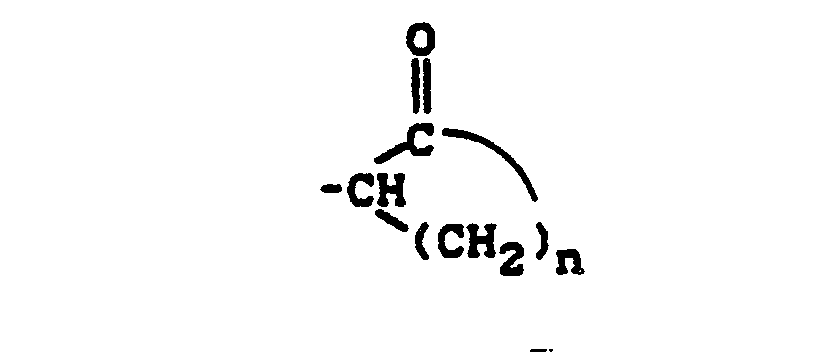


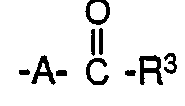


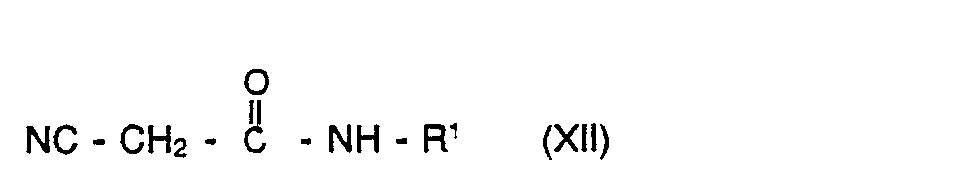

Applications Claiming Priority (2)
| Application Number | Priority Date | Filing Date | Title |
|---|---|---|---|
| DE19873727728 DE3727728A1 (en) | 1987-08-20 | 1987-08-20 | 2-CYANO-2-OXIMINO ACETAMIDE |
| DE3727728 | 1987-08-20 |
Publications (1)
| Publication Number | Publication Date |
|---|---|
| EP0303934A1 true EP0303934A1 (en) | 1989-02-22 |
Family
ID=6334098
Family Applications (1)
| Application Number | Title | Priority Date | Filing Date |
|---|---|---|---|
| EP88112885A Withdrawn EP0303934A1 (en) | 1987-08-20 | 1988-08-08 | 2-Cyano-2-oximino-acetamides |
Country Status (4)
| Country | Link |
|---|---|
| EP (1) | EP0303934A1 (en) |
| DE (1) | DE3727728A1 (en) |
| HU (1) | HUT48206A (en) |
| PT (1) | PT88241A (en) |
Cited By (2)
| Publication number | Priority date | Publication date | Assignee | Title |
|---|---|---|---|---|
| EP0454067A1 (en) * | 1990-04-24 | 1991-10-30 | ZAMBON GROUP S.p.A. | Compositions having herbicidal activity containing N-Alkyl-amides as active ingredient |
| WO1993016985A1 (en) * | 1992-02-29 | 1993-09-02 | Basf Aktiengesellschaft | Cyano-oxime ethers, process for producing them, agents containing them and their use |
Citations (4)
| Publication number | Priority date | Publication date | Assignee | Title |
|---|---|---|---|---|
| EP0000023A1 (en) * | 1977-06-04 | 1978-12-20 | Bayer Ag | Omega-substituted pentyl ureas, their preparation and their use as fungicides |
| EP0201999A1 (en) * | 1985-04-16 | 1986-11-20 | Imperial Chemical Industries Plc | Substituted 2-cyano-2-oximino-acetamides, processes for their production and their use as fungicides |
| EP0206004A1 (en) * | 1985-06-13 | 1986-12-30 | Bayer Ag | E-isomers of N-alpha-(2-cyano-2-alkoxyiminoacetyl)-amino-acid derivatives and peptides |
| EP0259737A2 (en) * | 1986-09-10 | 1988-03-16 | Bayer Ag | 2-Cyano-2-alkoximino-acetamide |
-
1987
- 1987-08-20 DE DE19873727728 patent/DE3727728A1/en not_active Withdrawn
-
1988
- 1988-08-08 EP EP88112885A patent/EP0303934A1/en not_active Withdrawn
- 1988-08-10 PT PT8824188A patent/PT88241A/en unknown
- 1988-08-19 HU HU441188A patent/HUT48206A/en unknown
Patent Citations (4)
| Publication number | Priority date | Publication date | Assignee | Title |
|---|---|---|---|---|
| EP0000023A1 (en) * | 1977-06-04 | 1978-12-20 | Bayer Ag | Omega-substituted pentyl ureas, their preparation and their use as fungicides |
| EP0201999A1 (en) * | 1985-04-16 | 1986-11-20 | Imperial Chemical Industries Plc | Substituted 2-cyano-2-oximino-acetamides, processes for their production and their use as fungicides |
| EP0206004A1 (en) * | 1985-06-13 | 1986-12-30 | Bayer Ag | E-isomers of N-alpha-(2-cyano-2-alkoxyiminoacetyl)-amino-acid derivatives and peptides |
| EP0259737A2 (en) * | 1986-09-10 | 1988-03-16 | Bayer Ag | 2-Cyano-2-alkoximino-acetamide |
Cited By (4)
| Publication number | Priority date | Publication date | Assignee | Title |
|---|---|---|---|---|
| EP0454067A1 (en) * | 1990-04-24 | 1991-10-30 | ZAMBON GROUP S.p.A. | Compositions having herbicidal activity containing N-Alkyl-amides as active ingredient |
| US5336664A (en) * | 1990-04-24 | 1994-08-09 | Zambon Group S.P.A. | Compositions having herbicidal activity containing N-alkyl-amides as active ingredient |
| US5556829A (en) * | 1990-04-24 | 1996-09-17 | Zambon Group S.P.A. | Compositions having herbicidal activity containing N-alkyl-amides as active ingredient |
| WO1993016985A1 (en) * | 1992-02-29 | 1993-09-02 | Basf Aktiengesellschaft | Cyano-oxime ethers, process for producing them, agents containing them and their use |
Also Published As
| Publication number | Publication date |
|---|---|
| PT88241A (en) | 1989-06-30 |
| HUT48206A (en) | 1989-05-29 |
| DE3727728A1 (en) | 1989-03-02 |
Similar Documents
| Publication | Publication Date | Title |
|---|---|---|
| EP0464381B1 (en) | 2-Methoxyiminocarboxylic acid esters | |
| EP0628540B1 (en) | 2-Oximino-2-phenyl-acetamides | |
| EP0384211B1 (en) | Substituted acrylic-acid esters | |
| EP0359078A1 (en) | Substituted heterocyclyl-oximino-pyrazolin-5-ones, method for their preparation and their use as herbicides | |
| EP0212360B1 (en) | Substituted pyrazolin-5-ones | |
| EP0281731A2 (en) | 1-Aminomethyl-3-aryl-4-cyano-pyrroles | |
| EP0278352B1 (en) | Aminomethyl-tetrahydro-furanes | |
| EP0554729B1 (en) | Substituted amino acid amides | |
| EP0331966A1 (en) | Substituted acrylic-acid esters | |
| EP0284952A2 (en) | Substituted propylamines | |
| EP0590458B1 (en) | Substituted thiophene carboxylic acid amides | |
| EP0392286B1 (en) | 3-Cyano-4-phenyl-pyrrole derivatives | |
| DE3805059A1 (en) | HETEROCYCLICALLY SUBSTITUTED ACRYLIC ACID ESTERS | |
| EP0339422B1 (en) | 3-cyano-4-phenyl-pyrrole derivatives | |
| EP0303934A1 (en) | 2-Cyano-2-oximino-acetamides | |
| EP0557860B1 (en) | Substituted pyridiylpyrimidines and their use as parasiticide | |
| DE3702853A1 (en) | 1-AMINOMETHYL-3-ARYL-4-CYANO-PYRROLE | |
| EP0387499B1 (en) | Substituted oxine ethers and their use as pesticides | |
| EP0339417B1 (en) | 3-cyano-4-phenyl-pyrroles | |
| EP0259737A2 (en) | 2-Cyano-2-alkoximino-acetamide | |
| EP0225472A1 (en) | Substituted pyrazolin-5-ones | |
| EP0270971A2 (en) | Substituted benzamides | |
| DE3804128A1 (en) | 1-AMINOMETHYL-3- (2-FLUOR-3-CHLORPHENYL) -4-CYANO-PYRROL DERIVATIVES | |
| EP0272555A2 (en) | Aminomethylisoxazolidines | |
| EP0529468A1 (en) | Substituted pyridyltriazines, process for their preparation, their use and intermediates |
Legal Events
| Date | Code | Title | Description |
|---|---|---|---|
| PUAI | Public reference made under article 153(3) epc to a published international application that has entered the european phase |
Free format text: ORIGINAL CODE: 0009012 |
|
| 17P | Request for examination filed |
Effective date: 19880808 |
|
| AK | Designated contracting states |
Kind code of ref document: A1 Designated state(s): BE CH DE ES FR GB IT LI NL |
|
| STAA | Information on the status of an ep patent application or granted ep patent |
Free format text: STATUS: THE APPLICATION HAS BEEN WITHDRAWN |
|
| 18W | Application withdrawn |
Withdrawal date: 19890609 |
|
| R18W | Application withdrawn (corrected) |
Effective date: 19890609 |