EP0187631B1 - Process for the preparation of pyrrolopyridine derivatives, and derivatives so obtained - Google Patents
Process for the preparation of pyrrolopyridine derivatives, and derivatives so obtained Download PDFInfo
- Publication number
- EP0187631B1 EP0187631B1 EP85870178A EP85870178A EP0187631B1 EP 0187631 B1 EP0187631 B1 EP 0187631B1 EP 85870178 A EP85870178 A EP 85870178A EP 85870178 A EP85870178 A EP 85870178A EP 0187631 B1 EP0187631 B1 EP 0187631B1
- Authority
- EP
- European Patent Office
- Prior art keywords
- pyrrolo
- pyridine
- group
- ppm
- formula
- Prior art date
- Legal status (The legal status is an assumption and is not a legal conclusion. Google has not performed a legal analysis and makes no representation as to the accuracy of the status listed.)
- Expired - Lifetime
Links
- 238000000034 method Methods 0.000 title claims abstract description 35
- 230000008569 process Effects 0.000 title abstract description 13
- 238000002360 preparation method Methods 0.000 title description 25
- 150000005255 pyrrolopyridines Chemical class 0.000 title description 3
- SRSKXJVMVSSSHB-UHFFFAOYSA-N 1h-pyrrolo[3,2-c]pyridine Chemical group N1=CC=C2NC=CC2=C1 SRSKXJVMVSSSHB-UHFFFAOYSA-N 0.000 claims abstract description 79
- -1 alkyl lithium Chemical compound 0.000 claims abstract description 38
- 150000001875 compounds Chemical class 0.000 claims abstract description 36
- KWYHDKDOAIKMQN-UHFFFAOYSA-N N,N,N',N'-tetramethylethylenediamine Chemical compound CN(C)CCN(C)C KWYHDKDOAIKMQN-UHFFFAOYSA-N 0.000 claims abstract description 32
- 239000003153 chemical reaction reagent Substances 0.000 claims abstract description 23
- 229910052744 lithium Inorganic materials 0.000 claims abstract description 19
- 239000003795 chemical substances by application Substances 0.000 claims abstract description 14
- 238000006138 lithiation reaction Methods 0.000 claims abstract description 13
- AFRJJFRNGGLMDW-UHFFFAOYSA-N lithium amide Chemical compound [Li+].[NH2-] AFRJJFRNGGLMDW-UHFFFAOYSA-N 0.000 claims abstract description 12
- 125000006239 protecting group Chemical group 0.000 claims abstract description 7
- WYURNTSHIVDZCO-UHFFFAOYSA-N Tetrahydrofuran Chemical group C1CCOC1 WYURNTSHIVDZCO-UHFFFAOYSA-N 0.000 claims description 44
- YLQBMQCUIZJEEH-UHFFFAOYSA-N tetrahydrofuran Natural products C=1C=COC=1 YLQBMQCUIZJEEH-UHFFFAOYSA-N 0.000 claims description 22
- ZCSHNCUQKCANBX-UHFFFAOYSA-N lithium diisopropylamide Chemical group [Li+].CC(C)[N-]C(C)C ZCSHNCUQKCANBX-UHFFFAOYSA-N 0.000 claims description 20
- 239000000203 mixture Substances 0.000 claims description 20
- RTZKZFJDLAIYFH-UHFFFAOYSA-N ether Substances CCOCC RTZKZFJDLAIYFH-UHFFFAOYSA-N 0.000 claims description 19
- 239000002904 solvent Substances 0.000 claims description 19
- OFBQJSOFQDEBGM-UHFFFAOYSA-N Pentane Chemical compound CCCCC OFBQJSOFQDEBGM-UHFFFAOYSA-N 0.000 claims description 17
- 125000000217 alkyl group Chemical group 0.000 claims description 16
- JXCHTSUBCBYZAV-UHFFFAOYSA-N 1-(benzenesulfonyl)pyrrolo[3,2-c]pyridine Chemical compound C1=CC2=CN=CC=C2N1S(=O)(=O)C1=CC=CC=C1 JXCHTSUBCBYZAV-UHFFFAOYSA-N 0.000 claims description 9
- 150000004820 halides Chemical class 0.000 claims description 9
- GDTBXPJZTBHREO-UHFFFAOYSA-N bromine Chemical compound BrBr GDTBXPJZTBHREO-UHFFFAOYSA-N 0.000 claims description 8
- CURLTUGMZLYLDI-UHFFFAOYSA-N Carbon dioxide Chemical compound O=C=O CURLTUGMZLYLDI-UHFFFAOYSA-N 0.000 claims description 7
- 125000004435 hydrogen atom Chemical group [H]* 0.000 claims description 7
- 239000001257 hydrogen Substances 0.000 claims description 6
- 229910052739 hydrogen Inorganic materials 0.000 claims description 6
- 239000004215 Carbon black (E152) Substances 0.000 claims description 5
- 229910052801 chlorine Inorganic materials 0.000 claims description 5
- 239000000460 chlorine Substances 0.000 claims description 5
- 229930195733 hydrocarbon Natural products 0.000 claims description 5
- 150000002430 hydrocarbons Chemical class 0.000 claims description 5
- 229910052740 iodine Inorganic materials 0.000 claims description 5
- 125000004184 methoxymethyl group Chemical group [H]C([H])([H])OC([H])([H])* 0.000 claims description 5
- ZCYVEMRRCGMTRW-UHFFFAOYSA-N 7553-56-2 Chemical group [I] ZCYVEMRRCGMTRW-UHFFFAOYSA-N 0.000 claims description 4
- KZBUYRJDOAKODT-UHFFFAOYSA-N Chlorine Chemical compound ClCl KZBUYRJDOAKODT-UHFFFAOYSA-N 0.000 claims description 4
- 229910052794 bromium Inorganic materials 0.000 claims description 4
- 150000008044 alkali metal hydroxides Chemical class 0.000 claims description 3
- 150000008064 anhydrides Chemical class 0.000 claims description 3
- 150000002148 esters Chemical class 0.000 claims description 3
- 150000002641 lithium Chemical group 0.000 claims description 3
- 150000001299 aldehydes Chemical class 0.000 claims description 2
- 229910052799 carbon Inorganic materials 0.000 claims description 2
- 150000002576 ketones Chemical class 0.000 claims description 2
- 125000001997 phenyl group Chemical group [H]C1=C([H])C([H])=C(*)C([H])=C1[H] 0.000 claims description 2
- 125000003808 silyl group Chemical group [H][Si]([H])([H])[*] 0.000 claims description 2
- PKYJYPDHSCLTJO-UHFFFAOYSA-N tert-butyl pyrrolo[3,2-c]pyridine-1-carboxylate Chemical compound N1=CC=C2N(C(=O)OC(C)(C)C)C=CC2=C1 PKYJYPDHSCLTJO-UHFFFAOYSA-N 0.000 claims description 2
- 125000004744 butyloxycarbonyl group Chemical group 0.000 claims 2
- 239000003054 catalyst Substances 0.000 claims 2
- 230000016507 interphase Effects 0.000 claims 2
- KIDHWZJUCRJVML-UHFFFAOYSA-N putrescine Chemical compound NCCCCN KIDHWZJUCRJVML-UHFFFAOYSA-N 0.000 claims 2
- 229960004424 carbon dioxide Drugs 0.000 claims 1
- 235000011089 carbon dioxide Nutrition 0.000 claims 1
- 125000001033 ether group Chemical group 0.000 claims 1
- 125000005843 halogen group Chemical group 0.000 claims 1
- 238000004519 manufacturing process Methods 0.000 claims 1
- 229910052751 metal Inorganic materials 0.000 abstract description 3
- 239000002184 metal Substances 0.000 abstract description 3
- YMWUJEATGCHHMB-UHFFFAOYSA-N Dichloromethane Chemical compound ClCCl YMWUJEATGCHHMB-UHFFFAOYSA-N 0.000 description 30
- MZRVEZGGRBJDDB-UHFFFAOYSA-N N-Butyllithium Chemical compound [Li]CCCC MZRVEZGGRBJDDB-UHFFFAOYSA-N 0.000 description 28
- 238000000655 nuclear magnetic resonance spectrum Methods 0.000 description 17
- VEXZGXHMUGYJMC-UHFFFAOYSA-N Hydrochloric acid Chemical compound Cl VEXZGXHMUGYJMC-UHFFFAOYSA-N 0.000 description 16
- 238000006243 chemical reaction Methods 0.000 description 15
- UAOMVDZJSHZZME-UHFFFAOYSA-N diisopropylamine Chemical compound CC(C)NC(C)C UAOMVDZJSHZZME-UHFFFAOYSA-N 0.000 description 15
- SIKJAQJRHWYJAI-UHFFFAOYSA-N Indole Chemical compound C1=CC=C2NC=CC2=C1 SIKJAQJRHWYJAI-UHFFFAOYSA-N 0.000 description 11
- WHXSMMKQMYFTQS-UHFFFAOYSA-N Lithium Chemical compound [Li] WHXSMMKQMYFTQS-UHFFFAOYSA-N 0.000 description 10
- VYPSYNLAJGMNEJ-UHFFFAOYSA-N Silicium dioxide Chemical compound O=[Si]=O VYPSYNLAJGMNEJ-UHFFFAOYSA-N 0.000 description 10
- WFDIJRYMOXRFFG-UHFFFAOYSA-N Acetic anhydride Chemical compound CC(=O)OC(C)=O WFDIJRYMOXRFFG-UHFFFAOYSA-N 0.000 description 9
- 150000001412 amines Chemical class 0.000 description 9
- CZDYPVPMEAXLPK-UHFFFAOYSA-N tetramethylsilane Chemical compound C[Si](C)(C)C CZDYPVPMEAXLPK-UHFFFAOYSA-N 0.000 description 9
- 238000006263 metalation reaction Methods 0.000 description 7
- HEMHJVSKTPXQMS-UHFFFAOYSA-M Sodium hydroxide Chemical compound [OH-].[Na+] HEMHJVSKTPXQMS-UHFFFAOYSA-M 0.000 description 6
- HEDRZPFGACZZDS-MICDWDOJSA-N Trichloro(2H)methane Chemical compound [2H]C(Cl)(Cl)Cl HEDRZPFGACZZDS-MICDWDOJSA-N 0.000 description 6
- PZOUSPYUWWUPPK-UHFFFAOYSA-N indole Natural products CC1=CC=CC2=C1C=CN2 PZOUSPYUWWUPPK-UHFFFAOYSA-N 0.000 description 6
- RKJUIXBNRJVNHR-UHFFFAOYSA-N indolenine Natural products C1=CC=C2CC=NC2=C1 RKJUIXBNRJVNHR-UHFFFAOYSA-N 0.000 description 6
- 230000015572 biosynthetic process Effects 0.000 description 5
- 229940043279 diisopropylamine Drugs 0.000 description 5
- 239000012429 reaction media Substances 0.000 description 5
- 239000000377 silicon dioxide Substances 0.000 description 5
- 239000007787 solid Substances 0.000 description 5
- 238000001228 spectrum Methods 0.000 description 5
- YAXWOADCWUUUNX-UHFFFAOYSA-N 1,2,2,3-tetramethylpiperidine Chemical compound CC1CCCN(C)C1(C)C YAXWOADCWUUUNX-UHFFFAOYSA-N 0.000 description 4
- RKMGAJGJIURJSJ-UHFFFAOYSA-N 2,2,6,6-Tetramethylpiperidine Substances CC1(C)CCCC(C)(C)N1 RKMGAJGJIURJSJ-UHFFFAOYSA-N 0.000 description 4
- ZAMOUSCENKQFHK-UHFFFAOYSA-N Chlorine atom Chemical compound [Cl] ZAMOUSCENKQFHK-UHFFFAOYSA-N 0.000 description 4
- XLYOFNOQVPJJNP-ZSJDYOACSA-N Heavy water Chemical compound [2H]O[2H] XLYOFNOQVPJJNP-ZSJDYOACSA-N 0.000 description 4
- WMFOQBRAJBCJND-UHFFFAOYSA-M Lithium hydroxide Chemical compound [Li+].[OH-] WMFOQBRAJBCJND-UHFFFAOYSA-M 0.000 description 4
- CSNNHWWHGAXBCP-UHFFFAOYSA-L Magnesium sulfate Chemical compound [Mg+2].[O-][S+2]([O-])([O-])[O-] CSNNHWWHGAXBCP-UHFFFAOYSA-L 0.000 description 4
- JUJWROOIHBZHMG-UHFFFAOYSA-N Pyridine Chemical group C1=CC=NC=C1 JUJWROOIHBZHMG-UHFFFAOYSA-N 0.000 description 4
- 239000002253 acid Substances 0.000 description 4
- 238000004458 analytical method Methods 0.000 description 4
- IJOOHPMOJXWVHK-UHFFFAOYSA-N chlorotrimethylsilane Chemical compound C[Si](C)(C)Cl IJOOHPMOJXWVHK-UHFFFAOYSA-N 0.000 description 4
- 238000004587 chromatography analysis Methods 0.000 description 4
- 238000001035 drying Methods 0.000 description 4
- 238000001704 evaporation Methods 0.000 description 4
- 238000002329 infrared spectrum Methods 0.000 description 4
- PNDPGZBMCMUPRI-UHFFFAOYSA-N iodine Chemical compound II PNDPGZBMCMUPRI-UHFFFAOYSA-N 0.000 description 4
- ANYSGBYRTLOUPO-UHFFFAOYSA-N lithium tetramethylpiperidide Chemical compound [Li]N1C(C)(C)CCCC1(C)C ANYSGBYRTLOUPO-UHFFFAOYSA-N 0.000 description 4
- 239000000047 product Substances 0.000 description 4
- 239000007858 starting material Substances 0.000 description 4
- 125000001424 substituent group Chemical group 0.000 description 4
- 238000003786 synthesis reaction Methods 0.000 description 4
- XLYOFNOQVPJJNP-UHFFFAOYSA-N water Substances O XLYOFNOQVPJJNP-UHFFFAOYSA-N 0.000 description 4
- 229910001868 water Inorganic materials 0.000 description 4
- 0 *[n](cc1)c2c1cncc2 Chemical compound *[n](cc1)c2c1cncc2 0.000 description 3
- IKHGUXGNUITLKF-UHFFFAOYSA-N Acetaldehyde Chemical compound CC=O IKHGUXGNUITLKF-UHFFFAOYSA-N 0.000 description 3
- ZMXDDKWLCZADIW-UHFFFAOYSA-N N,N-Dimethylformamide Chemical compound CN(C)C=O ZMXDDKWLCZADIW-UHFFFAOYSA-N 0.000 description 3
- QAOWNCQODCNURD-UHFFFAOYSA-L Sulfate Chemical compound [O-]S([O-])(=O)=O QAOWNCQODCNURD-UHFFFAOYSA-L 0.000 description 3
- SZWRAMOZOIVPDO-UHFFFAOYSA-N [Li]C1=CC2=CN=CC=C2N1S(=O)(=O)C1=CC=CC=C1 Chemical compound [Li]C1=CC2=CN=CC=C2N1S(=O)(=O)C1=CC=CC=C1 SZWRAMOZOIVPDO-UHFFFAOYSA-N 0.000 description 3
- 238000009833 condensation Methods 0.000 description 3
- 230000005494 condensation Effects 0.000 description 3
- 230000008020 evaporation Effects 0.000 description 3
- 238000001914 filtration Methods 0.000 description 3
- 239000000543 intermediate Substances 0.000 description 3
- UBJFKNSINUCEAL-UHFFFAOYSA-N lithium;2-methylpropane Chemical compound [Li+].C[C-](C)C UBJFKNSINUCEAL-UHFFFAOYSA-N 0.000 description 3
- 238000000425 proton nuclear magnetic resonance spectrum Methods 0.000 description 3
- 230000002829 reductive effect Effects 0.000 description 3
- 238000003756 stirring Methods 0.000 description 3
- 238000006467 substitution reaction Methods 0.000 description 3
- 238000004809 thin layer chromatography Methods 0.000 description 3
- OJVAMHKKJGICOG-UHFFFAOYSA-N 2,5-hexanedione Chemical compound CC(=O)CCC(C)=O OJVAMHKKJGICOG-UHFFFAOYSA-N 0.000 description 2
- KWOLFJPFCHCOCG-UHFFFAOYSA-N Acetophenone Chemical compound CC(=O)C1=CC=CC=C1 KWOLFJPFCHCOCG-UHFFFAOYSA-N 0.000 description 2
- WKBOTKDWSSQWDR-UHFFFAOYSA-N Bromine atom Chemical compound [Br] WKBOTKDWSSQWDR-UHFFFAOYSA-N 0.000 description 2
- UFHFLCQGNIYNRP-UHFFFAOYSA-N Hydrogen Chemical compound [H][H] UFHFLCQGNIYNRP-UHFFFAOYSA-N 0.000 description 2
- DGAQECJNVWCQMB-PUAWFVPOSA-M Ilexoside XXIX Chemical compound C[C@@H]1CC[C@@]2(CC[C@@]3(C(=CC[C@H]4[C@]3(CC[C@@H]5[C@@]4(CC[C@@H](C5(C)C)OS(=O)(=O)[O-])C)C)[C@@H]2[C@]1(C)O)C)C(=O)O[C@H]6[C@@H]([C@H]([C@@H]([C@H](O6)CO)O)O)O.[Na+] DGAQECJNVWCQMB-PUAWFVPOSA-M 0.000 description 2
- ZLMJMSJWJFRBEC-UHFFFAOYSA-N Potassium Chemical compound [K] ZLMJMSJWJFRBEC-UHFFFAOYSA-N 0.000 description 2
- PMZURENOXWZQFD-UHFFFAOYSA-L Sodium Sulfate Chemical compound [Na+].[Na+].[O-]S([O-])(=O)=O PMZURENOXWZQFD-UHFFFAOYSA-L 0.000 description 2
- FAPWRFPIFSIZLT-UHFFFAOYSA-M Sodium chloride Chemical compound [Na+].[Cl-] FAPWRFPIFSIZLT-UHFFFAOYSA-M 0.000 description 2
- DTQVDTLACAAQTR-UHFFFAOYSA-N Trifluoroacetic acid Chemical compound OC(=O)C(F)(F)F DTQVDTLACAAQTR-UHFFFAOYSA-N 0.000 description 2
- 150000001408 amides Chemical class 0.000 description 2
- 239000001569 carbon dioxide Substances 0.000 description 2
- 229910002092 carbon dioxide Inorganic materials 0.000 description 2
- 239000012043 crude product Substances 0.000 description 2
- 125000001495 ethyl group Chemical group [H]C([H])([H])C([H])([H])* 0.000 description 2
- 238000011065 in-situ storage Methods 0.000 description 2
- 229910052943 magnesium sulfate Inorganic materials 0.000 description 2
- 235000019341 magnesium sulphate Nutrition 0.000 description 2
- 238000006386 neutralization reaction Methods 0.000 description 2
- 239000012074 organic phase Substances 0.000 description 2
- 230000003071 parasitic effect Effects 0.000 description 2
- 239000003444 phase transfer catalyst Substances 0.000 description 2
- 125000003170 phenylsulfonyl group Chemical group C1(=CC=CC=C1)S(=O)(=O)* 0.000 description 2
- 229910052700 potassium Inorganic materials 0.000 description 2
- 239000011591 potassium Substances 0.000 description 2
- 238000000746 purification Methods 0.000 description 2
- UMJSCPRVCHMLSP-UHFFFAOYSA-N pyridine Natural products COC1=CC=CN=C1 UMJSCPRVCHMLSP-UHFFFAOYSA-N 0.000 description 2
- 230000009257 reactivity Effects 0.000 description 2
- 229910052708 sodium Inorganic materials 0.000 description 2
- 239000011734 sodium Substances 0.000 description 2
- 229910052938 sodium sulfate Inorganic materials 0.000 description 2
- 235000011152 sodium sulphate Nutrition 0.000 description 2
- 239000000126 substance Substances 0.000 description 2
- MFPWEWYKQYMWRO-UHFFFAOYSA-N tert-butyl carboxy carbonate Chemical group CC(C)(C)OC(=O)OC(O)=O MFPWEWYKQYMWRO-UHFFFAOYSA-N 0.000 description 2
- 125000005931 tert-butyloxycarbonyl group Chemical group [H]C([H])([H])C(OC(*)=O)(C([H])([H])[H])C([H])([H])[H] 0.000 description 2
- DZLFLBLQUQXARW-UHFFFAOYSA-N tetrabutylammonium Chemical compound CCCC[N+](CCCC)(CCCC)CCCC DZLFLBLQUQXARW-UHFFFAOYSA-N 0.000 description 2
- UBBYLODQCKBACW-UHFFFAOYSA-N 1-[1-(benzenesulfonyl)pyrrolo[3,2-c]pyridin-2-yl]ethanone Chemical compound CC(=O)C1=CC2=CN=CC=C2N1S(=O)(=O)C1=CC=CC=C1 UBBYLODQCKBACW-UHFFFAOYSA-N 0.000 description 1
- XWIYUCRMWCHYJR-UHFFFAOYSA-N 1h-pyrrolo[3,2-b]pyridine Chemical compound C1=CC=C2NC=CC2=N1 XWIYUCRMWCHYJR-UHFFFAOYSA-N 0.000 description 1
- IITCAPAOHTVKRT-UHFFFAOYSA-N 2-acetyl-4-oxopentanoic acid Chemical compound CC(=O)CC(C(C)=O)C(O)=O IITCAPAOHTVKRT-UHFFFAOYSA-N 0.000 description 1
- 125000004198 2-fluorophenyl group Chemical group [H]C1=C([H])C(F)=C(*)C([H])=C1[H] 0.000 description 1
- RDMFHRSPDKWERA-UHFFFAOYSA-N 5H-Pyrido[4,3-b]indole Chemical compound C1=NC=C2C3=CC=CC=C3NC2=C1 RDMFHRSPDKWERA-UHFFFAOYSA-N 0.000 description 1
- XVMSFILGAMDHEY-UHFFFAOYSA-N 6-(4-aminophenyl)sulfonylpyridin-3-amine Chemical group C1=CC(N)=CC=C1S(=O)(=O)C1=CC=C(N)C=N1 XVMSFILGAMDHEY-UHFFFAOYSA-N 0.000 description 1
- VEXZGXHMUGYJMC-UHFFFAOYSA-M Chloride anion Chemical compound [Cl-] VEXZGXHMUGYJMC-UHFFFAOYSA-M 0.000 description 1
- 241000400611 Eucalyptus deanei Species 0.000 description 1
- BDAGIHXWWSANSR-UHFFFAOYSA-M Formate Chemical compound [O-]C=O BDAGIHXWWSANSR-UHFFFAOYSA-M 0.000 description 1
- XBDQKXXYIPTUBI-UHFFFAOYSA-M Propionate Chemical compound CCC([O-])=O XBDQKXXYIPTUBI-UHFFFAOYSA-M 0.000 description 1
- KAESVJOAVNADME-UHFFFAOYSA-N Pyrrole Chemical class C=1C=CNC=1 KAESVJOAVNADME-UHFFFAOYSA-N 0.000 description 1
- 150000001350 alkyl halides Chemical class 0.000 description 1
- 230000000507 anthelmentic effect Effects 0.000 description 1
- DLGYNVMUCSTYDQ-UHFFFAOYSA-N azane;pyridine Chemical compound N.C1=CC=NC=C1 DLGYNVMUCSTYDQ-UHFFFAOYSA-N 0.000 description 1
- 230000008901 benefit Effects 0.000 description 1
- CSKNSYBAZOQPLR-UHFFFAOYSA-N benzenesulfonyl chloride Chemical compound ClS(=O)(=O)C1=CC=CC=C1 CSKNSYBAZOQPLR-UHFFFAOYSA-N 0.000 description 1
- 239000001273 butane Substances 0.000 description 1
- 239000003610 charcoal Substances 0.000 description 1
- 230000009849 deactivation Effects 0.000 description 1
- 230000007423 decrease Effects 0.000 description 1
- 238000006731 degradation reaction Methods 0.000 description 1
- 238000011161 development Methods 0.000 description 1
- 238000010586 diagram Methods 0.000 description 1
- 230000008034 disappearance Effects 0.000 description 1
- 238000002845 discoloration Methods 0.000 description 1
- 238000006073 displacement reaction Methods 0.000 description 1
- 229940082150 encore Drugs 0.000 description 1
- RIFGWPKJUGCATF-UHFFFAOYSA-N ethyl chloroformate Chemical compound CCOC(Cl)=O RIFGWPKJUGCATF-UHFFFAOYSA-N 0.000 description 1
- 239000000284 extract Substances 0.000 description 1
- 238000013213 extrapolation Methods 0.000 description 1
- 230000002349 favourable effect Effects 0.000 description 1
- 239000000706 filtrate Substances 0.000 description 1
- WBJINCZRORDGAQ-UHFFFAOYSA-N formic acid ethyl ester Natural products CCOC=O WBJINCZRORDGAQ-UHFFFAOYSA-N 0.000 description 1
- FFUAGWLWBBFQJT-UHFFFAOYSA-N hexamethyldisilazane Chemical compound C[Si](C)(C)N[Si](C)(C)C FFUAGWLWBBFQJT-UHFFFAOYSA-N 0.000 description 1
- 230000007062 hydrolysis Effects 0.000 description 1
- 238000006460 hydrolysis reaction Methods 0.000 description 1
- 150000002475 indoles Chemical class 0.000 description 1
- 125000001041 indolyl group Chemical group 0.000 description 1
- 230000010354 integration Effects 0.000 description 1
- 230000003993 interaction Effects 0.000 description 1
- HVTICUPFWKNHNG-UHFFFAOYSA-N iodoethane Chemical compound CCI HVTICUPFWKNHNG-UHFFFAOYSA-N 0.000 description 1
- 238000002955 isolation Methods 0.000 description 1
- 125000001449 isopropyl group Chemical group [H]C([H])([H])C([H])(*)C([H])([H])[H] 0.000 description 1
- 125000002496 methyl group Chemical group [H]C([H])([H])* 0.000 description 1
- 230000004048 modification Effects 0.000 description 1
- 238000012986 modification Methods 0.000 description 1
- OFCCYDUUBNUJIB-UHFFFAOYSA-N n,n-diethylcarbamoyl chloride Chemical compound CCN(CC)C(Cl)=O OFCCYDUUBNUJIB-UHFFFAOYSA-N 0.000 description 1
- IJDNQMDRQITEOD-UHFFFAOYSA-N n-butane Chemical compound CCCC IJDNQMDRQITEOD-UHFFFAOYSA-N 0.000 description 1
- 125000004123 n-propyl group Chemical group [H]C([H])([H])C([H])([H])C([H])([H])* 0.000 description 1
- 230000036961 partial effect Effects 0.000 description 1
- 239000012071 phase Substances 0.000 description 1
- 230000004224 protection Effects 0.000 description 1
- 230000005588 protonation Effects 0.000 description 1
- 150000003222 pyridines Chemical class 0.000 description 1
- 238000007363 ring formation reaction Methods 0.000 description 1
- 239000011780 sodium chloride Substances 0.000 description 1
- 241000894007 species Species 0.000 description 1
- 239000007921 spray Substances 0.000 description 1
- 230000009897 systematic effect Effects 0.000 description 1
- 238000012360 testing method Methods 0.000 description 1
- 230000009466 transformation Effects 0.000 description 1
- PQDJYEQOELDLCP-UHFFFAOYSA-N trimethylsilane Chemical compound C[SiH](C)C PQDJYEQOELDLCP-UHFFFAOYSA-N 0.000 description 1
- 125000000026 trimethylsilyl group Chemical group [H]C([H])([H])[Si]([*])(C([H])([H])[H])C([H])([H])[H] 0.000 description 1
- 238000010792 warming Methods 0.000 description 1
Classifications
-
- C—CHEMISTRY; METALLURGY
- C07—ORGANIC CHEMISTRY
- C07D—HETEROCYCLIC COMPOUNDS
- C07D471/00—Heterocyclic compounds containing nitrogen atoms as the only ring hetero atoms in the condensed system, at least one ring being a six-membered ring with one nitrogen atom, not provided for by groups C07D451/00 - C07D463/00
- C07D471/02—Heterocyclic compounds containing nitrogen atoms as the only ring hetero atoms in the condensed system, at least one ring being a six-membered ring with one nitrogen atom, not provided for by groups C07D451/00 - C07D463/00 in which the condensed system contains two hetero rings
- C07D471/04—Ortho-condensed systems
-
- C—CHEMISTRY; METALLURGY
- C07—ORGANIC CHEMISTRY
- C07F—ACYCLIC, CARBOCYCLIC OR HETEROCYCLIC COMPOUNDS CONTAINING ELEMENTS OTHER THAN CARBON, HYDROGEN, HALOGEN, OXYGEN, NITROGEN, SULFUR, SELENIUM OR TELLURIUM
- C07F7/00—Compounds containing elements of Groups 4 or 14 of the Periodic Table
- C07F7/02—Silicon compounds
- C07F7/08—Compounds having one or more C—Si linkages
- C07F7/0803—Compounds with Si-C or Si-Si linkages
- C07F7/081—Compounds with Si-C or Si-Si linkages comprising at least one atom selected from the elements N, O, halogen, S, Se or Te
- C07F7/0812—Compounds with Si-C or Si-Si linkages comprising at least one atom selected from the elements N, O, halogen, S, Se or Te comprising a heterocyclic ring
- C07F7/0814—Compounds with Si-C or Si-Si linkages comprising at least one atom selected from the elements N, O, halogen, S, Se or Te comprising a heterocyclic ring said ring is substituted at a C ring atom by Si
-
- Y—GENERAL TAGGING OF NEW TECHNOLOGICAL DEVELOPMENTS; GENERAL TAGGING OF CROSS-SECTIONAL TECHNOLOGIES SPANNING OVER SEVERAL SECTIONS OF THE IPC; TECHNICAL SUBJECTS COVERED BY FORMER USPC CROSS-REFERENCE ART COLLECTIONS [XRACs] AND DIGESTS
- Y02—TECHNOLOGIES OR APPLICATIONS FOR MITIGATION OR ADAPTATION AGAINST CLIMATE CHANGE
- Y02P—CLIMATE CHANGE MITIGATION TECHNOLOGIES IN THE PRODUCTION OR PROCESSING OF GOODS
- Y02P20/00—Technologies relating to chemical industry
- Y02P20/50—Improvements relating to the production of bulk chemicals
- Y02P20/55—Design of synthesis routes, e.g. reducing the use of auxiliary or protecting groups
Definitions
- the present invention relates, in general, to the preparation of 1 H-pyrrolo [3,2-c] pyridine derivatives.
- the invention relates to a method for fixing an electrophilic group in position 2 of 1H-pyrrolo [3,2-c] N-protected pyridine in position 1.
- the indole position 2 is lithiated from this protected compound in position 1 and this, in tetrahydrofuran, at 0 ° C. and using lithium diisopropylamide [J. Org. Chem. 46, pp. 2979-2981 (1981)].
- this process provides a mixture of numerous products, in particular the starting material not consumed, 1 H-pyrrolo [3,2-c] free pyridine in position 1 and a compound resulting from the addition of lithium diisopropylamide on the pyridine ring.
- labile protective group is meant a methoxymethyl group, a benzyloxymethyl group, a benzenesulfonyl or p-toluenesulfonyl group or a tert-butoxycarbonyl (BOC) group.
- Particularly preferred is the benzenesulfonyl or p-toluenesulfonyl group or the BOC group.
- R represents a labile protective group as defined above and
- Z represents a hydrogen atom, a lithium atom or one of the groups defined for R 1 above.
- N-protected derivatives of formula II is carried out in particular from a halide. It is however possible to envisage the use of other reagents.
- R represents a tert-butoxycarbonyl group
- tert-butyl dicarbonate will preferably be used.
- the alkyl lithium used in the process of the invention, can be tert-butyl lithium and the lithium amide is generally lithium tetramethyl-2,2,6,6 piperidide, lithium hexamethyldisilylamide or, preferably , lithium diisopropylamide.
- lithium amide also constitutes the preferred lithiation agent according to the invention.
- Per equivalent of compounds of formula I, 1 to 2 equivalents of lithiation agent are generally used an amount of the order of 1.8 equivalents and 2.4 to 3 equivalents of reagent capable of generating an electrophilic group.
- tetramethylethylenediamine The main purpose of tetramethylethylenediamine is to stabilize, by ligandage, the lithio-2 derivatives of formula II.
- the latter method has the advantage of using only one refrigerated reactor and one reaction medium. It also makes it possible to use only a minimum quantity of amine relative to the quantity of derivative of formula I and to cause the displacement of the reaction towards the formation of lithiated compound as a result of the release of butane.
- the latter method is sometimes preferable, especially if there is reason to fear a parasitic interaction between the lithiation agent and the reagent capable of generating an electrophilic group.
- TMPLi Lithium tetramethylpiperidide
- the pyrrolo-pyridine derivatives of the invention prove to be particularly useful as synthesis intermediates, for example for the preparation of biologically active compounds such as the anthelmintic derivatives described in J. Med. Chem., 1972, Vol. 15, No. 11 pp. 1168-1171 or analogues or also for the preparation of derivatives of 1 H-pyrrolo [3,2-c] pyridine, mentioned in the French patent No. 1,420,756.
- the pyrrolo-pyridine derivatives of the invention are obtained, as described above, according to methods which are easy to implement and can be applied industrially.
- the solution is stirred at -60 ° C for 30 minutes.
- the medium is then hydrolyzed with 50 ml of 1N hydrochloric acid and then extracted with dichloromethane, which provides 1.7 g of crude product.
- reaction medium is neutralized with a 1N hydrochloric acid solution and extracted with dichloromethane. After drying the organic phase over sodium sulfate and evaporating the solvent, 1.85 g of crude product are obtained.
- the reaction medium is neutralized with 1N hydrochloric acid and extracted with dichloromethane.
- the residue is purified by filtration on silica.
- reaction medium is then stirred so as to obtain a solution of benzenesulfonyl-1 lithio-2 1 H-pyrrolo [3,2-c] pyridine which is used as it is.
- Example 8 The solution of 1-benzenesulfonyl-2-lithio-2 1H-pyrrolo [3,2-c] pyridine obtained in Example 8 is brought to -70 ° C. and 0.5 g (6 mmol) of d is added all at once. acetic anhydride.
- the red-brown solution thus obtained is stirred for 30 minutes at a temperature less than or equal to -60 ° C.
Landscapes
- Chemical & Material Sciences (AREA)
- Organic Chemistry (AREA)
- Nitrogen Condensed Heterocyclic Rings (AREA)
- Pharmaceuticals Containing Other Organic And Inorganic Compounds (AREA)
Abstract
Description
La présente invention se rapporte, d'une manière générale, à la préparation de dérivés de 1 H-pyrrolo[3,2-c]pyridine.The present invention relates, in general, to the preparation of 1 H-pyrrolo [3,2-c] pyridine derivatives.
Plus précisément, l'invention concerne un procédé pour la fixation d'une groupement électrophile en position 2 de la 1H-pyrrolo[3,2-c]pyridine N-protégée en position 1.More specifically, the invention relates to a method for fixing an electrophilic group in position 2 of 1H-pyrrolo [3,2-c] N-protected pyridine in position 1.
A l'heure actuelle, on n'a rapporté dans la littérature chimique, qu'un nombre relativement restreint de dérivés de 1 H-pyrrolo[3,2-c]pyridine substitués en position 2. La préparation de tels composés, il est vrai, s'effectue généralement avec grandes difficultés. Par exemple, on a cité dans J. Med. Chem. 1972, vol. 15, No. 11 pp. 1168-1171, la préparation de phényl-2 et de (fluoro-2 phényl)-2 1 H-pyrrolo[3,2-c]pyridine selon une réaction de cyclisation à haute température et moyennant des conditions fortement basiques.At present, only a relatively small number of 1 H-pyrrolo [3,2-c] pyridine derivatives substituted in position 2 have been reported in the chemical literature. The preparation of such compounds is true, is generally carried out with great difficulty. For example, we cited in J. Med. Chem. 1972, vol. 15, No. 11 pp. 1168-1171, the preparation of phenyl-2 and (2-fluoro-phenyl) -2 1 H-pyrrolo [3,2-c] pyridine according to a cyclization reaction at high temperature and under strongly basic conditions.
Ces conditions opératoires sont loin d'être applicables pour la réalisation de toute substitution en position 2 de la 1H-pyrrolo[3,2-c]pyridine puisque les auteurs de cette publication sont parvenus à la conclusion que "la réaction décrite est inappropriée pour la synthèse de dérivés de 1 H-pyrrolo[3,2-c]pyridine comportant des substituants fragiles".These operating conditions are far from being applicable for the realization of any substitution in position 2 of 1H-pyrrolo [3,2-c] pyridine since the authors of this publication have come to the conclusion that "the reaction described is inappropriate for the synthesis of 1 H-pyrrolo [3,2-c] pyridine derivatives containing fragile substituents ".
La recherche d'un procédé permettant une meilleure accessibilité aux dérivés de 1H-pyrrolo[3,2-c] pyridine substitués en position 2 quel que soit le genre de substituant à fixer reste donc d'un intérêt incontestable.The search for a process allowing better accessibility to the 1H-pyrrolo [3,2-c] pyridine derivatives substituted in position 2 whatever the type of substituent to be fixed therefore remains of indisputable interest.
L'extrapolation systématique à partir de procédés connus pour l'introduction de substituants au niveau de l'indole n'est cependant pas applicable à la 1H-pyrrolo[3,2-c]pyridine étant donné la différence bien connue de réactivité entre ces deux hétérocycles.Systematic extrapolation from known methods for the introduction of substituents at the indole level is not, however, applicable to 1H-pyrrolo [3,2-c] pyridine given the well-known difference in reactivity between these two heterocycles.
On sait, par exemple, que les réactions au niveau de l'indole se déroulant en milieu acide sont difficilement envisageables dans le cas de la 1H-pyrrolo[3,2-c]pyridine étant donné la protonation et par conséquent la désactivation liée à l'azote pyridinique.It is known, for example, that the reactions at the indole level taking place in an acid medium are difficult to envisage in the case of 1H-pyrrolo [3,2-c] pyridine given the protonation and consequently the deactivation linked to pyridine nitrogen.
De même, on a rapporté dans J. C. S. Perkin 1 pp. 138-141 (1979) des essais de synthèse du pyrido[4,3-b)indole et des pyrido[4,3-b]indolyl-6 ou 7-carboxylates d'éthyle par condensation de la 1H-pyrrolo[3,2-c]pyridine avec l'hexane-2,5 dione ou le dioxo-2,5 hexyl-3 carboxylate d'éthyle.Likewise, in J. C. S. Perkin, 1 pp. 138-141 (1979) attempts to synthesize pyrido [4,3-b) indole and ethyl pyrido [4,3-b] indolyl-6 or 7-carboxylates by condensation of 1H-pyrrolo [3, 2-c] pyridine with 2,5-hexane dione or 2,5-dioxo-3-hexylcarboxylate.
Bien que ce type de réaction soit connu et utilisé au niveau de l'indole, les essais ci-dessus à partir de 1 H-pyrrolo[3,2-c)pyridine se sont soldés par des échecs probablement en raison de la plus faible réactivité du noyau pyrrolique dans le cas de la pyrrolo-pyridine.Although this type of reaction is known and used at the indole level, the above tests starting from 1 H-pyrrolo [3,2-c) pyridine ended in failure probably because of the lower reactivity of the pyrrol nucleus in the case of pyrrolo-pyridine.
De plus, on a signalé dans Tetrahedron, vol. 39, No. 10 pp. 1777-1781 (1983), des tentatives effectuées en vue de fixer un substituant directement en position 2 de la 1H-pyrrolo[3,2-c]pyridine.In addition, it was reported in Tetrahedron, vol. 39, No. 10 pp. 1777-1781 (1983), attempts to fix a substituent directly in position 2 of 1H-pyrrolo [3,2-c] pyridine.
On a extrapolé, à cet effet, une méthode largement utilisée dans le cas de l'indole de manière à faire réagir la méthyl-1 1 H-pyrrolo[3,2-c]pyridine d'abord avec le tertiobutyl lithium à -70°C ensuite avec le N,N-diméthyl-formamide à même température.For this purpose, a method widely used in the case of indole has been extrapolated so as to react the methyl-1 1 H-pyrrolo [3,2-c] pyridine first with tert-butyl lithium at -70 ° C then with N, N-dimethyl-formamide at the same temperature.
Cependant, ces réactions n'ont pas conduit au composé souhaité mais à des mélanges complexes à partir desquels uniquement une petite portion du produit de départ a été isolé.However, these reactions did not lead to the desired compound but to complex mixtures from which only a small portion of the starting material was isolated.
Dans le cadre de l'élaboration de la présente invention, on a également entrepris des essais de lithiation régiosélective de la 1H-pyrrolo[3,2-c]pyridine selon une méthode décrite pour l'indole.In the context of the development of the present invention, attempts have also been made to regioselective lithiation of 1H-pyrrolo [3,2-c] pyridine according to a method described for indole.
Selon cette méthode, on effectue la lithiation de la position 2 de l'indole à partir de ce composé protégé en position 1 et ce, dans le tétrahydrofuranne, à 0°C et au moyen de diisopropylamidure de lithium [J. Org. Chem. 46, pp. 2979-2981 (1981)].According to this method, the indole position 2 is lithiated from this protected compound in position 1 and this, in tetrahydrofuran, at 0 ° C. and using lithium diisopropylamide [J. Org. Chem. 46, pp. 2979-2981 (1981)].
Appliqué à la 1 H-pyrrolo[3,2-c]pyridine dans les mêmes conditions opératoires, ce procédé fournit un mélange de nombreux produits notamment du produit de départ non consommé, de la 1 H-pyrrolo[3,2-c]pyridine libre en position 1 et un composé résultant de l'addition du diisopropylamidure dee lithium sur le noyau pyridinique.Applied to 1 H-pyrrolo [3,2-c] pyridine under the same operating conditions, this process provides a mixture of numerous products, in particular the starting material not consumed, 1 H-pyrrolo [3,2-c] free pyridine in position 1 and a compound resulting from the addition of lithium diisopropylamide on the pyridine ring.
L'ensemble de ces résultats met donc suffisamment en évidence l'impossibilité d'extrapoler à la 1H-pyrrolo[3,2-c]pyridine, des procédés largement connus dans la série de l'indole.All of these results therefore sufficiently demonstrate the impossibility of extrapolating to 1H-pyrrolo [3,2-c] pyridine, methods widely known in the indole series.
On est maintenant parvenu, dans le cadre de la présente invention, à préparer des dérivés de 1H-pyrrolo[3,2-c]pyridine selon un procédé mettant en oeuvre la protection de la position 1 de la 1H-pyrrolo[3,2-c]pyridine, la lithiation de la position 2 du composé obtenu et la substitution du dérivé lithio-2 ainsi préparé par un groupement électrophile approprié.We have now managed, in the context of the present invention, to prepare derivatives of 1H-pyrrolo [3,2-c] pyridine according to a process implementing the protection of position 1 of 1H-pyrrolo [3,2 -c] pyridine, the lithiation of position 2 of the compound obtained and the substitution of the lithio-2 derivative thus prepared by an appropriate electrophilic group.
Ainsi, on peut fixer, selon l'invention, un groupement électrophile en position 2, de la 1 H-pyrrolo[3,2- clpyridine N-protégée en position 1 selon un procédé consistant:
- a) à faire réagir, à température ambiante, la 1H-pyrrolo[3,2-c]pyridine dans un solvant, tel que par exemple le dichlorométhane, au moyen d'un hydroxyde de métal alcalin, tel que l'hydroxyde de lithium, de sodium ou de potassium et en présence d'un catalyseur de transfert de phase tel que le sulfate acide de tétrabutylammonium puis, à une température comprise entre la température ambiante et 40°C, avec un halogénure de formule générale:


- b) à faire réagir dans un solvant tel qu'un éther par exemple le tétrahydrofuranne ou un mélange éther/ hydrocarbure par exemple tétrahydrofuranne/pentane, le dérivé obtenu précédemment avec un agent de lithiation lequel est soit un amidure de lithium, soit un alkyl lithium, à une température comprise entre -80°C et -20°C et en présence de tétraméthyléthylènediamine pour obtenir les dérivés lithio-2 de formule générale:

- c) puis à condenser le dérivé métallique obtenu, dans un solvant tel qu'un éther par exemple le tétrahydrofuranne ou un mélange éther/hydrocarbure par exemple tétrahydrofuranne/pentane et à une température comprise entre -80°C et la température ambiante, avec un réactif capable d'engendrer un groupement électrophile pour former des dérivés de 1 H-pyrrolo[3,2-c]pyridine de formule 1 substitués en position 2 par un groupement électrophile.
- a) reacting, at room temperature, 1H-pyrrolo [3,2-c] pyridine in a solvent, such as for example dichloromethane, by means of an alkali metal hydroxide, such as lithium hydroxide , sodium or potassium and in the presence of a phase transfer catalyst such as tetrabutylammonium acid sulfate then, at a temperature between room temperature and 40 ° C, with a halide of general formula:
- b) reacting in a solvent such as an ether, for example tetrahydrofuran or an ether / hydrocarbon mixture, for example tetrahydrofuran / pentane, the derivative obtained previously with a lithiating agent which is either a lithium amide or an alkyl lithium , at a temperature between -80 ° C and -20 ° C and in the presence of tetramethylethylenediamine to obtain the lithio-2 derivatives of general formula:
- c) then condensing the metal derivative obtained, in a solvent such as an ether, for example tetrahydrofuran or an ether / hydrocarbon mixture, for example tetrahydrofuran / pentane, and at a temperature between -80 ° C. and room temperature, with a reagent capable of generating an electrophilic group to form 1 H-pyrrolo [3,2-c] pyridine derivatives of formula 1 substituted in position 2 by an electrophilic group.
Par groupement protecteur labile on entend un groupement méthoxyméthyle, un groupement benzyloxyméthyle, un groupement benzènesulfonyle ou p-toluènesulfonyle ou un groupement tertiobutoxycarbonyle (BOC).By labile protective group is meant a methoxymethyl group, a benzyloxymethyl group, a benzenesulfonyl or p-toluenesulfonyl group or a tert-butoxycarbonyl (BOC) group.
On préfère en particulier le groupement benzènesulfonyle ou p-toluènesulfonyle ou le groupement BOC.Particularly preferred is the benzenesulfonyl or p-toluenesulfonyl group or the BOC group.
Ainsi le procédé de l'invention permet notamment la préparation des dérivés de la 1H-pyrrolo[3,2-c]pyridine de formule générale:

- R représente un groupement protecteur labile tel que défini précédemment
- R1 représente:
- un groupement alkyle inférieur
- un groupement de formule:

- un groupement de formule:
- un groupement silyle de formule:

- un halogénure d'alkyle de formule générale:

- un ester de formule générale:


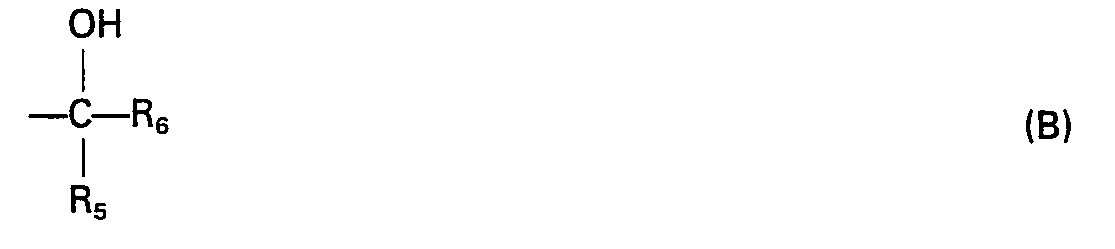
- un aldéhyde ou une cétone de formule générale:

- un halogénure de silyle de formule générale:

- R represents a labile protective group as defined above
- R 1 represents:
- a lower alkyl group
- a grouping of formula:
- a grouping of formula:
- a silyl group of formula:
- an alkyl halide of general formula:
- an ester of general formula:
- an aldehyde or a ketone of general formula:
- a silyl halide of general formula:
Les dérivés de 1H-apyrrolo[3,2-c]pyridine de formules I, II et III se sont révélés utiles comme intermédiaires de synthèse.The 1H-apyrrolo [3,2-c] pyridine derivatives of formulas I, II and III have been found useful as synthesis intermediates.
En conséquence, un autre objet de l'invention se rapporte aux composés de formules I, Il et III en tant que produits industriels nouveaux utiles comme intermédiaires de synthèse, ces composés pouvant être représentés globalement par la formule générale:

R représente un groupement protecteur labile tel que défini précédemment et,R represents a labile protective group as defined above and,
Z représente un atome d'hydrogène, un atome de lithium ou l'un des groupements définis pour R1 ci-dessus.Z represents a hydrogen atom, a lithium atom or one of the groups defined for R 1 above.
Comme cité ci-dessus, la préparation des dérivés N-protégés de formule Il s'effectue notamment au départ d'un halogénure. Il est possible toutefois d'envisager l'emploi d'autres réactifs. Par exemple dans le cas où R représente un groupement tertiobutoxycarbonyle le dicarbonate de tertiobutyle sera préférentiellement utilisé.As mentioned above, the preparation of the N-protected derivatives of formula II is carried out in particular from a halide. It is however possible to envisage the use of other reagents. For example, in the case where R represents a tert-butoxycarbonyl group, tert-butyl dicarbonate will preferably be used.
L'alkyl lithium, utilisé dans le procédé de l'invention, peut être le tertiobutyl lithium et l'amidure de lithium est généralement le tétraméthyl-2,2,6,6 pipéridide de lithium, l'hexaméthyldisilylamidure de lithium ou, de préférence, le diisopropylamidure de lithium.The alkyl lithium, used in the process of the invention, can be tert-butyl lithium and the lithium amide is generally lithium tetramethyl-2,2,6,6 piperidide, lithium hexamethyldisilylamide or, preferably , lithium diisopropylamide.
Ce dernier amidure de lithium constitue, en outre, l'agent de lithiation préféré selon l'invention.The latter lithium amide also constitutes the preferred lithiation agent according to the invention.
Par équivalent de composés de formule I, on utilise de 1 à 2 équivalents d'agent de lithiation généralement une quantité de l'ordre de 1,8 équivalent et de 2,4 à 3 équivalents de réactif capable d'engendrer un groupement électrophile.Per equivalent of compounds of formula I, 1 to 2 equivalents of lithiation agent are generally used an amount of the order of 1.8 equivalents and 2.4 to 3 equivalents of reagent capable of generating an electrophilic group.
La tétraméthyléthylènediamine a essentiellement pour but de stabiliser, par ligandage, les dérivés lithio-2 de formule II.The main purpose of tetramethylethylenediamine is to stabilize, by ligandage, the lithio-2 derivatives of formula II.
En effet, on a remarqué que l'absence de tétraméthyléthylénediamine ou encore l'utilisation de températures plus élevées que celles envisagées dans le procédé de l'invention, entraînent une chute des rendements. Généralement, on utilise de 1 à 6 équivalents de tétraméthyléthylènediamine par équivalent de composé de formule I.In fact, it has been noted that the absence of tetramethylethylenediamine or the use of temperatures higher than those envisaged in the process of the invention, lead to a drop in yields. Generally, 1 to 6 equivalents of tetramethylethylenediamine are used per equivalent of compound of formula I.
Ainsi, la métallation des composés de formule I pour l'obtention des dérivés lithiens de formule Il peut s'effectuer selon différentes mises en oeuvre des réactifs, à savoir:
- preparation extemporanée de l'amidure de lithium par réaction de butyllithium avec l'amine correspondante par exemple la diisopropylamine, la tétraméthylpipéridine ou l'hexaméthyldisilylamine et addition de cet amidure lithien à une solution du composé de formule 1 et de tétraméthyléthylènediamine,
- préparation extemporanée de l'amidure de lithium par réaction de butyllithium avec l'amine correspondante en présence de tétraméthyléthylènediamine et addition de cette solution d'amidure lithien/ tétraméthyléthylènediamine à une solution du composé de formule I,
- addition de tertiobutyllithium à une solution du composés de formule I et de tétraméthyléthylènediamine,
- addition de butyllithium à un mélange d'amine, de tétraméthyléthylènediamine (TMEDA) et de composé de formule 1, telle que par exemple addition de 1,5 équivalent de butyllithium à un mélange de 0,5 équivalent d'amine, 1,5 équivalent de TMEDA et 1 équivalent de composé de formule I de manière à former in situ l'amidure de lithium et obtenir le schéma réactionnel ci-dessous:

- Am = diisopropylamino, tétraméthylpipéridino ...
- extemporaneous preparation of lithium amide by reaction of butyllithium with the corresponding amine, for example diisopropylamine, tetramethylpiperidine or hexamethyldisilylamine and addition of this lithian amide to a solution of the compound of formula 1 and of tetramethylethylenediamine,
- extemporaneous preparation of lithium amide by reaction of butyllithium with the corresponding amine in the presence of tetramethylethylenediamine and addition of this solution of lithian amide / tetramethylethylenediamine to a solution of the compound of formula I,
- addition of tertiobutyllithium to a solution of the compounds of formula I and of tetramethylethylenediamine,
- addition of butyllithium to a mixture of amine, tetramethylethylenediamine (TMEDA) and of compound of formula 1, such as for example addition of 1.5 equivalent of butyllithium to a mixture of 0.5 equivalent of amine, 1.5 equivalent of TMEDA and 1 equivalent of compound of formula I so as to form in situ the lithium amide and obtain the reaction scheme below:
- Am = diisopropylamino, tetramethylpiperidino ...
Cette dernière méthode présente l'avantage de n'utiliser qu'un seul réacteur réfrigéré et un seul milieu réactionnel. Elle permet également de n'employer qu'une quantité minimum d'amine par rapport à la quantité de dérivé de formule I et de provoquer le déplacement de la réaction vers la formation de composé lithié par suite du dégagement de butane.The latter method has the advantage of using only one refrigerated reactor and one reaction medium. It also makes it possible to use only a minimum quantity of amine relative to the quantity of derivative of formula I and to cause the displacement of the reaction towards the formation of lithiated compound as a result of the release of butane.
Quant à la fixation du groupement électrophile en position 2 des composés lithiens de formule II, celle-ci peut se réaliser également selon différentes procédures telles que:
- addition simultanée d'amidure de lithium préparé extemporanément et de réactif capable d'engendrer un groupement électrophile à une solution du composé de formule 1 et de tétraméthyléthylènediamine,
- addition simultanée d'amidure de lithium préparé extemporanément en présence de tétraméthyléthylènediamine et de réactif capable d'engendrer un groupement électrophile à une solution du composé de formule I,
- métallation du composé de formule I telle qu'explicitée précédemment pour former le dérivé lithié de formule Il puis condensation avec le réactif capable d'engendrer un groupement électrophile.
- simultaneous addition of extemporaneously prepared lithium amide and reagent capable of generating an electrophilic group in a solution of the compound of formula 1 and of tetramethylethylenediamine,
- simultaneous addition of lithium amide prepared extemporaneously in the presence of tetramethylethylenediamine and of reagent capable of generating an electrophilic group in a solution of the compound of formula I,
- metallation of the compound of formula I as explained above to form the lithiated derivative of formula II then condensation with the reagent capable of generating an electrophilic group.
Cette dernière méthode, selon une procédure classique en deux temps est parfois préférable surtout s'il y a lieu de craindre une interaction parasite de l'agent de lithiation et du réactif capable d'engendrer un groupement électrophile.The latter method, according to a conventional two-step procedure, is sometimes preferable, especially if there is reason to fear a parasitic interaction between the lithiation agent and the reagent capable of generating an electrophilic group.
On a pu effectuer aisément l'estimation du taux de métallation en position 2 des composés de formule I, en particulier de la benzènesulfonyl-1 1H-pyrrolo[3,2-c]pyridine en utilisant le chlorure de triméthylsilyle comme réactif capable d'engendrer un groupement électrophile, ce réactif étant inerte vis-à-vis du diisopropylamidure de lithium à -60°C.It was easy to estimate the metallation rate at position 2 of the compounds of formula I, in particular 1-benzenesulfonyl 1H-pyrrolo [3,2-c] pyridine, using trimethylsilyl chloride as reagent capable of generate an electrophilic group, this reagent being inert with respect to lithium diisopropylamide at -60 ° C.
On a utilisé à cet effet la technique suivante:The following technique was used for this purpose:
On refroidit à -60°C une solution de 0,645 g (2,5 mmoles) de benzène-sulfonyl-1 1H-pyrrolo[3,2-c]pyridine, de 0,377 ml (2,5 mmoles) de tétraméthyléthylènediamine et de 0,76 ml (6 mmoles) de chlorotriméthylsilane dans 5 ml de tétrahydrofuranne. On ajoute alors 4,5 mmoles de diisopropylamidure de lithium obtenus par réaction de 4,5 mmoles de butyllithium et 4,5 mmoles de diisopropylamine dans 5 ml de tétrahydrofuranne à température inférieure à 0°C.A solution of 0.645 g (2.5 mmol) of 1H benzene-sulfonyl-1H-pyrrolo [3,2-c] pyridine, 0.377 ml (2.5 mmol) of tetramethylethylenediamine and 0 is cooled to -60 ° C. , 76 ml (6 mmol) of chlorotrimethylsilane in 5 ml of tetrahydrofuran. 4.5 mmol of lithium diisopropylamide then obtained by reaction of 4.5 mmol of butyllithium and 4.5 mmol of diisopropylamine are then added to 5 ml of tetrahydrofuran at a temperature below 0 ° C.
La chromatographie sur couche mince montre que la réaction est complète après 15 minutes de contact à -60°C. On réchauffe le mélange à température ambiante, hydrolyse avec 10 ml d'acide chlorhydrique 1 N et extrait au dichlorométhane. Après séchage sur sulfate de sodium et évaporation du solvant, on obtient 0,870 g d'une gomme brune.Thin layer chromatography shows that the reaction is complete after 15 minutes of contact at -60 ° C. The mixture is warmed to room temperature, hydrolysis with 10 ml of acid 1N hydrochloric acid and extract with dichloromethane. After drying over sodium sulfate and evaporation of the solvent, 0.870 g of a brown gum is obtained.
On isole alors, par chromatographie sur silice, 0,654 g de benzènesulfonyl-1 triméthylsilyl-2 1H-pyrrolo[3,2-c]pyridine sous forme d'un solide beige, ce qui équivaut à un rendement de 82,5% (8% de produit de départ sont récupérés).Is then isolated, by chromatography on silica, 0.654 g of benzenesulfonyl-1 trimethylsilyl-2 1H-pyrrolo [3,2-c] pyridine in the form of a beige solid, which is equivalent to a yield of 82.5% (8 % of starting material are recovered).
Cette méthode dans laquelle le réactif capable d'engendrer un groupement électrophile est introduit avec l'agent métallant permet une bonne estimation du taux de métallation. Le dérivé lithio-2 est piégé dès sa formation et les réactions de dégradation de ce lithien ou les réactions parasites éventuelles sont ainsi minimisées.This method in which the reagent capable of generating an electrophilic group is introduced with the metallizing agent allows a good estimate of the metallation rate. The lithio-2 derivative is trapped as soon as it is formed and the degradation reactions of this lithian or any parasitic reactions are thus minimized.
On a également pu estimer le taux de métallation par réaction du dérivé lithié de formule Il avec D20 ou CH30D (deutériation) selon le schéma:

L'examen du spectre de résonnance magnétique nucléaire (R.M.N.) de 1H des composés obtenus à l'état brut montre la disparition des deux doublets attribuables aux protons H2 et H3 du composé (A') au profit d'un seul singulet pour H3 dans le produit (C') deutérié en position 2.Examination of the 1 H nuclear magnetic resonance spectrum (NMR) of the compounds obtained in the raw state shows the disappearance of the two doublets attributable to the protons H 2 and H 3 of the compound (A ') in favor of a single singlet for H 3 in the product (C ') deuterated in position 2.
L'intégration des signaux adéquats permet d'estimer avec une bonne précision les quantités relatives des deux espèces et donc le taux de métallation correspondant àThe integration of the appropriate signals makes it possible to estimate with good precision the relative quantities of the two species and therefore the metallation rate corresponding to

On a utilisé à cet effet les techniques suivantes:
- a) A une solution de benzènesulfonyl-1 lithio-2 1H-pyrrolo[3,2-c]pyridine préparée comme décrit à l'Exemple 2 ci-après à partir de 5 mmoles de benzènesulfonyl-1 1H-pyrrolo(3,2-c]pyridine, 7,5 mmoles de tétraméthyléthylènediamine et 7,5 mmoles de tétraméthylpipéridide de lithium et refroidie à -70°C, on ajoute un excès d'eau lourde (D20). Après neutralisation à pH=7-8 avec de l'acide chlorhydrique 2N, on évapore le solvant sous pression réduite. On reprend le résidu dans du dichlorométhane et on lavec avec de l'eau. L'évaporation du solvant fournit 1,23 g de benzènesulfonyl-1 deutério-2 1 H-pyrrolo[3,2-c]pyridine sous forme d'un solide beige-marron.
- Rendement: 95%
- Taux de deutériation: 85% déterminé par R.M.N.
- Spectre R.M.N. 1H
- 6,70 ppm (s, 1H) 85%; 6,75 ppm (d, 1H), 15%; 7,1-8,1 ppm (m, 6H) 100%); 7,60 ppm (d, 1H) 15%; 8,5 ppm (d, 1H) 100%; 8,9 ppm (s, 1H) 100%.
- b) A la solution de tertiobutoxycarbonyl-1 lithio-2 1H-pyrrolo[3,2-c]pyridine obtenue à l'Exemple 12 ci-après, refroidie à -70°C, on ajoute, en une fois 1,5 ml d'eau lourde. La température remonte jusqu'à -35°C. On ramène le mélange à pH=7 par addition d'acide chlorhydrique 2N puis on évapore le solvant sous vide. On reprend le résidu dans du dichlorométhane puis on lave à l'eau. On obtient ainsi 0,336 g de tertiobutoxycarbonyl-1 deutério-2 1H-pyrrolo[3,2-c]pyridine sous forme d'une huile brune.
- Rendement: 61 %
- Taux de deutériation: 85% déterminé par R.M.N.
- Spectre R.M.N. 1H
- 1,65 ppm (s, 9H); 6,6 ppm (s, 1 H); 7,95 ppm (d, 1 H); 7,45 ppm (d, 1 H); 8,75 ppm (s, 1 H).
- Il reste à 7,6 ppm un doublet (15%) correspondant au produit de départ non deutérié en position 2.
- c) On opère de la même manière avec le tertiobutoxycarbonyl-1 lithio-2 1H-pyrrolo[3,2-c]pyridine préparé selon la méthode décrite à l'Exemple 11 pour obtenir 0,713 g de tertiobutoxycarbonyl-1 deutério-2 1H-pyrrolo [3,2-c]pyridine sous forme d'une huile brune.
- Rendement: 65%
- Taux de deutériation: 90% déterminé par R.M.N.
- a) To a solution of 1-benzenesulfonyl-2-lithio 1H-pyrrolo [3,2-c] pyridine prepared as described in Example 2 below from 5 mmol of 1-benzenesulfonyl 1H-pyrrolo (3,2 -c] pyridine, 7.5 mmol of tetramethylethylenediamine and 7.5 mmol of lithium tetramethylpiperidide and cooled to -70 ° C., an excess of heavy water (D 2 0) is added. After neutralization at pH = 7-8 with 2N hydrochloric acid, the solvent is evaporated off under reduced pressure, the residue is taken up in dichloromethane and washed with water. Evaporation of the solvent provides 1.23 g of 1-deutero-benzenesulfonyl-2 1 H-pyrrolo [3,2-c] pyridine in the form of a beige-brown solid.
- Yield: 95%
- Deuteration rate: 85% determined by NMR
- 1 H NMR spectrum
- 6.70 ppm (s, 1H) 85%; 6.75 ppm (d, 1H), 15%; 7.1-8.1 ppm (m, 6H) 100%); 7.60 ppm (d, 1H) 15%; 8.5 ppm (d, 1H) 100%; 8.9 ppm (s, 1H) 100%.
- b) To the solution of tert-butoxycarbonyl-1 lithio-2 1H-pyrrolo [3,2-c] pyridine obtained in Example 12 below, cooled to -70 ° C., 1.5 ml are added all at once. heavy water. The temperature rises to -35 ° C. The mixture is brought to pH = 7 by addition of 2N hydrochloric acid and then the solvent is evaporated in vacuo. The residue is taken up in dichloromethane and then washed with water. 0.336 g of tert-butoxycarbonyl-1 deutero-2 1H-pyrrolo [3,2-c] pyridine is thus obtained in the form of a brown oil.
- Yield: 61%
- Deuteration rate: 85% determined by NMR
- 1 H NMR spectrum
- 1.65 ppm (s, 9H); 6.6 ppm (s, 1 H); 7.95 ppm (d, 1 H); 7.45 ppm (d, 1 H); 8.75 ppm (s, 1 H).
- A doublet (15%) corresponding to the non-deuterated starting material in position 2 remains at 7.6 ppm.
- c) The operation is carried out in the same way with tert-butoxycarbonyl-1 lithio-2 1H-pyrrolo [3,2-c] pyridine prepared according to the method described in Example 11 to obtain 0.713 g of tert-butoxycarbonyl-1 deutero-2 1H- pyrrolo [3,2-c] pyridine in the form of a brown oil.
- Efficiency: 65%
- Deuteration rate: 90% determined by NMR
On a étudié l'influence de divers facteurs sur les rendements en composé substitué en position 2 obtenus lors de la mise en oeuvre du procédé de l'invention.The influence of various factors on the yields of the compound substituted in position 2 obtained during the implementation of the process of the invention has been studied.
A cet effet, on a réalisé la préparation de la benzènesulfonyl-1 acétyl-2 1H-pyrrolo[3,2-c]pyridine dans le tétrahydrofuranne, à température inférieure à -60°C et en faisant varier les quantités de tétraméthyléthylènediamine (TMEDA) et/ou l'agent de lithiation, le réactif capable d'engendrer un groupement électrophile étant l'anhydride acétique:

On a obtenu les résultats suivants en utilisant le diisopropylamidure de lithium (DALi) comme agent de lithiation:

- Ces résultats montrent la nette diminution de rendement en l'absence de TMEDA.
- b) Influence de l'agent de lithiation
- These results show the clear decrease in yield in the absence of TMEDA.
- b) Influence of the lithiation agent
Tétraméthylpipéridide de lithium (TMPLi)

Hexaméthyldisilylamidure de lithium (HMDALi)

Tertiobutyllithium (t BULi)

Ces résultats montrent la supériorité du diisopropylamidure de lithium comme agent de lithiation et confirment l'influence favorable de la tétraméthyléthylènediamine.These results show the superiority of lithium diisopropylamide as a lithiating agent and confirm the favorable influence of tetramethylethylenediamine.
Les dérivés de pyrrolo-pyridine de l'invention se révèlent particulièrement utiles comme intermédiaires de synthèse par exemple pour la préparation de composés biologiquement actifs tels que les dérivés anthelmintiques décrits dans J. Med. Chem., 1972, Vol. 15, No. 11 pp. 1168-1171 ou analogues ou encore pour la préparation de dérivés de 1 H-pyrrolo[3,2-c]pyridine, mentionnés dans le brevet français No. 1.420.756.The pyrrolo-pyridine derivatives of the invention prove to be particularly useful as synthesis intermediates, for example for the preparation of biologically active compounds such as the anthelmintic derivatives described in J. Med. Chem., 1972, Vol. 15, No. 11 pp. 1168-1171 or analogues or also for the preparation of derivatives of 1 H-pyrrolo [3,2-c] pyridine, mentioned in the French patent No. 1,420,756.
En raison de leur structure chimique, les composés de formules I et Il présentent de très intéressantes possibilités de transformation d'une part en raison de la labilité du radical R et d'autre part étant donnée les larges possibilités de substitution ou de modification offertes au niveau de la position 2.Due to their chemical structure, the compounds of formulas I and II present very interesting transformation possibilities on the one hand due to the lability of the radical R and on the other hand given the wide possibilities of substitution or modification offered to the position level 2.
En outre, et c'est là un de leurs avantages les plus importants, les dérivés de pyrrolo-pyridine de l'invention sont obtenus, comme décrit précédemment, selon des méthodes faciles à mettre en oeuvre et applicables industriellement.In addition, and this is one of their most important advantages, the pyrrolo-pyridine derivatives of the invention are obtained, as described above, according to methods which are easy to implement and can be applied industrially.
Les Exemples non limitatifs suivants illustrent l'invention:The following nonlimiting examples illustrate the invention:
On place dans 850 ml de dichlorométhane, 33,12 g (0,28 mole) de 1H-pyrrolo[3,2-c]pyridine, 28 g (0,70 mole) d'hydroxyde de sodium pulvérisé et 1,09 g (0,0032 mole) de sulfate acide de tétrabutylammonium [(n-C4H9)4N,HS04] comme catalyseur de transfert de phase puis on agite la solution vigoureusement.Was placed in 850 ml of dichloromethane, 33.12 g (0.28 mole) of 1H-pyrrolo [3,2-c] pyridine, 28 g (0.70 mole) of sodium hydroxide spray and 1.09 g (0.0032 mole) of tetrabutylammonium acid sulfate [(nC 4 H 9 ) 4 N, HS0 4 ] as phase transfer catalyst and then the solution is stirred vigorously.
On ajoute ensuite, en une heure, 53,7 ml (0,42 mole) de chlorure de benzènesulfonyle et l'on enregistre une élévation de température de 20° à 40°C. On maintient l'agitation pendant une heure après la fin de l'addition.Then added, in one hour, 53.7 ml (0.42 mole) of benzenesulfonyl chloride and a temperature rise of 20 ° to 40 ° C. is recorded. Stirring is continued for one hour after the end of the addition.
On essore alors l'excès d'hydroxyde de sodium et le chlorure de sodium formé et on lave le filtrat à l'eau jusqu'à pH=7-8.The excess sodium hydroxide and the sodium chloride formed are then drained and the filtrate is washed with water until pH = 7-8.
Après séchage sur sulfate de magnésium et décoloration partielle sur charbon actif, on élimine le solvant sous vide réduit.After drying over magnesium sulphate and partial discoloration on active charcoal, the solvent is removed under reduced vacuum.
On obtient ainsi 68,4 g de benzènesulfonyl-1 1H-pyrrolo[3,2-c]pyridine, sous forme d'un solide brun, dont la pureté est de l'ordre de 90%.
- Rendement: 83-85% après purification par filtration sur silice.
- P.F.: 127°C
- Spectre l.R.
- v CH= 3140-3120 cm-1
- v C=O 1600 cm ∥1
- v SO2 1370 cm-1
- Spectre R.M.N. 1H
- 6,8 ppm (d, 1 H); 7,5-8 ppm (m, 5H); 7,6 ppm (d, 1 H); 8,5 ppm (d, 1 H); 8,9 ppm (s, 1 H) Analyse

- Yield: 83-85% after purification by filtration on silica.
- Mp: 127 ° C
- LR spectrum
- v CH = 3140-3120 cm -1
- v C = O 1600 cm ∥ 1
- v SO 2 1370 cm- 1
- 1 H NMR spectrum
- 6.8 ppm (d, 1 H); 7.5-8 ppm (m, 5H); 7.6 ppm (d, 1 H); 8.5 ppm (d, 1 H); 8.9 ppm (s, 1 H) Analysis
On refroidit à -60°C', une solution de 1,3 g (5 mmoles) de benzènesulfonyl-1 1H-pyrrolo[3,2-c]pyridine et de 0,75 ml (5 mmoles) de tétraméthyléthylènediamine dans 10 ml de tétrahydrofuranne. On ajoute alors en quelques minutes 9 mmoles de diisopropylamidure de lithium (préparé par réaction de 9 mmoles de butyl lithium avec 9 mmoles de diisopropylamine dans 5 ml de tétrahydrofuranne à température inférieure à 0°C) de façon que la température du milieu n'excède pas -40°C.Cooled to -60 ° C ', a solution of 1.3 g (5 mmol) of 1-benzenesulfonyl 1H-pyrrolo [3,2-c] pyridine and 0.75 ml (5 mmol) of tetramethylethylenediamine in 10 ml tetrahydrofuran. Then added in a few minutes 9 mmol of lithium diisopropylamide (prepared by reacting 9 mmol of butyl lithium with 9 mmol of diisopropylamine in 5 ml of tetrahydrofuran at a temperature below 0 ° C) so that the temperature of the medium does not exceed step -40 ° C.
On agite la solution à -60°C pendant 30 minutes.The solution is stirred at -60 ° C for 30 minutes.
On obtient ainsi une solution de benzènesulfonyl-1 lithio-2 1H-pyrrolo [3,2-c]pyridine que l'on utilise telle quelle.A solution of 1-benzenesulfonyl-2-lithio-1H-pyrrolo [3,2-c] pyridine is thus obtained which is used as it is.
A la solution de benzènesulfonyl-1 lithio-2 1H-pyrrolo[3,2-c]pyridine obtenue à l'Exemple 2, refroidie vers -70°C, on ajoute en une fois 1,13 ml (12 mmoles; 2,4 équivalents) d'anhydride acétique et on réchauffe le mélange à température ambiante.To the solution of benzenesulfonyl-1 lithio-2 1H-pyrrolo [3,2-c] pyridine obtained in Example 2, cooled to -70 ° C., 1.13 ml (12 mmol; 2, 4 equivalents) of acetic anhydride and the mixture is warmed to room temperature.
On hydrolyse alors le milieu avec 50 ml d'acide chlorhydrique 1 N puis on l'extrait au dichlorométhane, ce qui fournit 1,7 g de produit brut.The medium is then hydrolyzed with 50 ml of 1N hydrochloric acid and then extracted with dichloromethane, which provides 1.7 g of crude product.
Après chromatographie sur silice, on isole 0,35 g (environ 27%) de produit de départ et 1,03 g de benzènesulfonyl-1 acétyl-2 1H-pyrrolo[3,2-c]pyridine.
- Rendement: 69%
- P.F.: 205°C
- Spectre I.R. (KBr)
- v 0= 1685 cm-1
- v SO2 1375 cm-1
- Spectre R.M.N.
- 2,9 ppm (s, 3H); 7,5―9 ppm (m, 8H); 9,4 ppm (s, 1H).
- Analyse
- Yield: 69%
- Mp: 205 ° C
- IR spectrum (KBr)
- v 0 = 1685 cm -1
- v SO 2 1375 cm -1
- NMR spectrum
- 2.9 ppm (s, 3H); 7.5―9 ppm (m, 8H); 9.4 ppm (s, 1H).
- Analysis

De la même manière que celle décrite ci-dessus, on a préparé la benzène-sulfonyl-1 triméthylsilyl-2 1 H-pyrrolo[3,2-c]pyridine à partir de chlorure de triméthylsilyle et de benzènesulfonyl-1 lithio-2 1H-pyrrolo[3,2-c]pyridine.
- P.F.: 125°C
- Spectre R.M.N.
- 0,5 ppm (s, 9H); 7 ppm (s, 1H); 7,3-7,9 ppm (m, 6H); 8,4 ppm (d, 1H); 8,9 ppm (s, 1H)
- Analyse
- Mp: 125 ° C
- NMR spectrum
- 0.5 ppm (s, 9H); 7 ppm (s, 1H); 7.3-7.9 ppm (m, 6H); 8.4 ppm (d, 1H); 8.9 ppm (s, 1H)
- Analysis

On met en solution dans 15 ml de tétrahydrofuranne 1,3 g (5 mmoles) de benzènesulfonyl-1 1H-pyrrolo[3,2-c]pyridine et 4,5 ml (30 mmoles) de tétraméthyléthylènediamine. A cette solution refroidie à -70°C, on ajoute, en 5 à 10 minutes, 6 mmoles de tétraméthylpipéridide de lithium dans 5 ml de tétrahydrofuranne (préparé par réaction de 6 mmoles de butyllithium avec 6 mmoles de tétraméthylpipéridine dans le tétrahydrofuranne à température inférieure à 0°C).1.3 g (5 mmol) of 1-benzenesulfonyl-1H-pyrrolo [3,2-c] pyridine and 4.5 ml (30 mmol) of tetramethylethylenediamine are dissolved in 15 ml of tetrahydrofuran. To this solution, cooled to -70 ° C., 6 mmol of lithium tetramethylpiperidide in 5 ml of tetrahydrofuran are added over 5 to 10 minutes (prepared by reaction of 6 mmol of butyllithium with 6 mmol of tetramethylpiperidine in tetrahydrofuran at lower temperature at 0 ° C).
On poursuit l'agitation pendant 1 heure entre -65°C et -40°C puis on réchauffe la solution jusqu'à -20°C.Stirring is continued for 1 hour between -65 ° C and -40 ° C and then the solution is warmed to -20 ° C.
On obtient ainsi une solution de benzènesulfonyl-1 lithio-2 1H-pyrrolo[3,2-c]pyridine que l'on utilise brute.A solution of 1-benzenesulfonyl-2-lithio-1H-pyrrolo [3,2-c] pyridine is thus obtained which is used crude.
A la solution de benzènesulfonyl-1 lithio-2 1H-pyrrolo[3,2-c]pyridine obtenue à l'Exemple 4, refroidie à -70°C, on ajoute 1,15 ml (12 mmoles) de chloroformiate d'éthyle et on réchauffe ensuite à température ambiante.1.15 ml (12 mmol) of ethyl chloroformate is added to the solution of benzenesulfonyl-1 lithio-2 1H-pyrrolo [3,2-c] pyridine obtained in Example 4, cooled to -70 ° C. and then warmed to room temperature.
On neutralise le milieu réactionnel avec une solution d'acide chlorhydrique 1N et on extrait au dichlorométhane. Après séchage de la phase organique sur sulfate de sodium et évaporation du solvant, on obtient 1,85 g de produit brut.The reaction medium is neutralized with a 1N hydrochloric acid solution and extracted with dichloromethane. After drying the organic phase over sodium sulfate and evaporating the solvent, 1.85 g of crude product are obtained.
Une chromatographie sur silice fournit alors 1,23 de benzènesulfonyl-1 éthoxycarbonyl-2 1H-pyrrolo[3,2-c]pyridine sous forme d'un solide beige.
- Rendement: 74,5%
- P.F.: 145°C
- Spectre l.R.
- v C=O 1730 cm-1
- v S02 1370 cm-1
- Spectre R.M.N.
- 1,4 ppm (t, 3H); 4,4 ppm (q, 2H); 7,3 ppm (s, 1H); 7,4-8,3 ppm (m, 6H); 8,6 ppm (d, 1H); 9 ppm (s, 1H). Analyse
- Yield: 74.5%
- Mp: 145 ° C
- LR spectrum
- v C = O 1730 cm -1
- v S0 2 1370 cm -1
- NMR spectrum
- 1.4 ppm (t, 3H); 4.4 ppm (q, 2H); 7.3 ppm (s, 1H); 7.4-8.3 ppm (m, 6H); 8.6 ppm (d, 1H); 9 ppm (s, 1H). Analysis

De la même manière que celle décrite ci-dessus, on a préparé la benzènesulfonyl-1 méthoxycarbonyl-2 1H-pyrrolo[3,2-c]pyridine à partir de chloroformiate de méthyle et de benzènesulfonyl-1 lithio-2 1H-pyrrolo[3,2-c]pyridine.
- P.F.: 166°C
- Spectre I.R. (KBr)
- v C=O 1720 cm-1
- v S02 1377 cm-1
- Spectre R.M.N. (CDCl3/tétraméthylsilane/acide trifluoroacétique) 3,9 ppm (s, 3H); 7,3-9,4 ppm (m, 9H).
- Mp: 166 ° C
- IR spectrum (KBr)
- v C = O 1720 cm -1
- v S0 2 1377 cm -1
- NMR spectrum (CDCl 3 / tetramethylsilane / trifluoroacetic acid) 3.9 ppm (s, 3H); 7.3-9.4 ppm (m, 9H).
On met en solution, dans 15 ml de tétrahydrofuranne, 1,3 g (5 mmoles) de benzènesulfonyl-1 1H-pyrrolo[3,2-c]pyridine et 9 mmoles de tétraméthyléthylènediamine. A cette solution refroidie à température inférieure à -60°C, on ajoute, en 5 à 10 minutes, 9 mmoles de diisopropylamidure de lithium, préparé par réaction de 9 mmoles de butyllithium avec 9 mmoles de diisopropylamine dans le tétrahydrofuranne.1.3 g (5 mmol) of 1-benzenesulfonyl-1H-pyrrolo [3,2-c] pyridine and 9 mmol of tetramethylethylenediamine are dissolved in 15 ml of tetrahydrofuran. To this solution, cooled to a temperature below -60 ° C., 9 mmol of lithium diisopropylamide, prepared by reacting 9 mmol of butyllithium with 9 mmol of diisopropylamine in tetrahydrofuran, are added over 5 to 10 minutes.
On poursuit l'agitation pendant 15 à 30 minutes à -60°C et on contrôle par chromatographie sur couche mince que la métallation est complète par réaction d'une partie aliquote du milieu réactionnel avec un excès de triméthylsilane.Stirring is continued for 15 to 30 minutes at -60 ° C. and it is checked by thin layer chromatography that the metallation is complete by reaction of an aliquot of the reaction medium with an excess of trimethylsilane.
On obtient ainsi une solution de benzènesulfonyl-1 lithio-2 1H-pyrrolo [3,2-c]pyridine que l'on utilise brute.A solution of 1-benzenesulfonyl-2-lithio-1H-pyrrolo [3,2-c] pyridine is thus obtained which is used crude.
A la solution de benzènesulfonyl-1 lithio-2 1 H-pyrrolo[3,2-c]pyridine obtenue à l'Exemple 6, on ajoute 12 à 15 mmoles de réactif capable d'engendrer un groupement électrophile et on suit l'avancement de la réaction par chromatographie sur couche mince.To the solution of benzenesulfonyl-1 lithio-2 1 H-pyrrolo [3,2-c] pyridine obtained in Example 6, 12 to 15 mmol of reagent are added capable of generating an electrophilic group and the progress is monitored of the reaction by thin layer chromatography.
On neutralise le milieu réactionnel par l'acide chlorhydrique 1 N et on extrait au dichlorométhane.The reaction medium is neutralized with 1N hydrochloric acid and extracted with dichloromethane.
De cette manière on a obtenu les composés suivants:
- a) Benzènesulfonyl-1 formyl-2 1H-pyrrolo[3,2-c]pyridine. Réactif produisant le groupement électrophile: formiate d'éthyle.
- Rendement: 52%
- P.F.: 164°C
- Spectre l.R. (KBr)
- v C=O 1686 cm-1
- v C=H 2930 cm-1
- v SO2 1378 cm-1 Spectre R.M.N. (CDCl3/TMS) 7,2-9,1 ppm (m,9H); 10,45 ppm (s, 1H).
- b) Benzènesulfonyl-1 hydroxycarbonyl-2 1H-pyrrolo[3,2-c]pyridine Réactif produisant le groupement électrophile: anhydride carbonique solide
- Rendement: 80%
- Spectre I.R.
- v C=O 1600 cm-1
- v SO2 1384 cm-1
- c) Benzènesulfonyl-1 (hydroxy-1 éthyl)-2 1H-pyrrolo[3,2-c]pyridine. Réactif produisant le groupement électrophile: acétaldéhyde
- Rendement: 48%
- P.F.: 185°C
- Spectre R.M.N.: (CDCl3/DMSOD6/εTFA/TMS)
- 1,55 ppm (d, J=6,5 Hz, 3H); 3,45 ppm (q, J=6,5 Hz, 1H); 7,2 ppm (s, 1H); 7,5-9,4 ppm (m, 8H).
- d) Benzènesulfonyl-1 (hydroxy-1 phényl-1 éthyl)-2 1H-pyrrolo[3,2-c]pyridine Réactif produisant le groupement électrophile: acétophénone
- Rendement: 69%
- P.F.: 150°C
- Spectre R.M.N. (CDCl3/TMS)
- 1,95 ppm (s, 3H); 7 ppm (s, 1H); 7,1-7,6 ppm (m, 5H); 7,95 ppm (d, J=6 Hz, 1H); 8,5 ppm (d, J=6 Hz, 1H); 8,9 ppm (s, 1H).
- e) Benzènesulfonyl-1 diéthylaminocarbonyl-2 1H-pyrrolo[3,2-c]pyridine Réactif produisant le groupement électrophile: chlorure de diéthylcarbamoyle
- Rendement: 20%
- I.R. (film)
- v C=O 1730 cm-1
- v S02 1377 cm-1
- R.M.N. (CDCl3/TMS)
- 1,25 ppm (m, 6H); 3,4 ppm (m, 4H); 7,2-9 ppm (m, 9H).
- f) Benzènesulfonyl-1 éthyl-2 1H-pyrrolo[3,2-c]pyridine Réactif produisant le groupement électrophile: iodure d'éthyle
- Rendement: 21 %
- P.F.: 121°C
- R.M.N. (CDCl3/TMS)
- 1,4 ppm (t, J=7 Hz, 3H); 3 ppm (q, J=7 Hz, 2H); 6,45 ppm (s, 1H); 7,2-7,9 ppm (m, 5H); 8,05 ppm (d, J=6 Hz, 1 H); 8,4 ppm (d, J=6 Hz, 1 H); 8,75 ppm (s, 1H)
- a) 1-benzenesulfonyl-2-formyl 1H-pyrrolo [3,2-c] pyridine. Reagent producing the electrophilic group: ethyl formate.
- Yield: 52%
- Mp: 164 ° C
- Spectrum lR (KBr)
- v C = O 1686 cm -1
- v C = H 2930 cm -1
- v SO 2 1378 cm -1 NMR spectrum (CDCl 3 / TMS) 7.2-9.1 ppm (m, 9H); 10.45 ppm (s, 1H).
- b) 1-benzenesulfonyl-2-hydroxycarbonyl 1H-pyrrolo [3,2-c] pyridine Reagent producing the electrophilic group: solid carbon dioxide
- Efficiency: 80%
- IR spectrum
- v C = O 1600 cm -1
- v SO 2 1384 cm -1
- c) 1-benzenesulfonyl (1-hydroxyethyl) -2 1H-pyrrolo [3,2-c] pyridine. Reagent producing the electrophilic group: acetaldehyde
- Yield: 48%
- Mp: 185 ° C
- NMR spectrum: (CDCl 3 / DMSOD 6 / εTFA / TMS)
- 1.55 ppm (d, J = 6.5 Hz, 3H); 3.45 ppm (q, J = 6.5 Hz, 1H); 7.2 ppm (s, 1H); 7.5-9.4 ppm (m, 8H).
- d) 1-benzenesulfonyl (1-hydroxy-1-phenylethyl) -2 1H-pyrrolo [3,2-c] pyridine Reagent producing the electrophilic group: acetophenone
- Yield: 69%
- Mp: 150 ° C
- NMR spectrum (CDCl 3 / TMS)
- 1.95 ppm (s, 3H); 7 ppm (s, 1H); 7.1-7.6 ppm (m, 5H); 7.95 ppm (d, J = 6 Hz, 1H); 8.5 ppm (d, J = 6 Hz, 1H); 8.9 ppm (s, 1H).
- e) 1-benzenesulfonyl-2-diethylaminocarbonyl 1H-pyrrolo [3,2-c] pyridine Reagent producing the electrophilic group: diethylcarbamoyl chloride
- Yield: 20%
- IR (film)
- v C = O 1730 cm -1
- v S0 2 1377 cm -1
- NMR (CDCl 3 / TMS)
- 1.25 ppm (m, 6H); 3.4 ppm (m, 4H); 7.2-9 ppm (m, 9H).
- f) 1-benzenesulfonyl 2-ethyl 1H-pyrrolo [3,2-c] pyridine Reagent producing the electrophilic group: ethyl iodide
- Yield: 21%
- Mp: 121 ° C
- NMR (CDCl 3 / TMS)
- 1.4 ppm (t, J = 7 Hz, 3H); 3 ppm (q, J = 7 Hz, 2H); 6.45 ppm (s, 1H); 7.2-7.9 ppm (m, 5H); 8.05 ppm (d, J = 6 Hz, 1 H); 8.4 ppm (d, J = 6 Hz, 1 H); 8.75 ppm (s, 1H)
On refroidit à -70°C une solution de 0,645 g (2,5 mmoles) de benzènesulfonyl-1 1H-pyrrolo[3,2-c]-pyridine et de 0,755 ml (5 mmoles) de tétraméthyléthylènediamine dans 5 ml de tétrahydrofuranne et on y ajoute 5 mmoles de tertiobutyl lithium dans le pentane de façon que la température n'excède pas -60°C.A solution of 0.645 g (2.5 mmol) of 1-benzenesulfonyl-1H-pyrrolo [3,2-c] -pyridine and of 0.755 ml (5 mmol) of tetramethylethylenediamine in 5 ml of tetrahydrofuran is cooled to -70 ° C. 5 mmol of tert-butyl lithium in pentane are added thereto so that the temperature does not exceed -60 ° C.
On agite alors le milieu réactionnel de manière à obtenir une solution de benzènesulfonyl-1 lithio-2 1 H-pyrrolo[3,2-c]pyridine que l'on utilise telle quelle.The reaction medium is then stirred so as to obtain a solution of benzenesulfonyl-1 lithio-2 1 H-pyrrolo [3,2-c] pyridine which is used as it is.
On porte à -70°C la solution de benzènesulfonyl-1 lithio-2 1H-pyrrolo [3,2-c]pyridine obtenue à l'Exemple 8 et on y ajoute en une seule fois 0,5 g (6 mmoles) d'anhydride acétique.The solution of 1-benzenesulfonyl-2-lithio-2 1H-pyrrolo [3,2-c] pyridine obtained in Example 8 is brought to -70 ° C. and 0.5 g (6 mmol) of d is added all at once. acetic anhydride.
Après réchauffement à température ambiante et isolement comme dans l'Exemple 3, la chromatographie fournit 0,365 g de benzènesulfonyl-1 acétyl-2 1H-pyrrolo[3,2-c]pyridine. Rendement: 49%After warming up to room temperature and isolation as in Example 3, the chromatography provides 0.365 g of benzenesulfonyl-1 acetyl-2 1H-pyrrolo [3,2-c] pyridine. Yield: 49%
En suivant le même procédé que décrit dans l'Exemple 1 mais au départ de 22,6 g (0,2 mole) de 1 H-pyrrolo[3,2-c]pyridine et de 55 ml (0,24 mole) de dicarbonate de tertiobutyle, on obtient 42,5 g d'une huile brune qui cristallise au réfrigérateur.Following the same process as described in Example 1 but starting with 22.6 g (0.2 mole) of 1 H-pyrrolo [3,2-c] pyridine and 55 ml (0.24 mole) of tert-butyl dicarbonate, 42.5 g of a brown oil are obtained which crystallizes in the refrigerator.
Par purification chromatographie d'un échantillon analytique, on obtient la tertiobutoxycarbonyl-1 1 H-pyrrolo[3,2-c]pyridine sous forme d'une poudre blanc-crème.
- P.F.: 65°C
- Spectre I.R.
- v C=O 1735 cm-1
- Spectre R.M.N.
- 1,65 ppm (s, 9H); 6,6 ppm (d, 1H); 7,65 ppm (d, 1H); 7,95 ppm (d, 1H); 8,45 ppm (d, 1H); 8,75 ppm (s, 1H).
- Mp: 65 ° C
- IR spectrum
- v C = O 1735 cm -1
- NMR spectrum
- 1.65 ppm (s, 9H); 6.6 ppm (d, 1H); 7.65 ppm (d, 1H); 7.95 ppm (d, 1H); 8.45 ppm (d, 1H); 8.75 ppm (s, 1H).

On refroidit à -70°C une solution de 1,092 g (5 mmoles) de tertiobutoxycarbonyl-1 1H-pyrrolo[3,2-c]pyridine, 1,14 ml (7,5 mmoles) de tétraméthyléthylènediamine et 0,42 ml (2,5 mmoles) de tétraméthylpipéridine dans 7,6 ml de tétrahydrofuranne.A solution of 1.092 g (5 mmol) of tert-butoxycarbonyl-1 1H-pyrrolo [3,2-c] pyridine, 1.14 ml (7.5 mmol) of tetramethylethylenediamine and 0.42 ml (50 ml) is cooled to -70 ° C. 2.5 mmol) of tetramethylpiperidine in 7.6 ml of tetrahydrofuran.
On ajoute alors, en 15 minutes, 7,5 mmoles de butyllithium en maintenant la température en dessous de -60°C et on agite, pendant 30 minutes à cette température la solution rouge-brun obtenue.7.5 mmol of butyllithium are then added over 15 minutes while maintaining the temperature below -60 ° C. and the red-brown solution obtained is stirred for 30 minutes at this temperature.
On obtient ainsi une solution de tertiobutoxycarbonyl-1 lithio-2 lH-pyrrolo[3,2-c]pyridine que l'on utilise telle quelle.This gives a solution of tert-butoxycarbonyl-1 lithio-2 1H-pyrrolo [3,2-c] pyridine which is used as it is.
On refroidit à -70°C une solution de 0,549 g (2,5 mmoles de tertiobutoxycarbonyl-1 1H-pyrrolo[3,2-c]pyridine et de 0,76 ml (5 mmoles) de tétraméthyléthylènediamine dans 2,5 ml de tétrahydrofuranne. On ajoute ensuite en quelques minutes 5 mmoles de tétraméthylpipéridide de lithium (préparé par réaction de 5 mmoles de butyllithium avec 5 mmoles de tétraméthylpipéridine dans 2,5 ml de tétrahydrofuranne à température inférieure à -20°C) de façon que la température du milieu n'excède pas -60°C.A solution of 0.549 g (2.5 mmol of 1H tert-butoxycarbonyl-1H-pyrrolo [3,2-c] pyridine and of 0.76 ml (5 mmol) of tetramethylethylenediamine in 2.5 ml of is cooled to -70 ° C. 5 mmol of lithium tetramethylpiperidide (prepared by reacting 5 mmol of butyllithium with 5 mmol of tetramethylpiperidine in 2.5 ml of tetrahydrofuran at a temperature below -20 ° C.) are then added over a few minutes. medium does not exceed -60 ° C.
On agite la solution rouge-brun ainsi obtenue pendant 30 minutes à température inférieure ou égale à -60°C.The red-brown solution thus obtained is stirred for 30 minutes at a temperature less than or equal to -60 ° C.
On obtient ainsi une solution de tertiobutoxycarbonyl-1 lithio-2 1H-pyrrolo[3,2-c]pyridine que l'on utilise telle quelle.A solution of tert-butoxycarbonyl-1 lithio-2 1H-pyrrolo [3,2-c] pyridine is thus obtained which is used as it is.
A la solution de tertiobutoxycarbonyl-1 lithio-2 1H-pyrrolo[3,2-c]pyridine, obtenue à l'Exemple 12, refroidie à -70°C, on ajoute 0,48 ml (3,8 mmoles) de chlorure de triméthylsilyle. La température remonte jusqu'à -50°C. On rechauffe le mélange à température ambiante et on amène le pH à 7 par addition d'acide chlorhydrique 2N. On évapore le solvant sous pression réduite et on reprend le résidu dans le dichlorométhane. On lave à l'eau et on sèche sur sulfate de magnésium. On évapore le solvant, ce qui fournit 0,65 g d'un solide blanc cassé.0.48 ml (3.8 mmol) of chloride is added to the solution of tert-butoxycarbonyl-1 lithio-2 1H-pyrrolo [3,2-c] pyridine, obtained in Example 12, cooled to -70 ° C. trimethylsilyl. The temperature rises to -50 ° C. The mixture is warmed to room temperature and the pH is brought to 7 by addition of 2N hydrochloric acid. The solvent is evaporated off under reduced pressure and the residue is taken up in dichloromethane. Wash with water and dry over magnesium sulfate. The solvent is evaporated, which gives 0.65 g of an off-white solid.
Après purification chromatographie sur silice, on obtient 0,561 g de tertiobutoxycarbonyl-1 triméthylsilyl-2 1H-pyrrolo[3,2-c]pyridine sous forme d'un solide blanc.
- Rendement: 78%
- P.F.: 112°C
- Spectre l.R.
- v C=O 1735 cm-1
- Spectre R.M.N.
- 0,4 ppm (s, 9H); 1,65 ppm (s, 9H); 6,85 ppm (s, 1H); 7,95 ppm (d, 1H); 8,45 ppm (d, 1H); 8,7 ppm (s, 1H).
- Yield: 78%
- Mp: 112 ° C
- LR spectrum
- v C = O 1735 cm -1
- NMR spectrum
- 0.4 ppm (s, 9H); 1.65 ppm (s, 9H); 6.85 ppm (s, 1H); 7.95 ppm (d, 1H); 8.45 ppm (d, 1H); 8.7 ppm (s, 1H).
De la même manière que précédemment au départ de tertiobutoxycarbonyl-1 lithio-2 1H-pyrrolo[3,2-c]pyridine et de benzaldéhyde, on obtient le tertiobutoxycarbonyl-1 (hydroxy-1 phényl-1 méthyl)-2 1H-pyrrolo[3,2-c]pyridine.
- Rendement: 76%
- Spectre l.R.
- v C=O 1735 cm-1
- Spectre R.M.N.
- 1,4 ppm (s, 9H); 6,60 ppm (s, 1 H); 7,1-7,9 ppm (m, 7H); 8,45 ppm (d, 1 H); 9,1 ppm (s, 1 H)
- Efficiency: 76%
- LR spectrum
- v C = O 1735 cm -1
- NMR spectrum
- 1.4 ppm (s, 9H); 6.60 ppm (s, 1H); 7.1-7.9 ppm (m, 7H); 8.45 ppm (d, 1 H); 9.1 ppm (s, 1 H)
Claims (11)


Priority Applications (1)
| Application Number | Priority Date | Filing Date | Title |
|---|---|---|---|
| AT85870178T ATE56212T1 (en) | 1984-12-12 | 1985-12-11 | PROCESS FOR THE PREPARATION OF PYRROLOPYRIDE DERIVATIVES AND DERIVATIVES SO OBTAINED. |
Applications Claiming Priority (2)
| Application Number | Priority Date | Filing Date | Title |
|---|---|---|---|
| FR8419029A FR2574406B1 (en) | 1984-12-12 | 1984-12-12 | NOVEL PYRROLO-PYRIDINE DERIVATIVES, THEIR PREPARATION METHODS AND THEIR APPLICATIONS |
| FR8419029 | 1984-12-12 |
Publications (2)
| Publication Number | Publication Date |
|---|---|
| EP0187631A1 EP0187631A1 (en) | 1986-07-16 |
| EP0187631B1 true EP0187631B1 (en) | 1990-09-05 |
Family
ID=9310535
Family Applications (1)
| Application Number | Title | Priority Date | Filing Date |
|---|---|---|---|
| EP85870178A Expired - Lifetime EP0187631B1 (en) | 1984-12-12 | 1985-12-11 | Process for the preparation of pyrrolopyridine derivatives, and derivatives so obtained |
Country Status (8)
| Country | Link |
|---|---|
| US (1) | US4831144A (en) |
| EP (1) | EP0187631B1 (en) |
| JP (1) | JPS61155385A (en) |
| AT (1) | ATE56212T1 (en) |
| CA (1) | CA1299183C (en) |
| DE (1) | DE3579577D1 (en) |
| DK (1) | DK576885A (en) |
| FR (1) | FR2574406B1 (en) |
Families Citing this family (2)
| Publication number | Priority date | Publication date | Assignee | Title |
|---|---|---|---|---|
| CA2564953A1 (en) * | 2004-05-03 | 2005-11-24 | Janssen Pharmaceutica N.V. | Novel indole derivatives as selective androgen receptor modulators (sarms) |
| EP2731439A4 (en) * | 2011-07-12 | 2014-12-03 | Merck Sharp & Dohme | TrkA KINASE INHIBITORS, COMPOSITIONS CONTAINING SAME, AND ASSOCIATED METHODS |
-
1984
- 1984-12-12 FR FR8419029A patent/FR2574406B1/en not_active Expired
-
1985
- 1985-12-11 AT AT85870178T patent/ATE56212T1/en not_active IP Right Cessation
- 1985-12-11 DE DE8585870178T patent/DE3579577D1/en not_active Expired - Fee Related
- 1985-12-11 CA CA000497380A patent/CA1299183C/en not_active Expired - Fee Related
- 1985-12-11 EP EP85870178A patent/EP0187631B1/en not_active Expired - Lifetime
- 1985-12-12 DK DK576885A patent/DK576885A/en not_active Application Discontinuation
- 1985-12-12 JP JP60280176A patent/JPS61155385A/en active Pending
-
1988
- 1988-01-07 US US07/141,508 patent/US4831144A/en not_active Expired - Fee Related
Also Published As
| Publication number | Publication date |
|---|---|
| JPS61155385A (en) | 1986-07-15 |
| ATE56212T1 (en) | 1990-09-15 |
| EP0187631A1 (en) | 1986-07-16 |
| FR2574406B1 (en) | 1987-02-27 |
| DE3579577D1 (en) | 1990-10-11 |
| CA1299183C (en) | 1992-04-21 |
| US4831144A (en) | 1989-05-16 |
| DK576885D0 (en) | 1985-12-12 |
| FR2574406A1 (en) | 1986-06-13 |
| DK576885A (en) | 1986-06-13 |
Similar Documents
| Publication | Publication Date | Title |
|---|---|---|
| EP1144346B1 (en) | Method for preparing beta-phosphorous nitroxide radicals | |
| FR2515184A1 (en) | SYNTHESES OF CODEINE DERIVATIVES AND OTHER 3-O-ALKYLMORPHINS AND INTERMEDIATE COMPOUNDS USED THEREOF | |
| EP0406112B1 (en) | 1-Benzhydrylazetidines, their preparation and their use as intermediates for the preparation of compounds with antimicrobial activity | |
| EP0334695A1 (en) | Process for the preparation of isoquinoline derivatives | |
| EP0187631B1 (en) | Process for the preparation of pyrrolopyridine derivatives, and derivatives so obtained | |
| CH631445A5 (en) | Process for the preparation of 2-hydroxymethyl-3-hydroxy-6- (1-hydroxy-2-(t-butylamino)ethyl)pyridine | |
| FR2552081A1 (en) | PROCESS FOR PREPARING SUBSTITUTED PROLINES | |
| EP0171320B1 (en) | Process for the preparation of unsaturated alpha-chlorinated compounds of two electroattractive groups in the beta position | |
| BE881862A (en) | ANTIBACTERIAL COMPOUNDS AND BETA-LACTAMASE INHIBITORS, PROCESS FOR THEIR PREPARATION AND THEIR USE AS MEDICAMENTS | |
| FR2523977A1 (en) | METHOD AND KEY INTERMEDIATE COMPOUNDS FOR THE PREPARATION OF 19-NORANDROSTENEDIONE | |
| EP0189448B1 (en) | Agent for the fluoridation of organic compounds particularly acetylenic compounds, preparation process thereof and utilization thereof in nucleophilic substitution or addition reactions | |
| EP0082057B1 (en) | Process for preparing phosphinamides, applications and products | |
| EP0414686B1 (en) | Derivatives of trifluoromethyl-1-tetralines, preparation and application thereof for the synthesis of compounds having therapeutic properties | |
| JPH0623176B2 (en) | Process for producing asymmetric dithioacetal and dithioketal | |
| EP0374014A2 (en) | Organo-manganese compounds, their preparation and their use | |
| WO2018162739A1 (en) | Novel composition of 7,9-dodecadienyl-1-acetate isomers and process for production thereof | |
| EP0255715B1 (en) | Process for the synthesis of heterocycles from palladocyclic complexes | |
| EP0305289B1 (en) | Enantioselective process for preparing derivatives of trans- or cis-hemicaronaldehyde, and intermediates obtained | |
| CH621784A5 (en) | ||
| EP2152680B1 (en) | Method for preparing enantiomerically enriched n-carboxyanhydride | |
| EP2300405B1 (en) | Methods for asymmetrically synthesizing 6-fluoro-l-dopa and analogs thereof | |
| EP0320402A1 (en) | Enantioselective process for the preparation of trans or cis hemicaron aldehyde derivatives, and intermediates obtained | |
| EP0346235A1 (en) | Process for preparing N-(23-vinblastinoyl) derivatives of 1-amino methyl phosphonic acid | |
| JP2000044571A (en) | Production of 13-ester derivatives of milbemycin compounds | |
| FR2591225A1 (en) | New process for the preparation of vincamine and its derivatives |
Legal Events
| Date | Code | Title | Description |
|---|---|---|---|
| PUAI | Public reference made under article 153(3) epc to a published international application that has entered the european phase |
Free format text: ORIGINAL CODE: 0009012 |
|
| AK | Designated contracting states |
Kind code of ref document: A1 Designated state(s): AT BE CH DE FR GB IT LI LU NL SE |
|
| 17P | Request for examination filed |
Effective date: 19860530 |
|
| 17Q | First examination report despatched |
Effective date: 19870915 |
|
| GRAA | (expected) grant |
Free format text: ORIGINAL CODE: 0009210 |
|
| AK | Designated contracting states |
Kind code of ref document: B1 Designated state(s): AT BE CH DE FR GB IT LI LU NL SE |
|
| REF | Corresponds to: |
Ref document number: 56212 Country of ref document: AT Date of ref document: 19900915 Kind code of ref document: T |
|
| ITF | It: translation for a ep patent filed | ||
| REF | Corresponds to: |
Ref document number: 3579577 Country of ref document: DE Date of ref document: 19901011 |
|
| GBT | Gb: translation of ep patent filed (gb section 77(6)(a)/1977) | ||
| PLBE | No opposition filed within time limit |
Free format text: ORIGINAL CODE: 0009261 |
|
| STAA | Information on the status of an ep patent application or granted ep patent |
Free format text: STATUS: NO OPPOSITION FILED WITHIN TIME LIMIT |
|
| 26N | No opposition filed | ||
| PGFP | Annual fee paid to national office [announced via postgrant information from national office to epo] |
Ref country code: DE Payment date: 19921125 Year of fee payment: 8 |
|
| PGFP | Annual fee paid to national office [announced via postgrant information from national office to epo] |
Ref country code: CH Payment date: 19921126 Year of fee payment: 8 Ref country code: AT Payment date: 19921126 Year of fee payment: 8 |
|
| PGFP | Annual fee paid to national office [announced via postgrant information from national office to epo] |
Ref country code: LU Payment date: 19921127 Year of fee payment: 8 |
|
| PGFP | Annual fee paid to national office [announced via postgrant information from national office to epo] |
Ref country code: GB Payment date: 19921204 Year of fee payment: 8 |
|
| PGFP | Annual fee paid to national office [announced via postgrant information from national office to epo] |
Ref country code: SE Payment date: 19921222 Year of fee payment: 8 |
|
| PGFP | Annual fee paid to national office [announced via postgrant information from national office to epo] |
Ref country code: FR Payment date: 19921230 Year of fee payment: 8 |
|
| ITTA | It: last paid annual fee | ||
| PGFP | Annual fee paid to national office [announced via postgrant information from national office to epo] |
Ref country code: NL Payment date: 19921231 Year of fee payment: 8 |
|
| PGFP | Annual fee paid to national office [announced via postgrant information from national office to epo] |
Ref country code: BE Payment date: 19930115 Year of fee payment: 8 |
|
| EPTA | Lu: last paid annual fee | ||
| PG25 | Lapsed in a contracting state [announced via postgrant information from national office to epo] |
Ref country code: LU Free format text: LAPSE BECAUSE OF NON-PAYMENT OF DUE FEES Effective date: 19931211 Ref country code: GB Effective date: 19931211 Ref country code: AT Effective date: 19931211 |
|
| PG25 | Lapsed in a contracting state [announced via postgrant information from national office to epo] |
Ref country code: SE Effective date: 19931212 |
|
| PG25 | Lapsed in a contracting state [announced via postgrant information from national office to epo] |
Ref country code: LI Effective date: 19931231 Ref country code: CH Effective date: 19931231 Ref country code: BE Effective date: 19931231 |
|
| BERE | Be: lapsed |
Owner name: SANOFI Effective date: 19931231 |
|
| PG25 | Lapsed in a contracting state [announced via postgrant information from national office to epo] |
Ref country code: NL Effective date: 19940701 |
|
| GBPC | Gb: european patent ceased through non-payment of renewal fee |
Effective date: 19931211 |
|
| NLV4 | Nl: lapsed or anulled due to non-payment of the annual fee | ||
| PG25 | Lapsed in a contracting state [announced via postgrant information from national office to epo] |
Ref country code: FR Effective date: 19940831 |
|
| REG | Reference to a national code |
Ref country code: CH Ref legal event code: PL |
|
| PG25 | Lapsed in a contracting state [announced via postgrant information from national office to epo] |
Ref country code: DE Effective date: 19940901 |
|
| REG | Reference to a national code |
Ref country code: FR Ref legal event code: ST |
|
| EUG | Se: european patent has lapsed |
Ref document number: 85870178.2 Effective date: 19940710 |