EP0145304B1 - Tetrahydro-beta-carboline derivatives and process for the preparation thereof - Google Patents
Tetrahydro-beta-carboline derivatives and process for the preparation thereof Download PDFInfo
- Publication number
- EP0145304B1 EP0145304B1 EP84307819A EP84307819A EP0145304B1 EP 0145304 B1 EP0145304 B1 EP 0145304B1 EP 84307819 A EP84307819 A EP 84307819A EP 84307819 A EP84307819 A EP 84307819A EP 0145304 B1 EP0145304 B1 EP 0145304B1
- Authority
- EP
- European Patent Office
- Prior art keywords
- carbon atoms
- group
- compound
- formula
- lower alkyl
- Prior art date
- Legal status (The legal status is an assumption and is not a legal conclusion. Google has not performed a legal analysis and makes no representation as to the accuracy of the status listed.)
- Expired
Links
- 0 **N(C(*)C1)C(*)c2c1c(cccc1)c1[n]2* Chemical compound **N(C(*)C1)C(*)c2c1c(cccc1)c1[n]2* 0.000 description 2
Classifications
-
- C—CHEMISTRY; METALLURGY
- C07—ORGANIC CHEMISTRY
- C07D—HETEROCYCLIC COMPOUNDS
- C07D471/00—Heterocyclic compounds containing nitrogen atoms as the only ring hetero atoms in the condensed system, at least one ring being a six-membered ring with one nitrogen atom, not provided for by groups C07D451/00 - C07D463/00
- C07D471/02—Heterocyclic compounds containing nitrogen atoms as the only ring hetero atoms in the condensed system, at least one ring being a six-membered ring with one nitrogen atom, not provided for by groups C07D451/00 - C07D463/00 in which the condensed system contains two hetero rings
- C07D471/04—Ortho-condensed systems
-
- A—HUMAN NECESSITIES
- A61—MEDICAL OR VETERINARY SCIENCE; HYGIENE
- A61P—SPECIFIC THERAPEUTIC ACTIVITY OF CHEMICAL COMPOUNDS OR MEDICINAL PREPARATIONS
- A61P1/00—Drugs for disorders of the alimentary tract or the digestive system
- A61P1/16—Drugs for disorders of the alimentary tract or the digestive system for liver or gallbladder disorders, e.g. hepatoprotective agents, cholagogues, litholytics
-
- A—HUMAN NECESSITIES
- A61—MEDICAL OR VETERINARY SCIENCE; HYGIENE
- A61P—SPECIFIC THERAPEUTIC ACTIVITY OF CHEMICAL COMPOUNDS OR MEDICINAL PREPARATIONS
- A61P3/00—Drugs for disorders of the metabolism
- A61P3/06—Antihyperlipidemics
Definitions
- This invention relates to novel tetrahydro-P carboline derivatives of the formula: wherein
- This invention includes a pharmaceutically acceptable salt of the compounds of the formula (I) wherein R' is carboxyl, an N-(phenyl-substituted lower alkylidenamino)carbamoyl, having 1 to 4 carbon atoms in alkylidene moiety, a [N,N-di(lower alkyl)amino]-lower alkyl having 1 to 4 carbon atoms in each alkyl moiety or a tetrazolyl, and of the compounds of the formula (I) wherein R 4 is hydrogen atom, or a group of the formula: (CH 2 ) n Y 1 ; n is 1 or 2; and Y' is an N,N-di(lower alkyl)amino having 1 to 4 carbon atoms in alkyl moiety, a pyridyl, or a phenyl substituted by carboxyl or amino.
- the liver is an organ having various functions such as detoxication, carbohydrate metabolism, lipid metabolism, protein metabolism, production and secretion of bile, production of blood coagulation factors, control of hormones, regeneration of liver cells, storage of living body-constituting elements (e.g. fats, glycogen, proteins, vitamins), and the like.
- There functions are acutely or chronically disordered by various causes such as virus, drugs, poisons, alcohols, insufficient nutrition, vascular dysfunction of the liver, obstruction of the bile duct, or the like.
- liver function disorders appear clinically in the form of a viral hepatitis, drug-induced hepatopathy, alcoholic hepatitis, congestive hepatitis, hepatic disease caused by bile-congestion, fatty liver, jaundice, and finally hepatocirrhosis, or the like.
- U.S. Patent 4336260 discloses that tetrahydro- ⁇ -carboline derivatives such as 1-aryi-1,2,3,4-tetrahydro- ⁇ -carboline-3-carboxylic acid or carboxylate show psycho active properties.
- the compound (I) of the present invention or a pharmaceutically acceptable salt thereof are useful as a therapeutic or prophylactic agent for hepatic disease because they show excellent activities for alleviating or curing hepatic damage and also for protecting the liver from hepatic damage.
- the tetrahydro- ⁇ -carboline derivatives of the present invention include compounds of the formula (I) wherein R' is carboxyl; a lower alkoxycarbonyl having 1 to 4 carbon atoms in alkoxy moiety such as methoxycarbonyl, ethoxycarbonyl, isopropoxycarbonyl, butoxycarbonyl; carbamoyl; an N,N-di(lower alkyl)carbamoyl having 1 to 4 carbon atoms in alkyl moiety such as N,N-dimethylcarbamoyl, N,N-diethylcarbamoyl; an N-(phenyl-substituted lower alkylidenamino)carbamoyl having 1 to 4 carbon atoms in alkylidene moiety such as N-(benzylidenamino)-carbamoyl; a [N,N-di(lower alkyl)amino]-lower alkyl having 1
- Preferred compounds are compounds of the formula (I) wherein R' is carboxyl, methoxycarbonyl, ethoxycarbonyl, isopropoxycarbonyl, carbamoyl, N,N-dimethylcarbamoyl, N-(benzylidenamino)carbamoyl, (N,N-dimethylamino)methyl or tetrazolyl,
- More preferred compounds are compounds of the formula (I) wherein R' is carboxyl, methoxycarbonyl, ethoxycarbonyl, carbamoyl, N,N-dimethylcarbamoyl, (N,N-dimethylamino)methyl or tetrazolyl,
- R 1 is carboxyl, methoxycarbonyl, N,N-dimethylcarbamoyl, (N,N-dimethylamino)methyl or tetrazolyl,
- Still further preferred compounds are compounds of the formula (I) wherein R' is carboxyl, R 2 is hydrogen atom, methyl or hydroxymethyl, R 3 is hydrogen atom and R 4 is methyl.
- R' is carboxyl or R 4 is hydrogen atom or a group of the formula: ⁇ (CH 2 ) n Y 1 and Y' is a phenyl substituted by carboxyl
- suitable examples of the salt are an alkali metal salt (e.g. sodium or potassium salt), an organic amine salt (e.g. trithylamine, trimethylamine, N-methylmorpholine or dicyclohexylamine salt).
- R 1 is an N-(phenyl-substituted lower alkylidenamino)carbamoyl having 1 to 4 carbon atoms in alkylidene moiety, a [N,N-di(lower alkyl)amino]-lower alkyl having 1 to 4 carbon atoms in each alkyl moiety or a tetrazolyl, or in case where R 4 is a group of the formula: ⁇ (CH 2 ) n Y 1 and Y 1 is an N,N-di(lower alkyl)amino, having 1 to 4 carbon atoms in alkyl moiety, a pyridyl or a phenyl substituted by amino
- suitable examples of the salt are a mineral acid salt (e.g, hydrochloride, sulfate), an aromatic sulfonate (e.g., benzenesulfonate, toluenesulfonate), an alkylsulf
- the compounds of the formula (I) wherein R 2 is hydrogen atom include two optical isomers and racemic mixture.
- the compounds of the formula (I) wherein R 2 is a lower alkyl group of 1 to 4 carbon atoms or a hydroxy-lower alkyl group of 1 to 4 carbon atoms include two stereoisomers (i.e. cis-and trans-isomers), and said each stereoisomer includes further two optical isomers and racemic mixture.
- the compounds of the formula (I) wherein R 1 and R 2 combine together to form a group: ⁇ CO ⁇ O ⁇ CH 2 ⁇ has cis-configuration, which includes further two optical isomers and racemic mixture.
- the present invention includes within its scope these isomers and a mixture thereof.
- the compounds (I) can be prepared by the following processes.
- the compound (1) can be prepared by reacting a compound of the formula: wherein R 31 is hydrogen atom, a lower alkyl, or a phenyl-lower alkyl group, and R 1 and R 2 are as defined above, with carbon disulfide, or with carbon disulfide and a compound of the formula: wherein R 41 is an alkyl or a group of the formula ⁇ (CH 2 ) n Y 1 , n is 0, 1 or 2, Y 1 is a lower alkenyl, a phenyl-substituted lower alkenyl, an N,N-di(lower alkyl)amino, a lower alkylmercapto, a lower alkoxycarbonyl, benzoyl, naphthyl, a cycloalkyl, a monocyclic heterocyclic group, or a substituted or unsubstituted phenyl, and X' is a reactive residue.
- a compound of the formula wherein R" is carboxyl group and R 2 , R 3 and R 4 are as defined above, can be prepared by hydrolyzing a compound of the formula: wherein R 12 is a lower alkoxycarbonyl group, and R 2 , R 3 and R 4 are as defined above.
- the compound of the formula (I-d) can also be prepared by esterifying a compound of the formula (I-c).
- Preferred starting compound (III) is a compound of the formula (III) wherein X' is a halogen such as chlorine, bromine, iodine or fluorine, or a diazonium residue of the formula: -N 2 X' (X 2 is a halogen).
- X' is a halogen such as chlorine, bromine, iodine or fluorine, or a diazonium residue of the formula: -N 2 X' (X 2 is a halogen).
- the reaction of the compound (II) with carbon disulfite and the reaction of the compound (II), carbon disulfide and the compound (III) are carried out in a solvent in the presence of a base.
- the base includes alkali metal hydroxides (e.g. sodium hydroxide, potassium hydroxide), and organic amines (e.g. trimethylamine, triethylamine, N-methylmorpholine, dicyclohexylamine).
- Suitable examples of the solvent are water, methanol, ethanol, dimethylsulfoxide, tetrahydrofuran, dioxane, dimethylformamide, or a mixture thereof.
- the reaction temperature is in the range of 0 to 50°C, preferably 10 to 30°C.
- the deacylation of the compound (I-b) can be carried out under the conditions suitable thereto according to the kinds of the acyl groups thereof.
- said acyl group include lower aliphatic acyl group such as formyl or acetyl, or aralkyloxycarbonyl such as benzyloxycarbonyl.
- y3 is lower aliphatic acylamino-substituted phenyl group such as N-formylamino- substituted phenyl group
- the compound is treated with thioglycolic acid and 6N HCI in ethanol at 0 to 50°C.
- y3 is aralkyloxycarbonylamino-substituted phenyl group such as N-benzyloxycarbonyl-amino-substituted phenyl group
- the compound is reduced in the presence of a catalyst (e.g. Pd-C, or Pt) in a solvent (e.g. methanol, ethanol, ethyl acetate, tetrahydrofuran, water, or a mixture of these solvents).
- a catalyst e.g. Pd-C, or Pt
- a solvent e.g. methanol, ethanol, ethyl acetate, tetrahydrofuran, water, or a mixture of these solvents.
- the hydrolysis of the compound (I-d) can be carried out by treating it with an acid or an alkali, preferably with an alkali, in a solvent.
- a solvent Suitable examples of the solvent are water, methanol, ethanol, dimethoxyethane, or a mixture of these solvents.
- the acid includes mineral acids such as hydrochloric acid, or sulfuric acid
- the alkali includes alkali metal hydroxides such as sodium hydroxide, or potassium hydroxide.
- the reaction is preferably carried out at a temperature of from 0 to 50°C.
- the esterification of the compound (I-c) can be carried out by various methods.
- the esterification is carried out by reacting a reactive derivative of a compound (I-c) with an alkanol of the formula: R 13 OH (wherein R" is a lower alkyl group).
- the reactive derivative includes, for example, an acid halide, such as acid chloride or acid bromide.
- the alkanol includes preferably a compound of the formula: R 13 OH wherein R' 3 is methyl, ethyl, n-propyl, or isopropyl.
- the reaction of an acid halide of a compound (I-c) with an alkanol is carried out in a solvent in the presence or absence of an acid acceptor.
- the acid acceptor includes organic bases such as triethylamine, tributylamine or pyridine, and inorganic bases such as potassium carbonate, sodium carbonate, or sodium hydrogen carbonate.
- the solvent includes, for example, methylene chloride, chloroform, carbon tetrachloride, tetrahydrofuran, dioxane, acetonitrile, benzene, toluene, dimethylformamide, or the like. When an alkanol is used in an excess amount, it can also serve as a solvent, and hence, additional solvent is not necessarily required.
- the reaction is usually carried out at a temperature of from -10 to 60°C, preferably -10 to 30°C.
- the acid halide of a compound (I-c) is usually prepared by reacting a free carboxylic acid of the formula (I-c) or a salt thereof (e.g. an alkali metal salt such as sodium or potassium salt, a tertiary amine salt such as triethylamine or tributylamine salt) with a halogenating agent (e.g., thionyl chloride, oxalyl chloride, phosphorus oxychloride, phosphorus trichloride, phosphorus tribromide) in a solvent (e.g., benzene, toluene, chloroform, dioxane, tetrahydrofuran, acetonitrile).
- a halogenating agent is used in an excess amount, it can also serve as a solvent, and hence, additional solvent is not necessarily required.
- the halogenation reaction is preferably carried out at a temperature of from -10 to 60°C.
- the esterification of a compound (I-c) can also be carried out by reacting a compound (I-c) with an alkanol (R 13 OH). This reaction is usually carried out by dissolving a compound (I-c) in an excess amount of an alkanol, introducing thereof gaseous hydrochloric acid, preferably at a temperature of from 0 to 10°C, and then heating the mixture at a reflux temperature.
- a compound of the formula (I-d) wherein R 12 is lower alkoxycarbonyl group is also prepared by reacting a compound (I-c) with diazoalkane (e.g., diazomethane, diazoethane) in a solvent such as ether, ethyl acetate, or dimethoxyethane, preferably at a temperature of -10 to 10°C.
- diazoalkane e.g., diazomethane, diazoethane
- a solvent such as ether, ethyl acetate, or dimethoxyethane
- a compound of the formula (I) wherein R 1 and R 2 combine to form a group: -CO-O-CH 2 - can be prepared from the corresponding compound (II) (i.e. a compound of the formula (II) wherein R 1 and R 2 combine to form a group: ⁇ CO ⁇ O ⁇ CH 2 ⁇ ), but may also directly be prepared from a compound of the formula (II) wherein R' is carboxyl group and R 2 is hydroxymethyl group.
- the reaction is readily carried out under the same conditions as Process A.
- the compound of the formula (I) wherein R' is carboxyl, an N-(phenyl-substituted lower alkylidenamino)carbamoyl, a [N,N-di(lower alkyl)amino]-lower alkyl, or a nitrogen-containing monocyclic heterocyclic group
- R 4 is hydrogen atom, or a group of the formula: ⁇ (CH 2 ) n Y 1 ; n is 0, 1 or 2; and Y' is an N,N-di(lower alkyl)amino, a nitrogen-containing monocyclic heterocyclic group, or a phenyl substituted by carboxyl or amino, are optionally converted into a pharmaceutically acceptable salt thereof, which can be obtained by treating the free compound with an acid or an alkali in a usual manner.
- the starting compounds (II) can be prepared, for example, by the processes of the following reaction schemes: wherein R 5 is a lower alkyl, R 6 is a phenyl-substituted lower alkylidenamino, R 7 and R 8 are each a lower alkyl, R 9 is a nitrogen-containing monocyclic heterocyclic group, and R 2 and R 31 are as defined above.
- the starting compounds (II-a) and (II-b), i.e. the compound (II) wherein R 1 is carboxyl or a lower alkoxycarbonyl group can be prepared by well known processes, for example, as disclosed in J. Med. Chem., 16, 418 (1973); J. Med. Chem., 16, 560 (1973); J. Med. Chem., 25, 1081 (1982); and J. Am. Chem. Soc., 102, 6976 (1980).
- the starting compound (II-c), i.e. the compound (II) wherein R 1 is an N-(phenyl-substituted lower alkylidenamino)carbamoyl group can be prepared by reacting a compound (II-b) with hydrazine hydrate in a solvent (e.g. dimethylformamide, methanol, ethanol, dioxane) at room temperature, and reacting the resulting acid hydrazide compound (VIII) with a phenyl-substituted lower alkanal in a solvent (e.g. dimethylsulfoxide, dimethylformamide) at room temperature.
- a solvent e.g. dimethylformamide, methanol, ethanol, dioxane
- the starting compound (II-e), i.e. the compound (II) wherein R 1 and R 2 are combined to form a group; ⁇ CO ⁇ O ⁇ CH 2 ⁇ can be prepared by subjecting a compound (II-d) to cyclization reaction.
- the cyclization reaction is usually carried out by heating the compound (II-d) in a solvent (e.g. chloroform, benzene, toluene) in the presence or absence of an acid (e.g. hydrochloric acid, p-toluenesulfonic acid).
- a solvent e.g. chloroform, benzene, toluene
- an acid e.g. hydrochloric acid, p-toluenesulfonic acid
- the starting compound (II-f), i.e. the compound (II) wherein R 1 is an N,N-di(lower alkyl)carbamoyl group can be prepared, for example, by reacting a compound (IX) with a lower alkylamine or its hydrochloride in a solvent (e.g. tetrahydrofuran, dioxane dimethylformamide), in the presence of a dehydrating agent (e.g.
- a solvent e.g. methanol, ethanol, ethyl acetate, tetrahydrofuran, acetic acid, water, or a mixture of these solvents
- a catalyst e.g. Pd-C, Pt
- the starting compound (II-g), i.e. the compound (II) wherein R 1 is carbamoyl group can be prepared, for example, by reacting a compound (IX) with ethyl chlorocarbonate in a solvent (e.g. ethyl acetate, tetrahydrofuran, chloroform, dimethylformamide) in the presence of a catalyst (e.g. trimethylamine, N-methylmorpholine) under cooling (e.g. at -20 to 0°C), and then adding aqueous ammonia to the reaction mixture to give a compound (XI), and then catalitically reducing the resulting compound (XI).
- a solvent e.g. ethyl acetate, tetrahydrofuran, chloroform, dimethylformamide
- a catalyst e.g. trimethylamine, N-methylmorpholine
- the starting compound (II) wherein R 1 is a nitrogen-containing monocyclic heterocyclic group can be prepared according to Process (vi).
- a compound (II-h) wherein R 9 is tetrazolyl i.e. the compound (II) wherein R 1 is tetrazolyl
- a dehydrating agent e.g. POCI 3 , phosphorus pentoxide, benzenesulfonyl chloride
- a solvent e.g.
- a nitrile compound (XII) pyridine, acetonitrile
- a solvent e.g. dimethylformamide, dimethylacetamide, dimethylsulfoxide
- heating e.g. at 90 to 100°C
- a compound (XIII) e.g. at 90 to 100°C
- a solvent e.g. acetic acid, water
- the starting compound (II) wherein R 1 is a [N,N-di(lower alkyl)amino]-lower alkyl group can be prepared by reducing the corresponding 3-[N,N-di(lower alkyl)amino]-lower alkanoyl-1,2,3,4-tetrahydro- ⁇ -carboline compound in a solvent (e.g., tetrahydrofuran, dioxane, dimethoxyethane) with a reducing agent (e.g. LiAIH 4 , diborane).
- a solvent e.g., tetrahydrofuran, dioxane, dimethoxyethane
- a reducing agent e.g. LiAIH 4 , diborane
- the starting compound (IX) used in the above Processes (iv) and (v) can be prepared by a process as disclosed, for example, in Chem. Pharm. Bull., 25, 1559 (1977).
- liver damage There are known a variety of causal factors inducing toxic liver damage, hepatitis and fatty liver.
- the predominant changes observed in these diseases are necrosis of liver cells, mesenchymal reaction and accumulation of lipid.
- the feature of the necrosis depends on the causal factor and it can be classified into centrilobular necrosis, periportal necrosis and discrete lobular necrosis.
- the centrilobular necrosis is induced by carbon tetrachloride, and the degree of liver damage is determined by the measurement of liver weight and observation of the liver color with the naked eye.
- the periportal necrosis and the discrete lobular necrosis associated with mesenchymal reaction are induced by allyl alcohol and D-galactosamine, respectively, and the degree of liver damage is determined by the measurement of activities of glutamic-pyruvic-transaminase (GPT) and glutamic-oxaloacetic-transaminase (GOT) in the blood plasma.
- GPT glutamic-pyruvic-transaminase
- GOT glutamic-oxaloacetic-transaminase
- the compounds (1) of the present invention have excellent activities for curing, preventing and alleviating various liver diseases, particularly liver diseases associated with centrilobular necrosis, liver diseases associated with periportal necrosis, liver diseases associated with discrete lobular necrosis and mesenchymal reaction, fatty liver, drug-induced hepatopathy, and congestive hepatitis.
- the compounds (I) of the present invention are useful as a therapeutic or prophylactic agent for hepatic diseases in animals including human, and are used, for example, for treating or preventing various diseases such as viral hepatitis, drug-induced hepatopathy, alcoholic hepatitis, fatty liver, jaundice, and also the final symptom, i.e. hepatocirrhosis.
- the compounds of the present invention also show stimulation of the liver function with low toxicity and hence with high safety.
- (3RS) - 2 - dithiocarboxy - 1,2,3,4 - tetrahydro - ⁇ - carboline - 3 - carboxylic acid disodium salt 3R) - 2 - [(methylthio)thiocarbonyl] - 1,2,3,4 - tetrahydro - ⁇ - carboline - 3 - carboxylic acid
- (3RS) - 2 - [(methylthio)thiocarbonyl] - 1,2,3,4 - tetrahydro - ⁇ - carboline - 3 - carboxylic acid were orally administered to mice in a dose of
- the compounds (I) of the present invention have an activity of inhibiting undesirable production of lipid peroxides.
- Lipid peroxides levels in tissues of mammalian species are known to increase with age and cause cell death and/or damage with a consequent change of cell permeability.
- lipid peroxides have been suggested to be a primary etiologic factor in the genesis of stroke (cf. Stroke, Vol. 10, No. 3, pages 323-326 (1979).
- the compounds (I) may be used to improve the lipid peroxides levels in the tissues of the aged subjects.
- the compounds (I) and their salts of the present invention When used as a medicine, they can be administered in oral route or parenteral route (e.g. intaveneous, intramuscular or subcutaneous route).
- the dose of the compounds (I) and their salts may vary according to ages, weights and states of patients, severity of diseases, or the like, but is usually in the range of about 0.01 to 250 mg/kg/day, preferably 0.1 to 50 mg/kg/day.
- Particularly preferred dose of the present compounds (I) in the case of oral administration is in the range of about 0.1 to 250 mg/kg/day, especially 0.5 to 50 mg/kg/day.
- the compounds (I) and their salts can be used in the form of conventional pharmaceutical preparations in admixture with conventional pharmaceutical carriers or diluents which are usually used for oral or parenteral preparations.
- the carriers include, for example, gelatine, lactose, glucose, sodium chloride, starch, magnesium stearate, talc and vegetable oils.
- the pharmaceutical preparations may be solid preparations such as tablets, sugar coating tablets, pills, capsules or powders, or liquid preparations such as solutions, suspensions, or emulsions. These preparations may be sterilized.
- various auxiliaries, stabilizers, wetting agents, emulsifiers, or any other additives may optionally be added to the preparations.
- lower alkyl should be interpreted as referring to alkyl of one to four carbon atoms, alkoxy of one to four carbon atoms, alkenyl of two to four carbon atoms, cycloalkyl of three to seven carbon atoms, alkyl of one to ten carbon atoms, alkanal of one to four carbon atoms, and alkanoyl of one to four carbon atoms, respectively.
- the compound (I) wherein R' is tetrazolyl has two tautomeric structures which are mutually convertible from one to another. Both of these isomers are included in the present invention.
- test compounds were suspended in 0.5% carboxymethyl cellulose solution, and the suspension (test compound: 100 mg/10 mi/kg) was orally administered to ddy male mice (age: 5-6 weeks olds weight: 25-30 g, one group: 3 mice) and the animals were fasted. After 3 hours, a solution of carbon tetrachloride in olive oil was orally administered in a dose of 50 pl/5 ml olive/kg. After 3 hours, the test compound was again orally administered in the same dose as above. Weight of the animals was measured 24 hours after CCI 4 administration, and then, the animals were killed. Immediately, the liver was taken out, weighed macroscopically observed.
- the therapeutic effect of the test compounds on liver damages was evaluated based on the suppressive % of the increase of relative liver weight calculated by the following equation and also based on the macroscopic observation of the liver, as shown in Table 1.
- the term "relative liver weight” means weight (g) of the liver/100 g body weight.
- test compounds were suspended in 0.5% carboxymethyl cellulose solution, and the suspension (test compound: 100 mg/10 ml/kg) was orally administered to ddY male mice (age: 6 weeks old, weight: 27-31 g, one group: 6 mice) and the animals were fasted. After 3 hours, a solution of allyl alcohol in olive oil was orally administered in a dose of 75 ul/5 ml olive oil/kg. After 3 hours, the test compound was again orally administered in the same dose as above. 24 hours after the administration of allyl alcohol, blood was-collected by cutting the carotid artery and was centrifuged to isolate blood plasma.
- GPT glutamic-pyruvic-transaminase
- test compounds were suspended in 0.5% carboxymethyl cellulose solution, and the suspension (test compound: 300 mg/10 ml/kg) was orally administered to fasted Wistar male rats (age: 9 weeks old, weight: 190-220 g, one group: 5 rats). After 24 hours, a solution of D-galactosamine in physiological saline solution was intraperitoneally administered in a dose of 400 mg 5/10 ml saline solution/kg. After 24 hours, the test compound was again orally administered in the same dose as above. 48 hours after administration of D-galatosamine, blood was collected from the axillary vein.
- the plasma was isolated from the blood, and activities of GPT and GOT (glutamic-oxaloacetic-transaminase) in the plasma were measured.
- GPT and GOT glutamic-oxaloacetic-transaminase
- As the normal control 0.5% carboxymethyl cellulose solution and physiological saline solution were administered to the animals instead of the suspension of the test compound and the D-galactosamine solution.
- the D-galactosamine control group was given the D-galactosamine solution and 0.5% carboxymethyl cellulose solution.
- ⁇ OD was calculated as [(optical density measured at 532 nm) - (optical density measured at 600 nm)]
- Methyl (3RS)-9-methyl-2-[(methylthio)thiocarbonyl]-1,2,3,4-tetrahydro- ⁇ -carboline-3-carboxylic acid (2.84 g) is dissolved in methanol (15 ml)-dimethoxyethane (85 ml) and thereto is added 1N NaOH (10.3 ml). The mixture is stirred at room temperature for 10 hours and distilled under reduced pressure to remove the solvent. The residue is dissolved in water and acidified with 10% HCI and extracted with ethyl acetate. The extract is washed with saturated aqueous sodium chloride solution, dried and distilled to remove the solvent. The residue is recrystallized from ethanol to give the title compound (2.36 g, 86.7%) as colorless needles, m.p. 212-213°C.
- Methyl (3RS)-1,2,3,4-tetrahydro-p-carboline-3-carboxylate (2.30 g) is dissolved in methanol (50 ml) and thereto are added triethylamine (1.21 g) and carbon disulfide (920 mg). The mixture is stirred at room temperature for 20 minutes and thereto is added dropwise methyl iodide (1.70 g). The mixture is stirred for 4 hours and distilled under reduced pressure to remove the solvent. The residue is dissolved in ethyl acetate, and the mixture is washed with water, dried and distilled to remove the solvent. The residue is recrystallized from ether-n-hexane to give the title compound (2.10 g, 65.6%) as colorless needles, m.p. 132-134°C.
- LiAlH 4 (0.4 g) is suspended in tetrahydrofuran (80 ml) and thereto is added dropwise a solution of (3RS)-1,2,3,4-tetrahydro- ⁇ -carboline-3-N,N-dimethylcarboxamide (1.22 g) in tetrahydrofuran (120 ml). The mixture is refluxed for 20 hours. After cooling, excess LiAIH 4 is decomposed with aqueous tetrahydrofuran. The reaction mixture is refluxed and the residue is washed with tetrahydrofuran.
- DL-N b- Benzyltryptophan methyl ester (34.48 g) is dissolved in methanol (340 ml) and thereto is added acetaldehyde (5.23 g), and the mixture is heated at 50°C for 5 hours. To the mixture is further added acetaldehyde (10.5 g), and the mixture is heated at 50°C overnight and then distilled to remove the solvent. To the residue is added water, and the mixture is made alkaline with conc. NH 4 0H and extracted with ethyl acetate. The extract is washed with water, dried and distilled to remove the solvent.
- Methyl (1RS, 3SR)-trans-2-benzyl-1-methyl-1,2,3,4-tetrahydro- ⁇ -carboline-3-carboxylate (14.0 g) is dissolved in methanol (600 ml), and thereto is added 10% Pd-C (1.0 g). The mixture is subjected to catalytic reduction under atmospheric pressure. After the reaction, the catalyst is removed by filtration and washed with methanol. The filtrate and the washing liquid are combined and distilled to remove the solvent. The residue is recrystallized from methanol-isopropyl ether to give the title compound (10.08 g, 98.5%) as colorless prisms, m.p. 152-154°C.
- Methyl (1RS, 3SR)-trans-1-methyl-1,2,3,4-tetrahydro- ⁇ -carboline-3-carboxylate (2.44 g) is dissolved in methanol (30 ml), and thereto is added 1 N NaOH (13 ml). The mixture is stirred at room temperature for 3 hours, and the solvent is distilled off under reduced pressure. The residue is dissolved in water and is acidified with 10% HCI. The precipitated crystals are collected by filtration, washed with water and dried to give the title compound (2.21 g, 90%) as colorless needles, m.p. 242-244°C (recrystallized from aqueous ethanol).
- Methyl (1RS, 3RS)-cis-1-ethyl-1,2,3,4-tetrahydro-l3-carboline-3-carboxylate (5.0 g) is dissolved in methanol (30 ml) and thereto is added 1N NaOH (30 ml). The mixture is stirred at room temperature for 1.5 hour, and the solvent is distilled off. The residue is dissolved in water and is acidified with 5% HCI. The precipitated crystals are collected by filtration, washed with water and dried to give the title compound (3.40 g, 72%) as colorless needles, m.p. 236-237°C (recrystallized from aqueous ethanol).
- the filtrate obtained after filtration of the precipitates is concentrated, and to the residue is added water.
- the aqueous solution is made alkaline with aqueous ammonia and then extracted with chloroform.
- the extract is washed with water, dried and distilled to remove the solvent.
- the reaction mixture is filtered to remove triethylamine hydrochloride.
- the filtrate is distilled under reduced pressure, and the residue is extracted with ethyl acetate.
- the ethyl acetate layer is washed well with saturated aqueous sodium bicarbonate solution and water and then dried.
- the solution is distilled under reduced pressure to remove ethyl acetate and the residue is crystallized from n-hexane to give the title compound (17.9 g, 85%), m.p. 206-207°C (decomp.).
- (3RS)-2-Benzyloxycarbonyl-1,2,3,4-tetrahydro- ⁇ -carboline-3-carboxylic acid (21 g) is dissolved in tetrahydrofuran (200 ml) and thereto are added 1-hydroxy-benzotriazole (8.1 g), dimethylamine hydrochloride (4.9 g), triethylamine (8.4 ml) and DCC (i.e. N,N'-dicyclohexylcarbodiimide) (12.4 g), and the mixture is stirred at 5°C for one hour and further at room temperature for 16 hours.
- 1-hydroxy-benzotriazole 8.1 g
- dimethylamine hydrochloride 4.9 g
- triethylamine (8.4 ml) and DCC i.e. N,N'-dicyclohexylcarbodiimide
- the reaction mixture is distilled under reduced pressure to remove tetrahydrofuran, and to the residue is added ethyl acetate (500 ml).
- ethyl acetate 500 ml
- the filtrate is washed with 10% HCI, water, saturated aqueous sodium bicarbonate solution and water in this order, dried and then distilled under reduced pressure to remove ethyl acetate.
- the resulting crystals are recrystallized from ethyl acetate to give the title compound (15.06 g, 67%), m.p. 179-180°C.
- the filtrate obtained above is concentrated, and water is added to the residue.
- the aqueous solution is made alkaline with aqueous ammonia, and extracted with chloroform.
- the extract is washed with water, dried and then distilled to remove the solvent.
Landscapes
- Chemical & Material Sciences (AREA)
- Organic Chemistry (AREA)
- Health & Medical Sciences (AREA)
- General Health & Medical Sciences (AREA)
- Pharmacology & Pharmacy (AREA)
- Veterinary Medicine (AREA)
- Public Health (AREA)
- Chemical Kinetics & Catalysis (AREA)
- General Chemical & Material Sciences (AREA)
- Medicinal Chemistry (AREA)
- Nuclear Medicine, Radiotherapy & Molecular Imaging (AREA)
- Bioinformatics & Cheminformatics (AREA)
- Engineering & Computer Science (AREA)
- Life Sciences & Earth Sciences (AREA)
- Animal Behavior & Ethology (AREA)
- Hematology (AREA)
- Diabetes (AREA)
- Obesity (AREA)
- Gastroenterology & Hepatology (AREA)
- Pharmaceuticals Containing Other Organic And Inorganic Compounds (AREA)
- Nitrogen Condensed Heterocyclic Rings (AREA)
- Nitrogen And Oxygen Or Sulfur-Condensed Heterocyclic Ring Systems (AREA)
Description
- This invention relates to novel tetrahydro-P carboline derivatives of the formula:

- R' is carboxyl, a lower alkoxycarbonyl, having 1 to 4 carbon atoms in alkoxy moiety, carbamoyl, an N,N-di-lower alkylcarbamoyl, having 1 to 4 carbon atoms in each alkyl moiety, an N-(phenyl-substituted lower alkylidenamino)carbamoyl having 1 to 4 carbon atoms in alkylidene moiety, a [N,N-di(lower alkyl)-amino]-lower alkyl having 1 to 4 carbon atoms in each alkyl moiety, or a tetrazolyl;
- R2 is hydrogen atom, a lower alkyl of 1 to 4 carbon atoms, or a hydroxy-lower alkyl group of 1 to 4 carbon atoms; or
- R2 is combined with R' to form a group: ―CO―O―CH2―;
- R3 is hydrogen atom, a lower alkyl of 1 to 4 carbon atoms, a phenyl-lower alkyl having 1 to 4 carbon atoms in alkyl moiety, or a group of the formula: -CSS-R4;
- R4 is hydrogen atom, an alkyl of 1 to 10 carbon atoms, a cycloalkyl of 3 to 7 carbon atoms, phenyl, or a group of the formula: ―(CH2)nY1;
- n is 1 or 2,
- Y' is a lower alkenyl of 2 to 4 carbon atoms, a phenyl-substituted lower alkenyl having 2 to 4 carbon atoms in alkenyl moiety, an N,N-di(lower alkyl) amino having 1 to 4 carbon atoms in alkyl moiety, a lower alkylmercapto, having 1 to 4 carbon atoms in alkyl moiety, a lower alkoxycarbonyl having 1 to 4 carbon atoms in alkoxy moiety, benzoyl, naphthyl, a thienyl, furyl, pyridyl phenyl or a phenyl having one or two substituent(s) selected from the group consisting of the halogens, amino, an N-acylamino, lower alkoxy of 1 to 4 carbon atoms, nitro, a lower alkyl of 1 to 4 carbon atoms, carboxyl and halogenated lower alkyl of 1 to 4 carbon atoms and a process for the preparation of said compound.
- This invention includes a pharmaceutically acceptable salt of the compounds of the formula (I) wherein R' is carboxyl, an N-(phenyl-substituted lower alkylidenamino)carbamoyl, having 1 to 4 carbon atoms in alkylidene moiety, a [N,N-di(lower alkyl)amino]-lower alkyl having 1 to 4 carbon atoms in each alkyl moiety or a tetrazolyl, and of the compounds of the formula (I) wherein R4 is hydrogen atom, or a group of the formula: (CH2)nY1; n is 1 or 2; and Y' is an N,N-di(lower alkyl)amino having 1 to 4 carbon atoms in alkyl moiety, a pyridyl, or a phenyl substituted by carboxyl or amino.
- The liver is an organ having various functions such as detoxication, carbohydrate metabolism, lipid metabolism, protein metabolism, production and secretion of bile, production of blood coagulation factors, control of hormones, regeneration of liver cells, storage of living body-constituting elements (e.g. fats, glycogen, proteins, vitamins), and the like. There functions are acutely or chronically disordered by various causes such as virus, drugs, poisons, alcohols, insufficient nutrition, vascular dysfunction of the liver, obstruction of the bile duct, or the like. These liver function disorders appear clinically in the form of a viral hepatitis, drug-induced hepatopathy, alcoholic hepatitis, congestive hepatitis, hepatic disease caused by bile-congestion, fatty liver, jaundice, and finally hepatocirrhosis, or the like.
- U.S. Patent 4336260 discloses that tetrahydro-β-carboline derivatives such as 1-aryi-1,2,3,4-tetrahydro-β-carboline-3-carboxylic acid or carboxylate show psycho active properties.
- As a result of various investigations, we have now found that the compound (I) of the present invention or a pharmaceutically acceptable salt thereof are useful as a therapeutic or prophylactic agent for hepatic disease because they show excellent activities for alleviating or curing hepatic damage and also for protecting the liver from hepatic damage.
- The tetrahydro-β-carboline derivatives of the present invention include compounds of the formula (I) wherein R' is carboxyl; a lower alkoxycarbonyl having 1 to 4 carbon atoms in alkoxy moiety such as methoxycarbonyl, ethoxycarbonyl, isopropoxycarbonyl, butoxycarbonyl; carbamoyl; an N,N-di(lower alkyl)carbamoyl having 1 to 4 carbon atoms in alkyl moiety such as N,N-dimethylcarbamoyl, N,N-diethylcarbamoyl; an N-(phenyl-substituted lower alkylidenamino)carbamoyl having 1 to 4 carbon atoms in alkylidene moiety such as N-(benzylidenamino)-carbamoyl; a [N,N-di(lower alkyl)amino]-lower alkyl having 1 to 4 carbon atoms in each alkyl moiety such as (N,N-dimethylamino)methyl, (N,N-dimethylamino)ethyl; or a tetrazolyl;
- R2 is hydrogen atom; a lower alkyl of 1 to 4 carbon atoms such as methyl, ethyl, n-propyl, n-butyl; or a hydroxy-lower alkyl group of 1 to 4 carbon atoms such as hydroxymethyl, hydroxyethyl, or
- R2 is combined with R' to form a group: ―CO―O―CH2―;
- R3 is hydrogen atom; a lower alkyl of 1 to 4 carbon atoms such as methyl, ethyl, propyl, butyl; a phenyl-lower alkyl having 1 to 4 carbon atoms in alkyl moiety such as benzyl, phenethyl; or a group of the formula: -CSS-R4;
- R4 is hydrogen atom; an alkyl of 1 to 10 carbon atoms such as methyl, ethyl, propyl, butyl, pentyl, hexyl, heptyl, octyl, nonyl, decyl; a cycloalkyl of 3 to 7 carbon atoms such as cyclopentyl, cyclohexyl; phenyl; or a group of the formula ―(CH2)nY1;
- n is 1 or 2,
- Y' is a lower alkenyl of 2 to 4 carbon atoms such as vinyl, propenyl; a phenyl-substituted lower alkenyl having 2 to 4 carbon atoms in alkenyl moiety such as styryl; an N,N-di(lower alkyl)amino having 1 to 4 carbon atoms in alkyl moiety such as N,N-dimethylamino, N,N-diethylamino; a lower alkylmercapto having 1 to 4 carbon atoms in alkyl moiety such as methylmercapto, ethylmercapto, a lower alkoxycarbonyl having 1 to 4 carbon atoms in alkoxy moiety such as methoxycarbonyl, ethoxycarbonyl; benzoyl; naphthyl; thienyl, furyl, pyridyl; phenyl; or a phenyl having one or two substituent(s) selected from the group consisting of a halogen (e.g. chlorine, bromine, iodine, fluorine), amino, an N-acylamino (e.g. N-formylamino, N-acetylamino, N-benzyloxycarbonyl amino), a lower alkoxy of 1 to 4 carbon atoms (e.g., methoxy, ethoxy, propoxy, butoxy), nitro, a lower alkyl of 1 to 4 carbon atoms (e.g. methyl, ethyl, propyl, butyl), carboxyl and a halogenated lower alkyl group of 1 to 4 carbon atoms (e.g. trifluoromethyl).
- Preferred compounds are compounds of the formula (I) wherein R' is carboxyl, methoxycarbonyl, ethoxycarbonyl, isopropoxycarbonyl, carbamoyl, N,N-dimethylcarbamoyl, N-(benzylidenamino)carbamoyl, (N,N-dimethylamino)methyl or tetrazolyl,
- R2 is hydrogen atom, methyl, ethyl, n-propyl, n-butyl or hydroxymethyl, or
- R2 is combined with R' to form a group ―CO―O―CH2―,
- R3 is hydrogen atom, methyl, benzyl, or a group of the formula -CSS-R4,
- R4 is hydrogen atom, methyl, ethyl, n-propyl, n-butyl, n-decyl, cyclohexyl, phenyl or a group of the formula: (CH2)nY1
- n is 1 or 2, and
- Y1 is vinyl, styryl, N,N-dimethylamino, methylmercapto, ethoxycarbonyl, benzoyl, naphthyl, thienyl, furyl, pyridyl, phenyl, or a phenyl having one or two substituent(s) selected from the group consisting of chlorine, amino, benzyloxycarbonylamino, formylamino, methoxy, nitro, methyl, carboxyl and trifluoromethyl.
- More preferred compounds are compounds of the formula (I) wherein R' is carboxyl, methoxycarbonyl, ethoxycarbonyl, carbamoyl, N,N-dimethylcarbamoyl, (N,N-dimethylamino)methyl or tetrazolyl,
- R2 is hydrogen atom, methyl, ethyl, n-propyl or hydroxymethyl,
- R3 is hydrogen atom, methyl, benzyl, or a group of the formula: -CSS-R4,
- R4 is hydrogen, methyl, ethyl, n-propyl, allyl, cinnamyl, 2-thenyl, benzyl, 4-chlorobenzyl, 4-aminobenzyl, 4-(benzyloxycarbonylamino)benzyl, 4-(formylamino)benzyl, 4-methoxybenzyl or 4-methylbenzyl.
- Further preferred compounds are compounds of the formula (I) wherein R1 is carboxyl, methoxycarbonyl, N,N-dimethylcarbamoyl, (N,N-dimethylamino)methyl or tetrazolyl,
- R2 is hydrogen atom, methyl, ethyl, n-propyl or hydroxymethyl,
- R3 is hydrogen atom or a group:

- R 4 is hydrogen atom, methyl, ethyl, 2-thenyl or 4-aminobenzyl.
- Still further preferred compounds are compounds of the formula (I) wherein R' is carboxyl, R2 is hydrogen atom, methyl or hydroxymethyl, R3 is hydrogen atom and R4 is methyl.
- The compounds of the formula (I) wherein R' is carboxyl, an N-(phenyl-substituted lower alkylidenamino)-carbamoyl having 1 to 4 carbon atoms in alkylidene moiety a [N,N-di(lower alkyl)amino]-lower alkyl having 1 to 4 carbon atoms in each alkyl moiety, or a tetrazolyl, and the compounds of the formula (I) wherein R4 is hydrogen atom, or a group of the formula: ―(CH2)nY1; n is 1 or 2; and Y' is an N,N-di(lower alkyl)amino having 1 to 4 carbon atoms in alkyl moiety, pyridyl or a phenyl substituted by carboxyl or amino, may be used in the form of a pharmaceutically acceptable salt thereof. In case wherein R' is carboxyl or R4 is hydrogen atom or a group of the formula: ―(CH2)nY1 and Y' is a phenyl substituted by carboxyl, suitable examples of the salt are an alkali metal salt (e.g. sodium or potassium salt), an organic amine salt (e.g. trithylamine, trimethylamine, N-methylmorpholine or dicyclohexylamine salt). In case where R1 is an N-(phenyl-substituted lower alkylidenamino)carbamoyl having 1 to 4 carbon atoms in alkylidene moiety, a [N,N-di(lower alkyl)amino]-lower alkyl having 1 to 4 carbon atoms in each alkyl moiety or a tetrazolyl, or in case where R4 is a group of the formula: ―(CH2)nY1 and Y1 is an N,N-di(lower alkyl)amino, having 1 to 4 carbon atoms in alkyl moiety, a pyridyl or a phenyl substituted by amino, suitable examples of the salt are a mineral acid salt (e.g, hydrochloride, sulfate), an aromatic sulfonate (e.g., benzenesulfonate, toluenesulfonate), an alkylsulfonate (e.g., methanesulfonate, ethanesulfonate).
- The compounds of the formula (I) wherein R2 is hydrogen atom include two optical isomers and racemic mixture. Besides, the compounds of the formula (I) wherein R2 is a lower alkyl group of 1 to 4 carbon atoms or a hydroxy-lower alkyl group of 1 to 4 carbon atoms, include two stereoisomers (i.e. cis-and trans-isomers), and said each stereoisomer includes further two optical isomers and racemic mixture. Moreover, the compounds of the formula (I) wherein R1 and R2 combine together to form a group: ―CO―O―CH2― has cis-configuration, which includes further two optical isomers and racemic mixture. The present invention includes within its scope these isomers and a mixture thereof.
- According to the present invention, the compounds (I) can be prepared by the following processes.
- The compound (1) can be prepared by reacting a compound of the formula:


- A compound of the formula:

can be prepared by deacylating a compound of the formula:
- A compound of the formula


- The compound of the formula (I-d) can also be prepared by esterifying a compound of the formula (I-c).
- Preferred starting compound (III) is a compound of the formula (III) wherein X' is a halogen such as chlorine, bromine, iodine or fluorine, or a diazonium residue of the formula: -N2X' (X2 is a halogen).
- The processes are explained in more detail below.
- The reaction of the compound (II) with carbon disulfite and the reaction of the compound (II), carbon disulfide and the compound (III) are carried out in a solvent in the presence of a base. The base includes alkali metal hydroxides (e.g. sodium hydroxide, potassium hydroxide), and organic amines (e.g. trimethylamine, triethylamine, N-methylmorpholine, dicyclohexylamine). Suitable examples of the solvent are water, methanol, ethanol, dimethylsulfoxide, tetrahydrofuran, dioxane, dimethylformamide, or a mixture thereof. The reaction temperature is in the range of 0 to 50°C, preferably 10 to 30°C.
- The deacylation of the compound (I-b) can be carried out under the conditions suitable thereto according to the kinds of the acyl groups thereof. Examples of said acyl group include lower aliphatic acyl group such as formyl or acetyl, or aralkyloxycarbonyl such as benzyloxycarbonyl. For example, in case of a compound (I-b) wherein y3 is lower aliphatic acylamino-substituted phenyl group such as N-formylamino- substituted phenyl group, the compound is treated with thioglycolic acid and 6N HCI in ethanol at 0 to 50°C. In case of a compound (I-b) wherein y3 is aralkyloxycarbonylamino-substituted phenyl group such as N-benzyloxycarbonyl-amino-substituted phenyl group, the compound is reduced in the presence of a catalyst (e.g. Pd-C, or Pt) in a solvent (e.g. methanol, ethanol, ethyl acetate, tetrahydrofuran, water, or a mixture of these solvents).
- The hydrolysis of the compound (I-d) can be carried out by treating it with an acid or an alkali, preferably with an alkali, in a solvent. Suitable examples of the solvent are water, methanol, ethanol, dimethoxyethane, or a mixture of these solvents. The acid includes mineral acids such as hydrochloric acid, or sulfuric acid, and the alkali includes alkali metal hydroxides such as sodium hydroxide, or potassium hydroxide. The reaction is preferably carried out at a temperature of from 0 to 50°C.
- The esterification of the compound (I-c) can be carried out by various methods.
- For example, the esterification is carried out by reacting a reactive derivative of a compound (I-c) with an alkanol of the formula: R13OH (wherein R" is a lower alkyl group). The reactive derivative includes, for example, an acid halide, such as acid chloride or acid bromide. The alkanol includes preferably a compound of the formula: R13OH wherein R'3 is methyl, ethyl, n-propyl, or isopropyl. The reaction of an acid halide of a compound (I-c) with an alkanol is carried out in a solvent in the presence or absence of an acid acceptor. The acid acceptor includes organic bases such as triethylamine, tributylamine or pyridine, and inorganic bases such as potassium carbonate, sodium carbonate, or sodium hydrogen carbonate. The solvent includes, for example, methylene chloride, chloroform, carbon tetrachloride, tetrahydrofuran, dioxane, acetonitrile, benzene, toluene, dimethylformamide, or the like. When an alkanol is used in an excess amount, it can also serve as a solvent, and hence, additional solvent is not necessarily required. The reaction is usually carried out at a temperature of from -10 to 60°C, preferably -10 to 30°C.
- The acid halide of a compound (I-c) is usually prepared by reacting a free carboxylic acid of the formula (I-c) or a salt thereof (e.g. an alkali metal salt such as sodium or potassium salt, a tertiary amine salt such as triethylamine or tributylamine salt) with a halogenating agent (e.g., thionyl chloride, oxalyl chloride, phosphorus oxychloride, phosphorus trichloride, phosphorus tribromide) in a solvent (e.g., benzene, toluene, chloroform, dioxane, tetrahydrofuran, acetonitrile). When a halogenating agent is used in an excess amount, it can also serve as a solvent, and hence, additional solvent is not necessarily required. The halogenation reaction is preferably carried out at a temperature of from -10 to 60°C.
- The esterification of a compound (I-c) can also be carried out by reacting a compound (I-c) with an alkanol (R13OH). This reaction is usually carried out by dissolving a compound (I-c) in an excess amount of an alkanol, introducing thereof gaseous hydrochloric acid, preferably at a temperature of from 0 to 10°C, and then heating the mixture at a reflux temperature.
- A compound of the formula (I-d) wherein R12 is lower alkoxycarbonyl group is also prepared by reacting a compound (I-c) with diazoalkane (e.g., diazomethane, diazoethane) in a solvent such as ether, ethyl acetate, or dimethoxyethane, preferably at a temperature of -10 to 10°C. The diazoalkane is preferably used in the form of a solution in ether.
- A compound of the formula (I) wherein R1 and R2 combine to form a group: -CO-O-CH2- can be prepared from the corresponding compound (II) (i.e. a compound of the formula (II) wherein R1 and R2 combine to form a group: ―CO―O―CH2―), but may also directly be prepared from a compound of the formula (II) wherein R' is carboxyl group and R2 is hydroxymethyl group. The reaction is readily carried out under the same conditions as Process A.
- Among the desired compound (I) thus prepared, the compound of the formula (I) wherein R' is carboxyl, an N-(phenyl-substituted lower alkylidenamino)carbamoyl, a [N,N-di(lower alkyl)amino]-lower alkyl, or a nitrogen-containing monocyclic heterocyclic group, and the compound of the formula (I) wherein R4 is hydrogen atom, or a group of the formula: ―(CH2)nY1; n is 0, 1 or 2; and Y' is an N,N-di(lower alkyl)amino, a nitrogen-containing monocyclic heterocyclic group, or a phenyl substituted by carboxyl or amino, are optionally converted into a pharmaceutically acceptable salt thereof, which can be obtained by treating the free compound with an acid or an alkali in a usual manner.
- The above reactions can proceed without racemization, and hence, when an optical active compound is used as the starting compound, the desired compounds are also obtained in an optically active form.
- The starting compounds (II) can be prepared, for example, by the processes of the following reaction schemes:


- According to Process (i), the starting compounds (II-a) and (II-b), i.e. the compound (II) wherein R1 is carboxyl or a lower alkoxycarbonyl group, can be prepared by well known processes, for example, as disclosed in J. Med. Chem., 16, 418 (1973); J. Med. Chem., 16, 560 (1973); J. Med. Chem., 25, 1081 (1982); and J. Am. Chem. Soc., 102, 6976 (1980).
- According to Process (ii), the starting compound (II-c), i.e. the compound (II) wherein R1 is an N-(phenyl-substituted lower alkylidenamino)carbamoyl group, can be prepared by reacting a compound (II-b) with hydrazine hydrate in a solvent (e.g. dimethylformamide, methanol, ethanol, dioxane) at room temperature, and reacting the resulting acid hydrazide compound (VIII) with a phenyl-substituted lower alkanal in a solvent (e.g. dimethylsulfoxide, dimethylformamide) at room temperature. The compound (II-c) thus obtained can be used as it stands, i.e. without isolating from the reaction mixture.
- According to Process (iii), the starting compound (II-e), i.e. the compound (II) wherein R1 and R2 are combined to form a group; ―CO―O―CH2―, can be prepared by subjecting a compound (II-d) to cyclization reaction. The cyclization reaction is usually carried out by heating the compound (II-d) in a solvent (e.g. chloroform, benzene, toluene) in the presence or absence of an acid (e.g. hydrochloric acid, p-toluenesulfonic acid).
- According to Process (iv), the starting compound (II-f), i.e. the compound (II) wherein R1 is an N,N-di(lower alkyl)carbamoyl group, can be prepared, for example, by reacting a compound (IX) with a lower alkylamine or its hydrochloride in a solvent (e.g. tetrahydrofuran, dioxane dimethylformamide), in the presence of a dehydrating agent (e.g. N,N'-dicyclohexylcarbodiimide, 1-ethyl-3-(3-dimethylaminopropyl)-carbodiimide) and also in the presence of triethylamine and 1-hydroxybenzotriazole at a temperature of from 0 to 50°C to prepare a compound (X), and then reducing the resulting compound (X) in a solvent (e.g. methanol, ethanol, ethyl acetate, tetrahydrofuran, acetic acid, water, or a mixture of these solvents) in the presence of a catalyst (e.g. Pd-C, Pt).
- According to Process (v), the starting compound (II-g), i.e. the compound (II) wherein R1 is carbamoyl group, can be prepared, for example, by reacting a compound (IX) with ethyl chlorocarbonate in a solvent (e.g. ethyl acetate, tetrahydrofuran, chloroform, dimethylformamide) in the presence of a catalyst (e.g. trimethylamine, N-methylmorpholine) under cooling (e.g. at -20 to 0°C), and then adding aqueous ammonia to the reaction mixture to give a compound (XI), and then catalitically reducing the resulting compound (XI).
- The starting compound (II) wherein R1 is a nitrogen-containing monocyclic heterocyclic group can be prepared according to Process (vi). For example, a compound (II-h) wherein R9 is tetrazolyl, i.e. the compound (II) wherein R1 is tetrazolyl, can be prepared by treating a compound (XI) with a dehydrating agent (e.g. POCI3, phosphorus pentoxide, benzenesulfonyl chloride) in a solvent (e.g. pyridine, acetonitrile) to prepare a nitrile compound (XII), treating the resulting compound (XII) with NaN3 and NH4CI in a solvent (e.g. dimethylformamide, dimethylacetamide, dimethylsulfoxide) with heating (e.g. at 90 to 100°C) to prepare a compound (XIII), and then treating the compound (XIII) with HBr in a solvent (e.g. acetic acid, water).
- The starting compound (II) wherein R1 is a [N,N-di(lower alkyl)amino]-lower alkyl group can be prepared by reducing the corresponding 3-[N,N-di(lower alkyl)amino]-lower alkanoyl-1,2,3,4-tetrahydro-β-carboline compound in a solvent (e.g., tetrahydrofuran, dioxane, dimethoxyethane) with a reducing agent (e.g. LiAIH4, diborane).
- The starting compound (IX) used in the above Processes (iv) and (v) can be prepared by a process as disclosed, for example, in Chem. Pharm. Bull., 25, 1559 (1977).
- There are known a variety of causal factors inducing toxic liver damage, hepatitis and fatty liver. The predominant changes observed in these diseases are necrosis of liver cells, mesenchymal reaction and accumulation of lipid. The feature of the necrosis depends on the causal factor and it can be classified into centrilobular necrosis, periportal necrosis and discrete lobular necrosis. In experiment, the centrilobular necrosis is induced by carbon tetrachloride, and the degree of liver damage is determined by the measurement of liver weight and observation of the liver color with the naked eye. The periportal necrosis and the discrete lobular necrosis associated with mesenchymal reaction are induced by allyl alcohol and D-galactosamine, respectively, and the degree of liver damage is determined by the measurement of activities of glutamic-pyruvic-transaminase (GPT) and glutamic-oxaloacetic-transaminase (GOT) in the blood plasma.
- The compounds (1) of the present invention have excellent activities for curing, preventing and alleviating various liver diseases, particularly liver diseases associated with centrilobular necrosis, liver diseases associated with periportal necrosis, liver diseases associated with discrete lobular necrosis and mesenchymal reaction, fatty liver, drug-induced hepatopathy, and congestive hepatitis. Accordingly, the compounds (I) of the present invention are useful as a therapeutic or prophylactic agent for hepatic diseases in animals including human, and are used, for example, for treating or preventing various diseases such as viral hepatitis, drug-induced hepatopathy, alcoholic hepatitis, fatty liver, jaundice, and also the final symptom, i.e. hepatocirrhosis. Moreover, the compounds of the present invention also show stimulation of the liver function with low toxicity and hence with high safety. For example, when the present compounds, (3RS) - 2 - dithiocarboxy - 1,2,3,4 - tetrahydro - β - carboline - 3 - carboxylic acid disodium salt, (3R) - 2 - [(methylthio)thiocarbonyl] - 1,2,3,4 - tetrahydro - β - carboline - 3 - carboxylic acid, (3S) - 2 - [(methylthio)thiocarbonyl] - 1,2,3,4 - tetrahydro - β - carboline - 3 - carboxylic acid, or (3RS) - 2 - [(methylthio)thiocarbonyl] - 1,2,3,4 - tetrahydro - β - carboline - 3 - carboxylic acid were orally administered to mice in a dose of 1,500 mg/kg, no mouse died during 7 days observation after the administration. Further, the compounds (I) of the present invention have an activity of inhibiting undesirable production of lipid peroxides. Lipid peroxides levels in tissues of mammalian species are known to increase with age and cause cell death and/or damage with a consequent change of cell permeability. In addition, lipid peroxides have been suggested to be a primary etiologic factor in the genesis of stroke (cf. Stroke, Vol. 10, No. 3, pages 323-326 (1979). Thus, the compounds (I) may be used to improve the lipid peroxides levels in the tissues of the aged subjects.
- When the compounds (I) and their salts of the present invention are used as a medicine, they can be administered in oral route or parenteral route (e.g. intaveneous, intramuscular or subcutaneous route). The dose of the compounds (I) and their salts may vary according to ages, weights and states of patients, severity of diseases, or the like, but is usually in the range of about 0.01 to 250 mg/kg/day, preferably 0.1 to 50 mg/kg/day. Particularly preferred dose of the present compounds (I) in the case of oral administration is in the range of about 0.1 to 250 mg/kg/day, especially 0.5 to 50 mg/kg/day.
- The compounds (I) and their salts can be used in the form of conventional pharmaceutical preparations in admixture with conventional pharmaceutical carriers or diluents which are usually used for oral or parenteral preparations. The carriers include, for example, gelatine, lactose, glucose, sodium chloride, starch, magnesium stearate, talc and vegetable oils. The pharmaceutical preparations may be solid preparations such as tablets, sugar coating tablets, pills, capsules or powders, or liquid preparations such as solutions, suspensions, or emulsions. These preparations may be sterilized. Moreover, various auxiliaries, stabilizers, wetting agents, emulsifiers, or any other additives may optionally be added to the preparations.
- The present invention is illustrated by the following Experiments and Examples, but it should not be construed to be limited thereto.
- Throughout the specification and claims, the terms "lower alkyl", "lower alkoxy", "lower alkenyl", "cycloalkyl", "alkyl" "lower alkanal" and "lower alkanoyl" should be interpreted as referring to alkyl of one to four carbon atoms, alkoxy of one to four carbon atoms, alkenyl of two to four carbon atoms, cycloalkyl of three to seven carbon atoms, alkyl of one to ten carbon atoms, alkanal of one to four carbon atoms, and alkanoyl of one to four carbon atoms, respectively.
- As is shown in the following formulae, the compound (I) wherein R' is tetrazolyl has two tautomeric structures which are mutually convertible from one to another. Both of these isomers are included in the present invention.

- Protection against acute hepatic damage induced by carbon tetrachloride:
- Method: The test compounds were suspended in 0.5% carboxymethyl cellulose solution, and the suspension (test compound: 100 mg/10 mi/kg) was orally administered to ddy male mice (age: 5-6 weeks olds weight: 25-30 g, one group: 3 mice) and the animals were fasted. After 3 hours, a solution of carbon tetrachloride in olive oil was orally administered in a dose of 50 pl/5 ml olive/kg. After 3 hours, the test compound was again orally administered in the same dose as above. Weight of the animals was measured 24 hours after CCI4 administration, and then, the animals were killed. Immediately, the liver was taken out, weighed macroscopically observed. As the normal control, 0.5% carboxymethyl cellulose solution and olive oil were orally administered to the animals instead of the suspension of the test compound and the CCI4 solution. Besides, the CC14-control group was given the CCI4 solution and 0.5% carboxymethyl cellulose solution.
- The therapeutic effect of the test compounds on liver damages was evaluated based on the suppressive % of the increase of relative liver weight calculated by the following equation and also based on the macroscopic observation of the liver, as shown in Table 1. The term "relative liver weight" means weight (g) of the liver/100 g body weight.

-

- The results of the above experiment are shown in the following Table 2.


- Protection against acute hepatic damage induced by allyl alcohol:
- Method: The test compounds were suspended in 0.5% carboxymethyl cellulose solution, and the suspension (test compound: 100 mg/10 ml/kg) was orally administered to ddY male mice (age: 6 weeks old, weight: 27-31 g, one group: 6 mice) and the animals were fasted. After 3 hours, a solution of allyl alcohol in olive oil was orally administered in a dose of 75 ul/5 ml olive oil/kg. After 3 hours, the test compound was again orally administered in the same dose as above. 24 hours after the administration of allyl alcohol, blood was-collected by cutting the carotid artery and was centrifuged to isolate blood plasma. Activity of GPT (glutamic-pyruvic-transaminase) in the blood plasma was measured, and the data were expressed by Karmen unit (K.U.). As the normal control, 0.5% carboxymethyl cellulose solution and olive oil were orally administered to the animals instead of the suspension of the test compound and the allyl alcohol solution. Besides, the allyl alcohol control group was given the allyl alcohol solution and 0.5% carboxymethyl cellulose solution.
- The test results are shown in the following table 3.

- Activity against acute hepatic damage incuded by galactosamine:
- Method: The test compounds were suspended in 0.5% carboxymethyl cellulose solution, and the suspension (test compound: 300 mg/10 ml/kg) was orally administered to fasted Wistar male rats (age: 9 weeks old, weight: 190-220 g, one group: 5 rats). After 24 hours, a solution of D-galactosamine in physiological saline solution was intraperitoneally administered in a dose of 400 mg 5/10 ml saline solution/kg. After 24 hours, the test compound was again orally administered in the same dose as above. 48 hours after administration of D-galatosamine, blood was collected from the axillary vein. The plasma was isolated from the blood, and activities of GPT and GOT (glutamic-oxaloacetic-transaminase) in the plasma were measured. As the normal control, 0.5% carboxymethyl cellulose solution and physiological saline solution were administered to the animals instead of the suspension of the test compound and the D-galactosamine solution. Besides, the D-galactosamine control group was given the D-galactosamine solution and 0.5% carboxymethyl cellulose solution.
- The test results are shown in the following table 4.

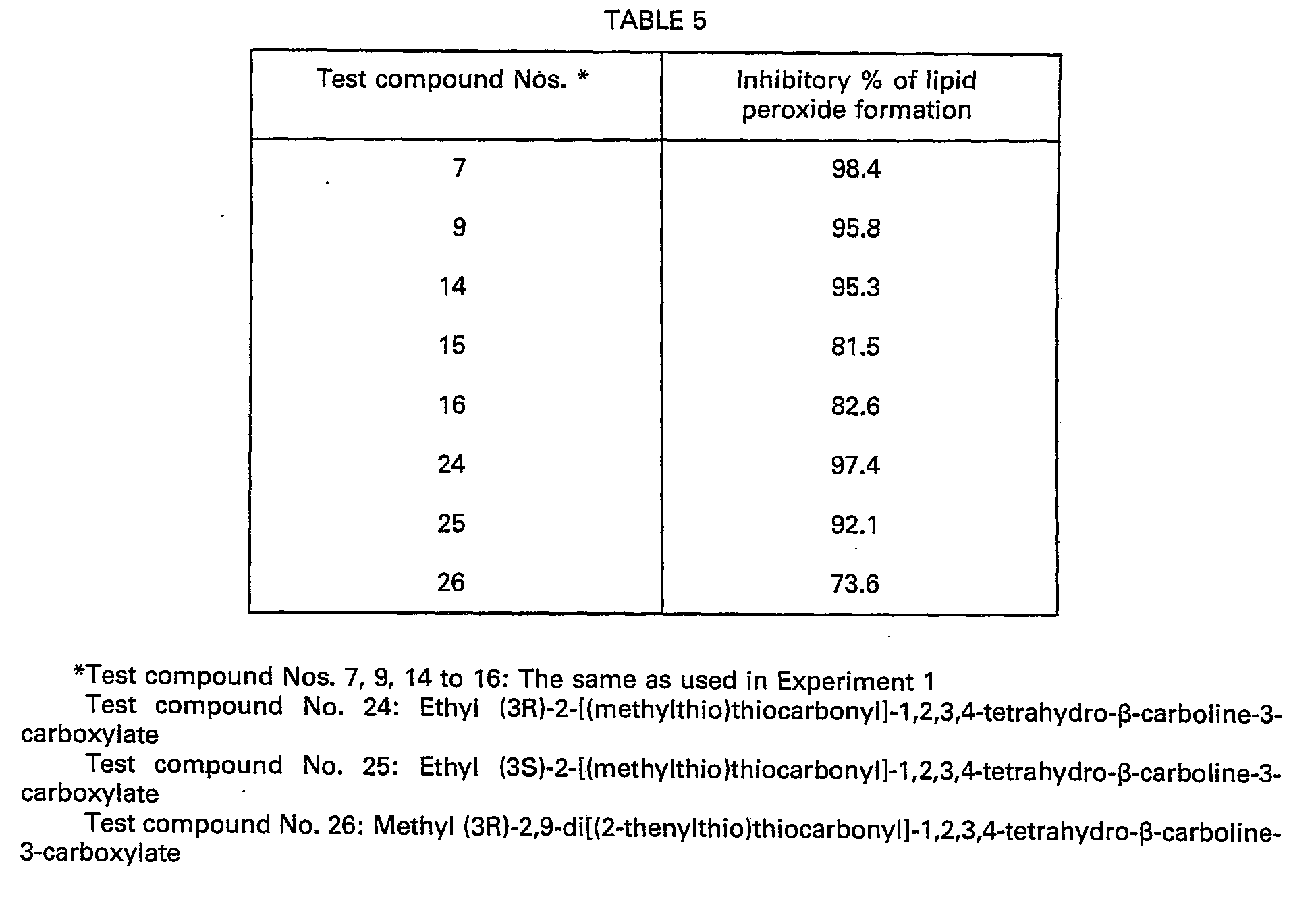
- 0.1 ml of a dimethylsulfoxide solution containing 3 x 10⁻³ M of a test compound was added to a mixture of 2.4 of 0.067 M potassium phosphate buffer solution (pH 7.4) and 0.5 ml of 10% rat brain- homogenate (final concentration of the test compound: 10-4M). After a one-hour incubation of the mixture at 37°C, one ml of 20% trichloroacetic acid was added thereto, and lipid peroxide formations were determined by the thiobarbituric acid colorimetric method (J. Robak et al., Biochem. Pharmacol., Vol. 25, page 2233 (1976)). Percentage inhibiltion of lipid peroxide formation of the test compound was calculated according to the following equation:

- Note: *: tube containing the test compound
- **: tube containing an equal volume of dimethylsulfoxide instead of the test compound solution
- ΔOD was calculated as [(optical density measured at 532 nm) - (optical density measured at 600 nm)]
- The results are shown in the following Table 5.
- To a mixture of (3RS)-1,2,3,4-tetrahydro-β-carboline-3-carboxylic acid (216 g), 1 N NaOH (20.3 ml), ethanol (10 ml) and water (20 ml) is added dropwise carbon disulfide (0.84 g). The mixture is stirred under ice-cooling for one hour. The reaction mixture is distilled under reduced pressure to remove the solvent. The residue is dissolved in ethanol, and the undissolved materials are filtered off. The filtrate is concentrated under reduced pressure to give the title compound (3.2 g, 92%) as powder.
-
- (i) To a mixture of (3R)-1,2,3,4-tetrahydro-β-carboline-3-carboxylic acid (6.49g), KOH (3.5 g) and 50% ethanol (110 ml) is added dropwise carbon disulfide (1.82 ml) under ice-cooling. The mixture is stirred at room temperature for one hour, and thereto is added dropwise methyl iodide (2.5 ml). The mixture is further stirred at room temperature for 4 hours. The reaction mixture is distilled to remove the solvent. The residue is dissolved in water. The solution is acidified with 10% HCI and extracted with ethyl acetate. The extract is washed with water, dried and distilled to remove the solvent. The residue is purified by silica gel column chromatography (solvent, chloroform:methanol:acetic acid = 97:2:1), and the product is crystallized from aqueous ethanol to give the title compound (5.5 g, 60%), m.p. 103-106°C (decomp.).
-

- NMR (CDCI3, δ): 2.65 (s, 3H, N-CSSCH3)
- Mass (m/e): 306 (M+), 258 (M+ - CH3SH)
-
- (ii) In the same manner as described in the above (i), (3R) - 1,2,3,4 - tetrahydro - β - carboline - 3 - carboxylic acid (21.62 g), triethylamine (21.25 g), carbon disulfide (8 g), methyl iodide (15.6 g), methanol (42 ml) and water (210 ml) are reacted. The precipitated product is collected by filtration, washed with ether and dried to give triethylamine salt of the title compound (39.3 g, 78%) as colorless needles, m.p. 175-176°C (decomp.) (recrystallized from aqueous methanol).
- The triethylamine salt obtained above is treated with 10% HCI to give the title compound, which is crystallized from ethanol, m.p. 103-106°C (decomp),

-
- (i) In the same manner as described in Example 2, (i), (3S) - 1,2,3,4 - tetrahydro - β - carboline - 3 - carboxylic acid (6.49 g), KOH (3.5 g), carbon disulfide (1.82 ml), methyl iodide (2.5 ml) and 50% ethanol (110 ml) are reacted. The product is treated with dicyclohexylamine to give dicyclohexylamine salt of the title compound (10.69 g, 73%) as colorless needles, m.p. 205°C (recrystallized from methanol).
The dicyclohexylamine salt obtained above is treated with 10% HCI to give the title compound, which is crystallized from aqueous ethanol, m.p. 103-105°C (decomp.).-

- NMR (CDCI3, δ): 2.66 (s, 3H, N-CSSCH3)
- Mass (m/e): 306 (M+), 258 (M+ - CH3SH)
-
- (ii) In the same manner as described in Example 2 (i), (3S) - 1,2,3,4 - tetrahydro - β - carboline - 3 - carboxylic acid (21.62 g), NaOH) (8.66 g), carbon disulfide (6.4 ml), methyl iodide (7.1 ml), dimethylsulfoxide (150 ml) and water (10 ml) are reacted and treated. The residue thus obtained is purified likewise by silica gel column chromatography (solvent, chloroform:methanol:acetic acid = 500:10:1) to give the following two compounds:
- (3S) - 2,9 - Di[(methylthio)thiocarbonyl] - 1,2,3,4 - tetrahydro - β - carboline - 3 - carboxylic acid (2.4 g), m.p. 192-194°C (recrystallized from chloroform); NMR (CDCl3, δ): 2.70 (s, 3H, N-CSS-CH3), 2.85 (s, 3H, N-CSSCH3); Mass (m/e): 396 (M+).
- (3S) - 2 - [(Methylthio)thiocarbonyl] - 12,3,4 - tetrahydro - β - carboline - 3 - carboxylic acid (21.4 g, 70%), m.p. 103-105°C (decomp.),

- In the same manner as described in Example 2, (i), (3RS) - 1,2,3,4 - tetrahydro - β - carboline - 3 - carboxylic acid (42.25 g), KOH (23.38 g), carbon disulfide (12.1 ml), methyl iodide (16.3 ml) and 50% ethanol (600 ml) are reacted. The product is crystallized from chloroform to give the title compound (50.2 g, 59%), m.p. 111-113°C, NMR (CDCI3, δ); 2.68 (s, 3H, N-CSSCH3), Mass (m/e): 306 (M2), 258 (M+ - CH3SH).
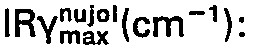
- (3RS) - 2 - [(Methylthio)thiocarbonyl] - 1,2,3,4 - tetrahydro - β - carboline - 3 - carboxylic acid (1.7 g) is dissolved in a mixture of ethanol (4 ml) - 1N NaOH (4 ml) under ice-cooling, and the mixture is distilled under reduced pressure to remove the solvent. The resulting product is lyophilized give the title compound (1.3 g, quantitatively) as colorless powder. IRγnujol max(cm-1): 1590; NMR (D20, δ): 2.66 (s, 3H, N―CSSCH3).
- To a mixture of (3RS) - 1,2,3,4 - tetrahydro - β - carboline - 3 - carboxylic acid (4.32 g), KOH (96%, 2.34 g) and 50% ethanol (80 ml) is added dropwise disulfide (1.8 ml) at room temperature, and the mixture is stirred at the same temperature for 30 minutes. To the mixture is added dropwise ethyl iodide (4.68 g), and the mixture is further stirred at room temperature for 48 hours and distilled to remove the solvent. To the residue is added water, and the mixture is washed with ether. The aqueous layer is acidified with 10% HCI and extracted with ethyl acetate. The extract is washed with water, dried and then distilled to remove the solvent. The residue is recrystallized from chloroform to give the title compound (4.45 g, 69%) as colorless needles, m.p. 177-178°C, NMR (CDCl3―DMSO-d6, 5): 1.38 (t, J=7.0 Hz, 3H, N―CSSCH2CH3), 3.34 (q, J=7.0 Hz, 2H, N-CSSCH2CH3), Mass (m/e): 320 (M+), 258 (M+―CH3CH2SH).
- To a mixture of (3RS) - 1,2,3,4 - tetrahydro - β - carboline - 3 - carboxylic acid (4.32 g), dicyclohexylamine (7.3 g) and 50% ethanol (55 ml) is added dropwise carbon disulfide (1.2 ml). The mixture is stirred at room temperature for 30 minutes, and thereto is added dropwise n-propyl iodide (3.4 g). The mixture is further stirred at room temperature for 10 minutes. The reaction mixture is distilled to remove the solvent. The resulting precipitates are collected by filtration and washed with ether to give dicyclohexylamine salt of the title compound. This product is treated with 10% HCI to give the title compound (4.6 g, 69%) as colorless needles, m.p. 180°C (decomp.) (recrystallized from ethanol).
- NMR (CDCl3-DMSO-d6, 5): 104 (t, J=7.0 Hz, 3H, N-CSSCH2CH2CH3)
- Mass (m/e: 258 (M+―CH3CH2CH2SH)
- In the same manner as described in Example 6, (3RS) - 1,2,3,4 - tetrahydro - β - carboline - 3 - carboxylic acid (3.24 g), KOH (96%, 1.75 g), carbon disulfide (0.91 ml) and isopropyl iodide (1.8 ml) are reacted and treated. The product is crystallized from chloroform to give the title compound (1.59 g) as colorless needles, m.p. 188-190°C.
- NMR (CDCI3-DMSO-d6, δ): 1.45 (d, 6H, J=6 Hz, N-CSSCH(CH3)2)
- Mass (m/e): 258 (M+―HSCH(CH3)2).
- In the same manner as described in Example 6, (3RS) - 1,2,3,4 - tetrahydro - β - carboline - 3 - carboxylic acid (3.24 g), KOH (96%, 1.75 g), 50% ethanol (65 ml), carbon disulfide (0.91 ml) and n-butyl iodide (3.3 g) are reacted and treated. The product is crystallized from chloroform to give the title compound (1.9 g) as pale yellow crystals, m.p. 163-164°C.
- NMR (DMSO-d6, 5): 0.91 (m, 3H, N-CSS(CH2)3-CH3)
- Mas (m/e): 348 (M+), 258 (M+-HS(CH2)3-CH3).
- In the same manner as described in Example 6, (3RS)-1,2,3,4-tetrahydro-β-carboline-3-carboxylic acid (4.32 g), NaOH (1.8 g), dimethylsulfoxide (25 ml), water (2 ml), carbon disulfide (1.45 ml) and cyclohexyl bromide (3.9 g) are reacted and treated. The product is crystallized from chloroform-n-hexane to give the title compound (4.5 g, 61%), m.p. 150.5-151°C.
- Mass (m/e):

- In the same manner as described in Example 6, (3RS)-1,2,3,4-tetrahydro-β-carboline-3-carboxylic acid (4.32 g), NaOH (1.65 g), water (2 ml), dimethylsulfoxide (24 ml), carbon disulfide (1.2 ml) and n-decyl bromide (5.31 g) are reacted and treated. The residue thus obtained is purified by silica gel column chromatography (solvent, chloroform:methanol:acetic acid = 98:1:0.5) and then crystallized from n-hexane to give the title compound (4.8 g, 55%), m.p. 152.5-154°C (decomp.).
- NMR (DMSO-d6, δ): 0.92 (m, 3H, N-CSS(CH2)g-CH3).
- Mass (m/e): 432 (M+), 258 (M+ ―CH3―(CH2)9―SH).
- In the same manner as described in Example 6, (3RS)-1,2,3,4-tetrahydro-β-carboline-3-carboxylic acid (3.24 g), KOH (1.75 g), 50% ethanol (60 ml), carbon disulfide (1.8 ml) and allyl chloride (2.3 g) are reacted and treated. The product is crystallized from chloroform to give the title compound (3.0 g, 59%), m.p. 161-162°C.
- Mass (m/e): 258 (M+ -CH2=CHCH2SH).
- In the same manner as described in Example 6, (3RS)-1,2,3,4-tetrahydro-β-carboline-3-carboxylic acid (3.24 g), KOH (1.75 g), 50% ethanol (70 ml), carbon disulfide (0.91 ml) and methylthiomethyl chloride (1.74 g) are reacted and treated. The product thus obtained is purified by silica gel column chromatography (solvent, chloroform:methanol:acetic acid = 97:2:1) to give the title compound (2.61 g) as a pale yellow powder.
- NMR (CDCI3, 6): 2.19 (s, 3H, N-CSSCH2SCH3).
- Mass (m/e): 258 (M+ -HSCH2SCH3).
- In the same manner as described in Example 6, (3RS)-1,2,3,4-tetrahydro-β-carboline-3-carboxylic acid (2.16 g), 10N NaOH (2 ml), dimethylsulfoxide (6 ml), carbon disulfide (912 mg) and 2-(dimethylamino)ethyl chloride hydrochloride (1.73 g) are reacted. The precipitates are collected by filtration, washed with water and ethanol, and then dried to give the title compound (3.11 g, quantitatively) as yellow powder.
- NMR (DMSO-ds-CF3COOH, δ): 2.90 (s, 6H, N―CSSCH2CH2N3)2).
- In the same manner as described in Example 6, (3RS)-1,2,3,4-tetrahydro-β-carboline-3-carboxylic acid (2.16 g), 10N NaOH (2 ml), dimethylsulfoxide (6 ml), carbon disulfide (912 mg) and ethyl bromoacetate (2.0 g) are reacted. The product is recrystallized from ethanol to give the title compound (1.41 g, 65%) as colorless needles, m.p. 190-192°C.
- NMR (CDCl3―DMSO-d6, δ): 1.30 (t, 3H, J=7.2 Hz, N-CSSCH2COOCH2CH3)
- Mass (m/e): 378 (M+), 258 (M+ ―HSCH2COOCH2CH3).
- To a mixture of (3R)-1,2,3,4-tetrahydro-β-carboline-3-carboxylic acid (5.4 g), 2N NaOH (25 ml) and 50% ethanol (70 ml) is added dropwise carbon disulfide (1.5 ml) at room temperature. The mixture is stirred at room temperature for 30 minutes, and thereto is added dropwise benzyl bromide (3.5 ml), and the mixture is further stirred at the same temperature for 3 hours and then distilled to remove the solvent. To the residue is added water, and the mixture is extracted with ether. The aqueous layer is acidified with 10% HCI, extracted with ethyl acetate. The extract is washed with water, dried and distilled to remove the solvent. The residue is purified by silica gel column chromatography (solvent, chloroform:methanol = 20:1) to give the title compound (4.5 g) as pale yellow powder.
-

- NMR (CDCI3, δ): 4.56 (s, 2H, N―CSSCH2C6H5).
- Mass (m/e): 258 (M+ ―C6H5CH2SH).
- In the same manner as described in Example 16, (3S)-1,2,3,4-tetrahydro-β-carboline-3-carboxylic acid (21.6 g), K2CO3 (13.8 g), water (550 ml), ethanol (550 ml), carbon disulfide (6 ml) and benzyl bromide (14 ml) are reacted and treated. The residue is purified by silica gel column chromatography (solvent, chloroform:methanol = 10:1) to give the title compound (20 g, 52.3%) as powder.
-

- NMR (CDCI3, δ): 4.57 (s, 2H, N-CSSCH2C6H5).
- Mass (m/e): 258 (M+ ―C6H5CH2SH).
- To a mixture of (3RS)-1,2,3,4-tetrahydro-β-carboline-3-carboxylic acid (5.4 g), 2N NaOH (25 ml) and 50% ethanol (70 ml) is added dropwise carbon disulfide (1.5 ml) at room temperature. The mixture is stirred at room temperature for 30 minutes, and thereto is added dropwise benzyl bromide (3.5 ml), and the mixture is further stirred at the same temperature for 3 hours and then distilled to remove the solvent. To the residue is added water, and the mixture is extracted with ether. The aqueous layer is acidified with 10% HCI, and extracted with ethyl acetate. The extract is washed with water, dried and distilled to remove the solvent. The residue is purified by silica gel column chromatography (solvent, chloroform:methanol = 20:1) to give the title compound (4.8 g, 50%) as pale yellow powder.
- NMR (CDCI3, δ): 4.56 (s, 2H, N―CSSCH2H6H5).
- Mass (m/e): 258 (M+ ―C6H5CH2SH).
- In the same manner as described in Example 16, (3R)-1,2,3,4-tetrahydro-β-carboline-3-carboxylic acid (5.4 g), 2N NaOH (25 ml), 50% ethanol (70 ml), carbon disulfide (1.45 ml) and 4-chlorobenzyl chloride (5.65 g) are reacted and treated. The residue is purified by silica gel column chromatography (solvent, chloroform:methanol:acetic acid = 97:2:1) to give the title compound (5.86 g, 57%) as pale yellow powder.
-

- NMR (CDCI3, δ): 4.52 (s, 2H, N-CSSCHzC6H4-p-CI).
- Mass (m/e): 258 (M+ ―p-Cl―C6H4CH2SH).
- In the same manner as described in Example 16, (3S)-1,2,3,4-tetrahydro-β-carboline-3-carboxylic acid (1.08 g), 2N NaOH (5 ml), 50% ethanol (15 ml), carbon disulfide (0.3 ml) and 4-chlorobenzyl chloride (1.13 g) are reacted and treated. The product is crystallized from n-hexane to give the title compound (1.44 g, 69%), m.p. 139-141°C (decomp.).
-

- NMR (CDCI3, δ): 4.52 (s, 2H, N―CSSCH2C6H4-p-Cl).
- Mass (m/e): 258 (M+ ―p-Cl-C6H4CH2SH).
- In the same manner as described in Example 16, (3RS)-1,2,3,4-tetrahydro-β-carboline-3-carboxylic acid (1.08 g), 2N NaOH (5 ml), 50% ethanol (15 mi), carbon disulfide (0.3 ml) and 4-chlorobenzyl chloride (1.13 g) are reacted and treated. The product is purified by silica gel column chromatography (solvent, chloroform:methanol:acetic acid = 97:2:1) to give the title compound (1.36 g, 65%), as pale yellow powder.
- NMR (CDCI3, δ): 4.52 (s, 2H, N-CSSCH2C6H4-p-CI).
- Mass (m/e): 258 (M+ ―p-Cl-C6H4CH2SH).
- In the same manner as described in Example 16, (3R)-1,2,3,4-tetrahydro-β-carboline-3-carboxylic acid (3.24 g), KOH (1.75 g), 70% ethanol (45 ml), carbon disulfide (0.88 ml) and 3,4-dichlorobenzyl chloride (3.52 g) are reacted and treated. The product is purified by silica gel column chromatography (solvent, chloroform:methanol acetic acid = 97:2: 1) to give the title compound (3.37 g, 51 %), as pale yellow powder.
- [α]20 D -129.2° (c = 1.0, methanol).
- NMR (CDCI3-DMSO-ds, δ):

- Mass (m/e):

- In the same manner as described in Example 16, (3S)-1,2,3,4-tetrahydro-β-carboline-3-carboxylic acid (3.24 g), KOH (1.75 g), 70% ethanol (45 ml), carbon disulfide (0.88 ml) and 3,4-dichlorobenzyl chloride (3.52 g) are reacted and treated. The product is purified by silica gel column chromatography (solvent, chloroform:methanol:acetic acid = 97:2:1) to give the title compound (3.63 g, 54%), as pale yellow powder.
- +131.4° (c = 1.0, methanol).

- NMR (CDCl3―DMSO-d6, δ):

- Mass (m/e):

- In the same manner as described in Example 16, (3R)-1,2,3,4-tetrahydro-β-carboline-3-carboxylic acid (0.54 g), KOH (0.29 g), 70% ethanol (17 ml), carbon disulfide (0.15 ml) and 4-(benzyloxycarboxyl- amino)benzyl chloride (0.76 g) are reacted and treated. The product is purified by silica gel column chromatography (solvent, chloroform:methanol:acetic acid = 97:2:1) to give the title compound (0.51 g), as pale yellow powder.
- [α]-97.0° (c = 1.0, methanol).

- NMR (CDCI3, δ):

- Mass (m/e):

- In the same manner as described in Example 16, (3R)-1,2,3,4-tetrahydro-β-carboline-3-carboxylic acid (3.24 g), KOH (1.75 g), carbon disulfide (0.91 ml), dimethylsulfoxide (15 ml), water (7 ml) and 4-(formylamino)benzyl chloride (2.54 g) are reacted and treated. The product is purified by silica gel column chromatography (solvent, chloroform:methanol:acetic acid = 94:5:1) to give the title compound (2.58 g), as pale yellow powder.
-

- NMR (CDCI3-DMSO-d6, δ):

- Mass (m/e):

- (3R)-2-[(4-(Formylamino)benzylthio)thiocarbonyl]-1,2,3,4-tetrahydro-β-carboline-3-carboxylic acid (1.46 g) is dissolved in ethanol (34 ml) and thereto is added thioglycolic acid (0.04 ml) and is further added dropwise 6N HCI (34 ml). The mixture is stirred under argon stream for 2.5 hours and then distilled under reduced pressure to remove the solvent. The residue is purified by silica gel column chromatography (solvent, chloroform:methanol:acetic acid = 94:5:1-20:10:1) to give the title compound (0.52 g), as pale yellow powder.
-

- NMR (CDCl3―DMSO-d6, δ):

- Mass (m/e):

- In the same manner as described in Example 16, (3RS)-1,2,3,4-tetrahydro-β-carboline-3-carboxylic acid (4.32 g), 10N NaOH (4 ml), carbon disulfide (1.4 ml), dimethylsulfoxide (20 ml) and 4-methoxybenzyl bromide (4.02 g) are reacted and treated. The product is crystallized from isopropyl ether to give the title compound (6.50 g, 79%) as colorless needles, m.p. 195-196°C.
- NMR (CDCI3-DMSO-d6, δ):

- Mass (m/e):

- In the same manner as described in Example 16, (3RS)-1,2,3,4-tetrahydro-β-carboline-3-carboxylic acid (4.22 g), 10N NaOH (3.9 ml), carbon disulfide (1.4 ml), dimethylsulfoxide (12 ml) and 4-nitrobenzyl bromide (4.63 g) are reacted and treated. The product is crystallized from ethanol to give the title compound (4.7 g, 54%) as yellow crystals, m.p. 194-195°C.
- NMR (DMSO-ds, δ):

- Mass (m/e):

- In the same manner as described in Example 16, (3RS)-1,2,3,4-tetrahydro-β-carboline-3-carboxylic acid (4.22 g), 10N NaOH (3.9 ml), carbon disulfide (1.4 ml), dimethylsulfoxide (12 ml) and 4-methylbenzyl chloride (3.3 g) are reacted and treated. The product is crystallized from ethanol to give the title compound (3.13 g), m.p. 188-190°C.
- NMR (CDCl3―DMSO-d6, 5):

- Mass (m/e):

- In the same manner as described in Example 16, (3RS)-1,2,3,4-tetrahydro-β-carboline-3-carboxylic acid (1.08 g), 10N NaOH (1.5 ml), carbon disulfide (456 mg), dimethylsulfoxide and 4-bromomethylbenzoic acid (1.29 g) are reacted and treated. The product is crystallized from chloroform to give the title compound (1.23 g, 53%), m.p. 152-153°C (decomp.).
- NMR (CDCl3―DMSO-d6, δ):

- Mass (m/e):

- In the same manner as described in Example 16, (3R)-1,2,3,4-tetrahydro-β-carboline-3-carboxylic acid (0.92 g), 2N NaOH (4.5 ml), carbon disulfide (0.27 ml), 50% ethanol (15 ml) and 3-(trifluoromethyl)benzyl chloride (0.73 ml) are reacted and treated. The product is purified by silica gel column chromatography to give the title compound (0.73 g) as powder.
-

- NMR (CDCl3―DMSO-d6, δ): 4.69 (s, 2H, N―CSSCH2―C6H4-m-CF3).
- Mass (m/e): 258 (M+ -HSCH2-CeH4-m-CF3).
- (3R)-1,2,3,4-Tetrahydro-β-carboline-3-carboxylic acid (8.43 g) is dissolved in dimethylsulfoxide (25 ml) and thereto is added 20N NaOH (4.3 ml) and is further added dropwise carbon disulfide (2.83 ml) at 20°C. The mixture is stirred at the same temperature for 30 minutes, and to the mixture is added dropwise 2- thenyl chloride (6.2 g). The mixture is stirred at room temperature for one hour. The reaction mixture is poured to water and is extracted with ether-n-hexane (1:4). The aqueous layer is acidified with 10% HCI and extracted with ethyl acetate. The extract is washed with water, dried and then distilled to remove the solvent. The residue is purified by silica gel column chromatography (solvent, chloroform:methanol:acetic acid = 98:1:1) to give the following two compounds.
- (3R)-2,9-Di[(2-thenylthio)thiocarbonyl]-1,2,3,4-tetrahydro-β-carboline-3-carboxylic acid (280 mg) as pale yellow powder,
-

- NMR (CDCI3, 5):

- (3R)-2-[(2-Thenylthio)thiocarbonyl]-1,2,3,4-tetrahydro-β-carboline-3-carboxylic acid (9.8 g, 65%) as pale yellow powder,
-

- NMR (CDCI3, δ):
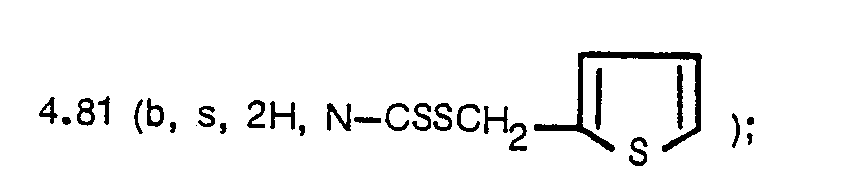
- Mass (m/e):

- In the same manner as described in Example 32, (3S)-1,2,3,4-tetrahydro-β-carboline-3-carboxylic acid (4.33 g), KOH (2.33 g), carbon disulfide (1.22 ml), 50% ethanol (80 ml) and 2-thenyl chloride (3.1 g) are reacted and treated to give the title compound (3.15 g) as pale yellow powder.
-

- NMR (CDCI3, 5):

- Mass (m/e):

- In the same manner as described in Example 32, (3RS)-1,2,3,4-tetrahydro-β-carboline-3-carboxylic acid (4.32 g), 20N NaOH (2.2 ml), carbon disulfide (1.45 ml), dimethylsulfoxide (13 ml) and 2-thenyl chloride (3.18 g) are reacted and treated. The product is crystallized from ethanol to give the title compound (4.1 g) as pale yellow crystals, m.p. 172°C (decomp.),
- NMR (CDCI3, δ):

- Mass (m/e):

- In the same manner as described in Example 32, (3R)-1,2,3,4-tetrahydro-l3-carboline-3-carboxylic acid (8.65 g), KOH (4.67 g), carbon disulfide (2.43 ml), 75% ethanol (120 ml) and furfuryl chloride which is prepared from furfuryl alcohol (9.24 g), thionyl chloride (12.34 g) and pyridine (8.94 g), are reacted and treated to give the title compound (2.31 g) as pale yellow powder.
-

- NMR (CDCI3, δ):

- Mass (m/e):

- In the same manner as described in Example 32, (3RS)-1,2,3,4-tetrahydro-β-carboline-3-carboxylic acid (3.24 g), KOH (1.75 g), carbon disulfide (0.91 ml), 50% ethanol (70 ml) and 2-pyridylmethyl chloride hydrochloride (2.95 g) are reacted and treated to give the title compound (2.07 g) as pale yellow powder.
- NMR (DMSO-d6, 5):

- Mass (m/e):

- In the same manner as described in Example 32, (3R)-1,2,3,4-tetrahydro-β-carboline-3-carboxylic acid (3.24 g), KOH (1.75 g), carbon disulfide (0.91 ml), 50% ethanol (70 ml) and 1-naphthylmethyl chloride (3.14 g) are reacted and treated to give the title compound (2.84 g) as pale yellow powder.
-

- NMR (CDCl3, 5): 4.98 (s, 2H, N―CSSCH2―C10H7).
- Mass (m/e): 258 (M+ ―HSCH2―C10H7).
- In the same manner as described in Example 32, (3RS)-1,2,3,4-tetrahydro-p-carboline-3-carboxylic acid (3.24 g), KOH (1.75 g), carbon disulfide (0.91 ml), dimethylsulfoxide (20 ml), water (5 ml) and phenethyl bromide (3.33 g) are reacted and treated. The product is crystallized from chloroform to give the title compound (2.77 g), m.p. 89-90°C.
- NMR (CDCl3―DMSO-d6, δ): 6.90―7.65 (m, 9H, Aromatic H).
- Mass (m/e): 396 (M+), 258 (M+ -HSCH2CH2C6H5).
- In the same manner as described in Example 32, (3RS)-1,2,3,4-tetrahydro-(3-carboline-3-carboxylic acid (2.16 g), 10N NaOH (2 ml), carbon disulfide (912 mg), dimethylsulfoxide (6 ml) and cinnamyl bromide (2.364 g) are reacted and treated. The product is crystallized from ethanol to give the title compound (1.34 g), m.p. 200-202°C.
- NMR (CDCl3―DMSO-d6, δ): 6.92-7.50 (m, 9H)
- Mass (m/e):

- To a mixture of (3RS)-1,2,3,4-tetrahydro-β-carboline-3-carboxylic acid (4.32 g), triethylamine (5.8 ml), ethanol (15 ml) and water (25 ml) is added dropwise carbon disulfide (1.26 ml). The mixture is stirred at room temperature for 30 minutes, and to the mixture is added phenacyl bromide (4.18 g), and the mixture is stirred for 30 minutes. The precipitates are collected by filtration, washed with water and ether to give triethylamine salt of the title compound (9.0 g, 88%), m.p. 146-147°C (decomp.) (recrystallized from methanol).
- The above triethylamine salt is treated with 10% HCI and recrystallized from ethanol-water to give the title compound, m.p. 116°C.
- NMR (CDCl3―DMSO-d6, δ): 5.62 (s, 2H, N―CSSCH2COC6H5).
- Mass (m/e): 258 (M+―HSCH2COC6H5).
- (3RS)-1,2,3,4-Tetrahydro-β-carboline-3-carboxylic acid (3.24 g) is dissolved in dimethylsulfoxide (9 ml) and thereto is added 10N NaOH (33 ml) and further added carbon disulfide (0.91 ml) at room temperature. The mixture is stirred at room temperature for one hour, and to the mixture is added benzenediazonium chloride which is prepared from aniline (1.49 g), NaN02 (1.15 g), conc. HCI (4.8 ml) and water (18.5 ml), and the mixture is stirred at 10°C for one hour. The reaction mixture is treated in the same manner as described in Example 32. The product is crystallized from ethanol to give the title compound (676 mg) as pale yellow prisms, m.p. 167-168°C (decomp.).
- NMR (CDCI3, δ): 7.0-7.60 (m, 9H, aromatic H).
- To a mixture of (1S, 3S)-1-methyl-1,2,3,4-tetrahydro-β-carboline-3-carboxylic acid (2.30 g), 10N NaOH (2 ml) and dimethylsulfoxide (6 ml) is added dropwise carbon disulfide (912 mg) and further added dropwise methyl iodide (1.7 g) at 0°C. The mixture is stirred at room temperature for one hour, and to the mixture is added water, and then extracted with ethyl acetate. The aqueous layer is acidified with 10% HCI and extracted with ethyl acetate. The extract is dried and distilled to remove the solvent. The residue is crystallized from chloroform to give the title compound (1.59 g, 50%) as colorless needles, m.p. 134―137°C (decomp.).
-

- NMR (CDCI3, 5): 1.70 (d, J=7.2Hz, 3H, C1―CH3), 2.75 (s, 3H, N-CSSCH3).
- Mass (m/e): 320 (M+), 272 (M+―CH3SH).
- (1RS, 3SR)-trans-1-Methyl-1,2,3,4-tetrahydro-β-carboline-3-carboxylic acid (1.15 g) is dissolved in methanol (30 ml)-water (3 ml) and thereto are added triethylamine (1.9 g) and carbon disulfide (912 mg). The mixture is stirred at room temperature for 20 minutes, and to the mixture is added methyl iodide (1.7 g) and the mixture is stirred at room temperature for 2 hours and then distilled under reduced pressure to remove the solvent. To the residue is added water, and the aqueous solution is acidified with 10% HCI and extracted with ethyl acetate. The extract is washed with water, dried and distilled to remove the solvent. The residue is recrystallized from aqueous ethanol to give the title compound (1.13 g, 70.6%) as colorless needles, m.p. 173-176°C.
- NMR (CDCI3, δ): 1.65 (d, J=6.5Hz, 3H, C1―CH3), 2.64 (s, 3H, N-CSSCH3).
- Mass (m/e): 272 (M+ -CH3SH).
- In the same manner as described in Example 43, (1RS, 3RS)-cis-1-ethyl-1,2,3,4-tetrahydro-β-carboline-3-carboxylic acid (1.22 g), triethylamine (1.21 g), carbon disulfide (456 mg), methyl iodide (852 mg), methanol (30 ml) and water (3 ml) are reacted and treated. The product is recrystallized from aqueous ethanol to give the title compound (880 mg, 52.7%) as colorless prisms, m.p. 198-200°C.
- NMR (CDCl3―DMSO-d6, 5): 2.67 (s, 3H, N―CSSCH3).
- Mass (m/e): 334 (M+), 286 (M+ -CH3SH).
- In the same manner as described in Example 43, (1RS, 3SR)-trans-1-ethyl-1,2,3,4-tetrahydro-l3-carboline-3-carboxylic acid (733 mg), triethylamine (707 mg), carbon disulfide (305 mg), methyl iodide (568 mg), methanol (20 ml) and water (2 ml) are reacted and treated. The product is recrystallized from aqueous ethanol to give the title compound (700 mg, 70%) as colorless prisms, m.p. 155―157°C.
- NMR (CDCI3, δ): 2.60 (s, 3H, N-CSSCH3).
- Mass (m/e): 286 (M+ -CH3SH).
- In the same manner as described in Example 43, (1RS, 3RS)-cis-1-n-butyl-1,2,3,4-tetrahydro-β-carboline-3-carboxylic acid (1.0 g), triethylamine (0.85 g), carbon disulfide (0.32 g), methyl iodide (0.6 g), methanol (20 ml) and water (10 ml) are reacted and treated. The product is recrystallized from aqueous ethanol to give the title compound (0.95 g, 71%), m.p. 100-105°C (decomp.).
- NMR (CDCI3, δ): 2.72 (s, 3H, N-CSSCH3).
- Mass (m/e): 362 (M+), 314 (M+ ―CH3SH).
- In the same manner as described in Example 43, (1RS, 3SR)-trans-1-n-butyl-1,2,3,4-tetrahydro-l3-carboline-3-carboxylic acid (1.2 g), triethylamine (1.02 g), carbon disulfide (0.39 g), methyl iodide (0.72 g), methanol (14 ml) and water (2 ml) are reacted and treated. The product is recrystallized from aqueous ethanol to give the title compound (1.2 g, 75%), m.p. 99-102°C (decomp.).
- NMR (CDCI3, δ): 2.59 (s, 3H, N-CSSCH3).
- Mass (m/e): 314 (M+ -CH3SH).
- In the same manner as described in Example 43, (1 RS, 3RS)-cis-1-hydroxymethyl-1,2,3,4-tetrahydro-β-carboline-3-carboxylic acid (54 mg), triethylamine (0.09 ml), carbon disulfide (0.03 ml), methyl iodide (0.03 ml), dimethylsulfoxide (0.5 ml), and water (0.1 ml) are reacted and treated. The product is purified by silica gel column chromatography (solvent, chloroform:methanol = 4:1) to give the following two compounds.
- Methyl (1RS, 5RS)-cis-1,2,4,5,6,11-hexahydro-4-oxo-1,5-iminooxocino[4,5-b]indole-12-carbodithioate (24 mg), m.p. 244―245°C.
- NMR (CDCl3―DMSO-d6, δ): 2.67 (s, 3H, N―CSSCH3).
- Mass (m/e): 318 (M+).
-

- (1RS, 3RS)-cis-1-(Hydroxymethyl-2-[(methylthio)thiocarbonyl]-1,2,3,4-tetrahydro-β-carboline-3-carboxylic acid (40 mg, 54%) as white powder.
- NMR (CDCI3-DMSO-ds, δ): 2.64 (s, 3H, N-CSSCH3).
- In the same manner as described in Example 43, (1 RS, 3SR)-trans-1-hydroxymethyl-1,2,3,4-tetrahydro-β-carboline-3-carboxylic acid (1.48 g), triethylamine (1.68 ml), carbon disulfide (0.73 ml), methyl iodide (0.75 ml) and 80% methanol (20 ml) are reacted and treated. The product is crystallized from aqueous ethanol to give the title compound (0.68 g), m.. 187-188°C (decomp.).
- NMR (CDCl3―DMSO-d6, δ): 2.66 (s, 3H, N-CSSCH3).
- Methyl (3RS)-9-methyl-2-[(methylthio)thiocarbonyl]-1,2,3,4-tetrahydro-β-carboline-3-carboxylic acid (2.84 g) is dissolved in methanol (15 ml)-dimethoxyethane (85 ml) and thereto is added 1N NaOH (10.3 ml). The mixture is stirred at room temperature for 10 hours and distilled under reduced pressure to remove the solvent. The residue is dissolved in water and acidified with 10% HCI and extracted with ethyl acetate. The extract is washed with saturated aqueous sodium chloride solution, dried and distilled to remove the solvent. The residue is recrystallized from ethanol to give the title compound (2.36 g, 86.7%) as colorless needles, m.p. 212-213°C.
- NMR (CDCI3, δ): 2.71 (s, 3H, N―CSSCH3), 3.57 (s, 3H, N―CH3).
- Mass (m/e): 320 (M+), 272 (M+ -CH3SH).
- (3R)-9-Benzyl-1,2,3,4-tetrahydro-(3-carboline-3-carboxylic acid (1.225 g) is dissolved in dimethylsulfoxide (20 ml) and thereto are added 10N NaOH (0.8 ml) and carbon disulfide (0.24 ml). The mixture is stirred at room temperature for 10 minutes and thereto is added dropwise methyl iodide (0.29 ml). The mixture is stirred at room temperature for 20 minutes and thereto is added water (100 ml). The mixture is acidified with 10% HCI and extracted with ethyl acetate. The extract is washed with water, dried and distilled to remove the solvent. The residue is purified by silica gel column chromatography (solvent, chloroform:methanol:acetic acid = 90:5:1) to give the title compound (0.89 g, 52%) as pale yellow powder.
-

- NMR (CDCI3, δ): 2.65 (s, 3H, N-CSSCH3), 5.17 (s, 2H, N―CH2C6H5).
- Mass (m/e): 396 (M+), 348 (M+ ―CH3SH).
- In the same manner as described in Example 51, (3R)-9-benzyl-1,2,3,4-tetrahydro-β-carboline-3-carboxylic acid (1.225 g), 10N NaOH (0.8 ml), carbon disulfide (0.24 ml), dimethylsulfoxide (30 ml) and 2- thenyl chloride (0.66 g) are reacted and treated to give the title compound (0.635 g) as pale yellow powder.
-

- NMR (CDCl3―DMSO-d6, δ):

- Mass (m/e):

- Methyl (3RS)-1,2,3,4-tetrahydro-p-carboline-3-carboxylate (2.30 g) is dissolved in methanol (50 ml) and thereto are added triethylamine (1.21 g) and carbon disulfide (920 mg). The mixture is stirred at room temperature for 20 minutes and thereto is added dropwise methyl iodide (1.70 g). The mixture is stirred for 4 hours and distilled under reduced pressure to remove the solvent. The residue is dissolved in ethyl acetate, and the mixture is washed with water, dried and distilled to remove the solvent. The residue is recrystallized from ether-n-hexane to give the title compound (2.10 g, 65.6%) as colorless needles, m.p. 132-134°C.
- NMR (CDCI3, δ): 2.66 (s, 3H), N-CSSCH3), 3.53 (s, 3H, COOCH3).
- Mass (m/e): 320 (M+), 229 (M+ -CSSCH3).
- (3S)-2-[(4-Chlorobenzylthio)thiocarbonyl]-1,2,3,4-tetrahydro-β-carboline-3-carboxylic acid (2.08 g) is dissolved in methanol (30 ml) and thereto is added dropwise thionyl chloride (0.94 ml) at -20°C. The mixture is stirred at 50-60°C for 5 hours and then distilled to remove the solvent. The residue is dissolved in ethyl acetate, and the solution is washed with water, dried, treated with active carbon and distilled to remove the solvent. The residue is recrystallized from ethyl acetate-n-hexane to give the title compound (1.08 g, 50%) as colorless needles, m.p. 181-182°C (decomp.).
-

- NMR (CDCI3, δ): 3.55 (s, 3H, COOCH3), 4.54 (s, 2H, N-CSSCH2C6H4-p-CI).
- Mass (m/e): 430 (M+), 229 (M+ ―CSSCH2C6H4-p-Cl).
- In the same manner as described in Example 53, methyl (3S)-1,2,3,4-tetrahydro-β-carboline-3-carboxylate (5.00 g), triethylamine (2.61 g), carbon disulfide (1.57 ml), methanol (100 ml) and 2-thenyl chloride (3.45 g) are reacted and treated. The product is recrystallized from benzene-n-hexane to give the title compound (6.00 g, 70%) as pale yellow needles, m.p. 150-152°C.
-

- NMR (CDCI3, δ):

- Mass (m/e): 402 (M+).
- In the same manner as described in Example 53, ethyl (3R)-1,2,3,4-tetrahydro-β-carboline-3-carboxylate (224 mg), triethylamine (120 mg), carbon disulfide (0.08 ml), ethanol (25 ml) and methyl iodide (0.08 ml) are reacted and treated. The product is crystallized from ether to give the title compound (140 mg) as colorless prisms, m.p. 139-141°C.
-

- NMR (CDCl3, δ): 1.08 (t, J=7.2Hz, 3H, COOCH2CH3), 2.70 (s, 3H, N-CSSCH3).
- Mass (m/e): 334 (M+).
- In the same manner as described in Example 53, ethyl (3S)-1,2,3,4-tetrahydro-β-carboline-3-carboxylate (2.50 g), triethylamine (1.34 g), carbon disulfide (0.82 ml), ethanol (60 ml) and methyl iodide (0.84 ml) are reacted and treated. The product is recrystallized from ethyl acetate-n-hexane to give the title compound (2.55 g, 68%) as colorless prisms, m.p. 138-140°C.
-

- NMR (CDCI3, δ): 1.08 (t, J=7.2Hz, 3H, COOCH2CH3), 2.70 (s, 3H, N-CSSCH3).
- Mass (m/e): 334 (M+).
- In the same manner as described in Example 53, ethyl (3R)-1,2,3,4-tetrahydro-β-carboline-3-carboxylate (2.24 g), triethylamine (1.25 g), carbon disulfide (0.76 ml), ethanol (50 ml) and 2-thenyl chloride (1.65 g) are reacted and treated. The product is recrystallized from ethyl acetate-n-hexane to give the title compound (2.60 g, 63%) as colorless needles, m.p. 205-207°C.
-

- NMR (CDCl3―DMSO-d6, 5):

- Mass (m/e): 416 (M+).
- In the same manner as described in Example 53, ethyl (3S)-1,2,3,4-tetrahydro-β-carboline-3-carboxylate (2.24 g), triethylamine (1.20 g), carbon disulfide (0.73 ml), ethanol (50 ml) and 2-thenyl chloride (1.59 g) are reacted and treated. The product is recrystallized from ethyl acetate-n-hexane to give the title compound (2.57 g, 62%) as colorless needles, m.p. 206-207°C.
-

- NMR (CDCl3―DMSO-d6, 5):

- Mass (m/e): 416 (M+).
- In the same manner as described in Example 53, ethyl (3R)-1,2,3,4-tetrahydro-β-carboline-3-carboxylate (2.00 g), triethylamine (1.07 g), carbon disulfide (0.65 ml), ethanol (60 ml) and 4-chlorobenzyl chloride (1.72 g) are reacted and treated. The product is recrystallized from ethyl acetate-n-hexane to give the title compound (2.75 g, 69%) as pale yellow needles, m.p. 198-199°C.
-

- NMR (CDCI3, δ): 1.09 (t, J=6.6Hz, 3H, COOCH2CH3), 4.57 (s, 2H, N―CSSCH2CH6H4-p-Cl).
- Mass (m/e): 444 (M+).
- In the same manner as described in Example 53, ethyl (3S)-1,2,3,4-tetrahydro-β-carboline-3-carboxylate (2.00 g), triethylamine (1.07 g), carbon disulfide (0.65 ml), ethanol (60 ml) and 4-chlorobenzyl chloride (1.72 g) are reacted and treated. The product is recrystallized from ethyl acetate-n-hexane to give the title compound (2.59 g, 60%) as pale yellow needles, m.p. 195-197°C.
-

- NMR (CDCI3, δ): 1.09 (t, J=6.6Hz, 3H, COOCH2CH3), 4.57 (s, 2H, N―CSSCH2C6H4-p-Cl).
- Mass (m/e): 444 (M+).
- (3S)-2-[(4-Chlorobenzylthio)thiocarbonyl]-1,2,3,4-tetrahydro-β-carboline-3-carboxylic acid (2.08 g) is suspended in isopropyl alcohol (30 ml) and thereto is added dropwise thionyl chloride (0.47 ml) at -20°C. The mixture is stirred at room temperature for 17 hours and then refluxed at 90°C for 4 hours. After distilling off the solvent, the residue is dissolved in ethyl acetate. The solution is washed with water, dried and distilled to remove the solvent. The residue is recrystallized from ethyl acetate-n-hexane to give the title compound (477 mg), m.p. 178-180°C (decomp.).
-

- NMR (CDCl3, δ): 0.96 (d, 3H, H=6.2Hz, COOCH(CH3)2), 1.12 (d, 3H, J=6.2Hz, COOCH(CH3)2), 4.58 (s, 2H, N―CSSCH2C6H4-p-Cl).
- Mass (m/e): 458 (M+).
- A mixture of (1S, 3S)-1-methyl-2-[(methylthio)thiocarbonyl]-1,2,3,4-tetrahydro-β-carboline-3-carboxylic acid (1.28 g), diazomethane [prepared from N-nitrosomethylurea (3.0 g) and 40% NaOH (9.ml)] and ether (100 ml) is allowed to stand under ice-cooling overnight. The resulting precipitates are collected by filtration and dried to give the title compound (1.09 g, 82%), m.p. 229-230°C.
-

- NMR (CDCl3―DMSO-d6, δ): 1.71 (d, J=6.6Hz, 3H, (C1―CH3), 2.74 (s, 3H, N-CSSCH3), 3.63 (s, 3H, COOCH3).
- Mass (m/e): 334 (M+).
- In the same manner as described in Example 53, methyl (3RS)-9-methyl-1,2,3,4-tetrahydro-β-carboline-3-carboxylate hydrochloride (5.61 g), triethylamine (4.86 g), carbon disulfide (1.83 g), methanol (200 ml) and methyl iodide (3.40 g) are reacted and treated. The product is recrystallized from methanol to give the title compound (5.38 g, 80.5%) as colorless needles, m.p. 170-171°C.
- NMR (CDCI3, 5): 2.72 (s, 3H, N-CSSCH3), 3.56 (s, 6H,COOCH3, N-CH3).
- Mass (m/e): 334 (M+).
- In the same manner as described in Example 53, methyl (3RS)-9-methyl-1,2,3,4-tetrahydro-β-carboline-3-carboxylate (421 mg), triethylamine (365 mg), carbon disulfide (137 mg), methanol (20 ml) and 2-thenyl chloride (238 mg) are reacted and treated. The product is recrystallized from methanol to give the title compound (360 mg, 57.6%) as colorless prisms, m.p. 139-140°C.
- NMR (CDCI3, 5):

- Mass (m/e): 416 (M+).
- A mixture of (3R)-2,9-di[(2-thenylthio)thiocarbonyl]-1,2,3,4-tetrahydro-β-carboline-3-carboxylic acid (0.3 g), diazomethane [prepared from N-nitrosomethylurea (1.55 g) and 40% KOH (:4.5 ml)] and ether (30 ml) is allowed to stand at 0°C overnight. Undissolved substances are removed by filtration and the filtrate is concentrated to give the title compound (150 mg, 50%) as pale yellow powder.
- NMR (CDCI3, δ):

- Mass (m/e):

- In the same manner as described in Example 53, (3RS)-1,2,3,4-tetrahydro-β-carboline-3-carboxamide (0.71 g), triethylamine (0.46 ml), carbon disulfide (0.22 ml), 70% ethanol (20 ml) and methyl iodide (0.22 ml) are reacted and treated. The product is crystallized from ethyl acetate to give the title compound (0.414 g), m.p. 224-225°C (decomp.).
- NMR (CDCI3-DMSO-d6, δ): 2.75 (s, 3H, N-CSSCH3).
- Mass (m/e): 305 (M+).
- In the same manner as described in Example 53, (3S)-1,2,3,4-tetrahydro-β-carboline-3-carboxamide (0.71 g), triethylamine (0.46 ml), carbon disulfide (0.22 mi), 70% ethanol (20 ml) and 4-chlorobenzyl chloride (0.53 g) are reacted and treated to give the title compound (0.97 g, 71%) as white powder.
-

- NMR (CDCl3-DMSO-d6, 8): 4.56 (s, 2H, N―CSSCH2C6H4-p-Cl).
- Mass (m/e): 415 (M+).
- In the same manner as described in Example 53, (3RS)-1,2,3,4-tetrahydro-β-carboline-3-(N,N-dimethyl)carboxamide (1.95 g), KOH (0.47 g), carbon disulfide (0.49 ml), 75% ethanol (30 ml) and methyl iodide (0.54 ml) are reacted and treated to give the title compound (0.78 g) as pale yellow powder.
- NMR (CDCl3-DMSO-d6, 5): 2.69 (s, 3H, N-CSSCH3), 3.23 (s, 3H, N-CH3), 3.34 (s, 3H, N-CH3).
- Mass (m/e): 333 (M+).
- (3S)-1,2,3,4-Tetrahydro-β-carboline-3-carboxylic acid hydrazide (2.44 g) is dissolved in dimethylsulfoxide (30 ml) and thereto is added benzaldehyde (2 ml). The mixture is stirred at room temperature for 2 hours and thereto are added triethylamine (1.49 ml) and carbon disulfide (0.64 mi). The mixture is stirred at room temperature for one hour and thereto is added dropwise 4-chlorobenzyl chloride (1.7 g). The mixture is stirred at room temperature for 3 hours and thereto is added water. The mixture is extracted with ethyl acetate. The extract is washed with water, dried and distilled to remove the solvent to give the title compound (3.26 g, 59%), as pale yellow powder.
- Mass (m/e): 360 (M+ ―HSCH2C6H4-p-Cl).
- LiAlH4 (0.4 g) is suspended in tetrahydrofuran (80 ml) and thereto is added dropwise a solution of (3RS)-1,2,3,4-tetrahydro-β-carboline-3-N,N-dimethylcarboxamide (1.22 g) in tetrahydrofuran (120 ml). The mixture is refluxed for 20 hours. After cooling, excess LiAIH4 is decomposed with aqueous tetrahydrofuran. The reaction mixture is refluxed and the residue is washed with tetrahydrofuran. The filtrate and washing liquid are combined, dried and distilled to remove the solvent to give crude (3RS)-3-(N,N-dimethylamino)-methyl-1,2,3,4-tetrahydro-β-carboline (0.95 g). The crude product thus obtained is dissolved in 70% ethanol (15 ml) and thereto are added triethylamine (0.56 ml) and carbon disulfide (0.27 ml). The mixture is stirred for 30 minutes and thereto is added dropwise methyl iodide (0.27 ml). The mixture is stirred at room temperature for 3 hours. The mixture is distilled to remove the solvent. The residue is dissolved in ethyl acetate. The mixture is washed with water, dried and distilled to remove the solvent. The residue is purified by silica gel column chromatography (solvent, ethyl acetate:n-hexane = 4: 1) to give a free base of the title compound. The free base is treated with 10% HCI-ether to give the title compound (0.4 g) as powder.
- NMR (CDCI3-DMSO-d6, δ): 2.52 (s, 3H, N-CSSCH3), 2.81 (b.s, 6H, N(CH3)2).
- Mass (m/e): 319 (M+).
- In the same manner as described in Example 53, (3RS)-3-(1H-tetrazol-5-yl)-1,2,3,4-tetrahydro-β-carboline (0.257 g), triethylamine (0.23 ml), carbon disulfide (0.05 ml), 70% ethanol (4 ml) and methyl iodide (0.055 ml) are reacted and treated. The product is crystallized from chloroform to give the title compound (75 mg), m.p. 203-205°C (decomp.).
- Mass (m/e): 330 (M+).
- (1RS, 3RS)-cis-n-Propyl-1,2,3,4-tetrahydro-(3-carboline-3-carboxylic acid (450 mg) is dissolved in 80% methanol (10 ml), and thereto are added triethylamine (350 mg) and carbon disulfide (270 ml). The mixture is stirred at room temperature for 30 minutes, and methyl iodide (490 mg) is added to the mixture. The mixture is stirred at room temperature for 2 hours, and then distilled to remove the solvent. Water is added to the mixture, and the aqueous solution is acidified with 5% HCI, and extracted with ethyl acetate. The extract is washed with water, dried and then distilled to remove the solvent. The residue is treated with aqueous ethanol to give the title compound (350 mg, 59%) as pale yellow powder.
- NMR (CDCI3, 8): 2.72 (s, 3H, CSSCH3).
- Mass (m/e): 348 (M+), 300 (M+ -CH3SH).
- In the same manner as described in Example 73, (1RS, 3SR)-trans-1-n-propyl-1,2,3,4-tetrahydro-β-carboline-3-carboxylic acid (0.9 g), triethylamine (0.4 g), carbon disulfide (0.3 g), methyl iodide (0.56 g) and 80% methanol (14 ml) are reacted and treated. The product is treated with aqueous ethanol to give the title compound (0.47 g) as pale yellow powder.
- NMR (CDCI3, b): 2.60 (s, 3H, CSSCH3).
- Mass (m/e): 348 (M+), 300 (M+ -CH3SH).
- The following reference examples relate to the production of intermediates or starting materials for use in the production of compounds of Formula (I).
- DL-Nb-Benzyltryptophan methyl ester (34.48 g) is dissolved in methanol (340 ml) and thereto is added acetaldehyde (5.23 g), and the mixture is heated at 50°C for 5 hours. To the mixture is further added acetaldehyde (10.5 g), and the mixture is heated at 50°C overnight and then distilled to remove the solvent. To the residue is added water, and the mixture is made alkaline with conc. NH40H and extracted with ethyl acetate. The extract is washed with water, dried and distilled to remove the solvent. The residue is purified by silica gel column chromatography (solvent: chloroform) to give methyl (1RS, 3SR)-trans-2-benzyl-1-methyl-1,2,3,4-tetrahydro-(3-carboline-3-carboxylate, which is recrystallized from methanol, yield 16.1 g, colorless needles, m.p. 143-144°C; and further methyl (1RS, 3RS)-cis-2-benzyl-1-methyl-1,2,3,4-tetrahydro-β-carboline-3-carboxylate, 3.15 g, as powder.
- Methyl (1RS, 3SR)-trans-2-benzyl-1-methyl-1,2,3,4-tetrahydro-β-carboline-3-carboxylate (14.0 g) is dissolved in methanol (600 ml), and thereto is added 10% Pd-C (1.0 g). The mixture is subjected to catalytic reduction under atmospheric pressure. After the reaction, the catalyst is removed by filtration and washed with methanol. The filtrate and the washing liquid are combined and distilled to remove the solvent. The residue is recrystallized from methanol-isopropyl ether to give the title compound (10.08 g, 98.5%) as colorless prisms, m.p. 152-154°C.
- Methyl (1RS, 3SR)-trans-1-methyl-1,2,3,4-tetrahydro-β-carboline-3-carboxylate (2.44 g) is dissolved in methanol (30 ml), and thereto is added 1 N NaOH (13 ml). The mixture is stirred at room temperature for 3 hours, and the solvent is distilled off under reduced pressure. The residue is dissolved in water and is acidified with 10% HCI. The precipitated crystals are collected by filtration, washed with water and dried to give the title compound (2.21 g, 90%) as colorless needles, m.p. 242-244°C (recrystallized from aqueous ethanol).
- Methyl (1RS, 3RS)-cis-1-ethyl-1,2,3,4-tetrahydro-l3-carboline-3-carboxylate (5.0 g) is dissolved in methanol (30 ml) and thereto is added 1N NaOH (30 ml). The mixture is stirred at room temperature for 1.5 hour, and the solvent is distilled off. The residue is dissolved in water and is acidified with 5% HCI. The precipitated crystals are collected by filtration, washed with water and dried to give the title compound (3.40 g, 72%) as colorless needles, m.p. 236-237°C (recrystallized from aqueous ethanol).
- In the same manner as described above (1) using methyl (1 RS, 3SR)-trans-1-ethyl-1,2,3,4-tetrahydro-β-carboline-3-carboxylate (2.58 g), 1N NaOH (15 ml) and methanol (30 ml), there is obtained the title compound (1.50 g, 61.4%) as colorless needles, m.p. 242-243°C (recrystallized from aqueous ethanol).
- A mixture of DL-trypotophan methyl ester hydrochloride (30.49 g), n-valeraldehyde (12.4 g) and methanol (400 ml) is refluxed for 48 hours and then concentrated to about 1/5 volume. After cooling, the precipitates are separated by filtration and recrystallized from methanol to give methyl (1RS, 3RS)-cis-1-butyl-1,2,3,4-tetrahydro-β-carboline-3-carboxylate hydrochloride (20.5 g, 53%), m.p. 218°C (decomp.). The hydrochloride thus obtained is treated with aqeuous ammonia and recrystallized from diisopropyl ether-isopropanol to give the corresponding free base, m.p. 85-87°C.
- The filtrate obtained after filtration of the precipitates is concentrated, and to the residue is added water. The aqueous solution is made alkaline with aqueous ammonia and then extracted with chloroform. The extract is washed with water, dried and distilled to remove the solvent. The residue is purified by silica gel column chromatography (solvent: chloroform-methanol = 500:1) and then recrystallized from isopropyl ether-n-hexane to give methyl (1RS, 3SR)-trans-1-butyl-1,2,3,4-tetrahydro-β-carboline-3-carboxylate (8.6 g), m.p. 102-103°C.
- In the same manner as described in Reference Example 2-(1) using methyl (1RS, 3RS)-cis-1-butyl-1,2,3,4-tetrahydro-β-carboline-3-carboxylate (1.43 g), 1N NaOH (5.5 ml) and methanol (30 ml), there is obtained the title compound (1.06 g, 78%) as colorless needles, m.p. 215-216°C (recrystallized from methanol).
- In the same manner as described in Reference Example 2-(1) using methyl (1RS, 3SR)-trans-1-butyl-1,2,3,4-tetrahydro-β-carboline-3-carboxylate (2.0 g), 1 N NaOH (8.2 ml) and methanol (35 ml), there is obtained the title compound (1.51 g, 79%) as colorless needles, m.p. 204-205°C.
- In the same manner as described in Reference Example 2-(1) using methyl (1RS, 3RS)-cis-1-hydroxymethyl-1,2,3,4-tetrahydro-β-carboline-3-carboxylate (3.124 g), 1N NaOH (13.2 ml) and methanol (550 ml), there is obtained the title compound (2.66 g, 90%), m.p. 241-242°C.
- In the same manner as described in Reference Example 2-(1) using methyl (1RS, 3SR)-trans-1-hydroxymethyl-1,2,3,4-tetrahydro-l3-carboline-3-carboxylate (2.60 g), 10N NaOH (1.2 ml) and methanol (50 ml), there is obtained the title compound (1.60 g, 65%), m.p. 231-233°C.
- A mixture of D-Na-benzyltryptophan (5.88 g) which is prepared in the same manner as disclosed in Chem. Pharm. Bull., 13,88 (1956), 35% formalin (2 ml), 1N HCI (20 ml), ethanol (200 ml) and water (80 ml) is stirred overnight, and the reaction mixture is distilled to remove the solvent. The residue is recrystallized from ethanol to give the title compound (4.52 g, 73.8%) as colorless needles, m.p. 252-253°C, [a] ° +75.0° (c = 1.0, 0.1 N NaOH).
- L-Tryptophan methyl ester hydrochloride (5.09 g) is dissolved in methanol (60 ml) and thereto is added 35% formalin (1.89 g). The mixture is stirred at room temperature overnight, and the solvent is distilled off. The residue is recrystallized from methanol to give the title compound (4.42 g, 82.9%) as colorless needles, m.p. 250-253°C,

- In the same manner as described above (1) using DL-tryptophan methyl ester hydrochloride, there is obtained the title compound (75%) as colorless needles, m.p. 185-187°C.
- (3S)-1,2,3,4-Tetrahydro-β-carboline-3-carboxylic acid (32.5 g) is suspended in ethanol (500 ml) and thereto is added dropwise SOCI2 (13.0 ml) at 0°C. The mixture is refluxed for 8 hours and then distilled to remove the solvent. The residue is dissolved in water and is made alkaline with NH40H and extracted with ethyl acetate. The extract is dried and distilled to remove the solvent. The residue is recrystallized from ethyl acetate-isopropyl ether to give the title compound (24.86 g, 68%) as colorless needles, m.p. 135―137°C,

- In the same manner as described above (1) using (3R)-1,2,3,4-tetrahydro-β-carboline-3-carboxylic acid, there is obtained the title compound (54%) as colorless needles, m.p. 126-128°C,

- In the same manner as described in Reference Example 5 using DL-Na-methyltryptophan methyl ester hydrochloride (6.50 g), 35% formalin (2.8 ml) and methanol (150 ml), there is obtained the title compound (6.21 g, 91.4%) as colorless needles, m.p. 259-262°C (decomp.) (recrystallized from methanol).
- (3RS)-2-Benzyloxycarbonyl-1,2,3,4-tetrahydro-(3-carboline-3-carboxylic acid (21 g) which is prepared in the same manner as disclosed in Chem. Pharm. Bull., 25, 1559 (1977) is dissolved in tetrahydrofuran (320 ml), and thereto is added triethylamine (8.4 ml) and is further added dropwise ethyl chlorocarbonate (6.6 g). The mixture is stirred at -10°C for 40 minutes. To the mixture is added dropwise conc. aqueous ammonia (5.9 ml) at one time. The mixture is stirred at 0°C for 3 hours. The reaction mixture is filtered to remove triethylamine hydrochloride. The filtrate is distilled under reduced pressure, and the residue is extracted with ethyl acetate. The ethyl acetate layer is washed well with saturated aqueous sodium bicarbonate solution and water and then dried. The solution is distilled under reduced pressure to remove ethyl acetate and the residue is crystallized from n-hexane to give the title compound (17.9 g, 85%), m.p. 206-207°C (decomp.).
- (3RS)-2-Benzyloxycarbonyl-1,2,3,4-tetrahydro-β-carboline-3-carboxamide (2.47 g) is dissolved in ethanol (350 ml) and thereto are added acetic acid (0.02 ml) and 10% Pd-C (1.0 g). The mixture is subjected to catalytic reduction under atmospheric pressure. After the reaction, the catalyst is removed by filtration and washed with ethanol. The filtrate and the washing liquid are combined and distilled to remove the solvent. The residue is crystallized from ether to give the title compound (1.21 g, 79%), m.p. 212-216°C.
- In the same manner as described above (1) and (2) using (3S)-2-benzyloxycarbonyl-1,2,3,4-tetrahydro- a-carboline-3-carboxylic acid, there is obtained (3S)-1,2,3,4-tetrahydro-β-carboline-3-carboxamide as powder.
- (3RS)-2-Benzyloxycarbonyl-1,2,3,4-tetrahydro-β-carboline-3-carboxylic acid (21 g) is dissolved in tetrahydrofuran (200 ml) and thereto are added 1-hydroxy-benzotriazole (8.1 g), dimethylamine hydrochloride (4.9 g), triethylamine (8.4 ml) and DCC (i.e. N,N'-dicyclohexylcarbodiimide) (12.4 g), and the mixture is stirred at 5°C for one hour and further at room temperature for 16 hours. The reaction mixture is distilled under reduced pressure to remove tetrahydrofuran, and to the residue is added ethyl acetate (500 ml). After removing the precipitated dicyclohexylurea by filtration, the filtrate is washed with 10% HCI, water, saturated aqueous sodium bicarbonate solution and water in this order, dried and then distilled under reduced pressure to remove ethyl acetate. The resulting crystals are recrystallized from ethyl acetate to give the title compound (15.06 g, 67%), m.p. 179-180°C.
- (3RS)-2-Benzyloxycarbonyl-1,2,3,4-tetrahydro-β-carboline-3-N,N-dimethylcarboxamide (3.77 g) is dissolved in a mixture of ethanol (200 ml)- acetic acid (20 ml) - water (20 ml), and thereto is added 10% Pd-C (4 g). The mixture is subjected to catalytic reduction. After the reaction, the catalyst is removed by filtration, and the filtrate is concentrated. The residue is crystallized from ether to give the title compound (2.2 g, 91%), m.p. 199-200°C (decomp.).
- A mixture of ethyl (3S)-1,2,3,4-tetrahydro-l3-carboline-3-carboxylate (4.9 g), hydrazine hydrate (10 ml) and dimethylformamide (50 ml) is allowed to stand at room temperature overnight. The reaction mixture is distilled under reduced pressure to remove the solvent. The residue is treated with ethyl acetate to give the title compound (3.40 g, 74%) as powder,

- (3RS)-2-Benzyloxycarbonyl-1,2,3,4-tetrahydro-β-carboline-3-carboxamide (1.05 g) is dissolved in pyridine (6 ml) and thereto is added dropwise POCI3 (0.37 ml) at -5°C. The mixture is stirred at the same temperature for 2 hours, and the reaction mixture is poured onto ice-water and extracted with ethyl acetate. The ethyl acetate layer is washed with 10% HCI and water and dried, and then the solvent is distilled off to give the title compound (0.81 g, 82%) as white powder.
-

- g), NH4CI (0.118 g) and dimethylformamide (2 ml) is stirred at 95-100°C for 6 hours. The reaction mixture is cooled and then poured onto ice-water, adjusted to pH 2 with 10% HCI and extracted with ethyl acetate. The ethyl acetate layer is washed with water, dried and distilled to remove the solvent. The residue is crystallized from ethyl acetate to give the title compound (0.358 g), m.p. 218-219°C (decomp.).
- (3RS)-2-Benzyloxycarbonyl-3-(1H-tetrazol-5-yl)-1,2,3,4-tetrahydro-β-carboline (0.3 g) is dissolved in acetic acid (1 ml) and thereto is added dropwise a 25% solution of HBr in acetic acid (2 ml). The mixture is stirred at room temperature for 20 minutes, and thereto is added ether. The precipitates are collected by filtration, washed with ether and dried to g ive the title compound (0.257 g, quantitatively) as pale yellow powder.
- A mixture of DL-tryptophan methyl ester hydrochloride (33 g), n-butylaldehyde (21.04 g) and methanol (450 ml) is refluxed for 48 hours and then concentrated. After cooling, the precipitates are collected by filtration, and recrystallized from methanol to give methyl (1RS, 3RS)-cis-1-n-propyl-1,2,3,4-tetrahydro-β-carboline-3-carboxylate hydrochloride (15.4 g) as colorless prisms, m.p. 205-207°C.
- The filtrate obtained above is concentrated, and water is added to the residue. The aqueous solution is made alkaline with aqueous ammonia, and extracted with chloroform. The extract is washed with water, dried and then distilled to remove the solvent. The residue is purified by silica gel column chromatography (solvent: chloroform-methanol=300:1 whereby the following compounds are obtained.
- Methyl (1RS, 3RS)-cis-1-n-propyl-1,2,3,4-tetrahydro-β-carboline-3-carboxylate:
- Colorless needles
- M.p. 98-100°C (recrystallized from diisopropyl ether-isopropanol)
- Methyl (1RS, 3SR)-trans-1-n-propyl-1,2,3,4-tetrahydro-¢-carboline-3-carboxylate:
- Colorless prisms
- M.p. 116-118°C (recrystallized from diisopropyl ether)
- A mixture of methyl (1RS, 3RS)-cis-1-n-propyl-1,2,3,4-tetrahydro-β-carboline-3-carboxylate (1.3 g), 1N NaOH (5.5 ml) and methanol (8 ml) is stirred at room temperature for 1.5 hours. The mixture is distilled under reduced pressure to remove methanol. The residue is adjusted to pH 4 with 10% HCI, and the precipitated crystals are collected by filtration, washed with water and then dried to give the title compound (1.0 g, 81%) as colorless needles, m.p. 225-226°C.
-

- In the same manner as described above (2) using methyl (1RS, 3SR)-trans-1-n-propyl-1,2,3,4-tetrahydro-β-carboline-3-carboxylate (1.36 g), 1N NaOH (6 ml) and methanol (20 ml), there is obtained the title compound (1.01 g, 78%) as colorless needles, m.p. 210-211°C.
-

Claims (25)


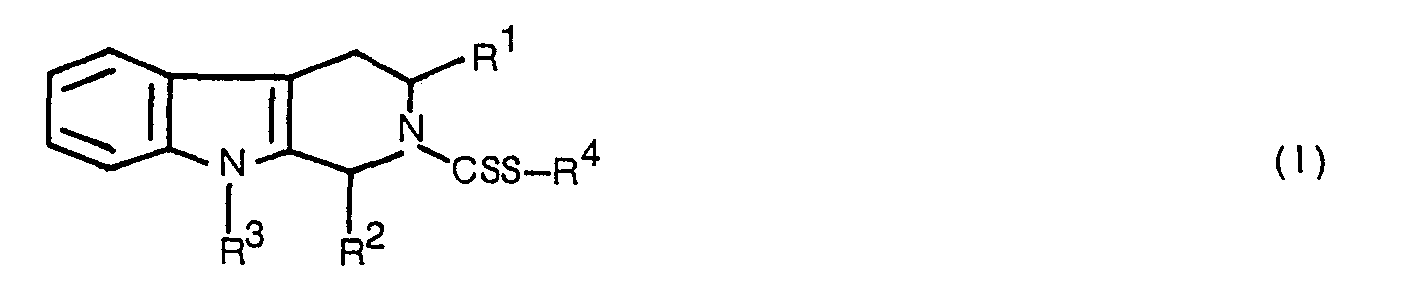





Applications Claiming Priority (2)
| Application Number | Priority Date | Filing Date | Title |
|---|---|---|---|
| GB8330260 | 1983-11-12 | ||
| GB838330260A GB8330260D0 (en) | 1983-11-12 | 1983-11-12 | Tetrahydro-beta-carboline derivatives |
Publications (2)
| Publication Number | Publication Date |
|---|---|
| EP0145304A1 EP0145304A1 (en) | 1985-06-19 |
| EP0145304B1 true EP0145304B1 (en) | 1988-04-20 |
Family
ID=10551695
Family Applications (1)
| Application Number | Title | Priority Date | Filing Date |
|---|---|---|---|
| EP84307819A Expired EP0145304B1 (en) | 1983-11-12 | 1984-11-12 | Tetrahydro-beta-carboline derivatives and process for the preparation thereof |
Country Status (8)
| Country | Link |
|---|---|
| US (1) | US4628057A (en) |
| EP (1) | EP0145304B1 (en) |
| JP (1) | JPS60120877A (en) |
| KR (1) | KR900007398B1 (en) |
| CA (1) | CA1254210A (en) |
| DE (1) | DE3470541D1 (en) |
| ES (1) | ES8607968A1 (en) |
| GB (1) | GB8330260D0 (en) |
Families Citing this family (1)
| Publication number | Priority date | Publication date | Assignee | Title |
|---|---|---|---|---|
| CN100503607C (en) * | 2003-06-02 | 2009-06-24 | 新疆华世丹药物研究有限责任公司 | Dehydrohalpine derivative compounds and applications thereof |
Family Cites Families (5)
| Publication number | Priority date | Publication date | Assignee | Title |
|---|---|---|---|---|
| DE20923C (en) * | H. LAMPRECHT In Gnarrenburg und G. HlRDES in Bremen | Innovations to drop counters | ||
| DD20923A (en) * | ||||
| US2187719A (en) * | 1938-06-10 | 1940-01-23 | Du Pont | Derivative of hexamethylene-di-thio-carbamic acid |
| ES273769A1 (en) * | 1961-01-18 | 1962-06-01 | Geigy Ag J R | Process for the preparation of new -carboline-carboxylic acid amide derivatives |
| US4336260A (en) * | 1977-12-08 | 1982-06-22 | The Dow Chemical Company | Method and compositions using 1-aryl-1,2,3,4-tetrahydro-β-carboline-3-carboxylic acid for treating depression |
-
1983
- 1983-11-12 GB GB838330260A patent/GB8330260D0/en active Pending
-
1984
- 1984-10-30 US US06/666,481 patent/US4628057A/en not_active Expired - Fee Related
- 1984-11-08 CA CA000467362A patent/CA1254210A/en not_active Expired
- 1984-11-09 JP JP59237414A patent/JPS60120877A/en active Pending
- 1984-11-12 KR KR1019840007082A patent/KR900007398B1/en not_active Expired
- 1984-11-12 DE DE8484307819T patent/DE3470541D1/en not_active Expired
- 1984-11-12 EP EP84307819A patent/EP0145304B1/en not_active Expired
- 1984-11-12 ES ES537591A patent/ES8607968A1/en not_active Expired
Also Published As
| Publication number | Publication date |
|---|---|
| CA1254210A (en) | 1989-05-16 |
| DE3470541D1 (en) | 1988-05-26 |
| ES537591A0 (en) | 1986-06-01 |
| KR850003891A (en) | 1985-06-29 |
| JPS60120877A (en) | 1985-06-28 |
| EP0145304A1 (en) | 1985-06-19 |
| US4628057A (en) | 1986-12-09 |
| GB8330260D0 (en) | 1983-12-21 |
| ES8607968A1 (en) | 1986-06-01 |
| KR900007398B1 (en) | 1990-10-08 |
Similar Documents
| Publication | Publication Date | Title |
|---|---|---|
| US4943587A (en) | Hydroxamate derivatives of selected nonsteroidal antiinflammatory acyl residues and their use for cyclooxygenase and 5-lipoxygenase inhibition | |
| RU2059637C1 (en) | Heterocyclic derivatives of substituted 2-acylamino-5-thiazoles, methods of their synthesis, derivative of substituted 2-aminothiazole, derivatives of 2-amino-4-phenylthiazole | |
| US4355040A (en) | Hypotensive imidazole-5-acetic acid derivatives | |
| KR100378884B1 (en) | [a]-Anellate Pyrrole Derivatives and Pharmaceutical Use Thereof | |
| JP3120075B2 (en) | Compound | |
| WO1994006802A1 (en) | Thienodiazepine compound and medicinal use thereof | |
| PT1133474E (en) | 3-substituted-4-arylquinolin-2-one derivatives as potassium channel modulators | |
| WO2002085899A1 (en) | Heterocyclyldicarbamides as caspase inhibitors | |
| JPH09183766A (en) | Bicyclic heterocyclic compound | |
| FR2673427A1 (en) | HETEROCYCLIC DIAZOTES N - SUBSTITUTED BY BIPHENYLMETHYL GROUP, PREPARATION THEREOF, PHARMACEUTICAL COMPOSITIONS CONTAINING SAME. | |
| JP3054738B2 (en) | Thiazolo [5,4-b] azepine derivatives | |
| KR20050010855A (en) | N-((3-oxo-2,3-dihydro-1H-isoindol-1-yl)acetyl)guanidine derivatives as NHE-1 inhibitors for the treatment of infarction and angina pectoris | |
| US6077841A (en) | 5-heterocyclyl pyrazolo[4,3-d]pyrimidin-7-ones for the treatment of male erectile dysfunction | |
| JPH0987282A (en) | Thiazole derivatives | |
| US5025033A (en) | Alkylene diamines | |
| US4134991A (en) | Derivatives of 2-(3-phenyl-2-aminopropionyloxy)-acetic acid | |
| CZ112894A3 (en) | Substituted pyrroles, process of their preparation and pharmaceutical preparations in which they are comprised | |
| JPH0536436B2 (en) | ||
| EP0145304B1 (en) | Tetrahydro-beta-carboline derivatives and process for the preparation thereof | |
| CA2234239C (en) | Indole carbamates as leukotriene antagonists | |
| US4612317A (en) | Tetrahydro-β-carboline dithioic acid derivatives and treatment of liver diseases | |
| CN1072670C (en) | Trans apovincaminic acid ester derivatives as drugs | |
| KR920001673B1 (en) | Method for preparing pyrimidoisoquinoline derivative | |
| FI62531C (en) | PROCEDURE FOR THE FRAMSTATION OF THE THERAPEUTIC SYSTEM 3-YAN-N- (N N-DIMETHYLAMINO-PROPYL) -IMINODIBENSYL OCH SYRAADD ITONSSALTER DAERAV | |
| US4803197A (en) | 2,1-benzothiazepine-2,2-dioxide-5-carboxylic acid derivatives |
Legal Events
| Date | Code | Title | Description |
|---|---|---|---|
| PUAI | Public reference made under article 153(3) epc to a published international application that has entered the european phase |
Free format text: ORIGINAL CODE: 0009012 |
|
| AK | Designated contracting states |
Designated state(s): BE CH DE FR GB IT LI NL |
|
| 17P | Request for examination filed |
Effective date: 19850621 |
|
| 17Q | First examination report despatched |
Effective date: 19860901 |
|
| GRAA | (expected) grant |
Free format text: ORIGINAL CODE: 0009210 |
|
| AK | Designated contracting states |
Kind code of ref document: B1 Designated state(s): BE CH DE FR GB IT LI NL |
|
| ITF | It: translation for a ep patent filed | ||
| REF | Corresponds to: |
Ref document number: 3470541 Country of ref document: DE Date of ref document: 19880526 |
|
| ET | Fr: translation filed | ||
| PLBE | No opposition filed within time limit |
Free format text: ORIGINAL CODE: 0009261 |
|
| STAA | Information on the status of an ep patent application or granted ep patent |
Free format text: STATUS: NO OPPOSITION FILED WITHIN TIME LIMIT |
|
| 26N | No opposition filed | ||
| PGFP | Annual fee paid to national office [announced via postgrant information from national office to epo] |
Ref country code: BE Payment date: 19901018 Year of fee payment: 7 |
|
| PGFP | Annual fee paid to national office [announced via postgrant information from national office to epo] |
Ref country code: GB Payment date: 19901105 Year of fee payment: 7 |
|
| PGFP | Annual fee paid to national office [announced via postgrant information from national office to epo] |
Ref country code: CH Payment date: 19901115 Year of fee payment: 7 |
|
| PGFP | Annual fee paid to national office [announced via postgrant information from national office to epo] |
Ref country code: FR Payment date: 19901129 Year of fee payment: 7 |
|
| ITTA | It: last paid annual fee | ||
| PGFP | Annual fee paid to national office [announced via postgrant information from national office to epo] |
Ref country code: NL Payment date: 19901130 Year of fee payment: 7 |
|
| PGFP | Annual fee paid to national office [announced via postgrant information from national office to epo] |
Ref country code: DE Payment date: 19901213 Year of fee payment: 7 |
|
| PG25 | Lapsed in a contracting state [announced via postgrant information from national office to epo] |
Ref country code: GB Effective date: 19911112 |
|
| PG25 | Lapsed in a contracting state [announced via postgrant information from national office to epo] |
Ref country code: LI Effective date: 19911130 Ref country code: CH Effective date: 19911130 Ref country code: BE Effective date: 19911130 |
|
| BERE | Be: lapsed |
Owner name: TANABE SEIYAKU CO. LTD Effective date: 19911130 |
|
| PG25 | Lapsed in a contracting state [announced via postgrant information from national office to epo] |
Ref country code: NL Effective date: 19920601 |
|
| GBPC | Gb: european patent ceased through non-payment of renewal fee | ||
| NLV4 | Nl: lapsed or anulled due to non-payment of the annual fee | ||
| PG25 | Lapsed in a contracting state [announced via postgrant information from national office to epo] |
Ref country code: FR Effective date: 19920731 |
|
| REG | Reference to a national code |
Ref country code: CH Ref legal event code: PL |
|
| PG25 | Lapsed in a contracting state [announced via postgrant information from national office to epo] |
Ref country code: DE Effective date: 19920801 |
|
| REG | Reference to a national code |
Ref country code: FR Ref legal event code: ST |