DE112021006201B4 - communication resource allocation device, communication resource allocation method, communication resource allocation program - Google Patents
communication resource allocation device, communication resource allocation method, communication resource allocation program Download PDFInfo
- Publication number
- DE112021006201B4 DE112021006201B4 DE112021006201.8T DE112021006201T DE112021006201B4 DE 112021006201 B4 DE112021006201 B4 DE 112021006201B4 DE 112021006201 T DE112021006201 T DE 112021006201T DE 112021006201 B4 DE112021006201 B4 DE 112021006201B4
- Authority
- DE
- Germany
- Prior art keywords
- monitoring target
- danger level
- resource allocation
- communication resource
- communication
- Prior art date
- Legal status (The legal status is an assumption and is not a legal conclusion. Google has not performed a legal analysis and makes no representation as to the accuracy of the status listed.)
- Active
Links
Images




Classifications
-
- G—PHYSICS
- G08—SIGNALLING
- G08G—TRAFFIC CONTROL SYSTEMS
- G08G1/00—Traffic control systems for road vehicles
- G08G1/01—Detecting movement of traffic to be counted or controlled
-
- G—PHYSICS
- G08—SIGNALLING
- G08G—TRAFFIC CONTROL SYSTEMS
- G08G1/00—Traffic control systems for road vehicles
- G08G1/01—Detecting movement of traffic to be counted or controlled
- G08G1/0104—Measuring and analyzing of parameters relative to traffic conditions
- G08G1/0108—Measuring and analyzing of parameters relative to traffic conditions based on the source of data
- G08G1/0116—Measuring and analyzing of parameters relative to traffic conditions based on the source of data from roadside infrastructure, e.g. beacons
-
- H—ELECTRICITY
- H04—ELECTRIC COMMUNICATION TECHNIQUE
- H04W—WIRELESS COMMUNICATION NETWORKS
- H04W4/00—Services specially adapted for wireless communication networks; Facilities therefor
- H04W4/30—Services specially adapted for particular environments, situations or purposes
- H04W4/40—Services specially adapted for particular environments, situations or purposes for vehicles, e.g. vehicle-to-pedestrians [V2P]
- H04W4/44—Services specially adapted for particular environments, situations or purposes for vehicles, e.g. vehicle-to-pedestrians [V2P] for communication between vehicles and infrastructures, e.g. vehicle-to-cloud [V2C] or vehicle-to-home [V2H]
-
- H—ELECTRICITY
- H04—ELECTRIC COMMUNICATION TECHNIQUE
- H04W—WIRELESS COMMUNICATION NETWORKS
- H04W16/00—Network planning, e.g. coverage or traffic planning tools; Network deployment, e.g. resource partitioning or cells structures
- H04W16/02—Resource partitioning among network components, e.g. reuse partitioning
- H04W16/04—Traffic adaptive resource partitioning
Landscapes
- Physics & Mathematics (AREA)
- General Physics & Mathematics (AREA)
- Engineering & Computer Science (AREA)
- Computer Networks & Wireless Communication (AREA)
- Signal Processing (AREA)
- Chemical & Material Sciences (AREA)
- Analytical Chemistry (AREA)
- Traffic Control Systems (AREA)
- Mobile Radio Communication Systems (AREA)
Abstract
Kommunikationsressourcen-Zuweisungsvorrichtung (10), umfassend:
eine Gefahrenstufen-Bestimmungseinheit (112), um ein gefährliches Verhalten für jeden Zeitschlitz zu identifizieren, das in einer vergangenen Bezugsperiode in jedem der Überwachungszielbereiche, die in einem Kommunikationsbereich enthalten und voreingestellt sind, aufgetreten ist, wobei das gefährliche Verhalten ein Verhalten ist, das einen Verkehrsunfall verursachen kann, um so eine Gefahrenstufe für jeden der Überwachungszielbereiche für jeden Zeitschlitz zu bestimmen; und
eine Kommunikationsressourcen-Zuweisungseinheit (113), um jedem der Überwachungszielbereiche für jeden Zeitschlitz eine Kommunikationsressource auf der Grundlage der von der Gefahrenstufen-bestimmungseinheit (112) bestimmten Gefahrenstufe jedes Zeitschlitzes zuzuweisen,
dadurch gekennzeichnet, dass für ein Überwachungszielbereich, in dem ein Notfall, der auf Grundlage von Sensorinformationen identifiziert wird, unter den Überwachungszielbereichen aufgetreten ist, die Gefahrenstufen-Bestimmungseinheit (112) eine Gefahrenstufe in einer spezifizierten Zeitspanne nach Auftreten des Notfalls um einen spezifizierten Wert anhebt.

a danger level determining unit (112) for identifying a dangerous behavior for each time slot that has occurred in a past reference period in each of the monitoring target areas included in a communication area and preset, the dangerous behavior being a behavior that may cause a traffic accident, so as to determine a danger level for each of the monitoring target areas for each time slot; and
a communication resource allocation unit (113) for allocating a communication resource to each of the monitoring target areas for each time slot based on the danger level of each time slot determined by the danger level determination unit (112),
characterized in that, for a monitoring target area in which an emergency identified based on sensor information has occurred among the monitoring target areas, the danger level determining unit (112) increases a danger level by a specified value in a specified period of time after the emergency occurs.
Description
Technisches Gebiettechnical field
Die vorliegende Offenbarung bezieht sich auf eine Technologie zur Zuweisung von Kommunikationsressourcen in einem Kommunikationssystem, das mit Fahrzeugen usw. kommuniziert.The present disclosure relates to a technology for allocating communication resources in a communication system that communicates with vehicles, etc.
Bisheriger Stand der TechnikCurrent state of the art
Es wurde ein System vorgeschlagen, bei dem Sensordaten, die von Infrastruktursensoren, wie z. B. Überwachungskameras in Straßenrand-Vorrichtungen, die am Straßenrand installiert wurden, erfasst werden, per Funk an einen Verwaltungsserver übertragen werden, um dort analysiert und für Fahrunterstützung genutzt zu werden. Es wurde auch ein System vorgeschlagen, bei dem Sensordaten, die von Sensoren in Fahrzeugen wie Autos und Motorrädern, von Sensoren in Smartphones von Fußgängern usw. erfasst werden, per drahtloser Kommunikation an einen Verwaltungsserver übertragen werden, um analysiert und zur Fahrunterstützung verwendet zu werden.A system has been proposed in which sensor data collected from infrastructure sensors such as surveillance cameras in roadside devices installed on the side of the road is transmitted wirelessly to a management server for analysis and use in driving assistance. A system has also been proposed in which sensor data collected from sensors in vehicles such as cars and motorcycles, sensors in smartphones of pedestrians, etc. are transmitted wirelessly to a management server for analysis and use in driving assistance.
Ein in einem Fahrzeug o.ä. montierter Sensor kann Informationen innerhalb des Erfassungsbereichs des Sensors erfassen, jedoch keine Informationen außerhalb des Erfassungsbereichs des Sensors. Daher ist es wünschenswert, dass Sensordaten, die von Sensoren mehrerer Fahrzeuge erfasst werden, kombiniert ausgewertet und zur Fahrunterstützung genutzt werden. Darüber hinaus ist es wünschenswert, dass die von den Infrastruktursensoren erfassten Sensordaten kombiniert ausgewertet und zur Fahrunterstützung genutzt werden.A sensor mounted in a vehicle or similar can collect information within the sensor's detection range, but not information outside the sensor's detection range. It is therefore desirable that sensor data collected by sensors in multiple vehicles be evaluated in combination and used for driving support. In addition, it is desirable that the sensor data collected by the infrastructure sensors be evaluated in combination and used for driving support.
Bei der Erzeugung und Bereitstellung von Fahrunterstützungsinformationen auf der Grundlage von Sensordaten, die an den Verwaltungsserver übermittelt werden, wird eine Technologie namens dynamische Karte untersucht, bei der die Ergebnisse der Analyse von Sensordaten, die von verschiedenen Sensoren erfasst wurden, in eine Straßenkarte integriert werden, um Karteninformationen zu erzeugen, die die Verkehrsbedingungen anzeigen.In generating and providing driving assistance information based on sensor data transmitted to the management server, a technology called dynamic map is studied, in which the results of analyzing sensor data collected from various sensors are integrated into a road map to generate map information indicating traffic conditions.
Es ist wünschenswert, dass die Häufigkeit der Aktualisierung und Verteilung von Karteninformationen in Abhängigkeit von den Verkehrsbedingungen usw. an jedem Ort geändert werden kann. Es ist auch wünschenswert, dass der Informationsumfang der Karteninformationen je nach den Verkehrsbedingungen usw. an jedem Ort geändert werden kann.It is desirable that the frequency of updating and distribution of map information can be changed depending on the traffic conditions, etc. in each location. It is also desirable that the information scope of map information can be changed depending on the traffic conditions, etc. in each location.
So ist es z. B. wünschenswert, dass in einem zu überwachenden Bereich, z. B. in einem gefährlichen Zustand mit hoher Unfallwahrscheinlichkeit, zeitnah eine große Menge an Sensordaten erfasst wird, um die Verkehrsverhältnisse in den Karteninformationen widerzuspiegeln. Um dies zu realisieren, ist es notwendig, in kurzen Abständen eine große Menge an Sensordaten von Fahrzeugen usw. zu sammeln und in kurzen Abständen Karteninformationen mit einer großen Menge an Informationen für den zu überwachenden Bereich im Staat an die Fahrzeuge usw. zu verteilen. Daher erfordert der zu überwachende Bereich des Staates eine große Menge an Kommunikationsressourcen. In der Realität ist es schwierig, eine große Menge an Kommunikationsressourcen für alle Bereiche bereitzustellen. Daher ist es notwendig, dem zu überwachenden Bereich mehr Kommunikationsressourcen zuzuweisen als den anderen Bereichen.For example, in an area to be monitored, such as a dangerous state with a high probability of accidents, it is desirable that a large amount of sensor data be collected in a timely manner to reflect the traffic conditions in the map information. To realize this, it is necessary to collect a large amount of sensor data from vehicles, etc. at short intervals, and distribute map information containing a large amount of information for the area to be monitored in the state to the vehicles, etc. at short intervals. Therefore, the area of the state to be monitored requires a large amount of communication resources. In reality, it is difficult to provide a large amount of communication resources for all areas. Therefore, it is necessary to allocate more communication resources to the area to be monitored than to the other areas.
In der Patentliteratur 1 wird eine Informationssammelvorrichtung beschrieben, die auf der Grundlage von Sensordaten Informationen zur Fahrunterstützung erzeugt und bereitstellt. Die Informationssammelvorrichtung identifiziert anhand der Sensordaten Fahrzeuge und Fußgänger mit hoher Gefahrenstufe und legt Überwachungszielbereiche fest, die auf die Fahrzeuge und Fußgänger mit hoher Gefahrenstufe ausgerichtet sind. Die Informationssammelvorrichtung führt dann bevorzugt die Kommunikation von Sensordaten mit hoher Dringlichkeit für die zu Überwachungszielbereiche durch.
Weitere Beispiele für Systeme für Überwachung von Zielbereichen mit entsprechenden Vorrichtungen zur Zuweisung von Kommunikationsressourcen sind in Patentliteratur 2 bis 5 beschrieben.Further examples of systems for monitoring target areas with corresponding devices for allocating communication resources are described in
Referenzlistereference list
Patentliteraturpatent literature
-
Patentliteratur 1:
JP 2020‐95 504 A JP 2020‐95 504 A -
Patentliteratur 2:
JP 2011‐35 721 A JP 2011‐35 721 A -
Patentliteratur 3:
JP 2008‐310 469 A JP 2008‐310 469 A -
Patentliteratur 4:
JP 2013‐45 289 A JP 2013‐45 289 A -
Patentliteratur 5:
US 2009 / 0 161 644 A1 US 2009 / 0 161 644 A1
Kurzfassung der ErfindungSummary of the Invention
Technische AufgabeTechnical Task
Es wird davon ausgegangen, dass für die Kommunikation zellulare Kommunikation wie 5G (Generation) verwendet wird. Der Abdeckungsbereich einer Basisstation in der zellularen Kommunikation erstreckt sich in der Regel über mehrere Kilometer. Um Fahrzeuge und Fußgänger ständig zu überwachen und die zu überwachenden Bereiche in Echtzeit festzulegen, wie in der in Patentschrift 1 beschriebenen Informationssammelvorrichtung, erfordert daher allein die Festlegung der zu überwachenden Bereiche innerhalb des Abdeckungsbereichs einer Basisstation eine große Menge an Kommunikationsressourcen. Darüber hinaus können zu überwachende Bereiche an mehreren Orten gleichzeitig innerhalb des Abdeckungsbereichs einer Basisstation auftreten. Selbst wenn man die Kommunikationsressourcen bevorzugt den gleichzeitig entstandenen zu überwachenden Bereichen zuweisen möchte, können begrenzte Kommunikationsressourcen einer Basisstation zu einer Verknappung der Kommunikationsressourcen führen, was die Zuweisung erschwert.It is assumed that cellular communication such as 5G (generation) will be used for communication. The coverage area of a base station in cellular communication usually extends for several kilometers. In order to constantly monitor vehicles and pedestrians and to set the areas to be monitored in real time, as in the information collection device described in
Ein Ziel der vorliegenden Offenbarung ist es, eine angemessene Zuweisung von Kommunikationsressourcen zu ermöglichen, ohne eine große Menge an Kommunikationsressourcen zu verwenden.An object of the present disclosure is to enable appropriate allocation of communication resources without using a large amount of communication resources.
Lösung der Aufgabesolution to the task
Dieses Ziel wird durch eine Kommunikationsressourcen-Zuweisungsvorrichtung gemäß Anspruch 1, ein Kommunikationsressourcen-Zuweisungsverfahren gemäß Anspruch 9 und ein Kommunikationsressourcen-Zuweisungsprogramm gemäß Anspruch 10 erreicht. Eine Kommunikationsressourcen-Zuweisungsvorrichtung gemäß der vorliegenden Offenbarung umfasst insbesondere
eine Gefahrenstufen-Bestimmungseinheit, um ein gefährliches Verhalten zu identifizieren, das in einer vergangenen Bezugsperiode in jedem der Überwachungszielbereiche, die in einem Kommunikationsbereich enthalten sind, aufgetreten ist, wobei das gefährliche Verhalten ein Verhalten ist, das einen Verkehrsunfall verursachen kann, um so eine Gefahrenstufe für jeden der Überwachungszielbereiche zu bestimmen; und
eine Kommunikationsressourcen-Zuweisungseinheit, um jedem der Überwachungszielbereiche eine Kommunikationsressource auf der Grundlage der von der Gefahrenstufen-Bestimmungseinheit bestimmten Gefahrenstufe zuzuweisen.This object is achieved by a communication resource allocation apparatus according to
a danger level determination unit for identifying a dangerous behavior that has occurred in a past reference period in each of the monitoring target areas included in a communication area, the dangerous behavior being a behavior that may cause a traffic accident, so as to determine a danger level for each of the monitoring target areas; and
a communication resource allocation unit for allocating a communication resource to each of the monitoring target areas based on the danger level determined by the danger level determination unit.
Vorteilhafte Wirkungen der ErfindungAdvantageous effects of the invention
In der vorliegenden Offenlegung wird eine Gefahrenstufe für jeden Überwachungszielbereich auf der Grundlage von gefährlichen Verhaltensweisen, die in einer vergangenen Bezugsperiode aufgetreten sind, bestimmt, und die Kommunikationsressourcen werden auf der Grundlage der Gefahrenstufe zugewiesen. Daher ist es nicht erforderlich, einen in Echtzeit zu überwachenden Bereich festzulegen, so dass die Kommunikationsressourcen angemessen zugewiesen werden können, ohne dass eine große Menge an Kommunikationsressourcen verbraucht wird.In the present disclosure, a danger level is determined for each monitoring target area based on dangerous behaviors that have occurred in a past reference period, and communication resources are allocated based on the danger level. Therefore, it is not necessary to set an area to be monitored in real time, so that communication resources can be appropriately allocated without consuming a large amount of communication resources.
Kurzbeschreibung der ZeichnungenShort description of the drawings
-
1 ist eine Darstellung einer Konfiguration eines Kommunikationssystems 100 gemäß Ausführungsform 1;1 is a diagram showing a configuration of acommunication system 100 according toEmbodiment 1; -
2 ist eine Darstellung einer Konfiguration einer Kommunikationsressourcen-Zuweisungsvorrichtung gemäß Ausführungsform 1;2 is a diagram showing a configuration of a communication resource allocation apparatus according toEmbodiment 1; -
3 ist eine Darstellung einer Konfiguration einer Straßenrand-Vorrichtung 30 gemäß Ausführungsform 1;3 is a diagram showing a configuration of aroadside device 30 according toEmbodiment 1; -
4 ist eine Darstellung einer Konfiguration einer fahrzeuginternen Einrichtung 40 gemäß Ausführungsform 1;4 is a diagram showing a configuration of an in-vehicle device 40 according toEmbodiment 1; -
5 ist eine Figur, die einen vorbereitenden Einstellprozess gemäß Ausführungsform 1 beschreibt;5 is a figure describing a preliminary setting process according toEmbodiment 1; -
6 ist ein Verarbeitungsflussdiagramm eines Hauptprozesses gemäß Ausführungsform 1;6 is a processing flowchart of a main process according toEmbodiment 1; -
7 ist eine Figur, die eine Gefahrenstufentabelle gemäß Ausführungsform 1 zeigt;7 is a figure showing a danger level table according toEmbodiment 1; -
8 ist eine Figur, die eine Zuweisungstabelle gemäß Ausführungsform 1 zeigt;8 is a figure showing an allocation table according toEmbodiment 1; -
9 ist eine Darstellung einer Konfiguration einer Kommunikationsressourcen-Zuweisungsvorrichtung 10 gemäß Variante 4;9 is a diagram showing a configuration of a communicationresource allocation device 10 according tovariant 4; -
10 ist eine Darstellung einer Konfiguration der Straßenrand-Vorrichtung 30 gemäß Variante 4;10 is an illustration of a configuration of theroadside device 30 according tovariant 4; -
11 ist eine Darstellung einer Konfiguration der fahrzeuginternen Einrichtung 40 gemäß Variante 4;11 is a representation of a configuration of the in-vehicle device 40 according tovariant 4; -
12 ist eine Figur, die eine Gefahrenstufentabelle gemäß Ausführungsform 2 zeigt;12 is a figure showing a danger level table according toEmbodiment 2; -
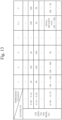
13 ist eine Figur, die eine Zuweisungstabelle gemäß Ausführungsform 2 zeigt;13 is a figure showing an allocation table according toEmbodiment 2; -
14 ist eine Darstellung einer Konfiguration der Vorrichtung am Straßenrand 30 gemäß Ausführungsform 3;14 is a diagram showing a configuration of theroadside device 30 according toEmbodiment 3; -
15 ist eine Darstellung einer Konfiguration der fahrzeuginterne Einrichtung 40 gemäß Ausführungsform 3;15 is a diagram showing a configuration of the in-vehicle device 40 according toEmbodiment 3; -
16 ist ein Verarbeitungsflussdiagramm des Hauptprozesses gemäß Ausführungsform 3; und16 is a processing flowchart of the main process according toEmbodiment 3; and -
17 ist eine Figur, die 5QI-Werte gemäß Ausführungsform 4 beschreibt.17 is a figure describing 5QI values according toEmbodiment 4.
Beschreibung von AusführungsformenDescription of embodiments
Ausführungsform 1
*** Konfigurationsbeschreibung ****** Configuration description ***
Unter Bezugnahme auf
Das Kommunikationssystem 100 umfasst eine Kommunikationsressourcen-Zuweisungsvorrichtung 10, eine Basisstation 20, mindestens eine Straßenrand-Vorrichtung 30 und mindestens eine fahrzeuginterne Einrichtung 40.The
Die Kommunikationsressourcen-Zuweisungsvorrichtung 10 und die Basisstation 20 sind über einen drahtgebundenen Kommunikationskanal 51 verbunden. Die Basisstation 20 und jede Straßenrand-Vorrichtung 30 sind über einen drahtlosen Kommunikationskanal 52 verbunden. Jede Straßenrand-Vorrichtung 30 ist über einen drahtlosen Kommunikationskanal 53 mit der fahrzeuginternen Einrichtung 40 verbunden, das sich in einem Kommunikationsbereich befindet. Jede fahrzeuginterne Einrichtung 40 kann über den drahtlosen Kommunikationskanal 52 mit der Basisstation 20 verbunden werden.The communication
In Ausführungsform 1 wird davon ausgegangen, dass der drahtlose Kommunikationskanal 52 ein Netz für zellulare Kommunikation wie 5G ist.In
In
Unter Bezugnahme auf
Die Kommunikationsressourcen-Zuweisungsvorrichtung 10 ist ein Computer, z. B. ein Server.The communication
Die Kommunikationsressourcen-Zuweisungsvorrichtung 10 umfasst einen Prozessor 11, einen Arbeitsspeicher 12, einen Speicher 13 und eine Kommunikationsschnittstelle 14. Der Prozessor 11 ist über Signalleitungen mit anderen Hardware-Komponenten verbunden und steuert diese anderen Hardware-Komponenten.The communication
Die Kommunikationsressourcen-Zuweisungsvorrichtung 10 umfasst als funktionale Komponenten eine Informationssammeleinheit 111, eine Gefahrenstufen-Bestimmungseinheit 112, eine Kommunikationsressourcen-Zuweisungseinheit 113 und eine Informationsverteilungseinheit 114. Die Funktionen der funktionalen Komponenten der Kommunikationsressourcen-Zuweisungsvorrichtung 10 werden durch Software realisiert.The communication
Der Speicher 13 speichert Programme, die die Funktionen der Funktionskomponenten der Kommunikationsressourcen-Zuweisungsvorrichtung 10 realisieren. Diese Programme werden durch den Prozessor 11 in den Arbeitsspeicher 12 geladen und durch den Prozessor 11 ausgeführt. Damit werden die Funktionen der funktionalen Komponenten der Kommunikationsressourcen-Zuweisungsvorrichtung 10 realisiert.The
Unter Bezugnahme auf
Die Straßenrand-Vorrichtung 30 ist ein Computer, der am Straßenrand in der Nähe einer Kreuzung installiert wird.The
Die Straßenrand-Vorrichtung 30 besteht aus einem Prozessor 31, einem Arbeitsspeicher 32, einem Speicher 33 und einer Kommunikationsschnittstelle 34. Der Prozessor 31 ist über Signalleitungen mit anderen Hardware-Komponenten verbunden und steuert diese anderen Hardware-Komponenten.The
Die Straßenrand-Vorrichtung 30 umfasst als funktionale Komponenten eine Sensorinformationen-Beschaffungseinheit 311, eine Sensorinformationen-Übertragungseinheit 312, eine Gefahreninformationen-Empfangseinheit 313 und eine Gefahreninformationen-Verteilungseinheit 314. Die Funktionen der funktionalen Komponenten der Straßenrand-Vorrichtung 30 werden durch Software realisiert.The
Der Speicher 33 speichert Programme, die die Funktionen der Funktionskomponenten der Straßenrand-Vorrichtung 30 realisieren. Diese Programme werden von dem Prozessor 31 in den Arbeitsspeicher 32 geladen und von dem Prozessor 31 ausgeführt. Damit werden die Funktionen der funktionalen Komponenten der Straßenrand-Vorrichtung 30 realisiert.The
In
Die fahrzeuginterne Einrichtung 40 ist ein Computer, der am Straßenrand in der Nähe einer Kreuzung installiert ist.The in-
Die fahrzeuginterne Einrichtung 40 umfasst einen Prozessor 41, einen Arbeitsspeicher 42, einen Speicher 43 und eine Kommunikationsschnittstelle 44. Der Prozessor 41 ist über Signalleitungen mit anderen Hardware-Komponenten verbunden und steuert diese anderen Hardware-Komponenten.The in-
Die fahrzeuginterne Einrichtung 40 umfasst als funktionale Komponenten eine Sensorinformationen-Beschaffungseinheit 411, eine Sensorinformationen-Übertragungseinheit 412, eine Gefahreninformationen-Empfangseinheit 413 und eine Autonomes-Fahren-Steuereinheit 414. Die Funktionen der Funktionskomponenten der fahrzeuginternen Einrichtung 40 werden durch Software realisiert.The in-
Auf dem Speicher 43 sind Programme gespeichert, die die Funktionen der Funktionskomponenten der fahrzeuginternen Einrichtung 40 realisieren. The
Diese Programme werden von dem Prozessor 41 in den Arbeitsspeicher 42 geladen und von dem Prozessor 41 ausgeführt. Damit werden die Funktionen der funktionalen Komponenten der fahrzeuginternen Einrichtung 40 realisiert.These programs are loaded into the
Jeder von den Prozessoren 11, 31 und 41 ist ein integrierter Schaltkreis (IC), der Verarbeitung durchführt. Konkrete Beispiele für jeden der Prozessoren 11, 31 und 41 sind eine zentrale Verarbeitungseinheit (CPU), ein digitaler Signal Prozessor (DSP) und eine Grafikverarbeitungseinheit (GPU).Each of the
Jeder von den Arbeitsspeichern 12, 32 und 42 ist eine Speichereinrichtung zum temporären Speichern von Daten. Konkrete Beispiele für jeden von den Arbeitsspeichern 12, 32 und 42 sind ein statischer Random-Access Memory (SRAM) und ein dynamischer Random-Access Memory (DRAM).Each of the
Jeder von den Datenspeichern 13, 33 und 43 ist eine Speichereinrichtung zum Speichern von Daten. Ein konkretes Beispiel für jeden von den Datenspeichern 13, 33 und 43 ist ein Festplattenlaufwerk (HDD). Alternativ kann jeder der Speicher 13, 33 und 43 ein tragbares Aufzeichnungsmedium sein, wie z. B. eine Secure Digital (SD, eingetragene Marke) Speicherkarte, CompactFlash (CF, eingetragene Marke), ein NAND-Flash, eine flexible Platte, eine optische Scheibe, eine Compact Disc, eine Blu-ray (eingetragene Marke) Disc und eine Digital Versatile Disc (DVD).Each of the data storages 13, 33, and 43 is a storage device for storing data. A concrete example of each of the data storages 13, 33, and 43 is a hard disk drive (HDD). Alternatively, each of the
Jede von den Kommunikationsschnittstellen 14, 34 und 44 ist eine Schnittstelle für eine Kommunikation mit externen Einrichtungen. Ein spezifisches Beispiel für jede der Kommunikationsschnittstellen 14, 34 und 44 ist eine Kommunikationsvorrichtung für zellulare Kommunikation.Each of the communication interfaces 14, 34 and 44 is an interface for communication with external devices. A specific example of each of the communication interfaces 14, 34 and 44 is a communication device for cellular communication.
In
*** Beschreibung einer Funktionsweise****** Description of a function ***
In den
Ein Verfahren für den Betrieb der Kommunikationsressourcen-Zuweisungsvorrichtung 10 gemäß Ausführungsform 1 entspricht einem Kommunikationsressourcen-Zuweisungsverfahren gemäß Ausführungsform 1. Ein Programm, das den Betrieb der Kommunikationsressourcen-Zuweisungsvorrichtung 10 gemäß Ausführungsform 1 realisiert, entspricht einem Kommunikationsressourcen-Zuweisungsprogramm gemäß Ausführungsform 1.A method of operating the communication
Der Betrieb der Kommunikationsressourcen-Zuweisungsvorrichtung 10 gemäß Ausführungsform 1 umfasst einen vorbereitenden Einstellprozess und einen Hauptprozess.The operation of the communication
In
Bei dem vorbereitenden Einstellprozess wird ein Überwachungszielbereich 60, d.h. ein zu überwachender Bereich, innerhalb eines Kommunikationsbereichs der Basisstation 20 festgelegt. In Ausführungsform 1 wird ein Bereich eines Referenzbereichs, der auf die Kreuzung zentriert ist, an der jeder Straßenrand-Vorrichtung 30 installiert ist, als Überwachungszielbereich 60 festgelegt. Der Überwachungszielbereich 60 wird auf diese Weise festgelegt, weil die Kreuzung, an der die Straßenrand-Vorrichtung 30 installiert ist, als ein Gebiet mit einem zu überwachenden Unfallrisiko angesehen wird.In the preliminary setting process, a
Insbesondere behandelt die Informationssammeleinheit 111 jeder Straßenrand-Vorrichtung als Ziel und erfasst Standortinformationen, die den Standort der Ziel-Straßenrand-Vorrichtung 30 angeben, von der Ziel-Straßenrand-Vorrichtung 30. Die Gefahrenstufen-Bestimmungseinheit 112 bezieht sich auf Karteninformationen und identifiziert eine Kreuzung, die dem durch die Standortinformationen angegebenen Ort am nächsten liegt, und legt den auf die identifizierte Kreuzung zentrierten Referenzbereich als Überwachungszielbereich 60 fest.Specifically, the
Alternativ dazu erfasst die Informationssammeleinheit 111 Kreuzungsinformationen, die auf eine Kreuzung hinweisen, die von einem Administrator oder dergleichen der Kommunikationsressourcen-Zuweisungsvorrichtung 10 eingegeben wird. Die Gefahrenstufen-Bestimmungseinheit 112 legt den Referenzbereich fest, der auf den durch die Schnittpunktinformationen angegebenen Schnittpunkt als Überwachungszielbereich 60 zentriert ist.Alternatively, the
Ein auf eine Kreuzung zentrierter Bereich, in dem eine andere Vorrichtung als die Straßenrand-Vorrichtung 30, in dem ein Infrastruktursensor angebracht ist, kann ebenfalls als Überwachungszielbereich 60 festgelegt werden.An area centered on an intersection in which a device other than the
In
(Schritt S11: Prozess der Informationssammlung)(Step S11: Information collection process)
Die Informationssammeleinheit 111 sammelt Sensorinformationen, die von Sensoren erfasst werden, die sich im Kommunikationsbereich der Basisstation 20 befinden. Zu diesem Zeitpunkt sammelt die Informationssammeleinheit 111 Sensorinformationen, die von Sensoren erfasst wurden, die sich in jedem einer Vielzahl von Überwachungszielbereichen 60 befinden, unter Verwendung von Kommunikationsressourcen, die in dem später zu beschreibenden Schritt S14 zugewiesen werden.The
Insbesondere empfängt die Informationssammeleinheit 111 über die Basisstation 20 Sensorinformationen, die von den in jeder Straßenrand-Vorrichtung 30 und jeder fahrzeuginternen Einrichtung 40 eingebauten Sensoren erfasst werden. Das heißt, die Informationssammeleinheit 111 empfängt Sensorinformationen, die von der Sensorinformationen-Beschaffungseinheit 311 erfasst und von der Sensorinformationen-Übertragungseinheit 312 der Straßenrand-Vorrichtung 30 übertragen werden, und empfängt Sensorinformationen, die von der Sensorinformationen-Beschaffungseinheit 411 erfasst und von der Sensorinformationen-Übertragungseinheit 412 der fahrzeuginternen Einrichtung 40 übertragen werden. Die Informationssammeleinheit 111 schreibt die empfangenen Sensorinformationen in den Speicher 13.Specifically, the
Bei den Sensorinformationen handelt es sich um Informationen wie Bilddaten, die von einer Straßenrand-Vorrichtung 30 oder einer in der fahrzeuginternen Einrichtung 40 montierten Kamera erfasst wurden, sowie um Punktwolkeninformationen, die den Ort und die Leuchtdichte jedes Reflexionspunktes angeben und von einem in der fahrzeuginternen Einrichtung 40 montierten optischen Sensor erfasst wurden. Darüber hinaus können die Sensorinformationen auch Positionssignale enthalten, die von einem Positionssignalempfänger, z. B. einem GPS-Signalempfänger (Global Positioning System), der in der fahrzeuginternen Einrichtung 40 eingebaut ist, empfangen werden. Zu den Sensorinformationen können auch Informationen gehören, die von Sensoren wie einem Fahrzeuggeschwindigkeitssensor, einem Bremsdrucksensor und einem Beschleunigungssensor erfasst werden, die in der fahrzeuginternen Einrichtung 40 eingebaut sind. Bei der in der fahrzeuginternen Einrichtung 40 montierten Kamera kann es sich um eine Kamera handeln, die Bilder nur in Fahrtrichtung der fahrzeuginternen Einrichtung 40 aufnimmt, oder um eine Kamera, die Bilder in alle Richtungen aufnimmt.The sensor information includes information such as image data acquired by a
(Schritt S12: Prozess der Gefährliches-Verhalten-Identifizierungseinheit)(Step S12: Dangerous Behavior Identification Unit Process)
Die Gefahrenstufen-Bestimmungseinheit 112 identifiziert auf der Grundlage der in Schritt S11 gesammelten Sensorinformationen ein gefährliches Verhalten, das in jedem der Überwachungszielbereiche 60 aufgetreten ist und einen Verkehrsunfall verursachen kann.The danger
Konkret liest die Gefahrenstufen-Bestimmungseinheit 112 aus dem Speicher 13 Sensorinformationen aus, die zu Zeitpunkten erfasst wurden, die bis zu einem gewissen Grad vor dem aktuellen Zeitpunkt liegen. Die Gefahrenstufen-Bestimmungseinheit 112 legt jedes der Überwachungszielbereiche 60 als Zielbereich fest. Die Gefahrenstufen-Bestimmungseinheit 112 identifiziert anhand der ausgelesenen Sensorinformationen das Verhalten von Fahrzeugen und Fußgängern, die sich im Zielbereich aufhalten. Zur Verhaltensidentifizierung können verschiedene Verfahren eingesetzt werden, z. B. das Verfahren des Musterabgleichs und das Verfahren eines Erkennungsmodells mit Deep Learning. Die Gefahrenstufen-Bestimmungseinheit 112 extrahiert aus den identifizierten Verhaltensweisen eine Verhaltensweise, die ein gefährliches Verhalten darstellt. Die Gefahrenstufen-Bestimmungseinheit 112 schreibt das extrahierte gefährliche Verhalten in den Speicher 13 zusammen mit Standortinformationen, die einen Ort des Auftretens, d. h. den Ort des Fahrzeugs oder Fußgängers, der dieses Verhalten ausgeführt hat, und eine aktuelle Zeit, d. h. die Zeit, zu der dieses Verhalten aufgetreten ist, angeben.Specifically, the danger
Zu den gefährlichen Verhaltensweisen im Zusammenhang mit Fahrzeugen gehören beispielsweise das Ignorieren von Ampeln, plötzliches Anfahren, plötzliches Beschleunigen, plötzliches Abbremsen und plötzliches Wechseln der Fahrspur. Zu den gefährlichen Verhaltensweisen von Fußgängern gehören beispielsweise das Gehen mit Blick auf ein Smartphone, ein Buch oder ähnliches sowie das Ignorieren von Ampeln.Dangerous behaviors related to vehicles include, for example: Examples of dangerous pedestrian behavior include ignoring traffic lights, sudden starts, sudden acceleration, sudden braking and sudden lane changes. Dangerous pedestrian behavior includes walking while looking at a smartphone, book or similar and ignoring traffic lights.
(Schritt S13: Gefahrenstufen-Bestimmungsprozess)(Step S13: Hazard level determination process)
Die Gefahrenstufen-Bestimmungseinheit 112 bestimmt eine Gefahrenstufe für jedes der Überwachungszielbereiche 60 auf der Grundlage von gefährlichen Verhaltensweisen, die in jedem der Überwachungszielbereiche 60 in einer vergangenen Bezugsperiode aufgetreten sind.The danger
Konkret liest die Gefahrenstufen-Bestimmungseinheit 112 jedes gefährliche Verhalten aus dem Speicher 13 aus, dessen Zeitpunkt des Auftretens innerhalb der vergangenen Bezugsperiode liegt. Die Gefahrenstufen-Bestimmungseinheit 112 behandelt jedes gefährliche Verhalten, das ausgelesen wurde, als Zielverhalten und verknüpft Identifikationsinformationen, die eine Beschreibung des Zielverhaltens angeben, und den Zeitpunkt des Auftretens des Zielverhaltens mit dem Ort des Auftretens, der durch die Ortsinformationen des Zielverhaltens in den Karteninformationen angegeben wird. Die Gefahrenstufen-Bestimmungseinheit 112 legt jedes der Überwachungszielbereiche 60 als Zielbereich fest. Die Gefahrenstufen-Bestimmungseinheit 112 bezieht sich auf die Karteninformationen und identifiziert jedes gefährliche Verhalten, das mit dem Zielbereich verbunden ist. Die Gefahrenstufen-Bestimmungseinheit 112 bestimmt auf der Grundlage jedes identifizierten gefährlichen Verhaltens eine Gefahrenstufen für den Zielbereich. So wird beispielsweise eine Punktzahl für die Identifizierungsinformationen jedes gefährlichen Verhaltens festgelegt, und eine Gefahrenstufe wird auf der Grundlage eines statistischen Werts, z. B. eines Gesamtwerts der Punktzahlen für gefährliche Verhaltensweisen im Zielbereich, bestimmt. Die Gefahrenstufen-Bestimmungseinheit 112 schreibt die für den Zielbereich ermittelte Gefahrenstufe in den Speicher 13.Specifically, the danger
Das heißt, die Gefahrenstufen-Bestimmungseinheit 112 sammelt gefährliche Verhaltensweisen von Fahrzeugen und Fußgängern, die in Echtzeit beobachtet werden. Dann misst die Gefahrenstufen-Bestimmungseinheit 112 gefährliche Verhaltensweisen, die in der vergangenen Bezugsperiode aufgetreten sind, als statistische Information und bestimmt eine Gefahrenstufe.That is, the danger
In Ausführungsform 1 bestimmt die Gefahrenstufen-Bestimmungseinheit 112 eine Gefahrenstufe für jeden der Überwachungszielbereiche 60 für jeden Zeitschlitz, indem gefährliche Verhaltensweisen identifiziert werden, die in jedem der Überwachungszielbereiche 60 für jeden Zeitschlitz aufgetreten sind. Das heißt, die Gefahrenstufen-Bestimmungseinheit 112 behandelt jeden Zeitschlitz als Zielzeitschlitz, bezieht sich auf die Karteninformationen und identifiziert jedes gefährliche Verhalten, dessen Zeitpunkt des Auftretens in den Zielzeitschlitz fällt und das dem Zielbereich zugeordnet ist. Die Gefahrenstufen-Bestimmungseinheit 112 bestimmt auf der Grundlage der identifizierten gefährlichen Verhaltensweisen eine Gefahrenstufe für den Zielbereich im Zielzeitschlitz.In
Die Gefahrenstufen-Bestimmungseinheit 112 schreibt die für den Zielbereich ermittelte Gefahrenstufe im Zielzeitschlitz in den Speicher 13. Konkret erzeugt die Gefahrenstufen-Bestimmungseinheit 112 eine Gefahrenstufentabelle, die die Gefahrenstufen für jedem Zeitschlitz und jeden der Überwachungszielbereiche 60 angibt, wie in
Die Gefahrenstufen-Bestimmungseinheit 112 kann für jedes der Überwachungszielbereiche 60 eine Gefahrenstufe bestimmen, der die Straßenumgebung in Bezug auf das Auftreten von Verkehrsunfällen sowie gefährliche Verhaltensweisen berücksichtigt, die in der vergangenen Bezugsperiode aufgetreten sind.The danger
Die Straßenumgebung im Zusammenhang mit dem Auftreten von Verkehrsunfällen zeigt Indizien wie die Form einer Straße, das Vorhandensein oder Fehlen einer Brücke, das Vorhandensein oder Fehlen von Einrichtungen wie einer Schule und eines bestimmten Geschäfts in der Nähe der Straße, spezifische Situationen, die je nach Jahreszeit, Wochentag, Zeitschlitz, Wetter und besonderen Umständen auf der Straße auftreten, sowie Servicestrecken und Standorte von Bahnhöfen im Stadtverkehr oder ähnliches. Die spezifischen Situationen geben Auskunft über die Sichtverhältnisse auf der Straße, das Vorhandensein oder Fehlen von Eis, das Fahrzeug- und Fußgängeraufkommen. Im städtischen Nahverkehr o.ä. werden die Fahrstrecken grundsätzlich festgelegt. Selbst an ein und derselben Kreuzung gibt es Unterschiede, wie z. B. das Rechtsabbiegen, das Linksabbiegen und das Geradeausfahren, je nach Verkehrsweg, und diese Unterschiede wirken sich auf das Unfallgeschehen aus. An Haltestellen im städtischen Nahverkehr o.ä. halten und starten Fahrzeuge, so dass die Lage der Haltestellen das Auftreten von Verkehrsunfällen beeinflusst. Neben dem Stadtverkehr können auch die Verkehrswege in einem Hafen oder auf einem Parkplatz eingeschränkt sein. Je nach Servicestrecke in einem Hafen oder auf einem Parkplatz gibt es Unterschiede beim Be- und Entladen von Gütern und bei den Fahrbedingungen, z. B. beim Abbiegen, die sich auf das Unfallgeschehen auswirken.The road environment related to the occurrence of traffic accidents shows clues such as the shape of a road, the presence or absence of a bridge, the presence or absence of facilities such as a school and a certain shop near the road, specific situations that occur on the road depending on the season, day of the week, time slot, weather and special circumstances, and service routes and locations of stations in urban traffic or the like. The specific situations provide information on the visibility conditions on the road, the presence or absence of ice, vehicle and pedestrian volumes. In urban transit or the like, the driving routes are basically fixed. Even at the same intersection, there are differences such as turning right, turning left and driving straight ahead depending on the traffic route, and these differences affect the occurrence of accidents. At stops in urban transit or the like, vehicles stop and start, so the location of the stops affects the occurrence of traffic accidents. In addition to urban traffic, traffic routes in a port or parking lot may also be restricted. Depending on the service route in a port or on a parking lot, there are differences in the loading and unloading of goods and in driving conditions, e.g. when turning, which affect the occurrence of accidents.
Für ein gefährliches Verhalten, nach dem eine bestimmte Zeit verstrichen ist, kann die Gefahrenstufen-Bestimmungseinheit 112 ihren Einfluss auf die Gefahrenstufe verringern. Die Gefahrenstufen-Bestimmungseinheit 112 bestimmt beispielsweise eine Gefahrenstufe, indem sie Einflüsse so gewichtet, dass ein früherer Zeitpunkt des Auftretens einen geringeren Einfluss hat, und dann einen statistischen Wert von Punktzahlen berechnet. Auf diese Weise ist es möglich, eine Gefahrenstufe zu bestimmen, die auf gefährlichen Verhaltensweisen basiert, die in der vergangenen Bezugsperiode aufgetreten sind, und eine Gefahrenstufe zu bestimmen, die Veränderungen auf der Straße, in der Umgebung usw. angemessen berücksichtigt.For a dangerous behavior after a certain time has passed, the danger
Wenn sich das Kommunikationsressourcen-Zuweisungsvorrichtung 10 in einem frühen Betriebsstadium befindet und daher gefährliche Verhaltensweisen, die in der Vergangenheit aufgetreten sind, noch nicht ausreichend akkumuliert wurden, kann die Gefahrenstufen-Bestimmungseinheit 112 eine Gefahrenstufe nur auf der Grundlage akkumulierter gefährlicher Verhaltensweisen bestimmen und gefährliche Verhaltensweisen schrittweise akkumulieren.When the communication
(Schritt S14: Kommunikationsressourcen-Zuweisungsprozess)(Step S14: Communication resource allocation process)
Die Kommunikationsressourcen-Zuweisungseinheit 113 weist jedem der Überwachungszielbereiche 60 für jedes Zeitschlitze Kommunikationsressourcen auf der Grundlage der in Schritt S13 ermittelten Gefahrenstufe zu.The communication
Insbesondere bezieht sich die Kommunikationsressourcen-Zuweisungseinheit 113 auf die Gefahrenstufentabelle und weist jedem der Überwachungszielbereiche 60 Kommunikationsressourcen zu, so dass die Summe der allen Überwachungszielbereichen 60 zugewiesenen Kommunikationsressourcen gleich oder kleiner ist als die gesamten Kommunikationsressourcen der Basisstation 20 in jedem Zeitschlitz. Wenn Kommunikationsressourcen auch einem Bereich zugewiesen werden müssen, der nicht als Überwachungszielbereich 60 innerhalb des Kommunikationsbereichs der Basisstation 20 festgelegt ist, weist die Kommunikationsressourcen-Zuweisungseinheit 113 dem Bereich, der nicht als Überwachungszielbereich 60 festgelegt ist, weniger Kommunikationsressourcen zu als den Überwachungszielbereichen 60 zugewiesen werden. In diesem Fall entscheidet die Kommunikationsressourcen-Zuweisungseinheit 113 über die Zuweisung, so dass die Summe der zugewiesenen Kommunikationsressourcen, einschließlich derjenigen, die dem Bereich zugewiesen sind, der nicht als Überwachungszielbereich 60 festgelegt ist, gleich oder kleiner ist als die gesamten Kommunikationsressourcen der Basisstation 20.Specifically, the communication
Die Kommunikationsressourcen-Zuweisungseinheit 113 schreibt die Menge der Kommunikationsressourcen für jeden der Überwachungszielbereiche 60 in jedem Zeitschlitz in den Speicher 13. Insbesondere erzeugt die Kommunikationsressourcen-Zuweisungseinheit 113 eine Zuweisungstabelle, die die Menge der Kommunikationsressourcen angibt, die jedem der Überwachungszielbereiche 60 in jedem Zeitschlitz zugewiesen werden, wie in
Beispielsweise weist die Kommunikationsressourcen-Zuweisungseinheit 113 jedem der Überwachungszielbereiche 60 Kommunikationsressourcen zu, so dass die Summe der allen Überwachungszielbereichen 60 zugewiesenen Kommunikationsressourcen den gesamten Kommunikationsressourcen der Basisstation 20 entspricht. Alternativ legt die Kommunikationsressourcen-Zuweisungseinheit 113 einen Teil (z. B. 10 %) der gesamten Kommunikationsressourcen der Basisstation 20 für Notfälle zurück und weist dann jedem der Überwachungszielbereiche 60 Kommunikationsressourcen zu, so dass die Summe der allen Überwachungszielbereichen 60 zugewiesenen Kommunikationsressourcen die verbleibende Menge an Kommunikationsressourcen (90 % im obigen Beispiel) ist. Das heißt, die Kommunikationsressourcen-Zuweisungseinheit 113 weist die gesamten Kommunikationsressourcen der Basisstation 20 oder die verbleibenden Kommunikationsressourcen, nachdem ein Teil davon zurückgestellt wurde, jedem der Überwachungszielbereiche 60 entsprechend der Gefahrenstufe jedes der Überwachungszielbereiche 60 zu.For example, the communication
Als Verfahren zur Zuweisung von Kommunikationsressourcen gibt es ein Verfahren zur Verkürzung der Kommunikationsintervalle mit Vorrichtungen im Überwachungszielbereich 60 mit hoher Gefahrenstufe und zur Verlängerung der Kommunikationsintervalle mit Vorrichtungen im Überwachungszielbereich 60 mit niedriger Gefahrenstufe. Das heißt, die Kommunikationsressourcen-Zuweisungseinheit 113 verkürzt die Intervalle, in denen Sensordaten von Vorrichtungen im Überwachungszielbereich 60 mit hoher Gefahrenstufe gesammelt werden, und die Intervalle, in denen Gefahreninformationen an Vorrichtungen im Überwachungszielbereich 60 mit hoher Gefahrenstufe verteilt werden. Die Kommunikationsressourcen-Zuweisungseinheit 113 verlängert die Intervalle, in denen Sensordaten von Vorrichtungen im Überwachungszielbereich 60 mit einer niedrigen Gefahrenstufe gesammelt werden, und die Intervalle, in denen Gefahreninformationen an Vorrichtungen im Überwachungszielbereich 60 mit einer niedrigen Gefahrenstufe verteilt werden.As a method of allocating communication resources, there is a method of shortening communication intervals with devices in the
Als Verfahren zur Zuweisung von Kommunikationsressourcen gibt es ein Verfahren zur Vergrößerung der Datengröße für die Kommunikation mit Vorrichtungen, die sich in dem Überwachungszielbereich 60 mit einer hohen Gefahrenstufe befinden, und zur Verringerung der Datengröße für die Kommunikation mit Vorrichtungen, die sich in dem Überwachungszielbereich 60 mit einer niedrigen Gefahrenstufe befinden. Das heißt, die Kommunikationsressourcen-Zuweisungseinheit 113 erhöht den Umfang der Sensorinformationen, die von Vorrichtungen im Überwachungszielbereich 60 mit hoher Gefahrenstufe gesammelt werden, und den Umfang der Gefahreninformationen, die an Vorrichtungen im Überwachungszielbereich 60 mit hoher Gefahrenstufe verteilt werden. Die Kommunikationsressourcen-Zuweisungseinheit 113 verringert die Größe der Sensorinformationen, die von Vorrichtungen im Überwachungszielbereich 60 mit einer niedrigen Gefahrenstufe gesammelt werden, und die Größe der Gefahreninformationen, die an Vorrichtungen im Überwachungszielbereich 60 mit einer niedrigen Gefahrenstufe verteilt werden. Wenn es sich bei den Sensorinformationen beispielsweise um Bilddaten handelt, bedeutet eine Vergrößerung eine Verbesserung der Bildqualität und/oder der Bildrate und eine Verkleinerung der Größe eine Verringerung der Bildqualität und/oder der Bildrate. Wenn es sich bei den Gefahreninformationen um Karteninformationen handelt, bedeutet eine Vergrößerung eine Vergrößerung der hinzuzufügenden Datenmenge und eine Verkleinerung eine Verkleinerung der hinzuzufügenden Datenmenge.As a method of allocating communication resources, there is a method of increasing the data size for communication with devices located in the
Als Verfahren zur Zuweisung von Kommunikationsressourcen gibt es ein Verfahren zur Änderung der Zuweisung von Kommunikationsressourcen in Abhängigkeit von der Datenübertragungsgeschwindigkeit, die durch ein verwendetes Kommunikationsverfahren festgelegt wird. Die durch das verwendete Kommunikationsverfahren spezifizierten Kommunikationsressourcen sind z. B. Zeitschlitze, die beim Zeitmultiplexverfahren (TDMA) Teilungen einer Zeitachse sind. Bei den durch das verwendete Kommunikationsverfahren festgelegten Kommunikationsressourcen kann es sich um Frequenzschlitze handeln, die Teilungen einer Frequenzachse im FDMA-Verfahren (Frequency Division Multiple Access) sind. Alternativ kann es sich bei den durch das verwendete Kommunikationsverfahren spezifizierten Kommunikationsressourcen um Modulationsverfahren wie BPSK (Binary Phase Shift Keying), QPSK (Quadrature Phase Shift Keying), 16-QAM (Quadrature Amplitude Modulation), 64-QAM und 256-QAM handeln. Darüber hinaus können die durch das verwendete Kommunikationsverfahren spezifizierten Kommunikationsressourcen Ressourcenblöcke im Orthogonal Frequency Division Multiple Access (OFDMA)-Verfahren sein. Ressourcenblöcke sind Blöcke, die sich aus der Teilung der Frequenzachse und der Zeitachse ergeben. Die Kommunikationsressourcen-Zuweisungseinheit 113 weist Kommunikationsressourcen zu, so dass die Kommunikation mit Vorrichtungen, die sich in dem Überwachungszielbereich 60 mit einer hohen Gefahrenstufe befinden, eine Hochgeschwindigkeitsdatenübertragung ist, und weist Kommunikationsressourcen zu, so dass die Kommunikation mit Vorrichtungen, die sich in dem Überwachungszielbereich 60 mit einer niedrigen Gefahrenstufe befinden, eine Niedriggeschwindigkeitsdatenübertragung ist.As a method for allocating communication resources, there is a method of changing the allocation of communication resources depending on the data transmission speed specified by a communication method used. The communication resources specified by the communication method used are, for example, time slots that are divisions of a time axis in the time division multiple access (TDMA) method. The communication resources specified by the communication method used may be frequency slots that are divisions of a frequency axis in the frequency division multiple access (FDMA) method. Alternatively, the communication resources specified by the communication method used may be modulation methods such as BPSK (Binary Phase Shift Keying), QPSK (Quadrature Phase Shift Keying), 16-QAM (Quadrature Amplitude Modulation), 64-QAM, and 256-QAM. In addition, the communication resources specified by the communication method used may be resource blocks in the orthogonal frequency division multiple access (OFDMA) method. Resource blocks are blocks resulting from dividing the frequency axis and the time axis. The communication
Bei den im Überwachungszielbereich 60 vorhandenen Vorrichtungen handelt es sich um die im Überwachungszielbereich 60 installierte Straßenrand-Vorrichtung 30 und die im Überwachungszielbereich 60 vorhandene fahrzeuginterne Einrichtung 40.The devices present in the
(Schritt S15: Informationsverteilungsprozess)(Step S15: Information distribution process)
Die Informationsverteilungseinheit 114 verteilt Informationen an die Vorrichtungen, die sich in jedem der Überwachungszielbereiche 60 befinden, unter Verwendung der in Schritt S14 zugewiesenen Kommunikationsressourcen.The
Im Einzelnen legt die Informationsverteilungseinheit 114 jedes der Überwachungszielbereiche 60 als Zielbereich fest. Die Informationsverteilungseinheit 114 bezieht sich auf die Zuweisungstabelle und identifiziert eine Zuweisungsmenge von Kommunikationsressourcen für den Zielbereich zum aktuellen Zeitpunkt. Die Informationsverteilungseinheit 114 verteilt Informationen an die im Zielbereich befindlichen Vorrichtungen, indem sie die Kommunikationsressourcen der identifizierten Zuweisungsmenge nutzt. Bei den im Zielbereich vorhandenen Vorrichtungen handelt es sich um die im Zielbereich installierte Straßenrand-Vorrichtung 30 und die im Zielbereich vorhandene fahrzeuginterne Einrichtung 40. Bei den verteilten Informationen handelt es sich um Karteninformationen oder Ähnliches, die mit Informationen über gefährliche Verhaltensweisen verbunden sind, die in dem Zielbereich aufgetreten sind und kürzlich in Schritt S12 erkannt wurden, und die auch die Standorte von Fahrzeugen und Fußgängern in der Nähe anzeigen.Specifically, the
Die Gefahreninformationen können per Rundruf oder Multicasting an die Überwachungszielbereiche 60 verteilt werden oder per Unicasting an jede Straßenrand-Vorrichtung 30 und jede fahrzeuginterne Einrichtung 40.The hazard information may be broadcast or multicast to the
In der Straßenrand-Vorrichtung 30 empfängt die Gefahreninformationen-Empfangseinheit 313 verteilte Gefahreninformationen, und die Gefahreninformationen-Verteilungseinheit 314 verteilt die Gefahreninformationen an die fahrzeuginterne Einrichtung 40 usw., die sich in der Nähe befindet.In the
In der fahrzeuginternen Einrichtung 40 empfängt die Gefahreninformationen-Empfangseinheit 413 verteilte Gefahreninformationen, und die Autonomes-Fahren-Steuereinheit 414 führt eine autonome Fahrsteuerung unter Berücksichtigung der Gefahreninformationen durch. Bei der autonomen Fahrsteuerung werden Vorrichtungen wie Gaspedal, Bremsen und Lenkung so gesteuert, dass das Fahrzeug, in das die fahrzeuginterne Einrichtung 40 eingebaut ist, bewegt wird.In the in-
*** Wirkungen der Ausführungsform 1 ****** Effects of
Wie oben beschrieben, bestimmt die Kommunikationsressourcen-Zuweisungsvorrichtung 10 gemäß Ausführungsform 1 eine Gefahrenstufe für jedes der Überwachungszielbereiche 60 auf der Grundlage von gefährlichen Verhaltensweisen, die in der vergangenen Bezugsperiode aufgetreten sind, und weist Kommunikationsressourcen auf der Grundlage der Gefahrenstufe zu. Dadurch entfällt die Notwendigkeit einer ständigen Überwachung, um die Gefahrenstufen in Echtzeit zu ermitteln und die zu überwachenden Bereiche genau festzulegen, so dass keine großen Kommunikationsressourcen verbraucht werden. Daher können die Kommunikationsressourcen angemessen zugewiesen werden. Selbst wenn gefährliche Verhaltensweisen an mehreren Orten gleichzeitig auftreten, können die Kommunikationsressourcen angemessen zugewiesen werden.As described above, the communication
Die Kommunikationsressourcen-Zuweisungsvorrichtung 10 gemäß Ausführungsform 1 bestimmt eine Gefahrenstufe, wobei sie nicht nur gefährliche Verhaltensweisen berücksichtigt, die auf der Grundlage von Sensorinformationen identifiziert wurden, sondern auch die Straßenumgebung in Bezug auf das Auftreten von Verkehrsunfällen. Auf diese Weise lässt sich die Gefahrenstufe mit hoher Genauigkeit bestimmen, und die Kommunikationsressourcen können entsprechend zugewiesen werden.The communication
Darüber hinaus bestimmt die Kommunikationsressourcen-Zuweisungsvorrichtung 10 gemäß Ausführungsform 1 anstelle der Ermittlung einer Gefahrenstufe für den gesamten Kommunikationsbereich der Basisstation 20 eine Gefahrenstufe nur für jeden der Überwachungszielbereiche 60 im Kommunikationsbereich. Dadurch müssen nicht unnötig viele Bereiche überwacht werden, und die begrenzten Kommunikationsressourcen können effektiv genutzt werden.Moreover, the communication
Durch eine angemessene Zuweisung von Kommunikationsressourcen wird die Sammlung von Sensordaten von den erforderlichen Orten und die Verteilung von Gefahreninformationen an die erforderlichen Orte ausreichend durchgeführt. Dadurch können Verkehrsunfälle vermieden und die Sicherheit erhöht werden.By appropriately allocating communication resources, the collection of sensor data from the required locations and the distribution of hazard information to the required locations are sufficiently carried out, which can prevent traffic accidents and improve safety.
*** Andere Konfigurationen ****** Other configurations ***
<Variante 1><
Das Kommunikationssystem 100 kann Benutzerendvorrichtungen wie z. B. Smartphones von Fußgängern umfassen. Wenn das Kommunikationssystem 100 Benutzerendvorrichtungen umfasst, sind die Benutzerendvorrichtungen über den drahtlosen Kommunikationskanal 52 mit der Basisstation 20 verbunden.The
In diesem Fall werden in Schritt S11 von
<Variante 2><
Ein Bereich, der nicht in der Nähe der Kreuzung liegt, an der die Straßenrand-Vorrichtung 30 installiert ist, kann als Überwachungszielbereich 60 festgelegt werden, wenn es sich um einen Bereich handelt, in dem die Gefahr eines Verkehrsunfalls besteht. Zu den Bereichen, die als Überwachungszielbereiche 60 festgelegt werden können, gehören beispielsweise ein Ort mit hoher Fahrzeug- oder Fußgängerdichte, ein Ort, an dem sich Fahrzeuge versammeln oder trennen, wie ein Straßenrand oder eine Kreuzung, eine Kreuzung, an der Rechts- und Linksabbieger auf Servicestrecken im Nahverkehr o.ä. abbiegen, ein Bereich um eine Station im Nahverkehr o.ä., ein eingeschränkter Bereich, wie ein Hafen oder ein Parkplatz, ein Bereich, in dem sich das Wetter aufgrund von sintflutartigen Regenfällen o.ä. lokal verschlechtert hat, und ein Bereich, in dem ein Fahrzeug des Nahverkehrs o.ä. fährt, das nicht planmäßig fährt.An area that is not near the intersection where the
<Variante 3><
Der drahtlose Kommunikationskanal 52 ist nicht auf 5G beschränkt und kann ein Netz eines anderen Typs der zellularen Kommunikation wie 4G oder ein Netz wie Dedicated Short-Range Communications (DSRC) sein. Alternativ kann der drahtlose Kommunikationskanal 52 auch durch eine Kombination dieser Netze konfiguriert werden. Alternativ kann der drahtlose Kommunikationskanal 52 unter Verwendung von lokalem 5G konfiguriert werden, was es einem Grundstückseigentümer oder einem von ihm beauftragten Geschäftsbetreiber o. ä. ermöglicht, ein drahtloses Kommunikationssystem unter Verwendung von 5G selbständig aufzubauen.The
<Variante 4><
In Ausführungsform 1 werden die Funktionskomponenten durch Software realisiert. Als Variante 4 können die funktionalen Komponenten jedoch auch durch Hardware realisiert werden. In Bezug auf diese Variante 4 werden die Unterschiede zu Ausführungsform 1 beschrieben.In
In
Wenn die funktionalen Komponenten durch Hardware realisiert sind, enthält die Kommunikationsressourcen-Zuweisungsvorrichtung 10 eine elektronische Schaltung 15 anstelle des Prozessors 11, des Arbeitsspeichers 12 und des Speichers 13. Die elektronische Schaltung 15 ist eine dedizierte elektronische Schaltung, die die Funktionen der funktionalen Komponenten, des Arbeitsspeichers 12 und des Speichers 13 realisiert.When the functional components are realized by hardware, the communication
Anhand von
Wenn die funktionalen Komponenten durch Hardware realisiert werden, enthält die Straßenrand-Vorrichtung 30 eine elektronische Schaltung 35 anstelle des Prozessors 31, des Arbeitsspeichers 32 und des Speichers 33. Die elektronische Schaltung 35 ist eine dedizierte Schaltung, die die Funktionen der funktionellen Komponenten, des Arbeitsspeichers 32 und des Speichers 33 realisiert.When the functional components are realized by hardware, the
In
Wenn die funktionalen Komponenten durch Hardware realisiert werden, enthält die fahrzeuginterne Einrichtung 40 eine elektronische Schaltung 45 anstelle des Prozessors 41, des Arbeitsspeichers 42 und des Speichers 43. Die elektronische Schaltung 45 ist eine dedizierte Schaltung, die die Funktionen der funktionellen Komponenten, des Arbeitsspeichers 42 und des Speichers 43 realisiert.When the functional components are realized by hardware, the in-
Jede der elektronischen Schaltungen 15, 35 und 45 kann eine einzelne Schaltung, eine zusammengesetzte Schaltung, ein programmierter Prozessor, ein parallel programmierter Prozessor, ein Logik-IC, ein Gate-Array (GA), eine anwendungsspezifische integrierte Schaltung (ASCI) oder ein feldprogrammierbares Gate-Array (FPGA) sein.Each of the
Die funktionalen Komponenten können durch eine einzige elektronische Schaltung 15 verwirklicht werden oder können auf eine Vielzahl von elektronischen Schaltungen 15 verteilt und durch diese verwirklicht werden. Die funktionalen Komponenten können durch eine einzige elektronische Schaltung 35 verwirklicht werden oder können auf eine Vielzahl von elektronischen Schaltungen 35 verteilt und durch diese verwirklicht werden. Die funktionalen Komponenten können durch eine einzige elektronische Schaltung 45 verwirklicht werden oder können auf eine Vielzahl von elektronischen Schaltungen 45 verteilt und durch diese verwirklicht werden.The functional components may be implemented by a single
<Variante 5><
In Variante 5 kann ein Teil der funktionalen Komponenten durch Hardware und der Rest der funktionalen Komponenten durch Software realisiert werden.In
Der Prozessor 11, der Arbeitsspeicher 12, der Speicher 13 und die elektronischen Schaltungen 15, 35 und 45 werden jeweils als Verarbeitungsschaltungen bezeichnet. Das heißt, die Funktionen der funktionalen Komponenten sind durch den Verarbeitungsschaltkreis realisiert.The
Ausführungsform 2
Ausführungsform 2 unterscheidet sich von Ausführungsform 1 dadurch, dass für den Überwachungszielbereich 60 eine Gefahrenstufe erhöht wird, wenn sich ein Notfall wie ein Verkehrsunfall ereignet hat. In Ausführungsform 2 wird dieser Unterschied beschrieben, und die Beschreibung wird für dieselben Aspekte weggelassen.
*** Beschreibung einer Funktionsweise****** Description of a function***
Unter Bezugnahme auf die
Das Verfahren von Schritt S11 und die Verfahren der Schritte S14 bis S15 sind die gleichen wie in Ausführungsform 1.The process of step S11 and the processes of steps S14 to S15 are the same as in
(Schritt S12: Prozess der Gefährliches-Verhalten-Identifizierungseinheit)(Step S12: Dangerous Behavior Identification Unit Process)
Die Gefahrenstufen-Bestimmungseinheit 112 identifiziert gefährliche Verhaltensweisen, die in jedem der Überwachungszielbereiche 60 aufgetreten sind, basierend auf den in Schritt S11 gesammelten Sensorinformationen, wie in Ausführungsform 1.The danger
Die Gefahrenstufen-Bestimmungseinheit 112 identifiziert außerdem auf der Grundlage der in Schritt S11 erfassten Sensorinformationen einen Notfall, der in jedem der Überwachungszielbereiche 60 eingetreten ist. Konkrete Beispiele für einen Notfall sind Ereignisse wie ein Verkehrsunfall, ein Brand oder eine geplatzte Wasserleitung.The hazard
(Schritt S13: Gefahrenstufen-Bestimmungsprozess)(Step S13: Hazard level determination process)
Die Gefahrenstufen-Bestimmungseinheit 112 bestimmt eine Gefahrenstufe für jeden der Überwachungszielbereiche 60 auf der Grundlage von gefährlichen Verhaltensweisen, die in jedem der Überwachungszielbereiche 60 aufgetreten sind, wie in Ausführungsform 1. Wurde jedoch in Schritt S12 das Auftreten eines Notfalls festgestellt, bestimmt die Gefahrenstufen-Bestimmungseinheit 112 unter Berücksichtigung des aufgetretenen Notfalls eine Gefahrenstufe für jeden der Überwachungszielbereiche 60.The danger
Insbesondere für das Überwachungszielbereich 60, in dem der Notfall unter den Überwachungszielbereichen 60 aufgetreten ist, hebt die Gefahrenstufen-Bestimmungseinheit 112 die Gefahrenstufe in einem spezifizierten Zeitraum nach dem Auftreten des Notfalls um einen bestimmten Wert an. Wenn sich beispielsweise im Zeitschlitz von 12:00 bis 12:10 Uhr in einem Überwachungszielbereich 60 N-1 ein Verkehrsunfall ereignet hat, erhöht die Gefahrenstufen-Bestimmungseinheit 112 die Gefahrenstufe des Überwachungszielbereichs 60 N-1 in einem spezifizierten Zeitraum vom Zeitschlitz von 12:00 bis 12:10 Uhr um den bestimmten Betrag (4 in
Der angegebene Zeitraum und der angegebene Wert können je nach Art des eingetretenen Notfalls festgelegt werden. Als Zeitraum wird z. B. ein Zeitraum bis zum Abklingen des Notfalls o. ä. als spezifizierter Zeitraum festgelegt. Der spezifizierte Wert richtet sich nach dem Ausmaß der Verwirrung, die durch den Notfall oder ähnliches verursacht wird.The specified period and the specified value may be determined according to the type of emergency that has occurred. For example, a period of time until the emergency subsides or the like is set as the specified period. The specified value depends on the degree of confusion caused by the emergency or the like.
Da die Gefahrenstufe des Überwachungszielbereichs 60, in dem der Notfall aufgetreten ist, in Schritt S13 erhöht wird, werden dem Überwachungszielbereich 60, in dem der Notfall aufgetreten ist, in Schritt S14 mehr Kommunikationsressourcen zugewiesen, wie in
In der obigen Beschreibung werden die Gefahrenstufen der anderen Überwachungszielbereiche 60 im umgekehrten Verhältnis zu der Erhöhung der Gefahrenstufe des Überwachungszielbereichs 60, in dem der Notfall eingetreten ist, gesenkt. Daher werden in Schritt S14 die den anderen Überwachungszielbereichen 60 zugewiesenen Kommunikationsressourcen reduziert. Wenn jedoch Kommunikationsressourcen für Notfälle gesichert werden, können die für Notfälle gesicherten Kommunikationsressourcen zusätzlich dem Überwachungszielbereich 60 zugewiesen werden, in dem der Notfall eingetreten ist, ohne dass die den anderen Überwachungszielbereichen 60 zugewiesenen Kommunikationsressourcen reduziert werden. Ein Zustand, in dem die Kommunikationsressourcen für Notfälle gesichert sind, ist ein Zustand, in dem, während kein Notfall eintritt, nur der Rest nach Ausschluss eines Teils der Kommunikationsressourcen jedem der Überwachungszielbereiche 60 zugewiesen wird, um einen Teil der Kommunikationsressourcen zu reservieren.In the above description, the danger levels of the other
*** Wirkungen von Ausführungsform 2 ****** Effects of
Wie oben beschrieben, hebt die Kommunikationsressourcen-Zuweisungsvorrichtung 10 gemäß Ausführungsform 2 die Gefahrenstufe für den Überwachungszielbereich 60 an, wenn sich ein Notfall wie ein Verkehrsunfall ereignet hat. Auf diese Weise können selbst im Notfall die begrenzten Kommunikationsressourcen angemessen verteilt und die Sicherheit erhöht werden.As described above, the communication
Ausführungsform 3
Ausführungsform 3 unterscheidet sich von den Ausführungsformen 1 und 2 dadurch, dass der Prozess zur Erkennung gefährlicher Verhaltensweisen auf der Grundlage von Sensorinformationen in der Straßenrand-Vorrichtung 30 und der fahrzeuginternen Einrichtung 40 durchgeführt wird. In Ausführungsform 3 wird dieser Unterschied beschrieben, und die Beschreibung wird für dieselben Aspekte weggelassen.
In Ausführungsform 3 wird ein Fall beschrieben, in dem die Funktionen von Ausführungsform 1 modifiziert sind. Es ist jedoch auch möglich, die Funktionen von Ausführungsform 2 zu ändern.In
*** Konfigurationsbeschreibung ****** Configuration description ***
Anhand von
Die Straßenrand-Vorrichtung 30 unterscheidet sich von dem in
In
Die fahrzeuginterne Einrichtung 40 unterscheidet sich von dem in
*** Beschreibung einer Funktionsweise****** Description of a function ***
Unter Bezugnahme auf
Die Prozesse der Schritte S22 bis S24 entsprechen den Prozessen der Schritte S13 bis S15 in
(Schritt S21: Prozess der Informationssammlung)(Step S21: Information collection process)
Die Informationssammeleinheit 111 sammelt Verhaltensinformationen, die gefährliche Verhaltensweisen anzeigen, die auf der Grundlage von Sensorinformationen identifiziert wurden, die von Sensoren erfasst wurden, die sich im Kommunikationsbereich der Basisstation 20 befinden.The
Insbesondere die Gefährliches-Verhalten-Identifizierungseinheit 315 der Straßenrand-Vorrichtung 30, das in jedem der Überwachungszielbereiche 60 installiert ist, und die Gefährliches-Verhalten-Identifizierungseinheit 415 der fahrzeuginterne Einrichtung 40, das sich in jedem der Überwachungszielbereiche 60 befindet, erkennen gefährliches Verhalten auf der Grundlage von Sensorinformationen, die von den in diesen Vorrichtungen montierten Sensoren erfasst werden. Die Verhaltensinformationen-Übertragungseinheit 316 der Straßenrand-Vorrichtung 30 und die Verhaltensinformationen-Übertragungseinheit 416 der fahrzeuginternen Einrichtung 40 übermitteln Verhaltensinformationen, die die identifizierten Verhaltensweisen und die Orte des Auftretens der identifizierten Verhaltensweisen angeben, an die Kommunikationsressourcen-Zuweisungsvorrichtung 10. Die Informationssammeleinheit 111 empfängt die von der Straßenrand-Vorrichtung 30 und der fahrzeuginternen Einrichtung 40 übermittelten Verhaltensinformationen. Die Informationssammeleinheit 111 behandelt einen Empfangszeitpunkt der Verhaltensinformationen als Zeitpunkt des Auftretens der Verhaltensweisen und schreibt die empfangenen Verhaltensinformationen zusammen mit dem Empfangszeitpunkt in den Speicher 13.Specifically, the dangerous
In Schritt S22 bestimmt die Gefahrenstufen-Bestimmungseinheit 112 eine Gefahrenstufe für jeden der Überwachungszielbereiche 60 auf der Grundlage von gefährlichen Verhaltensweisen, die in der vergangenen Bezugsperiode in jedem der Überwachungszielbereiche 60 aufgetreten sind, wie in Schritt S13 von
*** Wirkungen von Ausführungsform 3 ****** Effects of
Wie oben beschrieben, werden in der Kommunikationsressourcen-Zuweisungsvorrichtung 10 gemäß Ausführungsform 3 gefährliche Verhaltensweisen von der Straßenrand-Vorrichtung 30 und der fahrzeuginternen Einrichtung 40 erkannt. Dadurch kann die Menge der von der Kommunikationsressourcen-Zuweisungsvorrichtung 10 gesammelten Informationen reduziert werden. Außerdem kann die Verarbeitungslast der Kommunikationsressourcen-Zuweisungsvorrichtung 10 verringert werden.As described above, in the communication
*** Andere Konfigurationen ****** Other configurations ***
<Variante 6><Variant 6>
Die Kommunikationsressourcen-Zuweisungsvorrichtung 10 kann Verhaltensinformationen von mindestens einigen der Straßenrand-Vorrichtung 30 und einigen der fahrzeuginternen Einrichtungen 40 sammeln und kann Sensorinformationen von den übrigen Straßenrand-Vorrichtungen 30 und den übrigen fahrzeuginternen Einrichtungen 40 sammeln. Beispielsweise sammelt die Kommunikationsressourcen-Zuweisungsvorrichtung 10 Verhaltensinformationen von den Straßenrand-Vorrichtung 30 und den fahrzeuginternen Einrichtungen 40, die die Funktion haben, gefährliche Verhaltensweisen zu erkennen.The communication
Infolgedessen kann, selbst wenn sowohl die Straßenrand-Vorrichtungen 30 und die fahrzeuginternen Einrichtungen 40, die gefährliche Verhaltensweisen erkennen können, als auch die Straßenrand-Vorrichtungen 30 und die fahrzeuginternen Einrichtungen 40, die keine gefährlichen Verhaltensweisen erkennen können, vorhanden sind, die Menge der von der Kommunikationsressourcen-Zuweisungsvorrichtung 10 gesammelten Informationen bis zu einem gewissen Grad reduziert werden, und die Verarbeitungslast der Kommunikationsressourcen-Zuweisungsvorrichtung 10 kann ebenfalls bis zu einem gewissen Grad reduziert werden.As a result, even when both the
Ausführungsform 4
Ausführungsform 4 unterscheidet sich von den Ausführungsformen 1 bis 3 dadurch, dass jedem der Überwachungszielbereiche 60 Kommunikationsressourcen zugewiesen werden, indem ein 5G Quality of Service Indicator (5Ql) in den Standards des 3rd Generation Partnership Project (3GPP) für jeden der Überwachungszielbereiche 60 festgelegt wird. In Ausführungsform 4 wird dieser Unterschied beschrieben, und die Beschreibung wird für dieselben Aspekte weggelassen.
In Ausführungsform 4 wird ein Fall beschrieben, in dem die Funktionen von Ausführungsform 1 modifiziert sind. Es ist jedoch auch möglich, die Funktionen der Ausführungsformen 2 und 3 zu ändern.In
*** Beschreibung einer Funktionsweise****** Description of a function***
Unter Bezugnahme auf die
Die Prozesse der Schritte S11 bis S13 und der Prozess von Schritt S15 sind die gleichen wie in Ausführungsform 1.The processes of steps S11 to S13 and the process of step S15 are the same as in
(Schritt S14: Kommunikationsressourcen-Zuweisungsprozess)(Step S14: Communication resource allocation process)
Die Kommunikationsressourcen-Zuweisungseinheit 113 weist jedem der Überwachungszielbereiche 60 für jedes Zeitschlitze Kommunikationsressourcen auf der Grundlage der in Schritt S13 ermittelten Gefahrenstufe zu.The communication
Zu diesem Zeitpunkt legt die Kommunikationsressourcen-Zuweisungseinheit 113 eine 5QI im 3GPP auf der Grundlage der Gefahrenstufe für jedes der Überwachungszielbereiche 60 fest. Die 5QI ist für die QoS-Kontrolle von 5G definiert. Wie in
*** Wirkungen von Ausführungsform 4 ****** Effects of
Wie oben beschrieben, weist die Kommunikationsressourcen-Zuweisungsvorrichtung 10 gemäß Ausführungsform 4 Kommunikationsressourcen zu, indem sie eine 5QI im 3GPP angibt. Dadurch können die Kommunikationsressourcen durch einfache Kontrolle angemessen zugewiesen werden.As described above, the communication
Jede „Einheit“ in der obigen Beschreibung kann als „Schaltung“, „Schritt“, „Verfahren“, „Prozess“ oder „Verarbeitungsschaltung“ interpretiert werden.Each “unit” in the above description can be interpreted as a “circuit”, “step”, “method”, “process” or “processing circuit”.
Die Ausführungsformen und Varianten der vorliegenden Offenbarung wurden oben beschrieben. Zwei oder mehr dieser Ausführungsformen und Variationen können auch in Kombination eingesetzt werden. Alternativ können eine oder mehr davon auch teilweise implementiert werden. Die vorliegende Offenbarung ist nicht auf die oben genannten Ausführungsformen und Varianten beschränkt, und es können je nach Bedarf verschiedene Änderungen vorgenommen werden.The embodiments and variations of the present disclosure have been described above. Two or more of these embodiments and variations may also be used in combination. Alternatively, one or more of them may also be partially implemented. The present disclosure is not limited to the above-mentioned embodiments and variations, and various changes may be made as needed.
Bezugszeichenlistelist of reference symbols
100: Kommunikationssystem, 10: Kommunikationsressourcen-Zuweisungsvorrichtung, 11: Prozessor, 12: Arbeitsspeicher, 13: Speicher, 14: Kommunikationsschnittstelle, 15: elektronische Schaltung, 111: Informationssammeleinheit, 112: Gefahrenstufen-Bestimmungseinheit, 113: Kommunikationsressourcen-Zuweisungseinheit, 114: Informationsverteilungseinheit, 20: Basisstation, 30: Vorrichtung am Straßenrand, 31: Prozessor, 32: Arbeitsspeicher, 33: Speicher, 34: Kommunikationsschnittstelle, 35: elektronische Schaltung, 311: Sensorinformationen-Beschaffungseinheit, 312: Sensorinformationen-Übertragungseinheit, 313: Gefahreninformationen-Empfangseinheit, 314: Gefahreninformationen-Verteilungseinheit, 315: Gefährliches-Verhalten-Identifizierungseinheit, 316: Verhaltensinformationen-Übertragungseinheit, 40: fahrzeuginterne Einrichtung, 41: Prozessor, 42: Arbeitsspeicher, 43: Speicher, 44: Kommunikationsschnittstelle, 45: elektronische Schaltung, 411: Sensorinformationen-Beschaffungseinheit, 412: Sensorinformationen-Übertragungseinheit, 413: Gefahreninformationen-Empfangseinheit, 414: Autonomes-Fahren-Steuereinheit, 415: Gefährliches-Verhalten-Identifizierungseinheit, 416: Verhaltensinformationen-Übertragungseinheit, 51: drahtgebundener Kommunikationskanal, 52: drahtloser Kommunikationskanal, 53: drahtloser Kommunikationskanal.100: communication system, 10: communication resource allocation device, 11: processor, 12: memory, 13: storage, 14: communication interface, 15: electronic circuit, 111: information collection unit, 112: danger level determination unit, 113: communication resource allocation unit, 114: information distribution unit, 20: base station, 30: roadside device, 31: processor, 32: memory, 33: storage, 34: communication interface, 35: electronic circuit, 311: sensor information acquisition unit, 312: sensor information transmission unit, 313: danger information reception unit, 314: danger information distribution unit, 315: dangerous behavior identification unit, 316: behavior information transmission unit, 40: in-vehicle device, 41: processor, 42: memory, 43: storage, 44: communication interface, 45: electronic circuit, 411: sen sensor information acquisition unit, 412: sensor information transmission unit, 413: hazard information reception unit, 414: autonomous driving control unit, 415: dangerous behavior identification unit, 416: behavior information transmission unit, 51: wired communication channel, 52: wireless communication channel, 53: wireless communication channel.
Claims (10)
Applications Claiming Priority (1)
| Application Number | Priority Date | Filing Date | Title |
|---|---|---|---|
| PCT/JP2021/004090 WO2022168228A1 (en) | 2021-02-04 | 2021-02-04 | Communication resource allocation device, communication resource allocation method, and communication resource allocation program |
Publications (2)
| Publication Number | Publication Date |
|---|---|
| DE112021006201T5 DE112021006201T5 (en) | 2023-10-26 |
| DE112021006201B4 true DE112021006201B4 (en) | 2024-11-21 |
Family
ID=81456250
Family Applications (1)
| Application Number | Title | Priority Date | Filing Date |
|---|---|---|---|
| DE112021006201.8T Active DE112021006201B4 (en) | 2021-02-04 | 2021-02-04 | communication resource allocation device, communication resource allocation method, communication resource allocation program |
Country Status (5)
| Country | Link |
|---|---|
| US (1) | US12464363B2 (en) |
| JP (1) | JP7062350B1 (en) |
| CN (1) | CN116888652A (en) |
| DE (1) | DE112021006201B4 (en) |
| WO (1) | WO2022168228A1 (en) |
Families Citing this family (2)
| Publication number | Priority date | Publication date | Assignee | Title |
|---|---|---|---|---|
| DE102023201337A1 (en) * | 2023-02-16 | 2024-08-22 | Continental Automotive Technologies GmbH | METHOD AND DEVICE FOR ADAPTIVE RESOURCE MANAGEMENT REGARDING THE COMMUNICATION OF ONE USER DEVICE WITH ANOTHER USER DEVICE |
| JP2025040134A (en) * | 2023-09-11 | 2025-03-24 | トヨタ自動車株式会社 | Traffic risk estimation device |
Citations (5)
| Publication number | Priority date | Publication date | Assignee | Title |
|---|---|---|---|---|
| JP2008310469A (en) | 2007-06-13 | 2008-12-25 | Sumitomo Electric Ind Ltd | Roadside communication apparatus and communication method |
| US20090161644A1 (en) | 2007-12-25 | 2009-06-25 | Fujitsu Limited | Wireless Resource Allocation Control System, Road-Side Unit, Wireless Resource Allocation Control Method and Storage Medium Storing Program Thereof |
| JP2011035721A (en) | 2009-08-03 | 2011-02-17 | Toyota Infotechnology Center Co Ltd | Communication system between road and vehicle and roadside communication equipment |
| JP2013045289A (en) | 2011-08-24 | 2013-03-04 | Denso Corp | Communication system, on-vehicle communication device, and roadside communication device |
| JP2020095504A (en) | 2018-12-13 | 2020-06-18 | 住友電気工業株式会社 | INFORMATION COLLECTION DEVICE, INFORMATION COLLECTION SYSTEM, INFORMATION COLLECTION METHOD, AND COMPUTER PROGRAM |
Family Cites Families (42)
| Publication number | Priority date | Publication date | Assignee | Title |
|---|---|---|---|---|
| US5798949A (en) * | 1995-01-13 | 1998-08-25 | Kaub; Alan Richard | Traffic safety prediction model |
| JP3880806B2 (en) | 2001-04-09 | 2007-02-14 | アジア航測株式会社 | Traffic safety information provision system |
| JP3848554B2 (en) | 2001-10-11 | 2006-11-22 | 株式会社日立製作所 | Danger information collection / distribution device, alarm generation device, vehicle danger information transmission device, and route search device |
| JP2003168179A (en) | 2001-12-03 | 2003-06-13 | Foundation Of River & Basin Integrated Communications Japan | Real time hazard map system |
| JP2008070987A (en) | 2006-09-12 | 2008-03-27 | Mazda Motor Corp | Driving support system |
| JP4835400B2 (en) | 2006-11-16 | 2011-12-14 | アイシン・エィ・ダブリュ株式会社 | Information creation device |
| KR101029688B1 (en) | 2007-03-20 | 2011-04-15 | 후지쯔 가부시끼가이샤 | Wireless communication method and wireless base station and wireless terminal in traffic system |
| JP5104283B2 (en) * | 2007-12-18 | 2012-12-19 | 富士通株式会社 | Wireless resource allocation release system and roadside machine |
| US8923883B2 (en) * | 2008-02-07 | 2014-12-30 | Broadcom Corporation | Anticipatory location-based mobile communication media transfer |
| JP4941414B2 (en) | 2008-06-26 | 2012-05-30 | 株式会社デンソー | Road-to-vehicle wireless communication system, roadside device, and vehicle-mounted device |
| US8856926B2 (en) * | 2008-06-27 | 2014-10-07 | Juniper Networks, Inc. | Dynamic policy provisioning within network security devices |
| JP5017229B2 (en) | 2008-09-29 | 2012-09-05 | 株式会社東芝 | Road traffic information providing system and method |
| JP5135255B2 (en) | 2009-02-25 | 2013-02-06 | 日立オートモティブシステムズ株式会社 | Safe driving support system |
| JP5375888B2 (en) | 2011-07-28 | 2013-12-25 | 株式会社デンソー | Communication device |
| JP2014174032A (en) * | 2013-03-11 | 2014-09-22 | Osaka Gas Co Ltd | Safe route search system |
| JP5805128B2 (en) | 2013-03-28 | 2015-11-04 | 本田技研工業株式会社 | Map providing server and map providing method |
| JP6090381B2 (en) * | 2015-07-29 | 2017-03-08 | 横浜ゴム株式会社 | Collision prevention system |
| WO2017141375A1 (en) * | 2016-02-17 | 2017-08-24 | 三菱電機株式会社 | Hazard prediction device, mobile terminal, and hazard prediction method |
| US10732420B2 (en) * | 2016-09-20 | 2020-08-04 | Panasonic Automotive Systems Company Of America, Division Of Panasonic Corporation Of North America | Head up display with symbols positioned to augment reality |
| JP2018129585A (en) * | 2017-02-06 | 2018-08-16 | トヨタ自動車株式会社 | Monitoring system and monitoring method |
| WO2018215833A1 (en) * | 2017-05-23 | 2018-11-29 | 1.21 Gigawatts Ltd. | Traffic monitoring and management systems and methods |
| US10708823B2 (en) * | 2017-05-23 | 2020-07-07 | Veniam, Inc. | Systems and methods for cooperative, dynamic, and balanced access to the infrastructure supporting the network of moving things, for example including autonomous vehicles |
| US10850741B2 (en) * | 2017-09-20 | 2020-12-01 | Denso International America, Inc. | Systems and methods for automated vehicle driving that mimic safe driver behaviors |
| JP7050449B2 (en) * | 2017-10-04 | 2022-04-08 | パナソニック株式会社 | Roadside equipment, communication systems and hazard detection methods |
| WO2019103322A1 (en) * | 2017-11-23 | 2019-05-31 | 엘지전자 주식회사 | V2x communication device and dcc operation method thereof |
| JP2019114100A (en) * | 2017-12-25 | 2019-07-11 | 株式会社東芝 | Road traffic control system and onboard equipment |
| FR3076971B1 (en) * | 2018-01-18 | 2020-01-03 | Renault S.A.S. | METHOD FOR MAINTAINING A WIRELESS CONNECTION BETWEEN A VEHICLE AND AN INFRASTRUCTURE |
| JP6988516B2 (en) * | 2018-01-25 | 2022-01-05 | 日本電気株式会社 | Operating status monitoring device, operating status monitoring system, operating status monitoring method, program, operating status sensing device |
| JP7155750B2 (en) * | 2018-08-23 | 2022-10-19 | トヨタ自動車株式会社 | Information systems and programs |
| JP7253446B2 (en) | 2018-10-05 | 2023-04-06 | パナソニック インテレクチュアル プロパティ コーポレーション オブ アメリカ | Information processing method and information processing system |
| US11270132B2 (en) * | 2018-10-26 | 2022-03-08 | Cartica Ai Ltd | Vehicle to vehicle communication and signatures |
| KR101972005B1 (en) * | 2018-12-27 | 2019-04-24 | 디토닉 주식회사 | Road Emergency Warning Message Dynamic Service System and Method |
| US20200244612A1 (en) * | 2019-01-25 | 2020-07-30 | International Business Machines Corporation | Context enabled sender communication awareness alert |
| DE102019207547A1 (en) * | 2019-05-23 | 2020-11-26 | Robert Bosch Gmbh | Method and device for teleoperating a vehicle |
| KR20190096873A (en) * | 2019-07-31 | 2019-08-20 | 엘지전자 주식회사 | Method and aparratus for setting a car and a server connection in autonomous driving system |
| KR102226419B1 (en) * | 2019-08-05 | 2021-03-12 | 삼성전자주식회사 | Electronic device for vehicle, and method for operating thereof |
| EP4022533A4 (en) * | 2019-08-29 | 2023-08-02 | HERE Global B.V. | METHOD, APPARATUS AND SYSTEM FOR SWITCHING DYNAMIC MODELS OR MODEL PARAMETERS FOR OBJECT DETECTION |
| CN114270381A (en) * | 2019-09-06 | 2022-04-01 | 量子门股份公司 | Method for managing driving record of vehicle based on block chain network, device and system for executing method |
| US11350256B2 (en) * | 2019-10-30 | 2022-05-31 | Aeris Communications, Inc. | Automated detection of change of ownership of assets |
| US11699205B1 (en) * | 2020-05-20 | 2023-07-11 | State Farm Mutual Automobile Insurance Company | Providing a GUI to enable analysis of time-synchronized data sets pertaining to a road segment |
| DE102022113743A1 (en) * | 2022-05-31 | 2023-11-30 | ASFINAG Maut Service GmbH | Method for finding an emergency parking position for a motor vehicle |
| CN120236390A (en) * | 2023-12-29 | 2025-07-01 | 鸿海精密工业股份有限公司 | Traffic information generation and reminder method, roadside equipment and traffic system |
-
2021
- 2021-02-04 JP JP2021534124A patent/JP7062350B1/en active Active
- 2021-02-04 DE DE112021006201.8T patent/DE112021006201B4/en active Active
- 2021-02-04 WO PCT/JP2021/004090 patent/WO2022168228A1/en not_active Ceased
- 2021-02-04 CN CN202180091890.XA patent/CN116888652A/en active Pending
-
2023
- 2023-06-08 US US18/207,355 patent/US12464363B2/en active Active
Patent Citations (5)
| Publication number | Priority date | Publication date | Assignee | Title |
|---|---|---|---|---|
| JP2008310469A (en) | 2007-06-13 | 2008-12-25 | Sumitomo Electric Ind Ltd | Roadside communication apparatus and communication method |
| US20090161644A1 (en) | 2007-12-25 | 2009-06-25 | Fujitsu Limited | Wireless Resource Allocation Control System, Road-Side Unit, Wireless Resource Allocation Control Method and Storage Medium Storing Program Thereof |
| JP2011035721A (en) | 2009-08-03 | 2011-02-17 | Toyota Infotechnology Center Co Ltd | Communication system between road and vehicle and roadside communication equipment |
| JP2013045289A (en) | 2011-08-24 | 2013-03-04 | Denso Corp | Communication system, on-vehicle communication device, and roadside communication device |
| JP2020095504A (en) | 2018-12-13 | 2020-06-18 | 住友電気工業株式会社 | INFORMATION COLLECTION DEVICE, INFORMATION COLLECTION SYSTEM, INFORMATION COLLECTION METHOD, AND COMPUTER PROGRAM |
Also Published As
| Publication number | Publication date |
|---|---|
| JP7062350B1 (en) | 2022-05-06 |
| US12464363B2 (en) | 2025-11-04 |
| US20230319579A1 (en) | 2023-10-05 |
| WO2022168228A1 (en) | 2022-08-11 |
| CN116888652A (en) | 2023-10-13 |
| DE112021006201T5 (en) | 2023-10-26 |
| JPWO2022168228A1 (en) | 2022-08-11 |
Similar Documents
| Publication | Publication Date | Title |
|---|---|---|
| DE102015100812B4 (en) | Method for using road level images to improve an automated driving mode for a vehicle | |
| EP3830523B1 (en) | Method for updating an map of the surrounding area, device for executing method steps of said method on the vehicle, vehicle, device for executing method steps of the method on a central computer, and computer-readable storage medium | |
| EP2460337B1 (en) | Method and device for the communication with another vehicle or with an infrastructure device | |
| DE102017120707A1 (en) | WATER DEVICE RECOGNITION FOR VEHICLE NAVIGATION | |
| EP2979261A1 (en) | Backend for driver assistance systems | |
| DE102015202369A1 (en) | AUTONOMOUS VEHICLE OPERATION AND POWER ADJUSTMENT | |
| DE112015001944T5 (en) | Vehicle board communication terminal and mobile communication system | |
| DE102016210025A1 (en) | Method Device and system for wrong driver identification | |
| DE102018126363A1 (en) | PSM COMMUNICATION-BASED DEVICE RECOGNITION FOR A VEHICLE NETWORK | |
| DE102021115042B4 (en) | Apparatus and method for collecting map-generating data | |
| DE112021006201B4 (en) | communication resource allocation device, communication resource allocation method, communication resource allocation program | |
| DE112021006291T5 (en) | COMMUNICATIONS MANAGEMENT DEVICE, COMMUNICATIONS MANAGEMENT METHOD, COMMUNICATIONS MANAGEMENT PROGRAM, DRIVING ASSISTANCE DEVICE, DRIVING ASSISTANCE METHOD AND DRIVING ASSISTANCE PROGRAM | |
| DE102019114360A1 (en) | VEHICLE FOR INFRASTRUCTURE COMMUNICATIONS | |
| DE102017209258A1 (en) | Method and device for monitoring a driving stability of a vehicle on a preceding driving route | |
| DE102019116962A1 (en) | TRANSPORT INFRASTRUCTURE COMMUNICATION AND CONTROL | |
| DE102017218397A1 (en) | Method for mapping a route section | |
| DE102015226650B4 (en) | Method and device for anonymous transmission of a first value of at least one driving parameter of a vehicle to an external data receiving unit | |
| DE102019117136A1 (en) | COMMUNICATION AND CONTROL FOR TRAFFIC INFRASTRUCTURE | |
| DE102020206128A1 (en) | Method for controlling a fleet-based condition monitoring of a road section of a road network as well as associated system and motor vehicle and associated server device | |
| DE102019212312A1 (en) | Control device and method for the transmission of data to the vehicle environment | |
| DE102019200126A1 (en) | Radar monitoring of road and road conditions | |
| DE102021125730A1 (en) | SYSTEMS AND METHODS FOR DETECTING WRONG-DIRECTIONAL TRAVEL OF A VEHICLE | |
| DE102021106035A1 (en) | PROCEDURES AND SYSTEMS FOR TRANSMISSION OF BASIC SECURITY MESSAGES | |
| DE102015215914A1 (en) | Method for detecting a traffic jam in traffic and related devices | |
| DE102015212128A1 (en) | Method and device for uploading data of a motor vehicle |
Legal Events
| Date | Code | Title | Description |
|---|---|---|---|
| R012 | Request for examination validly filed | ||
| R016 | Response to examination communication | ||
| R018 | Grant decision by examination section/examining division | ||
| R020 | Patent grant now final | ||
| R084 | Declaration of willingness to licence |