HINTERGRUNDBACKGROUND
Einige Spam- und Belästigungsanrufer verwenden ausgeklügelte Techniken zur Umgehung von Spam-Erkennungssystemen. Infolgedessen können Benutzer unerwünschte Telefonanrufe empfangen, die von unbekannten oder nicht vertrauten Telefonnummern stammen. Auch wenn ein eingehender Telefonanruf von einer bekannten Telefonnummer stammt, ist der Zweck des Telefonanrufs möglicherweise nicht immer eindeutig. Das heißt, den Benutzern fehlen möglicherweise genügend Informationen, um zu entscheiden, ob ein eingehender Anruf angenommen, ignoriert oder abgelehnt werden soll. Daher ist es für viele Benutzer selbstverständlich, Telefonanrufe, insbesondere von unbekannten Nummern, nicht entgegenzunehmen.Some spam and harassment callers use sophisticated techniques to bypass spam detection systems. As a result, users can receive unwanted phone calls originating from unknown or unfamiliar phone numbers. Even if an incoming phone call is from a known phone number, the purpose of the phone call may not always be clear. That said, users may lack enough information to decide whether to answer, ignore, or reject an incoming call. It is therefore natural for many users not to answer phone calls, especially from unknown numbers.
KURZDARSTELLUNGSHORT REPRESENTATION
Im Allgemeinen ermöglichen die Techniken dieser Offenbarung eine Form der synchronen Kommunikation unter Nutzung einer Kombination aus Sprache und Text. Ein beispielhafter Anrufüberwachungsdienst (Call Screening Service, CSS) überprüft eingehende Telefonanrufe, indem er Anrufer nach dem Zweck ihres Anrufs befragt, bevor oder anstatt eine direkte Sprachkommunikation zwischen dem Anrufer und dem Benutzer zu ermöglichen. Der beispielhafte CSS kann in seiner Gesamtheit zur weiteren Erhöhung der Sicherheit und zur Förderung der Privatsphäre des Benutzers zum Beispiel lokal auf einem Mobilgerät ausgeführt werden. Der beispielhafte CSS kann einen eingehenden Anrufer nach einem bestimmten Typ klassifizieren und eine auf den jeweiligen Typ zugeschnittene Befragungserfahrung bereitstellen. Um die Befragung durchzuführen, kann der beispielhafte CSS eingehende Telefonie-Audiodaten analysieren und transkribieren und automatisch ausgehende Telefonie-Audiodaten für die synchrone Kommunikation mit dem Anrufer erzeugen. Die Kommunikation zwischen dem Anrufer und dem beispielhaften CSS ist eine Zwei-Wege-Kommunikation (im Gegensatz zu einer Ein-Wege-Kommunikation), d. h. sowohl der Anrufer als auch der beispielhafte CSS kommunizieren in einer Hin- und Her-Weise. Der beispielhafte CSS kann eine laufende Transkription der Befragung des Anrufers präsentieren und Benutzereingaben in Reaktion auf die Transkription empfangen. Solche Benutzereingaben können den beispielhaften CSS dazu veranlassen, asynchron anzupassen, wie oder was der beispielhafte CSS dem Anrufer mitteilt (d. h., die Benutzereingaben können bewirken, dass der beispielhafte CSS während der Befragung nach dem Ermessen des Benutzers und im Namen des Benutzers bestimmte Fragen oder bestimmte Aussagen tätigt). Der beispielhafte CSS befragt den Anrufer, basierend auf den asynchronen Benutzereingaben, die während der Befragung empfangen wurden, oder basierend auf vergangenen asynchronen Benutzereingaben, die während vorheriger Befragungen empfangen wurden. Der beispielhafte CSS befragt den Anrufer, bis der Anrufer auflegt oder bis der Benutzer eine von dem beispielhaften CSS präsentierte Option zur Beendigung der Befragung auswählt, einschließlich des Beendens des Anrufs, des Aufbaus einer Sprachkommunikation von Benutzer zu Anrufer und von Anrufer zu Benutzer durch den Telefonanruf usw.In general, the techniques of this disclosure enable some form of synchronous communication using a combination of speech and text. An exemplary call screening service (CSS) screens incoming telephone calls by asking callers the purpose of their call before or in lieu of allowing direct voice communication between the caller and the user. The exemplary CSS can be executed in its entirety in order to further increase the security and to promote the privacy of the user, for example locally on a mobile device. The exemplary CSS can classify an incoming caller by type and provide a survey experience tailored to that type. To conduct the survey, the exemplary CSS can analyze and transcribe incoming telephony audio data and automatically generate outgoing telephony audio data for synchronous communication with the caller. The communication between the caller and the exemplary CSS is two-way communication (as opposed to one-way communication); H. both the caller and the exemplary CSS communicate in a back and forth fashion. The exemplary CSS can present an ongoing transcription of the interrogation to the caller and receive user input in response to the transcription. Such user input can cause the example CSS to asynchronously adjust how or what the example CSS communicates to the caller (i.e., the user input can cause the example CSS to ask certain questions or specific questions at the discretion of the user and on behalf of the user during the survey Makes statements). The exemplary CSS polls the caller based on the asynchronous user input received during the poll or based on past asynchronous user input received during previous polls. The example CSS interrogates the caller until the caller hangs up or until the user selects an option presented by the example CSS to end the interview, including ending the call, establishing voice communication from user to caller and from caller to user through the telephone call etc.
In der gesamten Offenbarung werden Beispiele beschrieben, bei denen ein Computergerät und/oder ein Computersystem Informationen (z. B. Kontextinformationen, Benutzer- und/oder Gerätedaten usw.) analysieren kann. Das System kann die Informationen jedoch erst dann verwenden, wenn das Computergerät und/oder das Computersystem eine ausdrückliche Erlaubnis von dem Benutzer des Computergeräts und/oder des Computersystems empfängt. Beispielsweise kann einzelnen Benutzern in nachfolgend erläuterten Situationen, in denen das Computergerät und/oder Computersystem möglicherweise Informationen über Benutzerinteraktionen mit Anwendungen sammelt, die auf Computergeräten oder Computersystemen ausgeführt werden, eine Möglichkeit bereitgestellt werden, eine Eingabe bereitzustellen, um zu steuern, ob Programme oder Merkmale des Computergeräts und/oder Computersystems die Informationen sammeln und verwenden können. Den einzelnen Benutzern kann ferner eine Möglichkeit zur Steuerung bereitgestellt werden, was die Programme oder Merkmale mit den Informationen tun können und was nicht.Throughout the disclosure, examples are described in which a computing device and / or a computer system can analyze information (e.g., context information, user and / or device data, etc.). However, the system cannot use the information until the computing device and / or the computer system receives express permission from the user of the computing device and / or the computer system. For example, in situations discussed below, in which the computing device and / or computer system may collect information about user interactions with applications running on computing devices or computer systems, individual users can be provided with an opportunity to provide input to control whether programs or features of the computing device and / or computer system that can collect and use the information. Individual users can also be provided with a means of controlling what the programs or features can and cannot do with the information.
Außerdem können gesammelte Informationen auf eine oder mehrere Arten vorbehandelt werden, bevor sie von einem Computergerät und/oder Computersystem übertragen, gespeichert oder anderweitig verwendet werden, sodass persönlich identifizierbare Informationen entfernt werden. Beispielsweise kann ein beispielhaftes Computersystem, bevor das beispielhafte Computersystem Benutzerinteraktionsdaten speichert, die mit einer Anwendung assoziiert sind, die auf einem Computergerät ausgeführt wird, die Daten vorbehandeln, um sicherzustellen, dass alle den Benutzer identifizierenden Informationen oder das Gerät identifizierende Informationen, die in die Daten eingebettet sind, entfernt werden. Deshalb kann der Benutzer darüber die Kontrolle haben, ob die Informationen über den Benutzer und das Gerät des Benutzers gesammelt werden, und wie diese Informationen, wenn sie gesammelt werden, von dem Computergerät und/oder Computersystem verwendet werden dürfen.In addition, collected information may be pretreated in one or more ways before it is transmitted, stored, or otherwise used by a computing device and / or computer system so that personally identifiable information is removed. For example, before the example computer system stores user interaction data associated with an application running on a computing device, an example computer system may pre-treat the data to ensure that any information identifying the user or device identifying information included in the data are embedded, are removed. Therefore, the user can have control over whether the information about the user and the user's device is collected and how that information, when collected, may be used by the computing device and / or computer system.
In einem Beispiel wird ein Verfahren beschrieben das beinhaltet: Annehmen eines von einem Anrufer initiierten Telefonanrufs von einem anderen Gerät durch ein Computergerät; vor dem Aufbau einer Telefon-Benutzeroberfläche, die gesprochene Eingaben von dem Benutzer empfängt und gesprochenes Audio von dem Anrufer ausgibt, das Ausführen eines Anrufüberwachungsdienstes durch das Computergerät, der eine Audio-Benutzerschnittstelle an das andere Gerät und als Teil des Telefonanrufs ausgibt, wobei das Befragen des Anrufers über die Audioschnittstelle nach zusätzlichen Informationen, einschließlich eines Zwecks des Telefonanrufs umfasst; und das Ausgeben einer grafischen Benutzeroberfläche, die mit einem Telefonanruf assoziiert ist, durch das Computergerät, wobei die grafische Benutzeroberfläche eine Anzeige der zusätzlichen Informationen beinhaltet, die über die Audio-Benutzerschnittstelle erhalten wurden, die den Anrufer befragt.In one example, a method is described that includes: answering a caller-initiated phone call from one other device through a computing device; prior to establishing a telephone user interface that receives spoken input from the user and outputs spoken audio from the caller, performing a call screening service by the computing device that outputs an audio user interface to the other device and as part of the phone call, wherein the polling the caller via the audio interface for additional information including a purpose of the telephone call; and the computing device outputting a graphical user interface associated with a telephone call, the graphical user interface including a display of the additional information obtained through the audio user interface interrogating the caller.
In einem anderen Beispiel wird ein computerlesbares Speichermedium beschrieben, das Anweisungen enthält, die bei Ausführung zumindest einen Prozessor veranlassen zum: Annehmen eines Telefonanrufs von einem anderen Gerät, der von einem Anrufer initiiert wurde, vor dem Aufbau einer Telefon-Benutzeroberfläche, die gesprochene Eingaben von dem Benutzer empfängt und gesprochenes Audio von dem Anrufer ausgibt, das Ausführen eines Anrufüberwachungsdienstes, der eine Audio-Benutzerschnittstelle an das andere Gerät und als Teil des Telefonanrufs ausgibt, indem er zumindest den Anrufer über die Audioschnittstelle nach zusätzlichen Informationen, einschließlich eines Zwecks des Telefonanrufs, befragt; und Ausgeben einer mit dem Telefonanruf assoziierten grafischen Benutzeroberfläche, wobei die grafische Benutzeroberfläche einen Hinweis auf die über die Audio-Benutzerschnittstelle, die den Anrufer befragt, erhaltenen zusätzlichen Informationen enthält.In another example, a computer readable storage medium is described that contains instructions that, when executed, cause at least one processor to: accept a telephone call from another device initiated by a caller, prior to building a telephone user interface, receiving spoken input from receives the user and outputs spoken audio from the caller, performing a call monitoring service that outputs an audio user interface to the other device and as part of the phone call by at least asking the caller via the audio interface for additional information including a purpose of the phone call, questioned; and outputting a graphical user interface associated with the telephone call, the graphical user interface including an indication of the additional information obtained via the audio user interface interviewing the caller.
In einem anderen Beispiel wird ein Computersystem beschrieben, das zumindest einen Prozessor beinhaltet, der konfiguriert ist zum: Annehmen eines Telefonanrufs von einem anderen Gerät, der von einem Anrufer initiiert wurde; vor dem Einrichten einer Telefon-Benutzeroberfläche, die gesprochene Eingaben von dem Benutzer empfängt und gesprochenes Audio von dem Anrufer ausgibt, Ausführen eines Anrufüberwachungsdienstes, der eine Audio-Benutzerschnittstelle an das andere Gerät und als Teil des Telefonanrufs ausgibt durch zumindest Befragen des Anrufers, über die Audioschnittstelle, für zusätzliche Informationen, die einen Zweck des Telefonanrufs beinhalten; und Ausgeben einer grafischen Benutzeroberfläche, die mit einem Telefonanruf assoziiert ist, wobei die grafische Benutzeroberfläche eine Angabe der zusätzlichen Informationen beinhaltet, die über die Audio-Benutzerschnittstelle erhalten wurden, die den Anrufer befragt.In another example, a computer system is described that includes at least one processor configured to: answer a phone call from another device that was initiated by a caller; prior to establishing a telephone user interface that receives spoken input from the user and outputs spoken audio from the caller, executing a call screening service that outputs an audio user interface to the other device and as part of the phone call by at least querying the caller about the Audio interface, for additional information including a purpose of the phone call; and outputting a graphical user interface associated with a telephone call, the graphical user interface including an indication of the additional information obtained through the audio user interface interrogating the caller.
In einem anderen Beispiel wird ein System beschrieben, das folgende Mittel enthält: Mittel zum Annehmen eines Telefonanrufs von einem anderen Gerät, der von einem Anrufer initiiert wird, vor dem Einrichten einer Telefon-Benutzeroberfläche, die gesprochene Eingaben von dem Benutzer empfängt und gesprochenes Audio von dem Anrufer ausgibt, Mittel zum Ausführen eines Anrufüberwachungsdienstes, der eine Audio-Benutzerschnittstelle an das andere Gerät und als Teil des Telefonanrufs ausgibt, wobei die Mittel zum Ausführen des Anrufüberwachungsdienstes Mittel zum Befragen des Anrufers über die Audioschnittstelle nach zusätzlichen Informationen, einschließlich eines Zwecks des Telefonanrufs, umfassen; und Mittel zum Ausgeben einer mit dem Telefonanruf assoziierten grafischen Benutzeroberfläche, wobei die grafische Benutzeroberfläche eine Angabe der zusätzlichen Informationen beinhaltet, die über die Audio-Benutzerschnittstelle erhalten wurden, die den Anrufer befragt.In another example, a system is described which includes means for answering a phone call from another device initiated by a caller prior to establishing a phone user interface that receives spoken input from the user and spoken audio from to the caller, means for performing a call screening service that outputs an audio user interface to the other device and as part of the phone call, the means for performing the call screening service means for querying the caller via the audio interface for additional information including a purpose of the phone call , include; and means for outputting a graphical user interface associated with the telephone call, the graphical user interface including an indication of the additional information obtained through the audio user interface interrogating the caller.
Die Details eines oder mehrerer Beispiele der Offenlegung sind in den zugehörigen Zeichnungen und der Beschreibung nachfolgend ausgeführt. Andere Merkmale, Gegenstände und Vorteile der Offenbarung werden aus der Beschreibung und den Zeichnungen sowie aus den Ansprüchen ersichtlich.The details of one or more examples of the disclosure are set forth in the accompanying drawings and the description below. Other features, objects, and advantages of the disclosure will be apparent from the description and drawings, as well as from the claims.
FigurenlisteFigure list
-
1 ist ein konzeptionelles Diagramm, das ein beispielhaftes System darstellt, beinhaltend ein beispielhaftes Computergerät, das einen Anrufüberwachungsdienst gemäß einem oder mehreren Aspekten der vorliegenden Offenbarung ausführt. 1 FIG. 3 is a conceptual diagram illustrating an example system including an example computing device executing a call screening service in accordance with one or more aspects of the present disclosure.
-
2 ist ein Blockdiagramm, das ein beispielhaftes Computergerät darstellt, das einen Anrufüberwachungsdienst gemäß einem oder mehreren Aspekten der vorliegenden Offenbarung ausführt. 2 FIG. 3 is a block diagram illustrating an exemplary computing device implementing a call screening service in accordance with one or more aspects of the present disclosure.
-
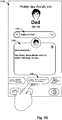
3A-3E sind konzeptuelle Diagramme, die Bildschirmfotos einer beispielhaften Benutzeroberfläche des Anrufüberwachungsdienstes eines beispielhaften Computergeräts darstellen, das einen Anrufüberwachungsdienst gemäß einem oder mehreren Aspekten der vorliegenden Offenbarung ausführt. 3A-3E FIG. 13 is conceptual diagrams depicting screenshots of an example call screening service user interface of an example computing device executing a call screening service in accordance with one or more aspects of the present disclosure.
-
3F-3I sind konzeptionelle Diagramme, die Bildschirmfotos einer weiteren beispielhaften Benutzeroberfläche des Anrufüberwachungsdienstes eines beispielhaften Computergeräts darstellen, das einen Anrufüberwachungsdienst gemäß einem oder mehreren Aspekten der vorliegenden Offenbarung ausführt. 3F-3I FIG. 13 is conceptual diagrams depicting screenshots of another example call screening service user interface of an example computing device executing a call screening service in accordance with one or more aspects of the present disclosure.
-
4 ist ein Ablaufdiagramm, das beispielhafte Operationen darstellt, die von einem beispielhaften Computergerät ausgeführt werden, das einen Anrufüberwachungsdienst gemäß einem oder mehreren Aspekten der vorliegenden Offenbarung ausführt. 4th FIG. 3 is a flow diagram depicting exemplary operations performed by a exemplary computing device implementing a call screening service in accordance with one or more aspects of the present disclosure.
AUSFÜHRLICHE BESCHREIBUNGDETAILED DESCRIPTION
1 ist ein konzeptionelles Diagramm, das ein beispielhaftes System darstellt, beinhaltend ein beispielhaftes Computergerät, das einen Anrufüberwachungsdienst (Call Screening Service, CSS) gemäß einem oder mehreren Aspekten der vorliegenden Offenbarung ausführt. Das System 100 von 1 beinhaltet das Computergerät 110, das Anrufersystem 180 und das Computersystem 160, die kommunikativ mit dem Netzwerk 130 verbunden sind. 1 FIG. 3 is a conceptual diagram illustrating an example system including an example computing device executing a call screening service (CSS) in accordance with one or more aspects of the present disclosure. The system 100 of 1 includes the computing device 110 , the calling system 180 and the computer system 160 who are communicative with the network 130 are connected.
Obwohl die dem System 100 zugeschriebenen Operationen hauptsächlich als lokal, durch das Computergerät 110, ausgeführt beschrieben werden, können in einigen Beispielen die Operationen des Systems 100 durch mehrere Computergeräte und -systeme ausgeführt werden, einschließlich zusätzlicher Computergeräte und -systeme, die über die in 1 dargestellten hinausgehen. Zum Beispiel kann das Anrufersystem 180, das Computersystem 160 oder jedes andere Gerät oder System, das kommunikativ mit dem Netzwerk 130 verbunden ist, einige oder alle Funktionen des Computergeräts 110 ausführen oder umgekehrt.Although the system 100 operations ascribed primarily as local, by the computing device 110 , may be described, in some examples, the operations of the system 100 executed by multiple computing devices and systems, including additional computing devices and systems that are accessible through the in 1 go out shown. For example, the calling system 180 , the computer system 160 or any other device or system that is communicative with the network 130 some or all of the functions of the computing device 110 execute or vice versa.
Das Netzwerk 130 stellt ein beliebiges öffentliches oder privates Kommunikationsnetzwerk zum Übermitteln von Daten zwischen Computersystemen, Servern und Computergeräten dar. Das Netzwerk 130 kann ein öffentliches Fernsprechwählnetz (Public Switched Telephone Network, PSTN), ein Drahtlosnetzwerk (z. B. ein Mobilfunk-, Wi-Fi® und/oder ein anderes Drahtlosnetzwerk), ein drahtgebundenes Netzwerk (z. B. ein lokales Netzwerk (Local Area Network, LAN) ein Großraumnetzwerk (Wide Area Network, WAN), das Internet usw.), ein Internetprotokoll (IP)-Telefonienetzwerk, wie z. B. ein Voice-over-IP (VoIP)-Netzwerk oder eine andere Art von Kommunikationsnetzwerk beinhalten. Netzwerk 130 kann einen oder mehrere Netzwerk-Hubs, Netzwerk-Switches, Netzwerk-Router oder beliebige andere Netzwerkausrüstung beinhalten, die operativ miteinander gekoppelt sind, wodurch der Austausch von Informationen zwischen dem Computersystem 160, dem Anrufersystem 180 und dem Computergerät 110 ermöglicht wird. Das Computersystem 160, das Anrufersystem 180 und das Computergerät 110 können unter Nutzung jeder beliebigen geeigneten Kommunikationstechnik Daten über Netzwerk 130 übermitteln und empfangen.The network 130 represents any public or private communications network for transferring data between computer systems, servers, and computing devices. The network 130 can be a public switched telephone network (PSTN), a wireless network (e.g. a cellular, Wi-Fi® and / or other wireless network), a wired network (e.g. a local area Network, LAN) a wide area network (WAN), the Internet, etc.), an Internet Protocol (IP) telephony network, such as B. include a Voice over IP (VoIP) network or other type of communication network. network 130 may include one or more network hubs, network switches, network routers, or any other network equipment that is operatively coupled to one another, thereby facilitating the exchange of information between the computer system 160 , the calling system 180 and the computing device 110 is made possible. The computer system 160 , the calling system 180 and the computing device 110 can use any suitable communication technology to send data over the network 130 transmit and receive.
Das Computersystem 160, das Anrufersystem 180 und das Computergerät 110 können jeweils unter Nutzung entsprechender Netzwerkverbindungen operativ mit dem Netzwerk 130 verbunden sein. Die Verbindungen, die das Computersystem 160, das Anrufersystem 180 und das Computergerät 110 mit dem Netzwerk 130 verbinden, können Ethernet oder andere Arten von Netzwerkverbindungen sein, bei welchen es sich um drahtlose und/oder drahtgebundene Verbindungen handeln kann. In einigen Beispielen können die Verbindungen, die das Computersystem 160, das Anrufersystem 180 und das Computergerät 110 mit dem Netzwerk 130 verbinden, IP-Telefonie-Verbindungen sein, wie z. B. VoIP oder andere ähnliche Telekommunikationsverbindungen. In einigen Beispielen können die Verbindungen, die das Computersystem 160, das Anrufersystem 180 und das Computergerät 110 mit dem Netzwerk 130 verbinden, IP Multimedia Subsystem (IMS)-Verbindungen unter Nutzung einer Session Initiated Protocol (SIP)-Signalgebung, leitungsvermittelte (Circuit Switched, CS)-Verbindungen oder andere Arten von Telekommunikationsverbindungen sein.The computer system 160 , the calling system 180 and the computing device 110 can be operationally connected to the network using appropriate network connections 130 be connected. The connections that the computer system 160 , the calling system 180 and the computing device 110 with the network 130 connect can be Ethernet or other types of network connections, which can be wireless and / or wired connections. In some examples, the connections that the computer system 160 , the calling system 180 and the computing device 110 with the network 130 connect, IP telephony connections, such as B. VoIP or other similar telecommunications connections. In some examples, the connections that the computer system 160 , the calling system 180 and the computing device 110 with the network 130 connect, IP Multimedia Subsystem (IMS) connections using Session Initiated Protocol (SIP) signaling, Circuit Switched (CS) connections or other types of telecommunication connections.
Das Anrufersystem 180 stellt eine beliebige Kombination eines oder mehrerer Computer, Computergeräte, Großrechner, Server (einschließlich sogenannter „Blades“), Cloud-Computersystemen oder anderer Arten von Remote-Computersystemen dar, die in der Lage sind, Informationen über das Netzwerk 130 auszutauschen, um einen Telefonanruf zwischen dem Anrufersystem 180 und dem Computergerät 110 zu realisieren. Das heißt, das Anrufersystem 180 kann Operationen zum Senden und Empfangen von Telefoniedaten mit dem Computergerät 110 über das Netzwerk 130 ausführen. Das Anrufersystem 180 kann beispielsweise ein Mobiltelefon, ein Festnetztelefon, ein Laptop, ein Arbeitsplatz in einem Telefonanrufzentrum oder ein anderes Computergerät sein, das für die Bereitstellung des Benutzerzugangs zu Telefondiensten konfiguriert ist.The calling system 180 represents any combination of one or more computers, computing devices, mainframes, servers (including so-called "blades"), cloud computing systems, or other types of remote computing systems capable of receiving information over the network 130 to exchange a phone call between the calling system 180 and the computing device 110 to realize. That is, the calling system 180 can send and receive telephony data operations with the computing device 110 over the network 130 To run. The calling system 180 For example, it can be a cell phone, landline phone, laptop, workstation in a telephone call center, or other computing device configured to provide user access to telephone services.
Das Computersystem 160 stellt eine beliebige Kombination eines oder mehrerer Computer, Großrechner, Server (einschließlich sogenannter „Blades“), Cloud-Computersystemen oder anderer Arten von Remote-Computersystemen dar, die in der Lage sind, Informationen über das Netzwerk 130 als Teil eines CSS auszutauschen, auf das das Computergerät 110 zugreift. Das heißt, das Computersystem 160 kann zusätzliche Prozessoren, gespeicherte Daten oder andere Computerressourcen speichern oder Zugriff darauf bereitstellen, die das Computergerät 110 benötigt, um die beschriebenen Techniken zum Ermöglichen einer lokalen, geräteinternen Anrufüberwachung durch das Computergerät 110 zu implementieren.The computer system 160 represents any combination of one or more computers, mainframes, servers (including so-called "blades"), cloud computer systems, or other types of remote computer systems that are capable of transmitting information over the network 130 as part of a CSS that the computing device accesses 110 accesses. That is, the computer system 160 may store or provide access to additional processors, stored data, or other computer resources that the computing device may use 110 is required to use the techniques described to enable local, intra-device call monitoring by the computing device 110 to implement.
Das Computergerät 110 stellt jedes geeignete Computergerät oder Computersystem dar, das in der Lage ist, Informationen über das Netzwerk 130 auszutauschen, um lokale, geräteinterne CSS-Techniken durchzuführen. Zum Beispiel kann das Computergerät 110 ein Mobiltelefon sein, von dem aus ein Benutzer asynchrone nicht-telefonische Eingaben zur Verfügung stellt, um einen Telefonanruf von einer Anrufer-Entität, wie z. B. dem Anrufersystem 180, anzunehmen oder abzulehnen, anstatt direkt synchrone telefonische Eingaben zur Annahme oder Ablehnung des Telefonanrufs bereitzustellen. Beispiele für das Computergerät 110, die über Mobiltelefone hinausgehen, beinhalten:
- Tablet-Computer, Laptop-Computer, Desktop-Computer, Server, Großrechner, Workstations, Festnetz-, Satelliten-; Zellular-, Wi-Fi®- oder ViOP-Telefone, tragbare Geräte (z. B. computergestützte Uhren usw.), Geräte zur Heimautomatisierung, Assistenten, Spielkonsolen und - systeme, Media-Player, E-Book-Reader, Fernsehplattformen, Navigations- oder
- Unterhaltungssysteme in Fahrzeugen oder etwaige andere Arten von mobilen, nicht mobilen, tragbaren und nicht tragbaren Computergeräten, die für den Austausch von Informationen über ein Netzwerk, wie z. B das Netzwerk 130, konfiguriert sind.
The computing device 110 represents any suitable computing device or system capable of conveying information over the network 130 to implement local, device-internal CSS techniques. For example it can Computing device 110 be a mobile phone from which a user provides asynchronous non-telephone input to initiate a telephone call from a calling entity such as a caller. B. the calling system 180 to accept or reject instead of directly providing synchronous telephone input to accept or reject the phone call. Examples of the computing device 110 That go beyond cell phones include: - Tablet computers, laptop computers, desktop computers, servers, mainframes, workstations, landlines, satellites; Cellular, Wi-Fi® or ViOP telephones, portable devices (e.g. computerized clocks, etc.), devices for home automation, assistants, game consoles and systems, media players, e-book readers, television platforms, navigation systems - or
- In-vehicle entertainment systems or any other type of mobile, non-mobile, portable and non-portable computing device used for exchanging information over a network, such as a computer. B the network 130 are configured.
Das Computergerät 110 beinhaltet das Anrufüberwachungsdienst („CSS“)-Modul 120, das Telefonmodul 122 und beinhaltet ferner die Benutzeroberflächenkomponente (User Interface Component, „UIC“) 112, die für die Ausgabe einer Benutzeroberfläche, wie z. B. der CSS-Benutzeroberfläche 114, konfiguriert ist. Die Module 120 und 122 können die hierin beschriebenen Operationen unter Nutzung von Software, Hardware, Firmware oder einer Mischung aus Hardware, Software und Firmware ausführen, die sich auf einem von dem Computergerät 110, dem Computersystem 160 und dem Anrufersystem 180 befindet und/oder darauf ausgeführt wird. Das Computergerät 110, das Computersystem 160 und das Anrufersystem 180 können die Module 120 und 122 mit mehreren Prozessoren oder mehreren Geräten, als virtuelle Maschinen, die auf darunterliegender Hardware ausgeführt werden, als einen oder mehrere Dienste eines Betriebssystems oder einer Computerplattform und/oder als ein oder mehrere ausführbare Programme auf einer Anwendungsebene einer Computerplattform ausführen. In einigen Beispielen können das Computergerät 110, das Computersystem 160 und das Anrufersystem 180 eines der Module 120 und 122 aus einem Anwendungsspeicher (z. B. einem App-Store) oder einer anderen Datenbank herunterladen. In einigen Beispielen können die Module 120 und 122 bei der Herstellung und vor der Bereitstellung für einen Benutzer auf dem Computergerät 110, dem Computersystem 160 und dem Anrufersystem 180 vorinstalliert werden. In anderen Beispielen werden das Computergerät 110, das Computersystem 160 und das Anrufersystem 180 nach der Herstellung oder nach der Bereitstellung an einen Benutzer mit einem der Module 120 und 122 geladen.The computing device 110 includes the Call Monitoring Service ("CSS") module 120 , the telephone module 122 and also includes the User Interface Component ("UIC") 112 that are used for the output of a user interface, such as B. the CSS user interface 114 is configured. The modules 120 and 122 may perform the operations described herein using software, hardware, firmware, or a mixture of hardware, software, and firmware residing on any of the computing device 110 , the computer system 160 and the calling system 180 is located and / or is executed on it. The computing device 110 , the computer system 160 and the calling system 180 can use the modules 120 and 122 with multiple processors or multiple devices, as virtual machines that run on underlying hardware, as one or more services of an operating system or a computer platform and / or as one or more executable programs on an application level of a computer platform. In some examples, the computing device 110 , the computer system 160 and the calling system 180 one of the modules 120 and 122 Download from an application store (e.g. an app store) or other database. In some examples, the modules 120 and 122 during manufacture and before provision to a user on the computing device 110 , the computer system 160 and the calling system 180 preinstalled. In other examples, the computing device 110 , the computer system 160 and the calling system 180 after manufacture or after provision to a user with one of the modules 120 and 122 loaded.
Während es in 1 als Computergerät 110, beinhaltend UIC 112, CSS-Modul 120 und Telefonmodul 122 dargestellt ist, können die Module 120 und 122 und deren Funktionalität unterschiedlich zwischen Computergerät 110, Computersystem 160 und Anrufersystem 180 verteilt sein. Als ein Beispiel kann in einigen Fällen das Anrufersystem 180 oder das Computersystem 160 die gesamte oder einen Teil der Funktionalität des CSS-Moduls 120 beinhalten.While it is in 1 as a computing device 110 , including UIC 112 , CSS module 120 and telephone module 122 is shown, the modules 120 and 122 and their functionality different between computing device 110 , Computer system 160 and calling system 180 be distributed. As an example, in some cases the calling system 180 or the computer system 160 all or part of the functionality of the CSS module 120 include.
Die UIC 112 des Computergeräts 110 kann als eine Eingabevorrichtung und/oder eine Ausgabevorrichtung für das Computergerät 110 arbeiten. Die UIC 112 kann unter Verwendung verschiedener Technologien implementiert sein. Zum Beispiel kann die UIC 112 als eine Eingabevorrichtung unter Verwendung präsenzsensitiver Eingabebildschirme, Mikrofontechnologien, Infrarotsensortechnologien oder einer anderen Eingabevorrichtungstechnologie zur Verwendung beim Empfangen von Benutzereingaben fungieren. Die UIC 112 kann als Ausgabevorrichtung fungieren, die konfiguriert ist, einem Benutzer eine Ausgabe unter Verwendung von einer oder mehreren Anzeigevorrichtungen, Lautsprechertechnologien, haptischer Feedbacktechnologien oder einer anderen Ausgabevorrichtungstechnologie zur Verwendung beim Ausgeben von Informationen an einen Benutzer zu präsentieren. Die UIC 112 kann durch das Computergerät 110 verwendet werden, um eine GUI, wie z. B. CSS-Benutzeroberfläche 114, zur Anzeige auszugeben.The UIC 112 of the computing device 110 can be used as an input device and / or an output device for the computing device 110 work. The UIC 112 can be implemented using various technologies. For example, the UIC 112 act as an input device using presence-sensitive input screens, microphone technologies, infrared sensor technologies, or other input device technology for use in receiving user input. The UIC 112 may act as an output device configured to present output to a user using one or more display devices, speaker technology, haptic feedback technology, or other output device technology for use in outputting information to a user. The UIC 112 can through the computing device 110 used to create a GUI such as B. CSS user interface 114 to output for display.
Das Telefonmodul 122 übernimmt die Telefonfunktionalität im Auftrag des Computergeräts 110. Das Telefonmodul 122 kann beispielsweise auch als „Wähler“ bezeichnet werden und kann eine Anwendung oder Komponente einer Computerplattform oder eines Betriebssystems des Computergeräts 110 sein, die das Computergerät 110 für die Funktion als Telefon konfiguriert. Das Telefonmodul 122 kann Operationen für ausgehende Anrufe beispielsweise durch das Initiieren von Telefonanrufen mit externen Geräten, wie z. B. dem Anrufersystem 180, durchführen. Das Telefonmodul 122 kann auch eingehende Telefonanrufe verarbeiten, beispielsweise durch Unterstützung des Austauschs von Telefondaten zwischen dem Computergerät 110 und einem externen Gerät, wodurch ein Telefonanruf zwischen dem Computergerät 110 und dem externen Gerät ermöglicht wird. Das Telefonmodul 122 kann auch Operationen zur Unterstützung bestehender Telefonanrufe durchführen, beispielsweise durch das Zusammenführen von Anrufen, das Verlegen von Anrufen in eine Warteschleife, das Annehmen, Ablehnen oder Weiterleiten von Anrufen und andere Telefon-basierte Operationen.The telephone module 122 takes over the telephone functionality on behalf of the computing device 110 . The telephone module 122 can also be referred to as a “voter”, for example, and can be an application or component of a computer platform or an operating system of the computer device 110 be that the computing device 110 configured to function as a telephone. The telephone module 122 can perform outbound call operations, for example, by initiating phone calls with external devices such as B. the calling system 180 , carry out. The telephone module 122 can also handle incoming telephone calls, for example by supporting the exchange of telephone data between the computing device 110 and an external device, creating a telephone call between the computing device 110 and the external device. The telephone module 122 can also perform operations in support of existing telephone calls, such as merging calls, placing calls on hold, answering, rejecting, or forwarding calls, and other telephone-based operations.
Das Telefonmodul 122 kann die UIC 112 dazu veranlassen, eine Telefon-Benutzeroberfläche zu präsentieren, die mit der Telefonfunktionalität des Computergeräts 110 assoziiert ist. Die Benutzeroberfläche des Telefonmoduls 122 kann eine numerische Tastatur oder andere Eingabeelemente beinhalten, von der aus ein Benutzer Eingaben zum Wählen einer Telefonnummer bereitstellen kann. Die Benutzeroberfläche des Telefonmoduls 122 kann Menüs oder Optionen zum Durchführen Telefon-basierter Aufgaben, wie z. B. des Abspielens von Sprachnachrichten, des Überprüfens von Anrufverläufen, des Suchens von Kontakten in einem elektronischen Adressbuch und dergleichen, beinhalten. Das Telefonmodul 122 kann Informationen bereitstellen, die vom CSS-Modul 120 angefordert werden, um die UIC 112 zu veranlassen, eine CSS-Benutzeroberfläche, wie z. B. die CSS-Benutzeroberfläche 114, zu präsentieren, über die ein Benutzer des Computergeräts 110 eingehende Telefonanrufe, wie z. B. solche, die vom Anrufersystem 180 stammen, intelligenter verwalten kann.The telephone module 122 can the UIC 112 prompt to present a telephone user interface that is compatible with the telephone functionality of the Computing device 110 is associated. The user interface of the telephone module 122 may include a numeric keypad or other input element from which a user can provide input for dialing a telephone number. The user interface of the telephone module 122 can have menus or options for performing phone-based tasks such as B. playing voice messages, checking call flows, searching for contacts in an electronic address book and the like. The telephone module 122 can provide information that is used by the CSS module 120 requested to the UIC 112 to cause a CSS user interface, such as B. the CSS user interface 114 , to present to a user of the computing device 110 incoming phone calls, such as B. those generated by the calling system 180 originate, manage it smarter.
Das CSS-Modul 120 verwaltet einen CSS, der auf dem Computergerät 110 ausgeführt wird. Das CSS-Modul 120 des Computergeräts 110 stellt eine grafische Benutzeroberfläche dar, wie z. B. die CSS-Benutzeroberfläche 114, über die ein Benutzer des Computergeräts 110 mit dem vom CSS-Modul 120 verwalteten CSS interagieren kann, z. B. um eingehende Telefonanrufe, wie die vom Anrufersystem 180 stammenden, intelligenter zu verwalten. In einigen Fällen ist die CSS-Benutzeroberfläche 114 des CSS-Moduls 120 eine eigenständige Benutzeroberfläche für den CSS, die von den CSS-Modulen 120 bereitgestellt wird. In anderen Beispielen bildet die CSS-Benutzeroberfläche 114 einen Teil oder einen Abschnitt einer anderen Benutzeroberfläche, wie z. B. die vom Telefonmodul 122 ausgegebene Telefon-Benutzeroberfläche oder eine vom Computergerät 110 dargestellte Betriebssystem-Benutzeroberfläche .The CSS module 120 manages a CSS that is on the computing device 110 is performed. The CSS module 120 of the computing device 110 represents a graphical user interface, such as B. the CSS user interface 114 through which a user of the computing device 110 with the one from the CSS module 120 Managed CSS can interact, e.g. B. incoming phone calls, such as those from the calling system 180 native, smarter to manage. In some cases the CSS user interface is 114 of the CSS module 120 an independent user interface for the CSS, which is provided by the CSS modules 120 provided. In other examples, the CSS user interface forms 114 part or section of another user interface, such as B. from the telephone module 122 phone user interface output or one from the computing device 110 Operating system user interface shown.
Bei der Bereitstellung der grafischen Benutzeroberfläche steuert das CSS-Modul 120 des Computergeräts 110 die UIC 112, indem es zumindest ermittelt, was die UIC 112 darstellt und wie. Das CSS-Modul 120 kann ferner steuern, welche Informationen mit dem Computergerät 110 über das Netzwerk 130 ausgetauscht werden, um die grafische Benutzeroberfläche zu unterstützen. Beispielsweise kann das CSS-Modul 120 bei dem Steuern, was die UIC 112 anzeigt, Informationen von einer Komponente des Computergeräts 110 (z. B. Telefonmodul 122) oder des Computersystems 160 empfangen, die eine Grundlage für einen Teil der oder die Gesamtheit der CSS-Benutzeroberfläche 114 bilden. In Reaktion darauf kann das CSS-Modul 120 Anweisungen und Informationen an die UIC 112 ausgeben, die die UIC 112 dazu veranlassen, die CSS-Benutzeroberfläche 114 gemäß den von der Komponente des Computergeräts 110 oder des Computersystems 160 empfangenen Informationen anzuzeigen.The CSS module controls the provision of the graphical user interface 120 of the computing device 110 the UIC 112 by at least determining what the UIC 112 represents and how. The CSS module 120 can also control what information is with the computing device 110 over the network 130 exchanged to support the graphical user interface. For example, the CSS module 120 in controlling what the UIC 112 displays information from a component of the computing device 110 (e.g. telephone module 122 ) or the computer system 160 received that provides a foundation for part or all of the CSS user interface 114 form. In response, the CSS module 120 Instructions and information to the UIC 112 that the UIC 112 cause the CSS user interface 114 according to the components of the computing device 110 or the computer system 160 received information.
In dem Beispiel von 1 beinhaltet die CSS-Benutzeroberfläche 114 die grafischen Elemente 116A und 116B (gemeinsam als „grafische Elemente 116“ bezeichnet), die jeweils einen Teil des gesprochenen Audios darstellen, das über einen Telefonanruf gehört wurde, der von dem CSS-Modul 120 abgefangen wurde. Graphisches Element 116A ist eine reduzierte Ansicht dessen, was ein digitaler Assistent zu einem Anrufer gesagt hat. Graphisches Element 116B ist eine erweiterte Ansicht dessen, was der Anrufer in Reaktion auf den digitalen Assistenten sagte.In the example of 1 includes the CSS user interface 114 the graphic elements 116A and 116B (collectively as "graphic elements 116 "Denoted), each representing part of the spoken audio heard over a phone call made by the CSS module 120 was intercepted. Graphic element 116A is a pared-down view of what a digital assistant said to a caller. Graphic element 116B is an expanded view of what the caller said in response to the digital assistant.
Das CSS-Modul 120 kann veranlassen, dass die grafischen Elemente 116A und 116B erweitert oder reduziert werden, je nachdem, welche Partei in der Befragung (d. h. der Anrufer oder der CSS) zur Zeit spricht. Wenn der Anrufer beispielsweise im Beispiel von 1 antwortet, veranlasst das CSS-Modul 120, dass das grafische Element 116B in erweiterter Form dargestellt wird, um den vom Anrufer gesprochenen Inhalt anzuzeigen. Das CSS-Modul 120 veranlasst hingegen, dass das grafische Element 116A in erweiterter Form angezeigt wird, um den vom CSS gesprochenen Inhalt darzustellen, und veranlasst dann, dass das grafische Element 116A in reduzierter Form angezeigt wird, wenn der CSS die Ausgabe des gesprochenen Audios beendet oder in Reaktion auf die Erkennung des vom Anrufer gesprochenen Audios. Ein Benutzer des Computergeräts 110 kann jederzeit Eingaben an den grafischen Elementen 116A oder 116B bereitstellen, um eine Vergrößerung oder Verkleinerung der in den grafischen Elementen 116A und 116B enthaltenen Inhalte zu veranlassen.The CSS module 120 can cause the graphic elements 116A and 116B can be expanded or reduced depending on which party in the survey (ie the caller or the CSS) is currently speaking. For example, in the example of 1 answers, causes the CSS module 120 that the graphic element 116B in expanded form to show the content spoken by the caller. The CSS module 120 however, causes the graphic element 116A is displayed in expanded form to represent the content spoken by the CSS, and then causes the graphic element 116A is displayed in a reduced form when the CSS stops outputting the spoken audio or in response to the detection of the audio spoken by the caller. A user of the computing device 110 can make entries on the graphic elements at any time 116A or 116B provide to enlarge or reduce the in the graphic elements 116A and 116B the content contained therein.
Die Benutzeroberfläche 114 beinhaltet ferner grafische Elemente 118A bis 118F (gemeinsam als „grafische Elemente 118“ bezeichnet). Jedes der grafischen Elemente ist mit einer anderen vom Benutzer auswählbaren Option zur Verwaltung eines Telefonanrufs assoziiert, der von dem CSS-Modul 120 abgefangen wurde.The user interface 114 also includes graphic elements 118A to 118F (collectively referred to as "graphical elements 118"). Each of the graphical elements is associated with a different user-selectable option for managing a telephone call made by the CSS module 120 was intercepted.
Zum Beispiel sind die grafischen Elemente 118A bis 118C mit Optionen zum Einstellen oder Ändern der Richtung einer laufenden Befragung mit einem Anrufer assoziiert. Mit anderen Worten, die grafischen Elemente 118A bis 118C stellen eine asynchrone Eingabefunktion der CSS-Benutzeroberfläche 114 bereit, um mit dem CSS-Modul 120 zu kommunizieren und so direkt zu ändern oder einzustellen, wie das CSS-Modul 120 einen Anrufer befragt. Das grafische Element 118A stellt eine Option bereit, um einen Anrufer und einen Telefonanruf als Spam oder unerwünschte Aufforderung, Umfrage usw. zu markieren und das CSS-Modul 120 zu veranlassen, dem Anrufer mitzuteilen: „Leider kann die Person, die Sie zu erreichen versuchen, im Moment keinen Anruf entgegennehmen. Vielen Dank und auf Wiedersehen.“ Das grafische Element 118B stellt eine Option bereit, mit der das CSS-Modul 120 dem Anrufer mitteilen kann, dass der Benutzer des Computergeräts 110 ihn später zurückrufen wird. Und, obwohl in 1 teilweise verdeckt, ist das grafische Element 118C mit einer Option assoziiert, mit der das CSS-Modul 120 den Anrufer darüber informieren kann, dass der Benutzer des Computergeräts 110 eine textbasierte Nachricht von dem Anrufer erhalten möchte. Selbstverständlich sind dies nur einige Beispiele für grafische Elemente 118A bis 118C, in anderen Beispielen sind weitere Optionen zum Modifizieren einer Befragung möglich. Beispielsweise können die grafischen Elemente 118A bis 118C mit vorgegebenen oder festgelegten Antworten assoziiert sein, die ein Benutzer dem Anrufer bereitstellen möchte. Solche Antworten können vom CSS-Modul 120 im Laufe der Zeit erlernt werden, basierend darauf, wie ein Benutzer des Computergeräts 110 (oder andere ähnliche CSS-Benutzer) bei früheren oder laufenden Befragungen mit anderen, ähnlich klassifizierten Anrufern geantwortet hat (haben).For example are the graphic elements 118A to 118C associated with options to set or change the direction of an ongoing interview with a caller. In other words, the graphic elements 118A to 118C represent an asynchronous input function of the CSS user interface 114 ready to start using the CSS module 120 to communicate and so to change or adjust directly, like the CSS module 120 interviewed a caller. The graphic element 118A provides an option to mark a caller and a phone call as spam or unsolicited solicitation, poll, etc. and the CSS module 120 to prompt the caller to say, “Unfortunately, the person you are trying to reach cannot answer the call at the moment. Thank you and good bye." The graphic element 118B provides an option with which the CSS module 120 can notify the caller that the user of the computing device 110 will call him back later. And, although in 1 The graphic element is partially covered 118C associated with an option with which the CSS module 120 can inform the caller that the user of the computing device 110 wants to receive a text-based message from the caller. Of course, these are only a few examples of graphic elements 118A to 118C , In other examples, further options for modifying a survey are possible. For example, the graphic elements 118A to 118C be associated with predetermined or fixed responses that a user wishes to provide to the caller. Such answers can be provided by the CSS module 120 Can be learned over time based on how a user of the computing device is 110 (or other similar CSS users) answered previous or ongoing surveys with other, similarly classified callers.
Die grafischen Elemente 118D bis 118F sind hingegen mit Aktionen zur Anpassung oder Änderung der vom CSS-Modul 120 bereitgestellten Audioschnittstelle assoziiert (d. h. dem gesprochenen Dialog, der vom CSS-Modul 120 ausgegeben wird, während das CSS-Modul 120 einen Anrufer befragt). Die grafischen Elemente 118D bis 118F stellen ein asynchrones Eingabemerkmal der CSS-Benutzeroberfläche 114 für die Kommunikation mit dem CSS-Modul 120 bereit, um direkt zu steuern, ob das CSS-Modul 120 einen vom CSS-Modul 120 verwalteten Telefonanruf beendet, annimmt oder mithört. Auf diese Weise können die asynchronen Eingabemerkmale dem Benutzer die Kontrolle darüber geben, wie das CSS-Modul 120 beim Beenden, Annehmen oder Mithören mit einem Anrufer spricht.The graphic elements 118D to 118F are, however, with actions to adapt or change the from the CSS module 120 provided audio interface (i.e. the spoken dialogue provided by the CSS module 120 is output while the CSS module 120 interviewed a caller). The graphic elements 118D to 118F represent an asynchronous input feature of the CSS user interface 114 for communication with the CSS module 120 ready to control directly whether the CSS module 120 one from the CSS module 120 Managed phone call ended, answered, or eavesdropped. In this way, the asynchronous input characteristics can give the user control over how the CSS module works 120 speaks to a caller when ending, answering or listening.
Das grafische Element 118D stellt beispielsweise eine Option zum Auflegen oder Beenden eines Telefonanrufs bereit und veranlasst das CSS-Modul 120, dem Anrufer mitzuteilen: „Leider kann die Person, die Sie zu erreichen versuchen, im Moment keinen Anruf entgegennehmen. Vielen Dank und auf Wiedersehen.“ Das grafische Element 118E stellt eine Option zum Beenden einer laufenden Befragung durch Annahme des Telefonanrufs bereit und veranlasst das CSS-Modul 120, dem Anrufer mitzuteilen: „Danke, ich verbinde Sie jetzt.“ Das grafische Element 118F stellt eine Option bereit, das Telefonat weder zu beenden noch anzunehmen, jedoch stattdessen eine Option zum Mithören der Befragung bereitzustellen. Das CSS-Modul 120 kann nach der Annahme eines Telefonanrufs die UIC 112 veranlassen, das Audio der Befragung auszugeben, damit der Benutzer dem CSS-Modul 120 und dem Anrufer zuhören kann. Wenn die Option „Mithören“ ausgewählt ist, kann das CSS-Modul 120 das Audio einer Befragung ausgeben und gleichzeitig sicherstellen, dass ein Mikrofon der UIC 112 des Computergeräts 110 ausgeschaltet bleibt, um zu verhindern, dass ein Benutzer des Computergeräts 110 direkt mit dem Anrufer spricht.The graphic element 118D provides an option to hang up or end a phone call, for example, and initiates the CSS module 120 to tell the caller, “Sorry, the person you are trying to reach is unable to answer the call at the moment. Thank you and goodbye. ”The graphic element 118E provides an option to end an ongoing survey by accepting the phone call and initiates the CSS module 120 to tell the caller: "Thank you, I'll connect you now." The graphic element 118F provides an option not to end or answer the call, but instead to provide an option to listen in on the interview. The CSS module 120 after accepting a phone call, the UIC 112 cause the audio of the survey to be output so that the user can use the CSS module 120 and listen to the caller. If the option "Listen in" is selected, the CSS module 120 output the audio of a survey and at the same time ensure that a UIC 112 of the computing device 110 remains off to prevent a user of the computing device 110 speaks directly to the caller.
Dies sind selbstverständlich nur einige Beispiele für die grafischen Elemente 118D bis 118F, in anderen Beispielen können zusätzliche oder andere Optionen zur Steuerung des Telefonanrufs verwendet werden. Beispielsweise können die grafischen Elemente 118D bis 118F mit Optionen zur Weiterleitung eines eingehenden Anrufs, zur Zusammenführung eines eingehenden Anrufs mit einem anderen Telefonanruf oder zur Veranlassung des CSS-Moduls 120, auf unterschiedliche Weise mit einem Anrufer zu sprechen, assoziiert sein.These are of course only a few examples of the graphic elements 118D to 118F , In other examples, additional or different options may be used to control the phone call. For example, the graphic elements 118D to 118F with options to forward an incoming call, to merge an incoming call with another telephone call or to initiate the CSS module 120 associated with speaking to a caller in different ways.
Bei der Bearbeitung von durch die UIC 112 erkannten Eingaben kann das CSS-Modul 120 in Reaktion auf eine oder mehrere Eingaben, die an entsprechenden Stellen einer präsenzempfindlichen Eingabekomponente der UIC 112 erkannt werden, die Stellen einer Anzeigekomponente der UIC 112 entsprechen, an denen grafische Elemente 116 und 118 der CSS-Benutzeroberfläche 114 angezeigt werden, Informationen von der UIC 112 empfangen. Das CSS-Modul 120 kann Informationen über die von der UIC 112 erkannten Eingaben an andere Komponenten des Computergeräts 110 oder des Computersystems 160 weitergeben, um die Eingaben zu interpretieren und das Computergerät 110 zu veranlassen, eine oder mehrere Funktionen in Reaktion auf die Eingaben durchzuführen. In einigen Beispielen kann das CSS-Modul 120 eine Angabe einer oder mehrerer an der UIC 112 erkannten Benutzereingaben empfangen und Informationen über die Benutzereingaben an das Telefonmodul 122 oder eine andere Anwendung oder Komponente des Computergeräts 110, für die die Benutzereingaben bestimmt sind, ausgeben. Die UIC 112 kann beispielsweise eine Benutzereingabe an einer Stelle der UIC 112 erkennen, an der das grafische Element 118E angezeigt wird, und Daten über die Benutzereingabe an das CSS-Modul 120 senden.When processing by the UIC 112 recognized inputs can be made by the CSS module 120 in response to one or more inputs made at corresponding points of a presence-sensitive input component of the UIC 112 are recognized, the positions of a display component of the UIC 112 correspond to which graphic elements 116 and 118 the CSS user interface 114 information from the UIC 112 receive. The CSS module 120 can provide information on the from the UIC 112 recognized inputs to other components of the computing device 110 or the computer system 160 pass on to interpret the inputs and the computing device 110 cause one or more functions to be performed in response to the inputs. In some examples the CSS module 120 an indication of one or more at the UIC 112 received recognized user input and information about the user input to the telephone module 122 or another application or component of the computing device 110 for which the user input is intended. The UIC 112 for example, a user input can be made at one point in the UIC 112 recognize by the graphic element 118E and data about user input to the CSS module 120 send.
Das CSS-Modul 120 kann ein oder mehrere Berührungsereignisse basierend auf der erkannten Eingabe interpretieren. Ein Berührungsereignis kann Informationen beinhalten, die die Benutzereingabe, wie z. B. eine Ortskomponente (z. B. [x,y]-Koordinaten) der Benutzereingabe, eine Zeitkomponente (z. B. wann die Benutzereingabe empfangen wurde), eine Kraftkomponente (z. B. ein Druck oder eine Kraft, der/die durch die Benutzereingabe ausgeübt wurde) oder andere Daten (z. B. Geschwindigkeit, Beschleunigung, Richtung, Dichte, einen Flächenbereich der berührungsempfindlichen Komponente, die die Berührung erkannt hat, usw.) über die Benutzereingabe charakterisieren.The CSS module 120 can interpret one or more touch events based on the recognized input. A touch event can include information that the user input, such as. B. a location component (e.g. [x, y] coordinates) of the user input, a time component (e.g. when the user input was received), a force component (e.g. a pressure or a force that performed by the user input) or other data (e.g., speed, acceleration, direction, density, a surface area of the touch-sensitive component that detected the touch, etc.) via the user input.
Basierend auf den Ortsinformationen der Berührungsereignisse, die von der Benutzereingabe erzeugt werden, kann das CSS-Modul 120 ermitteln, dass die erkannte Benutzereingabe mit dem grafischen Element 118E (z.B. eine Option zum Beenden einer laufenden Befragung, zur Annahme des Telefonanrufs) assoziiert ist. Das CSS-Modul 120 kann eine Anweisung an das Telefonmodul 122 senden (z. B. den Telefonanruf anzunehmen, indem es einen Sprachkommunikationskanal zwischen dem Benutzer und dem Anrufer aufbaut), oder in einigen Fällen kann das CSS-Modul 120 eine Indikation der ein oder mehreren Berührungsereignisse an das Telefonmodul 122 zur weiteren Interpretation senden.Based on the location information of the touch events generated by the user input, the CSS module 120 determine that the recognized user input with the graphical element 118E (eg an option to end an ongoing survey, to accept the phone call) is associated. The CSS module 120 can send an instruction to the telephone module 122 send (e.g. to answer the phone call by establishing a voice communication channel between the user and the caller), or in some cases the CSS module 120 an indication of the one or more touch events to the telephone module 122 send for further interpretation.
Im Betrieb kann das Computergerät 110 über das Netzwerk 130 einen Telefonanruf empfangen, der von einem Anrufer von einem anderen Gerät, wie z. B. dem Anrufersystem 180, initiiert wird. Bevor der Telefonanruf durch das Telefonmodul 122 bearbeitet wird, kann das CSS-Modul 120 den eingehenden Telefonanruf abfangen.In operation, the computing device 110 over the network 130 Received a phone call originating from a caller from another device, such as a phone. B. the calling system 180 , is initiated. Before the phone call through the phone module 122 is edited, the CSS module 120 intercept the incoming phone call.
Als Vorstufe zur Übergabe der Verwaltung des Telefonanrufs an das Telefonmodul 122 zur Durchführung des Telefonanrufs kann das CSS-Modul 120 eine eigene Audio-Benutzerschnittstelle (manchmal auch als „Ton-Benutzeroberfläche“ bezeichnet) über den Telefonanruf einrichten, um zusätzliche Informationen über den Anrufer und den Zweck des Telefonanrufs zu erhalten. Beispiele für zusätzliche Informationen sind der Name des Anrufers, der vom Anrufer angegebene Zweck des Anrufs, ein zugehöriges Unternehmen, eine Bildungseinrichtung, eine Wohltätigkeitsorganisation, eine Regierungsbehörde oder andere zusätzliche Informationen, die auf einen beabsichtigten Zweck des Telefonanrufs hinweisen oder den Telefonanruf anderweitig in einen Kontext stellen, um einem Benutzer bei der Entscheidung zu helfen, ob er den Telefonanruf annehmen soll oder nicht.As a preliminary stage for handing over the management of the telephone call to the telephone module 122 the CSS module 120 Set up your own audio user interface (sometimes called the “audio user interface”) over the phone call to provide additional information about the caller and the purpose of the phone call. Examples of additional information include the caller's name, the caller's stated purpose of the call, a related business, educational institution, charity, government agency, or other additional information indicative of an intended purpose of the phone call, or otherwise put the phone call into context to help a user decide whether or not to answer the phone call.
Das CSS-Modul 120 befragt den Anrufer über die Audio-Benutzerschnittstelle während des Telefonanrufs nach den zusätzlichen Informationen, sodass der Benutzer des Computergeräts 110 in Reaktion auf den Telefonanruf eine Aktion für das CSS-Modul 120 festlegen kann. Anders ausgedrückt: Das CSS-Modul 120 kann an ein anrufendes Gerät, wie z. B. das Anrufersystem 180, und als Teil des Telefonanrufs Audioausgaben des Telefons ausgeben, wie z. B. das Audio einer gesprochenen Anfrage nach zusätzlichen Informationen. Das CSS-Modul 120 kann von dem anderen Gerät und als Teil des Telefonanrufs Telefon-Audioeingaben empfangen, wie z. B. Audio einer gesprochenen Antwort eines Anrufers, die die zusätzlichen Informationen beinhaltet.The CSS module 120 queries the caller through the audio user interface during the phone call for the additional information so that the user of the computing device 110 an action for the CSS module in response to the telephone call 120 can set. In other words: the CSS module 120 can be sent to a calling device such as B. the calling system 180 , and as part of the phone call, output phone audio, such as B. the audio of a spoken request for additional information. The CSS module 120 can receive phone audio input from the other device and as part of the phone call, such as B. Audio of a spoken response from a caller that includes the additional information.
Das CSS-Modul 120 kann über die Audio-Benutzerschnittstelle des Telefonanrufs eine computergenerierte Sprachausgabe übertragen und über die Audio-Benutzerschnittstelle eine gesprochene Eingabe des Anrufers empfangen. Mit anderen Worten, das CSS-Modul 120 kann eine Audio-Benutzerschnittstelle zwischen dem Anrufer des Anrufersystems 180 und einer Sprach-Engine oder einer anderen voraufgezeichneten oder computergenerierten Stimme des CSS-Moduls 120 öffnen, sodass das CSS-Modul 120 und der Anrufer über den Telefonanruf mit den jeweiligen Stimmen kommunizieren können.The CSS module 120 can transmit a computer-generated speech output via the audio user interface of the telephone call and receive spoken input from the caller via the audio user interface. In other words, the CSS module 120 can provide an audio user interface between the caller of the calling system 180 and a speech engine or other pre-recorded or computer generated voice of the CSS module 120 open so that the CSS module 120 and the caller can communicate with the respective voices over the phone call.
So kann beispielsweise eine Sprach-Engine des CSS-Moduls 120 gesprochenes Audio an das Anrufersystem 180 ausgeben, das eine einleitende Aussage enthält: „Guten Tag, die Person, die Sie anrufen, verwendet einen Prüfdienst und wird eine Kopie dieses Gesprächs erhalten. Fahren Sie fort und nennen Sie Ihren Namen und den Grund für Ihren Anruf.“ In Reaktion auf das Hören der einleitenden Erklärung hat der Anrufer zwei primäre Optionen, um fortzufahren (obwohl es in einigen Beispielen mehr als zwei Optionen geben kann), einschließlich: Auflegen oder anderweitiges Beenden des Telefonanrufs vom anrufenden System 180 oder mit dem CSS-Modul 120 über die Audio-Benutzerschnittstelle sprechen, um die von der einleitenden Erklärung angeforderten zusätzlichen Informationen bereitzustellen. Beispielsweise kann das CSS-Modul 120 Spracheingaben von dem Anrufer empfangen, die eine Antwort in Reaktion auf die einleitende Aussage anzeigen. Die Antwort könnte lauten: „Hallo, mein Name ist Joe von ACME und ich möchte Ihnen mitteilen, dass es Probleme mit Ihrer Bestellung gibt für...“ Das CSS-Modul 120 kann die zusätzlichen Informationen über das Netzwerk 130 und über den Telefonanruf empfangen und die zusätzlichen Informationen verwenden, um die CSS-Schnittstelle 114 zur Überprüfung des Anrufers aufzubauen und zu aktualisieren.For example, a language engine of the CSS module 120 spoken audio to the calling system 180 that contains an introductory statement: “Hello, the person you are calling is using an auditing service and will receive a copy of this conversation. Go ahead and state your name and the reason you called. ”In response to hearing the introductory explanation, the caller has two primary options to proceed (although in some examples there may be more than two options) including: Hang up or otherwise ending the phone call from the calling system 180 or with the CSS module 120 speak over the audio user interface to provide the additional information requested by the introductory statement. For example, the CSS module 120 Receive voice input from the caller indicating a response in response to the introductory statement. The answer could be, "Hello, my name is Joe from ACME and I want to let you know that there is a problem with your order for ..." The CSS module 120 can provide the additional information about the network 130 and received over the phone call and use the additional information to use the CSS interface 114 to set up and update to check the caller.
Wenn sich das CSS-Modul 120 einem Anrufer vorstellt, kann es den Anrufer darauf hinweisen, dass das CSS-Modul 120 kein Mensch ist. Zum Beispiel kann das CSS-Modul 120 eine einleitende Aussage, wie zuvor beschrieben, mit „Dies ist ein computergenerierter Sprachbeantwortungsdienst“ oder einfach „Dies ist ein Roboter...“ einleiten.If the CSS module 120 introduces a caller, it can alert the caller that the CSS module 120 is not a human. For example the CSS module 120 Introduce an introductory statement, as previously described, with “This is a computer-generated voice answering service” or simply “This is a robot ...”.
In einigen Beispielen kann das CSS-Modul 120 einem Anrufer mitteilen, dass der CSS im Namen eines bestimmten benannten Benutzers antwortet, oder es kann eine synthetisierte Version der Stimme eines Benutzers ausgeben, wenn es mit dem Anrufer kommuniziert. Auf diese Weise kann das CSS-Modul 120 die Bestätigung bereitstellen, dass ein Anrufer den richtigen Benutzer angerufen und keine falsche Rufnummer gewählt hat.In some examples the CSS module 120 tell a caller that the CSS is responding on behalf of a specific named user, or it can cast a synthesized version of a user's voice when communicating with the caller. This way the CSS module 120 Provide confirmation that a caller called the correct user and did not dial the wrong number.
Das CSS-Modul 120 kann UIC 112 veranlassen, die CSS-Benutzeroberfläche 114 (in diesem Fall eine grafische Benutzeroberfläche) auszugeben, die mit dem Telefonanruf assoziiert ist. Das CSS-Modul 120 kann UIC 112 dazu veranlassen, innerhalb der CSS-Benutzeroberfläche 144 einen Hinweis auf die zusätzlichen Informationen aufzunehmen, die über die Audio-Benutzerschnittstelle, die den Anrufer befragt, erhalten wurden. Zum Beispiel kann das CSS-Modul 120 zunächst die grafische Anzeige 116A in erweiterter Form ausgeben, um eine Transkription der einleitenden Aussage zu beinhalten. Und in Reaktion auf die Erkennung von Audio vom Anrufer kann das CSS-Modul 120 die grafische Anzeige 116A reduzieren, um innerhalb der CSS-Benutzeroberfläche 114 Platz für die grafische Anzeige 116B zu schaffen.The CSS module 120 can UIC 112 cause the CSS user interface 114 (in this case a graphical user interface) associated with the phone call. The CSS module 120 can UIC 112 cause it to happen within the CSS user interface 144 include an indication of the additional information obtained through the audio user interface interviewing the caller. For example the CSS module 120 first the graphic display 116A output in expanded form to contain a transcription of the introductory statement. And in response to the detection of audio from the caller, the CSS module can 120 the graphic display 116A reduce to within the CSS user interface 114 Space for the graphic display 116B to accomplish.
Das CSS-Modul 120 kann die zusätzlichen Informationen, die von dem Anrufer in Reaktion auf die einleitende Aussage empfangen wurden, transkribieren und jedes Wort aus der Transkription innerhalb der grafischen Anzeige 116B anzeigen. Beispielsweise kann, wie in 1 dargestellt, das CSS-Modul 120 die UIC 112 veranlassen, eine grafische Anzeige 116B innerhalb der CSS-Benutzeroberfläche 114 anzuzeigen, die den Text der gesprochenen Übersetzung beinhaltet. Das CSS-Modul 120 kann die Transkription so anzeigen, dass jedes Wort innerhalb der grafischen Anzeige 116B nahezu in Echtzeit erscheint (d. h. gleichzeitig mit der gesprochenen Audioeingabe des Anrufers). Mit anderen Worten: Das CSS-Modul 120 kann die im grafischen Element 116B enthaltene Transkription aktualisieren, während die vom Anrufer gesprochenen und vom CSS-Modul 120 empfangenen zusätzlichen Informationen angezeigt werden.The CSS module 120 may transcribe the additional information received from the caller in response to the introductory statement and any word from the transcription within the graphical display 116B Show. For example, as in 1 shown, the CSS module 120 the UIC 112 cause a graphic display 116B within the CSS user interface 114 that contains the text of the spoken translation. The CSS module 120 can display the transcription so that each word is within the graphical display 116B appears almost in real time (that is, at the same time as the caller's spoken audio input). In other words: the CSS module 120 can be used in the graphic element 116B Update included transcription while those spoken by the caller and by the CSS module 120 received additional information.
In einigen Beispielen kann das CSS-Modul 120 zusätzlich oder anstelle der Anzeige einer Transkription einer Befragung das Audio der Befragung ausgeben. Eine solche Ausgabe von Audio kann automatisch oder in Reaktion auf die Auswahl einer Option zum „Mithören“ durch den Benutzer erfolgen.In some examples the CSS module 120 in addition to or instead of displaying a transcription of a survey, output the audio of the survey. Such output of audio can be automatic or in response to the selection of an option to "listen in" by the user.
In einigen Fällen kann das CSS-Modul 120 das Audio der Befragung ausgeben, um ein Hindernis in der Befragung zu überwinden, wie z. B. eine Sackgasse, in der das CSS-Modul 120 nicht weiß, wie es fortfahren soll. Beispielsweise kann das CSS-Modul 120 einen Teil des Audios ausgeben, der mit einer Befragung assoziiert ist (z. B. als nützlicher spezifischer Audio-Snippet oder als Texttranskription), der sich auf Punkte von voraussichtlichem Interesse konzentriert, einschließlich beispielsweise eines Punktes einer Kommunikationsstörung. In einem solchen Fall kann ein Snippet vom CSS-Modul 120 auf eine einfache Beschreibung des interessierenden Punkts oder der Kommunikationsstörung reduziert werden.In some cases the CSS module 120 Output the interview audio to overcome an obstacle in the interview, such as B. a dead end in which the CSS module 120 don't know how to proceed. For example, the CSS module 120 output a portion of the audio associated with a survey (e.g., as a useful specific audio snippet or text transcription) that focuses on points of likely interest, including, for example, a communication disorder point. In such a case, a snippet from the CSS module 120 can be reduced to a simple description of the point of interest or the communication disturbance.
Zurückkehrend zu den grafischen Elementen 118, kann das CSS-Modul 120 über die CSS-Benutzeroberfläche 114 Optionen oder Bedienelemente für die Änderung einer laufenden Befragung mit einem Anrufer oder für das Beenden der Befragung bereitstellen. Beispielsweise kann das CSS-Modul 120 die UIC 112 veranlassen, grafische Elemente 118 zur Anpassung der Audio-Benutzerschnittstelle zwischen CSS-Modul 120 und Anrufersystem 189 anzuzeigen.Returning to the graphic elements 118 , the CSS module can 120 via the CSS user interface 114 Provide options or controls for changing an ongoing survey with a caller or for ending the survey. For example, the CSS module 120 the UIC 112 cause graphic elements 118 to adapt the audio user interface between CSS module 120 and calling system 189 to display.
Das CSS-Modul 120 kann über von der UIC 112 erkannte Eingaben, die mit der CSS-Benutzeroberfläche 114 assoziiert sind, eine oder mehrere Benutzereingaben empfangen, die eines der grafischen Elemente 118 auswählen. Zum Beispiel kann ein Benutzer des Computergeräts 110 eine Berührungseingabe an oder in der Nähe einer Stelle der UIC 112 bereitstellen, an der das grafische Element 118B angezeigt wird.The CSS module 120 can be obtained from UIC 112 recognized input using the CSS user interface 114 are associated, receive one or more user inputs representing one of the graphical elements 118 choose. For example, a user of the computing device 110 a touch input at or near a point of the UIC 112 provide at which the graphic element 118B is shown.
Das CSS-Modul 120 kann die Berührungseingabe als einen Befehl interpretieren, um dem Anrufer mitzuteilen, dass der Benutzer des Computergeräts 110 möchte, dass der Anrufer versucht, später zurückzurufen. Daher kann das CSS-Modul 120 die Audio-Benutzerschnittstelle basierend auf der einen oder den mehreren Benutzereingaben steuern. Das heißt, basierend auf der einen oder den mehreren Benutzereingaben, die am oder in der Nähe des grafischen Elements 118B erkannt werden, kann das CSS-Modul 120 über den Telefonanruf eine hörbare, computergenerierte Stimme ausgeben, die den Anrufer auffordert, zu einem späteren Zeitpunkt zurückzurufen. Zu diesem Zeitpunkt kann das CSS-Modul 120 den Telefonanruf im Namen des Benutzers elegant beenden, indem es in einigen Fällen über den Telefonanruf und mit einer hörbaren computergenerierten Stimme die Phrase „Auf Wiedersehen“ ausgibt.The CSS module 120 may interpret the touch input as a command to notify the caller that the user of the computing device is the user 110 wants the caller to try to call back later. Therefore the CSS module 120 control the audio user interface based on the one or more user inputs. That is, based on the one or more user inputs on or near the graphical element 118B can be recognized, the CSS module 120 Play an audible, computer-generated voice over the phone call, prompting the caller to call back at a later time. At this point the CSS module 120 Elegantly end the phone call on behalf of the user by, in some cases, saying “goodbye” over the phone call and in an audible computer-generated voice.
In einigen Fällen kann das CSS-Modul 120 einen Telefonanruf, einen Anrufer und eine Befragung analysieren, um einen Grund für einen Anruf oder einen Grund für die Beendigung eines Anrufs zu ermitteln und in Abhängigkeit von den Gründen mit einem Anrufer zu kommunizieren. Das heißt, das CSS-Modul 120 kann einen Anruf beenden, indem es einen Grund angibt (z. B. der Anrufer befindet sich in einer Besprechung, ist unterwegs, fährt usw.), der vom CSS-Modul 120 ermittelt wird (z. B. aus den vom Computergerät 110 erhaltenen Kontextinformationen). Und in einigen Fällen kann das CSS-Modul 120 eine Art der Beendigung eines Anrufs wählen, die für die Art des Telefonats, die Klassifizierung des Anrufers oder die Stimmung in der Befragung am besten geeignet ist, anstatt einen Anruf mit einem einfachen „Auf Wiedersehen“ zu beenden.In some cases the CSS module 120 analyze a phone call, a caller, and an interview to determine a reason for calling or a reason for ending a call, and communicate with a caller depending on the reasons. That is, the CSS module 120 can end a call by providing a reason (e.g. the caller is in a meeting, on the road, driving, etc.) provided by the CSS module 120 is determined (e.g. from the computer device 110 context information received). And in some cases the CSS module can 120 Choose a way of ending a call that best suits the type of call, the classification of the caller, or the mood of the interview, rather than ending a call with a simple "goodbye".
Daher kann ein Computergerät unter Verwendung der beschriebenen Techniken dieser Offenbarung einen geräteinternen CSS ausführen, der asynchrone Benutzereingaben ermöglicht, um eine synchrone Sprachkommunikation mit einem Anrufer zu ändern oder anzupassen. Da ein Benutzer einen Telefonanruf erst dann beantworten muss, wenn eine Befragung durchgeführt wurde, können die beschriebenen Techniken daher die Sicherheit von Geräten und persönlichen Informationen verbessern (da Anrufer daran gehindert werden, direkt mit einem Benutzer zu sprechen). Die beschriebenen Techniken können Unterbrechungen durch bekannte und unbekannte Anrufer verhindern. Das heißt, selbst wenn ein eingehender Telefonanruf von einer bekannten Telefonnummer stammt, können die beschriebenen Techniken es einem Computergerät ermöglichen, den Zweck des Telefonanrufs besser zu vermitteln. Daher können die beschriebenen Techniken dem Benutzer mehr Kontrolle darüber bereitstellen, wann und wie er auf Telefonanrufe reagiert, was dazu führt, dass weniger Zeit, Kommunikationsbandbreite und elektrische Energie von Computergeräten verbraucht wird, die Telefonanrufe empfangen.Therefore, using the techniques described in this disclosure, a computing device can execute in-device CSS that allows asynchronous user input to create a change or adapt synchronous voice communication with a caller. Therefore, since a user does not have to answer a phone call until an interview has been conducted, the techniques described can improve the security of devices and personal information (by preventing callers from speaking directly to a user). The techniques described can prevent interruptions from known and unknown callers. That is, even if an incoming telephone call is from a known telephone number, the techniques described can enable a computing device to better convey the purpose of the telephone call. Therefore, the techniques described can provide the user with more control over when and how to respond to phone calls, resulting in less time, communication bandwidth, and electrical power being consumed by computing devices receiving phone calls.
Da die beschriebenen Techniken insbesondere für die Ausführung auf dem Gerät ausgelegt sind (z. B. im Gegensatz zu einer Cloud-Computing-Umgebung oder einem anderen entfernten System), ist der beschriebene CSS außerdem sicherer und ein Benutzer kann besser kontrollieren, ob seine persönlichen Informationen außerhalb des Computergeräts freigegeben werden. Die beschriebenen Techniken stellen eine Möglichkeit für Benutzer, die Telefonanrufe auf Computergeräten empfangen, bereit, um zu ermitteln, ob ein Anrufer echt ist, stellen jedoch auch eine Möglichkeit für die Benutzer bereit, den Anrufer zu befragen, ohne direkt mit ihm interagieren zu müssen. Benutzer können mit einem Anrufer asynchron und indirekt interagieren (z. B. um Folgefragen zu stellen), auch in Situationen, in denen hörbare Telefongespräche nicht möglich sind (z. B. während einer Besprechung, in einer lauten oder leisen Umgebung, in der Öffentlichkeit und in anderen Situationen, in denen das Führen von Telefonanrufen schwierig sein kann).Since the techniques described are specifically designed to run on the device (e.g. in contrast to a cloud computing environment or another remote system), the CSS described is also more secure and a user can better control whether his personal Information is shared outside of the computing device. The techniques described provide a way for users who receive phone calls on computing devices to determine whether a caller is genuine, but also provide a way for users to interview the caller without having to interact with them directly. Users can interact with a caller asynchronously and indirectly (e.g. to ask follow-up questions), even in situations where audible phone calls are not possible (e.g. during a meeting, in a noisy or quiet environment, in public and in other situations where making phone calls can be difficult).
Wie bereits erwähnt, werden in der gesamten Offenbarung Beispiele beschrieben, bei denen ein Computergerät und/oder ein Computersystem Informationen (z. B. Kontextinformationen, Benutzer- und/oder Gerätedaten usw.) nur dann analysieren kann, wenn es zuvor von einem Benutzer explizit die Information erhalten hat, dies zu tun. Beispielsweise kann einzelnen Benutzern in nachfolgend erläuterten Situationen, in denen das Computergerät und/oder Computersystem möglicherweise Informationen über Benutzerinteraktionen mit Anwendungen sammelt, die auf Computergeräten oder Computersystemen ausgeführt werden, eine Möglichkeit bereitgestellt werden, eine Eingabe bereitzustellen, um zu steuern, ob Programme oder Merkmale des Computergeräts und/oder Computersystems die Informationen sammeln und verwenden können. Den einzelnen Benutzern kann ferner eine Möglichkeit zur Steuerung bereitgestellt werden, was die Programme oder Merkmale mit den Informationen tun können und was nicht.As already mentioned, examples are described throughout the disclosure in which a computer device and / or a computer system can only analyze information (e.g. context information, user and / or device data, etc.) if it has previously been explicitly provided by a user received the information to do so. For example, in situations discussed below, in which the computing device and / or computer system may collect information about user interactions with applications running on computing devices or computer systems, individual users can be provided with an opportunity to provide input to control whether programs or features of the computing device and / or computer system that can collect and use the information. Individual users can also be provided with a means of controlling what the programs or features can and cannot do with the information.
Außerdem können gesammelte Informationen auf eine oder mehrere Arten vorbehandelt werden, bevor sie von einem Computergerät und/oder Computersystem übertragen, gespeichert oder anderweitig verwendet werden, sodass persönlich identifizierbare Informationen entfernt werden. Beispielsweise kann ein beispielhaftes Computersystem, bevor das beispielhafte Computersystem Benutzerinteraktionsdaten speichert, die mit einer Anwendung assoziiert sind, die auf einem Computergerät ausgeführt wird, die Daten vorbehandeln, um sicherzustellen, dass alle den Benutzer identifizierenden Informationen oder das Gerät identifizierende Informationen, die in die Daten eingebettet sind, entfernt werden. Deshalb kann der Benutzer darüber die Kontrolle haben, ob die Informationen über den Benutzer und das Gerät des Benutzers gesammelt werden, und wie diese Informationen, wenn sie gesammelt werden, von dem Computergerät und/oder Computersystem verwendet werden dürfen.In addition, collected information may be pretreated in one or more ways before it is transmitted, stored, or otherwise used by a computing device and / or computer system so that personally identifiable information is removed. For example, before the example computer system stores user interaction data associated with an application running on a computing device, an example computer system may pre-treat the data to ensure that any information identifying the user or device identifying information included in the data are embedded, are removed. Therefore, the user can have control over whether the information about the user and the user's device is collected and how that information, when collected, may be used by the computing device and / or computer system.
2 ist ein Blockdiagramm, das ein beispielhaftes Computergerät darstellt, das einen Anrufüberwachungsdienst gemäß einem oder mehreren Aspekten der vorliegenden Offenbarung ausführt. 2 wird im Kontext von 1 beschrieben. Beispielsweise ist das Computergerät 210 von 2 ein Beispiel für das Computergerät 110 von 1. 2 veranschaulicht nur ein bestimmtes Beispiel des Computergeräts 210 und viele andere Beispiele des Computergeräts 210 können in anderen Instanzen verwendet werden und eine Untergruppe der Komponenten beinhalten, die im Beispielcomputergerät 210 enthalten sind oder zusätzliche Komponenten beinhalten können, die in 2 nicht dargestellt sind. 2 FIG. 3 is a block diagram illustrating an exemplary computing device implementing a call screening service in accordance with one or more aspects of the present disclosure. 2 is used in the context of 1 described. For example, the computing device is 210 of 2 an example of the computing device 110 of 1 . 2 illustrates only a specific example of the computing device 210 and many other examples of the computing device 210 may be used in other instances and include a subset of the components found in the sample computing device 210 are included or may contain additional components that are included in 2 are not shown.
Wie im Beispiel von 2 dargestellt, umfasst das Computergerät 210 die Benutzerschnittstellenkomponente (UIC) 212, ein oder mehrere Prozessoren 240, eine oder mehrere Kommunikationseinheiten 242, eine oder mehrere Eingabekomponenten 244, eine oder mehrere Ausgabekomponenten 246 und eine oder mehrere Speicherkomponenten 248. Die UIC 212 beinhaltet die Ausgabekomponente 202 und die Eingabekomponente 204. Die Speicherkomponenten 248 des Computergeräts 210 beinhalten das CSS-Modul 220, das Telefonmodul 222, das Kontextmodul 224, das Adressbuch 229A und die Spamliste 229B. Das CSS-Modul 120 beinhaltet das Anrufer-Ablaufmanagermodul 226 und das Sprach-Engine-Modul 228.As in the example of 2 shown comprises the computing device 210 the user interface component (UIC) 212 , one or more processors 240 , one or more communication units 242 , one or more input components 244 , one or more output components 246 and one or more storage components 248 . The UIC 212 contains the output component 202 and the input component 204 . The storage components 248 of the computing device 210 contain the CSS module 220 , the telephone module 222 , the context module 224 , the address book 229A and the spam list 229B . The CSS module 120 includes the caller flow manager module 226 and the speech engine module 228 .
Kommunikationskanäle 250 können mit jeder der Komponenten des Computergeräts 210 zwecks Kommunikation zwischen den Komponenten (physikalisch, kommunikativ und/oder operativ) verbunden sein. In einigen Beispielen können die Kommunikationskanäle 250 einen Systembus, eine Netzwerkverbindung, eine prozessübergreifende Kommunikationsdatenstruktur oder jedwedes andere Verfahren zur Kommunikation von Daten beinhalten.Communication channels 250 can work with any of the components of the computing device 210 for communication between the components ( physically, communicatively and / or operationally) connected. In some examples, the communication channels 250 a system bus, a network connection, a cross-process communication data structure or any other method for communicating data.
Eine oder mehrere Kommunikationseinheiten 242 des Computergeräts 210 können über ein drahtgebundenes und/oder drahtloses oder mehrere drahtgebundene und/oder drahtlose Netzwerke mit externen Geräten kommunizieren, indem sie Netzwerksignale über das eine oder die mehreren Netzwerke sendet/senden und/oder empfängt/empfangen. Beispiele der Kommunikationseinheiten 242 können eine Netzwerkschnittstellenkarte (z. B. eine Ethernetkarte), einen optischen Sendeempfänger, einen Funkfrequenz-Sendeempfänger, einen GPS-Empfänger oder eine andere Art von Telekommunikationsgerät beinhalten, das Informationen über ein Netzwerk, wie z. B. das Netzwerk 130 von 1, senden und/oder empfangen kann. Andere Beispiele für Kommunikationseinheiten 242 können Kurzwellenradios, Mobilfunksprach- oder Datenradios, drahtlose Netzwerkradios sowie Universal-Serial-Bus (USB)-Controller, Voice-over-Internet-Protocol (VOIP)-Funkgeräte und andere Funkgeräte beinhalten, die in Computergeräten mit Telefonfunktion enthalten sind.One or more communication units 242 of the computing device 210 may communicate with external devices over one or more wired and / or wireless networks by sending / sending and / or receiving / receiving network signals over the one or more networks. Examples of the communication units 242 may include a network interface card (e.g., an Ethernet card), an optical transceiver, a radio frequency transceiver, a GPS receiver, or some other type of telecommunications device that can transmit information over a network, such as B. the network 130 of 1 , send and / or receive. Other examples of communication units 242 may include shortwave radios, cellular voice or data radios, wireless network radios, and Universal Serial Bus (USB) controllers, Voice over Internet Protocol (VOIP) radios, and other radios contained in computer devices that have telephone capabilities.
Eine oder mehrere Eingabekomponenten 244 des Computergeräts 210 können eine Eingabe empfangen. Beispiele einer Eingabe sind taktile, auditive und Videoeingaben. Die Eingabekomponenten 242 des Computergeräts 210 können in einem Beispiel ein präsenzempfindliches Eingabegerät (z. B. einen berührungsempfindlichen Bildschirm, eine PSD), eine Maus, eine Tastatur, ein Sprachreaktionssystem, eine Videokamera, ein Mikrofon oder jedwede andere Art von Gerät zum Erkennen einer Eingabe von Mensch oder Maschine beinhalten. In einigen Beispielen können die Eingabekomponenten 242 eine oder mehrere Sensorkomponenten, einen oder mehrere Standortsensoren (GPS-Komponenten, Wi-Fi®-Komponenten, Bluetooth®-Komponenten, Mobilfunkkomponenten), einen oder mehrere Temperatursensoren, einen oder mehrere Bewegungssensoren (z. B. Geschwindigkeitssensoren, Gyroskope), einen oder mehrere Drucksensoren (z. B. Barometer), einen oder mehrere Umgebungslichtsensoren und einen oder mehrere andere Sensoren (z. B. Mikrofon, Kamera, Infrarot-Näherungssensor, Hygrometer und Ähnliches) beinhalten. Andere Sensoren können einen Herzfrequenzsensor, ein Magnetometer, einen Glukosesensor, einen Hygrometer-Sensor, einen olfaktorischen Sensor, einen Kompass-Sensor, einen Schrittzähler-Sensor beinhalten, um nur einige nicht einschränkende Beispiele aufzuführen.One or more input components 244 of the computing device 210 can receive input. Examples of input are tactile, auditory, and video inputs. The input components 242 of the computing device 210 may include, in one example, a presence-sensitive input device (e.g., a touch-sensitive screen, a PSD), a mouse, a keyboard, a voice response system, a video camera, a microphone, or any other type of device for recognizing human or machine input. In some examples, the input components 242 one or more sensor components, one or more location sensors (GPS components, Wi-Fi® components, Bluetooth® components, cellular components), one or more temperature sensors, one or more motion sensors (e.g. speed sensors, gyroscopes), one or more contain multiple pressure sensors (e.g. barometer), one or more ambient light sensors and one or more other sensors (e.g. microphone, camera, infrared proximity sensor, hygrometer and the like). Other sensors may include a heart rate sensor, magnetometer, glucose sensor, hygrometer sensor, olfactory sensor, compass sensor, pedometer sensor, to name but a few non-limiting examples.
Eine oder mehrere Ausgabekomponenten 246 des Computergeräts 210 können Ausgaben erzeugen. Beispiele von Ausgaben sind taktile, Audio- und Videoausgaben. Die Ausgabekomponenten 246 des Computergeräts 210 können in einem Beispiel eine PSD, eine Soundkarte, eine Videografikadapterkarte, einen Lautsprecher, einen Kathodenstrahlröhren (CRT)-Monitor, eine Flüssigkristallanzeige (LCD) oder jedwede andere Art von Gerät zum Erzeugen von Ausgaben für Mensch oder Maschine beinhalten.One or more output components 246 of the computing device 210 can generate output. Examples of outputs are tactile, audio, and video outputs. The output components 246 of the computing device 210 may include, in one example, a PSD, sound card, video graphics adapter card, speaker, cathode ray tube (CRT) monitor, liquid crystal display (LCD), or any other type of device for generating human or machine output.
Die UIC 212 des Computergeräts 210 kann der UIC 112 des Computergeräts 110 ähnlich sein und beinhaltet die Ausgabekomponente 202 und Eingabekomponente 204. Die Ausgabekomponente 202 kann eine Anzeigekomponente, wie z. B. ein Bildschirm, sein, auf dem Informationen durch die UIC 212 angezeigt werden, und die Eingabekomponente 204 kann eine präsenzempfindliche Eingabekomponente, wie z. B. ein Berührungs- oder ein kapazitiver Sensor, sein, die ein Objekt an und/oder in der Nähe der Ausgabekomponente 202 erkennt. Die Ausgabekomponente 202 und die Eingabekomponente 204 können ein Lautsprecher- und Mikrofonpaar oder jede andere Kombination von einer oder mehreren Eingabe- und Ausgabekomponenten sein, wie beispielsweise die Eingabekomponenten 244 und die Ausgabekomponenten 244. In dem Beispiel von 2 kann die UIC 212 eine Benutzeroberfläche (wie z.B. die CSS-Benutzeroberfläche 114 von 1) präsentieren.The UIC 212 of the computing device 210 can the UIC 112 of the computing device 110 be similar and includes the output component 202 and input component 204 . The output component 202 can be a display component such. B. be a screen on which information is provided by the UIC 212 and the input component 204 can be a presence-sensitive input component such. B. a touch or a capacitive sensor, which an object on and / or in the vicinity of the output component 202 recognizes. The output component 202 and the input component 204 may be a speaker and microphone pair, or any other combination of one or more input and output components, such as the input components 244 and the output components 244 . In the example of 2 can the UIC 212 a user interface (such as the CSS user interface 114 of 1 ) present.
Als ein beispielhafter Bereich kann die präsenzempfindliche Eingabekomponente 204 ein Objekt, wie z. B. einen oder mehrere Finger, einen Eingabestift oder eine oder mehrere Eingabeeinheiten erkennen, die sich in einem Abstand von zwei Zoll oder weniger zur Ausgabekomponente 202 befinden. Die Eingabekomponente 204 kann eine Stelle (z. B. eine [x, y]-Koordinate) der Ausgabekomponente 202 ermitteln, an der das Objekt erkannt wurde. In einem anderen beispielhaften Bereich kann die Eingabekomponente 204 ein Objekt erfassen, das sechs Zoll oder weniger von der Ausgabekomponente 202 entfernt ist, wobei andere Bereiche ebenfalls möglich sind. Die Eingabekomponente 204 kann die Stelle auf der Ausgabekomponente 202, die durch den Finger des Benutzers ausgewählt wurde, unter Nutzung von kapazitiven, induktiven und/oder optischen Erkennungstechniken ermitteln. In einigen Beispielen stellt die Eingabekomponente 204, wie in Bezug auf die Ausgabekomponente 202 beschrieben, auch eine Ausgabe für einen Benutzer unter Nutzung taktiler, hörbarer oder visueller Stimuli bereit.As an exemplary area, the presence-sensitive input component 204 an object such as B. detect one or more fingers, a stylus, or one or more input devices that are two inches or less from the output component 202 are located. The input component 204 can be a location (e.g. an [x, y] coordinate) of the output component 202 determine at which the object was recognized. In another exemplary area, the input component 204 Capture an object that is six inches or less from the output component 202 away, with other areas also possible. The input component 204 can take the place on the output component 202 selected by the user's finger using capacitive, inductive and / or optical detection techniques. In some examples, the input component represents 204 as in relation to the output component 202 also provides an output for a user using tactile, audible or visual stimuli.
Die UIC 212 des Computergeräts 210 kann zweidimensionale und/oder dreidimensionale Gesten als Eingabe von einem Benutzer des Computergeräts 210 erkennen. Beispielsweise kann ein Sensor der UIC 212 eine Bewegung eines Benutzers (z. B. das Bewegen einer oder mehrerer Hände, Arme, Finger, anderer Körperteile, von Stiften, Eingabestiften usw.) innerhalb eines Entfernungsschwellenwerts von dem Sensor der UIC 212 erkennen. Die UIC 212 kann eine zwei- oder dreidimensionale Vektordarstellung der Bewegung ermitteln und die Vektordarstellung mit einer Gesteneingabe (z. B. einem Winken mit der Hand, einem Zusammenführen der Finger, einem Klatschen, einer Stiftführung usw.) korrelieren, die mehrdimensional ist. Mit anderen Worten kann die UIC 212 eine multidimensionale Geste erkennen, ohne dass der Benutzer diese Gesten auf oder in der Nähe von einem Bildschirm oder einer Oberfläche, auf dem bzw. der die UIC 212 Informationen zur Anzeige ausgibt, ausführen muss. Stattdessen kann die UIC 212 eine multidimensionale Geste erkennen, die an oder in der Nähe eines Sensors ausgeführt wird, der sich in der Nähe des Bildschirms bzw. der Oberfläche, auf dem bzw. der die UIC 212 Informationen zum Anzeigen ausgibt, befinden kann oder nicht.The UIC 212 of the computing device 210 can include two-dimensional and / or three-dimensional gestures as input from a user of the computing device 210 detect. For example, a sensor from UIC 212 a movement by a user (e.g. the Moving one or more hands, arms, fingers, other parts of the body, pens, input pens, etc.) within a threshold distance from the UIC's sensor 212 detect. The UIC 212 can obtain a two- or three-dimensional vector representation of movement and correlate the vector representation with a gesture input (e.g., waving a hand, merging fingers, clapping, pen swipe, etc.) that is multidimensional. In other words, the UIC 212 recognize a multidimensional gesture without the user making these gestures on or in the vicinity of a screen or surface on which the UIC is located 212 Outputs information about the display, must execute. Instead, the UIC 212 recognize a multidimensional gesture performed on or near a sensor located near the screen or surface on which the UIC is located 212 Outputs information to display, may or may not be.
Obwohl sie als eine interne Komponente des Computergeräts 210 veranschaulicht ist, kann die UIC 212 auch eine externe Komponente darstellen, die einen Datenpfad mit dem Computergerät 210 zum Übertragen und/oder Empfangen von Eingaben und Ausgaben teilt. Bei einem Beispiel repräsentiert die UIC 212 beispielsweise eine integrierte Komponente des Computergeräts 210, die sich innerhalb des äußeren Gehäuses des Computergeräts 210 befindet und physisch damit verbunden ist (z. B. ein Bildschirm eines Mobiltelefons). Bei einem weiteren Beispiel stellt die UIC 212 eine externe Komponente des Computergeräts 210 dar, die sich außerhalb und physisch getrennt vom Packaging oder Gehäuse des Computergeräts 210 befindet (z. B. ein Monitor, ein Projektor usw., der einen verdrahteten und/oder drahtlosen Datenpfad mit dem Computergerät 210 teilt).Although as an internal component of the computing device 210 is illustrated, the UIC 212 also represent an external component that has a data path with the computing device 210 for transmitting and / or receiving inputs and outputs. In one example, the UIC represents 212 for example, an integrated component of the computing device 210 located within the outer casing of the computing device 210 and is physically connected to it (e.g. a cell phone screen). In another example, the UIC 212 an external component of the computing device 210 that are external to and physically separate from the packaging or casing of the computing device 210 (e.g., a monitor, projector, etc. that has a wired and / or wireless data path with the computing device 210 Splits).
Eine oder mehrere Speicherkomponenten 248 innerhalb des Computergeräts 210 können Informationen zum Verarbeiten während des Betriebs des Computergeräts 210 speichern (z. B. kann das Computergerät 210 Daten speichern, wie das Adressbuch 229A und die Spamliste 229B, auf die die Module 220, 222, 224, 226, 228 während der Ausführung auf dem Computergerät 210 zugreifen können). In einigen Beispielen ist die Speicherkomponente 248 ein temporärer Speicher, was bedeutet, dass der Hauptzweck der Speicherkomponente 248 nicht die Langzeitspeicherung ist. Die Speicherkomponenten 248 auf dem Computergerät 210 können zur Kurzzeitspeicherung von Informationen als flüchtiger Speicher konfiguriert sein und behalten deshalb keine gespeicherten Inhalte, wenn sie ausgeschaltet werden. Zu Beispielen flüchtiger Speicher gehören Direktzugriffsspeicher (RAM), dynamische Direktzugriffsspeicher (DRAM), statische Direktzugriffsspeicher (SRAM) und andere Formen von flüchtigen Speichern, die auf dem Fachgebiet bekannt sind.One or more storage components 248 within the computing device 210 can provide information on processing during the operation of the computing device 210 save (for example, the computing device can 210 Save data like the address book 229A and the spam list 229B on which the modules 220 , 222 , 224 , 226 , 228 while running on the computing device 210 can access). In some examples, the memory component is 248 a temporary storage, which means that the main purpose of the storage component 248 is not long-term storage. The storage components 248 on the computing device 210 can be configured as volatile memory for short-term storage of information and therefore do not retain any stored content when they are switched off. Examples of volatile memories include random access memory (RAM), dynamic random access memory (DRAM), static random access memory (SRAM), and other forms of volatile memories known in the art.
Die Speicherkomponenten 248 beinhalten in einigen Beispielen auch ein oder mehrere computerlesbare Speichermedien. Die Speicherkomponenten 248 beinhalten in einigen Beispielen ein oder mehrere nicht flüchtige computerlesbare Speichermedien. Die Speicherkomponenten 248 können zur Speicherung größerer Mengen an Informationen konfiguriert sein, als in der Regel in flüchtigen Speichern gespeichert wird. Die Speicherkomponenten 248 können weiterhin zur Langzeitspeicherung von Informationen als nicht flüchtiger Speicherplatz und zum Halten von Informationen nach Stromeinschalt-/Ausschaltzyklen konfiguriert sein. Beispiele von nicht flüchtigen Speichern beinhalten magnetische Festplatten, optische Festplatten, Disketten, Flashspeicher oder Formen von elektrisch programmierbaren Speichern (EPROM) oder von elektrisch überschreibbaren und programmierbaren (EEPROM) Speichern. Die Speicherkomponenten 248 können Programmanweisungen und/oder Informationen (z. B. Daten) speichern, die mit dem Adressbuch 229A, der Spamliste 229B und den Modulen 220, 222, 224, 226 und 228 assoziiert sind. Die Speicherkomponenten 248 können einen Speicher beinhalten, der so konfiguriert ist, dass er Daten oder andere Informationen, die mit dem Adressbuch 229A, der Spamliste 229B und den Modulen 220, 222, 224, 226 und 228 assoziiert sind, speichert.The storage components 248 also include, in some examples, one or more computer readable storage media. The storage components 248 In some examples, include one or more non-transitory computer-readable storage media. The storage components 248 can be configured to store larger amounts of information than is usually stored in volatile memories. The storage components 248 can also be configured for long-term storage of information as non-volatile storage space and for holding information after power on / off cycles. Examples of non-volatile memories include magnetic hard disks, optical hard disks, floppy disks, flash memories, or forms of electrically programmable memories (EPROM) or of electrically rewritable and programmable (EEPROM) memories. The storage components 248 can store program instructions and / or information (e.g. data) with the address book 229A , the spam list 229B and the modules 220 , 222 , 224 , 226 and 228 are associated. The storage components 248 may include memory configured to hold data or other information associated with the address book 229A , the spam list 229B and the modules 220 , 222 , 224 , 226 and 228 are associated stores.
Ein oder mehrere Prozessoren 240 können Funktionen implementieren und/oder mit dem Computergerät 210 verknüpfte Anweisungen ausführen. Beispiele der Prozessoren 240 beinhalten Anwendungsprozessoren, Anzeige-Controller, Zusatzprozessoren, ein oder mehrere Sensorhubs und jegliche andere Hardware, die dafür konfiguriert ist, als Prozessor, Verarbeitungseinheit oder Verarbeitungsgerät zu fungieren. Module 220, 222, 224, 226 und 228 können von Prozessoren 240 verwendet werden, um zahlreiche Aktionen, Vorgänge oder Funktionen von Computergerät 210 auszuführen. Die Prozessoren 240 des Computergeräts 210 können beispielsweise Anweisungen abrufen und ausführen, die durch die Speicherkomponenten 248 gespeichert werden und die Prozessoren 240 dazu veranlassen, die hierin beschriebenen Operationen, die mit den Modulen 220, 222, 224, 226 und 228 assoziiert sind, durchzuführen. Bei Ausführung durch die Prozessoren 240 veranlassen die Anweisungen das Computergerät 210 dazu, Informationen in den Speicherkomponenten 248 zu speichern, wie z. B. in Adressbuch 229A und Spamliste 229B.One or more processors 240 can implement functions and / or with the computing device 210 execute linked statements. Examples of processors 240 include application processors, display controllers, adjunct processors, one or more sensor hubs, and any other hardware configured to act as a processor, processing unit, or processing device. Modules 220 , 222 , 224 , 226 and 228 can from processors 240 Used to perform numerous actions, operations, or functions by computing device 210 to execute. The processors 240 of the computing device 210 For example, they can retrieve and execute instructions issued by the storage components 248 are stored and the processors 240 cause the operations described herein to be performed with the modules 220 , 222 , 224 , 226 and 228 are associated to perform. When executed by the processors 240 the instructions cause the computing device 210 to do this, information in the memory components 248 to save, such as B. in address book 229A and spam list 229B .
Das Telefonmodul 222 kann die gesamte Funktionalität des Telefonmoduls 122 des Computergeräts 110 von 1 beinhalten und kann ähnliche Operationen wie das Telefonmodul 122 zum Bearbeiten direkter synchroner Sprachkommunikationen und anderer telefonbezogener Aufgaben im Auftrag des Computergeräts 210 durchführen. Das Telefonmodul 222, das manchmal auch als „Wähler“ oder „Wählanwendung“ bezeichnet wird, interagiert mit dem CSS-Modul 220. In Reaktion auf eine Anweisung des CSS-Moduls 220 über die Annahme eines eingehenden Telefonanrufs, der vom CSS-Modul 220 und einem Benutzer des Computergeräts 210 überprüft wurde, kann das Telefonmodul 222 telefonbezogene Aufgaben durchführen, um eine direkte Sprachkommunikationssitzung über den Telefonanruf zwischen dem Anrufer und dem Benutzer aufzubauen. Das Telefonmodul 222 kann eine Anwendungsprogrammierschnittstelle (Application Programming Interface, API) zum Empfangen von Eingaben und zum Bereitstellen von Ausgaben an die verschiedenen Komponenten des Computergeräts 210, einschließlich des CSS-Moduls 220, zur Verfügung stellen.The telephone module 222 can use the entire functionality of the telephone module 122 of the computing device 110 of 1 and can include operations similar to the telephone module 122 to the Handle direct synchronous voice communications and other telephone-related tasks on behalf of the computing device 210 carry out. The telephone module 222 , sometimes referred to as a “voter” or “voting application”, interacts with the CSS module 220 . In response to an instruction from the CSS module 220 about the acceptance of an incoming phone call from the CSS module 220 and a user of the computing device 210 has been checked, the telephone module 222 Perform telephone-related tasks to establish a direct voice communication session over the telephone call between the caller and the user. The telephone module 222 may be an application programming interface (API) for receiving input and providing output to the various components of the computing device 210 including the CSS module 220 , make available.
Die API des Telefonmoduls 222 kann einen oder mehrere Befehle empfangen, die, wenn sie empfangen werden, das Telefonmodul 222 veranlassen, eine direkte, synchrone Telefonsprachsitzung zwischen dem Computergerät 210 und einem anderen Gerät aufzubauen. Beispielsweise kann, in Reaktion auf das Ermitteln des CSS-Moduls 220, dass ein Benutzer des Computergeräts 210 direkt mit einem Anrufer von einem anderen Gerät aus sprechen möchte, z. B. als Teil eines Telefongesprächs, das CSS-Modul 220 über die API einen Befehl an das Telefonmodul 222 ausgeben, der das Telefonmodul 222 veranlasst, die Verwaltung des Telefonanrufs für das CSS-Modul 220 zu übernehmen. Dagegen kann, in Reaktion darauf, dass das CSS-Modul 220 ermittelt, dass der Benutzer nicht direkt mit dem Anrufer sprechen möchte (aus welchem Grund auch immer), das Telefonmodul 222 angewiesen werden (z. B. über die API), den Telefonanruf nicht zu verwalten.The API of the telephone module 222 can receive one or more commands which, when received, the telephone module 222 initiate a direct, synchronous telephone voice session between the computing device 210 and another device. For example, in response to determining the CSS module 220 that a user of the computing device 210 want to speak directly to a caller from another device, e.g. B. as part of a telephone call, the CSS module 220 a command to the telephone module via the API 222 output that the telephone module 222 initiates the management of the phone call for the CSS module 220 to take over. On the other hand, in response to the fact that the CSS module 220 determines that the user does not want to speak to the caller directly (for whatever reason), the telephone module 222 instructed (e.g. via the API) not to manage the phone call.
Das Adressbuch 229A stellt einen Datenspeicher zum Aufbewahren von Kontaktinformationen dar, einschließlich E-Mail-Adressen, Telefonnummern, Geburtstagen, Adressen und dergleichen von Kontakten eines Benutzers des Computergeräts 210. Die Module 220, 222, 224, 226 und 228 können das Adressbuch 229A nach einem gespeicherten Kontakt abfragen und in Reaktion darauf eine Anzeige von Kontaktinformationen empfangen, die mit dem gespeicherten Kontakt assoziiert sind. In einigen Fällen kann das Adressbuch 229A entfernt in einer Cloud-Computing-Umgebung (z. B. Computersystem 160) gespeichert sein, auf die die Module 220, 222, 224, 226 und 228 über ein Netzwerk, wie z. B. Netzwerk 130, zugreifen. Beispielsweise kann das Anruferklassifizierungsmodul 226 das Adressbuch 229A nach einer bestimmten Telefonnummer eines eingehenden Anrufers abfragen, um den Anrufer als „bekannt“ oder „unbekannt“ zu klassifizieren.The address book 229A represents a data store for storing contact information, including e-mail addresses, telephone numbers, birthdays, addresses and the like of contacts of a user of the computing device 210 . The modules 220 , 222 , 224 , 226 and 228 can use the address book 229A query for a stored contact and, in response, receive a display of contact information associated with the stored contact. In some cases, the address book 229A remote in a cloud computing environment (e.g. computer system 160 ) to which the modules 220 , 222 , 224 , 226 and 228 over a network such as B. Network 130 , access. For example, the caller classification module 226 the address book 229A query for a specific phone number of an incoming caller to classify the caller as "known" or "unknown".
Die Spamliste 229B stellt einen Datenspeicher für die Speicherung von Telefonnummern früherer Anrufer dar, die als böswillig, als Werbeanrufe usw. gekennzeichnet wurden. Wie das Adressbuch 229A können die Module 220, 222, 224, 226 und 228 die Spamliste 229B nach einer Telefonnummer abfragen und in Reaktion darauf eine Anzeige darüber empfangen, ob irgendwelche Spam-Entitäten mit der Telefonnummer assoziiert sind. Zum Beispiel kann das Anruferklassifizierungsmodul 226 die Spamliste 229B für eine bestimmte Telefonnummer eines eingehenden Anrufers abfragen, um den Anrufer als „Spam“ oder „bösartig“ zu klassifizieren.The spam list 229B provides a data repository for storing phone numbers of previous callers who have been marked as malicious, advertising calls, and so on. Like the address book 229A can use the modules 220 , 222 , 224 , 226 and 228 the spam list 229B query for a phone number and in response receive an indication of whether any spam entities are associated with the phone number. For example, the caller classification module 226 the spam list 229B query for a specific phone number of an incoming caller to classify the caller as "spam" or "malicious".
Das Kontextmodul 226 kann mit dem Computergerät 210 assoziierte Kontextinformationen verarbeiten und analysieren. Bei Anforderung durch andere Komponenten des Computergeräts 210 kann das Kontextmodul 226 an die anfordernde Komponente Kontextinformationen ausgeben, die mit dem Computergerät 210 oder einem Benutzer des Computergeräts 210 assoziiert sind. Beispielsweise ist das Kontextmodul 226 zum Sammeln und Bereitstellen von Kontextinformationen für das CSS-Modul 220 konfiguriert, damit das CSS-Modul 220 einen CSS verwalten kann, der auf dem Computergerät 210 ausgeführt wird. In einigen Fällen kann das Kontextmodul 226 Kontextinformationen verarbeiten, um einen Kontext des Computergeräts 210 oder einen Kontext eines Benutzers des Computergeräts 210 zu definieren.The context module 226 can with the computing device 210 process and analyze associated context information. When requested by other components of the computing device 210 can the context module 226 Output context information to the requesting component associated with the computing device 210 or a user of the computing device 210 are associated. For example is the context module 226 for collecting and providing context information for the CSS module 220 configured to allow the CSS module 220 can manage a CSS that is on the computing device 210 is performed. In some cases the context module 226 Process context information to provide a context of the computing device 210 or a context of a user of the computing device 210 define.
Wie in der gesamten Offenbarung verwendet, bezieht sich der Begriff „Kontextinformationen“ auf jedwede Art vorstellbarer Informationen, die durch ein Computersystem und/oder ein Computergerät, wie z. B. das Computergerät 210, verwendet werden können, um einen CSS gemäß den hierin beschriebenen Techniken bereitzustellen. Beispiele für Kontextinformationen können Folgendes beinhalten: den Standort des Geräts und /oder Sensorinformationen, für den Benutzer interessante Themen (z. B. die bevorzugten „Dinge“ eines Benutzers, die normalerweise als Benutzerinteressegrafik oder irgendeine andere Art von Datenstruktur unterhalten werden), mit Benutzern assoziierte Kontaktinformationen, wie z. B. die persönlichen Kontaktinformationen eines Benutzers sowie Informationen über Freunde, Mitarbeiter, Verbindungen auf sozialen Medien, Familienmitglieder usw. des Benutzers (z. B. enthalten im Adressbuch 229A oder in einer anderen Informationsquelle, die lokal auf Speicherkomponenten 248 gespeichert ist oder auf die aus der Ferne zugegriffen wird), Suchverläufe, Standortverläufe, Aufgaben mit langer und kurzer Laufzeit, Kalenderinformationen, Anwendungsverwendungsverläufe, Kaufverläufe, als Favoriten markierte Artikel, elektronische Lesezeichen und andere Informationen, die das Computergerät 210 durch Interaktionen mit dem Computergerät 210 oder anderen mit dem Benutzer assoziierten Geräten über einen Benutzer des Computergeräts 210 sammeln kann.As used throughout the disclosure, the term "contextual information" refers to any type of imaginable information provided by a computer system and / or a computing device, such as a computer. B. the computing device 210 , can be used to provide a CSS according to the techniques described herein. Examples of contextual information may include: the location of the device and / or sensor information, topics of interest to the user (e.g., a user's preferred "things", usually maintained as a user interest graphic or some other type of data structure) with users associated contact information, such as For example, a user's personal contact information, as well as information about the user's friends, co-workers, social media connections, family members, etc. (e.g. contained in the address book 229A or in another information source that is local to storage components 248 stored or accessed remotely), search histories, location histories, long and short term tasks, calendar information, application usage histories, purchase histories, items marked as favorites, electronic bookmarks, and other information that the computing device 210 through interactions with the computing device 210 or other with the user associated devices via a user of the computing device 210 can collect.
Weitere Beispiele für Kontextinformationen beinhalten Informationen über den Betriebszustand eines Computergeräts. Beispielsweise ist eine Anwendung, die zu einem bestimmten Zeitpunkt oder an einem bestimmten Standort ausgeführt wird, ein Beispiel von Informationen über den Betriebszustand eines Computergeräts. In einigen Beispielen kann der Betriebszustand eine Angabe darüber beinhalten, ob eine Nicht-stören-Einstellung aktiviert ist, z. B. basierend auf dem Kontext oder einem expliziten Benutzerbefehl. Andere Beispiele für Kontextinformationen, die einen Betriebszustand eines Computergeräts angeben, beinhalten unter anderem Positionen von Schaltern, Batterieladezustände, ob ein Gerät in eine Wandsteckdose eingesteckt oder anderweitig betriebsfähig an ein anderes Gerät und/oder eine andere Maschine gekoppelt ist, Benutzerauthentifizierungsinformationen (z. B. welcher Benutzer zur Zeit auf dem Gerät authentifiziert ist oder der aktuelle Benutzer des Geräts ist), ob ein Gerät im „Flugzeug“-Modus, im Standby-Modus, im Vollleistungsmodus betrieben wird, den Betriebszustand von Funkgeräten, Kommunikationseinheiten, Eingabegeräten und Ausgabegeräten usw.Further examples of context information include information about the operating state of a computing device. For example, an application running at a specific time or location is an example of information about the operational status of a computing device. In some examples, the operating state may include an indication of whether a do not disturb setting is enabled, e.g. Based on context or an explicit user command. Other examples of context information indicating an operational status of a computing device include, but are not limited to, switch locations, battery levels, whether a device is plugged into a wall socket or otherwise operably coupled to another device and / or machine, user authentication information (e.g. which user is currently authenticated on the device or is the current user of the device), whether a device is operated in "airplane" mode, standby mode, full power mode, the operating status of radio devices, communication units, input devices and output devices, etc.
Im Gegensatz zu dem Begriff „Kontextinformationen“, bezieht sich der Begriff „Kontext“ auf einen bestimmten Zustand jedes Merkmals aus einer Spanne von Merkmalen, die mit einem Computergerät und/oder einem Benutzer eines Computergeräts zu einem bestimmten Zeitpunkt assoziiert sind. Der Kontext kann Merkmale angeben, die mit der physischen und/oder virtuellen Umgebung des Benutzers und/oder des Computergeräts an einem bestimmten Standort und/oder zu einem bestimmten Zeitpunkt assoziiert sind. Als einige Beispiele kann ein Kontext eines Computergeräts einen akustischen Fingerabdruck, einen Video-Fingerabdruck, einen Standort, eine Bewegungsbahn, eine Richtung, eine Geschwindigkeit, einen Namen eines Ortes, eine Anschrift, eine Art eines Orts, ein Gebäude, Wetterbedingungen und Verkehrsverhältnisse an verschiedenen Orten und zu verschiedenen Zeiten angeben. Als einige weitere Beispiele kann der Kontext eines Computergeräts ein Ereignis im Terminkalender, eine Besprechung oder ein anderes mit einem Standort oder Zeitpunkt assoziiertes Ereignis angeben.In contrast to the term “context information”, the term “context” refers to a specific state of each feature from a range of features that are associated with a computing device and / or a user of a computing device at a particular point in time. The context may indicate features associated with the physical and / or virtual environment of the user and / or the computing device at a particular location and / or at a particular time. As some examples, a context of a computing device may include an acoustic fingerprint, a video fingerprint, a location, a trajectory, a direction, a speed, a name of a place, an address, a type of a place, a building, weather conditions, and traffic conditions at various locations Specify places and times. As some other examples, the context of a computing device may indicate a calendar event, meeting, or other event associated with a location or time.
In einigen Beispielen kann ein Kontext eines Computergeräts zu einem bestimmten Zeitpunkt abgerufene Adressen von Websites, eine oder mehrere in Datenfeldern der Websites zu bestimmten Zeitpunkten eingegebene Texteingaben, einschließlich Such- oder Browserverläufen, zu bestimmten Zeitpunkten vorgenommene Produktkäufe, Produkt-Wunschlisten, Produktregister und andere Anwendungsnutzungsdaten, die mit verschiedenen Standorten und Zeitpunkten assoziiert sind, angeben. Der Kontext des Computergeräts kann ferner Audio- und/oder Video, auf das in Gegenwart des Computergeräts an verschiedenen Standorten und zu verschiedenen Zeitpunkten zugegriffen wurde oder die in Gegenwart dieses gesendet wurden, Fernseh- oder Kabel-/Satellitenübertragungen, auf die in Gegenwart des Computergeräts an verschiedenen Standorten und zu verschiedenen Zeitpunkten zugegriffen wurde oder die in Gegenwart dieses gesendet wurden, und Informationen über andere Dienste, auf die durch das Computergerät an verschiedenen Standorten und zu verschiedenen Zeiten zugegriffen wurde, angeben.In some examples, a context of a computing device may include web site addresses retrieved at a particular point in time, one or more text input entered in data fields on the web sites at particular points in time, including search or browser history, product purchases made at particular time, product wish lists, product registers, and other application usage data associated with different locations and times. The context of the computing device may also include audio and / or video that was accessed or broadcast in the presence of the computing device at different locations and times, television or cable / satellite transmissions that were in the presence of the computing device accessed or broadcast in the presence of different locations and times and information about other services accessed by the computing device at different locations and times.
Beim Sammeln, Speichern und Verwenden von Kontextinformationen oder anderen Benutzer- oder Gerätedaten ergreift das Computergerät 210 Vorsichtsmaßnahmen, um sicherzustellen, dass der Datenschutz des Benutzers gewahrt bleibt. Das bedeutet, dass das Computergerät 210 nur dann Kontextinformationen sammeln, speichern und analysieren darf, wenn das Computergerät 210 die ausdrückliche Erlaubnis der einzelnen Benutzer empfängt, die Ursprung der Kontextinformationen sind. Beispielsweise kann einem Benutzer des Computergeräts 210 in Situationen, in denen das Computergerät 210 Informationen zum Bereitstellen eines beispielhaften CSS sammeln kann, eine Möglichkeit bereitgestellt werden, dem Computergerät 210 Eingaben bereitzustellen, um zu steuern, ob es seine Informationen sammeln und verwenden kann. Den einzelnen Benutzern kann ferner eine Möglichkeit bereitgestellt werden, zu steuern, was das Computergerät 210 mit den Informationen tun kann und was nicht.In collecting, storing, and using contextual information or other user or device data, the computing device grasps 210 Precautions to be taken to ensure that the user's privacy is respected. That means the computing device 210 is only allowed to collect, store and analyze context information if the computing device 210 receives the express permission of the individual users who are the origin of the context information. For example, a user of the computing device 210 in situations where the computing device 210 One way to gather information about providing a sample CSS can be provided to the computing device 210 Provide input to control whether it can collect and use its information. Individual users can also be provided with a means of controlling what the computing device is 210 can and cannot do with the information.
Durch das Computergerät 210 gesammelte Daten können auf eine oder mehrere Weisen vorbehandelt werden, bevor sie an das Computergerät 210 übertragen, durch dieses gespeichert oder anderweitig verwendet werden, sodass persönlich identifizierbare Informationen entfernt werden. Beispielsweise kann das Computergerät 210, bevor das Computergerät 210 Kontextinformationen sammelt, die Kontextinformationen vorbehandeln, um sicherzustellen, dass Informationen, die einen Benutzer oder ein Gerät identifizieren und in die Kontextinformationen eingebettet sind, entfernt werden, bevor diese durch das Computergerät 210 gespeichert oder an ein externes Computergerät oder -system übertragen werden. Der Benutzer besitzt vollständige Kontrolle darüber, ob Kontextinformationen gesammelt werden, und wenn dies der Fall ist, wie diese Informationen durch das Computergerät 210 verwendet werden dürfen.Through the computing device 210 Collected data can be pretreated in one or more ways before being sent to the computing device 210 transmitted, stored by it or otherwise used so that personally identifiable information is removed. For example, the computing device 210 before the computing device 210 Collects contextual information that pre-treats contextual information to ensure that information that identifies a user or device and is embedded in the contextual information is removed before it is passed through the computing device 210 stored or transferred to an external computing device or system. The user has complete control over whether context information is collected and, if so, how that information is collected by the computing device 210 may be used.
Das CSS-Modul 220 kann die gesamte Funktionalität des CSS-Moduls 120 des Computergeräts 110 von 1 beinhalten und kann ähnliche Operationen wie das CSS-Modul 120 zur Verwaltung eines CSS durchführen, der auf dem Computergerät 210 ausgeführt wird. Das CSS-Modul 220 des Computergeräts 210 veranlasst das Computergerät 210, eine CSS-Benutzeroberfläche, wie z. B. die CSS-Benutzeroberfläche 114, zu präsentieren, über die ein Benutzer des Computergeräts 210 mit dem vom CSS-Modul 220 verwalteten CSS interagieren kann.The CSS module 220 can use the entire functionality of the CSS module 120 of the computing device 110 of 1 and can contain similar operations as the CSS module 120 to manage a CSS that is running on the computing device 210 is performed. The CSS module 220 of Computing device 210 initiates the computing device 210 , a CSS user interface, such as B. the CSS user interface 114 , to present to a user of the computing device 210 with the one from the CSS module 220 Managed CSS can interact.
Das Ablaufmanagermodul 226 des CSS-Moduls 220 steuert den Gesamtbetrieb des CSS und die CSS-Benutzeroberfläche, die vom CSS-Modul 220 zur Verfügung gestellt wird. Das Ablaufmanagermodul 226 kann zur Bereitstellung eines beispielhaften CSS eine Vielzahl von Funktionen im Auftrag des CSS-Moduls 220 ausführen, darunter: Lenken einer Befragung zwischen dem CSS-Modul 220 und einem Anrufer, Übersetzen von mit der CSS-Benutzeroberfläche assoziierten Benutzereingaben in gesprochene Äußerungen, die das CSS-Modul 220 an den Anrufer übermittelt, Interpretieren von Benutzereingaben, um eine Aktion in Bezug auf einen eingehenden Telefonanruf auszuführen (z. B. Beenden des Telefonanrufs, Übergabe der Verantwortung an das Telefonmodul 222, um die direkte Kommunikation zwischen einem Benutzer des Computergeräts 210 und einem Anrufer zu verwalten), sowie andere Operationen.The flow manager module 226 of the CSS module 220 controls the overall operation of the CSS and the CSS user interface used by the CSS module 220 is made available. The flow manager module 226 can perform a variety of functions on behalf of the CSS module to provide an exemplary CSS 220 perform, including: directing a survey between the CSS module 220 and a caller, translating user input associated with the CSS user interface into spoken utterances that the CSS module 220 communicated to the caller, interpreting user input to take an action related to an incoming phone call (e.g. ending the phone call, transferring responsibility to the phone module 222 to enable direct communication between a user of the computing device 210 and a caller), as well as other operations.
Das Ablaufmanagermodul 226 kann eingehende Anrufe, die vom CSS-Modul 220 abgefangen wurden, klassifizieren und die Anruferklassifizierung zur Bereitstellung eines maßgeschneiderten CSS zur Bearbeitung der spezifischen Klassifizierung verwenden. Mit anderen Worten kann das Ablaufmanagermodul 226 einen Anrufer als einen bestimmten Anrufertyp aus einer Vielzahl von Anrufertypen klassifizieren. Das Ablaufmanagermodul 226 kann basierend auf dem jeweiligen Anrufertyp die über den Telefonanruf eingerichtete Audio-Benutzerschnittstelle anpassen, mit der das CSS-Modul 220 den Anrufer befragt. Das Ablaufmanagermodul 226 kann die Audio-Benutzerschnittstelle anpassen, um zusätzliche Informationen zu erhalten, die benötigt werden, um eine CSS-Benutzeroberfläche, wie z. B. die CSS-Benutzeroberfläche 114, zu erzeugen, die spezifisch für den bestimmten Anrufertyp ist. Das heißt, das Ablaufmanagermodul 226 kann die Audio-Benutzerschnittstelle neu konfigurieren, um eine bestimmte Art von Informationen von bestimmten Anrufertypen zu erhalten und kann erwarten, andere Informationen von anderen Anrufertypen zu erhalten.The flow manager module 226 can receive incoming calls from the CSS module 220 intercepted, classify and use the caller classification to provide a custom CSS to handle the specific classification. In other words, the flow manager module 226 classify a caller as a particular caller type out of a variety of caller types. The process manager module 226 can customize the audio user interface set up over the phone call with which the CSS module 220 interviewed the caller. The process manager module 226 can customize the audio user interface to provide additional information needed to use a CSS user interface, such as: B. the CSS user interface 114 , which is specific to the particular type of caller. That is, the process manager module 226 may reconfigure the audio user interface to receive a certain type of information from certain types of callers and may expect to receive different information from other types of callers.
Das Ablaufmanagermodul 226 kann einen Anrufer als unbekannt, Spam, geschäftlich, professioneller Kontakt, persönlicher Kontakt, Favoriten sowie auf viele andere Arten klassifizieren. In Reaktion auf die Durchführung einer Suche innerhalb des Adressbuchs 229A oder der Spamliste 229B nach einer Telefonnummer oder einem Namen, der mit einem eingehenden Telefonanruf assoziiert ist, kann das Ablaufmanagermodul 226 beispielsweise einen Anrufer des eingehenden Telefonanrufs als bekannten Kontakt klassifizieren, wenn er im Adressbuch 229A gefunden wird, oder als Spam-Anrufer, wenn er in der Spamliste 229B gefunden wird.The process manager module 226 can classify a caller as unknown, spam, business, professional contact, personal contact, favorites, and many other ways. In response to performing a search within the address book 229A or the spam list 229B for a telephone number or a name associated with an incoming telephone call, the flow manager module 226 For example, classify a caller of the incoming phone call as a known contact if he is in the address book 229A is found, or as a spam caller if he is on the spam list 229B Is found.
Für bekannte Anrufer kann das Ablaufmanagermodul 226 Anrufer als persönliche Kontakte klassifizieren, wenn die eingehende Telefonnummer in einem persönlichen Verzeichnis des Adressbuchs 229A erscheint. Das Ablaufmanagermodul 226 kann bekannte Anrufer als professionelle Kontakte klassifizieren, wenn die eingehende Telefonnummer in einem professionellen Verzeichnis des Adressbuchs 229A erscheint. In ähnlicher Weise kann das Ablaufmanagermodul 226 bei bekannten Anrufern Anrufer als Favoriten klassifizieren, wenn die eingehende Telefonnummer in einem Favoritenverzeichnis des Adressbuchs 229A erscheint.For known callers, the flow manager module 226 Classify callers as personal contacts if the incoming phone number is in a personal directory of the address book 229A appears. The flow manager module 226 can classify known callers as professional contacts if the incoming phone number is in a professional directory in the address book 229A appears. The flow manager module 226 for known callers, classify callers as favorites if the incoming telephone number is in a favorites directory in the address book 229A appears.
In Reaktion darauf, dass eine eingehende Telefonnummer oder ein Anrufer nicht im Adressbuch 229A oder in der Spamliste 229B identifiziert wurde, kann das Ablaufmanagermodul 226 ermitteln, ob ein Anrufer als Unternehmen, Regierung, Organisation oder andere nicht-menschliche Entität klassifiziert werden kann. In einigen Beispielen kann das Ablaufmanagermodul 226 bekannte Anrufer als nicht-menschliche Entitäten klassifizieren, wenn die eingehende Telefonnummer nicht im Adressbuch 229A oder in der Spamliste 229B erscheint, jedoch mit einer Telefonnummer übereinstimmt, die in einer Geschäfts-, Regierungs-, Organisations- oder einer anderen Datenbank für nicht-menschliche Entitäten aufgeführt ist. Zum Beispiel kann das Ablaufmanagermodul 226 mit Zugriff auf ein entferntes Computersystem, wie das Computersystem 160 von 1, oder ein anderes System, das über ein Netzwerk, wie z. B. das Netzwerk 130, zugänglich ist, eine Suche nach einer eingehenden Telefonnummer durchführen. Das Ablaufmanagermodul 226 kann eine eingehende Telefonnummer als eine nicht-menschliche Entität klassifizieren, wenn die Suche eine eingehende Telefonnummer mit einer nicht-menschlichen Auflistung in einer Kartendatenbank oder einem Geschäftsverzeichnis (z. B. ein Karten- oder ein Geschäftsverzeichnis, die/das im Internet zugänglich ist) abgleicht.In response to an incoming phone number or a caller not in the address book 229A or in the spam list 229B has been identified, the flow manager module 226 determine whether a caller can be classified as a business, government, organization, or other non-human entity. In some examples, the flow manager module 226 Classify known callers as non-human entities if the incoming phone number is not in the address book 229A or in the spam list 229B appears but matches a phone number listed in a business, government, organizational, or other database for non-human entities. For example, the flow manager module 226 with access to a remote computer system, such as the computer system 160 of 1 , or another system that uses a network such as B. the network 130 , accessible, perform a search for an incoming phone number. The process manager module 226 may classify an incoming phone number as a non-human entity if the search is for an incoming phone number with a non-human listing in a map database or a business directory (e.g. a card or business directory accessible on the Internet) aligns.
Das Ablaufmanagermodul 262 kann sich auf ein Machine-Learning-Modell (ML-Modell) stützen, um einen Anrufer zu klassifizieren. Zum Beispiel kann ein ML-Modell des Ablaufmanagermoduls 262 bei der Klassifizierung eines Anrufers Anwendungsregeln vorhersagen, die aus Beobachtungen des vergangenen Verhaltens eines Benutzers des Computergeräts 210 und von Benutzern anderer Geräte entwickelt wurden. Das ML-Modell kann basierend auf vergangenen Telefonanrufen zwischen einem oder mehreren Computergeräten geschult werden, einschließlich, aber nicht beschränkt auf das Computergerät 210, um im Verlauf der Zeit zu lernen und Vorhersagen über die Identität eines Anrufers sowie einen voraussichtlichen Zweck für einen eingehenden Telefonanruf zu tätigen. Das ML-Modell kann basierend auf den Beobachtungen des vergangenen Benutzerverhaltens für das Ermitteln der Aktion, die ein Benutzer wahrscheinlich in Reaktion auf einen eingehenden Anruf ausführen möchte, weiter geschult werden. Wenn zum Beispiel ein Benutzer oder andere ähnliche Benutzer normalerweise einen Anruf von einem bestimmten Anrufer ignorieren, kann das ML-Modell eine Regel aufstellen, die immer dann, wenn ein Telefonanruf von dem bestimmten Anrufer erfolgt, den Anrufer als Spam klassifiziert, selbst wenn dieser Anrufer in der Spamliste 229B enthalten sein kann oder nicht. Andererseits, wenn ein Benutzer des Computergeräts 210 niemals einen Anruf von einem bestimmten Anrufer (z. B. Ehepartner, Elternteil, Arzt usw.) ignoriert, kann das ML-Modell eine Regel aufstellen, die immer dann, wenn ein Telefonanruf von dem bestimmten Anrufer erfolgt, die Klassifizierung des Anrufers umgeht und stattdessen das Telefonmodul 222 mit der Handhabung des eingehenden Anrufs beauftragt. Viele andere Klassifizierungsregeln sind möglich, um Anrufer basierend auf gelerntem Verhalten zu klassifizieren, wie ein Benutzer des Computergeräts 210 oder Benutzer anderer Computergeräte eingehende Anrufe behandeln.The process manager module 262 can rely on a machine learning (ML) model to classify a caller. For example, an ML model of the flow manager module 262 in classifying a caller, predicting application rules derived from observations of past behavior of a user of the computing device 210 and developed by users of other devices. The ML model can be trained based on past phone calls between one or more computing devices, including but not limited to the computing device 210 to learn over time and make predictions about a caller's identity as well make an anticipated purpose for an incoming phone call. The ML model can be trained based on observations of past user behavior to determine the action a user is likely to want to take in response to an incoming call. For example, if a user or other similar users normally ignore a call from a particular caller, the ML model can establish a rule that whenever a phone call is made from that particular caller, even if that caller is called, the caller will be classified as spam in the spam list 229B may or may not be included. On the other hand, if a user of the computing device 210 never ignoring a call from a particular caller (e.g. spouse, parent, doctor, etc.), the ML model can establish a rule that bypasses the caller's classification whenever a phone call is made from that particular caller and instead the telephone module 222 charged with handling the incoming call. Many other classification rules are possible to classify callers based on learned behavior, such as a user of the computing device 210 or users of other computing devices handle incoming calls.
Zusätzlich zum Verlassen auf eine eingehende Telefonnummer oder andere auf die Anruferidentifikation bezogene Informationen, die in einem typischen Telefonanruf übermittelt werden, kann sich das Ablaufmanagermodul 226 auf zusätzliche, nicht-telefonbezogene Daten oder Daten, die nicht im Adressbuch 229A oder der Spamliste 229B enthalten sind, als Eingabe für ein ML-Modell zur Klassifizierung eines Anrufs verlassen. Das Kontextmodul 224 kann beispielsweise einem ML-Modell des Ablaufmanagermoduls 226 Kontextinformationen oder einen Hinweis auf einen aktuellen, mit dem Computergerät 210 assoziierten Kontext zur Verfügung stellen, um einen Anrufer zu klassifizieren. Das Ablaufmanagermodul 226 ist in 2 mit einem optionalen „ML-Modell“ dargestellt. In einigen Beispielen wird das ML-Modell innerhalb des Ablaufmanagermoduls 226 ausgeführt und in anderen Beispielen kann das ML-Modell außerhalb des Ablaufmanagermoduls 226 ausgeführt werden, entweder lokal auf dem Computergerät 210 oder entfernt auf dem Computersystem 160 und über ein Netzwerk, wie z. B. Netzwerk 130, zugänglich sein.In addition to relying on an incoming telephone number or other caller identification related information conveyed in a typical telephone call, the flow manager module can itself 226 to additional, non-telephone-related data or data that is not in the address book 229A or the spam list 229B are included, leaving as input for an ML model to classify a call. The context module 224 can, for example, be an ML model of the flow manager module 226 Contextual information or an indication of a current one with the computing device 210 provide associated context to classify a caller. The process manager module 226 is in 2 shown with an optional "ML model". In some examples, the ML model is used within the flow manager module 226 and in other examples, the ML model can run outside of the flow manager module 226 either locally on the computing device 210 or remotely on the computer system 160 and over a network such as B. Network 130 , be accessible.
Während zum Beispiel andere Benutzer anderer Geräte einen bestimmten Anrufer oder eine bestimmte Telefonnummer als Spam einstufen können, können solche Anrufe für einige Benutzer erwünscht sein, insbesondere wenn ein Benutzer ein Interesse an dem hat, was der Anrufer verkauft, fragt oder nachfragt. Das Kontextmodul 224 kann beispielsweise aus vergangenen Kaufverläufen eines Benutzers ermitteln, dass der Benutzer kürzlich einen Online- oder Satellitenradiodienst abonniert hat. Das Kontextmodul 224 kann die Informationen über vergangene Käufe dem Ablaufmanagermodul 226 bereitstellen, um sie in das ML-Modell einzugeben. Der Benutzer kann zu irgendeinem Zeitpunkt mit dem Computergerät 210 interagieren, um einen Anruf über ein Problem mit dem Dienst zu tätigen, und er kann nach einer Wartezeit einen Rückruf anfordern. Während einige andere Benutzer normalerweise Anrufe des Radiodienstes ignorieren (weil der Anrufer oft versucht, einen unerwünschten Verkauf voranzutreiben), möchte der Benutzer des Computergeräts 210 möglicherweise einen Anruf des Radiodienstes erhalten, da der Anrufer wahrscheinlich vom Kundendienst kommt und den Anruf des Benutzers beantwortet. Anstatt den Anrufer als Spam zu klassifizieren, kann das ML-Modell des Ablaufmanagers 226 den Anrufer als Geschäftsanruf klassifizieren und den Anrufer befragen, um sicherzustellen, dass der Zweck des Anrufs legitim ist.For example, while other users of other devices may mark a particular caller or phone number as spam, some users may want such calls, especially if a user has an interest in what the caller is selling, asking, or asking for. The context module 224 For example, it can determine from a user's past purchase histories that the user recently subscribed to an online or satellite radio service. The context module 224 the information about past purchases can be sent to the flow manager module 226 to enter them into the ML model. The user can use the computing device at any time 210 interact to place a call about a problem with the service and can request a call back after waiting. While some other users usually ignore calls from the radio service (because the caller is often trying to drive an unsolicited sale), the user of the computing device wants 210 may have received a call from the radio service as the caller is likely to be from customer service and answering the user's call. Instead of classifying the caller as spam, the flow manager 226 classify the caller as a business call and interview the caller to ensure the purpose of the call is legitimate.
In jedem Fall können die Eingabedaten für ein solches ML-Modell ein oder mehrere Merkmale enthalten, die mit einer Instanz, einem Kontext oder einem Beispiel verbunden sind, unabhängig davon, ob ein ML-Modell zur Klassifizierung eines Anrufs oder zur Ermittlung einer Art der Befragung verwendet wird. Bei gegebenen Merkmalen, die mit einem bestimmten Kontext assoziiert sind, kann das ML-Modell des Ablaufmanagers 226 eine Vorhersage für diesen Kontext ausgeben. Beispielsweise kann das ML-Modell des Ablaufmanagers 226 basierend auf zuvor beobachteten Telefonanrufen Merkmale der zuvor beobachteten Telefonanrufe, Kontextinformationen über die Geräte, die zum Führen der vorherigen Telefonanrufe verwendet wurden, usw. ermitteln und Regeln für die Vorhersage der Identität eines zukünftigen Anrufers, eines Zwecks eines zukünftigen Anrufs und der Informationen, die zwischen einem Benutzer und einem zukünftigen Anrufer ausgetauscht werden können, wenn der zukünftige Anrufer das Computergerät 210 in einem ähnlichen Kontext anruft, erzeugen.In any case, the input data for such an ML model can contain one or more characteristics that are associated with an instance, a context or an example, regardless of whether an ML model is used to classify a call or to determine a type of survey is used. Given the features associated with a particular context, the ML model of the flow manager 226 output a prediction for this context. For example, the ML model of the flow manager 226 determine, based on previously observed phone calls, characteristics of the previously observed phone calls, contextual information about the devices used to make the previous phone calls, etc., and rules for predicting the identity of a future caller, a purpose of a future call, and the information shared between a user and a prospective caller can be exchanged when the prospective caller uses the computing device 210 calls in a similar context.
Das ML-Modell des Ablaufmanagers 226 kann eine oder mehrere der verschiedenen Arten von maschinell erlernten Modellen sein oder beinhalten. Insbesondere kann das ML-Modell des Ablaufmanagers 226 in einigen Implementierungen Klassifizierungen, Regressionen, Cluster-Bildungen, Erkennungen von Anomalien, Empfehlungserzeugungen und/oder andere Aufgaben durchführen. Beispiele für verschiedene Arten von maschinengelernten Modellen beinhalten: Klassifikatormodelle, wie z. B. lineare Klassifizierungsmodelle; quadratische Klassifizierungsmodelle und Regressionsmodelle, wie z. B. einfache lineare Regressionsmodelle; multiple lineare Regressionsmodelle; logistische Regressionsmodelle; schrittweise Regressionsmodelle; adaptive multivariate Regressions-Splines; lokal geschätzte Scatterplot-Glättungsmodelle; usw. Andere Arten von Modellen beinhalten Entscheidungsbaum-basierte Modelle, wie z. B. Klassifizierungs- und/oder Regressionsbäume; Iterative dichotomische 3-Entscheidungsbäume; C4.5-Entscheidungsbäume; Chiquadratische automatische Interaktionserkennungs-Entscheidungsbäume; Entscheidungsstümpfe; bedingte Entscheidungsbäume; usw., Kernel-Maschinen, Unterstützungsvektormaschinen und instanzbasierte Lernmodelle, wie z. B. Lernvektorquantisierungsmodelle; selbstorganisierende Zuordnungsmodelle; lokal gewichtete Lernmodelle; usw. In einigen Implementierungen kann das ML-Modell des Ablaufmanagers 226 ein oder mehrere Nearest-Neighbor-Modelle, wie z. B. k-Nearest-Neighbor-Klassifizierungsmodelle; k-Nearest-Neighbor-Regressionsmodelle; usw., Bayes'sche Modelle, wie z. B. naive Bayes-Modelle, Gauß'sche naive Bayes-Modelle, multinomiale naive Bayes-Modelle, gemittelte Ein-Abhängigkeits-Schätzer; Bayes'sche Netzwerke; Bayes'sche Wahrscheinlichkeitsnetzwerke; versteckte Markov-Modelle; usw. darstellen oder beinhalten.The ML model of the flow manager 226 may be or include one or more of the various types of machine-learned models. In particular, the ML model of the flow manager 226 in some implementations, perform classifications, regressions, clustering, anomaly detection, recommendation generation, and / or other tasks. Examples of different types of machine-learned models include: Classifier models, such as B. linear classification models; quadratic classification models and regression models such as B. simple linear regression models; multiple linear regression models; logistic regression models; stepwise regression models; adaptive multivariate regression splines; local estimated scatter plot smoothing models; etc. Other types of models include decision tree based models such as B. classification and / or regression trees; Iterative dichotomous 3-decision trees; C4.5 decision trees; Chi-square automatic interaction recognition decision trees; Decision stumps; conditional decision trees; etc., kernel machines, support vector machines and instance-based learning models such as B. Learning vector quantization models; self-organizing allocation models; locally weighted learning models; etc. In some implementations, the ML model of the flow manager 226 one or more nearest neighbor models, such as B. k-Nearest-Neighbor Classification Models; k-nearest neighbor regression models; etc., Bayesian models such as B. Naive Bayesian models, Gaussian naive Bayesian models, multinomial naive Bayesian models, averaged one-dependency estimator; Bayesian networks; Bayesian Probability Networks; hidden Markov models; represent or include, etc.
In einigen Implementierungen kann das ML-Modell des Ablaufmanagers 226 ein oder mehrere künstliche neuronale Netzwerke (auch einfach als neuronale Netzwerke bezeichnet), einschließlich neuronaler Netzwerke, die mehrere Schichten beinhalten, oder sogenannte „tiefe“ Netzwerke, vorwärts gekoppelte Netzwerke, rekurrente neuronale Netzwerke, einschließlich rekurrenter neuronaler Lang-Kurzzeitspeicher (Long Short Term Memory)-Netzwerke; Gated Recurrent Units, bidirektionale rekurrente neuronale Netzwerke; zeitkontinuierliche rekurrente neuronale Netzwerke; neuronale Historiekompressoren; Echo-Zustandsnetzwerke; Elman-Netzwerke; Jordan-Netzwerke; rekursive neuronale Netzwerke; Hopfield-Netzwerke; vollständig rekurrente Netzwerke; Sequenz-zu-Sequenz-Konfigurationen; usw. darstellen oder beinhalten. In einigen Implementierungen kann das ML-Modell des Ablaufmanagers 226 ein oder mehrere neuronale Faltungsnetzwerke, generative Netzwerke, wie z. B. generativ-adversariale oder andere Formen künstlicher neuronaler Netzwerke, wie z. B. tiefe Boltzmann-Maschinen, tiefe Wahrscheinlichkeitsnetzwerke, gestapelte Autocodierer; usw. darstellen oder beinhalten. Alle hierin beschriebenen neuronalen Netzwerke können kombiniert (z. B. gestapelt) werden, um komplexere Netzwerke zu bilden.In some implementations, the ML model can be the flow manager 226 one or more artificial neural networks (also simply referred to as neural networks), including neural networks that contain multiple layers, or so-called "deep" networks, feedforward networks, recurrent neural networks, including recurrent long-short-term memory ) Networks; Gated Recurrent Units, bidirectional recurrent neural networks; continuous-time recurrent neural networks; neural history compressors; Echo state networks; Elman Networks; Jordan Networks; recursive neural networks; Hopfield Networks; fully recurrent networks; Sequence-to-sequence configurations; represent or include, etc. In some implementations, the ML model can be the flow manager 226 one or more neural convolutional networks, generative networks, such as e.g. B. generative-adversarial or other forms of artificial neural networks such. B. deep Boltzmann machines, deep probability networks, stacked auto-encoders; represent or include, etc. Any of the neural networks described herein can be combined (e.g., stacked) to form more complex networks.
Das Sprach-Engine-Modul 228 des CSS-Moduls 220 ist für die Durchführung von Text-zu-Sprache-(TTS) und Sprache-zu-Text- (STT) Übersetzungen im Auftrag des CSS-Moduls 220 verantwortlich. Das Sprach-Engine-Modul 228 kann von einer bestehenden Sprach-Engine ausgelegt werden, wie z. B. einem Sprachgenerator für einen virtuellen Assistenten oder einer Sprach-Engine, die zur Unterstützung von Personen mit Hör- oder Sprachbehinderungen verwendet wird. Im Gegensatz zu anderen Sprach-Engines ist das Sprach-Engine-Modul 228 jedoch speziell für das Verstehen von Audiosignalen geringerer Qualität geeignet, die andere Sprach-Engines möglicherweise nur schwer verarbeiten können. Darüber hinaus ist das Sprach-Engine-Modul 228 zur Ausgabe von gesprochenen Audiosignalen modifiziert, die über eine Telefonverbindung deutlich verstanden werden können.The speech engine module 228 of the CSS module 220 is responsible for performing text-to-speech (TTS) and speech-to-text (STT) translations on behalf of the CSS module 220 responsible. The speech engine module 228 can be interpreted by an existing speech engine, such as B. a speech generator for a virtual assistant or a speech engine that is used to assist people with hearing or speech impairments. Unlike other speech engines, the speech engine module is 228 however, it is specifically suited to understanding lower quality audio signals that other speech engines may find difficult to process. In addition, the speech engine module 228 modified to output spoken audio signals that can be clearly understood over a telephone connection.
Das Sprach-Engine-Modul 228 kann alles, was ein Anrufer während eines eingehenden Telefonanrufs spricht, in Text transkribieren. Das Sprach-Engine-Modul 228 kann den transkribierten Text an das Ablaufmanagermodul 226 zur Einbindung in eine CSS-Benutzeroberfläche, wie z. B. die CSS-Benutzeroberfläche 114, weiterleiten. In einigen Beispielen kann das Sprach-Engine-Modul 228 zum Verstehen und Transkribieren von gesprochenen Spracheingaben, die in einer Vielzahl von menschlichen Sprachen empfangen werden, ausgelegt sein. Zum Beispiel kann das Sprach-Engine-Modul 228 eine gesprochene Eingabe in einer ersten Sprache (z. B. Mandarin) empfangen und die gesprochene Eingabe in einen Text in einer zweiten Sprache (z. B. Englisch) transkribieren. Auf diese Weise kann das Sprach-Engine-Modul 228 eine asynchrone Kommunikation zwischen einem Benutzer des Computergeräts 210 und einem Anrufer in Fällen ermöglichen, in denen der Benutzer und der Anrufer unterschiedliche Sprachen sprechen.The speech engine module 228 can transcribe into text anything a caller speaks during an incoming phone call. The speech engine module 228 can send the transcribed text to the flow manager module 226 for integration into a CSS user interface, such as B. the CSS user interface 114 , hand off. In some examples, the speech engine module 228 be designed to understand and transcribe spoken speech input received in a variety of human languages. For example, the speech engine module 228 receive spoken input in a first language (e.g. Mandarin) and transcribe the spoken input into text in a second language (e.g. English). In this way the speech engine module 228 asynchronous communication between a user of the computing device 210 and enable a caller in cases where the user and the caller speak different languages.
Durch den Einsatz des Kontextmoduls 224, des Ablaufmanagermoduls 226 und des Sprach-Engine-Moduls 228 kann das CSS-Modul 220 einen maßgeschneiderten CSS erstellen, der auf einen bestimmten Kontext und auf eine bestimmte Klassifizierung des Anrufers zugeschnitten ist. Wie bereits erwähnt, können sich beispielsweise alle Interaktionsoptionen (z. B. die grafischen Elemente 118 aus 1), die in einer von dem CSS-Modul 220 bereitgestellten CSS-Benutzeroberfläche enthalten sind, basierend auf Kontext und Anruferklassifizierung ändern. Das heißt, Aktionen oder Antwortoptionen, die mit einer CSS-Benutzeroberfläche assoziiert sind, können angepasst werden, sodass alle assoziierten Aktionen oder Befehle, die dem Benutzer präsentiert werden, der Klassifizierung des Anrufers und dem Kontext angemessen sind. Beispielsweise kann das CSS-Modul 220 bei Anrufern, die als unbekannt klassifiziert sind, veranlassen, dass die CSS-Benutzeroberfläche ein grafisches Element zur Markierung eines Anrufers als Spam enthält, jedoch bei Anrufern, die als bekannt klassifiziert sind, kann das CSS-Modul 220 veranlassen, dass die CSS-Benutzeroberfläche ein solches grafisches Element auslässt.By using the context module 224 , of the process manager module 226 and the speech engine module 228 can the CSS module 220 create a custom CSS that is tailored to a specific context and classification of the caller. As already mentioned, all interaction options (e.g. the graphic elements 118 out 1 ) in one of the CSS module 220 The provided CSS UI are included, change based on context and caller classification. That is, actions or response options associated with a CSS user interface can be customized so that any associated actions or commands presented to the user are appropriate to the caller's classification and context. For example, the CSS module 220 for callers classified as unknown cause the CSS user interface to contain a graphical element to mark a caller as spam, but for callers classified as known the CSS module 220 cause the CSS user interface to omit such a graphic element.
In einigen Beispielen kann das CSS-Modul 220 sein CSS in Reaktion auf das Ermitteln, dass ein Anrufer oder ein eingehender Telefonanruf ein Merkmal aufweist, das ein Charakteristikum für das Durchstellen des Anrufs an das Telefonmodul 222 oder für das automatische Blockieren, Ignorieren oder eine andere Handhabung eines Telefonanrufs erfüllt, automatisch umgehen. Das CSS-Modul 222 kann einen Telefonanruf basierend auf Kontextinformationen oder Charakteristika eines eingehenden Anrufs handhaben.In some examples the CSS module 220 its CSS in response to detecting that a caller or an incoming phone call is Has a feature that has a characteristic for placing the call through to the telephone module 222 or automatically bypassed for automatically blocking, ignoring, or other handling of a phone call. The CSS module 222 can handle a phone call based on context information or characteristics of an incoming call.
Wenn ein Benutzer beispielsweise auf einen Rückruf von einem bestimmten Anrufer wartet (z. B. wie vom CSS-Modul 220 basierend auf Informationen in einer E-Mail, Voicemail oder anderen Nachrichten des Benutzers ermittelt), kann das CSS-Modul 220 auf die Befragung eines Anrufers verzichten und stattdessen einen Telefonanruf an das Telefonmodul 222 weiterleiten. Zusätzlich oder alternativ kann das CSS-Modul 220 auf die Befragung eines Anrufers verzichten und in Reaktion auf das Ermitteln, dass ein Anrufer auf einer Whitelist, einer Favoritenliste oder einem Adressbuch 229A steht, stattdessen einen Telefonanruf an das Telefonmodul 222 weiterleiten. In einigen Beispielen kann das CSS-Modul 220 ableiten, dass es sich bei einem Anrufer um einen Freund handelt und die Person sofort ohne Befragung durchstellen. Einem Benutzer kann die Option gegeben werden, Bekannte (oder solche Anrufer, die selten anrufen) zu befragen. Enge Freunde werden durchgestellt, Bekannte erhalten die Option, durchgestellt zu werden oder eine andere, persönlichere und freundlichere Art der Befragung zu erhalten, als die Art der Befragung, die bei Fremden (die vielleicht nie oder selten durchgestellt werden) durchgeführt wird.For example, when a user is waiting for a callback from a specific caller (e.g. as from the CSS module 220 based on information in an e-mail, voicemail or other messages from the user), the CSS module 220 do without questioning a caller and instead make a telephone call to the telephone module 222 hand off. Additionally or alternatively, the CSS module 220 dispense with questioning a caller and in response to determining that a caller is on a whitelist, a favorites list or an address book 229A instead, a phone call to the phone module 222 hand off. In some examples the CSS module 220 deduce that the caller is a friend and put the person through immediately without questioning. A user can be given the option of interviewing acquaintances (or those callers who call infrequently). Close friends are put through, acquaintances are given the option of being put through or a different, more personal and friendlier type of questioning than the type of questioning that is carried out with strangers (which may never or rarely be put through).
Das CSS-Modul 220 kann eine Stimmung eines Anrufers ermitteln, um zu entscheiden, ob eine Befragung durchgeführt, umgangen oder ein ankommender Anruf blockiert werden soll. Beispielsweise kann das CSS-Modul 220 ermitteln, dass die Antworten eines Anrufers Tonfall, Worte oder andere Eigenschaften enthalten, die das ML-Modell des CSS-Moduls 220 veranlassen, einen Anrufer entsprechend eines bestimmten emotionalen Zustands zu klassifizieren und einen Anruf entsprechend zu behandeln. Ein verärgerter Anrufer wird beispielsweise nie an einen Benutzer weitergeleitet und immer entweder an die Sprachbox geschickt oder blockiert. Ein freundlicher Anrufer, auch wenn er unbekannt ist, kann befragt und gegebenenfalls an den Benutzer weitergeleitet werden.The CSS module 220 can determine a mood of a caller in order to decide whether a survey should be carried out, bypassed or an incoming call should be blocked. For example, the CSS module 220 Determine that a caller's responses contain tone of voice, words, or other characteristics that the CSS module's ML model 220 cause a caller to be classified according to a certain emotional state and to handle a call accordingly. For example, an annoyed caller is never forwarded to a user and is always either sent to the voicemail box or blocked. A friendly caller, even if he is unknown, can be interviewed and, if necessary, forwarded to the user.
Das CSS-Modul 220 kann die Sprache eines Anrufers ermitteln, um zu bestimmen, wie ein Anrufer am besten befragt werden kann. Zum Beispiel kann das CSS-Modul 220 in Reaktion auf das Empfangen einer gesprochenen Audioeingabe von einem Anrufer ermitteln, dass Wörter in der gesprochenen Audioeingabe Wörtern einer Sprache entsprechen, die sich von der normalen Sprache des Benutzers unterscheidet, und statt mit dem Anrufer in der Sprache des Benutzers zu kommunizieren, kann das CSS-Modul 220 mit dem Anrufer in der Sprache der gesprochenen Audioeingabe, einem eingehenden Anruf, kommunizieren. In einigen Fällen kann das CSS-Modul 220 die gesprochenen Antworten eines Anrufers während einer Befragung automatisch in die bevorzugte Sprache des Benutzers übersetzen.The CSS module 220 can determine the language of a caller to determine how best to interview a caller. For example the CSS module 220 in response to receiving spoken audio input from a caller, determine that words in the spoken audio input correspond to words in a language that is different from the normal language of the user, and instead of communicating with the caller in the user's language, the CSS -Module 220 Communicate with the caller in the language of the spoken audio input, an incoming call. In some cases the CSS module 220 Automatically translate the spoken responses of a caller during a survey into the user's preferred language.
Das CSS-Modul 220 kann eine Sprache eines Anrufers ermitteln, um zu ermitteln, ob eine Befragung durchgeführt, umgangen oder ein ankommender Anruf blockiert werden soll. Zum Beispiel kann das CSS-Modul 220 in Reaktion auf das Empfangen einer gesprochenen Audioeingabe von einem Anrufer ermitteln, dass Wörter in der gesprochenen Audioeingabe Wörtern einer Sprache entsprechen, die der normalen Sprache des Benutzers fremd ist. Das CSS-Modul 220 kann daraus, dass die Sprache des Anrufers von der normalen Sprache des Benutzers abweicht, schließen, dass es sich um einen unerwünschten und unaufgeforderten Telefonanruf handelt und den Telefonanruf sofort an die Sprachbox senden. Ein solches Merkmal kann insbesondere dann nützlich sein, wenn ein Benutzer Gerichtsbarkeiten und geografische Regionen besucht, in denen Spam-Anrufe (die von Anrufern stammen, die eine andere als die Muttersprache des Benutzers sprechen) häufiger vorkommen.The CSS module 220 can determine a caller's language to determine whether an interview should be conducted, bypassed or an incoming call blocked. For example the CSS module 220 in response to receiving spoken audio input from a caller, determine that words in the spoken audio input correspond to words of a language that is foreign to the normal language of the user. The CSS module 220 can conclude from the fact that the language of the caller differs from the normal language of the user that it is an undesired and unsolicited telephone call and immediately send the telephone call to the voicebox. Such a feature can be particularly useful when a user visits jurisdictions and geographic regions where spam calls (from callers who speak a language other than the user's native language) are more common.
In einigen Beispielen kann das CSS-Modul 220 die Identität eines Anrufers basierend auf der Spracherkennung der Sprechstimme des Anrufers ermitteln. Beispielsweise kann die Sprechstimme des Anrufers mit einem Stimmabdruck übereinstimmen, der im Adressbuch 229A gespeichert oder anderweitig für das CSS-Modul 220 zugänglich ist. Auf diese Weise kann ein Anrufer als bekannter oder bevorzugter Anrufer klassifiziert werden und entsprechend behandelt werden.In some examples the CSS module 220 determine the identity of a caller based on the speech recognition of the caller's speaking voice. For example, the caller's speaking voice can match a voiceprint stored in the address book 229A saved or otherwise for the CSS module 220 is accessible. In this way, a caller can be classified as a known or preferred caller and treated accordingly.
In einigen Beispielen kann das CSS-Modul 220 die Identität eines Anrufers als Roboter oder nichtmenschlicher Anrufer basierend auf der Spracherkennung der Sprechstimme des Anrufers im Vergleich zu bekannten nicht-menschlichen oder roboterhaften Sprechstimmen ermitteln. Zum Beispiel kann die Sprechstimme des Anrufers mit einem Stimmabdruck eines Roboters oder einer nicht-menschlichen Entität übereinstimmen. Auf diese Weise kann ein Anrufer als Roboter klassifiziert und entsprechend behandelt werden.In some examples the CSS module 220 determine the identity of a caller as a robot or non-human caller based on the speech recognition of the caller's speaking voice compared to known non-human or robotic speaking voices. For example, the caller's speaking voice may match a voiceprint of a robot or a non-human entity. In this way, a caller can be classified as a robot and treated accordingly.
In einigen Beispielen kann das CSS-Modul 220 bei einem menschlichen Anrufer andere Aktionen durchführen oder eine Befragung anders handhaben als bei einem nicht-menschlichen Anrufer. In Reaktion auf die Erkennung eines Roboters als Anrufer kann das CSS-Modul 220 beispielsweise mit dem Roboter kommunizieren, indem es nicht-menschlich verständliche, akustische Warteschlangen verwendet oder auf andere Weise den Zweck des Anrufs des Roboters ermittelt. In einigen Beispielen kann das CSS-Modul 220 in Reaktion auf die Erkennung eines Roboteranrufers den Anruf sofort beenden.In some examples the CSS module 220 Perform different actions on a human caller or handle an interview differently than on a non-human caller. In response to the detection of a robot as a caller, the CSS module 220 for example, communicate with the robot by being non-human uses intelligible, audible queues or otherwise determines the purpose of the robot's call. In some examples the CSS module 220 Immediately end the call in response to the detection of a robot caller.
3A-3E sind konzeptuelle Diagramme, die Bildschirmfotos einer beispielhaften Benutzeroberfläche des Anrufüberwachungsdienstes eines beispielhaften Computergeräts darstellen, das einen Anrufüberwachungsdienst gemäß einem oder mehreren Aspekten der vorliegenden Offenbarung ausführt. 3F-3I sind konzeptionelle Diagramme, die Bildschirmfotos einer weiteren beispielhaften Benutzeroberfläche des Anrufüberwachungsdienstes eines beispielhaften Computergeräts darstellen, das einen Anrufüberwachungsdienst gemäß einem oder mehreren Aspekte der vorliegenden Offenbarung ausführt. 3A-3E FIG. 13 is conceptual diagrams depicting screenshots of an example call screening service user interface of an example computing device executing a call screening service in accordance with one or more aspects of the present disclosure. 3F-3I FIG. 13 is conceptual diagrams depicting screenshots of another example call screening service user interface of an example computing device executing a call screening service in accordance with one or more aspects of the present disclosure.
Zur Vereinfachung der Beschreibung werden die beispielhaften Anrufüberwachungs-Benutzeroberflächen von 3A bis 31 im Zusammenhang mit dem Computergerät 210 von 2 und dem System 100 von 1 beschrieben. 3A beinhaltet beispielsweise die Benutzeroberfläche 314A. Der Ablaufmanager 226 des CSS-Moduls 220 des Computergeräts 210 kann die UIC 212 veranlassen, die Benutzeroberfläche 314A in Reaktion auf das Empfangen eines eingehenden Anrufs durch das Computergerät 210 auszugeben. In dem Beispiel der 3A bis 3E empfängt das Computergerät 210 einen eingehenden Anruf von einem unbekannten Anrufer und in dem anderen Beispiel der 3F bis 31 empfängt das Computergerät 210 einen eingehenden Anruf von einem bekannten Anrufer.For simplicity of description, the exemplary call screening user interfaces of FIG 3A to 31 in connection with the computing device 210 of 2 and the system 100 of 1 described. 3A includes, for example, the user interface 314A . The process manager 226 of the CSS module 220 of the computing device 210 can the UIC 212 cause the user interface 314A in response to the computing device receiving an incoming call 210 to spend. In the example of the 3A to 3E receives the computing device 210 an incoming call from an unknown caller and in the other example the 3F to 31 receives the computing device 210 an incoming call from a known caller.
3A beinhaltet die Benutzeroberfläche 314A als beispielhafte CSS-Benutzeroberfläche. In Reaktion auf einen eingehenden Anruf kann der Ablaufmanager 226 des CSS-Moduls 220 die UIC 212 zur Präsentation der Benutzeroberfläche 314 veranlassen, auf der einem Benutzer des Computergeräts 210 mehrere Optionen zur Handhabung des eingehenden Anrufs bereitgestellt werden, einschließlich der Beantwortung des Anrufs, der Beantwortung per Nachricht und der Überprüfung des Anrufs. In Reaktion auf die Auswahl des grafischen Elements 318A kann der Ablaufmanager 226 des CSS-Moduls 220 die Auswahl des grafischen Elements 318A durch den Benutzer als Befehl interpretieren, den Anrufer zu befragen, bevor der eingehende Anruf zur weiteren Verarbeitung an das Telefonmodul 222 weitergeleitet wird. 3A includes the user interface 314A as an exemplary CSS user interface. In response to an incoming call, the sequence manager 226 of the CSS module 220 the UIC 212 to present the user interface 314 cause on a user of the computing device 210 Several options are provided for handling the incoming call, including answering the call, answering by message, and reviewing the call. In response to the selection of the graphic element 318A can the process manager 226 of the CSS module 220 the selection of the graphic element 318A interpreted by the user as a command to question the caller before sending the incoming call to the telephone module for further processing 222 is forwarded.
3B beinhaltet die Benutzeroberfläche 314B. Der Ablaufmanager 226 des CSS-Moduls 220 kann die UIC 212 veranlassen, die Benutzeroberfläche 314B in Reaktion auf die Erkennung einer Auswahl des grafischen Elements 318A der Benutzeroberfläche 314A anzuzeigen. Das heißt, vor der Beantwortung eines eingehenden Telefonanrufs kann der Ablaufmanager 226 des CSS-Moduls 220 basierend auf Benutzereingaben oder automatisch aufgrund von Kontextinformationen aus dem Kontextmodul 224 oder einer Vorhersage durch ein ML-Modell des Ablaufmanagers 226 ermitteln, dass der Benutzer es vorziehen würde, den Anrufer zu überprüfen, bevor er direkt über die Telefonverbindung mit ihm spricht. Der Ablaufmanager 226 des CSS-Moduls 220 kann die UIC 212 veranlassen, ein grafisches Element 316A einzubinden, das eine Transkription des gesprochenen Audios enthält, das die Sprach-Engine 228 des CSS-Moduls 220 über die Telefonverbindung ausgibt. 3B includes the user interface 314B . The process manager 226 of the CSS module 220 can the UIC 212 cause the user interface 314B in response to detecting a selection of the graphical element 318A the user interface 314A to display. That is, before answering an incoming phone call, the process manager can 226 of the CSS module 220 based on user input or automatically based on context information from the context module 224 or a prediction by an ML model of the flow manager 226 determine that the user would prefer to screen the caller before speaking to them directly over the phone line. The process manager 226 of the CSS module 220 can the UIC 212 cause a graphic element 316A which contains a transcription of the spoken audio that the speech engine uses 228 of the CSS module 220 outputs over the telephone connection.
3C beinhaltet die Benutzeroberfläche 314C. Außerdem kann der Ablaufmanager 226 den Anrufer als unbekannten Anrufer klassifizieren, da die Telefonnummer des eingehenden Anrufs möglicherweise nicht im Adressbuch 229A oder in der Spamliste 229B erscheint. In Reaktion darauf, dass die Telefonnummer auch in keinem Branchenverzeichnis identifiziert wurde, kann das ML-Modell des Ablaufmanagers 226 den Anrufer als potenziellen Spam-Anrufer klassifizieren und den Ablaufmanager 226 veranlassen, das grafische Element 316B auszugeben, das eine Transkription der gesprochenen Anfrage enthält, die über die Telefonverbindung durch das Sprach-Engine-Modul 228 für grundlegende Informationen einschließlich des Namens des Anrufers und des Zwecks des Anrufs gestellt wurde. 3C includes the user interface 314C . In addition, the process manager 226 classify the caller as an unknown caller as the incoming call's phone number may not be in the address book 229A or in the spam list 229B appears. In response to the phone number not being identified in any business directory either, the ML model of the flow manager 226 classify the caller as a potential spam caller and the flow manager 226 cause the graphic element 316B containing a transcription of the spoken request made over the telephone connection by the voice engine module 228 for basic information including the name of the caller and the purpose of the call.
Basierend auf der Klassifizierung kann der Ablaufmanager 226 innerhalb der Benutzeroberfläche 314C ein oder mehrere grafische Elemente beinhalten, um dem Sprach-Engine-Modul 228 zu befehlen, eine bestimmte Antwort oder eine bestimmte Frage auszugeben, die für die Klassifizierung spezifisch ist. Zum Beispiel kann das Ablaufmanagermodul 226 in Reaktion auf die Kennzeichnung eines eingehenden Anrufs als möglichen Spam ein grafisches Element 318A beinhalten, sodass ein Benutzer des Computergeräts 210 in Reaktion auf das Lesen der Transkription im grafischen Element 316B das grafische Element 318A auswählen kann, um den Anrufer zur Spamliste 229B hinzuzufügen und dann den Anruf zu beenden.Based on the classification, the sequence manager can 226 within the user interface 314C include one or more graphical elements to the speech engine module 228 to command to output a particular answer or question specific to the classification. For example, the flow manager module 226 a graphical element in response to an incoming call being flagged as possible spam 318A so that a user of the computing device 210 in response to reading the transcription in the graphic element 316B the graphic element 318A can select to add the caller to the spam list 229B then end the call.
3D beinhaltet die Benutzeroberfläche 314D. In Reaktion auf einen Benutzerbefehl zur Annahme oder Ablehnung des Telefonanrufs kann das CSS-Modul 220 die über den Telefonanruf aufgebaute Audio-Benutzerschnittstelle beenden. Das CSS-Modul 220 kann den Telefonanruf annehmen, indem es dem Anrufer sagt: „Bitte warten Sie, während ich Sie verbinde“ und die Steuerung an das Telefonmodul 222 weitergibt, um über den Telefonanruf eine direkte Sprachkommunikation zwischen dem Benutzer und dem Anrufer zu ermöglichen. Das CSS-Modul 220 kann den Telefonanruf abweisen, indem es auflegt, nachdem es dem Anrufer gesagt hat „Wir konnten Ihren Anruf nicht verbinden. Auf Wiedersehen.“, während es die Benutzeroberfläche 314D veranlasst, eine Kopie des Auflegens anzuzeigen. 3D includes the user interface 314D . In response to a user command to accept or reject the telephone call, the CSS module 220 exit the audio user interface established over the phone call. The CSS module 220 can take the phone call by telling the caller: "Please wait while I connect you" and the control to the phone module 222 passes on to enable direct voice communication between the user and the caller via the telephone call. The CSS module 220 can reject the phone call by hanging up after telling the caller, “We couldn't connect your call. Goodbye. ”While it's the user interface 314D causes a copy of the hang up to be displayed.
Betrachten wir nun ein Beispiel, bei dem das CSS-Modul 220 einen bekannten Anrufer befragt. 3E beinhaltet die Benutzeroberfläche 314E als beispielhafte CSS-Benutzeroberfläche. In Reaktion auf einen eingehenden Anruf kann der Ablaufmanager 226 des CSS-Moduls 220 die UIC 212 zur Präsentation der Benutzeroberfläche 314E veranlassen, auf der einem Benutzer des Computergeräts 210 mehrere Optionen zur Handhabung des eingehenden Anrufs bereitgestellt werden, einschließlich der Beantwortung des Anrufs, der Beantwortung per Nachricht und der Überprüfung des Anrufs. In Reaktion auf die Auswahl des grafischen Elements 318B kann der Ablaufmanager 226 des CSS-Moduls 220 die Auswahl des grafischen Elements 318B durch den Benutzer als Befehl interpretieren, den Anrufer zu befragen, bevor der eingehende Anruf zur weiteren Verarbeitung an das Telefonmodul 222 weitergeleitet wird.Let us now consider an example in which the CSS module 220 interviewed a known caller. 3E includes the user interface 314E as an exemplary CSS user interface. In response to an incoming call, the sequence manager 226 of the CSS module 220 the UIC 212 to present the user interface 314E cause on a user of the computing device 210 Several options are provided for handling the incoming call, including answering the call, answering by message, and reviewing the call. In response to the selection of the graphic element 318B can the process manager 226 of the CSS module 220 the selection of the graphic element 318B interpreted by the user as a command to question the caller before sending the incoming call to the telephone module for further processing 222 is forwarded.
3F beinhaltet die Benutzeroberfläche 314F. Der Ablaufmanager 226 des CSS-Moduls 220 kann die UIC 212 veranlassen, die Benutzeroberfläche 314F in Reaktion auf die Erkennung einer Auswahl des grafischen Elements 318B der Benutzeroberfläche 314E anzuzeigen. Das heißt, vor der Beantwortung eines eingehenden Telefonanrufs kann der Ablaufmanager 226 des CSS-Moduls 220 basierend auf Benutzereingaben oder automatisch aufgrund von Kontextinformationen aus dem Kontextmodul 224 oder einer Vorhersage durch ein ML-Modell des Ablaufmanagers 226 ermitteln, dass der Benutzer es vorziehen würde, den Anrufer zu überprüfen, bevor er direkt über die Telefonverbindung mit ihm spricht. Der Ablaufmanager 226 des CSS-Moduls 220 kann die UIC 212 veranlassen, ein grafisches Element 316D einzubinden, das eine Transkription des gesprochenen Audios enthält, das die Sprach-Engine 228 des CSS-Moduls 220 über die Telefonverbindung ausgibt. 3F includes the user interface 314F . The process manager 226 of the CSS module 220 can the UIC 212 cause the user interface 314F in response to detecting a selection of the graphical element 318B the user interface 314E to display. That is, before answering an incoming phone call, the process manager can 226 of the CSS module 220 based on user input or automatically based on context information from the context module 224 or a prediction by an ML model of the flow manager 226 determine that the user would prefer to screen the caller before speaking to them directly over the phone line. The process manager 226 of the CSS module 220 can the UIC 212 cause a graphic element 316D which contains a transcription of the spoken audio that the speech engine uses 228 of the CSS module 220 outputs over the telephone connection.
3G beinhaltet die Benutzeroberfläche 314G. Das CSS-Modul 220 kann ein grafisches Element 316E beinhalten, das eine Transkription des vom Sprach-Engine-Modul 229 aufgezeichneten gesprochenen Audios anzeigt, während der Anrufer die vom Benutzer angeforderten Zusatzinformationen (d. h. den Zweck des Anrufs) bereitstellt. 3G includes the user interface 314G . The CSS module 220 can be a graphic element 316E contain a transcription of the language engine module 229 recorded spoken audio while the caller provides the additional information requested by the user (i.e. the purpose of the call).
Der Ablaufmanager 226 kann den Anrufer als bekannten Anrufer klassifizieren, da die Telefonnummer des eingehenden Anrufs im Adressbuch 229A unter einem Eintrag für „Dad“ erscheinen kann. In Reaktion auf das Identifizieren der Telefonnummer im Adressbuch 229A kann das ML-Modell des Ablaufmanagers 226 den Anrufer als persönlichen Kontakt klassifizieren und den Ablaufmanager 226 veranlassen, das grafische Element 316D auszugeben, das eine Transkription der über die Telefonverbindung erfolgten gesprochenen Anfrage durch das Sprach-Engine-Modul 228 enthält, das auf die Abfrage grundlegender Informationen, einschließlich des Namens des Anrufers, verzichtet und stattdessen den Anrufer mit Namen anspricht und nach dem Zweck des Anrufs fragt.The process manager 226 can classify the caller as a known caller because the phone number of the incoming call is in the address book 229A may appear under an entry for "Dad". In response to identifying the phone number in the address book 229A can use the ML model of the flow manager 226 classify the caller as a personal contact and the process manager 226 cause the graphic element 316D output which is a transcription of the spoken request made over the telephone connection by the voice engine module 228 that does not ask for basic information, including the name of the caller, and instead addresses the caller by name and asks about the purpose of the call.
Basierend auf der Klassifizierung kann der Ablaufmanager 226 innerhalb der Benutzeroberfläche 314G ein oder mehrere grafische Elemente enthalten, um dem Sprach-Engine-Modul 228 zu befehlen, eine bestimmte Antwort oder eine bestimmte Frage auszugeben, die für die Klassifizierung spezifisch ist. In Reaktion auf die Kennzeichnung eines eingehenden Anrufs als von einem bekannten Anrufer kann das Ablaufmanagermodul 226 beispielsweise darauf verzichten, das grafische Element 318A einzubinden, da der bekannte Anrufer kein Spammer ist. Stattdessen kann das Ablaufmanagermodul 226 andere grafische Elemente beinhalten, die mit bestimmten Fragen, Befehlen oder Aktionen assoziiert sind, die ein Benutzer in Reaktion auf einen eingehenden Telefonanruf von einem bekannten Anrufer durch das Computergerät 210 ausführen lassen kann.Based on the classification, the sequence manager can 226 within the user interface 314G one or more graphical elements included to the speech engine module 228 to command to output a particular answer or question specific to the classification. In response to marking an incoming call as being from a known caller, the flow manager module 226 for example, do without the graphic element 318A because the known caller is not a spammer. Instead, the flow manager module 226 include other graphical elements associated with particular questions, commands, or actions that a user may ask in response to an incoming telephone call from a known caller by the computing device 210 can run.
Wie in 3G dargestellt, kann ein Benutzer eine bestimmte Eingabe (z. B. eine Krafteingabe, eine Wischgeste oder eine andere Eingabe) an oder in der Nähe einer Stelle der Benutzeroberfläche 314G bereitstellen, an der die mit bestimmten Fragen, Befehlen oder Aktionen assoziierten grafischen Elemente angezeigt werden, die ein Benutzer in Reaktion auf das Empfangen eines eingehenden Telefonanrufs von einem bekannten Anrufer durch das Computergerät 210 ausführen lassen kann. Die Benutzeroberfläche 314G beinhaltet beispielsweise das mit einer bestimmten Antwort assoziierte grafische Element 118C, um den Anrufer zu veranlassen, dem Benutzer des Computergeräts 210 eine Nachricht zu senden, da der Benutzer im Moment nicht antworten kann.As in 3G shown, a user can provide a specific input (e.g., a force input, a swipe gesture, or other input) at or near a location on the user interface 314G which displays the graphical elements associated with particular questions, commands, or actions that a user may use in response to the computing device receiving an incoming telephone call from a known caller 210 can run. The user interface 314G includes, for example, the graphical element associated with a particular answer 118C to cause the caller to be the user of the computing device 210 to send a message because the user cannot reply at the moment.
3H beinhaltet die Benutzeroberfläche 314H. In Reaktion auf die Benutzereingabe am grafischen Element 118C kann das CSS-Modul 220 die UIC 212 veranlassen, die Benutzeroberfläche 314H mit dem grafischen Element 318D als zusätzliches, mit einer bestimmten Frage, einem Befehl oder einer Aktion assoziiertes grafisches Element anzuzeigen, die ein Benutzer in Reaktion auf das Empfangen eines eingehenden Telefonanrufs von einem bekannten Anrufer vom Computergerät 210 ausführen lassen möchte. Das CSS-Modul 220 kann die im grafischen Element 316E enthaltene Transkription aktualisieren, wenn der Anrufer weiterhin die vom Benutzer angeforderten zusätzlichen Informationen bereitstellt. 3H includes the user interface 314H . In response to user input on the graphic element 118C can the CSS module 220 the UIC 212 cause the user interface 314H with the graphic element 318D display as an additional graphical element associated with a particular question, command, or action that a user displays in response to receiving an incoming telephone call from a known caller on the computing device 210 want to run. The CSS module 220 can be used in the graphic element 316E Update included transcription if the caller continues to use the Provides additional information requested by the user.
31 beinhaltet die Benutzerschnittstelle 314I. In Reaktion auf einen Benutzerbefehl zur Annahme oder Ablehnung des Telefonanrufs kann das CSS-Modul 220 die über den Telefonanruf aufgebaute Audio-Benutzerschnittstelle beenden und entweder den Telefonanruf beenden oder die Steuerung an das Telefonmodul 222 weitergeben, um eine direkte Sprachkommunikation über den Telefonanruf zwischen dem Benutzer und dem Anrufer zu ermöglichen. Beispielsweise kann das CSS-Modul 220 in Reaktion auf eine Benutzereingabe, die das grafische Element 318D auswählt, und wie in 31 dargestellt, das CSS-Modul 220 veranlassen, dass die Benutzeroberfläche 3141 das grafische Element 316F beinhaltet, das eine Transkription des vom Sprach-Engine-Modul 228 gesprochenen Audios beinhaltet, während das CSS-Modul 220 den Telefonanruf beendet und dem Anrufer mitteilt, dass er in fünf Minuten einen Rückruf erwarten kann. 31 includes the user interface 314I . In response to a user command to accept or reject the telephone call, the CSS module 220 terminate the audio user interface established via the telephone call and either terminate the telephone call or the control to the telephone module 222 to enable direct voice communication over the phone call between the user and the caller. For example, the CSS module 220 in response to user input using the graphical element 318D selects, and as in 31 shown, the CSS module 220 cause the user interface 3141 the graphic element 316F includes a transcription of the language engine module 228 includes spoken audio while the CSS module 220 ends the phone call and tells the caller that they can expect a call back in five minutes.
4 ist ein Ablaufdiagramm, das beispielhafte Operationen darstellt, die von einem beispielhaften Computergerät ausgeführt werden, das einen Anrufüberwachungsdienst gemäß einem oder mehreren Aspekten der vorliegenden Offenbarung ausführt. Zum Beispiel können die Operationen 400 bis 418 durch das Computergerät 210, das Computergerät 110, das Computersystem 160 oder einer Kombination aus dem Computergerät 110 und dem Computersystem 160 durchgeführt werden. Die Operationen 400 bis 418 können in einer verschiedenen Reihenfolge oder mit mehr oder weniger Operationen als in 4 dargestellt durchgeführt werden. Zur Erleichterung der Erörterung wird 4 im Kontext des Computergeräts 110 von 1 beschrieben. 4th FIG. 3 is a flow diagram illustrating example operations performed by an example computing device performing a call screening service in accordance with one or more aspects of the present disclosure. For example, operations can 400 to 418 through the computing device 210 , the computing device 110 , the computer system 160 or a combination of the computing device 110 and the computer system 160 be performed. The operations 400 to 418 can be in a different order or with more or fewer operations than in 4th shown. For ease of discussion will be 4th in the context of the computing device 110 of 1 described.
Gemäß den Techniken dieser Offenbarung kann das Computergerät 110 einen von einem Anrufer initiierten Telefonanruf annehmen (400). Beispielsweise kann das CSS-Modul 120 einen eingehenden Anruf von dem Anrufersystem 180 abfangen, bevor das Telefonmodul 122 einen Benutzer alarmieren kann.In accordance with the techniques of this disclosure, the computing device 110 answer a phone call initiated by a caller ( 400 ). For example, the CSS module 120 an incoming call from the calling system 180 intercept before the telephone module 122 can alert a user.
Das Computergerät 110 kann als Teil des Telefonanrufs eine akustische Schnittstelle ausgeben, die den Anrufer befragt (402). Beispielsweise kann das CSS-Modul 120 versuchen, neben den allgemeinen Informationen, die bereits über die in den vom Anrufersystem 180 empfangenen Telefoniedaten eingebetteten Anrufer-ID-Informationen gewonnen wurden, weitere Informationen über den Anrufer zu erhalten. Das CSS-Modul 120 kann die UIC 212 veranlassen, die CSS-Benutzeroberfläche 114 zur Anzeige auszugeben.The computing device 110 can emit an acoustic interface as part of the telephone call, which asks the caller ( 402 ). For example, the CSS module 120 try next to the general information that is already on the in the from the calling system 180 received telephony data, embedded caller ID information was obtained to obtain further information about the caller. The CSS module 120 can the UIC 212 cause the CSS user interface 114 output for display.
Das Computergerät 110 kann erste Informationen vom Anrufer über die akustische Schnittstelle (404) empfangen. Zum Beispiel kann das CSS-Modul 120 gesprochene Audiodaten vom Anrufer empfangen und die gesprochenen Audiodaten in Text transkribieren. Die ersten Informationen können beispielsweise die Identität eines Anrufers oder den Zweck eines Anrufs angeben.The computing device 110 can receive initial information from the caller via the acoustic interface ( 404 ) received. For example the CSS module 120 Receive spoken audio from the caller and transcribe the spoken audio into text. The first information can for example indicate the identity of a caller or the purpose of a call.
Das Computergerät 110 kann eine grafische Benutzeroberfläche ausgeben, die mit dem Telefonanruf assoziiert ist (406). Zum Beispiel kann das CSS-Modul 120 veranlassen, dass eine Transkription der Antwort des Anrufers auf der UIC 212 angezeigt wird. Das CSS-Modul 120 kann optional eine oder mehrere vorgeschlagene Aktionen oder spezifische Fragen als auswählbare grafische Elemente ausgeben, die der Benutzer des Computergeräts 110 auswählen kann, um die Befragung zwischen dem Anrufer und dem CSS-Modul 120 zu steuern.The computing device 110 can output a graphical user interface associated with the phone call ( 406 ). For example the CSS module 120 arrange for a transcription of the caller's response to be made on the UIC 212 is shown. The CSS module 120 can optionally output one or more suggested actions or specific questions as selectable graphical elements that the user of the computing device can 110 can choose to interrogate between the caller and the CSS module 120 to control.
In einigen Fällen können die dem Benutzer präsentierten vorgeschlagenen Aktionen oder spezifischen Fragen automatisch basierend auf Kontextinformationen ermittelt werden. Mit Zugriff auf den Kalender eines Benutzers kann das CSS-Modul 120 beispielsweise ermitteln, dass sich der Benutzer in einer Besprechung befindet, und eine der vorgeschlagenen Antworten kann lauten: „Kann ich Sie nach meiner Besprechung zurückrufen?“.In some cases, the suggested actions or specific questions presented to the user can be determined automatically based on context information. With access to a user's calendar, the CSS module 120 for example, determine that the user is in a meeting and one of the suggested answers might be, "Can I call you back after my meeting?"
In einigen Fällen können die dem Benutzer präsentierten vorgeschlagenen Aktionen oder spezifischen Fragen automatisch, basierend auf vorherigen Anrufen von einem anderen Gerät, die angenommen wurden, oder basierend auf einem aktuellen Gespräch zwischen dem CSS-Modul 120 und einem Anrufer bestimmt werden. Mit Zugriff auf den Anrufverlauf eines Benutzers kann das CSS-Modul 120 zum Beispiel ermitteln, dass der Benutzer normalerweise abends mit dem Anrufer spricht, und so kann eine vorgeschlagene Antwort lauten: „Kann ich Sie heute Abend anrufen?“. Oder das CSS-Modul 120 kann ermitteln, dass, wenn ein Anrufer angibt, dass er einen Rückruf am selben Tag wünscht, das CSS-Modul die Antwort „Rufen Sie mich heute Abend nach 19 Uhr an“ vorschlägt (z. B. basierend auf der Kalenderverfügbarkeit des Benutzers), anstatt „Kann ich Sie morgen zurückrufen?“ vorzuschlagen.In some cases, the suggested actions or specific questions presented to the user can be automatic based on previous calls from another device that were answered or based on a current conversation between the CSS module 120 and a caller can be determined. With access to a user's call history, the CSS module 120 for example, determine that the user normally speaks to the caller in the evening, and a suggested answer might be, "Can I call you tonight?" Or the CSS module 120 can determine that when a caller states that they want a same day callback, the CSS engine will propose the answer "Call me tonight after 7pm" (e.g. based on the user's calendar availability), instead of suggesting "Can I call you back tomorrow?"
Das Computergerät 110 kann die akustische Schnittstelle, die über den Telefonanruf bereitgestellt wird, basierend auf der anfänglichen Benutzereingabe anpassen (410). Zum Beispiel kann das CSS-Modul 120 über den Telefonanruf gesprochenes Audio an den Anrufer ausgeben, das besagt: „Die Person, die Sie anzurufen versuchen, möchte Sie heute Abend anrufen. Ist das in Ordnung?“The computing device 110 may customize the audio interface provided over the phone call based on the initial user input (410). For example the CSS module 120 Play spoken audio over the phone call to the caller that says, “The person you are trying to call wants to call you tonight. Is that in order?"
Das Computergerät 110 kann nachfolgende Informationen vom Anrufer über die akustische Schnittstelle empfangen (412). Zum Beispiel kann das CSS-Modul 120 gesprochene Audiosignale vom Anrufer über den Telefonanruf empfangen und das gesprochene Audio in Text transkribieren. Das gesprochene Audio kann anzeigen, dass der Anrufer den ganzen Abend vor 22:00 Uhr frei ist.The computing device 110 can receive the following information from the caller via the acoustic interface ( 412 ). For example the CSS module 120 Receive spoken audio from the caller over the phone call and transcribe the spoken audio to text. The spoken audio can indicate that the caller is free the entire evening before 10:00 p.m.
Das Computergerät 110 kann zumindest einen Teil der nachfolgenden Informationen präsentieren (414). Zum Beispiel kann das CSS-Modul 120 die UIC 212 veranlassen, die CSS-Benutzeroberfläche so zu aktualisieren, dass sie die Transkription der Antwort des Benutzers „Ja, ich bin den ganzen Abend frei, außer nach 22:00 Uhr“ enthält.The computing device 110 can present at least part of the following information ( 414 ). For example the CSS module 120 the UIC 212 Have the CSS UI update to include the transcription of the user's answer, "Yes, I'm free all evening except after 10:00 PM".
Das Computergerät 110 kann nachfolgende Benutzereingaben in Reaktion auf die Präsentation der nachfolgenden Informationen empfangen (416). Zum Beispiel kann das CSS-Modul 120 die CSS-Benutzeroberfläche erneut mit zusätzlichen oder alternativen auswählbaren Antworten und Optionen aktualisieren. In einigen Beispielen kann eine auswählbare Option eine Option für einen Benutzer beinhalten, eine benutzerdefinierte Antwort zu verfassen, die das CSS-Modul 120 während des Telefonanrufs dem Anrufer mitteilen kann. Zum Beispiel kann der Benutzer des Computergeräts 110 auf einer grafischen Tastatur des Computergeräts 110 tippen, um eine Textantwort einzugeben: „Großartig, ich werde Sie zwischen 19 und 20 Uhr anrufen.“The computing device 110 can receive subsequent user input in response to the presentation of the information below ( 416 ). For example the CSS module 120 Refresh the CSS user interface again with additional or alternative selectable responses and options. In some examples, a selectable option may include an option for a user to compose a custom response using the CSS module 120 can notify the caller during the phone call. For example, the user of the computing device 110 on a graphic keyboard of the computing device 110 tap to enter a text reply: "Great, I'll call you between 7pm and 8pm."
Das Computergerät 110 kann die Audio-Benutzerschnittstelle beenden, indem es den Telefonanruf beendet oder eine direkte Sprachkommunikation über den Telefonanruf zwischen dem Benutzer und dem Anrufer ermöglicht (418). Zum Beispiel kann das CSS-Modul 120, nachdem es dem Anrufer mitgeteilt hat, dass er an diesem Abend zwischen 19:00 und 20:00 Uhr zurückrufen wird, den Anruf höflich beenden, indem es „Auf Wiedersehen“ oder eine andere geeignete Phrase ausgibt.The computing device 110 can terminate the audio user interface by ending the phone call or allowing direct voice communication over the phone call between the user and the caller ( 418 ). For example the CSS module 120 After informing the caller that they will call you back between 7:00 PM and 8:00 PM that evening, politely end the call by saying "goodbye" or another appropriate phrase.
In einigen Fällen kann das CSS-Modul 120 in Reaktion auf die Anzeige einer CSS-Benutzeroberfläche eine Eingabe empfangen, die das Computergerät 110 veranlasst, neben dem Beenden eines Telefonanrufs eine andere Aktion durchzuführen. Eine auswählbare Option, die in einer CSS-Benutzeroberfläche, wie beispielsweise der CSS-Benutzeroberfläche 114, bereitgestellt wird, kann beispielsweise eine Option zum „Antworten per Text“ oder „Antworten per E-Mail“ sein. In Reaktion auf die Auswahl einer Option für eine Textantwort außerhalb des Telefonanrufs kann das Computergerät 110 automatisch einen Texteditor starten, mit dem der Benutzer die Nachricht verfassen kann.In some cases the CSS module 120 receive input in response to displaying a CSS user interface provided by the computing device 110 causes something other than ending a phone call to take place. A selectable option that appears in a CSS user interface, such as the CSS user interface 114 , for example, may be an option to reply by text or reply by email. In response to selecting an option for a text reply outside of the phone call, the computing device may 110 automatically start a text editor with which the user can compose the message.
Durch die Ausführung der beschriebenen Techniken wird ein geräteinterner CSS bereitgestellt. Durch die lokale Ausführung des geräteinternen CSS (d. h. ohne Weitergabe von Informationen über einen Telefonanruf an andere Computersysteme oder -geräte) erhöhen die beschriebenen Techniken die Privatsphäre (z. B. durch den Wegfall der Notwendigkeit, Audiodaten eines Telefonanrufs und/oder einer Transkription zur Analyse mit entfernten Servern zu teilen, selbst wenn diese vertrauenswürdig sind). Darüber hinaus sorgt die lokale Ausführung eines beispielhaften CSS für Transkriptionen mit geringer Latenz, da das Telefon-Audio zur Transkription und zum anschließenden Download nicht an ein entferntes Gerät übertragen werden muss. Zusätzlich minimiert die lokale Ausführung eines beispielhaften CSS die Notwendigkeit einer Datenverbindung (z. B. Mobilfunkdaten, Wi-Fi® oder dergleichen) und reduziert so die Kosten, die mit der Aufrechterhaltung einer Datenverbindung assoziiert sind, die über die notwendige Verbindung zur Durchführung eines Telefonanrufs hinausgeht.By executing the techniques described, a device-internal CSS is provided. By locally executing the device-internal CSS (i.e. without passing on information about a telephone call to other computer systems or devices), the techniques described increase privacy (e.g. by eliminating the need for audio data from a telephone call and / or a transcription for analysis to share with remote servers, even if they are trustworthy). In addition, the local execution of an exemplary CSS ensures transcriptions with low latency, as the phone audio does not have to be transmitted to a remote device for transcription and subsequent download. Additionally, local execution of an exemplary CSS minimizes the need for a data connection (e.g., cellular data, Wi-Fi®, or the like), thus reducing the costs associated with maintaining a data connection over the connection necessary to make a phone call goes out.
Klausel 1. Verfahren, beinhaltend: Annehmen eines von einem Anrufer initiierten Telefonanrufs von einem anderen Gerät durch ein Computergerät; vor dem Aufbau einer Telefon-Benutzeroberfläche, die gesprochene Eingaben von dem Benutzer empfängt und gesprochenes Audio von dem Anrufer ausgibt, das Ausführen eines Anrufüberwachungsdienstes durch das Computergerät, der eine Audio-Benutzerschnittstelle an das andere Gerät und als Teil des Telefonanrufs ausgibt, wobei das Befragen des Anrufers über die Audioschnittstelle nach zusätzlichen Informationen, einschließlich eines Zwecks des Telefonanrufs, umfasst; und das Ausgeben einer grafischen Benutzeroberfläche, die mit einem Telefonanruf assoziiert ist, durch das Computergerät, wobei die grafische Benutzeroberfläche eine Anzeige der zusätzlichen Informationen beinhaltet, die über die Audio-Benutzerschnittstelle erhalten wurden, die den Anrufer befragt.Clause 1. A method including: a computing device answering a caller initiated phone call from another device; prior to establishing a telephone user interface that receives spoken input from the user and outputs spoken audio from the caller, performing a call screening service by the computing device that outputs an audio user interface to the other device and as part of the phone call, wherein the polling the caller via the audio interface for additional information including a purpose of the telephone call; and the computing device outputting a graphical user interface associated with a telephone call, the graphical user interface including a display of the additional information obtained through the audio user interface interrogating the caller.
Klausel 2. Verfahren nach Klausel 1, ferner umfassend: Klassifizieren des Anrufers durch das Computergerät als eine bestimmte Art von Anrufer aus einer Vielzahl von Anrufertypen; Anpassen der Audio-Benutzerschnittstelle, die den Anrufer befragt, durch das Computergerät, basierend auf der bestimmten Art von Anrufer, um spezifische Informationen für die bestimmte Art von Anrufer zu erhalten, die sich von anderen Informationen unterscheiden, die für andere Arten von Anrufern aus der Vielzahl von Anrufertypen erhalten werden, wobei die zusätzlichen Informationen, die von dem Anrufer über die Audio-Benutzerschnittstelle erhalten werden, die spezifischen Informationen für die Art des Anrufers enthalten.Clause 2. The method of Clause 1 further comprising: the computing device classifying the caller as a particular type of caller from a plurality of caller types; Customizing the audio user interface interrogating the caller by the computing device based on the particular type of caller to obtain specific information for the particular type of caller that is different from other information available for other types of callers from the A variety of caller types can be obtained, with the additional information received from the caller via the audio user interface including the specific information for the type of caller.
Klausel 3. Verfahren nach einer der Klauseln 1 oder 2, wobei die grafische Benutzeroberfläche eine Transkription der zusätzlichen Informationen umfasst.Clause 3. The method according to either of Clauses 1 or 2, wherein the graphical user interface comprises a transcription of the additional information.
Klausel 4. Verfahren nach Klausel 3, ferner umfassend: Aktualisieren der in der grafischen Benutzeroberfläche enthaltenen Transkription, während die zusätzlichen Informationen empfangen werden.Clause 4. The method of Clause 3 further comprising: updating the transcription contained in the graphical user interface while the additional information is received.
Klausel 5. Verfahren nach einer der Klauseln 3 oder 4, wobei das Ausführen des Anrufüberwachungsdienstes umfasst: Ausgeben von Telefon-Audio-Ausgaben durch das Computergerät an das andere Gerät und als Teil des Telefonanrufs; Empfangen von Telefon-Audio-Eingaben durch das Computergerät von dem anderen Gerät und als Teil des Telefonanrufs, wobei die Transkription der gesprochenen Eingabe an die Audio-Benutzerschnittstelle Text der Telefon-Audio-Ausgaben und der Telefon-Audio-Eingaben beinhaltet.Clause 5. The method of any of Clauses 3 or 4, wherein performing the call screening service comprises: the computing device outputting phone audio outputs to the other device and as part of the phone call; The computing device receiving telephone audio inputs from the other device and as part of the telephone call, the transcription of the spoken input to the audio user interface including text of the telephone audio outputs and the telephone audio inputs.
Klausel 6. Verfahren nach einer der Klauseln 1-4, ferner umfassend: Anzeigen einer grafischen Benutzerschnittstelle durch das Computergerät, die Benutzereingaben zum Anpassen der Audio-Benutzerschnittstelle empfängt; Empfangen einer oder mehrerer Benutzereingaben durch das Computergerät über die grafische Benutzeroberfläche; und Steuern der Audio-Benutzerschnittstelle, die den Anrufer befragt, basierend auf der einen oder den mehreren Benutzereingaben.Clause 6. The method of any of Clauses 1-4, further comprising: the computing device displaying a graphical user interface that receives user input for customizing the audio user interface; The computing device receiving one or more user inputs via the graphical user interface; and controlling the audio user interface polling the caller based on the one or more user inputs.
Klausel 7. Verfahren nach einer der Klausel 6, wobei die eine oder mehreren Eingaben einen Benutzerbefehl zur Ausgabe einer spezifischen Antwort oder einer spezifischen Frage umfassen, und die Steuerung der Audio-Benutzerschnittstelle, die den Anrufer befragt, die Ausgabe von Audio, das die spezifische Antwort oder die spezifische Frage anzeigt, an das andere Gerät und als Teil des Telefonanrufs umfasst.Clause 7. The method of any of Clause 6, wherein the one or more inputs include a user command to output a specific answer or question, and controlling the audio user interface querying the caller to output audio representing the specific Answer or specific question indicates to the other device and includes as part of the phone call.
Klausel 8. Verfahren nach Klausel 7, wobei die spezifische Antwort oder die spezifische Frage bei der Präsentation der grafischen Benutzeroberfläche, die den Benutzer des Computergeräts auf den Telefonanruf aufmerksam macht, als eine vorgeschlagene Aktion präsentiert wird.Clause 8. The method of Clause 7 wherein the specific answer or question is presented as a suggested action in the graphical user interface presentation that alerts the user of the computing device to the telephone call.
Klausel 9. Verfahren nach Klausel 7 oder 8, ferner umfassend: automatisches Bestimmen der spezifischen Antwort oder der spezifischen Frage basierend auf Kontextinformationen, die mit dem Computergerät assoziiert sind.Clause 9. The method of Clause 7 or 8, further comprising: automatically determining the specific answer or question based on context information associated with the computing device.
Klausel 10. Verfahren nach einer der Klauseln 7-9, wobei die spezifische Antwort oder die spezifische Frage automatisch basierend auf vorherigen Anrufen, die von dem anderen Gerät angenommen wurden, ermittelt wird.Clause 10. The method of any of Clauses 7-9 wherein the specific answer or question is automatically determined based on previous calls answered by the other device.
Klausel 11. Verfahren nach einer der Klauseln 6-10, wobei die eine oder die mehreren Eingaben einen Benutzerbefehl zum Annehmen oder Ablehnen des Telefonanrufs umfassen, und die Steuerung der Audio-Benutzerschnittstelle, die den Anrufer befragt, das Beenden der Audio-Benutzerschnittstelle als Teil des Beendens des Telefonanrufs oder das Ermöglichen einer direkten Sprachkommunikation über den Telefonanruf zwischen dem Benutzer und dem Anrufer umfasst.Clause 11. The method of any of Clauses 6-10, wherein the one or more inputs include a user command to accept or decline the phone call, and controlling the audio user interface questioning the caller as part of ending the audio user interface terminating the telephone call or enabling direct voice communication over the telephone call between the user and the caller.
Klausel 12. Mobilgerät, umfassend zumindest einen Prozessor, der zum lokalen Ausführen eines Anrufprüfdienstmoduls konfiguriert ist, das eines der Verfahren von Klausel 1-11 durchführt.Clause 12. A mobile device comprising at least one processor configured to locally execute a call screening service module that performs any of the methods of Clause 1-11.
Klausel 13. Computersystem, das zumindest einen Prozessor umfasst, der konfiguriert ist, eines der Verfahren nach Klauseln 1-11 durchzuführen.Clause 13. A computer system comprising at least one processor configured to perform any of the methods of Clauses 1-11.
Klausel 14. Computersystem, das Mittel zum Durchführen eines der Verfahren nach Klauseln 1-11 umfasst.Clause 14. Computer system that includes means for performing any of the methods under Clauses 1-11.
Klausel 15. Computerlesbares Speichermedium, das Anweisungen umfasst, die bei Ausführung zumindest einen Prozessor veranlassen, eines der Verfahren nach Klauseln 1-11 auszuführen.Clause 15. Computer readable storage medium comprising instructions which, when executed, cause at least one processor to perform any of the methods of Clauses 1-11.
Beispielsweise, aber nicht ausschließlich, können derartige computerlesbare Speichermedien RAM-, ROM-, EEPROM-, CD-ROM- oder andere optische Plattenspeicher, Magnetplattenspeicher oder andere magnetische Speichergeräte, Flash-Speicher oder ein beliebiges anderes Speichermedium umfassen, das verwendet werden kann, um den gewünschten Programmcode in Form von Anweisungen oder Datenstrukturen zu speichern und auf die von einem Computer zugegriffen werden kann. Zudem wird jede Verbindung als ein computerlesbares Medium bezeichnet. Wenn beispielsweise Anweisungen von einer Webseite, einem Server oder einer anderen entfernten Quelle unter Verwendung eines Koaxialkabels, eines Glasfaserkabels, eines Twisted-Pair-Kabels, einer digitalen Teilnehmerleitung (DSL) oder drahtloser Technologien, wie beispielsweise Infrarot, Radio und Mikrowelle übertragen werden, sind Koaxialkabel, Glasfaserkabel, Twisted-Pair-Kabel, DSL oder drahtlose Technologien, wie beispielsweise Infrarot, Radio und Mikrowelle in der Definition von Medium mit eingeschlossen. Es sollte jedoch klar sein, dass computerlesbare Speichermedien und - mediums sowie Datenspeichermedien keine Verbindungen, Trägerwellen, Signale oder andere physische Medien beinhalten, sondern stattdessen auf nicht flüchtige, physische Speichermedien ausgerichtet sind. Festplatten und Disketten, wie sie hierin verwendet werden, beinhalten Compact Disc (CD), Laserdisc, optische Disc, Digital Versatile Disc (DVD), Diskette und Blu-ray Disc, wobei Disketten typischerweise Daten magnetisch wiedergeben, während Discs Daten optisch mit Lasern wiedergeben. Kombinationen der vorstehenden sollten ebenfalls in den Umfang von computerlesbaren Medien eingeschlossen sein.For example, but not limited to, such computer readable storage media can include RAM, ROM, EEPROM, CD-ROM, or other optical disk storage, magnetic disk storage, or other magnetic storage device, flash memory, or any other storage medium that can be used to store the desired program code in the form of instructions or data structures and which can be accessed by a computer. In addition, each connection is referred to as a computer-readable medium. For example, when instructions are transmitted from a website, server, or other remote source using coaxial cable, fiber optic cable, twisted pair cable, digital subscriber line (DSL), or wireless technologies such as infrared, radio and microwave Coaxial cable, fiber optic cable, twisted pair cable, DSL or wireless technologies such as infrared, radio and microwave included in the definition of medium. It should be understood, however, that computer readable storage media and media, as well as data storage media, do not include connections, carrier waves, signals, or other physical media, but instead are directed to non-transitory physical storage media. Hard disks and floppy disks as used herein include compact disks (CD), laser disks, optical disks, digital versatile disks (DVD), floppy disks and Blu-ray disks, with disks typically reproducing data magnetically while discs reproduce data optically with lasers . Combinations of the foregoing should also be included within the scope of computer readable media.
Anweisungen können durch einen oder mehrere Prozessoren, wie beispielsweise einen oder mehrere digitale Signalprozessoren (DSPs), Universalmikroprozessoren, anwendungsorientierte integrierte Schaltungen (ASICs), feldprogrammierbare Gate-Arrays (FPGAs) oder beliebige andere gleichwertige integrierte oder diskrete Logikschaltungen ausgeführt werden. Dementsprechend kann sich der Begriff „Prozessor“, wie er hierin verwendet wird, auf eine beliebige der vorgenannten Strukturen oder jede andere Struktur beziehen, die für die Implementierung der hierin beschriebenen Techniken geeignet ist. Darüber hinaus kann in einigen Aspekten die hierin beschriebene Funktionalität innerhalb dedizierter Hardware- und/oder Softwaremodule bereitgestellt werden. Auch könnten die Techniken vollständig in einer oder mehreren Schaltungen oder Logikelementen implementiert werden.Instructions can be executed by one or more processors, such as one or more digital signal processors (DSPs), general purpose microprocessors, application-oriented integrated circuits (ASICs), field programmable gate arrays (FPGAs), or any other equivalent integrated or discrete logic circuit. Accordingly, as used herein, the term “processor” may refer to any of the aforementioned structures or any other structure suitable for implementing the techniques described herein. Furthermore, in some aspects, the functionality described herein can be provided within dedicated hardware and / or software modules. The techniques could also be implemented entirely in one or more circuits or logic elements.
Die Techniken der vorliegenden Offenlegung können in einer breiten Vielfalt von Geräten oder Vorrichtungen implementiert werden, darunter auch in einem drahtlosen Mobilteil, einer integrierten Schaltung (IC) oder einem Satz von ICs (z. B. eines Chipsatzes). In dieser Offenbarung werden verschiedene Komponenten, Module oder Einheiten beschrieben, um funktionelle Aspekte von Geräten zu betonen, die dafür konfiguriert sind, die offenbarten Techniken auszuführen, jedoch nicht notwendigerweise eine Realisierung durch verschiedene Hardware-Einheiten erfordern. Vielmehr können, wie vorstehend beschrieben, verschiedene Einheiten in einer Hardware-Einheit kombiniert oder durch eine Sammlung von interoperativen Hardware-Einheiten, einschließlich eines oder mehrerer Prozessoren, wie vorstehend beschrieben, in Verbindung mit geeigneter Software und/oder Firmware bereitgestellt werden.The techniques of the present disclosure can be implemented in a wide variety of devices or devices, including a wireless handset, an integrated circuit (IC), or a set of ICs (e.g., a chipset). In this disclosure, various components, modules, or units are described in order to emphasize functional aspects of devices that are configured to carry out the disclosed techniques, but do not necessarily require implementation by different hardware units. Rather, as described above, various units can be combined in one hardware unit or provided by a collection of interoperative hardware units, including one or more processors, as described above, in conjunction with suitable software and / or firmware.
Es wurden verschiedene Ausführungsformen beschrieben. Diese und weitere Ausführungsformen liegen innerhalb des Umfangs der folgenden Ansprüche.Various embodiments have been described. These and other embodiments are within the scope of the following claims.