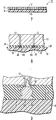
DE10296322B4 - Image sensor and method of making the same - Google Patents

Image sensor and method of making the same Download PDF

Info

Publication number
DE10296322B4
DE10296322B4 DE10296322T DE10296322T DE10296322B4 DE 10296322 B4 DE10296322 B4 DE 10296322B4 DE 10296322 T DE10296322 T DE 10296322T DE 10296322 T DE10296322 T DE 10296322T DE 10296322 B4 DE10296322 B4 DE 10296322B4
Authority
DE
Germany
Prior art keywords
electrodes
image sensor
hole type
plate
layer
Prior art date
Legal status (The legal status is an assumption and is not a legal conclusion. Google has not performed a legal analysis and makes no representation as to the accuracy of the status listed.)
Expired - Fee Related
Application number
DE10296322T
Other languages
German (de)
Other versions
DE10296322T5 (en
Inventor
Yoshikatu Kuroda
Tadayuki Takahashi
Yasushi Mizuno
Current Assignee (The listed assignees may be inaccurate. Google has not performed a legal analysis and makes no representation or warranty as to the accuracy of the list.)
Mitsubishi Heavy Industries Ltd
Japan Aerospace Exploration Agency JAXA
Original Assignee
Mitsubishi Heavy Industries Ltd
Japan Aerospace Exploration Agency JAXA
Priority date (The priority date is an assumption and is not a legal conclusion. Google has not performed a legal analysis and makes no representation as to the accuracy of the date listed.)
Filing date
Publication date
Application filed by Mitsubishi Heavy Industries Ltd, Japan Aerospace Exploration Agency JAXA filed Critical Mitsubishi Heavy Industries Ltd
Publication of DE10296322T5 publication Critical patent/DE10296322T5/en
Application granted granted Critical
Publication of DE10296322B4 publication Critical patent/DE10296322B4/en
Anticipated expiration legal-status Critical
Expired - Fee Related legal-status Critical Current

Links

Images

Classifications

    • HELECTRICITY
    • H10SEMICONDUCTOR DEVICES; ELECTRIC SOLID-STATE DEVICES NOT OTHERWISE PROVIDED FOR
    • H10FINORGANIC SEMICONDUCTOR DEVICES SENSITIVE TO INFRARED RADIATION, LIGHT, ELECTROMAGNETIC RADIATION OF SHORTER WAVELENGTH OR CORPUSCULAR RADIATION
    • H10F39/00Integrated devices, or assemblies of multiple devices, comprising at least one element covered by group H10F30/00, e.g. radiation detectors comprising photodiode arrays
    • H10F39/10Integrated devices
    • H10F39/12Image sensors
    • H10F39/191Photoconductor image sensors
    • H10F39/195X-ray, gamma-ray or corpuscular radiation imagers
    • GPHYSICS
    • G01MEASURING; TESTING
    • G01TMEASUREMENT OF NUCLEAR OR X-RADIATION
    • G01T1/00Measuring X-radiation, gamma radiation, corpuscular radiation, or cosmic radiation
    • G01T1/16Measuring radiation intensity
    • G01T1/24Measuring radiation intensity with semiconductor detectors
    • G01T1/241Electrode arrangements, e.g. continuous or parallel strips or the like
    • HELECTRICITY
    • H04ELECTRIC COMMUNICATION TECHNIQUE
    • H04NPICTORIAL COMMUNICATION, e.g. TELEVISION
    • H04N23/00Cameras or camera modules comprising electronic image sensors; Control thereof
    • H04N23/50Constructional details
    • H04N23/54Mounting of pick-up tubes, electronic image sensors, deviation or focusing coils
    • HELECTRICITY
    • H10SEMICONDUCTOR DEVICES; ELECTRIC SOLID-STATE DEVICES NOT OTHERWISE PROVIDED FOR
    • H10FINORGANIC SEMICONDUCTOR DEVICES SENSITIVE TO INFRARED RADIATION, LIGHT, ELECTROMAGNETIC RADIATION OF SHORTER WAVELENGTH OR CORPUSCULAR RADIATION
    • H10F77/00Constructional details of devices covered by this subclass
    • H10F77/10Semiconductor bodies
    • H10F77/12Active materials
    • H10F77/123Active materials comprising only Group II-VI materials, e.g. CdS, ZnS or HgCdTe
    • HELECTRICITY
    • H10SEMICONDUCTOR DEVICES; ELECTRIC SOLID-STATE DEVICES NOT OTHERWISE PROVIDED FOR
    • H10FINORGANIC SEMICONDUCTOR DEVICES SENSITIVE TO INFRARED RADIATION, LIGHT, ELECTROMAGNETIC RADIATION OF SHORTER WAVELENGTH OR CORPUSCULAR RADIATION
    • H10F39/00Integrated devices, or assemblies of multiple devices, comprising at least one element covered by group H10F30/00, e.g. radiation detectors comprising photodiode arrays
    • H10F39/011Manufacture or treatment of image sensors covered by group H10F39/12
    • H10F39/022Manufacture or treatment of image sensors covered by group H10F39/12 of image sensors having active layers comprising only Group II-VI materials, e.g. CdS, ZnS or CdTe
    • HELECTRICITY
    • H10SEMICONDUCTOR DEVICES; ELECTRIC SOLID-STATE DEVICES NOT OTHERWISE PROVIDED FOR
    • H10FINORGANIC SEMICONDUCTOR DEVICES SENSITIVE TO INFRARED RADIATION, LIGHT, ELECTROMAGNETIC RADIATION OF SHORTER WAVELENGTH OR CORPUSCULAR RADIATION
    • H10F39/00Integrated devices, or assemblies of multiple devices, comprising at least one element covered by group H10F30/00, e.g. radiation detectors comprising photodiode arrays
    • H10F39/80Constructional details of image sensors
    • H10F39/809Constructional details of image sensors of hybrid image sensors

Landscapes

  • Engineering & Computer Science (AREA)
  • Multimedia (AREA)
  • Signal Processing (AREA)
  • Physics & Mathematics (AREA)
  • Health & Medical Sciences (AREA)
  • Life Sciences & Earth Sciences (AREA)
  • General Physics & Mathematics (AREA)
  • High Energy & Nuclear Physics (AREA)
  • Molecular Biology (AREA)
  • Spectroscopy & Molecular Physics (AREA)
  • Solid State Image Pick-Up Elements (AREA)
  • Measurement Of Radiation (AREA)
  • Transforming Light Signals Into Electric Signals (AREA)
  • Light Receiving Elements (AREA)

Abstract

Bildsensor (10) mit: einer Platte (13), die aus einem Halbleiter hergestellt ist; einer Mehrzahl von ersten Elektroden (12) vom Lochtyp, die an der Platte (13) vorgesehen und in vorbestimmten Intervallen in einer ersten Richtung und in einer zweiten Richtung angeordnet sind; einer Mehrzahl von zweiten Elektroden (12) vom Lochtyp, die an der Platte (13) vorgesehen, in vorbestimmten Intervallen in der ersten Richtung und in der zweiten Richtung angeordnet und benachbart zu den ersten Elektroden (12) positioniert sind; einer Spannungsanlegungseinheit zum Anlegen einer ersten Spannung an die Mehrzahl von ersten Elektroden (12) vom Lochtyp und einer zweiten Spannung an die Mehrzahl von zweiten Elektroden (12) vom Lochtyp; und einer Leseeinheit zum Lesen von elektrischen Signalen von einer Mehrzahl von Sensorelementen (14), die jeweils eine erste Elektrode (12) vom Lochtyp, eine Mehrzahl von zweiten Elektroden (12) vom Lochtyp, die benachbart der ersten Elektrode (12) vom Lochtyp angeordnet...An image sensor (10) comprising: a plate (13) made of a semiconductor; a plurality of first hole type electrodes (12) provided on the plate (13) and arranged at predetermined intervals in a first direction and in a second direction; a plurality of second hole-type electrodes (12) provided on the plate (13) arranged at predetermined intervals in the first direction and the second direction and positioned adjacent to the first electrodes (12); a voltage application unit for applying a first voltage to the plurality of first hole type electrodes (12) and a second voltage to the plurality of second hole type electrodes (12); and a reading unit for reading electrical signals from a plurality of sensor elements (14) each having a first hole type electrode (12), a plurality of second hole type electrodes (12) disposed adjacent to the first hole type electrode (12) ...

Description

Technisches GebietTechnical area

Die Erfindung bezieht sich auf einen Bildsensor zur Erfassung von Strahlen und ein Verfahren zur Herstellung desselben.The invention relates to an image sensor for detecting radiation and a method for producing the same.

Hintergrund der TechnikBackground of the technique

Bildsensoren zum Erfassen von Strahlen, wie beispielsweise harten Röntgenstrahlen oder Gammastrahlen, und zum Erzeugen von Bilddaten werden auf verschiedenen Gebieten der Technologie verwendet. Der Bildsensor kann ein von einem Himmelskörper ausstrahlendes Strahlungsfeld erfassen, das analysiert werden kann, um die physikalischen Bedingungen bzw. Zustände und die räumliche Struktur des Himmelskörpers zu bestimmen. Der Bildsensor kann Röntgenstrahlen auf ein menschliches Objekt oder dergleichen anwenden und die durch dieses passierende Wellen erfassen, aus denen ein Tomogramm des menschlichen Objekts oder dergleichen erhalten werden kann. Der Bildsensor wird auf anderen Gebieten verwendet. Beispielsweise wird er in der Kerntechnik (z. B. Prüfen von in Glas eingeschlossenem radioaktiven Abfall und Strahlungsüberwachung), bei zerstörungsfreier Prüfung (z. B. Prüfung von Halbleitervorrichtungen) und bei der Ressourcen-Erhebung (z. B. Erhebung von Ressourcen im Boden) verwendet.Image sensors for detecting rays such as hard X-rays or gamma rays and for generating image data are used in various fields of technology. The image sensor can detect a radiation field emitted by a celestial body that can be analyzed to determine the physical conditions and the spatial structure of the celestial body. The image sensor can apply X-rays to a human object or the like and detect the waves passing therethrough, from which a tomogram of the human object or the like can be obtained. The image sensor is used in other fields. For example, it is used in nuclear engineering (eg testing of radioactive waste trapped in glass and radiation monitoring), non-destructive testing (eg testing of semiconductor devices) and resource surveying (eg collection of resources in soil ) used.

Der bis jetzt auf diesen Gebieten der Technik verwendete Bildsensor weist beispielsweise die nachstehend beschriebene Struktur auf.The image sensor used hitherto in these fields of the art, for example, has the structure described below.

1A zeigt einen herkömmlichen Bildsensor 80 eines repräsentativen Typs. Wie in 1A gezeigt ist, weist der Bildsensor 80 ein Erfassungselement (Si-Element oder Ge-Element) 81 und einen Verstärker-IC 84 auf. Das Erfassungselement 81 erfasst die einfallenden Strahlen und erzeugt elektrische Signale aus den Strahlen. Das Verstärker-IC 84 liegt in der gleichen Ebene wie das Erfassungselement 81. Es verstärkt das von dem Element 81 erzeugte elektrische Signal. Verbindungsdrähte 83 verbinden die Ausgangsdrähte des Erfassungselements 81 mit dem Verstärker-IC 84 durch Verbindungsdrähte 83. 1A shows a conventional image sensor 80 of a representative type. As in 1A is shown, the image sensor points 80 a detection element (Si element or Ge element) 81 and an amplifier IC 84 on. The detection element 81 detects the incident rays and generates electrical signals from the rays. The amplifier IC 84 lies in the same plane as the detection element 81 , It reinforces that of the element 81 generated electrical signal. connecting wires 83 connect the output wires of the detection element 81 with the amplifier IC 84 through connecting wires 83 ,

1B ist eine Querschnittansicht entlang der in 1A gezeigten Linie 1B-1B. Wie es 1B zeigt, umfasst das Erfassungselement 81 eine Halbleiter(Si, Ge, CdTe, CdZnTe oder dergleichen)-Schicht 87 und Elektroden 85 und 86. Die Elektroden 85 und 86 halten die Schicht 87 zwischen sich. Eine Spannung wird zwischen den Elektroden 85 und 86 angelegt, wodurch Strahlen verschiedener Energiebänder erfasst werden, wenn die als Strahlen erzeugten Elektronen und Protonen an den Bildsensor 80 angelegt werden. 1B is a cross-sectional view along in 1A shown line 1B-1B. Like it 1B shows comprises the detection element 81 a semiconductor (Si, Ge, CdTe, CdZnTe or the like) layer 87 and electrodes 85 and 86 , The electrodes 85 and 86 hold the layer 87 between themselves. A voltage is between the electrodes 85 and 86 applied, whereby rays of different energy bands are detected when the electrons and protons generated as beams to the image sensor 80 be created.

Ein Bildsensor, der ein Si-Element oder ein Ge-Element benutzt, kann nur Röntgenstrahlen niedriger Energie einiger keV bis mehreren 10 keV umfassen. Seine Empfindlichkeit ist weit von dem Wert entfernt, der in der Praxis verlangt wird.An image sensor using a Si element or a Ge element can only include low energy x-rays of a few keV to several tens of keV. Its sensitivity is far from the value required in practice.

Sogar ein Hochempfindlichkeits-Bildsensor, der CdTe oder CdZnTe verwendet, kann elektrische Ladungen aus dem folgenden Grund nicht wirksam sammeln, solange seine Struktur eine herkömmliche bleibt. Die Halbleiterschicht kann dick ausgeführt werden, um das Streuen von Hochenergiepartikeln in dem Material zu fördern. Wenn die Schicht derart dick ist, wird der Abstand zwischen den Elektroden ansteigen. Dies senkt den Wirkungsgrad des Sammelns von elektrischen Ladungen. Folglich wird die Empfindlichkeit abnehmen. Um den Wirkungsgrad des Sammelns von elektrischen Ladungen zu verbessern, kann die Halbleiterschicht dünn ausgeführt werden. In diesem Fall wird die Streuung von Hochenergiepartikeln in dem Material unterdrückt. Die Empfindlichkeit des Bildsensors wird unvermeidlich abnehmen, obwohl der Ladungssammlungswirkungsgrad ansteigt.Even a high-sensitivity image sensor using CdTe or CdZnTe can not efficiently collect electric charges for the following reason, as long as its structure remains conventional. The semiconductor layer may be made thick to promote the scattering of high energy particles in the material. If the layer is so thick, the distance between the electrodes will increase. This lowers the efficiency of collecting electric charges. Consequently, the sensitivity will decrease. In order to improve the efficiency of collecting electric charges, the semiconductor layer can be made thin. In this case, the scattering of high energy particles in the material is suppressed. The sensitivity of the image sensor will inevitably decrease although the charge collection efficiency increases.

Aus der JP2001-291853A ist ein Bildsensor bekannt, bei dem Kathoden und Anoden auf einer Oberfläche einer Halbleiterplatte ausgebildet sind, die einer Oberfläche, auf welcher ein zu erfassender Energiestrahl auftrifft, gegenüberliegt. Die Kathoden und Anoden in diesem Bildsensor sind als flache Schichten ausgebildet.From the JP2001-291853A For example, an image sensor is known in which cathodes and anodes are formed on a surface of a semiconductor plate facing a surface on which an energy beam to be detected is incident. The cathodes and anodes in this image sensor are formed as flat layers.

Eine Aufgabe der Erfindung besteht darin, einen Bildsensor in Vorschlag zu bringen, der Strahlen, sogar diejenigen des harten Röntgenstrahlenenergiebandes, mit hoher Empfindlichkeit erfassen kann. Ferner ist es eine Aufgabe der Erfindung, ein Verfahren zur Herstellung eines derartigen Bildsensors bereitzustellen.An object of the invention is to suggest an image sensor which can detect rays, even those of the hard X-ray energy band, with high sensitivity. Further, it is an object of the invention to provide a method of manufacturing such an image sensor.

Ein weiterer Aspekt der Erfindung besteht darin, eine Lochherstellungstechnik beim Handhaben von schädlichen Substanzen, wie beispielsweise CdTe bereitzustellen, die für einen Menschen keinen nachteiligen Einfluss darstellt.Another aspect of the invention is to provide a hole-making technique in the handling of harmful substances, such as CdTe, that does not adversely affect a human.

Zur Lösung dieser Aufgabe bringt die Erfindung einen Bildsensor gemäß Anspruch 1 und ein Verfahren zur Herstellung eines Bildsensors gemäß Anspruch 13 in Vorschlag. Bevorzugte Ausführungsformen des Bildsensors und des Verfahrens sind in den abhängigen Patentansprüchen angegeben.To achieve this object, the invention provides an image sensor according to claim 1 and a method for producing an image sensor according to claim 13 by proposal. Preferred embodiments of the image sensor and the method are given in the dependent claims.

Offenbarung der Erfindung Disclosure of the invention

Gemäß dem ersten Aspekt der Erfindung wird ein Bildsensor bereitgestellt, der umfasst: eine Platte, die aus einem Halbleiter hergestellt ist; eine Mehrzahl von ersten Elektroden vom Lochtyp, die auf der Platte vorgesehen und in vorbestimmten Intervallen in einer ersten Richtung und einer zweiten Richtung angeordnet sind; eine Mehrzahl von zweiten Elektroden vom Lochtyp, die auf der Platte vorgesehen, die in vorbestimmten Intervallen in der ersten Richtung und der zweiten Richtung angeordnet und die benachbart zu den ersten Elektroden positioniert sind; eine Spannungsanlegungseinheit, die eine erste Spannung an die Mehrzahl von ersten Elektroden vom Lochtyp und eine zweite Spannung an die Mehrzahl von zweiten Elektroden vom Lochtyp anlegt; und eine Leseeinheit zum Lesen von elektrischen Signalen von einer Mehrzahl von Sensorelementen, die jeweils eine erste Elektrode vom Lochtyp, eine Mehrzahl von zweiten Elektroden vom Lochtyp, die benachbart der ersten Elektrode vom Lochtyp positioniert sind, und den zwischen der ersten Elektrode vom Lochtyp und den zweiten Elektroden vom Lochtyp vorgesehenen Halbleiter umfassen.According to the first aspect of the invention, there is provided an image sensor comprising: a plate made of a semiconductor; a plurality of first hole-type electrodes provided on the plate and arranged at predetermined intervals in a first direction and a second direction; a plurality of second hole-type electrodes provided on the plate, which are arranged at predetermined intervals in the first direction and the second direction and which are positioned adjacent to the first electrodes; a voltage application unit applying a first voltage to the plurality of first hole type electrodes and a second voltage to the plurality of second hole type electrodes; and a reading unit for reading electrical signals from a plurality of sensor elements each including a hole type first electrode, a plurality of hole type second electrodes positioned adjacent to the first hole type electrode and the hole type first electrode comprise second hole-type electrodes.

Gemäß dem zweiten Aspekt der Erfindung wird ein Bildsensor gemäß dem ersten Aspekt bereitgestellt, bei dem die ersten und zweiten Elektroden vom Lochtyp in einer Richtung der Dicke der Platte vorgesehen sind.According to the second aspect of the invention, there is provided an image sensor according to the first aspect, wherein the first and second hole type electrodes are provided in a thickness direction of the plate.

Gemäß dem dritten Aspekt dieser Erfindung wird ein Bildsensor gemäß dem ersten Aspekt bereitgestellt, bei dem jedes Sensorelement eine erste Elektrode vom Lochtyp und eine Mehrzahl von zweiten Elektroden vom Lochtyp umfasst, die äquidistant beabstandet und äquidistant von der ersten Elektrode vom Lochtyp angeordnet sind.According to the third aspect of this invention, there is provided an image sensor according to the first aspect, wherein each sensor element comprises a first hole type electrode and a plurality of second hole type electrodes which are equidistantly spaced and equidistant from the first hole type electrode.

Gemäß dem vierten Aspekt der Erfindung wird ein Bildsensor gemäß dem dritten Aspekt bereitgestellt, bei dem jedes Sensorelement vier zweite Elektroden vom Lochtyp aufweist.According to the fourth aspect of the invention, there is provided an image sensor according to the third aspect, wherein each sensor element has four second hole-type electrodes.

Gemäß dem fünften Aspekt der Erfindung wird ein Bildsensor gemäß dem dritten Aspekt bereitgestellt, bei dem jedes Sensorelement sechs zweite Elektroden vom Lochtyp aufweist.According to the fifth aspect of the invention, there is provided an image sensor according to the third aspect, wherein each sensor element has six second hole-type electrodes.

Gemäß dem sechsten Aspekt dieser Erfindung wird ein Bildsensor gemäß dem dritten Aspekt bereitgestellt, bei dem jedes Sensorelement acht zweite Elektroden vom Lochtyp aufweist.According to the sixth aspect of this invention, there is provided an image sensor according to the third aspect, wherein each sensor element has eight second hole-type electrodes.

Gemäß dem siebenten Aspekt der Erfindung wird ein Bildsensor gemäß dem ersten Aspekt bereitgestellt. Bei diesem Bildsensor umfasst die Leseeinheit ein die Platte tragendes IC-Substrat und eine Mehrzahl von ICs zum Verstärken von elektrischen Signalen, die aus den an irgendeines der mehreren Sensorelemente angelegten Strahlen erzeugt werden. Der Bildsensor umfasst ferner eine Verbindungsschicht, die zwischen der Platte und dem IC-Substrat vorgesehen ist und die die ersten Elektroden vom Lochtyp oder die zweiten Elektroden vom Lochtyp jedes Sensorelements mit den Elektroden eines ICs verbindet.According to the seventh aspect of the invention, there is provided an image sensor according to the first aspect. In this image sensor, the reading unit comprises an IC substrate supporting the disk and a plurality of ICs for amplifying electrical signals generated from the beams applied to any one of the plurality of sensor elements. The image sensor further includes a connection layer provided between the plate and the IC substrate and connecting the first hole type electrodes or the hole type second electrodes of each sensor element to the electrodes of an IC.

Gemäß dem achtem Aspekt der Erfindung wird ein Bildsensor gemäß dem siebenten Aspekt bereitgestellt, bei dem die Verbindungsschicht eine Mehrzahl von Stifthöckern, die an den Elektroden jedes ICs vorgesehen sind, und eine Mehrzahl von dünnen Schichten, die an Spitzen jedes der Stifthöcker vorgesehen sind und mit den ersten Elektroden oder den zweiten Elektroden jedes Sensorelement verbunden sind, aufweist.According to the eighth aspect of the invention, there is provided an image sensor according to the seventh aspect, wherein the connection layer has a plurality of pin headers provided on the electrodes of each IC and a plurality of thin layers provided on tips of each of the pin headers the first electrode or the second electrode of each sensor element are connected.

Gemäß dem neunten Aspekt dieser Erfindung wird ein Bildsensor gemäß dem achten Aspekt bereitgestellt, bei dem die Verbindungsschicht eine Isolierschicht aufweist, die jeden der Stifthöcker und jede der dünnen Schichten einbettet.According to the ninth aspect of this invention, there is provided an image sensor according to the eighth aspect, wherein the bonding layer has an insulating layer that embeds each of the stud bumps and each of the thin layers.

Gemäß dem zehnten Aspekt dieser Erfindung wird ein Bildsensor gemäß dem achten Aspekt bereitgestellt, bei dem jeder der Stifthöcker aus Gold und jede der dünnen Schichten aus Indium hergestellt ist.According to the tenth aspect of this invention, there is provided an image sensor according to the eighth aspect, wherein each of the stud bumps is made of gold and each of the thin slices is made of indium.

Gemäß dem elften Aspekt der Erfindung wird ein Bildsensor gemäß dem siebenten Aspekt bereitgestellt, bei dem die Verbindungsschicht eine Mehrzahl von multigestapelten Stifthöckern aufweist, die an den Elektroden jedes der ICs vorgesehen sind, wobei jeder multigestapelte Stifthöcker mindestens zwei Stifthöcker, die aufeinander gelegen sind, und eine Mehrzahl von dünnen Schichten, die an Spitzen jedes der Stifthöcker vorgesehen und mit den ersten Elektroden oder den zweiten Elektroden jedes der Sensorelemente verbunden sind, aufweist.According to the eleventh aspect of the invention, there is provided an image sensor according to the seventh aspect, wherein the interconnection layer comprises a plurality of multi-stacked pin headers provided on the electrodes of each of the ICs, each multi-stacked pin header having at least two pin bumps located on each other and a plurality of thin layers provided at tips of each of the pin bumps and connected to the first electrodes or the second electrodes of each of the sensor elements.

Gemäß dem zwölften Aspekt dieser Erfindung wird ein Bildsensor gemäß dem elften Aspekt bereitgestellt, bei dem die Verbindungsschicht eine Isolierschicht aufweist, die jeden der Stifthöcker und jede der dünnen Schichten einbettet.According to the twelfth aspect of this invention, there is provided an image sensor according to the eleventh aspect, wherein the bonding layer has an insulating layer that embeds each of the stud bumps and each of the thin layers.

Gemäß dem dreizehnten Aspekt der Erfindung wird ein Bildsensor gemäß dem elften Aspekt bereitgestellt, bei dem jeder der Stifthöcker aus Gold und jede der dünnen Schichten aus Indium hergestellt ist.According to the thirteenth aspect of the invention, there is provided an image sensor according to the eleventh aspect, wherein each of the stud bumps is made of gold and each of the thin slices is made of indium.

Gemäß dem vierzehnten Aspekt der Erfindung wird ein Bildsensor gemäß dem ersten Aspekt bereitgestellt, bei dem der Halbleiter ein aus CdTe, CdZnTe und anderen zusammengesetzten Halbleitern ausgewählter zusammengesetzter Halbleiter ist.According to the fourteenth aspect of the invention, there is provided an image sensor according to the first aspect, wherein the semiconductor is a compound semiconductor selected from CdTe, CdZnTe and other compound semiconductors.

Gemäß dem fünfzehnten Aspekt der Erfindung wird ein Verfahren zur Herstellung eines Bildsensors bereitgestellt. Das Verfahren umfasst: Halten einer Halbleiterplatte zwischen einer oberen Schicht und einer unteren Schicht; Eintauchen der Halbleiterplatte, der oberen und der unteren Schicht in Wasser und Herstellen einer Mehrzahl von Löchern in der Halbleiterplatte, der oberen Schicht und der unteren Schicht in vorbestimmten Intervallen mit einem Bohrer mit einer vorgeschriebenen Größe; Entfernen der oberen Schicht und der unteren Schicht von der Halbleiterplatte; Bilden einer Mehrzahl von Elektroden vom Lochtyp durch Füllen der Löcher mit Metall; und Bilden von elektrischen Drähten, um eine Spannung zwischen irgendeiner Elektrode vom Lochtyp, die nicht anderen Elektroden vom Lochtyp benachbart ist und als eine Anode verwendet wird, und einigen Elektroden vom Lochtyp, die benachbart der Anode sind und als Katode verwendet werden, anzulegen. According to the fifteenth aspect of the invention, there is provided a method of manufacturing an image sensor. The method comprises: holding a semiconductor plate between an upper layer and a lower layer; Immersing the semiconductor plate, the upper and lower layers in water, and forming a plurality of holes in the semiconductor plate, the upper layer and the lower layer at predetermined intervals with a drill of a prescribed size; Removing the upper layer and the lower layer from the semiconductor plate; Forming a plurality of hole type electrodes by filling the holes with metal; and forming electric wires to apply a voltage between any hole-type electrode not adjacent to other hole-type electrodes used as an anode and a few hole-type electrodes adjacent to the anode and used as a cathode.

Gemäß dem sechzehnten Aspekt der Erfindung wird ein Verfahren zur Herstellung eines Bildsensors gemäß dem fünfzehnten Aspekt bereitgestellt. Bei dem Verfahren zum Bilden der elektrischen Drähte wird ein Stifthöcker an jeden von Elektrodenpads einer vorgeschriebenen Anzahl von IC-Chips ausgebildet, die auf einem ersten Substrat bereitgestellt werden; ein zweites Substrat wird mit Indium plattiert; wobei das Indium von dem zweiten Substrat auf die Spitze jedes Stifthöckers transferiert wird, wodurch eine Mehrzahl von dünnen Schichten gebildet wird; Verbinden der dünnen Schichten mit den Elektroden vom Lochtyp, wodurch ein Sensorelement-Array an jedem der ICs Flip-angebracht wird, wobei das Array aus in der Form einer Matrix angeordneten Sensorelementen aufgebaut ist, jedes Sensorelement eine Anode umfasst, und eine Mehrzahl von Kathoden und ein Halbleiter zwischen der Anode und der Kathoden liegt; und ein isolierendes Harz in einen Zwischenraum zwischen dem ersten Substrat und dem Sensorelement-Array aufgebracht und das isolierende Harz ausgehärtet wird.According to the sixteenth aspect of the invention, there is provided a method of manufacturing an image sensor according to the fifteenth aspect. In the method of forming the electric wires, a stud bump is formed on each of electrode pads of a prescribed number of IC chips provided on a first substrate; a second substrate is plated with indium; wherein the indium is transferred from the second substrate to the tip of each pin header, thereby forming a plurality of thin layers; Bonding the thin layers to the hole-type electrodes, thereby to flip-mount a sensor element array to each of the ICs, the array being constructed of sensor elements arranged in the form of a matrix, each sensor element comprising an anode, and a plurality of cathodes and a semiconductor is disposed between the anode and the cathodes; and an insulating resin is applied in a gap between the first substrate and the sensor element array and the insulating resin is cured.

Gemäß dem siebzehnten Aspekt dieser Erfindung wird eine Bildsensorvorrichtung bereitgestellt, die eine Mehrzahl von Bildsensoren und eine Ausgabeeinheit umfasst. Jeder der Bildsensoren umfasst: eine aus einem Halbleiter hergestellte Platte; eine Mehrzahl von ersten Elektroden vom Lochtyp, die auf der Platte vorgesehen und in vorbestimmten Intervallen in einer ersten Richtung und einer zweiten Richtung angeordnet sind; eine Mehrzahl von zweiten Elektroden vom Lochtyp, die auf der Platte vorgesehen sind und benachbart den ersten Elektroden vom Lochtyp in vorbestimmten Intervallen in der ersten Richtung und der zweiten Richtung angeordnet sind; eine Spannungsanlegungseinheit, die eine erste Spannung an die ersten Elektroden vom Lochtyp und eine zweite Spannung an die zweiten Elektroden vom Lochtyp anlegt; und eine Leseeinheit, die ein elektrischen Signal von einer Mehrzahl von Sensorelementen liest, die jeweils eine erste Elektrode vom Lochtyp, einige zweite Elektroden vom Lochtyp benachbart zu der ersten Elektrode vom Lochtyp und den Halbleiter, der zwischen der einen ersten Elektrode vom Lochtyp und den einigen zweiten Elektroden vom Lochtyp liegt, umfassen. Die Ausgabeeinheit gibt die von den Leseeinheiten gelesenen elektrischen Signale unabhängig voneinander aus.According to the seventeenth aspect of this invention, there is provided an image sensor device comprising a plurality of image sensors and an output unit. Each of the image sensors comprises: a plate made of a semiconductor; a plurality of first hole-type electrodes provided on the plate and arranged at predetermined intervals in a first direction and a second direction; a plurality of second hole-type electrodes provided on the plate and disposed adjacent to the first hole-type electrodes at predetermined intervals in the first direction and the second direction; a voltage application unit that applies a first voltage to the first hole-type electrodes and a second voltage to the second hole-type electrodes; and a reading unit that reads an electrical signal from a plurality of sensor elements, each including a first hole type electrode, a plurality of second hole type electrodes adjacent to the first hole type electrode, and the semiconductor between the one hole type first electrode and the some second hole-type electrodes. The output unit outputs the electric signals read by the reading units independently of each other.

Gemäß dem achtzehnten Aspekt der Erfindung wird eine Bildsensorvorrichtung gemäß dem siebzehnten Aspekt bereitgestellt. Diese Bildsensorvorrichtung, wobei jede der Leseeinheiten ein die Platte tragendes IC-Substrat und eine Mehrzahl von ICs zum Verstärken von elektrischen Signalen aufweist, die von den an irgendeines der Mehrzahl von Sensorelementen angelegten Strahlen erzeugt werden. Die Vorrichtung umfasst eine Verbindungsschicht, die zwischen der Platte und dem IC-Substrat vorgesehen ist und die die ersten Elektroden vom Lochtyp oder die zweiten Elektroden vom Lochtyp jedes Sensorelements mit Elektroden eines ICs elektrisch verbindet.According to the eighteenth aspect of the invention, there is provided an image sensor device according to the seventeenth aspect. This image sensor device, wherein each of the reading units has an IC substrate supporting the disk and a plurality of ICs for amplifying electrical signals generated by the beams applied to any one of the plurality of sensor elements. The device includes a connection layer provided between the plate and the IC substrate and electrically connecting the first hole type electrodes or the hole type second electrodes of each sensor element to electrodes of an IC.

Gemäß dem neunzehnten Aspekt der Erfindung wird eine Bildsensorvorrichtung gemäß dem achtzehnten Aspekt bereitgestellt, bei dem die Verbindungsschicht eine Isolierschicht aufweist, die jeden der Stifthöcker und jede der dünnen Schichten einbettet.According to the nineteenth aspect of the invention, there is provided an image sensor device according to the eighteenth aspect, wherein the bonding layer has an insulating layer that embeds each of the stud bumps and each of the thin layers.

Gemäß dem zwanzigsten Aspekt der Erfindung wird eine Bildsensorvorrichtung gemäß dem siebzehnten Aspekt bereitgestellt, bei der die ersten und zweiten Elektroden vom Lochtyp in einer Richtung der Dicke der Platte angeordnet sind.According to the twentieth aspect of the invention, there is provided an image sensor device according to the seventeenth aspect, wherein the first and second hole-type electrodes are arranged in a direction of the thickness of the plate.

Kurzbeschreibung der ZeichnungBrief description of the drawing

1A und 1B sind Diagramme, die einen herkömmlichen Bildsensor erläutern; 1A and 1B Figures are diagrams explaining a conventional image sensor;

2A ist eine Draufsicht auf einen Bildsensor 10 gemäß einer ersten Ausführungsform, die die Erfassungsoberfläche des Bildsensors 10 zeigt; 2A is a plan view of an image sensor 10 According to a first embodiment, the detection surface of the image sensor 10 shows;

2B ist eine vergrößerte Draufsicht, die einen Teil der Erfassungsoberfläche des Bildsensors 10 zeigt; 2 B FIG. 10 is an enlarged plan view illustrating a part of the detection surface of the image sensor. FIG 10 shows;

3 ist eine Draufsicht, die die Erfassungsoberfläche eine Modifikation des Bildsensors 10 gemäß der ersten Ausführungsform darstellt; 3 FIG. 12 is a plan view illustrating the detection surface of a modification of the image sensor 10 according to the first embodiment;

4 ist eine vergrößerte Draufsicht, die einen Teil der Erfassungsoberfläche des in 3 gezeigten Bildsensors 10 darstellt; 4 FIG. 10 is an enlarged plan view illustrating a part of the detection surface of the in. FIG 3 shown image sensor 10 represents;

5 ist eine Draufsicht, die die Verdrahtungsschicht 19 schematisch zeigt; 5 FIG. 12 is a plan view showing the wiring layer. FIG 19 schematically shows;

6 ist eine vergrößerte Ansicht des in 5 eingekreisten Teiles; 6 is an enlarged view of the in 5 circled part;

7 ist eine Querschnittansicht des Bildsensors 10 entlang der in 2A gezeigten Linie 7-7; 7 is a cross-sectional view of the image sensor 10 along the in 2A shown line 7-7;

8 ist eine vergrößerte Ansicht der Verbindung zwischen der CdTe-Platte 13 und der Verdrahtungsschicht 19, die beide in der Querschnittansicht von 7 gezeigt sind; 8th is an enlarged view of the connection between the CdTe plate 13 and the wiring layer 19 , both in the cross-sectional view of 7 are shown;

9 ist eine vergrößerte Ansicht der Stifthöcker-Verbindungsabschnitte, die die Verbindungsschicht 20 aufweist; 9 Fig. 10 is an enlarged view of the stud bump connecting portions forming the connecting layer 20 having;

10 ist ein Diagramm, das ein Verfahren zum Erzeugen einer Indiumschicht erläutert; 10 Fig. 15 is a diagram explaining a method for producing an indium layer;

11 ist ein Diagramm, das das Verfahren zum Erzeugen einer Indiumschicht darstellt; 11 Fig. 10 is a diagram illustrating the method of forming an indium layer;

12 ist ein Ablaufdiagramm, das ein Verfahren des Bildsensors 10 umreißt; 12 Fig. 10 is a flowchart illustrating a method of the image sensor 10 outlines;

13 zeigt eine äußere Erscheinung eines Strahlungskameramoduls, das eine Bildsensoreinheit 30 umfasst; 13 FIG. 12 shows an external appearance of a radiation camera module including an image sensor unit. FIG 30 includes;

14 ist ein schematisches Diagramm, das die Struktur und die Funktion der Bildsensoreinheit 30 zeigt; 14 is a schematic diagram showing the structure and function of the image sensor unit 30 shows;

15 ist eine Draufsicht, die die Erfassungsoberfläche eines Bildsensors 10 gemäß einer zweiten Ausführungsform darstellt; 15 FIG. 10 is a plan view illustrating the detection surface of an image sensor. FIG 10 according to a second embodiment;

16 ist eine vergrößerte Ansicht, die einen Teil der Erfassungsoberfläche des Bildsensors 10 gemäß der zweiten Ausführungsform zeigt; 16 Fig. 10 is an enlarged view showing a part of the detection surface of the image sensor 10 according to the second embodiment;

17 ist eine Querschnittansicht des Bildsensors 10 gemäß der zweiten Ausführungsform; 17 is a cross-sectional view of the image sensor 10 according to the second embodiment;

18 ist eine vergrößerte Ansicht, die die Verbindung zwischen der CdTe-Platte 13 und der Verdrahtungsschicht 19 zeigt, die beide in dem Bildsensor 10 gemäß der zweiten Ausführungsform aufgenommen sind; 18 is an enlarged view showing the connection between the CdTe plate 13 and the wiring layer 19 shows, both in the image sensor 10 are included according to the second embodiment;

19 ist eine vergrößerte Ansicht, die einen Stifthöcker-Verbindungsabschnitt 22 zeigt, der in dem Bildsensor 10 gemäß der zweiten Ausführungsform vorgesehen ist. 19 FIG. 10 is an enlarged view showing a stud bump connecting portion. FIG 22 that is in the image sensor 10 is provided according to the second embodiment.

Beste Ausführungsart der ErfindungBest embodiment of the invention

Die ersten und zweiten Ausführungsformen der Erfindung werden mit Bezug auf die begleitenden Zeichnungen beschrieben. Bei der folgenden Beschreibung werden jeweils zwei Komponenten, die in der Funktion und Struktur fast identisch sind, mit derselben Bezugsziffer gekennzeichnet, und sie werden beide nur dann beschrieben, falls es notwendig ist.The first and second embodiments of the invention will be described with reference to the accompanying drawings. In the following description, two components which are almost identical in function and structure are designated by the same reference number, and they are both described only if necessary.

(Erste Ausführungsform)First Embodiment

Der Bildsensor gemäß dieser Ausführungsform umfasst eine Halbleiterplatte 13 (siehe 2A bis 4), ein IC-Substrat 18 (siehe 5 und 6) und eine Verbindungsschicht 20 (siehe 7 bis 9). Die Halbleiterplatte 13 ist aus einem Halbleiter, wie beispielsweise CdTe (Kadmiumtellurid), CdZnTe (Zinkkadmiumtellurid) oder dergleichen hergestellt und weist eine vorgeschriebene Dicke auf. Erste Elektroden 12 vom Lochtyp sind an einer Oberfläche der Halbleiterplatte 13 in einem vorbestimmten Abstand bzw. Teilung angeordnet, wobei die Oberfläche als Erfassungsoberfläche arbeitet. Das IC-Substrat 18 umfasst auf ihm angebrachte ICs. Die ICs sind ausgestaltet, um die an der Erfassungsoberfläche erfassten Signale zu verstärken. Die Verbindungsschicht 20 verbindet das IC-Substrat 18 und die CdTe-Platte 13. Zwecks Vereinfachung wird die Halbleiterplatte 13 hier nachstehend als eine aus CdTe Hergestellte beschrieben. Nichtsdestotrotz kann der Bildsensor 10 von der gleichen Struktur sein, wenn die Platte 13 aus einem anderen Halbleiter, wie beispielsweise CdZnTe, hergestellt ist.The image sensor according to this embodiment comprises a semiconductor plate 13 (please refer 2A to 4 ), an IC substrate 18 (please refer 5 and 6 ) and a tie layer 20 (please refer 7 to 9 ). The semiconductor plate 13 is made of a semiconductor such as CdTe (cadmium telluride), CdZnTe (zinc cadmium telluride) or the like and has a prescribed thickness. First electrodes 12 of the hole type are on a surface of the semiconductor plate 13 arranged at a predetermined pitch, the surface functioning as a detection surface. The IC substrate 18 includes ICs mounted on it. The ICs are designed to amplify the signals detected at the sensing surface. The connection layer 20 connects the IC substrate 18 and the CdTe plate 13 , For the sake of simplicity, the semiconductor plate 13 hereinafter described as one made from CdTe. Nevertheless, the image sensor can 10 be of the same structure when the plate 13 is made of another semiconductor such as CdZnTe.

2A ist eine Draufsicht auf den Bildsensor 10, die die Erfassungsoberfläche des Sensors 10 zeigt. Die aus CdTe hergestellte Halbleiterplatte 13 stellt die Erfassungsoberfläche des Bildsensors 10 bereit. CdTe ist ein zusammengesetzter Halbleiter, der aus Cd (Kadmium) und Te (Tellur) besteht. Seine Energielücke bzw. Bandabstand beträgt etwa 1,47 eV bei Zimmertemperatur. 2A is a plan view of the image sensor 10 representing the sensing surface of the sensor 10 shows. The CdTe semiconductor board 13 represents the detection surface of the image sensor 10 ready. CdTe is a compound semiconductor consisting of Cd (cadmium) and Te (tellurium). Its energy gap is about 1.47 eV at room temperature.

Die ersten Elektroden 12 vom Lochtyp werden wie folgt ausgebildet. Zuerst wird eine Mehrzahl von Löchern in der CdTe-Platte 13 in dem vorbestimmten Abstand (z. B. 50 Mikron) durch Verwenden eines Bohrers mit einem Durchmesser von etwa 100 bis 200 Mikron hergestellt. Dann werden die so hergestellten Löcher mit Pt, Hg, Au, InTe, Al oder dergleichen mittels Metallisierung gefüllt. Zweite Elektroden 16 (Pads) werden, jede an einem Ende einer ersten Elektrode 12, zum Erreichen einer elektrischen Verbindung zwischen der ersten Elektrode 12 und dem Drahtzuführmittel, das später beschrieben wird, bereitgestellt.The first electrodes 12 of the hole type are formed as follows. First, a plurality of holes in the CdTe plate 13 at the predetermined distance (e.g., 50 microns) using a drill having a diameter of about 100 to 200 microns. Then, the holes thus formed are filled with Pt, Hg, Au, InTe, Al or the like by means of metallization. Second electrodes 16 (Pads), each at one end of a first electrode 12 for achieving an electrical connection between the first electrode 12 and the wire feeding means which will be described later.

CdTe und CdZnTe sind im allgemeinen brüchig bzw. spröde und für Menschen schädlich. Im Hinblick darauf werden die Löcher durch das spezielle Verfahren hergestellt, das später beschrieben wird.CdTe and CdZnTe are generally fragile or brittle and harmful to humans. in the In view of this, the holes are made by the special method which will be described later.

Die ersten Elektroden 12 werden in zwei Gruppen aufgeteilt, d. h. Anoden und Kathoden. Eine Anode, Kathoden und ein Teil der CdTe-Platte 13 (oder der CdZnTe-Platte) bilden ein Sensorelement.The first electrodes 12 are divided into two groups, ie anodes and cathodes. An anode, cathodes and part of the CdTe plate 13 (or the CdZnTe plate) form a sensor element.

2B ist eine vergrößerte Draufsicht, die einen Teil der Erfassungsoberfläche des Bildsensors 10 zeigt. In 2B stellen schwarze Punkte einige erste Elektroden 12 dar, die als Anoden verwendet werden, und die weißen Punkte geben die anderen ersten Elektroden 12 an, die als Kathoden verwendet werden. Die ersten Elektroden 12 werden derart verteilt, dass alle ersten Elektroden 12 benachbart zu irgendeiner Anode, die als eine Anode verwendet wird, als Kathoden arbeiten. Bei dem Bildsensor 10 von 2B sind Sensorelemente 14 angeordnet, die eine Matrix bilden, und jedes Sensorelement 14 umfasst eine Anode 120, acht Kathoden und einen Teil der CdTe-Platte. 2 B FIG. 10 is an enlarged plan view illustrating a part of the detection surface of the image sensor. FIG 10 shows. In 2 B black dots make some first electrodes 12 which are used as anodes, and the white dots give the other first electrodes 12 which are used as cathodes. The first electrodes 12 are distributed so that all first electrodes 12 adjacent to any anode used as an anode, work as cathodes. At the image sensor 10 from 2 B are sensor elements 14 arranged, which form a matrix, and each sensor element 14 includes an anode 120 , eight cathodes and one part of the CdTe plate.

In 2B geben die gestrichelten Linien 14 ein Sensorelement 14 an, das eine Anode, Kathoden und einen Teil der CdTe(oder CdZnTe)-Platte umfasst. Bei jedem Sensorelement 14 wird eine Spannung zwischen der Anode 120 und den Kathoden 122 angelegt, wobei eine Verarmungsschicht (depletion layer) entwickelt wird. Wenn Strahlen an die Verarmungsschicht angelegt werden, werden viele Elektronen und Löcher entlang den Spuren der Strahlen erzeugt. Jedes Sensorelement 14 extrahiert sowohl die positive Ladung als auch die negative Ladung in der Form eines elektrischen Signals. D. h., das Element 14 erzeugt Bilddaten aus den darauf auftreffenden Strahlen.In 2 B give the dashed lines 14 a sensor element 14 which includes an anode, cathodes, and a portion of the CdTe (or CdZnTe) plate. For every sensor element 14 becomes a voltage between the anode 120 and the cathodes 122 applied, wherein a depletion layer is developed. When beams are applied to the depletion layer, many electrons and holes are generated along the tracks of the beams. Each sensor element 14 extracts both the positive charge and the negative charge in the form of an electrical signal. That is, the element 14 generates image data from the rays impinging thereon.

Das Sensorelement 14 ist nicht auf den in 2A und 2B dargestellten Typ begrenzt, solange es eine erste Elektrode umfasst, die als Anode fungiert, und einige andere ersten Elektroden, die als Kathoden fungieren. Das Element 14 kann jede der folgenden Modifikation haben.The sensor element 14 is not on the in 2A and 2 B as long as it comprises a first electrode functioning as an anode and some other first electrodes functioning as cathodes. The element 14 can have any of the following modification.

3 ist eine Draufsicht, die die Erfassungsoberfläche einer Modifikation des Bildsensors 10 zeigt. 4 ist eine vergrößerte Draufsicht, die einen Teil der Erfassungsoberfläche des in 3 gezeigten Bildsensors 10 darstellt. Wie 3 zeigt, kann das Sensorelement 14 eine Anode 120 und vier benachbarte Kathoden umfassen, die der Anode 120 zugeordnet sind. 3 FIG. 10 is a plan view illustrating the detection surface of a modification of the image sensor. FIG 10 shows. 4 FIG. 10 is an enlarged plan view illustrating a part of the detection surface of the in. FIG 3 shown image sensor 10 represents. As 3 shows, the sensor element 14 an anode 120 and four adjacent cathodes that include the anode 120 assigned.

Das IC-Substrat 18, das der Bildsensor 10 aufweist, wird nun beschrieben. 5 ist eine Draufsicht, die das IC-Substrat 18 schematisch zeigt. 6 ist eine vergrößerte Ansicht des in 5 eingekreisten Teils.The IC substrate 18 that the image sensor 10 will now be described. 5 FIG. 12 is a plan view showing the IC substrate. FIG 18 schematically shows. 6 is an enlarged view of the in 5 circled part.

Alle Anoden 120 werden unabhängig und alle Kathoden 122 werden durch die Verdrahtungsschicht 19 mit Elektroden verbunden, aus denen Signale zu einer externen Vorrichtung extrahiert werden.All anodes 120 become independent and all cathodes 122 be through the wiring layer 19 connected to electrodes from which signals are extracted to an external device.

Das IC-Substrat 18 ist ein Substrat auf dem eine Mehrzahl von ICs angebracht ist, um die Signale zu verstärken, die das Sensorelement 14 erfasst hat. Auf dem IC-Substrat 18 sind Flip-Chip-Pads 180 (hier nachstehend als ”FC-Pads” bezeichnet) der ICs angebracht, die jeweils eine Anti-Strahlungseigenschaft aufweisen, so dass sie eine zweidimensionale Matrix bilden. Die FC-Pads sind mit den Anoden und Kathoden ausgerichtet, die erste Elektroden 12 sind, wie es oben erwähnt ist. Die Flip-Chip-Anbringung (hier nachstehend als ”FC-Anbringung” wird mittels der Positionen der Anoden und Kathoden als Bezugspositionen erreicht. Die Stifthöcker-Verbindungsabschnitte, die später beschrieben werden, werden auf den FC-Pads 180 bereitgestellt.The IC substrate 18 is a substrate on which a plurality of ICs are mounted to amplify the signals that the sensor element 14 has recorded. On the IC substrate 18 are flip-chip pads 180 (hereinafter referred to as "FC pads") of the ICs, each having an anti-radiation property, so as to form a two-dimensional matrix. The FC pads are aligned with the anodes and cathodes, the first electrodes 12 are as mentioned above. The flip-chip attachment (hereinafter referred to as "FC attachment") is achieved by means of the positions of the anodes and cathodes as reference positions, and the stud bump connection portions to be described later become on the FC pads 180 provided.

Die auf dem IC-Substrat 18 angebrachten FC-Pads 180 teilen die Anoden und Kathoden, d. h. die ersten Elektroden 12 zu.The on the IC substrate 18 attached FC pads 180 divide the anodes and cathodes, ie the first electrodes 12 to.

Die zwischen der CdTe-Platte 13 und dem IC-Substrat 18 existierende Verbindungsschicht 20 wird mit Bezug auf 7 bis 9 beschrieben.The between the CdTe plate 13 and the IC substrate 18 existing connection layer 20 is related to 7 to 9 described.

7 ist eine Querschnittansicht des Bildsensors 10 entlang einer in 2A gezeigten Linie 7-7. 8 ist eine vergrößerte Ansicht, die die ersten Elektroden 12 und einige andere ihnen benachbarte Komponenten zeigt, die in 7 gezeigt sind. 9 ist eine vergrößerte Ansicht, die die Stifthöcker-Verbindungsabschnitte 22 erläutert, die Drähte von den ersten Elektroden 12 ziehen. Wie aus diesen Figuren ersichtlich ist, weist die Verbindungsschicht 20 Stifthöcker-Verbindungsabschnitte (stud-bump connecting portions) 22 und eine Isolierschicht 24 auf. Die Stifthöcker-Verbindungsabschnitte 22 befestigen die CdTe-Platte 13 an dem IC-Substrat 18. 7 is a cross-sectional view of the image sensor 10 along an in 2A shown line 7-7. 8th is an enlarged view showing the first electrodes 12 and some other components neighboring them that are in 7 are shown. 9 Fig. 10 is an enlarged view showing the stud bump connecting portions 22 explains the wires from the first electrodes 12 pull. As can be seen from these figures, the connecting layer has 20 Stud bump connecting portions 22 and an insulating layer 24 on. The stud bump connection sections 22 attach the CdTe plate 13 on the IC substrate 18 ,

Jeder Stifthöcker-Verbindungsabschnitt 22 ist auf einem auf dem IC-Substrat 18 vorgesehenen FC-Pad 180 ausgebildet. Er umfasst einen Au-Stifthöcker 220 und eine Indiumschicht 221 (siehe 9). Der Höcker 220 ist aus Gold oder dergleichen hergestellt. Die Indiumschicht 221 ist an der Spitze des Au-Stifthöckers 220 ausgebildet. Der Au-Stifthöcker 220 umfasst einen vorstehenden Höcker oder zwei oder mehr vorstehenden Höcker, die übereinander gelegt sind. Der Au-Stifthöcker 220 dient dazu, dass ein Strom zwischen dem Sensorelement und dem IC fließt, um den zwischen dem Sensorelement fließenden Leckstrom zu verringern (insbesondere falls er zwei, drei oder mehr Höcker umfasst), und um den während der FC-Anbringung auftretenden Verbindungsfehler auszugleichen. Somit ist sein Material vorzugsweise ein relativ weiches Metall, das eine gute Leitfähigkeit aufweist. Deshalb sind alle Stifthöcker 220 bei der vorliegenden Ausführungsform aus Gold hergestellt. Nichtsdestotrotz können sie aus jedem anderen Material hergestellt werden, das die gleiche Funktion aufweist.Each stud bump connection section 22 is on one on the IC substrate 18 provided FC pad 180 educated. It includes an au-stud bump 220 and an indium layer 221 (please refer 9 ). The cusp 220 is made of gold or the like. The indium layer 221 is at the top of the Au pin jack 220 educated. The Au-Stiftenöcker 220 includes a protruding hump or two or more protruding humps superimposed. The Au-Stiftenöcker 220 serves to conduct current between the sensor element and the IC to reduce the leakage current flowing between the sensor element (especially if it includes two, three or more bumps) and to compensate for the connection error occurring during FC attachment. Thus, its material is preferably a relatively soft metal, which is a has good conductivity. That's why all the stud bumps are 220 made of gold in the present embodiment. Nonetheless, they can be made from any other material that has the same function.

Die Indiumschicht 221 ist aus einer dünnen Schicht, die auf der Spitze des Au-Stifthöckers 220 liegt, und einem Abschnitt, der in die Elektrode 12 hineinragt, aufgebaut. Die Indiumschicht 221 wird zu der Spitze hin allmählich dünner, während sie ausgebildet wird, und weist eine bestimmte Höhe auf. Während der FC-Anbringung wird die Indiumschicht 221 auf die zweite Elektrode 16 geschoben. (Wenn sie so geschoben wird, wird ihr Teil in das Loch eingeführt, das von der auf der CdTe-Platte 13 vorgesehenen Elektrode 12 definiert wird.) Die Indiumschicht 221 stellt eine Stromversorgung zwischen dem Sensorelement 14 und dem IC sicher. Sie weist eine vorgeschriebene Höhe auf, die bei der FC-Anbringung erforderlich ist, wie später beschrieben wird. Ihr Material ist vorzugsweise Lötmittel mit einem Schmelzpunkt von 100°C oder weniger, da CdTe-Elemente bei der vorliegenden Ausführungsform verwendet werden. Wismut kann beispielsweise anstelle von Indium verwendet werden.The indium layer 221 is made of a thin layer, which is on top of the Au-pin header 220 lies, and a section that goes into the electrode 12 protrudes, built. The indium layer 221 becomes gradually thinner toward the tip while being formed, and has a certain height. During FC attachment, the indium layer becomes 221 on the second electrode 16 pushed. (When pushed like that, its part is inserted into the hole that's on the CdTe board 13 provided electrode 12 is defined.) The indium layer 221 provides a power supply between the sensor element 14 and the IC for sure. It has a prescribed height required in the FC attachment, as described later. Their material is preferably solder having a melting point of 100 ° C or less because CdTe elements are used in the present embodiment. For example, bismuth can be used instead of indium.

10 und 11 sind Diagramme, die ein Verfahren zum Bilden der Indiumschicht 221 erläutern. Wie es 10 zeigt, wird das IC-Substrat 18 mit einem Au-Stifthöcker 220 auf der einem FC-Bonding-Gerät (nicht gezeigt) gegenüberliegenden Oberfläche auf ein In-plattiertes Substrat 17 aus rostfreiem Stahl gedrückt. Das Substrat 18 wird so mit einer Kopftemperatur, einer Kopfgeschwindigkeit und mit einer Kraft gedrückt, die alle auf vorgeschriebene Werte gesteuert und eingestellt werden. Das Substrat 18 kann wiederholt, gelegentlich mehrmals gedrückt werden. Nach dem Drücken für eine vorbestimmte Zeit wird der Kopf bei einer vorgeschriebenen Kopftemperatur und Kopfgeschwindigkeit mit einer vorgeschriebenen Kraft hochgezogen, die alle gesteuert werden. Indium (In) wird dadurch auf die Spitze des Au-Stifthöckers 220 übertragen. 10 and 11 are diagrams showing a method of forming the indium layer 221 explain. Like it 10 shows, the IC substrate 18 with an au-stud bump 220 on the surface opposite to an FC bonding device (not shown) on an In-plated substrate 17 pressed out of stainless steel. The substrate 18 is thus pressed with a head temperature, a head speed and a force, all of which are controlled and set to prescribed values. The substrate 18 can be repeated, occasionally pressed several times. After being pressed for a predetermined time, the head is hoisted at a prescribed head temperature and head speed with a prescribed force, all of which are controlled. Indium (In) thereby becomes the tip of the Au pin jack 220 transfer.

11 stellt schematisch die auf der Spitze des bei Schritt S2 gebildeten Au-Stifthöckers 220 ausgebildete In-Schicht 221 dar. Wie es 11 zeigt, wird die In-Schicht 221 allmählich zu ihrer Spitze hin dünner und weist eine vorbestimmte Höhe auf. Der Au-Stifthöcker 220 wird noch nicht kollabiert, wie in 9 dargestellt ist. Der Stifthöcker-Verbindungsabschnitt 221 nimmt die in 9 gezeigte Form an, wenn der in 11 gezeigte Stifthöckerabschnitt 20 auf die zweite Elektrode 16 im Verlauf der FC-Anbringung gedrückt wird. 11 schematically illustrates the on the tip of the formed in step S2 Au pin jack 220 trained in-layer 221 Like it 11 shows, the in-layer 221 gradually thinner towards its tip and has a predetermined height. The Au-Stiftenöcker 220 is not collapsed yet, as in 9 is shown. The stud bump connection section 221 takes the in 9 shown shape when the in 11 shown stick bump section 20 on the second electrode 16 during FC attachment.

Die Isolierschicht 24 ist eine Harzschicht, die in der Art und Weise eines Unterfüllens ausgebildet wird. Sie ist beispielsweise aus Epoxydharz hergestellt. Die Isolierschicht 24 bettet den Stifthöcker-Verbindungsabschnitt 22 und die Indiumschicht ein, wobei sie elektrisch isoliert und verstärkt werden. Die Isolierschicht 24 hindert die aufgrund der Differenz in dem thermischen Ausdehnungskoeffizienten zwischen jedem Sensorelement 14 und dem IC-Substrat 18 erzeugte thermische Spannung daran, sich in dem Stifthöckerabschnitt 22 und der Indiumschicht zu konzentrieren.The insulating layer 24 is a resin layer formed in the manner of underfilling. It is made of epoxy resin, for example. The insulating layer 24 Bets the stud bump connection section 22 and the indium layer, whereby they are electrically isolated and reinforced. The insulating layer 24 prevents due to the difference in the coefficient of thermal expansion between each sensor element 14 and the IC substrate 18 generated thermal stress on it, in the Stiften bumper section 22 and to concentrate the indium layer.

Der Bildsensor 10 umfasst ein Sensorelement-Array mit Sensorelementen 14, die unabhängige Pixel sind und die zur Bildung einer Matrix angeordnet sind. Jedes Sensorelement 14 des Bildsensors 10 erzeugt ein Signal unabhängig von irgendeinem anderen Sensorelement. Somit kann das Sensorelement-Array Signale jeweils für ein Sensorelement 14 erzeugen.The image sensor 10 includes a sensor element array with sensor elements 14 , which are independent pixels and arranged to form a matrix. Each sensor element 14 of the image sensor 10 generates a signal independent of any other sensor element. Thus, the sensor element array can each receive signals for one sensor element 14 produce.

Der Bildsensor 10 kann zusätzliche Sensorelemente in dem Sensorelement-Array aufweisen. In diesem Fall wird die Platte 13 größer ausgeführt und mehr erste Elektroden 12 werden auf der Platte 13 angebracht. Alternativ werden mehr erste Elektroden 12, die jeweils einen kleineren Durchmesser aufweisen, auf der Platte 13 in einem kürzeren Abstand angeordnet. In beiden Fällen kann der Bildsensor 10 ohne weiteres viele Pixel aufweisen. Außerdem kann der Bildsensor 10 dicker ausgeführt werden. Wenn dies der Fall ist, kann die elektrische Ladung mit einem hohen Wirkungsgrad ohne Ändern der Spannung gesammelt werden, die angelegt wird, um die elektrische Ladung zu sammeln. Wenn die Elemente 14 in Zahl ansteigen und sich die Dicke des Sensors 10 erhöht, wird der Sensor 10 ein Gammastrahlendetektor mit hohem Wirkungsgrad sein.The image sensor 10 may include additional sensor elements in the sensor element array. In this case, the plate becomes 13 made larger and more first electrodes 12 be on the plate 13 appropriate. Alternatively, more first electrodes will be used 12 , each having a smaller diameter, on the plate 13 arranged at a shorter distance. In both cases, the image sensor 10 easily have many pixels. In addition, the image sensor can 10 be made thicker. If this is the case, the electric charge can be collected with high efficiency without changing the voltage applied to collect the electric charge. If the elements 14 increase in number and the thickness of the sensor 10 increases, the sensor becomes 10 be a gamma ray detector with high efficiency.

Wenn eine Spannung an jedes Sensorelement 14 des Bildsensors 10 angelegt wird, wird das zwischen der Anode und den Kathoden angelegte elektrische Feld logarithmisch. Dies bedeutet, dass das Sensorelement 14 eine Struktur aufweist, die Elektroden sowohl wirksam als auch zuverlässig sammeln kann. Als Ergebnis kann die Auflösungsleistung verbessert werden.When a voltage is applied to each sensor element 14 of the image sensor 10 is applied, the electric field applied between the anode and the cathodes becomes logarithmic. This means that the sensor element 14 has a structure that can collect electrodes both effectively and reliably. As a result, the resolution performance can be improved.

Bei dem Bildsensor 10 dient die Verbindungsschicht 20 (insbesondere der Stifthöcker-Verbindungsabschnitt 22 und die In-Schicht 221) dazu, das Sensorelement-Array 11 auf dem IC-Substrat 18 anzubringen. Eine dreidimensionale Anbringung wird dadurch erreicht. Dies kann als ein kennzeichnendes Merkmal bezeichnet werden. Bei dem durch die dreidimensionale Anbringung erhaltenen Bildsensoren ist jedes Sensorelement an seinem unteren Ende mit einem IC verbunden. Somit kann der Bildsensor ohne weiteres Signale extrahieren, selbst wenn er mehr Sensorelemente aufweist. Er kann daher dazu dienen, ein Bild zu erzeugen, das aus mehr Pixeln als bisher gebildete Bilder besteht. Außerdem kann die dreidimensionale Anbringung einen kleinen Bildsensor verwirklichen.At the image sensor 10 serves the connection layer 20 (In particular, the stud bump connecting portion 22 and the in-layer 221 ), the sensor element array 11 on the IC substrate 18 to install. A three-dimensional attachment is achieved. This can be referred to as a characteristic feature. In the image sensors obtained by the three-dimensional mounting, each sensor element is connected to an IC at its lower end. Thus, the image sensor can easily extract signals even if it has more sensor elements. It can therefore serve to create an image that consists of more pixels than previously formed images. In addition, can the three-dimensional attachment realize a small image sensor.

Die elektrischen Drähte bzw. Zuleitungen können von den ersten Elektroden 12 mittels einer Verdrahtungsplatte oder durch Durchführen eines direkten Verdrahtens mittels Kabel gezogen werden, wobei die oben erwähnten Höcker nicht verwendet werden. Wenn das direkte Verdrahten mittels Kabel benutzt wird, können die zweiten Elektroden 16 nicht verwendet werden. Wenn eine Verdrahtungsplatte (wiring board) verwendet wird, kann sie dazu dienen, einige der ersten Elektroden 12 als Anoden und die anderen ersten Elektroden 12 als Kathoden zuzuweisen.The electrical wires or leads may be from the first electrodes 12 by means of a wiring board or by performing a direct wiring by means of cables, wherein the above-mentioned bumps are not used. If direct wiring is used by cable, the second electrodes can be used 16 Not used. If a wiring board is used, it may serve some of the first electrodes 12 as anodes and the other first electrodes 12 assign as cathodes.

(Verfahren zur Herstellung des Bildsensors)(Method of Manufacturing the Image Sensor)

Ein Verfahren zur Herstellung des Bildsensors 10 wird nachstehend umrissen. CdTe und CdZnTe sind Halbleitermaterialien, die im allgemeinen spröde bzw. brüchig sind. Wenn somit Löcher, die mit den ersten Elektroden 12 ausgerichtet sind, in der Halbleiterplatte 13 mit einem Bohrer oder dergleichen hergestellt werden, kann Splitterbildung, Rissbildung oder dergleichen auftreten. Splitterbildung oder Rissbildung kann die Erfassungsfähigkeit der Sensorelemente 14 oder schließlich die Leistung des Bildsensors absenken.A method of manufacturing the image sensor 10 is outlined below. CdTe and CdZnTe are semiconductor materials that are generally brittle or brittle. If so, holes that are connected to the first electrodes 12 aligned in the semiconductor plate 13 can be made with a drill or the like, splintering, cracking or the like may occur. Splitting or cracking can increase the detection capability of the sensor elements 14 or eventually lower the performance of the image sensor.

CdTe und CdZnTe und andere zusammengesetzte Halbleiter sind für den Menschen schädliche Substanzen. Wenn mit den ersten Elektroden 12 ausgerichtete Löcher in der Halbleiterplatte 13 mit einem Bohrer oder dergleichen hergestellt werden, schweben CdTe-Partikel in der Luft, wobei die Personen, die bei der Herstellung des Bildsensors beteiligt sind, die Partikel einatmen können. Dieses Risiko ist ein großes Hindernis für die Herstellung des Bildsensors 10 und ist für die Massenherstellung des Bildsensors 10 abträglich.CdTe and CdZnTe and other compound semiconductors are substances harmful to humans. If with the first electrodes 12 aligned holes in the semiconductor plate 13 are made with a drill or the like, CdTe particles float in the air, whereby the persons involved in the production of the image sensor can inhale the particles. This risk is a major obstacle to the production of the image sensor 10 and is for mass production of the image sensor 10 detrimental.

Dieses Verfahren löst diese Probleme. Es verhindert Splitterbildung und Rissbildung. Es ist sicher und unterstützt die Massenproduktion.This method solves these problems. It prevents splintering and cracking. It is safe and supports mass production.

12 ist ein Ablaufdiagramm, das das Verfahren des Bildsensors 10 umreißt. Wie in 12 gezeigt ist, wird eine CdTe-Platte einer vorgeschriebenen Größe zwischen Schutzschichten gehalten (Schritt S1). 12 Figure 3 is a flow chart illustrating the process of the image sensor 10 outlines. As in 12 is shown, a CdTe plate of a prescribed size is held between protective layers (step S1).

Die Schutzschichten sind zwei Schichten mit einer vorbestimmten Dicke. Eine wird auf die obere Seite der CdTe-Platte und die andere auf die untere Seite der CdTe-Platte gelegt. Die Schutzschichten weisen die Funktion auf, die Entstehung der Splitterbildung und der Rissbildung beim Entwickeln in der CdTe-Platte zu verhindern, wenn eine Mehrzahl von Löchern in der Platte in Ausrichtung mit den ersten Elektroden 12 hergestellt werden. Vorzugsweise sind sie aus einem Material hergestellt, das fast so hart wie CdTe ist (z. B. einem Material mit einer Härte von x +/– 0,3x, wobei x die Härte von CdTe ist). Alternativ können sie aus CdTe hergestellt werden. Die CdTe-Platte wird beispielsweise zwischen den aus einem derartigen Material hergestellten Schutzschichten eingeklemmt oder anhaften gelassen.The protective layers are two layers of a predetermined thickness. One is placed on the top side of the CdTe plate and the other on the bottom side of the CdTe plate. The protective layers have the function of preventing the generation of shattering and cracking on development in the CdTe plate when a plurality of holes in the plate are in alignment with the first electrodes 12 getting produced. Preferably, they are made of a material that is almost as hard as CdTe (eg, a material having a hardness of x +/- 0.3x, where x is the hardness of CdTe). Alternatively, they can be made from CdTe. For example, the CdTe plate is pinched or adhered between the protective layers made of such material.

Als nächstes wird die somit durch die Schutzschichten geschützte CdTe-Platte in Wasser eingetaucht, und Löcher einer vorbestimmten Größe werden in der Platte in Ausrichtung mit den ersten Elektroden 12 mit einem Bohrer mit einer vorbestimmten Größe hergestellt (Schritt S2). Die CdTe-Platte wird in Wasser eingetaucht, um zu verhindern, dass Pulver von CdTe oder dergleichen, das eine schädliche Substanz ist, in der Luft schwebt. Die Flüssigkeit, die verwendet wird, um CdTe in Pulverform oder dergleichen am Schweben zu hindern, ist nicht auf Wasser begrenzt. Jede Flüssigkeit, die keiner chemischen Reaktion mit CdTe oder dergleichen ausgesetzt sein würde, kann verwendet werden. Alkohol kann beispielsweise verwendet werden, um das gleiche Ziel zu erreichen. Wasser wird bei der vorliegenden Ausführungsform mit Blick auf eine mögliche Kostenverringerung verwendet.Next, the CdTe plate thus protected by the protective layers is immersed in water, and holes of a predetermined size become aligned in the plate with the first electrodes 12 made with a drill of a predetermined size (step S2). The CdTe plate is immersed in water to prevent powder of CdTe or the like, which is a harmful substance, from floating in the air. The liquid used to prevent CdTe in powder form or the like from floating is not limited to water. Any liquid that would not be exposed to any chemical reaction with CdTe or the like can be used. For example, alcohol can be used to achieve the same goal. Water is used in the present embodiment with a view to possible cost reduction.

Dann werden die Schutzschichten von der CdTe-Platte entfernt (Schritt S3).Then, the protective layers are removed from the CdTe plate (step S3).

Danach wird die Metallisierung in den Löchern ausgeführt, wobei erste Elektroden 12 vom Loch-Typ gebildet werden (Schritt S4). Die eingesetzte Metallisierung kann Plattieren, Sputtern, Dampfabscheidung oder dergleichen sein.Thereafter, the metallization is carried out in the holes, wherein first electrodes 12 of the hole type (step S4). The metallization used may be plating, sputtering, vapor deposition or the like.

Schließlich werden zweite Elektroden 16 jeweils an einem Ende einer ersten Elektrode 12 durch Aufbringen von Silberpaste oder durch Durchführen des gleichen Verfahrens wie bei dem Schritt des Bildens der Elektroden 12 (d. h. Plattieren, Sputtern, Dampfabschneidung oder dergleichen) gebildet (Schritt S5). Die CdTe-Platte 13 kann erhalten werden.Finally, second electrodes 16 each at one end of a first electrode 12 by applying silver paste or by performing the same method as in the step of forming the electrodes 12 (ie, plating, sputtering, steam cutting or the like) is formed (step S5). The CdTe plate 13 can be obtained.

Die Erfinder dieser Erfindung führten Experimente durch. Gute Ergebnisse wurden bei Schritt S1 insbesondere erreicht, wenn die auf den oberen bzw. unteren Seiten der CdTe-Platte aufgebrachten Schutzschichten jeweils eine Dicke aufwiesen, die gleich oder größer der Hälfte der Dicke der CdTe-Platte war. Ferner tritt weder Splitterbildung noch Rissbildung auf, selbst wenn die Löcher mit einem Abstand von 100 Mikron mit einem Bohrer mit einem Durchmesser von 50 Mikron hergestellt wurden. Somit konnte ein guter Bildsensor 10 hergestellt werden.The inventors of this invention conducted experiments. In particular, good results were obtained at step S1 when the protective layers applied on the upper and lower sides of the CdTe plate each had a thickness equal to or greater than half the thickness of the CdTe plate. Further, neither chipping nor cracking occurs even if the holes were made at a pitch of 100 microns with a 50 micron diameter drill bit. Thus, a good image sensor could 10 getting produced.

Das oben beschriebene Herstellungsverfahren kann Splitterbildung und Rissbildung verhindern, wenn die Platte aus CdTe, CdZnTe, GaAs, HgIn, HgIz oder irgendeinem anderen zusammengesetzten Halbleiter hergestellt wird, der spröde oder brüchig und für Menschen schädlich ist. Daher kann mit dem Verfahren der Bildsensor sowohl sicher als auch einfach hergestellt werden.The manufacturing method described above can prevent chipping and cracking when the board is made of CdTe, CdZnTe, GaAs, HgIn, HgIz or any other compound semiconductor which is brittle or fragile and harmful to humans. Therefore, the method can make the image sensor both safe and easy.

(Zweite Ausführungsform)Second Embodiment

Die zweite Ausführungsform wird nun beschrieben. Die zweite Ausführungsform ist eine Bildsensoreinheit (d. h. ein dreidimensionaler Bildsensor) 30, der eine Mehrzahl von Bildsensoren 10 gemäß der ersten Ausführungsformen umfasst. Die Bildsensoreinheit 30 kann den Einfallswinkel von zu erfassenden Strahlen erfassen. Wenn die einfallenden Gamma-Strahlen eine große Energie aufweisen, können zusätzliche Sensoren verwendet werden (womit eine Mehrschicht- oder Mehrstufenstruktur ausgebildet wird). Dies bringt einen praktischen Vorteil insbesondere bei der Weltraumphysik und dergleichen mit sich, wo es bedeutsam ist, den Einfallswinkel von von Himmelskörpern ausgestrahlten Röntgenstrahlen oder dergleichen zu kennen. In der Medizin und der Technik kann es dies ebenfalls möglich machen, eine Position im Raum als ein Bild zu erfassen, von dem Strahlen emittiert wurden.The second embodiment will now be described. The second embodiment is an image sensor unit (ie, a three-dimensional image sensor) 30 that has a majority of image sensors 10 according to the first embodiments. The image sensor unit 30 can detect the angle of incidence of rays to be detected. If the incident gamma rays have high energy, additional sensors may be used (thus forming a multi-layer or multi-stage structure). This brings a practical advantage, particularly in space physics and the like, where it is important to know the angle of incidence of celestial radiation emitted by celestial bodies or the like. In medicine and technology, it may also make it possible to detect a position in space as an image from which rays were emitted.

13 zeigt eine äußere Erscheinung eines Strahlungskameramoduls, das die Bildsensoreinheit 30 umfasst. 14 ist ein schematisches Diagramm, das die Struktur und Funktion der Bildsensoreinheit 30 darstellt. 13 FIG. 12 shows an external appearance of a radiation camera module including the image sensor unit. FIG 30 includes. 14 is a schematic diagram showing the structure and function of the image sensor unit 30 represents.

Wie es 13 zeigt, umfasst das Strahlungskameramodul eine Bildsensoreinheit 30, eine Vorverstärkereinheit 32 und eine Abtastverstärkereinheit 34.Like it 13 shows, the radiation camera module comprises an image sensor unit 30 , a preamplifier unit 32 and a sense amplifier unit 34 ,

Wie in 14 dargestellt ist, umfasst die Bildsensoreinheit 30 eine Mehrzahl von Bildsensoren 10 gemäß der ersten Ausführungsform. Sie ist ausgestaltet, um Signale zu lesen, die jeweils von einem Bildsensor 10 erfasst werden. Wie aus 15 und 16 ersichtlich ist, umfasst jeder Bildsensor 10 der Bildsensoreinheit 30, eine dünne Verdrahtungsschicht 19, die aus Polyimid, Epoxid oder dergleichen hergestellt ist. Die Schicht 19 ist zwischen dem Bildsensor 10 und einem weiteren Bildsensor 10 angeordnet, um die von allen Sensorelementen 14 erfassten Signale an Signalextrahierungselektroden 190 zu liefern. Die Signale werden von den Elektroden 190 an eine externe Vorrichtung geliefert. 17 ist eine Querschnittansicht des Bildsensors 10. 18 ist eine vergrößerte Ansicht, die die Verbindung zwischen der CdTe-Platte 13 und der Verdrahtungsschicht 19 zeigt. 19 ist eine vergrößerte Ansicht, die den Stifthöckerverbindungsabschnitt 22 zeigt. Wie 18, 19 und 16 (gestrichelten Linien) zeigen, wird das Signal, das jedes Erfassungselement 180 erfasst hat, an dem Signalextrahierungselement 190 durch eine Signalextrahierungsleitung 191 extrahiert. Das Signal wird dann an die Vorverstärkereinheit 32 gesendet.As in 14 is illustrated, the image sensor unit comprises 30 a plurality of image sensors 10 according to the first embodiment. It is designed to read signals, each from an image sensor 10 be recorded. How out 15 and 16 As can be seen, each image sensor comprises 10 the image sensor unit 30 , a thin wiring layer 19 made of polyimide, epoxy or the like. The layer 19 is between the image sensor 10 and another image sensor 10 arranged to that of all sensor elements 14 detected signals to signal extraction electrodes 190 to deliver. The signals are from the electrodes 190 delivered to an external device. 17 is a cross-sectional view of the image sensor 10 , 18 is an enlarged view showing the connection between the CdTe plate 13 and the wiring layer 19 shows. 19 FIG. 10 is an enlarged view illustrating the stud bump connecting portion. FIG 22 shows. As 18 . 19 and 16 (dashed lines), the signal representing each detection element 180 detected at the signal extraction element 190 through a signal extraction line 191 extracted. The signal is then sent to the preamplifier unit 32 Posted.

Die Vorverstärkereinheit 32 ist ein Verstärker, der mit dem Eingang der Abtastverstärkereinheit 34 verbunden ist. Sie verstärkt das von der Bildsensoreinheit 30 erfasste Signal und verhindert, dass sich Rauschen in das Signal mischt und dass der Rauschabstand des Signals abfällt.The preamp unit 32 is an amplifier connected to the input of the sense amplifier unit 34 connected is. It amplifies that from the image sensor unit 30 detected signal and prevents noise from mixing into the signal and that the signal to noise ratio of the signal drops.

Die Abtastverstärkereinheit 34 ist der Hauptverstärker. Er tastet die Signalausgabe von der Vorverstärkereinheit 32 ab und verstärkt sie, erzeugt ein Triggersignal und führt ein Abtast-Halte-Verfahren oder dergleichen durch.The sense amplifier unit 34 is the main amplifier. It samples the signal output from the preamplifier unit 32 and amplifies them, generates a trigger signal, and performs a sample-and-hold process or the like.

Die dreidimensionale Bildsensoreinheit 30 erfasst beispielsweise Gammastrahlen von 1022 keV oder mehr in der Form von Elektronen-Loch-Paaren aufgrund der Compton-Streuung. Es sei angenommen, dass kosmische Strahlen (Gammastrahlen) die Bildsensoreinheit 30 in der in 14 gezeigten Richtung erreichen und in der Bildsensoreinheit 30 in Elektronen-Loch-Paare umgewandelt werden. Die Bildsensoren 301, 302 und 303 erfassen Signale, wenn Elektronen und Protonen durch sie hindurch laufen. Genauer gesagt erfassen die Sensorelemente 14 jedes Bildsensors Signale. Die Richtung, in der die kosmische Strahlen ankommen, können daher mit einer hohen Genauigkeit durch Verfolgen der Positionen bestimmt werden, an denen die Signale in den Bildsensoren 301, 302 und 303 erfasst werden. Die Bildsensoreinheit 30 kann aus allen Richtungen kommende Strahlen erfassen, da sie keinen Kollimator aufweisen muss, um die Einfallsrichtung zu begrenzen.The three-dimensional image sensor unit 30 detects, for example, gamma rays of 1022 keV or more in the form of electron-hole pairs due to Compton scattering. Suppose that cosmic rays (gamma rays) are the image sensor unit 30 in the in 14 reach the direction shown and in the image sensor unit 30 be converted into electron-hole pairs. The image sensors 301 . 302 and 303 detect signals as electrons and protons pass through them. More specifically, the sensor elements detect 14 every image sensor signals. The direction in which the cosmic rays arrive can therefore be determined with high accuracy by following the positions at which the signals in the image sensors 301 . 302 and 303 be recorded. The image sensor unit 30 can detect rays coming from all directions since it does not have to have a collimator to limit the direction of incidence.

Die Erfindung ist nicht auf die in 1 und 3 dargestellte Konfiguration begrenzt.The invention is not limited to those in 1 and 3 limited configuration shown.

Die Sensorelemente 14 können beispielsweise hexagonal sein. In diesem Fall umfasst dieses Sensorelement 14 eine an der Schnittstelle der Diagonalen angeordnete Anode und sechs an den sechs Scheitelpunkten angeordnete Kathoden.The sensor elements 14 may be hexagonal, for example. In this case, this sensor element comprises 14 an anode disposed at the intersection of the diagonal and six cathodes disposed at the six vertices.

Industrielle AnwendbarkeitIndustrial applicability

Die Erfindung kann einen Bildsensor, der Strahlen, sogar diejenigen des harten Röntgenstrahlenergiebandes, mit hoher Empfindlichkeit und hoher Auflösung erfassen kann, und ein Verfahren zur Herstellung eines derartigen Bildsensors bereitstellen.The invention can provide an image sensor capable of detecting beams, even those of the hard X-ray energy band, with high sensitivity and high resolution, and a method of manufacturing such an image sensor.

Claims (16)

Bildsensor (10) mit: einer Platte (13), die aus einem Halbleiter hergestellt ist; einer Mehrzahl von ersten Elektroden (12) vom Lochtyp, die an der Platte (13) vorgesehen und in vorbestimmten Intervallen in einer ersten Richtung und in einer zweiten Richtung angeordnet sind; einer Mehrzahl von zweiten Elektroden (12) vom Lochtyp, die an der Platte (13) vorgesehen, in vorbestimmten Intervallen in der ersten Richtung und in der zweiten Richtung angeordnet und benachbart zu den ersten Elektroden (12) positioniert sind; einer Spannungsanlegungseinheit zum Anlegen einer ersten Spannung an die Mehrzahl von ersten Elektroden (12) vom Lochtyp und einer zweiten Spannung an die Mehrzahl von zweiten Elektroden (12) vom Lochtyp; und einer Leseeinheit zum Lesen von elektrischen Signalen von einer Mehrzahl von Sensorelementen (14), die jeweils eine erste Elektrode (12) vom Lochtyp, eine Mehrzahl von zweiten Elektroden (12) vom Lochtyp, die benachbart der ersten Elektrode (12) vom Lochtyp angeordnet sind, und den zwischen der ersten Elektrode (12) vom Lochtyp und den zweiten Elektroden (12) vom Lochtyp vorgesehenen Halbleiter umfassen.Image sensor ( 10 ) With: a plate ( 13 ) made of a semiconductor; a plurality of first electrodes ( 12 ) of the hole type attached to the plate ( 13 ) and arranged at predetermined intervals in a first direction and in a second direction; a plurality of second electrodes ( 12 ) of the hole type attached to the plate ( 13 ) are arranged at predetermined intervals in the first direction and in the second direction and adjacent to the first electrodes (FIG. 12 ) are positioned; a voltage application unit for applying a first voltage to the plurality of first electrodes (FIG. 12 ) of the hole type and a second voltage to the plurality of second electrodes ( 12 ) of the hole type; and a reading unit for reading electrical signals from a plurality of sensor elements ( 14 ), each having a first electrode ( 12 ) of the hole type, a plurality of second electrodes ( 12 ) of the hole type adjacent to the first electrode ( 12 ) are arranged from the hole type, and that between the first electrode ( 12 ) of the hole type and the second electrodes ( 12 ) comprise semiconductors provided by the hole type. Bildsensor gemäß Anspruch 1, bei dem die ersten und zweiten Elektroden (12) vom Lochtyp in einer Richtung der Dicke der Platte (13) vorgesehen sind.An image sensor according to claim 1, wherein the first and second electrodes ( 12 ) of the hole type in a direction of the thickness of the plate ( 13 ) are provided. Bildsensor gemäß Anspruch 1, bei dem jedes Sensorelement (14) eine erste Elektrode (12) vom Lochtyp und eine Mehrzahl von zweiten Elektroden (12) vom Lochtyp umfasst, die äquidistant beabstandet und äquidistant von der ersten Elektrode (12) vom Lochtyp angeordnet sind.Image sensor according to claim 1, in which each sensor element ( 14 ) a first electrode ( 12 ) of the hole type and a plurality of second electrodes ( 12 ) of the hole type, which is equidistantly spaced and equidistant from the first electrode (FIG. 12 ) are arranged by the hole type. Bildsensor gemäß Anspruch 3, bei dem jedes Sensorelement (14) vier zweite Elektroden (12) vom Lochtyp aufweist.Image sensor according to claim 3, in which each sensor element ( 14 ) four second electrodes ( 12 ) of the hole type. Bildsensor gemäß Anspruch 3, bei dem jedes Sensorelement (14) sechs zweite Elektroden (12) vom Lochtyp aufweist.Image sensor according to claim 3, in which each sensor element ( 14 ) six second electrodes ( 12 ) of the hole type. Bildsensor gemäß Anspruch 1, bei dem jedes Sensorelement (14) eine erste Elektrode (12) vom Lochtyp und acht zweite Elektroden (12) vom Lochtyp umfasst, die äquidistant beabstandet und in einem Abstand von der ersten Elektrode (12) vom Lochtyp angeordnet sind.Image sensor according to claim 1, in which each sensor element ( 14 ) a first electrode ( 12 ) of the hole type and eight second electrodes ( 12 ) of the hole type, which is equidistantly spaced and at a distance from the first electrode ( 12 ) are arranged by the hole type. Bildsensor gemäß einem der Ansprüche 1 bis 6, bei dem die Leseeinheit ein IC-Substrat (18) aufweist, das die Platte (13) und eine Mehrzahl von ICs zum Verstärken von elektrischen Signalen, die von den Strahlen erzeugt werden, die an irgendeines der Mehrzahl von Sensorelementen (14) angelegt werden, trägt, und der ferner eine Verbindungsschicht (20), die zwischen der Platte (13) und dem IC-Substrat (18) vorgesehen ist und die die ersten Elektroden (12) vom Lochtyp oder die zweiten Elektroden (12) vom Lochtyp jedes Sensorelements (14) mit Elektroden eines ICs verbindet, umfasst.Image sensor according to one of Claims 1 to 6, in which the reading unit is an IC substrate ( 18 ), which supports the plate ( 13 ) and a plurality of ICs for amplifying electrical signals generated by the beams applied to any one of the plurality of sensor elements (12). 14 ), and also a connection layer ( 20 ) between the plate ( 13 ) and the IC substrate ( 18 ) and the first electrodes ( 12 ) of the hole type or the second electrodes ( 12 ) of the hole type of each sensor element ( 14 ) with electrodes of an IC. Bildsensor gemäß Anspruch 7, bei dem die Verbindungsschicht (20) eine Mehrzahl von Stifthöckern (220), die an bzw. auf den Elektroden jeder der ICs vorgesehen sind, und eine Mehrzahl von dünnen Schichten (221), die an Spitzen jedes Stifthöckers (220) vorgesehen sind und elektrisch mit den ersten Elektroden (12) oder zweiten Elektroden (12) jedes der Sensorelemente (14) verbunden sind, aufweist.Image sensor according to Claim 7, in which the connecting layer ( 20 ) a plurality of pin headers ( 220 ) provided on the electrodes of each of the ICs, and a plurality of thin layers (FIG. 221 ) at the tips of each pin ( 220 ) and electrically connected to the first electrodes ( 12 ) or second electrodes ( 12 ) each of the sensor elements ( 14 ) are connected. Bildsensor gemäß Anspruch 7, bei dem die Verbindungsschicht (20) eine Mehrzahl von Multischicht-Stifthöckern aufweist, die an bzw. auf den Elektroden jeder der ICs vorgesehen sind, wobei jeder mehrfach gestapelte Stifthöcker mindestens zwei Stifthöcker, die übereinandergelegt sind, und eine Mehrzahl von dünnen Schichten, die an Spitzen jedes der Stifthöcker vorgesehen und elektrisch mit den ersten Elektroden (12) oder den zweiten Elektroden (12) jedes der Sensorelemente (14) verbunden sind, umfasst.Image sensor according to Claim 7, in which the connecting layer ( 20 ) comprises a plurality of multi-layer pin headers provided on the electrodes of each of the ICs, each multi-stacked pin header having at least two pin bumps superimposed and a plurality of thin layers provided at tips of each of the pin bumps electrically with the first electrodes ( 12 ) or the second electrodes ( 12 ) each of the sensor elements ( 14 ). Bildsensor gemäß Anspruch 8 oder 9, bei dem die Verbindungsschicht (20) eine Isolierschicht (24) aufweist, die jeden der Stifthöcker (220) und jede der dünnen Schichten (221) einbettet.Image sensor according to Claim 8 or 9, in which the connecting layer ( 20 ) an insulating layer ( 24 ), each of the stud bumps ( 220 ) and each of the thin layers ( 221 ) embeds. Bildsensor gemäß Anspruch 8, 9 oder 10, bei dem jeder der Stifthöcker (220) aus Gold und jede der dünnen Schichten (221) aus Indium hergestellt ist.An image sensor according to claim 8, 9 or 10, wherein each of the pinholes ( 220 ) of gold and each of the thin layers ( 221 ) is made of indium. Bildsensor gemäß einem der Ansprüche 1 bis 11, bei dem der Halbleiter ein zusammengesetzter Halbleiter ist, insbesondere CdTe oder CdZnTe.Image sensor according to one of Claims 1 to 11, in which the semiconductor is a composite semiconductor, in particular CdTe or CdZnTe. Verfahren zur Herstellung eines Bildsensors mit den Schritten: Halten einer Halbleiterplatte (13) zwischen einer oberen und einer unteren Schicht (S1); Eintauchen der Halbleiterplatte (13), der oberen Schicht, und der unteren Schicht in Wasser und Herstellen einer Mehrzahl von Löchern in der Halbleiterplatte (13), der oberen Schicht und der unteren Schicht in vorbestimmten Intervallen mit einem Bohrer mit einer vorbestimmten Größe (S2); Entfernen der oberen Schicht und der unteren Schicht von der Halbleiterplatte (S3); Bilden einer Mehrzahl von Elektroden (12) vom Lochtyp durch Füllen der Löcher mit Metall (S4); und Bilden elektrischer Drähte bzw. Zuleitungen zu den Elektroden (12) vom Lochtyp.Method for producing an image sensor, comprising the steps of: holding a semiconductor plate ( 13 between a top and bottom layer (S1); Immersion of the semiconductor plate ( 13 ), the upper layer, and the lower layer in water and forming a plurality of holes in the semiconductor plate ( 13 ), the upper layer and the lower layer at predetermined intervals with a drill of a predetermined size (S2); Removing the upper layer and the lower layer from the semiconductor plate (S3); Forming a plurality of electrodes ( 12 ) of the hole type by filling the holes with metal (S4); and forming electrical wires or leads to the electrodes ( 12 ) of the hole type. Verfahren zur Herstellung eines Bildsensors gemäß Anspruch 13, wobei die elektrischen Drähte bzw. Zuleitungen zu den Elektroden (12) vom Lochtyp so ausgebildet werden, dass eine erste Elektrode (12) vom Lochtyp, die nicht benachbart zu anderen Elektroden (12) vom Lochtyp ist, als eine Anode (120) verwendet werden kann, und einige zweite Elektroden (12) vom Lochtyp, die zu der ersten Elektrode (12) vom Lochtyp benachbart sind, als Kathoden (122) verwendet werden können.A method of manufacturing an image sensor according to claim 13, wherein the electrical wires or leads to the electrodes ( 12 ) are formed so that a first electrode ( 12 ) of the hole type not adjacent to other electrodes ( 12 ) is of the hole type, as an anode ( 120 ) and a few second electrodes ( 12 ) of the hole type leading to the first electrode ( 12 ) are adjacent to the hole type, as cathodes ( 122 ) can be used. Verfahren zur Herstellung eines Bildsensors gemäß Anspruch 14 oder 15, wobei bei dem Schritt des Bildens der elektrischen Drähte bzw. Zuleitungen ein Stifthöcker (220) auf jedem von Elektrodenpads (180) einer vorgeschriebenen Anzahl von IC-Chips gebildet wird, die auf einem ersten Substrat (18) vorgesehen werden; ein zweites Substrat mit Indium plattiert wird; das Indium von dem zweiten Substrat zu der Spitze jedes Stifthöckers (220) transferiert wird, wodurch eine Mehrzahl von dünnen Schichten (221) gebildet wird; die dünnen Schichten (221) mit den Elektroden (12) vom Lochtyp verbunden werden, wodurch ein Sensorelement-Array auf jedem der ICs Flip-angebracht wird, wobei das aus Sensorelementen (14) aufgebaute Array in der Form einer Matrix angeordnet wird, wobei jedes Sensorelement (14) eine Anode (120), eine Mehrzahl von Kathoden (122) und einen zwischen der Anode (120) und den Kathoden (122) liegenden Halbleiter umfasst; und ein Isolierharz (24) in eine Lücke bzw. Zwischenraum zwischen dem ersten Substrat und dem Sensorelement-Array eingebracht wird, und das Isolierharz ausgehärtet wird.A method of manufacturing an image sensor according to claim 14 or 15, wherein in the step of forming the electric wires or feed lines, a stud bump (FIG. 220 ) on each of electrode pads ( 180 ) is formed of a prescribed number of IC chips mounted on a first substrate ( 18 ) are provided; a second substrate is plated with indium; the indium from the second substrate to the tip of each stick ( 220 ), whereby a plurality of thin layers ( 221 ) is formed; the thin layers ( 221 ) with the electrodes ( 12 ), whereby a sensor element array is flip-mounted on each of the ICs, the sensor element being composed of ( 14 array is arranged in the form of a matrix, each sensor element ( 14 ) an anode ( 120 ), a plurality of cathodes ( 122 ) and one between the anode ( 120 ) and the cathodes ( 122 ) semiconductor; and an insulating resin ( 24 ) is introduced into a gap between the first substrate and the sensor element array, and the insulating resin is cured. Bildsensorvorrichtung (30) mit: einer Mehrzahl von Bildsensoren (10) gemäß einem der Ansprüche 1 bis 12, und einer Ausgabeeinheit zum Ausgeben der von den Leseeinheiten (14) der Bildsensoren (10) gelesenen elektrischen Signale unabhängig voneinander.Image sensor device ( 30 ) comprising: a plurality of image sensors ( 10 ) according to one of claims 1 to 12, and an output unit for outputting the data from the reading units ( 14 ) of the image sensors ( 10 ) read electrical signals independently.
DE10296322T 2001-11-05 2002-11-05 Image sensor and method of making the same Expired - Fee Related DE10296322B4 (en)

Applications Claiming Priority (3)

Application Number Priority Date Filing Date Title
JP2001-339711 2001-11-05
JP2001339711A JP4397012B2 (en) 2001-11-05 2001-11-05 Semiconductor image sensor having hole-type electrode and manufacturing method thereof
PCT/JP2002/011524 WO2003041175A1 (en) 2001-11-05 2002-11-05 Image sensor and its manufacturing method

Publications (2)

Publication Number Publication Date
DE10296322T5 DE10296322T5 (en) 2004-08-19
DE10296322B4 true DE10296322B4 (en) 2013-02-21

Family

ID=19154020

Family Applications (1)

Application Number Title Priority Date Filing Date
DE10296322T Expired - Fee Related DE10296322B4 (en) 2001-11-05 2002-11-05 Image sensor and method of making the same

Country Status (4)

Country Link
US (1) US7042008B2 (en)
JP (1) JP4397012B2 (en)
DE (1) DE10296322B4 (en)
WO (1) WO2003041175A1 (en)

Families Citing this family (7)

* Cited by examiner, † Cited by third party
Publication number Priority date Publication date Assignee Title
JP5135651B2 (en) * 2001-05-15 2013-02-06 株式会社アクロラド Semiconductor radiation detector
JP3897245B2 (en) 2002-04-24 2007-03-22 三菱重工業株式会社 Gamma ray source distance measuring device using multilayer radiation detector.
JP4238373B2 (en) 2002-05-20 2009-03-18 三菱重工業株式会社 Radiation source position detection method and radiation source position detection system
JP5106822B2 (en) * 2006-10-27 2012-12-26 三菱重工業株式会社 Semiconductor device, inspection device, and manufacturing method of semiconductor device
CN101903802B (en) * 2007-12-20 2013-09-11 皇家飞利浦电子股份有限公司 Direct conversion detector
CN102403232B (en) * 2011-11-29 2013-05-08 中国电子科技集团公司第五十八研究所 Process for total dose radiation hardening of factory region
JP2017092419A (en) * 2015-11-17 2017-05-25 株式会社島津製作所 Semiconductor detector

Citations (1)

* Cited by examiner, † Cited by third party
Publication number Priority date Publication date Assignee Title
JP2001291853A (en) * 2000-04-04 2001-10-19 Hamamatsu Photonics Kk Semiconductor energy detecting element

Family Cites Families (6)

* Cited by examiner, † Cited by third party
Publication number Priority date Publication date Assignee Title
JPH08115946A (en) * 1994-10-13 1996-05-07 Matsushita Electric Ind Co Ltd Flip chip mounting method
JPH08160147A (en) * 1994-12-09 1996-06-21 Japan Energy Corp Semiconductor radiation detector
JP3243956B2 (en) * 1995-02-03 2002-01-07 松下電器産業株式会社 Semiconductor device and manufacturing method thereof
JPH1022337A (en) * 1996-07-04 1998-01-23 Hitachi Ltd Semiconductor chip bonding method
JP3587991B2 (en) * 1998-08-03 2004-11-10 シャープ株式会社 Two-dimensional image detector and manufacturing method thereof
JP4653336B2 (en) * 2001-04-18 2011-03-16 浜松ホトニクス株式会社 Energy ray detector and apparatus

Patent Citations (1)

* Cited by examiner, † Cited by third party
Publication number Priority date Publication date Assignee Title
JP2001291853A (en) * 2000-04-04 2001-10-19 Hamamatsu Photonics Kk Semiconductor energy detecting element

Also Published As

Publication number Publication date
JP2003142670A (en) 2003-05-16
US20040026758A1 (en) 2004-02-12
WO2003041175A1 (en) 2003-05-15
JP4397012B2 (en) 2010-01-13
US7042008B2 (en) 2006-05-09
DE10296322T5 (en) 2004-08-19

Similar Documents

Publication Publication Date Title
DE69313743T2 (en) Image sensor for ionizing radiation
DE3813079C2 (en)
DE69410959T2 (en) Solid-state radiation detector panel with light-sensitive detectors arranged in a matrix, arranged in such a way that edge effects between the elements are minimized
DE69737492T2 (en) Process for the preparation of a photosensitive component with back radiation incidence
DE10307752B4 (en) X-ray detector
DE102014225396B3 (en) Sensor board for a detector module and method for its production
DE10142531A1 (en) Sensor arrangement of light and / or X-ray sensitive sensors
DE102016221481B4 (en) Radiation detector with an intermediate layer
DE102012202500B4 (en) Digital X-ray detector and method for correcting an X-ray image
DE102007062891A1 (en) Construction of CT detector modules
DE102014221829B4 (en) Method for producing a sensor board for a detector module and detector module produced thereby
DE102011108876B4 (en) Direct conversion X-ray detector with radiation protection for the electronics
DE69825808T2 (en) Photoelectric conversion device
DE10244177A1 (en) Photosensitive screen for taking X-ray pictures has top fluorescent layer on contact layer on top of photosensor array with individual contacts on substrate with further contacts to circuit elements
DE10296322B4 (en) Image sensor and method of making the same
DE102005003378A1 (en) Device for the detection of ionizing radiation
DE4310622A1 (en) Device for micro-imaging using ionizing radiation
DE102008063323A1 (en) Radiation detector, light detector assembly, manufacturing method and imaging system
DE112016003614B4 (en) Bond pads with different sized openings
DE102004052452B4 (en) Radiation detector for detecting radiation
DE19618465C1 (en) Radiation detector array for X=ray or gamma radiation
DE4025427A1 (en) DETECTOR ARRANGEMENT FOR DETECTING X-RAY RADIATION AND METHOD FOR THE PRODUCTION THEREOF
EP3663806B1 (en) Photon detector, method for producing a photon detector and x-ray device
EP1059671A2 (en) X-ray image sensor
DE102011077058A1 (en) Radiation detector and imaging system

Legal Events

Date Code Title Description
8110 Request for examination paragraph 44
R018 Grant decision by examination section/examining division
R020 Patent grant now final

Effective date: 20130522

R119 Application deemed withdrawn, or ip right lapsed, due to non-payment of renewal fee