DE102023115048B4 - METHOD FOR CONSTRUCTING A DECENTRALIZED DATA COMMUNICATION STRUCTURE WITHIN A SYSTEM WITH A MULTIPLE NUMBER OF COMPONENTS - Google Patents
METHOD FOR CONSTRUCTING A DECENTRALIZED DATA COMMUNICATION STRUCTURE WITHIN A SYSTEM WITH A MULTIPLE NUMBER OF COMPONENTS Download PDFInfo
- Publication number
- DE102023115048B4 DE102023115048B4 DE102023115048.0A DE102023115048A DE102023115048B4 DE 102023115048 B4 DE102023115048 B4 DE 102023115048B4 DE 102023115048 A DE102023115048 A DE 102023115048A DE 102023115048 B4 DE102023115048 B4 DE 102023115048B4
- Authority
- DE
- Germany
- Prior art keywords
- component
- components
- registering
- tamper
- certificate information
- Prior art date
- Legal status (The legal status is an assumption and is not a legal conclusion. Google has not performed a legal analysis and makes no representation as to the accuracy of the status listed.)
- Active
Links
Images
Classifications
-
- H—ELECTRICITY
- H04—ELECTRIC COMMUNICATION TECHNIQUE
- H04L—TRANSMISSION OF DIGITAL INFORMATION, e.g. TELEGRAPHIC COMMUNICATION
- H04L63/00—Network architectures or network communication protocols for network security
- H04L63/08—Network architectures or network communication protocols for network security for authentication of entities
- H04L63/0823—Network architectures or network communication protocols for network security for authentication of entities using certificates
-
- H—ELECTRICITY
- H04—ELECTRIC COMMUNICATION TECHNIQUE
- H04L—TRANSMISSION OF DIGITAL INFORMATION, e.g. TELEGRAPHIC COMMUNICATION
- H04L63/00—Network architectures or network communication protocols for network security
- H04L63/04—Network architectures or network communication protocols for network security for providing a confidential data exchange among entities communicating through data packet networks
-
- H—ELECTRICITY
- H04—ELECTRIC COMMUNICATION TECHNIQUE
- H04L—TRANSMISSION OF DIGITAL INFORMATION, e.g. TELEGRAPHIC COMMUNICATION
- H04L63/00—Network architectures or network communication protocols for network security
- H04L63/06—Network architectures or network communication protocols for network security for supporting key management in a packet data network
-
- H—ELECTRICITY
- H04—ELECTRIC COMMUNICATION TECHNIQUE
- H04L—TRANSMISSION OF DIGITAL INFORMATION, e.g. TELEGRAPHIC COMMUNICATION
- H04L63/00—Network architectures or network communication protocols for network security
- H04L63/18—Network architectures or network communication protocols for network security using different networks or channels, e.g. using out of band channels
-
- H—ELECTRICITY
- H04—ELECTRIC COMMUNICATION TECHNIQUE
- H04L—TRANSMISSION OF DIGITAL INFORMATION, e.g. TELEGRAPHIC COMMUNICATION
- H04L67/00—Network arrangements or protocols for supporting network services or applications
- H04L67/01—Protocols
- H04L67/12—Protocols specially adapted for proprietary or special-purpose networking environments, e.g. medical networks, sensor networks, networks in vehicles or remote metering networks
-
- H—ELECTRICITY
- H04—ELECTRIC COMMUNICATION TECHNIQUE
- H04L—TRANSMISSION OF DIGITAL INFORMATION, e.g. TELEGRAPHIC COMMUNICATION
- H04L9/00—Cryptographic mechanisms or cryptographic arrangements for secret or secure communications; Network security protocols
- H04L9/08—Key distribution or management, e.g. generation, sharing or updating, of cryptographic keys or passwords
- H04L9/0816—Key establishment, i.e. cryptographic processes or cryptographic protocols whereby a shared secret becomes available to two or more parties, for subsequent use
- H04L9/0819—Key transport or distribution, i.e. key establishment techniques where one party creates or otherwise obtains a secret value, and securely transfers it to the other(s)
- H04L9/0825—Key transport or distribution, i.e. key establishment techniques where one party creates or otherwise obtains a secret value, and securely transfers it to the other(s) using asymmetric-key encryption or public key infrastructure [PKI], e.g. key signature or public key certificates
-
- H—ELECTRICITY
- H04—ELECTRIC COMMUNICATION TECHNIQUE
- H04L—TRANSMISSION OF DIGITAL INFORMATION, e.g. TELEGRAPHIC COMMUNICATION
- H04L9/00—Cryptographic mechanisms or cryptographic arrangements for secret or secure communications; Network security protocols
- H04L9/32—Cryptographic mechanisms or cryptographic arrangements for secret or secure communications; Network security protocols including means for verifying the identity or authority of a user of the system or for message authentication, e.g. authorization, entity authentication, data integrity or data verification, non-repudiation, key authentication or verification of credentials
- H04L9/3247—Cryptographic mechanisms or cryptographic arrangements for secret or secure communications; Network security protocols including means for verifying the identity or authority of a user of the system or for message authentication, e.g. authorization, entity authentication, data integrity or data verification, non-repudiation, key authentication or verification of credentials involving digital signatures
-
- H—ELECTRICITY
- H04—ELECTRIC COMMUNICATION TECHNIQUE
- H04L—TRANSMISSION OF DIGITAL INFORMATION, e.g. TELEGRAPHIC COMMUNICATION
- H04L9/00—Cryptographic mechanisms or cryptographic arrangements for secret or secure communications; Network security protocols
- H04L9/32—Cryptographic mechanisms or cryptographic arrangements for secret or secure communications; Network security protocols including means for verifying the identity or authority of a user of the system or for message authentication, e.g. authorization, entity authentication, data integrity or data verification, non-repudiation, key authentication or verification of credentials
- H04L9/3263—Cryptographic mechanisms or cryptographic arrangements for secret or secure communications; Network security protocols including means for verifying the identity or authority of a user of the system or for message authentication, e.g. authorization, entity authentication, data integrity or data verification, non-repudiation, key authentication or verification of credentials involving certificates, e.g. public key certificate [PKC] or attribute certificate [AC]; Public key infrastructure [PKI] arrangements
-
- H—ELECTRICITY
- H04—ELECTRIC COMMUNICATION TECHNIQUE
- H04L—TRANSMISSION OF DIGITAL INFORMATION, e.g. TELEGRAPHIC COMMUNICATION
- H04L9/00—Cryptographic mechanisms or cryptographic arrangements for secret or secure communications; Network security protocols
- H04L9/32—Cryptographic mechanisms or cryptographic arrangements for secret or secure communications; Network security protocols including means for verifying the identity or authority of a user of the system or for message authentication, e.g. authorization, entity authentication, data integrity or data verification, non-repudiation, key authentication or verification of credentials
- H04L9/3271—Cryptographic mechanisms or cryptographic arrangements for secret or secure communications; Network security protocols including means for verifying the identity or authority of a user of the system or for message authentication, e.g. authorization, entity authentication, data integrity or data verification, non-repudiation, key authentication or verification of credentials using challenge-response
Landscapes
- Engineering & Computer Science (AREA)
- Computer Security & Cryptography (AREA)
- Computer Networks & Wireless Communication (AREA)
- Signal Processing (AREA)
- Computing Systems (AREA)
- Computer Hardware Design (AREA)
- General Engineering & Computer Science (AREA)
- Health & Medical Sciences (AREA)
- General Health & Medical Sciences (AREA)
- Medical Informatics (AREA)
- Computer And Data Communications (AREA)
- Small-Scale Networks (AREA)
Abstract
Ein Verfahren zum Aufbau einer dezentralen Datenkommunikationsstruktur innerhalb eines Systems mit einer Mehrzahl von Komponenten (K), wobei jede Komponente einen privaten Schlüssel (PrK), einen zugehörigen öffentlichen Schlüssel (PuK), ein gegen Auslesen gesichertes Geheimnis (SCR) und im Ausgangszustand unsignierte, den öffentlichen Schlüssel (PuK) beinhaltende Zertifikatsinformationen (CU) enthält, umfasst die Schritte:
- Einrichten einer registrierenden Komponente (rK) der Mehrzahl von Komponenten (K), wobei das Einrichten ein Hinterlegen einer Liste von Validierungseinträgen umfasst,
- Aufbauen eines manipulationssicheren Kanals zwischen der registrierenden Komponente (rK) und einer ersten Komponente (K1) der anderen Komponenten (aK), und
- Authentisieren der ersten Komponente (K1) bei der registrierenden Komponente (rK) und Authentifizieren der ersten Komponente (K1) mittels der Liste von Validierungseinträgen über den manipulationssicheren Kanal. Das Authentifizieren umfasst ein Signieren der unsignierten Zertifikatsinformationen (CU) der ersten Komponente (K1) durch die registrierende Komponente (rK) über den manipulationssicheren Kanal. Ein System, insbesondere eine Energieerzeugungsanlage, mit einer Mehrzahl von Komponenten (K) ist eingerichtet zur Ausführung des Verfahrens.
- setting up a registering component (rK) of the plurality of components (K), wherein the setting up comprises storing a list of validation entries,
- Establishing a tamper-proof channel between the registering component (rK) and a first component (K1) of the other components (aK), and
- Authenticating the first component (K1) with the registering component (rK) and authenticating the first component (K1) using the list of validation entries via the tamper-proof channel. The authentication includes signing the unsigned certificate information (CU) of the first component (K1) by the registering component (rK) via the tamper-proof channel. A system, in particular a power generation plant, with a plurality of components (K) is set up to carry out the method.
Description
Die Erfindung betrifft ein Verfahren zum Aufbau einer dezentralen Datenkommunikationsstruktur innerhalb eines Systems mit einer Mehrzahl von Komponenten, sowie ein System mit einer Mehrzahl von Komponenten, das zur Ausführung des Verfahrens eingerichtet ist.The invention relates to a method for setting up a decentralized data communication structure within a system with a plurality of components, as well as a system with a plurality of components that is set up to carry out the method.
Um kritische Infrastruktur, insbesondere Systeme zur Energieerzeugung und Einspeisung in ein öffentliches Netz, vor Cyberangriffen zu schützen, sind hohe Sicherheitsanforderungen zu erfüllen. Es wird daher gefordert, die Anbindung solcher Systeme an ein Datennetz auf das funktional notwendige Maß zu reduzieren oder darauf ganz zu verzichten. Dennoch müssen die Komponenten eines solchen Systems untereinander manipulationssicher und abhörsicher kommunizieren können, auch wenn ein Cyberangriff gegebenenfalls nur über einen direkten Zugriff auf eine der Komponenten beziehungsweise auf die Kommunikationsverbindung zwischen Komponenten möglich ist, der nur vor Ort durchgeführt werden kann. Hierzu sind Verfahren entwickelt worden, die auf der Existenz von bereits signierten Zertifikaten auf den Komponenten des Systems beruhen. Die Installation eines Systems, das die Voraussetzungen zur Ausführung solcher Verfahren bereitstellt, ist aber komplex, da es eine Verteilung dieser Zertifikate zu jeder der Komponenten auf sicherem Wege, bevorzugt bereits bei der Produktion der Komponente, andernfalls durch eine direkte Datenverbindung mit jeder der Komponenten des bereits installierten Systems, erfordert. Insbesondere ein Einsatz von Komponenten einer Mehrzahl von Herstellern in einem System wird dadurch mangels vorhandener Standards erschwert.In order to protect critical infrastructure, in particular systems for generating energy and feeding it into a public network, from cyber attacks, high security requirements must be met. It is therefore required that the connection of such systems to a data network be reduced to the functionally necessary level or dispensed with entirely. Nevertheless, the components of such a system must be able to communicate with each other in a tamper-proof and tap-proof manner, even if a cyber attack may only be possible via direct access to one of the components or to the communication connection between components, which can only be carried out on site. Procedures have been developed for this purpose that are based on the existence of already signed certificates on the components of the system. However, installing a system that provides the prerequisites for carrying out such procedures is complex, as it requires these certificates to be distributed to each of the components in a secure way, preferably during production of the component, otherwise through a direct data connection with each of the components of the already installed system. In particular, the use of components from a number of manufacturers in one system is made more difficult due to the lack of existing standards.
In dem Dokument
Andere Verfahren basieren darauf, dass die Komponenten ihre Zertifikate selbst signieren. Diese Verfahren sind leicht umsetzbar, haben aber den wesentlichen Nachteil, dass eine sichere Überprüfung der Identität dieses Gerätes durch andere Kommunikationspartner nicht möglich ist. Die Kommunikation zwischen zwei Geräten kann auf diese Weise zwar verschlüsselt werden, aber es kann keine korrekte gegenseitige Authentifizierung der Kommunikationsteilnehmer erfolgen. Dadurch ist ein Unterbrechen und Abhören der Kommunikation zwischen zwei Geräten durch einen unautorisierten Dritten („Man-in-the-Middle“) möglich.Other methods are based on the components signing their own certificates. These methods are easy to implement, but have the major disadvantage that it is not possible for other communication partners to securely verify the identity of this device. Although communication between two devices can be encrypted in this way, correct mutual authentication of the communication participants is not possible. This makes it possible for an unauthorized third party (“man-in-the-middle”) to interrupt and intercept communication between two devices.
Entsprechend ist es Aufgabe dieser Erfindung, ein Verfahren zum Aufbau einer dezentralen Datenkommunikationsstruktur innerhalb eines Systems mit einer Mehrzahl von Komponenten aufzuzeigen, das sicher und mit geringem Aufwand umsetzbar ist, und das den Einsatz effizienter und bewährter Standard-Kommunikationsprotokolle innerhalb der dezentralen Datenkommunikationsstruktur erlaubt.Accordingly, it is the object of this invention to demonstrate a method for setting up a decentralized data communication structure within a system with a plurality of components, which can be implemented safely and with little effort, and which allows the use of efficient and proven standard communication protocols within the decentralized data communication structure.
Diese Aufgabe wird gelöst durch ein Verfahren mit den Merkmalen des unabhängigen Anspruchs 1. Bevorzugte Ausführungen des Verfahrens sowie Systeme, eingerichtet zur Ausführung des Verfahrens, sind Gegenstand der abhängigen Ansprüche.This object is achieved by a method having the features of independent claim 1. Preferred embodiments of the method and systems configured to carry out the method are the subject of the dependent claims.
In einem System mit einer Mehrzahl von Komponenten, wobei jede Komponente des Systems einen privaten Schlüssel, einen zugehörigen öffentlichen Schlüssel, ein gegen Auslesen gesichertes Geheimnis und im Ausgangszustand unsignierte, den öffentlichen Schlüssel beinhaltende Zertifikatsinformationen aufweist, umfasst ein erfindungsgemäßes Verfahren zum Aufbau einer dezentralen Datenkommunikationsstruktur innerhalb des Systems ein Einrichten einer registrierenden Komponente der Mehrzahl von Komponenten, ein Aufbauen eines manipulationssicheren Kanals zwischen der registrierenden Komponente und einer ersten Komponente der anderen Komponenten, ein Authentisieren der ersten Komponente bei der registrierenden Komponente, sowie ein Authentifizieren der ersten Komponente mittels der Liste von Einträgen über den manipulationssicheren Kanal. Das Authentifizieren umfasst ein Signieren der unsignierten Zertifikatsinformationen der ersten Komponente durch die registrierende Komponente über den manipulationssicheren Kanal. Das Einrichten umfasst ein Hinterlegen einer Liste von Validierungseinträgen.In a system with a plurality of components, each component of the system having a private key, an associated public key, a secret secured against reading out and, in the initial state, unsigned certificate information containing the public key, a method according to the invention for setting up a decentralized data communication structure within the system comprises setting up a registering component of the plurality of components, setting up a tamper-proof channel between the registering component and a first component of the other components, authenticating the first component with the registering component, and authenticating the first component using the list of entries via the tamper-proof channel. The authentication comprises signing the unsigned certificate information of the first component by the registering component via the tamper-proof channel. The setting up comprises storing a list of validation entries.
Im Rahmen dieser Erfindung wird unter dem Begriff Validierungseintrag ein Eintrag verstanden, der aus den jeweiligen gerätespezifischen Geheimnissen der Mehrzahl von Komponenten erzeugt wurde und eine Prüfung der Kenntnis der gerätespezifischen Geheimnisse ohne deren Übertragung gestatten. Der Validierungseintrag kann das Geheimnis selbst enthalten oder daraus bestehen, es ist aber von Vorteil, dass der Validierungseintrag lediglich einen mittels des Geheimnisses errechneten Datensatz enthält, aus dem sich das Geheimnis selbst nicht zurückrechnen lässt. Der Validierungseintrag kann beispielsweise einen „gesalzenen“ Hashwert des Geheimnisses enthalten. Der Validierungseintrag kann aber auch einen Nonce oder eine Mehrzahl von Nonces (zufällig erzeugte Datensätze) und zu jedem Nonce als erwartete Antwort einen zugehörigen Hashwert enthalten, der aus einer Kombination des Nonces und des Geheimnisses bestimmt wurde. Bei einer Mehrzahl von Nonces kann zur Steigerung der Cybersicherheit vorgesehen werden, dass jeder Nonce nur einmal verwendet wird oder erst wieder verwendet wird, nachdem die anderen Nonces verwendet wurden.In the context of this invention, the term validation entry is understood to mean an entry that was created from the respective device-specific secrets of the majority of components and allows a check of the knowledge of the device-specific secrets without their transmission. The validation entry can contain the secret itself or consist of it, but it is advantageous that the validation entry only contains a data set calculated using the secret, from which the secret itself cannot be calculated back. The validation entry can, for example, contain a "salted" hash value of the secret. The validation entry can also contain a nonce or a A plurality of nonces (randomly generated data records) and each nonce contains an associated hash value as the expected response, which was determined from a combination of the nonce and the secret. With a plurality of nonces, in order to increase cybersecurity, it can be specified that each nonce is only used once or is only used again after the other nonces have been used.
In einer vorteilhaften Ausgestaltung kann das Signieren eine Übertragung des öffentlichen Schlüssels der registrierenden Komponente über den manipulationssicheren Kanal umfassen. Wenn der öffentliche Schlüssel nur im Rahmen des Signierens übertragen wird, kann die Sicherheit der Datenkommunikationsstruktur gegen Cyberangriffe erhöht werden, weil der öffentliche Schlüssel hierbei nur an authentifizierte Komponenten übertragen wird.In an advantageous embodiment, the signing can include a transmission of the public key of the registering component via the tamper-proof channel. If the public key is only transmitted as part of the signing, the security of the data communication structure against cyber attacks can be increased because the public key is only transmitted to authenticated components.
Das Einrichten einer registrierenden Komponente der Mehrzahl von Komponenten kann beispielsweise durch einen Installateur als autorisierte Partei über eine verschlüsselte und manipulationsgesicherte Datenverbindung erfolgen. Die Validierungseinträge können hierbei erzeugt werden, indem der Installateur Seriennummern der in die dezentrale Datenkommunikationsstruktur aufzunehmenden Komponenten in ein Endgerät eingibt und dieses Endgerät hieraus die an die registrierende Komponente zu übertragenden Validierungseinträge identifiziert und überträgt. Die Identifikation kann über eine lokal auf dem Endgerät hinterlegte Datenbank oder durch Abruf der Validierungseinträge zu den Seriennummern aus einer entfernt hinterlegten Datenbank erfolgen. Die weiteren Komponenten des Systems müssen zu diesem Zeitpunkt nicht in Betrieb oder über eine Datenverbindung erreichbar sein.The setting up of a registering component of the plurality of components can be carried out, for example, by an installer as an authorized party via an encrypted and tamper-proof data connection. The validation entries can be generated by the installer entering serial numbers of the components to be included in the decentralized data communication structure into a terminal device and this terminal device then identifying and transmitting the validation entries to be transmitted to the registering component. The identification can be carried out via a database stored locally on the terminal device or by retrieving the validation entries for the serial numbers from a remotely stored database. The other components of the system do not have to be in operation or accessible via a data connection at this time.
Das Aufbauen eines manipulationssicheren Kanals zwischen der registrierenden Komponente und einer ersten Komponente des Systems kann mit Hilfe eines Preshared Keys erfolgen. Es ist hierzu denkbar, dass die autorisierte Partei sich mit der ersten Komponente über eine verschlüsselte und manipulationsgesicherte Datenverbindung verbindet, und den Preshared Key, beispielsweise den öffentlichen Schlüssel der registrierenden Komponente, auf diese Weise überträgt. Ebenso ist denkbar, dass der Preshared Key bereits bei der Produktion gemeinsam mit dem gerätespezifischen Geheimnis in einem besonders gegen Auslesen gesicherten Speicherbereich abgelegt wird. Zusätzlich zur Absicherung gegen Manipulation der übertragenen Daten kann der Kanal auch verschlüsselt und/oder gegen ein erneutes, nicht autorisiertes Übertragen (sogenannte Replay-Attacke) gesichert sein.A tamper-proof channel can be set up between the registering component and a first component of the system using a preshared key. It is conceivable that the authorized party connects to the first component via an encrypted and tamper-proof data connection and transmits the preshared key, for example the public key of the registering component, in this way. It is also conceivable that the preshared key is stored during production together with the device-specific secret in a memory area that is particularly protected against reading. In addition to protecting against manipulation of the transmitted data, the channel can also be encrypted and/or secured against repeated, unauthorized transmission (so-called replay attack).
Die Authentifizierung einer Komponente in Reaktion auf die Authentisierung kann über den manipulationssicheren Kanal erfolgen, indem die erste Komponente die unsignierte Zertifikatsinformation zur registrierenden Komponente überträgt. Weiterhin umfasst die Authentifizierung eine Prüfung, ob auf der ersten Komponente ein dem für diese Komponente in der Liste enthaltenen Validierungseintrag entsprechendes Geheimnis hinterlegt ist. Das Geheimnis sollte bei dieser Prüfung auf der ersten Komponente verbleiben und nicht übertragen werden. Dies kann beispielsweise dadurch erfolgen, dass die registrierende Komponente einen ersten Datensatz in Form eines im Validierungseintrag hinterlegten Nonces zur ersten Komponente überträgt, diese einen Hashwert einer Kombination des ersten Datensatzes und des hinterlegten Geheimnisses berechnet und diesen als zweiten Datensatz zurück an die registrierende Komponente überträgt. Nur bei Identität des zweiten Datensatzes mit einer zum ersten Datensatz zugehörigen erwarteten Antwort des Validierungseintrags wird das Signieren und die Rückübertragung der signierten Zertifikatsinformation vorgenommen. Das Signieren kann durch eine Verschlüsselung der unsignierten Zertifikatsinformation, eines Teils davon oder eines daraus berechneten Datensatzes, beispielsweise eines Hashwerts, mit dem privaten Schlüssel der registrierenden Komponente erfolgen. Jede Komponente kann dann die Vertrauenswürdigkeit der signierten Zertifikatsinformation mittels des öffentlichen Schlüssels der registrierenden Komponente überprüfen. Beim Signieren können der Zertifikatsinformation auch weitere Informationen durch die registrierende Komponente hinzugefügt werden. Insbesondere kann ein Gültigkeitszeitraum oder weitere Gültigkeitskriterien ergänzt werden, die erfüllt sein müssen, damit das signierte Zertifikat als vertrauenswürdig eingestuft werden kann.The authentication of a component in response to the authentication can take place via the tamper-proof channel by the first component transmitting the unsigned certificate information to the registering component. The authentication also includes a check to see whether a secret corresponding to the validation entry contained in the list for this component is stored on the first component. The secret should remain on the first component during this check and not be transferred. This can be done, for example, by the registering component transmitting a first data set in the form of a nonce stored in the validation entry to the first component, which calculates a hash value of a combination of the first data set and the stored secret and transmits this back to the registering component as a second data set. The signed certificate information is only signed and retransmitted if the second data set is identical to an expected response from the validation entry associated with the first data set. Signing can take place by encrypting the unsigned certificate information, a part of it or a data set calculated from it, for example a hash value, with the private key of the registering component. Each component can then check the trustworthiness of the signed certificate information using the public key of the registering component. When signing, the registering component can also add further information to the certificate information. In particular, a validity period or further validity criteria can be added that must be met in order for the signed certificate to be classified as trustworthy.
Die unsignierte Zertifikatsinformation kann über den öffentlichen Schlüssel der zugehörigen Komponente hinaus weitere Bestandteile enthalten, beispielsweise Informationen zur Herstellung einer Datenverbindung mit der zugehörigen Komponente wie einem Domänen-Name oder eine IP-Adresse.The unsigned certificate information may contain additional components in addition to the public key of the associated component, for example information for establishing a data connection with the associated component, such as a domain name or an IP address.
Die Authentifizierung kann für jede Komponente des Systems durchgeführt werden, um eine durch die registrierende Komponente signierte Zertifikatsinformationen zu erhalten, und nach Durchführung der Authentifizierung kann die Komponente mittels der signierten Zertifikatsinformation bei anderen Komponenten des Systems seine Vertrauenswürdigkeit nachweisen. Anschließend kann mittels bekannter Protokolle ein Sitzungsschlüssel mit den anderen Komponenten, die durch die registrierende Komponente signierte Zertifikatsinformationen bereitstellen, zum Aufbauen eines gesicherten Kommunikationskanals vereinbart werden. Der Kommunikationskanal kann insbesondere durch eine symmetrische Verschlüsselung über den Sitzungsschlüssel gesichert sein. Das verwendete Protokoll kann ein TLS-Protokoll sein. Hierdurch können hohe Datenübertragungsraten mit geringem Aufwand erreicht werden.Authentication can be performed for each component of the system to obtain certificate information signed by the registering component, and after authentication has been performed, the component can use the signed certificate information to prove its trustworthiness to other components of the system. A session key can then be agreed upon using known protocols with the other components that provide certificate information signed by the registering component to establish a secure communication channel. The communication channel can be secured in particular by symmetric encryption using the session key. The protocol used can be a TLS protocol. This allows high data transfer rates to be achieved with little effort.
Ein Nachweis der Vertrauenswürdigkeit einer signierten Zertifikatsinformation kann auf bekanntem Wege über den öffentlichen Schlüssel der registrierenden Komponente erfolgen. Dieser kann jederzeit bei der registrierenden Komponente abgefragt werden und kann auch über einen nicht gesicherten Kommunikationskanal übertragen werden, ohne die Integrität der Kommunikationsstruktur zu gefährden.Proof of the trustworthiness of signed certificate information can be provided in a known way using the public key of the registering component. This can be requested from the registering component at any time and can also be transmitted via an unsecured communication channel without endangering the integrity of the communication structure.
In einem weiteren Aspekt der Erfindung ist ein System mit einer Mehrzahl von Komponenten mit den vorstehend beschriebenen Merkmalen eingerichtet zur Ausführung des erfindungsgemäßen Verfahrens. Vorteilhafterweise weist eine Komponente der Mehrzahl von Komponenten eine Schnittstelle zum Login eines Systemnutzers auf, wobei die Schnittstelle zum Einrichten der einen Komponente als registrierende Komponente und zum Hinterlegen der Liste von Validierungseinträgen der anderen Komponenten des Systems eingerichtet ist. Die Schnittstelle kann bevorzugt eine Schnittstelle zur kabelgebundenen Kommunikation sein, beispielsweise eine LAN-Schnittstelle, an die ein Endgerät des Systemnutzers angeschlossen werden kann. Das System weist in einer vorteilhaften Ausführung einen Generator, einen Verbraucher, einen Wandler oder einen Speicher für elektrische Energie auf. Bevorzugt ist das System dazu eingerichtet, elektrische Leistung mit einem Energieübertragungsnetz auszutauschen.In a further aspect of the invention, a system with a plurality of components with the features described above is set up to carry out the method according to the invention. Advantageously, one component of the plurality of components has an interface for logging in a system user, the interface being set up to set up one component as a registering component and to store the list of validation entries of the other components of the system. The interface can preferably be an interface for wired communication, for example a LAN interface to which a terminal device of the system user can be connected. In an advantageous embodiment, the system has a generator, a consumer, a converter or a storage device for electrical energy. The system is preferably set up to exchange electrical power with an energy transmission network.
Bevorzugt weist das System keine Datenverbindung mit einer Instanz außerhalb des Systems, beispielsweise keine Internetverbindung, auf. Hierdurch ist die Möglichkeit eines Datenzugriffs auf das System, insbesondere eines Cyber-Angriffs, von außen unmöglich. Alternativ ist nur genau eine der Komponenten mit einer solchen Datenverbindung ausgestattet. Diese Komponente kann besonders gegen Cyber-Angriffe gesichert sein und beispielsweise nur von ausgewählten Instanzen aus oder über eine besonders gesicherte Verbindung erreichbar sein.Preferably, the system has no data connection with an instance outside the system, for example no internet connection. This makes it impossible for data to be accessed from the outside, particularly by a cyber attack. Alternatively, only one of the components is equipped with such a data connection. This component can be particularly secured against cyber attacks and can only be accessed from selected instances or via a particularly secure connection, for example.
Im Folgenden wird die Erfindung mithilfe von Figuren dargestellt, von denen
-
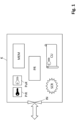
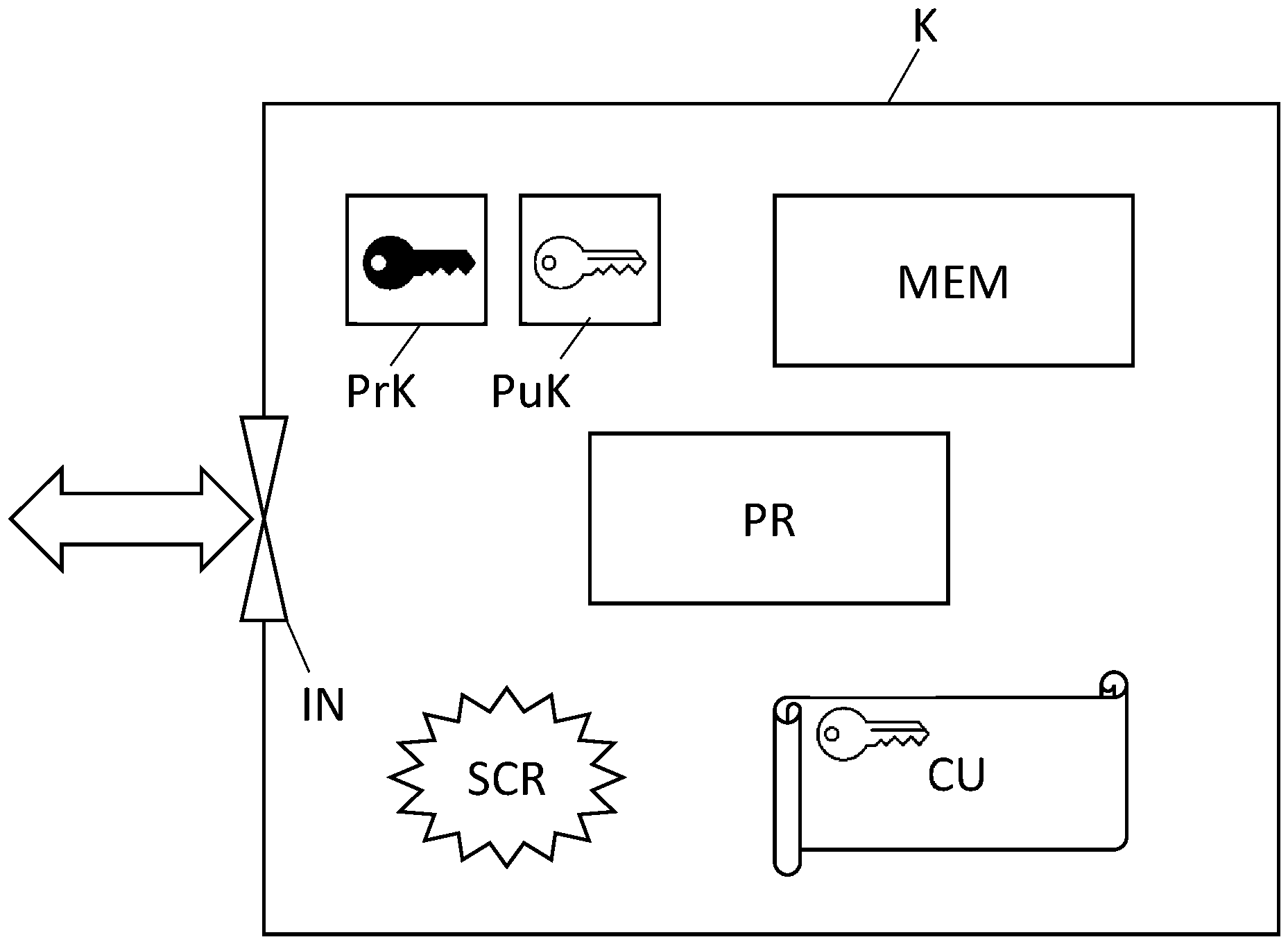
1 eine Datenstruktur einer Komponente eines erfindungsgemäßen Systems, -
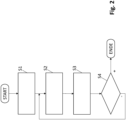
2 ein Ablaufdiagramm eines erfindungsgemäßen Verfahrens, -
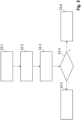
3 einen Teilschritt des Ablaufdiagramms aus2 , und -
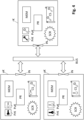
4 ein erfindungsgemäßes System nach Ausführung des erfindungsgemäßen Verfahrens zeigen.
-
1 a data structure of a component of a system according to the invention, -
2 a flow chart of a method according to the invention, -
3 a substep of theflow chart 2 , and -
4 show a system according to the invention after carrying out the method according to the invention.
Zusätzlich umfasst die Komponente K ein zunächst unsigniertes Zertifikat CU, in dem eine Kopie des öffentlichen Schlüssels PuK der Komponente K enthalten ist, was durch das Schlüsselsymbol in dem Zertifikat CU angedeutet werden soll. Das Zertifikat CU kann weitere Informationen enthalten, beispielsweise eine Adresse, unter der die Komponente K über die Schnittstelle IN angesprochen werden kann. Ein System wird durch eine Mehrzahl von Komponenten K mit einer solchen Struktur gebildet, zwischen denen eine gegenüber Zugriff oder Manipulation von außen gesicherte, dezentrale Datenkommunikationsstruktur aufgebaut werden soll. Das System kann eine Energieerzeugungsanlage sein, die an ein Versorgungsnetz angeschlossen ist.In addition, the component K comprises an initially unsigned certificate CU, which contains a copy of the public key PuK of the component K, which is indicated by the key symbol in the certificate CU. The certificate CU can contain further information, for example an address under which the component K can be addressed via the interface IN. A system is formed by a plurality of components K with such a structure, between which a decentralized data communication structure is to be set up that is secured against external access or manipulation. The system can be a power generation plant that is connected to a supply network.
In einem in
In einem zweiten Schritt S2 kann dann eine andere Komponente einen gegen Manipulation gesicherten Kanal mit der registrierenden Komponente aufbauen. Ein solcher Aufbau kann über bekannte Verfahren wie dem Diffie-Hellman-Verfahren erfolgen. Hierzu ist noch nicht der Nachweis einer Vertrauenswürdigkeit zwischen den Kommunikationspartnern erforderlich.In a second step S2, another component can then establish a channel with the registering component that is protected against manipulation. Such a setup can be carried out using known methods such as the Diffie-Hellman method. This does not yet require proof of trustworthiness between the communication partners.
In einem dritten Schritt authentisiert sich die andere Komponente bei der registrierenden Komponente. Dies ist in
Nacheinander kann sich dann auf diese Weise jede der anderen Komponenten ebenfalls bei der registrierenden Komponente authentifizieren und so ein von der registrierenden Komponente signiertes Zertifikat erhalten. Daher kann das Verfahren beendet werden, wenn in einem vierten Schritt S4 festgestellt wird, dass alle Komponenten des Systems erfolgreich authentifiziert worden sind. Hierdurch ist sichergestellt, dass in der Folge jede Komponente des Systems ein von der registrierenden Komponente signiertes Zertifikat und den öffentlichen Schlüssel der registrierenden Komponente besitzt und mit diesen Informationen zu jeder anderen Komponente des Systems mit bekannten Protokollen, beispielsweise dem TLS (Transport-Layer-Security) Protokoll, einen Sitzungsschlüssel vereinbaren und damit eine gesicherte und vertrauenswürdige Datenverbindung herstellen kann. Ebenso ist ausgeschlossen, dass fremde Komponenten eine solche Verbindung mit Komponenten des Systems aufbauen oder in diese unbemerkt eingreifen können, da eine fremde Komponente keine Authentifizierung durch die registrierende Komponente erzielen kann, weil sie kein zu der Liste der Validierungseinträge passendes Geheimnis besitzt. Die mit den erfindungsgemäßen Verfahren aufgebaute dezentrale Datenkommunikationsstruktur ist daher eine geschlossene Struktur.In this way, each of the other components can then authenticate itself with the registering component one after the other and thus receive a certificate signed by the registering component. The method can therefore be terminated when it is determined in a fourth step S4 that all components of the system have been successfully authenticated. This ensures that each component of the system subsequently has a certificate signed by the registering component and the public key of the registering component and can use this information to agree on a session key with every other component of the system using known protocols, for example the TLS (Transport Layer Security) protocol, and thus establish a secure and trustworthy data connection. It is also impossible for external components to establish such a connection with components of the system or to intervene in it unnoticed, since an external component cannot achieve authentication by the registering component because it does not have a secret that matches the list of validation entries. The decentralized data communication structure constructed using the method according to the invention is therefore a closed structure.
Bei Bedarf kann das Verfahren jederzeit erneut ausgeführt werden, um eine vermutete Kompromittierung auszuschließen. Hierzu ist es lediglich erforderlich, dass die registrierende Komponente ein neues Schlüsselpaar, also einen neuen privaten und öffentlichen Schlüssel, erzeugt und den alten öffentlichen Schlüssel im System durch den neu erzeugten öffentlichen Schlüssel ersetzt. Die anderen Komponenten können dann erkennen, dass eine erneute Authentisierung ihrer Zertifikate erforderlich ist und dies bei der registrierenden Komponente anstoßen.If necessary, the process can be repeated at any time to rule out a suspected compromise. All that is required is that the registering component generates a new key pair, i.e. a new private and public key, and replaces the old public key in the system with the newly generated public key. The other components can then recognize that their certificates need to be re-authenticated and initiate this with the registering component.
Ebenso ist es leicht möglich, weitere Komponenten später in das System aufzunehmen, indem die Liste der Validierungseinträge um einen Validierungseintrag der neuen Komponente erweitert wird. Die weitere Komponente kann sich dadurch ebenfalls erfolgreich bei der registrierenden Komponente authentisieren.It is also easy to add additional components to the system later by extending the list of validation entries to include a validation entry for the new component. This allows the additional component to successfully authenticate itself with the registering component.
In
Durch Bereitstellung des eigenen Zertifikats einer ersten Komponente an eine zweite, andere Komponente des Systems als gewünschtem Kommunikationspartner kann die zweite Komponente den öffentlichen Schlüssel der ersten Komponente erhalten und mittels bekannter Verfahren auf Vertrauenswürdigkeit prüfen, sowie das eigene signierte Zertifikat als Antwort zur Kontaktaufnahme zurücksenden. Dieses kann die erste Komponente auf gleiche Weise auf Vertrauenswürdigkeit prüfen. Nach erfolgreicher gegenseitiger Zusicherung der Vertrauenswürdigkeit kann mittels der öffentlichen Schlüssel leicht ein temporärer Schlüssel für eine gesicherter Kommunikation vereinbart werden. Das Kommunikationsverfahren kann beispielsweise das TLS-Verfahren oder ein SSL (Secure Socket Layer) Verfahren sein, das hohe Datenraten und geringen Rechenaufwand für die Prozessoren PR der beteiligten Kommunikationspartner bei hoher Cybersicherheit ermöglicht.By providing the first component's own certificate to a second, different component of the system as the desired communication partner, the second component can receive the public key of the first component and check its trustworthiness using known methods, as well as send its own signed certificate back as a response to contact. The first component can check this for trustworthiness in the same way. After successful mutual assurance of trustworthiness, a temporary key for secure communication can easily be agreed upon using the public key. The communication method can be, for example, the TLS method or an SSL (Secure Socket Layer) method, which enables high data rates and low computing effort for the PR processors of the communication partners involved while maintaining a high level of cybersecurity.
Bezugszeichenlistelist of reference symbols
- K, K1, K2, aKK, K1, K2, aK
- Komponentecomponent
- rKrK
- registrierende Komponenteregistering component
- PrKPrK
- privater Schlüsselprivate key
- PuKPuK
- öffentlicher Schlüsselpublic key
- CUCU
- unsigniertes Zertifikatunsigned certificate
- CSCS
- signiertes Zertifikatsigned certificate
- PRPR
- Prozessorprocessor
- MEMMEM
- Speichermemory
- SCRSCR
- Gerätespezifisches Geheimnisdevice-specific secret
- S1-S4S1-S4
- SchrittStep
- S3.1 - S3.6S3.1 - S3.6
- SchrittStep
Claims (13)
Priority Applications (6)
| Application Number | Priority Date | Filing Date | Title |
|---|---|---|---|
| DE102023115048.0A DE102023115048B4 (en) | 2023-06-07 | 2023-06-07 | METHOD FOR CONSTRUCTING A DECENTRALIZED DATA COMMUNICATION STRUCTURE WITHIN A SYSTEM WITH A MULTIPLE NUMBER OF COMPONENTS |
| EP24729845.8A EP4725158A1 (en) | 2023-06-07 | 2024-05-29 | Method for constructing a decentralised data communication structure within a system having a plurality of components |
| AU2024285961A AU2024285961A1 (en) | 2023-06-07 | 2024-05-29 | Method for constructing a decentralised data communication structure within a system having a plurality of components |
| PCT/EP2024/064753 WO2024251582A1 (en) | 2023-06-07 | 2024-05-29 | Method for constructing a decentralised data communication structure within a system having a plurality of components |
| CN202480031933.9A CN121195476A (en) | 2023-06-07 | 2024-05-29 | A method for building decentralized data communication structures within a system with multiple components. |
| US19/410,340 US20260089011A1 (en) | 2023-06-07 | 2025-12-05 | Method for constructing a decentralized data communication structure within a system having a plurality of components |
Applications Claiming Priority (1)
| Application Number | Priority Date | Filing Date | Title |
|---|---|---|---|
| DE102023115048.0A DE102023115048B4 (en) | 2023-06-07 | 2023-06-07 | METHOD FOR CONSTRUCTING A DECENTRALIZED DATA COMMUNICATION STRUCTURE WITHIN A SYSTEM WITH A MULTIPLE NUMBER OF COMPONENTS |
Publications (2)
| Publication Number | Publication Date |
|---|---|
| DE102023115048A1 DE102023115048A1 (en) | 2024-12-12 |
| DE102023115048B4 true DE102023115048B4 (en) | 2024-12-19 |
Family
ID=91331163
Family Applications (1)
| Application Number | Title | Priority Date | Filing Date |
|---|---|---|---|
| DE102023115048.0A Active DE102023115048B4 (en) | 2023-06-07 | 2023-06-07 | METHOD FOR CONSTRUCTING A DECENTRALIZED DATA COMMUNICATION STRUCTURE WITHIN A SYSTEM WITH A MULTIPLE NUMBER OF COMPONENTS |
Country Status (6)
| Country | Link |
|---|---|
| US (1) | US20260089011A1 (en) |
| EP (1) | EP4725158A1 (en) |
| CN (1) | CN121195476A (en) |
| AU (1) | AU2024285961A1 (en) |
| DE (1) | DE102023115048B4 (en) |
| WO (1) | WO2024251582A1 (en) |
Citations (2)
| Publication number | Priority date | Publication date | Assignee | Title |
|---|---|---|---|---|
| WO2013123548A2 (en) | 2012-02-20 | 2013-08-29 | Lock Box Pty Ltd. | Cryptographic method and system |
| US20210184864A1 (en) | 2019-03-08 | 2021-06-17 | Ares Technologies, Inc. | Methods and systems for implementing mixed protocol certificates |
Family Cites Families (3)
| Publication number | Priority date | Publication date | Assignee | Title |
|---|---|---|---|---|
| US9350550B2 (en) * | 2013-09-10 | 2016-05-24 | M2M And Iot Technologies, Llc | Power management and security for wireless modules in “machine-to-machine” communications |
| US11042609B2 (en) * | 2017-08-03 | 2021-06-22 | Cable Television Laboratories, Inc. | Systems and methods for secure element registration and provisioning |
| EP3952201A1 (en) * | 2020-08-07 | 2022-02-09 | ABB Schweiz AG | Trust establishment through certificate management in open platform communications unified architecture |
-
2023
- 2023-06-07 DE DE102023115048.0A patent/DE102023115048B4/en active Active
-
2024
- 2024-05-29 AU AU2024285961A patent/AU2024285961A1/en active Pending
- 2024-05-29 CN CN202480031933.9A patent/CN121195476A/en active Pending
- 2024-05-29 EP EP24729845.8A patent/EP4725158A1/en active Pending
- 2024-05-29 WO PCT/EP2024/064753 patent/WO2024251582A1/en not_active Ceased
-
2025
- 2025-12-05 US US19/410,340 patent/US20260089011A1/en active Pending
Patent Citations (2)
| Publication number | Priority date | Publication date | Assignee | Title |
|---|---|---|---|---|
| WO2013123548A2 (en) | 2012-02-20 | 2013-08-29 | Lock Box Pty Ltd. | Cryptographic method and system |
| US20210184864A1 (en) | 2019-03-08 | 2021-06-17 | Ares Technologies, Inc. | Methods and systems for implementing mixed protocol certificates |
Also Published As
| Publication number | Publication date |
|---|---|
| WO2024251582A1 (en) | 2024-12-12 |
| DE102023115048A1 (en) | 2024-12-12 |
| CN121195476A (en) | 2025-12-23 |
| AU2024285961A1 (en) | 2025-12-11 |
| US20260089011A1 (en) | 2026-03-26 |
| EP4725158A1 (en) | 2026-04-15 |
Similar Documents
| Publication | Publication Date | Title |
|---|---|---|
| DE60311036T2 (en) | Procedure for authenticating potential members invited to join a group | |
| DE60311200T2 (en) | Apparatus and method for providing authentication information for secure group communication | |
| DE60114986T2 (en) | METHOD FOR OUTPUTTING ELECTRONIC IDENTITY | |
| DE60024319T2 (en) | VEREINTER LOGGING PROCESS | |
| EP1080557A2 (en) | Method and arrangement for the computer-aided exchange of cryptographic keys between a first computer unit and a second computer unit | |
| EP3422628B1 (en) | Method, safety device and safety system | |
| EP4270863B1 (en) | Secure reconstruction of private keys | |
| EP3663956A1 (en) | Microcontroller | |
| EP3935808B1 (en) | Cryptographically protected provision of a digital certificate | |
| DE102020003739A1 (en) | Procedure for the distribution and negotiation of key material | |
| DE602004012103T2 (en) | METHOD FOR DISTRIBUTING PASSWORDS | |
| EP3881486B1 (en) | Method for providing proof of origin for a digital key pair | |
| EP2730050B1 (en) | Method for generating and verifying an electronic pseudonymous signature | |
| EP3267619B1 (en) | Method for producing fault prevention in a framework | |
| EP3244360A1 (en) | Method for registration of equipment, in particular for access control devices or payment or vending machines in a server of a system comprising several such devices | |
| DE102018132979A1 (en) | Secure and intelligent operation of a charging infrastructure | |
| DE60311328T2 (en) | METHOD AND DEVICE FOR NETWORK SECURITY | |
| DE102023115048B4 (en) | METHOD FOR CONSTRUCTING A DECENTRALIZED DATA COMMUNICATION STRUCTURE WITHIN A SYSTEM WITH A MULTIPLE NUMBER OF COMPONENTS | |
| EP1468520B1 (en) | Method for securing data traffic in a mobile network environment | |
| EP4662829A1 (en) | Verification of data of an authentication and key-agreement protocol process | |
| EP3901714B1 (en) | Method for verifying the authenticity of electronic modules of a modular field device of automation technology | |
| DE102019106667A1 (en) | Method for authenticating a computer system | |
| DE102020202879A1 (en) | Method and device for certification of an application-specific key and for requesting such certification | |
| EP1709764A1 (en) | Circuit arrangement and method for securing communication within communication networks | |
| DE102022000857B3 (en) | Procedure for the secure identification of a person by a verification authority |
Legal Events
| Date | Code | Title | Description |
|---|---|---|---|
| R012 | Request for examination validly filed | ||
| R016 | Response to examination communication | ||
| R018 | Grant decision by examination section/examining division | ||
| R020 | Patent grant now final |