DE102018215265B4 - Method and control device for operating a head-mounted display device in a motor vehicle - Google Patents
Method and control device for operating a head-mounted display device in a motor vehicle Download PDFInfo
- Publication number
- DE102018215265B4 DE102018215265B4 DE102018215265.9A DE102018215265A DE102018215265B4 DE 102018215265 B4 DE102018215265 B4 DE 102018215265B4 DE 102018215265 A DE102018215265 A DE 102018215265A DE 102018215265 B4 DE102018215265 B4 DE 102018215265B4
- Authority
- DE
- Germany
- Prior art keywords
- motor vehicle
- vehicle
- display device
- reality glasses
- driver
- Prior art date
- Legal status (The legal status is an assumption and is not a legal conclusion. Google has not performed a legal analysis and makes no representation as to the accuracy of the status listed.)
- Active
Links
Images

Classifications
-
- G—PHYSICS
- G06—COMPUTING OR CALCULATING; COUNTING
- G06T—IMAGE DATA PROCESSING OR GENERATION, IN GENERAL
- G06T19/00—Manipulating three-dimensional [3D] models or images for computer graphics
- G06T19/006—Mixed reality
-
- B—PERFORMING OPERATIONS; TRANSPORTING
- B60—VEHICLES IN GENERAL
- B60K—ARRANGEMENT OR MOUNTING OF PROPULSION UNITS OR OF TRANSMISSIONS IN VEHICLES; ARRANGEMENT OR MOUNTING OF PLURAL DIVERSE PRIME-MOVERS IN VEHICLES; AUXILIARY DRIVES FOR VEHICLES; INSTRUMENTATION OR DASHBOARDS FOR VEHICLES; ARRANGEMENTS IN CONNECTION WITH COOLING, AIR INTAKE, GAS EXHAUST OR FUEL SUPPLY OF PROPULSION UNITS IN VEHICLES
- B60K35/00—Instruments specially adapted for vehicles; Arrangement of instruments in or on vehicles
- B60K35/10—Input arrangements, i.e. from user to vehicle, associated with vehicle functions or specially adapted therefor
-
- B—PERFORMING OPERATIONS; TRANSPORTING
- B60—VEHICLES IN GENERAL
- B60N—SEATS SPECIALLY ADAPTED FOR VEHICLES; VEHICLE PASSENGER ACCOMMODATION NOT OTHERWISE PROVIDED FOR
- B60N2/00—Seats specially adapted for vehicles; Arrangement or mounting of seats in vehicles
- B60N2/002—Seats provided with an occupancy detection means mounted therein or thereon
- B60N2/0021—Seats provided with an occupancy detection means mounted therein or thereon characterised by the type of sensor or measurement
-
- G—PHYSICS
- G02—OPTICS
- G02B—OPTICAL ELEMENTS, SYSTEMS OR APPARATUS
- G02B27/00—Optical systems or apparatus not provided for by any of the groups G02B1/00 - G02B26/00, G02B30/00
- G02B27/01—Head-up displays
-
- G—PHYSICS
- G02—OPTICS
- G02B—OPTICAL ELEMENTS, SYSTEMS OR APPARATUS
- G02B27/00—Optical systems or apparatus not provided for by any of the groups G02B1/00 - G02B26/00, G02B30/00
- G02B27/01—Head-up displays
- G02B27/0101—Head-up displays characterised by optical features
-
- G—PHYSICS
- G06—COMPUTING OR CALCULATING; COUNTING
- G06V—IMAGE OR VIDEO RECOGNITION OR UNDERSTANDING
- G06V20/00—Scenes; Scene-specific elements
- G06V20/50—Context or environment of the image
- G06V20/59—Context or environment of the image inside of a vehicle, e.g. relating to seat occupancy, driver state or inner lighting conditions
- G06V20/593—Recognising seat occupancy
-
- G—PHYSICS
- G08—SIGNALLING
- G08G—TRAFFIC CONTROL SYSTEMS
- G08G1/00—Traffic control systems for road vehicles
- G08G1/09—Arrangements for giving variable traffic instructions
-
- B—PERFORMING OPERATIONS; TRANSPORTING
- B60—VEHICLES IN GENERAL
- B60N—SEATS SPECIALLY ADAPTED FOR VEHICLES; VEHICLE PASSENGER ACCOMMODATION NOT OTHERWISE PROVIDED FOR
- B60N2210/00—Sensor types, e.g. for passenger detection systems or for controlling seats
- B60N2210/10—Field detection presence sensors
- B60N2210/16—Electromagnetic waves
- B60N2210/22—Optical; Photoelectric; Lidar [Light Detection and Ranging]
- B60N2210/24—Cameras
-
- B—PERFORMING OPERATIONS; TRANSPORTING
- B60—VEHICLES IN GENERAL
- B60N—SEATS SPECIALLY ADAPTED FOR VEHICLES; VEHICLE PASSENGER ACCOMMODATION NOT OTHERWISE PROVIDED FOR
- B60N2220/00—Computerised treatment of data for controlling of seats
- B60N2220/10—Computerised treatment of data for controlling of seats using a database
-
- B—PERFORMING OPERATIONS; TRANSPORTING
- B60—VEHICLES IN GENERAL
- B60N—SEATS SPECIALLY ADAPTED FOR VEHICLES; VEHICLE PASSENGER ACCOMMODATION NOT OTHERWISE PROVIDED FOR
- B60N2220/00—Computerised treatment of data for controlling of seats
- B60N2220/20—Computerised treatment of data for controlling of seats using a deterministic algorithm
-
- B—PERFORMING OPERATIONS; TRANSPORTING
- B60—VEHICLES IN GENERAL
- B60R—VEHICLES, VEHICLE FITTINGS, OR VEHICLE PARTS, NOT OTHERWISE PROVIDED FOR
- B60R22/00—Safety belts or body harnesses in vehicles
- B60R22/48—Control systems, alarms, or interlock systems, for the correct application of the belt or harness
- B60R2022/4808—Sensing means arrangements therefor
- B60R2022/4816—Sensing means arrangements therefor for sensing locking of buckle
-
- B—PERFORMING OPERATIONS; TRANSPORTING
- B60—VEHICLES IN GENERAL
- B60R—VEHICLES, VEHICLE FITTINGS, OR VEHICLE PARTS, NOT OTHERWISE PROVIDED FOR
- B60R22/00—Safety belts or body harnesses in vehicles
- B60R22/48—Control systems, alarms, or interlock systems, for the correct application of the belt or harness
-
- G—PHYSICS
- G02—OPTICS
- G02B—OPTICAL ELEMENTS, SYSTEMS OR APPARATUS
- G02B27/00—Optical systems or apparatus not provided for by any of the groups G02B1/00 - G02B26/00, G02B30/00
- G02B27/01—Head-up displays
- G02B27/0101—Head-up displays characterised by optical features
- G02B2027/0138—Head-up displays characterised by optical features comprising image capture systems, e.g. camera
-
- G—PHYSICS
- G02—OPTICS
- G02B—OPTICAL ELEMENTS, SYSTEMS OR APPARATUS
- G02B27/00—Optical systems or apparatus not provided for by any of the groups G02B1/00 - G02B26/00, G02B30/00
- G02B27/01—Head-up displays
- G02B27/0101—Head-up displays characterised by optical features
- G02B2027/014—Head-up displays characterised by optical features comprising information/image processing systems
-
- G—PHYSICS
- G05—CONTROLLING; REGULATING
- G05D—SYSTEMS FOR CONTROLLING OR REGULATING NON-ELECTRIC VARIABLES
- G05D1/00—Control of position, course, altitude or attitude of land, water, air or space vehicles, e.g. using automatic pilots
- G05D1/0055—Control of position, course, altitude or attitude of land, water, air or space vehicles, e.g. using automatic pilots with safety arrangements
- G05D1/0061—Control of position, course, altitude or attitude of land, water, air or space vehicles, e.g. using automatic pilots with safety arrangements for transition from automatic pilot to manual pilot and vice versa
Landscapes
- Engineering & Computer Science (AREA)
- Physics & Mathematics (AREA)
- General Physics & Mathematics (AREA)
- Transportation (AREA)
- Mechanical Engineering (AREA)
- Theoretical Computer Science (AREA)
- Optics & Photonics (AREA)
- Aviation & Aerospace Engineering (AREA)
- Computer Graphics (AREA)
- Computer Hardware Design (AREA)
- General Engineering & Computer Science (AREA)
- Software Systems (AREA)
- Multimedia (AREA)
- Chemical & Material Sciences (AREA)
- Combustion & Propulsion (AREA)
- Instrument Panels (AREA)
- Fittings On The Vehicle Exterior For Carrying Loads, And Devices For Holding Or Mounting Articles (AREA)
- Traffic Control Systems (AREA)
Abstract
Verfahren zum Betreiben einer am Kopf tragbaren Anzeigeeinrichtung in einem Kraftfahrzeug (1), bei welchem zumindest die Bedingung überprüft wird, ob sich außer einem Fahrer (2) kein weiterer Fahrzeuginsasse (9) im Kraftfahrzeug (1) befindet, wenn das Kraftfahrzeug (1) in keinem autonomen Fahrmodus betrieben wird, und falls diese Bedingung erfüllt ist, folgende Einschränkung an der Anzeigeeinrichtung hinsichtlich einer Anzeige von Inhalten vorgenommen wird:
- das Anzeigen jeglicher Inhalte wird unterbunden, wenn es sich bei der Anzeigeeinrichtung um eine Virtual-Reality-Brille (3) handelt, indem eine Datenübertragung von anzeigbaren Inhalten vom Kraftfahrzeug (1) und/oder von einer anderen Datenquelle an die Virtual-Reality-Brille (3) unterbunden wird;
- ausschließlich das Anzeigen verkehrsrelevanter Inhalte wird mittels der Anzeigeeinrichtung ermöglicht, wenn es sich bei der Anzeigeeinrichtung um eine Augmented-Reality-Brille handelt, indem die Übertragung verkehrsrelevanter Inhalte brillenseitig und/oder fahrzeugseitig ermöglicht wird, wobei, falls sich ein weiterer Fahrzeuginsasse (9) im Kraftfahrzeug (1) befindet, als weitere Bedingung überprüft wird, ob sich dieser Fahrzeuginsasse (9) auf dem Beifahrersitz (6) befindet, und falls diese weitere Bedingung erfüllt ist, das Anzeigen beliebiger Informationen durch die Anzeigeeinrichtung ermöglicht wird.

- the display of any content is prevented if the display device is virtual reality glasses (3) by preventing data transmission of displayable content from the motor vehicle (1) and/or from another data source to the virtual reality glasses (3);
- only the display of traffic-relevant content is made possible by means of the display device if the display device is augmented reality glasses, by enabling the transmission of traffic-relevant content on the glasses side and/or on the vehicle side, wherein, if there is another vehicle occupant (9) in the motor vehicle (1), a further condition is checked as to whether this vehicle occupant (9) is in the passenger seat (6), and if this further condition is met, the display of any information is made possible by the display device.
Description
Die Erfindung betrifft ein Verfahren und eine Steuereinrichtung zum Betreiben einer am Kopf tragbaren Anzeigeeinrichtung in einem Kraftfahrzeug. Des Weiteren betrifft die Erfindung noch ein Kraftfahrzeug mit einer solchen Steuereinrichtung.The invention relates to a method and a control device for operating a head-mounted display device in a motor vehicle. The invention also relates to a motor vehicle with such a control device.
In absehbarer Zeit wird es möglich sein, in Kraftfahrzeugen zu Unterhaltungszwecken Virtual-Reality-Brillen oder Augmented-Reality-Brillen zu tragen und mittels diesen unterschiedliche Inhalte zu genießen. Derartige Unterhaltungsoptionen sind während der Fahrt - insbesondere noch vor der Verfügbarkeit autonomen Fahrens - eher für Mitfahrer aber weniger für einen Fahrer selbst angedacht.In the foreseeable future, it will be possible to wear virtual reality or augmented reality glasses in motor vehicles for entertainment purposes and to use them to enjoy different content. Such entertainment options are intended more for passengers than for the driver himself during the journey - especially before autonomous driving is available.
Die
Die
Die
Die
Die
Die
Die
Es ist die Aufgabe der vorliegenden Erfindung, eine Lösung bereitzustellen, mittels welcher auf besonders einfache Weise sichergestellt werden kann, dass ein Fahrer eines Kraftfahrzeugs nicht durch eine am Kopf getragene Anzeigeeinrichtung von seiner Fahraufgabe abgelenkt wird.It is the object of the present invention to provide a solution by means of which it can be ensured in a particularly simple manner that a driver of a motor vehicle is not distracted from his driving task by a display device worn on the head.
Diese Aufgabe wird durch ein Verfahren sowie durch eine Steuereinrichtung zum Betreiben einer am Kopf tragbaren Anzeigeeinrichtung in einem Kraftfahrzeug mit den Merkmalen der unabhängigen Patentansprüche gelöst. Vorteilhafte Ausgestaltungen mit zweckmäßigen und nicht-trivialen Weiterbildungen der Erfindung sind in den abhängigen Ansprüchen angegeben.This object is achieved by a method and by a control device for operating a head-mounted display device in a motor vehicle with the features of the independent patent claims. Advantageous embodiments with expedient and non-trivial further developments of the invention are specified in the dependent claims.
Bei dem erfindungsgemäßen Verfahren zum Betreiben einer am Kopf tragbaren Anzeigeeinrichtung in einem Kraftfahrzeug wird zumindest die Bedingung überprüft, ob sich außer einem Fahrer kein weiterer Fahrzeuginsasse im Kraftfahrzeug befindet, wenn das Kraftfahrzeug in keinem autonomen Fahrmodus betrieben wird. Im Sinne der Erfindung ist darunter zu verstehen, dass der Fahrer das Kraftfahrzeug vollständig selbst fährt. Darunter kann auch verstanden werden, dass bestimmte Assistenzsysteme bei der Fahrzeugbedienung helfen, beispielsweise ein Abstandsregeltempomat. Darunter kann auch verstanden werden, dass eine gewisse Teilautomatisierung beim Erfüllen der Fahraufgabe vorliegt. Funktionen wie ein automatisches Einparken, Spurhalten, allgemeine Lenkführung, Beschleunigen, Abbremsen, können ebenfalls von Assistenzsystemen übernommen werden, zum Beispiel von einem Stauassistenten.In the method according to the invention for operating a head-mounted display device in a motor vehicle, at least the condition is checked as to whether there are no other vehicle occupants in the motor vehicle other than a driver when the motor vehicle is not operated in an autonomous driving mode. In the sense of the invention, this means that the driver drives the motor vehicle completely himself. This can also be understood to mean that certain assistance systems help with vehicle operation, for example adaptive cruise control. This can also be understood to mean that there is a certain degree of partial automation when carrying out the driving task. Functions such as automatic parking, lane keeping, general steering guidance, acceleration, braking can also be taken over by assistance systems, for example by a traffic jam assistant.
Dass das Kraftfahrzeug in keinem autonomen Fahrmodus betrieben wird, kann beispielsweise die Autonomiestufen 0, 1 und 2 gemäß der Norm SAE J3016 betreffen. Unter einem autonomen Fahrmodus im Sinne der Erfindung ist also zu verstehen, dass beispielsweise eine Bedienungsautomatisierung vorliegt. Der Fahrer muss das System beispielsweise das Kraftfahrzeug nicht dauernd überwachen. Das Kraftfahrzeug führt selbstständig Funktionen wie das Auslösen des Blinkers, Spurwechsel und Spurhalten durch. Der Fahrer kann sich anderen Dingen zuwenden, wird aber bei Bedarf innerhalb einer Vorwarnzeit vom System aufgefordert, die Führung zu übernehmen. Eine Hochautomatisierung kann auch im Sinne der Erfindung darunter fallen, dass das Kraftfahrzeug in einem autonomen Fahrmodus betrieben wird. Die Führung des Kraftfahrzeugs wird dauerhaft von einem geeigneten System übernommen. Werden die Fahraufgaben vom System nicht mehr bewältigt, kann der Fahrer aufgefordert werden, die Führung zu übernehmen. Unter einem autonomen Fahrmodus kann auch verstanden werden, dass eine Vollautomatisierung vorliegt, bei der gar kein Fahrer erforderlich ist. Außer dem Festlegen des Ziels und dem Starten des Systems ist kein menschliches Eingreifen erforderlich.The fact that the motor vehicle is not operated in an autonomous driving mode can, for example, affect
Bei dem Kraftfahrzeug kann es sich grundsätzlich um ein Kraftfahrzeug handeln, welches selbst autonom fahren kann oder auch nicht autonom fahren kann. Wenn das Kraftfahrzeug in keinem autonomen Fahrmodus betrieben wird - sei es, weil das Kraftfahrzeug dazu gar nicht in der Lage ist oder weil gerade ein entsprechender Fahrmodus ausgewählt ist - und die Bedingung erfüllt ist, dass sich außer dem Fahrer kein weiterer Fahrzeuginsasse im Kraftfahrzeug befindet, wird eine der folgenden Einschränkungen an der am Kopf tragbaren Anzeigeeinrichtung hinsichtlich einer Anzeige von Inhalten vorgenommen: das Anzeigen jeglicher Inhalte wird unterbunden, wenn es sich bei der Anzeigeeinrichtung um eine Virtual-Reality-Brille handelt; ausschließlich das Anzeigen verkehrsrelevanter Inhalte wird mittels der Anzeigeeinrichtung ermöglicht, wenn es sich bei der Anzeigeeinrichtung um eine Augmented-Reality-Brille handelt.In principle, the motor vehicle can be a motor vehicle that can drive autonomously or cannot drive autonomously. If the motor vehicle is not operated in an autonomous driving mode - either because the motor vehicle is not capable of doing so or because a corresponding driving mode has just been selected - and the condition is met that there are no other vehicle occupants in the motor vehicle other than the driver, one of the following restrictions is made to the head-mounted display device with regard to the display of content: the display of any content is prevented if the display device is virtual reality glasses; only the display of traffic-relevant content is made possible by means of the display device if the display device is augmented reality glasses.
Um das Risiko zu senken, dass der Fahrer bei alleiniger Fahrt irrtümlich oder bewusst seine Virtual-Reality-Brille oder Augmented-Reality-Brille nutzt und sich so gegebenenfalls vermeidbaren Risiken aussetzt, wird das Anzeigen jeglicher Inhalte unterbunden, wenn es sich bei der Anzeigeeinrichtung um eine Virtual-Reality-Brille handelt, wobei ausschließlich das Anzeigen verkehrsrelevanter Inhalte mittels der Anzeigeeinrichtung ermöglicht wird, wenn es sich bei der Anzeigeeinrichtung um eine Augmented-Reality-Brille handelt. Im Falle der Augmented-Reality-Brille wird dieser also so angesteuert, dass diese nur in einer an die Fahraufgabe angepassten Funktionsweise verwendet werden kann. Die Augmented-Reality-Brille kann in dem Fall beispielsweise Navigationshinweise, Geschwindigkeitshinweise und dergleichen anzeigen, das Anzeigen von Grafiken und/oder Videos, die rein zu Unterhaltungszwecken dienen, wird in dem Fall dann unterbunden. Im Falle der Virtual-Reality-Brille ist es sinnvoll, dass Anzeigen jeglicher Inhalte zu unterbinden, falls die oben genannte Bedingung erfüllt ist. Denn Virtual-Reality-Brillen schotten den Träger visuell vollständig von seiner Umgebung ab.In order to reduce the risk that the driver will mistakenly or intentionally use their virtual reality glasses or augmented reality glasses when driving alone and thus expose themselves to avoidable risks, the display of any content is prevented if the display device is virtual reality glasses, whereby only traffic-relevant content can be displayed using the display device if the display device is augmented reality glasses. In the case of augmented reality glasses, this is controlled in such a way that it can only be used in a function adapted to the driving task. In this case, the augmented reality glasses can, for example, display navigation instructions, speed information and the like, and the display of graphics and/or videos that are purely for entertainment purposes is then prevented. In the case of virtual reality glasses, it makes sense to prevent the display of any content if the above condition is met. Virtual reality glasses completely isolate the wearer visually from his or her surroundings.
Erfindungsgemäß ist daher vorgesehen, dass, falls sich ein weiterer Fahrzeuginsasse im Kraftfahrzeug befindet, als weitere Bedingung überprüft wird, ob sich dieser Fahrzeuginsasse auf dem Beifahrersitz befindet, und falls diese weitere Bedingung erfüllt ist, das Anzeigen beliebiger Informationen durch die Anzeigeeinrichtung ermöglicht wird.According to the invention, it is therefore provided that if there is another vehicle occupant in the motor vehicle, a further condition is to check whether this vehicle occupant is in the passenger seat, and if this further condition is met, the display of any information by the display device is made possible.
Der Erfindung liegt die Erkenntnis zugrunde, dass wenn ein Mitfahrer beziehungsweise Beifahrer erkannt wird, davon auszugehen ist, dass dieser die am Kopf tragbare Anzeigeeinrichtung selbst nutzt oder die Nutzung seitens des Fahrers unterbinden würde. Bei dem erfindungsgemäßen Verfahren ist es nicht erforderlich, über eine aufwändige Sensorik festzustellen, wo genau sich die am Kopf tragbare Anzeigeeinrichtung im Kraftfahrzeug befindet und von welchem Fahrzeuginsassen sie getragen wird. Mittels des erfindungsgemäßen Verfahrens ist es also auf besonders einfache und dennoch zuverlässige Weise möglich, zu verhindern, dass ein Fahrer durch das Tragen der am Kopf tragbaren Anzeigeeinrichtung von seiner eigentlichen Fahraufgabe abgelenkt wird, sofern das Kraftfahrzeug in keinem autonomen Fahrmodus betrieben wird.The invention is based on the finding that if a passenger or front passenger is recognized, it can be assumed that he or she is using the head-mounted display device himself or would prevent the driver from using it. With the method according to the invention, it is not necessary to use complex sensors to determine exactly where the head-mounted display device is located in the motor vehicle and which vehicle occupant is wearing it. Using the method according to the invention, it is therefore possible in a particularly simple and yet reliable manner to prevent a driver from being distracted from his or her actual driving task by wearing the head-mounted display device, provided that the motor vehicle is not operated in an autonomous driving mode.
Die Erfindung sieht vor, dass das Anzeigen jeglicher Inhalte im Falle der Virtual-Reality-Brille unterbunden wird, indem eine Datenübertragung von anzeigbaren Inhalten vom Kraftfahrzeug und/oder von einer anderen Datenquelle an die Virtual-Reality-Brille unterbunden wird. Bilddaten und/oder Videodaten können beispielsweise von einem fahrzeugseitigen Infotainmentsystem an die Virtual-Reality-Brille übertragen werden. Sofern das Anzeigen jeglicher Inhalte bei der Virtual-Reality-Brille unterbunden werden soll, kann beispielsweise eine entsprechende Datenverbindung zwischen dem Infotainmentsystem und der Virtual-Reality-Brille so lange unterbrochen werden, solange die Bedingung erfüllt ist, dass sich außer dem Fahrer kein weiterer Fahrzeuginsasse im Kraftfahrzeug befindet. Im Falle der Augmented-Reality-Brille ist es beispielsweise möglich, dass brillenseitig oder auch fahrzeugseitig nur die Übertragung verkehrsrelevanter Inhalte an die Augmented-Reality-Brille ermöglicht wird, solange die besagte Einschränkung vorgenommen werden soll. Auch ist es möglich, dass die am Kopf tragbare Anzeigeeinrichtung die anzuzeigenden Daten beispielsweise von einem Smartphone oder einer anderen nicht-fahrzeugseitig fest verbauten Einrichtung erhält. In dem Fall kann die Datenübertragung von anzeigbaren Inhalten im Falle der Virtual-Reality-Brille ebenfalls unterbunden oder im Falle der Augmented-Reality-Brille entsprechend gefiltert werden.The invention provides that the display of any content in the case of virtual reality glasses is prevented by preventing data transmission of displayable content from the motor vehicle and/or from another data source to the virtual reality glasses. Image data and/or video data can, for example, be transmitted from an in-vehicle infotainment system to the virtual reality glasses. If the display of any content on the virtual reality glasses is to be prevented, a corresponding data connection between the infotainment system and the virtual reality glasses can, for example, be interrupted as long as the condition is met that there are no other vehicle occupants in the vehicle other than the driver. In the case of augmented reality glasses, it is possible, for example, that only traffic-relevant content is enabled to be transmitted to the augmented reality glasses on the glasses or on the vehicle as long as the said restriction is to be made. It is also possible for the head-mounted display device to receive the data to be displayed, for example, from a smartphone or another device that is not permanently installed on the vehicle. In this case, the data transmission of displayable content can also be prevented in the case of virtual reality glasses or filtered accordingly in the case of augmented reality glasses.
Eine weitere vorteilhafte Ausführungsform sieht vor, dass falls sich ein weiterer Fahrzeuginsasse im Kraftfahrzeug befindet, als weitere Bedingung überprüft wird, ob sich dieser Fahrzeuginsasse hinter jeweiligen Vordersitzen des Kraftfahrzeugs, insbesondere auf einer Rückbank des Kraftfahrzeugs, befindet, und nur falls diese weitere Bedingung erfüllt ist, das Anzeigen beliebiger Inhalte mittels der Anzeigeeinrichtung ermöglicht wird, wobei falls die weitere Bedingung nicht erfüllt ist, die Einschränkung vorgenommen wird. Letzteres bedeutet also, dass das Anzeigen jeglicher Inhalte im Falle der Virtual-Reality-Brille unterbunden und im Falle der Augmented-Reality-Brille ausschließlich für das Anzeigen verkehrsrelevanter Inhalte ermöglicht wird. Ist die Nutzung der am Kopf tragbare Anzeigeeinrichtung also beispielsweise nur auf der Rückbank erwünscht oder zulässig, wird im Falle von neben dem Fahrer weiterer vorhandener Fahrzeuginsasse überprüft, ob diese sich beispielsweise auf der Rückbank befinden. Die Einschränkung bezüglich der Widergabe beziehungsweise Anzeige von Inhalten mittels der Anzeigeeinrichtung erfolgt also, falls der zumindest eine weitere Fahrzeuginsasse sich nicht auf der Rückbank und stattdessen zum Beispiel auf dem Beifahrersitz befinden sollte. Wird hingegen festgestellt, dass der zumindest eine weitere Fahrzeuginsasse auf der Rückbank sitzt, so können mittels der am Kopf tragbaren Anzeigeeinrichtung jegliche Inhalte angezeigt werden. Durch diese Maßnahme ist es möglich, auf besonders zuverlässige Weise sicherzustellen, dass der Fahrer durch die am Kopf tragbare Anzeigeeinrichtung nicht von seiner Fahraufgabe abgelenkt werden kann. Denn in diesem Fall ist es schlichtweg nur möglich, die am Kopf tragbare Anzeigeeinrichtung zum Anzeigen beliebiger Inhalte auch nur dann zu verwenden beziehungsweise zu benutzen, wenn zumindest ein weiterer Fahrzeuginsasse hinter den Vordersitzen des Kraftfahrzeugs, beispielsweise auf einer Rückbank, platzgenommen hat.A further advantageous embodiment provides that if there is another vehicle occupant in the motor vehicle, a further condition is checked to see whether this vehicle occupant is behind the respective front seats of the motor vehicle, in particular on a rear seat of the motor vehicle, and only if this further condition is met is the display of any content enabled using the display device, whereby if the further condition is not met, the restriction is made. The latter therefore means that the display of any content is prevented in the case of virtual reality glasses and is only enabled for the display of traffic-relevant content in the case of augmented reality glasses. If the use of the head-mounted display device is only desired or permitted on the rear seat, for example, if there are other vehicle occupants in addition to the driver, it is checked whether they are, for example, on the rear seat. The restriction regarding the playback or display of content using the display device therefore occurs if the at least one other vehicle occupant is not on the rear seat and instead, for example, on the passenger seat. If, however, it is determined that at least one other vehicle occupant is sitting in the back seat, any content can be displayed using the head-mounted display device. This measure makes it possible to ensure in a particularly reliable manner that the driver cannot be distracted from his driving task by the head-mounted display device. In this case, it is simply only possible to use the head-mounted display device to display any content if at least one other vehicle occupant is sitting behind the front seats of the vehicle, for example on a back seat.
Gemäß einer weiteren vorteilhaften Ausführungsform der Erfindung ist es vorgesehen, dass das Anzeigen jeglicher Inhalte im Falle der Virtual-Reality-Brille unterbunden wird, indem die Virtual-Reality-Brille deaktiviert wird. Auf diese Weise kann besonders zuverlässig sichergestellt werden, dass mittels der Virtual-Reality-Brille im Falle der besagten Einschränkung gar keine Inhalte angezeigt werden können. Sollte der Fahrer die Virtual-Reality-Brille aufgesetzt haben, während das Kraftfahrzeug in keinem autonomen Fahrmodus betrieben wird, würde er höchstwahrscheinlich die Virtual-Reality-Brille absetzen beziehungsweise abnehmen, da diese ja dann deaktiviert ist.According to a further advantageous embodiment of the invention, it is provided that the display of any content is prevented in the case of virtual reality glasses by deactivating the virtual reality glasses. In this way, it can be ensured particularly reliably that no content can be displayed at all using the virtual reality glasses in the case of the said restriction. If the driver has put on the virtual reality glasses while the motor vehicle is not operating in an autonomous driving mode, he would most likely take off the virtual reality glasses, since they are then deactivated.
In weiterer vorteilhafter Ausgestaltung der Erfindung ist es vorgesehen, dass mittels einer Sitzbelegungserkennung überprüft wird, ob sich außer dem Fahrer kein weiterer Fahrzeuginsasse im Kraftfahrzeug befindet. Dafür können entsprechende Sitzbelegungssensoren im Kraftfahrzeug verwendet werden. Auch die Überprüfung, ob sich ein gegebenenfalls weiterer Fahrzeuginsasse hinter jeweiligen Vordersitzen des Kraftfahrzeugs befindet, kann ebenfalls mittels der Sitzbelegungserkennung überprüft werden. Mittels der Sitzbelegungserkennung ist es auf einfache Weise möglich, zu überprüfen, ob und wo sich Fahrzeuginsassen im Kraftfahrzeug befinden.In a further advantageous embodiment of the invention, it is provided that a seat occupancy detection system is used to check whether there are no other vehicle occupants in the vehicle other than the driver. Appropriate seat occupancy sensors in the vehicle can be used for this purpose. The seat occupancy detection system can also be used to check whether there is another vehicle occupant behind the respective front seats of the vehicle. The seat occupancy detection system makes it easy to check whether and where there are vehicle occupants in the vehicle.
Eine weitere vorteilhafte Ausführungsform der Erfindung sieht vor, dass ein Öffnen und Schließen von Fahrzeugtüren des Kraftfahrzeugs überwacht und basierend darauf überprüft wird, ob sich außer dem Fahrer kein weiterer Fahrzeuginsasse im Kraftfahrzeug befindet. Auf diese Weise kann auch überprüft werden, ob ein weiterer Fahrzeuginsasse beispielsweise auf der Rückbank oder auf einem Beifahrersitz platzgenommen hat. Durch die Überwachung von Öffnungs- und Schließbewegungen der Fahrzeugtüren kann auf einfache Weise überprüft werden, wo höchstwahrscheinlich bestimmte Fahrzeuginsassen platzgenommen haben.A further advantageous embodiment of the invention provides that the opening and closing of vehicle doors of the motor vehicle is monitored and based on this, it is checked whether there are no other vehicle occupants in the vehicle other than the driver. In this way, it is also possible to check whether another vehicle occupant has taken a seat, for example, on the back seat or on a passenger seat. By monitoring the opening and closing movements of the vehicle doors, it is easy to check where certain vehicle occupants are most likely to have taken a seat.
Gemäß einer weiteren vorteilhaften Ausführungsform der Erfindung ist es vorgesehen, dass ein Öffnen und Schließen von Gurtschlössern des Kraftfahrzeugs überwacht und basierend darauf überprüft wird, ob sich außer dem Fahrer kein weiterer Fahrzeuginsasse im Kraftfahrzeug befindet. Ganz allgemein ist es durch die Überprüfung beziehungsweise Überwachung der Gurtschlösser des Kraftfahrzeugs möglich, ziemlich zuverlässig zu bestimmen, ob und wo bestimmte Fahrzeuginsassen im Kraftfahrzeug platzgenommen haben.According to a further advantageous embodiment of the invention, it is provided that an opening and closing of belt buckles of the motor vehicle is monitored and based on this it is checked whether there are no other passengers in the vehicle other than the driver. In general, by checking or monitoring the seat belt buckles of the vehicle, it is possible to determine quite reliably whether and where certain vehicle passengers are sitting in the vehicle.
Eine weitere vorteilhafte Ausführungsform der Erfindung sieht vor, dass kamerabasiert überprüft wird, ob sich außer dem Fahrer kein weiterer Fahrzeuginsasse im Kraftfahrzeug befindet. Es kann auch kamerabasiert überprüft beziehungsweise überwacht werden, wo gegebenenfalls vorhandene Fahrzeuginsassen im Kraftfahrzeug platzgenommen haben. Ganz allgemein können im Kraftfahrzeug verbaute Sensoren zur Fahrzeugbelegungs- und/oder Fahrerzustandserkennung, zum Beispiel in Form von Kameras, dazu verwendet werden, den Fahrer selber oder weitere Fahrzeuginsassen und ihre Positionierung im Kraftfahrzeug zu erfassen.A further advantageous embodiment of the invention provides that a camera is used to check whether there are no other vehicle occupants in the motor vehicle other than the driver. It is also possible to use a camera to check or monitor where any vehicle occupants are sitting in the motor vehicle. In general, sensors installed in the motor vehicle for vehicle occupancy and/or driver status detection, for example in the form of cameras, can be used to detect the driver himself or other vehicle occupants and their positioning in the motor vehicle.
Die erfindungsgemäße Steuereinrichtung zum Betreiben einer am Kopf tragbaren Anzeigeeinrichtung in einem Kraftfahrzeug ist dazu eingerichtet, das erfindungsgemäße Verfahren oder eine vorteilhafte Ausführungsform des erfindungsgemäßen Verfahrens durchzuführen. Vorteilhafte Ausgestaltungen des erfindungsgemäßen Verfahrens sind als vorteilhafte Ausgestaltungen der erfindungsgemäßen Steuereinrichtung und umgekehrt anzusehen, wobei die Steuereinrichtung insbesondere Mittel zur Durchführung der Verfahrensschritte aufweist. Die Steuereinrichtung kann beispielsweise eine oder mehrere Datenschnittstellen aufweisen, über welche die Steuereinrichtung mit verschiedensten Sensoren beziehungsweise Erfassungseinrichtungen verbunden werden kann, die zur Überprüfung der oben genannten Bedingungen verwendet werden können.The control device according to the invention for operating a head-mounted display device in a motor vehicle is designed to carry out the method according to the invention or an advantageous embodiment of the method according to the invention. Advantageous embodiments of the method according to the invention are to be regarded as advantageous embodiments of the control device according to the invention and vice versa, wherein the control device in particular has means for carrying out the method steps. The control device can, for example, have one or more data interfaces via which the control device can be connected to a wide variety of sensors or detection devices that can be used to check the above-mentioned conditions.
Das erfindungsgemäße Kraftfahrzeug umfasst die erfindungsgemäße Steuereinrichtung oder eine vorteilhafte Ausführungsform der erfindungsgemäßen Steuereinrichtung. Gemäß einem weiteren unabhängigen Aspekt der Erfindung kann es auch vorgesehen sein, dass die am Kopf tragbare Anzeigeeinrichtung selbst die Steuereinrichtung aufweist.The motor vehicle according to the invention comprises the control device according to the invention or an advantageous embodiment of the control device according to the invention. According to a further independent aspect of the invention, it can also be provided that the head-mounted display device itself has the control device.
Weitere Vorteile, Merkmale und Einzelheiten der Erfindung ergeben sich aus der nachfolgenden Beschreibung bevorzugter Ausführungsbeispiele sowie anhand der Zeichnung. Die vorstehend in der Beschreibung genannten Merkmale und Merkmalskombinationen sowie die nachfolgend in der Figurenbeschreibung genannten und/oder in den Figuren alleine gezeigten Merkmale und Merkmalskombinationen sind nicht nur in der jeweils angegebenen Kombination, sondern auch in anderen Kombinationen oder in Alleinstellung verwendbar, ohne den Rahmen der Erfindung zu verlassen.Further advantages, features and details of the invention emerge from the following description of preferred embodiments and from the drawing. The features and combinations of features mentioned above in the description as well as the features and combinations of features mentioned below in the description of the figures and/or shown alone in the figures can be used not only in the respective combination specified, but also in other combinations or on their own, without departing from the scope of the invention.
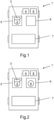
Die Zeichnung zeigt in:
-
1 eine schematische Darstellung eines Kraftfahrzeugs, in welchem in Fahrer mit einer aufgesetzten Virtual-Reality-Brille sitzt; -
2 eine weitere schematische Darstellung des Kraftfahrzeugs, wobei neben dem Fahrer noch ein weiterer Fahrzeuginsasse auf einem Beifahrersitz platzgenommen hat; und in -
3 eine weitere schematische Darstellung des Kraftfahrzeugs, wobei der weitere Fahrzeuginsasse auf einer Rücksitzbank des Kraftfahrzeugs platzgenommen hat.
-
1 a schematic representation of a motor vehicle in which a driver sits wearing virtual reality glasses; -
2 another schematic representation of the motor vehicle, with another vehicle occupant sitting on a passenger seat next to the driver; and in -
3 another schematic representation of the motor vehicle, with the other vehicle occupant seated on a rear seat of the motor vehicle.
In den Figuren sind gleiche oder funktionsgleiche Elemente mit den gleichen Bezugszeichen versehen worden.In the figures, identical or functionally equivalent elements are provided with the same reference symbols.
Ein Kraftfahrzeug 1 ist in einer schematischen Darstellung in
Nachfolgend wird ein Verfahren zum Betreiben der Virtual-Reality-Brille 3 im Kraftfahrzeug 1 näher beschrieben. Wenn das Kraftfahrzeug 1 in keinem autonomen Fahrmodus betrieben wird, wird mittels der Steuereinrichtung 4 zumindest die Bedingung überprüft, ob sich außer dem Fahrer 2 kein weiterer Fahrzeuginsasse im Kraftfahrzeug 1 befindet. Um dies zu überprüfen ist eine Erfassungseinrichtung 8 im Kraftfahrzeug 1 verbaut beziehungsweise angeordnet.A method for operating the
Die Erfassungseinrichtung 8 kann beispielsweise eine Sitzbelegungserkennung über entsprechende Sitzbelegungssensoren vornehmen, um zu überprüfen, ob sich außer dem Fahrer 2 kein weiterer Fahrzeuginsasse im Kraftfahrzeug 1 befindet. Die Erfassungseinrichtung 8 kann auch entsprechende Sensoren aufweisen, welche dazu ausgelegt sind, ein Öffnen und Schließen von Fahrzeugtüren des Kraftfahrzeugs 1 zu überprüfen beziehungsweise zu überwachen, sodass die Steuereinrichtung 4 basierend darauf überprüfen kann, ob sich außer dem Fahrer 2 kein weiterer Fahrzeuginsasse im Kraftfahrzeug 1 befindet.The
Die Erfassungseinrichtung 8 kann auch entsprechende Sensoren aufweisen, die die Überwachung eines Öffnens und Schließens von Gurtschlössern des Kraftfahrzeugs 1 überwachen können, wobei die Steuereinrichtung 4 basierend darauf überprüfen kann ob sich außer dem Fahrer 2 kein weiterer Fahrzeuginsasse im Kraftfahrzeug 1 befindet. Zudem kann die Erfassungseinrichtung 8 noch eine oder mehrere Kameras aufweisen, sodass die Erfassungseinrichtung 8 bzw. Steuereinrichtung 4 kamerabasiert überprüfen kann, ob sich außer dem Fahrer 2 kein weiterer Fahrzeuginsasse im Kraftfahrzeug 1 befindet. Ganz allgemein kann die Erfassungseinrichtung 8 die Steuereinrichtung 4 mit verschiedensten Sensordaten hinsichtlich der Fahrzeugbelegung versorgen, sodass die Steuereinrichtung 4 basierend auf diesen Sensordaten die Bedingung überprüfen kann, ob sich außer dem Fahrer 2 kein weiterer Fahrzeuginsasse im Kraftfahrzeug befindet.The
Falls diese Bedingung erfüllt ist, nimmt die Steuereinrichtung 4 folgende Einschränkungen an der Virtual-Reality-Brille 3 vor: Das Anzeigen jeglicher Inhalte mittels der Virtual-Reality-Brille 3 wird unterbunden. Sitzt also der Fahrer 2 alleine im Kraftfahrzeug 1, ist es schlichtweg unmöglich, dass er sich mittels der Virtual-Reality-Brille 3 irgendwelche Inhalte anzeigen lässt, solange das Kraftfahrzeug 1 in keinem autonomen Fahrmodus betrieben wird. Der Fahrer 2 wird also die Virtual-Reality-Brille 3 dann zwangläufig absetzen, sodass er ohne jegliche Ablenkung seine eigentliche Fahraufgabe wahrnehmen kann.If this condition is met, the
Es ist auch möglich, dass es sich nicht um die Virtual-Reality-Brille 3 sondern um eine Augmented-Reality-Brille handelt. In dem Fall wird ausschließlich das Anzeigen verkehrsrelevanter Inhalte mittels der Anzeigeeinrichtung ermöglicht. Mittels der Augmented-Reality-Brille können dann also nur solche Inhalte angezeigt werden, die den Fahrer 2 beim Wahrnehmen seiner Fahraufgabe unterstützen, indem beispielsweise Navigationshinweise, Geschwindigkeitshinweise und dergleichen, aber keinerlei unterhaltende Inhalte angezeigt werden.It is also possible that these are not
In
Es ist aber auch möglich, dass falls sich der weitere Fahrzeuginsasse 9 im Kraftfahrzeug 1 befindet, als weitere Bedingung überprüft wird, ob sich dieser Fahrzeuginsasse 9 hinter den Vordersitzen 5, 6 des Kraftfahrzeugs 1, insbesondere auf der Rückbank 7, befindet, wobei nur falls diese weitere Bedingung erfüllt ist, das Anzeigen beliebiger Inhalte mittels der Virtual-Reality-Brille 3 - oder mittels der Augmented-Reality-Brille - ermöglicht wird. Falls diese weitere Bedingung nicht erfüllt sein sollte, werden die besagten Einschränkungen vorgenommen. Es kann also auch vorgesehen sein, dass die Virtual-Reality-Brille 3 - beziehungsweise die Augmented-Reality-Brille - gar nicht von Fahrzeuginsassen, die auf den Vordersitzen 5, 6 platzgenommen haben, verwendet werden können. Dadurch kann auf besonders zuverlässige Weise verhindert werden, dass der Fahrer 2 gegebenenfalls durch Tragen der Virtual-Reality-Brille 3 beziehungsweise durch Tragen der Augmented-Reality-Brille von seiner Fahraufgabe abgelenkt wird, sofern das Kraftfahrzeug 1 in keinem autonomen Fahrmodus betrieben wird.However, it is also possible that if the
In
Die Unterbindung des Anzeigens jeglicher Inhalte im Falle der Virtual-Reality-Brille 3 kann beispielsweise dadurch erfolgen, dass die Steuereinrichtung 4 eine Datenübertragung von anzeigbaren Inhalten vom Kraftfahrzeug 1 und/oder von anderen Datenquellen, beispielsweise von einem Smartphone, einem Tabletcomputer - über eine Internetverbindung oder dergleichen an - an die Virtual-Reality-Brille 3 unterbindet. Auch ist es möglich, dass das Anzeigen jeglicher Inhalte im Falle der Virtual-Reality-Brille 3 unterbunden wird, indem die Virtual-Reality-Brille 3 durch die Steuereinrichtung 4 deaktiviert wird. Im Falle der Augmented-Reality-Brille kann beispielsweise eine Datenübertragung der Augmented-Reality-Brille so gefiltert werden, dass nur verkehrsrelevante Inhalte an die Augmented-Reality-Brille übertragen werden. Alternativ ist es auch möglich, dass einfach in die Steuerung der Augmented-Reality-Brille so eingegriffen wird, dass diese nur verkehrsrelevante Inhalte anzeigen kann, sofern diese Einschränkung gelten soll. Die Steuereinrichtung 4 kann Teil des Kraftfahrzeugs 1 sein. Alternativ ist es aber auch möglich, dass die Steuereinrichtung 4 Teil der Virtual-Reality-Brille 3 beziehungsweise der Augmented-Reality-Brille ist.The display of any content in the case of the
Durch das erläuterte Verfahren und die erläuterte Steuereinrichtung 4 ist es also auf besonders einfache und zuverlässige Weise möglich, zu verhindern, dass bei einem nicht-autonomen Fahrbetrieb des Kraftfahrzeugs 1 der Fahrer 2 durch Tragen der Virtual-Reality-Brille 3 beziehungsweise durch Tragen der Augmented-Reality-Brille von seiner eigentlichen Fahraufgabe abgelenkt wird.By means of the method and the
Claims (9)
Priority Applications (5)
| Application Number | Priority Date | Filing Date | Title |
|---|---|---|---|
| DE102018215265.9A DE102018215265B4 (en) | 2018-09-07 | 2018-09-07 | Method and control device for operating a head-mounted display device in a motor vehicle |
| EP19725974.0A EP3847050B1 (en) | 2018-09-07 | 2019-05-21 | Method and control device for operating a display device which can be worn on the head in a motor vehicle |
| PCT/EP2019/063018 WO2020048647A1 (en) | 2018-09-07 | 2019-05-21 | Method and control device for operating a display device which can be worn on the head in a motor vehicle |
| CN201980058696.4A CN112672906B (en) | 2018-09-07 | 2019-05-21 | Control device and method for operating a head-mounted display device in a motor vehicle |
| US17/273,969 US11645820B2 (en) | 2018-09-07 | 2019-05-21 | Method and control device for operating a display device which can be worn on the head in a motor vehicle |
Applications Claiming Priority (1)
| Application Number | Priority Date | Filing Date | Title |
|---|---|---|---|
| DE102018215265.9A DE102018215265B4 (en) | 2018-09-07 | 2018-09-07 | Method and control device for operating a head-mounted display device in a motor vehicle |
Publications (2)
| Publication Number | Publication Date |
|---|---|
| DE102018215265A1 DE102018215265A1 (en) | 2020-03-12 |
| DE102018215265B4 true DE102018215265B4 (en) | 2024-12-19 |
Family
ID=66640969
Family Applications (1)
| Application Number | Title | Priority Date | Filing Date |
|---|---|---|---|
| DE102018215265.9A Active DE102018215265B4 (en) | 2018-09-07 | 2018-09-07 | Method and control device for operating a head-mounted display device in a motor vehicle |
Country Status (5)
| Country | Link |
|---|---|
| US (1) | US11645820B2 (en) |
| EP (1) | EP3847050B1 (en) |
| CN (1) | CN112672906B (en) |
| DE (1) | DE102018215265B4 (en) |
| WO (1) | WO2020048647A1 (en) |
Families Citing this family (3)
| Publication number | Priority date | Publication date | Assignee | Title |
|---|---|---|---|---|
| JP7384014B2 (en) * | 2019-12-06 | 2023-11-21 | トヨタ自動車株式会社 | display system |
| CN116653778B (en) * | 2023-06-01 | 2026-03-10 | 奇瑞新能源汽车股份有限公司 | Vehicle and vehicle control method |
| US12566490B1 (en) * | 2024-09-05 | 2026-03-03 | Ford Global Technologies, Llc | Systems and methods to supply power from a vehicle to infrastructure |
Citations (7)
| Publication number | Priority date | Publication date | Assignee | Title |
|---|---|---|---|---|
| DE102009008492A1 (en) | 2009-02-11 | 2010-08-19 | Audi Ag | Motor vehicle with a display device for controllable depending on the detected seat position of the driver reproduction of image information |
| DE102013221858A1 (en) | 2013-10-28 | 2015-04-30 | Bayerische Motoren Werke Aktiengesellschaft | Assigning a head-mounted display to a seat in a vehicle |
| DE102013021137A1 (en) | 2013-12-13 | 2015-06-18 | Audi Ag | Method for operating a data interface of a motor vehicle and motor vehicles |
| DE102014206623A1 (en) | 2014-04-07 | 2015-10-08 | Bayerische Motoren Werke Aktiengesellschaft | Localization of a head-mounted display (HMD) in the vehicle |
| DE102016003019A1 (en) | 2016-03-12 | 2017-09-14 | Audi Ag | Display system for a motor vehicle and method for operating a display system of a motor vehicle |
| DE102016006382A1 (en) | 2016-05-24 | 2017-11-30 | Audi Ag | Method for operating an emergency call device for a motor vehicle and associated motor vehicle |
| DE102016213916A1 (en) | 2016-07-28 | 2018-02-01 | Volkswagen Aktiengesellschaft | Infotainment system for a motor vehicle |
Family Cites Families (8)
| Publication number | Priority date | Publication date | Assignee | Title |
|---|---|---|---|---|
| DE4301160C2 (en) * | 1993-01-19 | 2003-10-16 | Siemens Ag | Device for controlling devices and systems provided with operating elements in a motor vehicle |
| US6668221B2 (en) * | 2002-05-23 | 2003-12-23 | Delphi Technologies, Inc. | User discrimination control of vehicle infotainment system |
| DE102004033275A1 (en) * | 2004-07-09 | 2006-02-02 | Daimlerchrysler Ag | Release device and method for enabling or disabling individual predetermined functions of a device |
| EP2420410A1 (en) * | 2010-08-19 | 2012-02-22 | Harman Becker Automotive Systems GmbH | Method for Presenting an Image in a Vehicle |
| US20150309562A1 (en) * | 2014-04-25 | 2015-10-29 | Osterhout Group, Inc. | In-vehicle use in head worn computing |
| KR101683648B1 (en) * | 2015-01-16 | 2016-12-07 | 현대자동차주식회사 | Method for controlling sound of wearable device and vehicle for carrying out the same |
| KR101822945B1 (en) * | 2016-07-05 | 2018-01-29 | 엘지전자 주식회사 | Mobile terminal |
| DE102016225268A1 (en) * | 2016-12-16 | 2018-06-21 | Bayerische Motoren Werke Aktiengesellschaft | Method and device for operating a display system with data glasses |
-
2018
- 2018-09-07 DE DE102018215265.9A patent/DE102018215265B4/en active Active
-
2019
- 2019-05-21 EP EP19725974.0A patent/EP3847050B1/en active Active
- 2019-05-21 CN CN201980058696.4A patent/CN112672906B/en active Active
- 2019-05-21 US US17/273,969 patent/US11645820B2/en active Active
- 2019-05-21 WO PCT/EP2019/063018 patent/WO2020048647A1/en not_active Ceased
Patent Citations (7)
| Publication number | Priority date | Publication date | Assignee | Title |
|---|---|---|---|---|
| DE102009008492A1 (en) | 2009-02-11 | 2010-08-19 | Audi Ag | Motor vehicle with a display device for controllable depending on the detected seat position of the driver reproduction of image information |
| DE102013221858A1 (en) | 2013-10-28 | 2015-04-30 | Bayerische Motoren Werke Aktiengesellschaft | Assigning a head-mounted display to a seat in a vehicle |
| DE102013021137A1 (en) | 2013-12-13 | 2015-06-18 | Audi Ag | Method for operating a data interface of a motor vehicle and motor vehicles |
| DE102014206623A1 (en) | 2014-04-07 | 2015-10-08 | Bayerische Motoren Werke Aktiengesellschaft | Localization of a head-mounted display (HMD) in the vehicle |
| DE102016003019A1 (en) | 2016-03-12 | 2017-09-14 | Audi Ag | Display system for a motor vehicle and method for operating a display system of a motor vehicle |
| DE102016006382A1 (en) | 2016-05-24 | 2017-11-30 | Audi Ag | Method for operating an emergency call device for a motor vehicle and associated motor vehicle |
| DE102016213916A1 (en) | 2016-07-28 | 2018-02-01 | Volkswagen Aktiengesellschaft | Infotainment system for a motor vehicle |
Also Published As
| Publication number | Publication date |
|---|---|
| CN112672906A (en) | 2021-04-16 |
| WO2020048647A1 (en) | 2020-03-12 |
| US11645820B2 (en) | 2023-05-09 |
| CN112672906B (en) | 2025-02-18 |
| EP3847050B1 (en) | 2023-05-17 |
| DE102018215265A1 (en) | 2020-03-12 |
| EP3847050A1 (en) | 2021-07-14 |
| US20210335045A1 (en) | 2021-10-28 |
Similar Documents
| Publication | Publication Date | Title |
|---|---|---|
| DE112016005784B4 (en) | Visual perception assistance system and visual perception target object detection system | |
| EP2915723B1 (en) | Method for operating a steering system, steering system and vehicle | |
| WO2018114431A1 (en) | Method for operating a driver assistance device of a motor vehicle | |
| EP3176047B1 (en) | Operating system for the driving of a vehicle, in particular of a commercial vehicle | |
| DE102009039774A1 (en) | Method for controlling a motor vehicle and motor vehicle | |
| DE102016220549A1 (en) | A method and apparatus for assisting a driver in disabling a highly automated driving mode of a vehicle | |
| DE112014004291T5 (en) | Method and system for handling the stoppage of a motor vehicle | |
| DE102017213680A1 (en) | Operating method and control unit for a visual display system for a vehicle | |
| DE102018215265B4 (en) | Method and control device for operating a head-mounted display device in a motor vehicle | |
| WO2022179893A1 (en) | Method and driver assistance system for assisting a motor vehicle when cornering | |
| DE102016225268A1 (en) | Method and device for operating a display system with data glasses | |
| WO2015177037A1 (en) | Vehicle control device | |
| DE112014005045T5 (en) | Method and system for emergency stopping of a motor vehicle | |
| DE102014221821B4 (en) | Method and device for supporting the operation of a motor vehicle designed for autonomous driving | |
| DE102005053737A1 (en) | Vehicle e.g. car, body action information system, has action estimating part determining vehicle body action and informing device providing visual display relating to determined vehicle body action within vehicle | |
| WO2024068367A1 (en) | Driving a motor vehicle in virtual surroundings | |
| EP3695268B1 (en) | Portable device for reducing simulator sickness-induced impairments during the use of electronic augmented reality glasses in a vehicle | |
| DE102014214507B4 (en) | Method for creating an environment model of a vehicle | |
| EP3747720B1 (en) | Vehicle guidance system and method for operating a vehicle with a plurality of predetermined manual steering semiautonomous modes and non-manual steering semiautonomous modes | |
| DE102018116760A1 (en) | ALARM DEVICE | |
| EP4731490A1 (en) | Computing device for an assistance system of a vehicle for performing automated lane-change manoeuvres taking into account a lane-change intention of the driver, assistance system, and method | |
| WO2020035380A1 (en) | Operating vr glasses in autonomously driving vehicle | |
| DE102019130319A1 (en) | Method for operating a motor vehicle that can be driven in an autonomous driving mode | |
| DE102020121655A1 (en) | System and method for directing the attention of a vehicle occupant during automated driving | |
| DE102018222666A1 (en) | Autonomous taxi |
Legal Events
| Date | Code | Title | Description |
|---|---|---|---|
| R012 | Request for examination validly filed | ||
| R082 | Change of representative |
Representative=s name: HOFSTETTER, SCHURACK & PARTNER - PATENT- UND R, DE |
|
| R016 | Response to examination communication | ||
| R016 | Response to examination communication | ||
| R018 | Grant decision by examination section/examining division | ||
| R020 | Patent grant now final |