DE102010033478A1 - Car-to-car communication method for use in ad-hoc network, involves authenticating potential participants of ad-hoc network using global system for mobile communication (GSM) network in non-communication period - Google Patents
Car-to-car communication method for use in ad-hoc network, involves authenticating potential participants of ad-hoc network using global system for mobile communication (GSM) network in non-communication period Download PDFInfo
- Publication number
- DE102010033478A1 DE102010033478A1 DE102010033478A DE102010033478A DE102010033478A1 DE 102010033478 A1 DE102010033478 A1 DE 102010033478A1 DE 102010033478 A DE102010033478 A DE 102010033478A DE 102010033478 A DE102010033478 A DE 102010033478A DE 102010033478 A1 DE102010033478 A1 DE 102010033478A1
- Authority
- DE
- Germany
- Prior art keywords
- communication
- subscriber
- hoc network
- network
- hoc
- Prior art date
- Legal status (The legal status is an assumption and is not a legal conclusion. Google has not performed a legal analysis and makes no representation as to the accuracy of the status listed.)
- Ceased
Links
Images




Classifications
-
- H—ELECTRICITY
- H04—ELECTRIC COMMUNICATION TECHNIQUE
- H04L—TRANSMISSION OF DIGITAL INFORMATION, e.g. TELEGRAPHIC COMMUNICATION
- H04L63/00—Network architectures or network communication protocols for network security
- H04L63/18—Network architectures or network communication protocols for network security using different networks or channels, e.g. using out of band channels
-
- H—ELECTRICITY
- H04—ELECTRIC COMMUNICATION TECHNIQUE
- H04L—TRANSMISSION OF DIGITAL INFORMATION, e.g. TELEGRAPHIC COMMUNICATION
- H04L9/00—Cryptographic mechanisms or cryptographic arrangements for secret or secure communications; Network security protocols
- H04L9/08—Key distribution or management, e.g. generation, sharing or updating, of cryptographic keys or passwords
- H04L9/0816—Key establishment, i.e. cryptographic processes or cryptographic protocols whereby a shared secret becomes available to two or more parties, for subsequent use
- H04L9/0819—Key transport or distribution, i.e. key establishment techniques where one party creates or otherwise obtains a secret value, and securely transfers it to the other(s)
- H04L9/083—Key transport or distribution, i.e. key establishment techniques where one party creates or otherwise obtains a secret value, and securely transfers it to the other(s) involving central third party, e.g. key distribution center [KDC] or trusted third party [TTP]
-
- H—ELECTRICITY
- H04—ELECTRIC COMMUNICATION TECHNIQUE
- H04L—TRANSMISSION OF DIGITAL INFORMATION, e.g. TELEGRAPHIC COMMUNICATION
- H04L9/00—Cryptographic mechanisms or cryptographic arrangements for secret or secure communications; Network security protocols
- H04L9/32—Cryptographic mechanisms or cryptographic arrangements for secret or secure communications; Network security protocols including means for verifying the identity or authority of a user of the system or for message authentication, e.g. authorization, entity authentication, data integrity or data verification, non-repudiation, key authentication or verification of credentials
- H04L9/321—Cryptographic mechanisms or cryptographic arrangements for secret or secure communications; Network security protocols including means for verifying the identity or authority of a user of the system or for message authentication, e.g. authorization, entity authentication, data integrity or data verification, non-repudiation, key authentication or verification of credentials involving a third party or a trusted authority
-
- H—ELECTRICITY
- H04—ELECTRIC COMMUNICATION TECHNIQUE
- H04W—WIRELESS COMMUNICATION NETWORKS
- H04W12/00—Security arrangements; Authentication; Protecting privacy or anonymity
- H04W12/06—Authentication
- H04W12/062—Pre-authentication
-
- H—ELECTRICITY
- H04—ELECTRIC COMMUNICATION TECHNIQUE
- H04L—TRANSMISSION OF DIGITAL INFORMATION, e.g. TELEGRAPHIC COMMUNICATION
- H04L2209/00—Additional information or applications relating to cryptographic mechanisms or cryptographic arrangements for secret or secure communication H04L9/00
- H04L2209/80—Wireless
-
- H—ELECTRICITY
- H04—ELECTRIC COMMUNICATION TECHNIQUE
- H04L—TRANSMISSION OF DIGITAL INFORMATION, e.g. TELEGRAPHIC COMMUNICATION
- H04L2209/00—Additional information or applications relating to cryptographic mechanisms or cryptographic arrangements for secret or secure communication H04L9/00
- H04L2209/84—Vehicles
-
- H—ELECTRICITY
- H04—ELECTRIC COMMUNICATION TECHNIQUE
- H04W—WIRELESS COMMUNICATION NETWORKS
- H04W84/00—Network topologies
- H04W84/18—Self-organising networks, e.g. ad-hoc networks or sensor networks
Landscapes
- Engineering & Computer Science (AREA)
- Computer Security & Cryptography (AREA)
- Computer Networks & Wireless Communication (AREA)
- Signal Processing (AREA)
- Computer Hardware Design (AREA)
- Computing Systems (AREA)
- General Engineering & Computer Science (AREA)
- Mobile Radio Communication Systems (AREA)
- Small-Scale Networks (AREA)
Abstract
Description
STAND DER TECHNIKSTATE OF THE ART
Die vorliegende Erfindung betrifft Kommunikationsverfahren in einem Ad-Hoc-Netzwerk, in dem zeitkritische Kommunikationsvorgänge stattfinden.The present invention relates to communication methods in an ad hoc network in which time-critical communications occur.
Das Forschungsprojekt ”Sichere Intelligente Mobilität-Testfeld Deutschland” (simTD) forscht derzeit an Möglichkeiten, wie Autos in der Zukunft automatisch untereinander (car-to-car und mit anderen Einrichtungen (Car-to-X) via Wireless-Lan (WLAN) kommunizieren können, sozusagen als multiples Informationsnetz auf der Straße. Als Grundlage soll laut einer Information in der
Die
Bei dieser so genannten Car-to-X-Kommunikation nehmen die Autos auf den Straßen untereinander Kontakt per WLAN auf und informieren sich gegenseitig über ungewöhnliche Ereignisse wie etwa langsames Fahren auf der Autobahn, oder über Unfälle, was auf einen Stau hinweist.In this so-called car-to-x communication, the cars on the streets contact each other via WLAN and inform each other about unusual events such as slow driving on the highway, or about accidents, indicating a traffic jam.
Dabei komme es vor allem auf eine schnelle Übertragung der Daten zwischen den Autos sowie der Verkehrszentrale an, schreibt die oben genannte Veröffentlichung. Die schnelle Übertragung soll ein spezieller
In nachteilhafter Weise ist die Zuverlässigkeit bei dieser Kommunikation noch weitgehend nicht gegeben, weil sich die Autos nur kurz „sehen”, weil die Funkzellen und somit der Empfangsbereich von zwei Kraftfahrzeugen, die sich auf einer Landstraße beispielsweise mit einem Tempo von 80 km/h begegnen, sehr gering ist. In diesem Falle beträgt die relative Geschwindigkeit zwischen beiden Fahrzeugen bereits 160 km/h. Da erst ab dem Moment des Eintritts in die Funkzelle des anderen Fahrzeugs mit diesem kommuniziert werden kann, ist die Größe des Zeitfensters zur Kommunikation gemäß dem oben genannten Standard nur sehr kurz, im Allgemeinen wenige Sekunden lang, beispielsweise 8 Sekunden lang. Diese Zeit wäre zwar ausreichend, um Benachrichtigungen über Verkehrszustände, Stau, Unfall, Glatteis etc. auszutauschen, aber sie ist nicht ausreichend, um die notwendigen Authentisierungs- oder Authentifizierungsprozesse zwischen den Kommunikationspartnern durchzuführen. Da der derzeitige Stand der Planungen für die oben genannten Car-2-Car oder Car-2-X-Kommunikation das oben genannte Kommunikationsprotokoll basierend auf dem
Es besteht daher die Aufgabe der vorliegenden Erfindung darin, ein Verfahren und System zur Kommunikation im oben genannten Umfeld zu schaffen, die zumindest ein gewisses Mindestmaß an Sicherheit gegen Missbrauch bieten.It is therefore the object of the present invention to provide a method and system for communication in the above-mentioned environment, which offer at least a certain minimum level of security against abuse.
VORTEILE DER ERFINDUNGADVANTAGES OF THE INVENTION
Das erfindungsgemäße Verfahren mit den Merkmalen des Anspruchs 1, sowie das zugehörige Kommunikationssystem lösen diese Aufgabe.The inventive method with the features of claim 1, as well as the associated communication system solve this problem.
In den Unteransprüchen finden sich vorteilhafte Weiterbildungen und Verbesserungen des jeweiligen Gegenstandes der Erfindung.In the dependent claims are advantageous developments and improvements of the respective subject of the invention.
Die Lösung der oben genannten Aufgabe enthält den Grundansatz, die Kommunikation im genannten Zeitfenster überhaupt sinnvoll zu ermöglichen und dabei den oben genannten Missbrauch nachvollziehbar machen zu können und die Voraussetzungen dafür schaffen, potentielle Absender von Falschmeldungen eindeutig identifizieren zu können.The solution of the above-mentioned task contains the basic approach to enable the communication in the mentioned time window at all meaningful and thereby the abuse mentioned above to make comprehensible and create the conditions for being able to identify potential sender of false reports clearly.
Gemäß einem wesentlichen Aspekt der vorliegenden Erfindung wird ein Kommunikationsverfahren und ein Kommunikationssystem für die Anwendung in einem Adhoc-Netzwerk offenbart, bei dem sich die potentiellen Teilnehmer an dieser Kommunikation zu einem deutlich früheren Zeitpunkt authentifizieren, damit sie dann, wenn der Kommunikationsbedarf tatsächlich eintritt, bereits authentifiziert sind und sich dann die für die eigentliche Sache der Kommunikation erforderlichen Kommunikationsvorgänge in der nur kurzen, zu Verfügung stehenden Zeitspanne realisieren lassen.According to an essential aspect of the present invention, a communication method and a communication system for use in an ad hoc network is disclosed, in which the potential participants in this communication authenticate themselves at a much earlier time, so that they already have, if the communication requirement actually occurs are authenticated and can then realize the required communication for the actual cause of communication in the short, available period of time.
Mit anderen Worten, eine wesentliche Idee der vorliegenden Erfindung enthält den Grundgedanken, aufbauend auf einer räumlich jederzeit möglichen Authentisierung über ein anderes Netz, beispielsweise ein zellulares Netz (etwa GSM, UMTS oder ggf. andere) die Authentisierung eines potentiellen Kommunikationspartners für das Adhoc-Netzwerk sozusagen „auf Vorrat” durchzuführen, bevor noch der Empfang einer Nachricht über das Adhoc/W-Lan-Netzwerk möglich ist, wodurch bewirkt ist, dass der Kommunikationspartner für das Adhoc/W-Lan-Netzwerk die Authentisierung bereits erfolgreich durchgeführt hat, wenn er mit seinem Kraftfahrzeug in die nur kleine, physikalisch funktionierende Funkzelle des Adhoc-Netzwerks eintritt.In other words, an essential idea of the present invention contains the basic idea, based on a spatially always possible authentication via another network, such as a cellular network (such as GSM, UMTS or possibly others) the authentication of a potential communication partner for the ad hoc network so to speak "in stock" to carry out before the receipt of a message on the ad hoc / wireless network is possible, causing the communication partner for the ad hoc / wireless network has already successfully completed the authentication, if he enters the only small, physically functioning radio cell of the adhoc network with his motor vehicle.
Gemäß einem grundlegenden Aspekt der vorliegenden Erfindung wird ein derartiges Kommunikationsverfahren offenbart, das dadurch gekennzeichnet ist, dass
- a) ein potentieller Teilnehmer, hierin als Teilnehmer X und Teilnehmer Y, oder auch Z1, Z2, etc., bezeichnet, an der Kommunikation im Adhoc-Netzwerk sich einmalig oder wiederholt in einem nicht-zeitkritischen Kommunikationsvorgang anmeldet, und zwar unter Nutzung eines zweiten Kommunikationsnetzwerks, wie beispielsweise ein Mobilfunknetzwerk nach dem GSM- oder UMTS-Standard, als potentieller Teilnehmer für Kommunikationsvorgänge des Adhoc-Netzwerks mittels der Hinterlegung einer eindeutigen Authentisierungsinformation authentifiziert, weiter den Schritt enthaltend,
- b) ein Mitteilen der Authentisierungsinformation von dem zweiten Kommunikationsnetzwerk an einen das Adhoc-Netzwerk einschließlich der Zeiten des Aufenthalts der Teilnehmer X und Y in dem Adhoc-Netzwerk verwaltenden Datenserver, bevor der Teilnehmer X, Y in dem Adhoc-Netzwerk kommuniziert,
- c) auf eine Kommunikationsanfrage des vorauthentifizierten Teilnehmers X, Y an der Kommunikation im Adhoc-Netzwerk hin Durchführen des optionalen Schrittes einer Prüfung, ob der Teilnehmer vorauthentifiziert ist, beispielsweise durch einen dedizierten Datenserver oder einen Funknetzserver,
- d) wenn eine Vorauthentifizierung vorhanden ist, dann Durchführen des Schrittes der Bereitstellung der Hilfsmittel für eine Adhoc-Kommunikation im Adhoc-Netzwerk und
- e) Durchführen der Kommunikation des Teilnehmers X, Y im Adhoc-Netzwerk unter Verwendung dieser Hilfsmittel.
- a) a potential participant, referred to herein as participant X and participant Y, or also Z1, Z2, etc., at the communication in the ad hoc network logs once or repeatedly in a non-time critical communication process, using a second Communication network, such as a mobile network according to the GSM or UMTS standard, as a potential subscriber for communications of the adhoc network authenticated by the deposit of a unique authentication information, further comprising the step,
- b) communicating the authentication information from the second communication network to a data server managing the ad hoc network including the times of the subscribers X and Y in the ad hoc network before the subscriber X, Y communicates in the ad hoc network,
- c) upon a communication request of the pre-authenticated subscriber X, Y on the communication in the ad hoc network, performing the optional step of checking whether the subscriber is pre-authenticated, for example by a dedicated data server or a wireless network server,
- d) if there is pre-authentication, then performing the step of providing the ad hoc communication resources in the ad hoc network and
- e) Performing the communication of the subscriber X, Y in the ad hoc network using these tools.
Diese Hilfsmittel sind nun im Wesentlichen solche Schlüssel, mit denen einzelne Kommunikationsvorgänge erfolgreich verschlüsselt werden können, so dass im Wesentlichen nur diejenigen Teilnehmer, die sich gerade in einem Adhoc-Netzwerk befinden, in diesem Adhoc-Netzwerk miteinander kommunizieren können, auf die es ankommt. Andere, auf die es nicht ankommt, können dabei aufgrund der Tatsache, dass sie nicht vorauthentifiziert sind und keine geeigneten Schlüssel zum Entschlüsseln der kommunizierten Adhoc-Nachrichten besitzen, nicht an der Kommunikation im Adhoc-Netzwerk teilnehmen. Dabei können im Wesentlichen Verschlüsselungstechniken und Schlüssel verwendet werden, wie sie im Stand der Technik bekannt sind.These tools are now essentially those keys with which individual communications can be successfully encrypted, so that essentially only those subscribers who are currently in an ad hoc network can communicate with each other in this ad hoc network that matters. Others who are not concerned can not participate in communication on the ad hoc network because they are not pre-authenticated and do not have the proper keys to decrypt the communicated ad hoc messages. Essentially, encryption techniques and keys as known in the art may be used.
Dabei können auch mehr als zwei Teilnehmer X, Y an einer Kommunikation im Adhoc-Netzwerk teilnehmen. Auch für die Frage, wie eine Vorauthentifizierung der Teilnehmer durchgeführt wird, kann auf Techniken zurückgegriffen werden, die dem Stand der Technik bekannt sind. Beispielsweise kann ein potentieller Teilnehmer sich zunächst mit seinem Mobiltelefon oder einem Navigationssystem als Teilnehmer in einem öffentlichen Mobilfunknetz anmelden. Damit wäre bereits seine Identität oder zumindest die Identität des registrierten, SIM-Karten-Benutzers bekannt. Wenn sich der Nutzer dann noch bei einem Datenserver, der dediziert für die Adhoc-Netzwerkkommunikation eingerichtet ist, anmeldet und seine Mobilfunkdaten als Legitimation zur Teilnahme im Adhoc-Netzwerk vorlegt, so ist eine sinnvolle, vorteilhafte und effiziente Authentifizierung eines potentiellen Teilnehmers für die Adhoc-Netzwerkkommunikation geschaffen.In this case, more than two participants X, Y can participate in a communication in the adhoc network. Also, for the question of how to pre-authenticate the subscribers, techniques known in the art may be used. For example, a potential subscriber can first log in with his mobile telephone or a navigation system as a subscriber in a public mobile radio network. This would already be known identity or at least the identity of the registered, SIM card user. If the user then still logs on to a data server that is set up for ad hoc network communication, and submits his mobile data as legitimation for participation in the ad hoc network, then a meaningful, advantageous and efficient authentication of a potential subscriber for the ad hoc network is required. Network communication created.
Diese Authentifizierungsvorgänge können einmalig pro Tag oder aber auch mehrfach wiederholt pro Tag verlangt werden, um die Sicherheit zu erhöhen.These authentication procedures can be requested once a day or even several times a day to increase security.
Unter einem zeitkritischen Kommunikationsvorgang wird hierin verstanden, dass es sich um einen Kommunikationsvorgang in einem wie oben beschriebenen Adhoc-Netzwerk handelt, das für zumindest zwei Kommunikationspartner nur für kurze Zeit besteht. Beispielsweise in einer Situation, wo sich zwei Autos begegnen, entsteht beispielsweise ab dem Zeitpunkt, in dem die Fahrzeuge einen Abstand von 200 m zueinander besitzen, das genannte Adhoc-Netzwerk. Dann begegnen sie sich und fahren aneinander vorbei und entfernen sich wieder voneinander. Das Netzwerk ist nicht mehr gültig, wenn die beiden Fahrzeuge beispielsweise weiter als 200 m wieder voneinander entfernt sind. Je nach Geschwindigkeit der beiden Fahrzeuge existiert dieses Adhoc-Netzwerk zwischen den beiden Fahrzeugen möglicherweise für eine nur begrenzte Zeit von 5 Sekunden oder weniger. Sämtliche Kommunikationsvorgänge, die nun zwischen den beiden Fahrzeugen stattfinden, müssen also innerhalb dieser begrenzten Zeitspanne passiert sein. Damit die Authentifizierung der Teilnehmer keine wertvolle Zeit in diesem kleinen Zeitfenster wegnimmt, soll also die o. g. Vorauthentifizierung in einem nicht-zeitkritischen Bereich, beispielsweise vor Antritt der Fahrt bereits bewerkstelligt sein.A time-critical communication process is understood here to mean that it is a communication process in an ad hoc network as described above, which only exists for a short time for at least two communication partners. For example, in a situation where two cars meet, for example from the point in time when the vehicles are 200 m apart, the said ad hoc network. Then they meet and drive past each other and move away from each other again. The network is no longer valid if, for example, the two vehicles are further apart than 200 m. Depending on the speed of the two vehicles, this ad hoc network may exist between the two vehicles for only a limited time of 5 seconds or less. All communications that now take place between the two vehicles must have happened within this limited time span. So that the authentication of the participants does not take away any valuable time in this small time window, the above-mentioned pre-authentication should therefore already be accomplished in a non-time-critical area, for example before the journey starts.
Gemäß einem weiteren, vorteilhaften Aspekt der vorliegenden Erfindung wird das vorgenannte Kommunikationsverfahren weiter ausgebildet durch folgende Schritte:
- a) Versenden eines privaten Schlüssels M1 an den potentiellen Teilnehmer X, Versenden eines privaten Schlüssels N1 an den potentiellen Teilnehmer Y, beides durch den Datenserver und über das zweite Kommunikationsnetz, wie es oben beschrieben wurde, beispielsweise ein UMTS-Netz,
- b) Auf ein mitteilungswertes Ereignis hin, beispielsweise, dass ein Sensor am Fahrzeug des Teilnehmers X die Möglichkeit von Glatteis ermittelt, oder aber auch unabhängig von einem solchen Ereignis, je nach Anwendungsfall der vorliegenden Erfindung, Durchführen einer Berechnung, dass sich die potentiellen Teilnehmer X und Y voraussichtlich binnen einer vorgebbaren Zeitspanne in einem Adhoc-Netzwerk begegnen werden, beispielsweise mittels GPS-Positionsabgleich oder durch einen Abgleich einer vorab an den Datenserver gesendeten Routen- und Zeitinformation, oder aber durch Auswerten der Identität einer GSM-Funkzelle,
- c) Versenden eines öffentlichen Schlüssels M2 an den potentiellen Teilnehmer Y, Versenden eines öffentlichen Schlüssels N2 an den potentiellen Teilnehmer X,
- d) Absenden einer Nachricht durch Teilnehmer X innerhalb des Adhoc-Netzwerks mit Teilnehmer Y zum Zwecke des Empfangs durch Teilnehmer Y und verschlüsselt mit dem privaten Schlüssel M1 von X,
- e) Empfangen der Nachricht durch Teilnehmer Y,
- f) Entschlüsseln der Nachricht mit dem öffentlichen Schlüssel M2 von Teilnehmer X durch Teilnehmer Y, und
- g) Ausgeben der Nachricht an den Teilnehmer Y.
- a) sending a private key M1 to the potential subscriber X, sending a private key N1 to the potential subscriber Y, both by the data server and via the second communication network as described above, for example a UMTS network,
- b) In response to a message value event, for example, that a sensor on the vehicle of the participant X determines the possibility of black ice, or even regardless of such an event, depending on the application of the present invention, performing a calculation that the potential participants X and Y are expected to encounter within a predeterminable period of time in an ad hoc network, for example by means of GPS position matching or by matching a route and time information previously sent to the data server, or by evaluating the identity of a GSM radio cell,
- c) sending a public key M2 to the potential subscriber Y, sending a public key N2 to the potential subscriber X,
- d) sending a message through Subscriber X within the Adhoc network with Subscriber Y for the purpose of receiving by Subscriber Y and encrypted with the private key M1 of X,
- e) receiving the message by subscriber Y,
- f) decrypt the message with the public key M2 of subscriber X by subscriber Y, and
- g) output the message to the subscriber Y.
Bei diesem Verfahren werden also im Vorhinein private Schlüssel an die entsprechenden Teilnehmer versandt, in dem sie entweder in herkömmlicher Weise verschlüsselt oder mit einem besonderen Schlüssel verschlüsselt übertragen werden. Dann werden die für eine spätere Kommunikation notwendigen öffentlichen Schlüssel der verschiedenen Kommunikationsteilnehmer ebenfalls versendet. Jeder potentielle und vorauthentifizierte Kommunikationsteilnehmer kann dann die ihn interessierenden öffentlichen Schlüssel empfangen. Damit ist er dann in der Lage, an der Kommunikation mit dem jeweiligen Teilnehmer teilzunehmen.In this method, so private keys are sent to the appropriate participants in advance, in which they are either encrypted in a conventional manner or transmitted encrypted with a special key. Then the necessary for a later communication public key of the various communication participants are also sent. Each potential and pre-authenticated communication party can then receive the public key of interest. He is then able to participate in the communication with the respective participant.
ZEICHNUNGENDRAWINGS
Ausführungsbeispiele der Erfindung sind in den Zeichnungen dargestellt und in der nachfolgenden Beschreibung näher erläutert.Embodiments of the invention are illustrated in the drawings and explained in more detail in the following description.
BESCHREIBUNG DER AUSFÜHRUNGSBEISPIELEDESCRIPTION OF THE EMBODIMENTS
In den Figuren bezeichnen gleiche Bezugszeichen gleiche oder funktionsgleiche Komponenten.In the figures, the same reference numerals designate the same or functionally identical components.
Der Verkehrsteilnehmer X bewegt sich mit dem abgebildeten Fahrzeug
Der Funknetzserver
Der schematisch abgebildete Datenserver
Zuerst sei für zwei exemplarische Teilnehmer X und Y, die später in einem Ad-hoc-Netzwerk miteinander kommunizieren sollen, angenommen, dass die bei Antritt der Fahrt in ihrem Kraftfahrzeug jeweils vorhandene Onboard-Unit in Form eines Navigationssystems mit mobiler Kommunikationsfähigkeit aktivieren. Bevor X und Y wie gewohnt und im Stand der Technik bekannt ihr Fahrtziel einprogrammieren, wird das erfindungsgemäße „Vorab-Authentifizierungsverfahren” durchgeführt wie folgt:
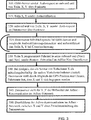
Unter ergänzender Bezugnahme auf
Nachdem eine Kanalanfrage vom Teilnehmergerät des Teilnehmers X an die Base Transceiver Station (BTS) gegangen ist, die an den Base Station Controller (BSC) weitergereicht wurde, wird von hier aus an das BTS ein Kanalaktivierungskommando gesendet. Dieses wird dem BSC vom BTS bestätigt, und es erfolgt eine Kanalzuweisung. Danach erfolgt ein „Location Update Request”, wobei dem Mobile Switching Center (MSC) die „Location Area” (LA) des Teilnehmergeräts mitgeteilt wird.First of all, for two exemplary subscribers X and Y, who are later to communicate with one another in an ad hoc network, it is assumed that the onboard unit respectively present in their motor vehicle at the start of the journey activates in the form of a navigation system with mobile communication capability. Before X and Y program their destination as usual and known in the art, the "pre-authentication method" according to the invention is carried out as follows:
With additional reference to
After a channel request has passed from the subscriber device of the subscriber X to the base transceiver station (BTS), which has been forwarded to the base station controller (BSC), a channel activation command is sent to the BTS from here. This is confirmed to the BSC by the BTS, and a channel assignment is made. This is followed by a "Location Update Request", wherein the Mobile Switching Center (MSC) is informed of the "Location Area" (LA) of the subscriber device.
Die Teilnehmer X und Y authentisieren sich bei dem oben erwähnten Funknetzserver
Im Falle einer Nutzung eines GSM-Netzes als Funknetz, startet der Funknetzserver
Ein entsprechendes Flag wird in einem jeweiligen Datensatz auf „wahr” gesetzt. Nach erfolgreicher Authentisierung ist der Benutzer damit für einen bestimmten, vorzugebenden Zeitraum, wie beispielsweise typischerweise bis zur Abmeldung des Teilnehmers vom Funknetz ausreichend authentifiziert und legitimiert zur Teilnahme an der Kommunikation im Funknetzwerk. Soweit der Stand der Technik.A corresponding flag is set to "true" in a respective data record. After successful authentication, the user is thus sufficiently authenticated and legitimized for participation in the communication in the radio network for a certain, predefined period, such as typically until the subscriber logs out of the radio network. As far as the state of the art.
In einem nächsten Schritt
Der Datenserver
Eine andere Variante beinhaltet die Schritte, dass der Datenserver
In einem nächsten Schritt
Wenn der Teilnehmer X nur das aktuelle Fahrtziel an den Datenserver
Diese Daten werden in einem vorgegebenen zeitlichen Raster jeweils neu abgefragt und an den Datenserver automatisch übermittelt, um die für die weiter unten beschriebene Ad-hoc-Kommunikation notwendige Information, welcher Teilnehmer wann wo zu erwarten ist, möglichst aktuell zu halten. Die Aktualisierung kann beispielsweise je nach Verkehrsaufkommen und Teilnehmeranzahl und Serverkapazität, Netzwerkkapazität etc. variieren. Ein brauchbarer Wert sind beispielsweise zehn Minuten.These data are each queried again in a given time grid and automatically transmitted to the data server in order to keep the information necessary for the ad-hoc communication described below, which participant is to expect where and when as up-to-date as possible. For example, the update may vary depending on traffic and number of participants and server capacity, network capacity, etc. A useful value, for example, ten minutes.
Teilnehmer X und Teilnehmer Y werden nun als auf ihrer jeweiligen Fahrtroute befindlich angenommen, was auch in
Im Folgenden soll angenommen werden, dass ein Anlass gegeben ist, um eine Ad-hoc-Netzwerk-gebundene Kommunikation zwischen den Teilnehmern X und Y durchzuführen:
Dazu sei angenommen, dass das Fahrzeug des Teilnehmers X über einen Sensor verfügt, der beispielsweise vor Glatteis oder drohendem Glatteis warnen kann. Ein solcher Sensor kann mittels einem oder mehreren Einzelsensoren implementiert sein, beispielsweise ein Temperatursensor gekoppelt mit einem optischen Sensor, der den Reflektionsgrad der Straßenoberfläche misst, eventuell gekoppelt mit einem weiteren Sensor zur Bestimmung der Luftfeuchtigkeit. Dieser Sensor soll nun das Signal „Vorsicht Glatteis” sensieren. In der Onboard-Unit ist nun programmiert vorgegeben, dass dieses Signal als „mitteilungsbedürftig” für eine Kommunikation in dem Ad-hoc-Netzwerk gelten soll. D. h. dieses Signal soll als wichtig für die anderen Verkehrsteilnehmer bewertet werden und dies im Gegensatz zu anderen Signalen, die ebenfalls von diversen, am Fahrzeug vorhandenen Sensoren erzeugt werden und keinerlei Relevanz für andere Verkehrsteilnehmer haben, beispielsweise Ölstandwarnlampe, Betriebstemperatur für das Kühlwasser, etc..In what follows, it will be assumed that there is a reason to perform ad hoc network-bound communication between the participants X and Y:
For this purpose, it is assumed that the vehicle of the subscriber X has a sensor which can warn, for example, of black ice or imminent slippery ice. Such a sensor may be implemented by means of one or more individual sensors, for example a temperature sensor coupled to an optical sensor which measures the reflectance of the road surface, possibly coupled to another sensor for determining the humidity. This sensor should now detect the signal "caution ice". In the on-board unit, it is now predefined that this signal should be considered as "communicable" for communication in the ad hoc network. Ie. This signal should be considered as important for the other road users and this in contrast to other signals that are also generated by various existing sensors on the vehicle and have no relevance to other road users, such as oil level warning lamp, operating temperature for the cooling water, etc ..
Das nun vorgestellte Verschlüsselungsverfahren, das auf einem Schlüsselpaar basiert, welches aus einem persönlichen und einem öffentlichen Schlüssel besteht, ist nur eine mögliche Variante. Sichergestellt werden muss nur, dass eine gesendete Nachricht einem Teilnehmer eindeutig zugeordnet werden kann, um Missbrauch zu vermeiden bzw. nachvollziehbar zu machen.The now presented encryption method based on a key pair consisting of a personal and a public key is just one possible variant. All that needs to be ensured is that a sent message can be uniquely assigned to a subscriber in order to avoid misuse or make it comprehensible.
Eine andere Variante zu dem genannten Schlüsselpaar wären beispielsweise unverfälschbare, eindeutig zugeordnete IDs.Another variant of the mentioned key pair would be, for example, unalterable, uniquely assigned IDs.
Die Onboard-Unit des Teilnehmers X sendet nun automatisch ohne Zutun des Fahrers/der Fahrerin die aktuelle geographische Position, die aktuelle Uhrzeit und die Benutzer-ID für die Ad-hoc-Kommunikation an den Datenserver
In einem weiteren Schritt
Dann findet die Ad-hoc-Kommunikation zwischen X und Y in einem weiteren Schritt
Zunächst sendet der Datenserver
In einem weiteren Schritt
Dann selektiert der Datenserver
In einem weiteren Schritt
Gemäß Schritt
In einem weiteren Schritt
Dieses Verfahren hat zur Folge, dass bei Zugrundelegen von normalen Sicherheitsanforderungen nur diejenigen Verkehrsteilnehmer miteinander kommunizieren, die dies auch sinnvollerweise nötig haben.The consequence of this procedure is that, on the basis of normal safety requirements, only those road users, who also reasonably need it, communicate with each other.
Folgende Felder sind in dem nutzerspezifischen Datensatz auf dem Datenserver
Ein privater Schlüssel, ein öffentlicher Schlüssel für die zu warnenden Teilnehmer, ein Feld für die aktuelle GPS-Position, ein weiteres Feld für Datum und Uhrzeit, die der aktuellen GPS-Position entspricht, ein Feld für das aktuelle Fahrtziel bzw. mehrere Felder für zwischenliegende Zwischenziele. Mehrere Felder für die prognostizierte, zeitbezogene Streckenbenutzung, d. h. beispielsweise Kilometer 758 auf der Autobahn „A7” für den Zeitpunkt 14:58 Uhr +/–1 Minute. Der Inhalt dieser Felder wird automatisch aktualisiert, wenn die Onboard-Unit eines Nutzers die aktuelle geographische Position neu durchgibt. In vorteilhafter Weise ist das Feld für die prognostizierte Strecken- und Zeitraumbenutzung als Array ausgebildet, um nicht nur einen Streckenabschnitt von 1 km Länge abzubilden, sondern beispielsweise gleichzeitig für jeden Teilnehmer ein aktuelles Band von 30 km und einen zugehörigen Zeitraum von beispielsweise 20 Minuten bei einer angenommenen Durchschnittsgeschwindigkeit von 90 km/h im Speicher des Datenservers
A private key, a public key for the participants to be warned, a field for the current GPS position, another field for date and time that corresponds to the current GPS position, a field for the current destination or several fields for intermediate ones intermediate targets. Several fields for the predicted, time-related route usage, ie, for example, kilometer 758 on the A7 motorway for the time 14:58 +/- 1 minute. The content of these fields is updated automatically when a user's onboard unit re-passes the current geographic location. Advantageously, the field for the predicted route and period usage is designed as an array to map not only a section of road of 1 km in length, but for example at the same time for each participant a current band of 30 km and an associated period of for example 20 minutes at a assumed average speed of 90 km / h in the memory of the
Weiter werden verschiedene Flags vorgesehen, wie folgt:
Flag 1 für die Tatsache, ob ein Benutzer vorab authentifiziert ist oder nicht,
Flag 2 dafür, ob ein Benutzer einen privaten Schlüssel bekommen hat oder nicht,
und verschiedene weitere Flags 3 bis 18, ob ein Benutzer einen jeweiligen Public-Key eines jeweiligen anderen Verkehrsteilnehmers bekommen hat oder nicht.Further, various flags are provided as follows:
Flag 1 for the fact whether a user is pre-authenticated or not,
and various
Des Weiteren ist eine ID und ggf. der Inhalt der zugehörigen Warnnachricht in Klarschrift vorgesehen, einfach oder bevorzugt mehrfach, so dass mehrere Warnnachrichten in einem engen Zeitschlitz nacheinander abgewickelt werden können.Furthermore, an ID and possibly the content of the associated warning message is provided in plain text, simply or preferably a plurality of times, so that a plurality of warning messages can be processed one after the other in a narrow time slot.
Auf der On-Board Unit der Teilnehmer im Adhoc Netzwerk sind im Wesentlichen dieselben Informationen gespeichert und werden in ähnlicher Weise aktualisiert.Essentially, the same information is stored on the on-board unit of the ad hoc network subscribers and is updated in a similar manner.
Weiter kann der Gegenstand der vorliegenden Erfindung in Hardware, Software oder einer Kombination aus beiden realisiert werden. Eine beliebige Art von Computersystem oder Computergeräten ist dafür geeignet, das erfindungsgemäße Verfahren ganz oder in Teilen durchzuführen. Eine typische Hardware-Software-Kombination für die vorliegende Erfindung wäre ein leistungsstarker Computer und ein Computerprogramm, das, wenn es geladen und ausgeführt wird, den Computer derart steuert, dass es das erfindungsgemäße Verfahren ganz oder in Teilen ausführt.Further, the subject matter of the present invention may be implemented in hardware, software, or a combination of both. Any type of computer system or computer equipment is suitable for carrying out the method according to the invention in whole or in part. A typical hardware-software combination for the present invention would be a high-performance computer and a computer program that, when loaded and executed, controls the computer to perform the method of the invention in whole or in part.
Die vorliegende Erfindung kann auch in ein Computerprogramm-Erzeugnis eingebettet sein, das sämtliche Merkmale enthält, die eine Implementierung der hierin beschriebenen Verfahren ermöglichen, und die, wenn sie in ein Computersystem geladen wird, dazu imstande ist, diese Verfahren auszuführen, wenn es mit den aktuellen Daten versorgt wird.The present invention may also be embedded in a computer program product incorporating all features enabling implementation of the methods described herein, and which, when loaded into a computer system, is capable of performing these methods when coupled with the computer current data is supplied.
Computerprogrammeinrichtungen oder Computerprogramme bedeuten im vorliegenden Kontext beliebige Ausdrücke in einer beliebigen Sprache oder Notation, oder einem beliebigen Code eines Satzes von Anweisungen, die ein System mit einer Informationsverarbeitungsmöglichkeit dazu veranlassen sollen, von den folgenden Funktionen
Umsetzung in eine andere Sprache oder Notation oder einen anderen Code,
Reproduktion in eine unterschiedliche materielle Form, eine bestimmte entweder direkt oder nacheinander oder beide durchzuführen. Computer program devices or computer programs in the present context mean any expressions in any language or notation, or any code of a set of instructions intended to cause a system with information processing capability, of the following functions
Translation into another language or notation or another code,
Reproduction into a different material form, to perform a particular one either directly or sequentially or both.
Obwohl die vorliegende Erfindung anhand eines bevorzugten Ausführungsbeispiels vorstehend beschrieben wurde, ist sie darauf nicht beschränkt, sondern auf vielfältige Weise modifizierbar.Although the present invention has been described above with reference to a preferred embodiment, it is not limited thereto, but can be modified in a variety of ways.
Eine Variante wird durch den optionalen Schritt
Es ist auch möglich, dass der Schritt
Alternativ zu dem Verfahren mit Schlüsseln ist es auch möglich, durch andere Methoden sicherzustellen, dass die Nachrichten eindeutig und unverfälschbar zuzuordnen sind. Die Verschlüsselung hat hier nicht die Aufgabe, die Nachricht nicht lesbar für Dritte zu machen, sondern um sie eindeutig einem Sender zuordnen zu können.As an alternative to the method with keys, it is also possible to ensure by other methods that the messages are unambiguous and unalterable. Encryption does not have the task here of making the message unreadable for third parties, but of being able to unambiguously assign it to a sender.
Alternativ zu einer eigenen Authentifizierung für den Datennetzserver
Schließlich können die Merkmale der Unteransprüche im Wesentlichen frei miteinander und nicht durch die in den Ansprüchen vorliegende Reihenfolge miteinander kombiniert werden, sofern sie unabhängig voneinander sind.Finally, the features of the subclaims may be combined substantially freely with each other and not by the order given in the claims, provided they are independent of each other.
ZITATE ENTHALTEN IN DER BESCHREIBUNG QUOTES INCLUDE IN THE DESCRIPTION
Diese Liste der vom Anmelder aufgeführten Dokumente wurde automatisiert erzeugt und ist ausschließlich zur besseren Information des Lesers aufgenommen. Die Liste ist nicht Bestandteil der deutschen Patent- bzw. Gebrauchsmusteranmeldung. Das DPMA übernimmt keinerlei Haftung für etwaige Fehler oder Auslassungen.This list of the documents listed by the applicant has been generated automatically and is included solely for the better information of the reader. The list is not part of the German patent or utility model application. The DPMA assumes no liability for any errors or omissions.
Zitierte Nicht-PatentliteraturCited non-patent literature
- Zeitschrift IX 11/09 der WLAN-Standard 802.11p [0002] Magazine IX 11/09 the WLAN standard 802.11p [0002]
- IEEE 802.11p [0003] IEEE 802.11p [0003]
- IEEE 802.11-Norm [0003] IEEE 802.11 standard [0003]
- 802.11p [0004] 802.11p [0004]
- 802.11p-Arbeitsgruppe [0005] 802.11p Working Group [0005]
- IEEE 802.11p [0005] IEEE 802.11p [0005]
- WLAN-Standard mit der Bezeichnung 802.11p [0007] WLAN standard called 802.11p [0007]
- IEEE 1609-Standard [0008] IEEE 1609 standard [0008]
Claims (7)
Priority Applications (1)
| Application Number | Priority Date | Filing Date | Title |
|---|---|---|---|
| DE102010033478A DE102010033478A1 (en) | 2010-08-05 | 2010-08-05 | Car-to-car communication method for use in ad-hoc network, involves authenticating potential participants of ad-hoc network using global system for mobile communication (GSM) network in non-communication period |
Applications Claiming Priority (1)
| Application Number | Priority Date | Filing Date | Title |
|---|---|---|---|
| DE102010033478A DE102010033478A1 (en) | 2010-08-05 | 2010-08-05 | Car-to-car communication method for use in ad-hoc network, involves authenticating potential participants of ad-hoc network using global system for mobile communication (GSM) network in non-communication period |
Publications (1)
| Publication Number | Publication Date |
|---|---|
| DE102010033478A1 true DE102010033478A1 (en) | 2012-02-09 |
Family
ID=45494831
Family Applications (1)
| Application Number | Title | Priority Date | Filing Date |
|---|---|---|---|
| DE102010033478A Ceased DE102010033478A1 (en) | 2010-08-05 | 2010-08-05 | Car-to-car communication method for use in ad-hoc network, involves authenticating potential participants of ad-hoc network using global system for mobile communication (GSM) network in non-communication period |
Country Status (1)
| Country | Link |
|---|---|
| DE (1) | DE102010033478A1 (en) |
Cited By (2)
| Publication number | Priority date | Publication date | Assignee | Title |
|---|---|---|---|---|
| WO2014170077A1 (en) * | 2013-04-15 | 2014-10-23 | Robert Bosch Gmbh | Communication method for transmitting useful data and corresponding communication system |
| EP3713152A1 (en) * | 2019-03-19 | 2020-09-23 | Deutsche Telekom AG | Techniques for authenticating establishment of an ad-hoc communication link |
Citations (1)
| Publication number | Priority date | Publication date | Assignee | Title |
|---|---|---|---|---|
| EP2146486A1 (en) * | 2008-05-30 | 2010-01-20 | Telefonica, S.A. | System and method for improving communications between vehicles |
-
2010
- 2010-08-05 DE DE102010033478A patent/DE102010033478A1/en not_active Ceased
Patent Citations (1)
| Publication number | Priority date | Publication date | Assignee | Title |
|---|---|---|---|---|
| EP2146486A1 (en) * | 2008-05-30 | 2010-01-20 | Telefonica, S.A. | System and method for improving communications between vehicles |
Non-Patent Citations (7)
| Title |
|---|
| 802.11p |
| 802.11p-Arbeitsgruppe |
| IEEE 1609-Standard |
| IEEE 802.11-Norm |
| IEEE 802.11p |
| WLAN-Standard mit der Bezeichnung 802.11p |
| Zeitschrift IX 11/09 der WLAN-Standard 802.11p |
Cited By (6)
| Publication number | Priority date | Publication date | Assignee | Title |
|---|---|---|---|---|
| WO2014170077A1 (en) * | 2013-04-15 | 2014-10-23 | Robert Bosch Gmbh | Communication method for transmitting useful data and corresponding communication system |
| CN105075221A (en) * | 2013-04-15 | 2015-11-18 | 罗伯特·博世有限公司 | Communication method for transmitting useful data and corresponding communication system |
| US20160050291A1 (en) * | 2013-04-15 | 2016-02-18 | Robert Bosch Gmbh | Communication method for transmitting useful data and corresponding communication system |
| CN105075221B (en) * | 2013-04-15 | 2018-02-16 | 罗伯特·博世有限公司 | Communication means and corresponding communication system for secured transmission of payload data |
| US10015277B2 (en) | 2013-04-15 | 2018-07-03 | Robert Bosch Gmbh | Communication method for transmitting useful data and corresponding communication system |
| EP3713152A1 (en) * | 2019-03-19 | 2020-09-23 | Deutsche Telekom AG | Techniques for authenticating establishment of an ad-hoc communication link |
Similar Documents
| Publication | Publication Date | Title |
|---|---|---|
| DE112009000574B4 (en) | Certificate Assignment Strategies for Efficient Operation of the PKI Based Security Architecture in a Vehicle Network | |
| DE102018129843A1 (en) | Establishing a secure short-range wireless communication link on a vehicle | |
| DE112017003448T5 (en) | Vehicle communication system and method | |
| DE102019106881A1 (en) | Reduction of channel overload in communication between vehicles | |
| EP2514161A2 (en) | Method for communicating between a first motor vehicle and at least one second motor vehicle | |
| DE102009060358A1 (en) | Communication system for car, has server attached to database that stores position- and time-referencing quality characteristics, where motor vehicles transmit its positions and quality characteristics associated with positions to server | |
| WO2012163863A1 (en) | Method for vehicle communication, interface module, vehicle diagnosis interface, user communication terminal, data network system and diagnosis and control network | |
| DE102008015232A1 (en) | Transmission of vehicle information | |
| DE102012202827A1 (en) | Method and device for vehicle tracking | |
| EP2836795A1 (en) | Method, system and vehicle for conducting group travel | |
| DE102010029418B4 (en) | Allocation of vehicle to X certificates across infrastructure units | |
| DE102017205993A1 (en) | System and method for the selective activation of vehicle functions | |
| DE102014210381A1 (en) | Method and apparatus for operating a vehicle fleet system | |
| DE102018119875A1 (en) | MANY-MANY FILE AWARD PROTOCOL FOR VEHICLE NETWORKS | |
| DE102004056724B4 (en) | Method and arrangement for a vehicle-to-vehicle communication network | |
| EP3358532B1 (en) | Method for automatically detecting the usage of vehicles | |
| DE10228342A1 (en) | Adjusting transmission power of mobile station in radio system involves adjusting transmission power depending on positional information relating to mobile station | |
| DE102009054795A1 (en) | Communication system for vehicle, has mobile communication module, where communication system is conducted for sending vehicle-to-X dispatch at adjacent vehicle or for receiving vehicle-to-X dispatch by adjacent vehicle | |
| DE102015107745B4 (en) | Procedure for providing communication resources in intelligent transport systems | |
| DE102010033478A1 (en) | Car-to-car communication method for use in ad-hoc network, involves authenticating potential participants of ad-hoc network using global system for mobile communication (GSM) network in non-communication period | |
| DE102010004292A1 (en) | Method for determining route for motor vehicle, involves determining route from start position to target position based on navigation information and bandwidth information with respect to predetermined bandwidth criterion | |
| DE102016100112A1 (en) | PROVIDING SPONSORED DATA FOR A VEHICLE | |
| DE102012022035A1 (en) | System for operating social network of motor car, has car-to-x-radio network that is connected to backend server of cellular radio system | |
| DE102014224906A1 (en) | Method for transmitting an emergency call from a motor vehicle and Nahfeldkommunikationempfänger | |
| EP3750299B1 (en) | Communication method and communication system |
Legal Events
| Date | Code | Title | Description |
|---|---|---|---|
| R082 | Change of representative | ||
| R002 | Refusal decision in examination/registration proceedings | ||
| R003 | Refusal decision now final |
Effective date: 20120508 |