DE102010000727A1 - Method and apparatus for climate control, in particular for heating control for an interior of a motor vehicle - Google Patents
Method and apparatus for climate control, in particular for heating control for an interior of a motor vehicle Download PDFInfo
- Publication number
- DE102010000727A1 DE102010000727A1 DE102010000727A DE102010000727A DE102010000727A1 DE 102010000727 A1 DE102010000727 A1 DE 102010000727A1 DE 102010000727 A DE102010000727 A DE 102010000727A DE 102010000727 A DE102010000727 A DE 102010000727A DE 102010000727 A1 DE102010000727 A1 DE 102010000727A1
- Authority
- DE
- Germany
- Prior art keywords
- interior
- temperature
- determined
- control
- air
- Prior art date
- Legal status (The legal status is an assumption and is not a legal conclusion. Google has not performed a legal analysis and makes no representation as to the accuracy of the status listed.)
- Pending
Links
Images


Classifications
-
- B—PERFORMING OPERATIONS; TRANSPORTING
- B60—VEHICLES IN GENERAL
- B60H—ARRANGEMENTS OF HEATING, COOLING, VENTILATING OR OTHER AIR-TREATING DEVICES SPECIALLY ADAPTED FOR PASSENGER OR GOODS SPACES OF VEHICLES
- B60H1/00—Heating, cooling or ventilating devices
- B60H1/00642—Control systems or circuits; Control members or indication devices for heating, cooling or ventilating devices
- B60H1/00814—Control systems or circuits characterised by their output, for controlling particular components of the heating, cooling or ventilating installation
- B60H1/00878—Control systems or circuits characterised by their output, for controlling particular components of the heating, cooling or ventilating installation the components being temperature regulating devices
- B60H1/00885—Controlling the flow of heating or cooling liquid, e.g. valves or pumps
-
- B—PERFORMING OPERATIONS; TRANSPORTING
- B60—VEHICLES IN GENERAL
- B60H—ARRANGEMENTS OF HEATING, COOLING, VENTILATING OR OTHER AIR-TREATING DEVICES SPECIALLY ADAPTED FOR PASSENGER OR GOODS SPACES OF VEHICLES
- B60H1/00—Heating, cooling or ventilating devices
- B60H1/00642—Control systems or circuits; Control members or indication devices for heating, cooling or ventilating devices
- B60H1/00735—Control systems or circuits characterised by their input, i.e. by the detection, measurement or calculation of particular conditions, e.g. signal treatment, dynamic models
-
- B—PERFORMING OPERATIONS; TRANSPORTING
- B60—VEHICLES IN GENERAL
- B60H—ARRANGEMENTS OF HEATING, COOLING, VENTILATING OR OTHER AIR-TREATING DEVICES SPECIALLY ADAPTED FOR PASSENGER OR GOODS SPACES OF VEHICLES
- B60H1/00—Heating, cooling or ventilating devices
- B60H1/00642—Control systems or circuits; Control members or indication devices for heating, cooling or ventilating devices
- B60H1/00971—Control systems or circuits characterised by including features for locking or memorising of control modes
-
- B—PERFORMING OPERATIONS; TRANSPORTING
- B60—VEHICLES IN GENERAL
- B60H—ARRANGEMENTS OF HEATING, COOLING, VENTILATING OR OTHER AIR-TREATING DEVICES SPECIALLY ADAPTED FOR PASSENGER OR GOODS SPACES OF VEHICLES
- B60H1/00—Heating, cooling or ventilating devices
- B60H1/00642—Control systems or circuits; Control members or indication devices for heating, cooling or ventilating devices
- B60H1/00978—Control systems or circuits characterised by failure of detection or safety means; Diagnostic methods
-
- B—PERFORMING OPERATIONS; TRANSPORTING
- B60—VEHICLES IN GENERAL
- B60H—ARRANGEMENTS OF HEATING, COOLING, VENTILATING OR OTHER AIR-TREATING DEVICES SPECIALLY ADAPTED FOR PASSENGER OR GOODS SPACES OF VEHICLES
- B60H1/00—Heating, cooling or ventilating devices
- B60H1/02—Heating, cooling or ventilating devices the heat being derived from the propulsion plant
- B60H1/04—Heating, cooling or ventilating devices the heat being derived from the propulsion plant from cooling liquid of the plant
-
- B—PERFORMING OPERATIONS; TRANSPORTING
- B60—VEHICLES IN GENERAL
- B60H—ARRANGEMENTS OF HEATING, COOLING, VENTILATING OR OTHER AIR-TREATING DEVICES SPECIALLY ADAPTED FOR PASSENGER OR GOODS SPACES OF VEHICLES
- B60H1/00—Heating, cooling or ventilating devices
- B60H1/00642—Control systems or circuits; Control members or indication devices for heating, cooling or ventilating devices
- B60H1/0073—Control systems or circuits characterised by particular algorithms or computational models, e.g. fuzzy logic or dynamic models
- B60H2001/00733—Computational models modifying user-set values
Landscapes
- Engineering & Computer Science (AREA)
- Physics & Mathematics (AREA)
- Thermal Sciences (AREA)
- Mechanical Engineering (AREA)
- Chemical & Material Sciences (AREA)
- Combustion & Propulsion (AREA)
- Air-Conditioning For Vehicles (AREA)
Abstract
Bei einem erfindungsgemäßen Verfahren zur Klimaregelung, insbesondere zur Heizungsregelung, für einen Innenraum eines Kraftfahrzeugs, werden klimarelevante Daten des Fahrzeugs und/oder der Umgebung erfasst und aufgrund vorgebbarer Sollwerte und eines thermodynamischen Modells des Klimasystems und/oder des Innenraums Steuergrößen für die Klimaregelung ermittelt, wobei das thermodynamische Modell selbstlernend ausgebildet ist. Hierdurch wird auf einfache Weise eine optimale Klimaregelung für eine Vielzahl von Fahrzeugausstattungen und Bedingungen ermöglicht. Die Erfindung betrifft auch eine Vorrichtung zur Klimaregelung eines Innenraums eines Kraftfahrzeugs.In a method according to the invention for climate control, in particular for heating control, for an interior of a motor vehicle, climate-relevant data of the vehicle and / or the environment are recorded and control variables for the climate control are determined on the basis of predefinable target values and a thermodynamic model of the climate system and / or the interior, wherein the thermodynamic model is self-learning. This enables optimal climate control for a variety of vehicle equipment and conditions in a simple manner. The invention also relates to a device for controlling the climate of an interior of a motor vehicle.
Description
Die vorliegende Erfindung betrifft ein Verfahren und eine Vorrichtung zur Klimaregelung, insbesondere zur Heizungsregelung für einen Innenraum eines Kraftfahrzeugs.The present invention relates to a method and a device for climate control, in particular for heating control for an interior of a motor vehicle.
Systeme zur Klimaregelung für einen Innenraum eines Kraftfahrzeugs, die insbesondere Heizung, Lüftung und/oder Klimatisierung bzw. Kühlung umfassen können, sind bekannt. Eine zunehmende Anzahl von Personenwagen und anderen Kraftfahrzeugen wird mit derartigen Systemen, die eine automatische Temperaturregelung umfassen, ausgestattet. Bei den meisten derartigen Systemen wird aufgrund von Bedieneingaben des Fahrers und von Sensoren gelieferter Daten entsprechend temperierte bzw. klimatisierte Luft in den Innenraum, insbesondere in die Fahrgastkabine des Kraftfahrzeugs eingeleitet, um eine angenehme Temperierung für die Insassen zu erreichen. Eine Regelung dieser Art umfasst ein System, welches üblicherweise ein Sensorsystem ist, zur Erfassung einer klimarelevanten Regelgröße des Innenraums, insbesondere einer Lufttemperatur im Innenraum, ein Bedienelement zur Vorgabe einer Solltemperatur und eine Vorrichtung zur Steuerung eines Luftstroms nach Menge, Richtung und/oder Temperatur. Liegt beispielsweise die gemessene Temperatur der Innenraumluft unterhalb der Solltemperatur, so wird beispielsweise der Luftstrom stärker erwärmt bzw. geringer abgekühlt oder die Stärke eines erwärmten bzw. abgekühlten Luftstroms wird entsprechend verändert. Dabei kommen Regelalgorithmen zum Einsatz, die insbesondere auf eine rasche Erreichung einer Solltemperatur und zur Vermeidung von Regelschwingungen optimiert sein können. Die Menge, die Temperatur und die Verteilung der zugeführten temperierten bzw. klimatisierten Luft ist bei derartigen Systemen in der Regel bei stationären Fahrzeug- und Umgebungsbedingungen ausreichend an die Komfortanforderungen der Insassen angepasst.Systems for climate control for an interior of a motor vehicle, which may in particular comprise heating, ventilation and / or air conditioning or cooling, are known. An increasing number of passenger cars and other motor vehicles are being equipped with such systems that include automatic temperature control. In most such systems, due to operator inputs and data supplied by sensors, appropriately tempered or conditioned air is introduced into the interior, in particular into the passenger cabin of the motor vehicle, in order to achieve a pleasant temperature control for the occupants. A control of this type includes a system which is usually a sensor system for detecting a climate-relevant control variable of the interior, in particular an air temperature in the interior, an operating element for setting a target temperature and a device for controlling an air flow in terms of quantity, direction and / or temperature. For example, if the measured temperature of the indoor air below the set temperature, for example, the air flow is heated more or less cooled or the strength of a heated or cooled air flow is changed accordingly. In this case, control algorithms are used, which can be optimized in particular for rapid achievement of a setpoint temperature and for avoiding control oscillations. The amount, the temperature and the distribution of the supplied tempered or conditioned air is sufficiently adapted in such systems in stationary vehicle and ambient conditions to the comfort requirements of the occupants.
Bei veränderlichen Bedingungen andererseits, beispielsweise wenn der Fahrzeuginnenraum bei einem Start in kalter Umgebung auf komfortable Temperaturen erwärmt werden soll, sind die bekannten Algorithmen häufig nicht effizient, da es einen erheblichen Aufwand erfordert, die Regelung an die Charakteristik eines bestimmten Fahrzeugs anzupassen, die beispielsweise von der Größe, Form und Ausstattung der Kabine ebenso wie von der Motorisierung und anderen Antriebskomponenten abhängt. Selbst wenn die Regelung für eine Vielzahl von Klimabedingungen optimiert ist, sind bestehende Regelungen unter anderen Klimabedingungen häufig nicht optimal. Das gleiche gilt, wenn sich beispielsweise die thermodynamischen Eigenschaften des Innenraums in Abhängigkeit von der Anzahl der mitfahrenden Personen sowie ggf. von dem Vorhandensein einer Laderaumabdeckung oder von der Beladung ändern, oder auch zwischen Fahrzeugen mit unterschiedlicher Ausstattung oder unterschiedlichen Karosserievarianten unterschiedlich sind. Ein zusätzliches Problem können Motoren mit hohem Wirkungsgrad darstellen, die nicht ausreichend Wärme erzeugen, um den Innenraum bei kalter Umgebung aufzuwärmen. Die verfügbare Wärme, die zeitlich nicht konstant ist, muss daher gespeichert und möglichst effektiv eingesetzt werden. So muss beispielsweise ein Absinken der Lüftungstemperatur durch eine übermäßige Abkühlung des Motors aufgrund des Klimatisierungssystems (HVAC-System) vermieden werden, aber andererseits soll der Innenraum möglichst rasch auf die Solltemperatur erwärmt werden, insbesondere bei einem Kaltstart bei niedrigen Umgebungstemperaturen.On the other hand, in changing conditions, for example, when the vehicle interior is to be heated to comfortable temperatures when starting in a cold environment, the known algorithms are often not efficient, since it requires considerable effort to adapt the control to the characteristics of a particular vehicle, for example the size, shape and equipment of the cabin as well as the engine and other drive components depends. Even if the control is optimized for a variety of climatic conditions, existing controls under other climatic conditions are often not optimal. The same applies if, for example, change the thermodynamic properties of the interior depending on the number of people traveling along and possibly the presence of a cargo space cover or the load, or even different between vehicles with different equipment or different body styles. An additional problem can be high efficiency motors that do not generate enough heat to warm the interior in a cold environment. The available heat, which is not constant in time, must therefore be stored and used as effectively as possible. For example, a decrease in the ventilation temperature due to excessive cooling of the engine due to the HVAC system must be avoided, but on the other hand, the interior should be heated as quickly as possible to the target temperature, especially at a cold start at low ambient temperatures.
Aus der
Eine Aufgabe der vorliegenden Erfindung besteht darin, ein Verfahren sowie eine Vorrichtung zur Klimaregelung für einen Innenraum eines Kraftfahrzeugs zu schaffen, durch das die oben genannten Nachteile vermieden werden, wobei insbesondere für eine Vielzahl von Fahrzeug- und Antriebsvarianten sowie für unterschiedlich gestaltete Innenräume jeweils eine optimale Temperaturregelung, auch während der Aufheizphase nach einem Kaltstart, erreicht werden soll.An object of the present invention is to provide a method and an apparatus for air conditioning for an interior of a motor vehicle, by which the above-mentioned disadvantages are avoided, in particular for a variety of vehicle and drive variants and for differently designed interiors each an optimal Temperature control, even during the heating phase after a cold start, to be achieved.
Erfindungsgemäß wird diese Aufgabe durch ein Verfahren mit den Merkmalen des Patentanspruchs 1 sowie durch eine Vorrichtung mit den Merkmalen des Patentanspruchs 10 gelöst.According to the invention, this object is achieved by a method having the features of patent claim 1 and by a device having the features of patent claim 10.
Bei einem erfindungsgemäßen Verfahren zur Klimaregelung, insbesondere zur Heizungsregelung, für einen Innenraum eines Kraftfahrzeugs, werden klimarelevante Daten des Fahrzeugs und/oder der Umgebung erfasst. Diese können von entsprechend ausgebildeten und angeordneten Sensoren erfasst werden und stellen Messwerte dar, die insbesondere aktuelle thermodynamische Zustandsgrößen des Fahrzeugs und/oder der Umgebung erfassen. Derartige Messgrößen sind beispielsweise die Temperatur und/oder die Luftfeuchtigkeit im Innenraum, insbesondere in der Passagierkabine des Kraftfahrzeugs, die Temperatur von Wärmereservoiren oder Luftströmen innerhalb des Klimasystems oder auch die Geschwindigkeit des Kraftfahrzeugs relativ zur umgebenden Luft, die Außentemperatur und/oder die Sonneneinstrahlung. Die entsprechenden Sensordaten können beispielsweise über ein Bussystem, etwa einen CAN-Bus, übertragen werden.In a method according to the invention for climate control, in particular for heating control, for an interior of a motor vehicle, climate-relevant data of the vehicle and / or the environment are detected. These can be detected by appropriately trained and arranged sensors and represent measured values that in particular, record current thermodynamic state variables of the vehicle and / or the environment. Such measured variables are, for example, the temperature and / or the humidity in the interior, in particular in the passenger cabin of the motor vehicle, the temperature of heat reservoirs or air streams within the air conditioning system or the speed of the motor vehicle relative to the surrounding air, the outside temperature and / or solar radiation. The corresponding sensor data can be transmitted, for example via a bus system, such as a CAN bus.
Erfindungsgemäß stehen weiterhin Sollwerte zur Verfügung, die beispielsweise von einem Benutzer über entsprechende Bedienelemente eingegeben werden können oder aus diesen ermittelt werden, ggf. unter Zuhilfenahme weiterer Daten. Die Sollwerte können aber auch fest vorgegeben sein oder aus den klimarelevanten Daten des Fahrzeugs und/oder der Umgebung ermittelt werden. Aufgrund eines thermodynamischen Modells, das die wesentlichen thermodynamischen Eigenschaften des Klimasystems und/oder des Innenraums des Kraftfahrzeugs abbildet, werden erfindungsgemäß Steuergrößen für die Klimaregelung ermittelt, um Steuerelemente des Klimasystems entsprechend anzusteuern und dadurch auf das Klima des Innenraums einzuwirken. So können beispielsweise Richtung, Stärke und/oder Temperatur bzw. Feuchte eines von einem Lüftungsgebläse oder vom Staudruck der Fahrzeugbewegung erzeugten, in den Innenraum geführten Luftstroms verändert werden, um die Temperatur bzw. die Luftfeuchtigkeit im Innenraum zu regeln.According to the invention, furthermore, setpoint values are available which can be input, for example, by a user via corresponding operating elements or are determined from these, if necessary with the aid of further data. However, the setpoint values can also be fixed or determined from the climate-relevant data of the vehicle and / or the environment. On the basis of a thermodynamic model, which depicts the essential thermodynamic properties of the air conditioning system and / or the interior of the motor vehicle, according to the invention control variables for the air conditioning control are determined in order to correspondingly control controls of the air conditioning system and thereby influence the climate of the interior. Thus, for example, the direction, strength and / or temperature or humidity of a generated by a ventilation fan or the back pressure of the vehicle movement, guided in the interior air flow can be changed to regulate the temperature or humidity in the interior.
Erfindungsgemäß ist das thermodynamische Modell selbstlernend ausgebildet. Dies bedeutet, dass bei Durchführung des erfindungsgemäßen Verfahrens durch Rückkopplung von klimarelevanten Messwerten eine Verifizierung und/oder Anpassung des Modells durchgeführt wird. Die klimarelevanten Messwerte werden daher derart ermittelt und ausgewertet, dass eine Feststellung von Abweichungen der Eigenschaften des Klimasystems und/oder der thermodynamischen Eigenschaften des Innenraums des Kraftfahrzeugs von den im Modell verwendeten Parametern möglich ist. Werden bei der Durchführung des Verfahrens derartige Abweichungen gefunden, so werden die entsprechenden Modellparameter automatisch angepasst. Auch dann, wenn keine wesentlichen Abweichungen gefunden werden, können die Messwerte zur Verbesserung des Modells, beispielsweise zur Verfeinerung des Rasters der Stützstellen für Interpolationen, verwendet werden.According to the invention, the thermodynamic model is self-learning. This means that, when the method according to the invention is carried out by feedback of climate-relevant measured values, a verification and / or adaptation of the model is carried out. The climate-relevant measured values are therefore determined and evaluated in such a way that a determination of deviations of the properties of the air conditioning system and / or the thermodynamic properties of the interior of the motor vehicle from the parameters used in the model is possible. If such deviations are found during the execution of the method, the corresponding model parameters are adapted automatically. Even if no significant deviations are found, the measurements can be used to improve the model, for example to refine the grid of interpolation interpolation points.
Dadurch, dass das erfindungsgemäße Verfahren selbstlernend ausgestaltet ist, ist auf einfache Weise eine Anpassung an unterschiedliche Fahrzeugtypen und Fahrzeugausstattungen sowie an unterschiedliche Nutzungen des Innenraums möglich. Ferner ist eine optimale Einstellung für eine Vielzahl von Kombinationen von Betriebsparametern und Innenraum- und Umgebungsbedingungen möglich, ohne die Einstellung für andere Kombinationen von Parametern und Bedingungen zu verschlechtern, da auf diese Weise stets die für die betreffende Situation zutreffenden Parameter und Algorithmen zur Verfügung stehen.Due to the fact that the method according to the invention is designed to be self-learning, an adaptation to different vehicle types and vehicle equipment as well as to different uses of the interior is possible in a simple manner. Further, optimal adjustment is possible for a variety of combinations of operating parameters and indoor and environmental conditions without degrading the setting for other combinations of parameters and conditions, as it always provides the parameters and algorithms appropriate to the situation.
Gemäß einer bevorzugten Ausführungsform der Erfindung wird eine Reaktion des Klimasystems und/oder des Innenraums auf eine vorgebbare thermische Störung ermittelt und zur Verifikation bzw. Anpassung des Modells verwendet. Eine derartige Kalibrierung wird insbesondere zur Ermittlung der Reaktion einer Wärmequelle und/oder einer Wärmesenke auf eine thermische Störung durchgeführt. Eine solche Wärmequelle kann beispielsweise die zur Aufheizung der Gebläseluft dienende Wärmequelle sein, also insbesondere das Motorkühlsystem des Kraftfahrzeugs. Der Fahrzeuginnenraum wirkt aufgrund der Wärmeverluste an eine kältere Umgebung auch als Wärmesenke. Dagegen wirkt der Innenraum insbesondere während der Aufwärmphase primär als Wärmekapazität. Wenn aber eine einmal erreichte Innentemperatur gehalten werden muß, kommt der Effekt der hauptsächlich konvektiven Wärmeverluste nach außen, also die Wärmesenke, zum Tragen.According to a preferred embodiment of the invention, a reaction of the air conditioning system and / or the interior is determined to a predetermined thermal disturbance and used for verification or adaptation of the model. Such a calibration is carried out in particular for determining the reaction of a heat source and / or a heat sink to a thermal disturbance. Such a heat source can be, for example, the heat source used for heating the fan air, that is to say in particular the engine cooling system of the motor vehicle. The vehicle interior also acts as a heat sink due to heat losses to a colder environment. In contrast, the interior acts primarily as a heat capacity, in particular during the warm-up phase. But if an internal temperature once reached must be maintained, the effect of the mainly convective heat losses to the outside, ie the heat sink, comes into play.
Wird nun der Wärmequelle bzw. Wärmesenke durch eine gezielt eingebrachte thermische Störung eine definierte Wärmemenge ab- bzw. zugeführt, so lassen sich aus den von den Sensoren gelieferten Messwerten der Temperatur der Wärmequelle bzw. der Wärmesenke, beispielsweise der Kühlertemperatur bzw. der Innenraumtemperatur, modellrelevante Daten gewinnen. Aufgrund dieser Messwerte, die die Reaktion der Wärmequelle und/oder der Wärmesenke auf die thermische Störung beschreiben und die daher einen Rückschluss auf die thermodynamischen Eigenschaften der Wärmequelle bzw. der Wärmesenke zulassen, wird das dem erfindungsgemäßen Verfahren zugrundeliegende thermodynamische Modell automatisch angepasst.If a defined amount of heat is removed or supplied to the heat source or heat sink by a specifically introduced thermal disturbance, the temperature of the heat source or of the heat sink, for example the radiator temperature or the interior temperature, model-relevant can be determined from the measured values supplied by the sensors Gain data. On the basis of these measured values, which describe the reaction of the heat source and / or the heat sink to the thermal disturbance and therefore permit a conclusion on the thermodynamic properties of the heat source or heat sink, the thermodynamic model on which the method according to the invention is based is automatically adapted.
Hierdurch passt sich die Klimaregelung automatisch an eine Vielzahl von Betriebszuständen an, ohne dass hierfür weitere als die für Klimaregelung sowieso notwendigen Steuerungselemente des Klimasystems oder weitere Sensoren benötigt würden. Auf diese Weise wird ohne zusätzlichen Aufwand eine selbstlernende Ausgestaltung des erfindungsgemäßen Verfahrens ermöglicht.As a result, the climate control automatically adapts to a variety of operating conditions, without the need for more than the climate control anyway necessary control elements of the air conditioning system or other sensors would be needed. In this way, a self-learning embodiment of the method according to the invention is made possible without additional effort.
Gemäß einer weiteren bevorzugten Ausführungsform wird eine Kalibrierung zur Ermittlung der Wärmekapazität und/oder der Wärmeverluste des Innenraums des Kraftfahrzeugs durchgeführt. Hierzu wird eine vorbestimmte oder messbare Luftmenge mit einer veränderten Luftaustrittstemperatur in den Innenraum eingeleitet und aus einem darauf folgenden Temperaturanstieg oder Temperaturabfall die Wärmekapazität bzw. der Wärmeverlust ermittelt. Wird beispielsweise durch das Heizungsgebläse eine vorbestimmte Luftmenge mit einer bekannten Temperatur in den Fahrzeuginnenraum eingeleitet, so wird, wenn es sich um eine Temperaturerhöhung handelt, diese mit einer gewissen Verzögerung und in verringertem Maße als Temperaturerhöhung des Innenraums messbar sein. Aus dem Verlauf des Anstiegs sowie aus dem Verlauf eines ggf. darauf folgenden Temperaturabfalls lassen sich die Wärmekapazität des Fahrzeuginnenraums, der in diesem enthaltenen Gegenstände und der Oberflächen bzw. der mit dem Fahrzeuginnenraum in thermischem Kontakt stehenden Teile der Wände des Fahrzeuginnenraums ermitteln. Ebenso lassen sich die Wärmeverluste, insbesondere durch Wärmeleitung und Wärmestrahlung, an die Umgebung ermitteln. Diese Daten ermöglichen eine an die jeweiligen Eigenschaften des Fahrzeuginnenraums angepasste optimale Temperaturregelung. Da die Wärmekapazität von der Ausstattung der Kabine und von weiteren Faktoren – wie beispielsweise von der Beladung eines mit der Fahrzeugkabine in thermischem Kontakt stehenden Laderaums – abhängt, ist hierdurch stets eine optimale Temperaturregelung möglich. Da insbesondere die Wärmeverluste durch Wärmeleitung nach außen von verschiedenen Größen, beispielsweise der Fahrzeuggeschwindigkeit und der Außenlufttemperatur abhängen, wird die Regelung hierdurch auch bei unterschiedlichsten Umgebungsbedingungen automatisch optimiert.According to a further preferred embodiment, a calibration for determining the heat capacity and / or the heat losses of the interior of the motor vehicle is performed. For this purpose, a predetermined or measurable amount of air with a changed air outlet temperature in introduced the interior and determined from a subsequent increase in temperature or temperature drop, the heat capacity or heat loss. If, for example, a predetermined amount of air at a known temperature is introduced into the vehicle interior by the heating fan, then if it is an increase in temperature, this can be measured with a certain delay and, to a lesser extent, as an increase in the temperature of the interior. From the course of the rise as well as from the course of a possibly subsequent temperature drop, the heat capacity of the vehicle interior, the items contained in this and the surfaces or of the vehicle interior in thermal contact parts of the walls of the vehicle interior can be determined. Likewise, the heat losses, in particular by heat conduction and heat radiation, to determine the environment. These data allow an optimal temperature control adapted to the respective properties of the vehicle interior. Since the heat capacity of the equipment of the cabin and other factors - such as the loading of a standing with the vehicle cabin in thermal contact loading space - depends, this is always an optimal temperature control possible. Since, in particular, the heat losses due to heat conduction to the outside depend on different variables, for example the vehicle speed and the outside air temperature, the control is thereby automatically optimized even under very different ambient conditions.
Gemäß einer weiteren bevorzugten Ausführungsform der Erfindung wird bei einer Kalibrierung eine Maximalleistung eines Heizungsgebläses ermittelt, bei der bei einer aktuellen Kombination von Betriebsparametern des Kraftfahrzeugs noch kein wesentlicher Abfall der Temperatur der vom Heizungsgebläse geförderten Heizungsluft feststellbar ist. Bei dieser Kalibrierung wird die Leistung des Heizungsgebläses allmählich oder schrittweise solange erhöht, bis eine Absenkung der von dem Gebläse gelieferten Heizungslufttemperatur beobachtet wird. Wird die Heizungsluft beispielsweise von dem Motorkühlsystem erwärmt, so bedeutet ein solcher Temperaturabfall, dass der Wärmequelle mehr Wärme entnommen wird als diese zur Verfügung stellen kann. Da die Wärmeentwicklung des Motors insbesondere von der Drehzahl und der Motorlast bzw. Motorleistung abhängt, ist auch die auf diese Weise ermittelte Maximalleistung des Heizungsgebläses von den genannten Betriebsbedingungen des Kraftfahrzeugs abhängig. Die Leistung des Heizungsgebläses kann daher bei der Heizungsregelung auf Werte unterhalb dieser Maximalleistung begrenzt werden. Hierdurch wird erreicht, dass der Wärmequelle, insbesondere dem Motorkühlsystem, nicht mehr Wärme entzogen wird, als dieses liefern kann. Darüber hinaus wird durch Gewährleistung einer konstanten Gebläselufttemperatur ein deutlicher Komfortgewinn für die Insassen erzielt.According to a further preferred embodiment of the invention, a maximum power of a heating fan is determined during a calibration, in which no significant drop in the temperature of the heated by the heating fan heating air is detected at a current combination of operating parameters of the motor vehicle. In this calibration, the power of the heater fan is increased gradually or incrementally until a decrease in the heater air temperature provided by the fan is observed. If the heating air is heated, for example, by the engine cooling system, such a drop in temperature means that more heat is taken from the heat source than it can provide. Since the heat development of the engine depends in particular on the speed and the engine load or engine power, and the maximum power of the heater fan determined in this way is dependent on the aforementioned operating conditions of the motor vehicle. The power of the heater fan can therefore be limited to values below this maximum power in the heating control. This ensures that the heat source, in particular the engine cooling system, not more heat is removed than this can deliver. In addition, by ensuring a constant air blower temperature, a significant gain in comfort for the occupants is achieved.
Gemäß einer weiteren bevorzugten Ausführungsform wird eine Kalibrierung zur Ermittlung einer Reaktion des Klimasystems und/oder des Innenraums auf eine vorgebbare thermische Störung unter unterschiedlichen Kombinationen von Betriebs- und/oder Umgebungsbedingungen des Kraftfahrzeugs ermittelt. Hierdurch kann ein ggf. mehrdimensionales Kennfeld zur Verwendung bei der Klimaregelung erzeugt werden, das fahrzeugspezifisch ist und das unter den erwähnten Bedingungen jeweils eine optimale Klimaregelung ermöglicht.According to a further preferred embodiment, a calibration for determining a reaction of the air conditioning system and / or the interior to a predeterminable thermal disturbance under different combinations of operating and / or ambient conditions of the motor vehicle is determined. In this way, an optionally multi-dimensional characteristic map for use in the air conditioning system can be generated, which is vehicle-specific and which enables optimal climate control under the conditions mentioned.
Weiterhin können die durch die Kalibrierung erzeugten Daten in bevorzugter Weise zur Verbesserung des der Heizungsregelung zugrunde liegenden thermodynamischen Modells verwendet werden. Ergibt sich beispielsweise eine Abweichung der Wärmekapazität des Innenraums von dem im Modell angenommenen Wert, so kann der tatsächliche, d. h. durch die Kalibrierung ermittelte Wert, in das Modell übernommen werden. Ein derartiges Regelungsmodell passt sich automatisch an eine Vielzahl von Ausstattungen des Fahrzeuginnenraums, eine Vielzahl von Fahrsituationen und eine Vielzahl von Umgebungsbedingungen an. Durch die Speicherung der bei der Kalibrierung ermittelten Werte und die Übernahme in das Modell wird eine weitere Verbesserung der Heizungsregelung erzielt.Furthermore, the data generated by the calibration can preferably be used to improve the thermodynamic model on which the heating control is based. For example, if a deviation of the heat capacity of the interior from the value assumed in the model, so the actual, d. H. value determined by the calibration to be incorporated into the model. Such a control model automatically adapts to a variety of vehicle interior equipment, a variety of driving situations, and a variety of environmental conditions. By storing the values determined during the calibration and the transfer into the model, a further improvement of the heating control is achieved.
Eine Kalibrierung kann dabei in vorgegebenen Abständen oder abhängig von den aktuellen Messwerten des Fahrzeugs und/oder der Umgebung eingeleitet werden. Eine zeitgesteuerte Kalibrierung kann dabei insbesondere in Zeitabständen erfolgen, die typischen Zeitskalen entsprechen, auf denen sich die zu ermittelnden Parameter des Modells ändern können, beispielsweise entsprechend einer typischen Dauer einer einzelnen Fahrt mit dem Kraftfahrzeug, wenn eine Änderung der Wärmekapazität durch unterschiedliche Besetzung oder Beladung des Innenraums zu erwarten ist. Bei einer ereignisgesteuerten Kalibrierung kann der Kalibrierungsvorgang beispielsweise zu Beginn oder kurz nach Beginn einer Fahrt durchgeführt werden, oder wenn durch Sensordaten, die beispielsweise eine geänderte Beladung oder eine veränderte Anzahl von mitfahrenden Personen durch Benutzung entsprechender Sicherheitsgurte anzeigen, eine Änderung des thermodynamischen Verhaltens des Fahrzeuginnenraums zu erwarten ist.A calibration can be initiated at predetermined intervals or depending on the current measured values of the vehicle and / or the environment. A timed calibration can be carried out in particular at intervals corresponding to typical time scales on which the parameters of the model to be determined can change, for example corresponding to a typical duration of a single journey with the motor vehicle, if a change in the heat capacity due to different occupation or loading of the Interior is expected. In an event-driven calibration, the calibration process may be performed, for example, at the beginning or shortly after the start of a journey, or when a change in the thermodynamic behavior of the vehicle interior is indicated by sensor data indicating, for example, a changed load or an altered number of passengers traveling using appropriate seat belts is expected.
Bevorzugt erfolgt die Kalibrierung in einer Weise, dass diese von den Insassen nicht bemerkt wird oder zumindest den Komfort der Insassen nicht beeinträchtigt. Hierzu wird beispielsweise nur für eine kurze Zeit Luft mit einer nur so weit erhöhten Temperatur in den Innenraum eingeführt, dass die Reaktion der Innenraumtemperaturen mit ausreichender Genauigkeit bestimmt werden kann. Wenn unter verschiedenen Betriebs- und Umgebungsbedingungen derartige Kalibrierungen durchgeführt und als Kennfeld gespeichert werden, stehen diese für die Regelung unter vergleichbaren Bedingungen zur Verfügung. Eine erneute Kalibrierung kann daher, wenn das Kennfeld genügend dicht mit Messwerten belegt ist, seltener stattfinden.Preferably, the calibration is done in such a way that it is not noticed by the occupants or at least does not affect the comfort of the occupants. For this example, only for a short time air with only so far increased Temperature introduced into the interior, that the reaction of the interior temperatures can be determined with sufficient accuracy. If such calibrations are carried out under different operating and environmental conditions and stored as a map, these are available for control under comparable conditions. Recalibration can therefore take place less frequently if the map is sufficiently dense with measured values.
Auch eine externe Auslösung des Kalibrierungsvorgangs wie über die Diagnosefunktionalität des Fahrzeugs ist möglich sein, um z. B. die Kalibrierung während der Fahrzeugentwicklung zu verfeinern oder auch bei Werkstatt- und/oder Service-Aufenthalten, um die Kalibrierung für das aktuelle Fahrzeug zu erhalten.An external triggering of the calibration process as well as via the diagnostic functionality of the vehicle may be possible in order, for. B. to refine the calibration during vehicle development or even during workshop and / or service visits to obtain the calibration for the current vehicle.
Wird bei einer Kalibrierung die Übereinstimmung der gemessenen Temperaturänderung mit dem zugrundeliegenden Modell festgestellt, so ist keine Änderung des Modells erforderlich. Dennoch können die Messwerte in dem betreffenden Kennfeld gespeichert werden, um eine dichtere Belegung mit Messwerten zu erhalten. Hierdurch ist eine sicherere Interpolation bei Zwischenwerten möglich.If the calibration of the measured temperature change with the underlying model is determined during a calibration, then no change of the model is required. Nevertheless, the measured values can be stored in the characteristic map in question in order to obtain a denser allocation of measured values. This allows a more secure interpolation at intermediate values.
Gemäß einer weiteren bevorzugten Ausführungsform des erfindungsgemäßen Verfahrens passt sich das zugrundeliegende thermodynamische Modell automatisch an den Fahrzeugtyp, die Motorisierung, die Antriebsart und die Innenraumausstattung an. Bei der erstmaligen Inbetriebnahme des Kraftfahrzeugs kann daher von einem nicht fahrzeugspezifischen thermodynamischen Modell ausgegangen werden. Durch Anwendung des erfindungsgemäßen Verfahrens bei der Inbetriebnahme und/oder bei der Nutzung des Fahrzeugs werden durch die Kalibrierung die modellrelevanten Parameter automatisch ermittelt, so dass eine automatische Anpassung des Modells an unterschiedliche Fahrzeugausstattungen möglich ist. Da heutzutage eine zunehmende Vielfalt von Varianten und Kombinationen unterschiedlicher Ausstattungsmerkmale von Kraftfahrzeugen besteht, wird hierdurch eine erhebliche Vereinfachung bei der Implementierung einer Klimaregelung in einem Kraftfahrzeug erzielt. Hierfür kann ein spezieller, von der Durchführung beim Betrieb des Kraftfahrzeugs verschiedener, Modus des erfindungsgemäßen Verfahrens vorgesehen sein.According to a further preferred embodiment of the method according to the invention, the underlying thermodynamic model adapts automatically to the type of vehicle, the engine, the type of drive and the interior equipment. When the motor vehicle is put into operation for the first time, it is therefore possible to start from a non-vehicle-specific thermodynamic model. By applying the method according to the invention during commissioning and / or when using the vehicle, the model-relevant parameters are automatically determined by the calibration, so that an automatic adaptation of the model to different vehicle equipment is possible. Since today there is an increasing variety of variants and combinations of different features of motor vehicles, this results in a considerable simplification in the implementation of a climate control in a motor vehicle. For this purpose, a special, different from the implementation in the operation of the motor vehicle, mode of the inventive method may be provided.
Gemäß einer weiteren bevorzugten Ausführungsform des erfindungsgemäßen Verfahrens kann dann, wenn ein zur Klimatisierung des Innenraums verwendetes Reservoir oder eine Wärmequelle oder Wärmesenke nicht in ausreichendem Maße zur Verfügung steht, die von einem Lüftungsgebläse geförderte Luft bevorzugt durch ausgewählte Lüftungsdüsen in den Innenraum geleitet werden. Bei einer Heizungsregelung bedeutet dies, dass nicht genügend Wärme zur Erwärmung des gesamten Innenraums zur Verfügung steht. Eine derartige Situation kann beispielsweise bei einem Kaltstart auftreten, wenn noch keine oder nicht genügend Motorwärme zur Verfügung steht und auch ein elektrisches Luftheizungssystem, sofern ein solches vorhanden ist, nicht genügend Wärme für die Aufheizung des Innenraums auf die Solltemperatur liefert. In diesem Fall kann der Luftstrom des Heizungsgebläses die verfügbare Wärme gezielt auf ausgewählte Wirkungsorte geleitet werden, d. h., insbesondere auf diejenigen Auslassöffnungen konzentriert werden, die den Insassen ein subjektives Komfortgefühl vermitteln. Dies können beispielsweise diejenigen Auslassöffnungen sein, die die Warmluft auf die Hände des Fahrers leiten. Um trotz geringer zur Verfügung stehender Leistung der Wärmequelle eine ausreichende Temperatur der Heizungsluft zu erreichen, kann in diesem Fall die Leistung des Heizungsgebläses entsprechend reduziert werden. Hierdurch wird auch bei ungenügender Wärmebereitstellung dem Komfortbedürfnis der Insassen bestmöglich Rechnung getragen.According to a further preferred embodiment of the method according to the invention, when a reservoir used for air conditioning the interior or a heat source or heat sink is not sufficiently available, the air conveyed by a ventilation fan can preferably be directed into the interior through selected ventilation nozzles. With a heating control, this means that there is not enough heat available to heat the entire interior. Such a situation can occur, for example, during a cold start when no or insufficient engine heat is available and also an electric air heating system, if one is present, does not provide enough heat for the heating of the interior to the desired temperature. In this case, the air flow of the heater fan, the available heat can be directed specifically to selected locations, d. h., Are concentrated in particular on those outlet openings, which give the occupants a subjective sense of comfort. These may be, for example, those outlet openings that direct the warm air to the hands of the driver. In order to achieve a sufficient temperature of the heating air despite low available power of the heat source, in this case, the performance of the heating fan can be reduced accordingly. As a result, the need for comfort of the occupants is taken into account as well as possible with insufficient provision of heat.
In ähnlicher Weise kann der gekühlte Luftstrom einer Klimaregelung bei ungenügender Kühlleistung einer Klimaanlage, beispielsweise bei einem Start, wenn der Innenraum durch die Umgebungstemperatur oder durch Sonneneinstrahlung stark erwärmt ist, auf bevorzugte Austrittsdüsen konzentriert werden, wodurch dem subjektiven Komfortempfinden der Insassen Rechnung getragen werden kann. Beispielsweise kann der Luftstrom nur auf die Austrittsdüsen für die vorderen Sitze gelenkt werden, wenn die hinteren Sitze nicht belegt sind, Eine solche Regelung kann auch zur Behebung oder Vermeidung eines Beschlagens der Scheiben eingesetzt werden.Similarly, the refrigerated airflow of an air conditioning system may be concentrated on preferred exhaust nozzles when the cooling performance of an air conditioner is insufficient, for example, at a start when the interior is strongly heated by the ambient temperature or solar radiation, thereby accommodating the subjective sense of comfort of the occupants. For example, the air flow can be directed only to the outlet nozzles for the front seats, if the rear seats are not occupied, Such a scheme can also be used to eliminate or avoid fogging of the windows.
Ein erfindungsgemäßes Verfahren kann insbesondere eine vorausschauende Klimaregelung ermöglichen. Eine solche vorausschauende Regelung kann beispielsweise auf Daten beruhen, die für die vorausliegende Fahrstrecke von einem Navigationssystem und/oder einem automatischen Verkehrszeichenerkennungssystem geliefert werden. Hierdurch ergibt sich insbesondere die Menge der für die Heizung des Innenraums des Kraftfahrzeugs zukünftig zur Verfügung stehenden Wärme. Derartige Daten, die für die Heizungsregelung relevant sind, können beispielsweise die voraussichtliche Fahrzeuggeschwindigkeit, bedingt durch Straßenverlauf, Straßenzustand, Verkehrsverhältnisse und/oder Geschwindigkeitsbegrenzungen, sowie vorausliegende Steigungen und Gefällestrecken sein. Hierdurch kann in vorausschauender Weise die zur Verfügung stehende Wärme ermittelt und das Gebläse entsprechend reguliert werden.In particular, a method according to the invention can enable a predictive climate control. Such predictive control may be based, for example, on data provided for the preceding route by a navigation system and / or an automatic traffic sign recognition system. This results in particular in the amount of heat available for the heating of the interior of the motor vehicle in the future. Such data, which are relevant for the heating control, can be, for example, the estimated vehicle speed, due to the course of the road, road conditions, traffic conditions and / or speed limits, as well as uphill and downhill gradients. As a result, the heat available can be determined in a forward-looking manner and the fan can be regulated accordingly.
In einer bevorzugten Ausführungsform der Erfindung werden durch Speicherung von Daten, die die Betriebsabläufe des Kraftfahrzeugs charakterisieren, typische Betriebsabläufe für das betreffende Kraftfahrzeug ermittelt, wodurch ebenfalls eine vorausschauende Ermittlung des Betriebszustands und beispielsweise der zur Verfügung stehenden Wärmemenge und dadurch eine vorausschauende Klimaregelung ermöglicht wird. Derartige typische Betriebsabläufe können insbesondere durch die Dauer der Fahrten, die Geschwindigkeiten, die Haltezeiten und die überwundenen Steigungs- und Gefällstrecken bestimmt sein. Durch eine statistische Auswertung können Wahrscheinlichkeiten für das zukünftige Auftreten bestimmter Betriebszustände ermittelt werden. Hierbei kann auch eine fahrerspezifische Fahrweise berücksichtigt werden. Aufgrund einer aktuellen Kombination von Betriebsparametern kann im Rahmen gespeicherter Betriebsabläufe vorausschauend auf Wärmebereitstellung und/oder Wärmebedarf geschlossen und die Regelung entsprechend angepasst werden. Auch hierdurch wird eine Verbesserung der Heizungsregelung erreicht.In a preferred embodiment of the invention by storing data, the characterize the operating sequences of the motor vehicle, determined typical operating sequences for the relevant motor vehicle, which also allows a forward-looking determination of the operating state and, for example, the amount of heat available and thus a predictive climate control. Such typical operations may be determined, in particular, by the duration of the trips, the speeds, the dwell times, and the conquered uphill and downhill sections. By means of a statistical evaluation, probabilities for the future occurrence of certain operating states can be determined. Here, a driver-specific driving style can be considered. Due to an up-to-date combination of operating parameters, it is possible, in the context of stored operating sequences, to anticipate heat supply and / or heat demand and adjust the control accordingly. This also improves the heating control is achieved.
Neben der Optimierung des Komforts der Insassen können bei einem erfindungsgemäßen Verfahren auch weitere Gesichtspunkte, wie etwa eine Minimierung des Verbrauchs und/oder des Schadstoffausstoßes des Fahrzeugs berücksichtigt werden. Eine diesbezüglich ausgestaltete Regelung kann gemäß Gewichtung der einzelnen Gesichtspunkte stets eine insgesamt optimale Regelung gewährleisten.In addition to the optimization of the comfort of the occupants, other aspects, such as a minimization of the consumption and / or the pollutant emissions of the vehicle can be taken into account in a method according to the invention. A regulation designed in this regard can always ensure an overall optimal regulation according to the weighting of the individual aspects.
Das vorstehend beschriebene Verfahren zur Heizungsregelung kann in analoger Weise auch zur Regelung der Kühlung des Fahrzeuginnenraums bei erhöhten Außentemperaturen und/oder zur Regelung der Luftfeuchtigkeit im Fahrzeuginnenraum dienen. Auch bei einem derartigen Verfahren können insbesondere die thermodynamischen Daten des Fahrzeuginnenraums durch eine Kalibrierung ermittelt und das der Regelung zugrunde liegende Modell hierdurch verbessert werden.The above-described method for heating control can also serve in an analogous manner for controlling the cooling of the vehicle interior at elevated outside temperatures and / or for regulating the humidity in the vehicle interior. Even with such a method, in particular the thermodynamic data of the vehicle interior can be determined by a calibration and the model underlying the control can be improved thereby.
Eine erfindungsgemäße Vorrichtung zur Klimaregelung für einen Innenraum eines Kraftfahrzeugs ist zur Durchführung des Verfahrens nach einem der vorhergehenden Ansprüche eingerichtet. Hierzu kann eine derartige Vorrichtung insbesondere Sensormittel und/oder mindestens eine Schnittstelle zu einem Informationssystem des Kraftfahrzeugs, beispielsweise einem Bussystem, zur Erfassung klimarelevanter Daten des Fahrzeugs und/oder der Umgebung umfassen, Speichermittel zur Speicherung eines thermodynamischen Modells des Klimasystems und/oder des Innenraums, Prozessormittel zur Ermittlung von Steuergrößen für die Klimaregelung und Steuermittel zur Ansteuerung von Steuerelementen der Klimaregelung, etwa eines Gebläses oder von Klappen zur Steuerung von Luftströmen. Das gespeicherte thermodynamische Modell kann durch klimarelevante Daten, die die Reaktion des Klimasystems bzw. des Fahrzeuginnenraums auf Variationen der Klimaregelung darstellen, automatisch verbessert werden und ist daher selbstlernend. Hierdurch kann bei einem mit einer erfindungsgemäßen Vorrichtung ausgestatteten Kraftfahrzeug eine stets optimale Klimaregelung erreicht und gleichzeitig ein erheblicher Aufwand zur Anpassung an eine spezielle Fahrzeugausstattung vermieden werden. Speicher- und Prozessormittel sowie ggf. eine Schnittstelle zu einem Informationssystem und Steuermittel können in einem Steuergerät zusammengefasst sein.A device according to the invention for air conditioning for an interior of a motor vehicle is set up to carry out the method according to one of the preceding claims. For this purpose, such a device may comprise in particular sensor means and / or at least one interface to an information system of the motor vehicle, for example a bus system for recording climate-relevant data of the vehicle and / or the environment, storage means for storing a thermodynamic model of the air conditioning system and / or the interior, Processor means for determining control variables for the air conditioning control and control means for controlling control elements of the air conditioning, such as a blower or flaps for controlling air flows. The stored thermodynamic model can be automatically improved by climate-relevant data, which represent the response of the climate system or the vehicle interior to variations in the climate control, and is therefore self-learning. In this way, in a motor vehicle equipped with a device according to the invention, an always optimal climate control can be achieved and, at the same time, a considerable outlay for adaptation to a special vehicle equipment can be avoided. Memory and processor means and optionally an interface to an information system and control means may be combined in a control unit.
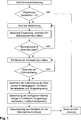
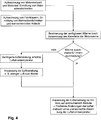
Die Erfindung wird nachfolgend anhand der Zeichnungen beispielhaft näher erläutert. Es zeigen, jeweils in schematischer Form, als Teil eines Ausführungsbeispiels des erfindungsgemäßen Verfahrens:The invention will be explained in more detail by way of example with reference to the drawings. They show, in each case in schematic form, as part of an embodiment of the method according to the invention:
In einem Ausführungsbeispiel des erfindungsgemäßen Verfahrens werden sowohl vorgegebene Daten über das Fahrzeug als auch Messwerte, die die aktuellen Betriebs- und Umgebungsbedingungen betreffen, als auch weitere zur Verfeinerung des Modells benutzte Messwerte und Daten über die Temperatur und/oder Feuchtigkeit der Luft innerhalb der Fahrzeugkabine ermittelt.In one exemplary embodiment of the method according to the invention, both predefined data about the vehicle and measured values which relate to the current operating and ambient conditions, as well as further measured values and data relating to the refinement of the model, are determined via the temperature and / or humidity of the air inside the vehicle cabin ,
Daten, die das Fahrzeug bzw. den Antrieb betreffen, sind insbesondere:
- – Innenraumvolumen und Wärmekapazität der Fahrzeugkabine bzw. des Innenraums, Wärmeübertragungskoeffizient für die thermische Masse des Innenraums;
- – Wärmeisolation bzw. Wärmeleitungskoeffizient nach außen;
- – Glasflächen und Schrägstellung der Glasflächen, die für Sonneneinstrahlung und Wärmeaustausch relevant sind;
- – Kennfeld der Wärmeentwicklung des Motors als Funktion der Drehzahl und der Last, die beispielsweise anhand der Gaspedalstellung und/oder anhand des momentanen Kraftstoffverbrauchs ermittelt wird;
- – Parameter zur Voraussage der zur Verfügung stehenden Wärme in Abhängigkeit von typischen Betriebsabläufen;
- – Wärmekapazität des Motorkühlkreislaufs;
- – Luftschichtung bzw. Temperaturunterschiede zwischen verschiedenen Auslassdüsen bei unterschiedlichen Luftverteilungsanforderungen;
- – Effektivität der Lufterwärmung, sowie
- – elektrische Lufterwärmung, erzeugte Wärmemenge.
- - Interior volume and heat capacity of the vehicle cabin or the interior, heat transfer coefficient for the thermal mass of the interior;
- - heat insulation or heat conduction coefficient to the outside;
- - glass surfaces and inclination of the glass surfaces, which are relevant for solar radiation and heat exchange;
- - map of the evolution of heat of the engine as a function of the speed and the load, which is determined for example on the basis of the accelerator pedal position and / or based on the current fuel consumption;
- - parameters for predicting the available heat as a function of typical operations;
- - Heat capacity of the engine cooling circuit;
- - Air stratification or temperature differences between different outlet nozzles with different air distribution requirements;
- - Effectiveness of air heating, as well
- - Electric air heating, generated heat.
Die genannten Daten können sowohl fest vorgegeben sein als auch, ggf. ausgehend von einem Startwert, durch Kalibrierung des Modells ermittelt und verändert werden.The stated data can be fixed as well as, if necessary starting from a starting value, determined and changed by calibrating the model.
Daten zu den aktuellen Betriebsbedingungen umfassen insbesondere:
- – Außentemperatur;
- – Luftfeuchtigkeit der Außenluft und/oder der Innenluft;
- – Sonneneinstrahlung, und/oder
- – Fahrzeuggeschwindigkeit, gemessen gegenüber dem Boden oder gegenüber der Umgebungsluft.
- - outside temperature;
- - humidity of the outside air and / or the inside air;
- - Solar radiation, and / or
- - Vehicle speed, measured against the ground or against the ambient air.
Weitere Messwerte, die zur Verfeinerung des Modells dienen können, sind:
- – Kühlmitteltemperatur und -durchsatz;
- – Umgebungstemperatur und Luftgeschwindigkeit;
- – Umlufttemperatur und Umluftstrom;
- – Lüfterbetriebsstrom und Lüfterleistung;
- – Zulufttemperatur und Zuluftstrom;
- – Solltemperatur der Kabine bzw. des Innenraums;
- – Wärme- und Feuchtigkeitserzeugung innerhalb der Kabine durch die Insassen;
- – Zusatzlasten am Motor, wie Lichtmaschine und Kompressor der Klimaanlage, und/oder
- – Wärmeverluste durch Öffnen von Abdeckungen, der Fenster oder eines Dachfensters.
- - coolant temperature and flow rate;
- - ambient temperature and air velocity;
- - Convection temperature and circulating air flow;
- - fan operating current and fan power;
- - supply air temperature and supply air flow;
- - target temperature of the cabin or the interior;
- - heat and humidity generation inside the cabin by the occupants;
- - Additional loads on the engine, such as alternator and air conditioning compressor, and / or
- - Heat loss by opening covers, windows or a skylight.
Daten, die zur Validierung des Modells dienen bzw. die den Grad der Erreichung der Sollwerte angeben, und die von Sensoren ermittelt und zur Regelung zur Verfügung gestellt werden, betreffen insbesondere:
- – Luftauslasstemperatur;
- – Innenlufttemperatur der Kabine, und/oder
- – Luftfeuchtigkeit der Kabineninnenluft.
- - air outlet temperature;
- - Inside air temperature of the cabin, and / or
- - Humidity of the cabin interior air.
Gemäß
Parallel zur Erhöhung der Leistung wird die Temperatur der vom Lüfter geförderten Luft sowie die Temperatur der zur Erwärmung eingesetzten Wärmequelle, in diesem Fall des Kühlmittels des Motorkühlsystems, gemessen. Sofern eine messbare Absenkung der Temperatur, die über einen vorgegebenen Toleranzbereich hinausgeht, festgestellt wird, wird die betreffende Lüfterleistung als Maximalwert gespeichert. Die betreffende Wärmemenge, die eine Funktion der geförderten Luftmenge, der Umgebungstemperatur und der Heizungslufttemperatur ist, wird ermittelt und in dem der Regelung zugrunde liegenden Modell gespeichert. Auf diese Weise kann die Gültigkeit des Modells für die Wärmeerzeugung überprüft und das Modell ggf. der aktuellen Situation und/oder einem Fahrzeugtyp mit einer bestimmten Motorisierung angepasst werden.In parallel with the increase in power, the temperature of the air delivered by the fan and the temperature of the heat source used for heating, in this case the coolant of the engine cooling system, is measured. If a measurable reduction of the temperature, which exceeds a given tolerance range, is determined, the relevant fan power is stored as the maximum value. The relevant amount of heat, which is a function of the amount of air delivered, the ambient temperature and the heating air temperature, is determined and stored in the model underlying the control. In this way, the validity of the model for the heat generation can be checked and the model possibly adapted to the current situation and / or a vehicle type with a specific engine.
Gemäß dem in
Wie in
Wie in
Weiterhin können bevorzugte Bereiche für die Erwärmung der Innenluft diejenigen Oberflächen sein, in deren Nähe die Insassen subjektiv bei einem Kaltstart ein besonderes Kälteempfinden haben. An solchen Oberflächen kann durch gezielte Richtung eines Warmluftstroms ein ”Warmluftkissen” erzeugt werden, um das subjektive Komfortempfinden zu steigern. Auch eine derartige Luftverteilung kann, in Abhängigkeit von der zur Verfügung stehenden Wärme, allmählich in die übliche Wärmeverteilung überführt werden, da der Wärmeverlust durch ein derartiges Wärmekissen sehr hoch ist.Furthermore, preferred areas for heating the inside air may be those surfaces in the vicinity of which the occupants subjectively have a particular feeling of cold during a cold start. On such surfaces, a "warm air cushion" can be generated by targeted direction of a hot air flow to increase the subjective sense of comfort. Also, such air distribution can, depending on the available heat, gradually converted into the usual heat distribution, since the heat loss is very high by such a heat pad.
ZITATE ENTHALTEN IN DER BESCHREIBUNG QUOTES INCLUDE IN THE DESCRIPTION
Diese Liste der vom Anmelder aufgeführten Dokumente wurde automatisiert erzeugt und ist ausschließlich zur besseren Information des Lesers aufgenommen. Die Liste ist nicht Bestandteil der deutschen Patent- bzw. Gebrauchsmusteranmeldung. Das DPMA übernimmt keinerlei Haftung für etwaige Fehler oder Auslassungen.This list of the documents listed by the applicant has been generated automatically and is included solely for the better information of the reader. The list is not part of the German patent or utility model application. The DPMA assumes no liability for any errors or omissions.
Zitierte PatentliteraturCited patent literature
- EP 1159520 B1 [0004] EP 1159520 B1 [0004]
Claims (10)
Priority Applications (4)
| Application Number | Priority Date | Filing Date | Title |
|---|---|---|---|
| DE102010000727A DE102010000727A1 (en) | 2010-01-07 | 2010-01-07 | Method and apparatus for climate control, in particular for heating control for an interior of a motor vehicle |
| CN201010596815.2A CN102120413B (en) | 2010-01-07 | 2010-12-20 | Method and device for climate control, especially for motor vehicle interior heating control |
| US12/984,554 US9586459B2 (en) | 2010-01-07 | 2011-01-04 | Method for motor vehicle interior climate control |
| US15/427,772 US10696136B2 (en) | 2010-01-07 | 2017-02-08 | Method for motor vehicle interior climate control |
Applications Claiming Priority (1)
| Application Number | Priority Date | Filing Date | Title |
|---|---|---|---|
| DE102010000727A DE102010000727A1 (en) | 2010-01-07 | 2010-01-07 | Method and apparatus for climate control, in particular for heating control for an interior of a motor vehicle |
Publications (1)
| Publication Number | Publication Date |
|---|---|
| DE102010000727A1 true DE102010000727A1 (en) | 2011-07-14 |
Family
ID=44225166
Family Applications (1)
| Application Number | Title | Priority Date | Filing Date |
|---|---|---|---|
| DE102010000727A Pending DE102010000727A1 (en) | 2010-01-07 | 2010-01-07 | Method and apparatus for climate control, in particular for heating control for an interior of a motor vehicle |
Country Status (3)
| Country | Link |
|---|---|
| US (2) | US9586459B2 (en) |
| CN (1) | CN102120413B (en) |
| DE (1) | DE102010000727A1 (en) |
Cited By (6)
| Publication number | Priority date | Publication date | Assignee | Title |
|---|---|---|---|---|
| DE102013205223A1 (en) * | 2013-03-25 | 2014-09-25 | Robert Bosch Gmbh | Method for controlling an air conditioning system of a motor vehicle |
| DE102013210908A1 (en) * | 2013-06-12 | 2014-12-18 | Ford Global Technologies, Llc | Method and device for climate control in a motor vehicle |
| DE102018207302A1 (en) * | 2018-05-09 | 2019-11-14 | Bayerische Motoren Werke Aktiengesellschaft | Intelligent control of the air conditioning by the navigation system in connection with arrival time |
| DE102013014359B4 (en) | 2013-08-27 | 2021-12-02 | Audi Ag | Method for controlling a vehicle air conditioning system of a vehicle and vehicle air conditioning system for carrying out the method |
| DE102023112106A1 (en) | 2023-05-09 | 2024-11-14 | Audi Aktiengesellschaft | Air conditioning unit with adaptive learning pilot control unit and electrically driven motor vehicle with such an air conditioning unit |
| DE102024106721A1 (en) * | 2024-03-08 | 2025-09-11 | Audi Aktiengesellschaft | Method for operating a heating system for a motor vehicle, corresponding heating system for a motor vehicle and computer program product |
Families Citing this family (15)
| Publication number | Priority date | Publication date | Assignee | Title |
|---|---|---|---|---|
| JP4711082B2 (en) * | 2006-12-15 | 2011-06-29 | 株式会社デンソー | Car interior environment control system |
| US8839632B2 (en) | 2012-03-09 | 2014-09-23 | Visteon Global Technologies, Inc. | Control strategy for a zonal heating, ventilating, and air conditioning system of a vehicle |
| US9555689B2 (en) * | 2012-05-16 | 2017-01-31 | GM Global Technology Operations LLC | Adaptive automatic climate control for vehicles |
| DE102013002198A1 (en) * | 2013-02-07 | 2014-08-07 | Man Truck & Bus Ag | Method and arrangement for optimizing the motor availability of a refrigerated cycle cooled electromobility component |
| CN104070959B (en) * | 2013-03-28 | 2017-10-24 | 浙江三花汽车零部件有限公司 | Obtain the method and its control system of environment temperature |
| DE102014006653A1 (en) * | 2014-05-07 | 2015-11-12 | Man Truck & Bus Ag | Operating method for at least one automotive air conditioning system |
| US10183553B2 (en) * | 2014-08-13 | 2019-01-22 | Surface Igniter Llc | Heating system for a motor vehicle |
| US9752492B2 (en) * | 2015-03-06 | 2017-09-05 | Deere & Company | Fan control system and method |
| US10337753B2 (en) * | 2016-12-23 | 2019-07-02 | Abb Ag | Adaptive modeling method and system for MPC-based building energy control |
| US11413932B2 (en) | 2017-10-12 | 2022-08-16 | Ford Global Technologies, Llc | Blower motor operation |
| JP7114920B2 (en) * | 2018-02-07 | 2022-08-09 | トヨタ自動車株式会社 | HEAT ENERGY CONTROL SYSTEM, HEAT DISTRIBUTOR, HEAT ENERGY CONTROL METHOD OF VEHICLE |
| US10836234B2 (en) * | 2018-11-16 | 2020-11-17 | Ford Global Technologies, Llc | Actuation of HVAC systems in anticipation of a user's thermal needs based on remote smart device data |
| KR102687174B1 (en) * | 2019-03-08 | 2024-07-22 | 현대자동차주식회사 | Heat-loss managing system for vehicle and controlling method therefor |
| JP7409273B2 (en) * | 2020-09-29 | 2024-01-09 | トヨタ自動車株式会社 | Control device and control method |
| US20230410033A1 (en) * | 2022-06-15 | 2023-12-21 | Hitachi, Ltd. | System for monitoring and predicting water damage in shipping containers |
Citations (1)
| Publication number | Priority date | Publication date | Assignee | Title |
|---|---|---|---|---|
| EP1159520B1 (en) | 1999-11-06 | 2004-12-29 | Robert Bosch Gmbh | Method for controlling heat flows in a motor vehicle |
Family Cites Families (19)
| Publication number | Priority date | Publication date | Assignee | Title |
|---|---|---|---|---|
| FR1096538A (en) | 1953-12-18 | 1955-06-21 | Electronique & Physique | Improvement in microwave tube modulation processes |
| US4272015A (en) * | 1979-05-31 | 1981-06-09 | Grumman Flexible Corporation | Coach climate conditioning blower control |
| DE3576314D1 (en) * | 1984-10-19 | 1990-04-12 | Nippon Denso Co | MOTOR VEHICLE AIR CONDITIONING. |
| US5427313A (en) * | 1993-06-30 | 1995-06-27 | Ford Motor Company | Method and control system for controlling an automatic HVAC system to prevent the discharge of air within a predetermined temperature range |
| US5511724A (en) * | 1994-11-23 | 1996-04-30 | Delco Electronics Corporation | Adaptive climate control system |
| US5735134A (en) * | 1996-05-30 | 1998-04-07 | Massachusetts Institute Of Technology | Set point optimization in vapor compression cycles |
| US5755378A (en) * | 1997-01-21 | 1998-05-26 | Ford Global Technologies, Inc. | Method and system for controlling an automotive HVAC system to prevent formation of cabin thermal stratification |
| US7147071B2 (en) * | 2004-02-04 | 2006-12-12 | Battelle Energy Alliance, Llc | Thermal management systems and methods |
| US6209794B1 (en) * | 1999-08-17 | 2001-04-03 | Visteon Global Technologies, Inc. | Method for designing a vehicle thermal management system |
| FR2806036B1 (en) * | 2000-03-07 | 2002-11-15 | Valeo Electronique | IMPROVED REGULATION OF TEMPERATURE, SPEED AND DISTRIBUTION OF VENTILATED AIR IN A MOTOR VEHICLE INTERIOR |
| US6293115B1 (en) * | 2000-04-10 | 2001-09-25 | Delphi Technologies, Inc. | Inlet air mixture control method for a vehicle air conditioning system |
| US6454178B1 (en) * | 2001-05-24 | 2002-09-24 | Ford Global Technologies, Inc. | Adaptive controller for an automotive HVAC system |
| JP3767423B2 (en) | 2001-06-11 | 2006-04-19 | トヨタ自動車株式会社 | Vehicle fuel cell module and fuel cell vehicle |
| US6616057B1 (en) * | 2002-02-28 | 2003-09-09 | Delphi Technologies, Inc. | Adaptive automatic climate control method for a motor vehicle |
| DE10259686A1 (en) * | 2002-12-19 | 2004-07-01 | Bayerische Motoren Werke Ag | Motor vehicle climate control system for regulating vehicle interior temperature, wherein controllable actuators are activated to open sunroof, windows or activate a fan or flap to permit air-circulation to pre-cool the interior |
| DE10308370B4 (en) * | 2003-02-27 | 2007-01-11 | Daimlerchrysler Ag | Air conditioning for a motor vehicle |
| JP4360409B2 (en) * | 2007-02-13 | 2009-11-11 | 株式会社デンソー | VEHICLE AIR CONDITIONER, CONTROL METHOD AND CONTROL DEVICE FOR VEHICLE AIR CONDITIONER |
| US7966104B2 (en) * | 2007-03-26 | 2011-06-21 | Siemens Corporation | Apparatus and method for the control of the indoor thermal environment having feed forward and feedback control using adaptive reference models |
| US9404409B2 (en) * | 2013-11-05 | 2016-08-02 | Ford Global Technologies, Llc | Exhaust throttling for cabin heating |
-
2010
- 2010-01-07 DE DE102010000727A patent/DE102010000727A1/en active Pending
- 2010-12-20 CN CN201010596815.2A patent/CN102120413B/en not_active Expired - Fee Related
-
2011
- 2011-01-04 US US12/984,554 patent/US9586459B2/en not_active Expired - Fee Related
-
2017
- 2017-02-08 US US15/427,772 patent/US10696136B2/en active Active
Patent Citations (1)
| Publication number | Priority date | Publication date | Assignee | Title |
|---|---|---|---|---|
| EP1159520B1 (en) | 1999-11-06 | 2004-12-29 | Robert Bosch Gmbh | Method for controlling heat flows in a motor vehicle |
Cited By (8)
| Publication number | Priority date | Publication date | Assignee | Title |
|---|---|---|---|---|
| DE102013205223A1 (en) * | 2013-03-25 | 2014-09-25 | Robert Bosch Gmbh | Method for controlling an air conditioning system of a motor vehicle |
| DE102013210908A1 (en) * | 2013-06-12 | 2014-12-18 | Ford Global Technologies, Llc | Method and device for climate control in a motor vehicle |
| DE102013210908B4 (en) | 2013-06-12 | 2022-03-17 | Ford Global Technologies, Llc | Method and device for climate control in a motor vehicle |
| DE102013014359B4 (en) | 2013-08-27 | 2021-12-02 | Audi Ag | Method for controlling a vehicle air conditioning system of a vehicle and vehicle air conditioning system for carrying out the method |
| DE102018207302A1 (en) * | 2018-05-09 | 2019-11-14 | Bayerische Motoren Werke Aktiengesellschaft | Intelligent control of the air conditioning by the navigation system in connection with arrival time |
| DE102023112106A1 (en) | 2023-05-09 | 2024-11-14 | Audi Aktiengesellschaft | Air conditioning unit with adaptive learning pilot control unit and electrically driven motor vehicle with such an air conditioning unit |
| DE102023112106B4 (en) | 2023-05-09 | 2025-09-11 | Audi Aktiengesellschaft | Method for controlling an air conditioning unit with adaptive learning pilot control unit and electrically driven motor vehicle with such an air conditioning unit |
| DE102024106721A1 (en) * | 2024-03-08 | 2025-09-11 | Audi Aktiengesellschaft | Method for operating a heating system for a motor vehicle, corresponding heating system for a motor vehicle and computer program product |
Also Published As
| Publication number | Publication date |
|---|---|
| CN102120413A (en) | 2011-07-13 |
| CN102120413B (en) | 2015-03-25 |
| US9586459B2 (en) | 2017-03-07 |
| US20170144505A1 (en) | 2017-05-25 |
| US20110166711A1 (en) | 2011-07-07 |
| US10696136B2 (en) | 2020-06-30 |
Similar Documents
| Publication | Publication Date | Title |
|---|---|---|
| DE102010000727A1 (en) | Method and apparatus for climate control, in particular for heating control for an interior of a motor vehicle | |
| DE102015113574B4 (en) | WINDSHIELD DEMISTING SYSTEM AND PROCEDURE | |
| EP2402209B1 (en) | Additional electric heater for vehicles | |
| EP2082919B2 (en) | Electric additional heating for a motor vehicle | |
| DE602004001242T2 (en) | Two-zone climate regulation through heat flow analysis | |
| DE102018100184A1 (en) | Adaptive climate control system | |
| US9120365B2 (en) | Automatic temperature override pattern recognition system | |
| DE19844514C1 (en) | Heating method for automobile seat and/or steering wheel | |
| DE102012203962A1 (en) | Automatic remote start / stop control strategy for vehicle heating and cooling systems | |
| DE102012102438B4 (en) | Air conditioning control method using an air conditioning control device | |
| DE102013219132A1 (en) | Automatic feedback control for vehicle HVAC system | |
| DE102018103956A1 (en) | INFRARED SENSOR ARRANGEMENTS FOR MONITORING VEHICLES AND WINDOWS | |
| DE102016101093A1 (en) | Adaptive vehicle climate control system and method | |
| DE102012211691A1 (en) | Interior ventilation technology for a vehicle | |
| DE4425697C2 (en) | air conditioning | |
| DE102013209016A1 (en) | Adaptive automatic climate control for vehicles | |
| DE60005474T2 (en) | Procedure for avoiding fogging of the windshield by determining the limit moisture required for this | |
| DE102013225433A1 (en) | HVAC system for vehicles with modified recirculation mode for start-stop engine | |
| DE102020109299B4 (en) | Method for controlling an air conditioning device for a motor vehicle and air conditioning device therewith | |
| DE202014100195U1 (en) | Prevention of icing of an evaporator core of a vehicle | |
| WO2018185053A1 (en) | Climate control for the interior of vehicles | |
| DE102008061773B4 (en) | Method for preconditioning a vehicle and vehicle temperature control system | |
| DE102014210736B4 (en) | Air conditioning device for a motor vehicle and method for its operation | |
| DE102025116952A1 (en) | Solar intensity factor for determining the airflow and outlet temperature of a vehicle heating system | |
| DE102014212739A1 (en) | INTELLIGENT TRANSMISSION DELAY PROCESS AND AIR CONDITIONING SYSTEM FOR A VEHICLE |
Legal Events
| Date | Code | Title | Description |
|---|---|---|---|
| R012 | Request for examination validly filed | ||
| R082 | Change of representative |
Representative=s name: BONSMANN - BONSMANN - FRANK PATENTANWAELTE, DE |
|
| R016 | Response to examination communication |