DE102010000390A1 - Apparatus and method for treating a patient with vibration, tactile and / or thermal implants - Google Patents

Apparatus and method for treating a patient with vibration, tactile and / or thermal implants Download PDF

Info

Publication number
DE102010000390A1
DE102010000390A1 DE102010000390A DE102010000390A DE102010000390A1 DE 102010000390 A1 DE102010000390 A1 DE 102010000390A1 DE 102010000390 A DE102010000390 A DE 102010000390A DE 102010000390 A DE102010000390 A DE 102010000390A DE 102010000390 A1 DE102010000390 A1 DE 102010000390A1
Authority
DE
Germany
Prior art keywords
stimuli
stimulation
patient
contraption
vibration
Prior art date
Legal status (The legal status is an assumption and is not a legal conclusion. Google has not performed a legal analysis and makes no representation as to the accuracy of the status listed.)
Ceased
Application number
DE102010000390A
Other languages
German (de)
Inventor
Peter Alexander Prof. Dr. Dr. 81541 Tass
Laetitia Mayor
Jean-Christophe Dr. Roulet
Urban Dr. Schnell
Current Assignee (The listed assignees may be inaccurate. Google has not performed a legal analysis and makes no representation or warranty as to the accuracy of the list.)
Gretap AG
Original Assignee
Forschungszentrum Juelich GmbH
Priority date (The priority date is an assumption and is not a legal conclusion. Google has not performed a legal analysis and makes no representation as to the accuracy of the date listed.)
Filing date
Publication date
Application filed by Forschungszentrum Juelich GmbH filed Critical Forschungszentrum Juelich GmbH
Priority to DE102010000390A priority Critical patent/DE102010000390A1/en
Priority to CN201180014533.XA priority patent/CN102858302B/en
Priority to ES11707565T priority patent/ES2923633T3/en
Priority to DK11707565.5T priority patent/DK2533747T5/en
Priority to EP11707565.5A priority patent/EP2533747B8/en
Priority to EP22177955.6A priority patent/EP4094745B1/en
Priority to EP22177954.9A priority patent/EP4074299B1/en
Priority to JP2012552256A priority patent/JP5746715B2/en
Priority to ES22177954T priority patent/ES3048382T3/en
Priority to PCT/DE2011/075004 priority patent/WO2011098082A1/en
Priority to US13/578,375 priority patent/US20130041296A1/en
Priority to ES22177955T priority patent/ES3048484T3/en
Publication of DE102010000390A1 publication Critical patent/DE102010000390A1/en
Priority to US16/453,590 priority patent/US11253424B2/en
Priority to US17/674,522 priority patent/US12193988B2/en
Ceased legal-status Critical Current

Links

Images

Classifications

    • AHUMAN NECESSITIES
    • A61MEDICAL OR VETERINARY SCIENCE; HYGIENE
    • A61HPHYSICAL THERAPY APPARATUS, e.g. DEVICES FOR LOCATING OR STIMULATING REFLEX POINTS IN THE BODY; ARTIFICIAL RESPIRATION; MASSAGE; BATHING DEVICES FOR SPECIAL THERAPEUTIC OR HYGIENIC PURPOSES OR SPECIFIC PARTS OF THE BODY
    • A61H23/00Percussion or vibration massage, e.g. using supersonic vibration; Suction-vibration massage; Massage with moving diaphragms
    • A61H23/02Percussion or vibration massage, e.g. using supersonic vibration; Suction-vibration massage; Massage with moving diaphragms with electric or magnetic drive
    • A61H23/0245Percussion or vibration massage, e.g. using supersonic vibration; Suction-vibration massage; Massage with moving diaphragms with electric or magnetic drive with ultrasonic transducers, e.g. piezoelectric
    • AHUMAN NECESSITIES
    • A61MEDICAL OR VETERINARY SCIENCE; HYGIENE
    • A61FFILTERS IMPLANTABLE INTO BLOOD VESSELS; PROSTHESES; DEVICES PROVIDING PATENCY TO, OR PREVENTING COLLAPSING OF, TUBULAR STRUCTURES OF THE BODY, e.g. STENTS; ORTHOPAEDIC, NURSING OR CONTRACEPTIVE DEVICES; FOMENTATION; TREATMENT OR PROTECTION OF EYES OR EARS; BANDAGES, DRESSINGS OR ABSORBENT PADS; FIRST-AID KITS
    • A61F7/00Heating or cooling appliances for medical or therapeutic treatment of the human body
    • AHUMAN NECESSITIES
    • A61MEDICAL OR VETERINARY SCIENCE; HYGIENE
    • A61HPHYSICAL THERAPY APPARATUS, e.g. DEVICES FOR LOCATING OR STIMULATING REFLEX POINTS IN THE BODY; ARTIFICIAL RESPIRATION; MASSAGE; BATHING DEVICES FOR SPECIAL THERAPEUTIC OR HYGIENIC PURPOSES OR SPECIFIC PARTS OF THE BODY
    • A61H23/00Percussion or vibration massage, e.g. using supersonic vibration; Suction-vibration massage; Massage with moving diaphragms
    • A61H23/02Percussion or vibration massage, e.g. using supersonic vibration; Suction-vibration massage; Massage with moving diaphragms with electric or magnetic drive
    • A61H23/0254Percussion or vibration massage, e.g. using supersonic vibration; Suction-vibration massage; Massage with moving diaphragms with electric or magnetic drive with rotary motor
    • AHUMAN NECESSITIES
    • A61MEDICAL OR VETERINARY SCIENCE; HYGIENE
    • A61HPHYSICAL THERAPY APPARATUS, e.g. DEVICES FOR LOCATING OR STIMULATING REFLEX POINTS IN THE BODY; ARTIFICIAL RESPIRATION; MASSAGE; BATHING DEVICES FOR SPECIAL THERAPEUTIC OR HYGIENIC PURPOSES OR SPECIFIC PARTS OF THE BODY
    • A61H7/00Devices for suction-kneading massage; Devices for massaging the skin by rubbing or brushing not otherwise provided for
    • A61H7/001Devices for suction-kneading massage; Devices for massaging the skin by rubbing or brushing not otherwise provided for without substantial movement between the skin and the device
    • AHUMAN NECESSITIES
    • A61MEDICAL OR VETERINARY SCIENCE; HYGIENE
    • A61HPHYSICAL THERAPY APPARATUS, e.g. DEVICES FOR LOCATING OR STIMULATING REFLEX POINTS IN THE BODY; ARTIFICIAL RESPIRATION; MASSAGE; BATHING DEVICES FOR SPECIAL THERAPEUTIC OR HYGIENIC PURPOSES OR SPECIFIC PARTS OF THE BODY
    • A61H2201/00Characteristics of apparatus not provided for in the preceding codes
    • A61H2201/02Characteristics of apparatus not provided for in the preceding codes heated or cooled
    • AHUMAN NECESSITIES
    • A61MEDICAL OR VETERINARY SCIENCE; HYGIENE
    • A61HPHYSICAL THERAPY APPARATUS, e.g. DEVICES FOR LOCATING OR STIMULATING REFLEX POINTS IN THE BODY; ARTIFICIAL RESPIRATION; MASSAGE; BATHING DEVICES FOR SPECIAL THERAPEUTIC OR HYGIENIC PURPOSES OR SPECIFIC PARTS OF THE BODY
    • A61H2201/00Characteristics of apparatus not provided for in the preceding codes
    • A61H2201/10Characteristics of apparatus not provided for in the preceding codes with further special therapeutic means, e.g. electrotherapy, magneto therapy or radiation therapy, chromo therapy, infrared or ultraviolet therapy
    • AHUMAN NECESSITIES
    • A61MEDICAL OR VETERINARY SCIENCE; HYGIENE
    • A61HPHYSICAL THERAPY APPARATUS, e.g. DEVICES FOR LOCATING OR STIMULATING REFLEX POINTS IN THE BODY; ARTIFICIAL RESPIRATION; MASSAGE; BATHING DEVICES FOR SPECIAL THERAPEUTIC OR HYGIENIC PURPOSES OR SPECIFIC PARTS OF THE BODY
    • A61H2201/00Characteristics of apparatus not provided for in the preceding codes
    • A61H2201/14Special force transmission means, i.e. between the driving means and the interface with the user
    • A61H2201/1418Cam
    • AHUMAN NECESSITIES
    • A61MEDICAL OR VETERINARY SCIENCE; HYGIENE
    • A61HPHYSICAL THERAPY APPARATUS, e.g. DEVICES FOR LOCATING OR STIMULATING REFLEX POINTS IN THE BODY; ARTIFICIAL RESPIRATION; MASSAGE; BATHING DEVICES FOR SPECIAL THERAPEUTIC OR HYGIENIC PURPOSES OR SPECIFIC PARTS OF THE BODY
    • A61H2201/00Characteristics of apparatus not provided for in the preceding codes
    • A61H2201/16Physical interface with patient
    • A61H2201/1657Movement of interface, i.e. force application means
    • A61H2201/1664Movement of interface, i.e. force application means linear
    • A61H2201/1669Movement of interface, i.e. force application means linear moving along the body in a reciprocating manner
    • AHUMAN NECESSITIES
    • A61MEDICAL OR VETERINARY SCIENCE; HYGIENE
    • A61HPHYSICAL THERAPY APPARATUS, e.g. DEVICES FOR LOCATING OR STIMULATING REFLEX POINTS IN THE BODY; ARTIFICIAL RESPIRATION; MASSAGE; BATHING DEVICES FOR SPECIAL THERAPEUTIC OR HYGIENIC PURPOSES OR SPECIFIC PARTS OF THE BODY
    • A61H2201/00Characteristics of apparatus not provided for in the preceding codes
    • A61H2201/50Control means thereof
    • A61H2201/5002Means for controlling a set of similar massage devices acting in sequence at different locations on a patient
    • AHUMAN NECESSITIES
    • A61MEDICAL OR VETERINARY SCIENCE; HYGIENE
    • A61HPHYSICAL THERAPY APPARATUS, e.g. DEVICES FOR LOCATING OR STIMULATING REFLEX POINTS IN THE BODY; ARTIFICIAL RESPIRATION; MASSAGE; BATHING DEVICES FOR SPECIAL THERAPEUTIC OR HYGIENIC PURPOSES OR SPECIFIC PARTS OF THE BODY
    • A61H2201/00Characteristics of apparatus not provided for in the preceding codes
    • A61H2201/50Control means thereof
    • A61H2201/5058Sensors or detectors
    • A61H2201/5084Acceleration sensors
    • AHUMAN NECESSITIES
    • A61MEDICAL OR VETERINARY SCIENCE; HYGIENE
    • A61HPHYSICAL THERAPY APPARATUS, e.g. DEVICES FOR LOCATING OR STIMULATING REFLEX POINTS IN THE BODY; ARTIFICIAL RESPIRATION; MASSAGE; BATHING DEVICES FOR SPECIAL THERAPEUTIC OR HYGIENIC PURPOSES OR SPECIFIC PARTS OF THE BODY
    • A61H2205/00Devices for specific parts of the body
    • A61H2205/06Arms
    • AHUMAN NECESSITIES
    • A61MEDICAL OR VETERINARY SCIENCE; HYGIENE
    • A61HPHYSICAL THERAPY APPARATUS, e.g. DEVICES FOR LOCATING OR STIMULATING REFLEX POINTS IN THE BODY; ARTIFICIAL RESPIRATION; MASSAGE; BATHING DEVICES FOR SPECIAL THERAPEUTIC OR HYGIENIC PURPOSES OR SPECIFIC PARTS OF THE BODY
    • A61H2205/00Devices for specific parts of the body
    • A61H2205/06Arms
    • A61H2205/065Hands
    • AHUMAN NECESSITIES
    • A61MEDICAL OR VETERINARY SCIENCE; HYGIENE
    • A61HPHYSICAL THERAPY APPARATUS, e.g. DEVICES FOR LOCATING OR STIMULATING REFLEX POINTS IN THE BODY; ARTIFICIAL RESPIRATION; MASSAGE; BATHING DEVICES FOR SPECIAL THERAPEUTIC OR HYGIENIC PURPOSES OR SPECIFIC PARTS OF THE BODY
    • A61H2205/00Devices for specific parts of the body
    • A61H2205/10Leg
    • AHUMAN NECESSITIES
    • A61MEDICAL OR VETERINARY SCIENCE; HYGIENE
    • A61HPHYSICAL THERAPY APPARATUS, e.g. DEVICES FOR LOCATING OR STIMULATING REFLEX POINTS IN THE BODY; ARTIFICIAL RESPIRATION; MASSAGE; BATHING DEVICES FOR SPECIAL THERAPEUTIC OR HYGIENIC PURPOSES OR SPECIFIC PARTS OF THE BODY
    • A61H2205/00Devices for specific parts of the body
    • A61H2205/12Feet
    • AHUMAN NECESSITIES
    • A61MEDICAL OR VETERINARY SCIENCE; HYGIENE
    • A61HPHYSICAL THERAPY APPARATUS, e.g. DEVICES FOR LOCATING OR STIMULATING REFLEX POINTS IN THE BODY; ARTIFICIAL RESPIRATION; MASSAGE; BATHING DEVICES FOR SPECIAL THERAPEUTIC OR HYGIENIC PURPOSES OR SPECIFIC PARTS OF THE BODY
    • A61H2230/00Measuring physical parameters of the user
    • A61H2230/08Other bio-electrical signals
    • A61H2230/10Electroencephalographic signals
    • AHUMAN NECESSITIES
    • A61MEDICAL OR VETERINARY SCIENCE; HYGIENE
    • A61HPHYSICAL THERAPY APPARATUS, e.g. DEVICES FOR LOCATING OR STIMULATING REFLEX POINTS IN THE BODY; ARTIFICIAL RESPIRATION; MASSAGE; BATHING DEVICES FOR SPECIAL THERAPEUTIC OR HYGIENIC PURPOSES OR SPECIFIC PARTS OF THE BODY
    • A61H2230/00Measuring physical parameters of the user
    • A61H2230/30Blood pressure
    • AHUMAN NECESSITIES
    • A61MEDICAL OR VETERINARY SCIENCE; HYGIENE
    • A61HPHYSICAL THERAPY APPARATUS, e.g. DEVICES FOR LOCATING OR STIMULATING REFLEX POINTS IN THE BODY; ARTIFICIAL RESPIRATION; MASSAGE; BATHING DEVICES FOR SPECIAL THERAPEUTIC OR HYGIENIC PURPOSES OR SPECIFIC PARTS OF THE BODY
    • A61H2230/00Measuring physical parameters of the user
    • A61H2230/40Respiratory characteristics
    • AHUMAN NECESSITIES
    • A61MEDICAL OR VETERINARY SCIENCE; HYGIENE
    • A61HPHYSICAL THERAPY APPARATUS, e.g. DEVICES FOR LOCATING OR STIMULATING REFLEX POINTS IN THE BODY; ARTIFICIAL RESPIRATION; MASSAGE; BATHING DEVICES FOR SPECIAL THERAPEUTIC OR HYGIENIC PURPOSES OR SPECIFIC PARTS OF THE BODY
    • A61H2230/00Measuring physical parameters of the user
    • A61H2230/60Muscle strain, i.e. measured on the user, e.g. Electromyography [EMG]
    • AHUMAN NECESSITIES
    • A61MEDICAL OR VETERINARY SCIENCE; HYGIENE
    • A61HPHYSICAL THERAPY APPARATUS, e.g. DEVICES FOR LOCATING OR STIMULATING REFLEX POINTS IN THE BODY; ARTIFICIAL RESPIRATION; MASSAGE; BATHING DEVICES FOR SPECIAL THERAPEUTIC OR HYGIENIC PURPOSES OR SPECIFIC PARTS OF THE BODY
    • A61H2230/00Measuring physical parameters of the user
    • A61H2230/65Impedance, e.g. skin conductivity; capacitance, e.g. galvanic skin response [GSR]

Landscapes

  • Health & Medical Sciences (AREA)
  • Life Sciences & Earth Sciences (AREA)
  • Veterinary Medicine (AREA)
  • Public Health (AREA)
  • General Health & Medical Sciences (AREA)
  • Animal Behavior & Ethology (AREA)
  • Physical Education & Sports Medicine (AREA)
  • Rehabilitation Therapy (AREA)
  • Pain & Pain Management (AREA)
  • Epidemiology (AREA)
  • Dermatology (AREA)
  • Engineering & Computer Science (AREA)
  • Biomedical Technology (AREA)
  • Heart & Thoracic Surgery (AREA)
  • Vascular Medicine (AREA)
  • Percussion Or Vibration Massage (AREA)
  • Electrotherapy Devices (AREA)
  • Radiation-Therapy Devices (AREA)
  • Thermotherapy And Cooling Therapy Devices (AREA)

Abstract

Die Erfindung betrifft eine Vorrichtung (100) zur Behandlung eines Patienten mit Vibrations- und/oder Tast- und/oder Thermoreizen (20), wobei die Vorrnheit (11, 12) zur Erzeugung von ersten bzw. zweiten Reizen (20) enthält, die Reize (20) Vibrations- und/oder Tast- und/oder Thermoreize sind, die Reize (20) jeweils im Mittel mit einer Frequenz von 1 bis 60 Hz wiederholt werden, und die Reize (20) zu zumindest teilweise unterschiedlichen Zeitpunkten erzeugt werden.The invention relates to a device (100) for treating a patient with vibration and / or tactile and / or thermal stimuli (20), the device (11, 12) for generating first and second stimuli (20) containing the Stimuli (20) are vibration and / or tactile and / or thermal stimuli, the stimuli (20) are repeated on average with a frequency of 1 to 60 Hz, and the stimuli (20) are generated at least in part at different times.

Description

Die Erfindung betrifft eine Vorrichtung und ein Verfahren zur Behandlung eines Patienten mit Vibrations- und/oder Tast- und/oder Thermoreizen.The invention relates to a device and a method for treating a patient with vibration and / or Tast- and / or Thermeizenizen.

Insbesondere bezieht sich die Erfindung auf eine Stimulationsvorrichtung und ein Stimulationsverfahren zur Behandlung von Erkrankungen, bei denen eine gesteigerte neuronale Synchronisation vorliegt. Mit der Erfindung können insbesondere Erkrankungen des Gehirns behandelt werden, wie z. B. Bewegungsstörungen, Morbus Parkinson, essentieller Tremor, Dystonie, Migräne, Spannungskopfschmerzen, Spastik, Funktionsstörungen nach Schlaganfall, neuropathische Schmerzen, chronische Schmerzzustände, Neuralgien, Amputationsschmerzen, Tremor und andere Funktionsstörungen bei Zustand nach Hirntrauma. Es können aber auch gastrointestinale Erkrankungen, wie z. B. das Reizdarm-Syndrom, behandelt werden. Hierbei können schmerzhafte Verkrampfungen und ineffiziente Darmmotilität verlernt werden. Auch bei der Colitis ulcerosa und beim Morbus Crohn kann die Behandlung mit der erfindungsgemäßen Vorrichtung krampflösend und schmerzlindernd wirken. Des Weiteren können Asthma bronchiale, kardiale Ischämien sowie die periphere arterielle Verschlusskrankheit mit der erfindungsgemäßen Vorrichtung behandelt werden.In particular, the invention relates to a stimulation device and a stimulation method for the treatment of diseases in which there is an increased neuronal synchronization. With the invention, in particular diseases of the brain can be treated, such as. Movement disorders, Parkinson's disease, essential tremor, dystonia, migraine, tension-type headache, spasticity, post-stroke dysfunction, neuropathic pain, chronic pain, neuralgia, amputation pain, tremor, and other dysfunctional disorders after cerebral trauma. But it can also gastrointestinal diseases such. As the irritable bowel syndrome, treated. Here, painful cramps and inefficient gut motility can be unlearned. Also in the case of ulcerative colitis and Crohn's disease, treatment with the device according to the invention can have antispasmodic and pain-relieving effects. Furthermore, bronchial asthma, cardiac ischemia and peripheral arterial disease can be treated with the device according to the invention.

Zur Behandlung der vorstehend genannten Krankheiten gibt es – wenn überhaupt – nur pharmakologische oder stereotaktische Therapien. Die Effektivität der pharmakologischen Therapien ist typischerweise zeitlich begrenzt. Die stereotaktische Behandlung birgt relevante Risiken, z. B. das Risiko einer arteriellen Blutung bei der Implantation der Hirnschrittmacher.There are only pharmacological or stereotactic therapies, if any, for the treatment of the above diseases. The effectiveness of the pharmacological therapies is typically limited in time. The stereotactic treatment involves relevant risks, eg. For example, the risk of arterial bleeding during implantation of the brain pacemaker.

Vor diesem Hintergrund werden eine Vorrichtung gemäß Anspruch 1, eine Verwendung der in Anspruch 1 beanspruchten Vorrichtung gemäß Anspruch 12, weitere Vorrichtungen gemäß Anspruch 13 und 15 sowie ein Verfahren gemäß Anspruch 17 angegeben. Vorteilhafte Weiterbildungen und Ausgestaltungen der Erfindung sind in den Unteransprüchen genannt.Against this background, a device according to claim 1, a use of the claimed in claim 1 device according to claim 12, further devices according to claim 13 and 15 and a method according to claim 17 are given. Advantageous developments and refinements of the invention are mentioned in the subclaims.

Die Erfindung wird nachfolgend in beispielhafter Weise unter Bezugnahme auf die Zeichnungen näher erläutert. In diesen zeigen:The invention will be explained in more detail below by way of example with reference to the drawings. In these show:

1 eine schematische Darstellung einer Vorrichtung 100 zur Erzeugung von Vibrations-, Tast- und/oder Thermoreizen gemäß einem Ausführungsbeispiel; 1 a schematic representation of a device 100 for generating vibration, Tast- and / or Thermeizenizen according to an embodiment;

2 eine schematische Darstellung eines mit der Vorrichtung 100 ausgeführten Stimulationsverfahrens; 2 a schematic representation of one with the device 100 executed stimulation method;

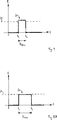
3A bis 3D schematische Darstellungen von Vibrationsreizen; 3A to 3D schematic representations of vibration stimuli;

4 eine schematische Darstellung eines Tastreizes; 4 a schematic representation of a tactile stimulus;

5A bis 5C schematische Darstellungen von Thermoreizen; 5A to 5C schematic representations of Thermoreizenizen;

6 eine schematische Darstellung der Vorrichtung 100 während ihres bestimmungsgemäßen Betriebs; 6 a schematic representation of the device 100 during their intended operation;

7 bis 9 schematische Darstellungen von mit der Vorrichtung 100 ausgeführten Stimulationsverfahren; 7 to 9 schematic representations of with the device 100 executed stimulation method;

10 eine schematische Darstellung einer Vorrichtung 200 zur Erzeugung von Vibrations-, Tast- und/oder Thermoreizen gemäß einem weiteren Ausführungsbeispiel; 10 a schematic representation of a device 200 for generating vibration, Tast- and / or Thermeizenizen according to another embodiment;

11A bis 13C schematische Darstellungen von Stimulationseinheiten zur Erzeugung von Vibrations- und/oder Tastreizen; 11A to 13C schematic representations of stimulation units for generating vibration and / or tactile stimuli;

14A bis 15C schematische Darstellungen von Stimulationseinheiten zur Erzeugung von Thermoreizen; 14A to 15C schematic representations of stimulation units for the production of Thermoreizenizen;

16 und 17 schematische Darstellungen von Stimulationsverfahren; und 16 and 17 schematic representations of stimulation methods; and

18 bis 19C schematische Darstellungen einer Vorrichtung 300 zur Erzeugung von Vibrations-, Tast- und/oder Thermoreizen gemäß einem weiteren Ausführungsbeispiel. 18 to 19C schematic representations of a device 300 for the production of vibration, Tast- and / or Thermeizenizen according to another embodiment.

In 1 ist schematisch eine Vorrichtung 100 zur nicht-invasiven Behandlung eines Patienten mit Vibrations-, Tast- und/oder Thermoreizen dargestellt. Die Vorrichtung 100 besteht in der in 1 gezeigten Ausgestaltung aus einer ersten Stimulationseinheit 11 zur Erzeugung erster Reize, einer zweiten Stimulationseinheit 12 zur Erzeugung zweiter Reize, einer dritten Stimulationseinheit 13 zur Erzeugung dritter Reize und einer vierten Stimulationseinheit 14 zur Erzeugung vierter Reize. Die in 1 gezeigte Ausgestaltung ist lediglich beispielhaft zu verstehen. Alternativ zu dieser Ausgestaltung kann die Vorrichtung 100 eine beliebige Anzahl N (N = 2, 3, 4, 5, 6, 7, 8, 9, 10, 11, 12, ...) von Stimulationseinheiten enthalten. Die Vorrichtung 100 kann ferner eine Steuereinheit 10 aufweisen, die über geeignete Verbindungsleitungen oder über Funk mit den Stimulationseinheiten 11 bis 14 verbunden ist und die Erzeugung der Reize steuert. Die Steuereinheit 10 kann auch in eine oder mehrere oder alle Stimulationseinheiten 11 bis 14 integriert sein.In 1 is schematically a device 100 for the non-invasive treatment of a patient with vibration, tactile and / or thermic stimuli. The device 100 exists in the in 1 shown embodiment of a first stimulation unit 11 for generating first stimuli, a second stimulation unit 12 for generating second stimuli, a third stimulation unit 13 for generating third stimuli and a fourth stimulation unit 14 for generating fourth stimuli. In the 1 The embodiment shown is only to be understood as an example. As an alternative to this embodiment, the device 100 any number N (N = 2, 3, 4, 5, 6, 7, 8, 9, 10, 11, 12, ...) of stimulation units. The device 100 may further comprise a control unit 10 have, via suitable connecting lines or over the radio with the stimulation units 11 to 14 connected and controls the generation of stimuli. The control unit 10 can also be in one or more or all stimulation units 11 to 14 be integrated.

Die Stimulationseinheiten 11 bis 14 können jeweils einen oder mehrere Reize aus der Gruppe der Vibrations-, Tast- und Thermoreize erzeugen. Die Stimulationseinheiten 11 bis 14 sind derart ausgestaltet, dass sie auf die Haut des Patienten aufgesetzt werden können. Je nach Erkrankung bzw. betroffenen Körperpartien werden die Stimulationseinheiten 11 bis 14 in einer geeigneten Anordnung auf der Haut des Patienten befestigt, beispielsweise am Arm, am Bein, an der Hand und/oder am Fuß des Patienten. Vibrations-, Tast- und Thermostimulation können je nach Krankheitsbild entweder einzeln oder in Kombination auf der Haut verabreicht werden.The stimulation units 11 to 14 can each generate one or more stimuli from the group of vibration, tactile and thermal stimuli. The stimulation units 11 to 14 are designed so that they can be placed on the skin of the patient. Depending on the disease or affected parts of the body are the stimulation units 11 to 14 attached in a suitable arrangement on the skin of the patient, for example on the arm, on the leg, on the hand and / or on the foot of the patient. Vibration, tactile and thermal stimulation can be administered either individually or in combination on the skin, depending on the clinical picture.

Die Mehrzahl von Stimulationseinheiten 11 bis 14 ermöglicht es, unterschiedliche rezeptive Bereiche der Haut über die einzelnen Stimulationseinheiten 11 bis 14 zeitlich und räumlich koordiniert zu stimulieren. Die Stimulationseinheiten 11 bis 14 können so auf der Haut des Patienten angeordnet sein, dass die auf das Hautgewebe applizierten Reize über Nervenleitungen an unterschiedliche Zielgebiete, die z. B. im Rückenmark und/oder im Gehirn liegen, weitergeleitet werden. Folglich können mittels der Vorrichtung 100 verschiedene Zielgebiete im Rückenmark und/oder Hirn während desselben Stimulationszeitraums mit eventuell unterschiedlichen und/oder zeitversetzten Reizen stimuliert werden.The majority of stimulation units 11 to 14 allows different receptive areas of the skin over the individual stimulation units 11 to 14 to stimulate temporally and spatially coordinated. The stimulation units 11 to 14 can be arranged on the skin of the patient that the applied to the skin tissue stimuli via nerve leads to different target areas, the z. B. in the spinal cord and / or in the brain, be forwarded. Consequently, by means of the device 100 Different target areas in the spinal cord and / or brain during the same stimulation period with possibly different and / or time-delayed stimuli are stimulated.

Ein Stimulationsverfahren, das mit der Vorrichtungen 100 durchgeführt werden kann, ist in 2 schematisch dargestellt. In 2 sind untereinander die über die Stimulationseinheiten 11 bis 14 applizierten Reize 20 gegen die Zeit t aufgetragen.A stimulation method that works with the devices 100 can be performed is in 2 shown schematically. In 2 are among each other via the stimulation units 11 to 14 applied stimuli 20 plotted against time t.

Bei dem in 2 dargestellten Verfahren appliziert jede der Stimulationseinheiten 11 bis 14 den Reiz 20 periodisch an den jeweiligen rezeptiven Bereich der Haut, auf dem die Stimulationseinheit 11 bis 14 angebracht ist. Die Frequenz fstim = 1/Tstim (Tstim = Periodendauer), mit welcher die von jeder der Stimulationseinheiten 11 bis 14 erzeugten Reize 20 wiederholt werden, kann im Bereich von 1 bis 60 Hz und insbesondere im Bereich von 30 bis 60 Hz oder im Bereich von 1 bis 30 Hz oder im Bereich 1 bis 20 Hz oder im Bereich von 5 bis 20 Hz liegen, kann aber auch kleinere oder größere Werte annehmen. Die Dauer Dstim eines einzelnen Reizes 20 kann insbesondere von der Art des Reizes abhängen. Die in 2 gezeigte Ordinate hängt ebenfalls von der Art der Reize 20 ab. Bei einem Vibrations- oder Tastreiz kann beispielsweise die Auslenkung l eines Stimulationselements gegen die Zeit t aufgetragen werden, bei einem Thermoreiz kann eine Temperatur T dargestellt werden. Die über die verschiedenen Stimulationseinheiten 11 bis 14 applizierten Reize 20 können identisch oder aber verschieden sein.At the in 2 The method illustrated applies each of the stimulation units 11 to 14 the charm 20 periodically to the respective receptive area of the skin on which the stimulation unit 11 to 14 is appropriate. The frequency f stim = 1 / T stim (T stim = period), with which of each of the stimulation units 11 to 14 generated stimuli 20 may be in the range of 1 to 60 Hz, and more preferably in the range of 30 to 60 Hz or in the range of 1 to 30 Hz or in the range of 1 to 20 Hz or in the range of 5 to 20 Hz, but may also be smaller or take larger values. The duration D stim of a single stimulus 20 may depend in particular on the type of stimulus. In the 2 Ordinate also depends on the nature of the stimuli 20 from. In the case of a vibration or tactile stimulus, for example, the deflection l of a stimulation element can be plotted against the time t; in the case of a thermal stimulus, a temperature T can be represented. The over the different stimulation units 11 to 14 applied stimuli 20 can be identical or different.

Verschiedene Ausgestaltungen einzelner Vibrationsreize 20 sind in 3A, 3B, 3C und 3D dargestellt. Dort ist die Auslenkung l eines Stimulationselements gegen die Zeit t aufgetragen. In 3A wird das Stimulationselement zur Zeit t1 aus seiner Ruheposition ausgelenkt und in die Haut des Patienten eingedrückt. Die Lage der Hautoberfläche ist durch eine gestrichelte Linie 21 dargestellt. Nachdem das Stimulationselement in Kontakt mit der Haut getreten ist, wird ein periodischer Vibrationsreiz mit einer Frequenz fvib = 1/Tvib im Bereich von 30 bis 300 Hz appliziert (Tvib = Periodendauer des Vibrationsreizes). Bei einer Frequenz fvib von 300 Hz kann das Stimulationselement eine Kraft von etwa 2N ausüben. Die Dauer Dstim des Vibrationsreizes 20 kann im Bereich von 10 bis 500 ms liegen. Insbesondere liegt die Stimulationsdauer Dstim im Bereich von

Figure 00050001
wobei N die Anzahl der Stimulationseinheiten ist. Z. B. ergibt sich für Tstim = 1 Hz und N = 4 ein Bereich von 10 bis 250 ms für die Stimulationsdauer Dstim. Es können aber auch zeitlich überlappende Stimuli verwendet werden.Different embodiments of individual vibration stimuli 20 are in 3A . 3B . 3C and 3D shown. There the deflection l of a stimulation element is plotted against the time t. In 3A the stimulation element is deflected from its rest position at time t 1 and pressed into the skin of the patient. The location of the skin surface is indicated by a dashed line 21 shown. After the stimulation element has come into contact with the skin, a periodic vibration stimulus with a frequency f vib = 1 / T vib in the range of 30 to 300 Hz is applied (T vib = period of the vibration stimulus). At a frequency f vib of 300 Hz, the stimulation element can exert a force of about 2N. The duration D stim of the vibration stimulus 20 can be in the range of 10 to 500 ms. In particular, the stimulation duration D stim is in the range of
Figure 00050001
where N is the number of stimulation units. For example, for T stim = 1 Hz and N = 4, a range of 10 to 250 ms results for the stimulation period D stim . However, temporally overlapping stimuli can also be used.

Zur Zeit t2 wird das Stimulationselement wieder in seine Ruheposition verbracht, wo es keinen Kontakt zur Haut hat. Wie in 3A gezeigt kann der Vibrationsreiz 20 ein rechteckförmiger oder sinusförmiger Reiz sein, er kann aber auch andere Formen haben. Die in 3A gezeigte Auslenkung l1 zur Eindrückung des Stimulationselements in die Haut kann im Bereich von 0,5 bis 3 mm liegen. Die Auslenkung l2 des Stimulationselements während der Vibration kann zwischen 0,1 und 0,5 mm betragen.At time t 2 , the stimulation element is returned to its resting position where it has no contact with the skin. As in 3A shown can be the vibration stimulus 20 a rectangular or sinusoidal stimulus, but it can also have other shapes. In the 3A shown deflection l 1 for indenting the stimulation element into the skin may be in the range of 0.5 to 3 mm. The deflection l 2 of the stimulation element during the vibration can be between 0.1 and 0.5 mm.

In 3B ist eine Variation des in 3A gezeigten Vibrationsreizes 20 dargestellt. Bei der in 3B gezeigten Ausgestaltung steht das Stimulationselement stets in Kontakt mit der Haut des Patienten. Während des Stimulationszeitraums Dstim wird ein wie oben beschriebener Vibrationsreiz 20 appliziert.In 3B is a variation of in 3A shown vibration stimuli 20 shown. At the in 3B As shown embodiment, the stimulation element is always in contact with the skin of the patient. During the stimulation period D stim becomes a vibration stimulus as described above 20 applied.

Eine weitere Variation des Vibrationsreizes 20 ist in 3C dargestellt. Im Unterschied zum Vibrationsreiz 20 aus 3A wird das Stimulationselement bereits während des Stimulationszeitraums Dstim wieder zurückgefahren, so dass die Vibrationen mit zunehmender Zeitdauer weniger in die Haut eindrücken und sich das Stimulationselement schließlich vollständig von der Haut löst. Beispielsweise kann das Zurückfahren des Stimulationselements entlang einer linearen oder nicht-linearen, z. B. exponentiellen, Kurve 22 erfolgen, welcher die Vibrationen fvib des Stimulationselements überlagert sind. In dem in 3C gezeigten Beispiel reicht die abfallende Flanke eines jeden Pulses bis auf die Kurve 22 herunter. Der sich daran anschließende Puls hat eine fest vorgegebene Höhe l2, d. h. die ansteigende Flanke eines jeden Pulses hat die Höhe l2.Another variation of the vibration stimulus 20 is in 3C shown. In contrast to the vibration stimulus 20 out 3A If the stimulation element is already reduced during the stimulation period D stim again, so that the vibrations are less impressed with increasing time in the skin and the stimulation element finally dissolves completely from the skin. For example, the retraction of the stimulation element along a linear or non-linear, z. B. exponential, curve 22 take place, which are superimposed on the vibrations f vib of the stimulation element. In the in 3C As shown, the falling edge of each pulse extends to the curve 22 down. The subsequent pulse has a fixed height l 2 , ie the rising edge of each pulse has the height l 2 .

Eine Variation des Vibrationsreizes 20 aus 3C ist in 3D gezeigt. Dort geht die Kurve 22 nicht bis auf die Nulllinie (l = 0) zurück, sondern hat einen fest vorgegebenen Offset ΔL von der Nulllinie.A variation of the vibration stimulus 20 out 3C is in 3D shown. There the curve goes 22 not back to the zero line (l = 0), but has a fixed offset ΔL from the zero line.

Eine Ausführungsform eines Tastreizes 20 ist in 4 gezeigt. Das Stimulationselement wird zur Zeit t1 in die Haut des Patienten eingedrückt, verweilt dort für die Stimulationsdauer Dstim und wird zur Zeit t2 wieder zurückgefahren. Die Stimulationsdauer Dstim liegt bei einem Tastreiz 20 im Bereich von 10 bis 500 ms. Insbesondere liegt die Stimulationsdauer Dstim in dem oben in (1) angegebenen Bereich, es können aber auch zeitlich überlappende Stimuli verwendet werden.An embodiment of a tactile stimulus 20 is in 4 shown. The stimulation element is pressed into the skin of the patient at time t 1 , lingers there for the stimulation duration D stim and is retracted again at time t 2 . The stimulation duration D stim is a tactile stimulus 20 in the range of 10 to 500 ms. In particular, the stimulation duration D stim is in the range given in (1) above, but temporally overlapping stimuli may also be used.

Verschiedene Ausführungsformen einzelner Thermoreize 20 sind in 5A, 5B und 5C dargestellt. Bei den in 5A und 5B gezeigten Ausgestaltungen wird ein Stimulationselement auf eine Temperatur Ttemp erhitzt oder gekühlt. Wie in 5B gezeigt ist, kann die Temperatur Ttemp erst kurz vor der Applikation des Thermoreizes 20 erzeugt werden. In diesem Fall hat das Stimulationselement während der Stimulationspausen eine Temperatur T0, welche z. B. der Raumtemperatur entspricht. Alternativ kann das Stimulationselement auf einer konstanten Temperatur Ttemp gehalten werden.Various embodiments of individual Thermoreize 20 are in 5A . 5B and 5C shown. At the in 5A and 5B In embodiments shown, a stimulation element is heated or cooled to a temperature T temp . As in 5B is shown, the temperature T temp can only shortly before the application of Thermeizes 20 be generated. In this case, the stimulation element during the pauses pause a temperature T 0 , which z. B. corresponds to the room temperature. Alternatively, the stimulation element can be kept at a constant temperature T temp .

Bei der Ausgestaltung nach 5A wird das erhitzte oder gekühlte Stimulationselement zur Zeit t1 auf die Haut des Patienten gebracht und verbleibt dort für die gesamte Stimulationsdauer Dstim. Im Unterschied dazu wird bei der Ausgestaltung nach 5B das Stimulationselement während der Stimulationsdauer Dstim periodisch mit einer Frequenz fthermo zur Haut verbracht und wieder entfernt. Die Frequenz fthermo = 1/Tthermo kann im Bereich von 1 bis 10 Hz liegen (Tthermo = Periodendauer des Thermoreizes).In the embodiment according to 5A The heated or cooled stimulation element is brought to the skin of the patient at time t 1 and remains there for the entire stimulation period D stim . In contrast, in the embodiment after 5B the stimulation element during the stimulation period D stim periodically spent at a frequency f thermo to the skin and removed again. The frequency f thermo = 1 / T thermo can be in the range of 1 to 10 Hz (T thermo = period of the thermal index).

Der in 5C gezeigte Thermoreiz 20 entspricht im Wesentlichen dem Thermoreiz 20 aus 5B. Der Unterschied ist, dass der Thermoreiz 20 aus 5C berührungslos erzeugt wird. Hier wird die Stimulationstemperatur Ttemp durch elektromagnetische Strahlung, beispielsweise Infrarotlicht, erzeugt. Ferner wird die elektromagnetische Strahlung periodisch mit der Frequenz fthermo = 1/Tthermo variiert (z. B. durch An- und Ausschalten eines Infrarotstrahlers).The in 5C shown Thermoreiz 20 essentially corresponds to the Thermoreiz 20 out 5B , The difference is that the Thermoreiz 20 out 5C is generated without contact. Here, the stimulation temperature T temp is generated by electromagnetic radiation, for example infrared light. Furthermore, the electromagnetic radiation is periodically varied at the frequency f thermo = 1 / T thermo (eg by switching on and off an infrared radiator).

Bei Thermoreizen liegt die Stimulationsdauer Dstim im Bereich von 10 bis 500 ms. Insbesondere liegt die Stimulationsdauer Dstim in dem oben in (1) angegebenen Bereich, es können aber auch zeitlich überlappende Stimuli verwendet werden. Die Temperatur Ttemp kann von 22 bis 42°C betragen. Die Temperatur T0 ist in der Regel die Körpertemperatur des Patienten. Die Frequenz fthermo kann zwischen 1 und 10 Hz liegen, kann aber auch außerhalb dieses Bereichs liegen.For thermo-stimuli, the stimulation time D stim is in the range of 10 to 500 ms. In particular, the stimulation duration D stim is in the range given in (1) above, but temporally overlapping stimuli may also be used. The temperature T temp can be from 22 to 42 ° C. The temperature T 0 is usually the body temperature of the patient. The frequency f thermo can be between 1 and 10 Hz, but can also be outside this range.

Es ist auch denkbar, dass ein einzelner Reiz 20 mehrere Reizarten umfasst. Beispielsweise kann der in 3A gezeigte Vibrationsreiz 20 gleichzeitig ein Thermoreiz sein, sofern das den Reiz ausübende Stimulationselement entsprechend erwärmt oder gekühlt ist. Ferner ist der Vibrationsreiz 20 aus 3A gleichzeitig ein Tastreiz (durch das Auftreffen des Stimulationselement auf die Haut werden Tastrezeptoren aktiviert).It is also conceivable that a single stimulus 20 includes several types of stimuli. For example, the in 3A shown vibration stimulus 20 at the same time be a Thermoreiz, provided that stimulates the stimulus Stimulation element is heated or cooled accordingly. Furthermore, the vibration stimulus 20 out 3A at the same time a tactile stimulus (by the impact of the stimulation element on the skin touch receptors are activated).

Die Vorrichtung 100 kann insbesondere zur Behandlung von Erkrankungen, bei denen eine gesteigerte neuronale Synchronisation vorliegt, eingesetzt werden. Mit der Vorrichtung 100 können insbesondere Erkrankungen des Gehirns behandelt werden, wie z. B. Bewegungsstörungen, Morbus Parkinson, essentieller Tremor, Dystonie, Migräne, Spannungskopfschmerzen, Spastik, Funktionsstörungen nach Schlaganfall, neuropathische Schmerzen, chronische Schmerzzustände, Neuralgien, Amputationsschmerzen, Tremor und andere Funktionsstörungen bei Zustand nach Hirntrauma. Es können aber auch gastrointestinale Erkrankungen, wie z. B. das Reizdarm-Syndrom, behandelt werden. Des Weiteren können Colitis ulcerosa, Morbus Crohn, Asthma bronchiale, kardiale Ischämien sowie die periphere arterielle Verschlusskrankheit mit der Vorrichtung 100 behandelt werden.The device 100 can be used in particular for the treatment of diseases in which there is an increased neuronal synchronization. With the device 100 In particular, diseases of the brain can be treated, such as. Movement disorders, Parkinson's disease, essential tremor, dystonia, migraine, tension-type headache, spasticity, post-stroke dysfunction, neuropathic pain, chronic pain, neuralgia, amputation pain, tremor, and other dysfunctional disorders after cerebral trauma. But it can also gastrointestinal diseases such. As the irritable bowel syndrome, treated. In addition, ulcerative colitis, Crohn's disease, bronchial asthma, cardiac ischemia, and peripheral artery disease may be associated with the device 100 be treated.

Die vorstehend genannten Krankheiten können durch eine Störung der bioelektrischen Kommunikation von Neuronenverbänden, die in spezifischen Schaltkreisen zusammengeschlossen sind, verursacht werden. Hierbei generiert eine Neuronenpopulation anhaltend krankhafte neuronale Aktivität und möglicherweise eine damit verbundene krankhafte Konnektivität (Netzwerkstruktur). Dabei bilden eine große Anzahl von Neuronen synchron Aktionspotentiale aus, d. h. die beteiligten Neuronen feuern übermäßig synchron. Hinzu kommt, dass die kranke Neuronenpopulation eine oszillatorische neuronale Aktivität aufweist, d. h. die Neuronen feuern rhythmisch. Im Fall von neurologischen oder psychiatrischen Erkrankungen liegt die mittlere Frequenz der krankhaften rhythmischen Aktivität der betroffenen Neuronenverbände etwa im Bereich von 1 bis 30 Hz, kann aber auch außerhalb dieses Bereichs liegen. Bei gesunden Menschen feuern die Neuronen hingegen qualitativ anders, z. B. auf unkorrelierte Weise.The above-mentioned diseases can be caused by a disturbance of the bioelectrical communication of neuron assemblies that are connected in specific circuits. In this case, a neuron population generates persistently pathological neuronal activity and possibly associated pathological connectivity (network structure). A large number of neurons synchronously form action potentials, ie. H. the participating neurons fire excessively synchronously. In addition, the diseased neuron population has an oscillatory neuronal activity, i. H. the neurons fire rhythmically. In the case of neurological or psychiatric disorders, the mean frequency of the morbid rhythmic activity of the affected neuronal bandages is in the range of 1 to 30 Hz, but may be outside this range. In healthy people, however, the neurons fire qualitatively different, eg. B. in an uncorrelated manner.

Die von den Stimulationseinheiten 11 bis 14 applizierten Reize 20 werden von in oder unter der Haut gelegenen Rezeptoren aufgenommen und an das Nervensystem weitergeleitet. Zu diesen Rezeptoren zählen beispielsweise Merkel-Zellen, Ruffini-Körperchen, Meissner-Körperchen und Haarfollikelrezeptoren, die insbesondere als Rezeptoren für die Tastreize 20 wirken. Die Vibrationsreize 20 zielen vorwiegend auf die Tiefensensibilität ab. Die Vibrationsreize 20 können von in der Haut, den Muskeln, dem Subkutangewebe und/oder den Sehnen des Patienten gelegenen Rezeptoren aufgenommen werden. Als Rezeptoren für die Vibrationsreize seien beispielhaft die Vater-Pacini-Körperchen genannt, die Vibrationsempfindungen und Beschleunigungen vermitteln. Die Thermoreize werden von den Thermorezeptoren der Haut aufgenommen. Dies sind Warmrezeptoren (auch Wärmerezeptoren, Warmsensoren oder Wärmesensoren genannt) und Kaltsensoren (auch Kältesensoren, Kaltrezeptoren oder Kälterezeptoren genannt). In der Haut des Menschen liegen die Kaltsensoren mehr oberflächlich, die Warmrezeptoren etwas tiefer.The of the stimulation units 11 to 14 applied stimuli 20 are taken up by in or under the skin receptors and forwarded to the nervous system. These receptors include, for example, Merkel cells, Ruffini bodies, Meissner bodies, and hair follicle receptors, which act particularly as receptors for the tactile stimuli 20 Act. The vibration stimuli 20 are aimed primarily at the depth sensitivity. The vibration stimuli 20 may be taken up by receptors located in the skin, muscles, subcutaneous tissue and / or tendons of the patient. As receptors for the vibration stimuli are mentioned by way of example the father-Pacini bodies, which convey vibration sensations and accelerations. Thermoreize are absorbed by the thermoreceptors of the skin. These are warm receptors (also called heat receptors, warm sensors or heat sensors) and cold sensors (also called cold sensors, cold receptors or cold receptors). In the human skin, the cold sensors are more superficial, the warm receptors a little deeper.

Die von den Stimulationselementen 11 bis 14 generierten Reize 20 sind derart ausgestaltet, dass sie, wenn sie von den entsprechenden Rezeptoren aufgenommen werden und über die Nervenleitungen zu einer Neuronenpopulation im Gehirn oder Rückenmark mit einer krankhaft synchronen und oszillatorischen Aktivität geleitet werden, in der Neuronenpopulation ein Zurücksetzen, einen sogenannten Reset, der Phase der neuronalen Aktivität der stimulierten Neuronen bewirken. Durch das Zurücksetzen wird die Phase der stimulierten Neuronen unabhängig von dem aktuellen Phasenwert auf einen bestimmten Phasenwert, z. B. 0°, gesetzt. Somit wird die Phase der neuronalen Aktivität der krankhaften Neuronenpopulation mittels einer gezielten Stimulation kontrolliert.The of the stimulation elements 11 to 14 generated stimuli 20 are designed in such a way that when they are picked up by the corresponding receptors and conducted via the nerve leads to a neuron population in the brain or spinal cord with a pathologically synchronous and oscillatory activity, they are reset in the neuron population, a so-called reset, the phase of the neuronal Activity of the stimulated neurons effect. By resetting, the phase of the stimulated neurons, regardless of the current phase value, is set to a particular phase value, e.g. B. 0 °, set. Thus, the phase of neuronal activity of the diseased neuron population is controlled by targeted stimulation.

Ferner ist es aufgrund der Mehrzahl von Stimulationselementen möglich, die krankhafte Neuronenpopulation an unterschiedlichen Stellen zu stimulieren. Die an unterschiedlichen Stellen der Haut applizierten Reize 20 werden nämlich an unterschiedliche Stellen im Gehirn oder Rückenmark weitergeleitet. Dies ermöglicht es, die Phase der neuronalen Aktivität der krankhaften Neuronenpopulation an den unterschiedlichen Stimulationsstellen zu unterschiedlichen Zeitpunkten zurückzusetzen. Im Ergebnis wird dadurch die krankhafte Neuronenpopulation, deren Neuronen zuvor synchron und mit gleicher Frequenz und Phase aktiv waren, in mehrere Subpopulationen aufgespalten. Innerhalb einer Subpopulation sind die Neuronen weiterhin synchron und feuern auch weiterhin mit derselben pathologischen Frequenz, aber jede der Subpopulationen weist bezüglich ihrer neuronalen Aktivität die Phase auf, die ihr durch den Stimulationsreiz aufgezwungen wurde.Furthermore, due to the plurality of stimulation elements, it is possible to stimulate the diseased neuron population at different sites. The stimuli applied to different parts of the skin 20 they are transmitted to different places in the brain or spinal cord. This makes it possible to reset the phase of neuronal activity of the diseased neuron population at the different stimulation sites at different times. As a result, the diseased neuron population, whose neurons were previously synchronous and active at the same frequency and phase, is split into several subpopulations. Within a subpopulation, the neurons continue to be in sync and continue to fire at the same pathological frequency, but each of the subpopulations has the phase imposed by the stimulus on their neuronal activity.

Bedingt durch die krankhafte Interaktion zwischen den Neuronen ist der durch die Stimulation erzeugte Zustand mit mindestens zwei Subpopulationen instabil, und die gesamte Neuronenpopulation nähert sich schnell einem Zustand kompletter Desynchronisation, in welchem die Neuronen unkorreliert feuern. Der gewünschte Zustand, d. h. die komplette Desynchronisation, ist somit nach der Applikation der Reize 20 nicht sofort vorhanden, sondern stellt sich meist innerhalb weniger Perioden oder gar in weniger als einer Periode der pathologischen Aktivität ein.Due to the morbid interaction between the neurons, the condition created by the stimulation is unstable with at least two subpopulations, and the entire neuron population is rapidly approaching a state of complete desynchronization in which the neurons fire uncorrelated. The desired state, ie the complete desynchronization, is thus after the application of the stimuli 20 Not present but usually occurs within a few periods or even less than one period of pathological activity.

Bei der vorstehend beschriebenen Art der Stimulation wird die letztlich gewünschte Desynchronisation durch die krankhaft gesteigerte Interaktion zwischen den Neuronen erst ermöglicht. Hierbei wird ein Selbstorganisationsprozess ausgenutzt, der für die krankhafte Synchronisation verantwortlich ist. Derselbe bewirkt, dass auf eine Aufteilung einer Gesamtpopulation in Subpopulationen mit unterschiedlichen Phasen eine Desynchronisation folgt. Im Gegensatz dazu würde ohne krankhaft gesteigerte Interaktion der Neuronen keine effektive Desynchronisation erfolgen.In the type of stimulation described above, the ultimately desired desynchronization is made possible by the pathologically increased interaction between the neurons. Here, a self-organization process is used, which is responsible for the morbid synchronization. It also causes a division of an entire population into subpopulations with different phases followed by desynchronization. In contrast, without pathologically enhanced interaction of the neurons, no effective desynchronization would occur.

Darüber hinaus kann durch die Stimulation mit der Vorrichtung 100 eine Neuorganisation der Konnektivität der gestörten neuronalen Netzwerke erzielt werden, so dass lang anhaltende therapeutische Effekte bewirkt werden können.In addition, by stimulating with the device 100 a reorganization of the connectivity of the disturbed neural networks can be achieved, so that long-lasting therapeutic effects can be effected.

Schematisch ist die Stimulation mehrerer Subpopulationen einer krankhaft aktiven Neuronenpopulation 30 mit Hilfe der Vorrichtung 100 in 6 dargestellt. Über die Stimulationseinheiten 11 bis 14 werden an unterschiedlichen Stellen der Haut 15 die jeweiligen Rezeptoren mit Vibrations- und/oder Tast- und/oder Thermoreizen 20 stimuliert. Die von den Stimulationseinheiten 11, 12, 13 und 14 applizierten Reize 20 werden an unterschiedliche Subpopulationen 31, 32, 33 bzw. 34 der Neuronenpopulation 30 weitergeleitet (Reize von Stimulationseinheit 11 zu Subpopulation 31, Reize von Stimulationseinheit 12 zu Subpopulation 32, Reize von Stimulationseinheit 13 zu Subpopulation 33 und Reize von Stimulationseinheit 14 zu Subpopulation 34) und resetten die Phasen dieser Subpopulationen zu jeweils unterschiedlichen Zeitpunkten, wodurch eine Desynchronisation der gesamten Neuronenpopulation 30 erzielt wird.Schematically, the stimulation of several subpopulations of a pathologically active neuron population 30 with the help of the device 100 in 6 shown. About the stimulation units 11 to 14 be in different places of the skin 15 the respective receptors with vibration and / or Tast- and / or Thermeizenizen 20 stimulated. The of the stimulation units 11 . 12 . 13 and 14 applied stimuli 20 are assigned to different subpopulations 31 . 32 . 33 respectively. 34 the neuron population 30 forwarded (stimuli of stimulation unit 11 to subpopulation 31 , Stimuli of stimulation unit 12 to subpopulation 32 , Stimuli of stimulation unit 13 to subpopulation 33 and stimuli of stimulation unit 14 to subpopulation 34 ) and reset the phases of these subpopulations at different times, thereby causing desynchronization of the entire neuron population 30 is achieved.

Die gezielte Stimulation bestimmter Bereiche des Gehirns oder Rückenmarks wird durch die somatotope Zuordnung von Körperregionen zu diesen Bereichen ermöglicht. Beispielsweise können die Stimulationseinheiten 11 bis 14 am Fuß, Unterschenkel und Oberschenkel oder aber an der Hand, dem Unteram und Oberam des Patienten angebracht werden. Aufgrund der somatotopischen Gliederung der Nervenleitungsbahnen werden durch die an den jeweiligen Stellen applizierten Reize unterschiedliche Neuronen stimuliert. Die somatotope Zuordnung von Hautstellen zu Bereichen des Gehirns ist beispielsweise in A. Benninghoff et al.: „Lehrbuch der Anatomie des Menschen. Dargestellt unter Bevorzugung funktioneller Zusammenhänge. 3. Bd. Nervensystem, Haut und Sinnesorgane”, Urban und Schwarzenberg, München 1964 , beschrieben.The targeted stimulation of certain areas of the brain or spinal cord is made possible by the somatotopic assignment of body regions to these areas. For example, the stimulation units 11 to 14 be attached to the foot, lower leg and thighs or to the patient's hand, lower and upper hams. Due to the somatotopic division of the nerve conduction pathways, different neurons are stimulated by the stimuli applied at the respective sites. The somatotopic assignment of skin sites to areas of the brain is, for example, in A. Benninghoff et al .: "Textbook of human anatomy. Presented under preference of functional relationships. 3. Bd. Nervous system, skin and sensory organs ", Urban and Schwarzenberg, Munich 1964 , described.

Um durch zeitversetztes Zurücksetzen der Phasen der Subpopulationen 31 bis 34 der krankhaft synchronen Neuronenpopulation 30 eine Desynchronisation der gesamten Neuronenpopulation 30 zu erzielen, kann auf verschiedene Art und Weise vorgegangen werden. Beispielsweise können die Reize 20, die ein Zurücksetzen der Phase von Neuronen bewirken, zeitversetzt über die unterschiedlichem Stimulationseinheiten 11 bis 14 an die jeweiligen rezeptiven Felder der Haut abgegeben werden. Des Weiteren können die Reize z. B. phasenversetzt oder mit unterschiedlicher Polarität appliziert werden, so dass sie im Ergebnis auch zu einem zeitversetzten Zurücksetzen der Phasen der unterschiedlichen Subpopulationen 31 bis 34 führen.To reverse the phases of the subpopulations by time-delayed resetting 31 to 34 the pathologically synchronous neuron population 30 a desynchronization of the entire neuron population 30 can be achieved in a number of ways. For example, the stimuli 20 , which cause a phase reset of neurons, time-delayed across the different stimulation units 11 to 14 be delivered to the respective receptive fields of the skin. Furthermore, the stimuli z. B. phase-shifted or applied with different polarity, so that they also result in a time-delayed resetting of the phases of the different subpopulations 31 to 34 to lead.

Ein für die oben beschriebenen Zwecke geeignetes Stimulationsverfahren ist in 7 schematisch dargestellt. In 7 sind untereinander die über die Stimulationseinheiten 11 bis 14 applizierten Reize 20 gegen die Zeit t aufgetragen. Als Reize 20 können beispielsweise die in den 3A bis 5C dargestellten Vibrations-, Tast- und Thermoreize verwendet werden. Das in 7 gezeigte Diagramm ist in sich periodisch wiederholende erste Zeitabschnitte der Länge Tstim unterteilt. Die Frequenz fstim = 1/Tstim, mit welcher die ersten Zeitabschnitte der Länge Tstim wiederholt werden, kann im Bereich von 1 bis 60 Hz und insbesondere im Bereich von 30 bis 60 Hz oder im Bereich von 1 bis 30 Hz oder im Bereich 1 bis 20 Hz oder im Bereich von 5 bis 20 Hz liegen, kann aber auch kleinere oder größere Werte annehmen.A stimulation method suitable for the purposes described above is in 7 shown schematically. In 7 are among each other via the stimulation units 11 to 14 applied stimuli 20 plotted against time t. As stimuli 20 For example, in the 3A to 5C shown vibration, Tast- and Thermoreize be used. This in 7 The diagram shown is divided into periodically repeating first time segments of length T stim . The frequency f stim = 1 / T stim , with which the first time segments of length T stim are repeated, can be in the range of 1 to 60 Hz and in particular in the range of 30 to 60 Hz or in the range of 1 to 30 Hz or in the range 1 to 20 Hz or in the range of 5 to 20 Hz, but may also take smaller or larger values.

Die ersten Zeitabschnitte der Länge Tstim sind ferner in zweite Zeitabschnitte der Länge Tstim/4 unterteilt. Bei einer Stimulation über N Stimulationseinheiten könnten die ersten Zeitabschnitte in N zweite Zeitabschnitte der Länge Tstim/N unterteilt sein.The first time sections of length T stim are further subdivided into second time sections of length T stim / 4. When stimulating over N stimulation units , the first time periods could be divided into N second time periods of length T stim / N.

Gemäß einer Ausgestaltung generiert jede der Stimulationseinheiten 11 bis 14 innerhalb eines ersten Zeitabschnitts nicht mehr als einen Reiz 20. In aufeinander folgenden zweiten Zeitabschnitten können Reize 20 von unterschiedlichen Stimulationseinheiten 11 bis 14 generiert werden.According to one embodiment, each of the stimulation units generates 11 to 14 within a first period no more than a stimulus 20 , In successive second periods stimuli 20 of different stimulation units 11 to 14 to be generated.

Bei der in 7 dargestellten Ausgestaltung appliziert jede der Stimulationseinheiten 11 bis 14 einen Reiz 20 streng periodisch mit der Frequenz fstim. Die Verabreichung der Reize 20 über unterschiedliche Stimulationseinheiten 11 bis 14 erfolgt mit einer zeitlichen Verzögerung zwischen den einzelnen Stimulationseinheiten 11 bis 14 um Tstim/4.At the in 7 illustrated embodiment, each of the stimulation units applied 11 to 14 a charm 20 strictly periodically with the frequency f stim . The administration of the stimuli 20 about different stimulation units 11 to 14 takes place with a time delay between the individual stimulation units 11 to 14 at T stim / 4.

Im Fall von N Stimulationseinheiten kann die zeitliche Verzögerung zwischen jeweils zwei aufeinander folgenden Reizen 20 beispielsweise im Bereich eines N-tels der Periode 1/fstim liegen, d. h. 1/(N × fstim) = Tstim/N, d. h. insbesondere vergeht zwischen den Startzeitpunkten von zwei aufeinander folgenden Reizen 20 die Zeit Tstim/N.In the case of N stimulation units, the time delay between each two consecutive stimuli 20 For example, in the range of a N-term of the period 1 / f stim , ie 1 / (N × f stim ) = T stim / N, ie in particular passes between the start times of two consecutive stimuli 20 the time T stim / N.

Die Frequenz fstim kann beispielsweise im Bereich der mittleren Frequenz der krankhaft rhythmischen Aktivität des Ziel-Netzwerks liegen. Bei Erkrankungen, bei denen eine gesteigerte neuronale Synchronisation vorliegt, liegt die mittlere Frequenz typischerweise im Bereich von 1 bis 30 Hz, kann aber auch außerhalb dieses Bereichs liegen. Hierbei ist zu beachten, dass die Frequenz, mit welcher die betroffenen Neuronen synchron feuern, üblicherweise nicht konstant ist, sondern durchaus Variationen aufweisen kann und darüber hinaus bei jedem Patienten individuelle Abweichungen zeigt.The frequency f stim may, for example, be in the range of the mean frequency of the pathologically rhythmic activity of the target network. In diseases where there is an increased neuronal synchronization, the mean frequency is typically in the range of 1 to 30 Hz, but may be outside this range. It should be noted that the frequency with which the affected neurons fire synchronously, is usually not constant, but may well have variations and also shows individual deviations in each patient.

Von dem in 7 gezeigten streng periodischen Stimulationsmuster kann auf unterschiedliche Art und Weise abgewichen werden. Beispielsweise braucht die zeitliche Verzögerung Tstim zwischen aufeinander folgenden und von derselben Stimulationseinheit erzeugten Reize 20 nicht stets gleich groß sein, sondern kann im Bereich von ±10% oder ±5% oder ±3% um Tstim herum variieren. Ferner kann auch der Zeitabstand zwischen zwei aufeinander folgenden und von verschiedenen Stimulationseinheiten erzeugten Reize 20 im Bereich von ±10% oder ±5% oder ±3% um Tstim/N herum variieren. Es kann durchaus vorgesehen sein, dass die zeitlichen Abstände zwischen den einzelnen Reizen 20 unterschiedlich gewählt werden. Ferner können die Verzögerungszeiten auch während der Behandlung eines Patienten variiert werden. Auch können die Verzögerungszeiten hinsichtlich der physiologischen Signallaufzeiten adjustiert werden.From the in 7 The strictly periodic stimulation pattern shown can be deviated in different ways. For example, the time delay T stim needs between successive stimuli generated by the same stimulation unit 20 may not always be the same size but may vary in the range of ± 10% or ± 5% or ± 3% around T stim . In addition, the time interval between two stimuli generated by different stimulation units can also be used 20 vary within ± 10% or ± 5% or ± 3% around T stim / N. It may well be provided that the time intervals between the individual stimuli 20 be chosen differently. Furthermore, the delay times can also be varied during the treatment of a patient. The delay times with regard to the physiological signal propagation times can also be adjusted.

Des Weiteren können während der Applikation der Reize 20 Pausen vorgesehen werden, während derer keine Stimulation erfolgt. Eine solche Pause ist beispielhaft in 8 gezeigt. Die Pausen können beliebig lang gewählt werden und insbesondere ein ganzzahliges Vielfaches der Periode Tstim betragen.Furthermore, during the application of the stimuli 20 Breaks are provided during which there is no stimulation. Such a break is exemplary in 8th shown. The pauses can be selected arbitrarily long and in particular amount to an integer multiple of the period T stim .

Ferner können die Pausen nach einer beliebigen Anzahl von Stimulationen eingehalten werden. Z. B. kann eine Stimulation während n aufeinander folgender Perioden der Länge Tstim durchgeführt werden und anschließend eine Pause während m Perioden der Länge Tstim ohne Stimulation eingehalten werden, wobei n und m kleine ganze Zahlen sind, z. B. im Bereich von 1 bis 10. Dieses Schema kann entweder periodisch fortgesetzt werden oder stochastisch und/oder deterministisch oder gemischt stochastisch-deterministisch modifiziert werden.Furthermore, the pauses can be maintained after any number of stimulations. For example, stimulation may be performed during n consecutive periods of length T stim , followed by a pause during m periods of length T stim without stimulation, where n and m are small integers, e.g. In the range of 1 to 10. This scheme can be either periodically continued or stochastically and / or deterministically or mixed stochastically-deterministically modified.

Eine weitere Möglichkeit, von dem in 7 gezeigten streng periodischen Stimulationsmuster abzuweichen, besteht darin, die zeitliche Abfolge der einzelnen Reize 20 stochastisch oder deterministisch oder gemischt stochastisch-deterministisch zu variieren.Another possibility of which in 7 The deviation from the strictly periodic stimulation pattern shown here is the temporal sequence of the individual stimuli 20 to vary stochastically or deterministically or mixed stochastically-deterministically.

Des Weiteren kann pro Periode Tstim (oder auch in anderen Zeitschritten) die Reihenfolge, in welcher die Stimulationseinheiten 11 bis 14 die Reize 20 applizieren, variiert werden, wie dies beispielhaft in 9 gezeigt ist. Diese Randomisierung kann stochastisch oder deterministisch oder gemischt stochastisch-deterministisch erfolgen.Furthermore, per period T stim (or in other time steps), the order in which the stimulation units 11 to 14 the stimuli 20 apply, be varied, as exemplified in 9 is shown. This randomization can be done stochastically or deterministically or mixed stochastically-deterministically.

Die in 9 gezeigte Randomisierung kann mit der in 8 gezeigten Stimulationsform kombiniert werden. Beispielsweise kann in jedem der n aufeinander folgenden Stimulationszeitabschnitte der Länge Tstim eine erneute Randomisierung durchgeführt werden oder aber es erfolgt nach jeder Pause der Länge m × Tstim eine Randomisierung und innerhalb der darauf folgenden n Stimulationszeitabschnitte bleibt die Reihenfolge, in welcher die Stimulationseinheiten 11 bis 14 die Reize 20 applizieren, konstant.In the 9 randomization shown with the in 8th combined stimulation form. For example, a randomization can be performed in each of the n consecutive stimulation time segments of length T stim or a randomization takes place after each pause of length m × T stim and within the following n stimulation time segments the order in which the stimulation units remain 11 to 14 the stimuli 20 apply, constant.

Ferner kann pro Periode Tstim (oder in einem anderen Zeitintervall) nur eine bestimmte Anzahl von Stimulationseinheiten 11 bis 14 zur Stimulation herangezogen werden und die an der Stimulation beteiligten Stimulationseinheiten können in jedem Zeitintervall variiert werden. Auch diese Variation kann stochastisch oder deterministisch oder gemischt stochastisch-deterministisch erfolgen.Further, per period T stim (or in another time interval) may only have a certain number of stimulation units 11 to 14 can be used for stimulation and the stimulation units involved in the stimulation can be varied in each time interval. This variation can also be done stochastically or deterministically or mixed stochastically-deterministically.

Es ist denkbar, dass die Stimulation durch den Patienten gestartet wird, beispielsweise durch eine telemetrische Aktivierung. In diesem Fall kann der Patient z. B. mittels eines externen Senders die Stimulation für einen vorgegebenen Zeitraum von z. B. 60 Minuten aktivieren oder der Patient kann die Stimulation selbsttätig starten und beenden.It is conceivable that the stimulation is started by the patient, for example by a telemetric activation. In this case, the patient z. B. by means of an external transmitter, the stimulation for a predetermined period of z. B. Activate for 60 minutes or the patient can start and stop the stimulation automatically.

Die Vorrichtung 100 kann beispielsweise in einem sogenannten „open loop”-Modus betrieben werden, bei welchem die Steuereinheit 10 die Stimulationseinheiten 11 bis 14 derart ansteuert, dass diese vorgegebene Reize 20 erzeugen, die an das Hautgewebe abgegeben werden. Des Weiteren kann die Vorrichtung 100 auch zu einer in 10 gezeigten Vorrichtung 200 weitergebildet werden, welche ein sogenanntes „closed loop”-System darstellt. Die Vorrichtung 200 enthält zusätzlich noch eine Messeinheit 16, welche ein oder mehrere am Patienten aufgenommene Messsignale bereitstellt und diese an die Steuereinheit 10 weiterleitet. Es kann vorgesehen sein, dass die Steuereinheit 10 anhand der von der Messeinheit 16 aufgenommenen Messsignale die Stimulationseinheiten 11 bis 14 ansteuert. The device 100 For example, it can be operated in a so-called "open loop" mode, in which the control unit 10 the stimulation units 11 to 14 such that this predetermined stimuli 20 produce, which are delivered to the skin tissue. Furthermore, the device 100 also to an in 10 shown device 200 be further developed, which is a so-called "closed loop" system. The device 200 additionally contains a measuring unit 16 which provides one or more measured signals recorded on the patient and these to the control unit 10 forwards. It can be provided that the control unit 10 on the basis of the unit of measurement 16 recorded measuring signals the stimulation units 11 to 14 controls.

Bei der Messeinheit 16 kann es sich um nicht-invasive Sensoren handeln, wie z. B. Elektroenzephalographie(EEG)-Elektroden, Magnetenzephalographie(MEG)-Sensoren, Akzelerometer, Elektromyographie(EMG)-Elektroden und Sensoren zur Bestimmung von Blutdruck, Atmung oder Hautleitwiderstand. Ferner kann die Messeinheit 16 in Form eines oder mehrerer Sensoren in den Körper des Patienten implantiert sein. Als invasive Sensoren können beispielsweise Tiefenhirnelektroden, sub- oder epidurale Hirnelektroden, subkutane EEG-Elektroden und sub- oder epidurale Rückenmarkselektroden dienen. Des Weiteren können an peripheren Nerven zu befestigende Elektroden als Sensoren eingesetzt werden. Insbesondere kann mittels der Messeinheit 16 die neuronale Aktivität in dem stimulierten Zielgebiet, d. h. z. B. die neuronale Aktivität der in 6 schematisch dargestellten Neuronenpopulation 30, oder einem damit verbundenen Gebiet gemessen werden.At the measuring unit 16 they can be non-invasive sensors, such as Electroencephalography (EEG) electrodes, magnetoencephalography (MEG) sensors, accelerometers, electromyography (EMG) electrodes and sensors for the determination of blood pressure, respiration or dermal resistance. Furthermore, the measuring unit 16 be implanted in the body of the patient in the form of one or more sensors. For example, deep brain electrodes, sub- or epidural brain electrodes, subcutaneous EEG electrodes and sub- or epidural spinal cord electrodes can serve as invasive sensors. Furthermore, electrodes to be attached to peripheral nerves can be used as sensors. In particular, by means of the measuring unit 16 the neuronal activity in the stimulated target area, ie, for example, the neuronal activity of the in 6 schematically illustrated neuron population 30 , or an associated area.

Hinsichtlich des Zusammenwirkens der Steuereinheit 10 mit der Messeinheit 16 sind verschiedene Ausgestaltungen denkbar. Beispielsweise kann von der Steuereinheit 10 eine bedarfsgesteuerte Stimulation durchgeführt werden. Hierzu detektiert die Steuereinheit 10 anhand der von der Messeinheit 16 aufgenommenen Messsignale das Vorhandensein und/oder die Ausprägung eines oder mehrerer krankhafter Merkmale. Beispielsweise kann die Amplitude oder der Betrag der neuronalen Aktivität gemessen werden und mit einem vorgegebenen Schwellwert verglichen werden. Die Steuereinheit 10 kann so ausgestaltet sein, dass eine Stimulation gestartet wird, sobald der vorgegebene Schwellwert überschritten wird. Alternativ zum Steuern der Zeitpunkte der Stimulation anhand der von der Messeinheit 16 aufgenommenen Messsignale oder zusätzlich dazu kann von der Steuereinheit 10 anhand der Ausprägung der krankhaften Merkmale beispielsweise die Stärke der Reize eingestellt werden. Z. B. können ein oder mehrere Schwellwerte vorgegeben werden, und bei einem Überschreiten der Amplitude oder des Betrags der Messsignale über einen bestimmten Schwellwert stellt die Steuereinheit 10 eine bestimmte Stärke der Reize 20, z. B. eine bestimmte Frequenz fvib oder Eindrücktiefe l2 im Fall von Vibrationsreizen, ein.With regard to the interaction of the control unit 10 with the measuring unit 16 Various embodiments are conceivable. For example, from the control unit 10 an on-demand stimulation is performed. For this purpose, the control unit detects 10 on the basis of the unit of measurement 16 recorded measurement signals the presence and / or the expression of one or more pathological features. For example, the amplitude or the amount of neural activity can be measured and compared with a predetermined threshold. The control unit 10 can be configured so that a stimulation is started as soon as the predetermined threshold is exceeded. Alternatively, to control the timing of pacing based on the measurement unit 16 recorded measuring signals or in addition to it can from the control unit 10 For example, the strength of the stimuli can be adjusted on the basis of the severity of the pathological features. For example, one or more threshold values can be specified, and if the amplitude or the magnitude of the measurement signals exceeds a certain threshold value, the control unit sets 10 a certain strength of stimuli 20 , z. B. a certain frequency f vib or Eindrückiefe l 2 in the case of vibration stimuli, a.

Des Weiteren kann vorgesehen sein, dass die von der Messeinheit 16 aufgenommener Messsignale direkt oder gegebenenfalls nach einem oder mehreren Verarbeitungsschritten als Reize 20 verwendet werden und von der Steuereinheit 1 in eine oder mehrere der Stimulationseinheiten 11 bis 14 eingespeist werden. Beispielsweise können die Messsignale verstärkt und gegebenenfalls nach mathematischer Verrechnung (z. B. nach Mischung der Messsignale) mit einer Zeitverzögerung und linearen und/oder nichtlinearen Verrechnungsschritten und Kombinationen prozessiert und in mindestens eine der Stimulationseinheiten 11 bis 14 eingespeist werden. Der Verrechnungsmodus wird hierbei so gewählt, dass der krankhaften neuronalen Aktivität entgegengewirkt wird und das Stimulationssignal mit abnehmender krankhafter neuronaler Aktivität ebenfalls verschwindet oder zumindest deutlich in seiner Stärke reduziert wird. Beispielsweise können die (evtl. weiterverarbeiteten) Messsignale analog zum Stimulationsverfahren nach 7 mit einer zeitlichen Verzögerung von Tstim/4 über die einzelnen Stimulationseinheiten 11 bis 14 appliziert werden.Furthermore, it can be provided that that of the measuring unit 16 recorded measurement signals directly or optionally after one or more processing steps as stimuli 20 be used and by the control unit 1 in one or more of the stimulation units 11 to 14 be fed. For example, the measurement signals can be amplified and, if appropriate after mathematical calculation (for example, after mixing of the measurement signals), processed with a time delay and linear and / or nonlinear computation steps and combinations and into at least one of the stimulation units 11 to 14 be fed. The billing mode is chosen so that the pathological neuronal activity is counteracted and the stimulation signal also disappears with decreasing morbid neuronal activity or at least significantly reduced in its strength. For example, the (possibly further processed) measurement signals analogous to the stimulation after 7 with a time delay of T stim / 4 across the individual stimulation units 11 to 14 be applied.

Diese Art der Stimulation, bei welcher die am Patienten aufgenommenen Messsignale zur Desynchronisation einer Neuronenpopulation wieder in den Körper des Patienten eingespeist werden, könnte grundsätzlich auch mit nur einer einzigen Stimulationseinheit durchgeführt werden, es kann jedoch auch eine beliebige, größere Anzahl von Stimulationseinheiten vorgesehen sein.This type of stimulation, in which the patient recorded measurement signals for desynchronization of a population of neurons are fed back into the body of the patient, could in principle be performed with only a single stimulation unit, but it can also be provided any, larger number of stimulation units.

Zur Erzeugung der Reize 20 können die Messsignale beispielsweise verstärkt und gegebenenfalls nach mathematischer Verrechnung (z. B. nach Mischung der Messsignale) mit einer Zeitverzögerung und linearen und/oder nicht-linearen Verrechnungsschritten zur elektrischen Ansteuerung der Stimulationseinheiten verwendet werden, welche die Messsignale dann in Vibrations-, Tast- bzw. Thermoreize umsetzen. Der Verrechnungsmodus kann hierbei so gewählt werden, dass der krankhaften neuronalen Aktivität entgegengewirkt wird und der applizierte Reiz mit abnehmender krankhafter neuronaler Aktivität ebenfalls verschwindet oder zumindest deutlich in seiner Stärke reduziert wird.To generate the stimuli 20 For example, the measuring signals can be amplified and, if appropriate after mathematical calculation (eg after mixing of the measuring signals) with a time delay and linear and / or non-linear calculating steps used for electrical control of the stimulation units, which then the vibration signals in vibration, tactile or Thermoreize implement. The billing mode can be selected in such a way that the diseased neuronal activity is counteracted and the applied stimulus also disappears with decreasing morbid neuronal activity or at least is significantly reduced in its strength.

Im Folgenden werden lineare und nicht-lineare Verarbeitungsschritte beschrieben, mit denen die mit Hilfe der Messeinheit 16 gewonnenen Messsignale prozessiert werden können, bevor sie zur Ansteuerung der Stimulationseinheiten verwendet werden. Bei einer nicht-linearen Verarbeitung der Messsignale wird nicht die Phase der neuronalen Aktivität in den jeweiligen stimulierten Subpopulationen zurückgesetzt, sondern die Synchronisation in der krankhaft aktiven Neuronenpopulation wird unterdrückt, indem der Sättigungsprozess der Synchronisation beeinflusst wird. In the following, linear and non-linear processing steps are described, with the help of the measuring unit 16 obtained measurement signals can be processed before they are used to drive the stimulation units. In the case of non-linear processing of the measurement signals, the phase of the neuronal activity in the respective stimulated subpopulations is not reset, but the synchronization in the pathologically active neuron population is suppressed by influencing the saturation process of the synchronization.

Bei einer linearen Verarbeitung eines von der Messeinheit 16 gewonnenen Messsignals kann das Messsignal beispielsweise gefiltert und/oder verstärkt und/oder mit einer Zeitverzögerung beaufschlagt werden, bevor das so verarbeitete Signal in die Stimulationseinheit eingespeist wird und in einen Vibrations- und/oder Tast- und/oder Thermoreiz umgesetzt wird. Als Beispiel sei angenommen, dass das Messsignal mittels einer EEG-Elektrode aufgenommen worden sei und die pathologische Aktivität im Zielgebiet wiedergebe. Dementsprechend ist das Messsignal eine Sinusschwingung mit einer Frequenz im Bereich von 1 bis 30 Hz. Weiterhin sei beispielhaft angenommen, dass das Messsignal eine Frequenz von 5 Hz aufweise. Das Messsignal kann mittels eines Bandpassfilters mit einem Durchlassbereich im Bereich von 5 Hz gefiltert werden und mittels eines Verstärkers so verstärkt werden, dass es einen für die Ansteuerung der Stimulationseinheit geeigneten Pegel aufweist. Anschließend wird die so erhaltene verstärkte Sinusschwingung zur Ansteuerung der Stimulationseinheit verwendet. Im Falle einer Stimulationseinheit zur Applikation von Vibrations- oder Tastreizen führt das Stimulationselement dann eine sinusförmige Bewegung mit einer Frequenz von 5 Hz aus.In a linear processing one of the measuring unit 16 obtained measurement signal, the measurement signal may for example be filtered and / or amplified and / or acted upon by a time delay before the thus processed signal is fed into the stimulation unit and is converted into a vibration and / or tactile and / or Thermoreiz. By way of example, it is assumed that the measurement signal was recorded by means of an EEG electrode and reflects the pathological activity in the target area. Accordingly, the measurement signal is a sinusoidal oscillation with a frequency in the range of 1 to 30 Hz. Furthermore, it is assumed by way of example that the measurement signal has a frequency of 5 Hz. The measurement signal can be filtered by means of a bandpass filter with a passband in the range of 5 Hz and amplified by means of an amplifier so that it has a suitable level for driving the stimulation unit. Subsequently, the amplified sinusoidal oscillation thus obtained is used to drive the stimulation unit. In the case of a stimulation unit for application of vibration or tactile stimuli, the stimulation element then performs a sinusoidal movement with a frequency of 5 Hz.

Sofern zur Stimulation eine Anzahl N von Stimulationseinheiten herangezogen wird, kann das Messsignal mit den in 7 gezeigten zeitlichen Verzögerungen Tstim/N beaufschlagt werden, bevor es in die entsprechenden Stimulationseinheiten eingespeist wird.If a number N of stimulation units is used for the stimulation, the measurement signal can be compared with the in 7 shown time delays T stim / N are applied before it is fed into the corresponding stimulation units .

Im Folgenden wird anhand eines Beispiels erläutert, wie ein von der Messeinheit 16 gewonnenes Messsignal einer nicht-linearen Prozessierung unterworfen werden kann, bevor es als Stimulationsreiz verwendet wird. Genauso wie bei der linearen Verarbeitung kann das Messsignal auch hier gefiltert und/oder verstärkt und/oder mit einer Zeitverzögerung beaufschlagt werden.The following is an example of how one of the measuring unit explains 16 obtained measurement signal may be subjected to non-linear processing before it is used as a stimulation stimulus. Just as with the linear processing, the measurement signal can also be filtered and / or amplified and / or acted upon here with a time delay.

Ausgangspunkt ist eine Gleichung für den Stimulationsreiz S(t): S(t) = K·Z 2(t)·Z*(t – τ) (2) The starting point is an equation for the stimulation stimulus S (t): S (t) = K · Z 2 (t) · Z * (t - τ) (2)

In Gleichung (2) sind K ein Verstärkungsfaktor, der geeignet gewählt werden kann, und Z(t) eine mittlere Zustandsvariable des Messsignals. Z(t) ist eine komplexe Variable und kann folgendermaßen dargestellt werden: Z(t) = X(t) + iY(t), (3) wobei X(t) z. B. dem neurologischen Messsignal entsprechen kann, und i die imaginäre Einheit ist. Da die betrachteten Frequenzen im Bereich von 10 Hz = 1/100 ms = 1/Tα liegen, kann der Imaginärteil Y(t) durch X(t – τα) angenähert werden, wobei beispielsweise τα = Tα/4 gilt. Damit ergibt sich: S(t) = K·[X(t) + iX(t – τα)]2·[X(t – τ) – iX(t – τ – τα)] (4) In equation (2), K is a gain which can be suitably selected, and Z (T) a mean state variable of the measurement signal. Z (T) is a complex variable and can be represented as follows: Z (t) = X (t) + iY (t), (3) where X (t) z. B. can correspond to the neurological measurement signal, and i is the imaginary unit. Since the frequencies considered are in the range of 10 Hz = 1/100 ms = 1 / T α , the imaginary part Y (t) can be approximated by X (t - τ α ), where, for example, τ α = T α / 4. This results in: S (t) = K · [X (t) + iX (t - τ α )] 2 · [X (t - τ) - iX (t - τ - τ α )] (4)

Gleichung (4) kann folgendermaßen umgeformt werden: S(t) = K·[X(t)2·X(t – τ) + i2X(t)·X(t – τα)·X(t – τ) – X(t – τα)·X(t – τ) – iX(t – τ – τα)·X(t)2 + 2X(t)·X(t – τα)·X(t – τ – τα) + iX(t – τ – τα)·X(t – τα)] (5) Equation (4) can be reshaped as follows: S (t) = K * [X (t) 2 * X (t - τ) + I2x (t) * X (t - τ α) * X (t - τ) - X (t - τ α) · X (t - τ) - iX (t - τ - τ α ) · X (t) 2 + 2X (t) · X (t - τ α ) · X (t - τ - τ α ) + iX (t - τ - τ α ) · X (t - τ α )] (5)

Als Stimulationsreiz wird der Realteil aus Gleichung (5) verwendet: real[S(t)] = K·[X(t)2·X(t – τ) – X(t – τα)·X(t – τ) + 2X(t)·X(t – τα)·X(t – τ – τα)] (6) As stimulation stimulus, the real part from equation (5) is used: real [S (t)] = K · [X (t) 2 · X (t - τ) - X (t - τ α ) · X (t - τ) + 2X (t) · X (t - τ α ) · X (t - τ - τ α )] (6)

11A bis 11C zeigen schematisch verschiedene Möglichkeiten zur Realisierung einer Stimulationseinheit zur Erzeugung von Vibrations- und/oder Tastreizen, wie sie in den 3A bis 4 gezeigt sind. Die Stimulationseinheiten umfassen ein Stimulationselement 40, beispielsweise in Form eines Stabs, mit dessen einem Ende die Haut 15 des Patienten stimuliert wird. Angetrieben wird das Stimulationselement 40 von einem elektromechanischen Wandler 41 (oder Aktor oder Aktuator), der elektrische Energie in eine Bewegung des Stimulationselements 40 umsetzt. Als elektromechanische Wandler 41 eignen sich beispielsweise Gleichstrommotoren, Schwingspulen (engl.: voice coil), piezoelektrische Wandler oder aus elektroaktiven Polymeren (EAP) aufgebaute Wandler, die beim Anlegen einer elektrischen Spannung ihre Form ändern. 11A to 11C show schematically various possibilities for the realization of a stimulation unit for generating vibration and / or tactile stimuli, as shown in the 3A to 4 are shown. The stimulation units comprise a stimulation element 40 , for example in the form of a rod, with one end of the skin 15 of the patient is stimulated. The stimulation element is driven 40 from an electromechanical transducer 41 (or actuator or actuator), the electrical energy in a movement of the stimulation element 40 implements. As electromechanical transducer 41 are suitable, for example DC motors, voice coils, piezoelectric transducers, or electro-active polymers (EAP) converters that change shape when an electrical voltage is applied.

Die elektromechanischen Wandler 41 können so ausgelegt sein, dass das Stimulationselement 40 senkrecht zur Hautoberfläche ausgelenkt wird (vgl. 11A) oder parallel dazu (vgl. 11B). Die Bewegung des Stimulationselements 40 kann aber auch auf beliebigen anderen Bahnen erfolgen. Als Beispiel dafür ist in 11C eine pendelförmige Auslenkung des Stimulationselements 40 dargestellt.The electromechanical transducers 41 can be designed so that the stimulation element 40 is deflected perpendicular to the skin surface (see. 11A ) or in parallel (cf. 11B ). The movement of the stimulation element 40 but can also be done on any other tracks. As an example, in 11C a pendulum-shaped deflection of the stimulation element 40 shown.

Das Ende des Stimulationselements 40, das in Berührung mit der Hautoberfläche kommt und letztlich die Reize erzeugt, kann beispielsweise im Wesentlichen die Form einer Halbkugel aufweisen (vgl. 12A) oder eine noppenartige Oberfläche haben (vgl. 12B) oder eine andere geeignete Form haben.The end of the stimulation element 40 which comes in contact with the skin surface and ultimately generates the stimuli, for example, may substantially have the shape of a hemisphere (see. 12A ) or have a knob-like surface (see. 12B ) or another suitable shape.

In den 13A bis 13C ist eine Ausgestaltung eines Stimulationselements zur Applikation von Vibrations- und/oder Tastreizen in Durchsicht (vgl. 13A), Draufsicht von unten (vgl. 13B) und im Querschnitt (vgl. 13C) dargestellt. Das vorliegende Stimulationselement enthält einen Piezoaktuator 41 als elektromechanischen Wandler. Da die Auslenkung des Piezoaktuators 41 für die beabsichtigten Zwecke nicht ausreichend ist, kann ein Mechanismus zur Verstärkung der Auslenkung des Piezoaktuators 41 vorgesehen sein. Beispielhaft ist hier ein Hebelarm 42 gezeigt, der die Bewegung des Piezoaktuators 41 verstärkt. Der Hebelarm ist vorliegend eine längliche Biegefeder 42, die mit ihrem einen Ende am Gehäuse 43 des Stimulationselements befestigt ist und an deren anderem Ende das Stimulationselement 40 angebracht ist. Der Piezoaktuator 41 drückt auf die Oberseite der Biegefeder 42 und das an der Unterseite der Biegefeder 42 angebrachte Stimulationselement 40 folgt der Auslenkung des Piezoaktuators 41 mit einer aufgrund der geometrischen Anordnung verstärkten Amplitude und appliziert die Vibrations- und/oder Tastreize auf die Haut des Patienten. Die Unterseite des Stimulationselements 40, die mit der Haut in Berührung kommt, kann verschiedene Geometrien und Abmessungen aufweisen. Beispielsweise kann das Stimulationselement 40 an seiner Unterseite flach, rund oder ungleichförmig sein.In the 13A to 13C is an embodiment of a stimulation element for the application of vibration and / or Tastreizen in review (see. 13A ), Top view from below (see. 13B ) and in cross section (see. 13C ). The present stimulation element includes a piezoactuator 41 as an electromechanical transducer. Because the deflection of the piezo actuator 41 is insufficient for the intended purposes, a mechanism for increasing the deflection of the piezo actuator 41 be provided. As an example, here is a lever arm 42 shown the movement of the piezo actuator 41 strengthened. The lever arm is in this case an elongated spiral spring 42 with one end on the case 43 the stimulation element is attached and at the other end of the stimulation element 40 is appropriate. The piezoactuator 41 presses on the top of the spiral spring 42 and that at the bottom of the spiral spring 42 attached stimulation element 40 follows the deflection of the piezoactuator 41 with a due to the geometric arrangement amplified amplitude and applied the vibration and / or tactile stimuli on the skin of the patient. The bottom of the stimulation element 40 , which comes in contact with the skin, may have different geometries and dimensions. For example, the stimulation element 40 be flat, round or irregular on its underside.

In dem Gehäuse 43 des Stimulationselements, das den Piezoaktuator 41 und den Verstärkungsmechanismus beherbergt, kann ferner ein Raum 44 für Elektronik und Verbindungsanschlüsse vorgesehen sein. Außerdem ist an der Unterseite des Gehäuses 43 ein Verstellring 45 angebracht, der mit dem Gehäuse 43 über ein Gewinde verbunden ist und der eine Verstellung der Höhe ermöglicht, um die das Stimulationselement 40 in seiner Ruheposition von der Unterseite der Stimulationseinheit hervorsteht. Während des Betriebs sitzt die Stimulationseinheit mit ihrer Unterseite auf der Haut des Patienten und ist beispielsweise mit einer geeigneten Manschette am Körper des Patienten befestigt. Zusätzlich oder alternativ zu der Manschette könnte die Stimulationseinheit noch mit einem ein- oder doppelseitigen medizinischen Klebeband an der Haut des Patienten befestigt sein. Das Gehäuse 43 schützt den Patienten vor möglichen Gefahren, wie z. B. elektrischer Spannung.In the case 43 of the stimulation element containing the piezoactuator 41 and accommodating the reinforcing mechanism, may further include a space 44 be provided for electronics and connection connections. Also, at the bottom of the case 43 an adjusting ring 45 attached to the housing 43 connected by a thread and which allows an adjustment of the height to which the stimulation element 40 protrudes from the bottom of the stimulation unit in its rest position. During operation, the stimulation unit sits with its underside on the skin of the patient and is attached, for example with a suitable cuff to the body of the patient. In addition or as an alternative to the cuff, the stimulation unit could still be fastened to the patient's skin with a single-sided or double-sided medical adhesive tape. The housing 43 protects the patient from possible dangers, such as B. electrical voltage.

14A bis 14B zeigen schematisch verschieden ausgestaltete Stimulationseinheiten zur Erzeugung von Thermoreizen, wie sie in den 5A bis 5C dargestellt sind. Die in 14A dargestellte Stimulationseinheit arbeitet kontaktlos und bewirkt durch das Licht einer Infrarot-LED 50 eine Erwärmung der Haut. 14A to 14B show schematically differently designed stimulation units for the production of Thermoreizen as shown in the 5A to 5C are shown. In the 14A shown stimulation unit operates contactless and causes by the light of an infrared LED 50 a warming of the skin.

Stimulationseinheiten, die durch Berührung der Hautoberfläche Thermoreize applizieren, sind in den 14B und 14C gezeigt. Die in 14B gezeigte Stimulationseinheit enthält mit einem elektromechanischen Wandler 41 und einem stabförmigen Stimulationselement 40 im Wesentlichen die gleichen Bauelemente wie die Stimulationseinheit aus 11A. Zusätzlich weist die Stimulationseinheit aus 14B ein Heiz- und/oder Kühlelement auf (z. B. in Form einer Heizschleife), welches das Stimulationselement heizt oder kühlt. Die Thermoreize werden durch die Bewegungen des Stimulationselements 40 erzeugt, bei welchen das Stimulationselement 40 wiederholt in Kontakt mit der Haut 15 kommt und wieder entfernt wird. Die Temperatur des Stimulationselements 40 kann während der gesamten Stimulation konstant sein.Stimulation units that apply Thermoreize by touching the skin surface, are in the 14B and 14C shown. In the 14B shown stimulation unit contains with an electromechanical transducer 41 and a rod-shaped stimulation element 40 essentially the same components as the stimulation unit 11A , In addition, the stimulation unit rejects 14B a heating and / or cooling element (eg in the form of a heating loop), which heats or cools the stimulation element. The thermoreize will be due to the movements of the stimulation element 40 generated in which the stimulation element 40 repeatedly in contact with the skin 15 comes and is removed again. The temperature of the stimulation element 40 can be constant throughout the stimulation.

Alternativ kann das beheizbare bzw. kühlbare Stimulationselement 40 wie in 14C gezeigt während des gesamten Stimulationszeitraums in Kontakt mit der Haut 15 des Patienten stehen. Die Thermoreize werden in diesem Fall durch eine zeitliche Variation der Temperatur des Stimulationselements 40 generiert. Ein elektromechanischer Wandler ist bei dieser Ausgestaltung nicht zwingend erforderlich.Alternatively, the heatable or coolable stimulation element 40 as in 14C shown in contact with the skin throughout the stimulation period 15 of the patient. The thermoreize in this case are due to a temporal variation of the temperature of the stimulation element 40 generated. An electromechanical transducer is not absolutely necessary in this embodiment.

In den 15A bis 15C ist eine Ausgestaltung eines Stimulationselements zur Applikation von Thermoreizen in Durchsicht (vgl. 15A), Draufsicht von unten (vgl. 15B) und im Querschnitt (vgl. 15C) dargestellt. Die Stimulationseinheit enthält ein stabförmiges Stimulationselement 40, dessen unteres Ende beheizbar und/oder kühlbar ist. An seinem oberen Ende wird das Stimulationselement 40 von einer Nockenscheibe 51 angetrieben. Während der Stimulation versetzt ein Gleichstrommotor 52 die Nockenscheibe 51 in Rotation. Durch die an der Unterseite der Nockenscheibe 51 angebrachten Nocken 53 wird das Stimulationselement 40 nach unten hin ausgelenkt. Eine Rückstellfeder 54 sorgt dafür, dass das Stimulationselement 40 anschließend wieder in seine Ausgangslage zurückkehrt. Durch diesen Mechanismus wird die Rotationsbewegung der Nockenscheibe 51 in eine lineare Bewegung des Stimulationselements 40 umgewandelt. Wie oben beschrieben kann das Stimulationselement 40 entweder für eine gewisse Zeit mit der Haut des Patienten in Kontakt stehen oder aber das Stimulationselement 40 wird durch eine Rotation der Nockenscheibe 51 zyklisch auf die Haut gebracht und wieder entfernt.In the 15A to 15C is an embodiment of a stimulation element for the application of Thermoreizen in review (see. 15A ), Top view from below (see. 15B ) and in cross section (see. 15C ). The stimulation unit contains a rod-shaped stimulation element 40 whose lower end is heatable and / or coolable. At its upper end becomes the stimulation element 40 from one cam 51 driven. During stimulation, a DC motor offset 52 the cam disk 51 in rotation. Through at the bottom of the cam 51 attached cam 53 becomes the stimulation element 40 deflected downwards. A return spring 54 ensures that the stimulation element 40 then returns to its original position. By this mechanism, the rotational movement of the cam disk 51 in a linear movement of the stimulation element 40 transformed. As described above, the stimulation element 40 either in contact with the skin of the patient for some time or the stimulation element 40 is due to a rotation of the cam disc 51 cyclically brought to the skin and removed again.

Die Bauteile der Stimulationseinheit können in ein Gehäuse 55 eingebracht sein. In dem Gehäuse 55 kann ein Raum 56 für Elektronik und Verbindungsanschlüsse vorgesehen sein. Außerdem kann an der Unterseite des Gehäuses 55 ein Verstellring 57 angebracht sein, der mit dem Gehäuse 55 über ein Gewinde verbunden ist und der eine Verstellung der Höhe ermöglicht, um die das Stimulationselement 40 in seiner Ruheposition von der Unterseite der Stimulationseinheit hervorsteht (das Stimulationselement 40 kann aufgrund des Verstellrings in seiner Ruheposition auch vollständig oberhalb der Unterseite des Verstellrings liegen). Während des Betriebs sitzt die Stimulationseinheit mit ihrer Unterseite auf der Haut des Patienten und ist beispielsweise mit einer geeigneten Manschette am Körper des Patienten befestigt. Zusätzlich oder alternativ zu der Manschette könnte die Stimulationseinheit noch mit einem ein- oder doppelseitigen medizinischen Klebeband an der Haut des Patienten befestigt sein. Das Gehäuse 55 schützt den Patienten vor möglichen Gefahren, wie z. B. elektrischer Spannung.The components of the stimulation unit can be housed in a housing 55 be introduced. In the case 55 can a room 56 be provided for electronics and connection connections. Also, at the bottom of the case 55 an adjusting ring 57 be attached to the housing 55 connected by a thread and which allows an adjustment of the height to which the stimulation element 40 protrudes from the bottom of the stimulation unit in its rest position (the stimulation element 40 may also lie completely above the underside of the adjusting ring due to the adjusting ring in its rest position). During operation, the stimulation unit sits with its underside on the skin of the patient and is attached, for example with a suitable cuff to the body of the patient. In addition or as an alternative to the cuff, the stimulation unit could still be fastened to the patient's skin with a single-sided or double-sided medical adhesive tape. The housing 55 protects the patient from possible dangers, such as B. electrical voltage.

Die in dieser Anmeldung beschriebenen Stimulationseinheiten können einzeln am Patienten befestigt werden oder können auch zu mehreren in ein Modul integriert werden. Beispielsweise kann ein Modul eine Manschette mit mehreren daran befestigten Stimulationseinheiten umfassen. Die Manschette kann dann an einem Arm oder Bein des Patienten befestigt werden. 16 zeigt Stimulationsverfahren, wie sie mit insgesamt N Modulen, die jeweils z. B. vier Stimulationseinheiten enthalten, durchgeführt werden können. Bei dem in 16 ganz links dargestellten Stimulationsverfahren applizieren alle Stimulationseinheiten zu Beginn einer Stimulationsperiode Tstim einen Vibrations-, Tast- oder Thermoreiz 20. Bei dem in der Mitte von 16 gezeigten Stimulationsverfahren sind die Reize 20 der vier verschiedenen Stimulationseinheiten eines Moduls jeweils um Tstim/4 gegeneinander verschoben. In diesem Fall appliziert in jedem Zeitabschnitt der Länge Tstim/4 genau eine Stimulationseinheit jedes Moduls einen Reiz 20. Bei dem in 16 ganz rechts dargestellten Stimulationsverfahren erzeugen die vier Stimulationseinheiten eines Moduls ihre Reize 20 gleichzeitig, jedoch sind die Reize 20 unterschiedlicher Module gegeneinander verschoben.The stimulation units described in this application can be attached individually to the patient or can also be integrated in several into a module. For example, a module may comprise a cuff with a plurality of stimulation units attached thereto. The cuff can then be attached to an arm or leg of the patient. 16 shows stimulation methods, as with a total of N modules, each z. B. four stimulation units can be performed. At the in 16 All stimulation units at the beginning of a stimulation period T stim apply a vibration, tactile or thermal stimulus to the stimulation method shown on the left 20 , In the middle of 16 The stimulation methods shown are the stimuli 20 of the four different stimulation units of a module shifted by T stim / 4 against each other. In this case, in each period of the length T stim / 4, exactly one stimulation unit of each module applies a stimulus 20 , At the in 16 At the far right of the stimulation procedure, the four stimulation units of a module generate their stimuli 20 at the same time, however, are the charms 20 different modules shifted against each other.

Bei allen in 16 gezeigten Stimulationsverfahren können auch beliebige Pausen während der Stimulation eingehalten werden. Typischerweise haben die Stimulationspausen die Länge einer oder mehrerer Stimulationsperioden Tstim. Beispielhaft ist dies in 17 gezeigt. Bei dem dort dargestellten Stimulationsverfahren wird eine Stimulation während zwei aufeinander folgender Stimulationsperioden Tstim durchgeführt, danach wird während einer Stimulationsperiode Tstim eine Stimulationspause eingehalten. Dieses Muster wiederholt sich periodisch.At all in 16 shown pacing during pacing can be maintained during the stimulation. Typically, pacing pauses have the length of one or more stimulation periods T stim . This is exemplified in 17 shown. In the stimulation method illustrated there, a stimulation is performed during two consecutive stimulation periods T stim , after which a stimulation pause is maintained during a stimulation period T stim . This pattern repeats periodically.

Des Weiteren kann den in den 16 und 17 gezeigten Stimulationsverfahren eine Randomisierung der Reihenfolge, in welcher die einzelnen Stimulationseinheiten Reize generieren, hinzugefügt werden, wobei u. a. folgende Randomisierungen denkbar sind:

  • 1. Randomisierung der Reizsequenzen für jede Stimulationsperiode Tstim kohärent über alle Module, d. h. zu Beginn jeder Stimulationsperiode Tstim wird eine Reihenfolge festgelegt, in der die Stimulationseinheiten die Reize generieren (z. B. die Reihenfolge Stim. #4, Stim. #2, Stim. #3, Stim. #1) und diese Reihenfolge gilt für alle Module.
  • 2. Randomisierung der Reizsequenzen für einen Block von aufeinander folgenden Stimulationsperioden Tstim kohärent über alle Module, d. h. zu Beginn eines in 17 gezeigten Blocks von aufeinander folgenden Stimulationsperioden Tstim (bzw. nach einer Stimulationspause) wird eine Reihenfolge festgelegt, in der die Stimulationseinheiten die Reize generieren (z. B. die Reihenfolge Stim. #4, Stim. #2, Stim. #3, Stim. #1) und diese Reihenfolge gilt für alle Module für den Stimulationsblock bis zur nächsten Pause.
  • 3. Randomisierung der Reizsequenzen nicht kohärent über alle Module, sondern nur kohärent über eine Untergruppe aller Module variiert, d. h. nur für ein bestimmtes Modul (z. B. das Modul #2) wird eine Randomisierung gemäß den vorstehenden Ziffern 1. oder 2. durchgeführt, die übrigen Module verhalten sich wie in 16 gezeigt.
  • 4. Randomisierung der Reizsequenzen nicht kohärent über alle Module, sondern kohärent über mehr als eine Untergruppe aller Module variiert, d. h. nur für zwei oder mehr Module (z. B. die Module #2 und #4) wird eine Randomisierung gemäß den vorstehenden Ziffern 1. oder 2. durchgeführt, die übrigen Module verhalten sich wie in 16 gezeigt.
  • 5. Randomisierung der Reizsequenzen unkorreliert zwischen verschiedenen Modulen, d. h. für jede Stimulationsperiode Tstim oder für jeden Block von aufeinander folgenden Stimulationsperioden Tstim zwischen zwei Pausen wird für jedes Modul unabhängig von den anderen Modulen eine Reihenfolge, in der die Stimulationseinheiten die Reize generieren, festgelegt.
Furthermore, the in the 16 and 17 shown randomization of the order in which the individual stimulation units generate stimuli, are added, among others, the following randomizations are conceivable:
  • 1. Randomization of the stimulus sequences for each stimulation period T stim coherently across all modules, ie at the beginning of each stimulation period T stim , a sequence is defined in which the stimulation units generate the stimuli (eg the order Stim # 4, Stim # 2 # 3 Stim # 1) and this order applies to all modules.
  • 2. Randomization of the stimulus sequences for a block of consecutive stimulation periods T stim coherently across all modules, ie at the beginning of an in 17 shown blocks of consecutive stimulation periods T stim (or after a pause pause ), an order is set, in which the stimulation units generate the stimuli (eg, the order Stim. # 4, Stim. # 2, Stim. # 3, Stim # 1) and this order applies to all modules for the pacing block until the next pause.
  • 3. Randomization of the stimulus sequences not coherently across all modules, but only coherently across a subset of all modules, ie only for a specific module (eg module # 2) randomisation is carried out in accordance with the preceding paragraphs 1. or 2., the remaining modules behave as in 16 shown.
  • 4. Randomization of the stimulus sequences is not coherent across all modules, but coherently varies across more than one subset of all modules, ie, only for two or more modules (eg, modules # 2 and # 4) will randomization become as described in points 1 above or 2. performed, the remaining modules behave as in 16 shown.
  • 5. Randomization of the stimulus sequences uncorrelated between different modules, ie for each stimulation period T stim or for each block of consecutive stimulation periods T stim between two pauses, an order in which the stimulation units generate the stimuli is determined for each module independently of the other modules ,

In 18 ist schematisch das Blockschaltbild einer Vorrichtung 300 zur Erzeugung von Vibrations- und/oder Tast- und/oder Thermoreizen dargestellt. Die Vorrichtung 300 enthält n Module mit jeweils n Stimulationseinheiten sowie n Sensoren. Die Module und Sensoren stehen über Verbindungsleitungen oder über Funk (z. B. ein WPAN(Wireless Personal Area Network)-Netzwerk) mit einem Verbindungsmodul 60 in Verbindung, welches wiederum an einen Computer 61, z. B. ein Laptop, und externe Vorrichtungen 62 angeschlossen sein kann. Es müssen nicht notwendigerweise alle Module und Sensoren gleichzeitig zum Einsatz kommen, es kann je nach Stimulationsart auch nur eine Teilmenge davon eingesetzt werden. Die Module und/oder Sensoren können durch Batterien oder Akkus mit Strom versorgt werden, so dass sie unabhängig von einer zentralen Stromversorgung sind. Der Benutzer, beispielsweise ein Arzt, kann mittels einer geeigneten, auf dem Computer 61 abgespeicherten Software ein Stimulationsverfahren auswählen und die Parameter dieses Stimulationsverfahrens einstellen.In 18 is schematically the block diagram of a device 300 shown for the production of vibration and / or Tast- and / or Thermoreizen. The device 300 contains n modules with n stimulation units and n sensors. The modules and sensors are connected or via radio (eg a WPAN (Wireless Personal Area Network) network) with a connection module 60 in connection, which in turn to a computer 61 , z. A laptop, and external devices 62 can be connected. Not all modules and sensors need to be used simultaneously, depending on the type of stimulation, only a subset of them may be used. The modules and / or sensors can be powered by batteries or rechargeable batteries so that they are independent of a central power supply. The user, for example a doctor, can, by means of a suitable, on the computer 61 software, select a pacing method and set the parameters of this pacing procedure.

Die Steuerung der in die Module integrierten Stimulationseinheiten kann über den Computer 61 erfolgen. Als Alternative kann in jedes Modul eine Steuereinheit 10 integriert sein (vgl. 19A), die für die Ansteuerung der Stimulationseinheiten des jeweiligen Moduls zuständig ist. Dies ermöglicht einen weitgehend eigenständigen Betrieb der Module. Ferner kann für jede Stimulationseinheit eine eigene Steuereinheit 10 vorgesehen sein (vgl. 19B). Dies ermöglicht die größte Vielseitigkeit beim Betrieb der Stimulationseinheiten, jedoch werden dadurch Gewicht und Abmessungen der Module vergrößert. Als weitere Alternative kann die Steuereinheit 10 zentral in dem Verbindungsmodul 60 platziert werden. Vorteilhaft daran sind geringes Gewicht und Größe der Module sowie eine kostengünstige Herstellung. Allerdings können bei dieser Ausgestaltung die Module nicht unabhängig von dem Verbindungsmodul 60 betrieben werden.The control of the stimulation units integrated in the modules can be done via the computer 61 respectively. As an alternative, a control unit can be incorporated in each module 10 be integrated (cf. 19A ), which is responsible for controlling the stimulation units of the respective module. This allows a largely independent operation of the modules. Furthermore, a separate control unit can be provided for each stimulation unit 10 be provided (cf. 19B ). This allows the greatest versatility in the operation of the stimulation units, but this increases the weight and dimensions of the modules. As another alternative, the control unit 10 centrally in the connection module 60 to be placed. An advantage of this are the low weight and size of the modules and cost-effective production. However, in this embodiment, the modules can not be independent of the connection module 60 operate.

ZITATE ENTHALTEN IN DER BESCHREIBUNG QUOTES INCLUDE IN THE DESCRIPTION

Diese Liste der vom Anmelder aufgeführten Dokumente wurde automatisiert erzeugt und ist ausschließlich zur besseren Information des Lesers aufgenommen. Die Liste ist nicht Bestandteil der deutschen Patent- bzw. Gebrauchsmusteranmeldung. Das DPMA übernimmt keinerlei Haftung für etwaige Fehler oder Auslassungen.This list of the documents listed by the applicant has been generated automatically and is included solely for the better information of the reader. The list is not part of the German patent or utility model application. The DPMA assumes no liability for any errors or omissions.

Zitierte Nicht-PatentliteraturCited non-patent literature

  • A. Benninghoff et al.: „Lehrbuch der Anatomie des Menschen. Dargestellt unter Bevorzugung funktioneller Zusammenhänge. 3. Bd. Nervensystem, Haut und Sinnesorgane”, Urban und Schwarzenberg, München 1964 [0043] A. Benninghoff et al .: "Textbook of human anatomy. Presented under preference of functional relationships. 3. Bd. Nervous system, skin and sensory organs ", Urban and Schwarzenberg, Munich 1964 [0043]

Claims (21)

Vorrichtung (100300) zur Behandlung eines Patienten mit Vibrations- und/oder Tast- und/oder Thermoreizen (20), umfassend: – eine erste Stimulationseinheit (11) zur Erzeugung von ersten Reizen (20), und – eine zweite Stimulationseinheit (12) zur Erzeugung von zweiten Reizen (20), wobei – die ersten und zweiten Reize (20) jeweils Vibrations- und/oder Tast- und/oder Thermoreize sind, – die ersten und zweiten Reize (20) während eines Stimulationszeitraums jeweils im Mittel mit einer Frequenz von 1 bis 60 Hz wiederholt werden, und – die ersten und zweiten Reize (20) zu zumindest teilweise unterschiedlichen Zeitpunkten erzeugt werden.Contraption ( 100 - 300 ) for the treatment of a patient with vibratory and / or tactile and / or thermal implants ( 20 ), comprising: - a first stimulation unit ( 11 ) for generating first stimuli ( 20 ), and - a second stimulation unit ( 12 ) for generating second stimuli ( 20 ), where - the first and second stimuli ( 20 ) are each vibration and / or tactile and / or thermoreize, - the first and second stimuli ( 20 ) are repeated on average at a frequency of 1 to 60 Hz during a stimulation period, and - the first and second stimuli ( 20 ) are generated at at least partially different points in time. Vorrichtung (100300) nach Anspruch 1, wobei die Vibrationsreize (20) periodische Reize mit einer Frequenz im Bereich von 30 bis 300 Hz sind.Contraption ( 100 - 300 ) according to claim 1, wherein the vibration stimuli ( 20 ) are periodic stimuli with a frequency in the range of 30 to 300 Hz. Vorrichtung (100300) nach Anspruch 1 oder 2, wobei die erste und zweite Stimulationseinheit (11, 12) dazu bestimmt sind, auf die Haut des Patienten aufgesetzt zu werden.Contraption ( 100 - 300 ) according to claim 1 or 2, wherein the first and second stimulation units ( 11 . 12 ) are intended to be placed on the skin of the patient. Vorrichtung (100300) nach einem der vorhergehenden Ansprüche, wobei die erste und zweite Stimulationseinheit (11, 12) jeweils einen Gleichstrommotor und/oder eine Schwingspule und/oder einen piezoelektrischen Wandler und/oder ein elektroaktives Polymer zur Erzeugung der Vibrations- und/oder Tastreize umfassen.Contraption ( 100 - 300 ) according to one of the preceding claims, wherein the first and second stimulation unit ( 11 . 12 ) each comprise a DC motor and / or a voice coil and / or a piezoelectric transducer and / or an electroactive polymer for generating the vibration and / or tactile stimuli. Vorrichtung (100300) nach einem der vorhergehenden Ansprüche, wobei die erste und zweite Stimulationseinheit (11, 12) jeweils ein Heiz- und/oder Kühlelement und/oder eine Infrarotlichtquelle zur Erzeugung der Thermoreize umfassen.Contraption ( 100 - 300 ) according to one of the preceding claims, wherein the first and second stimulation unit ( 11 . 12 ) each comprise a heating and / or cooling element and / or an infrared light source for generating the Thermoreize. Vorrichtung (100300) nach einem der vorhergehenden Ansprüche, wobei Startzeitpunkte der ersten und zweiten Reize (20) während des Stimulationszeitraums jeweils periodisch angeordnet sind.Contraption ( 100 - 300 ) according to one of the preceding claims, wherein start times of the first and second stimuli ( 20 ) are periodically arranged during the stimulation period. Vorrichtung (100300) nach einem der Ansprüche 1 bis 5, wobei Startzeitpunkte der ersten und zweiten Reize (20) während des Stimulationszeitraums jeweils stochastisch oder deterministisch oder gemischt stochastisch-deterministisch angeordnet sind.Contraption ( 100 - 300 ) according to one of claims 1 to 5, wherein starting times of the first and second stimuli ( 20 ) are arranged stochastically or deterministically or mixed stochastically-deterministically during the stimulation period. Vorrichtung (100300) nach einem der vorhergehenden Ansprüche, wobei bei einem Vibrationsreiz (20) ein Stimulationselement mit einer Amplitude bis zu 0,5 mm vibriert.Contraption ( 100 - 300 ) according to one of the preceding claims, wherein in the case of a vibration stimulus ( 20 ) vibrates a stimulation element with an amplitude of up to 0.5 mm. Vorrichtung (100300) nach einem der vorhergehenden Ansprüche, wobei bei einem Thermoreiz (20) ein Heizelement eine Temperatur im Bereich von 37°C bis 42°C auf der Hautoberfläche des Patienten erzeugt.Contraption ( 100 - 300 ) according to one of the preceding claims, wherein in a Thermoreiz ( 20 ) a heating element produces a temperature in the range of 37 ° C to 42 ° C on the skin surface of the patient. Vorrichtung (100300) nach einem der vorhergehenden Ansprüche, wobei bei einem Thermoreiz (20) ein Kühlelement eine Temperatur im Bereich von 22°C bis 37°C auf der Hautoberfläche des Patienten erzeugt.Contraption ( 100 - 300 ) according to one of the preceding claims, wherein in a Thermoreiz ( 20 ) a cooling element produces a temperature in the range of 22 ° C to 37 ° C on the skin surface of the patient. Vorrichtung (100300) nach einem der vorhergehenden Ansprüche, wobei eine Messeinheit (16) ein am Patienten gemessenes Messsignal aufnimmt und das Messsignal als erster und/oder zweiter Reiz (20) dem Patienten appliziert wird.Contraption ( 100 - 300 ) according to one of the preceding claims, wherein a measuring unit ( 16 ) receives a measured signal measured on the patient and the measurement signal as a first and / or second stimulus ( 20 ) is applied to the patient. Verwendung der Vorrichtung (100300) nach einem der vorhergehenden Ansprüche zur Behandlung von Krankheiten, bei denen Neuronen im Gehirn und/oder Rückenmark des Patienten eine krankhaft synchrone Aktivität aufweisen.Use of the device ( 100 - 300 ) according to any one of the preceding claims for the treatment of diseases in which neurons in the brain and / or spinal cord of the patient have a pathologically synchronous activity. Vorrichtung (100300) zur Behandlung eines Patienten mit Vibrations- und/oder Tast- und/oder Thermoreizen (20), umfassend: – N Stimulationseinheiten (1114) zur Erzeugung von Reizen (20), wobei – die Reize (20) Vibrations- und/oder Tast- und/oder Thermoreize sind, – die Stimulationseinheiten (1114) die Reize (20) jeweils periodisch mit einer Frequenz fstim im Bereich von 1 bis 60 Hz erzeugen, – die von unterschiedlichen Stimulationseinheiten (1114) erzeugten Reize (20) zeitversetzt erzeugt werden, und – der Zeitversatz zwischen zwei aufeinander folgenden Reizen (20) im Mittel 1/(fstim × N) beträgt. Contraption ( 100 - 300 ) for the treatment of a patient with vibratory and / or tactile and / or thermal implants ( 20 ), comprising: N stimulation units ( 11 - 14 ) for generating stimuli ( 20 ), where - the stimuli ( 20 ) Vibrations- and / or Tast- and / or Thermoreize are, - the stimulation units ( 11 - 14 ) the stimuli ( 20 ) generate periodically at a frequency f stim in the range of 1 to 60 Hz, - that of different stimulation units ( 11 - 14 ) generated stimuli ( 20 ) are generated with a time offset, and - the time offset between two consecutive stimuli ( 20 ) is on average 1 / (f stim × N). Vorrichtung (100300) nach Anspruch 13, wobei die Stimulationseinheiten (1114) dazu bestimmt sind, auf die Haut des Patienten aufgesetzt zu werden.Contraption ( 100 - 300 ) according to claim 13, wherein the stimulation units ( 11 - 14 ) are intended to be placed on the skin of the patient. Vorrichtung (100300) zur Behandlung eines Patienten mit Vibrations- und/oder Tast- und/oder Thermoreizen (20), umfassend: – eine erste Stimulationseinheit (11) zur Verabreichung von ersten Reizen (20) an die Haut des Patienten, und – eine zweite Stimulationseinheit (12) zur Verabreichung von zweiten Reizen (20) an die Haut des Patienten, wobei – die ersten und zweiten Reize (20) jeweils Vibrations- und/oder Tast- und/oder Thermoreize sind, – die ersten Reize (20) bei einer Aufnahme über Rezeptoren des Patienten an eine erste Subpopulation einer Population von Neuronen, die eine krankhaft synchrone und oszillatorische Aktivität aufweisen, weitergeleitet werden und die ersten Reize (20) bewirken, dass die Phase der neuronalen Aktivität der ersten Subpopulation zurückgesetzt wird, – die zweiten Reize (20) bei einer Aufnahme über Rezeptoren des Patienten an eine zweite Subpopulation der Population von Neuronen, die die krankhaft synchrone und oszillatorische Aktivität aufweisen, weitergeleitet werden und die zweiten Reize (20) bewirken, dass die Phase der neuronalen Aktivität der zweiten Subpopulation zurückgesetzt wird, und – die ersten und zweiten Reize (20) zu zumindest teilweise unterschiedlichen Zeitpunkten verabreicht werden.Contraption ( 100 - 300 ) for the treatment of a patient with vibratory and / or tactile and / or thermal implants ( 20 ), comprising: - a first stimulation unit ( 11 ) for administration of first stimuli ( 20 ) to the skin of the patient, and - a second stimulation unit ( 12 ) for administration of second stimuli ( 20 ) to the skin of the patient, wherein - the first and second stimuli ( 20 ) are each vibration and / or tactile and / or thermoreize, - the first stimuli ( 20 ) are passed on to a first subpopulation of a population of neurons, which have a morbidly synchronous and oscillatory activity, via a patient's receptors and the first stimuli ( 20 ) cause the phase of the neuronal activity of the first subpopulation to be reset, - the second stimuli ( 20 ) are passed on via a receptor of the patient to a second subpopulation of the population of neurons, which have the morbid synchronous and oscillatory activity, and the second stimuli ( 20 ) cause the phase of neuronal activity of the second subpopulation to be reset, and - the first and second stimuli ( 20 ) are administered at at least partially different times. Vorrichtung (100300) nach Anspruch 15, wobei die ersten und zweiten Reize (20) während eines Stimulationszeitraums jeweils im Mittel mit einer Frequenz fstim von 1 bis 60 Hz wiederholt werden.Contraption ( 100 - 300 ) according to claim 15, wherein the first and second stimuli ( 20 ) are repeated on average during a stimulation period with a frequency f stim of 1 to 60 Hz. Verfahren zur Behandlung eines Patienten mit Vibrations- und/oder Tast- und/oder Thermoreizen, wobei – erste Reize an die Haut des Patienten verabreicht werden, die ersten Reize von Rezeptoren aufgenommen werden, die Rezeptoren die ersten Reize an eine erste Subpopulation einer Population von Neuronen, die eine krankhaft synchrone und oszillatorische Aktivität aufweisen, weiterleiten und die ersten Reize bewirken, dass die Phase der neuronalen Aktivität der ersten Subpopulation zurückgesetzt wird, – zweite Reize an die Haut des Patienten verabreicht werden, die zweiten Reize von Rezeptoren aufgenommen werden, die Rezeptoren die zweiten Reize an eine zweite Subpopulation der Population von Neuronen, die die krankhaft synchrone und oszillatorische Aktivität aufweisen, weiterleiten und die zweiten Reize bewirken, dass die Phase der neuronalen Aktivität der zweiten Subpopulation zurückgesetzt wird, – die ersten und zweiten Reize jeweils Vibrations- und/oder Tast- und/oder Thermoreize sind, und – die ersten und zweiten Reize zu zumindest teilweise unterschiedlichen Zeitpunkten verabreicht werden.A method for treating a patient with vibration and / or Tast- and / or Thermeizenizen, wherein - first stimuli are administered to the skin of the patient, the first stimuli are taken up by receptors, the receptors transmit the first stimuli to a first subpopulation of a population of neurons, which have a pathologically synchronous and oscillatory activity, and cause the first stimuli the phase of neuronal activity of the first subpopulation is reset, Second stimuli are delivered to the skin of the patient, the second stimuli are taken up by receptors, the receptors transmit the second stimuli to a second subpopulation of the population of neurons having the morbid synchronous and oscillatory activity, and the second stimuli cause the phase of neuronal activity of the second subpopulation is reset, - The first and second stimuli each vibration and / or Tast- and / or Thermoreize are, and - The first and second stimuli are administered at least partially different times. Verfahren nach Anspruch 17, wobei die ersten und zweiten Reize während eines Stimulationszeitraums jeweils im Mittel mit einer Frequenz fstim von 1 bis 60 Hz wiederholt werden.The method of claim 17, wherein the first and second stimuli are repeated during a stimulation period each on average with a frequency f stim of 1 to 60 Hz. Verfahren nach Anspruch 17 oder 18, wobei die Vibrationsreize periodische Reize mit einer Frequenz im Bereich von 30 bis 300 Hz sind.The method of claim 17 or 18, wherein the vibration stimuli are periodic stimuli having a frequency in the range of 30 to 300 Hz. Verfahren nach einem der Ansprüche 17 bis 19, wobei bei einem Vibrationsreiz ein Stimulationselement mit einer Amplitude bis zu 0,5 mm vibriert.Method according to one of claims 17 to 19, wherein in a vibration stimulus, a stimulation element with an amplitude of up to 0.5 mm vibrates. Verfahren nach einem der Ansprüche 17 bis 20, wobei bei einem Thermoreiz eine Temperatur im Bereich von 22°C bis 42°C auf der Hautoberfläche des Patienten erzeugt wird.A method according to any one of claims 17 to 20, wherein in a thermal stimulus a temperature in the range of 22 ° C to 42 ° C is generated on the skin surface of the patient.
DE102010000390A 2010-02-11 2010-02-11 Apparatus and method for treating a patient with vibration, tactile and / or thermal implants Ceased DE102010000390A1 (en)

Priority Applications (14)

Application Number Priority Date Filing Date Title
DE102010000390A DE102010000390A1 (en) 2010-02-11 2010-02-11 Apparatus and method for treating a patient with vibration, tactile and / or thermal implants
JP2012552256A JP5746715B2 (en) 2010-02-11 2011-01-18 A device that treats patients with vibration, tactile, and temperature stimuli
ES22177954T ES3048382T3 (en) 2010-02-11 2011-01-18 Device for treating a patient with vibration, tactile and / or thermal stimulus
DK11707565.5T DK2533747T5 (en) 2010-02-11 2011-01-18 APPARATUS FOR TREATMENT OF A PATIENT WITH VIBRATORY, TACTILE, AND/OR THERMAL STIMULATIONS
EP11707565.5A EP2533747B8 (en) 2010-02-11 2011-01-18 Apparatus for treating a patient with vibratory, tactile and/or thermal stimuli
EP22177955.6A EP4094745B1 (en) 2010-02-11 2011-01-18 Device for treating a patient with vibration, tactile and / or thermal stimulus
EP22177954.9A EP4074299B1 (en) 2010-02-11 2011-01-18 Device for treating a patient with vibration, tactile and / or thermal stimulus
CN201180014533.XA CN102858302B (en) 2010-02-11 2011-01-18 Device for treating a patient with vibration, tactile, and/or thermal stimuli
ES11707565T ES2923633T3 (en) 2010-02-11 2011-01-18 Device for treating a patient with vibratory, tactile and/or thermal stimuli
PCT/DE2011/075004 WO2011098082A1 (en) 2010-02-11 2011-01-18 Device for treating a patient with vibration, tactile, and/or thermal stimuli
US13/578,375 US20130041296A1 (en) 2010-02-11 2011-01-18 Apparatus and method for treating a patient using vibration stimuli, tactile stimuli and/or thermal stimuli
ES22177955T ES3048484T3 (en) 2010-02-11 2011-01-18 Device for treating a patient with vibration, tactile and / or thermal stimulus
US16/453,590 US11253424B2 (en) 2010-02-11 2019-06-26 Apparatus and method for treating a patient using vibration stimuli, tactile stimuli and/or thermal stimuli
US17/674,522 US12193988B2 (en) 2010-02-11 2022-02-17 Apparatus and method for treating a patient using vibration stimuli, tactile stimuli and/or thermal stimuli

Applications Claiming Priority (1)

Application Number Priority Date Filing Date Title
DE102010000390A DE102010000390A1 (en) 2010-02-11 2010-02-11 Apparatus and method for treating a patient with vibration, tactile and / or thermal implants

Publications (1)

Publication Number Publication Date
DE102010000390A1 true DE102010000390A1 (en) 2011-08-11

Family

ID=43982211

Family Applications (1)

Application Number Title Priority Date Filing Date
DE102010000390A Ceased DE102010000390A1 (en) 2010-02-11 2010-02-11 Apparatus and method for treating a patient with vibration, tactile and / or thermal implants

Country Status (8)

Country Link
US (3) US20130041296A1 (en)
EP (3) EP4074299B1 (en)
JP (1) JP5746715B2 (en)
CN (1) CN102858302B (en)
DE (1) DE102010000390A1 (en)
DK (1) DK2533747T5 (en)
ES (3) ES3048484T3 (en)
WO (1) WO2011098082A1 (en)

Cited By (9)

* Cited by examiner, † Cited by third party
Publication number Priority date Publication date Assignee Title
DE102010016461A1 (en) 2010-04-15 2011-10-20 Forschungszentrum Jülich GmbH Device and method for the treatment of diseases of the brain and / or spinal cord by means of neurofeedback
WO2011127918A1 (en) 2010-04-12 2011-10-20 Forschungszentrum Jülich GmbH Device and method for conditioned desynchronizing non-invasive stimulation
DE102012002436A1 (en) 2012-02-08 2013-08-08 Forschungszentrum Jülich GmbH Apparatus and method for calibrating a non-invasive desynchronizing neurostimulation
DE102012005030A1 (en) 2012-03-12 2013-09-12 Forschungszentrum Jülich GmbH Apparatus and method for stimulating with thermo-stimuli
WO2014142670A1 (en) * 2013-03-14 2014-09-18 Redcord As Vibration device for delivering vibration of stochastic type
EP2768443A4 (en) * 2011-10-19 2015-06-03 Sympara Medical Inc Methods and devices for treating hypertension
EP2849712A4 (en) * 2012-05-16 2016-03-02 Sympara Medical Inc Methods and devices of providing mechanical stimulation to the body
DE102015119741A1 (en) 2014-11-14 2016-05-19 Universität Potsdam Device for individually feedback regulation of muscle and / or tendon oscillations of a human and / or animal user and method for recording, analyzing and transmitting such oscillations
WO2016083520A1 (en) * 2014-11-27 2016-06-02 Forschungszentrum Jülich GmbH Device and method for effective non-invasive neurostimulation by means of varying stimulus sequences

Families Citing this family (35)

* Cited by examiner, † Cited by third party
Publication number Priority date Publication date Assignee Title
US10098810B1 (en) * 2013-02-27 2018-10-16 Frederick Muench Systems, devices, components and methods for triggering or inducing resonance or high amplitude oscillations in a cardiovascular system of a patient
US10632040B2 (en) * 2012-02-29 2020-04-28 Frederick Muench Systems, devices, components and methods for triggering or inducing resonance or high amplitude oscillations in a cardiovascular system of a patient
US10973736B2 (en) * 2012-02-29 2021-04-13 Frederick J. Muench Systems, devices, components and methods for triggering or inducing resonance or high amplitude oscillations in a cardiovascular system of a patient
US9943461B1 (en) * 2012-02-29 2018-04-17 Frederick Muench Systems, devices, components and methods for triggering or inducing resonance or high amplitude oscillations in a cardiovascular system of a patient
US9849025B2 (en) * 2012-09-07 2017-12-26 Yale University Brain cooling system
US10071015B2 (en) 2013-04-18 2018-09-11 Uwm Research Foundation, Inc. Wearable device for improving tactile sensitivity
US20150025421A1 (en) * 2013-07-19 2015-01-22 Highland Instruments, Inc. Stimulation to guide physical therapy
SE1400126A1 (en) * 2014-03-07 2015-09-08 Atlasbalans Ab An apparatus and method for treating fascia
DE102014117429A1 (en) * 2014-11-27 2016-06-02 Forschungszentrum Jülich GmbH Apparatus and method for effective invasive neurostimulation by means of varying stimulus sequences
DE102015101371A1 (en) * 2015-01-30 2016-08-04 Forschungszentrum Jülich GmbH Apparatus and method for non-invasive neurostimulation using multi-channel bursts
DE102015101823A1 (en) * 2015-02-09 2016-08-11 Forschungszentrum Jülich GmbH Apparatus and method for calibrating a non-invasive mechanical tactile and / or thermal neurostimulation
FR3034313B1 (en) * 2015-04-03 2021-03-05 Yves Charton STIMULI GENERATOR DEVICE AND IMPLEMENTATION PROCESS.
DE102015109988B4 (en) * 2015-06-22 2017-04-27 Forschungszentrum Jülich GmbH Device for effective invasive two-stage neurostimulation
CN104958177B (en) * 2015-07-10 2017-04-05 京东方科技集团股份有限公司 Muscle massage device
US11031117B2 (en) * 2016-04-18 2021-06-08 Vmas Solutions, Inc. Systems and methods for reducing stress
US11000437B2 (en) * 2016-04-18 2021-05-11 Vmas Solutions Inc. System and method for reducing stress
WO2018111905A1 (en) 2016-12-12 2018-06-21 The General Hospital Corporation Systems and methods for treating mental and neurololgical disorders involving abnormally high brain connectivity
US20210330547A1 (en) * 2017-09-01 2021-10-28 Adventus Ventures, Llc Systems and methods for controlling the effects of tremors
US20210186794A1 (en) * 2017-09-26 2021-06-24 Georgia Tech Research Corporation Device and Method for Passive Tactile Stimulation
SG10201708113UA (en) 2017-10-03 2019-05-30 Aitreat Pte Ltd Automatic artificial human massage apparatus
WO2019083863A1 (en) 2017-10-23 2019-05-02 Patent Holding Company 001, Llc Communication devices, methods, and systems
DE102018004685B4 (en) * 2018-06-12 2023-02-09 Bhm-Tech Produktionsgesellschaft M.B.H. Vibrotactile stimulation system
WO2019243634A1 (en) * 2018-06-22 2019-12-26 Gretap Ag Medical treatment device and method for stimulating neurons of a patient to suppress a pathologically synchronous activity thereof
TWI702038B (en) * 2018-09-10 2020-08-21 微采視像科技股份有限公司 System for facilitating hair growth
US11839583B1 (en) 2018-09-11 2023-12-12 Encora, Inc. Apparatus and method for reduction of neurological movement disorder symptoms using wearable device
US11701293B2 (en) 2018-09-11 2023-07-18 Encora, Inc. Apparatus and method for reduction of neurological movement disorder symptoms using wearable device
US12318341B2 (en) 2018-09-11 2025-06-03 Encora, Inc. Apparatus and method for reduction of neurological movement disorder symptoms using wearable device
WO2020070535A1 (en) * 2018-10-03 2020-04-09 Breas Medical Ab Devices and methods for treating a breathing-related sleep disorder, methods of use and control processes for such a device
CN109700438A (en) * 2019-02-27 2019-05-03 复旦大学 A kind of compound somatosensory stimulator for giving experimental animal mechanical force and high temperature
KR102160875B1 (en) * 2019-03-11 2020-09-28 한국광기술원 Brain training apparatus through compound stimulus and method thereof
CN109820711B (en) * 2019-03-26 2020-09-25 清华大学 A pneumatically driven local vibration rehabilitation training equipment
EP3772353A1 (en) * 2019-08-07 2021-02-10 Daniele Di Lernia Apparatus and method for tactile stimulation of human skin
DE19217281T1 (en) * 2019-12-18 2021-10-14 Onward Medical B.V. System for providing stimulation
US11364173B2 (en) * 2020-05-23 2022-06-21 Lucas Smith Customizable massage device
WO2025009891A1 (en) * 2023-07-06 2025-01-09 주식회사 씨케이머티리얼즈랩 Apparatus for measuring skin firmness

Family Cites Families (57)

* Cited by examiner, † Cited by third party
Publication number Priority date Publication date Assignee Title
US2924216A (en) * 1957-06-10 1960-02-09 James B Stewart Massage table
US4370602A (en) * 1977-05-25 1983-01-25 Jones Jr Johnny O Waterbed vibrator
US5042479A (en) * 1988-02-29 1991-08-27 Brotz Gregory R Therapeutic vibratory bath
JPH0796016A (en) * 1991-08-13 1995-04-11 Iwasaki Kiyoko Method for stimulating tactile sensation of skin
US5336159A (en) * 1992-08-25 1994-08-09 Cheng Tzu Keng Infrared massager
RU2047298C1 (en) * 1993-05-27 1995-11-10 Специализированное конструкторско-технологическое бюро "Норд" Device for cryomassage
CN2172112Y (en) * 1993-06-14 1994-07-20 张风 Health-care treatment basin
US5611771A (en) * 1994-11-14 1997-03-18 Sharper Image Corporation Head mounted pulse action facial massager
US5800481A (en) 1995-12-28 1998-09-01 Loos; Hendricus G. Thermal excitation of sensory resonances
US6027463A (en) * 1996-12-27 2000-02-22 Moriyasu; Hiro Music massager
CN2300412Y (en) * 1997-02-02 1998-12-16 曹金奎 Qigong (breathing exercise) exercising auxiliary device
WO2002058618A1 (en) * 1998-03-16 2002-08-01 Brotz Gregory R Therapeutic stimulatory massage device
US6217533B1 (en) * 1998-11-18 2001-04-17 Wahl Clipper Corporation Portable vibrating units having different speeds
WO2001003638A1 (en) * 1999-07-12 2001-01-18 Dermispa Group, Inc. Massage and toning device and method of use
US6432072B1 (en) * 2000-01-21 2002-08-13 Brookstone Company, Inc. Hand held percussive massager with adjustable nodes
US6458089B1 (en) * 2000-04-20 2002-10-01 Amir Ziv-Av Methods and devices for reducing trembling
RU2202323C2 (en) * 2001-01-24 2003-04-20 Савельев Борис Сергеевич Method for applying wave biomechanotherapy
US7520875B2 (en) * 2001-04-06 2009-04-21 Mattioli Engineering Ltd. Method and apparatus for skin absorption enhancement and transdermal drug delivery
US7572239B1 (en) * 2001-07-09 2009-08-11 Brotz Gregory R Wave exercise device and method of use
JP2003293207A (en) * 2002-03-29 2003-10-15 Mizuno Corp Clothing, posture formation method and training instruction method
US6934580B1 (en) * 2002-07-20 2005-08-23 Flint Hills Scientific, L.L.C. Stimulation methodologies and apparatus for control of brain states
DE10318071A1 (en) 2003-04-17 2004-11-25 Forschungszentrum Jülich GmbH Device for desynchronizing neuronal brain activity
US20040260215A1 (en) 2003-06-23 2004-12-23 Hakjin Kim Human body massaging method and apparatus
CN2645656Y (en) * 2003-06-24 2004-10-06 杨云峰 Neck thermomagnetic massage belt
ATE327589T1 (en) 2003-07-01 2006-06-15 Cit Alcatel METHOD FOR PREVENTING SATURATION OF AN INDUCTANCE COIL AND INDUCTANCE COIL CIRCUIT FOR EXECUTING SUCH METHOD
WO2005094679A1 (en) 2004-03-26 2005-10-13 Boston Medical Center Corporation A system and method for gait synchronized vibratory stimulation of the feet
DE102004025825A1 (en) * 2004-05-24 2005-12-29 Forschungszentrum Jülich GmbH Apparatus for treating patients by brain stimulation, an electronic component and the use of the device and the electronic component in medicine and medical treatment method
WO2005117797A2 (en) * 2004-05-26 2005-12-15 The Metrohealth System Method and apparatus for relief of headache
JP2005348766A (en) * 2004-06-08 2005-12-22 Tanaka Kikaku:Kk Adhesive plaster
US20060100567A1 (en) * 2004-07-30 2006-05-11 Rocky Mountain Biosystems, Inc Microsurgical tissue treatment system
WO2006046846A1 (en) * 2004-10-28 2006-05-04 Francisco Alvarado Barrientos Liquid heater and steam boiler
DE102004060514A1 (en) * 2004-12-16 2006-06-29 Forschungszentrum Jülich GmbH Method and apparatus for desynchronizing neuronal brain activity, control, and methods for treating neuronal and / or psychiatric disorders
US20070100214A1 (en) 2005-03-10 2007-05-03 Steinert John W Method and apparatus for stimulating exercise
US8388561B2 (en) * 2005-07-01 2013-03-05 The United States Of America, As Represented By The Secretary, Department Of Health And Human Services Systems and methods for recovery from motor control via stimulation to a substituted site to an affected area
TW200714272A (en) * 2005-10-14 2007-04-16 Chao-Ren Xu Fomentation massager having phototherapeutic and vibrating functions
AU2008201055A1 (en) * 2005-12-07 2008-04-03 Merlex Corporation Pty Ltd A method of treating muscle soreness or a soft tissue oedema
US8357108B2 (en) 2006-01-13 2013-01-22 Advanced Therapy Systems Llc Physical therapy tool
US9028748B2 (en) * 2006-02-24 2015-05-12 Nanovibronix Inc System and method for surface acoustic wave treatment of medical devices
JP2007268048A (en) * 2006-03-31 2007-10-18 Toto Ltd Bathroom device
WO2007116561A1 (en) 2006-03-31 2007-10-18 Family Co., Ltd. Massage machine
US20070255187A1 (en) * 2006-04-26 2007-11-01 Branch Alan P Vibrating therapy device
US20090005713A1 (en) 2007-02-12 2009-01-01 Podrazhansky Yury M Method and Device for Using Vibroacoustical Stimulation to Treat Target Tissue Areas of Living Organisms
EP2177198B1 (en) * 2007-05-02 2014-03-26 Yoshio Shimotori Neurological disease prevention apparatus
JP4416019B2 (en) * 2007-07-31 2010-02-17 パナソニック電工株式会社 Massage machine
US8177825B2 (en) * 2007-12-10 2012-05-15 Remco International, Inc. Method of dynamic binary temperature therapy
EP2265237A2 (en) * 2008-02-29 2010-12-29 Sensory Medical, Inc. Devices for treating restless leg syndrome
DE102008015259B4 (en) * 2008-03-20 2010-07-22 Anm Adaptive Neuromodulation Gmbh Apparatus and method for auditory stimulation
CA2623464A1 (en) * 2008-04-08 2009-10-08 Daniel Belanger Device that makes the human head vibrate
WO2009136931A1 (en) * 2008-05-08 2009-11-12 Lotus Magnus, Llc. Systems, devices, and methods for treating restless leg syndrome and periodic limb movement disorder
DE102008052078B4 (en) 2008-10-17 2011-06-01 Forschungszentrum Jülich GmbH Apparatus for conditioned desynchronizing stimulation
NO329077B1 (en) * 2008-11-21 2010-08-16 Vibrotron As Method and apparatus for erection reinforcement
US8162398B2 (en) * 2009-03-26 2012-04-24 Schukra of North America Co. Zone lumbar massage system
US20100274175A1 (en) 2009-04-22 2010-10-28 Mattioli Engineering Ltd. Method and apparatus for skin absorption enhancement and transdermal drug delivery
US20100318007A1 (en) * 2009-06-10 2010-12-16 O'brien Donald J Electromechanical tactile stimulation devices and methods
DE102009025407B4 (en) 2009-06-18 2020-07-09 Forschungszentrum Jülich GmbH Device for stimulating neuronal tissue using optical stimuli
AU2011343564B2 (en) * 2010-12-16 2016-09-29 Scion NeuroStim, Inc. Systems, devices and methods for bilateral caloric vestibular stimulation
US10548810B2 (en) * 2015-01-28 2020-02-04 Rapid Release Technology, LLC Systems and methods for high speed vibration therapy

Non-Patent Citations (1)

* Cited by examiner, † Cited by third party
Title
A. Benninghoff et al.: "Lehrbuch der Anatomie des Menschen. Dargestellt unter Bevorzugung funktioneller Zusammenhänge. 3. Bd. Nervensystem, Haut und Sinnesorgane", Urban und Schwarzenberg, München 1964

Cited By (17)

* Cited by examiner, † Cited by third party
Publication number Priority date Publication date Assignee Title
WO2011127918A1 (en) 2010-04-12 2011-10-20 Forschungszentrum Jülich GmbH Device and method for conditioned desynchronizing non-invasive stimulation
DE102010016404A1 (en) 2010-04-12 2012-12-27 Forschungszentrum Jülich GmbH Apparatus and method for conditioned desynchronizing non-invasive stimulation
US9884164B2 (en) 2010-04-12 2018-02-06 Forschungszentrum Juelich Gmbh Apparatus and method for the conditioned desynchronized non-invasive stimulation
WO2011127917A2 (en) 2010-04-15 2011-10-20 Forschungszentrum Jülich GmbH Device and method for treating diseases of the brain and/or of the spinal cord by means of neurofeedback
DE102010016461A1 (en) 2010-04-15 2011-10-20 Forschungszentrum Jülich GmbH Device and method for the treatment of diseases of the brain and / or spinal cord by means of neurofeedback
EP2768443A4 (en) * 2011-10-19 2015-06-03 Sympara Medical Inc Methods and devices for treating hypertension
US9486389B2 (en) 2012-02-08 2016-11-08 Forschungszentrum Juelich Gmbh Apparatus and method for calibrating non-invasive desynchronizing neurostimulation
DE102012002436A1 (en) 2012-02-08 2013-08-08 Forschungszentrum Jülich GmbH Apparatus and method for calibrating a non-invasive desynchronizing neurostimulation
DE102012005030B4 (en) * 2012-03-12 2016-06-16 Forschungszentrum Jülich GmbH Apparatus and method for stimulating with thermo-stimuli
DE102012005030A1 (en) 2012-03-12 2013-09-12 Forschungszentrum Jülich GmbH Apparatus and method for stimulating with thermo-stimuli
US9572996B2 (en) 2012-03-12 2017-02-21 Forschungszentrum Juelich Gmbh Device and method for stimulation by means of thermal stimuli
EP2849712A4 (en) * 2012-05-16 2016-03-02 Sympara Medical Inc Methods and devices of providing mechanical stimulation to the body
WO2014142670A1 (en) * 2013-03-14 2014-09-18 Redcord As Vibration device for delivering vibration of stochastic type
DE102015119741A1 (en) 2014-11-14 2016-05-19 Universität Potsdam Device for individually feedback regulation of muscle and / or tendon oscillations of a human and / or animal user and method for recording, analyzing and transmitting such oscillations
DE102015119741B4 (en) 2014-11-14 2024-02-15 Universität Potsdam Device for the individually feedback regulation of muscle and/or tendon oscillations of a human and/or animal user
WO2016083520A1 (en) * 2014-11-27 2016-06-02 Forschungszentrum Jülich GmbH Device and method for effective non-invasive neurostimulation by means of varying stimulus sequences
US10350410B2 (en) 2014-11-27 2019-07-16 Forschungszentrum Juelich Gmbh Device and method for effective non-invasive neurostimulation by means of varying stimulus sequences

Also Published As

Publication number Publication date
US20200214933A1 (en) 2020-07-09
DK2533747T5 (en) 2022-08-08
US20130041296A1 (en) 2013-02-14
EP2533747B1 (en) 2022-06-22
EP2533747A1 (en) 2012-12-19
EP4094745B1 (en) 2025-08-27
US20220168180A1 (en) 2022-06-02
ES2923633T3 (en) 2022-09-29
US12193988B2 (en) 2025-01-14
ES3048382T3 (en) 2025-12-10
CN102858302B (en) 2014-10-01
EP2533747B8 (en) 2022-08-03
US11253424B2 (en) 2022-02-22
WO2011098082A1 (en) 2011-08-18
EP4094745A1 (en) 2022-11-30
DK2533747T3 (en) 2022-08-01
EP4074299B1 (en) 2025-08-27
JP5746715B2 (en) 2015-07-08
CN102858302A (en) 2013-01-02
JP2013519400A (en) 2013-05-30
ES3048484T3 (en) 2025-12-10
EP4074299A1 (en) 2022-10-19

Similar Documents

Publication Publication Date Title
EP4074299B1 (en) Device for treating a patient with vibration, tactile and / or thermal stimulus
DE102008052078B4 (en) Apparatus for conditioned desynchronizing stimulation
EP2547398B1 (en) Device for conditioned desynchronizing non-invasive stimulation
EP3183033B1 (en) Device for effective non-invasive neurostimulation by means of varying stimulus sequences
EP3310432B1 (en) Device for effective non-invasive two-stage neurostimulation
DE102010016461B4 (en) Device for the treatment of diseases of the brain and / or spinal cord by means of neurofeedback
DE102008015259A1 (en) Apparatus and method for auditory stimulation
DE102015122888B4 (en) Apparatus and method for effective invasive multi-segment neurostimulation
EP3215007B1 (en) Device for calibrating a non-invasive mechanically tactile and/or thermal neurostimulation
WO2017157890A1 (en) Device for effective, invasive and amplitude-modulated neurostimulation
EP3285854B1 (en) Device for effective invasive two-stage neurostimulation
DE102008039387B4 (en) Device for transcutaneous stimulation

Legal Events

Date Code Title Description
R082 Change of representative

Representative=s name: MANITZ FINSTERWALD PATENTANWAELTE PARTMBB, DE

Representative=s name: MANITZ, FINSTERWALD & PARTNER GBR, DE

Representative=s name: MUELLER-BORE & PARTNER PATENTANWAELTE PARTG MB, DE

Representative=s name: MANITZ, FINSTERWALD & PARTNER GBR, 80336 MUENCHEN,

R016 Response to examination communication
R082 Change of representative

Representative=s name: DF-MP DOERRIES FRANK-MOLNIA & POHLMAN PATENTAN, DE

Representative=s name: MUELLER-BORE & PARTNER PATENTANWAELTE PARTG MB, DE

R082 Change of representative

Representative=s name: DF-MP DOERRIES FRANK-MOLNIA & POHLMAN PATENTAN, DE

Representative=s name: DF-MP PATENTANWAELTE RECHTSANWAELTE PARTG MBB, DE

R081 Change of applicant/patentee

Owner name: GRETAP AG, CH

Free format text: FORMER OWNER: FORSCHUNGSZENTRUM JUELICH GMBH, 52428 JUELICH, DE

R081 Change of applicant/patentee

Owner name: GRETAP AG, CH

Free format text: FORMER OWNER: TASS, PETER, PROF. DR. DR., 83684 TEGERNSEE, DE

R002 Refusal decision in examination/registration proceedings
R003 Refusal decision now final