CN1968492A - Method for allocating resouce in a mobile communication system - Google Patents
Method for allocating resouce in a mobile communication system Download PDFInfo
- Publication number
- CN1968492A CN1968492A CNA2006101635854A CN200610163585A CN1968492A CN 1968492 A CN1968492 A CN 1968492A CN A2006101635854 A CNA2006101635854 A CN A2006101635854A CN 200610163585 A CN200610163585 A CN 200610163585A CN 1968492 A CN1968492 A CN 1968492A
- Authority
- CN
- China
- Prior art keywords
- subcarrier
- priority value
- mss
- kth
- channel gain
- Prior art date
- Legal status (The legal status is an assumption and is not a legal conclusion. Google has not performed a legal analysis and makes no representation as to the accuracy of the status listed.)
- Pending
Links
Images


Classifications
-
- H—ELECTRICITY
- H04—ELECTRIC COMMUNICATION TECHNIQUE
- H04W—WIRELESS COMMUNICATION NETWORKS
- H04W72/00—Local resource management
- H04W72/20—Control channels or signalling for resource management
- H04W72/23—Control channels or signalling for resource management in the downlink direction of a wireless link, i.e. towards a terminal
-
- H—ELECTRICITY
- H04—ELECTRIC COMMUNICATION TECHNIQUE
- H04W—WIRELESS COMMUNICATION NETWORKS
- H04W72/00—Local resource management
- H04W72/50—Allocation or scheduling criteria for wireless resources
- H04W72/56—Allocation or scheduling criteria for wireless resources based on priority criteria
- H04W72/563—Allocation or scheduling criteria for wireless resources based on priority criteria of the wireless resources
-
- H—ELECTRICITY
- H04—ELECTRIC COMMUNICATION TECHNIQUE
- H04W—WIRELESS COMMUNICATION NETWORKS
- H04W72/00—Local resource management
- H04W72/04—Wireless resource allocation
- H04W72/044—Wireless resource allocation based on the type of the allocated resource
- H04W72/0453—Resources in frequency domain, e.g. a carrier in FDMA
-
- H—ELECTRICITY
- H04—ELECTRIC COMMUNICATION TECHNIQUE
- H04W—WIRELESS COMMUNICATION NETWORKS
- H04W72/00—Local resource management
- H04W72/50—Allocation or scheduling criteria for wireless resources
- H04W72/56—Allocation or scheduling criteria for wireless resources based on priority criteria
-
- H—ELECTRICITY
- H04—ELECTRIC COMMUNICATION TECHNIQUE
- H04W—WIRELESS COMMUNICATION NETWORKS
- H04W72/00—Local resource management
- H04W72/50—Allocation or scheduling criteria for wireless resources
- H04W72/51—Allocation or scheduling criteria for wireless resources based on terminal or device properties
-
- Y—GENERAL TAGGING OF NEW TECHNOLOGICAL DEVELOPMENTS; GENERAL TAGGING OF CROSS-SECTIONAL TECHNOLOGIES SPANNING OVER SEVERAL SECTIONS OF THE IPC; TECHNICAL SUBJECTS COVERED BY FORMER USPC CROSS-REFERENCE ART COLLECTIONS [XRACs] AND DIGESTS
- Y02—TECHNOLOGIES OR APPLICATIONS FOR MITIGATION OR ADAPTATION AGAINST CLIMATE CHANGE
- Y02D—CLIMATE CHANGE MITIGATION TECHNOLOGIES IN INFORMATION AND COMMUNICATION TECHNOLOGIES [ICT], I.E. INFORMATION AND COMMUNICATION TECHNOLOGIES AIMING AT THE REDUCTION OF THEIR OWN ENERGY USE
- Y02D30/00—Reducing energy consumption in communication networks
- Y02D30/70—Reducing energy consumption in communication networks in wireless communication networks
Landscapes
- Engineering & Computer Science (AREA)
- Computer Networks & Wireless Communication (AREA)
- Signal Processing (AREA)
- Mobile Radio Communication Systems (AREA)
Abstract
提供了一种用于在移动通信系统的基站(BS)中分配资源的方法。该方法包括:按照每个移动站(MS)所需要的数据速率和每个MS的平均信道增益,计算用于每个MS的每个子载波的优先级值,该优先级值基于MS之间的平均信道增益;和按照为每个MS的每个子载波计算的优先级值将子载波分配给MS。
A method for allocating resources in a base station (BS) of a mobile communication system is provided. The method includes: according to the data rate required by each mobile station (MS) and the average channel gain of each MS, calculating a priority value for each subcarrier of each MS, the priority value is based on the inter-MS an average channel gain; and assigning subcarriers to MSs according to a priority value calculated for each subcarrier for each MS.
Description
技术领域technical field
本发明通常涉及一种用于在移动通信系统中分配资源的装置和方法,尤其是,涉及一种用于为每个移动站分配子载波的装置和方法。The present invention generally relates to an apparatus and method for allocating resources in a mobile communication system, and more particularly, to an apparatus and method for allocating subcarriers for each mobile station.
背景技术Background technique
社会结构的发展和多样化已经导致对移动通信服务的需要的爆炸性的增长。但是,在移动通信系统中可利用的频率资源是有限的。为了解决这个问题,提供了一种用于有效地利用频率资源的资源分配方案。The development and diversification of social structures has led to an explosive growth in the demand for mobile communication services. However, frequency resources available in mobile communication systems are limited. In order to solve this problem, a resource allocation scheme for efficiently utilizing frequency resources is provided.
通常地,在移动通信系统中,资源分配是由基站(BS)管理的。移动站(MS)使用由BS分配的资源发送/接收数据。为了优化资源分配,BS考虑当前的信道状态、频率再用因素、每个MS的需求等等。确定信道状态的因素包括路径损耗、实时或者非实时业务量、每个MS的信道特性等等。根据离BS的距离,对于每个MS的传送损耗不同。每个MS的需求包括数据速率、误码率(BER)等等。移动通信系统的目的在于在资源分配的过程中,在满足每个MS需求的范围内将总的传输功率减到最小。Generally, in a mobile communication system, resource allocation is managed by a base station (BS). A mobile station (MS) transmits/receives data using resources allocated by the BS. To optimize resource allocation, the BS considers current channel conditions, frequency reuse factors, each MS's needs, and so on. Factors determining the channel state include path loss, real-time or non-real-time traffic, channel characteristics of each MS, and so on. The transmission loss is different for each MS according to the distance from the BS. The requirements of each MS include data rate, bit error rate (BER), and so on. The purpose of the mobile communication system is to minimize the total transmission power within the scope of satisfying the needs of each MS during the resource allocation process.
移动通信系统中的信道分配方案被分成固定信道分配(FCA)方案和动态信道分配(DCA)方案。Channel allocation schemes in mobile communication systems are classified into fixed channel allocation (FCA) schemes and dynamic channel allocation (DCA) schemes.
FCA方案是在当前的移动通信系统中最普遍使用的,因为对于其的控制就像固定由每个BS使用的信道那样简单。DCA方案(其是有效地使用在时间和空间方面有限的信道的方案)改进了频率资源效率,从而有助于增大容量。The FCA scheme is most commonly used in current mobile communication systems because control thereof is as simple as fixing a channel used by each BS. The DCA scheme, which is a scheme that effectively uses channels limited in time and space, improves frequency resource efficiency, thereby contributing to increased capacity.
图1是示出在传统的移动通信系统中的通信过程的示意图。图1说明了在传统的移动通信系统中的下行链路通信过程。FIG. 1 is a schematic diagram showing a communication process in a conventional mobile communication system. FIG. 1 illustrates a downlink communication process in a conventional mobile communication system.
参考图1,BS 110使用单独分配给MS(即,第一MS 112和第二MS 114)的资源来发送数据。MS 112和114接收由BS 110发送的数据,并且估计其当前的信道状态。MS 112和114将关于所估计的当前信道状态的信息作为反馈信息返回报告给BS 110。BS 110基于从MS 112和114报告的反馈信息对于MS 112和114执行资源分配。Referring to FIG. 1, the BS 110 transmits data using resources individually allocated to the MSs (ie, the first MS 112 and the second MS 114). MSs 112 and 114 receive data sent by BS 110 and estimate their current channel state. MSs 112 and 114 report information about the estimated current channel state back to BS 110 as feedback information. BS 110 performs resource allocation for MSs 112 and 114 based on feedback information reported from MSs 112 and 114.
图2是示出在正交频分多址(OFDMA)移动通信系统中资源分配操作的示意图。FIG. 2 is a diagram illustrating resource allocation operations in an Orthogonal Frequency Division Multiple Access (OFDMA) mobile communication system.
参考图2,第一MS在第一频带中具有比在第二频带中更好的信道状态的信道状态变化特性。为了方便起见,在此处将假设信道状态例如是信道增益。“信道状态”和“信道增益”在此处可互换地使用。在图2中,|H(f)|表示在频率f上的信道增益。第二MS在第二频带中具有比在第一频带中更好的信道状态的信道状态变化特性。也就是说,第一MS在第一频带中具有更好的信道状态,而第二MS在第二频带中具有更好的信道状态。基于对从第一MS和第二MS接收的反馈信息的分析,可以获得相应频带的信道状态。Referring to FIG. 2, the first MS has a channel state variation characteristic of a channel state that is better in the first frequency band than in the second frequency band. For convenience, it will be assumed here that the channel state is, for example, channel gain. "Channel state" and "channel gain" are used interchangeably herein. In FIG. 2, |H(f)| represents the channel gain at frequency f. The second MS has better channel state change characteristics of the channel state in the second frequency band than in the first frequency band. That is, the first MS has better channel status in the first frequency band, and the second MS has better channel status in the second frequency band. Based on the analysis of the feedback information received from the first MS and the second MS, the channel state of the corresponding frequency band can be obtained.
可以将为每个MS分配具有更好的信道状态的频带认为是最佳的资源分配。最好是,为第一MS分配第一频带,而且为第二MS分配第二频带。It may be considered as the best resource allocation to assign each MS a frequency band with a better channel state. Preferably, a first MS is assigned a first frequency band and a second MS is assigned a second frequency band.
前述传统资源分配方案的基本原理是依据成本函数(cost function)计算优先级值,并且按照该优先级值执行资源分配。成本函数目的在于将总的传输功率减到最小。资源分配被分成初始分配和再分配。The basic principle of the foregoing traditional resource allocation scheme is to calculate a priority value according to a cost function (cost function), and perform resource allocation according to the priority value. The cost function aims to minimize the total transmission power. Resource allocation is divided into initial allocation and reallocation.
成本函数可以由等式(1)表示The cost function can be expressed by equation (1)
在等式(1)中,k表示MS的索引,n表示子载波的索引,c(k,n)表示用于第k个MS的第n个子载波的优先级值,|H(k,n)|表示在第k个MS的第n个子载波上的信道增益,以及Rk表示第k个MS所需要的数据速率。In equation (1), k represents the index of the MS, n represents the index of the subcarrier, c(k, n) represents the priority value of the nth subcarrier for the kth MS, |H(k, n )| denotes the channel gain on the nth subcarrier of the kth MS, and R k denotes the data rate required by the kth MS.
如等式(1)所示,现有的成本函数是基于通过虑及所有的MS k和所有的子载波n执行的2维计算。As shown in equation (1), the existing cost function is based on a 2-dimensional calculation performed by considering all MS k and all subcarriers n.
使用成本函数的两种传统的资源分配方案是Rate-craving Greedy(RCG)算法和Wong算法。Two traditional resource allocation schemes that use cost functions are the Rate-craving Greedy (RCG) algorithm and the Wong algorithm.
在RCG算法中,在初始分配期间,相应的子载波被分配给具有最好信道状态的MS。在再分配期间,另外的子载波被从在所分配的子载波之上的MS分配给在所分配的子载波之下的MS。当在初始分配期间检测到,或者在再分配期间考虑到MS的信道状态的时候,可以考虑基于成本函数的该优先级值。In the RCG algorithm, during the initial allocation, the corresponding subcarriers are allocated to the MS with the best channel state. During reallocation, additional subcarriers are allocated from MSs above the allocated subcarriers to MSs below the allocated subcarriers. This priority value based on a cost function may be taken into account when detected during initial assignment, or when considering the channel state of the MS during reassignment.
Wong算法在初始分配期间为每个MS计算基于成本函数的优先级值,并且依据该优先级值逐个为各个MS分配子载波。如果特定的子载波已经被分配给另一个MS,则将仅次于最好的子载波分配给相应的MS。在再分配期间,执行重复的交换以获得额外的功率增益。The Wong algorithm calculates a priority value based on a cost function for each MS during initial allocation, and allocates subcarriers to each MS one by one according to the priority value. If a specific subcarrier has already been allocated to another MS, the next best subcarrier is allocated to the corresponding MS. During reallocation, repeated exchanges are performed to gain additional power gain.
除了数据速率之外仅考虑与信道状态相关的参数,上文现有的成本函数表示标准化的信道类型。因此,与平均信道状态相比较,成本函数具有将优先级分配给具有更好的信道状态的子载波的基本原理。但是,如果基于现有的成本函数执行信道分配,则有可能存在矛盾,即,具有差的平均信道状态的MS和具有好的信道状态的MS被分配了相同的资源分配机会,即,相同的信道分配机会。Considering only channel state-related parameters in addition to the data rate, the existing cost functions above represent standardized channel types. Therefore, the cost function has the rationale of assigning priority to subcarriers with better channel conditions compared to the average channel condition. However, if channel allocation is performed based on an existing cost function, there may be a contradiction, i.e., MSs with poor average channel status and MSs with good channel status are allocated the same resource allocation opportunities, i.e., the same Channel assignment opportunities.
表1示出一个例子,其中,即使这些MS对于每个子载波具有不同的信道增益,但它们都具有相同的优先级值。Table 1 shows an example in which MSs all have the same priority value even though they have different channel gains for each subcarrier.
表1
存在这个矛盾是因为现有的成本函数是仅考虑单个MS的基于单个MS的成本函数。也就是说,现有的成本函数不考虑相对的信道增益差别。因此,允许位于小区边缘的MS和与BS相邻的MS具有相同的资源分配机会可能导致在功率利用率方面的损失。This contradiction exists because the existing cost function is a single MS-based cost function considering only a single MS. That is, existing cost functions do not consider relative channel gain differences. Therefore, allowing MSs located at the cell edge to have the same resource allocation opportunities as MSs adjacent to the BS may result in a loss in power utilization.
因为现有的成本函数是基于2维计算的,因此其具有高的计算复杂性。此外,因为现有的成本函数除了需要初始分配以外,还需要重复的资源再分配,所以其增加了计算复杂性。Since the existing cost function is calculated based on 2 dimensions, it has high computational complexity. Furthermore, existing cost functions increase computational complexity because they require repeated resource reallocations in addition to initial allocations.
发明内容Contents of the invention
因此,本发明一个方面是提供一种用于在移动通信系统中虑及MS之间的相对信道增益特性而分配资源的装置和方法。Accordingly, an aspect of the present invention is to provide an apparatus and method for allocating resources in consideration of relative channel gain characteristics between MSs in a mobile communication system.
本发明的另一个方面是提供一种用于优选地将资源分配给在所有的子载波上具有低的平均信道增益的MS的资源分配装置和方法。Another aspect of the present invention is to provide a resource allocation apparatus and method for preferentially allocating resources to MSs having low average channel gains over all subcarriers.
本发明的再一个方面是提供一种用于优选地将资源分配给位于小区边缘的MS,并且将剩余的资源分配给与BS相邻的MS的资源分配装置和方法。Still another aspect of the present invention is to provide a resource allocation apparatus and method for preferentially allocating resources to MSs located at the edge of a cell, and allocating remaining resources to MSs adjacent to a BS.
本发明的又一个方面是提供一种用于基于考虑每个MS所需要的数据速率和平均信道增益的成本函数来分配资源的装置和方法。Still another aspect of the present invention is to provide an apparatus and method for allocating resources based on a cost function considering a data rate required by each MS and an average channel gain.
本发明的再一个方面是提供一种用于分配优先级给每个MS并基于分配给MS的优先级而分配资源的资源分配装置和方法。Still another aspect of the present invention is to provide a resource allocation apparatus and method for assigning priority to each MS and allocating resources based on the priority assigned to the MS.
本发明的再一个方面是提供一种用于提出区分每个MS的优先级的方案以确定资源分配优先级,并且按照该提出的方案分配资源的资源分配装置和方法。Still another aspect of the present invention is to provide a resource allocation apparatus and method for proposing a scheme for distinguishing the priority of each MS to determine resource allocation priorities, and allocating resources according to the proposed scheme.
本发明的再一个方面是提供一种用于依据分配给每个MS的优先级值而将MS分类为多个子类,并且对于每个子类执行资源分配的资源分配装置和方法。Still another aspect of the present invention is to provide a resource allocation apparatus and method for classifying MSs into a plurality of subclasses according to a priority value assigned to each MS and performing resource allocation for each subclass.
因此,提供了一种用于在移动通信系统的基站(BS)中分配资源的方法。该方法包括:按照每个移动站(MS)需要的数据速率和每个MS的平均信道增益,为每个MS计算每个子载波的优先级值,该优先级值基于MS之间的平均信道增益;和按照为每个MS的每个子载波计算的优先级值将子载波分配给相应的MS。Accordingly, a method for allocating resources in a base station (BS) of a mobile communication system is provided. The method includes calculating for each MS a priority value for each subcarrier based on the average channel gain among the MSs according to the data rate required by each mobile station (MS) and the average channel gain for each MS ; and assigning subcarriers to corresponding MSs according to the priority value calculated for each subcarrier of each MS.
按照本发明的另一个方面,提供了一种用于在移动通信系统的基站(BS)中分配资源的方法。该方法包括:按照每个移动站(MS)所需要的数据速率和每个MS的信道增益为每个MS计算MS优先级值;按照该MS优先级值对MS排序;并且按照该排序结果为每个MS分配子载波。According to another aspect of the present invention, a method for allocating resources in a base station (BS) of a mobile communication system is provided. The method includes: calculating an MS priority value for each MS according to the data rate required by each mobile station (MS) and the channel gain of each MS; sorting the MSs according to the MS priority values; and according to the sorting result: Each MS is allocated subcarriers.
按照本发明的再一个方面,提供了一种用于在移动通信系统的基站(BS)中分配资源的装置。该装置包括子载波分配器,用于:按照每个移动站(MS)所需要的数据速率和每个MS的平均信道增益来为每个MS计算每个子载波的优先级值,该优先级值基于MS之间的平均信道增益;并且按照为每个MS的每个子载波计算的优先级值将子载波分配给MS。According to still another aspect of the present invention, an apparatus for allocating resources in a base station (BS) of a mobile communication system is provided. The device includes a subcarrier allocator, configured to: calculate a priority value of each subcarrier for each MS according to the data rate required by each mobile station (MS) and the average channel gain of each MS, the priority value based on an average channel gain among MSs; and assigning subcarriers to MSs according to a priority value calculated for each subcarrier for each MS.
按照本发明的又一个方面,提供了一种用于在移动通信系统的基站(BS)中分配资源的装置。该装置包括子载波分配器,用于:按照每个移动站(MS)所需要的数据速率和每个MS的信道增益为每个MS计算MS优先级值;按照该MS优先级值对MS排序;并且按照该排序结果为每个MS分配子载波。According to still another aspect of the present invention, an apparatus for allocating resources in a base station (BS) of a mobile communication system is provided. The device includes a subcarrier allocator, used for: calculating the MS priority value for each MS according to the data rate required by each mobile station (MS) and the channel gain of each MS; sorting the MSs according to the MS priority value ; and assign subcarriers to each MS according to the sorting result.
附图说明Description of drawings
从下面结合附图的详细说明中,本发明的上述和其他的目的、特点以及优势将变得更明显,其中:From the following detailed description in conjunction with the accompanying drawings, the above and other objects, features and advantages of the present invention will become more apparent, wherein:
图1是示出在传统的移动通信系统中的通信过程的示意图;FIG. 1 is a schematic diagram showing a communication process in a conventional mobile communication system;
图2是示出在OFDMA移动通信系统中资源分配操作的示意图;FIG. 2 is a schematic diagram showing a resource allocation operation in an OFDMA mobile communication system;
图3是示出在按照本发明的移动通信系统中的资源分配装置的内部结构的示意图;FIG. 3 is a schematic diagram showing an internal structure of a resource allocation device in a mobile communication system according to the present invention;
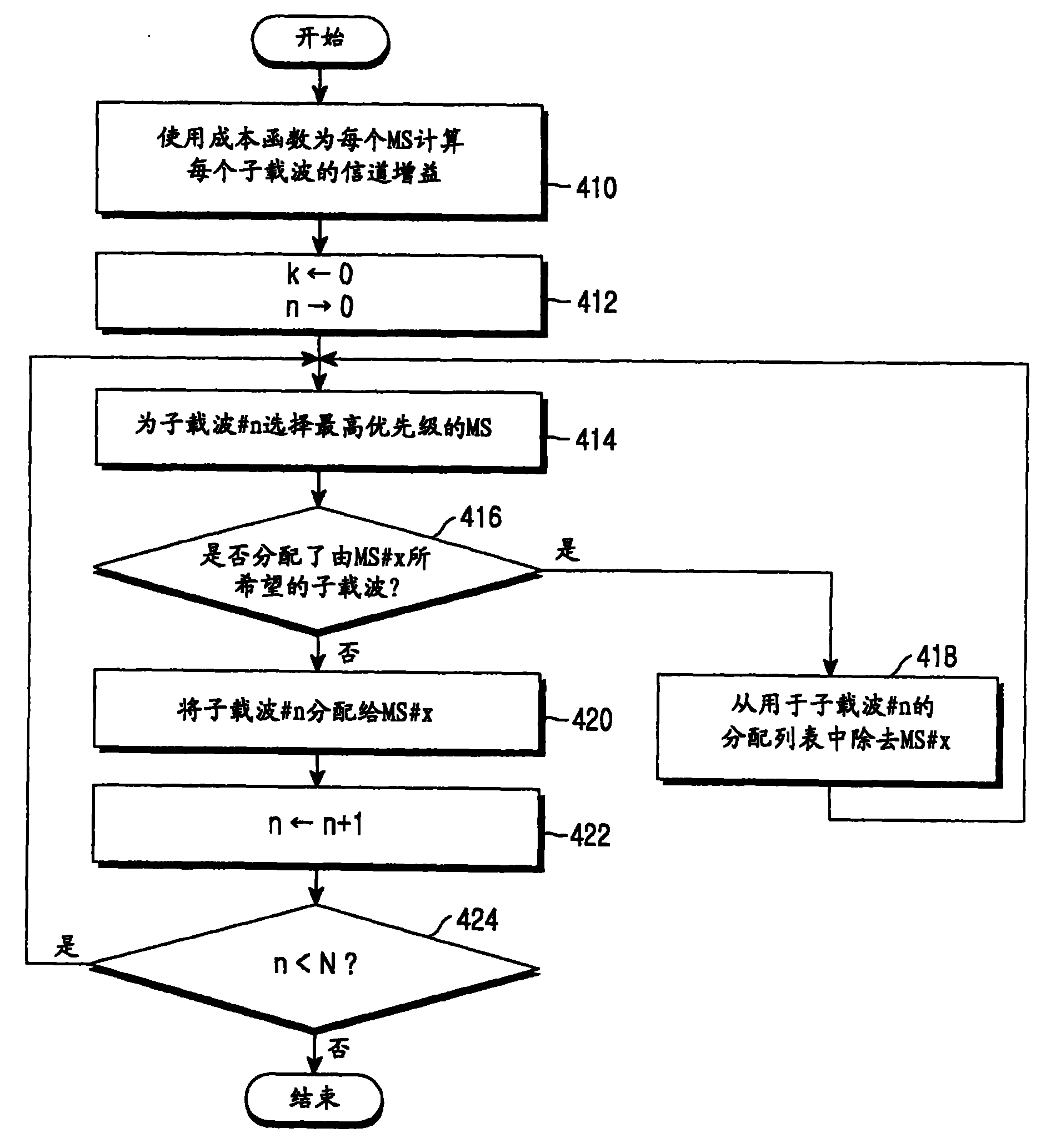
图4是示出按照本发明的资源分配过程的流程图;FIG. 4 is a flowchart illustrating a resource allocation process according to the present invention;
图5是示出按照本发明的资源分配过程的流程图;FIG. 5 is a flowchart illustrating a resource allocation process according to the present invention;
图6A至6C是示出按照子类的数目通过性能分析获得的模拟结果数据的示意图;和6A to 6C are diagrams showing simulation result data obtained by performance analysis according to the number of subclasses; and
图7是示出在子类的数目和复杂性之间相关性的示意图。Fig. 7 is a diagram showing the correlation between the number of subclasses and complexity.
具体实施方式Detailed ways
现在将参考附图详细地描述本发明的几个优选实施例。在下面的描述中,为了清楚和简洁的目的已经省略了在此处结合的已知功能和结构的详细说明。Several preferred embodiments of the present invention will now be described in detail with reference to the accompanying drawings. In the following description, a detailed description of known functions and constructions incorporated herein has been omitted for clarity and conciseness.
本发明的描述将首先描述虑及在移动站(MS)之间的相对信道增益差来分配资源,并且描述虑及每个MS的优先级来分配资源。在此处,信道增益是代表信道状态示范性的参数,并且在此处应当指出,信道状态和信道增益被可互换地使用。Description of the present invention will first describe allocation of resources in consideration of a relative channel gain difference between mobile stations (MSs), and describe allocation of resources in consideration of priority of each MS. Here, channel gain is an exemplary parameter representing channel state, and it should be noted here that channel state and channel gain are used interchangeably.
图3是示出在按照本发明的移动通信系统中的资源分配装置的内部结构的示意图。参考图3,资源分配装置包括调度器310、带宽分配器320、子载波分配器330和比特/功率负载单元340。调度器310接收每个MS业务信息(误码率(BER)、速率、缓存器等等)和信道信息,并且依据所接收的信息确定一组预定使用相应帧的MS。这里,缓存器表示被缓存的数据量,而速率表示MS所需的数据速率。调度器310确定具有可以使用的帧的信道状态的MS(作为MS组)。带宽分配器320接收每个MS业务信息和信道信息,并且依据该接收的信息为由调度器310确定的MS组分配要被分配的频率带宽。子载波分配器330指定预定使用所有子载波的MS。也就是说,子载波分配器330将资源(即,子载波)分配给每个MS。由本发明提出的资源分配方法是在子载波分配器330中执行的。比特/功率负载单元340依据由子载波分配器330分配的资源而为每个MS加载比特和功率。FIG. 3 is a diagram showing the internal structure of a resource allocation device in a mobile communication system according to the present invention. Referring to FIG. 3 , the resource allocation device includes a
现在将在下文详细描述由资源分配装置执行的和由本发明提出的资源分配方法示范性实施例。Exemplary embodiments of the resource allocation method performed by the resource allocation device and proposed by the present invention will now be described in detail below.
第一实施例first embodiment
通常地,在蜂窝移动通信系统中,邻近BS的MS的信道增益优于位于小区边缘的MS的信道增益。因此,位于小区边缘的MS在遍及所有的子载波的平均信道增益方面次于邻近BS的MS。在蜂窝移动通信系统中,大多数的功率消耗是由位于小区边缘的MS造成的。因此,本发明的第一实施例将提出一种资源分配方法,其考虑了由位于小区边缘的MS造成的功率消耗。Generally, in a cellular mobile communication system, the channel gain of an MS adjacent to a BS is better than that of an MS located at the edge of a cell. Therefore, MSs located at the edge of a cell are inferior to MSs of neighboring BSs in terms of average channel gain across all subcarriers. In cellular mobile communication systems, most of the power consumption is caused by MSs located at the cell edge. Therefore, the first embodiment of the present invention will propose a resource allocation method that takes into account power consumption caused by MSs located at the edge of a cell.
本发明的第一实施例提出了用于在资源分配的过程中优选地分配资源给位于小区边缘的MS的成本函数。由本发明的第一实施例提出的成本函数可以表示为等式(2):The first embodiment of the present invention proposes a cost function for optimally allocating resources to MSs located at the edge of a cell during resource allocation. The cost function proposed by the first embodiment of the present invention can be expressed as equation (2):
在等式(2)中,k表示MS的索引,n表示子载波的索引,c(k,n)表示用于第k个MS的第n个子载波的优先级值,|H(k,n)|表示在第k个MS的第n个子载波上的信道增益,以及Rk表示第k个MS所需要的数据速率。等式(2)的成本函数不仅考虑了数据速率,而且考虑了平均信道增益,以反映在MS之间的信道增益差。也就是说,在等式(2)中示出的成本函数是通过将现有的成本函数的分母(即,在等式(1)中示出的成本函数)乘以在所有频带范围上的信道增益的总和获得的。这一点的物理意义可以容易地通过下面分别表示等式(3)和等式(4)的两个参数来理解。In equation (2), k represents the index of the MS, n represents the index of the subcarrier, c(k, n) represents the priority value of the nth subcarrier for the kth MS, |H(k, n )| denotes the channel gain on the nth subcarrier of the kth MS, and R k denotes the data rate required by the kth MS. The cost function of Equation (2) considers not only the data rate but also the average channel gain to reflect the channel gain difference among MSs. That is, the cost function shown in Equation (2) is obtained by multiplying the denominator of the existing cost function (i.e., the cost function shown in Equation (1)) by The sum of the channel gains is obtained. The physical significance of this can be easily understood by the two parameters represented in Equation (3) and Equation (4) below, respectively.
等式(3)可以通过计算每个MS需要的数据速率和在所有子载波上的信道增益的总和来确定每个MS的优先级。等式(4)可以通过计算在所有子载波上的信道增益的总和来确定每个MS对于所有子载波的优先级。因此,由本发明的第一实施例提出的成本函数可以表示为等式(3)和等式(4)的乘积。Equation (3) can determine the priority of each MS by calculating the sum of the data rate required by each MS and the channel gains on all subcarriers. Equation (4) may determine the priority of each MS for all subcarriers by calculating the sum of channel gains over all subcarriers. Therefore, the cost function proposed by the first embodiment of the present invention can be expressed as the product of Equation (3) and Equation (4).
下面从表2中可以清楚地了解,本发明的第一实施例另外考虑了平均信道增益。As can be clearly understood from Table 2 below, the first embodiment of the present invention additionally considers the average channel gain.
表2
当在表2中的条件被以同样的方法应用于现有的成本函数的时候,第一MS和第二MS具有相同的优先级。但是,如果应用由本发明的第一实施例提出的成本函数,则第二MS具有比第一MS更高的优先级。因此,按照本发明的第一实施例,在资源分配期间位于小区边缘的MS具有更高的优先级。When the conditions in Table 2 are applied to the existing cost function in the same way, the first MS and the second MS have the same priority. However, if the cost function proposed by the first embodiment of the present invention is applied, the second MS has a higher priority than the first MS. Therefore, according to the first embodiment of the present invention, MSs located at the cell edge have higher priority during resource allocation.
表3在下面示出了在相同条件下的现有的成本函数和提出的成本函数之间的性能差别。至于在表3中使用的条件,假设两个MS(k=2)的每一个都希望被分配一个子载波(n=2)。此外,假设所需要的接收功率Preq对于每个MS是相等的。也就是说,假设两个MS需要相同的数据速率。最后,假设每个MS的信道增益是
表3table 3

参考表3,当应用现有的成本函数的时候,第一子载波被分配给第一MS,并且第二子载波被分配给第二MS。在这种情况下,需要的传输功率是25Preq。但是,如果应用建议的成本函数,则第二子载波被分配给第一MS,并且第一子载波被分配给第二MS。在这种情况下,需要的传输功率是2.56Preq。因此,在上述的假设之下,如果Preq是10dB,则与现有的成本函数相比较,建议的成本函数可以获得10dB的功率增益。Referring to Table 3, when the existing cost function is applied, the first subcarrier is allocated to the first MS, and the second subcarrier is allocated to the second MS. In this case, the required transmission power is 25P req . However, if the proposed cost function is applied, the second subcarrier is allocated to the first MS, and the first subcarrier is allocated to the second MS. In this case, the required transmission power is 2.56P req . Therefore, under the above assumptions, if P req is 10dB, compared with the existing cost function, the proposed cost function can obtain a power gain of 10dB.
可以以各种各样的形式修改在本发明的第一实施例中提出的成本函数。对其进行的示范性修改可以如等式(5)所示给出:The cost function proposed in the first embodiment of the present invention can be modified in various forms. An exemplary modification to this can be given as shown in equation (5):
在等式(5)中,成本函数是以每个子载波的信道增益的平方总和的形式实现的。即使如等式(5)所示实现成本函数,也可以同样地获得在本发明的第一实施例中所希望的效果。In equation (5), the cost function is implemented as the sum of the squares of the channel gains for each subcarrier. Even if the cost function is implemented as shown in equation (5), the desired effect in the first embodiment of the present invention can be similarly obtained.
图4是示出按照本发明第一实施例的资源分配过程的流程图。假设BS在完成从每个MS采集需要的数据速率信息之后,执行在图4中示出的资源分配过程。FIG. 4 is a flowchart showing a resource allocation process according to the first embodiment of the present invention. It is assumed that the BS performs the resource allocation process shown in FIG. 4 after completing acquisition of required data rate information from each MS.
参考图4,在步骤410中,BS使用成本函数计算用于每个MS的每个子载波的信道增益。在计算用于每个MS的每个子载波的信道增益之后,BS进入到步骤412。Referring to FIG. 4, in
在步骤412中,BS初始化用于识别MS的索引k及用于识别子载波的索引n。也就是说,BS将索引k和n设置为“0”。此后,在步骤414中,BS为第n个子载波选择最高优先级的MS,即,具有最高优先级值的MS。在此处将假设对于第n个子载波的最高优先级的MS是第x个MS。优先级值是使用等式(2)或者等式(5)计算的。In
在步骤416中,BS确定是否已经分配了与第x个MS所希望的子载波数量相同的子载波。如果确定已经分配了与第x个MS所希望的子载波数量相同的子载波,则在步骤418中,BS从用于第n个子载波的分配列表中除去第x个MS,然后返回到步骤414。但是,如果在步骤416中确定还没有分配与第x个MS所希望的子载波数量相同的子载波,则在步骤420中,BS将第n个子载波分配给第x个MS。此后,在步骤422中,BS将索引n增加1以选择下一个子载波。在步骤424中,BS确定索引n的值是否小于N,这里N表示子载波的总数。如果确定索引n的值小于N,则BS返回到步骤414。但是,如果在步骤424确定索引n的值不小于N(n≥N),则BS结束资源分配过程。In
如上所述,本发明的第一实施例虑及了在MS之间的相对信道增益差来分配资源,从而有助于优化资源分配并且将传输功率消耗减到最小。As described above, the first embodiment of the present invention allocates resources in consideration of the relative channel gain difference between MSs, thereby helping to optimize resource allocation and minimize transmission power consumption.
第二实施例second embodiment
本发明的第二实施例是基于以下的事实,对于大多数信道来说,传送损耗(pass loss)MS通常在分配处理中具有低的优先级。在此处,低通损耗MS可以是位于BS附近的MS。因此,本发明的第二实施例优选地将资源分配给除了低通损耗MS之外的MS,然后将剩余的资源分配给低通损耗MS。The second embodiment of the invention is based on the fact that, for most channels, pass loss MSs usually have low priority in the allocation process. Here, the low pass loss MS may be an MS located near the BS. Therefore, the second embodiment of the present invention preferably allocates resources to MSs other than low-pass loss MSs, and then allocates the remaining resources to low-pass loss MSs.
为此,需要提出一种用于区分应当向其优选地分配资源的MS和不必向其优选地分配资源的另一MS的方案。为此目的,本发明的第二实施例准备了用于计算用作区分每个MS的优先级的MS优先级值的方案。此外,第二实施例指定至少一个优先级阈值,并且优选地将资源分配给满足该优先级阈值的MS。For this reason, it is necessary to propose a scheme for distinguishing an MS to which resources should be preferentially allocated from another MS to which resources do not need to be preferentially allocated. For this purpose, the second embodiment of the present invention prepares a scheme for calculating an MS priority value used to distinguish the priority of each MS. Furthermore, the second embodiment specifies at least one priority threshold, and preferably allocates resources to MSs satisfying the priority threshold.
在本发明的第二个实施例中,每个MS的MS优先级值可以通过等式(6)来计算:In the second embodiment of the present invention, the MS priority value of each MS can be calculated by equation (6):
在等式(6)中,r(k)表示分配给第k个MS的MS优先级值。由等式(6)计算的MS优先级值考虑了由每个MS所需要的数据速率和平均信道增益。通过使用被表示为所需要的数据速率和遍及所有子载波的信道增益的总和的1维计算,第二实施例可以显著地降低复杂度。In Equation (6), r(k) represents an MS priority value assigned to a k-th MS. The MS priority value calculated by equation (6) takes into account the data rate and average channel gain required by each MS. The second embodiment can significantly reduce complexity by using a 1-dimensional calculation expressed as the sum of the required data rate and channel gain over all subcarriers.
按照等式(6),具有更低的平均信道增益和更高的所需要的数据速率的MS具有较高的MS优先级值r(k)。第二实施例基于所计算的MS优先级值确定每个MS的资源分配优先级。此外,第二实施例按照所确定的资源分配优先级的顺序为每个MS分配资源。基于对于每个子载波给出的信道增益来执行每个MS的资源分配。也就是说,第二实施例以具有高信道增益的子载波的降序来分配与MS所需要的子载波数量相同的子载波。如果所希望的子载波已被分配给另一个MS,则第二实施例分配具有次最高的信道增益的子载波。According to equation (6), MSs with lower average channel gain and higher required data rates have higher MS priority values r(k). The second embodiment determines the resource allocation priority of each MS based on the calculated MS priority value. In addition, the second embodiment allocates resources to each MS in the order of determined resource allocation priorities. Resource allocation for each MS is performed based on the channel gain given for each subcarrier. That is, the second embodiment allocates the same number of subcarriers as required by the MS in descending order of subcarriers with high channel gain. If the desired subcarrier has already been allocated to another MS, the second embodiment allocates the subcarrier with the next highest channel gain.
如上所述,由本发明第二实施例提出的资源分配方法被分成依据MS优先级值来排列资源分配顺序的过程和按照资源分配的顺序为每个MS分配子载波的过程。As described above, the resource allocation method proposed by the second embodiment of the present invention is divided into a process of arranging resource allocation order according to MS priority values and a process of allocating subcarriers to each MS according to the resource allocation order.
图5是示出按照本发明第二实施例的资源分配过程的流程图。假设在BS完成从每个MS采集所需要的数据速率信息之后执行在图5中示出的资源分配过程。FIG. 5 is a flowchart showing a resource allocation process according to a second embodiment of the present invention. It is assumed that the resource allocation process shown in FIG. 5 is performed after the BS finishes collecting required data rate information from each MS.
参考图5,在步骤510中,BS使用成本函数计算用于每个MS的MS优先级值。在步骤512中,BS通过以MS优先级值的降序的顺序来排列所有MS而产生MS列表。在步骤514中,BS在MS列表中选择在MS之中具有最高的MS优先级值的MS。在此处假设具有最高的MS优先级值的MS是第x个MS。Referring to FIG. 5, in
在步骤516中,BS将在其可分配的子载波之中表示最好的信道状态的子载波分配给第x个MS。在步骤518中,BS确定是否已经分配了与第x个MS所希望的子载波数量相同的子载波。如果确定还没有分配与第x个MS所希望的子载波数量相同的子载波,则BS返回到步骤516。In
但是,如果在步骤518中确定已经分配了与第x个MS所希望的子载波数量相同的子载波,则在步骤520中,BS从第n个子载波的MS列表中除去第x个MS。此后,在步骤522中,BS确定在MS列表中是否存在任何的MS。如果其确定在MS列表中存在任何的MS,则BS返回到步骤514。但是,如果在步骤522中确定在MS列表中没有MS,则BS结束资源分配过程。However, if it is determined in
在上文的详细说明中,假设将唯一的优先级分配给每个MS。但是,还可以通过分配至少一个优先级阈值、将资源分配顺序划分为多个子类以及为每个子类分配资源来实现第二实施例。In the detailed description above, it was assumed that a unique priority was assigned to each MS. However, the second embodiment can also be implemented by assigning at least one priority threshold, dividing the resource allocation order into a plurality of subclasses, and allocating resources to each subclass.
图6A至6C是示出按照子类的数目通过性能分析获得的模拟结果数据的示意图。在图6A中假设MS均匀分布在整个小区上。在图6B中假设MS仅仅分布在该小区特定的区域中。在图6C中假设在MS之间没有传送损耗差值。此外,假设在使用64个MS和512个子载波的移动通信系统中的语音业务∶视频业务∶数据业务之比是37∶23∶4。6A to 6C are diagrams showing simulation result data obtained by performance analysis according to the number of subclasses. In FIG. 6A it is assumed that MSs are evenly distributed over the entire cell. In FIG. 6B it is assumed that MSs are only distributed in a specific area of the cell. It is assumed in FIG. 6C that there is no transmission loss difference between MSs. Furthermore, it is assumed that the ratio of voice traffic:video traffic:data traffic in a mobile communication system using 64 MSs and 512 subcarriers is 37:23:4.
可以从图6A至6C中获悉,由本发明提出的资源分配方法示出了与子类的数目无关的恒定性能。在蜂窝移动通信系统中,通常MS被均匀地分配在小区中。从这个观点,可以从图6A中获悉,可以获得与使用的优先级阈值的数目无关的恒定信噪比(SNR)。It can be learned from FIGS. 6A to 6C that the resource allocation method proposed by the present invention shows a constant performance independent of the number of subclasses. In a cellular mobile communication system, MSs are usually evenly distributed in cells. From this point of view, it can be learned from Fig. 6A that a constant signal-to-noise ratio (SNR) can be obtained independent of the number of priority thresholds used.
图7是示出在子类的数目和复杂性之间相关性的示意图。对于图7中的模拟,假设在使用64个MS和512个子载波的移动通信系统中的语音业务∶视频业务∶数据业务之比是37∶23∶4。Fig. 7 is a diagram showing the correlation between the number of subclasses and complexity. For the simulation in FIG. 7, it is assumed that the ratio of voice traffic: video traffic: data traffic in a mobile communication system using 64 MSs and 512 subcarriers is 37:23:4.
可以从图7中获悉,子类数目的增加降低了复杂度。但是,如果子类的数目超过特定的值K,则复杂度保持不变。因此,在本发明的第二实施例中,最好是考虑到性能和复杂度而将子类的数目确定为K。It can be learned from Figure 7 that the increase in the number of subclasses reduces the complexity. However, if the number of subclasses exceeds a certain value K, the complexity remains the same. Therefore, in the second embodiment of the present invention, it is preferable to determine the number of subclasses as K in consideration of performance and complexity.
如上所述,本发明的第二实施例提出了使用1维计算为每个MS分配资源的方法。因此,与基于现有的成本函数的资源分配方法相比较,由本发明的第二实施例提出的资源分配方法可以显著地降低复杂度。As described above, the second embodiment of the present invention proposes a method of allocating resources for each MS using 1-dimensional calculation. Therefore, compared with the existing cost function-based resource allocation method, the resource allocation method proposed by the second embodiment of the present invention can significantly reduce the complexity.
如可以从上文的描述中理解的,本发明虑及在MS之间的相对信道增益差来分配资源,从而有助于优化资源分配并且将传输功率消耗减到最小。此外,本发明使用1维计算为每个MS分配资源。因此,与基于现有的成本函数的资源分配方法相比较,所提出的资源分配方法可以显著地降低系统复杂性。As can be understood from the above description, the present invention allocates resources in consideration of relative channel gain difference between MSs, thereby helping to optimize resource allocation and minimize transmission power consumption. Furthermore, the present invention uses 1-dimensional calculations to allocate resources for each MS. Therefore, compared with the existing resource allocation methods based on cost functions, the proposed resource allocation method can significantly reduce the system complexity.
虽然已经参考其某些优选实施例示出和描述了本发明,但是本领域技术人员应当明白,在不背离由所附权利要求书所定义的本发明的精神和范围的情况下,可以对其做出各种形式上和细节上的修改。While the invention has been shown and described with reference to certain preferred embodiments thereof, it will be apparent to those skilled in the art that changes may be made thereto without departing from the spirit and scope of the invention as defined by the appended claims. Modifications in various forms and details were made.
Claims (14)
Applications Claiming Priority (2)
| Application Number | Priority Date | Filing Date | Title |
|---|---|---|---|
| KR20050081470 | 2005-09-01 | ||
| KR81470/05 | 2005-09-01 |
Publications (1)
| Publication Number | Publication Date |
|---|---|
| CN1968492A true CN1968492A (en) | 2007-05-23 |
Family
ID=37497861
Family Applications (1)
| Application Number | Title | Priority Date | Filing Date |
|---|---|---|---|
| CNA2006101635854A Pending CN1968492A (en) | 2005-09-01 | 2006-09-01 | Method for allocating resouce in a mobile communication system |
Country Status (4)
| Country | Link |
|---|---|
| US (1) | US20070058583A1 (en) |
| EP (1) | EP1760966A2 (en) |
| KR (1) | KR100744365B1 (en) |
| CN (1) | CN1968492A (en) |
Cited By (3)
| Publication number | Priority date | Publication date | Assignee | Title |
|---|---|---|---|---|
| WO2012113306A1 (en) * | 2011-02-22 | 2012-08-30 | 华为技术有限公司 | Priority adjustment method and relevant device |
| CN101494490B (en) * | 2009-01-04 | 2012-10-17 | 北京邮电大学 | Feedback-based random distributed self-organizing communication method and system |
| CN103907390A (en) * | 2011-09-16 | 2014-07-02 | 诺基亚通信公司 | Methods and apparatus for radio resource allocation |
Families Citing this family (17)
| Publication number | Priority date | Publication date | Assignee | Title |
|---|---|---|---|---|
| US8189621B2 (en) | 2006-05-12 | 2012-05-29 | Microsoft Corporation | Stack signaling to application with lack of requested bandwidth |
| JP2008072381A (en) * | 2006-09-13 | 2008-03-27 | Toshiba Corp | Base station, mobile communication system, and channel allocation method |
| US8144793B2 (en) | 2006-12-12 | 2012-03-27 | Microsoft Corporation | Cognitive multi-user OFDMA |
| US7929623B2 (en) * | 2007-03-30 | 2011-04-19 | Microsoft Corporation | FEC in cognitive multi-user OFDMA |
| US7970085B2 (en) | 2007-05-08 | 2011-06-28 | Microsoft Corporation | OFDM transmission and reception for non-OFDMA signals |
| US8254328B2 (en) * | 2007-12-17 | 2012-08-28 | Nec Corporation | Scheduling method for multi-user MIMO in which resource blocks are allocated based on priorities |
| US8374130B2 (en) | 2008-01-25 | 2013-02-12 | Microsoft Corporation | Orthogonal frequency division multiple access with carrier sense |
| EP2139290B1 (en) * | 2008-06-19 | 2016-09-07 | Alcatel Lucent | Method in a wireless communication network to perform scheduling of resources and scheduler for a wireless communication network |
| US8923844B2 (en) * | 2009-08-14 | 2014-12-30 | Futurewei Technologies, Inc. | Coordinated beam forming and multi-user MIMO |
| US8594031B2 (en) * | 2009-10-09 | 2013-11-26 | Qualcomm Incorporated | Method and apparatus for providing quality of service for similar priority logical channels |
| CN101945482B (en) * | 2010-09-21 | 2012-11-21 | 华为技术有限公司 | Resource allocation method for coordinated multiple point (CoMP) mode and base station |
| CN102469463B (en) * | 2010-11-04 | 2014-06-11 | 中兴通讯股份有限公司 | Method, device, system and equipment for allocating marginal frequency resource |
| WO2015038141A1 (en) * | 2013-09-13 | 2015-03-19 | Hewlett-Packard Development Company, L.P. | Subcarrier power reallocation |
| CN105007629B (en) * | 2015-03-16 | 2019-01-22 | 北京交通大学 | Radio resource allocation method in ultra-dense small cell network system |
| US10477412B2 (en) | 2017-10-27 | 2019-11-12 | Hewlett Packard Enterprise Development Lp | Determine channel plans |
| GB2575515A (en) * | 2018-07-13 | 2020-01-15 | Nec Corp | Communication system |
| US11659588B1 (en) * | 2021-01-27 | 2023-05-23 | Amazon Technologies, Inc. | Multi-tier coordinated channel prioritization system |
Family Cites Families (6)
| Publication number | Priority date | Publication date | Assignee | Title |
|---|---|---|---|---|
| US6157627A (en) | 1997-06-23 | 2000-12-05 | Telefonaktiebolaget Lm Ericsson | Channel allocation for mixed multislot services |
| EP1106028B1 (en) | 1998-08-20 | 2006-03-22 | QUALCOMM Incorporated | System and method for priority access channel assignment in a cellular telephone system |
| KR100438173B1 (en) | 2001-08-28 | 2004-07-01 | 엘지전자 주식회사 | Management method for channel state of voice processing system |
| US7412212B2 (en) * | 2002-10-07 | 2008-08-12 | Nokia Corporation | Communication system |
| US7257407B2 (en) * | 2003-03-26 | 2007-08-14 | Sony Corporation | System and method for dynamically allocating data rates and channels to clients in a wireless network |
| KR20060038786A (en) | 2004-11-01 | 2006-05-04 | 삼성전자주식회사 | System and method for allocating resources between physical layer and media access control layer in radio access protocol |
-
2006
- 2006-09-01 CN CNA2006101635854A patent/CN1968492A/en active Pending
- 2006-09-01 US US11/514,450 patent/US20070058583A1/en not_active Abandoned
- 2006-09-01 EP EP06018354A patent/EP1760966A2/en not_active Withdrawn
- 2006-09-01 KR KR1020060084350A patent/KR100744365B1/en not_active Expired - Fee Related
Cited By (3)
| Publication number | Priority date | Publication date | Assignee | Title |
|---|---|---|---|---|
| CN101494490B (en) * | 2009-01-04 | 2012-10-17 | 北京邮电大学 | Feedback-based random distributed self-organizing communication method and system |
| WO2012113306A1 (en) * | 2011-02-22 | 2012-08-30 | 华为技术有限公司 | Priority adjustment method and relevant device |
| CN103907390A (en) * | 2011-09-16 | 2014-07-02 | 诺基亚通信公司 | Methods and apparatus for radio resource allocation |
Also Published As
| Publication number | Publication date |
|---|---|
| KR20070026244A (en) | 2007-03-08 |
| US20070058583A1 (en) | 2007-03-15 |
| EP1760966A2 (en) | 2007-03-07 |
| KR100744365B1 (en) | 2007-07-30 |
Similar Documents
| Publication | Publication Date | Title |
|---|---|---|
| CN1968492A (en) | Method for allocating resouce in a mobile communication system | |
| CN100574176C (en) | Resource allocation method in multi-carrier communication system | |
| CN1162993C (en) | Method for allocating radio resources, radio equipment and radio communication system | |
| CN1620177A (en) | Apparatus and method for allocating channel in a wireless communication system | |
| CN1484906A (en) | OFDMA with adaptive subcarrier cluster configuration and selective loading | |
| CN1481633A (en) | Multi-carrier communication with group-based subcarrier allocation | |
| CN1741412A (en) | Sub-channel distributing method in radio network | |
| CN101044780A (en) | Method of allocating subcarriers in orthogonal frequency division multiplexing (OFDM) cellular system | |
| CN1926786A (en) | Method and system for allocating frequency resources based on multiple frequency reuse factors in a cellular communication system | |
| KR101627164B1 (en) | Apparatus and method for allocating resource in multi carrier system | |
| Bashar et al. | Admission control and resource allocation in a heterogeneous OFDMA wireless network | |
| CN102144425A (en) | Fractional frequency reuse in OFDMA | |
| KR20090030848A (en) | Band Allocation Scheduling Apparatus and Method for Communication Systems Using Multiple Frequency Bands | |
| CN101039299A (en) | Cross-layer scheduling method in OFDM multi-antenna system | |
| CN1826016A (en) | Apparatus and method for wireless resources allocation | |
| CN1943180A (en) | Method for performing scheduling algorithm with minimum resource parameter and calculation thereof | |
| CN1893343A (en) | Multi-carrier-wave IISDPA down-converter business channel resource distribution and data transmission method | |
| CN101437292A (en) | Method and apparatus for scheduling time frequency resource of OFDM system | |
| CN1722893A (en) | The resource allocation scheduling method that is used for cellular communication system | |
| CN1780458A (en) | Wireless channel resource allocation based on time frequency | |
| CN1520199A (en) | A multi-slot packet wireless resource allocation method | |
| CN100338968C (en) | Quick dynamic channel distribution method for time-division CDMA communication system | |
| CN1826012A (en) | Method and device for user reorganization in digital cellular communication system | |
| CN103079215B (en) | Multi-cell combined optimization method on basis of sector fairness | |
| CN102480734B (en) | Time-frequency resource distributing method and device |
Legal Events
| Date | Code | Title | Description |
|---|---|---|---|
| C06 | Publication | ||
| PB01 | Publication | ||
| C10 | Entry into substantive examination | ||
| SE01 | Entry into force of request for substantive examination | ||
| C02 | Deemed withdrawal of patent application after publication (patent law 2001) | ||
| WD01 | Invention patent application deemed withdrawn after publication |