CN1276857A - Solar water heater - Google Patents
Solar water heater Download PDFInfo
- Publication number
- CN1276857A CN1276857A CN98810286A CN98810286A CN1276857A CN 1276857 A CN1276857 A CN 1276857A CN 98810286 A CN98810286 A CN 98810286A CN 98810286 A CN98810286 A CN 98810286A CN 1276857 A CN1276857 A CN 1276857A
- Authority
- CN
- China
- Prior art keywords
- heater
- chamber
- glass
- water
- heat
- Prior art date
- Legal status (The legal status is an assumption and is not a legal conclusion. Google has not performed a legal analysis and makes no representation as to the accuracy of the status listed.)
- Pending
Links
Images



Classifications
-
- F—MECHANICAL ENGINEERING; LIGHTING; HEATING; WEAPONS; BLASTING
- F24—HEATING; RANGES; VENTILATING
- F24S—SOLAR HEAT COLLECTORS; SOLAR HEAT SYSTEMS
- F24S80/00—Details, accessories or component parts of solar heat collectors not provided for in groups F24S10/00-F24S70/00
- F24S80/40—Casings
- F24S80/45—Casings characterised by the material
-
- F—MECHANICAL ENGINEERING; LIGHTING; HEATING; WEAPONS; BLASTING
- F24—HEATING; RANGES; VENTILATING
- F24S—SOLAR HEAT COLLECTORS; SOLAR HEAT SYSTEMS
- F24S60/00—Arrangements for storing heat collected by solar heat collectors
- F24S60/30—Arrangements for storing heat collected by solar heat collectors storing heat in liquids
-
- F—MECHANICAL ENGINEERING; LIGHTING; HEATING; WEAPONS; BLASTING
- F24—HEATING; RANGES; VENTILATING
- F24S—SOLAR HEAT COLLECTORS; SOLAR HEAT SYSTEMS
- F24S80/00—Details, accessories or component parts of solar heat collectors not provided for in groups F24S10/00-F24S70/00
- F24S80/50—Elements for transmitting incoming solar rays and preventing outgoing heat radiation; Transparent coverings
-
- F—MECHANICAL ENGINEERING; LIGHTING; HEATING; WEAPONS; BLASTING
- F24—HEATING; RANGES; VENTILATING
- F24S—SOLAR HEAT COLLECTORS; SOLAR HEAT SYSTEMS
- F24S80/00—Details, accessories or component parts of solar heat collectors not provided for in groups F24S10/00-F24S70/00
- F24S80/70—Sealing means
-
- F—MECHANICAL ENGINEERING; LIGHTING; HEATING; WEAPONS; BLASTING
- F24—HEATING; RANGES; VENTILATING
- F24S—SOLAR HEAT COLLECTORS; SOLAR HEAT SYSTEMS
- F24S80/00—Details, accessories or component parts of solar heat collectors not provided for in groups F24S10/00-F24S70/00
- F24S80/50—Elements for transmitting incoming solar rays and preventing outgoing heat radiation; Transparent coverings
- F24S80/56—Elements for transmitting incoming solar rays and preventing outgoing heat radiation; Transparent coverings characterised by means for preventing heat loss
-
- F—MECHANICAL ENGINEERING; LIGHTING; HEATING; WEAPONS; BLASTING
- F24—HEATING; RANGES; VENTILATING
- F24S—SOLAR HEAT COLLECTORS; SOLAR HEAT SYSTEMS
- F24S80/00—Details, accessories or component parts of solar heat collectors not provided for in groups F24S10/00-F24S70/00
- F24S80/50—Elements for transmitting incoming solar rays and preventing outgoing heat radiation; Transparent coverings
- F24S80/58—Elements for transmitting incoming solar rays and preventing outgoing heat radiation; Transparent coverings characterised by their mountings or fixing means
-
- Y—GENERAL TAGGING OF NEW TECHNOLOGICAL DEVELOPMENTS; GENERAL TAGGING OF CROSS-SECTIONAL TECHNOLOGIES SPANNING OVER SEVERAL SECTIONS OF THE IPC; TECHNICAL SUBJECTS COVERED BY FORMER USPC CROSS-REFERENCE ART COLLECTIONS [XRACs] AND DIGESTS
- Y02—TECHNOLOGIES OR APPLICATIONS FOR MITIGATION OR ADAPTATION AGAINST CLIMATE CHANGE
- Y02E—REDUCTION OF GREENHOUSE GAS [GHG] EMISSIONS, RELATED TO ENERGY GENERATION, TRANSMISSION OR DISTRIBUTION
- Y02E10/00—Energy generation through renewable energy sources
- Y02E10/40—Solar thermal energy, e.g. solar towers
Landscapes
- Engineering & Computer Science (AREA)
- Physics & Mathematics (AREA)
- Life Sciences & Earth Sciences (AREA)
- Sustainable Development (AREA)
- Sustainable Energy (AREA)
- Thermal Sciences (AREA)
- Chemical & Material Sciences (AREA)
- Combustion & Propulsion (AREA)
- Mechanical Engineering (AREA)
- General Engineering & Computer Science (AREA)
- Heat-Pump Type And Storage Water Heaters (AREA)
- Physical Or Chemical Processes And Apparatus (AREA)
Abstract
Description
技术领域technical field
本发明涉及太阳能热水器,特别是整体收集存储式太阳能热水器。The invention relates to a solar water heater, in particular to an integral collection and storage solar water heater.
背景技术Background technique
能供热水的太阳能加热器已很普通并已在市场上供售多年。这种加热器具有一个收集器依靠它太阳能能被用来加热水,和一个容器用来存储加热的水。收集器和存储容器可以分开或集合成一个单元—“整体收集存储加热器”。Solar heaters that provide hot water are common and have been on the market for many years. This heater has a collector by which solar energy is used to heat water, and a container to store the heated water. The collector and storage container can be separated or combined into one unit - "Integral Collection Storage Heater".
最简单的整体收集存储加热器包括一个设有黑色能量吸收表面的水箱,该黑面设在水箱的顶部,通过一个透明的盖接受太阳能的辐射,水箱的底部和侧边都被绝热。采用这种装置,在有阳光的时候,输入水箱内的冷水能被加热并在需供热水时可被取出。整体收集存储的构造虽然简单,但在世界上大部分地方都多采用收集器和存储容器分开的热水器。The simplest integral harvesting storage heater consists of a tank with a black energy absorbing surface placed on top of the tank to receive solar radiation through a transparent cover, and the bottom and sides of the tank are insulated. With this arrangement, the cold water fed into the tank can be heated when there is sunlight and can be taken out when hot water is required. Although the structure of the overall collection and storage is simple, water heaters with separate collectors and storage containers are often used in most parts of the world.
过去整体收集存储加热器的效能受到限制是由于(i)通过透明盖的比较大的夜间热损失,(ii)当吸能表面从上面加热时水的热分层现象,(iii)需要对热水供应加压。第一个问题即控制夜间的热损失已可由透明绝热材料的供售而大部分得到解决(A.Goetzberger & M.Rommel文,见1987年9月“太阳能”杂志211-219页)。另外两个问题仍然存在,其解决方案构成本发明的一部分。The effectiveness of integral collection storage heaters has been limited in the past due to (i) relatively large night-time heat losses through the transparent cover, (ii) thermal stratification of water when the energy-absorbing surface is heated from above, (iii) the need for thermal The water supply is pressurized. The first problem, controlling nighttime heat loss, has been largely solved by the availability of transparent thermal insulation materials (A. Goetzberger & M. Rommel, see "Solar Energy" magazine, September 1987, pp. 211-219). Two other problems remain, the solutions of which form part of the present invention.
第二个问题即当从上面加热时水的热分层现象来自当前市售的整体收集加热器,因为它必需倾斜地朝着太阳并装在具有斜度的屋顶上,总是采用不透明的黑色的水箱吸热器表面。这一点与限制在近乎水平状态下工作的太阳能池热水器不同。采用不透明的吸热器表面当然会知道最好采用金属水箱,因为它能对内部的液体压力提供良好的结构支撑并能敷设可选用的表面来减少辐射的热损失。另外,与塑料不同,金属材料不会在水箱吸热器壁内引入显著的热阻力。The second problem of thermal stratification of the water when heated from above comes from the current commercially available integral collector heaters as it has to be slanted towards the sun and mounted on sloped roofs, always in opaque black surface of the water tank heat sink. This differs from solar pool heaters, which are limited to near-horizontal operation. Using an opaque heat sink surface will of course know that a metal tank is preferred as it provides good structural support for the internal liquid pressure and allows laying of optional surfaces to reduce radiative heat loss. Also, unlike plastic, metallic materials do not introduce significant thermal resistance within the tank absorber walls.
第三个问题即需要对热水供应加压通常是在采用管状水箱或在某些情况下采用热交换器时提出的(P.T.Tsilingiris文,见1997年6月“太阳能”杂志245-256页)。但热交换器会增加单元的费用并且当该单元倾斜时并不能消除作用在水箱内壁上的静水压力。The third problem, the need to pressurize the hot water supply, is usually raised when tubular tanks or, in some cases, heat exchangers are used (P.T. . But the heat exchanger adds expense to the unit and does not eliminate the hydrostatic pressure on the inner walls of the tank when the unit is tilted.
除了将可选用的表面敷设到太阳能收集器的吸热器上所需的费用外,太阳能热水器的总的高昂费用可以想像地也会妨碍许多家庭来安装这种系统。因此需要有一种在价格上更能与采用其他形式能源的热水器竞争的太阳能热水器。特别是当人们考虑到采用太阳能有利于环保时更为需要。In addition to the cost of laying the optional surface onto the solar collector's heat sink, the overall high cost of solar water heaters would also conceivably prevent many homes from installing such a system. There is therefore a need for a solar water heater that is more competitive in price with water heaters that use other forms of energy. Especially when people consider that the adoption of solar energy is beneficial to environmental protection, it is more needed.
本发明的综述Summary of the invention
本发明的目的是要提供一种太阳能热水器,它能以比现有热水器低的成本制造出来,并且至少与现有热水器同样有效。本发明的一部分为一个利用低费用材料和低费用制造过程的加热器的设计。It is an object of the present invention to provide a solar water heater which can be manufactured at a lower cost than existing water heaters and which is at least as effective as existing water heaters. Part of the present invention is the design of a heater utilizing low cost materials and low cost manufacturing processes.
在第一方案中,本发明提供的太阳能热水器具有一个热绝缘的水室,该室有一吸收太阳能的内部底表面、和一个能透过太阳能辐射的顶、一个进水口、和一个出水口,其时所说顶能够承受所说加热器倾侧时所说室内液体的压力。In the first scheme, the solar water heater provided by the present invention has a thermally insulated water chamber, the chamber has an inner bottom surface for absorbing solar energy, and a roof for transmitting solar radiation, a water inlet, and a water outlet, which Said top can bear the pressure of said indoor liquid when said heater is tilted.
在第二方案中,本发明提供的太阳能热水器具有:一个热绝缘的充有液体的室,该室有一能吸收太阳能的内部底表面、和一个能透过太阳能辐射的顶,其时所说顶能够承受所说加热器倾侧时所说室内液体的压力;和一个延伸通过所说室的至少一部分的管状热交换器,所说热交换器在所说室之外有一进水口和一出水口。In a second aspect, the present invention provides a solar water heater having: a thermally insulated liquid-filled chamber having an inner bottom surface capable of absorbing solar energy, and a roof transparent to solar radiation, wherein said roof and a tubular heat exchanger extending through at least a portion of said chamber, said heat exchanger having a water inlet and a water outlet outside said chamber.
上述热水器可比拟作用透明层覆盖的太阳能池。太阳能池加热器比一般具有不透明(黑)顶的加热器的效益高早就在文献中提到过(例如可见1970年在澳大利亚Melbourne的ISES会议上I.Tanishita的论文“顶上具有透明的和黑色的塑料膜的水枕加热器”)。但本加热器由于结构上的特点,使它能在倾斜的状态而不是在水平的状态下使用,同时仍旧保留极简单的构造,因此这种加热器能够在倾斜的表面上如建筑物的屋顶上使用。另外加热器倾侧后能更多地接受太阳的辐射,特别是在冬季,因为太阳会以较大的投射面积照到收集器上。水箱采用透明的顶表面的效益将在下面详细说明,但这里可先提一下,水室在采用透明的顶表面后能显著地减少顶表面的温度(热损失)和水被煮沸的倾向,从而可克服早先公认的问题(ii)。The water heater described above can be compared to a solar pool covered by a transparent layer. The higher efficiency of solar pool heaters than conventional heaters with opaque (black) roofs has long been mentioned in the literature (see for example I. Tanishita's paper "Roof with transparent and water pillow heater with black plastic film"). However, due to the structural characteristics of this heater, it can be used in an inclined state rather than in a horizontal state, while still retaining a very simple structure, so this heater can be used on inclined surfaces such as the roof of a building. use on. In addition, the heater can receive more solar radiation after tilting, especially in winter, because the sun will shine on the collector with a larger projected area. The benefits of using a transparent top surface for the water tank will be described in detail below, but it can be mentioned here that the water chamber can significantly reduce the temperature (heat loss) of the top surface and the tendency of the water to be boiled after using a transparent top surface, thereby Problem (ii) recognized earlier can be overcome.
上述热水器还与另一种采用透明室的加热器不同,在那种加热器内用一种变黑的液体流动通用该室,如同在德国专利2608302号“接受太阳能的方法和装置”中所说明的那样。该设计并没有把从太阳吸收的能量存储在透明室内,而是采用一个具有连续液体循环的外部热交换器将能量转移给第二液体。该设计不像整体收集存储思想那样具有简单的本质可以不需任何特殊的液体和强制的液体循环。The above-mentioned water heater is also different from another heater which uses a transparent chamber in which a blackened liquid flows through the chamber, as described in German Patent No. 2608302 "Method and device for receiving solar energy" like that. Instead of storing the energy absorbed from the sun inside the transparent chamber, the design uses an external heat exchanger with continuous liquid circulation to transfer the energy to a second liquid. The design is not as simple in nature as the overall collection storage idea can do without any special liquid and forced liquid circulation.
按照本发明,加热器的室包括一个基部,该基部可方便地用旋转模压法或注射模压法制备。在旋转模压法中,粉末状聚合物被放置在一个金属阴模内。然后在外部用空气加热该金属模,并使它缓慢旋转通过两条水平轴线。热塑性材料在接触到热的金属表面时被熔化,并覆盖在模型的内侧成为具有均匀壁厚的一层。在加热周期后,模型被冷却并被拿掉。这样便可以低廉的费用在一个工步的过程内制出一个空箱(包括金属镶嵌件如螺纹件)。制造基部用的较优材料为聚丙烯,但其他塑料也可使用。在旋转模压过程中还可将绝热层引用到基部内(这样可进一步减少生产费用)。聚丙烯泡沫塑料为较优的绝热材料。旋转模压法在“塑料的旋转模压”一书(R.J.Crawford编,1996年纽约的Wiley出版)中有详细说明,其整个内容在这里被引用,供交叉参考。According to the invention, the chamber of the heater comprises a base, which may conveniently be produced by rotational molding or injection molding. In rotational molding, powdered polymer is placed within a female metal mold. The metal mold is then heated externally with air and slowly rotated through two horizontal axes. The thermoplastic melts on contact with the hot metal surface and coats the inside of the model in a layer of uniform wall thickness. After the heating cycle, the mold is cooled and removed. In this way, an empty box (including metal inserts such as screw parts) can be produced at a low cost in the course of one working step. The preferred material for making the base is polypropylene, but other plastics can also be used. It is also possible to incorporate the thermal insulation layer into the base during the rotational molding process (which further reduces production costs). Polypropylene foam is a better insulation material. Rotational molding is described in detail in "Rotary Molding of Plastics", edited by R. J. Crawford, Wiley, New York, 1996, the entire contents of which are incorporated herein by cross-reference.
加热器的基部可具有任何形状,但最好为长方形,基部实质上为一浅而敞开的箱。本发明的优点之一为加热器的基部能同时用作外壳、绝热层和水箱。这与采用一个分开的水箱和绝热箱的现有的整体收集存储的设计不同。这个特点可降低制造费用。The base of the heater may be of any shape but is preferably rectangular, essentially a shallow open box. One of the advantages of the present invention is that the base of the heater can be used simultaneously as housing, insulation and tank. This differs from existing integral collection storage designs which employ a separate water tank and insulated tank. This feature reduces manufacturing costs.
本发明并不一定需要采用上述具有合一的外壳、绝热层和水箱的室基部。该室也可采用一个能透过太阳辐射的水箱被包含在一个具有能吸收太阳能的内底表面的绝热箱内的做法。但室基部的合一的外壳、绝热层和水箱具有绝热层能在结构上起作用的优点。The present invention does not necessarily require the use of the chamber base described above with the integrated shell, insulation and water tank. The chamber may also be provided with a solar radiation transparent water tank contained within an insulated box having an inner bottom surface capable of absorbing solar energy. But the integrated shell, insulation and water tank at the base of the chamber has the advantage that the insulation can play a structural role.
按照本发明,加热器的室内侧也可像室底部那样有效地吸收太阳能,只要把室的合适表面涂黑便可促进太阳能的被吸收。吸收太阳能的表面最好具有无光泽的而不是有光泽的光洁度。室的侧边和底部的外表面可以是任何颜色。According to the present invention, the interior side of the heater is also as effective at absorbing solar energy as the bottom of the chamber, and the absorption of solar energy can be facilitated by simply painting suitable surfaces of the chamber black. Surfaces that absorb solar energy preferably have a matte rather than a glossy finish. The outer surfaces of the sides and bottom of the chamber can be any color.
除了基部以外,按照本发明的室还具有一片透明材料作为上表面。该材料的边缘被密封在室基部上使该室能防泄漏。构成上表面的片材可以是塑料、玻璃或塑料薄膜,最好为钢化玻璃。如同下面将要详细说明的那样,在该室上表面之上还可用绝热层来使室顶绝热。In addition to the base, the chamber according to the invention has a sheet of transparent material as the upper surface. The edges of the material are sealed to the chamber base making the chamber leak-proof. The sheet forming the upper surface can be plastic, glass or plastic film, preferably toughened glass. The roof of the chamber may also be insulated by an insulating layer over the upper surface of the chamber, as will be described in more detail below.
在加热器室上表面之上的透明绝热层最好由一个透明盖和一块透明绝热板构成。透明绝热层除了有助于将液体吸收的太阳能保持在室内外还能在结构上起作用,因为它能增强用透明层覆盖的加热器室的上表面。太阳能池用透明层覆盖(如用塑料膜)可减少热损失是人所共知的(见A.F.Clark和W.C.Dickinson编“太阳能技术手册”A部12章,1980年Marcel Dekker出版)。但太阳能收集器的倾侧对加热器的设计提出了另外的限制,因为透明覆盖层必须能承受作用在其上的静液压力。现有的太阳能池不能做到这一点,因此有时被称为“水平平板收集器”(上述手册379页)。The transparent heat-insulating layer on the upper surface of the heater chamber preferably consists of a transparent cover and a transparent heat-insulating plate. In addition to helping to keep liquid-absorbed solar energy indoors, the transparent insulation also works structurally, as it reinforces the upper surface of the heater chamber covered with the transparent layer. It is well known that solar pools are covered with a transparent layer (such as plastic film) to reduce heat loss (see A.F. Clark and W.C. Dickinson, "Handbook of Solar Energy Technology", Part A, Chapter 12, Marcel Dekker, 1980). But the tilt of the solar collector places additional constraints on the design of the heater, since the transparent cover must withstand the hydrostatic pressure acting on it. Existing solar pools cannot do this and are therefore sometimes referred to as "horizontal slab collectors" (page 379 of the aforementioned brochure).
透明绝热层并不一定需要与室的上表面接触。实际上一个约为10mm的空气间隙是有利的,因为它能减少从室的上表面到透明绝热层的热传递。但按照本发明,由于热量能有效地被传递遍及加热器室,因此室的上表面一般能具有足够低的温度即使与透明绝热层接触也无妨。而接触时却能提高顶部的结构整体性。The transparent insulating layer does not necessarily need to be in contact with the upper surface of the chamber. In practice an air gap of about 10mm is advantageous as it reduces the heat transfer from the upper surface of the chamber to the transparent insulation. However, according to the present invention, since heat can be effectively transferred throughout the heater chamber, the upper surface of the chamber can generally have a sufficiently low temperature to not be a nuisance even in contact with the transparent insulating layer. While in contact, it improves the structural integrity of the top.
上述透明绝热层的外透明盖最好由低铁玻璃制成使太阳透射能达到最大,但该盖也可用任何一种透明材料片如丙烯酸有机玻璃或聚碳酸酯片制成。实际上,盖本身便能绝热,特别是将透明材料片重叠使用时。这种片通常设置在室的上表面之上约10mm处,任何添加的片可与第一片间隔开相似的距离。这种片的厚度通常约为4mm。The outer transparent cover of the above transparent insulation layer is preferably made of low iron glass to maximize solar transmission, but the cover may also be made of a sheet of any transparent material such as acrylic plexiglass or polycarbonate. In fact, the cover itself is insulating, especially when overlapping sheets of transparent material are used. Such sheets are typically positioned about 10 mm above the upper surface of the chamber, any additional sheets may be spaced a similar distance from the first sheet. The thickness of such sheets is usually about 4mm.
当采用玻璃作为构成室的上表面的透明材料片时,通常采用低发射玻璃(例如发射率=0.16的Pilkington K-玻璃,见1993年K-玻璃的资料单)。采用这种玻璃的效果与不透明吸收器采用可选表面一样好,能大量减少收集器的热辐射损失。另外,采用标准的低发射玻璃一般比在已知太阳能加热器的不透明表面上敷设低发射涂层的费用低。When glass is used as the sheet of transparent material constituting the upper surface of the chamber, low-emissive glass (e.g. Pilkington K-glass with emissivity = 0.16, see information sheet for K-glass 1993) is usually used. The use of this glass works as well as the optional surface of the opaque absorber, greatly reducing heat radiation losses from the collector. Additionally, the use of standard low-e glass is generally less expensive than applying low-e coatings to the opaque surfaces of known solar heaters.
透明绝热板可由透明片、蜂窝格栅、硅空气凝胶或塑料薄膜构成。蜂窝格栅的优点是既能作为透明的绝热体同时又能使结构增强。虽然如此,按照本发明的加热器即使在普通的透明绝热状态下如同上说过的将两块丙烯酸玻璃片放置在加热器室的覆有透明层的上表面之上也可取得满意的效果。Transparent insulation panels can be made of transparent sheets, honeycomb grids, silicon aerogels or plastic films. The advantage of the honeycomb grid is that it can act as a transparent thermal insulator and at the same time it can strengthen the structure. Nevertheless, according to the heater of the present invention, satisfactory results can be obtained even if the two pieces of acrylic glass are placed on the upper surface of the heater chamber covered with the transparent layer as mentioned above in the conventional transparent insulation state.
蜂窝格栅可由多条透明的聚碳酸酯细管粘结在一起构成板状(美国Michigan卅Zeeland的聚碳酸酯蜂窝制造商Plascore公司)。蜂窝的主要工作原理为网格的边界充分限制空气在蜂窝内的流动以致对流的热传递被抑制。但这只有在网格的直径(约在10mm左右)和越过蜂窝的温差都足够小时才如此。网格大小可被用来限制发生沸腾的危险。放置蜂窝格栅使开口的网格面向太阳可以得到对太阳的高透明度。The honeycomb grid can be made of a plurality of transparent polycarbonate thin tubes bonded together to form a plate (Plascore, a polycarbonate honeycomb manufacturer in Zeeland, Michigan, USA). The main working principle of the honeycomb is that the boundary of the grid sufficiently restricts the flow of air in the honeycomb so that convective heat transfer is inhibited. But this is only the case if both the diameter of the mesh (around 10mm) and the temperature difference across the honeycomb are small enough. Grid size can be used to limit the risk of boiling. High transparency to the sun can be obtained by placing the honeycomb grid with the open mesh facing the sun.
按照本发明的第二方案在加热器内的较优液体为水因为其热容量高且对太阳辐射的相对透明度较大。但必须注意,这个高热容量和对太阳辐射较大透明度的特性也适用于按照第一方案的在加热器室内的水。对于厚度为10cm的水层,大约50%的太阳辐射被吸收在水内,而其余的50%被透射(见R.Siegel和J.R.Howell的“热辐射的热传递,第2版156-157页,Mc Graw-Hill 1981年出版)并在水箱的底(最好为黑色的)被吸收。这个水的性能意味着该透明室大部分是从下面加热的,从而使水的密度分布变得不均匀,通过自然的对流,该水便可得到很好的混合。结果水箱内的水温便可均匀,室顶表面的温度便可降低(从而可减少热损失),这个情况的实验证实将在下面示出。The preferred liquid in the heater according to the second aspect of the invention is water because of its high heat capacity and relative transparency to solar radiation. It must be noted, however, that this characteristic of high heat capacity and greater transparency to solar radiation also applies to the water in the heater chamber according to the first variant. For a water layer with a thickness of 10 cm, approximately 50% of the solar radiation is absorbed in the water, while the remaining 50% is transmitted (see R. Siegel and J.R. Howell, "Heat Transfer by Thermal Radiation, 2nd Edition, pp. 156-157 , Mc Graw-Hill 1981) and is absorbed at the bottom of the tank (preferably black). This water property means that the transparent chamber is mostly heated from below, so that the density distribution of the water becomes indeterminate. Uniform, through natural convection, the water can be well mixed. As a result, the water temperature in the water tank can be uniform, and the temperature of the roof surface can be reduced (thus reducing heat loss). The experimental confirmation of this situation will be given below Shows.
本行业的行家应该知道,按照本发明的第一方案,加热器室内的热水是在使用时被放出然后用冷水供应管中的水来接替。为了不损坏加热器,冷水供应管的压力必须限制在与加热器设计相符的数值。冷水供应管的压力通常被限制在大约10kPa,这个压力可用供应管线上的降压阀来得到。Those skilled in the art should know that, according to the first scheme of the present invention, the hot water in the heater chamber is released when in use and then replaced by the water in the cold water supply pipe. In order not to damage the heater, the pressure in the cold water supply pipe must be limited to a value consistent with the design of the heater. The pressure in the cold water supply line is usually limited to about 10kPa, which can be achieved with a pressure relief valve on the supply line.
按照本发明的第二方案,在加热器室内的水并不加压只是用来存储太阳能。但要被加热的水流动通过热交换器,因此可被加压。实际上主要压力可被施加在热交换器内的水上,并不使用降压阀。According to the second aspect of the invention, the water in the heater chamber is not pressurized but used to store solar energy. But the water to be heated flows through the heat exchanger and can therefore be pressurized. In fact the main pressure can be applied to the water in the heat exchanger without the use of a pressure relief valve.
按照第二方案,为了使从室内的液体到加热器热交换器内的水的热传递达到最大的程度,热交换器的外表面被有利地制有翅片。较优的热交换器为制有滚压翅片的蛇形铜管。这种管子例如在1996年德国Ulm的Wieland-Werke公司所提供的销售小册子上就有说明。当冷水进入热交换器的管内时,热便从存储室内的热水流到管内的水上,并且一个自然的对流循环就在室内建立起来从而维持这个热流动。这样热便可用较小的热交换面积抽取而热水供应温度能被保持相对恒定。According to a second solution, in order to maximize the heat transfer from the liquid in the chamber to the water in the heat exchanger of the heater, the outer surface of the heat exchanger is advantageously finned. A preferred heat exchanger is a serpentine copper tube with rolled fins. Such pipes are described, for example, in a sales brochure from the Wieland-Werke company of Ulm, Germany, 1996. When cold water enters the tubes of the heat exchanger, heat flows from the hot water in the storage chamber to the water in the tubes, and a natural convective cycle is established in the chamber to maintain this heat flow. In this way heat can be extracted with a small heat exchange area and the hot water supply temperature can be kept relatively constant.
采用热交换器的一个优点是当水被用作室内的液体时水垢可减小到最少程度,因为水在热交换器之外并且在加热器运行时不用更换。One advantage of using a heat exchanger is that scaling is minimized when water is used as the liquid in the chamber because the water is outside the heat exchanger and does not need to be replaced while the heater is running.
按照本发明的加热器能被制成各种大小以适应单独覆有透明层或结合透明绝热板而覆有透明层的室在结构上的完整性。例如利用一块6mm厚的钢化玻璃片作为室的上表面能够制备面积至少为一平方米的加热器。即使对透明绝热层(如由两块丙烯酸玻璃片构成的绝热层)没有任何结构上的支撑,这种加热器仍旧能被倾侧,不会因为液体压力而损害覆有的透明层。加热器通常有一室体积为100到200升。按照第二方案的加热器的热交换器可具有室体积的0.5到10%。Heaters according to the invention can be made in a variety of sizes to accommodate the structural integrity of chambers covered with the transparent layer alone or in combination with the transparent insulating panels. A heater having an area of at least one square meter can be prepared, for example, by using a 6 mm thick sheet of tempered glass as the upper surface of the chamber. Even without any structural support for the transparent insulation (such as that made of two sheets of acrylic glass), the heater can still be tilted without damaging the overlying transparent layer due to liquid pressure. Heaters usually have a chamber volume of 100 to 200 liters. The heat exchanger of the heater according to the second aspect may have 0.5 to 10% of the volume of the chamber.
按照本发明第二方案的加热器最好包括一个与热交换器结合的倾泄阀以资防备沸腾。当热交换器内的温度达到预定值时,倾泄阀就开启使未被加热的水通过热交换器流动,这样来防止温度进一步升高并对沸腾作出防备。The heater according to the second aspect of the present invention preferably includes a dump valve integrated with the heat exchanger to prevent boiling. When the temperature in the heat exchanger reaches a predetermined value, the dump valve opens to allow unheated water to flow through the heat exchanger, thus preventing further temperature rise and preventing boiling.
按照本发明第二方案的加热器能与第二方案的至少另一个加热器串联。这样,从第一个加热器的热交换器出来的水便能被第二加热器加热,以下可类推。The heater according to the second aspect of the invention can be connected in series with at least one other heater of the second aspect. In this way, the water coming out of the heat exchanger of the first heater can be heated by the second heater, and so on.
按照本发明的加热器能与一个外部增强加热器串联使用。增强加热器正常位在太阳能热水器的出口管线上。The heater according to the invention can be used in series with an external booster heater. The booster heater is normally located on the outlet pipeline of the solar water heater.
从上述说明应该知道,按照本发明的加热器可用立即可购到的材料制造,用来制造的材料还可重复利用。It should be appreciated from the above description that heaters according to the invention can be manufactured from readily available materials and that the materials used in their manufacture can be recycled.
在广泛说明本发明后,下面结合附图举例对加热器简要说明。还将用图示出按照本发明的加热器和现有技术的加热器在效能上的比较。After broadly describing the present invention, the heater will be briefly described below with reference to the accompanying drawings. A comparison of the performance of heaters according to the invention and heaters of the prior art will also be shown graphically.
附图的简要说明Brief description of the drawings
图1为按照本发明第二方案的分解透视图。Fig. 1 is an exploded perspective view according to a second aspect of the present invention.
图2为图1所示加热器的平面图,其中一部分透明顶已被破开。Fig. 2 is a plan view of the heater shown in Fig. 1, in which part of the transparent top has been broken.
图3为图2所示加热器在平面A-A上的横剖面的侧立视图。Figure 3 is a side elevational view of the heater shown in Figure 2 in cross-section on plane A-A.
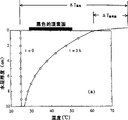
图4示出两个水平的加热器,其一(a)具有一个黑色的(不透明的)室顶,另一(b)具有一个透明的顶和一个在室内的黑色底表面,它们的用数值计算出来的温度分布图。Figure 4 shows two horizontal heaters, one (a) with a black (opaque) chamber roof and the other (b) with a transparent top and a black bottom surface in the chamber, with numerical values Calculated temperature profile.
图5示出两个向地倾侧20°的太阳能热水器,其一有一不透明的室顶,而另一有一透明的室顶,它们的由实验测得的温升。Fig. 5 shows two solar water heaters inclined to the ground at 20°, one with an opaque roof and the other with a transparent roof, their temperature rises measured by experiments.
本发明的详细说明Detailed Description of the Invention
当加热器的一个具体零件在多于一个图中示出时为该零件采用同一件号。When a particular part of the heater is shown in more than one figure, the same part number is used for that part.
图1和2示出的太阳能加热器1具有:一个室基部2、一个由透明板组件3构成的顶、和热交换器4。从图1可看到透明板组件是由一块低铁玻璃片5、一块透明绝热板6、一个由多条角型材制成的夹板、和一块低发射玻璃片组成的。玻璃片8构成上述室基部的上表面。在图中分解示出的板组件3通过夹紧框9和夹紧角型材7用螺钉或类似物固定到室2的壁内。The
透明绝热板6为一聚碳酸酯蜂窝格栅,其网格大小为10mm,厚度为30mm。从图3可以看到蜂窝格栅6的横截面是在一个沿着一排网格的轴向平面上。The transparent heat insulating board 6 is a polycarbonate honeycomb grid with a grid size of 10mm and a thickness of 30mm. It can be seen from FIG. 3 that the cross section of the honeycomb grid 6 is on an axial plane along a row of grids.
热交换器4为一具有波浪形内表面的铜管,其公称内直径为16mm,公称外翅片直径为30mm,在标称上每25.4mm具有11个翅片。从图2可以看到热交换器为一蛇形管道延伸通过室2的大约50%。从图3的横剖面图中可以看到热交换器4带有翅片10的情况。热交换器管道在室2内的长度约为4m,这样存储容量约为0.8升。The
构件在组合的加热器中的配置可从图3看到,图中示出一部分加热器1,其中可以看到一部分室2和一部分透明板组件3。板组件3中可以看到的构件为玻璃片5和8、透明绝热板6、和角型材夹紧件7。The arrangement of the components in the combined heater can be seen from Figure 3, which shows a part of the
室2具有一个聚丙烯泡沫塑料的芯部11和聚丙烯的外壳层12和13。在室内侧的壳层12被涂以黑色,而壳层13可以是任何颜色。在构成室2的盆形的壁的内边上设有一个曲折部分14用来接纳玻璃片8和绝热板6的边缘。在从室的开口出来的壁的尚未曲折的部分16与玻璃片8之间设有一个由弹性材料制成的密封条15。夹紧角型材7的横截面17在曲折部分的向上延伸段与绝热板6之间延伸,其下端与玻璃片8接触,而其向外伸出的突缘18则被夹在玻璃片5与室2上的只是离室足够远的唇部之间,这样便可通过夹紧框9将压力施加在玻璃片8和密封条15上来实现液密的密封。夹紧框9用螺栓固定在室2上,其中一个螺栓在标号19处示出。在玻璃片5与突缘18之间也设有密封条20。低铁玻璃片5和(钢化的)低发射玻璃片8分别具有4mm和6mm的厚度。The
图1和2所示的加热器具有的外廓尺寸为1400mm长、900mm宽和210mm高。室2含有大约95升的水。该室能通过壁上的一个孔口注入水并更换水。The heater shown in Figures 1 and 2 has overall dimensions of 1400mm long, 900mm wide and 210mm high.
从图2可以看到水能流动通过图1到3所示的加热器。要被加热的水在标号21处进入加热器1,流动通过热交换器4,然后在标号22处离开加热器,这个流动一般地用在进口和出口附近的箭头示出。From Figure 2 it can be seen that water can flow through the heater shown in Figures 1 to 3 . Water to be heated enters
如上所述,按照本发明的加热器在使用时一般都倾侧借以增加所接收的太阳能量。图1到3所示的加热器在倾侧时加热器的最上部通常为边23(见图2)。这样热交换器就应设在加热器内较高的位置上以便在放水时可以维持较高的温度。As noted above, heaters according to the present invention are generally tilted in use to increase the amount of solar energy received. The uppermost portion of the heater shown in Figures 1 to 3 when tilted is generally side 23 (see Figure 2). Heat exchanger just should be located on the higher position in heater so that can maintain higher temperature when discharging water like this.
图中所示的加热器通常包括一个防备沸腾用的倾泄阀和一个压力释放阀。这些阀通常设在热交换器的出口处。为此目的可设一小间以便使热交换器的水流入其内。该小间还可包括一个连接到电源或其他能源的增强器。但当用作预热器时(这是按照本发明的加热器特别适合的用途),增强器就不再需要。The heater shown here usually includes a dump valve for boiling prevention and a pressure relief valve. These valves are usually located at the outlet of the heat exchanger. For this purpose a small chamber may be provided into which the water from the heat exchanger flows. The cell may also include a booster connected to a mains or other energy source. But when used as a preheater (which is the application for which the heater according to the invention is particularly suitable), the intensifier is no longer required.
在图1到3所示加热器的一个变型中,热交换器的延伸遍及整个加热器室。采用如上例举大小的加热器,当热交换器的公称内直径为16mm、在室内的长度约为8m时,存储容量为1.6升。In a variant of the heater shown in Figures 1 to 3, the heat exchanger extends throughout the heater chamber. With a heater of the dimensions exemplified above, the storage capacity is 1.6 liters when the heat exchanger has a nominal inner diameter of 16 mm and a length in the chamber of approximately 8 m.
应该知道按照本发明第一方案的加热器基本上与按照图1到3的加热器相同只是没有热交换器。采用这种加热器,水的进口和出口通常是在室的对角线上两个相对角落的附近。It should be understood that the heater according to the first aspect of the invention is basically the same as the heater according to Figures 1 to 3 but without the heat exchanger. With this type of heater, the water inlet and outlet are usually near two opposite corners on a diagonal of the chamber.
现在详细说明按照本发明的加热器的效能。The performance of the heater according to the present invention will now be described in detail.
按照本发明的热水器的关键零件为水箱的透明的上表面。我们进行了数值模拟和实验测量来比较按照本发明的加热器和具有不透明黑顶的加热器的效能。数值模拟仅限于在具有黑色的和具有透明的水箱表面的水平加热器之间进行比较,因为这样黑色加热器中水的热传递能被假定为只是由于传导。但实验的结果可包括表面倾侧的效果。The critical part of the water heater according to the invention is the transparent upper surface of the water tank. We performed numerical simulations and experimental measurements to compare the performance of heaters according to the invention and heaters with an opaque black top. Numerical simulations were limited to comparisons between horizontal heaters with black and transparent tank surfaces, since heat transfer to water in black heaters can then be assumed to be due to conduction only. However, the results of the experiment may include the effect of surface tilt.
在水平水箱内垂直水温分布的数值测定曾被这样进行,将透明的和不透明的水箱都放在同等数值的太阳辐射下曝晒3个小时。两个水箱的顶部热损失系数K假定都为3W/m2。初始时两个水箱内的水都具有与环境温度相等的均匀温度。在模拟时曾变化太阳辐射量使进入黑色水箱的热通量保持恒定在500W/m2。这些数值实验的结果在图4a和4b中示出,其中前一图代表从具有不透明上表面的加热器得出的结果,而后一图则与按照本发明的加热器有关。从图4a和4b显然可见,在加热期间结束时,具有黑色表面的水箱的顶表面温度(以及随之而来的热损失)要比透明水箱的顶表面温度高得多(忽略不计在透明水箱顶层内吸收的太阳辐射)。当将聚丙烯水箱壁(4mm)的热阻力包括在内时,在加热时间终止时黑色水箱的表面温度差不多是透明水箱的3倍。通过减少这种热损失取得的效益最好用下列管辖太阳能收集的基本方程式(见J.A.Duffie和W.A.Beckman著“热过程的太阳能工程”第2版,251页,1991年Wiley出版)来说明:Numerical determinations of the vertical water temperature distribution in horizontal tanks were carried out by exposing both transparent and opaque tanks to the same amount of solar radiation for 3 hours. The top heat loss coefficient K of the two water tanks is assumed to be 3W/m 2 . Initially the water in both tanks has a uniform temperature equal to the ambient temperature. During the simulation, the amount of solar radiation was varied to keep the heat flux into the black water tank constant at 500W/m 2 . The results of these numerical experiments are shown in Figures 4a and 4b, where the former figure represents the results obtained for a heater with an opaque upper surface, while the latter figure relates to a heater according to the invention. It is evident from Figures 4a and 4b that at the end of the heating period, the top surface temperature (and consequent heat loss) of the tank with the black surface was much higher than that of the transparent tank (negligible in the case of the transparent tank solar radiation absorbed in the top layer). When the thermal resistance of the polypropylene tank walls (4mm) is included, the surface temperature of the black tank at the end of the heating time is almost three times that of the clear tank. The benefits achieved by reducing this heat loss are best described by the following basic equation governing solar energy harvesting (see JADuffie and W.A. Beckman, "Solar Engineering of Thermal Processes," 2nd ed., p. 251, Wiley, 1991):
有效能=吸收的太阳辐射能-热损失Effective energy = absorbed solar radiation energy - heat loss
当考虑到收集器热损失的主要部分为顶部热损失,而这个热损失大体上正比于在周围温度与水箱表面温度之间的温度差异时,从上述方程式显然可以看到大量减少表面温度的效益。水箱表面与周围环境的温差在图4中就黑色水箱和透明水箱示出。极需注意的是黑色水箱的高表面温度在夜间还会维持下去,而高效能的透明绝热层能将高表面温度维持较长的时间。当收集器基部被倾侧时,具有透明顶的室的加热器和具有黑色顶的相比,效益会略微减少,并且当透明水箱顶内吸收的热不可忽略不计时能发生一些热分层现象。但初步的数值实验结果表明在20°的倾侧时黑色单元的热损失仍然约为透明单元的两倍。When considering that the major portion of collector heat loss is top heat loss, and that this heat loss is roughly proportional to the temperature difference between the ambient temperature and the tank surface temperature, the benefit of a large reduction in surface temperature is evident from the above equation . The temperature difference between the surface of the tank and the surrounding environment is shown in Figure 4 for the black tank and the transparent tank. It is very important to note that the high surface temperature of the black tank is maintained at night, and the high performance transparent insulation can maintain the high surface temperature for a longer period of time. When the collector base is tilted, the heaters for the chambers with the clear roof are slightly less effective than those with the black roof, and some thermal stratification can occur when the heat absorbed in the clear tank roof is not negligible. However, preliminary numerical experimental results show that the heat loss of the black unit is still about twice that of the transparent unit at a tilt of 20°.
对具有黑色顶表面的水箱来说,通过(稳定分层的)水平水层的热传递的唯一机制只是传导。而透明的水箱却与此不同,它能允许太阳光透射并在内部水底下被吸收,如上所述。这意味着透明水箱大部分是从下面加热的,因此能使水层不稳定并良好地混合。For a tank with a black top surface, the only mechanism of heat transfer through the (stable layered) horizontal water layer is conduction. The transparent tank, on the other hand, allows sunlight to pass through and be absorbed under the inner water, as mentioned above. This means that the transparent tank is mostly heated from below, thus destabilizing the water layer and mixing it well.
除了较低的热损失以外,较低的水箱表面温度还意味着在所用材料内具有较低的应力。这一点对按照本发明的加热器特别重要,因为它使透明绝热板能够与玻璃盖接触从而使玻璃盖得到结构支撑。结果具有较大表面面积的加热器就能被倾侧并承受由于水的重量而产生的静压力。但按照本发明的加热器水箱并不一定必需依靠透明绝热板的支撑,因为在许多场合,特别是在加热器水箱较小的情况下,采用钢化玻璃片已经足够。In addition to lower heat losses, lower tank surface temperatures also mean lower stresses in the materials used. This is of particular importance for the heater according to the invention, since it enables the transparent insulating sheet to be in contact with the glass cover and thus provide structural support for the glass cover. The result is a heater with a larger surface area that can be tilted and withstand the static pressure due to the weight of the water. But according to the heater water tank of the present invention, it is not necessarily necessary to rely on the support of the transparent insulation board, because in many occasions, especially in the case of a small heater water tank, it is sufficient to adopt a tempered glass sheet.
我们还曾进行实验测量来进一步评定透明箱顶对水加热效能的作用。制备两个完全相同的由透明塑料(PET)制成的长方形水容器,其壁厚约为1mm,高为100mm。一个容器的顶表面涂以黑色,而另一个容器是在底表面上涂以黑色。这两个容器都用具有环境温度的水充满,并排放置在露天,对地倾侧约为20°。在一部分多云的白天,这两个容器在静止无风的空气中被曝晒在太阳辐射下约5个小时。通过一个位在每一容器中心而在顶和底的半中间的温度计测量容器内的温升。在试验时间终止时,每一容器都被彻底摇动借以保证水内所有的任何层次都被打散。We have also conducted experimental measurements to further assess the effect of the transparent roof on the water heating efficiency. Two identical rectangular water containers made of transparent plastic (PET) with a wall thickness of about 1 mm and a height of 100 mm were prepared. One container was painted black on the top surface and the other container was painted black on the bottom surface. Both containers were filled with water at ambient temperature and placed side by side in the open air with an inclination of about 20° to the ground. During a partly cloudy day, the two containers were exposed to solar radiation for about 5 hours in still, windless air. The temperature rise within the vessel was measured by a thermometer located in the center of each vessel halfway between the top and bottom. At the end of the test period, each container was shaken thoroughly to ensure that any layers in the water were broken up.
实验结果在图5中示出。结果显示当容器在试验时间终止而被摇动时只有具有不透明顶的容器内有温度变化。这表明具有透明顶的容器内的温度基本均匀,而具有黑色顶的容器明显有分层,大部分热水集中在顶表面上。进一步观察可知,在摇动后代表加入到水箱内的有效能的在水箱内的总的温升,就透明水箱言,要比黑色水箱大出约40%。重要的是,应该认识到由于高的表面温度而导致的热损失是累积的并随时间而增加。另外,透明在热效能上的作用多少取决于水箱的倾侧度和顶部的热损失系数。The experimental results are shown in FIG. 5 . The results showed that only the container with the opaque top experienced a temperature change when the container was shaken at the end of the test period. This shows that the temperature inside the container with the transparent top is substantially uniform, while the container with the black top is clearly stratified, with most of the hot water concentrated on the top surface. Further observation shows that the total temperature rise in the water tank representing the exergy added to the water tank after shaking is about 40% larger than that of the black water tank in terms of the transparent water tank. It is important to realize that heat loss due to high surface temperatures is cumulative and increases with time. In addition, the effect of transparency on thermal efficiency depends on the inclination of the tank and the heat loss coefficient of the top.
Claims (36)
Applications Claiming Priority (2)
| Application Number | Priority Date | Filing Date | Title |
|---|---|---|---|
| AUPO9876 | 1997-10-17 | ||
| AUPO9876A AUPO987697A0 (en) | 1997-10-17 | 1997-10-17 | Solar water heater |
Publications (1)
| Publication Number | Publication Date |
|---|---|
| CN1276857A true CN1276857A (en) | 2000-12-13 |
Family
ID=3804155
Family Applications (1)
| Application Number | Title | Priority Date | Filing Date |
|---|---|---|---|
| CN98810286A Pending CN1276857A (en) | 1997-10-17 | 1998-10-16 | Solar water heater |
Country Status (5)
| Country | Link |
|---|---|
| CN (1) | CN1276857A (en) |
| AU (1) | AUPO987697A0 (en) |
| BR (1) | BR9812724C1 (en) |
| WO (1) | WO1999020951A1 (en) |
| ZA (1) | ZA989477B (en) |
Cited By (3)
| Publication number | Priority date | Publication date | Assignee | Title |
|---|---|---|---|---|
| CN102954603A (en) * | 2012-12-05 | 2013-03-06 | 中国科学院上海技术物理研究所 | Flat-panel solar heat collector |
| CN107965925A (en) * | 2017-12-19 | 2018-04-27 | 武汉博茗低碳产业股份有限公司 | High stability solar thermal collector |
| CN115038914A (en) * | 2019-12-26 | 2022-09-09 | 信赫利恩有限公司 | Receiver with a plurality of receivers |
Families Citing this family (9)
| Publication number | Priority date | Publication date | Assignee | Title |
|---|---|---|---|---|
| US6763826B1 (en) * | 2000-04-17 | 2004-07-20 | Robert Gumm | Solar water heater |
| ES2311347B1 (en) * | 2006-05-16 | 2009-10-13 | Juan Pedro Andres Miranda | SOLAR RADIATION FLAT CAPTURE AND PROCEDURE FOR OBTAINING THE BLACKED SURFACE OF THE ABSORBENT PLATE. |
| EP2241841A1 (en) * | 2009-04-17 | 2010-10-20 | Sumika Polymer Compounds (France) SA | Moulded insulating collector |
| WO2011077440A1 (en) * | 2009-12-24 | 2011-06-30 | Dolav Plastic Products | Solar water heater |
| EP2522927B1 (en) * | 2011-05-13 | 2017-12-27 | Termo Fluids, S.L. | Solar thermal collector with transparent insulation |
| ES2447140B1 (en) * | 2012-04-02 | 2015-04-07 | Termo Fluids, S.L. | THERMAL SOLAR COLLECTORS WITH TRANSPARENT INSULATION, IMPROVED |
| ES2431470B1 (en) * | 2011-05-13 | 2014-12-05 | Termo Fluids, S.L. | THERMAL SOLAR COLLECTORS WITH TRANSPARENT INSULATION |
| WO2015135557A1 (en) * | 2014-03-10 | 2015-09-17 | Sunlumo Technology Gmbh | Thermal solar collector |
| CN113325028B (en) * | 2021-06-07 | 2022-05-24 | 中国核动力研究设计院 | Boiling critical experiment device for unstable flow of natural circulation system and control method |
Family Cites Families (9)
| Publication number | Priority date | Publication date | Assignee | Title |
|---|---|---|---|---|
| FR2364414A1 (en) * | 1976-09-14 | 1978-04-07 | Bergeon Et Cie | Plane-type solar energy collector - has two transparent sheets enclosing insulation and heat collecting layers above heat absorbing bed |
| US4127104A (en) * | 1977-05-09 | 1978-11-28 | Solar Works, Inc. | Solar heater for water and the like |
| US4245619A (en) * | 1978-12-13 | 1981-01-20 | Ogilvie Michael B | Solar energy collection panel |
| FR2454063A1 (en) * | 1979-02-14 | 1980-11-07 | Guillou Joel | Portable solar water heater - is inflatable hemispherical reservoir with black plastics base filled with water after inflation |
| FR2468077A1 (en) * | 1979-10-19 | 1981-04-30 | Beaugrand Roger | Solar water heater tank - has hemispherical absorber acting as storage vessel with matt black surface |
| EP0079976B1 (en) * | 1981-11-20 | 1987-06-03 | Yazaki Corporation | Solar heat collector |
| US4539975A (en) * | 1982-03-10 | 1985-09-10 | Arthur D. Little, Inc. | Integral storage solar heating system |
| ATE39999T1 (en) * | 1985-10-22 | 1989-01-15 | Bomin Solar Gmbh & Co Kg | DEVICE FOR HEATING DOMESTIC WATER BY SOLAR ENERGY. |
| RU2023214C1 (en) * | 1993-06-09 | 1994-11-15 | Всероссийский научно-исследовательский институт электрификации сельского хозяйства | Solar collector |
-
1997
- 1997-10-17 AU AUPO9876A patent/AUPO987697A0/en not_active Abandoned
-
1998
- 1998-10-16 BR BR9812724-1A patent/BR9812724C1/en not_active Application Discontinuation
- 1998-10-16 CN CN98810286A patent/CN1276857A/en active Pending
- 1998-10-16 ZA ZA989477A patent/ZA989477B/en unknown
- 1998-10-16 WO PCT/AU1998/000861 patent/WO1999020951A1/en not_active Ceased
Cited By (3)
| Publication number | Priority date | Publication date | Assignee | Title |
|---|---|---|---|---|
| CN102954603A (en) * | 2012-12-05 | 2013-03-06 | 中国科学院上海技术物理研究所 | Flat-panel solar heat collector |
| CN107965925A (en) * | 2017-12-19 | 2018-04-27 | 武汉博茗低碳产业股份有限公司 | High stability solar thermal collector |
| CN115038914A (en) * | 2019-12-26 | 2022-09-09 | 信赫利恩有限公司 | Receiver with a plurality of receivers |
Also Published As
| Publication number | Publication date |
|---|---|
| WO1999020951A1 (en) | 1999-04-29 |
| BR9812724A (en) | 2000-08-22 |
| BR9812724C1 (en) | 2001-09-04 |
| AUPO987697A0 (en) | 1997-11-13 |
| ZA989477B (en) | 1999-04-19 |
Similar Documents
| Publication | Publication Date | Title |
|---|---|---|
| Smyth et al. | Integrated collector storage solar water heaters | |
| US4018211A (en) | Solar energy collection and transfer arrangement and method, and method of assembly | |
| US4038967A (en) | Solar heating system and components thereof | |
| US3980071A (en) | Solar energy collector | |
| US4281639A (en) | Solar heating system | |
| US3898979A (en) | Solar heat collector | |
| CN1276857A (en) | Solar water heater | |
| US9267710B2 (en) | Solar thermal collectors and thin plate heat exchangers for solar applications | |
| CN105758021B (en) | A kind of solar energy heat collector with phase-transition heat-storage heat pipe | |
| US4049046A (en) | Solar heating/cooling system | |
| US4586227A (en) | Method of making a solar water heater | |
| US4159709A (en) | Low cost solar panel | |
| US4003364A (en) | Solar heating system | |
| US4667653A (en) | Solar water heater | |
| US4446853A (en) | Solar collector panel | |
| Garg et al. | Shallow solar pond: State-of-the-art | |
| JP7073340B2 (en) | Roof panel equipment that functions as a heat collector | |
| US4271824A (en) | Solar heating apparatus | |
| US20090025709A1 (en) | Direct Heated Solar Collector | |
| AU738957B2 (en) | Improved solar water heater | |
| CN209857711U (en) | Novel energy-saving building material with heat storage function | |
| CN208023851U (en) | A kind of one-storey house roof radiator structure | |
| CN108895871B (en) | Novel energy-saving building material with heat storage function | |
| RU217182U1 (en) | solar water heater | |
| US20240401328A1 (en) | Highly insulated tile |
Legal Events
| Date | Code | Title | Description |
|---|---|---|---|
| C06 | Publication | ||
| PB01 | Publication | ||
| C10 | Entry into substantive examination | ||
| SE01 | Entry into force of request for substantive examination | ||
| C02 | Deemed withdrawal of patent application after publication (patent law 2001) | ||
| WD01 | Invention patent application deemed withdrawn after publication |