CN116149087A - Optical device - Google Patents

Optical device Download PDF

Info

Publication number
CN116149087A
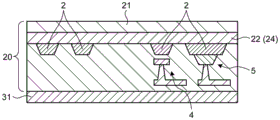
CN116149087A CN202211272738.4A CN202211272738A CN116149087A CN 116149087 A CN116149087 A CN 116149087A CN 202211272738 A CN202211272738 A CN 202211272738A CN 116149087 A CN116149087 A CN 116149087A
Authority
CN
China
Prior art keywords
optical
optical waveguide
electro
layer
substrate
Prior art date
Legal status (The legal status is an assumption and is not a legal conclusion. Google has not performed a legal analysis and makes no representation as to the accuracy of the status listed.)
Pending
Application number
CN202211272738.4A
Other languages
Chinese (zh)
Inventor
牧野俊太郎
仓桥辉雄
久保田嘉伸
吉田宽彦
三田村宣明
田中刚人
Current Assignee (The listed assignees may be inaccurate. Google has not performed a legal analysis and makes no representation or warranty as to the accuracy of the list.)
Furukawa FITEL Optical Components Co Ltd
Original Assignee
Fujitsu Optical Components Ltd
Priority date (The priority date is an assumption and is not a legal conclusion. Google has not performed a legal analysis and makes no representation as to the accuracy of the date listed.)
Filing date
Publication date
Application filed by Fujitsu Optical Components Ltd filed Critical Fujitsu Optical Components Ltd
Publication of CN116149087A publication Critical patent/CN116149087A/en
Pending legal-status Critical Current

Links

Images

Classifications

    • GPHYSICS
    • G02OPTICS
    • G02FOPTICAL DEVICES OR ARRANGEMENTS FOR THE CONTROL OF LIGHT BY MODIFICATION OF THE OPTICAL PROPERTIES OF THE MEDIA OF THE ELEMENTS INVOLVED THEREIN; NON-LINEAR OPTICS; FREQUENCY-CHANGING OF LIGHT; OPTICAL LOGIC ELEMENTS; OPTICAL ANALOGUE/DIGITAL CONVERTERS
    • G02F1/00Devices or arrangements for the control of the intensity, colour, phase, polarisation or direction of light arriving from an independent light source, e.g. switching, gating or modulating; Non-linear optics
    • G02F1/01Devices or arrangements for the control of the intensity, colour, phase, polarisation or direction of light arriving from an independent light source, e.g. switching, gating or modulating; Non-linear optics for the control of the intensity, phase, polarisation or colour 
    • G02F1/03Devices or arrangements for the control of the intensity, colour, phase, polarisation or direction of light arriving from an independent light source, e.g. switching, gating or modulating; Non-linear optics for the control of the intensity, phase, polarisation or colour  based on ceramics or electro-optical crystals, e.g. exhibiting Pockels effect or Kerr effect
    • G02F1/035Devices or arrangements for the control of the intensity, colour, phase, polarisation or direction of light arriving from an independent light source, e.g. switching, gating or modulating; Non-linear optics for the control of the intensity, phase, polarisation or colour  based on ceramics or electro-optical crystals, e.g. exhibiting Pockels effect or Kerr effect in an optical waveguide structure
    • GPHYSICS
    • G02OPTICS
    • G02FOPTICAL DEVICES OR ARRANGEMENTS FOR THE CONTROL OF LIGHT BY MODIFICATION OF THE OPTICAL PROPERTIES OF THE MEDIA OF THE ELEMENTS INVOLVED THEREIN; NON-LINEAR OPTICS; FREQUENCY-CHANGING OF LIGHT; OPTICAL LOGIC ELEMENTS; OPTICAL ANALOGUE/DIGITAL CONVERTERS
    • G02F1/00Devices or arrangements for the control of the intensity, colour, phase, polarisation or direction of light arriving from an independent light source, e.g. switching, gating or modulating; Non-linear optics
    • G02F1/01Devices or arrangements for the control of the intensity, colour, phase, polarisation or direction of light arriving from an independent light source, e.g. switching, gating or modulating; Non-linear optics for the control of the intensity, phase, polarisation or colour 
    • G02F1/03Devices or arrangements for the control of the intensity, colour, phase, polarisation or direction of light arriving from an independent light source, e.g. switching, gating or modulating; Non-linear optics for the control of the intensity, phase, polarisation or colour  based on ceramics or electro-optical crystals, e.g. exhibiting Pockels effect or Kerr effect
    • G02F1/0305Constructional arrangements
    • GPHYSICS
    • G02OPTICS
    • G02FOPTICAL DEVICES OR ARRANGEMENTS FOR THE CONTROL OF LIGHT BY MODIFICATION OF THE OPTICAL PROPERTIES OF THE MEDIA OF THE ELEMENTS INVOLVED THEREIN; NON-LINEAR OPTICS; FREQUENCY-CHANGING OF LIGHT; OPTICAL LOGIC ELEMENTS; OPTICAL ANALOGUE/DIGITAL CONVERTERS
    • G02F1/00Devices or arrangements for the control of the intensity, colour, phase, polarisation or direction of light arriving from an independent light source, e.g. switching, gating or modulating; Non-linear optics
    • G02F1/01Devices or arrangements for the control of the intensity, colour, phase, polarisation or direction of light arriving from an independent light source, e.g. switching, gating or modulating; Non-linear optics for the control of the intensity, phase, polarisation or colour 
    • G02F1/03Devices or arrangements for the control of the intensity, colour, phase, polarisation or direction of light arriving from an independent light source, e.g. switching, gating or modulating; Non-linear optics for the control of the intensity, phase, polarisation or colour  based on ceramics or electro-optical crystals, e.g. exhibiting Pockels effect or Kerr effect
    • G02F1/0305Constructional arrangements
    • G02F1/0316Electrodes
    • GPHYSICS
    • G02OPTICS
    • G02FOPTICAL DEVICES OR ARRANGEMENTS FOR THE CONTROL OF LIGHT BY MODIFICATION OF THE OPTICAL PROPERTIES OF THE MEDIA OF THE ELEMENTS INVOLVED THEREIN; NON-LINEAR OPTICS; FREQUENCY-CHANGING OF LIGHT; OPTICAL LOGIC ELEMENTS; OPTICAL ANALOGUE/DIGITAL CONVERTERS
    • G02F1/00Devices or arrangements for the control of the intensity, colour, phase, polarisation or direction of light arriving from an independent light source, e.g. switching, gating or modulating; Non-linear optics
    • G02F1/01Devices or arrangements for the control of the intensity, colour, phase, polarisation or direction of light arriving from an independent light source, e.g. switching, gating or modulating; Non-linear optics for the control of the intensity, phase, polarisation or colour 
    • G02F1/21Devices or arrangements for the control of the intensity, colour, phase, polarisation or direction of light arriving from an independent light source, e.g. switching, gating or modulating; Non-linear optics for the control of the intensity, phase, polarisation or colour  by interference
    • G02F1/212Mach-Zehnder type
    • GPHYSICS
    • G02OPTICS
    • G02FOPTICAL DEVICES OR ARRANGEMENTS FOR THE CONTROL OF LIGHT BY MODIFICATION OF THE OPTICAL PROPERTIES OF THE MEDIA OF THE ELEMENTS INVOLVED THEREIN; NON-LINEAR OPTICS; FREQUENCY-CHANGING OF LIGHT; OPTICAL LOGIC ELEMENTS; OPTICAL ANALOGUE/DIGITAL CONVERTERS
    • G02F1/00Devices or arrangements for the control of the intensity, colour, phase, polarisation or direction of light arriving from an independent light source, e.g. switching, gating or modulating; Non-linear optics
    • G02F1/01Devices or arrangements for the control of the intensity, colour, phase, polarisation or direction of light arriving from an independent light source, e.g. switching, gating or modulating; Non-linear optics for the control of the intensity, phase, polarisation or colour 
    • G02F1/21Devices or arrangements for the control of the intensity, colour, phase, polarisation or direction of light arriving from an independent light source, e.g. switching, gating or modulating; Non-linear optics for the control of the intensity, phase, polarisation or colour  by interference
    • G02F1/225Devices or arrangements for the control of the intensity, colour, phase, polarisation or direction of light arriving from an independent light source, e.g. switching, gating or modulating; Non-linear optics for the control of the intensity, phase, polarisation or colour  by interference in an optical waveguide structure
    • GPHYSICS
    • G02OPTICS
    • G02FOPTICAL DEVICES OR ARRANGEMENTS FOR THE CONTROL OF LIGHT BY MODIFICATION OF THE OPTICAL PROPERTIES OF THE MEDIA OF THE ELEMENTS INVOLVED THEREIN; NON-LINEAR OPTICS; FREQUENCY-CHANGING OF LIGHT; OPTICAL LOGIC ELEMENTS; OPTICAL ANALOGUE/DIGITAL CONVERTERS
    • G02F1/00Devices or arrangements for the control of the intensity, colour, phase, polarisation or direction of light arriving from an independent light source, e.g. switching, gating or modulating; Non-linear optics
    • G02F1/01Devices or arrangements for the control of the intensity, colour, phase, polarisation or direction of light arriving from an independent light source, e.g. switching, gating or modulating; Non-linear optics for the control of the intensity, phase, polarisation or colour 
    • G02F1/21Devices or arrangements for the control of the intensity, colour, phase, polarisation or direction of light arriving from an independent light source, e.g. switching, gating or modulating; Non-linear optics for the control of the intensity, phase, polarisation or colour  by interference
    • G02F1/225Devices or arrangements for the control of the intensity, colour, phase, polarisation or direction of light arriving from an independent light source, e.g. switching, gating or modulating; Non-linear optics for the control of the intensity, phase, polarisation or colour  by interference in an optical waveguide structure
    • G02F1/2255Devices or arrangements for the control of the intensity, colour, phase, polarisation or direction of light arriving from an independent light source, e.g. switching, gating or modulating; Non-linear optics for the control of the intensity, phase, polarisation or colour  by interference in an optical waveguide structure controlled by a high-frequency electromagnetic component in an electric waveguide structure

Landscapes

  • Physics & Mathematics (AREA)
  • Nonlinear Science (AREA)
  • General Physics & Mathematics (AREA)
  • Optics & Photonics (AREA)
  • Chemical & Material Sciences (AREA)
  • Engineering & Computer Science (AREA)
  • Ceramic Engineering (AREA)
  • Crystallography & Structural Chemistry (AREA)
  • Electromagnetism (AREA)
  • Optical Modulation, Optical Deflection, Nonlinear Optics, Optical Demodulation, Optical Logic Elements (AREA)
  • Optical Integrated Circuits (AREA)

Abstract

一种光器件包括基板、层压在基板的一个表面上的第一包覆层、以及形成在第一包覆层中的位于基板的相对侧的第一包覆层中的第一光波导。该光器件还包括层压在第一包覆层的位于基板的相对侧的表面上的电光晶体层以及在电光晶体层的位于第一包覆层的相对侧的表面上由电光晶体层形成的第二光波导。该光器件还包括层压在电光晶体层的位于第一包覆层的相对侧的表面上的第二包覆层。

Figure 202211272738

An optical device includes a substrate, a first cladding layer laminated on one surface of the substrate, and a first optical waveguide formed in the first cladding layer on an opposite side of the substrate. The optical device further includes an electro-optic crystal layer laminated on the surface of the first cladding layer on the opposite side of the substrate, and an electro-optic crystal layer formed of the electro-optic crystal layer on the surface of the electro-optic crystal layer on the opposite side of the first cladding layer. second optical waveguide. The optical device further includes a second cladding layer laminated on the surface of the electro-optic crystal layer on the opposite side of the first cladding layer.

Figure 202211272738

Description

光器件Optical device

技术领域technical field

本文讨论的实施方式涉及光器件。Embodiments discussed herein relate to optical devices.

背景技术Background technique

硅光子组件由于芯层与包层之间的折射率差大而能够将光强烈地约束在微小区域内,因此可以有效地实现诸如光调制器、光接收元件、相位控制元件或偏振复用器/解复用器之类的各种硅光元件的小型化和高集成度。然而,普通的硅光调制器例如是具有掺杂PN结的载流子控制型,因此存在进一步扩展调制带宽的问题。Due to the large refractive index difference between the core layer and the cladding layer, silicon photonic components can strongly confine light in a small area, so it can effectively realize such as light modulator, light receiving element, phase control element or polarization multiplexer Miniaturization and high integration of various silicon photonic components such as /demultiplexers. However, a common silicon optical modulator is, for example, a carrier-controlled type with a doped PN junction, so there is a problem of further extending the modulation bandwidth.

为了解决该问题,例如,使用具有电光效应的诸如铌酸锂(LiNbO3:LN)之类的电光晶体的光调制器能够扩展调制带宽并防止吸收损失,使得可以实现高性能的光调制器。然而,将除了光调制器之外的诸如光接收元件、相位控制元件或偏振复用器/解复用器之类的硅光元件集成到电光晶体中是很困难的。To solve this problem, for example, an optical modulator using an electro-optic crystal such as lithium niobate (LiNbO 3 : LN) having an electro-optic effect can expand the modulation bandwidth and prevent absorption loss, so that a high-performance optical modulator can be realized. However, it is difficult to integrate silicon optical elements such as light receiving elements, phase control elements, or polarization multiplexers/demultiplexers other than optical modulators into electro-optic crystals.

因此,近年来,其中组合有硅光子组件和具有电光效应的晶体的混合光器件受到关注。在混合光器件中,需要实现硅光子组件的高集成度和具有电光效应的晶体的高调制特性的光器件。Therefore, in recent years, hybrid optical devices in which silicon photonic components and crystals having electro-optical effects are combined have attracted attention. Among hybrid optical devices, optical devices that achieve high integration of silicon photonic components and high modulation characteristics of crystals with electro-optical effects are required.

在传统光器件中,具有电光效应的电光晶体层层压在预先形成的硅光子组件中的缓冲层上,由电光晶体制成的光波导形成在电光晶体层上,并且包覆层层压在电光晶体层上。此外,电极布置在包覆层上,使得能够形成具有电光晶体的光调制器。In conventional optical devices, an electro-optic crystal layer with electro-optic effect is laminated on a buffer layer in a pre-formed silicon photonic component, an optical waveguide made of electro-optic crystal is formed on the electro-optic crystal layer, and a cladding layer is laminated on Electro-optic crystal layer. Furthermore, the electrodes are arranged on the cladding layer, making it possible to form a light modulator with an electro-optic crystal.

专利文献1:美国未审专利申请公开No.2020/0150467Patent Document 1: U.S. Unexamined Patent Application Publication No. 2020/0150467

专利文献2;日本特开2011-102891号公报Patent Document 2; Japanese Patent Laid-Open No. 2011-102891

在层压在硅光子组件上的电光晶体层上的传统光器件中,第一光波导形成在硅光子组件中的中间层上,并且第二光波导形成在电光晶体层上。然而,如果其上形成有第一光波导的中间层和其上形成有第二光波导的电光晶体层之间的距离过度增大,则将第一光波导和第二光波导光耦合变得困难,从而由于光耦合特性的劣化而发生光损耗。In a conventional optical device laminated on an electro-optic crystal layer on a silicon photonics component, a first optical waveguide is formed on an intermediate layer in the silicon photonics component, and a second optical waveguide is formed on the electro-optic crystal layer. However, if the distance between the intermediate layer on which the first optical waveguide is formed and the electro-optic crystal layer on which the second optical waveguide is formed is excessively increased, optically coupling the first optical waveguide and the second optical waveguide becomes difficult, whereby optical loss occurs due to deterioration of optical coupling characteristics.

因此,本发明的实施方式的一个方面的目的在于提供在保持硅光子元件的高集成度的同时提高耦合效率的光器件等。Therefore, an object of one aspect of the embodiments of the present invention is to provide an optical device or the like that improves coupling efficiency while maintaining a high degree of integration of a silicon photonic element.

发明内容Contents of the invention

根据实施方式的一个方面,一种光器件包括基板、层压在基板的一个表面上的第一包覆层、以及形成在第一包覆层中的位于基板的相对侧的第一包覆层中的第一光波导。光器件还包括层压在第一包覆层的位于基板的相对侧的表面上的电光晶体层、在电光晶体层的位于第一包覆层的相对侧的表面上由电光晶体层形成的第二光波导;以及层压在电光晶体层的位于第一包覆层的相对侧的表面上的第二包覆层。According to an aspect of an embodiment, an optical device includes a substrate, a first cladding layer laminated on one surface of the substrate, and a first cladding layer formed in the first cladding layer on an opposite side of the substrate. The first optical waveguide in . The optical device further includes an electro-optic crystal layer laminated on a surface of the first cladding layer on an opposite side of the substrate, a second electro-optic crystal layer formed of the electro-optic crystal layer on a surface of the electro-optic crystal layer on an opposite side of the first cladding layer. two optical waveguides; and a second cladding layer laminated on the surface of the electro-optic crystal layer on the opposite side of the first cladding layer.

附图说明Description of drawings

图1是例示了根据本实施方式的光器件的构造的示例的示意性平面图;FIG. 1 is a schematic plan view illustrating an example of the configuration of an optical device according to the present embodiment;

图2是例示了沿图1中的线A-A切割的截面部的示例的示意性截面图;FIG. 2 is a schematic cross-sectional view illustrating an example of a cross-sectional portion cut along line A-A in FIG. 1;

图3是例示了沿图1中的线B-B切割的截面部的示例的示意性截面图;3 is a schematic cross-sectional view illustrating an example of a cross-sectional portion cut along line B-B in FIG. 1;

图4是例示了沿图1中的线C-C切割的截面部(马赫-曾德尔(Mach-Zehnder)干涉仪)的示例的示意性截面图;4 is a schematic cross-sectional view illustrating an example of a cross-sectional portion (Mach-Zehnder (Mach-Zehnder) interferometer) cut along line C-C in FIG. 1;

图5是例示了沿图1中的线D-D切割的截面部(相位控制元件)的示例的示意性截面图;5 is a schematic cross-sectional view illustrating an example of a cross-sectional portion (phase control element) cut along line D-D in FIG. 1;

图6是例示了沿图1中的线E-E切割的截面部(光接收元件)的示例的示意性截面图;6 is a schematic cross-sectional view illustrating an example of a cross-sectional portion (light-receiving element) cut along line E-E in FIG. 1;

图7是例示了制造光器件的工序的示例的流程图;7 is a flowchart illustrating an example of a process of manufacturing an optical device;

图8A是例示了硅光子组件的构造示例的示意性截面图;8A is a schematic cross-sectional view illustrating a configuration example of a silicon photonics assembly;

图8B是例示了附接工序的示例的示意性截面图;8B is a schematic cross-sectional view illustrating an example of an attaching process;

图9A是例示了基板去除工序的示例的示意性截面图;9A is a schematic cross-sectional view illustrating an example of a substrate removal process;

图9B是例示了厚度调整工序和电光晶体层形成工序的示例的示意性截面图;9B is a schematic cross-sectional view illustrating an example of a thickness adjustment process and an electro-optic crystal layer formation process;

图10A是例示了第二光波导形成工序的示例的示意性截面图;10A is a schematic cross-sectional view illustrating an example of a second optical waveguide forming process;

图10B是例示了第二包覆层形成工序、电极形成工序以及通孔形成工序的示例的示意性截面图;10B is a schematic cross-sectional view illustrating an example of a second cladding layer forming process, an electrode forming process, and a via hole forming process;

图11A是例示了光调制器的构造示例的示意性平面图;11A is a schematic plan view illustrating a configuration example of an optical modulator;

图11B是例示了IQ光调制器的构造示例的示意性平面图;11B is a schematic plan view illustrating a configuration example of an IQ optical modulator;

图11C是例示了DP-IQ光调制器的构造示例的示意性平面图;11C is a schematic plan view illustrating a configuration example of a DP-IQ optical modulator;

图11D是例示了光通信装置的构造示例的示意性平面图;11D is a schematic plan view illustrating a configuration example of an optical communication device;

图12是例示了根据比较例的光器件的构造示例的示意性平面图;12 is a schematic plan view illustrating a configuration example of an optical device according to a comparative example;

图13是例示了沿图12中的线A1-A1切割的截面部的示例的示意性截面图;FIG. 13 is a schematic cross-sectional view illustrating an example of a cross-sectional portion cut along line A1-A1 in FIG. 12;

图14是例示了沿图12中的线B1-B1切割的截面部的示例的示意性截面图;FIG. 14 is a schematic cross-sectional view illustrating an example of a cross-sectional portion cut along line B1-B1 in FIG. 12;

图15是例示了沿图12中的线C1-C1切割的截面部(马赫-曾德尔干涉仪)的示例的示意性截面图;15 is a schematic cross-sectional view illustrating an example of a cross-sectional portion (Mach-Zehnder interferometer) cut along line C1-C1 in FIG. 12;

图16是例示了沿图12中的线D1-D1切割的截面部(相位控制元件)的示例的示意性截面图;以及FIG. 16 is a schematic cross-sectional view illustrating an example of a cross-sectional portion (phase control element) cut along line D1-D1 in FIG. 12; and

图17是例示了沿图12中的线E1-E1切割的截面部(光接收元件)的示例的示意性截面图。FIG. 17 is a schematic cross-sectional view illustrating an example of a cross-sectional portion (light receiving element) cut along line E1 - E1 in FIG. 12 .

具体实施方式Detailed ways

[a]比较例[a] Comparative example

图12是例示了根据比较例的光器件100的构造示例的示意性平面图。图12例示的光器件100包括输入单元111、第一光波导102、分支单元112、两个光调制器103、两个相位控制元件104、复用单元113、输出单元114和光接收元件105。FIG. 12 is a schematic plan view illustrating a configuration example of an optical device 100 according to a comparative example. An optical device 100 illustrated in FIG.

输入单元111将来自光源(未示出)的信号光输入至第一光波导102。第一光波导102例如是硅光波导,来自输入单元111的信号光穿过该硅光波导。The input unit 111 inputs signal light from a light source (not shown) to the first optical waveguide 102 . The first optical waveguide 102 is, for example, a silicon optical waveguide through which signal light from the input unit 111 passes.

光调制器103例如是LN调制器。光调制器103例如是马赫-曾德尔调制器,其包括分支单元112、两个马赫-曾德尔干涉仪103A和复用单元113,并且根据电信号对来自第一光波导102的分光后的信号光进行光调制。分支单元112将来自第一光波导102的信号光分光为用于两个第一光波导102的光,并将分光后的信号光输出到每个马赫-曾德尔干涉仪103A。每个马赫-曾德尔干涉仪103A包括例如由诸如LN之类的电光晶体制成的第二光波导132A以及电极134。电极134包括信号电极134A和接地电极134B。每个马赫-曾德尔干涉仪103A根据施加到信号电极134A的电信号产生从信号电极134A到接地电极134B的电场,根据电场改变第二光波导132A的光折射率,并根据光折射率的变化调整穿过第二光波导132A的光的相位。每个马赫-曾德尔干涉仪103A将已经调整了相位的光输出到每个相位控制元件104。复用单元113复用来自每个相位控制元件104并且经过相移的信号光,并且将复用后的信号光经由第一光波导102输出至输出单元114。The optical modulator 103 is, for example, an LN modulator. The optical modulator 103 is, for example, a Mach-Zehnder modulator, which includes a branching unit 112, two Mach-Zehnder interferometers 103A and a multiplexing unit 113, and splits the signal from the first optical waveguide 102 according to the electrical signal The light is optically modulated. The branching unit 112 splits the signal light from the first optical waveguide 102 into lights for the two first optical waveguides 102, and outputs the split signal light to each Mach-Zehnder interferometer 103A. Each Mach-Zehnder interferometer 103A includes a second optical waveguide 132A made, for example, of an electro-optic crystal such as LN, and an electrode 134 . The electrodes 134 include a signal electrode 134A and a ground electrode 134B. Each Mach-Zehnder interferometer 103A generates an electric field from the signal electrode 134A to the ground electrode 134B according to an electric signal applied to the signal electrode 134A, changes the light refractive index of the second optical waveguide 132A according to the electric field, and changes the optical refractive index according to the change in the light refractive index. The phase of light passing through the second optical waveguide 132A is adjusted. Each Mach-Zehnder interferometer 103A outputs the phase-adjusted light to each phase control element 104 . The multiplexing unit 113 multiplexes the phase-shifted signal light from each phase control element 104 and outputs the multiplexed signal light to the output unit 114 via the first optical waveguide 102 .

每个相位控制元件104是使已经通过光调制器103进行光调制的信号光进行移相的硅组件。相位控制元件104经由第一光波导102将已经经过相移的信号光输出给复用单元113。复用单元113复用来自每个相位控制元件104并且已经经过相移的信号光,并将复用后的信号光经由第一光波导102输出给输出单元114。输出单元114连接至光纤(未示出),并且输出来自第一光波导102的复用后的信号光。此外,光接收元件105是将信号光的作为复用单元113的输出的部分转换成电信号的硅组件。Each phase control element 104 is a silicon component that shifts the phase of the signal light that has been optically modulated by the optical modulator 103 . The phase control element 104 outputs the phase-shifted signal light to the multiplexing unit 113 via the first optical waveguide 102 . The multiplexing unit 113 multiplexes the signal light from each phase control element 104 that has undergone a phase shift, and outputs the multiplexed signal light to the output unit 114 via the first optical waveguide 102 . The output unit 114 is connected to an optical fiber (not shown), and outputs the multiplexed signal light from the first optical waveguide 102 . Furthermore, the light receiving element 105 is a silicon component that converts a portion of the signal light that is an output of the multiplexing unit 113 into an electric signal.

此外,例如,提供硅光子组件120,在该硅光子组件120中集成有光器件100中的输入单元111、第一光波导102、分支单元112、两个相位控制元件104、复用单元113、输出单元114和光接收元件105。此外,硅光子组件120是预先形成的组件。In addition, for example, a silicon photonics assembly 120 is provided, in which the input unit 111, the first optical waveguide 102, the branching unit 112, the two phase control elements 104, the multiplexing unit 113, the output unit 114 and light receiving element 105 . Furthermore, the silicon photonics component 120 is a pre-formed component.

图13是例示了沿图12中的线A1-A1切割的截面部的示例的示意性截面图。如图13所示的A1-A1截面部包括硅光子组件120、电光晶体层132和第二包覆层133。FIG. 13 is a schematic cross-sectional view illustrating an example of a cross-sectional portion cut along line A1 - A1 in FIG. 12 . The section A1-A1 shown in FIG. 13 includes a silicon photonic component 120 , an electro-optic crystal layer 132 and a second cladding layer 133 .

硅光子组件120包括第一基板121、层压在第一基板121上的第一包覆层124、以及形成在第一包覆层124中的第一光波导102。例如,第一基板121具有小于1000Ωcm的电阻率。第一包覆层124包括层压在第一基板121上的中间层122、形成在中间层122中的第一光波导102、以及层压在中间层122上的缓冲层123。例如,电光晶体层132是层压在硅光子组件120中的缓冲层123上并且由具有电光效应的LN等构成的层。例如,第二包覆层133是层压在电光晶体层132上并且由SiO2等制成的层。The silicon photonics assembly 120 includes a first substrate 121 , a first cladding layer 124 laminated on the first substrate 121 , and a first optical waveguide 102 formed in the first cladding layer 124 . For example, the first substrate 121 has a resistivity of less than 1000Ωcm. The first cladding layer 124 includes the intermediate layer 122 laminated on the first substrate 121 , the first optical waveguide 102 formed in the intermediate layer 122 , and the buffer layer 123 laminated on the intermediate layer 122 . For example, the electro-optic crystal layer 132 is a layer laminated on the buffer layer 123 in the silicon photonics module 120 and composed of LN or the like having an electro-optic effect. For example, the second cladding layer 133 is a layer laminated on the electro-optic crystal layer 132 and made of SiO 2 or the like.

图14是例示了沿图12中的线B1-B1切割的截面部的示例的示意性截面图。如图14所例示的B1-B1截面部包括第一基板121、中间层122、第一光波导102、缓冲层123、电光晶体层132、形成在电光晶体层132上的第二光波导132A、以及第二包覆层133。第二光波导132A是由电光晶体层132形成的LN光波导。第一光波导102和第二光波导132A光耦合。FIG. 14 is a schematic cross-sectional view illustrating an example of a cross-sectional portion cut along line B1 - B1 in FIG. 12 . The B1-B1 cross section as illustrated in FIG. 14 includes a first substrate 121, an intermediate layer 122, a first optical waveguide 102, a buffer layer 123, an electro-optic crystal layer 132, a second optical waveguide 132A formed on the electro-optic crystal layer 132, and the second cladding layer 133 . The second optical waveguide 132A is an LN optical waveguide formed from the electro-optic crystal layer 132 . The first optical waveguide 102 and the second optical waveguide 132A are optically coupled.

图15是例示了沿图12中的线C1-C1切割的截面部(马赫-曾德尔干涉仪103A)的示例的示意性截面图。如图15所示的C1-C1截面部是光调制器103中的马赫-曾德尔干涉仪103A的截面部。C1-C1截面部包括第一基板121、中间层122、缓冲层123、电光晶体层132、第二光波导132A、第二包覆层133、以及形成在第二包覆层133上的电极134。电极134包括信号电极134A和接地电极134B。每个马赫-曾德尔干涉仪103A根据依据施加到信号电极134A的电信号从信号电极134A到接地电极134B产生的电场,来改变第二光波导132A的光折射率,并且根据光折射率的变化,对穿过第二光波导132A的光信号进行光调制。FIG. 15 is a schematic cross-sectional view illustrating an example of a cross-sectional portion (Mach-Zehnder interferometer 103A) cut along line C1 - C1 in FIG. 12 . The C1-C1 cross section shown in FIG. 15 is a cross section of the Mach-Zehnder interferometer 103A in the optical modulator 103 . The C1-C1 section includes a first substrate 121, an intermediate layer 122, a buffer layer 123, an electro-optic crystal layer 132, a second optical waveguide 132A, a second cladding layer 133, and an electrode 134 formed on the second cladding layer 133 . The electrodes 134 include a signal electrode 134A and a ground electrode 134B. Each Mach-Zehnder interferometer 103A changes the optical refractive index of the second optical waveguide 132A according to the electric field generated from the signal electrode 134A to the ground electrode 134B according to the electrical signal applied to the signal electrode 134A, and according to the change in the optical refractive index , to optically modulate the optical signal passing through the second optical waveguide 132A.

图16是例示了沿图12中的线D1-D1(相位控制元件104)切割的截面部的示例的示意性截面图。如图16所例示的D1-D1截面部包括第一基板121、中间层122、第一光波导102、缓冲层123、在缓冲层123中形成于第一光波导102附近的相位控制元件104、电光晶体层132、以及第二包覆层133。在第二包覆层133、电光晶体层132和缓冲层123中形成暴露出相位控制元件104中的金属布线104A2的通孔135。FIG. 16 is a schematic cross-sectional view illustrating an example of a cross-sectional portion cut along line D1 - D1 (phase control element 104 ) in FIG. 12 . The D1-D1 cross section as illustrated in FIG. 16 includes a first substrate 121, an intermediate layer 122, a first optical waveguide 102, a buffer layer 123, a phase control element 104 formed near the first optical waveguide 102 in the buffer layer 123, The electro-optic crystal layer 132 and the second cladding layer 133 . A via hole 135 exposing the metal wiring 104A2 in the phase control element 104 is formed in the second cladding layer 133 , the electro-optic crystal layer 132 , and the buffer layer 123 .

相位控制元件104包括:热光加热器104A1,该热光加热器104A1是由TiN等制成的电阻并且布置在第一光波导102上方;以及金属布线104A2,该金属布线104A2电连接到热光加热器104A1并且向热光加热器104A1供应电流。通过使电流从金属布线104A2流到热光加热器104A1,热光加热器104A1产生热量。由于第一光波导102内部的硅折射率因热光加热器104A1的热量而改变,相位控制元件104对穿过第一光波导102内部的光进行移相。The phase control element 104 includes: a thermo-optic heater 104A1 which is a resistor made of TiN or the like and which is arranged above the first optical waveguide 102; and a metal wiring 104A2 which is electrically connected to the thermo-optic heater 104A1 and supplies current to the thermo-optical heater 104A1. By flowing current from the metal wiring 104A2 to the thermo-optical heater 104A1, the thermo-optical heater 104A1 generates heat. Since the refractive index of silicon inside the first optical waveguide 102 is changed by the heat of the thermo-optical heater 104A1 , the phase control element 104 shifts the phase of the light passing through the inside of the first optical waveguide 102 .

图17是例示了沿图12中的线E1-E1切割的截面部(光接收元件105)的示例的示意性截面图。如图17所例示的E1-E1截面部包括第一基板121、中间层122、第一光波导102、缓冲层123、在缓冲层123中形成在第一光波导102上的光接收元件105、电光晶体层132、以及第二包覆层133。在第二包覆层133、电光晶体层132和缓冲层123中形成有暴露出光接收元件105中的金属布线105A2的通孔135。FIG. 17 is a schematic cross-sectional view illustrating an example of a cross-sectional portion (light receiving element 105 ) cut along line E1 - E1 in FIG. 12 . The E1-E1 sectional portion illustrated in FIG. 17 includes a first substrate 121, an intermediate layer 122, a first optical waveguide 102, a buffer layer 123, a light receiving element 105 formed on the first optical waveguide 102 in the buffer layer 123, The electro-optic crystal layer 132 and the second cladding layer 133 . A via hole 135 exposing the metal wiring 105A2 in the light receiving element 105 is formed in the second cladding layer 133 , the electro-optic crystal layer 132 , and the buffer layer 123 .

光接收元件105包括:光电转换元件105A1,该光电转换元件105A1由Ge等制成并且布置在第一光波导102上;以及金属布线105A2,该金属布线105A2连接到光电转换元件105A1并输出来自光电转换元件105A1的电信号。光接收元件105将穿过第一光波导102的信号光经由光电转换元件105A1转换为电信号,并且将电信号经由金属布线105A2输出给监视器(未示出)。The light receiving element 105 includes: a photoelectric conversion element 105A1 made of Ge or the like and arranged on the first optical waveguide 102; and a metal wiring 105A2 connected to the photoelectric conversion element 105A1 and outputting a signal from The electrical signal of the conversion element 105A1. The light receiving element 105 converts the signal light passing through the first optical waveguide 102 into an electric signal via the photoelectric conversion element 105A1, and outputs the electric signal to a monitor (not shown) via the metal wiring 105A2.

在比较例的光器件100中,电光晶体层132层压在预先形成的硅光子组件120中的缓冲层123上,第二光波导132A形成在电光晶体层132上,并且第二包覆层133层压在电光晶体层132上。此外,电极134布置在第二包覆层133上,使得能够形成具有电光晶体的光调制器103。In the optical device 100 of the comparative example, the electro-optic crystal layer 132 is laminated on the buffer layer 123 in the pre-formed silicon photonic component 120, the second optical waveguide 132A is formed on the electro-optic crystal layer 132, and the second cladding layer 133 laminated on the electro-optic crystal layer 132 . Furthermore, an electrode 134 is arranged on the second cladding layer 133 so that the light modulator 103 having an electro-optic crystal can be formed.

在层压在硅光子组件120上的电光晶体层132上的光器件100中,第一光波导102形成在硅光子组件120中的中间层122上,并且第二光波导132A形成在电光晶体层132上。然而,例如,当焦点被赋予光接收元件105和相位控制元件104时,如果其上形成有第一光波导102的中间层122与其上形成有第二光波导132A的电光晶体层132之间的距离L1过度增加,则难以进行第一光波导102和第二光波导132A的光耦合,使得由光耦合特性劣化而产生光损失。In the optical device 100 laminated on the electro-optic crystal layer 132 on the silicon photonics assembly 120, the first optical waveguide 102 is formed on the intermediate layer 122 in the silicon photonics assembly 120, and the second optical waveguide 132A is formed on the electro-optic crystal layer 132 on. However, for example, when the focus is given to the light receiving element 105 and the phase control element 104, if the gap between the intermediate layer 122 on which the first optical waveguide 102 is formed and the electro-optic crystal layer 132 on which the second optical waveguide 132A is formed If the distance L1 is excessively increased, it becomes difficult to perform optical coupling between the first optical waveguide 102 and the second optical waveguide 132A, resulting in optical loss due to degradation of optical coupling characteristics.

此外,在光调制器103中,硅光子组件120中的第一基板121的电阻率小于1000Ωcm,使得光调制器103的调制带宽劣化。In addition, in the optical modulator 103 , the resistivity of the first substrate 121 in the silicon photonics component 120 is less than 1000Ωcm, so that the modulation bandwidth of the optical modulator 103 deteriorates.

因此,需要提供根据本实施方式的光器件,其中可以通过减小其上形成有第二光波导的电光晶体层和形成在中间层上的第一光波导之间的距离来使光耦合性能稳定,并且可以防止光调制器的调制带宽劣化。Therefore, it is necessary to provide the optical device according to the present embodiment, in which the optical coupling performance can be stabilized by reducing the distance between the electro-optic crystal layer on which the second optical waveguide is formed and the first optical waveguide formed on the intermediate layer. , and can prevent the modulation bandwidth of the optical modulator from deteriorating.

下面将参照附图详细描述本申请中公开的光器件等的实施方式。本发明不受以下实施方式的限制。Embodiments of the optical device and the like disclosed in the present application will be described in detail below with reference to the accompanying drawings. The present invention is not limited by the following embodiments.

[b]实施方式[b] Implementation

图1是例示了根据本实施方式的光器件1的示例的示意性平面图。图1所例示的光器件1包括输入单元11、第一光波导2、分支单元12、两个光调制器3、两个相位控制元件4、复用单元13、输出单元14和光接收元件5。FIG. 1 is a schematic plan view illustrating an example of an optical device 1 according to the present embodiment. The optical device 1 illustrated in FIG. 1 includes an input unit 11 , a first optical waveguide 2 , a branching unit 12 , two optical modulators 3 , two phase control elements 4 , a multiplexing unit 13 , an output unit 14 and a light receiving element 5 .

输入单元11将来自光源(未示出)的信号光输入到第一光波导2。第一光波导2例如是来自输入单元11的信号光所穿过的硅光波导。The input unit 11 inputs signal light from a light source (not shown) to the first optical waveguide 2 . The first optical waveguide 2 is, for example, a silicon optical waveguide through which signal light from the input unit 11 passes.

光调制器3例如是由具有电光效应的诸如LN之类的晶体制成的LN光调制器。光调制器3例如是马赫-曾德尔调制器,其包括分支单元12、两个马赫-曾德尔干涉仪3A和复用单元13,并且根据电信号对来自第一光波导2的分光信号光进行光调制。分支单元12将来自第一光波导2的信号光分光到两个第一光波导2中,并将分光后的信号光输出给每个马赫-曾德尔干涉仪3A。例如,每个马赫-曾德尔干涉仪3A包括第二光波导32A和电极34。例如,第二光波导32A是LN光波导。电极34包括信号电极34A和接地电极34B。每个马赫-曾德尔干涉仪3A根据施加到信号电极34A的电信号产生从信号电极34A到接地电极34B的电场,根据电场改变第二光波导32A的光折射率,并且根据光折射率的变化调整穿过第二光波导32A的光的相位。每个马赫-曾德尔干涉仪3A向各相位控制元件4输出已经调整了相位的光。复用单元13对来自每个相位控制元件4并且经过了相移的信号光进行复用,并且经由第一光波导2向输出单元14输出复用后的信号光。The light modulator 3 is, for example, an LN light modulator made of a crystal such as LN having an electro-optic effect. The optical modulator 3 is, for example, a Mach-Zehnder modulator, which includes a branching unit 12, two Mach-Zehnder interferometers 3A and a multiplexing unit 13, and processes the split signal light from the first optical waveguide 2 according to an electrical signal. light modulation. The branching unit 12 splits the signal light from the first optical waveguide 2 into two first optical waveguides 2 , and outputs the split signal light to each Mach-Zehnder interferometer 3A. For example, each Mach-Zehnder interferometer 3A includes a second optical waveguide 32A and an electrode 34 . For example, the second optical waveguide 32A is an LN optical waveguide. The electrodes 34 include a signal electrode 34A and a ground electrode 34B. Each Mach-Zehnder interferometer 3A generates an electric field from the signal electrode 34A to the ground electrode 34B according to an electric signal applied to the signal electrode 34A, changes the light refractive index of the second optical waveguide 32A according to the electric field, and changes the optical refractive index according to the change in the light refractive index. The phase of light passing through the second optical waveguide 32A is adjusted. Each Mach-Zehnder interferometer 3A outputs light whose phase has been adjusted to each phase control element 4 . The multiplexing unit 13 multiplexes the phase-shifted signal light from each phase control element 4 , and outputs the multiplexed signal light to the output unit 14 via the first optical waveguide 2 .

每个相位控制元件4是对已经通过光调制器3进行光调制的信号光进行移相的硅组件。相位控制元件4经由第一光波导2向复用单元13输出已经经过相移的信号光。输出单元14连接到光纤(未示出)并且输出来自第一光波导2的复用后的信号光。此外,光接收元件5是对信号光的作为复用单元13的输出的一部分进行电转换的硅组件。Each phase control element 4 is a silicon component that shifts the phase of the signal light that has been optically modulated by the optical modulator 3 . The phase control element 4 outputs the signal light that has been phase-shifted to the multiplexing unit 13 via the first optical waveguide 2 . The output unit 14 is connected to an optical fiber (not shown) and outputs the multiplexed signal light from the first optical waveguide 2 . Furthermore, the light receiving element 5 is a silicon component that electrically converts part of the signal light that is the output of the multiplexing unit 13 .

此外,例如,提供硅光子组件20,在该硅光子组件20中集成有光器件1中的输入单元11、第一光波导2、分支单元12、两个相位控制元件4、复用单元13、输出单元14以及光接收元件5。此外,硅光子组件20是预先形成的组件。In addition, for example, a silicon photonics assembly 20 is provided in which the input unit 11, the first optical waveguide 2, the branching unit 12, two phase control elements 4, the multiplexing unit 13, The output unit 14 and the light receiving element 5 . Furthermore, the silicon photonics component 20 is a pre-formed component.

图2是例示了沿图1中的线A1-A1切割的截面部的示例的示意性截面图。如图2所示的A-A截面部包括第二基板31、硅光子组件20A、电光晶体层32和第二包覆层33。硅光子组件20A是去除了第一基板21的硅光子组件20。FIG. 2 is a schematic cross-sectional view illustrating an example of a cross-sectional portion cut along line A1 - A1 in FIG. 1 . The section A-A shown in FIG. 2 includes a second substrate 31 , a silicon photonic component 20A, an electro-optic crystal layer 32 and a second cladding layer 33 . The silicon photonics assembly 20A is the silicon photonics assembly 20 from which the first substrate 21 has been removed.

第二基板31是电阻率例如为等于或大于1000Ωcm的基板。第二基板31的厚度例如为1000微米(μm)。此外,第二基板31是由例如硅、LN或石英制成的基板。硅光子组件20包括第一基板21、层压在第一基板21上的第一包覆层24、以及形成在第一包覆层24中的第一光波导2。第一包覆层24由例如SiO2的材料制成。此外,第一光波导2例如是硅波导。第一光波导2例如是肋状波导。第一光波导2是形成在第一包覆层24中的位于第二基板31的相对侧的第一包覆层24中的光波导。The second substrate 31 is a substrate whose resistivity is, for example, equal to or greater than 1000 Ωcm. The thickness of the second substrate 31 is, for example, 1000 micrometers (μm). In addition, the second substrate 31 is a substrate made of, for example, silicon, LN, or quartz. The silicon photonics component 20 includes a first substrate 21 , a first cladding layer 24 laminated on the first substrate 21 , and a first optical waveguide 2 formed in the first cladding layer 24 . The first cladding layer 24 is made of a material such as SiO 2 . Furthermore, the first optical waveguide 2 is, for example, a silicon waveguide. The first optical waveguide 2 is, for example, a rib waveguide. The first optical waveguide 2 is an optical waveguide formed in the first clad layer 24 on the opposite side of the second substrate 31 in the first clad layer 24 .

第一包覆层24包括层压在第一基板21上的中间层22、形成在中间层22上的第一光波导2、以及层压在中间层22上的缓冲层23。缓冲层23是层压在第二基板31的一个表面上的层。中间层22是层压在缓冲层23的位于第二基板31相对侧的一个表面上的层。The first cladding layer 24 includes the intermediate layer 22 laminated on the first substrate 21 , the first optical waveguide 2 formed on the intermediate layer 22 , and the buffer layer 23 laminated on the intermediate layer 22 . The buffer layer 23 is a layer laminated on one surface of the second substrate 31 . The intermediate layer 22 is a layer laminated on one surface of the buffer layer 23 on the side opposite to the second substrate 31 .

第二基板31处于附接硅光子组件20A中的缓冲层23的状态。换言之,图2所例示的A-A截面部包括第二基板31、层压在第二基板31上的缓冲层23、层压在缓冲层23上并且其中形成有第一光波导2的中间层22、层压在中间层22上的电光晶体层32、以及层压在电光晶体层32上的第二包覆层33。第二包覆层33例如由SiO2制成。第二包覆层33是层压在电光晶体层32的位于第一包覆层24的相对侧的一个表面上的层。The second substrate 31 is in a state where the buffer layer 23 in the silicon photonics assembly 20A is attached. In other words, the AA section illustrated in FIG. 2 includes the second substrate 31, the buffer layer 23 laminated on the second substrate 31, the intermediate layer 22 laminated on the buffer layer 23 and in which the first optical waveguide 2 is formed, The electro-optic crystal layer 32 laminated on the intermediate layer 22 , and the second cladding layer 33 laminated on the electro-optic crystal layer 32 . The second cladding layer 33 is made of SiO 2 , for example. The second cladding layer 33 is a layer laminated on one surface of the electro-optic crystal layer 32 on the opposite side to the first cladding layer 24 .

第一光波导2在第二基板31一侧处形成于中间层22上。电光晶体层32例如是X-切割LN层。LN是折射率通过施加电场而改变并且具有例如大约30pm/V的Pockels(普克尔斯)系数的各向异性材料。电光晶体层32是层压在第二基板31相对侧的第一包覆层24上的层。第二光波导32A是在电光晶体层32的位于第一包覆层24的相对侧的表面上由电光晶体层32形成的光波导。此外,第一光波导2和第二光波导32A具有梯形形状,使得各自的长边隔着中间层22彼此面对。The first optical waveguide 2 is formed on the intermediate layer 22 at the second substrate 31 side. The electro-optic crystal layer 32 is, for example, an X-cut LN layer. LN is an anisotropic material whose refractive index changes by applying an electric field and has a Pockels coefficient of, for example, about 30 pm/V. The electro-optic crystal layer 32 is a layer laminated on the first cladding layer 24 on the opposite side of the second substrate 31 . The second optical waveguide 32A is an optical waveguide formed of the electro-optic crystal layer 32 on the surface of the electro-optic crystal layer 32 on the side opposite to the first cladding layer 24 . In addition, the first optical waveguide 2 and the second optical waveguide 32A have a trapezoidal shape such that the respective long sides face each other across the intermediate layer 22 .

例如,中间层22是由具有比LN更低的光学折射率的SiO2制成的层。第一光波导2与第二光波导32A之间的中间层22的厚度例如为约2μm至6μm。缓冲层23是由SiO2制成并且布置为防止经由第一光波导2传播的光被电极34吸收的层。例如,电光晶体层32的厚度为约0.5μm至3μm。For example, the intermediate layer 22 is a layer made of SiO 2 having a lower optical refractive index than LN. The thickness of the intermediate layer 22 between the first optical waveguide 2 and the second optical waveguide 32A is, for example, about 2 μm to 6 μm. The buffer layer 23 is made of SiO 2 and arranged as a layer that prevents light propagating via the first optical waveguide 2 from being absorbed by the electrode 34 . For example, the thickness of the electro-optic crystal layer 32 is about 0.5 μm to 3 μm.

图3是例示了沿图1中的线B-B切割的截面部的示例的示意性截面图。如图3所例示的B-B截面部是连接第一光波导2和第二光波导32A的耦合部2A。B-B截面部包括第二基板31、缓冲层23、第一光波导2、中间层22、电光晶体层32、形成在电光晶体层32上的第二光波导32A、以及第二包覆层33。第一光波导2和第二光波导32A光耦合。第一光波导2和第二光波导32A定位为在垂直方向上彼此靠近,并且例如,第一光波导2的宽度被绝热地减小以削弱光约束,使得第一光波导2逐渐与第二光波导32A耦合。此外,形成在中间层22上的第一光波导2和形成在电光晶体层32上的第二光波导32A之间的中间层22的厚度(即,第一光波导2和第二光波导32A之间的距离L)减小。FIG. 3 is a schematic cross-sectional view illustrating an example of a cross-sectional portion cut along line B-B in FIG. 1 . The B-B cross-sectional portion as illustrated in FIG. 3 is the coupling portion 2A connecting the first optical waveguide 2 and the second optical waveguide 32A. B-B section includes second substrate 31 , buffer layer 23 , first optical waveguide 2 , intermediate layer 22 , electro-optic crystal layer 32 , second optical waveguide 32A formed on electro-optic crystal layer 32 , and second cladding layer 33 . The first optical waveguide 2 and the second optical waveguide 32A are optically coupled. The first optical waveguide 2 and the second optical waveguide 32A are positioned to be close to each other in the vertical direction, and for example, the width of the first optical waveguide 2 is adiabatically reduced to weaken the optical confinement so that the first optical waveguide 2 gradually becomes closer to the second optical waveguide. The optical waveguide 32A is coupled. In addition, the thickness of the intermediate layer 22 between the first optical waveguide 2 formed on the intermediate layer 22 and the second optical waveguide 32A formed on the electro-optic crystal layer 32 (ie, the first optical waveguide 2 and the second optical waveguide 32A The distance L) between them decreases.

图4是例示了沿图1中的线C-C切割的截面部(马赫-曾德尔干涉仪3A)的示例的示意性截面图。如图4所示的C-C截面部是光调制器3中的马赫-曾德尔干涉仪3A的截面部。C-C截面部包括第二基板31、缓冲层23、中间层22、电光晶体层32、第二光波导32A、第二包覆层33、以及形成在第二包覆层33上的电极34。FIG. 4 is a schematic cross-sectional view illustrating an example of a cross-sectional portion (Mach-Zehnder interferometer 3A) cut along line C-C in FIG. 1 . The C-C cross section shown in FIG. 4 is a cross section of the Mach-Zehnder interferometer 3A in the optical modulator 3 . The C-C section includes the second substrate 31 , the buffer layer 23 , the intermediate layer 22 , the electro-optic crystal layer 32 , the second optical waveguide 32A, the second cladding layer 33 , and the electrode 34 formed on the second cladding layer 33 .

电极34包括信号电极34A和接地电极34B。例如,信号电极34A是由诸如金、铜之类的金属材料制成的电极,具有2μm至10μm的宽度,并且具有1μm至20μm的厚度。例如,接地电极34B是由诸如金或铜之类的金属材料制成的电极,并且具有等于或大于1μm的厚度。The electrodes 34 include a signal electrode 34A and a ground electrode 34B. For example, signal electrode 34A is an electrode made of a metal material such as gold, copper, has a width of 2 μm to 10 μm, and has a thickness of 1 μm to 20 μm. For example, ground electrode 34B is an electrode made of a metal material such as gold or copper, and has a thickness equal to or greater than 1 μm.

如果电光晶体层32是X-切割LN,则通过在水平方向施加电场来改变折射率,并且在第二光波导32A的左右方向上从信号电极34A向接地电极34B施加电场。每个马赫-曾德尔干涉仪3A根据通过向信号电极34A施加电信号而从信号电极34A到接地电极34B施加的电场,来改变第二光波导32A的光折射率,并且根据光折射率的变化,对穿过第二光波导32A的信号光进行光调制。If the electro-optic crystal layer 32 is an X-cut LN, the refractive index is changed by applying an electric field in the horizontal direction, and the electric field is applied from the signal electrode 34A to the ground electrode 34B in the left-right direction of the second optical waveguide 32A. Each Mach-Zehnder interferometer 3A changes the optical refractive index of the second optical waveguide 32A according to the electric field applied from the signal electrode 34A to the ground electrode 34B by applying an electric signal to the signal electrode 34A, and according to the change in the optical refractive index , optically modulates the signal light passing through the second optical waveguide 32A.

图5是例示了沿图1中的线D-D切割的截面部(相位控制元件4)的示例的示意性截面图。如图5所例示的D-D截面部包括第二基板31、缓冲层23、第一光波导2、中间层22、在缓冲层23中形成于第一光波导2附近的相位控制元件4、电光晶体层32和第二包覆层33。在第二包覆层33、电光晶体层32、中间层22和缓冲层23中形成有暴露出相位控制元件4中的金属布线4A2的通孔35。FIG. 5 is a schematic cross-sectional view illustrating an example of a cross-sectional portion (phase control element 4 ) cut along line D-D in FIG. 1 . The D-D section as illustrated in FIG. 5 includes a second substrate 31, a buffer layer 23, a first optical waveguide 2, an intermediate layer 22, a phase control element 4 formed near the first optical waveguide 2 in the buffer layer 23, and an electro-optic crystal. layer 32 and a second cladding layer 33 . Via holes 35 exposing the metal wiring 4A2 in the phase control element 4 are formed in the second cladding layer 33 , the electro-optic crystal layer 32 , the intermediate layer 22 and the buffer layer 23 .

相位控制元件4包括:热光加热器4A1,该热光加热器4A1是由TiN等制成的电阻并布置在第一光波导2附近的位置处;以及金属布线4A2,该金属布线4A2电连接到热光加热器4A1并且向热光加热器4A1供应电流。通过使电流从金属布线4A2流到热光加热器4A1,热光加热器4A1产生热量。由于第一光波导2内部的硅折射率因热光加热器4A1的热量而改变,相位控制元件4对穿过第一光波导2内部的光进行移相。The phase control element 4 includes: a thermo-optical heater 4A1 which is a resistor made of TiN or the like and which is arranged at a position near the first optical waveguide 2; and a metal wiring 4A2 which is electrically connected to to the thermo-optical heater 4A1 and supply current to the thermo-optic heater 4A1. By flowing current from the metal wiring 4A2 to the thermo-optical heater 4A1, the thermo-optic heater 4A1 generates heat. Since the refractive index of silicon inside the first optical waveguide 2 is changed by the heat of the thermo-optical heater 4A1 , the phase control element 4 shifts the phase of the light passing through the inside of the first optical waveguide 2 .

图6是例示了沿图1中的线E-E切割的截面部(光接收元件5)的示例的示意性截面图。如图6所示的E-E截面部包括第二基板31、缓冲层23、第一光波导2、中间层22、在缓冲层23中形成于第一光波导2附近的光接收元件5、电光晶体层32、以及第二包覆层33。在第二包覆层33、电光晶体层32、中间层22和缓冲层23中形成有暴露出光接收元件5中的金属布线5A2的通孔35。FIG. 6 is a schematic cross-sectional view illustrating an example of a cross-sectional portion (light-receiving element 5 ) cut along line E-E in FIG. 1 . The E-E cross section shown in FIG. 6 includes a second substrate 31, a buffer layer 23, a first optical waveguide 2, an intermediate layer 22, a light receiving element 5 formed in the buffer layer 23 near the first optical waveguide 2, and an electro-optic crystal. layer 32, and a second cladding layer 33. A via hole 35 exposing the metal wiring 5A2 in the light receiving element 5 is formed in the second cladding layer 33 , the electro-optic crystal layer 32 , the intermediate layer 22 , and the buffer layer 23 .

光接收元件5包括:光电转换元件5A1,该光电转换元件5A1由Ge等制成并布置在第一光波导2附近的位置处;以及金属布线5A2,该金属布线5A2连接到光电转换元件51A,并且输出来自光电转换元件5A1的电信号。光接收元件5将穿过第一光波导2的信号光经由光电转换元件5A1转换为电信号,并将电信号经过金属布线5A2输出给监视器(未示出)。The light receiving element 5 includes: a photoelectric conversion element 5A1 made of Ge or the like and arranged at a position near the first optical waveguide 2; and a metal wiring 5A2 connected to the photoelectric conversion element 51A, And an electric signal from the photoelectric conversion element 5A1 is output. The light receiving element 5 converts the signal light passing through the first optical waveguide 2 into an electric signal via the photoelectric conversion element 5A1, and outputs the electric signal to a monitor (not shown) via the metal wiring 5A2.

图7是例示了制造光器件1的工序的示例的流程图。作为制造工序,执行制备预先形成的硅光子组件20的制备工序(步骤S11)。执行将硅光子组件20反转并且将第二基板31附接到硅光子组件20中的缓冲层23的表面的附接工序(步骤S12)。此外,第二基板31是具有等于或大于1000Ωcm的高电阻率的基板,第二基板的电阻率高于第一基板21的电阻率。FIG. 7 is a flowchart illustrating an example of a procedure of manufacturing the optical device 1 . As a manufacturing process, a manufacturing process of preparing a preformed silicon photonic module 20 is performed (step S11 ). An attaching process of inverting the silicon photonics assembly 20 and attaching the second substrate 31 to the surface of the buffer layer 23 in the silicon photonics assembly 20 is performed (step S12 ). In addition, the second substrate 31 is a substrate having a high resistivity equal to or greater than 1000 Ωcm, and the resistivity of the second substrate is higher than that of the first substrate 21 .

在附接第二基板31之后,执行去除硅光子组件20中的第一基板21的去除工序(步骤S13)。执行调整去除了第一基板21的硅光子组件20A中的中间层22的厚度的厚度调整工序(步骤S14)。此外,通过调整中间层22的厚度,在完成时,可以减小电光晶体层32的第二光波导32A与第一光波导2之间的距离L并实现高效率的光耦合。After the second substrate 31 is attached, a removal process of removing the first substrate 21 in the silicon photonics assembly 20 is performed (step S13 ). A thickness adjustment process of adjusting the thickness of the intermediate layer 22 in the silicon photonics module 20A from which the first substrate 21 has been removed is performed (step S14 ). Furthermore, by adjusting the thickness of the intermediate layer 22, when completed, it is possible to reduce the distance L between the second optical waveguide 32A of the electro-optic crystal layer 32 and the first optical waveguide 2 and achieve high-efficiency optical coupling.

执行将电光晶体层32层压在硅光子组件20A中的已经调整了中间层22的厚度中间层22上的电光晶体层形成工序(步骤S15)。执行在电光晶体层32上形成第二光波导32A的第二光波导形成工序(步骤S16)。An electro-optic crystal layer forming process of laminating the electro-optic crystal layer 32 on the intermediate layer 22 whose thickness has been adjusted in the silicon photonic module 20A is performed (step S15 ). A second optical waveguide forming process of forming the second optical waveguide 32A on the electro-optic crystal layer 32 is performed (step S16 ).

执行在其上已经形成有第二光波导32A的电光晶体层32上形成第二包覆层33的第二包覆层形成工序(步骤S17)。此外,执行在第二包覆层33上布置电极34的电极形成工序(步骤S18)。此外,在布置电极34之后,执行在第二包覆层33、电光晶体层32和缓冲层23中形成通孔35以暴露出缓冲层23中的相位控制元件4的金属布线4A2和光接收元件5的金属布线5A2的通孔形成工序(步骤S19)。结果,形成如图10B所示的光器件1。A second cladding layer forming process of forming the second cladding layer 33 on the electro-optic crystal layer 32 on which the second optical waveguide 32A has been formed is performed (step S17 ). Furthermore, an electrode forming process of arranging the electrode 34 on the second cladding layer 33 is performed (step S18 ). Further, after the electrode 34 is arranged, forming the via hole 35 in the second cladding layer 33, the electro-optic crystal layer 32, and the buffer layer 23 to expose the metal wiring 4A2 of the phase control element 4 and the light receiving element 5 in the buffer layer 23 is performed. The via hole forming process of the metal wiring 5A2 (step S19). As a result, an optical device 1 as shown in FIG. 10B is formed.

在图10B所例示的光器件1中,采用具有比第一基板21更高电阻率的第二基板31,使得可以避免例如光调制器3的调制带宽劣化的情况。此外,在光器件1中,调整中间层22的厚度,并且减小电光晶体层32中的第二光波导32A与第一光波导2之间的距离L,使得可以提高第一光波导2和第二光波导32A之间的光耦合效率。In the optical device 1 illustrated in FIG. 10B , the second substrate 31 having a higher resistivity than the first substrate 21 is employed, so that a situation where, for example, the modulation bandwidth of the optical modulator 3 deteriorates can be avoided. Furthermore, in the optical device 1, the thickness of the intermediate layer 22 is adjusted, and the distance L between the second optical waveguide 32A and the first optical waveguide 2 in the electro-optic crystal layer 32 is reduced, so that the first optical waveguide 2 and the first optical waveguide 2 can be improved. The optical coupling efficiency between the second optical waveguides 32A.

图8A是例示了硅光子组件20的构造示例的示意性截面图。硅光子组件20具有第一基板21、中间层22、多个第一光波导2、以及缓冲层23。相位控制元件4和光接收元件5合并到缓冲层23中的任意第一光波导2中。硅光子组件20是预先形成的组件。FIG. 8A is a schematic cross-sectional view illustrating a configuration example of a silicon photonics module 20 . The silicon photonics component 20 has a first substrate 21 , an intermediate layer 22 , a plurality of first optical waveguides 2 , and a buffer layer 23 . The phase control element 4 and the light receiving element 5 are incorporated into any first optical waveguide 2 in the buffer layer 23 . Silicon photonics assembly 20 is a pre-formed assembly.

图8B是例示了附接工序的示例的示意性截面图。在如图8A所例示的硅光子组件20被上下倒置之后,将第二基板31附接在硅光子组件20的缓冲层23上。Fig. 8B is a schematic cross-sectional view illustrating an example of an attaching process. After the silicon photonics assembly 20 is turned upside down as illustrated in FIG. 8A , the second substrate 31 is attached on the buffer layer 23 of the silicon photonics assembly 20 .

图9A是例示了基板去除工序的示例的示意性截面图。通过去除第二基板31所附接至的硅光子组件20中的第一基板21,形成如图9A所例示的硅光子组件20A。FIG. 9A is a schematic cross-sectional view illustrating an example of a substrate removal process. By removing the first substrate 21 in the silicon photonics assembly 20 to which the second substrate 31 is attached, a silicon photonics assembly 20A as illustrated in FIG. 9A is formed.

图9B是例示了厚度调整工序和电光晶体层形成工序的示例的示意性截面图。调整已经去除了第一基板21的硅光子组件20A中的中间层22的厚度。通过调整中间层22的厚度,调整第一光波导2和第二光波导32A之间的距离。此外,在调整中间层22的厚度之后,将电光晶体层32层压在硅光子组件20A的中间层22上。9B is a schematic cross-sectional view illustrating an example of a thickness adjustment process and an electro-optic crystal layer formation process. The thickness of the intermediate layer 22 in the silicon photonics assembly 20A from which the first substrate 21 has been removed is adjusted. By adjusting the thickness of the intermediate layer 22, the distance between the first optical waveguide 2 and the second optical waveguide 32A is adjusted. Furthermore, after adjusting the thickness of the intermediate layer 22, the electro-optic crystal layer 32 is laminated on the intermediate layer 22 of the silicon photonic module 20A.

图10A是例示了第二光波导形成工序的示例的示意性截面图。在将电光晶体层32层压在硅光子组件20A的中间层22上之后,在电光晶体层32上形成第二光波导32A。FIG. 10A is a schematic cross-sectional view illustrating an example of a second optical waveguide forming process. After the electro-optic crystal layer 32 is laminated on the intermediate layer 22 of the silicon photonics assembly 20A, the second optical waveguide 32A is formed on the electro-optic crystal layer 32 .

图10B是例示了第二包覆层形成工序、电极形成工序以及通孔形成工序的示例的示意性截面图。在形成第二光波导32A之后,将第二包覆层33层压在电光晶体层32上。此外,在层压第二包覆层33之后,在马赫-曾德尔干涉仪3A中的其上布置有第二光波导32A的第二包覆层33上布置信号电极34A和接地电极34B。此外,通孔35形成在第二包覆层33、电光晶体层32、中间层22和缓冲层23中,使得硅光子组件20A中的相位控制元件4的金属布线4A2和光接收元件5的金属布线5A2从第二包覆层33暴露出来,从而形成光器件1。10B is a schematic cross-sectional view illustrating an example of a second cladding layer forming process, an electrode forming process, and a via hole forming process. After forming the second optical waveguide 32A, the second cladding layer 33 is laminated on the electro-optic crystal layer 32 . Further, after the second cladding layer 33 is laminated, the signal electrode 34A and the ground electrode 34B are arranged on the second cladding layer 33 on which the second optical waveguide 32A is arranged in the Mach-Zehnder interferometer 3A. In addition, via holes 35 are formed in the second cladding layer 33, the electro-optic crystal layer 32, the intermediate layer 22, and the buffer layer 23 so that the metal wiring 4A2 of the phase control element 4 and the metal wiring of the light receiving element 5 in the silicon photonics module 20A 5A2 is exposed from the second cladding layer 33 to form the optical device 1 .

在根据本实施方式的光器件1中,采用具有比第一基板21更高电阻率的第二基板31,使得可以避免例如光调制器3的调制带宽劣化的情况。此外,在光器件1中,调整中间层22的厚度,并且减小电光晶体层32与第一光波导2之间的距离L,使得可以提高第一光波导2和第二光波导32A之间的光耦合效率。In the optical device 1 according to the present embodiment, the second substrate 31 having a higher resistivity than the first substrate 21 is employed, so that a situation where, for example, the modulation bandwidth of the optical modulator 3 deteriorates can be avoided. In addition, in the optical device 1, the thickness of the intermediate layer 22 is adjusted, and the distance L between the electro-optic crystal layer 32 and the first optical waveguide 2 is reduced, so that the distance L between the first optical waveguide 2 and the second optical waveguide 32A can be improved. the optical coupling efficiency.

光器件1包括:第一光波导2,该第一光波导2形成在第一包覆层24中的位于第二基板31的相对侧的第一包覆层24中;电光晶体层32,该电光晶体层32层压在第一包覆层24的位于第二基板31的相对侧的表面上;以及第二光波导32A,该第二光波导32A在电光晶体层32的位于第一包覆层24的相对侧的表面上由电光晶体层32形成。结果,电光晶体层32与第一光波导2之间的距离L减小,使得可以提高第一光波导2与第二光波导32A之间的光耦合效率。此外,可以实现在同时使用硅光子学的高集成度和具有电光效应的晶体的高调制特性的同时能够降低损耗并且适合大规模生产的光器件。The optical device 1 includes: a first optical waveguide 2 formed in the first cladding layer 24 on the opposite side of the second substrate 31 in the first cladding layer 24; an electro-optic crystal layer 32, the The electro-optic crystal layer 32 is laminated on the surface of the first cladding layer 24 on the side opposite to the second substrate 31; and the second optical waveguide 32A on the surface of the electro-optic crystal layer 32 on the first cladding The surface on the opposite side of layer 24 is formed by electro-optic crystal layer 32 . As a result, the distance L between the electro-optic crystal layer 32 and the first optical waveguide 2 is reduced, so that the optical coupling efficiency between the first optical waveguide 2 and the second optical waveguide 32A can be improved. In addition, it is possible to realize an optical device capable of reducing loss and suitable for mass production while simultaneously using the high integration of silicon photonics and the high modulation characteristics of a crystal having an electro-optic effect.

在光器件1中,即使使用其中并入了例如相位控制元件4和光接收元件5的硅光子组件20,也可以将LN光调制器3集成在硅光子组件20中,使得可以提供依据要集成的硅元件实现不同功能的光器件1。In the optical device 1, even if the silicon photonics component 20 in which, for example, the phase control element 4 and the light receiving element 5 are incorporated is used, the LN optical modulator 3 can be integrated in the silicon photonics component 20, so that it is possible to provide Silicon components realize optical devices 1 with different functions.

第一光波导2形成在中间层22的与缓冲层23接触的表面上,并且电光晶体层32层压在中间层22的位于缓冲层23的相反侧的表面上。因此,电光晶体层32和第一光波导2之间的距离L减小,使得可以提高第一光波导2和第二光波导32A之间的光耦合效率。The first optical waveguide 2 is formed on the surface of the intermediate layer 22 in contact with the buffer layer 23 , and the electro-optic crystal layer 32 is laminated on the surface of the intermediate layer 22 on the opposite side to the buffer layer 23 . Therefore, the distance L between the electro-optic crystal layer 32 and the first optical waveguide 2 is reduced, so that the optical coupling efficiency between the first optical waveguide 2 and the second optical waveguide 32A can be improved.

在第一光波导2和第二基板31之间的第一包覆层24中还布置有至少一个硅组件,例如,硅组件4和5。结果,能够保持高集成度。At least one silicon component, eg silicon components 4 and 5 , is also arranged in the first cladding layer 24 between the first optical waveguide 2 and the second substrate 31 . As a result, a high degree of integration can be maintained.

每个光调制器3包括电极34,该电极34布置在第二包覆层33的位于电光晶体层32的相对侧的表面上并且将电信号施加到第二光波导32A,并且第二基板31是具有等于或大于1000Ωcm的电阻率的基板。因此,采用具有比第一基板21更高电阻率的第二基板31,使得能够避免例如光调制器3的调制带宽劣化的情况。Each optical modulator 3 includes an electrode 34 arranged on the surface of the second cladding layer 33 on the side opposite to the electro-optic crystal layer 32 and applying an electrical signal to the second optical waveguide 32A, and the second substrate 31 is a substrate having a resistivity equal to or greater than 1000 Ωcm. Therefore, employing the second substrate 31 having a higher resistivity than the first substrate 21 makes it possible to avoid a situation where, for example, the modulation bandwidth of the optical modulator 3 deteriorates.

信号电极34A和接地电极34B布置在第二包覆层33的位于电光晶体层32的相对侧的表面上,以在X切割电光晶体层32时在第二光波导32A中沿水平方向施加电信号。因此,该技术可适用于包括X-切割电光晶体层32的光调制器3。The signal electrode 34A and the ground electrode 34B are arranged on the surface of the second cladding layer 33 on the opposite side of the electro-optic crystal layer 32 to apply an electric signal in the horizontal direction in the second optical waveguide 32A when the electro-optic crystal layer 32 is X-cut. . Therefore, this technique is applicable to the light modulator 3 including the X-cut electro-optic crystal layer 32 .

此外,为了便于说明,描述了X-切割LN电光晶体层32作为示例,但是该技术适用于使用Z-切割LN电光晶体层32的光器件1。光器件1包括Z-切割LN电光晶体层32、以及沿电光晶体层32的晶轴的X方向或Y方向形成在电光晶体层32上的第二光波导32A。在折射率通过在垂直(Z)方向上施加电场而改变的电光晶体层32的情况下,电光晶体层32将信号电极34A布置在第二光波导32A正上方,以在第二光波导32A的垂直方向上施加电场。在这种情况下,接地电极34B可以嵌入第二包覆层33中。此外,缓冲层23可以形成在第二光波导32A和信号电极34A之间。例如,通过使用SiO2形成缓冲层23,即使信号电极34A位于第二光波导32A正上方,也可以减少传播的光信号的电极吸收损失。Also, for convenience of explanation, the X-cut LN electro-optic crystal layer 32 was described as an example, but this technique is applicable to the optical device 1 using the Z-cut LN electro-optic crystal layer 32 . The optical device 1 includes a Z-cut LN electro-optic crystal layer 32 , and a second optical waveguide 32A formed on the electro-optic crystal layer 32 along the X direction or the Y direction of the crystal axis of the electro-optic crystal layer 32 . In the case of the electro-optic crystal layer 32 whose refractive index is changed by applying an electric field in the vertical (Z) direction, the electro-optic crystal layer 32 arranges the signal electrode 34A directly above the second optical waveguide 32A so that An electric field is applied in the vertical direction. In this case, the ground electrode 34B may be embedded in the second cladding layer 33 . In addition, the buffer layer 23 may be formed between the second optical waveguide 32A and the signal electrode 34A. For example, by forming the buffer layer 23 using SiO 2 , even if the signal electrode 34A is located directly above the second optical waveguide 32A, the electrode absorption loss of the propagated optical signal can be reduced.

此外,虽然描述了电光晶体层32作为示例,但是电光晶体的材料不限于LN,并且可应用任何种类的电光晶体。例如,可应用诸如锆钛酸铅(PZT)之类的钙钛矿氧化物、掺镧锆酸铅-钛酸铅(PLZT)或钛酸钡(BaTiO3),并且可以接受适当的改变。此外,PZT的Pockels系数为约110pm/V,PLZT的Pockels系数为约700pm/V,BaTiO3的Pockels系数为约1850pm/V,因此,应用于本发明的电光晶体的Pockels系数是具有在10pm/V至2000pm/V的范围内的系数的材料。Furthermore, although the electro-optic crystal layer 32 was described as an example, the material of the electro-optic crystal is not limited to LN, and any kind of electro-optic crystal is applicable. For example, a perovskite oxide such as lead zirconate titanate (PZT), lanthanum-doped lead zirconate-lead titanate (PLZT), or barium titanate (BaTiO 3 ) may be applied, and appropriate changes may be accepted. In addition, the Pockels coefficient of PZT is about 110 pm/V, the Pockels coefficient of PLZT is about 700 pm/V, and the Pockels coefficient of BaTiO 3 is about 1850 pm/V. Therefore, the Pockels coefficient applied to the electro-optic crystal of the present invention has a value between 10 pm/V Materials with coefficients in the range of V to 2000pm/V.

此外,已经描述了其中第一光波导2和第二光波导32A是脊状波导的示例,但是实施方式不限于脊状波导,而是该技术适用于例如通道波导。Furthermore, an example has been described in which the first optical waveguide 2 and the second optical waveguide 32A are ridge waveguides, but the embodiment is not limited to the ridge waveguides, but this technique is applicable to, for example, channel waveguides.

图11A是例示了合并有光调制器3的光器件1A的示例的示意性平面图。此外,与图1中所例示的光器件1的组件相同的组件由相同的附图标记指代,并且将省略对相同组件和操作的说明。图11A所例示的光器件1A包括光调制器3和两个相位控制元件4。光调制器3包括分支单元12、两个马赫-曾德尔干涉仪3A和复用单元13。例如,每个马赫-曾德尔干涉仪3A的一部分包括第二基板31、缓冲层23、中间层22、第一光波导2、电光晶体层32、第二光波导32A、第二包覆层33和电极34。每个相位控制元件4的一部分包括第二基板31、缓冲层23、中间层22、第一光波导2、相位控制元件4、电光晶体层32和第二包覆层33。因此,在如图11A所例示的合并有光调制器3的光器件1A中,可以保持硅光子的高集成度,提高第一光波导2和第二光波导32A之间的光耦合效率,并且防止调制带宽的劣化。FIG. 11A is a schematic plan view illustrating an example of an optical device 1A incorporating an optical modulator 3 . In addition, the same components as those of the optical device 1 illustrated in FIG. 1 are denoted by the same reference numerals, and descriptions of the same components and operations will be omitted. An optical device 1A illustrated in FIG. 11A includes an optical modulator 3 and two phase control elements 4 . The light modulator 3 includes a branching unit 12 , two Mach-Zehnder interferometers 3A and a multiplexing unit 13 . For example, a part of each Mach-Zehnder interferometer 3A includes the second substrate 31, the buffer layer 23, the intermediate layer 22, the first optical waveguide 2, the electro-optic crystal layer 32, the second optical waveguide 32A, the second cladding layer 33 and electrode 34 . A part of each phase control element 4 includes the second substrate 31 , the buffer layer 23 , the intermediate layer 22 , the first optical waveguide 2 , the phase control element 4 , the electro-optic crystal layer 32 and the second cladding layer 33 . Therefore, in the optical device 1A incorporating the optical modulator 3 as illustrated in FIG. 11A , it is possible to maintain a high degree of integration of silicon photons, improve the optical coupling efficiency between the first optical waveguide 2 and the second optical waveguide 32A, and Prevents degradation of modulation bandwidth.

图11B是例示了合并有IQ光调制器3B的光器件1B的示例的示意性平面图。与图11A中所例示的光器件1A的组件相同的组件由相同的附图标记指代,并且将省略对相同构造和操作的说明。图11B所例示的光器件1B中的IQ光调制器3B包括第一分支单元12A、用于同相(I)分量的光调制器3B1、用于正交(Q)分量的光调制器3B2、两个第一相位控制元件4A、以及第一复用单元13A。用于I分量的光调制器3B1对I分量的光信号进行相位调制。用于Q分量的光调制器3B2对Q分量的光信号进行相位调制。用于I分量的光调制器3B1包括分支单元12、两个马赫-曾德尔干涉仪3A1(3A2)和复用单元13。用于Q分量的光调制器3B2包括分支单元12、两个马赫-曾德尔干涉仪3A1(3A2)和复用单元13。FIG. 11B is a schematic plan view illustrating an example of an optical device 1B incorporating an IQ optical modulator 3B. The same components as those of the optical device 1A illustrated in FIG. 11A are denoted by the same reference numerals, and descriptions of the same configuration and operation will be omitted. The IQ optical modulator 3B in the optical device 1B illustrated in FIG. 11B includes a first branch unit 12A, an optical modulator 3B1 for the in-phase (I) component, an optical modulator 3B2 for the quadrature (Q) component, two a first phase control element 4A, and a first multiplexing unit 13A. The optical modulator 3B1 for the I component phase-modulates the optical signal of the I component. The optical modulator 3B2 for the Q component phase-modulates the optical signal of the Q component. The optical modulator 3B1 for the I component includes a branching unit 12 , two Mach-Zehnder interferometers 3A1 ( 3A2 ) and a multiplexing unit 13 . The optical modulator 3B2 for the Q component includes a branching unit 12 , two Mach-Zehnder interferometers 3A1 ( 3A2 ) and a multiplexing unit 13 .

第一分支单元12A对来自第一光波导2的信号光进行分光,并将分光后的信号光输出到每个IQ光调制器3B。用于I分量的光调制器3B1将在I分量上经过相位调制并且来自光调制器3B1中的复用单元13的信号光输出到第一相位控制元件4A。第一相位控制元件4A对在I分量上已经经过相位调制的信号光进行移相,并且将经过相移的I分量的信号光输出给第一复用单元13A。The first branching unit 12A splits the signal light from the first optical waveguide 2 and outputs the split signal light to each IQ optical modulator 3B. The optical modulator 3B1 for the I component outputs the signal light that is phase-modulated on the I component and comes from the multiplexing unit 13 in the optical modulator 3B1 to the first phase control element 4A. The first phase control element 4A phase-shifts the signal light that has been phase-modulated on the I component, and outputs the phase-shifted signal light of the I component to the first multiplexing unit 13A.

此外,用于Q分量的光调制器3B2将在Q分量上经过相位调制并且来自光调制器3B2中的复用单元13的信号光输出到第一相位控制元件4A。第一相位控制元件4A对在Q分量上已经经过相位调制的信号光进行移相,并且将经过相移后的Q分量的信号光输出到第一复用单元13A。第一复用单元13A对I分量的信号光和Q分量的信号光进行复用,并将复用后的IQ分量的信号光输出到输出单元14。Further, the optical modulator 3B2 for the Q component outputs the signal light that is phase-modulated on the Q component and comes from the multiplexing unit 13 in the optical modulator 3B2 to the first phase control element 4A. The first phase control element 4A shifts the phase of the signal light that has been phase-modulated on the Q component, and outputs the phase-shifted signal light of the Q component to the first multiplexing unit 13A. The first multiplexing unit 13A multiplexes the signal light of the I component and the signal light of the Q component, and outputs the multiplexed signal light of the IQ component to the output unit 14 .

例如,马赫-曾德尔干涉仪3A1(3A2)的一部分包括第二基板31、缓冲层23、中间层22、第一光波导2、电光晶体层32、第二光波导32A、第二包覆层33和电极34。相位控制元件4(第一相位控制元件4A)的一部分包括第二基板31、缓冲层23、中间层22、第一光波导2、相位控制元件4(第一相位控制元件4A)、电光晶体层32和第二包覆层33。因此,在如图11B所例示的合并有IQ光调制器3B的光器件1B中,可以保持硅光子的高集成度,提高第一光波导2和第二光波导32A之间的光耦合效率,并且防止调制带宽的劣化。For example, a part of Mach-Zehnder interferometer 3A1 (3A2) includes second substrate 31, buffer layer 23, intermediate layer 22, first optical waveguide 2, electro-optic crystal layer 32, second optical waveguide 32A, second cladding layer 33 and electrode 34. A part of phase control element 4 (first phase control element 4A) includes second substrate 31, buffer layer 23, intermediate layer 22, first optical waveguide 2, phase control element 4 (first phase control element 4A), electro-optic crystal layer 32 and the second cladding layer 33. Therefore, in the optical device 1B incorporating the IQ optical modulator 3B as illustrated in FIG. 11B , the high integration of silicon photons can be maintained, and the optical coupling efficiency between the first optical waveguide 2 and the second optical waveguide 32A can be improved, And the deterioration of the modulation bandwidth is prevented.

图11C是例示了DP-IQ光调制器3C的构造示例的示意性平面图。与图11B所示的光器件1B的组件相同的组件由相同的附图标记指代,并且将省略相同构造和操作的说明。图11C所例示的光器件1C中的DP-IQ光调制器3C包括第二分支单元12B、用于X偏振分量的IQ光调制器3C1、用于Y偏振分量的IQ光调制器3C2、偏振旋转器(PR)15和偏振合束器(PBC)16。FIG. 11C is a schematic plan view illustrating a configuration example of the DP-IQ optical modulator 3C. The same components as those of the optical device 1B shown in FIG. 11B are denoted by the same reference numerals, and descriptions of the same configuration and operation will be omitted. The DP-IQ optical modulator 3C in the optical device 1C illustrated in FIG. 11C includes a second branch unit 12B, an IQ optical modulator 3C1 for the X polarization component, an IQ optical modulator 3C2 for the Y polarization component, a polarization rotation device (PR) 15 and polarization beam combiner (PBC) 16.

第二分支单元12B对来自第一光波导2的信号光进行分光,并将分光后的信号光输出到每个IQ光调制器3C1和3C2。用于X偏振分量的IQ光调制器3C1包括用于X偏振分量的I分量的光调制器3B1和用于X偏振分量的Q分量的光调制器3B2。The second branching unit 12B splits the signal light from the first optical waveguide 2, and outputs the split signal light to each of the IQ optical modulators 3C1 and 3C2. The IQ optical modulator 3C1 for the X polarization component includes an optical modulator 3B1 for the I component of the X polarization component and an optical modulator 3B2 for the Q component of the X polarization component.

用于X偏振分量的IQ光调制器3C1中的第一复用单元13A将来自用于I分量的光调制器3B1中的复用单元13的X偏振分量的I分量的信号光和来自用于Q分量的光调制器3B2中的复用单元13的X偏振分量的Q分量的信号光进行复用,并将X偏振分量的IQ分量的信号光输出给PBC 16。The first multiplexing unit 13A in the IQ optical modulator 3C1 for the X polarization component combines the signal light for the I component of the X polarization component from the multiplexing unit 13 in the optical modulator 3B1 for the I component and the signal light from the I component for the X polarization component. The multiplexing unit 13 in the optical modulator 3B2 of the Q component multiplexes the signal light of the Q component of the X polarization component, and outputs the signal light of the IQ component of the X polarization component to the PBC 16 .

用于Y偏振的IQ光调制器3C2中的第一复用单元13A将来自用于I分量的光调制器3B2中的复用单元13的Y偏振分量的I分量的信号光和来自用于Q分量的光调制器3B2中的复用单元13的Y偏振分量的Q分量的信号光进行复用,并将Y偏振分量的IQ分量的信号光输出给PR 15。PR 15对Y偏振分量的IQ分量的信号光进行偏振旋转,并将经过偏振旋转的Y偏振分量的IQ分量的信号光输出给PBC 16。PBC16将X偏振分量的IQ分量的信号光和经偏振旋转的Y偏振分量的IQ分量的信号光进行复用,并且将复用后的XY偏振分量的信号光输出至输出单元。The first multiplexing unit 13A in the IQ optical modulator 3C2 for Y polarization combines the signal light for the I component of the Y polarization component from the multiplexing unit 13 in the optical modulator 3B2 for the I component and the signal light from the I component for the Q The multiplexing unit 13 in the optical modulator 3B2 of the component multiplexes the signal light of the Q component of the Y polarization component, and outputs the signal light of the IQ component of the Y polarization component to the PR 15 . The PR 15 performs polarization rotation on the signal light of the IQ component of the Y polarization component, and outputs the signal light of the IQ component of the polarization rotated Y polarization component to the PBC 16 . The PBC 16 multiplexes the signal light of the IQ component of the X polarization component and the signal light of the IQ component of the polarization-rotated Y polarization component, and outputs the multiplexed signal light of the XY polarization component to the output unit.

例如,DP-IQ光调制器3C中的马赫-曾德尔干涉仪3A1(3A2)的一部分包括第二基板31、缓冲层23、中间层22、第一光波导2、电光晶体层32、第二光波导32A、第二包覆层33和电极34。相位控制元件4(第一相位控制元件4A)的一部分包括第二基板31、缓冲层23、中间层22、第一光波导2、相位控制元件4(第一相位控制元件4A)、电光晶体层32和第二包覆层33。此外,PR 15和PBC 16中的每一个的一部分包括第二基板31、缓冲层23、中间层22、第一光波导2、PR 15、PBC 16、电光晶体层32和第二包覆层33。因此,在如图11C所例示的合并有DP-IQ光调制器3C的光器件1C中,可以保持硅光子的高集成度,提高第一光波导2和第二光波导32A之间的光耦合效率,并且防止调制带宽的劣化。For example, a part of the Mach-Zehnder interferometer 3A1 (3A2) in the DP-IQ optical modulator 3C includes the second substrate 31, the buffer layer 23, the intermediate layer 22, the first optical waveguide 2, the electro-optic crystal layer 32, the second The optical waveguide 32A, the second cladding layer 33 and the electrode 34 . A part of phase control element 4 (first phase control element 4A) includes second substrate 31, buffer layer 23, intermediate layer 22, first optical waveguide 2, phase control element 4 (first phase control element 4A), electro-optic crystal layer 32 and the second cladding layer 33. In addition, a part of each of the PR 15 and the PBC 16 includes the second substrate 31, the buffer layer 23, the intermediate layer 22, the first optical waveguide 2, the PR 15, the PBC 16, the electro-optic crystal layer 32, and the second cladding layer 33 . Therefore, in an optical device 1C incorporating a DP-IQ optical modulator 3C as illustrated in FIG. 11C , the high integration of silicon photons can be maintained, and the optical coupling between the first optical waveguide 2 and the second optical waveguide 32A can be improved. efficiency, and prevents degradation of the modulation bandwidth.

图11D是例示了光通信装置1D的构造示例的示意性平面图。此外,与图11C所例示的DP-IQ光调制器3C的组件相同的组件由相同的附图标记指代,并且将省略对相同构造和操作的说明。图11D所例示的光通信装置1D包括DP-IQ光调制器3C、第三分支单元12C、光接收输入单元41、偏振分束器(PBS)42、PR 43、第一光混合电路44A(44)、第二光混合电路44B(44)、四个光接收元件5A和四个光接收元件5B。FIG. 11D is a schematic plan view illustrating a configuration example of the optical communication device 1D. In addition, the same components as those of the DP-IQ optical modulator 3C illustrated in FIG. 11C are denoted by the same reference numerals, and descriptions of the same configuration and operation will be omitted. The optical communication device 1D illustrated in FIG. 11D includes a DP-IQ optical modulator 3C, a third branch unit 12C, a light receiving input unit 41, a polarization beam splitter (PBS) 42, a PR 43, a first optical mixing circuit 44A (44 ), the second light mixing circuit 44B (44), the four light receiving elements 5A and the four light receiving elements 5B.

第三分支单元12C经由输入单元11对来自光源(未示出)的本地光进行分光,并将分光后的光输出给DP-IQ光调制器3C和每个混合电路44。光接收输入单元41接受来自光纤(未示出)的接收光的输入。PBS 42将来自光接收输入单元41的光分割成X偏振接收光和Y偏振接收光,将X偏振接收光输出至第一光混合电路44A,并且将Y偏振接收光输出至PR 43。PR43对Y偏振接收光执行90度偏振旋转,并且将经过偏振旋转的Y偏振接收光输出至第二光混合电路44B。The third branch unit 12C splits local light from a light source (not shown) via the input unit 11 and outputs the split light to the DP-IQ light modulator 3C and each hybrid circuit 44 . The light receiving input unit 41 accepts input of received light from an optical fiber (not shown). The PBS 42 splits the light from the light reception input unit 41 into X-polarized received light and Y-polarized received light, outputs the X-polarized received light to the first light mixing circuit 44A, and outputs the Y-polarized received light to the PR 43 . The PR 43 performs 90-degree polarization rotation on the Y-polarized received light, and outputs the polarization-rotated Y-polarized received light to the second optical hybrid circuit 44B.

第一光混合电路44A使本地发射的光与接收光的X偏振分量干涉,并获取I分量的光信号和Q分量的光信号。第一光混合电路44A将X偏振分量中的I分量的光信号输出至光接收元件5A。第一光混合电路44A将X偏振分量中的Q分量的光信号输出至光接收元件5A。The first optical mixing circuit 44A interferes the locally emitted light with the X-polarized component of the received light, and acquires an optical signal of the I component and an optical signal of the Q component. The first optical mixing circuit 44A outputs the optical signal of the I component of the X polarization components to the light receiving element 5A. The first optical mixing circuit 44A outputs the optical signal of the Q component of the X polarization components to the light receiving element 5A.

第二光混合电路44B使本地发射的光与接收光的Y偏振分量干涉,并获取I分量的光信号和Q分量的光信号。第二光混合电路44B将Y偏振分量中的I分量的光信号输出至光接收元件5B。第二光混合电路44B将Y偏振分量中的Q分量的光信号输出至光接收元件5B。The second optical mixing circuit 44B interferes the locally transmitted light with the Y-polarized component of the received light, and acquires an optical signal of the I component and an optical signal of the Q component. The second optical mixing circuit 44B outputs the optical signal of the I component of the Y polarization components to the light receiving element 5B. The second optical mixing circuit 44B outputs the optical signal of the Q component in the Y polarization component to the light receiving element 5B.

光接收元件5A对来自第一光混合电路44A的X偏振分量的I分量的光信号进行电转换,并输出经过电转换的I分量的电信号。此外,光接收元件5A对来自第一光混合电路44A的X偏振分量的Q分量的光信号进行电转换,并输出经过电转换的Q分量的电信号。光接收元件5B对来自第二光混合电路44B的Y偏振分量的I分量的光信号进行电转换,并输出经过电转换的I分量的电信号。光接收元件5B对来自第二光混合电路44B的Y偏振分量的Q分量的光信号进行电转换,并输出经过电转换的Q分量的电信号。The light receiving element 5A electrically converts the optical signal of the I component of the X polarization component from the first optical hybrid circuit 44A, and outputs the electrically converted electrical signal of the I component. Further, the light receiving element 5A electrically converts the optical signal of the Q component of the X polarization component from the first optical hybrid circuit 44A, and outputs the electrically converted electrical signal of the Q component. The light receiving element 5B electrically converts the optical signal of the I component of the Y polarization component from the second optical hybrid circuit 44B, and outputs the electrically converted electrical signal of the I component. The light receiving element 5B electrically converts the optical signal of the Q component of the Y polarization component from the second optical hybrid circuit 44B, and outputs the electrically converted electrical signal of the Q component.

例如,DP-IQ光调制器3C中的马赫-曾德尔干涉仪3A1(3A2)的一部分包括第二基板31、缓冲层23、中间层22、第一光波导2、电光晶体层32、第二光波导32A、第二包覆层33和电极34。相位控制元件4(第一相位控制元件4A)的一部分包括第二基板31、缓冲层23、中间层22、第一光波导2、相位控制元件4(第一相位控制元件4A)、电光晶体层32和第二包覆层33。此外,PR 15和PBC 16中的每一个的一部分包括第二基板31、缓冲层23、中间层22、第一光波导2、PR 15、PBC 16、电光晶体层32和第二包覆层33。For example, a part of the Mach-Zehnder interferometer 3A1 (3A2) in the DP-IQ optical modulator 3C includes the second substrate 31, the buffer layer 23, the intermediate layer 22, the first optical waveguide 2, the electro-optic crystal layer 32, the second The optical waveguide 32A, the second cladding layer 33 and the electrode 34 . A part of phase control element 4 (first phase control element 4A) includes second substrate 31, buffer layer 23, intermediate layer 22, first optical waveguide 2, phase control element 4 (first phase control element 4A), electro-optic crystal layer 32 and the second cladding layer 33. In addition, a part of each of the PR 15 and the PBC 16 includes the second substrate 31, the buffer layer 23, the intermediate layer 22, the first optical waveguide 2, the PR 15, the PBC 16, the electro-optic crystal layer 32, and the second cladding layer 33 .

光接收元件5的一部分包括第二基板31、缓冲层23、中间层22、第一光波导2、光接收元件5、电光晶体层32和第二包覆层33。此外,PR 43和PBS 42中的每一个的一部分包括第二基板31、缓冲层23、中间层22、第一光波导2、PR 43、PBS 42、电光晶体层32和第二包覆层33。类似地,混合电路44的一部分包括第二基板31、缓冲层23、中间层22、第一光波导2、混合电路44、电光晶体层32和第二包覆层33。因此,在图11D所例示的光通信装置1D中,可以保持硅光子的高集成度,提高第一光波导2和第二光波导32A之间的光耦合效率,并且防止调制带宽的劣化。A part of the light receiving element 5 includes the second substrate 31 , the buffer layer 23 , the intermediate layer 22 , the first optical waveguide 2 , the light receiving element 5 , the electro-optic crystal layer 32 , and the second cladding layer 33 . In addition, a part of each of the PR 43 and the PBS 42 includes the second substrate 31, the buffer layer 23, the intermediate layer 22, the first optical waveguide 2, the PR 43, the PBS 42, the electro-optic crystal layer 32, and the second cladding layer 33 . Similarly, a part of the hybrid circuit 44 includes the second substrate 31 , the buffer layer 23 , the intermediate layer 22 , the first optical waveguide 2 , the hybrid circuit 44 , the electro-optic crystal layer 32 and the second cladding layer 33 . Therefore, in the optical communication device 1D illustrated in FIG. 11D , it is possible to maintain high integration of silicon photons, improve the optical coupling efficiency between the first optical waveguide 2 and the second optical waveguide 32A, and prevent deterioration of the modulation bandwidth.

根据本申请中公开的光器件等的一个实施方式,可以在确保硅光子组件的高集成度的同时提高耦合效率。According to one embodiment of the optical device and the like disclosed in the present application, the coupling efficiency can be improved while ensuring high integration of silicon photonic components.

Claims (10)

1. An optical device, the optical device comprising:
a substrate;
a first clad layer laminated on one surface of the substrate;
a first optical waveguide formed in a first clad layer located on an opposite side of the substrate from the first clad layer;
an electro-optic crystal layer laminated on a surface of the first clad layer on an opposite side of the substrate;
a second optical waveguide formed from the electro-optical crystal layer on a surface of the electro-optical crystal layer on an opposite side of the first clad layer; and
a second clad layer laminated on a surface of the electro-optical crystal layer on an opposite side of the first clad layer.
2. The optical device of claim 1, wherein,
the first cladding layer includes:
a buffer layer laminated on one surface of the substrate; and
an intermediate layer laminated on the buffer layer on the opposite side of the substrate,
The first optical waveguide is formed on the surface of the intermediate layer contacting the buffer layer, and
the electro-optic crystal layer is laminated on a surface of the intermediate layer on an opposite side of the buffer layer.
3. The optical device of claim 1, further comprising:
at least one silicon component disposed in the first cladding layer between the first optical waveguide and the substrate.
4. The optical device of claim 3, wherein the silicon component is a light receiving element that electrically converts an optical signal passing through the first optical waveguide.
5. An optical device according to claim 3, wherein the silicon component is a phase control element controlling the refractive index of the first optical waveguide by a heater that heats the first optical waveguide.
6. The optical device of any one of claims 1 to 5, further comprising:
an electrode which is arranged on a surface of the second clad layer on an opposite side of the electro-optical crystal layer and applies an electric signal to the second optical waveguide,
wherein the substrate has a resistivity equal to or greater than 1000 Ω cm.
7. The optical device of claim 6, wherein,
the electrode includes:
a signal electrode; and
a ground electrode, an
The signal electrode and the ground electrode are arranged on surfaces of the second clad layer on opposite sides of the electro-optical crystal layer such that the electrical signal is applied in a horizontal direction in the second optical waveguide when an axis along which an electro-optical effect of the electro-optical crystal layer appears most strongly extends in the horizontal direction.
8. The optical device of claim 6, wherein,
the electrode includes:
a signal electrode; and
a ground electrode, an
When the axis along which the electro-optical effect of the electro-optical crystal layer appears most strongly extends in the vertical direction, one of the signal electrode and the ground electrode is arranged in a portion above the second cladding layer in which the second optical waveguide is arranged.
9. The optical device of any one of claims 1 to 5, wherein the electro-optic crystal layer has a pockels cell coefficient falling within a range of 10pm/V to 2000 pm/V.
10. The optical device of claim 2, wherein a thickness of the intermediate layer that determines a distance between the first optical waveguide and the second optical waveguide is equal to or less than 1 micron.
CN202211272738.4A 2021-11-19 2022-10-18 Optical device Pending CN116149087A (en)

Applications Claiming Priority (2)

Application Number Priority Date Filing Date Title
JP2021188354A JP7838735B2 (en) 2021-11-19 2021-11-19 Optical devices
JP2021-188354 2021-11-19

Publications (1)

Publication Number Publication Date
CN116149087A true CN116149087A (en) 2023-05-23

Family

ID=86353250

Family Applications (1)

Application Number Title Priority Date Filing Date
CN202211272738.4A Pending CN116149087A (en) 2021-11-19 2022-10-18 Optical device

Country Status (3)

Country Link
US (1) US12153294B2 (en)
JP (1) JP7838735B2 (en)
CN (1) CN116149087A (en)

Families Citing this family (2)

* Cited by examiner, † Cited by third party
Publication number Priority date Publication date Assignee Title
US12461400B2 (en) * 2020-08-21 2025-11-04 Agency For Science, Technology And Research Electro-optic modulator and method of forming the same
JP7838735B2 (en) * 2021-11-19 2026-04-01 古河ファイテルオプティカルコンポーネンツ株式会社 Optical devices

Citations (4)

* Cited by examiner, † Cited by third party
Publication number Priority date Publication date Assignee Title
US20090324163A1 (en) * 2008-06-30 2009-12-31 Jds Uniphase Corporation High confinement waveguide on an electro-optic substrate
JP2012078375A (en) * 2010-09-30 2012-04-19 Sumitomo Osaka Cement Co Ltd Optical waveguide element
US10788689B1 (en) * 2019-10-18 2020-09-29 National Technology & Engineering Solutions Of Sandia, Llc Heterogeneously integrated electro-optic modulator
US20200363693A1 (en) * 2019-05-17 2020-11-19 Shanghai Jiao Tong University Silicon-based lithium niobate film electro-optic modulator array and integration method thereof

Family Cites Families (25)

* Cited by examiner, † Cited by third party
Publication number Priority date Publication date Assignee Title
JP2003280053A (en) * 2002-03-20 2003-10-02 Fujitsu Ltd Light switch
JP5487774B2 (en) * 2009-07-27 2014-05-07 富士通オプティカルコンポーネンツ株式会社 Optical device and optical transmitter
JP5467414B2 (en) 2009-11-11 2014-04-09 学校法人慶應義塾 Optical functional waveguide
US8731346B2 (en) 2012-06-28 2014-05-20 Intel Corporation Waveguide integration on laser for alignment-tolerant assembly
JP6107868B2 (en) * 2015-03-31 2017-04-05 住友大阪セメント株式会社 Optical waveguide device
JP2017173661A (en) * 2016-03-25 2017-09-28 住友大阪セメント株式会社 Optical modulator
JP7087555B2 (en) * 2018-03-29 2022-06-21 住友大阪セメント株式会社 Optical modulator
JP7135546B2 (en) * 2018-07-31 2022-09-13 富士通オプティカルコンポーネンツ株式会社 Optical modulator, optical modulator module, and optical transmission module
US11009727B2 (en) 2018-11-13 2021-05-18 International Business Machines Corporation Integrated waveguide structure with pockels layer having a selected crystal orientation
JP7207087B2 (en) 2019-03-28 2023-01-18 住友大阪セメント株式会社 optical waveguide element
JP2020166100A (en) * 2019-03-29 2020-10-08 Tdk株式会社 Electro-optic device
CN110609399A (en) 2019-08-05 2019-12-24 华南师范大学 Folded silicon-lithium niobate hybrid integrated electro-optic modulator and its preparation method
US11231549B2 (en) 2019-11-14 2022-01-25 Honeywell International Inc. Integrated active/passive visible/UV modulator
US20230009186A1 (en) 2019-12-17 2023-01-12 Nippon Telegraph And Telephone Corporation Optical Device
CN113467108A (en) * 2020-03-31 2021-10-01 Tdk株式会社 Optoelectronic device
CN111240055A (en) 2020-03-31 2020-06-05 亨通洛克利科技有限公司 Integrated electro-optic modulator
WO2021202853A1 (en) * 2020-04-01 2021-10-07 PsiQuantum Corp. WAFER STACK WITH MgO DIRECTLY ON INSULATING LAYER
JP7547779B2 (en) * 2020-05-15 2024-09-10 富士通オプティカルコンポーネンツ株式会社 Optical device and optical transceiver using same
JP7480648B2 (en) * 2020-09-14 2024-05-10 富士通オプティカルコンポーネンツ株式会社 Optical devices and optical transceivers
JP7552452B2 (en) * 2021-03-11 2024-09-18 富士通オプティカルコンポーネンツ株式会社 Optical device and optical transmitter and receiver
JP7721958B2 (en) * 2021-05-18 2025-08-13 古河ファイテルオプティカルコンポーネンツ株式会社 Optical devices and optical communication devices
JP7647398B2 (en) * 2021-07-05 2025-03-18 富士通オプティカルコンポーネンツ株式会社 Optical device and optical communication device
JP7632166B2 (en) * 2021-08-11 2025-02-19 富士通オプティカルコンポーネンツ株式会社 Optical devices and optical communication devices
JP7767845B2 (en) * 2021-11-09 2025-11-12 古河ファイテルオプティカルコンポーネンツ株式会社 Optical devices and optical communication devices
JP7838735B2 (en) * 2021-11-19 2026-04-01 古河ファイテルオプティカルコンポーネンツ株式会社 Optical devices

Patent Citations (4)

* Cited by examiner, † Cited by third party
Publication number Priority date Publication date Assignee Title
US20090324163A1 (en) * 2008-06-30 2009-12-31 Jds Uniphase Corporation High confinement waveguide on an electro-optic substrate
JP2012078375A (en) * 2010-09-30 2012-04-19 Sumitomo Osaka Cement Co Ltd Optical waveguide element
US20200363693A1 (en) * 2019-05-17 2020-11-19 Shanghai Jiao Tong University Silicon-based lithium niobate film electro-optic modulator array and integration method thereof
US10788689B1 (en) * 2019-10-18 2020-09-29 National Technology & Engineering Solutions Of Sandia, Llc Heterogeneously integrated electro-optic modulator

Also Published As

Publication number Publication date
US20230161184A1 (en) 2023-05-25
JP2023075444A (en) 2023-05-31
US12153294B2 (en) 2024-11-26
JP7838735B2 (en) 2026-04-01

Similar Documents

Publication Publication Date Title
JP4589354B2 (en) Light modulation element
US7289703B2 (en) Optical modulator, optical waveguide device and acousto-optic tunable filter apparatus
CN113359367A (en) Optical device and optical transceiver including optical modulator
JPWO2004068221A1 (en) Light modulator
WO2008099950A1 (en) Optical modulator component and optical modulator
JP7552452B2 (en) Optical device and optical transmitter and receiver
JP7632166B2 (en) Optical devices and optical communication devices
US11936428B2 (en) Optical device and optical communication apparatus
CN115380240A (en) Optical control element, optical modulation device using the same, and optical transmission device
CN116149087A (en) Optical device
JP4899730B2 (en) Light modulator
JP2022083779A (en) Optical device, optical communication apparatus, and method for manufacturing optical device
KR100472056B1 (en) Polarization-independent optical polymeric intensity modulator
US20240319558A1 (en) Optical waveguide element, optical modulator, optical modulation module, and optical transmission device
JP2023030675A (en) Optical device and optical communication apparatus
JP2765529B2 (en) Waveguide type optical device
JP7746750B2 (en) Optical devices and optical communication devices
JP7816681B2 (en) Optical devices and optical communication devices
JP4691428B2 (en) Light modulator
JP2025019820A (en) Optical modulator, optical transmitter/receiver, and optical transceiver
CN117666180A (en) Electro-optical modulators and optical modules
JP2800792B2 (en) Waveguide type polarization scrambler
JP2814967B2 (en) Waveguide type optical device
JPS6236631A (en) Waveguide type optical modulator
JP2006243326A (en) Optical waveguide and method for manufacturing the same

Legal Events

Date Code Title Description
PB01 Publication
PB01 Publication
SE01 Entry into force of request for substantive examination