CN116008714B - Anti-electricity-stealing analysis method based on intelligent measurement terminal - Google Patents

Anti-electricity-stealing analysis method based on intelligent measurement terminal Download PDF

Info

Publication number
CN116008714B
CN116008714B CN202310286147.0A CN202310286147A CN116008714B CN 116008714 B CN116008714 B CN 116008714B CN 202310286147 A CN202310286147 A CN 202310286147A CN 116008714 B CN116008714 B CN 116008714B
Authority
CN
China
Prior art keywords
data
electricity
line loss
sub
eigenvalues
Prior art date
Legal status (The legal status is an assumption and is not a legal conclusion. Google has not performed a legal analysis and makes no representation as to the accuracy of the status listed.)
Active
Application number
CN202310286147.0A
Other languages
Chinese (zh)
Other versions
CN116008714A (en
Inventor
曹乾磊
王磊
梁浩
黄晓娅
王金龙
李晓杰
杨圣昆
胡志远
Current Assignee (The listed assignees may be inaccurate. Google has not performed a legal analysis and makes no representation or warranty as to the accuracy of the list.)
Qingdao Tuowei Technology Co.,Ltd.
Qingdao Zhidian New Energy Technology Co ltd
Qingdao Topscomm Communication Co Ltd
Original Assignee
Qingdao Topscomm Communication Co Ltd
Priority date (The priority date is an assumption and is not a legal conclusion. Google has not performed a legal analysis and makes no representation as to the accuracy of the date listed.)
Filing date
Publication date
Application filed by Qingdao Topscomm Communication Co Ltd filed Critical Qingdao Topscomm Communication Co Ltd
Priority to CN202310286147.0A priority Critical patent/CN116008714B/en
Publication of CN116008714A publication Critical patent/CN116008714A/en
Application granted granted Critical
Publication of CN116008714B publication Critical patent/CN116008714B/en
Active legal-status Critical Current
Anticipated expiration legal-status Critical

Links

Images

Classifications

    • YGENERAL TAGGING OF NEW TECHNOLOGICAL DEVELOPMENTS; GENERAL TAGGING OF CROSS-SECTIONAL TECHNOLOGIES SPANNING OVER SEVERAL SECTIONS OF THE IPC; TECHNICAL SUBJECTS COVERED BY FORMER USPC CROSS-REFERENCE ART COLLECTIONS [XRACs] AND DIGESTS
    • Y04INFORMATION OR COMMUNICATION TECHNOLOGIES HAVING AN IMPACT ON OTHER TECHNOLOGY AREAS
    • Y04SSYSTEMS INTEGRATING TECHNOLOGIES RELATED TO POWER NETWORK OPERATION, COMMUNICATION OR INFORMATION TECHNOLOGIES FOR IMPROVING THE ELECTRICAL POWER GENERATION, TRANSMISSION, DISTRIBUTION, MANAGEMENT OR USAGE, i.e. SMART GRIDS
    • Y04S10/00Systems supporting electrical power generation, transmission or distribution
    • Y04S10/50Systems or methods supporting the power network operation or management, involving a certain degree of interaction with the load-side end user applications

Landscapes

  • Management, Administration, Business Operations System, And Electronic Commerce (AREA)
  • Investigating Or Analysing Biological Materials (AREA)

Abstract

本发明涉及配电网自动化系统领域,公开了一种基于智能量测终端的反窃电分析方法,包括以下步骤:量测终端采集台区用户表与台区考核总表日冻结电量数据;对采集数据进行均值滤波处理;用总表数据减去户表数据加和获得线损值曲线;奇异值分解户表数据;根据户表数据与线损值曲线建立低压台区线损回归模型,从而得到户表估计系数;计算线损贡献度并结合估计系数给出疑似窃电用户清单。本发明能够在数据点数少于用户数的情况下进行计算并改善了由于用户间相关性导致判断失准的问题,获得相对稳定的最小二乘解析解,保证了窃电用户判断结果的准确性。同时,本发明仅需获取全台区用户用电数据与台区总表数据,无需添加额外设备,易于实现。

Figure 202310286147

The invention relates to the field of distribution network automation systems, and discloses an anti-stealing electricity analysis method based on an intelligent measurement terminal, which includes the following steps: the measurement terminal collects the user table of the station area and the daily freeze power data of the general assessment table of the station area; The collected data is processed by mean value filtering; the line loss value curve is obtained by subtracting the household meter data from the total meter data; the singular value is decomposed into the household meter data; the line loss regression model of the low-voltage station area is established according to the household meter data and the line loss value curve, thereby Obtain the estimated coefficient of the household meter; calculate the line loss contribution and combine the estimated coefficient to give a list of suspected electricity stealing users. The present invention can perform calculations when the number of data points is less than the number of users, and improves the problem of inaccurate judgment due to the correlation between users, obtains a relatively stable least square analytical solution, and ensures the accuracy of the judgment result of the electricity-stealing user . At the same time, the present invention only needs to obtain the electricity consumption data of the users in the whole station area and the data of the general meter of the station area, without adding additional equipment, and is easy to implement.

Figure 202310286147

Description

Anti-electricity-stealing analysis method based on intelligent measurement terminal
Technical Field
The invention relates to the field of distribution network automation systems, in particular to an anti-electricity-stealing analysis method based on an intelligent measurement terminal.
Background
Electric power energy has become a necessity in the production and life of today's society, however, electric power loss often occurs during power generation, transmission and distribution, and among them, an increasing electricity theft phenomenon is an important cause of electric power loss, resulting in an economic loss which is difficult to estimate. In recent years, the construction and development of a strong smart grid and a ubiquitous power internet of things enable massive electricity consumption data such as voltage, current, electric quantity and the like to be collected and stored, so that a power theft detection method based on a big data analysis technology is receiving increasingly wide attention.
In the current big data analysis technology, the most common means is to establish a linear regression model of a platform region according to the law of conservation of energy, then estimate a user coefficient according to a least squares method, wherein the estimated coefficient of a power stealing user in the linear regression model is far away from a zero value, and the coefficient of a normal user is close to the zero value, so as to analyze suspected power stealing behavior. However, this method often suffers from two problems in practical applications: (1) the least square method requires more data points to be greater than or equal to the number of users, otherwise, calculation cannot be performed, and a low-voltage station area can have hundreds of users, so that more data points are required, and the calculation period is overlong; (2) the daily freezing electric quantity of the low-voltage station users has correlation with different degrees, and the solution of the least square method is easy to be unstable, so that the final judgment result is influenced.
Disclosure of Invention
Aiming at the problems, the invention overcomes the defects of the prior art, and provides an anti-electricity-stealing analysis method based on an intelligent measurement terminal (limited responsibility company of southern electric network science institute), which is used for carrying out singular value decomposition on a household table data matrix, calculating the household table data matrix under the condition that the number of data points is less than the number of users, improving the problem of judgment misalignment caused by correlation among users and obtaining a relatively stable least square analysis solution. Meanwhile, the invention only needs to acquire the power consumption data of the users in the whole area and the total table data of the area, and no additional equipment is needed.
In order to achieve the above purpose, the present invention adopts the following technical scheme:
an anti-electricity-stealing analysis method based on an intelligent measurement terminal comprises the following steps:
step 1, an intelligent measurement terminal collects data of the daily frozen electric quantity of a low-voltage station user and data of the daily frozen electric quantity of a station examination table;
step 2, carrying out mean value filtering treatment on the collected electric quantity data, and weighing the data subjected to the mean value filtering treatment as total table data and household table data;
subtracting the sum of the user table data from the total table data to obtain a line loss value curve;
step 3, singular value decomposition is carried out on the user table data; the specific process is as follows:
a1, sorting the user list data into a matrix form X epsilon R n×m The method comprises the steps of carrying out a first treatment on the surface of the Wherein n is the number of data points of the filtered daily frozen electric quantity, m is the table number of users in the platform area, and R represents a real number;
a2, calculate X T X∈R m×m Solving a feature vector and a feature value;
the obtained eigenvalues are arranged in sequence from big to small and the eigenvectors corresponding to the eigenvalues are correspondingly arranged, and the front min (m, n) eigenvalues and eigenvectors after arrangement are taken;
the obtained eigenvectors form a right matrix V epsilon R m×m Satisfy VV T =e; the square root of the eigenvalues taken constitutes the singular value diagonal matrix Σ e R m×m
A3, calculate XX T ∈R n×n Solving a feature vector and a feature value;
the obtained eigenvalues are arranged in sequence from big to small and the eigenvectors corresponding to the eigenvalues are correspondingly arranged, and the front min (m, n) eigenvalues and eigenvectors after arrangement are taken;
the obtained eigenvectors form a left matrix U epsilon R n×n Satisfy UU T =E;
A4, calculating singular value accumulation contribution degree cum k The formula is:
Figure GDA0004229547290000021
wherein lambda is q 、λ j Respectively the q th and the j th characteristic values after arrangement;
will meet the cut for the first time k K values > 0.99 are determined as decomposition orders;
step 4, establishing a low-voltage station area line loss regression model according to the user table data and the line loss value curve, so as to obtain a corresponding analytical solution, namely a user table estimation coefficient, according to V, U and sigma calculation;
step 5, calculating the contribution degree of the line loss according to the estimated coefficient value of the user table, and giving a suspected electricity stealing user list according to the contribution degree and the estimated coefficient;
the calculation formula of the line loss contribution degree of the ith user table is as follows:
Figure GDA0004229547290000022
wherein x is ti Freezing the power data for the t day of the i-th user table, beta i Is the estimated coefficient value of the ith user table, l t T is the t line loss value, wherein t is not only the daily frozen electric quantity data label, but also the line loss value label, and the t and the line loss value label are in one-to-one correspondence;
the reference number of the user table in the suspected fraudulent use of electricity list
Figure GDA0004229547290000023
Wherein alpha and epsilon are two thresholds, i is the user table label, and i is more than or equal to 1 and less than or equal to m.
Preferably, the number of days of data collected in step 1 is greater than 60.
Preferably, the mean filtering process in the step 2 is expressed as:
Figure GDA0004229547290000024
Figure GDA0004229547290000025
the formula for calculating the line loss value is as follows:
Figure GDA0004229547290000031
wherein y is t For the data of the frozen electric quantity of the t day of the total table, t is more than or equal to 1 and less than or equal to n=n 0 -c+1,n 0 For the number of days of raw data, c is the mean filtering parameter,
Figure GDA0004229547290000032
is the data of the freezing electric quantity of the p day of the total table of the area before filtering, and t is more than or equal to p and less than or equal to t+c-1,>
Figure GDA0004229547290000033
the power data is frozen for the p-th day of the i-th user table before filtering.
Preferably, the regression model in the step 4 is
Figure GDA0004229547290000034
Wherein->
Figure GDA0004229547290000035
The estimated coefficient vector is the estimated coefficient vector of all the household tables, the vector L is a line loss value curve, and the vector beta is the estimated coefficient vector of the household table;
corresponding analytical solutions
Figure GDA0004229547290000036
Where 1:k denotes taking the first k columns in the matrix.
Preferably, the values of α and ε in step 5 are in the ranges of [0.2,0.8] and [0.2,1.0], respectively.
The beneficial effects of the invention are as follows: the invention carries out singular value decomposition on the user table data matrix, can calculate under the condition that the number of data points is less than the number of users, improves the problem of judgment misalignment caused by correlation among users, obtains a relatively stable least square analysis solution, and ensures the accuracy of the judgment result of the electricity stealing user. Meanwhile, the invention only needs to acquire the power consumption data of the users in the whole area and the total table data of the area, does not need to add extra equipment, and is easy to realize.
Drawings
Fig. 1 is a general flow chart of the present invention.
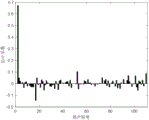
Fig. 2 is a regression coefficient diagram of a cell user in an embodiment of the present invention.
Fig. 3 is a line loss contribution chart of a subscriber in a station area according to an embodiment of the present invention.
Detailed Description
The present invention will be further described with reference to fig. 1 to 3 and examples to specifically explain the technical scheme of the present invention. It should be noted that the following examples are only for more clearly illustrating the technical solution of the present invention, and should not be construed as limiting the scope of the present invention.
Examples:
referring to fig. 1, an anti-electricity-stealing analysis method based on an intelligent measurement terminal comprises the following steps:
step 1, an intelligent measurement terminal collects daily frozen electric quantity data of 110 households in a certain low-voltage station area for 90 days and total daily frozen electric quantity data of station area examination.
Step 2, carrying out mean value filtering treatment on the collected electric quantity data, and weighing the data subjected to the mean value filtering treatment as total table data and household table data; the mean filtering process is expressed as:
Figure GDA0004229547290000037
Figure GDA0004229547290000038
the formula for calculating the line loss value is as follows:
Figure GDA0004229547290000041
wherein y is t For the data of the frozen electric quantity of the t day of the total table, t is more than or equal to 1 and less than or equal to n=n 0 -c+1, the number of data points of the filtered daily frozen electric quantity is 88, and the number of days of original data is n 0 90, the average filtering parameter c is 3,
Figure GDA0004229547290000042
is the data of the freezing electric quantity of the p day of the total table of the area before filtering, and t is more than or equal to p and less than or equal to t+c-1,>
Figure GDA0004229547290000043
freezing the power data for the p-th day of the ith user table before filtering, l t The number m of the user tables in the station area is 110 for the t line loss value;
and subtracting the sum of the user table data from the total table data to obtain a line loss value curve.
Step 3, singular value decomposition is carried out on the user table data; the specific process is as follows:
a1, sorting the user list data into a matrix form X epsilon R n×m The method comprises the steps of carrying out a first treatment on the surface of the Wherein n is the number of data points of the filtered daily frozen electric quantity, m is the table number of users in the platform area, and R represents a real number.
A2, calculate X T X∈R m×m Solving a feature vector and a feature value;
the obtained eigenvalues are arranged in sequence from big to small and the eigenvectors corresponding to the eigenvalues are correspondingly arranged, and the front min (m, n) eigenvalues and eigenvectors after arrangement are taken;
the obtained eigenvectors form a right matrix V epsilon R m×m Satisfy VV T =e; the square root of the eigenvalues taken constitutes the singular value diagonal matrix Σ e R m×m
A3, calculate XX T ∈R n×n Solving a feature vector and a feature value;
the obtained eigenvalues are arranged in sequence from big to small and the eigenvectors corresponding to the eigenvalues are correspondingly arranged, and the front min (m, n) eigenvalues and eigenvectors after arrangement are taken;
the obtained eigenvectors form a left matrix U epsilon R n×n Satisfy UU T =E。
A4, calculating singular value accumulation contribution degree cum k The formula is:
Figure GDA0004229547290000044
wherein lambda is q 、λ j Respectively the q th and the j th characteristic values after arrangement;
will meet the cut for the first time k The k value of > 0.99 is determined as the decomposition order.
And 4, establishing a low-voltage station area line loss regression model according to the user table data and the line loss value curve, so as to obtain a corresponding analysis solution, namely a user table estimation coefficient according to V, U and sigma calculation.
Regression model is
Figure GDA0004229547290000051
Wherein->
Figure GDA0004229547290000052
The estimated coefficient vector is the estimated coefficient vector of all the household tables, the vector L is a line loss value curve, and the vector beta is the estimated coefficient vector of the household table;
the corresponding analytical solution β:
Figure GDA0004229547290000053
and 5, calculating the contribution degree of the line loss according to the estimated coefficient value of the user table, and giving out a suspected electricity stealing user list according to the contribution degree and the estimated coefficient.
The calculation formula of the line loss contribution degree of the ith user table is as follows:
Figure GDA0004229547290000054
wherein x is ti Freezing the power data for the t day of the i-th user table, beta i Is the estimated coefficient value of the ith user table, l t T is the t line loss value, wherein t is not only the daily frozen electric quantity data label, but also the line loss value label, and the t and the line loss value label are in one-to-one correspondence;
the reference number of the user table in the suspected fraudulent use of electricity list
Figure GDA0004229547290000055
Wherein alpha and epsilon are two thresholds, i is the user table label, and i is more than or equal to 1 and less than or equal to m.
The 2 nd user is determined to steal the electricity and suspected to steal the electricity through the figures 2 and 3, and the feasibility of the method is verified through confirmation that the judging result is consistent with the actual checking result.
The above embodiments are illustrative of the specific embodiments of the present invention, and not restrictive, and various changes and modifications may be made by those skilled in the relevant art without departing from the spirit and scope of the invention, and all such equivalent technical solutions are intended to be included in the scope of the invention.

Claims (5)

1.一种基于智能量测终端的反窃电分析方法,其特征在于,包括以下步骤:1. A method for analyzing electricity theft based on an intelligent measurement terminal, characterized by comprising the following steps: 步骤1,智能量测终端采集低压台区用户表日冻结电量数据与台区考核总表日冻结电量数据;Step 1: The intelligent measurement terminal collects the daily frozen electricity data of user meters in the low-voltage distribution area and the daily frozen electricity data of the total meter for the distribution area assessment. 步骤2,对采集到的电量数据进行均值滤波处理,称均值滤波处理后的数据为总表数据和户表数据;Step 2: Perform mean filtering on the collected electricity data. The data after mean filtering are called the master meter data and the household meter data. 用总表数据减去户表数据的加和,获得线损值曲线;Subtract the sum of the user data from the total data to obtain the line loss curve; 步骤3,对户表数据进行奇异值分解;具体过程为:Step 3: Perform singular value decomposition on the household data; the specific process is as follows: A1,将户表数据整理为矩阵形式X∈Rn×m;其中n为滤波后的日冻结电量数据点数,m为台区用户表数,R表示实数;A1. Organize the meter data into a matrix form X∈R n×m ; where n is the number of daily frozen electricity data points after filtering, m is the number of user meters in the transformer area, and R represents a real number. A2,计算XTX∈Rm×m,求特征向量和特征值;A2, calculate X<sub> T </sub> X∈R <sub>m×m </sub>, and find the eigenvectors and eigenvalues; 求得的特征值按照从大到小顺序排列并相应排列特征值对应的特征向量,取排列后的前min(m,n)个特征值与特征向量;The obtained eigenvalues are arranged in descending order and the corresponding eigenvectors are arranged accordingly. The first min(m,n) eigenvalues and eigenvectors after the arrangement are taken. 取得的特征向量组成右矩阵V∈Rm×m满足VVT=E;取得的特征值的平方根构成奇异值对角阵Σ∈Rm×mThe obtained eigenvectors form a right matrix V∈R m×m satisfying VV T =E; the square roots of the obtained eigenvalues form a singular value diagonal matrix Σ∈R m×m ; A3,计算XXT∈Rn×n,求特征向量和特征值;A3, calculate XX T ∈R n×n , and find the eigenvectors and eigenvalues; 求得的特征值按照从大到小顺序排列并相应排列特征值对应的特征向量,取排列后的前min(m,n)个特征值与特征向量;The obtained eigenvalues are arranged in descending order and the corresponding eigenvectors are arranged accordingly. The first min(m,n) eigenvalues and eigenvectors after the arrangement are taken. 取得的特征向量组成左矩阵U∈Rn×n满足UUT=E;The obtained eigenvectors form a left matrix U∈R n×n satisfying UU T =E; A4,计算奇异值累计贡献度cumk,公式为:A4, calculate the cumulative contribution of singular values cum k , the formula is:
Figure FDA0004229547270000011
其中λq、λj分别为排列后的第q个、第j个特征值;Where λq and λj are the q-th and j-th eigenvalues after permutation, respectively; 将首次满足cumk>0.99的k值确定为分解阶数;The value of k that first satisfies cum k > 0.99 is determined as the decomposition order; 步骤4,根据户表数据与线损值曲线建立低压台区线损回归模型,从而根据V、U、∑计算得到对应的解析解,即户表估计系数;Step 4: Establish a low-voltage transformer area line loss regression model based on the household meter data and line loss value curve, and then calculate the corresponding analytical solution based on V, U, and ∑, which is the household meter estimation coefficient. 步骤5,根据户表估计系数值计算线损贡献度,并根据贡献度和估计系数给出疑似窃电用户清单;Step 5: Calculate the line loss contribution based on the estimated coefficient value of the household meter, and provide a list of suspected electricity theft users based on the contribution and the estimated coefficient. 其中第i个用户表的线损贡献度的计算公式为:The formula for calculating the line loss contribution of the i-th user table is as follows:
Figure FDA0004229547270000021
其中xti为第i个用户表的第t个日冻结电量数据,βi是第i个用户表的估计系数值,lt为第t个线损值,t在此既为日冻结电量数据标号,也为线损值标号,二者是一一对应的关系;Where x ti is the frozen electricity data of the tth day of the i-th user table, β i is the estimated coefficient value of the i-th user table, l t is the line loss value of the tth day, and t here is both the daily frozen electricity data label and the line loss value label, and the two are in a one-to-one correspondence. 则疑似窃电清单中用户表的标号
Figure FDA0004229547270000022
The user table number in the suspected electricity theft list
Figure FDA0004229547270000022
其中α和ε为两个阈值,i为用户表标号,1≤i≤m。Where α and ε are two thresholds, and i is the user table label, 1≤i≤m.
2.根据权利要求1所述的一种基于智能量测终端的反窃电分析方法,其特征在于,所述步骤1中采集的数据天数大于60。2. The anti-electricity theft analysis method based on an intelligent measurement terminal according to claim 1, characterized in that the number of days of data collected in step 1 is greater than 60. 3.根据权利要求1所述的一种基于智能量测终端的反窃电分析方法,其特征在于,所述步骤2中均值滤波过程用算式表示为:3. The anti-electricity theft analysis method based on an intelligent measurement terminal according to claim 1, characterized in that the mean filtering process in step 2 is expressed by the following formula:
Figure FDA0004229547270000023
Figure FDA0004229547270000024
计算线损值的公式为:The formula for calculating line loss is:
Figure FDA0004229547270000025
其中yt为总表的第t个日冻结电量数据,1≤t≤n=n0-c+1,n0为原始数据天数,c为均值滤波参数,
Figure FDA0004229547270000026
是滤波前的台区总表的第p个日冻结电量数据,t≤p≤t+c-1,
Figure FDA0004229547270000027
为滤波前的第i个用户表的第p个日冻结电量数据。
Where y <sub>t</sub> represents the frozen electricity data for the t-th day in the master table, 1≤t≤n=n <sub>0 </sub> -c+1, n <sub>0</sub> is the original number of days, and c is the mean filtering parameter.
Figure FDA0004229547270000026
This is the frozen electricity data for the p-th day of the transformer substation's master table before filtering, where t≤p≤t+c-1.
Figure FDA0004229547270000027
This is the frozen electricity data for the p-th day of the i-th user table before filtering.
4.根据权利要求1所述的一种基于智能量测终端的反窃电分析方法,其特征在于,所述步骤4中的回归模型为
Figure FDA0004229547270000028
其中
Figure FDA0004229547270000029
是所有户表的估计系数向量,向量L为线损值曲线,β为户表的估计系数向量;
4. The anti-electricity theft analysis method based on an intelligent measurement terminal according to claim 1, characterized in that the regression model in step 4 is:
Figure FDA0004229547270000028
in
Figure FDA0004229547270000029
It is the estimated coefficient vector of all household meters, where vector L is the line loss curve and β is the estimated coefficient vector of household meters.
对应的解析解
Figure FDA0004229547270000031
Corresponding analytical solution
Figure FDA0004229547270000031
其中1:k表示取矩阵中的前k列。Where 1:k means taking the first k columns of the matrix.
5.根据权利要求1所述的一种基于智能量测终端的反窃电分析方法,其特征在于,所述步骤5中α和ε的取值范围分别为[0.2,0.8]和[0.2,1.0]。5. The anti-electricity theft analysis method based on an intelligent measurement terminal according to claim 1, characterized in that the value ranges of α and ε in step 5 are [0.2, 0.8] and [0.2, 1.0], respectively.
CN202310286147.0A 2023-03-23 2023-03-23 Anti-electricity-stealing analysis method based on intelligent measurement terminal Active CN116008714B (en)

Priority Applications (1)

Application Number Priority Date Filing Date Title
CN202310286147.0A CN116008714B (en) 2023-03-23 2023-03-23 Anti-electricity-stealing analysis method based on intelligent measurement terminal

Applications Claiming Priority (1)

Application Number Priority Date Filing Date Title
CN202310286147.0A CN116008714B (en) 2023-03-23 2023-03-23 Anti-electricity-stealing analysis method based on intelligent measurement terminal

Publications (2)

Publication Number Publication Date
CN116008714A CN116008714A (en) 2023-04-25
CN116008714B true CN116008714B (en) 2023-06-30

Family

ID=86032162

Family Applications (1)

Application Number Title Priority Date Filing Date
CN202310286147.0A Active CN116008714B (en) 2023-03-23 2023-03-23 Anti-electricity-stealing analysis method based on intelligent measurement terminal

Country Status (1)

Country Link
CN (1) CN116008714B (en)

Families Citing this family (2)

* Cited by examiner, † Cited by third party
Publication number Priority date Publication date Assignee Title
CN116304537B (en) * 2023-04-27 2023-08-22 青岛鼎信通讯股份有限公司 A verification method for electricity stealing users based on intelligent measurement terminals
CN116859321B (en) * 2023-09-04 2023-12-29 青岛鼎信通讯科技有限公司 Measurement error monitoring method of electric energy meter based on energy controller

Citations (1)

* Cited by examiner, † Cited by third party
Publication number Priority date Publication date Assignee Title
CN114066219A (en) * 2021-11-12 2022-02-18 国网冀北电力有限公司智能配电网中心 Electricity stealing analysis method for intelligently identifying electricity utilization abnormal points under incidence matrix

Family Cites Families (11)

* Cited by examiner, † Cited by third party
Publication number Priority date Publication date Assignee Title
WO2005009206A2 (en) * 2003-06-25 2005-02-03 Besson Guy M Dynamic multi-spectral imaging system
EP3278213B1 (en) * 2015-06-05 2025-01-08 C3.ai, Inc. Systems, methods, and devices for an enterprise internet-of-things application development platform
CN109858679A (en) * 2018-12-30 2019-06-07 国网浙江省电力有限公司 An anti-electricity stealing inspection and monitoring system combined with human-machine-material and its working method
CN110749784B (en) * 2019-08-05 2022-07-08 上海大学 Line electricity stealing detection method based on electric power data wavelet analysis
CN110942084B (en) * 2019-10-12 2025-08-05 华北电力大学 A method for formulating loss reduction measures based on identification of concurrent line loss anomalies
CN111930802A (en) * 2020-08-01 2020-11-13 青岛鼎信通讯股份有限公司 Anti-electricity-stealing analysis method based on Lasso analysis
CN112380496A (en) * 2020-09-18 2021-02-19 青岛鼎信通讯股份有限公司 Pearson correlation coefficient-based anti-electricity-stealing analysis method
CN112215479B (en) * 2020-09-27 2022-03-25 青岛鼎信通讯股份有限公司 Electric meter anti-electricity-stealing analysis method based on self-adaptive shrinkage ridge regression
CN112698261A (en) * 2020-11-25 2021-04-23 国网湖南省电力有限公司 Fault early warning method and device for intelligent electric energy meter
EP4318868A4 (en) * 2021-04-25 2024-05-29 Huawei Technologies Co., Ltd. Method and apparatus for identifying topology of power line low-voltage transformer area
CN113128781B (en) * 2021-04-30 2021-12-10 大连理工大学 A distributed industrial energy operation optimization platform that automatically builds intelligent models and algorithms

Patent Citations (1)

* Cited by examiner, † Cited by third party
Publication number Priority date Publication date Assignee Title
CN114066219A (en) * 2021-11-12 2022-02-18 国网冀北电力有限公司智能配电网中心 Electricity stealing analysis method for intelligently identifying electricity utilization abnormal points under incidence matrix

Also Published As

Publication number Publication date
CN116008714A (en) 2023-04-25

Similar Documents

Publication Publication Date Title
CN112215479B (en) Electric meter anti-electricity-stealing analysis method based on self-adaptive shrinkage ridge regression
CN116008714B (en) Anti-electricity-stealing analysis method based on intelligent measurement terminal
CN108376262B (en) Analytical model construction method for typical characteristics of wind power output
CN104280612B (en) Distributed harmonic source identification method based on single-frequency current transmission characteristics
Jiang et al. Stochastic subspace identification‐based approach for tracking inter‐area oscillatory modes in bulk power system utilising synchrophasor measurements
CN113866552B (en) Medium voltage distribution network user electricity consumption abnormality diagnosis method based on machine learning
Hashemipour et al. Optimal singular value decomposition based big data compression approach in smart grids
CN106709823A (en) Method for evaluating operation property of electric utilization information collection system of power user
CN114881120B (en) Method and system for identifying household-change relationships in Taiwan area based on deep autoencoders and clustering
CN118779809B (en) A method and system for detecting abnormal power users in a power grid
CN116304537B (en) A verification method for electricity stealing users based on intelligent measurement terminals
CN116859322B (en) Electric energy meter metering error monitoring method based on intelligent measurement terminal
CN111199014A (en) A time series-based seq2point NILM method and device
CN118523309A (en) A medium- and long-term power load combination forecasting method, device and storage medium
CN110389268B (en) Online monitoring system of electric power system
CN103952724A (en) Weight optimization relative principal component analysis method for fault diagnosis of aluminum electrolysis cell conditions
CN117131341A (en) An electric meter operating error estimation method, out-of-tolerance electric meter judgment method and system
CN114894861A (en) Grounding grid corrosion detection method and device based on weighted fusion DS evidence theory
CN116859321B (en) Measurement error monitoring method of electric energy meter based on energy controller
CN116418033A (en) A Distribution Network Topology Identification Method for High-Proportion Household Photovoltaic Access
CN117493923A (en) Abnormal data repair method and system for distributed photovoltaic low-voltage distribution station area
CN117410964A (en) Data-driven user-side distributed photovoltaic detection and access capacity estimation method
CN116109324A (en) A joint electricity stealing detection method based on network characteristics and user behavior
CN113642601B (en) A medium voltage distribution network supply transfer operation identification method, device and equipment
CN115098745A (en) System and method for dynamic identification of household-change relationship in low-voltage station area based on Bayesian inference

Legal Events

Date Code Title Description
PB01 Publication
PB01 Publication
SE01 Entry into force of request for substantive examination
GR01 Patent grant
GR01 Patent grant
TR01 Transfer of patent right

Effective date of registration: 20241127

Address after: No. 858, Huaguan Road, high tech Zone, Qingdao, Shandong Province 266000

Patentee after: QINGDAO TOPSCOMM COMMUNICATION Co.,Ltd.

Country or region after: China

Patentee after: QINGDAO DINGJUN ELECTRIC Co.,Ltd.

Address before: 266000 12th floor, 4b building, 858 Huaguan Road, high tech Zone, Qingdao City, Shandong Province

Patentee before: QINGDAO TOPSCOMM COMMUNICATION Co.,Ltd.

Country or region before: China

CP03 Change of name, title or address

Address after: No. 858, Huaguan Road, high tech Zone, Qingdao, Shandong Province 266000

Patentee after: QINGDAO TOPSCOMM COMMUNICATION Co.,Ltd.

Country or region after: China

Patentee after: Qingdao Zhidian New Energy Technology Co.,Ltd.

Patentee after: QINGDAO DINGJUN ELECTRIC Co.,Ltd.

Address before: No. 858, Huaguan Road, high tech Zone, Qingdao, Shandong Province 266000

Patentee before: QINGDAO TOPSCOMM COMMUNICATION Co.,Ltd.

Country or region before: China

Patentee before: QINGDAO DINGJUN ELECTRIC Co.,Ltd.

CP03 Change of name, title or address

Address after: No. 858, Huaguan Road, high tech Zone, Qingdao, Shandong Province 266000

Patentee after: QINGDAO TOPSCOMM COMMUNICATION Co.,Ltd.

Country or region after: China

Patentee after: Qingdao Zhidian New Energy Technology Co.,Ltd.

Patentee after: Qingdao Tuowei Technology Co.,Ltd.

Address before: No. 858, Huaguan Road, high tech Zone, Qingdao, Shandong Province 266000

Patentee before: QINGDAO TOPSCOMM COMMUNICATION Co.,Ltd.

Country or region before: China

Patentee before: Qingdao Zhidian New Energy Technology Co.,Ltd.

Patentee before: QINGDAO DINGJUN ELECTRIC Co.,Ltd.