CN115906842A - A method for identifying policy information - Google Patents
A method for identifying policy information Download PDFInfo
- Publication number
- CN115906842A CN115906842A CN202211232088.0A CN202211232088A CN115906842A CN 115906842 A CN115906842 A CN 115906842A CN 202211232088 A CN202211232088 A CN 202211232088A CN 115906842 A CN115906842 A CN 115906842A
- Authority
- CN
- China
- Prior art keywords
- policy
- label
- model
- paragraph
- sentence
- Prior art date
- Legal status (The legal status is an assumption and is not a legal conclusion. Google has not performed a legal analysis and makes no representation as to the accuracy of the status listed.)
- Granted
Links
Images


Landscapes
- Machine Translation (AREA)
Abstract
Description
技术领域Technical Field
本发明涉及自然语言处理技术领域,具体涉及一种政策信息识别方法。The present invention relates to the technical field of natural language processing, and in particular to a policy information identification method.
背景技术Background Art
通常情况下,政策文件的文本结构划分具有标准可循,甚至用词上也有统一的标准。对政策文件的内容和结构进行自动化地识别、分析,对于提高政策文件分析效率尤为重要。近些年,自然语言处理技术迅猛发展,主要应用于机器翻译、舆情监测、自动摘要、观点提取、文本分类、问题回答、文本语义对比、语音识别、中文OCR等方面。因此,对于具有结构化的文本内容的政策文件而言,自然语言处理技术不失为分析政策文件文本内容的一种有效手段。Normally, there are standards for dividing the text structure of policy documents, and even unified standards for wording. Automatically identifying and analyzing the content and structure of policy documents is particularly important for improving the efficiency of policy document analysis. In recent years, natural language processing technology has developed rapidly and is mainly used in machine translation, public opinion monitoring, automatic summarization, opinion extraction, text classification, question answering, text semantic comparison, speech recognition, Chinese OCR, etc. Therefore, for policy documents with structured text content, natural language processing technology is an effective means of analyzing the text content of policy documents.
政策名称、制定部门、执行部门、发布时间等是政策文件中的重要内容,识别出这些重要内容对政策文件查重、分析政策文件适用范围、有效期限,避免出台内容重叠的政策文件等具有重要意义。但如何从数量庞大的各类政策文件中精准识别出内容相似的政策文件成为亟待解决的一个技术问题。现有技术中,通常通过内容匹配的方式进行政策文件查重,比如通过匹配两份文件的政策名称相似度,当相似度高于预设的相似度阈值时,即判定两份文件相似,或者通过文件内容相似度匹配的方式,当两份文件的内容相似度大于相似度阈值时,便判定两份文件内容相似,但在实际应用中发现,现有的上述两种匹配方式准确度不高,容易出现误判,判断结果参考价值不大。The policy name, formulation department, execution department, release time, etc. are important contents in policy documents. Identifying these important contents is of great significance for checking duplicate policy documents, analyzing the scope of application and validity period of policy documents, and avoiding the issuance of policy documents with overlapping contents. However, how to accurately identify policy documents with similar contents from a large number of various policy documents has become a technical problem that needs to be solved urgently. In the prior art, policy documents are usually checked for duplicate content by content matching. For example, by matching the similarity of the policy names of two documents, when the similarity is higher than the preset similarity threshold, the two documents are judged to be similar, or by matching the similarity of the content of the two documents. When the content similarity of the two documents is greater than the similarity threshold, the two documents are judged to have similar contents. However, in actual applications, it is found that the above two existing matching methods are not accurate, prone to misjudgment, and the judgment results are of little reference value.
发明内容Summary of the invention
本发明以实现对政策文件段落中实体级别内容的精准识别为目的,提供了一种政策信息识别方法。The present invention aims to realize accurate recognition of entity-level content in a policy document paragraph and provides a policy information recognition method.
为达此目的,本发明采用以下技术方案:To achieve this object, the present invention adopts the following technical solutions:
提供一种政策信息识别方法,步骤包括:A policy information identification method is provided, the steps comprising:
S1,定义句子模板集合T、政策文件要素体系中用于实体识别的标签词集合U、以及语言模型N用于实体识别的标签集合G,所述句子模板集合T中包含实体类型和非实体类型的句子模板t,所述句子模板t中包含两个空缺待填入的词,其中第一空缺为从输入的段落x中截取的文本片段,第二空缺为对截取的所述文本片段进行分类的类别标签,所述标签集合G中的每个标签g在所述标签词集合U 中具有存在映射关系的标签词u(g);S1, define a sentence template set T, a tag word set U for entity recognition in the policy document element system, and a tag set G for entity recognition by the language model N, wherein the sentence template set T includes sentence templates t of entity type and non-entity type, and the sentence template t includes two words to be filled in the vacancies, wherein the first vacancy is a text segment intercepted from the input paragraph x, and the second vacancy is a category label for classifying the intercepted text segment, and each tag g in the tag set G has a tag word u(g) with a mapping relationship in the tag word set U;
S2,将从所述段落x中截取的每个所述文本片段和每个所述标签g对应所述标签词集合U中的所述标签词u(g)分别填入到所述句子模板集合T中的每个所述句子模板t中的所述第一空缺、所述第二空缺中,然后使用所述语言模型N计算这些填写好的句子的概率分数
S3,将得分最高的
作为优选,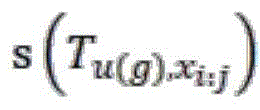

公式(1)中,
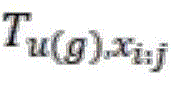
l表示句子
tc表示所述句子
t1:c-1表示所述句子
x表示输入到所述语言模型N的所述段落;x represents the paragraph input to the language model N;
p(tc|t1:c-1,x)表示在给定输入的所述段落x和所述句子
作为优选,所述语言模型N为BART模型。Preferably, the language model N is a BART model.
作为优选,事先构建的所述政策文件要素体系包括句子级别要素和实体级别要素,所述句子级别要素包括政策目标、申请审核、政策工具-供给型、政策工具-环境型、政策工具-需求型、资金管理、监管评估、准入条件8大类共27个子类别中的任意一种或多种,Preferably, the policy document element system constructed in advance includes sentence-level elements and entity-level elements. The sentence-level elements include any one or more of 27 subcategories in 8 categories, namely, policy objectives, application review, policy tools - supply-oriented, policy tools - environment-oriented, policy tools - demand-oriented, fund management, regulatory assessment, and access conditions.
其中,所述政策工具-供给型这一大类下包括人才培养、资金支持、技术支持、公共服务这4个子类别中的任意一种或多种;Among them, the policy tools-supply type category includes any one or more of the four subcategories of talent training, financial support, technical support, and public services;
所述政策工具-环境型这一大类下包括法规管制、目标规划、税收优惠、金融支持、组织建设、政策宣传这6个子类别中的任意一种或多种;The policy tools-environmental category includes any one or more of the six subcategories: regulatory control, target planning, tax incentives, financial support, organizational construction, and policy publicity;
所述政策工具-需求型这一大类下包括政府采购、公司合作、海外合作这3 个子类别中的任意一种或多种;The policy tools-demand type category includes any one or more of the three subcategories of government procurement, corporate cooperation, and overseas cooperation;
所述监管评估这一大类下包括监督管理和/或考核评估这2个子类别;The above-mentioned supervision and assessment category includes two subcategories: supervision and management and/or assessment and evaluation;
所述资金管理这一大类下包括资金来源和/或管理原则这2个子类别;The fund management category includes two subcategories: source of funds and/or management principles;
所述实体级别要素包括政策名称、政策文号、发布地区、制定部门、执行部门、发布时间、执行期限7个类别中的任意一个或多个。The entity-level elements include any one or more of the seven categories: policy name, policy document number, issuing region, formulating department, executing department, issuing time, and implementation period.
作为优选,步骤S1中是对已完成分类的所述段落x进一步在实体级别抽取出所述关键信息,具体通过预先训练的政策文本分类器对所述段落x进行分类,方法步骤包括:Preferably, step S1 is to further extract the key information at the entity level from the classified paragraph x, specifically, to classify the paragraph x using a pre-trained policy text classifier, and the method steps include:
L1,对于给定的政策文件中的所述段落x,使用模板函数p将x转换为语言模型M的输入p(x),p(x)在原始的所述段落x中增加了分类任务的提示语言,所述提示语言中包含需要预测并填写标签的掩码位置;L1, for the paragraph x in a given policy document, use the template function p to convert x into the input p(x) of the language model M. p(x) adds the prompt language of the classification task to the original paragraph x. The prompt language contains the mask position that needs to be predicted and filled in the label;
L2,所述语言模型M预测出填入所述掩码位置的标签k;L2, the language model M predicts the label k to be filled in the mask position;
L3,标签转换器v将所述标签k映射为事先构建的政策文件要素体系的标签词集合V中对应的标签词v(k)作为预测得到的所述段落x的类型。L3, the label converter v maps the label k to the corresponding label word v(k) in the label word set V of the pre-constructed policy document element system as the predicted type of the paragraph x.
作为优选,训练所述语言模型M的方法步骤包括:Preferably, the method steps for training the language model M include:
A1,对于作为训练样本的每个p(x),计算所述标签词集合V中的每个标签词 v(k)填入所述掩码位置的概率分数sp,v(k,x),sp,v(k,x)的计算方法通过以下公式 (2)表达:A1, for each p(x) as a training sample, calculate the probability score s p,v (k, x) of each label word v(k) in the label word set V filling in the mask position, and the calculation method of s p,v (k, x) is expressed by the following formula (2):
sp,v(k,x)=M(v(k)|p(x)) 公式(2) sp,v (k,x)=M(v(k)|p(x)) Formula (2)
A2,通过softmax函数计算概率分布dp,v(k,x),dp,v(k,x)通过softmax函数 (3)计算:A2, the probability distribution dp,v (k,x) is calculated by the softmax function, dp ,v (k,x) is calculated by the softmax function (3):

公式(2)、(3)中,k表示标签集合K中与所述标签词v(k)具有映射关系的标签;In formulas (2) and (3), k represents a label in the label set K that has a mapping relationship with the label word v(k);
K表示文本分类任务的标签集合;K represents the label set of the text classification task;
A3,根据sp,v(k,x)和dp,v(k,x),并利用所构造的损失函数,计算模型预测损失,所构造的损失函数通过以下公式(4)表达:A3, according to s p, v (k, x) and d p, v (k, x), and using the constructed loss function, calculate the model prediction loss, and the constructed loss function is expressed by the following formula (4):
L=(1-α)·LCE+α·LMLM 公式(4)L=(1-α)·L CE +α·L MLM formula (4)
公式(4)中,α表示微调系数;In formula (4), α represents the fine-tuning coefficient;
LCE表示模型预测的分布dp,v(k,x)与真实分布间的差距;L CE represents the gap between the distribution d p,v (k, x) predicted by the model and the true distribution;
LMLM表示模型预测的分数sp,v(k,x)与真实分数间的差距;L MLM represents the gap between the model-predicted score s p,v (k, x) and the true score;
A4,判断是否达到模型迭代训练终止条件,A4: Determine whether the model iteration training termination condition has been reached.
若是,则终止迭代,输出所述语言模型M;If yes, the iteration is terminated and the language model M is output;
若否,则调整模型参数后返回步骤A1继续进行迭代训练。If not, adjust the model parameters and return to step A1 to continue iterative training.
作为优选,所述语言模型M为由若干个语言子模型Mp融合形成的融合语言模型,训练所述融合语言模型的方法包括步骤:Preferably, the language model M is a fusion language model formed by fusing a plurality of language sub-models Mp , and the method for training the fusion language model comprises the steps of:
B1,定义模板函数集合P,所述模板函数集合P中包含若干个不同的所述模板函数p;B1, defining a template function set P, wherein the template function set P includes a plurality of different template functions p;
B2,对于作为训练样本的每个p(x),通过对应的所述语言子模型Mp,计算所述标签词集合V中的每个标签词v(k)填入所述掩码位置的概率分数sp,v(k,x), sp,v(k,x)的计算方法通过以下公式(5)表达:B2, for each p(x) as a training sample, the probability score s p,v (k, x) of each label word v(k) in the label word set V filling in the mask position is calculated by the corresponding language sub-model M p . The calculation method of s p,v (k, x) is expressed by the following formula (5):
sp,v(k,x)=Mp(v(k)|p(x)) 公式(5) sp,v (k,x)= Mp (v(k)|p(x)) Formula (5)
B3,对关联每个所述模板函数p的sp,v(k,x)进行融合得到s(k,x),s(k,x)通过以下公式(6)融合而得:B3, s p,v (k, x) associated with each of the template functions p are fused to obtain s (k, x), and s (k, x) is fused by the following formula (6):

公式(6)中,Z表示所述模板函数集合P中的所述模板函数p的数量;In formula (6), Z represents the number of the template functions p in the template function set P;
w(p)表示所述模板函数p在计算s(k,x)时所占的权重;w(p) represents the weight of the template function p in calculating s(k, x);
B4,通过softmax函数计算概率分布d(k,x),d(k,x)的计算方式通过以下公式(7)表达:B4, the probability distribution d(k, x) is calculated by the softmax function. The calculation method of d(k, x) is expressed by the following formula (7):

公式(5)、(6)、(7)中,k表示标签集合K中与所述标签词v(k)具有映射关系的标签;In formulas (5), (6), and (7), k represents a label in the label set K that has a mapping relationship with the label word v(k);
K表示文本分类任务的标签集合;K represents the label set of the text classification task;
B5,根据s(k,x)和d(k,x),并利用所构造的损失函数,计算模型预测损失,所构造的所述损失函数通过以下公式(8)表达:B5, according to s(k, x) and d(k, x), and using the constructed loss function, the model prediction loss is calculated, and the constructed loss function is expressed by the following formula (8):
L=(1-α)·LCE+α·LMLM 公式(8)L=(1-α)·L CE +α·L MLM formula (8)
公式(8)中,α表示微调系数;In formula (8), α represents the fine-tuning coefficient;
LCE表示模型预测的分布d(k,x)与真实分布间的差距;L CE represents the gap between the distribution d(k, x) predicted by the model and the true distribution;
LMLM表示模型预测的分数s(k,x)与真实分数间的差距;L MLM represents the difference between the score s(k, x) predicted by the model and the true score;
B6,判断是否达到模型迭代训练终止条件,B6, determine whether the model iteration training termination condition is reached,
若是,则终止迭代,输出所述融合语言模型;If yes, the iteration is terminated and the fusion language model is output;
若否,则调整模型参数后返回步骤B2继续进行迭代训练。If not, adjust the model parameters and return to step B2 to continue iterative training.
作为优选,微调系数α=0.0001。Preferably, the fine-tuning coefficient α=0.0001.
本发明具有以下有益效果:The present invention has the following beneficial effects:
1、构建了一套完整的政策文件要素体系,将政策文件中的各个不同要素清晰地划分开。后续基于这个体系,能够更为准确地实现对政策文件中每个段落的分类以及实体级别的文本段落的关键信息提取。1. A complete policy document element system was built to clearly divide the different elements in the policy document. Based on this system, it is possible to more accurately classify each paragraph in the policy document and extract key information from the text paragraph at the entity level.
2、提供的政策信息识别器通过在所构建的政策文件要素体系下预测两个空缺内容标签的方式,简化了文本实体的识别难度,能够基于构建的政策文件要素体系,更准确地从文本中提取出有用的关键信息,并且在有标注的训练数据集规模较小的情况下有优秀的表现。2. The provided policy information identifier simplifies the difficulty of identifying text entities by predicting two missing content labels under the constructed policy document element system. It can more accurately extract useful key information from the text based on the constructed policy document element system, and has excellent performance when the scale of annotated training data sets is small.
附图说明BRIEF DESCRIPTION OF THE DRAWINGS
为了更清楚地说明本发明实施例的技术方案,下面将对本发明实施例中所需要使用的附图作简单地介绍。显而易见地,下面所描述的附图仅仅是本发明的一些实施例,对于本领域普通技术人员来讲,在不付出创造性劳动的前提下,还可以根据这些附图获得其他的附图。In order to more clearly illustrate the technical solutions of the embodiments of the present invention, the following briefly introduces the drawings required for use in the embodiments of the present invention. Obviously, the drawings described below are only some embodiments of the present invention, and for ordinary technicians in this field, other drawings can be obtained based on these drawings without creative work.
图1是本发明一实施例构建的政策文件要素体系的示意图;FIG1 is a schematic diagram of a policy document element system constructed according to an embodiment of the present invention;
图2是本发明一实施例提供的预测政策文件的段落类别的逻辑框图;FIG2 is a logic block diagram of predicting paragraph categories of a policy document provided by an embodiment of the present invention;
图3是本发明一实施例提供的基于提示学习的政策信息识别器的逻辑框图;3 is a logic block diagram of a policy information identifier based on prompt learning provided by an embodiment of the present invention;
图4是本发明一实施例用于对比的基于预训练-微调的政策信息识别器的逻辑框图;FIG4 is a logic block diagram of a policy information identifier based on pre-training and fine-tuning for comparison according to an embodiment of the present invention;
图5是本发明一实施例提供的政策信息识别方法的实现步骤图;5 is a diagram showing the implementation steps of a policy information identification method provided by an embodiment of the present invention;
图6是政策文本分类器预测段落x的类型的方法实现步骤图.Figure 6 is a diagram showing the steps of implementing the policy text classifier to predict the type of paragraph x.
具体实施方式DETAILED DESCRIPTION
下面结合附图并通过具体实施方式来进一步说明本发明的技术方案。The technical solution of the present invention is further described below with reference to the accompanying drawings and through specific implementation methods.
其中,附图仅用于示例性说明,表示的仅是示意图,而非实物图,不能理解为对本专利的限制;为了更好地说明本发明的实施例,附图某些部件会有省略、放大或缩小,并不代表实际产品的尺寸;对本领域技术人员来说,附图中某些公知结构及其说明可能省略是可以理解的。Among them, the drawings are only used for illustrative explanations, and they only represent schematic diagrams rather than actual pictures, and should not be understood as limitations on this patent; in order to better illustrate the embodiments of the present invention, some parts of the drawings may be omitted, enlarged or reduced, and do not represent the size of the actual product; for those skilled in the art, it is understandable that some well-known structures and their descriptions in the drawings may be omitted.
本发明实施例的附图中相同或相似的标号对应相同或相似的部件;在本发明的描述中,需要理解的是,若出现术语“上”、“下”、“左”、“右”、“内”、“外”等指示的方位或位置关系为基于附图所示的方位或位置关系,仅是为了便于描述本发明和简化描述,而不是指示或暗示所指的装置或元件必须具有特定的方位、以特定的方位构造和操作,因此附图中描述位置关系的用语仅用于示例性说明,不能理解为对本专利的限制,对于本领域的普通技术人员而言,可以根据具体情况理解上述术语的具体含义。The same or similar numbers in the drawings of the embodiments of the present invention correspond to the same or similar parts; in the description of the present invention, it should be understood that if the terms "upper", "lower", "left", "right", "inner", "outer", etc. appear to indicate the orientation or position relationship, it is based on the orientation or position relationship shown in the drawings, which is only for the convenience of describing the present invention and simplifying the description, rather than indicating or implying that the device or element referred to must have a specific orientation, be constructed and operated in a specific orientation. Therefore, the terms describing the position relationship in the drawings are only used for illustrative purposes and cannot be understood as a limitation on this patent. For ordinary technicians in this field, the specific meanings of the above terms can be understood according to specific circumstances.
在本发明的描述中,除非另有明确的规定和限定,若出现术语“连接”等指示部件之间的连接关系,该术语应做广义理解,例如,可以是固定连接,也可以是可拆卸连接,或成一体;可以是机械连接,也可以是电连接;可以是直接相连,也可以通过中间媒介间接相连,可以是两个部件内部的连通或两个部件的相互作用关系。对于本领域的普通技术人员而言,可以具体情况理解上述术语在本发明中的具体含义。In the description of the present invention, unless otherwise clearly specified and limited, if the term "connection" or the like appears to indicate the connection relationship between components, the term should be understood in a broad sense, for example, it can be a fixed connection, a detachable connection, or an integral connection; it can be a mechanical connection or an electrical connection; it can be a direct connection or an indirect connection through an intermediate medium, it can be the internal connection of two components or the interaction relationship between two components. For ordinary technicians in this field, the specific meanings of the above terms in the present invention can be understood according to specific circumstances.
本发明实施例中,申请人收集了一定数量的政策文件,作为政策文件要素体系构建的参考以及后续政策文本分类器和政策信息识别器的模型训练数据。这些政策文件涉及农业、工业、商业、服务业等各个领域,政策文件的适用对象包括个体、企业、机构等。本实施例所构建的政策文件要素体系如图1所示,根据在文本段落中的字符长度,将体系中的要素分为句子级别和实体级别。句子级别的要素在段落中一般覆盖了整个句子,比如“对成功上市的企业,对经营团队给予市区联动200万元奖励”,这个句子为一条完整的句子,因此被认定为句子级别;而实体级别的要素在段落中一般包含于具有特定意义的词中,比如政策名称、政策文号、发布地区、制定部门等。In an embodiment of the present invention, the applicant collected a certain number of policy documents as a reference for the construction of the policy document element system and as model training data for subsequent policy text classifiers and policy information identifiers. These policy documents involve various fields such as agriculture, industry, commerce, and services, and the applicable objects of policy documents include individuals, enterprises, institutions, etc. The policy document element system constructed in this embodiment is shown in Figure 1. According to the length of characters in the text paragraph, the elements in the system are divided into sentence level and entity level. The sentence-level elements generally cover the entire sentence in the paragraph, such as "For enterprises that successfully go public, the management team will be given a 2 million yuan reward from the city and the district." This sentence is a complete sentence and is therefore identified as a sentence level; while the entity-level elements are generally contained in words with specific meanings in the paragraph, such as policy name, policy document number, issuing area, formulating department, etc.
进一步地,句子级别的要素又细分为一般形式和“主体-关系-域”形式,一般形式的句子级别要素用于区分段落在政策文本中的内容构成,如图1中的政策目标、申请审核、政策工具、监督评估、资金管理等。而“主体-关系-域”形式的句子级别要素用于结构化地表示政策的准入条件,如与企业注册地相关的准入条件“企业注册地-属于-上海”。具体如图1所示,本实施例所构建的政策文件要素体系的具体内容如下:Furthermore, sentence-level elements are further divided into general forms and "subject-relationship-domain" forms. The general form of sentence-level elements is used to distinguish the content composition of paragraphs in the policy text, such as the policy objectives, application review, policy tools, supervision and evaluation, and fund management in Figure 1. The sentence-level elements in the form of "subject-relationship-domain" are used to structuredly represent the policy access conditions, such as the access condition related to the company's registered place of business "company registered place-belongs to-Shanghai". As shown in Figure 1, the specific content of the policy document element system constructed in this embodiment is as follows:
1、实体级别的要素包括:政策名称、政策文号、发布地区、制定部门、执行部门、发布时间和执行期限7个类别;1. Entity-level elements include: policy name, policy number, issuing region, formulating department, implementing department, issuing time and implementation period;
2、一般形式的句子级别的要素包括:政策目标、申请审核、政策工具、监管评估、资金管理5个大类。其中,监管评估被进一步细分为监督管理和考核评估2个子类。资金管理被进一步细分为资金来源和管理规则2个子类。政策工具被进一步细分为如下3个类型共13个子类:2. The general sentence-level elements include five categories: policy objectives, application review, policy tools, regulatory assessment, and fund management. Among them, regulatory assessment is further subdivided into two subcategories: supervision management and assessment. Fund management is further subdivided into two subcategories: funding sources and management rules. Policy tools are further subdivided into the following three types and a total of 13 subcategories:
供给型政策工具(即政策工具-供给型),包括人才培养(建立人才发展规划,积极完善各种教育体系及培训体系等)、资金支持(提供财力支持,如研发经费和基础设施建设经费等)、技术支持(技术辅导与咨询,加强技术基础设施建设等)、公共服务(完善相关配套设施、政策环境等)。Supply-oriented policy tools (i.e. policy tools-supply-oriented) include talent cultivation (establishing talent development plans, actively improving various education systems and training systems, etc.), financial support (providing financial support, such as R&D funds and infrastructure construction funds, etc.), technical support (technical guidance and consulting, strengthening technical infrastructure construction, etc.), and public services (improving relevant supporting facilities, policy environment, etc.).
环境型政策工具(即政策工具-环境型),包括法规管制(制定法规、标准,规范市场秩序,加大监管力度)、目标规划(顶层设计,提供相应政策配套服务)、税收优惠(税收减免和退税等政策激励,包括投资减免、加速折扣、免税和租税抵扣等)、金融支持(通过金融机构为企业提供贷款、补助、风险投资、信用担保、基金、风险控制以及其他金融支持)、组织建设(为促进产业健康发展设立领导、监管、服务等组织及队伍建设)、政策宣传(为促进产业发展宣传相关政策)。Environmental policy tools (i.e. policy tools-environmental) include regulatory control (formulating laws and regulations, standards, regulating market order, and increasing supervision), target planning (top-level design, providing corresponding policy supporting services), tax incentives (policy incentives such as tax reductions and tax refunds, including investment reductions and exemptions, accelerated discounts, tax exemptions and rent tax deductions, etc.), financial support (providing loans, subsidies, venture capital, credit guarantees, funds, risk control and other financial support to enterprises through financial institutions), organizational construction (establishing leadership, supervision, service and other organizations and team building to promote the healthy development of the industry), and policy publicity (publicizing relevant policies to promote industrial development).
需求型政策工具(即政策工具-需求型),包括政府采购(政府向相关企业进行产品采购)、公私合作(政府与社会多方主体共同参与产业发展的相关活动,如共同投资、共同开展技术研究、发展规划研究等)、海外合作(引进外资,在生成技术、标准定制等方面与海外政府、企业或科研机构展开合作与交流)。Demand-based policy tools (i.e. policy tools-demand-based) include government procurement (the government purchases products from relevant enterprises), public-private cooperation (the government and multiple social entities jointly participate in activities related to industrial development, such as joint investment, joint technological research, development planning research, etc.), and overseas cooperation (introducing foreign capital, cooperating and communicating with overseas governments, enterprises or scientific research institutions in the areas of generating technology, standard customization, etc.).
“主体-关系-域”形式的句子级别的要素包括准入条件,其中又可以细分为 8个子类:注册地、产权要求、业务领域、员工构成、法人资格、企业类型、经营要求、研发要求。Sentence-level elements of the “subject-relationship-domain” format include entry conditions, which can be further divided into eight subcategories: place of registration, property rights requirements, business areas, employee composition, legal person qualifications, enterprise type, operating requirements, and R&D requirements.
在对政策文本进行段落分类和关键信息识别前,首先对政策文件的文本内容进行段落拆分。对政策文件的文本内容进行段落拆分的现有方法有许多,且拆分段落的方式也并非本发明请求权利保护的范围,因此有关段落拆分的具体方式在此不做说明。Before classifying the paragraphs and identifying the key information of the policy text, the text content of the policy document is firstly segmented into paragraphs. There are many existing methods for segmenting the text content of the policy document, and the method of segmenting the paragraphs is not within the scope of the rights protection claimed by the present invention, so the specific method of segmenting the paragraphs is not described here.
完成段落拆分后,进入段落分类和关键信息识别流程。本实施例中,通过预先训练的政策文本分类器对段落进行分类,进而分析政策文件的内容构成和文件结构。本实施例中,选择图1中所示的政策文件要素体系中的一般形式的句子级别要素作为段落的候选类别集合,并且使用两种不同分类粒度的类别集合为样本分别进行了政策文本分类器的训练并比较了训练效果,其中一个分类粒度的句子级别要素为图1中所示的政策目标、申请审核、政策工具-供给型、政策工具- 环境型、政策工具-需求型、资金管理和监管评估共7个大类;另外一个分类粒度为对政策工具、监管评估、资金管理这3个大类扩充后的17个小类以及政策目标、申请审核这两个大类共19个类别。政策文本分类器在对段落进行分类时,还会判断段落是否不属于这些种类的任意一个,即判断是否为无意义段落。After completing the paragraph splitting, enter the paragraph classification and key information identification process. In this embodiment, the paragraphs are classified by the pre-trained policy text classifier, and then the content composition and file structure of the policy document are analyzed. In this embodiment, the general form of the sentence-level elements in the policy document element system shown in Figure 1 are selected as the candidate category set of the paragraph, and the policy text classifier is trained and compared using two different classification granularity category sets as samples. The sentence-level elements of one classification granularity are the policy objectives, application review, policy tools-supply type, policy tools-environmental type, policy tools-demand type, fund management and regulatory assessment shown in Figure 1, a total of 7 categories; another classification granularity is 17 subcategories after the expansion of the three major categories of policy tools, regulatory assessment, and fund management, and 19 categories of the two major categories of policy objectives and application review. When classifying a paragraph, the policy text classifier will also determine whether the paragraph does not belong to any of these categories, that is, whether it is a meaningless paragraph.
以下对本实施例利用预训练的政策文本分类器对输入的段落进行分类的方法进行具体阐述:The following is a detailed description of the method for classifying an input paragraph using a pre-trained policy text classifier in this embodiment:
本实施例中,对输入段落进行分类的技术核心是采用了提示学习的思想,提示学习可以简化分类过程、提高分类效率,对于小规模数据集具有更高的分类优越性。具体而言,为了更充分地发挥政策文本分类器强大的问答和阅读理解能力,以及挖掘标注的小规模政策文件文本数据集中包含的更深层次的信息,通过将输入的段落文本按照特定模式进行处理,为其增加任务提示语言,使其更适配语言模型的问答形式。基于提示学习的政策文本分类器进行段落识别的原理如下:In this embodiment, the technical core of classifying input paragraphs is to adopt the idea of prompt learning, which can simplify the classification process, improve classification efficiency, and has higher classification superiority for small-scale data sets. Specifically, in order to give full play to the powerful question-answering and reading comprehension capabilities of the policy text classifier, and to mine the deeper information contained in the annotated small-scale policy document text data set, the input paragraph text is processed according to a specific mode and task prompt language is added to it, so that it is more suitable for the question-answering form of the language model. The principle of paragraph recognition by the policy text classifier based on prompt learning is as follows:
设M为预先训练的语言模型(优选为BERT语言模型),V是政策文件要素体系中的标签词集合,掩码词m∈V被用于填写语言模型M的输入里被遮盖住的掩码位置[mask]的内容,并令K是文本分类任务(段落分类任务)的标签集合。对每个政策文本段落分词后得到输入语言模型M的词序列x,然后使用自定义的模板函数p将x转换为语言模型M的输入p(x),p(x)在x中增加了分类任务的提示语言,提示语言中包含需要预测并填写标签的掩码位置。经p(x)转换后,可以将段落类型预测问题转换为完形填空问题,即语言模型M以完形填空问题形式表示的 p(x)为输入,预测得到的最合适填入掩码位置的词作为对x表达的段落的分类预测结果。Let M be a pre-trained language model (preferably a BERT language model), V be a set of label words in the policy document element system, mask words m∈V are used to fill in the contents of the masked positions [mask] in the input of the language model M, and let K be the label set of the text classification task (paragraph classification task). After tokenizing each policy text paragraph, we get the word sequence x of the input language model M, and then use the custom template function p to convert x into the input p(x) of the language model M. p(x) adds the prompt language of the classification task to x, and the prompt language contains the mask positions that need to be predicted and filled in with labels. After the conversion of p(x), the paragraph type prediction problem can be converted into a cloze problem, that is, the language model M takes p(x) expressed in the form of a cloze problem as input, and the most suitable word to fill in the mask position is predicted as the classification prediction result of the paragraph expressed by x.
需要强调的是,本申请基于提示学习的思想,更好地利用了语言模型M的问答和阅读理解能力,同时由于将分类问题转换成了完形填空问题,预测过程更加简单,提高了政策文本分类器的分类效率。进一步地,本实施例定义了一个从文本分类任务的标签集合K到政策文件要素体系中的标签词集合V的映射作为标签的转换器v。例如,对于K中的标签k,该标签转换器v将其映射为标签词 v(k)比如=图1中所示的政策目标,“政策目标”即为预测的段落类别。It should be emphasized that this application is based on the idea of prompt learning, which makes better use of the question-answering and reading comprehension capabilities of the language model M. At the same time, since the classification problem is converted into a cloze problem, the prediction process is simpler, which improves the classification efficiency of the policy text classifier. Furthermore, this embodiment defines a mapping from a label set K of a text classification task to a label word set V in a policy document element system as a label converter v. For example, for a label k in K, the label converter v maps it to a label word v(k) such as = the policy goal shown in Figure 1, and "policy goal" is the predicted paragraph category.
图2是本发明实施例提供的预测政策文件的段落类别的逻辑框图。需要强调的是,对于每一个模板函数p和标签转换器v,本实施例通过以下步骤来实现对段落的分类:Figure 2 is a logic block diagram of the paragraph category prediction of the policy document provided by the embodiment of the present invention. It should be emphasized that for each template function p and label converter v, the present embodiment implements the classification of the paragraph through the following steps:
给定一个输入段落x(优选为原始段落的词序列),使用模板函数p将x转换为语言模型M的输入p(x),语言模型M会预测p(x)中掩码位置最合适的标签k, k∈K,然后使用标签转换器v将这个标签映射为政策文件要素体系中的标签词 v(k),v(k)∈V,并将其作为对段落x的分类。作为优选,本实施例采用预训练的中文BERT模型作为语言模型M,其对掩码位置的预测方法沿用了BERT模型的预训练任务,即使用其对p(x)中掩码位置对应的输出来预测掩码位置的标签(预测方法与BERT模型的Masked Language Model预训练任务一致,不做详细说明)。Given an input paragraph x (preferably a word sequence of the original paragraph), use the template function p to convert x into the input p(x) of the language model M. The language model M predicts the most appropriate label k for the mask position in p(x), k∈K, and then uses the label converter v to map this label to the label word v(k) in the policy document element system, v(k)∈V, and uses it as the classification of the paragraph x. Preferably, this embodiment uses a pre-trained Chinese BERT model as the language model M, and its method for predicting the mask position follows the pre-training task of the BERT model, that is, using its output corresponding to the mask position in p(x) to predict the label of the mask position (the prediction method is consistent with the Masked Language Model pre-training task of the BERT model, and is not described in detail).
举例而言,关于模板函数p,假设定义为“x。总体而言,这是有关_____的政策文本段落。”其中,“_____”表示掩码位置,这样就为原始文本段落x增加了一个分类任务的提示语言。x例如为“对成功上市的企业,对经营团队给予市区联动200万元奖励”,对于该段落x,增加上述的提示语言后,语言模型M的分类任务为预测“对成功上市的企业,对经营团队给予市区联动200万元奖励。总体而言,这是有关_____的政策文本段落。”中的掩码位置“____”的标签k。预测出掩码位置后的标签后,将预测到的标签k映射为政策文件要素体系中的标签词集合V中对应的标签词v(k)作为预测得到的段落x的类型。For example, regarding the template function p, suppose it is defined as "x. Generally speaking, this is a policy text paragraph about _____." Among them, "_____" represents the mask position, which adds a prompt language of the classification task to the original text paragraph x. For example, x is "For successfully listed companies, the city and the management team will be given a 2 million yuan reward through city-to-city linkage." For this paragraph x, after adding the above prompt language, the classification task of the language model M is to predict the label k of the mask position "____" in "For successfully listed companies, the city and the management team will be given a 2 million yuan reward through city-to-city linkage. Generally speaking, this is a policy text paragraph about _____." After predicting the label after the mask position, the predicted label k is mapped to the corresponding label word v(k) in the label word set V in the policy document element system as the type of the predicted paragraph x.
以下对本实施例训练语言模型M的方法进行说明:The following is an explanation of the method for training the language model M in this embodiment:
语言模型M优选采用BERT模型,BERT模型的现有训练方法有许多,这些现有的训练方法可应用到本申请中用于训练语言模型M,区别在于,本实施例用于训练语言模型M的样本为经模板函数p转换得到的p(x)以及经标签转换器v转换得到的标签词集合V中对应的标签词v(k),以及本申请为提高分类精度而改进的用于评估模型性能的损失函数。The language model M preferably adopts the BERT model. There are many existing training methods for the BERT model, and these existing training methods can be applied to the present application for training the language model M. The difference is that the samples used to train the language model M in this embodiment are p(x) converted by the template function p and the corresponding label words v(k) in the label word set V converted by the label converter v, as well as the loss function for evaluating model performance improved by the present application to improve classification accuracy.
训练语言模型M时,本申请将样本数据集按照7:3的比例随机划分为训练集和验证集,训练过程如下:When training the language model M, this application randomly divides the sample data set into a training set and a validation set in a ratio of 7:3. The training process is as follows:
对于每个政策文本段落产生的只包含一个掩码位置的序列x,对政策文件要素体系中的标签词集合V中的每个标签词v(k)填入该掩码位置的概率计算一个分数(由于标签k在标签词集合V中具有一个存在映射关系的标签词v(k),因此预测标签k填入该掩码位置的概率分数相当于预测对应的标签词v(k)填入该掩码位置的概率分数),这个分数由语言模型M预测,代表预测出的该标签词可以填入该掩码位置的可能性。更为具体地,对于一个序列x,本申请计算文本分类任务的标签集合K中的标签k填入该掩码位置的概率分数的方法通过以下公式 (1)表达:For each sequence x generated by each policy text paragraph that contains only one mask position, a score is calculated for the probability of each label word v(k) in the label word set V in the policy document element system filling in the mask position (since label k has a label word v(k) with a mapping relationship in the label word set V, the probability score of predicting label k filling in the mask position is equivalent to the probability score of predicting the corresponding label word v(k) filling in the mask position). This score is predicted by the language model M and represents the possibility that the predicted label word can fill in the mask position. More specifically, for a sequence x, the method of calculating the probability score of label k in the label set K of the text classification task filling in the mask position in the present application is expressed by the following formula (1):
sp,v(k,x)=M(v(k)|p(x)) 公式(1) sp,v (k,x)=M(v(k)|p(x)) Formula (1)
公式(1)中,sp,v(k,x)表示标签k填入掩码位置的概率分数,由于标签k与政策文件要素体系的标签词集合V中对应的标签词v(k)具有映射关系,因此 sp,v(k,x)相当于表示标签词v(k)填入掩码位置的概率分数;In formula (1), s p, v (k, x) represents the probability score of label k filling in the mask position. Since label k has a mapping relationship with the corresponding label word v (k) in the label word set V of the policy document element system, s p, v (k, x) is equivalent to the probability score of label word v (k) filling in the mask position.
k表示标签集合K中与标签词v(k)具有映射关系的标签,例如可以将图1中的标签词“政策目标”的标签映射为k1,将标签词“申请审核”的标签映射为k2,通过这样建立映射关系,将所述任务从为输入句子分配一个没有含义的标签变为了选择最有可能填入掩码位置的词。k represents a label in the label set K that has a mapping relationship with the label word v(k). For example, the label of the label word "policy goal" in Figure 1 can be mapped to k 1 , and the label of the label word "application review" can be mapped to k 2. By establishing such a mapping relationship, the task is changed from assigning a meaningless label to the input sentence to selecting the word that is most likely to fill in the mask position.
在计算得到V中所有标签词填入同个掩码位置的分数后,通过softmax函数得到一个概率分布,具体计算方法通过以下公式(2)表达:After calculating the scores of all label words in V that are filled in the same mask position, a probability distribution is obtained through the softmax function. The specific calculation method is expressed by the following formula (2):

公式(2)中,K表示文本分类任务的标签集合;In formula (2), K represents the label set of the text classification task;
然后,根据sp,v(k,x)和dp,v(k,x),并利用所构造的损失函数,计算模型预测损失,所构造的损失函数通过以下公式(3)表达:Then, according to s p,v (k, x) and d p,v (k, x), and using the constructed loss function, the model prediction loss is calculated. The constructed loss function is expressed by the following formula (3):
L=(1-α)·LCE+α·LMLM 公式(3)L=(1-α)·L CE +α·L MLM formula (3)
公式(3)中,α表示微调系数(优选为0.0001);In formula (3), α represents the fine-tuning coefficient (preferably 0.0001);
LCE表示模型预测的分布dp,v(k,x)与真实独热向量分布间的差距;L CE represents the gap between the distribution d p,v (k, x) predicted by the model and the distribution of the true one-hot vector;
LMLM表示模型预测的分数sp,v(k,x)与真实分数间的差距;L MLM represents the gap between the model-predicted score s p,v (k, x) and the true score;
最后,判断是否达到模型迭代训练终止条件,Finally, determine whether the model iteration training termination condition is reached.
若是,则终止迭代,输出语言模型M;If yes, the iteration is terminated and the language model M is output;
若否,则调整模型参数后继续进行迭代训练。If not, adjust the model parameters and continue iterative training.
为了进一步提升模型训练效果,进而提升语言模型M的分类性能,优选地,语言模型M为由若干个语言子模型Mp融合形成的融合语言模型,训练融合语言模型的方法为:In order to further improve the model training effect and thus improve the classification performance of the language model M, preferably, the language model M is a fusion language model formed by fusing several language sub-models M p , and the method for training the fusion language model is:
首先,定义一个模板函数集合P,模板函数集合P中包含若干个不同的模板函数p,例如,“x。这个政策文本段落和什么有关?_____”,又例如,“这个政策文本段落和什么有关?和_____有关”等等。对于不同的模板函数p,本实施例通过以下方法来训练融合语言模型:First, a template function set P is defined, which includes several different template functions p, for example, "x. What is this policy text paragraph related to? _____", and another example, "What is this policy text paragraph related to? Related to _____", etc. For different template functions p, this embodiment trains the fusion language model by the following method:
对于作为训练样本的每个p(x),通过对应的语言子模型Mp计算标签词集合 V中的每个标签词v(k)填入掩码位置的概率分数sp,v(k,x),计算方法通过以下公式(4)表达:For each p(x) used as a training sample, the probability score s p,v (k, x) of each label word v(k) in the label word set V filling in the mask position is calculated by the corresponding language sub -model M p . The calculation method is expressed by the following formula (4):
sp,v(k,x)=Mp(v(k)|p(x)) 公式(4) sp,v (k,x)= Mp (v(k)|p(x)) Formula (4)
对关联每个模板函数p的sp,v(k,x)进行融合得到s(k,x),具体通过以下公式 (5)表达: The sp,v (k,x) associated with each template function p is fused to obtain s(k,x), which is specifically expressed by the following formula (5):

公式(5)中,Z表示模板函数集合P中的模板函数p的数量;In formula (5), Z represents the number of template functions p in the template function set P;
w(p)表示模板函数p在计算s(k,x)、d(k,x)时所占的权重,本实施例中,根据各语言子模型Mp在训练集和验证集上获得的准确度来确定个Mp的权重。w(p) represents the weight of the template function p in calculating s(k, x) and d(k, x). In this embodiment, the weight of each language sub-model M p is determined according to the accuracy obtained on the training set and the validation set.
然后,通过softmax函数计算概率分布d(k,x),计算方法通过以下公式(6) 表达:Then, the probability distribution d(k, x) is calculated by the softmax function. The calculation method is expressed by the following formula (6):

公式(4)、(5)、(6)中, k表示标签集合K中与标签词v(k)具有映射关系的标签;K表示文本分类任务的标签集合;In formulas (4), (5), and (6), k represents a label in the label set K that has a mapping relationship with the label word v(k); K represents the label set of the text classification task;
最后,根据s(k,x)和d(k,x),并利用所构造的损失函数,计算模型预测损失,所构造的损失函数通过以下公式(7)表达:Finally, according to s(k, x) and d(k, x), and using the constructed loss function, the model prediction loss is calculated. The constructed loss function is expressed by the following formula (7):
L=(1-α)·LCE+α·LMLM 公式(7)L=(1-α)·L CE +α·L MLM formula (7)
公式(7)中,α表示微调系数(优选为0.0001);In formula (7), α represents the fine-tuning coefficient (preferably 0.0001);
LCE表示模型预测的分布d(k,x)与真实分布间的差距;L CE represents the gap between the distribution d(k, x) predicted by the model and the true distribution;
LMLM表示模型预测的分数s(k,x)与真实分数间的差距。L MLM represents the difference between the score s(k, x) predicted by the model and the true score.
本申请提供的以具有提示语言的p(x)为语言模型M的输入的掩码位置标签预测方法在有标注的训练数据集规模较小的情况下具有优秀的预测性能,为了验证其在训练数据较少时的优秀性能,本申请还设计了多种基于完全监督学习的政策文本分类器进行性能比较,具体方法包括:The mask position label prediction method provided in this application, which uses p(x) with prompt language as the input of the language model M, has excellent prediction performance when the scale of the labeled training data set is small. In order to verify its excellent performance when the training data is small, this application also designs a variety of policy text classifiers based on fully supervised learning for performance comparison. The specific methods include:
(1)对于政策文件段落si,使用分词工具得到词序列,记为 wi=(wi,1,wi,2,…,wi,n),wi,n表示词序列wi中的第n个词,再通过在大规模综合领域语料库上预训练得到的词向量表示模型对分词后的每个词进行分布式表示。本实施例中,使用的是静态的词向量,每个词被表示为一个300维的预训练的向量xj=(xj,1,xj,2,…,xj,300),j表示词序列wi中的第j个词,通过词向量得到段落si的特征表示Xi后,将段落的特征表示Xi输入一个多分类器来预测每个段落属于个类别的概率,预测过程表示为:f(Xi)=(pi,1,pi,2,…,pi,k),f为特征表示函数, pi,k表示段落si为第k个类别的概率,选择其中概率最大的类别作为段落si所述的类别。(1) For the policy document paragraph si , the word segmentation tool is used to obtain the word sequence, denoted as wi = (wi ,1 , wi ,2 , ..., wi ,n ), where wi,n represents the nth word in the word sequence wi . Then, each word after segmentation is distributedly represented by the word vector representation model pre-trained on a large-scale comprehensive domain corpus. In this embodiment, a static word vector is used, and each word is represented as a 300-dimensional pre-trained vector xj = (xj , 1 , xj, 2 , ..., xj , 300 ), where j represents the jth word in the word sequence w i . After obtaining the feature representation Xi of paragraph si through the word vector, the feature representation Xi of the paragraph is input into a multi-classifier to predict the probability of each paragraph belonging to a category. The prediction process is expressed as: f( Xi ) = (pi , 1 , pi, 2 , ..., pi, k ), where f is the feature representation function, pi , k represents the probability that paragraph si belongs to the kth category, and the category with the largest probability is selected as the category described in paragraph si .
(2)在多分类器部分,本申请选择基于统计机器学习和基于深度学习的方法对多分类器进行完全监督学习。其中,基于统计机器学习的多分类器是以支持向量机模型和XGBoost模型为基础设计的;基于深度学习的多分类器是以 TextCNN模型和Bi-LSTM+Attention模型为基础设计的。(2) In the multi-classifier part, this application selects statistical machine learning-based and deep learning-based methods to perform fully supervised learning on the multi-classifier. Among them, the multi-classifier based on statistical machine learning is designed based on the support vector machine model and the XGBoost model; the multi-classifier based on deep learning is designed based on the TextCNN model and the Bi-LSTM+Attention model.
1)在基于统计机器学习的多分类器中,对一个政策文本段落si,将分词后的段落的所有词的300维分布式表示的每一维取平均值,并拼接上段落的长度和在整篇政策文件中的相对位置(段落在文件中的索引值/文件的总分段数)这两个特征后得到一个302维的特征向量Xi=(Xi,1,Xi,2,…,Xi,302),将其输入到多分类器中,输出该段落分类的标签。1) In a multi-classifier based on statistical machine learning, for a policy text paragraph s i , the average value of each dimension of the 300-dimensional distributed representation of all words in the segmented paragraph is taken, and the two features of the paragraph length and the relative position in the entire policy document (the index value of the paragraph in the document/the total number of segments in the document) are concatenated to obtain a 302-dimensional feature vector Xi = (Xi , 1 , Xi , 2 , ..., Xi , 302 ), which is input into the multi-classifier to output the label of the paragraph classification.
2)在基于深度学习的多分类器中,对一个政策文本段落si,将分词后的段落的所有词的分布式表示xj=(xj,1,xj,2,…,xj,300)拼接成一个矩阵,并用3种不同尺寸的卷积核去提取特征,3种卷积核的大小可以分别为3×3、4×4、5×5,卷积后再进行最大池化,最后将不同尺寸的卷积核提取的特征拼接为特征向量输入到softmax激活函数后输出该段落分类的标签。2) In the multi-classifier based on deep learning, for a policy text paragraph si , the distributed representations xj = (xj , 1 , xj , 2 , ..., xj , 300 ) of all words in the segmented paragraph are concatenated into a matrix, and three convolution kernels of different sizes are used to extract features. The sizes of the three convolution kernels can be 3×3, 4×4, and 5×5, respectively. After convolution, maximum pooling is performed. Finally, the features extracted by convolution kernels of different sizes are concatenated into a feature vector and input into the softmax activation function to output the label of the paragraph classification.
3)在另一个基于深度学习的多分类器中,对一个政策文本段落si,将分词后的段落的所有词的300维分布式表示xj=(xj,1,xj,2,…,xj,300)正向输入到LSTM 长短时记忆网络中得到

以下展示了通过方法(1)以及方法(2)中的1)、2)、3)四种方法在小规模训练数据集上训练得到的多分类器与通过本发明实施例提供的基于提示语言和掩码位置标签预测的政策文本分类方法训练的语言模型M对图1中所示的“政策目标、申请审核、政策工具-供给型、政策工具-环境型、政策工具-需求型、监管评估、资金管理”7大类以及“政策目标、申请审核、人才培养、资金支持、技术支持、公共服务、法规管制、目标规划、税收优惠、金融支持、组织建设、政策宣传、政府采购、公私合作、海外合作、监督管理、考核评估、资金来源、管理原则”19类这两种不同粒度的政策文件的段落分类的效果对比表,评价指标为测试集上的正确率。由下表a可知:本实施例训练的语言模型M在段落x中增加分类任务提示语言进行掩码位置标签预测的段落文本分类方法在小规模数据集上表现出了比其他四种方法训练的多分类器具有更优的段落分类性能,证明了本实施例训练的语言模型M在小规模数据集上预测段落类别的优越性。The following is a comparison table showing the effects of the multi-classifier trained on a small-scale training data set by the four methods 1), 2), and 3) in method (2) and the language model M trained by the policy text classification method based on prompt language and mask position label prediction provided by the embodiment of the present invention on the paragraph classification of policy documents of two different granularities, namely, the seven categories of "policy objectives, application review, policy tools - supply-oriented, policy tools - environment-oriented, policy tools - demand-oriented, regulatory evaluation, and fund management" shown in Figure 1 and the 19 categories of "policy objectives, application review, talent training, financial support, technical support, public services, regulations, target planning, tax incentives, financial support, organizational construction, policy publicity, government procurement, public-private partnership, overseas cooperation, supervision and management, assessment and evaluation, funding sources, and management principles". The evaluation indicator is the accuracy on the test set. It can be seen from the following Table a that the paragraph text classification method in which the language model M trained in this embodiment adds a classification task prompt language in paragraph x to predict the mask position label shows better paragraph classification performance on a small-scale dataset than the multi-classifiers trained by the other four methods, proving the superiority of the language model M trained in this embodiment in predicting paragraph categories on a small-scale dataset.

表aTable a
完成对政策文本中的段落分类后,有时需要自动识别出各个段落中的关键信息。本申请通过基于提示学习的政策信息识别器来识别政策文件中的关键信息。本申请中,定义图1中所示的政策文件要素体系中的实体级别的要素作为政策的关键信息类别集合,即图1中所示的“政策名称、政策文号、发布地区、制定部门、执行部门、发布时间、执行期限”7个类别。After completing the classification of paragraphs in the policy text, it is sometimes necessary to automatically identify the key information in each paragraph. This application identifies the key information in the policy document through a policy information identifier based on prompt learning. In this application, the entity-level elements in the policy document element system shown in Figure 1 are defined as a set of key information categories for the policy, namely the seven categories of "policy name, policy document number, issuing region, formulating department, executing department, issuing time, and implementation period" shown in Figure 1.
以下对基于提示学习的政策信息识别器抽取出每个段落x中的关键信息的方法进行具体阐述:The following is a detailed description of the method of extracting key information from each paragraph x by the policy information identifier based on prompt learning:
总体而言,本申请将每个段落看作一个字符序列,通过政策信息识别器去识别字符序列中的每一位是否为实体边界以及识别实体的种类。具体地,如图3 所示,设定N为预训练的语言模型,在模型N中,U是政策文件要素体系中用于实体识别的标签词集合,并令G为实体识别任务的标签集合,标签集合G中的每个标签g在标签词集合U中存在一个具有映射关系的标签词u(g),并定义句子模板t,模板t中包含两个待填入词的空缺,第一空缺填入的内容为从输入段落中截取的文本片段,这些片段被视为候选的实体,第二空缺为需要预测的所填入的文本片段的实体类别标签。对政策文件要素体系中用于实体识别的标签词集合U中的每一个标签词u(g)代表的实体类型,将这个实体类型填入t中定义一个新模板,例如定义句子模板t为“[文本片段]是一个[实体类型]政策实体”,那么对于实体识别的标签词集合U中的“制定部门”实体类型,将其填入模板t中后可以定义一个新的模板例如为“[候选实体]是一个制定部门政策实体”。此外,为了处理文本片段不是实体的情况,再定义一个“非实体”类型的句子模板,也就是“[文本片段]不是一个政策实体”,这样,多个不同的实体类型的句子模板和非实体类型的句子模板构成一个句子模板的集合T。In general, this application regards each paragraph as a character sequence, and uses a policy information identifier to identify whether each bit in the character sequence is an entity boundary and the type of entity. Specifically, as shown in Figure 3, N is set as a pre-trained language model. In model N, U is a set of label words used for entity recognition in the policy document element system, and G is a label set for the entity recognition task. Each label g in the label set G has a label word u(g) with a mapping relationship in the label word set U, and a sentence template t is defined. The template t contains two vacancies to be filled in. The content of the first vacancy is a text fragment intercepted from the input paragraph. These fragments are regarded as candidate entities, and the second vacancy is the entity category label of the filled text fragment that needs to be predicted. For each entity type represented by a tag word u(g) in the tag word set U used for entity identification in the policy document element system, fill this entity type into t to define a new template. For example, define sentence template t as "[text fragment] is a [entity type] policy entity". Then, for the "making department" entity type in the tag word set U for entity identification, fill it into template t to define a new template such as "[candidate entity] is a making department policy entity". In addition, in order to handle the situation where the text fragment is not an entity, define a sentence template of the "non-entity" type, that is, "[text fragment] is not a policy entity". In this way, multiple sentence templates of different entity types and sentence templates of non-entity types constitute a set of sentence templates T.
将从段落x中截取的每个文本片段填入到句子模板集合T中的每个句子模板 t中,然后使用语言模型N(同样优选为BART模型)计算这些填写好的句子的概率分数,计算方法通过以下公式(8)表达:Each text segment intercepted from paragraph x is filled into each sentence template t in the sentence template set T, and then the language model N (preferably the BART model) is used to calculate the probability scores of these filled sentences. The calculation method is expressed by the following formula (8):

公式(8)中,
l表示所述句子
tc表示句子
t1:c-1表示句子
x表示输入到所述语言模型N的文本序列{x1,x2,...,xn};x represents a text sequence {x 1 , x 2 , ..., x n } input to the language model N;
p(tc|t1:c-1,x)表示在给定输入文本x和句子模板的词序列中的第1项到第 c-1项t1:c-1的情况下,模型预测第c项为tc的概率,该概率由预训练生成式语言模型计算得出。p(t c |t 1:c-1 , x) represents the probability that the model predicts the cth item to be t c, given the input text x and the 1st to c-1th items in the word sequence t 1:c-1 of the sentence template, which is calculated by the pre-trained generative language model.
通过上述过程,就使用语言模型N为每种实体类型和非实体类型的句子模板都计算了一个在第二空缺填入标签词的概率得分,然后将每个候选的文本片段分类为得分最高的句子模板对应的类型,当然该类型也可能是“非实体”。其中被分配了实体类型的文本片段就是这段文本中识别出的实体,其实体类型为分配的实体类型。Through the above process, the language model N is used to calculate a probability score of filling the label word in the second gap for each entity type and non-entity type sentence template, and then each candidate text segment is classified into the type corresponding to the sentence template with the highest score, of course, the type may also be "non-entity". The text segment assigned the entity type is the entity identified in this text, and its entity type is the assigned entity type.
以下对训练政策信息识别器的方法进行简要阐述:The following is a brief description of the method for training policy information identifier:
以

需要强调的是,本申请中,语言模型N优选为BART模型。BART模型计算句子模板

给定一个政策文本段落X和句子模板集合T,将X输入到BART模型的编码器中,得到段落X的特征表示he=Encoder(X)。在BART模型的解码器的每一步中, he和解码器之前的输出t1:c-1一同作为当前步的输入,使用注意力方法得到当前步的特征表示

在训练BART模型中,使用交叉熵损失函数计算解码器的输出与真实模板之间的差距,以此为模型参数调节的依据,对模型参数进行调整后继续迭代训练 BART模型,直至达到模型收敛条件。In training the BART model, the cross entropy loss function is used to calculate the gap between the decoder output and the true template, which is used as the basis for adjusting the model parameters. After adjusting the model parameters, the BART model is iteratively trained until the model convergence conditions are reached.
本申请提供的基于提示学习的政策信息提取方法在小规模数据集上具有优秀的识别效果,为了验证其在训练数据集规模较小时的性能,本申请还设计了多种基于预训练-微调的政策信息识别器在相同数据集上进行性能比较,具体方法如图4所示,包括:The policy information extraction method based on prompt learning provided in this application has excellent recognition effect on small-scale data sets. In order to verify its performance when the training data set is small, this application also designs a variety of policy information identifiers based on pre-training-fine-tuning to compare their performance on the same data set. The specific method is shown in Figure 4, including:
在政策信息识别器的输入数据的分布式特征表示部分,同时使用词汇级别和字符级别的分布式特征表示,词汇级别的每个词的分布式特征表示通过在大规模综合领域语料库上预训练的词向量表示模型实现,而字符级别的每个字符的分布式特征通过预训练的中文RoBERTa模型实现。由于词向量表示模型和中文 RoBERTa模型对输入数据进行分布式特征表示的过程并非本申请要求权利保护的范围,因此具体过程不做说明。In the distributed feature representation part of the input data of the policy information identifier, both the vocabulary-level and character-level distributed feature representations are used. The distributed feature representation of each word at the vocabulary level is realized by a word vector representation model pre-trained on a large-scale comprehensive domain corpus, while the distributed features of each character at the character level are realized by a pre-trained Chinese RoBERTa model. Since the process of distributed feature representation of input data by the word vector representation model and the Chinese RoBERTa model is not within the scope of the rights claimed in this application, the specific process is not described.
政策信息识别器的上下文编码层承接分布式表示层的输出,对文本语义和字词之间的依赖进一步建模。在本实施例中,采用多层感知机、Transformer和 Flat-LatticeTransforme,三种模型的结构及构建方法简述如下:The context encoding layer of the policy information identifier receives the output of the distributed representation layer and further models the text semantics and the dependencies between words. In this embodiment, multi-layer perceptron, Transformer and Flat-LatticeTransforme are used. The structures and construction methods of the three models are briefly described as follows:
在基于多层感知机的上下文编码层中,采用线性层-ReLU函数层-线性层的结构。In the context encoding layer based on the multi-layer perceptron, a structure of linear layer-ReLU function layer-linear layer is adopted.
在基于Transformer的上下文编码层中,使用Transformer Encoder对文本进行特征编码。In the Transformer-based context encoding layer, the Transformer Encoder is used to encode the text features.
在基于Flat-Lattice Transformer(FLAT)的上下文编码层中,使用了一种Transformer的变体FLAT,同时使用了文本的字符和词汇的分布式表示,并进一步拓展了Transformer中的位置编码,引入了文本字符和词汇的首尾相对位置,试图更好地克服政策文件实体长度不平衡的问题。FLAT的文本片段相对位置编码计算方法通过如下公式(9)表达:In the context encoding layer based on Flat-Lattice Transformer (FLAT), a variant of Transformer, FLAT, is used. The distributed representation of text characters and words is used at the same time. The position encoding in Transformer is further expanded, and the relative position of text characters and words is introduced to try to better overcome the problem of imbalanced length of policy document entities. The calculation method of relative position encoding of FLAT text fragments is expressed by the following formula (9):

公式(9)中,head[i]和tail[i]分别表示第i个文本片段在原始序列中的第一个和最后一个字符的位置索引。对于字符,其第一个和最后一个字符的位置索引是相同的(head和tail用于表示出文本片段从哪里开始,到哪里结束。例如,“政策的有效期为3年”这段文本中,“政策”的head和tail分别为1和2;而对于“政”这个字符,其head和tail都为1)。WR是一个可学习的参数,Pd包括


公式(10)、(11)中,d包括
政策信息识别器的解码层使用条件随机场模型,解码过程使用了基于动态规划的维特比算法来获得较高的解码效率,并且使用条件随机场损失函数进行优化。The decoding layer of the policy information identifier uses a conditional random field model. The decoding process uses the Viterbi algorithm based on dynamic programming to obtain higher decoding efficiency, and uses the conditional random field loss function for optimization.
以下展示了基于预训练-微调的政策信息识别器与通过本发明实施例提供的基于提示学习的政策信息识别器在有标注的训练数据集规模较小的情况下对图 1中所示的“政策名称、政策文号、发布地区、制定部门、执行部门、发布时间、执行期限”7个实体级别的政策信息的抽取效果对比表,评价指标为测试集上的 F1得分。由下表b可知:本实施例训练的语言模型N在小规模训练数据集上表现出了比其他方法训练的政策信息识别器更优的性能,证明了本实施例训练的语言模型N在有标注的训练数据集较少时识别政策关键信息的优越性。The following table shows the comparison of the extraction effect of the policy information identifier based on pre-training and fine-tuning and the policy information identifier based on prompt learning provided by the embodiment of the present invention on the seven entity-level policy information of "policy name, policy document number, issuing region, formulation department, execution department, issuing time, and execution period" shown in Figure 1 when the scale of the labeled training data set is small. The evaluation index is the F1 score on the test set. It can be seen from the following table b that the language model N trained in this embodiment shows better performance than the policy information identifier trained by other methods on a small-scale training data set, which proves the superiority of the language model N trained in this embodiment in identifying key policy information when the labeled training data set is small.
表bTable b
综上,本发明实施例提供的政策信息识别方法,如图5所示,步骤包括:In summary, the policy information identification method provided by the embodiment of the present invention, as shown in FIG5 , comprises the following steps:
S1,定义句子模板集合T、政策文件要素体系中用于实体识别的标签词集合 U、以及语言模型N用于实体识别的标签集合G,句子模板集合T中包含实体类型和非实体类型的句子模板t,句子模板t中包含两个空缺待填入的词,其中第一空缺为从输入的段落x中截取的文本片段,第二空缺为对截取的文本片段进行分类的类别标签,标签集合G中的每个标签g在标签词集合U中具有存在映射关系的标签词u(g);S1, define a sentence template set T, a label word set U for entity recognition in the policy document element system, and a label set G for entity recognition by the language model N, wherein the sentence template set T contains sentence templates t of entity type and non-entity type, and the sentence template t contains two words to be filled in, wherein the first vacancy is a text segment intercepted from the input paragraph x, and the second vacancy is a category label for classifying the intercepted text segment, and each label g in the label set G has a label word u(g) with a mapping relationship in the label word set U;
S2,将从段落x中截取的每个文本片段和每个标签g对应标签词集合U中的标签词u(g)分别填入到句子模板集合T中的每个句子模板t中的第一空缺、第二空缺中,然后使用语言模型N计算这些填写好的句子的概率分数
S3,将得分最高的
更加具体地,步骤S1中是对已完成分类的所述段落x进一步在实体级别抽取出所述关键信息,如图6所示,具体通过预先训练的政策文本分类器对段落x 进行分类,方法步骤包括:More specifically, step S1 is to further extract the key information at the entity level from the classified paragraph x. As shown in FIG6 , the paragraph x is classified by a pre-trained policy text classifier. The method steps include:
L1,对于给定的政策文件中的段落x,使用模板函数p将x转换为语言模型M 的输入p(x),p(x)在原始的段落x中增加了分类任务的提示语言,提示语言中包含需要预测并填写标签的掩码位置;L1: For a given paragraph x in a policy document, use the template function p to convert x into the input p(x) of the language model M. p(x) adds the prompt language of the classification task to the original paragraph x. The prompt language contains the mask positions that need to be predicted and filled in with labels.
L2,语言模型M预测出填入掩码位置的标签k;L2, the language model M predicts the label k that fills the mask position;
L3,标签转换器v将标签k映射为事先构建的政策文件要素体系的标签词集合V中对应的标签词v(k)作为预测得到的段落x的类型。L3, the label converter v maps the label k to the corresponding label word v(k) in the label word set V of the pre-constructed policy document element system as the type of the predicted paragraph x.
综上,本发明具有以下有益效果:In summary, the present invention has the following beneficial effects:
1、构建了一套完整的政策文件要素体系,将政策文件中的各个不同要素清晰地划分开。后续基于这个体系,能够更为准确地实现对政策文件中每个段落类型的分类以及实体级别的文本段落的关键信息提取。1. A complete policy document element system was built to clearly divide the different elements in the policy document. Based on this system, the classification of each paragraph type in the policy document and the extraction of key information of the text paragraph at the entity level can be achieved more accurately.
2、通过在原始段落x中增加了分类任务的提示语言,该提示语言中包含需要预测并填写标签的掩码位置,将段落分类问题转换为类似完形填空的分类预测问题,简化了段落分类预测的过程,能够基于所构建的完整的政策文件要素体系,更精准地从内容构成和文件结构的角度解析政策文件文本,并挖掘出更深层的信息,并且在有标注的训练数据集规模较小的情况下有优秀的表现。2. By adding a prompt language for the classification task to the original paragraph x, which contains the mask position that needs to be predicted and filled in with the label, the paragraph classification problem is converted into a classification prediction problem similar to cloze test, which simplifies the paragraph classification prediction process. Based on the constructed complete policy document element system, it can more accurately parse the policy document text from the perspective of content composition and document structure, and dig out deeper information, and has excellent performance when the scale of the labeled training data set is small.
3、提供的政策信息识别器通过在所构建的政策文件要素体系下预测两个空缺内容标签的方式,简化了文本实体的识别难度,能够基于构建的政策文件要素体系,更准确地从文本中提取出有用的关键信息,并且在有标注的训练数据集规模较小的情况下有优秀的表现。3. The provided policy information identifier simplifies the difficulty of identifying text entities by predicting two missing content labels under the constructed policy document element system. It can more accurately extract useful key information from the text based on the constructed policy document element system, and has excellent performance when the scale of the annotated training data set is small.
需要声明的是,上述具体实施方式仅仅为本发明的较佳实施例及所运用技术原理。本领域技术人员应该明白,还可以对本发明做各种修改、等同替换、变化等等。但是,这些变换只要未背离本发明的精神,都应在本发明的保护范围之内。另外,本申请说明书和权利要求书所使用的一些术语并不是限制,仅仅是为了便于描述。It should be noted that the above specific implementations are only preferred embodiments of the present invention and the technical principles used. Those skilled in the art should understand that various modifications, equivalent substitutions, changes, etc. can be made to the present invention. However, as long as these changes do not deviate from the spirit of the present invention, they should be within the scope of protection of the present invention. In addition, some terms used in the specification and claims of this application are not restrictive, but are only for the convenience of description.
Claims (8)




Priority Applications (1)
| Application Number | Priority Date | Filing Date | Title |
|---|---|---|---|
| CN202211232088.0A CN115906842B (en) | 2022-10-08 | 2022-10-08 | Policy information identification method |
Applications Claiming Priority (1)
| Application Number | Priority Date | Filing Date | Title |
|---|---|---|---|
| CN202211232088.0A CN115906842B (en) | 2022-10-08 | 2022-10-08 | Policy information identification method |
Publications (2)
| Publication Number | Publication Date |
|---|---|
| CN115906842A true CN115906842A (en) | 2023-04-04 |
| CN115906842B CN115906842B (en) | 2025-06-10 |
Family
ID=86490446
Family Applications (1)
| Application Number | Title | Priority Date | Filing Date |
|---|---|---|---|
| CN202211232088.0A Active CN115906842B (en) | 2022-10-08 | 2022-10-08 | Policy information identification method |
Country Status (1)
| Country | Link |
|---|---|
| CN (1) | CN115906842B (en) |
Cited By (5)
| Publication number | Priority date | Publication date | Assignee | Title |
|---|---|---|---|---|
| CN116127078A (en) * | 2023-04-19 | 2023-05-16 | 吉林大学 | Large-scale extremely weak supervision multi-label policy classification method and system |
| CN116562265A (en) * | 2023-07-04 | 2023-08-08 | 南京航空航天大学 | An information intelligent analysis method, system and storage medium |
| CN117172254A (en) * | 2023-11-02 | 2023-12-05 | 成方金融科技有限公司 | Model training method, information extraction method, device, equipment and storage medium |
| CN118735359A (en) * | 2024-08-07 | 2024-10-01 | 广东安拓普聚合物科技股份有限公司 | Environmental, social and corporate governance rating calculation method, device, electronic device and storage medium |
| CN119025628A (en) * | 2024-10-28 | 2024-11-26 | 贵州华谊联盛科技有限公司 | Intelligent government affairs processing method and system based on big model and process robot technology |
Citations (5)
| Publication number | Priority date | Publication date | Assignee | Title |
|---|---|---|---|---|
| CN109582791A (en) * | 2018-11-13 | 2019-04-05 | 阿里巴巴集团控股有限公司 | The Risk Identification Method and device of text |
| CN110197730A (en) * | 2019-04-28 | 2019-09-03 | 平安科技(深圳)有限公司 | A kind of method, apparatus of intelligent diagnosis, electronic equipment and storage medium |
| WO2021051560A1 (en) * | 2019-09-17 | 2021-03-25 | 平安科技(深圳)有限公司 | Text classification method and apparatus, electronic device, and computer non-volatile readable storage medium |
| CN113032552A (en) * | 2021-05-25 | 2021-06-25 | 南京鸿程信息科技有限公司 | Text abstract-based policy key point extraction method and system |
| CN115017876A (en) * | 2022-06-09 | 2022-09-06 | 厦门市美亚柏科信息股份有限公司 | Method and terminal for automatically generating emotion text |
-
2022
- 2022-10-08 CN CN202211232088.0A patent/CN115906842B/en active Active
Patent Citations (5)
| Publication number | Priority date | Publication date | Assignee | Title |
|---|---|---|---|---|
| CN109582791A (en) * | 2018-11-13 | 2019-04-05 | 阿里巴巴集团控股有限公司 | The Risk Identification Method and device of text |
| CN110197730A (en) * | 2019-04-28 | 2019-09-03 | 平安科技(深圳)有限公司 | A kind of method, apparatus of intelligent diagnosis, electronic equipment and storage medium |
| WO2021051560A1 (en) * | 2019-09-17 | 2021-03-25 | 平安科技(深圳)有限公司 | Text classification method and apparatus, electronic device, and computer non-volatile readable storage medium |
| CN113032552A (en) * | 2021-05-25 | 2021-06-25 | 南京鸿程信息科技有限公司 | Text abstract-based policy key point extraction method and system |
| CN115017876A (en) * | 2022-06-09 | 2022-09-06 | 厦门市美亚柏科信息股份有限公司 | Method and terminal for automatically generating emotion text |
Cited By (8)
| Publication number | Priority date | Publication date | Assignee | Title |
|---|---|---|---|---|
| CN116127078A (en) * | 2023-04-19 | 2023-05-16 | 吉林大学 | Large-scale extremely weak supervision multi-label policy classification method and system |
| CN116127078B (en) * | 2023-04-19 | 2023-07-21 | 吉林大学 | A large-scale extremely weakly supervised multi-label policy classification method and system |
| CN116562265A (en) * | 2023-07-04 | 2023-08-08 | 南京航空航天大学 | An information intelligent analysis method, system and storage medium |
| CN116562265B (en) * | 2023-07-04 | 2023-12-01 | 南京航空航天大学 | Information intelligent analysis method, system and storage medium |
| CN117172254A (en) * | 2023-11-02 | 2023-12-05 | 成方金融科技有限公司 | Model training method, information extraction method, device, equipment and storage medium |
| CN117172254B (en) * | 2023-11-02 | 2024-01-16 | 成方金融科技有限公司 | Model training method, information extraction method, device, equipment and storage medium |
| CN118735359A (en) * | 2024-08-07 | 2024-10-01 | 广东安拓普聚合物科技股份有限公司 | Environmental, social and corporate governance rating calculation method, device, electronic device and storage medium |
| CN119025628A (en) * | 2024-10-28 | 2024-11-26 | 贵州华谊联盛科技有限公司 | Intelligent government affairs processing method and system based on big model and process robot technology |
Also Published As
| Publication number | Publication date |
|---|---|
| CN115906842B (en) | 2025-06-10 |
Similar Documents
| Publication | Publication Date | Title |
|---|---|---|
| CN115310425B (en) | Policy text analysis method based on policy text classification and key information identification | |
| CN110427623B (en) | Semi-structured document knowledge extraction method and device, electronic equipment and storage medium | |
| CN115906842A (en) | A method for identifying policy information | |
| CN112434535B (en) | Element extraction method, device, equipment and storage medium based on multiple models | |
| CN112036842B (en) | Intelligent matching device for scientific and technological service | |
| CN106649223A (en) | Financial report automatic generation method based on natural language processing | |
| CN109657947A (en) | A kind of method for detecting abnormality towards enterprises ' industry classification | |
| CN115455189A (en) | Policy text classification method based on prompt learning | |
| CN112036841B (en) | Policy analysis system and method based on intelligent semantic recognition | |
| Deußer et al. | KPI-EDGAR: A novel dataset and accompanying metric for relation extraction from financial documents | |
| CN115470871B (en) | Policy matching method and system based on named entity recognition and relation extraction model | |
| KR102663632B1 (en) | Device and method for artwork trend data prediction using artificial intelligence | |
| CN113869055A (en) | Feature Attribute Recognition Method of Power Grid Project Based on Deep Learning | |
| CN113157859A (en) | Event detection method based on upper concept information | |
| CN115829400A (en) | Big data-based enterprise environment social governance portrait construction method and system | |
| CN114282542B (en) | Network public opinion monitoring method and equipment | |
| Tanberk et al. | Resume matching framework via ranking and sorting using nlp and deep learning | |
| CN115878778A (en) | Natural language understanding method facing business field | |
| CN120849584A (en) | A query understanding method for job matching scenarios based on a large language model | |
| CN109885695A (en) | Assets suggest generation method, device, computer equipment and storage medium | |
| CN117993876B (en) | Resume evaluation system, method, device and medium | |
| Vaca et al. | Board of directors' profile: a case for deep learning as a valid methodology to finance research | |
| CN115619443A (en) | A company management prediction method and system based on sentiment analysis of listed companies' annual reports | |
| CN118093636B (en) | SQL statement query correctness judging method | |
| Bharadi | Sentiment analysis of Twitter data using named entity recognition |
Legal Events
| Date | Code | Title | Description |
|---|---|---|---|
| PB01 | Publication | ||
| PB01 | Publication | ||
| SE01 | Entry into force of request for substantive examination | ||
| SE01 | Entry into force of request for substantive examination | ||
| TA01 | Transfer of patent application right | ||
| TA01 | Transfer of patent application right |
Effective date of registration: 20240716 Address after: 310000 room 1201, floor 12, building 1, Huijin international building, No. 165, Huancheng North Road, Xiacheng District, Hangzhou City, Zhejiang Province Applicant after: Tiandao Jinke Co.,Ltd. Country or region after: China Address before: Room 201, comprehensive building, Wenhua campus, Zhejiang University of Finance and economics, No. 83, Wenyi West Road, Xihu District, Hangzhou, Zhejiang 310000 Applicant before: Zhejiang zhelixin credit reporting Co.,Ltd. Country or region before: China Applicant before: Tiandao Jinke Co.,Ltd. |
|
| GR01 | Patent grant | ||
| GR01 | Patent grant |