CN115861220A - Cold-rolled strip steel surface defect detection method and system based on improved SSD algorithm - Google Patents
Cold-rolled strip steel surface defect detection method and system based on improved SSD algorithm Download PDFInfo
- Publication number
- CN115861220A CN115861220A CN202211503165.1A CN202211503165A CN115861220A CN 115861220 A CN115861220 A CN 115861220A CN 202211503165 A CN202211503165 A CN 202211503165A CN 115861220 A CN115861220 A CN 115861220A
- Authority
- CN
- China
- Prior art keywords
- cold
- rolled strip
- detected
- rolled
- defect
- Prior art date
- Legal status (The legal status is an assumption and is not a legal conclusion. Google has not performed a legal analysis and makes no representation as to the accuracy of the status listed.)
- Pending
Links
Images


Landscapes
- Image Analysis (AREA)
Abstract
本发明提供一种基于改进的SSD算法的冷轧带钢表面缺陷检测方法和系统,所述方法包括:获取冷轧带钢表面图像,并对冷轧带钢表面图像进行分类并标注出缺陷位置,以构成冷轧带钢表面缺陷数据集;通过冷轧带钢表面缺陷数据集对改进的SSD网络进行训练,以得到冷轧带钢表面缺陷检测模型,其中,改进的SSD网络为将原有的SSD网络中的主干特征提取网络VGG‑16替换为ShuffleNetv2网络,且ShuffleNetv2网络将原有网络ShuffleNet block中的深度可分离卷积层替换为可变形卷积层,并将卷积层后的归一化操作替换为Group Normalization;获取待检测冷轧带钢表面图像;对待检测冷轧带钢表面图像进行预处理;将预处理后的待检测冷轧带钢表面图像输入到冷轧带钢表面缺陷检测模型中,以得到待检测冷轧带钢表面图像的缺陷类型。

The invention provides a method and system for detecting defects on the surface of cold-rolled strip steel based on the improved SSD algorithm. The method includes: acquiring surface images of cold-rolled strip steel, classifying the surface images of cold-rolled strip steel, and marking defect positions , to form a cold-rolled strip surface defect data set; the improved SSD network is trained through the cold-rolled strip surface defect data set to obtain a cold-rolled strip surface defect detection model, wherein the improved SSD network is the original The backbone feature extraction network VGG‑16 in the SSD network is replaced by the ShuffleNetv2 network, and the ShuffleNetv2 network replaces the depth separable convolution layer in the original network ShuffleNet block with a deformable convolution layer, and the normalization after the convolution layer Replace the normalization operation with Group Normalization; obtain the surface image of the cold-rolled strip to be detected; preprocess the surface image of the cold-rolled strip to be detected; input the pre-processed surface image of the cold-rolled strip to be detected on the surface of the cold-rolled strip In the defect detection model, the defect types of the surface image of the cold-rolled strip to be detected are obtained.
Description
技术领域technical field
本发明涉及缺陷检测技术领域,具体涉及一种基于改进的SSD算法的冷轧带钢表面缺陷检测方法和一种基于改进的SSD算法的冷轧带钢表面缺陷检测系统。The invention relates to the technical field of defect detection, in particular to a method for detecting surface defects of cold-rolled strip steel based on an improved SSD algorithm and a system for detecting surface defects of cold-rolled strip steel based on the improved SSD algorithm.
背景技术Background technique
钢铁是工业发展的基础,而冷轧带钢由于其表面平整光滑,机械性能好等优良特性,被广泛的应用于制造业中,是工业发展的重要原料。为了适应社会的发展,各种大型制造行业对冷轧带钢的质量要求越来越高,而影响冷轧带钢质量的一个重要因素就是表面缺陷问题,因此,生产者对于冷轧带钢表面缺陷的把控也愈发的严格。Steel is the foundation of industrial development, and cold-rolled strip steel is widely used in manufacturing because of its smooth surface and good mechanical properties, and is an important raw material for industrial development. In order to adapt to the development of society, various large-scale manufacturing industries have higher and higher requirements for the quality of cold-rolled strip steel, and an important factor affecting the quality of cold-rolled strip steel is the problem of surface defects. Defect control is becoming more and more stringent.
对于冷轧带钢表面缺陷的检测,传统的检测方法为人工检测和传统的机器视觉检测。其中,人工检测受到人的主观性影响比较大,而且对于现在的生产要求,人工检测的速度较慢,并不能满足冷轧带钢缺陷检测的实时性。而传统的机器视觉检测准确度较低,并不能做到对冷轧带钢质量的把控。For the detection of surface defects of cold-rolled strip steel, the traditional detection methods are manual detection and traditional machine vision detection. Among them, manual detection is greatly affected by human subjectivity, and for the current production requirements, the speed of manual detection is relatively slow, which cannot meet the real-time performance of cold-rolled strip defect detection. However, the accuracy of traditional machine vision detection is low, and it cannot control the quality of cold-rolled strip steel.
发明内容Contents of the invention
本发明为解决上述技术问题,提供了一种基于改进的SSD算法的冷轧带钢表面缺陷检测方法和系统,能够提高对冷轧带钢检测的准确度和速度,实现实时检测的效果。In order to solve the above technical problems, the present invention provides a method and system for detecting surface defects of cold-rolled strip steel based on the improved SSD algorithm, which can improve the accuracy and speed of detection of cold-rolled strip steel and realize the effect of real-time detection.
本发明采用的技术方案如下:The technical scheme that the present invention adopts is as follows:
一种基于改进的SSD算法的冷轧带钢表面缺陷检测方法,包括以下步骤:获取冷轧带钢表面图像,并对所述冷轧带钢表面图像进行分类并标注出缺陷位置,以构成冷轧带钢表面缺陷数据集;通过所述冷轧带钢表面缺陷数据集对改进的SSD网络进行训练,以得到冷轧带钢表面缺陷检测模型,其中,所述改进的SSD网络为将原有的SSD网络中的主干特征提取网络VGG-16替换为ShuffleNetv2网络,且所述ShuffleNetv2网络将原有网络ShuffleNetblock中的深度可分离卷积层替换为可变形卷积层,并将卷积层后的归一化操作替换为Group Normalization;获取待检测冷轧带钢表面图像;对所述待检测冷轧带钢表面图像进行预处理;将预处理后的待检测冷轧带钢表面图像输入到所述冷轧带钢表面缺陷检测模型中,以得到所述待检测冷轧带钢表面图像的缺陷类型。A method for detecting surface defects of cold-rolled strip steel based on an improved SSD algorithm, comprising the following steps: acquiring a surface image of cold-rolled strip steel, classifying the surface image of cold-rolled strip steel and marking defect positions to form a cold-rolled strip steel surface image Rolled strip surface defect data set; the improved SSD network is trained by the cold-rolled strip surface defect data set to obtain the cold-rolled strip surface defect detection model, wherein the improved SSD network is the original The backbone feature extraction network VGG-16 in the SSD network is replaced by the ShuffleNetv2 network, and the ShuffleNetv2 network replaces the depth separable convolutional layer in the original network ShuffleNetblock with a deformable convolutional layer, and the convolutional layer. The normalization operation is replaced by Group Normalization; the surface image of the cold-rolled steel strip to be detected is obtained; the surface image of the cold-rolled steel strip to be detected is preprocessed; the preprocessed cold-rolled strip surface image to be detected is input into the In the above-mentioned cold-rolled strip surface defect detection model, to obtain the defect type of the cold-rolled strip surface image to be detected.
一种基于改进的SSD算法的冷轧带钢表面缺陷检测方法,还包括:对获取的冷轧带钢表面图像进行平移、翻转和随机剪裁操作来进行数据增强。A method for detecting surface defects of cold-rolled strip steel based on an improved SSD algorithm further includes: performing translation, flipping, and random clipping operations on the obtained cold-rolled strip surface image to perform data enhancement.
利用K-means算法对所述冷轧带钢表面缺陷数据集中标注好的缺陷的真实框高宽比做聚类分析,并根据冷轧带钢表面缺陷数据集中冷轧带钢表面缺陷的尺寸大小来确定所述改进的SSD算法采用的锚框的尺寸大小。Use the K-means algorithm to perform cluster analysis on the real frame height-to-width ratio of the marked defects in the cold-rolled strip surface defect data set, and according to the size of the cold-rolled strip surface defects in the cold-rolled strip surface defect data set To determine the size of the anchor frame adopted by the improved SSD algorithm.
对所述待检测冷轧带钢表面图像进行预处理,具体包括:Preprocessing the surface image of the cold-rolled steel strip to be detected includes:
使用加权平均法对所述待检测冷轧带钢表面图像进行灰度化处理;Using a weighted average method to carry out grayscale processing on the surface image of the cold-rolled strip to be detected;
对灰度化处理后的所述待检测冷轧带钢表面图像进行二值化处理,通过均值法进行阈值分割,以得到图像像素的均值并将所述均值作为阈值进行划分;Carry out binarization processing to the surface image of the cold-rolled steel strip to be detected after the gray scale processing, and perform threshold segmentation by the mean value method to obtain the mean value of the image pixels and divide the mean value as a threshold;
利用双边滤波在保留缺陷边缘信息的基础上进行去噪声处理;Use bilateral filtering to perform denoising processing on the basis of retaining defect edge information;
根据Sobel算子对去噪声处理后的所述待检测冷轧带钢表面图像进行边缘提取,以将存在缺陷的图像中的缺陷信息与背景分离。Edge extraction is performed on the surface image of the cold-rolled steel strip to be detected after denoising processing according to a Sobel operator, so as to separate the defect information in the defect image from the background.
一种基于改进的SSD算法的冷轧带钢表面缺陷检测系统,包括:第一获取模块,所述第一获取模块用于获取冷轧带钢表面图像,并对所述冷轧带钢表面图像进行分类并标注出缺陷位置,以构成冷轧带钢表面缺陷数据集;训练模块,所述训练模块用于通过所述冷轧带钢表面缺陷数据集对改进的SSD网络进行训练,以得到冷轧带钢表面缺陷检测模型,其中,所述改进的SSD网络为将原有的SSD网络中的主干特征提取网络VGG-16替换为ShuffleNetv2网络,且所述ShuffleNetv2网络将原有网络ShuffleNet block中的深度可分离卷积层替换为可变形卷积层,并将卷积层后的归一化操作替换为Group Normalization;第二获取模块,所述第二获取模块用于获取待检测冷轧带钢表面图像;预处理模块,所述预处理模块用于对所述待检测冷轧带钢表面图像进行预处理;检测模块,所述检测模块用于将预处理后的待检测冷轧带钢表面图像输入到所述冷轧带钢表面缺陷检测模型中,以得到所述待检测冷轧带钢表面图像的缺陷类型。A cold-rolled strip surface defect detection system based on an improved SSD algorithm, comprising: a first acquisition module, the first acquisition module is used to acquire a cold-rolled strip surface image, and the cold-rolled strip surface image Classify and mark out the defect position to form a data set of cold-rolled strip surface defects; the training module is used to train the improved SSD network through the cold-rolled strip surface defect data set to obtain the cold-rolled strip surface defect data set. Strip surface defect detection model, wherein the improved SSD network is to replace the backbone feature extraction network VGG-16 in the original SSD network with the ShuffleNetv2 network, and the ShuffleNetv2 network replaces the original network in the ShuffleNet block The depth separable convolutional layer is replaced by a deformable convolutional layer, and the normalization operation after the convolutional layer is replaced by Group Normalization; the second acquisition module is used to obtain the cold-rolled strip to be detected Surface image; a preprocessing module, the preprocessing module is used to preprocess the surface image of the cold-rolled strip to be detected; a detection module, the detection module is used to preprocess the surface of the cold-rolled strip to be detected The image is input into the surface defect detection model of the cold-rolled steel strip to obtain the defect type of the surface image of the cold-rolled steel strip to be detected.
一种基于改进的SSD算法的冷轧带钢表面缺陷检测系统,还包括:对获取的冷轧带钢表面图像进行平移、翻转和随机剪裁操作来进行数据增强。A cold-rolled strip surface defect detection system based on the improved SSD algorithm further includes: performing translation, flip and random clipping operations on the obtained cold-rolled strip surface image to perform data enhancement.
利用K-means算法对所述冷轧带钢表面缺陷数据集中标注好的缺陷的真实框高宽比做聚类分析,并根据冷轧带钢表面缺陷数据集中冷轧带钢表面缺陷的尺寸大小来确定所述改进的SSD算法采用的锚框的尺寸大小。Use the K-means algorithm to perform cluster analysis on the real frame height-to-width ratio of the marked defects in the cold-rolled strip surface defect data set, and according to the size of the cold-rolled strip surface defects in the cold-rolled strip surface defect data set To determine the size of the anchor frame adopted by the improved SSD algorithm.
对所述待检测冷轧带钢表面图像进行预处理,具体包括:Preprocessing the surface image of the cold-rolled steel strip to be detected includes:
使用加权平均法对所述待检测冷轧带钢表面图像进行灰度化处理;Using a weighted average method to carry out grayscale processing on the surface image of the cold-rolled strip to be detected;
对灰度化处理后的所述待检测冷轧带钢表面图像进行二值化处理,通过均值法进行阈值分割,以得到图像像素的均值并将所述均值作为阈值进行划分;Carry out binarization processing to the surface image of the cold-rolled steel strip to be detected after the gray scale processing, and perform threshold segmentation by the mean value method to obtain the mean value of the image pixels and divide the mean value as a threshold;
利用双边滤波在保留缺陷边缘信息的基础上进行去噪声处理;Use bilateral filtering to perform denoising processing on the basis of retaining defect edge information;
根据Sobel算子对去噪声处理后的所述待检测冷轧带钢表面图像进行边缘提取,以将存在缺陷的图像中的缺陷信息与背景分离。Edge extraction is performed on the surface image of the cold-rolled steel strip to be detected after denoising processing according to a Sobel operator, so as to separate the defect information in the defect image from the background.
本发明的有益效果:Beneficial effects of the present invention:
本发明通过获取冷轧带钢表面图像并构成冷轧带钢表面缺陷数据集,通过获取冷轧带钢表面缺陷图像,并将冷轧带钢表面缺陷图像制成冷轧带钢表面缺陷数据集对改进的SSD网络进行训练,以得到冷轧带钢表面缺陷检测模型,并通过获取待检测冷轧带钢表面图像并进行预处理,将预处理后的待检测冷轧带钢表面图像输入至缺陷检测模型中,以得到冷轧带钢表面图像的缺陷类型,由此,能够提高对冷轧带钢检测的准确度和速度,实现实时检测的效果。The present invention obtains the surface defect image of the cold-rolled strip and forms the surface defect data set of the cold-rolled strip, obtains the surface defect image of the cold-rolled strip, and makes the surface defect image of the cold-rolled strip into a data set of the surface defect of the cold-rolled strip The improved SSD network is trained to obtain the surface defect detection model of the cold-rolled strip, and by obtaining the surface image of the cold-rolled strip to be detected and performing preprocessing, the pre-processed surface image of the cold-rolled strip to be detected is input into In the defect detection model, the defect type of the surface image of the cold-rolled strip can be obtained, thereby improving the accuracy and speed of the detection of the cold-rolled strip and realizing the effect of real-time detection.
附图说明Description of drawings
图1为本发明实施例的基于改进的SSD算法的冷轧带钢表面缺陷检测方法的流程图;Fig. 1 is the flow chart of the cold-rolled steel strip surface defect detection method based on the improved SSD algorithm of the embodiment of the present invention;
图2为本发明一个实施例的改进的步距为1的ShuffleNet block的结构图;Fig. 2 is the structural diagram of the ShuffleNet block that the improved stride of one embodiment of the present invention is 1;
图3为本发明一个实施例的改进的步距为2的ShuffleNet block的结构图;Fig. 3 is the structural diagram of the ShuffleNet block that the improved stride of one embodiment of the present invention is 2;
图4为本发明一个实施例的改进的SSD网络特征融合方法结构图;Fig. 4 is the structural diagram of the improved SSD network feature fusion method of an embodiment of the present invention;
图5为发明实施例的基于改进的SSD算法的冷轧带钢表面缺陷检测系统的方框示意图。Fig. 5 is a schematic block diagram of a cold-rolled strip surface defect detection system based on an improved SSD algorithm according to an embodiment of the invention.
具体实施方式Detailed ways
下面将结合本发明实施例中的附图,对本发明实施例中的技术方案进行清楚、完整地描述,显然,所描述的实施例仅仅是本发明一部分实施例,而不是全部的实施例。基于本发明中的实施例,本领域普通技术人员在没有做出创造性劳动前提下所获得的所有其他实施例,都属于本发明保护的范围。The following will clearly and completely describe the technical solutions in the embodiments of the present invention with reference to the accompanying drawings in the embodiments of the present invention. Obviously, the described embodiments are only some, not all, embodiments of the present invention. Based on the embodiments of the present invention, all other embodiments obtained by persons of ordinary skill in the art without making creative efforts belong to the protection scope of the present invention.
图1为本发明实施例的基于改进的SSD算法的冷轧带钢表面缺陷检测方法的流程图。FIG. 1 is a flowchart of a method for detecting surface defects of cold-rolled strip steel based on an improved SSD algorithm according to an embodiment of the present invention.
如图1所示,本发明实施例的基于改进的SSD算法的冷轧带钢表面缺陷检测方法,包括以下步骤:As shown in Figure 1, the cold-rolled strip surface defect detection method based on the improved SSD algorithm of the embodiment of the present invention comprises the following steps:
S1,获取冷轧带钢表面图像,并对冷轧带钢表面图像进行分类并标注出缺陷位置,以构成冷轧带钢表面缺陷数据集。S1. Obtain the surface image of the cold-rolled strip, classify the surface image of the cold-rolled strip and mark the defect position to form a data set of surface defects of the cold-rolled strip.
在本发明的一个实施例中,可从网上爬取一些存在缺陷的冷轧带钢表面图像或者从工厂等生产地拍摄存在缺陷的冷轧带钢表面图像,然后,可通过对获取的冷轧带钢表面图像进行平移、翻转和随机剪裁操作来进行数据增强,然后将获取的冷轧带钢表面缺陷图像进行分类,构成训练集和测试集,并标注出缺陷的位置,以构成冷轧带钢表面缺陷数据集。In one embodiment of the present invention, some defective cold-rolled steel strip surface images can be crawled from the Internet or taken from factories and other production places to have defective cold-rolled steel strip surface images. The surface image of the strip steel is translated, flipped and randomly cut to perform data enhancement, and then the obtained cold-rolled strip surface defect images are classified to form a training set and a test set, and the position of the defect is marked to form a cold-rolled strip A dataset of steel surface defects.
S2,通过冷轧带钢表面缺陷数据集对改进的SSD网络进行训练,以得到冷轧带钢表面缺陷检测模型,其中,改进的SSD网络为将原有的SSD网络中的主干特征提取网络VGG-16替换为ShuffleNetv2网络,且ShuffleNetv2网络将原有网络ShuffleNet block中的深度可分离卷积层替换为可变形卷积层,并将卷积层后的归一化操作替换为GroupNormalization。S2, the improved SSD network is trained through the cold-rolled strip surface defect data set to obtain the cold-rolled strip surface defect detection model, where the improved SSD network is the backbone feature extraction network VGG in the original SSD network -16 is replaced by the ShuffleNetv2 network, and the ShuffleNetv2 network replaces the depth separable convolutional layer in the original network ShuffleNet block with a deformable convolutional layer, and replaces the normalization operation after the convolutional layer with GroupNormalization.
在本发明的一个实施例中,改进的SSD网络为增强对小目标缺陷的检测能力,对不同尺度的特征矩阵进行特征融合,利用concat操作将两个不同尺寸的特征矩阵进行通道上的连接,对得到的特征矩阵进行通道随机混合操作,然后对其进行卷积处理,从而进一步提取融合后的特征矩阵的特征信息,得到的特征矩阵作为一个特征融合层。In one embodiment of the present invention, the improved SSD network performs feature fusion on feature matrices of different scales in order to enhance the detection capability of small target defects, and uses the concat operation to connect two feature matrices of different sizes on the channel, The channel random mixing operation is performed on the obtained feature matrix, and then convolution processing is performed on it, so as to further extract the feature information of the fused feature matrix, and the obtained feature matrix is used as a feature fusion layer.
图2为改进的步距为1的ShuffleNet block的结构图,具体地,首先,根据输入特征矩阵的通道数c可采用Channel Split操作将其划分成通道数
图3为改进的步距为2的ShuffleNet block的结构图,具体地,首先,将输入特征矩阵依次进行1×1卷积操作、GN操作、Relu激活函数层,而后同时进行步距为2的3×3深度可分离卷积操作和5×5可变形卷积操作,将结果进行concat操作。然后,进行GN操作以及1×1卷积操作,得到特征矩阵S1,将输入特征矩阵依次进行步距为2的3×3可变形卷积操作、GN操作、1×1卷积操作、GN操作以及Relu激活函数层,得到特征矩阵S2。最后,将特征矩阵S1与特征矩阵S2进行concat操作,并通过Channel Shuffle操作输出特征矩阵。Figure 3 is a structural diagram of an improved ShuffleNet block with a step size of 2. Specifically, first, the input feature matrix is sequentially subjected to 1×1 convolution operation, GN operation, and Relu activation function layer, and then the step size is 2 at the same time. 3×3 depth separable convolution operation and 5×5 deformable convolution operation, and the result is concat operation. Then, perform GN operation and 1×1 convolution operation to obtain feature matrix S1, and then perform 3×3 deformable convolution operation with a step size of 2, GN operation, 1×1 convolution operation, and GN operation on the input feature matrix And the Relu activation function layer to get the feature matrix S2. Finally, concat the feature matrix S1 and feature matrix S2, and output the feature matrix through the Channel Shuffle operation.
如图4所示,在本发明的一个实施例中,将主干特征提取网络ShuffleNet中3×3最大池化下采样的输出特征矩阵作为特征融合层一,即为图4中的Conv2,Stage2的步距为1的Shuffle block的输出特征矩阵作为特征融合层二,即为图4中的Conv3_2,Stage3的步距为1的Shuffle block的输出特征矩阵作为特征融合层三,即为图4中的Conv4_2,Stage4的步距为1的Shuffle block的输出特征矩阵作为特征融合层四,即为图4中的Conv5_2,然后对其进行1×1卷积和3×3卷积操作,得到的输出特征矩阵作为特征融合层五,即为图4中的Conv6,再对其进行1×1卷积和3×3卷积操作,得到的输出特征矩阵作为特征融合层六,即为图4中的Conv7,具体特征融合操作为将特征融合层六作为预测特征层一。将特征融合层六与特征融合层五进行concat操作,然后进行1×1组卷积操作、Channel Shuffle操作,得到输出特征矩阵二,作为预测特征层二;将输出特征矩阵二与特征融合层四进行concat操作,然后进行1×1组卷积操作、Channel Shuffle操作,得到输出特征矩阵三,作为预测特征层三;将输出特征矩阵三与特征融合层三进行concat操作,然后进行1×1组卷积操作、Channel Shuffle操作,得到输出特征矩阵四,作为预测特征层四;将输出特征矩阵四与特征融合层二进行concat操作,然后进行1×1组卷积操作、Channel Shuffle操作,得到输出特征矩阵五,作为预测特征层五;将输出特征矩阵五与特征融合层一进行concat操作,然后进行1×1组卷积操作、Channel Shuffle操作,得到输出特征矩阵六,作为预测特征层六。As shown in Figure 4, in one embodiment of the present invention, the output feature matrix of the 3×3 maximum pooling downsampling in the backbone feature extraction network ShuffleNet is used as the first feature fusion layer, that is, Conv2 and Stage2 in Figure 4 The output feature matrix of the Shuffle block with a step distance of 1 is used as the
在本发明的一个实施例中,改进的SSD网络利用K-means算法对冷轧带钢表面缺陷数据集中标注好的缺陷的真实框高宽比做聚类分析,并根据冷轧带钢表面缺陷数据集中冷轧带钢表面缺陷的尺寸大小来确定改进的SSD算法采用的锚框的尺寸大小。In one embodiment of the present invention, the improved SSD network uses the K-means algorithm to perform cluster analysis on the real frame height-width ratio of the defects marked in the cold-rolled strip surface defect data set, and according to the cold-rolled strip surface defect The size of the surface defects of the cold-rolled strip in the data set is used to determine the size of the anchor frame used by the improved SSD algorithm.
在本发明的一个实施例中,可利用制成的训练集对改进的SSD网络进行训练,以得到冷轧带钢表面缺陷检测模型,然后利用测试集对冷轧带钢表面缺陷检测模型进行检测。其中,对于测试集中标注缺陷错误的冷轧带钢表面图像以及漏标的冷轧带钢表面缺陷图像,将再次制成数据集对改进的SSD网络进行训练,从而获得最优模型参数。In one embodiment of the present invention, the improved SSD network can be trained with the training set made to obtain the surface defect detection model of cold-rolled strip steel, and then the test set is used to detect the surface defect detection model of cold-rolled strip steel . Among them, for the surface images of cold-rolled strip surface with wrongly marked defects in the test set and the surface defects of cold-rolled strip with missing labels, a data set will be made again to train the improved SSD network to obtain the optimal model parameters.
S3,获取待检测冷轧带钢表面图像。S3, acquiring the surface image of the cold-rolled steel strip to be detected.
在本发明的一个实施例中,可使用CCD工业相机配合光源设备获取冷轧带钢表面图像。In one embodiment of the present invention, a CCD industrial camera can be used together with a light source device to acquire the surface image of the cold-rolled strip steel.
S4,对待检测冷轧带钢表面图像进行预处理。S4, performing preprocessing on the surface image of the cold-rolled steel strip to be detected.
在本发明的一个实施例中,对待检测冷轧带钢表面图像进行预处理具体可包括以下步骤:In one embodiment of the present invention, the preprocessing of the surface image of the cold-rolled steel strip to be detected may specifically include the following steps:
(一),使用加权平均法对待检测冷轧带钢表面图像进行灰度化处理。具体地,对于获取到的待检测冷轧带钢表面的图像,按照权重分别为0.3、0.58和0.12进行灰度图像的转换,其中,转换公式为:(1) Use the weighted average method to grayscale the surface image of the cold-rolled strip to be detected. Specifically, for the obtained image of the surface of the cold-rolled steel strip to be detected, the grayscale image is converted according to the weights of 0.3, 0.58 and 0.12, wherein the conversion formula is:
Gray(i,j)=0.3*R(i,j)+0.58*G(i,j)+0.12*B(i,j)Gray(i,j)=0.3*R(i,j)+0.58*G(i,j)+0.12*B(i,j)
其中,Gray(i,j)为转换后的灰度图像在(i,j)点处的灰度值。Among them, Gray(i, j) is the gray value of the converted gray image at point (i, j).
(二),对灰度化处理后的待检测冷轧带钢表面图像进行二值化处理,通过均值法进行阈值分割,以得到图像像素的均值并将均值作为阈值进行划分。具体地,可通过均值法进行阈值分割,即求得图像像素的均值,将均值作为阈值T对图像进行划分,其中,均值法的公式为:(2) Binarize the surface image of the cold-rolled steel strip to be detected after grayscale processing, and perform threshold segmentation through the mean value method to obtain the mean value of the image pixels and divide the mean value as the threshold value. Specifically, threshold segmentation can be performed by the mean value method, that is, the mean value of the image pixels is obtained, and the mean value is used as the threshold T to divide the image, wherein the formula of the mean value method is:

其中,f(i,j)为原图像中每个像素的灰度值,g(i,j)为转换后的二值图像的每个像素对应的灰度值。Among them, f(i, j) is the gray value of each pixel in the original image, and g(i, j) is the gray value corresponding to each pixel of the converted binary image.
(三),利用双边滤波在保留缺陷边缘信息的基础上进行去噪声处理,得到的输出像素值取决于邻域像素值和加权系数,其中,双边滤波的公式为:(3) Using bilateral filtering to perform denoising processing on the basis of retaining defect edge information, the output pixel value obtained depends on the neighborhood pixel values and weighting coefficients, where the formula of bilateral filtering is:

其中,g(i,j)为经过滤波处理后输出的像素值的大小,f(k,l)为输入点的像素值的大小,w(i,j,k,l)为加权系数,而加权系数由空间临近高斯函数和像素值相似高度高斯函数的成绩所决定的,其中,加权系数的计算公式为:Among them, g(i,j) is the size of the pixel value output after filtering, f(k,l) is the size of the pixel value of the input point, w(i,j,k,l) is the weighting coefficient, and The weighting coefficient is determined by the results of the spatially adjacent Gaussian function and the pixel value similar height Gaussian function, where the formula for calculating the weighting coefficient is:

(四),根据Sobel算子对去噪声处理后的待检测冷轧带钢表面图像进行边缘提取,以将存在缺陷的图像中的缺陷信息与背景分离。具体地,通过计算图像灰度函数的近似梯度来判断灰度值变化程度,而梯度值经由卷积操作得到,具体需要在水平(横向)和垂直(纵向)进行,所以某点像素横向及纵向边缘检测的图像灰度值分别为:(4) According to the Sobel operator, edge extraction is performed on the surface image of the cold-rolled steel strip to be detected after denoising processing, so as to separate the defect information in the defect image from the background. Specifically, the degree of change in the gray value is judged by calculating the approximate gradient of the gray function of the image, and the gradient value is obtained through a convolution operation, which needs to be performed horizontally (horizontally) and vertically (vertically), so a pixel at a certain point is horizontally and vertically The gray values of the image for edge detection are:


其中,Y为原始图像,则该点的灰度大小G为:Among them, Y is the original image, then the gray size G of this point is:
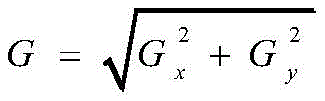
梯度方向为:The gradient direction is:

S5,将预处理后的待检测冷轧带钢表面图像输入到冷轧带钢表面缺陷检测模型中,以得到待检测冷轧带钢表面图像的缺陷类型。S5, inputting the preprocessed surface image of the cold-rolled strip to be detected into the surface defect detection model of the cold-rolled strip to obtain the defect type of the surface image of the cold-rolled strip to be detected.
在本发明的一个实施例中,若在检测过程中出现了新型冷轧带钢表面缺陷,可将新型冷轧带钢表面缺陷图像制成数据集再次对改进的SSD网络进行训练。In one embodiment of the present invention, if a new type of cold-rolled strip surface defect occurs during the detection process, the image of the new type of cold-rolled strip surface defect can be made into a data set to train the improved SSD network again.
根据本发明实施例的基于改进的SSD算法的冷轧带钢表面缺陷检测方法,通过获取冷轧带钢表面缺陷图像,并将冷轧带钢表面缺陷图像制成冷轧带钢表面缺陷数据集对改进的SSD网络进行训练,以得到冷轧带钢表面缺陷检测模型,并通过获取待检测冷轧带钢表面图像并进行预处理,将预处理后的待检测冷轧带钢表面图像输入至缺陷检测模型中,以得到冷轧带钢表面图像的缺陷类型,由此,能够提高对冷轧带钢检测的准确度和速度,实现实时检测的效果。According to the method for detecting surface defects of cold-rolled strip steel based on the improved SSD algorithm in the embodiment of the present invention, by obtaining the surface defect image of cold-rolled strip steel, and making the surface defect image of cold-rolled strip steel into a data set of surface defect of cold-rolled strip steel The improved SSD network is trained to obtain the surface defect detection model of the cold-rolled strip, and by obtaining the surface image of the cold-rolled strip to be detected and performing preprocessing, the pre-processed surface image of the cold-rolled strip to be detected is input into In the defect detection model, the defect type of the surface image of the cold-rolled strip can be obtained, thereby improving the accuracy and speed of the detection of the cold-rolled strip and realizing the effect of real-time detection.
为实现上述实施例的基于改进的SSD算法的冷轧带钢表面缺陷检测方法,本发明还提出一种基于改进的SSD算法的冷轧带钢表面缺陷检测系统。In order to realize the method for detecting surface defects of cold-rolled strip steel based on the improved SSD algorithm of the above embodiment, the present invention also proposes a detection system for surface defects of cold-rolled strip steel based on the improved SSD algorithm.
如图5所示,本发明实施例的基于改进的SSD算法的冷轧带钢表面缺陷检测系统包括:第一获取模块10、训练模块20、第二获取模块30、预处理模块40、检测模块50。其中,第一获取模块10用于获取冷轧带钢表面图像,并对冷轧带钢表面图像进行分类并标注出缺陷位置,以构成冷轧带钢表面缺陷数据集;训练模块20用于通过冷轧带钢表面缺陷数据集对改进的SSD网络进行训练,以得到冷轧带钢表面缺陷检测模型,其中,所述改进的SSD网络为将原有的SSD网络中的主干特征提取网络VGG-16替换为ShuffleNetv2网络,且所述ShuffleNetv2网络将原有网络ShuffleNet block中的深度可分离卷积层替换为可变形卷积层,并将卷积层后的归一化操作替换为Group Normalization;第二获取模块30用于获取待检测冷轧带钢表面图像;预处理模块40用于对待检测冷轧带钢表面图像进行预处理;检测模块50用于将预处理后的待检测冷轧带钢表面图像输入到冷轧带钢表面缺陷检测模型中,以得到待检测冷轧带钢表面图像的缺陷类型。As shown in Figure 5, the cold-rolled strip surface defect detection system based on the improved SSD algorithm of the embodiment of the present invention includes: a first acquisition module 10, a training module 20, a second acquisition module 30, a preprocessing module 40, and a detection module 50. Wherein, the first acquisition module 10 is used to acquire the surface image of the cold-rolled strip, and classifies the surface image of the cold-rolled strip and marks the defect position to form a data set of defects on the surface of the cold-rolled strip; the training module 20 is used to pass The cold-rolled strip surface defect data set trains the improved SSD network to obtain the cold-rolled strip surface defect detection model, wherein the improved SSD network is the backbone feature extraction network VGG- 16 is replaced by the ShuffleNetv2 network, and the ShuffleNetv2 network replaces the depth separable convolution layer in the original network ShuffleNet block with a deformable convolution layer, and replaces the normalization operation after the convolution layer with Group Normalization; Two acquisition modules 30 are used to obtain the surface image of the cold-rolled steel strip to be detected; the preprocessing module 40 is used to preprocess the surface image of the cold-rolled steel strip to be detected; the detection module 50 is used to preprocess the cold-rolled steel strip to be detected The surface image is input into the surface defect detection model of the cold-rolled strip to obtain the defect type of the surface image of the cold-rolled strip to be detected.
在本发明的一个实施例中,第一获取模块10可从网上爬取一些存在缺陷的冷轧带钢表面图像或者从工厂等生产地拍摄存在缺陷的冷轧带钢表面图像,然后,可通过对获取的冷轧带钢表面图像进行平移、翻转和随机剪裁操作来进行数据增强,然后将获取的冷轧带钢表面缺陷图像进行分类,构成训练集和测试集,并标注出缺陷的位置,以构成冷轧带钢表面缺陷数据集。In one embodiment of the present invention, the first acquisition module 10 can crawl some defective cold-rolled strip surface images from the Internet or take defective cold-rolled strip surface images from factories and other production places, and then, can pass The obtained cold-rolled strip surface images are translated, flipped and randomly clipped to perform data enhancement, and then the obtained cold-rolled strip surface defect images are classified to form a training set and a test set, and the location of the defect is marked. To form a data set of surface defects of cold-rolled strip.
在本发明的一个实施例中,改进的SSD网络为增强对小目标缺陷的检测能力,对不同尺度的特征矩阵进行特征融合,利用concat操作将两个不同尺寸的特征矩阵进行通道上的连接,对得到的特征矩阵进行通道随机混合操作,然后对其进行卷积处理,从而进一步提取融合后的特征矩阵的特征信息,得到的特征矩阵作为一个特征融合层。In one embodiment of the present invention, the improved SSD network performs feature fusion on feature matrices of different scales in order to enhance the detection capability of small target defects, and uses the concat operation to connect two feature matrices of different sizes on the channel, The channel random mixing operation is performed on the obtained feature matrix, and then convolution processing is performed on it, so as to further extract the feature information of the fused feature matrix, and the obtained feature matrix is used as a feature fusion layer.
图2为改进的步距为1的ShuffleNet block的结构图,具体地,首先,根据输入特征矩阵的通道数c可采用Channel Split操作将其划分成通道数
图3为改进的步距为2的ShuffleNet block的结构图,具体地,首先,将输入特征矩阵依次进行1×1卷积操作、GN操作、Relu激活函数层,而后同时进行步距为2的3×3深度可分离卷积操作和5×5可变形卷积操作,将结果进行concat操作。然后,进行GN操作以及1×1卷积操作,得到特征矩阵S1,将输入特征矩阵依次进行步距为2的3×3可变形卷积操作、GN操作、1×1卷积操作、GN操作以及Relu激活函数层,得到特征矩阵S2。最后,将特征矩阵S1与特征矩阵S2进行concat操作,并通过Channel Shuffle操作输出特征矩阵。Figure 3 is a structural diagram of an improved ShuffleNet block with a step size of 2. Specifically, first, the input feature matrix is sequentially subjected to 1×1 convolution operation, GN operation, and Relu activation function layer, and then the step size is 2 at the same time. 3×3 depth separable convolution operation and 5×5 deformable convolution operation, and the result is concat operation. Then, perform GN operation and 1×1 convolution operation to obtain feature matrix S1, and then perform 3×3 deformable convolution operation with a step size of 2, GN operation, 1×1 convolution operation, and GN operation on the input feature matrix And the Relu activation function layer to get the feature matrix S2. Finally, concat the feature matrix S1 and feature matrix S2, and output the feature matrix through the Channel Shuffle operation.
如图4所示,在本发明的一个实施例中,将主干特征提取网络ShuffleNet中3×3最大池化下采样的输出特征矩阵作为特征融合层一,即为图4中的Conv2,Stage2的步距为1的Shuffle block的输出特征矩阵作为特征融合层二,即为图4中的Conv3_2,Stage3的步距为1的Shuffle block的输出特征矩阵作为特征融合层三,即为图4中的Conv4_2,Stage4的步距为1的Shuffle block的输出特征矩阵作为特征融合层四,即为图4中的Conv5_2,然后对其进行1×1卷积和3×3卷积操作,得到的输出特征矩阵作为特征融合层五,即为图4中的Conv6,再对其进行1×1卷积和3×3卷积操作,得到的输出特征矩阵作为特征融合层六,即为图4中的Conv7,具体特征融合操作为将特征融合层六作为预测特征层一。将特征融合层六与特征融合层五进行concat操作,然后进行1×1组卷积操作、Channel Shuffle操作,得到输出特征矩阵二,作为预测特征层二;将输出特征矩阵二与特征融合层四进行concat操作,然后进行1×1组卷积操作、Channel Shuffle操作,得到输出特征矩阵三,作为预测特征层三;将输出特征矩阵三与特征融合层三进行concat操作,然后进行1×1组卷积操作、Channel Shuffle操作,得到输出特征矩阵四,作为预测特征层四;将输出特征矩阵四与特征融合层二进行concat操作,然后进行1×1组卷积操作、Channel Shuffle操作,得到输出特征矩阵五,作为预测特征层五;将输出特征矩阵五与特征融合层一进行concat操作,然后进行1×1组卷积操作、Channel Shuffle操作,得到输出特征矩阵六,作为预测特征层六。As shown in Figure 4, in one embodiment of the present invention, the output feature matrix of the 3×3 maximum pooling downsampling in the backbone feature extraction network ShuffleNet is used as the first feature fusion layer, that is, Conv2 and Stage2 in Figure 4 The output feature matrix of the Shuffle block with a step distance of 1 is used as the
在本发明的一个实施例中,改进的SSD网络利用K-means算法对冷轧带钢表面缺陷数据集中标注好的缺陷的真实框高宽比做聚类分析,并根据冷轧带钢表面缺陷数据集中冷轧带钢表面缺陷的尺寸大小来确定改进的SSD算法采用的锚框的尺寸大小。In one embodiment of the present invention, the improved SSD network uses the K-means algorithm to perform cluster analysis on the real frame height-width ratio of the defects marked in the cold-rolled strip surface defect data set, and according to the cold-rolled strip surface defect The size of the surface defects of the cold-rolled strip in the data set is used to determine the size of the anchor frame used by the improved SSD algorithm.
在本发明的一个实施例中,训练模块20可利用制成的训练集对改进的SSD网络进行训练,以得到冷轧带钢表面缺陷检测模型,然后利用测试集对冷轧带钢表面缺陷检测模型进行检测。其中,对于测试集中标注缺陷错误的冷轧带钢表面图像以及漏标的冷轧带钢表面缺陷图像,将再次制成数据集对改进的SSD网络进行训练,从而获得最优模型参数。In one embodiment of the present invention, the training module 20 can utilize the training set made to train the improved SSD network to obtain the cold-rolled strip surface defect detection model, and then use the test set to detect the cold-rolled strip surface defect The model is tested. Among them, for the surface images of cold-rolled strip surface with wrongly marked defects in the test set and the surface defects of cold-rolled strip with missing labels, a data set will be made again to train the improved SSD network to obtain the optimal model parameters.
在本发明的一个实施例中,第二获取模块30可使用CCD工业相机配合光源设备获取冷轧带钢表面图像。In an embodiment of the present invention, the second acquisition module 30 can use a CCD industrial camera together with a light source device to acquire the surface image of the cold-rolled strip.
在本发明的一个实施例中,预处理模块40对待检测冷轧带钢表面图像进行预处理具体可包括以下步骤:In one embodiment of the present invention, the preprocessing module 40 preprocessing the surface image of the cold-rolled steel strip to be detected may specifically include the following steps:
(一),使用加权平均法对待检测冷轧带钢表面图像进行灰度化处理。具体地,对于获取到的待检测冷轧带钢表面的图像,按照权重分别为0.3、0.58和0.12进行灰度图像的转换,其中,转换公式为:(1) Use the weighted average method to grayscale the surface image of the cold-rolled strip to be detected. Specifically, for the obtained image of the surface of the cold-rolled steel strip to be detected, the grayscale image is converted according to the weights of 0.3, 0.58 and 0.12, wherein the conversion formula is:
Gray(i,j)=0.3*R(i,j)+0.58*G(i,j)+0.12*B(i,j)Gray(i,j)=0.3*R(i,j)+0.58*G(i,j)+0.12*B(i,j)
(二),对灰度化处理后的待检测冷轧带钢表面图像进行二值化处理,通过均值法进行阈值分割,以得到图像像素的均值并将均值作为阈值进行划分。具体地,可通过均值法进行阈值分割,即求得图像像素的均值,将均值作为阈值T对图像进行划分,其中,均值法的公式为:(2) Binarize the surface image of the cold-rolled steel strip to be detected after grayscale processing, and perform threshold segmentation through the mean value method to obtain the mean value of the image pixels and divide the mean value as the threshold value. Specifically, threshold segmentation can be performed by the mean value method, that is, the mean value of the image pixels is obtained, and the mean value is used as the threshold T to divide the image, wherein the formula of the mean value method is:

其中,f(i,j)为原图像中每个像素的灰度值,g(i,j)为转换后的二值图像的每个像素对应的灰度值。Among them, f(i, j) is the gray value of each pixel in the original image, and g(i, j) is the gray value corresponding to each pixel of the converted binary image.
(三),利用双边滤波在保留缺陷边缘信息的基础上进行去噪声处理,得到的输出像素值取决于邻域像素值和加权系数,其中,双边滤波的公式为:(3) Using bilateral filtering to perform denoising processing on the basis of retaining defect edge information, the output pixel value obtained depends on the neighborhood pixel values and weighting coefficients, where the formula of bilateral filtering is:

其中,g(i,j)为经过滤波处理后输出的像素值的大小,f(k,l)为输入点的像素值的大小,w(i,j,k,l)为加权系数,而加权系数由空间临近高斯函数和像素值相似高度高斯函数的成绩所决定的,其中,加权系数的计算公式为:Among them, g(i,j) is the size of the pixel value output after filtering, f(k,l) is the size of the pixel value of the input point, w(i,j,k,l) is the weighting coefficient, and The weighting coefficient is determined by the results of the spatially adjacent Gaussian function and the pixel value similar height Gaussian function, where the formula for calculating the weighting coefficient is:

(四),根据Sobel算子对去噪声处理后的待检测冷轧带钢表面图像进行边缘提取,以将存在缺陷的图像中的缺陷信息与背景分离。具体地,通过计算图像灰度函数的近似梯度来判断灰度值变化程度,而梯度值经由卷积操作得到,具体需要在水平(横向)和垂直(纵向)进行,所以某点像素横向及纵向边缘检测的图像灰度值分别为:(4) According to the Sobel operator, edge extraction is performed on the surface image of the cold-rolled steel strip to be detected after denoising processing, so as to separate the defect information in the defect image from the background. Specifically, the degree of change in the gray value is judged by calculating the approximate gradient of the gray function of the image, and the gradient value is obtained through a convolution operation, which needs to be performed horizontally (horizontally) and vertically (vertically), so a pixel at a certain point is horizontally and vertically The gray values of the image for edge detection are:

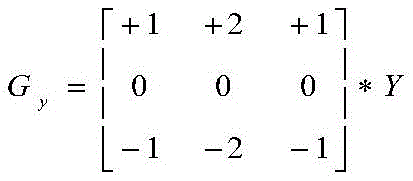
其中,Y为原始图像,则该点的灰度大小G为:Among them, Y is the original image, then the gray size G of this point is:

梯度方向为:The gradient direction is:

在本发明的一个实施例中,若在检测过程中出现了新型冷轧带钢表面缺陷,可将新型冷轧带钢表面缺陷图像制成数据集再次对改进的SSD网络进行训练。In one embodiment of the present invention, if a new type of cold-rolled strip surface defect occurs during the detection process, the image of the new type of cold-rolled strip surface defect can be made into a data set to train the improved SSD network again.
根据本发明实施例的基于改进的SSD算法的冷轧带钢表面缺陷检测系统,通过第一获取装置获取冷轧带钢表面缺陷图像,并将冷轧带钢表面缺陷图像制成冷轧带钢表面缺陷数据集,训练装置对改进的SSD网络进行训练,以得到冷轧带钢表面缺陷检测模型,并通过第二获取装置获取待检测冷轧带钢表面图像并通过预处理装置进行预处理,将预处理后的待检测冷轧带钢表面图像输入至缺陷检测装置,以得到冷轧带钢表面图像的缺陷类型,由此,能够提高对冷轧带钢检测的准确度和速度,实现实时检测的效果。According to the improved SSD algorithm-based cold-rolled strip surface defect detection system of the embodiment of the present invention, the first acquisition device acquires the surface defect image of the cold-rolled strip, and makes the cold-rolled strip surface defect image into a cold-rolled strip The surface defect data set, the training device trains the improved SSD network to obtain the surface defect detection model of the cold-rolled strip, and obtains the surface image of the cold-rolled strip to be detected by the second acquisition device and performs preprocessing by the preprocessing device, Input the preprocessed cold-rolled strip surface image to the defect detection device to obtain the defect type of the cold-rolled strip surface image, thereby improving the accuracy and speed of cold-rolled strip detection and realizing real-time detection effect.
在本发明的描述中,术语“第一”、“第二”仅用于描述目的,而不能理解为指示或暗示相对重要性或者隐含指明所指示的技术特征的数量。由此,限定有“第一”、“第二”的特征可以明示或者隐含地包括一个或者更多个该特征。“多个”的含义是两个或两个以上,除非另有明确具体的限定。In the description of the present invention, the terms "first" and "second" are only used for descriptive purposes, and cannot be understood as indicating or implying relative importance or implicitly specifying the quantity of indicated technical features. Thus, a feature defined as "first" and "second" may explicitly or implicitly include one or more of these features. "Plurality" means two or more, unless otherwise clearly and specifically defined.
在本发明中,除非另有明确的规定和限定,术语“安装”、“相连”、“连接”、“固定”等术语应做广义理解,例如,可以是固定连接,也可以是可拆卸连接,或成一体;可以是机械连接,也可以是电连接;可以是直接相连,也可以通过中间媒介间接相连,可以是两个元件内部的连通或两个元件的相互作用关系。对于本领域的普通技术人员而言,可以根据具体情况理解上述术语在本发明中的具体含义。In the present invention, unless otherwise clearly specified and limited, terms such as "installation", "connection", "connection" and "fixation" should be understood in a broad sense, for example, it can be a fixed connection or a detachable connection , or integrated; it can be mechanically connected or electrically connected; it can be directly connected or indirectly connected through an intermediary, and it can be the internal communication of two components or the interaction relationship between two components. Those of ordinary skill in the art can understand the specific meanings of the above terms in the present invention according to specific situations.
在本发明中,除非另有明确的规定和限定,第一特征在第二特征“上”或“下”可以是第一和第二特征直接接触,或第一和第二特征通过中间媒介间接接触。而且,第一特征在第二特征“之上”、“上方”和“上面”可是第一特征在第二特征正上方或斜上方,或仅仅表示第一特征水平高度高于第二特征。第一特征在第二特征“之下”、“下方”和“下面”可以是第一特征在第二特征正下方或斜下方,或仅仅表示第一特征水平高度小于第二特征。In the present invention, unless otherwise clearly specified and limited, the first feature may be in direct contact with the first feature or the first and second feature may be in direct contact with the second feature through an intermediary. touch. Moreover, "above", "above" and "above" the first feature on the second feature may mean that the first feature is directly above or obliquely above the second feature, or simply means that the first feature is higher in level than the second feature. "Below", "beneath" and "beneath" the first feature may mean that the first feature is directly below or obliquely below the second feature, or simply means that the first feature is less horizontally than the second feature.
在本说明书的描述中,参考术语“一个实施例”、“一些实施例”、“示例”、“具体示例”、或“一些示例”等的描述意指结合该实施例或示例描述的具体特征、结构、材料或者特点包含于本发明的至少一个实施例或示例中。在本说明书中,对上述术语的示意性表述不必针对相同的实施例或示例。而且,描述的具体特征、结构、材料或者特点可以在任一个或多个实施例或示例中以合适的方式结合。此外,在不相互矛盾的情况下,本领域的技术人员可以将本说明书中描述的不同实施例或示例以及不同实施例或示例的特征进行结合和组合。In the description of this specification, descriptions referring to the terms "one embodiment", "some embodiments", "example", "specific examples", or "some examples" mean that specific features described in connection with the embodiment or example , structure, material or characteristic is included in at least one embodiment or example of the present invention. In this specification, the schematic representations of the above terms are not necessarily directed to the same embodiment or example. Furthermore, the described specific features, structures, materials or characteristics may be combined in any suitable manner in any one or more embodiments or examples. In addition, those skilled in the art can combine and combine different embodiments or examples and features of different embodiments or examples described in this specification without conflicting with each other.
流程图中或在此以其他方式描述的任何过程或方法描述可以被理解为,表示包括一个或更多个用于实现特定逻辑功能或过程的步骤的可执行指令的代码的模块、片段或部分,并且本发明的优选实施方式的范围包括另外的实现,其中可以不按所示出或讨论的顺序,包括根据所涉及的功能按基本同时的方式或按相反的顺序,来执行功能,这应被本发明的实施例所属技术领域的技术人员所理解。Any process or method descriptions in flowcharts or otherwise described herein may be understood to represent modules, segments or portions of code comprising one or more executable instructions for implementing specific logical functions or steps of the process , and the scope of preferred embodiments of the invention includes alternative implementations in which functions may be performed out of the order shown or discussed, including substantially concurrently or in reverse order depending on the functions involved, which shall It is understood by those skilled in the art to which the embodiments of the present invention pertain.
在流程图中表示或在此以其他方式描述的逻辑和/或步骤,例如,可以被认为是用于实现逻辑功能的可执行指令的定序列表,可以具体实现在任何计算机可读介质中,以供指令执行系统、装置或设备(如基于计算机的系统、包括处理器的系统或其他可以从指令执行系统、装置或设备取指令并执行指令的系统)使用,或结合这些指令执行系统、装置或设备而使用。就本说明书而言,“计算机可读介质”可以是任何可以包含、存储、通信、传播或传输程序以供指令执行系统、装置或设备或结合这些指令执行系统、装置或设备而使用的装置。计算机可读介质的更具体的示例(非穷尽性列表)包括以下:具有一个或多个布线的电连接部(电子装置),便携式计算机盘盒(磁装置),随机存取存储器(RAM),只读存储器(ROM),可擦除可编辑只读存储器(EPROM或闪速存储器),光纤装置,以及便携式光盘只读存储器(CDROM)。另外,计算机可读介质甚至可以是可在其上打印所述程序的纸或其他合适的介质,因为可以例如通过对纸或其他介质进行光学扫描,接着进行编辑、解译或必要时以其他合适方式进行处理来以电子方式获得所述程序,然后将其存储在计算机存储器中。The logic and/or steps represented in the flowcharts or otherwise described herein, for example, can be considered as a sequenced listing of executable instructions for implementing logical functions, can be embodied in any computer-readable medium, For use with instruction execution systems, devices, or devices (such as computer-based systems, systems including processors, or other systems that can fetch instructions from instruction execution systems, devices, or devices and execute instructions), or in conjunction with these instruction execution systems, devices or equipment used. For the purposes of this specification, a "computer-readable medium" may be any device that can contain, store, communicate, propagate or transmit a program for use in or in conjunction with an instruction execution system, device or device. More specific examples (non-exhaustive list) of computer-readable media include the following: electrical connection with one or more wires (electronic device), portable computer disk case (magnetic device), random access memory (RAM), Read Only Memory (ROM), Erasable and Editable Read Only Memory (EPROM or Flash Memory), Fiber Optic Devices, and Portable Compact Disc Read Only Memory (CDROM). In addition, the computer-readable medium may even be paper or other suitable medium on which the program can be printed, since the program can be read, for example, by optically scanning the paper or other medium, followed by editing, interpretation or other suitable processing if necessary. The program is processed electronically and stored in computer memory.
应当理解,本发明的各部分可以用硬件、软件、固件或它们的组合来实现。在上述实施方式中,多个步骤或方法可以用存储在存储器中且由合适的指令执行系统执行的软件或固件来实现。例如,如果用硬件来实现,和在另一实施方式中一样,可用本领域公知的下列技术中的任一项或他们的组合来实现:具有用于对数据信号实现逻辑功能的逻辑门电路的离散逻辑电路,具有合适的组合逻辑门电路的专用集成电路,可编程门阵列(PGA),现场可编程门阵列(FPGA)等。It should be understood that various parts of the present invention can be realized by hardware, software, firmware or their combination. In the above described embodiments, various steps or methods may be implemented by software or firmware stored in memory and executed by a suitable instruction execution system. For example, if implemented in hardware, as in another embodiment, it can be implemented by any one or combination of the following techniques known in the art: Discrete logic circuits, ASICs with suitable combinational logic gates, Programmable Gate Arrays (PGAs), Field Programmable Gate Arrays (FPGAs), etc.
本技术领域的普通技术人员可以理解实现上述实施例方法携带的全部或部分步骤是可以通过程序来指令相关的硬件完成,所述的程序可以存储于一种计算机可读存储介质中,该程序在执行时,包括方法实施例的步骤之一或其组合。Those of ordinary skill in the art can understand that all or part of the steps carried by the methods of the above embodiments can be completed by instructing related hardware through a program, and the program can be stored in a computer-readable storage medium. During execution, one or a combination of the steps of the method embodiments is included.
此外,在本发明各个实施例中的各功能单元可以集成在一个处理模块中,也可以是各个单元单独物理存在,也可以两个或两个以上单元集成在一个模块中。上述集成的模块既可以采用硬件的形式实现,也可以采用软件功能模块的形式实现。所述集成的模块如果以软件功能模块的形式实现并作为独立的产品销售或使用时,也可以存储在一个计算机可读取存储介质中。In addition, each functional unit in each embodiment of the present invention may be integrated into one processing module, each unit may exist separately physically, or two or more units may be integrated into one module. The above-mentioned integrated modules can be implemented in the form of hardware or in the form of software function modules. If the integrated modules are realized in the form of software function modules and sold or used as independent products, they can also be stored in a computer-readable storage medium.
尽管上面已经示出和描述了本发明的实施例,可以理解的是,上述实施例是示例性的,不能理解为对本发明的限制,本领域的普通技术人员在本发明的范围内可以对上述实施例进行变化、修改、替换和变型。Although the embodiments of the present invention have been shown and described above, it can be understood that the above embodiments are exemplary and should not be construed as limiting the present invention, those skilled in the art can make the above-mentioned The embodiments are subject to changes, modifications, substitutions and variations.
Claims (8)
Priority Applications (1)
| Application Number | Priority Date | Filing Date | Title |
|---|---|---|---|
| CN202211503165.1A CN115861220A (en) | 2022-11-28 | 2022-11-28 | Cold-rolled strip steel surface defect detection method and system based on improved SSD algorithm |
Applications Claiming Priority (1)
| Application Number | Priority Date | Filing Date | Title |
|---|---|---|---|
| CN202211503165.1A CN115861220A (en) | 2022-11-28 | 2022-11-28 | Cold-rolled strip steel surface defect detection method and system based on improved SSD algorithm |
Publications (1)
| Publication Number | Publication Date |
|---|---|
| CN115861220A true CN115861220A (en) | 2023-03-28 |
Family
ID=85667277
Family Applications (1)
| Application Number | Title | Priority Date | Filing Date |
|---|---|---|---|
| CN202211503165.1A Pending CN115861220A (en) | 2022-11-28 | 2022-11-28 | Cold-rolled strip steel surface defect detection method and system based on improved SSD algorithm |
Country Status (1)
| Country | Link |
|---|---|
| CN (1) | CN115861220A (en) |
Cited By (3)
| Publication number | Priority date | Publication date | Assignee | Title |
|---|---|---|---|---|
| CN116109640A (en) * | 2023-04-13 | 2023-05-12 | 常州微亿智造科技有限公司 | Detection method for small defects on workpiece surface in industrial inspection |
| CN116468679A (en) * | 2023-03-30 | 2023-07-21 | 华南理工大学 | A Defect Detection Method of Die Casting Products Based on Improved YOLOX Model |
| CN116681651A (en) * | 2023-05-10 | 2023-09-01 | 首钢京唐钢铁联合有限责任公司 | Method, device, medium and electronic equipment for classifying surface defects of strip steel |
Citations (5)
| Publication number | Priority date | Publication date | Assignee | Title |
|---|---|---|---|---|
| CN109544522A (en) * | 2018-11-12 | 2019-03-29 | 北京科技大学 | A kind of Surface Defects in Steel Plate detection method and system |
| CN110751214A (en) * | 2019-10-21 | 2020-02-04 | 山东大学 | Target detection method and system based on lightweight deformable convolution |
| CN111914937A (en) * | 2020-08-05 | 2020-11-10 | 湖北工业大学 | A lightweight improved target detection method and detection system |
| CN114119524A (en) * | 2021-11-17 | 2022-03-01 | 中国农业大学 | Hot-rolled steel strip defect detection method for improving Faster R-CNN |
| US20220188602A1 (en) * | 2019-04-24 | 2022-06-16 | University Of Virginia Patent Foundation | Denoising magnetic resonance images using unsupervised deep convolutional neural networks |
-
2022
- 2022-11-28 CN CN202211503165.1A patent/CN115861220A/en active Pending
Patent Citations (5)
| Publication number | Priority date | Publication date | Assignee | Title |
|---|---|---|---|---|
| CN109544522A (en) * | 2018-11-12 | 2019-03-29 | 北京科技大学 | A kind of Surface Defects in Steel Plate detection method and system |
| US20220188602A1 (en) * | 2019-04-24 | 2022-06-16 | University Of Virginia Patent Foundation | Denoising magnetic resonance images using unsupervised deep convolutional neural networks |
| CN110751214A (en) * | 2019-10-21 | 2020-02-04 | 山东大学 | Target detection method and system based on lightweight deformable convolution |
| CN111914937A (en) * | 2020-08-05 | 2020-11-10 | 湖北工业大学 | A lightweight improved target detection method and detection system |
| CN114119524A (en) * | 2021-11-17 | 2022-03-01 | 中国农业大学 | Hot-rolled steel strip defect detection method for improving Faster R-CNN |
Non-Patent Citations (1)
| Title |
|---|
| 小草AI: "轻量级卷积神经网络的设计技巧", pages 7, Retrieved from the Internet <URL:https://cloud.tencent.com/developer/article/1541636> * |
Cited By (4)
| Publication number | Priority date | Publication date | Assignee | Title |
|---|---|---|---|---|
| CN116468679A (en) * | 2023-03-30 | 2023-07-21 | 华南理工大学 | A Defect Detection Method of Die Casting Products Based on Improved YOLOX Model |
| CN116109640A (en) * | 2023-04-13 | 2023-05-12 | 常州微亿智造科技有限公司 | Detection method for small defects on workpiece surface in industrial inspection |
| CN116109640B (en) * | 2023-04-13 | 2023-08-18 | 常州微亿智造科技有限公司 | Workpiece surface small defect detection method in industrial detection |
| CN116681651A (en) * | 2023-05-10 | 2023-09-01 | 首钢京唐钢铁联合有限责任公司 | Method, device, medium and electronic equipment for classifying surface defects of strip steel |
Similar Documents
| Publication | Publication Date | Title |
|---|---|---|
| CN118967672B (en) | Industrial defect detection method, system, device and storage medium | |
| CN111862064B (en) | Silver wire surface flaw identification method based on deep learning | |
| CN113239930B (en) | Glass paper defect identification method, system, device and storage medium | |
| CN111415329B (en) | A method for detecting surface defects of workpieces based on deep learning | |
| CN106875381B (en) | Mobile phone shell defect detection method based on deep learning | |
| KR102166458B1 (en) | Defect inspection method and apparatus using image segmentation based on artificial neural network | |
| CN111179229A (en) | Industrial CT defect detection method based on deep learning | |
| CN116563237B (en) | A hyperspectral image detection method for chicken carcass defects based on deep learning | |
| CN115861220A (en) | Cold-rolled strip steel surface defect detection method and system based on improved SSD algorithm | |
| JP2017049974A (en) | Discriminator generator, quality determine method, and program | |
| CN113177924A (en) | Industrial production line product flaw detection method | |
| CN110648310A (en) | Weakly Supervised Casting Defect Recognition Method Based on Attention Mechanism | |
| CN110660049A (en) | A tire defect detection method based on deep learning | |
| CN112164048B (en) | Magnetic shoe surface defect automatic detection method and device based on deep learning | |
| CN113256624A (en) | Continuous casting round billet defect detection method and device, electronic equipment and readable storage medium | |
| CN118392875B (en) | A nondestructive testing system and method for shaft parts surface | |
| CN115456955A (en) | Method for detecting internal burr defect of ball cage dust cover | |
| CN114663658A (en) | Small sample AOI surface defect detection method with cross-domain migration capability | |
| CN112102253A (en) | Non-woven fabric surface defect automatic detection method and system based on machine vision | |
| CN119273992A (en) | Mobile phone screen glass defect detection method based on improved YOLOv8 | |
| CN115294039A (en) | Steel coil end surface defect detection method | |
| CN119048837B (en) | A PCB board component defect detection method, system, equipment and medium | |
| CN117115095A (en) | A method and system for detecting small defects in complex textured ceramic tiles | |
| CN114092441A (en) | A product surface defect detection method and system based on dual neural network | |
| CN117455836A (en) | SF-Yolone metal gear end face defect detection method and system |
Legal Events
| Date | Code | Title | Description |
|---|---|---|---|
| PB01 | Publication | ||
| PB01 | Publication | ||
| SE01 | Entry into force of request for substantive examination | ||
| SE01 | Entry into force of request for substantive examination |