CN115617497B - Thread processing method, scheduling component, monitoring component, server and storage medium - Google Patents
Thread processing method, scheduling component, monitoring component, server and storage medium Download PDFInfo
- Publication number
- CN115617497B CN115617497B CN202211599968.1A CN202211599968A CN115617497B CN 115617497 B CN115617497 B CN 115617497B CN 202211599968 A CN202211599968 A CN 202211599968A CN 115617497 B CN115617497 B CN 115617497B
- Authority
- CN
- China
- Prior art keywords
- server
- thread
- duration
- working
- determining
- Prior art date
- Legal status (The legal status is an assumption and is not a legal conclusion. Google has not performed a legal analysis and makes no representation as to the accuracy of the status listed.)
- Active
Links
Images


Classifications
-
- G—PHYSICS
- G06—COMPUTING OR CALCULATING; COUNTING
- G06F—ELECTRIC DIGITAL DATA PROCESSING
- G06F9/00—Arrangements for program control, e.g. control units
- G06F9/06—Arrangements for program control, e.g. control units using stored programs, i.e. using an internal store of processing equipment to receive or retain programs
- G06F9/46—Multiprogramming arrangements
- G06F9/50—Allocation of resources, e.g. of the central processing unit [CPU]
- G06F9/5005—Allocation of resources, e.g. of the central processing unit [CPU] to service a request
- G06F9/5027—Allocation of resources, e.g. of the central processing unit [CPU] to service a request the resource being a machine, e.g. CPUs, Servers, Terminals
- G06F9/505—Allocation of resources, e.g. of the central processing unit [CPU] to service a request the resource being a machine, e.g. CPUs, Servers, Terminals considering the load
-
- G—PHYSICS
- G06—COMPUTING OR CALCULATING; COUNTING
- G06F—ELECTRIC DIGITAL DATA PROCESSING
- G06F9/00—Arrangements for program control, e.g. control units
- G06F9/06—Arrangements for program control, e.g. control units using stored programs, i.e. using an internal store of processing equipment to receive or retain programs
- G06F9/46—Multiprogramming arrangements
- G06F9/48—Program initiating; Program switching, e.g. by interrupt
- G06F9/4806—Task transfer initiation or dispatching
- G06F9/4843—Task transfer initiation or dispatching by program, e.g. task dispatcher, supervisor, operating system
- G06F9/4881—Scheduling strategies for dispatcher, e.g. round robin, multi-level priority queues
-
- G—PHYSICS
- G06—COMPUTING OR CALCULATING; COUNTING
- G06F—ELECTRIC DIGITAL DATA PROCESSING
- G06F9/00—Arrangements for program control, e.g. control units
- G06F9/06—Arrangements for program control, e.g. control units using stored programs, i.e. using an internal store of processing equipment to receive or retain programs
- G06F9/46—Multiprogramming arrangements
- G06F9/50—Allocation of resources, e.g. of the central processing unit [CPU]
- G06F9/5005—Allocation of resources, e.g. of the central processing unit [CPU] to service a request
- G06F9/5027—Allocation of resources, e.g. of the central processing unit [CPU] to service a request the resource being a machine, e.g. CPUs, Servers, Terminals
- G06F9/5038—Allocation of resources, e.g. of the central processing unit [CPU] to service a request the resource being a machine, e.g. CPUs, Servers, Terminals considering the execution order of a plurality of tasks, e.g. taking priority or time dependency constraints into consideration
-
- G—PHYSICS
- G06—COMPUTING OR CALCULATING; COUNTING
- G06F—ELECTRIC DIGITAL DATA PROCESSING
- G06F2209/00—Indexing scheme relating to G06F9/00
- G06F2209/50—Indexing scheme relating to G06F9/50
- G06F2209/5018—Thread allocation
-
- G—PHYSICS
- G06—COMPUTING OR CALCULATING; COUNTING
- G06F—ELECTRIC DIGITAL DATA PROCESSING
- G06F2209/00—Indexing scheme relating to G06F9/00
- G06F2209/50—Indexing scheme relating to G06F9/50
- G06F2209/508—Monitor
-
- Y—GENERAL TAGGING OF NEW TECHNOLOGICAL DEVELOPMENTS; GENERAL TAGGING OF CROSS-SECTIONAL TECHNOLOGIES SPANNING OVER SEVERAL SECTIONS OF THE IPC; TECHNICAL SUBJECTS COVERED BY FORMER USPC CROSS-REFERENCE ART COLLECTIONS [XRACs] AND DIGESTS
- Y02—TECHNOLOGIES OR APPLICATIONS FOR MITIGATION OR ADAPTATION AGAINST CLIMATE CHANGE
- Y02D—CLIMATE CHANGE MITIGATION TECHNOLOGIES IN INFORMATION AND COMMUNICATION TECHNOLOGIES [ICT], I.E. INFORMATION AND COMMUNICATION TECHNOLOGIES AIMING AT THE REDUCTION OF THEIR OWN ENERGY USE
- Y02D10/00—Energy efficient computing, e.g. low power processors, power management or thermal management
Landscapes
- Engineering & Computer Science (AREA)
- Software Systems (AREA)
- Theoretical Computer Science (AREA)
- Physics & Mathematics (AREA)
- General Engineering & Computer Science (AREA)
- General Physics & Mathematics (AREA)
- Debugging And Monitoring (AREA)
Abstract
本发明实施例提供一种线程处理方法、调度组件、监测组件、服务器和存储介质,该方法包括:服务器中的调度组件可以确定工作线程处于阻塞状态的持续时间,并根据此持续时间确定工作线程的工作负载指标参数,再根据工作负载指标参数生成资源调度策略。服务器的内核可以利用此资源调度策略重新分配服务器的计算资源。可见,上述过程中,工作线程每执行完一个任务调度组件都可以得到一个持续时间,并计算出在该时段工作线程的工作负载并进行服务器计算资源的调度,也即是将计算资源调度的周期缩短到与任务执行时长相同数量级,实现资源的及时调度以提高服务器计算资源的利用率。并且资源调度是在两个任务之间进行的,也不会影响工作线程正常执行任务。
An embodiment of the present invention provides a thread processing method, a scheduling component, a monitoring component, a server, and a storage medium. The method includes: the scheduling component in the server can determine the duration of the blocking state of the working thread, and determine the duration of the working thread according to the duration. The workload index parameters, and then generate resource scheduling policies based on the workload index parameters. The server's kernel can use this resource scheduling policy to reallocate the computing resources of the server. It can be seen that in the above process, each time the worker thread executes a task scheduling component, it can get a duration, and calculate the workload of the worker thread during this period and schedule the server computing resources, that is, the cycle of scheduling the computing resources It is shortened to the same order of magnitude as the task execution time, and the timely scheduling of resources is realized to improve the utilization rate of server computing resources. Moreover, resource scheduling is performed between two tasks, and it will not affect the normal execution of tasks by worker threads.
Description
技术领域technical field
本发明涉及通信技术领域,尤其涉及一种线程处理方法、调度组件、监测组件、服务器和存储介质。The present invention relates to the technical field of communication, in particular to a thread processing method, a scheduling component, a monitoring component, a server and a storage medium.
背景技术Background technique
随着网络功能虚拟化(Network Function Virtualization,简称NFV)的发展,越来越多的功能实例可以通过部署在服务器中的软件程序来实现其对应的功能,从而可以换降低硬件成本,实现灵活部署。更具体来说,服务器中的工作线程利用服务器的计算资源执行功能实例生成的各种任务,以实现功能实例对应的功能。其中,功能实例可以是以软件程序形式部署在服务器中的接入网中的基站、核心网的各种功能网元,或者与功能实例所提供的功能相关的其他第三方应用程序等等。With the development of Network Function Virtualization (NFV for short), more and more functional instances can realize their corresponding functions through software programs deployed in servers, thereby reducing hardware costs and realizing flexible deployment . More specifically, the worker threads in the server utilize computing resources of the server to perform various tasks generated by the function instance, so as to realize the functions corresponding to the function instance. The function instance may be a base station in the access network deployed in the server in the form of a software program, various functional network elements of the core network, or other third-party application programs related to the functions provided by the function instance.
但现有技术中,由于服务器计算资源的隔离分配会导致计算资源利用率大大降低,因此,往往需要对服务器的计算资源进行调度以提高计算资源的利用率,并且资源调度的频率也会直接计算资源利用率的调度效果。However, in the prior art, due to the isolated allocation of server computing resources, the utilization rate of computing resources will be greatly reduced. Therefore, it is often necessary to schedule the computing resources of servers to improve the utilization rate of computing resources, and the frequency of resource scheduling will also be directly calculated. Scheduling effect on resource utilization.
基于上述描述,如何合理地进行计算资源的调度以提高计算资源利用率就成为一个亟待解决的问题。Based on the above description, how to reasonably schedule computing resources to improve the utilization of computing resources has become an urgent problem to be solved.
发明内容Contents of the invention
有鉴于此,本发明实施例提供一种线程处理方法、调度组件、监测组件、服务器和存储介质,用以合理地进行计算资源调度以提高计算资源利用率。In view of this, an embodiment of the present invention provides a thread processing method, a scheduling component, a monitoring component, a server, and a storage medium, so as to reasonably schedule computing resources to improve computing resource utilization.
第一方面,本发明实施例提供一种线程处理方法,应用于服务器中的调度组件,包括:In the first aspect, the embodiment of the present invention provides a thread processing method, which is applied to the scheduling component in the server, including:
确定所述服务器中工作线程处于阻塞状态的持续时间,在执行完所述服务器中功能实例产生的上一个任务之后且在获取所述功能实例产生的下一个任务之前,所述工作线程处于所述阻塞状态;Determine the duration of the blocking state of the worker thread in the server. After executing the last task generated by the function instance in the server and before obtaining the next task generated by the function instance, the worker thread is in the blocked state. blocking state;
根据所述工作线程处于所述阻塞状态的持续时间,确定所述工作线程的工作负载指标参数;determining a workload indicator parameter of the worker thread according to the duration of the worker thread being in the blocking state;
根据所述工作负载指标参数生成资源调度策略,以由所述服务器的内核根据所述调度策略重新分配所述服务器的计算资源。A resource scheduling policy is generated according to the workload index parameter, so that the kernel of the server reallocates computing resources of the server according to the scheduling policy.
第二方面,本发明实施例提供一种线程处理方法,应用于运行有5G专网的云服务器,包括:In the second aspect, the embodiment of the present invention provides a thread processing method, which is applied to a cloud server running a 5G private network, including:
确定所述云服务器中工作线程处于阻塞状态的持续时间,在执行完所述服务器中功能实例产生的上一个任务之后且在获取所述功能实例产生的下一个任务之前,所述工作线程处于所述阻塞状态;Determine the duration of the blocking state of the working thread in the cloud server. After executing the last task generated by the function instance in the server and before obtaining the next task generated by the function instance, the working thread is in the blocked state. the blocked state;
根据所述工作线程处于所述阻塞状态的持续时间,确定所述工作线程的工作负载指标参数,所述功能实例包括所述5G专网中的功能网元;Determine the workload index parameter of the working thread according to the duration of the working thread being in the blocking state, and the function instance includes a functional network element in the 5G private network;
根据所述工作负载指标参数生成资源调度策略,以由所述服务器的内核根据所述调度策略重新分配所述服务器的计算资源。A resource scheduling policy is generated according to the workload index parameter, so that the kernel of the server reallocates computing resources of the server according to the scheduling policy.
第三方面,本发明实施例提供一种线程处理方法,应用于服务器中的监测组件,包括:In a third aspect, an embodiment of the present invention provides a thread processing method applied to a monitoring component in a server, including:
在到达所述监测组件的工作周期时,确定所述服务器中工作线程处于阻塞状态的持续时间,在执行完所述服务器中功能实例产生的上一个任务之后且在获取所述功能实例产生的下一个任务之前,所述工作线程处于所述阻塞状态;When the working cycle of the monitoring component is reached, determine the duration of the blocking state of the working thread in the server, after executing the last task generated by the function instance in the server and after obtaining the next task generated by the function instance Before a task, the worker thread was in the blocked state;
根据所述工作线程处于所述阻塞状态的持续时间,确定所述工作线程的工作负载指标参数,所述工作周期的长度的数量级为微秒。Determine the workload index parameter of the worker thread according to the duration of the worker thread in the blocked state, where the order of magnitude of the length of the work cycle is microseconds.
第四方面,本发明实施例提供一种调度组件,运行于服务器中,包括:时长监测子组件、指标监测子组件和策略生成子组件;In the fourth aspect, the embodiment of the present invention provides a scheduling component, which runs in a server and includes: a duration monitoring subcomponent, an index monitoring subcomponent, and a policy generation subcomponent;
所述时长监测子组件,用于确定所述服务器中工作线程处于阻塞状态的持续时间,在执行完所述服务器中功能实例产生的上一个任务之后且在获取所述功能实例产生的下一个任务之前,所述工作线程处于所述阻塞状态;The duration monitoring subcomponent is used to determine the duration of the blocking state of the worker thread in the server, after executing the last task generated by the function instance in the server and after obtaining the next task generated by the function instance Before, the worker thread was in the blocking state;
所述指标监测子组件,用于根据所述工作线程处于阻塞状态的持续时间,确定所述工作线程的工作负载指标参数;The indicator monitoring subcomponent is used to determine the workload indicator parameters of the worker thread according to the duration of the worker thread being blocked;
所述策略生成子组件,用于根据所述工作负载指标参数生成资源调度策略,以由所述服务器的内核根据所述调度策略重新分配所述服务器的计算资源。The policy generation sub-component is configured to generate a resource scheduling policy according to the workload index parameter, so that the kernel of the server can reallocate computing resources of the server according to the scheduling policy.
第五方面,本发明实施例提供一种监测组件,运行于服务器中,包括:时段监测子组件和指标监测子组件;In the fifth aspect, the embodiment of the present invention provides a monitoring component running in a server, including: a time period monitoring subcomponent and an index monitoring subcomponent;
所述时段监测子组件,用于在到达所述监测组件的工作周期时,确定所述服务器中工作线程处于阻塞状态的持续时间,在执行完所述服务器中功能实例产生的上一个任务之后且在获取所述功能实例产生的下一个任务之前,所述工作线程处于所述阻塞状态;The period monitoring subcomponent is used to determine the duration of the blocking state of the working thread in the server when the working cycle of the monitoring component is reached, after the last task generated by the function instance in the server is executed and Before obtaining the next task generated by the function instance, the worker thread is in the blocked state;
所述指标监测子组件,用于根据所述工作线程处于阻塞状态的持续时间,确定所述工作线程的工作负载指标参数,所述工作周期的长度的数量级为微秒。The indicator monitoring subcomponent is configured to determine the workload indicator parameter of the worker thread according to the duration of the worker thread in the blocked state, and the order of magnitude of the length of the work cycle is microseconds.
第六方面,本发明实施例提供一种服务器,包括:调度组件、内核、功能实例以及计算资源;In a sixth aspect, an embodiment of the present invention provides a server, including: a scheduling component, a kernel, a function instance, and computing resources;
所述调度组件用于,确定所述服务器中工作线程处于阻塞状态的持续时间,在执行完所述服务器中功能实例产生的上一个任务之后且在获取所述功能实例产生的下一个任务之前,所述工作线程处于所述阻塞状态;根据所述工作线程处于所述阻塞状态的持续时间,确定所述工作线程的工作负载指标参数;根据所述工作负载指标参数生成资源调度策略;The scheduling component is used to determine the duration of the blocking state of the working thread in the server, after executing the last task generated by the function instance in the server and before acquiring the next task generated by the function instance, The working thread is in the blocking state; according to the duration of the working thread being in the blocking state, determine the workload index parameter of the working thread; generate a resource scheduling policy according to the workload index parameter;
所述内核,用于根据所述资源调度策略重新分配所述服务器的计算资源。The kernel is configured to reallocate computing resources of the server according to the resource scheduling policy.
第七方面,本发明实施例提供了一种非暂时性机器可读存储介质,所述非暂时性机器可读存储介质上存储有可执行代码,当所述可执行代码被电子设备的处理器执行时,使所述处理器至少可以实现如第一方面至所述第三方面中任一所述的线程处理方法。In the seventh aspect, the embodiment of the present invention provides a non-transitory machine-readable storage medium, the non-transitory machine-readable storage medium stores executable code, when the executable code is executed by the processor of the electronic device During execution, the processor can at least implement the thread processing method described in any one of the first aspect to the third aspect.
服务器中部署有功能实例,该功能实例生成的任务可以被缓存到任务队列中。服务器中创建的工作线程可以从任务队列中获取任务并执行该任务。当工作线程执行完功能实例生成的上一个任务且还未获取到下一个任务之前,工作线程处于阻塞状态。容易理解的,工作线程的执行任务的过程中可以多次处于阻塞状态,每次阻塞状态会维持一定时长。A function instance is deployed in the server, and the tasks generated by the function instance can be cached in the task queue. A worker thread created in the server can get a task from the task queue and execute it. When the worker thread completes the previous task generated by the function instance and has not obtained the next task, the worker thread is in a blocked state. It is easy to understand that the worker thread can be in the blocked state multiple times during the execution of the task, and the blocked state will last for a certain period of time each time.
则利用本发明实施例提供的线程处理方法,服务器中的调度组件可以确定工作线程每次处于阻塞状态的持续时间,并根据此持续时间确定工作线程的工作负载指标参数,并进一步根据工作负载指标参数生成资源调度策略。此资源调度策略可以由服务器的内核执行以重新分配服务器的计算资源。Then, using the thread processing method provided by the embodiment of the present invention, the scheduling component in the server can determine the duration of each time the worker thread is in the blocked state, and determine the workload index parameter of the worker thread according to the duration, and further determine the workload index parameter according to the workload index Parameters generate a resource scheduling policy. This resource scheduling policy can be executed by the server's kernel to reallocate the computing resources of the server.
可见,上述过程中,工作线程每执行完一个任务调度组件都可以计算出该工作线程的工作负载指标参数并进一步进行服务器计算资源的调度,将进行计算资源调度的周期缩短到与任务执行时长相同的数量级,使得计算资源能够及时调度,从而提高服务器计算资源的利用率。并且资源调度是在两个任务之间进行的,因此也不会影响工作线程正常执行任务。It can be seen that in the above process, each time a worker thread executes a task scheduling component, it can calculate the workload index parameters of the worker thread and further schedule the server computing resources, shortening the cycle of computing resource scheduling to the same as the task execution time The order of magnitude enables computing resources to be scheduled in time, thereby improving the utilization of server computing resources. Moreover, resource scheduling is performed between two tasks, so it will not affect the normal execution of tasks by worker threads.
附图说明Description of drawings
为了更清楚地说明本发明实施例或现有技术中的技术方案,下面将对实施例或现有技术描述中所需要使用的附图作一简单地介绍,显而易见地,下面描述中的附图是本发明的一些实施例,对于本领域普通技术人员来讲,在不付出创造性劳动的前提下,还可以根据这些附图获得其他的附图。In order to more clearly illustrate the technical solutions in the embodiments of the present invention or the prior art, the following will briefly introduce the drawings that need to be used in the description of the embodiments or the prior art. Obviously, the accompanying drawings in the following description These are some embodiments of the present invention. Those skilled in the art can also obtain other drawings based on these drawings without creative work.
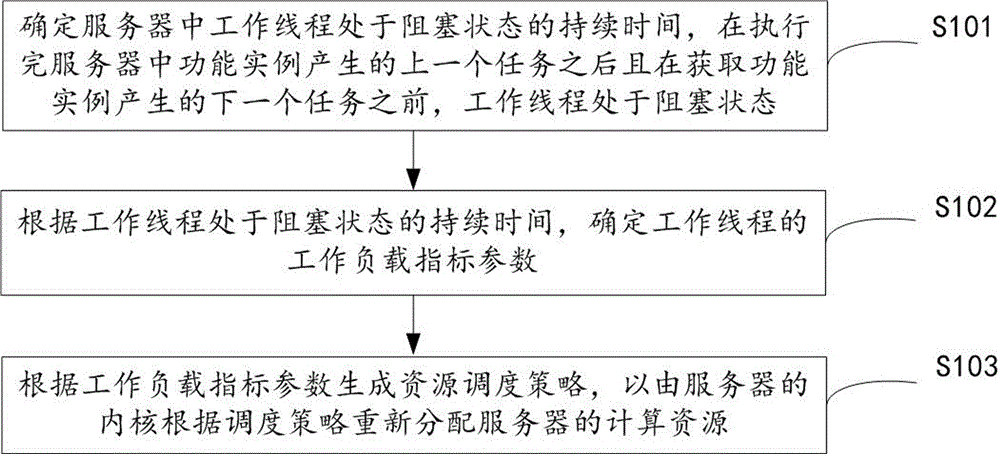
图1为本发明实施例提供的一种任务处理方法的流程图;FIG. 1 is a flowchart of a task processing method provided by an embodiment of the present invention;
图2为本发明实施例提供的工作线程的工作流程的示意图;FIG. 2 is a schematic diagram of a workflow of a worker thread provided by an embodiment of the present invention;
图3为本发明实施例提供的另一种线程处理方法的流程图;FIG. 3 is a flowchart of another thread processing method provided by an embodiment of the present invention;
图4为本发明实施例提供的又一种线程处理方法的流程图;FIG. 4 is a flowchart of another thread processing method provided by an embodiment of the present invention;
图5a为本发明实施例提供的一种确定工作线程的工作负载指标参数的流程图;Fig. 5a is a flow chart of determining the workload indicator parameters of the worker thread provided by the embodiment of the present invention;
图5b为本发明实施例提供的另一种确定工作线程的工作负载指标参数的流程图;FIG. 5b is another flow chart for determining the workload indicator parameters of the worker thread provided by the embodiment of the present invention;
图5c为本发明实施例提供的又一种确定工作线程的工作负载指标参数的流程图;Fig. 5c is another flow chart for determining the workload indicator parameters of the working threads provided by the embodiment of the present invention;
图6为本发明实施例提供的又一种线程处理方法的流程图;FIG. 6 is a flowchart of another thread processing method provided by an embodiment of the present invention;
图7为本发明实施例提供的一种调度组件的结构示意图;FIG. 7 is a schematic structural diagram of a scheduling component provided by an embodiment of the present invention;
图8为本发明实施例提供的一种监测组件的结构示意图;FIG. 8 is a schematic structural diagram of a monitoring component provided by an embodiment of the present invention;
图9为本发明实施例提供的一种服务器的结构示意图;FIG. 9 is a schematic structural diagram of a server provided by an embodiment of the present invention;
图10为本发明实施例提供的另一种服务器的结构示意图;FIG. 10 is a schematic structural diagram of another server provided by an embodiment of the present invention;
图11为本发明实施例提供的线程处理方法、调度组件应用在5G专网中的示意图;FIG. 11 is a schematic diagram of the application of the thread processing method and the scheduling component provided in the embodiment of the present invention in a 5G private network;
图12为本发明实施例提供的一种电子设备的结构示意图;FIG. 12 is a schematic structural diagram of an electronic device provided by an embodiment of the present invention;
图13为本发明实施例提供的另一种电子设备的结构示意图;FIG. 13 is a schematic structural diagram of another electronic device provided by an embodiment of the present invention;
图14为本发明实施例提供的又一种电子设备的结构示意图。FIG. 14 is a schematic structural diagram of another electronic device provided by an embodiment of the present invention.
具体实施方式Detailed ways
为使本发明实施例的目的、技术方案和优点更加清楚,下面将结合本发明实施例中的附图,对本发明实施例中的技术方案进行清楚、完整地描述,显然,所描述的实施例是本发明一部分实施例,而不是全部的实施例。基于本发明中的实施例,本领域普通技术人员在没有作出创造性劳动前提下所获得的所有其他实施例,都属于本发明保护的范围。In order to make the purpose, technical solutions and advantages of the embodiments of the present invention clearer, the technical solutions in the embodiments of the present invention will be clearly and completely described below in conjunction with the drawings in the embodiments of the present invention. Obviously, the described embodiments It is a part of embodiments of the present invention, but not all embodiments. Based on the embodiments of the present invention, all other embodiments obtained by persons of ordinary skill in the art without creative efforts fall within the protection scope of the present invention.
在本发明实施例中使用的术语是仅仅出于描述特定实施例的目的,而非旨在限制本发明。在本发明实施例和所附权利要求书中所使用的单数形式的“一种”、“所述”和“该”也旨在包括多数形式,除非上下文清楚地表示其他含义,“多种”一般包含至少两种,但是不排除包含至少一种的情况。Terms used in the embodiments of the present invention are only for the purpose of describing specific embodiments, and are not intended to limit the present invention. The singular forms "a", "said" and "the" used in the embodiments of the present invention and the appended claims are also intended to include plural forms, unless the context clearly indicates otherwise, "multiple" Generally, at least two kinds are included, but the case of including at least one kind is not excluded.
应当理解,本文中使用的术语“和/或”仅仅是一种描述关联对象的关联关系,表示可以存在三种关系,例如,A和/或B,可以表示:单独存在A,同时存在A和B,单独存在B这三种情况。另外,本文中字符“/”,一般表示前后关联对象是一种“或”的关系。It should be understood that the term "and/or" used herein is only an association relationship describing associated objects, which means that there may be three relationships, for example, A and/or B, which may mean that A exists alone, and A and B exist simultaneously. B, there are three situations of B alone. In addition, the character "/" in this article generally indicates that the contextual objects are an "or" relationship.
取决于语境,如在此所使用的词语“如果”、“若”可以被解释成为“在……时”或“当……时”或“响应于确定”或“响应于识别”。类似地,取决于语境,短语“如果确定”或“如果识别(陈述的条件或事件)”可以被解释成为“当确定时”或“响应于确定”或“当识别(陈述的条件或事件)时”或“响应于识别(陈述的条件或事件)”。Depending on the context, the words "if", "if" as used herein may be interpreted as "at" or "when" or "in response to determining" or "in response to identifying". Similarly, depending on the context, the phrases "if determined" or "if identified (the stated condition or event)" could be interpreted as "when determined" or "in response to the determined" or "when identified (the stated condition or event) )” or “in response to recognition of (a stated condition or event)”.
还需要说明的是,术语“包括”、“包含”或者其任何其他变体意在涵盖非排他性的包含,从而使得包括一系列要素的商品或者系统不仅包括那些要素,而且还包括没有明确列出的其他要素,或者是还包括为这种商品或者系统所固有的要素。在没有更多限制的情况下,由语句“包括一个……”限定的要素,并不排除在包括所述要素的商品或者系统中还存在另外的相同要素。It should also be noted that the term "comprises", "comprises" or any other variation thereof is intended to cover a non-exclusive inclusion such that a good or system comprising a set of elements includes not only those elements but also includes items not expressly listed. other elements of the product, or elements inherent in the commodity or system. Without further limitations, an element defined by the phrase "comprising a ..." does not exclude the presence of additional identical elements in the article or system comprising said element.
下面再结合附图对本发明的一些实施方式作详细说明。在各实施例之间不冲突的情况下,下述的实施例及实施例中的特征可以相互组合。另外,下述各方法实施例中的步骤时序仅为一种举例,而非严格限定。Some embodiments of the present invention will be described in detail below in conjunction with the accompanying drawings. Under the condition that there is no conflict between the various embodiments, the following embodiments and the features in the embodiments can be combined with each other. In addition, the sequence of steps in the following method embodiments is only an example, rather than a strict limitation.
随着第五代移动通信技术(5th Generation Mobile CommunicationTechnology,简称5G)的发展,5G通信网络的应用场景越来越广,比如可以为用户提供自动驾驶、视频直播等多种服务。再结合背景技术中提及的,功能实例可以以软件程序的形式部署在服务器中,因此,5G通信网络可以利用软件程序形式的功能实例进行创建。With the development of the fifth generation mobile communication technology (5th Generation Mobile Communication Technology, referred to as 5G), the application scenarios of 5G communication network are becoming wider and wider, such as providing users with various services such as automatic driving and live video. In combination with what was mentioned in the background, the function instance can be deployed in the server in the form of a software program, therefore, the 5G communication network can be created using the function instance in the form of a software program.
可选地,5G通信网络一种更具体的使用场景,该网络还可以作为5G专网部署于某一工业园区或者工业流水线中,用以对园区或者流水线进行视频监测等等,则此5G专网中的各功能实例可以以软件程序的形式部署在云服务器中。Optionally, a more specific usage scenario of a 5G communication network. The network can also be deployed as a 5G private network in an industrial park or an industrial assembly line for video monitoring of the park or assembly line. Each function instance in the network can be deployed in the cloud server in the form of software program.
此种场景下,5G专网中接入网包含的基站(gNB)以及核心网包含的各控制面功能(Control Plane Function,简称CPF)网元、用户面功能网元(User Plane Function,简称UPF)均可以认为是功能实例,则将其以软件程序的形式部署在服务器中即可完成5G通信网络的创建。其中,CPF网元可以是通用5G核心网中的各种控制面功能网元,比如接入和移动性管理功能(Access and Mobility Management Function,简称AMF)网元、会话管理功能(Session Management Function,简称SMF)等等,具体网元内容在此不再详细说明。In this scenario, the base station (gNB) included in the access network in the 5G private network and each Control Plane Function (CPF for short) network element and User Plane Function (UPF for short) network element included in the core network ) can be considered as functional instances, and they can be deployed in the server in the form of software programs to complete the creation of 5G communication networks. Among them, the CPF network element can be various control plane functional network elements in the general 5G core network, such as access and mobility management function (Access and Mobility Management Function, referred to as AMF) network element, session management function (Session Management Function, SMF for short), etc., the specific network element content will not be described in detail here.
并且在作为5G通信网络运行载体的服务器正常工作时,服务器中的各功能实例可以不断生成任务,并将任务添加到相应的任务队列中。服务器又可以创建工作线程并将自己的计算资源分配给工作线程,使得工作线程可以获取并执行任务队列中的任务。其中,工作线程也可以称为Worker Thread。并且服务器可以采用隔离部署的方式为工作线程分配计算资源,即工作线程可以独占被分配到的计算资源。其中,工作线程被分配到的计算资源具体可以包括CPU资源、内存资源和硬盘资源等等。可选地,服务器可以配置有多核CPU,则每个工作线程被分配到的可以是某一CPU内核具有的计算资源。And when the server as the operating carrier of the 5G communication network is working normally, each function instance in the server can continuously generate tasks and add the tasks to the corresponding task queue. The server can create worker threads and allocate its own computing resources to the worker threads, so that the worker threads can acquire and execute tasks in the task queue. Wherein, the worker thread may also be called Worker Thread. And the server can allocate computing resources to the worker threads in an isolated deployment manner, that is, the worker threads can exclusively occupy the allocated computing resources. Wherein, the computing resources allocated to the working threads may specifically include CPU resources, memory resources, hard disk resources, and the like. Optionally, the server may be configured with a multi-core CPU, and each worker thread may be allocated the computing resources of a certain CPU core.
可选地,服务器中还可以安装有与上述功能实例所提供功能关联的第三方应用程序。对于部署于某一工业园区或者工业流水线中的5G专网,与此关联的第三方应用程序可以包括各种视频采集软件,比如摄像头软件、增强现实(Augmented Reality,简称AR)软件、虚拟现实 (Virtual Reality,简称VR)软件等等。可选地,第三方应用程序还可以包括用于检测并维护上述这些视频采集软件正常运行的运维软件。这些第三方应用程序在运行过程中也会产生任务,则服务器同样可以建立相应的工作线程并分配自身的计算资源。Optionally, third-party application programs associated with the functions provided by the above function examples may also be installed in the server. For a 5G private network deployed in an industrial park or an industrial assembly line, the associated third-party applications can include various video capture software, such as camera software, augmented reality (Augmented Reality, AR) software, virtual reality ( Virtual Reality, referred to as VR) software and so on. Optionally, the third-party application program may also include operation and maintenance software for detecting and maintaining the normal operation of the aforementioned video capture software. These third-party applications also generate tasks during operation, and the server can also create corresponding worker threads and allocate its own computing resources.
在实际中,当工作线程的工作量饱和即工作线程可以不断获取并执行任务时,由于服务器通常采用异步调度机制为工作线程分配任务,因此,使得工作线程需要经过一定的等待时间后才能获取到任务。而在此等待时间期间,工作线程被分配到的计算资源处于空闲状态,这部分计算资源是被浪费的,从而导致服务器的计算资源的利用率不高。另一种情况,当工作线程的工作量不饱和时,由于计算资源是隔离部署的,因此,这部分被工作线程独占的计算资源同样处于空闲状态,计算资源的利用率依旧不高。In practice, when the workload of the worker thread is saturated, that is, the worker thread can continuously obtain and execute tasks, because the server usually uses an asynchronous scheduling mechanism to assign tasks to the worker thread, the worker thread needs to wait for a certain period of time before it can get the task. Task. During this waiting time, the computing resources assigned to the worker threads are in an idle state, and this part of the computing resources is wasted, resulting in low utilization of the computing resources of the server. In another case, when the workload of the worker threads is not saturated, since the computing resources are deployed in isolation, these computing resources exclusively occupied by the worker threads are also idle, and the utilization rate of the computing resources is still not high.
因此,为了提高服务器计算资源的利用率就需要进行资源调度。并且为了进一步提高计算资源利用率,在进行资源调度时还要考虑资源调度的周期。具体来说,使用较大的调度周期并不能及时将空闲的计算资源调度给其他工作线程即提高资源利用率的效果并不明显;使用较小的调度周期又会影响工作线程的工作稳定性。Therefore, in order to improve the utilization rate of server computing resources, it is necessary to perform resource scheduling. And in order to further improve the utilization rate of computing resources, the cycle of resource scheduling should also be considered when performing resource scheduling. Specifically, using a larger scheduling period cannot schedule idle computing resources to other worker threads in time, that is, the effect of improving resource utilization is not obvious; using a smaller scheduling period will affect the work stability of worker threads.
另外,在部署有5G通信网络的服务器中,工作线程处理的任务大部分是核心网中各功能网元或者接入网中gNB产生的任务。这些任务对执行的时序性以及时效性有较高要求,执行时序性的破坏会影响5G通信网络的运行甚至会造成网络瘫痪。因此,在进行资源调度的过程中还不能破坏任务的正常执行。In addition, in a server deployed with a 5G communication network, most of the tasks processed by the worker thread are tasks generated by each functional network element in the core network or the gNB in the access network. These tasks have high requirements on the timing and timeliness of execution, and the destruction of execution timing will affect the operation of the 5G communication network and even cause network paralysis. Therefore, the normal execution of tasks cannot be disrupted in the process of resource scheduling.
基于上述描述的实际情况,便可以使用本发明下述各实施例中提供的线程处理方法,在以恰当的调度周期进行资源调度的同时保证任务的时序执行。Based on the actual situation described above, the thread processing methods provided in the following embodiments of the present invention can be used to ensure the timing execution of tasks while performing resource scheduling with an appropriate scheduling period.
图1为本发明实施例提供的一种线程处理方法的流程图。本发明实施例提供的该线程处理方法可以由服务器中部署的调度组件执行。其中,调度组件可以在服务器的操作系统处于用户态时运行。FIG. 1 is a flowchart of a thread processing method provided by an embodiment of the present invention. The thread processing method provided by the embodiment of the present invention can be executed by the scheduling component deployed in the server. Wherein, the scheduling component can run when the operating system of the server is in the user state.
如图1所示,该方法可以包括如下步骤:As shown in Figure 1, the method may include the following steps:
S101,确定服务器中工作线程处于阻塞状态的持续时间,在执行完服务器中功能实例产生的上一个任务之后且在获取功能实例产生的下一个任务之前,工作线程处于阻塞状态。S101. Determine the duration of the blocking state of the working thread in the server. After executing the last task generated by the function instance in the server and before obtaining the next task generated by the function instance, the working thread is in the blocked state.
根据上述描述可知,服务器中部署的功能实例具体可以是gNB、核心网的功能网元,也可以是其他4G网络中的各功能网元等等。这些功能实例生成的任务可以缓存到该功能实例对应的至少一个任务队列中。同时,服务器还可以创建工作线程,以由创建的工作线程从功能实例对应的至少一个任务队列中获取任务并执行该任务。并且对于一个正常工作的工作线程,其可以不断在运行状态和阻塞状态之间切换,则服务器中的调度组件可以获取工作线程处于阻塞状态的持续时间。下面可以结合工作线程的工作流程和工作状态对工作线程的阻塞状态及其持续时间进行说明:According to the above description, it can be seen that the function instances deployed in the server may specifically be gNBs, functional network elements of the core network, or various functional network elements in other 4G networks. The tasks generated by these function instances can be cached in at least one task queue corresponding to the function instance. Meanwhile, the server may also create a worker thread, so that the created worker thread acquires a task from at least one task queue corresponding to the function instance and executes the task. And for a working thread that works normally, it can continuously switch between the running state and the blocking state, then the scheduling component in the server can obtain the duration of the working thread being in the blocking state. The blocking state of the worker thread and its duration can be described below in combination with the workflow and working status of the worker thread:
工作线程的工作流程具体可以包括4个阶段:任务轮询—任务执行—结果上报—任务退出。工作线程不断循环上述的4个阶段直至工作线程被挂起,即服务器回收为工作线程被分配的计算资源。上述过程也可以参见图2理解。The workflow of the worker thread can specifically include four stages: task polling—task execution—result reporting—task exit. The worker thread continues to cycle through the above four stages until the worker thread is suspended, that is, the server reclaims the computing resources allocated to the worker thread. The above process can also be understood with reference to FIG. 2 .
在任务轮询阶段,若轮询成功,则工作线程可以从任务队列中获取任务。再依次进入任务执行阶段和结果上报阶段。在这两个阶段中工作线程分别用于执行从任务队列中获取到的任务以及上报执行结果。在上述几个阶段,工作线程均处于运行状态,工作线程在服务器操作系统的用户态下实现任务的获取、执行以及执行结果上报。执行结果上报后工作线程即可进入任务退出阶段。若轮询失败,工作线程没有从任务队列中获取任务,则工作线程直接接入任务退出阶段。在该任务退出阶段中工作线程处于刚执行完功能实例生成的上一个任务并且还未获取到下一个任务的状态,此时,工作线程处于阻塞状态。并且在工作线程获取到下一个任务之前会一直维持阻塞状态。可选地,阻塞状态的持续时间可以是微秒级的。In the task polling phase, if the polling is successful, the worker thread can obtain tasks from the task queue. Then enter the task execution phase and the result reporting phase in turn. In these two stages, the worker threads are used to execute the tasks obtained from the task queue and report the execution results respectively. In the above several stages, the worker thread is in the running state, and the worker thread implements task acquisition, execution and execution result reporting in the user state of the server operating system. After the execution result is reported, the worker thread can enter the task exit phase. If the polling fails and the worker thread does not obtain the task from the task queue, the worker thread directly enters the task exit stage. In the task exit phase, the worker thread is in the state of having just executed the previous task generated by the function instance and has not yet obtained the next task. At this time, the worker thread is in a blocked state. And it will remain blocked until the worker thread gets the next task. Optionally, the duration of the blocking state may be on the order of microseconds.
S102,根据工作线程处于阻塞状态的持续时间,确定工作线程的工作负载指标参数。S102. Determine a workload index parameter of the worker thread according to the duration of the worker thread in the blocked state.
由于阻塞状态的持续时间即为工作线程执行完上一个任务且未获取到下一个任务之前的时间,因此,该持续时间的长度可以反映工作线程的工作负载大小。则一种可选地方式,调度组件可以将该持续时间的长度确定为该工作线程的工作负载指标参数,并根据此指标参数生成资源调度策略。其中,调度策略可以包括创建工作线程和回收工作线程。Since the duration of the blocked state is the time before the worker thread finishes executing the previous task and does not acquire the next task, the length of the duration may reflect the workload of the worker thread. Then in an optional manner, the scheduling component may determine the length of the duration as the workload indicator parameter of the worker thread, and generate a resource scheduling policy according to the indicator parameter. Wherein, the scheduling strategy may include creating worker threads and reclaiming worker threads.
具体来说,若持续时间的长度超过预设时长,表明工作线程在执行完上一个任务之后需要等待较长时间才能获取到下一个任务,表明此工作线程的工作量不饱和,工作线程的工作负载较小,则调度组件生成的资源调度策略为回收此工作线程,即回收此工作线程被分配到的计算资源,使得该工作线程被挂起。反之表明工作线程的工作量饱和,工作线程的工作负载较大,则调度组件生成的资源调度策略为创建工作线程,并为新建的工作线程分配服务器的计算资源。Specifically, if the duration exceeds the preset duration, it indicates that the worker thread needs to wait for a long time to obtain the next task after executing the previous task, indicating that the workload of the worker thread is not saturated, and the work of the worker thread If the load is small, the resource scheduling strategy generated by the scheduling component is to recycle the worker thread, that is, to reclaim the computing resources allocated to the worker thread, so that the worker thread is suspended. On the contrary, it indicates that the workload of the worker thread is saturated, and the workload of the worker thread is relatively large, then the resource scheduling strategy generated by the scheduling component is to create a worker thread, and allocate the computing resources of the server to the newly created worker thread.
容易理解的,一个工作线程在连续执行多个任务的过程中可以多次处于阻塞状态,即工作线程每执行完一个任务后都会进入阻塞状态,为了进一步保证确定出的工作负载指标参数能够准确反映工作线程的负载大小,另一种可选地方式,调度组件还可以监测该工作线程连续多次处于阻塞状态时,每个阻塞状态的持续时间。调度组件可以将多个持续时间各自的长度确定为该工作线程的工作负载指标参数。若连续的多个持续时间的长度均超越预设时长,表明该工作线程的工作负载较小,则生成的资源调度策略为回收线程;反之调度组件生成的资源调度策略为创建线程。It is easy to understand that a worker thread can be in the blocked state multiple times during the continuous execution of multiple tasks, that is, the worker thread will enter the blocked state after each task is executed. In order to further ensure that the determined workload index parameters can accurately reflect As for the load size of the worker thread, in another optional manner, the scheduling component may also monitor the duration of each blocked state when the worker thread is in the blocked state several times in a row. The scheduling component may determine respective lengths of multiple durations as workload index parameters of the worker thread. If the lengths of multiple consecutive durations exceed the preset duration, it indicates that the workload of the worker thread is relatively small, and the generated resource scheduling strategy is recycling threads; otherwise, the resource scheduling strategy generated by the scheduling component is creating threads.
S103,根据工作负载指标参数生成资源调度策略,以由服务器的内核根据调度策略重新分配服务器的计算资源。S103. Generate a resource scheduling policy according to the workload index parameter, so that the server's kernel can reallocate computing resources of the server according to the scheduling policy.
最终,调度组件还可以将此资源调度策略发送至服务器的内核,以由内核在服务器操作系统处于内核态时执行资源调度策略。Finally, the scheduling component can also send the resource scheduling policy to the kernel of the server, so that the kernel executes the resource scheduling policy when the server operating system is in the kernel state.
本实施例中,服务器中的调度组件可以确定工作线程处于阻塞状态的持续时间,并根据此持续时间确定工作线程的工作负载指标参数,并进一步根据工作负载指标参数生成资源调度策略,以由服务器的内核利用此资源调度策略重新分配服务器的计算资源。In this embodiment, the scheduling component in the server can determine the duration that the worker thread is in the blocked state, and determine the workload indicator parameter of the worker thread according to the duration, and further generate a resource scheduling policy according to the workload indicator parameter, so that the server The kernel of the server uses this resource scheduling policy to reallocate the computing resources of the server.
上述过程中,工作线程每执行完一个任务,调度组件都可以计算出工作线程的工作负载指标参数并进一步进行服务器计算资源的调度,也即是将进行计算资源调度的周期缩短到与任务执行时长相同的数量级,计算资源的及时调度也可以提高服务器计算资源的利用率。并且阻塞状态的维持时长即为工作线程连续任务的间歇期,即使得资源调度是在两个任务之间进行的,因此,也不会影响工作线程正常执行任务。In the above process, every time a worker thread executes a task, the scheduling component can calculate the workload index parameters of the worker thread and further schedule the computing resources of the server, that is, the cycle of scheduling computing resources is shortened to the task execution time On the same order of magnitude, the timely scheduling of computing resources can also improve the utilization of server computing resources. And the maintenance duration of the blocking state is the intermittent period of the continuous tasks of the worker thread, even if the resource scheduling is carried out between two tasks, therefore, it will not affect the normal execution of tasks by the worker thread.
根据上述描述可知,5G通信网络具体可以为运行于云服务器中的5G专网,则此云服务器中也可以执行图1所示实施例中的方法,以实现资源调度。则图3为本发明实施例提供的另一种线程处理方法的流程图。本发明实施例提供的该线程处理方法可以由云服务器执行。如图3所示,该方法可以包括如下步骤:According to the above description, it can be seen that the 5G communication network may specifically be a 5G private network running in a cloud server, and the cloud server may also execute the method in the embodiment shown in FIG. 1 to implement resource scheduling. Then FIG. 3 is a flow chart of another thread processing method provided by an embodiment of the present invention. The thread processing method provided by the embodiment of the present invention may be executed by a cloud server. As shown in Figure 3, the method may include the following steps:
S201,确定云服务器中工作线程处于阻塞状态的持续时间,在执行完服务器中功能实例产生的上一个任务之后且在获取功能实例产生的下一个任务之前,工作线程处于阻塞状态。S201. Determine the duration of the blocking state of the working thread in the cloud server. After executing the last task generated by the function instance in the server and before obtaining the next task generated by the function instance, the working thread is in the blocking state.
S202, 根据工作线程处于阻塞状态的持续时间,确定工作线程的工作负载指标参数,功能实例包括5G专网中的功能网元。S202. Determine the workload index parameters of the worker thread according to the duration of the worker thread being in the blocked state, and the function examples include functional network elements in the 5G private network.
S203,根据工作负载指标参数生成资源调度策略,以由服务器的内核根据调度策略重新分配服务器的计算资源。S203. Generate a resource scheduling policy according to the workload index parameter, so that the kernel of the server can reallocate computing resources of the server according to the scheduling policy.
上述方法具体可以由云服务器中部署的调度组件执行,而本实施例中各步骤的具体执行过程以及未详细描述的内容以及所能实现的技术效果均可以参见上述各实施例中的相关描述,在此不再赘述。The above method can be specifically executed by the scheduling component deployed in the cloud server, and the specific execution process of each step in this embodiment, the content not described in detail, and the technical effect that can be achieved can refer to the relevant descriptions in the above embodiments. I won't repeat them here.
需要说明的有,在5G专网中,对于gNB以及核心网中的功能网元等功能实例,工作线程处于阻塞状态的持续时间通常是微秒级的,因此,上述实施例中计算资源的调度周期即调度组件的工作周期也是微秒级的。同时,gNB和功能网元产生任务的数量往往还具有突发性,这种突发也可以是毫秒或者微妙级的,此时,采用上述微秒级的线程处理方法同样能够应对此微秒级的任务突发。It should be noted that in the 5G private network, for functional instances such as gNB and functional network elements in the core network, the duration of the working thread in the blocked state is usually on the microsecond level. Therefore, the scheduling of computing resources in the above embodiments The period, that is, the work period of the scheduling component is also at the microsecond level. At the same time, the number of tasks generated by gNB and functional network elements is often bursty, and this burst can also be at the millisecond or microsecond level. At this time, the above-mentioned microsecond-level thread processing method can also deal with this microsecond-level sudden task.
并且上述实施例中,当工作线程每执行完一个任务即每产生一个持续时间后即进行资源调度,但每个任务的执行时间不同比如可以是几微秒或者十几微秒,这使得资源的调度周期也不固定。则为了使调度组件能够更及时确定出工作线程是否处于阻塞状态并及时进行计算资源调度,调度组件的工作周期还可以设置得更小,比如1微秒。即调度组件每1微秒就执行一次工作线程是否处于阻塞状态的判断。And in the above-mentioned embodiment, resource scheduling is performed every time a worker thread executes a task, that is, every time a duration is generated, but the execution time of each task is different, such as several microseconds or more than ten microseconds, which makes the resources The scheduling cycle is also not fixed. In order to enable the scheduling component to determine whether the worker thread is in a blocked state in a timely manner and to schedule computing resources in a timely manner, the working period of the scheduling component can be set to be shorter, such as 1 microsecond. That is, the scheduling component executes a judgment on whether the worker thread is in a blocked state every 1 microsecond.
需要说明的还有,常用工作负载指标参数为任务队列的队列长度,但该指标参数需要修改功能实例的底层代码才能得到,指标参数的获取方式复杂。同时考虑到调度组合和功能实例来源于不同的开发方,由于权限原因,因此,更加增大了修改功能实例低层代码的难度,则指标参数的获取也更为困难。相比于将任务队列的队列长度作为指标参数,上述实施例中是将工作线程处于阻塞状态的持续时间作为工作负载指标参数来生成资源调度策略的,这种指标参数无需修改功能实例的底层代码即可得到,即获取更为容易。It should also be noted that the commonly used workload indicator parameter is the queue length of the task queue, but this indicator parameter needs to be obtained by modifying the underlying code of the function instance, and the acquisition method of the indicator parameter is complicated. At the same time, considering that the scheduling combination and function instance come from different developers, due to the authority, it is more difficult to modify the low-level code of the function instance, and the acquisition of indicator parameters is also more difficult. Compared with using the queue length of the task queue as an indicator parameter, in the above embodiment, the duration of the worker thread in the blocked state is used as the workload indicator parameter to generate the resource scheduling policy. This indicator parameter does not need to modify the underlying code of the function instance It can be obtained, that is, it is easier to obtain.
图1和图3所示实施例中,在工作线程执行完任务并将执行结果上报完毕后,工作线程即进行任务退出阶段。可选地,工作线程可以通过执行调度组件中设置的延迟函数来使自身进入任务退出阶段。则调度组件可以响应于延迟函数的执行,记录该函数执行的起止时间,该延迟函数执行的起始时间点和终止时间点构成的时间段即为工作线程处于阻塞状态的持续时间。可选地,延迟函数比如可以是sleep函数、sem-wait函数等等。In the embodiments shown in FIG. 1 and FIG. 3 , after the worker thread executes the task and reports the execution result, the worker thread proceeds to the task exit stage. Optionally, the worker thread can make itself enter the task exit phase by executing the delay function set in the scheduling component. Then the scheduling component can record the start and end time of the function execution in response to the execution of the delay function, and the time period formed by the start time point and the end time point of the delay function execution is the duration of the worker thread in the blocked state. Optionally, the delay function may be, for example, a sleep function, a sem-wait function, and the like.
需要说明的有,在实际中,表现为软件程序形式的功能实例中也可以设置有延迟函数,因此,工作线程在执行结果上报完毕后,也可以去执行功能实例中设置的延迟函数。但由于服务器运行的调度组件和功能实例往往来源于不同的开发方,同样考虑到权限问题,在无法修改功能实例的低层代码的情况下,调度组件无法知晓功能实例执行延迟函数的起止时间。则为了使调度组件能够知晓延迟函数执行的起止时间,可以在调度组件中也设置延迟函数,并借助重定向机制使在工作线程上报执行结果之后主动执行调度组件中的延时函数。It should be noted that, in practice, a delay function may also be set in a function instance in the form of a software program. Therefore, after the execution result is reported, the worker thread may also execute the delay function set in the function instance. However, since the scheduling components and function instances run by the server often come from different developers, and also considering the permission issue, the scheduling component cannot know the start and end time of the function instance execution delay function without modifying the low-level code of the function instance. In order to enable the scheduling component to know the start and end time of the delay function execution, a delay function can also be set in the scheduling component, and the delay function in the scheduling component can be actively executed after the worker thread reports the execution result by means of the redirection mechanism.
利用上述图1和图3所示实施例能够对计算资源实现微秒级的调度,并且调度组件又是在获取工作线程的工作负载指标参数之后,根据此指标参进行资源调度的,因此,此工作负载指标参数的计算周期也是以微秒级的。Using the above-mentioned embodiments shown in Figure 1 and Figure 3 can implement microsecond-level scheduling of computing resources, and the scheduling component performs resource scheduling according to the indicator parameter after obtaining the workload indicator parameter of the worker thread. Therefore, this The calculation period of the workload indicator parameters is also in microseconds.
则图4为本发明实施例提供的又一种线程处理方法的流程图。本发明实施例提供的该线程处理方法实际上一种工作负载指标参数监测方法,该方法可以由服务器中的监测组件执行。如图4所示,该方法可以包括如下步骤:Then FIG. 4 is a flowchart of another thread processing method provided by an embodiment of the present invention. The thread processing method provided by the embodiment of the present invention is actually a method for monitoring workload index parameters, which can be executed by a monitoring component in the server. As shown in Figure 4, the method may include the following steps:
S301,在到达监测组件的工作周期时,确定服务器中工作线程处于阻塞状态的持续时间,在执行完服务器中功能实例产生的上一个任务之后且在获取功能实例产生的下一个任务之前,工作线程处于阻塞状态。S301. When the working cycle of the monitoring component is reached, determine the duration of the blocking state of the working thread in the server. After executing the previous task generated by the function instance in the server and before obtaining the next task generated by the function instance, the working thread is blocked.
S302, 根据工作线程处于阻塞状态的持续时间,确定工作线程的工作负载指标参数,工作周期的长度的数量级为微秒。S302. Determine a workload index parameter of the worker thread according to the duration of the worker thread in the blocked state, where the length of the work cycle is on the order of microseconds.
在到达监测组件的工作周期时,监测组件开始确定服务器中工作线程处于阻塞状态的持续时间,并根据此持续时间确定工作线程的工作负载指标参数。持续时间和工作负载指标参数的具体确定过程可以参见上述图1所示实施例中的相关描述,在此不再赘述。可选地,工作负载指标参数的具体确定过程还可以参见下述图5a~图5c所示的实施例。When the working period of the monitoring component is reached, the monitoring component starts to determine the duration of the worker thread in the server being blocked, and determines the workload index parameter of the worker thread according to this duration. For the specific determination process of the duration and workload index parameters, reference may be made to the relevant description in the above embodiment shown in FIG. 1 , which will not be repeated here. Optionally, for the specific determination process of the workload index parameter, reference may also be made to the embodiments shown in FIG. 5a to FIG. 5c below.
其中,工作周期的长度为微秒级的。根据上述描述可知,可选地,监测组件的工作周期可以1微秒或几微秒。监测组件可以包含于调度组件中。Wherein, the length of the duty cycle is in the order of microseconds. According to the above description, optionally, the duty cycle of the monitoring component may be 1 microsecond or several microseconds. Monitoring components can be included in scheduling components.
本实施例中,服务器中的监测组件在达到自身的工作周期后便可以确定工作线程处于阻塞状态的持续时间,并根据此持续时间确定工作线程的工作负载指标参数。上述过程中,由于监测组件的工作周期为微秒级并且工作线程执行完一个任务的时长也是微秒级,因此,监测组件计算出工作线程的工作负载指标参数的过程也是微秒级的,从而缩短了工作线程的工作负载监测的周期,即能够更及时地监测工作负载的工作状态。另外,本实施例中未详细描述以及所能够达到的效果均可以参见上述各实施例中的相关描述,在此不再赘述。In this embodiment, the monitoring component in the server can determine the duration of the blocking state of the worker thread after reaching its own working period, and determine the workload index parameter of the worker thread according to the duration. In the above process, since the working cycle of the monitoring component is at the microsecond level and the duration for the worker thread to execute a task is also at the microsecond level, the process for the monitoring component to calculate the workload indicator parameters of the worker thread is also at the microsecond level, thus The workload monitoring cycle of the worker thread is shortened, that is, the working status of the workload can be monitored in a more timely manner. In addition, for the effects that are not described in detail in this embodiment and can be achieved, refer to the relevant descriptions in the foregoing embodiments, and will not be repeated here.
根据上述描述可知,服务器中的任意一个功能实例产生的任务可以由服务器中的至少一个工作线程执行。According to the above description, it can be seen that a task generated by any function instance in the server can be executed by at least one worker thread in the server.
一种简单的情况,一个功能实例产生的任务可以由服务器中的一个工作线程执行。此时,按照图1和图3所示实施例中的描述,调度组件可以先获取此工作线程工作负载指标参数,再根据此工作负载指标参数生成对应的资源调度策略,以使服务器的内核执行此资源调度策略。此种情况下,该工作线程的工作负载指标参数可以是该工作线程对应的至少一个持续时间。In a simple case, a task spawned by a function instance can be performed by a worker thread in the server. At this time, according to the description in the embodiment shown in Figure 1 and Figure 3, the scheduling component can first obtain the workload indicator parameter of the worker thread, and then generate a corresponding resource scheduling policy according to the workload indicator parameter, so that the server's kernel executes This resource scheduling policy. In this case, the workload indicator parameter of the worker thread may be at least one duration corresponding to the worker thread.
另一种复杂的情况,一个功能实例产生的任务可以由服务器中的多个工作线程执行。此时,可选地,调度组件可以根据该工作实例对应的每个工作线程的工作负载指标参数确定是否进行计算资源的调度,即以一个工作线程的工作负载为依据进行资源调度。可选地,调度组件还可以先根据每个工作线程的工作负载参数指标确定该功能实例对应的多个工作线程的整体工作负载指标参数,再根据此整体工作负载指标参数确定是否进行资源调度,即以一个功能实例对应的所有工作线程的工作负载为依据进行资源调度。Another complication is that tasks spawned by one function instance can be performed by multiple worker threads in the server. At this time, optionally, the scheduling component may determine whether to schedule computing resources according to the workload index parameter of each worker thread corresponding to the work instance, that is, perform resource scheduling based on the workload of a worker thread. Optionally, the scheduling component may first determine the overall workload indicator parameters of multiple worker threads corresponding to the function instance according to the workload parameter indicators of each worker thread, and then determine whether to perform resource scheduling according to the overall workload indicator parameters. That is, resource scheduling is performed based on the workload of all worker threads corresponding to a function instance.
当调度组件可以根据每个工作线程的工作负载指标参数确定是否进行计算资源的调度时,仍然可以按照图1和图3所示实施例中的方式进行调度。此种情况下,每个工作线程的工作负载指标参数可以是该工作线程对应的至少一个持续时间。When the scheduling component can determine whether to schedule computing resources according to the workload index parameter of each worker thread, scheduling can still be performed in the manner shown in the embodiments shown in FIG. 1 and FIG. 3 . In this case, the workload indicator parameter of each worker thread may be at least one duration corresponding to the worker thread.
当调度组件可以根据每个工作线程的工作负载指标参数确定是否进行计算资源的调度时,对于工作负载指标参数,除了图1和图3给出的方式,可选地,还可以按照以下方式确定。以下方式还可以结合图5a所示的流程图理解。When the scheduling component can determine whether to schedule computing resources according to the workload index parameters of each worker thread, for the workload index parameters, in addition to the methods shown in Figure 1 and Figure 3, optionally, it can also be determined in the following manner . The following methods can also be understood in combination with the flow chart shown in FIG. 5a.
对于多个工作线程中的任一工作线程,即目标工作线程,调度组件先获取该目标工作组件两次相邻的阻塞状态的持续时间。这两个持续时间可以分别由第一起始时间点和第一终止时间点构成,由第二起始时间点和第二终止时间点构成。则调度组件可以进一步确定第一起始时间点和第二起始时间点之间的时间间隔,并将此时间间隔直接确定为此目标工作线程的工作负载指标参数。但与图1所示实施例中的持续时间相反的,时间间隔越长,表明目标工作线程执行任务花费的时间越多,目标工作线程的工作负载越大;反之,目标工作线程的工作负载越大。For any worker thread among the plurality of worker threads, that is, the target worker thread, the scheduling component first acquires the duration of two adjacent blocking states of the target worker component. The two durations may respectively be formed by a first start time point and a first end time point, and by a second start time point and a second end time point. Then the scheduling component may further determine the time interval between the first start time point and the second start time point, and directly determine this time interval as the workload index parameter of the target worker thread. However, contrary to the duration in the embodiment shown in Figure 1, the longer the time interval, the more time the target worker thread spends to execute the task, and the greater the workload of the target worker thread; otherwise, the greater the workload of the target worker thread. big.
进一步地,将时间间隔作为工作负载指标参数进行计算资源调度的过程为:Further, the process of scheduling computing resources using the time interval as a workload index parameter is:
若时间间隔大于第一预设间隔,表明目标工作线程的工作负载较大,则调度组件生成的调度策略为创建工作线程。新创建的工作线程和目标工作线程共同执行同一个功能实例生成的任务,从而降低目标工作线程的工作负载。可选地,第一预设间隔可以为服务器预设数量的机器周期,预设数量的机器周期可以认为是一个时间上限,比如可以是2500个CPU周期。If the time interval is greater than the first preset interval, it indicates that the workload of the target worker thread is relatively large, and the scheduling strategy generated by the scheduling component is to create a worker thread. The newly created worker thread and the target worker thread jointly execute the tasks generated by the same function instance, thereby reducing the workload of the target worker thread. Optionally, the first preset interval may be a preset number of machine cycles of the server, and the preset number of machine cycles may be considered as a time limit, such as 2500 CPU cycles.
若时间间隔小于第一预设间隔,表明目标工作线程的工作负载较小,则调度组件生成的调度策略为回收为此目标工作线程分配的计算资源。回收的计算资源可以调度至服务器中的其他工作负载较大的工作线程中,该其他工作线程可以与被回收的目标工作线程对应于相同的功能实例,也可以对应于不同的工作实例。回收的计算资源也可以供服务器将其分配给为其他功能实例新建的工作线程。If the time interval is less than the first preset interval, it indicates that the workload of the target worker thread is relatively small, and the scheduling policy generated by the scheduling component is to recover the computing resources allocated to the target worker thread. The reclaimed computing resources can be dispatched to other worker threads with heavy workload in the server, and the other worker threads may correspond to the same function instance as the reclaimed target worker thread, or may correspond to different work instances. Reclaimed computing resources are also available for the server to allocate to newly created worker threads for other function instances.
在实际中,当调度组件生成资源调度策略后,该策略会立即发送至服务器的内核并由其执行,以实现微秒级的资源调度。并且当资源调度策略为回收工作线程的计算资源时,内核可以在目标工作线程处于阻塞状态执行此资源调度策略,以保证在任务执行不间断的同时实现资源调度。In practice, when the scheduling component generates a resource scheduling policy, the policy will be immediately sent to the server's kernel and executed by it, so as to realize microsecond-level resource scheduling. And when the resource scheduling policy is to recycle the computing resources of the worker thread, the kernel can execute this resource scheduling policy when the target worker thread is in a blocked state, so as to ensure resource scheduling while task execution is uninterrupted.
可选地,为了进一步保证确定出的工作负载指标参数能够准确反映工作线程的负载大小,调度组件还可以按照以下方式确定目标工作线程的工作负载指标参数。以下方式还可以结合图5b所示的流程图理解。Optionally, in order to further ensure that the determined workload index parameter can accurately reflect the load size of the worker thread, the scheduling component may also determine the workload indicator parameter of the target worker thread in the following manner. The following methods can also be understood in conjunction with the flowchart shown in FIG. 5b.
调度组件可以先按照图5a所示的方式得到目标工作线程中两个第一起始时间点之间的时间间隔。若时间间隔小于第一预设间隔,表明目标工作线程两次开始阻塞状态之间的时间间隔很小,则调度组件可以在此时间间隔中确定一时间点,并将此时间点作为该目标工作线程的空闲时间点。在此空闲时间点时目标工作线程的负载较小。由于目标工作线程会多次处于阻塞状态,调度组件可以得到多个持续时间,因此,按照上述方式调度组件还可以计算出此目标工作线程出现的多个空闲时间点。调度组件可以根据此多个空闲时间点确定目标工作线程出现空闲时间点的第一频率,并可以直接将此第一频率确定为目标工作线程的工作负载指标参数。频率越高,目标工作线程的工作负载越小。The scheduling component may first obtain the time interval between two first starting time points in the target worker thread in the manner shown in FIG. 5a. If the time interval is less than the first preset interval, it indicates that the time interval between the two start blocking states of the target worker thread is very small, then the scheduling component can determine a time point in this time interval, and use this time point as the target work The thread's idle time point. The target worker thread is under less load at this point of idle time. Since the target worker thread will be in the blocked state multiple times, the scheduling component can obtain multiple durations. Therefore, the scheduling component can also calculate multiple idle time points when the target worker thread appears in the above manner. The scheduling component can determine the first frequency of idle time points of the target worker thread according to the multiple idle time points, and can directly determine the first frequency as the workload index parameter of the target worker thread. The higher the frequency, the smaller the workload on the target worker thread.
可选地,调度组件可以将时间间隔中的任一时间,比如时间间隔中的中间时间点或者结束时间点确定为目标工作线程的空闲时间点。其中,时间间隔的结束时间点即为上述的第二起始时间点。其中,可以将目标工作线程中相邻空闲时间点之间的时间间隔的倒数确定为目标工作线程的第一频率。Optionally, the scheduling component may determine any time in the time interval, such as a middle time point or an end time point in the time interval, as the idle time point of the target worker thread. Wherein, the end time point of the time interval is the above-mentioned second start time point. Wherein, the reciprocal of the time interval between adjacent idle time points in the target worker thread may be determined as the first frequency of the target worker thread.
进一步地,将第一频率作为工作负载指标参数进行计算资源调度的过程为:Further, the process of scheduling computing resources using the first frequency as a workload index parameter is:
若第一频率小于预设最小频率,表明目标工作线程的工作负载较大,则调度组件生成的资源调度策略为创建线程,并为此新建的工作线程分配服务器的计算资源。若第一频率大于预设最大频率,表明目标工作线程的工作负载较小,则调度组件生成的资源调度策略为回收为工作线程分配的计算资源。并且与上述过程类似的,当资源调度策略为回收工作线程的计算资源时,内核可以在目标工作线程处于阻塞状态执行此资源调度策略,以保证在任务执行不间断的同时实现资源调度。If the first frequency is less than the preset minimum frequency, it indicates that the workload of the target worker thread is relatively large, and the resource scheduling strategy generated by the scheduling component is to create a thread, and allocate computing resources of the server to the newly created worker thread. If the first frequency is greater than the preset maximum frequency, it indicates that the workload of the target worker thread is relatively small, and the resource scheduling policy generated by the scheduling component is to recover the computing resources allocated to the worker thread. And similar to the above process, when the resource scheduling policy is to recycle the computing resources of the worker thread, the kernel can execute this resource scheduling policy when the target worker thread is in a blocked state, so as to ensure that resource scheduling is realized while task execution is uninterrupted.
当调度组件可以根据同一功能实例对应的多个工作线程的整体工作负载指标参数确定是否进行资源调度时,调度组件还可以按照以下方式确定多个工作线程的整体工作负载指标参数。以下方式还可以结合图5c所示的流程图理解。When the scheduling component can determine whether to perform resource scheduling according to the overall workload indicator parameters of multiple worker threads corresponding to the same function instance, the scheduling component can also determine the overall workload indicator parameters of multiple worker threads in the following manner. The following methods can also be understood in conjunction with the flowchart shown in FIG. 5c.
调度组件可以先利用图5b所示的方式得到多个工作线程各自的空闲时间点。容易理解的,由于该功能实例产生的任务被缓存于至少一个任务队列中,该功能实例对应的多个工作线程可以从至少一个任务队列中获取任务并执行,因此,各工作线程之间的任务执行进度并不相同,这也就导致了调度组件计算出的多个工作线程的各自空闲时间点在时序上也有先后顺序。则调度组件可以按照时序对至少一个工作线程出现的空闲时间点进行排序。根据排序结果中相邻的空闲时间点确定多个工作线程出现空闲时间点的第二频率。其中,可以将排序结果中相邻空闲时间点之间的时间间隔的倒数确定为第二频率。调度组件可以进一步根据此第二频率确定多个工作线程整体的工作负载指标参数。The scheduling component can first use the manner shown in FIG. 5b to obtain the respective idle time points of multiple worker threads. It is easy to understand that since the tasks generated by the function instance are cached in at least one task queue, multiple worker threads corresponding to the function instance can obtain tasks from at least one task queue and execute them. Therefore, the tasks between the worker threads The execution progress is not the same, which leads to the timing sequence of the respective idle time points of multiple worker threads calculated by the scheduling component. Then the scheduling component can sort the idle time points at which at least one worker thread appears according to time sequence. The second frequency of idle time points occurring in the plurality of worker threads is determined according to the adjacent idle time points in the sorting result. Wherein, the reciprocal of the time interval between adjacent idle time points in the sorting result may be determined as the second frequency. The scheduling component may further determine the overall workload index parameter of the plurality of working threads according to the second frequency.
一种可选地方式,调度组件可以直接将此第二频率确定为多个工作线程整体的负载指标参数。另一种可选地方式,当多个工作线程的空闲时间点总量为3个及以上时,即可出现多个第二频率,则调度组件也可以对多个第二频率进行求平均或者取中位数的处理方式,并将处理结果作为多个工作线程整体的负载指标参数。In an optional manner, the scheduling component may directly determine the second frequency as an overall load index parameter of the plurality of worker threads. In another optional way, when the total number of idle time points of multiple worker threads is 3 or more, multiple second frequencies can appear, and the scheduling component can also average the multiple second frequencies or Take the median processing method, and use the processing result as the overall load indicator parameter of multiple worker threads.
举例来说,假设5G专网的核心网中AMF网元生成的任务被缓存至任务队列中,服务器中的工作线程1和工作线程2可以分从任务队列中获取该网元产生的任务。按照图5c所示的方式,调度组件可以计算出工作线程1在T1时间和T3时间出现空闲时间点,工作线程2在T2时间和T4时间出现空闲时间点。空闲时间点的排序结果为:T1—T2—T3—T4。则调度组件计算出的第二频率包括1/(T2-T1)、1/(T3-T3)以及1/(T4-T3)。此时,可选地,调度组件可以将上述任一第二频率确定为多个工作线程整体的负载指标参数,或者对上述3个第二频率进行求均值或者取中位数的处理,将处理结果确定为多个工作线程整体的负载指标参数。For example, assuming that the tasks generated by the AMF network element in the core network of the 5G private network are cached in the task queue, the worker thread 1 and the worker thread 2 in the server can separately obtain the tasks generated by the network element from the task queue. According to the manner shown in FIG. 5c, the scheduling component can calculate the idle time points of worker thread 1 at time T1 and time T3, and the idle time points of worker thread 2 at time T2 and time T4. The sorting result of idle time points is: T1—T2—T3—T4. Then the second frequency calculated by the scheduling component includes 1/(T2-T1), 1/(T3-T3) and 1/(T4-T3). At this time, optionally, the scheduling component may determine any of the above-mentioned second frequencies as an overall load index parameter of multiple working threads, or perform an average value or median processing on the above-mentioned three second frequencies, and process The result is determined as a load metric parameter for the ensemble of multiple worker threads.
进一步地,将第二频率作为工作负载指标参数进行计算资源调度的过程为:Further, the process of scheduling computing resources by using the second frequency as the workload index parameter is as follows:
若第二频率小于预设最小频率,表明多个工作线程整体的工作负载较大,则调度组件生成的资源调度策略为创建线程,并为该新建的工作线程分配计算资源。若第二频率大于预设最大频率,表明多个工作线程整体的工作负载较小,则调度组件生成的资源调度策略为回收工作线程的计算资源。可选地,回收计算资源的工作线程可以是同一功能实例对应的多个工作线程中的任一个。并且当资源调度策略为回收工作线程的计算资源时,内核可以在多个工作线程中的某一工作线程处于阻塞状态时回收该工作线程的计算资源,以保证在任务执行不间断的同时实现资源调度。If the second frequency is less than the preset minimum frequency, it indicates that the overall workload of the plurality of worker threads is relatively large, and the resource scheduling strategy generated by the scheduling component is to create a thread, and allocate computing resources to the newly created worker thread. If the second frequency is greater than the preset maximum frequency, it indicates that the overall workload of the plurality of worker threads is relatively small, and the resource scheduling strategy generated by the scheduling component is to recycle the computing resources of the worker threads. Optionally, the worker thread that reclaims computing resources may be any one of multiple worker threads corresponding to the same function instance. And when the resource scheduling policy is to reclaim the computing resources of the worker thread, the kernel can reclaim the computing resources of the worker thread when a certain worker thread among the multiple worker threads is in the blocked state, so as to ensure that the resource is realized while the task execution is uninterrupted. scheduling.
需要说明的有,上述图5b和图5c所示实施例中,调度组件可以基于空闲时间点确定工作线程的工作负载指标参数并进一步进行资源调度。而空闲时间点又是通过与第一预设间隔进行比对后得到的。当第一预设间隔为预设数量的机器周期时,对于机器周期数量的设置原则还可以结合以下内容理解:It should be noted that, in the above-mentioned embodiments shown in FIG. 5b and FIG. 5c, the scheduling component may determine the workload index parameter of the worker thread based on the idle time point and further perform resource scheduling. The idle time point is obtained by comparing with the first preset interval. When the first preset interval is a preset number of machine cycles, the principle of setting the number of machine cycles can also be understood in combination with the following content:
由于上述描述已经提及,功能实例生成任务的数量往往存在突发性,为了应对此突发性即为了使在出现任务突然激增时工作线程仍有足够的计算资源进行处理,因此在实际中,可以设置一个较大数量的机器周期,使得工作线程的工作负载大小与需要进行资源调度的临界点之间存在一定距离,即使得该工作线程被分配到的计算资源具有一定的空闲程度,从而能够应对任务激增。As mentioned in the above description, the number of tasks generated by function instances is often sudden. In order to deal with this suddenness, the worker thread still has enough computing resources to process when there is a sudden surge in tasks. Therefore, in practice, A large number of machine cycles can be set so that there is a certain distance between the workload size of the worker thread and the critical point that requires resource scheduling, that is, the computing resource allocated to the worker thread has a certain degree of idleness, so that it can Coping with task surges.
上述各实施例中提及了多种可以作为工作负载指标参数的数据,比如图1所示实施例中的工作线程处于阻塞状态的至少一个持续时间、图5a所示实施例中的时间间隔,图5b所示实施例中的第一频率、图5b所示实施例中的第二频率等等。在实际中,当功能实例具体为5G专网中的gNB或者功能网元时,工作线程处于阻塞状态的持续时间为微秒级别,则上述的时间间隔、第一频率、第二频率也都是微秒级的。A variety of data that can be used as workload index parameters are mentioned in the above-mentioned embodiments, such as at least one duration of the worker thread in the blocked state in the embodiment shown in FIG. 1 , the time interval in the embodiment shown in FIG. 5 a , The first frequency in the embodiment shown in Figure 5b, the second frequency in the embodiment shown in Figure 5b, and so on. In practice, when the functional instance is specifically a gNB or a functional network element in a 5G private network, the duration of the working thread in the blocking state is at the microsecond level, and the above-mentioned time interval, first frequency, and second frequency are all microseconds.
另外,在实际中,工作线程使用被分配到的计算资源处理任务后,会有一些中间数据缓存在计算资源(比如内存资源)中,这些缓存的中间数据能够加速此工作线程处理同一功能实例产生的其他任务。若在资源调度时参考缓存的中间数据,则调度组件就需要执行相应的计算过程,以计算出应该为工作线程分配哪些计算资源,此计算过程显然会增加资源调度的周期。并且在以中间数据为依据进行资源调度时,还容易造成计算资源调度的不充分,即一部分计算资源只会分配给某些功能实例对应的工作线程,这样也不能很好地提高计算资源的利用率。In addition, in practice, after the worker thread uses the allocated computing resource to process the task, some intermediate data will be cached in the computing resource (such as memory resource). These cached intermediate data can accelerate the worker thread to process the generation of the same function instance. other tasks. If the cached intermediate data is referred to during resource scheduling, the scheduling component needs to perform a corresponding calculation process to calculate which computing resources should be allocated to the worker threads. This calculation process will obviously increase the cycle of resource scheduling. Moreover, when resource scheduling is based on intermediate data, it is easy to cause insufficient computing resource scheduling, that is, a part of computing resources will only be allocated to the worker threads corresponding to certain function instances, which cannot improve the utilization of computing resources well. Rate.
而在本发明上述各实施例提供的方法中,资源调度是并不参考缓存的中间数据,这样使得计算资源能够被分配至不同功能实例对应的工作线程中,资源调度更加充分。并且由于在发明各实施例提供的方法中,功能实例通常为5G专网中的gNB或者功能网元,由于这些功能实例的特性,即使不参考中间数据进行资源调度也不会降低任务的执行速度。However, in the methods provided by the above-mentioned embodiments of the present invention, resource scheduling does not refer to cached intermediate data, so that computing resources can be allocated to worker threads corresponding to different function instances, and resource scheduling is more sufficient. And because in the methods provided by the various embodiments of the invention, the function instance is usually a gNB or a function network element in the 5G private network, due to the characteristics of these function instances, even if the resource scheduling is performed without referring to the intermediate data, the execution speed of the task will not be reduced .
根据上述描述可知,服务器中除了安装有软件程序形式的功能实例还安装有与功能实例所提供功能关联的第三方应用程序。第三方应用程序生成的任务同样由服务器中的至少一个工作线程执行。则调度组件在为功能实例对应的工作线程进行资源调度的同时,还可以一并对第三方应用程序对应的工作线程进行资源调度。According to the above description, it can be seen that besides the function instance in the form of a software program, a third-party application program associated with the functions provided by the function instance is installed in the server. Tasks generated by third-party applications are also executed by at least one worker thread in the server. Then, the scheduling component may also schedule resources for the worker threads corresponding to the third-party application while scheduling the resources for the worker threads corresponding to the function instances.
相比于功能实例产生的任务,第三方应用程序产生的任务的执行时效性以及执行时序性要求都不高,因此,调度组件在按照上述各实施例提供的方法确定出适用于功能实例对应的工作线程的资源调度策略后,可以将服务器剩余的计算资源直接分配给第三方应用程序对应的至少一个工作线程。可选地,可以将服务器剩余的计算资源平均分配给这至少一个工作线程,也可以选择性的分配给至少一个工作线程中的部分工作线程。Compared with tasks generated by function instances, tasks generated by third-party applications do not have high requirements for execution timeliness and execution timing. Therefore, the scheduling component determines the tasks that are applicable to function instances according to the methods provided by the above-mentioned embodiments. After the resource scheduling policy of the worker thread is determined, the remaining computing resources of the server can be directly allocated to at least one worker thread corresponding to the third-party application program. Optionally, the remaining computing resources of the server may be evenly allocated to the at least one worker thread, or may be selectively allocated to some of the at least one worker thread.
调度组件在使用上述任一种工作负载指标参数生成调度策略之后,即可按照此调度策略进行调度。为了尽可能避免计算资源的频繁调度,可选地,图6为本发明实施例提供的又一种线程处理方法的流程图,如图6所示,该方法可以包括如下步骤:After the scheduling component generates a scheduling policy using any of the above workload index parameters, it can schedule according to the scheduling policy. In order to avoid frequent scheduling of computing resources as much as possible, optionally, FIG. 6 is a flowchart of another thread processing method provided by an embodiment of the present invention. As shown in FIG. 6, the method may include the following steps:
S401, 确定服务器中工作线程处于阻塞状态的持续时间,在执行完服务器中功能实例产生的上一个任务之后且在获取功能实例产生的下一个任务之前,工作线程处于阻塞状态。S401. Determine the duration of the blocking state of the working thread in the server. After executing the last task generated by the function instance in the server and before obtaining the next task generated by the function instance, the working thread is in the blocked state.
S402, 根据工作线程处于阻塞状态的持续时间,确定工作线程的工作负载指标参数。S402. Determine a workload index parameter of the worker thread according to the duration of the worker thread in the blocked state.
S403,根据工作负载指标参数生成资源调度策略。S403. Generate a resource scheduling policy according to the workload index parameter.
步骤S401~步骤403的具体实现过程可以参见图1所示实施例中相关步骤的具体描述,在此不再赘述。For the specific implementation process of steps S401 to 403, reference may be made to the specific description of relevant steps in the embodiment shown in FIG. 1 , which will not be repeated here.
S404,获取资源调度策略的生成时间,以及上一个资源调度策略的生成时间。S404. Obtain the generation time of the resource scheduling policy and the generation time of the previous resource scheduling policy.
S405, 若两个生成时间之间的时间间隔小于第二预设间隔,则丢弃资源调度策略。S405. If the time interval between the two generation times is less than a second preset interval, discard the resource scheduling policy.
S406,若两个生成时间之间的时间间隔大于第二预设间隔,则发送资源调度策至服务器的内核,以由内核根据调度策略重新分配服务器的计算资源。S406. If the time interval between the two generation times is greater than the second preset interval, send the resource scheduling policy to the kernel of the server, so that the kernel reallocates computing resources of the server according to the scheduling policy.
按照上述各实施例提供的方法调度组件可以在T1时间生成资源调度策略。但此资源调度策略并不直接发送至服务器的内核。调度组件可以进一步获取自身上一次生成资源调度策略的时间即T2时间,并对二者进行比对,根据比对结果确定如何在T1时间生成的调度资源策略。其中,T1时间和T2时间生成的资源调度策略作用于服务器中同一功能实例。According to the methods provided in the foregoing embodiments, the scheduling component can generate a resource scheduling policy at time T1. But this resource scheduling policy is not sent directly to the server's kernel. The scheduling component can further obtain the time T2 when it last generated the resource scheduling policy, compare the two, and determine how to generate the scheduling resource policy at T1 time according to the comparison result. Wherein, the resource scheduling policy generated by T1 time and T2 time acts on the same function instance in the server.
具体来说,若T1时间和T2时间之间的时间间隔小于预设间隔,表明资源调度过于频繁,则调度组件可以直接丢弃,此时,服务器的内核也就不会进行资源调度。若T1时间和T2时间之间的时间间隔大于预设间隔,则调度组件会将在T1时间生成的资源调度策略发送至内核,以由内核执行。Specifically, if the time interval between T1 time and T2 time is less than the preset interval, indicating that resource scheduling is too frequent, the scheduling component can be discarded directly, and at this time, the server's kernel will not perform resource scheduling. If the time interval between the T1 time and the T2 time is greater than the preset interval, the scheduling component will send the resource scheduling policy generated at the T1 time to the kernel for execution by the kernel.
可选地,若T1时间和T2时间生成的资源调度策略作用于服务器中不同的功能实例,即使二者之间的时间间隔小于第二预设间隔,在T1时间生成的资源调度策略同样会被内核执行。Optionally, if the resource scheduling policies generated at T1 time and T2 time act on different function instances in the server, even if the time interval between them is less than the second preset interval, the resource scheduling policies generated at T1 time will also be The kernel executes.
本实施例中,调度组件在当前时间生成资源调度策略后,还可以获取上一次生成资源调度策略的时间,若这两个调度策略对应于同一功能实例且两个生成时间之间的时间间隔较小,则直接丢弃当前时间生成的资源调度策略,以尽可能避免计算资源的频繁调度。另外,本实施例中未详细描述的内容以及所能实现的技术效果均可以参见上述各实施例中的相关描述,在此不再赘述。In this embodiment, after the scheduling component generates the resource scheduling policy at the current time, it can also obtain the time when the resource scheduling policy was generated last time, if the two scheduling policies correspond to the same function instance and the time interval between the two generation times is small, the resource scheduling policy generated at the current time is directly discarded to avoid frequent scheduling of computing resources as much as possible. In addition, for the content not described in detail in this embodiment and the technical effects that can be achieved, reference may be made to the relevant descriptions in the foregoing embodiments, and details are not repeated here.
在上述图1~图4所述实施例中是将调度组件作为一个整体来描述其工作过程的。在此基础上,还可以对调度组件中各子组件的具体工作过程进行描述。则图7为本发明实施例提供的一种调度组件的结构示意图。该组件具体可以包括时段监测子组件、指标监测子组件和策略生成子组件。In the embodiments described above in FIGS. 1 to 4 , the scheduling component is taken as a whole to describe its working process. On this basis, the specific working process of each sub-component in the scheduling component can also be described. Then FIG. 7 is a schematic structural diagram of a scheduling component provided by an embodiment of the present invention. Specifically, the component may include a period monitoring subcomponent, an indicator monitoring subcomponent, and a policy generation subcomponent.
调度组件中各子组件的工作过程及其子组件之间的交互过程可以描述为:The working process of each sub-component in the scheduling component and the interaction process between sub-components can be described as:
时段监测子组件确定服务器中工作线程处于阻塞状态的持续时间。其中,阻塞状态的含义以及确定方式均可以参见上述图1所示实施例中的相关描述。当功能实例对应于至少一个工作线程时,该持续时间即为至少一个工程线程各自处于阻塞状态的持续时间。并且每个工作线程还可以多次处于阻塞状态,则每个阻塞状态都会对应于一个持续时间。The period monitoring subcomponent determines the duration of time a worker thread is blocked in the server. For the meaning and determination method of the blocking state, reference may be made to the relevant description in the above embodiment shown in FIG. 1 . When the function instance corresponds to at least one worker thread, the duration is the duration in which each of the at least one engineering thread is in a blocked state. And each worker thread can also be in the blocked state multiple times, and each blocked state will correspond to a duration.
每个工作线程的每个持续时间都可以输出给指标监测子组件。之后,该指标监测子组件可以进一步根据此持续时间,确定工作线程的工作负载指标参数。可选地,工作负载指标参数可以是图1、图5a~图5c所示实施例中给出的相关数据,具体确定过程在此不再赘述。Each duration of each worker thread can be output to the metrics monitoring subcomponent. Afterwards, the indicator monitoring subcomponent can further determine the workload indicator parameter of the worker thread according to the duration. Optionally, the workload index parameter may be the relevant data given in the embodiments shown in FIG. 1 and FIG. 5a to FIG. 5c, and the specific determination process will not be repeated here.
策略生成子组件在得到指标监测子组件输出的工作负载指标参数以及时段监测子组件输出的持续时间后,即可根据二者确定资源调度策略,以由服务器中的内核执行此资源调度策略实现服务器计算资源的重新分配。After the policy generation sub-component obtains the workload indicator parameters output by the indicator monitoring sub-component and the duration of the period monitoring sub-component output, it can determine the resource scheduling strategy based on the two, so that the kernel in the server can execute this resource scheduling strategy to implement the server Reallocation of computing resources.
本实施例中,调度组件中的时段监测子组件可以确定工作线程处于阻塞状态的持续时间,再由指标监测子组件可以根据此持续时间确定工作线程的工作负载指标参数,最终策略生成子组件可以进一步根据工作负载指标参数生成资源调度策略,以由服务器的内核执行此资源调度策略,实现重新分配服务器的计算资源。In this embodiment, the period monitoring subcomponent in the scheduling component can determine the duration of the worker thread being blocked, and then the indicator monitoring subcomponent can determine the workload indicator parameters of the worker thread according to the duration, and the final policy generation subcomponent can A resource scheduling strategy is further generated according to the workload index parameters, so that the server's kernel executes the resource scheduling strategy, so as to reallocate computing resources of the server.
上述过程中,工作线程每执行完一个任务后策略生成子组件生成资源调度策略,并进一步由内核进行服务器计算资源的调度,也即是调度子组件将进行计算资源调度的周期缩短到与任务执行时长相同的数量级,缩短了计算资源的调度周期,计算资源的及时调度也可以提高服务器计算资源的利用率。并且资源调度是在两个任务之间进行的,因此,也不会影响工作线程正常执行任务。另外,本实施例中未详细描述的内容以及所能实现的技术效果也可以参见上述各实施例中的相关描述,在此不再赘述。In the above process, after each task is executed by the worker thread, the policy generation sub-component generates a resource scheduling policy, and the kernel further schedules the computing resources of the server, that is, the scheduling sub-component shortens the cycle of scheduling computing resources to the same level as the task execution. The order of magnitude of the duration is the same, which shortens the scheduling cycle of computing resources, and the timely scheduling of computing resources can also improve the utilization rate of server computing resources. And resource scheduling is performed between two tasks, therefore, it will not affect the normal task execution of the worker thread. In addition, for the content that is not described in detail in this embodiment and the technical effects that can be achieved, reference may also be made to the relevant descriptions in the foregoing embodiments, and details are not repeated here.
对于上述实施例提供的调度组件,各子组件之间具有单向数据传输过程,不存在双向的数据同步过程,使得各组件能够快速获取相应数据,从而能够加快资源调度策略的生成,进一步缩短资源调度周期。For the scheduling components provided in the above embodiments, there is a one-way data transmission process between each sub-component, and there is no two-way data synchronization process, so that each component can quickly obtain the corresponding data, thereby speeding up the generation of resource scheduling policies and further reducing resource allocation. Scheduling cycle.
可选地,服务器还提供共享内存,则时段监测子组件确定出的持续时间以及指标监测子组件确定出的工作负载指标参数均可以存储于此共享内存中,以便指标监测子组件快速从中读取出持续时间,以便调度子组件快速从中读取出持续时间和工作负载指标参数。因此,共享内存的设置还可以进一步缩短资源调度周期。Optionally, the server also provides shared memory, and the duration determined by the period monitoring subcomponent and the workload indicator parameters determined by the indicator monitoring subcomponent can be stored in this shared memory, so that the indicator monitoring subcomponent can quickly read from it Duration, so that the scheduling subcomponent can quickly read the duration and workload indicator parameters from it. Therefore, the setting of shared memory can further shorten the resource scheduling cycle.
可选地,图6所示实施例中,判断资源调度策略是丢弃还是发送至服务器内核的过程也可以由调度组件中的策略生成子组件执行。Optionally, in the embodiment shown in FIG. 6 , the process of judging whether the resource scheduling policy is discarded or sent to the server core may also be performed by the policy generation subcomponent in the scheduling component.
另外,本实施例中未详细描述的内容以及所能实现的技术效果也可以参见上述各实施例中的相关描述,在此不再赘述。In addition, for the content that is not described in detail in this embodiment and the technical effects that can be achieved, reference may also be made to the relevant descriptions in the foregoing embodiments, and details are not repeated here.
根据上述图4所示实例中又具体描述了监测组件的工作过程,并且该监测组件可以包含于调度组件中,则在此基础上,还可以对监测组件的具体工作过程进行描述。则图8为本发明实施例提供的一种监测组件的结构示意图。该组件具体可以包括时段监测子组件和指标监测子组件。The working process of the monitoring component is specifically described according to the example shown in FIG. 4 above, and the monitoring component can be included in the scheduling component. On this basis, the specific working process of the monitoring component can also be described. Fig. 8 is a schematic structural diagram of a monitoring component provided by an embodiment of the present invention. Specifically, this component may include a period monitoring subcomponent and an indicator monitoring subcomponent.
监测组件中各子组件的工作过程及其子组件之间的交互过程可以描述为:The working process of each sub-component in the monitoring component and the interaction process between sub-components can be described as:
在达到监测组件的工作周期后,时段监测子组件确定服务器中工作线程处于阻塞状态的持续时间。其中,阻塞状态的含义以及确定方式均可以参见上述图1所示实施例中的相关描述。其中,工作周期的长度为微秒级,该工作周期具体可以是时段监测子组件的工作周期。After the duty cycle of the monitoring component is reached, the period monitoring subcomponent determines the duration of time that a worker thread in the server is blocked. For the meaning and determination method of the blocking state, reference may be made to the relevant description in the above embodiment shown in FIG. 1 . Wherein, the length of the working cycle is on the order of microseconds, and the working cycle may specifically be the working cycle of the period monitoring subcomponent.
当功能实例对应于至少一个工作线程时,该持续时间即为至少一个工程线程各自处于阻塞状态的持续时间。并且每个工作线程还可以多次处于阻塞状态,则每个阻塞状态都会对应于一个持续时间。每个工作线程的每个持续时间都可以输出给指标监测子组件。之后,指标监测子组件还可以进一步根据此持续时间,确定工作线程的工作负载指标参数。可选地,工作负载指标参数可以是图1、图5a~图5c所示实施例中给出的相关数据,具体确定过程在此不再赘述。When the function instance corresponds to at least one worker thread, the duration is the duration in which each of the at least one engineering thread is in a blocked state. And each worker thread can also be in the blocked state multiple times, and each blocked state will correspond to a duration. Each duration of each worker thread can be output to the metrics monitoring subcomponent. Afterwards, the indicator monitoring subcomponent can further determine the workload indicator parameters of the worker thread according to the duration. Optionally, the workload index parameter may be the relevant data given in the embodiments shown in FIG. 1 and FIG. 5a to FIG. 5c, and the specific determination process will not be repeated here.
本实施例中,在达到监测组件的工作周期后,监测组件中的时段监测子组件可以确定工作线程处于阻塞状态的持续时间,再由指标监测子组件可以根据此持续时间确定工作线程的工作负载指标参数。上述过程中,由于监测组件的工作周期为微秒级并且工作线程执行完一个任务的时长也是微秒级,因此,监测组件计算出工作线程的工作负载指标参数的过程也是微秒级的,从而缩短了工作线程的工作负载监测的周期,即能够更及时地监测工作负载的工作状态。另外,本实施例中未详细描述的内容以及所能实现的技术效果也可以参见上述各实施例中的相关描述,在此不再赘述。In this embodiment, after the working cycle of the monitoring component is reached, the period monitoring subcomponent in the monitoring component can determine the duration of the worker thread being blocked, and then the indicator monitoring subcomponent can determine the workload of the worker thread according to this duration index parameter. In the above process, since the working cycle of the monitoring component is at the microsecond level and the duration for the worker thread to execute a task is also at the microsecond level, the process for the monitoring component to calculate the workload indicator parameters of the worker thread is also at the microsecond level, thus The workload monitoring cycle of the worker thread is shortened, that is, the working status of the workload can be monitored in a more timely manner. In addition, for the content that is not described in detail in this embodiment and the technical effects that can be achieved, reference may also be made to the relevant descriptions in the foregoing embodiments, and details are not repeated here.
对于上述实施例提供的监测组件,由于各子组件之间具有单向数据传输过程,不存在双向的数据同步过程,因此,使得各组件能够快速获取相应数据,从而能够缩短工作负载指标参数的获取周期。For the monitoring components provided in the above embodiments, since each sub-component has a one-way data transmission process, there is no two-way data synchronization process, so that each component can quickly obtain corresponding data, thereby shortening the acquisition of workload index parameters cycle.
可选地,运行有监测组件的服务器也提供共享内存,则时段监测子组件确定出的持续时间可以存储于此共享内存中,以便指标监测子组件快速从中读取出持续时间,以进一步缩短工作负载指标参数的获取周期。Optionally, the server running the monitoring component also provides shared memory, and the duration determined by the period monitoring subcomponent can be stored in this shared memory, so that the indicator monitoring subcomponent can quickly read the duration from it to further shorten the work The acquisition cycle of load indicator parameters.
根据上述各实施例中的描述可知,调度组件(包含有监测组件)、功能实例都可以运行于服务器中,则图9为本发明实施例提供的一种服务器的结构示意图。该服务器可以包括:调度组件、内核、功能实例以及计算资源。According to the descriptions in the above embodiments, it can be seen that both the scheduling component (including the monitoring component) and the function instance can run on the server, and FIG. 9 is a schematic structural diagram of a server provided by an embodiment of the present invention. The server may include: scheduling components, kernels, function instances, and computing resources.
调度组件先确定服务器中工作线程处于阻塞状态的持续时间,并根据工作线程处于阻塞状态的持续时间,确定工作线程的工作负载指标参数。可选地,确定工作负载指标参数的具体过程可以参见图1、图5a~图5c所示实施例中详细描述,在此不再赘述。接着,调度组件还可以根据工作负载指标参数生成资源调度策略。最终,服务器中的内核此资源调度策略可以获取并执行调度组件输出的资源调度策略。The scheduling component first determines the duration of the blocking state of the working thread in the server, and determines the workload index parameter of the working thread according to the duration of the blocking state of the working thread. Optionally, the specific process of determining the workload index parameter can refer to the detailed description in the embodiments shown in FIG. 1 and FIG. 5a to FIG. 5c , and will not be repeated here. Then, the scheduling component can also generate a resource scheduling policy according to the workload index parameter. Finally, the resource scheduling policy of the kernel in the server can acquire and execute the resource scheduling policy output by the scheduling component.
上述过程中,调度组件相当于决策者,用于确定资源调度策略。内核相当于执行者,用于执行此资源调度策略以实现服务器计算资源的重新分配。其中,调度组件、功能实例、第三方应用程序都可以运行于服务器的操作系统中。调度组件和功能实例可以运行于操作系统的用户态下。内核可以借助内部设置的、运行于操作系统内核态下的调度类函数获取资源调度策略,并继续在内核态下执行此资源调度策。In the above process, the scheduling component is equivalent to a decision maker, which is used to determine the resource scheduling strategy. The kernel is equivalent to the executor, and is used to implement this resource scheduling strategy to realize the reallocation of server computing resources. Among them, the scheduling component, the function instance, and the third-party application program can all run in the operating system of the server. Scheduling components and function instances can run in the user mode of the operating system. The kernel can obtain the resource scheduling policy by means of the internally set scheduling functions running in the kernel mode of the operating system, and continue to execute the resource scheduling policy in the kernel mode.
本实施例中,服务器中的调度组件可以确定工作线程处于阻塞状态的持续时间,并根据此持续时间确定工作线程的工作负载指标参数,并进一步根据工作负载指标参数生成资源调度策略。此资源调度策略可以被服务器的内核获取并执行,以重新分配服务器的计算资源。In this embodiment, the scheduling component in the server can determine the duration of the blocking state of the worker thread, determine the workload indicator parameter of the worker thread according to the duration, and further generate a resource scheduling policy according to the workload indicator parameter. This resource scheduling policy can be acquired and executed by the server's kernel to reallocate computing resources of the server.
上述过程中,工作线程每执行完一个任务调度组件都可以计算出工作线程的工作负载指标参数并由内核进行服务器计算资源的调度,也即是将进行计算资源调度的周期缩短到与任务执行时长相同的数量级,缩短了计算资源的调度周期,计算资源的及时调度也可以提高服务器计算资源的利用率。并且阻塞状态的维持时长即为工作线程连行任务的间歇期,使得资源调度是在两个任务之间进行的,因此,也不会影响工作线程正常执行任务。另外,本实施例中未详细描述的内容以及所能实现的技术效果也可以参见上述实施例中的相关描述,在此不再赘述。In the above process, each time the worker thread executes a task scheduling component, it can calculate the workload indicator parameters of the worker thread and schedule the server computing resources by the kernel, that is, shorten the cycle of computing resource scheduling to the same as the task execution time. In the same order of magnitude, the scheduling cycle of computing resources is shortened, and the timely scheduling of computing resources can also improve the utilization rate of server computing resources. And the maintenance time of the blocked state is the intermittent period of the continuous task of the worker thread, so that resource scheduling is carried out between two tasks, therefore, it will not affect the normal execution of tasks by the worker thread. In addition, for the content that is not described in detail in this embodiment and the technical effects that can be achieved, refer to the relevant description in the above embodiment, and will not be repeated here.
在资源调度的过程中为了保证任务执行不间断,当资源调度策略为回收工作线程的计算资源时,可选地,内核可以在该工作线程处于阻塞状态时进行回收。In order to ensure uninterrupted task execution during the resource scheduling process, when the resource scheduling policy is to reclaim the computing resources of the worker thread, optionally, the kernel can recycle when the worker thread is in a blocked state.
可选地,本实施例中服务器内部署的调度组件的结构示意图可以如图7所示,并且服务器中还可以安装有第三方应用程序,则图10为另一种服务器的结构示意图。Optionally, a schematic structural diagram of the scheduling component deployed in the server in this embodiment may be as shown in FIG. 7 , and a third-party application program may also be installed in the server, and FIG. 10 is a schematic structural diagram of another server.
另外,本实施例中未详细描述的内容以及所能实现的技术效果也可以参见上述各实施例中的相关描述,在此不再赘述。In addition, for the content that is not described in detail in this embodiment and the technical effects that can be achieved, reference may also be made to the relevant descriptions in the foregoing embodiments, and details are not repeated here.
下面以借助5G车联网场景为例,说明上述各实施例提供的线程处理方法、调度组件、服务器的具体工作过程。下述过程也可以结合图11理解。The following uses the 5G Internet of Vehicles scenario as an example to illustrate the specific working process of the thread processing method, scheduling component, and server provided by the above-mentioned embodiments. The following process can also be understood in conjunction with FIG. 11 .
5G车联网可以包括云服务器1、车载终端以及服务器2。其中,云服务器1中运行有5G专网,即该专网中的gNB以及核心网中的各种功能网元都以软件形式部署在云服务器中,车载终端能够采集车辆的行驶数据,比如行驶速度、车辆行驶方向等等。服务器2用于根据行驶数据确定适用于车辆的自动驾驶策略。The 5G Internet of Vehicles can include a cloud server 1, a vehicle terminal, and a server 2. Among them, the cloud server 1 runs a 5G private network, that is, the gNB in the private network and various functional network elements in the core network are deployed in the cloud server in the form of software, and the vehicle-mounted terminal can collect vehicle driving data, such as driving Speed, direction of travel of the vehicle, etc. The server 2 is used to determine an automatic driving strategy applicable to the vehicle according to the driving data.
则对于启动自动驾驶功能的车载终端,其采集到的行驶数据通常需要由以软件形式部署的gNB和UPF网元传输至服务器2,也即是gNB和UPF网元都可以产生行驶数据的传输任务。具体的,gNB产生的传输任务比如为将车辆行驶数据转发给UPF网元;UPF网元产生的任务为将车辆行驶数据转发给服务器2。二者产生的传输任务可以分别缓存与任务队列1和任务队列2中。云服务器1还可以创建工作线程1~4,其中,工作线程1和2用于执行任务队列1中的传输任务,工作线程3和4用于执行任务队列2中的传输任务。其中,每一个工作线程被分配到的计算资源可以认为是多核的云服务器1中一个内核具有的计算资源。Then, for the vehicle-mounted terminal that starts the automatic driving function, the driving data collected by it usually needs to be transmitted to the server 2 by the gNB and UPF network elements deployed in the form of software, that is, both the gNB and the UPF network elements can generate the transmission task of driving data . Specifically, the transmission task generated by the gNB is, for example, forwarding the vehicle driving data to the UPF network element; the task generated by the UPF network element is forwarding the vehicle driving data to the server 2 . The transmission tasks generated by the two can be cached in task queue 1 and task queue 2 respectively. The cloud server 1 can also create worker threads 1-4, wherein worker threads 1 and 2 are used to execute the transmission tasks in the task queue 1, and worker threads 3 and 4 are used to execute the transmission tasks in the task queue 2. Wherein, the computing resource allocated to each worker thread can be regarded as the computing resource possessed by one core in the multi-core cloud server 1 .
则以gNB对应的工作线程1和2为例说明资源调度的过程:Then take the worker threads 1 and 2 corresponding to gNB as an example to illustrate the process of resource scheduling:
在工程线程1连续执行任务队列1中的传输任务时,服务器1中的调度组件可以获取工作线程1至少一次处于阻塞状态时的至少一个持续时间,然后以此至少一个持续时间为依据确定该工作线程1的工作负载指标参数。其中,指标参数的具体内容以及确定方式均可以参见上述相关实施例中的描述,在此不再赘述。同样的,调度组件也可以获取工作线程2的工作负载指标参数。When the engineering thread 1 continuously executes the transmission tasks in the task queue 1, the scheduling component in the server 1 can obtain at least one duration when the worker thread 1 is in the blocked state at least once, and then determine the task based on the at least one duration Workload metrics parameters for thread 1. Wherein, for the specific content and determination method of the index parameters, reference may be made to the descriptions in the above-mentioned related embodiments, and details are not repeated here. Similarly, the scheduling component can also obtain the workload index parameter of the worker thread 2.
进一步的,一种方式,若工作负载指标参数表明工作线程1和/或2的工作负载较大,则调度组件生成的资源调度策略为创建工作线程,即为gNB创建工作线程5,该工作线程也用于执行任务队列1中的任务。相反的,若调度组件确定工作线程1的工作负载较小,则调度组件生成的资源调度策略为回收工作线程1的计算资源,其的计算其余可以被分配给服务器中的其他工作线程。Further, in one way, if the workload index parameter indicates that the workload of worker thread 1 and/or 2 is relatively large, the resource scheduling strategy generated by the scheduling component is to create a worker thread, that is, create worker thread 5 for gNB, and the worker thread Also used to execute tasks in task queue 1. On the contrary, if the scheduling component determines that the workload of worker thread 1 is small, the resource scheduling policy generated by the scheduling component is to reclaim the computing resources of worker thread 1, and the rest of its calculations can be allocated to other worker threads in the server.
另一种方式,如图5c所示,调度组件可以根据工作线程1和2各自的工作负载指标参数,确定表明二者整体工作负载大小的指标参数,在根据此指标参数生成资源调度策略。In another way, as shown in FIG. 5c, the scheduling component can determine an indicator parameter indicating the overall workload size of worker threads 1 and 2 according to their respective workload indicator parameters, and generate a resource scheduling policy based on the indicator parameter.
对于UPF网元对应的工作线程3和4,也同样可以按照上述的方式进行资源调度,调度组件生成的资源调度策略可以为回收工作线程3的计算资源。For the working threads 3 and 4 corresponding to the UPF network element, the resource scheduling can also be performed in the above manner, and the resource scheduling policy generated by the scheduling component can be to recycle the computing resources of the working thread 3 .
在调度组件生成资源调度策略后,此策略会借助服务器内核中的调度类函数发送至内核,以由内核执行此资源调度策略。上述资源调度策略的生成都是微秒级的,并且策略的生成是在两个任务之间生成的,因此也不会影响传输任务的正常执行。After the scheduling component generates a resource scheduling policy, the policy will be sent to the kernel by means of scheduling functions in the server kernel, so that the kernel can execute the resource scheduling policy. The generation of the above resource scheduling policies is at the microsecond level, and the generation of the policies is generated between two tasks, so it will not affect the normal execution of the transmission task.
另外,由于工作线程1、2以及工作线程3、4分别对应于不同的功能实例,多个工作线程执行任务的时长不同,因此,调度组件可以在不同时间分别生成针对gNB和UPF网元的资源调度策略,比如在T1时间生成针对gNB的资源调度策略:新建工作线程5,在T2时间生成针对UPF网元的资源调度策略:回收工作线程3。In addition, since worker threads 1 and 2 and worker threads 3 and 4 respectively correspond to different function instances, and the time durations for multiple worker threads to perform tasks are different, therefore, the scheduling component can generate resources for gNB and UPF network elements at different times Scheduling strategy, for example, generate a resource scheduling strategy for gNB at T1 time: create a new worker thread 5, and generate a resource scheduling strategy for UPF network elements at T2 time: recycle worker thread 3.
可选地,为了尽量避免频繁的资源调度,当调度组件在T1时间生成资源调度策略后,调度组件还可以获取上一次生成针对此gNB的资源调度策略的时间,若二者之间的时间间隔小于第二预设间隔,则丢弃在T1时间生成的资源调度策略。Optionally, in order to avoid frequent resource scheduling as much as possible, after the scheduling component generates the resource scheduling policy at time T1, the scheduling component can also obtain the last time when the resource scheduling policy for this gNB was generated, if the time interval between the two If the interval is less than the second preset interval, the resource scheduling policy generated at time T1 is discarded.
而若针对不同功能实例生成的资源调度策略,则无需考虑前后两个资源调度策略的生成时间之间的时间间隔。However, if the resource scheduling policies are generated for different function instances, there is no need to consider the time interval between the generation times of the previous and subsequent resource scheduling policies.
可选地,云服务器1中还可以安装有其他第三方应用程序,则服务器1的内核在新建工作线程5并对其分配计算资源后,还可以将云服务器1中剩余的计算其余分配给第三方应用程序。类似的,当云服务器1的内核回收工作线程3的计算资源后,还可以云将服务器1中剩余的计算其余分配给第三方应用程序对应的工作线程。比如在原有工作线程6的基础上,新建工作线程7。Optionally, other third-party applications can also be installed in the cloud server 1, and after the core of the server 1 creates a new worker thread 5 and allocates computing resources to it, it can also allocate the rest of the calculations in the cloud server 1 to the second 3rd party applications. Similarly, after the core of the cloud server 1 reclaims the computing resource of the worker thread 3, the remaining computing resources in the server 1 can also be distributed to the corresponding worker thread of the third-party application. For example, on the basis of the original working thread 6, create a new working thread 7.
另外,本方案提供的各实施例还可以应用在任何借助5G通信网络实现的场景中,比如直播、远程医疗、在线金融等等。In addition, the various embodiments provided by this solution can also be applied to any scenario realized by means of a 5G communication network, such as live broadcast, telemedicine, online finance, and so on.
在一个可能的设计中,上述各实施例提供的线程处理方法可以应用在一电子设备中,如图12所示,该电子设备可以包括:处理器21和存储器22。其中,存储器22用于存储支持该电子设备执行上述图1~图2以及图5a~图6所示实施例中提供的任务处理方法的程序,处理器21被配置为用于执行存储器22中存储的程序。In a possible design, the thread processing methods provided in the foregoing embodiments may be applied in an electronic device, and as shown in FIG. 12 , the electronic device may include: a
程序包括一条或多条计算机指令,其中,一条或多条计算机指令被处理器21执行时能够实现如下步骤:The program includes one or more computer instructions, wherein, when one or more computer instructions are executed by the
确定所述服务器中工作线程处于阻塞状态的持续时间,在执行完所述服务器中功能实例产生的上一任务之后且在获取所述功能实例产生的下一个任务之前,所述工作线程处于所述阻塞状态;Determine the duration of the blocking state of the worker thread in the server. After executing the last task generated by the function instance in the server and before obtaining the next task generated by the function instance, the worker thread is in the blocked state. blocking state;
根据所述工作线程处于所述阻塞状态的持续时间,确定所述工作线程的工作负载指标参数;determining a workload indicator parameter of the worker thread according to the duration of the worker thread being in the blocked state;
根据所述工作负载指标参数生成资源调度策略,以由所述服务器的内核根据所述调度策略重新分配所述服务器的计算资源。A resource scheduling policy is generated according to the workload index parameter, so that the kernel of the server reallocates computing resources of the server according to the scheduling policy.
可选地,处理器21还用于执行前述图1~图2以及图5a~图6所示实施例中的全部或部分步骤。Optionally, the
其中,电子设备的结构中还可以包括通信接口23,用于该电子设备与其他设备或通信系统通信。Wherein, the structure of the electronic device may further include a communication interface 23 for the electronic device to communicate with other devices or communication systems.
另外,本发明实施例提供了一种计算机存储介质,用于储存上述电子设备所用的计算机软件指令,其包含用于执行上述图1~图2以及图5a~图6所示方法实施例线程处理方法所涉及的程序。In addition, an embodiment of the present invention provides a computer storage medium for storing computer software instructions used by the above-mentioned electronic device, which includes thread processing for executing the method embodiments shown in FIGS. 1-2 and 5a-6 above. The procedures involved in the method.
在一个可能的设计中,上述各实施例提供的线程处理方法可以应用在另一电子设备中,如图13所示,该电子设备可以包括:处理器21和存储器22。其中,存储器32用于存储支持该电子设备执行上述图3以及图5a~图6所示实施例中提供的任务处理方法的程序,处理器31被配置为用于执行存储器32中存储的程序。In a possible design, the thread processing methods provided in the foregoing embodiments may be applied in another electronic device. As shown in FIG. 13 , the electronic device may include: a
程序包括一条或多条计算机指令,其中,一条或多条计算机指令被处理器31执行时能够实现如下步骤:The program includes one or more computer instructions, wherein, when one or more computer instructions are executed by the
确定所述云服务器中工作线程处于阻塞状态的持续时间,在执行完所述服务器中功能实例产生的上一个任务之后且在获取所述功能实例产生的下一个任务之前,所述工作线程处于所述阻塞状态;Determine the duration of the blocking state of the working thread in the cloud server. After executing the last task generated by the function instance in the server and before obtaining the next task generated by the function instance, the working thread is in the blocked state. the blocked state;
根据所述工作线程处于所述阻塞状态的持续时间,确定所述工作线程的工作负载指标参数,所述功能实例包括所述5G专网中的功能网元;Determine the workload index parameter of the working thread according to the duration of the working thread being in the blocking state, and the function instance includes a functional network element in the 5G private network;
根据所述工作负载指标参数生成资源调度策略,以由所述服务器的内核根据所述调度策略重新分配所述服务器的计算资源。A resource scheduling policy is generated according to the workload index parameter, so that the kernel of the server reallocates computing resources of the server according to the scheduling policy.
可选地,处理器31还用于执行前述图3以及图5a~图6所示实施例中的全部或部分步骤。Optionally, the
其中,电子设备的结构中还可以包括通信接口33,用于该电子设备与其他设备或通信系统通信。Wherein, the structure of the electronic device may further include a
另外,本发明实施例提供了一种计算机存储介质,用于储存上述电子设备所用的计算机软件指令,其包含用于执行上述图3以及图5a~图6所示方法实施例线程处理方法所涉及的程序。In addition, an embodiment of the present invention provides a computer storage medium for storing computer software instructions used by the above-mentioned electronic device, which includes instructions for executing the thread processing method of the above-mentioned method shown in FIG. 3 and FIG. 5a-6. program of.
在一个可能的设计中,上述各实施例提供的线程处理方法可以应用在又一电子设备中,如图14所示,该电子设备可以包括:处理器21和存储器22。其中,存储器42用于存储支持该电子设备执行上述图4以及图5a~图5c所示实施例中提供的任务处理方法的程序,处理器41被配置为用于执行存储器32中存储的程序。In a possible design, the thread processing methods provided in the foregoing embodiments may be applied in yet another electronic device, as shown in FIG. 14 , the electronic device may include: a
程序包括一条或多条计算机指令,其中,一条或多条计算机指令被处理器41执行时能够实现如下步骤:The program includes one or more computer instructions, wherein, when one or more computer instructions are executed by the
在到达所述监测组件的工作周期时,确定所述服务器中工作线程处于阻塞状态的持续时间,在执行完所述服务器中功能实例产生的上一个任务之后且在获取所述功能实例产生的下一个任务之前,所述工作线程处于所述阻塞状态;When the working cycle of the monitoring component is reached, determine the duration of the blocking state of the working thread in the server, after executing the last task generated by the function instance in the server and after obtaining the next task generated by the function instance Before a task, the worker thread was in the blocked state;
根据所述工作线程处于所述阻塞状态的持续时间,确定所述工作线程的工作负载指标参数,所述工作周期的长度的数量级为微秒。Determine the workload index parameter of the worker thread according to the duration of the worker thread in the blocked state, where the order of magnitude of the length of the work cycle is microseconds.
可选地,处理器41还用于执行前述图4以及图5a~图5c所示实施例中的全部或部分步骤。Optionally, the
其中,电子设备的结构中还可以包括通信接口43,用于该电子设备与其他设备或通信系统通信。Wherein, the structure of the electronic device may further include a
另外,本发明实施例提供了一种计算机存储介质,用于储存上述电子设备所用的计算机软件指令,其包含用于执行上述图4以及图5a~图5c所示方法实施例线程处理方法所涉及的程序。In addition, an embodiment of the present invention provides a computer storage medium for storing computer software instructions used by the above-mentioned electronic device, which includes instructions for executing the thread processing method in the above-mentioned method embodiment shown in FIG. 4 and FIGS. 5a to 5c. program of.
最后应说明的是:以上实施例仅用以说明本发明的技术方案,而非对其限制;尽管参照前述实施例对本发明进行了详细的说明,本领域的普通技术人员应当理解:其依然可以对前述各实施例所记载的技术方案进行修改,或者对其中部分技术特征进行等同替换;而这些修改或者替换,并不使相应技术方案的本质脱离本发明各实施例技术方案的精神和范围。Finally, it should be noted that: the above embodiments are only used to illustrate the technical solutions of the present invention, rather than to limit them; although the present invention has been described in detail with reference to the foregoing embodiments, those of ordinary skill in the art should understand that: it can still be Modifications are made to the technical solutions described in the foregoing embodiments, or equivalent replacements are made to some of the technical features; and these modifications or replacements do not make the essence of the corresponding technical solutions deviate from the spirit and scope of the technical solutions of the various embodiments of the present invention.
Claims (19)
Priority Applications (2)
| Application Number | Priority Date | Filing Date | Title |
|---|---|---|---|
| CN202211599968.1A CN115617497B (en) | 2022-12-14 | 2022-12-14 | Thread processing method, scheduling component, monitoring component, server and storage medium |
| US18/171,257 US20240202024A1 (en) | 2022-12-14 | 2023-02-17 | Thread processing methods, scheduling component, monitoring component, server, and storage medium |
Applications Claiming Priority (1)
| Application Number | Priority Date | Filing Date | Title |
|---|---|---|---|
| CN202211599968.1A CN115617497B (en) | 2022-12-14 | 2022-12-14 | Thread processing method, scheduling component, monitoring component, server and storage medium |
Publications (2)
| Publication Number | Publication Date |
|---|---|
| CN115617497A CN115617497A (en) | 2023-01-17 |
| CN115617497B true CN115617497B (en) | 2023-03-31 |
Family
ID=84880130
Family Applications (1)
| Application Number | Title | Priority Date | Filing Date |
|---|---|---|---|
| CN202211599968.1A Active CN115617497B (en) | 2022-12-14 | 2022-12-14 | Thread processing method, scheduling component, monitoring component, server and storage medium |
Country Status (2)
| Country | Link |
|---|---|
| US (1) | US20240202024A1 (en) |
| CN (1) | CN115617497B (en) |
Families Citing this family (2)
| Publication number | Priority date | Publication date | Assignee | Title |
|---|---|---|---|---|
| CN116149867A (en) * | 2023-04-12 | 2023-05-23 | 阿里巴巴(中国)有限公司 | Resource scheduling method and device |
| CN116431357B (en) * | 2023-06-13 | 2023-12-01 | 阿里巴巴(中国)有限公司 | Kernel allocation method, allocation component, working node and storage medium |
Citations (3)
| Publication number | Priority date | Publication date | Assignee | Title |
|---|---|---|---|---|
| CN113918352A (en) * | 2021-12-13 | 2022-01-11 | 统信软件技术有限公司 | Service resource allocation method, computing device and storage medium |
| CN115048206A (en) * | 2022-08-15 | 2022-09-13 | 阿里巴巴(中国)有限公司 | Resource scheduling method and server |
| CN115080248A (en) * | 2022-08-19 | 2022-09-20 | 中兴通讯股份有限公司 | Scheduling optimization method for scheduling device, and storage medium |
Family Cites Families (7)
| Publication number | Priority date | Publication date | Assignee | Title |
|---|---|---|---|---|
| US5826081A (en) * | 1996-05-06 | 1998-10-20 | Sun Microsystems, Inc. | Real time thread dispatcher for multiprocessor applications |
| CN103294550B (en) * | 2013-05-29 | 2016-08-10 | 中国科学院计算技术研究所 | A kind of heterogeneous polynuclear thread scheduling method, system and heterogeneous multi-nucleus processor |
| CN106980546B (en) * | 2016-01-18 | 2021-08-27 | 阿里巴巴集团控股有限公司 | Task asynchronous execution method, device and system |
| CN107590057B (en) * | 2017-09-28 | 2021-06-15 | 努比亚技术有限公司 | Screen freezing monitoring and solving method, mobile terminal and computer readable storage medium |
| CN108052390B (en) * | 2017-11-30 | 2021-11-16 | 努比亚技术有限公司 | Thread blocking-based memory cleaning method, mobile terminal and readable storage medium |
| CN110275770B (en) * | 2018-03-15 | 2023-09-22 | 阿里巴巴集团控股有限公司 | Task balancing scheduling method, system, node and electronic equipment |
| CN110851286B (en) * | 2019-11-12 | 2023-02-17 | 北京城市网邻信息技术有限公司 | Thread management method and device, electronic equipment and storage medium |
-
2022
- 2022-12-14 CN CN202211599968.1A patent/CN115617497B/en active Active
-
2023
- 2023-02-17 US US18/171,257 patent/US20240202024A1/en active Pending
Patent Citations (3)
| Publication number | Priority date | Publication date | Assignee | Title |
|---|---|---|---|---|
| CN113918352A (en) * | 2021-12-13 | 2022-01-11 | 统信软件技术有限公司 | Service resource allocation method, computing device and storage medium |
| CN115048206A (en) * | 2022-08-15 | 2022-09-13 | 阿里巴巴(中国)有限公司 | Resource scheduling method and server |
| CN115080248A (en) * | 2022-08-19 | 2022-09-20 | 中兴通讯股份有限公司 | Scheduling optimization method for scheduling device, and storage medium |
Also Published As
| Publication number | Publication date |
|---|---|
| US20240202024A1 (en) | 2024-06-20 |
| CN115617497A (en) | 2023-01-17 |
Similar Documents
| Publication | Publication Date | Title |
|---|---|---|
| US8020161B2 (en) | Method and system for the dynamic scheduling of a stream of computing jobs based on priority and trigger threshold | |
| CN102567086B (en) | Task scheduling method, equipment and system | |
| CN102915254B (en) | task management method and device | |
| CN103092698B (en) | Cloud computing application automatic deployment system and method | |
| CN109564528B (en) | System and method for computing resource allocation in distributed computing | |
| CN113986534B (en) | Task scheduling method, device, computer equipment and computer readable storage medium | |
| CN111258746B (en) | Resource allocation method and service equipment | |
| CN106897132A (en) | The method and device of a kind of server task scheduling | |
| CN101262367A (en) | Method and device for collecting performance data | |
| CN114389955B (en) | Embedded Platform Heterogeneous Resource Pool Management Method | |
| CN116483546B (en) | Distributed training task scheduling method, device, equipment and storage medium | |
| CN105159769A (en) | Distributed job scheduling method suitable for heterogeneous computational capability cluster | |
| CN115617497B (en) | Thread processing method, scheduling component, monitoring component, server and storage medium | |
| CN112860387A (en) | Distributed task scheduling method and device, computer equipment and storage medium | |
| CN111861412A (en) | Scientific workflow scheduling method and system for completion time optimization | |
| CN111143063B (en) | Task resource reservation method and device | |
| CN114461385A (en) | Thread pool scheduling method, device and equipment and readable storage medium | |
| CN114816709A (en) | Task scheduling method, device, server and readable storage medium | |
| CN106528288A (en) | Resource management method, device and system | |
| CN109710416B (en) | Resource scheduling method and device | |
| CN109117244B (en) | Method for implementing virtual machine resource application queuing mechanism | |
| CN114546587A (en) | A method for expanding and shrinking capacity of online image recognition service and related device | |
| CN105022668A (en) | Job scheduling method and system | |
| CN113301087B (en) | Resource scheduling method, device, computing equipment and medium | |
| CN112860446A (en) | Message distribution method |
Legal Events
| Date | Code | Title | Description |
|---|---|---|---|
| PB01 | Publication | ||
| PB01 | Publication | ||
| SE01 | Entry into force of request for substantive examination | ||
| SE01 | Entry into force of request for substantive examination | ||
| GR01 | Patent grant | ||
| GR01 | Patent grant | ||
| TR01 | Transfer of patent right | ||
| TR01 | Transfer of patent right |
Effective date of registration: 20240528 Address after: Room 1-2-A06, Yungu Park, No. 1008 Dengcai Street, Sandun Town, Xihu District, Hangzhou City, Zhejiang Province, 310030 Patentee after: Aliyun Computing Co.,Ltd. Country or region after: China Address before: 310023 Room 516, floor 5, building 3, No. 969, Wenyi West Road, Wuchang Street, Yuhang District, Hangzhou City, Zhejiang Province Patentee before: Alibaba Dharma Institute (Hangzhou) Technology Co.,Ltd. Country or region before: China |