CN115435907A - A temperature measuring circuit and cooking device - Google Patents
A temperature measuring circuit and cooking device Download PDFInfo
- Publication number
- CN115435907A CN115435907A CN202110610779.9A CN202110610779A CN115435907A CN 115435907 A CN115435907 A CN 115435907A CN 202110610779 A CN202110610779 A CN 202110610779A CN 115435907 A CN115435907 A CN 115435907A
- Authority
- CN
- China
- Prior art keywords
- circuit
- resonant
- signal
- resonance
- temperature
- Prior art date
- Legal status (The legal status is an assumption and is not a legal conclusion. Google has not performed a legal analysis and makes no representation as to the accuracy of the status listed.)
- Granted
Links
Images


Classifications
-
- G—PHYSICS
- G01—MEASURING; TESTING
- G01K—MEASURING TEMPERATURE; MEASURING QUANTITY OF HEAT; THERMALLY-SENSITIVE ELEMENTS NOT OTHERWISE PROVIDED FOR
- G01K7/00—Measuring temperature based on the use of electric or magnetic elements directly sensitive to heat ; Power supply therefor, e.g. using thermoelectric elements
-
- A—HUMAN NECESSITIES
- A47—FURNITURE; DOMESTIC ARTICLES OR APPLIANCES; COFFEE MILLS; SPICE MILLS; SUCTION CLEANERS IN GENERAL
- A47J—KITCHEN EQUIPMENT; COFFEE MILLS; SPICE MILLS; APPARATUS FOR MAKING BEVERAGES
- A47J36/00—Parts, details or accessories of cooking-vessels
Landscapes
- Engineering & Computer Science (AREA)
- Food Science & Technology (AREA)
- Physics & Mathematics (AREA)
- General Physics & Mathematics (AREA)
- Cookers (AREA)
Abstract
Description
技术领域technical field
本申请涉及家用电器技术领域,特别是涉及一种测温电路以及烹饪装置。The present application relates to the technical field of household appliances, in particular to a temperature measuring circuit and a cooking device.
背景技术Background technique
电磁感应加热,简称感应加热,是利用线圈盘产生的磁力线切割锅具产生涡旋电流使被加热的材料的内部产生涡流,涡旋电流的焦耳热效应使锅具升温,达到加热的目的。由于电磁感应加热具有无明火、环保、安全、节能等优点,越来越受到广大消费者的青睐,已成为人们生活中使用频率很高的一种烹饪器具。Electromagnetic induction heating, referred to as induction heating, is to use the magnetic field line generated by the coil plate to cut the pot to generate eddy current to generate eddy current inside the heated material, and the Joule heating effect of the eddy current to heat up the pot to achieve the purpose of heating. Because electromagnetic induction heating has the advantages of no open flame, environmental protection, safety, energy saving, etc., it is more and more favored by consumers, and has become a cooking utensil that is frequently used in people's lives.
在电磁加热烹饪技术中,为了追求高智能化的烹饪,一般会选择对锅具进行测温,便于根据锅具的温度变化来控制调节烹饪模式,例如,在检测到锅具温度降低时可以自动提升加热功率,加快烹饪效率。In electromagnetic heating cooking technology, in order to pursue highly intelligent cooking, it is generally chosen to measure the temperature of the pot, so as to control and adjust the cooking mode according to the temperature change of the pot. For example, when the temperature of the pot is detected to drop, it can automatically Increase heating power to speed up cooking efficiency.
一般而言,锅具测温系统大都选择利用线圈盘上热敏电阻隔着陶瓷面板对锅具进行间接测温,由于是间接测温,就存在测温不准、测温滞后等问题。如果锅具温度突然冷却下来,则电磁炉无法及时感知,可能依然给予小火力加热,烹饪效率低。Generally speaking, most pot temperature measurement systems choose to use the thermistor on the coil plate to measure the pot indirectly through the ceramic panel. Because of the indirect temperature measurement, there are problems such as inaccurate temperature measurement and temperature measurement lag. If the temperature of the pot suddenly cools down, the induction cooker will not be able to sense it in time, and it may still be heated with a small fire, and the cooking efficiency is low.
发明内容Contents of the invention
本申请主要解决的技术问题是提供一种测温电路以及烹饪装置,测温速度快、精确度高、并且测量方式简单。The technical problem mainly solved by the application is to provide a temperature measuring circuit and a cooking device, which have fast temperature measurement speed, high accuracy and simple measurement method.
本申请采用的一种技术方案是提供一种测温电路,测温电路用于在对锅具进行加热的场景中,对锅具温度进行检测,测温电路包括:谐振电路,谐振电路输入直流信号。激励电路,连接谐振电路,用于控制谐振电路直流通路的通断,以使谐振电路产生谐振信号。采样电路,连接激励电路,用于对谐振信号进行采样,得到特征信号。A technical solution adopted in this application is to provide a temperature measuring circuit, which is used to detect the temperature of the pot in the scene of heating the pot. The temperature measuring circuit includes: a resonant circuit, and the resonant circuit inputs a DC Signal. The excitation circuit is connected with the resonant circuit, and is used to control the on-off of the direct current path of the resonant circuit, so that the resonant circuit generates a resonant signal. The sampling circuit is connected with the excitation circuit and is used for sampling the resonance signal to obtain the characteristic signal.
进一步地,特征信号包括谐振电压幅值、谐振频率、谐振周期宽度中的至少一种。Further, the characteristic signal includes at least one of resonance voltage amplitude, resonance frequency, and resonance period width.
进一步地,采样电路包括:第一电阻,第一电阻的第一端连接激励电路,第一电阻的第二端连接处理电路,用于采集谐振电压幅值。Further, the sampling circuit includes: a first resistor, the first end of the first resistor is connected to the excitation circuit, and the second end of the first resistor is connected to the processing circuit for collecting the amplitude of the resonance voltage.
进一步地,采样电路还包括:第一二极管,第一二极管的正极连接激励电路,第一二极管的负极连接第一电阻的第一端。第二电阻,第二电阻的第一端连接第一电阻的第二端,第二电阻的第二端接地。第一电容,第一电容的第一端连接第二电阻的第一端,第一电容的第二端连接第二电阻的第二端。Further, the sampling circuit further includes: a first diode, the anode of the first diode is connected to the excitation circuit, and the cathode of the first diode is connected to the first end of the first resistor. The second resistor, the first end of the second resistor is connected to the second end of the first resistor, and the second end of the second resistor is grounded. The first capacitor, the first end of the first capacitor is connected to the first end of the second resistor, and the second end of the first capacitor is connected to the second end of the second resistor.
进一步地,采样电路包括:采样线圈,对应谐振电路设置,用于采集谐振频率或谐振周期宽度。Further, the sampling circuit includes: a sampling coil, which is set corresponding to the resonant circuit, and is used to collect the resonant frequency or the width of the resonant period.
进一步地,谐振电路包括谐振线圈以及与谐振线圈并联的谐振电容,谐振线圈的一端输入直流信号。激励电路包括:第一功率管,第一功率管的栅极输入第一脉冲调制信号,第一功率管的源极连接谐振线圈的另一端以及采样电路,第一功率管的漏极接地。其中,第一功率管被配置为根据第一脉冲调制信号导通或关闭,进而使得谐振电路的直流通路导通或关闭。Further, the resonant circuit includes a resonant coil and a resonant capacitor connected in parallel with the resonant coil, and a DC signal is input to one end of the resonant coil. The exciting circuit includes: a first power tube, the gate of the first power tube inputs the first pulse modulation signal, the source of the first power tube is connected to the other end of the resonant coil and the sampling circuit, and the drain of the first power tube is grounded. Wherein, the first power tube is configured to be turned on or off according to the first pulse modulation signal, so as to turn on or turn off the DC path of the resonant circuit.
进一步地,第一脉冲调制信号的周期固定不变。Further, the period of the first pulse modulation signal is fixed.
进一步地,谐振电路包括谐振线圈以及与谐振线圈串联的谐振电容。激励电路包括:第二功率管,第二功率管的栅极输入第二脉冲调制信号,第二功率管的源极输入直流信号。第三功率管,第三功率管的栅极输入第三脉冲调制信号,第三功率管的源极分别与第二功率管的漏极以及谐振线圈连接,第三功率管的漏极接地。其中,第二功率管和第三功率管分别在第二脉冲调制信号和第三脉冲调制信号的控制下,输出直流信号至谐振电路,以使得谐振电路发生谐振并产生谐振信号。第二脉冲调制信号和第三脉冲调制信号反相。Further, the resonant circuit includes a resonant coil and a resonant capacitor connected in series with the resonant coil. The excitation circuit includes: a second power tube, the gate of the second power tube inputs a second pulse modulation signal, and the source of the second power tube inputs a direct current signal. The third power tube, the gate of the third power tube inputs the third pulse modulation signal, the source of the third power tube is respectively connected with the drain of the second power tube and the resonant coil, and the drain of the third power tube is grounded. Wherein, the second power tube and the third power tube output DC signals to the resonant circuit under the control of the second pulse modulation signal and the third pulse modulation signal respectively, so that the resonant circuit resonates and generates a resonance signal. The phases of the second pulse modulation signal and the third pulse modulation signal are inverted.
进一步地,第二脉冲调制信号和第三脉冲调制信号的周期固定不变。Further, periods of the second pulse modulation signal and the third pulse modulation signal are fixed.
进一步地,测温电路包括:第二二极管,第二二极管的正极输入交流信号,第二二极管的负极连接谐振电路,用于对交流信号进行整流,以输入直流信号至谐振电路。Further, the temperature measurement circuit includes: a second diode, the anode of the second diode inputs an AC signal, and the cathode of the second diode is connected to a resonant circuit for rectifying the AC signal to input a DC signal to the resonance circuit.
为解决上述技术问题,本申请采用的另一个技术方案是:提供一种烹饪装置,该烹饪装置包括测温电路,该测温电路是上一技术方案提供的测温电路。In order to solve the above technical problems, another technical solution adopted by the present application is to provide a cooking device, which includes a temperature measuring circuit, and the temperature measuring circuit is the temperature measuring circuit provided in the previous technical solution.
本申请的有益效果是:区别于现有技术,本申请方案提供的测温电路给谐振电路输入直流信号,并且通过激励电路控制谐振电路直流通路的通断,以使谐振电路产生谐振信号,进而利用采样电路对谐振信号进行采样,得到特征信号,最终利用处理电路根据特征信号确定锅具的温度。通过这种方式,与传统的利用热敏组件对锅具进行测温的方式相比,利用本方案提供的测温电路进行测温的方式可及时、精确的测量锅具的温度。The beneficial effects of the present application are: different from the prior art, the temperature measuring circuit provided by the present application inputs a DC signal to the resonant circuit, and controls the on-off of the DC path of the resonant circuit through the excitation circuit, so that the resonant circuit generates a resonant signal, and then A sampling circuit is used to sample the resonance signal to obtain a characteristic signal, and finally a processing circuit is used to determine the temperature of the pot according to the characteristic signal. In this way, compared with the traditional way of measuring the temperature of the pot by using the heat-sensitive component, the way of measuring the temperature by using the temperature measuring circuit provided by this solution can measure the temperature of the pot in time and accurately.
附图说明Description of drawings
为了更清楚地说明本申请实施例中的技术方案,下面将对实施例描述中所需要使用的附图作简单地介绍,显而易见地,下面描述中的附图仅仅是本申请的一些实施例,对于本领域普通技术人员来讲,在不付出创造性劳动的前提下,还可以根据这些附图获得其他的附图。其中:In order to more clearly illustrate the technical solutions in the embodiments of the present application, the drawings that need to be used in the description of the embodiments will be briefly introduced below. Obviously, the drawings in the following description are only some embodiments of the present application. For those skilled in the art, other drawings can also be obtained based on these drawings without creative effort. in:
图1是本申请提供的测温电路第一实施例的结构示意图;Fig. 1 is a schematic structural diagram of the first embodiment of the temperature measuring circuit provided by the present application;
图2是谐振信号的谐振周期、谐振频率以及谐振电压幅值的示意图;2 is a schematic diagram of a resonance period, a resonance frequency and a resonance voltage amplitude of a resonance signal;
图3是本申请提供的测温电路第二实施例的结构示意图;Fig. 3 is a schematic structural diagram of the second embodiment of the temperature measuring circuit provided by the present application;
图4是本实施例提供的测温电路第三实施方式的电路结构示意图;Fig. 4 is a schematic diagram of the circuit structure of the third embodiment of the temperature measuring circuit provided in this embodiment;
图5是本实施例提供的测温电路第四实施方式的电路结构示意图;Fig. 5 is a schematic diagram of the circuit structure of the fourth embodiment of the temperature measuring circuit provided in this embodiment;
图6是本申请采样线圈与加热线圈设置方式一实施例的结构示意图;Fig. 6 is a schematic structural view of an embodiment of the arrangement of the sampling coil and the heating coil of the present application;
图7是本申请采样线圈与加热线圈设置方式一实施例的电路结构示意图;Fig. 7 is a schematic diagram of the circuit structure of an embodiment of the arrangement of the sampling coil and the heating coil of the present application;
图8是本申请采样线圈与加热线圈设置方式另一实施例的结构示意图;Fig. 8 is a schematic structural view of another embodiment of the arrangement of the sampling coil and the heating coil of the present application;
图9是本申请采样线圈与加热线圈设置方式另一实施例的电路结构示意图;Fig. 9 is a schematic diagram of the circuit structure of another embodiment of the arrangement of the sampling coil and the heating coil of the present application;
图10是本申请烹饪装置一实施例的结构示意框图;Fig. 10 is a schematic structural block diagram of an embodiment of the cooking device of the present application;
图11是本实施例提供的锅具测温方法一实施方式的流程示意图。Fig. 11 is a schematic flowchart of an embodiment of a method for measuring the temperature of a pan provided in this embodiment.
具体实施方式detailed description
下面将结合本申请实施例中的附图,对本申请实施例中的技术方案进行清楚、完整地描述。可以理解的是,此处所描述的具体实施例仅用于解释本申请,而非对本申请的限定。另外还需要说明的是,为了便于描述,附图中仅示出了与本申请相关的部分而非全部结构。基于本申请中的实施例,本领域普通技术人员在没有做出创造性劳动前提下所获得的所有其他实施例,都属于本申请保护的范围。The technical solutions in the embodiments of the present application will be clearly and completely described below in conjunction with the drawings in the embodiments of the present application. It should be understood that the specific embodiments described here are only used to explain the present application, but not to limit the present application. In addition, it should be noted that, for the convenience of description, only some structures related to the present application are shown in the drawings but not all structures. Based on the embodiments in this application, all other embodiments obtained by persons of ordinary skill in the art without making creative efforts belong to the scope of protection of this application.
在本文中提及“实施例”意味着,结合实施例描述的特定特征、结构或特性可以包含在本申请的至少一个实施例中。在说明书中的各个位置出现该短语并不一定均是指相同的实施例,也不是与其它实施例互斥的独立的或备选的实施例。本领域技术人员显式地和隐式地理解的是,本文所描述的实施例可以与其它实施例相结合。Reference herein to an "embodiment" means that a particular feature, structure, or characteristic described in connection with the embodiment can be included in at least one embodiment of the present application. The occurrences of this phrase in various places in the specification are not necessarily all referring to the same embodiment, nor are separate or alternative embodiments mutually exclusive of other embodiments. It is understood explicitly and implicitly by those skilled in the art that the embodiments described herein can be combined with other embodiments.
一般而言,在食物烹饪过程中,时常会有在烹饪中途向锅内加水或另加食材的情况,例如炖汤时由于各种食材的炖煮时长不同,会分批次加入各类食材,或者出现需要添水的情况时需要另添水,在加入冷的水或食材后,会导致锅具的温度出现突然降低的情况,若无法及时检测到锅具的温度变化并调节火力,则要在当前火力下花费较长时间将锅具重新加热,耗时较长。本实施例利用测温电路发生谐振,进而根据谐振信号的谐振周期宽度或谐振频率或谐振电压幅值的变化趋势及时反映出锅具的温度变化趋势,便于根据温度变化检测结果控制锅具加热,以节省加热时长,检测结果可靠,灵敏度高。Generally speaking, in the process of food cooking, it is often the case that water is added to the pot or additional ingredients are added in the middle of cooking. Or when there is a need to add water, it is necessary to add additional water. After adding cold water or ingredients, the temperature of the pot will suddenly drop. It takes a long time to reheat the pan under the fire, which takes a long time. In this embodiment, the resonance of the temperature measuring circuit is used to reflect the temperature change trend of the pan in time according to the resonance cycle width of the resonance signal or the resonance frequency or the resonance voltage amplitude change trend, which is convenient for controlling the heating of the pan according to the temperature change detection result. In order to save the heating time, the detection result is reliable and the sensitivity is high.
本申请提供的测温电路用于在对锅具进行加热的场景中,对锅具温度进行检测,本实施例不限定锅具的加热方式,例如可以通过电磁加热、电陶加热或电加热等方式对锅具进行加热。The temperature measurement circuit provided in this application is used to detect the temperature of the pot in the scene of heating the pot. This embodiment does not limit the heating method of the pot, for example, electromagnetic heating, electric ceramic heating or electric heating can be used. way to heat the pan.
本申请发明人经过长期研究发现,谐振电路的谐振电感在谐振时能够与锅具发生互耦,因此,当锅具的温度发生变化时,这种互耦关系会相应改变谐振电感的电感量和反射内阻,而谐振电感的电感量和反射内阻可通过测量谐振电感或谐振信号的谐振频率、谐振周期宽度或电压幅值来确定。因此,本实施例基于此提供的测温电路能够根据谐振频率、谐振周期宽度或电压幅值来间接确定锅具的温度。The inventors of the present application have found through long-term research that the resonant inductance of the resonant circuit can be mutually coupled with the cooker during resonance. Therefore, when the temperature of the cooker changes, this mutual coupling relationship will change the inductance and inductance of the resonant inductor accordingly. Reflected internal resistance, and the inductance and reflected internal resistance of the resonant inductor can be determined by measuring the resonant frequency, resonant cycle width or voltage amplitude of the resonant inductor or the resonant signal. Therefore, the temperature measurement circuit provided in this embodiment can indirectly determine the temperature of the cookware according to the resonant frequency, the width of the resonant period or the voltage amplitude.
参阅图1,图1是本申请提供的测温电路第一实施例的结构示意图,如图1所示,具体地,测温电路100包括依次连接的谐振电路101、激励电路102、采样电路103以及处理电路104。Referring to FIG. 1, FIG. 1 is a schematic structural diagram of the first embodiment of the temperature measurement circuit provided by the present application. As shown in FIG. and a
其中,将直流信号输入谐振电路101以为整个测温电路100供电。对控制谐振电路101直流通路的导通与关断起作用的是激励电路102,以使谐振电路101发生谐振并产生谐振信号。具体地,谐振电路101与锅具配合发生谐振,进而产生随锅具温度变化的谐振信号。Wherein, the DC signal is input into the
对谐振信号进行采样的电路是采样电路103,进而得到特征信号。基于特征信号处理电路104可以确定锅具的温度。The circuit for sampling the resonant signal is the
在本实施例中,特征信号包括谐振电压幅值、谐振频率和谐振周期宽度中的至少一个。参阅图2,图2是谐振信号的谐振周期、谐振频率以及谐振电压幅值的示意图,如图2所示:每个谐振信号的最大值MAX就是谐振电压幅值,相邻两个谐振信号之间的时间差T就是谐振周期,谐振周期的倒数f就是谐振频率。In this embodiment, the characteristic signal includes at least one of a resonant voltage amplitude, a resonant frequency and a resonant period width. Refer to Figure 2, Figure 2 is a schematic diagram of the resonance period, resonance frequency and resonance voltage amplitude of the resonance signal, as shown in Figure 2: the maximum value MAX of each resonance signal is the resonance voltage amplitude, between two adjacent resonance signals The time difference T between them is the resonant period, and the reciprocal f of the resonant period is the resonant frequency.
谐振频率计算公式:Resonant frequency calculation formula:
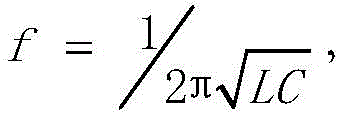
其中,f为频率,单位为赫兹(Hz);L为电感,单位为亨利(H);C为电容,单位为法拉(F)。Among them, f is the frequency, the unit is Hertz (Hz); L is the inductance, the unit is Henry (H); C is the capacitance, the unit is Farad (F).
谐振频率指的是在含有电容和电感的电路中,如果电容和电感并联,可能出现于某个很小的时间段内:电容的电压逐渐升高,而电流却逐渐减少;电感的电流却逐渐增加,电感的电压却逐渐降低。而在另一个很小的时间段内:电容的电压逐渐降低,而电流却逐渐增加;电感的电流却逐渐减少,电感的电压却逐渐升高。电压的增加可以达到一个正的最大值,电压的降低也可达到一个负的最大值,同样电流的方向在这个过程中也会发生正负方向的变化,称为电路发生电的振荡,当谐振电路外部输入电压的正弦频率达到某一特定频率(即该电路的谐振频率)时,谐振电路的感抗与容抗相等,Z=R,谐振电路对外呈纯电阻性质,即为谐振。发生谐振时,谐振电路将输入放大Q倍,Q为品质因数。The resonant frequency refers to that in a circuit containing capacitance and inductance, if the capacitance and inductance are connected in parallel, it may appear in a small period of time: the voltage of the capacitance gradually increases, while the current gradually decreases; the current of the inductance gradually decreases. increases, the voltage across the inductor decreases gradually. And in another small period of time: the voltage of the capacitor gradually decreases, while the current gradually increases; the current of the inductor decreases gradually, but the voltage of the inductor gradually increases. The increase of the voltage can reach a positive maximum value, and the decrease of the voltage can also reach a negative maximum value. The direction of the current will also change in the positive and negative direction during this process, which is called the electrical oscillation of the circuit. When the resonance When the sinusoidal frequency of the external input voltage of the circuit reaches a certain frequency (that is, the resonant frequency of the circuit), the inductive reactance of the resonant circuit is equal to the capacitive reactance, Z=R, and the resonant circuit is purely resistive to the outside, which is resonance. When resonance occurs, the resonant circuit amplifies the input by a factor of Q, where Q is the quality factor.
而谐振周期是谐振频率的倒数,即谐振周期的计算公式为:The resonant period is the reciprocal of the resonant frequency, that is, the formula for calculating the resonant period is:

谐振电压幅值是在一个谐振周期内,谐振信号波形的最大绝对值。The resonance voltage amplitude is the maximum absolute value of the resonance signal waveform within a resonance period.
在本实施例中,谐振电路101产生随锅具温度变化的谐振信号的过程及原理如下:In this embodiment, the process and principle of the
在激励电路102控制直流通路导通时,为谐振电路101供电,谐振电感将电场能转化为磁场能。在激励电路102控制直流通路断开时,谐振电路101的谐振电感(图未示)和谐振电容(图未示)发生谐振,将磁场能转化为电场能,而由于锅具与谐振电感存在互耦现象,因此这一过程可以输出反映锅具的温度变化的谐振信号。When the
本实施例提供的测温电路100为谐振电路101提供直流信号以供电,并且通过激励电路102控制谐振电路101直流通路的导通和关断,以使谐振电路101发生谐振并输出谐振信号,该谐振信号带有锅具的温度变化信息,进而利用采样电路103对谐振信号进行采样,得到特征信号,最终利用处理电路104基于特征信号确定锅具的温度。通过这种方式,与传统的利用热敏组件对锅具进行测温的方式相比,利用本方案提供的测温电路100进行测温的方式可及时、精确的测量锅具的温度。The
在一个具体实施方式中,采样电路103包括第一电阻(图未示),激励电路102连接第一电阻的第一端,处理电路104连接第一电阻的第二端,用于采集谐振电压幅值。实际上,第一电阻起到与谐振电路101串联,进而起到分压的作用,由于第一电阻两端电压的变化与谐振电压的变化相同,因此可以利用第一电阻采集谐振电压幅值。In a specific embodiment, the
在另一个具体实施方式中,采样电路103还包括采样线圈(图未示),谐振电路101对应采样线圈设置,用于采集谐振周期宽度或谐振频率。In another specific embodiment, the
可选地,处理电路104可以为CPU(Central Processing Unit,中央处理单元),处理电路104可能是一种集成电路芯片,具有信号的处理能力。处理电路104还可以是通用处理器、数字信号处理器(DSP)、专用集成电路(ASIC)、现成可编程门阵列(FPGA)或者其他可编程逻辑器件、分立门或者晶体管逻辑器件、分立硬件组件。通用处理器可以是微处理器或者该处理器也可以是任何常规的处理器等。Optionally, the
在一个具体实施方式中,厂家实现通过多次试验得到锅具温度与谐振频率变化的对应关系表,或锅具温度与谐振周期宽度变化的对应关系表,或锅具温度与谐振电压幅值变化的对应关系表。进而在实际加热过程中,根据上述对应关系表以及测温电路发生谐振进而获得的谐振周期宽度变化或谐振电压幅值变化或谐振频率变化而变化的锅具温度,进而得到锅具的温度。In a specific embodiment, the manufacturer obtains the corresponding relationship table between the temperature of the pan and the change of the resonant frequency, or the table of the corresponding relationship between the temperature of the pan and the change of the resonance period width, or the change of the temperature of the pan and the amplitude of the resonance voltage through multiple tests. The corresponding relationship table. Furthermore, in the actual heating process, the temperature of the cooker is obtained according to the above correspondence table and the change in the width of the resonant period, the change in the amplitude of the resonant voltage, or the change in the resonant frequency obtained when the temperature measuring circuit resonates.
参阅图3,图3是本申请提供的测温电路第二实施例的结构示意图,如图3所示,本实施例提供的测温电路100包括谐振电路101、激励电路102、采样电路103、处理电路104以及控制电路105。Referring to FIG. 3, FIG. 3 is a schematic structural diagram of the second embodiment of the temperature measurement circuit provided by the present application. As shown in FIG. The
其中,激励电路102分别连接谐振电路101、控制电路105以及采样电路103,采样电路103连接处理电路104。Wherein, the
其中,输入直流信号至谐振电路101以供电。利用激励电路102控制谐振电路101直流通路的导通和关断,以使谐振电路101输出带有锅具温度变化的谐振信号。具体地,谐振电路101与锅具配合发生谐振,进而产生随锅具温度变化的谐振信号。Wherein, a DC signal is input to the
利用采样电路103采样输出的谐振信号,进而得到特征信号。处理电路104用于基于特征信号确定锅具的温度变化。The output resonance signal is sampled by the
控制电路105用于输出周期性的PPG(Programme Pulse Generator,可编程脉冲程序发生器)控制信号,控制激励电路102的导通/关断。The
本实施例提供的测温电路100输入直流信号给谐振电路101以供电,并且利用控制电路105输出周期性的PPG控制信号以控制激励电路102的关断与导通,进而控制谐振电路101直流通路的关断与导通,以使谐振电路101产生谐振信号,进而利用采样电路103对谐振信号进行采集,得到特征信号,最终利用处理电路104根据特征信号确定锅具的温度变化。通过这种方式,与传统的利用热敏组件对锅具进行测温的方式相比,利用本方案提供的测温电路100进行测温的方式可及时、精确的测量锅具的温度。The
参阅图4,图4是本实施例提供的测温电路第三实施方式的电路结构示意图,如图4所示,在本实施例提供的测温电路100中,谐振电路101包括谐振电容C1以及与谐振电容C1并联的谐振线圈L1,输入直流信号DC至谐振线圈L1的一端以供电。谐振线圈L1上方放置锅具Pan,以使谐振电路101在发生谐振时,与锅具Pan互耦并产生随锅具Pan温度变化而变化的谐振信号。锅具Pan与谐振线圈L1电感耦合,谐振线圈L1、谐振电容C1谐振,锅具Pan温度变化时,耦合电感变化,从而影响谐振信号的谐振周期宽度或谐振电压幅值或谐振频率。Referring to FIG. 4, FIG. 4 is a schematic diagram of the circuit structure of the third embodiment of the temperature measuring circuit provided in this embodiment. As shown in FIG. 4, in the
可选地,测温电路100包括第二二极管D2,其中,输入交流信号AC至第二二极管D2的正极,谐振电路101连接第二二极管D2的负极,用于对交流信号AC进行整流,以为谐振电路101提供符合要求的直流信号DC。可以理解的是,可以根据实际应用场景,利用其它任何可行的整流电路对交流信号AC进行整流,在此不做具体限定。Optionally, the
激励电路102包括第一功率管Q1,输入第一脉冲调制信号PWM1至第一功率管Q1的栅极G,谐振线圈L1的另一端以及采样电路103连接第一功率管Q1的源极C,第一功率管Q1的漏极E接地。其中,根据第一脉冲调制信号PWM1第一功率管Q1被配置为关闭或导通,进而导通或关闭谐振电路101的直流通路。The
可选地,将第一脉冲调制信号PWM1的周期设置为固定。Optionally, the period of the first pulse modulation signal PWM1 is set to be fixed.
可选地,采样电路103包括第一电阻R1,第一功率管Q1的源极C连接第一电阻R1的第一端,处理电路104连接第一电阻R1的第二端,第一电阻R1用于采集谐振电压幅值。可选地,采样电路103还可以包括第一二极管D1、第二电阻R2以及第一电容C2,第一电阻R1的第一端通过第一二极管D1连接第一功率管Q1的源极C。Optionally, the
具体地,第一功率管Q1的源极C连接第一二极管D1的正极,第一电阻R1的第一端连接第一二极管D1的负极,第一电阻R1的第二端连接第二电阻R2的第一端,第二电阻R2的第二端接地。第二电阻R2的第一端连接第一电容C2的第一端,第二电阻R2的第二端连接第一电容C2的第二端。Specifically, the source C of the first power transistor Q1 is connected to the anode of the first diode D1, the first end of the first resistor R1 is connected to the cathode of the first diode D1, and the second end of the first resistor R1 is connected to the first The first terminal of the second resistor R2 and the second terminal of the second resistor R2 are grounded. A first end of the second resistor R2 is connected to a first end of the first capacitor C2, and a second end of the second resistor R2 is connected to a second end of the first capacitor C2.
其中,第一电容C2为滤波电容,用于对谐振信号进行滤波,第一电阻R1和第二电阻R2是分压电阻,用于对谐振电路101输出的谐振电压信号进行分压。Wherein, the first capacitor C2 is a filter capacitor for filtering the resonance signal, and the first resistor R1 and the second resistor R2 are voltage dividing resistors for dividing the resonance voltage signal output by the
由于第一电阻R1和第二电阻R2串联谐振电路101,因此当谐振电路101发生谐振,进而产生谐振电压信号时,第一电阻R1和第二电阻R2能够起到分压的作用,也即第一电阻R1和第二电阻R2两端电压的变化与谐振电压信号的电压变化同步,因此采集的第一电阻R1或第二电阻R2两端电压幅值的变化,能够反映谐振电压信号的谐振电压幅值的变化。Since the first resistor R1 and the second resistor R2 are connected in series with the
可选地,第一功率管Q1可以是带阻尼二极IGBT场效应管。将第一脉冲调制信号PWM1的周期设置为固定不变。Optionally, the first power transistor Q1 may be a diode IGBT field effect transistor with damping. The period of the first pulse modulation signal PWM1 is set to be constant.
本实施例提供基于单管谐振电路设计测温电路100,只需要一个功率管就能使谐振电路101谐振并输出谐振信号,进而能够使得控制测温电路100的控制电路变得更简单,节约物料并降低成本。This embodiment provides a
参阅图5,图5是本实施例提供的测温电路第四实施方式的电路结构示意图,如图5所示,谐振电路101包括振电容C1以及与振电容C1串联的谐振线圈L1。谐振线圈L1上方放置有锅具Pan,以使谐振电路101在发生谐振时,与锅具Pan互耦并产生随锅具Pan温度变化而变化的谐振信号。Referring to FIG. 5 , FIG. 5 is a schematic diagram of the circuit structure of the fourth embodiment of the temperature measuring circuit provided in this embodiment. As shown in FIG. 5 , the
激励电路102包括第三功率管Q3和第二功率管Q2。The
其中,输入第二脉冲调制信号PWM2至第二功率管Q2的栅极G,输入直流信号DC至第二功率管Q2的源极C。第三功率管Q3的栅极G输入第三脉冲调制信号PWM3,第三功率管Q3的源极C分别与第二功率管Q2的漏极E以及谐振线圈L1的一端连接,第三功率管Q3的漏极E接地。Wherein, the second pulse modulation signal PWM2 is input to the gate G of the second power transistor Q2, and the direct current signal DC is input to the source C of the second power transistor Q2. The grid G of the third power transistor Q3 inputs the third pulse modulation signal PWM3, the source C of the third power transistor Q3 is respectively connected to the drain E of the second power transistor Q2 and one end of the resonant coil L1, and the third power transistor Q3 The drain of E is grounded.
其中,第三功率管Q3和第二功率管Q2分别在第三脉冲调制信号PWM3和第二脉冲调制信号PWM2的控制下,输出符合要求的直流信号DC至谐振电路101,以使得谐振电路101发生谐振并产生谐振信号,该谐振信号带有锅具Pan的温度变化。Among them, the third power transistor Q3 and the second power transistor Q2 are respectively under the control of the third pulse modulation signal PWM3 and the second pulse modulation signal PWM2, and output the direct current signal DC that meets the requirements to the
在本实施例中,第二脉冲调制信号PWM2和第三脉冲调制信号PWM3反相。也即,在第二脉冲调制信号PWM2为低电平的时段时,第三脉冲调制信号PWM3为高电平,反之,在第二脉冲调制信号PWM2为高电平的时段时,第三脉冲调制信号PWM3为低电平。这种方式能够保证第三功率管Q3和第二功率管Q2不能同时导通,以避免同时导通造成的电流穿通。In this embodiment, the phases of the second pulse modulation signal PWM2 and the third pulse modulation signal PWM3 are inverted. That is, when the second pulse modulation signal PWM2 is at a low level, the third pulse modulation signal PWM3 is at a high level; otherwise, when the second pulse modulation signal PWM2 is at a high level, the third pulse modulation signal PWM3 is at a high level. Signal PWM3 is low level. This way can ensure that the third power transistor Q3 and the second power transistor Q2 cannot be turned on at the same time, so as to avoid the current pass-through caused by the simultaneous turn-on.
其中,第三功率管Q3和第二功率管Q2可以是带阻尼二极管IGBT场效应管。Wherein, the third power transistor Q3 and the second power transistor Q2 may be IGBT field effect transistors with damping diodes.
可选地,第三脉冲调制信号PWM3和第二脉冲调制信号PWM2的周期固定不变。Optionally, periods of the third pulse modulation signal PWM3 and the second pulse modulation signal PWM2 are fixed.
可选地,测温电路100包括第二二极管D2,其中,输入交流信号AC至第二二极管D2的正极,激励电路102连接第二二极管D2的负极,用于对交流信号AC进行整流,以输入符合要求的直流信号DC至激励电路102。可以理解的是,可以根据实际应用场景,利用其它任何可行的整流电路对交流信号AC进行整流,在此不做具体限定。Optionally, the
可选地,采样电路103包括第一电阻R1,谐振线圈L1的另一端连接第一电阻R1的第一端,处理电路104连接第一电阻R1的第二端,第一电阻R1用于采集谐振电压幅值。可选地,采样电路103还可以包括第一二极管D1、第二电阻R2以及第一电容C2,第一电阻R1的第一端通过第一二极管D1连接谐振线圈L1的另一端。Optionally, the
具体地,谐振线圈L1的另一端连接第一二极管D1的正极,第一电阻R1的第一端连接第一二极管D1的负极,第一电阻R1的第二端连接第二电阻R2的第一端,第二电阻R2的第二端接地。第二电阻R2的第一端连接第一电容C2的第一端,第二电阻R2的第二端连接第一电容C2的第二端。Specifically, the other end of the resonant coil L1 is connected to the anode of the first diode D1, the first end of the first resistor R1 is connected to the cathode of the first diode D1, and the second end of the first resistor R1 is connected to the second resistor R2 The first end of the second resistor R2 is grounded. A first end of the second resistor R2 is connected to a first end of the first capacitor C2, and a second end of the second resistor R2 is connected to a second end of the first capacitor C2.
其中,第一电容C2为滤波电容,用于对谐振信号进行滤波,第一电阻R1和第二电阻R2是分压电阻,用于对谐振电路101输出的谐振电压信号进行分压。Wherein, the first capacitor C2 is a filter capacitor for filtering the resonance signal, and the first resistor R1 and the second resistor R2 are voltage dividing resistors for dividing the resonance voltage signal output by the
本实施例提供基于半桥谐振电路设计测温电路100,使得测温电路100的测温性能好、测温效率高。This embodiment provides a
可选地,在上述两个实施例提供的测温电路100中,采样电路103还可以包括采样线圈L2,谐振线圈L1对应采样线圈L2设置,用于采集谐振周期宽度或谐振频率。具体地,采样线圈L2与谐振线圈L1发生互耦,进而采集谐振周期宽度或谐振频率。Optionally, in the
在一个具体应用场景中,请结合参阅图6和图7,图6为本申请采样线圈与谐振线圈设置方式一实施例的结构示意图,图7为本申请采样线圈与谐振线圈设置方式一实施例的电路结构示意图。本实施例的采样线圈L2设置在谐振线圈L1的中心位置,以采集到谐振信号。In a specific application scenario, please refer to FIG. 6 and FIG. 7 in combination. FIG. 6 is a schematic structural diagram of an embodiment of the arrangement of the sampling coil and the resonant coil of the present application, and FIG. 7 is an embodiment of the arrangement of the sampling coil and the resonant coil of the present application. The schematic diagram of the circuit structure. The sampling coil L2 of this embodiment is arranged at the center of the resonant coil L1 to collect the resonant signal.
请结合参阅图8和图9,图8为本申请采样线圈与谐振线圈设置方式另一实施例的结构示意图,图9为本申请采样线圈与谐振线圈设置方式另一实施例的电路结构示意图。本实施例的采样线圈L2为一电流互感器,该采样线圈L2套设于谐振线圈L1的引出线上,以采集谐振信号。Please refer to FIG. 8 and FIG. 9 in conjunction. FIG. 8 is a schematic structural diagram of another embodiment of the arrangement of the sampling coil and the resonant coil of the present application, and FIG. 9 is a schematic circuit structure diagram of another embodiment of the arrangement of the sampling coil and the resonant coil of the present application. The sampling coil L2 of this embodiment is a current transformer, and the sampling coil L2 is sheathed on the lead-out line of the resonant coil L1 to collect the resonant signal.
除了上述两种设置方式外,采样线圈L2相对于谐振线圈L1的设置方式也可以有其它方式,在此不做限定。In addition to the above two arrangement manners, the arrangement manner of the sampling coil L2 relative to the resonant coil L1 may also have other manners, which are not limited here.
请参阅图10,图10是本申请烹饪装置一实施例的结构示意框图。如图10所示,本实施例的烹饪装置110包括测温电路100,该测温电路100为上述任一实施例提供的测温电路。Please refer to FIG. 10 . FIG. 10 is a schematic structural block diagram of an embodiment of the cooking device of the present application. As shown in FIG. 10 , the
在一些实施例中,烹饪装置110为利用电磁感应加热的装置,可以是电磁炉、IH电饭煲等,它无需明火或传导式加热而让热直接在锅底产生,因此热效率得到了极大的提高。电磁炉是利用电磁感应加热原理制成的电气烹饪器具。由高频感应加热线圈、高频电力转换装置、控制器及铁磁材料锅底炊具等部分组成。In some embodiments, the
电磁炉主要有两大部分构成:一是能够产生高频交变磁场电子线路系统(含电磁炉线圈盘,即上述的加热线圈);二是用于固定电子线路系统,并承载锅具的结构性外壳(含能承受高温和冷热急变的炉面板)。The induction cooker mainly consists of two parts: one is the electronic circuit system capable of generating high-frequency alternating magnetic field (including the coil plate of the induction cooker, that is, the above-mentioned heating coil); the other is the structural shell used to fix the electronic circuit system and carry the pot (including furnace panels that can withstand high temperatures and rapid changes in cold and heat).
参阅图11,图11是本实施例提供的锅具测温方法一实施方式的流程示意图,如图11所示,本实施例提供的锅具测温方法利用上述任一实施例中提供的测温电路实现,其中,在测温时,为测温电路提供直流信号。具体地,锅具测温方法可以包括以下步骤:Referring to Fig. 11, Fig. 11 is a schematic flow chart of an embodiment of the method for measuring the temperature of the pan provided in this embodiment. As shown in Fig. 11, the method for measuring the temperature of the pan provided in this embodiment uses The temperature circuit is implemented, wherein, when measuring temperature, a DC signal is provided for the temperature measuring circuit. Specifically, the pot temperature measurement method may include the following steps:
S201:输入脉冲调制信号至测温电路,以激励测温电路发生谐振并输出随锅具温度变化的谐振信号。S201: Input a pulse modulation signal to the temperature measuring circuit to excite the temperature measuring circuit to resonate and output a resonant signal that varies with the temperature of the pan.
在本实施例中,若测温电路是第三实施例提供的测温电路,该测温电路利用单管谐振以产生谐振信号。也即该测温电路包括一个功率管,因此,在这种情况下,控制电路直接为该功率管提供一个脉冲调制信号即可使测温电路工作,进而与锅具配合输出谐振信号。In this embodiment, if the temperature measuring circuit is the temperature measuring circuit provided in the third embodiment, the temperature measuring circuit uses single tube resonance to generate a resonance signal. That is to say, the temperature measuring circuit includes a power tube. Therefore, in this case, the control circuit directly provides a pulse modulation signal to the power tube to make the temperature measuring circuit work, and then cooperate with the cooker to output a resonance signal.
若测温电路是第四实施例提供的测温电路,该测温电路利用半桥谐振以产生谐振信号。也即该测温电路包括至少两个功率管,因此,在这种情况下,控制电路需要为测温电路提供至少两个脉冲调制信号,以分别驱动两个功率管工作,进而与锅具配合输出谐振信号。其中,两个脉冲调制信号反相。If the temperature measurement circuit is the temperature measurement circuit provided by the fourth embodiment, the temperature measurement circuit uses half-bridge resonance to generate a resonance signal. That is to say, the temperature measurement circuit includes at least two power tubes. Therefore, in this case, the control circuit needs to provide at least two pulse modulation signals for the temperature measurement circuit to respectively drive the two power tubes to work, and then cooperate with the cooker. output resonance signal. Among them, the phases of the two pulse modulation signals are inverted.
可选地,将测温电路提供的脉冲调制信号的周期设置为固定不变。Optionally, the period of the pulse modulation signal provided by the temperature measuring circuit is set to be constant.
至于提供的脉冲调制信号的具体特性,如占空比、周期或频率等等都可以根据具体应用场景设定,在此不做具体限定。As for the specific characteristics of the provided pulse modulation signal, such as duty cycle, cycle or frequency, etc., can be set according to specific application scenarios, and are not specifically limited here.
S202:获取谐振信号的特征信号。S202: Obtain a characteristic signal of the resonance signal.
在本实施例中,谐振信号的特征信号可以包括谐振信号的谐振周期的变化值、谐振频率的变化值或谐振电压幅值的变化值。In this embodiment, the characteristic signal of the resonance signal may include a variation value of the resonance period, a variation value of the resonance frequency, or a variation value of the resonance voltage amplitude of the resonance signal.
S203:根据特征信号确定锅具的温度。S203: Determine the temperature of the pot according to the characteristic signal.
在本实施例中,厂家实现通过多次试验得到锅具温度与谐振频率变化的对应关系表,或锅具温度与谐振周期宽度变化的对应关系表,或锅具温度与谐振电压幅值变化的对应关系表。进而在实际加热过程中,根据上述对应关系表以及测温电路发生谐振进而获得的谐振周期宽度变化或谐振电压幅值变化或谐振频率变化而变化的锅具温度,进而得到锅具的温度。In this embodiment, the manufacturer obtains the corresponding relationship table between the temperature of the pan and the change of the resonant frequency, or the table of the corresponding relationship between the temperature of the pan and the change of the width of the resonance period, or the relationship between the temperature of the pan and the change of the resonance voltage amplitude through multiple tests. Correspondence table. Furthermore, in the actual heating process, the temperature of the cooker is obtained according to the above correspondence table and the change in the width of the resonant period, the change in the amplitude of the resonant voltage, or the change in the resonant frequency obtained when the temperature measuring circuit resonates.
本实施例提供的锅具测温方法包括输入脉冲调制信号至测温电路,以激励测温电路发生谐振并输出随锅具温度变化的谐振信号,获取谐振信号的特征信号,基于特征信号确定锅具的温度。通过这种方式,能够快速、精确且高效地确定锅具的温度。The method for measuring the temperature of the pan provided in this embodiment includes inputting a pulse modulation signal to the temperature measuring circuit to stimulate the temperature measuring circuit to resonate and output a resonance signal that changes with the temperature of the pan, obtain the characteristic signal of the resonance signal, and determine the temperature of the pan based on the characteristic signal. the temperature of the tool. In this way, the temperature of the pan can be determined quickly, precisely and efficiently.
综上,本申请提供的测温电路输入直流信号给谐振电路以供电,并且通过激励电路控制谐振电路直流通路的关断与导通,以使谐振电路产生带有锅具温度变化信息的谐振信号,进而利用采样电路对谐振信号进行采集,得到特征信号,最终利用处理电路基于特征信号确定锅具的温度。通过这种方式,与传统的利用热敏组件对锅具进行测温的方式相比,利用本方案提供的测温电路进行测温的方式可及时、精确的测量锅具的温度。To sum up, the temperature measuring circuit provided by this application inputs a DC signal to supply power to the resonant circuit, and controls the shut-off and conduction of the DC path of the resonant circuit through the excitation circuit, so that the resonant circuit generates a resonant signal with information about the temperature change of the pot , and then use the sampling circuit to collect the resonance signal to obtain the characteristic signal, and finally use the processing circuit to determine the temperature of the pot based on the characteristic signal. In this way, compared with the traditional way of measuring the temperature of the pot by using the heat-sensitive component, the way of measuring the temperature by using the temperature measuring circuit provided by this solution can measure the temperature of the pot in time and accurately.
以上所述仅为本申请的实施方式,并非因此限制本申请的专利范围,凡是利用本申请说明书及附图内容所作的等效结构或等效流程变换,或直接或间接运用在其他相关的技术领域,均同理包括在本申请的专利保护范围内。The above is only the implementation of the application, and does not limit the patent scope of the application. Any equivalent structure or equivalent process conversion made by using the specification and drawings of the application, or directly or indirectly used in other related technologies fields, are all included in the scope of patent protection of this application in the same way.
在本申请所提供的几个实施方式中,应该理解到,所揭露的方法以及设备,可以通过其它的方式实现。例如,以上所描述的设备实施方式仅仅是示意性的,例如,上述模块或单元的划分,仅仅为一种逻辑功能划分,实际实现时可以有另外的划分方式,例如多个单元或组件可以结合或者可以集成到另一个系统,或一些特征可以忽略,或不执行。In the several implementation manners provided in this application, it should be understood that the disclosed methods and devices may be implemented in other ways. For example, the device implementation described above is only illustrative. For example, the division of the above-mentioned modules or units is only a logical function division. In actual implementation, there may be other division methods. Or it can be integrated into another system, or some features can be ignored, or not implemented.
Claims (11)
Priority Applications (1)
| Application Number | Priority Date | Filing Date | Title |
|---|---|---|---|
| CN202110610779.9A CN115435907B (en) | 2021-06-01 | 2021-06-01 | Temperature measuring circuit and cooking device |
Applications Claiming Priority (1)
| Application Number | Priority Date | Filing Date | Title |
|---|---|---|---|
| CN202110610779.9A CN115435907B (en) | 2021-06-01 | 2021-06-01 | Temperature measuring circuit and cooking device |
Publications (2)
| Publication Number | Publication Date |
|---|---|
| CN115435907A true CN115435907A (en) | 2022-12-06 |
| CN115435907B CN115435907B (en) | 2025-09-23 |
Family
ID=84239963
Family Applications (1)
| Application Number | Title | Priority Date | Filing Date |
|---|---|---|---|
| CN202110610779.9A Active CN115435907B (en) | 2021-06-01 | 2021-06-01 | Temperature measuring circuit and cooking device |
Country Status (1)
| Country | Link |
|---|---|
| CN (1) | CN115435907B (en) |
Cited By (1)
| Publication number | Priority date | Publication date | Assignee | Title |
|---|---|---|---|---|
| CN116046191A (en) * | 2023-02-16 | 2023-05-02 | 思摩尔国际控股有限公司 | A temperature measuring device, a temperature measuring method and an aerosol generating device |
Citations (5)
| Publication number | Priority date | Publication date | Assignee | Title |
|---|---|---|---|---|
| FR1357203A (en) * | 1963-03-27 | 1964-04-03 | Hitachi Ltd | Non-contact temperature measurement system |
| CN107436198A (en) * | 2016-05-27 | 2017-12-05 | 浙江绍兴苏泊尔生活电器有限公司 | Pot temperature detection system and method and induction cooker |
| CN109661055A (en) * | 2018-09-10 | 2019-04-19 | 浙江苏泊尔家电制造有限公司 | Cooking apparatus |
| CN111928969A (en) * | 2019-05-13 | 2020-11-13 | 惠州拓邦电气技术有限公司 | Pot temperature detection device, electromagnetic heating device and pot temperature detection method |
| CN112714514A (en) * | 2019-10-25 | 2021-04-27 | 佛山市顺德区美的电热电器制造有限公司 | Electromagnetic heating equipment and heating control system and method thereof |
-
2021
- 2021-06-01 CN CN202110610779.9A patent/CN115435907B/en active Active
Patent Citations (5)
| Publication number | Priority date | Publication date | Assignee | Title |
|---|---|---|---|---|
| FR1357203A (en) * | 1963-03-27 | 1964-04-03 | Hitachi Ltd | Non-contact temperature measurement system |
| CN107436198A (en) * | 2016-05-27 | 2017-12-05 | 浙江绍兴苏泊尔生活电器有限公司 | Pot temperature detection system and method and induction cooker |
| CN109661055A (en) * | 2018-09-10 | 2019-04-19 | 浙江苏泊尔家电制造有限公司 | Cooking apparatus |
| CN111928969A (en) * | 2019-05-13 | 2020-11-13 | 惠州拓邦电气技术有限公司 | Pot temperature detection device, electromagnetic heating device and pot temperature detection method |
| CN112714514A (en) * | 2019-10-25 | 2021-04-27 | 佛山市顺德区美的电热电器制造有限公司 | Electromagnetic heating equipment and heating control system and method thereof |
Cited By (2)
| Publication number | Priority date | Publication date | Assignee | Title |
|---|---|---|---|---|
| CN116046191A (en) * | 2023-02-16 | 2023-05-02 | 思摩尔国际控股有限公司 | A temperature measuring device, a temperature measuring method and an aerosol generating device |
| WO2024169487A1 (en) * | 2023-02-16 | 2024-08-22 | 思摩尔国际控股有限公司 | Temperature measurement apparatus, temperature measurement method, and aerosol generation device |
Also Published As
| Publication number | Publication date |
|---|---|
| CN115435907B (en) | 2025-09-23 |
Similar Documents
| Publication | Publication Date | Title |
|---|---|---|
| CN104770061B (en) | Induction heating cooking instrument | |
| CN109100037B (en) | Method, device and system for measuring pot bottom temperature applied to induction cooker | |
| CN203645850U (en) | Control device for high-power induction cooker | |
| CN104770060B (en) | Induction heating cooking instrument | |
| TW201233037A (en) | System and method for controlling quasi-resonant inverter and electric heating device employing the same | |
| EP3836754B1 (en) | Cooking apparatus | |
| CN106402955A (en) | Pan judgment method of electromagnetic cooking device and electromagnetic cooking device | |
| JP7621452B2 (en) | Heating circuits and cooking appliances | |
| CN209562837U (en) | Electromagnetic heating system and its control circuit and electric cooker | |
| CN107289474B (en) | Control method of induction cooker and induction cooker | |
| WO2024235148A1 (en) | Driving power source and control method therefor, and heating apparatus and microwave cooking device | |
| US11268921B2 (en) | Determining material composition of cookware in induction heating systems | |
| CN111380627A (en) | Electromagnetic heating appliance and temperature detection method and device thereof | |
| CN115435907A (en) | A temperature measuring circuit and cooking device | |
| CN111385927B (en) | Electromagnetic heating appliance and control method and control device thereof | |
| JP3014181B2 (en) | Temperature detection device for induction heating cooker | |
| JP6211175B2 (en) | Induction heating cooker | |
| CN107567122B (en) | Electromagnetic heating cooking system and heating control device and control method thereof | |
| CN113660746B (en) | Heating circuit and cooking device | |
| JP2008119417A (en) | Induction heating rice cooker | |
| JP3899919B2 (en) | Induction heating cooker | |
| CN106714353B (en) | The determination method of passing zero trigger time determines system and electromagnetic heater | |
| WO2021228115A1 (en) | Heating temperature measurement circuit and temperature measurement method therefor, and cooking apparatus and storage medium | |
| CN214592051U (en) | Control circuit of electromagnetic cooking appliance and electromagnetic cooking appliance | |
| CN111380086A (en) | Electromagnetic heating appliance, temperature control method and detection device thereof |
Legal Events
| Date | Code | Title | Description |
|---|---|---|---|
| PB01 | Publication | ||
| PB01 | Publication | ||
| SE01 | Entry into force of request for substantive examination | ||
| SE01 | Entry into force of request for substantive examination | ||
| GR01 | Patent grant | ||
| GR01 | Patent grant |