CN115398487A - Object detection - Google Patents

Object detection Download PDF

Info

Publication number
CN115398487A
CN115398487A CN202080096442.4A CN202080096442A CN115398487A CN 115398487 A CN115398487 A CN 115398487A CN 202080096442 A CN202080096442 A CN 202080096442A CN 115398487 A CN115398487 A CN 115398487A
Authority
CN
China
Prior art keywords
images
algorithm
image
training
classification
Prior art date
Legal status (The legal status is an assumption and is not a legal conclusion. Google has not performed a legal analysis and makes no representation as to the accuracy of the status listed.)
Granted
Application number
CN202080096442.4A
Other languages
Chinese (zh)
Other versions
CN115398487B (en
Inventor
卡洛·比菲
史蒂文·乔治·麦克唐纳
阿莱斯·莱昂纳迪斯
莎拉·帕里索
Current Assignee (The listed assignees may be inaccurate. Google has not performed a legal analysis and makes no representation or warranty as to the accuracy of the list.)
Huawei Technologies Co Ltd
Original Assignee
Huawei Technologies Co Ltd
Priority date (The priority date is an assumption and is not a legal conclusion. Google has not performed a legal analysis and makes no representation as to the accuracy of the date listed.)
Filing date
Publication date
Application filed by Huawei Technologies Co Ltd filed Critical Huawei Technologies Co Ltd
Publication of CN115398487A publication Critical patent/CN115398487A/en
Application granted granted Critical
Publication of CN115398487B publication Critical patent/CN115398487B/en
Active legal-status Critical Current
Anticipated expiration legal-status Critical

Links

Images

Classifications

    • GPHYSICS
    • G06COMPUTING OR CALCULATING; COUNTING
    • G06VIMAGE OR VIDEO RECOGNITION OR UNDERSTANDING
    • G06V10/00Arrangements for image or video recognition or understanding
    • G06V10/40Extraction of image or video features
    • G06V10/44Local feature extraction by analysis of parts of the pattern, e.g. by detecting edges, contours, loops, corners, strokes or intersections; Connectivity analysis, e.g. of connected components
    • G06V10/443Local feature extraction by analysis of parts of the pattern, e.g. by detecting edges, contours, loops, corners, strokes or intersections; Connectivity analysis, e.g. of connected components by matching or filtering
    • G06V10/449Biologically inspired filters, e.g. difference of Gaussians [DoG] or Gabor filters
    • G06V10/451Biologically inspired filters, e.g. difference of Gaussians [DoG] or Gabor filters with interaction between the filter responses, e.g. cortical complex cells
    • G06V10/454Integrating the filters into a hierarchical structure, e.g. convolutional neural networks [CNN]
    • GPHYSICS
    • G06COMPUTING OR CALCULATING; COUNTING
    • G06FELECTRIC DIGITAL DATA PROCESSING
    • G06F18/00Pattern recognition
    • G06F18/20Analysing
    • G06F18/21Design or setup of recognition systems or techniques; Extraction of features in feature space; Blind source separation
    • G06F18/214Generating training patterns; Bootstrap methods, e.g. bagging or boosting
    • G06F18/2155Generating training patterns; Bootstrap methods, e.g. bagging or boosting characterised by the incorporation of unlabelled data, e.g. multiple instance learning [MIL], semi-supervised techniques using expectation-maximisation [EM] or naïve labelling
    • GPHYSICS
    • G06COMPUTING OR CALCULATING; COUNTING
    • G06FELECTRIC DIGITAL DATA PROCESSING
    • G06F18/00Pattern recognition
    • G06F18/20Analysing
    • G06F18/24Classification techniques
    • G06F18/241Classification techniques relating to the classification model, e.g. parametric or non-parametric approaches
    • G06F18/2413Classification techniques relating to the classification model, e.g. parametric or non-parametric approaches based on distances to training or reference patterns
    • G06F18/24133Distances to prototypes
    • GPHYSICS
    • G06COMPUTING OR CALCULATING; COUNTING
    • G06NCOMPUTING ARRANGEMENTS BASED ON SPECIFIC COMPUTATIONAL MODELS
    • G06N20/00Machine learning
    • G06N20/20Ensemble learning
    • GPHYSICS
    • G06COMPUTING OR CALCULATING; COUNTING
    • G06NCOMPUTING ARRANGEMENTS BASED ON SPECIFIC COMPUTATIONAL MODELS
    • G06N3/00Computing arrangements based on biological models
    • G06N3/02Neural networks
    • G06N3/04Architecture, e.g. interconnection topology
    • G06N3/045Combinations of networks
    • GPHYSICS
    • G06COMPUTING OR CALCULATING; COUNTING
    • G06NCOMPUTING ARRANGEMENTS BASED ON SPECIFIC COMPUTATIONAL MODELS
    • G06N3/00Computing arrangements based on biological models
    • G06N3/02Neural networks
    • G06N3/04Architecture, e.g. interconnection topology
    • G06N3/0464Convolutional networks [CNN, ConvNet]
    • GPHYSICS
    • G06COMPUTING OR CALCULATING; COUNTING
    • G06NCOMPUTING ARRANGEMENTS BASED ON SPECIFIC COMPUTATIONAL MODELS
    • G06N3/00Computing arrangements based on biological models
    • G06N3/02Neural networks
    • G06N3/08Learning methods
    • GPHYSICS
    • G06COMPUTING OR CALCULATING; COUNTING
    • G06NCOMPUTING ARRANGEMENTS BASED ON SPECIFIC COMPUTATIONAL MODELS
    • G06N3/00Computing arrangements based on biological models
    • G06N3/02Neural networks
    • G06N3/08Learning methods
    • G06N3/0895Weakly supervised learning, e.g. semi-supervised or self-supervised learning
    • GPHYSICS
    • G06COMPUTING OR CALCULATING; COUNTING
    • G06NCOMPUTING ARRANGEMENTS BASED ON SPECIFIC COMPUTATIONAL MODELS
    • G06N3/00Computing arrangements based on biological models
    • G06N3/02Neural networks
    • G06N3/08Learning methods
    • G06N3/09Supervised learning
    • GPHYSICS
    • G06COMPUTING OR CALCULATING; COUNTING
    • G06VIMAGE OR VIDEO RECOGNITION OR UNDERSTANDING
    • G06V10/00Arrangements for image or video recognition or understanding
    • G06V10/70Arrangements for image or video recognition or understanding using pattern recognition or machine learning
    • G06V10/764Arrangements for image or video recognition or understanding using pattern recognition or machine learning using classification, e.g. of video objects
    • GPHYSICS
    • G06COMPUTING OR CALCULATING; COUNTING
    • G06VIMAGE OR VIDEO RECOGNITION OR UNDERSTANDING
    • G06V10/00Arrangements for image or video recognition or understanding
    • G06V10/70Arrangements for image or video recognition or understanding using pattern recognition or machine learning
    • G06V10/77Processing image or video features in feature spaces; using data integration or data reduction, e.g. principal component analysis [PCA] or independent component analysis [ICA] or self-organising maps [SOM]; Blind source separation
    • G06V10/771Feature selection, e.g. selecting representative features from a multi-dimensional feature space
    • GPHYSICS
    • G06COMPUTING OR CALCULATING; COUNTING
    • G06VIMAGE OR VIDEO RECOGNITION OR UNDERSTANDING
    • G06V10/00Arrangements for image or video recognition or understanding
    • G06V10/70Arrangements for image or video recognition or understanding using pattern recognition or machine learning
    • G06V10/82Arrangements for image or video recognition or understanding using pattern recognition or machine learning using neural networks

Landscapes

  • Engineering & Computer Science (AREA)
  • Theoretical Computer Science (AREA)
  • Physics & Mathematics (AREA)
  • Evolutionary Computation (AREA)
  • Artificial Intelligence (AREA)
  • General Physics & Mathematics (AREA)
  • Software Systems (AREA)
  • Health & Medical Sciences (AREA)
  • General Health & Medical Sciences (AREA)
  • Computer Vision & Pattern Recognition (AREA)
  • Computing Systems (AREA)
  • Data Mining & Analysis (AREA)
  • Life Sciences & Earth Sciences (AREA)
  • General Engineering & Computer Science (AREA)
  • Biomedical Technology (AREA)
  • Molecular Biology (AREA)
  • Multimedia (AREA)
  • Mathematical Physics (AREA)
  • Medical Informatics (AREA)
  • Biophysics (AREA)
  • Computational Linguistics (AREA)
  • Databases & Information Systems (AREA)
  • Biodiversity & Conservation Biology (AREA)
  • Bioinformatics & Cheminformatics (AREA)
  • Bioinformatics & Computational Biology (AREA)
  • Evolutionary Biology (AREA)
  • Image Analysis (AREA)

Abstract

一种用于对图像中的区域进行分类的设备(401),所述设备包括:输入端,用于接收第一图像集合(512),以及对于所述第一集合(512)的每个图像,定义所述图像的一个或多个区域和所述区域的分类的数据,和第二图像集合(513),以及对于所述第二集合(513)的每个图像,所述图像的分类;处理器(404),用于通过以下步骤训练第一机器学习算法(106,514)以对图像中的特征进行分类:使用所述第一算法(106,514)处理所述第一集合(512)和所述第二集合(513)的所述图像,以估计所述图像中的特征区域和每个特征区域的分类,并根据针对所述第一集合(512)和所述第二集合(513)的所述图像接收的分类来训练所述第一算法(106,514)。这可以以最低的注释成本获得更稳定的模型。

Figure 202080096442

An apparatus (401) for classifying a region in an image, the apparatus comprising: an input for receiving a first set of images (512), and for each image of the first set (512) , data defining one or more regions of said image and a classification of said regions, and a second set of images (513), and for each image of said second set (513), a classification of said images; a processor (404) for training a first machine learning algorithm (106, 514) to classify features in images by processing the first set (512) and the a second set (513) of said images to estimate feature regions in said images and a classification for each feature region, and according to said first set (512) and said second set (513) The first algorithm is trained (106, 514) on the received classification of the images. This results in a more stable model with minimal annotation cost.

Figure 202080096442

Description

Object detection
Technical Field
The invention relates to object detection in images.
Background
In recent years, object detection has made significant progress relying on large-scale manual annotation databases. In many real-world scenarios, building and annotating such databases is very time consuming and impractical.
These shortcomings have prompted the development of weakly supervised and small sample (few-shot) object detection methods. Both of these strategies have promise, but are still lacking compared to strong supervised strategies.
The crux of the problem may be due to the inability to learn stable object features by means of weak training signals provided by image-level labels or by only a few annotation examples, often resulting in incomplete or excessive detection.
Some existing efforts at weak-supervised object detection (WSOD) rely on a multiple-instance learning (MIL) framework that aims at classifying individual instances from global group-level tags. In these scenarios, each image is represented as a plurality of bounding box proposals (typically extracted by conventional methods, such as uijlines, j.r., van De Sande, k.e., servers, t., smeulders, a.w.: selective search for object recognition (Selective search for object recognition), international computer vision journal 104 (2), pages 154-171 (2013) and Zitnick, c.l., dolar, p.: border: from Edge-located object proposals (Edge boxes: locating object pro fields), european computer vision conference. Pages 391-405. Press publication 2014), which will effectively translate the weak surveillance object detection into a multi-label classification problem by labeling with image-level labels (e.g., as described in bible, h., vedai, weak a book publication 2014.), and IEEE 2846. See book for image classification).
Previous work focused on alternating pseudo-labeled images and training a fully supervised model. Due to the computational limitations of these methods, recent work has focused on enhancing the MIL-based labeling step, which is typically followed by training a single fully supervised model for pseudo-label data, as described in Girshick, R.: fast r-cnn, IEEE International computer Vision conference on computer vision, pages 1440-1448 (2015). The proposed method includes a cascade refinement of the MIL classification using significance maps or modeling uncertainty.
Despite the potential of WSOD methods and current evaluations, there are some limitations to these WSOD methods and current evaluations. First, for most research work, the PASCAL VOC 2007 database has been the only focus of experimental evaluation. Since the dataset was designed for fully supervised detection, the PASCAL VOC 2007 database lacks the diversity needed to know accurate statistical information of the object class appearance. In addition, the non-convex MIL loss function makes the optimization and refinement strategy of the WSOD model sensitive to initialization anomalies. This forces development of temporary training strategies and elaborate hand-crafted data set specific parameters, thereby greatly reducing the generalizability of the data set.
Small sample learning has recently received a lot of attention and has made progress. However, most of the previous work has focused on classification tasks and very little on other computer vision tasks, including detection. Small sample object detection (FSOD) takes into account a fully supervised training set, and a new set of classes, each class comprising only K training images. The aim is therefore to achieve good performance for the new class. Recent FSOD methods typically adapt small sample classification techniques to object detection settings, exploration metric learning strategies or meta learning.
Mixed Surveillance for Object Detection (MSOD) enhances the WSOD training set with image-level labels that contains a small subset of the full annotation images (e.g., K images per category in the FSOD scene) compared to FSOD.
In an alternative MSOD setting, pan, tianxiang et al, "Low shot box correction for weak supervised object detection", 28th human Intelligence Joint International Conference record (Proceedings of the 28th International Joint Conference reference Artificial Intelligence), AAAI publisher, 2019, discloses a two-stage method of learning to refine the output of a pre-trained WSOD model using a small set of fully annotated images. The definition of small collections explored in their work varied from 10 samples to 20% of the entire dataset. The method has significantly improved performance over the WSOD method, and can achieve high performance in a small data system. However, performance is highly dependent on the WSOD method as model input. BCNet learning refines the detection of the proposal so that the originally missing object can never be recovered. Finally, this approach requires training of two independent models, which makes adaptation of the WSOD parameters, i.e. training of new data sets, challenging.
EHSOD (e.g. Fang, l., xu, h., liu, z., parsot, s., li, z.: EHSOD: CAM-Guided End-to-End Hybrid-Supervised Object Detection with cascade refinement, AAAI publisher 2020) and BAOD (e.g. disclosed in Pardo, a., xu, m., thabet, a., arbelaez, p., ghatem, b.: wood: perceived Object Detection), arxiv 2019) focus on larger data systems (e.g. 10% to 100%) with the aim of reducing the use of cascade MIL models and setting up data needed to achieve full supervision performance for strong and weak teachers, respectively. Such methods often require more data to achieve high performance.
There is a need to develop an object detecting apparatus and method that solves these problems.
Disclosure of Invention
According to a first aspect, there is provided an apparatus for classifying a region in an image, the apparatus comprising: an input for receiving a first set of images and, for each image of the first set, data defining one or more regions of the image and a classification of the region, and a second set of images and, for each image of the second set, a classification of the image; a processor for training a first machine learning algorithm to classify features in an image by: processing the images of the first and second sets using the first algorithm to estimate feature regions in the images and a classification of each feature region, and training the first algorithm according to the classifications received for the images of the first and second sets.
The processor may be configured to train the algorithm to form confidence estimates for the classification of the image estimates for at least some of the images of the second set. This helps to weight the subsequent use of these images.
The processor may be configured to train a second machine learning algorithm to classify a region in an image. The processor may be configured to use a subset of the images of the second set in training the second algorithm such that a weight of each of the images of the subset depends on an estimated confidence of the respective image in training the second algorithm, the subset of the images of the second set being classified by the first algorithm. This may improve the training of the second algorithm.
The first algorithm may include a first sub-portion for estimating a feature region in an image and a second sub-portion for estimating a classification of a feature region, and the processor may be for training the first sub-portion to estimate a feature region in the second set of images, the feature region being classified by the second sub-portion to match the received classification of the respective image. This helps to improve the accuracy of the first sub-portion.
The second algorithm may be used to train the second sub-portion. This may improve the accuracy of the second sub-portion.
The processor may be configured to train the first algorithm by taking at least some of the first and second sets of images as inputs to the first algorithm a plurality of times. This may refine the accuracy of the first algorithm.
The first algorithm may be run according to a stored set of weights, and the processor may be configured to train the weights according to the performance of the first algorithm in classifying the images of the first and second sets. This makes it possible to train the first algorithm easily.
The second algorithm may implement a different machine learning architecture than the first algorithm. Thus, the first algorithm may be used to help train simpler or more complex algorithms than itself.
The second algorithm may achieve less internal feedback than the first algorithm. The second algorithm may be more suitably implemented in a device having a simplified processing. The first algorithm may help reduce the need to manually classify images.
The first algorithm and the second algorithm may comprise a common signature encoder. The apparatus may be configured to train the first and second algorithms simultaneously according to each other's performance. The first algorithm and the second algorithm may be trained end-to-end. These features may assist in algorithm training.
According to a second aspect, there is provided a method for classifying a region in an image, the method comprising: receiving a first set of images and, for each image of the first set, data defining one or more regions of the image and a classification of the region, and a second set of images and, for each image of the second set, a classification of the image; the processor trains a first machine learning algorithm to classify features in the image by: processing the images of the first and second sets using the first algorithm to estimate feature regions in the images and a classification of each feature region, and training the first algorithm according to the classifications received for the images of the first and second sets.
The method may comprise forming confidence estimates for the classification of at least some of the images of the second set for those image estimates. This may allow weighting of subsequent use of these images.
The method may include: training a second machine learning algorithm to classify regions in images by selection for use in using a subset of the images of the second set in training the second algorithm such that a weight of each of the images of the subset is dependent on an estimated confidence of the respective image in training the second algorithm, the subset of the images of the second set being classified by the first algorithm. This may improve the accuracy of the training.
The method may include: in a device for classifying features in an image, after the second algorithm has been trained, the second algorithm is implemented without the first algorithm. In some embodiments, the second algorithm may be more suitable for implementation in a device with limited processing power.
Drawings
The invention will now be described by way of example with reference to the accompanying drawings. In the drawings:
fig. 1 schematically shows an architectural example of the proposed MSOD model;
FIG. 2 schematically illustrates online supervised generation;
FIG. 3 shows a flow diagram of an example of a method of classifying a region in an image;
FIG. 4 illustrates an example of an imaging device for implementing the devices and methods described herein;
fig. 5 schematically illustrates a comparison of a low data supervision strategy and the hybrid supervision based approach described herein.
Detailed Description
An object detection strategy is described that combines examples of low-sample full annotations with large collections of weakly labeled images using hybrid surveillance.
In the following, I is a set of training images annotated with image-level supervision. In a hybrid supervised paradigm, a subset of these images
Figure BDA0003794415190000041
Further annotation is annotated with a bounding box annotation. The images contained in S are called strong training images. Thus, the first set of images defines for each image one or more regions and a classification of the region. The image with W = I \ S containing only image-level annotations is referred to as a weak training image. Thus, the second set of images defines for each image a classification of the image.
Fig. 1 illustrates one example of a network architecture 100. The model includes two branches with a shared encoder backbone.
A shared encoder backbone is indicated at 102. For each picture 101, shared encoder 102 processes the bounding box proposal features from candidate proposal 103, e.g., candidate proposal 103 may be RPN or pre-computed. This part of the network uses the ROI pooling layer 104 to compute a proposed fixed-length feature representation for each picture bounding box.
First, an unsupervised method (e.g., selective search (e.g., uijlings, J.R., van De Sande, K.E., gevers, T., smeulders, A.W.: selective search for object recognition), international computer-vision journal 104 (2), pages 154-171 (2013)) or a bounding box (e.g., zitnick, C.L., dollar, P.: bounding box: from Edge-located object proposals (edges: locating object proposals from streams), european computer-vision conference. Pages 391-405. Schering-Gregorian publication (2014)) or region-proposed network (region proposal, RPN) (e.g., ren, S., fasj., fasK., girshint, R., J.R., J.P.: real-time detection of objects using the system (e.g., real-time search for object recognition), detection of objects in the region-proposed network (R.R.: real-time progress) and its processing by using the region-located object proposals (e: C.L.: neural networks) and the region-D. 3) can be realized by using the system (e.R.R.R., J.R., R., selective search, R., J.R., P.: real-D.) and its real-D. optional search for object recognition system (Selective search for object recognition), and its characteristics) and its real-D. for detecting the system using the system for detecting object recognition
Figure BDA0003794415190000042
Computing a set of B candidate offers
Figure BDA0003794415190000043
These feature vectors
Figure BDA0003794415190000044
Obtained using a standard CNN backbone and ROI pooling layer 104, and provides common inputs to both branches: an Online Annotation Module (OAM) 106 and a fully supervised branch (standard object detector 110).
The first branch of training the first machine learning algorithm uses two sets of training images: a weak image set and a strong training image set to learn an Online Annotation Module (OAM) 106 of the weak training images. OAM generates bounding box annotations, and optionally associated confidence scores, for weak training images in real-time. If the annotated weak image has been annotated with a high confidence, the annotated weak image is added to a third set of images (i.e., the third set is a subset of the second set of 'weak' images),
Figure BDA0003794415190000045
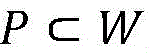
and delete these images if the annotation confidence subsequently decreases. The images contained in P are referred to herein as semi-strong (SS) training images. The second branch is designed as a standard fully supervised model, trained in an end-to-end fashion using both strong and semi-strong images.
An online annotation module (online annotation module, OAM) 106 is intended to jointly use weak supervision and strong supervision in an efficient manner. It includes three main components: a joint detection module, shown generally at 107, for predicting bounding boxes and their classes using weak labels and strong labels in a single common architecture; an online bounding box enhancement step 108 for generating a refined bounding box proposal; a supervision generator 109 for identifying trusted annotations to be used as supervision. These components are described in detail below.
The weak training image set 'W' and the strong training image set 'S' are used to train the joint detection module 107, which training joint detection module 107 uses the strong training images to better distinguish between partial object range proposals and full object range proposals in the MIL hidden space. In addition, the module learns to annotate weak training images online and may assign annotation confidence scores to all computed bounding boxes in the weak images and global annotation scores to the images.
As described above, these annotated weak training images constitute a third set of images, which are a strict subset of the weak images 'W' (second set of images), referred to as semi-strong (SS) images. The set of SS images may be expanded during training to include increasingly annotated weak images provided by the proposed joint detection module 107. The resulting strong and semi-strong training image sets are then used to simultaneously train a fully supervised second branch (detailed below) (exemplified here using the fast RCNN branch).
The weakly supervised component employs a Multiple Instance Learning (MIL) framework and includes two parallel, fully-connected (FC) layers 105 that output two separate feature matrices
Figure BDA0003794415190000046
Figure BDA0003794415190000051
Therein, class C is considered.
In the joint detection module 107, by using the softmax function independently along two dimensions (class corresponds to γ) C Propose to correspond to gamma R ) Two feature vectors providing complementary information are obtained. Gamma ray C (c, l) represents the probability that the l-th proposal belongs to class c, and γ R (c, l) represents the proportional contribution proposed by l to the images classified as class c. By merging two scores using Hada Ma Chengji > P =γ C ⊙γ R
Summing the proposed scores
Figure BDA0003794415190000052
Image level surveillance can be used to learn to identify relevant proposals using phip. The image-level loss function is defined using binary cross entropy:
Figure BDA0003794415190000053
wherein, y c Is a label indicating the presence or absence of the category c in the image. Intuitively, in some implementations, this type of MIL model may have difficulty distinguishing between full object proposal range and partial object proposal range, and convergence is typically achieved by assigning a high score to proposals containing high discriminative object portions.
In contrast to the MIL task, in the second branch of the joint detection module, a strong supervision component, including standard frame-level two-branch classification and regression tasks (performed by the parts shown at 107a and 107 b), can determine an accurate object representation, but is likely to over-fit the low sample training examples. Thus, MILs and strong components are combined together by a classification task to predict γ for the proposed classes categories C Providing direct supervision. Strengthening the synergy between these two oversight rules the low sample task and limits the MIL task and the encoder to learn more powerful discriminative features between full-scope object proposals and partial-scope object proposals.
The regression branch of the output box coordinate prediction (107 b) of the joint prediction module 107 is the same as the bounding box regression operation performed in the conventional object detector. Each bounding box b is parameterized as a quadruple (x, y, hw) specifying its center coordinate (x, y) and its height and width (h, w). For each pre-computed proposal, the last branch predicts the offset t of these coordinates k =(t x ,t y ,t h ,t w )。
Finally, these two operations are trained on strong images using the additive loss:
L p (γ,u,t,v)=L cls (γ,u)+λ[u≥1]L reg (t,v) (2)
wherein,
Figure BDA0003794415190000054
the parameters γ and u constitute respectively a proposal for predictionClass and target proposed class, t and v are predicted bounding box offset and target bounding box offset, smooth, respectively L1 Is a smooth L1 loss function. Thus, the loss function of a strong training image is
Figure BDA0003794415190000057
The loss function of the weak training image is
Figure BDA0003794415190000056
The online bounding box enhancement step performed in OAM, as indicated at 108 in fig. 1, is now described.
Learning strong bounding box regression blocks from low sample data can be challenging, especially when large updates (spatial offsets) are needed. To take full advantage of the available annotations when training, a second forward pass of the proposed branch is performed using the new bounding box obtained from the regression branch as input. More specifically, the highest scoring Moffer is selected for each class corresponding to the image-level label obtained after the first feed-forward pass.
Offset t calculated using bounding box regression branches k The coordinates of these proposals are modified accordingly and these new proposals are fed to the ROI pooling layer, resulting in a new set of bounding box features. The loss functions are calculated for these new boxes with only new coordinates and added to the first transmission loss. Adding this second pass, the overall loss function of the OAM branch is:
Figure BDA0003794415190000055
wherein superscripts I and II denote a first transfer and a second transfer, respectively.
This second transmission has a dual motive. First, this approach provides an inherent bounding box enhancement strategy, resulting in a new set of proposed candidates to train the regression and classification tasks. This is especially important in settings where pre-computed proposals are used (the main settings in WSOD), since without this enhancement strategy, only a static set of proposals (and associated updated transitions) would have been entered during training. Modifying the pre-computed proposal increases the variability of the proposal, which in turn enables the regressor to learn from more diverse inputs.
Secondly, this strategy allows to exploit the additional signal from the weak image and to obtain a more stable performance. In fact, any weak image proposal that receives modifications in a direction that hinders correct image-level label inference is penalized, thereby standardizing the training process of the regressor.
The key goal of OAM 106 is to generate reliable annotations for large collections of weakly labeled images in order to guide the training of the fully supervised second branch. Since the first model in the OAM 106 is trained simultaneously with the second model in the second branch 110, it is desirable to identify and add only reliable annotations to the training image pool. The reason is that only these images should be used for training the final supervised detection network, whereas images that are difficult for the joint detection module to annotate with high confidence should not be used for model training (second model), as these images may impair the training process and degrade the detector performance.
The uncertainty of the associated regression refinement of the bounding box proposed classes and box coordinates may be high at early stages of the training process. As training progresses and the quality of model prediction improves, the confidence, accuracy and stability also improve. This may cause increasingly difficult image collections to be accurately annotated.
This behavior can be exploited by introducing a supervision generator 109, which supervision generator 109 can identify to be added to a set of images called semi-strong
Figure BDA0003794415190000064
Is used to train the second fully supervised branch, and then the new image set is used to train the second fully supervised branch.
Fig. 2 schematically shows in more detail the online supervised generation performed by module 109.
Intuitively, the set of semi-strong images P may include simple images (e.g., single instance, uniform color background) of early stages of training, and diversity may gradually increase as the model becomes more accurate. To construct the semi-intense image set P, with bounding boxes and associated annotation confidence scores, the following mechanism may be used.
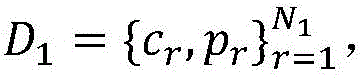
Given a weak image I, N is obtained after performing non-maximum suppression (NMS), shown at 201, on the output of the joint detection module 107 I A set of bounding boxes
Figure BDA0003794415190000061
Wherein, c r And p r Corresponding to the category label and coordinates of box r, respectively. As shown in FIG. 2, a strategy similar to the online enhancement step is employed, using D t-1 As input candidate proposals, at each iteration t>1 hour, iteratively predict N t New set of bounding boxes
Figure BDA0003794415190000062
Figure BDA0003794415190000063
More specifically, the bounding box D obtained in the last iteration is used t-1 Again fed to the ROI pooling layer 104, a new set of image features is provided that allows for the calculation of new proposed coordinates.
As shown by arrow 202 in fig. 2, the process iterates until the bounding box prediction stabilizes and converges (as shown at 203). Preferably, when D t-1 =D t I.e. when two subsequent passes get the same bounding box, the process is stopped. It is estimated that for each bounding box b t ∈D t There is a corresponding box b t-1 ∈D t–1 So that b is t And b is t-1 With IoU ≧ 0.5 and with matching class prediction (i.e., the prevailing standard for characterizing object equivalence in the detection method), convergence can be achieved. A global confidence weight of 1/T may be assigned to each image, where T steps are required to achieve convergence.
Proposal set D obtained in iteration 1 1 The final bounding box annotation is constructed. Each box is weighted by the average overlap with the best matching box in all subsequent iterations (box-level confidence). For boxes not present in a given iteration (overlap)<50%) assigns a 0 overlap for that iteration.
Finally, in a preferred implementation, an image can only be added to the semi-strong image pool P if the obtained annotations collection contains all categories of image-level tags. Images that achieve convergence with a large number of iterations may be assigned a low confidence score by design and therefore have limited impact on the training process for the second branch. Images that fail to converge through K iterations, or to find any foreground proposal, may not be annotated, or may not be added to the semi-strong pool P. In one example, the maximum number of updates is set to K =30 to prevent a large set of iterations that may occur at an early stage of training.
Since the weak images are annotated by OAM during training, the set of semi-strong images P will expand while refining the annotations and confidence as the model improves. In a given training step, weak images that are not successfully annotated and are present in the semi-strong image pool P may be removed.
Thus, the fully supervised second branch 110 of fig. 1 is trained using the obtained set of hypertraining images and the set of semi-hypertraining images while OAM training, in a manner similar to the Fast RCNN type method (see Girshick, R.: fast R-CNN, IEEE international computer vision conference records, pages 1440-1448 (2015)), which second branch 110 includes a bounding box classification 111 and a regression module 112, respectively.
Thus, in the second branch 110, the SS image is used to learn a fully supervised object detection model together with the S image.
Standard object Detector 110 pairs proposed features ε rf Classification and bounding box regression are performed, and strong and semi-strong images are trained. In particular, in each training iteration, a batch with the same number of strong and semi-strong images is used. The penalty function for this branch is:
L 2B (p,u,t,v)=L cls (p,u)+L reg (t,v) (4)
where p is the ROI class prediction, t is the prediction offset between the ROI and the target,u is the class label and v is the target offset. Only ROIs with foreground label will result in a regression loss L reg 。L cls The loss constitutes the weighted cross entropy of each image:
Figure BDA0003794415190000071
where the proposal causing the loss in each batch is indexed by i, GT proposes u i Is denoted as w i The image-level annotation confidence score is denoted as α. The strong picture is assigned a picture and offer level weight of 1. In summary, collecting the introduced components yields the overall loss function of the model: l is a radical of an alcohol tot =L 1B +L 2B
At the time of testing, only the fully supervised object detection model was used.
Thus, the online annotation module, using hybrid surveillance, can be used in conjunction with two-stage object detection methods (e.g., fast-RCNN series) to generate accurate high-confidence automatic annotations for concurrent fully supervised training.
In general, models are therefore trained on a small set of fully annotated images (images annotated with a bounding box, i.e., images with one or more regions defined in the classification of the one or more regions) and a large set of weakly labeled images (image-level labels, i.e., images with a classification).
The methods described herein learn to annotate weakly labeled input images in real time and exploit the predictive stability to additionally provide relevant annotation confidence scores. The new annotation image with high confidence is then used as confidence weighted supervision for the second fast-RCNN type branch that shares coding features with the OAM branch. This strategy can efficiently train standard detection algorithms with minimal annotation requirements, providing an inherent training course, since only simple images can be labeled with high confidence from the outset.
FIG. 3 shows an example of a method of classifying features in an image. In step 301, the method comprises receiving a first set of images and, for each image of the first set, data defining one or more regions of the image and a classification of the region, and a second set of images and, for each image of the second set, a classification of the image. In step 302, the method includes training, by a processor, a first machine learning algorithm to classify features in an image by: step 302a includes processing the first and second sets of images using a first algorithm to estimate the feature regions and the classification of each feature region in the images. Step 302b comprises training the first algorithm according to the received classifications for the images of the first and second sets.
Fig. 4 shows an example of a system 400 comprising a device 401, the device 401 being for processing image data captured by at least one image sensor in the device using the methods described herein. The device 401 comprises image sensors 402, 403. Such devices 401 typically include some onboard processing capability. This may be provided by the processor 404. The processor 404 may also be used to perform the basic functions of the device.
The transceiver 405 is able to communicate with other entities 410, 411 over a network. These entities may be physically remote from the device 401. The network may be a publicly accessible network such as the internet. The entities 410, 411 may be cloud based. Entity 410 is a computing entity. Entity 411 is a command and control entity. These entities are logical entities. In practice, these entities may be provided by one or more physical devices (e.g., a server and a data store), respectively, and the functionality of two or more entities may be provided by a single physical device. Each physical device implementing an entity includes a processor and a memory. These devices may also include a transceiver for transmitting data to and receiving data from the transceiver 405 of the device 401. The memory stores code in a non-transitory manner that is executable by the processor to implement the respective entities in the manner described herein.
The command and control entity 411 may train an artificial intelligence model used in the device. This is often a computationally intensive task, even though the resulting model may be described efficiently, so developing algorithms to execute in the cloud may be efficient, and a large amount of energy and computational resources may be expected to be available. It is expected that this is more efficient than forming such a model in a typical imaging device.
In one implementation, upon issuing the algorithm at Yun Zhongkai, the command and control entity may automatically form and transmit the corresponding model to the associated imaging device. In this example, the model is implemented by a processor 404 in the device 401.
In another possible implementation, an image may be captured by one or both of the sensors 402, 403 and the image data may be sent by the transceiver 405 to the cloud for processing. The resulting image may then be sent back to the device 401, as shown at 412 in FIG. 4.
Thus, the method may be deployed in a variety of ways, such as in a cloud, in a device, or in dedicated hardware. As described above, the cloud infrastructure may perform training to develop new algorithms or to refine existing algorithms. Depending on the computing power near the corpus of data, the training may be done near the source data or in the cloud, for example using an inference engine. The method may also be implemented in a device, dedicated hardware, or in the cloud.
Fig. 5 illustrates a comparison between different low data supervision strategies and the hybrid supervision based setup described herein. The first row at 501 shows known Weak Supervised Object Detection (WSOD) models 502, which are typically deployed to annotate images with image-level annotations 503. The WSOD output is images 504 with instance-level labels, which are then used to train a fully supervised model 505 to provide output 506.
In the second line at 507, the model 508 is trained for a few training examples using the known small sample or low sample object detection (FSOD) method (few-shot object detection). The model is trained on low sample images with instance level labels 509 to provide an output 510.
As shown in the bottom row at 511, the Mixed Supervised Object Detection (MSOD) setup described herein combines a low sample set of images 512 with object (instance level) annotations with a large database 513 including image level annotations. As described above, the online annotation module 514 is trained to generate a multi-sample set that is simultaneously used to train the fully supervised model 515 using online tagged images 516 with instance level labels and annotation confidence to provide an output 517 (images with instance level labels).
The MSOD method described herein has the following advantages.
Extensive experiments performed based on two popular benchmarks (PASCAL VOC 2007 and MS-COCO) show that in some implementations, the performance of this model is superior to the low-sample prior art and in low-sample systems, the performance of the fully supervised model is improved by 10%.
The online annotation module learns to generate bounding box annotations in real-time from hybrid oversight. This enables high quality training of the multi-sample detector from low sample annotations. OAM can be used in conjunction with standard two-stage detectors and greatly improve its performance in a setting with limited examples of comments.
End-to-end training is performed on the model, so that the OAM and the complete supervision branches share a common characteristic encoder, and the branches are trained in parallel, so that two tasks are mutually normalized, and a better hidden space is learned.
The method constitutes a flexible end-to-end strategy that achieves high performance using pre-computed proposals and area proposal networks.
As described above, in the first branch of the network, the online annotation module 106 is trained on weak training images and strong training images, and the online annotation module 106 labels weak images in real-time. Weak images annotated with high confidence are added to the pool of semi-strong (SS) images, and if W images annotated with low confidence have been added previously, these are deleted.
Thus, under the guidance of fully annotating a small set of images, the online annotation module learns to annotate a large set of weakly labeled images in real-time while providing annotation confidence. Furthermore, the online data-driven strategy simultaneously trains the object detector in a fully supervised manner by exploiting the supervision generated by the modified MIL network.
As mentioned above, the WSOD type image-level classification task is combined with a fully supervised joint classification and regression task. This allows the use of low-sample fully annotated images to guide and normalize the ill-conditioned MIL training process while leveraging the statistics provided by weak images to strengthen and normalize the proposed-level classification and regression tasks. Including a small number of labeled samples generates a more stable model with minimal annotation cost compared to the WSOD method.
Applicants disclose herein each individual feature described herein, and any combination of two or more such features, individually. Such features or combinations of features can be implemented as a whole in accordance with the present specification, without regard to whether such features or combinations of features solve any of the problems disclosed herein, to the ordinary knowledge of one of ordinary skill in the art; and not to limit the scope of the claims. The applicant indicates that aspects of the present invention may consist of any such individual feature or combination of features. In view of the foregoing description it will be evident to a person skilled in the art that various modifications may be made within the scope of the invention.

Claims (16)

1.一种用于对图像中的区域进行分类的设备(401),其特征在于,所述设备包括:1. A device (401) for classifying regions in an image, characterized in that the device comprises: 输入端,用于接收第一图像集合(512),以及对于所述第一集合(512)的每个图像,定义所述图像的一个或多个区域和所述区域的分类的数据,和第二图像集合(513),以及对于所述第二集合(513)的每个图像,所述图像的分类;An input for receiving a first set of images (512), and for each image of said first set (512), data defining one or more regions of said image and a classification of said regions, and a first two sets of images (513), and for each image of said second set (513), a classification of said images; 处理器(404),用于通过以下步骤训练第一机器学习算法(106、514)以对图像中的特征进行分类:A processor (404) for training a first machine learning algorithm (106, 514) to classify features in an image by: 使用所述第一算法(106、514)处理所述第一集合(512)和所述第二集合(513)的所述图像,以估计所述图像中的特征区域和每个特征区域的分类,并根据针对所述第一集合(512)和所述第二集合(513)的所述图像接收的分类来训练所述第一算法(106、514)。Processing said images of said first set (512) and said second set (513) using said first algorithm (106, 514) to estimate feature regions in said images and a classification for each feature region , and training said first algorithm (106, 514) based on the classification received for said images of said first set (512) and said second set (513). 2.根据权利要求1所述的设备(401),其特征在于,所述处理器(404)用于训练所述第一机器学习算法(106、514),从而为所述第二集合(513)的所述图像中的至少一些图像形成针对这些图像估计的所述分类的置信度估计。2. The device (401) according to claim 1, characterized in that the processor (404) is configured to train the first machine learning algorithm (106, 514) such that the second set (513 At least some of said images of ) form confidence estimates for said classification estimated for these images. 3.根据权利要求1或2所述的设备(401),其特征在于,所述处理器(404)用于训练第二机器学习算法(110、515)以对图像中的区域进行分类,所述处理器(404)用于在训练所述第二算法(110、515)时使用所述第二集合的所述图像的子集,使得所述子集的所述图像中的每个图像的权重在训练所述第二算法(110、515)时取决于相应图像的估计置信度,所述第二集合的所述图像的子集由所述第一算法(106、514)进行分类。3. The device (401) according to claim 1 or 2, characterized in that the processor (404) is configured to train a second machine learning algorithm (110, 515) to classify regions in an image, the said processor (404) for using a subset of said images of said second set when training said second algorithm (110, 515), such that each of said images of said subset has Weights are dependent on estimated confidences of respective images when training said second algorithm (110, 515), said subset of said images of said second set being classified by said first algorithm (106, 514). 4.根据上述权利要求中任一项所述的设备(401),其特征在于,所述第一算法(106、514)包括用于估计图像中的特征区域的第一子部分和用于估计特征区域的分类的第二子部分,并且所述处理器(404)用于训练所述第一子部分以估计所述第二集合(513)的图像中的特征区域,所述特征区域由所述第二子部分分类,以匹配所述相应图像的接收到的分类。4. The device (401) according to any one of the preceding claims, characterized in that said first algorithm (106, 514) comprises a first subsection for estimating a characteristic region in an image and a method for estimating A second subsection of the classification of feature regions, and the processor (404) is used to train the first subsection to estimate feature regions in images of the second set (513), the feature regions being determined by the The classification of the second subsection matches the received classification of the corresponding image. 5.根据上述权利要求中任一项所述的设备(401),其特征在于,所述第二算法(110、515)用于训练所述第二子部分。5. The device (401 ) according to any one of the preceding claims, characterized in that the second algorithm (110, 515) is used for training the second subsection. 6.根据上述权利要求中任一项所述的设备(401),其特征在于,所述处理器(404)用于通过多次将所述第一图像集合(512)和所述第二图像集合(513)中的至少一些作为所述第一算法(106、514)的输入来训练所述第一算法(106、514)。6. The device (401) according to any one of the preceding claims, wherein the processor (404) is configured to combine the first set of images (512) and the second image At least some of the set (513) are used as input to the first algorithm (106, 514) to train the first algorithm (106, 514). 7.根据上述权利要求中任一项所述的设备(401),其特征在于,所述第一算法(106、514)根据存储的权重集合运行,并且所述处理器(404)用于根据所述第一算法(106、514)在对所述第一集合(512)和所述第二集合(513)的所述图像进行分类时的性能训练这些权重。7. The device (401) according to any one of the preceding claims, characterized in that the first algorithm (106, 514) operates according to a stored set of weights, and the processor (404) is adapted to function according to The weights are trained by the performance of the first algorithm (106, 514) in classifying the images of the first set (512) and the second set (513). 8.根据上述权利要求中任一项所述的设备(401),其特征在于,所述第二算法(110、415)实现与所述第一算法(106、514)不同的机器学习架构。8. The device (401 ) according to any one of the preceding claims, characterized in that the second algorithm (110, 415) implements a different machine learning architecture than the first algorithm (106, 514). 9.根据上述权利要求中任一项所述的设备(401),其特征在于,所述第二算法(110、415)实现比所述第一算法(106、514)更少的内部反馈。9. The device (401 ) according to any one of the preceding claims, characterized in that the second algorithm (110, 415) implements less internal feedback than the first algorithm (106, 514). 10.根据上述权利要求中任一项所述的设备(401),其特征在于,所述第一算法(106、514)和所述第二算法(110、415)包括共同特征编码器(102)。10. The device (401 ) according to any one of the preceding claims, characterized in that said first algorithm (106, 514) and said second algorithm (110, 415) comprise a common feature encoder (102 ). 11.根据上述权利要求中任一项所述的设备(401),其特征在于,所述设备(401)用于根据彼此的性能同时训练所述第一算法(106、514)和所述第二算法(110、415)。11. The device (401) according to any one of the preceding claims, characterized in that the device (401) is configured to simultaneously train the first algorithm (106, 514) and the second algorithm according to each other's performance Two algorithms (110, 415). 12.根据上述权利要求中任一项所述的设备(401),其特征在于,所述第一算法(106、514)和所述第二算法(110、415)可端到端训练。12. The device (401 ) according to any one of the preceding claims, characterized in that the first algorithm (106, 514) and the second algorithm (110, 415) are end-to-end trainable. 13.一种用于对图像中的区域进行分类的方法(300),其特征在于,所述方法包括:13. A method (300) for classifying regions in an image, characterized in that the method comprises: 接收(301)第一图像集合(512),以及对于所述第一集合(512)的每个图像,定义所述图像的一个或多个区域和所述区域的分类的数据,和第二图像集合(513),以及对于所述第二集合(513)的每个图像,所述图像的分类;receiving (301) a first set of images (512), and for each image of the first set (512), data defining one or more regions of the image and a classification of the regions, and a second image a collection (513), and for each image of said second collection (513), a classification of said image; 通过处理器(404)训练(302)第一机器学习算法(106、514),以通过以下步骤对图像中的特征进行分类:A first machine learning algorithm (106, 514) is trained (302) by a processor (404) to classify features in an image by: 使用所述第一算法(106、514)处理(302a)所述第一集合(512)和所述第二集合(513)的所述图像,以估计所述图像中的特征区域和每个特征区域的分类,并根据针对所述第一集合(512)和所述第二集合(513)的所述图像接收的分类来训练所述第一算法(106、514)。The images of the first set (512) and the second set (513) are processed (302a) using the first algorithm (106, 514) to estimate feature regions and each feature in the images and training said first algorithm (106, 514) based on the classifications received for said images of said first set (512) and said second set (513). 14.根据权利要求13所述的方法(300),其特征在于,包括为所述第二集合(513)的所述图像中的至少一些图像形成针对这些图像估计的所述分类的置信度估计。14. The method (300) of claim 13, comprising forming, for at least some of said images of said second set (513), a confidence estimate for said classification estimated for these images . 15.根据权利要求13或14所述的方法(300),其特征在于,所述方法包括:训练第二机器学习算法(110、515)以通过选择对图像中的区域进行分类,从而用于在训练所述第二算法(110、515)时使用所述第二集合的所述图像的子集,使得所述子集的所述图像中的每个图像的权重在训练所述第二算法(110、515)时取决于相应图像的估计置信度,所述第二集合的所述图像的子集由所述第一算法(106、514)进行分类。15. The method (300) according to claim 13 or 14, characterized in that the method comprises: training a second machine learning algorithm (110, 515) to classify regions in an image by selection for use in A subset of said images of said second set is used in training said second algorithm (110, 515) such that the weight of each of said images of said subset is used in training said second algorithm (110, 515), a subset of said images of said second set is classified by said first algorithm (106, 514) depending on the estimated confidence of the corresponding image. 16.根据权利要求15所述的方法(300),其特征在于,包括在用于对图像中的特征进行分类的设备中,在已经训练了所述第二算法(110、515)之后,在没有所述第一算法(106、514)的情况下,实现所述第二算法。16. The method (300) according to claim 15, characterized in that, in the device for classifying features in an image, after having trained the second algorithm (110, 515), after The second algorithm is implemented without the first algorithm (106, 514).
CN202080096442.4A 2020-03-04 2020-03-04 Object detection Active CN115398487B (en)

Applications Claiming Priority (1)

Application Number Priority Date Filing Date Title
PCT/EP2020/055751 WO2021175422A1 (en) 2020-03-04 2020-03-04 Object detection

Publications (2)

Publication Number Publication Date
CN115398487A true CN115398487A (en) 2022-11-25
CN115398487B CN115398487B (en) 2026-03-17

Family

ID=69844792

Family Applications (1)

Application Number Title Priority Date Filing Date
CN202080096442.4A Active CN115398487B (en) 2020-03-04 2020-03-04 Object detection

Country Status (4)

Country Link
US (1) US12315214B2 (en)
EP (1) EP4104097A1 (en)
CN (1) CN115398487B (en)
WO (1) WO2021175422A1 (en)

Families Citing this family (1)

* Cited by examiner, † Cited by third party
Publication number Priority date Publication date Assignee Title
US12517983B2 (en) * 2022-08-22 2026-01-06 Nec Corporation SNR detection with few-shot trained models

Citations (7)

* Cited by examiner, † Cited by third party
Publication number Priority date Publication date Assignee Title
US20160140422A1 (en) * 2014-11-19 2016-05-19 Canon Kabushiki Kaisha Image processing apparatus, image processing method and program
CN106778687A (en) * 2017-01-16 2017-05-31 大连理工大学 Method for viewing points detecting based on local evaluation and global optimization
US20170330059A1 (en) * 2016-05-11 2017-11-16 Xerox Corporation Joint object and object part detection using web supervision
CN108062574A (en) * 2017-12-31 2018-05-22 厦门大学 A kind of Weakly supervised object detection method based on particular category space constraint
CN108805170A (en) * 2017-05-05 2018-11-13 达索系统公司 Form the data set for the study of full supervised
CN108830300A (en) * 2018-05-28 2018-11-16 深圳市唯特视科技有限公司 A kind of object transmission method based on mixing supervisory detection
CN110837836A (en) * 2019-11-05 2020-02-25 中国科学技术大学 Semi-supervised Semantic Segmentation Based on Maximizing Confidence

Family Cites Families (6)

* Cited by examiner, † Cited by third party
Publication number Priority date Publication date Assignee Title
JP3348544B2 (en) 1994-10-14 2002-11-20 スズキ株式会社 Battery charger for electric vehicles
CN201341028Y (en) 2008-10-14 2009-11-04 飞毛腿(福建)电子有限公司 Mobile power supply
CN101982922A (en) 2010-10-10 2011-03-02 深圳市威特宝科技发展有限公司 Wireless charging device for mobile phone
CN106487534B (en) 2015-08-24 2019-08-13 华为技术有限公司 Generation method, device and network controller of network control strategy
CN109474034B (en) 2018-11-09 2021-02-12 浙江国自机器人技术股份有限公司 Robot autonomous charging equipment, robot and autonomous charging system thereof
CN110224457A (en) 2019-05-29 2019-09-10 维沃移动通信有限公司 Charging unit and charging method

Patent Citations (7)

* Cited by examiner, † Cited by third party
Publication number Priority date Publication date Assignee Title
US20160140422A1 (en) * 2014-11-19 2016-05-19 Canon Kabushiki Kaisha Image processing apparatus, image processing method and program
US20170330059A1 (en) * 2016-05-11 2017-11-16 Xerox Corporation Joint object and object part detection using web supervision
CN106778687A (en) * 2017-01-16 2017-05-31 大连理工大学 Method for viewing points detecting based on local evaluation and global optimization
CN108805170A (en) * 2017-05-05 2018-11-13 达索系统公司 Form the data set for the study of full supervised
CN108062574A (en) * 2017-12-31 2018-05-22 厦门大学 A kind of Weakly supervised object detection method based on particular category space constraint
CN108830300A (en) * 2018-05-28 2018-11-16 深圳市唯特视科技有限公司 A kind of object transmission method based on mixing supervisory detection
CN110837836A (en) * 2019-11-05 2020-02-25 中国科学技术大学 Semi-supervised Semantic Segmentation Based on Maximizing Confidence

Non-Patent Citations (3)

* Cited by examiner, † Cited by third party
Title
HALIT ERIS等: "Implementation of Target Tracking Methods on Images Taken from Unmanned Aerial Vehicles", 2019 IEEE 17TH WORLD SYMPOSIUM ON APPLIED MACHINE INTELLIGENCE AND INFORMATICS (SAMI 2019), 31 December 2019 (2019-12-31) *
LINPU FANG等: "EHSOD: CAM-Guided End-to-end Hybrid-Supervised Object Detection with Cascade Refinement", ARXIV, 18 February 2020 (2020-02-18) *
郑宝玉;王雨;吴锦雯;周全;: "基于深度卷积神经网络的弱监督图像语义分割", 南京邮电大学学报(自然科学版), no. 05, 13 November 2018 (2018-11-13) *

Also Published As

Publication number Publication date
US12315214B2 (en) 2025-05-27
WO2021175422A1 (en) 2021-09-10
CN115398487B (en) 2026-03-17
US20230115167A1 (en) 2023-04-13
EP4104097A1 (en) 2022-12-21

Similar Documents

Publication Publication Date Title
CN114492574B (en) Unsupervised adversarial domain adaptation image classification method based on pseudo-label loss of Gaussian uniform mixture model
Chen et al. Order-free rnn with visual attention for multi-label classification
Li et al. Contour knowledge transfer for salient object detection
Jiao et al. Cosign: Exploring co-occurrence signals in skeleton-based continuous sign language recognition
CN111860678A (en) An unsupervised cross-domain person re-identification method based on clustering
CN113392933B (en) Self-adaptive cross-domain target detection method based on uncertainty guidance
CN110633632A (en) A Weakly Supervised Joint Object Detection and Semantic Segmentation Method Based on Loop Guidance
Liu et al. Uncertain label correction via auxiliary action unit graphs for facial expression recognition
CN111161315A (en) Multi-target tracking method and system based on graph neural network
CN116778277A (en) Cross-domain model training method based on progressive information decoupling
CN116012793B (en) A Multimodal Surveillance Video Target Tracking Method Based on Dual-Stream Attention Mechanism
CN114529578A (en) Multi-target tracking method based on comparison learning mode
CN115546471B (en) Weak supervision target positioning method based on anti-erasure and background inhibition
Wu et al. Light-weight shadow detection via GCN-based annotation strategy and knowledge distillation
Leng et al. CRNet: Context-guided reasoning network for detecting hard objects
Xue et al. YOLO-DKR: Differentiable architecture search based on kernel reusing for object detection
Nimma et al. Advancements in Deep Learning Architectures for Image Recognition and Semantic Segmentation.
CN118823736A (en) A wildlife target detection method based on improved yolov8 and knowledge distillation
CN118968312A (en) Multi-target pest detection method and system in unstructured environment based on improved YOLOv5s
CN115035330A (en) Unsupervised transfer learning image classification method facing environmental change
US12511549B2 (en) System and method for cross-modal knowledge transfer without task-relevant source data
CN115294176B (en) Double-light multi-model long-time target tracking method and system and storage medium
CN115398487A (en) Object detection
Hwang et al. Gcn-based semantic relation network for few-shot object detection
Nguyen et al. Self-Supervise Reinforcement Learning Method for Vacant Parking Space Detection Based on Task Consistency and Corrupted Rewards

Legal Events

Date Code Title Description
PB01 Publication
PB01 Publication
SE01 Entry into force of request for substantive examination
GR01 Patent grant
GR01 Patent grant